
Electric vehicle maker VinFast is set to bolster its North American portfolio as it gears up to launch three new models next month.
Having already launched two vehicles at the 2021 Los Angeles Auto Show last month, the Vietnamese manufacturer is already looking forwards to the 2022 Consumer Electronics Show in Las Vegas to reveal three more models in January.
VinFast has confirmed it will show off vehicles in the minicar, subcompact and compact segments, all of which are expected to drop below the size of the VF e35 and e36 SUVs.

Design houses Pininfarina and Torino Design are confirmed to be involved with all models shown at CES 2022, with Vice Chairwoman of Vingroup Thuy Le saying the brand’s cars are a step towards an environmentally friendly future.
“VinFast will bring high-standard designs, advanced technologies and a wide range of products to global consumers at CES 2022,” said Le.
“We contribute our best products to offer more convenient and accessible options for the public to transition to EVs and create a more sustainable future for our planet.”
It’s still unclear as to whether we’ll ever see VinFast sell its vehicles in Australia after the manufacturer’s local research and development team was laid off earlier this year, putting the former Holden proving grounds at Lang Lang up for sale in the process.
Welcome to the MOTOR Awards 2021, where our team offer a tip of the hat to those that displayed automotive excellence in the last 12 months.
Best Race Car Winner: Ligier JS F3-S5000
Australians, let us all rejoice, for our race cars are loud and fast.
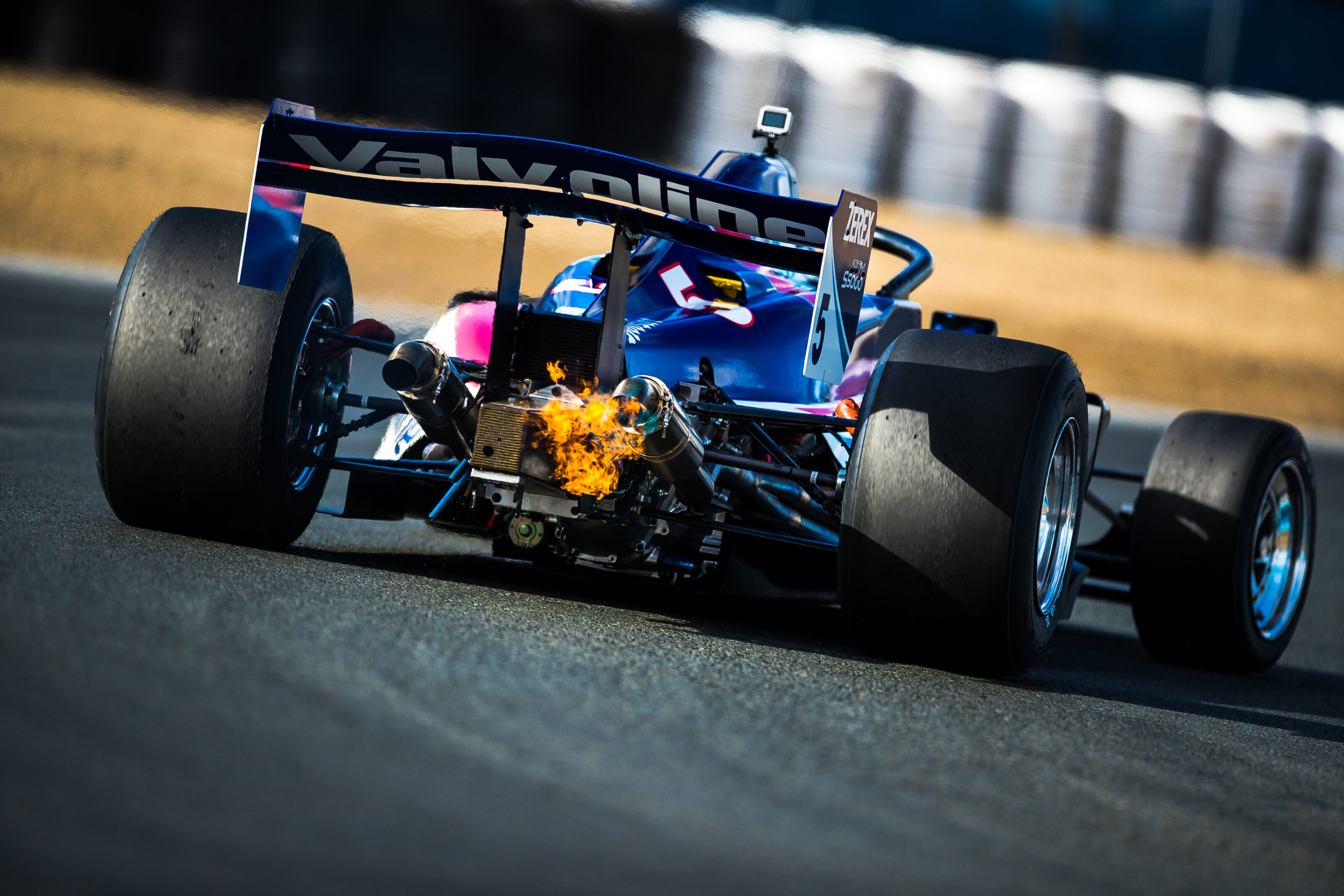
The loudest and fastest of which is the Ligier JS F3-S5000, and after what feels like an eternal gestation, the car finally reached its long-anticipated potential after last year’s planned debut S5000 championship was put on ice. With that first series run and done this year instead, we aren’t going out on a limb by saying the Ligier JS F3-S5000 lived up to the hype.
It is everything racing fans have been baying for from modern open wheel categories. The cars appear aggressive even sitting still with fat, staggered Hoosier slick rubber, and while the wings look fantastic, the aero outputs are minimal.
Oh, and the sound! The 5.2-litre naturally aspirated V8 that powers each S5000 is an all-star singing on its own, but a full grid of them bouncing off the rev limiter at the race start is something that needs to be experienced. But, most importantly for a race car, the on-track product is top notch. Drivers are forced to wrestle the car as it dances on the limits of adhesion, and the passes are frenetic and hard fought.
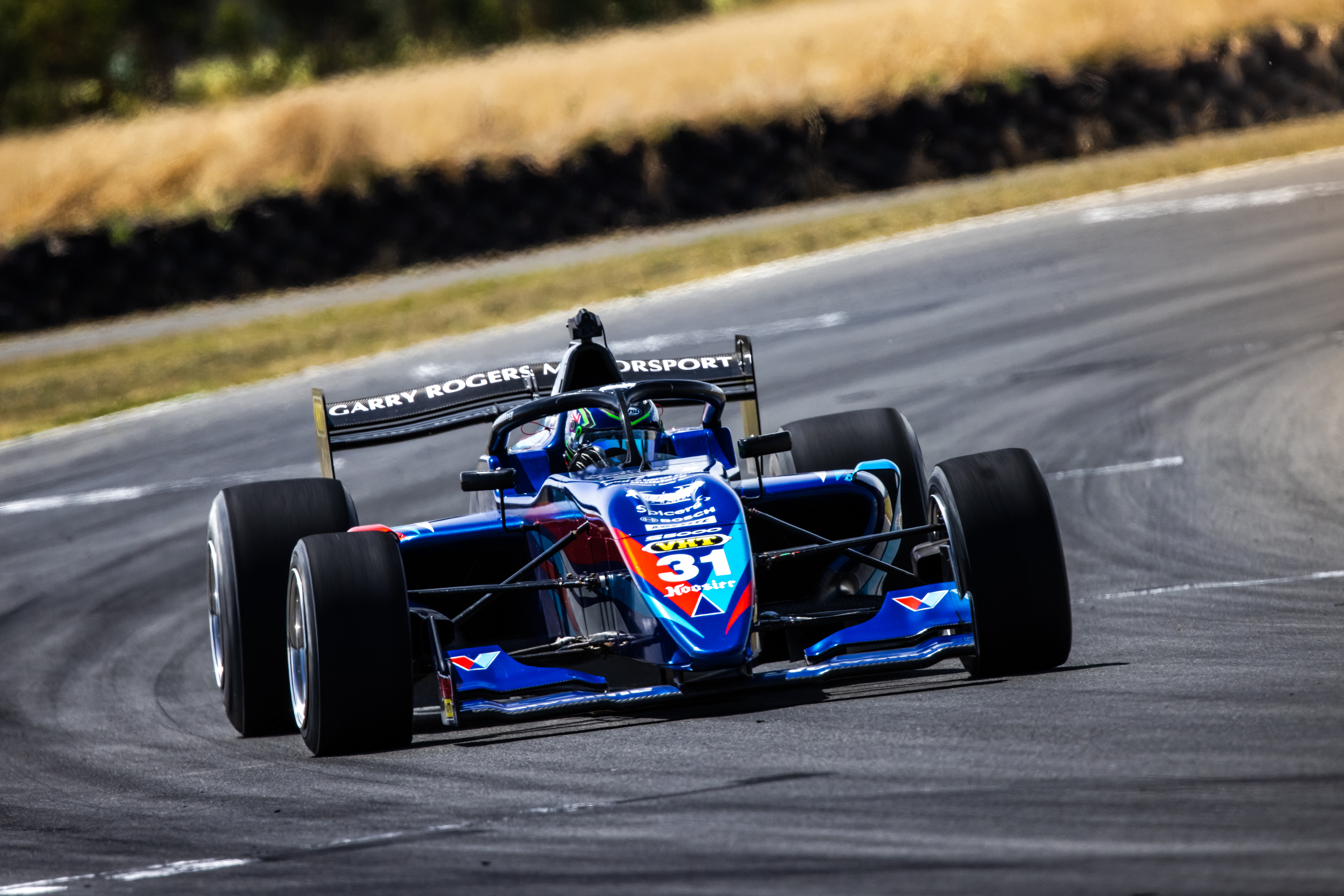
The best part? While many of the components (including the chassis) are built overseas, the car is bolted together right here in Australia at Garry Rogers Motorsport. Australian open-wheel racers finally have a platform to put their talents on display, without needing to find several million euros down the back of the couch.
The S5000 series forced Motorsport Australia to pull the coveted Gold Star Award out of the trophy cabinet, blow the dust off it, and award it Joey Mawson for his championship victory. And now Aussie racing fans are going to get a double dose of S5000 goodness as they take to the track at both Sydney Motorsport Park and Mount Panorama to see out the traditional racing calendar Down Under.
Ever wondered what a V8 Supercar would be like reanimated as an open wheeler? No, just us? Well, the Ligier JS F3-S5000 is the answer. Get yourself trackside to see these monsters in action ASAP. You will not be disappointed. – CK
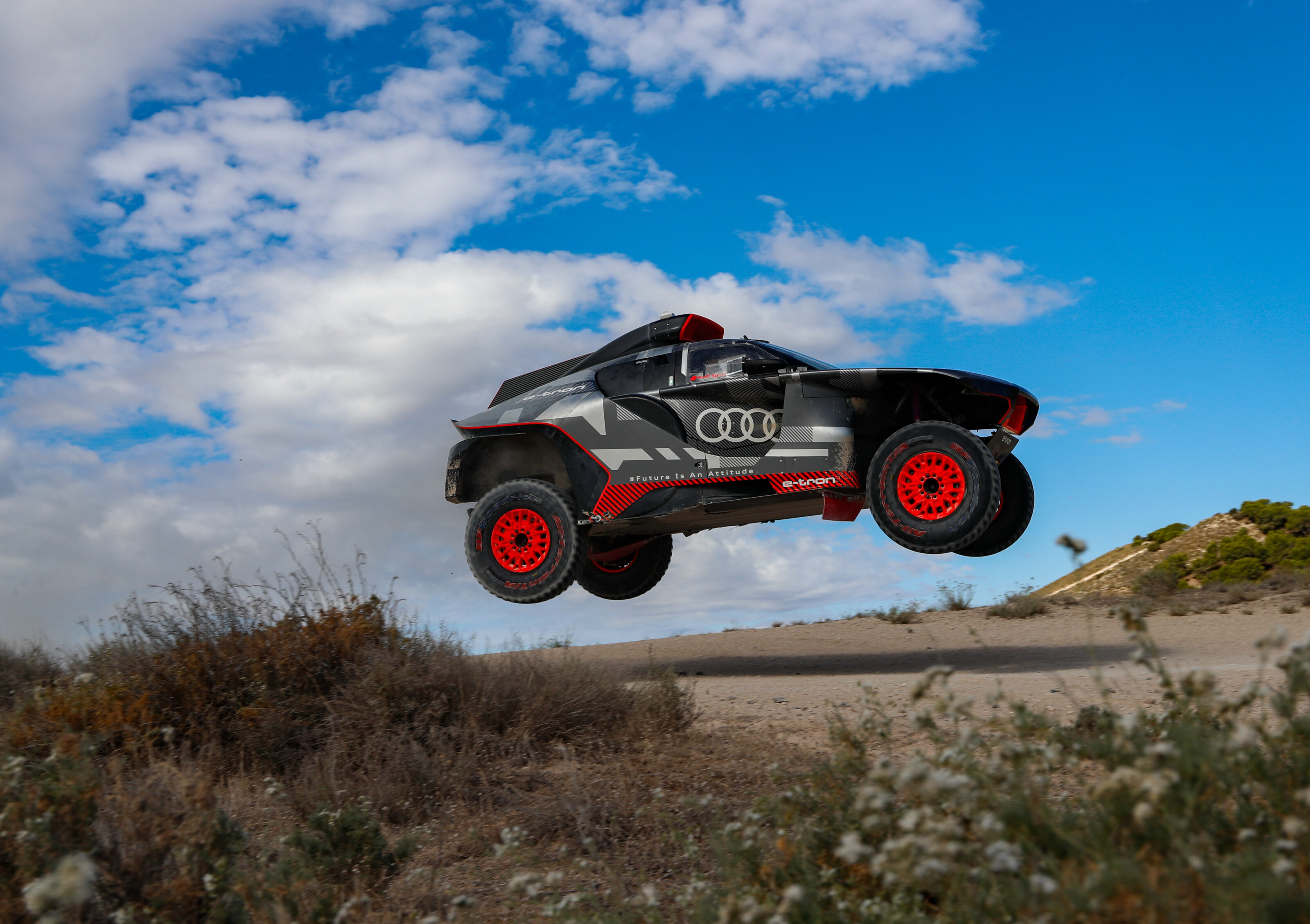
Honourable mention: Audi RS Q e-tron
The range-extender EV Audi RS Q e-tron represents arguably the greatest technological advancement in the history of the Dakar rally. With genuine outright victory potential, it combines the powertrains of a Formula E and DTM racer to create an incredibly capable off-roader. Oh, and the last time Audi repurposed a race engine we got the 200 Trans-Am and indomitable IMSA 90 GTO. Colour us excited.
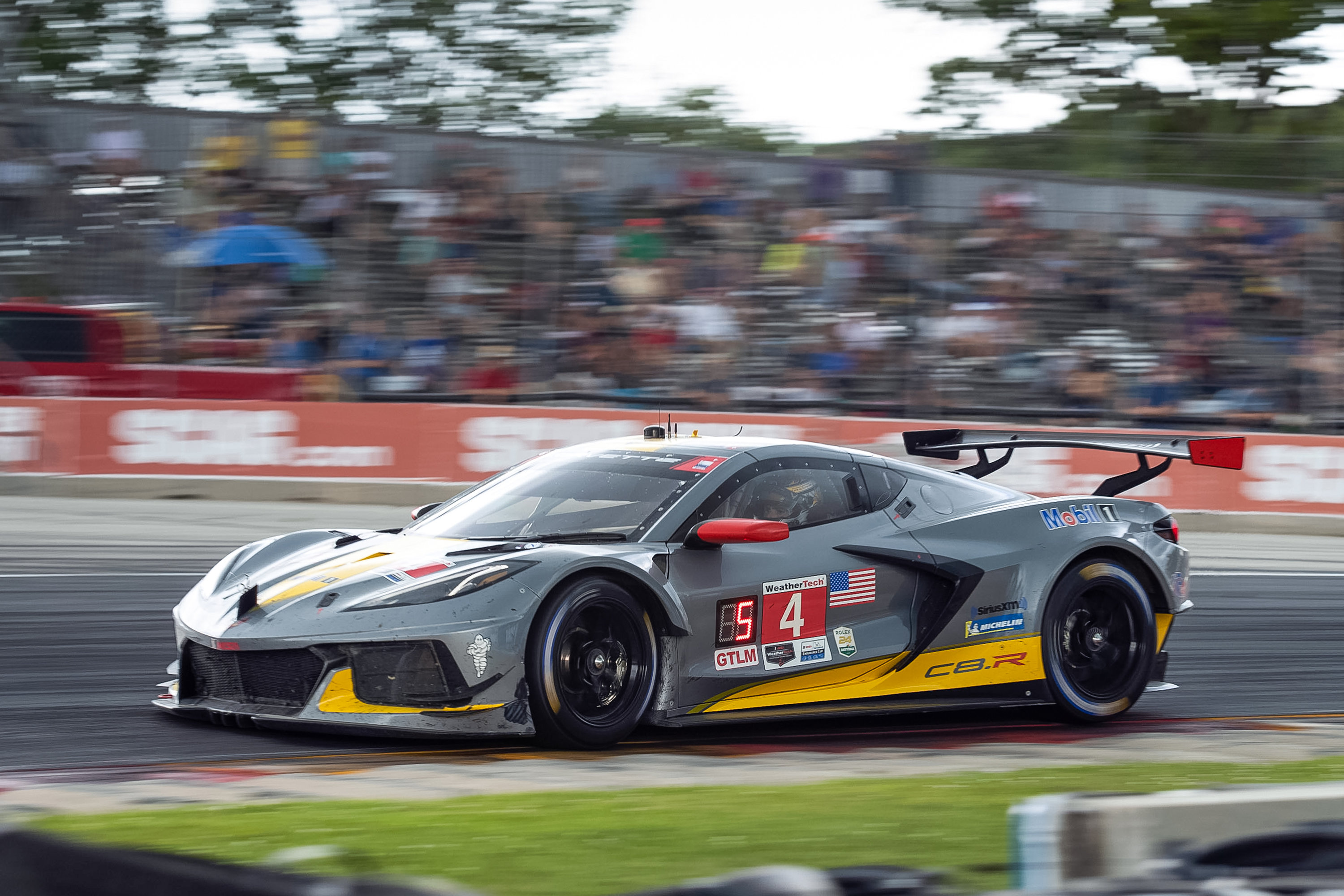
Honourable mention: Corvette C8.R
Corvette Racing is on a tear in 2021, having won the GTLM class in eight of the 10 races so far in the IMSA championship. The GTE-spec C8.R earns its honourable mention not just for its on-track performance, but for that success simultaneously being used to develop the bonkers LT6 engine GM just debuted in the Z06 production car.
UPDATE, January 25, 2022: Relief in sight, as large AdBlue delivery begins across Australia
The story to here
UPDATE, December 22: In the face of dwindling supplies, the Australian Competition and Consumer Commission (ACCC) has allowed collaboration between manufacturers and stakeholders within the AdBlue industry.
The interim authorisation means AdBlue makers can co-operate with one another as part of a co-ordinated government and industry response to the growing AdBlue shortage, without the risk of breaching competition laws.
While the laws are in place to save consumers from price fixing – a rule which will remain despite the ACCC’s order – the temporary exemption allows companies and the Government to share information such as urea stock and AdBlue supply levels in geographic areas.
It also means companies can join forces in the production of AdBlue and implement wholesale and retail sales limits where necessary.
However, AdBlue manufacturers are required to invite the ACCC to take part in any meetings where these issues are discussed.
ACCC Chair Rod Sims said the authority worked quickly to consider and approve the order, following the industry’s application on Monday.
“[The interim authorisation] enables AdBlue manufacturers and the Australian Government to consider the best way to respond to any potential future supply constraints,” Sims said.
“The manufacturers’ co-ordination of their response with the Government is an important step in providing a regular supply of AdBlue – which is critical to our nation’s transportation sector, food production and the broader economy.”
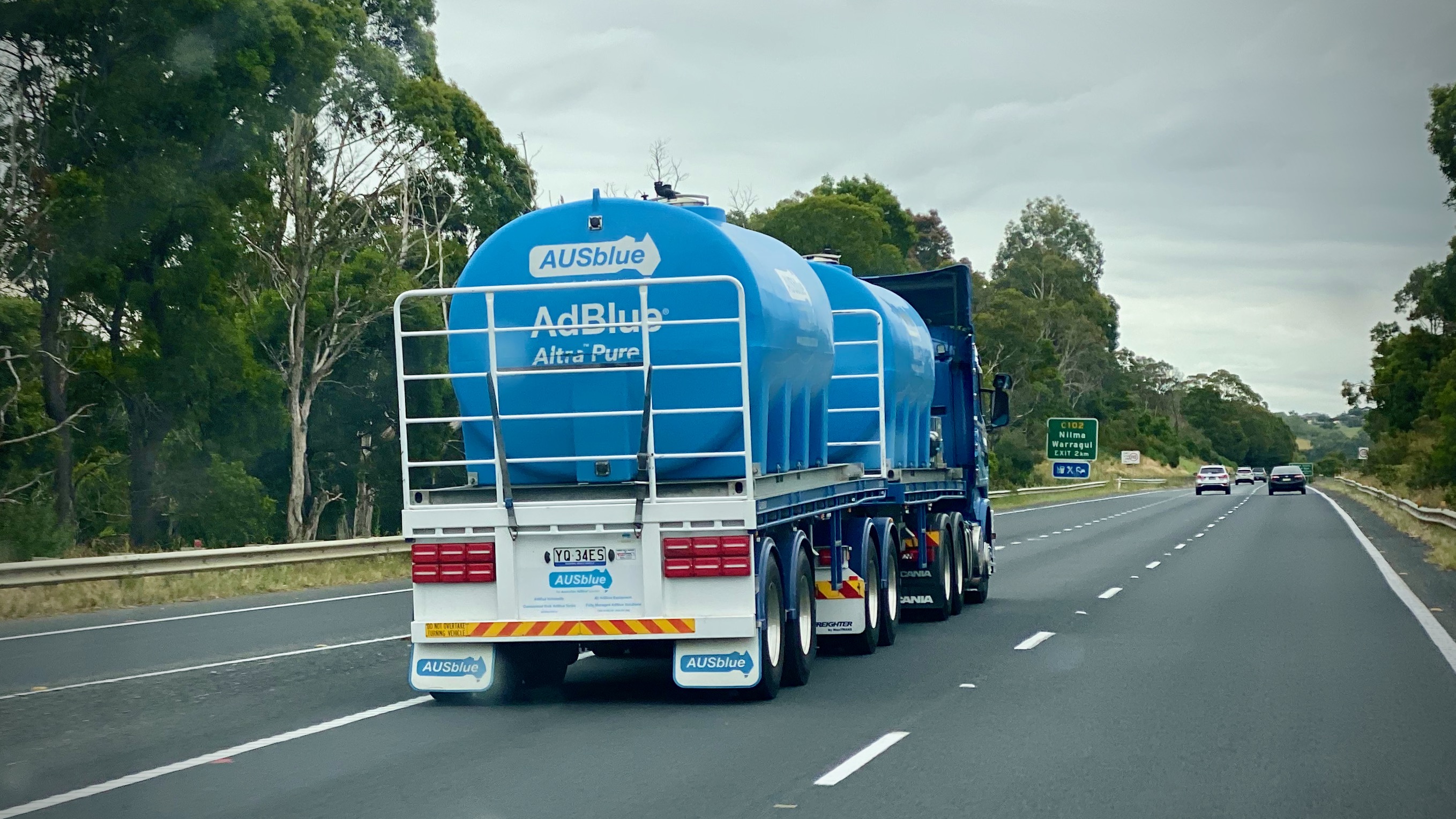
December 17: Petrol and diesel supplies across Australia could be crippled unless the looming AdBlue shortage is addressed, according to a defence expert on fuel security.
John Blackburn AO, former deputy chief of the Royal Australian Air Force, has warned Australia’s fuel supply is under threat as the nation’s petrol and diesel is delivered almost entirely by road – with a large proportion of prime mover trucks requiring AdBlue to run.
“The vast majority of petrol and diesel in Australia is carried by trucks, rather than trains or coastal shipping tankers,” Blackburn said.
“So if this starts to impact trucks and logistics, it is then, in turn, going to impact our fuel supply.”
While a relatively small proportion of vehicles on the road use the emissions additive, road transport companies across the country have been transitioning to modern European trucks in recent years in an effort to reduce overall fleet emissions – with some doing so at the insistence of their large corporate clients.
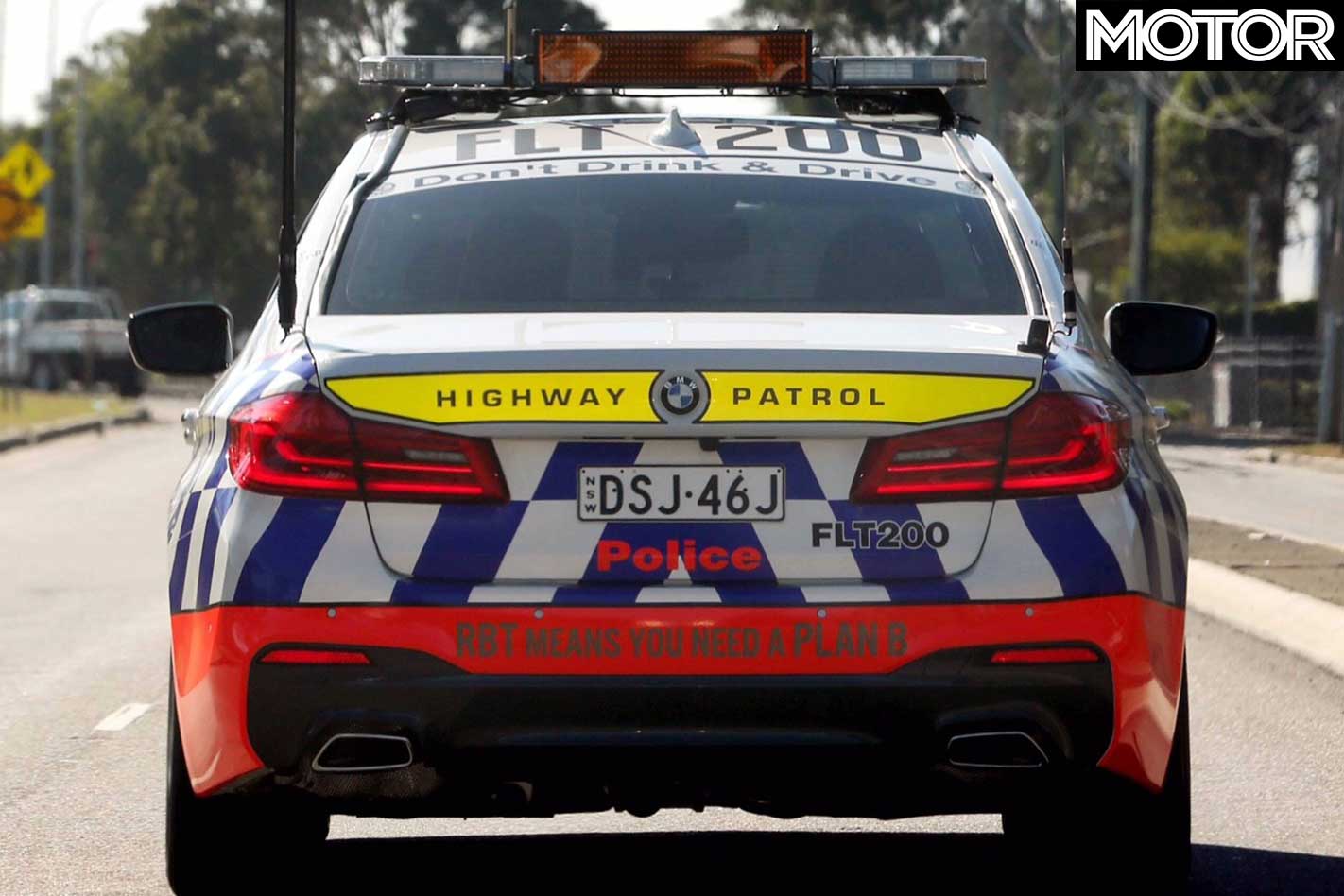
Some police cars in Victoria and NSW also require AdBlue to operate, including the Mercedes-Benz E400 and BMW 530d used by Highway Patrol divisions.
“[The small number of our vehicles requiring AdBlue] remain in service and there has been no impact on our operational capacity,” a spokesperson for Victoria Police told WhichCar.
However, if the situation becomes dire, state governments have the ability to enact “necessary provisions” in order to secure fuel supplies for emergency services.
BMW Australia has confirmed to WhichCar it has secured AdBlue supply from its head office in Germany, which it believes should be enough to ensure customer vehicles can continue to operate “well into next year”.
Mercedes-Benz Australia is working with retailers to manage stock levels, but a spokesperson says its dealerships have sufficient supplies for servicing into the “foreseeable future”.
Mercedes-Benz G-Wagon models used by the Australian Defence Force do not require AdBlue to operate, but could potentially be vulnerable to the fuel supply issue being cautioned by Blackburn – a longtime critic of Australia’s fuel security policies.
“Once again we react, but fail to prepare. Too little, too late and too short sighted,” Blackburn said.
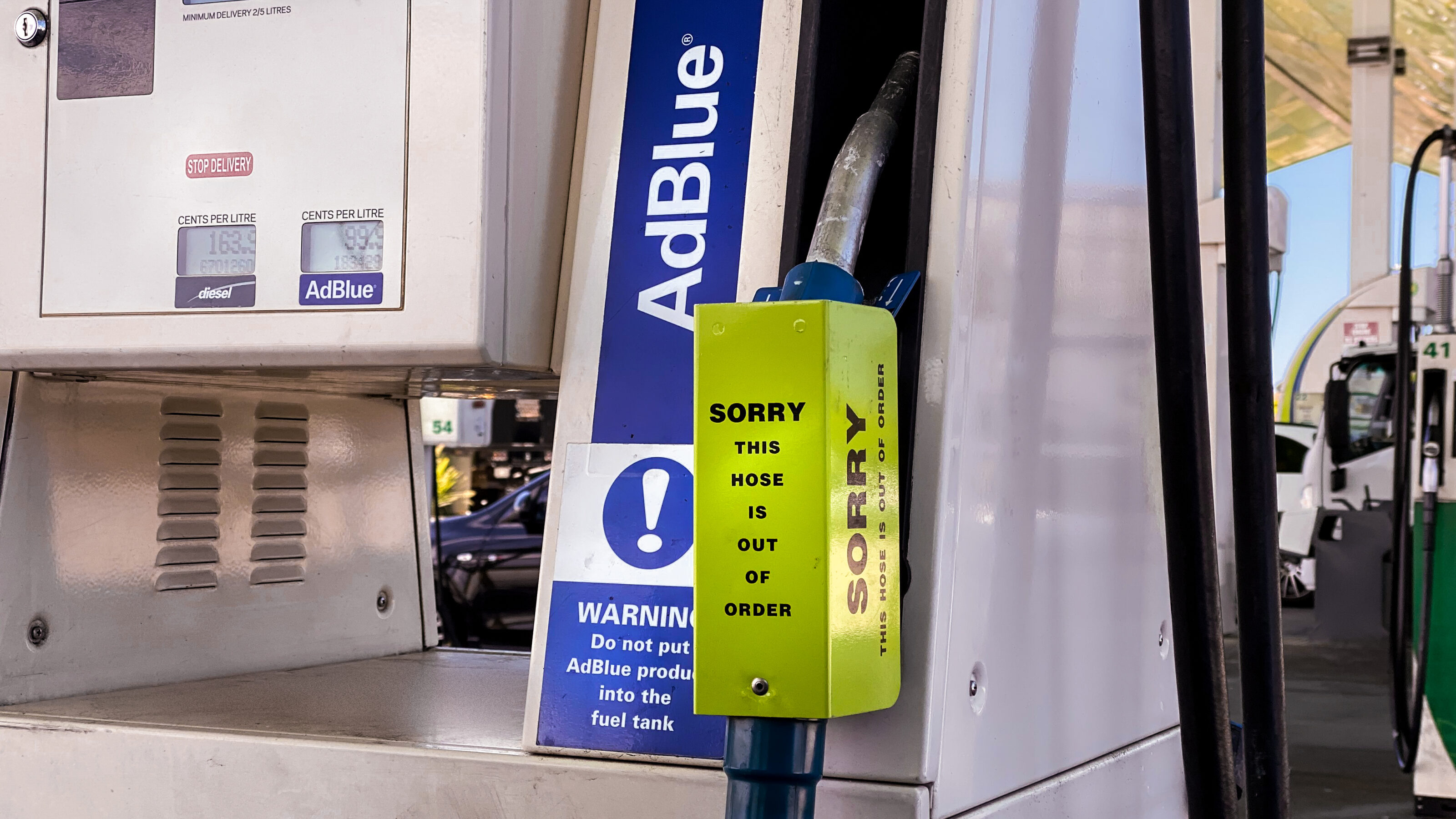
December 13: Fuel stations across the country are being emptied of AdBlue, while those with stock are now rationing supply.
As Christmas approaches – and with Australian states opening up borders to travellers – truck stops and smaller petrol stations have already begun to run out of the critical diesel additive ahead of the Government’s schedule.
Panic-buying is being blamed for the accelerated timeline, which threatens to stop the nation’s trucking industry unless more supply can be secured.
Fuel retailers with remaining stock are being advised to ration sales of AdBlue, with reports claiming prices have skyrocketed to as much as $2.99 per litre – an increase of 200 per cent from its normal price of $1 per litre.
“The situation is changing very rapidly and with little notice, and we are working closely with our suppliers and carefully monitoring stock levels to reduce any potential impact this may have on customers,” a spokesperson for BP told WhichCar.
Some transport companies have dedicated personnel calling ahead to petrol stations on behalf of their truck drivers to check AdBlue supply along their routes, WhichCar understands.
In a statement issued late last week, Minister for Industry, Energy and Emissions Reduction Angus Taylor said multiple shipments of urea – the key ingredient of AdBlue – were on their way to Australia, which are expected to provide around two weeks of supply.
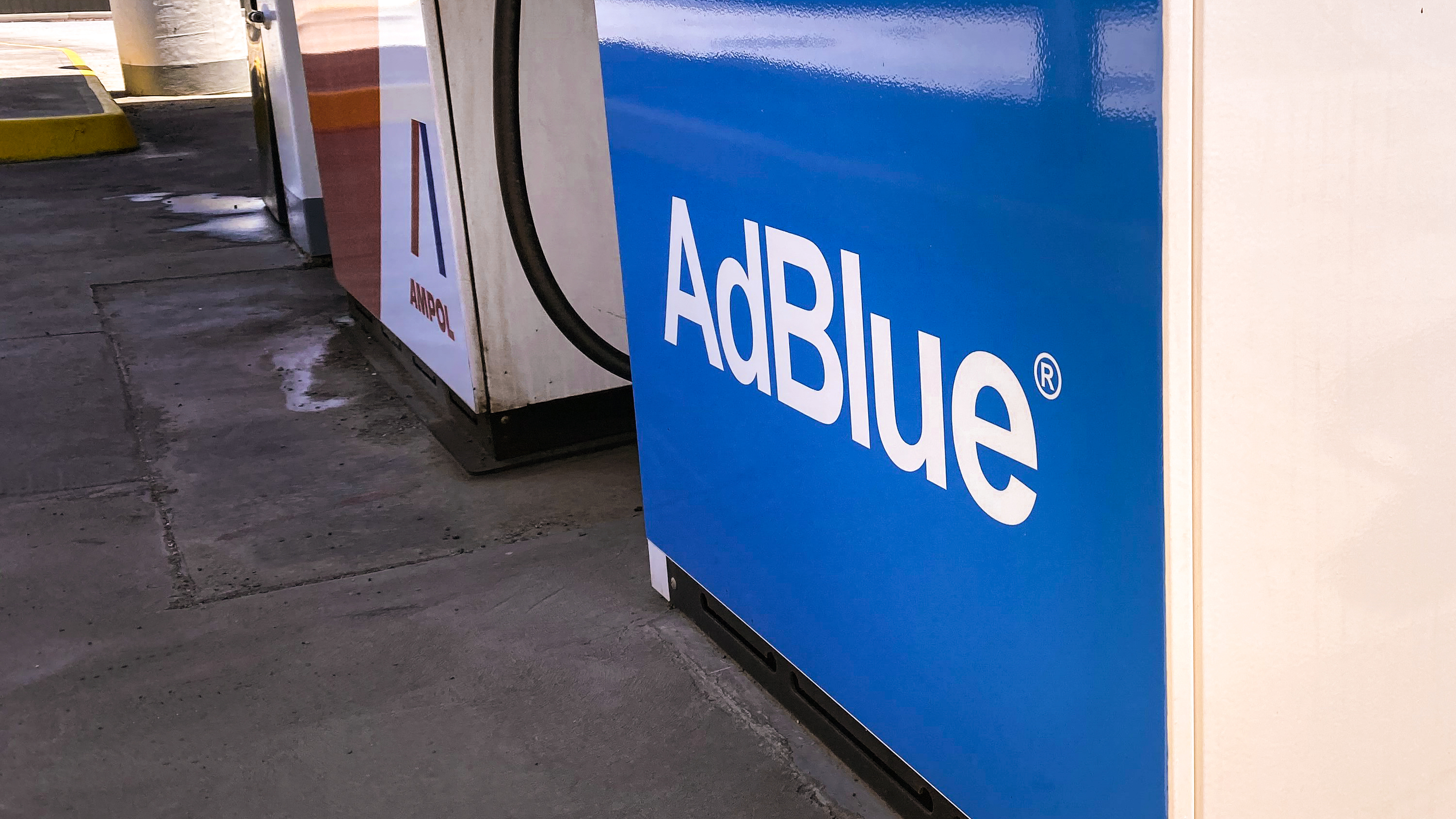
“We are quickly and actively working to ensure supply chains of both refined urea and AdBlue are secure so that industry can have certainty on their operations,” Minister Taylor said.
“I can assure Australians that the Government is working to ensure we do not face any shortages. We are pursuing a range of measures to address global pressures in the urea market. We will keep our trucks running and Australian motorists on the road.”
A taskforce has been created with leaders from the country’s science and manufacturing sectors to look at solutions across both industry and government.
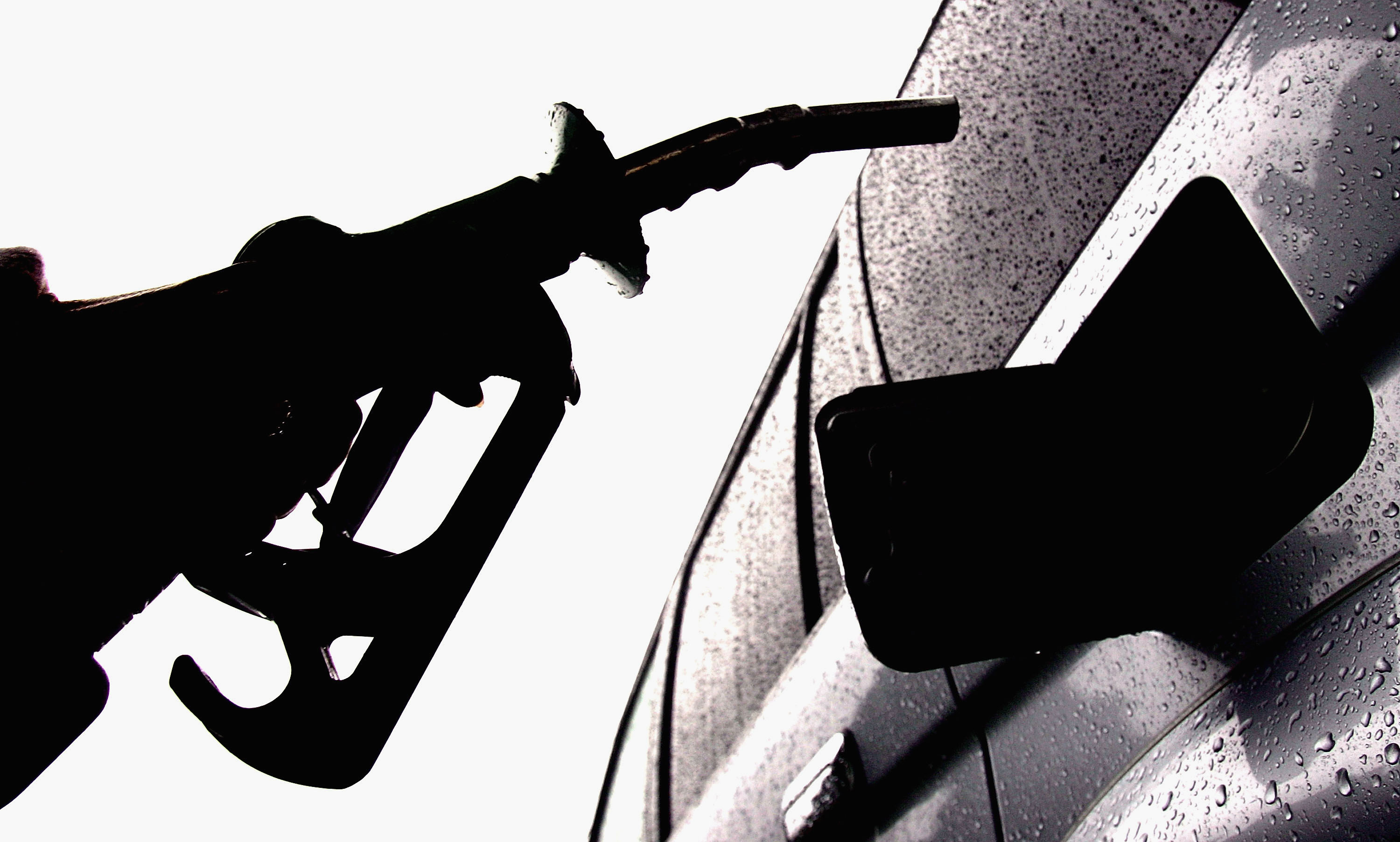
December 3: Modern diesel vehicles could stop running within a matter of weeks, with concerns growing over a global shortage of the emissions additive AdBlue, according to The Australian.
AdBlue is used to help reduce the level of nitrogen oxide (NOx) emitted from a diesel motor, and is commonplace on Euro Six-compliant vehicles manufactured after 2015. While typically seen on European cars, the technology has been adopted by Japanese manufacturers in the past few years.
Around a third of AdBlue – the trademarked retail name for the diesel exhaust fluid (DEF) – is made from urea, a common fertiliser used in farming. Prices for common fertilisers have skyrocketed in recent months, while Chinese supply of urea has been slashed.
While thousands of passenger cars could be forced off the road, the shortage could impact Mercedes-Benz E400 All-Terrain vehicles used by the Victoria Police Highway Patrol, as well as prime mover trucks across the country.
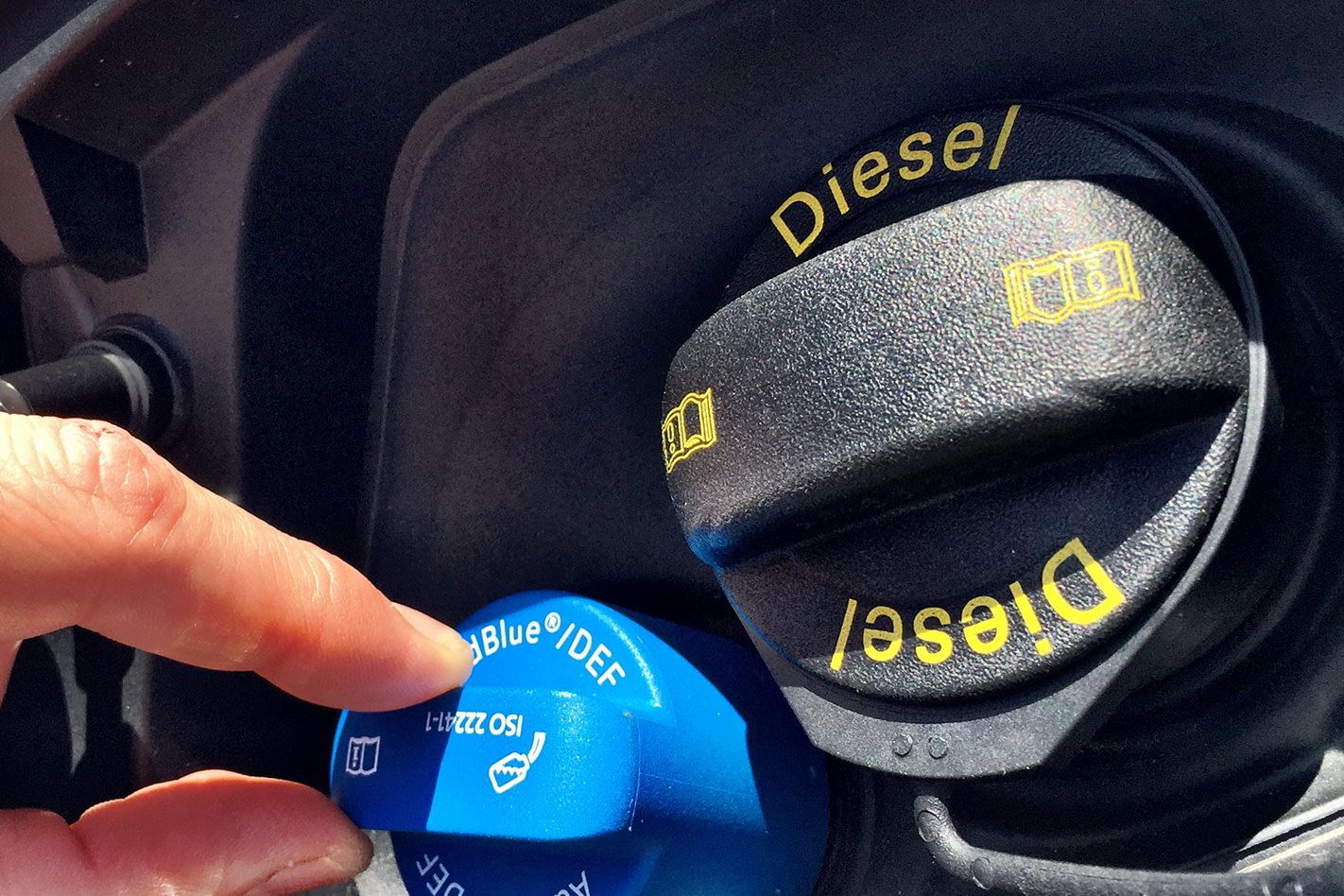
However, passenger cars typically use a very small amount of the fluid. For example, a full 18-litre tank of AdBlue found on a Ford Everest typically lasts between 12,000 and 16,000 kilometres of normal driving.
Perhaps more concerning is Australia’s supply chain, with a significant proportion of truck drivers using prime movers requiring the additive, and in far greater quantities than in passenger cars.
Prices of AdBlue have reportedly tripled in Italy, Germany, France, and the UK, with drivers racing to fill up as supply dwindles.
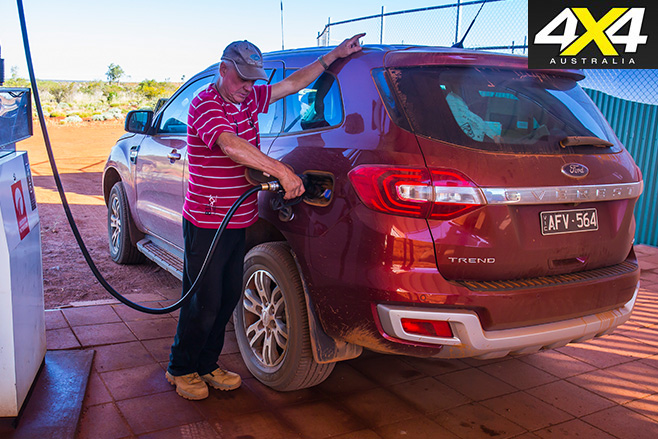
Australia currently has three manufacturers of Adblue, but it’s understood the majority of the Asia-Pacific’s supply of urea is sourced from China, which has paused exports to help reduce the price of fertiliser in the country.
“We’re going to need to support our manufacturers, we’ve got about three in Australia, we’re going to have to help them find strategic sourcing of the base agent from anywhere in the world we can get,” Western Roads Federation Chief Executive Cam Dumesny told radio station 6PR.
“If we can’t do that, you’ve got the worst case scenario…we start rationing it, if you follow the logic of that…which areas of transport do you want to prioritise?”
UPDATE, December 22: The one-off HSV Colorado prototype has sold at auction for AU$205,000 (before buyers fees) via Lloyds to a private buyer.
HSV had said they intended to fully comply the unique piece of Australian motoring history with its LT1 V8 and 10-speed auto from a 2SS Camaro before putting it up for sale.
The Colorado carries the last ever HSV build plate before the migration to GMSV branding at the end of Holden’s life last year.
The story to here
November 18: To this point the V8 dual-cab has occupied a similar spot in history as Big Foot, the Loch Ness Monster or the bunyip. Plenty of tales tell of their existence, but without any concrete evidence. Until now.
The HSV Colorado SportsCat V8 not only proves the V8 dual-cab is not a myth, but also how close it came to landing in Australian showrooms – and thanks to Walkinshaw Performance, we recently had the opportunity for a good poke around it.
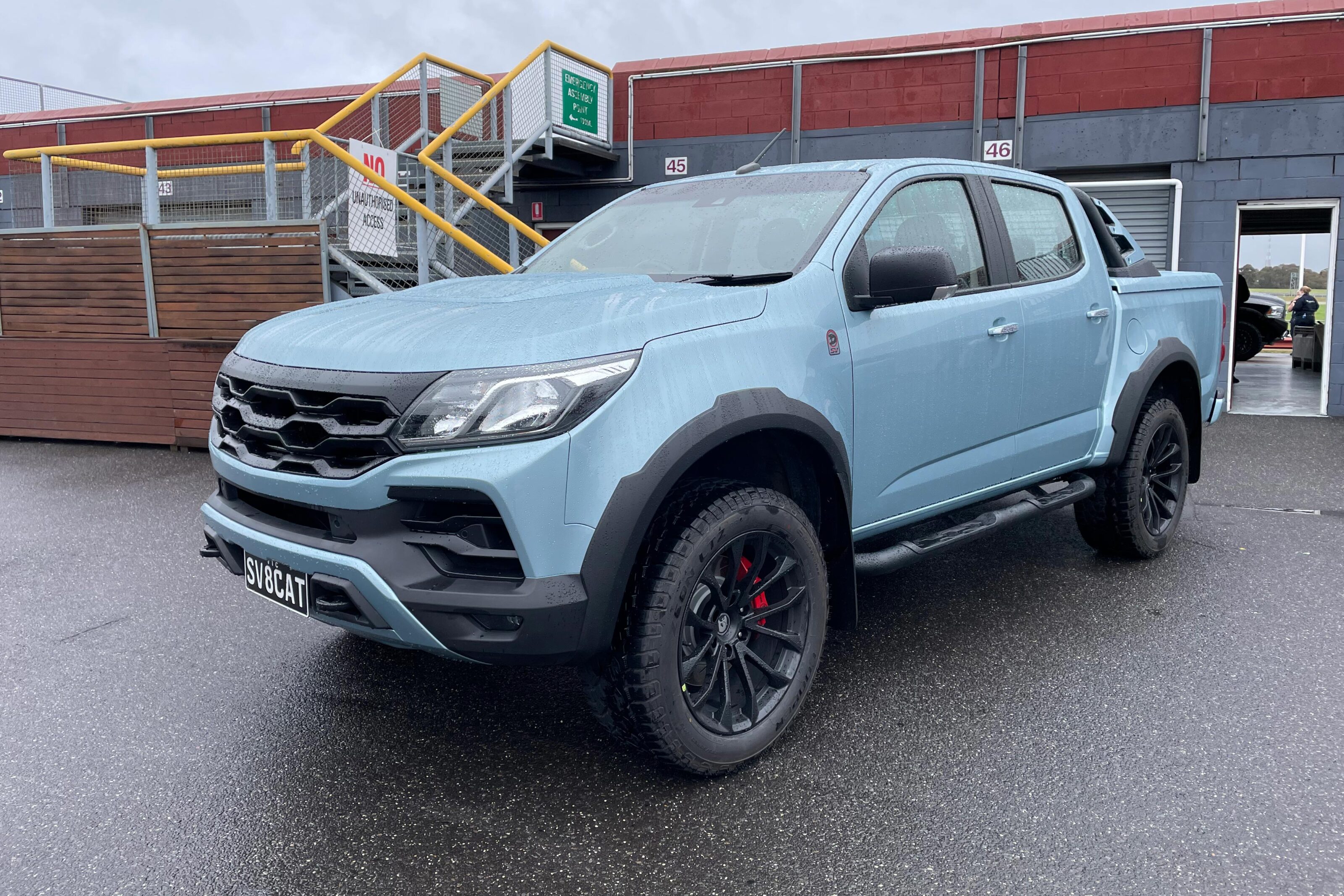
Before covering off what exactly a SportsCat V8 is, let’s answer the main question: why didn’t it make production? The very simple answer is that when Holden closed its operations in February 2020, the plant that made the Colorado went with it, killing the project instantly.
The idea began with a “what if?” brainstorm between Walkinshaw Senior Engineer David Kermond and a handful of others.
“It started with myself and a couple of technicians and another engineer wanting to put an engine out of a crashed Camaro into [the Colorado] to build a skunkworks project out the back,” Kermond said.
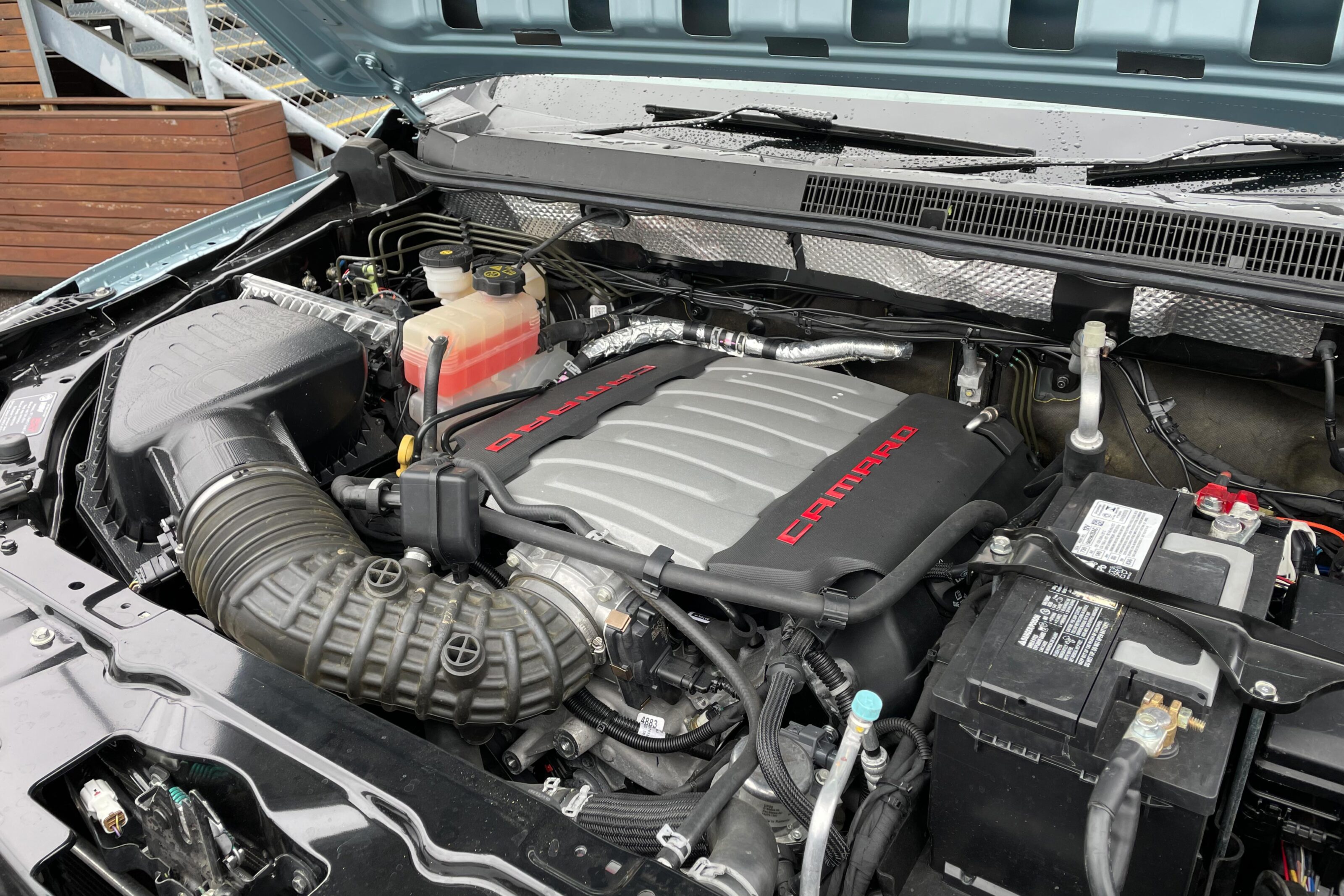
“It grew and eventually turned out to be a project that was greenlit by our side of the business and we were working quite closely with GM to secure engine pricing, but with GM closing the doors on Thailand it shut the door.”
Just as HSV Commodores used to have their powertrains installed on the production line at Elizabeth before being transported to Clayton for completion, the SportsCat V8 would have received its Camaro heart in Thailand before being shipped to Australia.
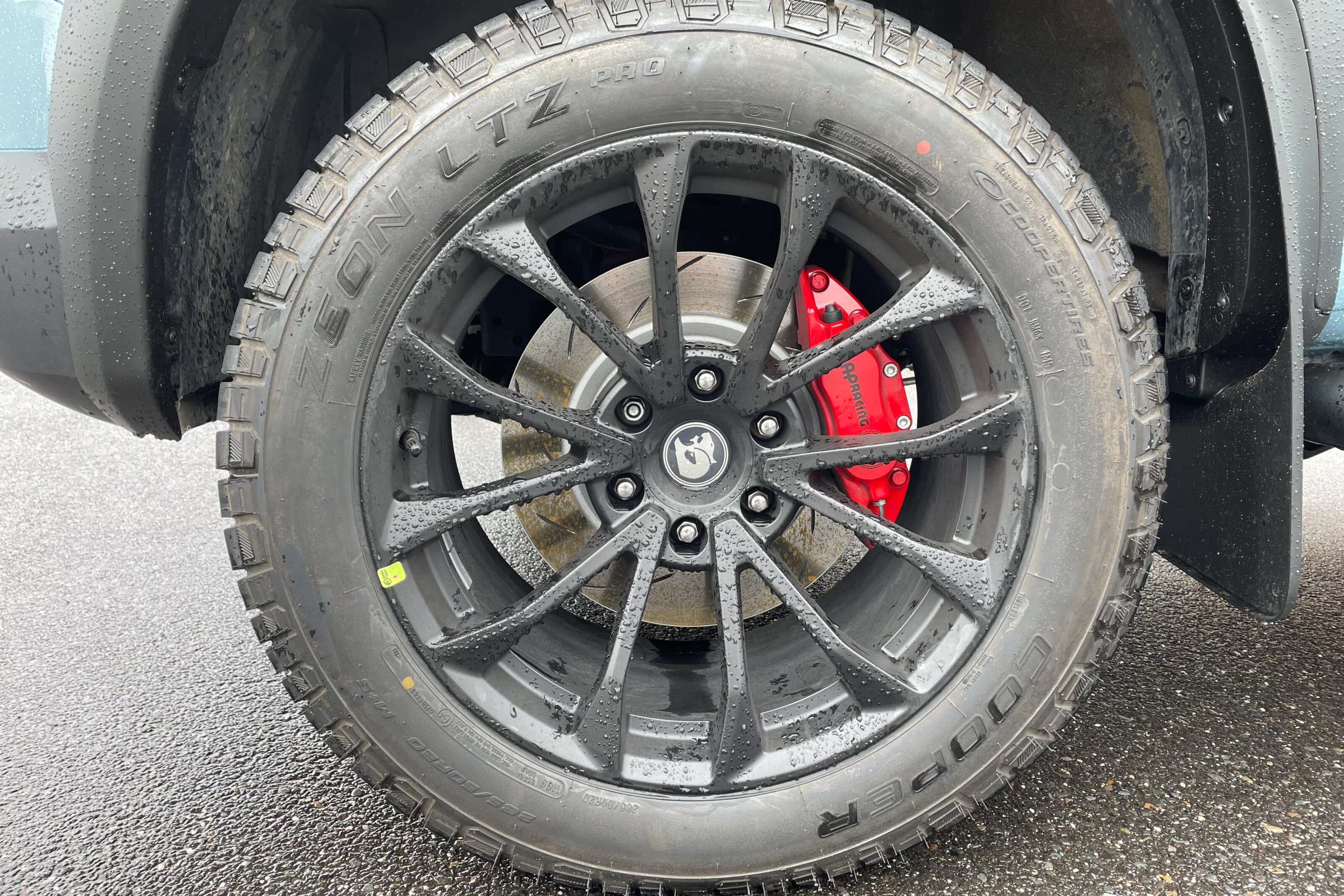
Final specifications weren’t finalised, Kermond describing the development work as “probably 70 per cent complete”, but 20-inch wheels and a bespoke bodykit would have featured, with the AP Racing brakes – 362mm front rotors with four-piston calipers – and SupaShock dampers from the SportsCat SV also likely to carry over, albeit with a suspension retune.
Powertrain work was largely complete, the 339kW/617Nm 6.2-litre LT1 V8 – rather than the Silverado’s L87 unit – being left largely untouched, but with plenty of calibration and cooling development to ensure its towing capacity remained. GM’s 10-speed automatic was likely to be the only available transmission.
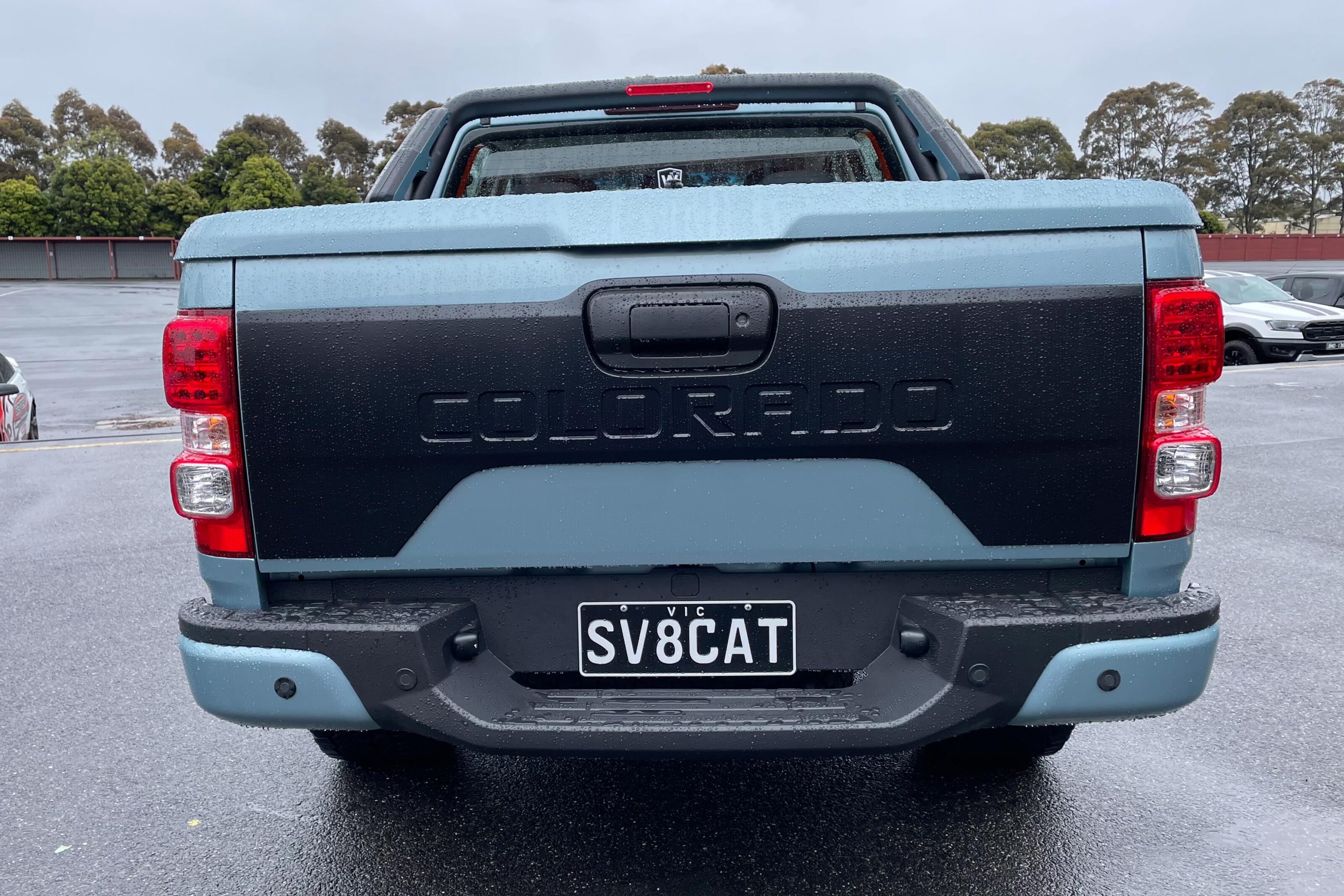
Exact pricing would have depended on the engine pricing negotiated with GM, but the target range was $75-85,000, a relatively small premium over the $68,990 that was charged for a SportsCat SV.
While sadly the program never came to fruition, the Panorama Silver example you see here – the same colour as the original VL Walkinshaw – will be completed, complied and sold as the final ever HSV.
Snapshot
- Base battery pack expands to 70kWh from 68kWh
- Extended range pack jumps from 88kWh to 91kWh
- Australian debut might not be totally off the cards
Ford’s all-electric Mustang Mach E has been mildly revised for 2022, as prospective buyers get extra range thanks to expanded battery packs.
Available with either a standard or extended range battery, both have been given a slightly larger capacity, with the smaller pack now capable of 70kWh (up from 68kWh) while the larger unit increases to 91kWh from 88kWh.
Ford didn’t provide any specifics about how much the larger battery packs would affect the Mustang Mach-E’s driving range, given the all-electric crossover is available with a choice of two batteries across two motor choices, although it’s expected to increase the usable range by roughly 10 kilometres.
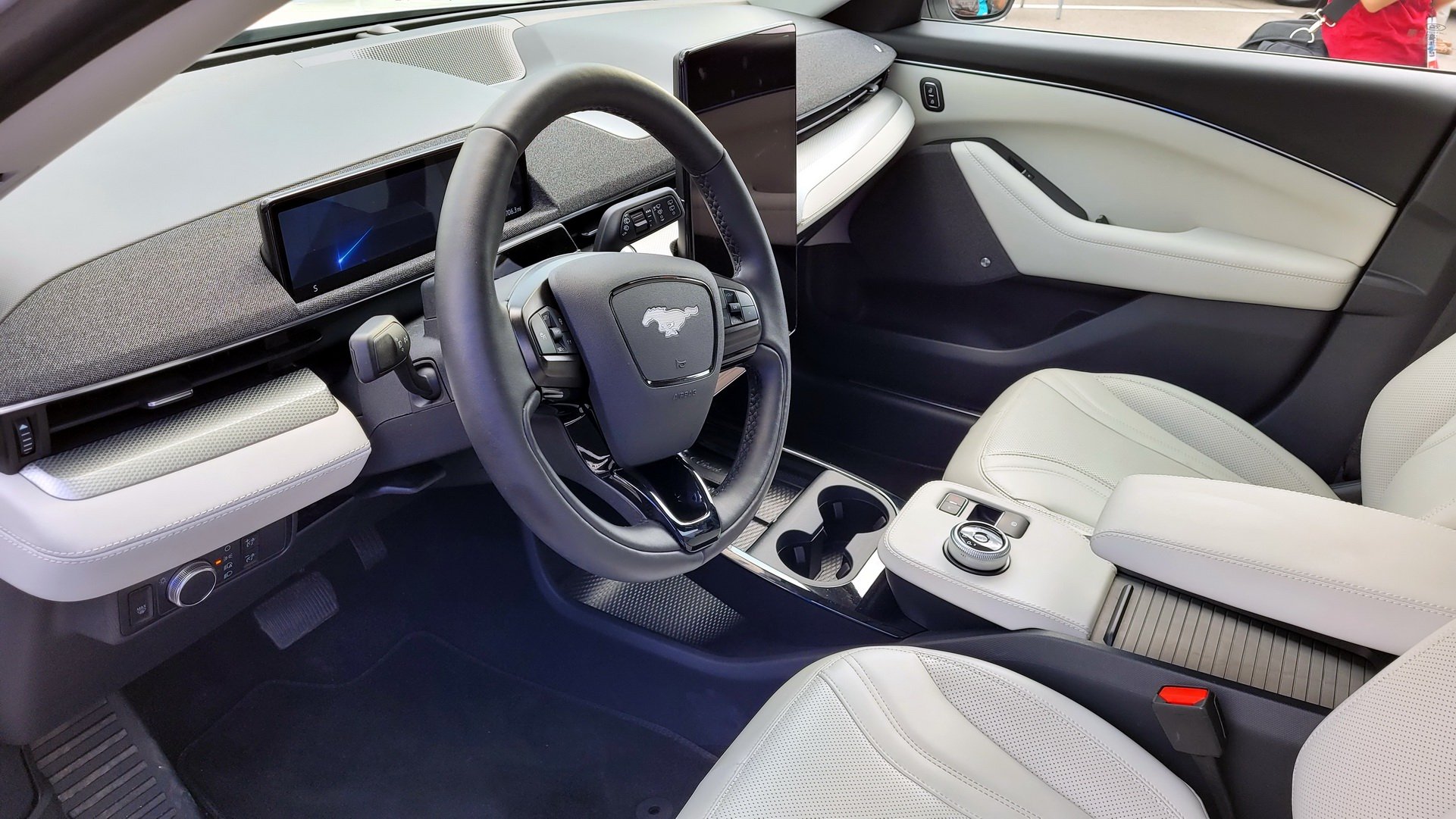
The 2022 updates extend beyond changes under the skin as the new Ice White Appearance Package has been introduced for Premium variants, adding 19-inch aluminium wheels with Oxford white-painted pockets, star white mirror caps, star white metallic tri-coat paint, Oxford white front door badging, and Oxford white pony badges.
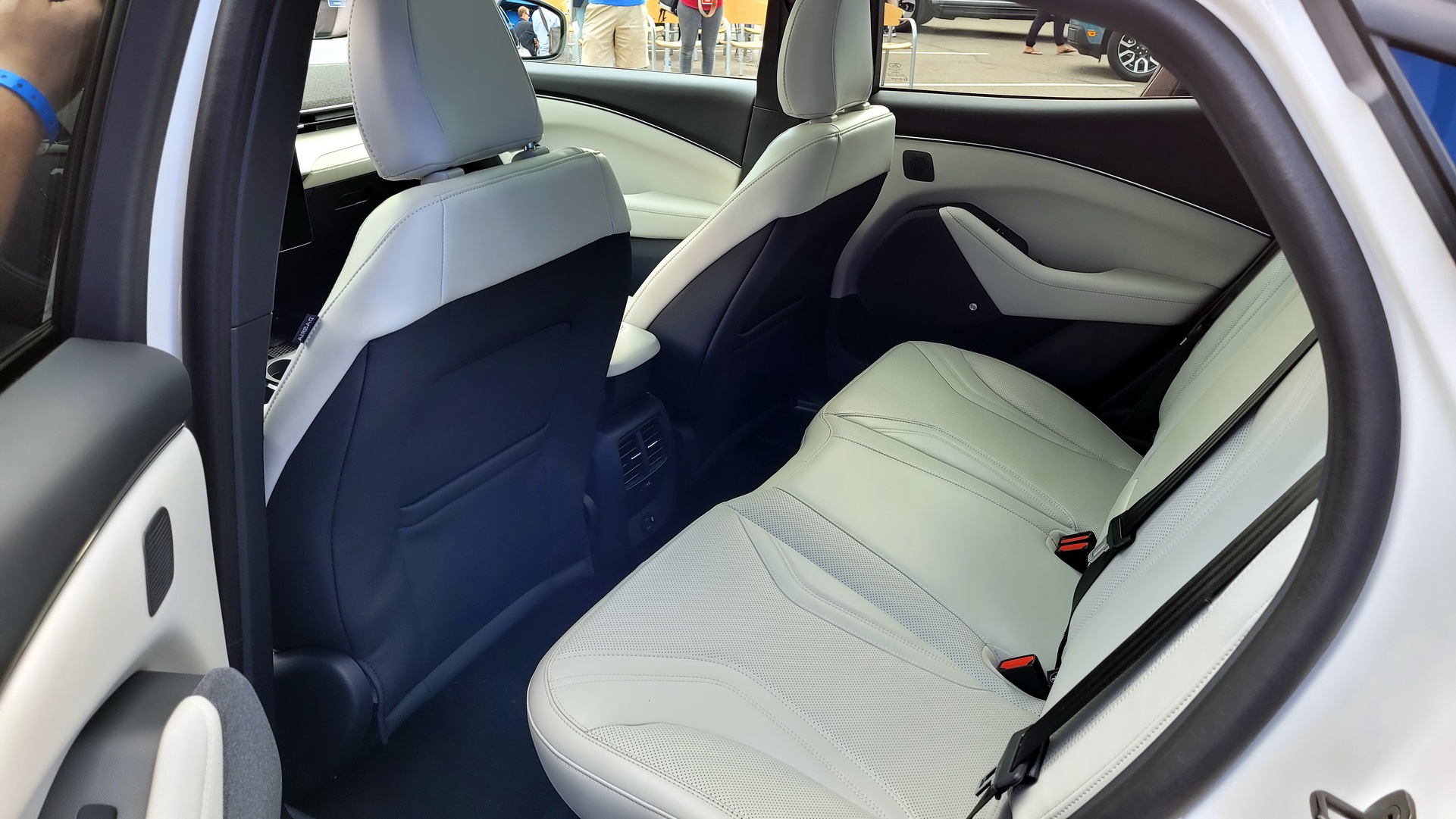
These exterior changes are reflected in the cabin, with the interior also benefitting from the whitewash, including gloss white leather covering the dashboard, seats, door cards, armrests and the steering wheel emblem.
Ford’s Mustang Mach-E is available in the United States in four main variants – the base grade, California Route 1, Premium and GT – with prices ranging from US$43,895 (AU$61,500) to US$61,995 (AU$86,750) before on-road costs and tax credits.
The Australian arm of the Blue Oval has previously announced it will be introducing five electrified models to the local market by 2025, with the first two confirmed to be the E-Transit and Escape plug-in hybrid.
Rumours suggest the new Ranger and Everest are set to take up two of the remaining spots but there has been no confirmation on the fifth vehicle, although Wheels understands both the Mustang Mach-E and new F-150 Lightning could be on the table – the former being the more likely option given its availability in other right-hand drive markets.
Snapshot
- European 208 range reduced to two petrol engines, one electric motor
- Five engines available across 2008 and e-2008 line-up
- e-208 expected to arrive in Australia next year
The 2022 Peugeot model range has been provided an update, covering the 208 and 2008.
While 2021 saw the Australian 2008 gain a new GT variant to drop between the Allure and GT Sport, the entry-level Allure trim has been dropped in Europe, reducing its line-up to just four grades
Peugeot Australia hasn’t been able to confirm to Wheels whether the Allure will remain locally or whether the local range will be reduced to the recently-released 2008 GT and GT Sport, still providing customers with the option of a 96kW or 114kW petrol engine in the small crossover.

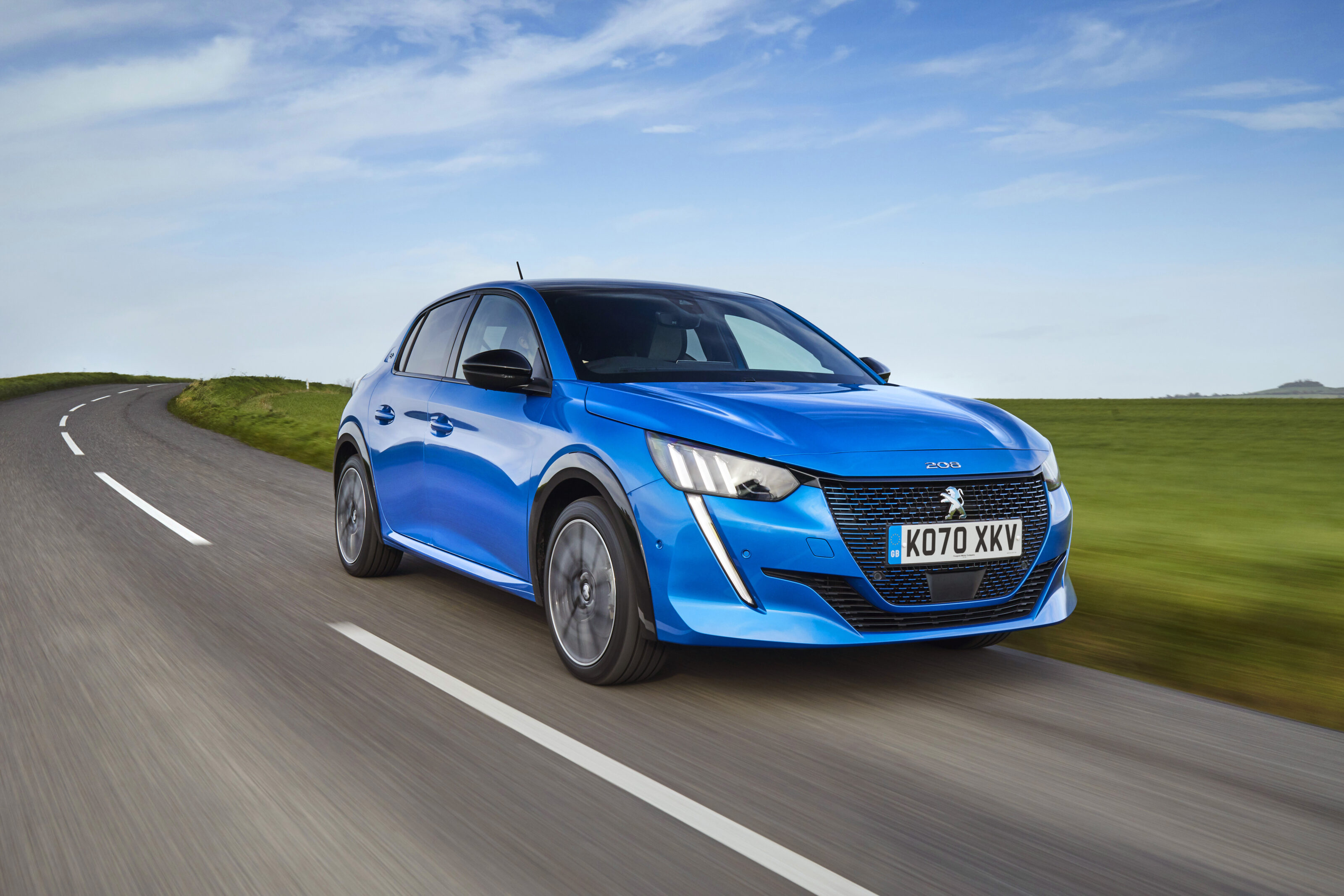
For the 208 hatchback, Peugeot has dropped the option of diesel engines in Europe, reducing its powertrains to its 1.2-litre PureTech 100 and 130, both of which are sold alongside the fully-electric e-208.
The electric variant now boasts a driving range of up to 360 kilometres from a single charge, an increase over the current model thanks to a range of tweaks, including; an interior humidity sensor located at the top of the windscreen, a more efficient heat pump, new gearbox ratio and Class A+ tyres which lower rolling resistance.
Peugeot’s e-2008 also benefits from the latter upgrade, with its 17-inch wheels now shod in lower rolling resistance tyres, although this is the only change the manufacturer has made to increase its driving range to 345 kilometres.
The Australian arm of the French manufacturer has told Wheels the 2008 Allure will still be sold locally, while also confirming it is weighing up a local debut for the e-2008 and e-208 next year.
“The 2008 Allure has proven popular with customers here in Australia and it will continue to comprise our offering locally with no current plans to remove from the line-up,” said a Peugeot spokesperson.
“We will continue to evaluate the potential local introduction of the 208, including the electric variant, as well as the e-2008 and hope to have more to share with you as information becomes available.”
UPDATE, December 21, 2021: The French National Gendarmerie has taken delivery of its first two Alpine A110 police cars.
Shown off in deep blue with bright, fluro accents, it would be unlikely for any French motorists to miss the A110 in their rear-view mirrors – even if it was coming up at a great rate of knots.
Interestingly, the cars ordered are riding on 18-inch wheels rather than the base 17-inch alloys of the entry-level A110 upon which the police car is based, having recently been updated last month.

The story to here
October 22: French drivers will have to think twice about running from the cops, with the national military police adopting the Alpine A110 into its fleet.
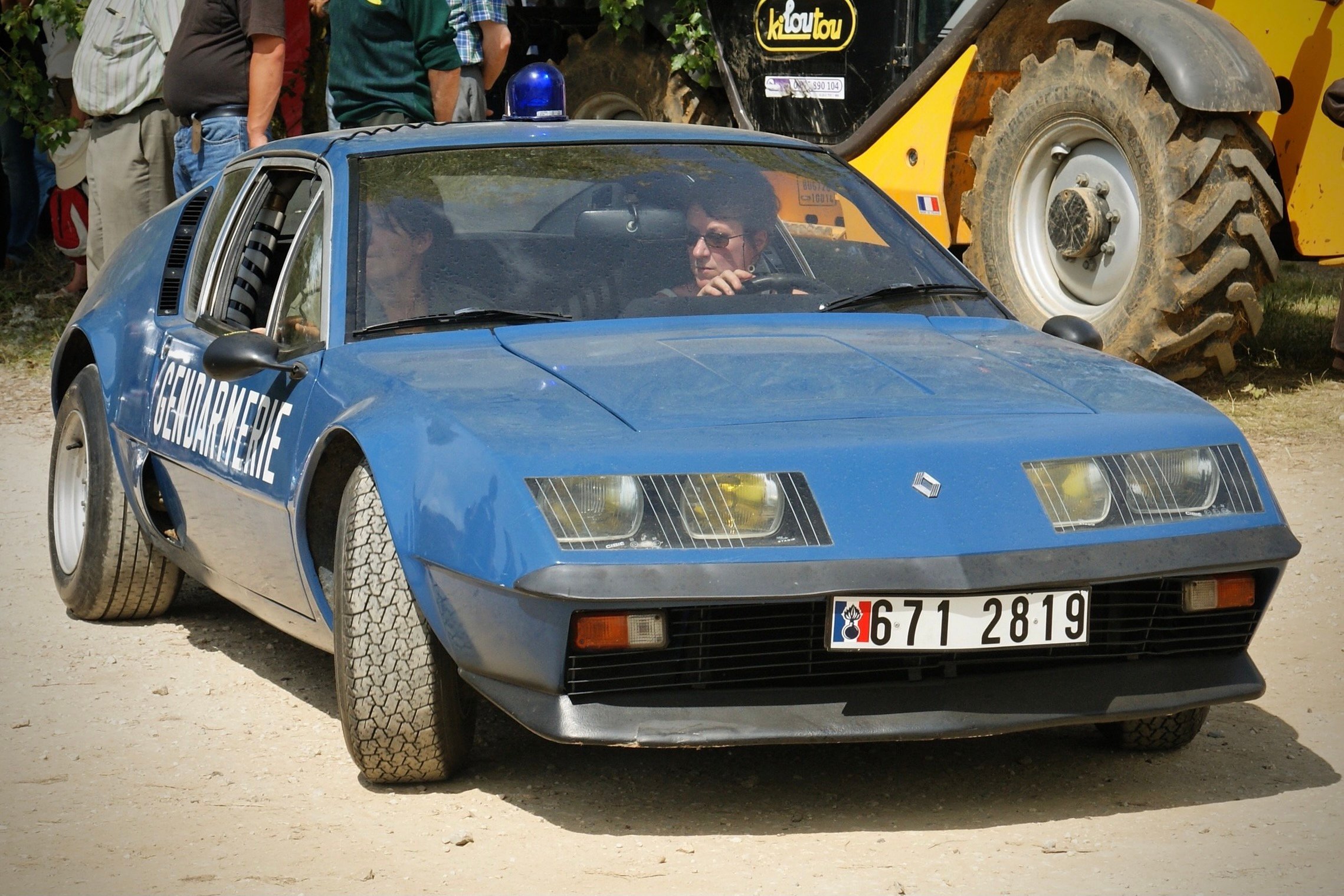
The National Gendarmerie police force has placed an order with Alpine for a total of 26 A110 Pure sports cars for highway patrol duties, set to replace its ageing group of Renault Megane RS hot hatches.
“These vehicles will allow the police to carry out interventions on the motorway, involving high-speed infringing cars, as part of road safety or judicial police missions,” a statement from the country’s Ministry of the Interior read.
According to newspaper L’argus, the police force had originally planned to replace the Renault Megane RS with the Cupra Leon – a Spanish brand owned by the Volkswagen Group – but public backlash resulted in the decision being reversed and the contract being awarded to Alpine.
The Gendarmerie has a long history of using Alpines – using both the original A110 and A310 in previous years – but rumours suggest it’s just the beginning of the relationship, with the latter set to introduce both an SUV and a four-door model in future.
The A110 Pure is powered by a mid-mounted 1.8-litre turbocharged four-cylinder engine, sending 185kW and 320Nm to the rear wheels through a seven-speed dual-clutch automatic transmission.
The vehicles will be fitted out with sirens, radio equipment, and the Gendarmerie’s trademark blue beacon light by specialist company Durisotti.
The Alpine A110 was recently axed from the Australian market, following the introduction of new side-impact safety regulations.
New South Wales authorities have reversed a decision to remove mobile speed camera warning signs after accusations of revenue raising.
However, the victory for motorists will still come at a price – with drivers having less of a chance to adjust their speed than before.
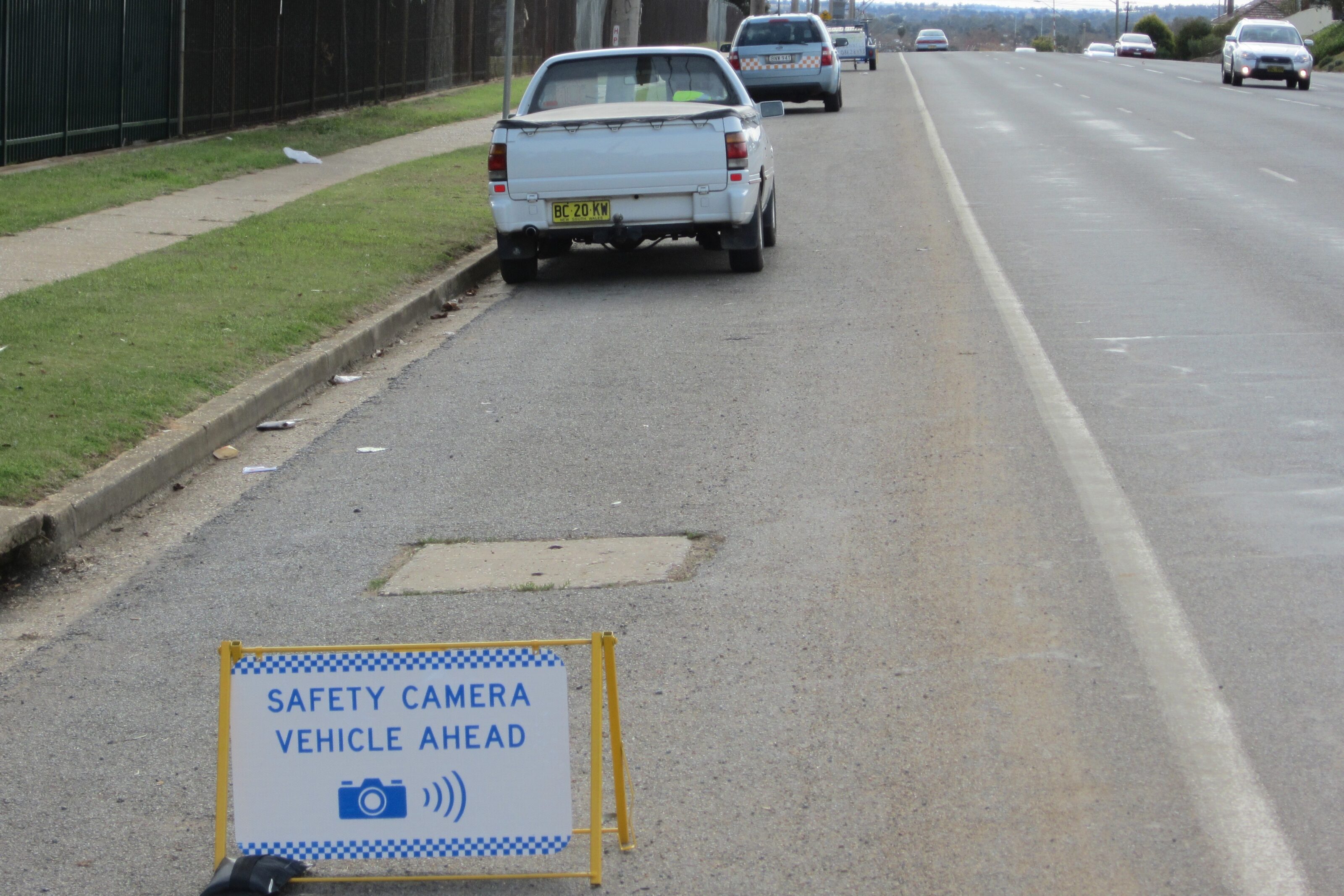
Rather than the warning sign being set some distance behind where the camera is located, it will now be placed on the roof of the vehicle containing the speed camera equipment.
The NSW Government has been under pressure since its decision to remove the warning signs a year ago, with revenue from speeding fines increasing dramatically compared with previous years.
Former NSW Roads Minister Duncan Gay made the ruling to banish the signs, but last month came out in support of restoring the warnings.
“I believe it is a wrong decision, it is not the decision I made on the evidence that was before me at the time, but I believe they have made it in good faith with the advice they’ve had at hand,” Mr Gay said, according to the Sydney Morning Herald.
“The speed cameras are important, but they shouldn’t be there for entrapment. They should be there for safety reasons.”
According to the ABC, NSW drivers copped $40 million in speeding fines over the past 12 months – compared with less than $15 million issued in the previous five years before the signs were removed.
The State Government maintains the sign removal was done to boost road safety, but NSW Deputy Premier and Minister for Regional Roads Paul Toole this week conceded the reintroduction was about listening to the public and finding the right balance.
“Starting in February, there’ll be a blue and white sign on the top of each mobile speed car – the same as what we see in the ACT,” Mr Toole said at the announcement.
“These signs will be large enough and obvious enough that anyone paying attention on our roads should see them in time to adjust their behaviour. This is about saving lives and reducing the road toll.”
The announcement comes three months after the NSW Government announced it would introduce a thousand generic speed camera warning signs.
Queensland Raceway, July 2003. At the most unprepossessing track in the country, leading British touring car team owner Roland Dane visits with one of his business partners.
They have come to buy a V8 Supercars team and the QR round is part of their reconnaissance. Dane and his cohort Peter Butterly think they will roam the V8 paddock unrecognised.
To their dismay, I’m there. I have just returned from a long stint overseas, including several years covering the BTCC, and already have a long history with Dane.
His appearance at QR coincided with my first event back in Australia after being repatriated to become editor of motor racing magazine Auto Action. You should have seen the look on his face when he ran into me.
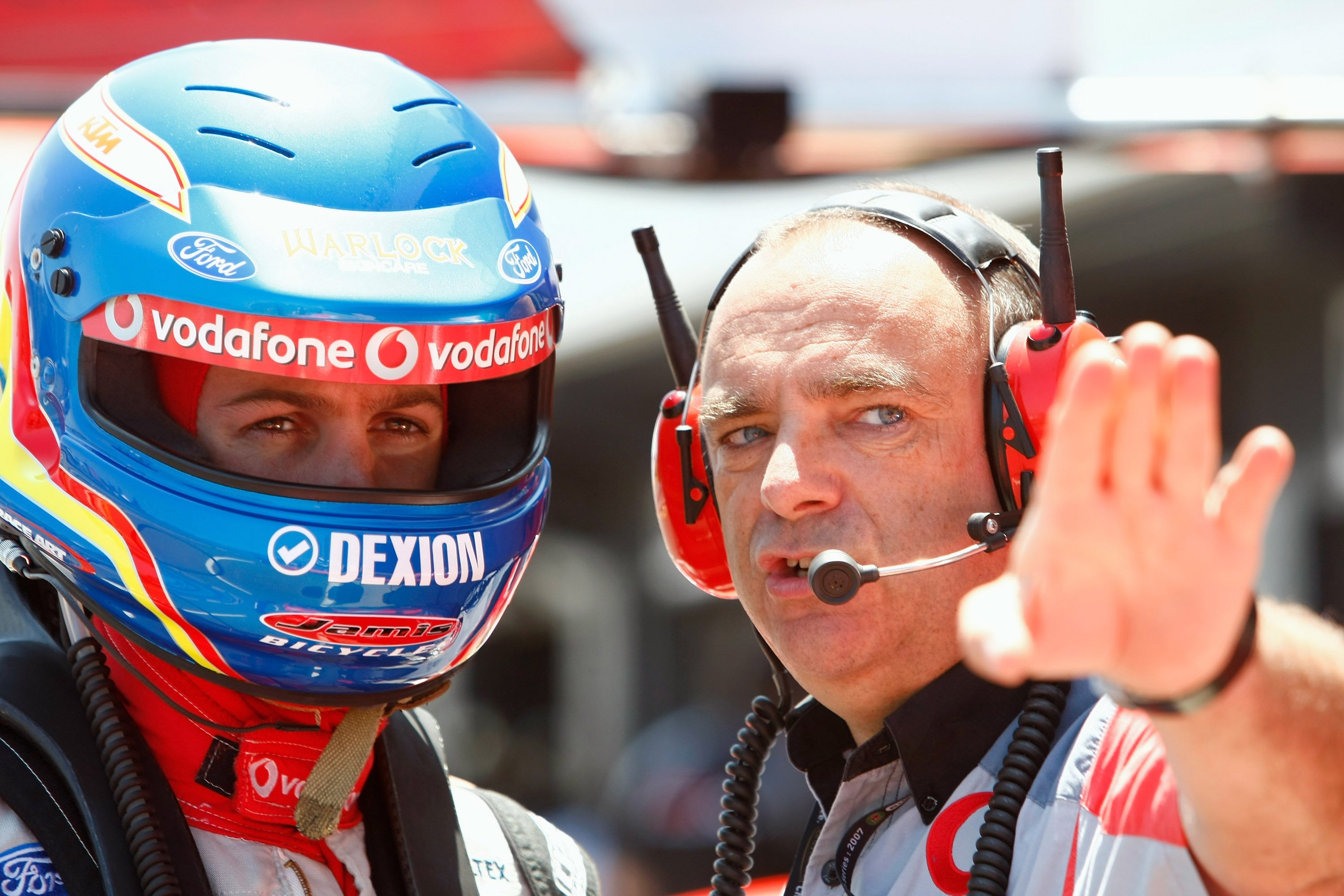
“Hi, Roland, what are you doing here?” I teased. Dane visibly blanched, his cover is blown. No-one else in the media knew him and I was the last person he was expecting to see at the rustic Ipswich track.
Dane’s presence was a short walk to a major news story that Triple Eight Race Engineering, a leading squad in the BTCC since 1997 and dominant from 2001, was looking to establish a V8 Supercars operation. Two months later, Triple Eight was on the grid at the Sandown 500.
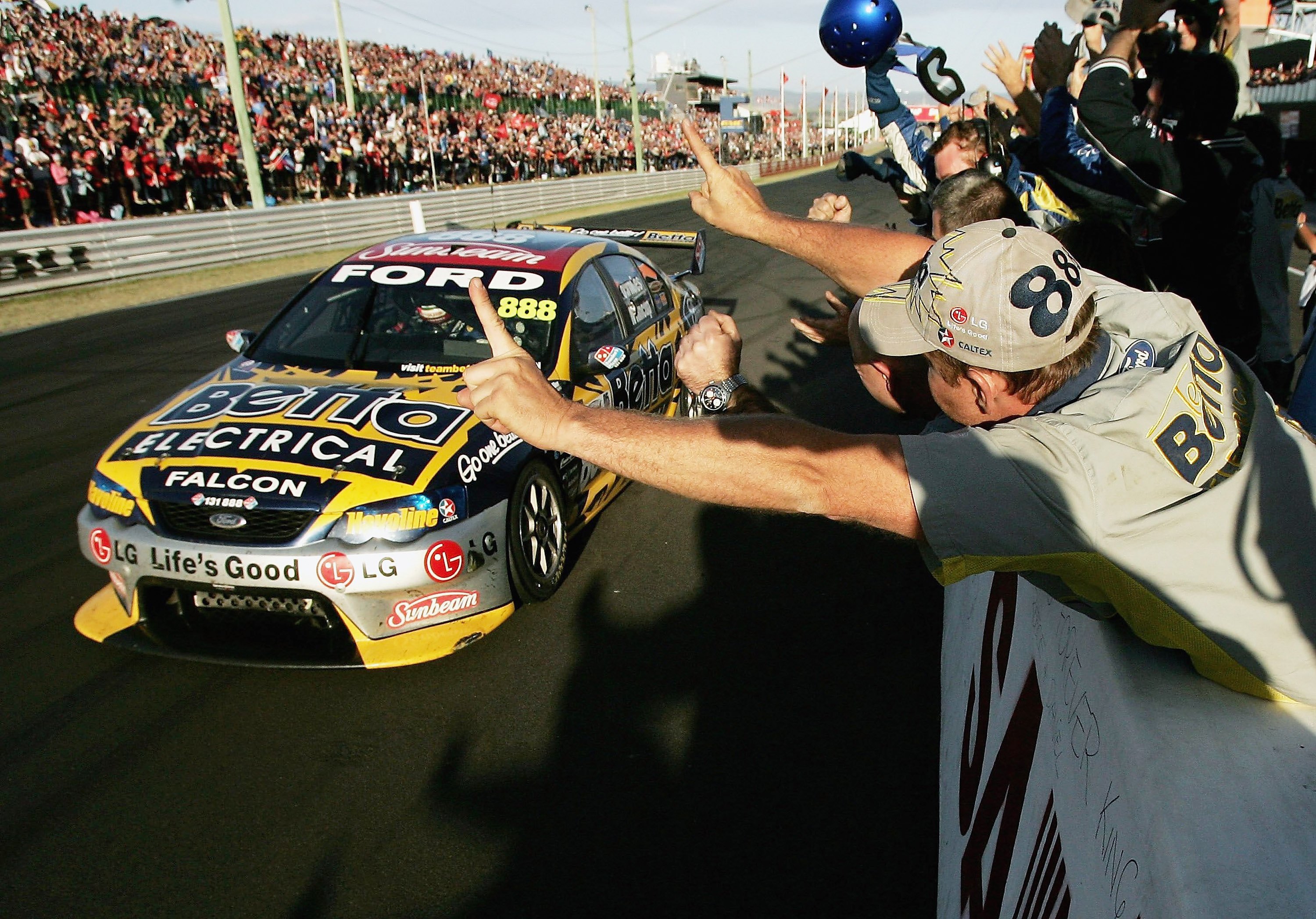
Nearly two decades on, Dane is the most successful Supercars team owner ever, winning 200 races, eight drivers’ titles, nine teams’ crowns and eight Bathurst 1000s.
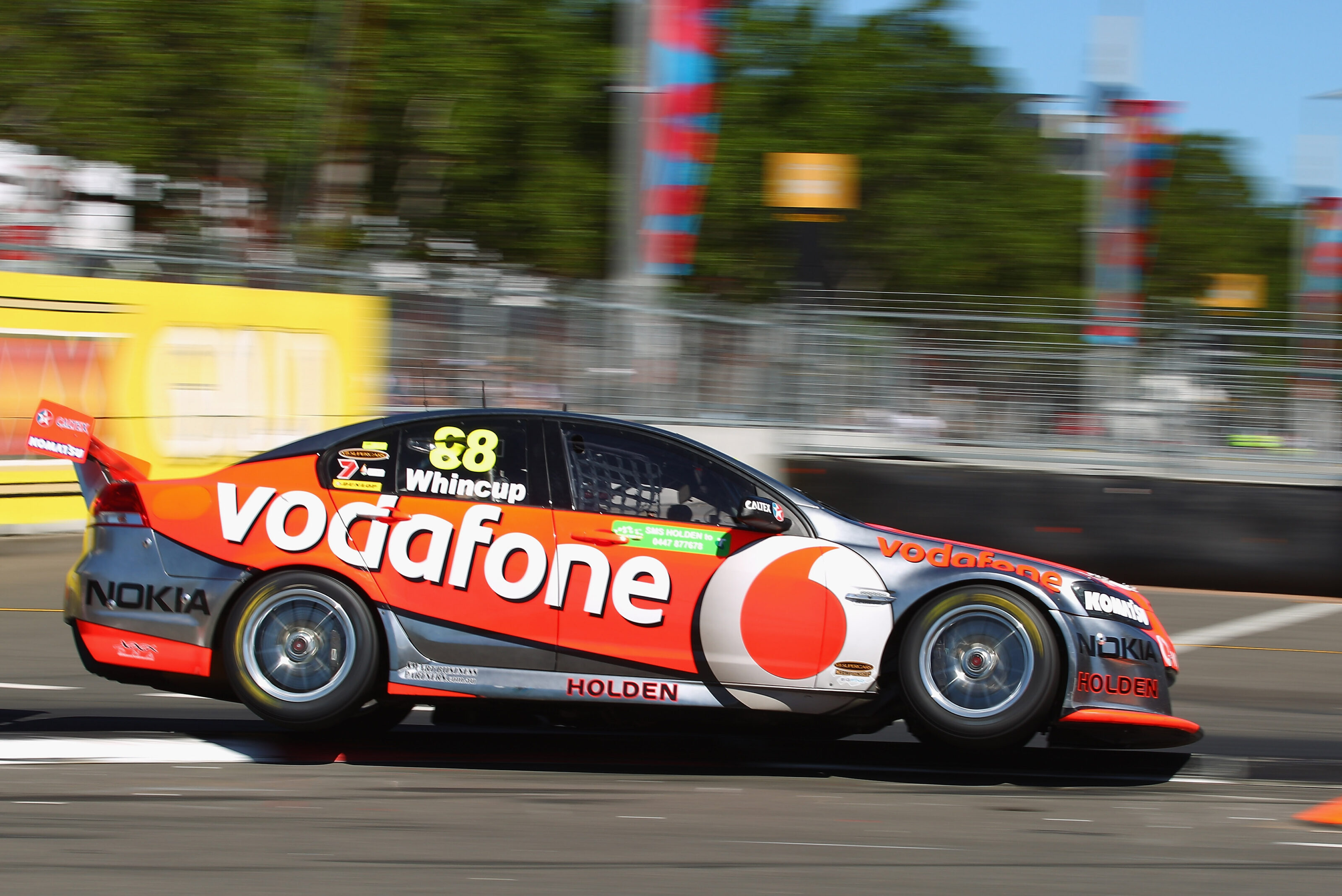
At the end of this season, he is retiring as team principal, handing over the reins to Jamie Whincup, Red Bull Ampol Racing’s record seven-time V8 champion who is in his final full-time campaign as a driver.
Few, if any, successions of team leadership in top-level motor racing have been so significant. The greatest squad in Australian touring car racing history stands on the brink of sustained success – or the death of a dynasty.
Triple Eight’s achievements have reflected Dane’s drive, commitment, competitiveness, power, ruthlessness and passion. Without him at the helm, will it continue as the benchmark?
His reign has been a polarising – many say divisive – period in Supercars’ rise and slip since the mid-2000s. Love him or loathe him, this imperious Anglo-Irish-Australian is a big part of the survival of Supercars as the most competitive, most professional and most spectacular touring car racing series in the world.
Dane’s detractors charge that he has exercised undue self-interest to influence the sport. Cars built by his Brisbane-based company dominate the grid and his rivals claim he wields excessive behind-the-scenes power. He is accused of manipulating rules and policy to suit his own agenda.
His supporters point to his team raising the standards of presentation, commercial acuity and efficient operation in V8 racing to new heights.
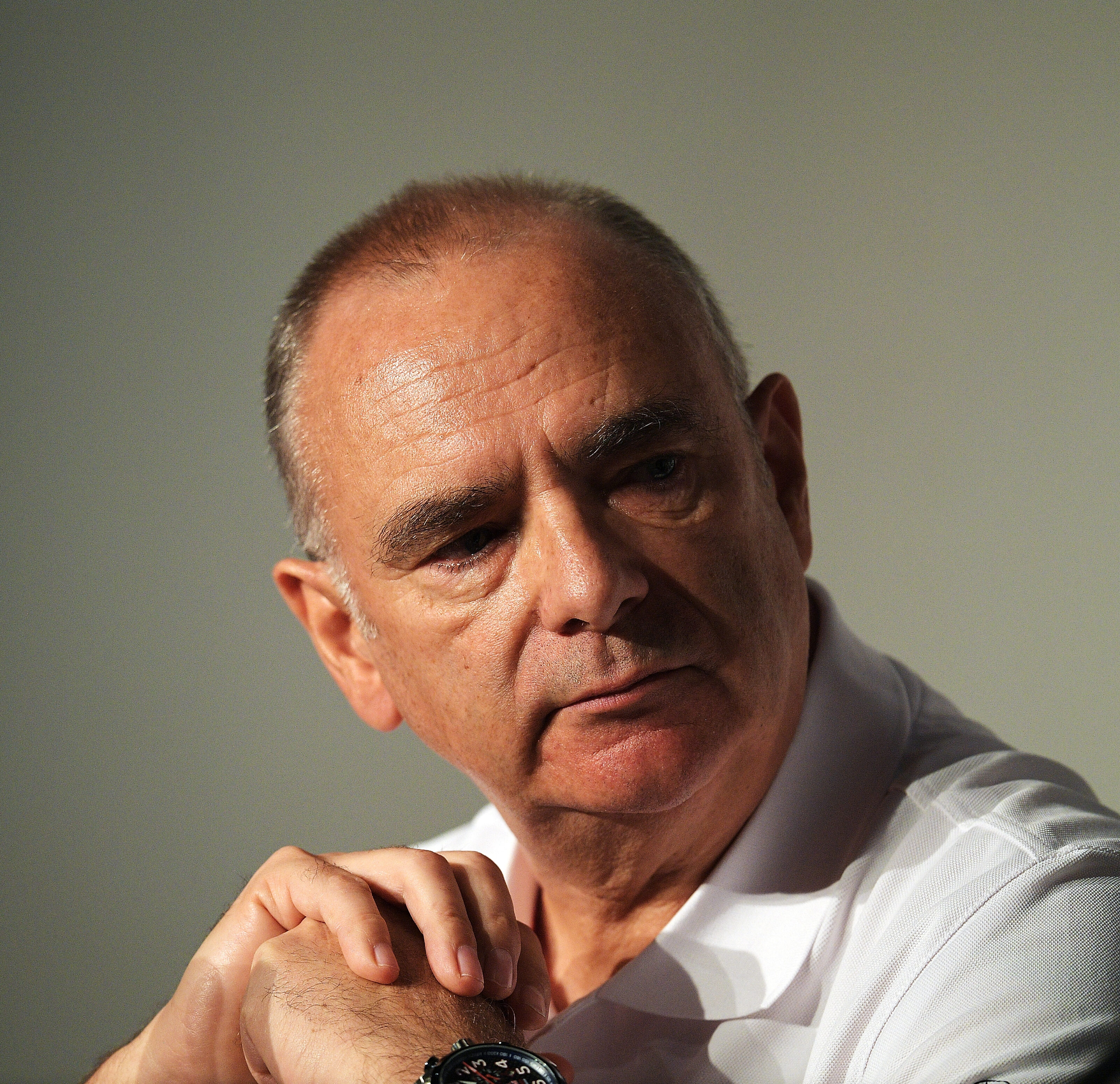
Dane, who recently turned 65, is a conflicting character. Publicly, he appears arrogant, dismissive and superior. He really doesn’t care what people think about him. It does, of course, help his disdain that he is extremely rich, thanks to his business acumen. He has made millions from motor racing, but his real fortune is founded in automotive wheeling and dealing in the UK and Asia. As he freely admits, “I’m a car dealer at the end of the day.”
Away from racing, Dane is urbane, articulate, informed, entertaining and insightful. Like former Formula 1 czar Bernie Ecclestone, there is an underlying enthusiasm and concern for racing. Unfortunately, there is also a strong suspicion that, again like Bernie, his love of racing is over-ridden by his greater passion for power. It is easy to admire Dane, but difficult to embrace him.
Fans and rival team owners regard him with extreme distrust. Jealousy is also a factor. Mostly, Dane is guilty of running a winning operation that for much of the past 14 years has always been in contention for race wins and championships. Except for American mogul Roger Penske’s incursion from 2015-2020, Triple Eight has had the classic combination for success: biggest budget, best drivers and sharpest people.
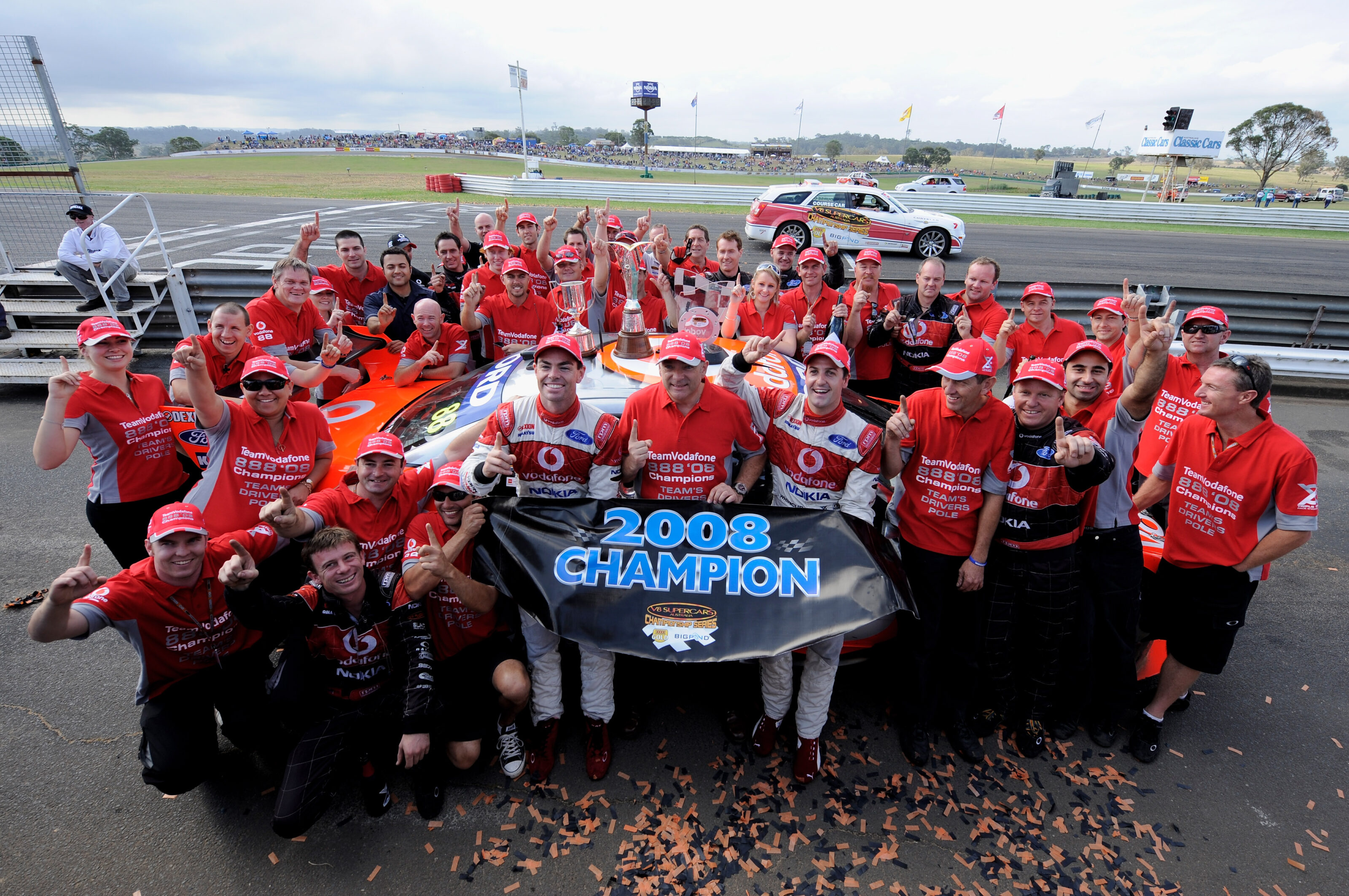
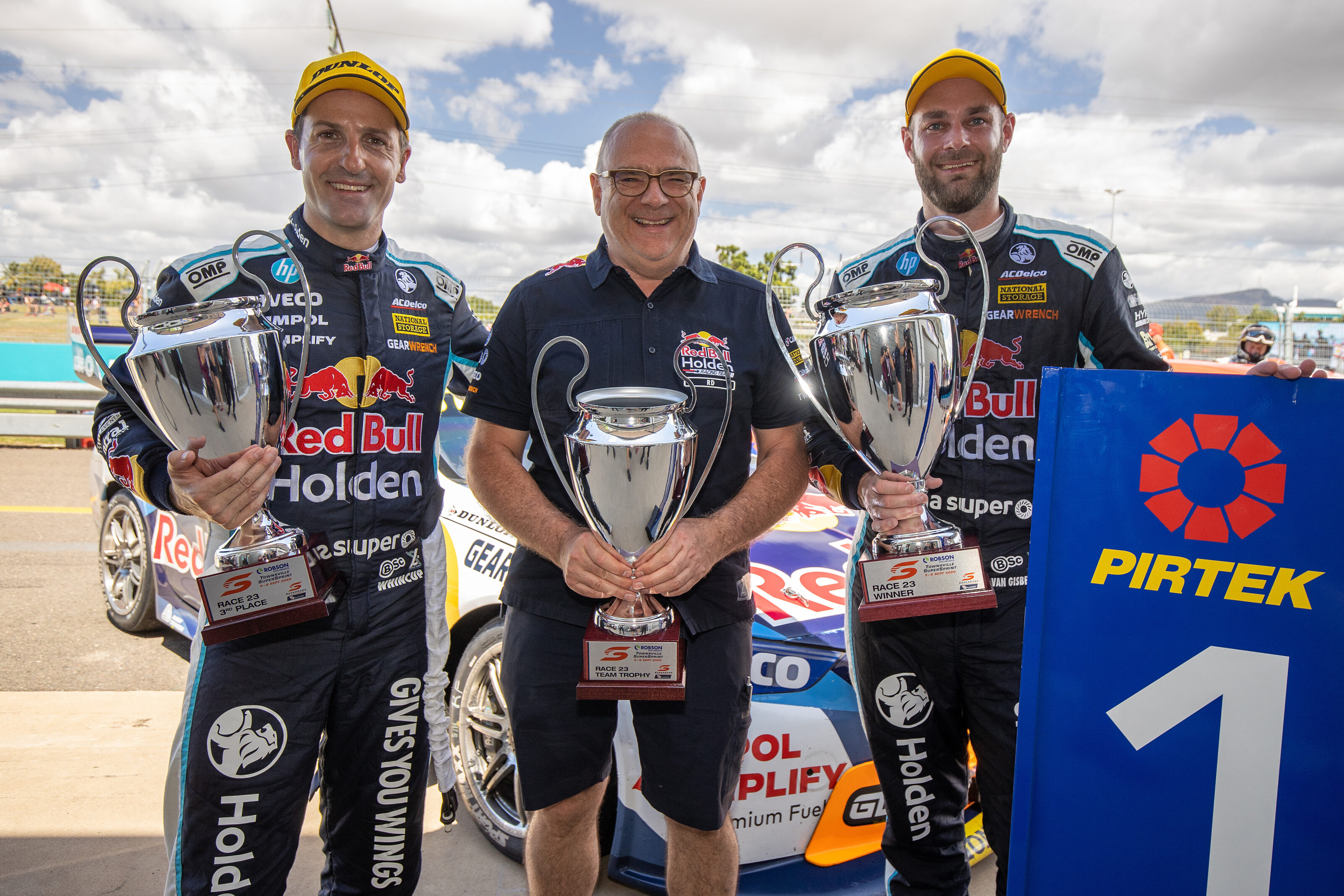
As he prepares to depart, Dane’s team is back on top, with preternatural talent Shane van Gisbergen well on his way to winning what has become another COVID-disrupted championship. On his farewell tour, Whincup is a solid second, helping Triple Eight reclaim its teams’ crown from Penske-less DJR, which is also without triple champion Scott McLaughlin.
The balance of power has shifted back to the Bulls, who have signed 18-year-old prodigy Broc Feeney to fill Whincup’s seat from next year. Feeney is the epitome of next-gen Triple Eight, waiting in the wings to succeed the mercurial SVG, just as Whincup was apprenticed to superstar Craig Lowndes in 2006.
The new management will be Whincup along with Dane’s eldest daughter Jessica, supported by an established after-guard – team manager Mark Dutton and technical director Jeromy Moore (back after a successful stint with Porsche in Le Mans sports car racing).
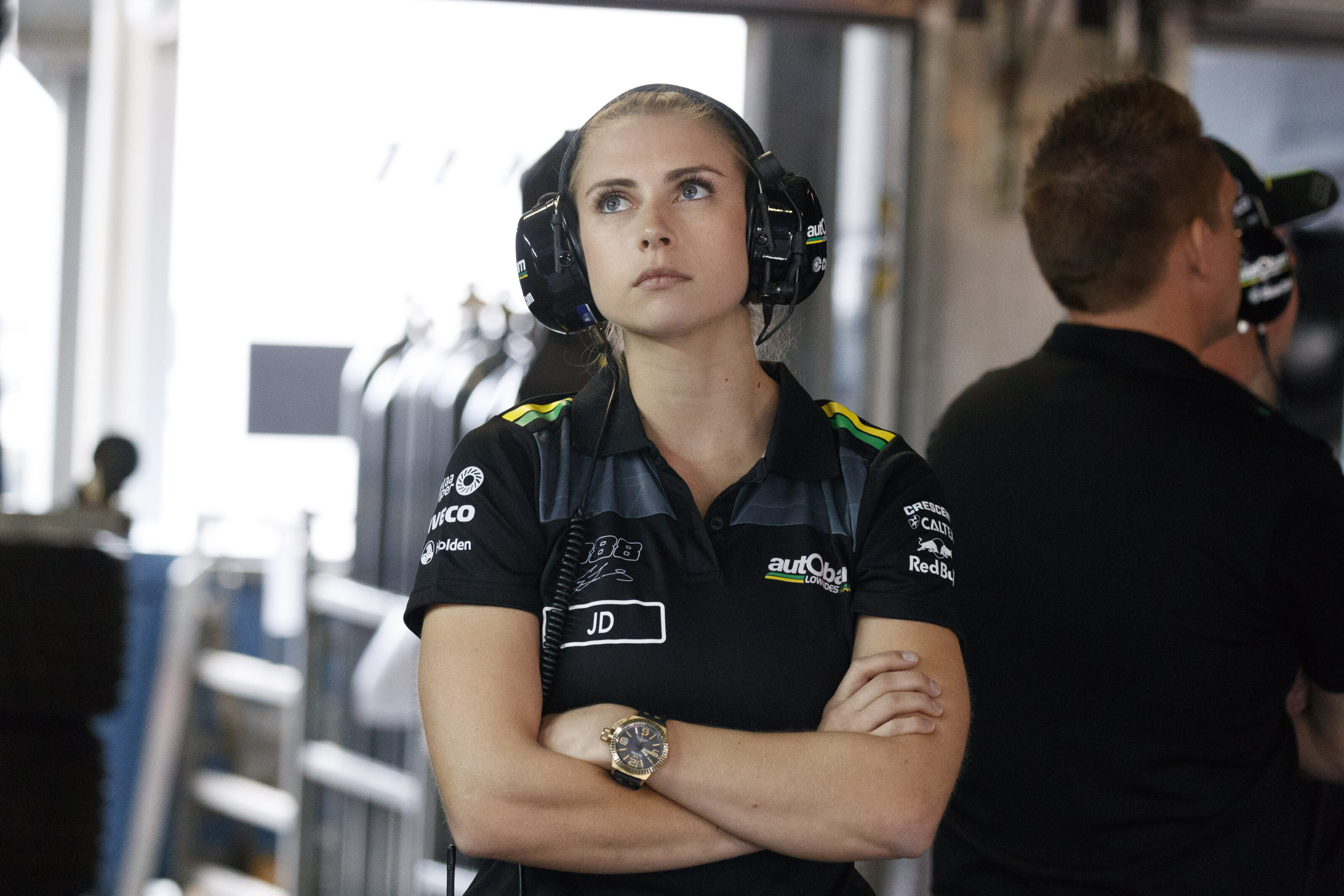
Jess Dane is poised and proactive. She has learned the business from the inside while gaining external experience as a broadcaster. She is also close to completing a law degree.
Crucially, Jess is active in women’s affairs in international motorsport, bringing diversity and equality to Triple Eight. It’s difficult to regard gruff, strutting ‘RD’ as enlightened, but he has encouraged her to be her own person. She is a polished professional whose presence gives the team a modern face.
RD has not made it easy for her to gain executive status in the family firm, but she has risen to the challenge to earn the second-largest shareholding in Triple Eight – 30 percent. Entrepreneur/racer Tony Quinn is the ‘silent’ majority owner with 40 percent, while Whincup holds 19 percent and Dane – as chairman – retains 11 percent.
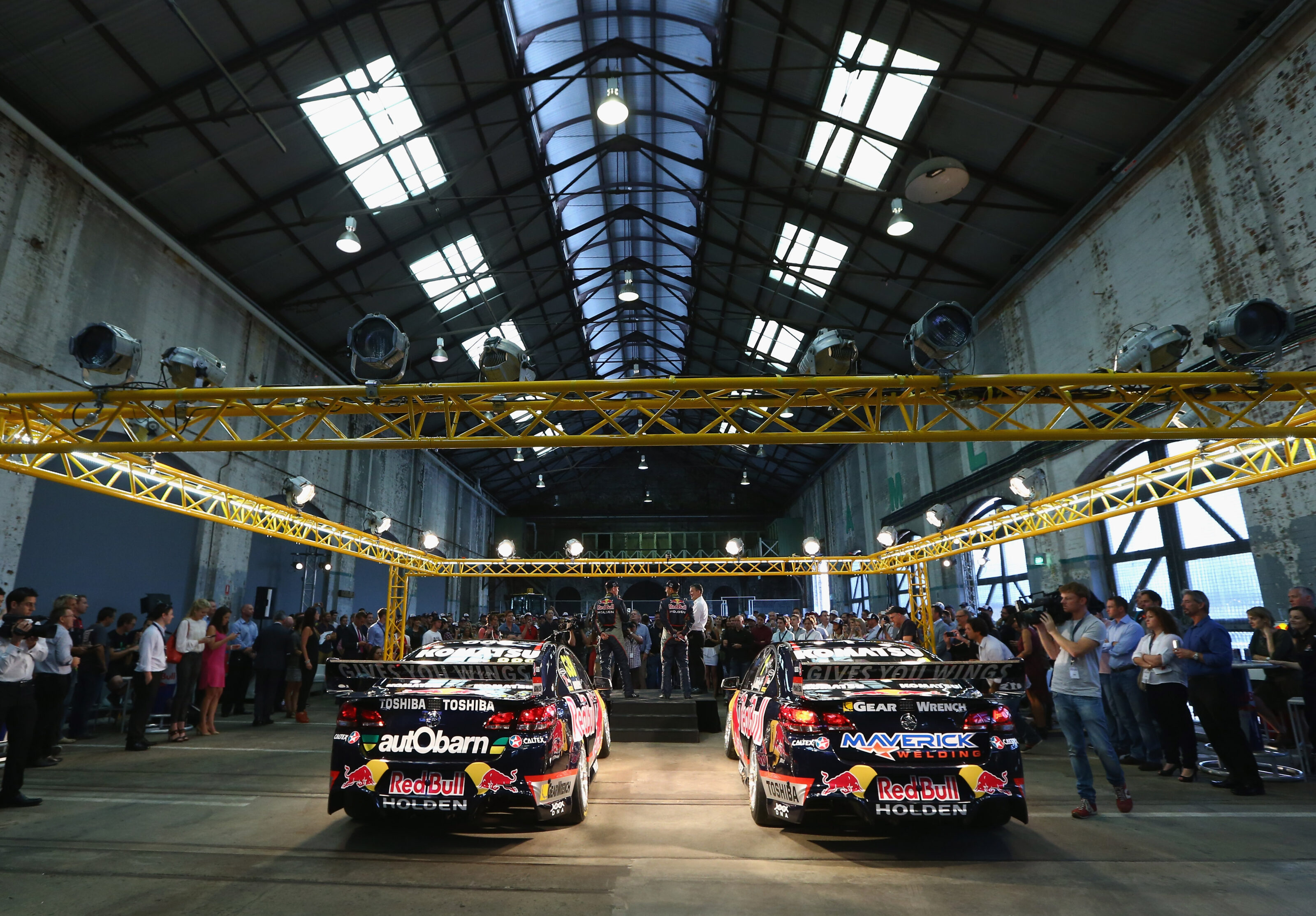
Triple Eight ran under the Red Bull Holden Racing Team banner from 2018-2020, taking over sole factory team status from Walkinshaw Racing, which had been the Lion’s flag-bearer since 1990.
Following Holden’s demise, the Banyo-based squad will switch from the ZB Holden Commodore to the Chevrolet Camaro under the new Gen3 rules, now delayed until 2023. Along with new ownership of Supercars, the changes for the team and the sport will be tumultuous.
In the 35 years I have known him, Roland Dane has been consistently fastidious and obstreperous. From the British Touring Car Championship’s glory days in the mid-to-late ’90s to Supercars this century, he has been a force. We’ve clashed, fallen out, made up, argued, agreed and ultimately accommodated each other. We are not friends, but we are friendly and respect each other through a long association.
Wind back the clock to late May, 1986. At the Belgian Grand Prix at the famed Spa-Francorchamps circuit, I meet Roland Dane for the first time. Our mutual acquaintance is veteran F1 reporter Mike Doodson. Dane is there as friend of F1 driver Derek Warwick, driving for Brabham. He strikes me as a hanger-on. I am wrong. Six years later, we meet again. He is an emerging power in the BTCC as it embarks on its Super Touring glory years.
Dane becomes a force in the strongest 2.0-litre touring series in the world, with Triple Eight taking over as the Vauxhall (GM) factory team in ’97. Following a rules change in 2001, his Vauxhall team dominates for the next several years.
In the BTCC’s Super Touring era, I had a lot to do with Dane. He was hard, uncompromising, detail-oriented and driven. He clashed with tough, expat-Aussie BTCC boss Alan Gow often.
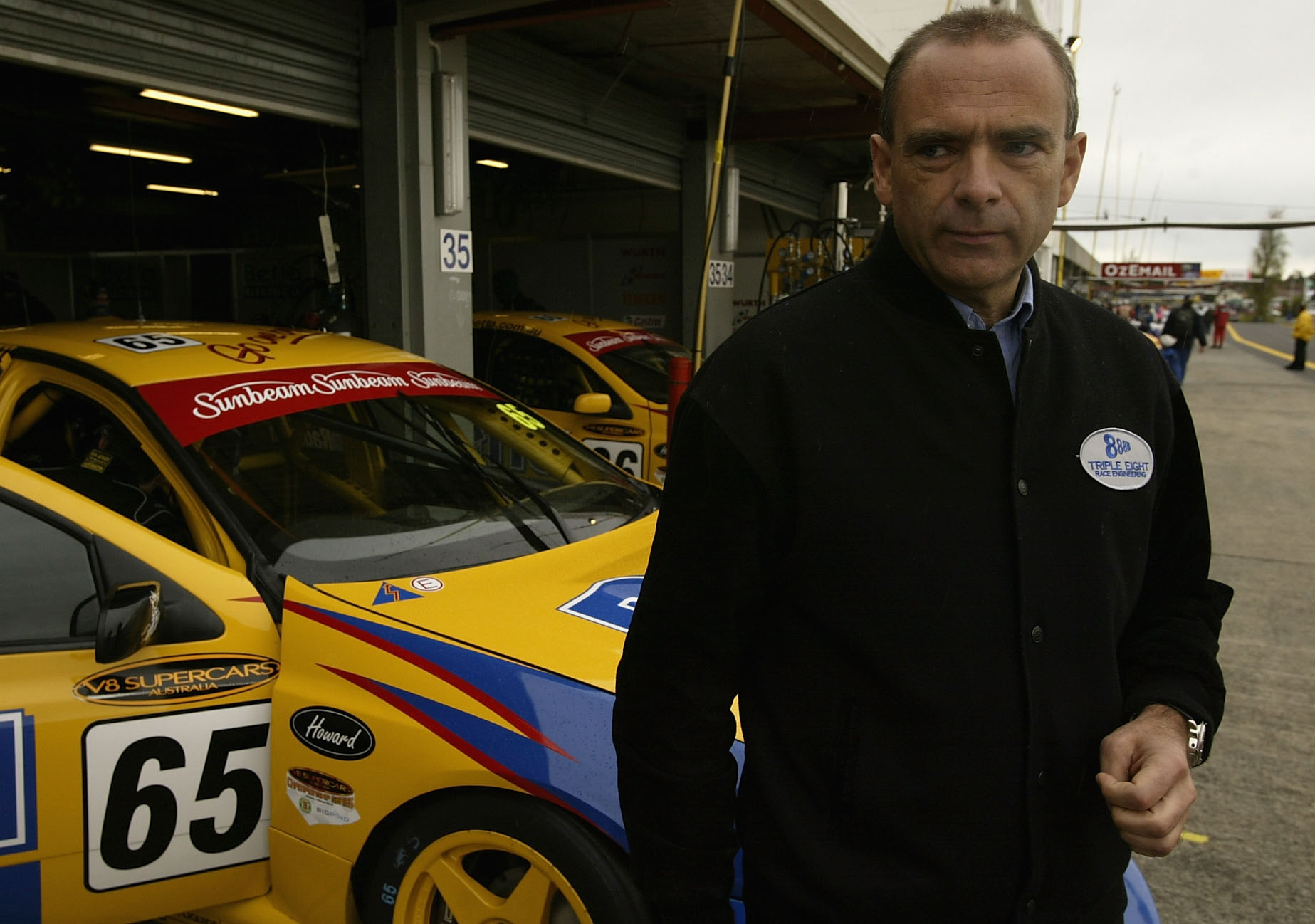
When Dane arrived in Australia, I knew enough to know that he would make a big impression. And he did, snaring V8 legend Craig Lowndes in 2005, joined by superstar-to-be Jamie Whincup in ’06.
J-Dub won his first race with Triple Eight at the Adelaide 500 – and the rest is history. They combined later that year to win the Bathurst 1000, an emotional victory for Lowndes just weeks after the death of his friend and mentor Peter Brock.
Dane may not have foreseen Whincup’s potential as Supercars’ GOAT – Greatest Of All Time – but he had the wit to sign a discarded talent on a hunch.
Two things tell you much about Dane – and they are inter-related. His team’s full name is Triple Eight Race Engineering. Like the F1 bosses of the 1980s that inspired him, he regarded his team as a race engineering business, building cars and bits as well as racing them.
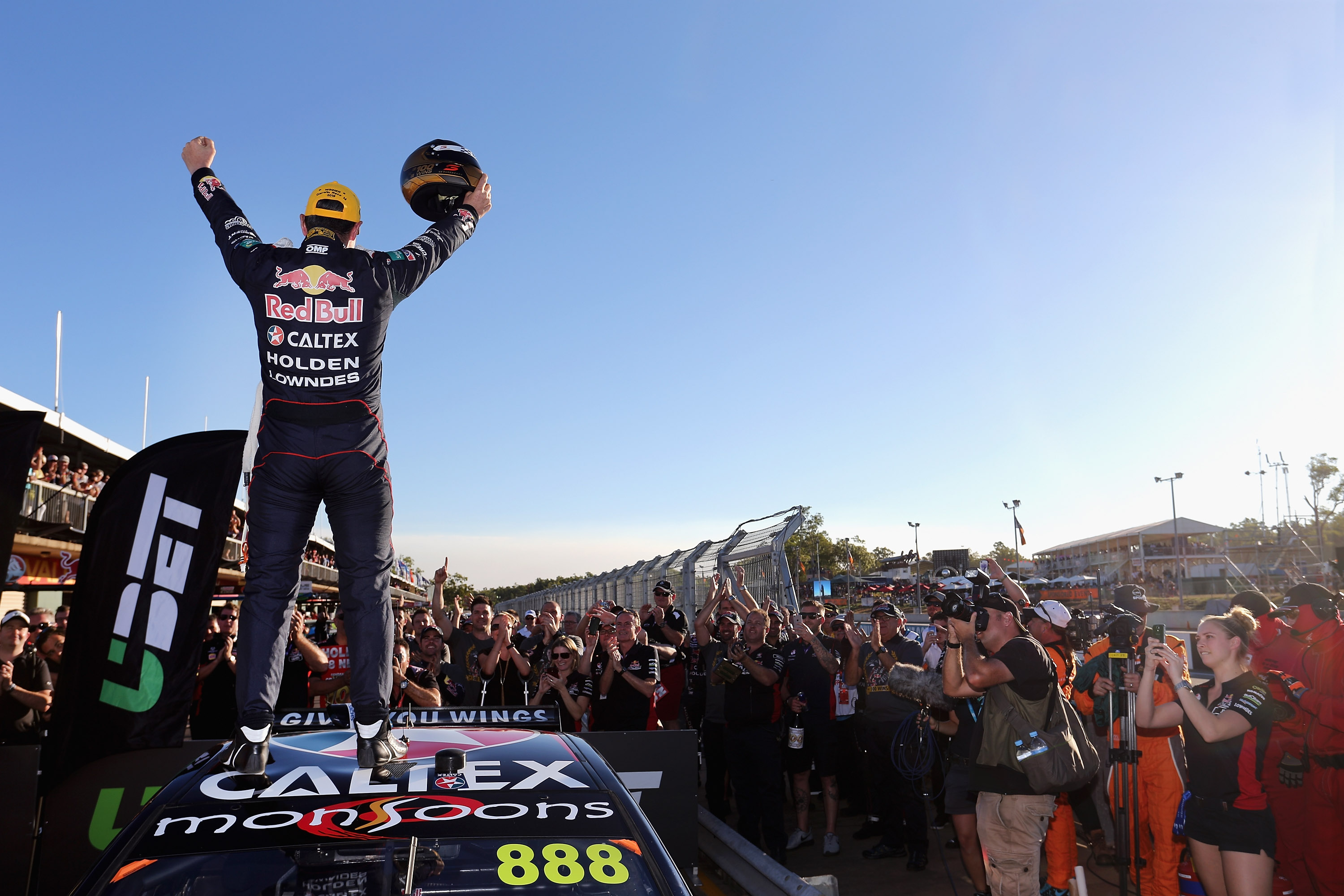
A core of Triple Eight’s existence has always been making cars and components – especially its category leading front suspension uprights – for other teams. While it is the Camaro homologation team, Gen3’s emphasis on cost-cutting standardisation will all but eliminate its bespoke engineering.
But the team’s history and success are founded upon in-house development, hence its traditional full name.
The Triple Eight name itself is partly the subject of an urban myth. Before gaining the Vauxhall BTCC factory deal in ’97, Dane, Warwick and ex-Williams F1/Renault BTCC team manager Ian Harrison planned to pitch to run a Honda team.
The popular legend is that 888 was Dane’s idea to capitalise on eight being a lucky number in Asian culture. Only partly correct.“Eight is a very significant number in China, but not in Japan,” he recalls, having established a big business in trading cars between the UK and the Far East. “It resonated in Asia, though, and it was certainly influenced by my experiences in Asia and the good fortune I’d had out of doing business there.
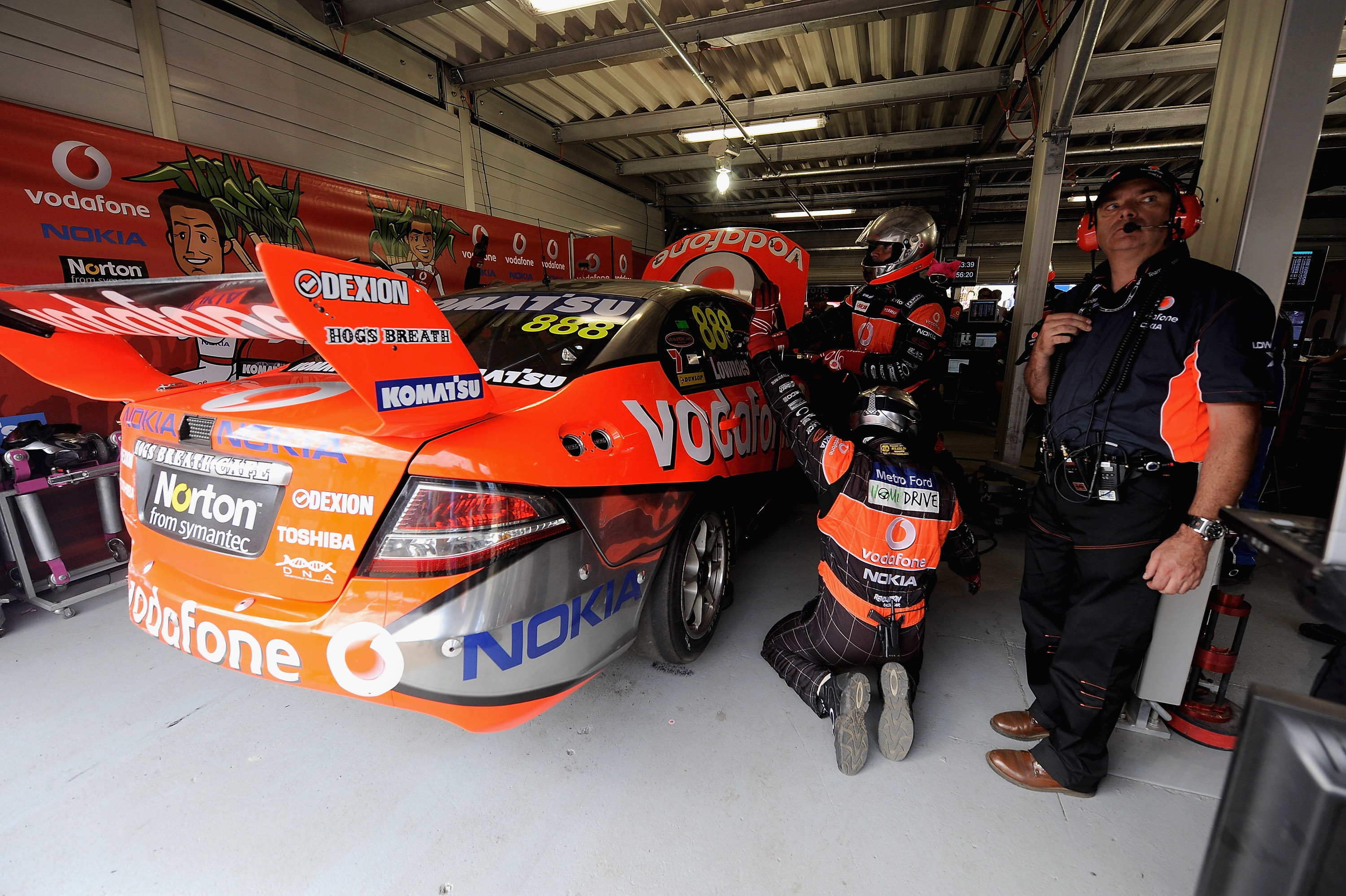
“Also, it was at a time when everyone’s race team was named after themselves – you know, Somebody Somebody Racing, which I thought was just so boring.
“It was time for something different, so I had to come up with a name and I decided on 888. My partners agreed, so that’s what we went with.”
Dane sold his interest in Triple Eight in the UK long ago – it went on to win more BTCC titles under Harrison with Vauxhall and MG – and committed to Australia, adding citizenship to his Irish and British passports.
Dane’s influence on Australian racing over nearly 20 years has been profound. His views are provocative.
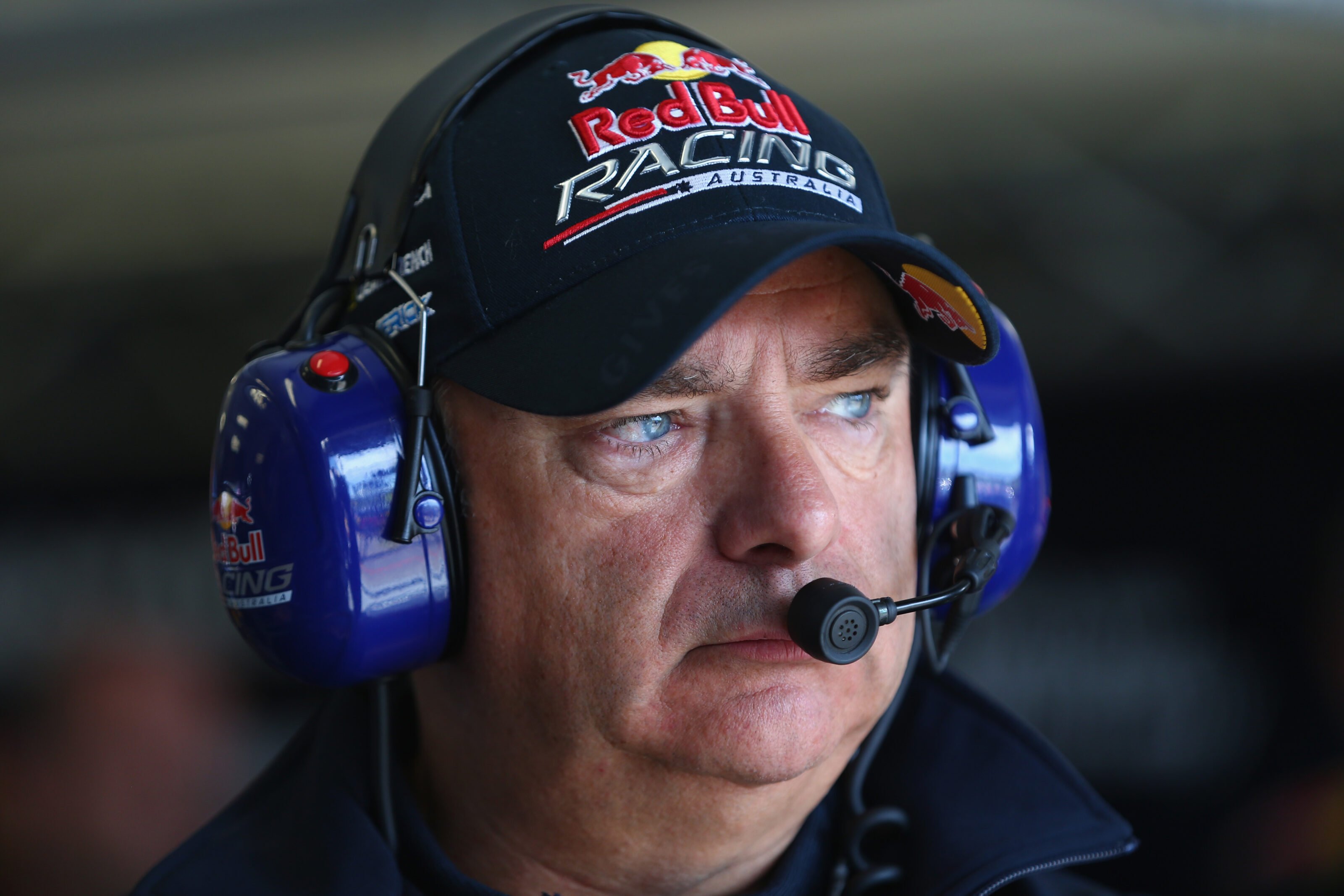
Ford spent the equivalent of A$20 million to win the BTCC in 2000, the last year of the 2.0-litre Super Touring era. The series changed to cheaper, smaller and slower cars in ’01, which is when Dane began to lose his interest despite the Triple Eight Vauxhall Astras emerging as the class of the emasculated field.
Jaded, he turned his attention to Aussie V8 touring car racing, which was riding a growing wave of popularity and prosperity in the early 2000s.
“The heyday of the BTCC was undoubtedly the late 1990s,” Dane recalls. “But then it was clearly becoming too expensive. We did okay in that period, winning races, and we enjoyed it a lot, but it was also clear it was never going to last forever at the level it was.
“So the rules were then changed to try to take it into a new era in 2001 and Triple Eight did very well for quite a few years after that. But by 2002, to be honest, it was quite boring car-wise compared with the Super Touring era, plus I was looking for a new challenge.
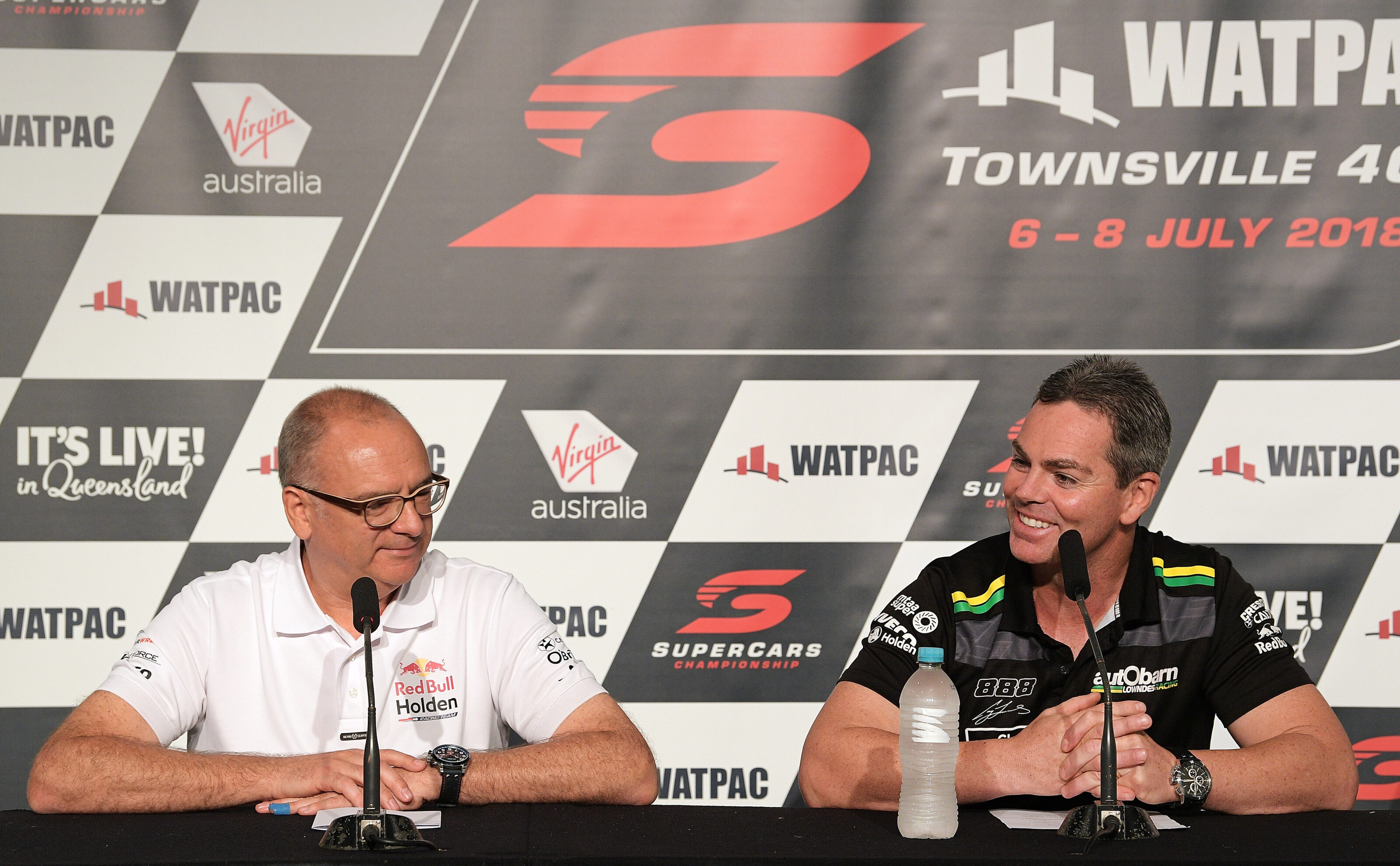
“I’d been out on a couple of trips to Australia in ’01/02. At the Gold Coast Indy in 2002, I spoke with [Supercars founder] Tony Cochrane at length about the landscape and I thought it would be a good punt from a change of scenery point of view and trying to get back involved in a championship with a real commercial footing.
“BTCC had been on a very good commercial footing for some years, but although Triple Eight was still making money, it wasn’t on the same level that it had been and the racing just wasn’t inspiring.”
After an unsuccessful bid for the Holden Racing Team in the wake of TWR’s collapse in early ’03, Dane and his T8 partners bought Brisbane-based John Briggs Motorsport, debuting with a pair of BA Falcons in the Sandown 500 in September of that year.
“The plan was to give it three years to see if there was the potential to build a business and be prepared to invest at the beginning of that,” he says. “The first step was to see if we could win races and I thought if we could do that, we could then turn it into a commercial operation that would stand on its own two feet. So it was a challenge.”
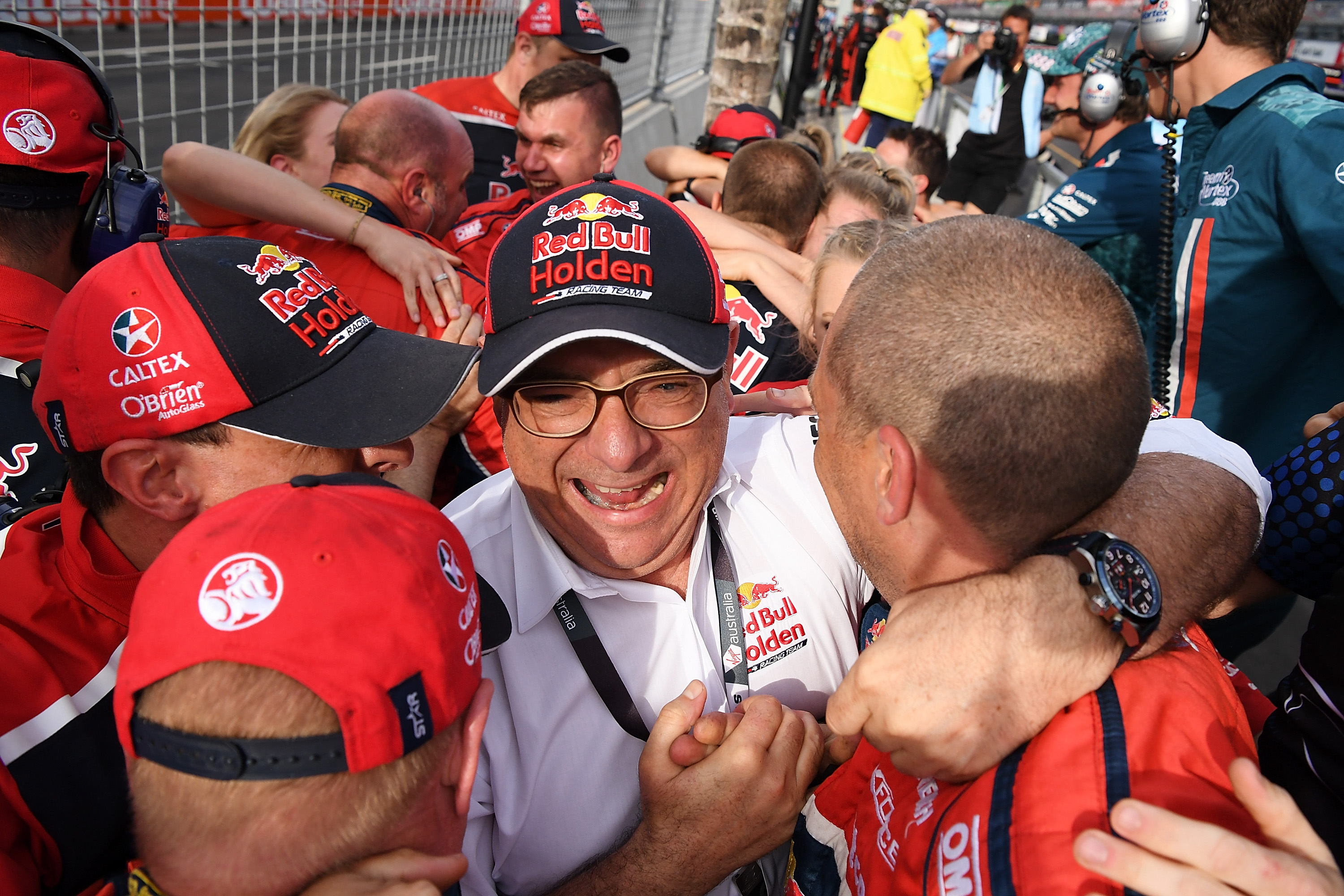
With touring car design genius Ludo Lacroix already on board, the next crucial step towards establishing Triple Eight as a power on and off the track was the signing in 2005 of Craig Lowndes, the most popular, best known and most successful modern generation driver.
Snaring Ford-backed Lowndes bestowed the team with instant credibility and results, as well as ultimately attracting blue chip sponsors like Vodafone, Red Bull and Caltex (now Ampol).
“Signing Craig was pivotal for a couple of reasons,” Dane explains. “Firstly, his ability in the car and taking us to another level from a driving point of view, but also because of his appeal to major sponsors. By 2004, I was looking at the long-term commercial landscape and what the look of the team was likely to be, and to get it to where I wanted it to be, we were going to need somebody with presence, a superstar of the sport, really, which was Craig.”
Lowndes came close to winning the V8 title in ’06, when he scored his second – and most meaningful – Bathurst 1000 and went on to win the Mount Panorama classic five more times before retiring from full-time racing at the end of the 2018 season. Now 47, he is still a competitive co-driver, partnering Whincup.
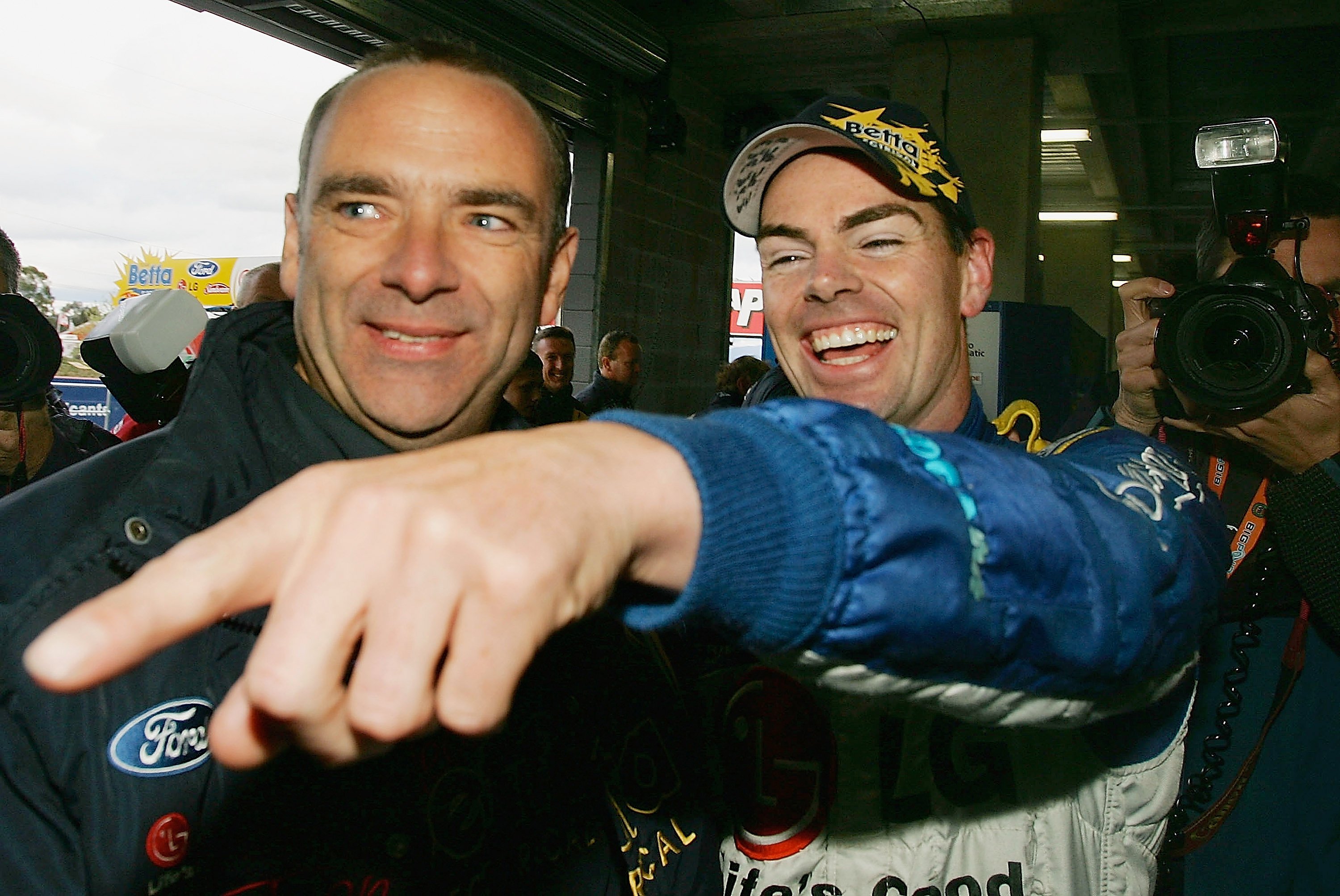
Dane’s commercial acuity was inspired by the enterprise of leading F1 team owners in his formative years in racing in the late 1980s and early ’90s.
“We didn’t have a fairy godmother to fall back on,” he says. “We had to make it stack up and then really had to go and sell. And if there’s one thing I’ve done all my life, it’s sell.
“All the people I’ve looked up to in the era of racing entrepreneurs have first and foremost been salesmen. At the end of the day, people like Frank Williams, Ken Tyrrell and Ron Dennis were all salesmen.
“That ability has held me in good stead, plus having a couple of good people over the past 18 years working with me.”
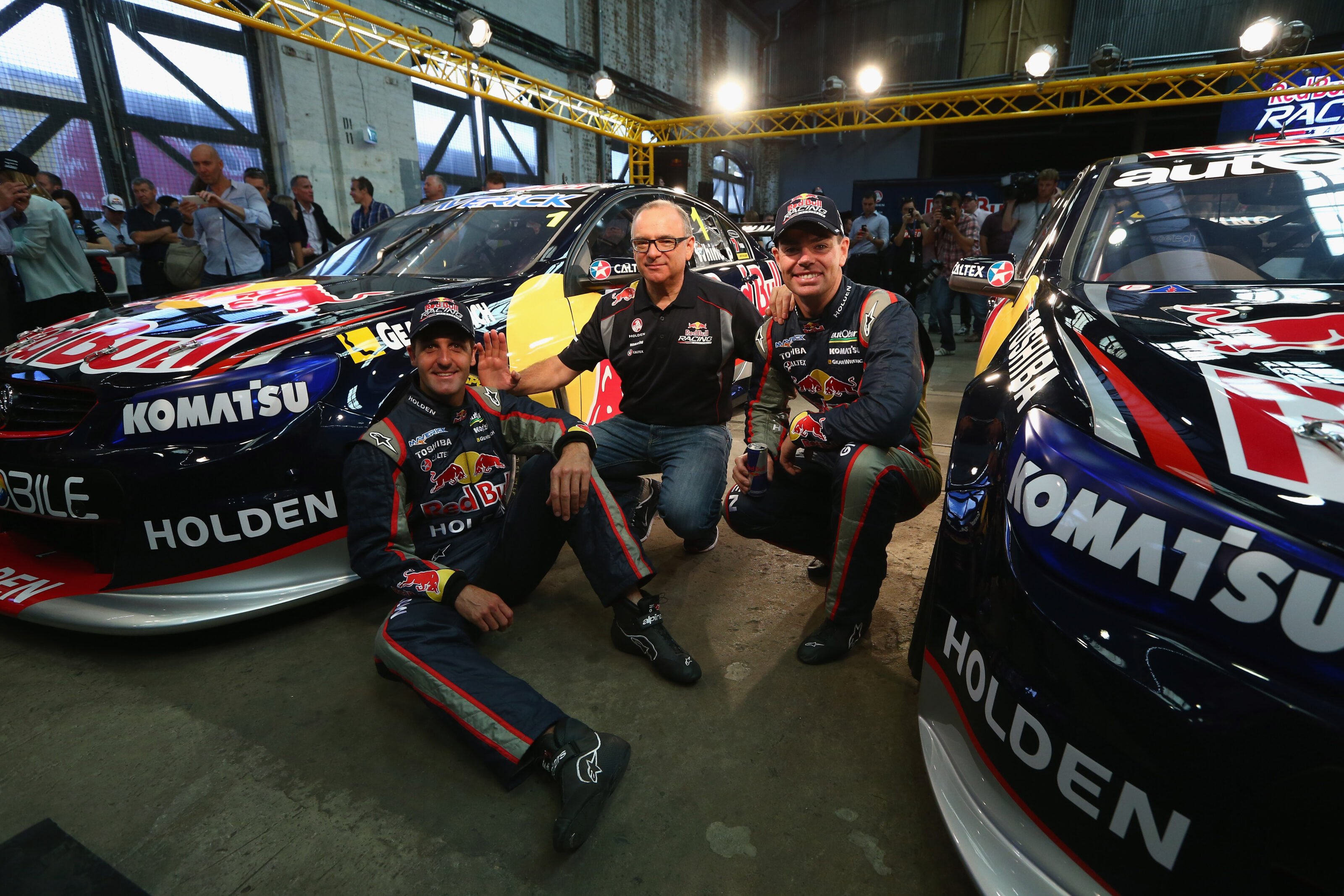
The next – and perhaps greatest – masterstroke was hiring Jamie Whincup to partner Lowndes in ’06. Sacked by noted talent-spotting team owner Garry Rogers after the ’03 season, no-one – not even Dane – could have known Whincup would go on to break all meaningful records over the next 15 years.
“I certainly didn’t have an inkling that he’d become the greatest ever,” he admits. “That would be nonsense. At the time, we wanted a young up-and-coming driver who could partner Craig, first and foremost to win Bathurst, and then to become a part of the next generation of leading drivers. There were three people on the list, which were Mark Winterbottom, Will Davison and Jamie Whincup.
“Jamie didn’t have a manager, he didn’t have any baggage and he didn’t have any stupid ideas about how much he should be paid. He didn’t have a drive in 2006 and it was really just his application to getting the job that got him the seat.
“He was at the top of the list because of the job he had done with [the late] Jason Richards in the enduros in ’05 (including runner-up at Bathurst). How he applied himself to getting the drive was outstanding.”
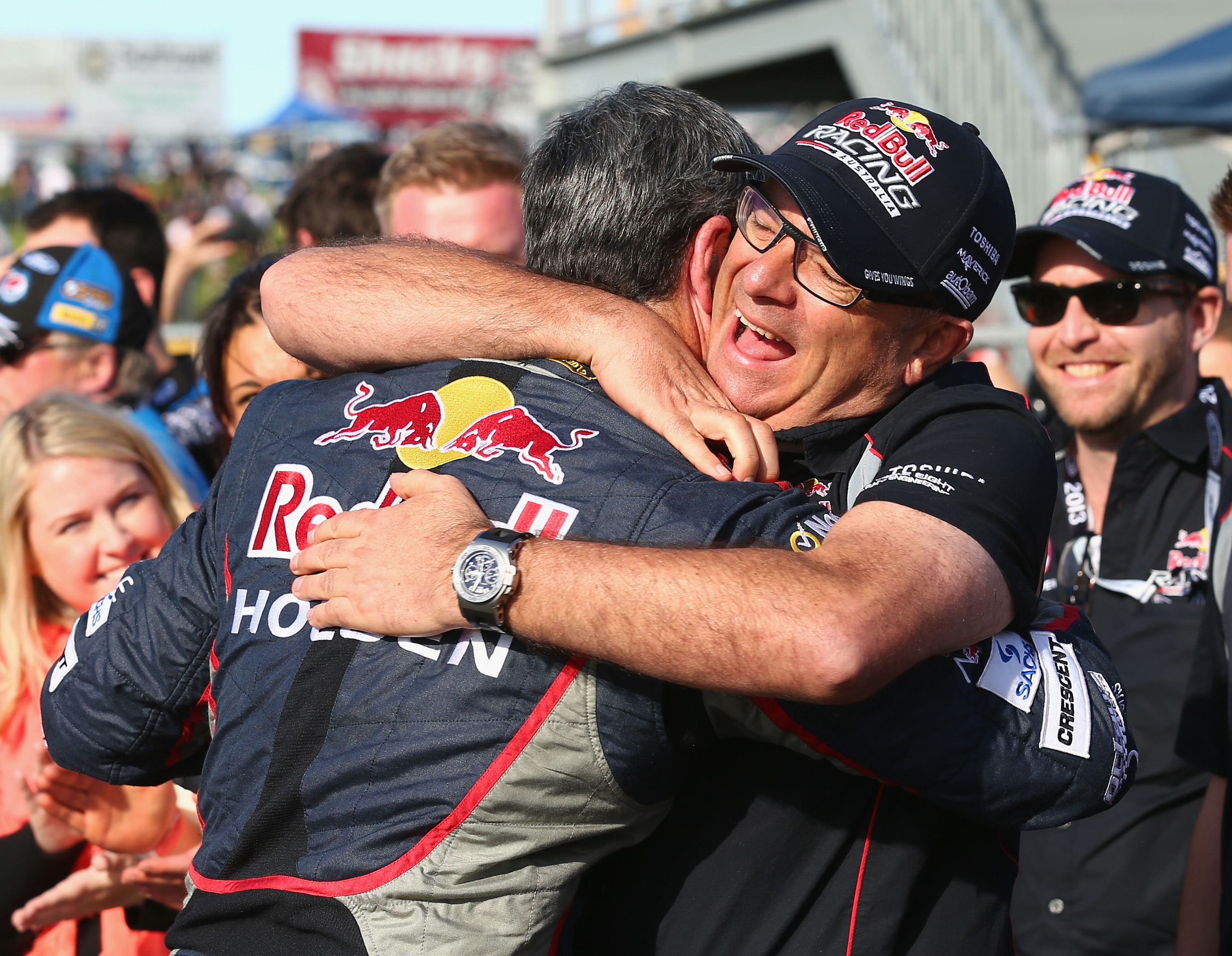
Whincup, 38, has won seven championships (two more than V8 legends Dick Johnson, Mark Skaife and Ian Geoghegan), four Bathurst 1000s (and famously threw away at least four more) and 123 races – all with Triple Eight.
The key to Whincup’s success, according to Dane, is a combination of extraordinary talent and exceptional dedication.
“First and foremost, he’s a very skilled driver,” he shrugs. “You have to have a high level of natural talent to operate at the top of the sport in Australia. From the moment he tested for us in December 2005, we could straight away see his potential as a driver. But then he applied himself and kept raising the bar in terms of what he needed to do to make sure that he carried on winning.
“So it was one thing to win through natural talent in a good car with a good structure around him, but to keep doing that and staying on top for such a long time is what makes him so good. He never rested on his laurels – and still doesn’t.”
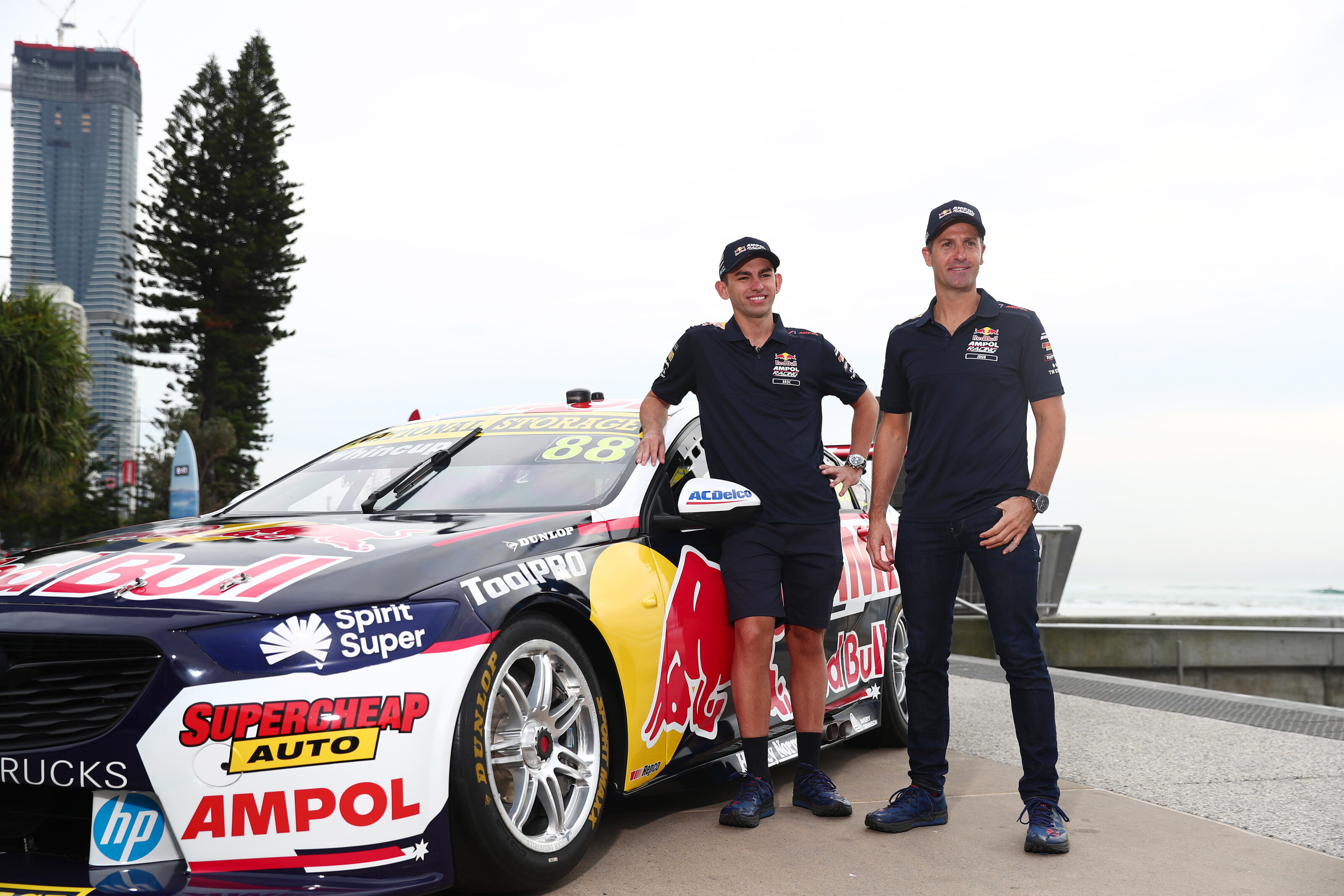
Triple Eight was an entrenched factory-backed Ford team until an inexplicable change of policy at Broadmeadows saw the team shunned in 2009. Famously, its FG Falcons ran that season with the Ford grille badges replaced by the snarling boar logo of minor backer Hog’s Breath Cafe.
“We had a very good relationship with Ford from 2004 until the end of 2007,” Dane declares. “We had a verbal deal at the end of 2007 that they would renew their contract for 2009 onwards – because ’08 was already locked in – when the FG Falcon would hit the track.
“We were doing a lot of work on the FG. In fact, although Ford Performance Racing was the homologation team, all the aero work was being developed by Triple Eight.
“At that stage you were allowed to build wind tunnel models and CFD wasn’t at the level that it is today. We built the wind tunnel model, we were running that program in England for Ford. Then management changed. There was a group of people in Ford that had absolutely no idea about their own heritage, let alone motor sport, and two weeks after we signed off on the FG and effectively handed over everything we’d done, the incumbent marketing person at the time famously came to our place – and also to Dick Johnson Racing – and said ‘Okay, we’re not going to have a deal with you in 2009. We’re not going to renew, we’re just going to stick with Stone Brothers and [Ford Performance Racing].’
“It was handled very poorly, but that happens sometimes. It’s corporate life.”
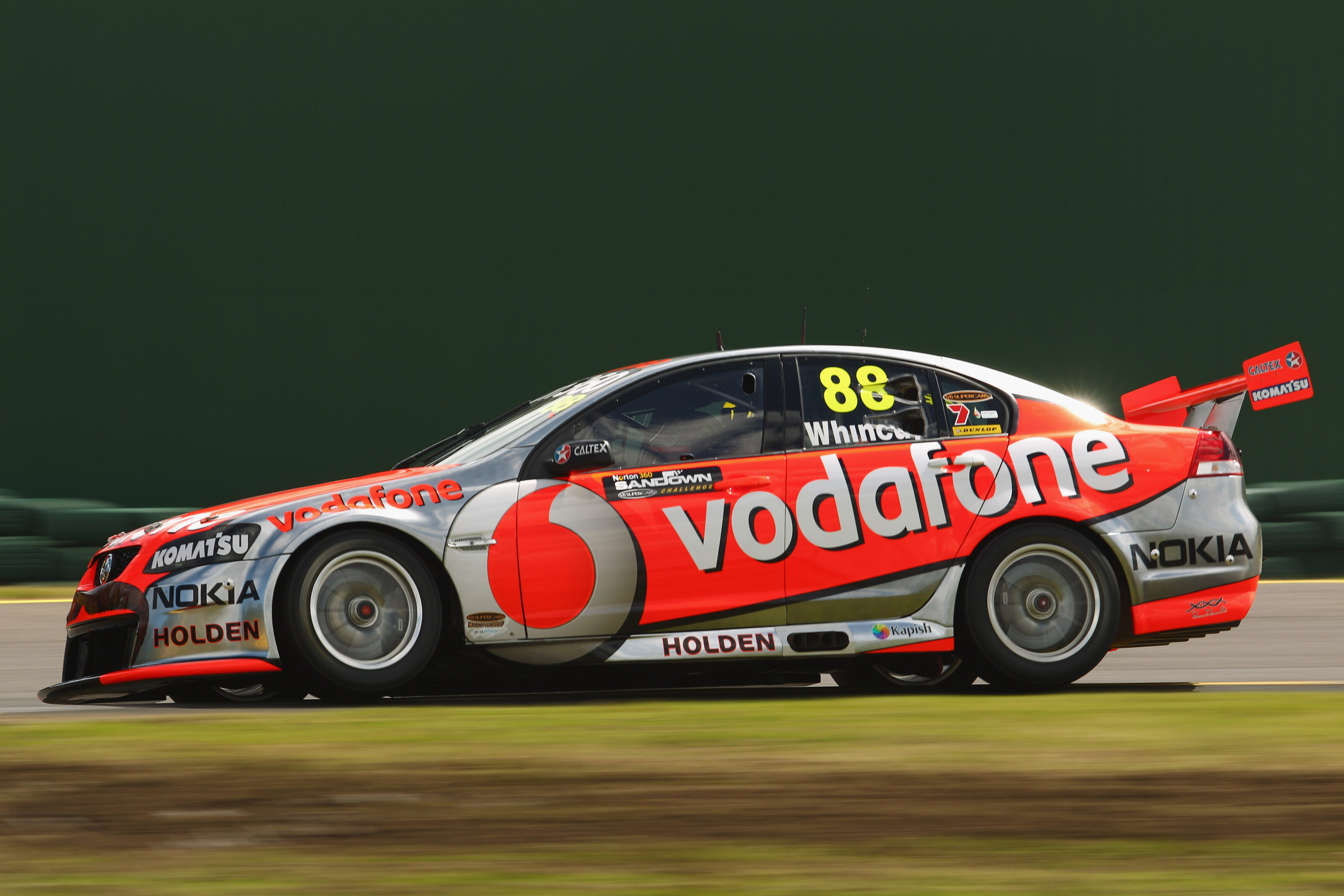
Ford’s decision threw Triple Eight into the arms of Holden, joining HRT as a fully Fishermans Bend-backed squad in 2010. T8 became the most successful Holden team and took over the HRT imprimatur in 2018. It scored the last official Holden factory team win at Bathurst in 2020.
Although Holden fans never really took to the HRT moniker’s move from Clayton to Banyo – especially the demise of the iconic Lion/helmet graphic – Dane is proud of his stewardship of the brand, the assumption of which he described as “massive”.
“It was a huge moment,” he gushes. “We turned out to be the last custodian of the Holden Racing Team brand and I think we did them proud, taking HRT back to being a winning brand on a very regular basis [including HRT’s first drivers’ and teams’ titles since 2002].”
In a twist of fate, Triple Eight took over the HRT mantle from the Walkinshaw group (which had it for more than a quarter of a century) after an ambitious bid in early ’03 when the team was caught up in TWR’s collapse.
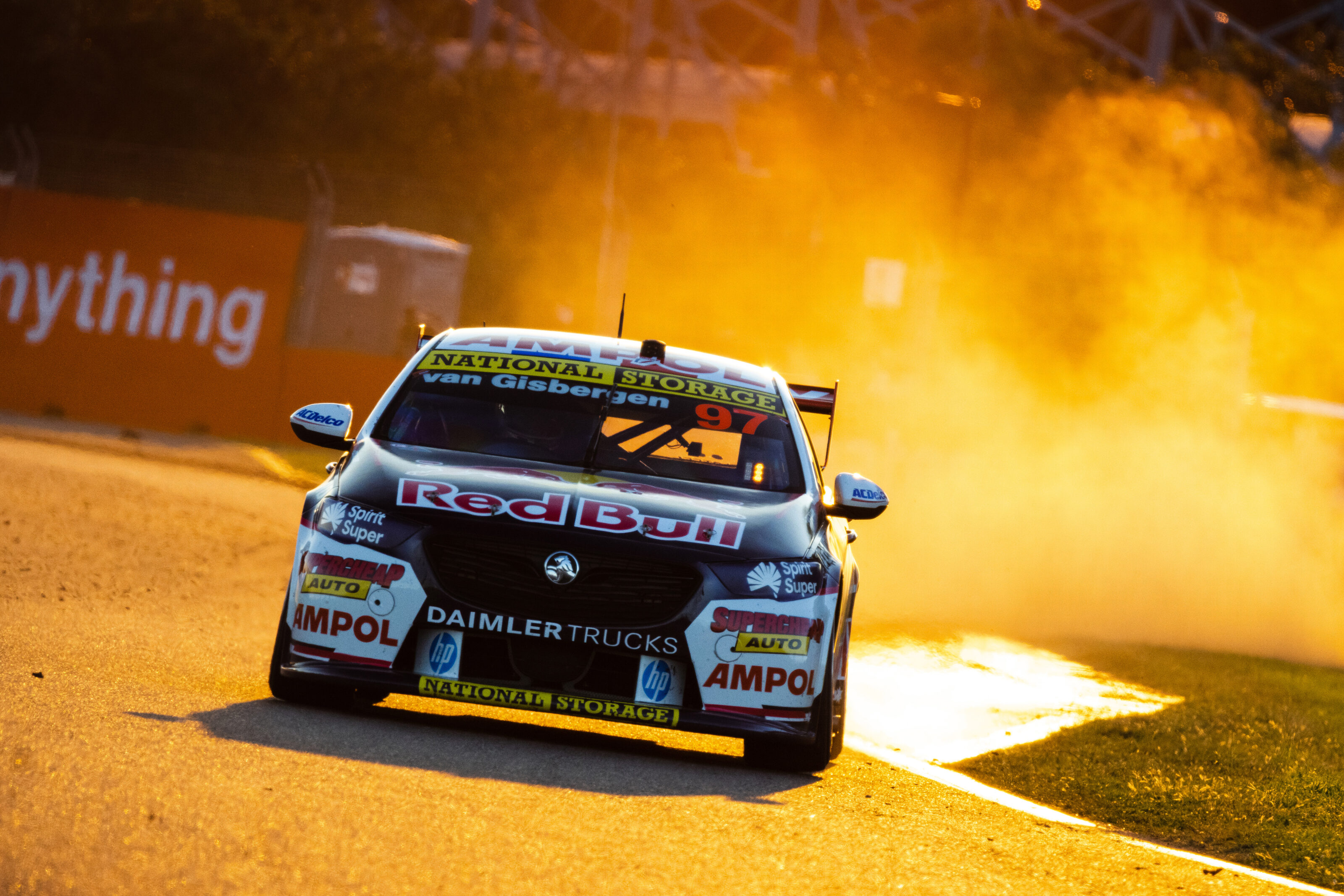
Dane’s pitch was aided by former Holden executive Kevin Wale, who by then had been promoted to running Vauxhall in the UK.
“He certainly batted for us, but there were clearly other forces at work and politics involved, etc, and they offered us the second-tier team (Kmart Racing, which later became Kelly Racing), but that didn’t appeal to me,” he recounts. “There wasn’t anything immediately obvious for us in Australia, but then [ex-BTCC star turned V8 Supercars driver] Paul Radisich mentioned to me that the John Briggs operation could be for sale.
“I went to Brisbane to have a look and made him an offer for the assets of the business, which he accepted just before I flew back to the UK.”
The greatest challenge Dane faced in Supercars was the involvement of American business and racing titan Roger Penske, who took a controlling interest in Dick Johnson Racing in 2015. DJR Team Penske ended Triple Eight’s hegemony, winning three teams’ and drivers’ titles from 2017-2020, and propelling Scott McLaughlin to stardom – and a place in Penske’s storied IndyCar team in the USA.
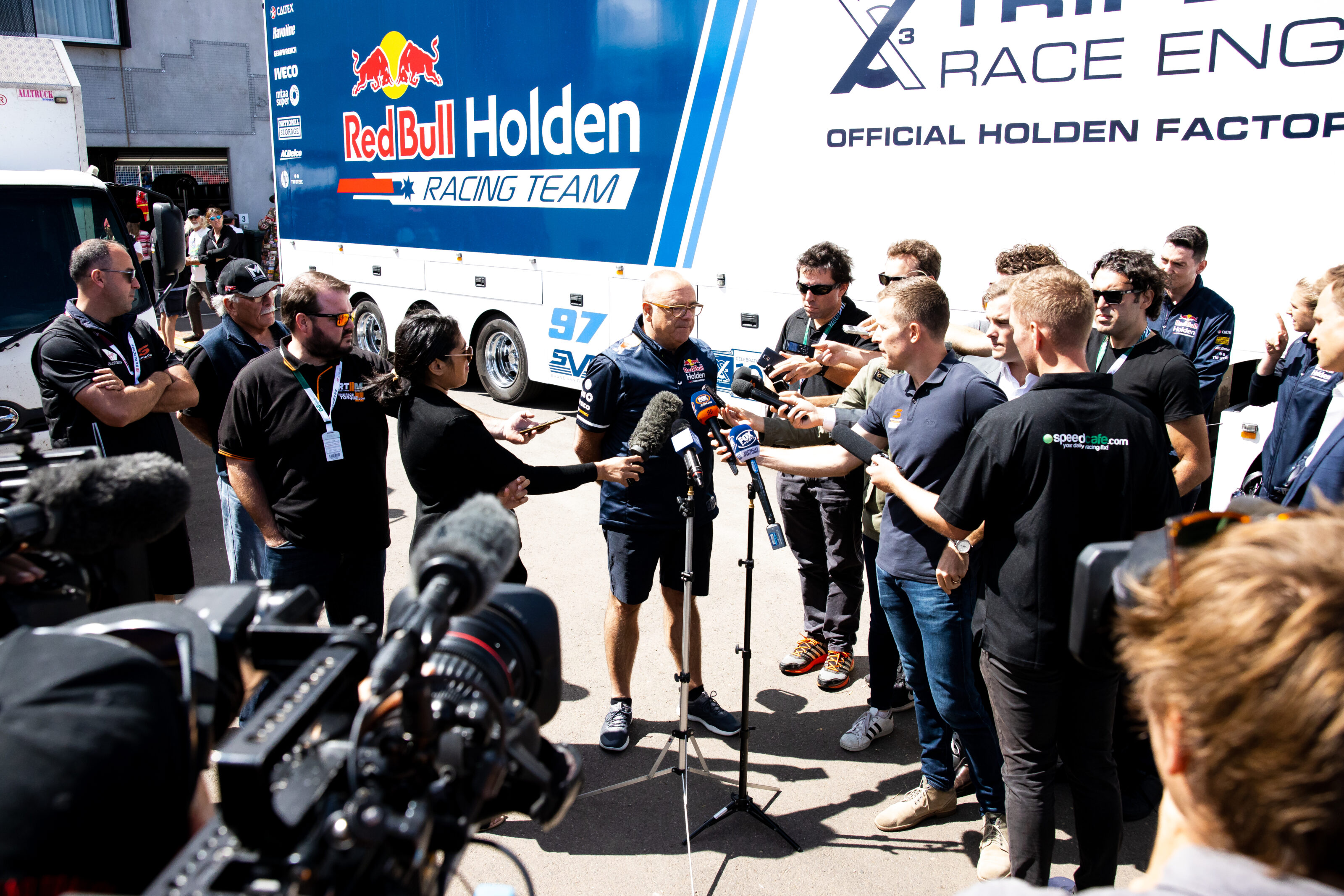
Penske upped the ante, exceeding the $8 million per year budget for a front-running Supercars team by offsetting its cost against his trans-Pacific business conglomerate. DJRTP also poached Lacroix, with the eccentric Frenchman’s design and engineering brilliance and lateral thinking providing a big boost in combination with McLaughlin’s gifted driving.
Penske pulled out at the end of last season, taking McLaughlin with him, and DJR has struggled to challenge T8.
Dane reluctantly admits that Penske’s presence tested Triple Eight, although he remains defiant that his operation withstood the onslaught: “The Penske thing was good competition in terms of raising the game, but they were operating on a totally different level budget-wise,” he sneers. “And I think what validates what we do is that we don’t have a safety net. We have to make money year in, year out.
“Roger Penske said to me some years ago, ‘One of the things I admire about you, like [his great IndyCar rivals] Chip Ganassi and Michael Andretti, you have to make your business stack up. I don’t.’ Which is fair enough – he doesn’t have to.
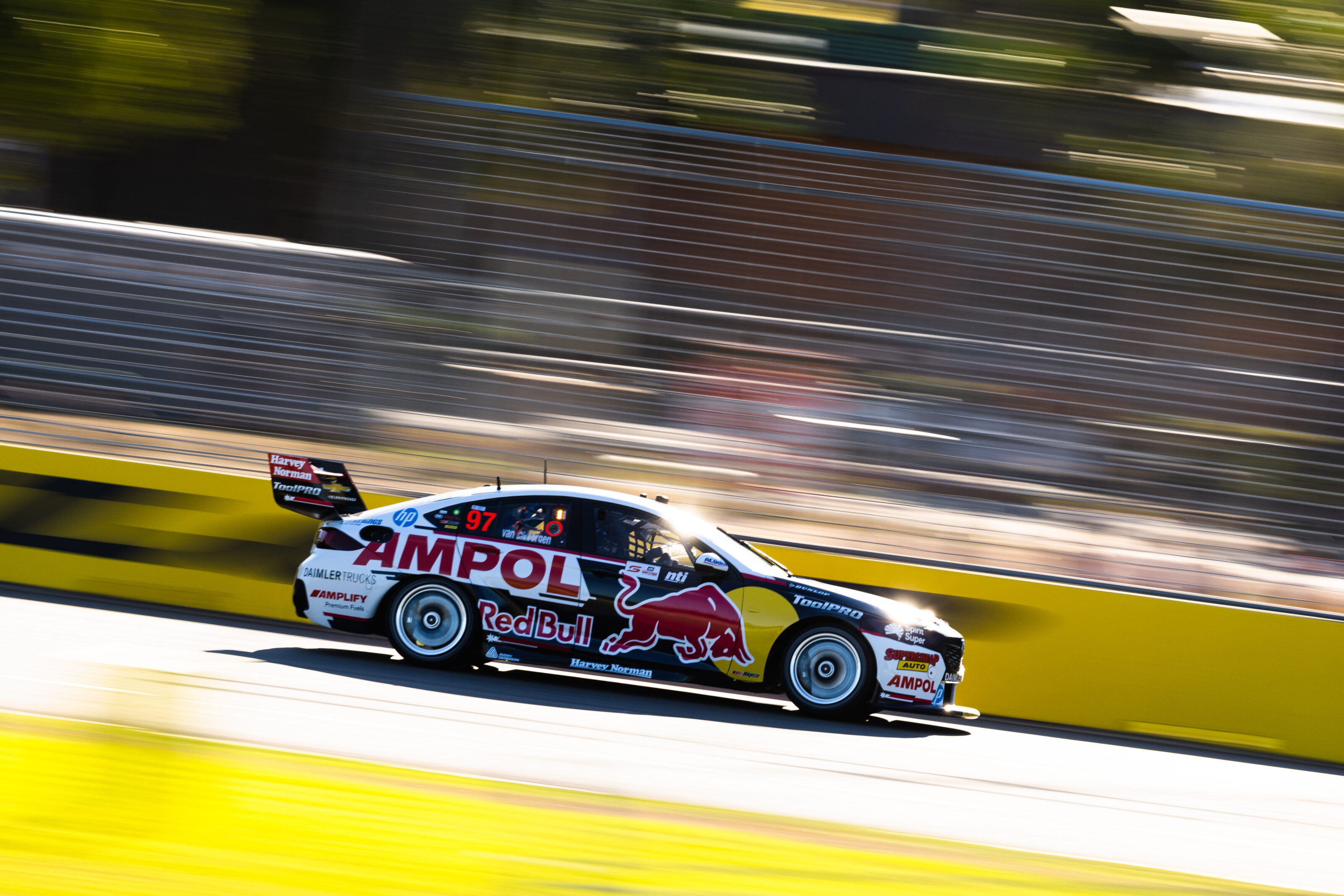
“Racing is paper-clip money in his organisation. When you have to take on someone who’s spending probably 50 percent more – if not more – than you are, then you have to be smart to win anything.
“The strength of Triple Eight is our culture. I think I’ve proved time and time again that people can come along and steal people from Triple Eight, but it hasn’t made a difference to the end result.”
In 2022, Triple Eight will have a mix of new and old leadership. Whincup and Jessica Dane will lead the organisation – which employs 55 full-time staff at two sites close together at Banyo near Brisbane Airport. Supercars champion elect Shane van Gisbergen will be joined by young gun Broc Feeney, staying with ZB Commodore racers before switching in 2023 to Gen3 Chev Camaros developed with modest GM support by Triple Eight to take on a revised Ford-backed Mustang.
Dane anointed Whincup as his successor as team principal and is convinced his fastidious protege is well equipped to uphold his legacy.
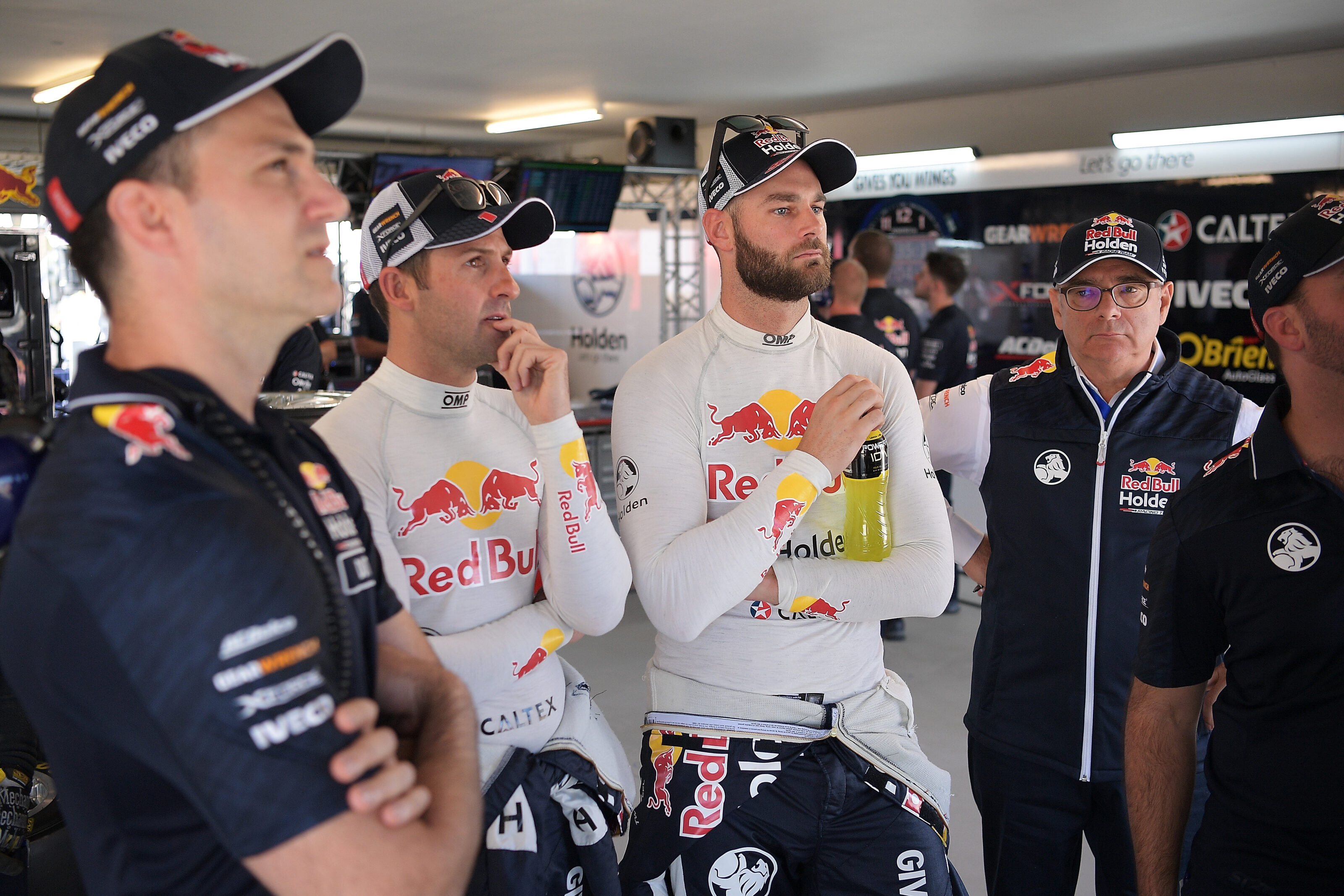
“First and foremost, because he’s a racer,” he proclaims. “He knows racing. For me, the biggest failing in this sport is people who don’t have a good balance between the commercial side and the racing side. You can’t have one without the other, but understanding the racing side is so important and the number of people in the sport who have that balance is extremely limited. Jamie does understand both sides.
“He’s been in the hot seat of racing as a professional driver for nearly 20 years, but he also understands the importance of the commercial side of the business. And he has what I regard as the biggest single attribute for running a successful team – the hunger to win.
“You have to want to win more than you want to make money and he has that attitude. Of course, you have to be aware of the financial implications, but success on the track normally results in commercial strength.
“Jamie absolutely understands that once you start to constrain the drivers and the engineers, then you’re on a hiding to nothing.”
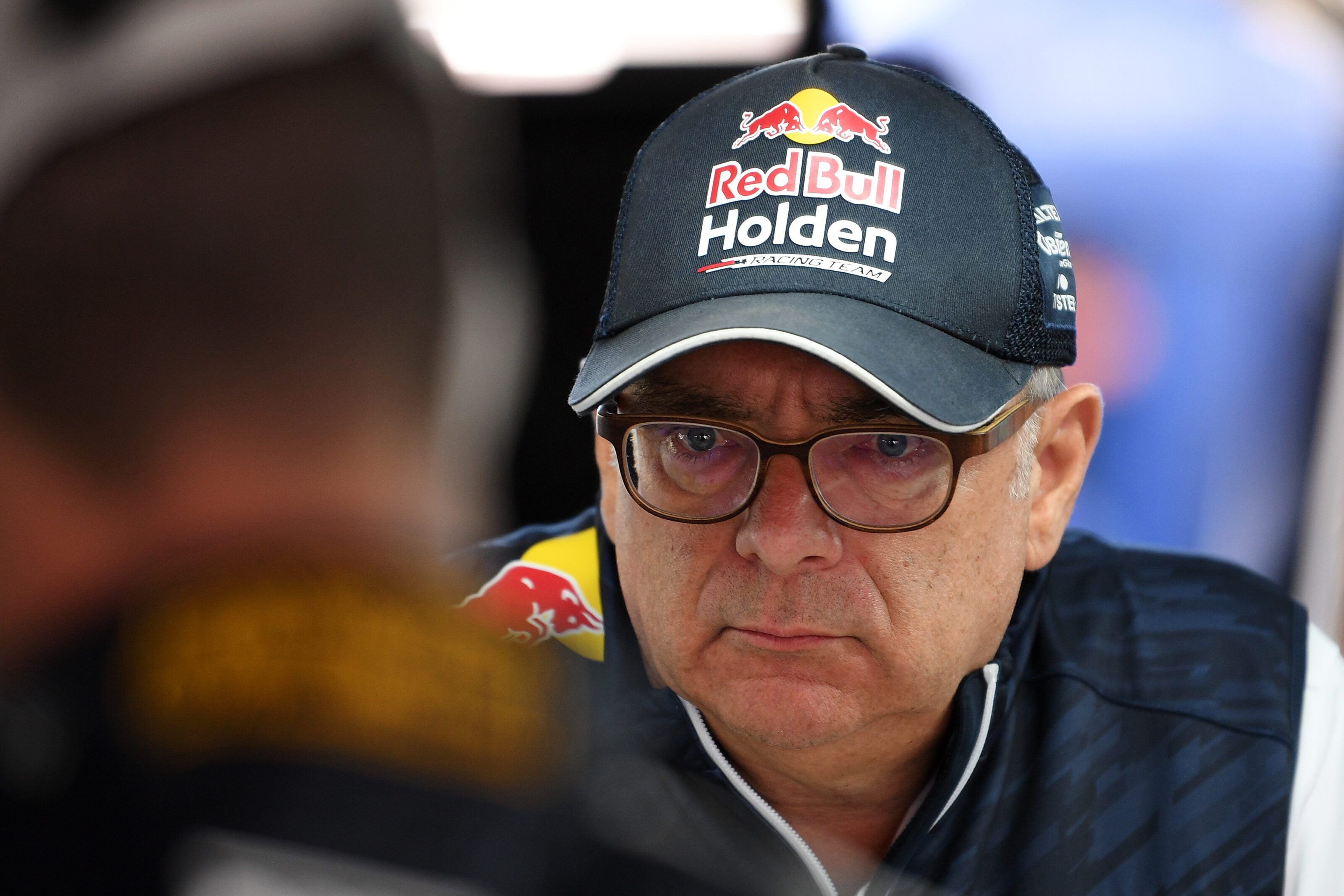
While Dane will remain chairman and a minor shareholder in Triple Eight, he vows that he really will step back from next year. “I like the term retirement,” he states. “What I’ve said to Jessica and Jamie and Tony Quinn is that I’ll continue on an as-needed basis next year part-time. I don’t want to be like a racing dad who gets in the way.
“I’ll give them a bit of my time for a year. I’ll certainly never be a team owner again, but I’m not saying I’ll never do anything in racing again. However, I do want to have some flexibility about what I do with my time.
“The COVID situation has only cemented the position I [have] already been developing over the past four or five years, which is to have more time to myself. There are some places in the world I want to go to while I can still walk around.”
Roland William Surrey Dane will never be remembered as a fan favourite. Too smug to be loved. But he will be acknowledged and admired for his efforts to raise standards in Supercars. Some will celebrate his departure; some will be suspicious that he will continue as the master puppeteer behind the scenes; and the rest will accept that V8 racing’s Great Dane is among the most significant figures in Australian motorsport history.
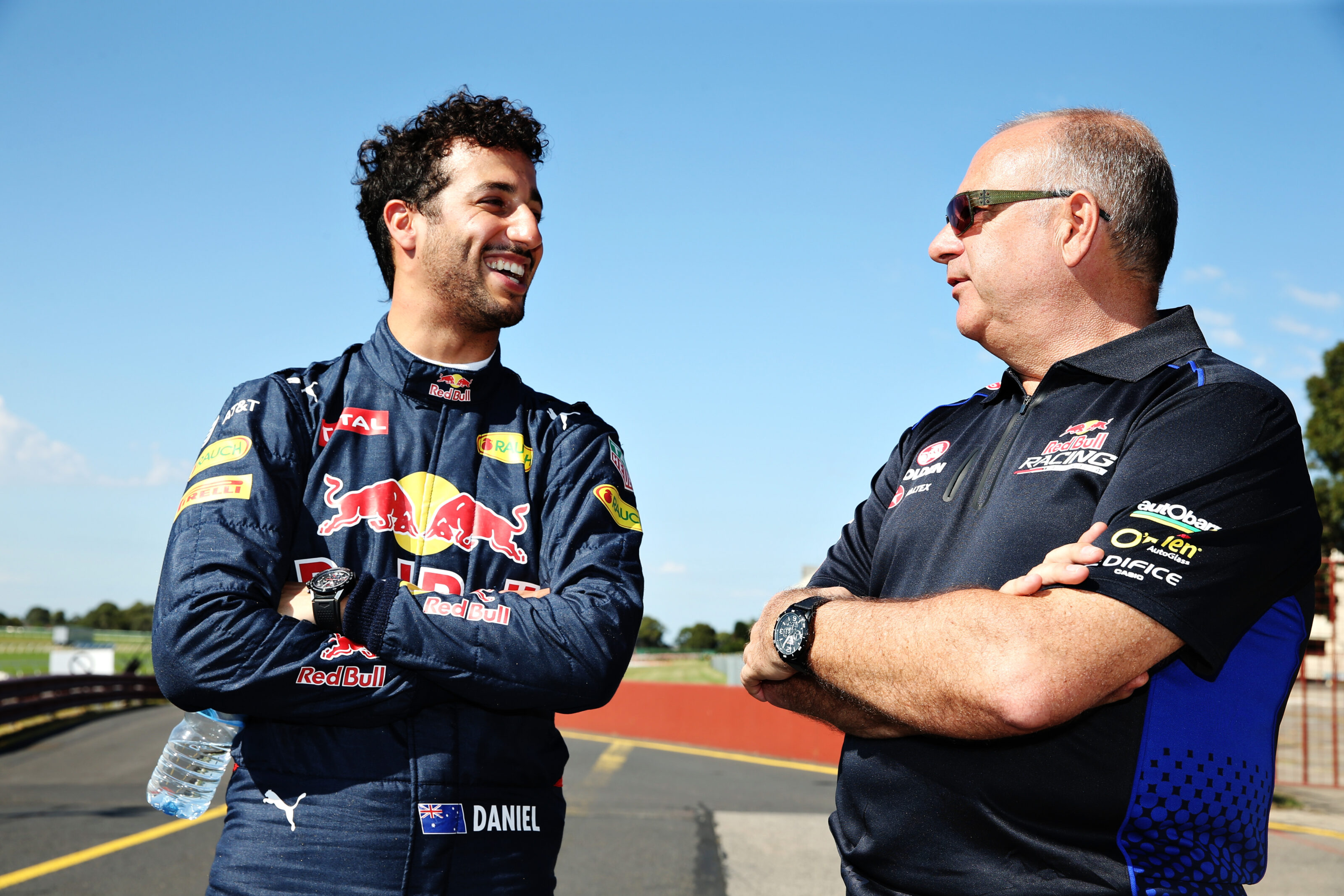
Dane on Shane: One Kiwi that really does fly
Unbackable favourite to win the 2021 Supercars championship, Triple Eight spearhead Shane van Gisbergen is a driving freak.
SVG is ‘old school’ in that he’ll race – and win in – anything on four wheels. The Gold Coast-based New Zealander has been on fire since winning last year’s season-ending Bathurst 1000, also capturing the NZ Grand Prix (from the pit lane after accidentally triggering his car’s fire extinguisher!) and 11 of the 19 races of this year’s Supercars championship held before the latest COVID crisis intervened.
Extraordinarily, van Gisbergen, 32, swept the Sandown SuperSprint just a few weeks after breaking his left collar bone in a mountain bike accident, shrugging off excruciating pain.
Winner of the 2016 V8 title in his first season with Triple Eight, SVG extends the line of tin-top superstars who’ve driven for Dane over the past 25 years. That list even includes the late, great Peter Brock, who contested 1997’s 2.0-litre Bathurst 1000 in a T8 Vectra.
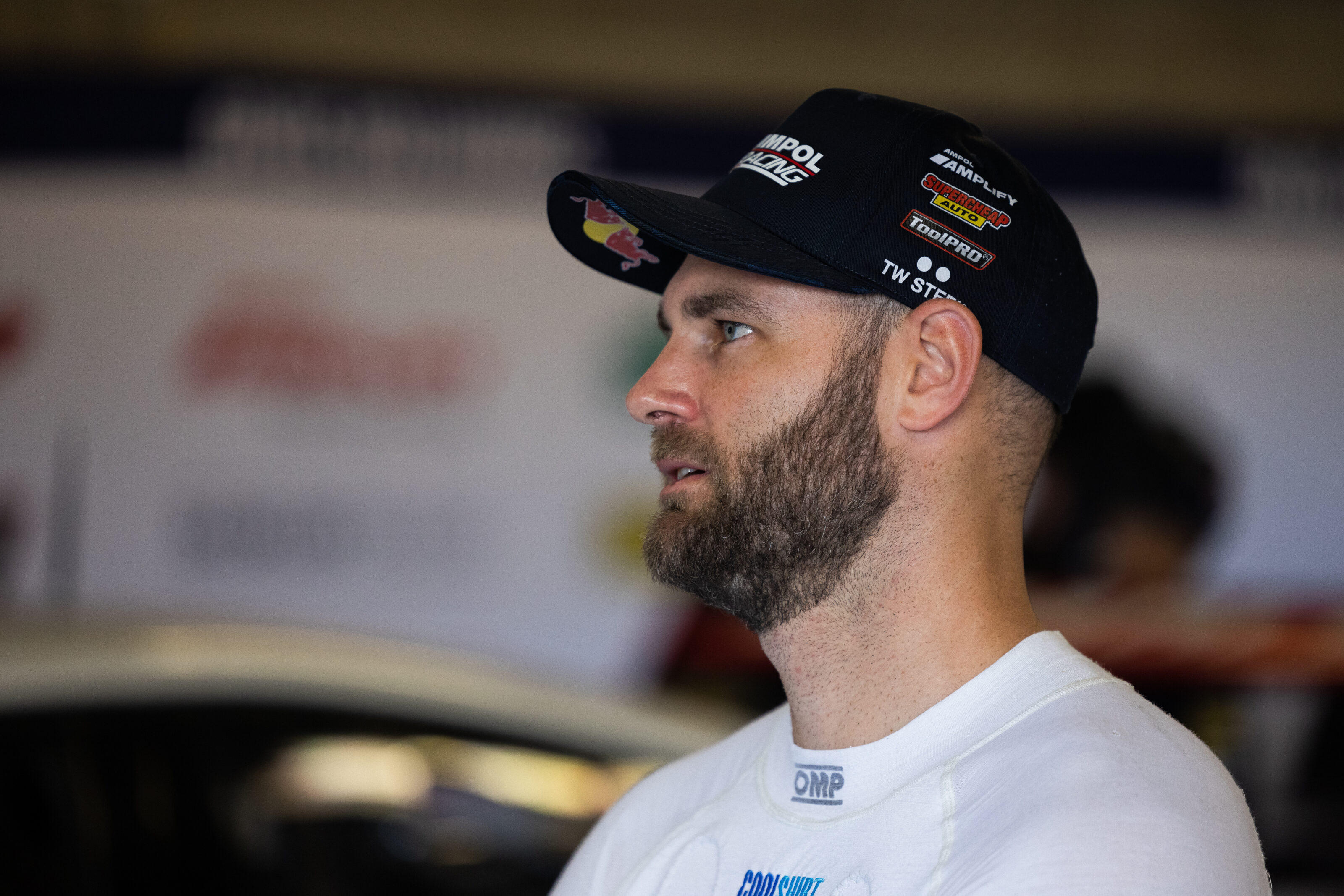
Dane set his sights on SVG a decade ago, marvelling at his speed, car control and virtuosity. Later intelligence from customer team Tekno Autosports, where he was a race winner and title contender, also confirmed that despite his less than scintillating TV interviews, he was an especially smart racer.
“He is a thinker,” said Dane, who signed van Gisbergen 18 months before he joined Triple Eight. “He’s exceptional the way he thinks about racing. He has a great racing brain.”
SVG was brought in as the long-term replacement for fan favourite Craig Lowndes, who went into a satellite entry for three years before retiring at the end of 2018.
Dane is confident SVG will keep Triple Eight at the front in the beginning of the next phase of team’s journey.
“Everyone has a shelf life, but I don’t think Shane is anywhere near the end of it at the moment,” Dane predicts.
Snapshot
- Annual road toll up to 1126 deaths in 2021
- Year-on-year increase of 1.4 per cent
- Regional Australia accounts for nearly two-thirds of road deaths
More Australians have died on the road in a lockdown-impacted 2021 than the year prior, leading peak bodies to call for a new approach in how we look at traffic incidents.
A total of 1126 road users have lost their lives on local roads this year, a 1.4 per cent increase over 2020 despite more states being locked down harder and for longer.
While the annual road toll is lower than the pre-COVID 2019 count of 1182, the increasing levels can be largely attributed to Queensland, as the Sunshine State recorded 291 deaths this year – more than any other state or territory and an increase of 10.2 per cent. It is tracking towards its highest number of fatalities in over a decade.
| Jurisdiction | 12 months to Nov 2021 | 12 months to Nov 2020 | Increase | Percentage Increase |
|---|---|---|---|---|
| National | 1,126 | 1,110 | 16 | 1.4% |
| NSW | 266 | 291 | -25 | -8.6% |
| VIC | 230 | 216 | 14 | 6.5% |
| QLD | 291 | 264 | 27 | 10.2% |
| SA | 100 | 98 | 2 | 2.0% |
| WA | 159 | 158 | 1 | 0.6% |
| TAS | 35 | 38 | -3 | -7.9% |
| NT | 35 | 38 | -3 | -7.9% |
| ACT | 10 | 7 | 3 | 42.9% |
Deaths of drivers has gone up slightly to 1.5 per cent, massively offset by a drop in fatalities for passengers (-6.7 per cent), pedestrians (-0.7 per cent) and cyclists (-23.9 per cent).
However, despite accounting for less than 10 per cent of all road users, motorcyclists were involved in just under 20 per cent of Australia’s fatal incidents, with 219 riders dying in 2021 – a 15.9 per cent jump over the year prior.
Australian Automobile Association (AAA) Managing Director, Michael Bradley, says the Government’s Vision Zero target of no deaths or serious injuries by 2050 still has a long way to go given the current lack of action to make immediate changes.
| Road User | 12 months to Nov 2021 | 12 months to Nov 2020 | Increase | Percentage Increase |
|---|---|---|---|---|
| Driver | 550 | 542 | 8 | 1.5% |
| Passenger | 180 | 193 | -13 | -6.7% |
| Pedestrian | 135 | 136 | -1 | -0.7% |
| Motorcyclists | 219 | 189 | 30 | 15.9% |
| Cyclist | 35 | 46 | -11 | -23.9% |
“Australia’s worsening road toll reflects poorly on our chaotic national approach to road safety, which has been shown by recent inquiries and reviews to still lack clarity and coordination,” said Bradley.
“National road trauma data collection and reporting remains shambolic, and ministers considering Australia’s overdue National Road Safety Strategy 2021-2030, need to prioritise this issue.
“At a time when Australians have daily reporting of COVID infections, hospitalisations, deaths, and vaccinations split by age, gender, and jurisdiction, nobody knows how many Australians were seriously injured on our roads last year, let alone the interventions likely to deliver improvements in the future.
“Road trauma has killed more than 1000 Australians every year since 1935, however national data coordination problems continue to thwart evidence-based policy and well-targeted funding.
“Australia’s data-driven response to COVID shows what’s possible within our federation and what governments should aspire to in road safety.”
The AAA also said regional Australians are five-times more likely to die on the road than their metropolitan counterparts, with regional accidents accounting for 62 per cent of all national fatalities despite making up only 28 per cent of the population.
In an effort to reduce traffic incidents, the Australian Government has mandated autonomous emergency braking (AEB) for all new cars from 2023 while also floating a proposal to introduce mandatory lane keeping assist from 2024.
On top of the possible technology mandates, crash testing authority ANCAP has been implementing stricter parameters for its tests, forcing manufacturers to make larger investments in vehicle safety if they want to retain a five-star rating.
