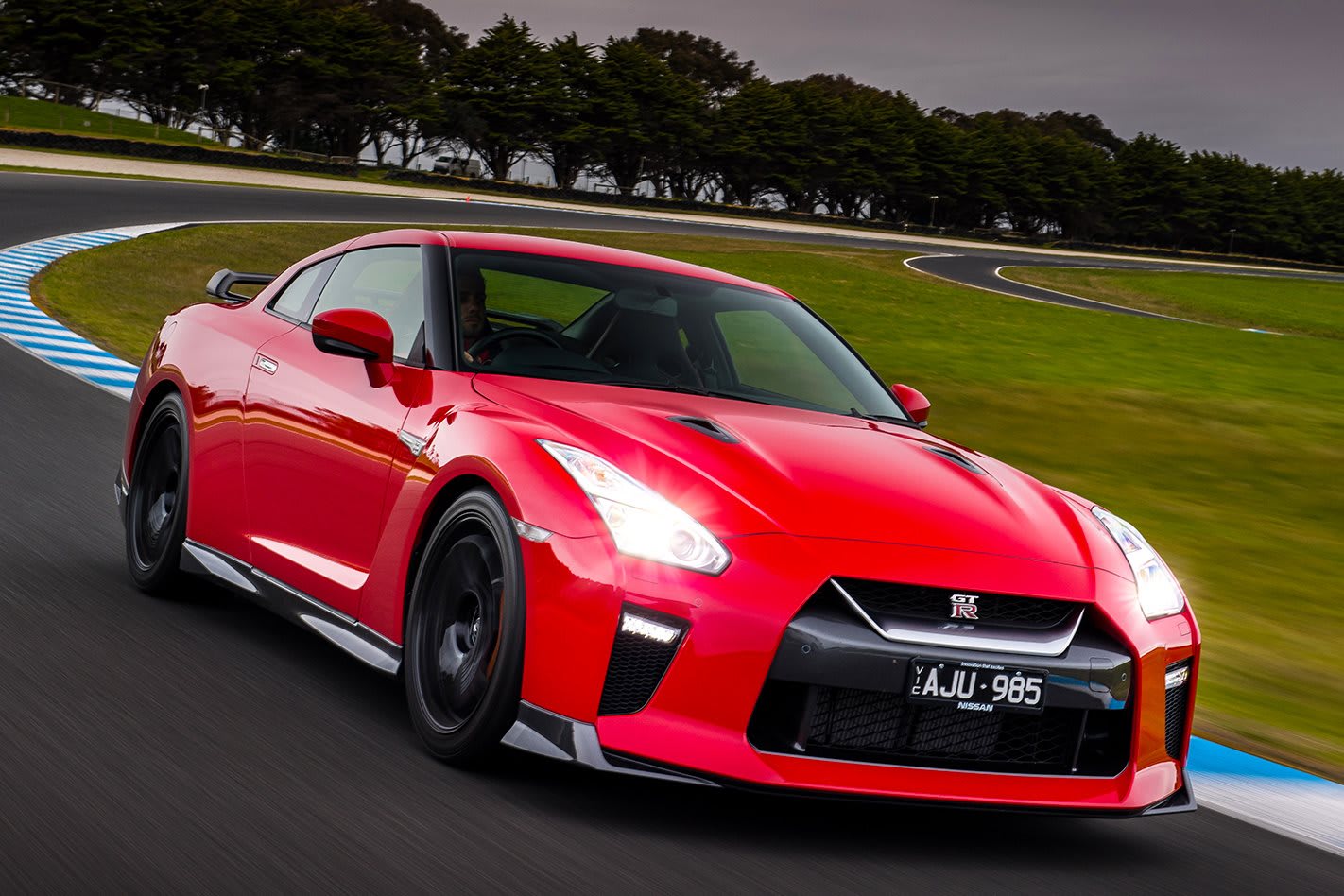
Toyota has applied to trademark the Hybrid Max name in the US – hinting towards a powertrain which could feature under the next-generation Tundra pick-up.
The company has recently been drip-feeding details surrounding the new Tundra TRD Pro – in which it has done little more than show off its exterior design. However, the American arm of the Japanese manufacturer has already revealed the vehicle’s engine will be dubbed the iForce Max.
While it has not yet been officially confirmed, the iForce Max is likely to be Toyota’s branded name for the V35A-FTS 3.5-litre, twin-turbo V6 petrol engine which is set to power the new LandCruiser 300 Series in other markets, although Australian arrivals will only be available with a 3.3-litre, twin-turbo V6 diesel.
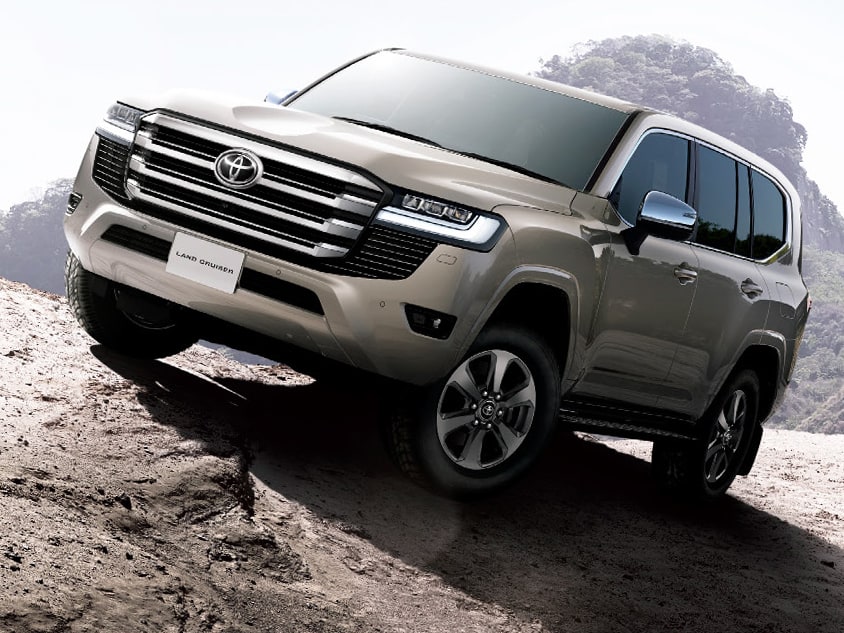
As for the range-topping Tundra, Toyota hasn’t provided any details surrounding the origins or intentions for the Hybrid Max name but it is likely it will lend itself to a hybridised petrol engine, potentially finding itself in a regular Tundra or eventually in the TRD Pro.
Just like the twin-turbo petrol donk in the LC300, it’s unlikely we’ll see the hybrid engine locally any time soon, but it could wind up in the LandCruiser during a mid-life cycle update in a few years time, given the off-road wagon and pick-up truck are based on the same platform.
Volkswagen boss Herbert Diess has sparked rumours the company might make an initial public offering of Porsche AG.
The Chairman of the Board of Management avoided questions put to him at a conference while presenting the VW Group’s first-half results for 2021, only saying any steps would have to be carefully considered.

According to Reuters, Diess told analysts: “We continue to review our set up. [Our] first priority is now to finance the battery ramp-up where we try to partly externally finance and we are working out the models.
”And all the other, let say, possibilities to go to market, which might be trucks, where we could dilute a little bit…or any other things, we have to consider.”
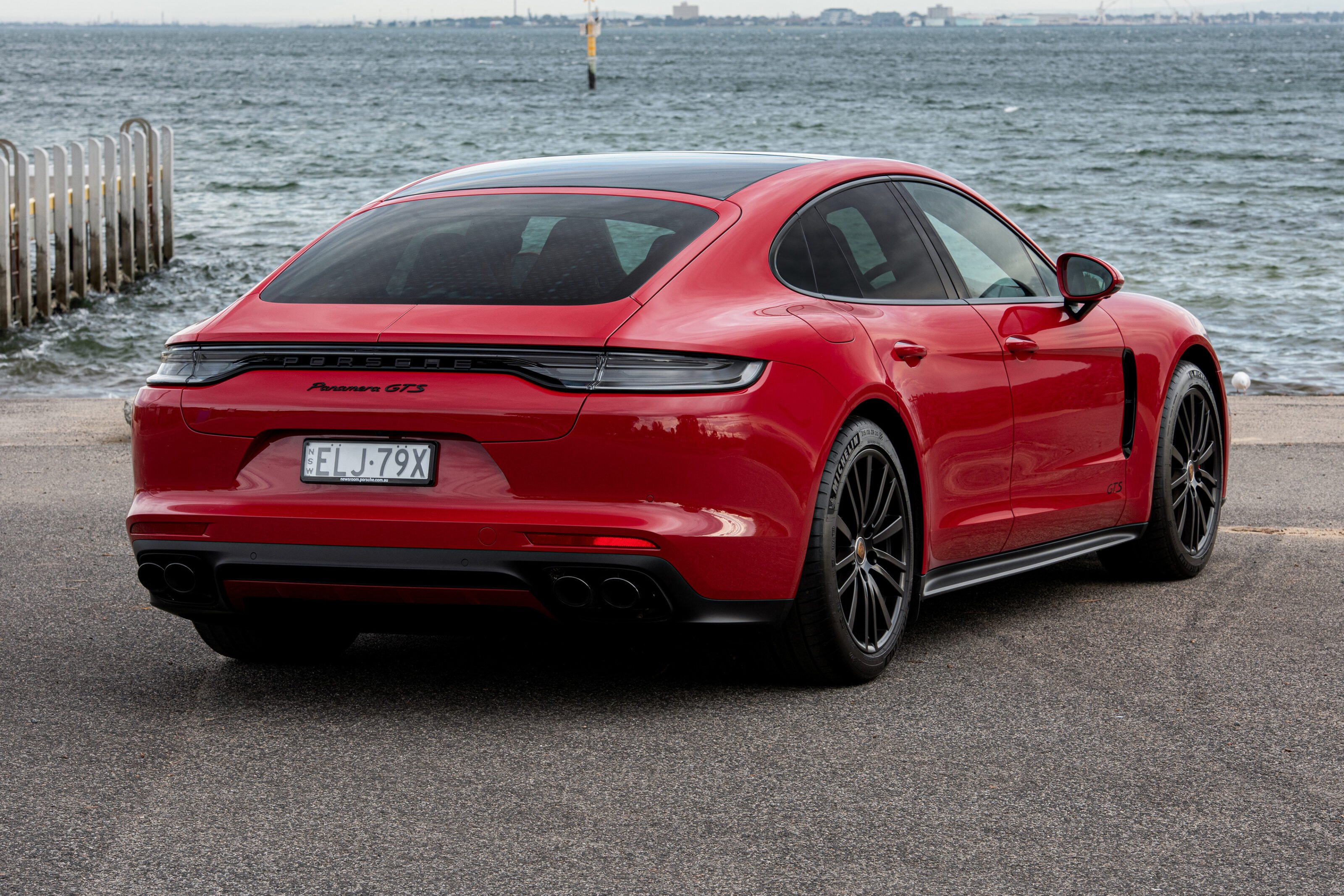
Diess’s remarks come just says after the company announced it, as part of a group of investors, had acquired a majority share in global car rental firm Europcar. The Volkswagen-led consortium, which includes Attestor Limited and Pon Holdings B.V., tabled a tender offer totalling €2.9 billion (AU$4.66bn).
While Europcar has accepted the offer valuing the company at €0.50 (AU$0.80) per share if 68 per cent ownership was given over to the group, if it hands over as much as 90 per cent of its share capital and voting rights to the consortium, the price will go up to €0.51 (AU$0.82) – bringing the total value of the deal to €2.96bn (AU$4.76bn).
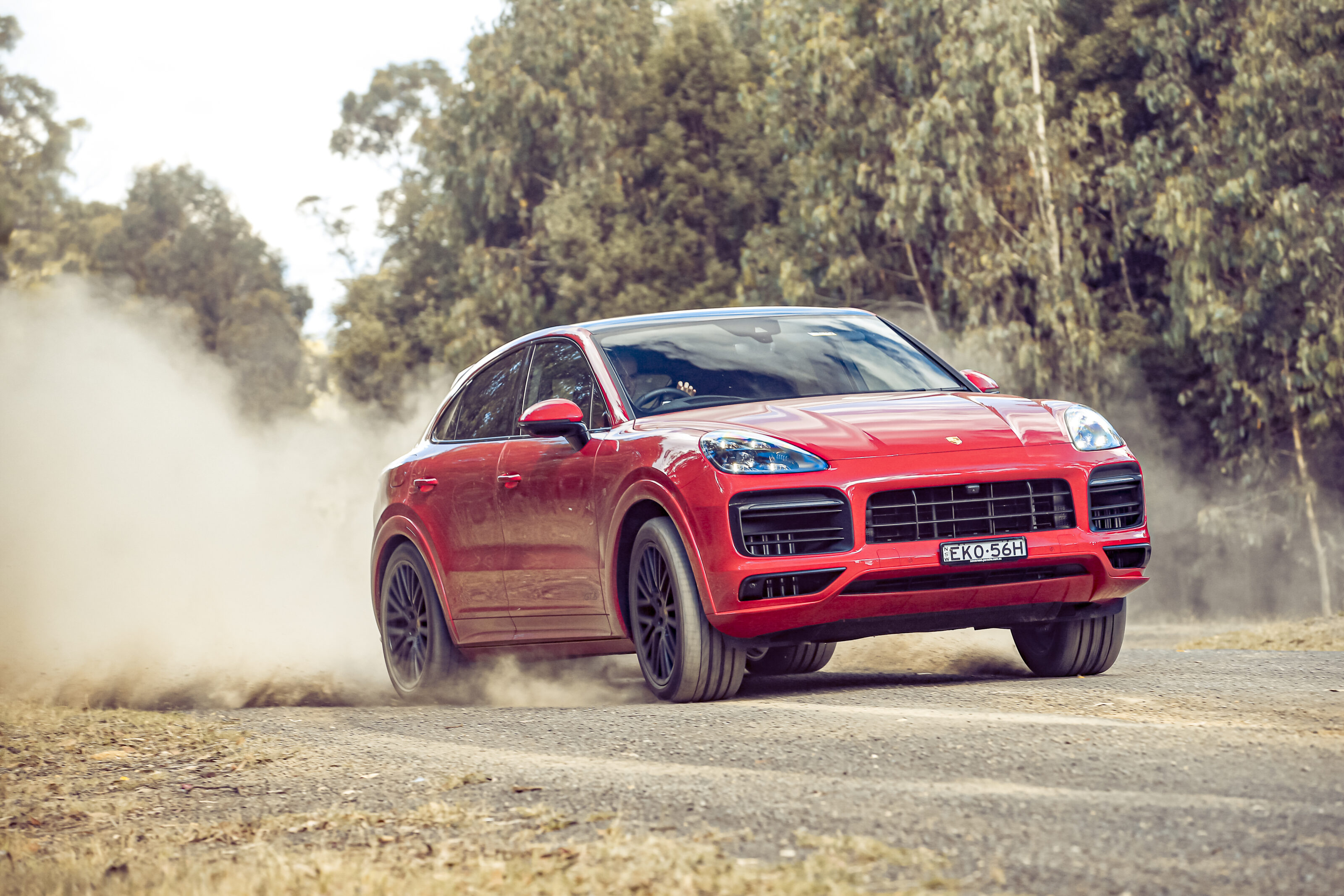
The Group, which owns Volkswagen, Audi, Porsche, Lamborghini, Bentley, Skoda, Seat and performance spin-off brand Cupra, and Bugatti, also recently revealed Porsche would be taking charge of Bugatti and overseeing the partnership between the French marque and Croatian brand Rimac which it owns a 24 per cent stake in.
In May, Volkswagen rejected an offer from a separate consortium of British-based investors to purchase Lamborghini for €7.5 billion (AU$12billion).
The Quantum Group AG, is headed up by Piech Automotive co-founder, Rea Stark, whose colleagues include Anton Piech, son of the long-time VW and Porsche boss Ferdinand Piech, as well as former VW Group CEO, Matthias Muller.
It is understood the offer was non-binding and tabled to the VW Group covering the entire purchase of Lamborghini from its road-car operations to the racing arm of the Italian brand.
VW was understood to have been preparing to list Lamborghini and Ducati publicly towards the end of last year but decided to keep both marques as a part of its 12-brand strong family.
Snapshot
- MG One to debut Sigma architecture
- Powertrains unconfirmed but likely to adopt HS engines
- No Australian plans yet
MG has launched its new MG One model in China, showing off the new Sigma architecture which will be used in its future line-up.
Set to be available as a conventional mild-hybrid, plug-in hybrid or fully electric vehicle, the One is similar in size to MG’s existing HS crossover SUV, launched in 2018 and now Australia’s eighth-quickest selling car after a mid-life update last year.
Sigma stands for SAIC Intelligent Global Modular Architecture, a scaleable platform which MG’s parent company SAIC hopes can underpin a wider range of vehicles in the future, from its hatchbacks and sportscars to SUVs and utes.
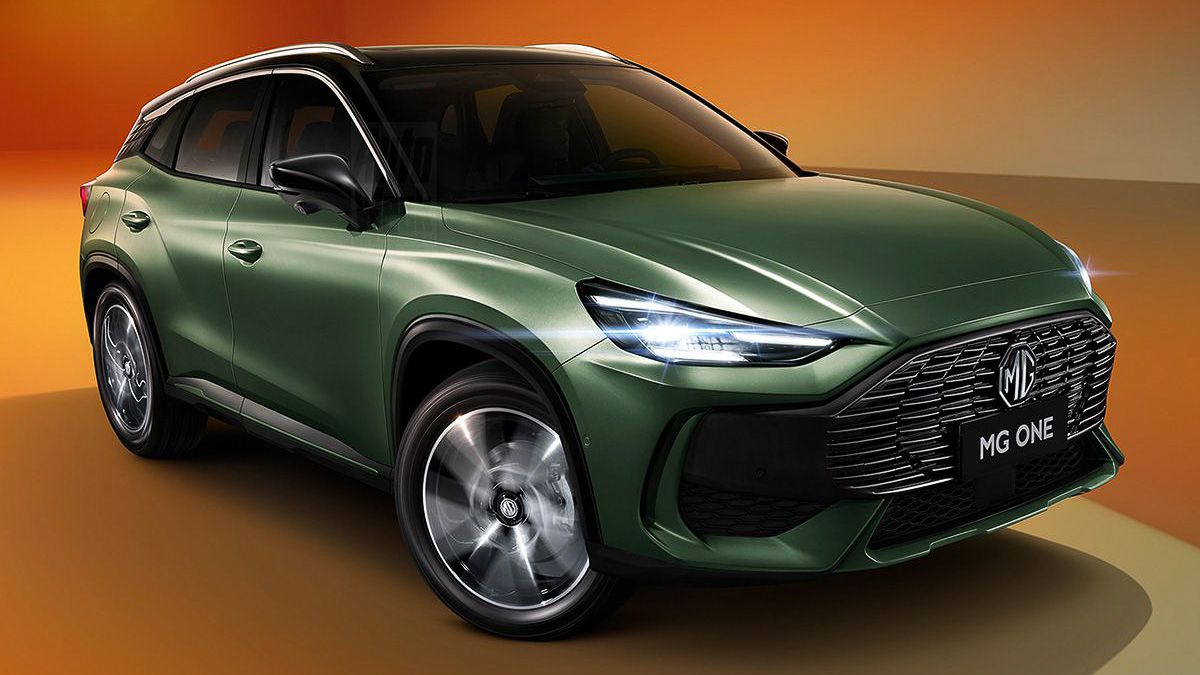
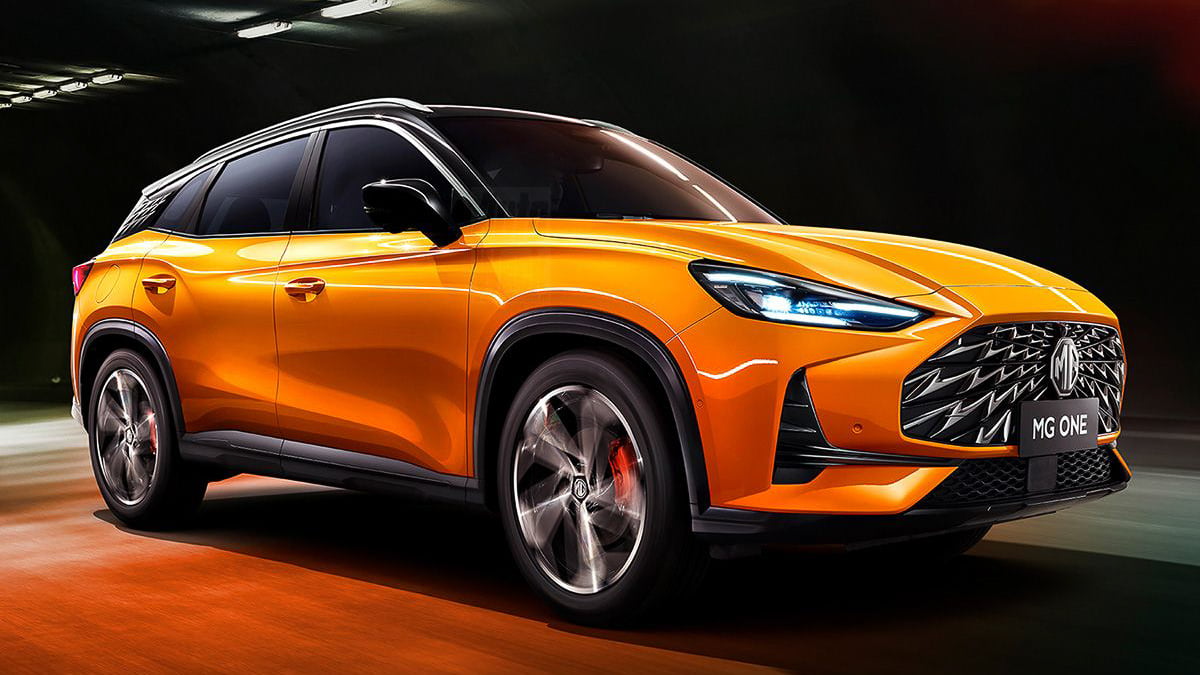
Exterior styling of the MG One includes a wide front grille and angular lines down the vehicle’s side, while the wheels are similar in design to early 2010s Mercedes-Benz models.
MG says the new Sigma underpinnings help to create an interior space efficiency of up to 70 per cent, although it has not yet provided any shots of the cabin – which is expected to be higher quality than the current HS and ZS.
Powertrains for the One are also unconfirmed, but it is likely the HS’s two engines could find their way under the One’s bonnet, currently available either with a 2.0-litre turbocharged unit or a 1.5-litre turbo coupled to a 90kW electric motor.
An MG spokesperson told Wheels there are no plans for the MG One to arrive locally.
“We are in constant dialogue with our product planning teams, but at this stage there are no plans to bring the MG One to Australia,” said the MG Australia spokesperson.
Acura has teased us with a promo for a limited edition of the NSX named the ‘Type S’ which will be the last version of Honda’s top-end supercar which will go into retirement next year.
It will be limited to just 350 units worldwide, and the bulk of those will be in the US with 300 allocated for North America.

The Type S is set to be unveiled publicly at Monterey Car Week in California on August 12, but until then Honda is staying tight lipped about what will make it different from the regular NSX.
However, the marque has revealed the variant will be “powered by an enhanced version of the supercar’s twin-turbo V6 and Sport Hybrid SH-AWD system”.

“The NSX Type S raises the already impressive performance [and will have] more power, quicker acceleration, sharper handling and a more emotional driving experience,” it said.
That gives us high hopes the new car will come with more than just a sticker and badge pack, and it will be the first time a Type S will be sold outside of Japan.

The badge was first seen on the original model with the Type S and Type S-Zero variants in 1997 – both of which were more track-focused versions of the supercar.
The second-gen Type S will join the ranks of limited edition NSXs from the first generation which included the 1999 NSX Zanardi Edition and the NSX-R, along with the original variants mentioned.

All the second-gen NSX Type Ss will be built at Honda’s Performance Manufacturing Center in Ohio, and will mark the end of the car’s second-gen production run which first began when the model returned locally in 2016.
Honda Australia has confirmed to MOTOR the limited edition version will not be available here in Australia as the original NSX was discontinued locally last year.
Honda has always maintained NSX sales would be low in Australia, offering a small allocation to keep demand high. Apart from the Honda Australia promotional vehicle, only cars directly ordered by a customer came Down Under.
It’s good to know, in the face of electrification, chip shortages affecting production and grand plans to make the brand profitable again, that Land Rover still has a sense of humour. It didn’t have to build a new Defender V8, but here it is – all supercharged 386kW of it.
Arriving in Australia later this year carrying a cool $70,000 premium over the next most expensive variant in the Defender’s massive range, the V8 will serve as a sweet range-topper; here’s why.
Take me through the Defender V8 specifics
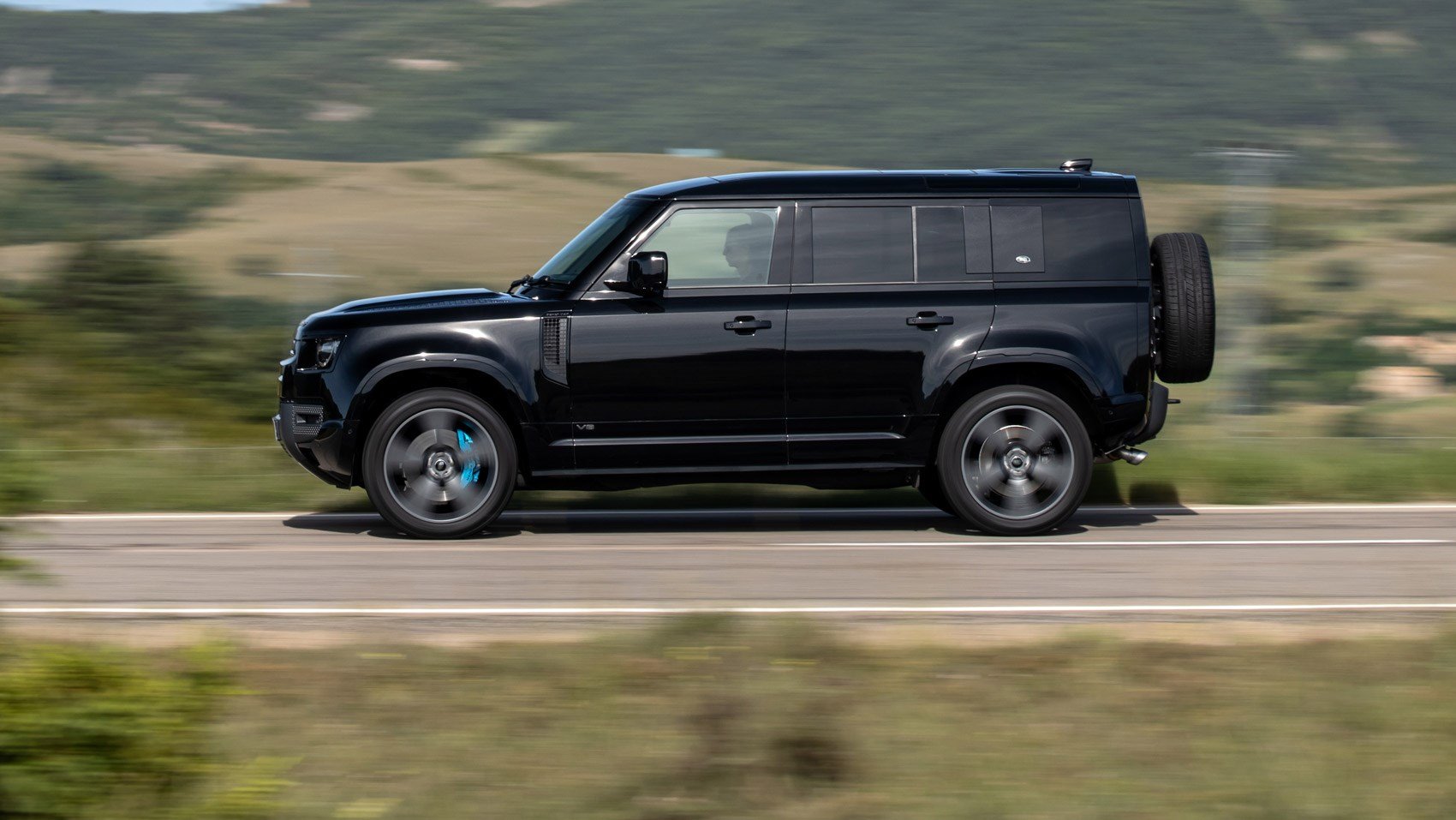
Well, that supercharged 5.0-litre V8 under the bonnet has a fraction less torque than the P400e variant, developing 564Nm along with the aforementioned 386kW. Still, so much shove allows this Defender is capable of a 0-100km/h sprint in 5.2 seconds for the 90 and 5.4 seconds for the 110. Not slow.
It’s not just about power, either. The chassis and air suspension benefit from bespoke tuning, including sharpening up damping and spring rates, and the electronic active differential on the rear axle has been upgraded to include a yaw controller to better adapt grip in hard cornering. Larger anti-roll bars are standard, too, as are enlarged 20-inch brakes. Electronically, the V8 introduces a Dynamic mode to the Defender’s already configuration-filled Terrain Response 2 system.
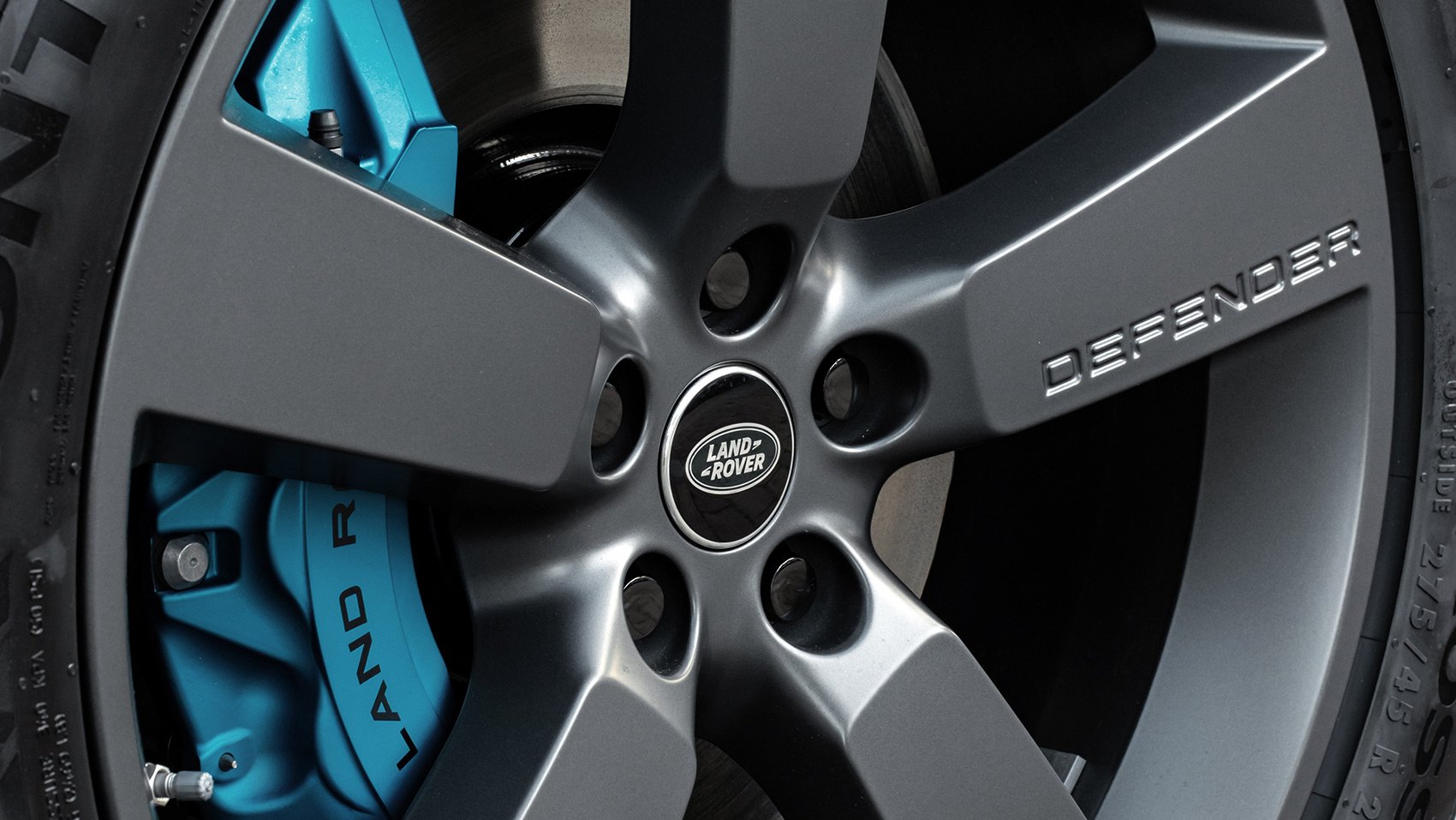
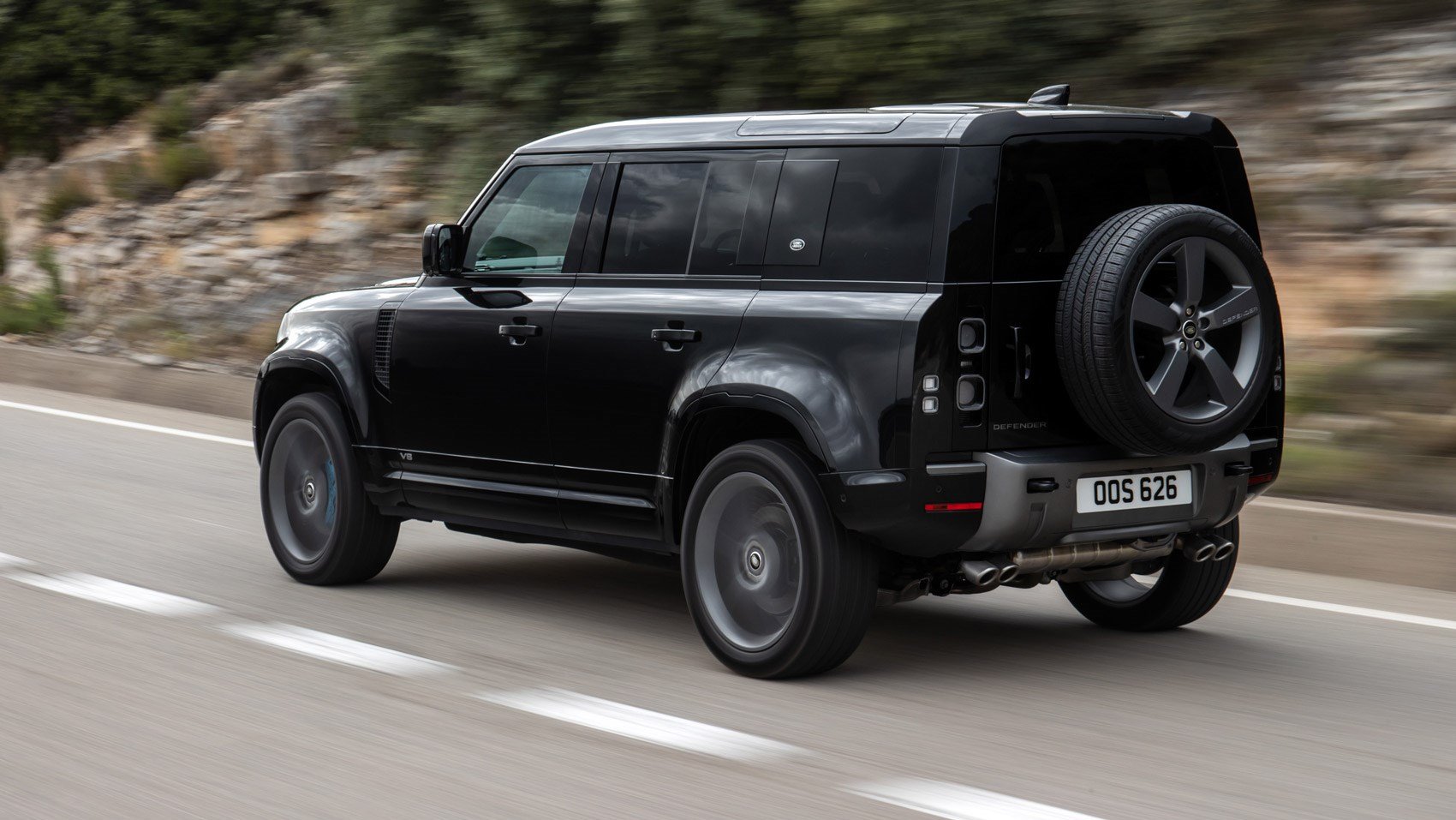
You can only spec a Defender V8 in white, satin grey or black and they all come with 22-inch wheels as standard. You can drop down to 20s if you like, but Land Rover says the top speed drops from 240km/h to 192km/h if you tick that particular box.
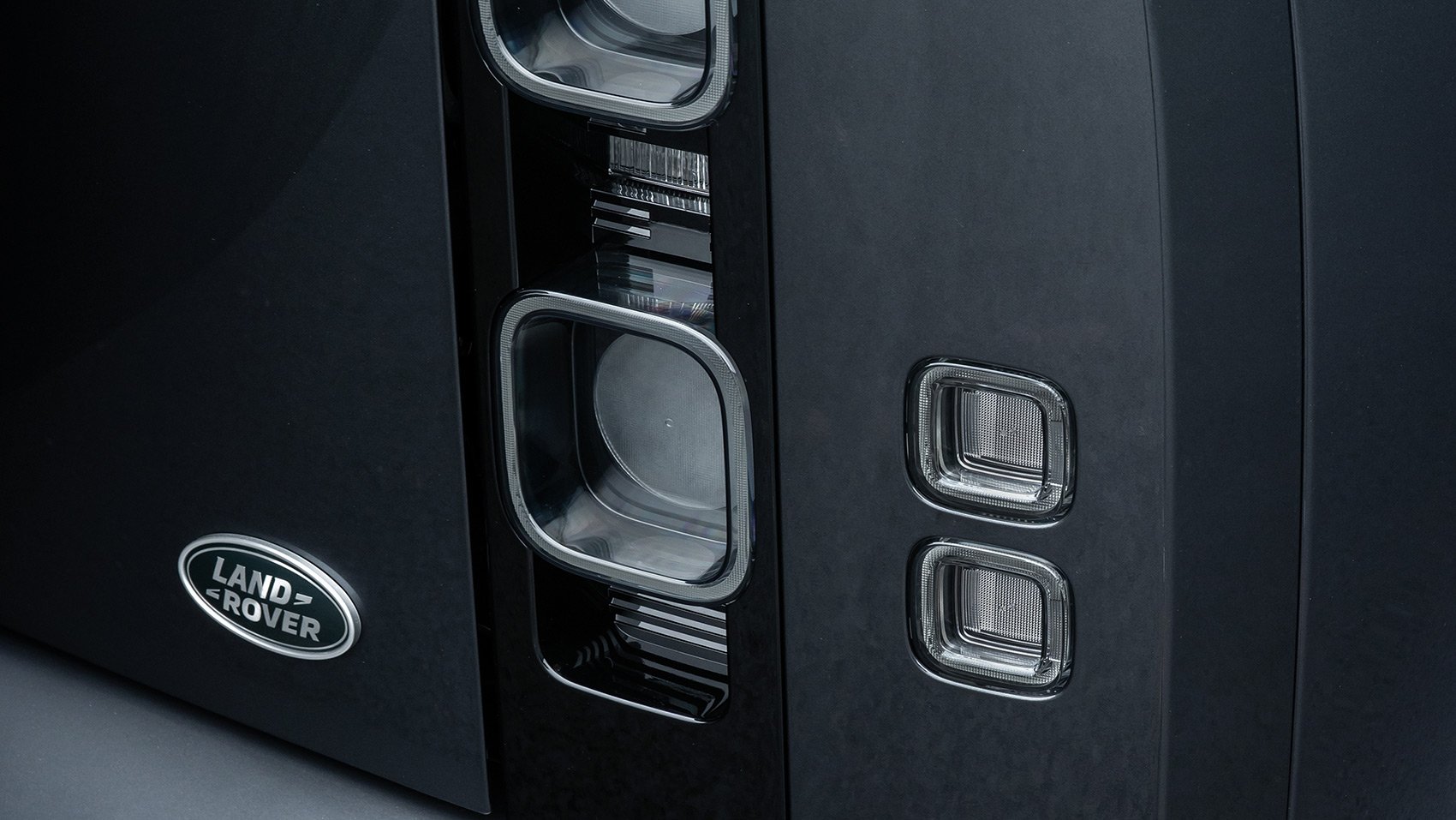
Other than that, there’s not much to visually differentiate the V8; some badging on the lower edge of the doors, blue brake calipers and a tiddler of a quad-pipe exhaust.
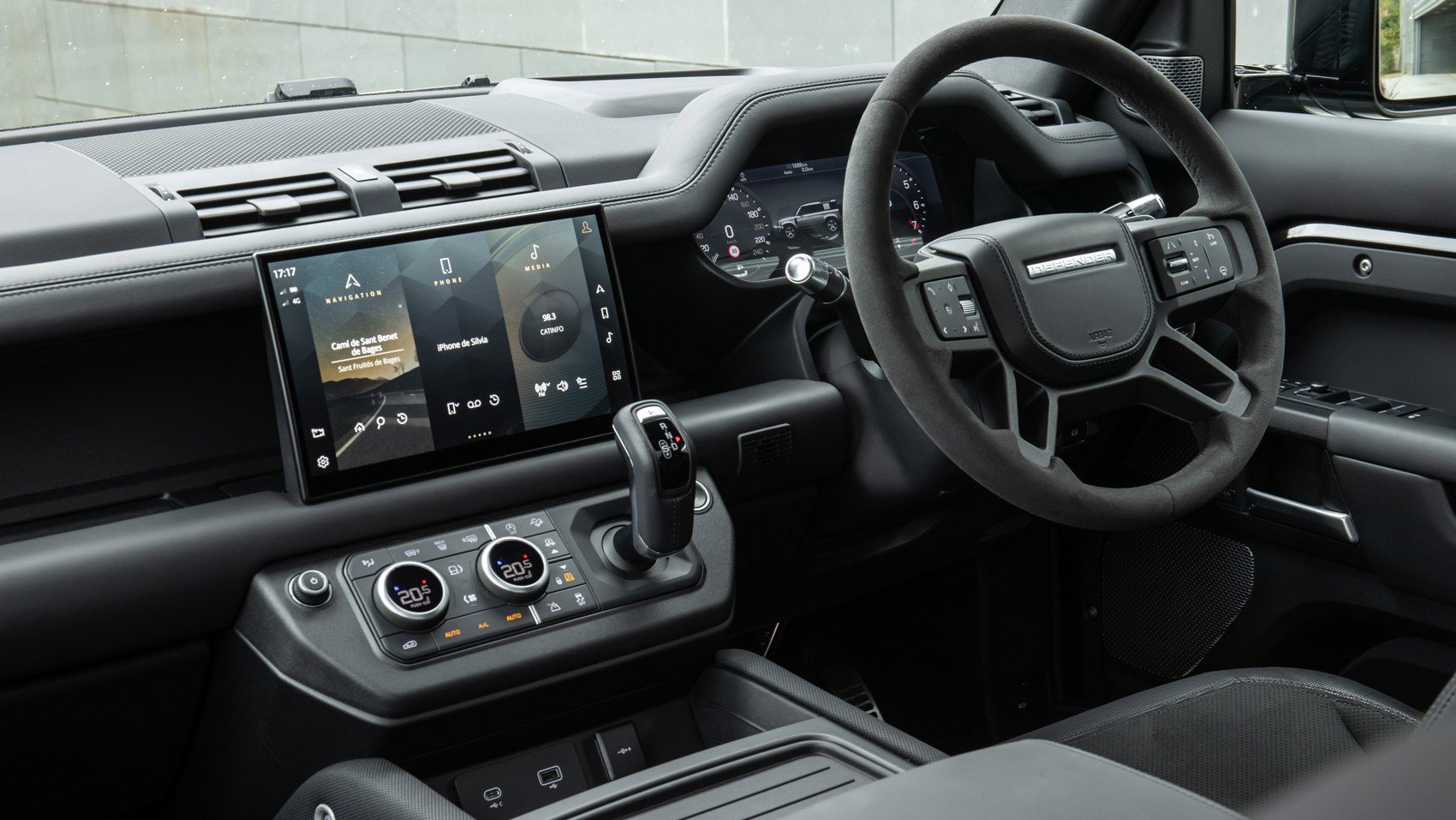
Inside, V8s benefit from Alcantara on the steering wheel and additional padding on the centre console’s rivet-ridden frame. Oh, and it’s all black. You can also spec a larger Pivi Pro display (first seen on the facelifted Discovery, Jaguar F-Pace and E-Pace) that bulges over the horizontal shelf-like layout of the Defender’s dashboard.
It’s not just about power, either. The chassis and air suspension benefit from bespoke tuning, and the electronic active differential on the rear axle has been upgraded.
Come on then, what’s it like on the road?
Even just starting the V8 up is enough to prompt a wry smile. But this isn’t an SVR product – there are no phlegmy thunderclap theatrics like a Range Rover Sport SVR – instead, you simply hear the engine briefly harrumph to life before settling down.
And that’s a theme that continues as you’re driving. It’s remarkably reserved for what we usually expect from a JLR supercharged V8, only letting slip a butler-like ‘ahem’ while scything through towns.
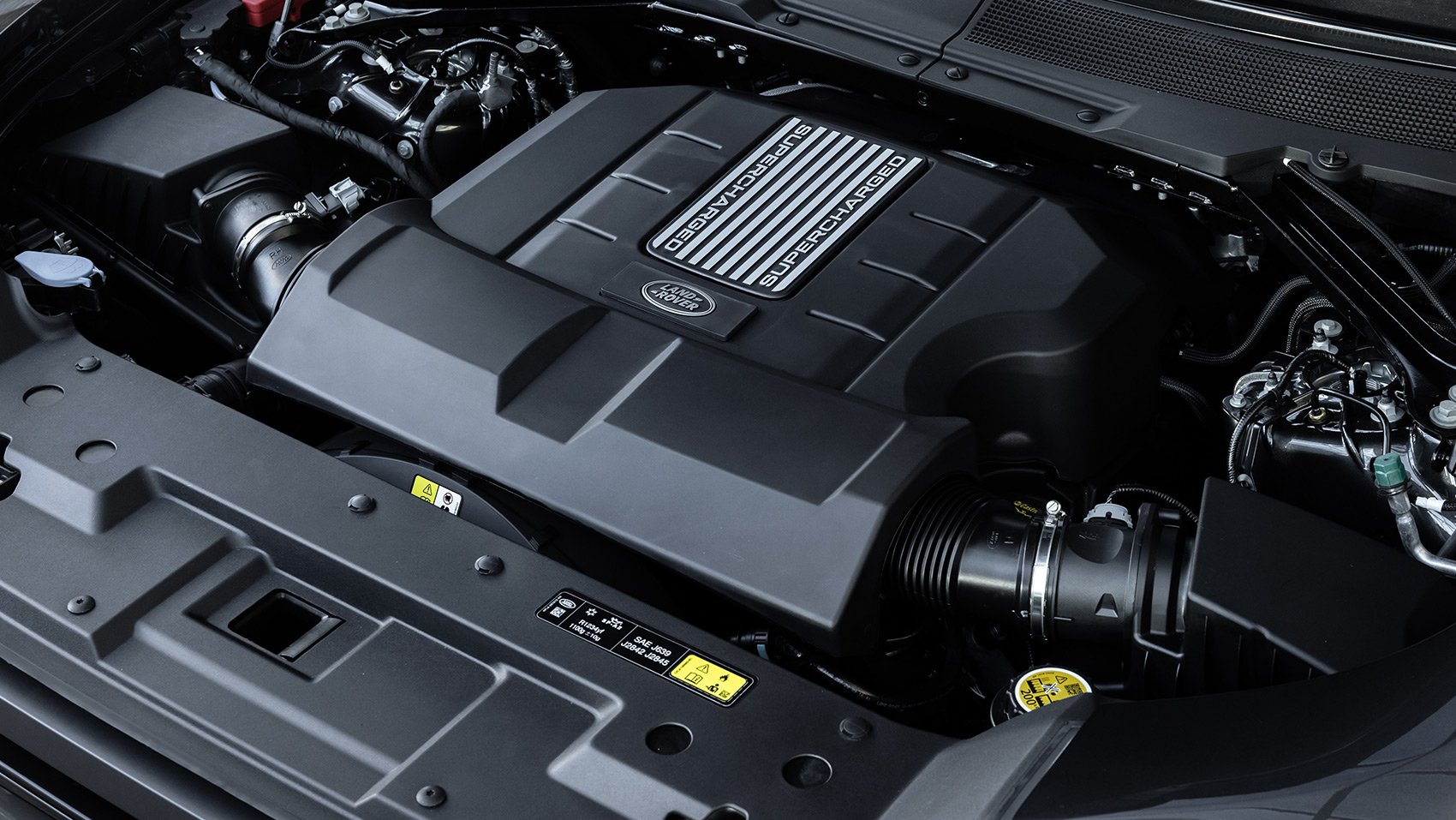
Why? Because Land Rover had to choke the engine as best it can maintain the very latest emissions standards, allowing the engine to continue service until 2027.
Petrol particulate filters muffle the noise, so Land Rover has added some gentle digital replication of the noise in the cabin and, to compensate, has figured out trick ways to amplify the whine of the supercharger. That dinky exhaust, too, is designed not to affect the Defender’s off-road prowess by compromising the departure angle.
But none of this is a complaint. You still know it’s a V8, with such a satisfying snarl as the revs build alongside the eye-widening, linear acceleration. It’s baffling that something weighing more than 2.6 tonnes can accelerate with such force – enough for that wry smile to grow into a goofy one as you hurtle towards the horizon.
The steering is tremendously accurate – again, for such a heavy SUV – and has some serious weight to it; enough to give a Cayenne Turbo a run for its money. Grip, naturally, is infallible on the road, even if Land Rover’s engineers have injected a bit of rear bias when you’re in the new Dynamic mode.
Even if the Defender doesn’t have 48V active body control like a slew of VW Group rivals, body roll at significant speed is impressively quelled. It’s also comforting to know that those larger brakes work their magic, too; the pedal has some proper heft to it. we’d still like a little more bite from them, though.
If your eyebrow is raising at the addition of so many ‘for an SUV’ caveats here, we understand. But, comparing it to the top-heavy Mercedes-AMG G63 and the thrill-lacking Audi SQ7/8, the Defender V8 is on another level.
What about off it?
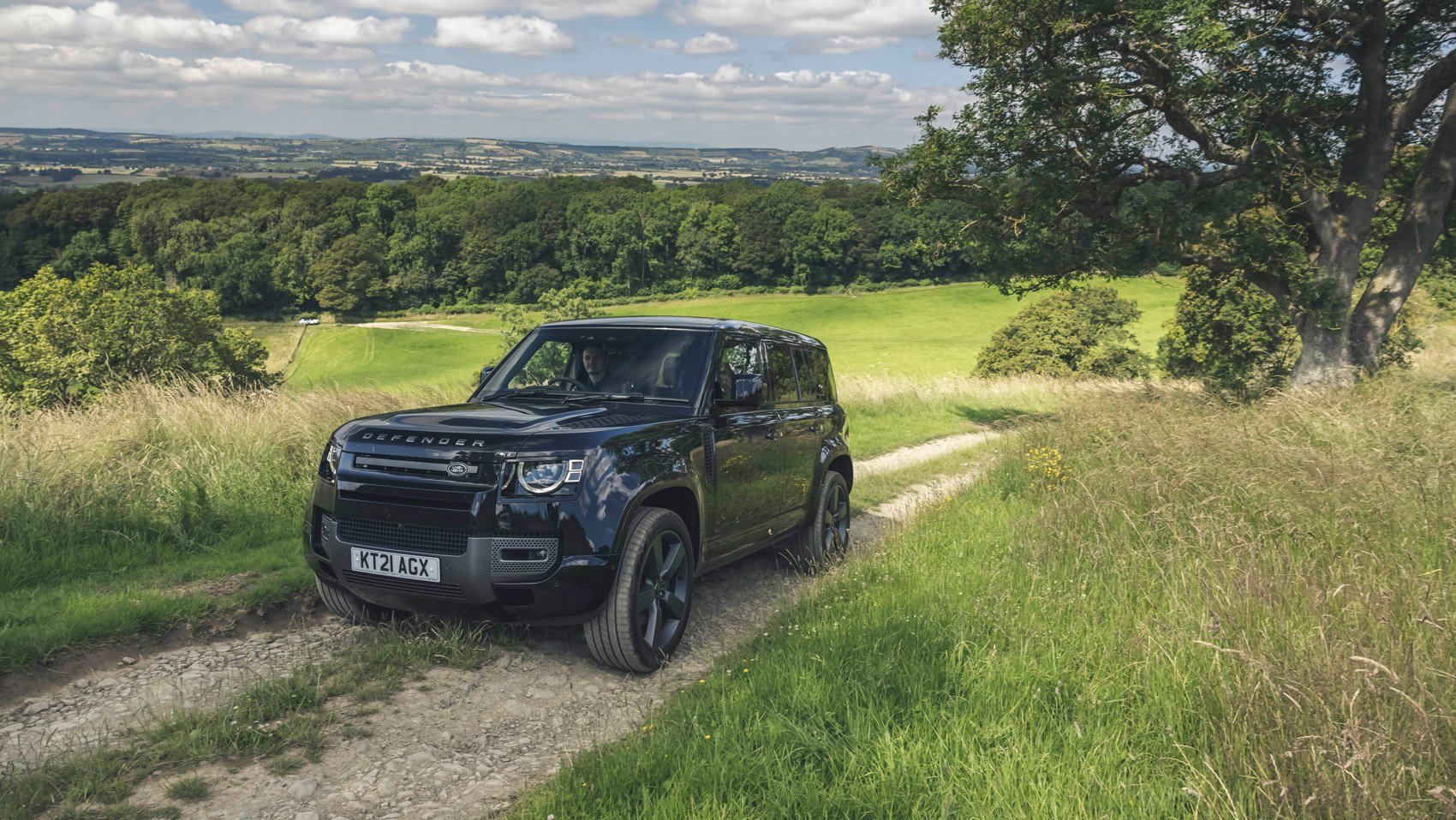
We had some time at Land Rover’s British off-road centre in Eastnor, disturbing campers and local fauna as we mill about the rolling fields, streams and steep inclines that pepper the local landscape.
Naturally, the V8 felt no disadvantage to any other Defender when faced with trials like climbing steep, grassy hillsides, wading through deep streams and skipping over rutted tracks.
We also got to experience off-roading at speed – rally-style in a V8 90. With Dynamic mode engaged and full-throttle corners being tackled at significant pace, this too completely unfazed the V8.
You feel the differentials doing their work here most, the steering wheel buzzing with feedback as power is shuffled to each wheel. There are moments where Dynamic mode allows a touch of oversteer, but it’s so satisfyingly controllable.
Naturally, the V8 felt no disadvantage to any other Defender when faced with trials like climbing steep, grassy hillsides, wading through deep streams and skipping over rutted tracks.
2021 Land Rover Defender V8 verdict
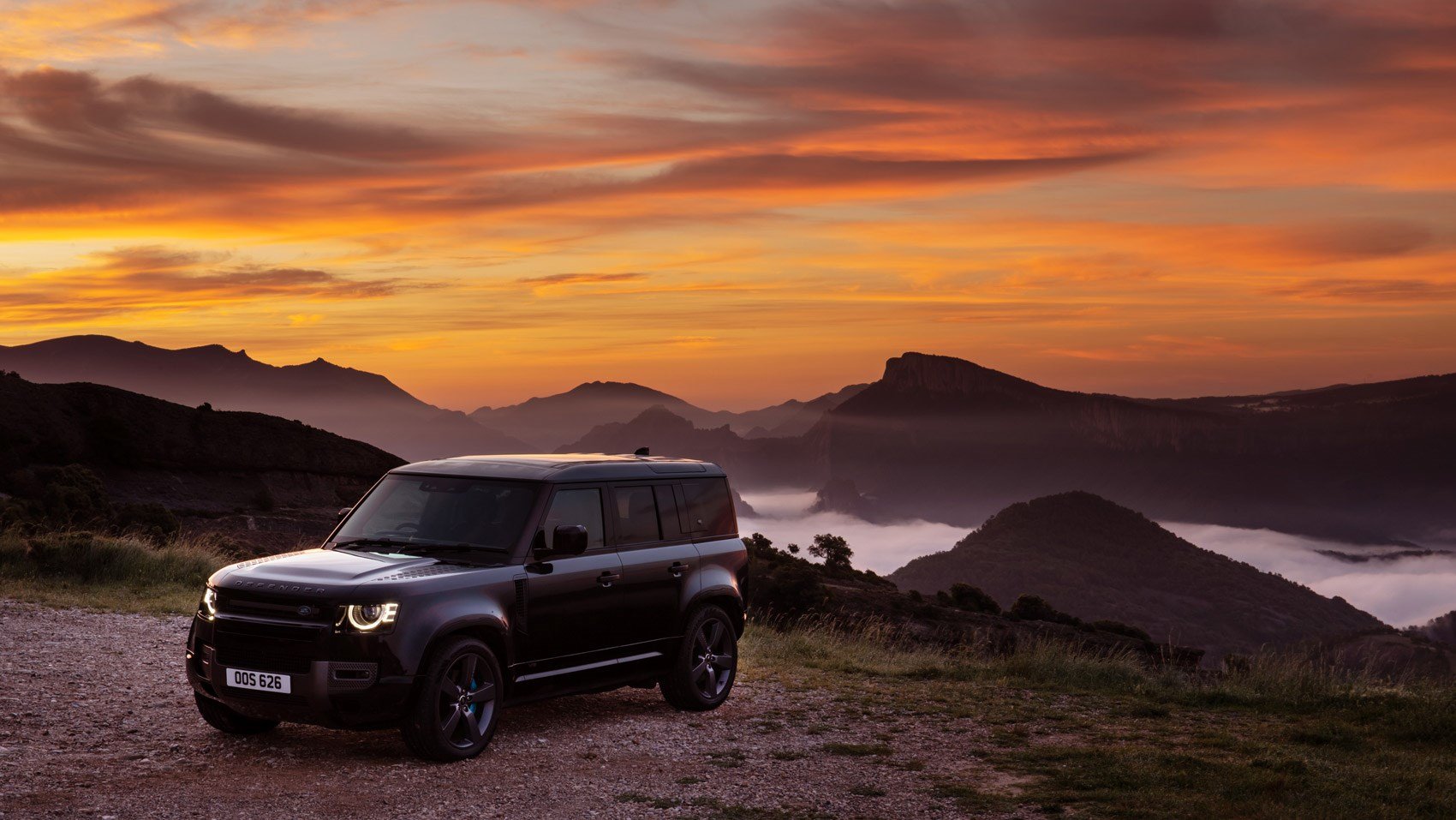
It’s out-performed dynamically by the Cayenne Turbo and Audi SQ7/SQ8, but they’re so dour by comparison that you don’t care.
Add to the fact that the Defender V8 can handle high-speed cornering better than a Mercedes-AMG G63 without losing any of the off-road capability and there’s little to question here. A welcome V8 flavour for the already convincing Defender.
Yes – in 2021 – a heavy V8 SUV isn’t with the times. But what a laugh – this thing charms you to no end and makes a compelling case against a ton of rivals.
This article was first published at Carmagazine.co.uk
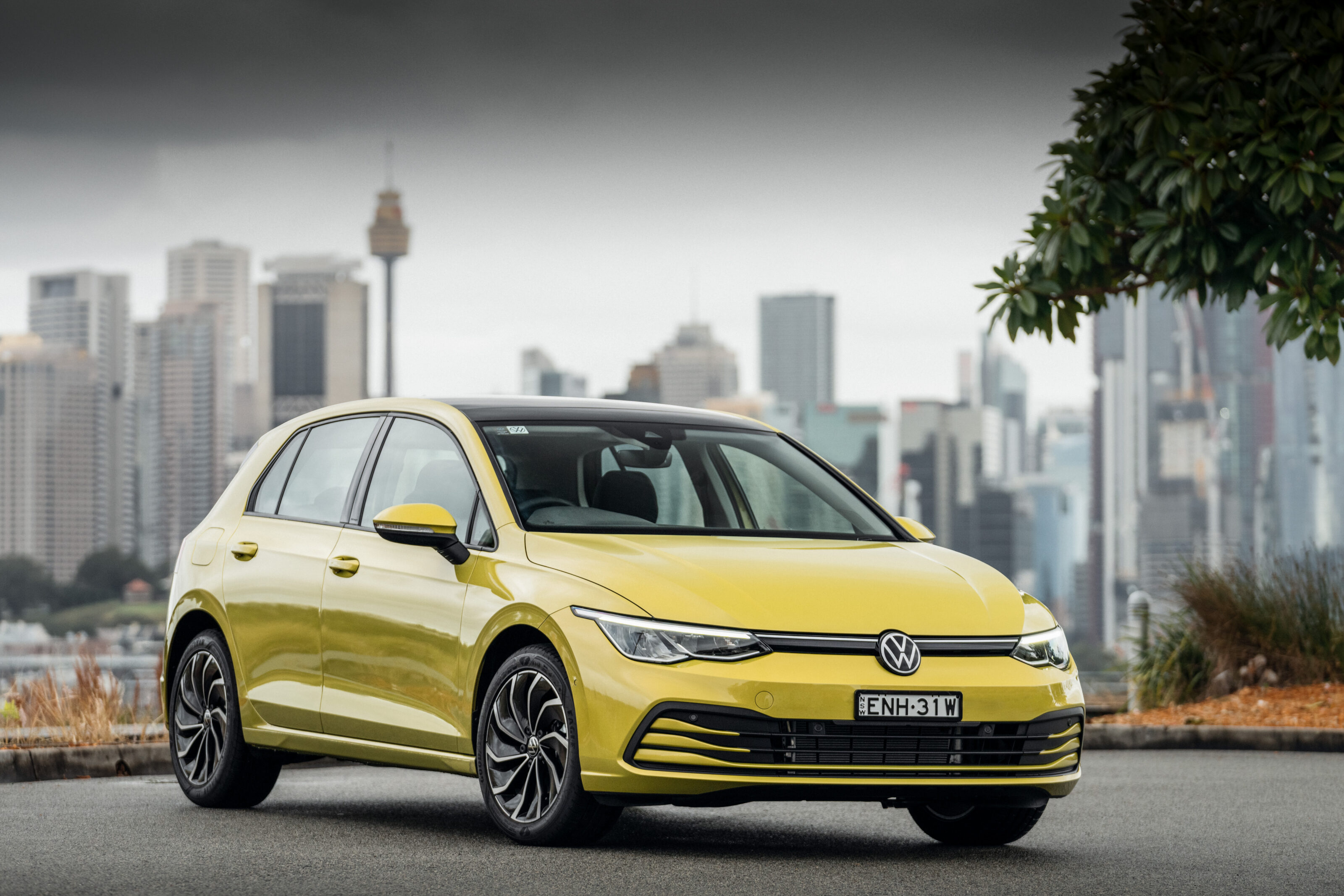
Volkswagen Australia has launched a website for its customers to keep track of which models are affected by the global semi-conductor shortage.
The growing problem associated with a lack of computer chips has hampered stock levels for manufacturers worldwide, with the effects also being felt in Australia – triggering Volkswagen’s local arm to launch a website which details the reasons behind delivery delays.
Having already confirmed it was facing setbacks for Australian deliveries of the Golf, Tiguan and Touareg, Volkswagen last week announced its new Arteon Shooting Brake would be affected, with a limited number of the local variants landing on our shores this year.
On the new website, Volkswagen says it currently has a secure supply of Polo, T-Cross, T-Roc and Tiguan Allspace models, as well as expecting deliveries of the updated Caddy to begin this month before Crafter 50 and Amarok shipments also arrive, although the latter model is currently experiencing shortages too.
Volkswagen Australia Managing Director, Michael Bartsch, says the local supply shortfall is actually less than it has been for regulation-based delays in the past, but admits this particular issue is hampering a wider range of models.
“To place the current semi-conductor issue in context, the brand experienced longer delays on certain models due to the mass re-testing required by the adoption of WLTP fuel consumption testing in Europe,” said Bartsch.
“For instance, the full Passat and Arteon ranges are only this year returning to local showrooms after prolonged WLTP related absences.
“Nevertheless, the shortage of this key component is being felt in some ranges. While the supply disposition changes rapidly, even daily, Volkswagen is resolved to provide customers with the latest information possible.”
Despite the demand-related dramas, Volkswagen posted a seven per cent increase in sales to the end of June compared to last year, with the Amarok standing as its best-selling model, shifting 3924 units in the first half of 2021.
A total of four separate recalls have affected 7242 Mercedes-Benz vehicles for a range of issues.
Affected vehicles range from a build year of 2014 up until 2019, with the largest batch coming involving the C200, of which 3728 units have been put on notice.
Mercedes-Benz has said customers can contact their nearest dealer or book a service online to rectify the issues.
Below is a breakdown of the vehicles affected.
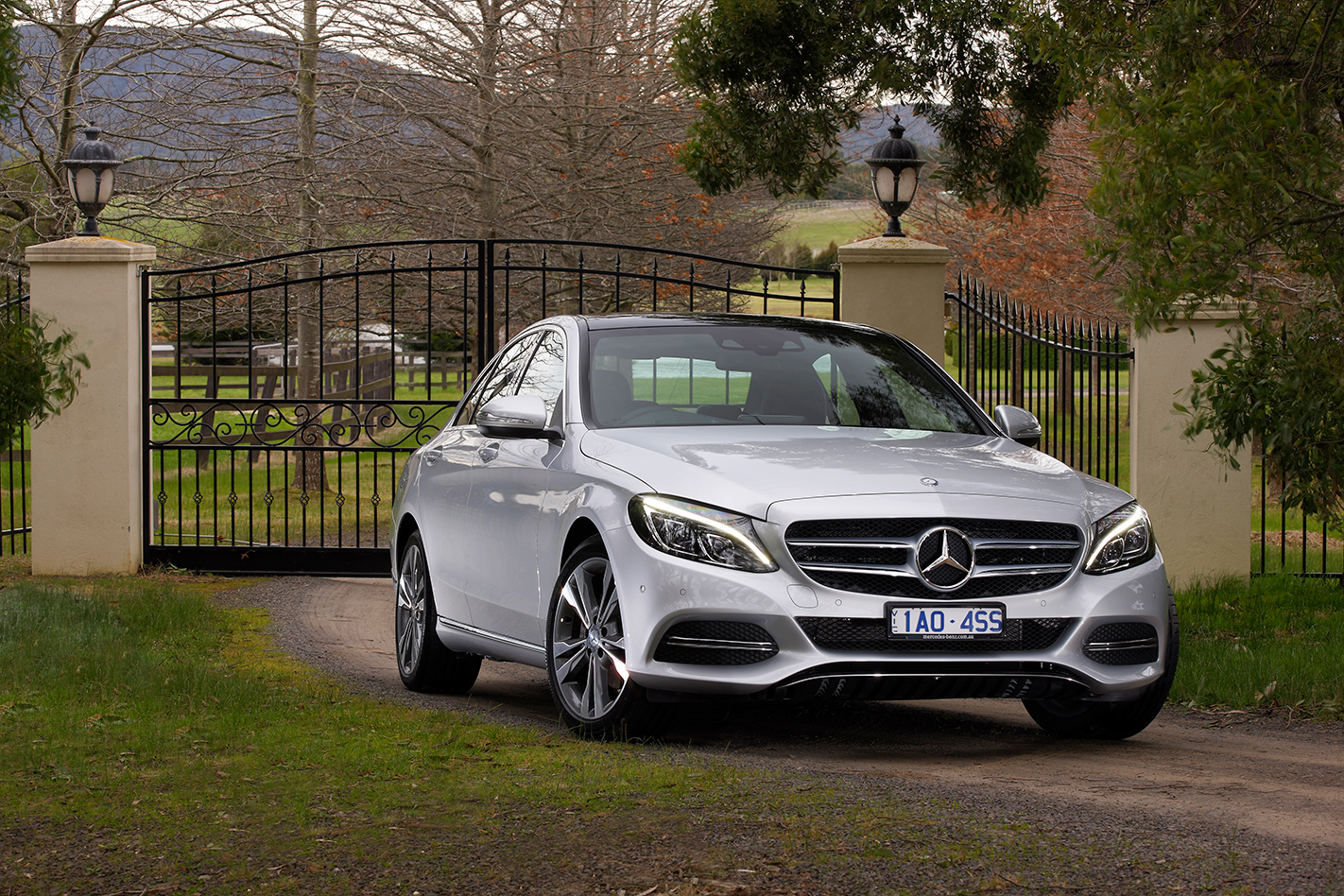
2014-15 C200
An alternator failure can occur in the vehicle’s engine bay under certain operating conditions, causing it to overheat and increase the risk of a fire.
A list of VINs for the 3728 C200s can be found here.
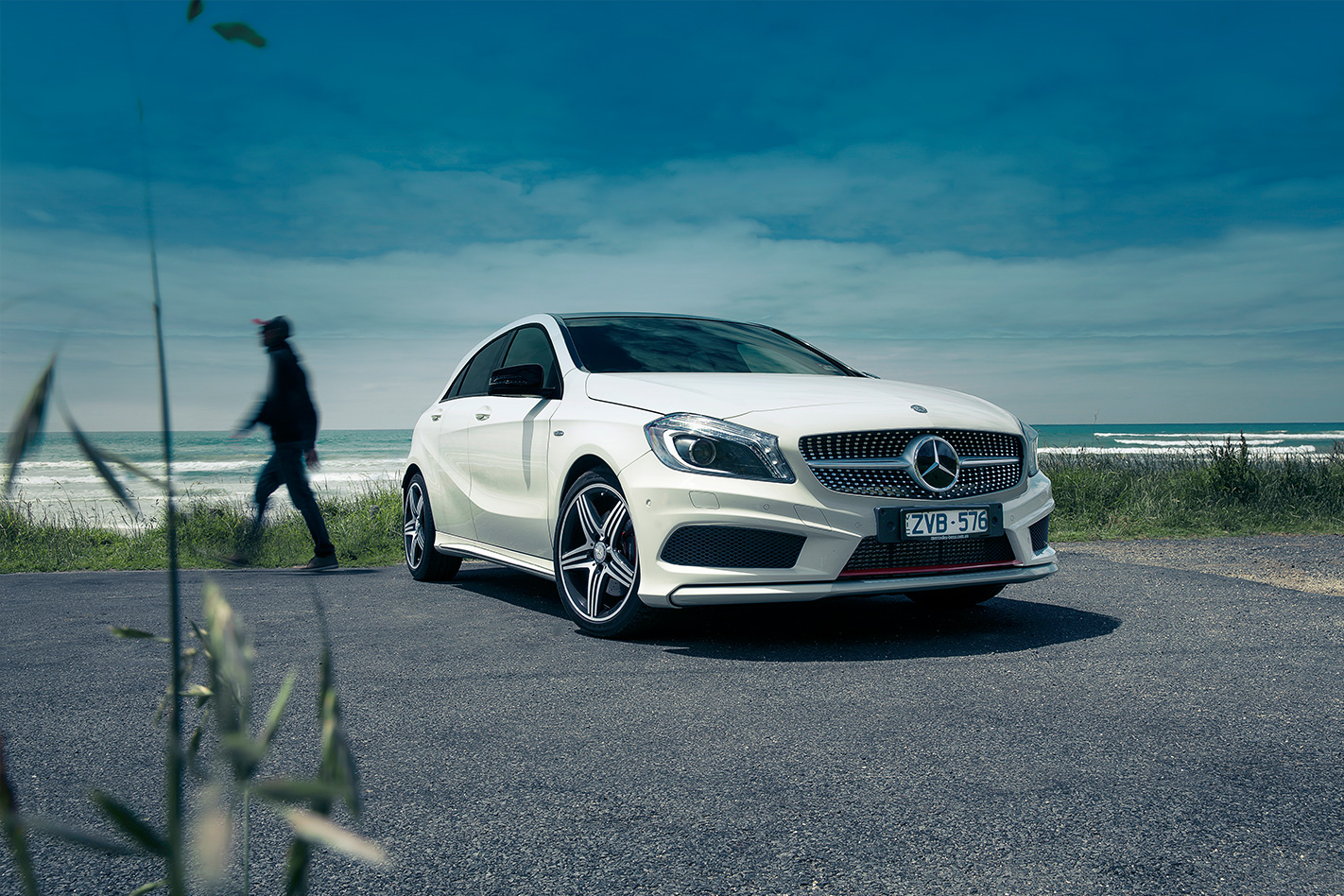
2017 A, B, CLA and GLA Class
Mercedes-Benz says a component in the universal joint of the steering shaft wasn’t manufactured to correct specifications, potentially causing increased wear and tear which could lead to steering failure.
A total of 2847 A-Class, B-Class, CLA and GLA models are affected, with the VINs of those under recall available here.
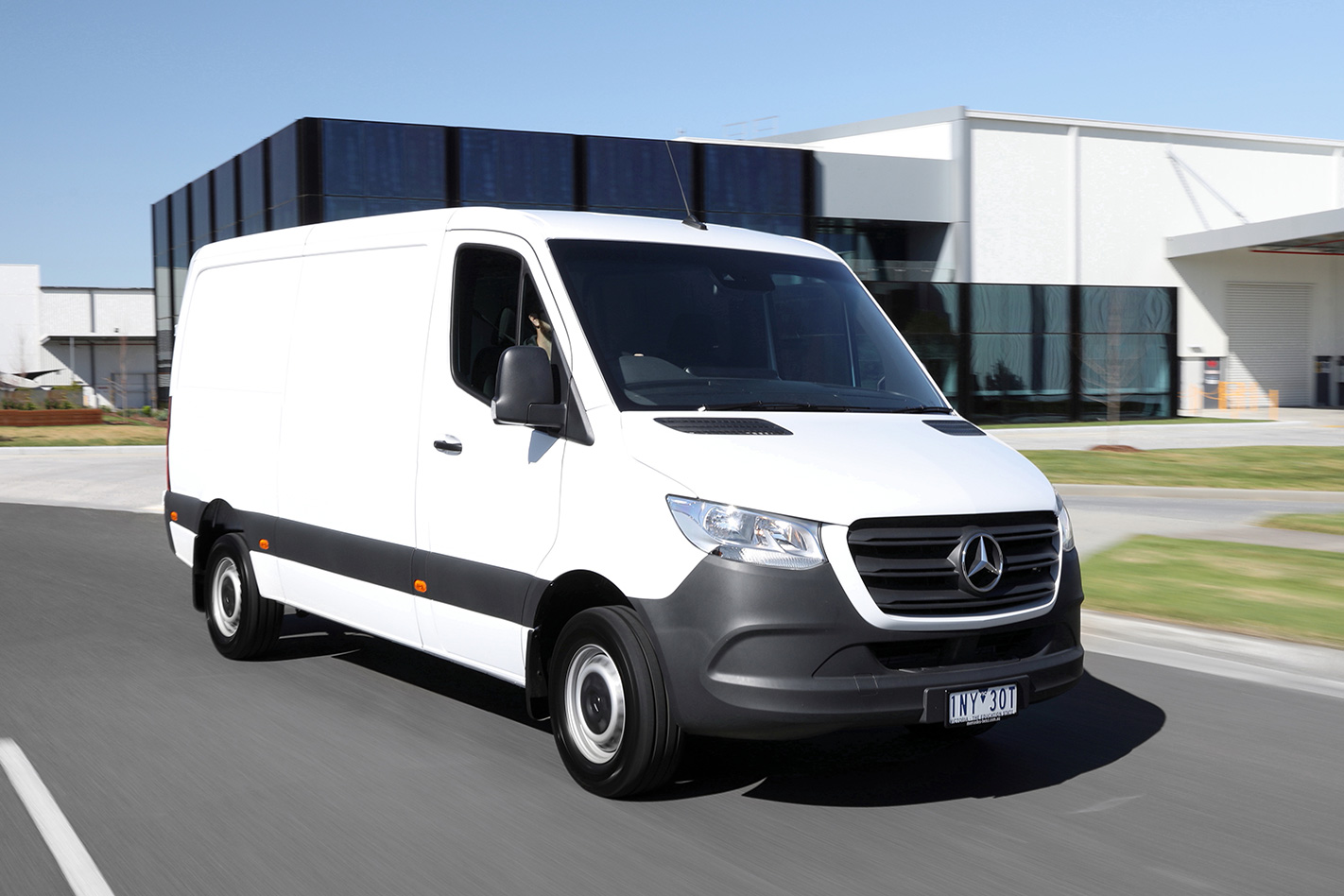
2018-2019 Sprinter
A reported issue with the power supply to the glow plugs in the Sprinter’s engine means power has the potential to remain connected in the event of a front-end impact, potentially leading to a fire.
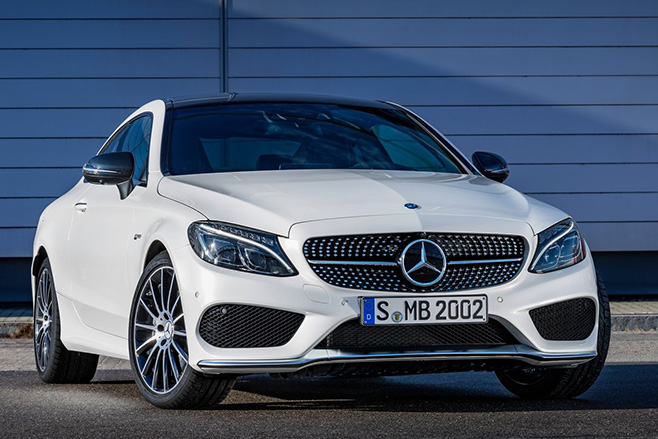
2016 GLC43, C43
Affecting just two units, one GLC43 and one C43, the recall has been put out due to the connection of the gas lines of the inertisation system not meeting manufacturing specifications, potentially leading to a higher risk of fire due to it failing to do its intended job.
The two VINs for the cars can be found here.
The United States Government wants automotive manufacturers to commit to 40 per cent of all new car sales being electric by 2030 in a bid to reduce emissions.
According to Reuters, the Joe Biden administration is asking carmakers to voluntarily pledge to meet the target.
The news follows recent plans from California to phase out the sale of new internal combustion engined vehicles by 2035 – similar to what is proposed in the EU.
A spokesperson for American trade union United Auto Workers said initial reports of the pledge asking for 50 per cent of new car sales to be EVs was inaccurate, saying it had “agreed to 40 per cent EVs by 2030 – [but] the UAW is still in discussions and has not reached agreement at this point”.
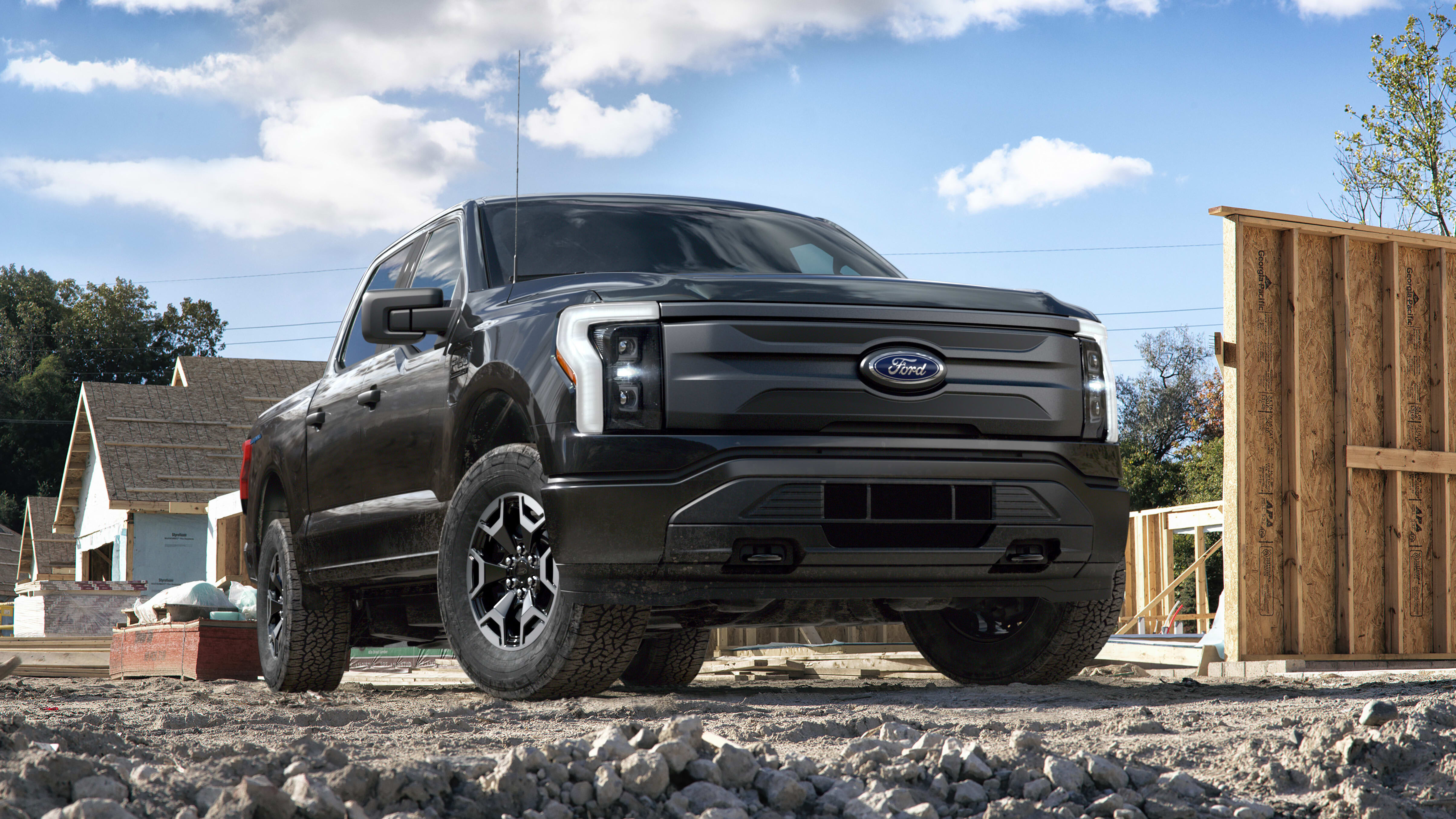
As a part of last month’s Stellantis EV announcements, Jeep outlined its plans for 70 per cent of its vehicle sales to come from electrified models by 2025 but didn’t specify what portion would be full-EVs, while both Dodge and Ram aimed at rolling out fully-electric vehicles by 2024.
Ford and General Motors are also taking different approaches towards an electric future, with the former aiming for 40 per cent of vehicles worldwide to be based on an electric platform by 2030 while GM wants to end sales of light duty ICE vehicles by 2035.
The Biden administration’s plans to speed up the introduction and uptake of EVs comes off the back of the Donald Trump’s rolling back on emissions regulations – including reducing Barack Obama’s required five per cent annual increase in fuel efficiency down to 1.5 per cent.
Snapshot
- New logo appears to be production-ready
- Could be used for rotary engine models
- Performance division unlikely, too closely resembles VW’s
Mazda has trademarked a new ‘R’ logo in Japan – sparking speculation it could be planning a range of high-performance vehicles.
Images discovered by the New Nissan Z forum, show Mazda filed the application with the Japan Patent Office.
With the design consisting of a symbolised ‘R’ surrounded by a mix of red, grey and white colours, it appears to be a production-ready emblem – rather than a simple attempt to block use by other manufacturers.
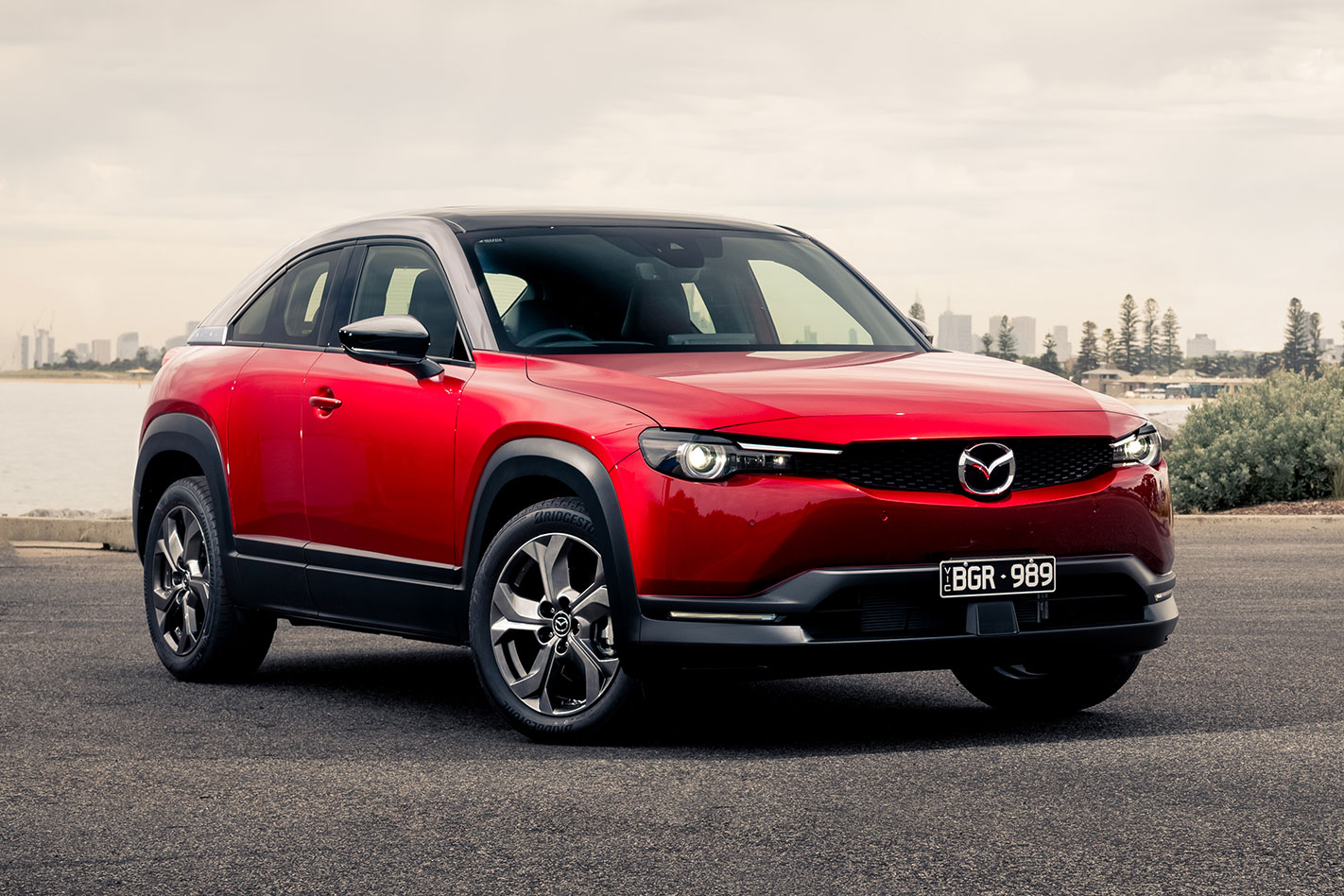
With the trademark including use for “automobiles and their parts and fittings”, exactly how the ‘R’ badge could be used in the Mazda range remains unclear.
While the name could denote a performance division for the Mazda brand – with turbocharged or electrified versions of the inline-six powered CX-5 and 6 successors possible – this seems unlikely considering how close it would be to Volkswagen’s R range.
Mazda has also previously denied plans to introduce a new performance sub-brand or resurrect fallen names, such as MPS.
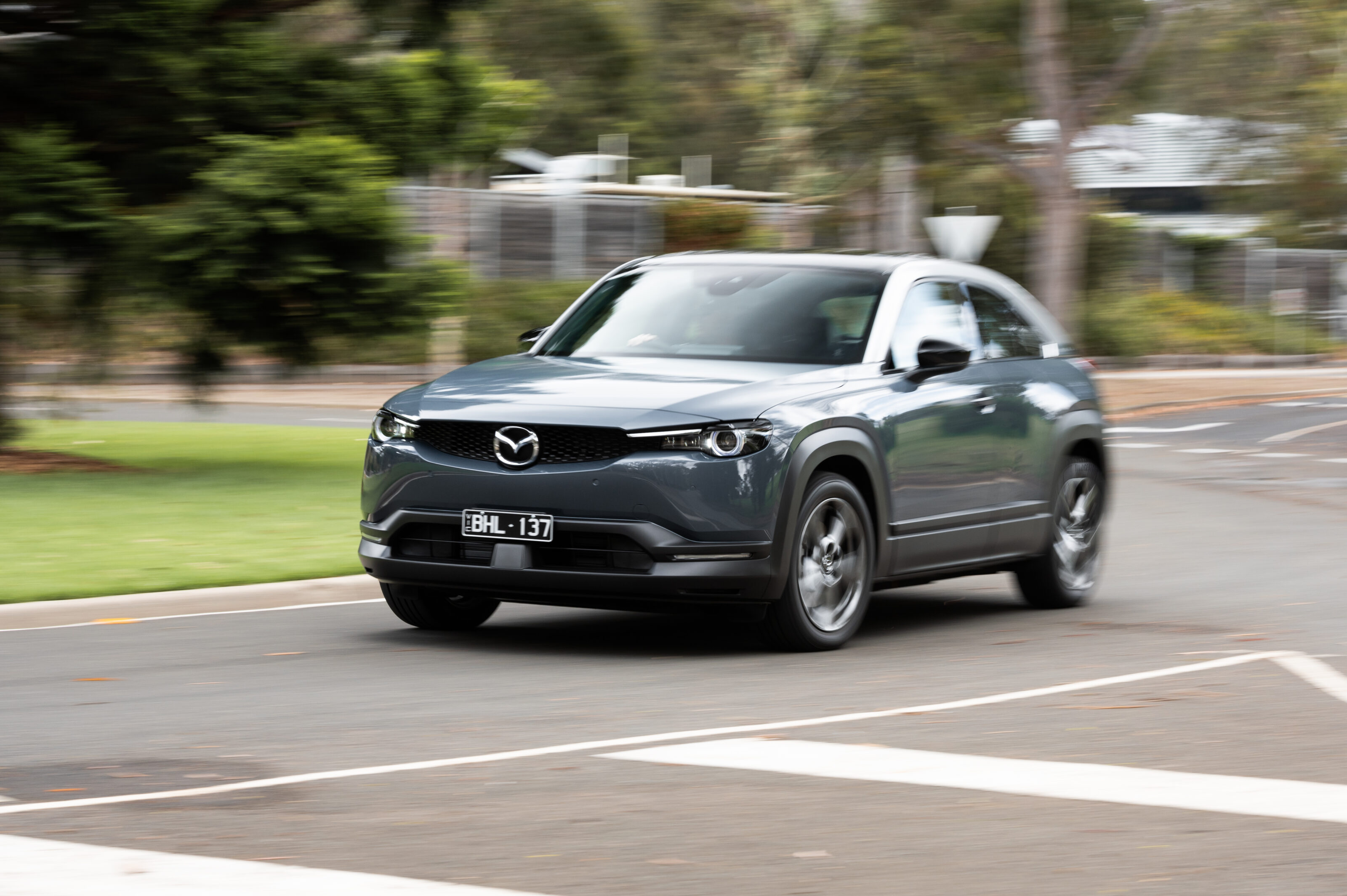
Another possibility could be a range of ‘SkyActiv-R’ rotary engine models – the company has been in the process of developing a new rotary engine for hybrid range-extender vehicles.
The first model expected to feature a rotary-powered hybrid range extender is the MX-30, which, the company has confirmed, is on track and expected to be unveiled in 2022.
With Mazda likely to re-introduce the technology with its range of next-generation electrified vehicles, the ‘R’ branding could denote the powertrain, but the firm has yet to make an announcement officially confirming its intentions.
Nissan Australia is recalling five units of its 370Z and three examples of its GT-R sports cars due to an issue with the front steering knuckle and/or rear axle housing, which may not meet design specification.
The fault involves model year 2020 370Z and GT-R vehicles.
The issue, according to the Department for infrastructure, could lead to the steering wheel becoming off-centre, or the wheels detaching from the vehicle.
This could increase the risk of an accident or death if a fault occurs.
A VIN list for the affected vehicles can be found here.
When parts become available, Nissan Australia will contact owners to advise them to organise an inspection and replacement, at no cost.
For more information, contact Nissan Australia on 1800 035 035 or visit: https://www.nissan.com.au/owners/recalls/recalls-service-campaigns.html