
Snapshot
- Renault recalls Master III Van over potential fuel leak
- 266 vehicles made from 2018 to 2019 affected
- Owners being notified and given free of charge repair
Renault Australia has issued a recall for 266 of its Master III Vans, citing a fuel hose leak which could lead to a fire.
The issue affects MY2018 and MY2019 vehicles in which the fuel hose in the engine bay rubs against the engine itself, potentially causing wear and then a leak.
With the high temperatures occurring in the engine bay, a fire could occur, resulting in material damage to the vehicle and a high risk of injury to occupants.
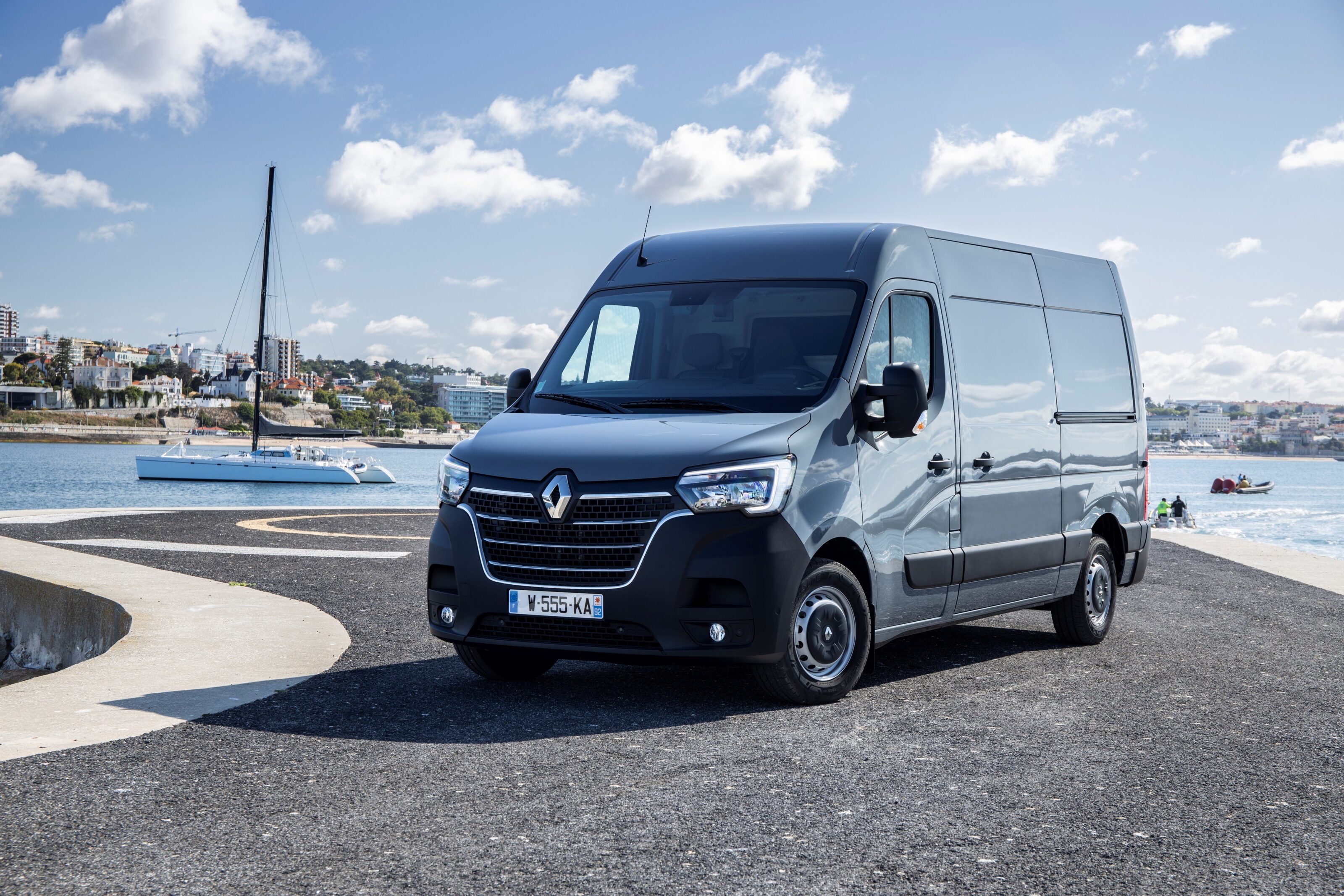
Renault is contacting owners and notifying them of the recall, offering to undertake repairs for free at any Renault dealer if necessary.
The vehicles affected were built between January 2, 2018 and December 31, 2019 across Australia.
A list of affected VINs can be found here.
Snapshot
- Eight MY2020 GLE models under recall
- Bonding issue with the dashboard could lead to front airbag not deploying
- Mercedes-Benz offering to repair free of charge
Mercedes-Benz has issued a recall for its MY2020 GLE model over an issue which could lead to airbag failure.
Only eight cars have the problem, which stems from the dashboard not being bonded together properly.
Mercedes-Benz claims the issue could result in the passenger airbag not deploying in the event of a crash.
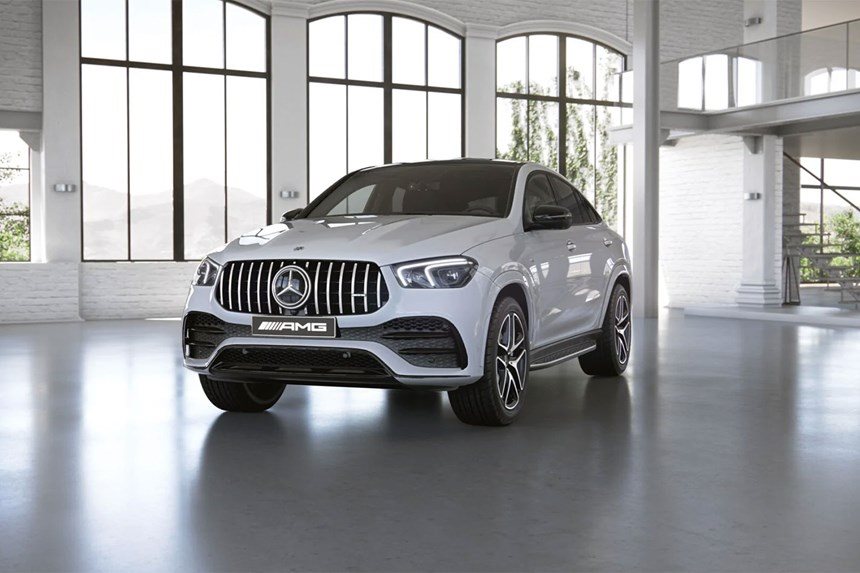
Owners of GLE models purchased from January 6, 2020 until September 22, 2020 have been advised to contact their preferred local Mercedes-Benz dealer for a repair, free of charge.
A list of the VINs can be found here.
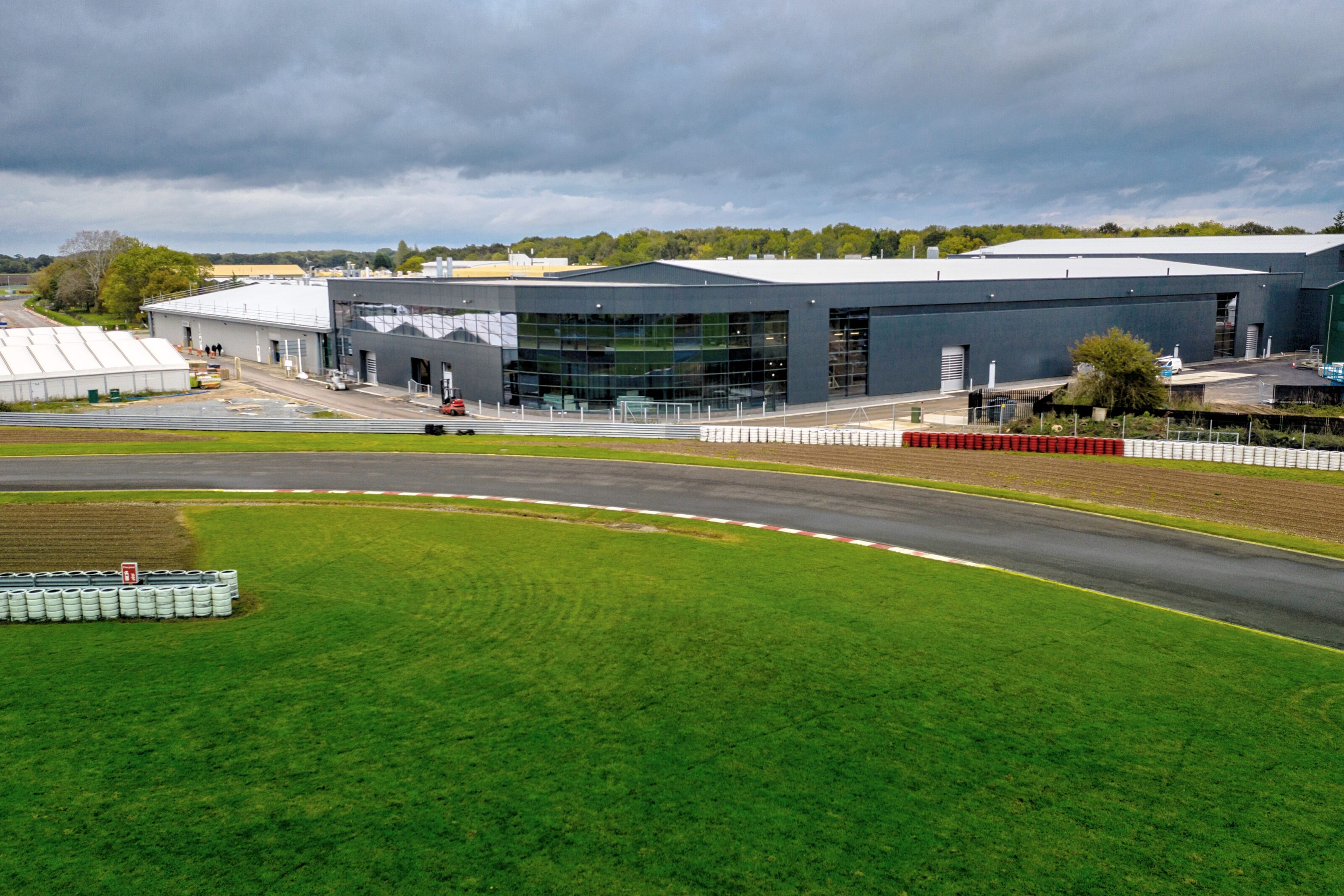
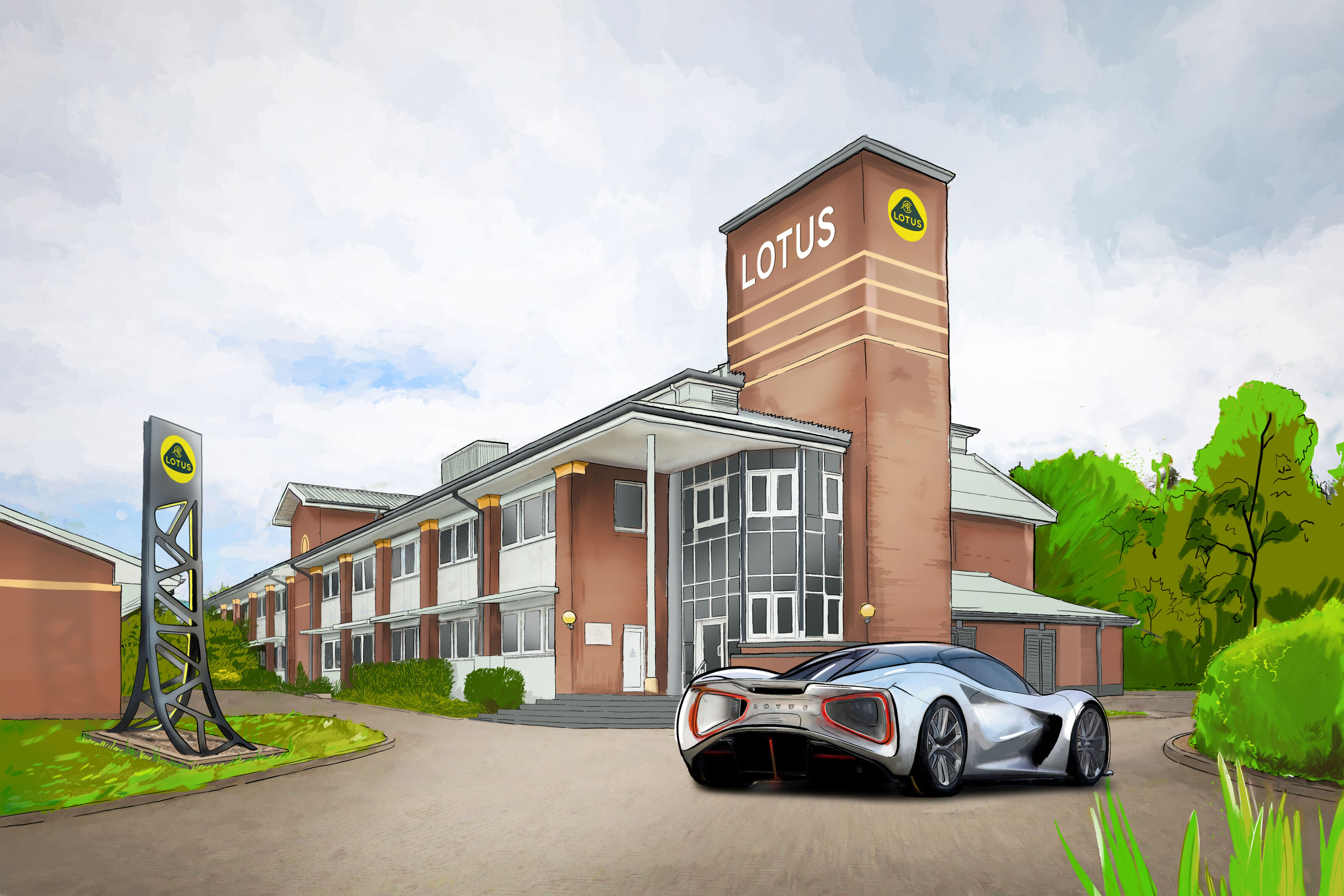
Lotus is going all-in on pure electric cars, as part of a $180m-plus investment in its Hethel headquarters and engineering capabilities.
In his first interview, Lotus Cars managing director Matt Windle reveals how future sports cars will be pure electric, that Chinese-built ‘lifestyle vehicles’ will also be zero emission and how Lotus is developing its own architectures, rather than modifying Geely platforms.
Windle has been managing director since January 2021, though he began his second stint at Lotus in 2017 – the same year Lotus came under the majority ownership of China’s answer to the Volkswagen Group, Geely Holdings, and Malaysian car group Etika Automotive (which holds the other 49 per cent). The new owners have pumped more than $180m into Lotus, including the construction of a new assembly hall at Hethel.
Soon Windle was in charge of all UK product development, and intrinsically involved in writing Lotus’s 10-year business plan out to 2028, the company’s eightieth year.
“When we wrote our product strategy, which was the start of the Vision80 plan, we just had to write EV into that,” explains the 49-year-old boss. “With the legislation that’s come along, with the market data showing volumes are just going to grow and grow: the move towards electrification, it’s the right thing to do.”
Lotus has already shown the first car of the Vision80 plan, the Evija, a carbon-fibre monocoque EV hypercar. Its four motors are claimed to produce a combined 1470kW, which would make it the most powerful road car in history. The price tag? $3.6m a pop.
While the Evija is limited to 130 units (as befits its 130 type number), the next car – officially named Emira and internally codenamed as Type 131 – will be the first series-production model of the new era. Does Emira run a downsized engine with hybrid electric assistance?
“We’re not doing any hybrid drivetrains, because we’re going straight to electric,” states Windle.
“Type 131 is basically the bridge to the new era of Lotus cars: it’s our last internal-combustion-engine car.”
Emira/Type 131 is a mid-engined sports car to replace the outgoing Elise/Exige/Evora. It’ll be unveiled this winter, before entering Lotus’s revamped retailers in early 2022.
Also in development are two new vehicle architectures, one to support four-door ‘lifestyle vehicles’ such as crossovers/SUVs, the other to underpin pure-electric sports cars. Neither is planned to accommodate combustion engines – and they are engineered by Lotus.
“We’re not using Geely architectures,” explains Windle. “We have access to those architectures, but one of the things which shows the intent for Lotus is that we’re designing our own architectures. [One of those] will be a lifestyle car architecture.”
“We’re not doing any hybrid drivetrains, because we’re going straight to electric”
That will underpin four-door, five-seat cars, including a Lotus crossover. What’s Windle’s vision for such a car?
“The aesthetics have to be right, it has to be desirable. It has to drive like a Lotus, even if there’s more weight and it’s bigger. There’s no reason why you can’t have best handling and dynamics.”
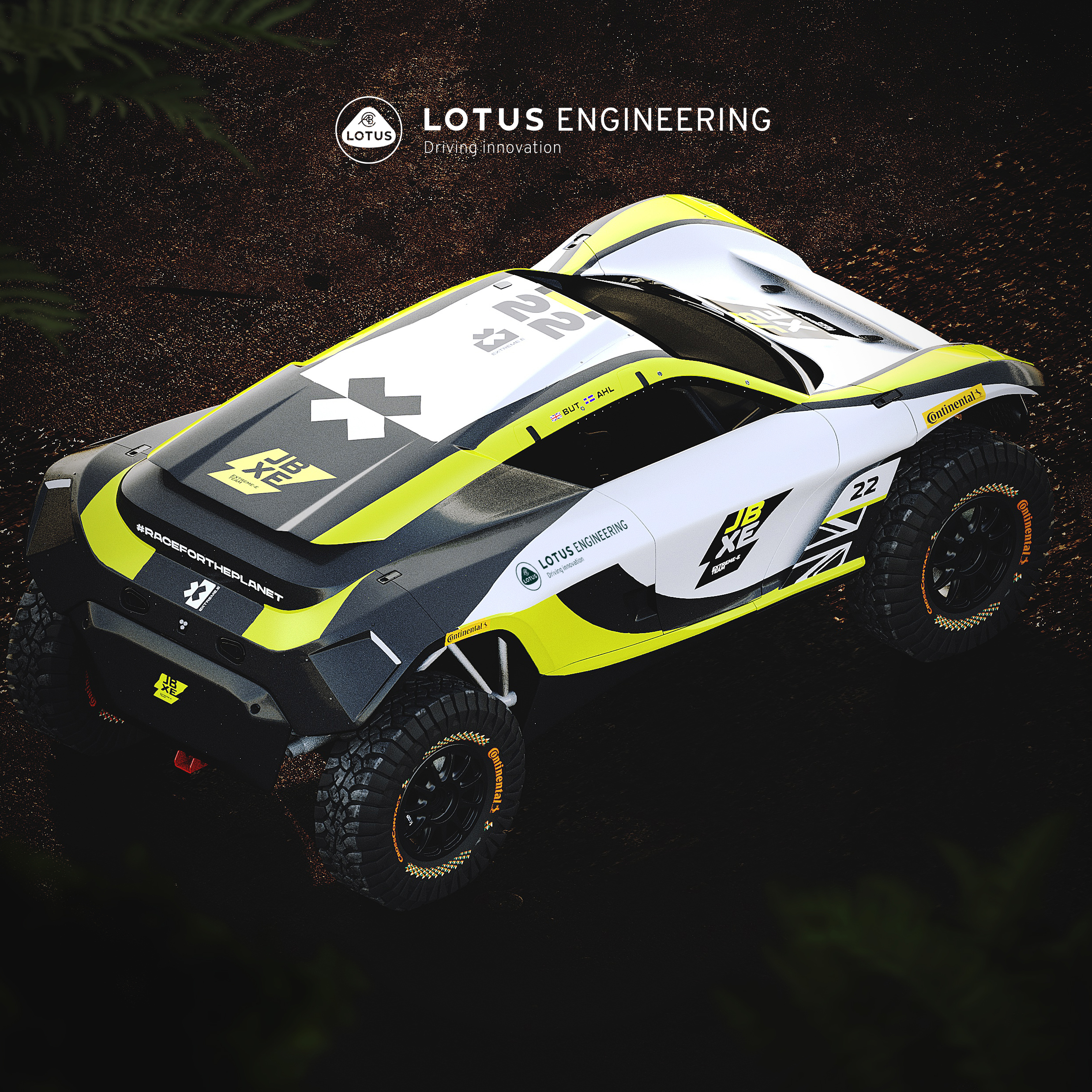
Lotus will glean some insights from partnering with Jenson Button’s Extreme E race team: it’s an appropriate crucible for the new Lotus, mixing motorsport, off-road vehicles and pure-electric power.
Also in the pipeline is a pure-electric sports car architecture. “We have a program running called LEVA (Lightweight Electric Vehicle Architecture), with government backing,” says Windle.
“We have ambitions to get an electric sports car to a similar weight to where combustion-engine sports cars are now.”
Discussing LEVA, Windle’s passion for engineering shines through. He started as a manual draftsman at camper van maker Dormobile, then learned computer-aided design at Daewoo in Worthing before joining Lotus for the first time in 1998.
“We think we can [achieve our goal] through clever design, integration of systems – at Lotus we have our really happy moments if we get one part to do two jobs!”
Innovative materials will also play a part. One of LEVA’s beneficiaries will be Renault’s sports-car division Alpine. The two companies are exploring shared technical resources and looking at combined motorsport opportunities.
“The main one is co-developing a sports car together, which will be based off the electric sports-car platform we have in design now,” says the boss.
He’ll be vital in developing the relationship between Alpine and Lotus: he knows his French counterparts well, having worked for Caterham when it was trying to develop a version of the A110 sports car. Unfortunately a lack of funding killed the Caterham.
“I think Lotus and Alpine fit very well together: we’re of the same mentality, the same aspirations. And we kind of complement each other in market spaces as well: they could help us in Europe, and we could help them in the US. So I think there are really good opportunities there for both brands,” says Windle.
Windle knows he has to look beyond these traditionally strong markets to grow the business. Lotus is going truly global, planning exponential growth in volumes fuelled by manufacturing, design and engineering capabilities outside the UK. Sports cars such as the Evija will remain the heart of the domestic operation, but majority shareholders Geely will provide the funds and industrial footprint to fast-track the brand’s growth overseas.
Loss-making Lotus has to expand its range to become a viable company: in 2020 it manufactured 1378 cars (not far off the typical output of the pre-Covid years), but that’s less than one car for each of the company’s 1560 UK employees, but still a better ratio than Ferrari’s 2020.
“It’s important that people realise that the business model of selling a small number of sports cars just doesn’t work in the long run,” says Windle.
“We now have the opportunity to go into new markets, new segments, new technologies, which will give us the revenue that allows us to keep doing cars that people love out of Hethel in the UK.”
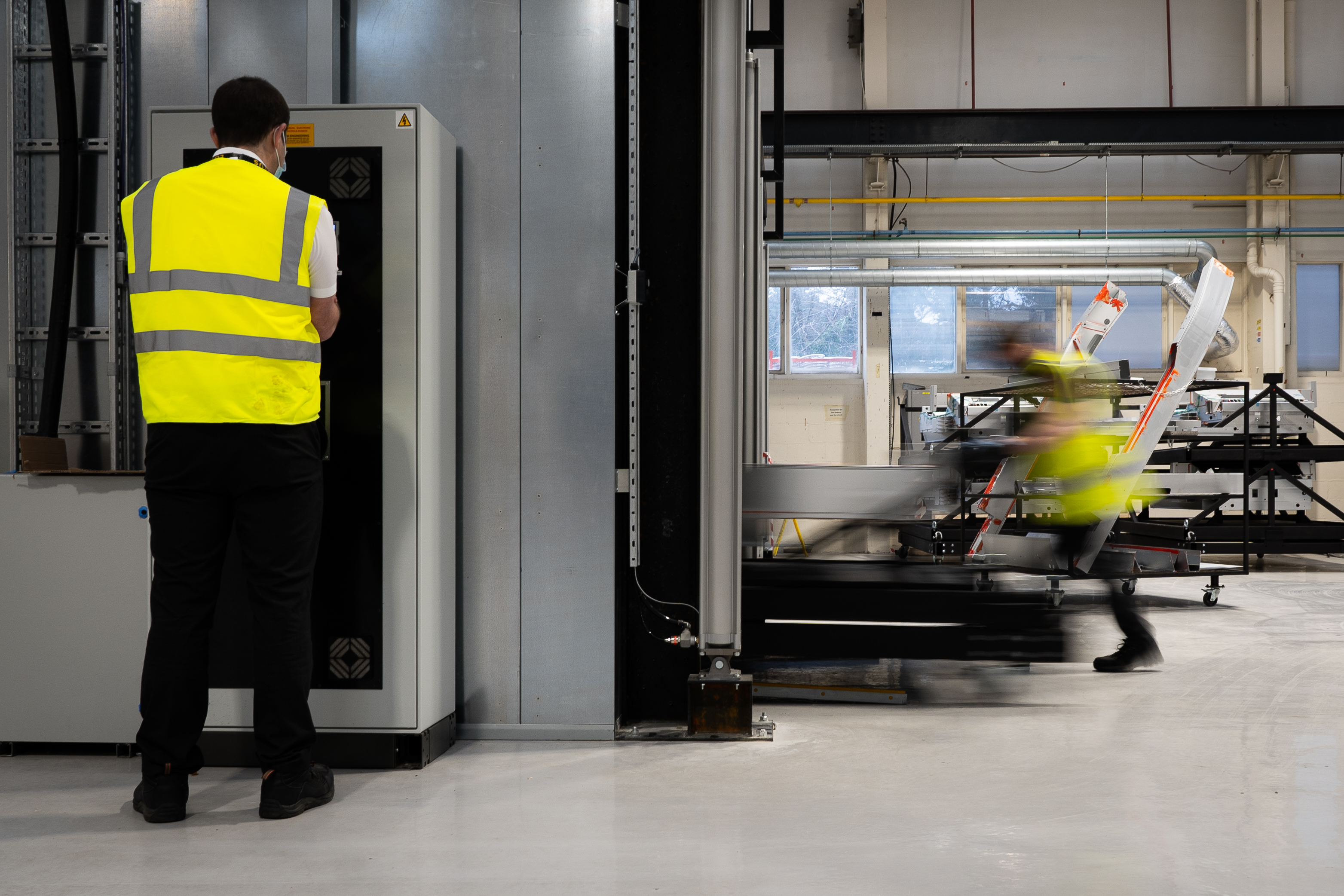
Lotus is developing its own vehicle architectures to underpin its new model expansion. The company’s final combustion engine sports car platform (underpinning 2022’s Type 131) will make way for a lightweight EV sports car architecture, but it’s the ‘lifestyle architecture’ that will underpin game-changing growth.
Lifestyle architecture vehicles are set for assembly in China, at Geely’s new factory in Wuhan. The site has a planned capacity of 150,000 vehicles, but don’t think all that volume is for Lotus: it will be used by multiple brands within the booming group, which sold 2.1 million vehicles last year.
One likely inhabitant of the Wuhan factory is Geely’s new premium EV division, Zeekr. It will launch its first electric car this year on the group’s Sustainable Experience Architecture, deploying its own battery tech, management systems and e-motors. Lotus can tap into these group technologies, because all future cars after Type 131 will be pure electric.
“The potential is huge,” says Matt Windle. “There’s room in segments for us to go into, we’re aiming to take market share from some of our nearest competitors. Lotus will become a global company with aspirations for volumes to support that ambition.”
With only a single shift, Hethel’s capacity is limited to 5000 units annually. Within the Vision80 business plan out to 2028, there’s surely the opportunity for volumes to grow to 10 times that and beyond – assuming China embraces four-door Lotus cars.
Geely is committed to Lotus remaining a sports car company: Windle credits the holding group chairman Eric Li with being the strongest advocate of making the Evija pure electric hypercar the first car of its new era.
“Look at Geely’s track record with Volvo,” says Windle, explaining how the philosophy is engaged but in no way autocratic.
“I like this analogy: Geely pushes out the boat, they help [set the course] but they don’t jump on the boat. This is still Lotus.”
Lotus has full access to the Geely supplier base – “if we hit a technical problem, say sourcing a steering rack, we phone up our colleagues, have a look at what they’ve got and if it works do a deal over it.”
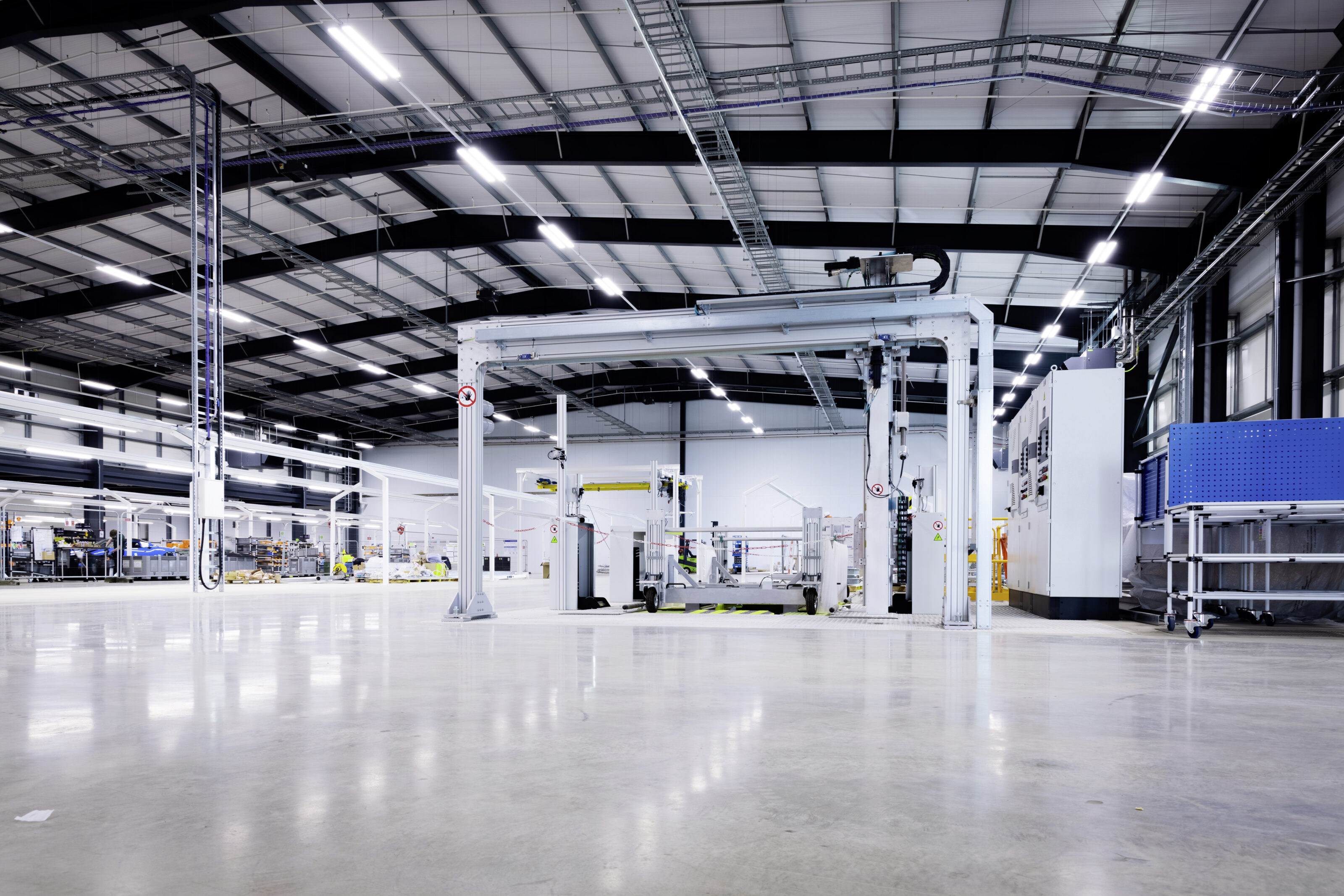
On the new sports car, Type 131, “not a lot” is shared with other group models: some switches, column stalks, some of the base electric architecture, “high-investment, low impact stuff,” says Windle.
Power comes from the Toyota V6 known from the Exige and Evora, and a “high-output, lower-capacity engine, where we’re partnering with a very famous engine manufacturer.”
And tapping into the Chinese parent’s supplier base has helped drive down costs. So the Type 131 will be priced between the Porsche 911 and Cayman, but “much closer to Cayman.”
Windle adds: “There have been a lot of rumours that this car is hybrid, and it’s an Esprit replacement, but it’s neither of those.”
What’s not known quite so widely is that Windle has history with both Lotus and in building EV sports cars. He joined Tesla in 2005, when the nascent company was working on its proof of concept, the first Roadster. This sports car was intended to be twinned with the Lotus Elise sports car, a concept far from the electric-car norm: small, often oddball cars designed for urban use, with minimal emphasis on high performance.
The Roadster was built at Lotus’s Hethel factory, and Windle was the human embodiment of the collaboration, joining Tesla from Lotus and subsequently spending seven years with the American company.
“That involved a massive relocation moving across the corridor,” jokes the 49-year-old Brit. “But it was quite strange, going from being able to walk everywhere on site to having a directed path to follow and not being allowed in [certain areas].
“So people that I was working with the week before would shout “hey Matt” and I’d say you need to come and talk to me here, because I’m not allowed to go off this line!”
Did working with Tesla open your eyes to electrification? “Yeah,” replies Windle. “And it made me realise what you can do with those cars as well. They come with their challenges but also a lot of benefits: heat management, packaging, and if you put the batteries at the bottom, the centre of gravity is much lower.”
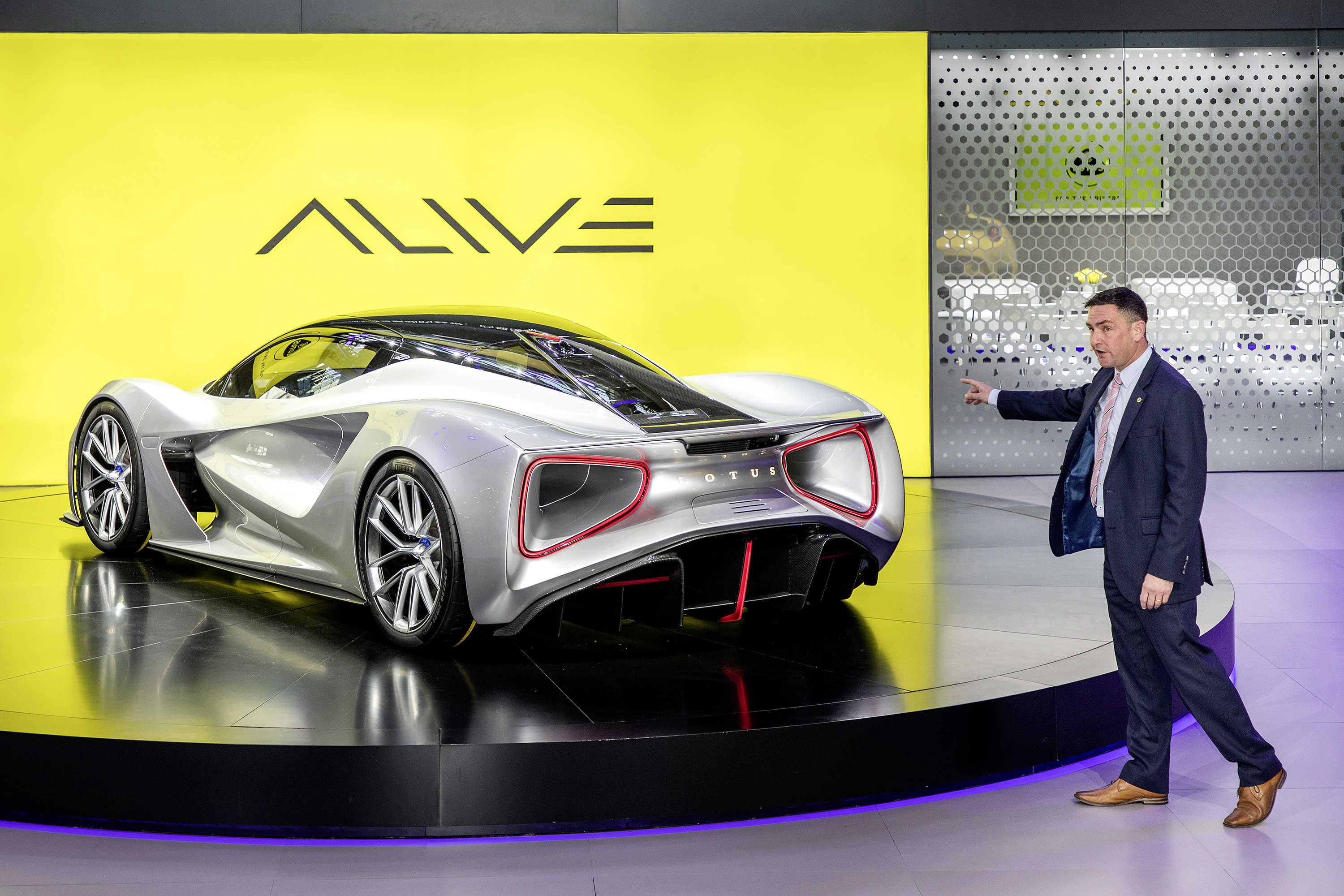
But isn’t a sports car without a high-revving combustion engine and the engagement of changing gears missing its soul?
“I understand: engine noise is part of the emotion,” Windle admits. “But it’s about performance as well. “We wanted Evija to have core Lotus DNA: performance, dynamics, aerodynamics. And that’s why the car’s been designed the way it is. The cabin is sat down below the wheels, it’s got a low centre of gravity, you can see the corners to position the car when you’re driving.
“And when you get in a high-performance EV – and I was lucky enough to do hundreds of laps in the first Tesla Roadster around here – the instant torque, the acceleration, it’s very exhilarating as well. That’s what you’re going to get with the Evija and the others.”
During his stint at Tesla, Windle divided his time between Hethel and the United States, a period that spanned the Roadster’s production life and initial development of the Model S saloon. The Brit was the principal engineer on the UK side, tasked with getting the Roadster into production.
That meant lots of responsibility for decision-making, given the eight-hour time difference between Norfolk and California, and lots of decisions to make, given the vast differences between the Elise and the Roadster.
While the lightness and cost-effectiveness of the Elise’s extruded and bonded aluminium chassis attracted Tesla, the Roadster chassis ended up being bespoke with an additional 50mm in the wheelbase and space for the lithium-ion batteries.
“Tesla was looking for a suitable platform for its [tech] demonstrator,” recalls Windle.
“They started with the Elise and then, because of where the technology was [such as the weight of electric propulsion], we needed a carbon-fibre body to reduce the weight. [That informed] the business plan and what you needed to charge for the car.”
An enlightening Tesla blog lists the common parts as the windscreen, dashboard and airbags, front wishbones and the soft-top: fewer than 7 per cent of the parts total by number.
Windle credits Elon Musk with influencing his management style.
“Working with Elon laid the foundations for my management style: make decisions, look after and empower people but concentrate on the actions immediately in front of you that need to be achieved so that you can achieve the overall strategy,” he explains.
“Elon was very clear on that, and empowering people. You spend a lot of time bringing in a team that you trust and can work with. I just don’t understand bosses that then tell those people what they need to be doing!”
Windle believes he might have stayed at Tesla had the UK operation not been wound up.
Since then, he has risen to the heights of running Lotus Cars, and Tesla has peaked as the world’s most valuable autos company. So does Matt Windle still own any shares in Tesla? “I couldn’t possibly say…” he grins.
October: Mustang Mach-E Australian review
Finally! The Mach-E is now in Oz, and we’ve driven it. Get our full review at the linked story below.
June 2021: Mustang Mach-E first drive in the UK
Nothing highlights the difference between what we think the word Mustang means (V8 coupe) and what Ford thinks it means (freedom, pioneering spirit, a hint of rebellion) better than pony badges on an electric SUV.
How can this be a Mustang, you ask? Because ethos outweighs powertrain, Ford’s marketing team reply.
It’s fair to say the naming of the Blue Oval’s debut battery car has been a divisive move (I’ve read your comments below) but this isn’t the first time a maker has used an established nameplate to unite a family of different shaped models – Fiat put 500 badges on everything up to a seven-seat people carrier, while BMW will sell you a decidedly un-small off-roader with Mini written on it.
So at the very least Ford can claim to have successfully got your attention by putting that most iconic badge on its first all-electric car. From a marketing point of view, that’s mission accomplished. But it does leave behind some fairly substantial horseshoes for the Mach-E to fill.
How can an electric SUV be a Mustang?
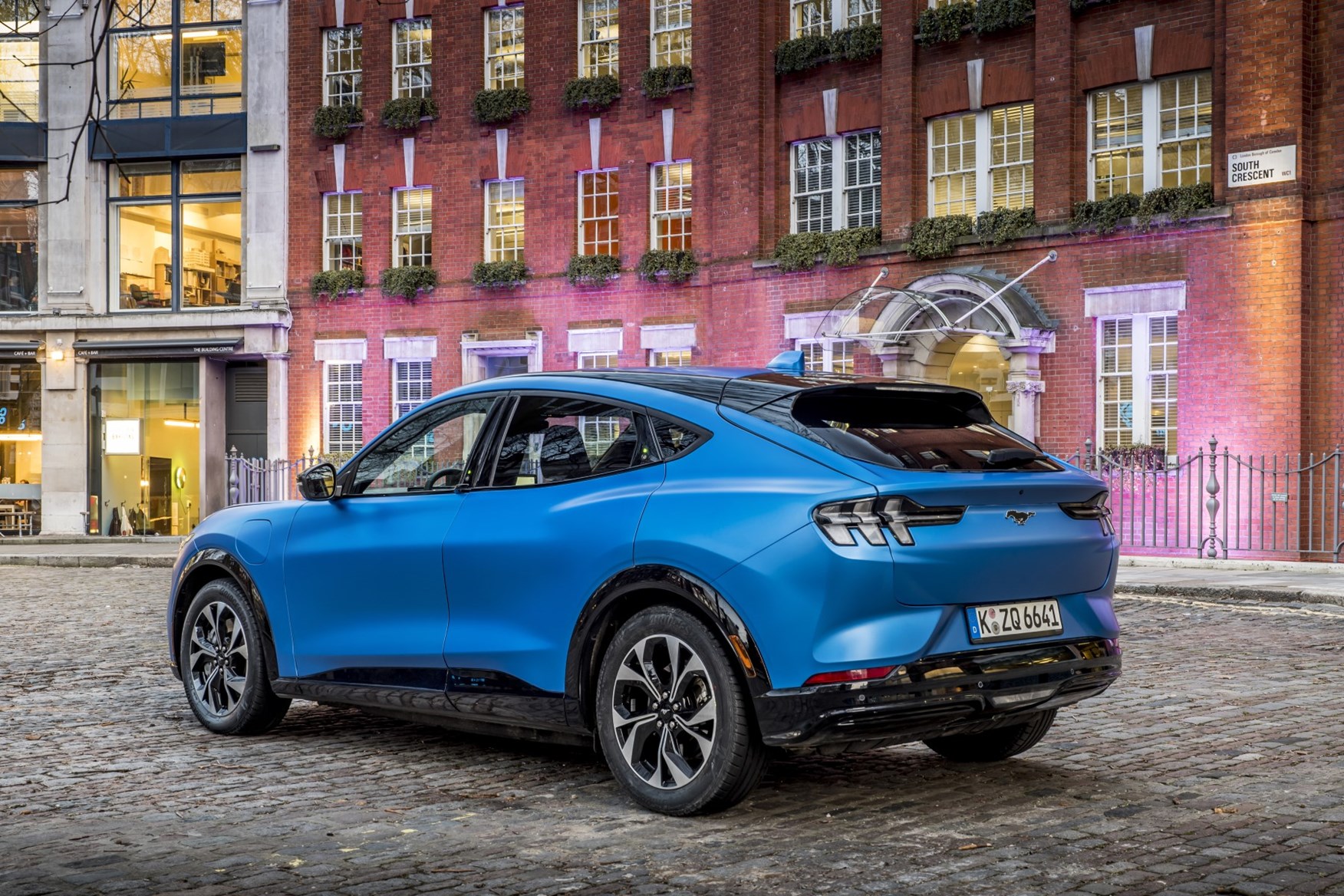
Ford calls the Mustang a sports car and in the States that’s fine but over here it’s always felt like an odd fit – it’s kind of a softer Mercedes-AMG C63 Coupe that prioritises involvement over agility and precision. Not really a GT but also not strictly a 911 rival. Almost a genre of its own.
In reality that does the Mach-E a favour – although there are all-wheel-drive models, you can still pick one with rear-wheel drive for that authentic tail-out-at-every-junction Mustang experience, and because nobody is expecting Macan-like handling, it doesn’t need to defy the physics of lugging a great big battery around.
For now, the purest model seems to be the one that makes the most sense – its combination of rear-drive dynamics, a very usable 0-62mph time and Tesla Model Y-beating range makes the Extended Range RWD model the most Mustang-like, and the one to go for.
Does it drive like a Mustang?
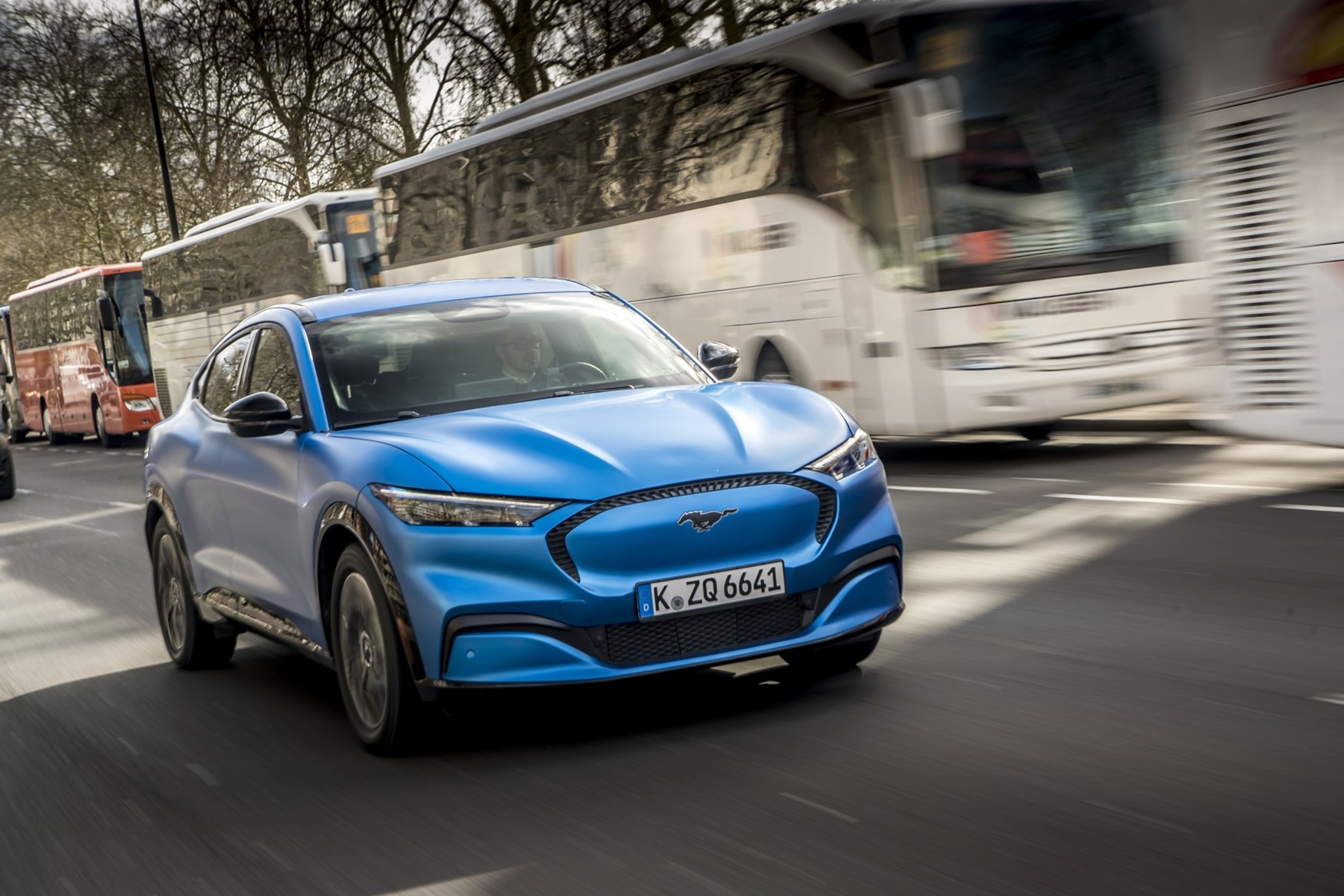
Ford has rolled out plenty of footage of the Mach-E being pummelled around Lommel by European engineers who go on to say how it’s been set up for continental road conditions, but the reality is the ride is quite firm at low speed.
This is a bit of a concern given the sheer amount of sidewall on our 18-inch-wheeled car.
Still, things improve at speed, and as always the trade-off comes in the form of surprisingly good body control. The Mach-E weighs nearly two tonnes but a lot of that is positioned low and between the axles, so you don’t feel it in a corner anywhere near as much as you’d expect. It turns in neatly, resists understeer well and holds itself upright admirably.
However, it might be the throttle mapping, but there is a sense of bulk when pulling away – almost like the car needs half a second to get into its stride – rather than that pinged-elastic-band sensation we’ve got used to in electric cars.
Once you’re up and moving it’s certainly punchy enough, and the brakes do a good job of hauling up all that mass, even if the pedal is a bit numb.
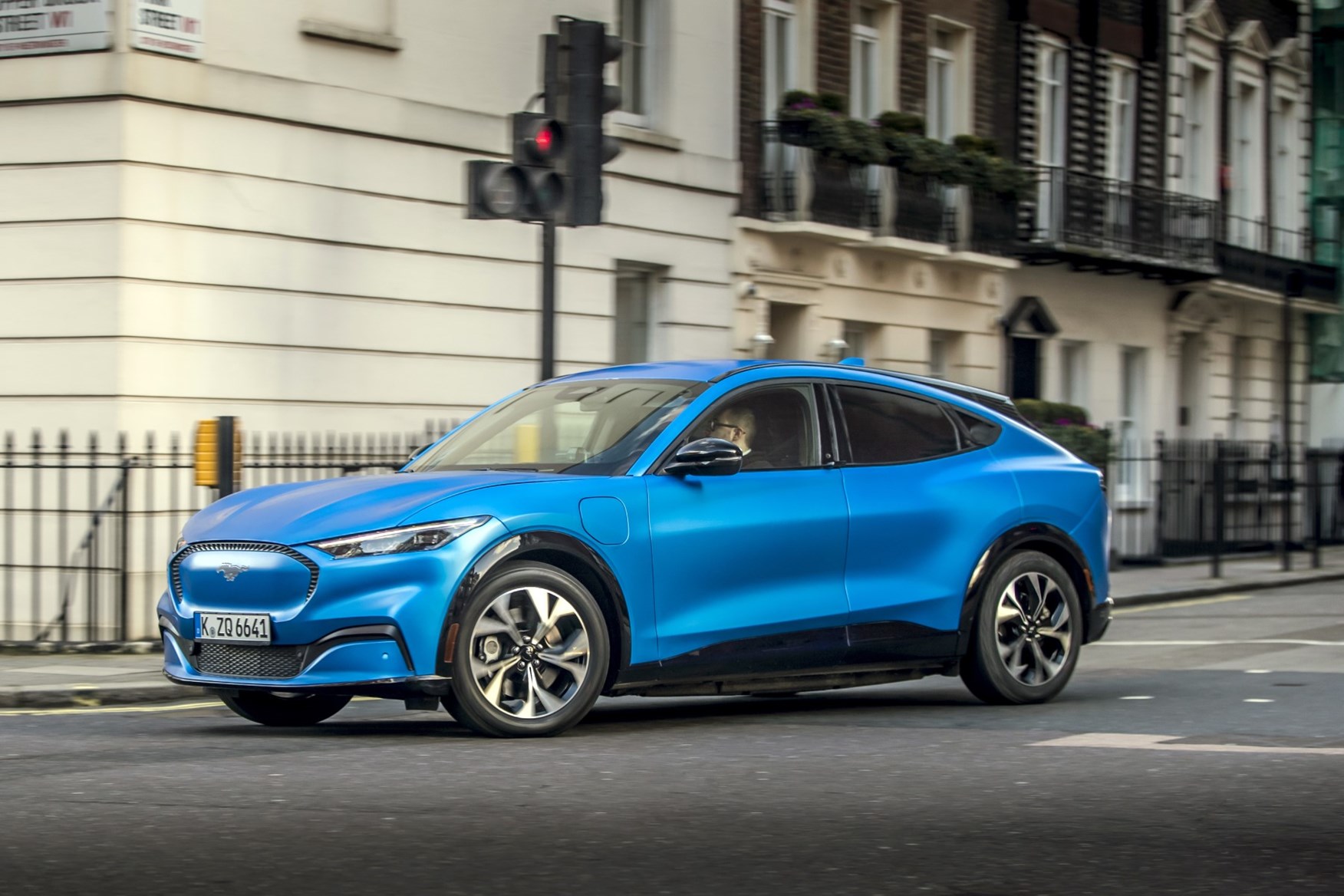
The same goes for the steering, as we alluded to below in our test of a left-hand-drive car. Not actively bad, but a slightly off-putting combination of light heft and on-centre vagueness that speeds up very quickly when you start to turn the wheel.
It takes a bit of getting used to but the accuracy you want is there, and that low roll rate means it doesn’t feel like it’s going to topple over mid-bend in response to a sudden direction change.
There’s plenty of trademark Mustang flamboyance on the corner exit too – bring the power in gradually and the car rotates neatly around the driver. Mash the pedal and the rear steps out on-demand. It doesn’t seem as keen as a petrol Mustang to get really sideways, though, and that’s perhaps a nod to the more daily-drive, family-friendly nature of this model.
You can turn the traction control off but it’ll still interfere, and because it’s a button on the touchscreen now, there doesn’t appear to be the option to hold it down for five seconds to turn it off properly.
There’s plenty of trademark Mustang flamboyance on the corner exit too – bring the power in gradually and the car rotates neatly around the driver.
Is the touchscreen annoying?
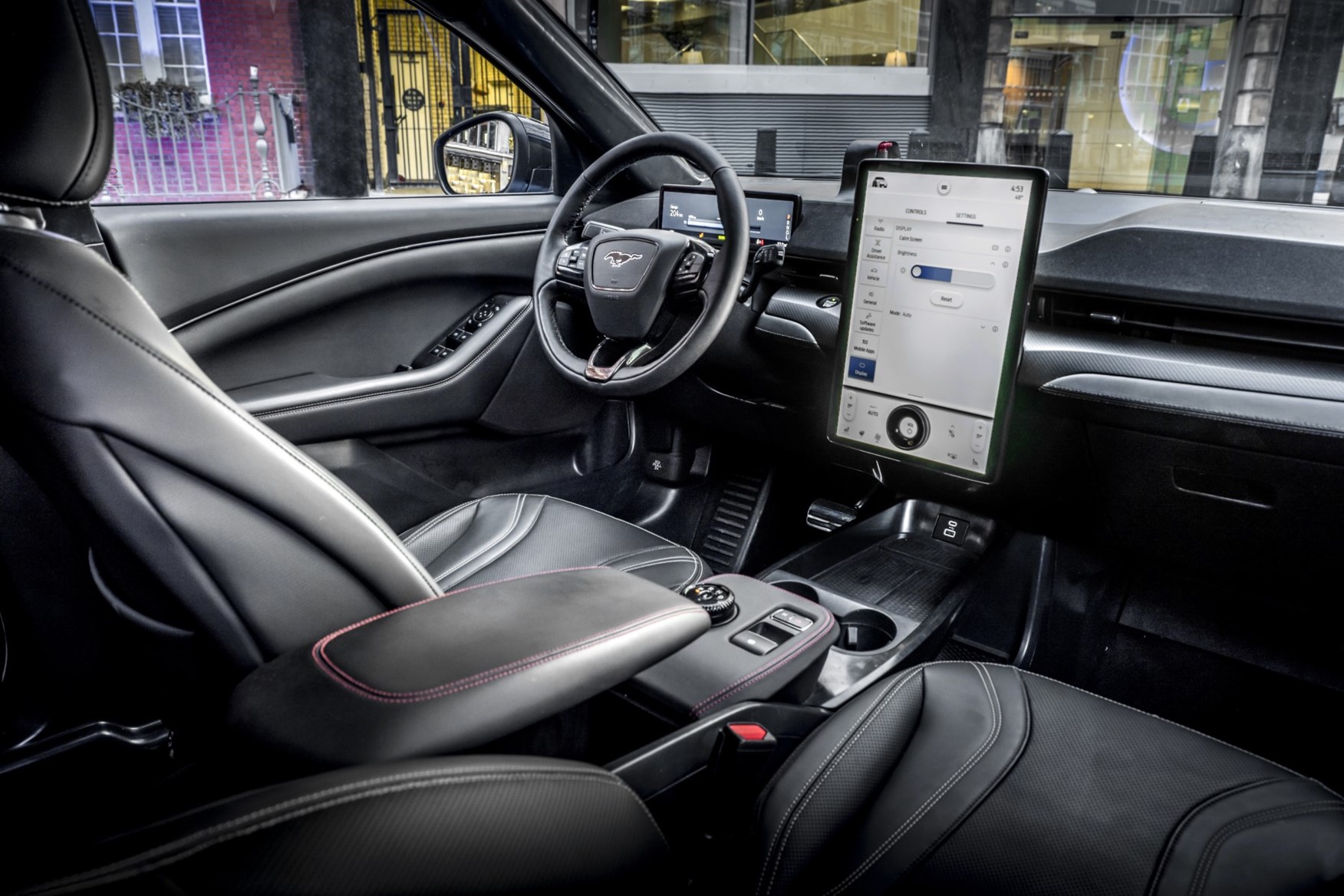
Well, it’s certainly very large, and there’s no hiding the fact whoever designed it clearly spent a bit of time in a Tesla.
Most if not all of the main car controls now reside within its 15.5 inches – save for the lights, handbrake, hazards and now quite comically outdated drive selector dial.
It’s not completely intuitive in its layout, there are still a few conflicting menus that will leave you hunting around a bit for the setting you want at first, but it’s bright and easy to read with big buttons that are easy to find with your finger even when you’re being bounced around.
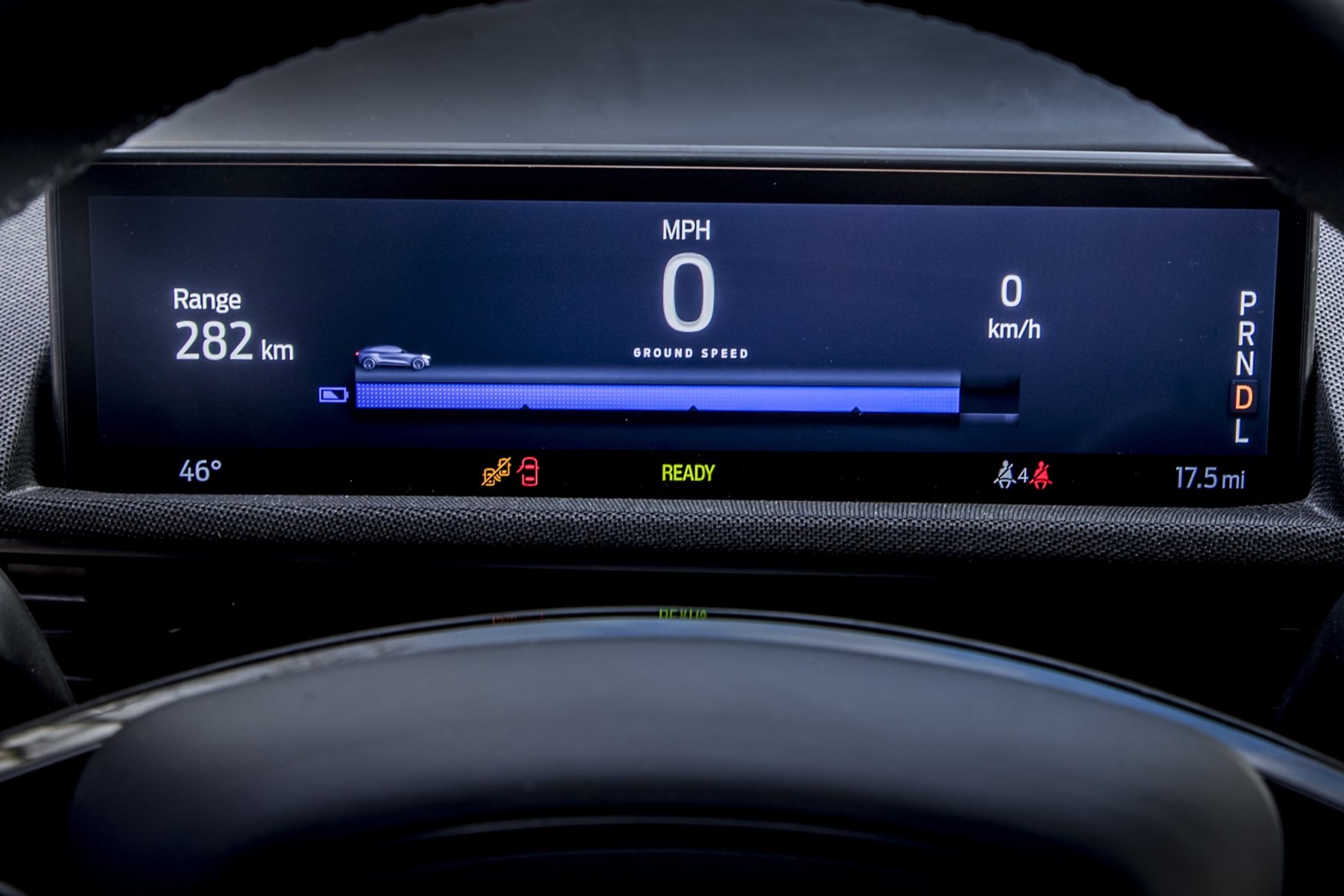
In a welcome juxtaposition, the dial screen is letterbox-sized and shaped, with the information you need and nothing more.
The wheel itself is pleasingly minimalistic by today’s standards, just a cluster of buttons for the cruise control on one side and media toggles on the other, although it does feel quite large in diameter.
Despite a few throwback stalks and switches, the cabin feels like one from a more expensive car – the tweed material on the dash and silver trim add up to quite an upmarket feel, and the large panoramic glass roof lights up the whole cabin.
I’m still not sold on the door-popper buttons – they feel a bit 2000s future-gazey at best and at worst feel a bit like poking C-3PO in the eye.
It’s also odd that Ford went to all the hassle of smoothing the door panel off, only to graft on a weird plastic winglet for you to swing off instead. They do look a bit like the aero door handles on a Ferrari 458, though, so that’s something to tell your mates.
How practical is it?
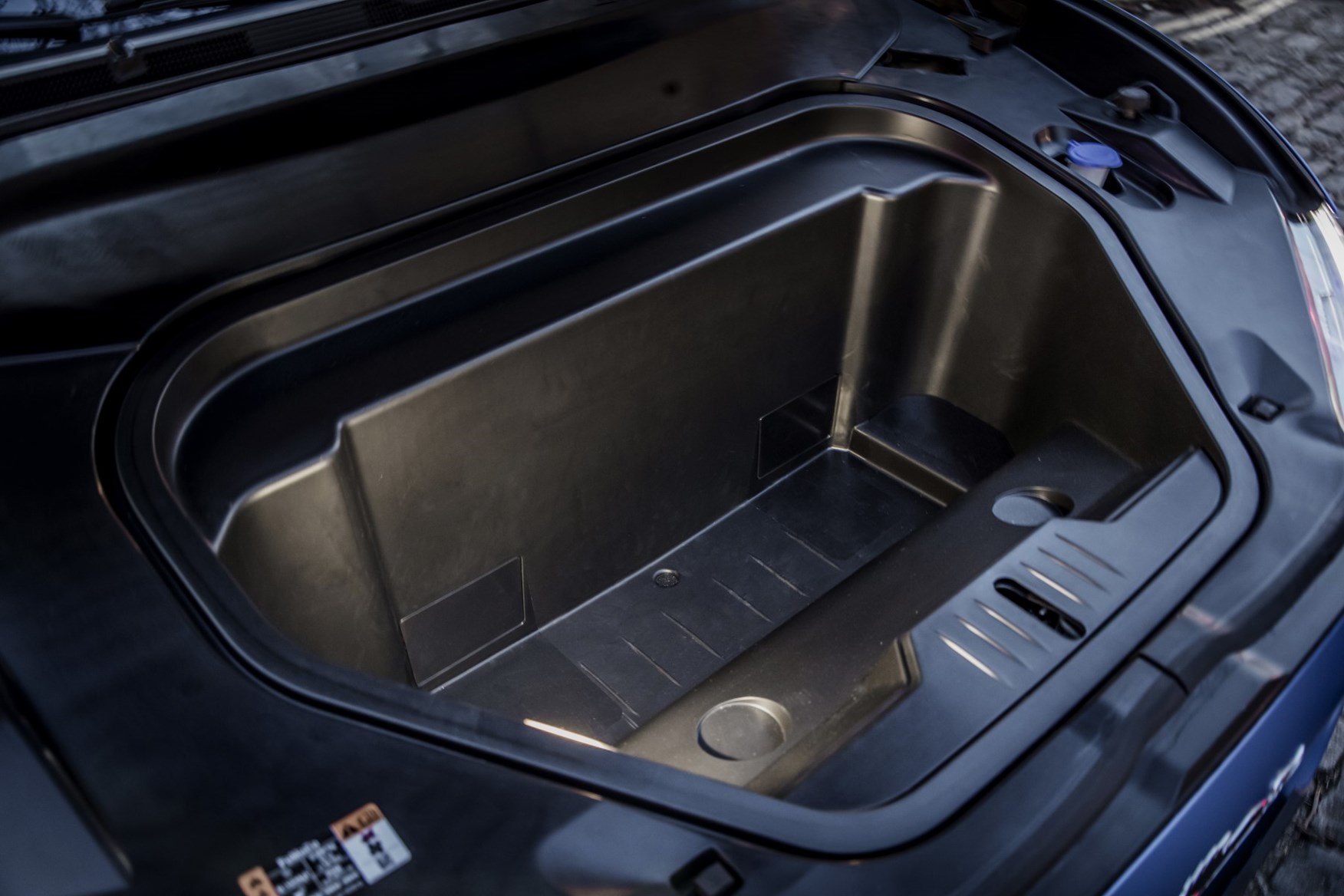
The Mach-E’s boot is a few litres smaller than the petrol Mustang, but then again you do get usable back seats as a trade-off, and because it’s a hatchback the luggage capacity is a bit more accessible.
There’s also a front boot with a handy 81 litres of space, plus a cable storage system to keep things neat and tidy. It also has a drain plug, like the Ford Puma’s Megabox, so you could use it for wet or muddy sports equipment.
Inside there’s a big open space under the screen with a large wireless charger and separate storage underneath, plus slim and shallow door pockets plus a bigger cubby under the armrest.
Charging the car on test takes about 10 hours from a home wallbox, while a 150kW Ionity pump promises 118km in 10 minutes, or a 10-80 per cent charge should take 45 minutes. There’s also a ring of five lights on the charger release button to give you a visual of how full the battery is at a glance, which is a cool feature.
If you’re among the first to order your car, in Europe at least, you’ll also get five years of free access to the FordPass Charging Network and a year of Ionity membership. Handy.
What difference does all-wheel drive make?
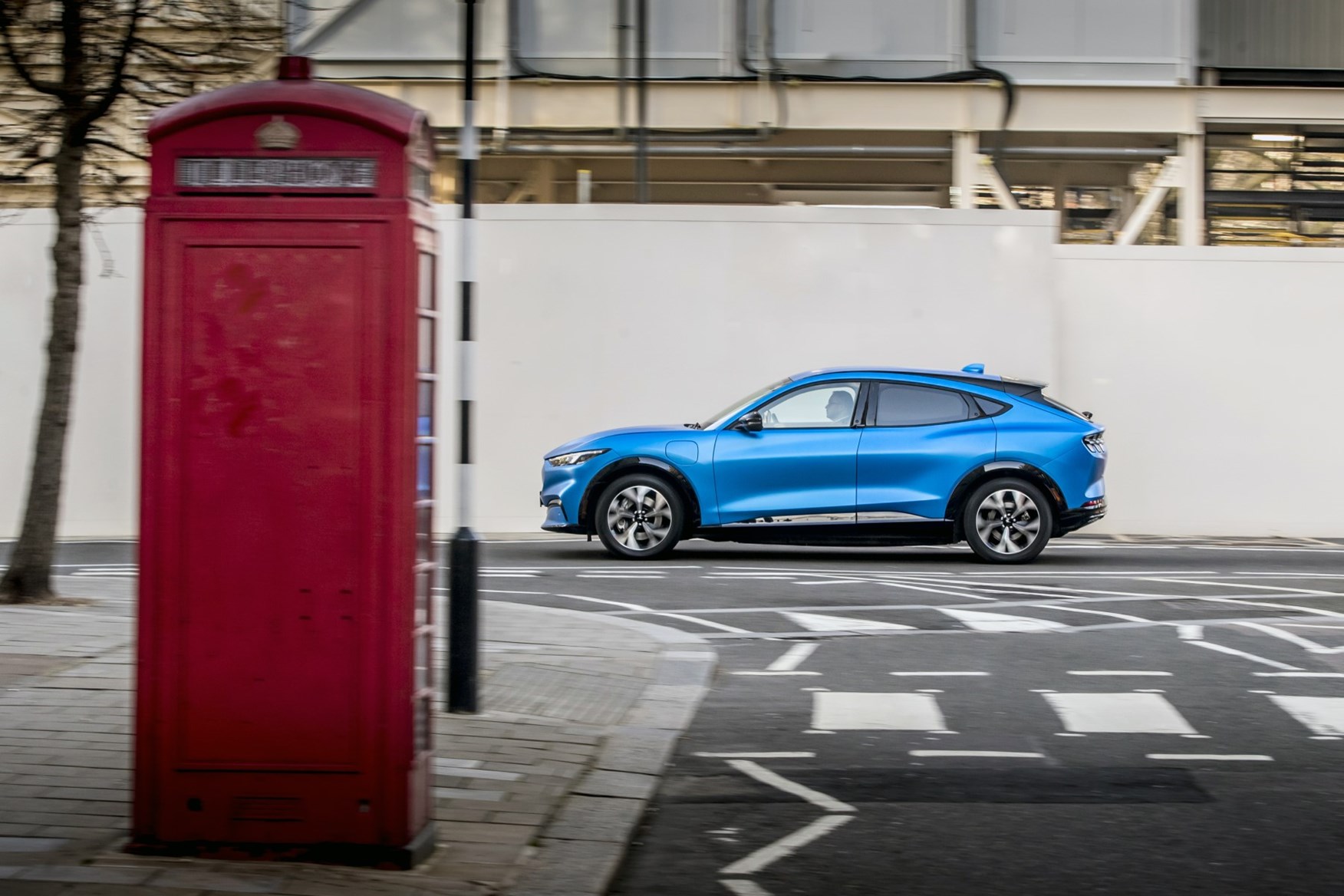
All-wheel drive on the Mach-E (like other EVs) comes from having an electric motor at each end.
The rear-drive models have a motor in the back, driving only the rear wheels; the all-wheel-drive versions add a motor up front, driving the front wheels. Both are available with Standard Range or Extended Range batteries.
Although the larger battery pack doesn’t impact cabin or boot space, it does add a chunk of weight. So the Extended Range rear-wheel-drive car is actually heavier than the Standard Range all-wheel-drive model – the bigger battery pack adds more kilos than the extra motor and drivetrain hardware does.
The combination that gives you the longest range is the Extended Range battery with rear-wheel drive: 610 kilometres.
If you want the quickest 0-100km/h time, the Extended Range with all-wheel drive does it in 5.1sec. That will change later in 2021 when the GT version arrives – it’s got two motors and all-wheel drive again, but much more power and torque, and does 0-100km/h in 3.7sec.
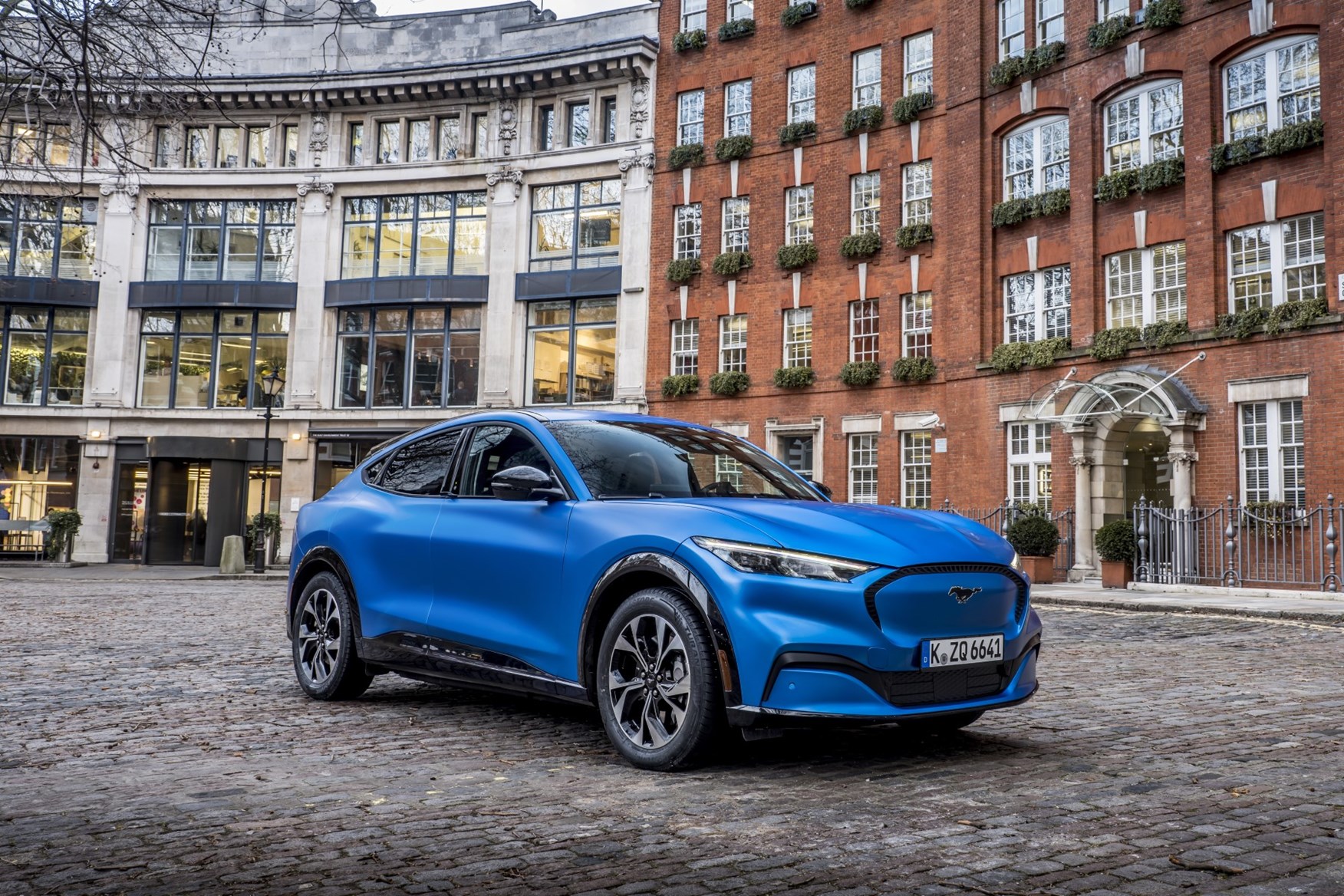
Although Ford insists on calling the Mach-E an SUV – when really it’s a roomy five-door hatchback – that doesn’t mean it has any off-road ability or inclination.
The all-wheel drive is not there to help you cope with sand or mud, but to offer extra all-weather reassurance and get more of the considerable output of the motors onto the road.
Stats show that both the all-wheel-drive versions are quicker to 100km/h than the single-motor cars, thanks to their extra traction. But the big change is how different the rear- and all-wheel-drive cars feel as you exit a bend.
The AWD Mach-E we drove (an Extended Range model) was happy to accelerate much earlier as you straightened up, and felt more stable and composed doing so.
Not that the rear-drive cars are unstable – they have a pleasingly organic, involving feel to them, always letting you know what they’re up to.
Think rear-drive BMW versus all-wheel-drive Audi. It’s a tidier experience as well as a more rapid one – and more expensive.
VERDICT
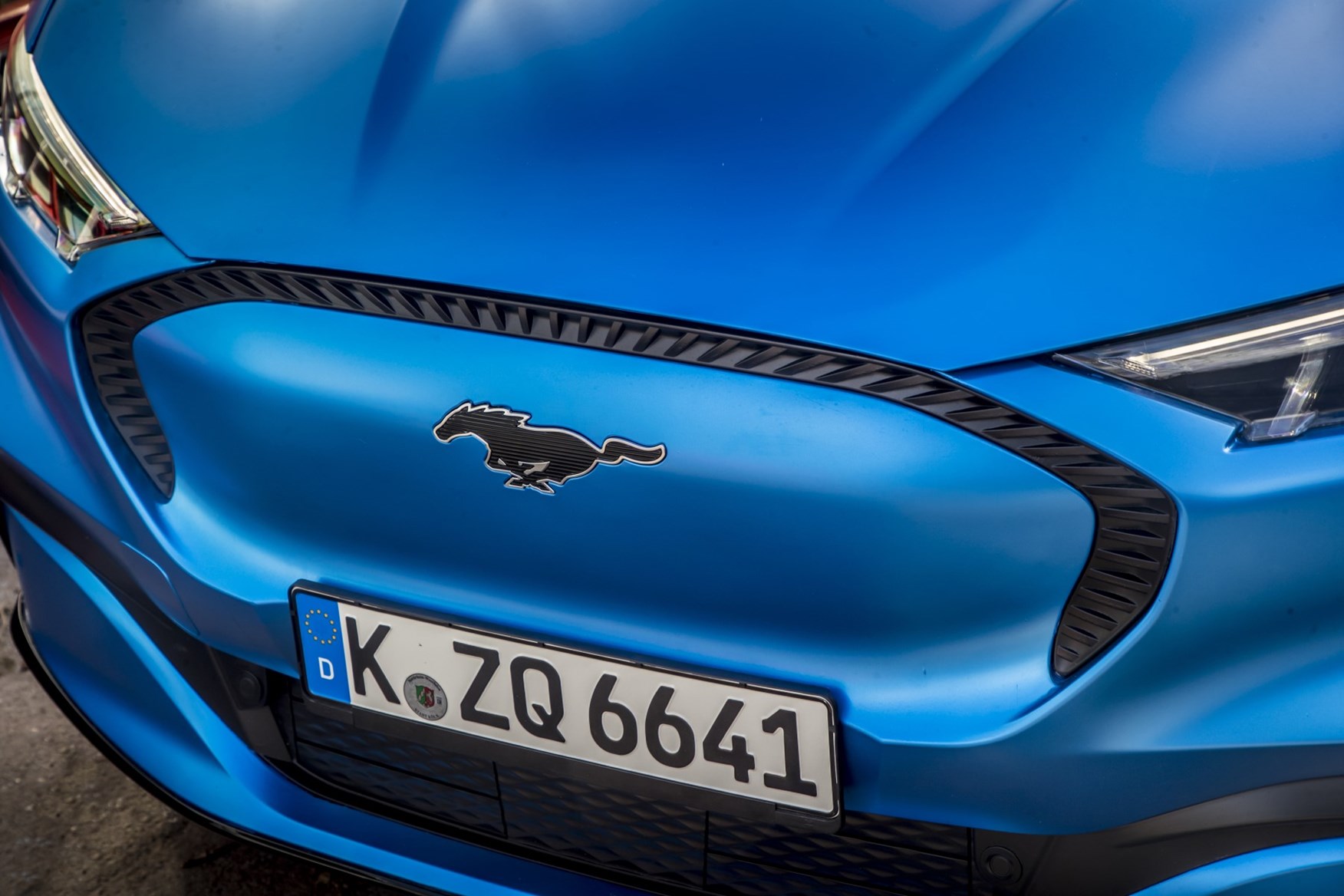
The Mach-E is plainly not an electric replacement for the petrol car.
That said, importing however small an amount of Mustangness to the driving experience does make it feel significantly more special than an all-electric Kuga, which is the other direction Ford could have taken.
Like it or not, Ford’s naming strategy and badge-worthiness will be pretty inconsequential to the majority of buyers. We’ve only been treated to a right-hook pony car in the most recent generation, don’t forget, so the Mustang remains for most a film screen icon rather than a genuine ownership aspiration.
Buyers of this car are more likely to be drawn in by the driving range and tech on offer. The fact it’s great fun to drive and has a horsey badge are just attractive extras.
A version of this story was first published at carmagazine.co.uk
UPDATE, November 2022: ‘Abarth New 500’ electric hot hatch previewed
A first official teaser for the upcoming electric 2023 Abarth 500 – simply dubbed ‘Abarth New 500‘ – has been handed down. Get all the details, and watch the teaser, at the link below.
The story to here
Snapshot
- Fiat hoping to democratise EVs for the masses
- Lingotto rooftop racetrack will be turned into a giant garden
Fiat is the latest in a growing list of automotive manufacturers to announce it will only make electric vehicles by 2030.
The declaration came from Fiat CEO Olivier François who praised his company’s creation of the new 500 Electric hatch, and said the Italian’s marque’s new goal would be creating accessible, cost-effective EV solutions for the masses.
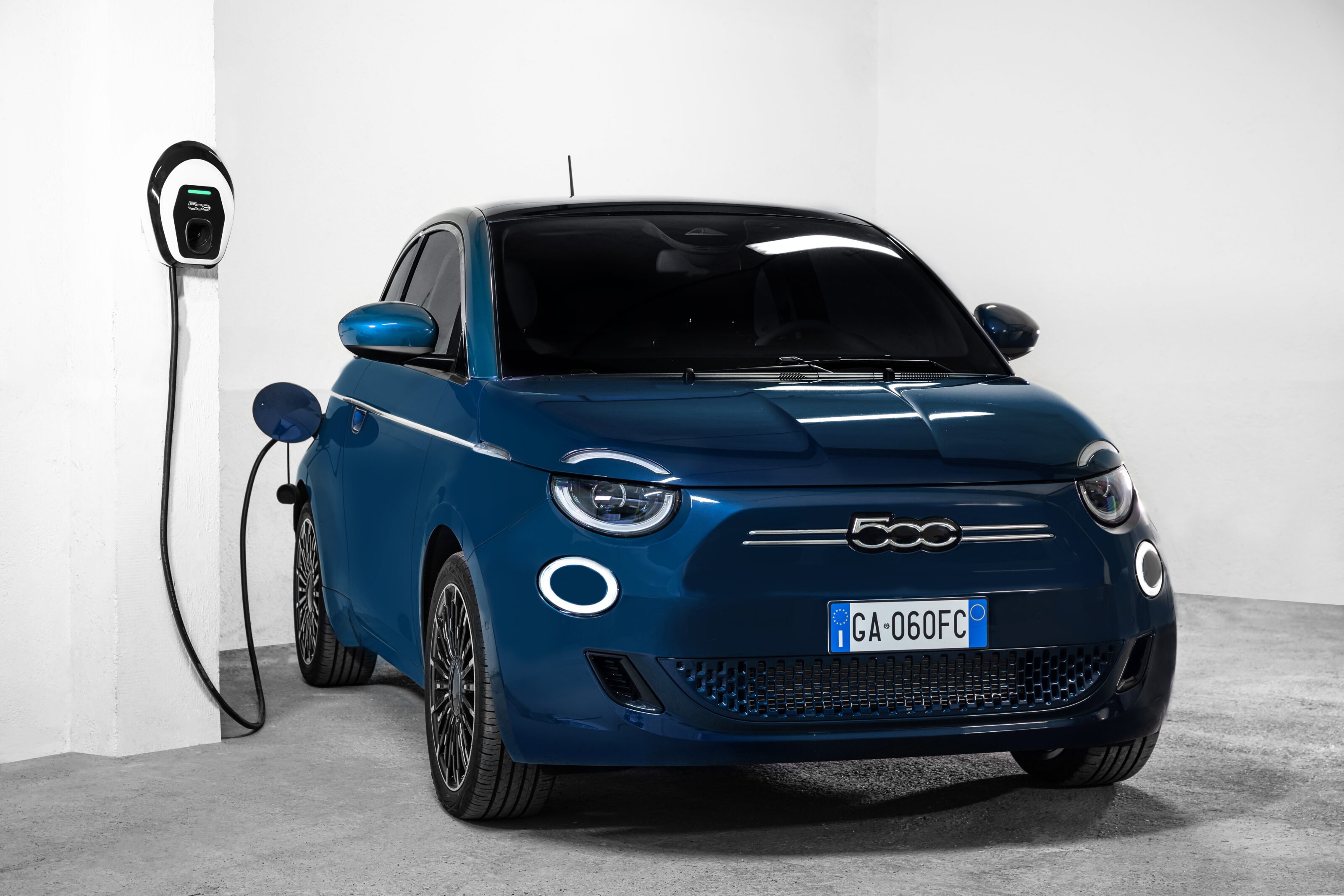
“The decision to launch the new 500 – electric and electric alone – was actually taken before Covid-19. Even then, we were already aware that the world could not take any more compromises,” he said.
“We have an icon, the 500. An icon always has its cause and the 500 is no exception: in the 1950s, it opened access to mobility for all.
“Nowadays, in this new scenario, it has a new mission – our mission – to create sustainable mobility for all.
“It is our duty to bring to market electric cars that cost no more than those with an internal combustion engine, as soon as we can, in line with the falling costs of batteries. We are exploring the territory of sustainable mobility for all: this is our greatest project.”
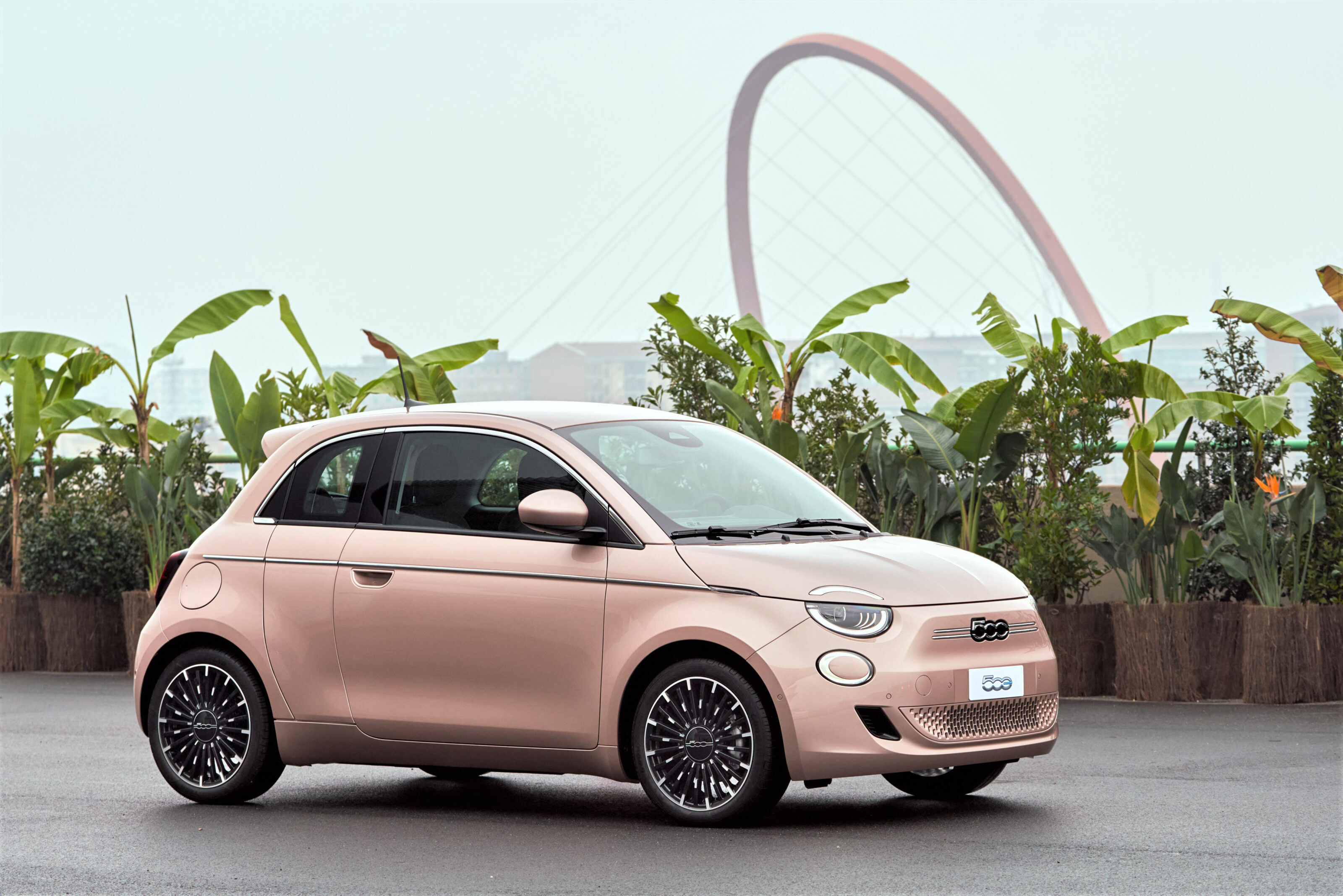
The CEO also gave an insight into how the Turin firm will achieve this goal by 2030, including the gradual elimination of internal combustion-engined (ICE) vehicles from its product line-up, which will begin in 2025.
“Between 2025 and 2030, our product line-up will gradually become electric-only. This will be a radical change for Fiat,” François said.
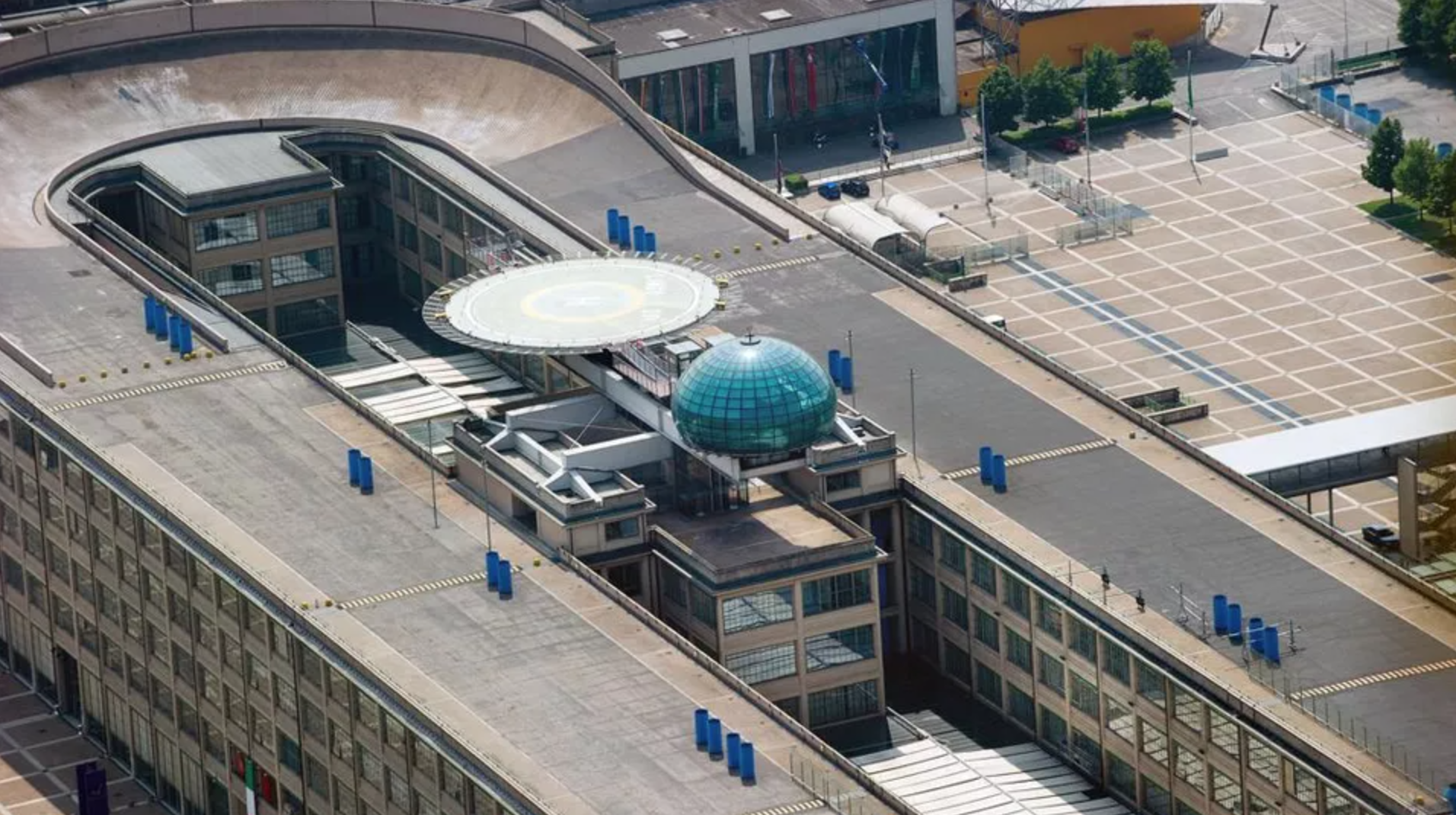
And in a symbolic gesture, François also announced the fabled autodrome built on the rooftop of the firm’s iconic Lingotto factory would be turned into a giant garden.
“Only a few months from now, I am proud that we will see the conversion of the legendary track on the roof of the former Lingotto factory in Turin into the largest hanging gardens in Europe, hosting over 28,000 plants,” he said.
“A major, meaningful – and once again sustainable – project, due to revitalise the city of Turin, our home.”
Snapshot
- Software issue has impacted the emergency call system (eCall) communication module
- Vehicle software update should fix the problem
Mercedes-Benz Australia has issued a recall for five examples of its GLA and GLC compact and mid-size SUVs after a fault was detected with the vehicles’ onboard software.
According to the automaker, the software issue has impacted the emergency call system (eCall) communication module.
As a result, the module may be deactivated, which means it might not be possible for the vehicle occupants to connect with emergency services, either manually or automatically, if an incident occurs.
This could mean emergency vehicles may not be directed to the affected vehicle or may be delayed.
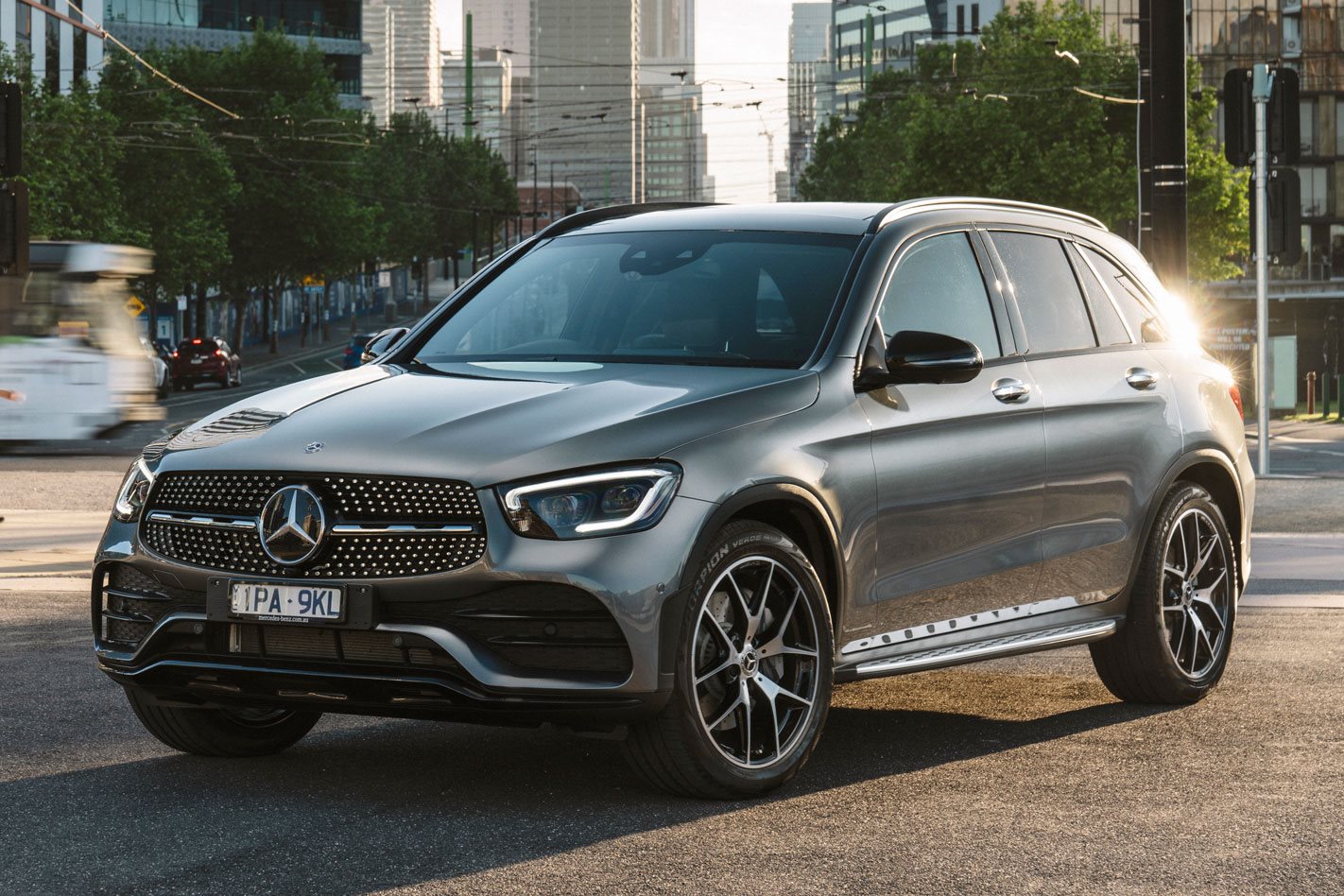
Mercedes is asking affected vehicle owners to organise a time to have their cars brought to an authorised dealer for a software update, which should fix the problem free of charge.
Anyone seeking more information about the recall can contact Mercedes-Benz Australia on 1300 762 718.
A list of the affected vehicles’ VINs can also be viewed here.
Snapshot
- A one-off designed by customer and Rolls-Royce
- Maritime styling cues throughout
- Based on the same platform as the Swept Tail
Rolls-Royce has doubled down on its land yacht aesthetics to produce this – the new Rolls-Royce Boat Tail. In many ways, it’s the continuation of two trends which have always been key to the high-end Goodwood brand: maritime style and one-off customisation.
The front of the reimagined Boat Tail is fairly par for the course, and features Rolls-Royce’s huge pantheon grille, but there are several nods to the sea; a wrap-around windscreen adds some nautical vibes, while the sides of the car feature lines which echo running boards.
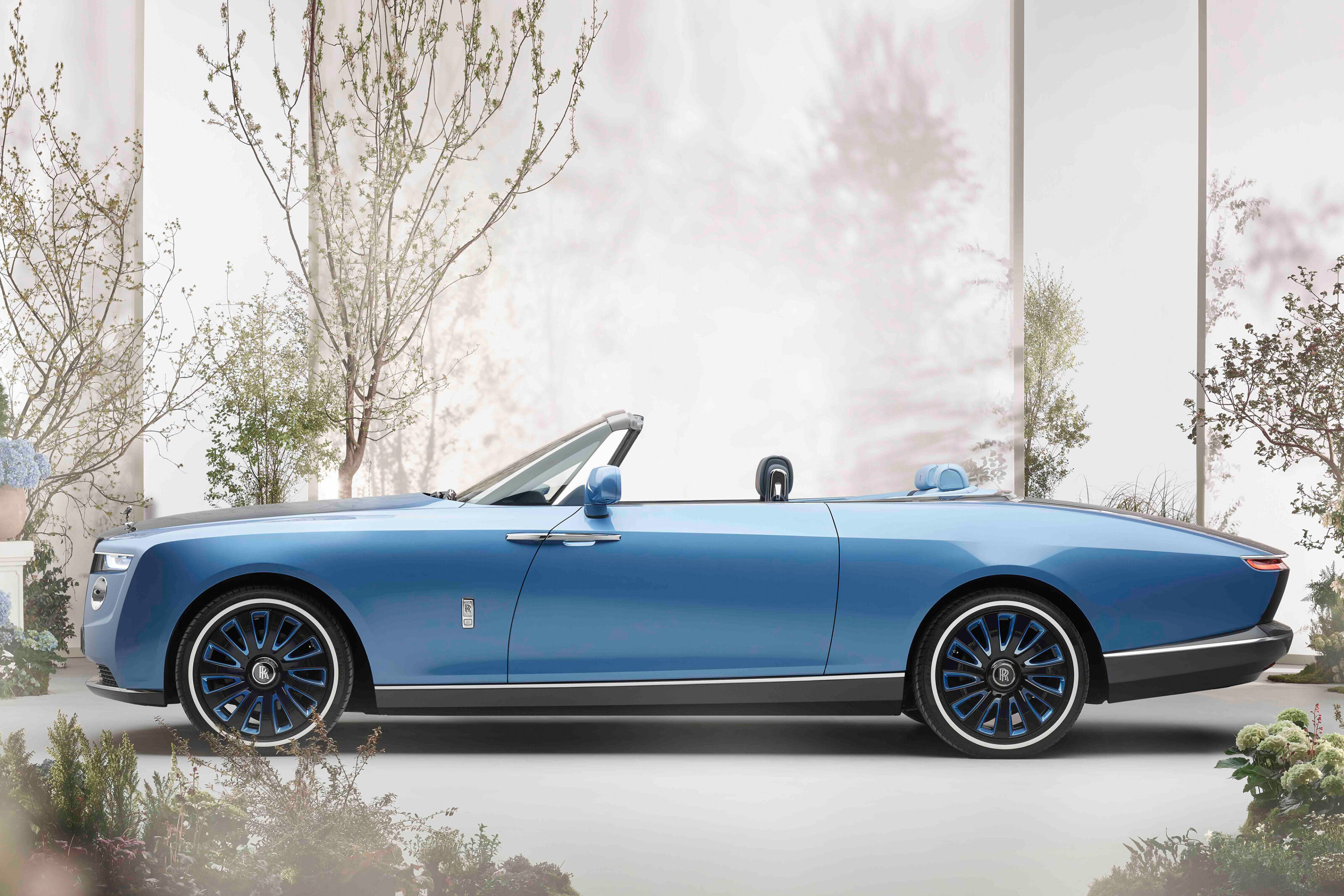
As you’d expect from the name, most of the ‘one-off’ in this Rolls-Royce can be seen at the rear. Just like the 1932 Boat Tail which this car loosely borrows from, the new car resolves into a sleek, tapered form – once again echoing the shapes you’d see parked at a marina.
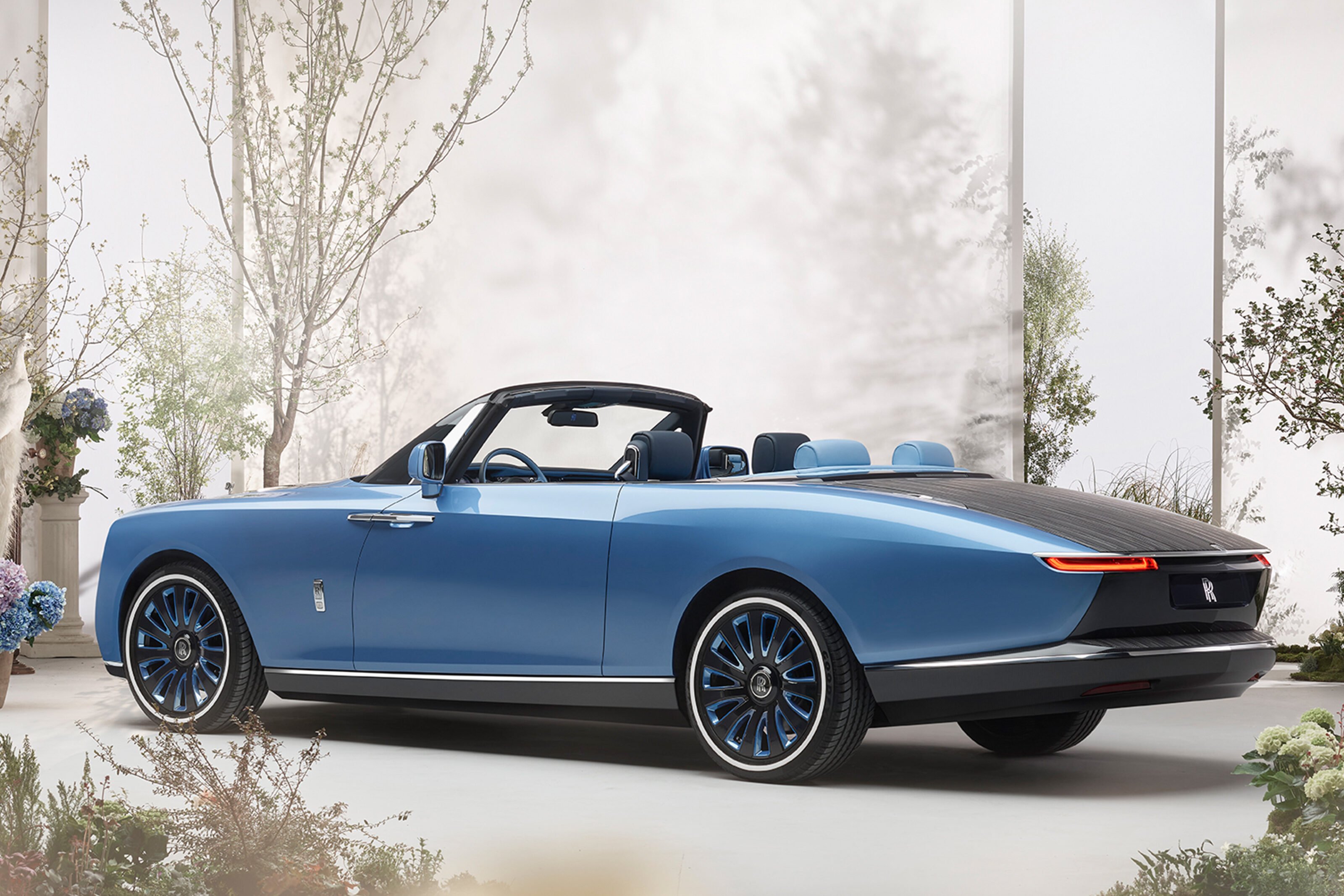
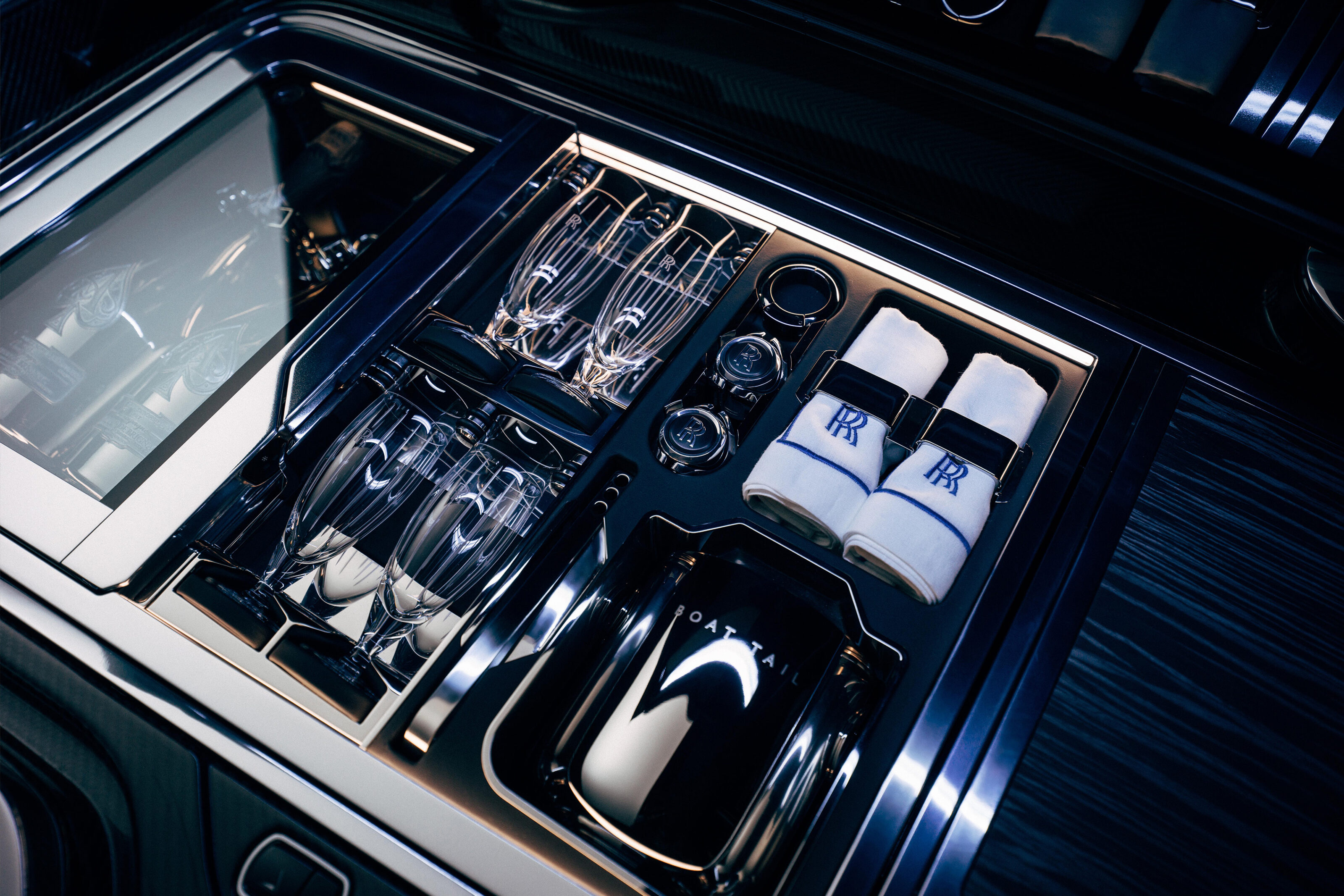
Open it up, and it’s more functional than you’d expect. In addition to space for the car’s convertible roof, there’s room for important luggage such as champagne, coolers and crystal, and there are also fold-out tables to consume it all on. A parasol is also available if the weather is a little too extreme.
Underneath, the Boat Tail shares the same platform as the equally one-off Swept Tail. Goodwood says it’s part of a series of three cars, requested by three patrons interested in J-class yachts and classic design – which means we’re going to see another maritime-inspired Rolls-Royce soon.
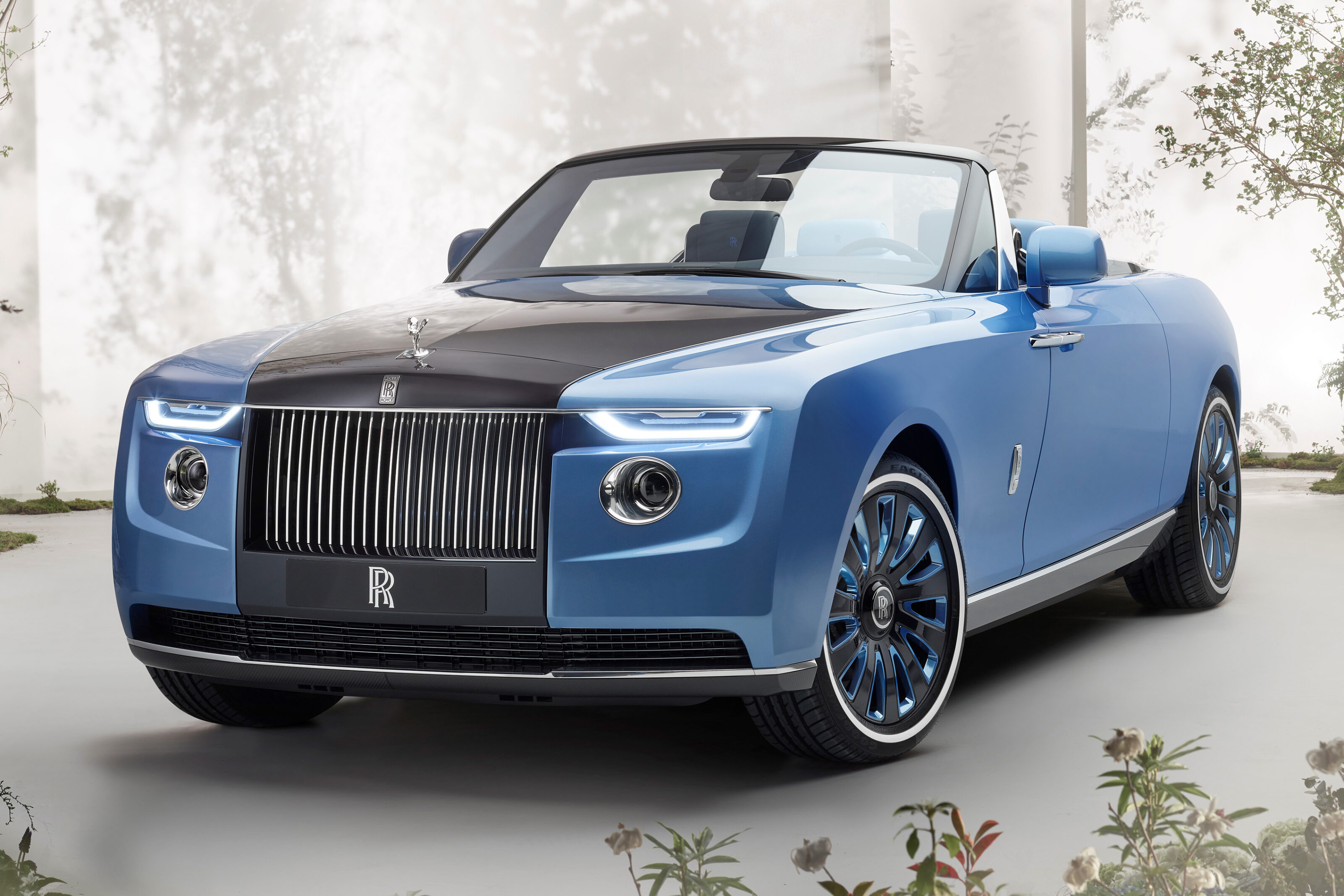
Put Rolls-Royce’s latest boat car to one side, and it’s clear one-off projects like this will once again become a key part of the brand – both in revenue and identity.
“We have created a trio of exceptional cars which, although they share a common body style, are each imbued with the unique, highly personal imprint of the commissioning patron, thereby telling differing stories,” said Alex Innes, head of Rolls-Royce’s Coachbuild design team.
“Boat Tail is unprecedented. It is a distinct counterpoint to industrialised luxury.”
A version of this story was first published at carmagazine.co.uk
Snapshot
- Wrong spark plugs may have been fitted to M139 turbo four-pot
- Fault could lead to engine damage or vehicle stalling
- Same issue has occurred in America
Mercedes-Benz Australia has issued a recall for seven of its 2020 Mercedes-AMG A45 S and CLA45 S performance hatchbacks and sedans after a fault was identified with the vehicles’ spark plugs.
According to Mercedes, the wrong spark plugs may have been fitted to five locally delivered examples of its A45 S and two examples of its CLA 45 S.
If improper spark plugs have been used, this could lead to them failing during regular use.
Failure of the spark plugs could damage the hand-built AMG M139 turbocharged 2.0-litre in-line four-cylinder, and it could also lead to the engine stalling while in use.
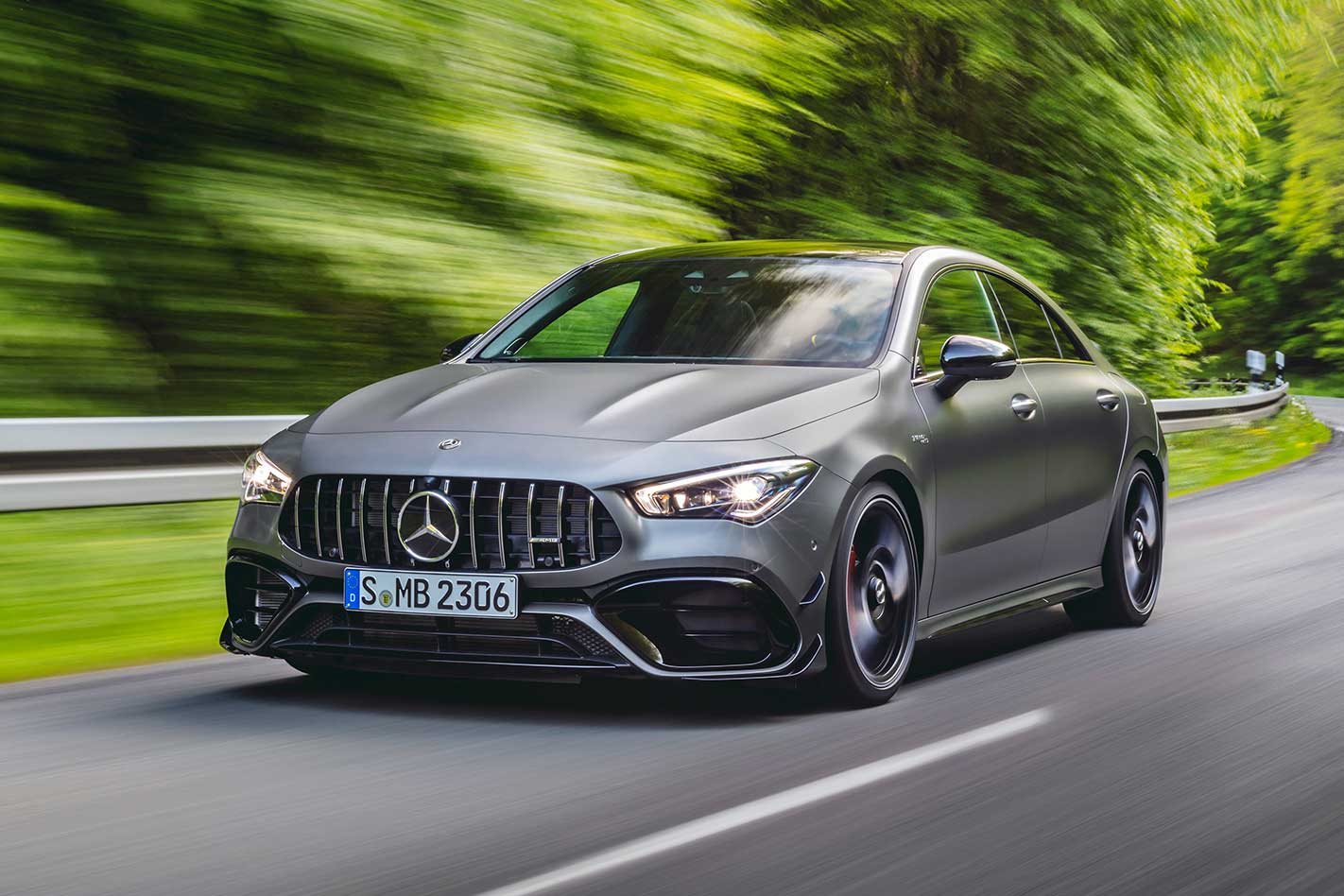
While this is the first instance of the incorrect spark plugs being fitted to both the A45 S and CLA45 S in Australia, American-delivered examples have also been impacted by the manufacturing fault, with seven cars caught up in a US recall back in March.
The German automaker is asking affected vehicle owners to organise a time to have their vehicles inspected and fixed by an authorised dealer, free of charge.
Anyone seeking more information about the recall can contact Mercedes-Benz Australia on 1300 762 718.
A list of the affected vehicles’ VINs can also be viewed here.
There were plenty of wistful messages emanating from the UK motoring journalist fraternity recently with the news that Ol’ Blighty had sold its last Toyota 86 of the current generation.
Australia will likely follow suit soon as production winds up but fear not, it’s a virtual certainty that a successor will shortly follow. Subaru has already released details of the BRZ successor and given Toyota’s version of the rear-drive sports car outsold its counterpart by a factor of 10, it’s safe to say the business case doesn’t stack up without a new 86.
Most of the messages were reminiscences about journeys that were fun at any speed, the 86’s combination of a low centre of gravity, skinny tyres, beautiful steering and rear-wheel drive meant virtually every corner was an opportunity for enjoyment. Not everyone was a fan, however.
In fact, I’d go so far as to say that the 86/BRZ is one of the most divisive cars in recent memory. For every proponent extolling the virtues of its back-to-basics thrills there’s a detractor throwing barbs about its gutless engine, contrived handling and Fast and the Furious wannabe image.
I am firmly in the former camp, I love the Toybaru twins, but its shortcomings did get me thinking: would the 86 and BRZ garner such affection if they were front-wheel drive? I think not. You’d be left with an agile coupe with fantastic steering but let down by a lacklustre engine with a massive torque hole in the mid range and a nervous rear end courtesy of the toe-out under load.
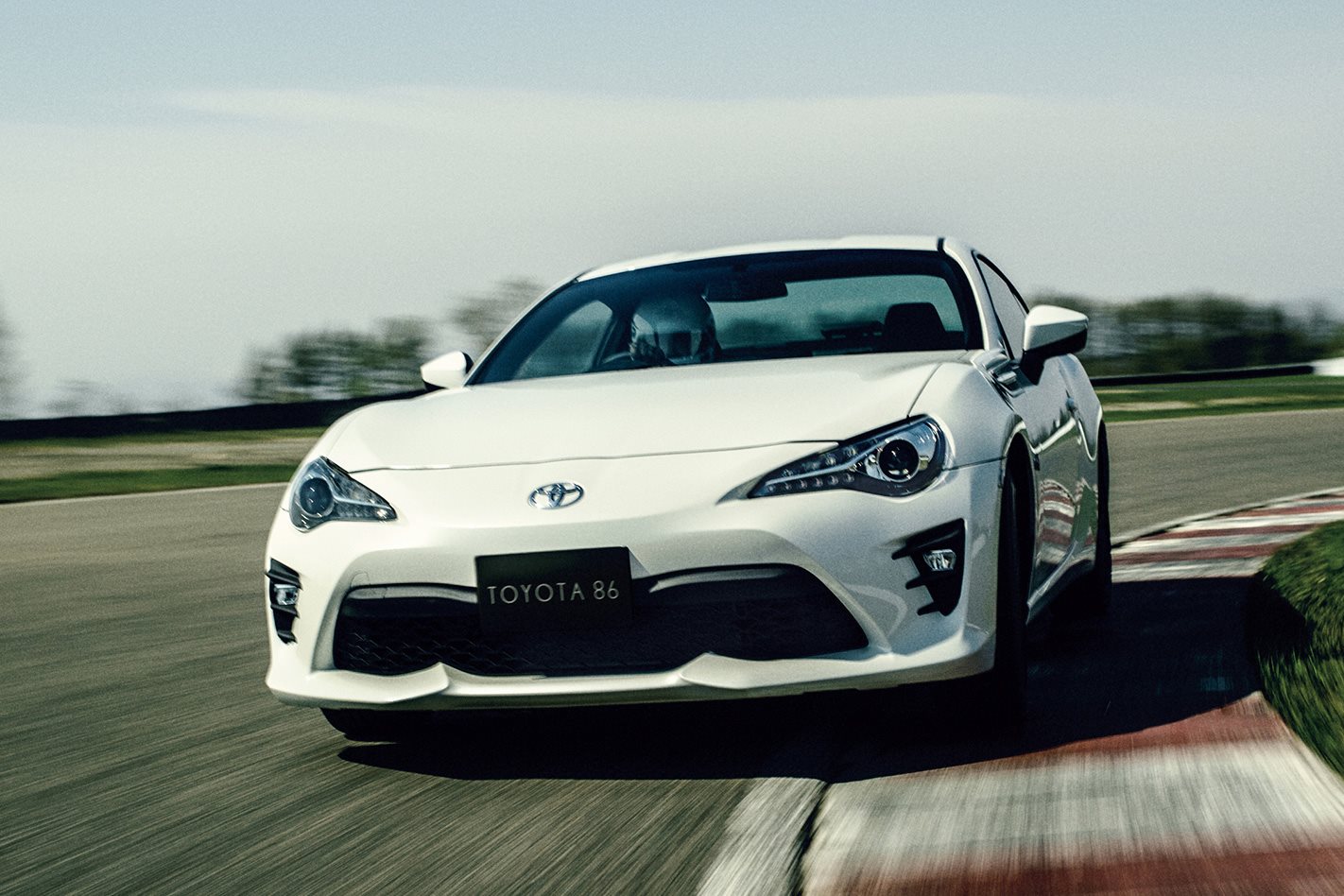
As such, I propose that, as a front-wheel drive, the 86 would be a mediocre sports coupe, a lesser version of the Honda CRZ. This is a new metric for judging the excellence of a certain car and could serve as a tie-breaker when ranking the greatest of all time: does switching the driven wheels alter its excellence?
Some examples. Let’s take the Porsche 911. Surely this is an example of a car that would be ruined by altering its drivetrain, as that rear-engined layout plays such a massive role in the way it drives? I don’t think so. All the attributes that make a 911 so brilliant – precise, accurate steering, a fantastic combination of ride and handling, strong brakes, amazing traction – transcend its powertrain position. Flip a 911 around and you’d probably end up with something like a Honda Civic Type R on steroids.
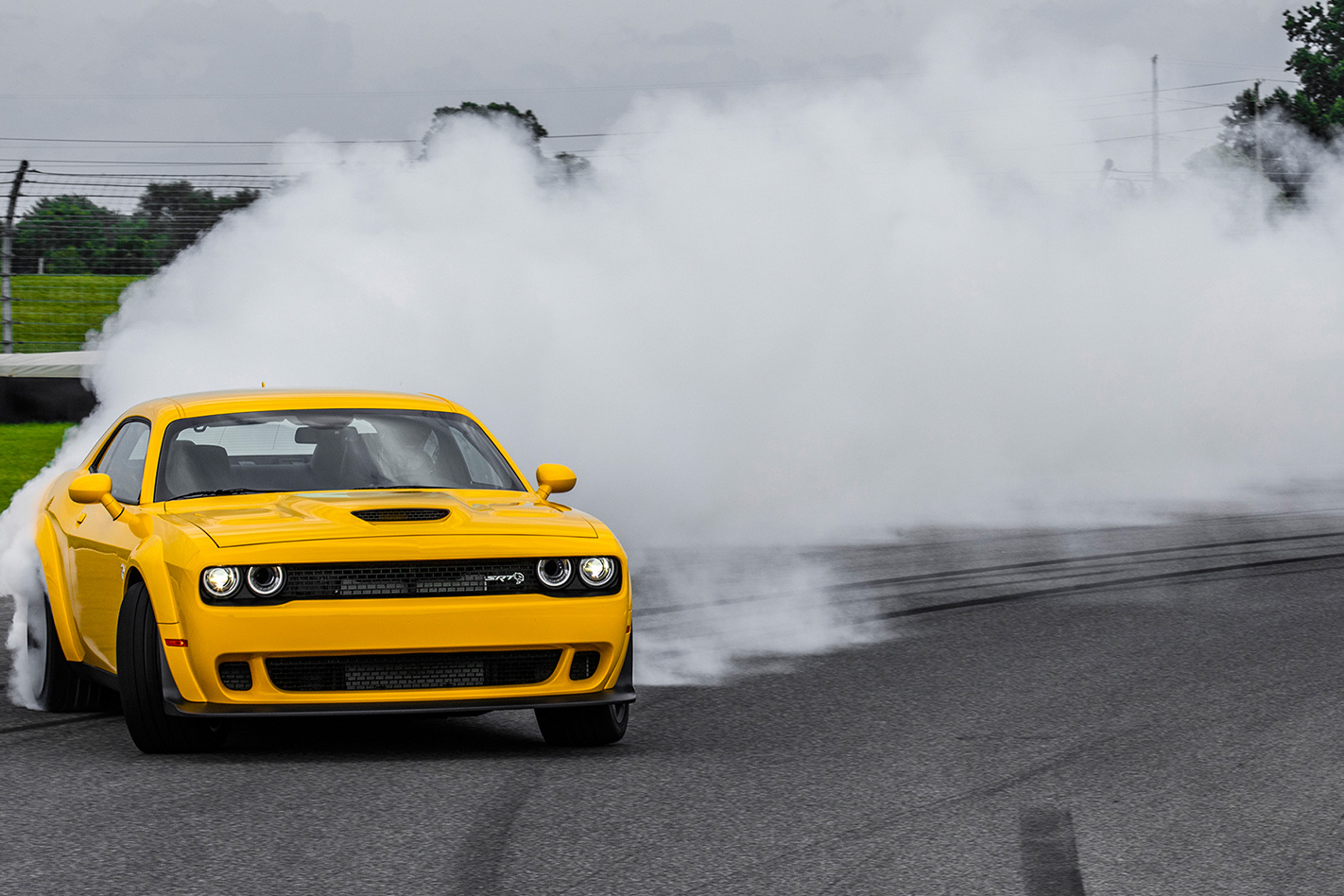
Another example, the Dodge Challenger Hellcat. As a rear-driven muscle car this thing is awesome. Limitless power, the soundtrack of Armageddon (the planet-ending event, not a cheesy Aerosmith song), a wonderfully cosseting ride and the ability to steer the car with the accelerator as much as the steering wheel.
Plug those attributes into a front-wheel drive machine and you end up with… a total mess, frankly. It would be like one of the enormous American luxo-barges of the early ’70s only with four times the power, a torque-steering blancmange that’s about as exciting as being flogged with warm lettuce.
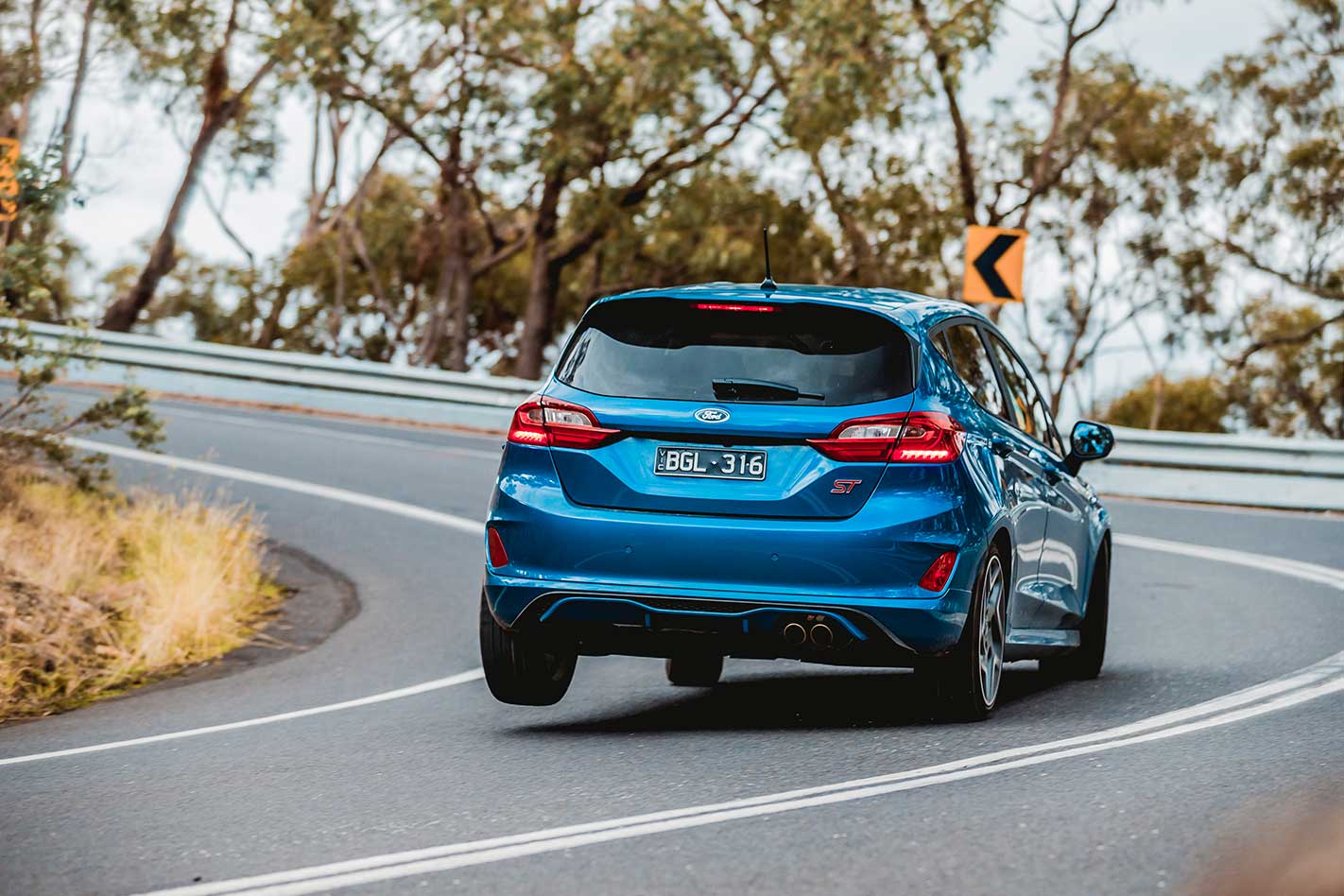
Let’s flip the ledger, shall we? The current Ford Fiesta ST is a stunning hot hatch, as evidenced by its fourth-place finish at PCOTY this year but, if anything, its brilliance would only be enhanced by switching it to rear-wheel drive. The perfect amount of power for the chassis from that fantastic turbo triple, a great gearbox and a playful chassis with a tight limited-slip diff. Just put some decent brakes on it!
Given front-wheel drive is deemed to be ‘wrong-wheel drive’ by so many, is there any bum-dragger that wouldn’t be improved by reversing the drivetrain? I think yes. High-revving atmo machines like the Honda DC2 Integra Type-R, which lack the torque to really influence the rear-end but instead allow the driver to use maximum commitment and the front diff to drag the car around a corner, and iconic hot hatches like the Peugeot 205 GTi and Renault Clio Sport (MkII and III), where the front-biased weight distribution allows the rear to wave around in the breeze, would probably be more balanced but less fun as rear-drivers.
Next time you’re arguing cars with your mates, stop and have a think: would this car be equally as good if the drivetrain was flipped. In the meantime, let us know some cars you reckon would be better or worse!
I’m milling about in a South Melbourne car park as snapper Ellen Dewar clicks away at her camera.
The Lexus RC 300 F Sport sits before us, gleaming in its Infrared paint, striking us with its myriad creases and folds. It’s a good-looking car and, judging from the kerbside test, you’d never even guess that it’s fitted with the entry-level engine unless you knew what the badge on the back meant.
Lexus sells a mere fraction of mainstream coupes in comparison to the volumes pumped out by Germany’s dominant Big Three, so it’s fair to assume that many aren’t able to decipher those names and numbers on the back of this svelte Japanese two-door.
So here’s a quick explainer: the ‘300’ nomenclature refers to the presence of Lexus’ frugal 180kW/350Nm turbo four-cylinder; while those F Sport badges on its flanks signal a $75,736 (before on-roads) price tag and the standard inclusion of some sporty equipment such as triple-stack LED headlights and LED daytime running lights, adaptive variable suspension, two further drive modes (adding a sharper Sport S+ and Custom modes), a Torsen limited-slip differential, upgraded brakes and F Sport interior embellishments.
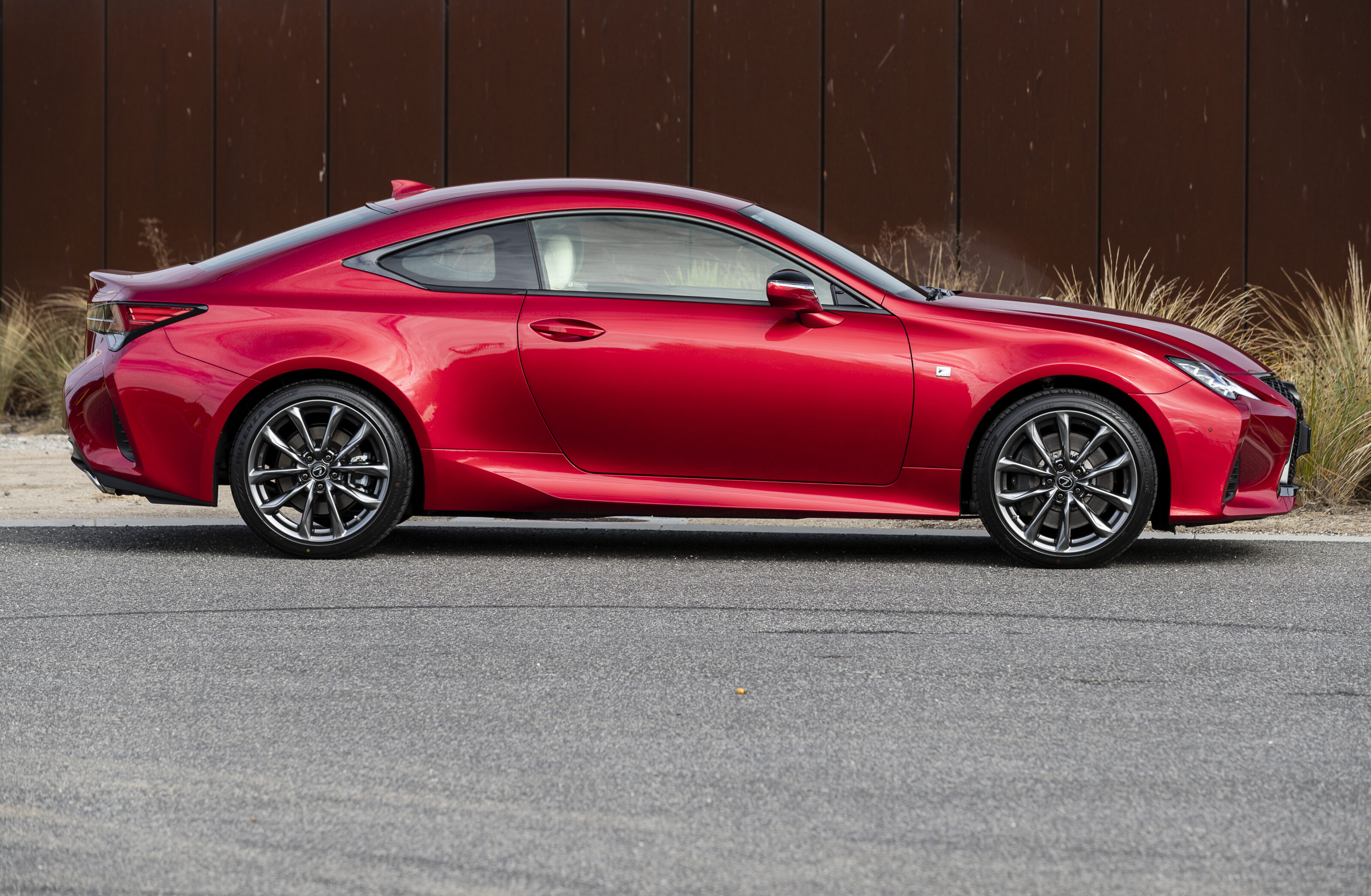
At that price point, buyers will likely be cross-shopping with the more established 140kW/320Nm Audi A5 40 TFSI S Line Coupe ($71,900), 135kW/300Nm BMW 420i ($71,900), and 150kW/300Nm Mercedes-Benz C200 coupe.
A 2021 model refresh brought a host of refinements to the RC range, too. The eight-speed transmission has been updated with revised software that aims to better predict shift points and will even downshift of its own accord when it detects hard braking and deceleration. Some weight has been trimmed from the rear end, with aluminium upper control arms fitted, as well as a beefier anti-roll bar.
Radar active cruise control featuring stop-and-go capabilities has also been gifted to all variants, as well as Lexus’ Safety System+ package comprising AEB with pedestrian detection, automatic high beam, lane-departure warning with steering assist, blind-spot monitor, lane-change alert and rear cross-traffic alert.
Added tech, in line with other models in the Lexus portfolio, also includes a larger touch-sensitive 10.3-inch infotainment screen with Apple CarPlay and Android Auto and an LFA-style TFT instrument cluster, on top of standard-fit items like dual-zone climate control, 10-speaker Pioneer audio system, and heated and cooled front seats.
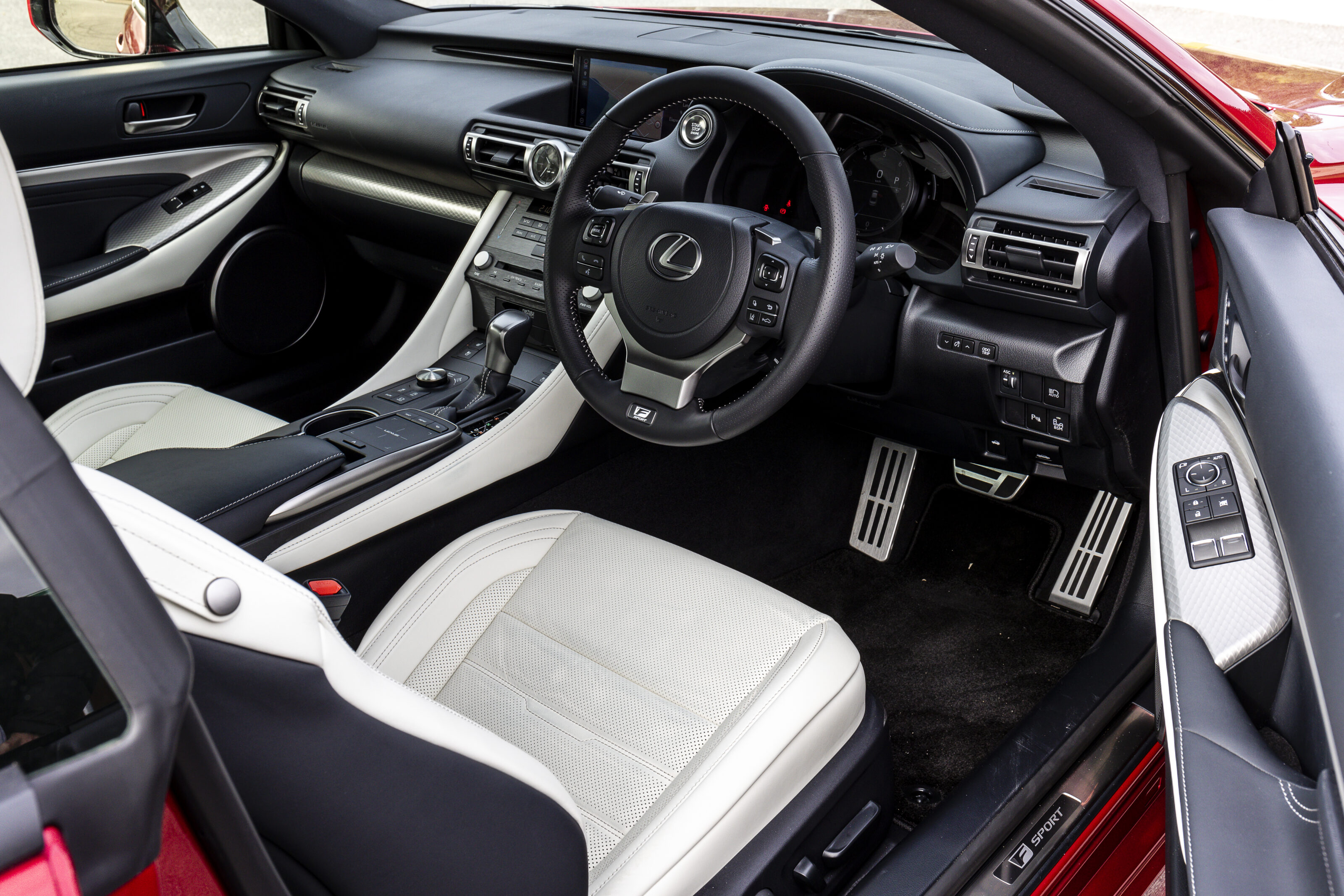
The generous list of standard equipment, along with the F Sport’s added styling cues, sees the entry-level RC coupe shrug off any semblance of a poverty-pack persona and, from the driver’s seat around town, it’s tremendously easy to forget that you’re not behind the wheel of a fully-loaded top-spec offering.
Until you put your right foot down, that is. The turbocharged 2.0-litre four-cylinder is a frugal and economical unit but lacks the top-end stamina (not to mention the aural character) of the larger and more powerful naturally aspirated 3.5-litre V6.
In the real world, the little mill is fast enough in the context of modern metropolitan traffic and will get away from the lights agreeably, Lexus claiming a 0-100km/h time of 7.0 seconds. It feels just as quick from a dig as the bigger V6 but with power peaking between 4800-5600rpm (and torque between 1650-4000rpm), it quickly runs out of puff just as the big six begins hitting its stride.
Lexus’ typically possess an inherent comfort to their ride and character, although more powerful models display a wider breadth of talent and a stronger duality of character thanks to their increased ability to be hustled about when the situation calls for it. The RC300, though, firmly errs on the side of plush rather than performance.
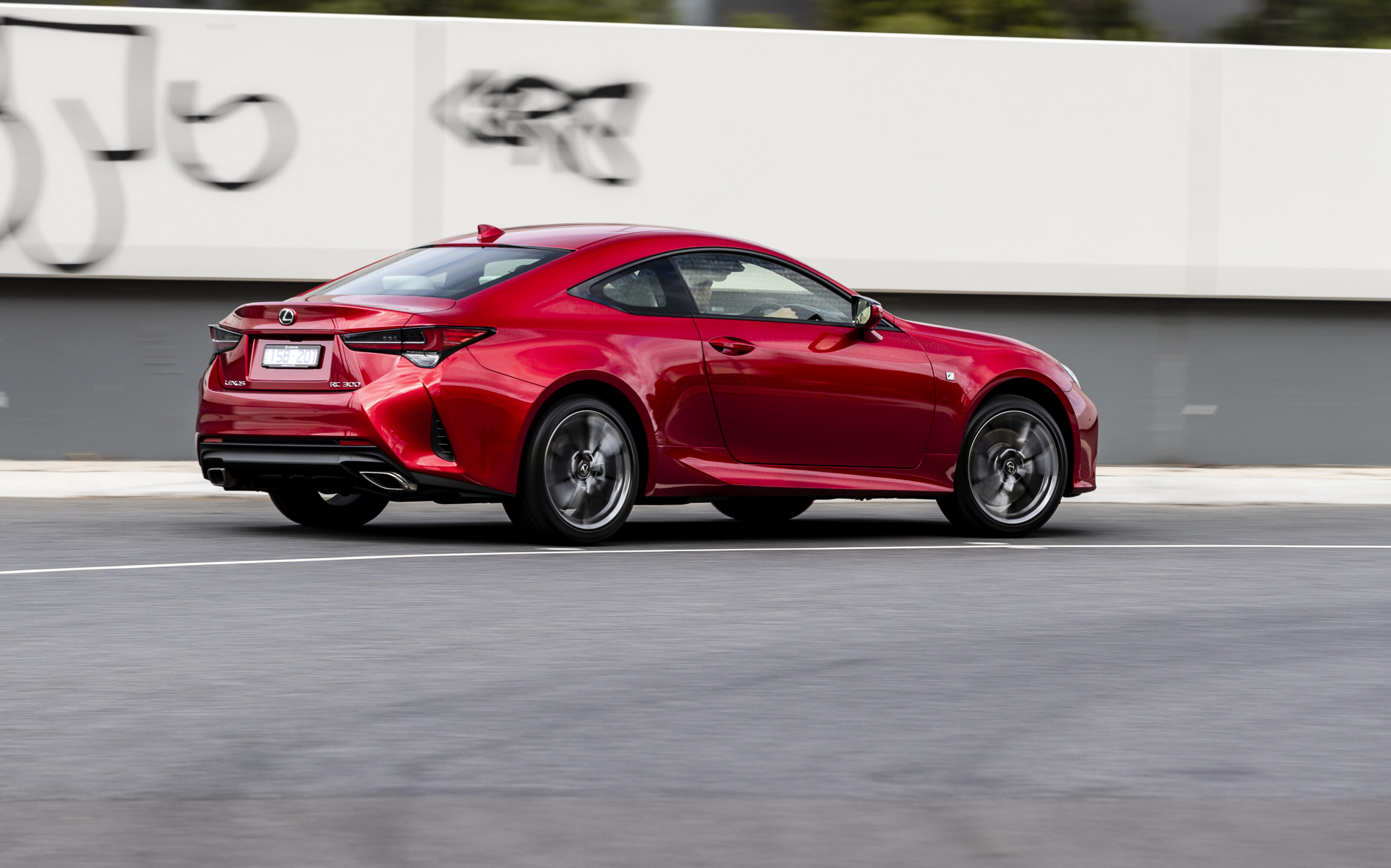
In the inner-city setting, in its default comfort mode, the RC’s cossetting ride irons out imperfections beautifully with little effort or fuss. Its default softly sprung damper settings, however, do yield perceptible pitch and body roll under load.
Flicking the rotary dial into Sport S mode most noticeably firms up the adaptive dampers and wakes up the default lazy pedal-mash throttle calibration. This soon became my default driving mode, introducing a greater immediacy to inputs, and perhaps more closely aligned in feel to the default modes of other popular competitors.
The added Sport S+ mode amplifies these effects and is likely beyond necessity in an urban environment, instead best reserved for talking a flowing country road.
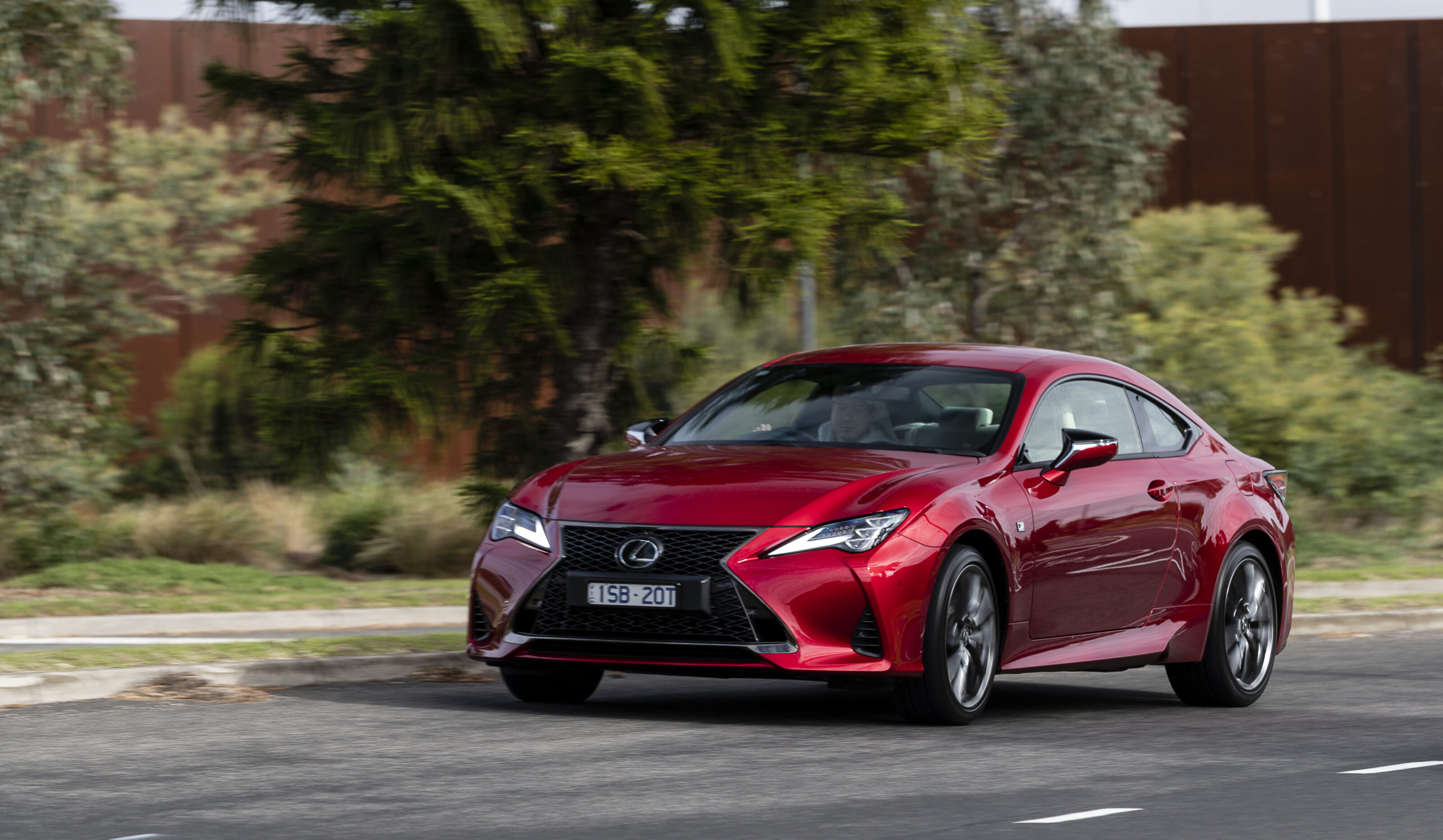
It’s here where the RC coupe finally gives hint to the hidden athleticism buried beneath its well-balanced chassis. The steering, which possesses a relaxed – if slightly vague – on-centre feeling, improves in precision with larger steering inputs. The eight-speed transmission can be somewhat indecisive about its gearing when left to its own devices, however, and is prone to exiting a corner in too high a gear.
Taking shifts into your own hands is not always a flawless solution as the gearbox software attempts to predict your gear changes for you. Downshifting under braking on corner entry can see the gearbox skip down another gear for you, leading to instances where you end up in a gear lower than you wanted should you intuitively grab the paddles twice. The penalty is greater in the small four-cylinder too, as the revs will be sent skyward as the powertrain falls out of its main operating window between 3000 and 5000rpm.
Indeed, the RC 300 will be a masterclass in momentum driving to those who live with it. Muck up one corner, and you’ll be spending the next few turns working to earn back your speed. While this in itself can be an engaging, fun and rewarding exercise for the keenest of drivers, it can conversely be terribly frustrating for those expecting a more instant dose of gratification.
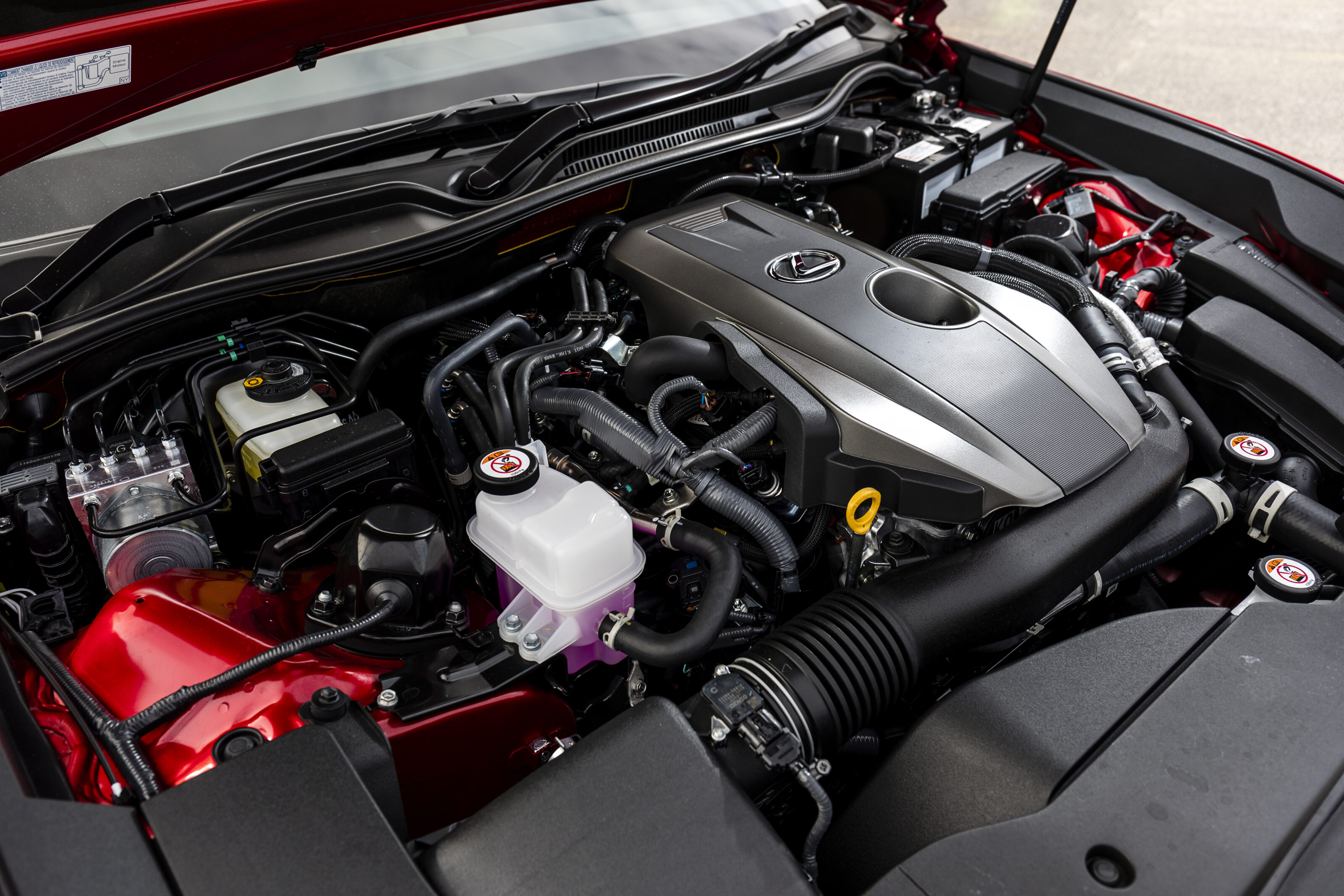
And that’s the overwhelming takeaway from the RC 300 F Sport experience. Its rather lacklustre powerplant simply hampers what is otherwise, frankly, a lovely and stylish cruiser.
Upon further reflection, the RC 300 F Sport suits someone who prioritises image, features and finish with nary a care for what’s under the bonnet – and that’s okay. It’s a beautiful thing to live with and is functional, well-priced and well built. What’s more, you won’t find a comparable coupe with more power at this price point from Audi, Mercedes or BMW.
But if you’re reading MOTOR, we know you’re not that sort of person. And if you have higher demands for vehicle dynamics and driver engagement, the four-cylinder Lexus RC will likely leave you wanting.
You may find a solution elsewhere in the Lexus dealership, however. For just $3000 more you can step into the larger 3.5-litre naturally aspirated V6-powered RC 350 F Sport, which yields a further 30Nm and 53kW, as well as extra equipment such as variable-ratio steering and dynamic rear-wheel steering. Well worth the money if you ask us.
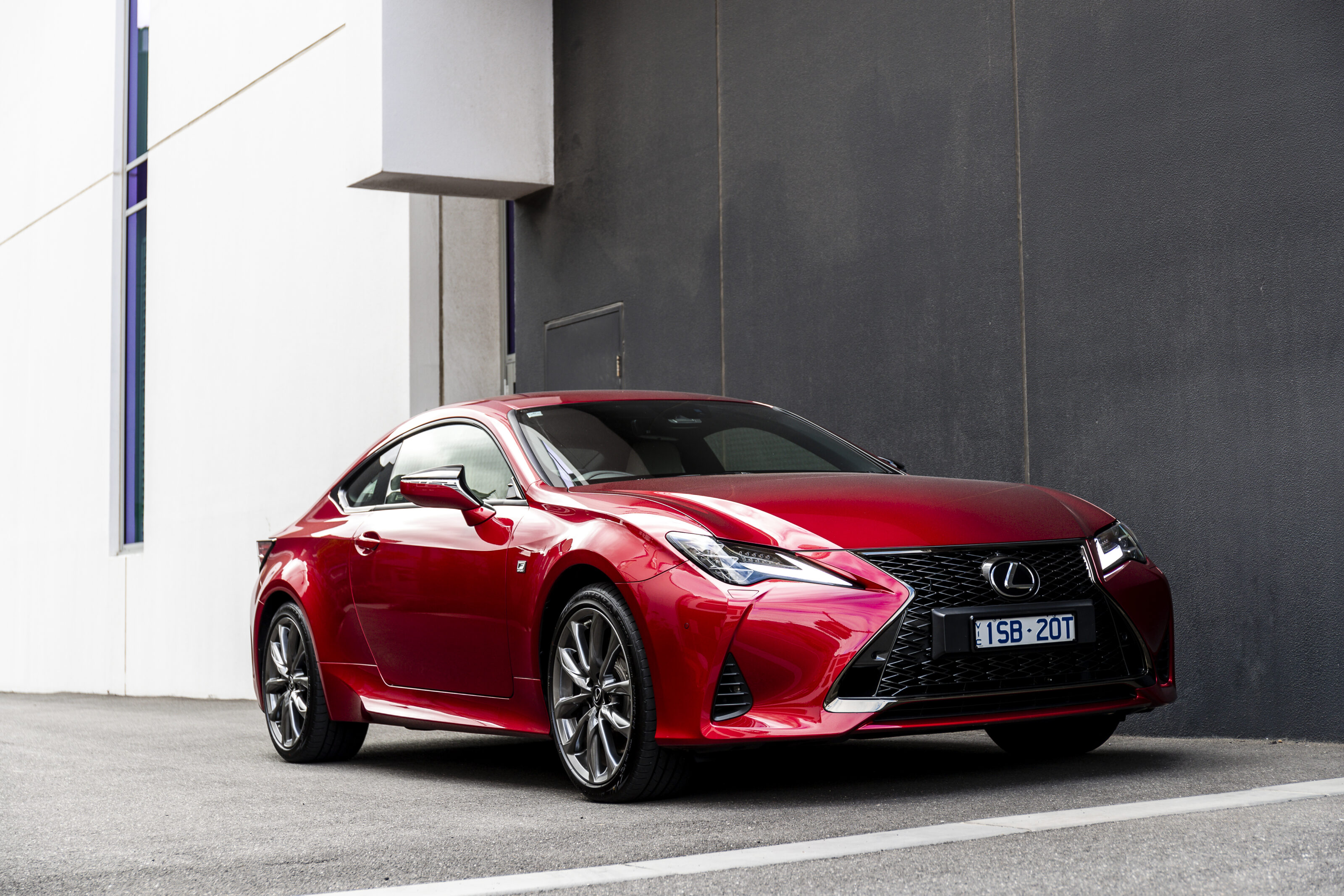
Lexus RC 300 specs
Engine: 1998cc, I4, DOHC, 16v, turbocharged Power: 180kW @ 5600rpm Torque: 350Nm @ 4000rpm 0-100km/h: 7.0sec (claimed) Weight: 1620kg Price: $75,736
