
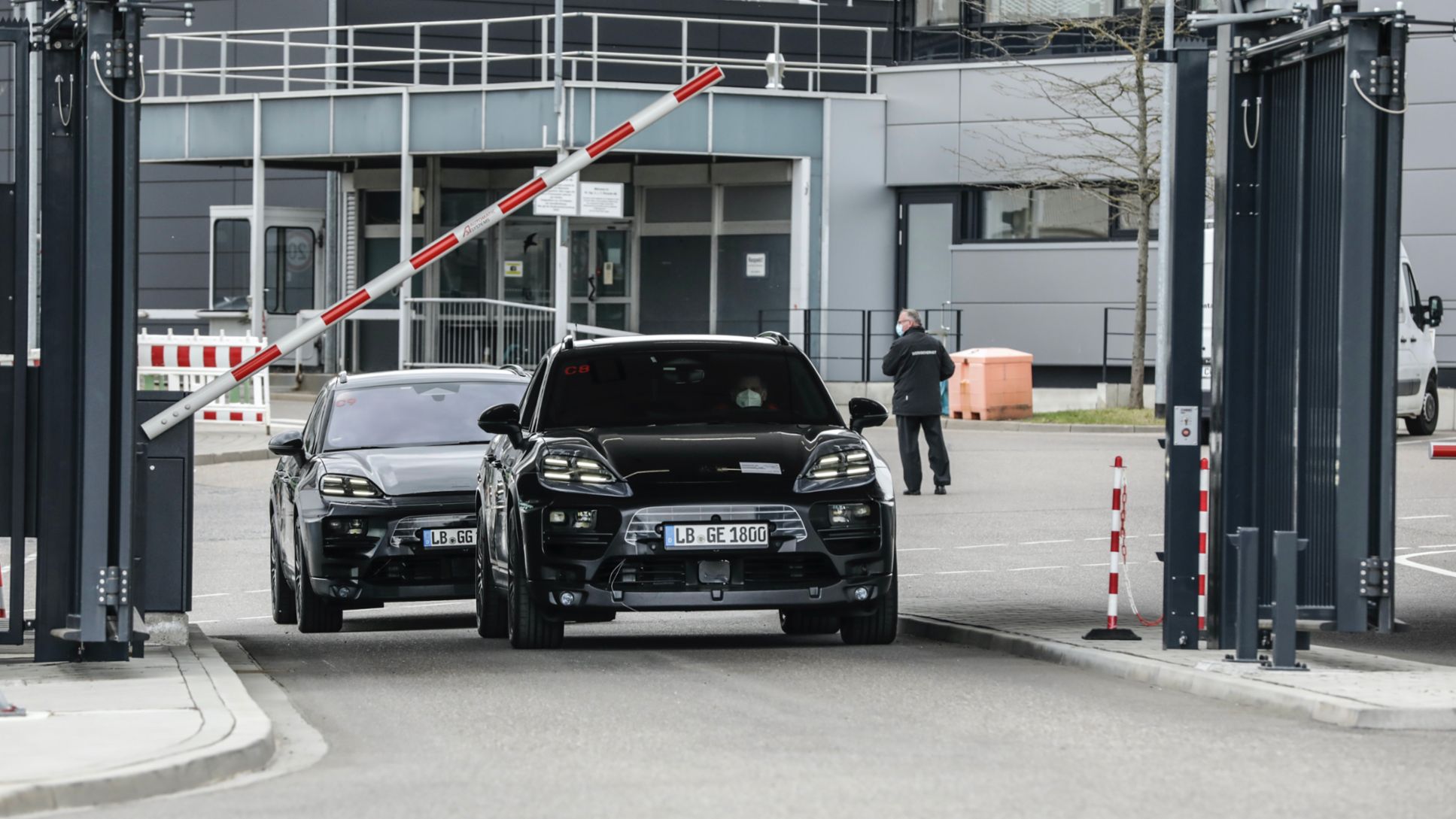
The new all-electric 2023 Porsche Macan is undergoing rigorous testing in Germany, using both real-world and digital prototypes to put it through its paces.
Developed at the Porsche Development Centre in Weissach, the compact SUV is now heading outside the German automaker’s doors for the first time.
By the time the new model launches in 2023, it will have covered around three million kilometres in all kinds of conditions across the world.
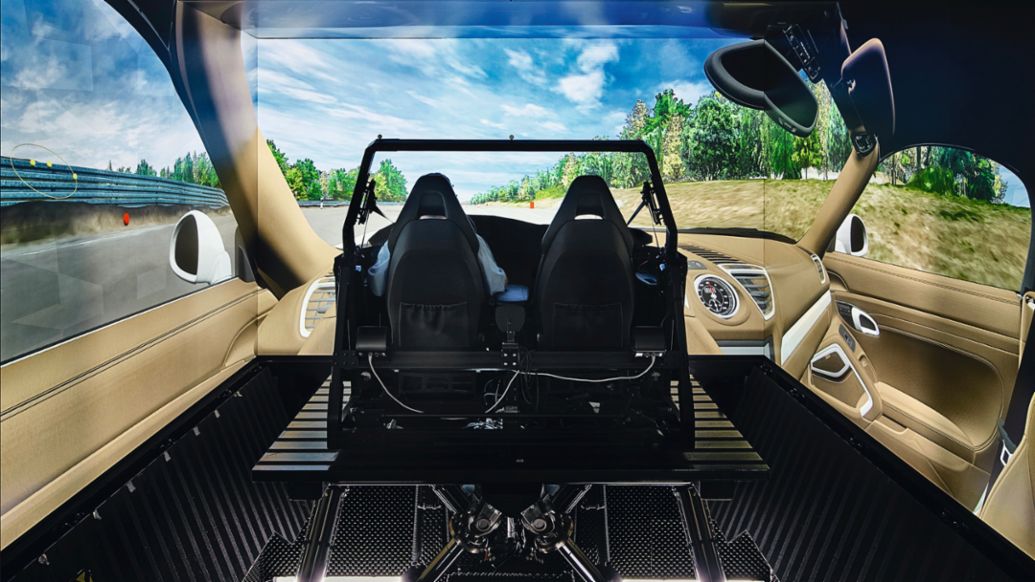
According to Porsche, its engineers are among the first to develop a car with a digital prototype, having started with a flow-around model about four years ago working on aspects such as aerodynamics, energy management, operation and acoustics.
Instead of real vehicles, the engineers use digital models which replicate the properties, systems and power units of a real-life car with precision accuracy.
Using digital technology to enhance the capabilities of a car like the all-electric Macan is fast becoming essential, as it helps, for example, to ensure the vehicle has a low aerodynamic drag –fundamental to having a long range.
Other ways the new tech proves its worth is in the development of the overall electric drive system. From the battery through to the motor – the system requires a completely separate cooling and temperature control concept to that of a conventionally powered vehicle.
While a temperature window of 90 to 120 degrees is the target for combustion engines, the electric motor, powertrain electronics and high-voltage battery require a range of between 20 and 70 degrees, depending on the component.
“The digital world is indispensable to the development of the all-electric Macan,” says Dr Thomas Wiegand, Director of Aerodynamics Development.
The first real-world prototypes of the all-electric Macan have been built based on the data obtained from the simulations – in some cases elaborately by hand or using special tools. The vehicles are then regularly adapted based on a virtual refinement process and vice versa with road tests feeding directly back into the digital development.
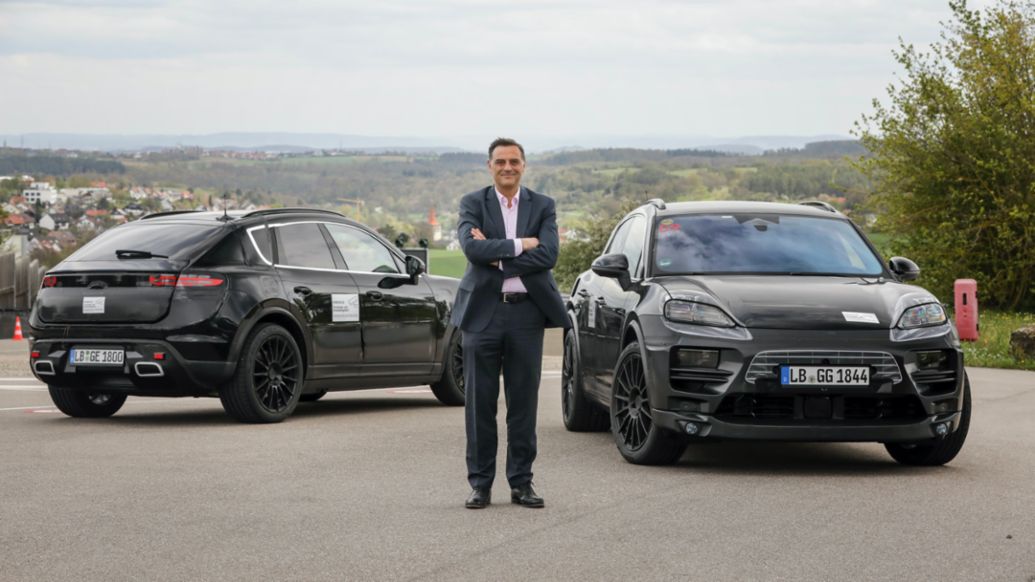
“Endurance testing on closed-off testing facilities and public roads in real-life conditions is still indispensable to ensure that the vehicle structure, operational stability and reliability of hardware, software and all functions meet our high-quality standards,” says Michael Steiner, Member of the Executive Board, Research and Development at Porsche AG.
Full details of the fully-electric 2023 Porsche Macan have yet to be revealed, however the car maker has said it will also be releasing an updated version of the existing petrol-powered Macan at the same time.
“In Europe, demand for electric vehicles continues to rise, but the pace of change varies considerably across the world. That’s why we’re going to launch another conventionally powered successor to the current Macan in the course of 2021,” says Michael Steiner.
It will be the first Porsche to be built on the Premium Platform Electric (PPE), which can also be found underpinning the upcoming Audi Q6 E-Tron (due late 2022), as the two Volkswagen Group manufacturers have co-developed the platform.
The PPE architecture is expected to offer more than 400kW, with both rear and all-wheel drive.
From the photos, it’s clear that the new Macan will have headlights more akin to the Taycan’s styling than its predecessor, while other design cues from the fully-electric performance sedan are likely to also make their way onto the final production SUV.
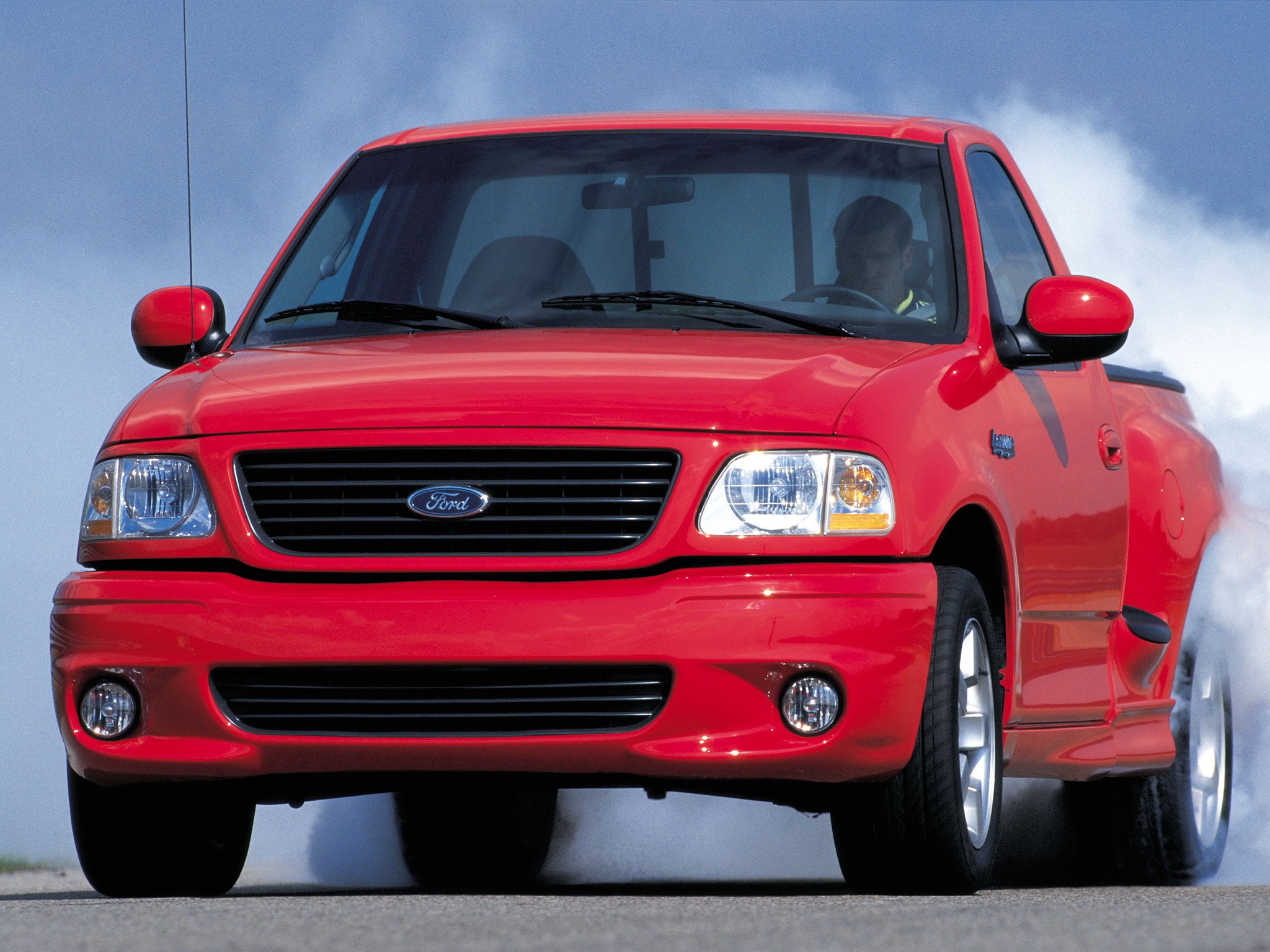
Ford has announced the name of its eagerly anticipated fully-electric F-150 pickup truck … and it’s one we’ve heard before.
Called the F-150 Lightning, the newest iteration of the celebrated moniker honours the ‘Lightning’ name found on V8-powered SVT F-150s of the late ‘90s, while also redefining it for a new era in the pick-up’s life.
Ford has also released a short, 54-second video teasing the electric F-150’s pronounced LED daytime running light and headlight combo, which sees a thick white strip of LED lights run the length of the flat, angular bonnet line.
The Blue Oval has already released a few details about its latest EV ahead of its May 19 unveiling in Dearborn, Michigan.
We know the pick-up will feature a dual electric motor configuration, as well as semi-autonomous ‘hands-free’ driving systems, and wireless, over-the-air software updates.
As previously reported by WhichCar, Ford has grand plans for an electrified future in automotive markets across the globe and has previously said that by 2030, all of its products in Europe will be fully electric.
The American automaker also recently announced that it is building an 18,600 square metre battery research and development facility which will employ no less than 150 dedicated staff.

The importance of getting the transition from internal combustion engines to an electric powertrain right for the F-150 cannot be understated – the Blue Oval’s F-Series trucks are among the most popular selling vehicles in North America, and have been for over four decades.
However, with the Dearborn firm investing an estimated US$20 billion on EV and autonomous products by 2025, there’s every chance the F-150 will be a well-received step towards a greener future.
Talking points
- All-electric compact van concept can seat up to seven occupants
- WLTP-certified 265 kilometre driving range
- Production-spec example expected before the end of this year
Mercedes-Benz has revealed the latest member of its all-electric EQ sub-brand – the Concept EQT compact seven-seater van.
Sharing a platform which also forms the basis for Renault’s third-generation Kangoo, the small-sized people mover will serve as Mercedes’s next Citan light commercial vehicle (LCV).
Powering the EQT is a Renault-sourced 44kWh lithium-ion battery pack, which sends energy to a front-mounted electric motor.
The electric powertrain produces 75kW and 245Nm, and driving range is rated at 265 kilometres (WLTP-certified).
It will be possible for the EQT to employ 75kW DC fast charging, which means battery charge can be increased from 10 to 80 per cent in just 42 minutes.
Charging from a 22kW AC socket is possible too, and will boost the electric van to 80 per cent in roughly two hours.
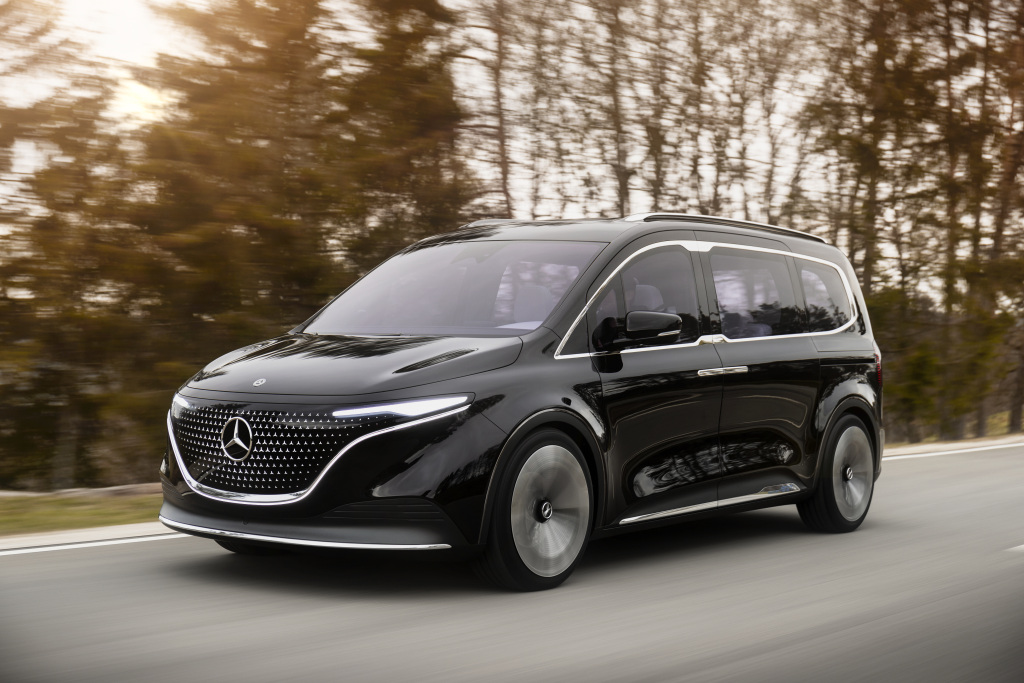
Measuring 4945mm in length, 1863mm in width, and 1826mm in height, the EQT is 50mm longer, but 65mm narrower and 84mm shorter than the smallest van Mercedes currently sells in Australia – the Vito short wheelbase (SWB).
The Concept EQT’s exterior design language is in keeping with the rest of the German automaker’s EQ range, with a front fascia dominated by a large grille with tri-star shaped accents, and a large, wrap-around white LED strip.
Sliding doors have been fitted to either side of the compact van, which is said to make it easier for rear occupants to get in and out.
The second row can seat three passengers, and can also accommodate three child seats sat side by side, while the two full-sized seats in the third row can be folded down, or removed entirely.
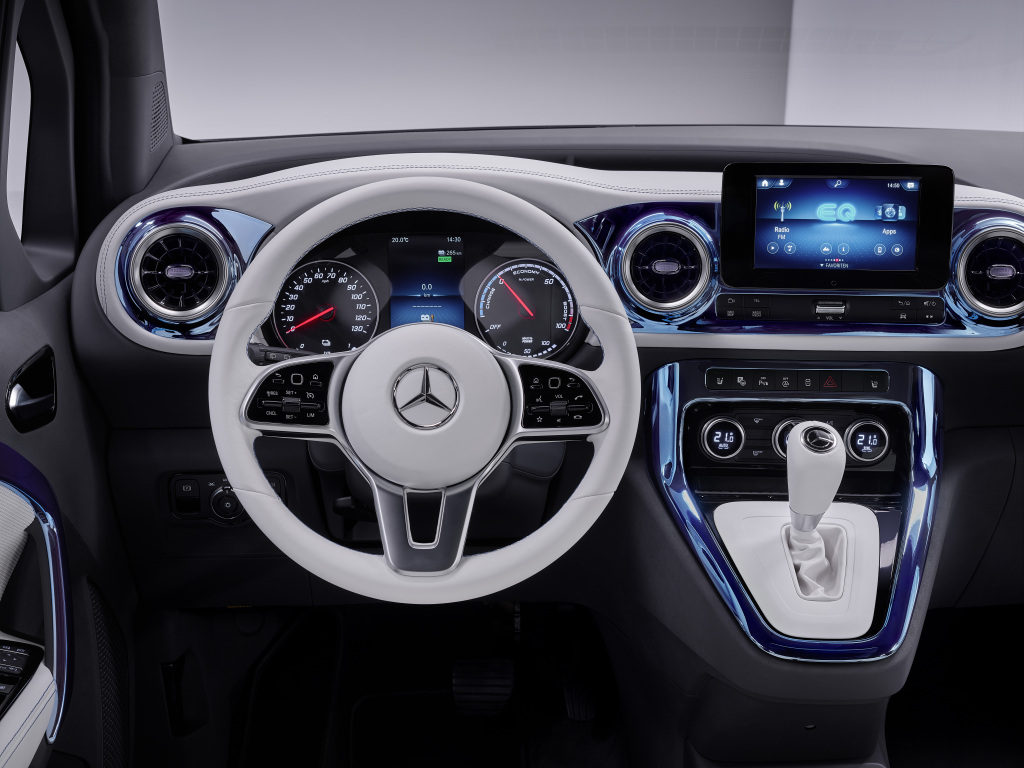
Mercedes has fitted the Concept EQT with its impressive MBUX infotainment system, which is interacted with via a relatively small seven-inch touchscreen infotainment display. ‘Hey Mercedes’ voice activation is also possible.
The driver’s side dash is treated to a pair of analog dials, which shroud a diminutive central digital display.
Although only a concept at this stage, the avant-garde-looking electric EQT is said to be close to production-spec, with the Stuttgart firm saying the final version of the van will be unveiled later this year.
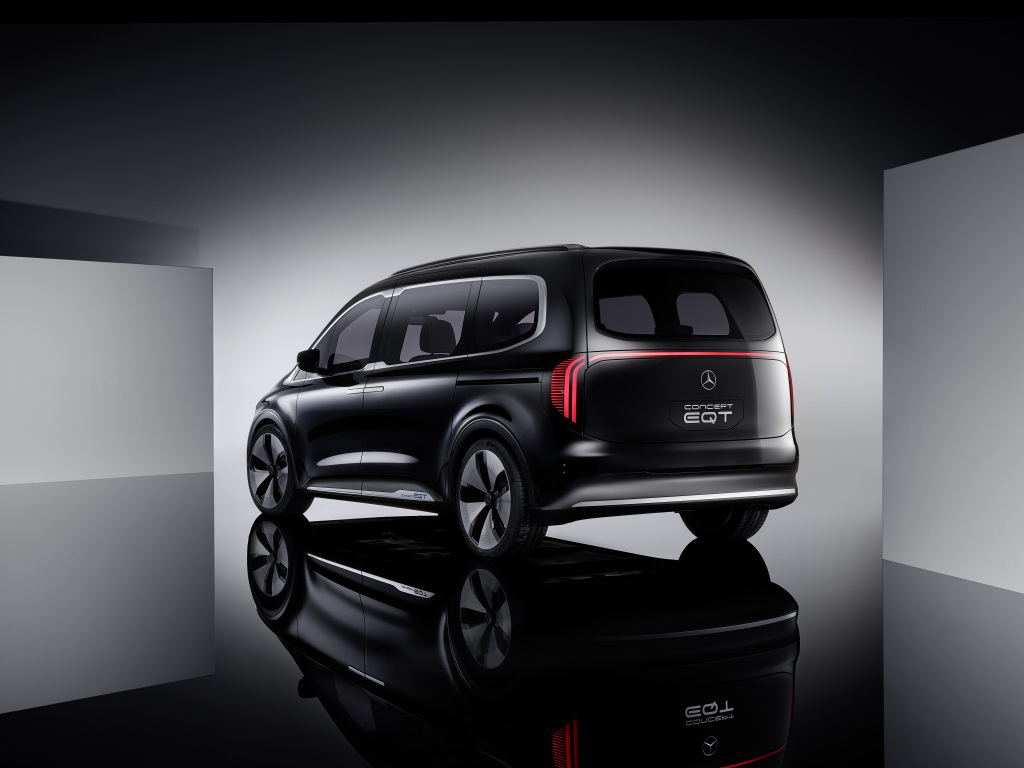
The EQT will also be unveiled alongside the new T-Class van, which will utilise conventional internal combustion engines like a 1.2-litre turbo-petrol and 1.5-litre turbo-diesel.
It’s not known yet whether the electric EQT compact van or its T-Class sibling will make its way Down Under after its official release later this year.
However, a representative from Mercedes-Benz Commercial Vehicles Australia said the local arm was currently assessing the suitability of the entire T-Class van range for Australia, and the prospect of having a small five and seven-seater van to compliment the existing V-Class range was an exciting opportunity.
The Ford Ranger and Everest twins accounted for a remarkable 84 per cent of the Blue Oval’s Australian sales in April, after the ute topped the overall chart and the SUV achieved a record month.
Ford Australia last month sold nearly 6000 units of its locally designed and engineered models, with nine other vehicles comprising the rest of the company’s 7146 April total.
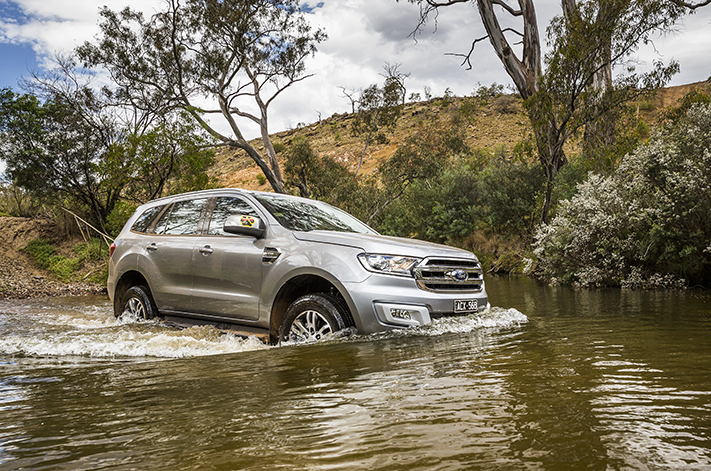
The Ranger was Australia’s best-selling vehicle overall in April, with 5021 sales, while the Everest had its best month with 958 sales. The latter figure is almost double the Everest’s 500-per-month average achieved in 2020.
The Ranger has been boosted with the recent introductions of its FX4 Max and XL Tradie variants, and from July there’s an even greater expansion with an XL 4×2 Sport, XL 4×4 Heavy Duty, FX4 (returning), Wildtrak X and new flagship Raptor X.
Over in the Everest line-up, there are also 2021 additions in the form of the rear-drive Sport and limited-run, outdoor-focused BaseCamp Special Edition.
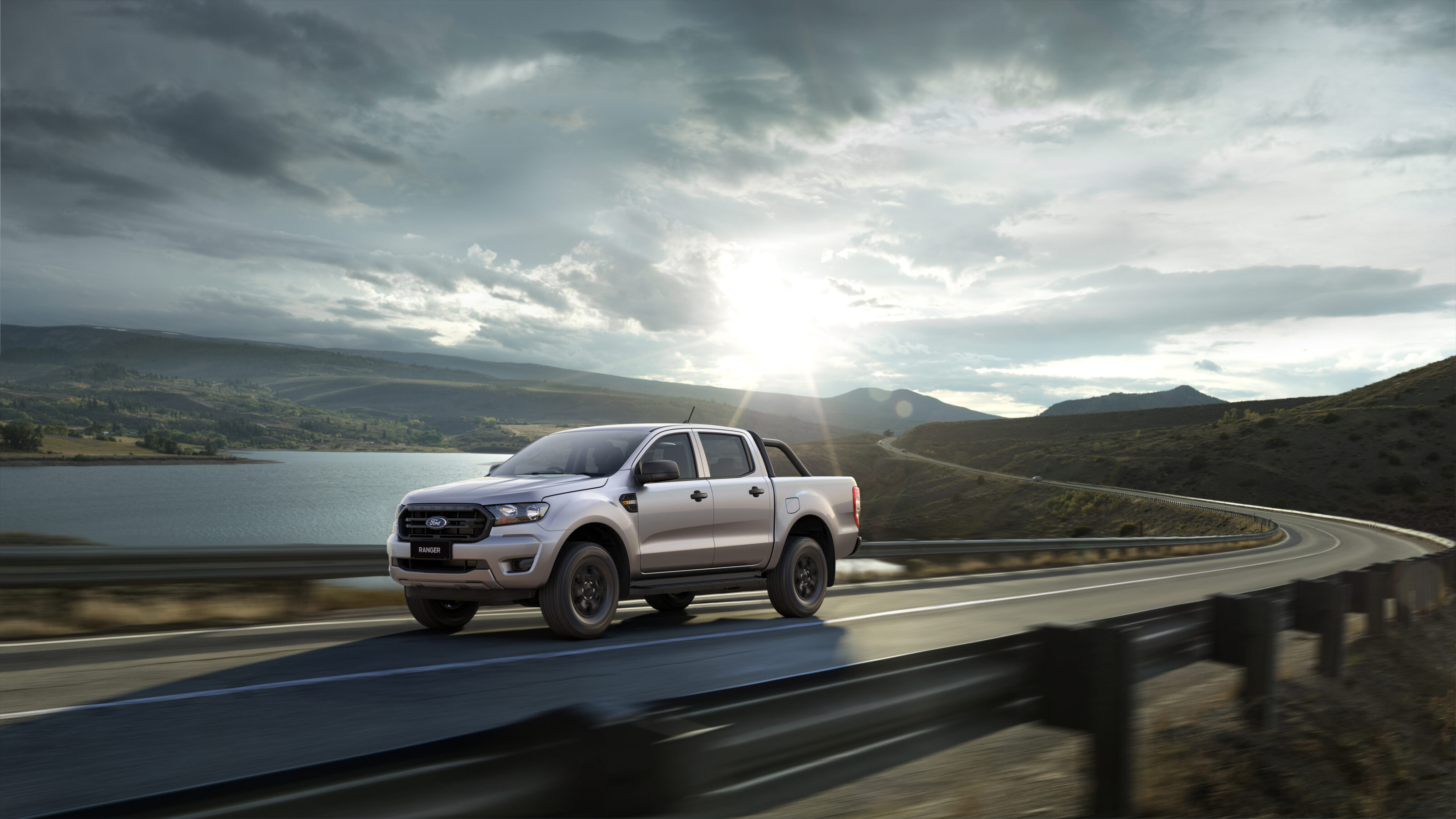
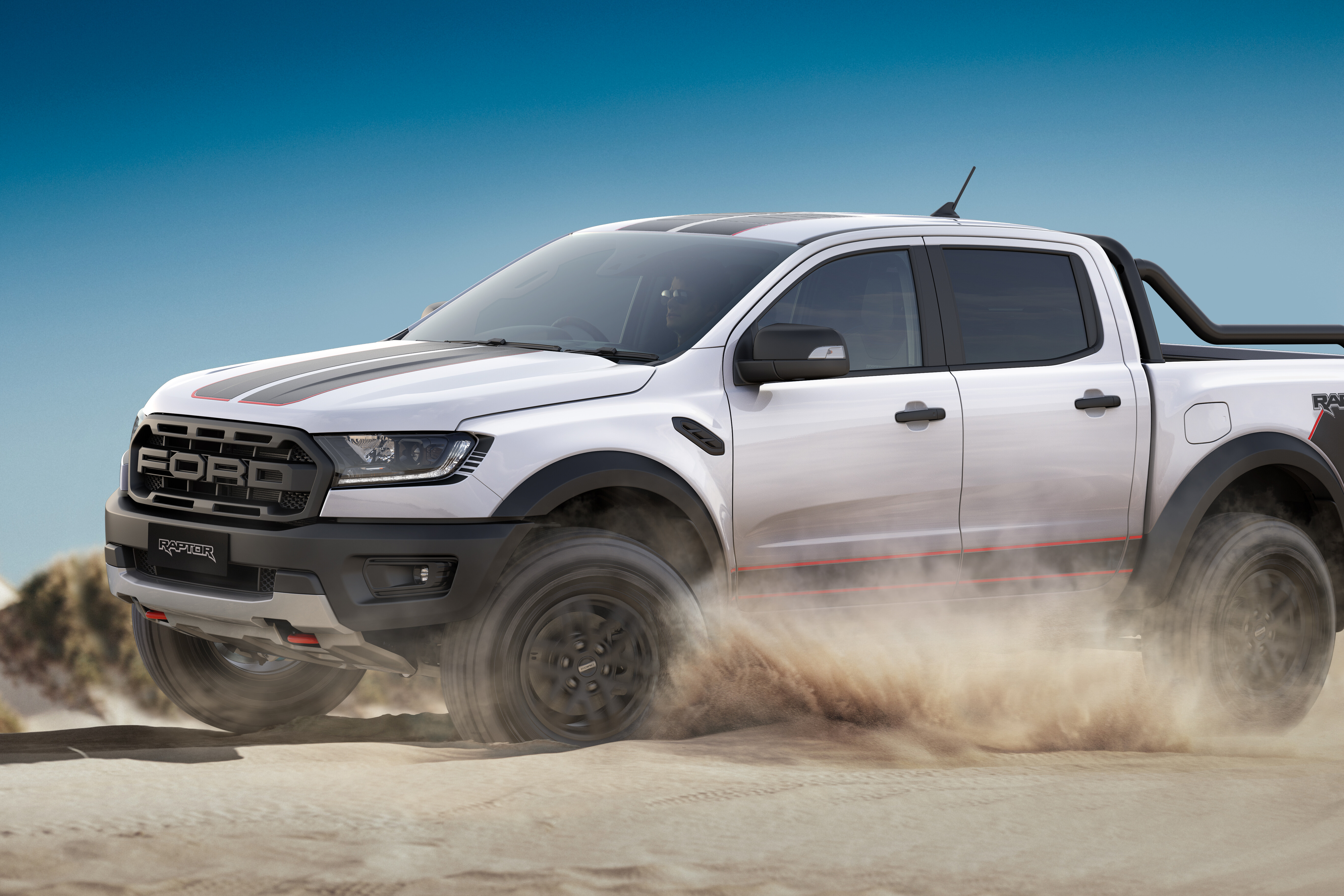
April’s result takes the showroom dominance of the locally developed vehicles up another notch.
The ute/SUV duo, which share platform and drivetrains, have accounted for most of Ford Australia’s sales since 2017 when they comprised 61 per cent of sales. The percentage increased to 69 per cent in 2018 and 73 per cent in 2019 before reaching 79 per cent last year.
In year-to-date tracking, the Ranger and Everest have so far accounted for just over three-quarters of Ford Australia sales.
Other Ford models are having degrees of success too – contributing to a 42 per cent increase compared with this time last year.
The Puma compact SUV is too new for comparison with 2020, but sales of the mid-sized Escape have increased 27 per cent compared with this time last year when the previous-generation model was on sale.
The Ford Transit Custom is also performing well, up 80 per cent year to date, and the Fiesta ST hot-hatch is enjoying a strong 2021 so far.
Mustang sales are steady, down just over one per cent, though the Focus small car is struggling, with a 41 per cent decrease in sales compared with the first four months of 2020.
Last month was Australia’s biggest April result yet, with 92,347 new-vehicle sales.
Talking points
- Modest price rises across the range
- GLX-R gains new exterior garnish
- GLX and GLX-R double cabs lose manual transmissions
- Range-topping GSR $250 cheaper – but there’s a catch
Mitsubishi has revealed changes to its Double and Club Triton variants – including the deletion of manual versions of the GLX and GLX-R Double Cabs.
On sale from June 2021, the MY22 Triton range also sees the Advanced Driver Assist System becoming standard on the GLX Club and Double-Cab variants instead of part of an extra cost safety pack.
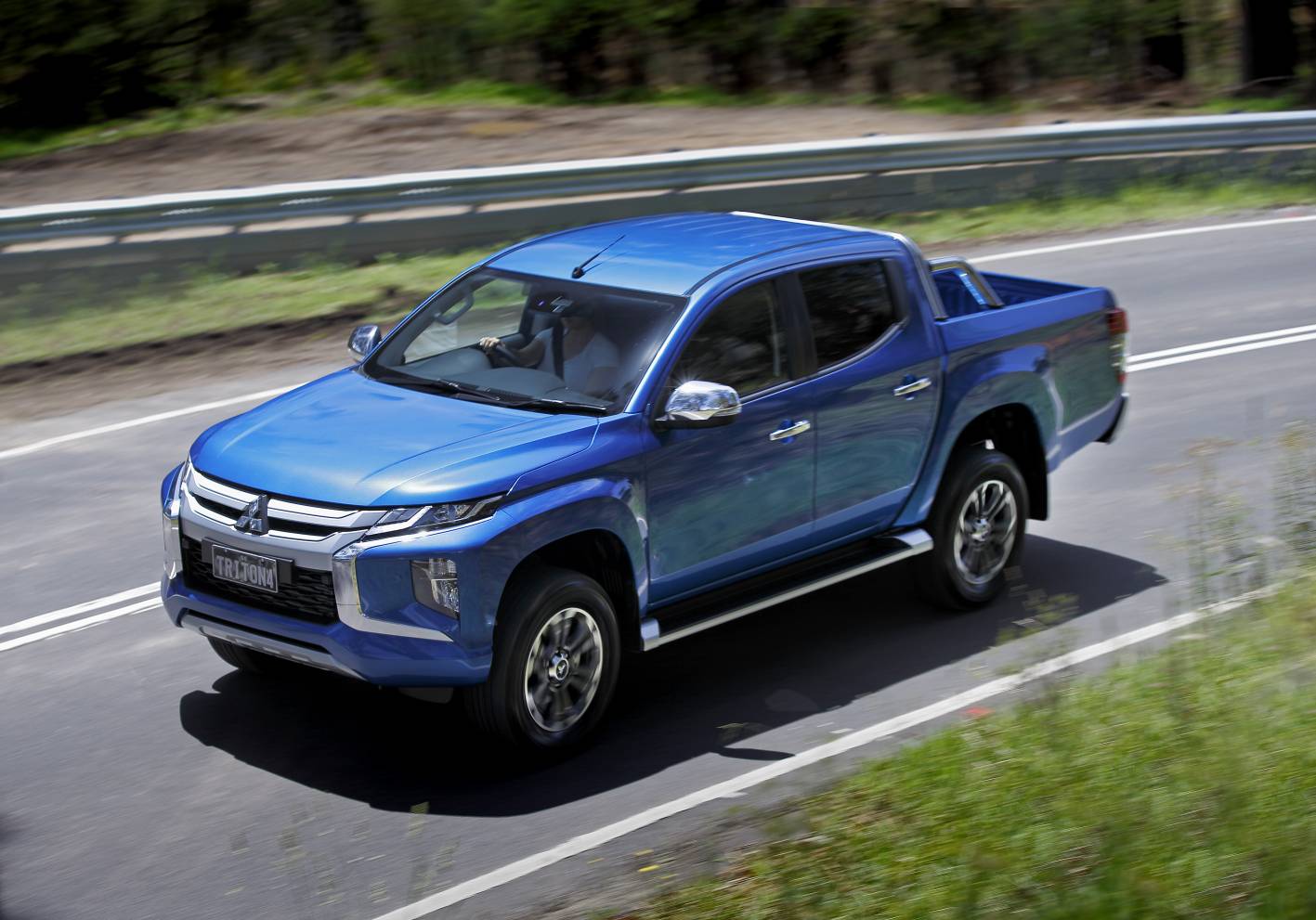
The GLX-R spec meanwhile gains a high-riding 4×2 Double Cab version and new exterior garnish including:
- black painted alloy wheels (previously two-tone)
- black material front grille (previously silver)
- body-coloured lower front bumper garnish (previously silver)
- body coloured front ‘dynamic shield’ (previously silver)
- black material door mirrors, door handles and tailgate handle (previously silver)
- revised fog lights with black material covers
- rear differential lock for 4×4.
Interestingly, the range-topping GSR Double-Cab loses the 360-degree ‘Multi-Around Monitor’ parking camera as standard though it is available as an option.
As a result the price has gone down by $1250 to $52,240.
If you want the 360-degree monitor, it is now part of the GSR Tan Orange interior option pack for $1490.
The black roll top tonneau package price has increased to $6,646 and the hard and soft tonneau packages have been discontinued for the 2022 model year.
The Triton 2022 model year is expected to go on sale at dealerships by June with higher-spec variants a month later.
MY22 Mitsubishi Triton retail pricing
Variant | Priceu00a0 | Previous Priceu00a0 |
Triton – 2.4 GLX Single Cab Chassis, Auto | $23,740 | $23,490 |
Triton 2.4 DID GLX Single Cab Chassis, Auto | $28,240 | $27,990 |
Triton 2.4 DID GLX Single Cab Chassis, Auto | $30,490 | $30,240 |
Triton 2.4 DID GLX-R Double Cab, Auto | $41,740 | (new) |
Triton 2.4 DID GLX Double Cab, Auto | $37,940 | $37,490 |
Triton 2.4 DID GLX 4X4 – Single Cab Chassis, Manual | $34,990 | $34,740 |
Triton 2.4 DID GLX 4X4 Single Cab Chassis, Auto | $37,240 | $36,990 |
Triton 2.4 DID GLX Club Cab Chassis 4X4, Manual | $37,440 | $36,990 |
Triton 2.4 DID GLX Club Cab Chassis 4X4, Autou00a0 | $40,440 | $39,990 |
Triton 2.4 DID GLX+ Club Cab 4X4 AUTO | $43,190 | $42,740 |
Triton 2.4 DID GLX Double Cab Chassis 4X4, Manual | $38,940 | $37,740 |
TRITON – 2.4 DID GLX Double Cab Chassis 4X4, Auto | $41,190 | $40,740 |
TRITON – 2.4 DID GLX Double Cab 4X4, Auto | $42,140 | $40,990 |
Triton 2.4 DID GLX+ Double Cab 4X4, Manual | $42,690 | $42,240 |
Triton 2.4 DID GLX+ DOUBLE CAB 4X4 AUTOu00a0 | $44,940 | $44,490 |
Triton 2.4 DID GLX-R Double Cab 4X4, Autou00a0 | $45,940 | $45,490 |
Triton 2.4 DID GLS Double Cab 4X4, Manual | $47,290 | $46,990 |
Triton 2.4 DID GLS Double Cab 4X4, Autou00a0 | $49,540 | $49,240 |
Triton 2.4 DID GSR Double Cab 4X4, Autou00a0 | $53,240 | $53,490 |
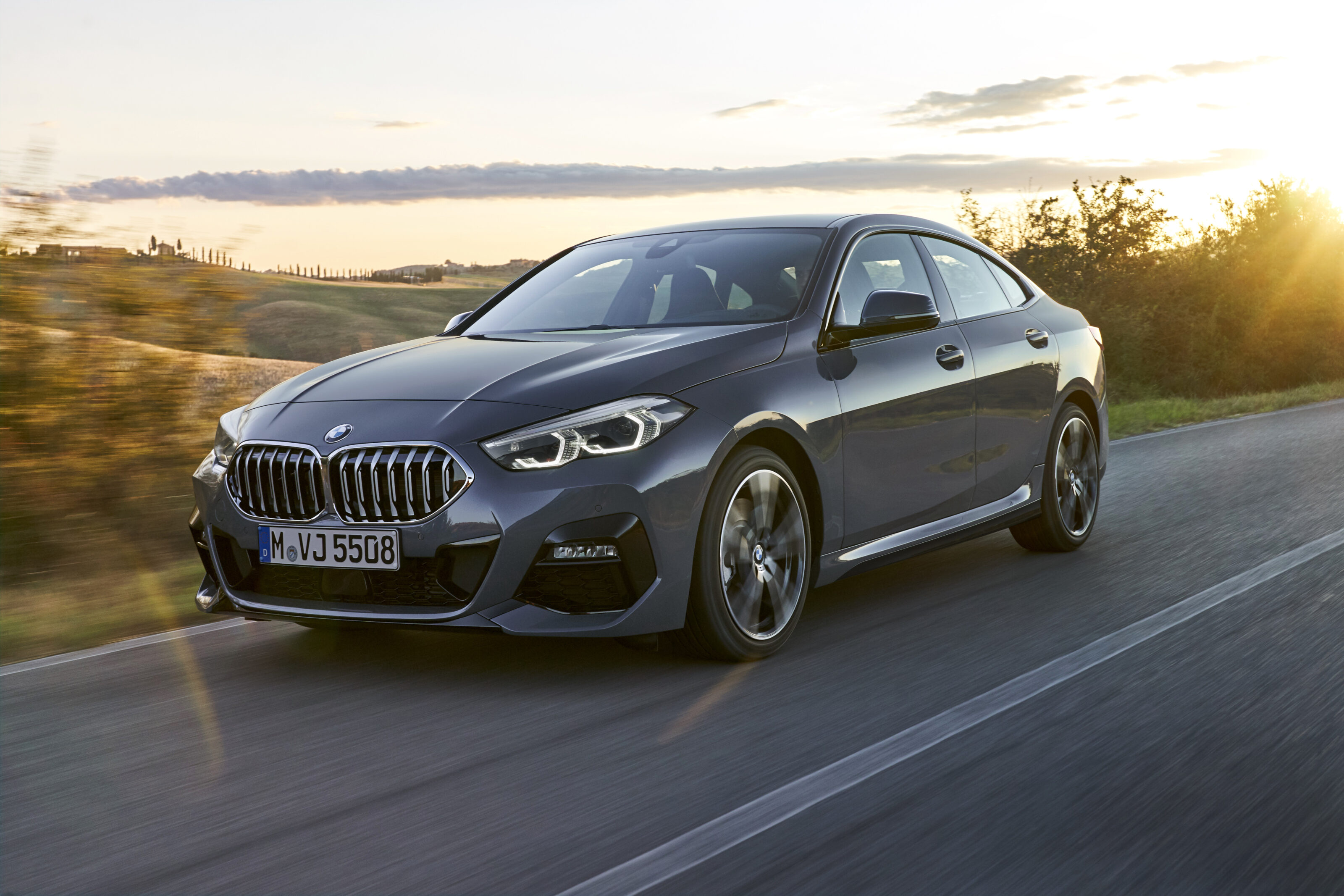
BMW’s most affordable model range is on course to be Australia’s best-selling premium small car for the first time since 2006.
A surge in demand for the 2 Series Gran Coupe and solid growth for its 1 Series hatchback twin puts them in the lead of their segment after the first four months of 2021, according to official industry data.
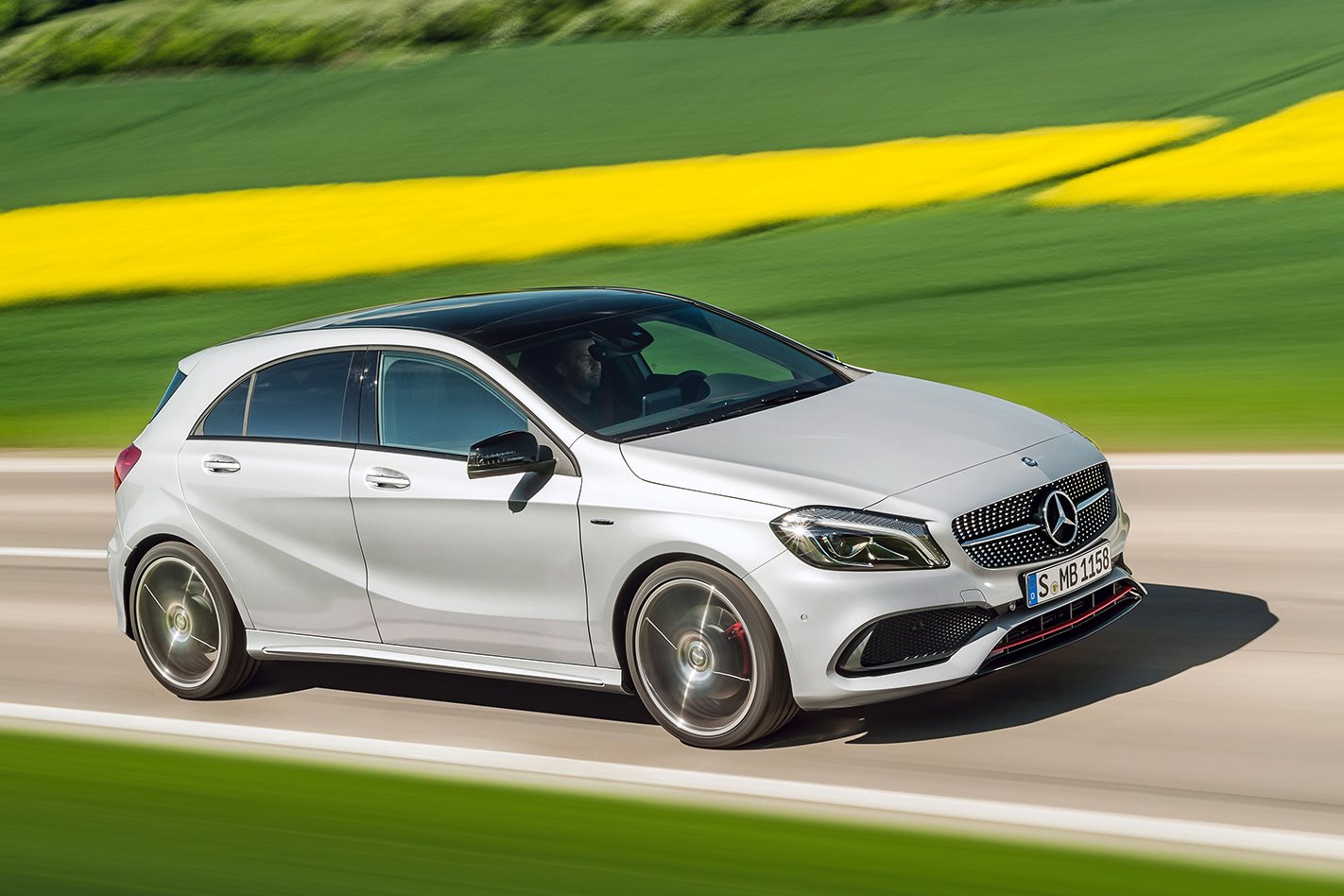
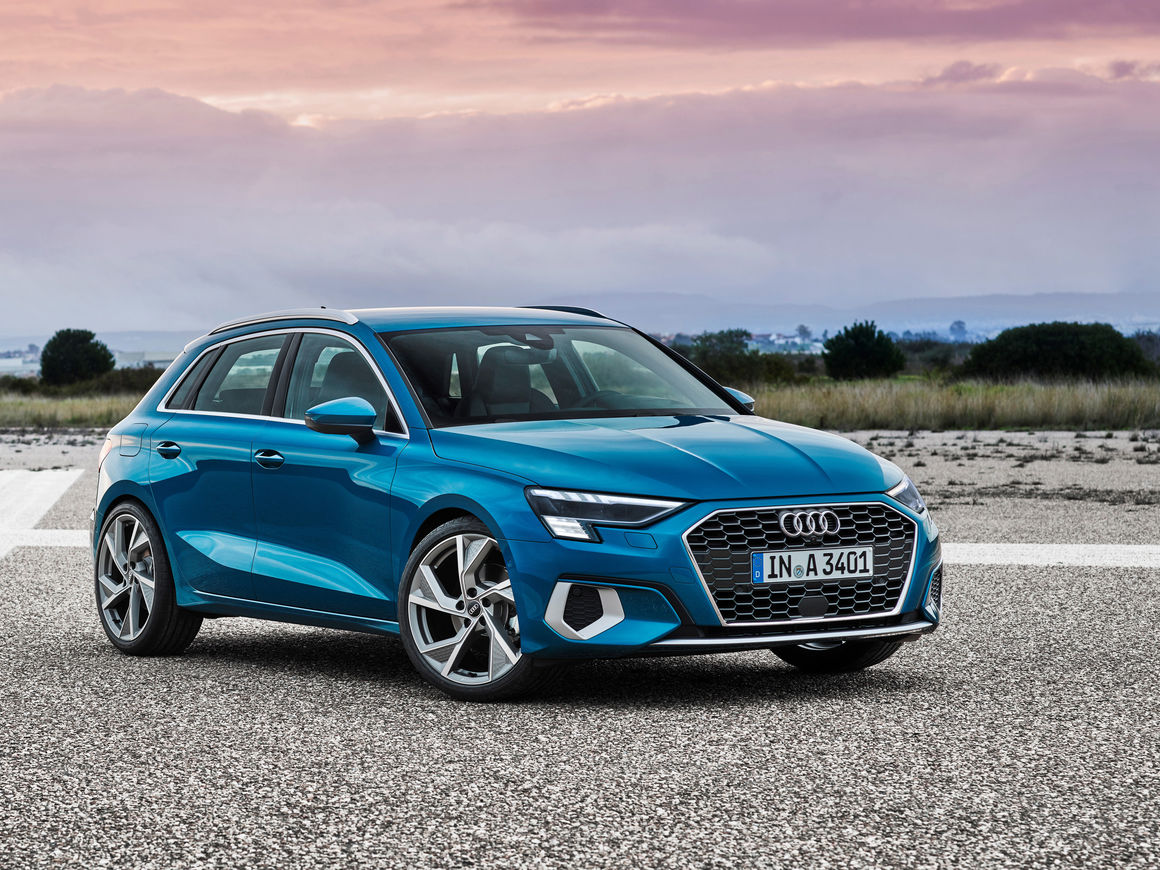
The models that share virtually everything except name and body style lead against the equivalent hatchback/sedan double-acts from Audi and Mercedes-Benz, the A3 and A-Class, respectively.
Sales of the 2 Series Gran Coupe, introduced in February 2020, had a month-on-month increase of 237 per cent in April – up from 65 to 219 units.
Although triple-figure growth wasn’t uncommon last month due to comparisons with the pandemic-hit April 2020, the Gran Coupe’s year-to-date sales are still up by an impressive 176 per cent.
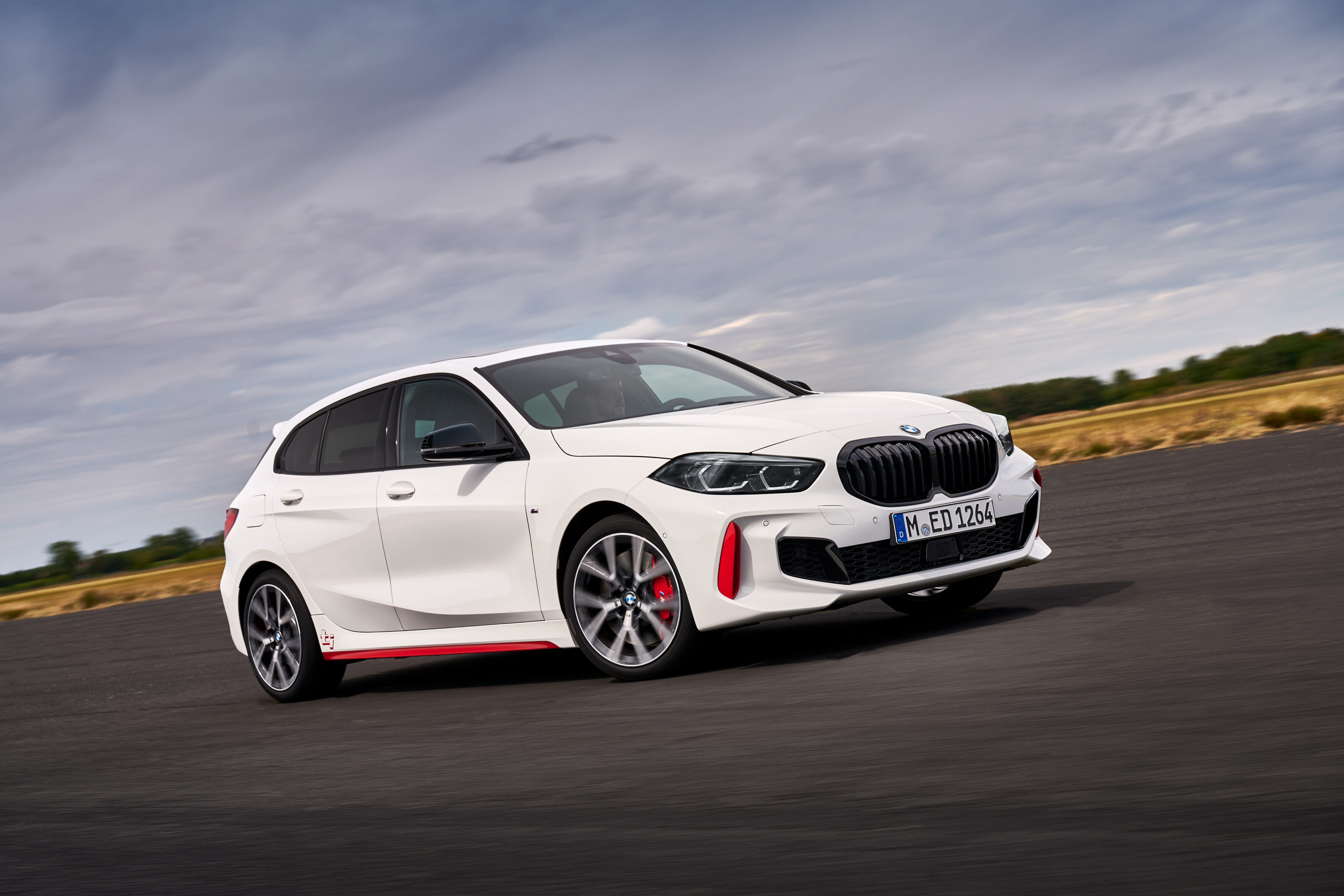
The model was boosted by the late-2020 introduction of a mid-range 220i variant.
The 2 Series Gran Coupe outsold the 1 Series last month for the first time – 219 to 214 units – though the hatchback remains ahead in year-to-date sales, 1016 to 706.
The combined sales of 1733 create a 400-unit-plus buffer to the Mercedes-Benz A-Class range (1317 units), with the ageing Audi A3 third with 208 sales. A new-generation version of the A3 goes on sale later this year.
Historically, the A3 has been the nation’s most popular premium compact car on more occasions than any other model. It achieved number one status from 2009-2011 and from 2015-2018. Its 2016 tally of 6161 units remains a record for the segment.
Mercedes’s A-Class took top honours in 2013 and 2014 after the company turned the third-generation version into a more conventional, VW Golf-rivalling hatch, as well as 2019 and 2020 after the introduction of the fourth-generation model.
The latest A-Class added a sedan variant for the first time, contributing to a particularly dominant 2020 when Mercedes sold 6054 A-Class vehicles – a 43 per cent share of the category. The 1 Series and 2 Series Gran Coupe duo accounted for 3798 sales.
The BMW 1 Series managed to outsell both the A3 and A-Class in 2007, 2008 and 2012, although it was edged out by another car in each instance. The A-Class’s MPV relative, the B-Class, was victorious in 2007 and 2012, while BMW’s British hatchback, the Mini, was the sales champion in 2008.
The 1 Series made the perfect start after the original, E87 model debuted in September 2004. In just four months it almost outsold the full-year sales of the BMW Compact model it was effectively replacing, before the 1 Series became the best-selling premium small car in both 2005 and 2006.
BMW’s third-generation 1 Series introduced in 2019 switched, somewhat controversially for the brand, from a segment-unique rear-wheel-drive format to a front-wheel-drive layout. The exception to this being the flagship M135i xDrive variant which features all-wheel drive.
The 2 Series Gran Coupe’s entry-level 218i and range-topping M235i xDrive variants mirror the 118i and M135i xDrive in the 1 Series line-up, though each model features a different mid-range version. Where the Grand Coupe has a 220i – with an uprated version of the four-cylinder turbo in the 118i/218i – the 1 Series’s mid-spec variant is the newly arrived 128ti front-drive hot-hatch.
The BMW 1 Series range starts from $47,900 with the 2 Series Gran Coupe carrying a $5000 premium over its hatchback equivalent.
Figures reported for the 1 Series don’t include the Coupe and Convertible variants, which were sold between 2008 and 2013 but classified as sports cars by official data. The two-door 1 Series models were renamed the 2 Series for 2013 onwards, a naming convention that was retained for the 2 Series Gran Coupe that is essentially a 1 Series sedan.
The coupe/convertible models are due to be replaced with a new-generation 2 Series in late 2021, with the sports cars retaining a rear-drive layout and a six-cylinder engine option.
EVERY ONCE in a while, a car manufacturer makes a huge strategic gamble. In the Nineties, Renault appeared to bet the house on cars nobody in charge of their critical faculties would buy.
Chief designer Patrick Le Quement knew that competing with other manufacturers head on in traditional sectors wasn’t cutting it, so vehicles like the Avantime, Vel Satis and this, the Renault Sport Spider, materialised.
The Sport Spider appeared at the 1995 Geneva Motor Show, conceived as a way to launch a sporting sub-brand and to go one-make racing. On both of those counts the Sport Spider proved a success. Sales? Not quite so clever.
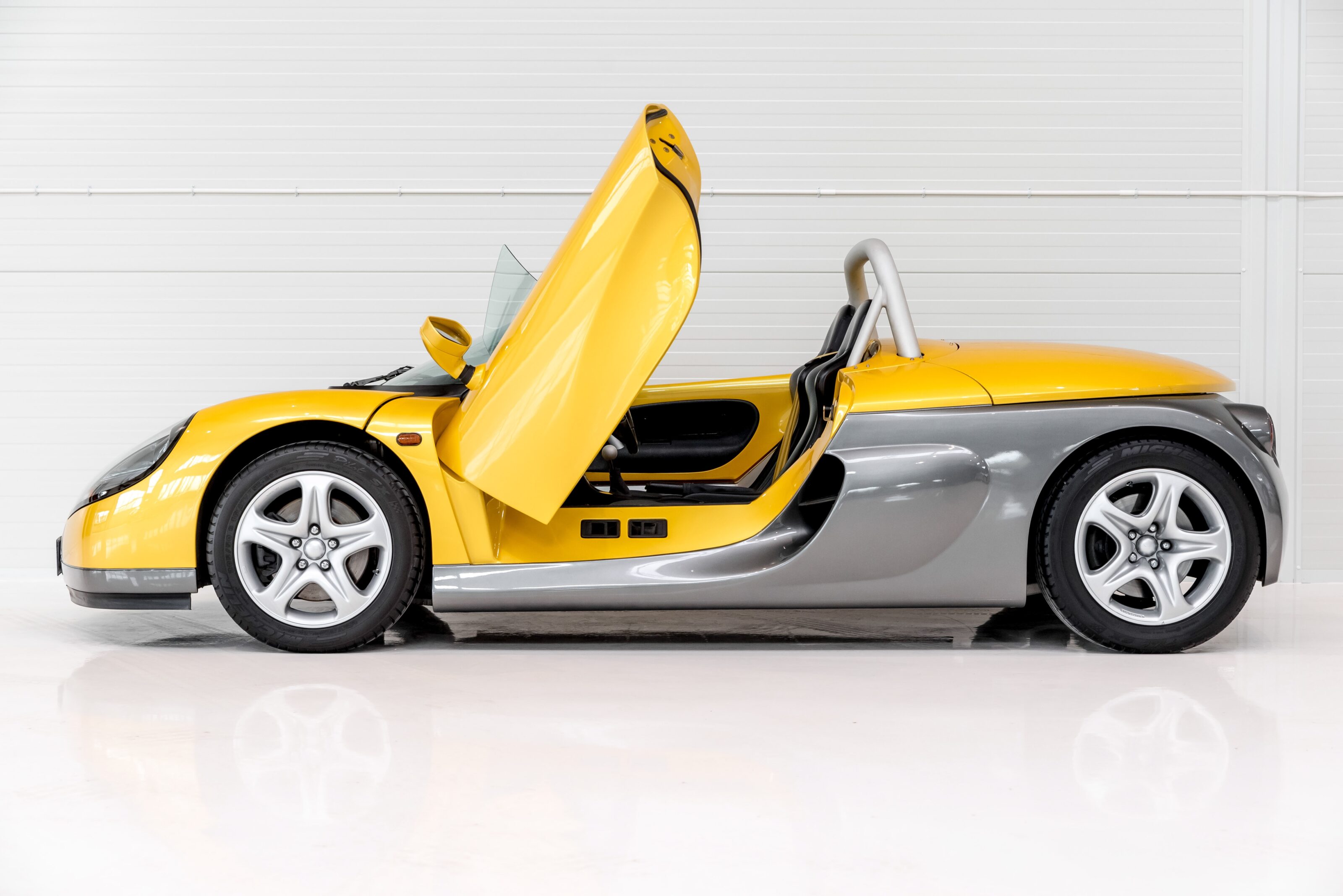
Built at the Alpine plant in Dieppe, and offered for sale in 1996, only 1685 were ever built. In 1996, the car got a windscreen and a vestigial roof that would flagellate itself to oblivion at anything over 80km/h.
Just 100 right-hand drive examples were built, with a choice of yellow or blue bodies. It was mechanically tough, using the same 110kW 2.0-litre F7R lump from the Clio Williams, mated to a five-speed manual, all sitting behind the driver in an aluminium chassis.
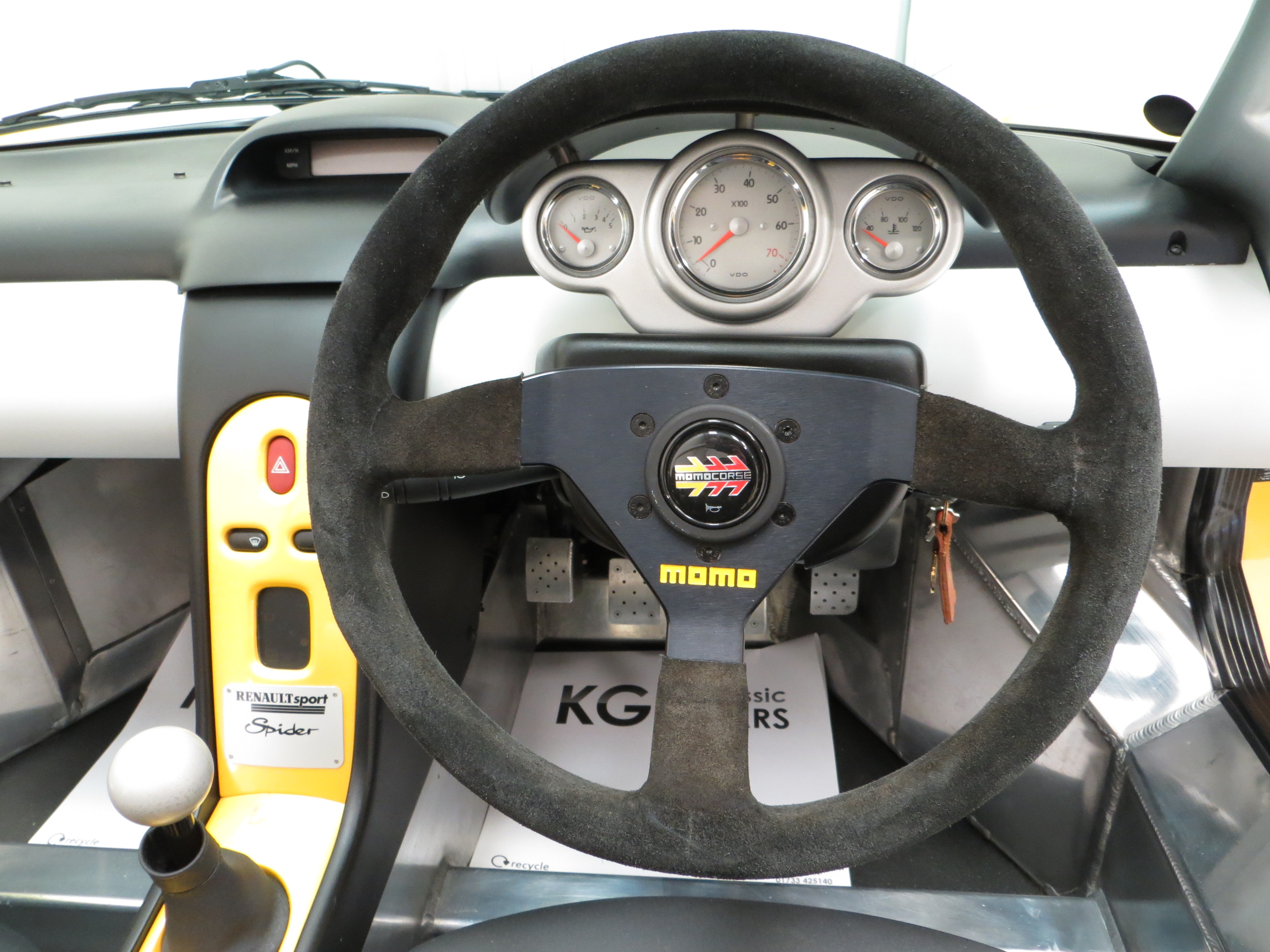
There’s no power steering, no ABS, no servos whatsoever and no heater which contribute to a weight figure of 930kg. Given that a Clio Williams weighed 981kg, it’s actually not that much of a saving and much of that is down to the vast girth of the aluminium tub.
There’s a development story that claims that when one of Renault’s execs saw the naked chassis he couldn’t believe that something of that size was the chassis and not the industrial jig to build it.
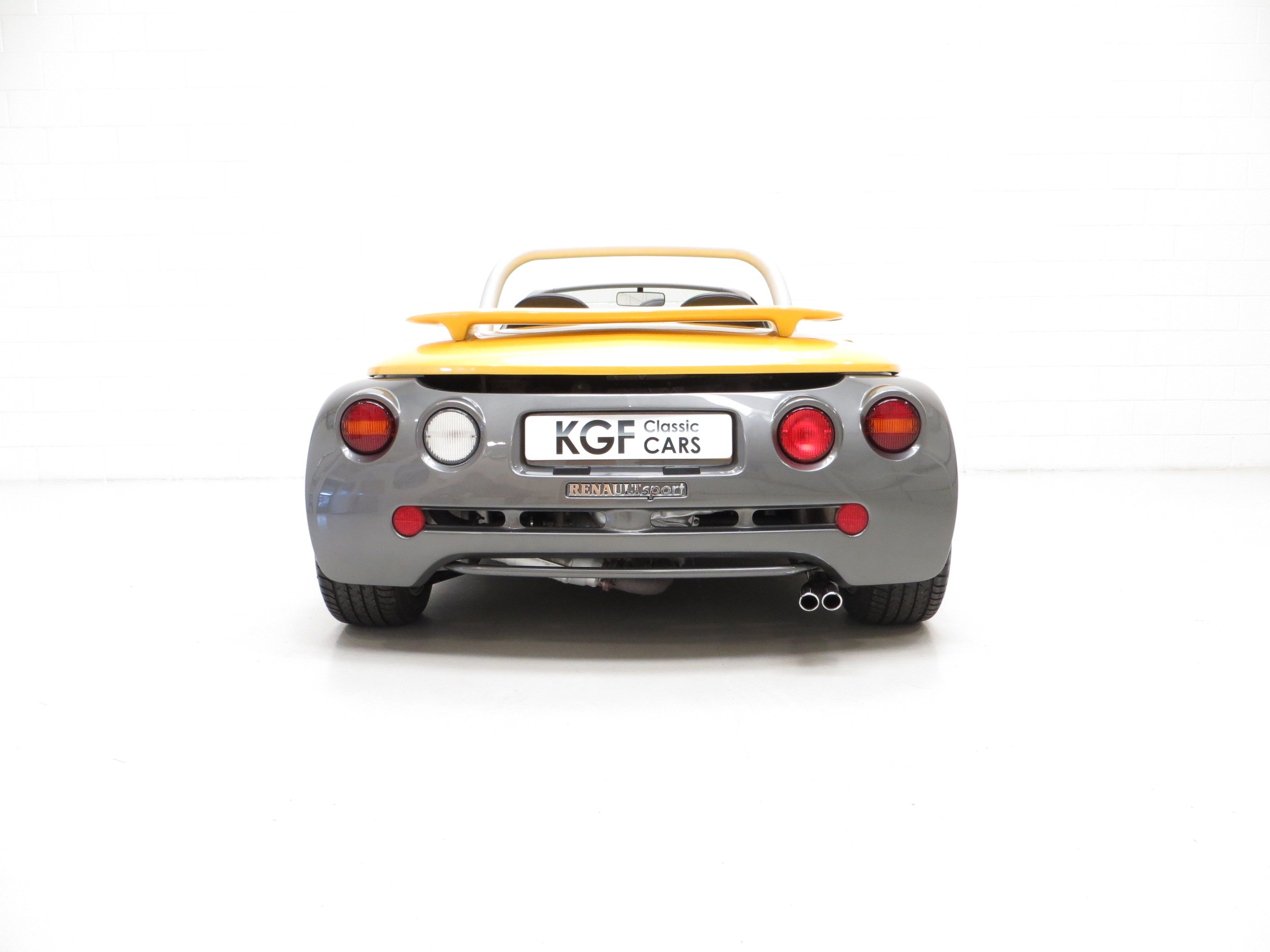
Ultimately, the beetle-winged Sport Spider was too expensive, too uncompromising and not playful enough to succeed. It was also, notably, not a Lotus Elise. Renault may have gambled and lost with the product, but the Renaultsport brand it spawned? Priceless.
Renault Sport Spider specs
Engine: 1998cc inline-4, DOHC, 16v Power: 110kW @6000rpm Torque: 184Nm @4500rpm 0-100km/h: 6.5 sec Weight: 930kg
Talking points
- Bonkers hypercar set for 2022 unveiling
- 2.4-litre twin-turbo V6 and u2018Toyota Racing Systemu2019 hybrid set-up will produce a minimum of 735kW
- Will compete directly with the Aston Martin Valkyrie and Mercedes-AMG One
Toyota is rumoured to be planning a 2022 unveiling for its road-going hypercar, the GR Super Sport.
According to Autocar, the road-legal two-seater, which is based on the Japanese automaker’s GR010 Hybrid racing car specifically developed for the Le Mans Hypercar (LMH) series, will serve as a halo performance car product for the Gazoo Racing brand upon its release.
However, despite utilising the platform of the new LMH-class car, the new GR Super Sport won’t come equipped with the same 3.0-litre V6 hybrid powertrain found in the racer.
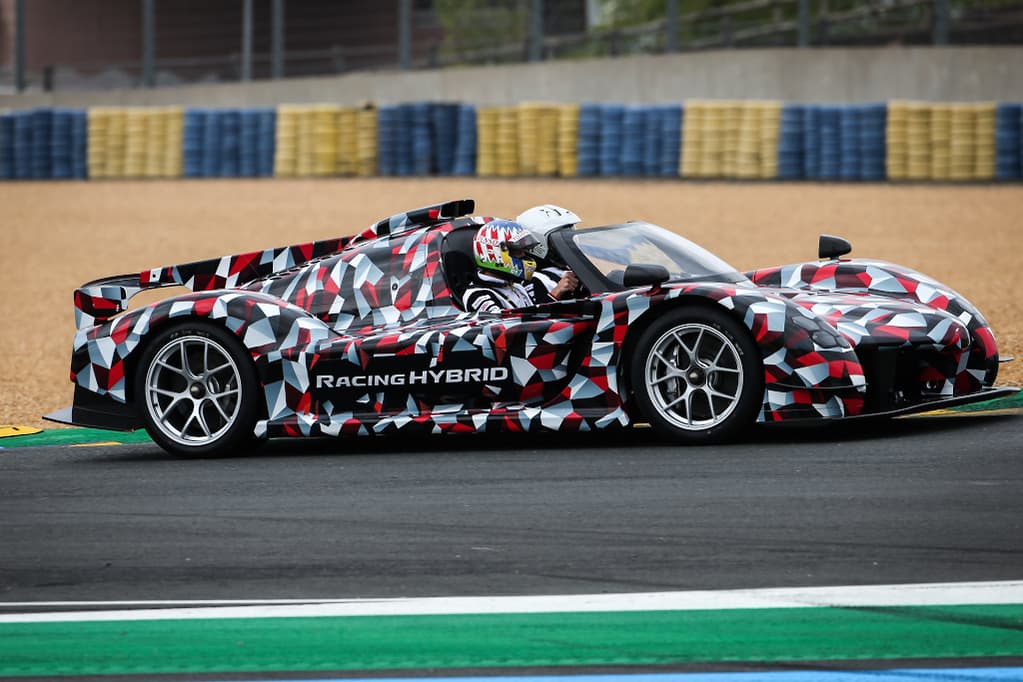
Instead, the rear-drive weapon will receive a version of the drivetrain previously found in the middle of the Toyota’s triple Le Mans-winning LMP1-class TS050 Hybrid.
This 2.4-litre direct-injection twin-turbo V6 will be fitted with a ‘Toyota Racing System’ hybrid set-up, and according to sources, the Aichi firm hasn’t ruled out the possibility of the GR Super Sport running a triple motor hybrid system.
Power is said to be in the realm of 735kW, but with the implementation of the aforementioned tri-hybrid tech, this figure could be even higher.
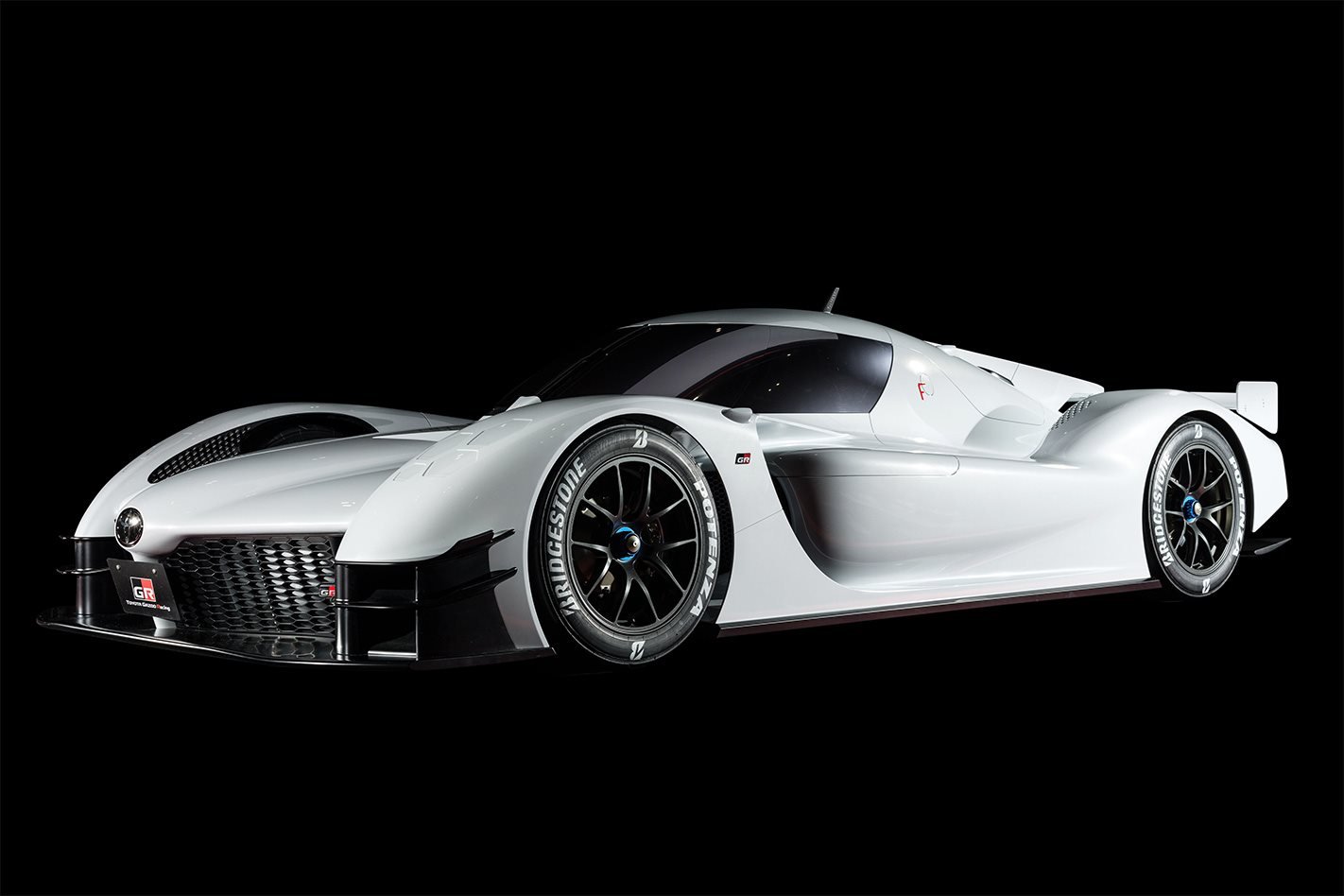
Toyota has decided to go ahead with building its Aston Martin Valkyrie and Mercedes-AMG One competitor, even though technically, it no longer needs to.
That’s because the rules governing LMH racers changed drastically in 2018 and, crucially, automakers are now no longer required to make a minimum of 20 road-legal homologation specials to compete in the top class of the FIA World Endurance Championship (WEC).
In fact, the rules around LMH have changed so much that unique racecars with all-wheel drive and hybrid powertrains which could never even hope to be road legal, can compete in the WEC.
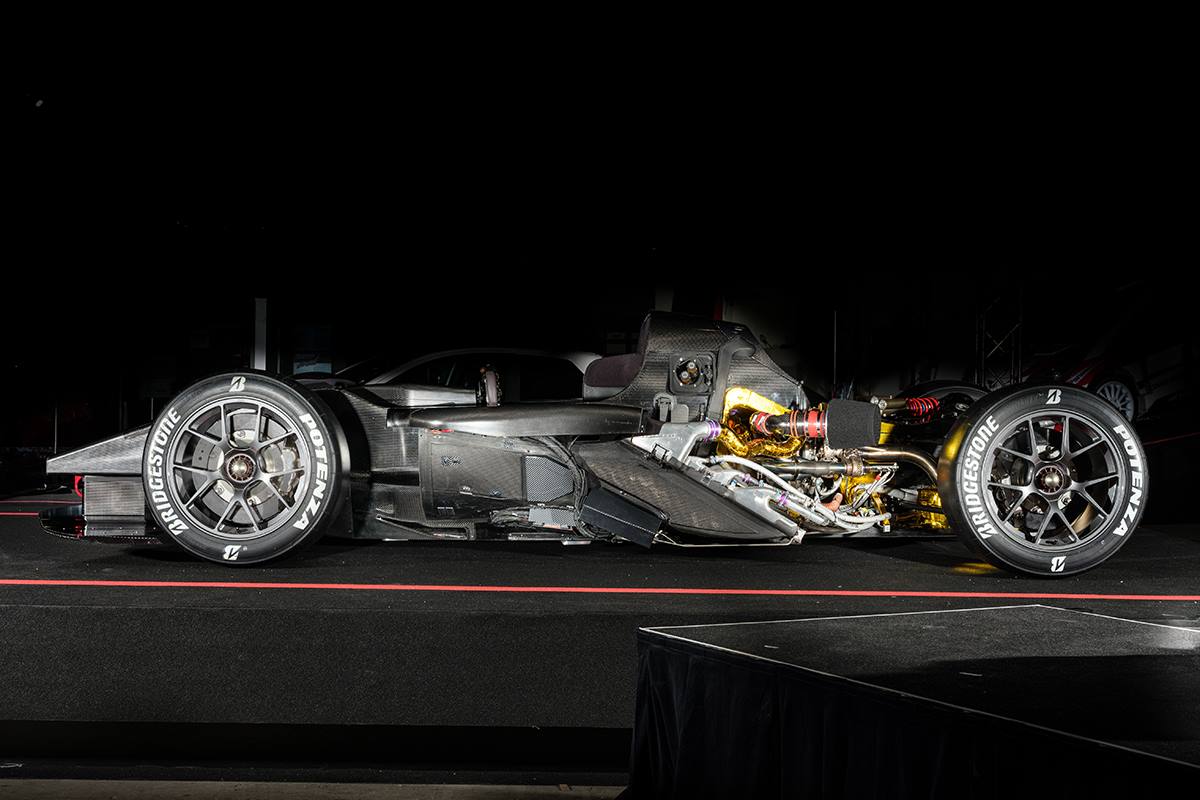
But with development already well underway, and Toyota’s boss, Akio Toyoda, a diehard driving and motorsport enthusiast, the hypercar is still going ahead.
It’s not yet known how many units Toyota will actually make, nor whether any will land in Australia. How much it will cost is another answer we’ll have to wait for too, but the eventual price is likely to easily eclipse the GR Yaris, GR 86 and GR Supra already in the brand’s performance line-up, especially given the bespoke engineering required to manage such an enormous power output.
A representative from Toyota Australia told WhichCar that it is aware of the hypercar’s ongoing development, but any more details about the GR Super Sport are yet to be confirmed.
Kia has applied to trademark its upcoming range of electric vehicles in the US – but not quite in the way we had expected.
According to Korean Car Blog, The Korean manufacturer has filed an application with the US Patent Office to trademark the names IK1 through to IK9 and Kia IK1 to IK9, each with its own font and all included in the ‘car’ category’.
The move has led to speculation the carmaker is planning to change how it refers to its electric line-up in the US, as previously in its ‘Plan S’ business strategy the models were labelled EV1 to EV9.
This is not the first time Kia has registered these names as a trademark. The automaker applied for them in Korea in December 2020, but they were not registered with the US Patent Office at the time.
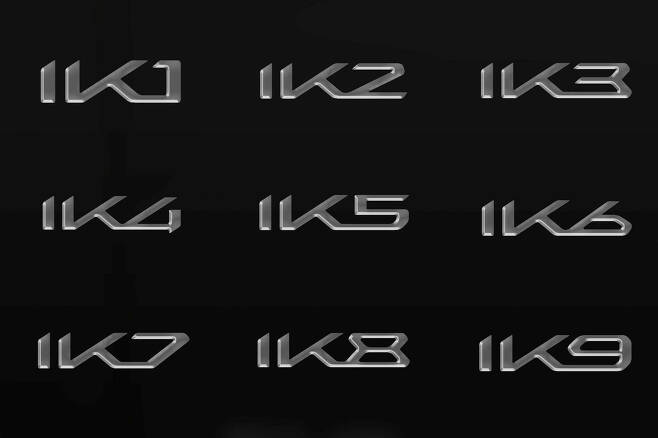
Whether Kia plans to rename its fleet for the US market as yet remains unclear.
Among its line-up of EVs is the EV6 all-electric crossover, revealed for the Australian market earlier this year, which will be the first of eleven EV models to be released by 2026.
As the EV6 has already launched in the US too, it remains to be seen whether it will keep its name or perhaps go by IK6 instead.
With some of its models referred to differently in America, such as the K5 (previously the Optima), K8 (replacing the K7/Cadenza) and K3 (otherwise known as the Forte or Cerato here in Australia), it’s not too much of a stretch to imagine its EV range could go the same way.
Just a few short months ago, new Renault boss Luca De Meo issued the rallying war cry “vive le Renaulution” in a bid to turn his flailing company around in the dawn of the electric age.
The French marque has set itself some big targets since then – pledging it will launch seven new all-electric vehicles by 2025 and be the greenest car brand in Europe by 2030, with nine out of every 10 cars sold electrified.
In addition, it wants to move toward recycling 120,000 of its vehicles (including EVs) every year and use almost 80 per cent of strategic recycled materials in its new batteries – ending, as De Meo puts it, “decades of fast fashion and over consumption”.
During a press conference at Boulogne-Billancourt last week, the carmaker revealed more about its push towards “sustainable mobility”.
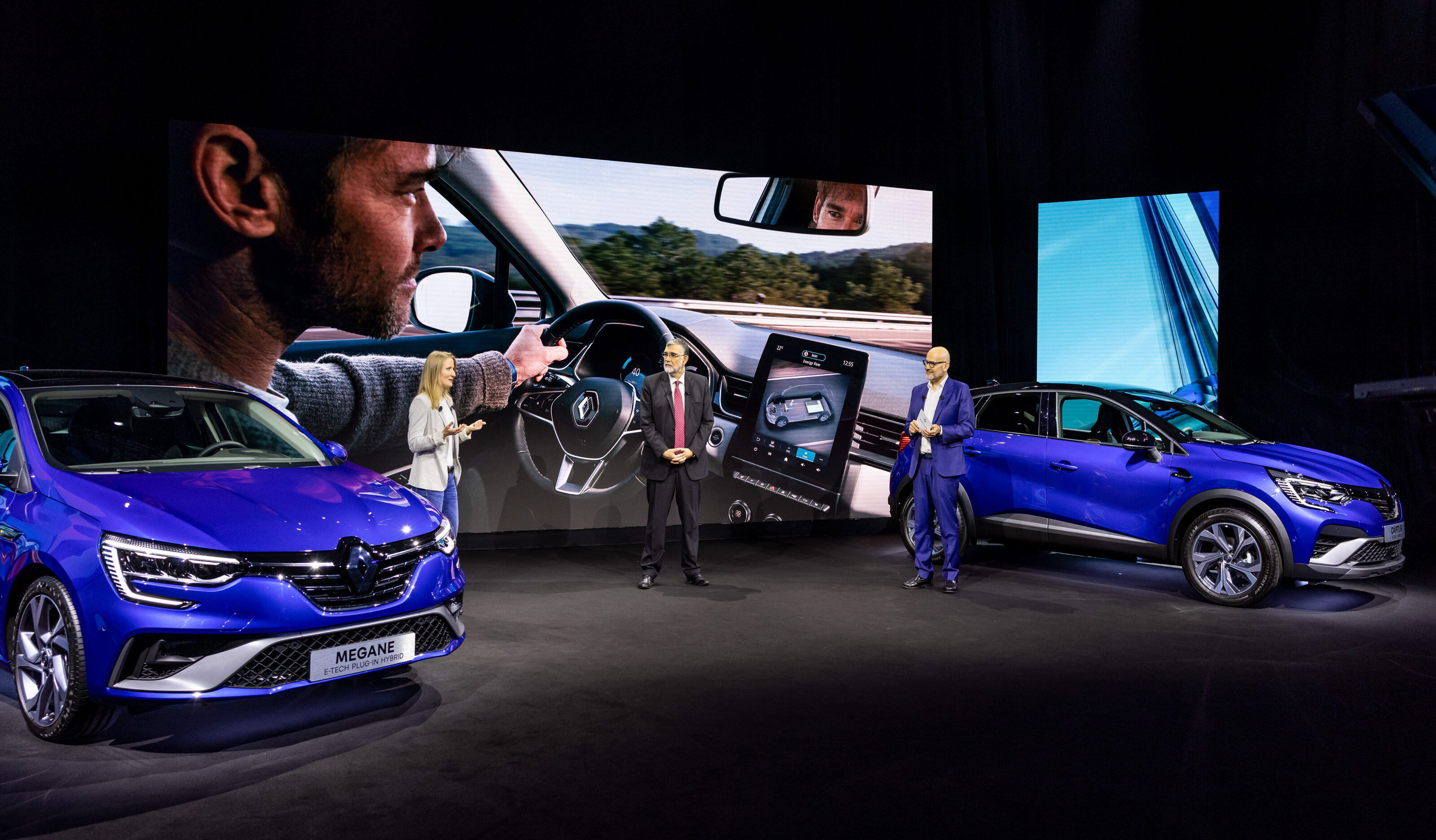
Last year welcomed the new Captur E-Tech plug-in hybrid electric vehicle (PHEV) and Megane Wagon E-Tech PHEV, as well as the Clio self-charging hybrid electric vehicle (HEV).
With the recent additions this year of the Captur E-Tech PHEV and the Megane Sedan E-Tech PHEV, and the brand-new model Arkana HEV about to go on sale in June, the Renault brand now has a range of six electrified vehicles.
Renault claims with the help of the new models in its line-up, it is building a “strong umbrella brand for its hybrid and electric vehicles” modelled on the engine used in its F1 cars.
So, what can we expect from the automaker for 2021/22?
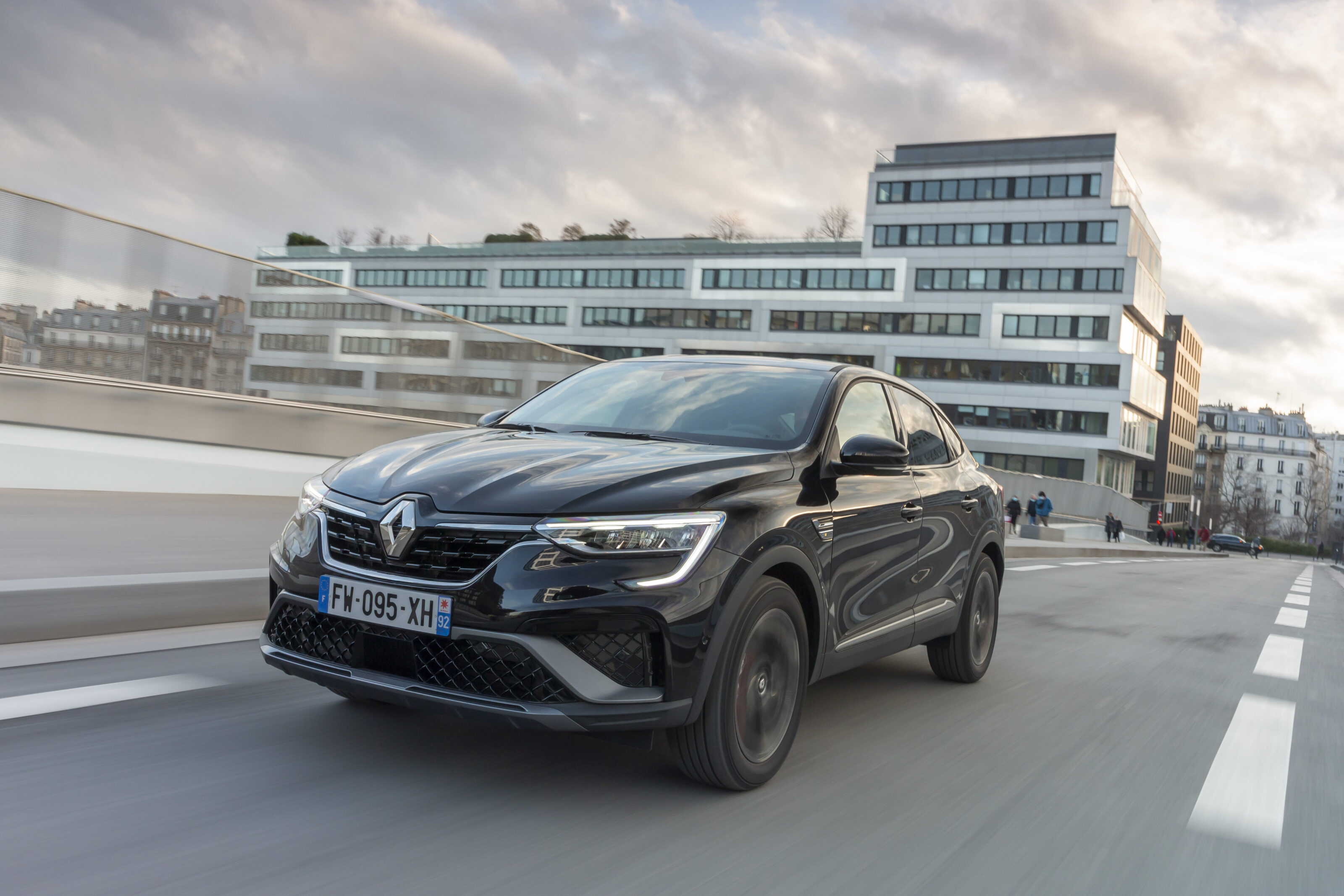
Arkana E-Tech HEV
The Arkana, a “surprisingly roomy” full-hybrid coupe SUV unveiled last year, is the first car in Renault’s range to be born as a hybrid rather than converted.
In Europe, the new Arkana is based on the Alliance’s CMF-B modular platform – which was also featured on the latest generations of Clio and Captur. It can run in all-electric mode up to 80 per cent of the time on city roads which equates to a 40 per cent fuel saving compared to a petrol engine running around town.
It contains a 12kWh lithium-ion battery and offers 105kW/353Nm of torque driving the front wheels.
The 1.6 litre four-cylinder engine is mated to an E-Tech multi-mode automatic gearbox with 15 combinations.
It’s also said to go from 0-100km/h in 10.8 seconds with a top speed of 172km/h.
Fuel efficiency is rated at 4.9L/100km on a combined cycle, and it’s said to produce 111g CO2/km.
Like the Renault Samsung Motors XM3, it will also be made at the Busan plant in South Korea.
According to the manufacturer, the Arkana “guarantees a more thrilling and responsive driving experience, especially with the R.S. Line trim design” and scores five stars in the Euro NCAP crash tests.More than 6,000 European orders have already been placed in May, ahead of the new model hitting showrooms in June.
The Arkana will also come with an ICE-only powertrain option in the form of a seven speed, four-cylinder, 1.3 litre petrol turbo variant producing 103kW/260Nm, with a claimed top speed of 205km/h. Fuel efficiency is rated at 5.8L/100km.
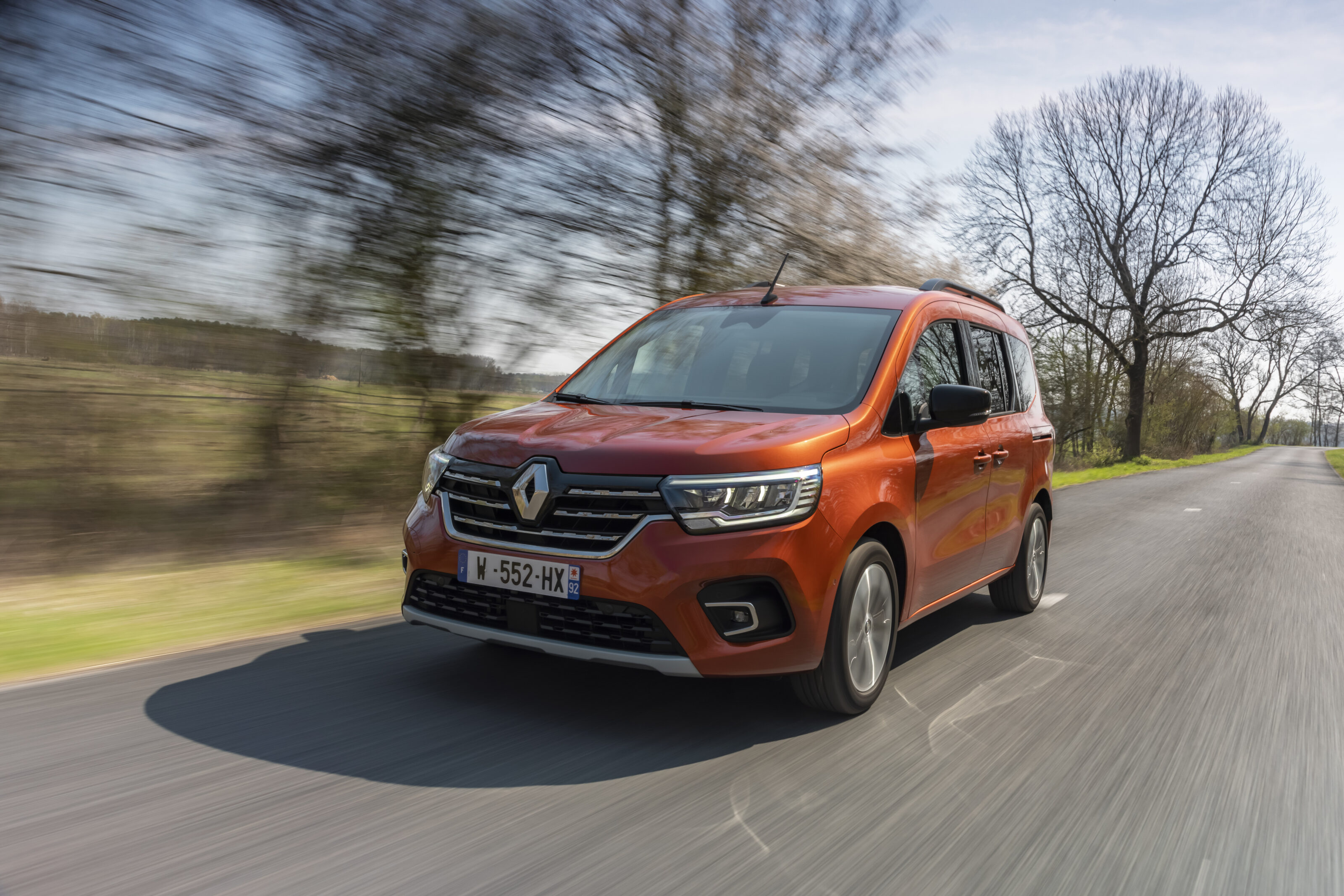
New Kangoo (ICE)
Although not electric just yet, back with stronger ambition is the new Kangoo designed for families – with Renault claiming it has so much storage you’ll “never run of space”.
It will be available in both five and seven-seater models, with three full-sized seats in the rear and more than 49 litres of useful storage compartment space. Its boot boasts upwards of 775 litres of flat-bed storage with the ability to expand up to 3500 litres.The new Kangoo comes with a choice of five powertrains – two petrol and three diesel.
The 1.3 litre petrol 130 four-cylinder engine produces 96kW/240Nm and is available as a six-speed manual or seven-speed auto, while the 1.3 litre 100 four-cylinder engine makes 75kW/200Nm but only comes in the six-speed manual.Meanwhile the diesel variants all come as a 1.5 litre four-cylinder Blue dCi – with the 115 (85kW/270Nm) and 95 (70kW/260Nm) available as either a six-speed manual or seven-speed auto. The 75 (55kW/230Nm) is only on offer with a six-speed manual.Fourteen new standard driver-assistance safety systems are included as standard.
Manufactured at the Renault factory in Maubeuge, France, it will be sold throughout Europe and internationally as early as June 2021.
Coming next year, a fully-electric version of the new Kangoo will also be available.
Currently in Australia we have the Kangoo and Kangoo Maxi (both ICE) and Kangoo Maxi Z.E (electric).
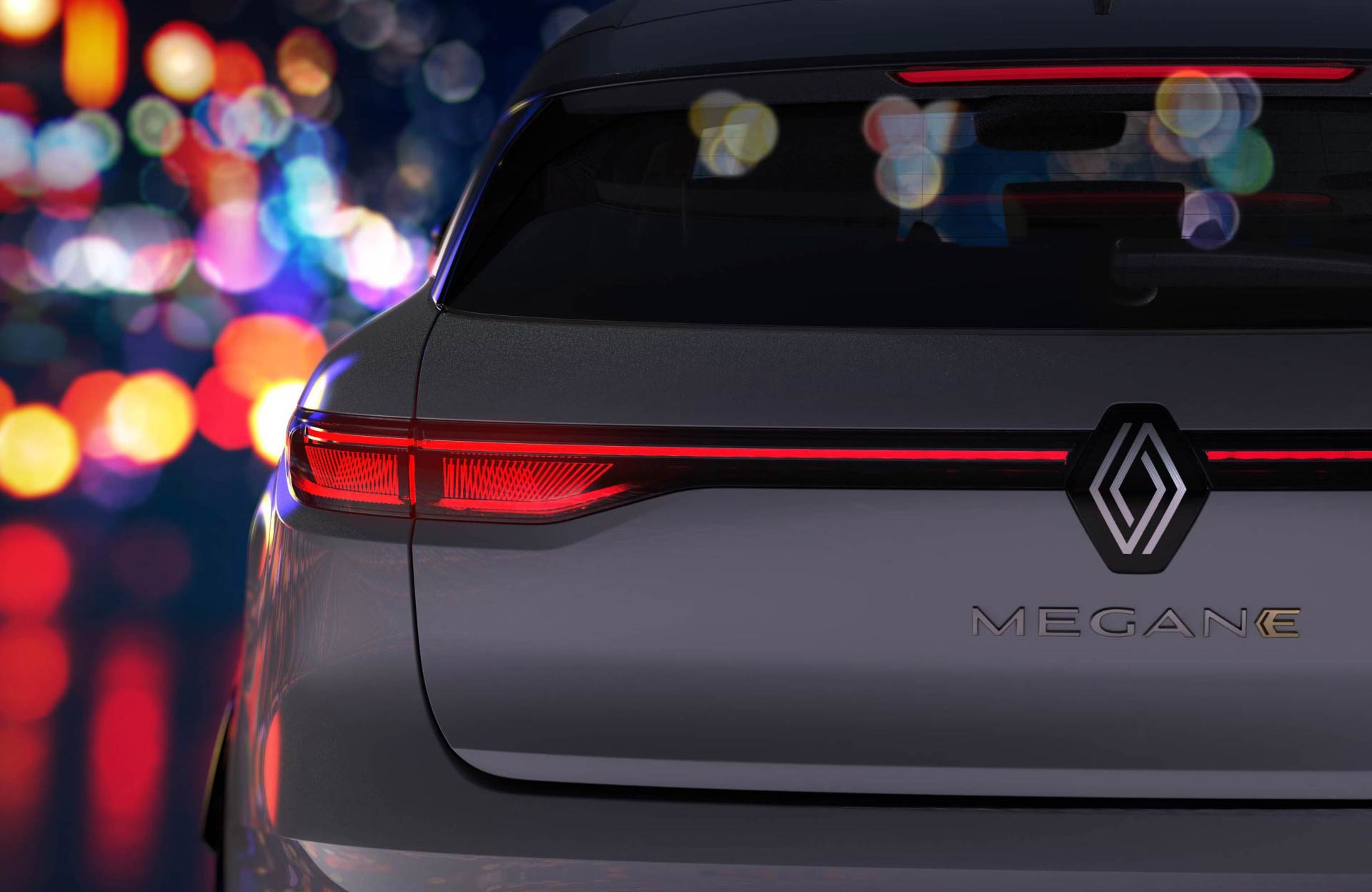
Megane E-Tech Electric
The Megane E, which was revealed in concept as the Megane eVision last year, is expected to be fully revealed later this year, with a launch likely to occur in the first half of 2022.
The Megane will wear the brand’s revamped logo and will sit on the Renault-Nissan Alliance’s CMF-EV platform.
It contains a 60kWh battery pack under the floor and a single 160kW e-motor with 300Nm of torque driving the front wheels, and its claimed driving range is around 450km on a single charge (WLTP).
It’s also said to sprint from 0-100km/h in less than eight seconds. Not exactly the hottest acceleration we’ve come to hear about with EVs, but a Renault Sport version could be on the roadmap.
An on-board charger will allow 7kW AC single-phase charging from a wall-box. However, the only charge time Renault has revealed so far is that the electric Megane will be able to reclaim 200 kilometres of range in 30 minutes when rapid charging at its maximum of 130kW DC.
Also next on the agenda for the upper segments – especially the C-SUV segment – will be the arrival of a brand-new 1.2L three-cylinder engine combined with an electric motor.
2022 will bring a 149kW hybrid, followed by a 208kW plug-in hybrid 4WD in 2024.
Exact details of whether we’re likely to see these models on the Australian market have yet to be revealed.
