
Renault has confirmed all its cars will be limited to 180km/h as of next year.
According to German news website Der Spiegel, Renault CEO Luca de Meo said in a meeting with stakeholders that the brand was capping speed in the interests of safety, helping to prevent road accidents.
It is understood the new Megane eVision SUV could be the first model to be fitted with the limiter before the equipment is installed across the French carmaker’s range.
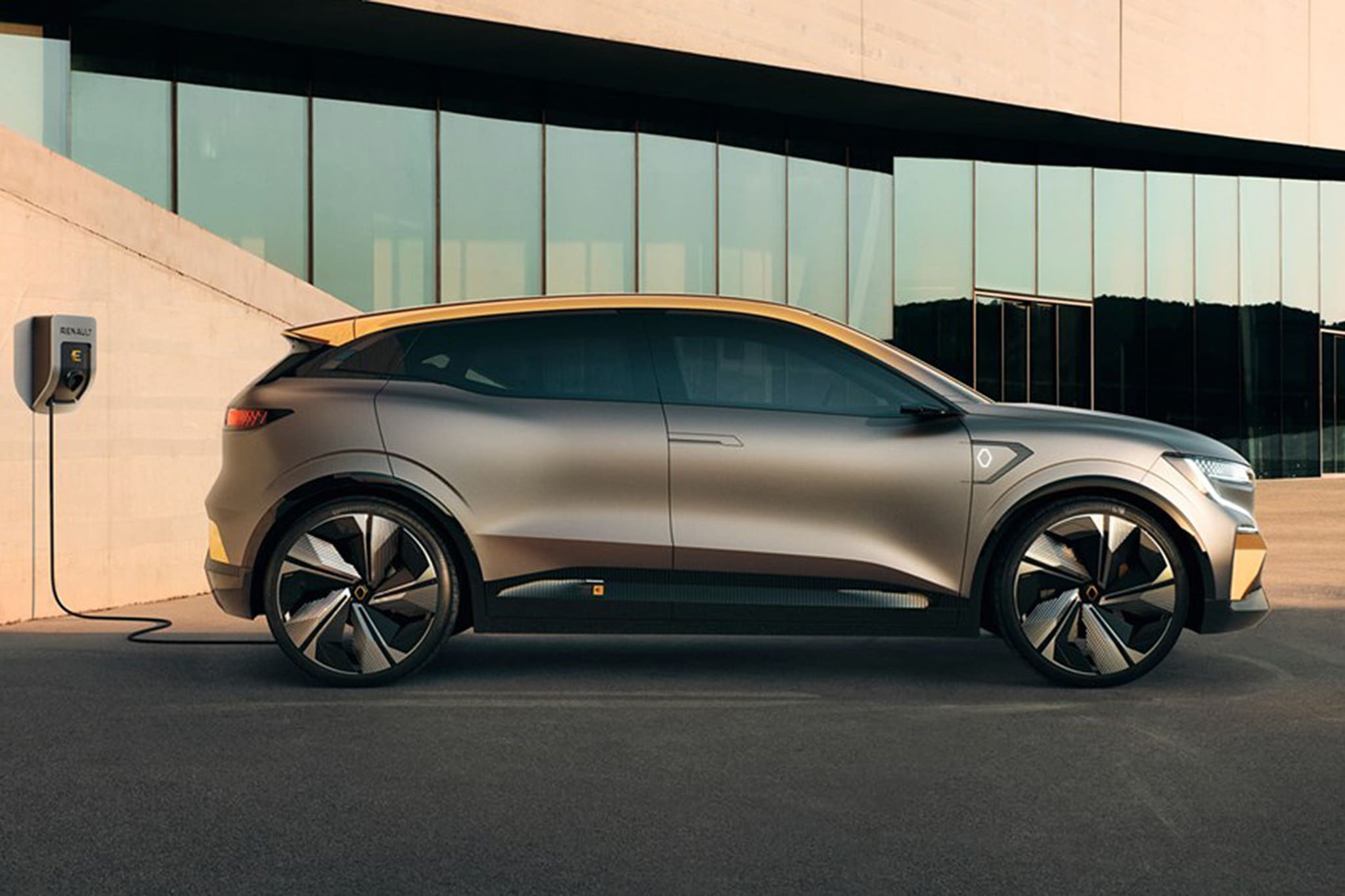
Cars built by Renault’s Romanian budget arm, Dacia, are also set to be affected by the speed limitation, although with its best-selling Duster SUV topping out at only 181km/h it won’t have a huge impact on the brand.
Renault is not the first to introduce such a measure, last year Volvo announced it was capping the speed of its vehicles to 180km/h over safety concerns. It remains to be seen if or when other manufacturers will follow suit.
WhichCar has contacted Renault for comment.
Talking Points
- Unfinished C_Two prototype has max power output of 1317kW
- More performance still to come
- C_Two hypercar will have different name when production-spec car is launched
Rimac founder and CEO, Mate Rimac, has shown off the extraordinary accelerative capabilities of his company’s latest hypercar creation, the Rimac C_Two.
In a candid, vlog-style 10-minute video, the 33-year-old Croatian entrepreneur walks us through what the pre-production vehicle looks like in its static form, and more importantly, what it looks like on the move.
Shooting from an empty airfield 30 minutes away from the Automaker’s Sveta Nedelja headquarters in Croatia, Rimac explains the C_Two prototype is one of five development cars, and the hypercar project is currently running at “85 to 90 per cent of performance”.
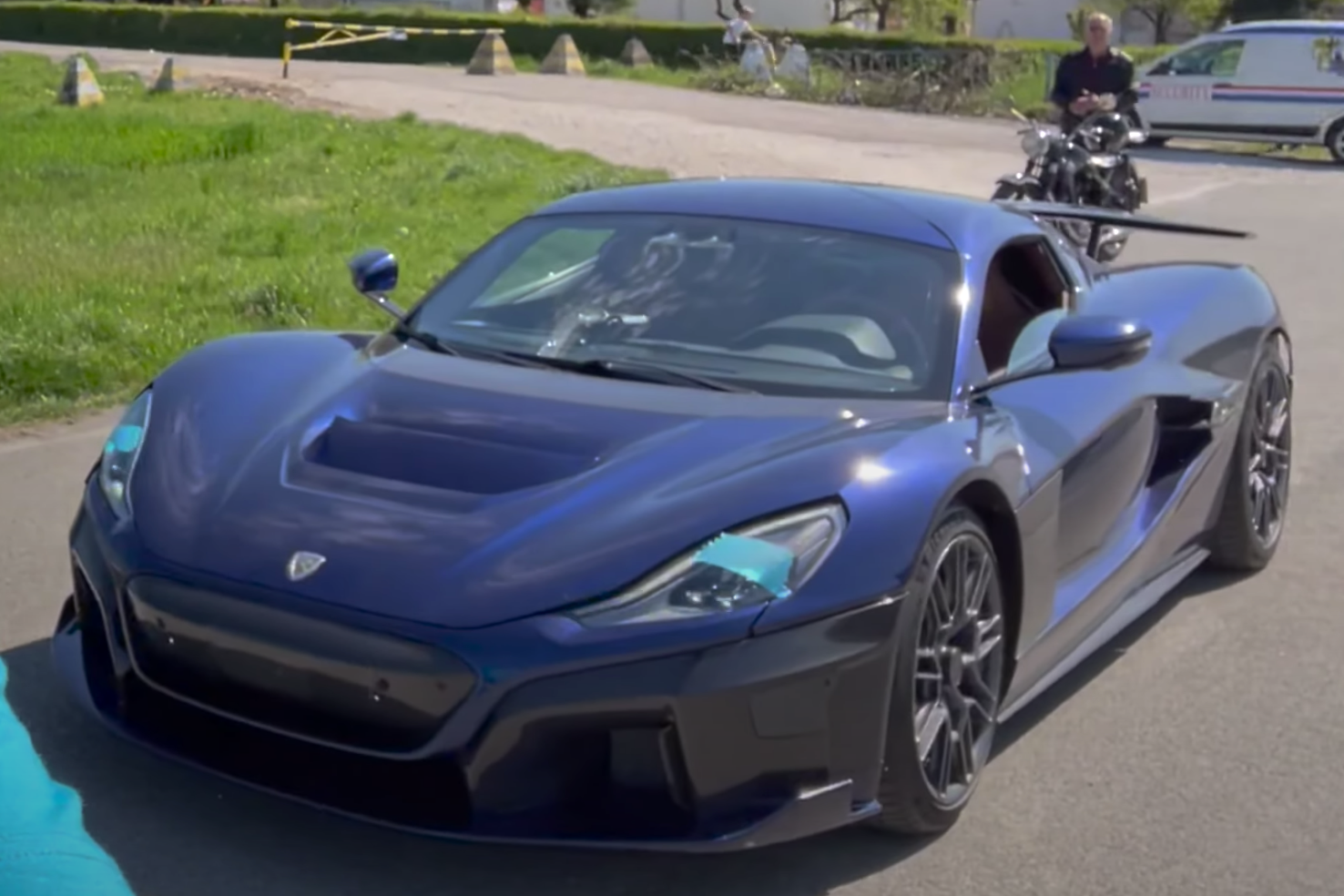
Despite not operating at 100 per cent of its performance capabilities due to torque and software gremlins, and not yet having a launch control system, Rimac proceeds to performance test the C_Two prototype on the abandoned airfield with unbelievable results.
Verified by third party timing software, on standard Michelin Pilot Sport 4S tyres and on a traction-limited surface, the prototype accelerates from 0-60mph (97km/h) in just 2.33 seconds and achieves a quarter-mile time of 8.94 seconds at 155mph (249.7km/h).
These times mean that even this unfinished specimen is the fastest-accelerating car in the world, eclipsing the already biblically quick Bugatti Chiron.
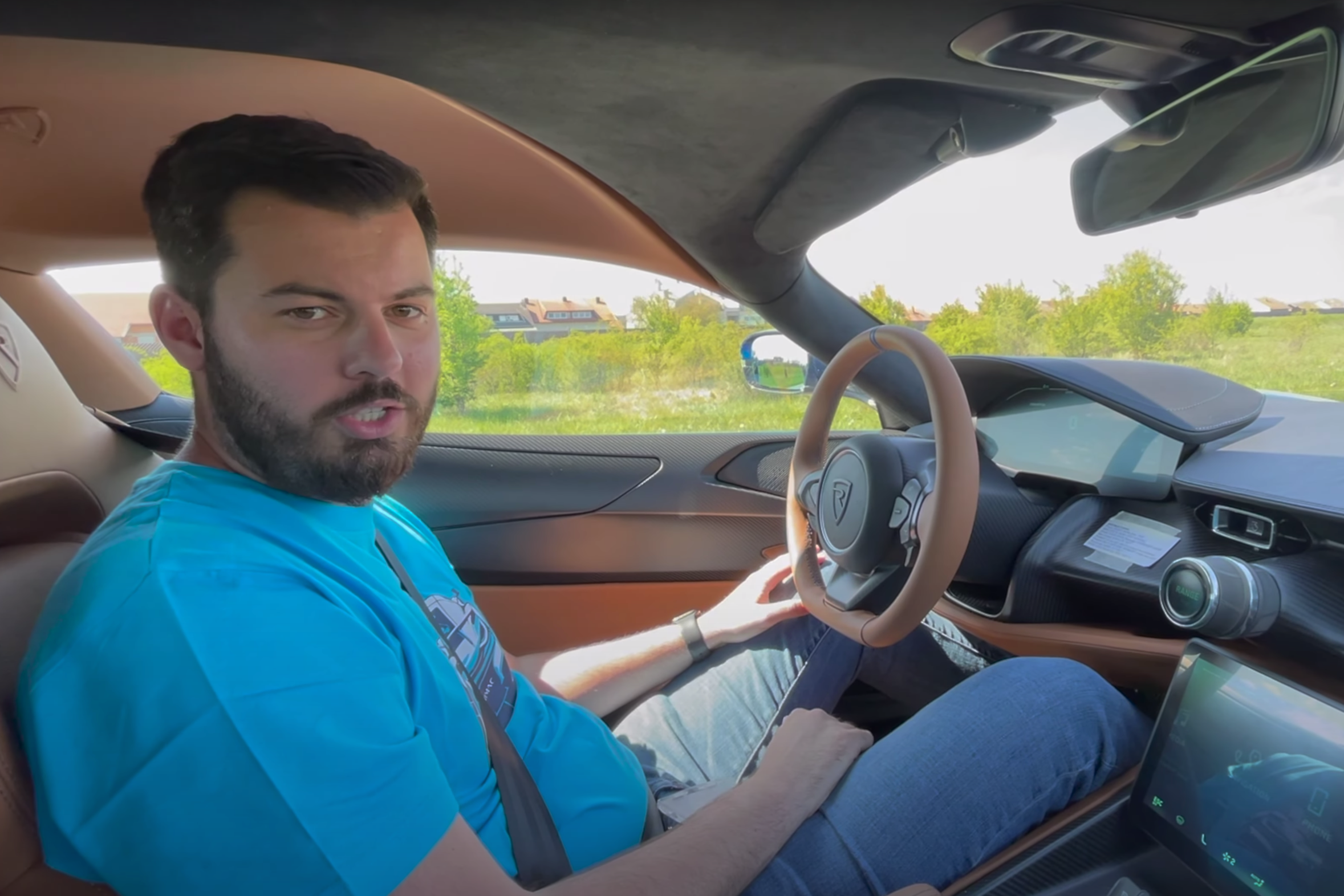
After completing a few more runs and properly warming up the tyres with a few silent burnouts, the C_Two is then pitted against Porsche’s fastest electric vehicle – the Porsche Taycan Turbo S.
When the race starter’s arms drop, the Porsche gets the jump on the Rimac, and sticks in the lead until about 75mph (120km/h), at which point the Rimac walks past the Taycan as if it were standing still.
After the race is over, Rimac shows the onboard telemetry from the drag, including peak power achieved by the C_Two.

At Vmax on its quickest run, the electric hypercar was producing a faintly believable 1317kW (roughly 1766 horsepower).
Rimac concludes the video by saying the performance of the car is still yet to be fully realised, and by the time it reaches production, it will be the out-and-out “fastest-accelerating production car in the world”.
With performance like this, it’s little wonder that other automotive manufacturers have invested heavily in the Croatian battery and automaker.
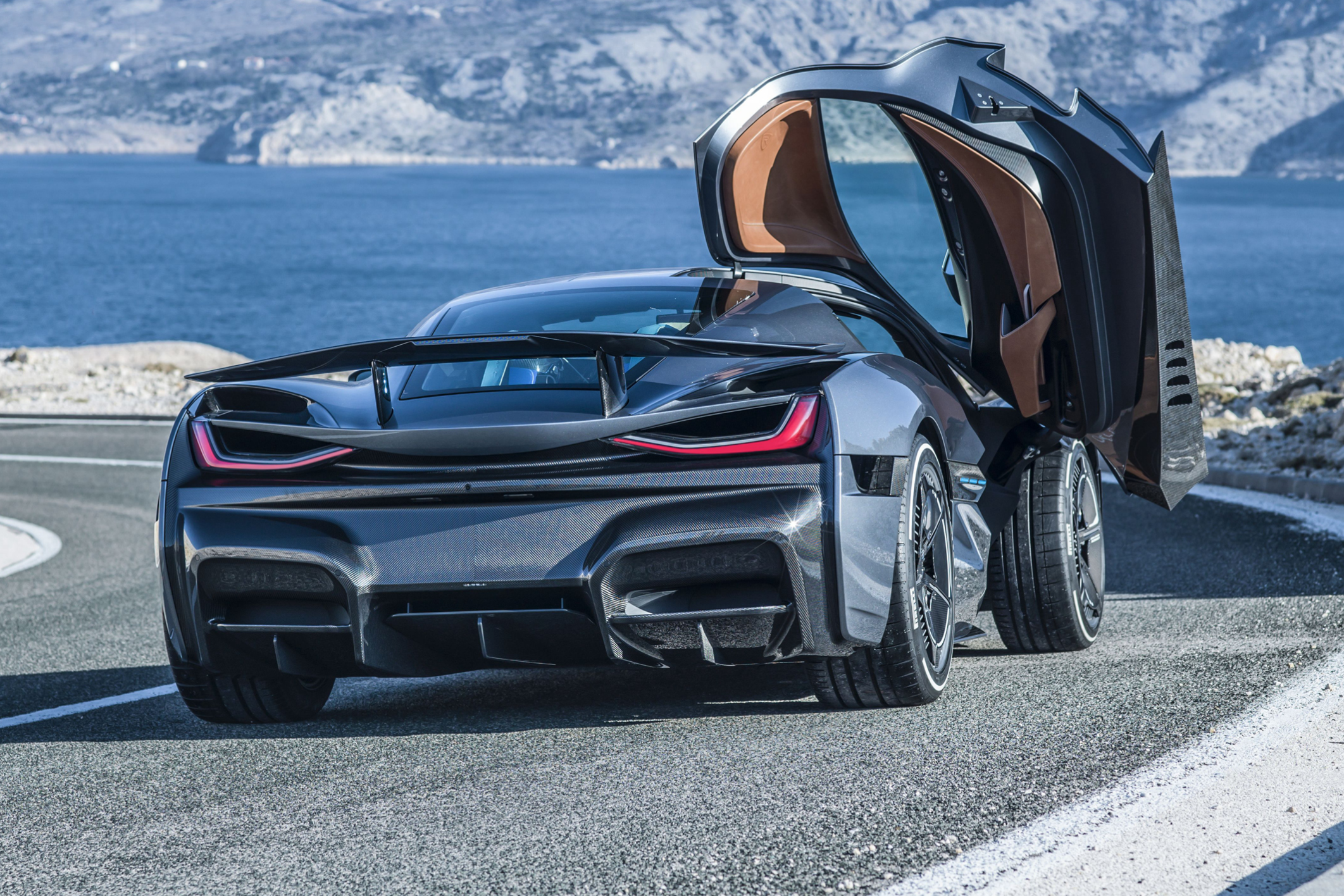
Porsche currently owns 24 per cent of Rimac, while Chinese battery recycling company Camel Group owns 14 per cent, as does the Hyundai Motor Group.
It’s also unsurprising, given the nonpareil pace of the C_Two, that Volkswagen and Porsche are rumoured to be considering handing control of hypercar brand Bugatti over to the Croatian firm.
What stands out?
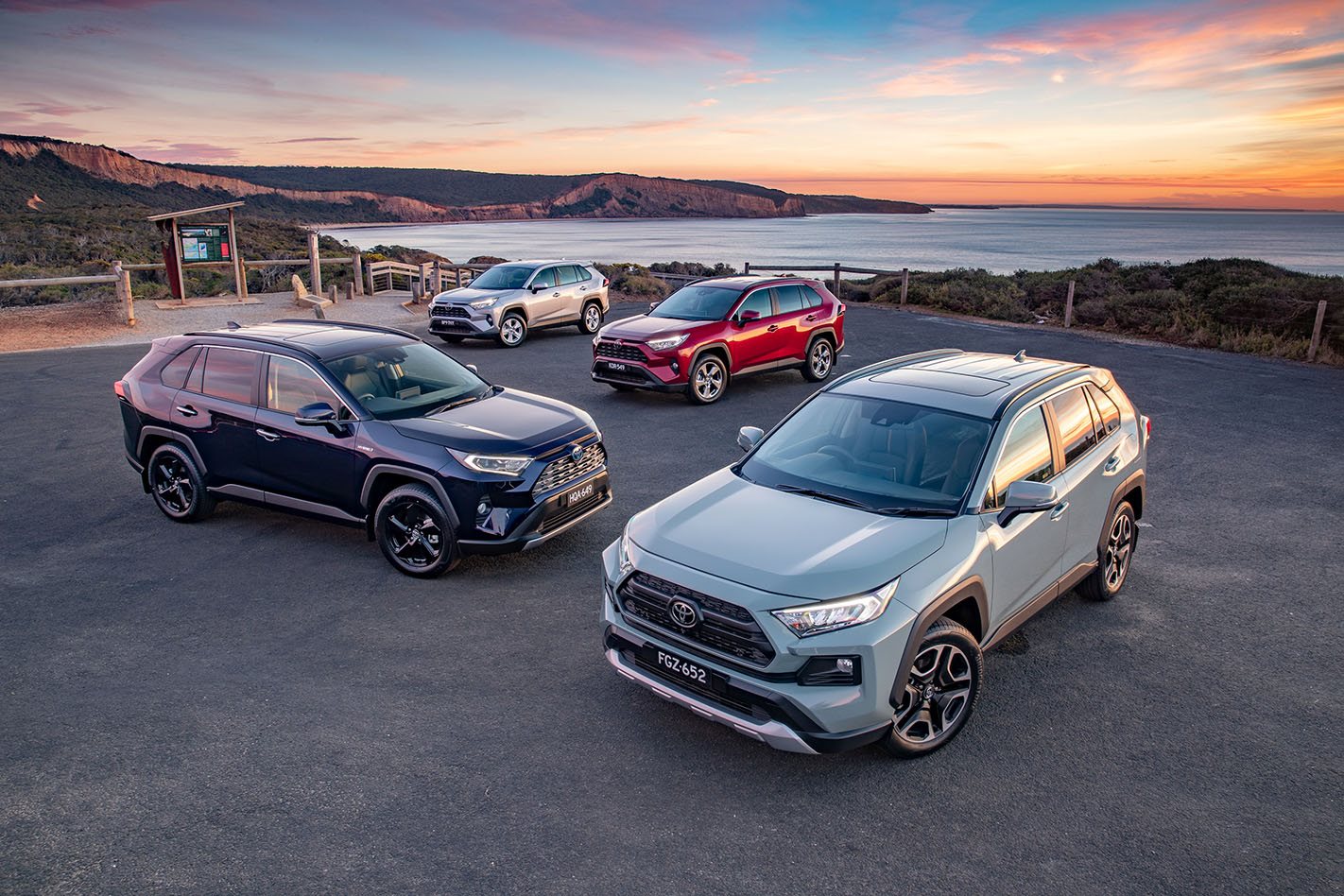
Australia’s biggest-selling SUV, the Toyota RAV4 goes back a long way to when it kicked off the urban SUV craze. It has matured into a competent mid-sized SUV offering plenty of standard features and technology plus a choice of efficient petrol and hybrid powertrains. This latest model RAV4 is the first to offer an off-road capable version.
What might bug me?
Having to drive less than 80km/h on the space-saver spare until you’re able to fix your full-sized flat tyre.If you’re a taller person, bumping your head when sitting in the front passenger seat, especially if the RAV4 has a sunroof. The front seat has no height adjustment.The lack of a convenient catch in the cargo hold to easily put the seatbacks down should you need to put something big in your RAV4.
What body styles are there?
Five-door wagon only.The RAV4 is available in front-wheel drive and in all-wheel drive.It is classed as a medium SUV, lower priced.
What features do all RAV4s have?
- Adaptive cruise control, speed sign recognition, rear-cross traffic alert, blind-spot monitor, and autonomous emergency braking. Manual versions have lane departure alert, while the automatics get lane-keeping assist that helps keep your RAV4 in its lane.
- Reversing camera, front and rear parking sensors.
- Air-conditioning with front and rear air vents.
- An 8.0-inch touchscreen for controlling interior functions and satellite navigation, with auxiliary and USB inputs, and Bluetooth connectivity – connecting with an iPhone allows for Siri voice commands, and Apple CarPlay/Android Auto smartphone pairing.
- An audio system with at least six speakers, with AM, FM and Digital (DAB+) radio, which can be operated from the steering wheel.
- Smart keyless entry and ignition,
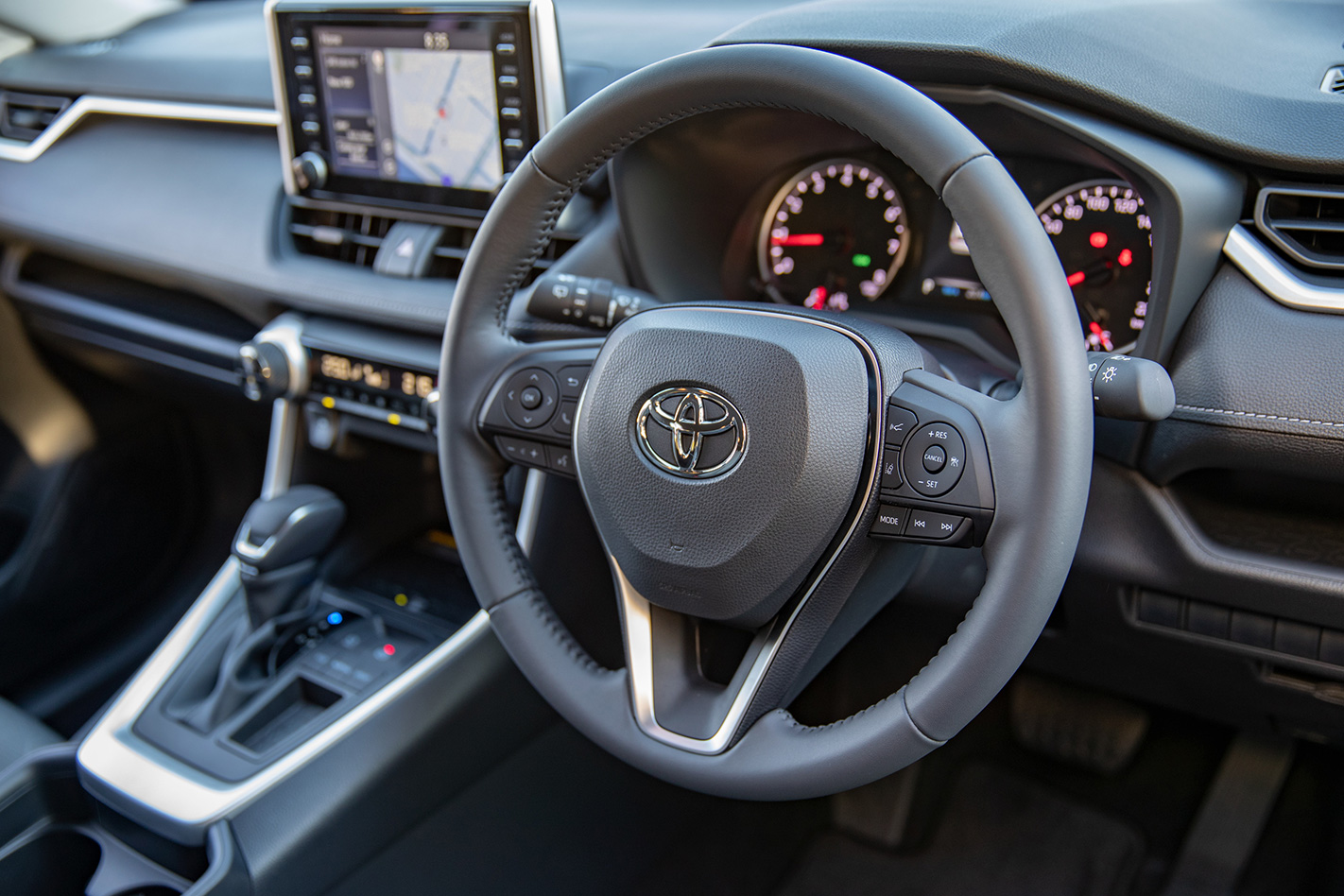
- Leather-trimmed steering wheel.
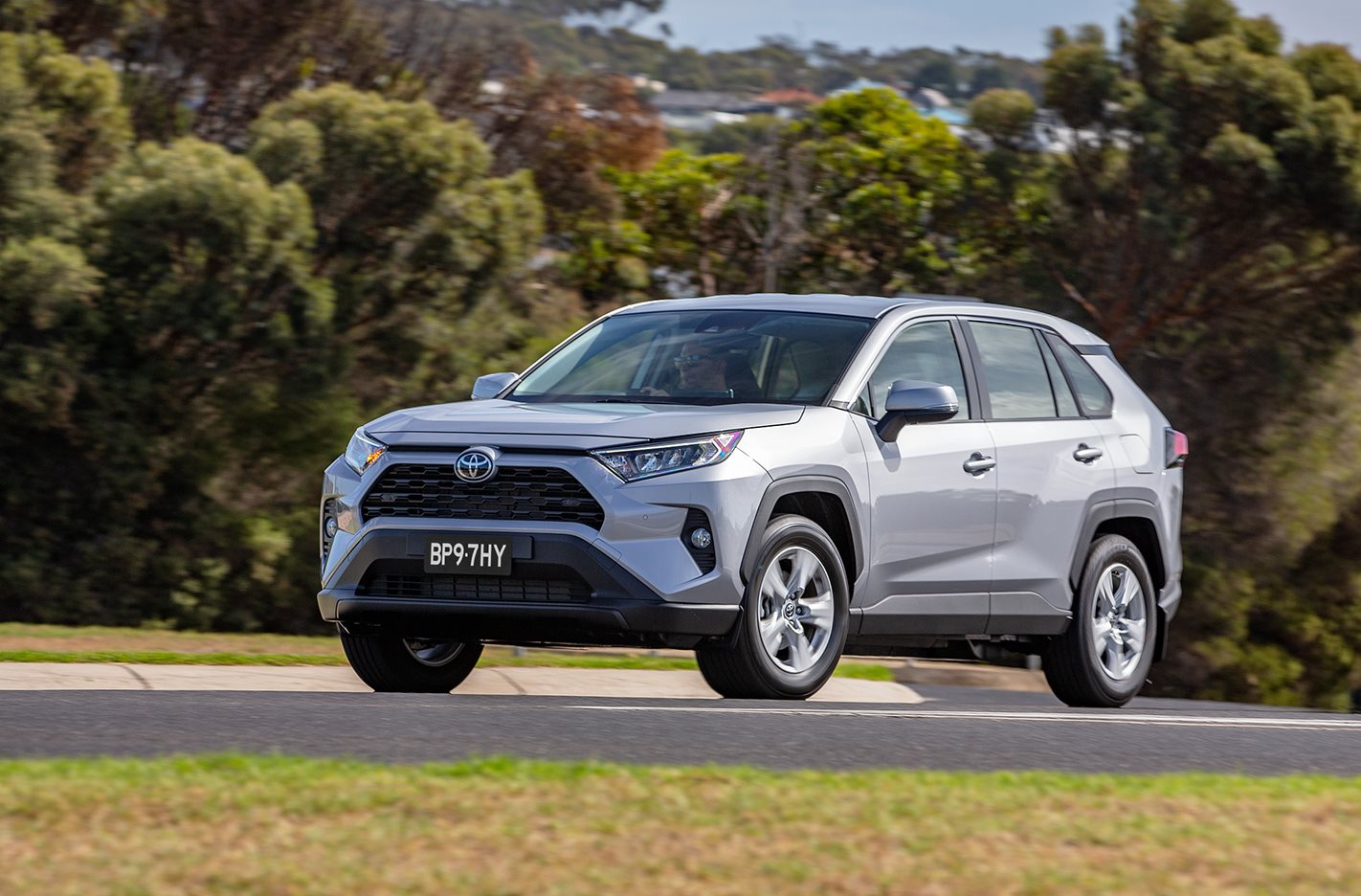
- Headlamps based on long-lasting and efficient LEDs. The headlights turn on when it gets dark and have an auto high-beam that automatically dips for oncoming traffic.
- LED daytime running lights (additional lights near the headlamps that make the car more visible)
- Front fog lamps.
- Rain-sensing windscreen wipers.
- Heated and power-folding door mirrors.
- Seatbelt warning lights for all five seats.
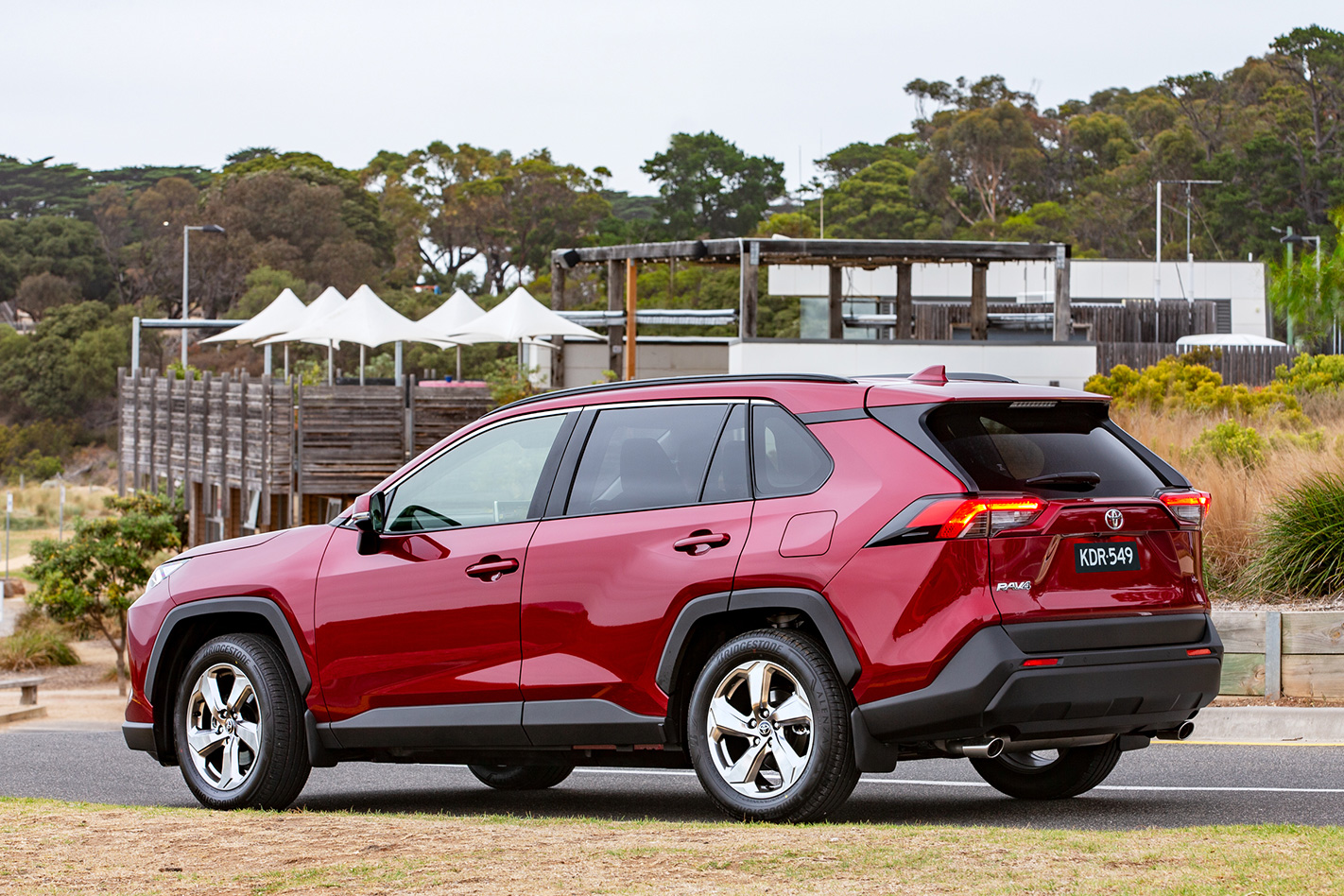
- Shark fin antenna, dual tailpipes, and hatch-top spoiler.
- Electric parking brake, and hill start assist that controls the brakes so that it is easier for you to start from rest on a slope.
- Alloy wheels and a space-saver spare wheel (a full-size spare is available as an option in the GX).
- Seven airbags. Electronic stability control, which can help control a skid and is mandatory on new cars. (For the placement of airbags, and more on RAV4 safety systems, please open the Safety section below.)
- The RAV4 is covered by a five-year, unlimited-kilometre warranty.
Which engine uses least fuel, and why wouldn’t I choose it?
The 2.5-litre petrol-electric hybrid uses least fuel, consuming 4.7 litres/100km on the official test for front-wheel-drive versions and 4.8 litres/100km with all-wheel-drive (city and country combined).For FWD hybrid variants, the system combines the new 2.5-litre petrol engine with a pair of motor generators to provide electric-only drive or combined petrol and electric drive to the front wheels, and electricity generation to recharge the battery.
RAV4 hybrid AWD models gain a third motor generator that drives the rear axle enabling the hybrid system to deliver up to 80 per cent of the available torque to the rear wheels, providing sure-footed performance on slippery or loose surfaces.
One of the reasons you wouldn’t choose the hybrid is the additional cost over the petrol engine, which is about $2500. You may also want the more off-road capabilities of the RAV4 Edge that’s only available with a 2.5-litre petrol engine.Of the two petrol engines in the RAV4 range, the 2.0-litre version available with the GX, GXL and Cruiser versions is the most economical, with official combined fuel consumption of 6.8 litres/100km for the GX manual and 6.5-litres/100km for CVT-auto equipped versions. The 2.0-litre versions are only available with front-wheel-drive.The manual gearbox has been designed to deliver fuel efficiency and smooth operation and features an intelligent mode switch that offers a rev-matching control for even smoother and more responsive gear shift changes.
The CVT, or continuously variable transmission, auto is the same as the one in the Toyota Corolla hatchback, which is one of the better CVTs.
Unlike some CVTs that can be quite very revvy when you take off, this unit has fixed first gear that offers strong acceleration off the line and then gears down like a traditional automatic.The third powertrain is the 2.5-litre petrol under the bonnet of the RAV4 Edge, which is linked to an eight-speed automatic gearbox that drives all four wheels. It provides more power than the 2.5-litre engine in the previous model but consumes 14 percent less fuel at a rate of 7.3 litres/100km.
What key features do I get if I spend more?
The least costly, RAV4 GX model rolls on 17-inch alloy wheels, cloth seats and comes standard with a petrol engine, manual gearbox and front-wheel drive (auto is an extra-cost option).The GX Hybrid brings a few extras along with the more efficient powertrain, including keyless start, and dual-zone climate control air-conditioning.
Step up to the RAV4 GXL and auto transmission is standard, and you get bigger 18-inch wheels fitted with wider tyres of a slightly lower profile, which improve grip marginally on hard surfaces.
Other GXL standard features include:
- Wireless phone charger.
- Guidance lines for the reversing camera display.
- Auto-dimming rear-view mirror.
- Dual-zone air-conditioning, which allows you to set a temperature for each side of the cabin.
- Tinted privacy glass, which helps keep the cabin cooler.
- Seats trimmed in a more premium quality fabric.
- Two USB sockets for rear seats.
- Exterior embellishments including dual oval tailpipes and roof rails.
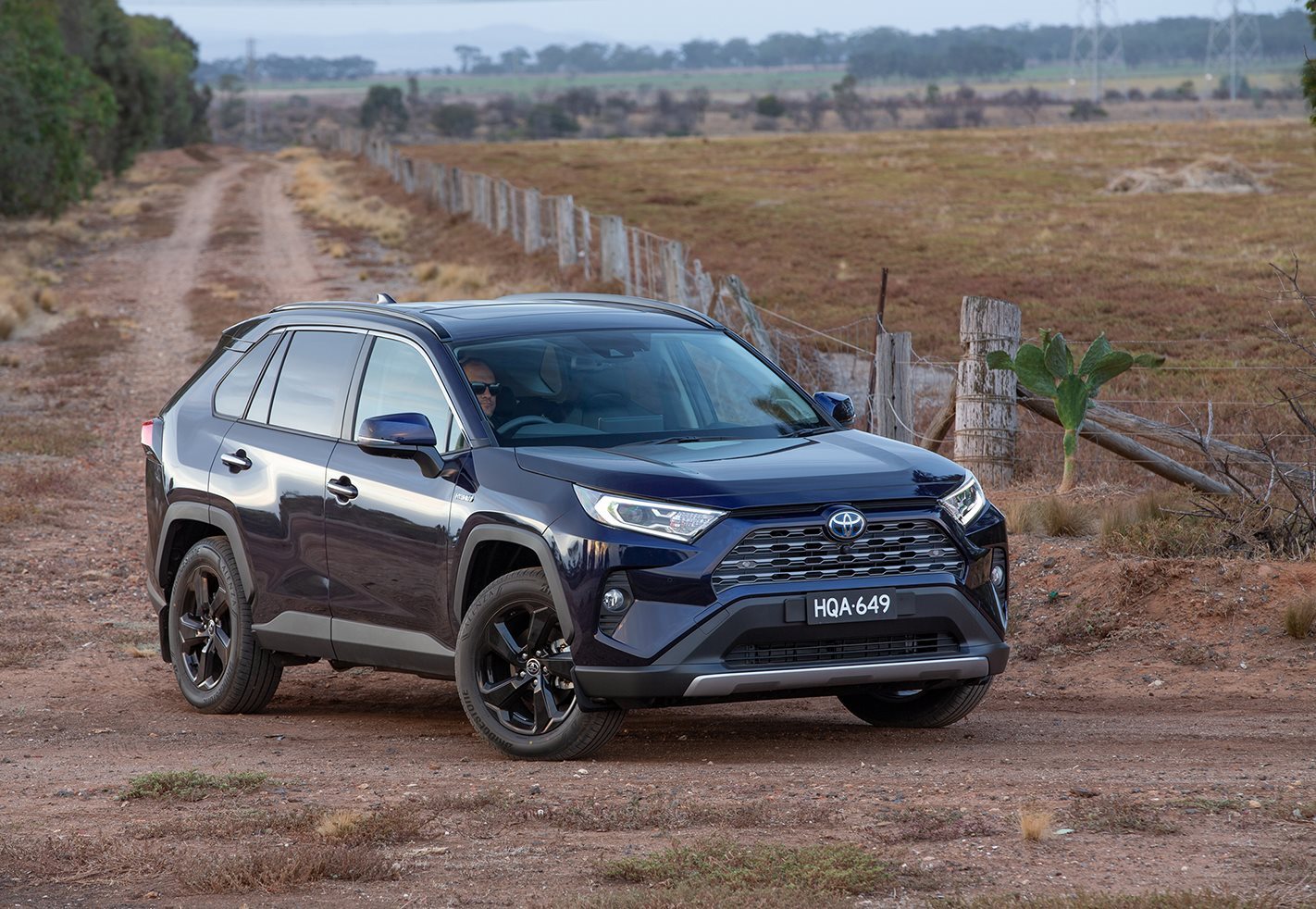
It also gains:
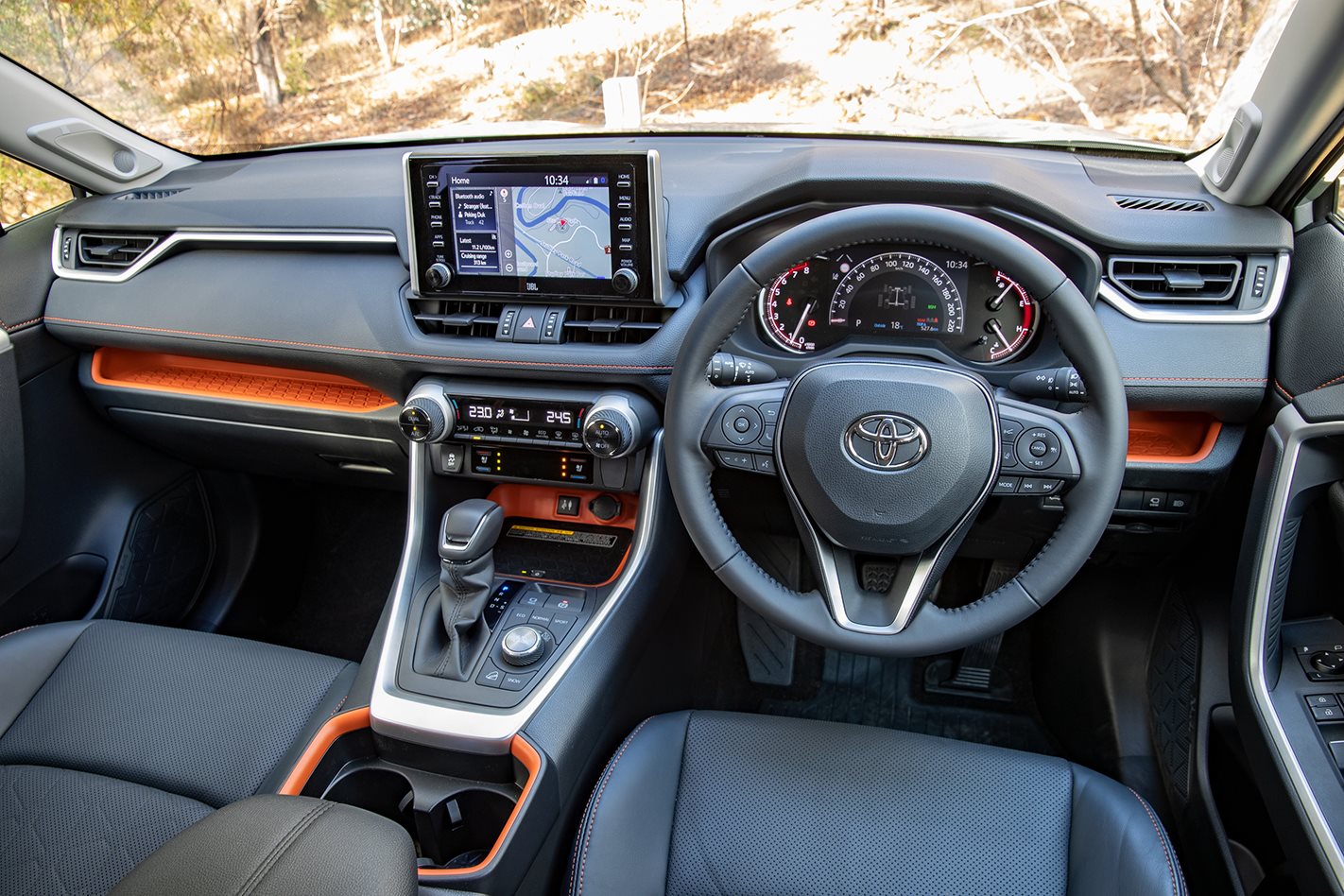
- Ambient interior lighting.
- Panoramic sunroof.
- Powered tailgate that can be opened remotely.
- JBL premium sound system with nine speakers rather than six.
- The petrol versions have bigger 19-inch alloy wheels with sportier tyres, with the hybrid coming with distinct 18-inch gloss-black alloys.
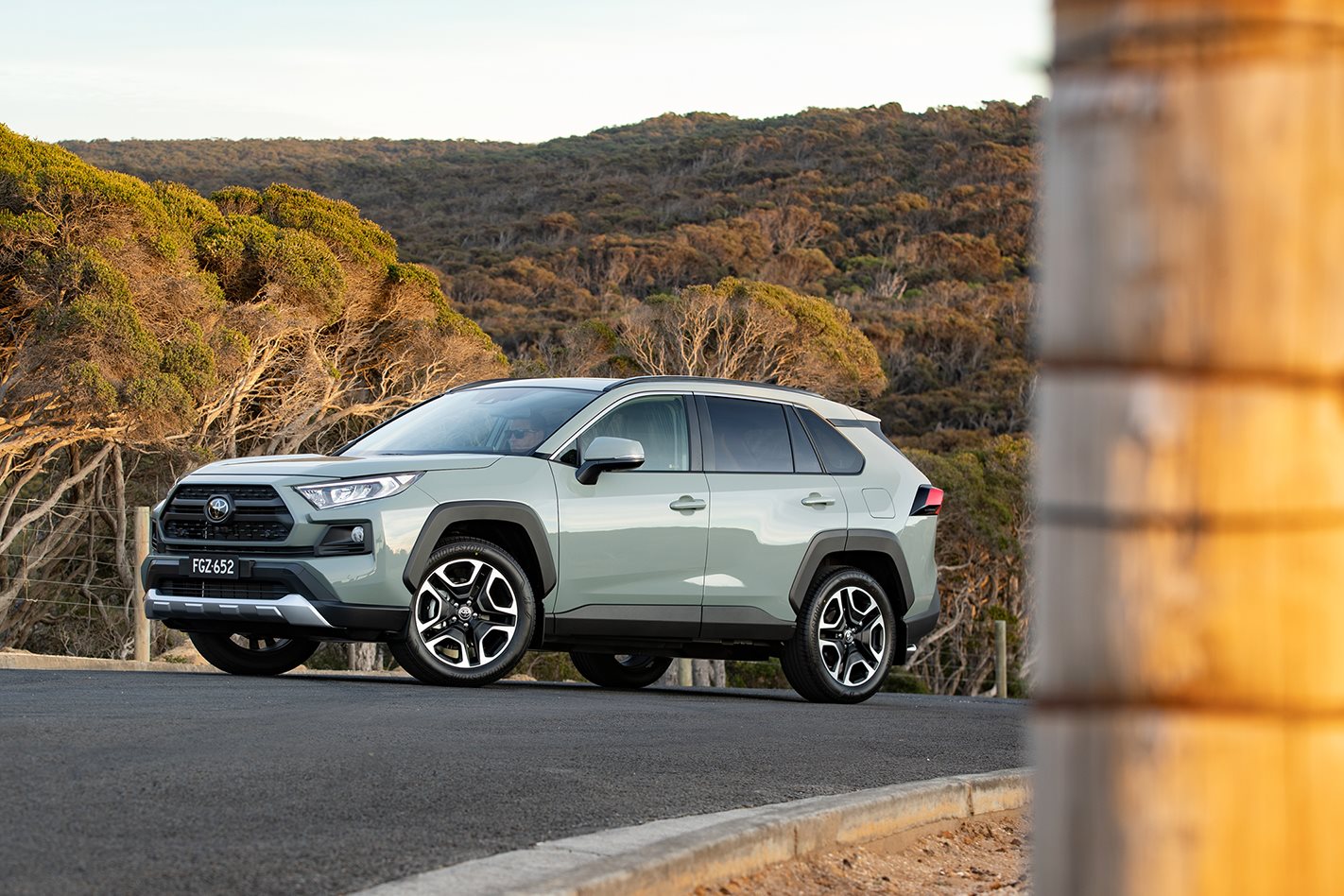
The inside features durable ‘Softex’ synthetic leather seats, heated and ventilated front seats.The Edge lacks the Cruiser’s 10-way driver’s seat power settings, and the panoramic sunroof is optional.
Does any upgrade have a down side?
Optioning the full-size spare tyre available with a RAV4 GX raises the floor height of the luggage bay, reducing load capacity from 580 litres to 542 litres.Spending more on a FWD hybrid RAV4 over a petrol versions sees braked towing capacity drop from 800kg to just 480kg.
Choosing the RAV4 Edge over the Cruiser means you miss out on the powered driver’s seat settings and a panoramic sunroof as standard (it’s an extra-cost option in the Edge).The panoramic sunroof that comes with the Cruiser reduces headroom.White is the only standard colour: all others cost extra.
How comfortable is the RAV4?
The fifth-generation RAV4’s cabin represents a significant step-up in design and presentation over the previous model while still prioritising comfort.It has a real feeling of space, good all-round vision and better refinement levels, though the central screen’s little buttons and bland graphics will annoy some.
Bluetooth phone and media streaming and Apple CarPlay or Android Auto is standard in all versions.
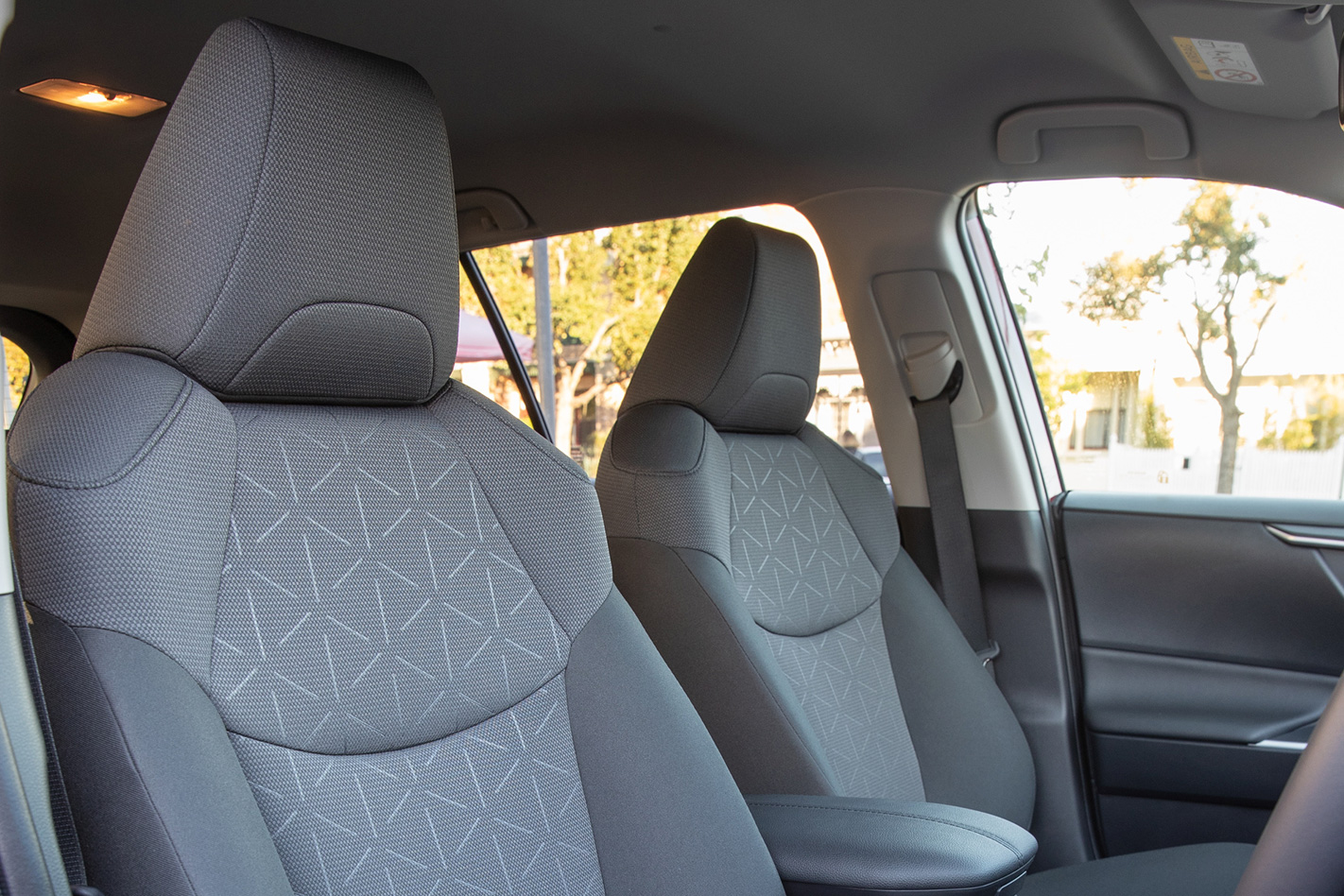
The front seats offer great support that translates to good comfort over longer trips. The driver’s seating position is good, but the lack of a front-passenger seat height adjustment can restrict headroom for taller people, particularly in RAV4s fitted with the panoramic sunroof.GXL versions and above bring the more advanced version of adaptive cruise control that can operate all the way down to 0km/h, allowing stop-start traffic jams to be negotiated by automatically taking care of your speed and separation to traffic which helps reduce fatigue and frustration.On the road, the chassis is surprisingly adept at dealing with lumpy bitumen, with the suspension recovering without a secondary bounce.Aside from the hybrid sounding a little coarse at higher revs, the RAV4 is very quiet.
What about safety in a RAV4?
Autonomous emergency braking, stability control, seven airbags, a reversing camera, front and rear parking sensors and rear seatbelt reminders are standard on all RAV4s.
Two of the airbags are placed directly in front of the driver and front passenger, and a third protects the driver’s knees. An airbag outside each front seat protects front occupants from side impacts at chest level. And curtain airbags extending down each side of the car protect front and rear occupants at head level.Adaptive cruise control is also standard, and all versions except the GX manual have lane-keeping assist that helps keep your RAV4 within the lines if you become distracted. The GX manual makes do with lane departure alert that uses a camera to monitor lane markings and warns if you drift towards an adjacent lane without indicating.
MORE: Active safety features explainedA blind-spot monitor alerts you to the presence of another vehicle alongside you to the rear, which might not show in your external mirrors. And a rear cross-traffic alert warns you if another vehicle is about to cross your path while you’re reversing.The Australasian New Car Assessment Program (ANCAP) is yet to assess the fifth-generation RAV4.
I like driving – will I enjoy a RAV4?
You’ll get the most enjoyment out of the hybrid versions, and the 2.5-litre petrol-powered RAV4 Edge. The 2.0-litre petrol feels a little sluggish up hills or when trying to overtake, especially when you have a few people on board. That said, it’s more than adequate for city driving.The continuously variable transmission (CVT) automatic gearbox works well with each powertrain, especially the more powerful hybrid, and is rarely late to keep up with varied terrain, or sudden braking or acceleration.
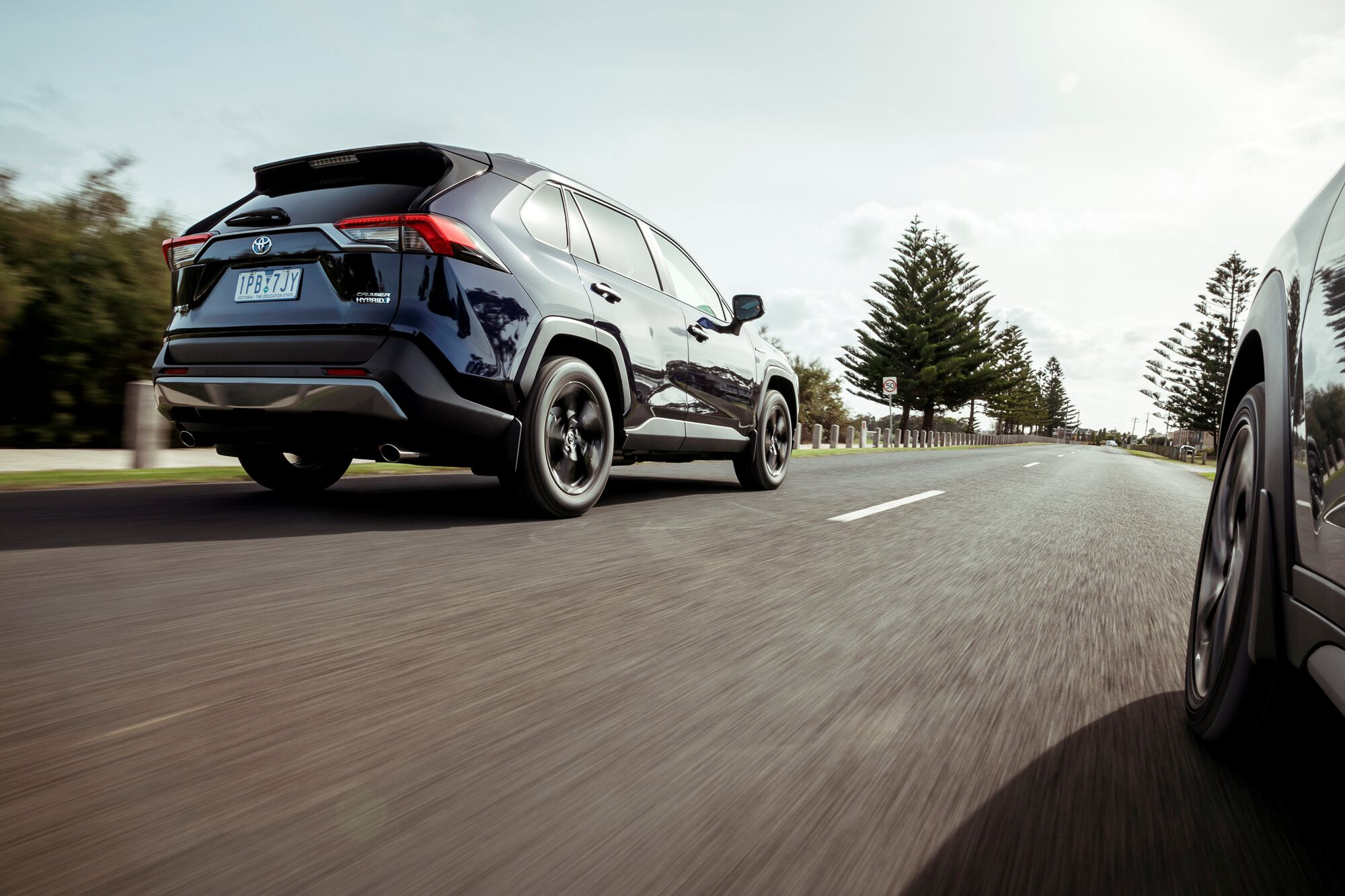
The ride is smooth and enjoyable in any RAV4. The chassis is well tuned for Australian road conditions and feels incredibly composed on lumpy surfaces, absorbing dips, potholes and ruts. This is complemented by quick and responsive steering.Grip is naturally better in the all-wheel-drive versions than those that drive their front wheels only, with the latter requiring the electronic traction control to do its job at lower speeds, particularly on wet surfaces.
How is life in the rear seats?
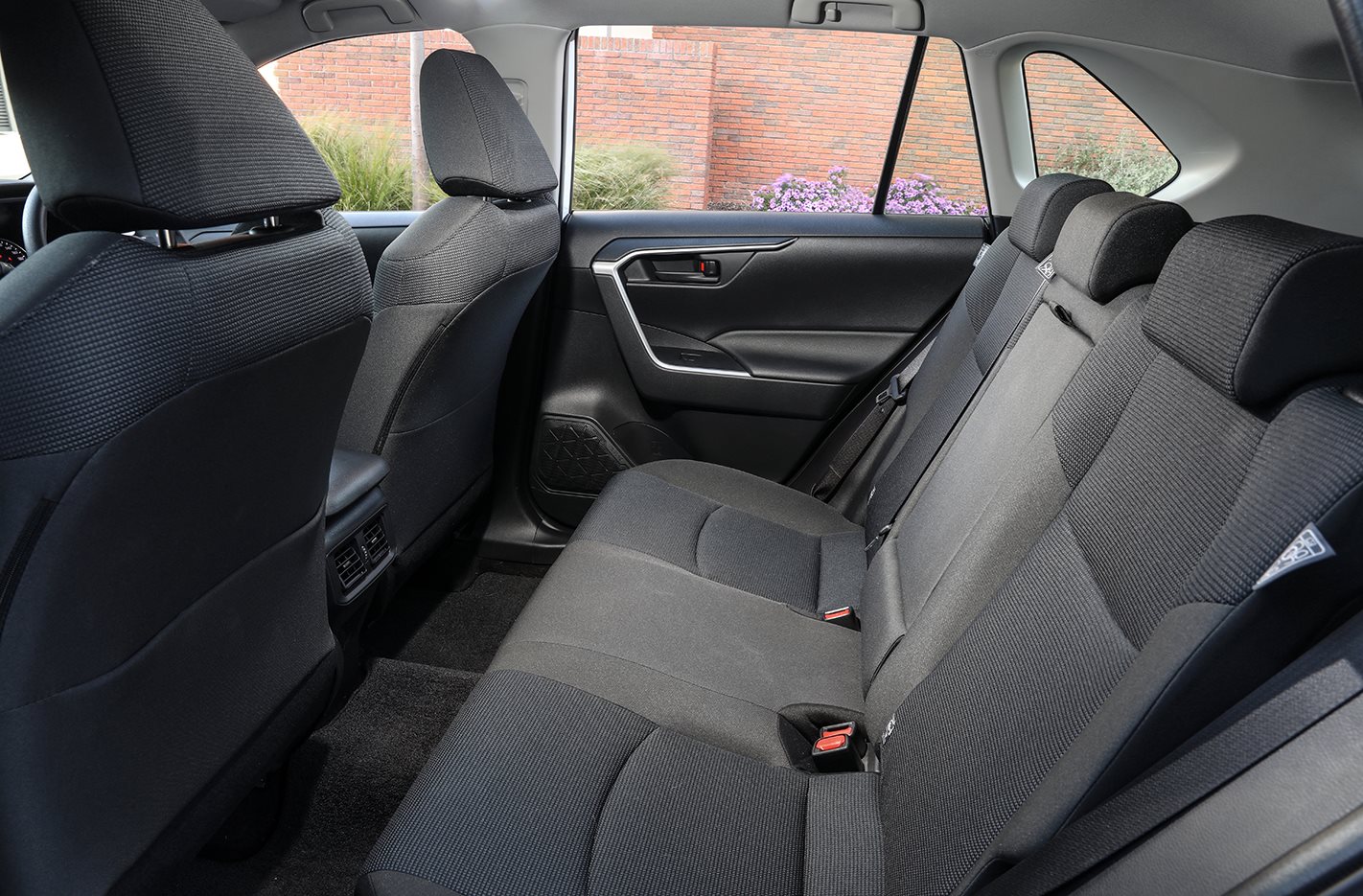
The RAV4 seats three at the rear, for five seats in total. Rear legroom is good and the floor is almost flat, giving the person in the middle more space. The seats are fairly flat but comfortable.All RAV4s have air-conditioning vents and all but the GX (pictured) have two USB sockets behind the centre console.
How is it for carrying stuff?
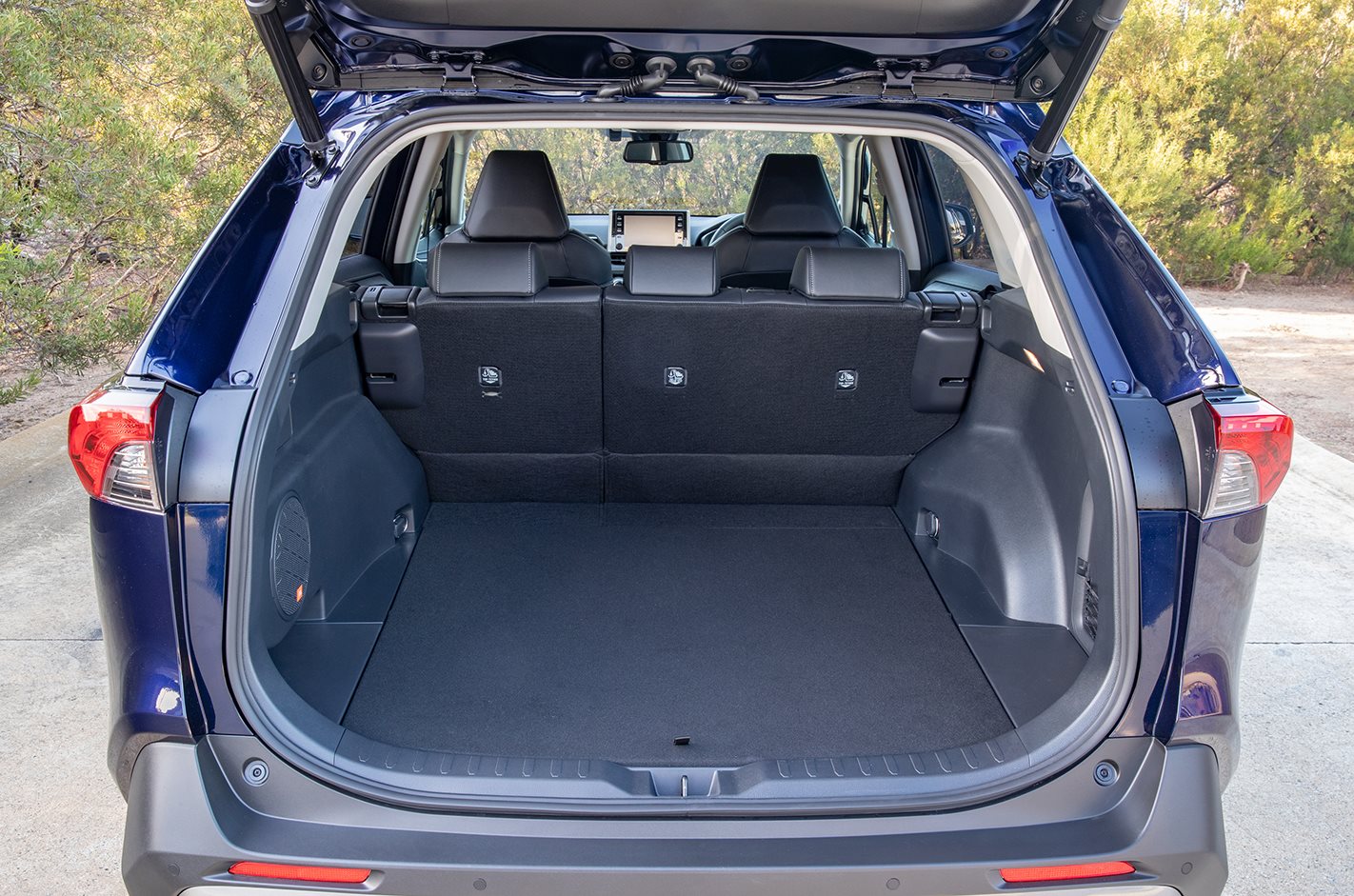
The load space is fairly broad and helped by a 60/40 split-fold seatback, though the RAV4 does lack a handy catch to flip the seat backrests down from the cargo area.
The RAV4 won’t tow as much as most other medium SUVs. The limit for 2.0-litre models is only 800kg and the FWD hybrids just 480kg. The AWD hybrids and 2.5-litre Edge can haul a handy 1500kg.
Where does Toyota make the RAV4?
All RAV4s are produced in Japan.
What might I miss that similar cars have?
The RAV4 is one of the better equipped medium SUVs on the market and with a choice of petrol and hybrid options the range covers most bases. However, there are some things it lacks that some of its key rivals offer such as a third row of seats: The Nissan X-Trail, Mitsubishi Outlander and Volkswagen Tiguan Allspace medium SUVs each have a seven-seat option.
A turbocharged petrol engine with more power, as offered on the Volkswagen Tiguan, Ford Escape, Peugeot 3008, and Mazda CX-5.
A diesel option, as available with most rivals including the Escape, X-Trail, CX-5, Renault Koleos, and Hyundai Tucson.
Other rivals you may want to consider include the Subaru Forester and Kia Sportage.
I like the RAV4, but I can’t choose which version. Can you help?
The GXL Hybrid AWD is our pick, with the extra cost up from the GX justified by some handy extra equipment, and enhanced interior ambience. And the hybrid brings considerably more power but better fuel economy than the GXL 2.0-litre. We also like the additional traction the AWD provides, but that’s not as important if most of your driving is going to be around town.
Are there plans to update the RAV4 soon?
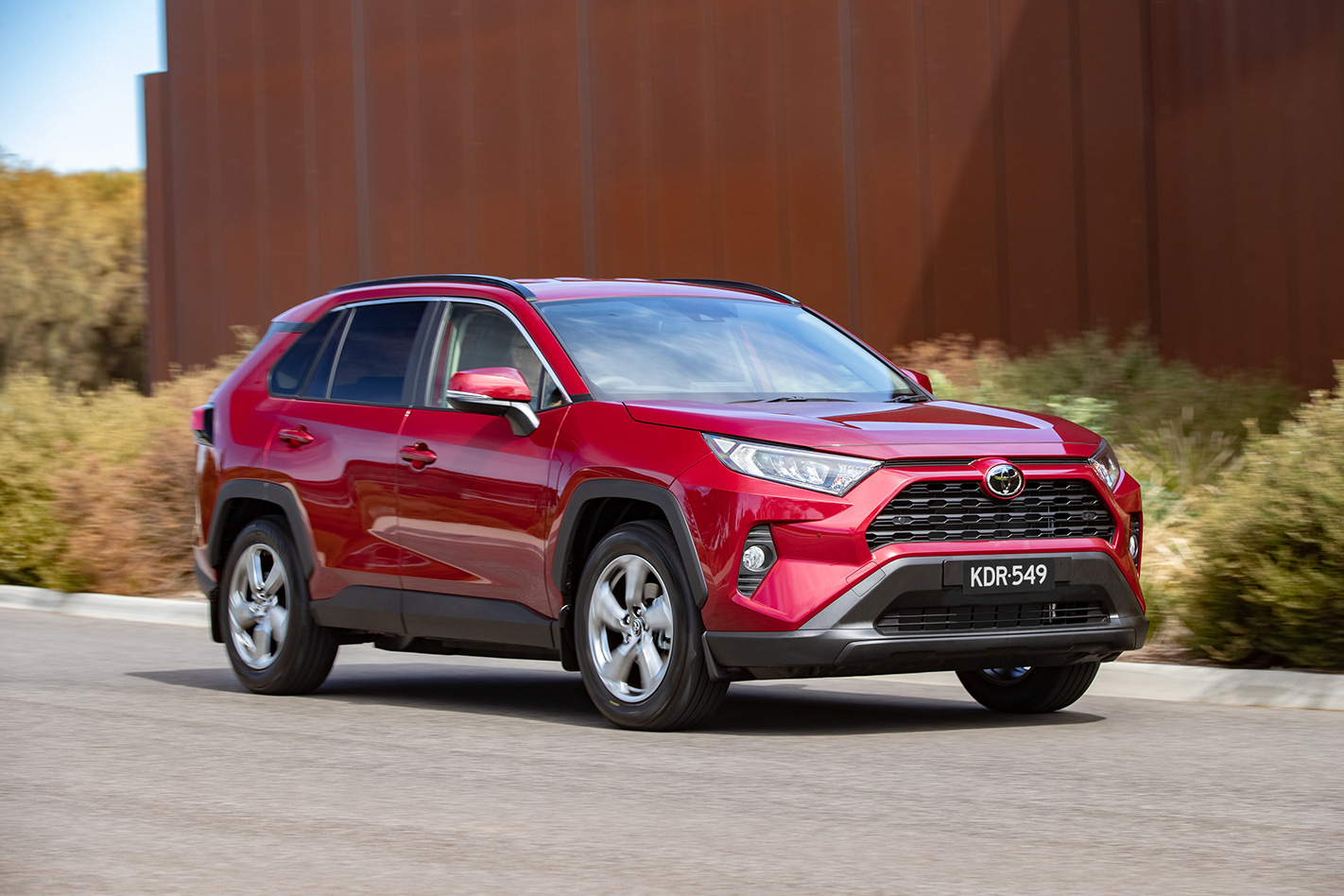
The fifth-generation RAV4 arrived in May 2019.Toyota added Apple CarPlay/Android Auto smartphone pairing at the end of 2019. Toyota will be able to retrofit the system to RAV4’s purchased before for about $200.A slight update for the 2021 model year added a few extra features to the entry level GX.
Talking Points
- Mercedes-AMG M139 2.0-litre four-cylinder turbo rumoured to power new sportscar
- Global unveiling due at 2021 Goodwood Festival of Speed
- All-new aluminium chassis designed for conventional and electric drivetrains
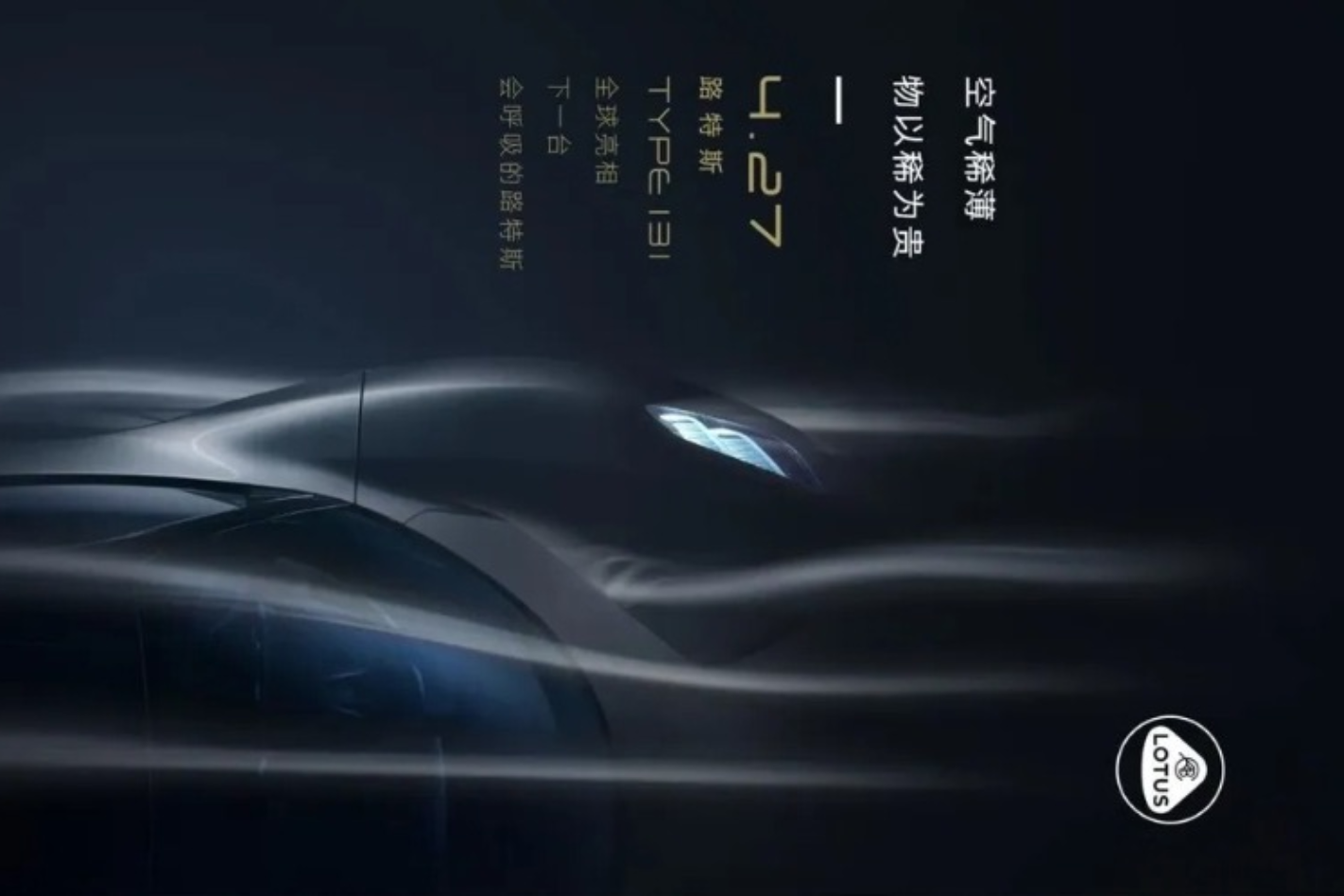
Lotus will today be unveiling its first new sportscar in nearly ten years, according to a leaked web invitation.
First reported by Korean website autospy.net, the invitation doesn’t show much other than the new sportscar’s headlight design and its prototype codename.
Dubbed the Type 131 for now, the new mid-engined sportscar is understood to be based on a brand new bonded all-aluminium chassis created from Lotus’s existing manufacturing hardware.
The new chassis has been designed from the outset to cater for internal combustion engines, hybrid powertrains and eventually all-electric applications.
The Type 131 will have the difficult task of replacing all three of the Hethel firm’s soon-to-be-ceased performance car models – the Elise, Exige, and Evora.
According to reports from French website automobile-sportive, the new sportscar will have two powertrains available from launch.
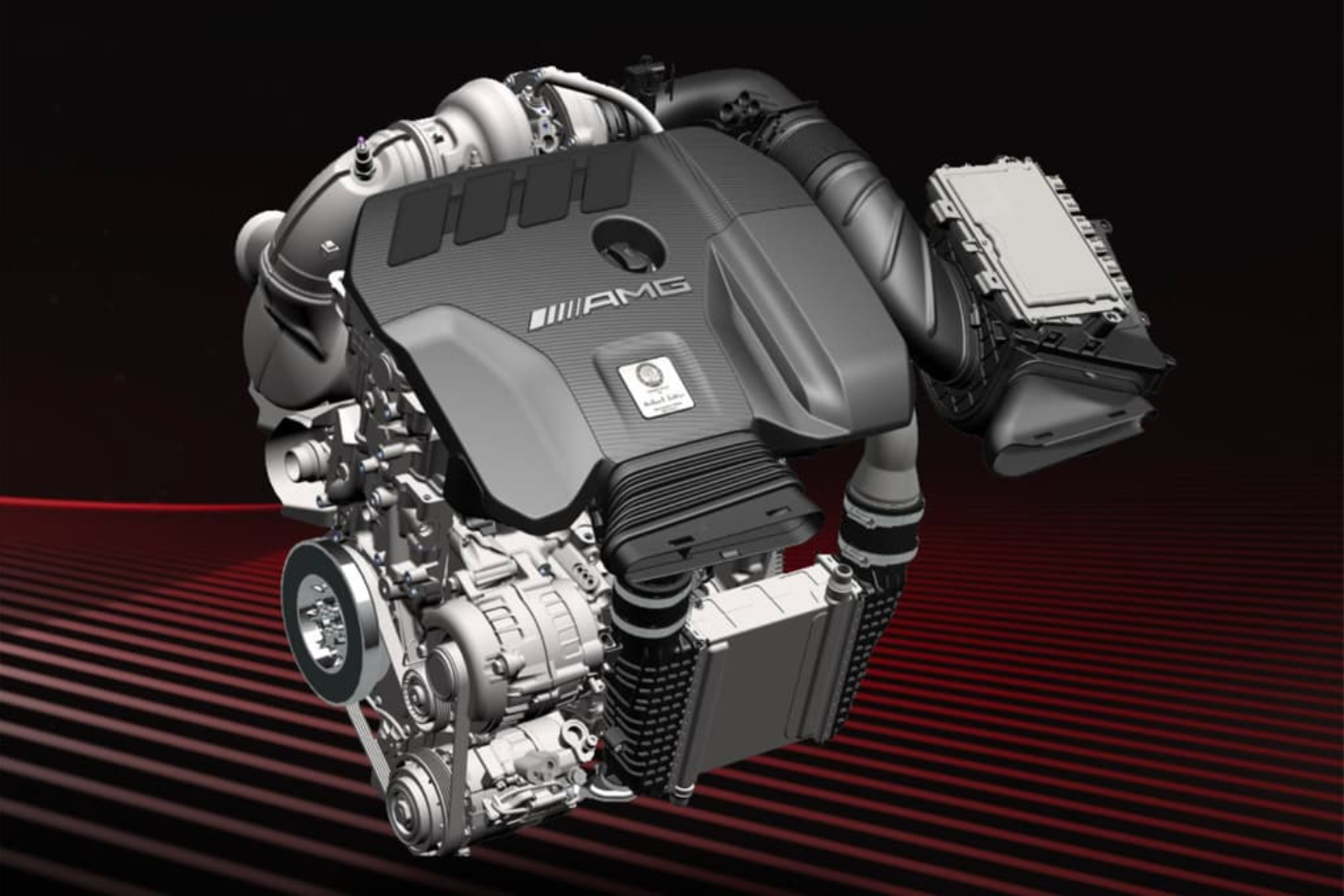
Firstly, and most surprisingly, the new Type 131 will be powered by a Mercedes-AMG-sourced 2.0-litre turbo four-cylinder motor, with power rumoured to be in the region of 275-300kW.
Given the speculated power output, this could indicate the Type 131 will most likely be powered by the same M139 turbo four-pot found in Mercedes-AMG’s ballistic A45 S.
While there’s no word yet on its gearbox, there’s a strong possibility the Type 131 could also use the A45 S’s eight-speed dual-clutch transmission.
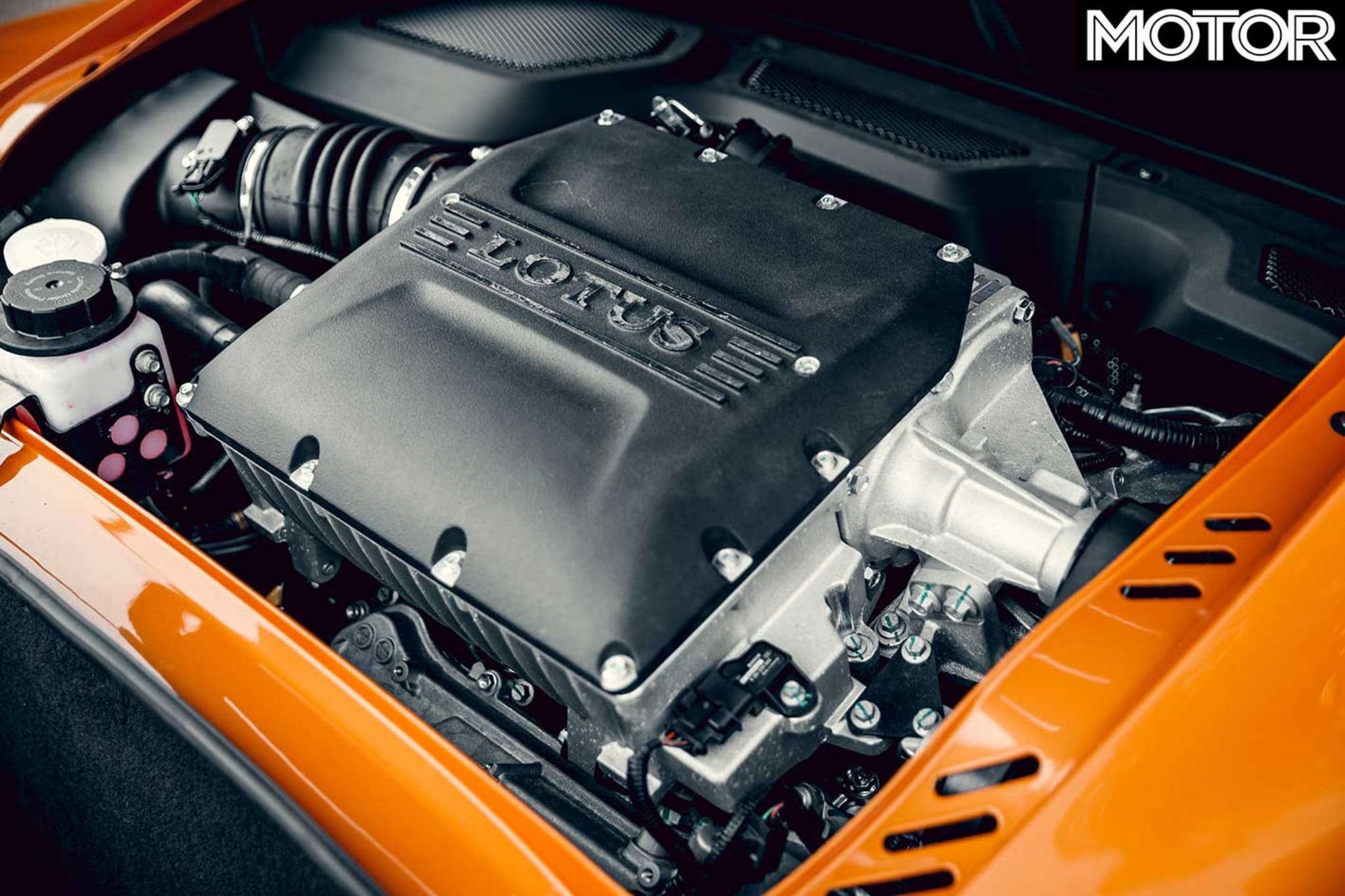
The second expected powertrain for the new sportscar is Toyota’s 2GR-FE 3.5-litre supercharged V6 found in both the current Evora and Exige.
The blown bent-six motor is rumoured to churn out 335kW, and will be mated to a six-speed manual transmission.
Automobile-sportive also reports the new Lotus Type 131 will be globally premiered at 2021’s running of the Goodwood Festival of Speed, which is due to kick-off from July 8 through to July 11.
Styling for the Type 131 is said to be quite similar to that of Lotus’s all-electric hypercar, the Evija, with smooth lines and a sleek overall profile.
Be sure to watch this space as WhichCar brings you all the latest updates on Lotus’s all-new sportscar.
Owners of Mitsubishi Tritons fitted with an acrylic-capped ABS canopy are being told to urgently check if their vehicles are in danger of catching fire.
The canopies – sold by Mitsubishi Australia, Oakmoore Pty Ltd trading as EGR Group and other vehicle accessory retailers between May 2018 and February 2021 – are commonly fitted to the tubs of Tritons.
Only canopies marked with the EGR logo and which have a serial number between 180522 and 210219 are affected.
According to Product Safety Australia, the fault is with the light fitting or pin switch inside the canopy which may have been incorrectly assembled.
If the switch is in the ‘door’ position, there is a risk of an electrical fire inside the canopy – which can still happen even when the vehicle is switched off.
Owners should check the brand and serial number of their canopy to determine if they are affected by the issue. If they are, the ute must be parked outside in an open space, away from flammable materials and structures, and an appointment made to have the fitting repaired free of charge.
For more information, owners can contact Oakmoore Pty Ltd t/as EGR Group on 1300 320 338 or https://www.egrgroup.com/contact.html
Alfa Romeo will cease production of its incredibly costly Giorgio chassis architecture at the end of its Giulia sedan and Stelvio SUV lifecycles.
The execution notice comes just six short years after the FCA-designed chassis broke covers in 2015.
That may sound like a long time to some, but when you consider the chassis architecture was reported to have cost FCA in the region of five billion euro to create, we can’t imagine the ROI has been brilliant.
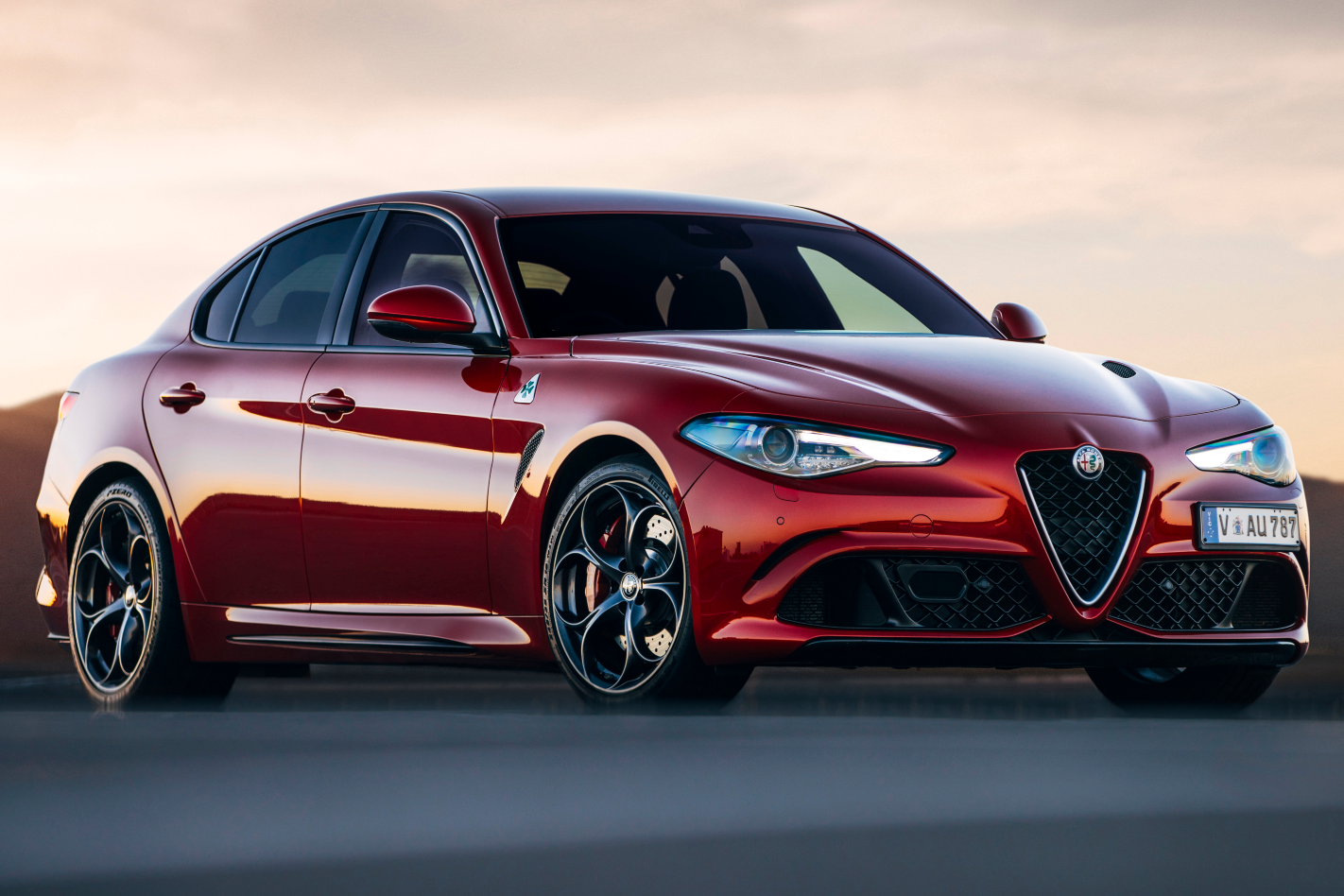
The rear-drive chassis, once described by former Alfa CEO Reid Bigland as a “jewel” and “best in class”, is facing the axe for one main reason – it was never designed to support electrification.
This lack of future-proofing did not sit well with the Italian firm’s new parent company Stellantis, or the automaker’s own future objectives.
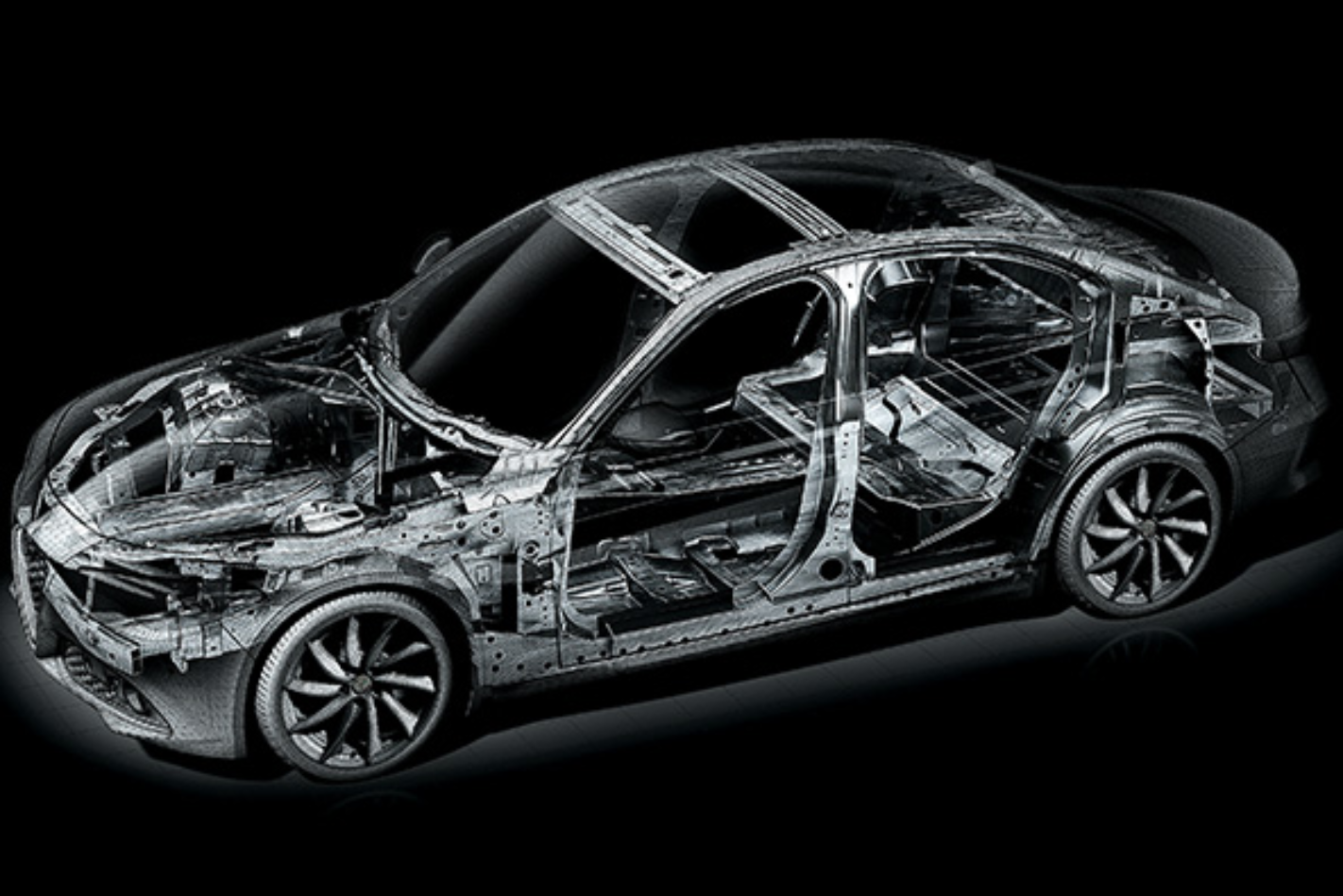
Speaking with the press in Italy, Alfa Romeo’s new CEO Jean-Philippe Imparato confirmed the Giorgio’s death, and said the automaker would now focus on a large-size EV chassis architecture from parent company Stellantis.
“We are working on the large platform of Stellantis and we will no longer use the Giorgio,” Imparato said.
“We must take all possible opportunities [to] bring an EV range to Alfa Romeo.”
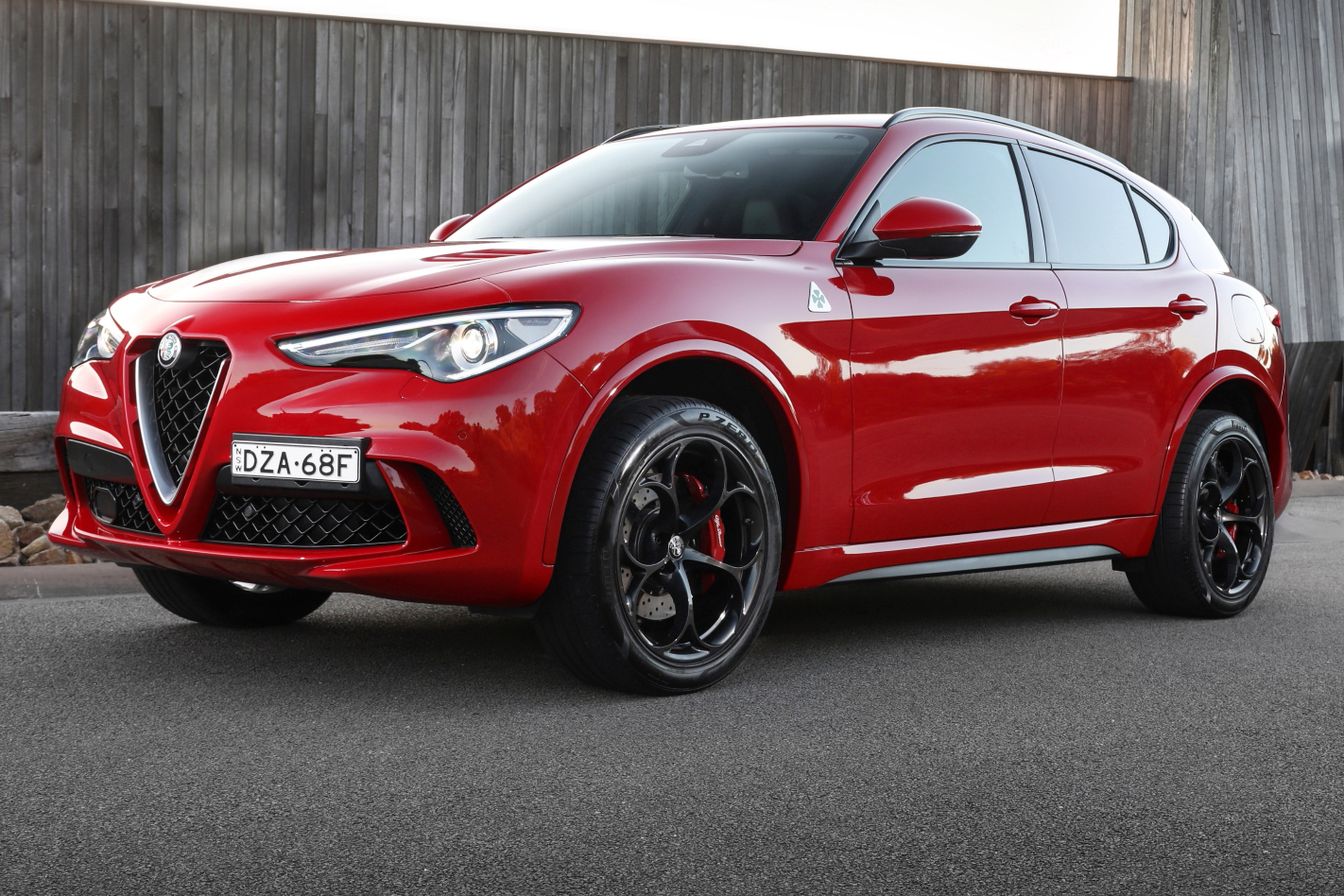
Alfa Romeo will only produce either partially or fully electric vehicles from now on, as it grapples with the severe EV mandates sweeping across Europe.
The Giorgio’s death will be a bitter pill to swallow for the thousands involved in making the expensive chassis, which was designed to take on and beat the likes of BMW’s 3-series, Mercedes’ C-Class and Audi’s A4.
What is the MG ZS EV?
A fully electrified version of the MG ZS small-SUV, the ZS EV is the most affordable new battery electric vehicle (BEV) in Australia.
Retailing for $40,990 with a driveaway price of $43,990, it is significantly cheaper than its direct rival, the Hyundai Kona Electric that’s priced from $62,000, as well as undercutting the Hyundai Ionic Electric (from $48.970) and Nissan Leaf ($49,990) passenger cars.
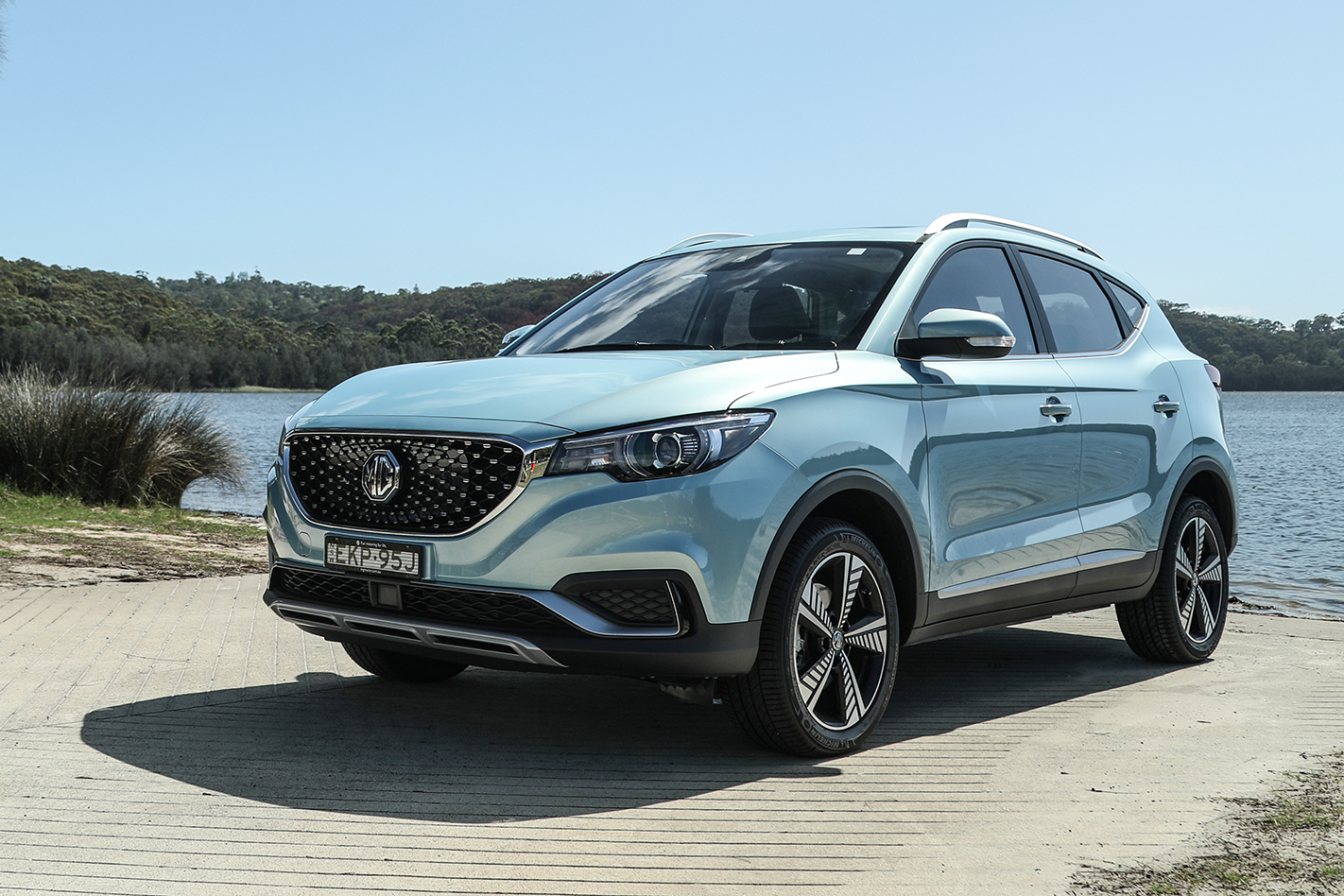
As a result, it is already one of Australia’s best-selling BEVs along with the Tesla Model 3.
The EV ZS is driven by 105kW/353Nm synchronous electric motor fed by a 44.5kW battery pack that can be charged by AC or DC chargers.
What is the MG ZS EV like to live with?
This has a ‘my first BEV’ feel to it, which isn’t a bad thing as it provides electric car novices with an almost seamless transition from internal combustion engine (ICE) vehicles.
While some EVs offer a bunch of displays showing power distribution and the battery status during driving and charging, the MG only tells what you really need to know such as the remaining battery range, battery consumption rate, and battery level.
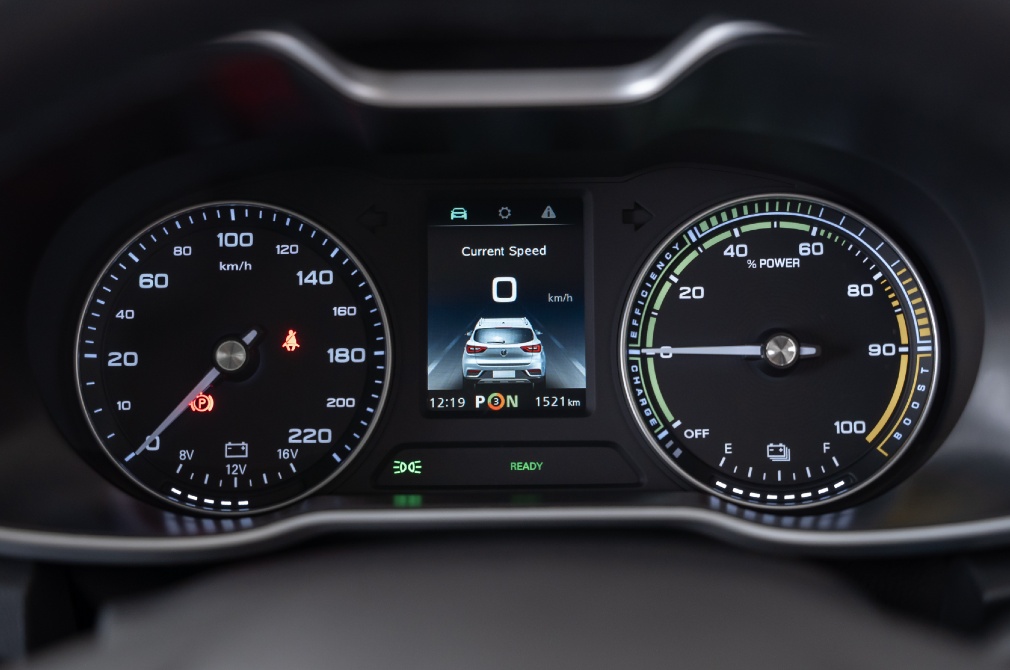
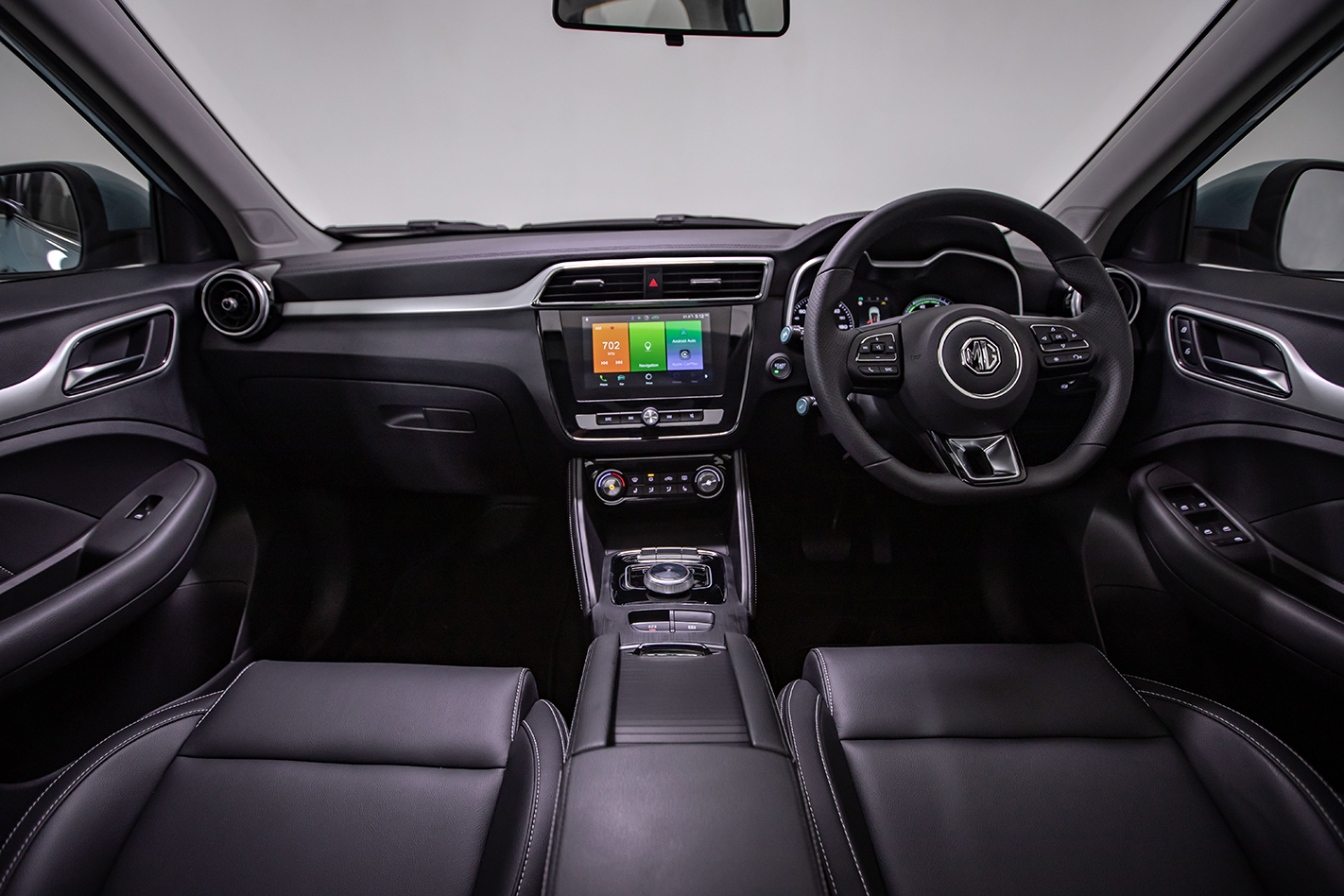
The clutter-free cabin is well designed, though there are some hard plastic surfaces on the doors and the front of the dashboard, while the top of the dash and touchpoints such as armrests are made from softer materials.
The steering wheel is wrapped in stitched leather and feels good in hand, but there is no reach adjustment so it only moves up or down. Being about average height, this didn’t really present me with too many issues, but I can imagine it would be a pain for anyone with longer legs or short arms.
Another thing I’m not a fan of is adaptive cruise control settings on a hidden stalk. It didn’t take long to get used to through trial and error, though I reckon it would be pretty difficult to master for anyone who has never driven a car with adaptive cruise control before.
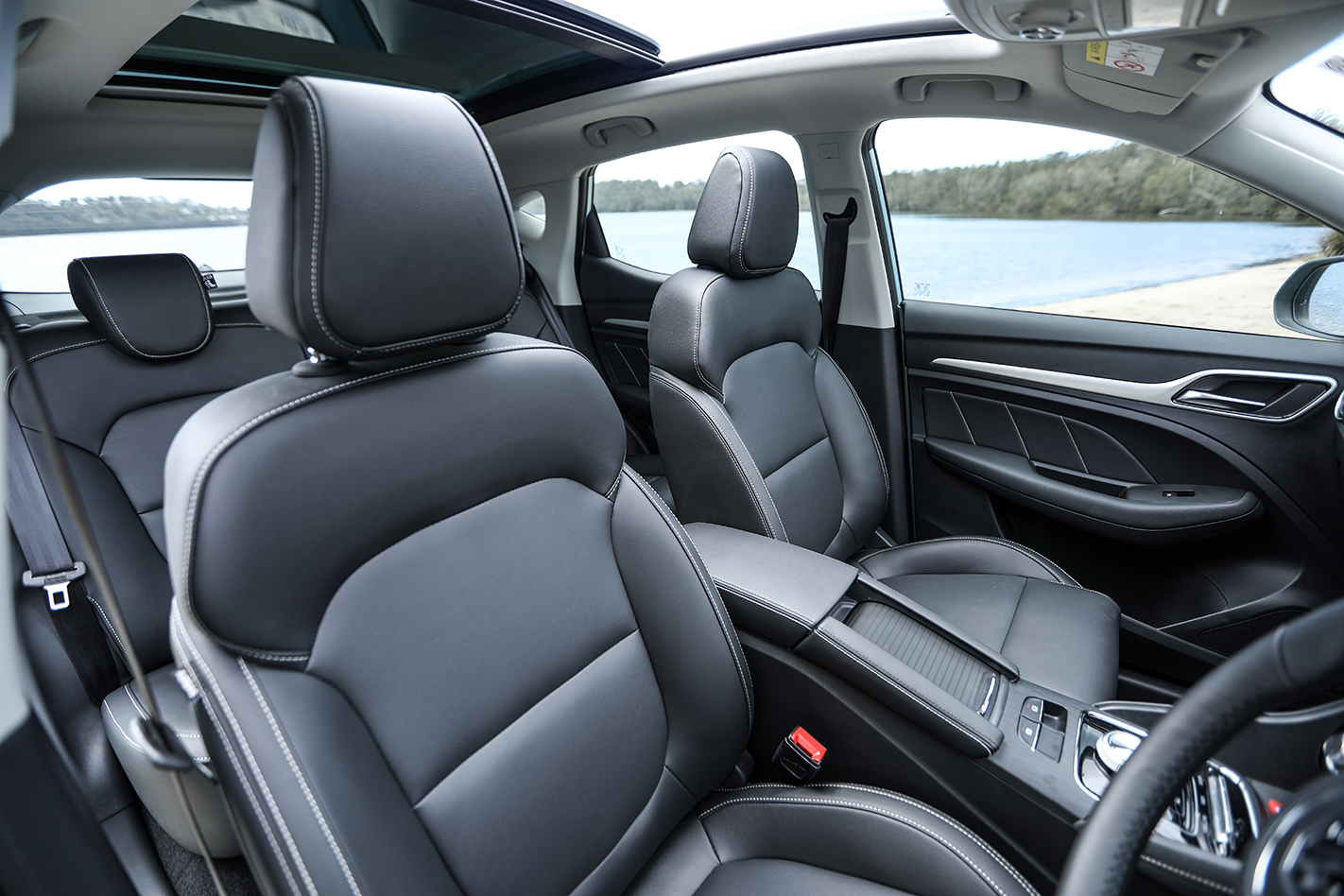
The leather-appointed front seats are comfortable and heated, the driver’s seat also having six-way powered settings.
Decent elbow room is enjoyed by those up front, where the centre console includes cup-holders and a small storage tub with a neat roller shutter plus sliding padded armrest. A lower level creates additional space to store and plug in your phone, though this can be a little fiddly.
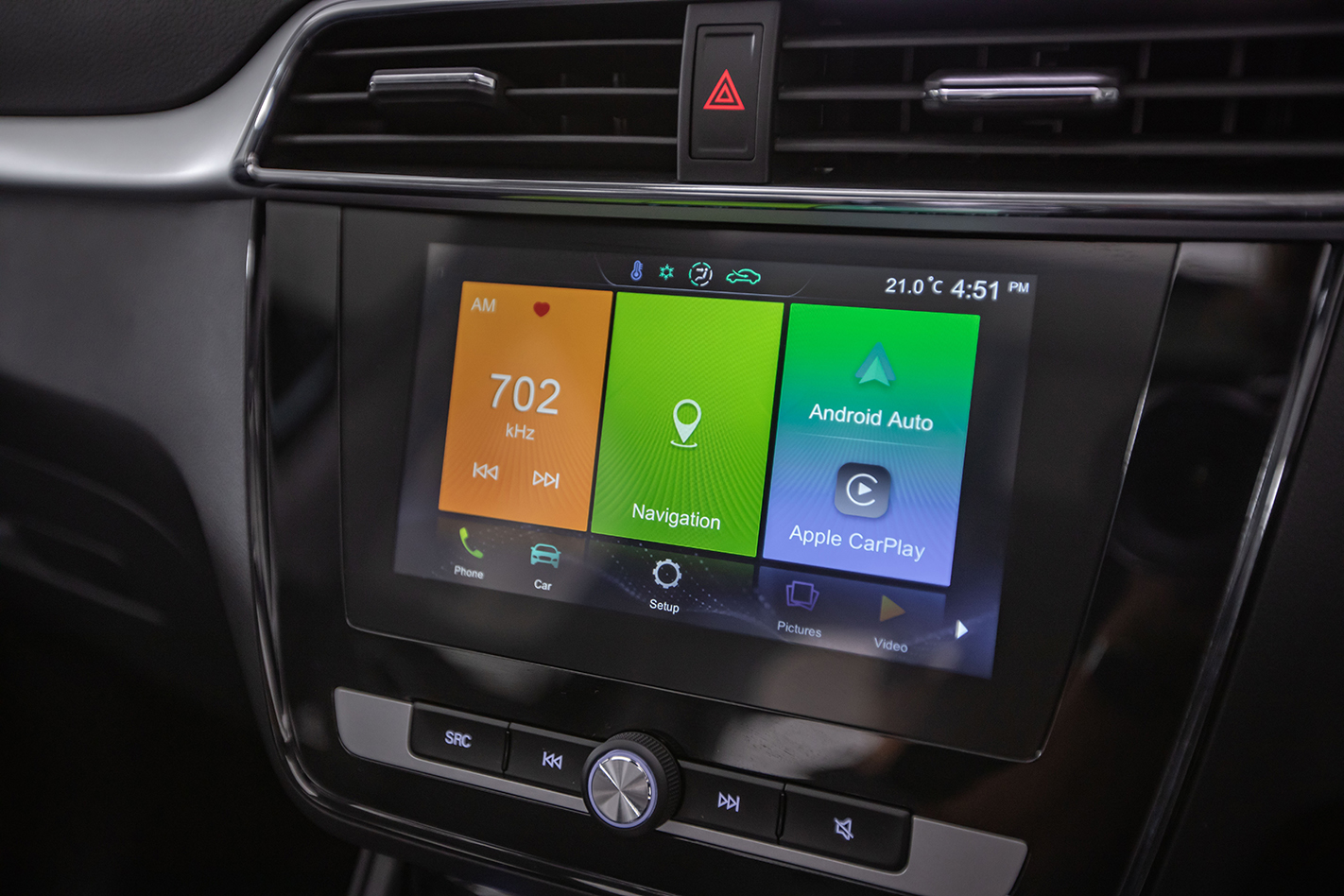
Infotainment is viewed and controlled via an 8.0-inch touchscreen mounted within the dashboard under the air vents.
It has a good sharp display but it’s mounted a little low, meaning you have to look down when following a route from the inbuilt sat-nav or navigation apps via Apple CarPlay or Android Auto.
The interface takes a bit of getting used to and it took me a while to find the home menu button, which turned out to be the unmarked metal hub of the volume controller. But once you’re familiar with the order of things it’s easy to operate.
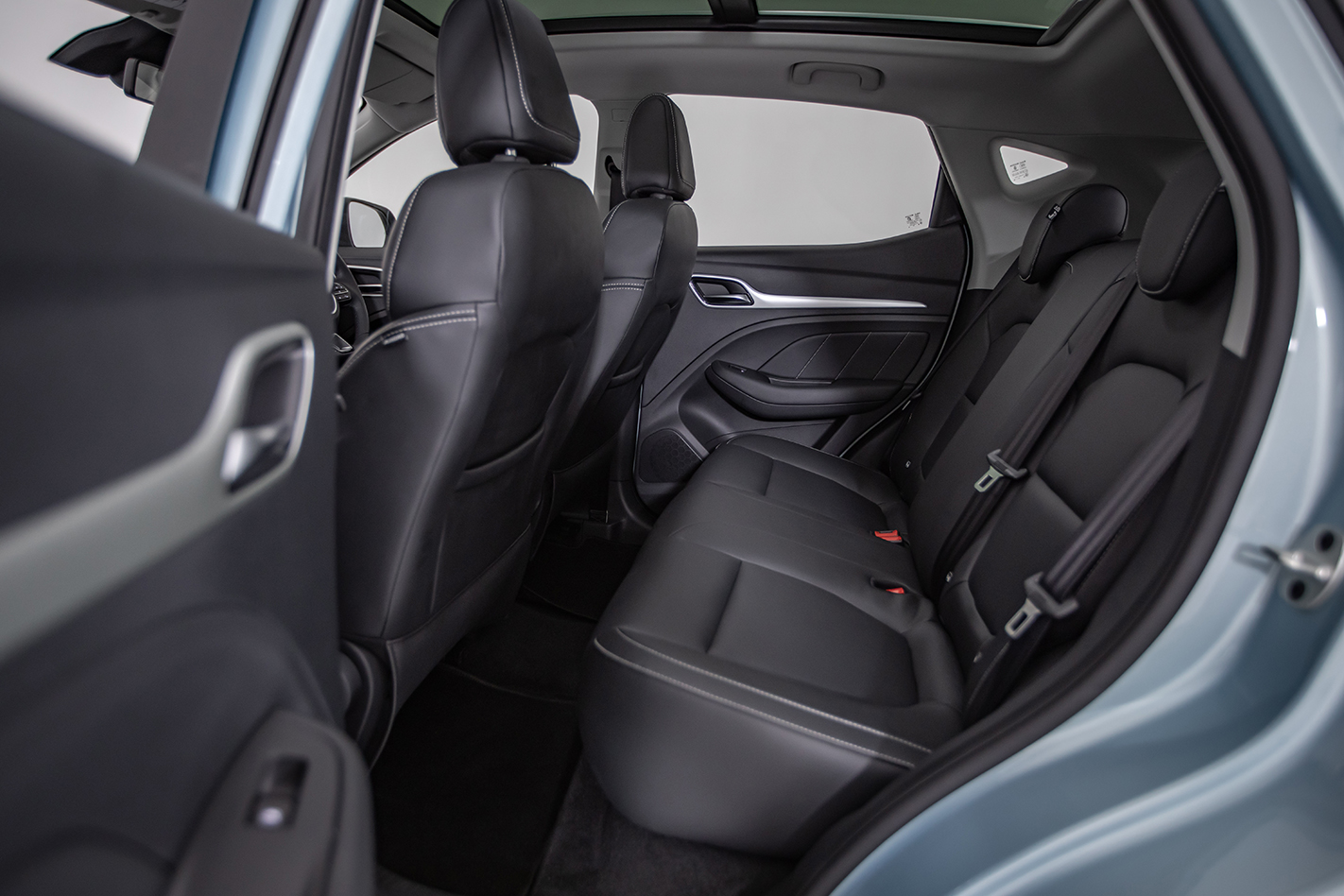
The rear seats are best suited to two adults but could squeeze in three for shorter trips. The good news for whoever draws the short straw and ends up in the middle seat is that there is no transmission tunnel taking up precious legroom. However, headroom is a little tight because of the sunroof.
Three children will fit easily enough and if you have very little ones there are ISOFIX child seat anchor points in the rear outboard seats and three top tethers.
Rear-seat passengers benefit from a USB socket behind the centre console and a small aperture to place a phone. Storage includes map pockets behind each front seat and small door bins.
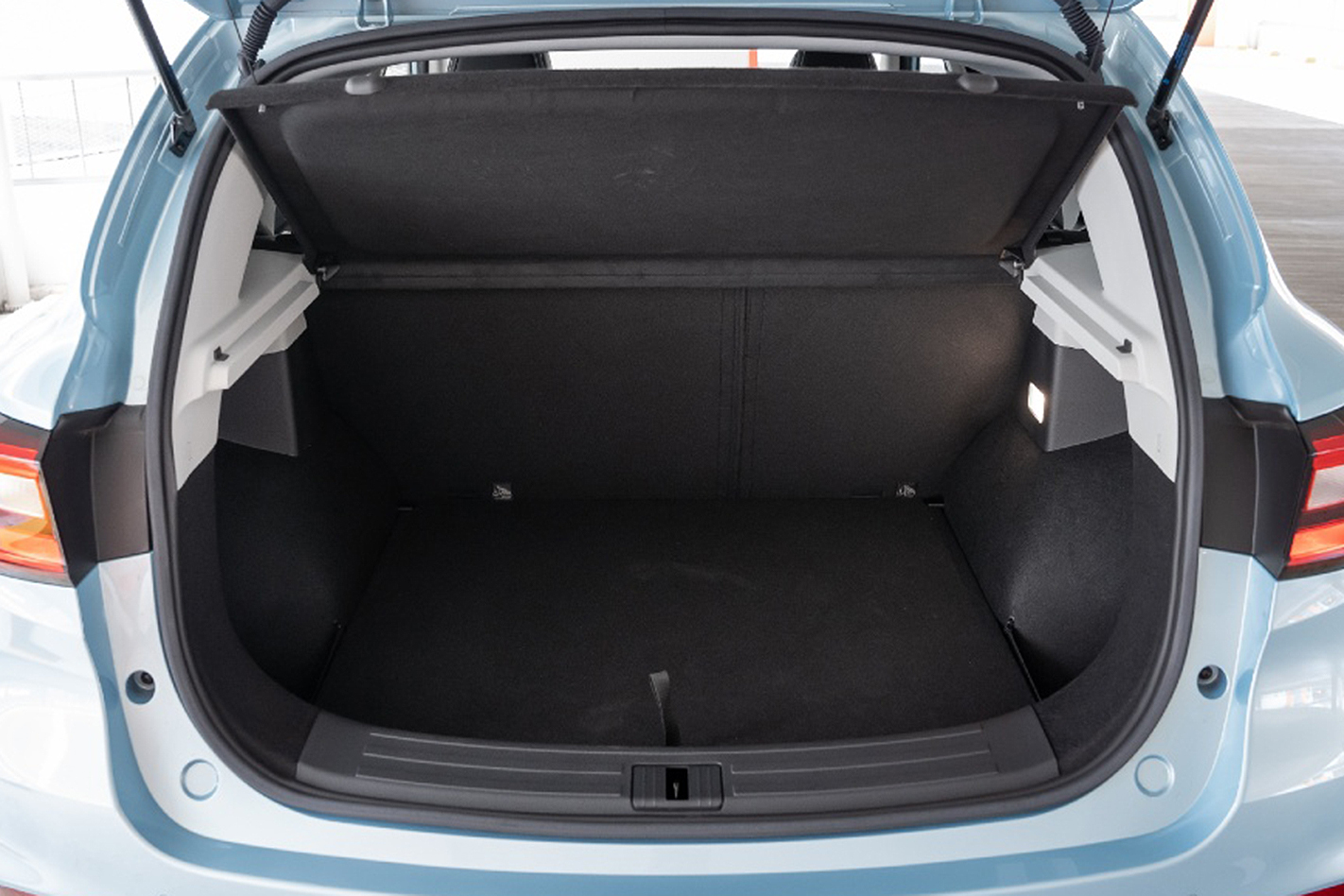
The boot space is shallow and narrow but managed to hold a handy 359 litres, which betters the Kona Electric by 26 litres.
A battery charging cable and tyre repair kit are neatly stored below the boot floor.
What about charging and running the MG ZS EV?
The ZS EV has 44.5kWh battery, which is quite small for a BEV, the downside being that range is limited to 263km. That said, it’s handy enough for the average weekly urban commute.
On plus side, the smaller the battery the quicker it is to charge. According to MG it will take 33 hours to charge from a 240-volt/10-amp socket in your garage, though if you top up your battery often that with be a lot less.
A 7.0kW wall charger brings the full charge time to seven hours, while a 50kW DC rapid charger will get you to 80 per cent in just 45 minutes.
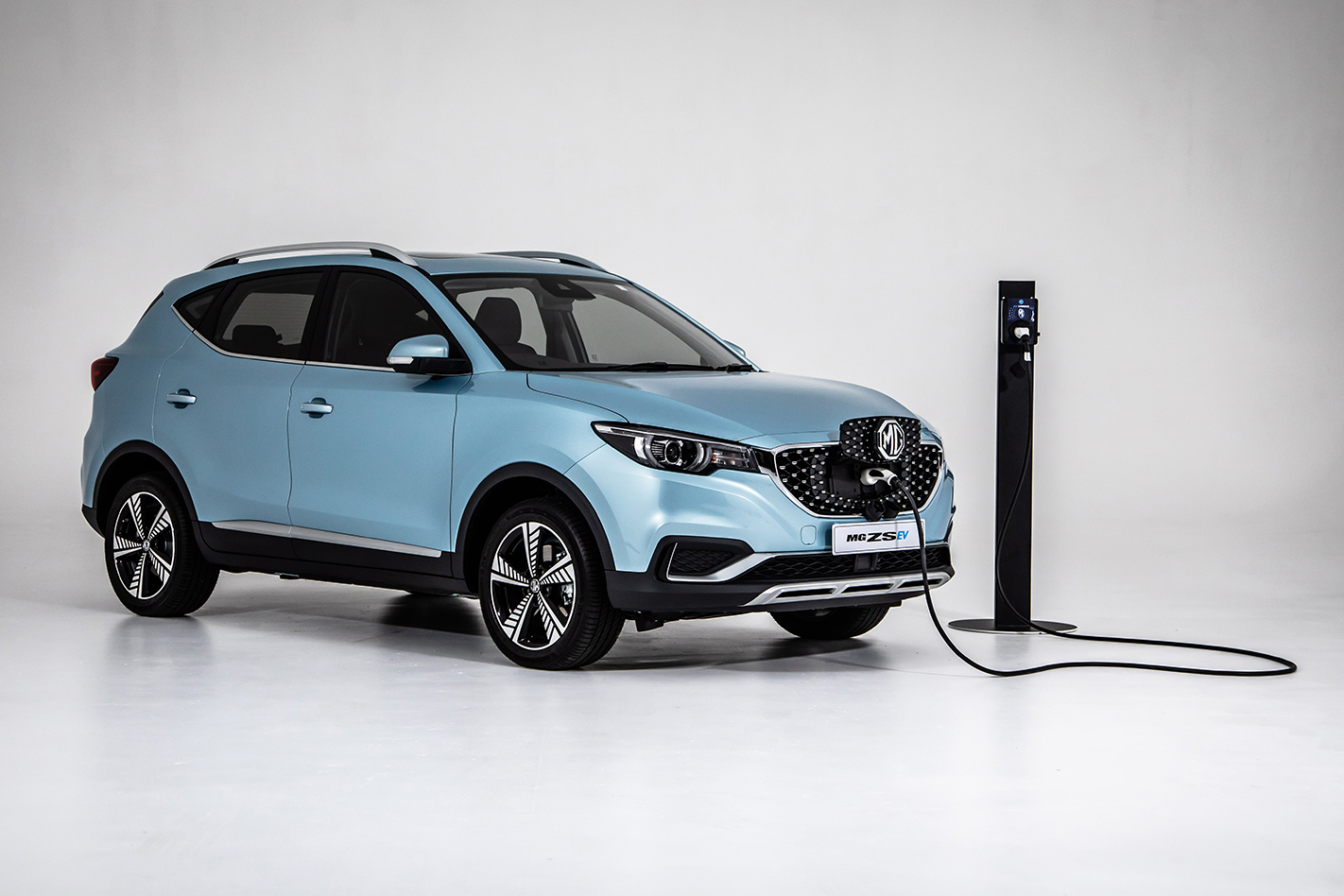
I charged our test car using a 50kW DC ChargeFox charger at a shopping centre when the battery was down to 34 per cent. It took 43 minutes to charge up to 100 per cent, which was about the time it took for me to finish the weekly supermarket shop.
Charging was priced at 40c/kWh, which meant the 29.18kWh top-up cost $11.67.
The ZS EV’s charging port is cleverly hidden behind the front grille and accepts CCS2 or Type-2 plugs for DC and AC charging respectively.
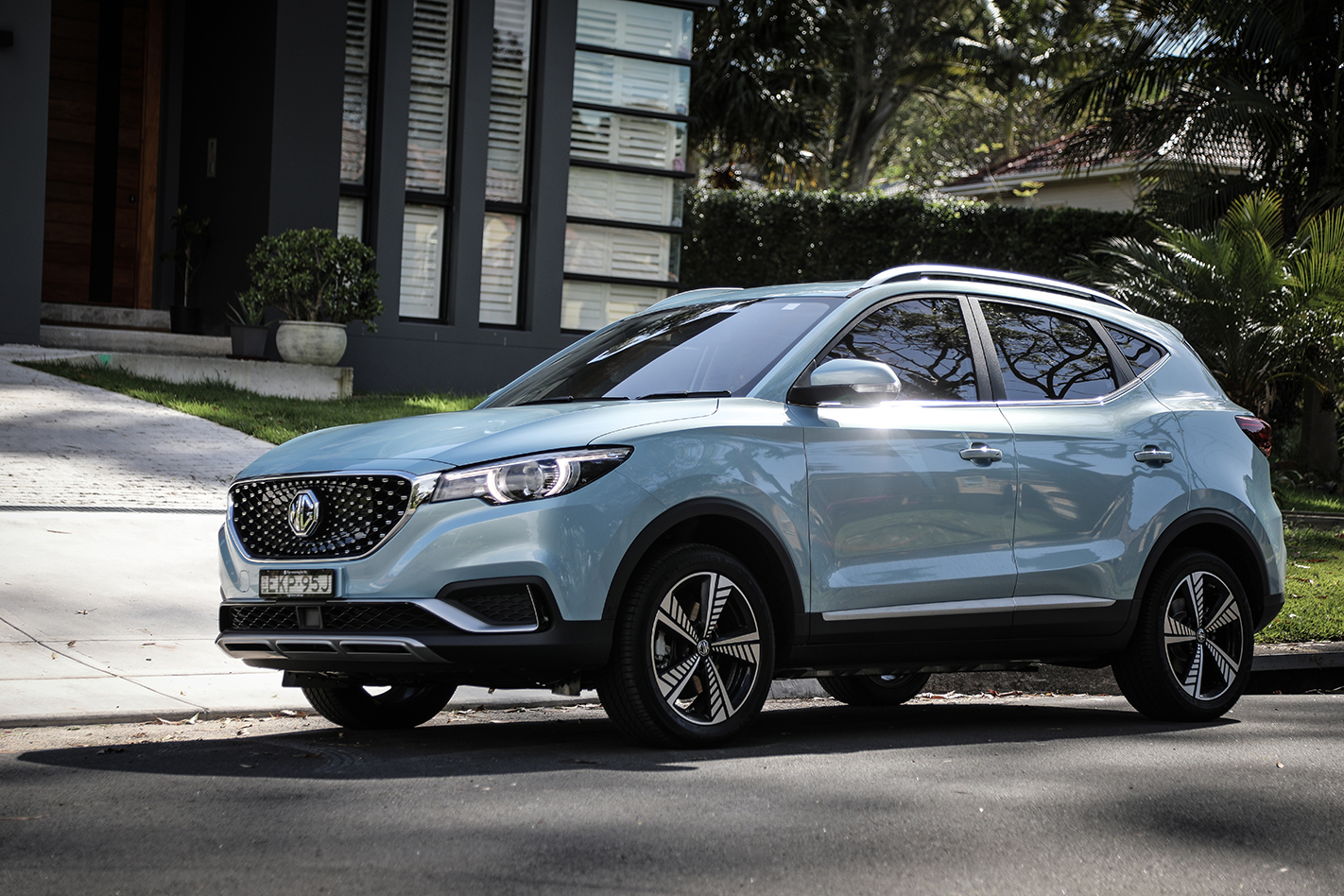
Official combined consumption is 18.6kWh/100km but during the week I drove the ZS EV I averaged 17.4kWh with a mix of urban and highway driving. That’s reasonably economical for an EV, though not quite as low and the Kona Electric and Nissan Leaf that consume about 14.5kWh/100km.
Despite not having an engine, the ZS EV requires servicing every 12 months or 10,000km whichever comes first, with fixed pricing set over five years averaging out to just $1602 over five years. More than half of that comes with the fourth year/40,000km major service that will set you back $827.
For some reason, the seven-year warranty that applies petrol-powered MGs does not apply to the ZS EV, which comes with a five-year/unlimited-kilometre warranty as well as a separate eight-year/160,000km cover for the high-voltage battery.
What is the MG ZS EV like to drive?
The MG’s electric motor produces a relatively tame 105kW of power and 353Nm of torque, which means it doesn’t have the door-busting 3.0-second 0-100km/h acceleration of some EVs.
That said, it doesn’t have to take off like a rocket – this is a small family SUV after all. But you still get that instant take off EVs are renowned for, albeit without the downsides such torque steer or front wheel spin.
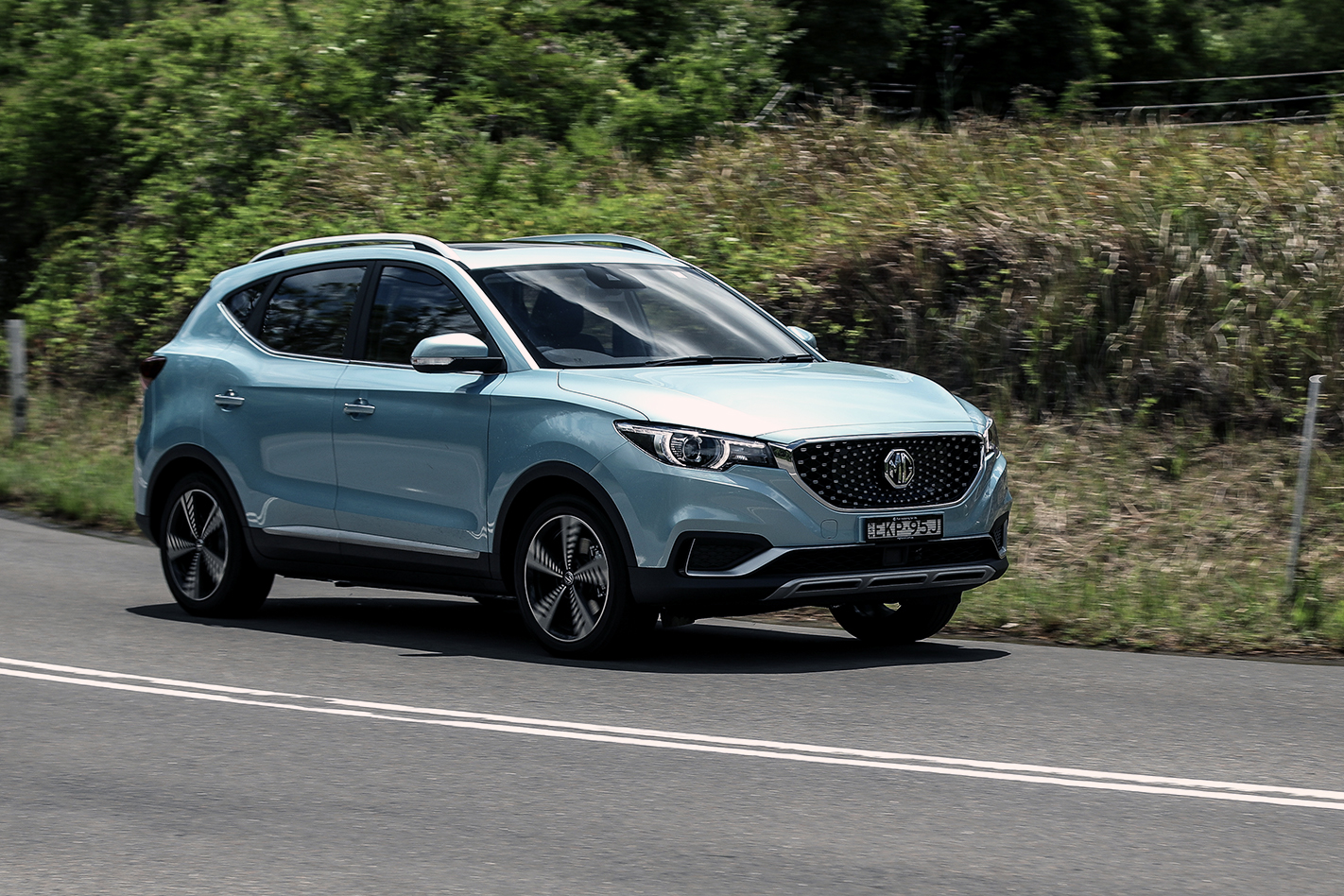
It happily gets to 100km/h from a standing start in about 8.2 seconds and has enough power in reserve to overtake and negotiate hills.
Another advantage of the smaller battery pack is less weight, meaning the ZS EV weighs just 50kg more than the petrol versions and helps maintain their handling characteristics, though body roll is quite pronounced on sharper bends.
The handling is let down by dull, indirect steering, meaning you have to give the wheel a decent shove to nurse it around bends.
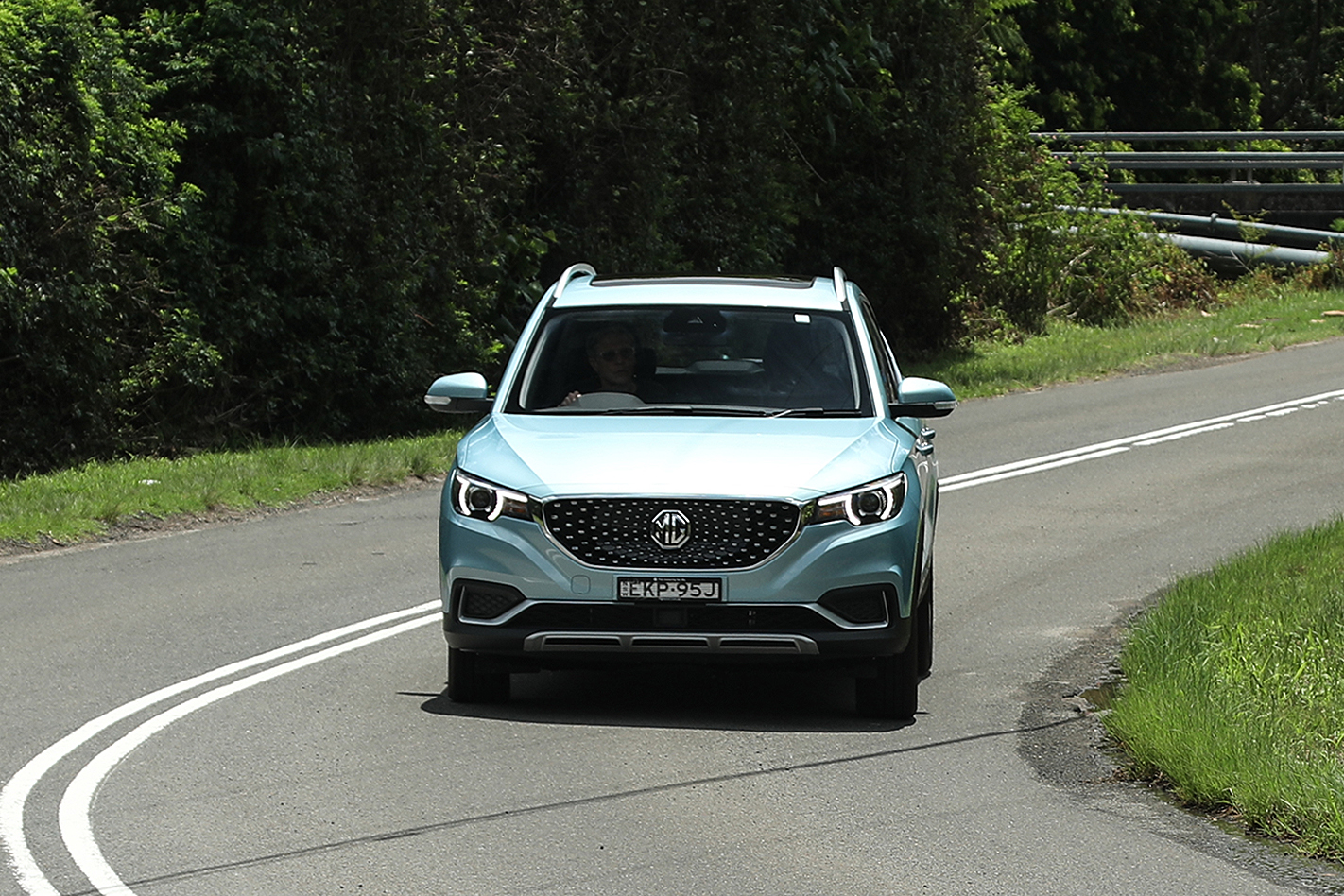
Ride quality on the rudimentary front-strut and rear torsion-beam is comfortable but can be a little busy on rougher roads, though this and the and sluggish steering aren’t really issues around town.
As a no-nonsense city runabout, this little EV is in its element – it’s nimble, easy to park and it’s actually quite fun to press the start button, put the foot down and drive off.
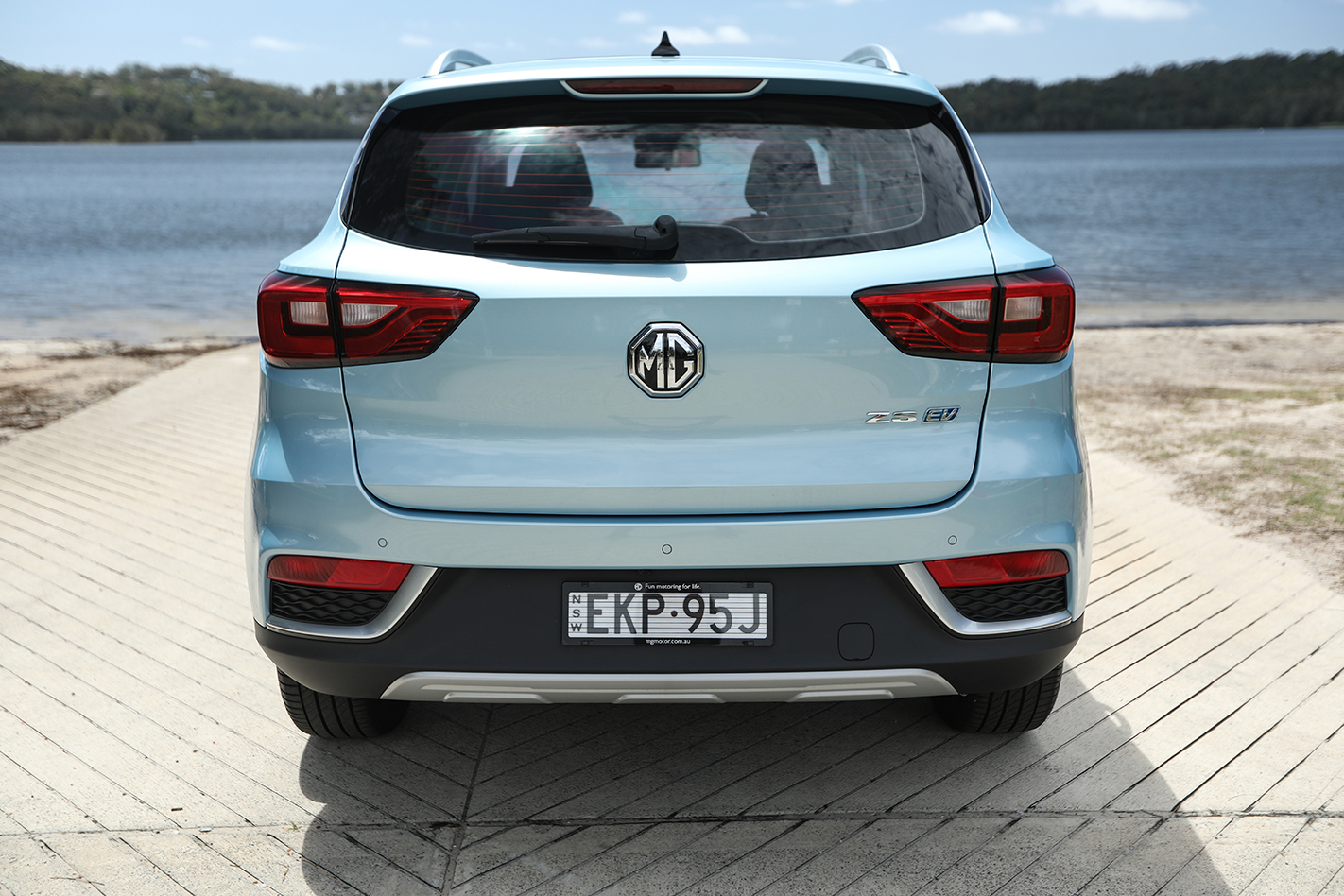
What is the MG ZS EV like for safety?
Unlike the rest of the MG ZS range that comes with a 2017 four-star ANCAP safety rating, this electrified version was awarded five stars in 2019 due to the inclusion of ‘MG Pilot’ advanced driver assistance.
The MG Pilot technologies include autonomous emergency braking (AEB) with pedestrian detection, adaptive cruise control with traffic jam assist, rear cross-traffic alert, speed sign recognition and blind-spot warning. (The petrol ZS versions now have some of those features but still hold their 2017 ANCAP rating.)
It also has six airbags including dual frontal, dual front chest protection, and side curtains.
The Verdict
Its relatively low price, simplicity and quick charging make the MG ZS EV an excellent car for anyone wishing to purchase their first electric vehicle while keeping things simple.
It unashamedly lacks some wow factor of pricier EVs such as the digital displays and impressive on-road dynamics but is true to its mission as a convenient little runabout while offering an enjoyable driving experience.
Creature comforts such as the leather trim and sunroof help take the sting out of the $40k-plus price, as will its significantly reduced running costs compared to a petrol model during the first five years.
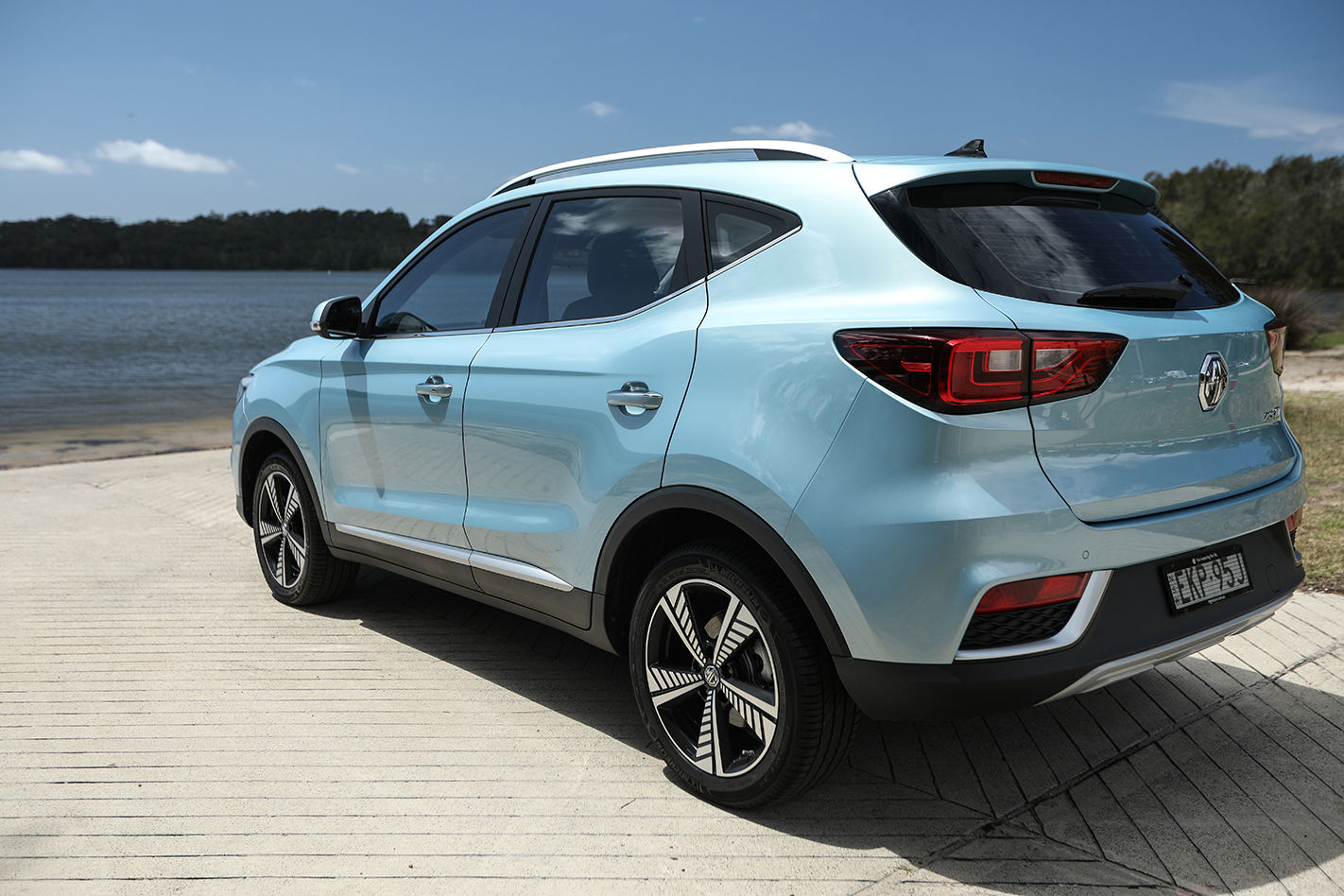
MG ZS EV Specifications
Body: 5-door, 5-seat small SUV Drive: FWD Motor: Synchronous motor Power: 105kW Torque: 325Nm Battery capacity: 44.5kWh Charging port: CCS2/Type 2 Weight: 1532kg Transmission: Automatic Suspension: Front MacPherson strut/ rear torsion beam Dimensions, L/W/H: 4314/1809/1644mm Wheelbase: 2585mm Tracks F/R: 1526/1539mm Brakes: Front ventilated discs, rear discs, regenerative braking Tyres: 215/50 R17 Wheels: Alloy 17-inch Price: $40,990 ($43,990 drive away)
Honda has vowed to stop producing petrol and diesel vehicles and to go fully-electric by 2040.
The Japanese marque says it plans to increase the number of battery electric vehicles (BEVs) and fuel cell vehicles across all markets, including Australia, to 40 per cent by 2030, 80 per cent by 2035 and finally to 100 per cent by 2040.
This means within the next 20 years, popular models like the Honda Civic sedan and hatch, HR-V and CR-V SUVs, and Odyssey people mover will become electric vehicles. It’s not yet known if performance models such as the Civic Type-R would switch to electric power or be cut from the range entirely.
The brand is also aiming to be carbon neutral across the business by 2050, with “zero traffic collision fatalities” planned for the same time.
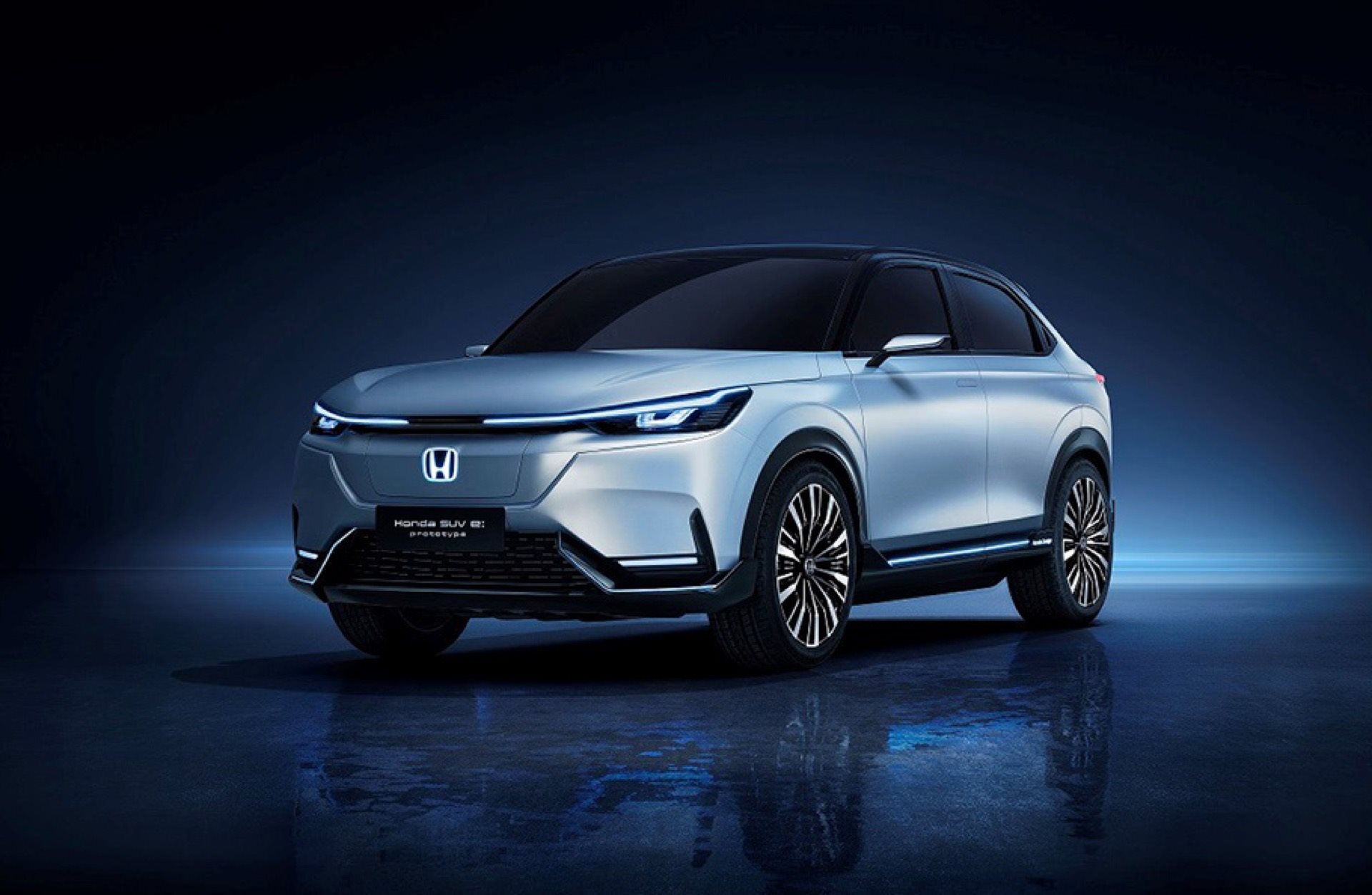
“These are challenging targets. However, we decided to set high goals so that all of us share the vision of what we are trying to accomplish,” said Honda President Toshihiro Mibe.
The company is also keen to play its part in creating a ‘hydrogen society’ as the fuel begins to become more popular as a renewable energy source. Honda will invest a total of about 5 trillion yen ($46.3 billion) in research and development initiatives, including electrification and hydrogen, over the next six years.
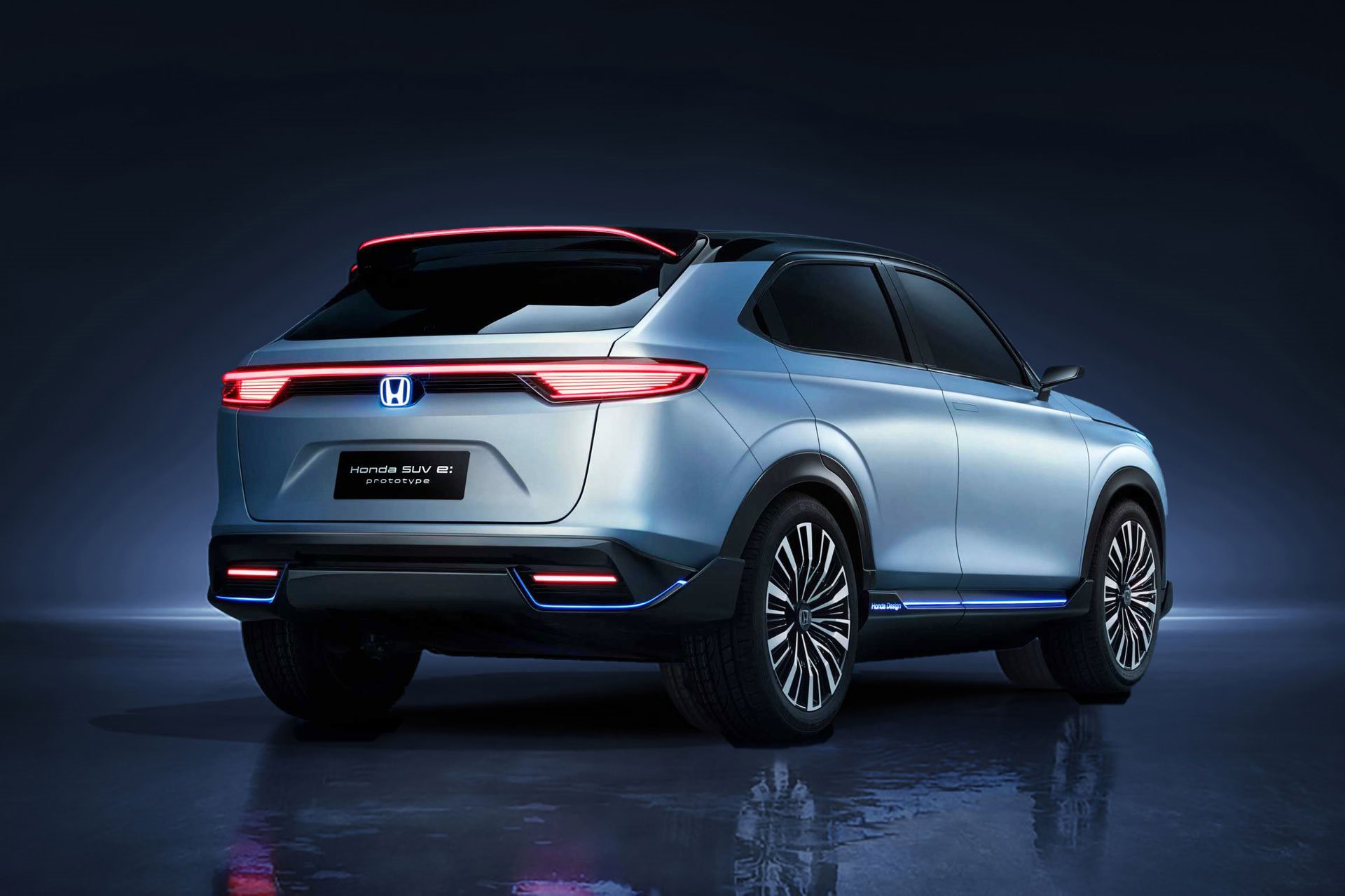
Honda says there will be ‘10 Honda-brand EV’ models to be launched in the Chinese market within the next five years. This will be led by the the 2021 Honda SUV E:Prototype which was unveiled last week at the Shanghai Auto Show, with a production-ready version of the high-riding EV set for a second-quarter launch in 2022.Given last year’s deal between Honda and General Motors, it is likely the production-ready E:Prototype will utilise GM’s Ultium battery technology, similar to what we’ve already seen on vehicles like GMC’s new Hummer EV SUV.
“While continuing our collaboration with GM, Honda will strive to reduce costs by expanding our line-up of fuel cell vehicles and also by using fuel cell systems for a wide range of applications,” Mr Mibe added.
The Japanese carmaker doesn’t currently offer any electric vehicles in Australia, however there’s a chance the city-sized Honda E hatchback could make its way to our shore, though nothing has been confirmed.
Mercedes-Benz Australia has issued two recalls for its 2020-built A-Class and GLA due to two distinct issues being discovered.
Nineteen examples of 2020 A-Class models have been identified as missing the right rear seat’s belt bracket, which is used to secure a child seat to the ISOFIX holder.
According to Mercedes, this could mean the child’s seat is insecurely mounted, and as a result, the child may not be adequately restrained in their seat.
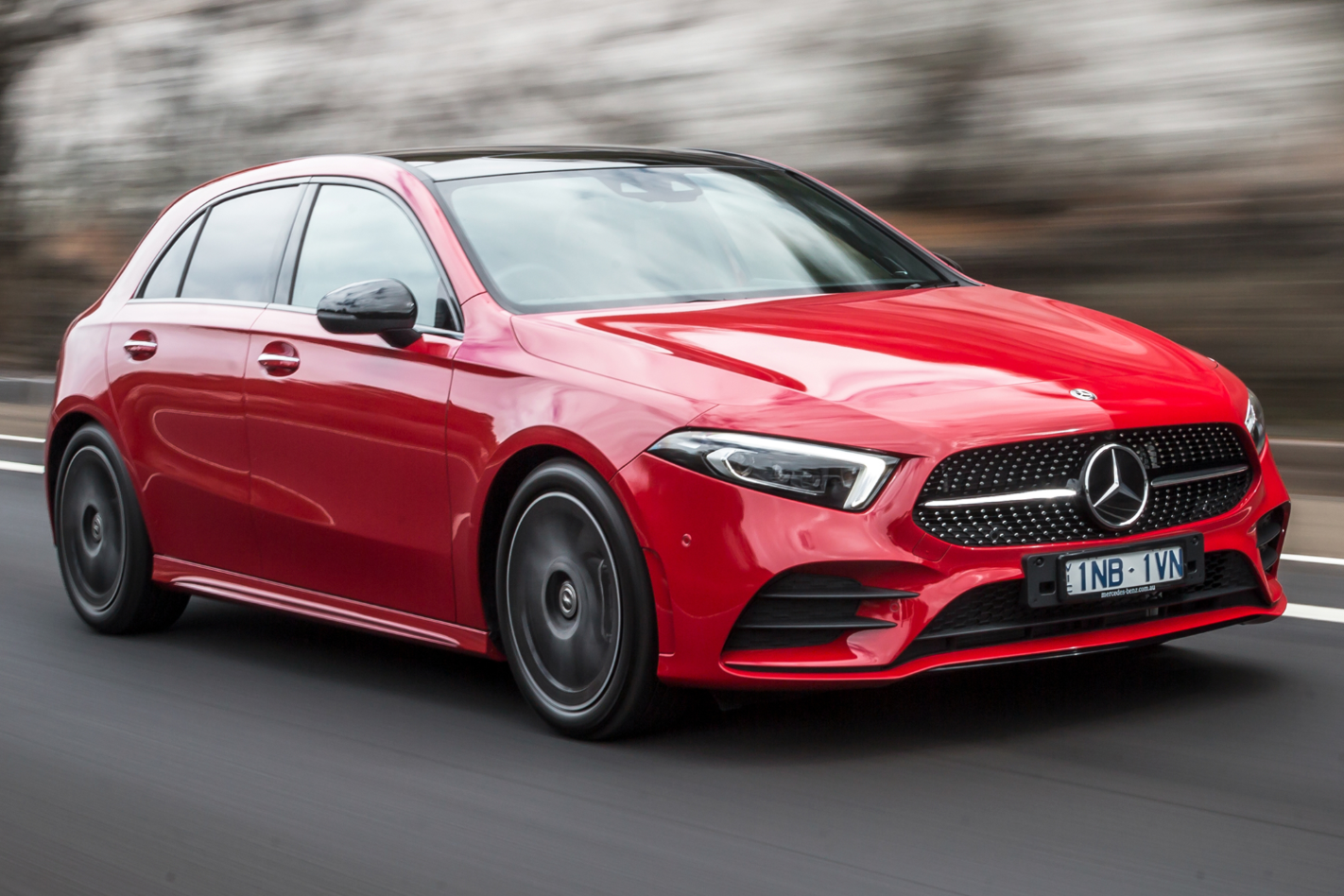
Mercedes has also found a fault with 13 examples of its 2020 GLA models, which involves the ground connection of the front passenger airbag.
As a result of the unit not meeting specifications, the automaker says that electrostatic charges may not be diverted via the ground connection.
This could trigger the front passenger airbag to deploy randomly and without notice.
Mercedes is asking that customers contact their local authorised dealership to organise a time to have their vehicles inspected. If a fault is found, it will be repaired with new parts, free of charge.
The automaker has also created a list of the affected vehicles’ VIN numbers. For A-Class owners, click here, and for GLA owners, click here.
Few things in modern motoring are truly scary. A McLaren 720S at full throttle, trying to drive fast on cold Michelin Pilot Sport Cup 2s, or the price of used JDM heroes are it, really.
Modern systems and technology mean the safety net is wide, and very firmly secured.
That is, until you rip the net from its fixtures, and drag race a pair of high-powered coupes in a small and confined space.
Which is exactly what we did with the Lexus LC500 and Jaguar F-Type P380.
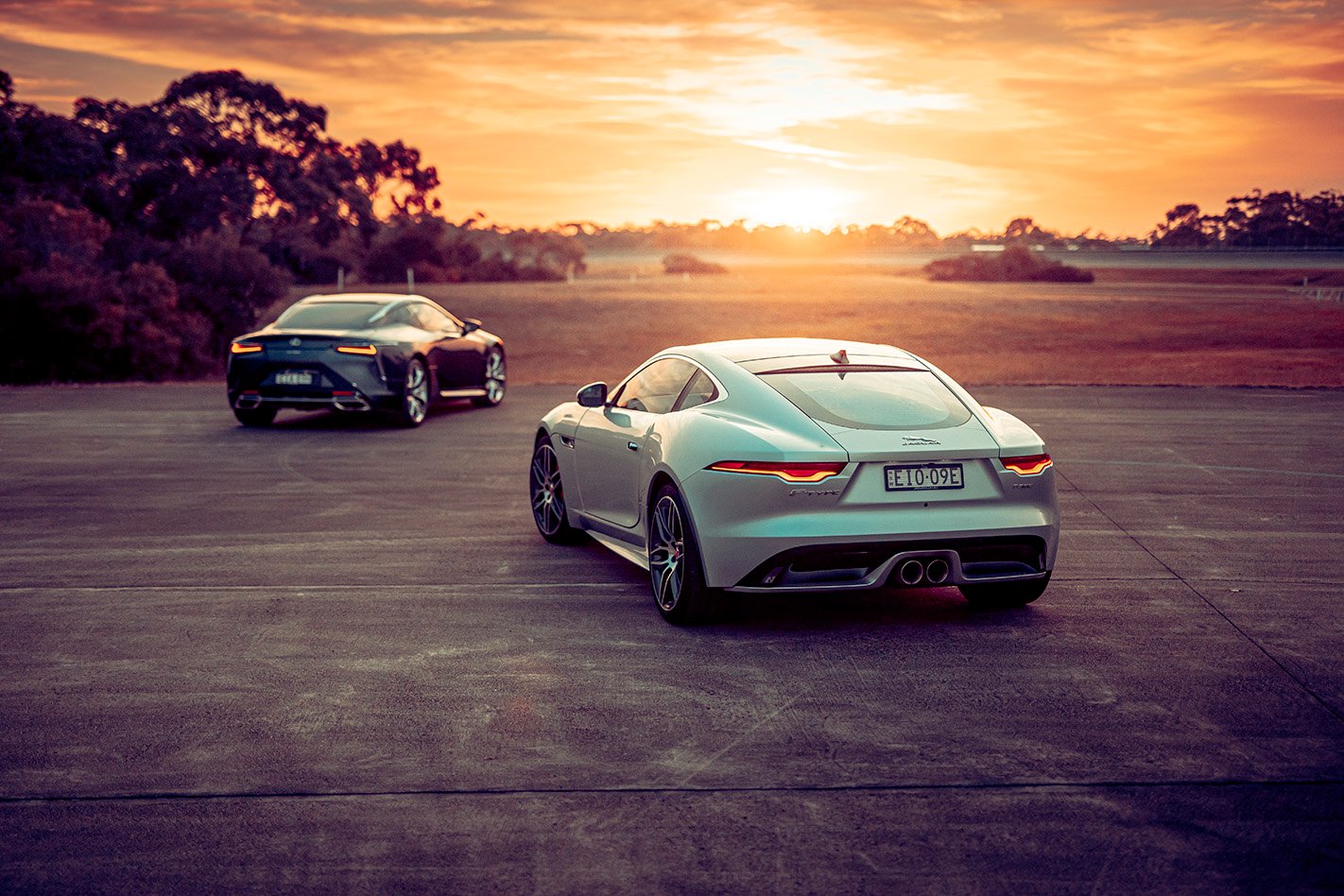
Initial plans were for a full 400-metre quarter mile drag race. However, the available space for slowing down, and sheer speed of vehicles in question, ruled that out immediately.
Even with the race shortened to 350m, our intrepid drivers would have 90 metres to haul their luxo coupes from north of 150km/h to a standstill.
Mess up the braking, and a group of trees were ready and waiting to foul either car’s exquisite metalwork.
No pressure, then.
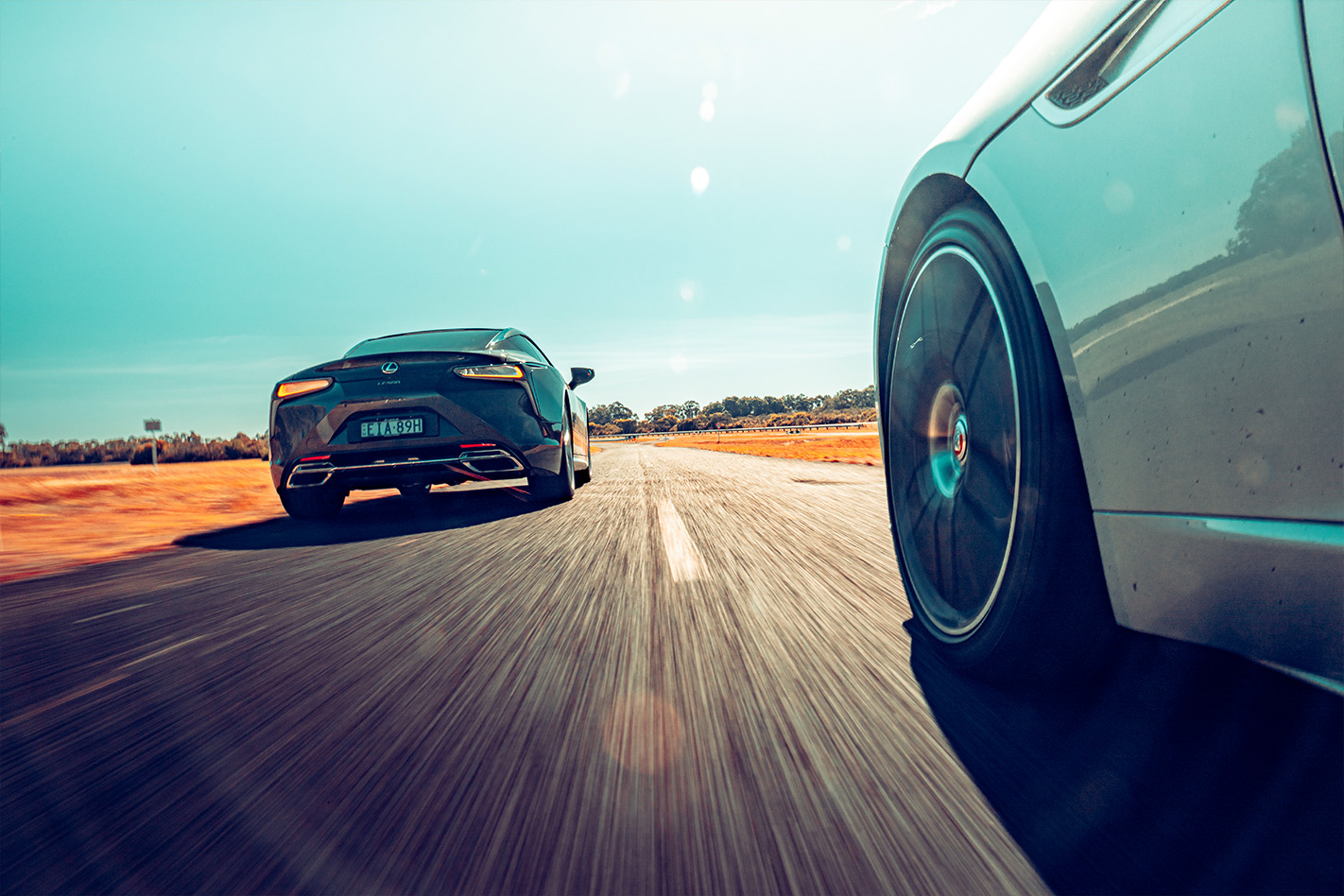
Representing the very best of Japan, the Lexus LC500 comes equipped with a 5.0-litre naturally aspirated V8, sending 351kW and 540Nm to the rear tyres.
The 2UR-GSE is one of the best engines you can buy today, so the Jag has its work cut out for it.
Powering the F-Type is a unique and sonorous 3.0-litre supercharged V6, sending 280kW and 460Nm to the rear wheels.
Despite the extra power of the Lexus, both cars have the exact same power to weight ratio of 178kW per tonne.
That’s because the Lexus weighs in at 1930kg, while the Jag is a relatively svelte 1572kg. Game on.
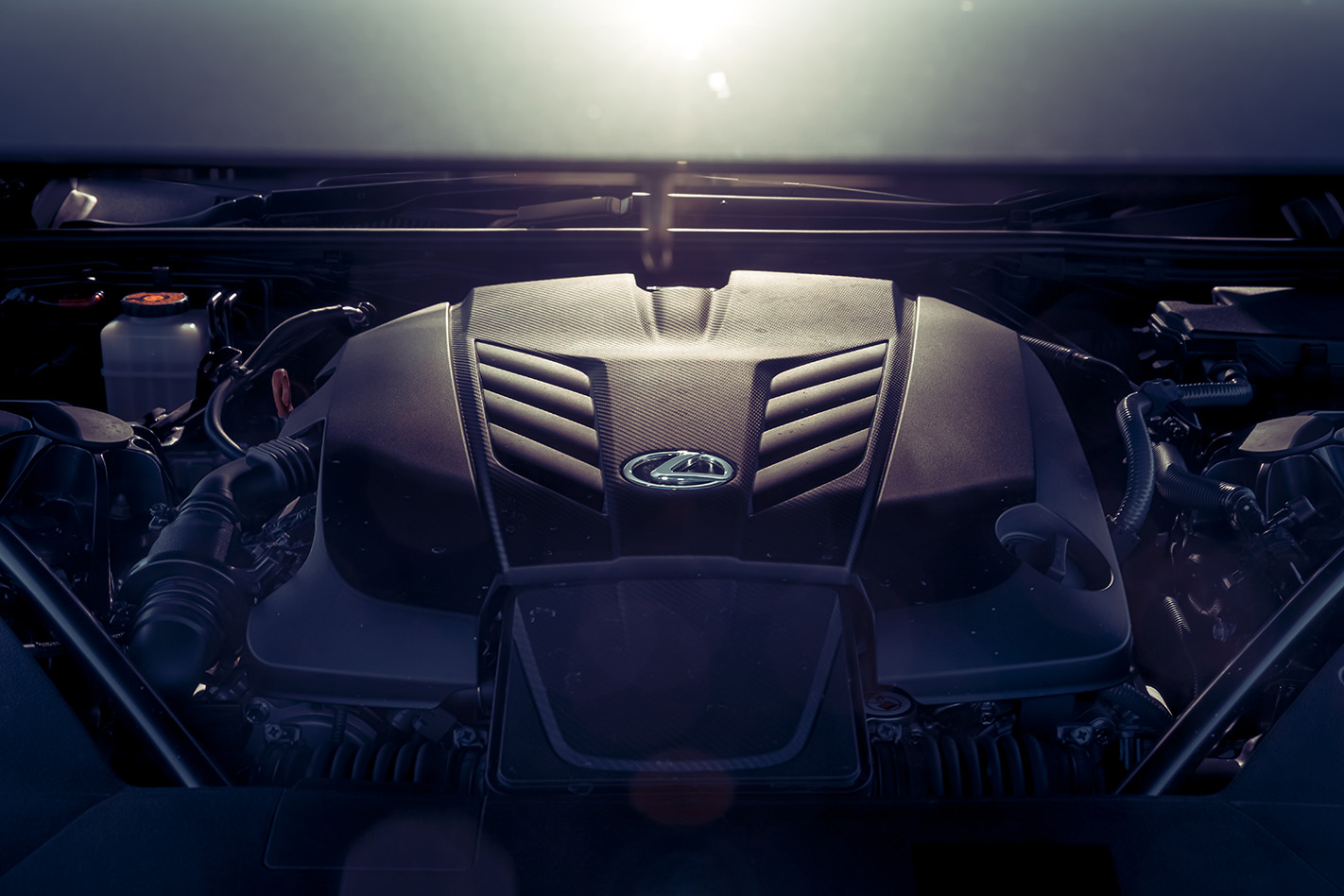
During the drag battle the LC cracked 100km/h in 5.1 seconds, and was motoring past 150km/h in 9.9 seconds, while the F-Type achieved both feats in 4.9 seconds and 9.6 seconds respectively.
Thankfully for us, Dan, Andy, and both cars survived the ordeal unscathed. By time the cars came to a standstill there was little more than a car length of concrete left.
Watch the video above to see how it all played out.
Make sure to subscribe to the MOTOR Youtube for more drag race battles – we upload them on a regular basis!
