
The latest Porsche Panamera facelift isn’t exactly extensive – even Porsche itself describes it as “very mild”.
It mainly consists of a couple of new variants such as the V8 GTS, petrol-only Turbo S, more powerful 4S E-Hybrid and a long-wheelbase ‘Executive’ option for the Panamera 4, but it also gives us a chance to slide behind the wheel of the ‘base model’ Panamera.
That’s not a particularly accurate descriptor of a car that starts at $199,500 before options or on-roads, but the fact remains that this is the lowest rung on the Panamera ladder. Porsche has not left it idle, however, bolstering the value case with extra equipment.
The Panamera now includes LED matrix headlights including PDLS Plus (active cornering headlights), Power Steering Plus (speed-sensitive power steering), ventilated front seats, lane change assist, a head-up display and soft-close doors, so it’s an impressive amount of added kit.

Certainly from behind the wheel there is little to no hint that you’ve restrained from scaling higher up the Panamera pecking order. The cabin is awash with beautiful clever and sexy carbon, all the technology – infotainment, driving and safety – seems present and correct (in part thanks to the update) and there are very few blank spaces in place of buttons which usually serve as a dead giveaway that you’ve skimped on the spend.
There is also masses of room, which goes some way to answering the first question that popped into my head when testing the Panamera: “why wouldn’t you just buy the faster, cheaper, cooler, newer Taycan 4S?” Space is at a premium in Porsche’s electric rocket ship, the Panamera having more room than its slight dimensional advantage suggests.
The two are quite similar in size, the Panamera being 86mm longer, 29mm narrower and 44mm taller to accommodate four large adults with ease. Luggage space is also superior at 495 litres with the rear seats in place and 1334 litres with them down, compared to the Taycan’s 407L boot and 81L ‘frunk’ in the nose.

The Panamera doesn’t drive like a base model either. In some cars, even high-end ones, there is a clear progression as you climb towards the top of the tree but essentially the entry Panamera feels exactly the same as the range-topping Turbo S in terms of its controls.
Air suspension is standard on all Aussie Panameras and the ride quality is excellent, with only the occasional jostle over poor surfaces. The Panamera isn’t a magic carpet in the manner of a Mercedes S-Class as there’s a degree of firmness at urban speeds but it’s more a connection to the road than a source of discomfort.
Porsche plans hero hybrid Panamera with more than 500kW
Dual-clutch gearboxes can struggle with smooth slow-speed operation but the Panamera manages to avoid this in the main, though there is the occasional thump if you catch it unawares. Just as the ride smooths out at higher speeds, so too does the gearbox slip quickly and seamlessly through the gears once rolling.

So far, so good, but where the Panamera really comes into its own is when the going gets twisty. Granted, it’s never going to be your first choice from Porsche’s catalogue when it comes to a mountain thrash but it is ridiculously capable when being hammered.
Massive Michelin Pilot Sport 4 S tyres help, our test car’s boots measuring 275mm wide front and 315mm rear, so grip is fairly impressive, but you can dance on the edge of that grip in a way you probably wouldn’t expect from such a big car.
It doesn’t get at all ruffled or upset if you suddenly think you’re in a Cayman and it’s only when you really commit to corners that you realise that its talent reserves are deeper than you first thought.
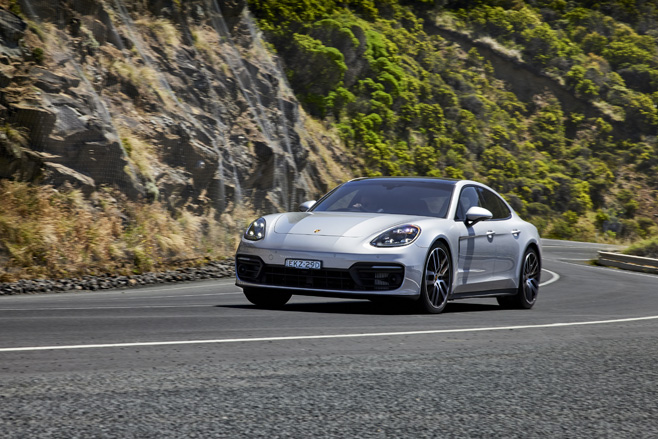
Granted, its size and weight limit your options somewhat – don’t try and abruptly change your mind mid-corner, for instance – but it’s still incredibly impressive.
2018 Porsche Panamera Turbo Sport Turismo vs Mercedes-AMG S63 L
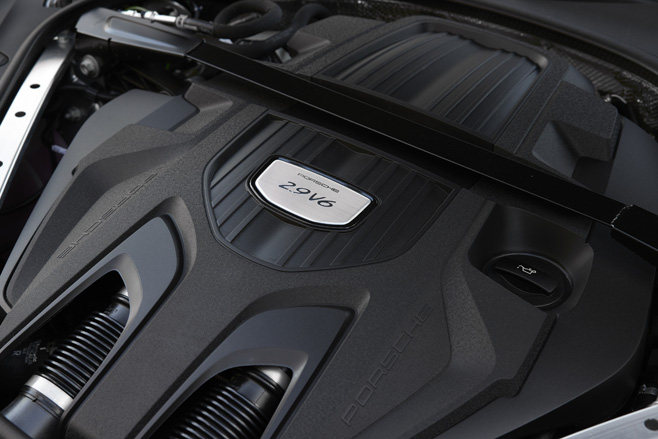
The one downside to choosing the entry Panamera is that you don’t really have the power to exploit this capability. In isolation the 2.9-litre twin-turbo V6 is a fine engine; its revs keenly, has plenty of mid-range torque and even sounds good once Sport mode is engaged. But there are a couple of drawbacks.
It uses the grunt it does have to good effect with a 0-100km/h claim of just 5.4sec (when optioned with Sport Chrono; 5.6sec otherwise) but 243kW/450Nm isn’t that much in an 1860kg car. Furthermore, there’s a distinct hesitation when you catch the engine off-guard, such as between corners when you snap the throttle shut then ask for full power once again.
It’s here that the Taycan has the advantage for keen drivers with masses of instant electric torque available, but the Panamera probably just shades it for overall driver appeal. It’s also a simply beautiful cruiser, built to dispatch mega distances at mega speeds, an ability that Australia’s speed limits sadly render largely redundant.
Even this entry-level Panamera is a very desirable car and if you’ve always wanted a family-friendly Porsche then you’re unlikely to be disappointed. But if you have the means it’s easy to recommend leaning into the whole combustion engine thing and looking further up the range.
The New Porsche Panamera is the fastest “executive car” at the Nurburgring
The monster 463kW/820Nm Turbo S and its 3.1sec 0-100km/h sprint is obviously tempting, but an eye-watering $409,200 price tag does take the shine off somewhat. As such, the new GTS could well be the sweet spot, with its luscious 353kW/620Nm 4.0-litre twin-turbo V8 and even sharper dynamics. It’s available in ‘Sport Turismo’ wagon guise, too, for even more practicality and cool factor.
We’ll confirm this when we review the rest of the updated Panamera range in due course.
Verdict: 8.5/10 Likes: improved value; fabulous dynamics; interior quality; space Dislikes: chassis deserves more grunt; engine response; ride not absolutely perfect
2021 Porsche Panamera Specifications
Body: 5-door, 5-seat hatch Drive: rear-wheel Engine: 2894cc V6, DOHC, 24v, twin-turbo Bore/stroke: 84.5 x 86.0mm Compression: 10.5:1 Power: 243kW @ 5400-6400rpm Torque: 450Nm @ 1800-5000rpm 0-100km/h: 5.6sec (5.4sec w/Sport Chrono) Fuel consumption: 8.8L/100km (combined/claimed) Top Speed: 270km/h Weight: 1860kg Power/weight: 131kW/tonne Transmission: 8-speed dual-clutch Suspension: double wishbones, air springs, adaptive dampers, anti-roll bar (f)’ multi-links, air springs, adaptive dampers, anti-roll bar (r) L/W/H: 5049/1937/1423mm Wheelbase: 2950mm Tracks: 1671/1651mm Steering: electrically assisted rack-and-pinion Brakes: 350mm ventilated discs, 6-piston calipers; 330mm ventilated discs, 4-piston Wheels: 21 x 9.5-inch (f); 21 x 11.0-inch (r) Tyres: 275/35 ZR21 (f); 315/30 ZR 21 (r) Price: $199,500
Lamborghini Australia is issuing a recall for 22 examples of its Aventador SVJ and SVJ 63 after an issue involving faulty hood hinges was flagged.
According to Lamborghini, affected examples of the V12 hypercar may have bolts that loosen on the hood hinges.
If the issue is not addressed and owners continue to drive the affected vehicles, there is a possibility that the hood could flip open or even detach from the car completely.
The Italian automaker will notify owners of the affected vehicles, and once parts become available, owners will be asked to make a booking with their preferred authorised Lamborghini dealership so the hood screws can be replaced.
Anyone seeking further information can contact Automobili Lamborghini SpA via email at [email protected].
Alternatively, Lamborghini Australia has provided a list of the affected vehicles’ VIN numbers, which can be viewed here.
MORE: Aventador stories MORE: All Lamborghini stories
Nissan Australia has recalled its R52 Pathfinder due to a fault with its towbar installed on vehicles between 2017 and 2020.
Pathfinders which have towbars attached bearing the batch plate number 29 18 are the only models affected by the manufacturing issue.
According to Product Safety Australia, there may be a weld separation on the right-hand side of the towbar attachment bracket.
It’s possible the towbar cross member and bracket could separate, causing the towbar to detach from the vehicle and potentially lead a driver to lose control of the trailer.
At this stage there is no immediate action to take, but when parts become available in mid-May 2021, Nissan will contact affected R52 Pathfinder owners to organise a free inspection and replacement.
For more information, owners can call Nissan Customer Service Centre on 1800 035 035 (Monday to Friday, 8:30am to 6:00pm AEST) or find their nearest dealership at: www.nissan.com.au/find-a-dealer
Product Safety Australia has a VIN list of compatible vehicles.
MORE: Pathfinder news and reviews MORE: All Nissan stories
The 2021 Bentley Continental GT Speed Convertible has been unveiled, less than a month after its hardtop sibling broke cover in late March.
Despite the weight gain, removing the roof of Bentley’s range-topping GT doesn’t appear to have slowed it down much, with 0-100km/h taking just 0.2 seconds longer than the coupe, completing the sprint in 3.7 seconds.
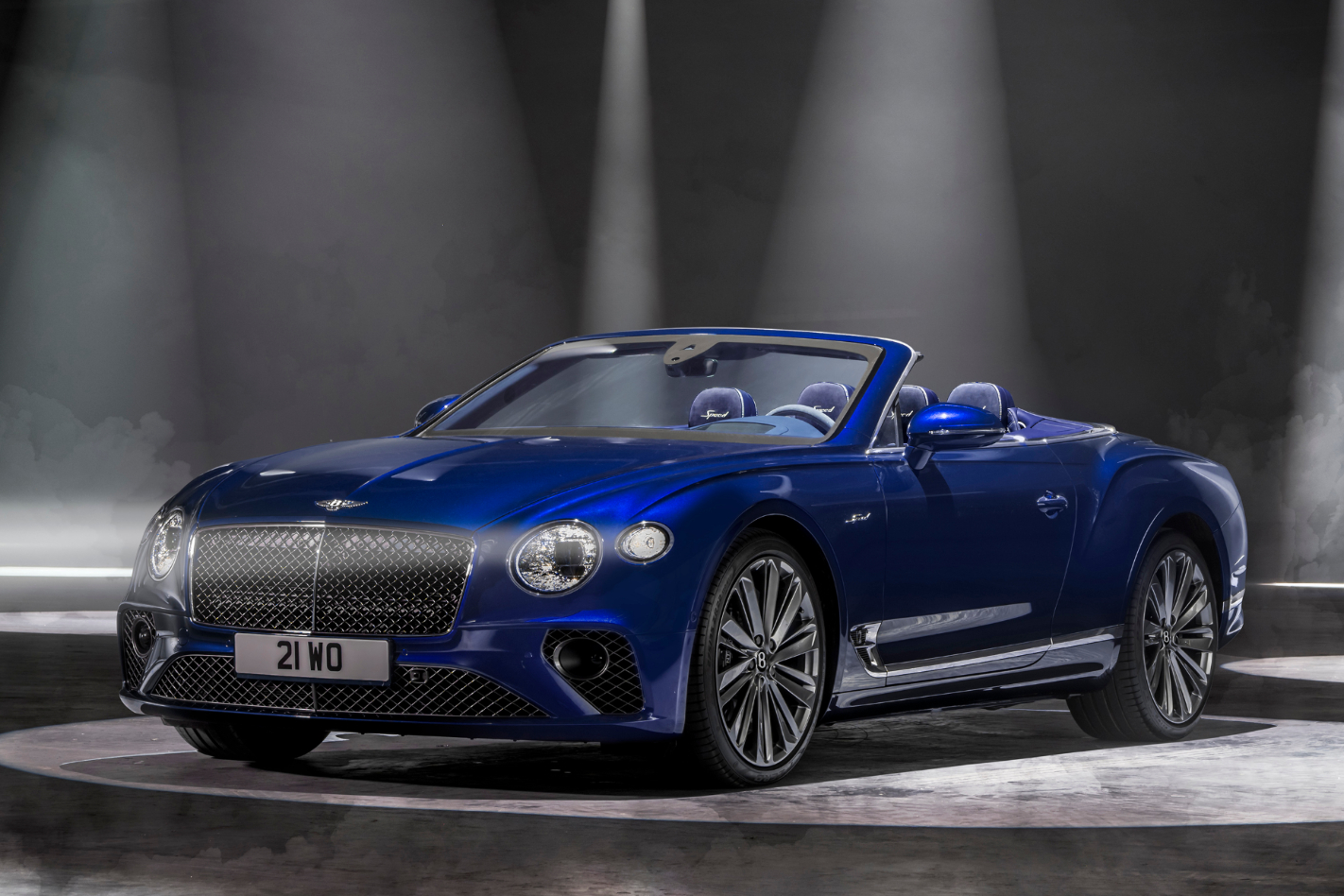
The soft top’s Vmax hasn’t been affected by the extra kilos either, with the convertible matching the coupe’s 335km/h top speed.
This similar pace shouldn’t come as a surprise considering GT Speed Convertible shares the identical 6.0-litre twin-turbo W12 found in the coupe.
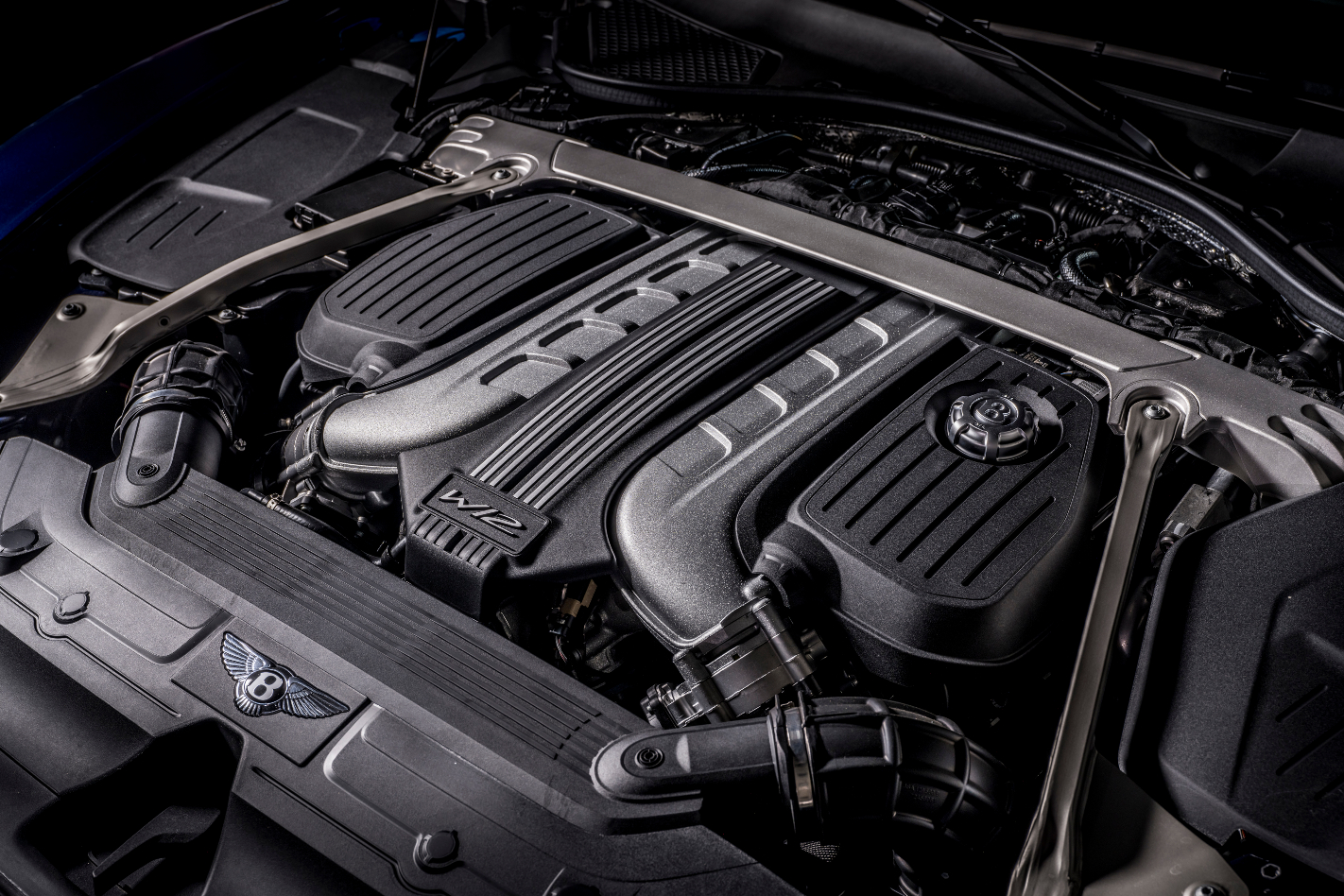
The herculean 12-cylinder beast is good for 485kW and 900Nm, and the monumental power is sent to all four wheels via an eight-speed dual-clutch transmission.
Four-wheel steering, an electronically controlled limited-slip differential and the option of 10-piston carbon-ceramic brakes have also been carried over from the coupe.
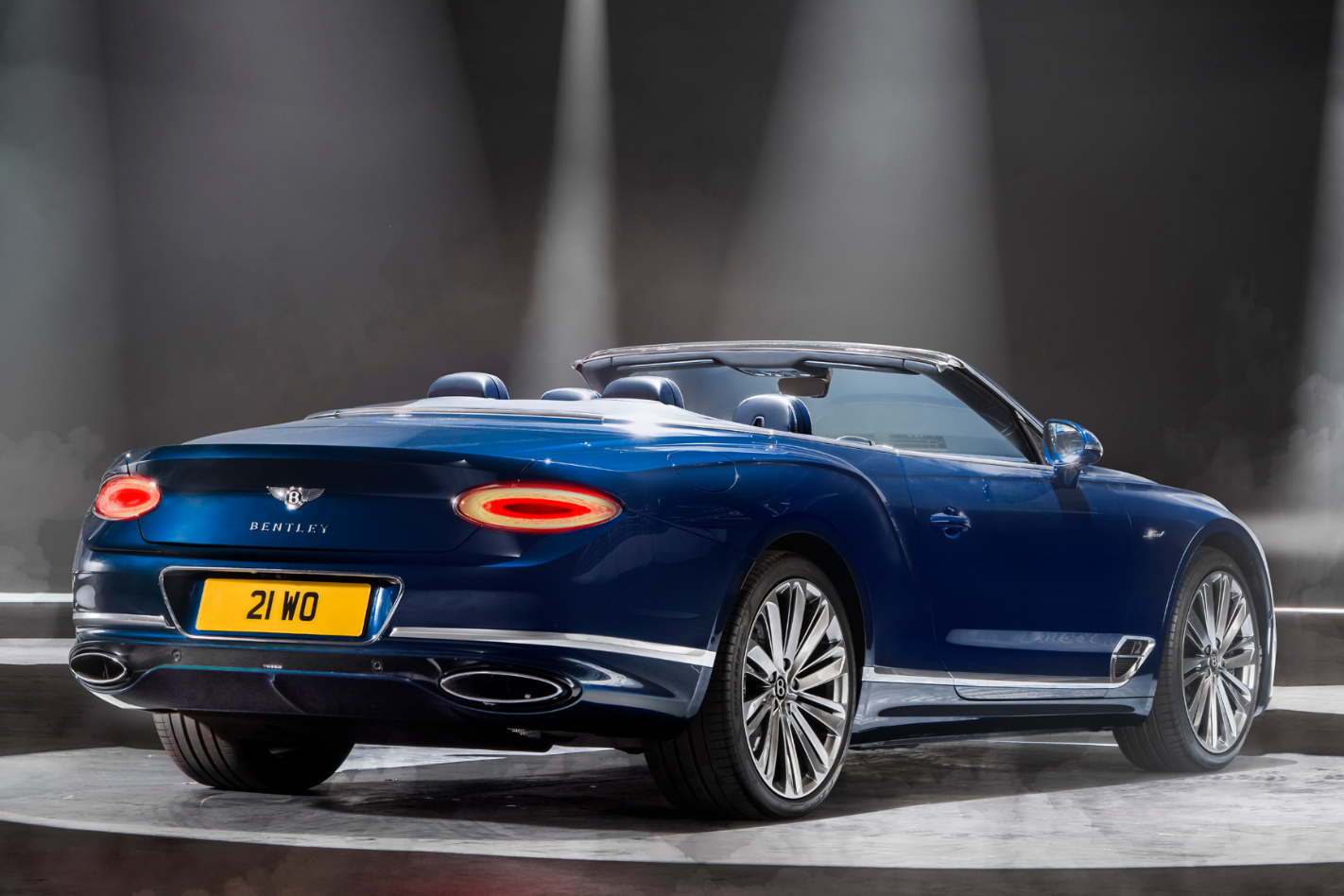
However, given the distinct lack of a fixed roof, Bentley’s engineers have worked on a bespoke chassis tune for the GT Speed’s ingenious three-chamber adaptive air suspension and 48V active anti-roll chassis technology.
Fitted with what Bentley describe as a tailored, ‘Z-fold’ roof, the fabric covering of the GT Speed has been specifically designed to reduce NVH in the cabin.
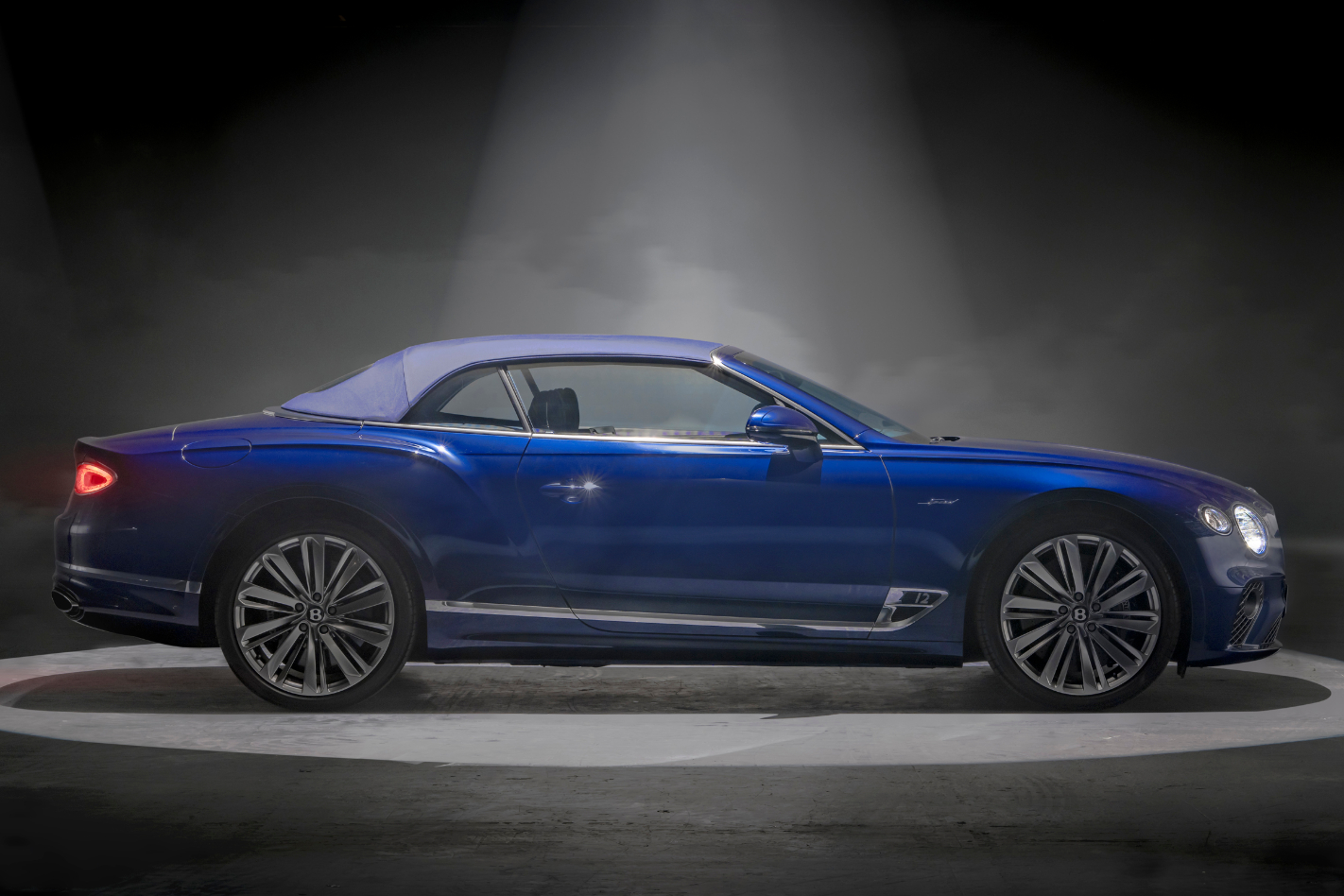
Bentley claims the roof is the most advanced of its kind, and as a result of employing new sealing technology, is three decibels quieter than the car it replaces.
The automaker even says its new convertible is quieter with the roof up than the previous generation Continental GT coupe, which is quite a feat.
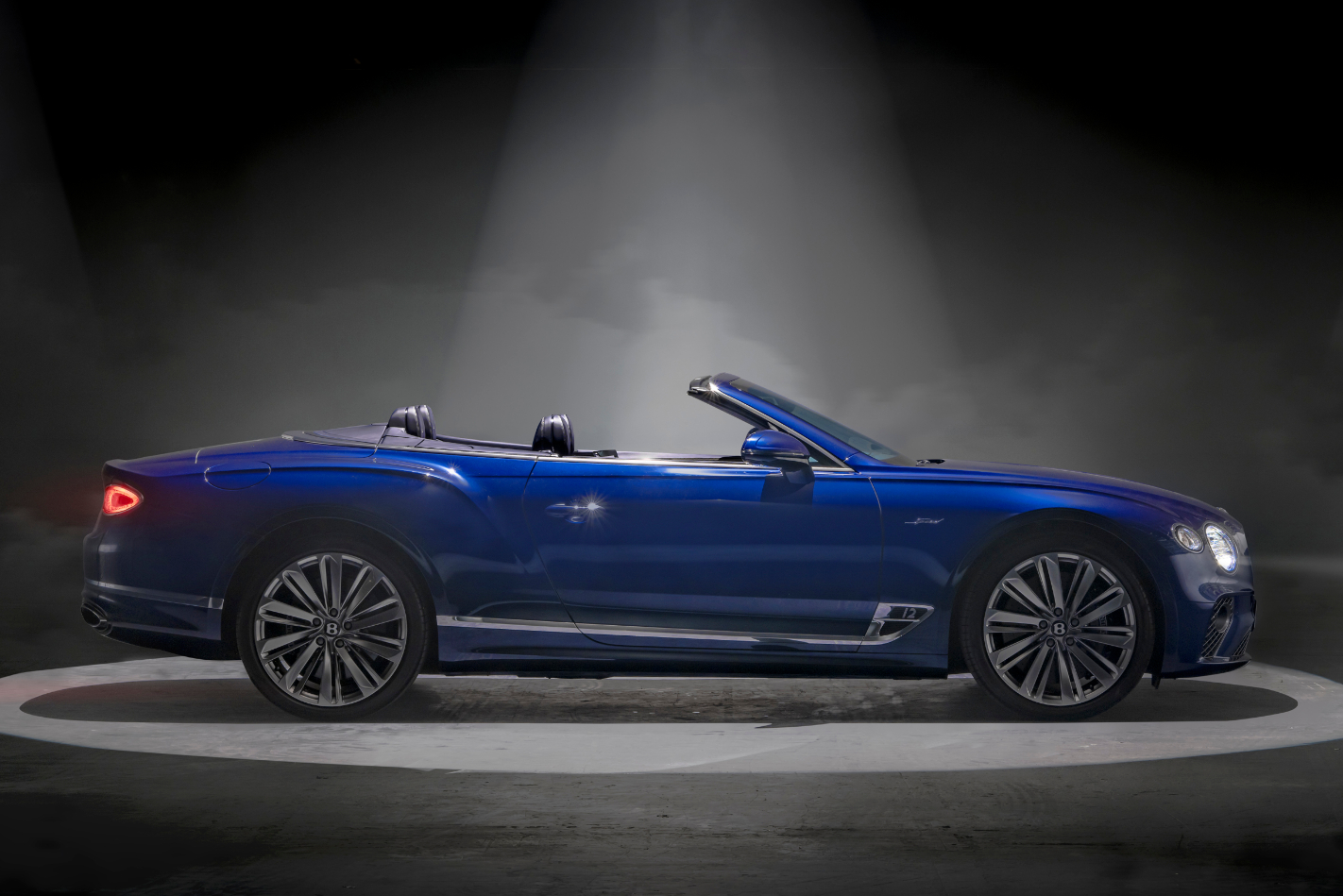
The roof can also be fully deployed or retracted in 19 seconds, and the driver can do this while on the move at speeds up to 50km/h.
Interior opulence is unsurprisingly off the charts, with a piano black veneer coming as standard.
Crown Cut, Dark Stain Burr Walnut, and Dark Fiddleback Eucalyptus are also offered as no-cost options for the interior trim.
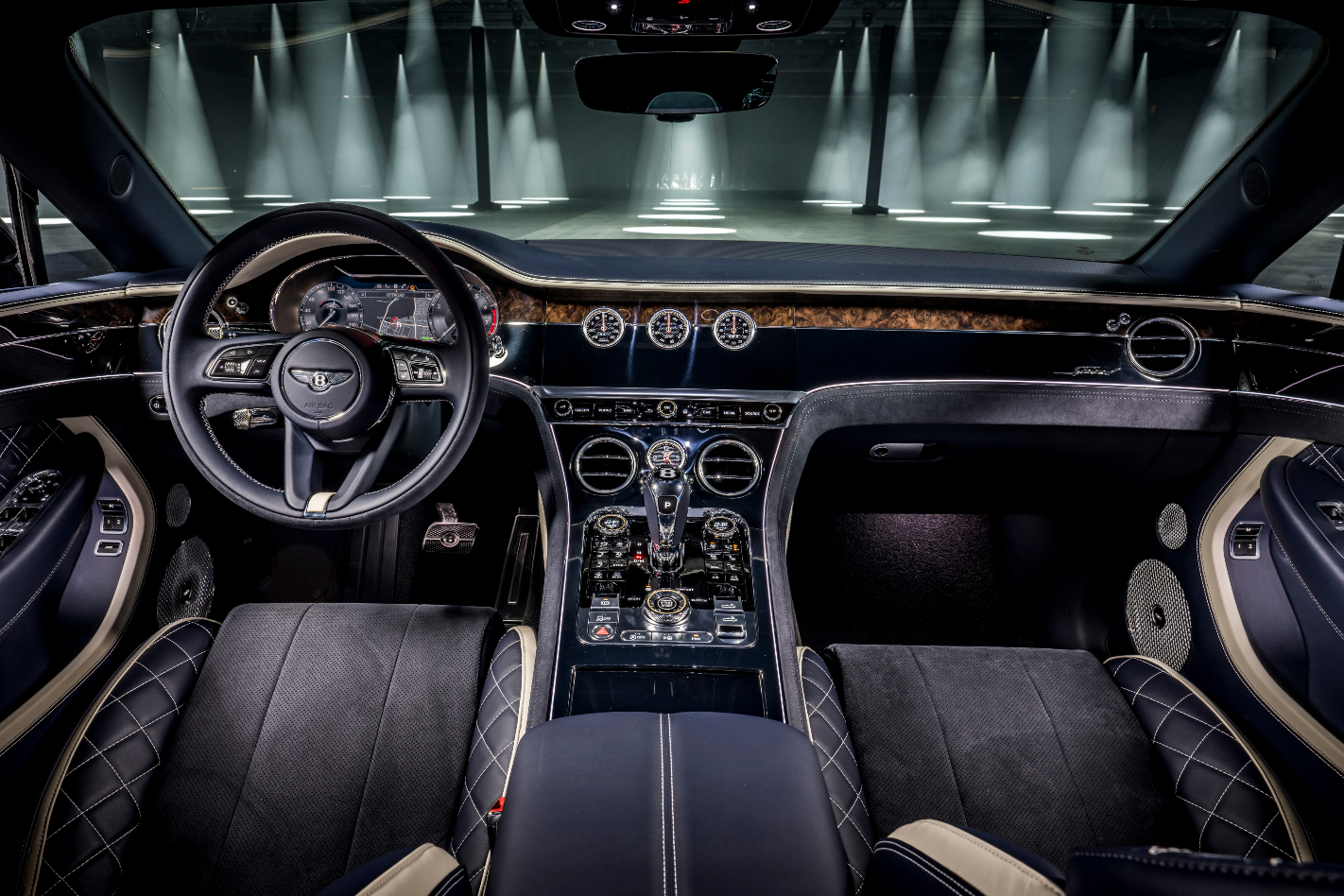
Electrically adjustable heated and cooled sports leather seats – with diamond quilting and “Speed” embroidered on the headrests – come as standard too, and the headrests also score a powered neck-warmer.
Owners that don’t want the regular interior for their drop-top can also engage Bentley’s bespoke Mulliner interior program, which can provide an almost limitless option list for interior personalisation.
The new 2021 Bentley Continental GT Speed Convertible is expected to go on sale in Australia in the final quarter of 2021, with local pricing to be announced closer to the car’s local launch.
MORE: Continental GT stories MORE: All Bentley stories
UPDATE, APRIL 16: Hyundai Australia has revealed more about its Pony EV concept. This story has been updated to reflect those details.
The Hyundai Pony EV concept is a one-off styling exercise that shows off the role EV technology will play in the exploding restomod scene.
Legendary automobile designer Giorgetto Giugiaro conceived the first generation of Pony. In its day it was an icon of personal mobility created by Hyundai during its mass production from 1975-1990. The hatchback car was the nation’s first mass-produced and exported vehicle.
In 2021, championed by Hyundai’s head of interior design, Hak Soo Ha, the funky electric vehicle is based on an original 1970s Hyundai Pony.
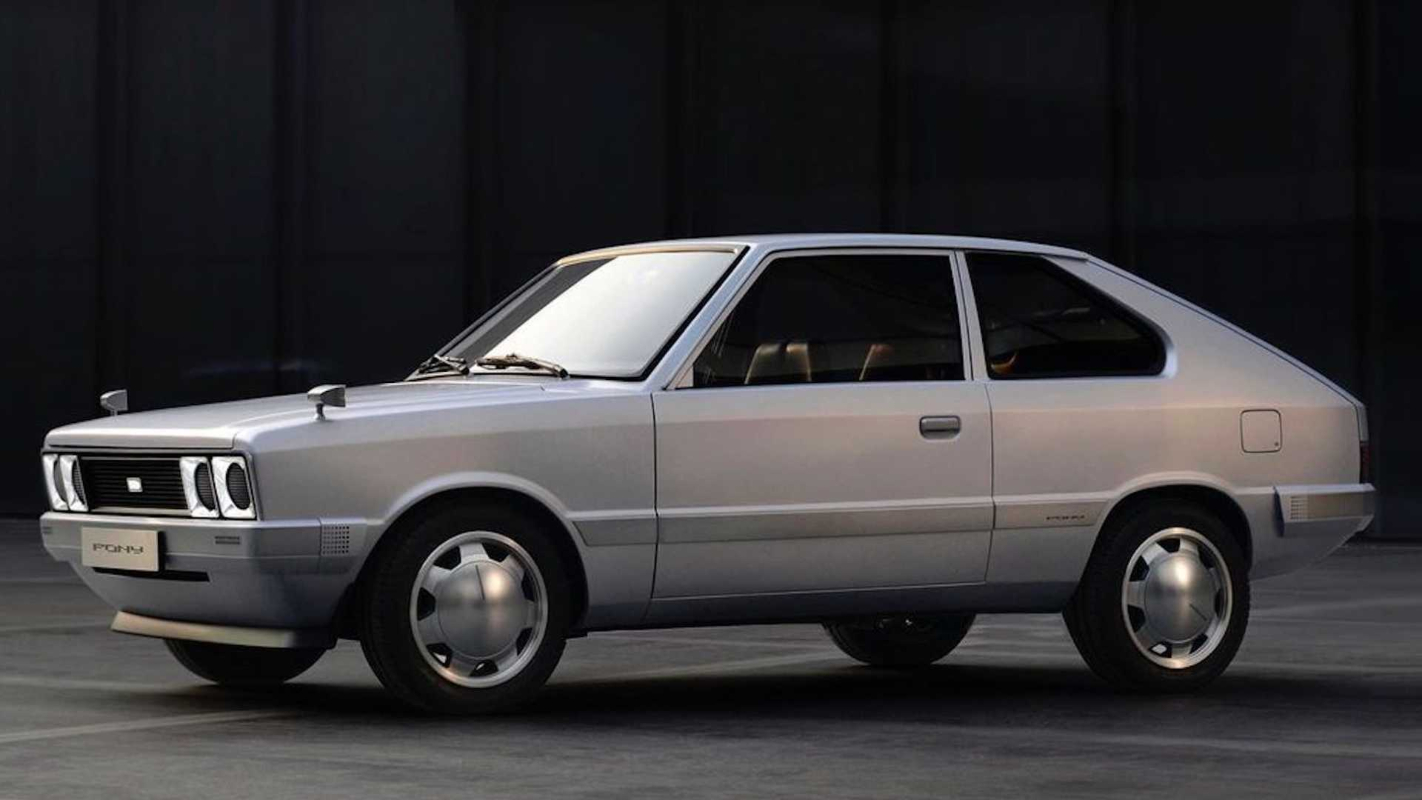
Soo Ha and his team have set about refurbing and subtly tweaking the style of the Pony, which now presents a streak of contemporary flare.
These stylistic upgrades include reconfigured LED headlights, pixelated LED taillights, retro alloy wheels and cameras mounted on each end of the boxy bonnet, replacing traditional wing mirrors.
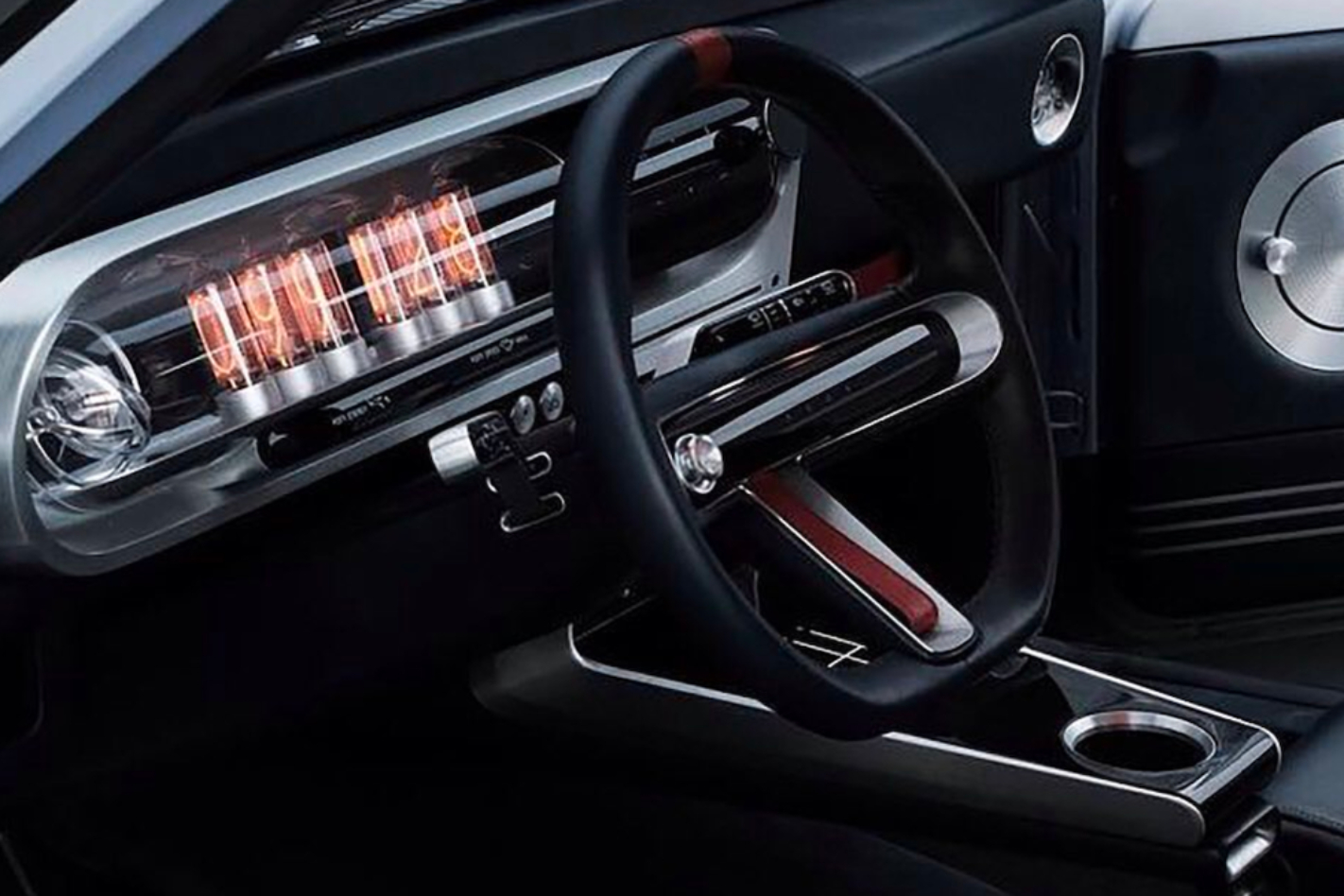
Inside, the EV Pony is even more avant-garde, with a steam-punk style gas-lamp instrument cluster to gauge speed, art deco three-point steering wheel, and an appropriate blend of chrome trim pieces contrasted by a black leather interior.
It also contains more modern elements, not only retro style, including; digital touch transmission, cradle space for a mobile phone and a voice-activated steering wheel.
Tucked away inside the boot is also a “last-mile mobility device” as Hyundai calls it – known to the rest of us as an electric scooter.
Hyundai has confirmed the normal internal combustion engine and transmission have been ditched in favour of an electric motor with a single-speed transmission, however, no details of the charged powertrain have been provided by the Korean automaker.
To an extent, the show Pony showcases what we can expect for the future of the automotive restomod industry.
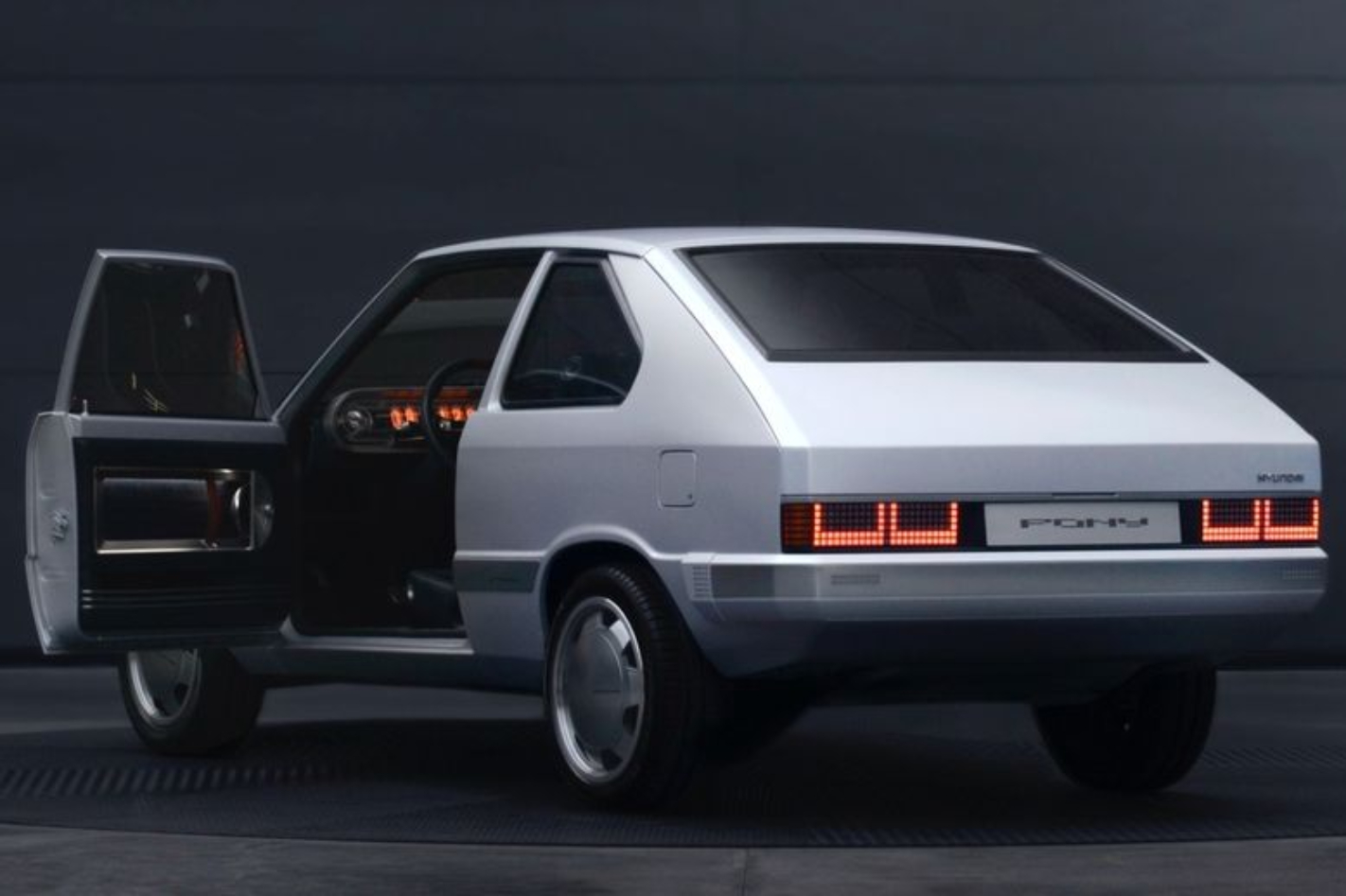
With the way electric vehicles are being designed with a skateboard-style battery chassis architecture, it’s going to be increasingly easy for third-party modders to simply buy a ubiquitous platform, and then adorn it with a retro body shell.
One of the best examples of this type of car-making is California-based company ZeroLabs, which has created a blank canvas EV platform specifically made for moulding with classic car shells.
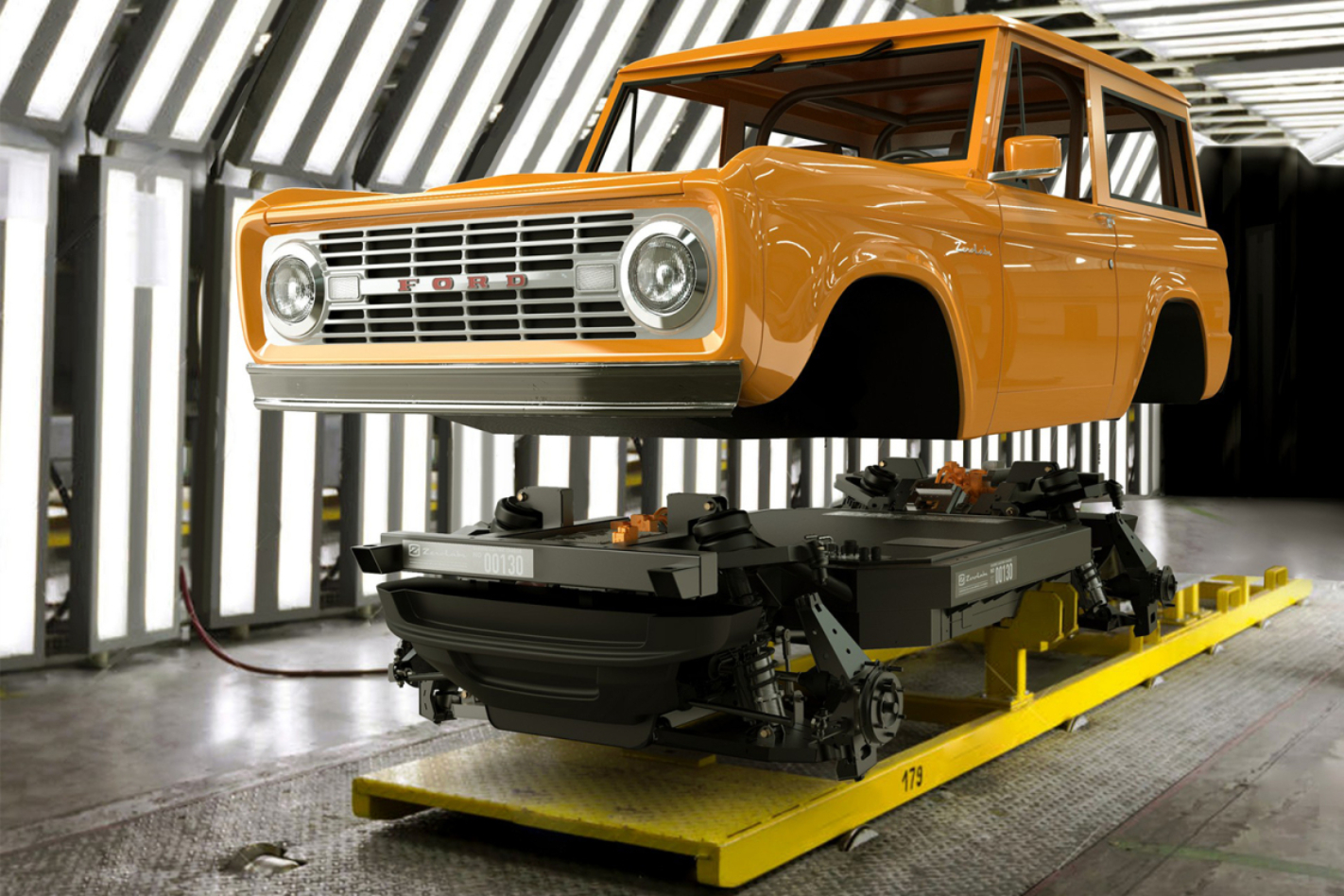
ZeroLabs’s classic electric platform.
Hyundai hasn’t gone that far with the Pony, but it’s a seriously cool design study nonetheless.
The EV Pony featured at the recently opened Hyundai Motorstudio Busan in South Korea as part of its ‘Reflections in Motion’ exhibition, on now until June 27.
The anticipated 2022 Audi Q4 E-Tron and Q4 E-Tron Sportback twins have been revealed overnight, giving the German brand’s electric vehicle range a much needed offering at the more affordable end of the luxury EV segment.
In the UK, the range will kick off from the equivalent AU$73,000 – which, while still out of reach for many, marks a significant drop on the price of entry into Audi’s electric range as represented by the full-size $137,100 E-Tron wagon available in Australia right now.
Specific Australian timing and details are still to be revealed, and indeed, Audi’s local arm tells us that an Australian launch is yet to be confirmed at all. We’re assured they’re working on it, however.
Styling
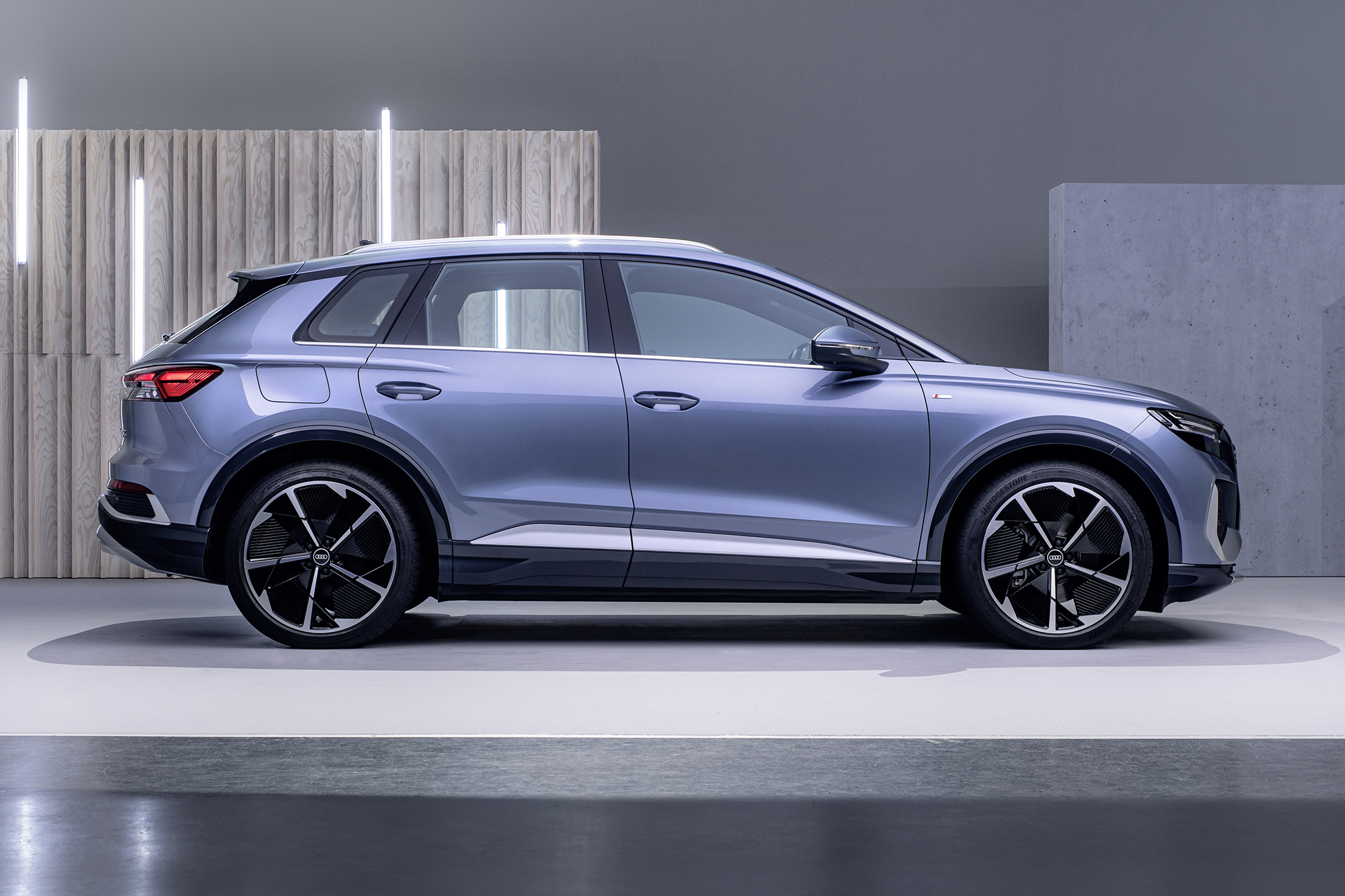
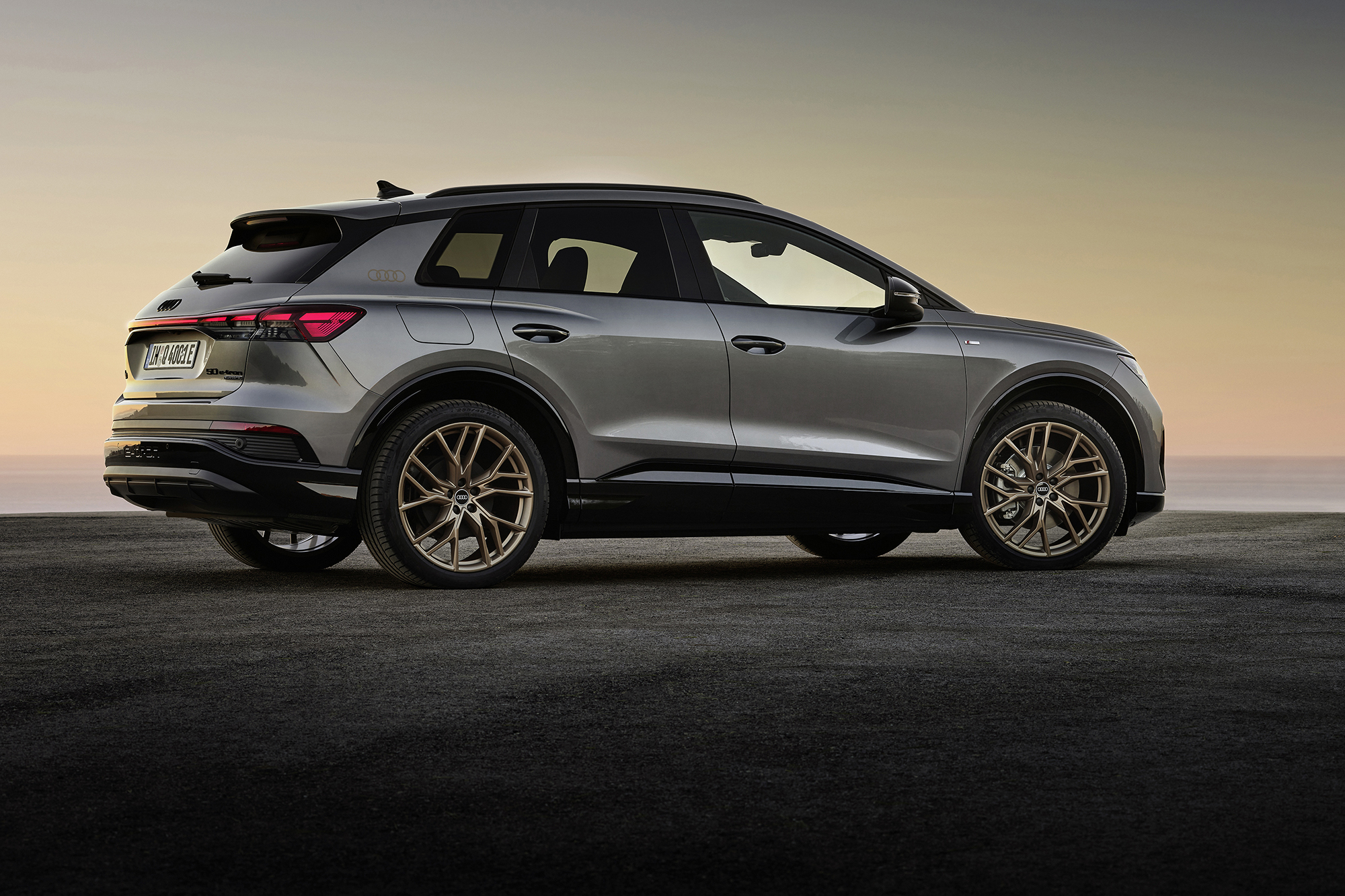
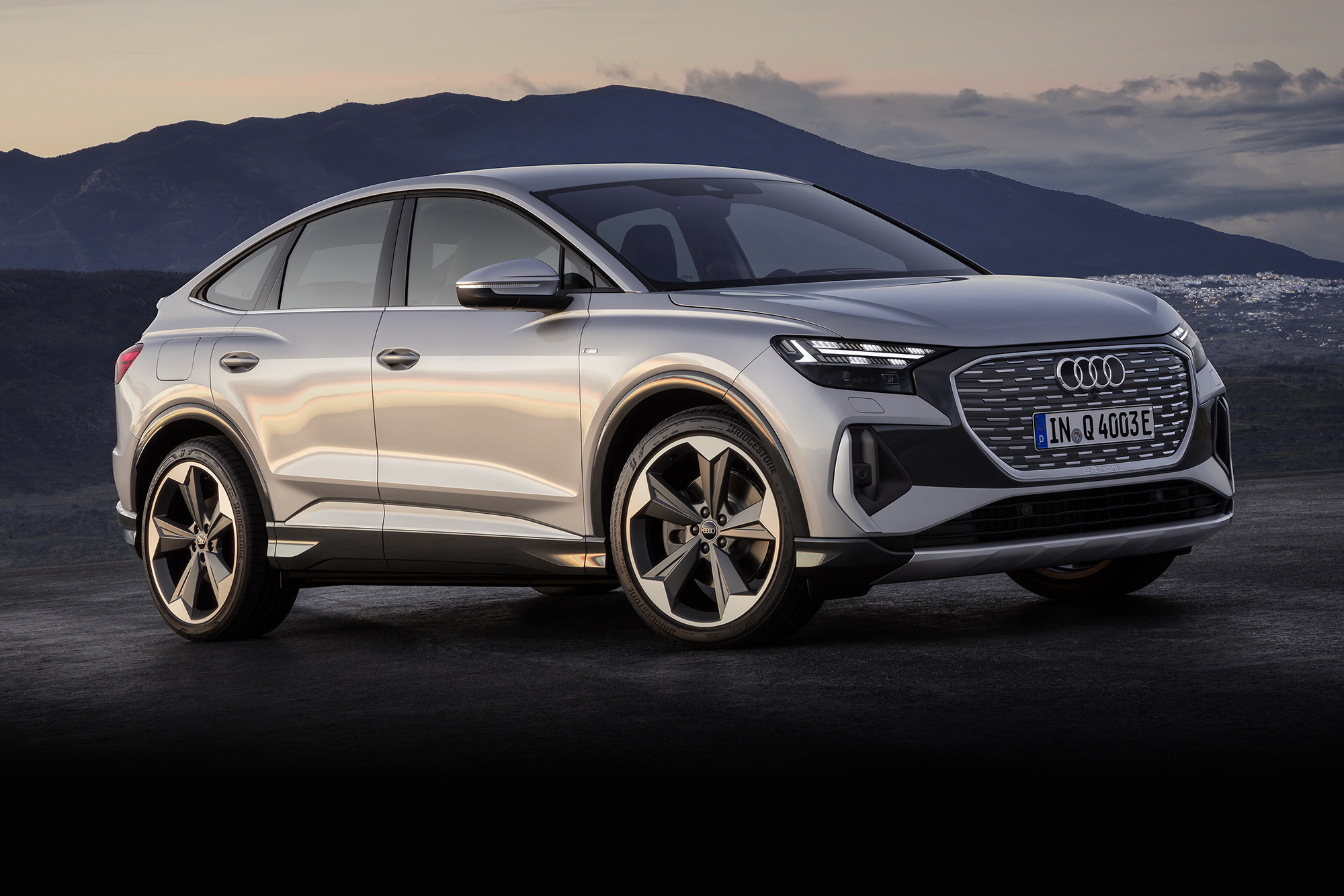
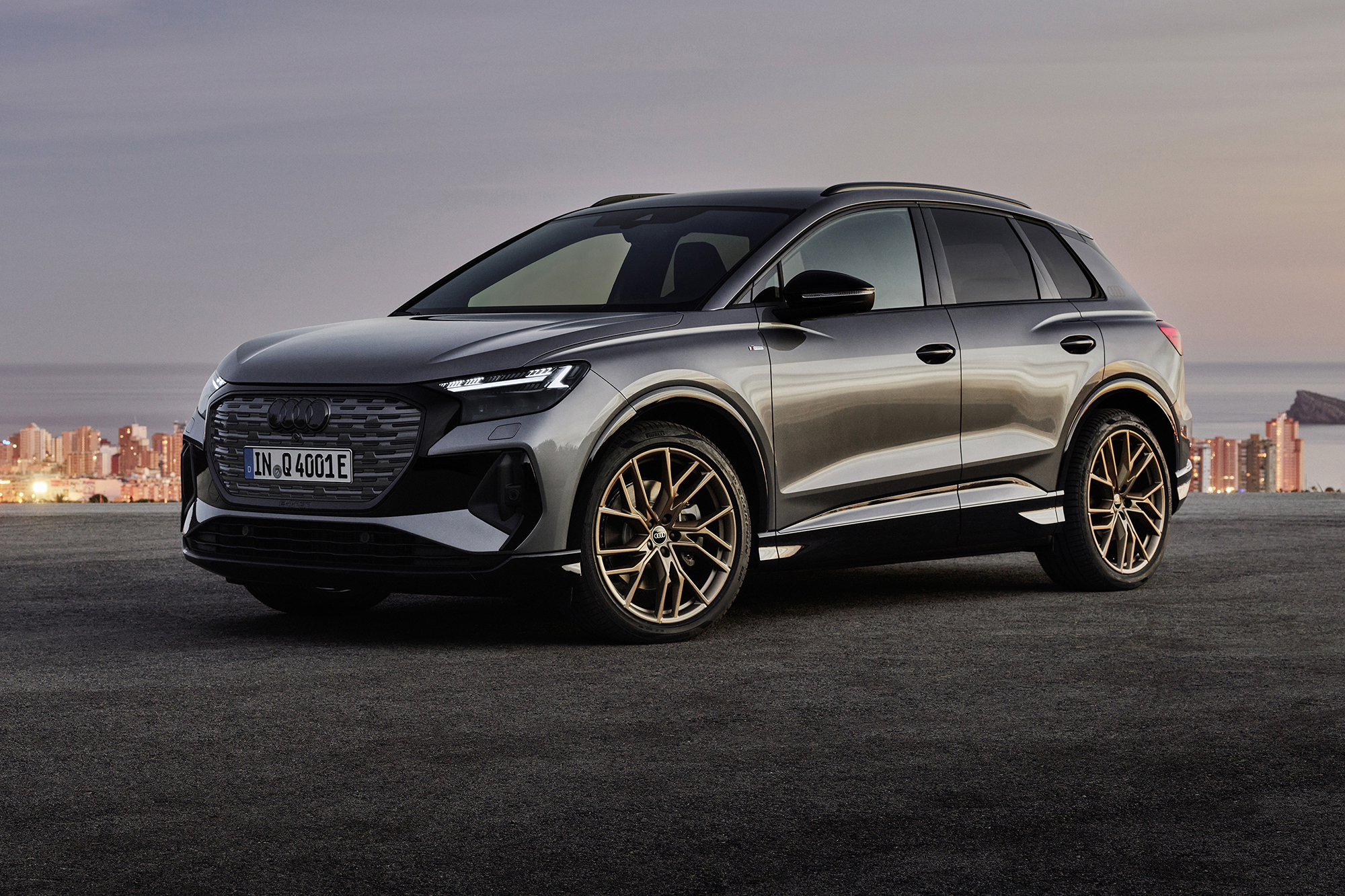
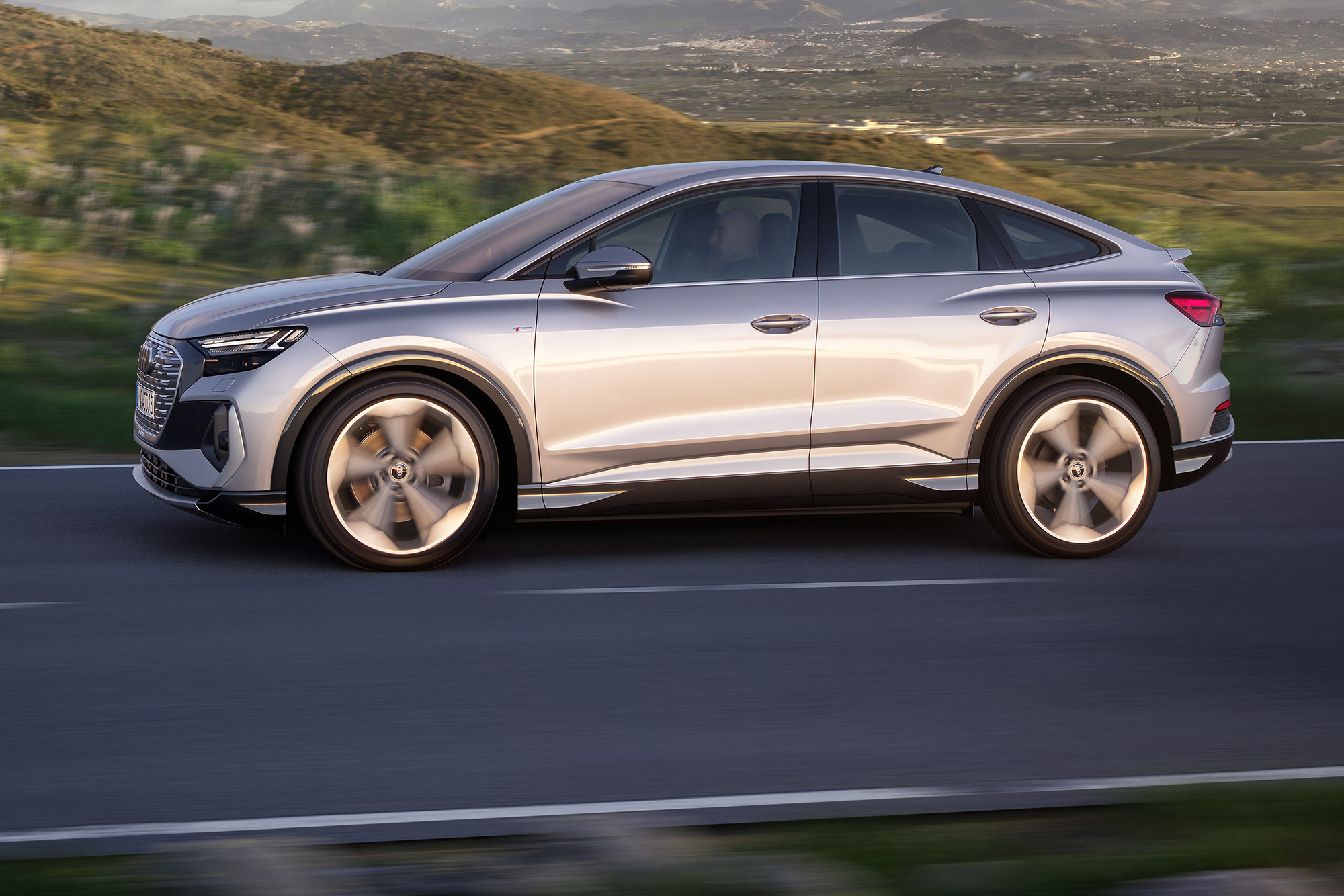
There are few surprises with the Q4 E-Tron’s look, debuting with the same muscular proportions and closed-off grille design that features with the bigger E-Tron and the sleek E-Tron GT sedan.
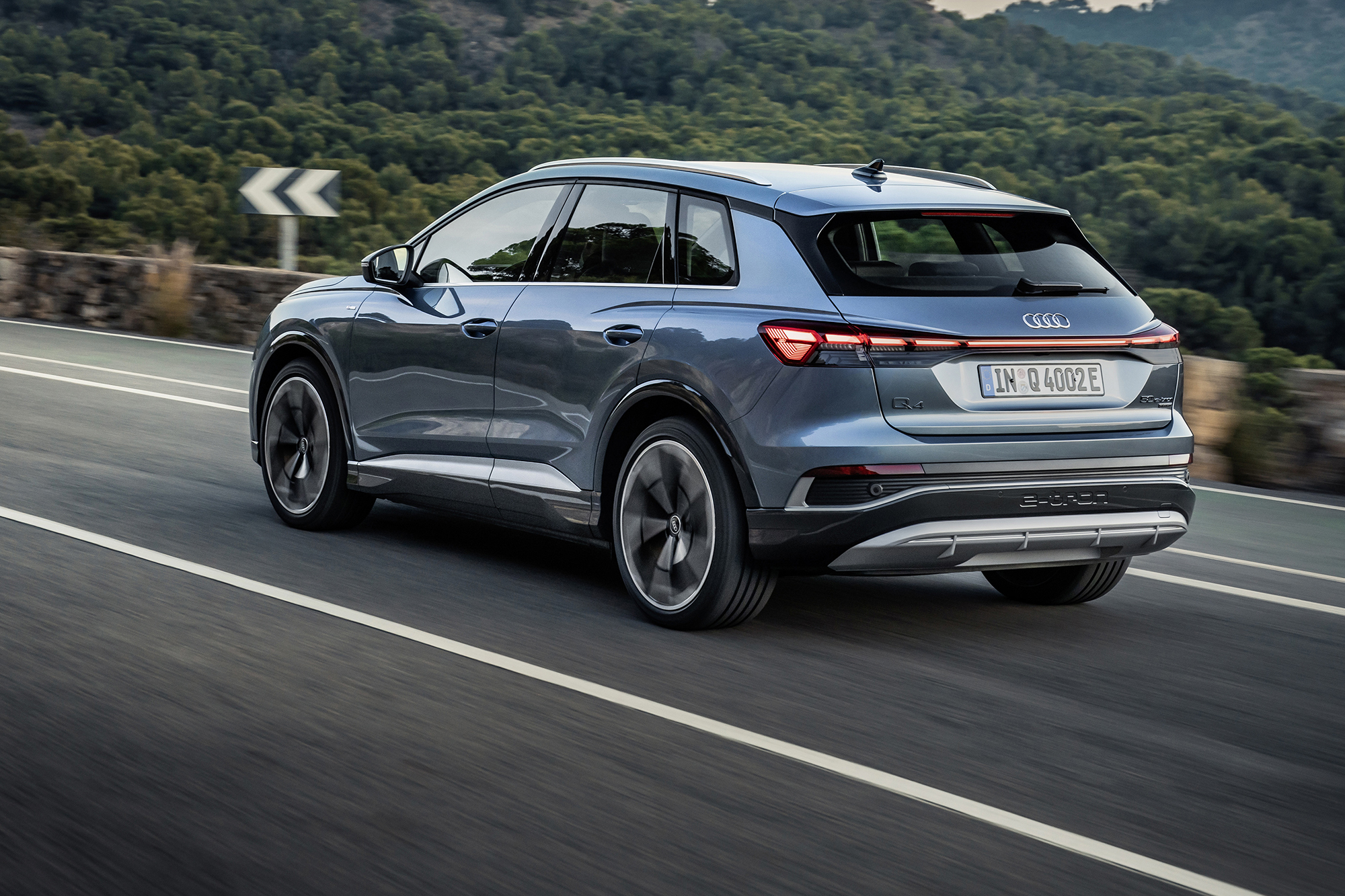
A full-figured look gives the Q4 E-Tron an imposing presence, with bulging arches and a relatively low ride height matched to large wheels on every variant.
Specific wheel sizes vary from a big 19 inches, right up to 21 inches. (Depending on model and wheel size, brake discs measure between 330 and 358mm.)
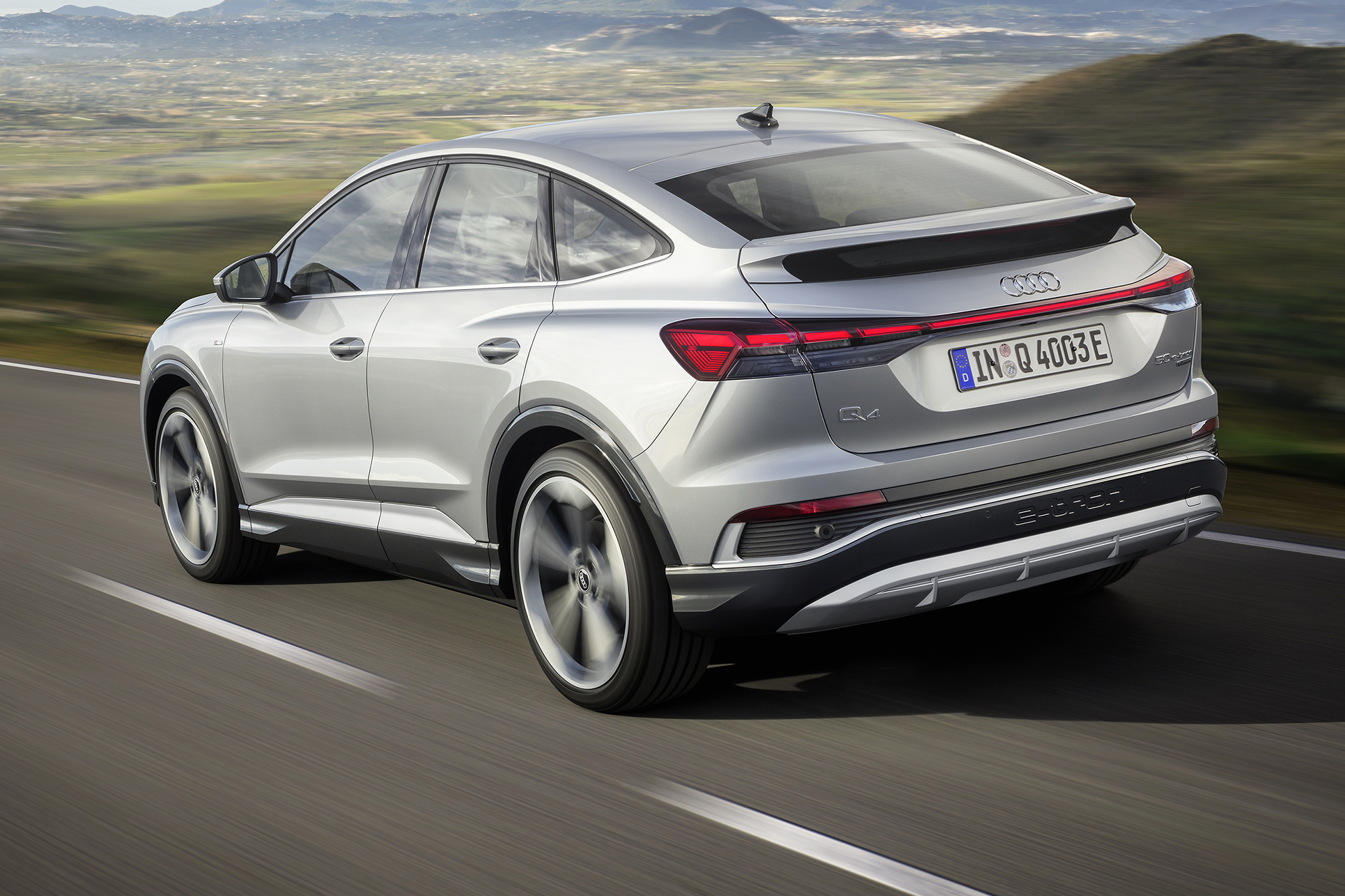
At the rear, all Q4 E-Tron models feature slender tail lamps with a dashed LED signature light that runs through the tailgate, connecting the main lighting units.
In Sportback form – now a familiar treatment across the Audi range – the Q4 E-Tron takes on a more coupe-like appearance for those that prefer a mix of all motoring lifestyle trends. Have no doubt, the jacked-up four-door coupe look is in.
Moving inside
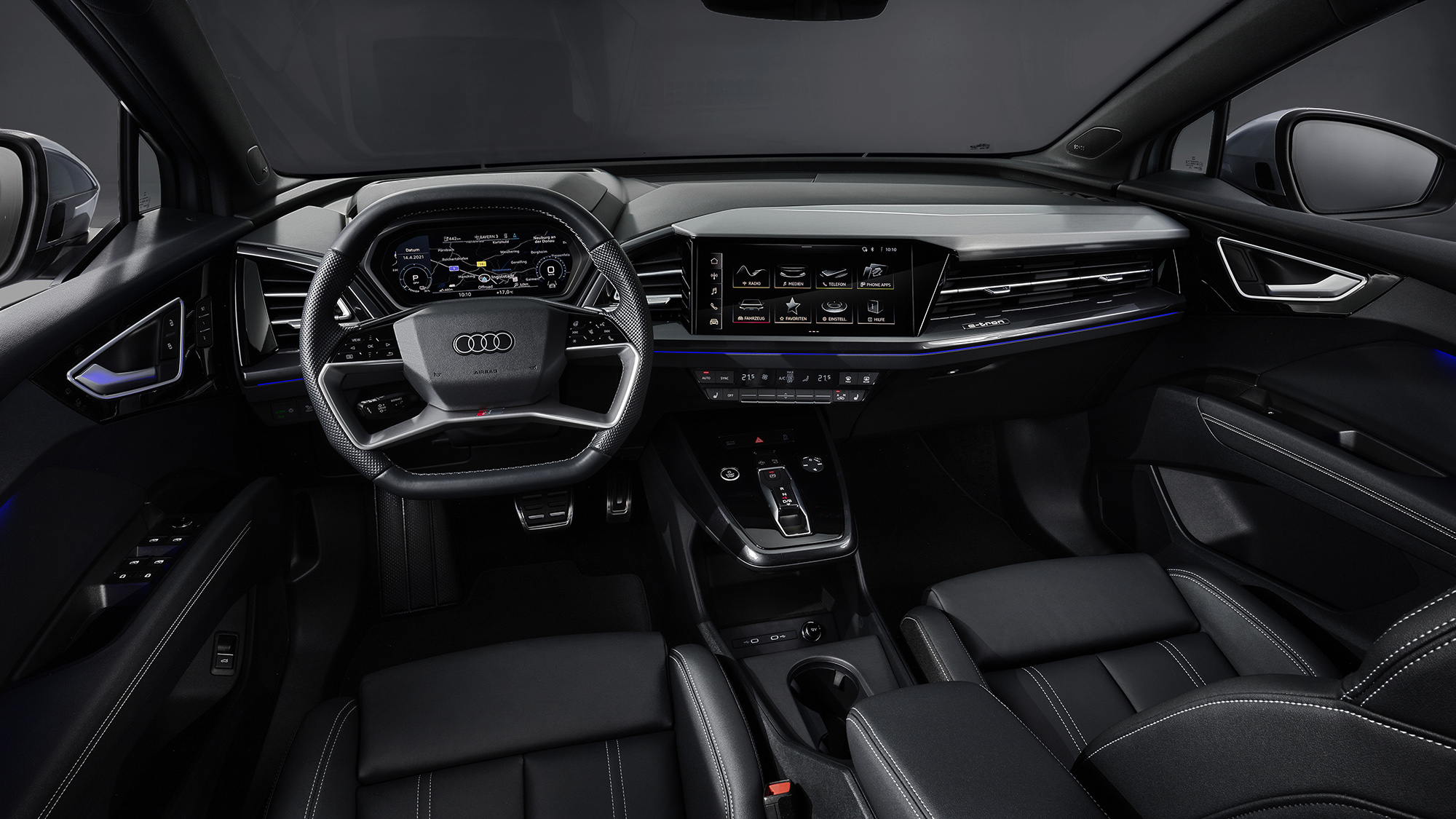
The interior view of the Q4 E-Tron models is likewise a familiar sight, with an almost Brutalist-like approach to the heavily angled dash design. Only a handful of interior images have been issued so far, but it’s a moody and futuristic look on offer.
As standard, a large 10.25-inch digital instrument cluster sits behind the steering wheel, matched to a 10.1 inch main display in the centre of the dash. It’s a small screen by the standards of some models getting around in the luxury space right now, but a slightly larger 11.6-inch unit will be available as an option.
Overall dimensions for the new Q4 E-Tron models have not been detailed, apart from a 4.59-metre total length – making it notably shorter than the 4.9m E-Tron. (Which some might be moved to call the Q6 E-Tron, in comparison to the 4.6m Q5 SUV…)
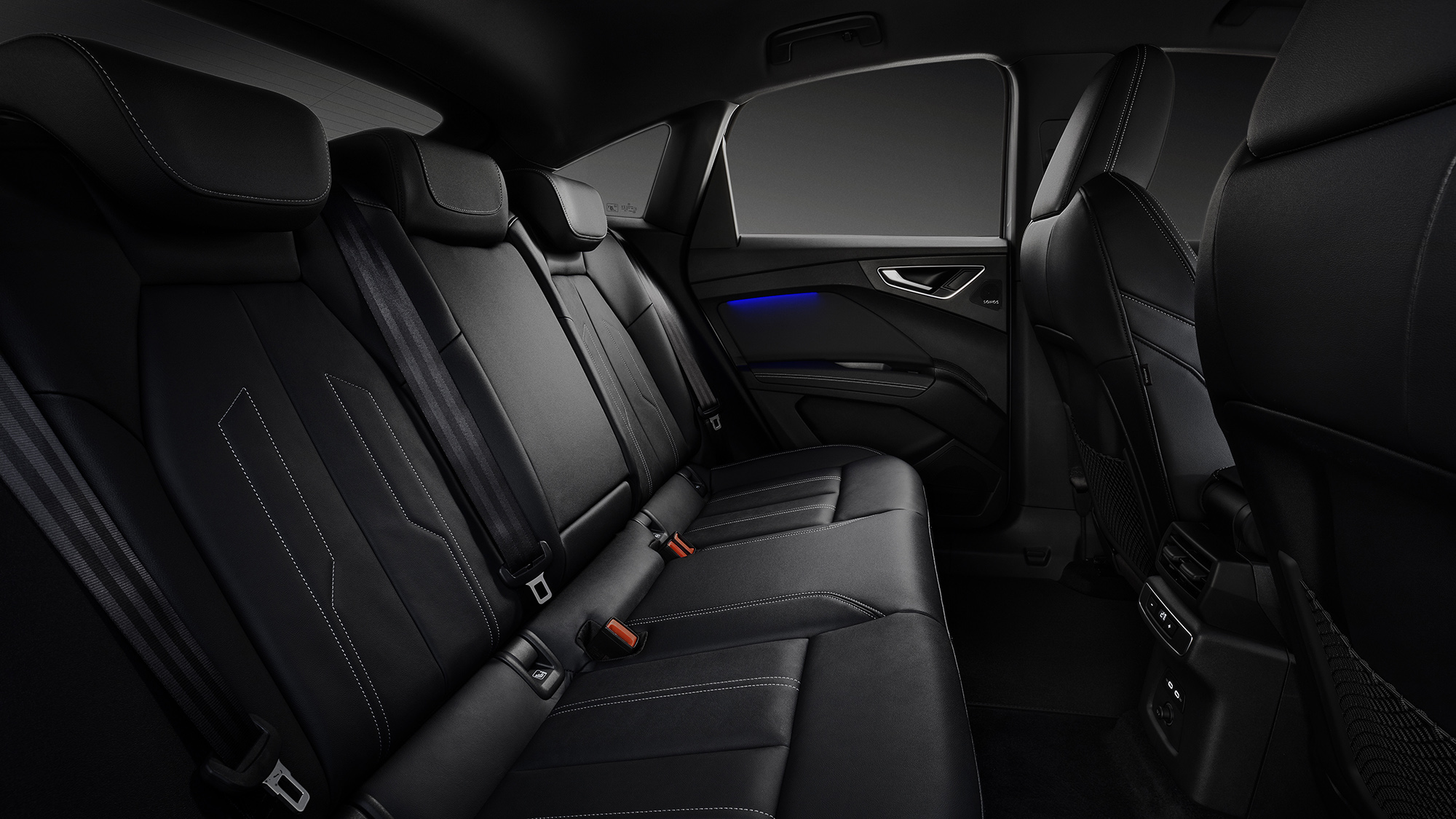
Audi promises “generous” legroom for rear occupants – thanks to the space-making benefits of the electric-focused MEB architecture underneath – but specific numbers are still to come. The photos do suggest second-row occupants will be comfortable – even those who draw the middle-seat short straw.
We do know luggage storage numbers, however: 520 litres for the wagon, seats-up, and 535 litres in the Sportback. Drop the second row in both, and those numbers grow to 1490 and 1460 respectively.
This actually compares favourably with the bigger Q5 that buyers will be familiar with, which lists 540 litres with the rear seats up, expanding to 1560 litres when folded.
Q4 E-Tron power, performance and driving range
The Q4 E-Tron range opens with the 35 E-Tron variant in both body styles. Energy is drawn from a 52kWh (55kWh gross) battery pack, matched to a single electric motor sending 125kW and 310Nm to the rear wheels.
For both, Audi claims a 0-100km/h time of 9.0 seconds and, in the wagon model, a WLTP-certified driving range of 334 kilometres from a single charge. Sportback driving range is still to be certified.
Moving up to the Q4 40 E-Tron, the battery pack grows to 77kWh (82kWh gross). Power is again provided by a single motor, this time sending 150kW and 310Nm to the rear wheels for a 0-100km/h time of 8.5 seconds. Electric driving range for the wagon is claimed at a huge 508 kilometres.
For now (assuming an RS model is coming), the top-shelf variant is the Q4 50 E-Tron Quattro, headlined by a dual-motor arrangement.
Energy comes again from a 77kWh battery pack, with a maximum combined output of 220kW and 460Nm across the front- and rear-mounted motors.
Delivering a part-time all-wheel drive experience (hence the Quattro in its name), the 50 E-Tron is primarily RWD, with the front motor engaged only as needed.
In that RWD arrangement, the rear motor produces 150kW and 310Nm – just like the 40 E-Tron. But, thanks to the availability of that on-demand front motor, the 50 E-Tron claims a 0-100km/h time of just 6.2 seconds. In the wagon model, a driving range of 474km is claimed.
Depending on the model, the Q4 E-Tron can engage up to 100 or 125kW high-speed charging.
At 125kW, “and in ideal conditions”, a near-empty (5kWh remaining) battery can reach an 80 per cent charge in 38 minutes.
The Q4 E-Tron range will be available initially in four trim grades: entry-level Sport and the more properly sports-styled and equipped S-Line, followed by the Edition 1 and the top-shelf Vorsprung – derived from the company’s “Vorsprung durch Technik” slogan, which translates roughly to “advancement through technology”.
Equipment highlights in the range include the addition of a Sonos music system – marking the first time the trendy and highly regarded home audio brand has appeared in a vehicle.
With 10 speakers – including four bass loudspeakers and a subwoofer among them – and an eight-channel booster, the 580W system utilises the ‘Sonamic Panorama’ algorithm to create a U-shaped sound stage.
A heat pump will be available as an option, heating and cooling the interior by using the thermal losses from both the electric components and the outside air temperature. The advantage here is that the cabin climate is maintained without impacting the driving range.
The S Line and Edition 1 models get sports suspension as standard (unlike the Sport model, where it’s optional), lowering the body by 15mm while offering driver-focused spring and damper settings.
A conditions-based damper control system is available on those models as an option, while the Vorsprung gets it as standard.
Variable ratio progressive steering is also available (listed as standard in the UK), and its settings can be fine-tuned through the Audi Drive Select system with Comfort, Auto, Efficiency, Individual and Dynamic modes, along with a Range mode that optimises the system for maximum driving range.
A highlight for tech fiends is a new augmented reality head-up display, superimposing key signals and information into the ‘real life’ areas of the view ahead. Audi says the images will usually appear to be floating around 10 metres ahead of the driver – while also being able to appear even further away and then towards the driver as a visual signal of approaching landmarks and directions.
When will the Q4 E-Tron come to Australia?
Audi says an Australian launch for the Q4 E-Tron is still to be confirmed, which suggests that if (or more likely when) a local debut does occur, it would not be until sometime in 2022.
MORE: All E-Tron stories MORE: Audi news and reviews
Australian pricing and details for the updated 2021 Toyota Camry range have been announced, previewing a set of four hybrid variants and only one petrol offering ahead of an April 2021 on-sale date.
Toyota says the line-up rationalisation reflects the strong appeal and sales of the previous-generation Camry Hybrid, which accounted for 70 per cent of the large sedan’s sales.
A revised 2.5-litre four-cylinder hybrid powertrain will feature, as well as tweaked styling to the front end, a new dash design and improved Toyota Safety Sense driver assistance technology.
The local 2021 Camry line-up kicks off with the Ascent, which also uses a new 2.5-litre ‘Dynamic Force’ four-cylinder engine and eight-speed auto transmission combination, though with no hybrid assistance.
The Ascent’s engine outputs 152kW while returning a claimed combined-cycle fuel consumption of 6.8L/100km.
The remainder of the range features a 2.5-litre Atkinson-cycle petrol engine that works in conjunction with a pair of electric generators to deliver a maximum output of 155kW. These engines are paired with a continuously variable transmission (CVT).
Toyota says these hybrid variants use 4.2L/100km for Ascent and Ascent Sport grades, with 4.5L/100km for SL and 4.7L/100km for SX.
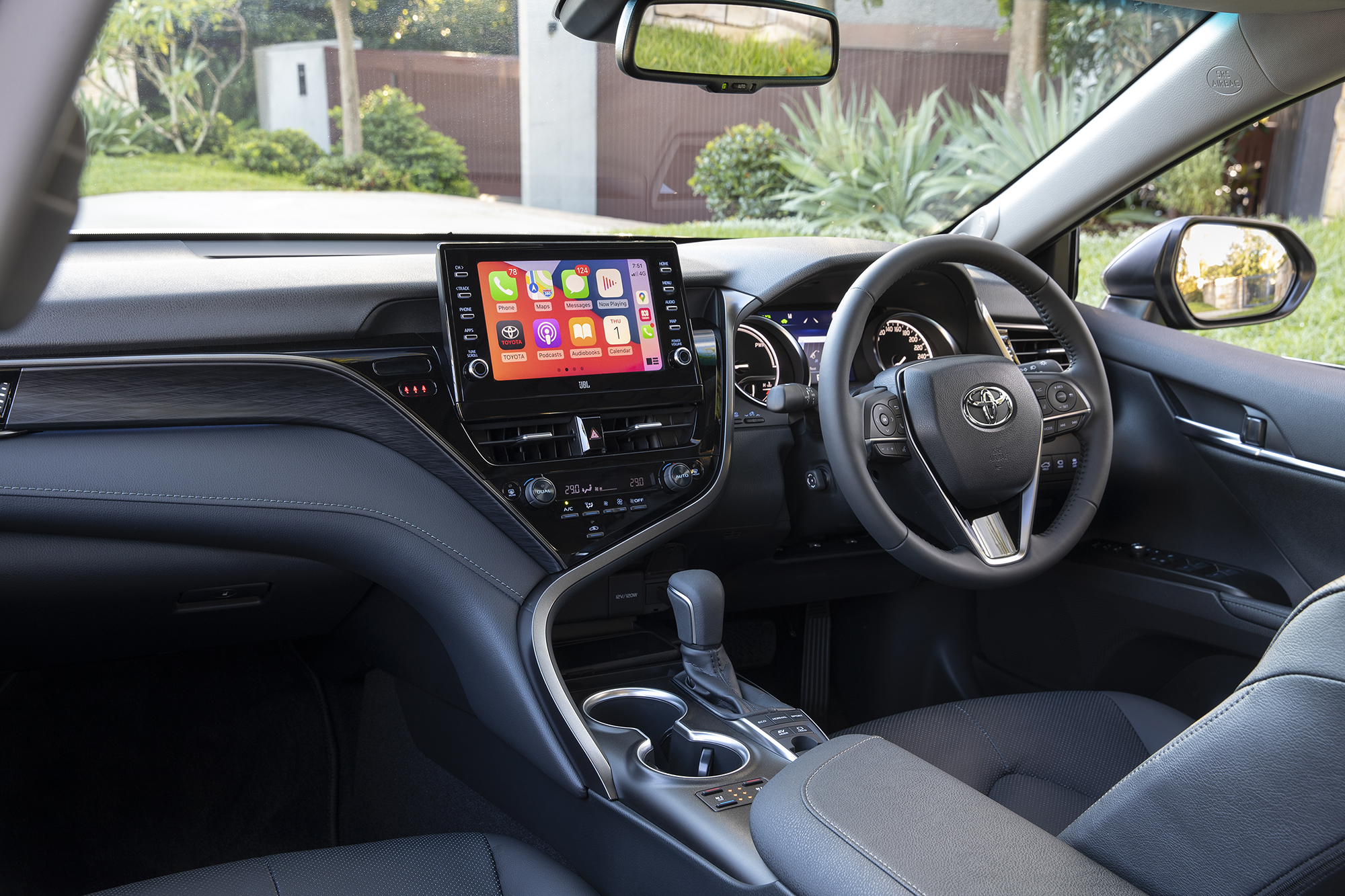
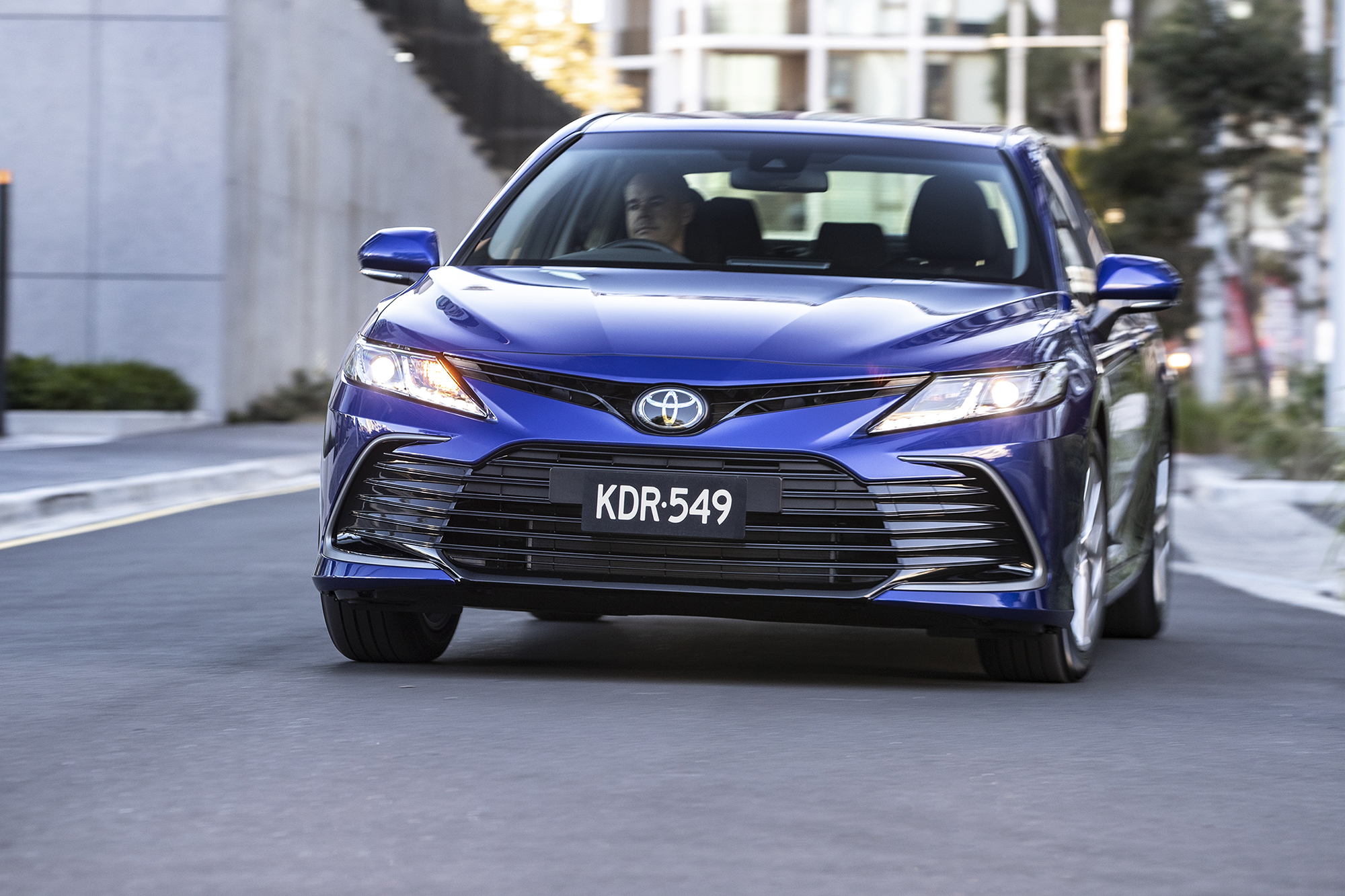
You’ll recognise the 2021 model by its redesigned grille and front bumper styling. Inside, a redesigned dash now incorporates a large 9.0-inch touchscreen (Ascent gets 7.0-inch) with Apple CarPlay and Android Auto capability.
New safety features are offered as standard, including road sign assist, emergency steering assist and intersection turn assistance. This builds upon kit that was already offered on the pre-facelift Camry including autonomous emergency braking with pedestrian and cyclist detection, adaptive cruise control, lane trace assist and auto high beam.
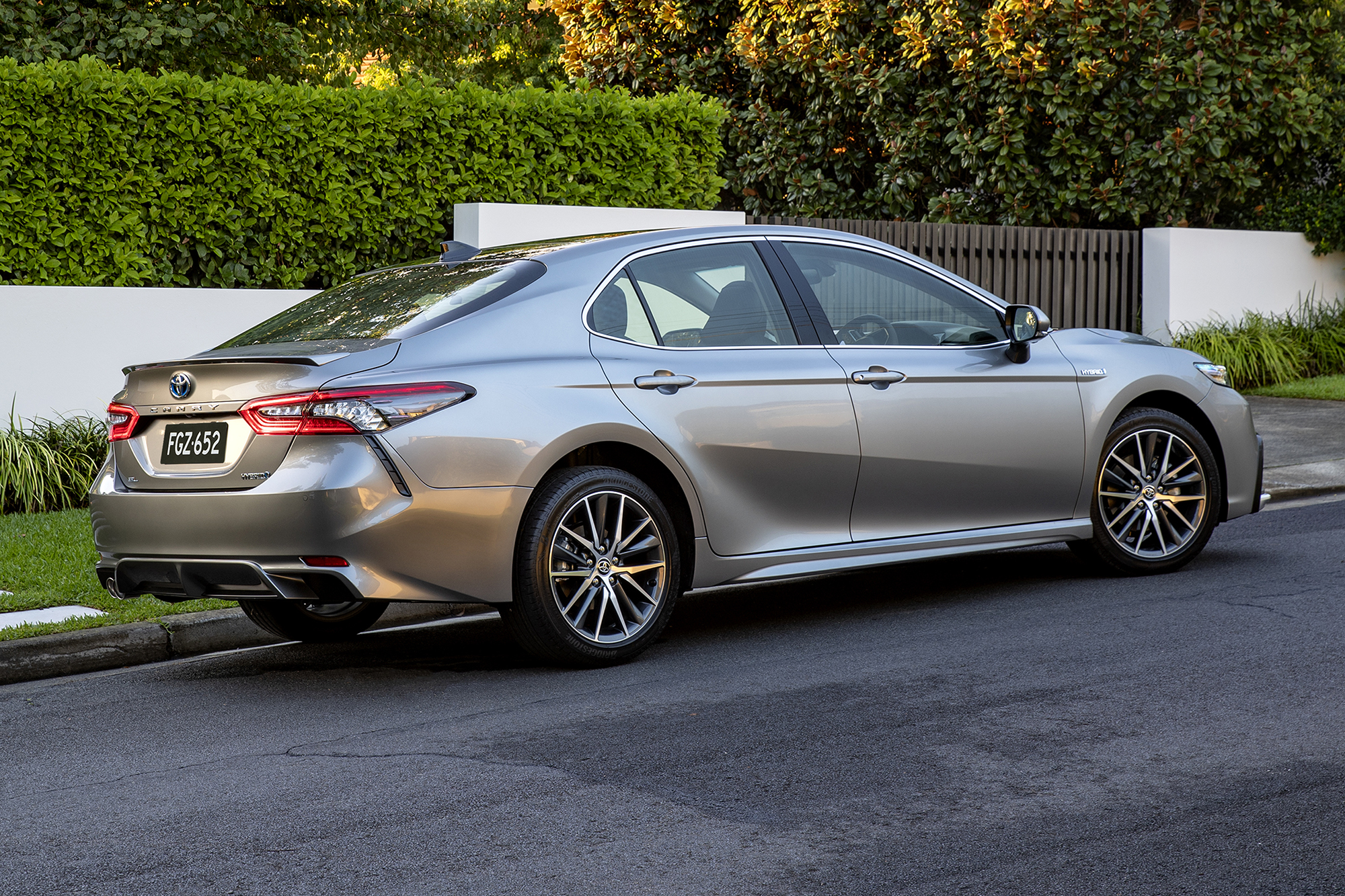
Each Camry variant (including base-spec Ascent) receives LED lights, alloy wheels and a reversing camera.
Stepping up to the Ascent Sport unlocks dual-zone climate control, keyless entry and start and satellite navigation with a 9.0-inch touchscreen display, blind spot monitor with rear cross-traffic alert and parking sensors.
The SX builds upon that with sportier accents by adding sports leather-accented front seats, 19-inch alloy wheels, sports suspension and paddle shifters.
Top-spec Camry SL offers a ‘luxurious’ specification with heated and ventilated front seats, electric boot opening, head-up display, electrochromatic interior mirror, panoramic roof, panoramic view monitor and a nine-speaker JBL audio system.
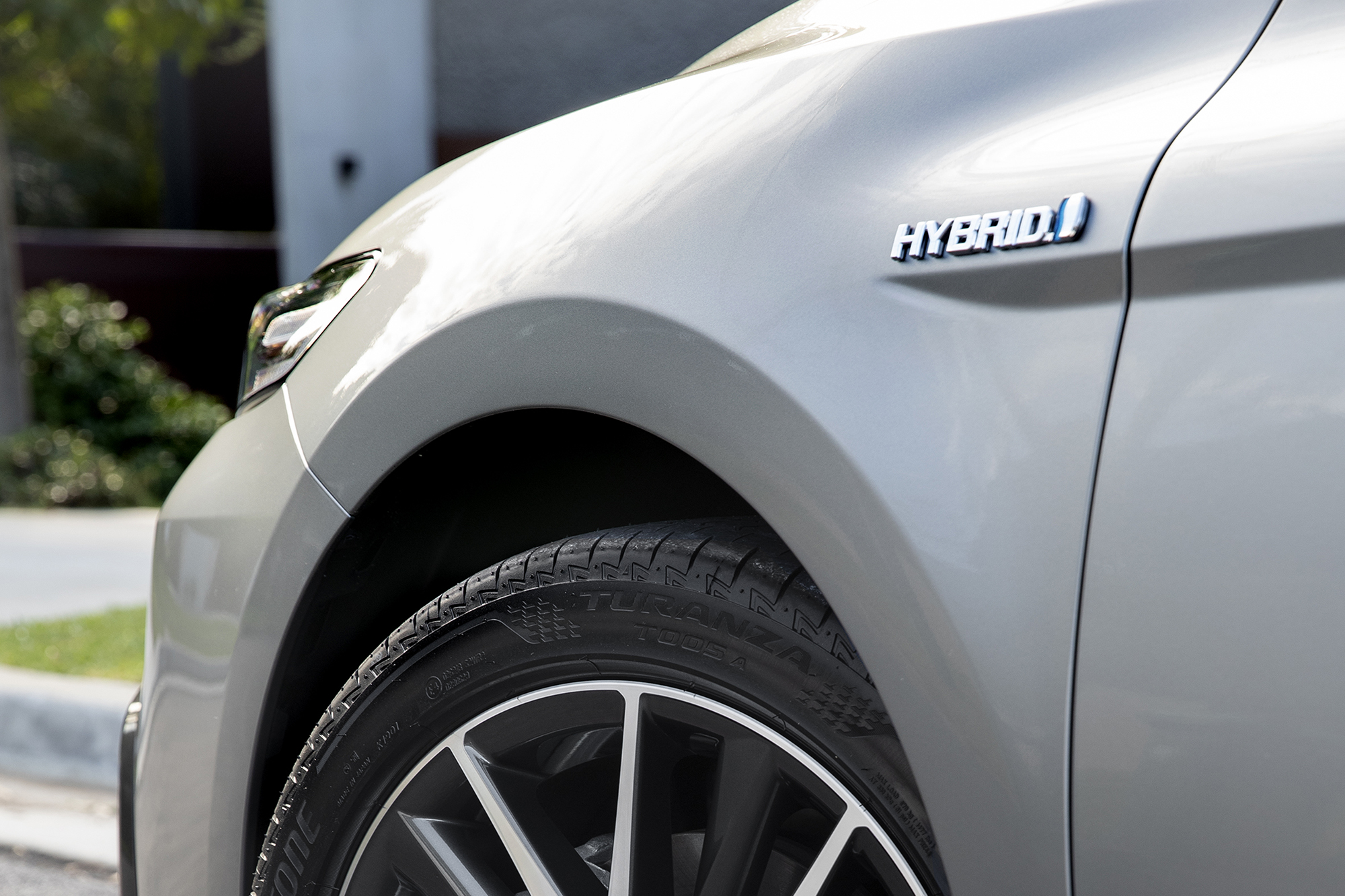
The 2021 Toyota Camry will begin arriving in dealerships from April 2021.
2021 Toyota Camry pricing
- Ascent 2.5 petrol automatic – $30,990
- Ascent 2.5 hybrid CVT – $33,490
- Ascent Sport 2.5 hybrid CVT – $36,260
- SX 2.5 hybrid CVT – $39,190
- SL 2.5 hybrid CVT – $46,990
Model walkthrough
CAMRY ASCENT
Mechanical
- Petrol Powertrain: 152kW/243Nm 2.5-litre four-cylinder petrol engine
- Hybrid Powertrain: 160kW, 2.5-litre hybrid powertrain
- Electronic continuously variable transmission (e-CVT) (hybrid)
- 8-speed automatic transmission (petrol)
- Front MacPherson strut and rear multilink suspension
- Ventilated front and solid rear disc brakes
- Electric power steering
- LED headlights, taillights and daytime running lights
- Electric exterior mirrors
- 17-inch alloy wheels
- Full-size alloy spare wheel (Hybrid: temporary spare wheel)
- Eight colours with solid, metallic, crystal pearl and mica metallic paint finishes1
- Fabric seats
- Power driver seat lumbar support
- 4.2-inch multi-info display (MID)
- Urethane steering wheel with switches (audio, cruise control, MID display and Lane Trace Assist)
- Manual tilt and telescopic steering adjustment
- 7-inch colour touchscreen display
- 60/40-split rear seat back
- Front and rear door bins with bottle holders
- 1x USB and 1x 12V accessory power sockets
- Toyota Safety Sense: Pre-collision safety system with pedestrian and daylight cyclist detection
- Intersection turn assist
- Emergency steering assist
- Adaptive cruise control
- Lane trace assist with lane departure alert, steering assist and lane centring function
- Road sign assist (speed signs only)
- Auto high beam
- ABS with brake assist, electronic brakeforce distribution, traction control, steering-assisted vehicle stability control, hill-start assist control
- Seven airbags
- Reversing camera with guidelines
- ISOFIX child restraint anchorage points
- Automatic Collision Notification
- SOS button
- Stolen Vehicle Tracking
- Manual air conditioning (Hybrid: dual zone climate control)
- Front and rear power windows
- Electronic park brake
- Keyless smart entry and start (Hybrid only)
- 7-inch colour touchscreen display
- 6-speaker audio system
- AM/FM/DAB+ radio
- Bluetooth connectivity
- Apple CarPlay / Android Auto compatibility
- myToyota apps including Waze and Stitcher (IOS) and WebEX (Android).
- Voice recognition
Mechanical
- Driving mode select – ECO, NORMAL, SPORT
- Folding electric exterior mirrors
- Sports grille
- Rear decklid spoiler
- Temporary spare wheel
- Interior
- 7-inch multi information display
- 9-inch touchscreen display
- Satellite navigation
- Dual zone climate control
- Leather-accented steering wheel with switches (audio, cruise control, MID display and Lane Trace Assist)
- Keyless smart entry and start
- Blind spot monitor
- Rear cross-traffic alert
- Parking sensors
- Mechanical
- Sports suspension
- Exterior
- High grade sports front grille
- 19-inch alloy wheels
- High-grade LED headlights and taillights
- Sports leather-accented seats
- Paddle shifters for e-CVT
- Leather-trimmed centre console and door armrests
- Exterior
- 18-inch alloy wheels
- Power boot opening
- Panoramic roof
- Heated and ventilated front seats
- Power front passenger seat lumbar support
- 9-speaker JBL audio system
- Electrochromatic rear view mirror
- Paddle shifters for e-CVT
- Head-up display
- Panoramic view monitor
Today Nissan unveiled the latest 2021 update for its R35 GT-R Nismo, the flagship performance halo of its long-serving supercar, along with a new Special Edition intended to be launched in Japan in October.
The new GT-R Nismo Special Edition wears a bold new colour named Stealth Grey (we’re assured it isn’t as blue as it looks in these photos). The new shade will also become available on the standard GT-R Nismo, although it will remain off limits to the rest of the range.
The Special Edition can be identified by its clear-coated carbon fibre bonnet and unique 20-inch forged aluminium wheels manufactured by Rays Engineering.
It will also be the first production model to wear the new Nissan badge that debuted on the Ariya electric SUV.

Elsewhere, on the standard Nismo car, it seems little has changed. Power output is still rated at 441kW thanks to the old faithful hand-assembled VR38 supplemented by turbochargers from Nissan’s GT3 racecar program.
The 2021 car also retains the gargantuan 410mm carbon-ceramic Brembo brakes from the current iteration.
Nissan says the GT-R Nismo Special Edition will be built-to-order, and will receive new high-precision, weight-balanced engine components including: piston rings, connecting rods, crankshaft, flywheel, crank pulley and valve springs.
While there’s no change in the specific output number, Nissan indicates the new balanced components will yield snappier revs and faster spooling of the turbos.
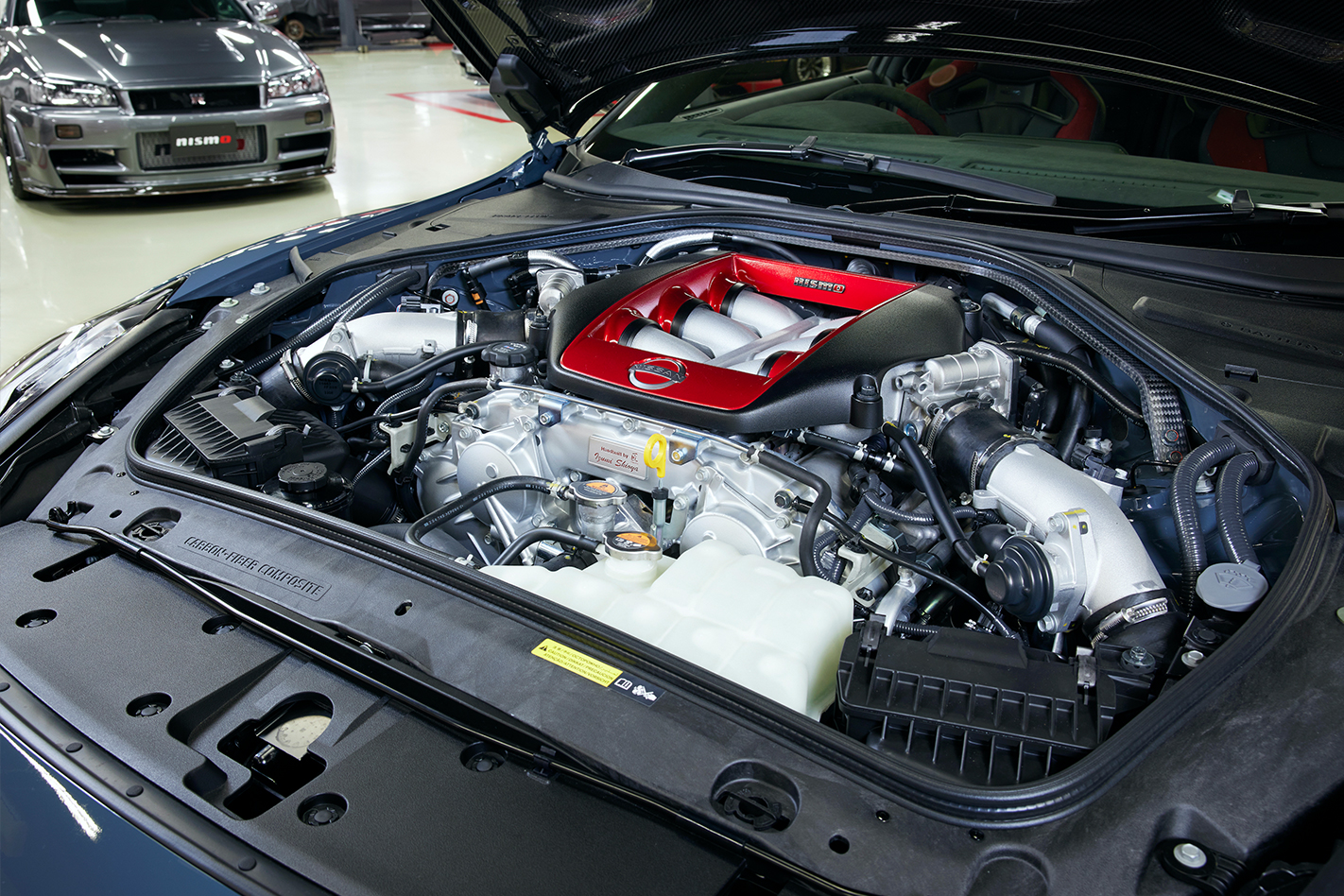
Nissan’s R35 GT-R is one of the longest-serving models in production and, with no news of a replacement, it seems that Hiroshi Tamura, Chief Product Specialist of GT-R, remains committed to its ever-incremental development for now.
“The GT-R Nismo has always been an ongoing pursuit of ultimate driving pleasure” said Tamura-san.
“We take a holistic approach, seeking precision performance through a meticulous balance of engine components and shaving weight, and incrementally evolving the GT-R’s appearance to deliver the ultimate balance of power, performance and excitement to our customers”.

A very happy meal
Perhaps as exciting as the 2021 GT-R Nismo update, is Nissan’s announcement of a collaboration with McDonald’s in Japan, with the iconic happy meal accompanied by a 1:64 Nissan GT-R Nismo Tomica toy for a limited time from April 16.
You won’t, however, find them in Aussie Maccas stores, and it remains to be seen whether the 2021 GT-R Nismo special edition will be made available to Australian buyers.
Speaking with Motor today, a Nissan Australia spokesperson said: “We are awaiting confirmation of further details including availability, pricing and launch timings for markets outside Japan.”
The current GT-R Nismo is priced at $378,000, although 2021 pricing has yet to be announced. Stay tuned, however, as we will update this story as more news comes to light.

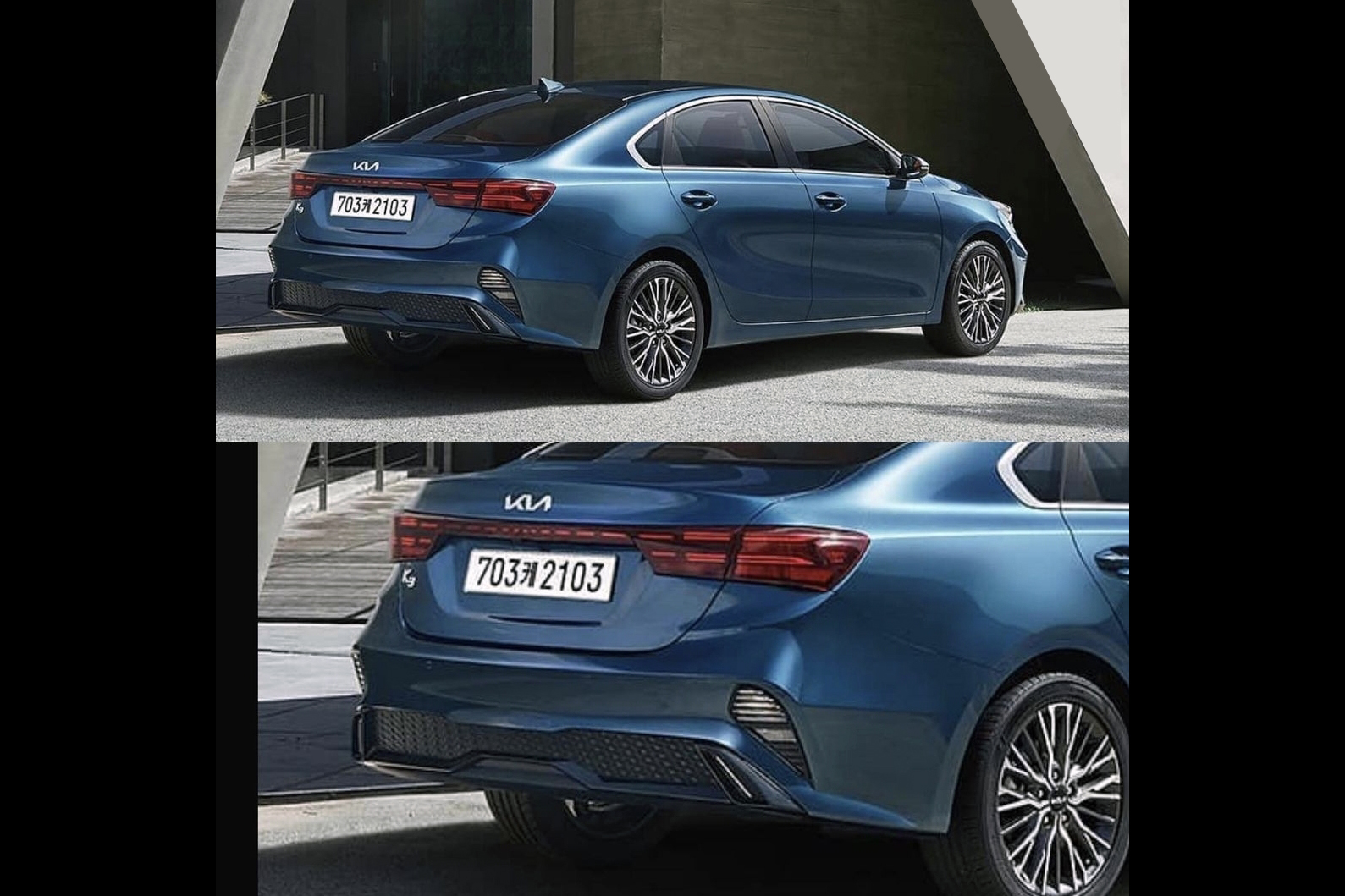
UPDATE, April 14, 2021: In the leak that never ends, the 2021 Kia Cerato has surfaced online again, this time in what look to be official marketing shots.
If these images, posted to Instagram, aren’t the real deal – they’re a mighty convincing impression.
As the earlier leaks below reveal, the new Cerato will launch with a completely new face and a subtly revised rear. The interior has also been given a number of cosmetic and feature changes.
At the front, slender new headlights get a dashed LED daytime signature lighting effect, while the latest take on Kia’s long-serving ‘tigernose’ grille now extends across to the edge of each light.
Kia’s new logo sits proud above the redesigned grille, while a sharp new bumper design rounds out the front-end changes.
The rear gets subtly updated lighting – the shape is unchanged, but the internal lighting signature repeats the dashed look showcased at the front of the car.
As with the other end, an updated bumper design completes the tweaks made to the rear.
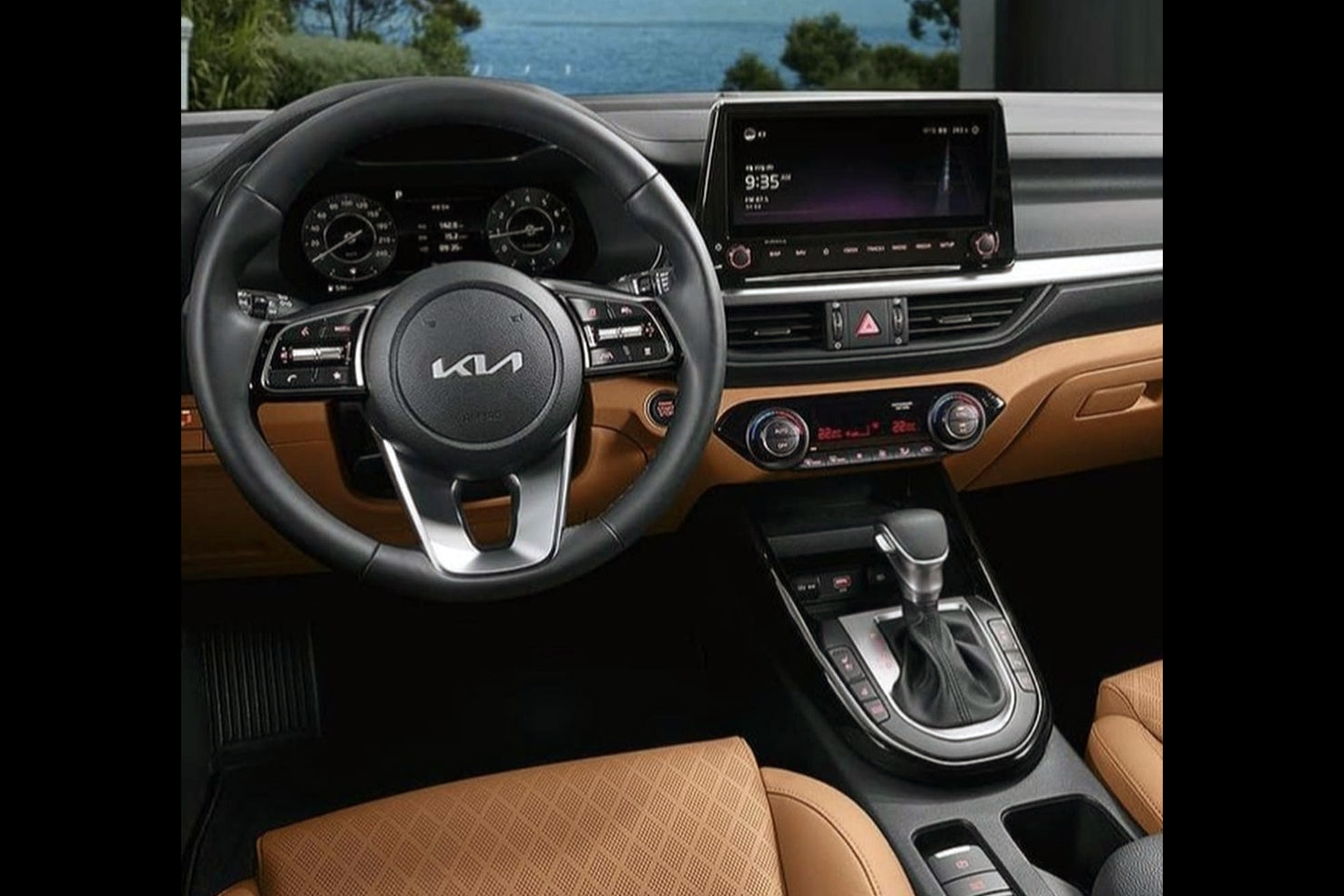
Inside, the Cerato’s existing steering wheel gets Kia’s new logo, and the main dash display frame looks to have done integrated the buttons that previously sat as a separate hardware module beneath the screen.
Apart from a new digital instrument cluster display behind the steering wheel, the interior appears to be otherwise unchanged.
The refreshed Cerato range will reach Australia in May, so an end to these leaks should be in sight.
Watch for more details to come in the days and weeks ahead.
The story to here
UPDATE April 9, 2021: The 2021 Kia Cerato has once again been leaked online.
New images of a workshop manual published on the website bobaedream appear to show the new Cerato’s front fascia in higher definition than those seen in March 2021 – with the Korean marque’s new logo stamped proudly in the middle.
From the images it seems the facelifted model will feature new halogen or possibly LED headlights with a ‘tiger-nose’ grille nestled in between, and a lower intake design familiar from the new generation Optima (K5) mid-size sedan sold overseas.
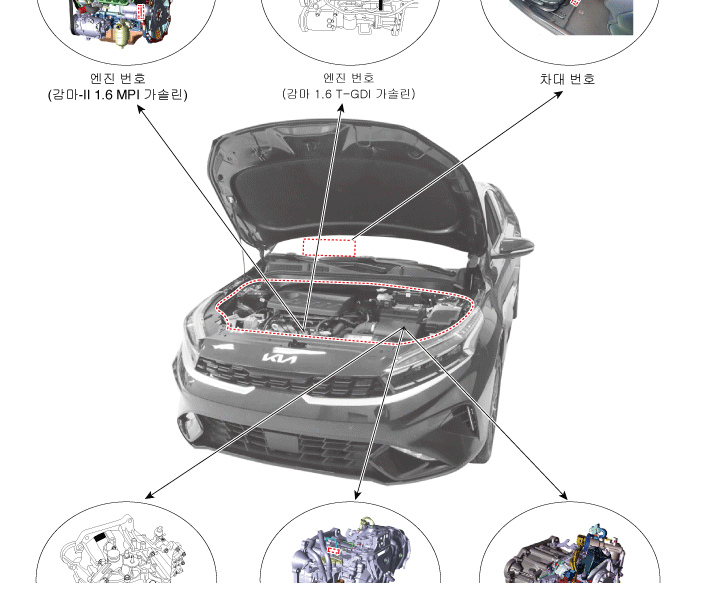
This is also the first time we’ve seen confirmation that the Cerato will continue to sport a 1.6 litre ‘T-GDi’ turbo four-cylinder petrol engine, producing an expected 150kW and 265Nm as is in its flagship GT.
However, it seems the new Cerato won’t benefit from an upgrade to Kia’s new fuel-efficient SmartStream family of engines, instead retaining the GT’s fuel consumption claim of 6.8L/100km.
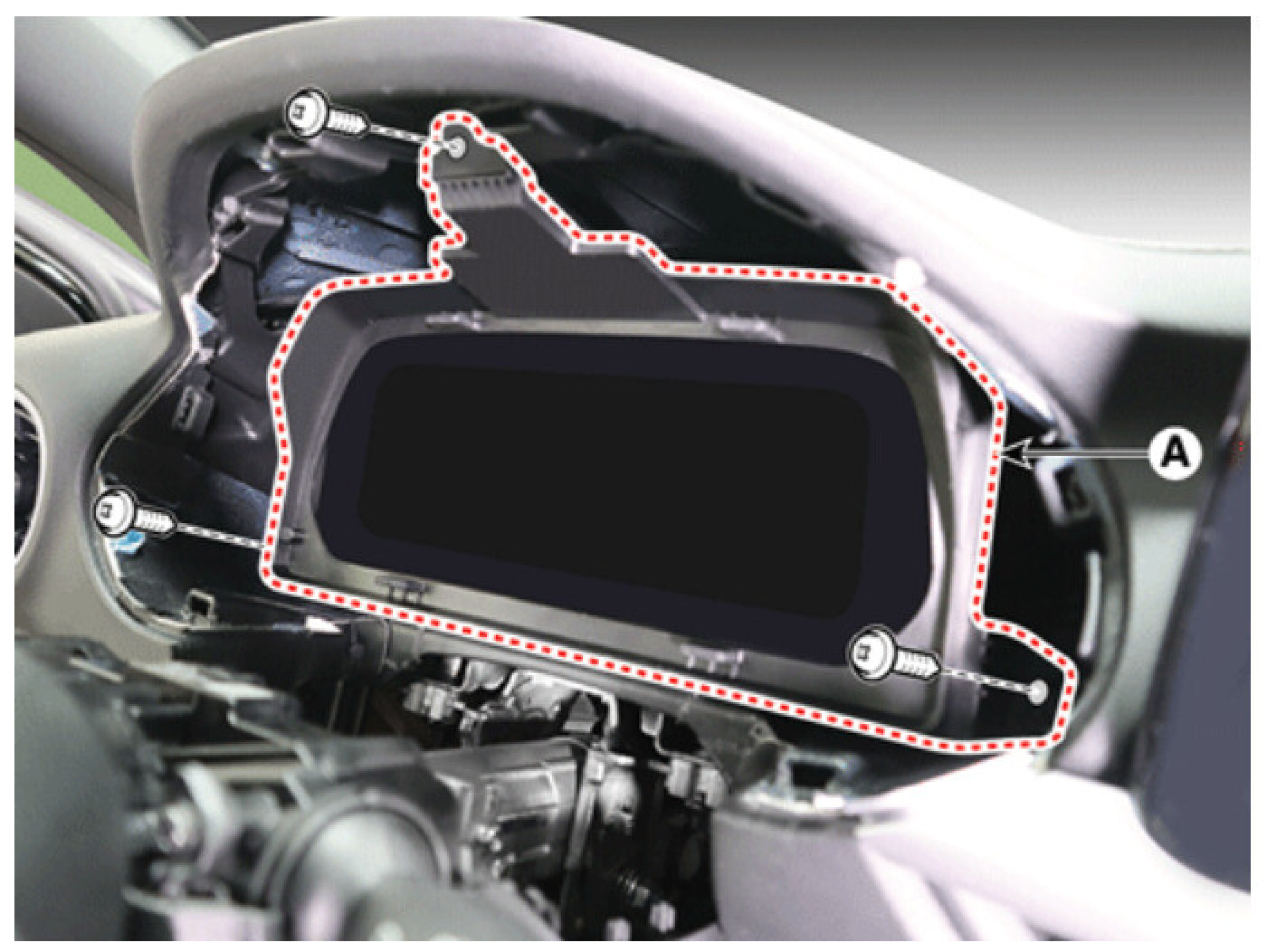
What the 2.0 litre Cerato will most likely have though, according to the images, is a digital instrument cluster for the first time, with what looks to be the 10.25-inch unit already featured in the new Hyundai i30 sedan.
In addition, Spanish forum Cochespias has also leaked a spy photo of the Cerato’s rear. It’s tough to make out what’s new due to the poor quality of the image, but changes appear to include a new LED tail-light signature, a restyled bumper and the new Kia logo.
An Australian launch is confirmed for May 2021.
MARCH 19, 2021: A facelifted version of Kia’s popular Cerato hatch and sedan is set to be unveiled in the coming weeks, with a local launch to follow soon after in May or June.
News of the updated Cerato was first brought to light at Kia’s 2021 CEO investor event, with Kia boss Ho-Sung Song confirming the refreshed model would be unveiled in its native country in the first quarter of this year.
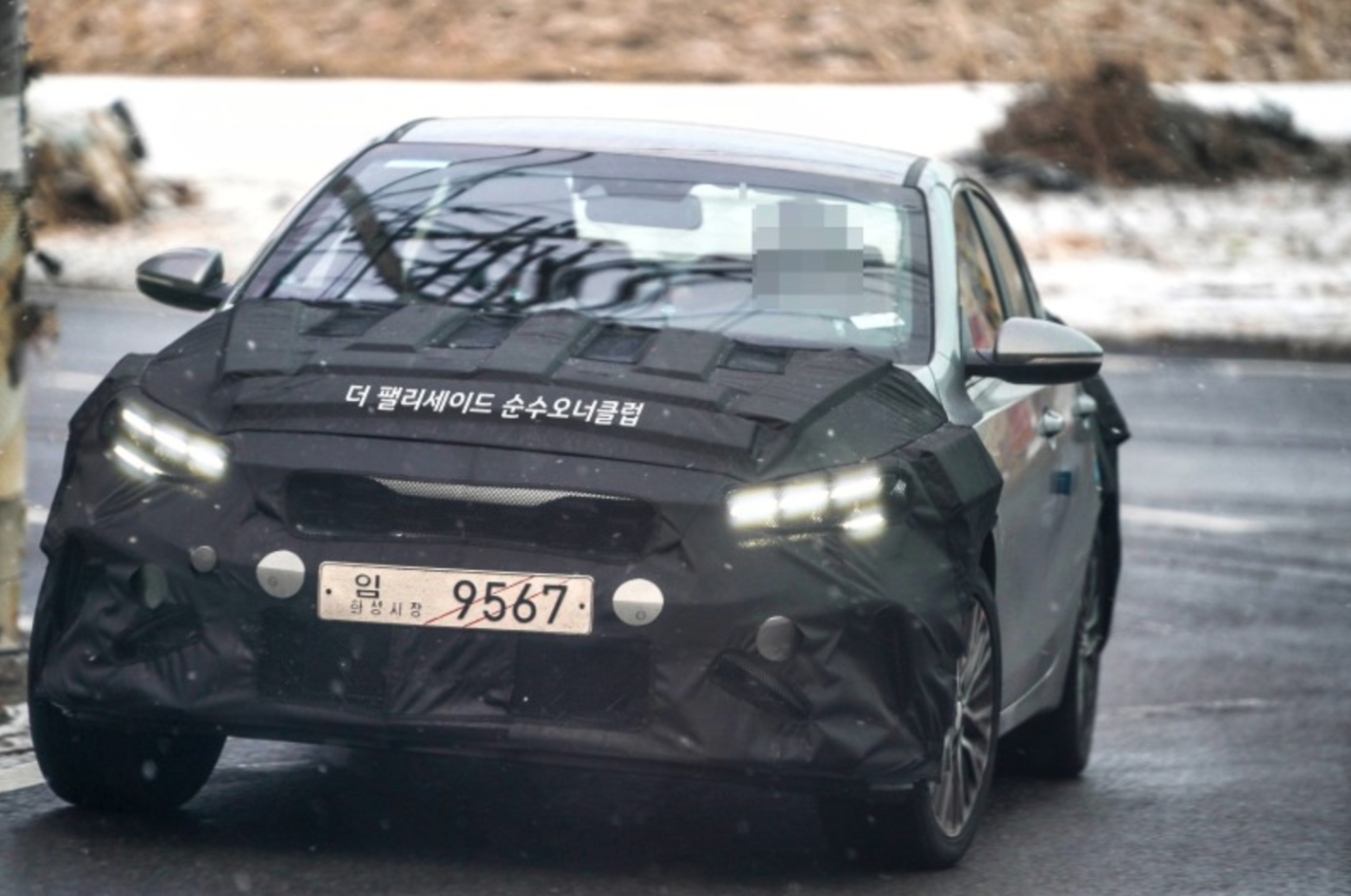
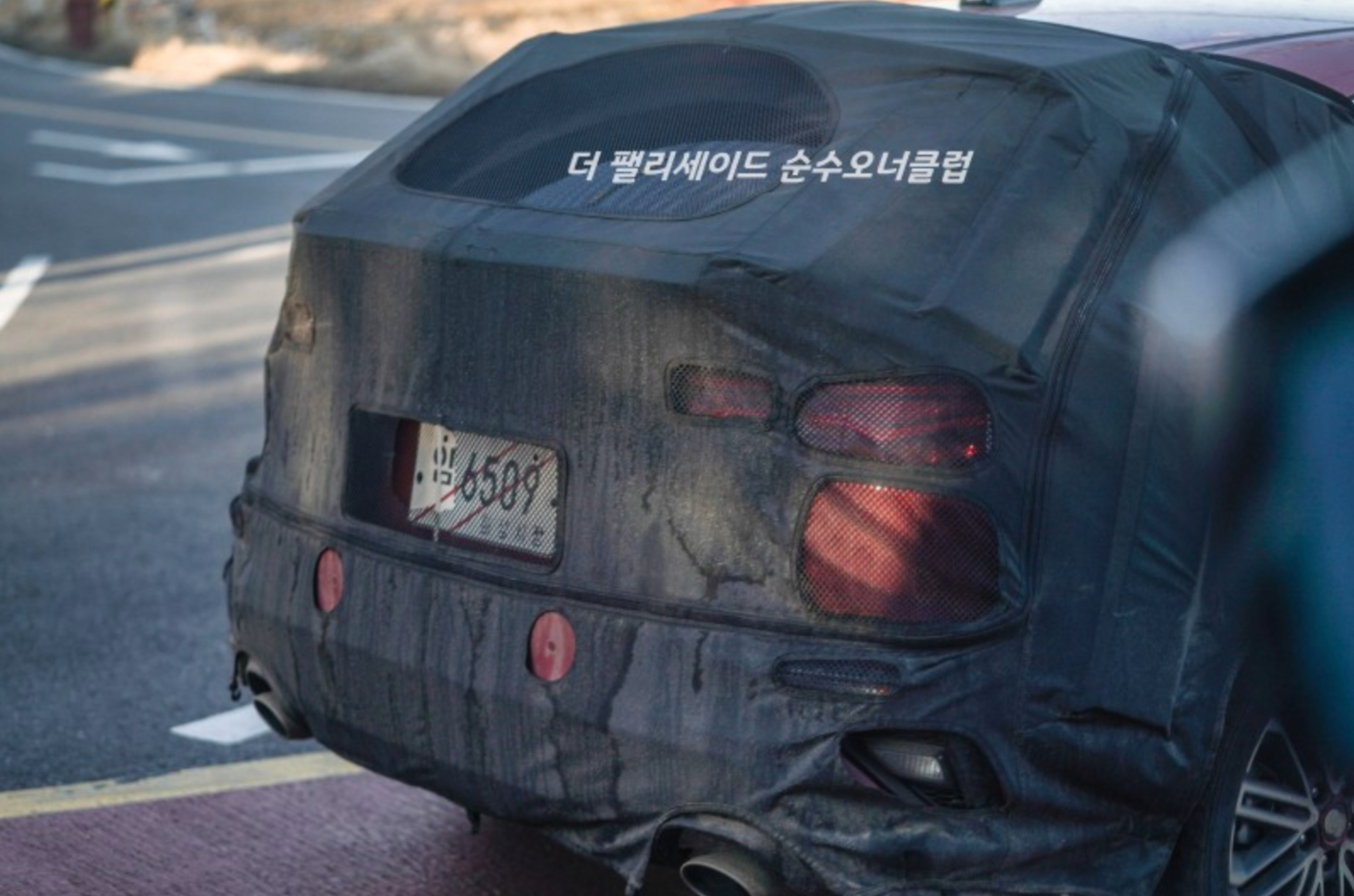
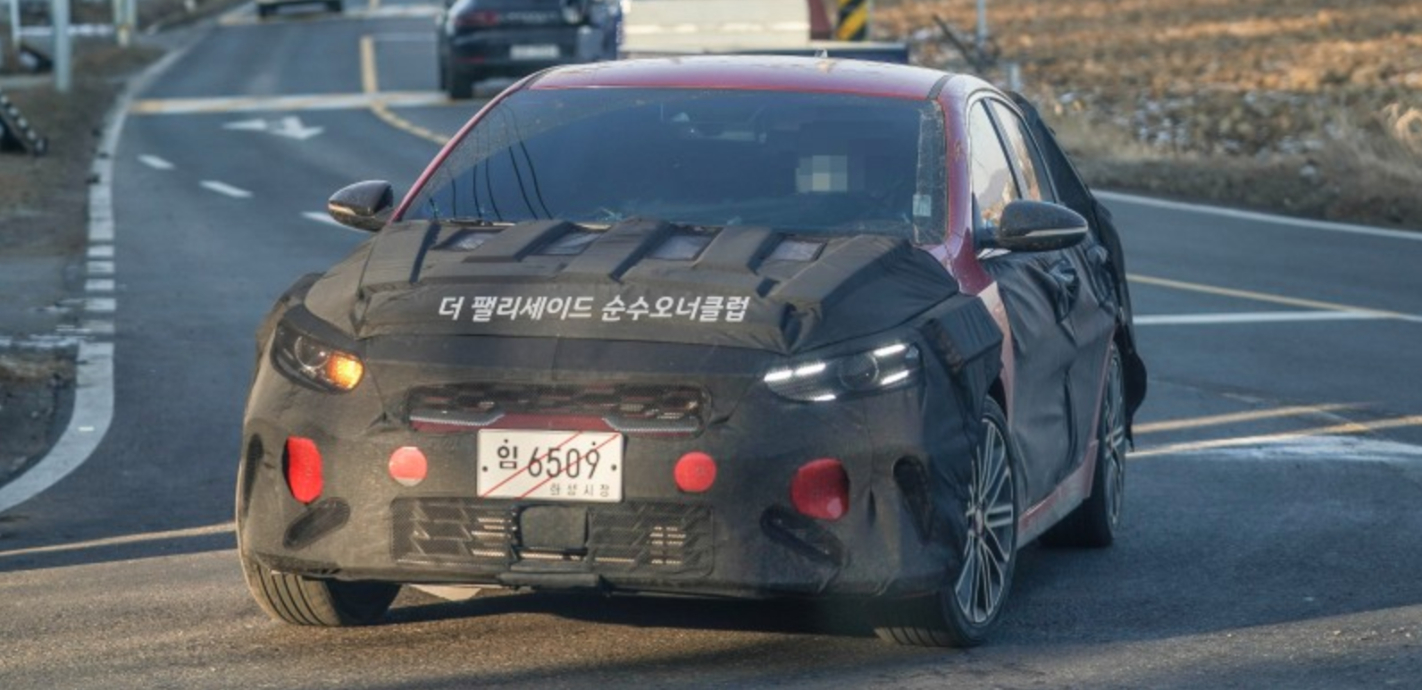
Images of a heavily-camouflaged Cerato have been doing the rounds on enthusiast site The Korean Car Blog, showing new LED daytime running lights and a slender tail light configuration.
Judging from the spy shots, the new Cerato looks like it will also be fitted with a narrower grille, as well as a subtly reworked front and rear bumper. New-design alloy wheels are expected to be fitted to the updated cars as well.
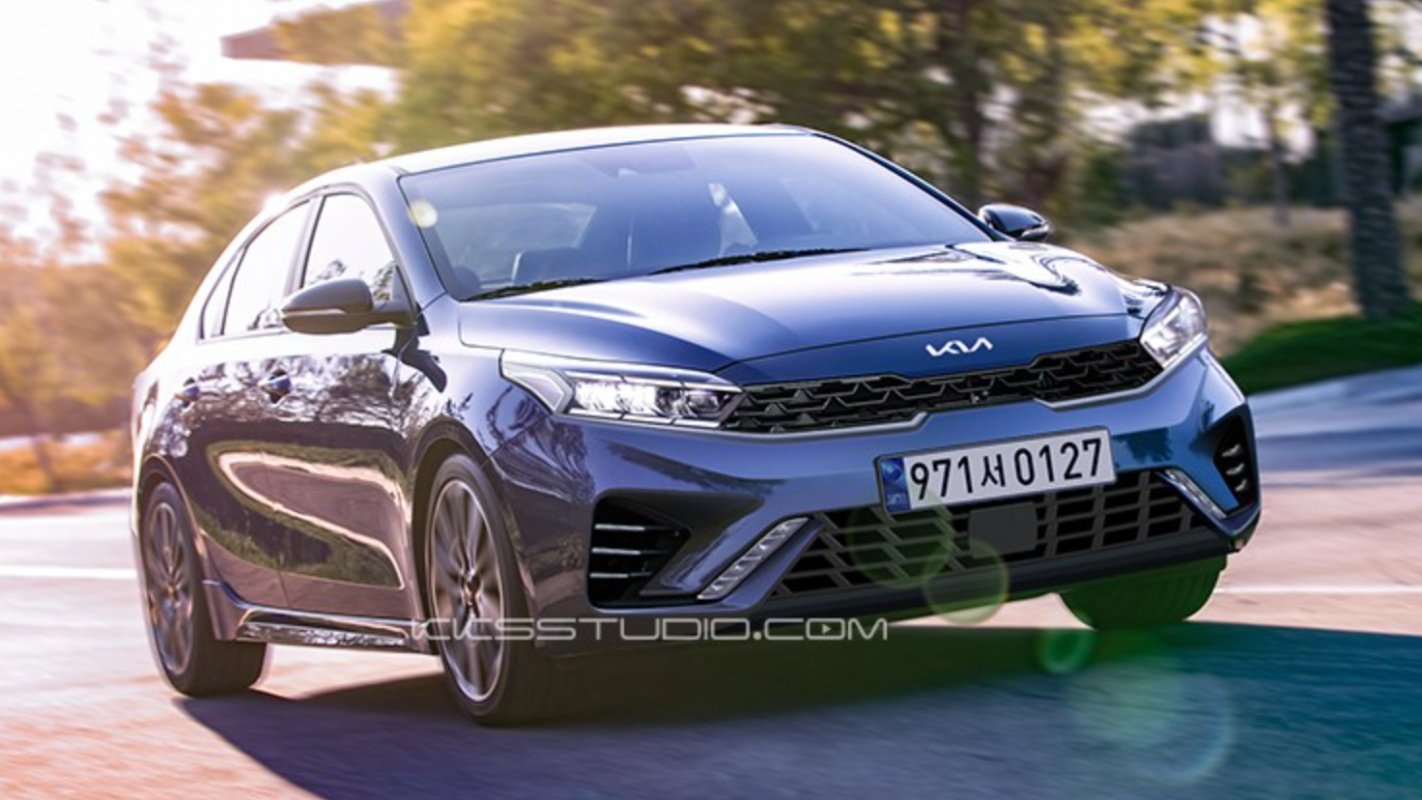
KKS Studio, a South Korean website dedicated to speculative automotive renderings, has even mocked up what the new Cerato could look like, show above.
The Cerato will also be the first Kia in Australia to be fitted with the automaker’s newly redesigned logo, which ditches the traditional oval badge in favour of big, bold, and borderless lettering.
The interior of the Cerato is likely to score some updates too, with the centrally mounted infotainment screen expected to grow from the current 8.0 inches to a big 10.25 inches, mirroring that of Kia’s sister brand Hyundai and its recently overhauled i30.
A digital dash is also predicted, as is an updated multimedia operating system.
It’s anticipated that a host of advanced driver assistance aids will be equipped in the Cerato, including radar-guided cruise control and an assisted steering system.
Nothing has been confirmed regarding drivetrain updates, however, the Hyundai group’s heavily upgraded ‘SmartStream’ engines are expected to feature.
We’ll have to wait a few weeks for any new details on the new Cerato hatch and sedan. Be sure to watch this space and circle back to WhichCar for more information.
MORE: Cerato stories MORE: All Kia stories
The 2021 Mini John Cooper Works has just been unveiled ahead of an Australian debut set for the third quarter of 2021.
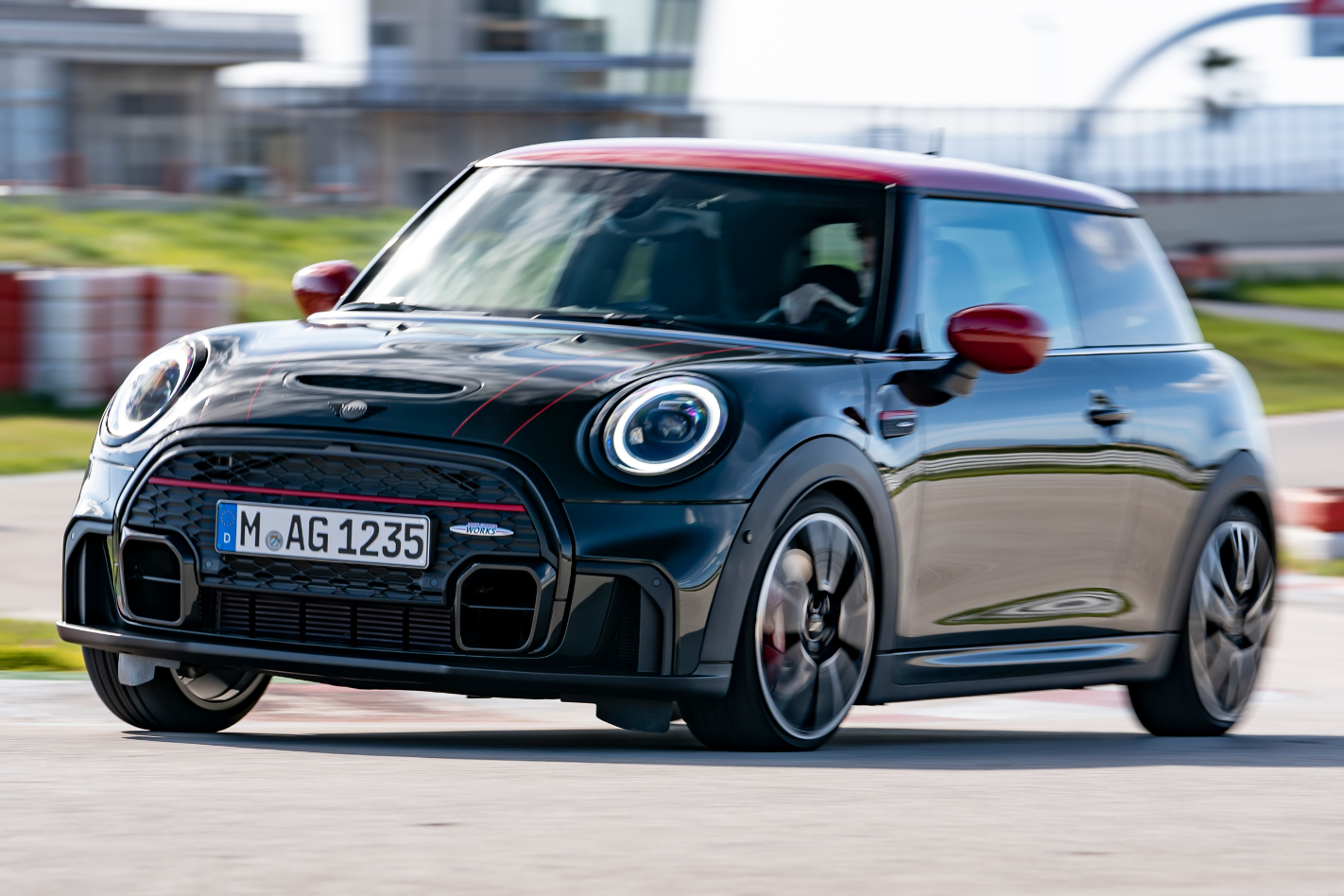
The JCW’s stylistic upgrades are many, and perhaps most prominently, the entire front fascia of the JCW has been completely redesigned.
There’s an imposing matt black grille with a striking hexagonal design, contrasted by a new red stripe along its centre, signifying that it is no regular Mini.
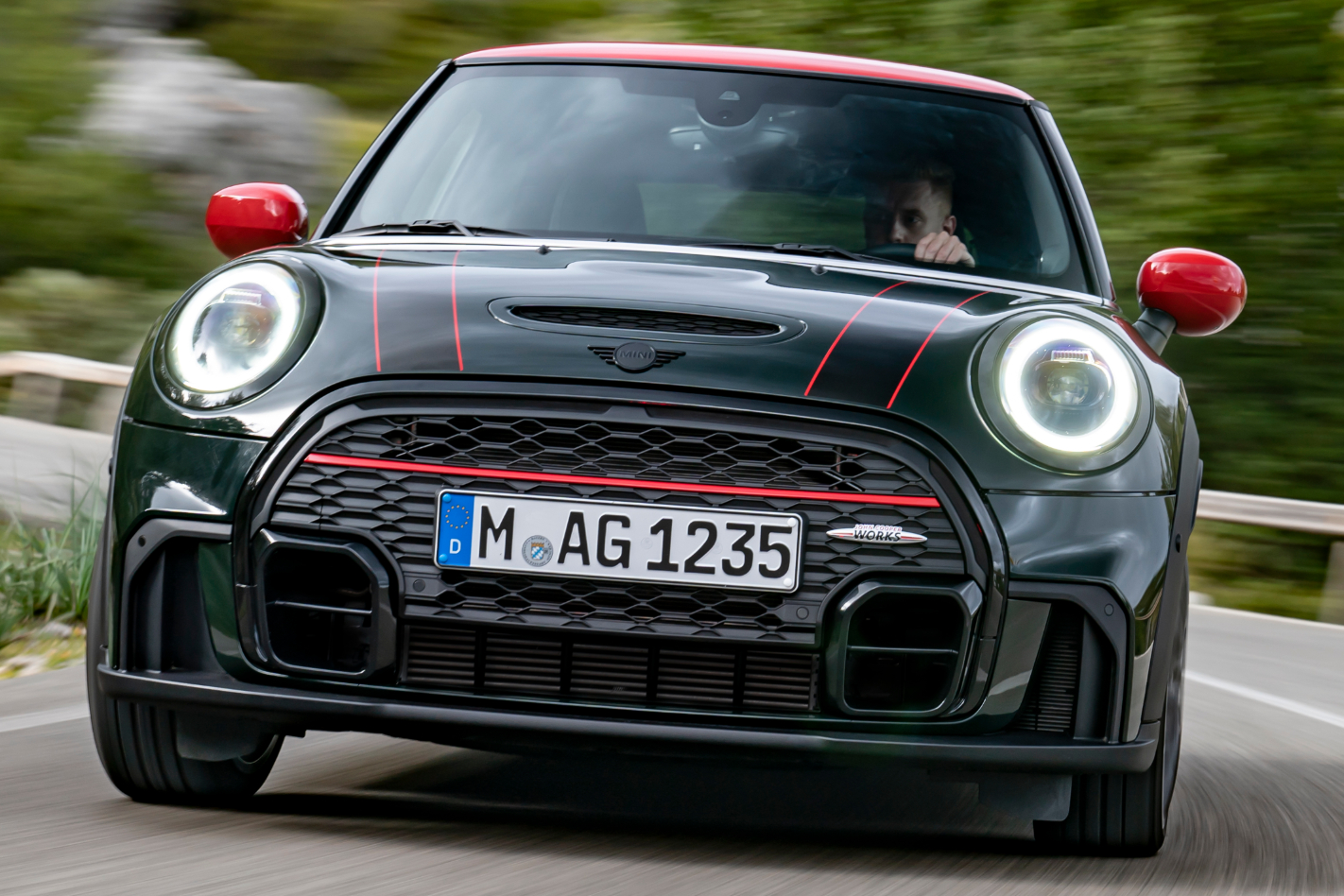
Tough-looking, body-coloured air ducts sit below the grille on either side of the number plate mounting point, feeding cool air onto the Mini’s braking system.
Also blanketing each end of the sporty new bumper is another set of angular air openings, working to cool the fiery powertrain.
At the rear, there’s a new, super-aggressive diffuser finished in a shade of matte black that seamlessly blends into the finishing edge of the flared rear wheel arches.
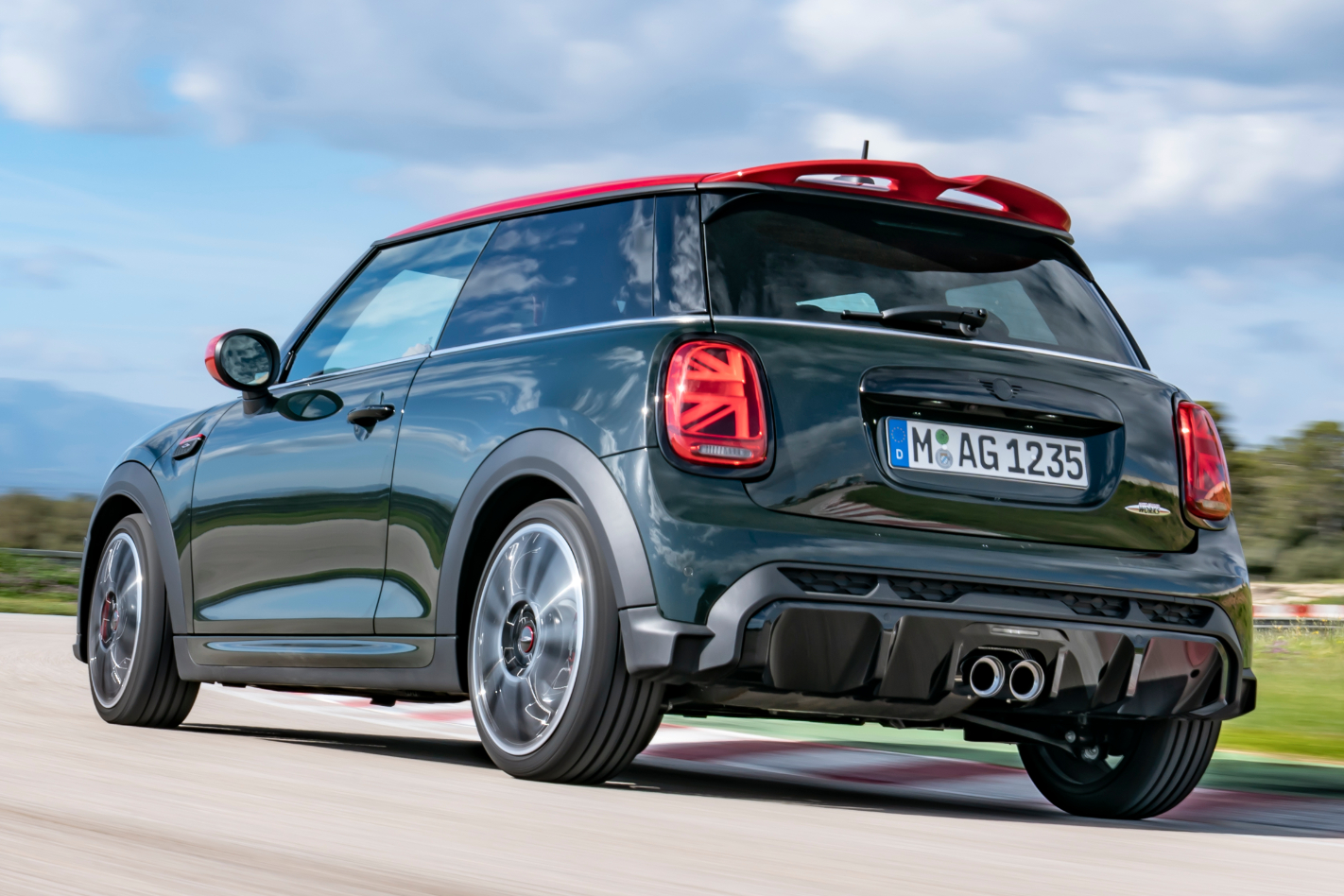
Sitting square in the middle of this novel diffuser is a set of 85-millimetre stainless steel sports tailpipes with a contrasting chrome finish.
Underneath the bonnet sits the same punchy 2.0-litre turbocharged four-cylinder engine as the outgoing JCW, which produces the same 170kW and 320Nm.
Like always, drive is sent to the front wheels via either a six-speed manual transmission or an eight-speed slushbox torque-converter auto.
The 0-100km/h sprint is taken care of in just 6.3 seconds when optioned with the manual, while the auto shaves two-tenths of the sprint, taking just 6.1 seconds.
To help slow the hot hatch down, Mini has redesigned the braking system in conjunction with industry doyen Brembo to make sure the JCW stops as quickly as it accelerates.
The four-piston front brake calipers are also painted in a striking shade of red and adorned with the fabled John Cooper Works logo.
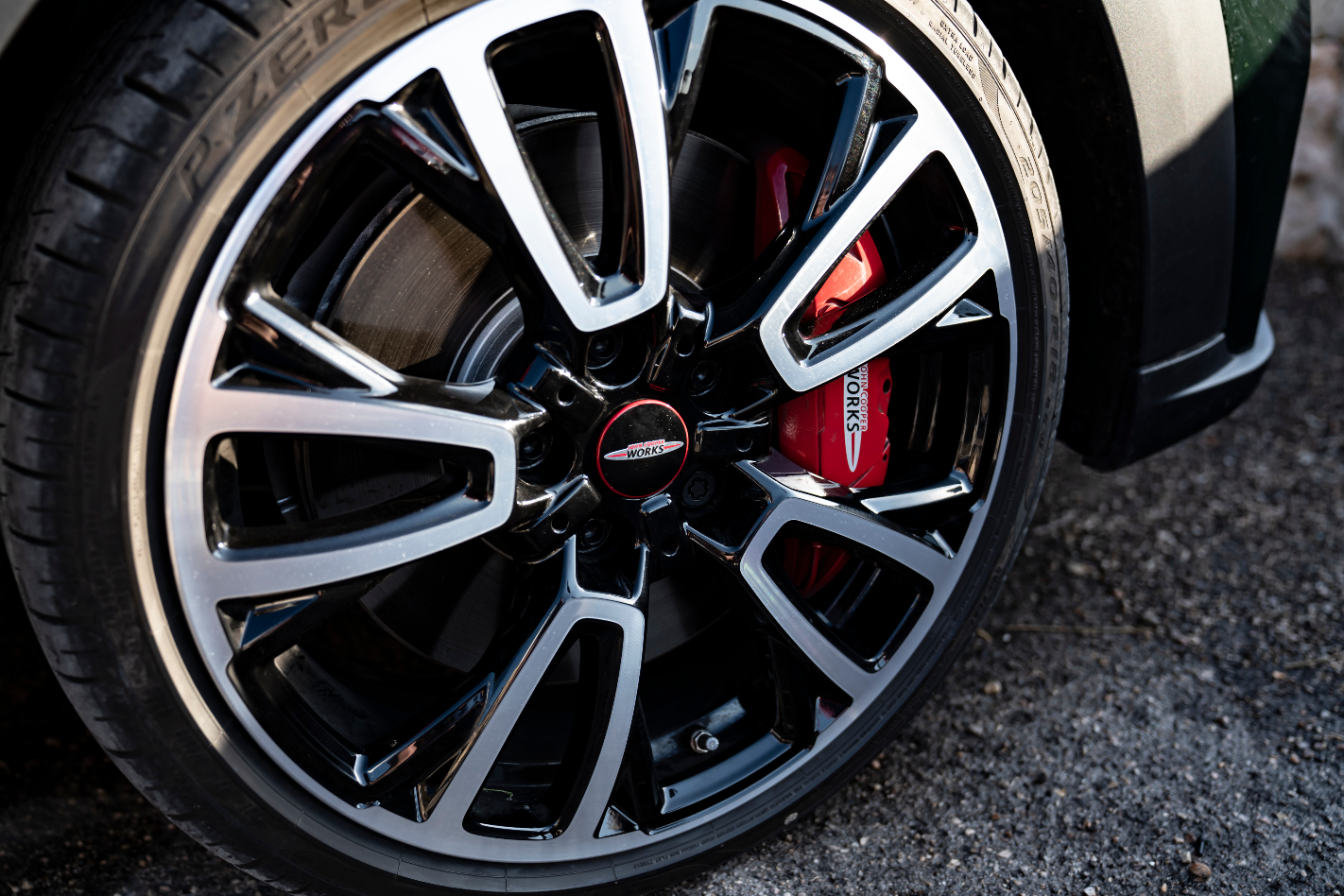
In front of the new brakes is a set of new Lightweight John Cooper Works alloy wheels, which can be had in either a 17 or 18-inch sizing.
A bespoke chassis tune for the suspension comes as standard for the JCW, and as an optional extra, buyers can tick Mini’s Adaptive Suspension box.
These electronically controlled dampers make adjustments to suit the road conditions in just 50-100 milliseconds, ensuring a more supple and dynamic ride.
There will also be a number of different modes that can be selected depending on the driver’s mood, which includes ‘Lounge’ and ‘Sport’ mode.
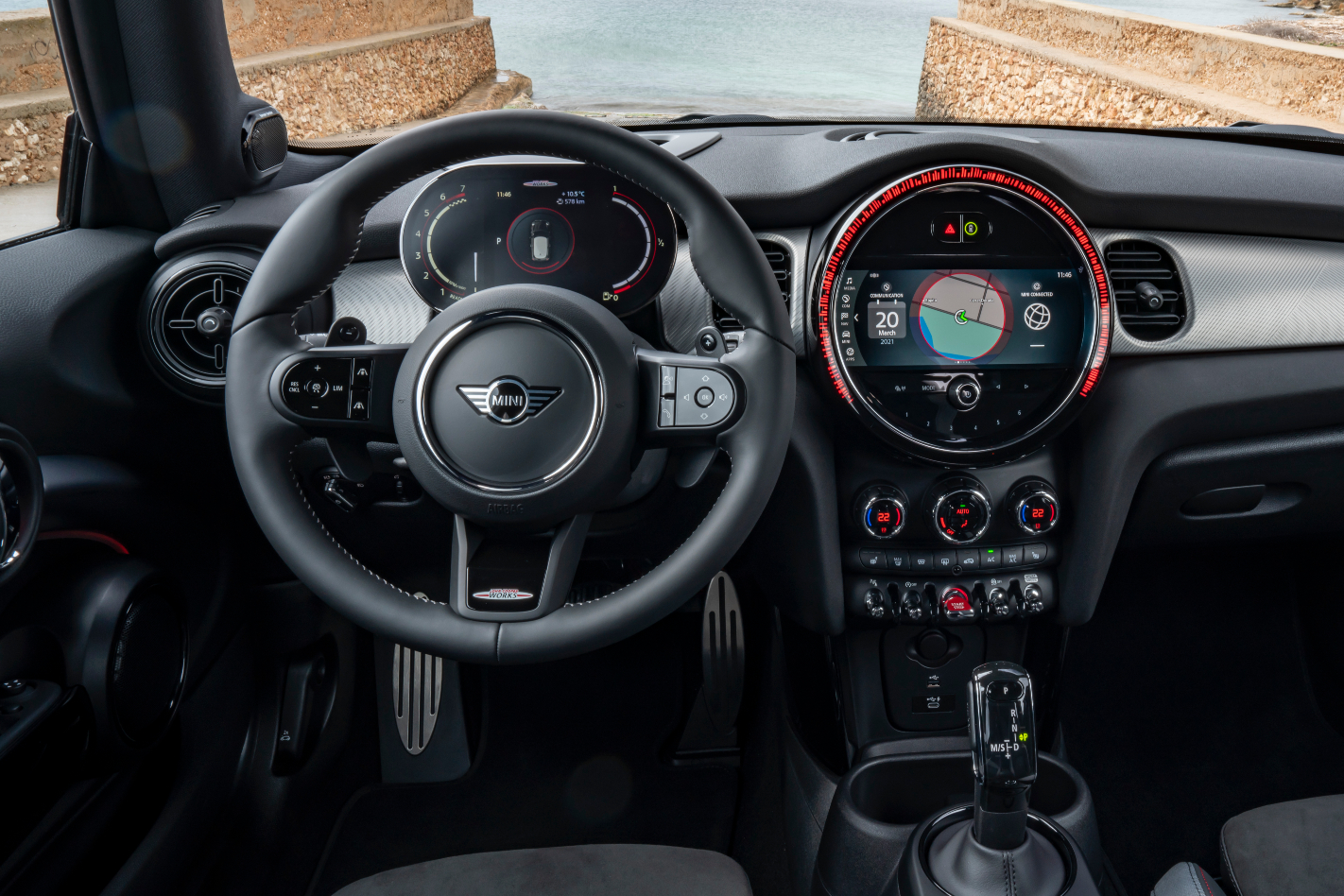
Inside, the updated hatch comes with a host of new features including a redesigned central instrument cluster and an 8.8-inch touchscreen display.
The Mini’s infotainment software has also been updated, benefiting from a revised display that makes interfacing with the audio, navigation, communication and app systems more intuitive.
The JCW also comes with a host of safety features as standard that include adaptive cruise control with stop and go functionality and parking assist.
The 2021 Mini John Cooper Works will be launched in Australia in Q3 of 2021, and local pricing will be announced by the manufacturer closer to the launch date.
Be sure to circle back to WhichCar as we bring you all the updates on Mini’s latest hot hatch.
MORE: Mini Hatch stories MORE: All Mini stories
