
If you’re the sort of person who wonders why the country has gone SUV mad when wagons still exist, there are still plenty of stylish, if upmarket options for you. The Mazda 6 is likely near the top of the list for many, and with good reason. The exterior has a style that rivals the Europeans for class and restraint, and the interior has become more and more of a strength for Mazda.
Now, there’s another reason to consider the Mazda 6 wagon as an SUV alternative if you’re looking for something plush – the SP GT Wagon. Though it’s not quite a top of the range model in the 6 family, slotting in below the ‘Atenza’ spec, the Mazda 6 GT SP Wagon does include plenty of high-spec kit. For some drivers, what’s under the bonnet will be of most interest.
Mazda’s excellent turbocharged 2.5-litre four-cylinder engine powers the GT SP, making this spec the cheapest way to access that drivetrain without buying a base-model (and huge) Mazda CX-9.
With that extra power – 170kW and 420Nm – plus some sportier styling, Mazda saw fit to bestow the 6 with its SP badge, usually reserved for a variant with a bit of a performance bump over the rest of its range. In this instance, the SP shares the same performance as its Atenza sibling, though at a slightly more accessible price.
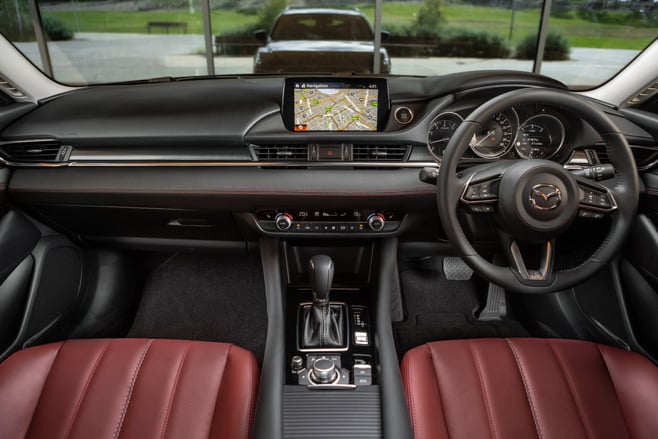
Prior to the Mazda 6 range copping an update, the GT SP’s predecessor GT was $700 cheaper with the same engine and outputs, but with a more spesh interior. Now a $47,990 offering, the Mazda 6 GT SP Wagon includes a lovely burgundy red leather seating scheme, coupled with matching red stitching on elements covered in black leather, such as the steering wheel and dash.
Those red leather seats are also now heated, including the two primary rear seats. Aluminium-look trim is now used to accent places like the door cards, dash, and instrument panel.
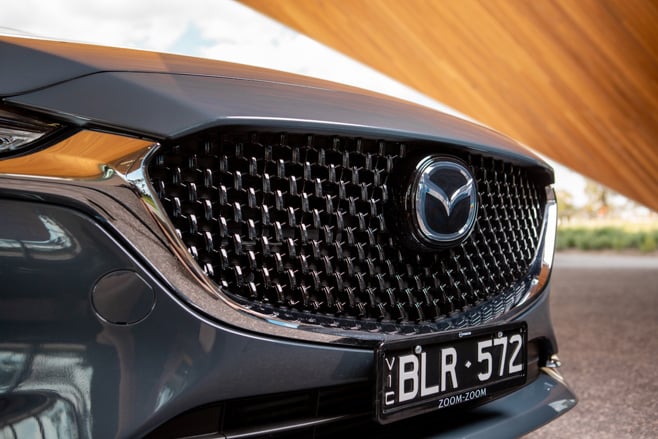
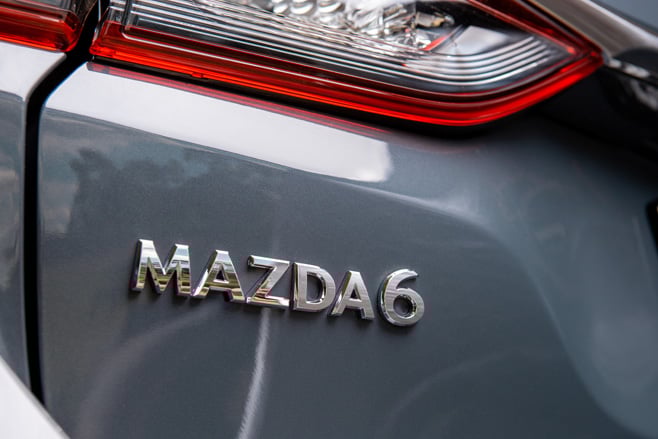
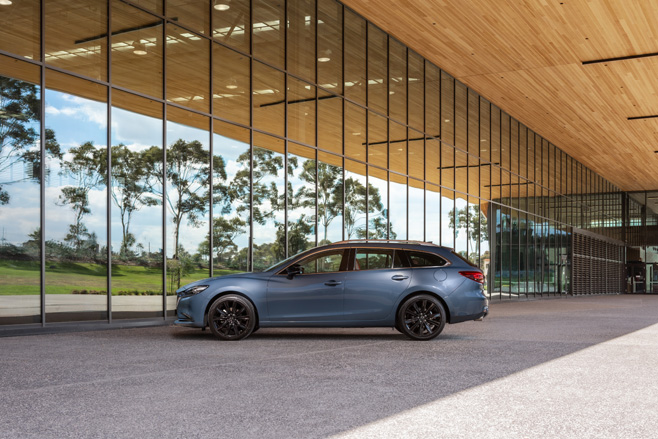
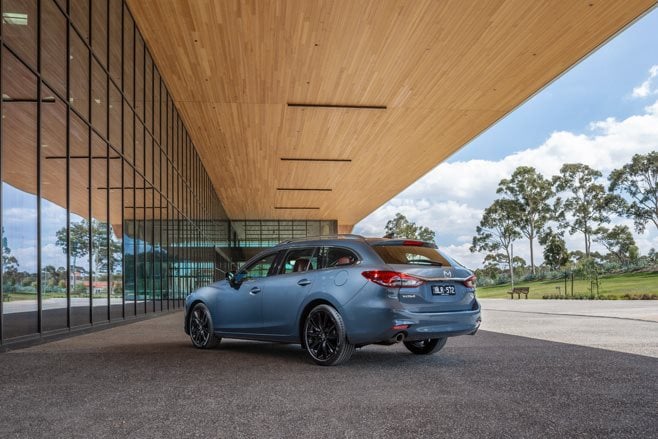
On the outside, turbo badging denotes the drivetrain, while the GT SP gains black 19-inch alloy wheels, black mirror caps, and the $495 Polymetal Grey paint option (pictured on our test car) is now available across the Mazda 6 range.
The only other addition to our test car is a set of floor mats, a $242 option, which brings our as-tested price to $48,727. It should be said that, while this might look pricey on paper, the car felt suitably specified to be near that price point from the driver’s seat.
Once we start taking into account the realities of buying a new car, stamp duty, a year of rego, and dealer fees, the Mazda 6 GT SP Wagon cops a recommended delivered price of $52,852 according to Mazda, if one was to buy new in Melbourne.
Mazda also covers new cars with a five-year, unlimited-kilometre warranty, and lists the pricing for the first five services specific to a 6 GT SP as $349 at 10,000km, $379 at 20,000km, and then alternating between the two prices every 10,000km up to 50,000km. Mazda adds a recommendation to replace the cabin filter and brake fluid every 40,000km, something it will attend to for $82 and $76 respectively.
Of course, it needs to be addressed that the Mazda 6 is now effectively eight years old, having been refreshed with a facelift in 2018, though it hides its age better than a Hollywood A-lister.
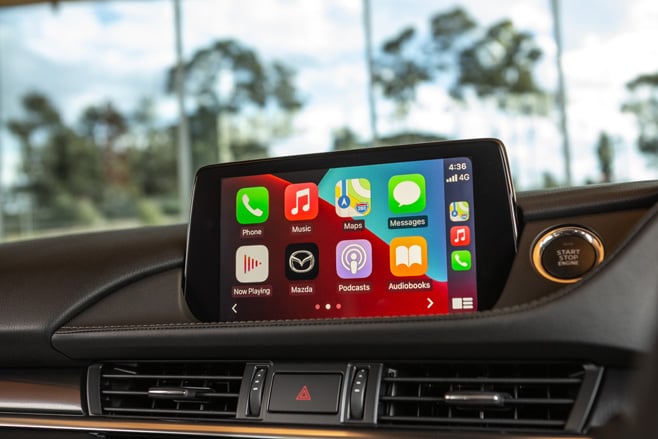
Among the mild giveaways is the infotainment system, which despite being updated in 2018 and becoming an early adopter of smartphone mirroring within Mazda’s stable, now feels outmoded compared to the newer, slicker version in cars like the Mazda 3 and CX-30.
Even using Apple CarPlay or Android Auto reveals that the system isn’t quite as fast, nor its physical controls as intuitive, as the new version. Similarly, the steering wheel still features Mazda’s older-style controls, though that’s pretty much where the potential gripes with dated features end.
The cabin is a plush environment overall, with the usual conveniences like cupholders under a sliding cover, a decent glovebox, and a relatively small storage bin in the centre console. There are also two USB points in addition to the 12V outlet in the front. Perhaps at the expense of style, incidental storage in the cabin is compromised, but it’s not dire, and being seated in those heated red leather seats feels like an occasion, even in the rears.
Back passengers will find they have plenty of room and a comfortable seating position for long trips, plus a small storage space for something phone-sized in the armrest, and bottle storage in the doors. The second-row climate vents are fairly rudimentary though, but there’s a USB charging point for passengers.
Just slightly further back, the boot is claimed to be 506 litres, though Mazda says this is only measured up to the cargo cover, and there’s also the fact lowering the rear seats allows for plenty more space. In fact, getting a full-sized road bicycle in the Mazda 6’s boot is very easy.
On the road, the focus on comfort in the Mazda 6 becomes obvious, with suspension well suited to highway cruises and that flexible 2.5-litre turbo, which lacks the lag you’d expect from such an engine, providing lovely low-range torque and even revving out to keep things hustling a little past 5000rpm where the power begins to subside.
A highway run also exposes the Mazda 6’s ability to suppress road noise, something that was a potential concern after the engine was audible from the driver’s seat upon cold start. Thankfully, though it’s not silent, the cabin of the 6 is a calm place at 100km/h, its Bose sound system not having to fight with tyre or wind noise to entertain.
The myriad safety systems in the 6 Wagon, which include things like lane departure alert and lane keep assist, ‘Smart City Brake Support’, and a few passive elements like blind-spot monitoring, road sign recognition and driver attention alert all put the mind at ease without interrupting the drive. The only qualm that the button to turn off lane assist is low to the right of the steering column, not an immediately obvious placement.
Braking relatively quickly at a high speed is also possible here in a calm manner, with an easy progression through the brake pedal that feels well-judged. Hard braking mid-corner is a slightly different story, though for a 1.6-tonne wagon the 6 still manages to remain quite composed. Rough roads can see it become slightly unstuck, though its ride is smoother than the pre-facelift 6 and jostling the GT SP through backroads can still prove fun.
Its steering feels quite firm, if still comfortable, and direct enough to have no concerns about accuracy, while body roll is always able to be kept in check. Hard acceleration on damp roads will see the Bridgestone Turanzas struggle slightly, though there’s no tantrum from the axle.
Trying to drive the Mazda 6 GT SP too hard will begin to show it come unstuck, though in a relatively linear manner that’s easy to rein in, rather than bucking the driver into a dangerous situation. For its inability to be a proper drivers car, it feels odd to refer to the 6 Wagon as an ‘SP’, the badge having previously been bestowed upon the likes of the turbocharged Mazda MX-5 or the wicked RX-7 after some Australian engineering.
Odd badging aside, the Mazda 6 is a genuinely entertaining car in a category where rivals are becoming thinner on the ground. Euro competitors are all pricier, bar offerings from Volkswagen or Skoda, but they don’t even supply the same amount of grunt at similar specs. The obvious other option for anyone at this price point is a Subaru Levorg, a wagon we’ve found in the past to be a little underdone for a brand with such a strong reputation.
While it’s not the last word in luxury or performance, the Mazda 6 GT SP Wagon provides enough of both, with a price and warranty that, in a perfect world, should keep buyers coming in even after the wagon feels like a forgotten relic.
8/10
Pros Stylish exterior, plush interior; combo of comfort and practicality; lovely turbo drivetrain Cons Not particularly cheap; some dated features such as infotainment
Body: five-door, five seat wagon Drive: front Engine: 2.5-litre inline-4, DOHC, 16v, turbo Bore/stroke: 89.0mm x 100.0mm Compression: 10.5:1 Power: 170kW @ 5000rpm Torque: 420Nm @ 2000rpm Fuel consumption: 7.6L/100km Weight: 1615kg Power/weight: 105kW/tonne Transmission: 6-speed auto Suspension: Strut, damper, spring, anti-roll bar (f); Multi-links, damper, spring, anti-roll bar (f) L/W/H: 4800mm/1840mm/1480mm Wheelbase: 2750mm Tracks: 1595mm/1585mm Steering: electric Brakes: 297mm ventilated disc (f); 278mm solid disc (r) Wheels: 19 x 7.5-inch Tyres: 225/45 R19, Bridgestone Turanza T005A Price (before on-roads and options): $47,990
A panel comprising of 211 ‘everyday Victorians’ involved in a workshop program for Infrastructure Victoria has recommended banning the sale of all internal combustion engine (ICE) cars in the state by 2030.
The month-long virtual workshop panel was tasked by Infrastructure Victoria to help solve the question: “How should the Victorian Government support more people to adopt low or zero-emissions vehicles sooner?”
The axing of all ICE cars by the end of the decade was just one of 21 recommendations made by the panel.
These recommendations required a threshold of at least 70 per cent endorsement by the 211 participants, and included:
- Creating widespread community awareness of the benefits of EVs
Michel Masson, Infrastructure Victoria chief executive, expressed concerns that not enough was being done to ensure that Victoria could meet the lofty objective.
“Victoria will not reach its emissions reduction targets unless more people shift away from petrol and diesel vehicles, but this transition needs to be planned, fair and equitable,” Masson said.
“Transitioning to zero-emissions vehicles is likely to have the single most significant impact on reducing Victoria’s transport emissions, and while other countries have experienced the benefits of this, the technology is still relatively new in Australia.
“Reducing Victoria’s transport emissions is vital, especially when car use in inner Melbourne is now at risk of surpassing pre-COVID levels by 100,000 extra trips a day.”
The banning of combustion-engined vehicles and the adoption of low-emission personal transportation, however, is at odds with the Victorian government’s contentious proposed EV tax.
As previously reported by WhichCar, the tax, which was announced in the State Government’s 2020-21 Budget, would introduce a distance-based charge that would apply for Victorian registered zero and low emission vehicles (ZLEVs) from July 1, 2021.
From that date a 2.5c/km charge will apply to electric and other zero-emission vehicles, including battery-electric and hydrogen vehicles, and a 2.0c/km charge will apply to plug-in hybrid-electric vehicles.
According to the Andrews administration, EV owners would pay, on average, an additional $330 per year in distance-based road usage fees, while PHEV vehicles owners would pay an additional $260 a year.
Another costly thorn in the side of Infrastructure Victoria’s panel recommendations is that, in some instances, charging an EV vehicle can be more expensive than brimming an ICE-powered car with 98-ron premium petrol.
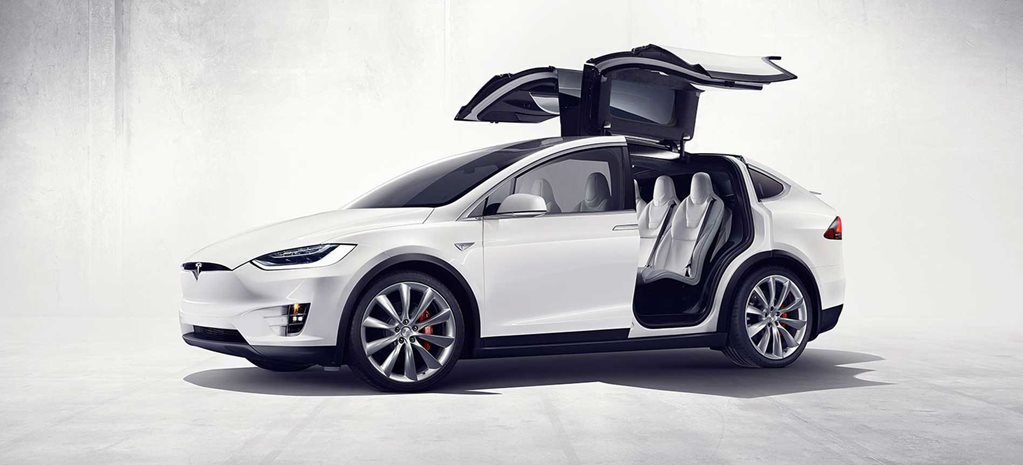
Tesla is recalling 2508 Model S and Model X vehicles in Australia to address a fault with the embedded Multimedia Card (eMMc).
The vehicles affected are the Model S built between 2014 and 2018 and the Model X manufactured between 2016 and 2018.
The recall centres on the cars’ 8GB embedded Multimedia Card (eMMC) in the media control unit which Product Safety Australia claims could malfunction over time.
According to the notice, if an error with the card did occur the central display may black out and not recover after restarting the touchscreen.
Certain functionalities, including; rear-view backup camera, exterior turn signal lighting, and windshield de-fogging and defrosting controls could be lost, or a ‘vehicle service’ warning may incorrectly appear.
In the event of a failure, there may be an increased risk of an accident “resulting in injury to the vehicle occupants and other road users”.
Tesla is contacting owners of affected vehicles to arrange a replacement of the VCM daughterboard with an enhanced eMMc free of charge.
Owners can contact Tesla customer service on 1800 686 705 or visit the website here.
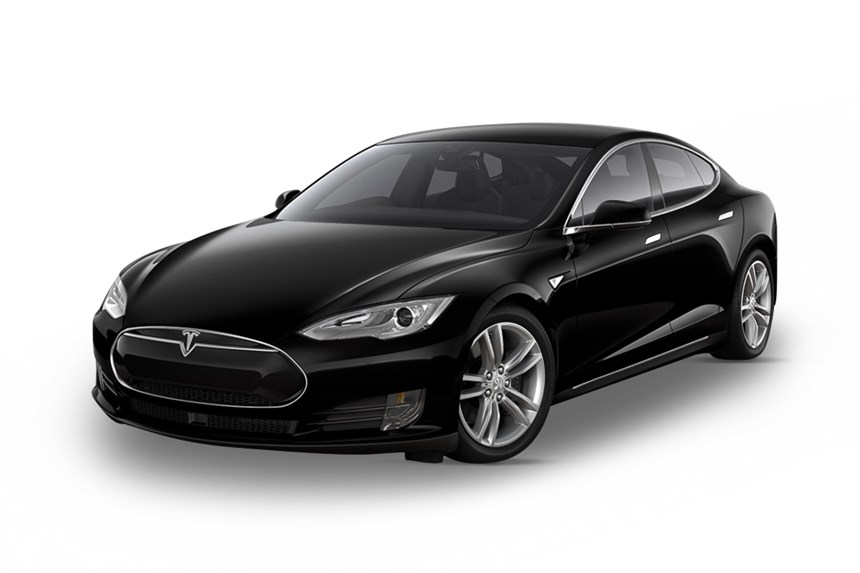
In February 2021, more than 130,000 Tesla Model S Sedans and Model X SUVs were recalled in the US over a similar issue, which the manufacturer defended by claiming the touchscreens were only ever expected to last five to six years in the first place.
That same month, as reported by WhichCar, Tesla also faced the recall of its Model X SUV built between 2015 and 2016 in Germany over a fault with its roof trim.
Just rarely, a car is launched that is so revered that it creates a huge headache for its manufacturer. We examine 10 instances where car makers asked “how the hell do we replace this?”
Ferrari F50 | 1995-1997
If building a Ferrari-badged supercar was a pick-your-own-adventure novel we’d wager that when it came to engine choices nine out of 10 people would opt to mid-mount a 4.7-litre atmo V12 based off an F1 design directly to the chassis, instead of a twin-turbo 2.9-litre V8.
It is perhaps confounding then, that the bent-eight F40 is more lauded by parts of the car community than the spiritually pure F50. Confounding, but understandable. The Ferrari F40 has been placed on the highest of pedestals since its inception.
There are also dynasty dynamics at play. The F40 was the last Ferrari that was created and launched under the purview of company founder Enzo, who died just over a year after it was first shown to the world.
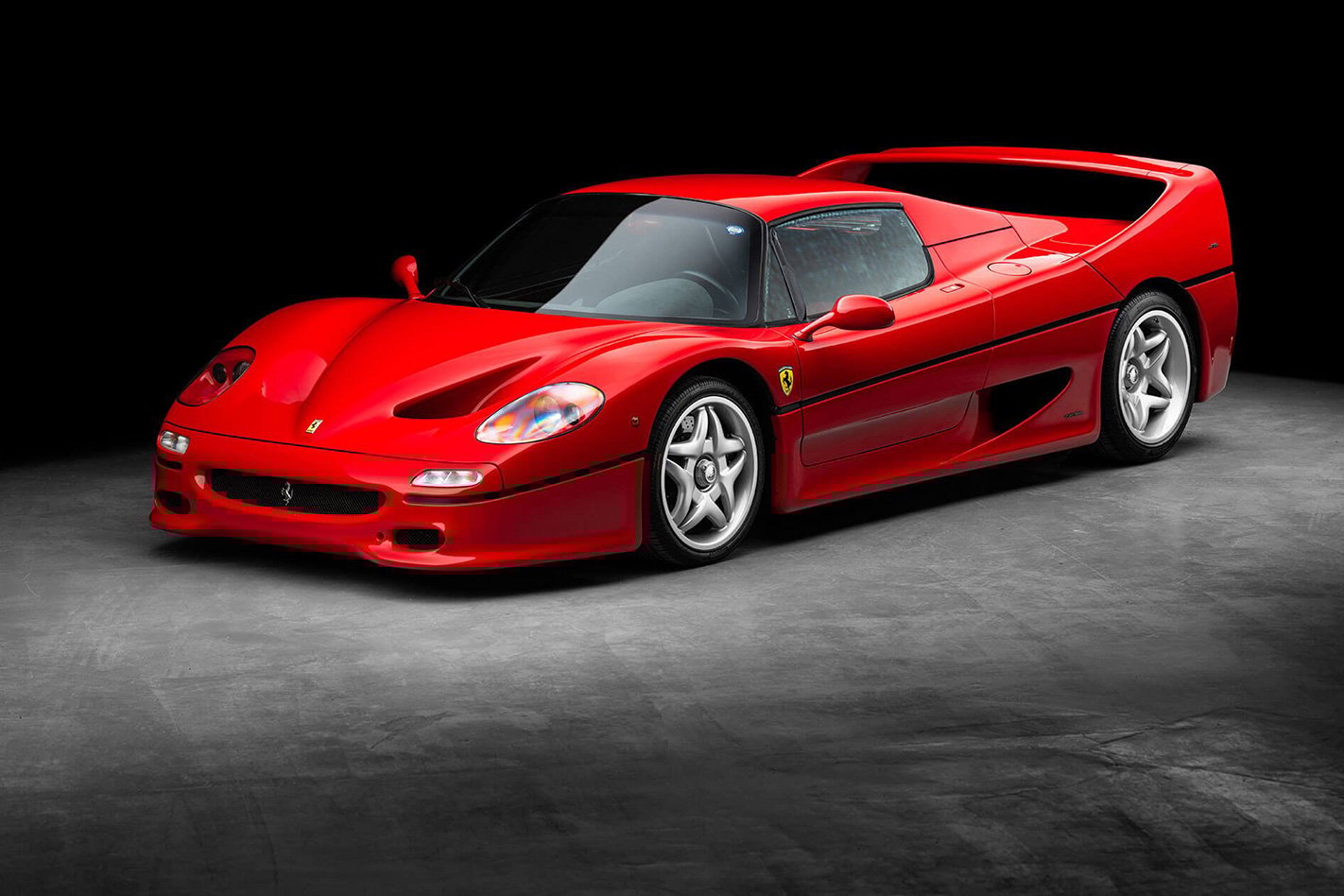
Meanwhile, the F50 was an idea generated by his second son, Piero Ferrari, who wanted a road car with certain F1 genetics to celebrate the company’s 50th anniversary.
To do this Ferrari took the engine block from an old F1 car, tweaked it to 4.7 litres, and mounted it directly to the road car’s carbon monocoque. The result was, quite literally, spine tingling. Power was rated at 382kW, and with a six-speed manual gearbox (paddle shifters were still in their infancy), the F50 could crack 100km/h from a standstill in 3.9sec. F1-inspired additions didn’t simply stop with the engine being a stressed member of the car’s construction – the pushrod suspension is mounted to the gearbox, and the brakes were entirely unassisted.

Despite heavy use of carbon fibre in the chassis design, the F50 weighed in at 1397kg, hefty for the time. This was in part due to the ‘iron block’ V12, which also resulted in 58 per cent of the weight being over the rear axle. Gun-shy after creating the fearsome and frightening F40, Ferrari’s chassis engineers built a sniff more understeer into its new V12 hero.
All of that combined into a driving experience that, for more timid souls, belied the F50’s brilliance. Journalists at the F50s launch were left so disappointed that folklore has it all bar one scribe left Maranello at lunchtime.
The sole body remaining was legendary editor of sister title Wheels, Peter Robinson, who unearthed the secret to unlocking the F50’s potential when he was granted free reign of the Fiorano test track for the afternoon.
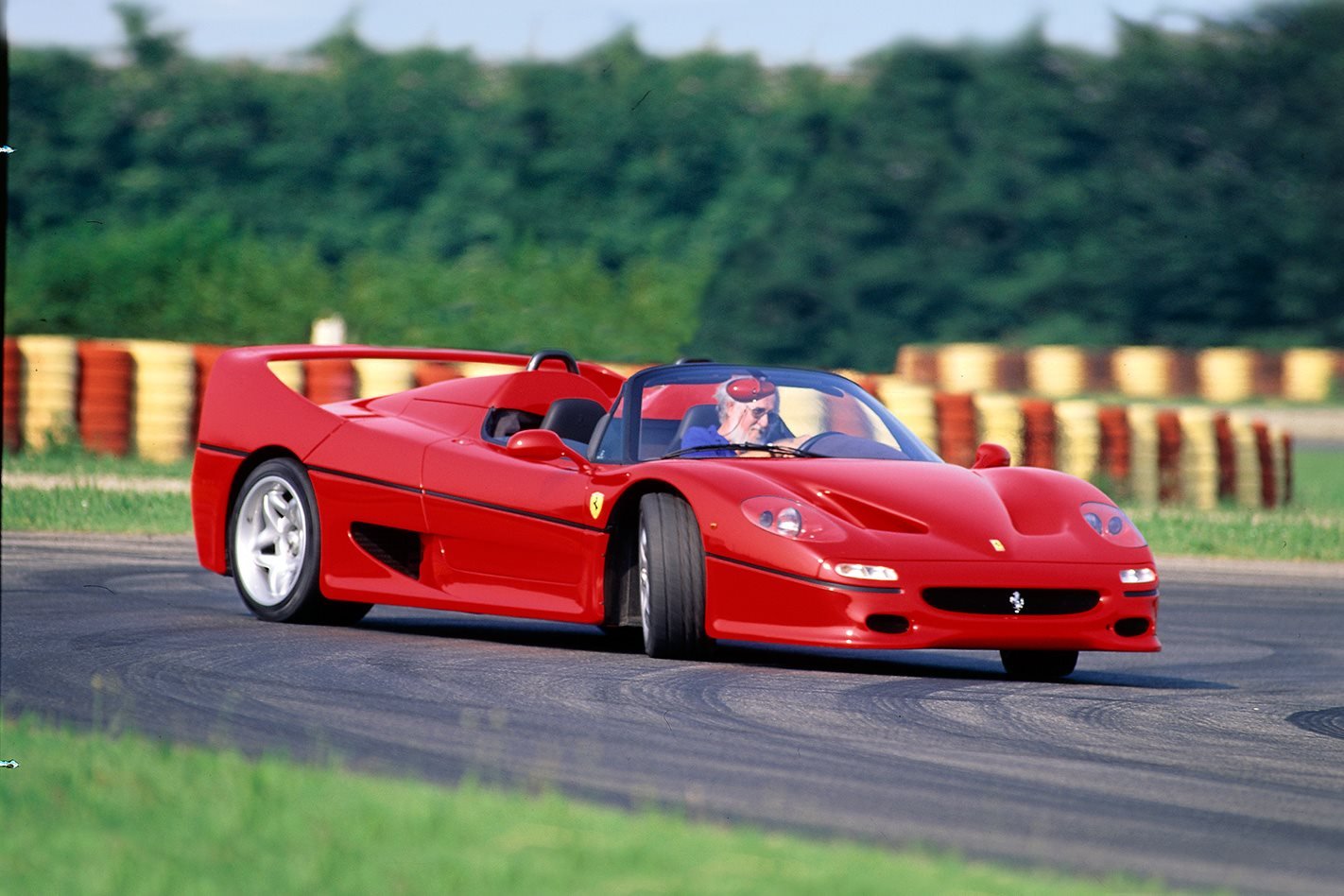
“After learning to stay between 5000-8500rpm, I discovered it was possible to get the F50 so far sideways that the steering was against the stops on opposite lock. I balanced the Ferrari on the throttle, lifting to alter the drift angle to tighten the line, never fearful of an abrupt oversteer snap,” he wrote.
Despite its racing car heritage, the F50 never become one itself. Three prototypes were built, in partnership with Dallara and Michelotto, but the F50 GT project was scrapped with Ferrari diverting the cash back towards F1.
F40s aren’t cheap, but they are plentiful with 1315 built. Comparatively just 349 F50s ever left Maranello, and you’ll need three times the cash to buy one. Worth remembering next time you gawp at the dime a dozen F40.
The Icon: 1987
Italian Minimalist
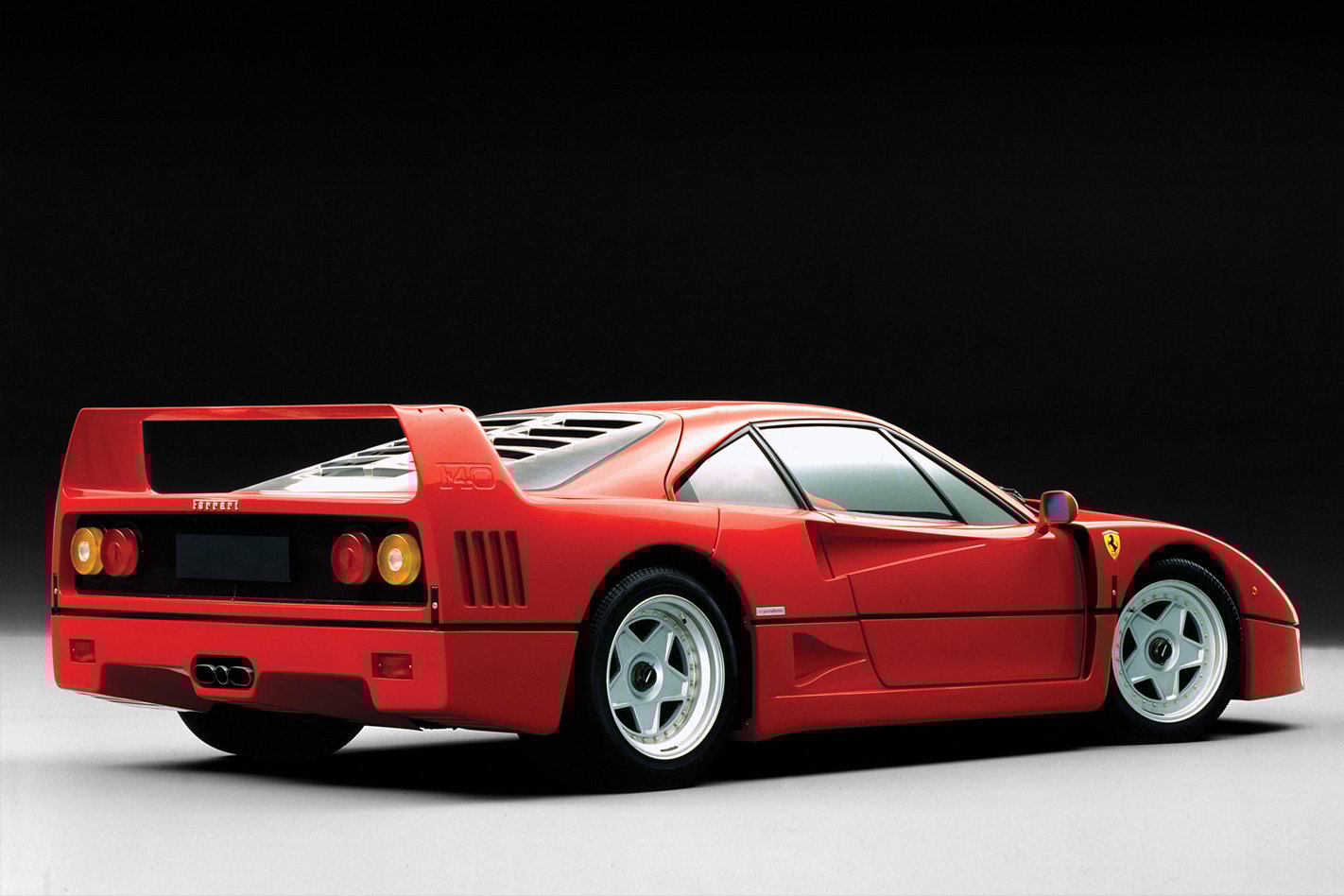
The F40’s cabin was made as Spartan as possible on purpose, with Ferrari returning fire at critics who bemoaned increasing levels of luxury from Maranello
Three things that the F40 pioneered
1. It was the first car fitted with Pirelli’s P Zero tyres, debuting a kevlar construction 2. The F40 was the first road-legal car capable of smashing through the 200mp/h barrier 3. Composite body panels are common now, but had never been put into production in 1987
If you need a clue as to why large Sport Utility Vehicles are a key battleground among manufacturers, look at the sheer number of them on the market.
Despite trailing small and medium SUVs for sales, the large SUV category bustles with more models than the former groups.
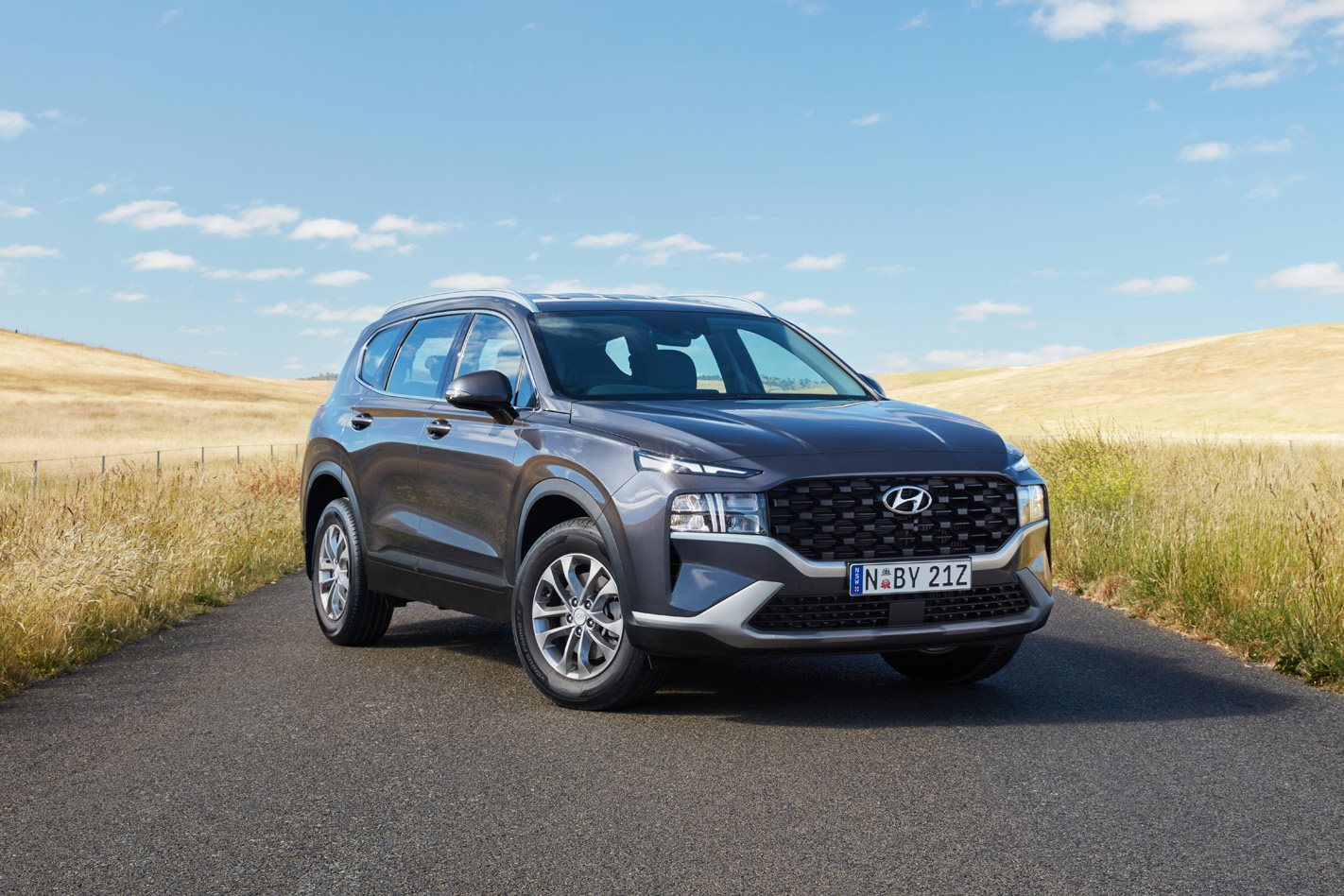
Enter the seven-seat Hyundai Santa Fe. Three years after the fourth-generation model debuted in 2018, the Korean brand decided a superficial nip and tuck was not enough to catapult its large SUV contender to the sales lead.
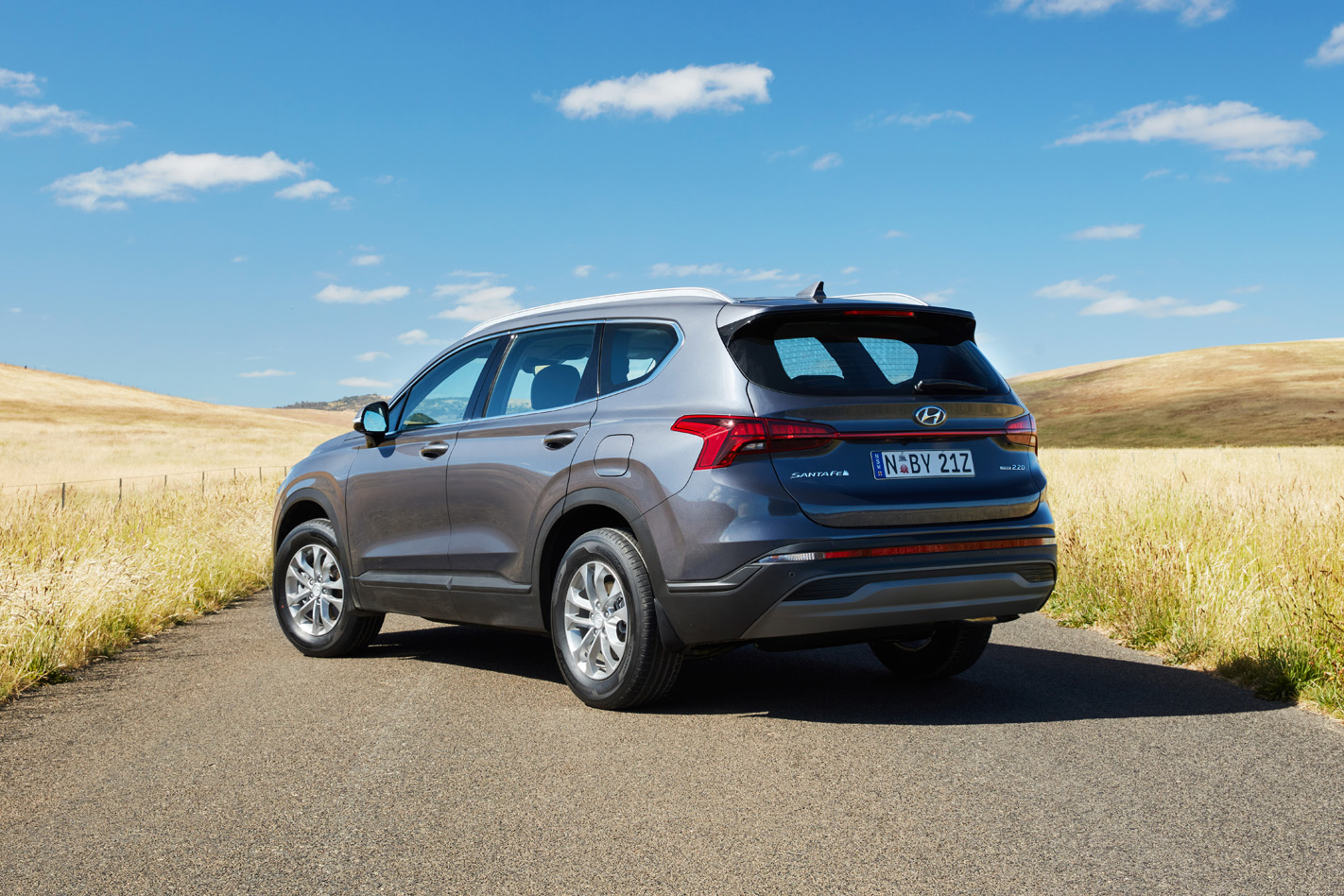
Our test subject is the base Santa Fe equipped with a 2.2-litre four-cylinder diesel engine. It also replaces the eight-speed automatic behind the petrol engine with an eight-speed dual-clutch transmission for faster gear shifting and better fuel economy.
Although a diesel engine attracts a $2500 premium, it remains the only way to option all-wheel drive. All right-hand-drive V6 versions are front-wheel drive.
That means you should be able to extract around 1000km from a 67-litre tank of diesel that should cost about $95-$100 to fill up, depending on bowser prices. Service intervals are every 12 months for the first five years at $399 for each visit. Meanwhile, the Santa Fe comes with a five-year unlimited-kilometre warranty – which is standard among rivals.
The specifications list is relatively basic for something that costs $48,200 before on roads and comes in at just under $50,000 driveaway. For instance, the base Santa Fe misses out on gearshift paddles and Terrain Mode selector. They are instead available on the Active trim that costs another $3600.

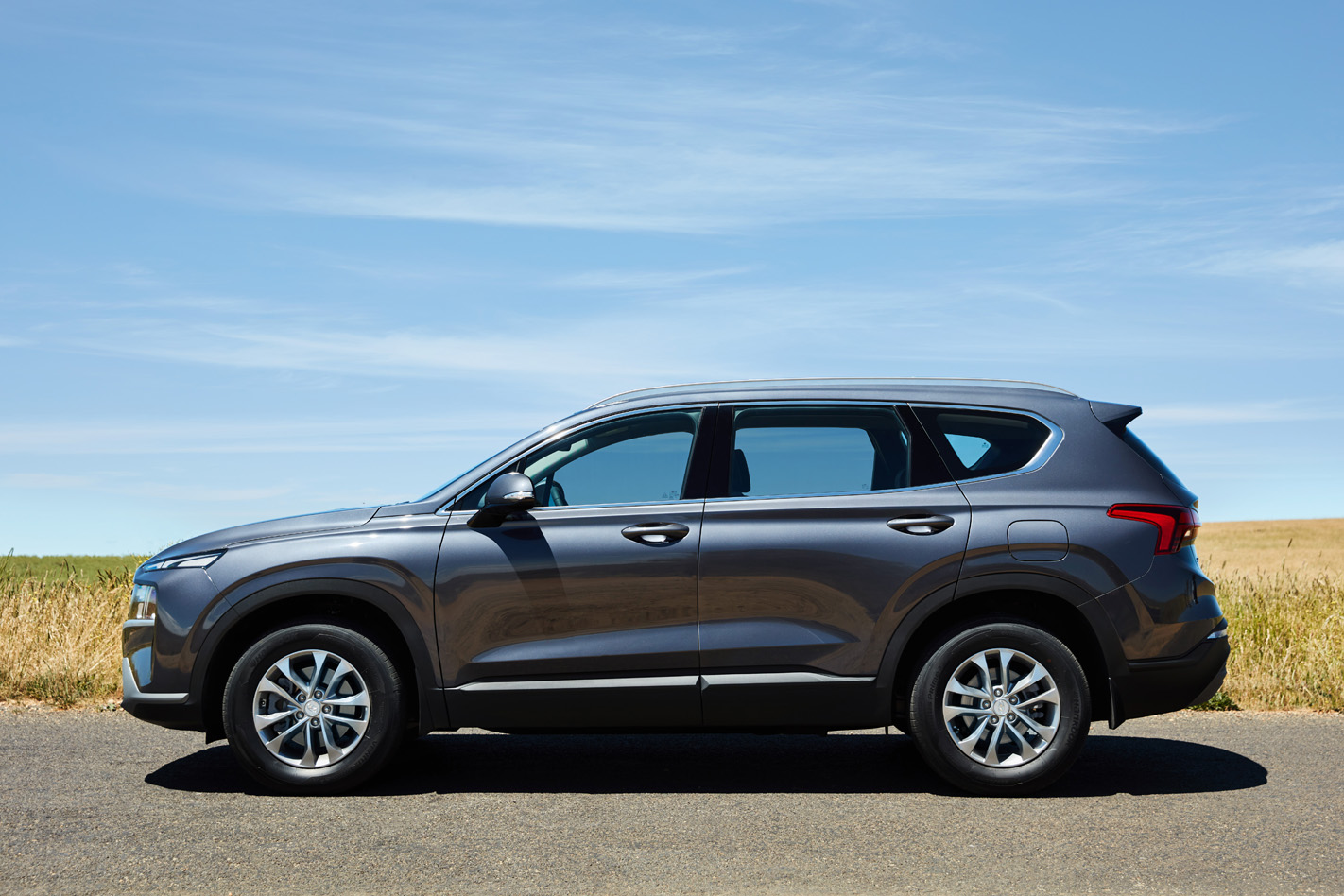
And if you like going off-road, then you might want to know Santa Fe has a paltry 17.9-degree approach and 19.3-degree departure angle. And specific off-road technology includes 4WD lock, hill descent control, hill start assist control and downhill brake control.
Of course, the Santa Fe is more suited to an urban jungle than a real one and to that end it features an electronic parking brake, two-stage rear wiper and switchgear for audio, phone and cruise control functions on the steering wheel. Fancy rain-sensing wipers, push-button start and driver seat memory are instead saved for the Active trim.
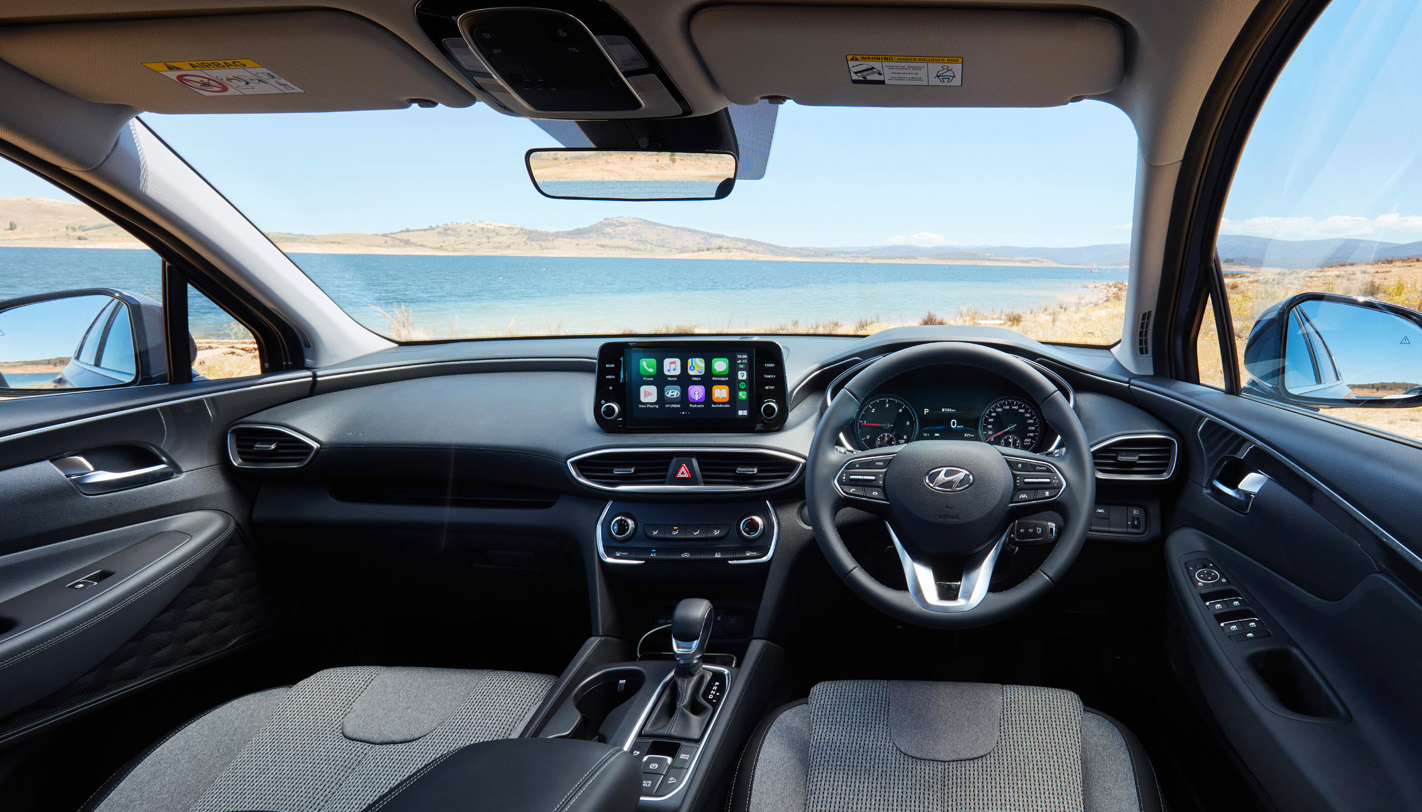
It’s the same situation inside, where the base Santa Fe misses out on a futuristic-looking new centre console and updated gear-selection buttons, settling for a more traditional gear lever arrangement and drab looking panel for the single-zone climate control. Base and Active trims also score an eight-inch centre touchscreen instead of the 10.25-inch version on higher-spec versions.
Smartphone mirroring and wireless charging, a leather steering wheel and gear lever, one-touch window functionality, heated side mirrors and keyless central locking are all standard, though.
While this list of standard mod-cons compares well with a segment leader like the Toyota Kluger, these SUVs are purpose-built to swallow seven people in relative comfort. Hyundai claims the new larger body has unlocked more interior room, offering improved knee room in the second row for full-sized adults.
Of course, there’s the benefit of being able to recline the second-row seats or slide them forwards to give third-row passengers extra knee room. However, the third row would only suit children or adults who are only travelling a short distance.
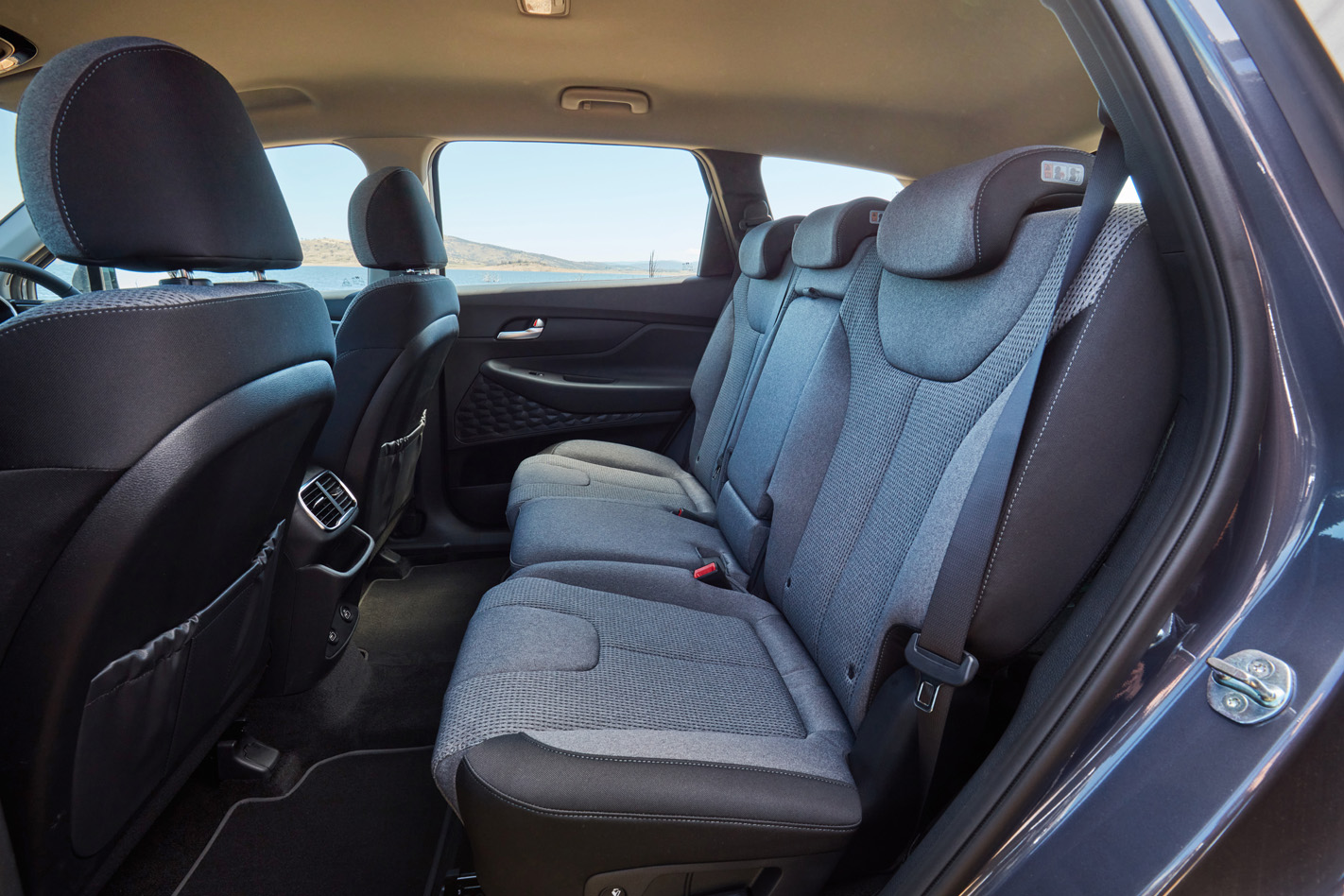
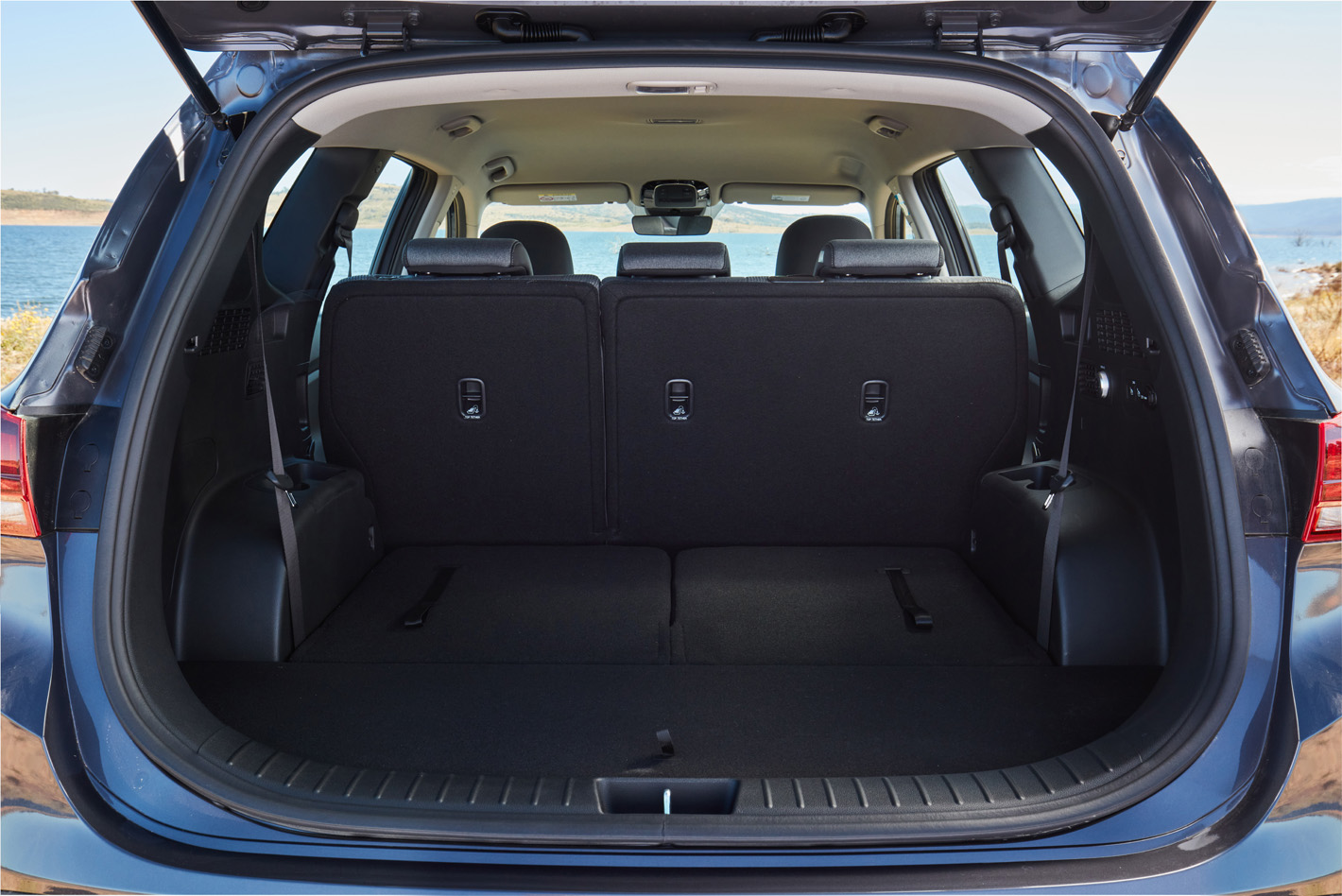
Minimum cargo space with all three rows up is at 130L. That expands to 571L when the third row is folded flat and represents a 24 litre increase on the old Santa Fe. Fold the second row down at Hyundai says the boot can hold up to 1649L worth of cargo, or 25 litres more than before.
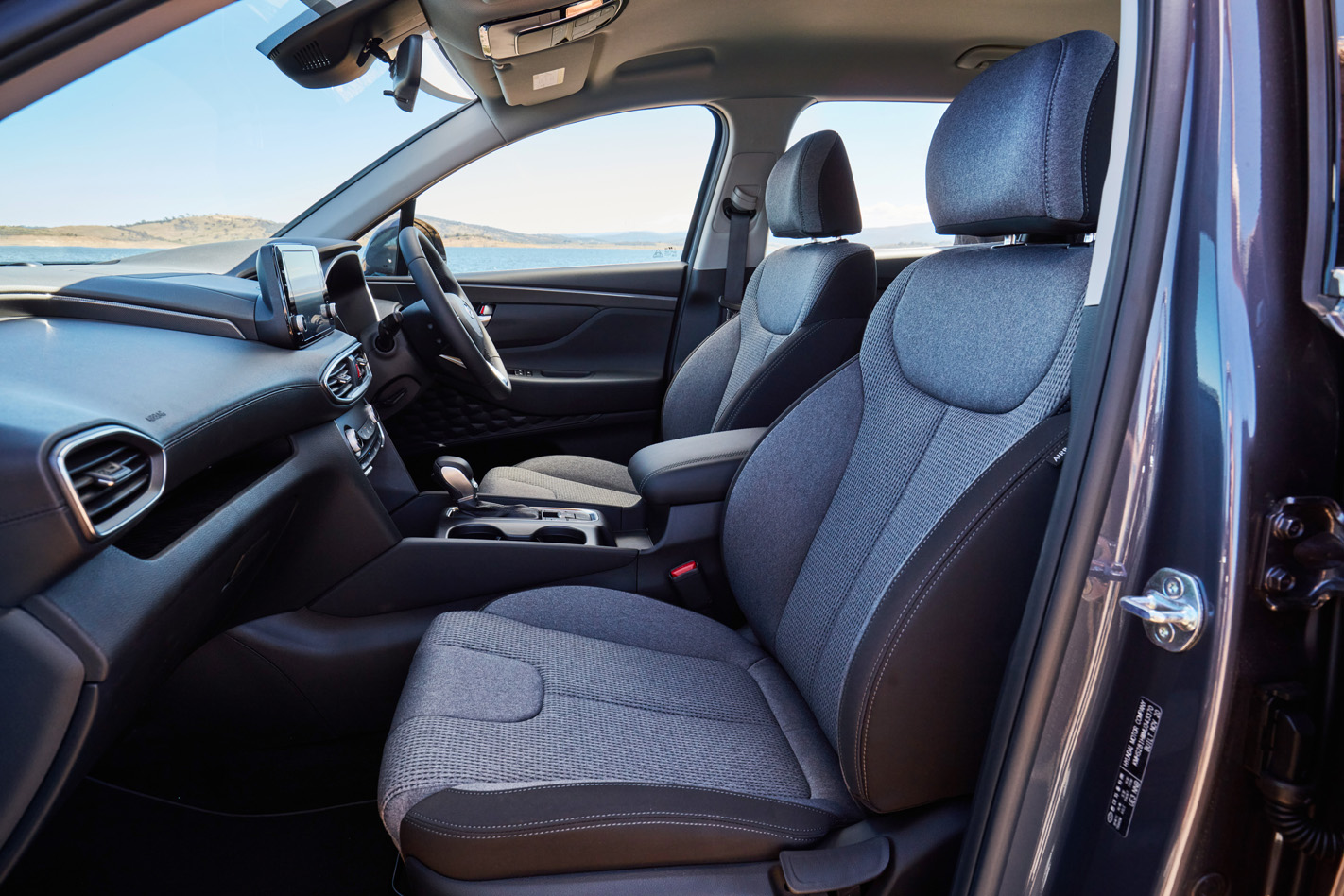
The first thing you notice after sitting inside is the excellent front seats with perforated inserts. Despite lacking power adjustment or any fancy massage function, the base-spec front seats are comfortable, supportive and cushioning, often leaving you rejuvenated after time in them. It’s the same deal for the second row.
They suit the cabin design that remains thoughtfully designed and familiar in layout for a Hyundai, placing the door handles up high and switches where you expect to find them. Forward visibility is excellent, with designers trying hard to open up the blind spot often behind a thick A-pillar base, wing mirror and ill-placed tweeter.
All up, a kerb weight of 1820kg makes the Santa Fe diesel 85kg heavier than the petrol variant. However, on the road, it barely feels laboured by its extra heft. The combination of grip, low-down torque and rapid gear shifts launches the Santa Fe with ease, while tight gear spacing bolsters acceleration up to highway speeds.
Hyundai has also tuned an excellent ride and handling package for the Santa Fe. It delivers a supple ride around town on comically large-sidewall Hankook tyres without hampering positive steering response, so it’s a nice thing to dart through traffic and take corners in.
It’s equally as comfortable out on the highway. The cabin is insulated well enough to allow easy conversation with passengers and the suspension wafts over undulations while remaining settled. The safety systems intervene with a Hyundai-typical soft touch, as well.
While we didn’t get a chance to test either its all-wheel-drive system or towing ability – rated at 2500kg braked or 750kg unbraked, while its tow ball download rating has doubled to 200kg – they represent at least a nominal extension of its talents.
You’d struggle to match the Santa Fe among rivals at this price, with the Kluger lacking a diesel option and a lot of the Santa Fe’s modern conveniences, while the petrol Skoda Kodiaq 132 TSI is down on torque and power compared to the Santa Fe diesel.
One exception, however, is the Mazda CX-8. At $46,990 for the diesel all-wheel-drive Sport, it undercuts the base Santa Fe by at least $1000 with a more comprehensive equipment list with stuff like the digital radio or three-zone climate control instead of a wireless charging pad.
But for a fresh statement in the crowded SUV category, the Hyundai Santa Fe stands out for good reason.
Specifications: Hyundai Santa Fe
Body: 5-door, 7-seat SUV Drive: all-wheel drive Engine: 2151cc 4-cyl, 16v, turbo Power: 148kW @ 3800rpm Torque: 440Nm @ 1750-2750rpm 0-100km/h: N/A Fuel consumption: 6.1L/100km (combined cycle) Weight: 1820kg Power/weight: 81kW/tonne Transmission: 8-speed dual-clutch transmission Suspension: struts, anti-roll bar, springs, dampers (f); multi-links, anti-roll bar, springs, dampers (r) L/W/H: 4785/1900/1685mm Wheelbase: 2765mm Tracks: 1651/1661mm Brakes: 325mm ventilated discs, sliding caliper (f); 305mm solid discs, sliding caliper (r) Tyres: 235/65 R17 108V (f/r) Wheels: 17 x 7.0-inch (f/r) Price: $48,200
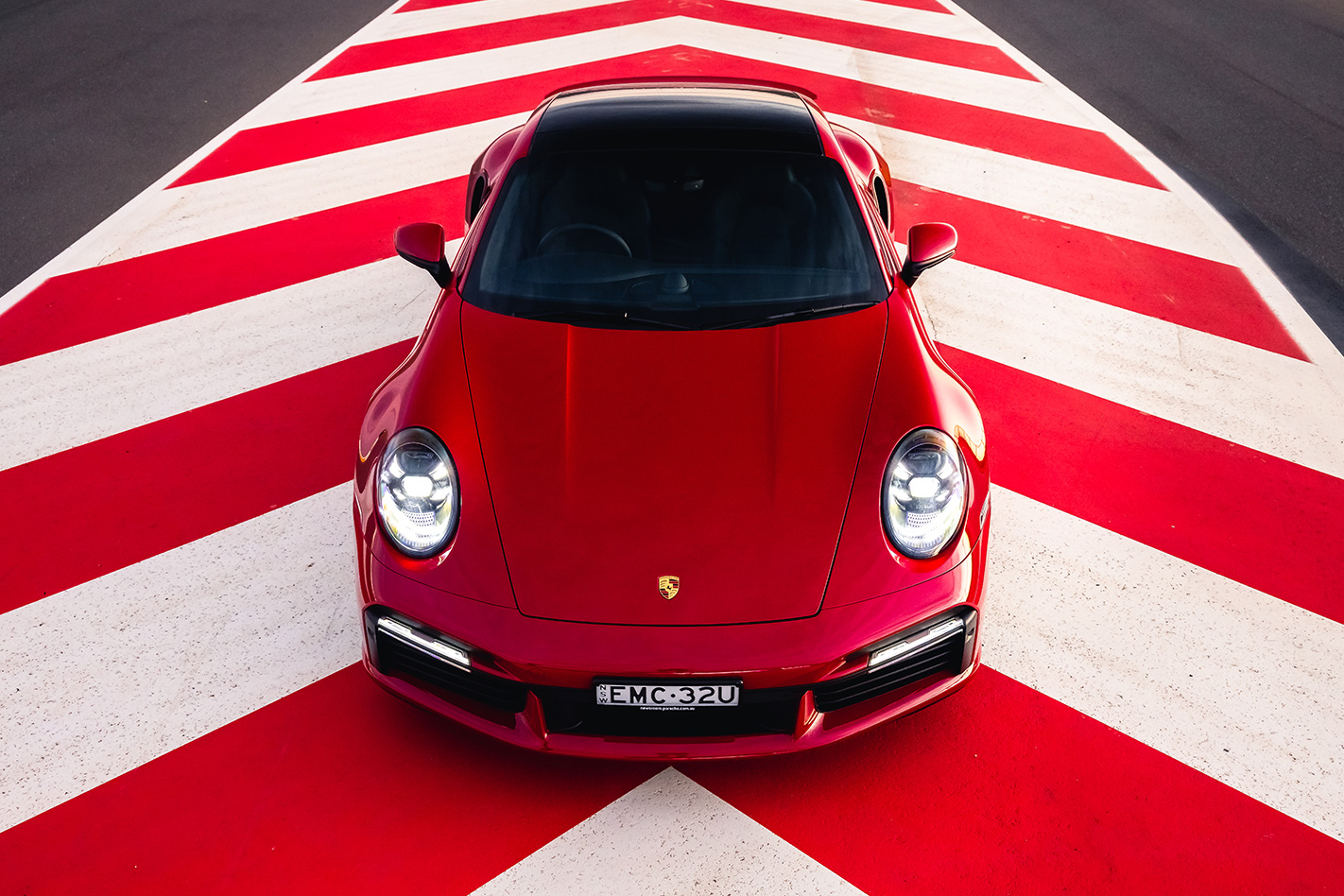
The subtle shift in character is mirrored in Porsche’s choice of launch venue. Australian 911 Turbo launches used to happen in the Northern Territory, but while the introduction of outback speed limits has as much to do with the shift to a racetrack as anything, it does put the cars under greater dynamic scrutiny.
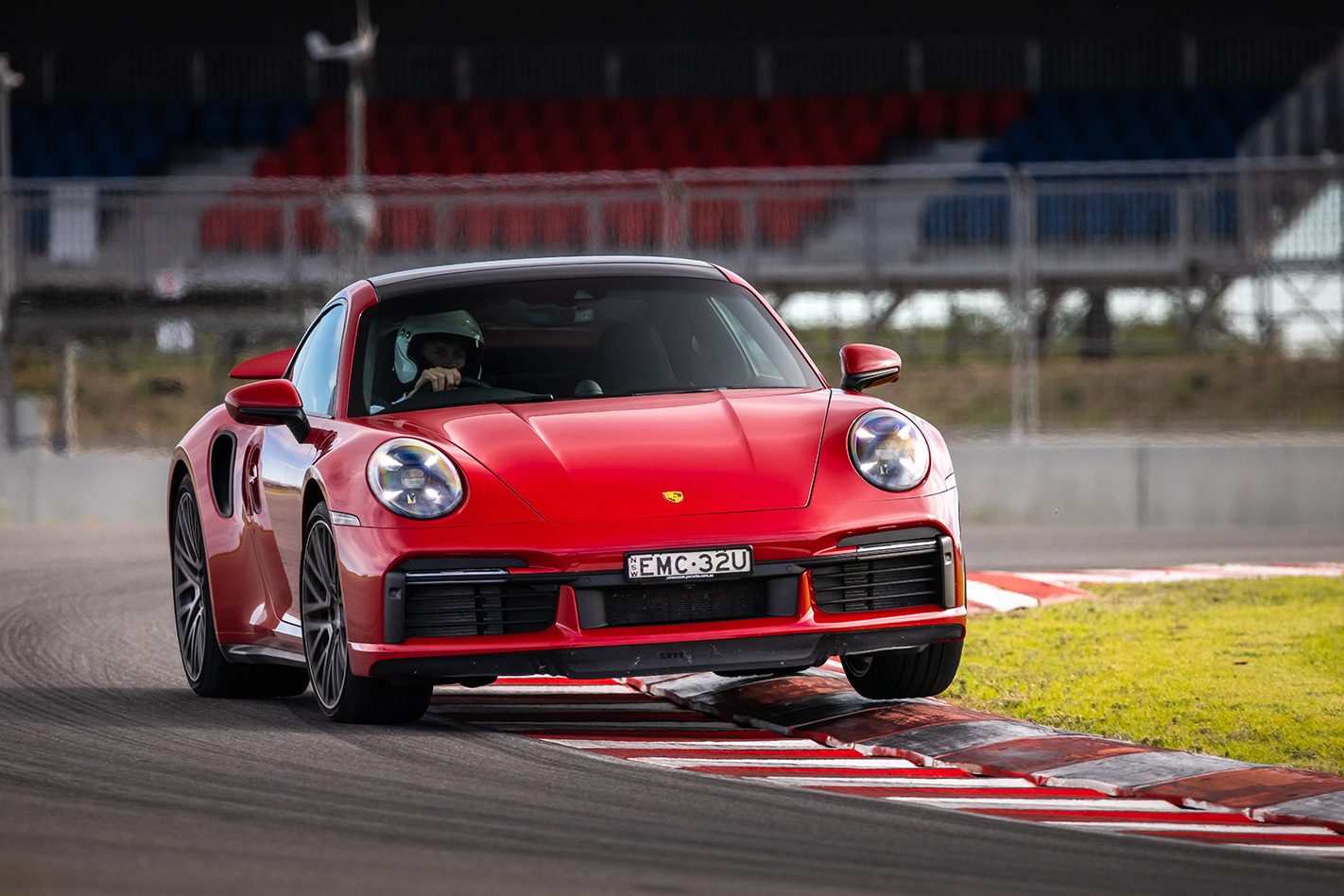
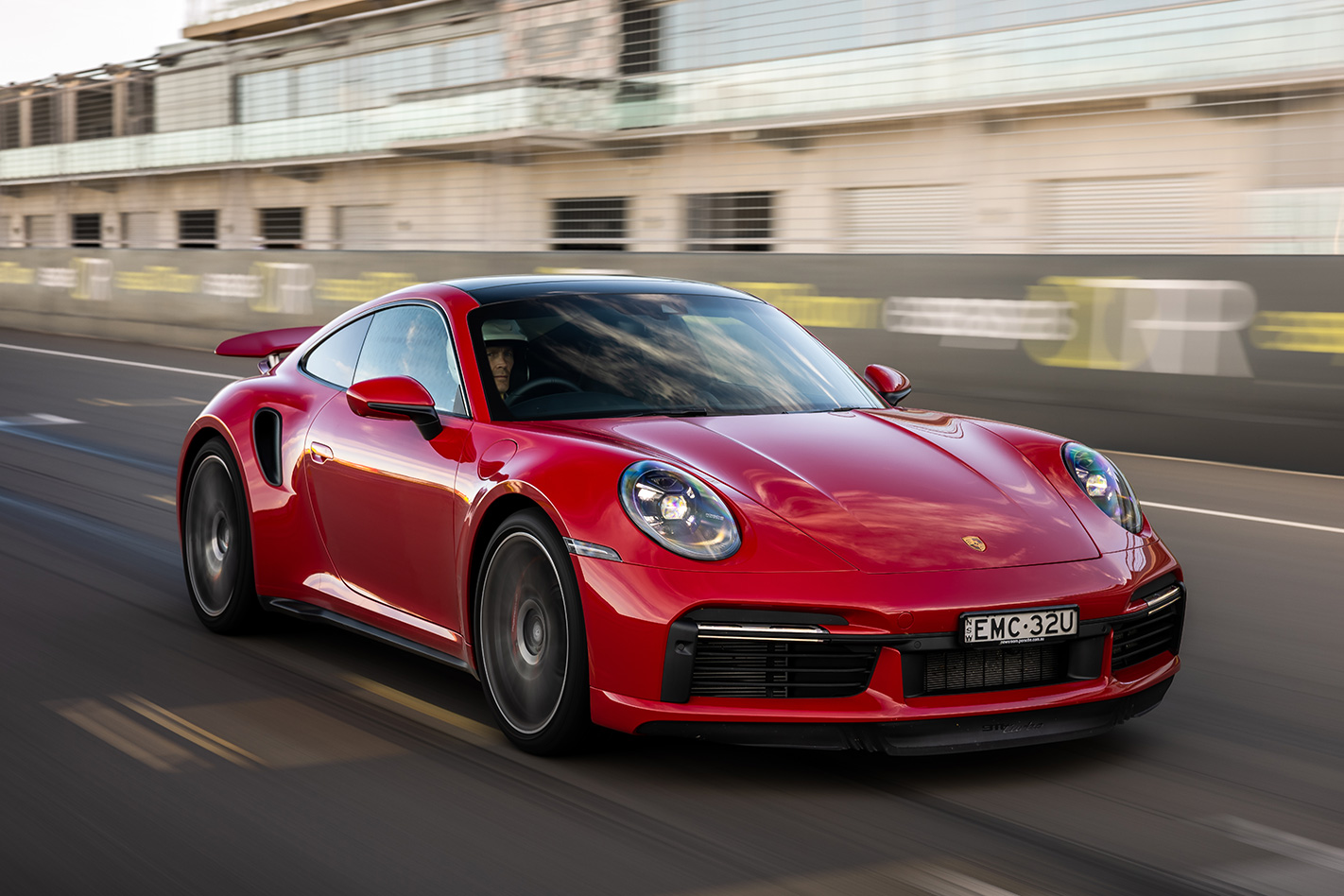
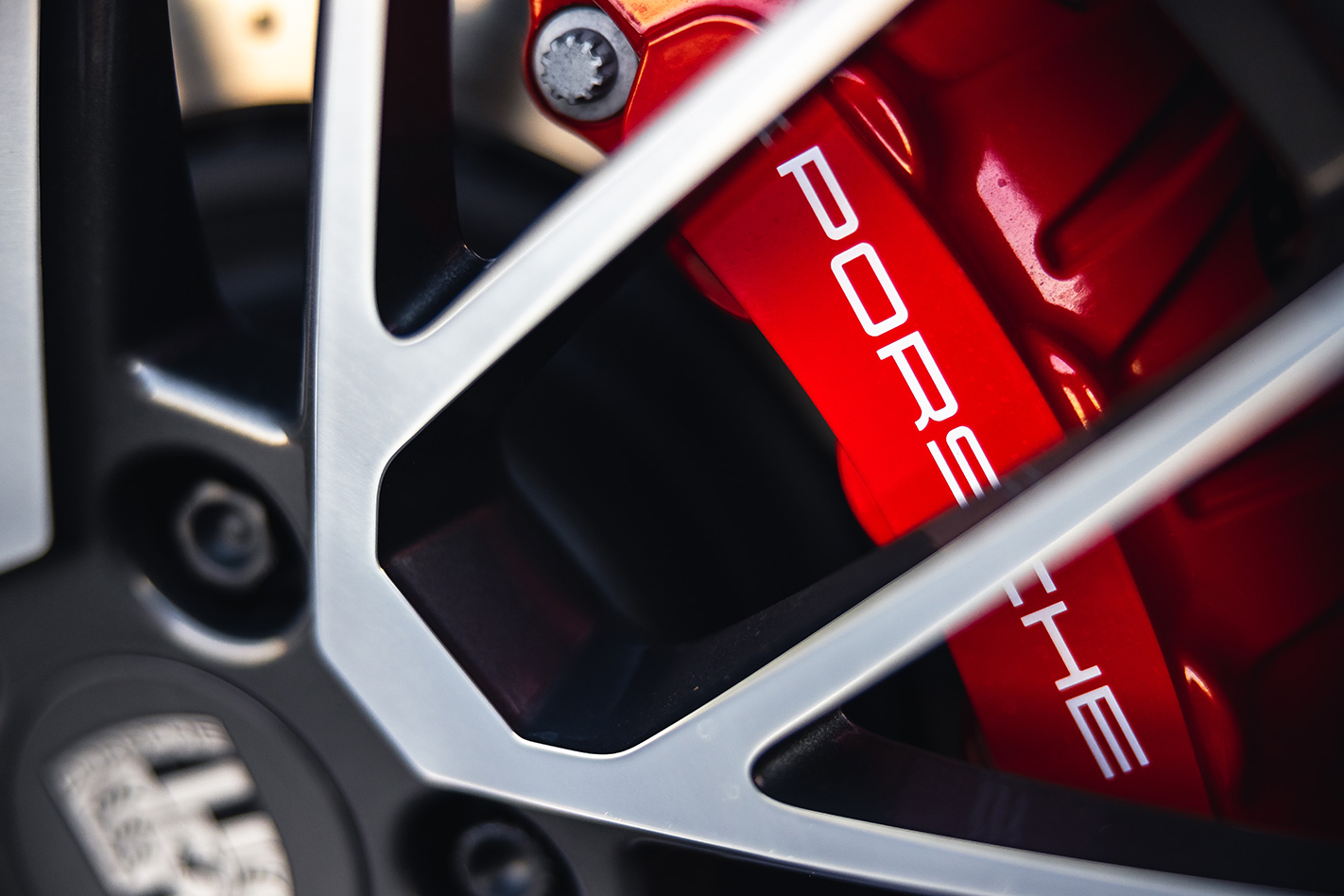
Consider that the 911 Turbo Coupe now starts from $396,500 before options and on-roads and your driveaway price is likely to be north of $500,000. Then again, there is virtually nothing to criticise, in a circuit environment at least.
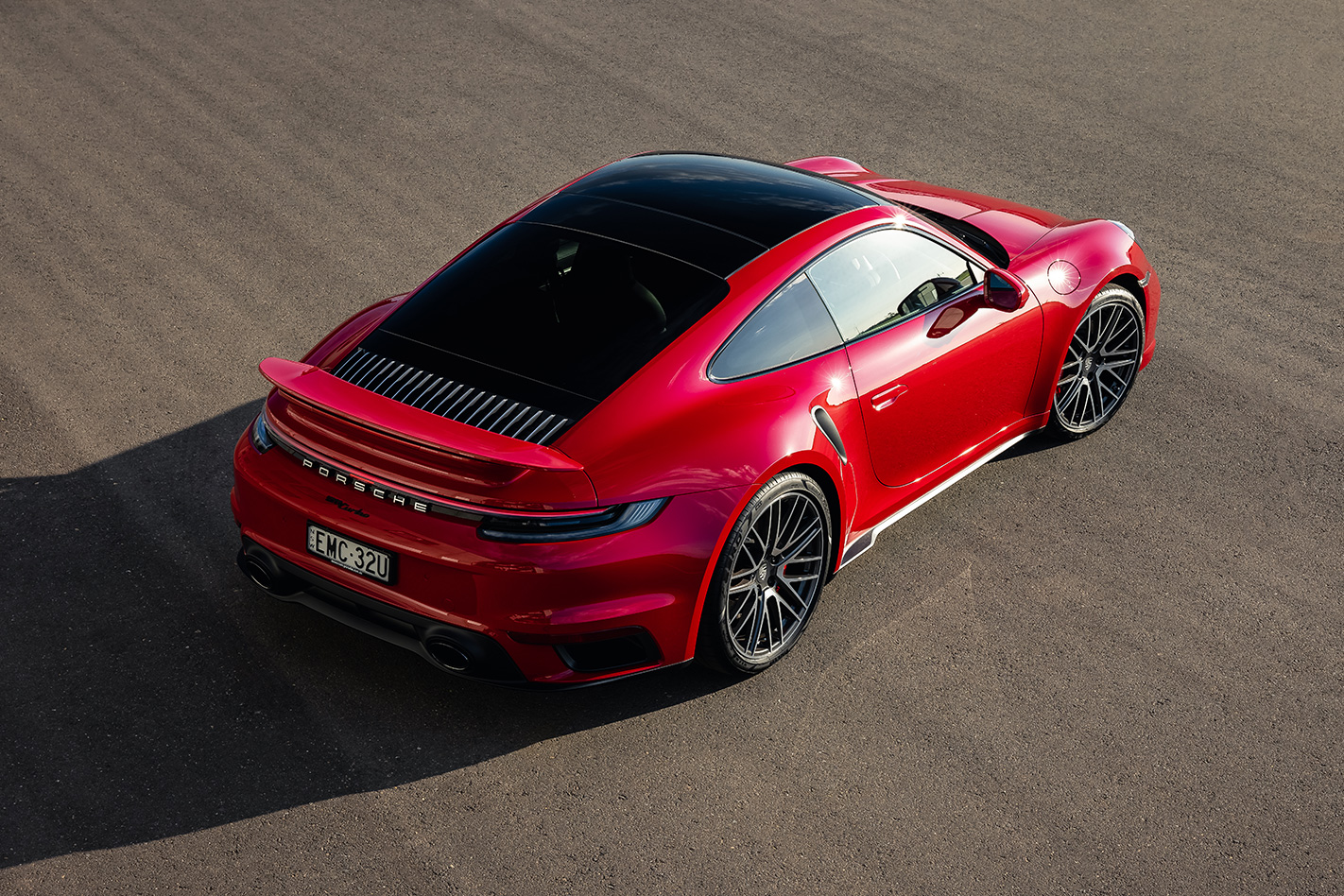
Nevertheless, the fact that this ‘luxury’, grand touring 911 can so comprehensively tear apart a racetrack is a remarkable achievement.Verdict: 9.5/10Likes: ludicrous performance; brilliant driving engagement; staminaDislikes: heavy; massive fuel thirst on track; options pricingSpecifications Body: 2-door, 2+2-seat coupe Drive: all-wheel Engine: 3745cc flat-6cyl, DOHC, 24v, twin-turbo Bore/stroke: 102.0 x 76.4mm Compression: 8.7:1 Power: 427kW @ 6500rpm Torque: 750Nm @ 2250-4500rpm 0-100km/h: 2.8sec (tested) Top Speed: 320km/h (claimed) Weight: 1640kg Power/weight: 260kW/tonne Transmission: 8-speed dual-clutch Suspension: struts, coil springs, adaptive dampers, anti-roll bar (f); multi-links, steel springs, adaptive dampers, anti-roll bar (r) L/W/H: 4535/1900/1303mm Wheelbase: 2450mm Tracks: 1583/1600mm (f/r) Steering: electrically assisted rack-and-pinion; rear-wheel steering Brakes: 408mm ventilated/drilled discs, 6-piston calipers (f); 380mm ventilated/drilled discs, 4-piston calipers (r) Wheels: 20 x 9.0-inch (f); 21 x 11.5-inch (r) Tyres: 255/35 ZR20 (f); 315/30 ZR21 (r) Price: $396,500
The 2021 Porsche 992 911 GT3 is shaping up to be the fiercest, most performance-oriented model ever to bear the prolific moniker.
First, we heard that it was going to be fitted with double-wishbone front suspension – a first for any road-going 911.
Then we found out about the absurd time it had achieved at the hallowed Nürburgring-Nordschleife – 6:59.927 – was no less than 12 seconds quicker than the car it replaces.
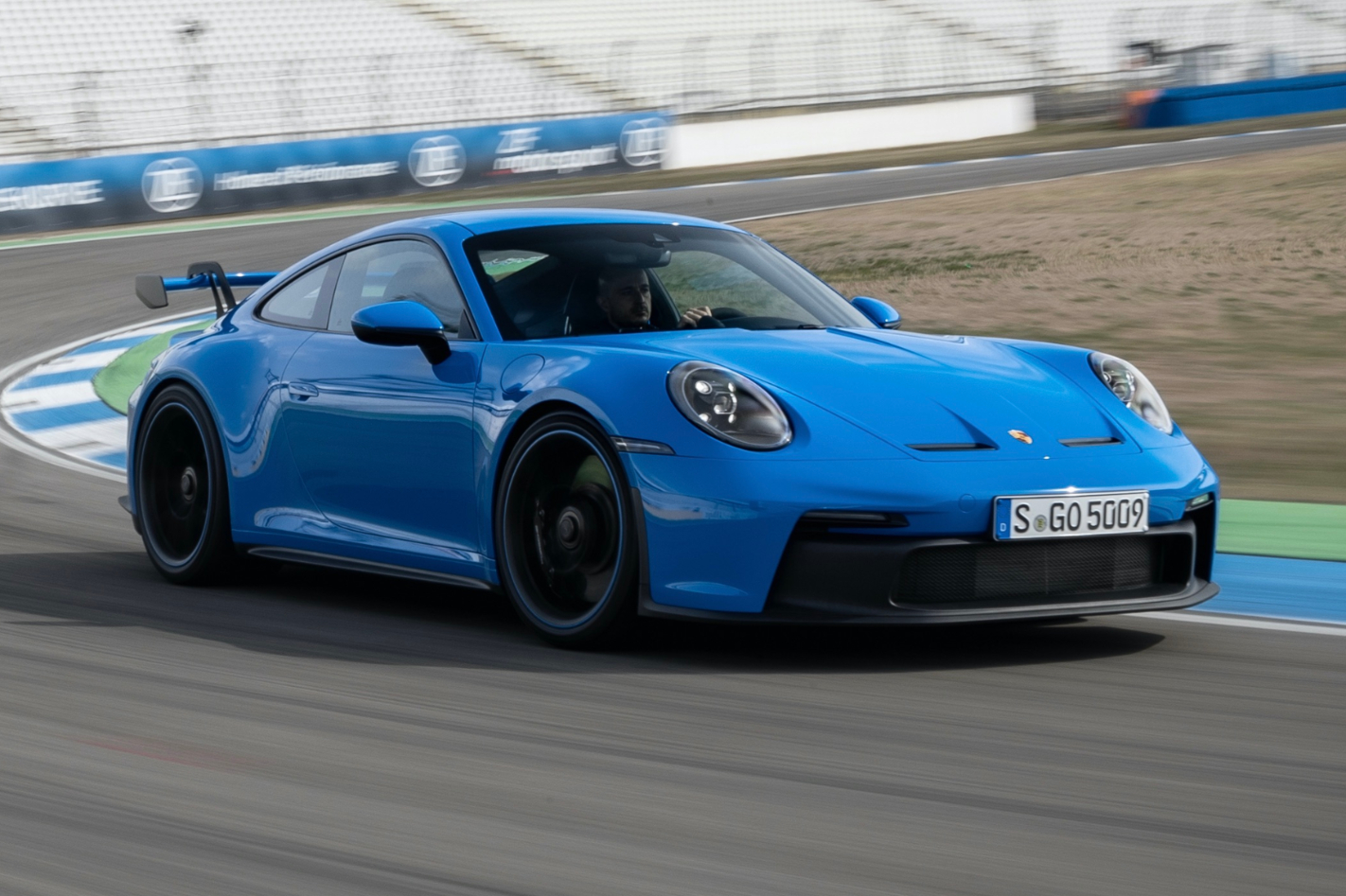
Now, Porsche is telling us that the screaming naturally-aspirated 4.0-litre six-cylinder boxer engine found in the back of the GT3, which produces a potent 375kW and 470Nm, was driven non-stop at a speed of 300km/h for 5000 kilometres.
That is one almighty shakedown for an engine, but the absurd-sounding test, which took place at the Nardò Ring in Italy, is just one of the reasons why Porsche GT products are in such perennial demand.
It also probably makes sense for the Stuttgart firm to put the 9000rpm flat-six belter through more than a few paces, considering GT3 engines of old have tended to suffer from some mechanical infidelity in extreme conditions.
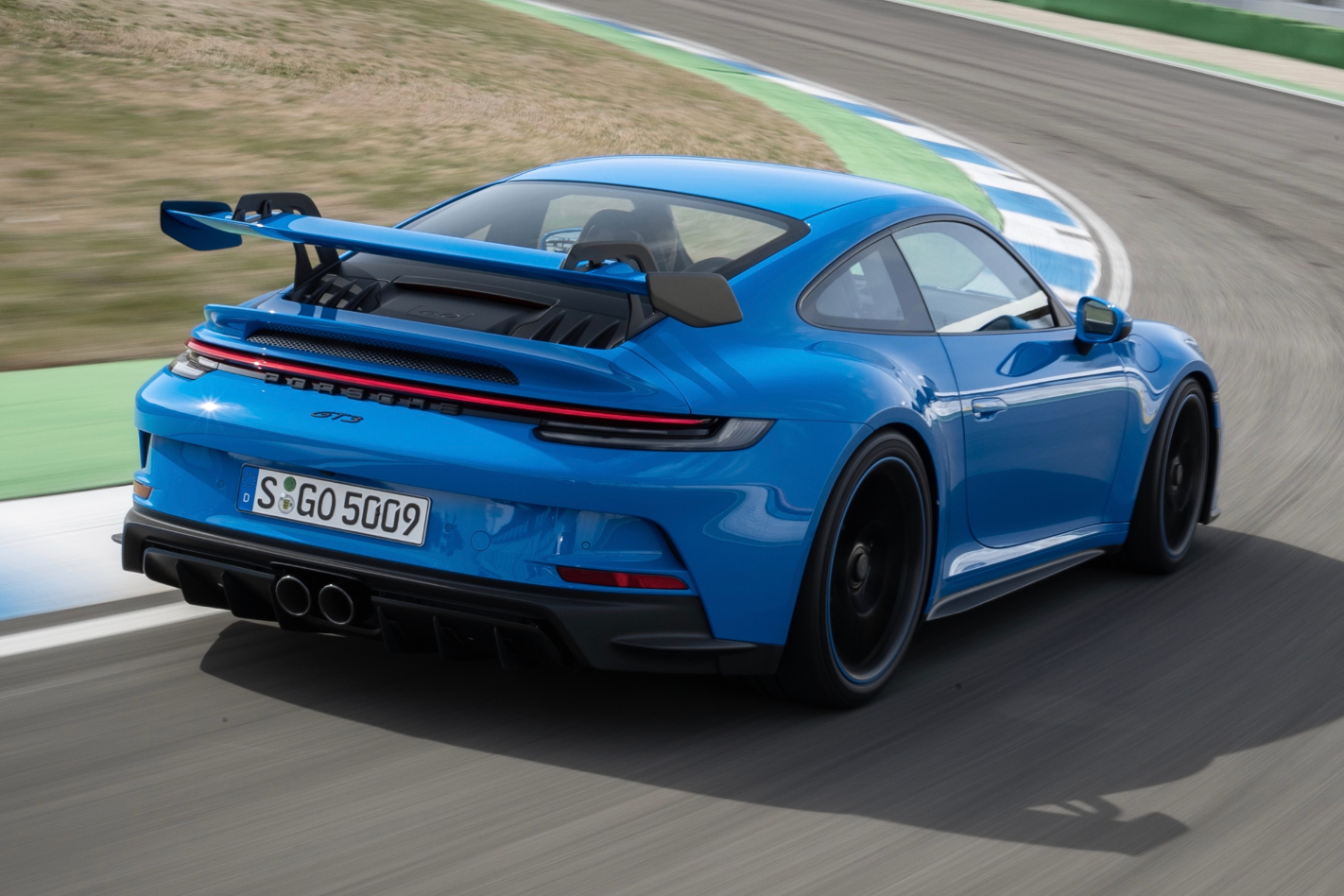
Most notably, the N/A 3.8-litre boxer six found in the 991.1 GT3 had a penchant for catching fire, and the problem became so bad that Porsche had to issue a global recall for every example they had ever produced.
Replacing every single engine you’ve ever made for a sports car that’s meant to be bombproof on track is a costly exercise, so Porsche’s latest gruelling test does seem sensible.
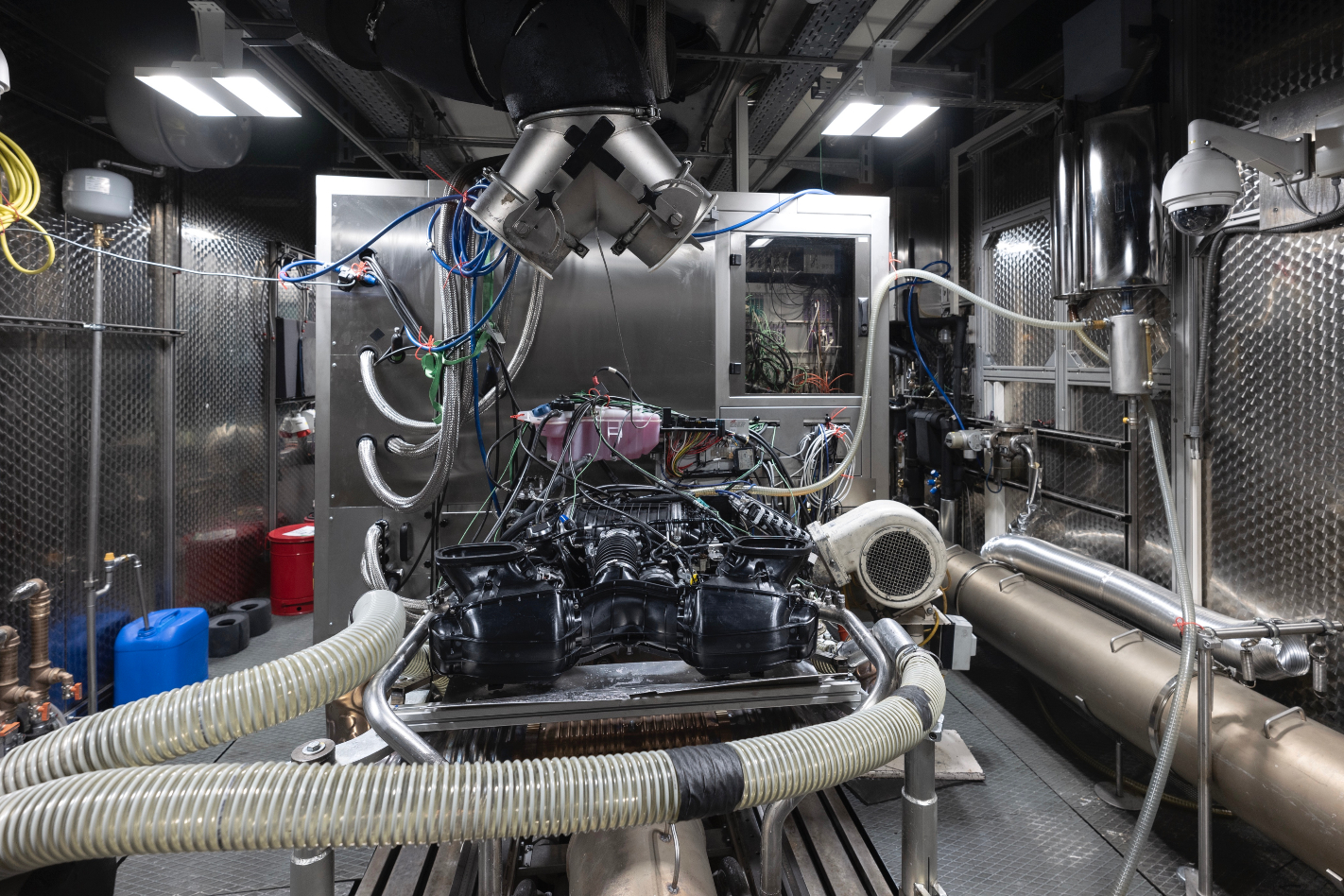
It’s also a mighty feat in its own right, especially considering the engine has a bunch of technology ripped straight from the 911 GT3 R car.
These mechanical features include; VarioCam technology, wide connecting-rod bearings, plasma-coated cylinder liners, individual throttle bodies and solid lifters in the valve train.
And it turns out the Nardò test wasn’t even the engine’s most exhaustive test.
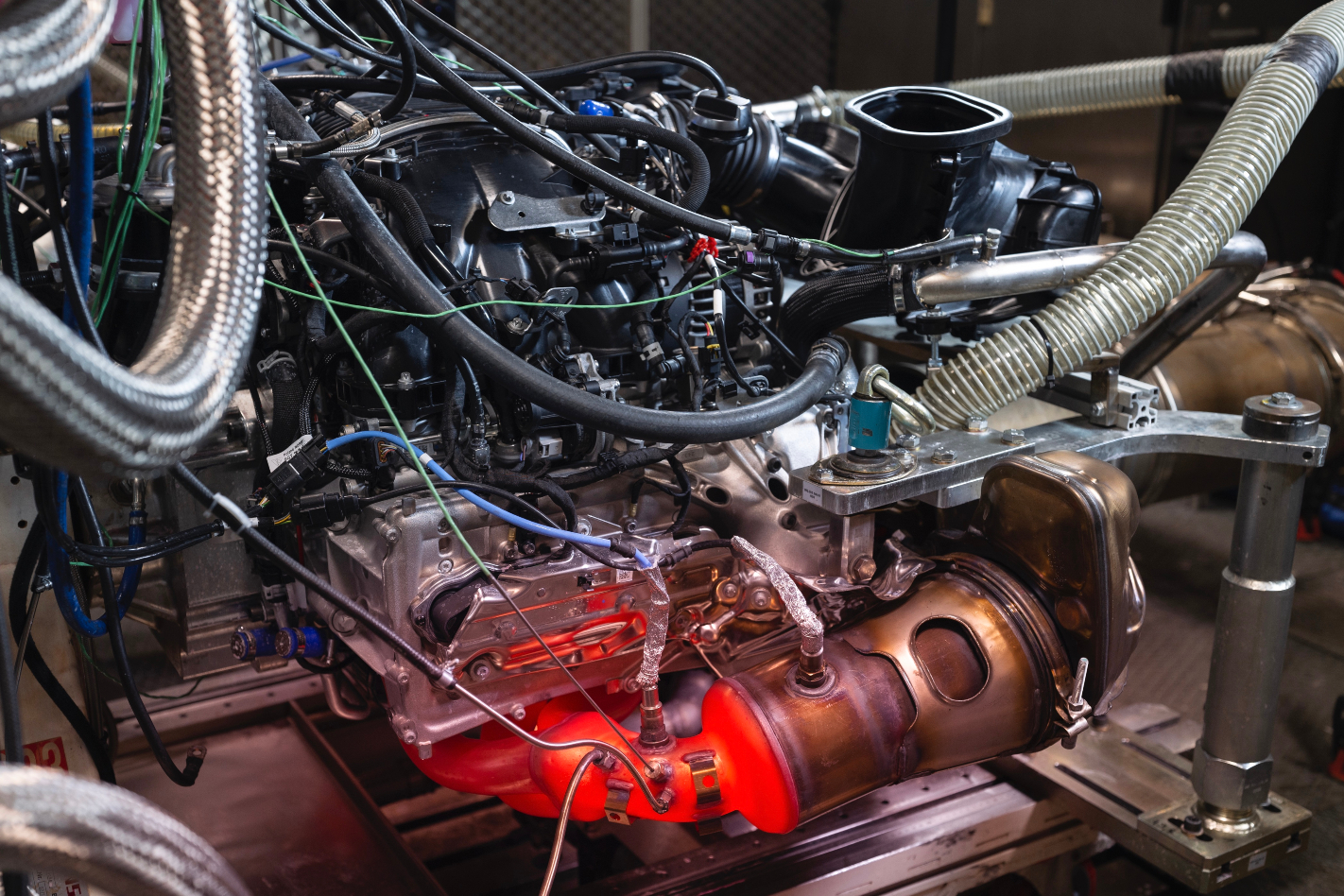
“In total, the engine in the new GT3 ran for more than 22,000 hours on the test rig. During testing, we repeatedly simulated typical circuit profiles and ran the engine at full throttle for a very high proportion of the time,” Thomas Mader, project manager of GT road car engines, explained.
The 2021 Porsche 992 911 GT3 is expected to go on sale in Australian showrooms from the second half of 2021 priced from $369,700 before on-road costs.
Down Under, the GT3 will additionally be equipped with metallic paint, tinted LED headlights including PDLS Plus, automatically dimming mirrors including rain sensor, ParkAssist (rear only), reversing camera, lifting system for front axle, tyre sealant, electric air compressor and digital radio as standard.
MORE: 911 stories MORE: All Porsche stories
What is the Mercedes Benz S450 L?
This is the long-wheelbase version of the new, seventh-generation Mercedes-Benz S-Class luxury sedan, which, like its predecessors, is arguably the most advanced passenger car in the world.
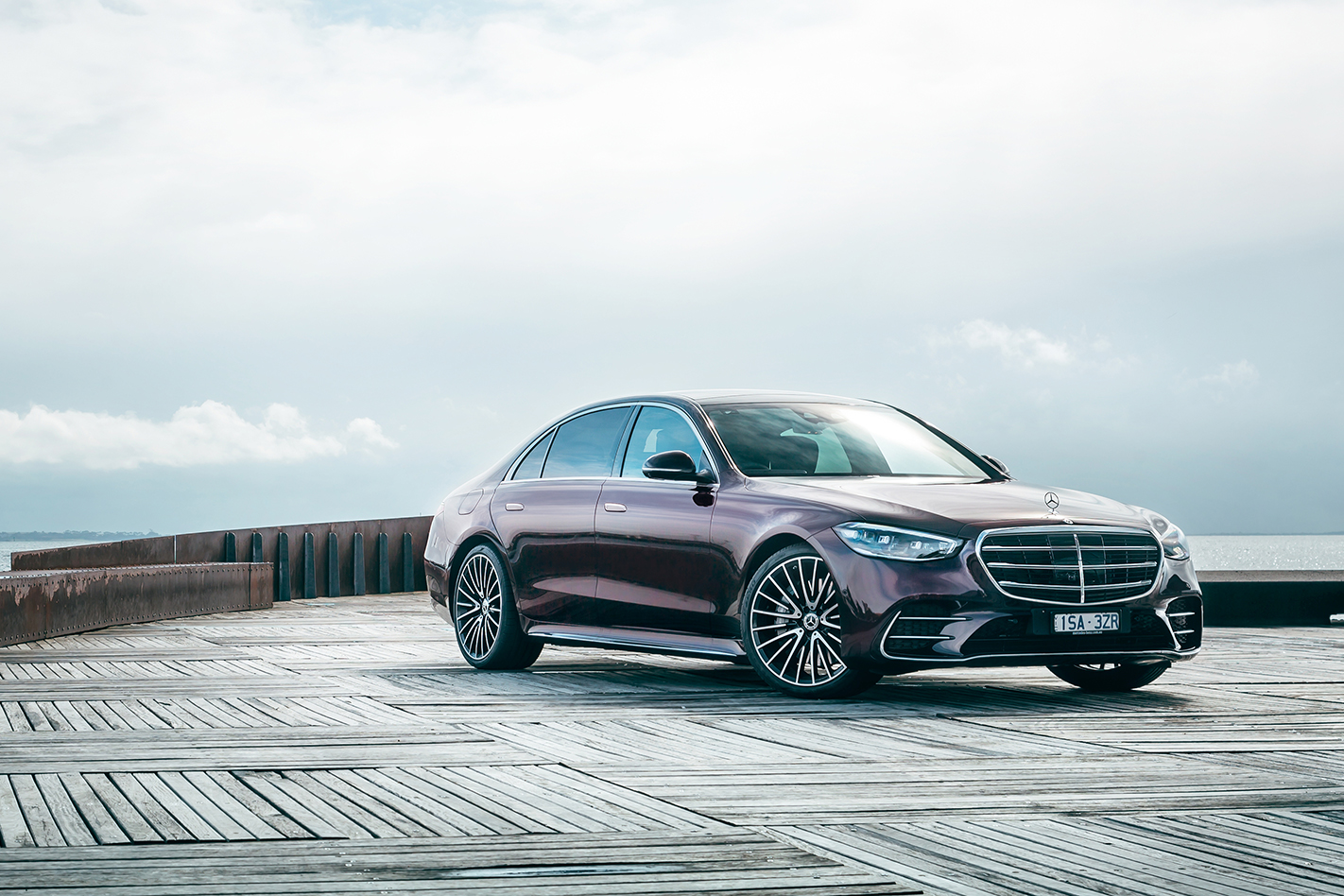
The S450 L has a 3.2m wheelbase, 110mm longer than the standard-length S450, and uses the same 3.0-litre inline six-cylinder turbocharged petrol engine that will remain the only powertrain available in the Australian S-Class range until the V8 S580 arrives later in 2021. Mercedes-Benz Australia has decided not to import diesel-powered versions due to projected low sales here.
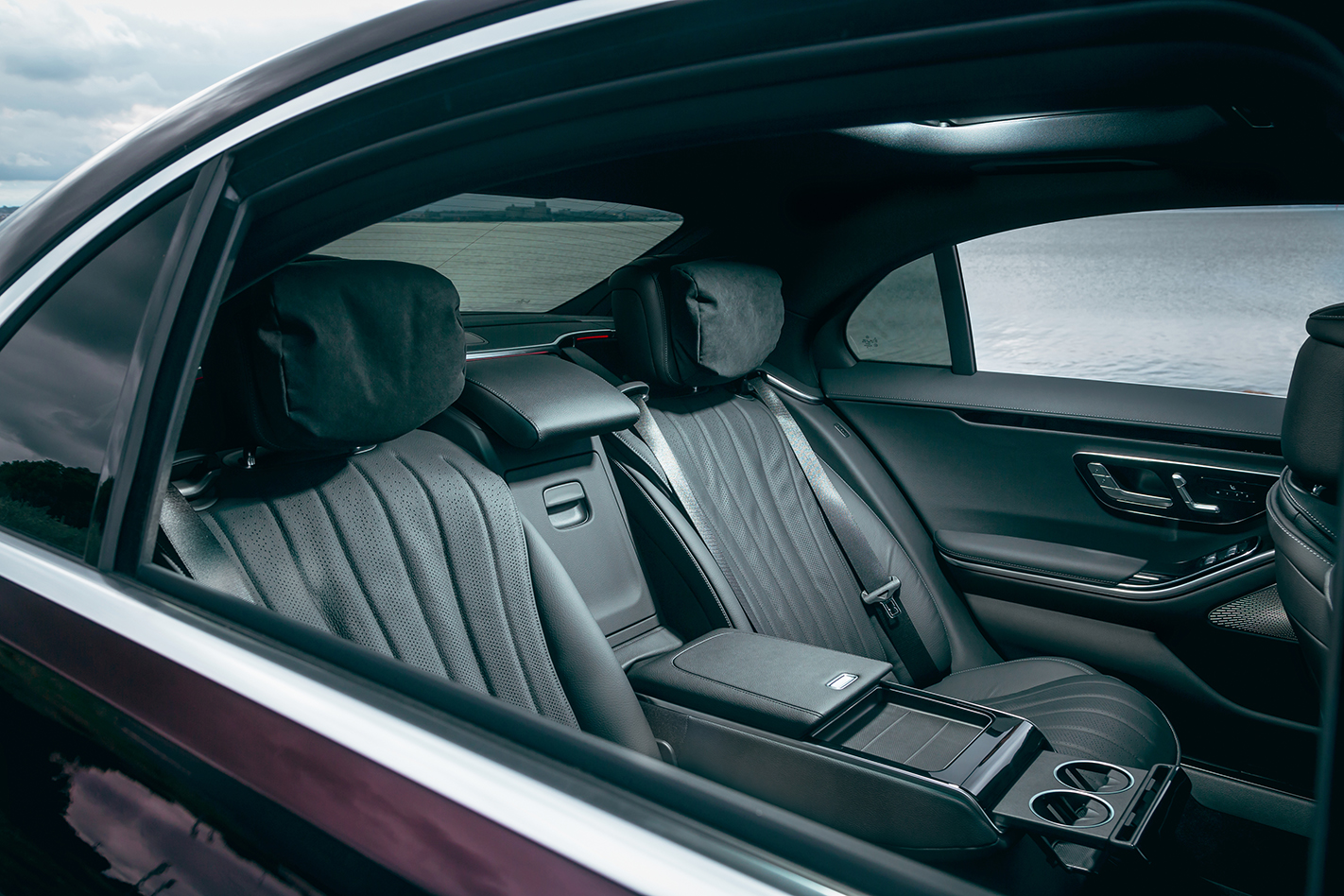
The roomier S450 L brings additional standard accoutrements for rear-seat passengers including electrically adjustable rear seats with memory function, automatic climate control and world-first rear forward-facing airbags.
Other new technologies standard in both versions include the second-generation MBUX (Mercedes-Benz User eXperience) infotainment system that provides personalised functions for front- and rear-seat passengers.
The S450 L we’re driving is particularly well-equipped, with optional extras including black Nappa leather upholstery ($5000), AMG Line package ($6500), Energizing Package that includes massage seats ($11,000), Rear Entertainment Package ($8700), MBUX Augmented Reality Head-Up Display ($2900), all of which takes the price to $299,000 before on roads.
What is the Mercedes-Benz S450 L like to live with?
Such is its interior space and comfort, this section could be called ‘what the Mercedes Benz S450 L is like to live in’!
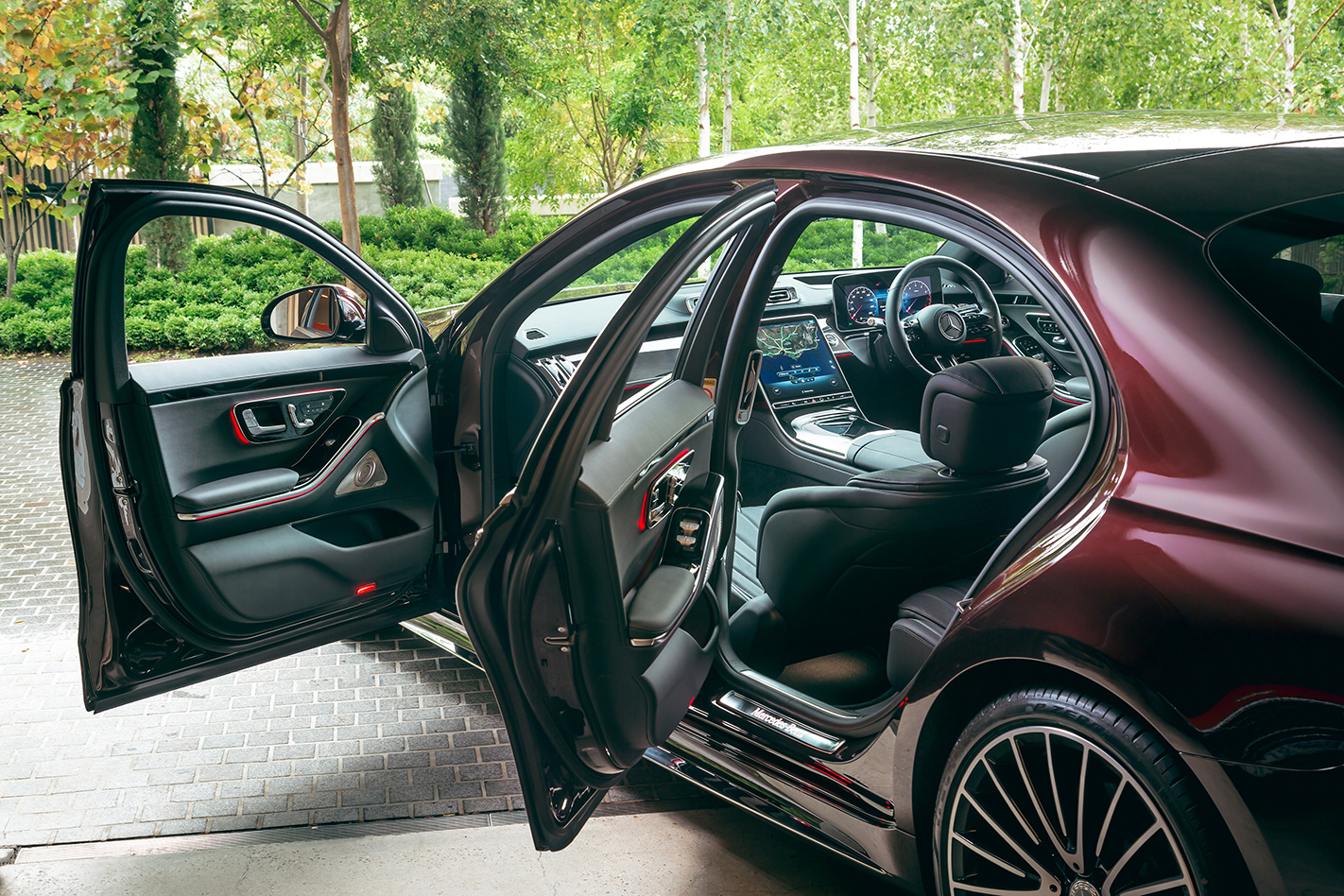
All external dimensions have grown compared to its predecessor, wheelbases extended by 71mm in the regular SWB variant, and by 51mm in this stretched LWB car, where rear-seat passengers are afforded an extra 110 mm over the SWB’s already generous legroom.
The first thing you notice when getting in are the solid doors with power-assisted closing to allow them to seal quietly – you close the door gently and the motors do the rest. Sitting inside, it is amazing how much outside noise is blocked thanks in part to the sound-insulating acoustic glass.
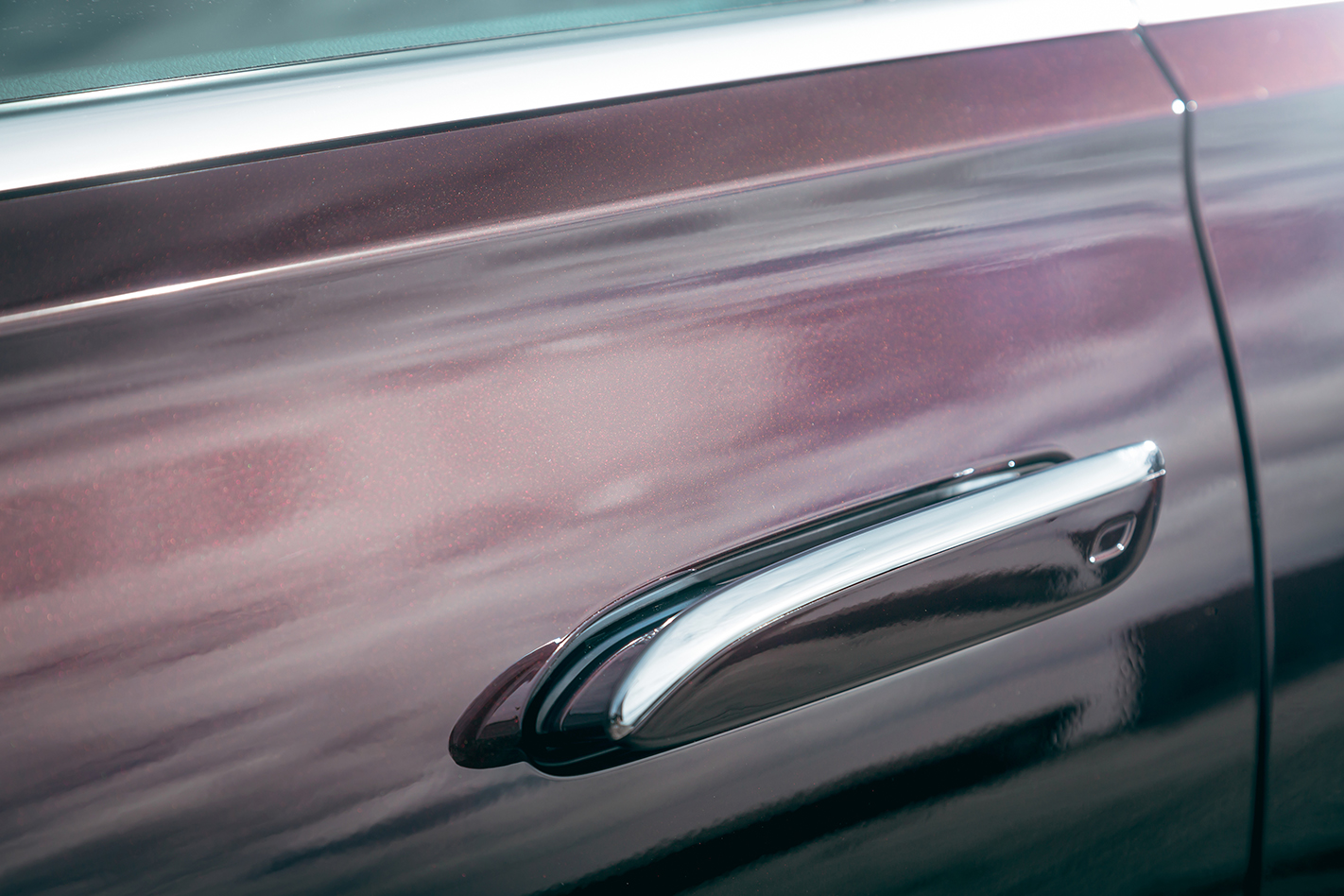
The doors also feature flush-mounted pop-out door handles, a first for Mercedes-Benz, which extend when the driver approaches with the smart key or the outer surface of the door handle is touched, and retracted at all other times to enhance aerodynamics.
Not surprisingly, the power-operated front and rear leather seats in the world’s most popular luxury sedan are, well, pretty luxurious. As well the excellent back, side, and under-thigh support I particularly like the plush velour pillow that slides up and down the headrest to support your neck.
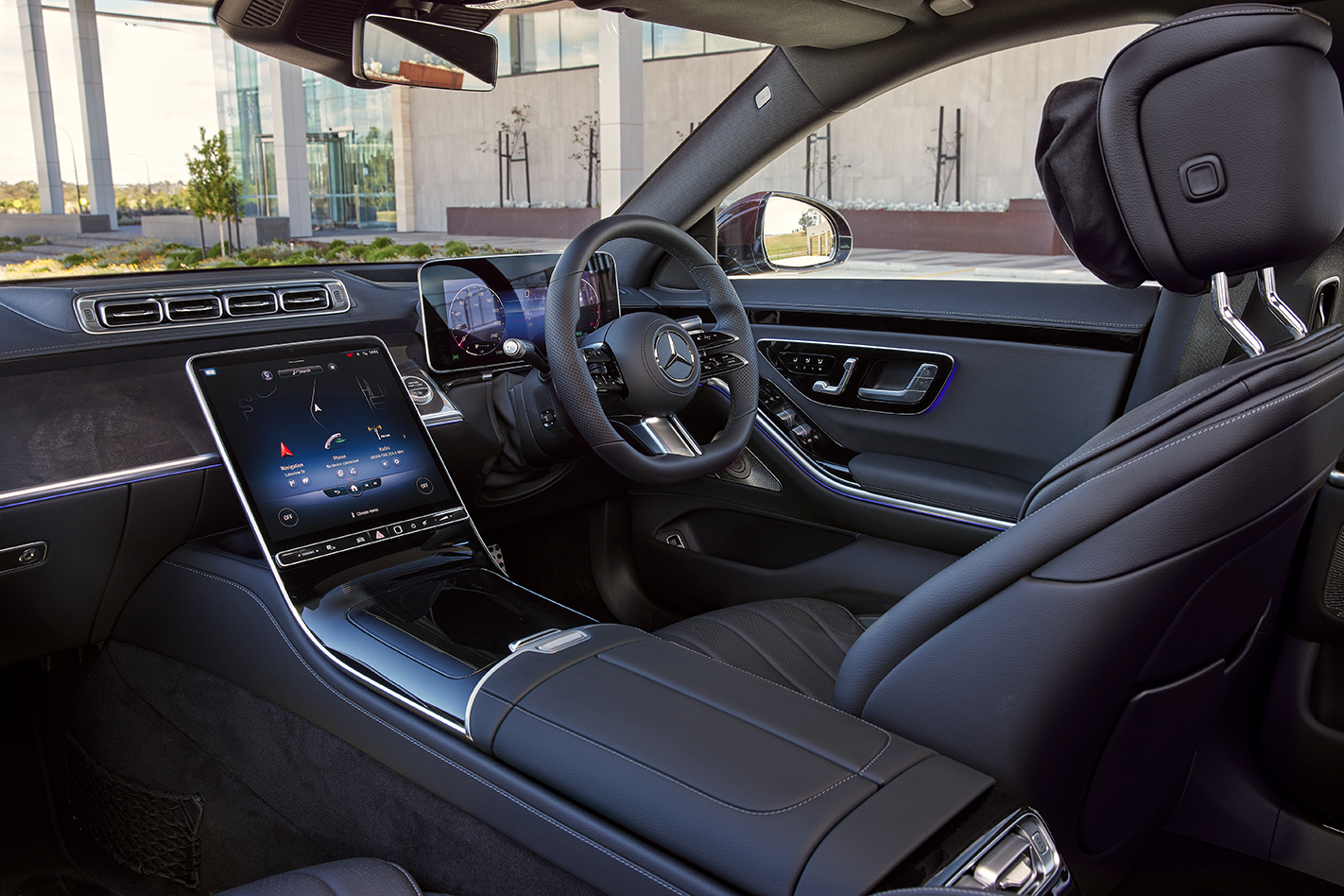
The driver’s seat is so comfortable that, apart from my right foot, hands and eyes, I barely moved muscle while driving – it kinda felt like driving in bed.
If too much comfort is enough, the $11,000 Energizing Package in our review car brings seat massaging and has pre-set moods for you to select that will tailor music, ambient lighting and even aroma accordingly. It can even sync to fitness devices such as a Garmin smartwatch and will alter those settings if it detects you’re stressed or aren’t getting enough sleep.
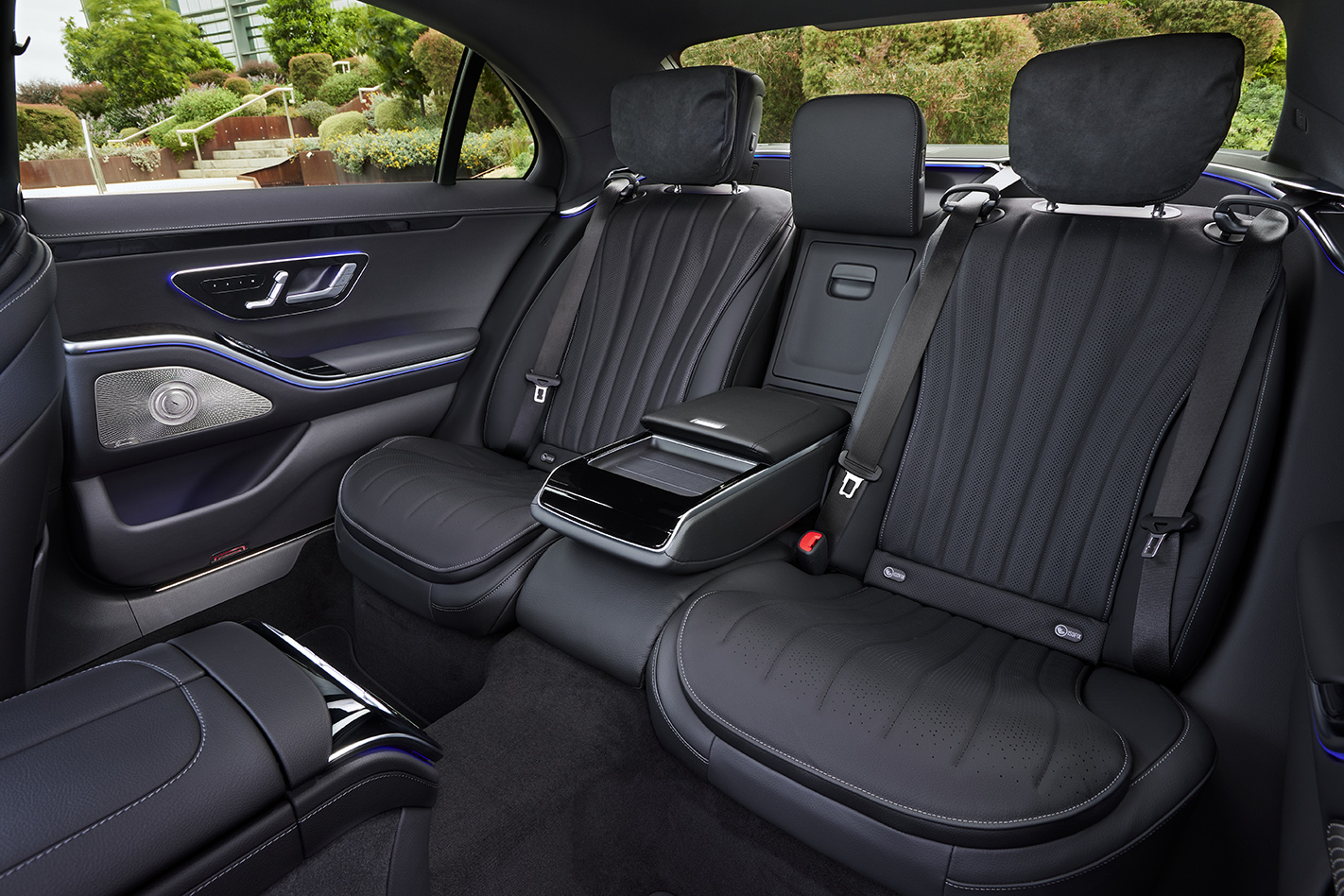
Rear seating is available in five different configurations – the LWB tested here has two individual seats with power adjustment, including settings that tilt the backrest and push the cushion forward like a recliner.
Behind the rear seats, the S-Class has 550 litres of cargo space with a power-opening boot lid.
As well as dishing out comfort in gold-plated spades, the S-Class interior is a technological showcase with the main exhibit being its second-generation MBUX infotainment system.
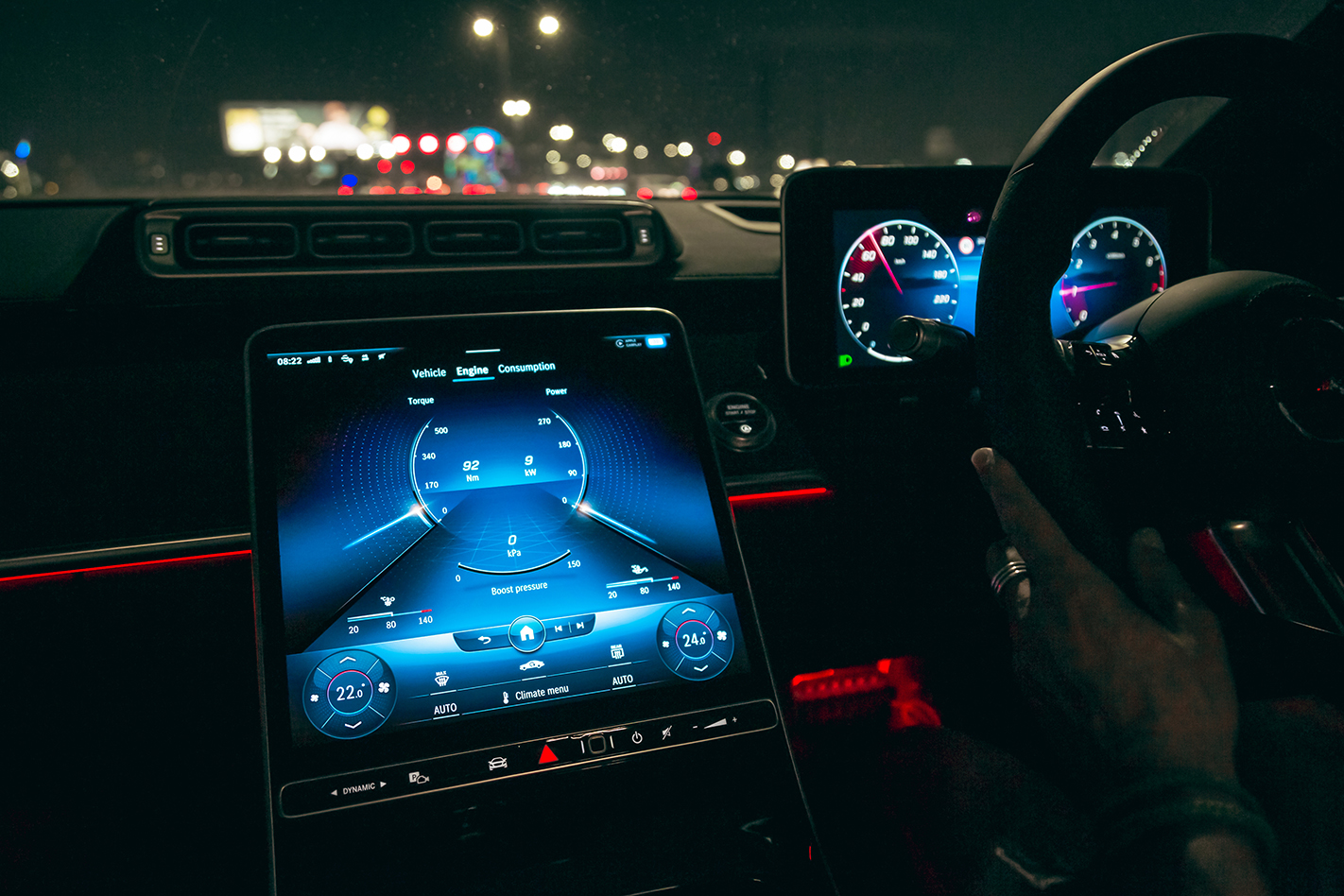
Dominating the dashboard is a 12.8-inch portrait-orientated central OLED touchscreen, which descends like a waterfall to the centre console, and is within easy reach of the driver and front passenger.
The MBUX ‘Hey Mercedes’ voice assistant is available from every seat and can recognise and anticipate occupants’ intentions using cameras that interpret head and hand movements to automatically operate functions, such as turning an interior light on when you start looking for something.
Eye-tracking technology in the cameras also recognises anyone who has registered themselves to the vehicle and adjusts their preferred settings accordingly regardless of where they sit. For the driver, this includes setting the mirror positions.
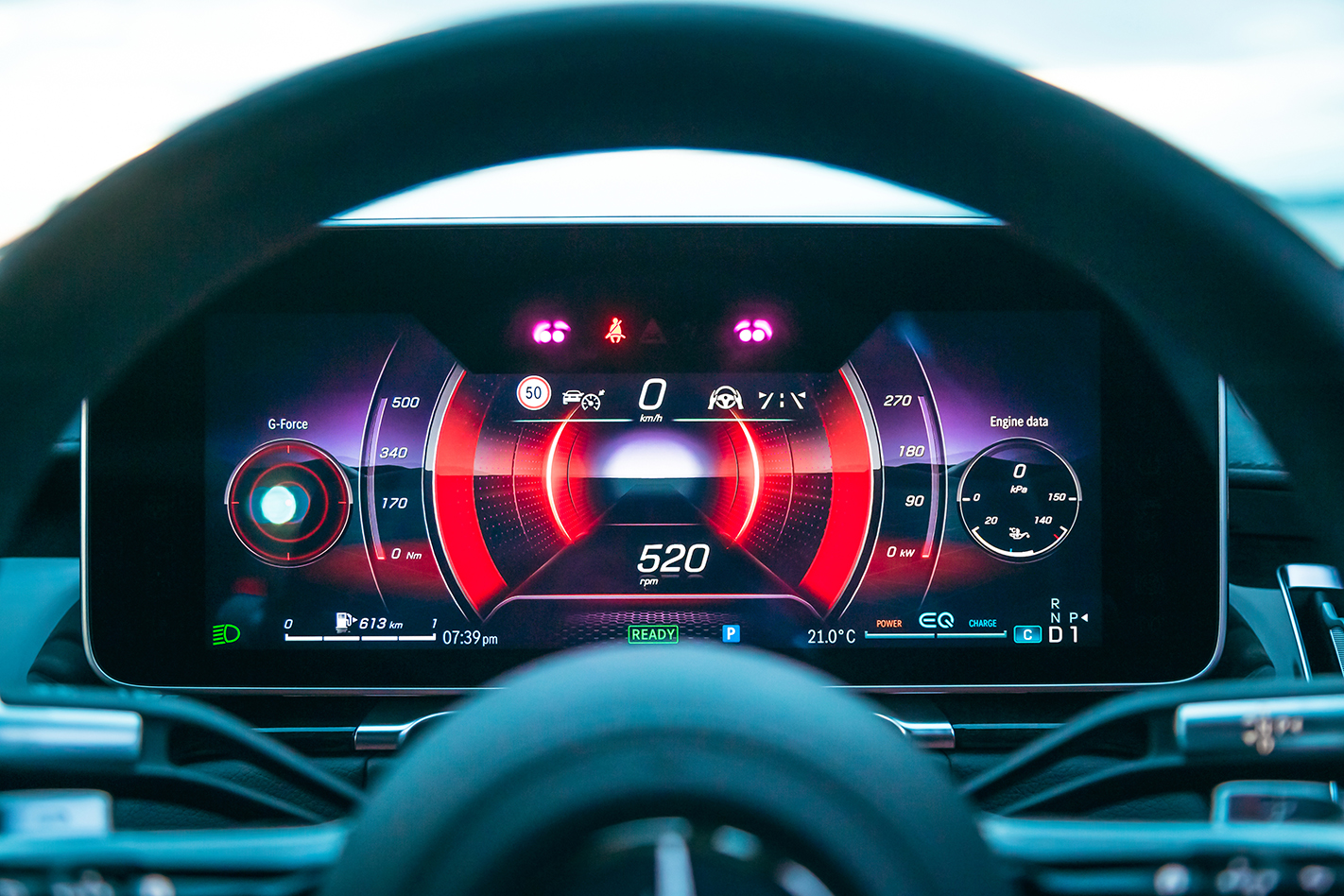
This also makes for cool 3D effects on the 12.3-inch digital instrument cluster by continuously adjusting the image to offer the sensation of depth. There’s no practical use for this as far as we can tell – it’s just a bit cool. If you find yourself mesmerised to the point of distraction you can switch back to 2D mode.
Further individualisation of the driver display includes a choice of four graphical styles (Discreet, Sporty, Exclusive, Classic) and three modes (Navigation, Assistance, Service).
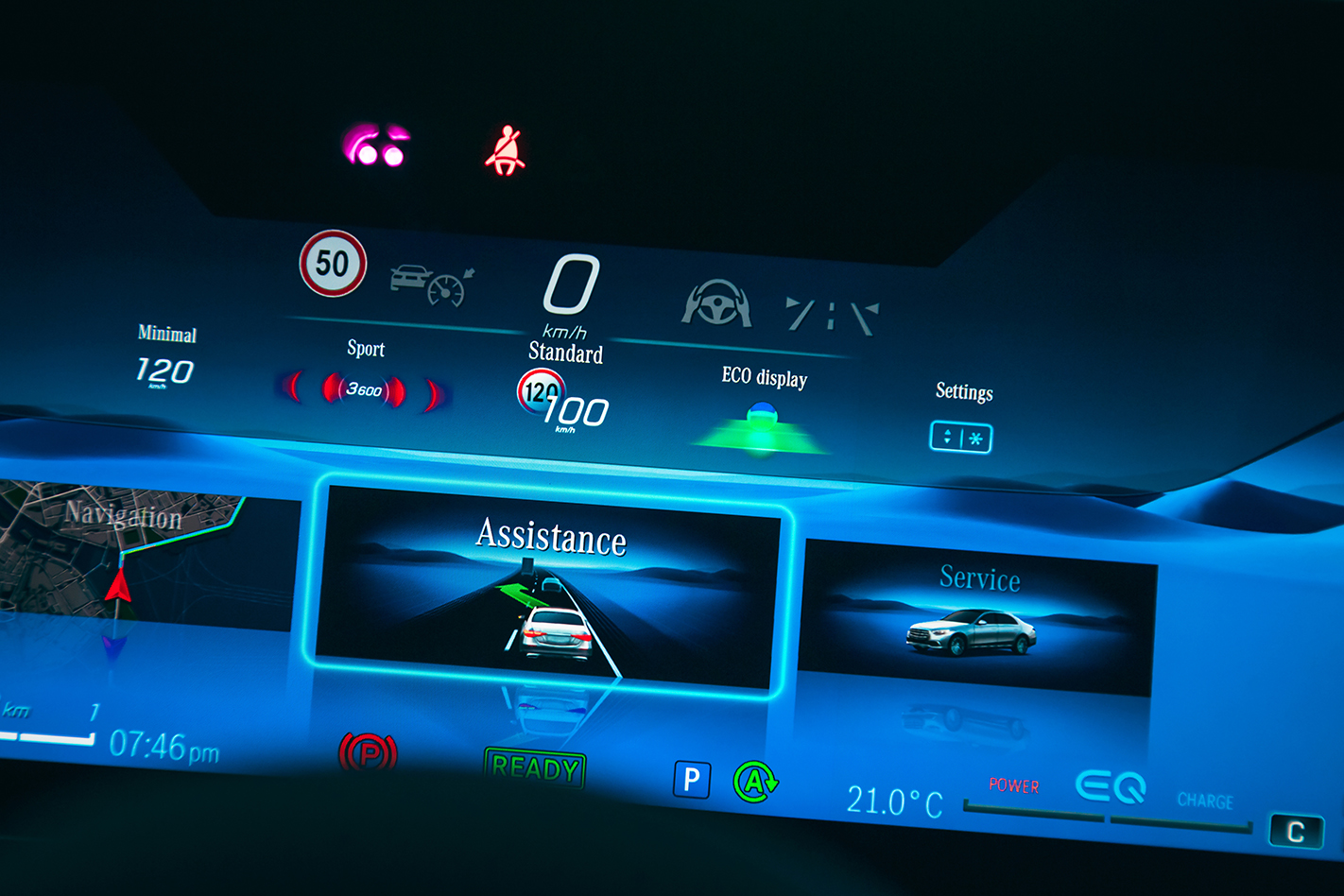
Other standard features include Apple CarPlay and Android Auto (the former being wireless), head-up display, panoramic sunroof, 15-speaker Burmester 3D surround sound with 710W amplifier, heated and ventilated front seats, smart keyless entry and remote boot lid, fingerprint scanner and ‘AIRMATIC’ adaptive suspension.
As far as running costs go, the good news is an official combined fuel economy of 8.4L/100km, which is rather miserly considering the S-Class’s 2.15-tonne kerb weight.
Servicing intervals are every 12 months or 25,000km, which is good news for commercial S-Class operators, with the first four annual services costing $800, $1200, $1400 and $3400 respectively.
The Mercedes-Benz S-Class is covered by a five-year, unlimited-kilometre warranty for private vehicles with total mileage restricted to 200,000 kilometres for commercially operated cars.
What is the Mercedes-Benz S450 L like to drive?
At 5.2 metres long and weighing in at 2.15 tonnes before you start adding people, the S450 L seems to defy physics with its brisk performance and sharp handling.
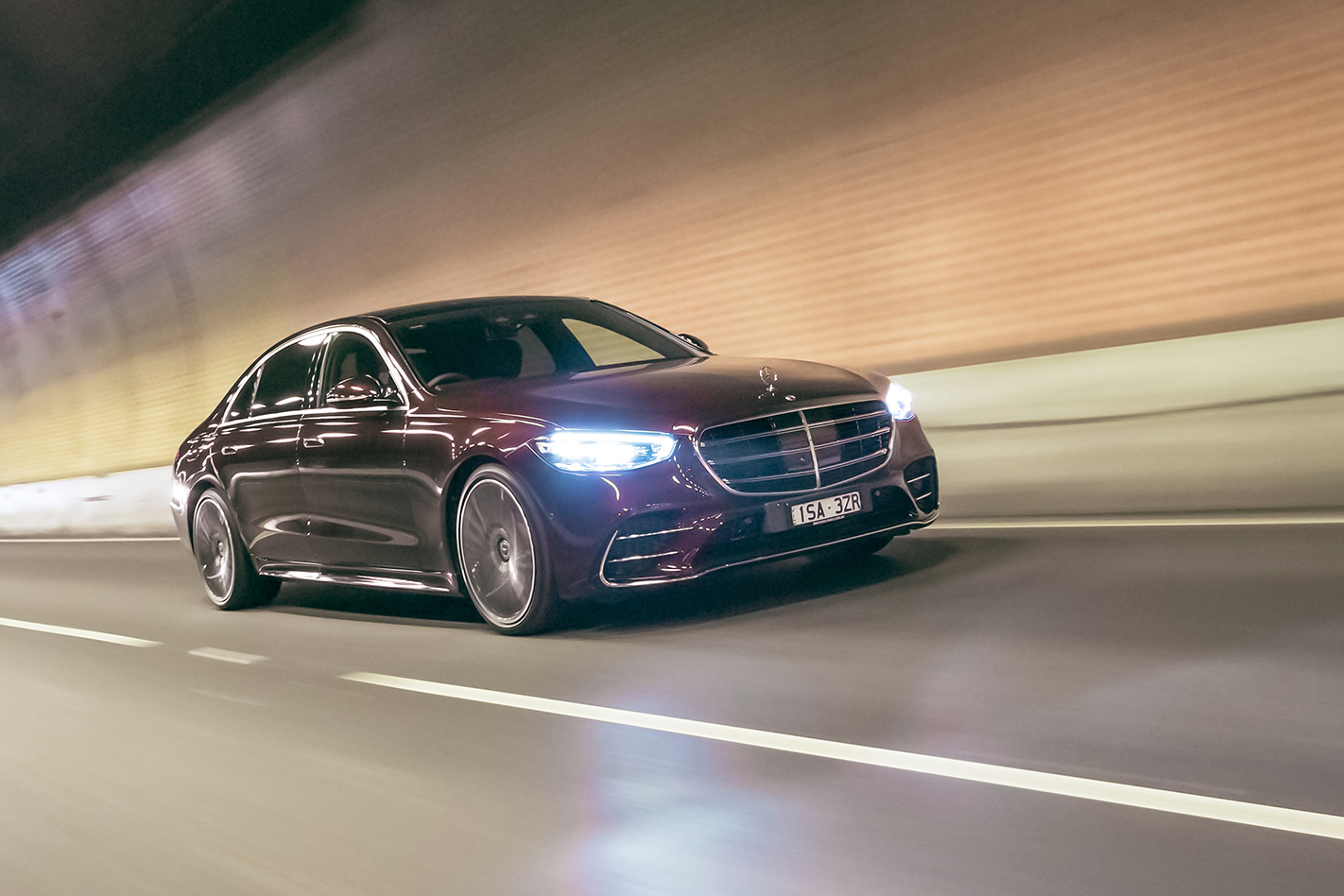
At its heart is the 270kW/500Nm M256 3.0-litre inline six-cylinder turbocharged engine that’s carried over from the previous model and is mated to a nine-speed ‘9G-TRONIC’ automatic transmission with ‘4MATIC’ all-wheel-drive.
Peak power comes in at 5500rpm, with all that torque present from 1600rpm to 4500rpm, resulting in some decent shove (particularly in Sport and Sport+ driving modes).
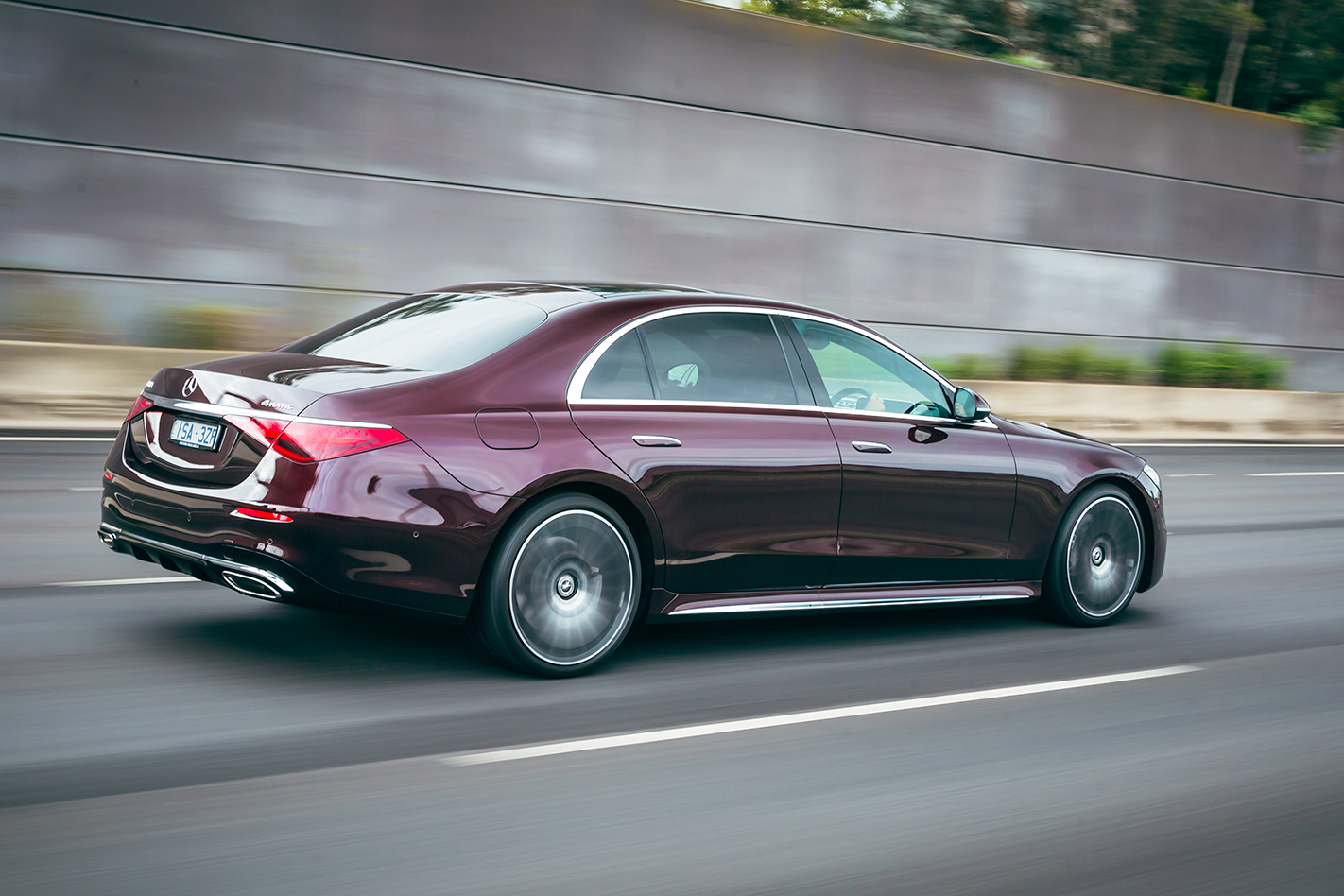
There is an additional 16kW and 250Nm on tap from the ‘EQ Boost’ 48-volt mild-hybrid system that helps send this giant sedan from 0 to 100km/h in just 5.1 seconds, the same as a manual Porsche Cayman.
This performance is partly due to a reduced drag coefficient compared to the previous model, resulting in a Cd (coefficient of drag) figure as low as 0.22 with the air suspension lowered in Sport+ driving mode, matching its very slippery A-Class sibling and the all-electric Porsche Taycan.
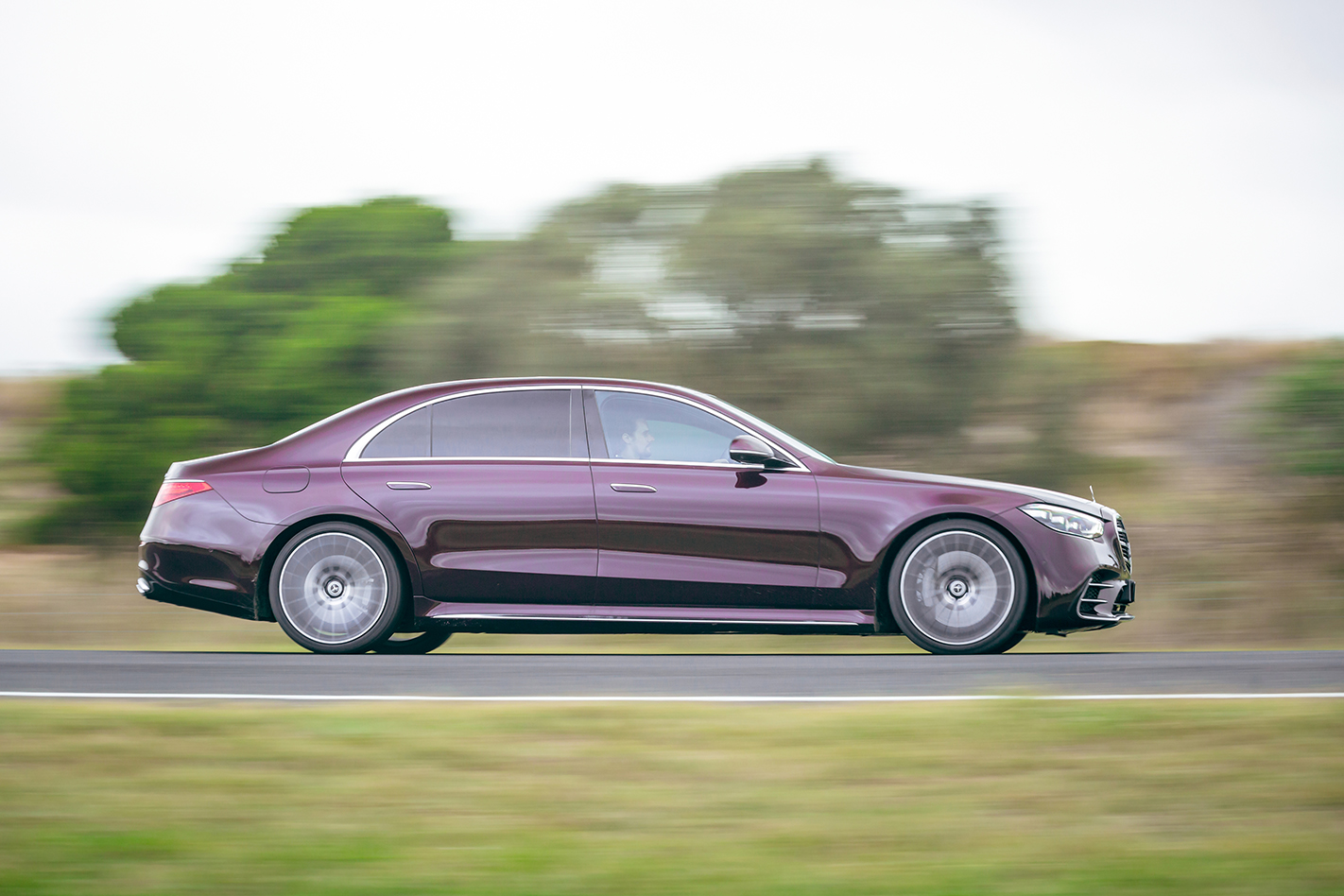
When driving the S-Class in the more elegant manner to which its clientele is accustomed, the engine instantly responded to throttle inputs and accelerated seamlessly through the torque converter automatic transmission’s nine gears.
While the powertrain does an excellent job in shifting the S450 L’s considerable heft, its chassis and hybrid-aluminium body shell do an incredible job in containing it.
With aluminium content now exceeding 50 per cent, the new body shell is 60 kilograms lighter than the previous model’s. It also provides higher levels of crash safety and is more rigid than before, resulting in improvements to ride and handling.
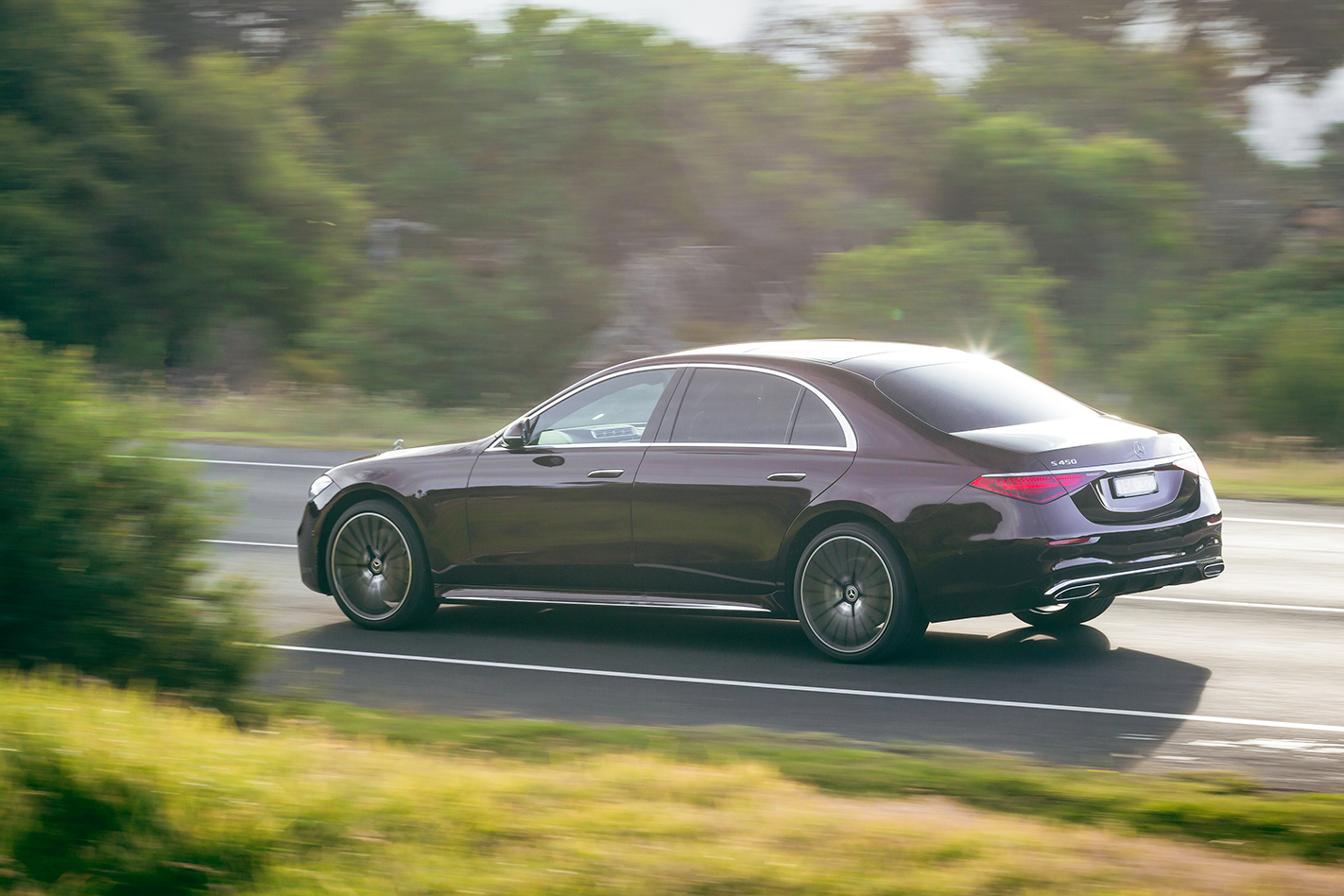
Driving through the winding roads in the foothills surrounding Victoria’s Yarra Valley, you forget you’re driving a big heavy sedan that’s longer than a Kia Carnival people mover.
The steering is well-weighted and balanced and it was incredibly simple to keep within the lines, even on the sharpest bends where I barely had to trouble the brake pedal. Body roll was also well contained even on tight turns and hairpins.
And as you’d expect with the Mercedes-Benz flagship, ride comfort is sublime on the multi-link front and rear suspension with ‘AIRMATIC’ dampers that are part of the standard equipment list.
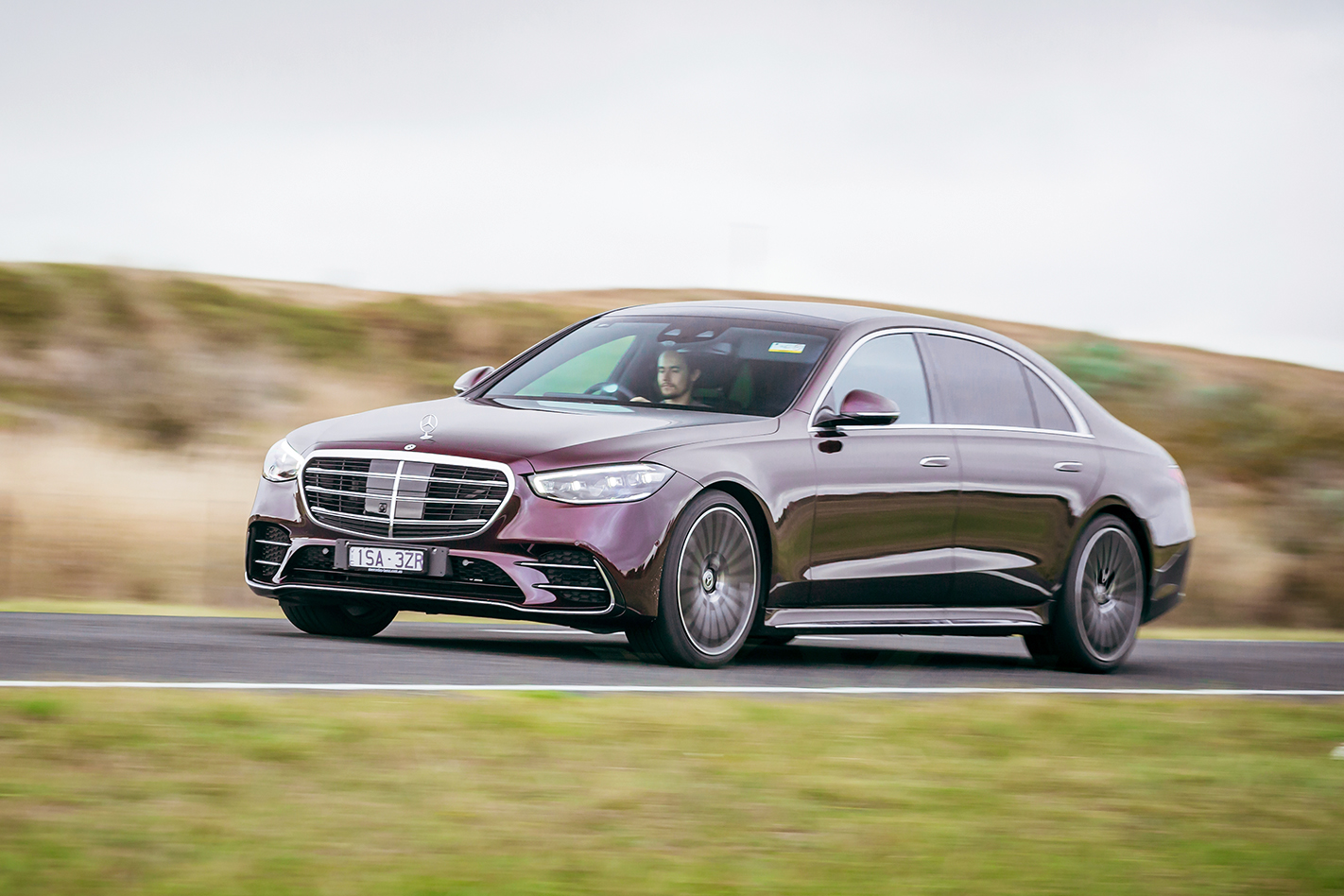
These adapt to the various driving modes but even in Sport and Sport+, where they stiffen for more precise handling, there is little compromise to ride comfort. No matter what driving mode you’re in, it always feels like you’re gliding over bumps, with next to no secondary bounce.
Ride quality is as quiet as it is smooth. The engine gives off a nice growl in the Sport driving modes but not unsociably so and the rumble from the 20-inch Pirelli P Zero run-flat tyres barely permeates the cabin.
The driving experience is also enhanced through new technology including the augmented reality function that works with satellite navigation to literally point at your turn.
It’s available as standard on the main 12.8-inch central screen but this requires you to have to look down to spot the arrows, which I found was less effective than just using the normal turn-by-turn directions on the head-up display.
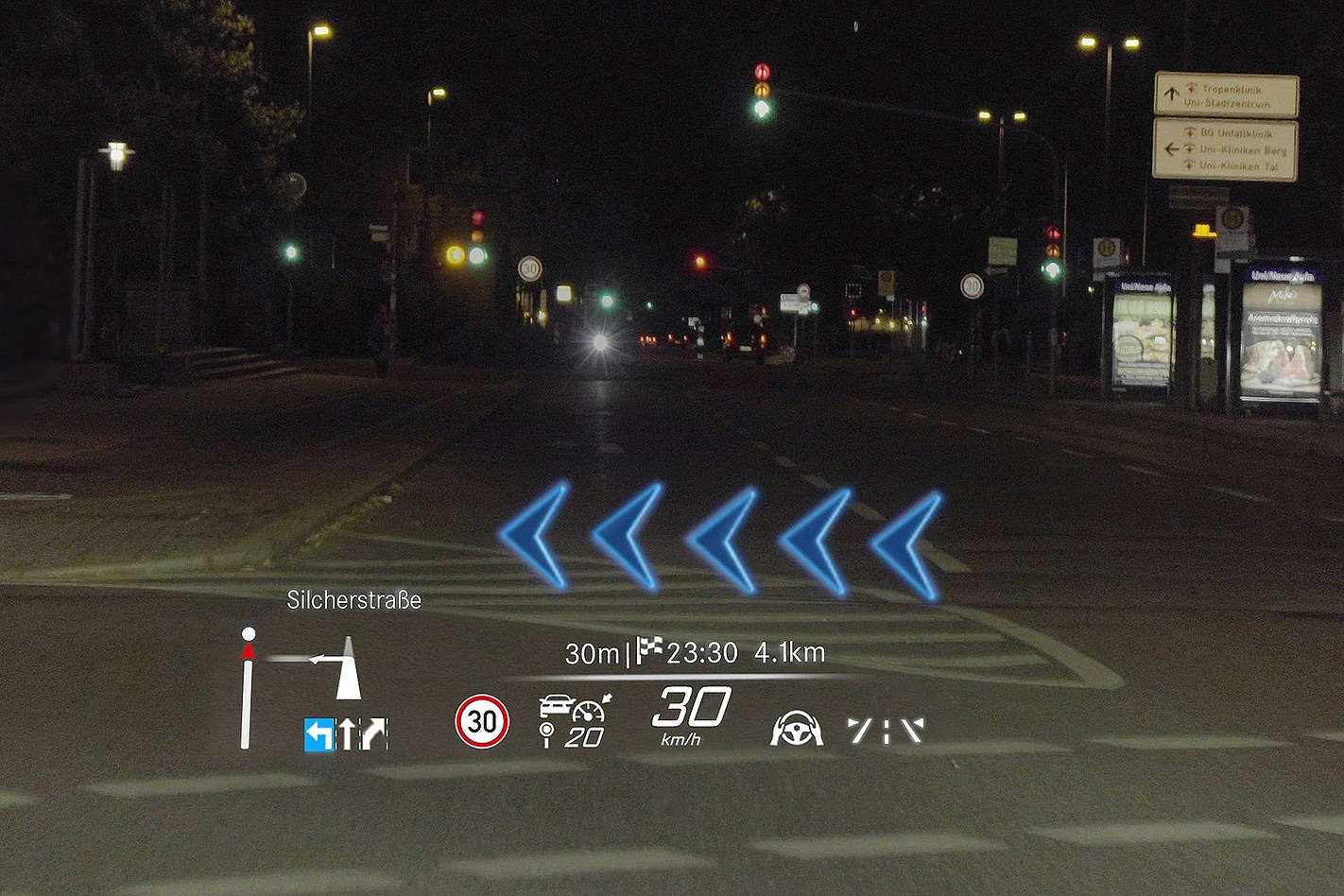
Alternatively, you can option up to a 3D head-up display ($2900) that projects the augmented reality at eye level. This makes it far easier and safer to follow the animated turn-off arrows that are virtually projected onto the road lane ahead to point out the next corner, roundabout exit or which lane to enter before the next turn or exit.
One feature I didn’t get to try was the optional rear-axle steering system that allows the back wheels to turn at angles up to 10 degrees, reducing the turning circle by 2.0 metres to less than 10.9 metres, which is about the same as an A-Class hatchback.
What about safety in the Mercedes-Benz S450 L?
Where do we start? The Mercedes-Benz S-Class has been a harbinger of new safety technology for six generations and this W223 model is no different.
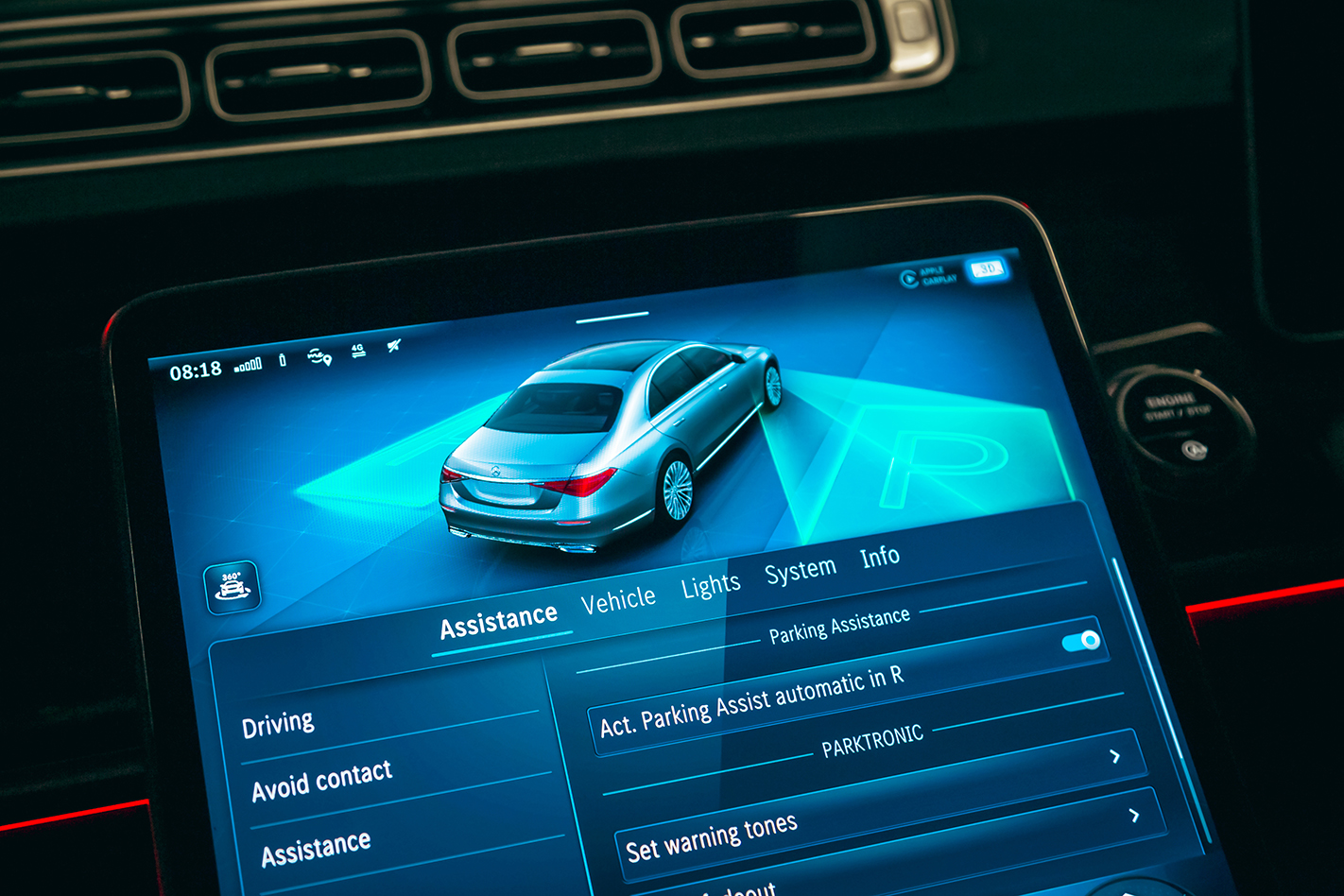
Standard on the long-wheelbase variant are world-first second-row frontal airbags. Installed in the front seats, testing has shown they reduce the likelihood of head and neck injuries for seat-belt-wearing occupants in the outboard rear seats.
This takes the number of airbags in the S450 L to 12, which also includes frontal airbags, driver’s knee bag, centre airbag, full-length window bags, front and rear side bags.
The S-Class also comes with Benz’s fifth-generation Driving Assistance Package that includes a display showing what the S-Class systems are sensing and tracking at any given time via a Teslaesque digital display that shows graphical representations of any cars, trucks and even motorcycles in front of you.
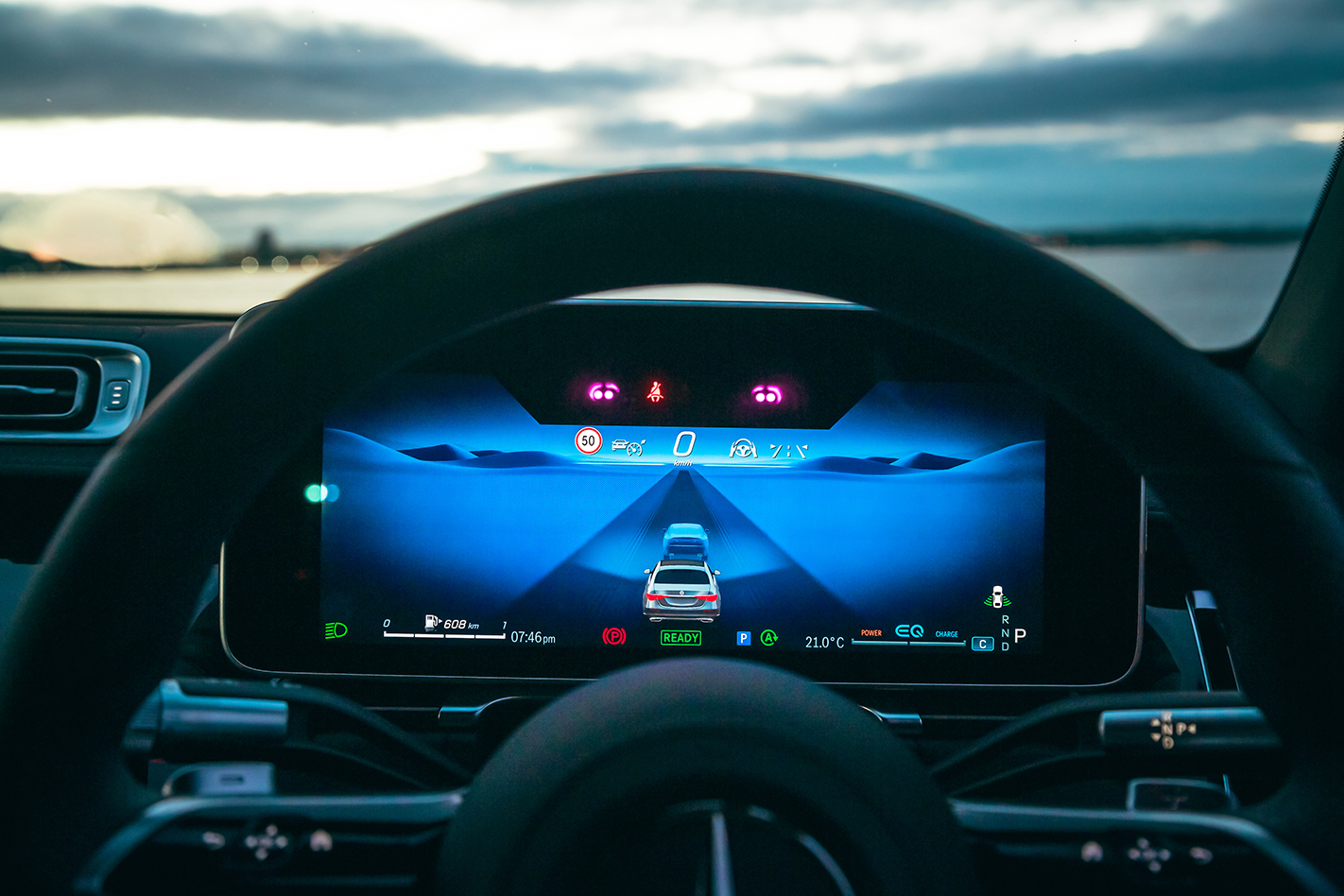
Adaptive cruise control with stop and go is also standard, along with route-based speed adaption that uses real-time traffic data to adapt to congestion on the road ahead.
Then there’s the advanced lane keep assist works at speeds up to 250km/h, evasive steering assist, driver attention monitoring, active blind-spot monitoring (that will brake to prevent an impending collision) and rear cross-traffic alert.
Its autonomous emergency braking (AEB) detects cyclists and pedestrians, can stop to avoid static objects when travelling at speeds up to 130km/h and also operates to prevent or mitigate collisions at intersections.
Cyclists are also protected by the side-exit assist system that prevents doors from being opened into approaching bikes or traffic.
The Verdict
The Mercedes-Benz S-Class has consistently been the world’s biggest-selling luxury saloon and this seventh-generation model does enough to see off key rivals such as the BMW 7 Series, Audi A8 and Lexus LS.
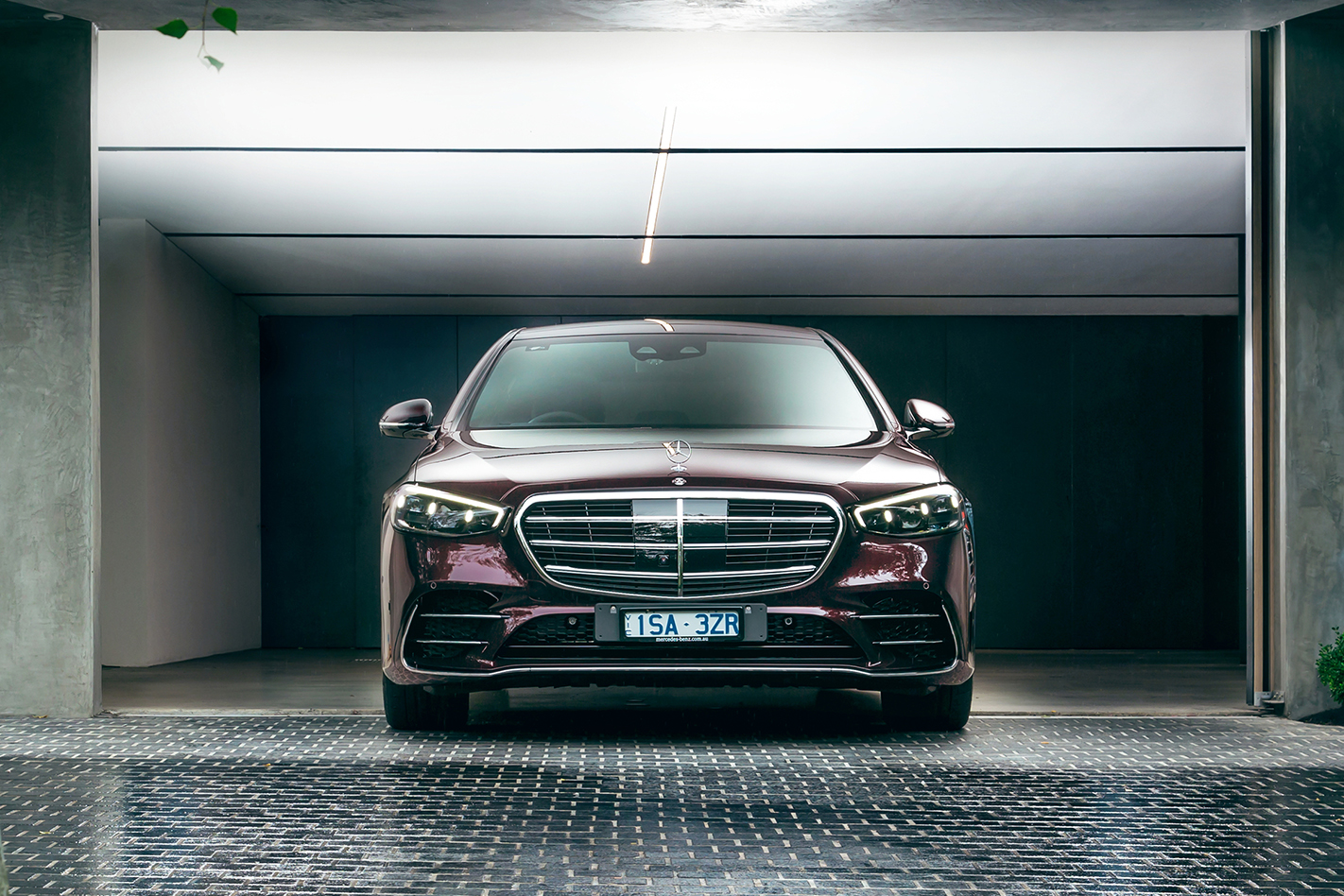
The stretched S450 L, in particular, is a lot of car even for its quarter-of-a-million-dollar-plus price tag, providing an incredible mix of comfort, safety, performance and cutting-edge technology in a huge but graceful package.
What I like most about the S-Class is that it shows what is possible for a passenger car and provides a glimpse of what we can expect to see in more affordable vehicles in the near future. If this seventh-generation model is any guide, then the future is looking good.
Score: 9.5/10
PLUS: Safety, technology, luxury, performance MINUS: Most new tech costs extra, out of reach for most
2021 Mercedes-Benz S450 L specifications
Body: 4-door, 4/5-seat sedan Drive: AWD Engine: 2999cc L6-cyl, 24v turbo Power: 270kW @ 5500-6100rpm Torque: 500Nm @ 1600-4500rpm Mild-hybrid boost 16kW-250Nm 0-100km/h: 5.1sec (claimed) Fuel consumption: 8.4L/100km (combined) Weight: 2149kg Transmission: 9-speed auto Suspension: Front and rear multi-link/air suspension L/W/H: 5289/1954/1503mm Wheelbase: 3216mm Tracks: 1660/1668mm Brakes: Front ventilated discs / Rear discs Tyres: Front 255/40 R20 / Rear 285/35 R20 Price: From $264,900
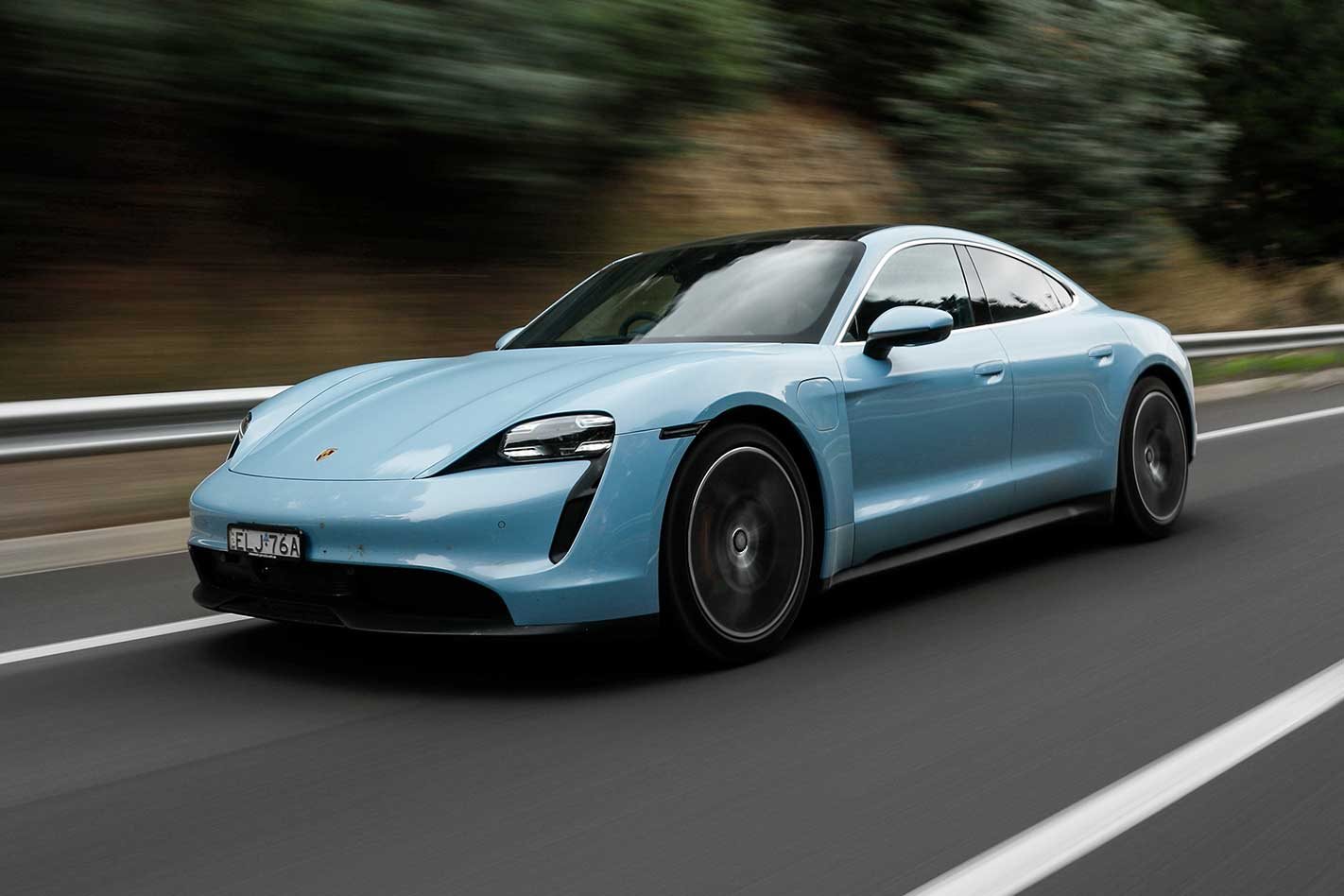
The Porsche Taycan electric sports sedan outsold the Mercedes-Benz E-Class in March, sparking a potential new battle in Australia’s large luxury car segment.
Porsche’s first-ever pure battery-powered vehicle registered 161 local sales last month to push Mercedes’ big sedan/wagon into second place by just six units.
The E-Class has been the undisputed champion of the Luxury Large Car segment for the past eight years, and the latest, ninth-generation version received a boost for 2021 with a significant update.
After the first quarter of 2021, the E-Class remains the year-to-date leader with 312 sales, though the Taycan’s March result has seen the Porsche leapfrog the Mercedes’ traditional rival, the BMW 5 Series – 225 sales to 125.
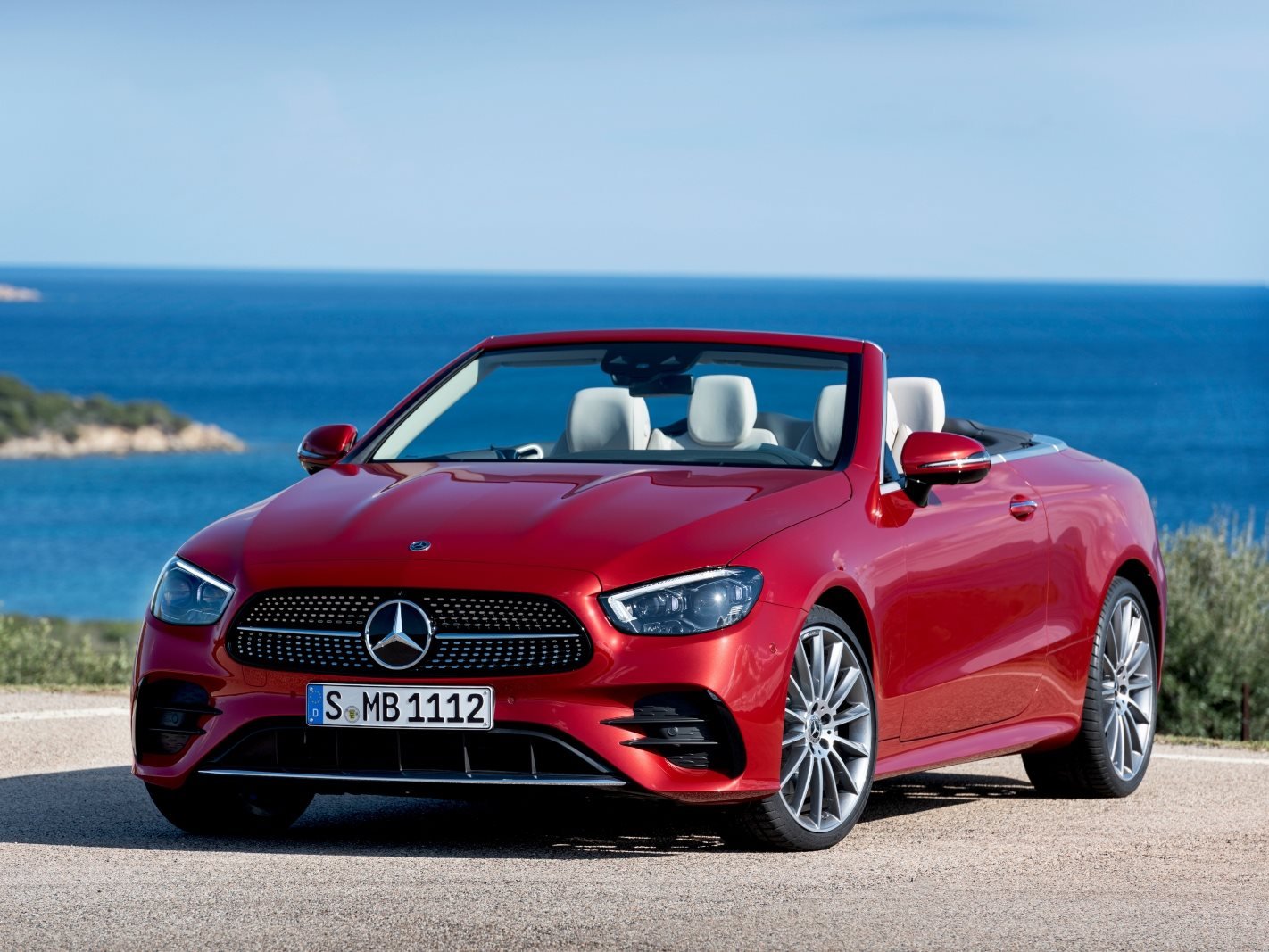
Other competitors left in the Taycan’s silent wake include the Audi A6, Genesis G80 and Maserati Ghibli.
Taycan pricing starts at more than double that of the E-Class, costing from $190,400 compared to $98,700 for the Mercedes. The Taycan range will also double in October when the sedan is joined by a Cross Turismo wagon-style variant.
Porsche’s newest model accounted for 69 per cent of the 233 electric passenger car sales in March, a figure that is a 184 per cent increase on March 2020.
With triple-figure digit growth for electric SUVs as well, EV sales have now increased 123 per cent compared with the first quarter of 2020.
The big figures remain relative. EVs still only account for 0.4 per cent of total sales, not including heavy-commercial vehicles – both for March (411 units) and year-to-date (969 units).
Electric car brand Tesla, however, still keeps its sales figures guarded. Unofficially, it was reported to have sold more than 3400 vehicles locally in 2020.
Plug-in hybrid (PHEV) sales also grew by more than 100 per cent in March (and up 80 per cent year-to-date), though remain below EVs at 286 units (March) and 629 units (YTD).
Non-rechargeable hybrids continue to make the biggest progress, primarily thanks to Toyota’s expanded range of petrol-electric variants across popular models such as the Corolla, Yaris Cross and RAV4.
Hybrid sales have increased 25 per cent year-on-year, now accounting for more than six per cent of new-car sales.
Petrol-powered cars remain dominant at 60 per cent (up seven per cent YTD), while diesel is making something of a comeback. Diesel sales fell 13 per cent in 2020 but are up 21 per cent so far in 2021.
MORE: Taycan news and reviews MORE: E-Class news and reviews MORE: All Porsche stories
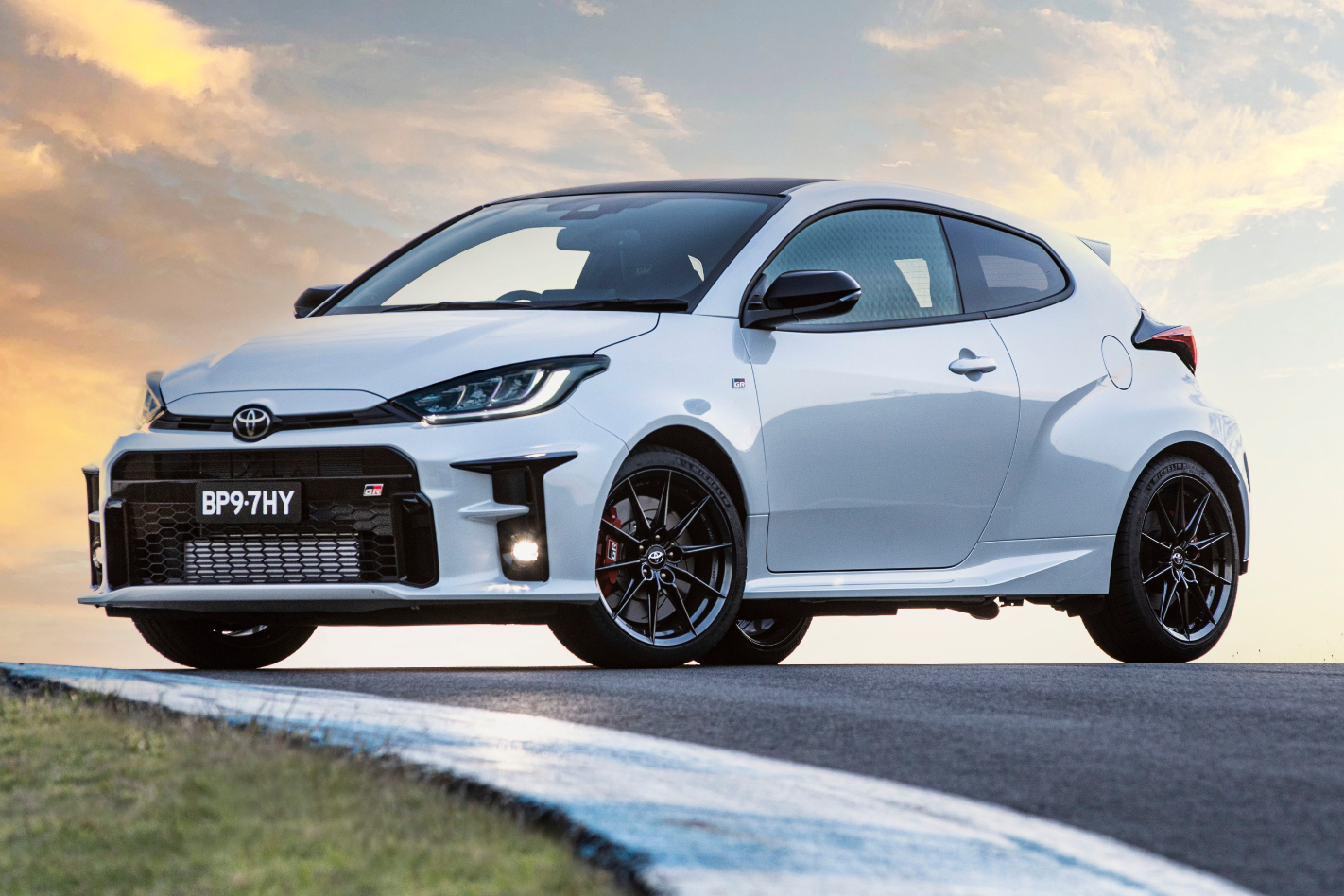
The 2021 Toyota GR Yaris Rallye is now on sale Down Under, and it’s offering a suite of performance parts that should propel it to the front of the hot hatch market.
Chief among the new bits of kit are a pair of Torsen limited-slip differentials that sit over the front and rear axle, providing better traction and power management as well as increased dynamic prowess on track.
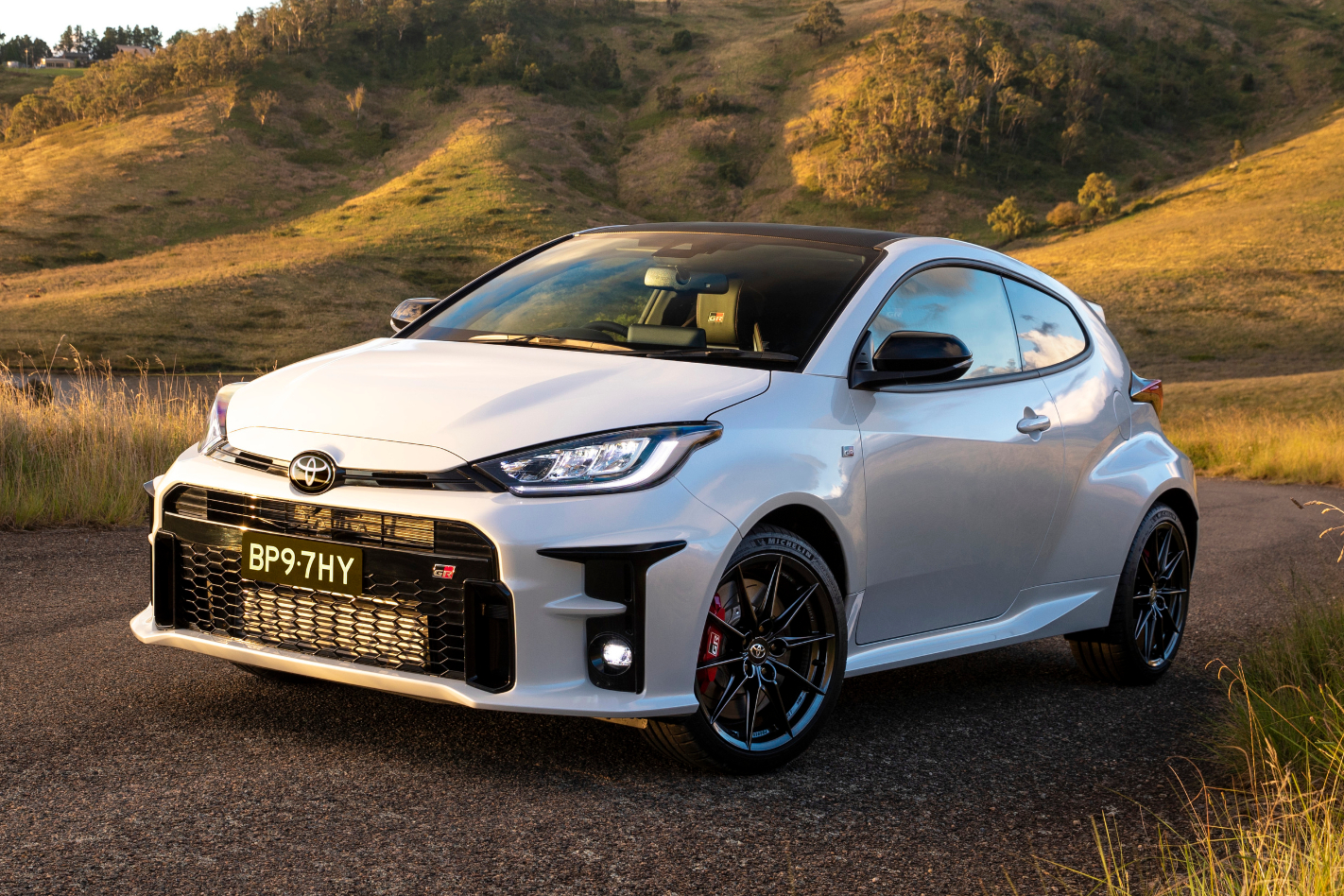
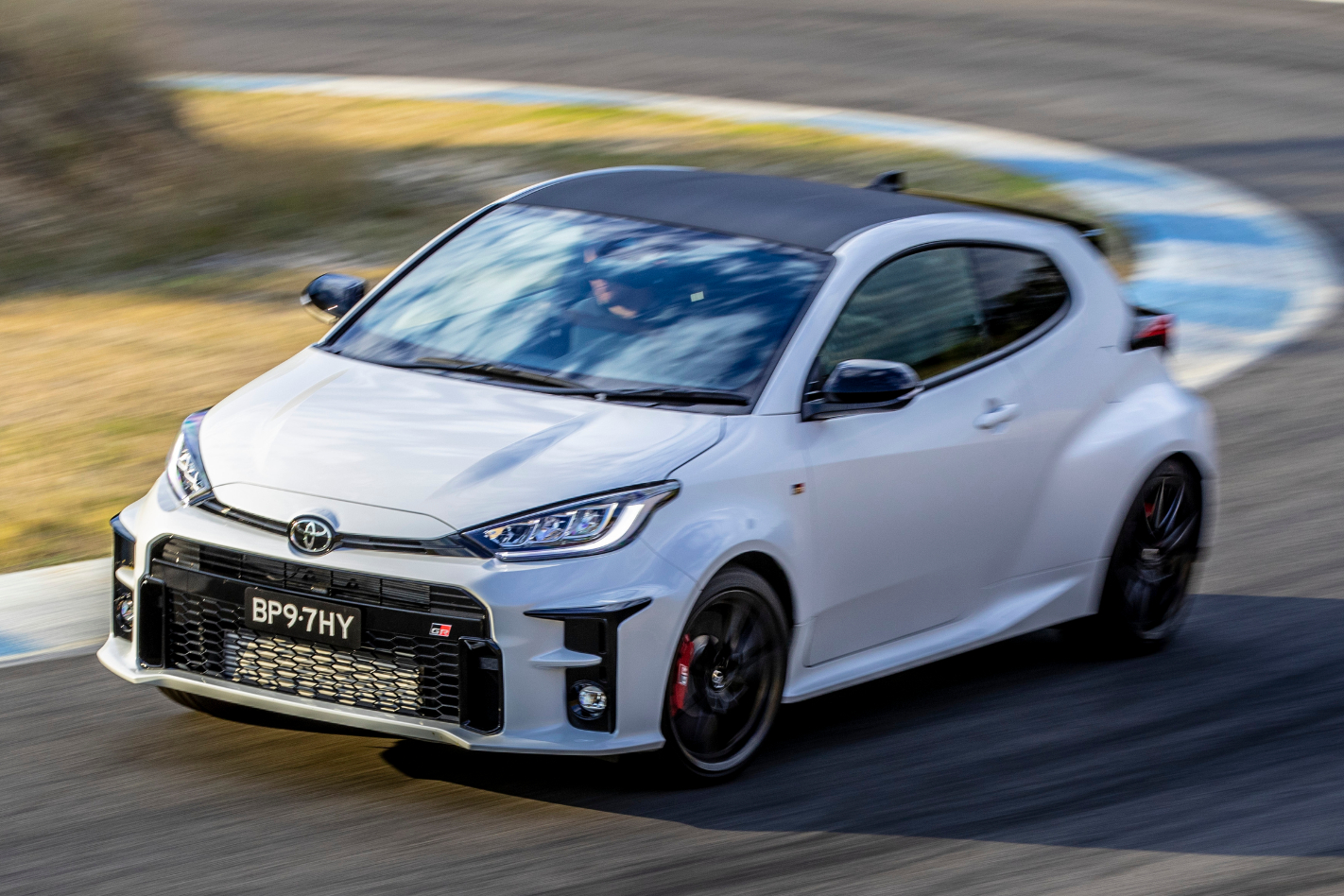
The Rallye’s suspension has also been tweaked by the boffins at Gazoo Racing, now sitting lower and stiffer on the road thanks to harder springs and bigger anti-roll bars.
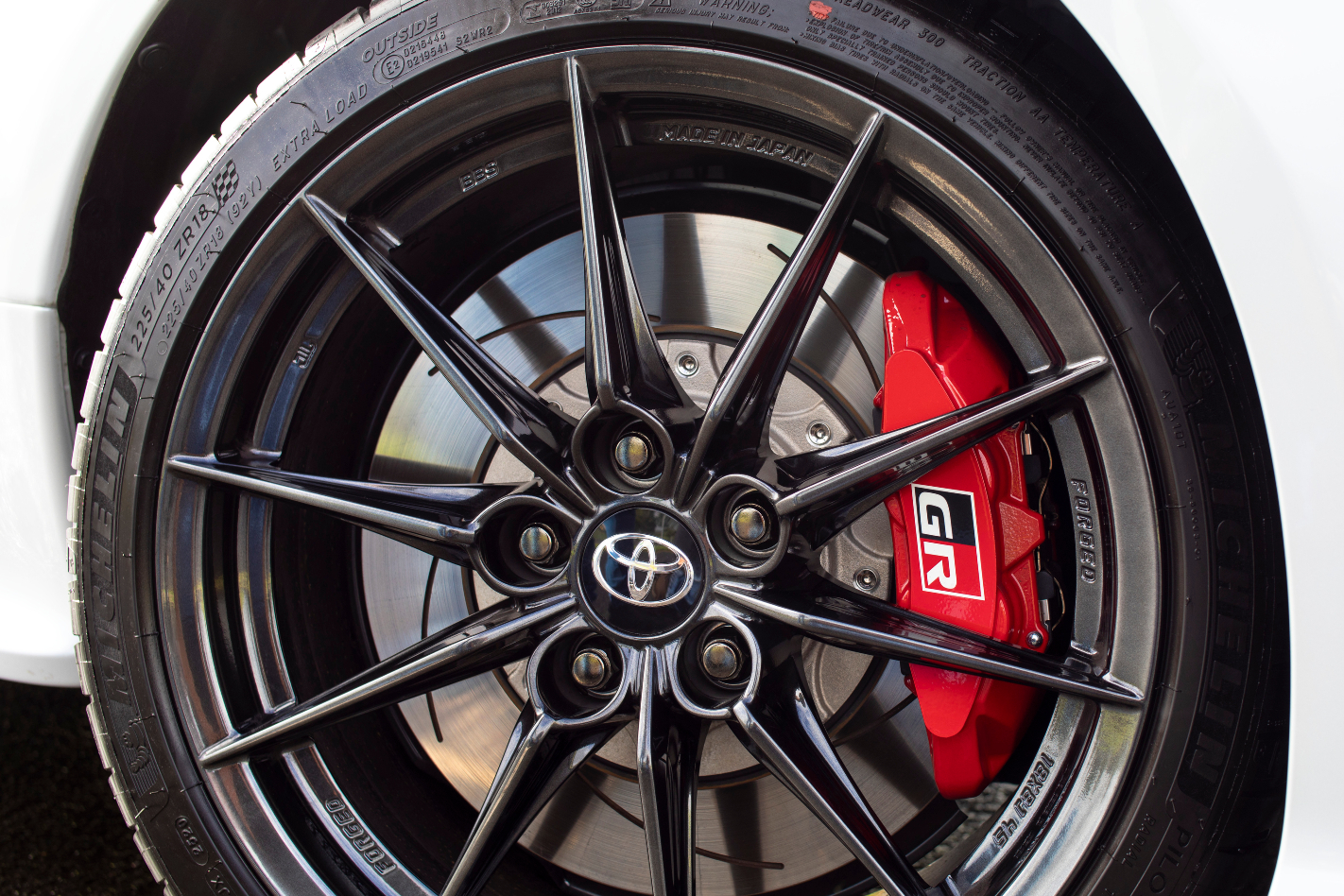
Gone are the normal 18-inch wheels found on the regular GR Yaris, in their place, Toyota has adorned the hotter hatch with a set of 10-spoke lightweight 18-inch BBS forged alloy wheels shod in Michelin Pilot Sport 4S tyres measuring 225/40ZR18.
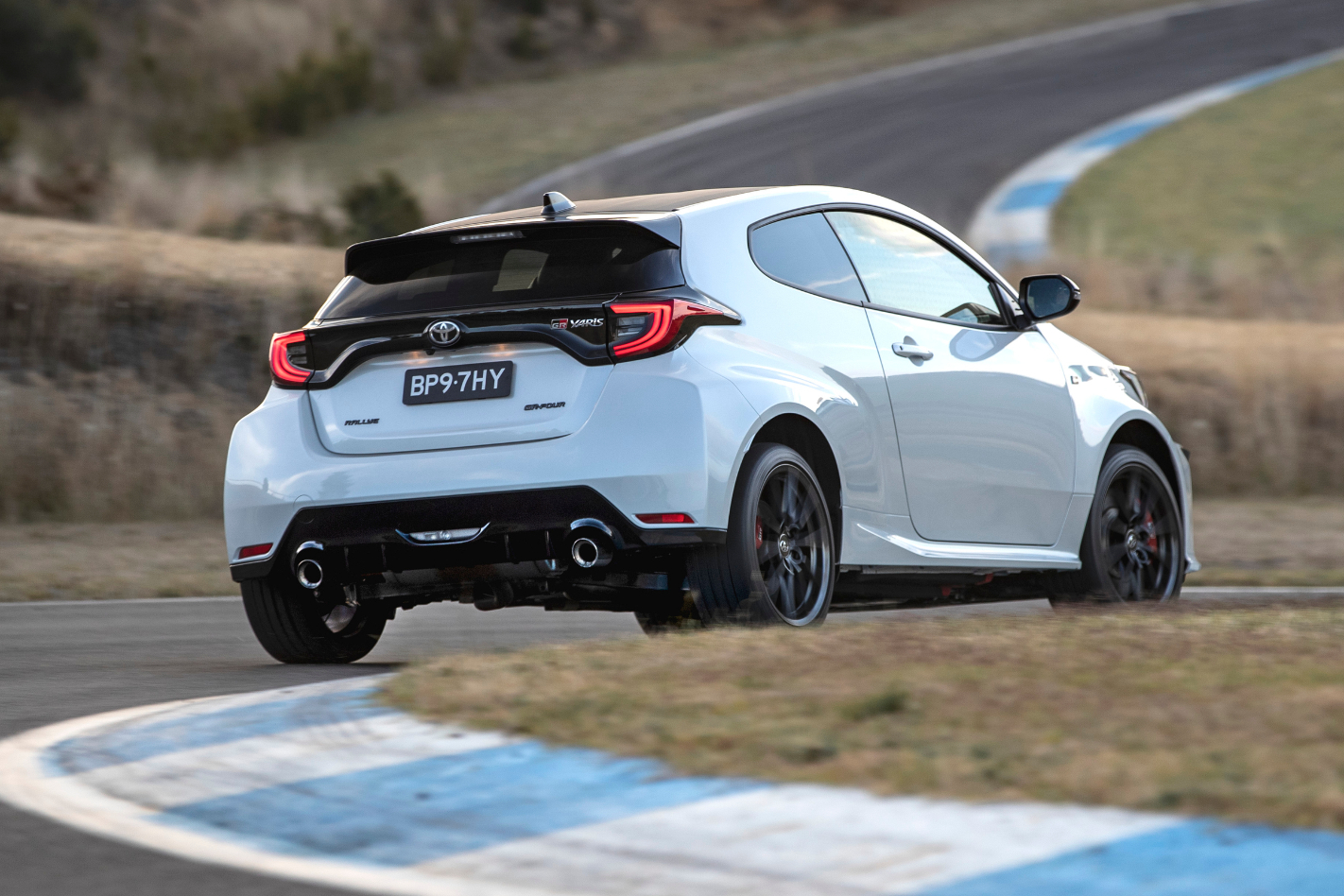
The aggressive front fascia of the Rallye also accommodates improved front brake ducting, which will help provide extended braking performance.
Powering the Rallye is the same 1.6-litre single-scroll turbocharged three-cylinder petrol engine found in the standard GR Yaris.
The hot triple produces 200kW and 370Nm, and thanks to the trick AWD system and slick-shifting six-speed manual with rev-matching, the Yaris can sprint from 0-100km/h in 5.2 seconds, topping out at a limited 230km/h.
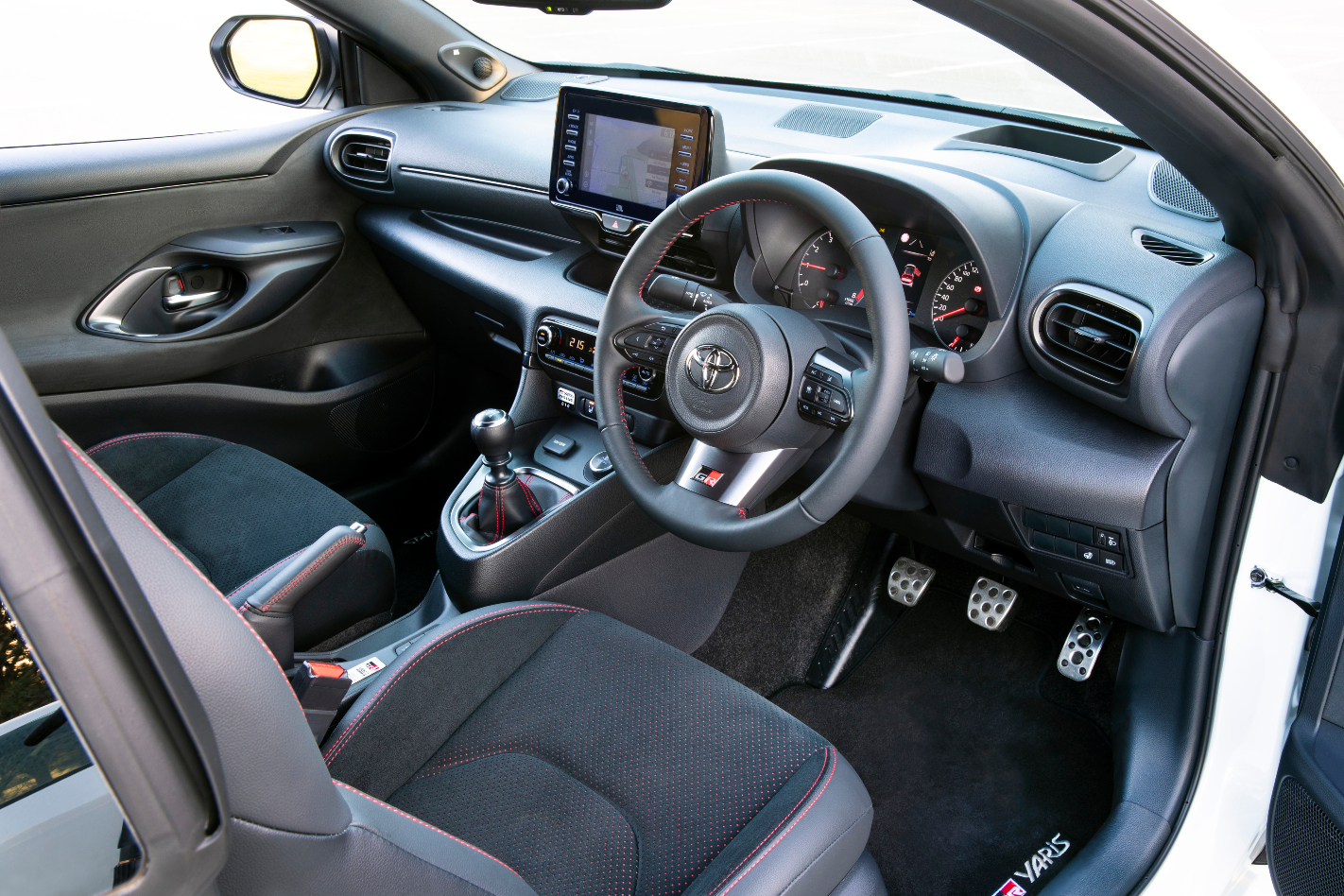
Inside, the track-honed hatch gets synthetic leather-accented sports front seats with hugging bolsters, red stitching and perforated Ultrasuede inserts.
Each of the special edition hatches will also score a uniquely numbered GR Yaris Rallye plaque, which will sit on the centre console. An additional Rallye badge will also feature on the rear.
Other standard features of the interior include dual-zone climate control, keyless entry and start, an eight-speaker JBL audio system, and an advanced infotainment system with seven-inch touchscreen display.
The Rallye has also been fitted with Toyota Safety Sense technologies including autonomous emergency braking, intersection assistance, adaptive cruise control, lane-trace assist and road-sign assist.
Other standard safety features include emergency steering assist, auto high beam, blind-spot monitoring, a digital head-up display, six airbags and a reversing camera.
The GR Yaris Rallye, unlike its regular sibling, only comes in one colour – a unique Frosted White crystal pearl paint. Painted red brake calipers are also standard.
With the Rallye now hitting showrooms Down Under, the first 200 customers to put down deposits on the track-ready model will pay a special introductory price of $56,200 driveway.
For all those who buy in after that, be prepared to pay $54,500 plus on-road costs for the hardcore GR Yaris.
MORE: Yaris stories MORE: All Toyota stories
