
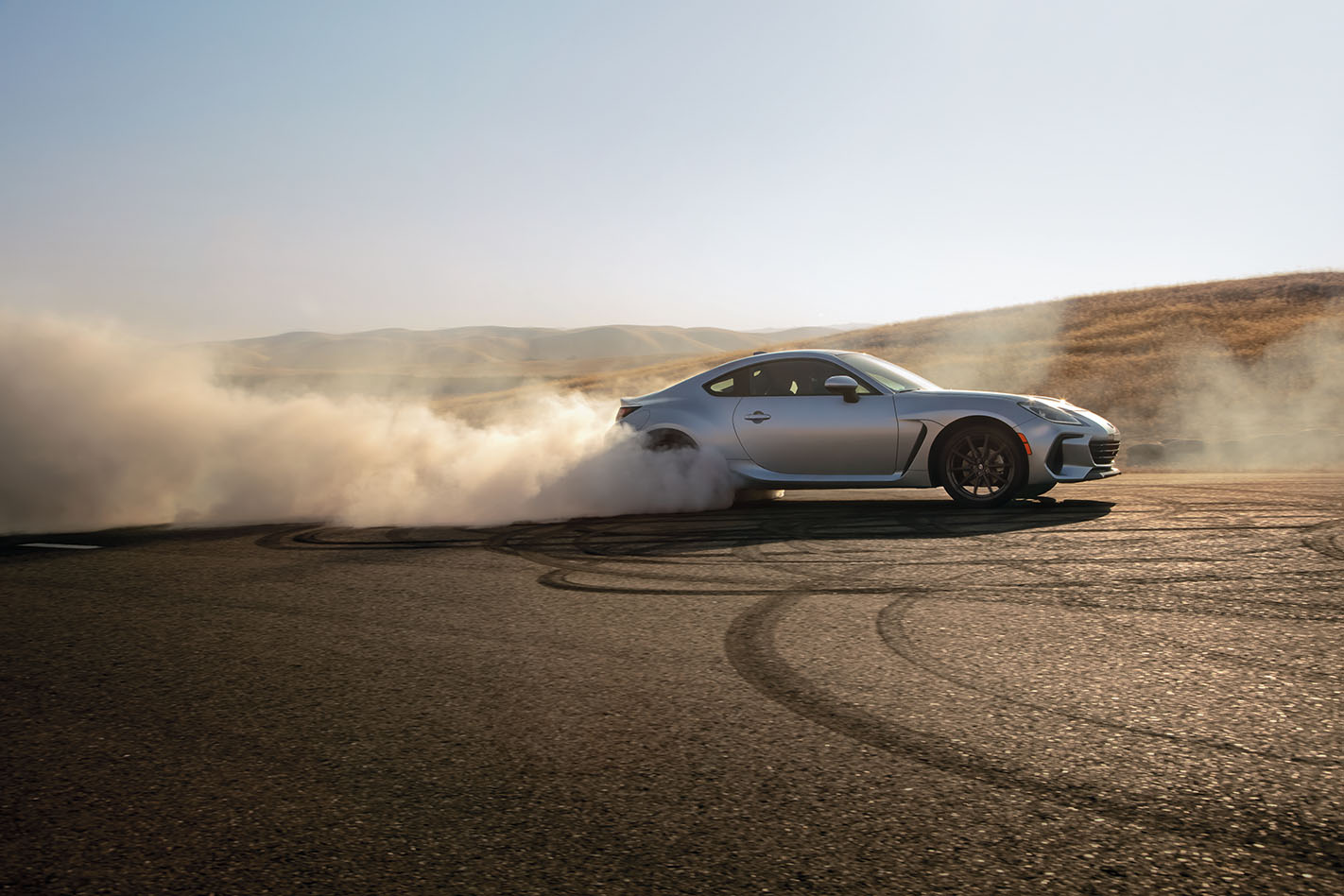
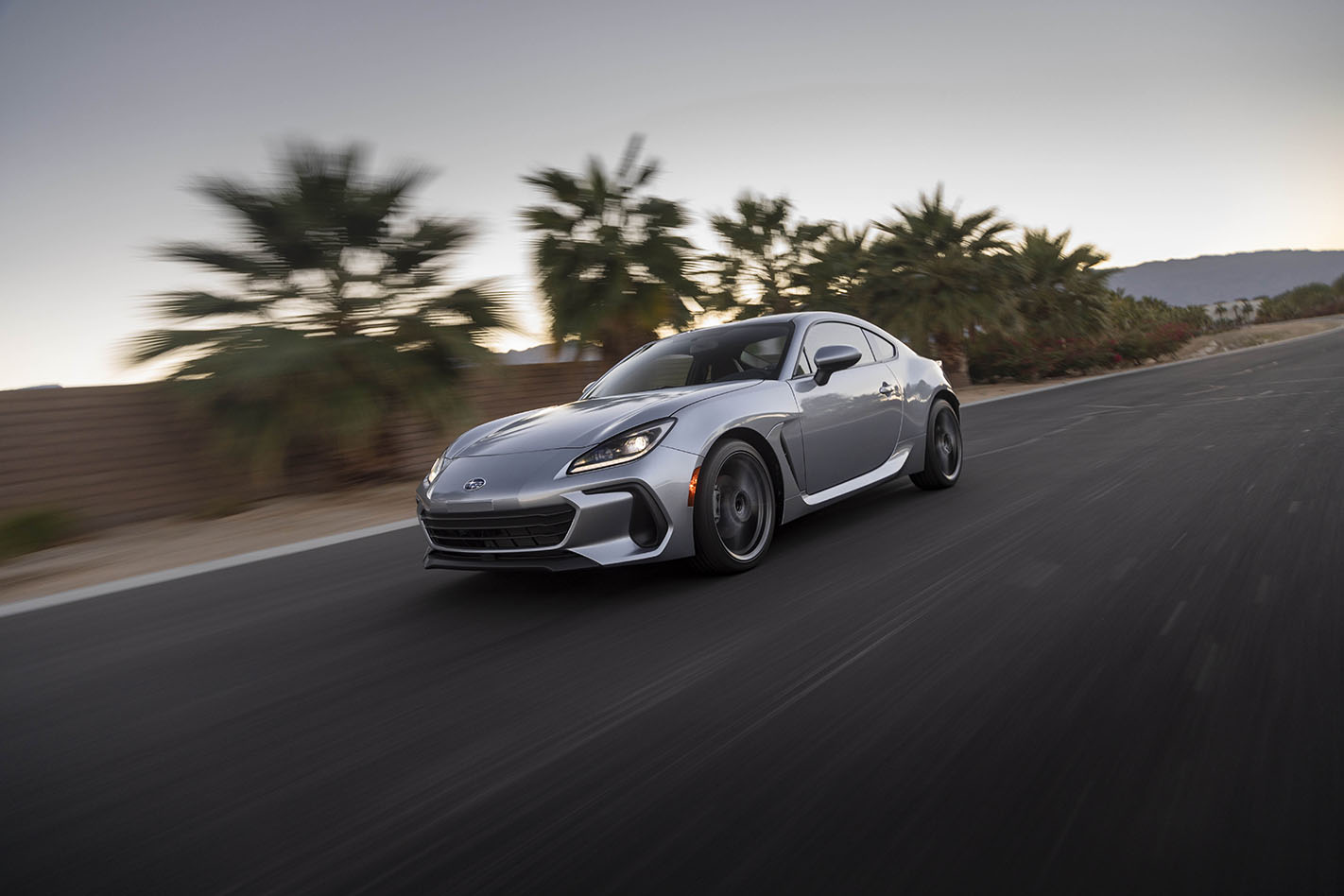
I’ll admit it. I’m left a bit puzzled by the new Subaru BRZ.
I struggled a little with the story of the original BRZ and Toyota 86, specifically the two manufacturers’ dogged refusal to bend from their original vision for the cars.
A sharp tail-off of global sales demonstrated that these models appealed to a relatively narrow slice of the car buying population. Within 36 months of a 2013 sales peak, BRZ and 86 global sales had more than halved.
By 2016 there needed to be something materially new on the horizon, with more power and capability. That never happened. Toyota and Subaru ploughed on, haemorrhaging millions.
Subaru has now shown the second-gen BRZ. Weight has crept up a little, and it packs 170kW; some 15.6 per cent more power than the original 86 from 2011.
After 10 years on sale, the Mazda MX-5 was well into its second generation with work commencing on the third-gen car. The BRZ hasn’t enjoyed that studiously manicured development.
Years of blithely ignoring the demands of the market resulted in the entire 86/BRZ project becoming a marginal call for continuation to a second iteration. Fortunately it just about eked the green light.
While I adore the engineering philosophy behind the cars – that of light weight, acuity of response, fundamental balance and a low centre of gravity – if this is not to be the very last of the line, there needs to be a radical reappraisal of the overall goals of the BRZ/86 project. In short, why notgive the public what they want?
There is certainly a space in the market below the Supra for a $60,000 220kW forced induction version of the Toyota 86.
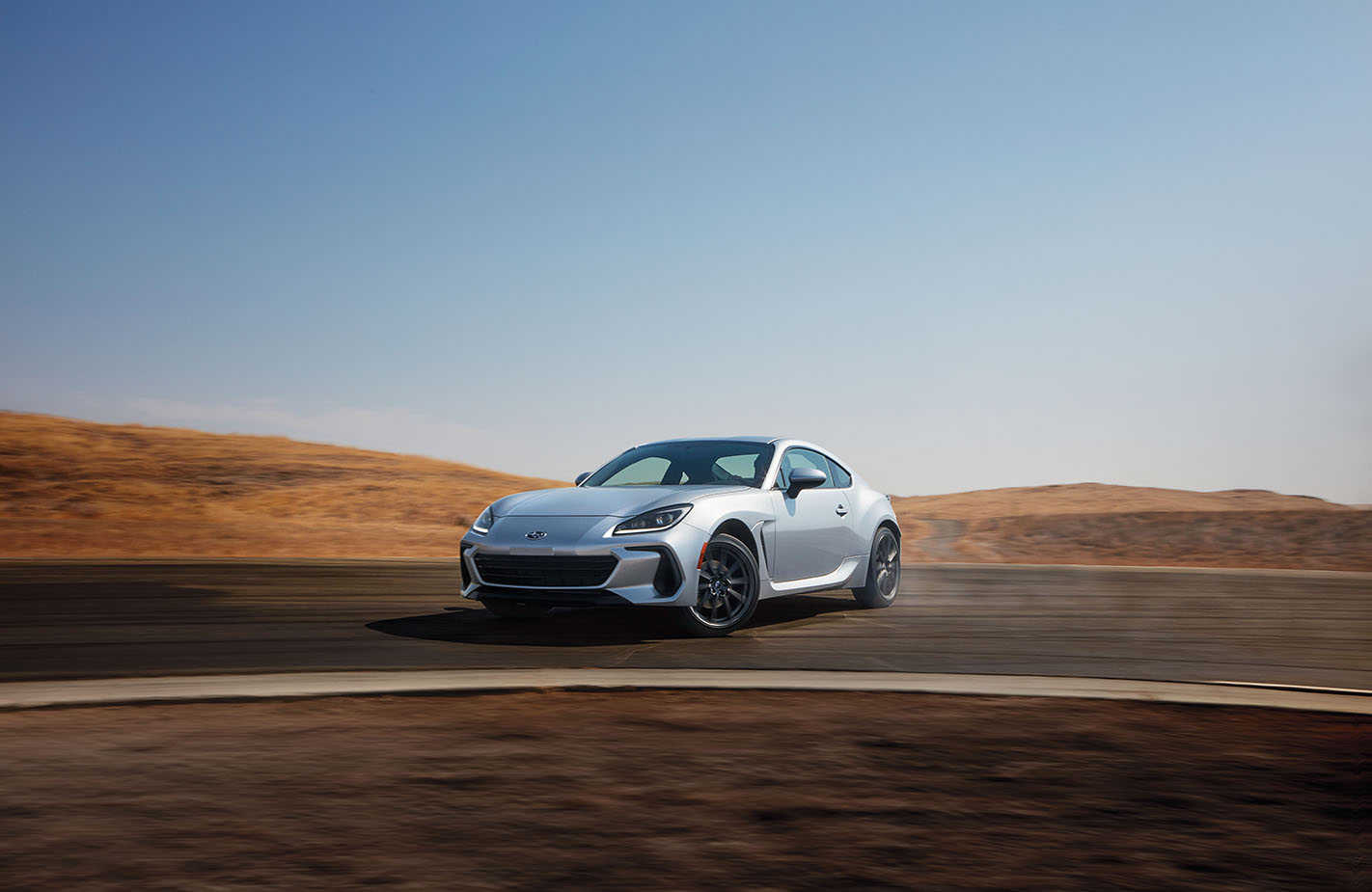
A putative Gazoo Racing – or, indeed, STI -version of the 86 would create a cohesive product walk through the range, deliver choice without diluting the purity of the naturally aspirated entry-level version and prolong the sales curve of the 86 beyond merely hardcore fundamentalists like us.
It’s also the last chance to build such a car before it’s strong-armed into hybridisation.
The notion of a car with the balance, power and torque of a Porsche 718 Cayman for half the price would be utterly beguiling, yet is entirely within Toyota and Subaru’s compass to deliver. Incremental development costs would be minimal. This vehicle could be a real game changer within the sports coupe market.
It sounds as if I’m pouring cold water on one of the few real-world sports cars being developed. I’m not. But I can’t think of too many successful businesses that got to where they are by ignoring the demands of their customers.
If Porsche is big enough to backtrack and offer a 911 GT3 with a manual gearbox once again, then surely Toyota and Subaru can learn from their errors. There’s a huge responsibility to get affordable enthusiast cars right, as a half-baked development plan only raises additional concerns that this is a moribund sector. With a smartly managed product plan, it needn’t be.
Let’s hope that pragmatism trumps dogmatism at Gunma this time round.
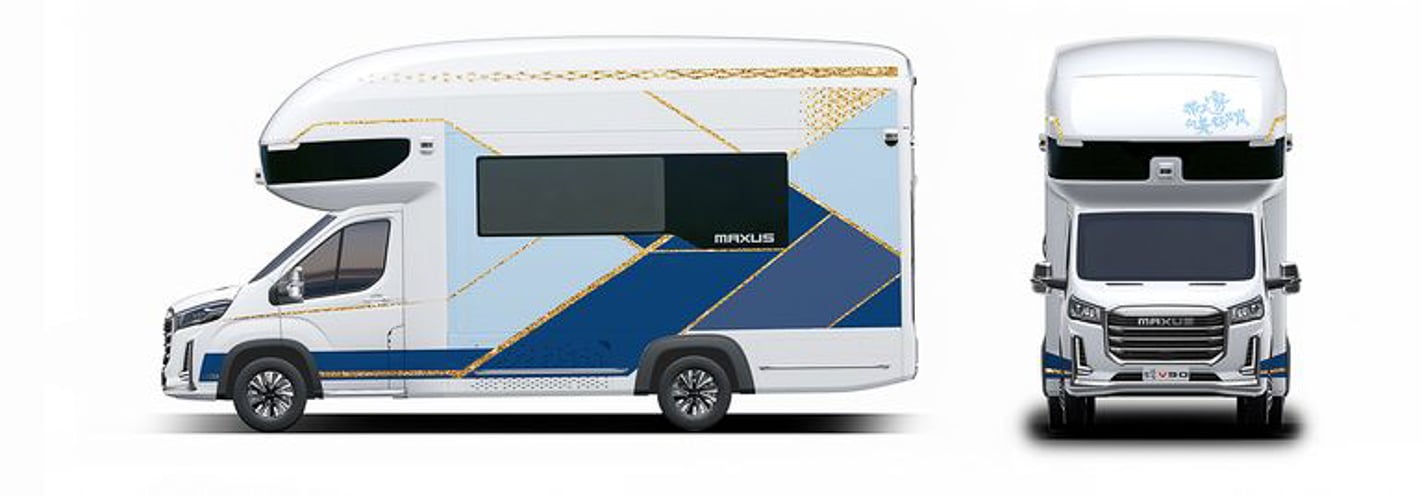
The recreational vehicle (RV) never really caught on in Australia like it did with Americans – but China might even be beating the United States at its own game with the new SAIC Maxus Life Home V90 Villa Edition.
Most RV manufacturers extend the length of the body when thinking of space, but Chinese-brand SAIC has extended upwards to create this two-storey, elevator-equipped behemoth.
In driving mode, the V90 Villa Edition looks like any other RV. But it doesn’t take long for it to transform into the ultimate getaway machine with sides that extend outwards for more floor space and a roof that pops up to reveal a second storey.
The first floor contains a living room, “luxury” bar, kitchen, and bathroom, which can be configured in a number of ways with appliances, sound systems and other entertainment.
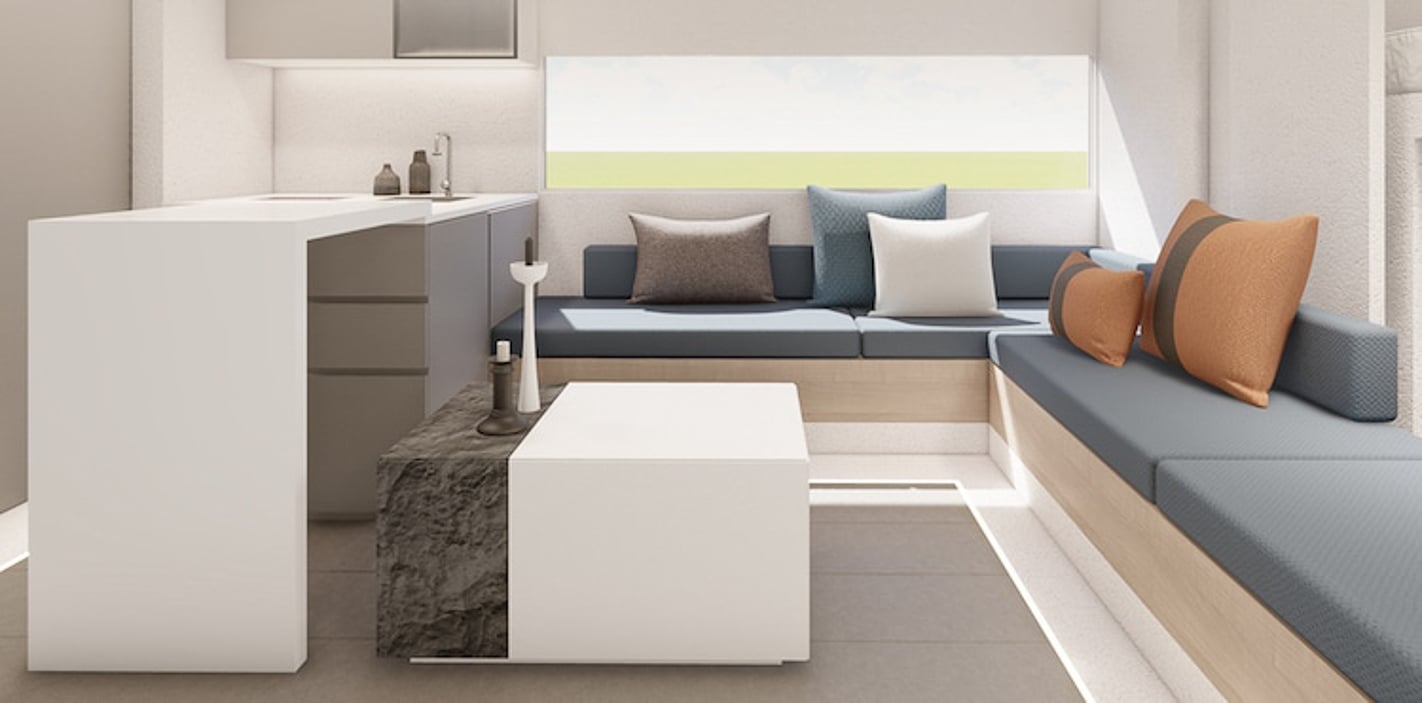
A stove, oven, fridge and sink are said to feature inside the kitchen – a primed space for any culinary creation.
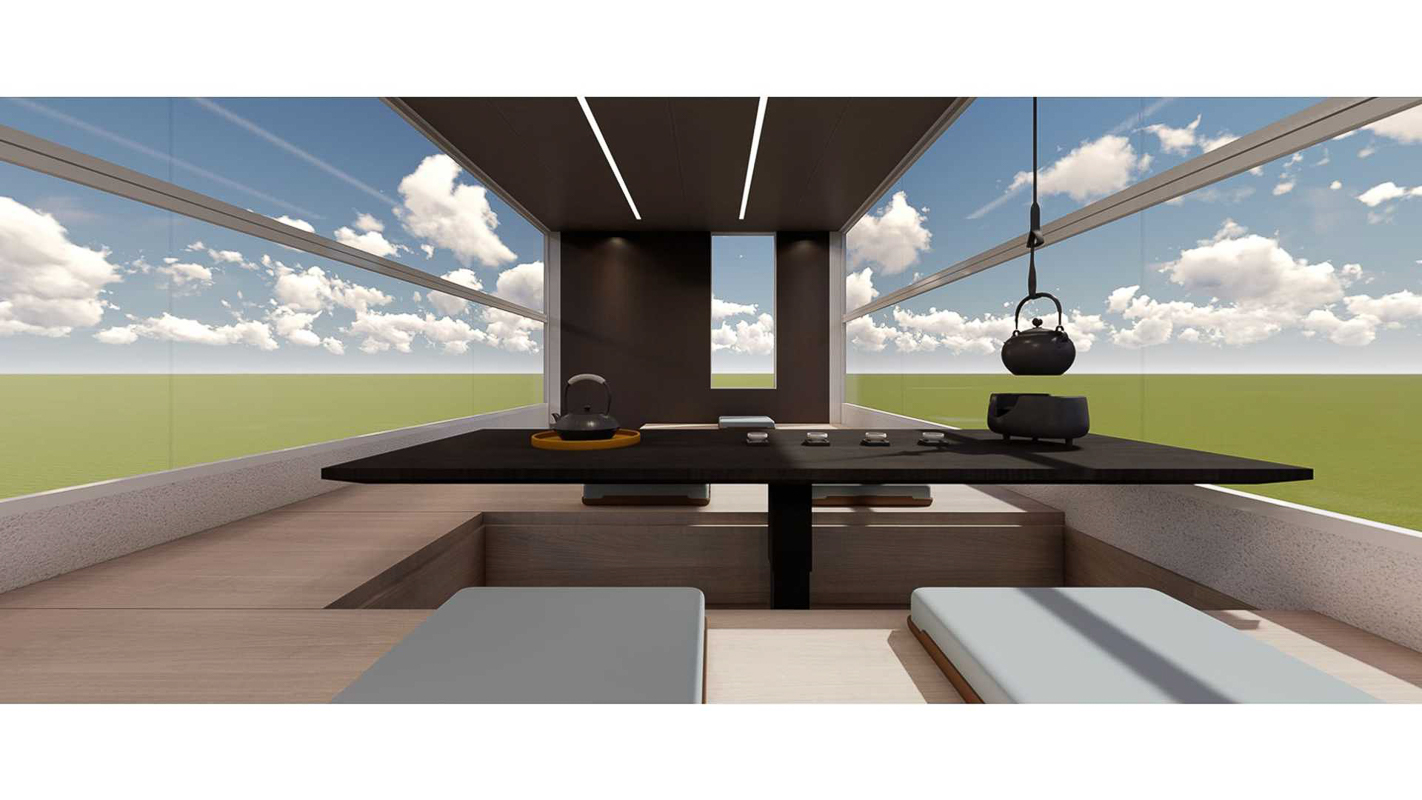
Believe it or not, according to SAIC there’s more than 30 square metres of floor space to enjoy.
According to New Atlas, the Maxus Life Home V90 Villa Edition costs the equivalent of $534,000 – but before you get too excited, it’s a China-only special.
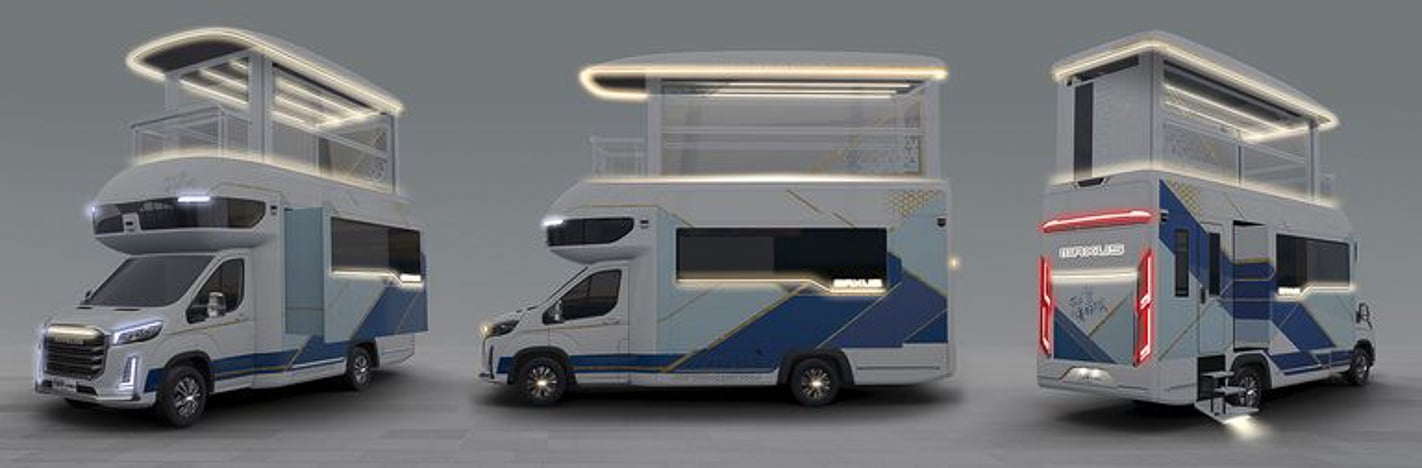
Click through the photos in this story to see more of the best RV we’ve ever come across.
A Michigan State police officer was left shocked and lucky to be alive this week, after a Tesla reportedly in Autopilot mode slammed into a stationary Dodge Charger police car on a busy Michigan highway.
The officer had been attending the scene of another accident involving a car and a deer, and his vehicle was partially blocking the right-hand lane of the highway.
The police vehicle’s lights were on and flashing, yet, allegedly, neither the car nor its 22-year-old driver made any attempt to stop before crashing into the vehicle at speed.

The driver, who wasn’t injured in the heavy collision, claimed his Tesla was on Autopilot mode at the time of the incident, and his lack of intervention would indicate he had not been paying attention in the moments before the crash.
Both vehicles were written-off in the smash, with the Charger’s rear end completely caved in and the Tesla’s front right side crushed.
The driver of the Tesla was cited for failing to avoid the crash and for driving on a suspended licence.
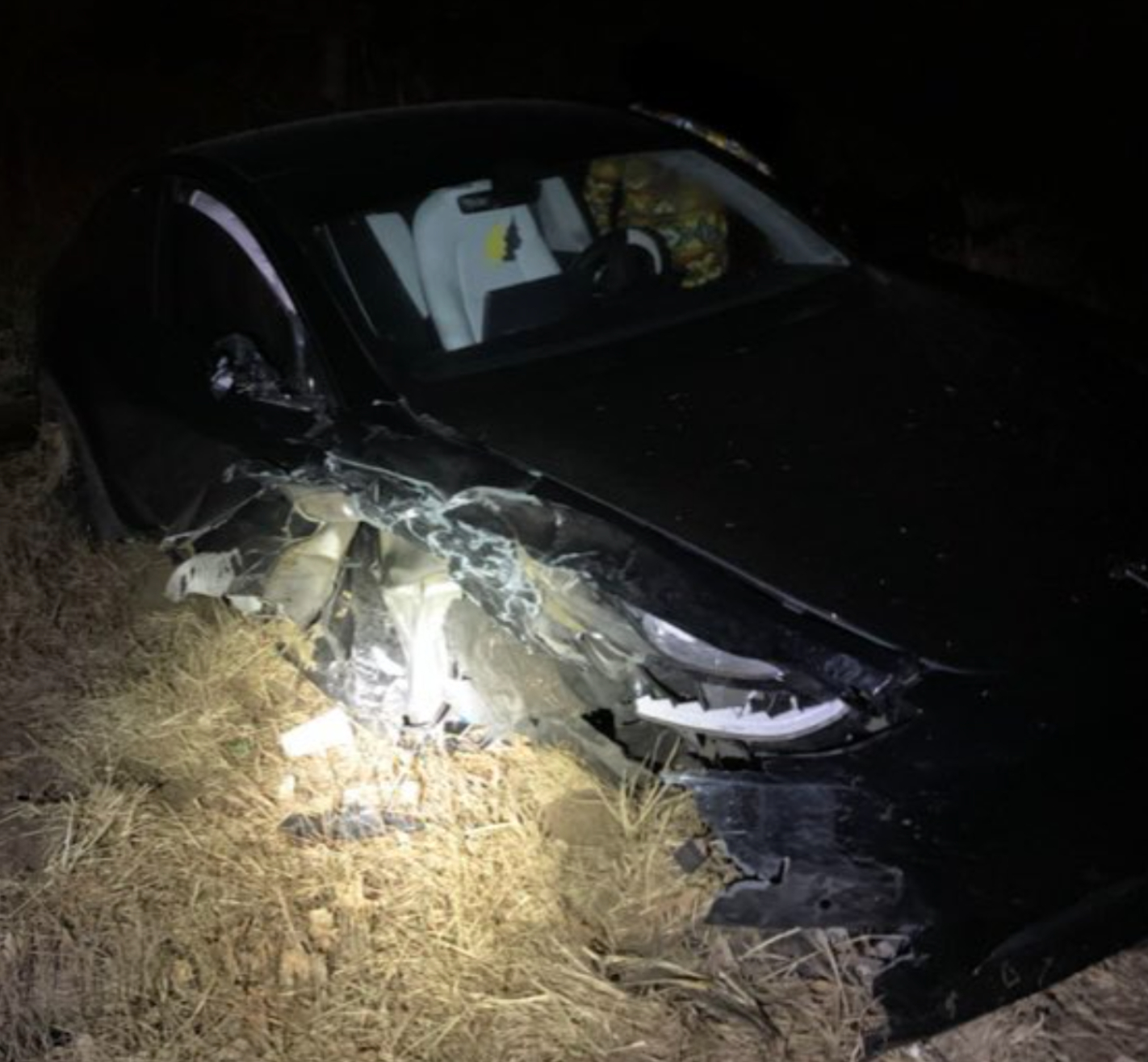
Details remain unclear as to what model the pummelled Tesla was, but judging from the crash photos it was either the Model 3 sedan or recently released Model Y mid-size SUV.
Another unanswered question is whether or not the driver of the Tesla was utilising the nascent semi-autonomous Full Self-Driving Beta software.
Tesla and its CEO Elon Musk have come under fire in recent weeks, as his FSD Beta software, despite its misleading name, is only a level two autonomous program.
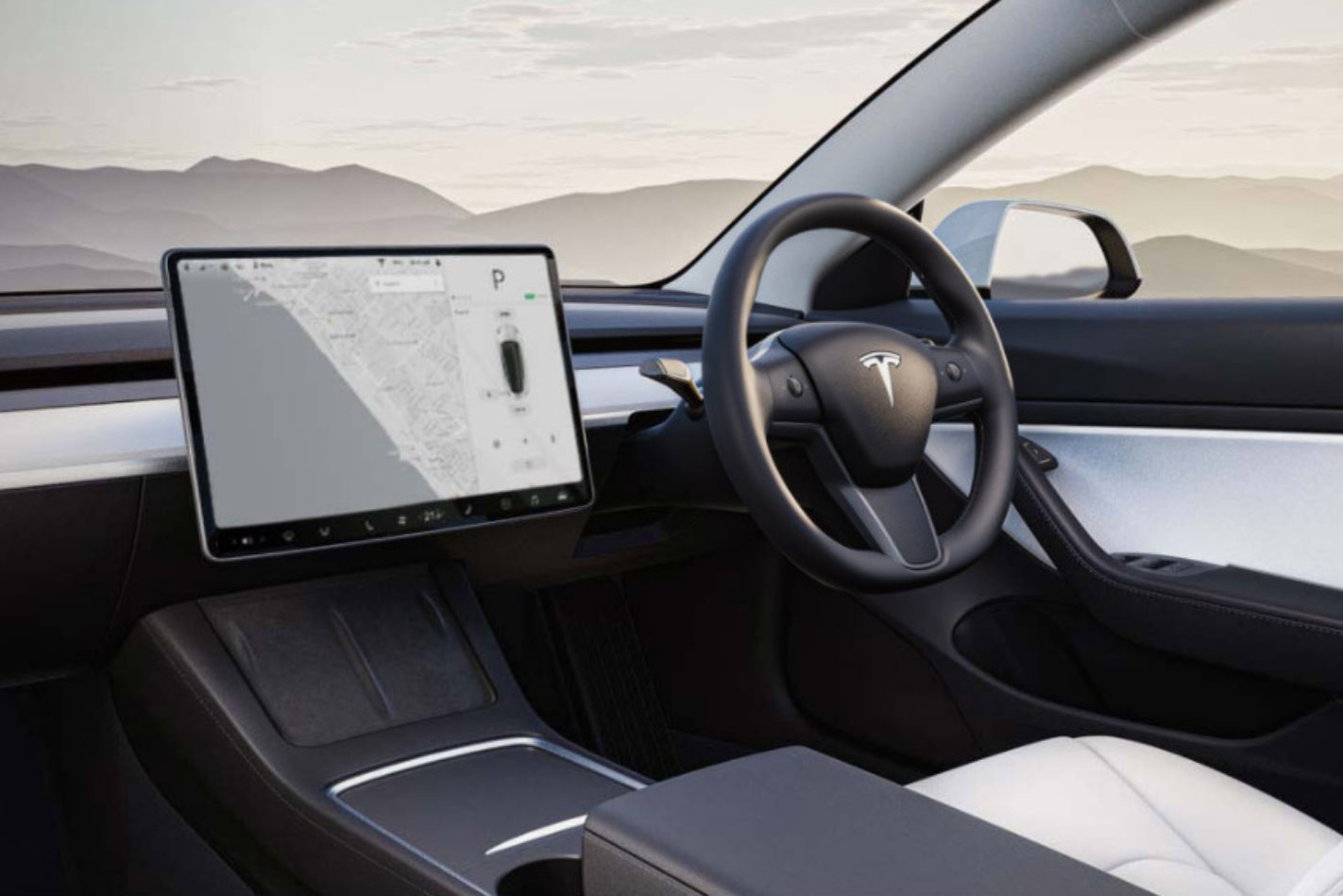
That means the vehicle’s operator is required to remain engaged and at the wheel at all times when running the system.
As WhichCar reported last week, the software’s name is so misleading that Tesla’s general counsel had to send a letter to the California Department of Motor Vehicles’ head of Autonomous Vehicles, which read:
“Currently neither Autopilot nor FSD Capability is an autonomous system, and currently no comprising feature, whether singularly or collectively, is autonomous or makes our vehicles autonomous.”
Snapshot
- Polo-based T-Cross on-sale now
- Comes with keen pricing
- CityLife introduced to split Life and Style trims
UPDATE, MARCH 4: Volkswagen has added an extra two variants to its T-Cross line-up, bringing the new CityLife trims to sit between the existing Life and Style options.
The new CityLife Bamboo Garden and CityLife Black are priced at $30,390 and serve as an upgrade in the range over the existing Life, both adding 17-inch wheels, blind-spot monitoring, dual-zone climate control, keyless entry/starting and folding mirrors at a $2000 premium compared to the base T-Cross.
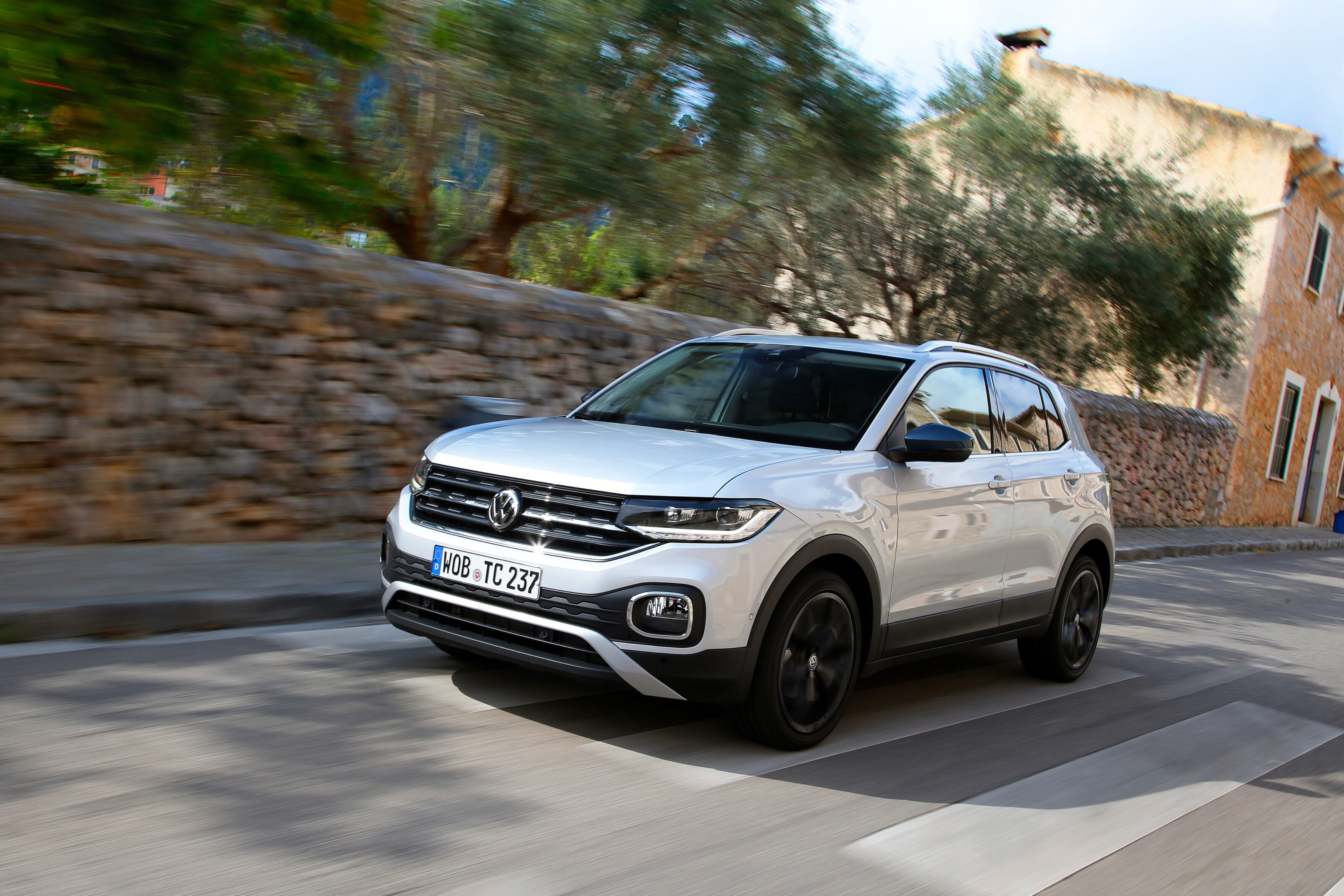
Available in two colour themes, the wheels, upholstery, dashboard and mirror highlights are aligned with the black and bamboo trim colours, both being sold at no cost for pure white paint though buyers have to pay an extra $600 for limestone grey (Bamboo Garden), deep black pearl effect (Bamboo Garden), reef blue metallic (Black) and Energetic Orange Metallic (Black).
As with the Life, the CityLife is powered by a three-cylinder 1-litre engine making 85kW and 200Nm, delivering power to the front wheels through a seven-speed dual-clutch gearbox.
Volkswagen’s Sound and Vision package can be optioned on to the T-Cross CityLife for $1900, adding a digital cockpit, Discover Media navigation system, wireless app connect and a Beats premium audio system.
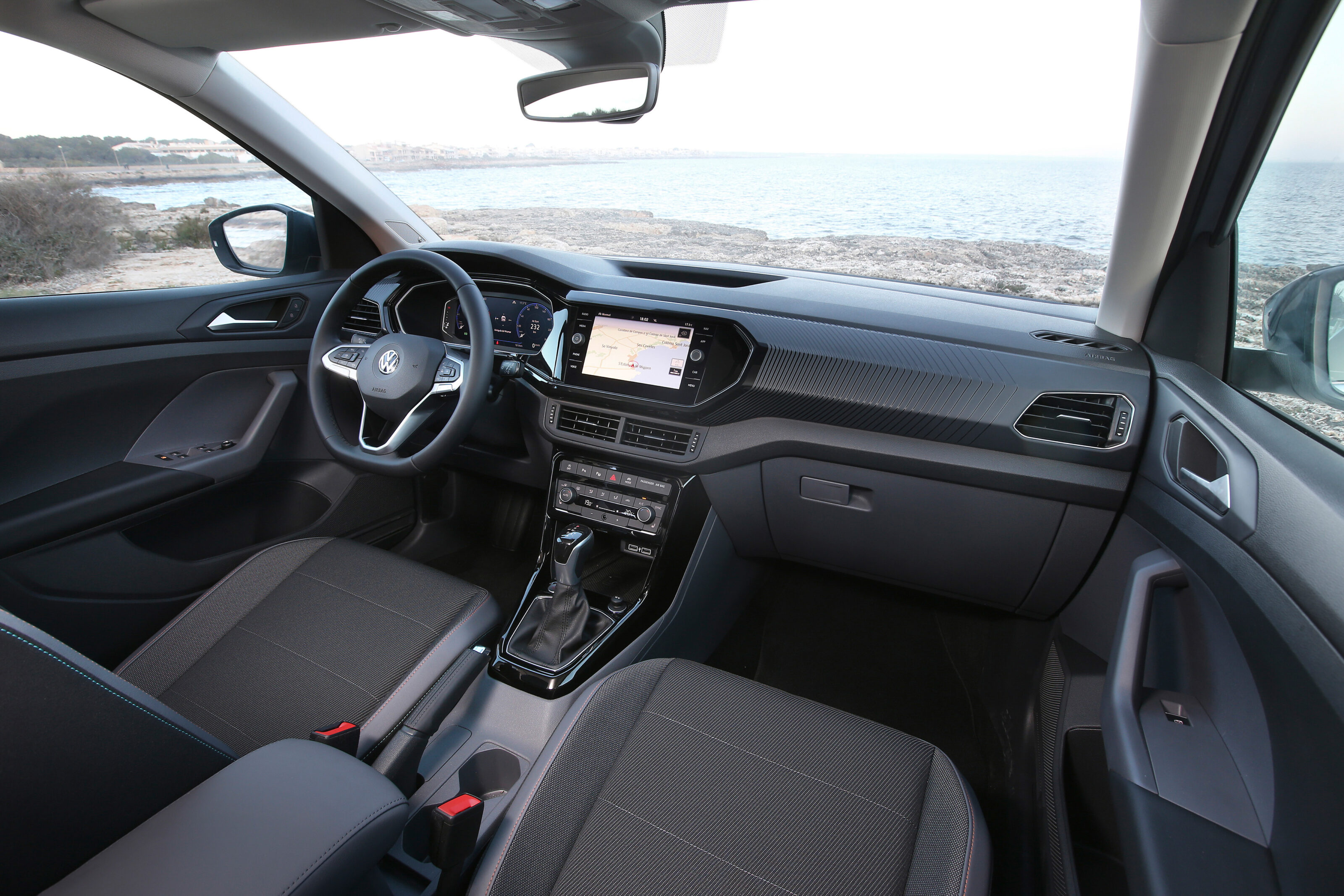
MAY 8, 2020: Volkswagen will, at long last, join the compact crossover party this April, introducing its smallest SUV, the T-Cross, to Australian audiences.
The company has been on the sidelines for a few years now, watching the likes of the Mitsubishi ASX, the Mazda CX-3 and the Toyota C-HR joined by entrants from Kia (Seltos) and Hyundai (Kona) while it waited.
Its opening gambit, however, is a strong one, with the entry-level 85TSI Life kicking things off at $27,990 plus on-road costs, offering a strong mix of modern tech and sensible spec.
Powered by an 85kW/200Nm three-cylinder turbocharged engine backed by a seven-speed dual-clutch gearbox, the T-Cross 85TSI Life comes standard with 16-inch alloys, inductive phone charging, four USB charging points, an 8.0-inch multimedia system with Apple CarPlay and Android Auto, AEB with pedestrian and cyclist detection, parking sensors with manoeuvre braking (helps to avoid obstacles under 10km/h), lane-keep assist, automatic headlights and wipers and more.
Step into the $30,990 (plus ORC) 85TSI Style, and the T-Cross gains 17-inch rims, LED headlights with automatic high beam assist, adaptive cruise control, blind-spot monitor, dual-zone air, keyless entry and parking assist.
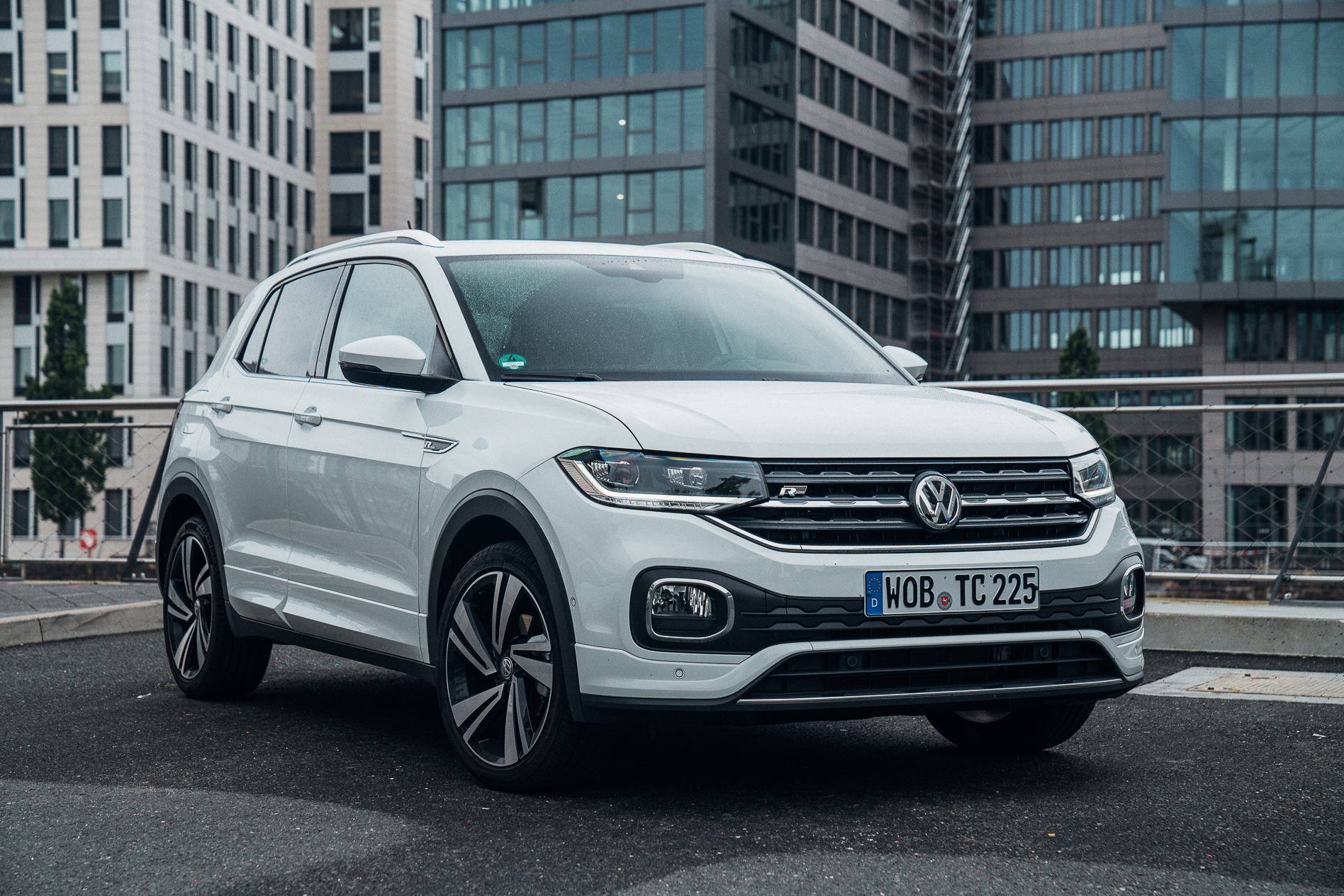
A more powerful Style variant is also en route, with its price yet to be confirmed. It will offer 110kW and 250Nm from a 1.5-litre four-cylinder turbocharged petrol engine, and score 18-inch alloys, tinted rear glass and unique cloth trim.
VW has also bundled together option packs across the grades. Adaptive cruise control, blind-spot monitoring with rear cross-traffic alert and parking assist can be added to the Life for $1200, while a Sound and Vision package comprising a digital dash, satellite navigation and a 300w audio system can be added across the two grades for $1900.
R-Line packages can be also added to both Style variants, but these kits are restricted to items like R-Line badging, 18-inch rims, scuff plates and pedal pads in alloy, bespoke cloth upholstery and a sports steering wheel, rather than bodykit add-ons.
Paint prices range from zero for white and ‘petrol’ blue, $600 for metallic orange, grey, silver or blue, and $800 for metallic turquoise.
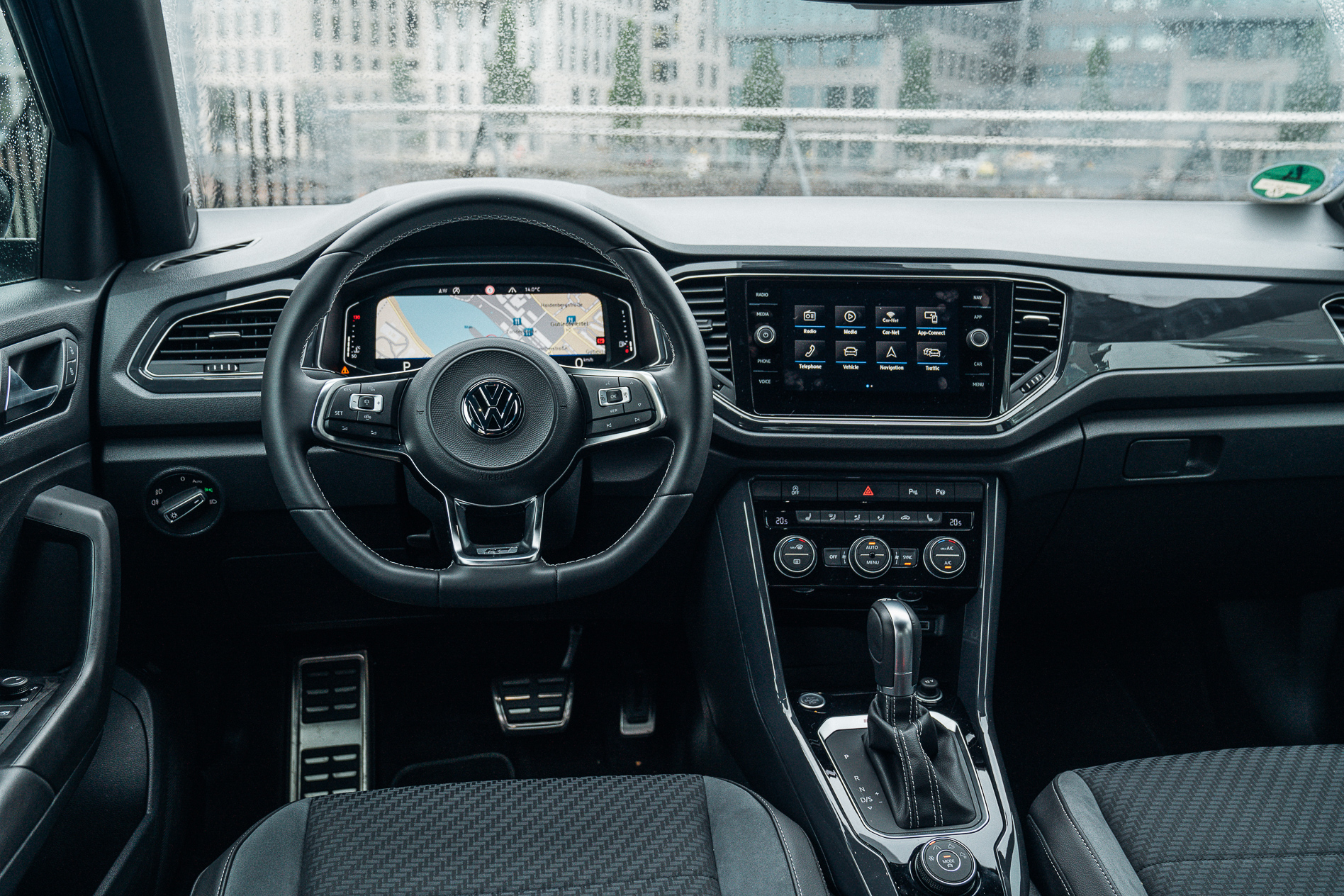
“The T-Cross takes Volkswagen into new territory,” says the brand’s director of customer experience and Marketing and Jason Bradshaw.
“Previously Japanese and Korean brands have had this segment to themselves. To say that none can touch the T-Cross for technology is no empty boast.”
Based on the same platform as the Polo, the T-Cross is, at 4110mm long (120mm shorter than its T-Roc sibling), which is smaller than the category-leading Mazda CX-3.
The second row of seats in the T-Cross can slide 140mm fore and aft, with 385L of luggage space available behind the seats with the seats in the most rearward position, according to Volkswagen.
While this figures already tops the cargo space of key rivals like the Subaru XV, space grows to 485 litres with the seats slid forward, giving it arguably more cargo space than all of its potential rivals, including the voluminous Honda HR-V (411 litres), Mitsubishi ASX (393 litres) and Hyundai Kona (361 litres).
The T-Cross will be built in Spain alongside the newest Polo.
BMW’s CEO Oliver Zipse says his brand isn’t done with the internal combustion engine (ICE) yet – a declaration that comes in stark contrast to German rival Audi, which will end development of new combustion engines immediately,
Both revelations were made this week, but the latter was the most surprising as an ever-increasing number of automakers including Jaguar, Volvo and Bentley set targets to go all-electric by 2030.
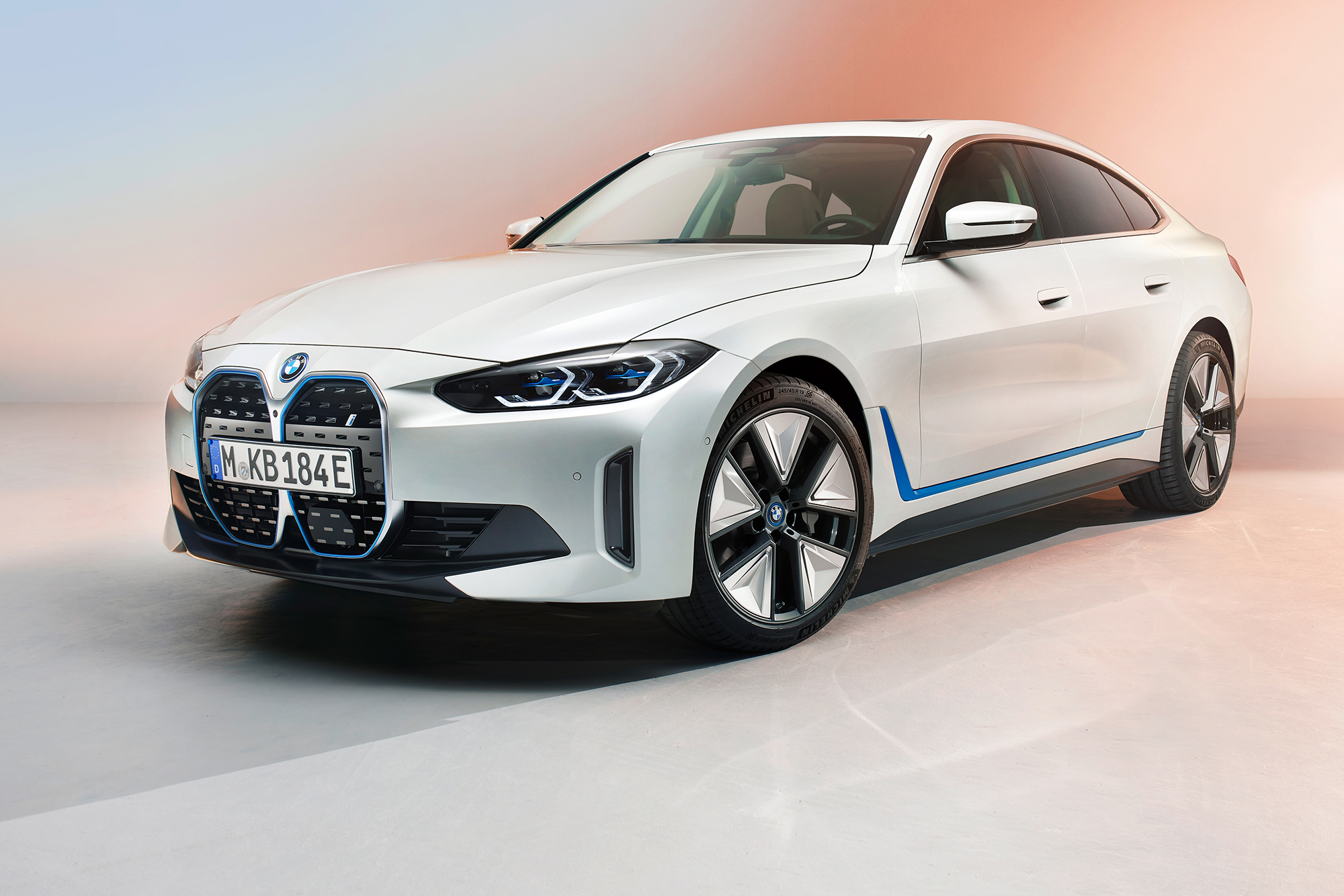
According to a tweet by CNBC journalist Phil Lebeau, BMW CEO Oliver Zipse claimed “Demand for ICE vehicles will remain robust for many years to come.”
This comes a day after Audi CEO Markus Duesmann cited tightening European emissions regulations as the reason Audi will no longer develop any new combustion engines. That said, it will continue to update its existing fleet.
Duesmann also stated that Euro 7 standards, due by 2025, “have little benefit for the environment.”
BMW sees reason to continue its research and development into combustion engines, however, despite intentions for sub-brand Mini to go electric-only from 2030.
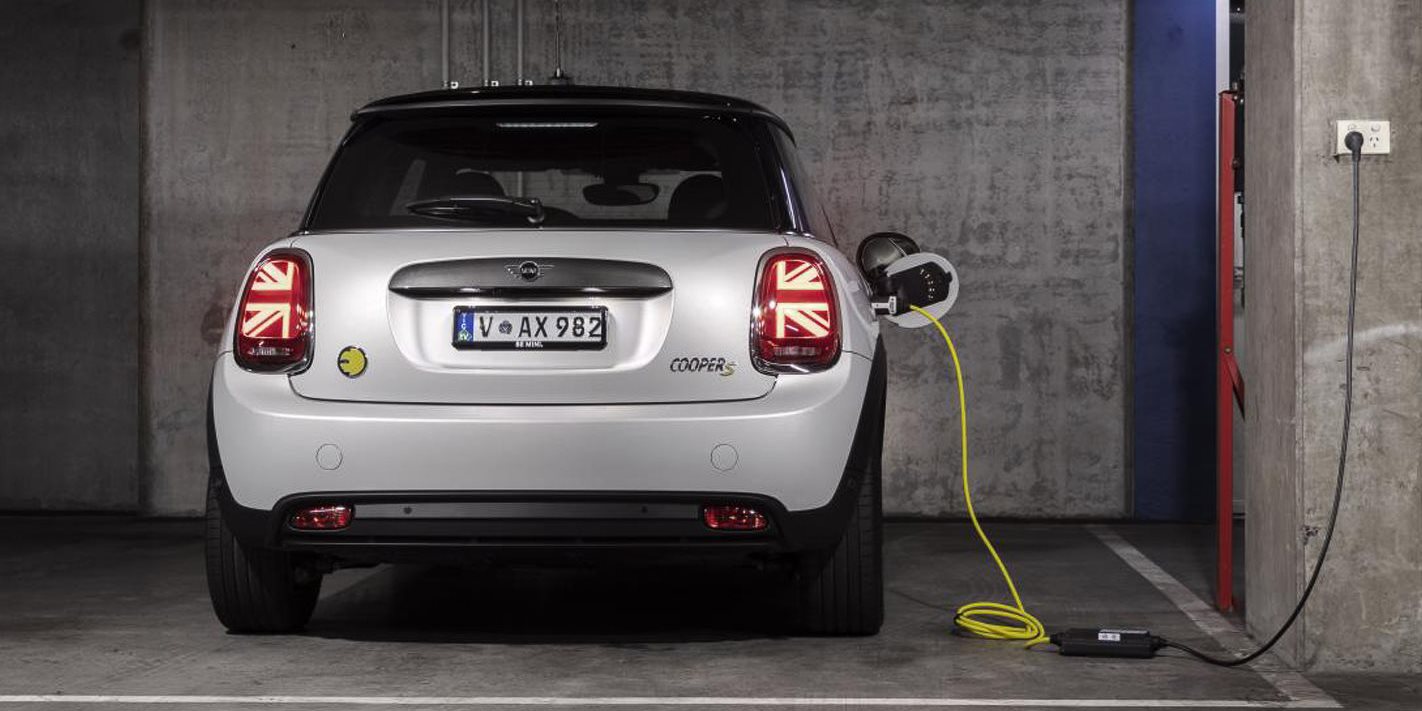
That announcement was made during BMW’s annual group report this week. While BMW says it won’t abandon petrol and diesel engine development for now, it’s obvious the brand sees the future as electric.
BMW expects electric models to account for at least half of its annual global sales by 2030. The brand will also move its ICE production to its Austrian outpost away from its current location at BMW’s Munich headquarters. Electric powertrain development will take its place.
Other EV-related announcements included BMW launching the electric i4 sedan three months ahead of schedule, over 90 per cent of BMW’s models will have a full-EV variant by 2023 and deliveries of full EVs will grow by “well over 50 per cent” year-on-year on average by 2025.
“I’ve got $100K to spend on something fun. I don’t like open tops and I don’t want to be landed with a heap of depreciation. I’ve narrowed it down to used 718 Caymans and M2 Competitions. Help a brother out here.” -JAMES R.
Solid choices, James. These are two of the very best performance coupes launched in recent years and choosing between them is tough.
They’re not alike in the way they feel though. The Porsche is an altogether more finessed thing and I reckon that the 2.0-litre turbo engine is a good ‘un and suits the car extremely well.
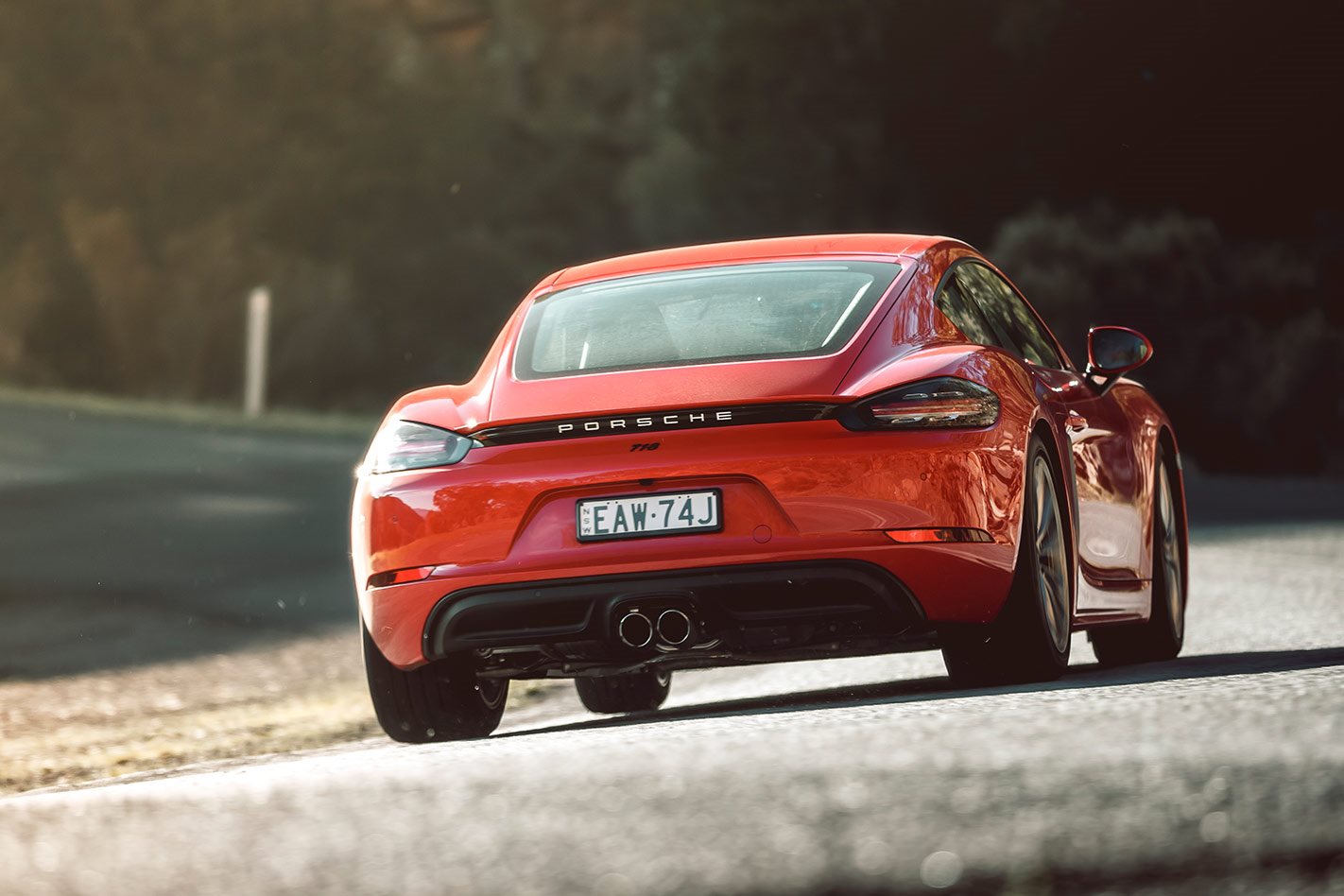
No, it doesn’t sound like the BMW’s S55 engine at the top of the rev range, but it makes far smarter use of the car’s gearing and natural pace than the more recent 4.0-litre atmo units. Cross country, I think that even though the Cayman’s a hefty 81kW down on the M2, there’d be little in it in terms of pace.
Much of this comes down to what you prioritise, whether you prefer the more exotic, precise feel of the Cayman or the arguably more exciting and slightly thuggish appeal of the M2.
If you choose to measure the cars purely in terms of the grin they put on your face as they go down a road, the BMW has to win. It’s quicker in a straight line, more dramatic in its power delivery and has that kind of infectious nature that makes you wonder how something like that can still be legal.
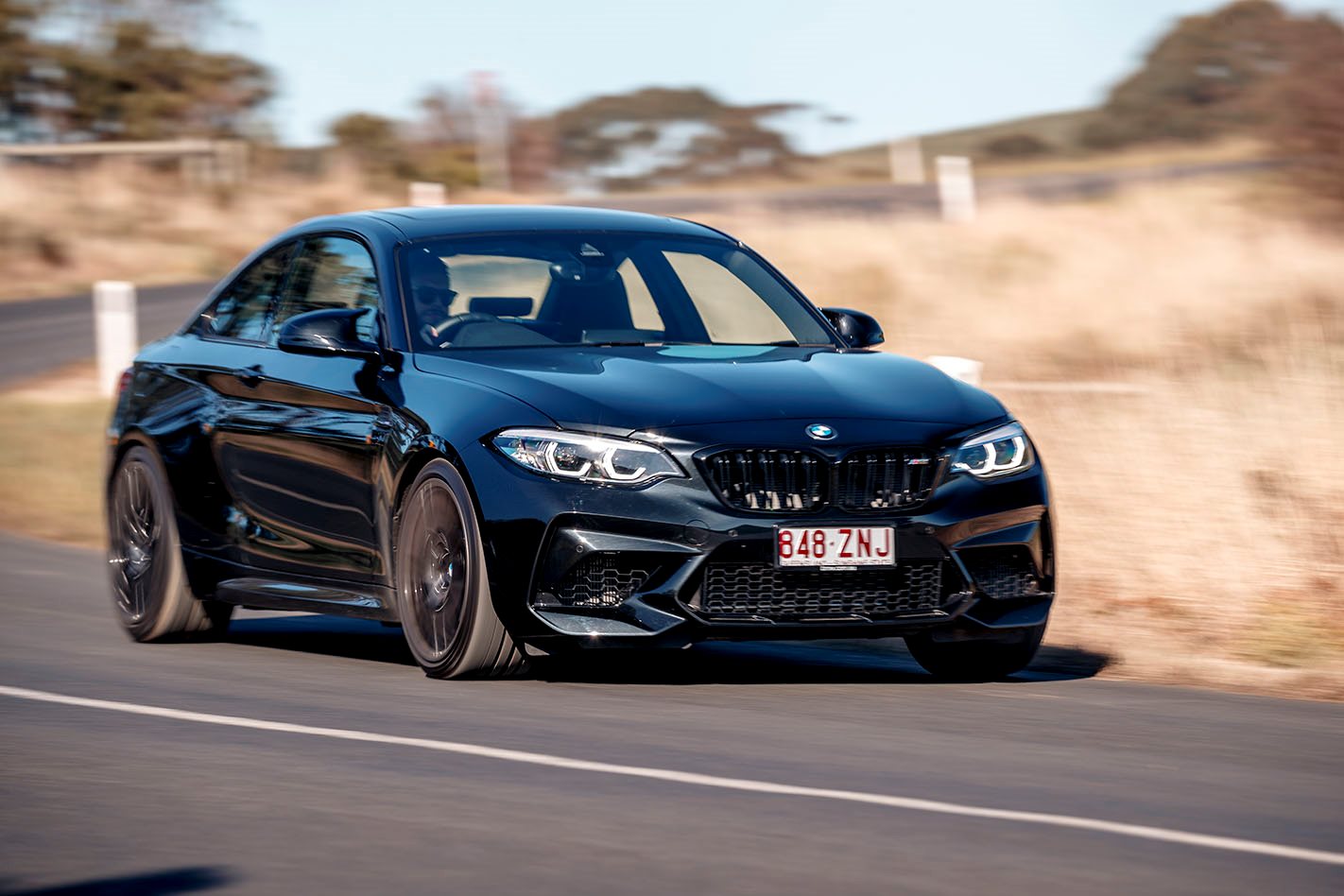
The Cayman could well offer a longer-lasting rosy glow of satisfaction due to the fact that it’s a specialist mid-engined sports coupe, and not the hotted-up version of a more proletarian shape.
Residuals will also be better for the Porsche, so it’s a genuinely tough decision.
For me, the BMW just squeaks it. And as good as the auto is, I suspect you’re going to choose one with three pedals.-AE
2017 Porsche 718 Cayman v 2018 BMW M2 Competition Specs
Engine: 1988cc, flat-four cylinder, DOHC, 16v, turbo | 2979cc, straight-six, DOHC, 24v, turbo Power: 220kW @ 6500rpm | 301kW @ 5250-7000rpm Torque: 380Nm @ 2150 – 4500rpm | 550Nm @ 2350 – 5200rpm Weight: 1335kg | 1625kg 0-100km/h: 5.1sec (tested)| 4.3s Price: $95,000 | $93,000
What is the Subaru XV Hybrid S?
Subaru recently gave the second-generation XV small-SUV mid-life update that brought a minor facelift, additional kit, retuned suspension and a higher-spec hybrid version called the Hybrid S that shares all the features with the petrol XV 2.0i S but has the more expensive hybrid powertrain.
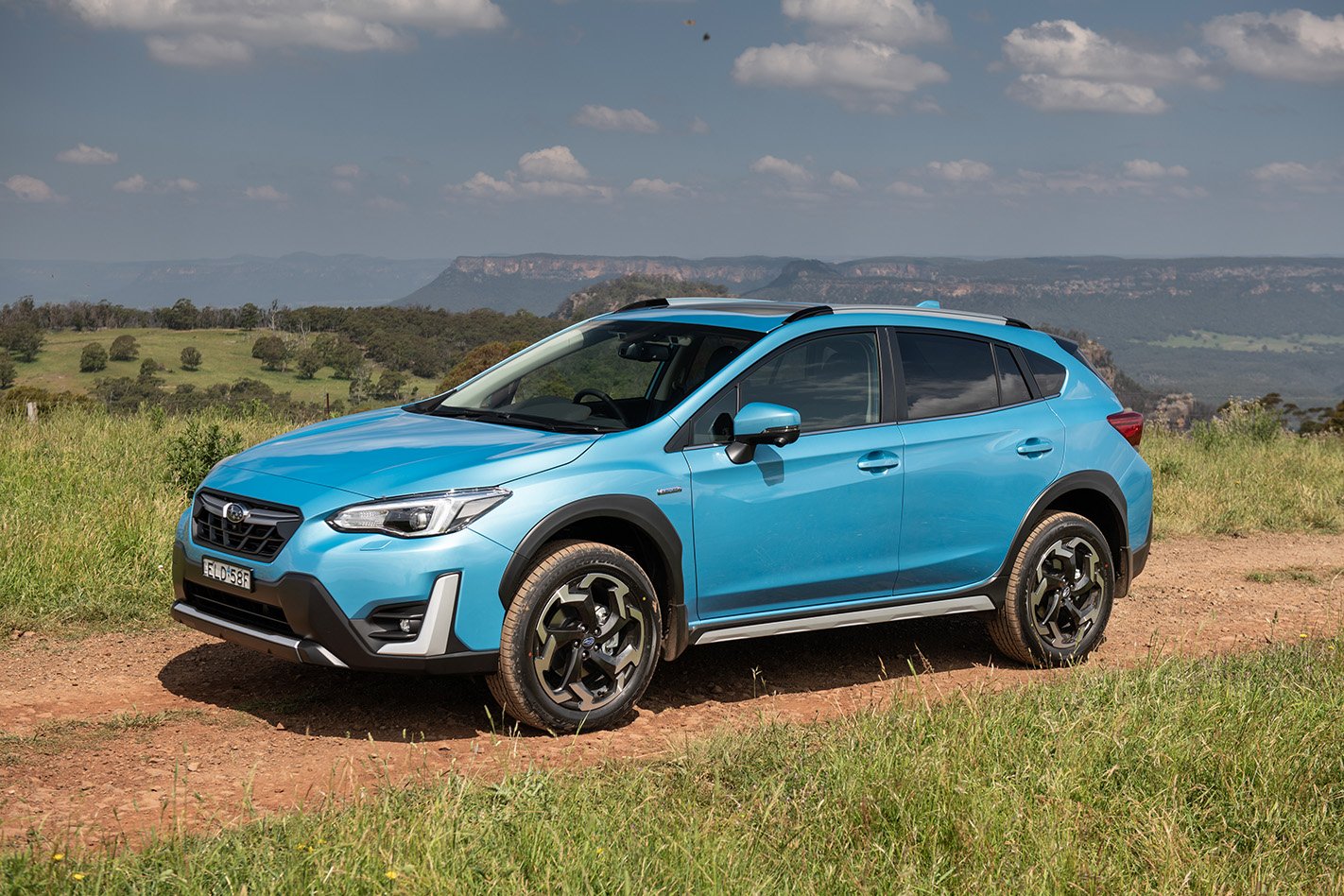
Priced at $40,790, or $45,450 driveway, the new XV range-topper costs $3500 more than the 2.0i-S and $5300 more than the lesser-equipped XV Hybrid L which has the same powertrain.
It features the same 2.0-litre petrol engine as the petrol-only XVs, but links it to a 12.3kW/66Nm electric motor that provides a bit more oomph from a standing start. It also allows the XV to coast on lithium-ion battery power alone, resulting in modest fuel savings.
With sharp looks that convey a sense of adventurism, the XV fits the ‘sports utility’ description more than most. Its off-road capable AWD running gear makes it initially pricier than most of its upper-spec hybrid crossover rivals, which include Toyota Yaris Cross Urban AWD ($37,990) and Toyota C-HR Koba ($37,665).
What is the Subaru XV Hybrid S like to live with?
The Hybrid S brings additional features over the mid-spec XV Hybrid L including leather-accented seats, satellite navigation, reverse automatic braking, blind spot-monitor, front-view monitor, 18-inch alloy wheels (up from 17s) and a sunroof.
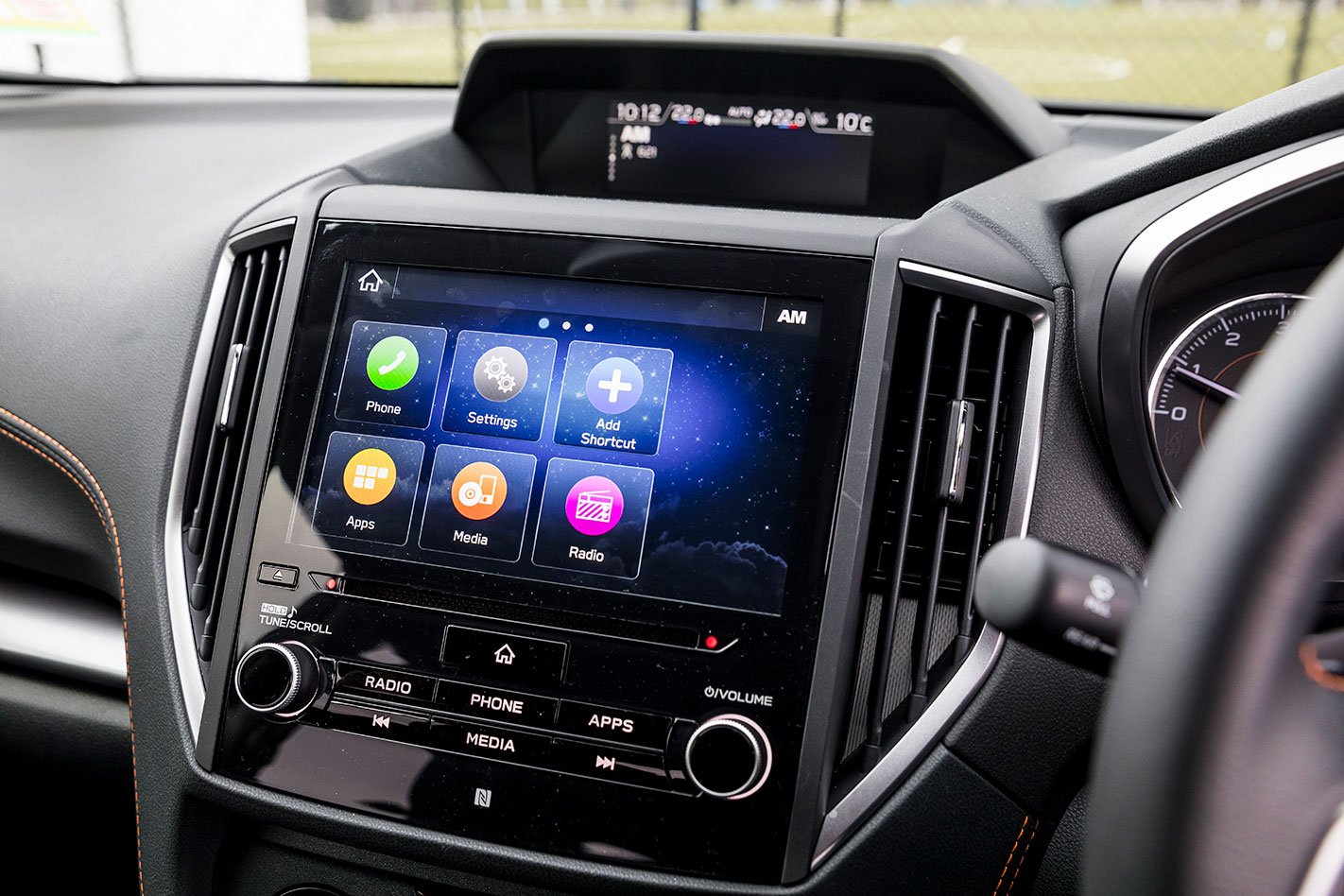
Powertrain aside it’s otherwise identical to the XV 2.0i-S with a premium interior that came through the recent facelift untouched, but still looks slick and has a quality feel to it with soft-touch surfaces highlighted by attractive contrast-stitching that also adorns the seats.
The seats themselves are firm but comfortable, with the driver benefitting from eight-way power settings to help find a good driving position and both front seats are heated. That said, I prefer the woven cloth seats in cheaper XV variants.
Rear-seat space is great for a small SUV with plenty of leg and shoulder room to keep two big adults quite happy. The stadium-style seating provides good forward vision as well, and there are vents for heating and cooling.
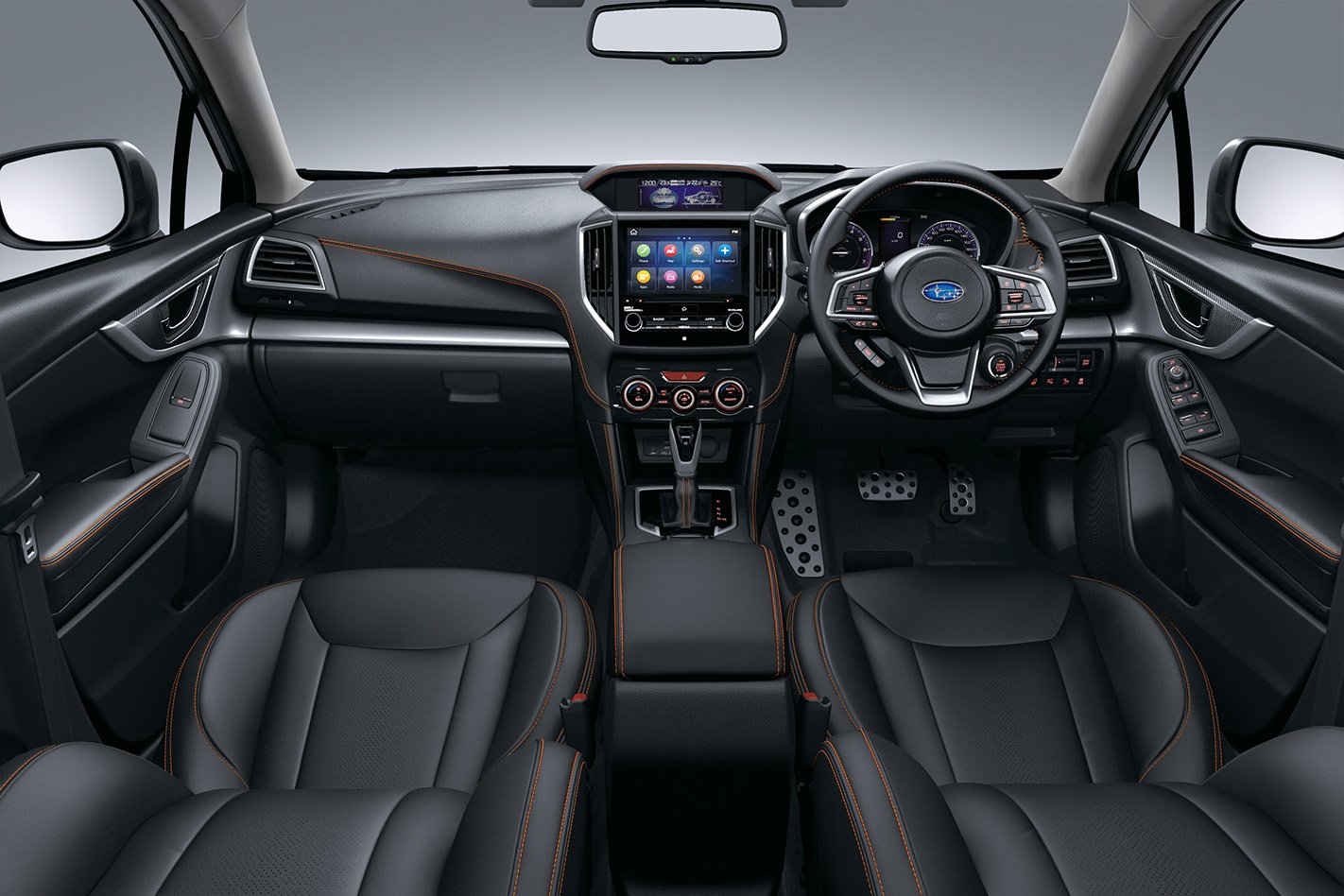
Cabin storage includes a smallish centre console bin with stitched leather-trimmed lid and a front centre tray to hold a phone. There are also two front centre cup holders, two rear cup holders in the fold-down centre armrest, bottle holders in each door bin and map pockets behind the front seats.
The XV hybrids have a smallish 340-litre boot space, which is more than the 310-litre boot in the petrol versions. However, the extra size is due to batteries taking up space under the boot floor meaning there is nowhere to put a spare wheel. The petrol XVs come with a full-size spare, which is particularly handy if you get a flat when driving the XV off the bitumen, but hybrid versions have to make do with a less convenient tyre repair kit.
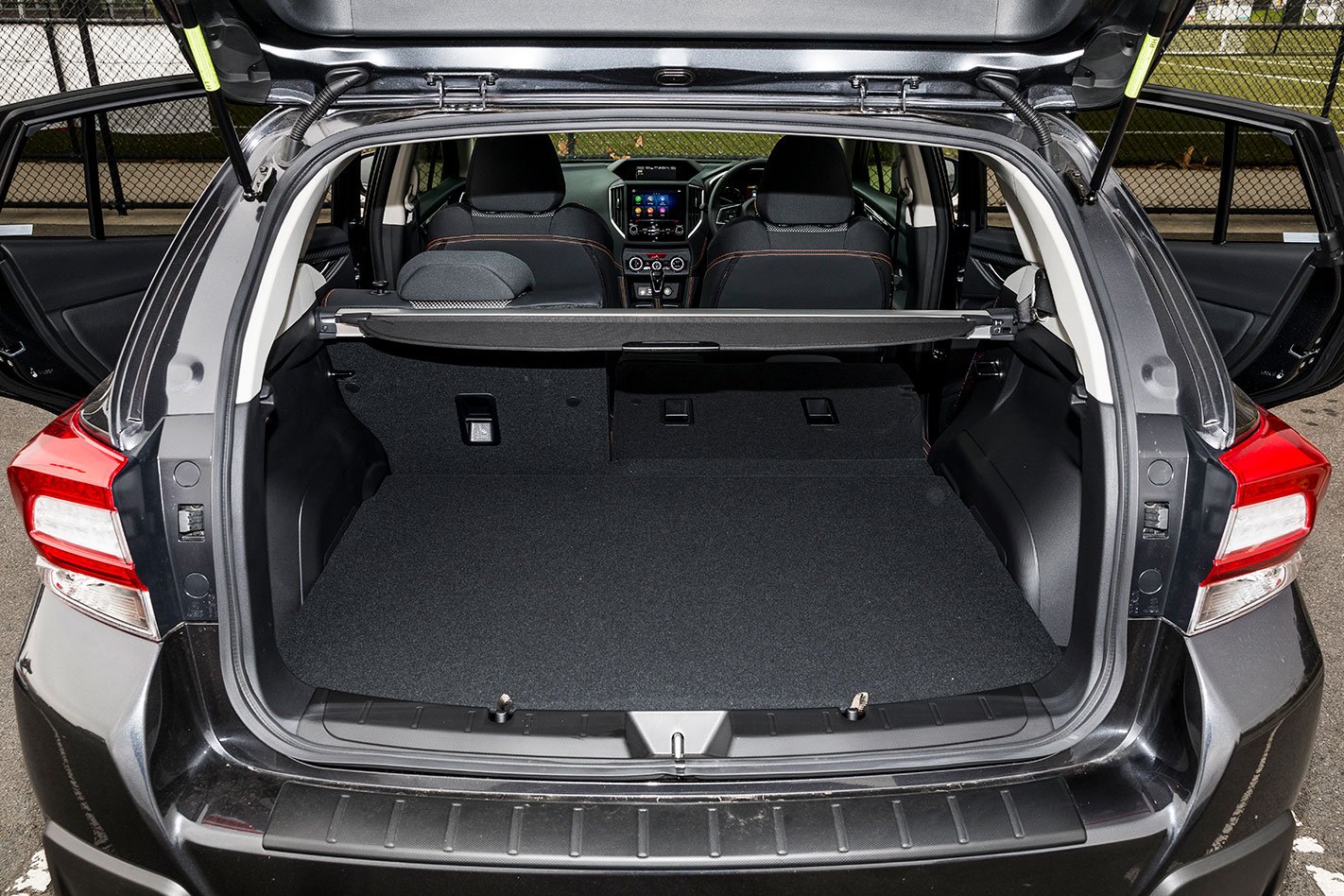
The rear seatbacks split 60:40 to extend load space up to 765-litres.
Another hybrid compromise is reduced towing capacity, partly caused by the hybrid versions weighing around 100kg extra resulting in braked towing capacity reduced from 1400kg to 1270kg. Unbraked towing capacity is the same across all versions at 650kg.
Unfortunately, these compromises aren’t really rewarded with significant fuel savings, the XV hybrids having an official combined fuel consumption rating of 6.5L/100km which is just 0.5L/100km less than petrol versions. CO2 emissions meanwhile are reduced from 159g/km to 147g/km.
There are better fuel savings if you mostly drive around town, with the hybrid’s official urban consumption being 7.5L/100km compared to the petrol’s 8.8L/100km.

The XV only requires 91 RON unleaded petrol when filling the 48-litre fuel tank, which is 15 litres smaller than petrol versions.
All Subaru XVs come with a five-year warranty with no limit on kilometres travelled for private use. There is also an eight-year/160,000km warranty on the hybrid’s lithium-ion batteries.
Service intervals are 12 months or 12,500km, which is the same as the petrol versions. Subaru offers capped-price servicing for the first five years, which includes a free check-up after the first month with subsequent annual servicing priced at $341, $591, $347, $797, and $353 respectively.
What is the Subaru XV Hybrid S like to drive?
The Subaru XV is a high-riding wagon version of the Impreza and all variants, including the hybrids, are all-wheel drive and share the hatchback’s 2.0-litre four-cylinder horizontally opposed ‘Boxer’ petrol engine that’s coupled with a CVT auto.
Because the XV weighs a little more than the Impreza, its engine has to work a little harder. You won’t really notice this in most situations but things do get a little loud and sluggish when putting the foot down to overtake or join freeway traffic.
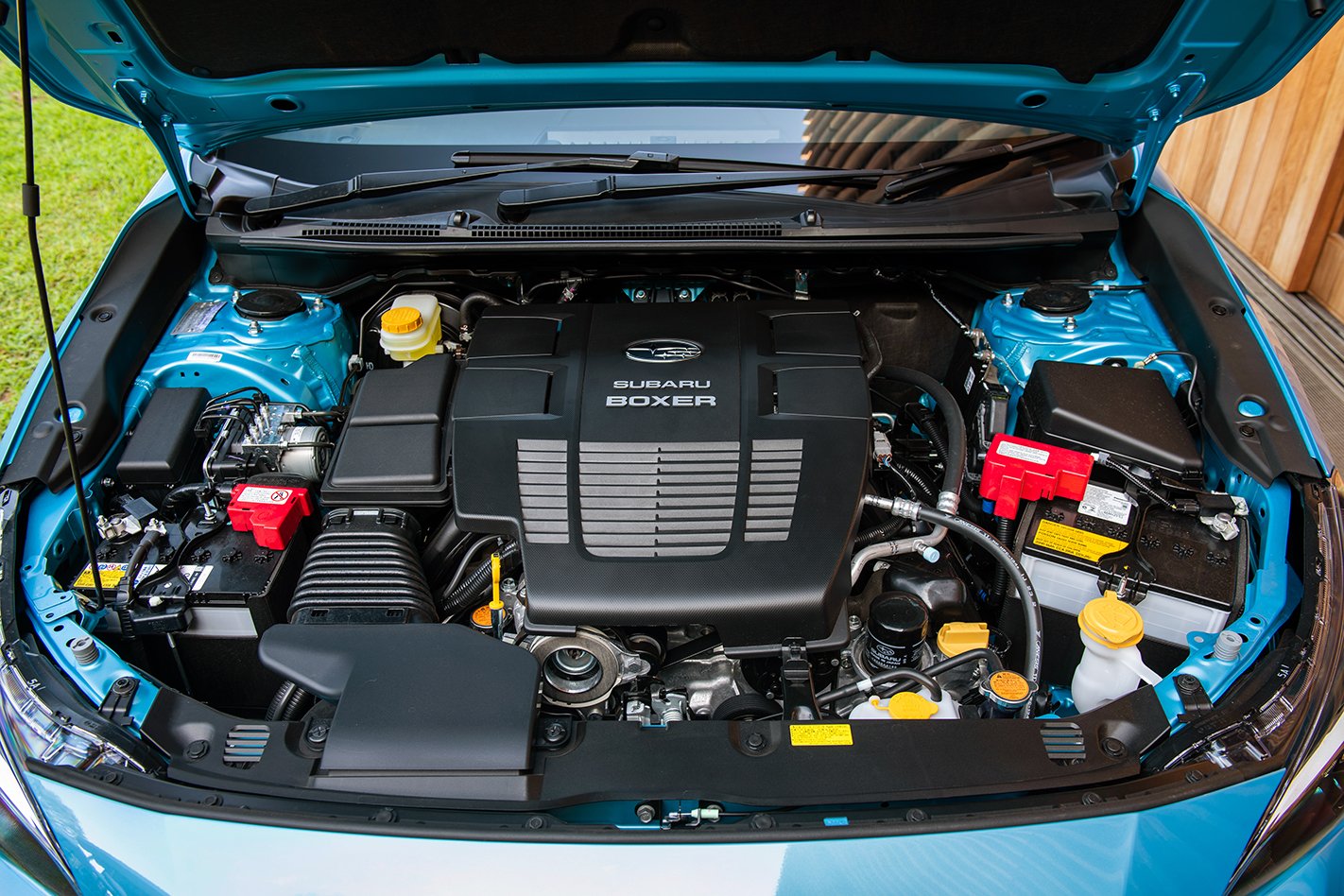
The hybrid overcomes this a little thanks to the electric motor that provides an additional 12.3kW of power and 66Nm of torque when you put the foot down.
However, the benefit isn’t as much as the numbers suggest as the hybrid’s petrol engine has been detuned a little to produce 110kW/196Nm which is 5.0kW less than the standard petrol versions.
Then there’s the fact the Hybrids weighs almost 100kg more – 1536kg compared to the equivalent XV 2.0i-S’s 1440kg.
So while there is a little bit of extra power it isn’t really that noticeable, just like the moderate fuel savings. That’s because this is more of a mild hybrid system, but with the ability to recoup energy.
On the plus side, the Hybrid S does everything that we like about the 2.0i-S.
It features SI-Drive, which is like Sport mode in other cars. Selecting S that changes the rev mapping to delay upshifting for sportier acceleration, while I is an ‘intelligent’ mode that throttles up gradually for smoother and more economical driving.
The Hybrid offers more dynamic handling when in S mode through e-Active Shift Control that actives automatically based on the G sensors to ensure the CVT is always in the appropriate rev range while cornering, exiting bends and down hills.

The XV handles as well as the Impreza despite its jacked-up ride height. One of the most noticeable things about the 2021 update is retuned suspension, which involved tweaked damping force to allow the front suspension to move more smoothly.
As a result, the ride feels soft but not spongy and while you feel it bounce over road imperfections, it settles very quickly.
The steering feels a little light but active torque vectoring and the flat-four engine’s low centre of gravity compensates for the higher ride height and keeps the front end pointing where you want when driven with enthusiasm through bends.
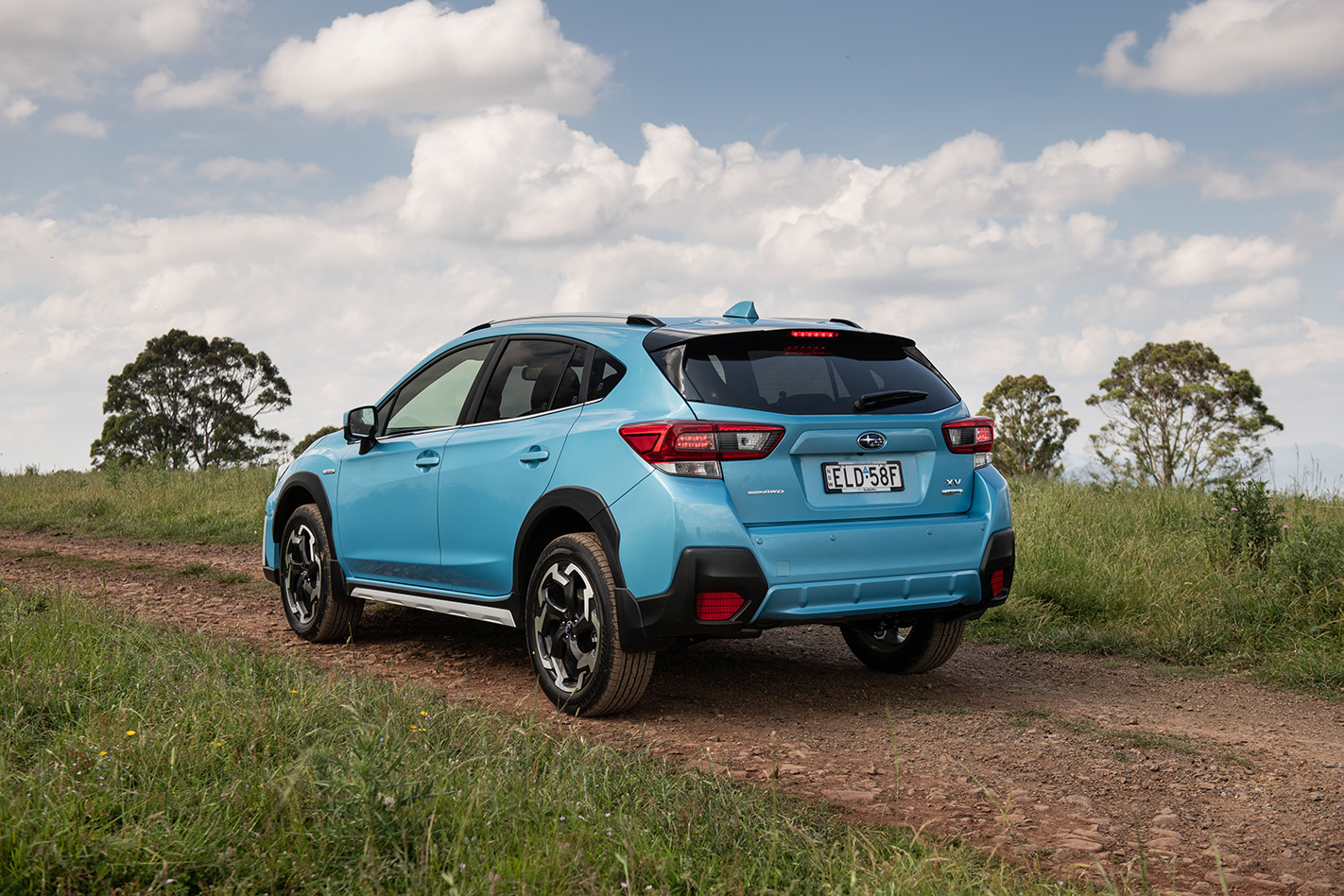
But while it’s a great city car, the XV is truly in its element on dirt and gravel tracks, with its 220mm ground clearance, all-wheel-drive system and sharply-tuned electronic stability control keeping things stable on loose surfaces.
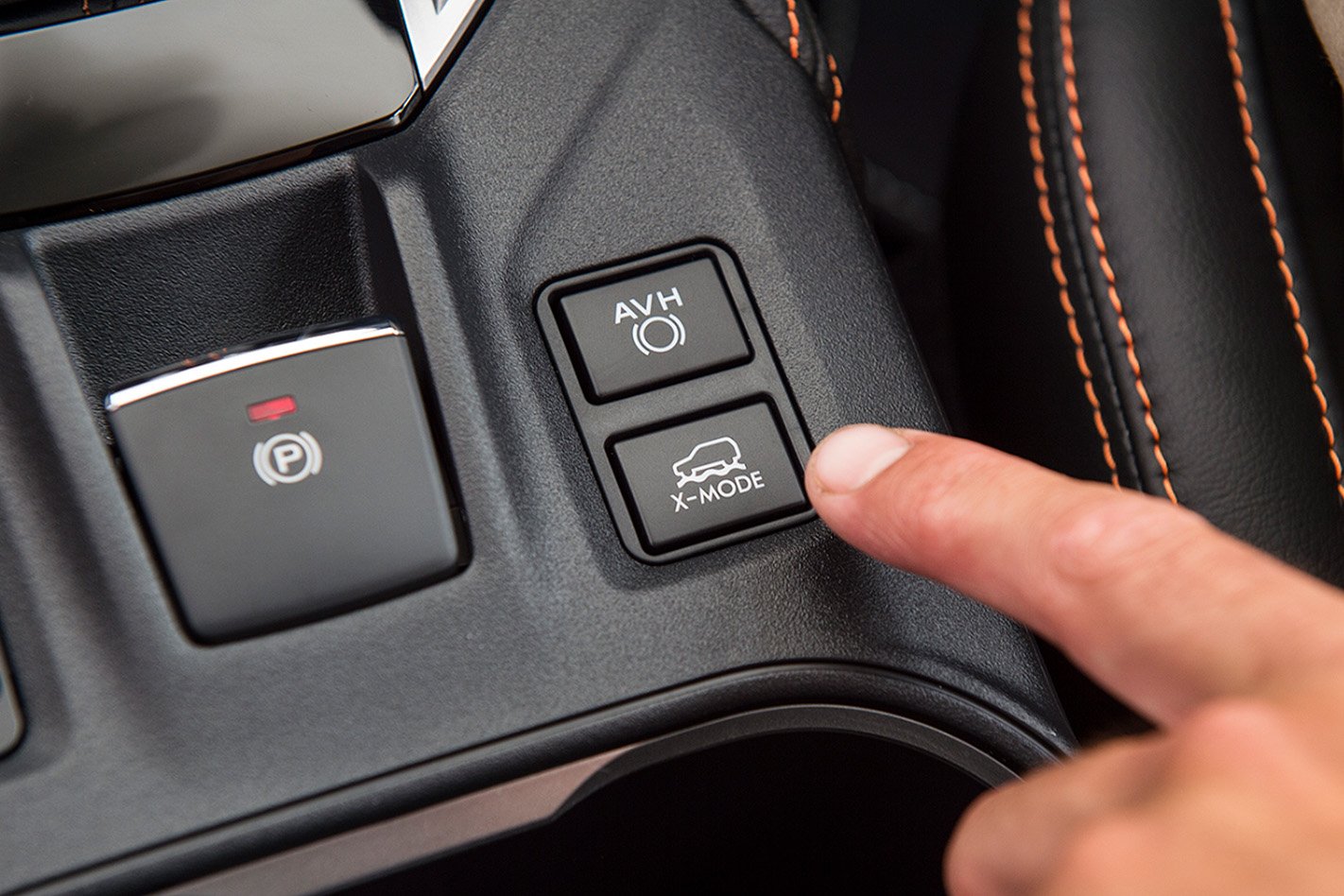
Off-road capability is further enhanced in the Hybrid S with X-Mode dynamic off-road traction control that helps it climb slippery slopes, and has hill descent control that helps you back down without having to touch the brakes.
What is the Subaru Hybrid S like for safety?
All XVs, except the entry-level 2.0i, are equipped with the third generation of Subaru’s EyeSight active safety suite, which uses stereo cameras to operate autonomous emergency braking with pedestrian detection, lane-keeping assistance and adaptive cruise control.
The top-spec 2.0i-S and Hybrid S versions improve on this with a Vision Assist suite, which uses radar-based sensors to bring other ADAS functions such as blind-spot monitoring, lane-change assist, rear-cross traffic alert, high-beam assist, and reverse automatic braking.
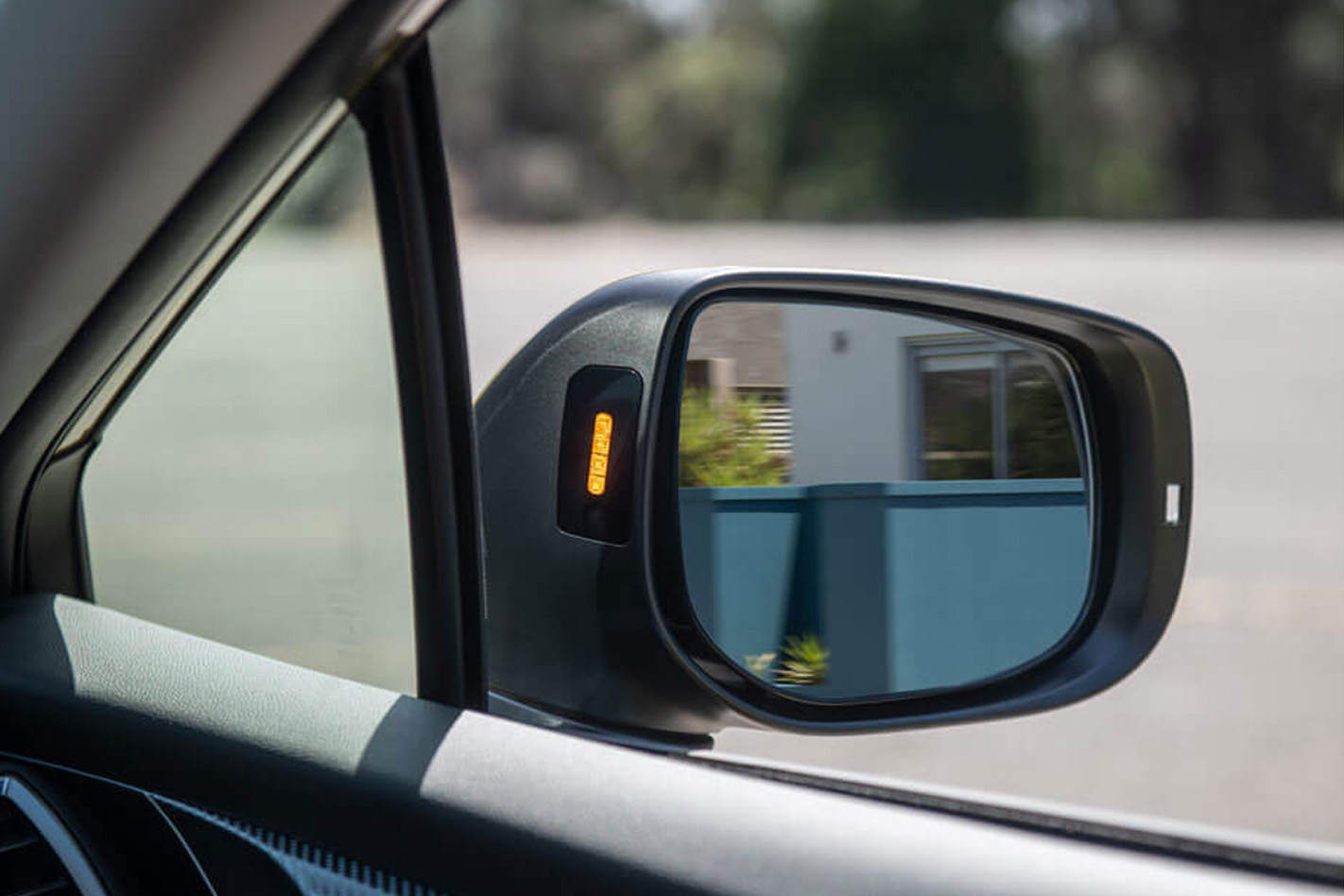
The XV’s compact size makes it easy to park and safely negotiate tight spots. It has good all-round vision, with additional help from a reversing camera, as well as front- and side-view monitors to help you see below the window lines at low speeds.
Passive safety includes anti-lock brakes, stability control, seatbelt reminders for all seats, seatbelt pre-tensioners on the front and outer rear seats.
There are also seven airbags: one apiece ahead of the driver and front passenger; a knee airbag for the driver; an airbag outside each front occupant at chest level to protect from side impacts; and side-curtain airbags extending past both seat rows at head level, protecting occupants front and rear from side impacts.
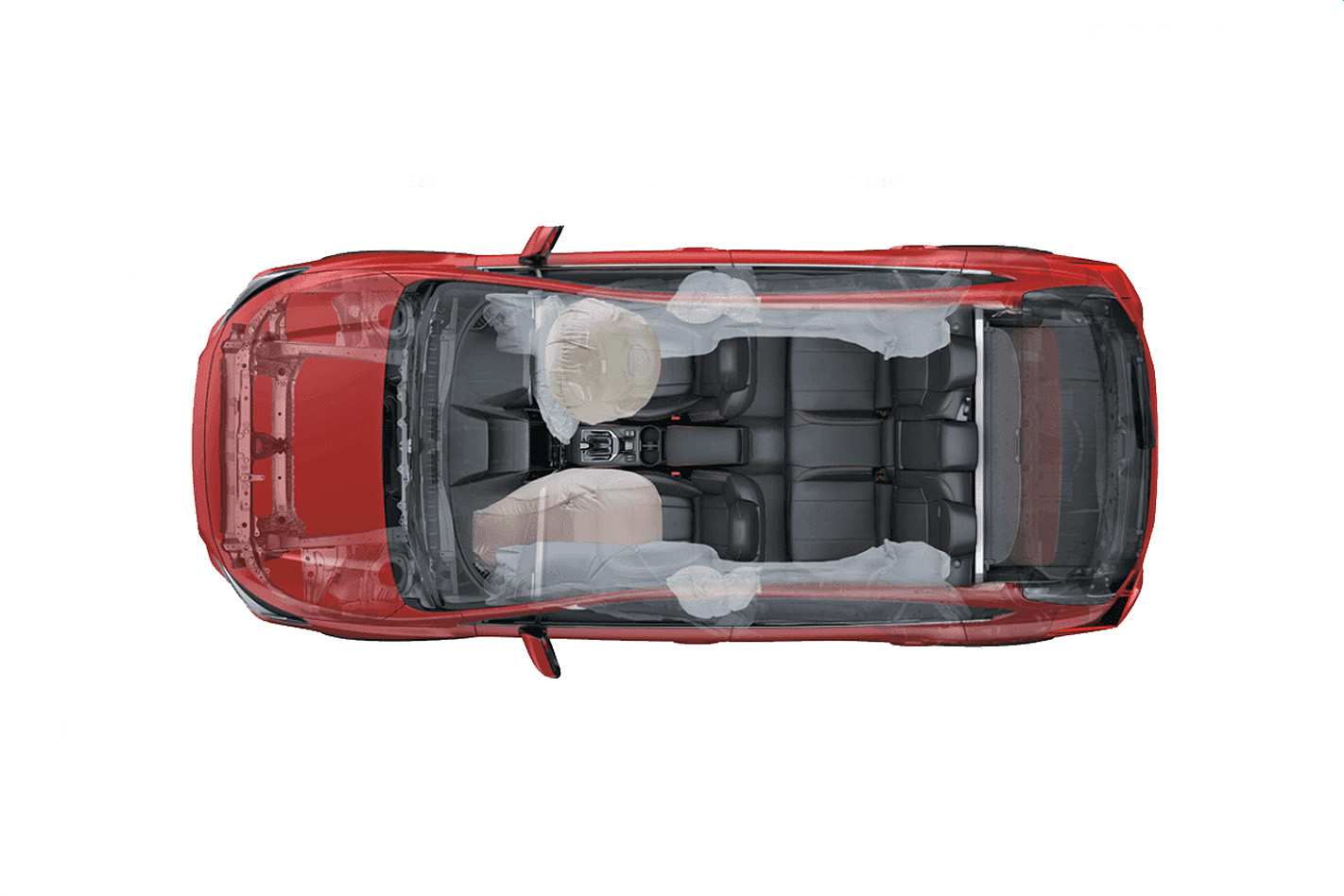
Child safety includes two sets of rear-seat ISOFIX anchor points, three top tethers and rear-door child locks.
The Subaru XV was awarded a five-star ANCAP safety rating in May 2017 and the hybrid versions, which first appeared in January 2020, are also covered by this rating.
The Verdict
The XV is still one of the better crossovers, with a ruggedly handsome high-riding hatch aesthetic that other brands haven’t quite managed to emulate.
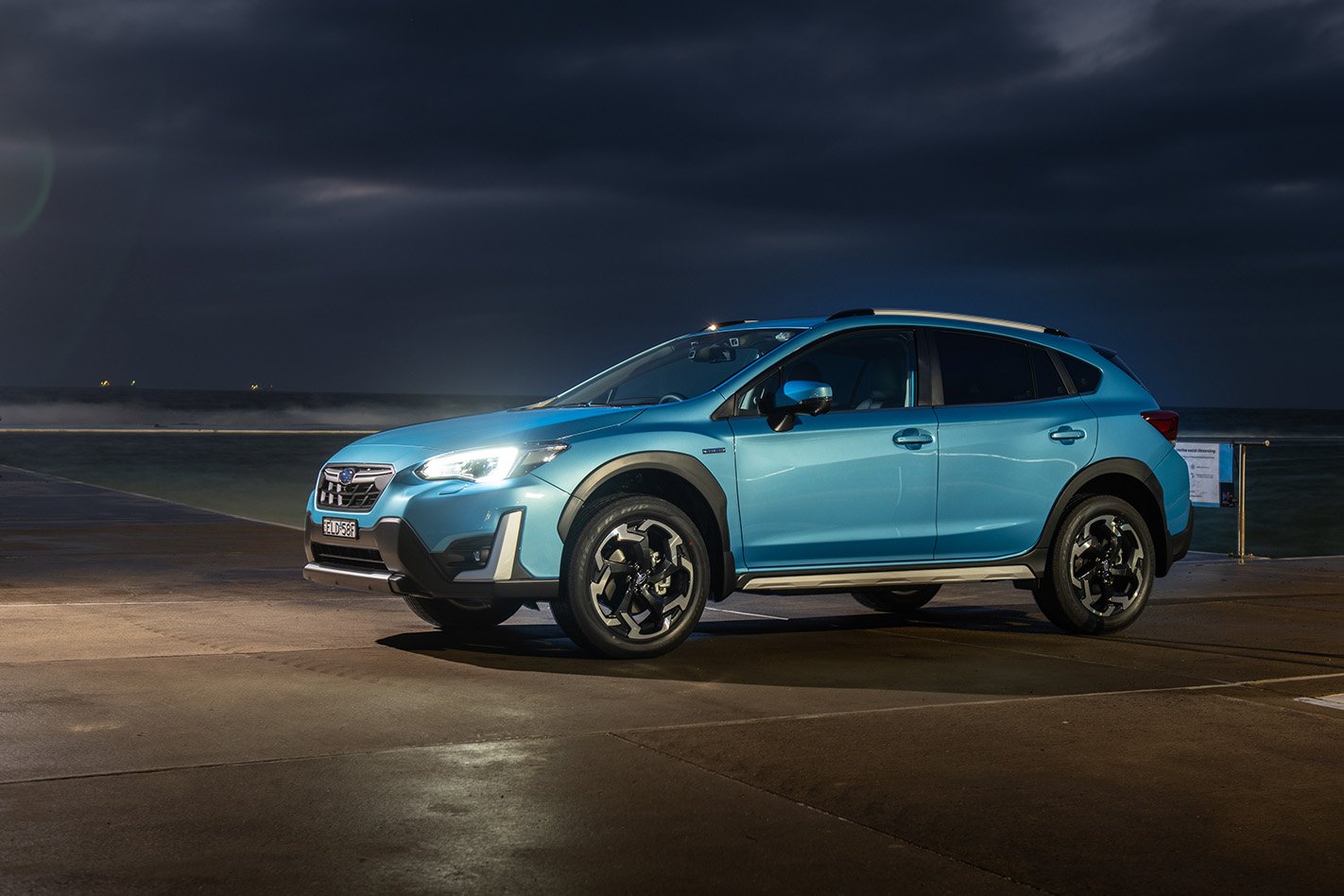
It’s almost alone in its ability to competently handle most road and weather conditions and is very well equipped, especially in this top S spec that brings some decent kit to the table not found in the other XVs, including X-Mode, that are worth the additional expenditure over mid-priced variants.
Usually, we’d recommend paying a little more for a hybrid version but we can’t see real benefit in spending $3500 more on the Hybrid S over the 2.0i-S unless your driving is exclusively on busy urban roads.
Rating 6/10
Pros: Safety, styling, driveability, versatility Cons: Minimal hybrid benefits, reduced towing capacity, no spare wheel
Subaru XV Hybrid S specifications
Body: 5-door, 5-seat SUV Drive: AWD Engine:1995cc, 4-cyl, direct injection ‘Boxer’ petrol Power: 110kW @ 6000rpm Torque: 196Nm @ 4000rpm Electric Motor power/torque 12.3kW/63Nm Battery Lithium-ion Fuel consumption: 6.5L/100km (combined) Weight: 1536kg Power/weight:71.6W/kg Transmission: CVT Suspension: MacPherson strut/double wishbone L/W/H: 4485/1800/1595mm Wheelbase: 2665mm Tracks: 1550/1555mm Brakes: Front and rear ventilated discs Tyres: 225/55 R18 98V Bridgestone Dueler Wheels: 7Jx18 Price: $40,790
Importer of Chinese-built LDV products, Ateco Automotive, has recalled 563 LDV G10 vans that potentially have issues with their brakes.
The manufacturing defect involves a rear brake pipe that may leak brake fluid. If that were to happen, it may result in a loss of braking performance or braking ability overall.
Affected vehicles were available for sale between July 15, 2020 and February 25, 2021 and all examples have the model year designation 2020-21.
Product Recall Australia advises affected customers to contact their local LDV dealer to make an appointment to have the issue fixed, free of charge.
Customers are encouraged to contact the LDV customer assist team on 1800 709 832 for further information.
A full list of affected vehicles can be downloaded here.
Porsche has announced it’s aiming for a completely CO2-neutral balance sheet across the entirety of its value chain by 2030.
The Stuttgart firm says that, while the goal will inevitably be a difficult one, it is steadfast about ensuring a greener future for its products.
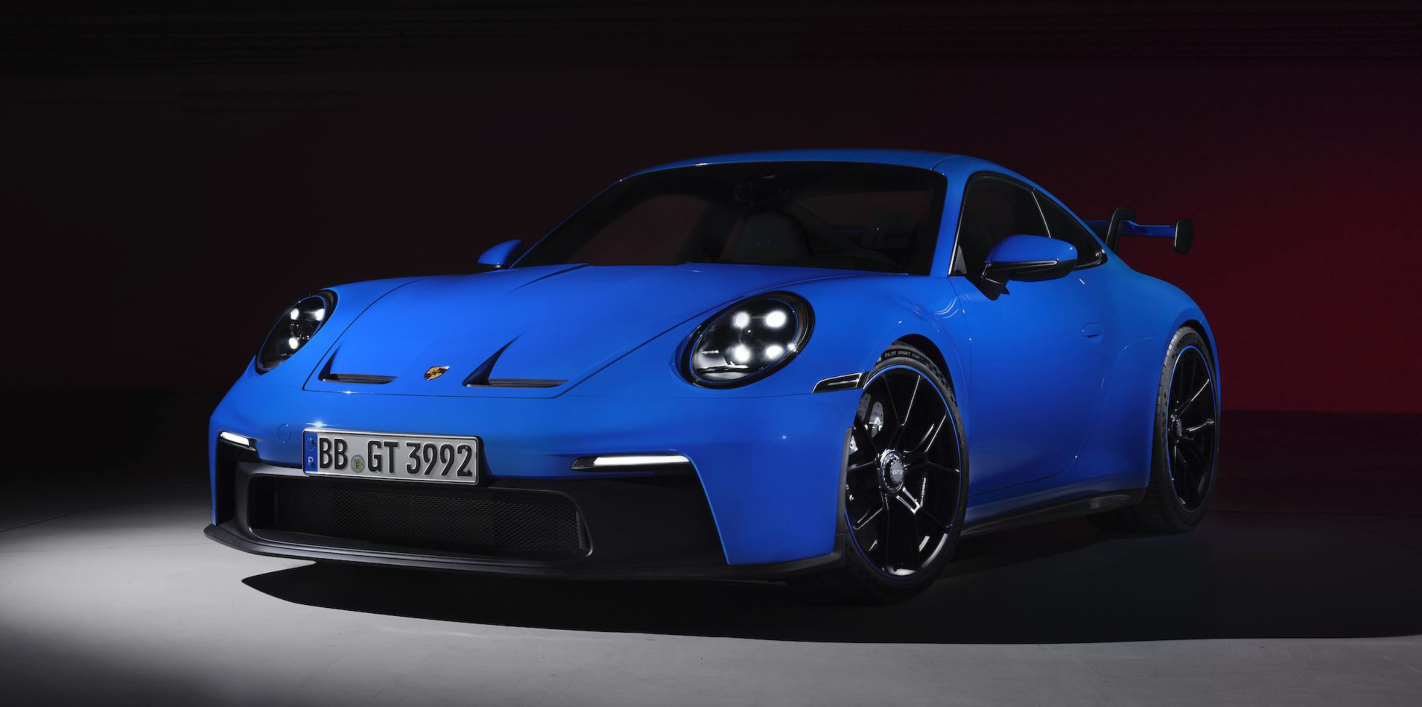
“Sustainability is an important part of our Strategy 2030 – holistically: on economic, ecological and social terms,” said Porsche chief executive Oliver Blume.
“We launched a comprehensive decarbonisation programme with a firm target in mind: Porsche wants to have a CO2-neutral balance sheet throughout the entire value chain in 2030. We will achieve this by systematically avoiding and reducing CO2 emissions.
“We are committed to the Paris Agreement. The EUtalks about 2050, many competitors about 2040, but it’s not about record times, it’s about responsibility. Every step counts.”
Porsche says it has already taken a number of steps in the right direction to ensure this goal is met, including making its two factories in Germany – Zuffenhausen and Leipzig – completely CO2-neutral through employing renewable energies and biogas.
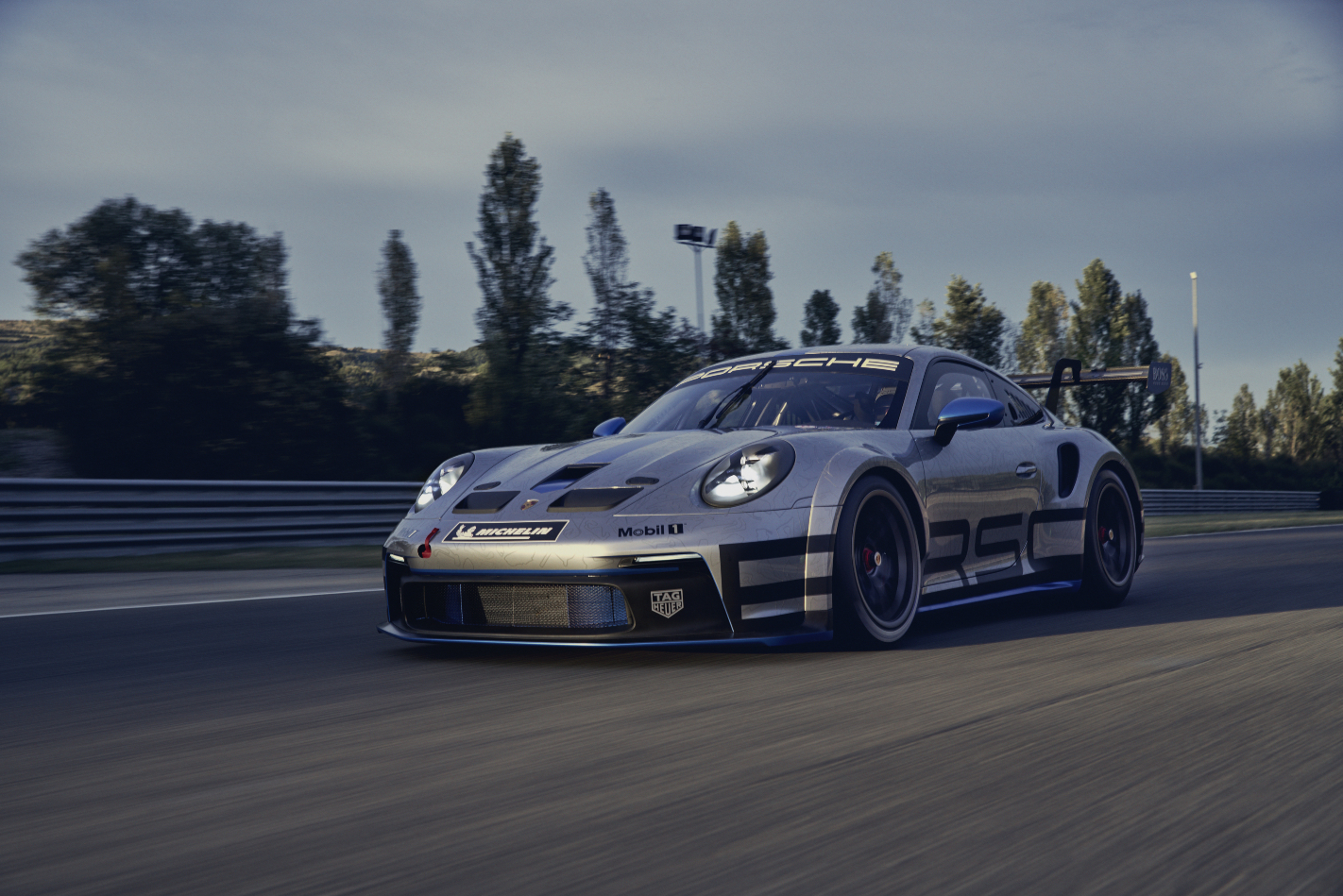
The sports car maker has put its battery suppliers on notice too, saying that it will only do business with manufacturers who are also committed to carbon neutrality.
“In the next step, we will also demand this from our suppliers. Anyone who develops battery cells for us must manufacture them exclusively with sustainable energy,” Blume said.
“Batteries are still produced in a very energy-intensive way. By obliging our suppliers to use sustainable energy, the carbon footprint will improve significantly.
“And the battery itself will be more than 90 per cent recycled in ten years, at the latest. At the same time, we will reduce polluting substances such as cobalt in batteries in the future.”
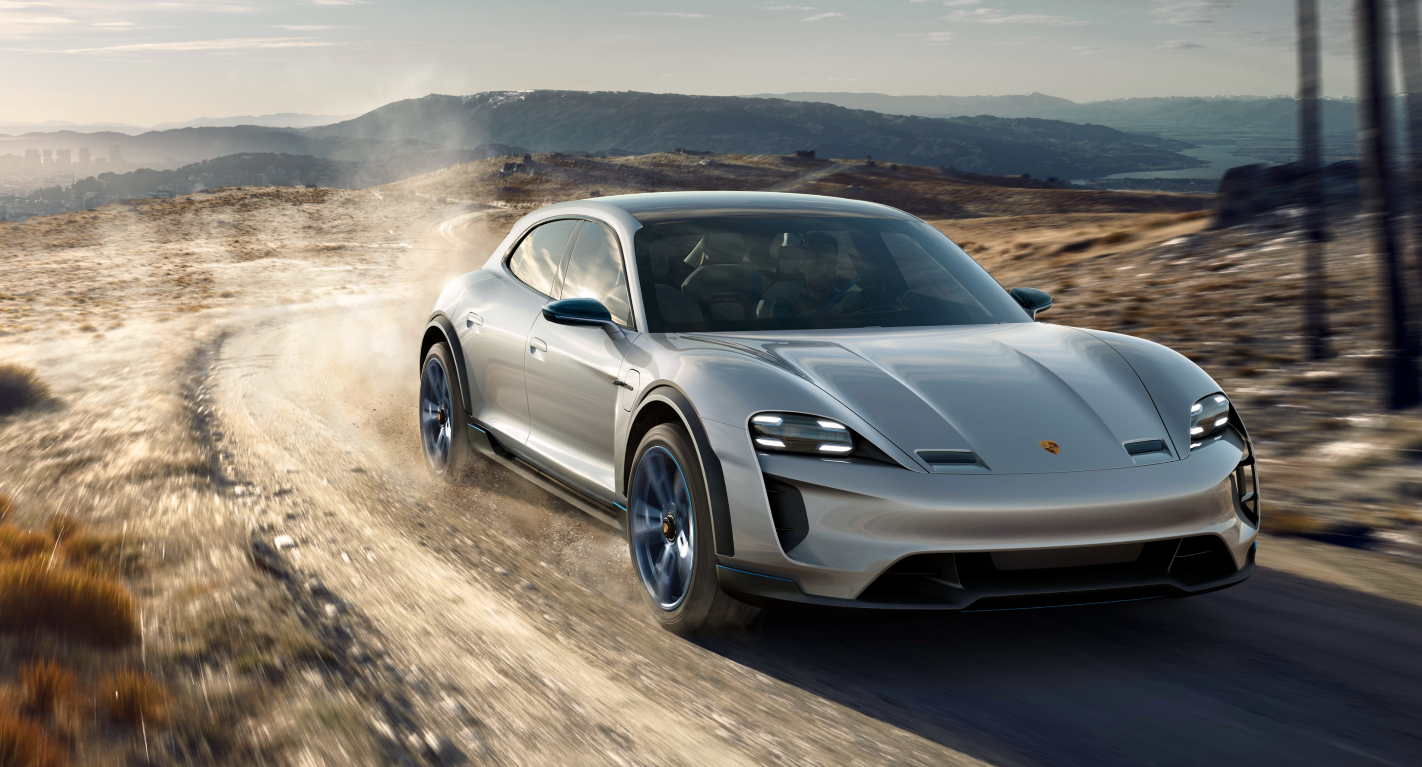
Porsche has also announced that its newest soft-roader, Taycan Cross Turismo, will be the first Porsche ever made that will be CO2-neutral “throughout its use phase”.
The carmaker added that it will also be investing more than $1.5 billion dollars in green energy solutions including wind turbines, solar energy and other efficient methods.
“We don’t want to compensate, but to avoid. We don’t want to buy CO2 certificates from other companies, we want to avoid CO2-emissions wherever we can. Where energy cannot be saved, we use electricity from renewable sources,” Blume added.
Porsche is also expected to make more announcements about its heavy investment in synthetic fuels, a technology that could potentially off-set a massive carbon footprint while retaining the internal combustion engine.
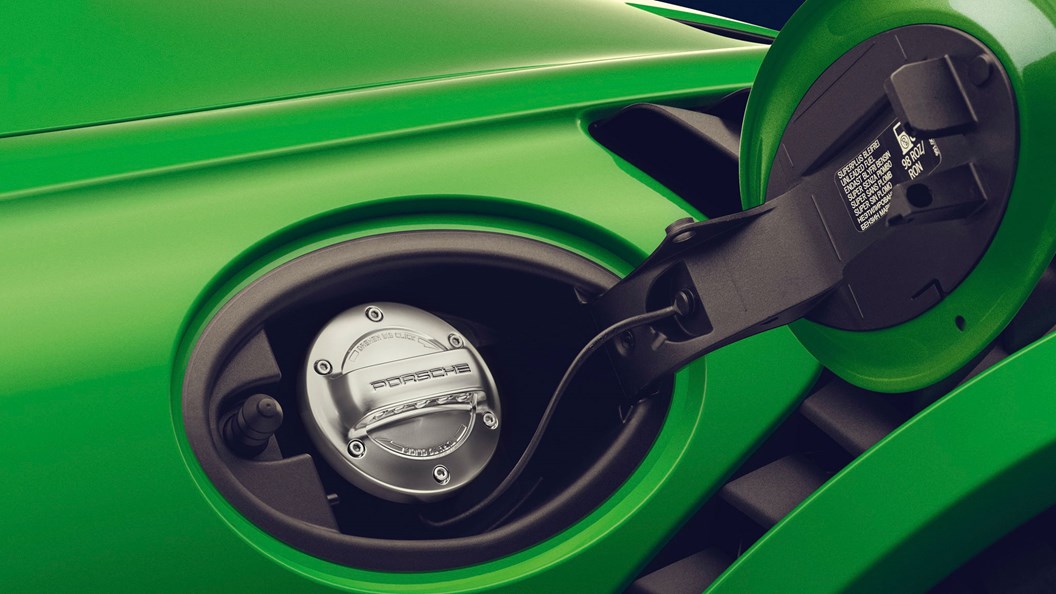
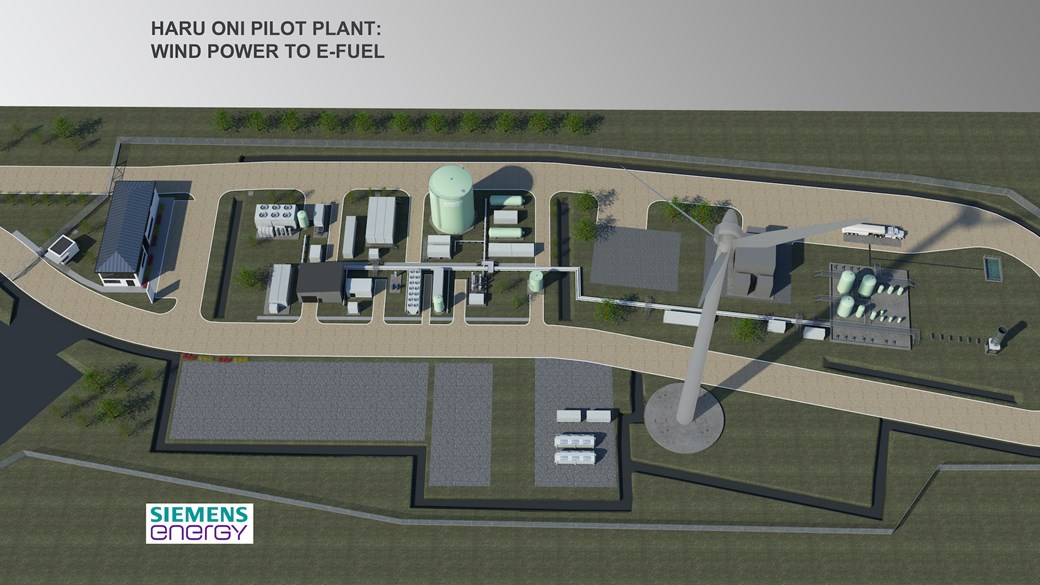
As previously reported by WhichCar, the Stuttgart marque has partnered with Siemens Energy, and will produce 130,000 litres of climate-neutral eFuel by 2022.
Dubbed the Haru Oni project and located in southern Chile, the new venture between the two firms will aim to step up production to 55 million litres of eFuel a year by 2024, and then to 550 million litres by 2026.
Be sure to watch this space, as Porsche is expected to make more announcements about its green future in just a few short hours at its annual press conference.
September 2023: Neue Klasse sedan concept previews next i3 & 3 Series
BMW has unveiled its new Neue Klasse sedan concept, revealing our clearest look yet at how the next i3 and 3 Series models will look.
Details at the link below.
Story continues…
BMW has laid out its blueprints for the next decade in a statement released yesterday, and one of the key points is that from 2025, all models will fall under a new system the Munich firm has coined “Neue Klasse”.
The Neue Klasse (new class in English) is part of a tiered plan BMW claims will completely transform the company and its products by 2030.
According to the automaker, all Neue Klasse vehicles will be characterised by three principles – “redefined IT and software architecture”, “high-performance electric drivetrains and batteries”, and a “new approach to sustainability across the entire vehicle life cycle.”
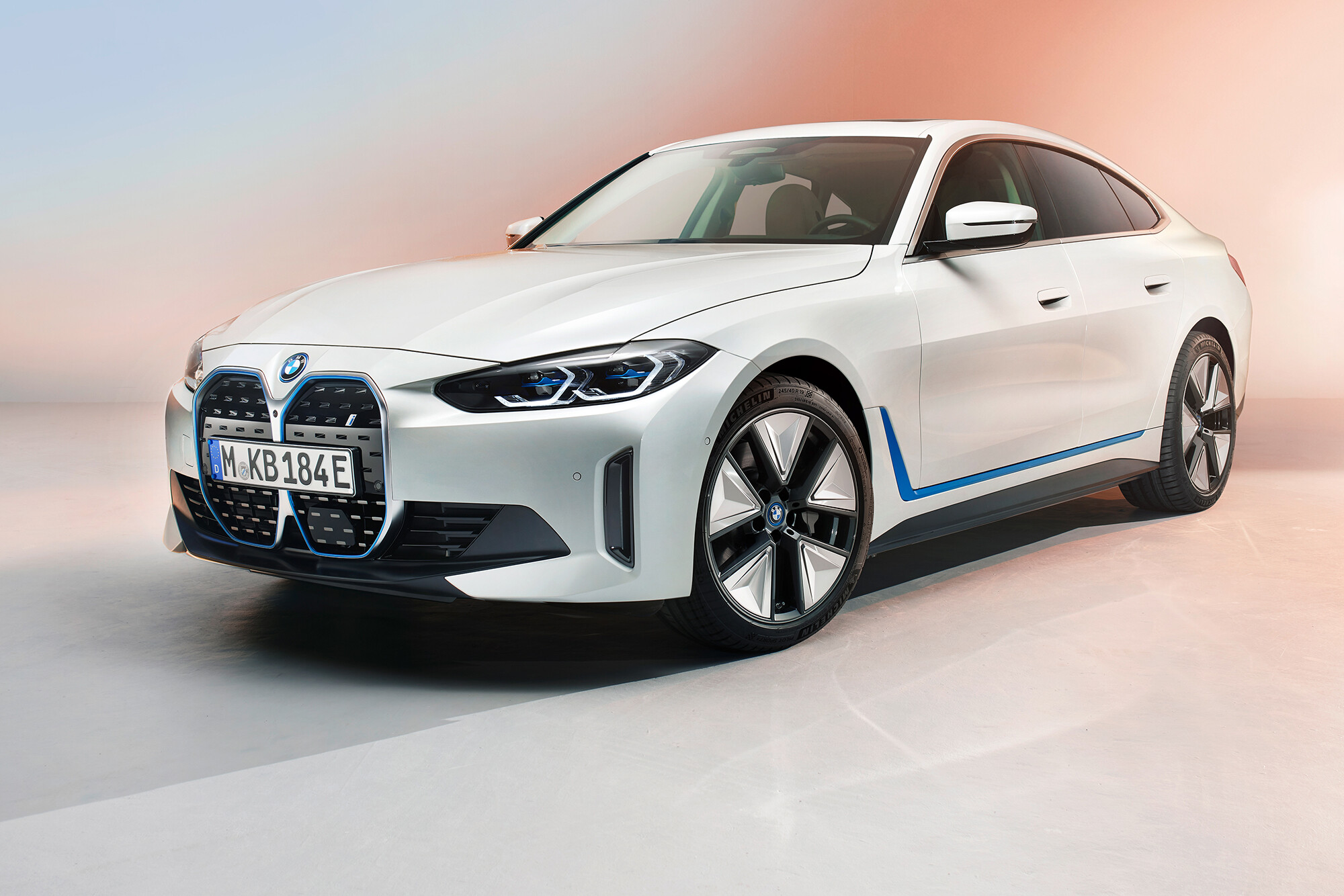
The architecture of these vehicles will be designed from the ground up with an emphasis placed on electric drivetrains, as BMW claims full EV models will account for at least 50 per cent of global deliveries by 2030.
Vehicles will be aerodynamically designed with a focus on EV drivetrains too, and will have proportions geared towards roomier interiors.
The next-gen automobiles are also being designed to offer occupants an experience that will be years ahead in terms of technology.
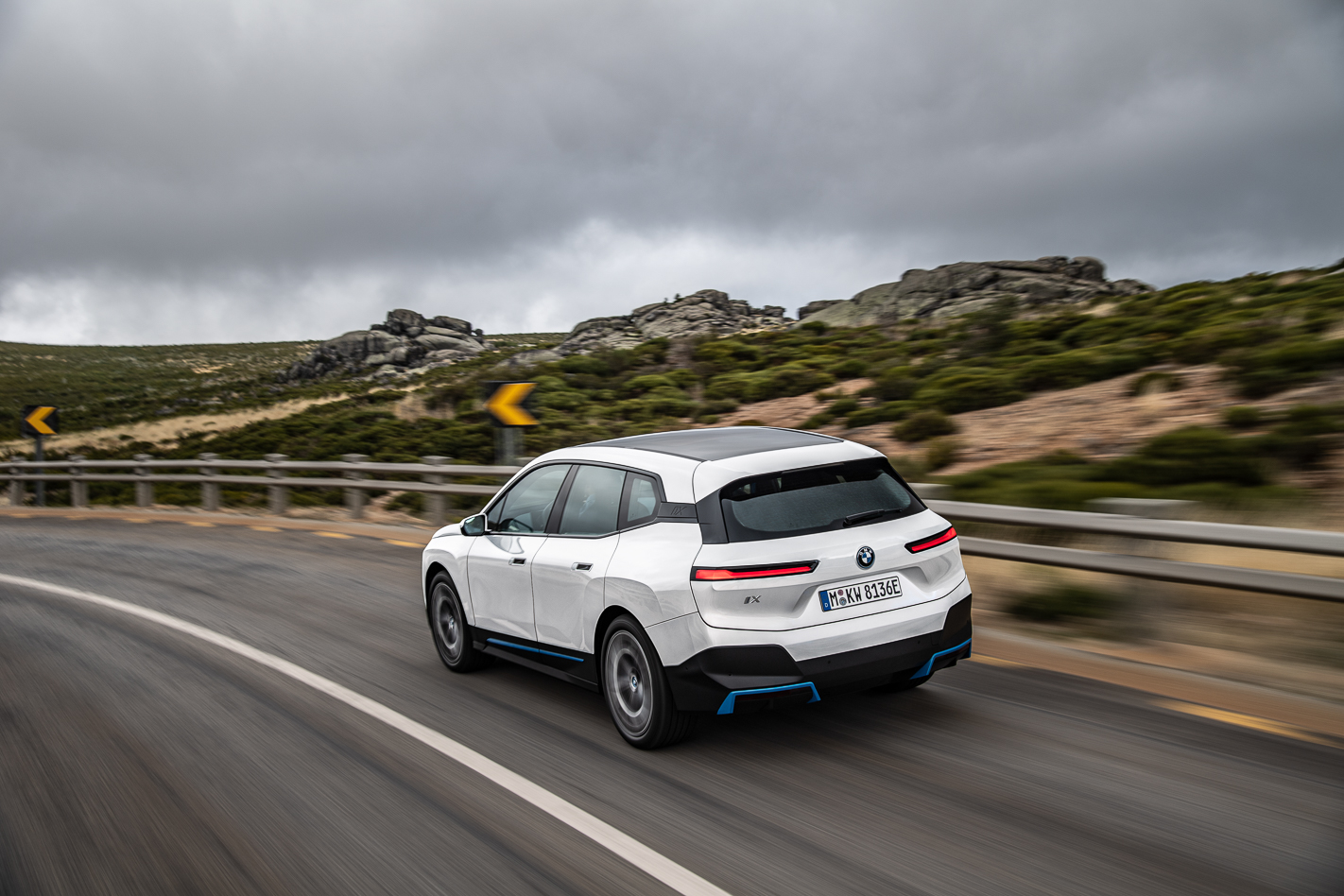
“The BMW Group is never satisfied with what it has achieved so far – that’s what sets it apart from the rest of the field,” Oliver Zipse, chairman of the board of management of BMW, said.
“This spirit will characterise the Neue Klasse: high tech on four wheels for customers intent on experiencing in just five years’ time how mobility will feel in 2030.”
Another key ingredient of the Neue Klasse initiative is something BMW has called “regionalisable technology stacks”.
Translated, these stacks will enable vehicles to autonomously customise their operating systems to suit different regions across the globe, which will enable them to better align themselves in several digital ecosystems.
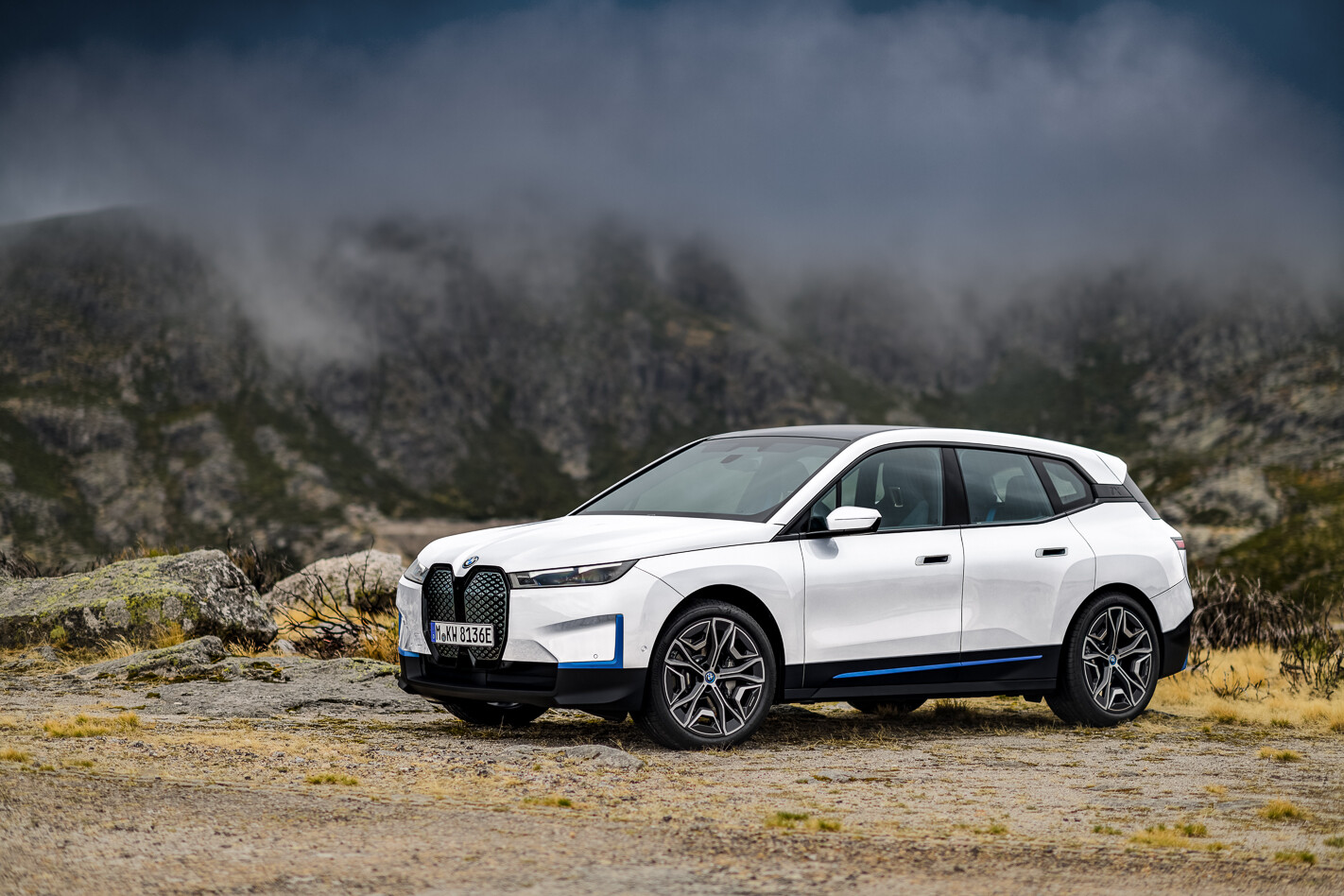
The operating systems will also continually update itself, which BMW says is an evolution of what owners have been able to do since 2018 when remotely performing software upgrades.
Another feature will allow owners to make in-car purchases through the operating system to customise their vehicle and make bookings for services.
BMW believes in-car purchases will be another source of revenue that will span the lifetime of the vehicle.
It’s a concept not too dissimilar from what happens in the video game industry with in-game purchases, and there’s no denying – it’s got potential.
Autonomous driving will be at the forefront of Neue Klasse models too, as will revolutionary driver assistance systems.
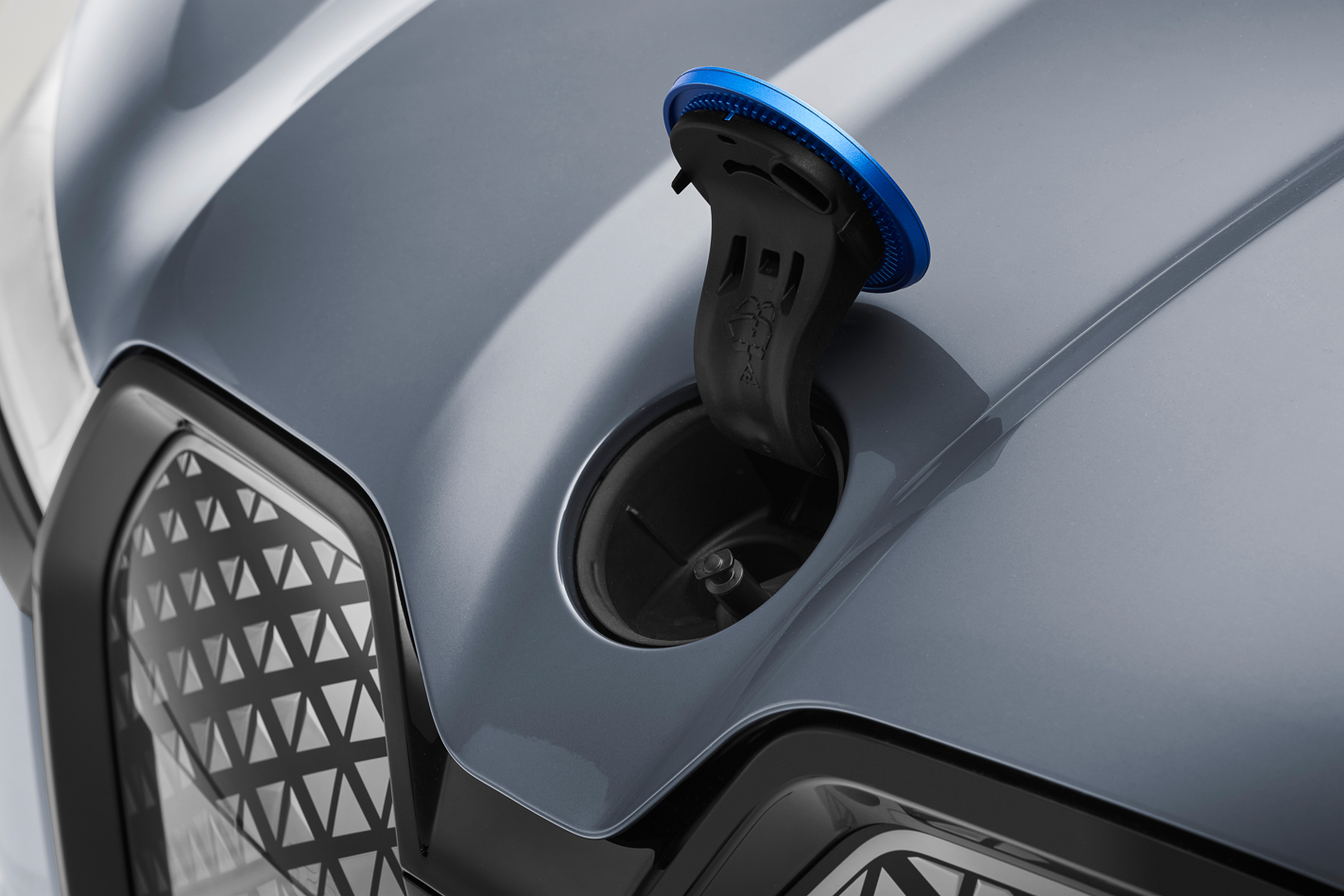
Powering the vehicles will be a next-generation electric drivetrain, which will feature an integrated high-voltage battery concept and optimised cell design.
The new drivetrain concept will significantly lower electricity consumption, and ultimately, the automaker hopes the new battery tech will provide the same range and cost the same to manufacture as the newest combustion engines.
Powertrains will also feature eminently scaleable modules that can be applied to any vehicle across the range, whether it be a run-of-the-mill city car or a high-performance BMW M model.
The Munich firm even mentioned it is toying with the idea of creating an electric drivetrain based on the hydrogen fuel cell.
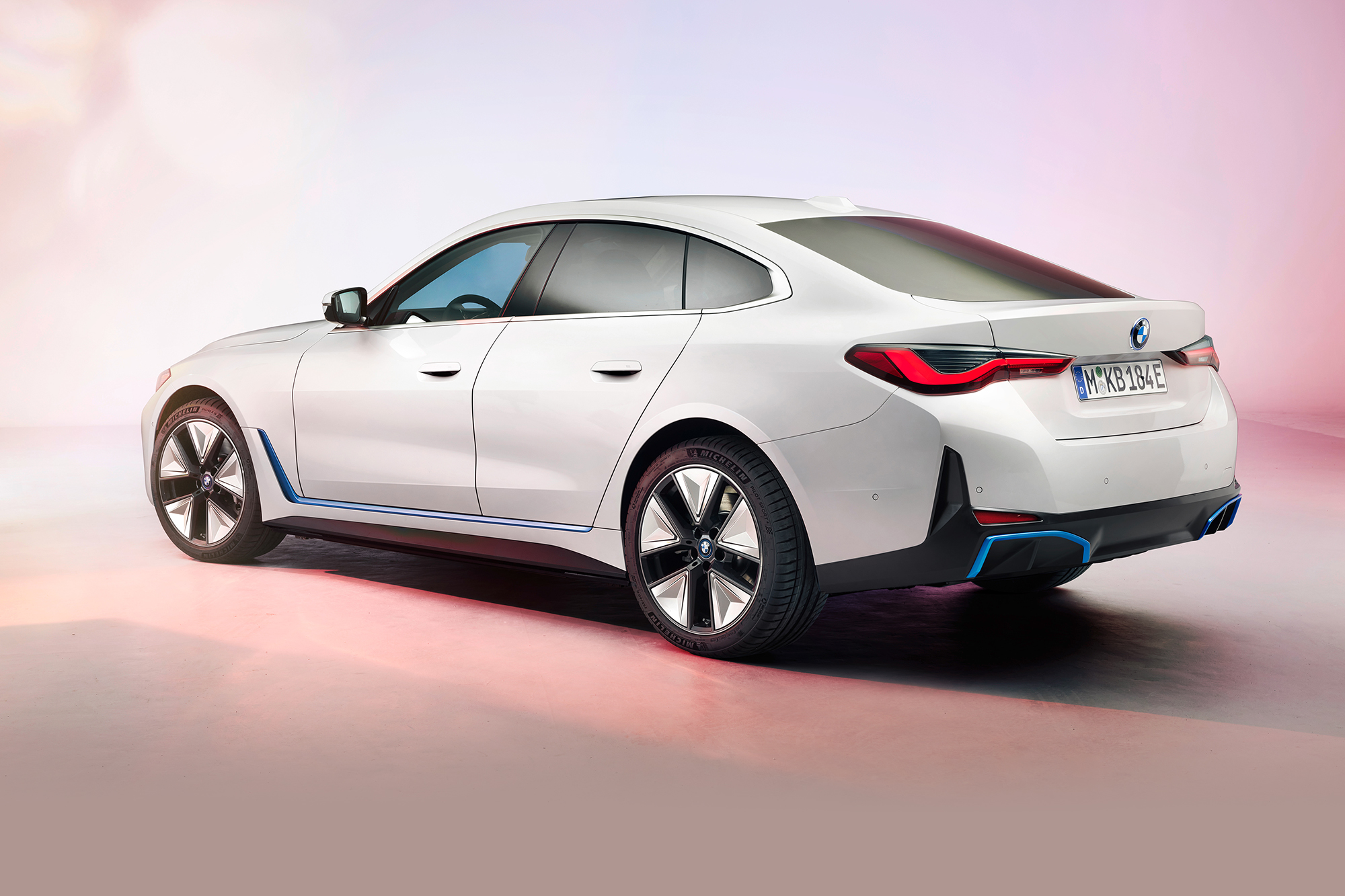
The final cornerstone of the Neue Klasse is sustainability, with BMW looking at pioneering ways it can produce cars that are less harmful to the environment.
“We are intent on ensuring that the ‘greenest’ electric car on the market is made by BMW,” said Zipse.
BMW believes it can achieve this by ensuring its manufacturing facilities are powered by renewable energy and by making parts of its cars from “secondary materials”, such as recycled plastic, aluminium, and steel.
The automaker has also said it is closely looking at switching to a “secondary first” approach, which would see recycled materials used as the primary option for vehicle manufacturing.
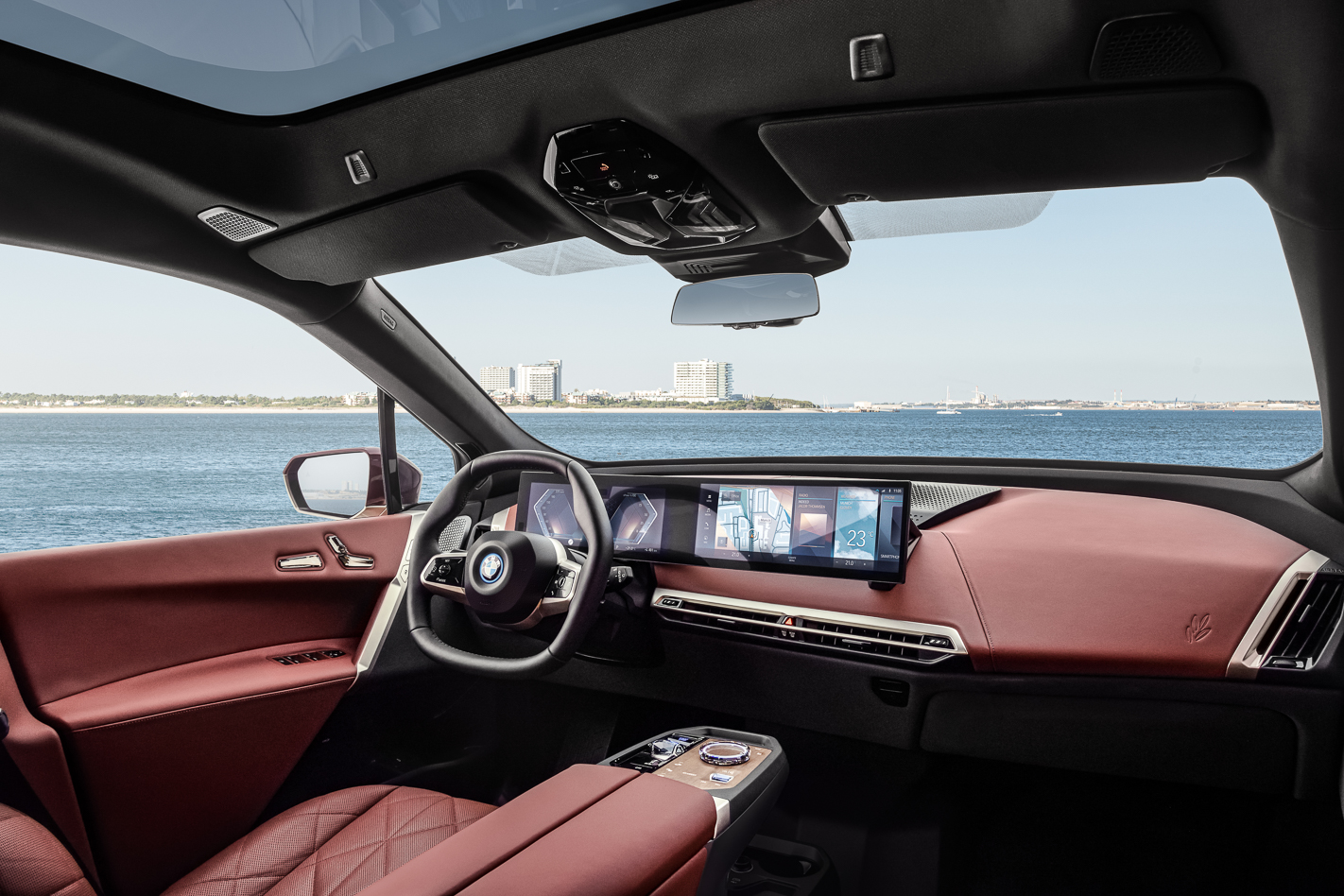
The automaker says this is possible thanks to the wealth of knowledge it gained from the decade of research it did when designing the i3 city EV, which uses approximately 25 per cent recycled components in its exterior body panels.
These are some ambitious claims made by BMW, but it’s a philosophy already being evidenced with vehicles like its recently unveiled i4 gran coupe and iX SUV.
