
Ford Australia is celebrating its 100-year anniversary this week, with a special event to mark the centenary on April 4 to be held in Melbourne. In addition to that, thousands of Australian images have been added to the company’s online vault for Aussies to celebrate.
Established on March 31, 1925 in Geelong, Victoria, Ford Australia was first planned in 1923 when
North American Ford executives visited Australia to seek out a base for local activities of the company.
By 1925, Ford Australia opened with Hubert French as its managing director and the first model to
be produced was the famous Model T, which quickly became one of the most popular cars in history. In Australia, the Model T cost 185 pounds, equivalent to around A$18,500 in today’s money.
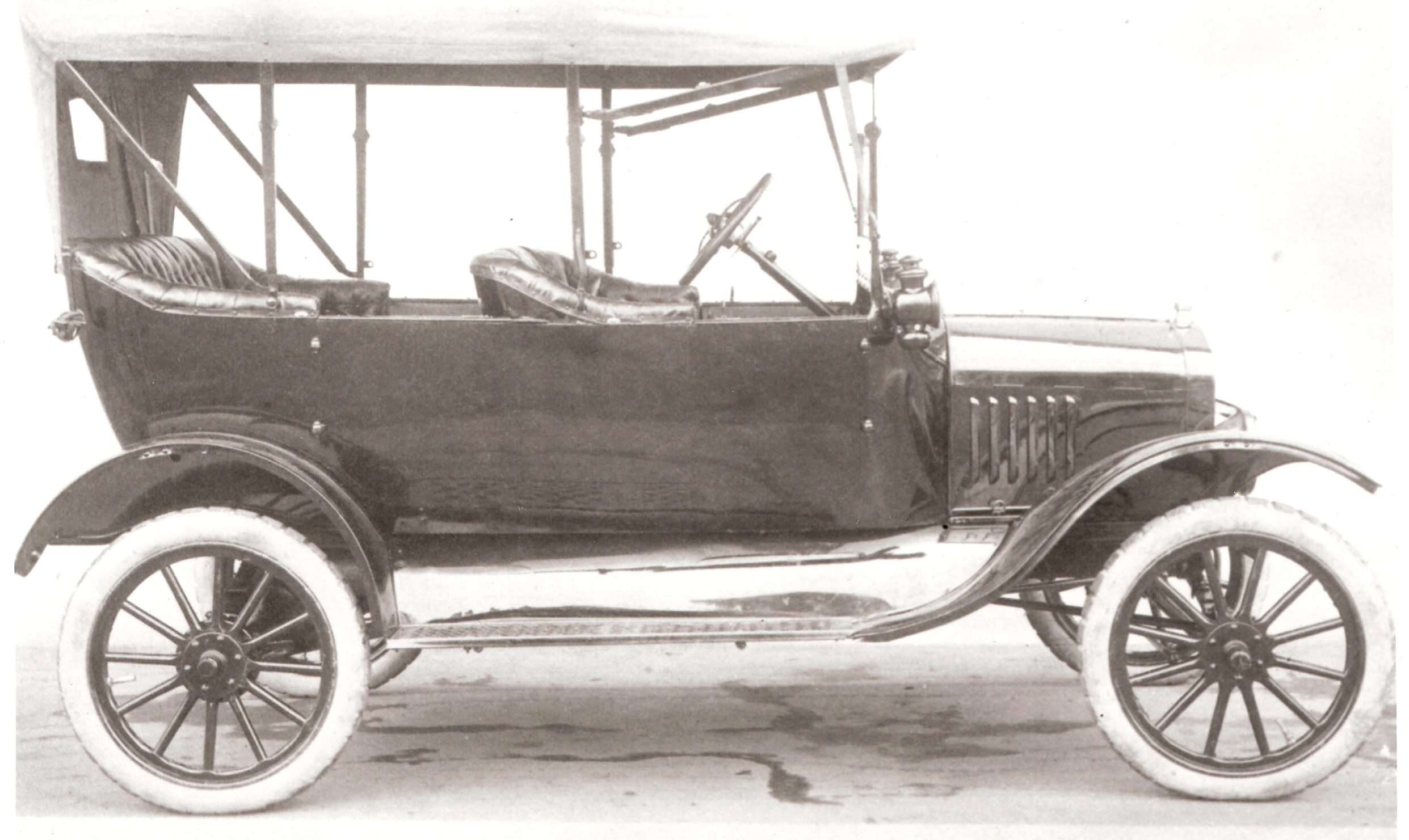
According to the company, Geelong was chosen as Ford’s base thanks to its closeness to the sea
port, available land, access to nearby railways and a good labour force.
Ford’s Geelong connection runs deep, forging a partnership with the Geelong Football
Club – which is also celebrating its 100th year – since 1925. The Cats also celebrated winning the club’s first Victorian Football League Premiership that year, too.
Geelong also managed to imprint on the Model T. In North America, the car was affectionately
known as ‘Tin Lizzie’ but in Australia, it was given the nickname the ‘Dalgety’, a reference
to the Dalgety Wool Store where the first vehicles were assembled. Eventually, the original factory
moved from the old Dalgety’s Wool Store to larger premises in Corio.
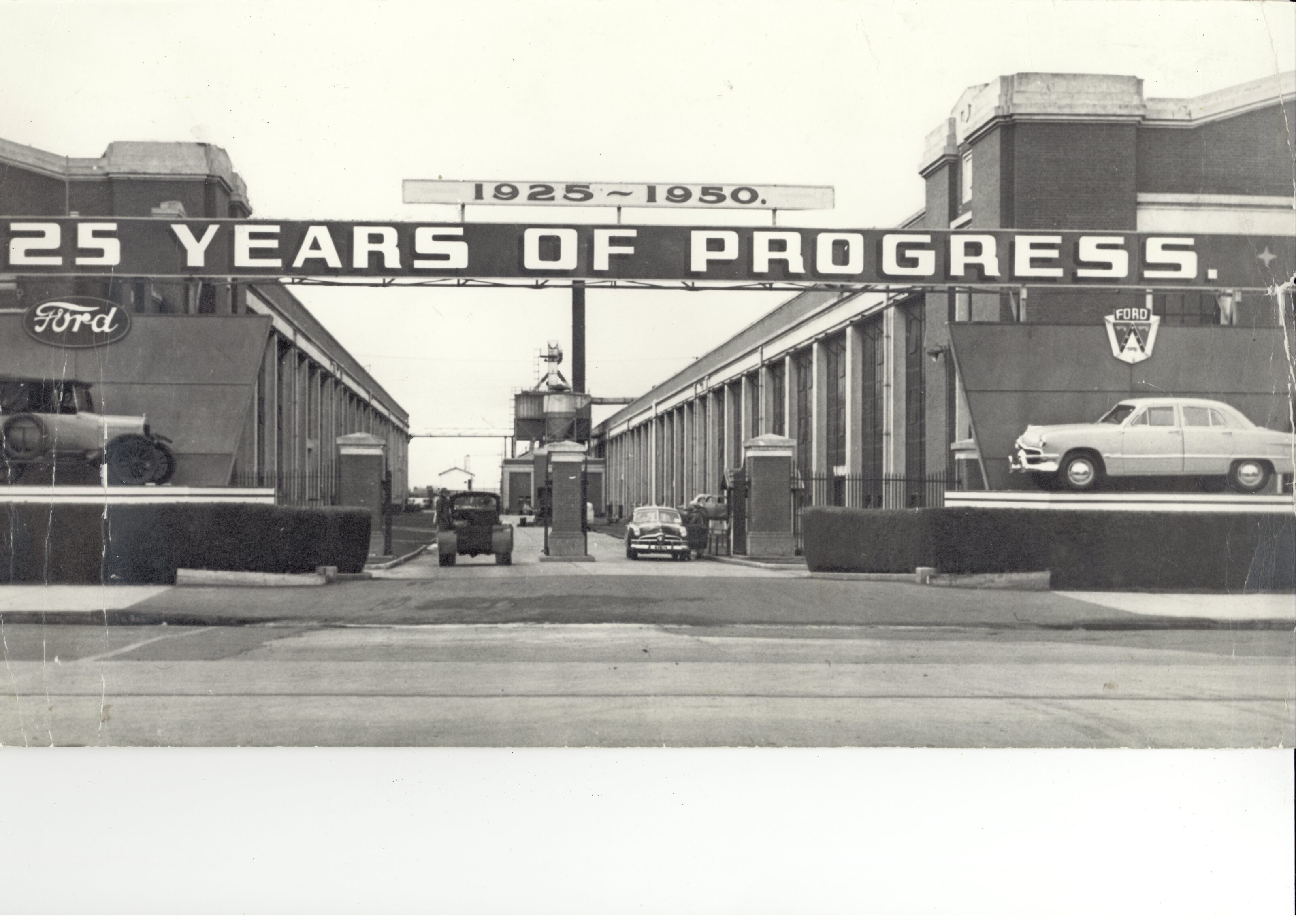
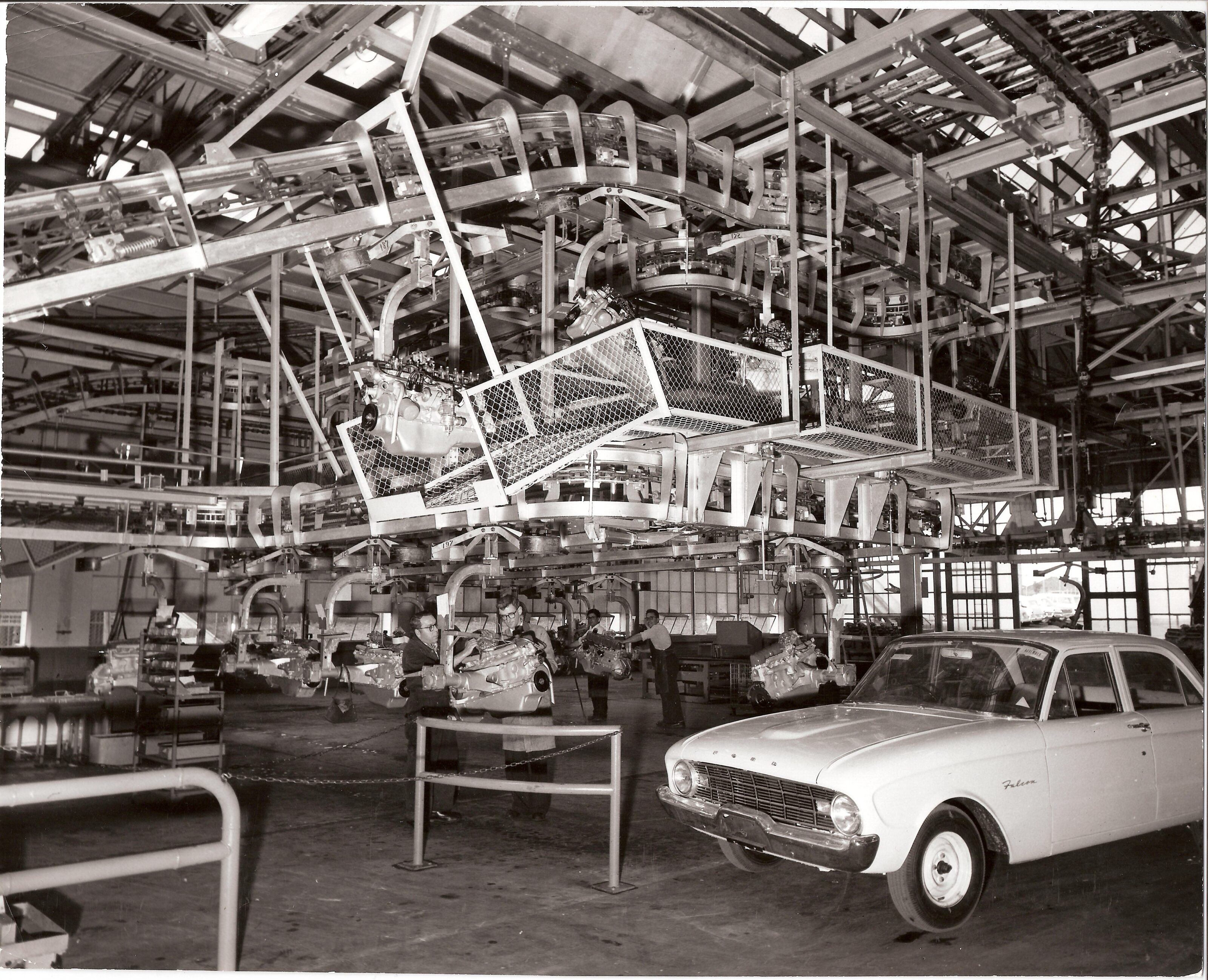
Ford Australia is also celebrating its connection to the greater Victorian community, including the company’s original stamping plant at Norlane, site of the current Research and Development Centre, and the 900ha You Yangs Proving Ground at Lara, where Ford develops and tests its vehicles. Ford’s Campbellfield facility in Melbourne is also home to Ford’s International Markets Group Product Development Centre.
To mark the occasion, Ford will hold a special “History in the Making” event in Melbourne on April
4. The event will showcase a selection of Ford’s own Heritage fleet, including the first 1960 XK
Falcon, which was introduced in September 1960, as well as the first Ford ute, the 1934 Coupe-
Ute, a Ford Australia invention.
Ford will include modern cars like the Mustang Mach-E EV, Ranger PHEV, Everest, and some key
Ford GT sedans and race cars that helped put Ford Motorsport on the map in Australia, and the
company will also support the All Ford Day in Geelong on April 6.
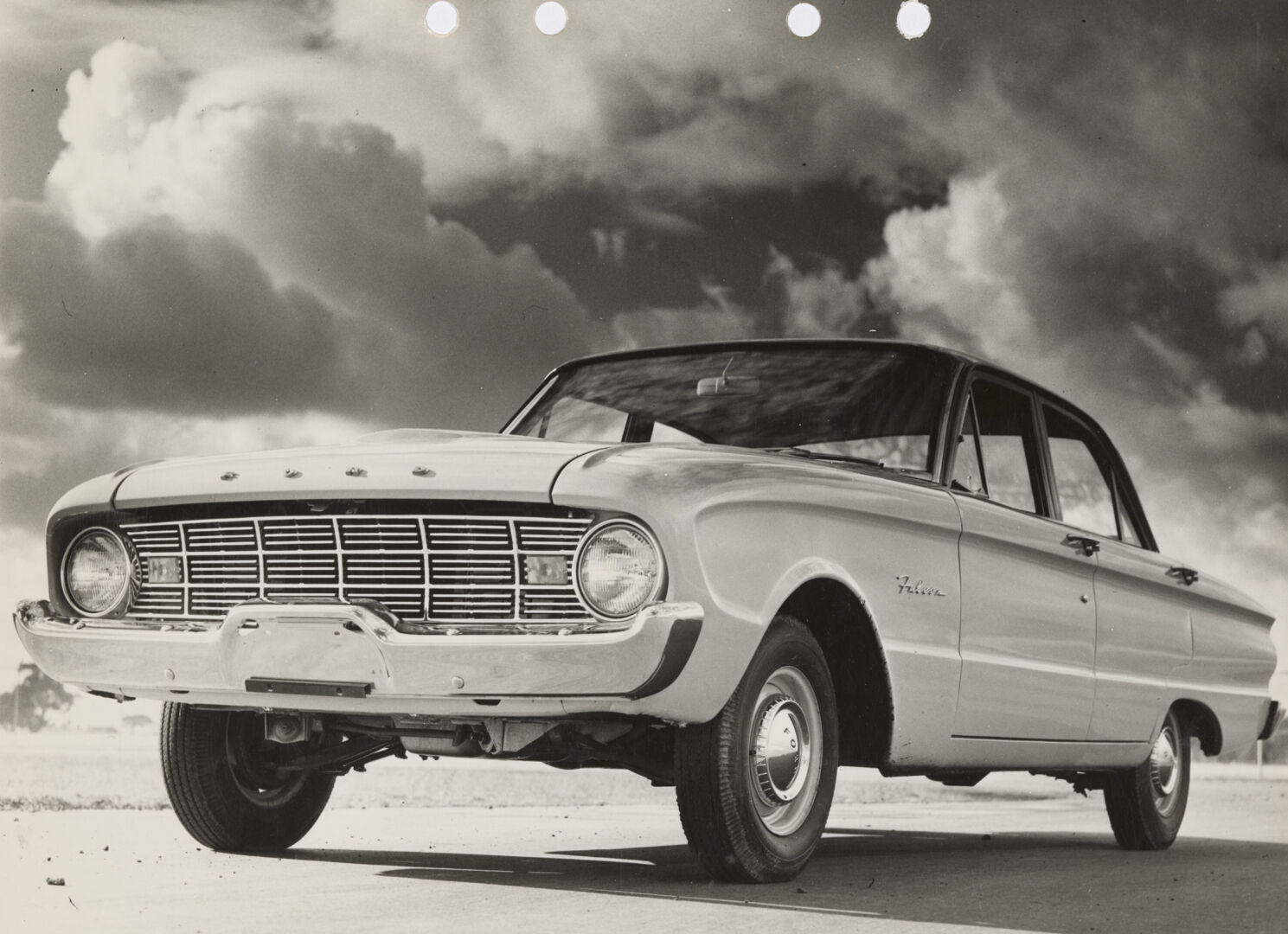
In addition to the event, the Ford Heritage Vault can be accessed to celebrate the company’s 100th
year, including 2,300 new brochures and images of Ford vehicles sold in 1925. It can be visited
here: https://fordheritagevault.com/
The vault is also home to over 19,000 digital items, including product brochures, assorted regional
issues of the Ford Times magazine, product and concept photography, images of global Ford
facilities, and press releases detailing the innovations in historic concept vehicles.
Over its more than 70 years of existence, Wheels has covered nearly every significant development in the Ford Australia story. Many famous Wheels covers will feature in Ford’s anniversary celebration in Melbourne.
Perhaps most famous of all of Wheels‘ Ford stories was Mel Nicholls’ infamous drive down the Hume Highway in the mighty Phase III GTHO Ford Falcon, documented in the October 1971 issue, which many believe led to laws around speed limits changing on Australian country roads.
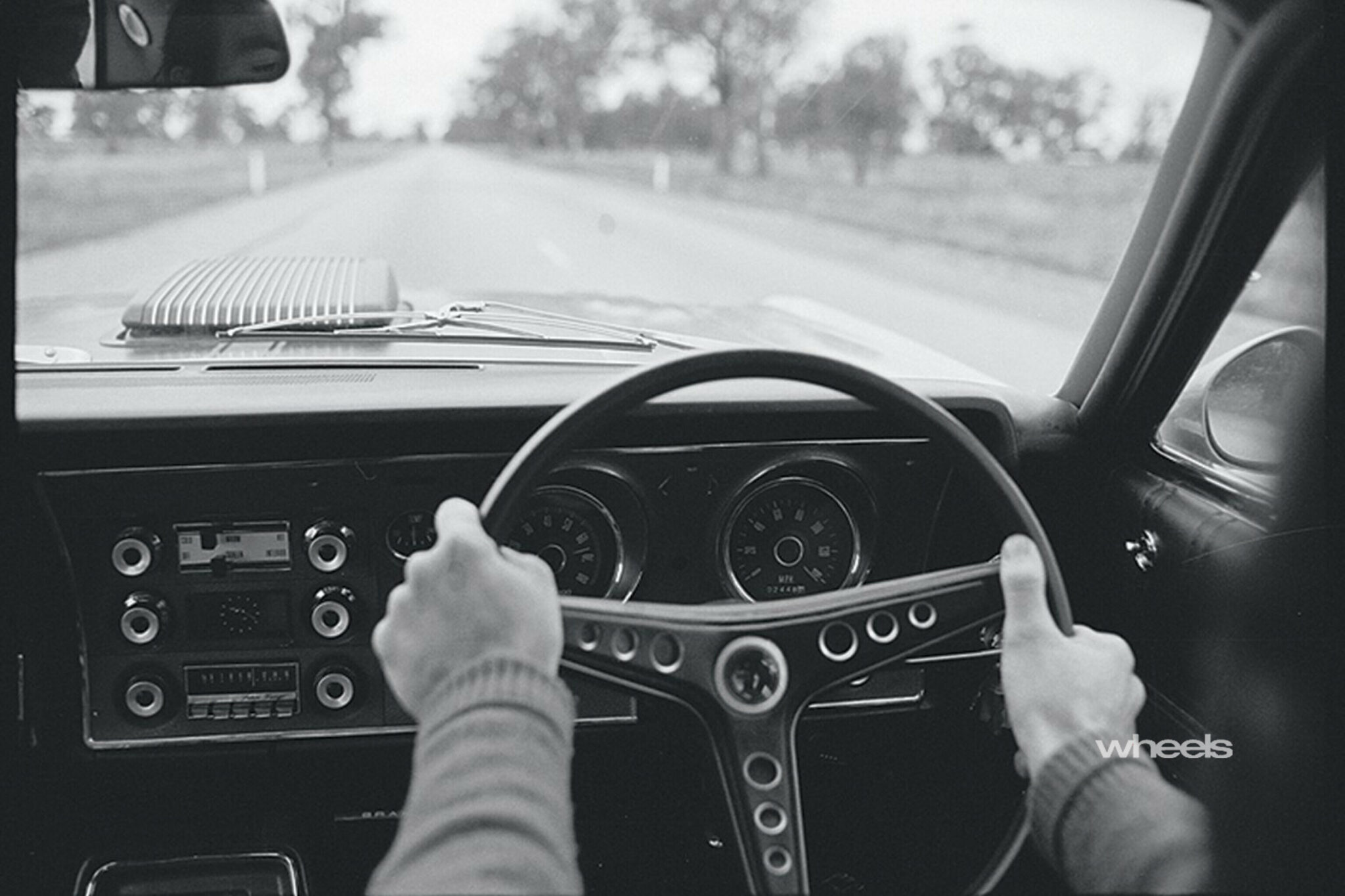
As Mel later commented about his colleague Uwe Kuessner’s famous photo over his shoulder as he pushed the Falcon to its limit on the Hume south of Wodonga in Victoria: “Peering at the instruments, I can still see the tacho cranking past 6000rpm and the speedo nudging beyond 140mph…”
Ford cars have won Wheels Car of the Year seven times since the award was established in 1963, the Ford Everest the most recent winner in 2023.
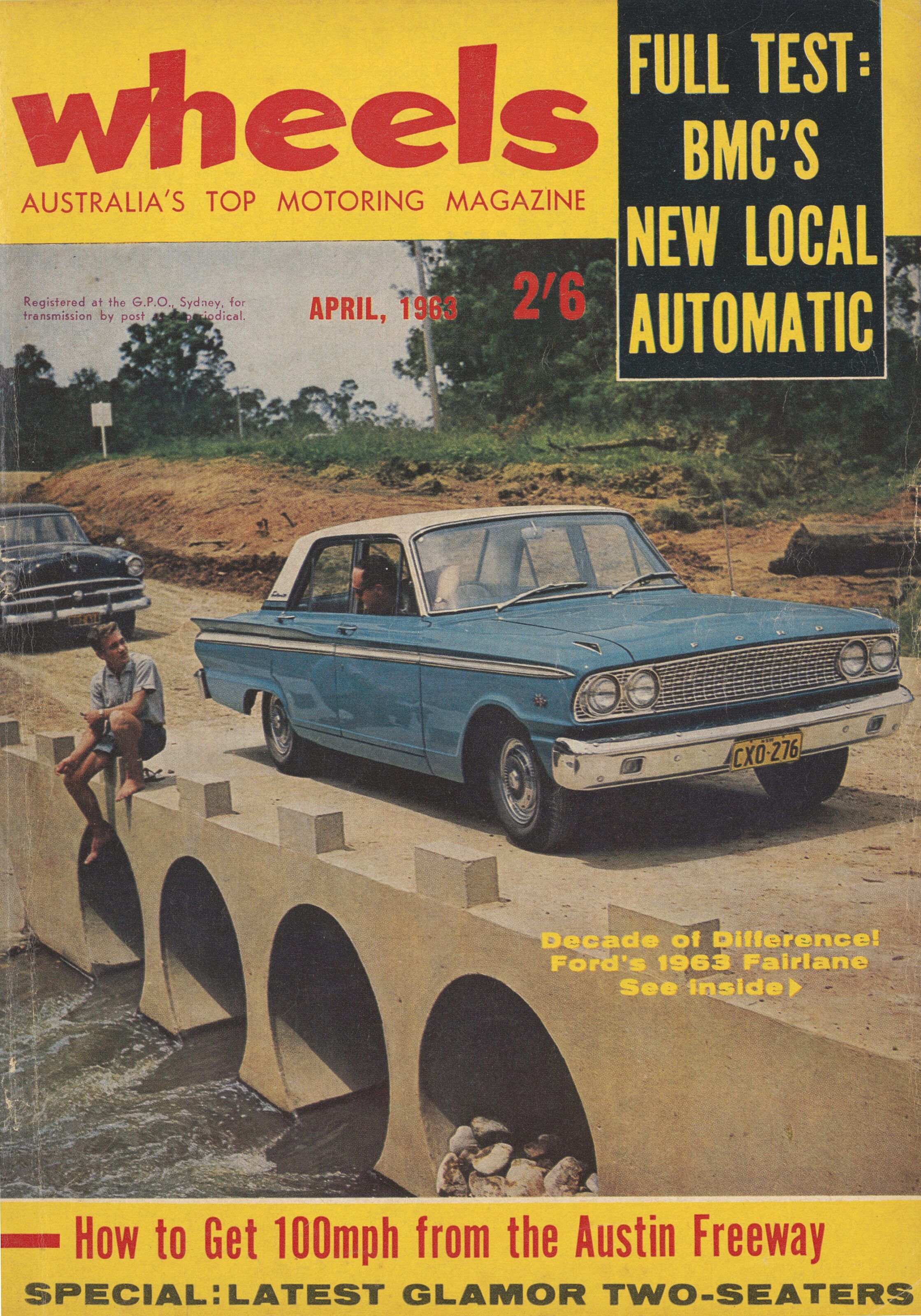
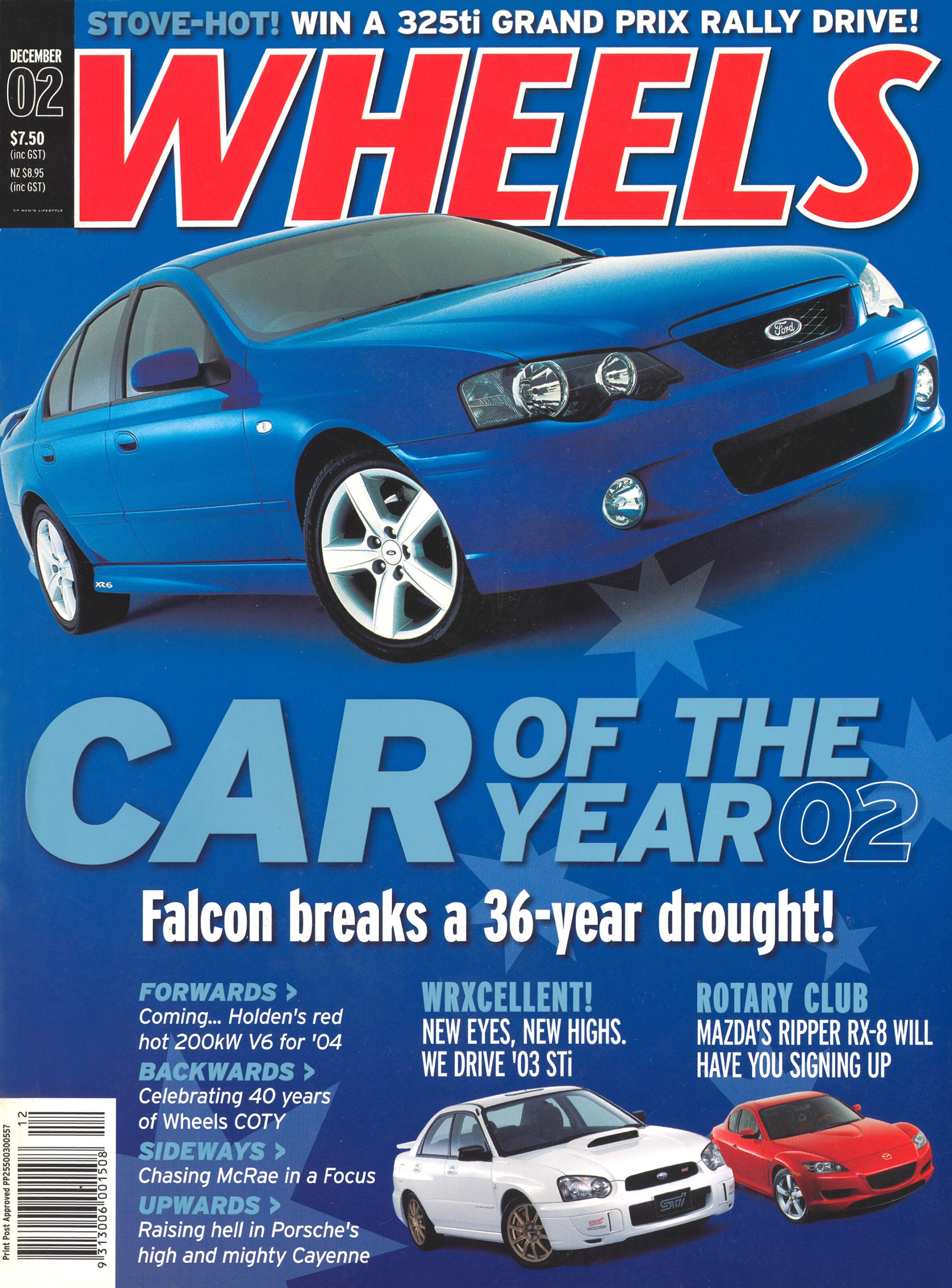
The Ford Australia 100th year anniversary celebration will commence on April 4th in Melbourne.
Honda Racing Corporation (HRC) has announced that from August, 2025, it will begin selling some of its collection of valuable race cars, engines and engine parts from it storied past.
Keen Formula 1 fans can now potentially buy a piece of the famed Honda RA100E engine Ayrton Senna used in winning the 1990 FIA Formula One World Championship, which it will auction in parts at the Monterey Car Week in the United States in August.
The parts were disassembled one by one by skilled mechanics at HRC’s factory in Japan, some of whom were actually involved in assembling this engine at the time. The auction items will include a complete set of engine parts, or specific parts such as camshafts, cam covers, pistons, and connecting rods, beautifully housed in acrylic cases, each accompanied by an original HRC certificate proving their authenticity.
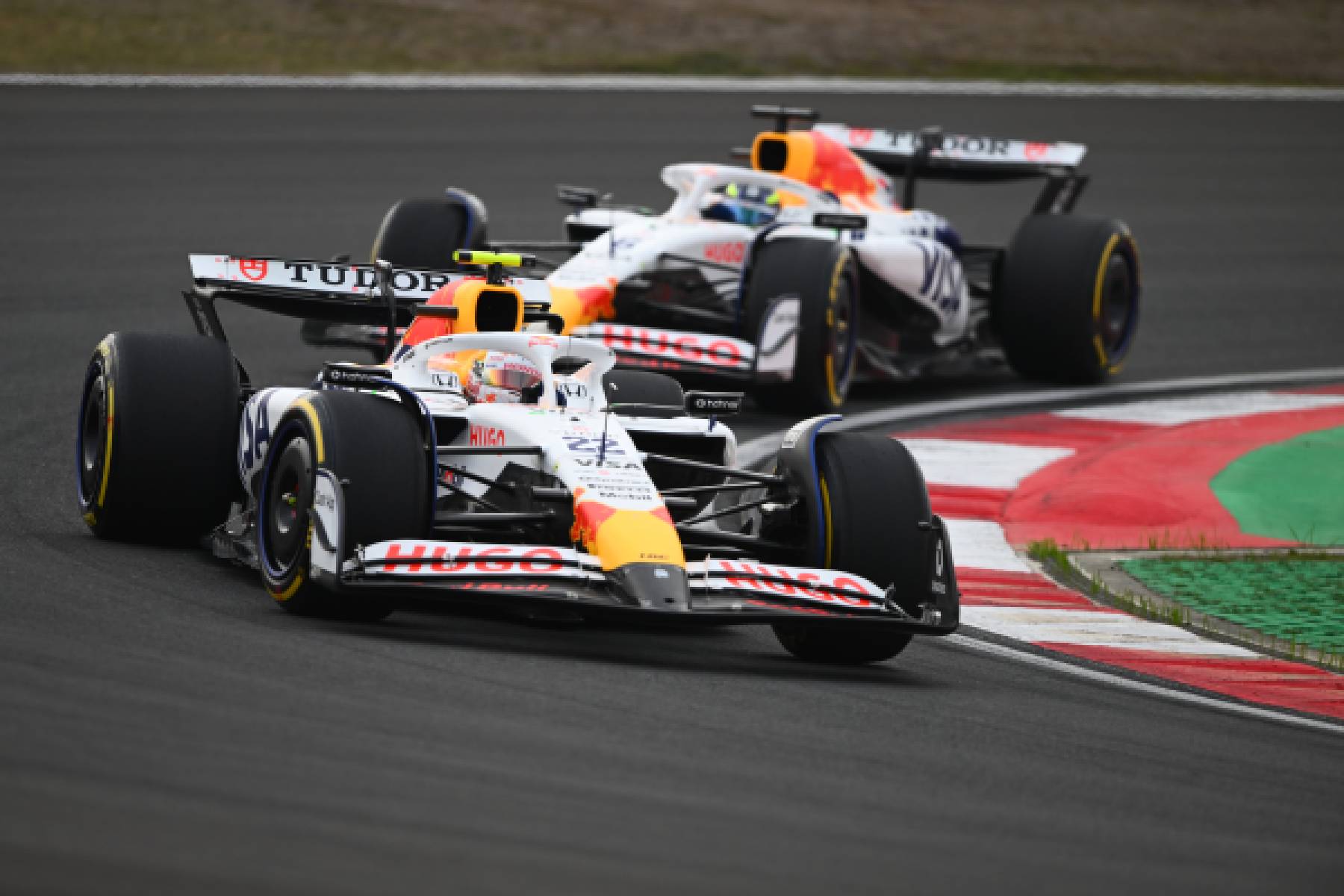
HRC is also selecting heritage machines from the IndyCar series and valuable race machines from motorcycles to be included in future auctions.
Honda showcases historic racing machines at the Honda Collection Hall in Mobility Resort Motegi, Tochigi Prefecture, and the Honda Racing Gallery at Suzuka Circuit in Mie Prefecture, Japan.
These exhibits include machines that participated in the Isle of Man TT races in the 1950s, the early F1 machines from the 1960s when Honda started its automobile business, and various other machines up to the present day.
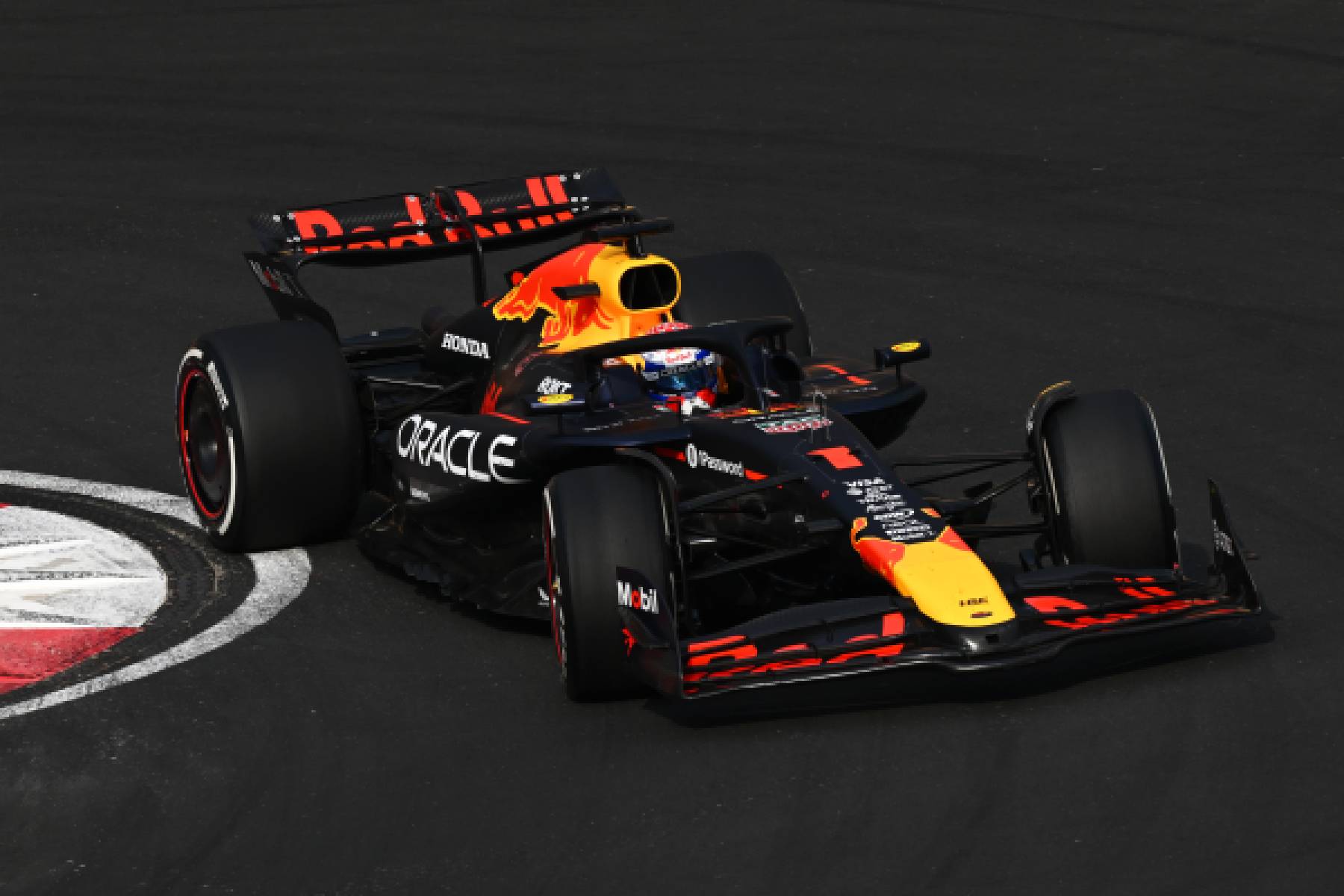
Some of these machines are maintained in running condition, and Honda holds many spare parts for this purpose. Among these are engines and parts of high historical value. Honda carefully selects sellable parts from these valuable machines, engines, and parts in storage, to ensure items up for sale do not affect the preservation of the running machines.
“We aim to make this a valuable business that allows fans who love F1, MotoGP, and various other races to share in the history of Honda’s challenges in racing since the 1950s.” said Koji Watanabe, the President of HRC. “It is not intended to be a one-time endeavour, but rather a continuous business that we will nurture and grow.”
MG Motor Australia will use this weekend’s Melbourne Motor Show to debut five new models in Australia, including two from its newly announced premium brand IM Presented by MG Motor.
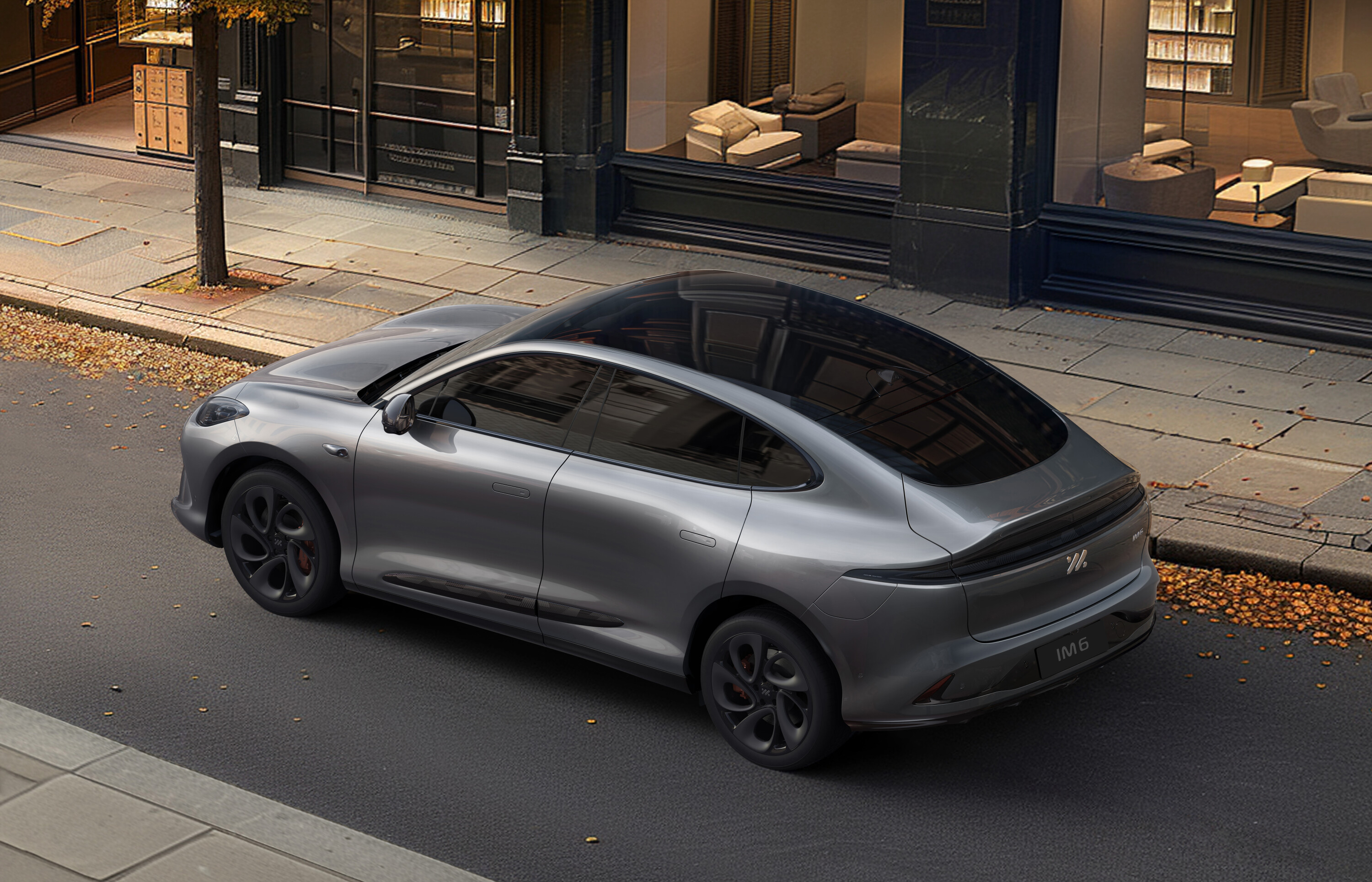
The IM5 four-door sedan and the IM6 SUV, both electric, will be on show, with MG promising an elevated offering of tech and luxury in both. IM Motors is an electric vehicle joint venture between Chinese automobile manufacturer SAIC Motor and Chinese technology companies including Alibaba Group.
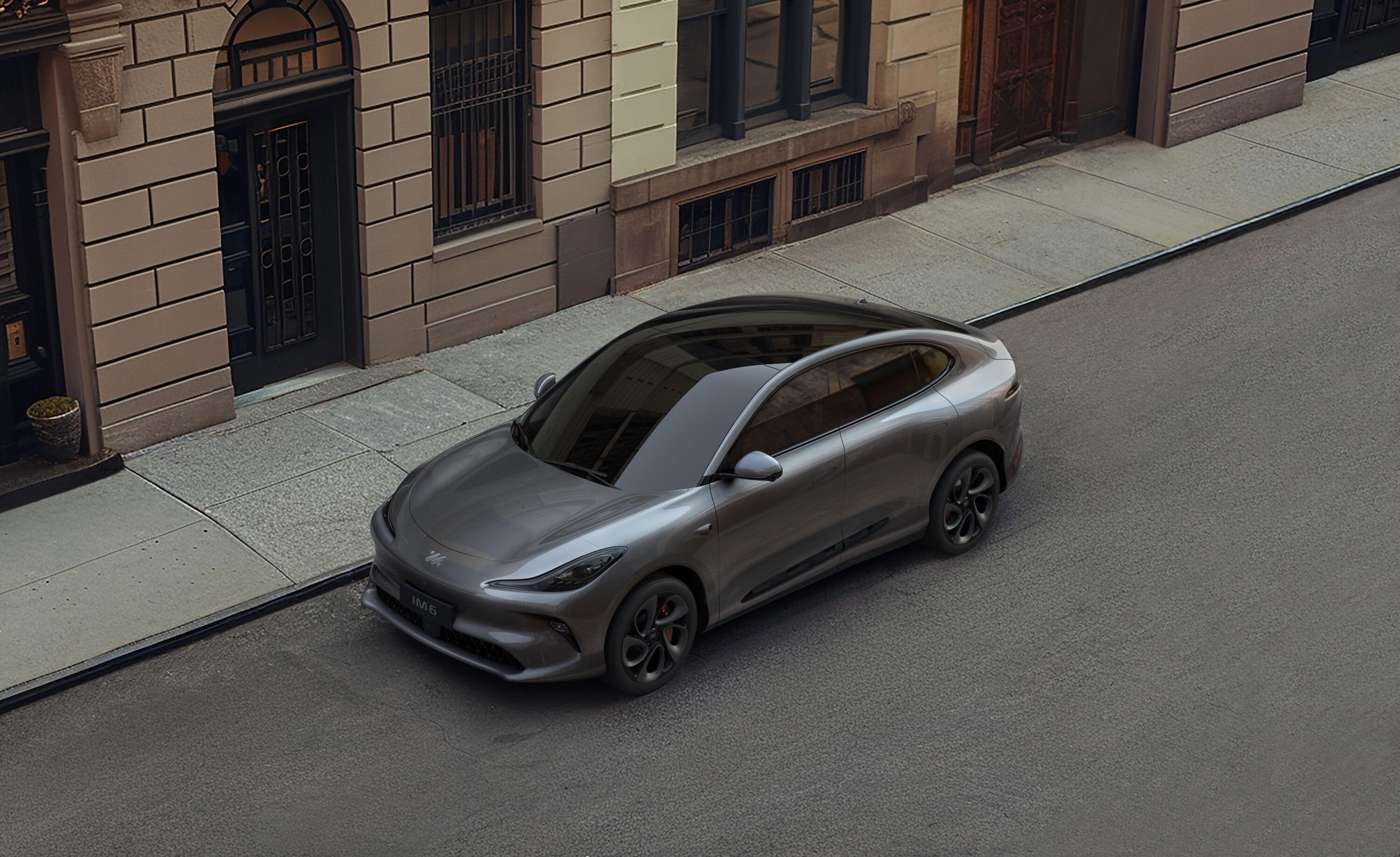
WhichCar recently reported on MG’s announcement and what each vehicle offers based on their availability in other markets.
Both vehicles sit on the same platform and offer both rear- and all-wheel drive drivetrains. In Thailand – another right-hand drive market – the IM6 will be available with either 75kWh or 100kWh battery packs for up to 634km of range (NEDC – WLTP figures are yet to be announced).
The rear-drive model makes 217kW/450Nm and the all-wheel drive model 572kW/850Nm – charging speeds are also yet to be announced, but the smaller battery uses a 400V battery and the larger, 800V.
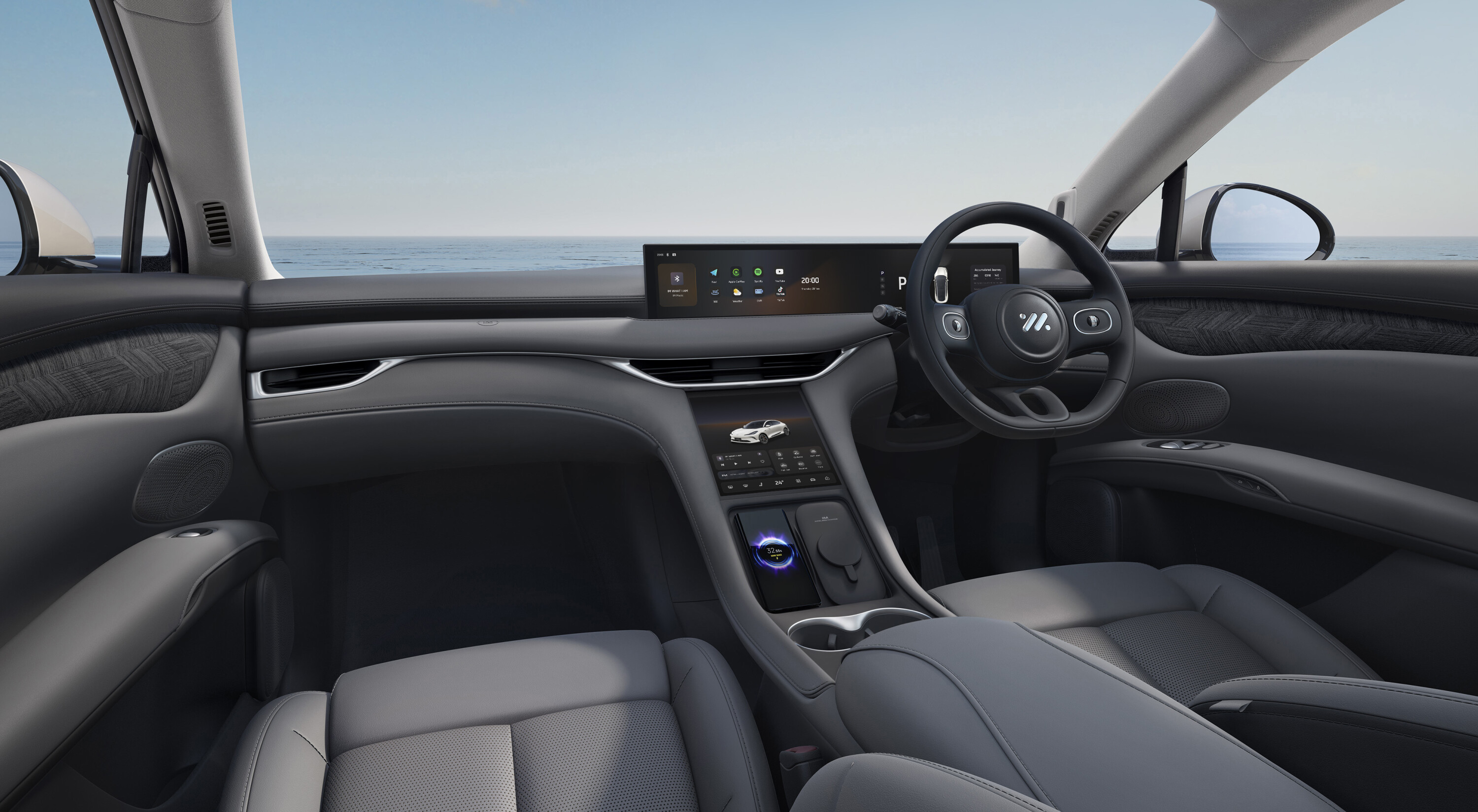
Available features in Thailand for the IM6 include a 20-speaker sound system, a 26.3-inch touchscreen display with a 10.5-inch lower touchscreen, wireless smartphone mirroring and charging, 256-colour interior ambient lighting, heated/cooling/massaging front seats and vehicle-to-load functionality up to 6.6kW.
MGS5 EV
After recently being revealed in Europe, MG will also show the MGS5 EV for the first time in Australia at the Melbourne event. Built on the same platform as the highly awarded MG4, the compact MGS5 EV is a versatile rear-wheel drive vehicle aimed at families, and MG says it will be one of the first of the new cars revealed at the Show to soon be available at MG dealerships.
QS
The seven-seat QS represents MG’s new quest to gain market share in the larger SUV segment, taking on the likes of the Toyota Kluger and Hyundai Palisade. Powered by a 2.0-litre turbocharged four-cylinder petrol engine, the QS is expected to be launched in Australia later in 2025.
HS HYBRID+
A new MG HS HYBRID+ SUV will complete MG’s reveals at the Melbourne Motor Show, a new generation plug-in hybrid for the fuel-conscious family.
“This is a momentous milestone for MG as we unveil the next chapter of our journey in Australia – doubling our range and expanding into new segments,” said MG Motor Australia’s Chief Executive Officer, Peter Ciao, about the Melbourne Motor Show reveals.
“We’ve seen strong growth over the past decade, and we’re setting our sights even higher for the years ahead as we aim to be a top 5 selling manufacturer by 2027 and top 3 by 2030. Our ambition is to offer Australians a quality vehicle at every $10,000 price point, and this expanded line-up brings us one step closer to making that a reality.
The Melbourne Motor Show will be held at Melbourne Convention Exhibition Centre on Saturday April 5 and Sunday, April 6.
As car companies begin to tease the new product to be debuted for Australian audiences at this year’s restored Melbourne Motor Show, relative newcomer Mahindra has revealed the centrepiece of its offering.
The XUV 3XO, a features-rich compact SUV the brand describes as “performance-driven … to appeal to the dynamic lifestyles of Australians”, will be the star of the Mahindra show.
The stylish five-seater offers an array of latest tech with 26cm infotainment display and similarly proportioned instrument cluster along with dual climate control and electronic parking brake with auto hold.
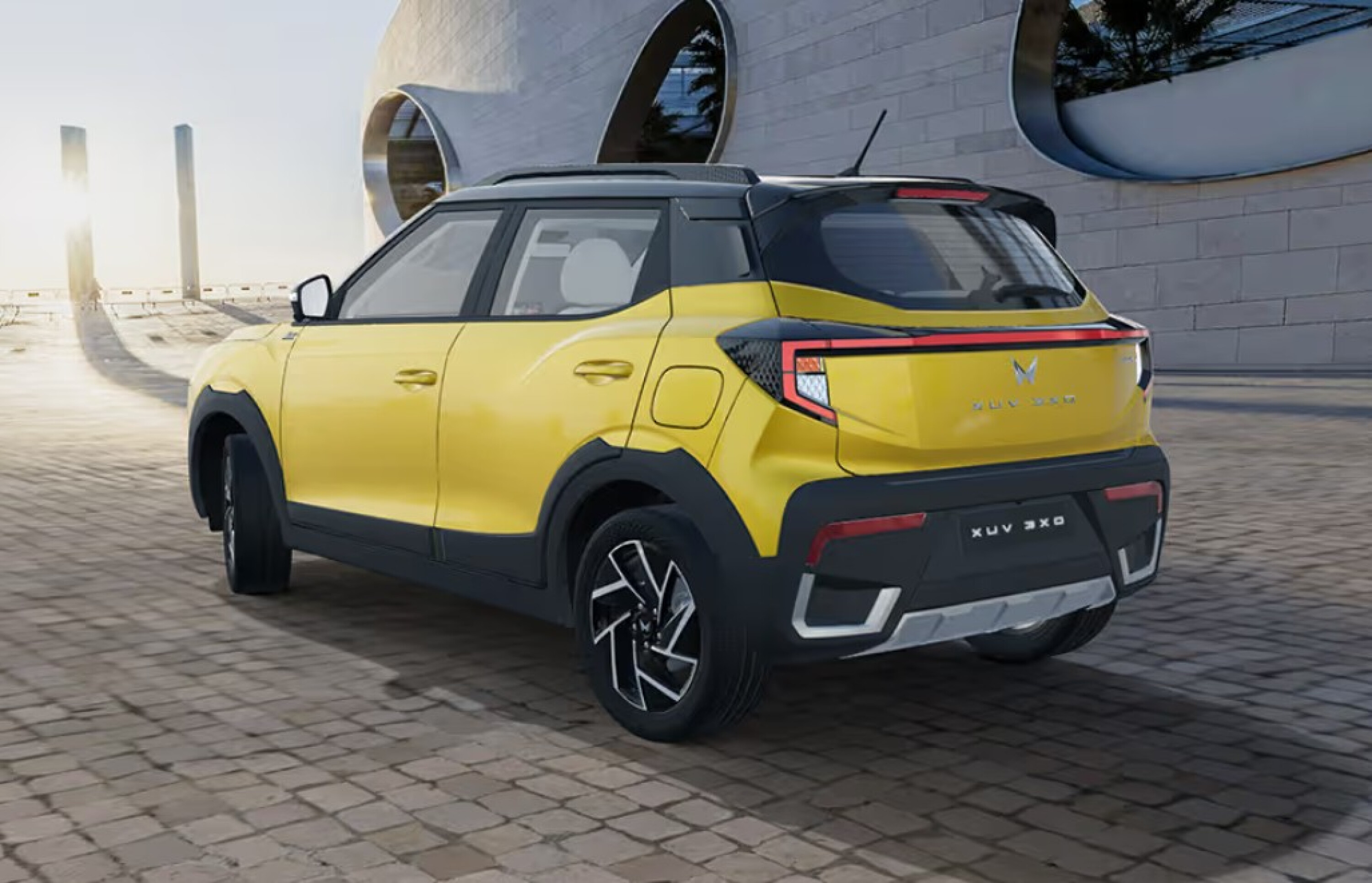
In other markets the XUV 3XO is offered in 1.2-litre turbo petrol (82kW power, 200Nm torque), 1.2-litre TGDi petrol (96kW power, 230Nm torque) and 1.5-litre turbo diesel (86kW power, 300Nm torque) variants.
The XUV 3XO will be launched in Australia soon and joins other vehicles from the brand on display including the value-for-money 2025 XUV700 (MY25), $39,990 drive away for the AX7 variant featuring wireless Apple CarPlay/Android Auto, ventilated front seats, all-black interior, 1.3-metre Skyroof and 2.0L turbo-petrol with direct injection engine.
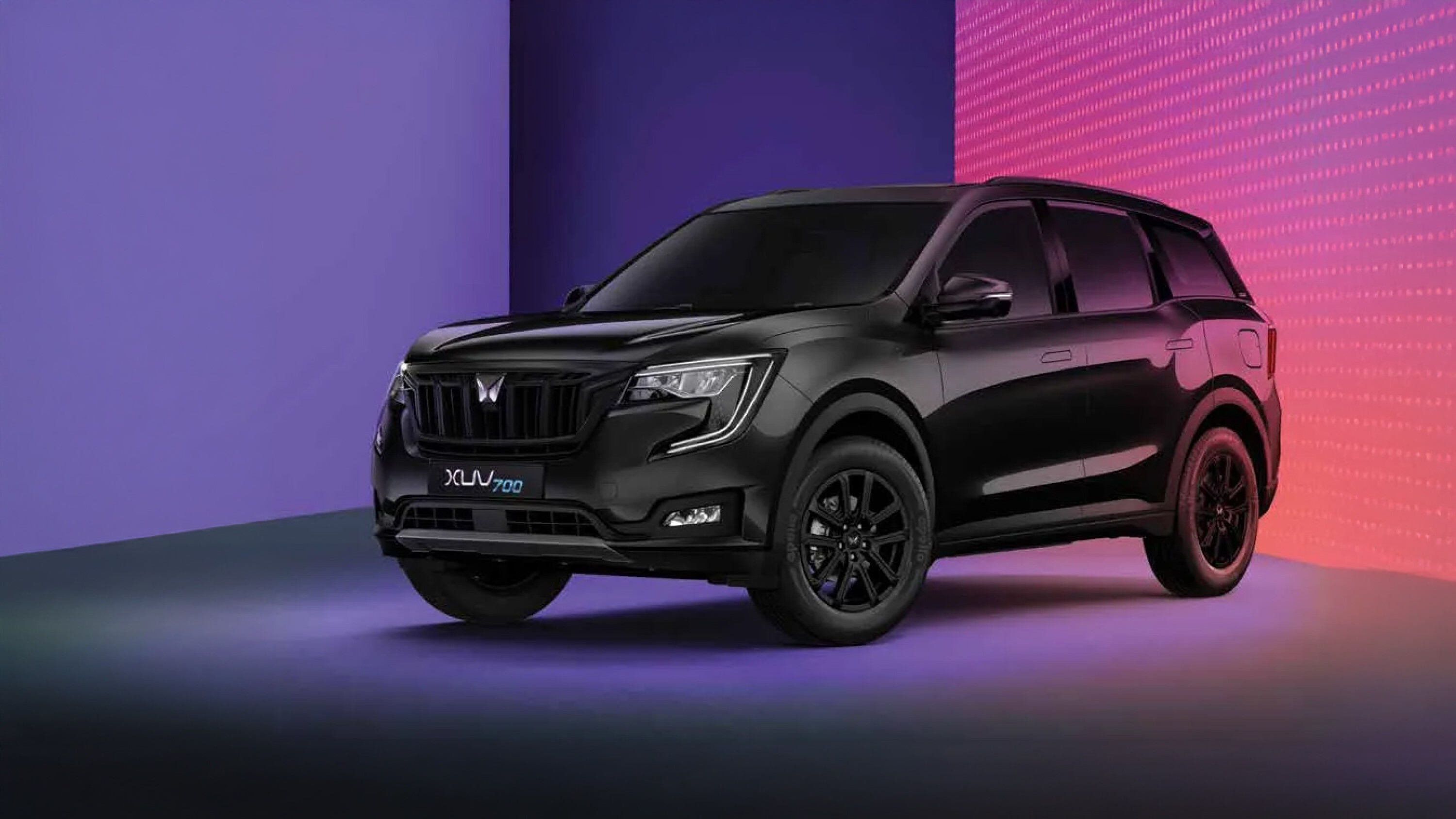
It will complement the limited XUV700 Black Edition with its blacked-out grille and side trims, and Scorpio 7-Seater priced from $46,990 drive away.
Those who test drive either the XUV700 and Scorpio will also be entered for a chance to win one of five $1000 prepaid cards at the show.
The Melbourne Motor Show will be held at Melbourne Convention Exhibition Centre Saturday, April 5 and Sunday, April 6.
Hyundai’s upmarket marque Genesis continues to expand its footprint in Australia with the opening of a new Sydney showcase in mid 2025.
The Genesis Castle Hill Showcase in Sydney’s north-western suburbs will be the brand’s third Sydney site, joining the flagship room at North Strathfield and a studio space in the Sydney CBD.
The Castle Hill showcase on Victoria Avenue will be established in a partnership with CKD Automotive, a business with extensive retail experience.
It will present the “audacious, progressive and distinctly Korean contours of the Genesis range in a stylish, minimalist environment that embodies the Korean aesthetic philosophy emphasising the ‘Beauty of White Space’.”
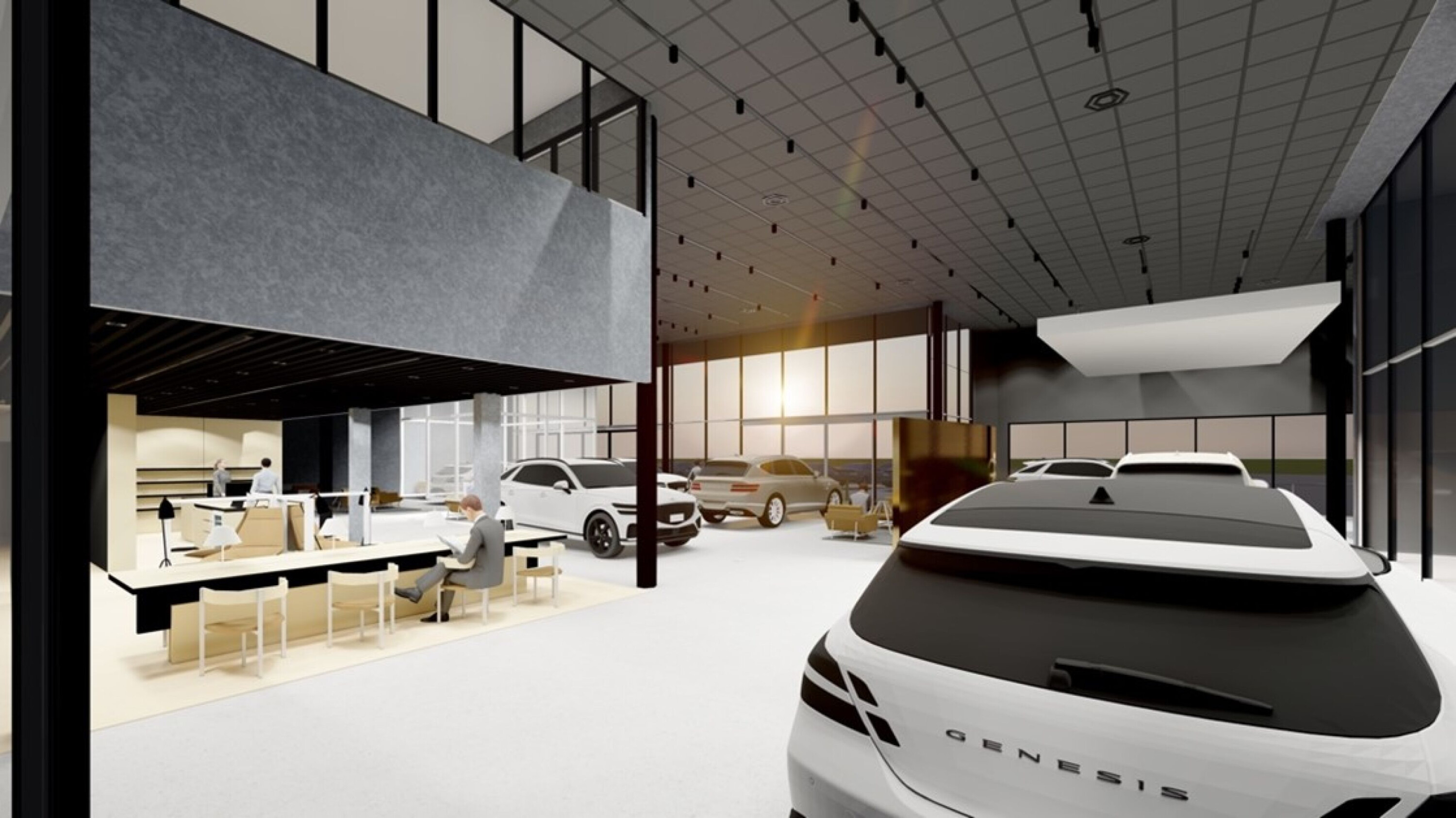
The new showroom will complement the brand’s significant investment in its other owned retail spaces.
“By expanding the footprint of our Genesis-owned stores and agency outlets we will build upon the high standard of service we set for our brand, meet increasing demand, and ensure the Genesis experience is accessible to a wider audience,” said Head of Genesis Motors Australia, Justin Douglass.
Since launching locally in 2019, Genesis has expanded its presence in Australia to seven locations across four states, including two flagship studios in Sydney and Melbourne, supported by five metro showcases in Sydney, Melbourne, Gold Coast, Brisbane and Perth, with Castle Hill set to become the eighth retail site.
According to research from Charles Darwin University, a future built on the prospect of self-driving cars will be cruelled by Australian traffic laws.
The study examines the ‘driver dilemma’ in Australia: how road traffic laws are specific to human drivers, and how this legislation has limited application to automated vehicles that can drive without human input.
The authors from Charles Darwin, the Queensland University of Technology and the University of Newcastle found that in Australia, most legislative powers to stop vehicles are subject to a human driver.
For example, legislation in both South Australia and Queensland specifies a driver as a ‘person’ and an authorised officer to direct a driver to stop their vehicle – but what if a person is not in control of the vehicle?
“The driver dilemma can be strongly identified in these stopping powers, all of which are addressed to the ‘driver’,” lead author and CDU Senior Lecturer in Law Dr Mark Brady said.
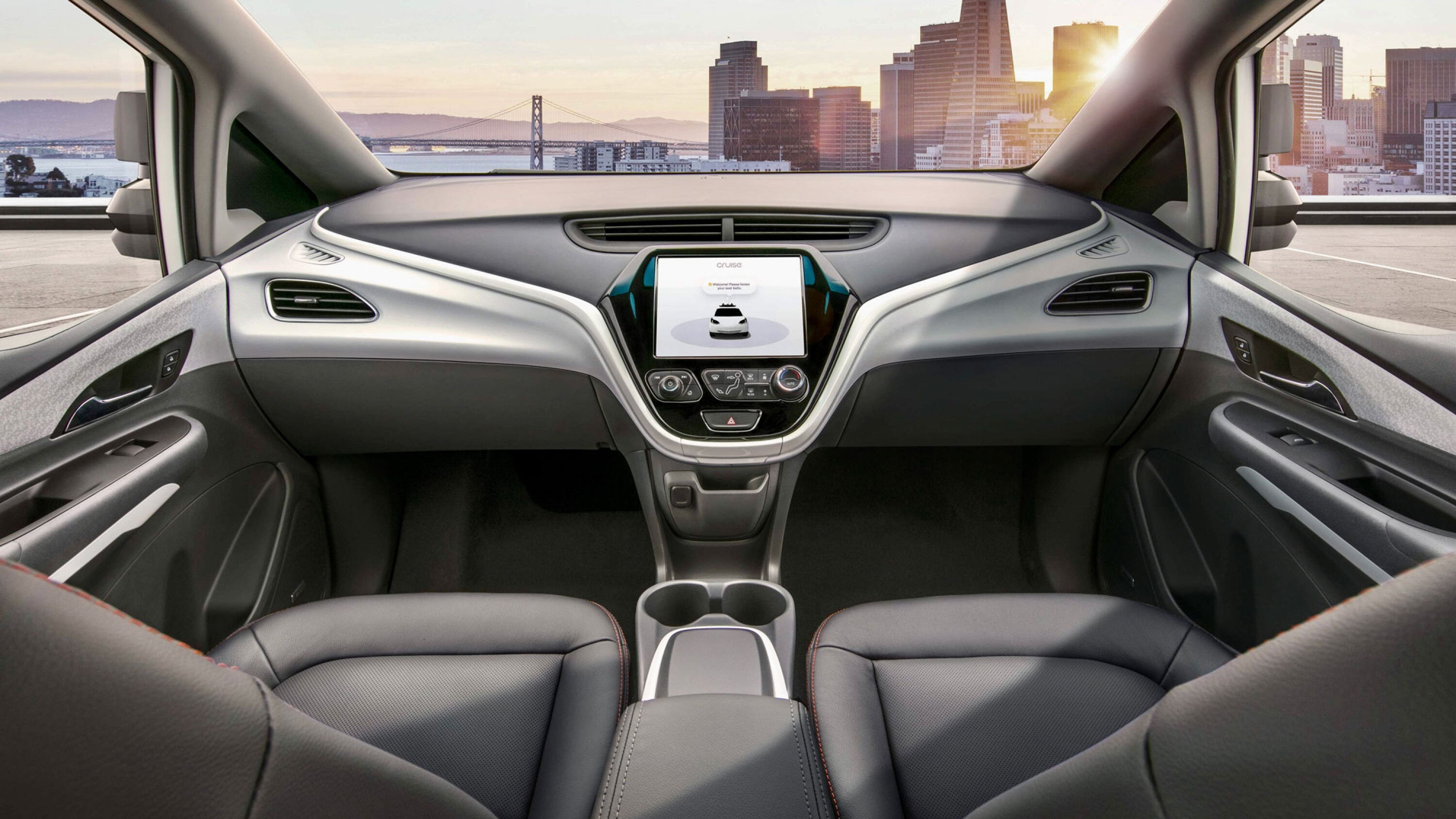
“Powers directed to drivers to stop vehicles are problematic when applied to automated vehicles where the automated driving system cannot at law be considered a driver.”
But in some other states, passenger transport legislation is vehicle-centric and not dependent on a driver. In New South Wales, taxi and hire car legislation specifies that authorities are allowed to stop a motor vehicle irrespective of who is driving.
Dr Brady said that given the potential uptake of driverless vehicles in the future, passenger transport legislation should be used as a template to adapt road traffic laws to include automated vehicles.
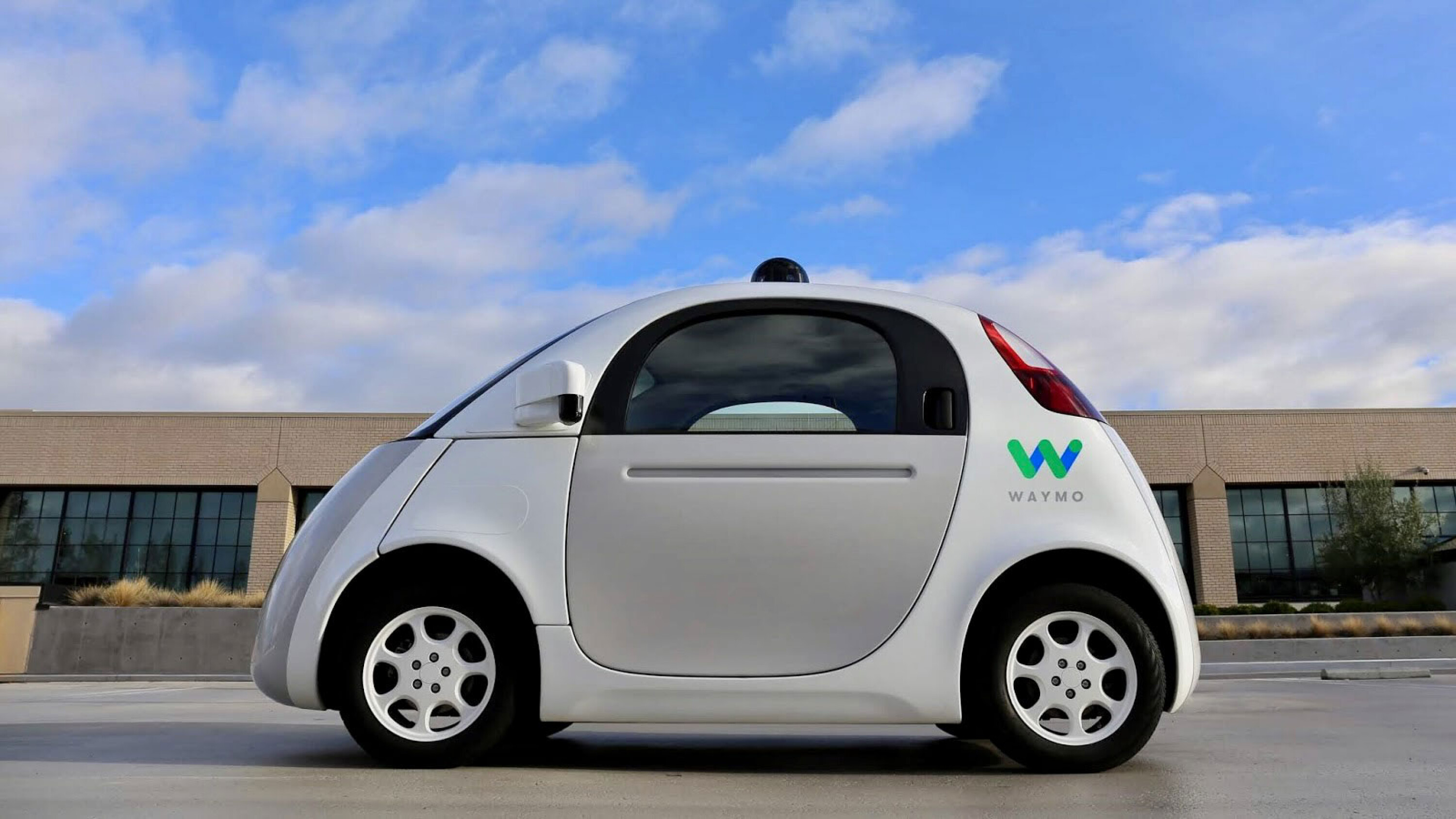
At present, there is no framework for automated vehicle legislation, though the Australian Government was developing one as of 2024.
“There is a suggestion that the familiar ‘rules of the road’ will not be needed in an automated vehicle future,” Dr Brady said. “However, in this future roadside enforcement would still need powers to stop vehicles. As automation increases, it becomes more problematic who is the driver, in fact and in law, for the purposes of international and national road traffic laws.”
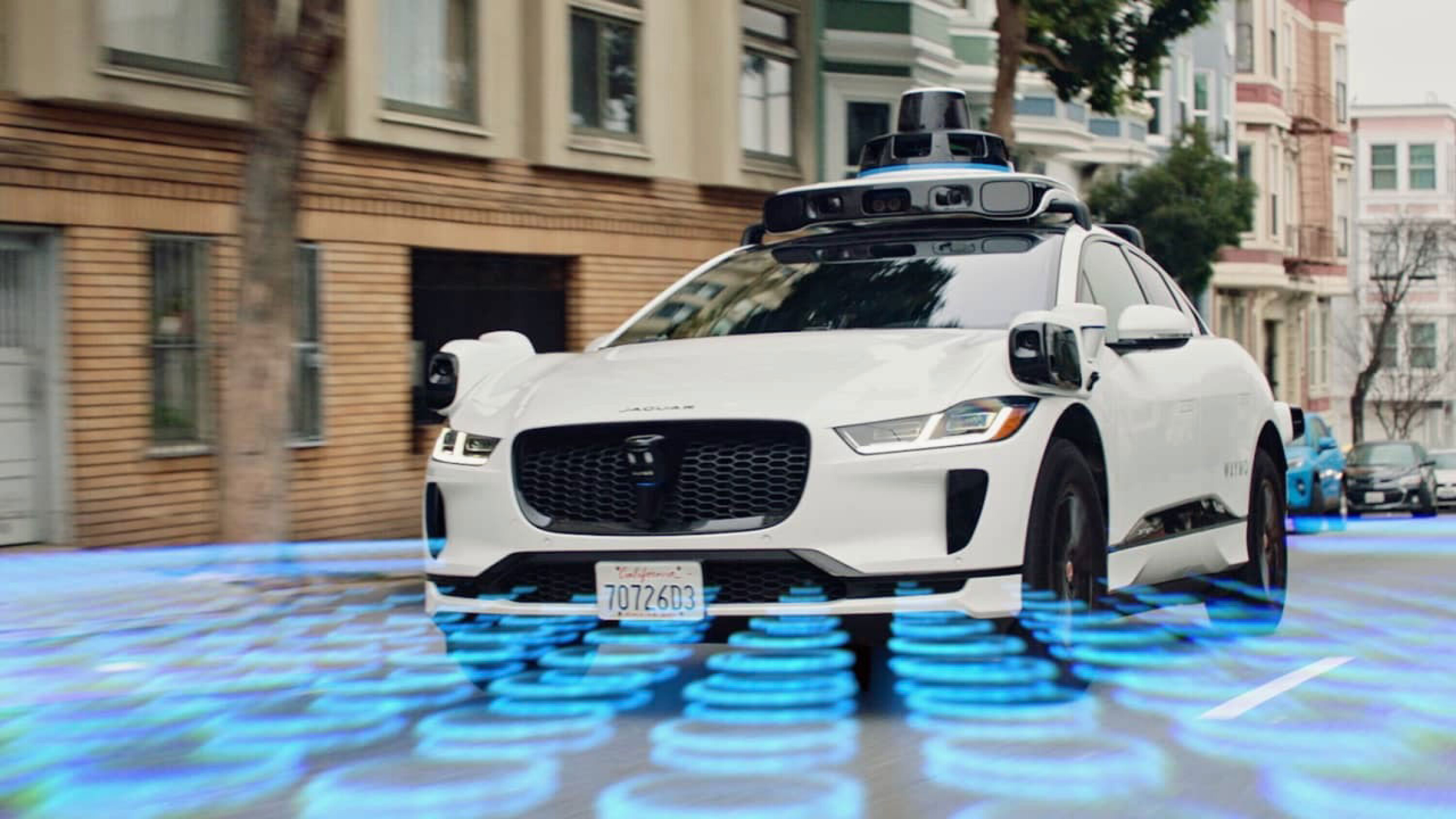
While Australian roads are yet to be driven on by self-driving cars, the United States has a number of self-driving tests, including Google’s Waymo, which operates a number of Jaguar I-Paces and Chrysler Pacificas in its fleet for ride share use. General Motors is also testing autonomous vehicles in California.
Do you think that Australian roads are ready for self-driving cars? Let us know in the comments below.
Life flashes before your eyes when you’re moving at 240km/h. No, 243, 247… now 251km/h. Moving at 67 metres per second, your side vision is blurred, you focus on the horizon and yet, it’s oddly peaceful. At least, it would be if you weren’t driving the new Aston Martin Vantage and wrangling its thunderous twin-turbocharged 4.0-litre V8 engine.
Sourced from AMG, it makes a massive 489kW of power – or 665 horsepower in the old money, a massive 30 per cent increase on the old car – and 800Nm of torque, which kicks in from just 2750rpm. And this is only the ‘baby’ Aston…
Engine aside, there have also been significant changes under the skin. The chassis is considerably stiffer with 30mm wider tracks for sharper handling, new electronically adjustable dampers from Bilstein are standard fit, as is a new eight-setting adjustable traction control system.
Meanwhile, the transmission’s final drive has been made shorter for even quicker acceleration: the claimed 0-100km/h time is just 3.5 seconds and the Vantage will reportedly hit 325km/h at the top end. This car is fast.
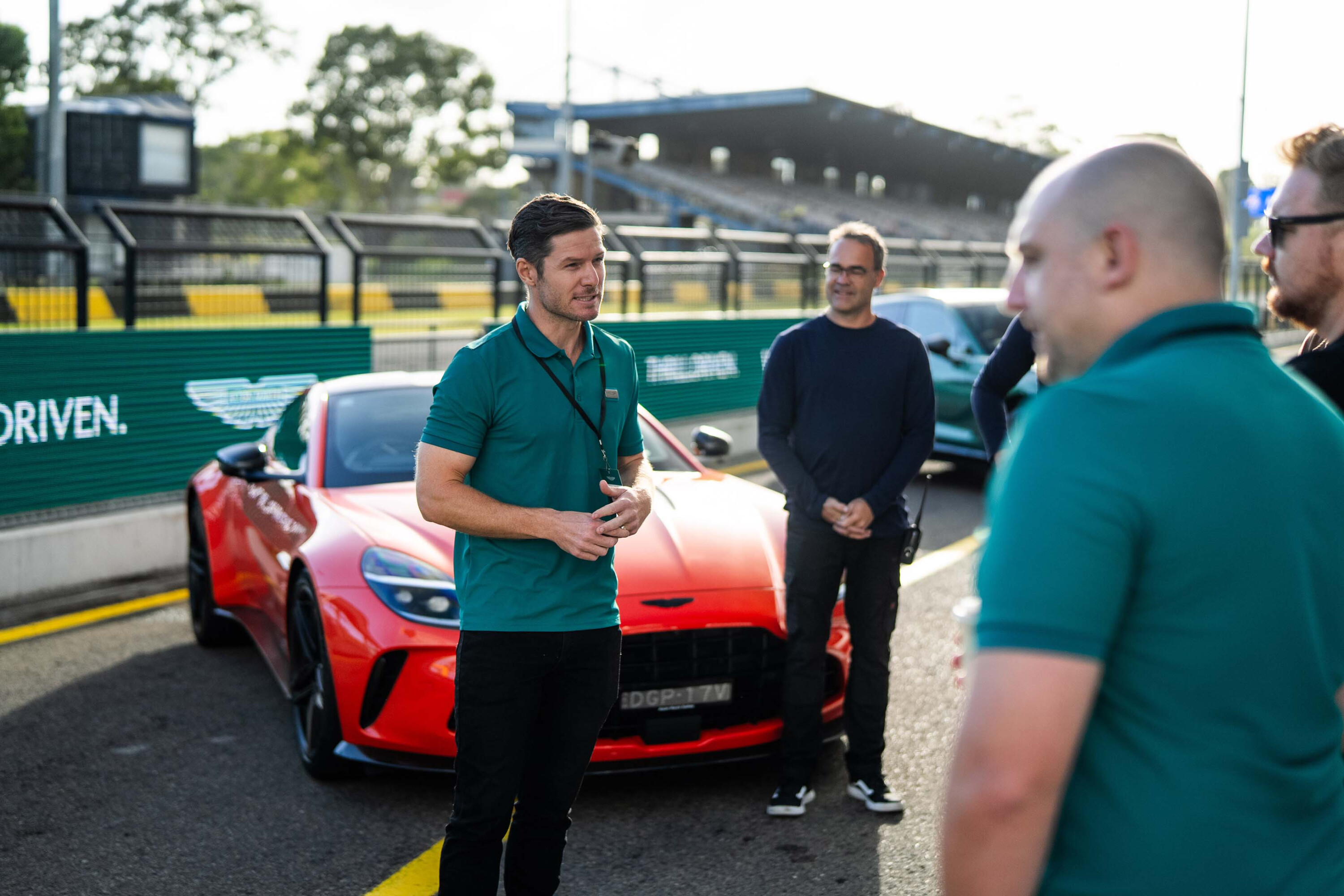
The Aston Martin team is understandably proud of the new Vantage, calling it “one for the drivers”. Unlike its larger siblings, the Vantage is clearly a sports car and not a grand tourer in its attitude; it’s firmer, and harder than the DB12 or something like a Porsche 911. This newfound hardness is certainly something I’m feeling at the Vantage’s Australian launch at Sydney Motorsport Park.
Priced from $410,000 plus on-road costs, the new Vantage is heavily based on the old one. In some areas – like the almost-identical rear – that similarity is obvious, but there’s still plenty to distinguish new from old.
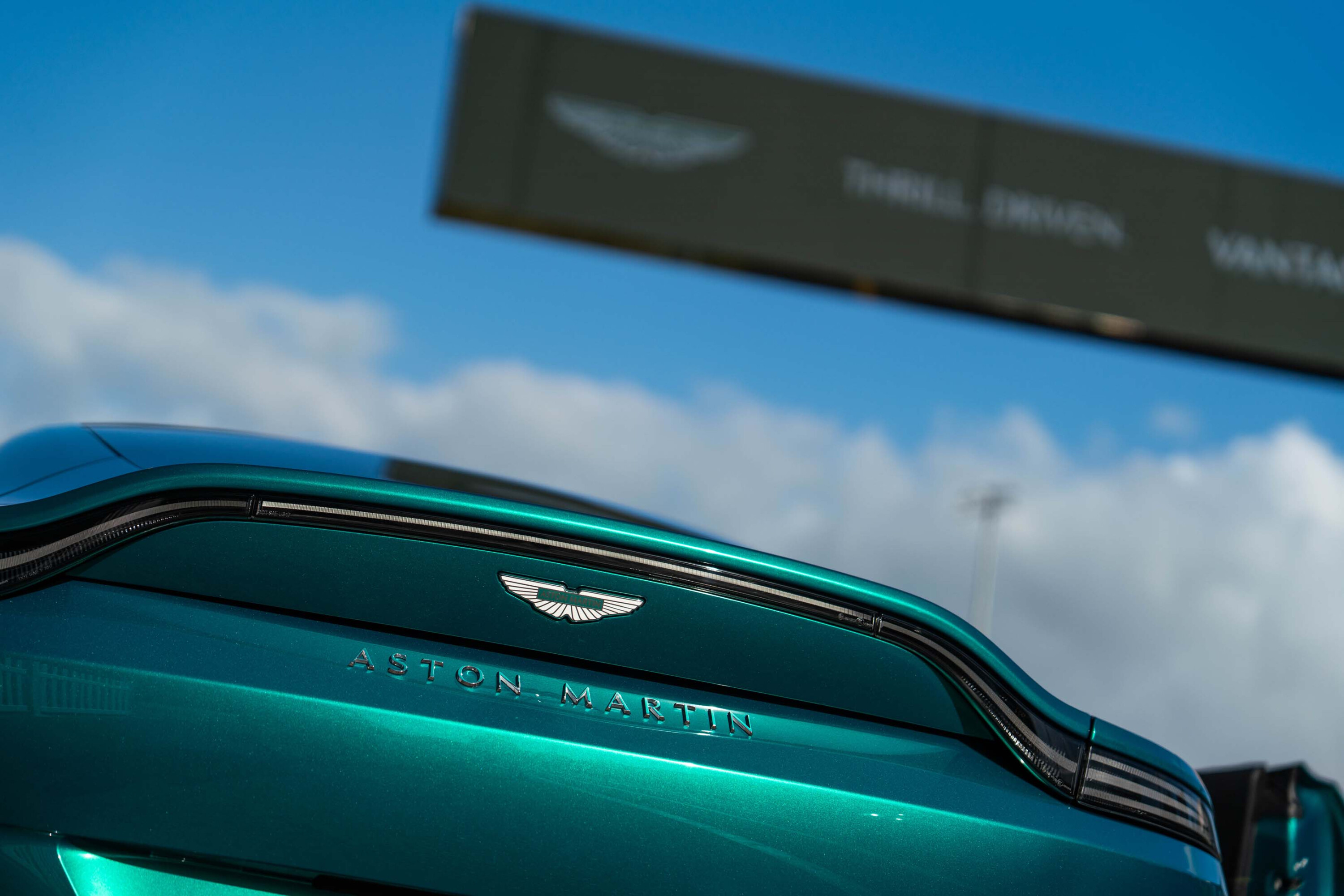
Aston Martin describe its styling as incorporating some elements from the brand’s past models and that rings true: there’s more than a hint of One-77 hypercar in the front, for example. It looks fantastic, all things considered, and more distinctive than before.
What is brand new, however, is the interior, and it’s a classier and more bespoke affair than the previous Vantage. Gone is the old layout and in its place a much cleaner look with a new 10.25-inch touchscreen, though now with Aston’s own software which is shared with the larger DB12. Handily too, there are plenty of physical buttons for features like the air-con, drive modes and performance settings to help you control important features at speed.
One such important feature is the Vantage’s new adjustable traction control system. It allows eight levels of interjection to test your oversteer skills – from a little bit of tail out action, to being able to pull massive slides. In practice, it’s a brilliant safety net that allows for big fun before the car reins it in.
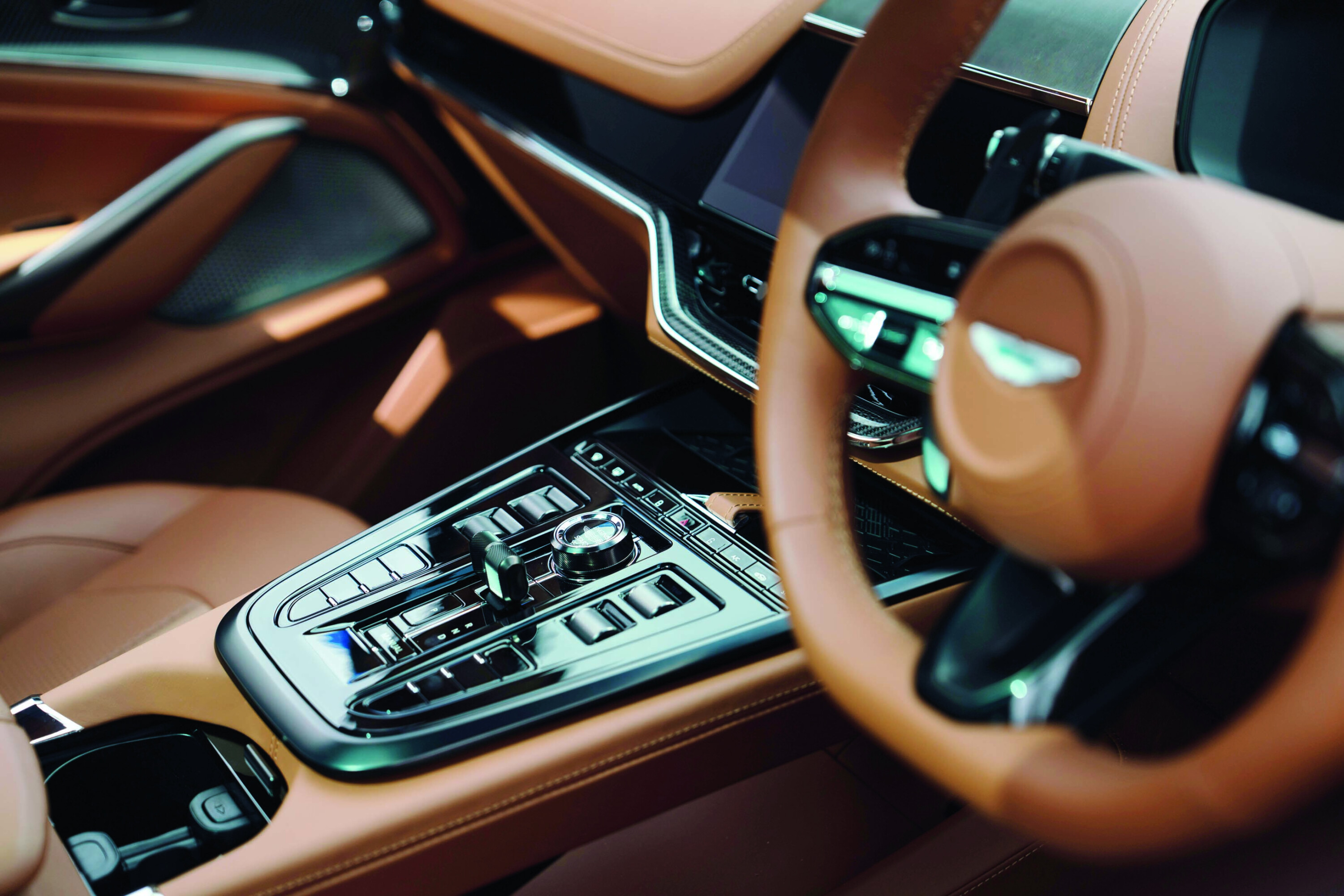
Elsewhere in the dynamic package, the Vantage is brilliant. The steering is meaty and feelsome, the carbon ceramic brakes (which are an option, to note) on our test cars were strong and impressively free of fade out on the track.
Plus, the ride in the firmest track setting didn’t upset either, presenting a noticeable difference from sport – where the latter felt a bit soft for track use, it firmed up nicely in track mode. Only the plastic-feeling paddle shifters caused any annoyance.
While a manual option would be great, the eight-speed auto is fabulous in typical ZF fashion, and feels almost dual-clutch fast – though its reluctance to shift to second gear in some of the slower bends was a touch frustrating because in too high a gear, a tendency for low-speed understeer is revealed.
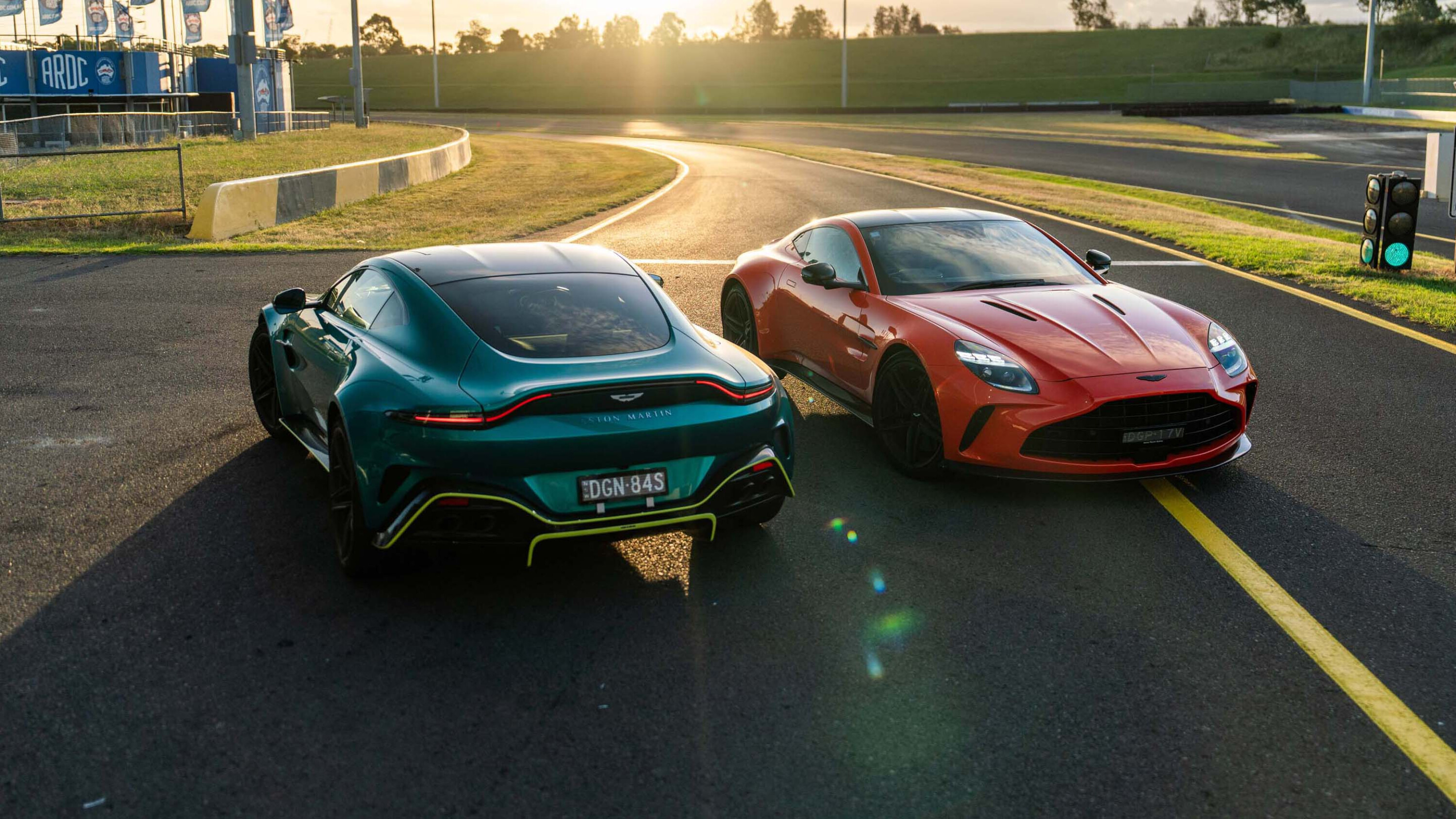
Overall, it’s easy to recommend the Aston Martin Vantage for those with the income to afford one. It’s lovely to sit in, bloooody fast, a fantastic and communicative handler and looks great, all key checklist items when purchasing a high-calibre sports car.
Plus, with seemingly limitless available customisation, it’s possible to truly personalise your Vantage.
But it’s more than all of that. The Vantage is an occasion. It’s asking “shall we take the Aston tonight?” and enjoying those 665 horses and the long way home. For that reason alone, its value is beyond price. I’ll have mine in Midnight Blue with an Oxford Tan interior, please…
Remember Smart, the car brand famous for making tiny city cars which first appeared in the early noughties?
Australia got its original taste of the brand in 2003, backed by parent company Mercedes-Benz. It found some very loyal owners but its sales were limited and the brand eventually left our market in 2014.
Now Smart is back with two new models that promise to stand out from the crowd – as the brand has always attempted to do. Is its #3 Brabus halo model worth consideration over other small electric SUVs?
Now a joint venture between Mercedes and Geely, Smart has relaunched with the #3 (yes, that’s ‘hashtag three’) and the smaller #1 below it. Both cars use the same scalable platform as the Volvo EX30 and Zeekr X, both of which are already sold here.
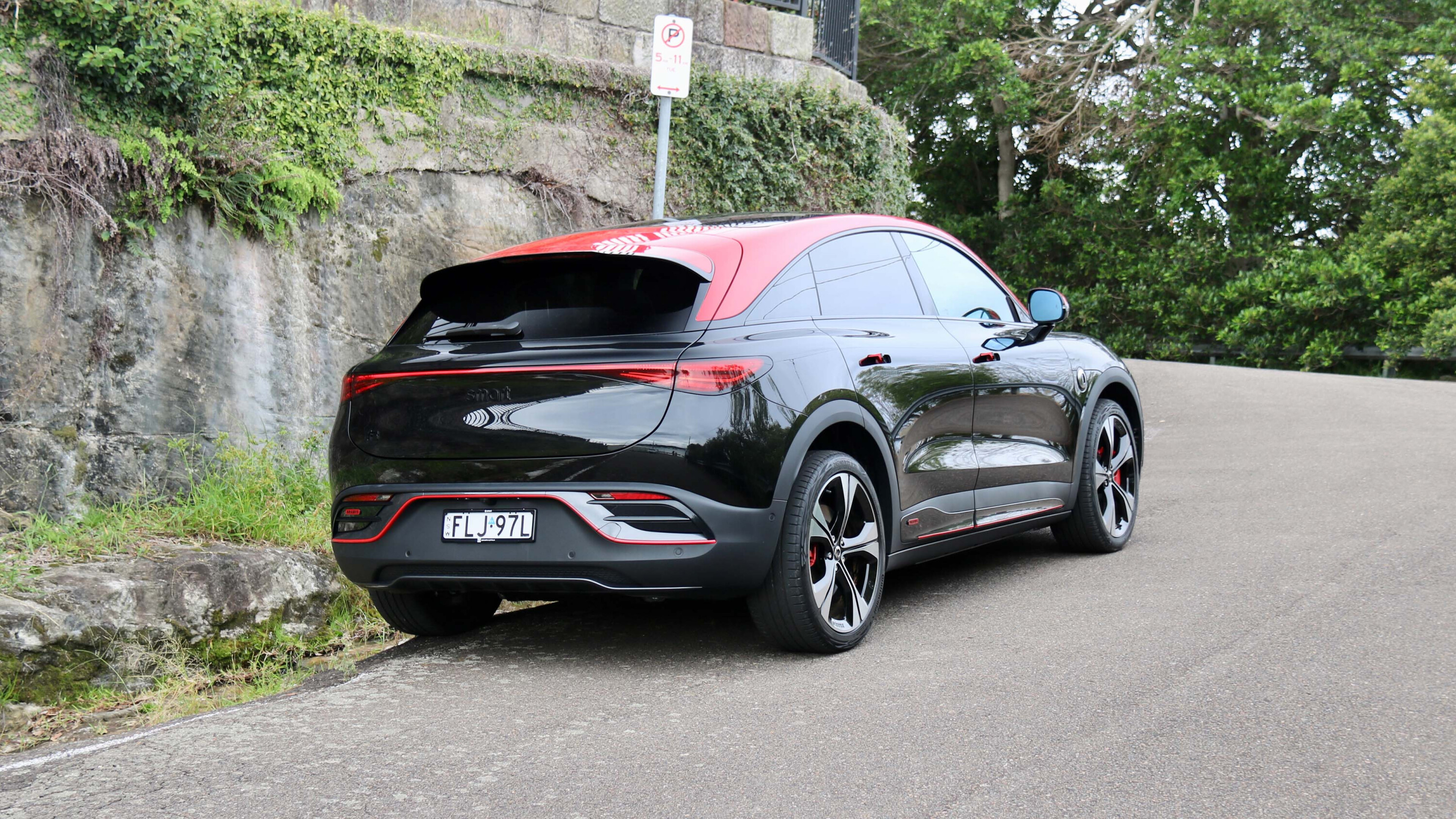
The #3 range is priced from a reasonable $57,900 plus on-road costs with the top-spec Brabus tested here asking $70,900 plus on-road costs, or between $300 and $3,000 less expensive than the EX30.
Standard equipment includes a panoramic glass roof, powered/heated/cooled front seats, 13-speaker Beats audio, a 12.8-inch touchscreen with live services, over-the-air updates, wireless smartphone mirroring, ambient lighting, a head-up display and a full suite of active safety kit including AEB, adaptive cruise control, adaptive lane guidance and Matrix adaptive high beam.
The Brabus adds more drive modes with launch control, 20-inch alloy wheels, suede and synthetic leather upholstery, sports seats, red brake callipers and sportier exterior styling with many Brabus badges.
All #3s use a 66kWh NMC battery that can be DC fast charged at up to 150kW for a 10 to 80 per cent charge in less than 30 minutes. Lower-spec #3s use a 200kW rear-mounted motor with the Brabus further adding a front axle motor for dual-motor all-wheel drive. Combined outputs are a huge 315kW of power and 543Nm of torque – almost 10 times as powerful as the original Smart Fortwo.
With a claimed 0-100km/h time of just 3.7 seconds, the #3 Brabus is quick and it backs up the performance with engaging handling that belies its beefy 1910kg tare mass.
The steering is not that tactile but it is quick and well weighted, and even for a sporty model, the ride is impressively well damped. Only the sensitive lane keeping and speed limit warning chimes annoy when behind the wheel, though they’re less disruptive than some other brands.
If you’re looking for outright efficiency, however, the non-Brabus models would be better: our week-long testing returned a result of 19.8kWh/100km – more than 2kWh/100km over the claim – and less than the claimed 415km range (WLTP).
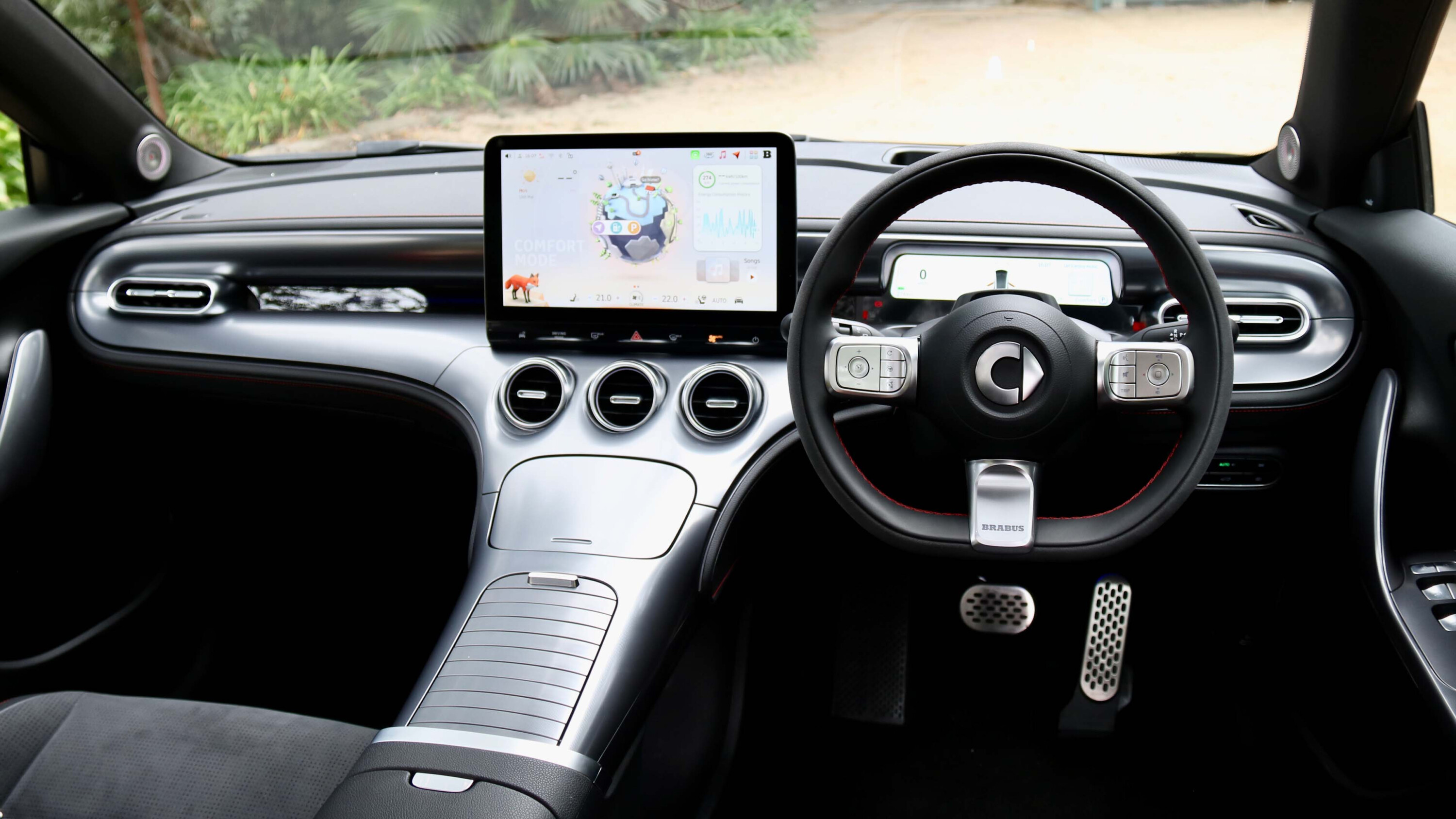
What’s more impressive is the #3 Brabus’ cabin. While Geely did the electrics, you can tell Mercedes-Benz did the cabin thanks to good quality materials and considered design. The dashboard design references the venerable marque thanks to the three central air vents and configurable ambient lighting, and it also feels like a modern Mercedes with plenty of soft touch materials and excellent attention to detail.
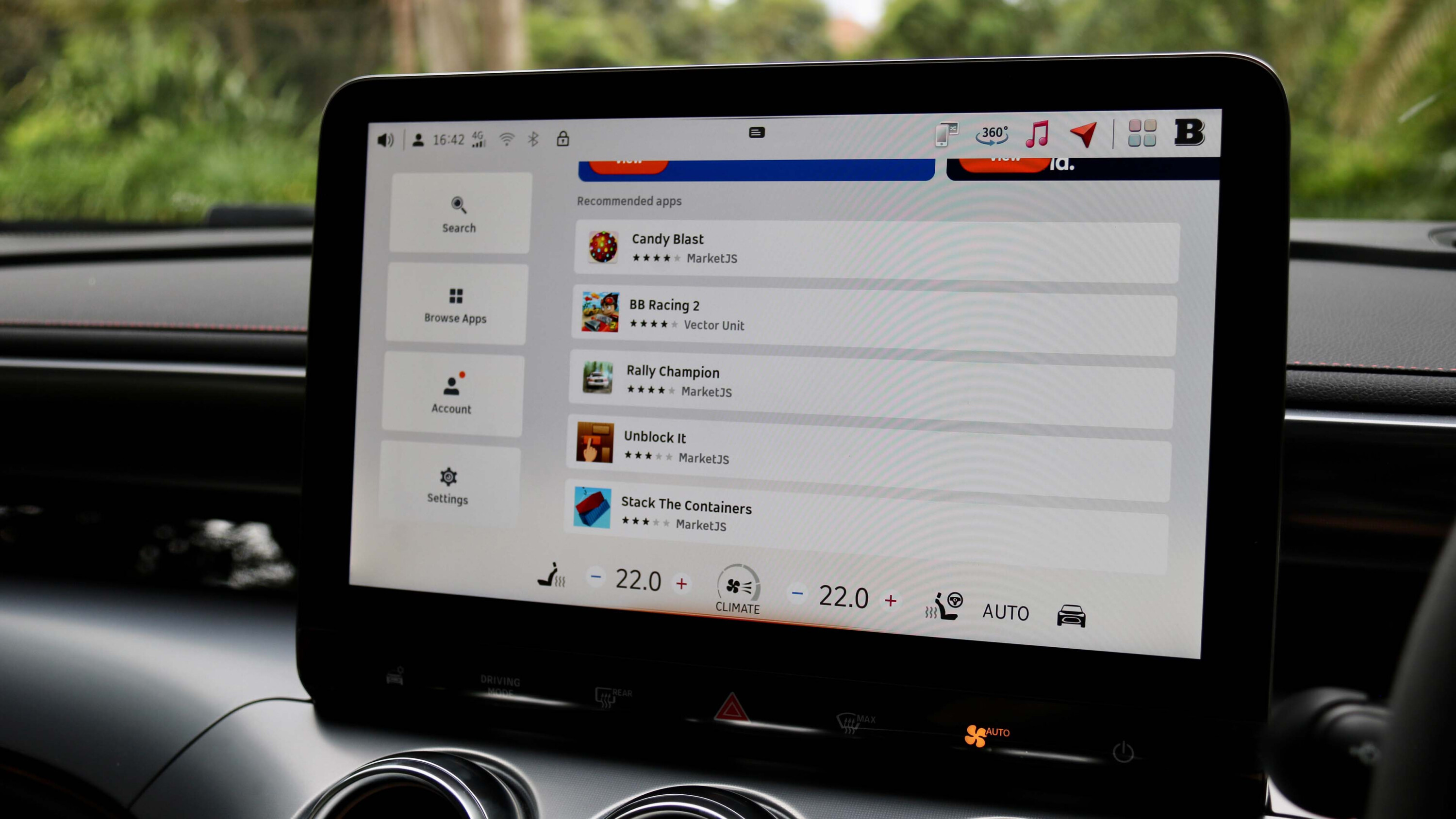
Centre of the cabin is a bright 12.8-inch touchscreen that’s loaded with features, including even a cute fox on the main page.
However, the menu layout is confusing to use and while there are shortcut keys at the bottom of the screen for important features like driving mode, there is no volume knob or other physical buttons to improve the user experience.
Helpfully, it is quite easy to connect the wireless Apple CarPlay and use the car’s inbuilt Spotify and sat-nav, the latter of which uses live services for real time traffic information. Thankfully – and unlike its EX30 cousin that only has a Tesla-style central speedo – both a head-up display and driver’s display are standard so that you don’t have to take your eyes off the road to see your speed. There are also physical lighting buttons.
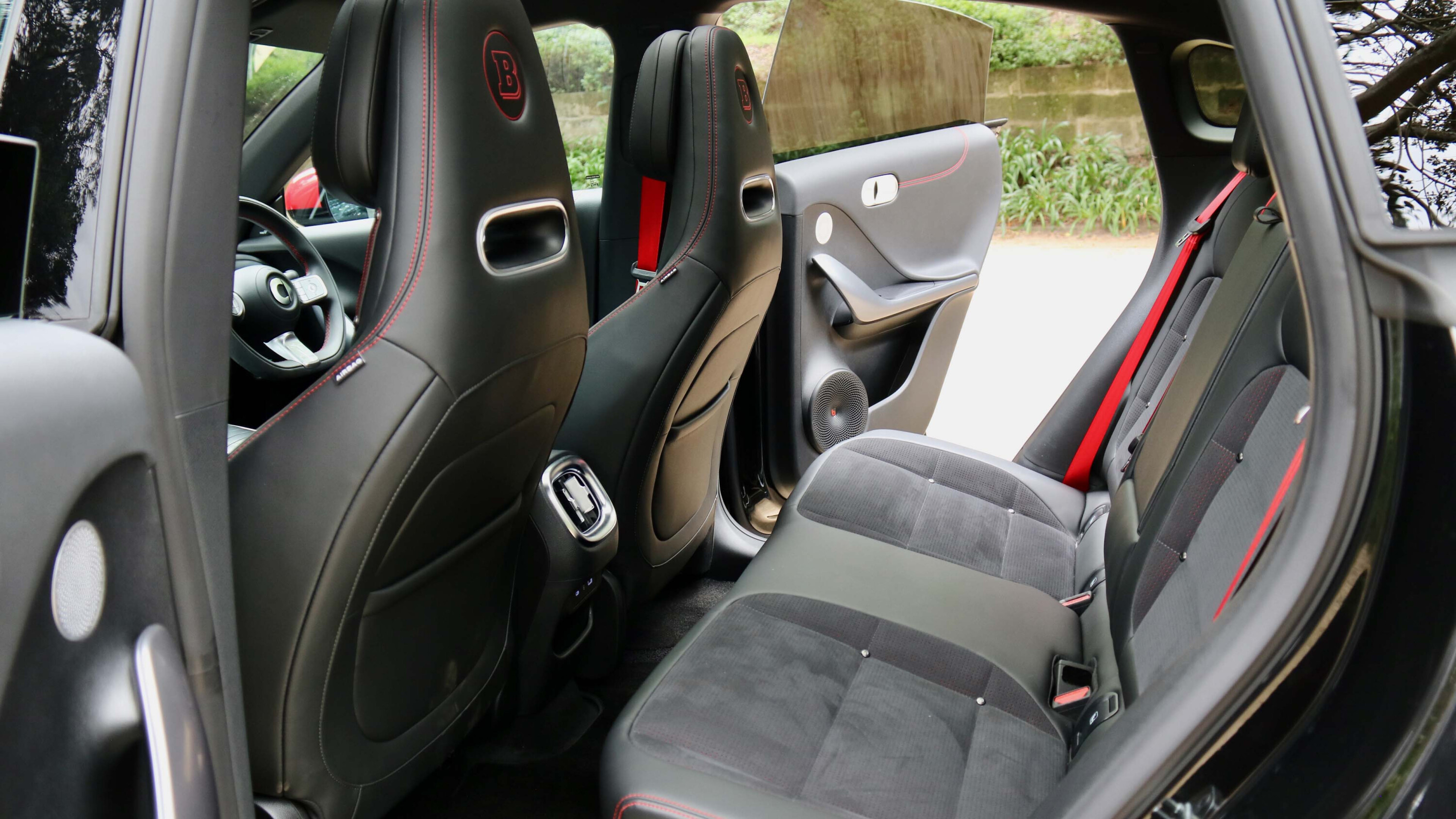
The rest of the #3’s cabin is more practical than you might think for a car that’s only 4.4m long. Rear seat space is impressive for its size and the sense of space is enhanced by the light from the panoramic glass roof – though there’s no shade for it, so it can get hot.
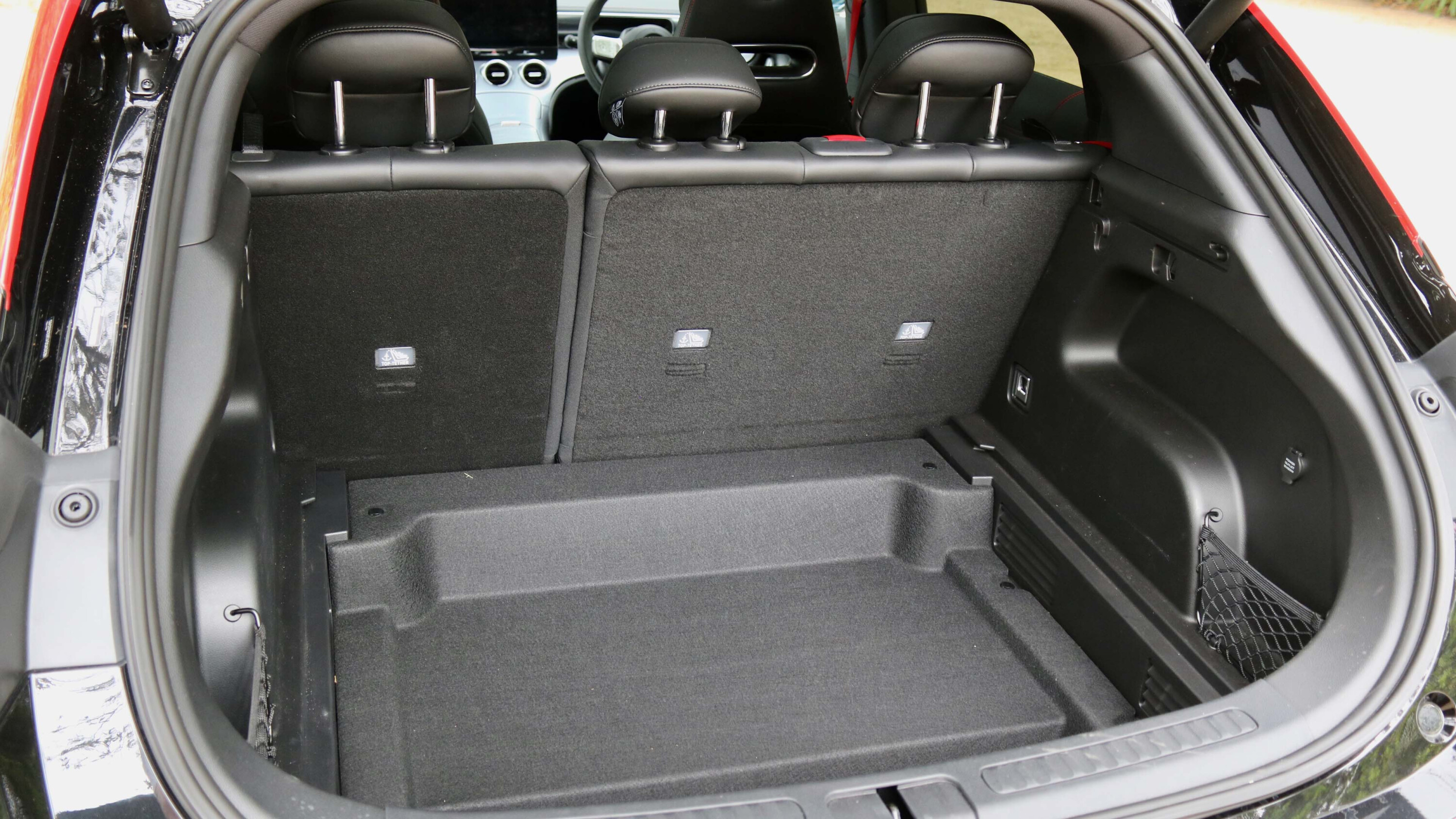
While the 370-litre boot initially looks shallow, there’s a deep second portion revealed by lifting the floor. The boot expands to 1160 litres with the seats folded and there’s also a tiny 15L front boot.
On the basis of our first taste of the #3 Brabus, Smart’s Australian fortunes will be richer on a second attempt. The #3 is as memorable as the original Fortwo but for different reasons: it offers searing performance, a fun driving experience, characterful design, good practicality for its size and a touchscreen that’s loaded with features but could be more user-friendly.
If you’re looking for a way to stand out on the roads, Smart offers a new path but with much stronger product this time around.
Hyundai has handed down early images of the Insteroid concept, a modified version of the compact Inster electric vehicle, ahead of its official unveiling in April.
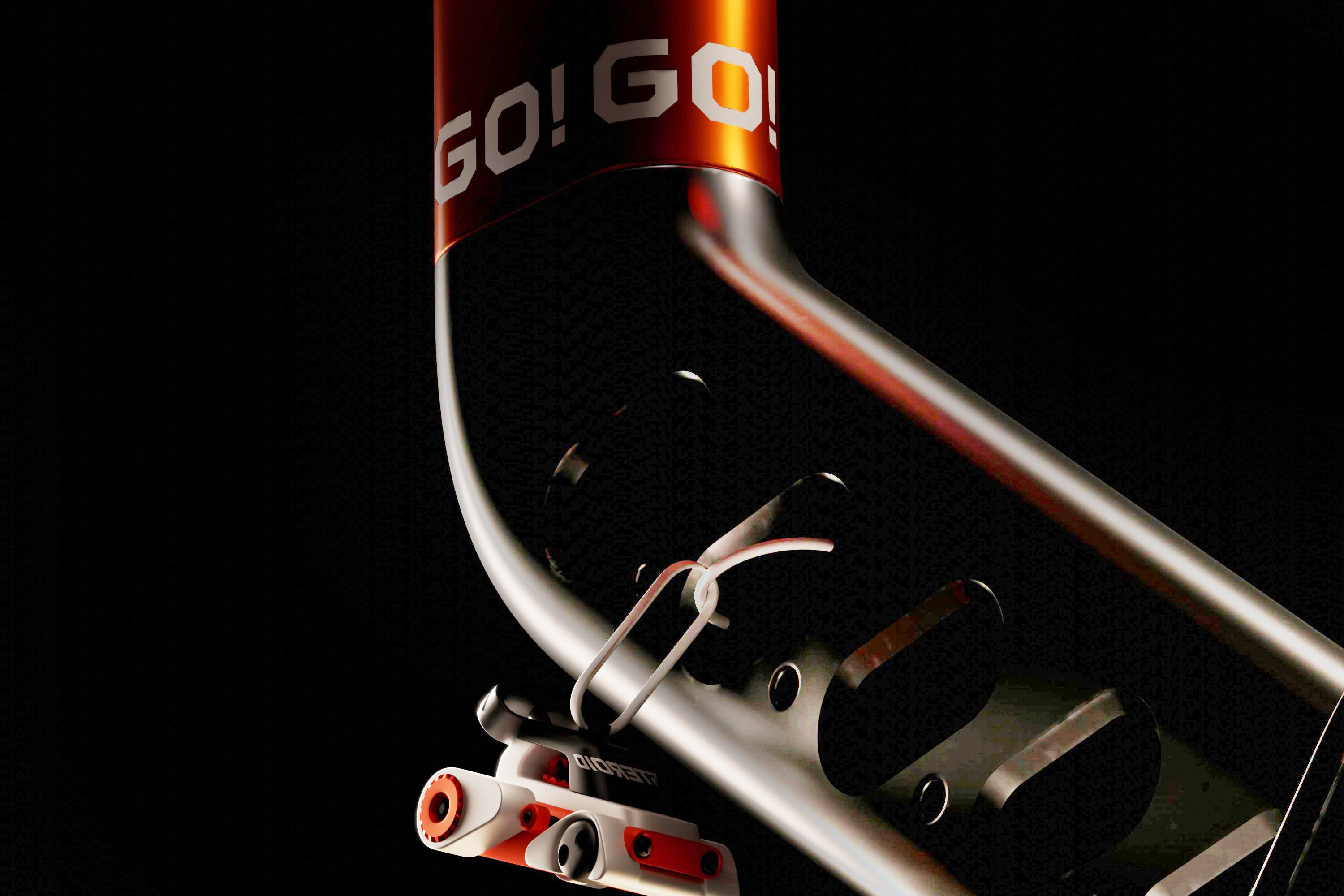
From these initial teaser photos, we can see that the toughened-up EV wears some big exterior changes compared to the production Inster due here soon.
Massively flared wheel arches and a visibly wider track dominate the scene with 21-inch wheels at each corner, sweetened with a huge rally-ready rear wing and diffuser.
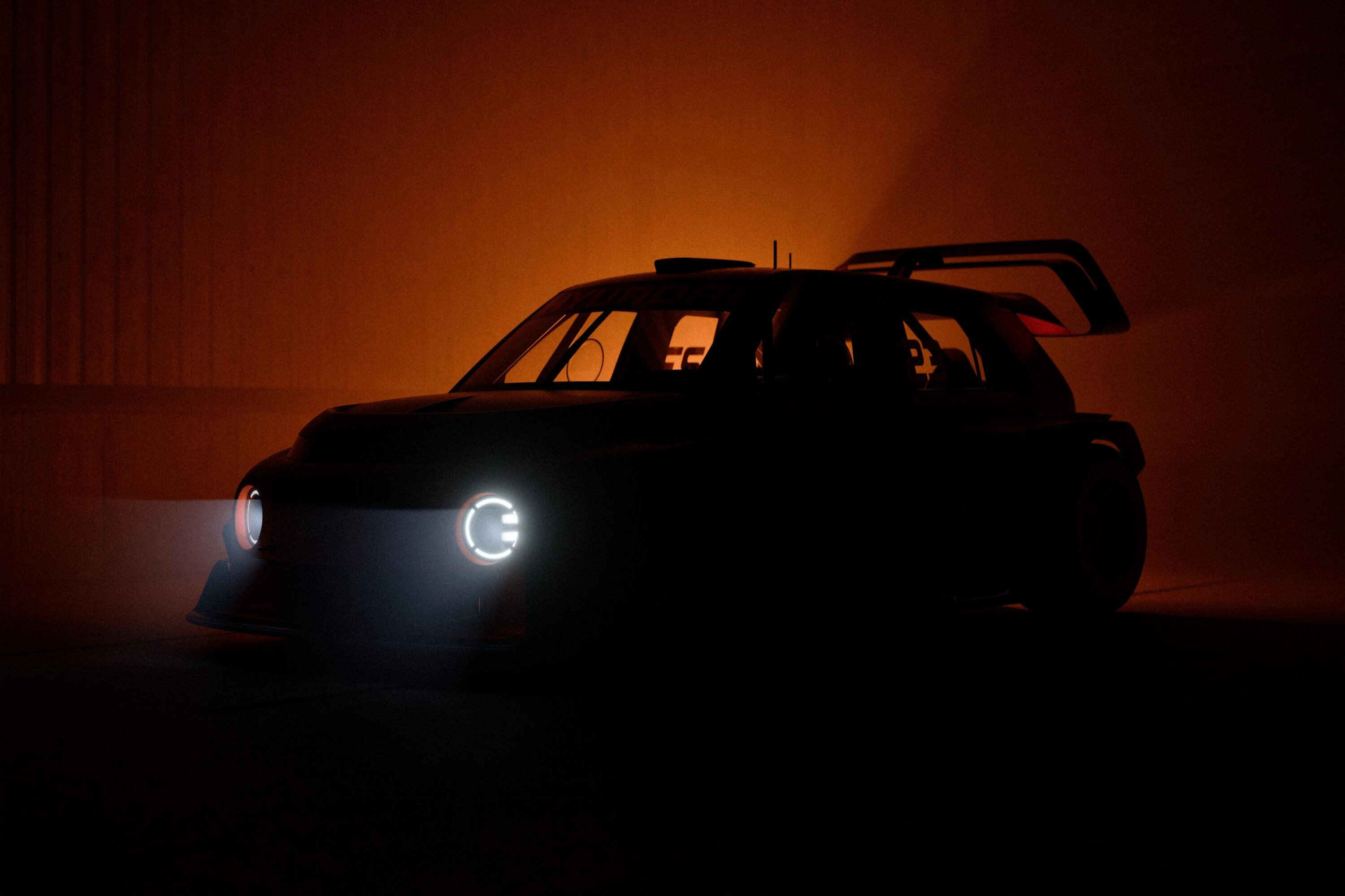
According to Hyundai, the Insteroid is influenced by video game design aesthetics – but, to clear up any confusion, its name is indeed inspired by the word steroid, “reflecting the funky, youthful and muscular nature of this show car”. Steroids are in!
The Korean carmaker describes the vehicle as a conceptual exercise aimed at exploring more expressive electric vehicle design, as with previous ‘rolling lab’ development models like the RN22e.
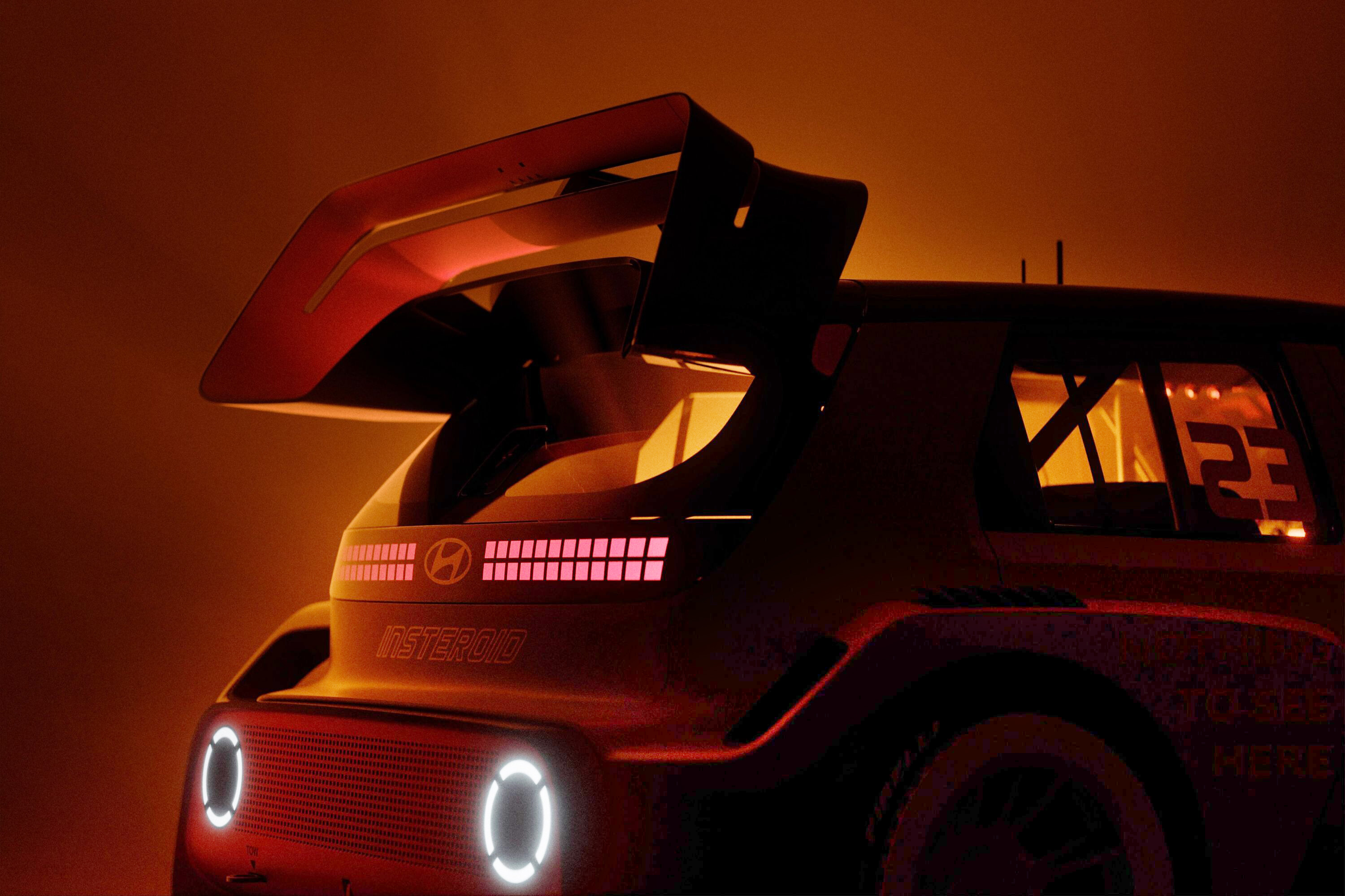
Specs for the Insteroid haven’t been revealed, but it’s expected to exceed the standard Inster’s 84.5 and 147kW outputs.
Nothing juiced about those numbers, after all.
The Insteroid follows earlier Inster-based design experiments, including the RN24 concept from 2023. That model featured a longer wheelbase, dual electric motors, and an 84kWh battery shared with the Ioniq 5 N.
The production-spec Inster debuted globally in June 2024 and is confirmed for an Australian launch in the second quarter of 2025.
Watch for more on the very handsome, very secure Insteroid in the coming weeks.
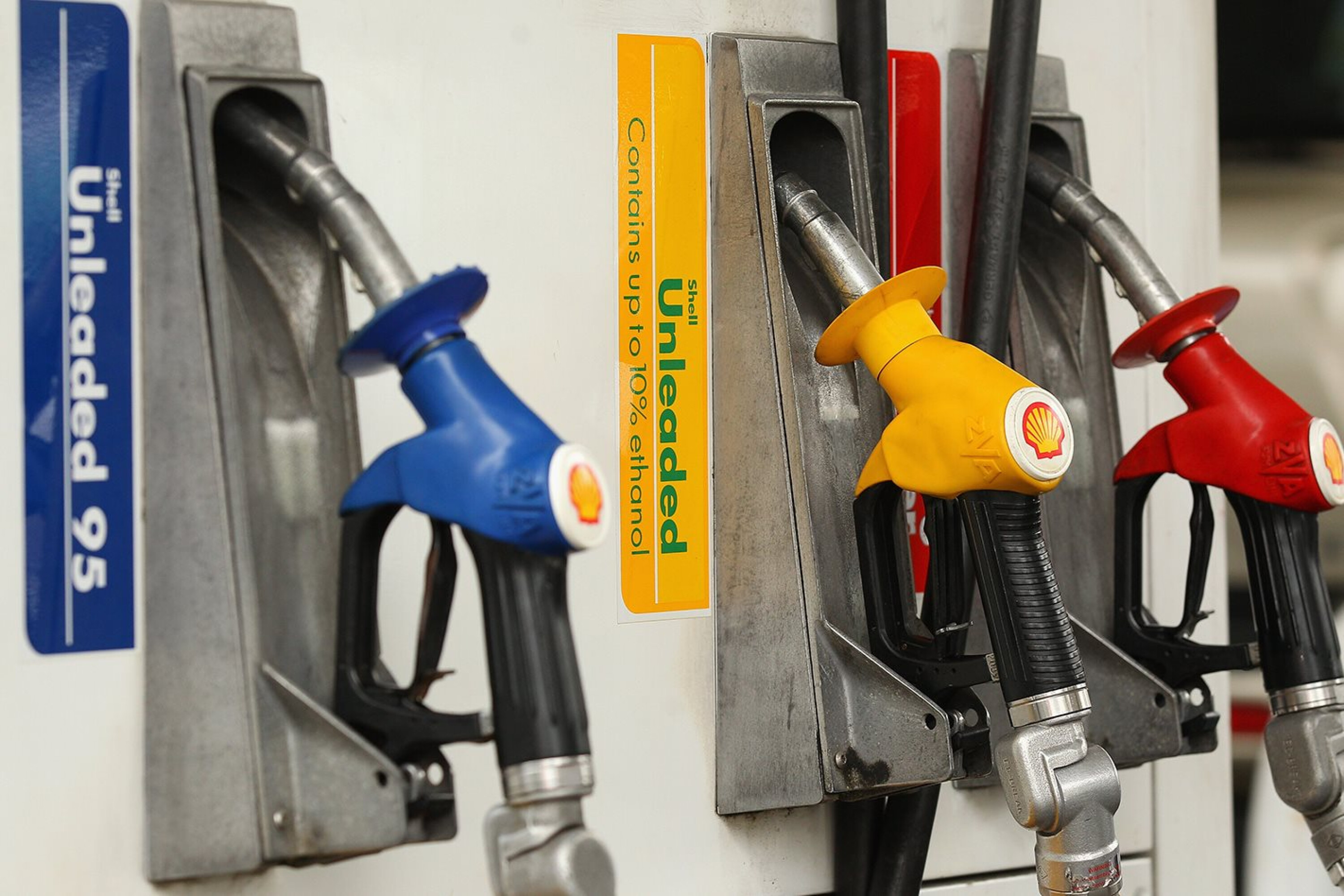
Peter Dutton’s announcement that the Coalition will cut fuel excise on petrol and diesel by 25c per litre for one year if elected at the May 3 Federal election has undoubtedly caught the attention of Australian motorists.
In a move squarely aimed at voters for whom the ‘fixed’ weekly costs of driving are a key component of their cost-of-living battle, the Coalition estimates a driver filling up a 55-litre car would save more than $700 – or $14 a week – over the course of the year’s cut. The measure would see a $6billion revenue hit to the budget.
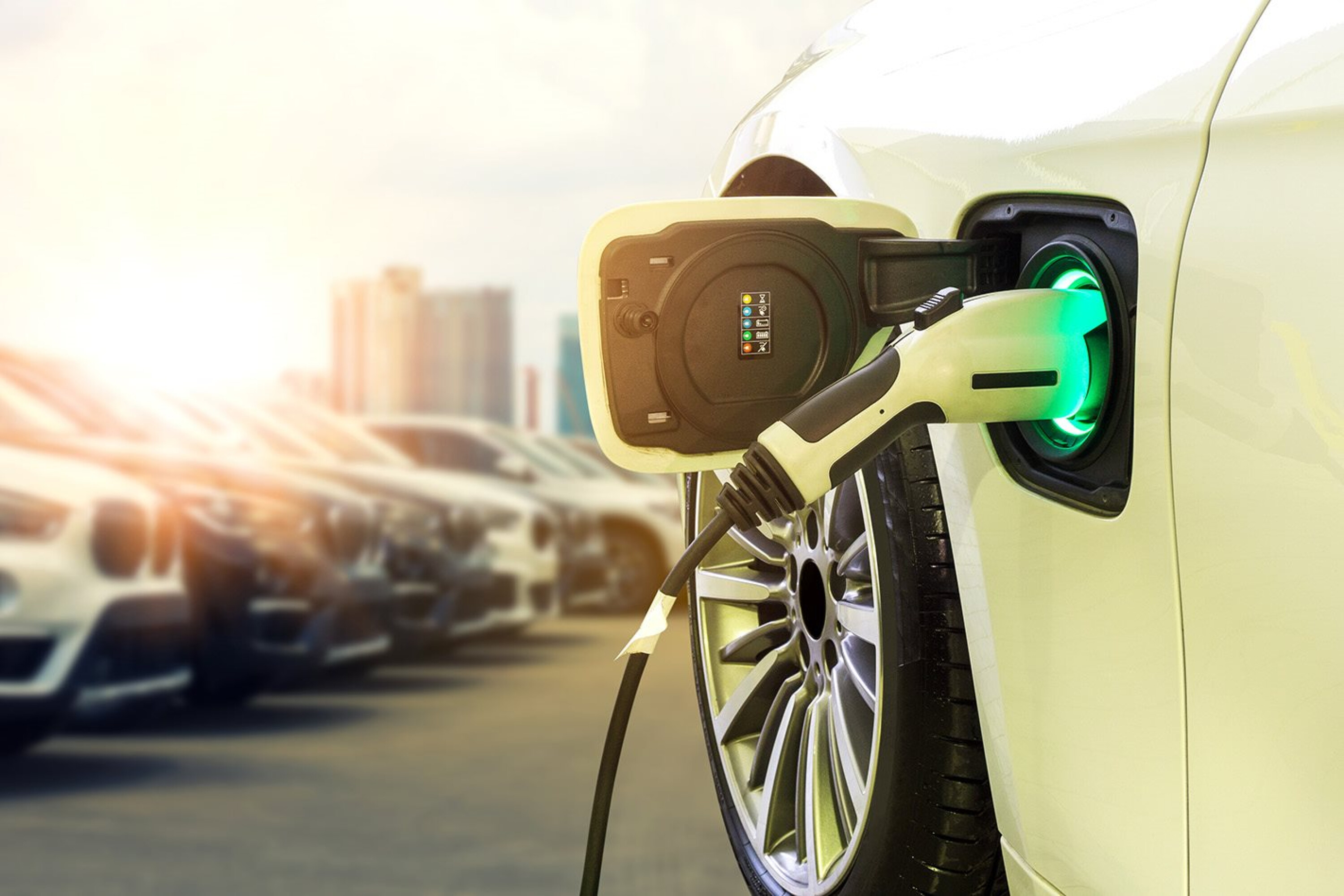
Reaction to the proposal has been swift, with Australia’s peak EV body the Electric Vehicle Council arguing the fuel excise cut strengthens the argument for buying an electrified vehicle, saying drivers can save up to four times the amount suggested by the Coalition per year.
“Cutting the fuel excise may save motorists $700 for one year but switching to an EV saves more than four times that – up to $3,000 per year, every year,” said Electric Vehicle Council CEO Julie Delvecchio in a statement.
“People living in the outer suburbs are leading the way in EV adoption – they generally drive more and recognise the substantial savings that come with electric driving. We should be accelerating the adoption of cheaper-to-run electric vehicles for all Australians, especially those in the outer suburbs and regions.
“We’re seeing EVs now for as low as $30,000, lowering upfront costs that have previously hindered Australians from making the switch.”
Online, a number of people posted that the Dutton proposal would unduly benefit drivers of large SUVs over those driving smaller, more fuel-efficient cars. One posted a comparison showing that a Dodge RAM 1500 driver doing 13,000km a year would benefit by $7.63 a week with the cut in excise, versus a Toyota Yaris driver banking $2.06 a week.
AMP Chief economist Shane Oliver described a cut in excise as ‘bonkers’ to the Australian Financial Review.
“Every time you do one of these silly things – a subsidy or a temporary tax break – it distracts from the real issue of tax reform in Australia,” said Oliver. “It distracts from the need to undertake fundamental tax reform, and puts it off further into the never, never,” Oliver said.

Excise on petroleum fuel is one of the oldest taxes levied by the Australian Government, applying since Federation in 1901. It’s imposed on producers or importers when the fuel leaves their depot, but routinely passed on as higher bowser prices for motorists.
As reported by the ABC, in the final three months of 2024, with petrol prices averaging about $1.80 a litre, excise accounted for about 28 per cent of the cost of fuel, with GST accounting for another 10 per cent. Australia’s fuel excise is considered low when compared with other OECD countries.
The last reduction in fuel excise was for the six-month period between March and September 22, when it was halved as a cost-of-living measure by the Morrison government in the 2022 budget.
