
Skoda Australia has announced pricing for the new Kodiaq seven-seat SUV, which is due on sale soon. Priced from $54,990 plus on-road costs, the new Kodiaq starts at $1,700 more than the last-generation model, though Skoda claims its value has increased by $5,700 thanks to more standard equipment.
As we discovered in our features walkthrough article last month, the entry-level Kodiaq, now called Select, has seen a big increase in equipment with features such as leather trim, tri-zone climate control, traffic jam assist, DAB+ digital radio, metallic paint, heated front seats and an electric driver’s seat now featured as standard.
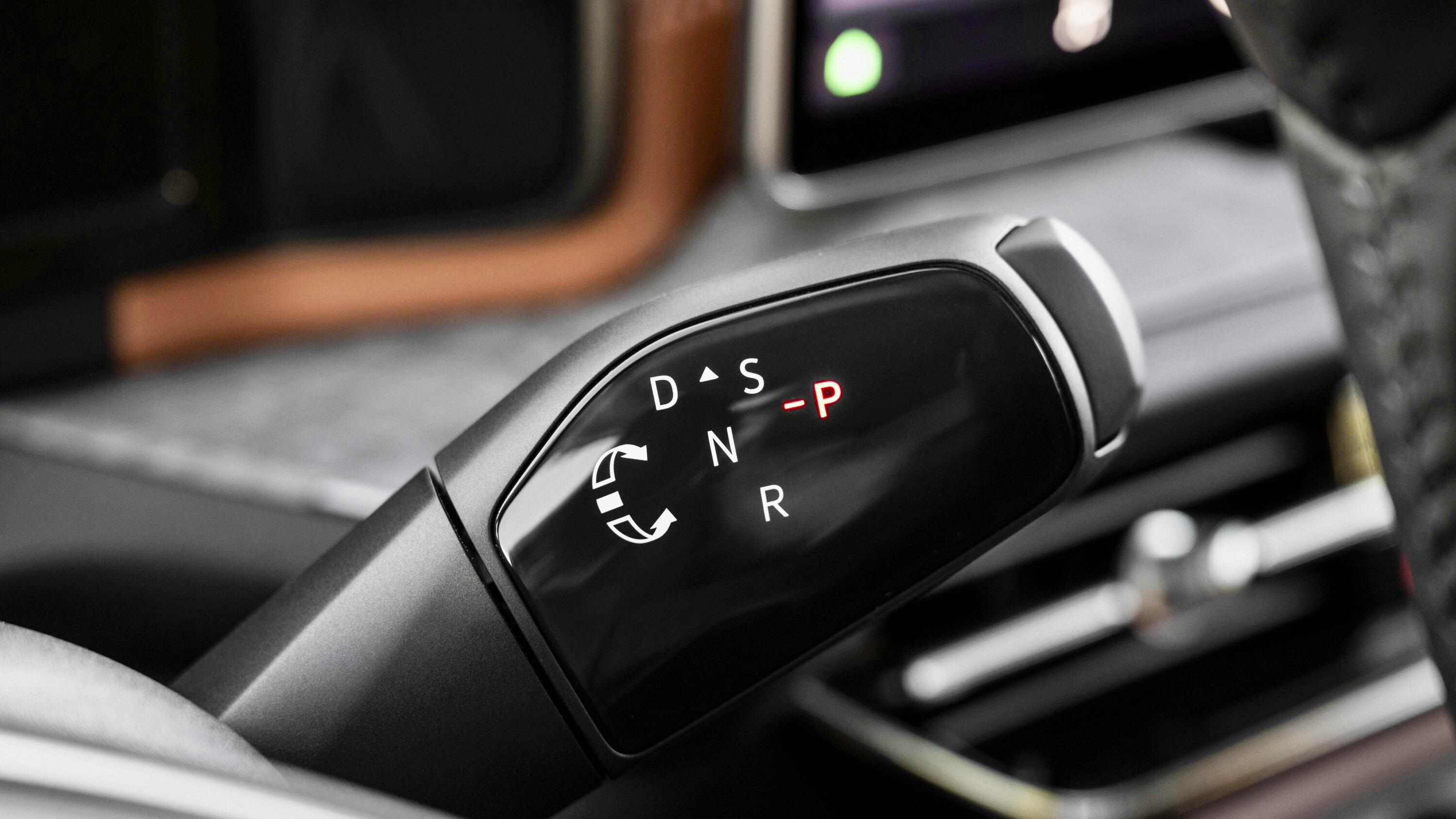
All models are powered by a 2.0-litre turbocharged four-cylinder petrol engine making 140kW of power and 320Nm of torque, enough for an 8.2-second 0-100km/h time. That’s mated to a seven-speed dual-clutch automatic transmission and all Australian Kodiaq models are all-wheel drive.
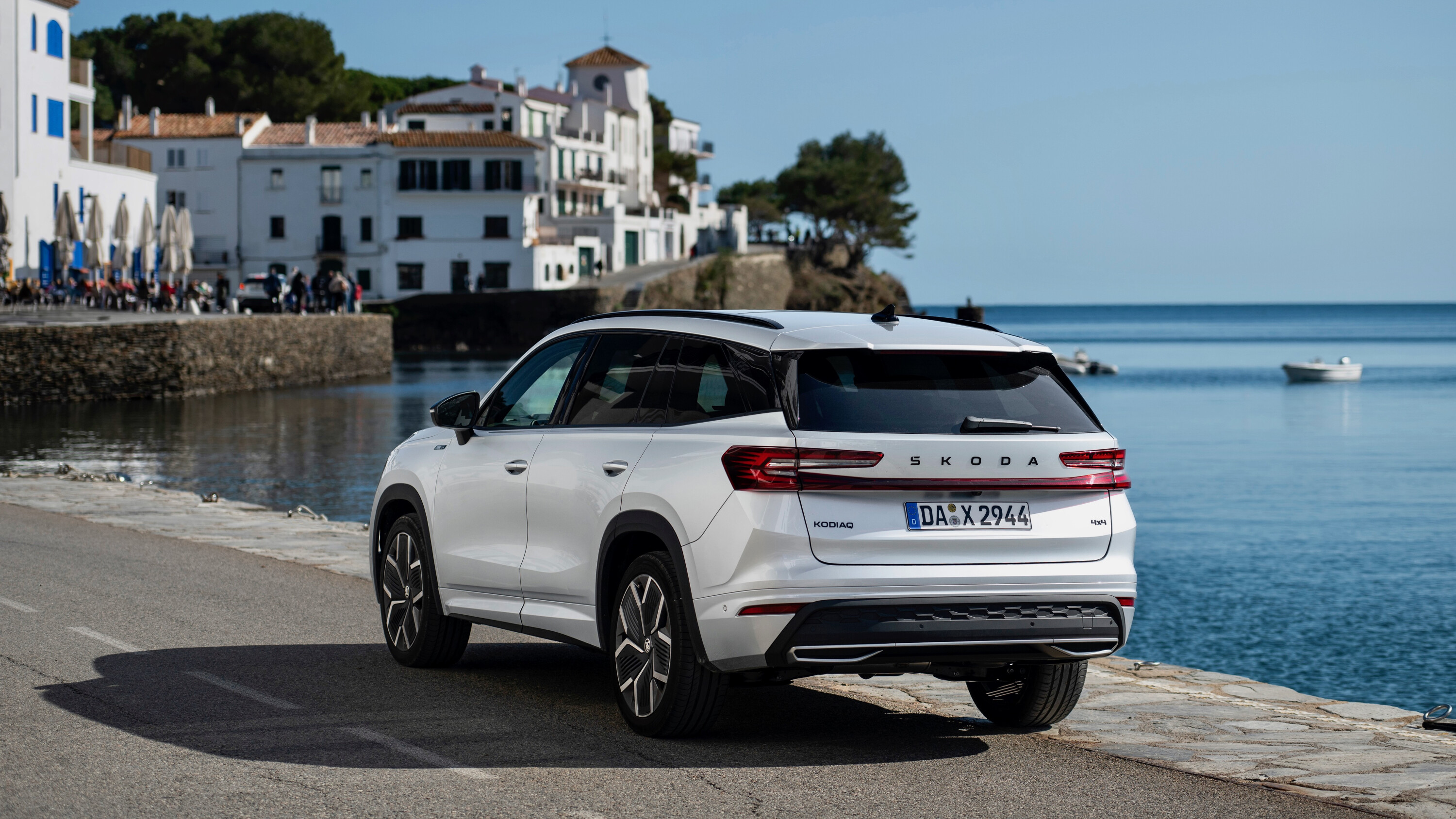
The 195kW/400Nm Kodiaq RS will reduce that sprint time to 6.4 seconds when it arrives locally later in the year.
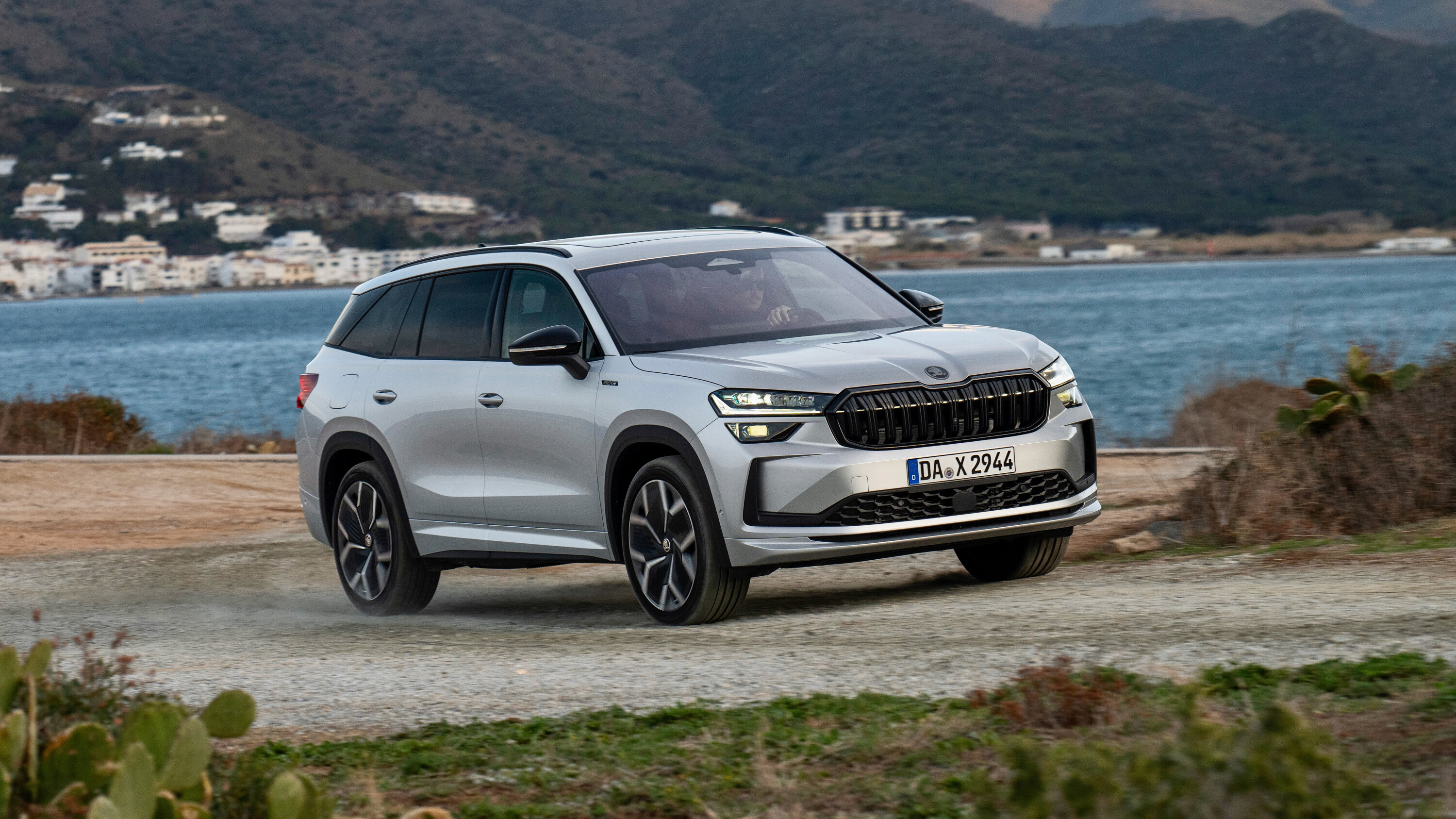
Measuring 4,758mm long, 1,864mm wide, 1,678mm tall and riding on a 2,791mm long wheelbase, the second-generation Kodiaq is 59mm longer, 18mm narrower, 8mm shorter and riding on the same wheelbase as the previous model.
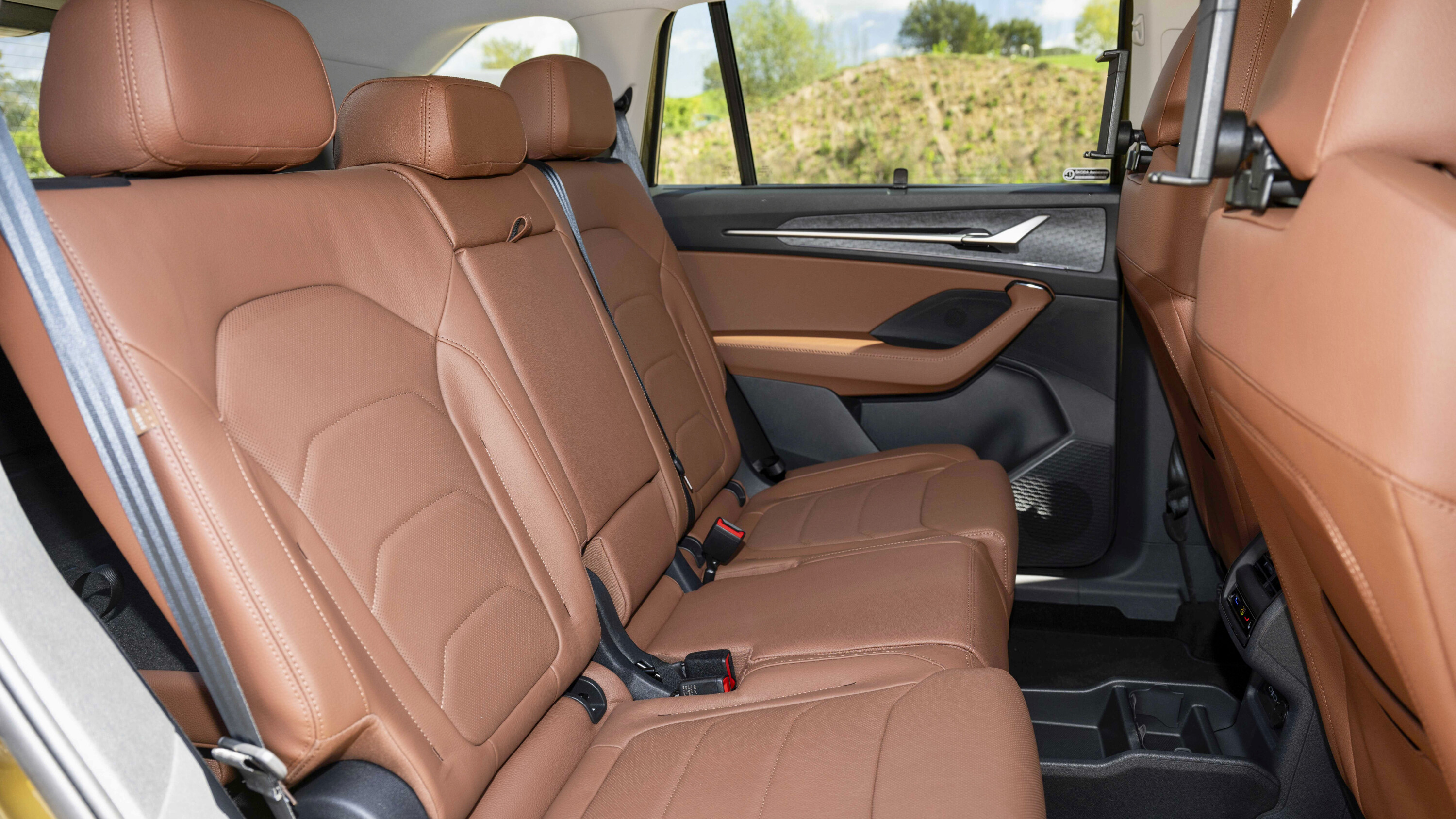
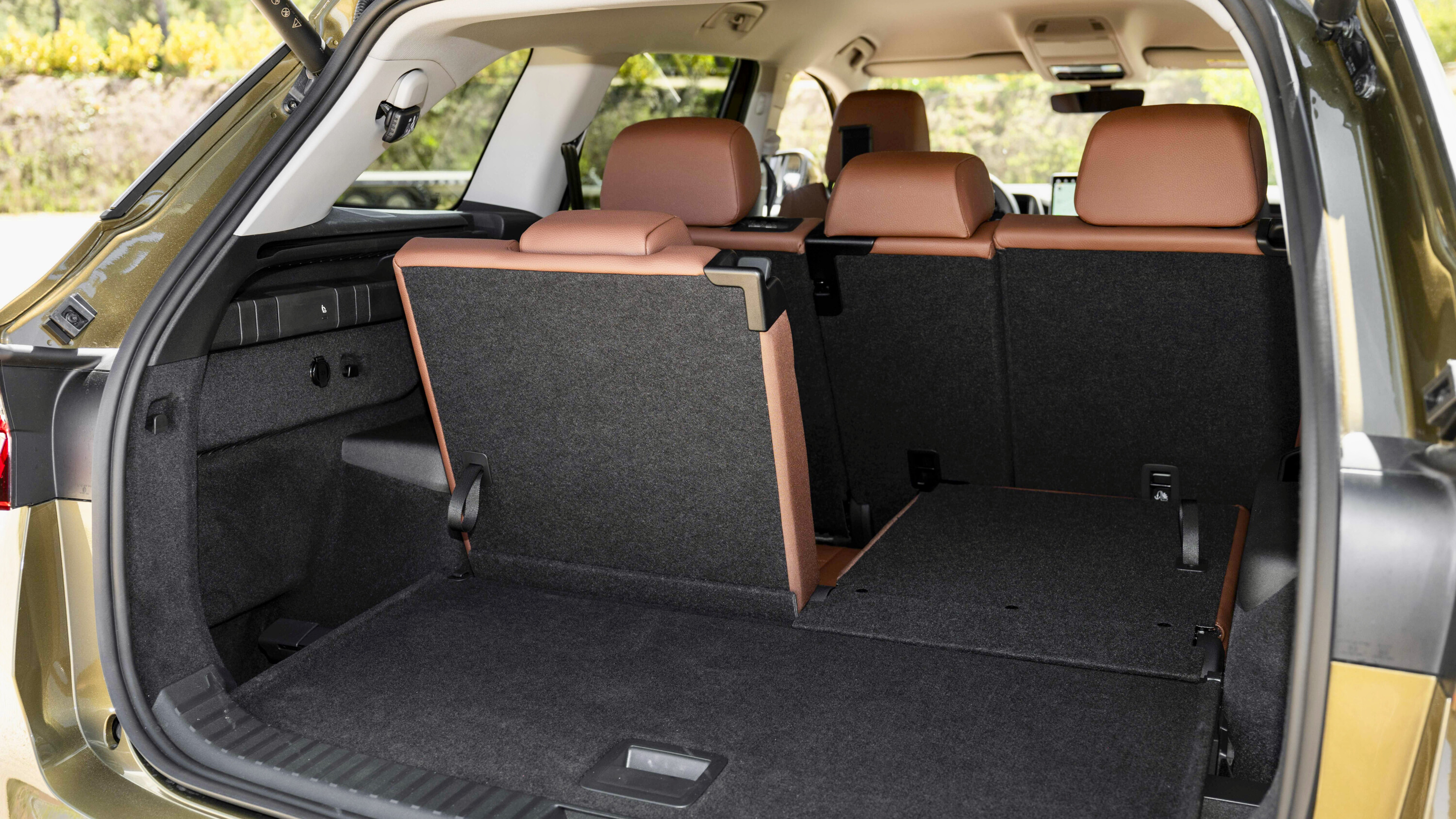
The Kodiaq’s boot measures 289 litres with all seven seats in use, 794L with the third row folded and 2,035L with the second row folded as well, which are respective increases of 19L/29L/30L compared with the last car. That makes it more capacious than main rivals like the Kia Sorento, which offers up to 1,966L of space, and the Mazda CX-80 and its 1,971L maximum.
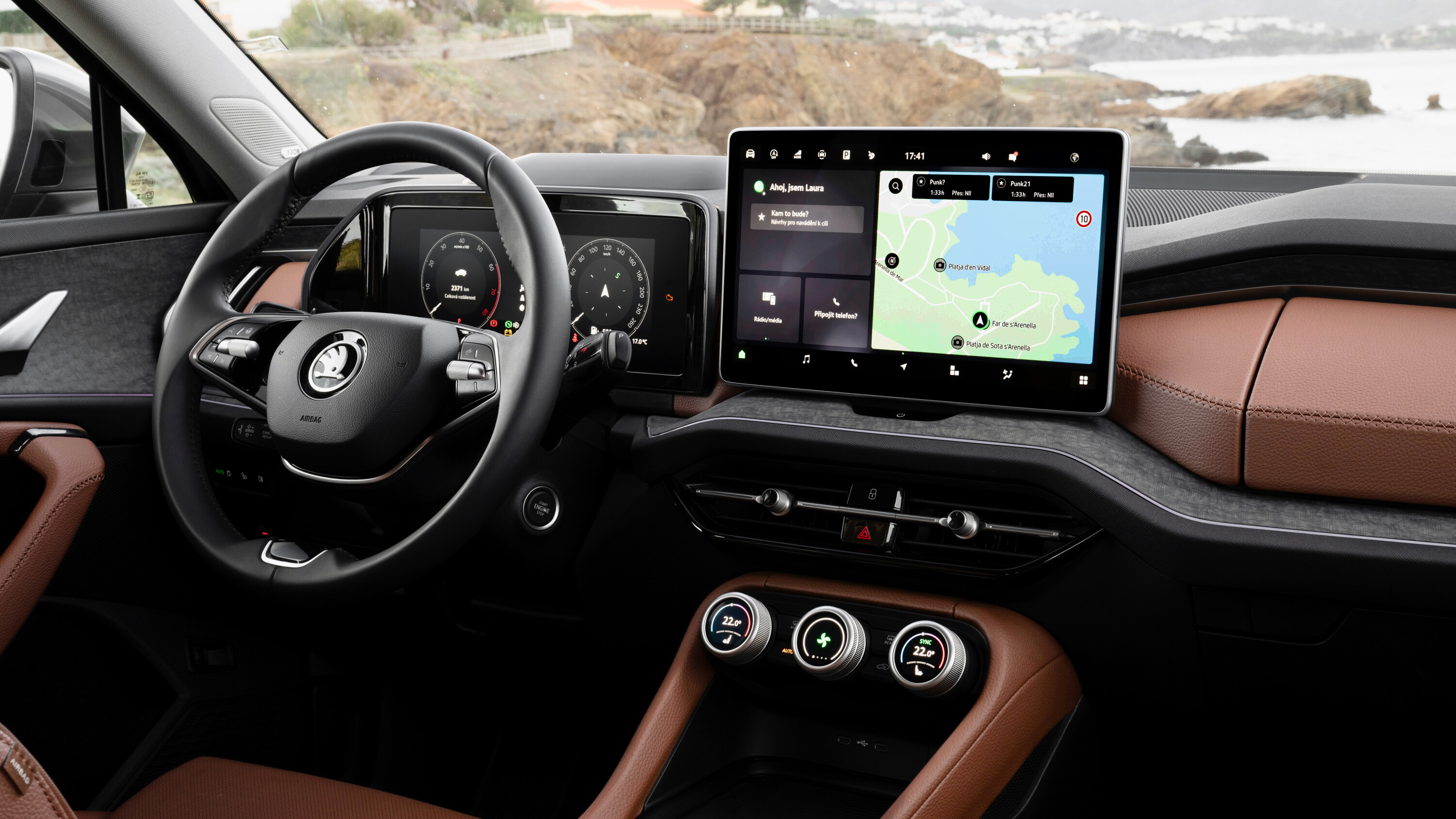
| Skoda Kodiaq pricing (plus on-road costs): | |
|---|---|
| Select | $54,990 ($56,990 drive away) |
| Sportline | $58,990 ($61,990 drive away) |
| Launch Edition | $63,490 ($64,490 drive away) |
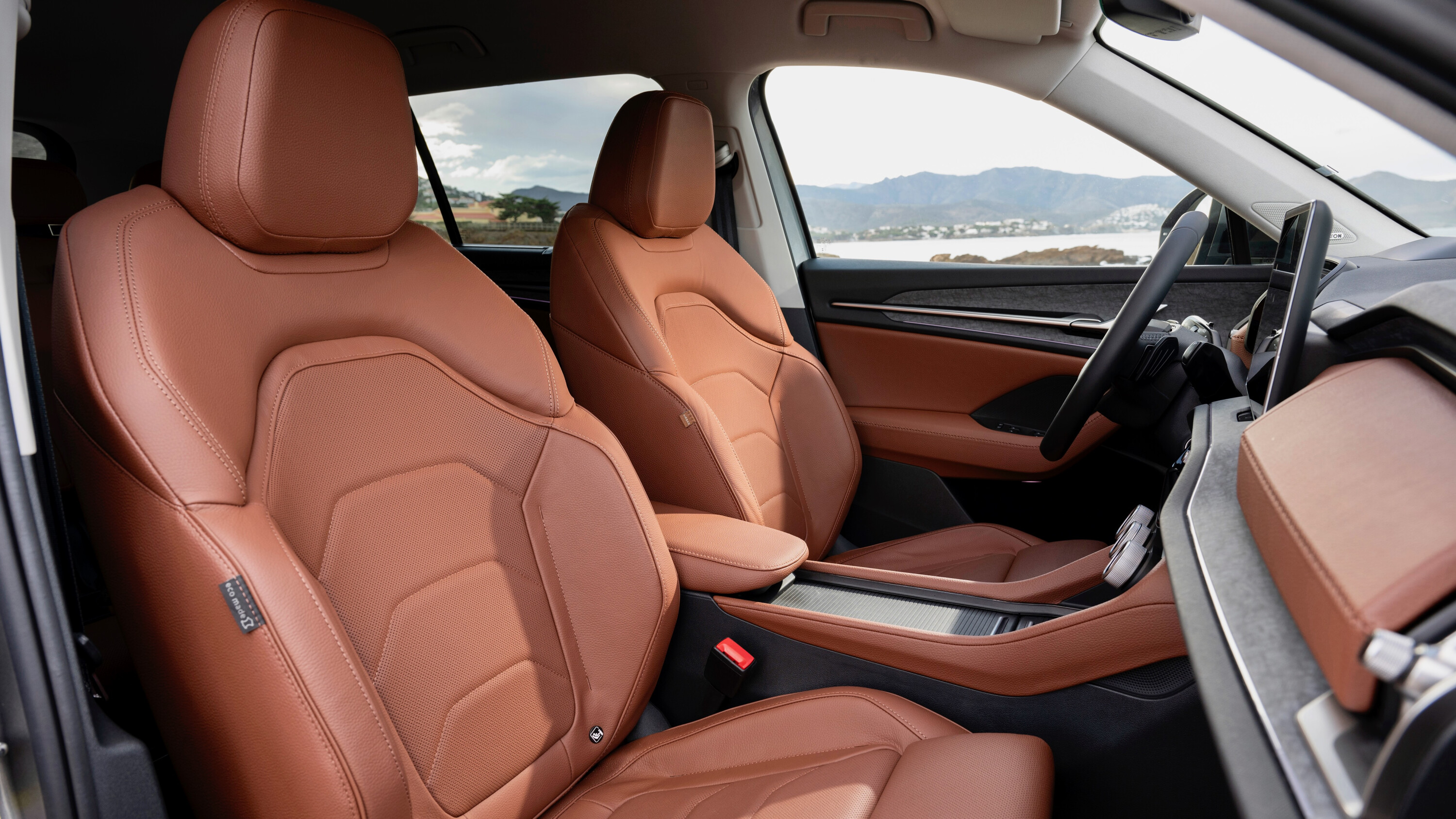
| Kodiaq Select standard equipment: | |
|---|---|
| 19-inch alloy wheels | 10-inch digital driveru2019s display |
| Dusk- and rain-sensing automatic all-LED exterior lighting | 13-inch touchscreen |
| Rain-sensing automatic wipers | Satellite navigation |
| Auto-folding/heated/driver auto-dimming mirrors with memory | Wireless Apple CarPlay and Android Auto |
| Keyless entry with push button start | AM/FM/DAB+ digital radio |
| Power tailgate | Nine-speaker sound system |
| Roof rails | 5x USB-C ports |
| Rear privacy glass | 2x wireless phone chargers with ventilation |
| Black leather upholstery | Metallic paint |
| 10-way electric driveru2019s seat with memory functionality | Umbrella and waste bin in driveru2019s door |
| Heated front seats | Floor mats |
| Leather-wrapped steering wheel with paddle shifters | Boot mat |
| Tri-zone automatic climate control | |
| Kodiaq safety equipment: | |
|---|---|
| Nine airbags (including a front centre unit) | Blind-spot monitoring with rear cross-traffic alert |
| Autonomous emergency braking (AEB) with pedestrian and cyclist detection | Safe exit warning |
| Adaptive cruise control with stop and go functionality | Traffic sign recognition |
| Traffic jam assist | Front and rear parking sensors |
| Lane keeping assistance with lane departure warning | Reversing camera |
| Adaptive lane guidance | Alarm |
| Emergency assist | Tyre pressure monitoring |
The Kodiaq is yet to be tested by ANCAP, but received a five-star safety rating from Euro NCAP in 2024.
| Kodiaq Sportline adds: | |
|---|---|
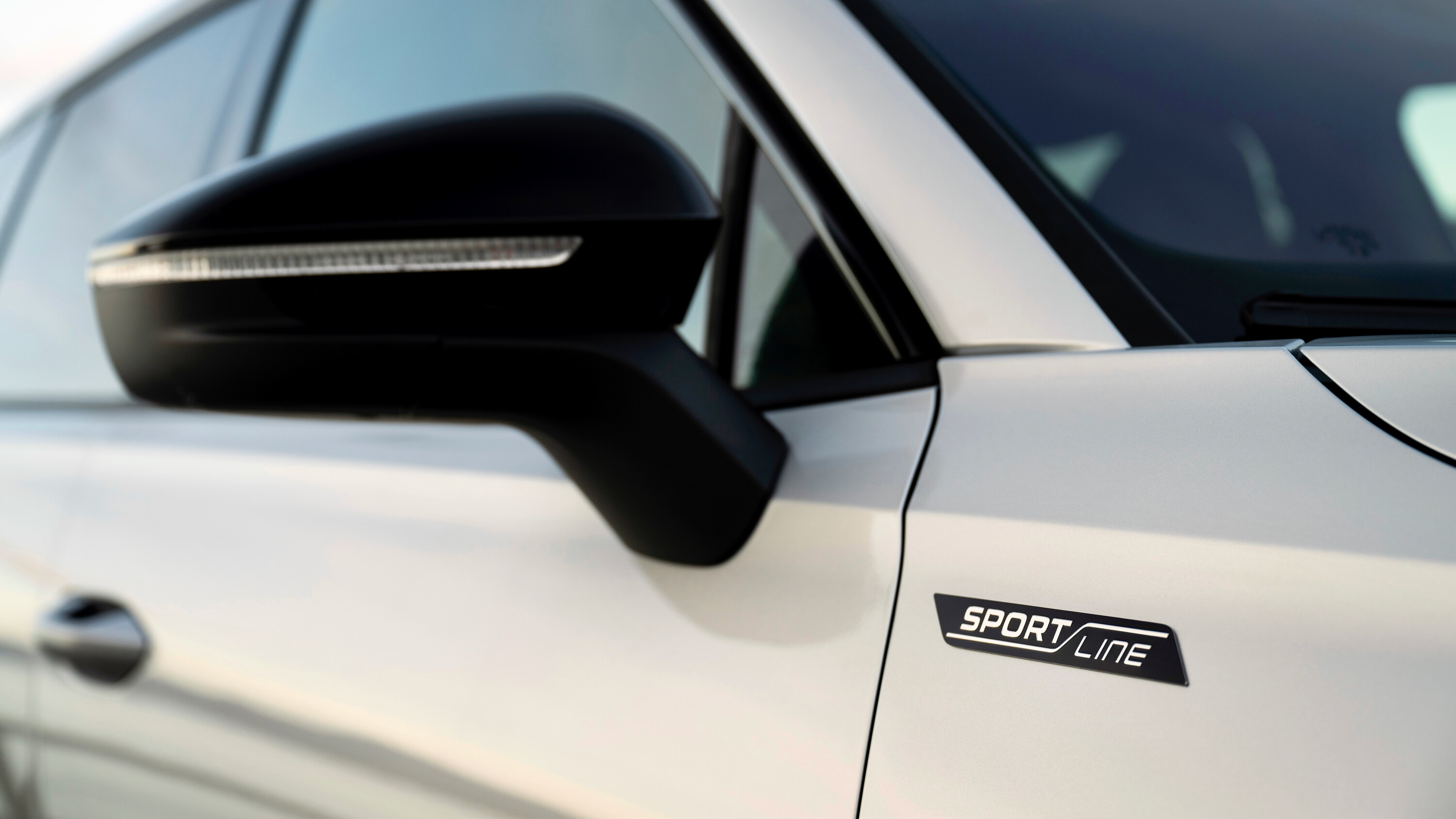
| 20-inch alloy wheels | Aluminium pedals |
| Gloss black exterior elements | Suede and leather upholstery |
| Matrix adaptive high beam | Front sports seats |
| Scrolling rear indicators | Driving mode selection |
| Heated steering wheel | Upgraded sound system |
| Kodiaq Launch Edition adds: | |
|---|---|
| Massaging front seats including electric front passenger seat adjustment | Hands-free electric tailgate |
| Adaptive dampers | Canton sound system |
| Automatic parking | Head-up display |
| 360-degree camera | Illuminated grille |
| Panoramic sunroof | Cognac or black leather upholstery |
| Heated outboard rear seats | |
| Kodiaq options: |
|---|
| Sunroof (Select and Sportline) |
| 20-inch alloy wheels (Select) |
| Ultimate Package with adaptive dampers, sport steering rack, hill descent control, Canton sound system, heated rear seats, head-up display, automatic parking, 360-degree camera, hands-free power tailgate (Sportline) |
| Colour options: | |
|---|---|
| Steel Grey solid | Bronx Gold metallic (Select only) |
| Graphite grey metallic | Race Blue metallic |
| Brilliant Silver metallic | Black Magic pearlescent |
| Moon White metallic | Velvet Red (Sportline only, +$770) |
The second-generation Skoda Kodiaq is due in local Skoda showrooms from later this month.
In this post-pandemic world, it’s surprisingly (and frustratingly) rare to find a new car for under $30,000. Various factors are responsible, including emissions rules and the inexorable popularity of SUVs, which can make it difficult for manufacturers to continue to justify making cheap sedans. Thankfully, there are still some around, like the MG5.
There are two MG5 models in Australia: the entry-level Vibe and upper-spec Essence, and both are well equipped for the money: the Vibe asks just $24,888 drive away and the Essence, $28,990 drive away.
The Vibe is equipped with features like 16-inch alloy wheels, dusk-sensing automatic LED headlights, keyless entry and start, air-conditioning, synthetic leather upholstery and steering wheel, a 10-inch touchscreen with Apple CarPlay and Android Auto, cruise control, six airbags, tyre pressure monitoring, rear parking sensors and autonomous emergency braking (AEB).
The Essence adds larger 17-inch wheels, a sunroof, an electric driver’s seat, heated and auto-folding mirrors, paddle shifters, two extra speakers (six in total) and a 360-degree camera. For the price it’s a more than respectable offering, though we’d love to see a few extras added like wireless smartphone mirroring, a wireless phone charger and automatic climate control in a later edition.
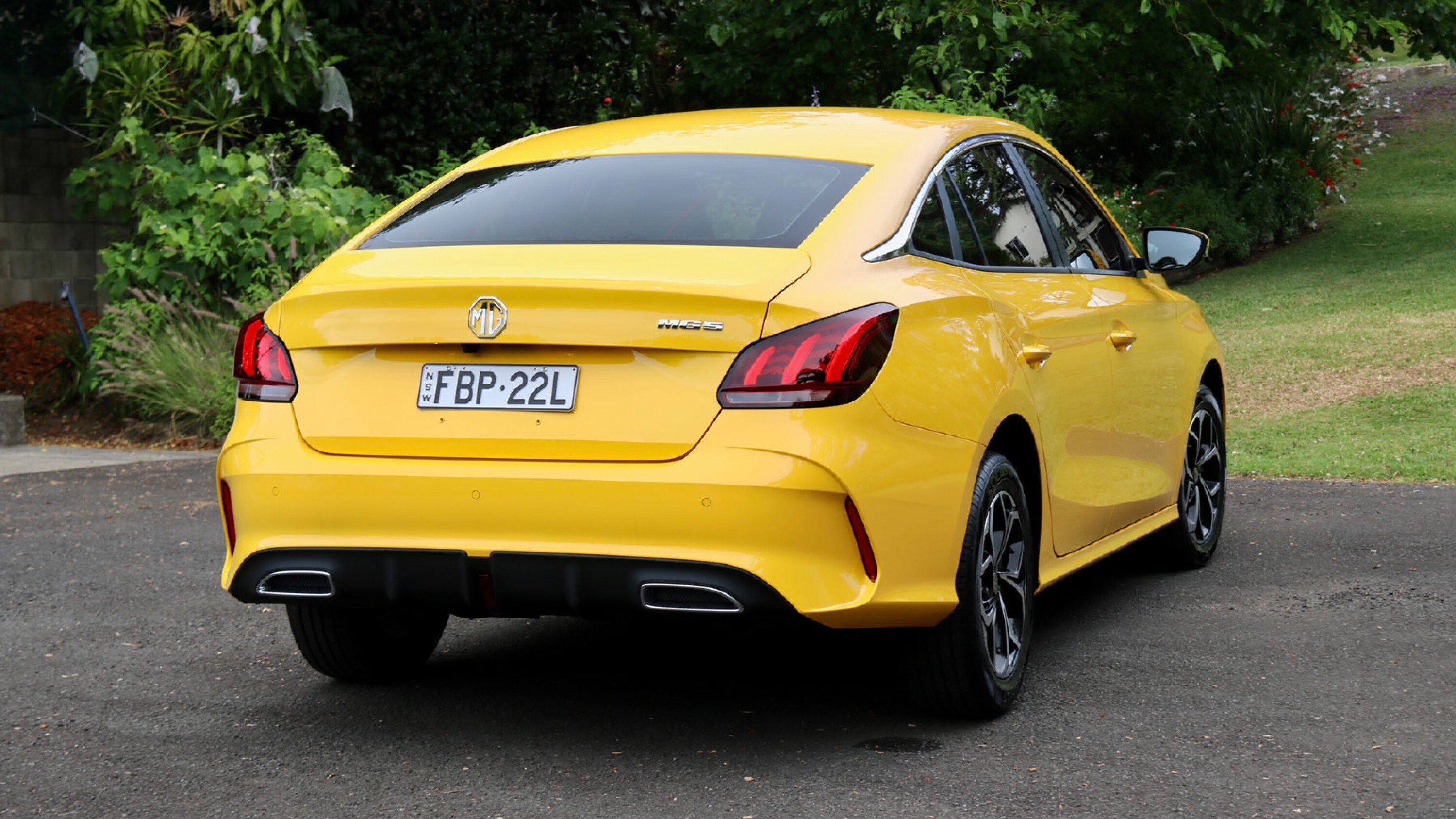
Under the bonnet of the MG5 range are a choice of two 1.5-litre four-cylinder powerplants: a naturally aspirated version making 84kW/150Nm or a turbocharged one with 119kW/250Nm – the former uses a CVT automatic and the latter a seven-speed dual-clutcher.
Fuel consumption is rated at 6.6L/100km for the naturally aspirated engine, with the turbo reducing that to just 6.4L/100km and in our testing, those figures were fairly achievable in mixed driving.
The MG5’s road manners are generally pleasant, with a great ride quality – even in the larger wheeled-Essence, the MG5 is comfortable and especially so compared with some small SUVs that it will inevitably be cross-shopped with. It’s a reasonable handler too, and can be fun to drive, though road noise levels are a touch high.
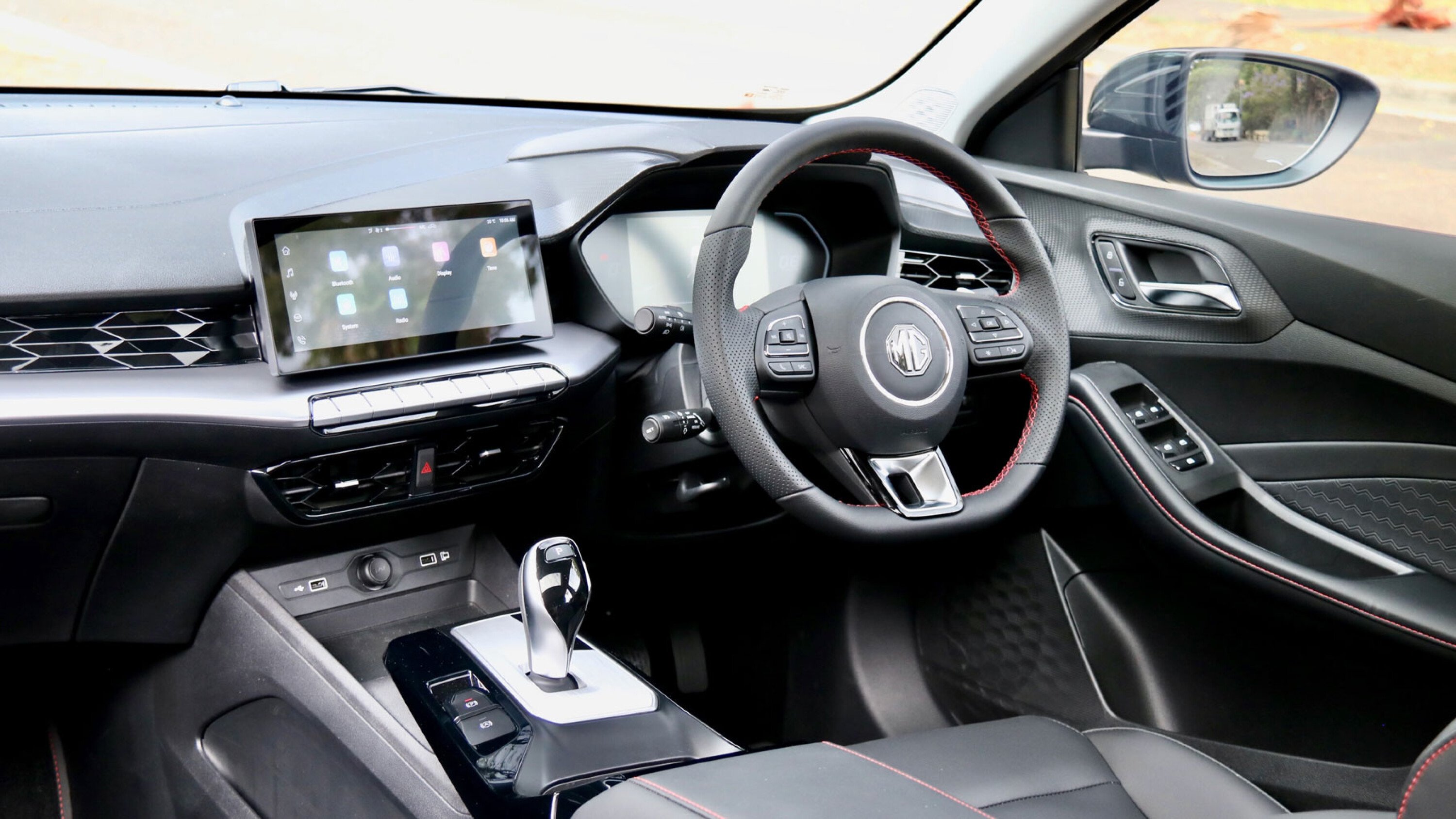
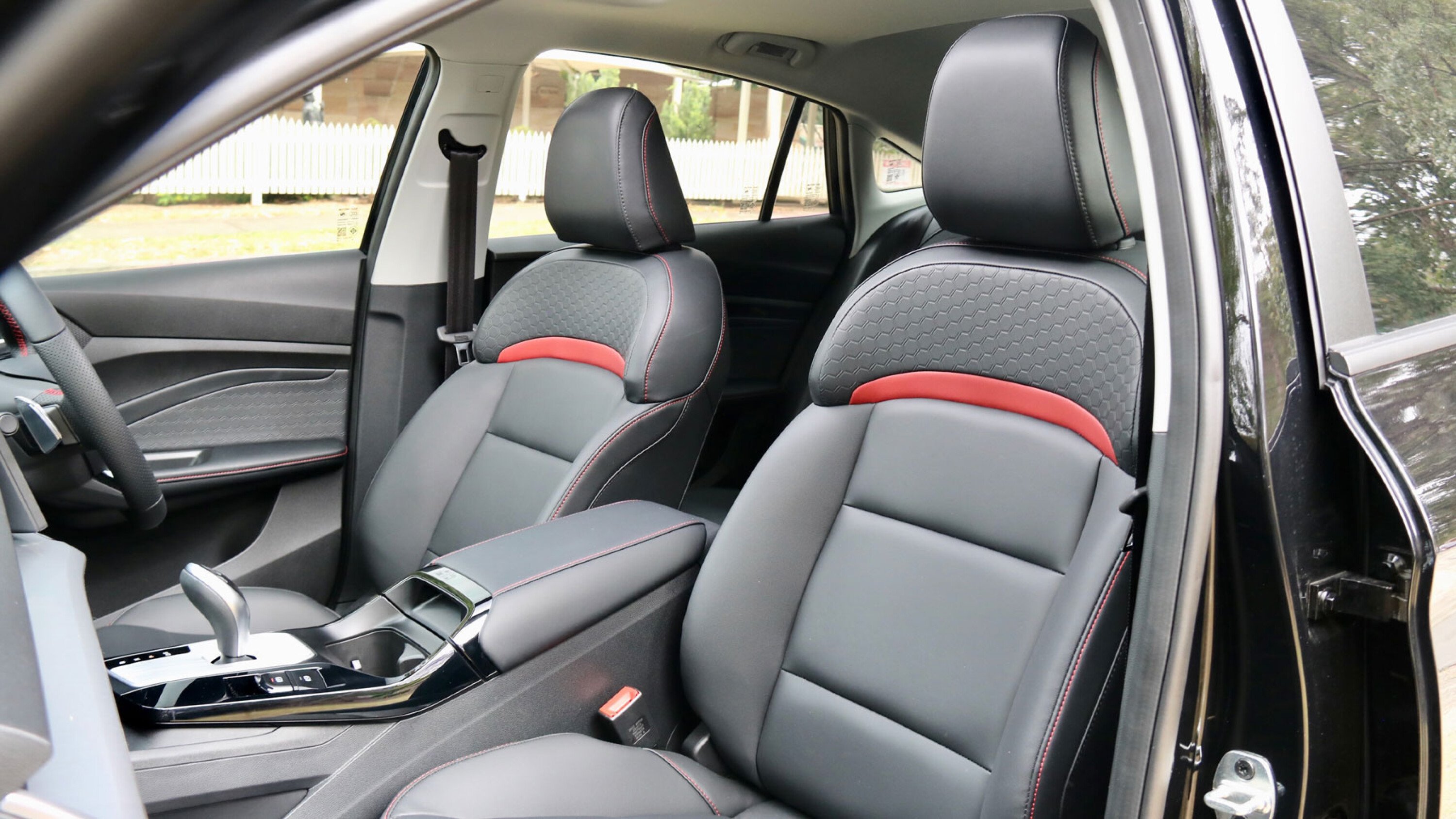
The MG5 also provides a spacious and practical cabin. Material quality could be a bit better but there’s no doubting the practicality: the door bins are large and there’s plenty of storage in the centre console, including a large tray underneath the dashboard.
The rear seat is also quite spacious with ample room for taller adults, plus door and seat map pockets, air vents and a USB-A charging port. The 401-litre boot’s opening is a bit on the smaller side, but it’s an otherwise large space – plus, the rear seat can fold if more space is needed.
While it could offer a bit more refinement or some more features, the MG5’s value equation is excellent – especially factoring in its excellent 10-year/250,000km warranty. In a world where everything is seemingly more and more expensive, it’s refreshing to know that a spacious and feature-packed small sedan is still available for a low price.
Cards on table time. I loved the old Mercedes-AMG GT, especially the later, racier versions. They delivered a huge serving of charisma, demanded to be driven, and were never shy about reminding you exactly how they wanted to be driven. If you wanted something passive or low-involvement, go shopping elsewhere.
The all-new AMG GT caused a little trepidation. Looking at the headline stats, it’d be a reasonable assumption that it has gone a little bit soft. It rides on the platform of the new SL, it’s now a 2+2 rather than a strict two seater, drive goes to all four wheels rather than just the rears, weight has crept up by 248kg and that extreme cab-back, long bonnet look of its predecessor has transformed into something a little more mainstream.
Ask AMG and they’ll tell you that they are listening to customers and delivering what they want: something more everyday useable but which is still imbued with some old-school values.
That’s why there’s still a thundering 430kW/800Nm V8 under the bonnet. No downsized two-litre four-pot here. In other markets you can get a rear-drive AMG GT 43 with that powerplant, but there are no plans to bring it to Australia at this stage.
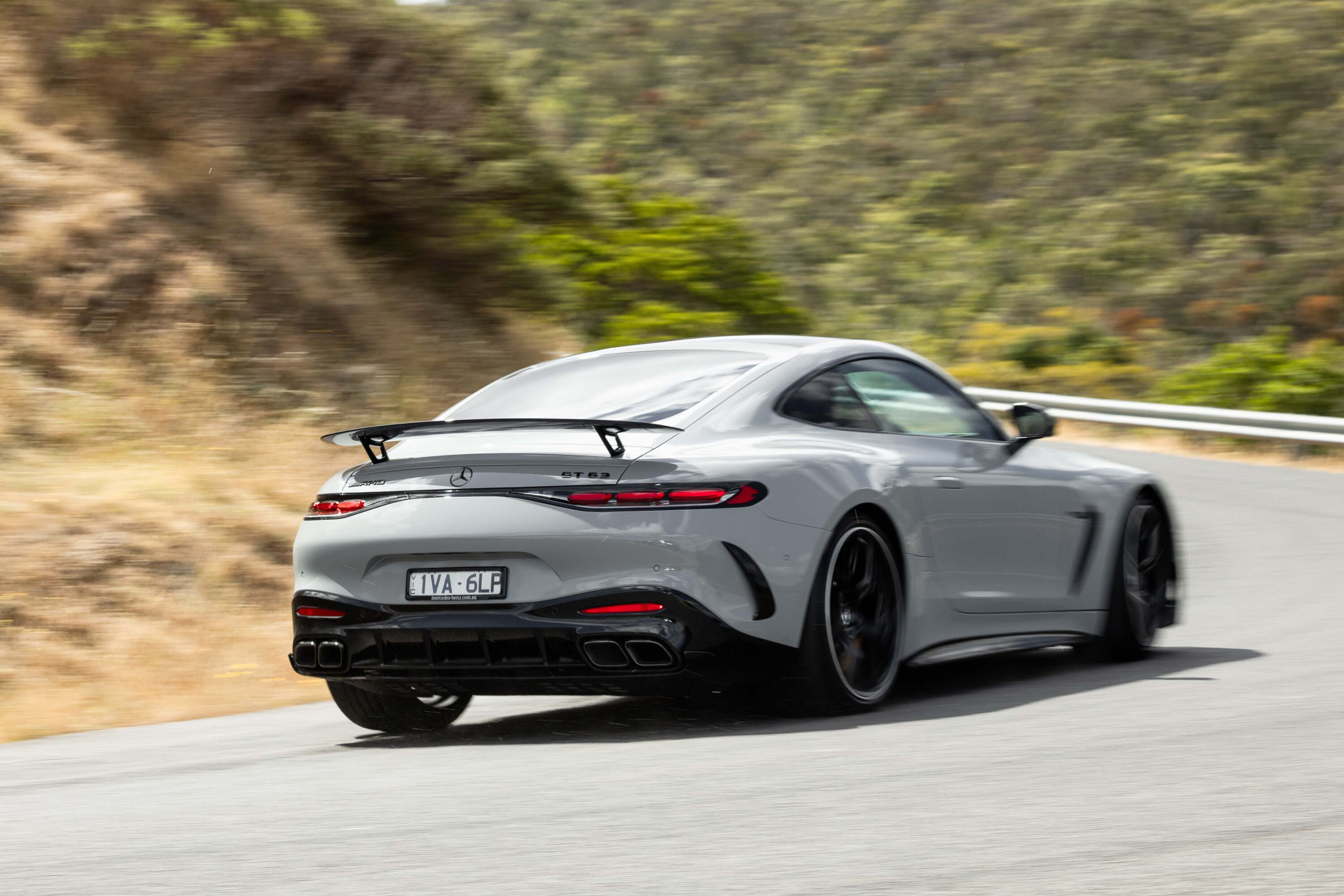
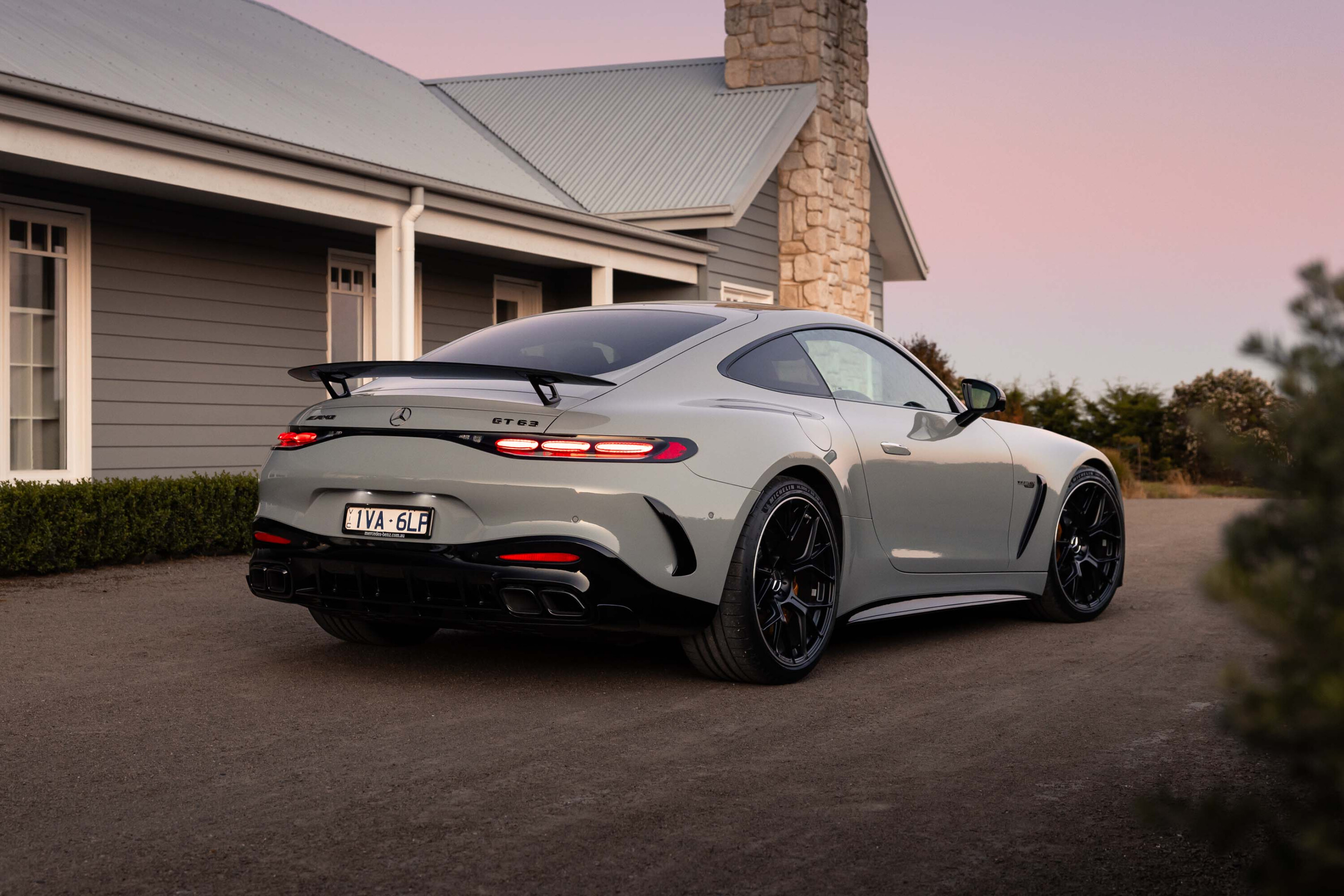
Walk around the new car and it carries these newfound compromises well. Yes, the glasshouse is a little taller, but if anything it’s even more voluptuous than what went before. The tape says that it’s 17cm longer, 4.6cm wider and 6.6cm taller, so although it seems a less intimidating shape, it is a bigger car.
It pays to remind yourself that this is, for Australia at least, the base model, equipped as it is with swollen rear guards that are stretched and teased over the big 305/30 ZR21 rear Michelin Pilot Sport S5 tyres. This rubberware is the key differentiator in performance between this car and the identically-powered SL, which runs on a less focused but still all-round capable Pilot Sport 4S.
The overhangs are tightly drawn too, and there are some neat details such as the subtle exterior brightwork that serves to visually elongate the car and the beefy pop-out door handles. It’s a more complex, sophisticated shape that what went before, and after it’s bedded in on your eye, it’s one of genuine subtlety. Beauty? I’ll let you decide on that one.
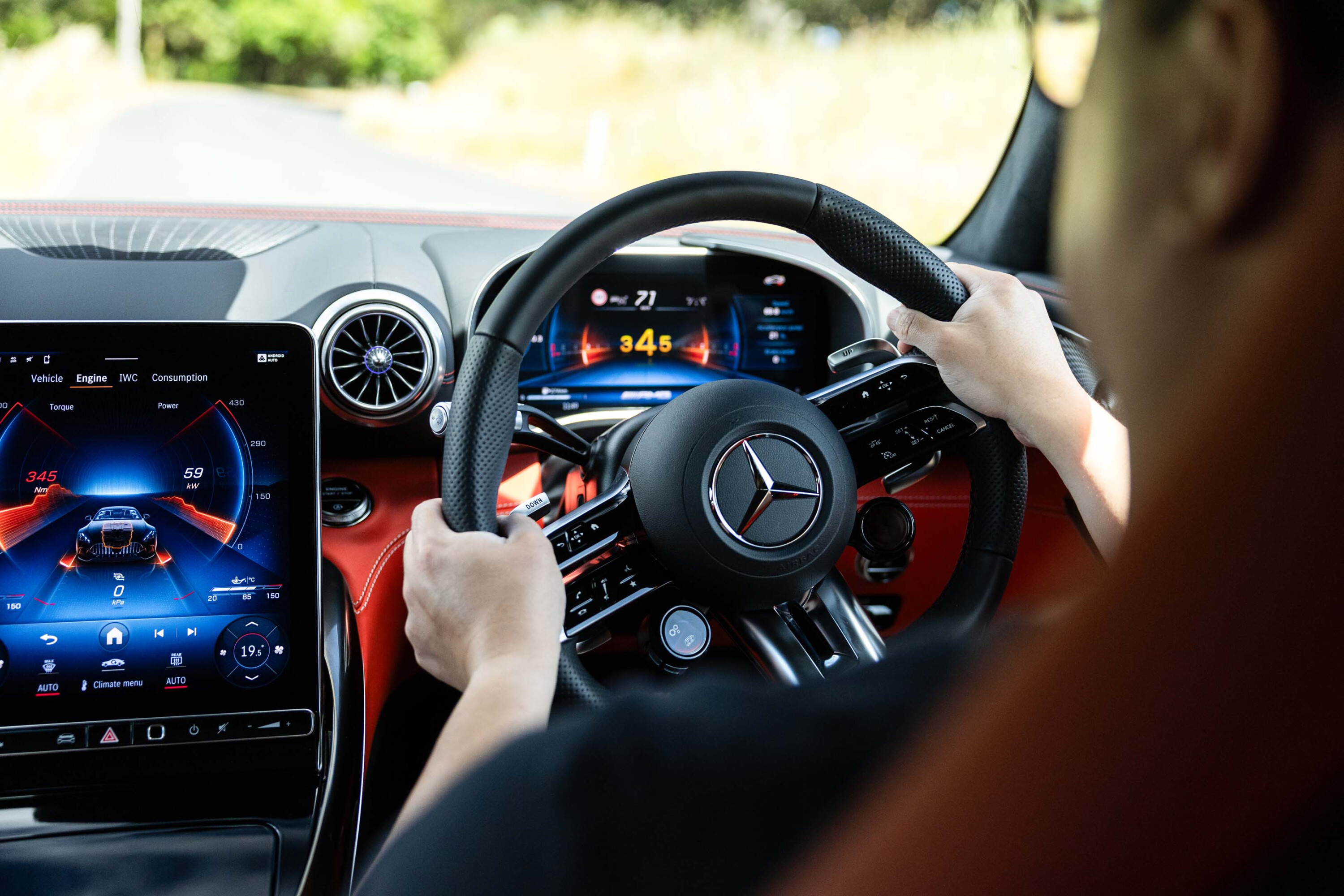
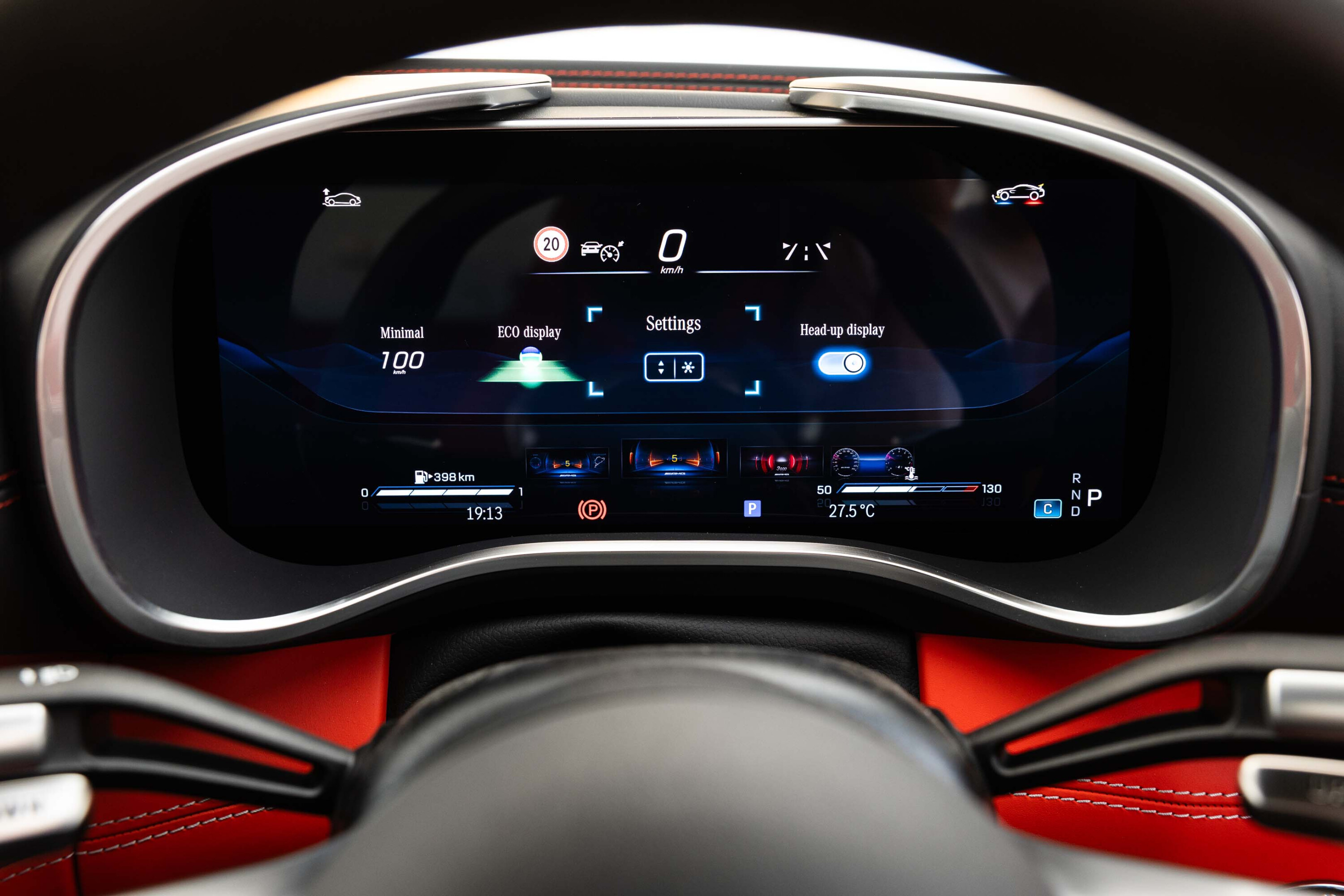
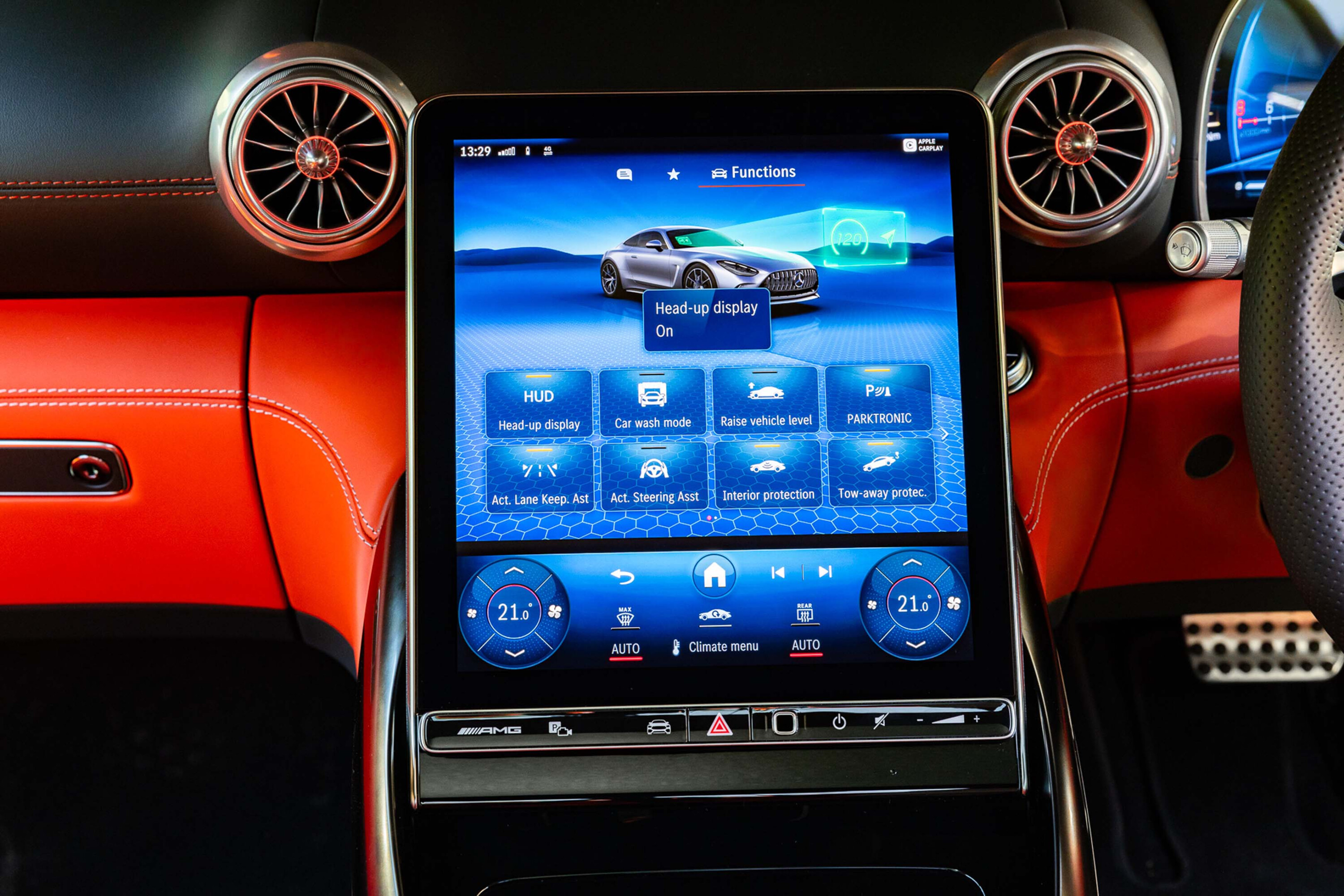
Drop into the AMG GT and it doesn’t feel anything but a Mercedes, despite the similarity of the rear to the Porsche 911. Some have carped at the inclusion of the huge 11.9-inch portrait-oriented screen which dominates the real estate in the centre of the cabin, but I have no great issue with it.
The controls within are, for the most part, sensibly resolved and it’s not as if Mercedes has compensated by lowering the carat count of the rest of the interior jewellery. The only ergonomic glitch is the position of the starter button on the left-hand side of the steering column which is awkwardly located behind the wheel and the edge of the screen. With time, you get used to ducking your hand up and under to give it a prod.
The steering wheel is densely packed with controls, with the now familiar pair of illuminated multi-function switches suspended from the lower horizontal spokes of the wheel. The driving position takes a little bit of getting used to, especially if you’re expecting the long reach of before.
The standard seats also sit you a few centimetres higher than perhaps is ideal, just robbing you of that last degree of snug intimacy that you look for when getting acquainted with a powerful sports coupe. Should you want a snugger feel, swap the standard multi-contour front seats for the option of the racier AMG Performance seats.
There’s a lot to take in. The drive modes can be switched between Snow, Individual, Comfort, Sport, Sport+ and Race, then there are the AMG dynamics settings which shuttle between Basic, Advanced and Master. There’s the ability to open or close the exhaust butterflies for a throatier sound, the dampers are adaptive, and there’s a three-stage traction control system.
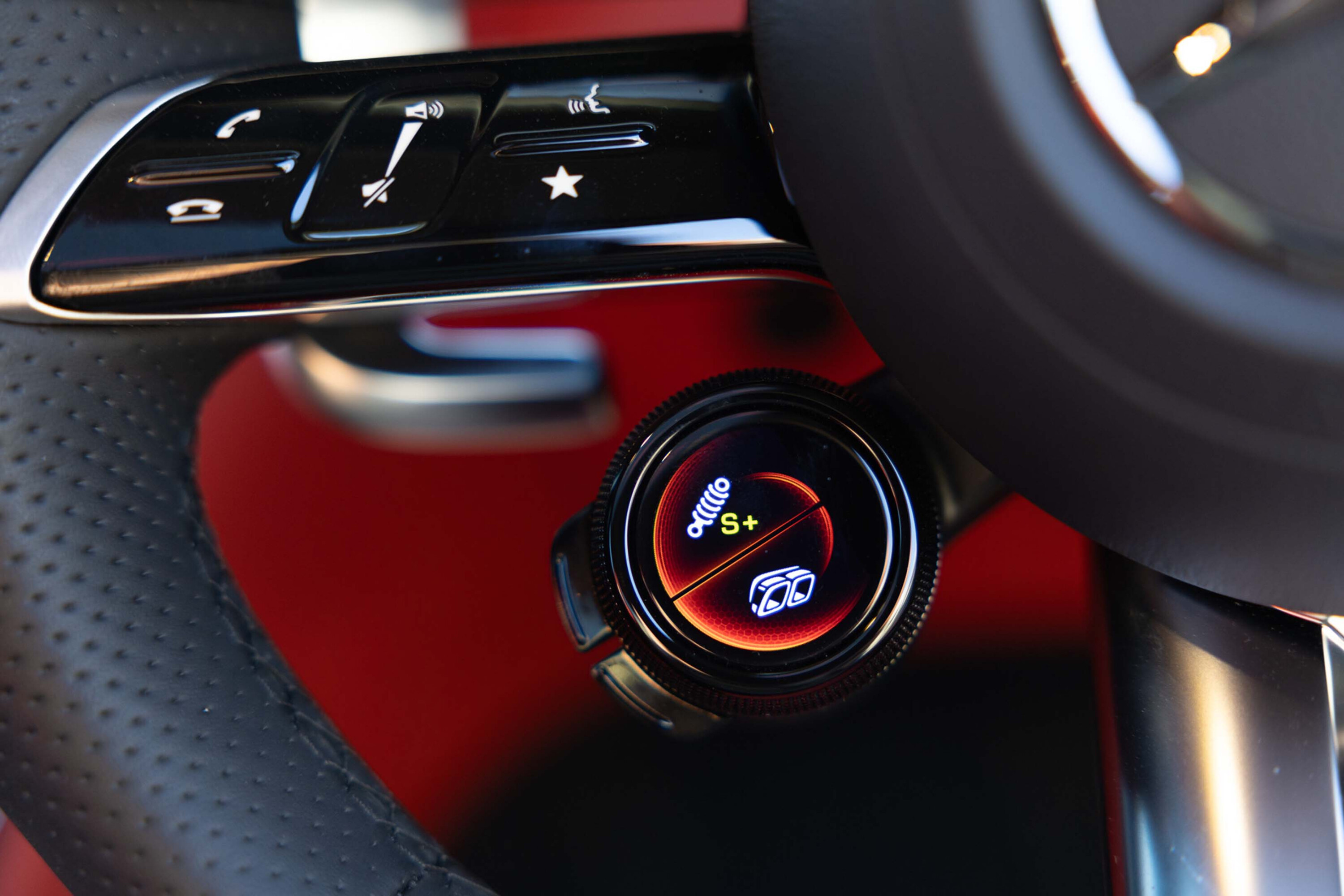
In other words, this isn’t the sort of car you’re going to get the hang of in an afternoon. Fortunately the drive modes seem sensibly calibrated. There’s not a great deal of difference between Comfort and Sport, the latter just giving the feeling of added dynamism without asking too much of the driver.
Click through to Sport+ and the car feels far more purposeful. It never feels overtly all-wheel drive, with a maximum of 50 percent of drive can be diverted to the front treads. Even when provoking it, torque steer is noticeable only by its absence. The four-wheel steer system gives it a feeling of agility when diving into an apex, but it never feels flighty or that there’s a response issue between axles. It also serves to slyly mask that extra weight.
Unlike its predecessor, which featured a transaxle, this generation of GT features a more conventional gearbox slung at the back of the engine. That’s helped with packaging the rear seats and the luggage bay, but it also means that the old 47:53 weight distribution now morphs into a more nose heavy 54:46.
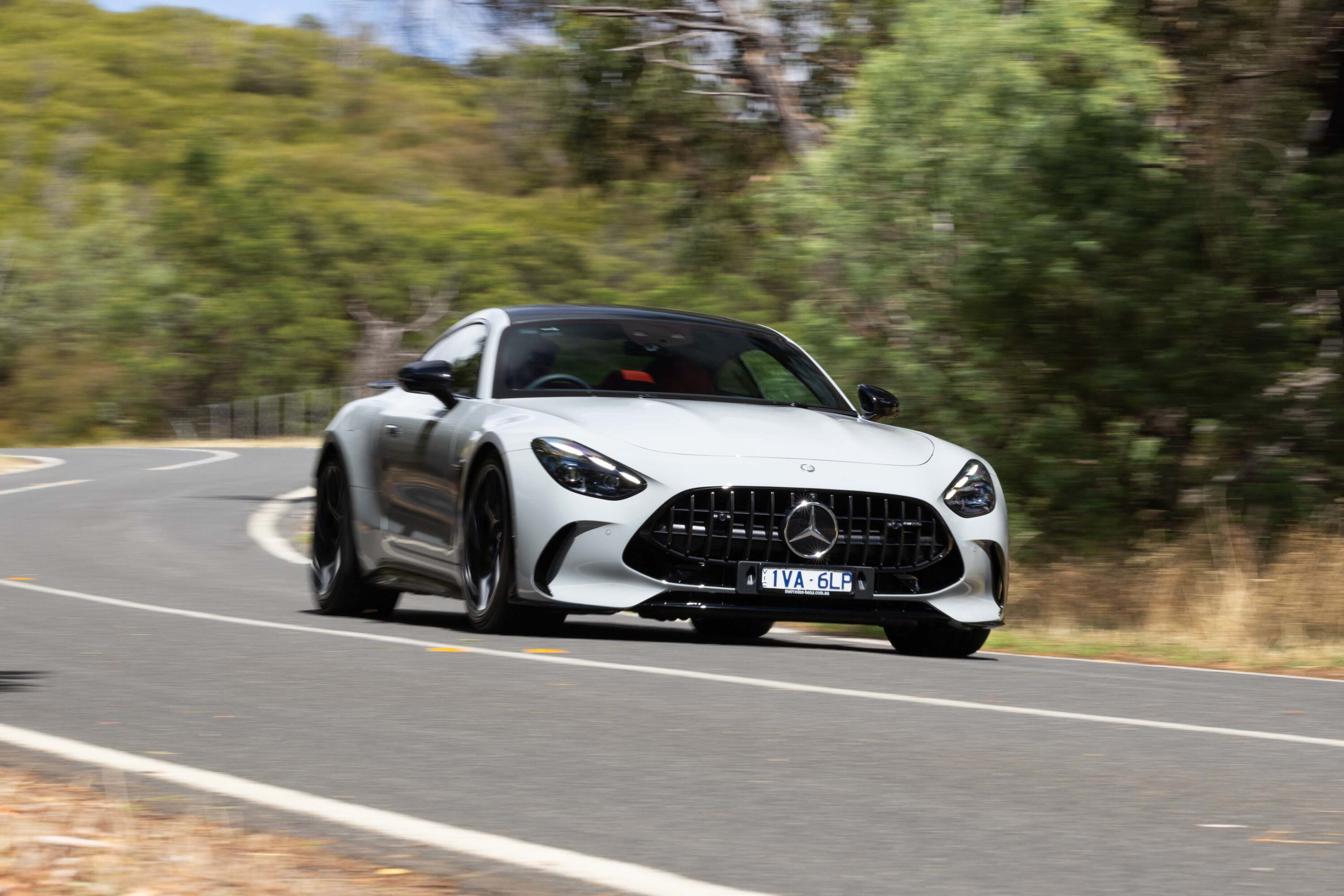
I don’t mind that too much, as the extra weight removes the occasionally spooky feeling of aloof remoteness from the front end that sometimes afflicted the old car. This one always feels engaged. AMG has worked wonders at combining the weight distribution with a quick steering ratio and the all-wheel drive system to really allow you to build confidence. On road that translates into being able to engage more throttle, earlier in a corner. It’s a very effective ground coverer.
The gearbox software helps. It’s always the sign of great transmission mapping when you find yourself leaving the paddle shifters alone, the software able to accurately predict when to snick up or bang down through the gears and in Sport+ you’ll very rarely find yourself plucking at the shift tabs yourself to instruct the nine-speed auto. When you want it to, it’ll power in gearchanges with real aggression.
The 4.0-litre twin-turbo V8 engine is a known quantity, but familiarity doesn’t really dim our enthusiasm for it. On a decent stretch of road, it’s genuinely thrilling to extend the engine, basking in the resolve of its unapologetic internal combustion.
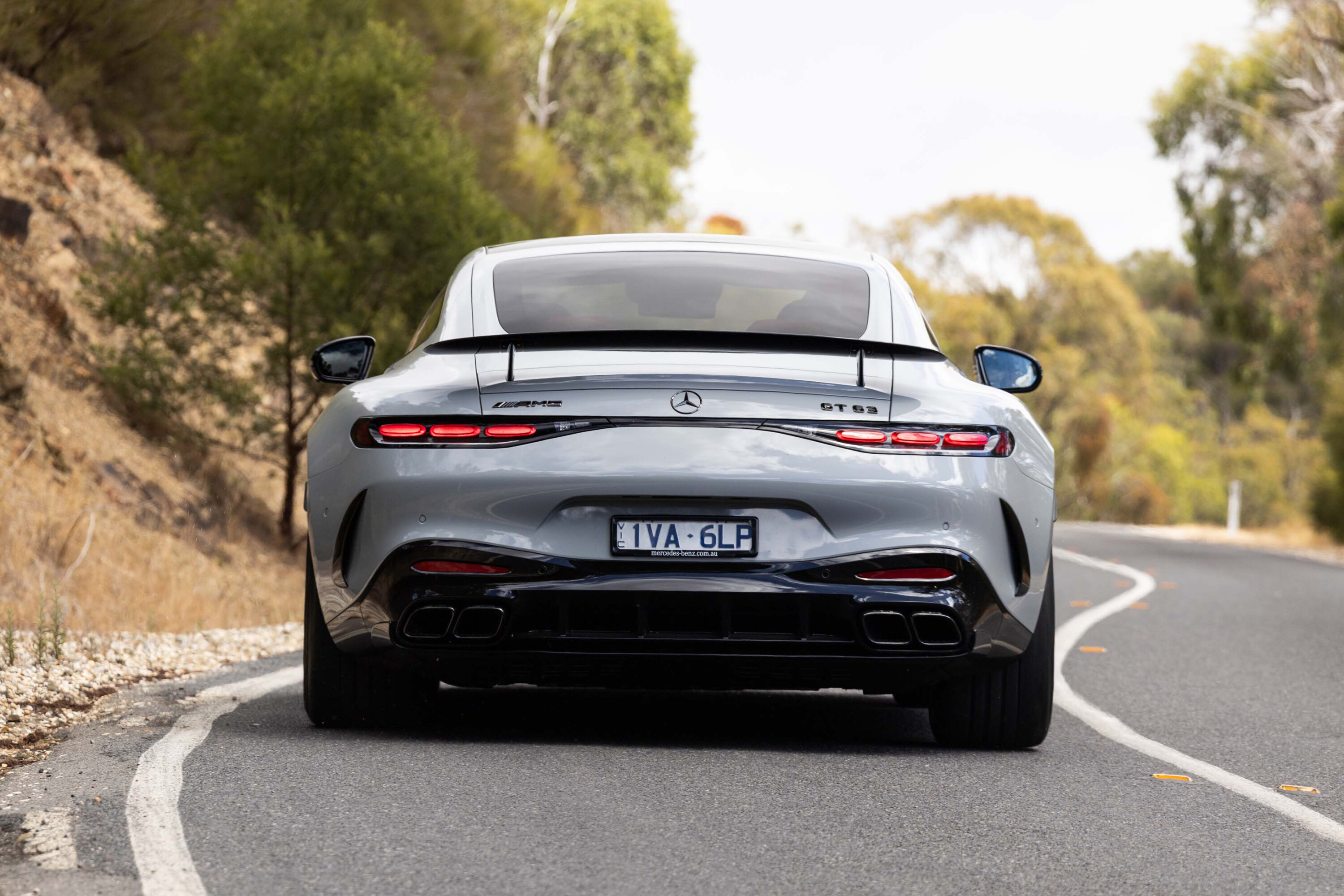
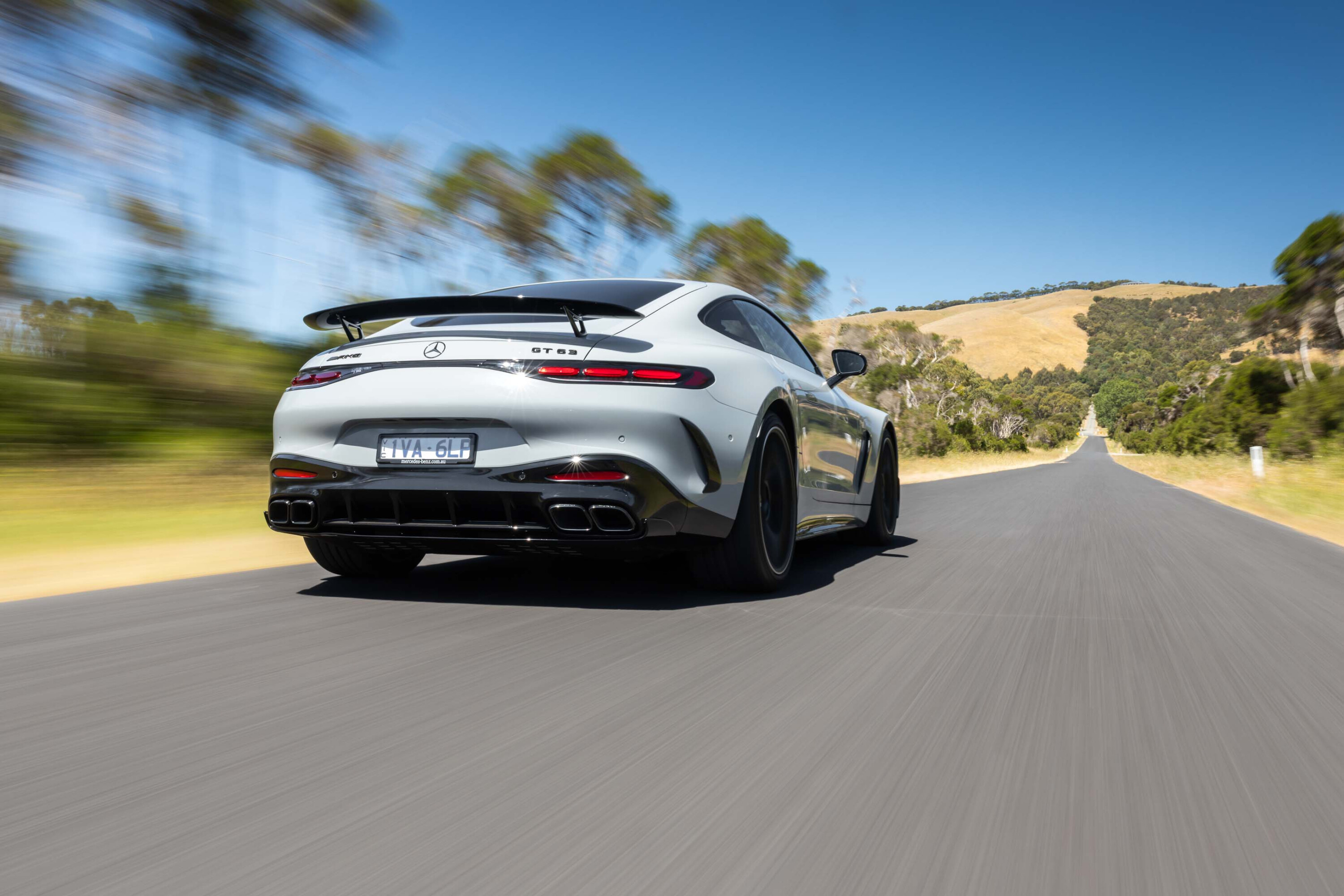
It’s properly quick too, demolishing 0-100km/h in 2.9 seconds. Yes, you can quite happily drive on the torque response, but to clatter towards the redline feels gloriously impish and it’s addictive. Therein lies the triumph of this car.
It’s a common refrain that so many modern cars make going fast feel rather antiseptic. By contrast the AMG GT bucks and shimmies as you fire through the ’box, it crackles and bellows. You’ll feel like a hero right up until that moment that you glance at the speedo, and the number is surprisingly modest. Perhaps the way it should be. One suspects it’s a bit of clever artifice because gather everything up and drive it in a very ‘correct’ manner and there’s real talent in this chassis. The GT certainly feels more like AMG home turf than their work on the SL.
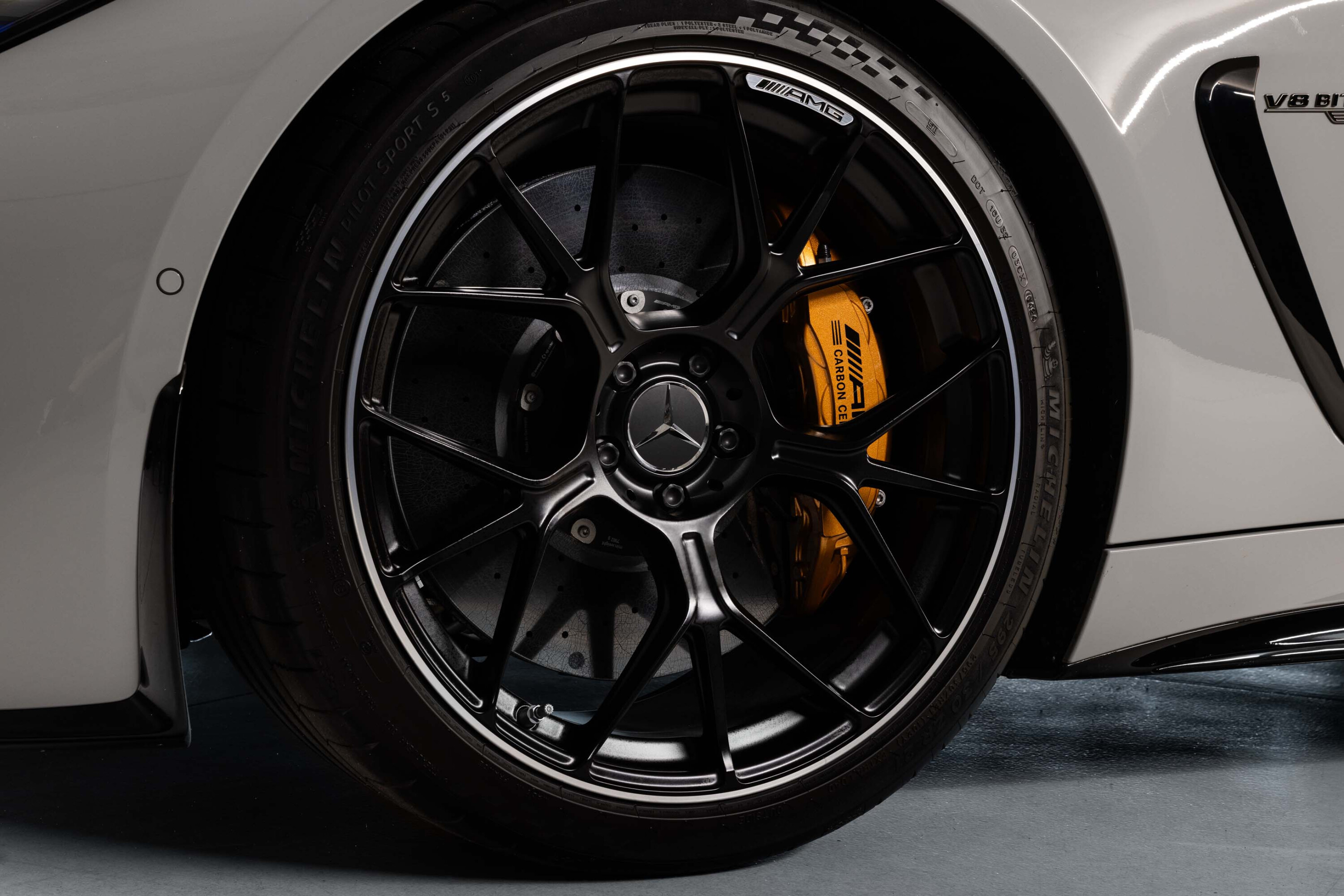
Want more aggression? Wait, and save, for the AMG GT 63 Pro, which features a little more power and a lot more aggressive aero. Its 420mm carbon ceramic brakes also help, but it’s worth bearing in mind that while many global markets don’t get a composite braking system as standard on their GT 63 models, Australia does. And it works brilliantly.
The GT 63 works as a gran turismo car very well. No, it’s not a truly sybaritic mile muncher like a Bentley Conti GT, but there’s a rangy suppleness to the ride in Comfort that is easy to live with. Likewise, there’s a massive boot. Pop the electric tailgate and there’s 321 litres of luggage space on offer.
There’s a button to drop the rear seats from the luggage bay, extended luggage space to 675 litres. Those rear seats feature ISOFIX child seat mounts but, because of the swooping tail, those seats are best reserved for kids who have grown out of child seats but are smaller than about 150cm. For most people, the rears will be used to chuck a bag or two.
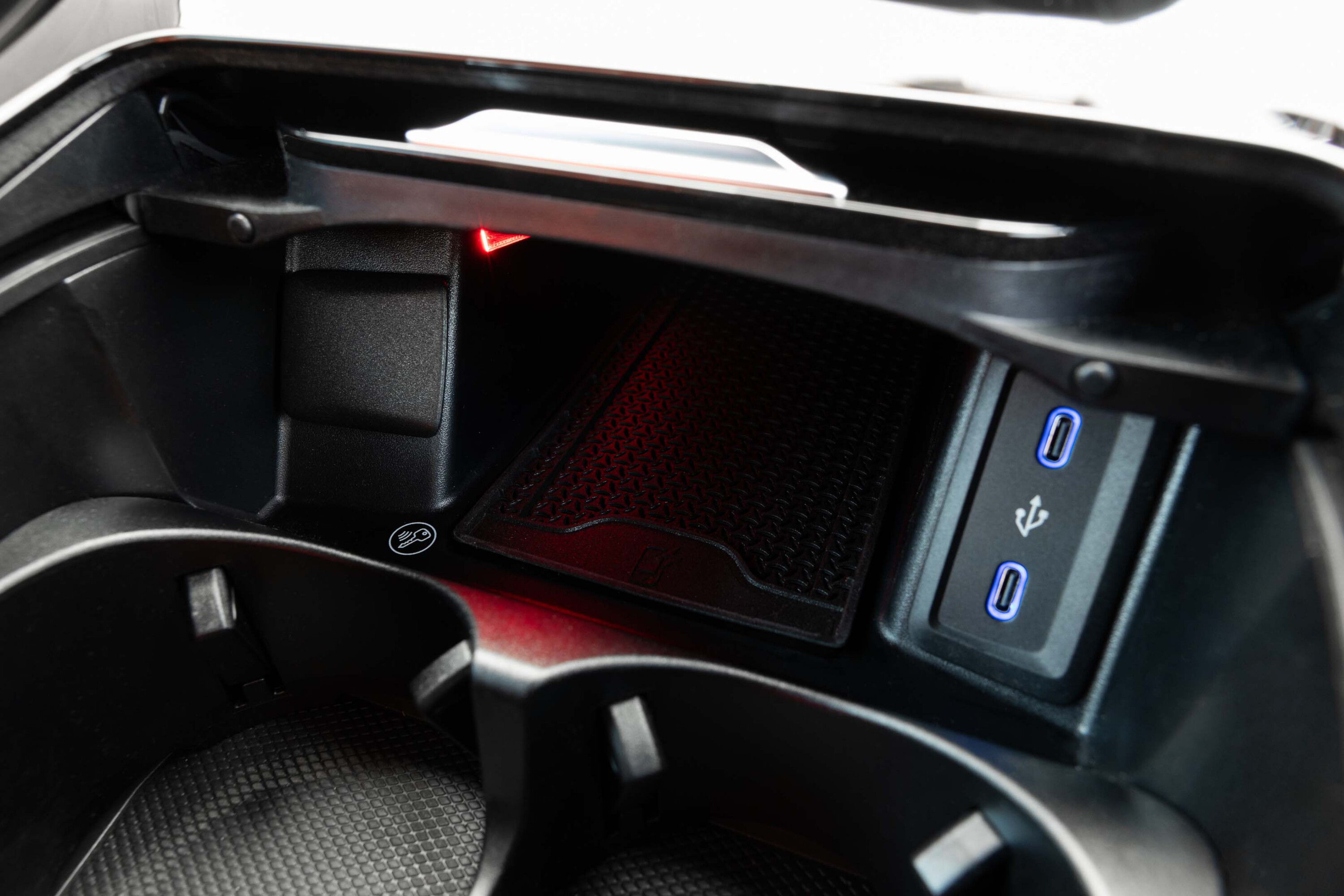
You also get a quality Burmester stereo, a glass panoramic roof with manual shade, some well-hidden massage seat functions, a head-up display and wireless Apple and Android with a wireless charging pad. A front lift system also takes the sweat out of negotiating city centres, with 41mm of extra chin clearance at the touch of a button.
And yes, you can set it to remember the GPS coordinates for where the lift was engaged so that it does it without prompting next time.
Materials quality is, for the most part, good, and there’s a real sense of occasion in the AMG GT’s cabin. But then there needs to be. At $370,400, it handily undercuts the $401,300 Porsche 911 Carrera 4 GTS but start loading it up with the Night, Night II, Exterior Carbon or AMG Aerodynamics packages (not to mention the individualised Manufaktur options) and that price will start to creep towards blue bloods like the Ferrari Roma and the Aston Martin V8 Vantage.
On the plus side, you won’t need to jump through quite so many undignified hoops if you want your name on the registration document, servicing and ownership is a relatively straightforward proposition and it’s a car that you’ll want to drive rather than keep squirrelled away in a dehumidified garage.
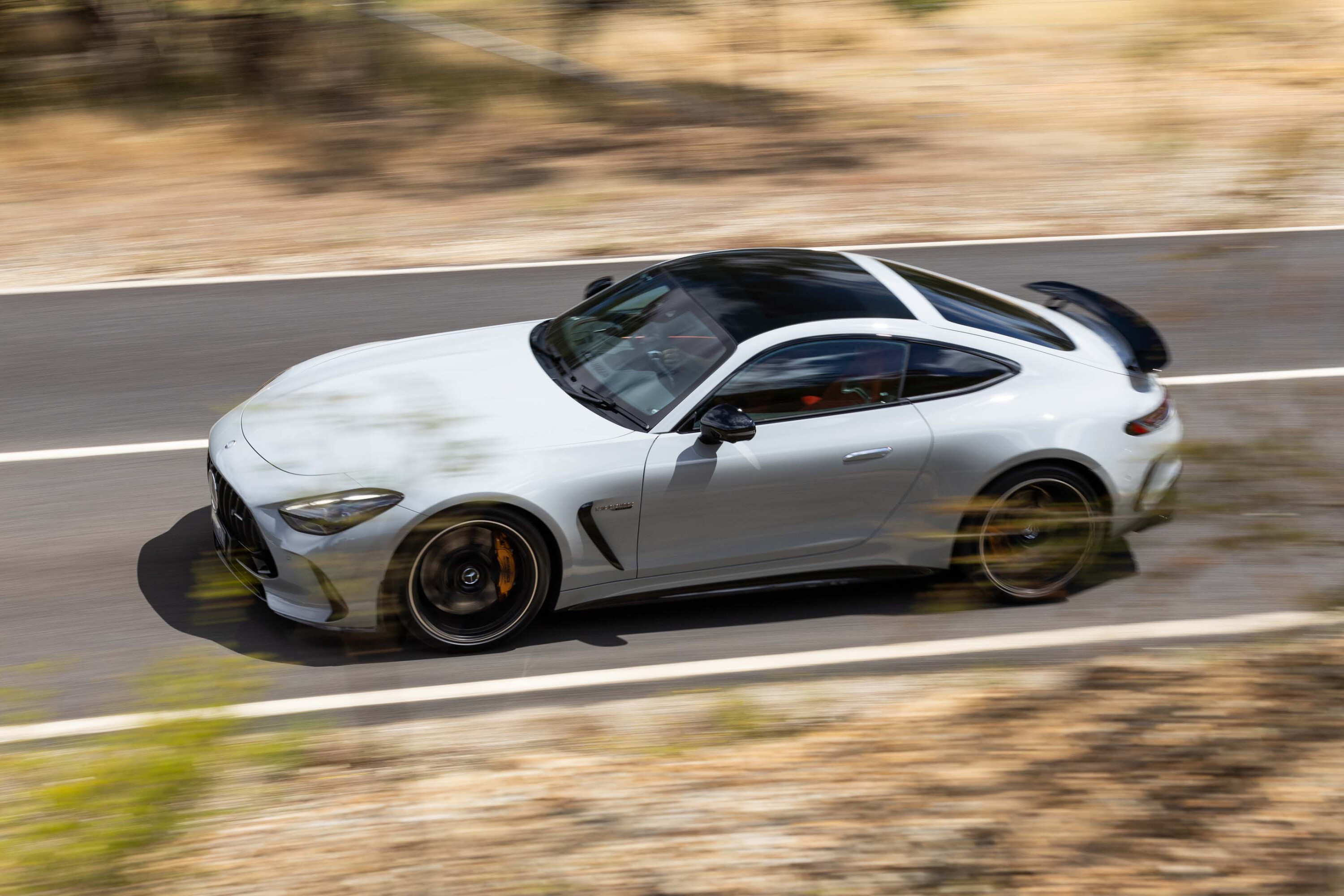
For more people, most of the time, it’s a markedly better car than its predecessor and I honestly didn’t think I’d conclude my review with that.
It’s certainly more useable on a daily basis. Does it cede a little of the drama of its predecessor as a result? Maybe, but that seems acceptable for a car that you’ll use and enjoy on far more days of the year. That it also delivers a dynamic package that also has its forebear covered seals the deal. In absolute terms, it’s now probably a more capable all-rounder than a 911.
It’s longer-legged, it’s got a bigger boot and there’s more bandwidth in its ride quality. But does it possess the same magic, the same ultimate reward when the traffic thins and your favourite road snakes ahead of you? That’s a tougher question to answer. But if you’re bored of 911s, add it to the shortlist. Heck, add it to the shortlist even if you’re not.
When the first-generation GT broke cover in late 2014 – ahead of its public debut at that year’s Paris Motor Show – it appeared Mercedes-AMG was experiencing some confusion.
Here was a two-door, rear-wheel-drive coupe powered by a 375kW/650Nm 4.0-litre twin-turbo V8 in ‘S’ guise. A great recipe, without question, but less than 12 months later the C63 Coupe would be revealed featuring two more seats, an extra 50Nm and a substantially lower price tag.
AMG, of course, knew exactly what it was doing and any confusion as to the two cars’ respective roles would last only as long as a back-to-back drive. If you think of the C63 Coupe as a state-level sportsperson – very fit, very talented, extremely capable – then the AMG GT was a national-level competitor: sharper, fitter, more skilled. Worthy of representing Mercedes at the sports car Olympics.
Outrageous outputs would come later with variants like the GT C and GT R, but even with the same power as its C63 sibling, the GT was much more athletic – the distilled essence of AMG – as the second car after the gullwinged SLS to be engineered top to bottom by Mercedes’ performance arm.
For the second-generation GT, AMG has expanded its repertoire. Visually it’s clearly an evolution of the original, but it now has a much broader spread of talents. There are more models – a four-cylinder and a hybrid bookending the traditional twin-turbo V8s, all-wheel drive for greater performance in a wider array of conditions, 2+2 seating and more luggage space, a greater use of technology and more luxury. In short, the intention is for it to be more Mercedes without being any less AMG.
Marrying these seemingly contradictory objectives has required a lot of effort, with every facet of the car being put under the microscope. So, to examine the results, let’s apply a microscope of our own.
More is More
If there’s one word that sums up the new Mercedes-AMG GT, it’s ‘active’. Not just because it’s designed to be driven in an enthusiastic manner, devouring roads with a twin-turbo V8 snarl, but due to the constant adjustments that various systems are making – aerodynamics, suspension, cooling, all-wheel drive and more – to optimise that driving experience.
But let’s start at the very core, with a multi-material bodyshell incorporating steel, aluminium, magnesium and fibre composite in a bid to best balance weight and strength. It’s a larger car than its predecessor, primarily to adopt the 2+2 layout, growing in length by 177mm, width by 46mm, height by 66mm and wheelbase by 70mm.
Whereas the previous GT came only with a 4.0-litre twin-turbo V8, which ranged from a formidable 340kW/600Nm in the original entry-level Coupe to a frightening 537kW/800Nm in the flat-plane-crank Black Series, the new GT 43 kicks off the range with four cylinders.
That could be underwhelming were the four-cylinder in question not the 310kW/500Nm M139 from the A45 with an electrically assisted turbocharger. While it’s the only variant with rear-wheel drive, 0-100km/h is still dealt with in 4.6sec along with a 280km/h top speed.
The GT 55 introduces the familiar 4.0-litre M177 hot-vee V8, which has benefited from a new sump, repositioned intercooler, active crankcase ventilation and optimised inlet and exhaust ports. It produces 350kW/700Nm, good enough for 0-100km/h in 3.9sec when teamed with all-wheel drive and the nine-speed MCT wet-clutch automatic, while an increase in boost pressure lifts outputs to 430kW/800Nm in the GT 63 and cuts the 0-100km/h time to just 3.2sec.
Combined with a 315km/h top speed, the GT 63 would give even the previous Black Series a run for its money in a straight line, but here it merely sits in the middle of the range. The more focused GT 63 Pro offers 450kW/850Nm, which while no quicker to 100km/h, cuts 0.5sec from the 0-200km/h time (10.9sec).
However, add hybrid assistance to this already potent recipe and you have a true rocket. The GT 63 E Performance incorporates a 150kW/320Nm electric motor with its own two-speed transmission for total outputs of 600kW/1420Nm, numbers that require a second take.
The result is truly staggering acceleration, with 0-100km/h taking just 2.8sec, yet the 6.1kWh battery – its 560 cells individually cooled by a fluid with two to three times the heat capacity of water – provides up to 13km of electric-only range.
In order to harness this power, all-wheel drive appears on all GT variants bar the GT 43. The rear wheels are constantly driven, an electronically controlled rear diff able to apportion power left or right to the wheel with the most grip, while an electromechanically controlled clutch brings the front wheels into play as required.
This means the GT retains traditional rear-wheel drive characteristics, but with extra traction in slippery conditions. The track-focused Pro adds coolers for the front and rear diffs and transfer case, as well as two extra engine radiators for sustained hot-lapping.
One of the most difficult problems created by the GT’s expanded bandwidth concerns the suspension, ensuring it remains the torchbearer for AMG dynamics but with the comfort expected of a luxury grand tourer. The key is in that word active once more. There is five-link suspension front and rear with all links, steering knuckles and wheel carriers made from forged aluminium, but it’s AMG Active Ride where the real trickery lies.
In addition to multi-stage electronically controlled damping, active hydraulic elements at every corner eliminate the need for conventional anti-roll bars and allow each wheel to be operated individually.
In a straight line this means wheels can deal with bumps or potholes independently without feeding the disturbance across to the other side, while the active roll stabilisation keeps the maximum amount of tyre in contact with the road during heavy cornering.
And what tyres. V8 variants now wear 21 x 10.5-inch front and 21 x 11.0-inch rear wheels with 295/35 (+30mm) and 305/35 (+10mm) tyres respectively, while the Pro uses 21-inch wheels of the same width, with extreme Michelin Cup 2Rs a no-cost option, replacing the standard Pilot Sport 5s.
The brakes are commensurately huge, with 390mm discs and six-piston calipers up front and 360mm discs with single-piston floating calipers at the back. The carbon-ceramics, fitted as standard to the Pro and optional on the GT63 and E Performance, are larger again (420mm discs front, 380mm rear). Rear-wheel steering also appears for the first time, increasing agility at low speed and stability at higher velocities.
One area where the new GT has taken a decisive step forward is its aerodynamics, especially the – yep, again – active kind. In typical use, vertical slats behind the lower air intake and horizontal louvres behind the upper air intake are closed to reduce drag and direct air to the underbody to reduce lift, but as certain mechanical components reach a temperature threshold these fins open to allow air to reach the heat exchangers, though the upper louvres only open above 180km/h.
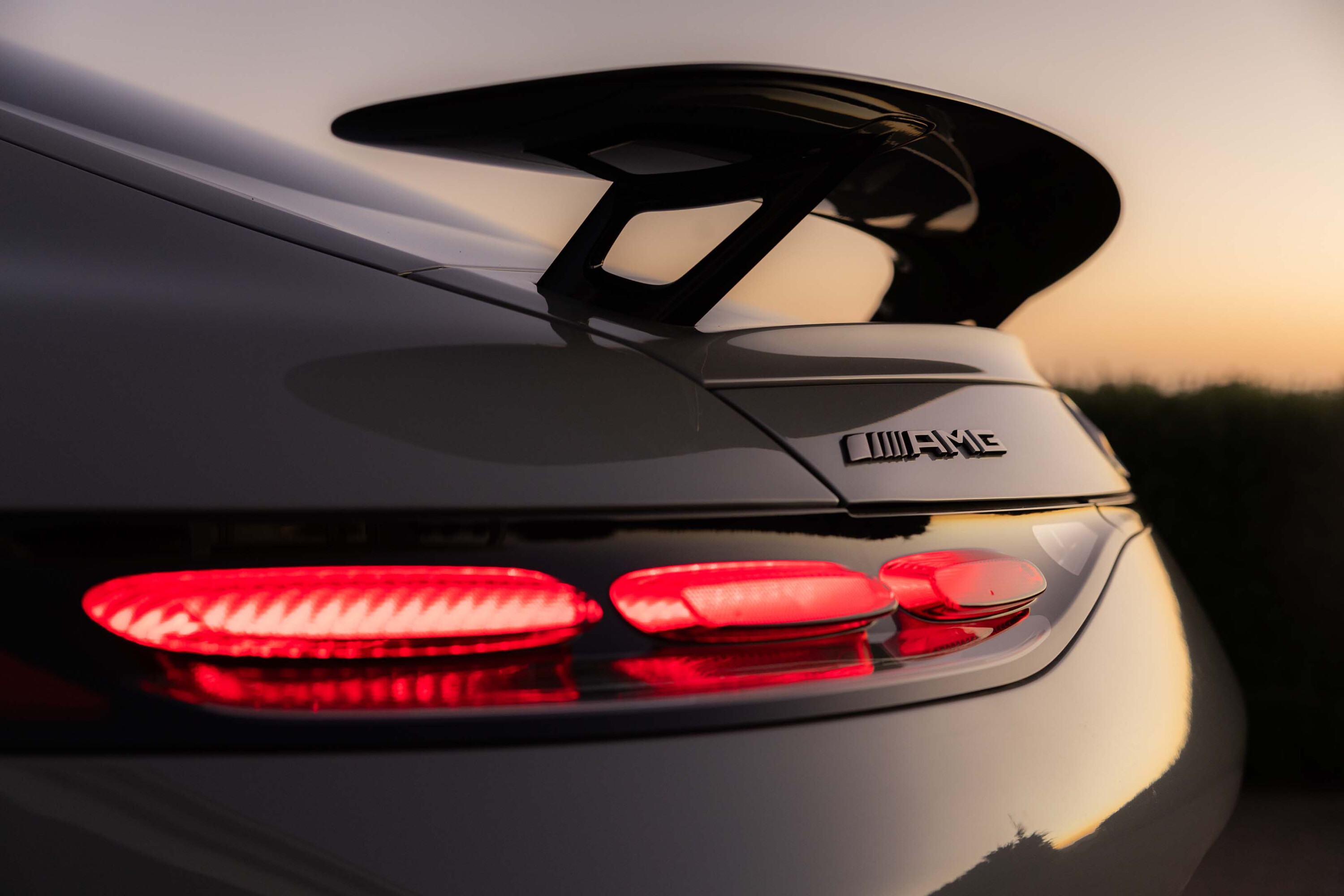
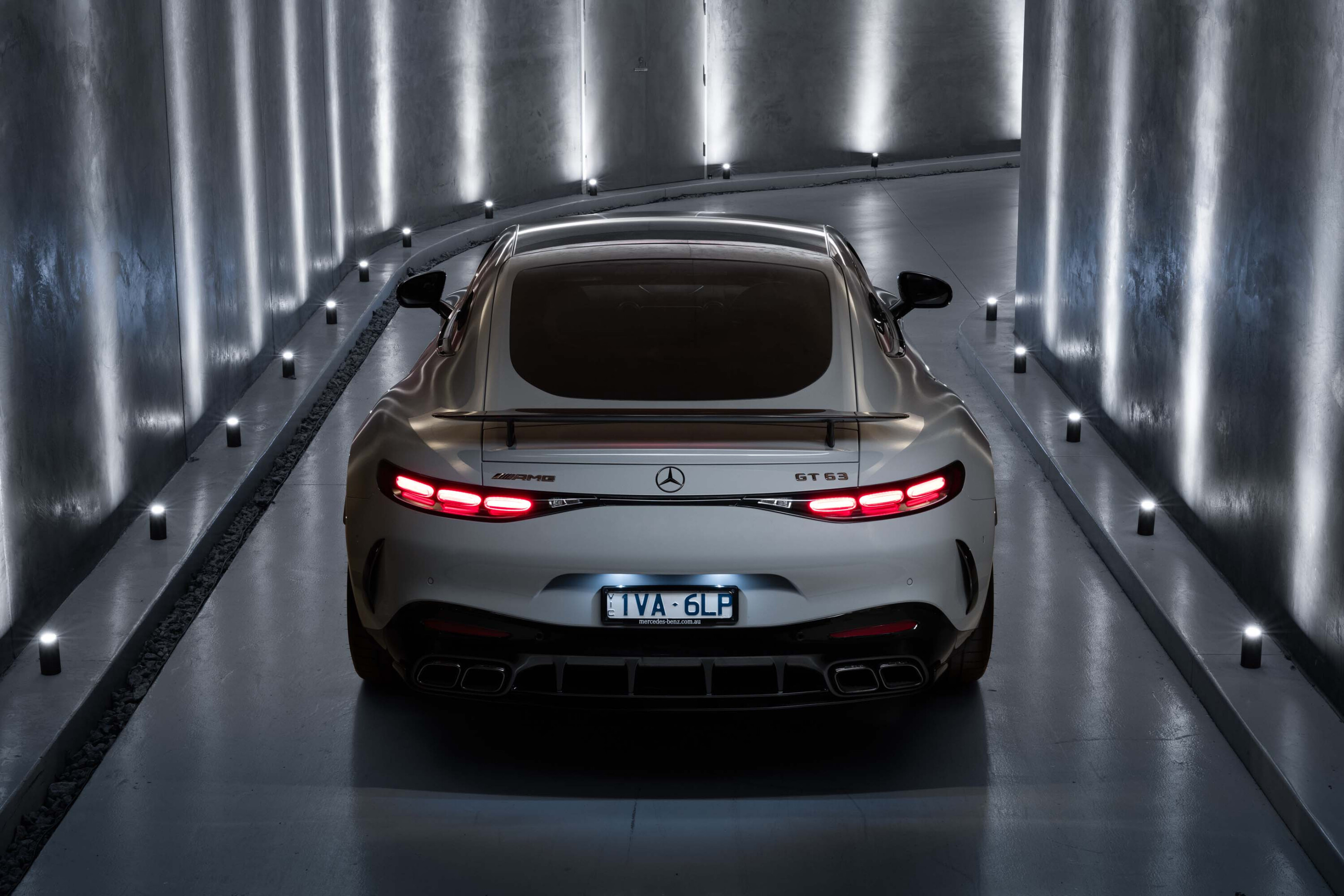
Furthermore, a carbon element extends at the front above 80km/h to create a Venturi effect to help suck the nose to the road, while at the rear an active rear spoiler can deploy in five different positions to prioritise efficiency or downforce as required. An optional aero kit, fitted as standard on the Pro, includes front and rear ‘flics’, a larger rear diffuser and fixed rear wing.
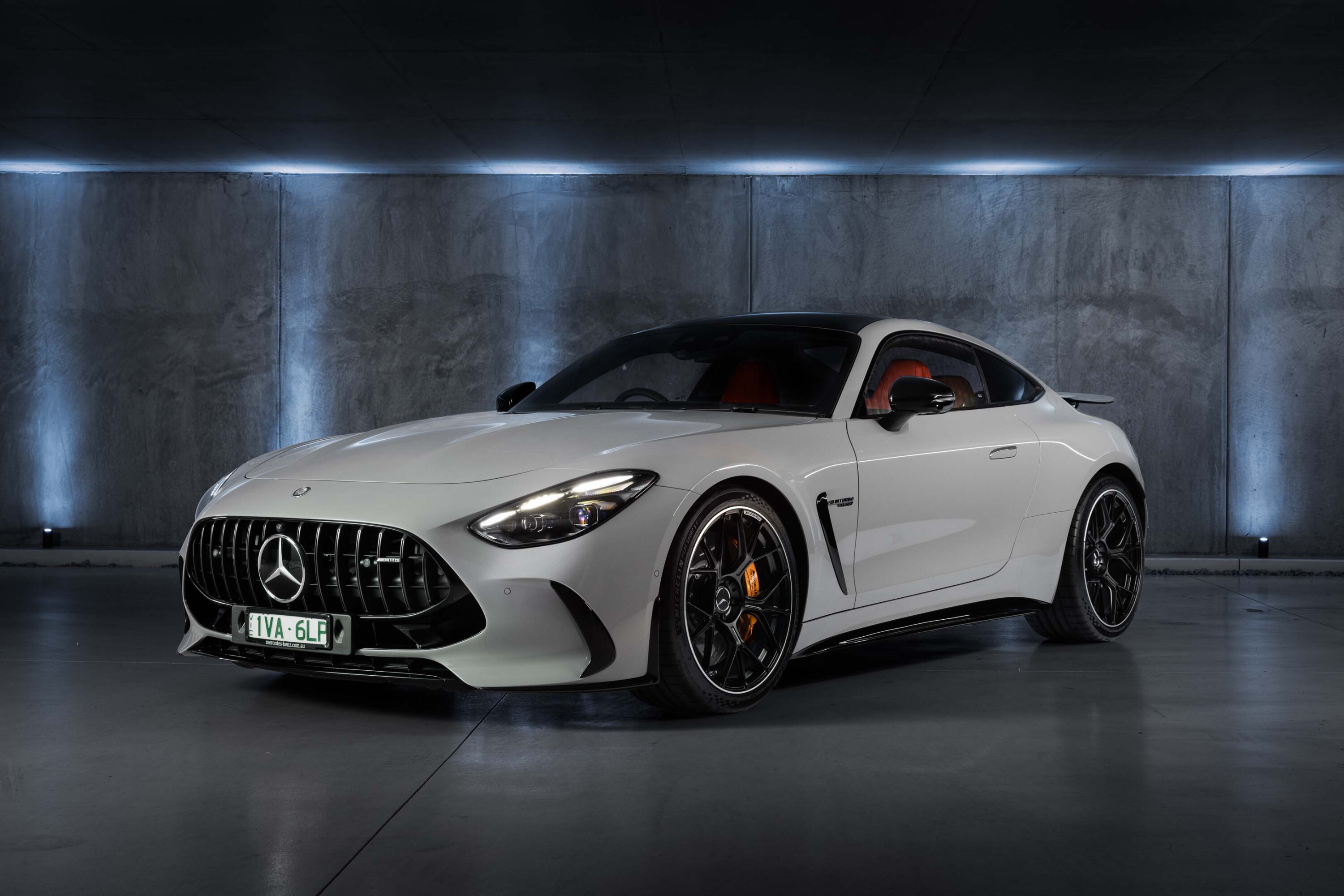
The design team has managed to move the front occupants forward 200mm to liberate room for those rear seats yet somehow the new GT is clearly related to the first. It’s squat and aggressive in its proportions – the huge grille, flared guards and twin power domes on the bonnet leaving no doubt as to its potency.
Inner growth
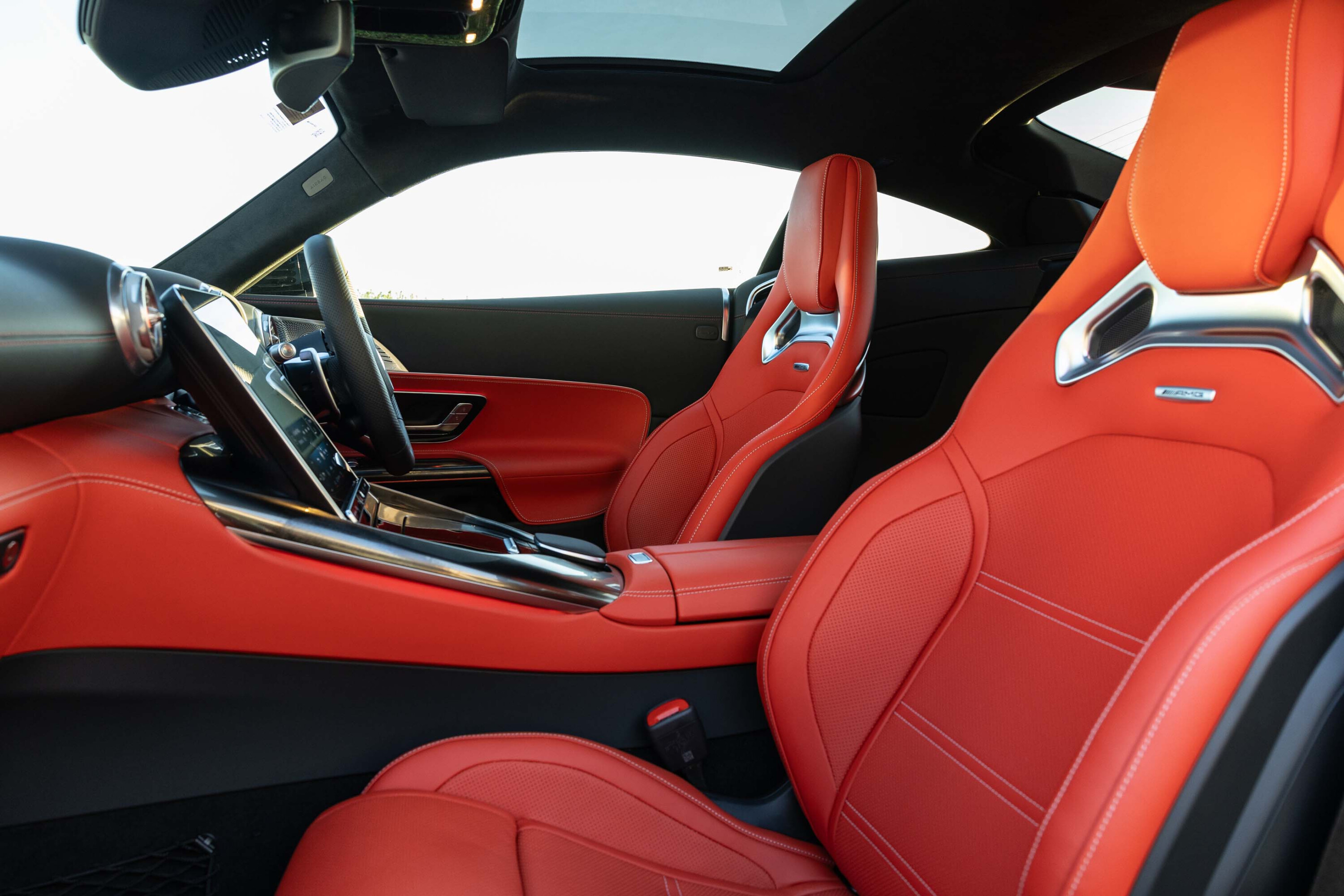
It’s on the inside, though, where the real revelation exists. For all its undoubted performance, the GT 63 has also learned how to cosset, with heated and ventilated front seats with massage, cutting-edge active safety systems, an 11.9-inch touchscreen infotainment system with the latest MBUX software, optional diamond-quilted Nappa leather and a hands-free power tailgate.
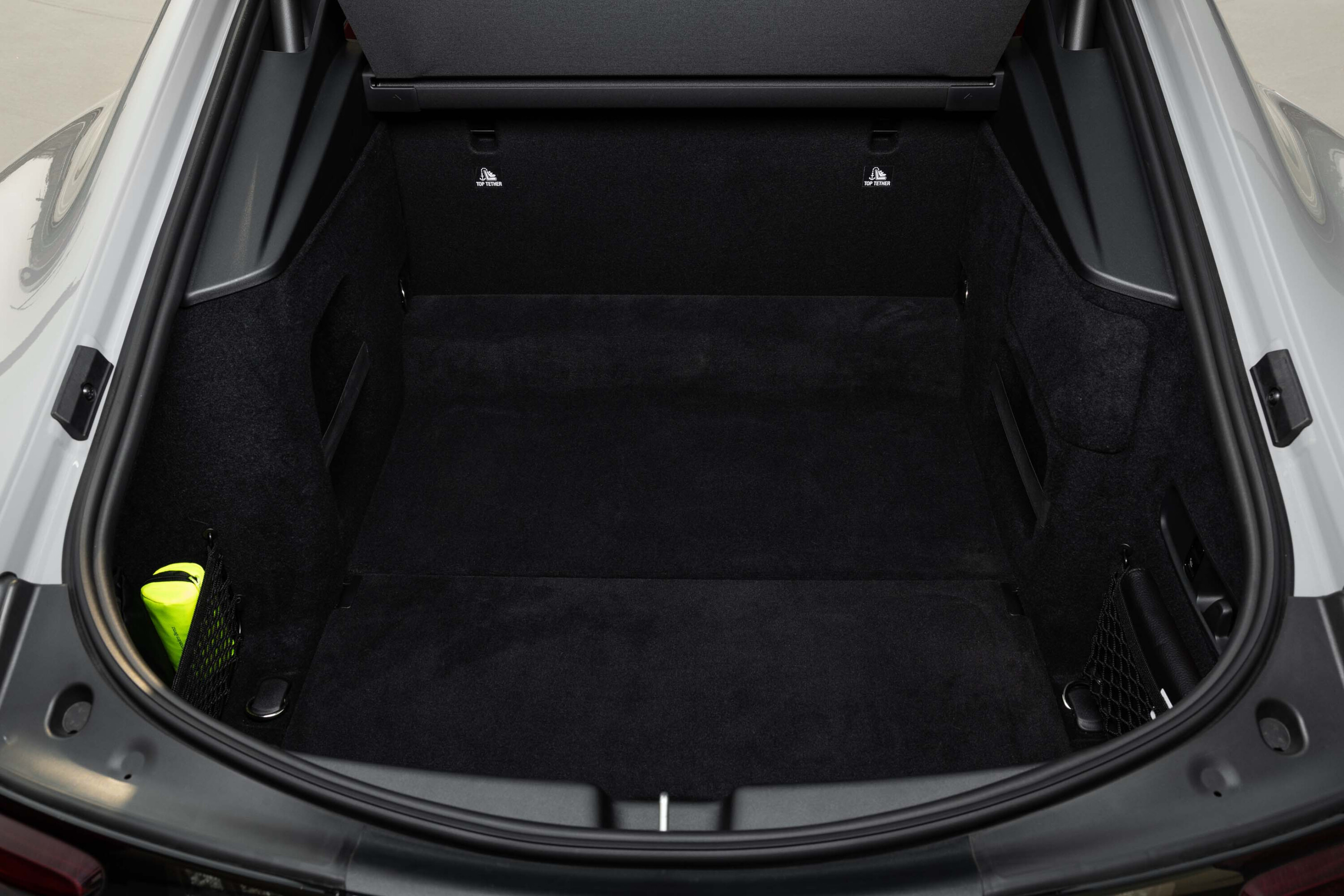
You’ll be using that tailgate, too, as relocating the gearbox from the rear of the car to behind the engine has increased luggage space from 175L to 321L, which expands further to 675L with the split-fold rear seatbacks stowed.
AMG admits the tight rear seats are only suitable for children up to 150cm tall – hence the 2+2 designation – but even if unoccupied they are a useful further luggage compartment. The light-packing first-generation GT owner can now take everything but the kitchen sink.
At evo we love a focused performance car and the first-generation GT was a raw and visceral experience, but the feedback from customers was they wanted something a bit more useable. We can put the microscope down and say that by combining searing performance with greater technology, luxury and practicality, Mercedes-AMG is in with a good shout of making its customers active in heading down to their nearest dealer for a new GT.
Subaru Australia has confirmed local pricing and specifications for the WRX tS spec B, available to order now and due in local showrooms in April. It’s priced from $61,490 plus on-road costs – $3,500 more than the WRX tS that sits below it.
The WRX tS spec B was recently teased by the company and has been released as Subaru Australia recognises the demand for a top-spec manual WRX – the current top-spec WRX tS is CVT automatic-only.
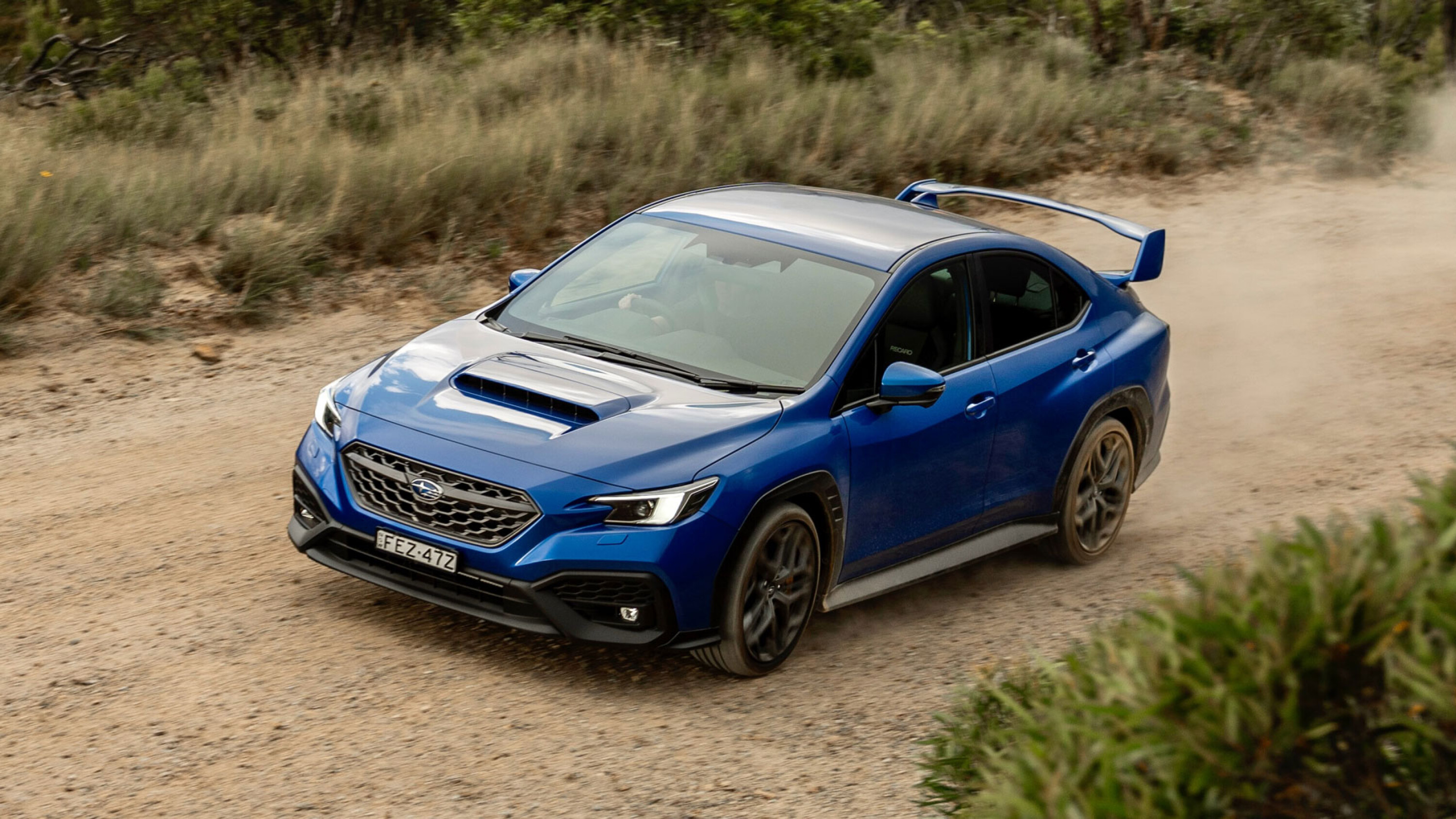
It adds a number of features to the range that debuted on the WRX Club Sport from 2024, including Recaro sports seats, 19-inch alloy wheels, Brembo brakes, drilled front and rear discs and the traditional WRX rear spoiler. It’s also the first time that the adaptive dampers from the tS auto and their multiple driving modes have featured on a manual car.
It also debuts a few new features for the WRX range, of which Subaru is yet to confirm their availability beyond the tS spec B. These include a new 12.3-inch digital driver’s display – featuring for the first time in an Australian-delivered Subaru – with three modes: normal, EyeSight and navigation.
There is also a new safety system called ‘Emergency Driving Stop System’, which monitors the driver and, should they become unresponsive, will safely bring the car to a controlled stop.
A new colour is available too: ‘Galaxy Purple Pearl’, which replaces the former ‘Solar Orange Pearl’.
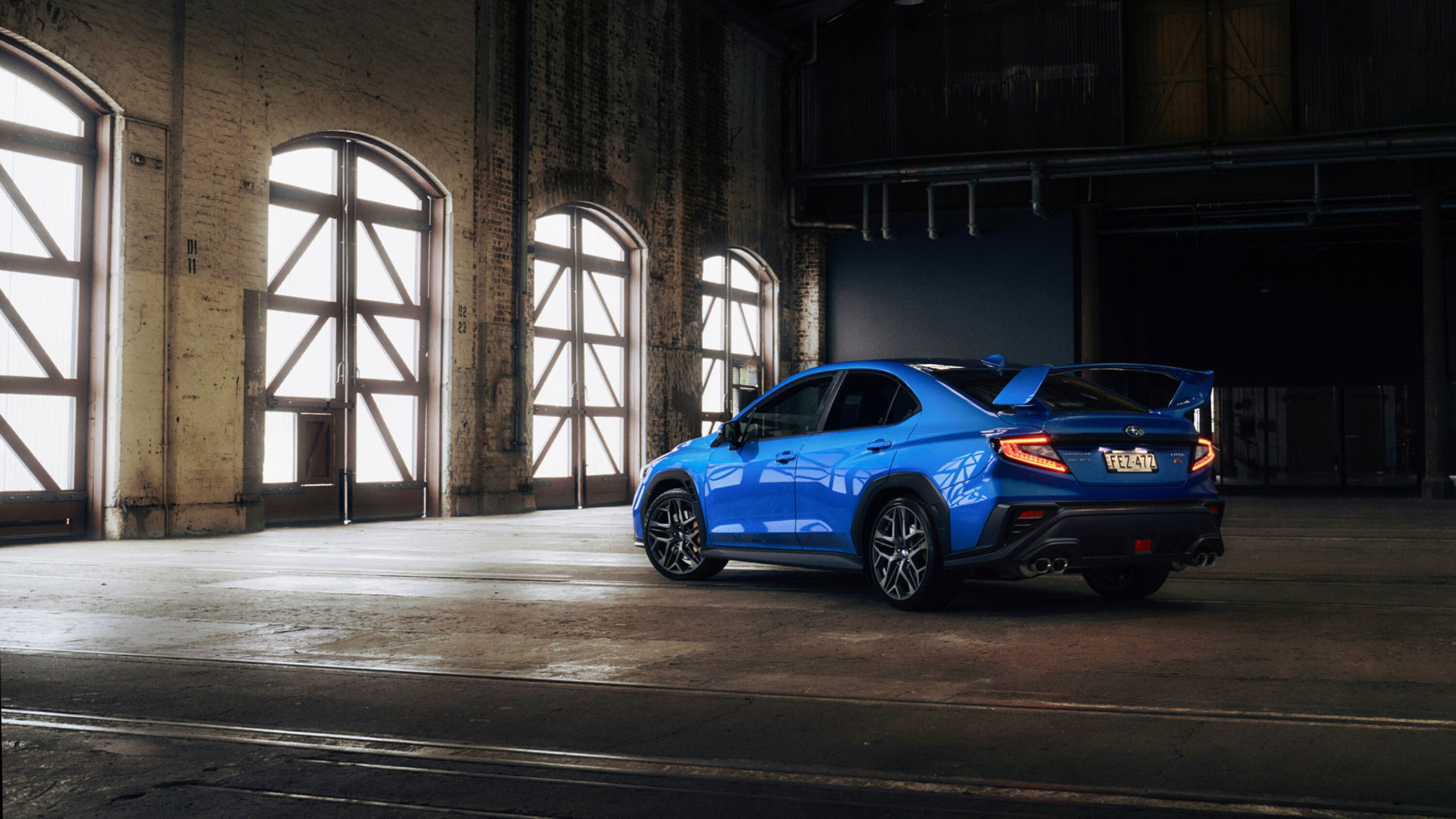
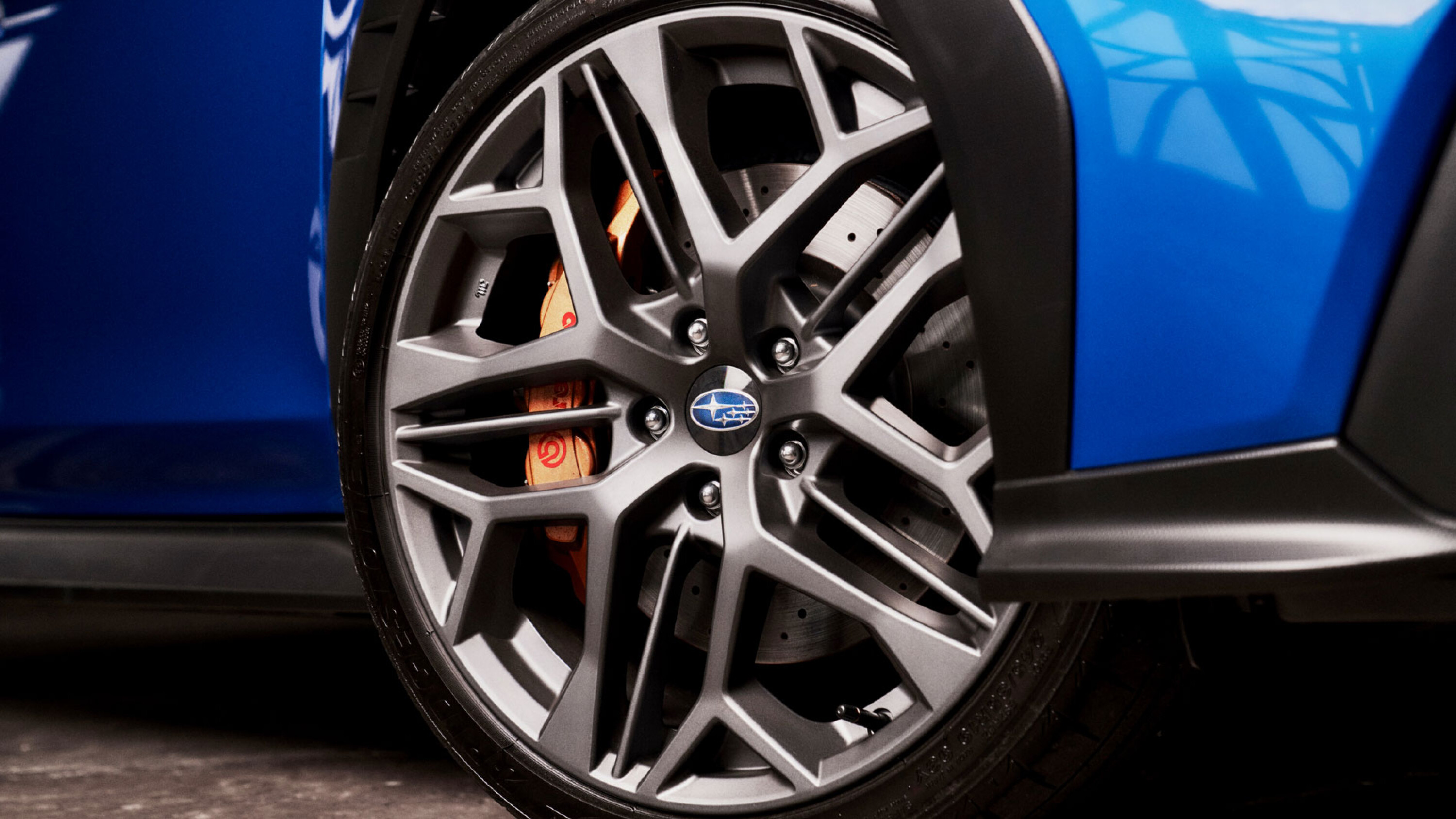
WRX tS spec B new features (over current WRX RS):
- Electronically adjustable dampers
- Comfort, normal, sport, sport+ and individual driving modes
- 19-inch alloy wheels in a matte grey finish
- Brembo brakes with six-piston front and two-piston rear callipers
- Ventilated and drilled front and rear brake discs
- Large rear spoiler
- Recaro sports bucket front seats with 8-way driver’s electric adjustment
- Leather steering wheel with STI logo
- 12.3-inch digital driver’s display
- Emergency Driving Stop System
That’s on top of the WRX RS’ standard equipment, including:
- Dusk-sensing automatic LED headlights
- Rain-sensing automatic wipers
- Keyless entry with push button start
- Heated and electric-folding mirrors
- Heated front and rear seats
- Dual-zone automatic climate control
- 11.6-inch portrait touchscreen
- Wired and wireless Apple CarPlay and Android Auto
- Satellite navigation
- DAB+ digital radio
- 12-speaker Harman Kardon sound system
- Eight airbags
- Autonomous emergency braking
- Adaptive cruise control
- Lane keeping assistance
- Driver attention monitoring
- Blind-spot monitoring with rear cross-traffic alert
- Speed sign recognition
- Front/rear/passenger-side cameras
Jacked-up. High-riding…
Those are two terms you’ve been seeing more of in recent years, thanks to the slow but gathering speed trend of sedans with more of an SUV theme in the category of ground clearance.
Perhaps ‘suvedan’ could be the new classification, although this one isn’t quite a sedan either, because it’s guilty of another nested category: the liftback sedan.
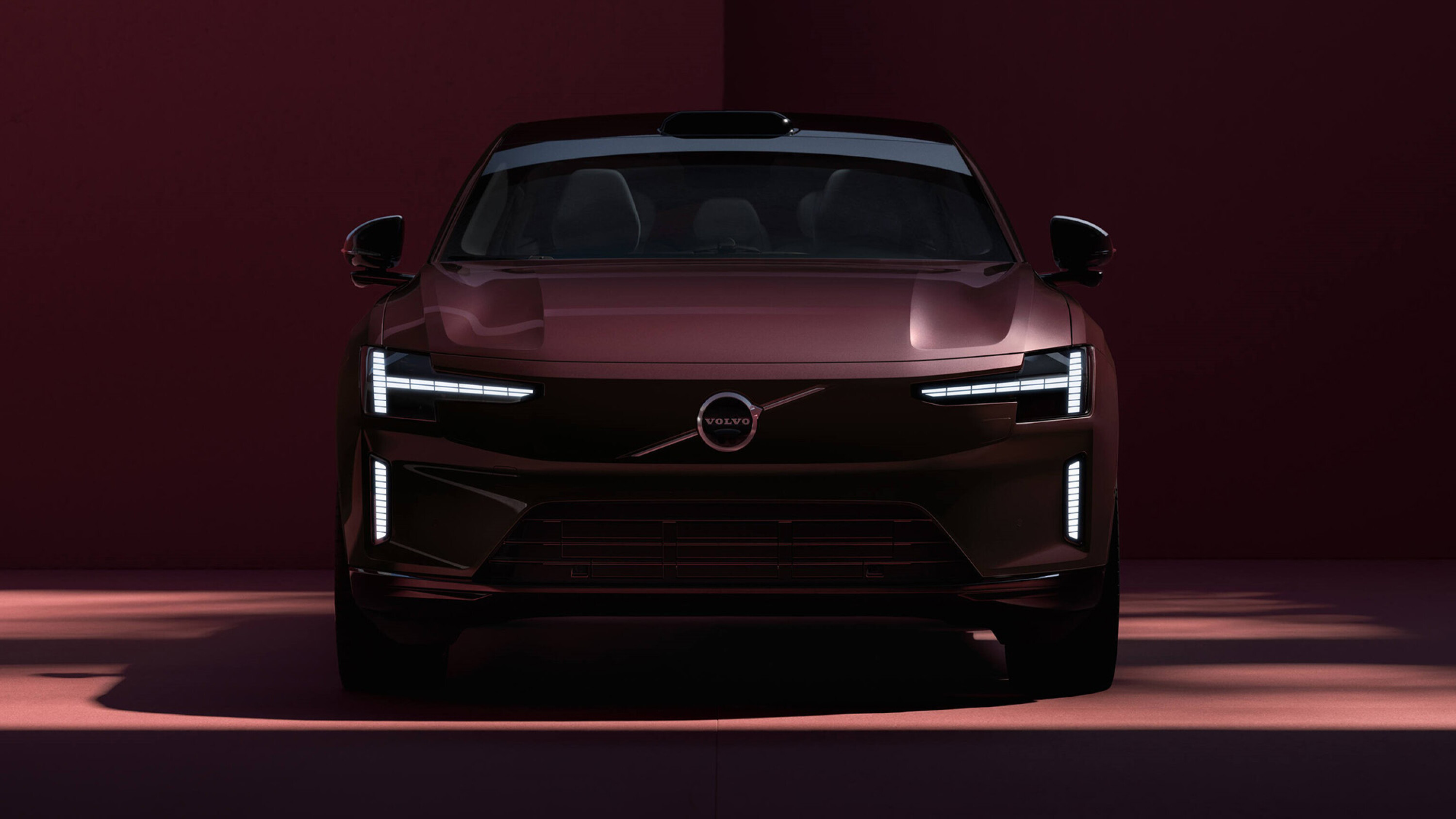
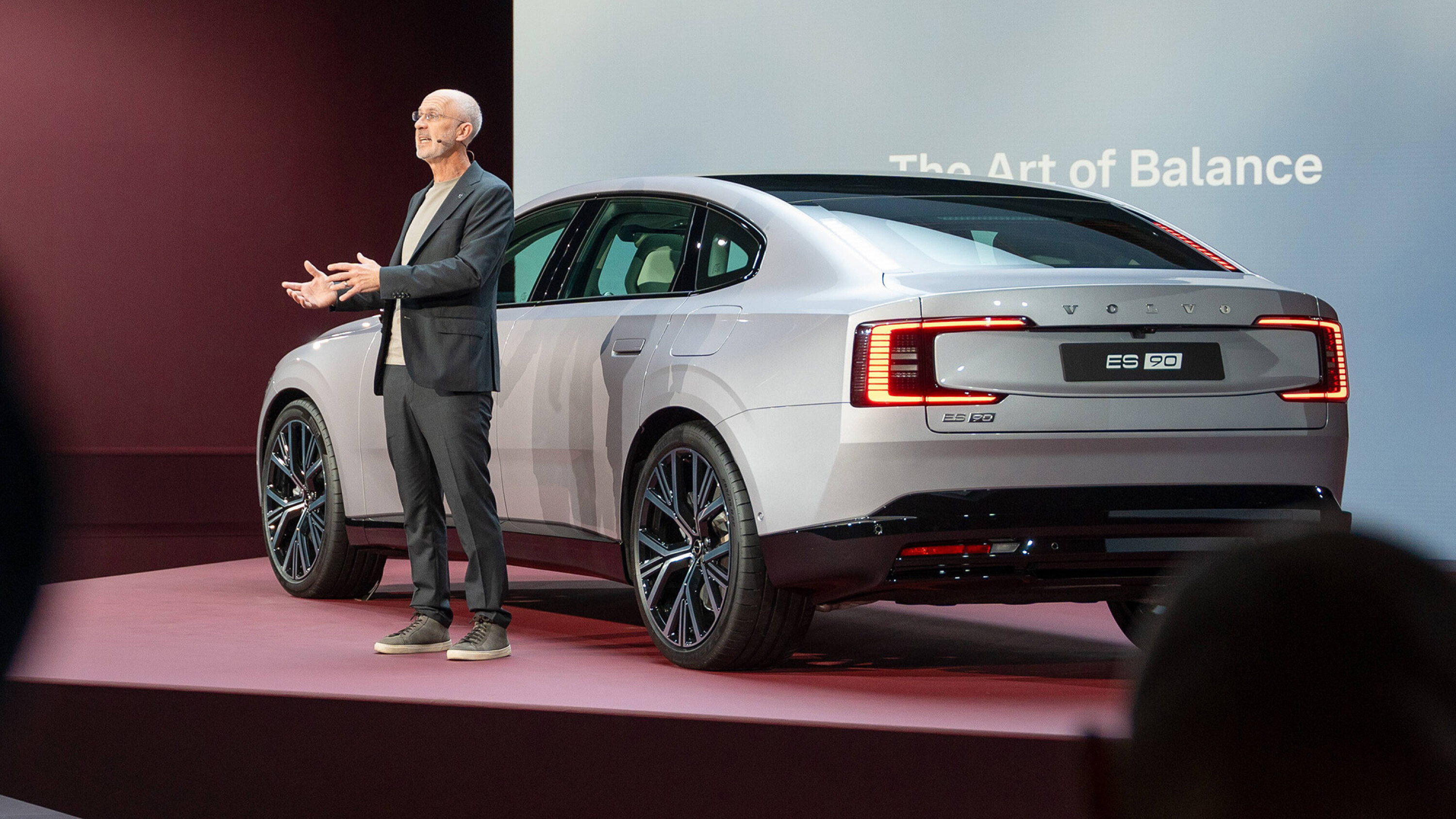
Nitpickin’ details aside, the Volvo ES90 was finally unveiled this week ahead of an Australian debut set for late 2025.
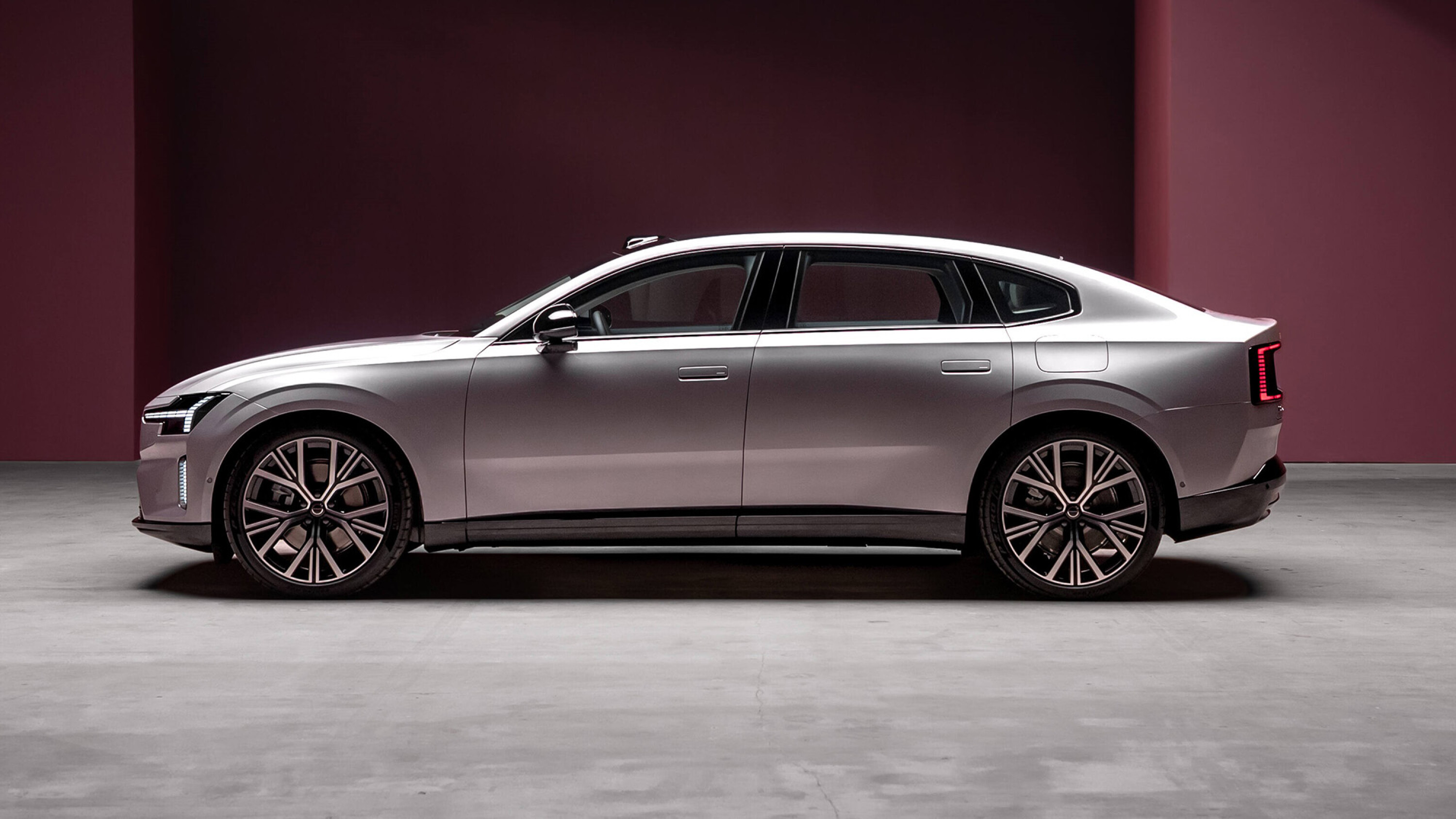
Joining the big new EX90 SUV, the ES90 will enter as the brand’s flagship ‘sedan’, and Volvo is open about its multiple design cues:
“Some might say it is a sedan. Others will see a fastback, or even hints of an SUV. We’ll let you be the judge,” the company said in unveiling the new model.
The ES90 carries over the broad styling themes of its S90 predecessor, while throwing in a little of the Polestar 2‘s panache. It’s much bigger, of course, with a 3100mm wheelbase stretching well beyond the 2’s 2735mm footprint. It outstretches the S90, too, which measured 2935–3060mm between the axles, depending on the spec.
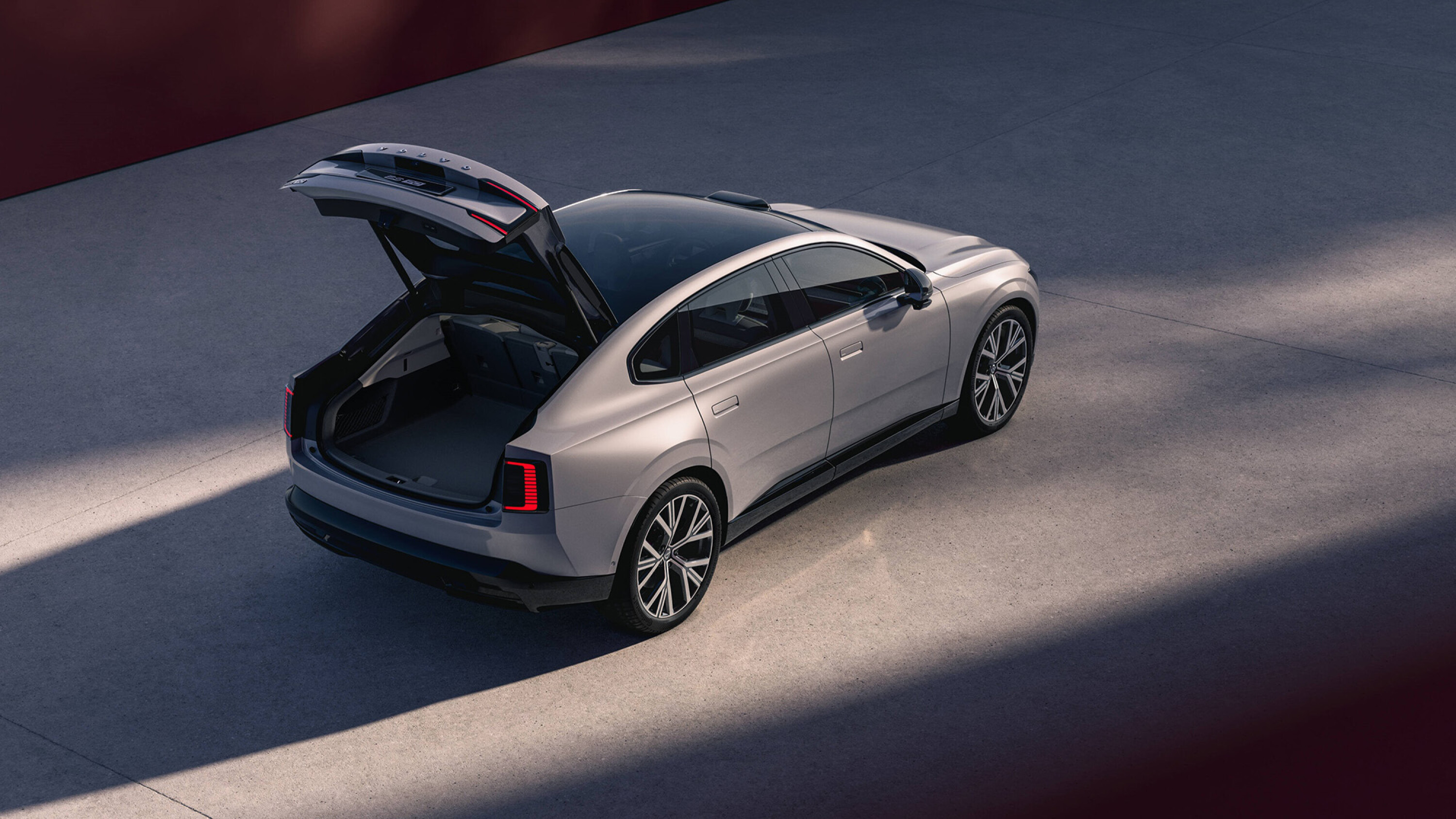
The jump in size gets you 424 litres of golfbag space in the boot before folding the rear seats, which grows that further to 733 litres. If you’re still stretched for bag storage, there’s an additional 22 litres under the bonnet.
Now, about the power
The ES90 line begins with the Single Motor Extended Range, listing up to 245kW and with a 0-100km/h time of 6.9 seconds.
Step up to the Twin Motor, and you’re looking at 330kW, cutting that sprint down to 5.5 seconds.
If you’re after the full meatball, the Twin Motor Performance variant unleashes 500kW, claiming it will barrel to 100km/h in 4 seconds.
Range?
The dual-motor all-wheel-drive models, armed with a 106kWh battery, claim up to 700km on the WLTP cycle.
Even the Single Motor Extended Range, with its 92kWh battery, isn’t slouching, offering up to 650km.
And, unlike the EX90, the ES90 is built on an 800V electrical architecture – the first Volvo to do so. Thanks to this, Volvo says the ES90 can pump 300km of range into its battery “in just 10 minutes”.
Like the EX90, the ES90 has a bump on its forehead that packs a LIDAR sensor system, joining five radar units, seven cameras and 12 ultrasonic sensors.
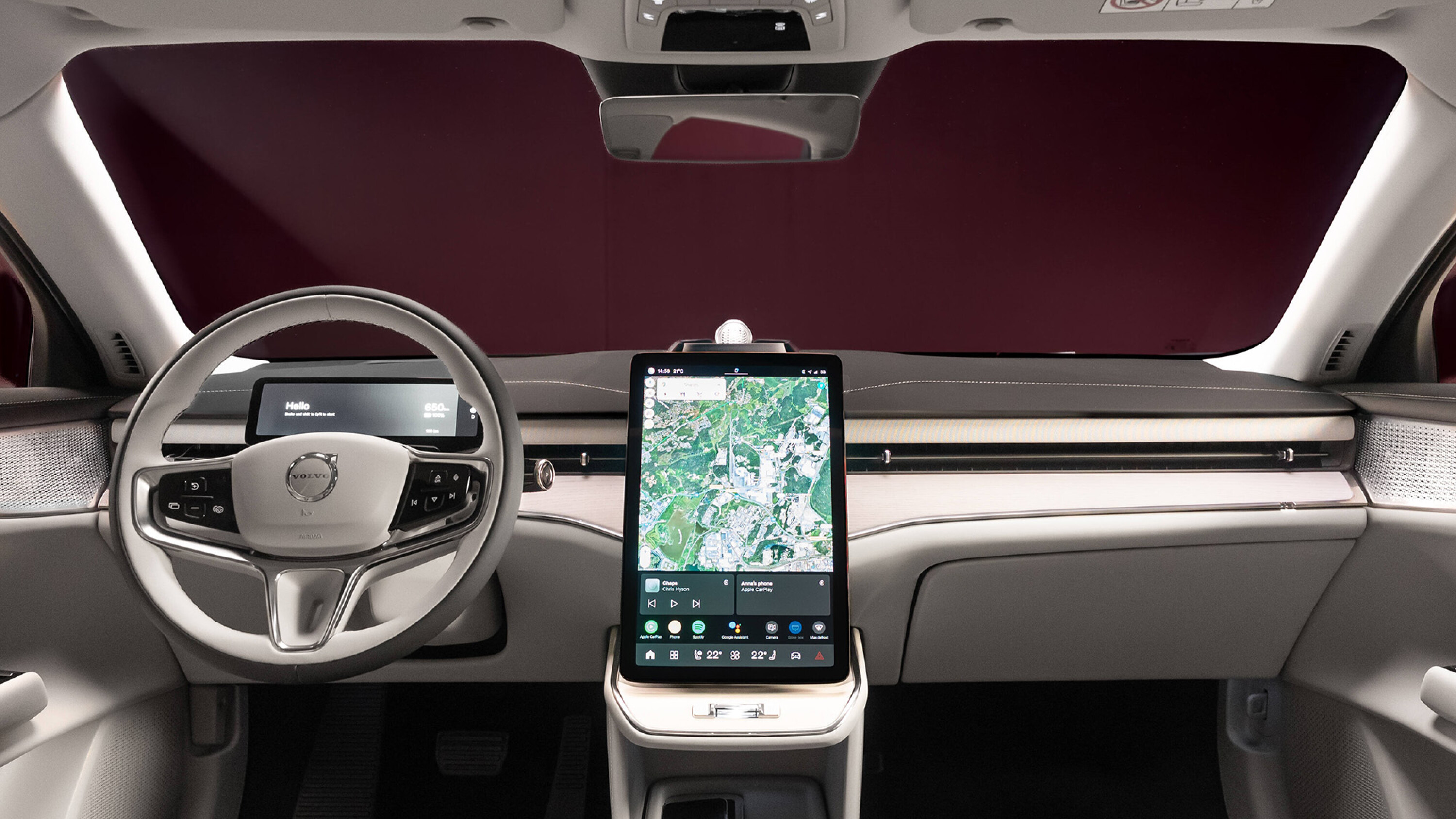
That’s safety, while creature comforts are covered with a 14.5-inch portrait main screen and a 9.0-inch driver display (sorely lacking in the little EX30), along with a 25-speaker Bowers & Wilkins audio system.
There’s also quad-zone climate control with an air purifier that’ll knock out up to 95% of particles at PM 2.5, and a huge panoramic glass roof with a 99.9% protection rating against UV rays.
What do we know about the ES90 for Australia?
Watch for more on the ES90’s local details to come as it nears its Australian launch sometime in late 2025.
We were told last year to expect more heritage themes in Volkswagen’s updated and next-gen ID electric models. Here’s our first look: the ID Every1 concept.
VW says the ID Every1 concept will evolve from here into a 2027 production model, “with a starting price of around 20,000 euros” ($34,000).
We’ve seen what happens when electric powerhouse Tesla promises a new model will begin below or around a certain price, but Volkswagen should be able to steer a little closer to its stated goal.
Don’t be surprised if the price creeps up a little, but with the bigger ID 2all concept set to reach production next year “in the 25,000-euro class” ($45,000), the Every1’s price shouldn’t venture too high.

Whether we’ll see the ID Every1 in Australia is not yet known, but Wheels has contacted Volkswagen’s local arm for word. (This story was published before business hours.)
The ID 2all is expected to reach Australia sometime beyond its European launch, but exactly when, and how much it will cost, is another unknown.
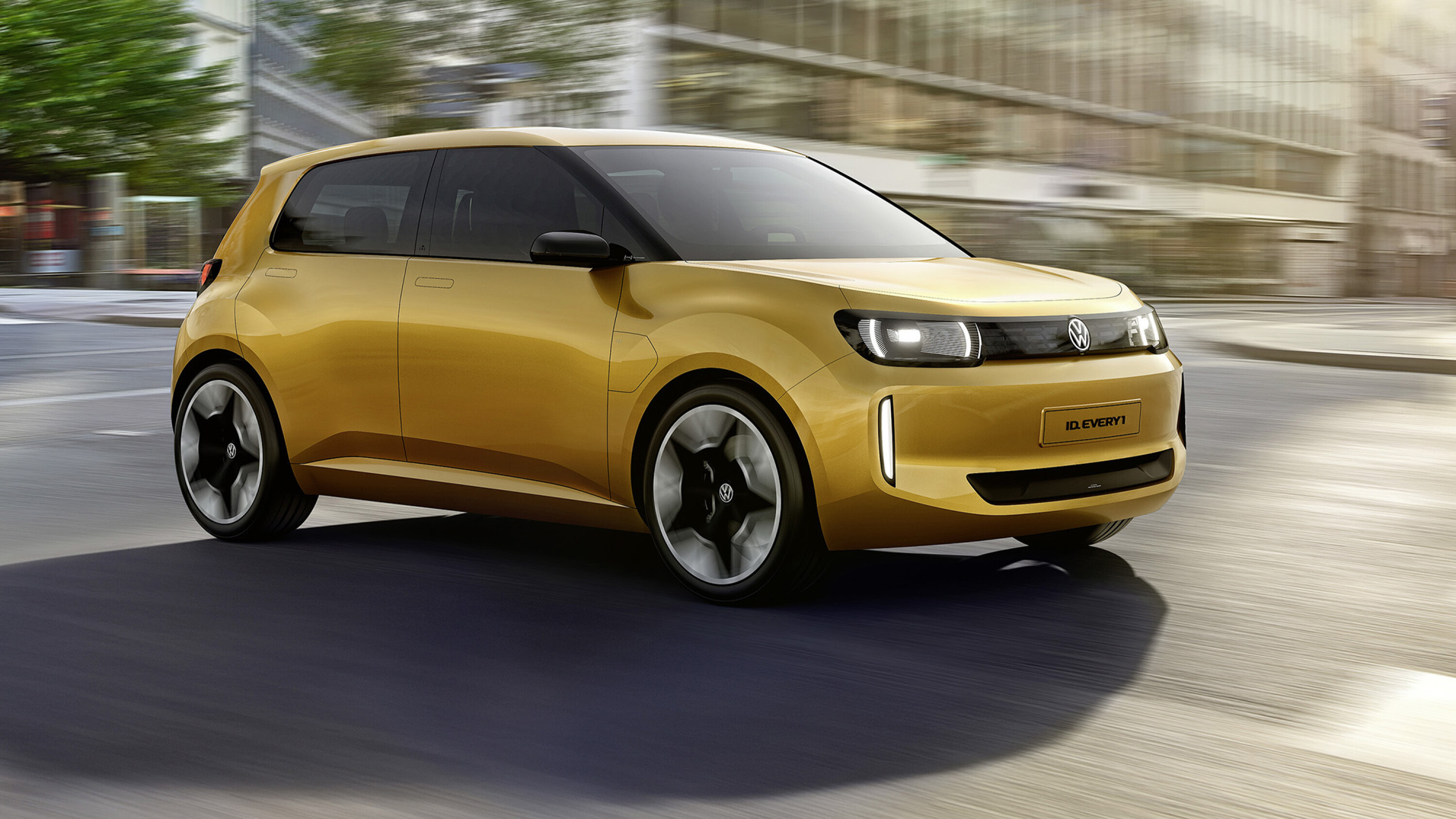
Design and dimensions
The concept’s styling calls on the boxy lines of all ’70s and ’80s hatches, demanding no great stretch of the imagination in identifying cues from the first- and second-gen Golf and Polo hatches.
If this is the vision VW design chief Andreas Mindt described in November last year for future ID models – including promises of an evolved look for the ID 2all – fans will likely be pleased with the results.
We’re expecting to see similar updates to the ID 3 hatchback and the ID 4 and ID 5 SUVs, although these will likely get less extensive changes than the clean-slate look shown with the ID Every1.
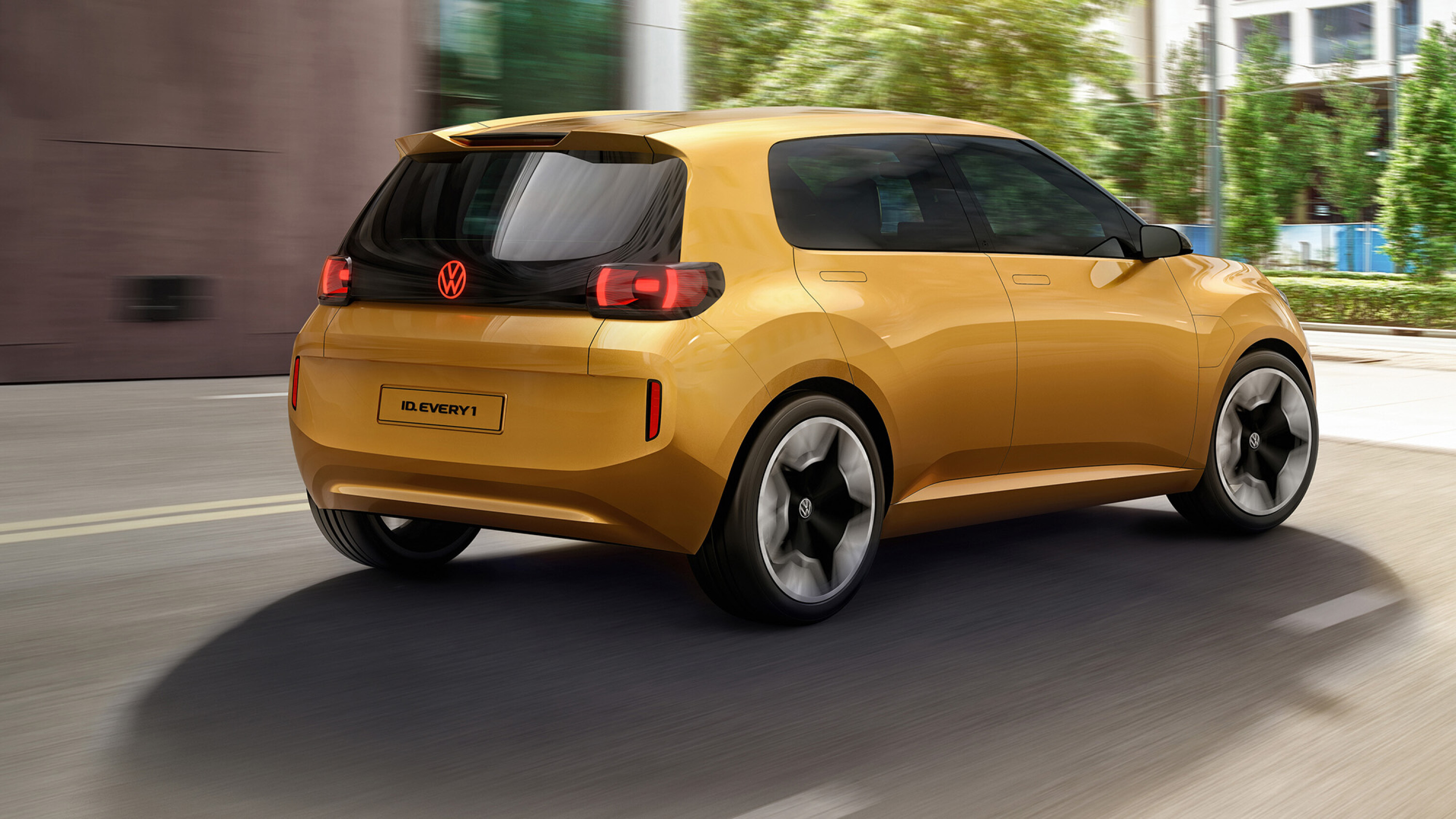
The ID Every1 will enter at the compact end of VW’s Electric Urban Car Family, riding on the same MEB platform that underpins the brand’s current, expansive EV line-up.
In concept form, the Every1 measures 3880mm long, placing it between the retired Up city car (3600mm), the ID 2all (4050mm) and the current Polo (4074mm).
As with all dedicated EVs, the Every1’s interior will likely prove more spacious than its exterior dimensions suggest, thanks to a flat floor and the freedom for its design to push all four wheels out to the furthest reaches of each corner.
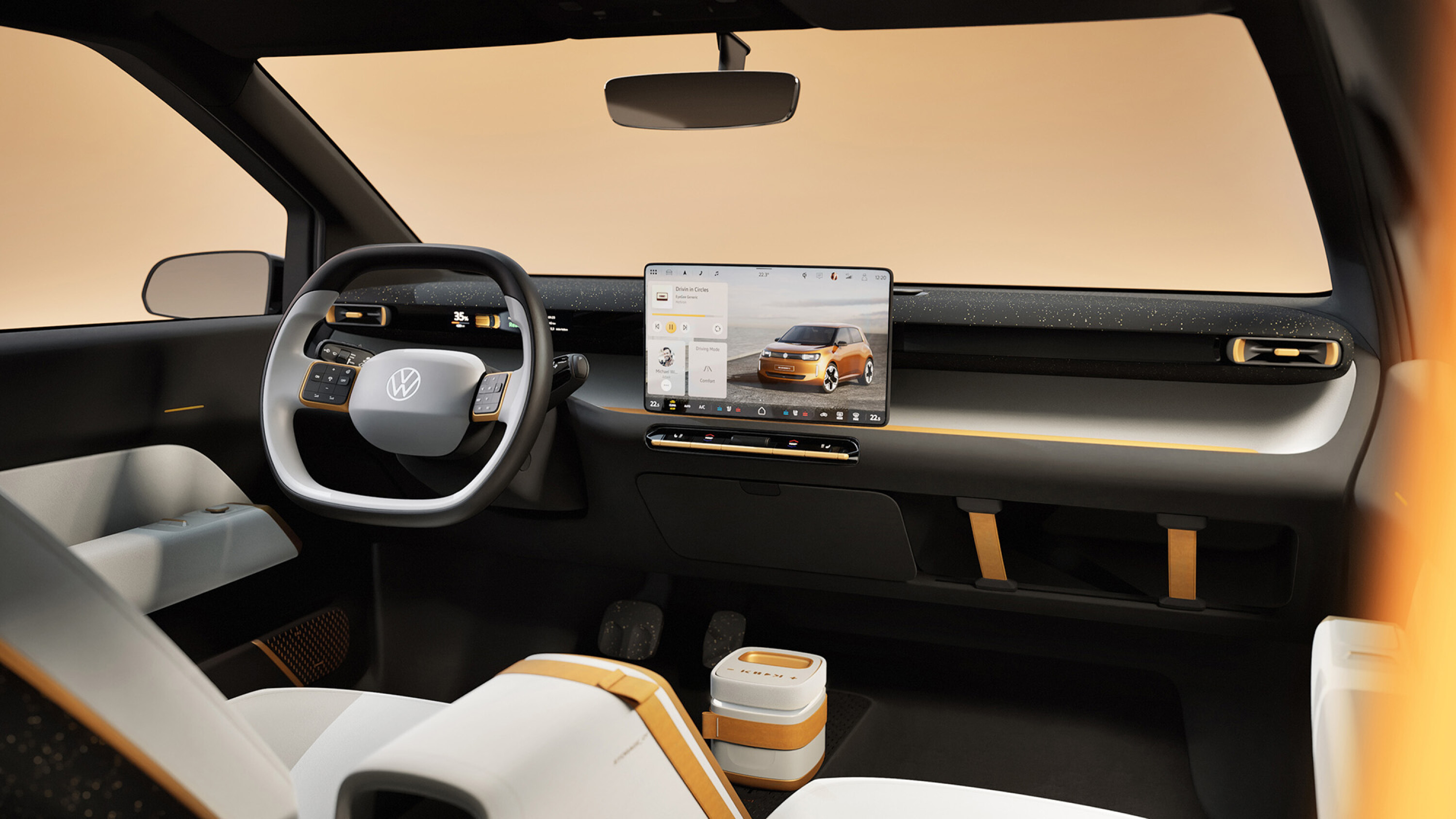
Motor and driving range
Power in the Every1 concept comes from a newly developed 70kW electric motor.
The hatch’s battery pack hasn’t been detailed, but Volkswagen claims a driving range of “at least” 250 kilometres.
Volkswagen emphasises the vehicle’s software architecture, stating it will be the first model in the Volkswagen Group to feature a fundamentally new, powerful system. This system is designed to facilitate lifelong updates and upgrades, allowing customers to adapt the vehicle to their needs after purchase.
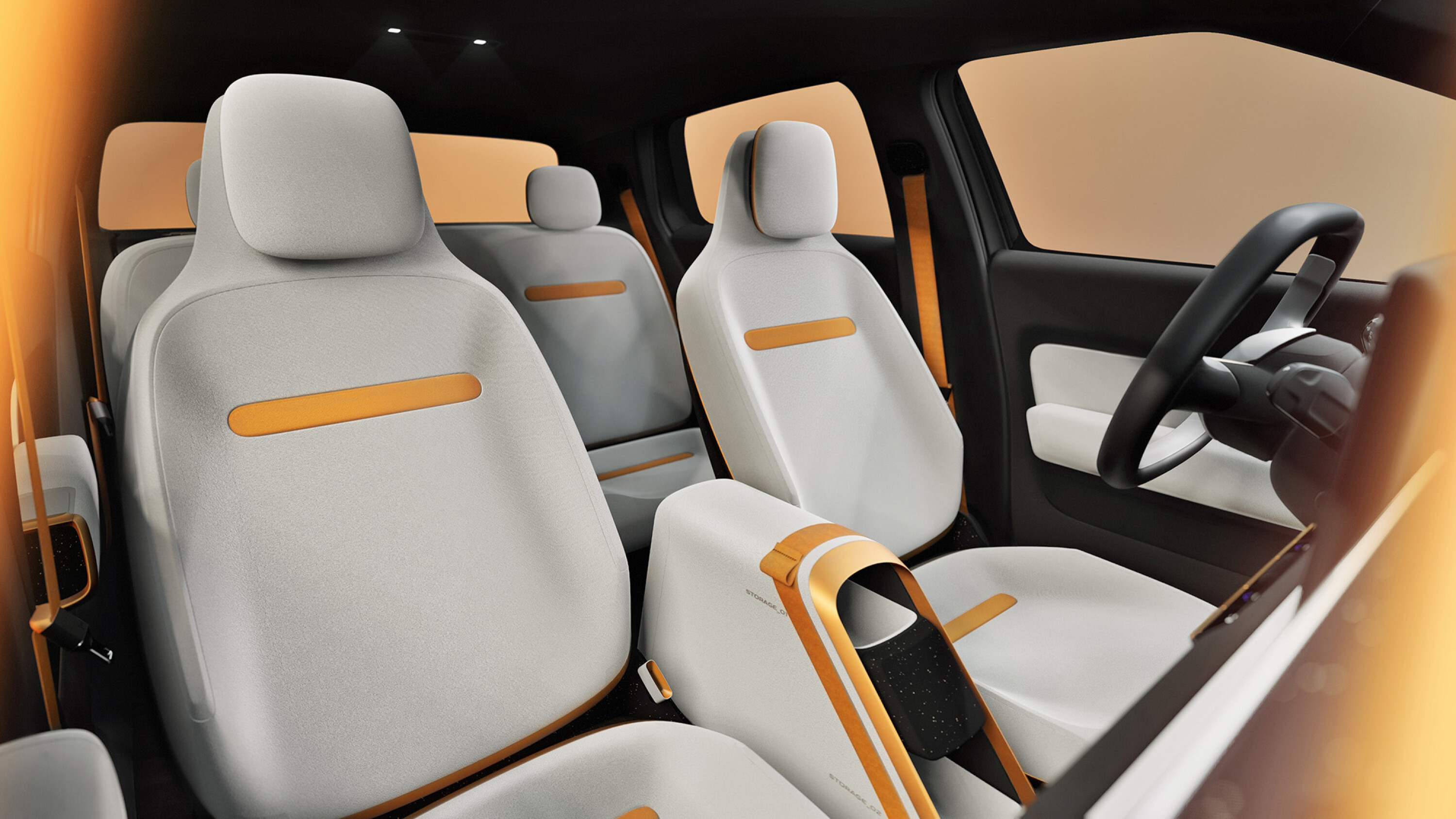
The ID Every1 is one of nine new models Volkswagen plans to release by 2027, including four electric vehicles based on the new MEB platform with front-wheel drive.
Volkswagen’s future strategy involves a three-phase plan: strengthen competitiveness and expand the model range, introduce nine new models by 2027, and aim to become a technologically leading high-volume manufacturer by 2030.
The company plans to deliver a further preview of the Electric Urban Car Family towards the end of 2025.
The Australian new-car market experienced a 7.9% decline in February, compared to the same month in the previous year.
The downturn left no brands untouched, affecting even the big-hitters in Toyota and Ford, which both saw a decrease in sales.
Data released by the Federal Chamber of Automotive Industries (FCAI), combined with Polestar and Tesla figures (both brands having left the FCAI last year in protest (Tesla, Polestar)), revealed a February total of 96,710 vehicles.
Electric vehicle (EV) sales were particularly hard hit, plummeting by 43.8% to 5684 units. The decline is largely attributed to another disappointing month for Tesla, which saw deliveries fall by a staggering 71.9%.
FCAI boss Tony Weber said: “We are now two months into the Government’s New Vehicle Efficiency Standard, and while the supply of battery electric vehicles has risen dramatically, consumer demand has fallen by 37 per cent this year compared with the first two months of 2024.”
(NOTE: Including Tesla and Polestar would adjust the decrease to 26.8%.)
“We knew the supply of EVs would increase and there are now 88 models supplied to the Australian market. However, our grave concern has always been the rate of EV adoption and what assumptions the Government had made in its modeling around consumer demand for EVs in the NVES. This modelling remains secret.
The trend was bucked by plug-in hybrid vehicles (PHEVs), however, with a remarkable surge in sales increasing by 346.1% to reach 4871 deliveries.
Top sellers
Toyota led the market with 18,832 sales, followed by Mazda with 8797 and Kia with 6707.
The Toyota RAV4 was the top-selling vehicle overall with 4405 sales, followed by the Ford Ranger (4040) and Toyota Hilux (3616).
The chart success of Mazda and Kia is significant, too, given both brands have only one model in the top 10 – showing the strength of their overall line-ups.
Overall Top 10 for February 2025
| Model | Rank | Feb ’25 | Feb ’24 | % Change |
| Toyota RAV4 | 1 | 4405 | 2843 | 54.90% |
| Ford Ranger | 2 | 4040 | 5353 | -24.50% |
| Toyota Hilux | 3 | 3616 | 4403 | -17.90% |
| Toyota Prado | 4 | 2723 | 1018 | 167.50% |
| Mitsubishi Outlander | 5 | 2385 | 2209 | 8.00% |
| BYD Shark 6 | 6 | 2026 | 0 | N/A |
| Isuzu Ute D-Max | 7 | 2022 | 2941 | -31.20% |
| Mazda CX-5 | 8 | 1932 | 1642 | 17.70% |
| Kia Sportage | 9 | 1927 | 1350 | 42.70% |
| Hyundai Kona | 10 | 1889 | 1024 | 84.50% |
EV sales for February 2025
| Tesla Model Y | 1 | 924 |
|---|---|---|
| Tesla Model 3 | 2 | 668 |
| MG MG4 | 3 | 451 |
| Kia EV5 | 4 | 400 |
| BYD Sealion 7 | 10 | 157 |
| BYD Atto 3 | 5 | 138 |
| Volvo EX30 | 7 | 108 |
| BMW i4 | 8 | 95 |
| Audi Q4 e-tron | 6 | 94 |
| Hyundai Ioniq 5 | 9 | 65 |
Vehicle type
SUVs and light commercial vehicles remained popular, accounting for 60.4% and 22.5% of sales respectively.
Passenger vehicle sales declined again, representing 13.5% of the market.
Battery electric vehicles (BEVs) made up 7.65% of total sales, marking a decrease compared to the 9.6% share in February 2024. The FCAI expressed concern for the rate of BEV adoption, despite an increase in the number of available models to around 91.
Fuel type
Compared to February 2024, petrol and diesel vehicles saw a decline, with petrol dropping by 12.04% and diesel by 16.74%.
Hybrids are up 35.65%, while battery EVs, including Tesla and Polestar, decreased by 26.8%. PHEVs saw the most dramatic rise, surging by 305.92%.
- Petrol: 40,496 vehicles (41.87%)
- Diesel: 26,863 vehicles (27.78%)
- Hybrid: 15,348 vehicles (15.88%)
- Electric: 7,401 vehicles (7.65%)
- Plug-in Hybrid: 4,871 vehicles (5.04%)
State/Territory
The Australian Capital Territory saw the largest decrease at 16.2%, followed by Tasmania at 18.6% and Victoria at 13.0%.
- New South Wales: 29,801 vehicles
- Victoria: 27,944 vehicles
- Queensland: 20,202 vehicles
- Western Australia: 9,898 vehicles
- South Australia: 6,215 vehicles
- Tasmania: 1,528 vehicles
- Australian Capital Territory: 1,460 vehicles
- Northern Territory: 863 vehicles
This past month has been a busy one, not allowing much time to get away for long drives in the EX30. Not that it’s a bad thing, the tiny Volvo is excelling as a daily driver, getting around Melbourne’s inner city areas.
Its diminutive size is great for finding gaps in traffic and its instant torque is a hoot for zipping around in almost complete silence.
There are parts of our neighbourhood which do bring to light one of its shortcomings though.
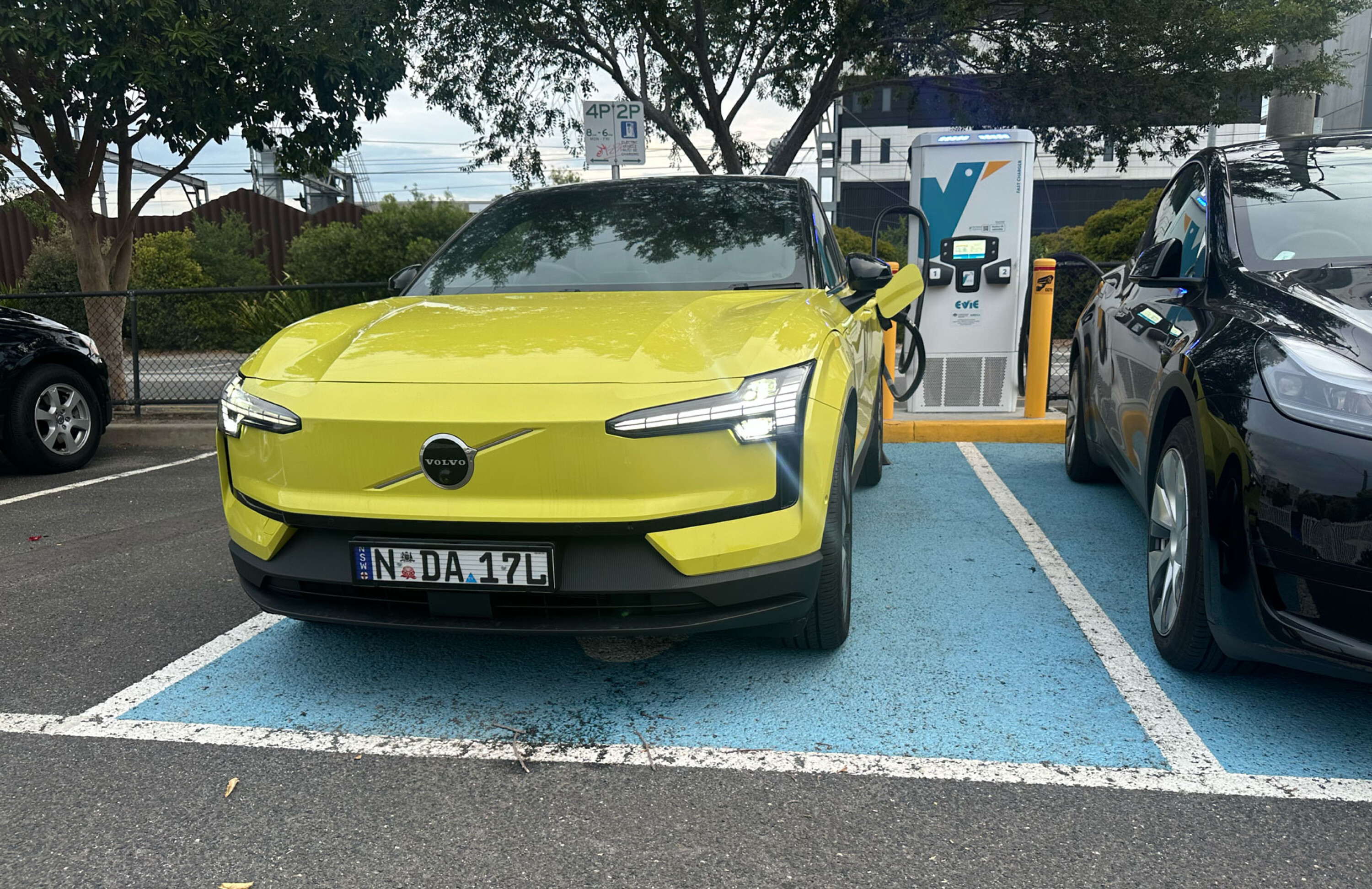
One of the streets in our area that I use almost everyday runs parallel to the main drag, heading towards our central business area. Locals and people in the know use it as a rat-run as it avoids the traffic, buses and seven sets of lights. At the end of the straight there’s an S bend that was quiet fun to run through. Unfortunately there were far too many talentless drivers hitting them too fast who ended up losing control of their cars and straddling the concrete barriers – as if trying to grind them with a skateboard.
The council caught onto this and a few years back dropped enough speed humps onto it that it now resembles a BMX track. Driving the street now with the EX30’s firm ride demands that these be treated with respect as going over them a touch too briskly can be jarring – it will also draw the stink-eye from my partner.
That’s been one common take with any passengers who’ve had a ride in the bumblebee-coloured Volvo. All other comments have been flattering of its styling and build quality.
Regardless of the ride, it doesn’t deter using the road (much to the disgust of a neighbour involved in the project to reduce traffic) but annoyingly the cadence of slowing down and accelerating repeatedly always blows out fuel figures. Even with that, it’s still quicker than the main strip – yes, I have timed it.
So far I’m finding I only need to top up the battery once a fortnight and there’s a DC charging station that’s less than two kilometres away. The app for the service lets you know how many of the four stations are available and functioning, so it helps avoids wasting time showing up to a full house.
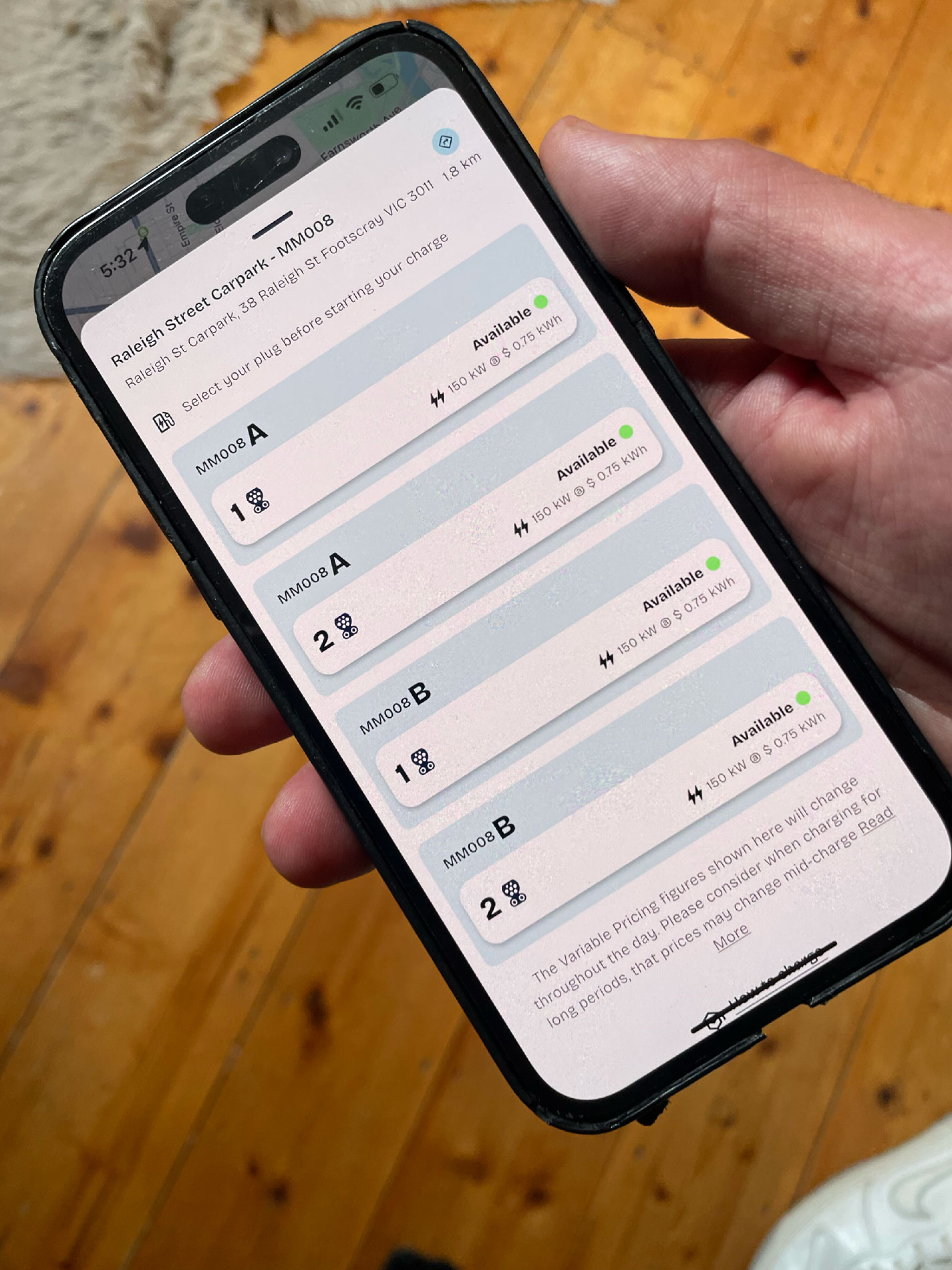
Charging has generally taken under 40 minutes going from under 20 percent back up to 90, costing $30-$45 depending if it’s off-peak.
I’ve tried charging from a wall socket at home but that’s painfully slow, taking around 22 hours to charge up 80 percent of the battery. We own a plug-in hybrid which we charge at home every second day or thereabouts, so I’m finding the charging station far more convenient. The single car driveway unfortunately is not ideal for owning two cars that need to be plugged.
I’m yet to experience range anxiety as some of the road testers have had to suffer on extended jaunts, but if I was still working at an office and travelling 60 kilometres on a daily basis like I used to, careful planning for charging would certainly be part of the owner experience. Forking out for a home charger would certainly be a strong consideration if that was still the case.
For all the naysayers that oppose EVs so far I’ve enjoyed the experience of living with one. If only it made a bit more noise.
More and more people are driving around in the dark. Literally in the dark.
You can see them every night, breezing comfortably through the traffic like blacked-out stealth bombers closing in on a target drop zone.
The drivers are obviously to blame but for once, not totally, thanks to one of the latest examples of the Law of Unintended Consequences. It’s something that’s been known about for close to 100 years but is now showing up more often in the high-tech world of cars.
Basically, it’s when one seemingly smart choice trips the wire on something totally unexpected. When Australian car buyers switched from traditional Holden Commodores and Ford Falcons to SUVs, it helped trigger the death of local car making because the industry could not pivot fast enough.
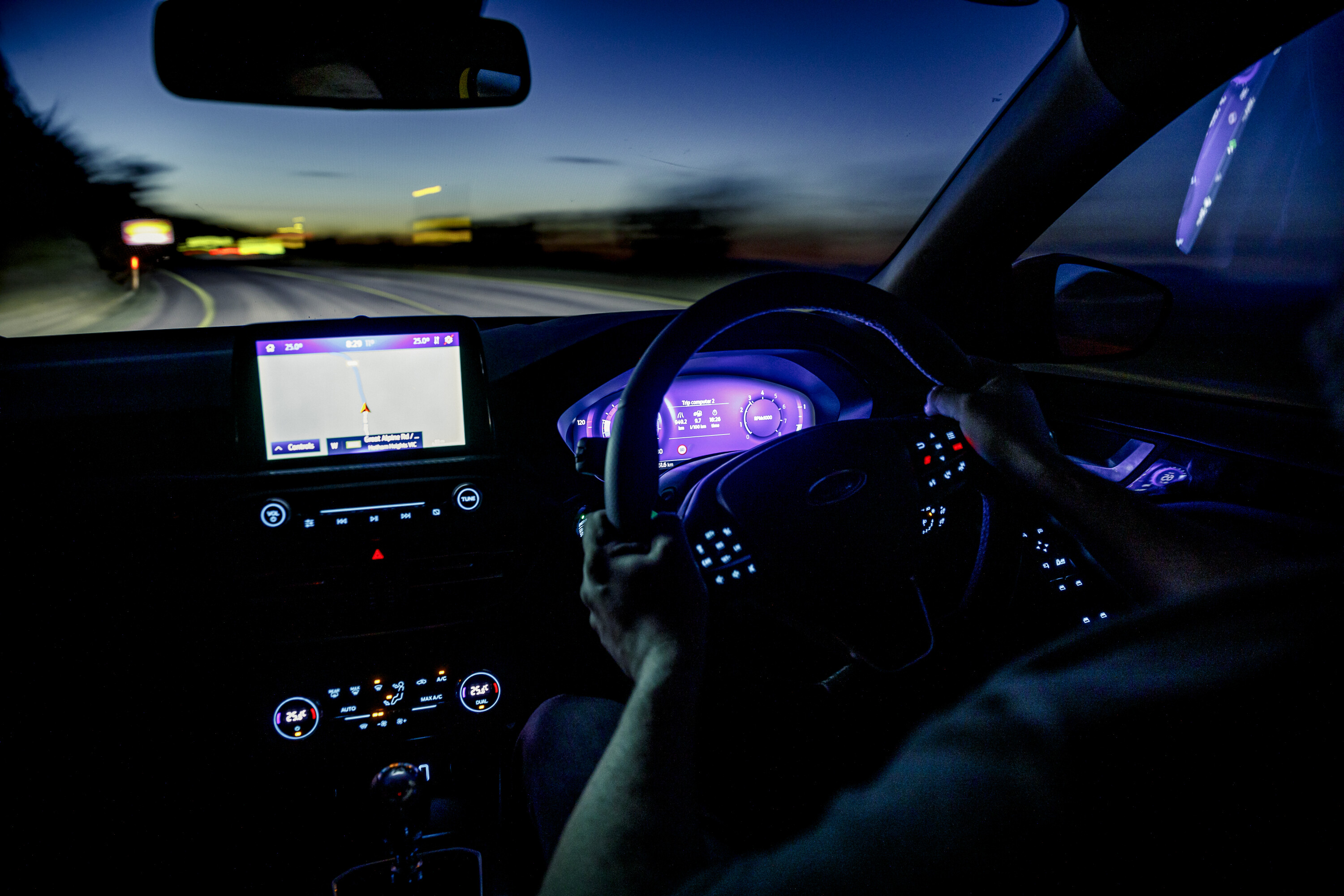
Now we’re seeing that blacked-out night driving is the result of: digital dashboards.
The first car with a TFT (thin-film-transistor) screen in place of analogue dials, as best I remember, was the Lexus LS400 in 1989. It was a giant breakthrough, promising all sorts of new accuracy, flexibility and gee-whizzery to tantalise showroom shoppers.
These days, ‘bells and whistles’ has become showroom shorthand for a couple of giant screens to handle the infotainment, the apps and phone, the speedometer, fuel gauge and everything else you might want or need to know.
But, beyond the obvious distraction, giant display screens have created an unintended blackout on our roads, with help from daytime running lights.
This combination tricks people into thinking they are running fully lit, safe and obvious to anyone else on the road – when they are not.
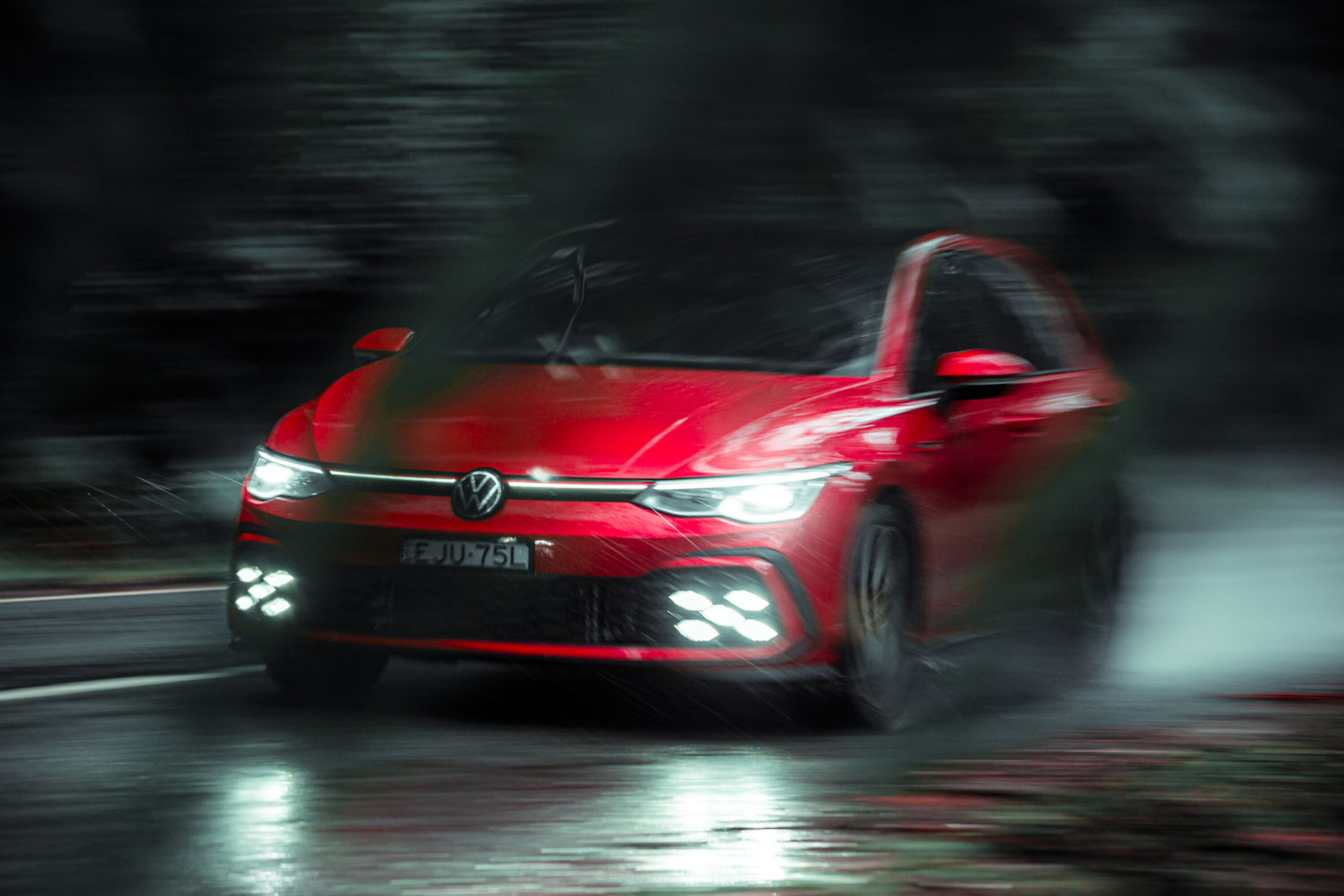
Think about it. You hit the ignition and the dashboard screens light up, and so do the DRLs in the nose. The glow in the front end can be mistaken for low beams and the bright niceness of the screens means you can easily assume the headlights and tail lamps are also fully lit.
But they can still be as dark as Vader, with nothing showing on the rear end and only the soft glow of DRLs on the nose.
Most cars now have an ‘auto’ setting for the lights that should be the set-and-forget position for everyone. But there are still people who believe that going auto could cost them more for fuel, or age the globes prematurely, or just think they know better.
So please give them a polite warning toot at the traffic lights, or flick your high beams from behind, to let them know they are dangerously dark. It’s worked for me with only a couple of middle-finger moments.
The unintended consequences keep on coming, as the results of a new European study into the impact of Advanced Driver Assistance Systems (ADAS) – lane-keep assistance, advanced automatic braking, active cruise control and all the rest – show a worrying side effect.
Elsevier, a Dutch company claiming to be “the world’s leading scientific publisher and data analytics company” has many good things to say about ADAS but reports worrying results from one of the most-used systems.
It singles out active cruise control for a whack, based on results from 47 million vehicles and 2.4 million crashes, sourced from governments and insurance companies. It says active cruise is responsible for an eight per cent increase in real-world incidents.
“The observed detrimental effects of such systems may result from insufficient supervision of the system by users, in turn due to inappropriate expectations of system capabilities,” said Elsevier.
So now we have safety systems creating danger and contributing to turning us from drivers into passengers.
Talk about unintended consequences…
