Classic Wheels

Gallery 1
First published in the October 1968 issue of Wheels magazine, Australia’s best car mag since 1953. Subscribe here and gain access to 12 issues for $109 plus online access to every Wheels issue since 1953.
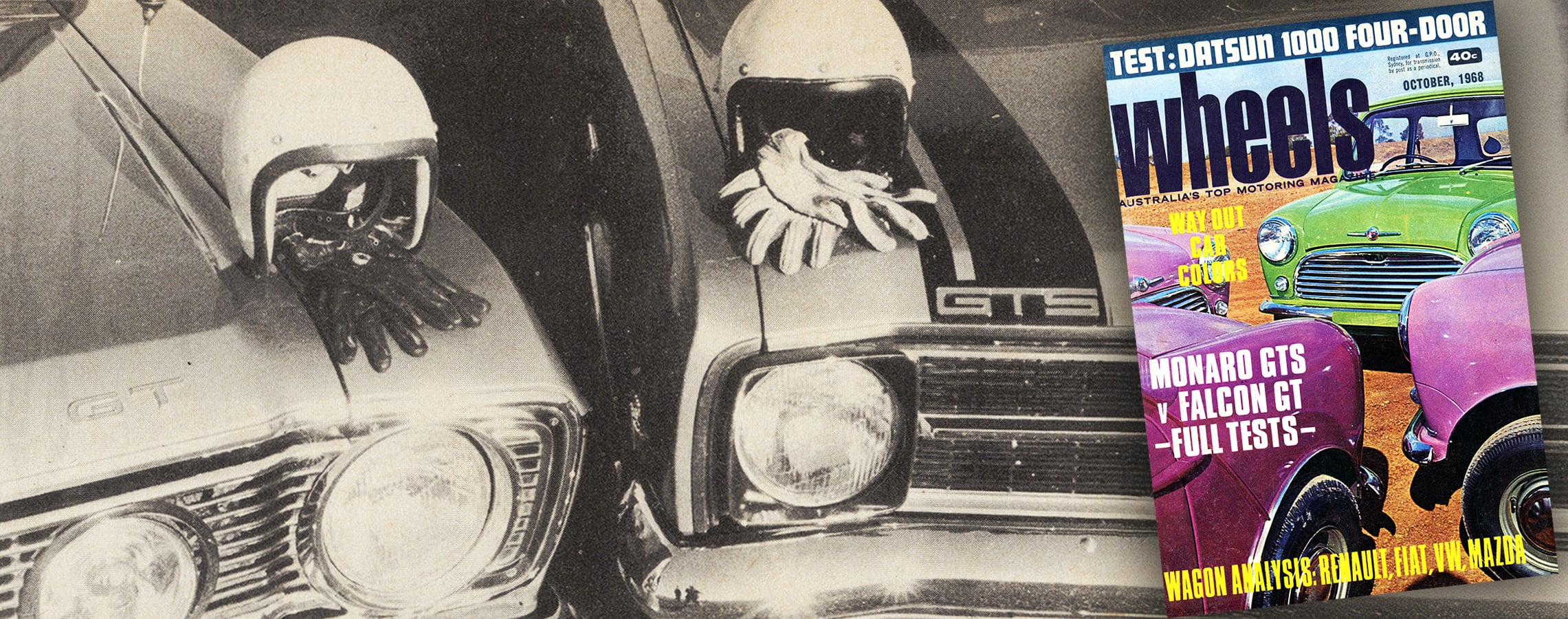
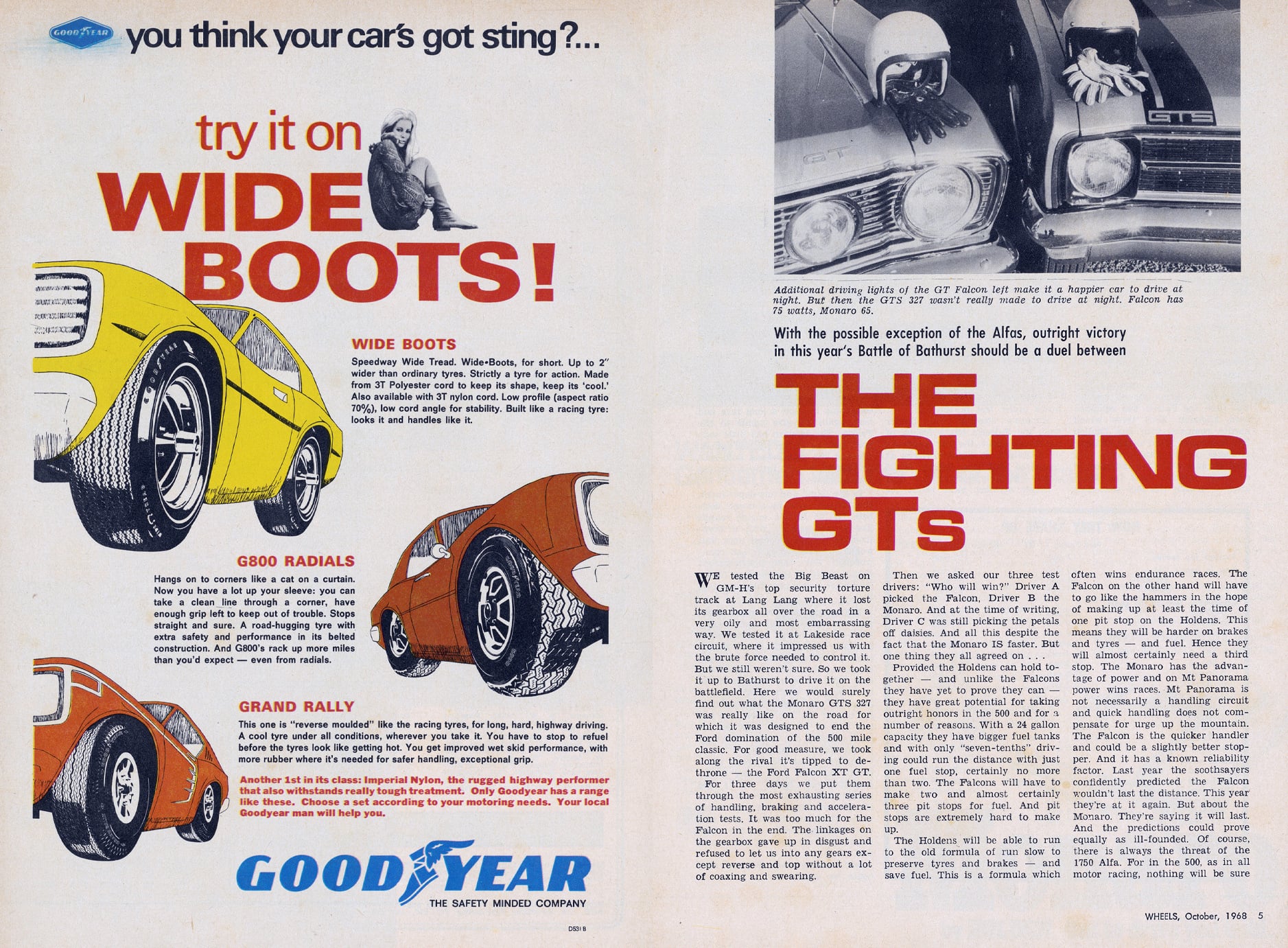
With the possible exception of the Alfas, outright victory in this year’s Battle of Bathurst should be a duel between the fighting GTs.
We tested the Big Beast on GM-H’s top security torture track at Lang Lang where it lost its gearbox all over the road in a very oily and most embarrassing way. We tested it at Lakeside race circuit, where it impressed us with the brute force needed to control it. But we still weren’t sure. So we took it up to Bathurst to drive it on the battlefield.
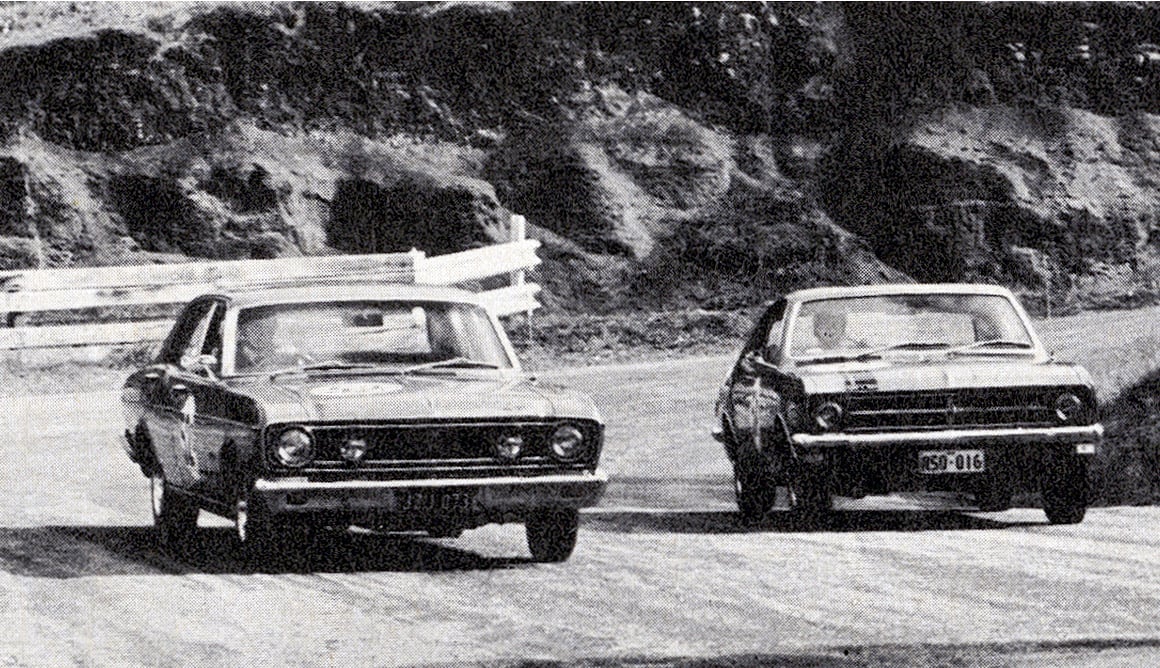
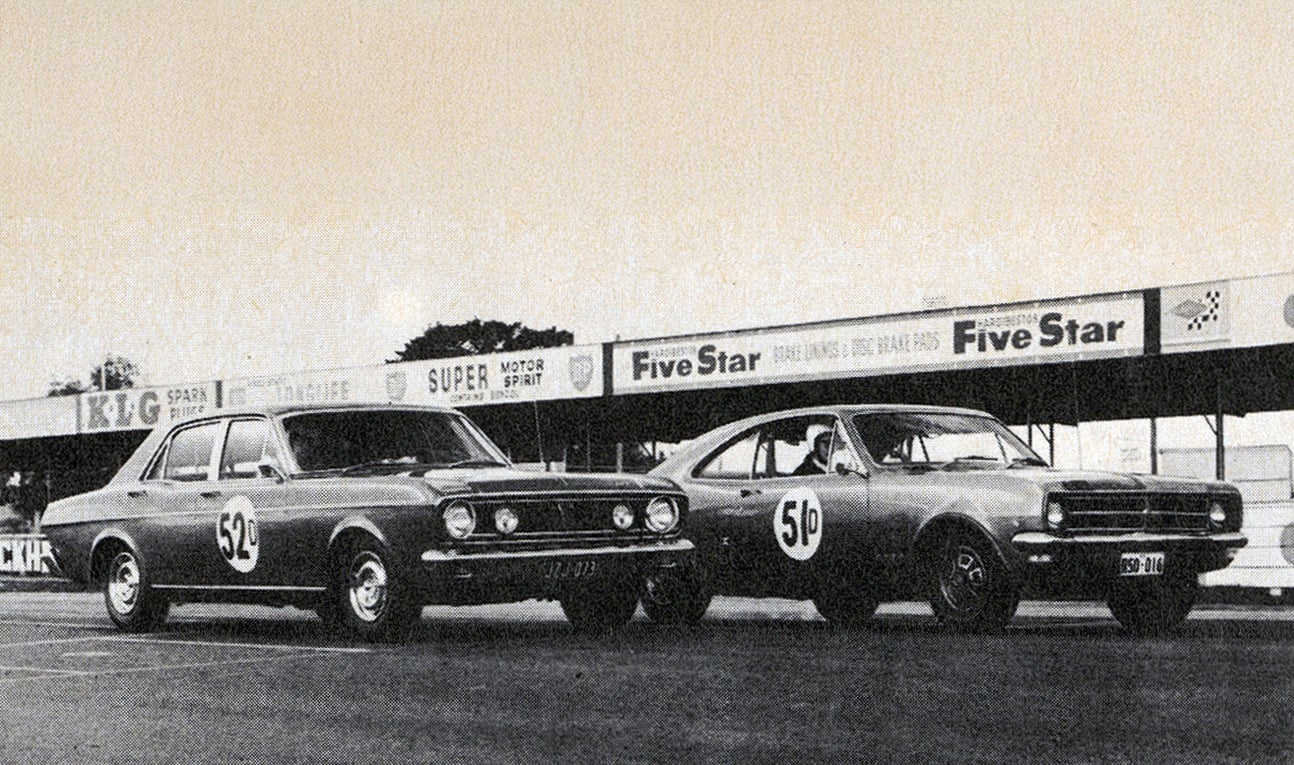
Here we would surely find out what the Monaro GTS 327 was really like on the road for which it was designed to end the Ford domination of the 500 mile classic. For good measure, we took along the rival it’s tipped to dethrone – the Ford Falcon XT GT.
1
For three days we put them through the most exhausting series of handling, braking and acceleration tests. It was too much for the Falcon in the end. The linkages on the gearbox gave up in disgust and refused to let us into any gears except reverse and top without a lot of coaxing and swearing.
Then we asked our three test drivers: “Who will win?” Driver A picked the Falcon, Driver B the Monaro. And at the time of writing. Driver C was still picking the petals off daisies. And all this despite the fact that the Monaro IS faster. But one thing they all agreed on…
Provided the Holdens can hold together and unlike the Falcons they have yet to prove they can, they have great potential for taking outright honours in the 500 and for a number of reasons. With a 24 gallon capacity they have bigger fuel tanks and with only “seven-tenths” driving could run the distance with just one fuel stop, certainly no more than two. The Falcons will have to make two and almost certainly three pit stops for fuel. And pit stops are extremely hard to make up.
The Holdens will be able to run to the old formula of run slow to preserve tyres and brakes and save fuel. This is a formula which often wins endurance races.
1
The Falcon on the other hand will have to go like the hammers in the hope of making up at least the time of one pit stop on the Holdens. This means they will be harder on brakes and tyres and fuel. Hence they will almost certainly need a third stop.
The Monaro has the advantage of power and on Mt Panorama power wins races. Mt Panorama is not necessarily a handling circuit and quick handling does not compensate for urge up the mountain. The Falcon is the quicker handler and could be a slightly better stopper. And it has a known reliability factor.
Last year the soothsayers confidently predicted the Falcon wouldn’t last the distance. This year they’re at it again. But about the Monaro. They’re saying it will last. And the predictions could prove equally as ill-founded. Of course, there is always the threat of the 1750 Alfa. For in the 500 as in all motor racing, nothing will be sure until the flag drops at around 4.30pm on. October 6.
For consumer use, the Falcon wins in comfort and ease of control. The Holden’s harsh ride, clunky gearshift and heavy steering make it a none-too-desirable everyday car. But then perhaps this comparison is a little unfair to the Monaro as a range. The GTS 327 is a beast. But then it is built for one thing – to win the Bathurst 500. Its smaller brother – the GTS with the 186S motor – is a darling car – tractable, comfortable, easy to fling around and still with enough oomph to delight the boy-racers-at-heart.
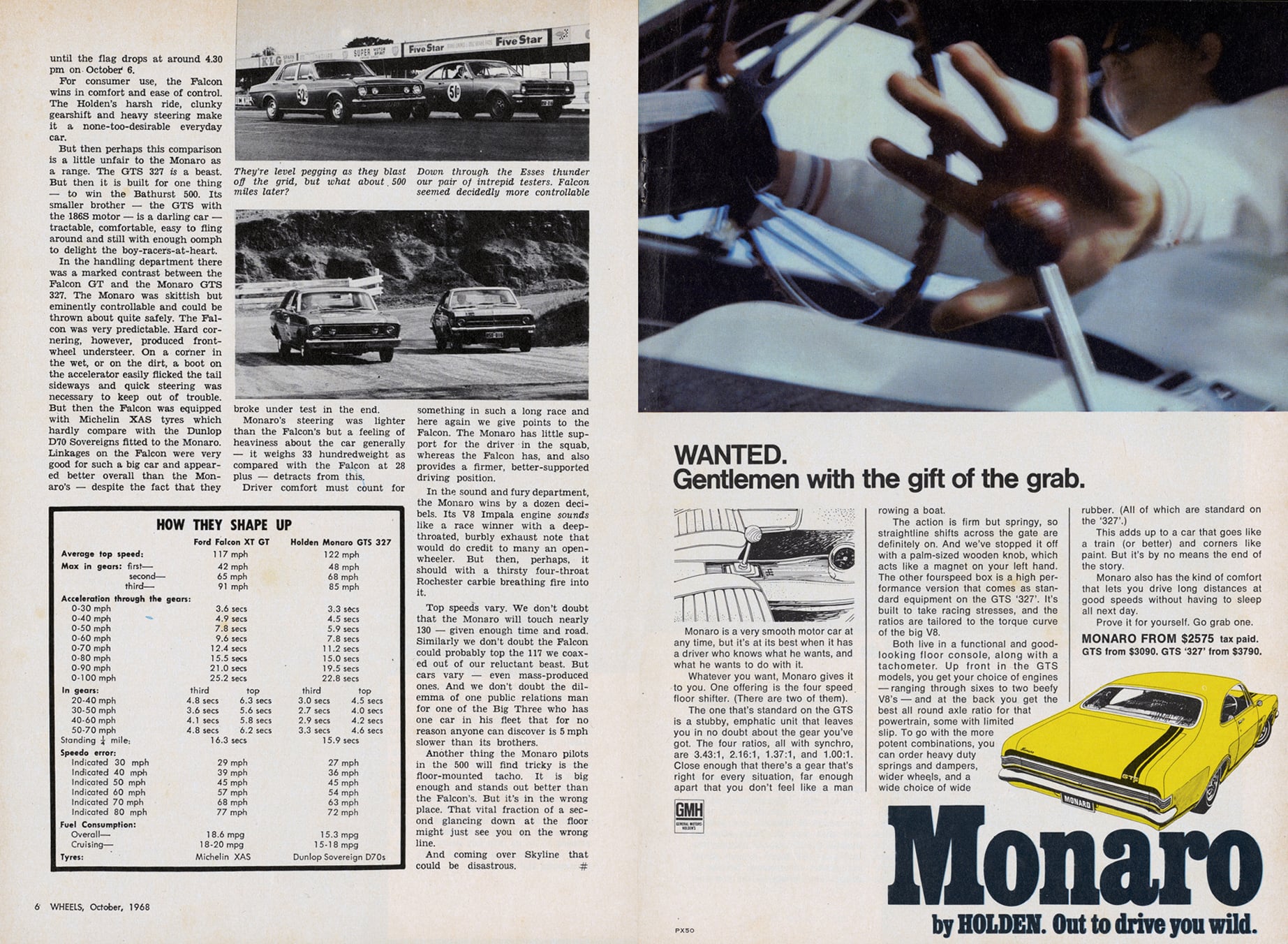
In the handling department there was a marked contrast between the Falcon GT and the Monaro GTS 327. The Monaro was skittish but eminently controllable and could be thrown about quite safely. The Falcon was very predictable. Hard cornering, however, produced front-wheel understeer. On a corner in the wet, or on the dirt, a boot on the accelerator easily flicked the tail sideways and quick steering was necessary to keep out of trouble. But then the Falcon was equipped with Michelin XAS tyres which hardly compare with the Dunlop D70 Sovereigns fitted to the Monaro.
1
Linkages on the Falcon were very good for such a big car and appeared better overall than the Monaro’s – despite the fact that they broke under test in the end. Monaro’s steering was lighter than the Falcon’s but a feeling of heaviness about the car generally – it weighs 33 hundredweight compared with the Falcon at 28 plus – detracts from this.
Driver comfort must count for something in such a long race and here again we give points to the Falcon. The Monaro has little support for the driver in the squab, whereas the Falcon has, and also provides a firmer, better-supported driving position.
In the sound and fury department, the Monaro wins by a dozen decibels. Its V8 Impala engine sounds like a race winner with a deep-throated, burbly exhaust note that would do credit to many an open-wheeler. But then, perhaps it should with a thirsty four-throat Rochester carbie breathing fire into it.
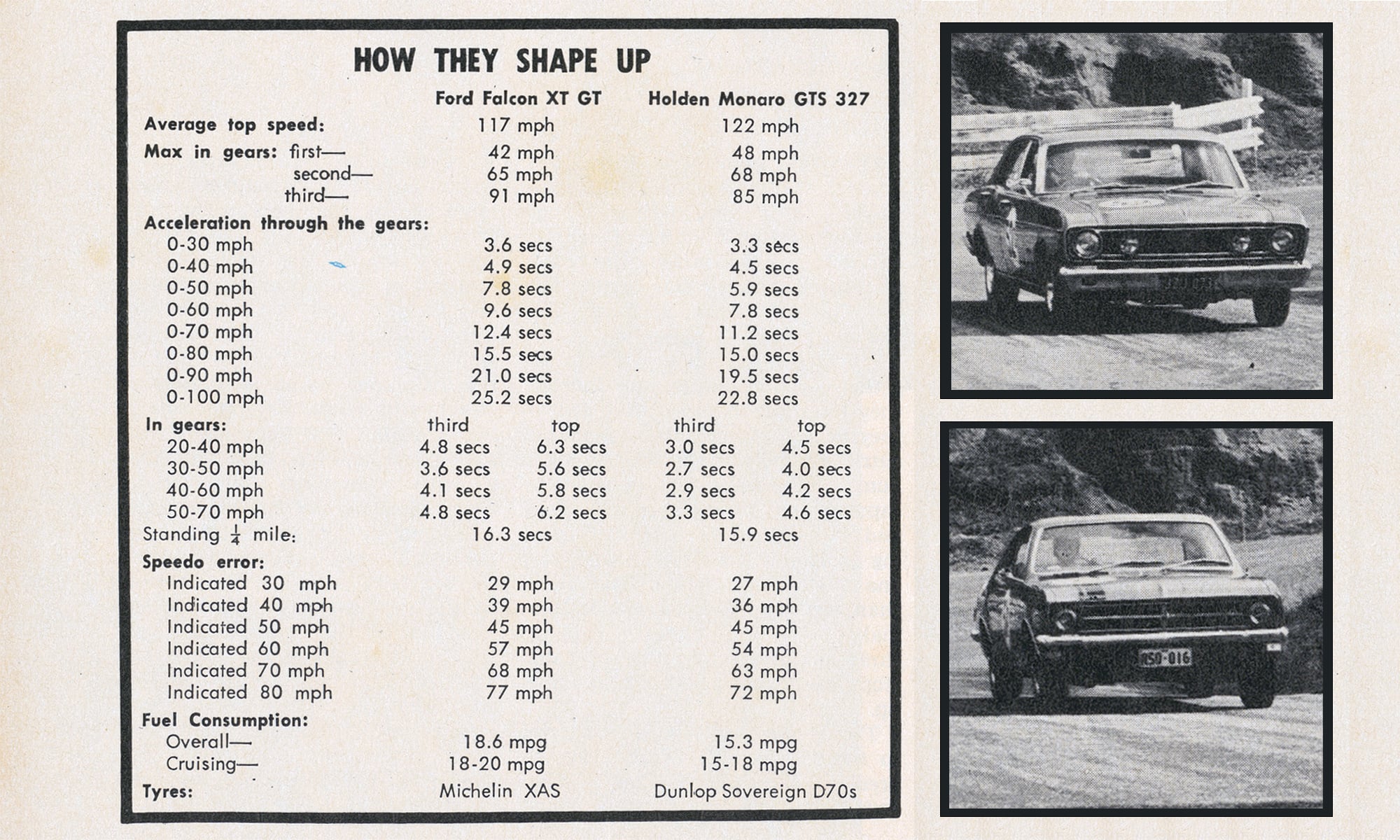
Top speeds vary. We don’t doubt that the Monaro will touch nearly 130 – given enough time and road. Similarly we don’t doubt the Falcon could probably top the 117 we coaxed out of our reluctant beast. But cars vary – even mass-produced ones. And we don’t doubt the dilemma of one public relations man for one of the Big Three who has one car in his fleet that for no reason anyone can discover is 5mph slower than its brothers.
1
Another thing the Monaro pilots in the 500 will find tricky is the floor-mounted tacho. It is big enough and stands out better than the Falcon’s. But it’s in the wrong place. That vital fraction of a second glancing down at the floor might just see you on the wrong line.
And coming over Skyline that could be disastrous.
Postscript: A historic win for Holden in 1968
Holden etched itself into the Bathurst record books with its first-ever win in the Mt Panorama enduro classic.
The General dominated the podium, with Bruce McPhee and Barry Mulholland winning in their privately-entered Monaro GTS. In second place, the first of the ‘factory’ Monaros, driven by Jim Palmer and Phil West ahead of the third-placed Tony Roberts/Bob Watson Monaro.
1
The best of the Fords? That would be Bruce McIntyre and Ken Stacey in their older model Falcon XR GT in seventh place while the best-placed factory-entered Falcon XT GT of Barry Arentz and Mike Champion could only muster 11th place, some seven laps adrift of the winning Holden and one spot ahead of the star Ford pairing of Leo and Ian Geoghegan in another XT GT.
The victory for Holden set a blueprint for the following decades, establishing a fierce rivalry between Australia’s two largest manufacturers. In the red corner, Holden which notched up 36 Great Race wins from its first in 1968 to its last as in 2020.
In the blue, Ford has 22 winning trophies on its book shelf, the most recent in 2025 when Kiwi Matt Payne and one-time Holden wunderkind, Garth Tander, crossed the line first in their Mustang. It was a first win for Payne, and a sixth for Tander, drawing him level with Larry Perkins and Mark Skaife on the all-time winners list, and behind only Jim Richards and Craig Lowndes (seven wins apiece) and the King of the Mountain, Peter Brock (9 victories).
Follow WhichCar/Wheels on Google
Click the button below to make WhichCar by Wheels a preferred source for your news.

We recommend
-
 Features
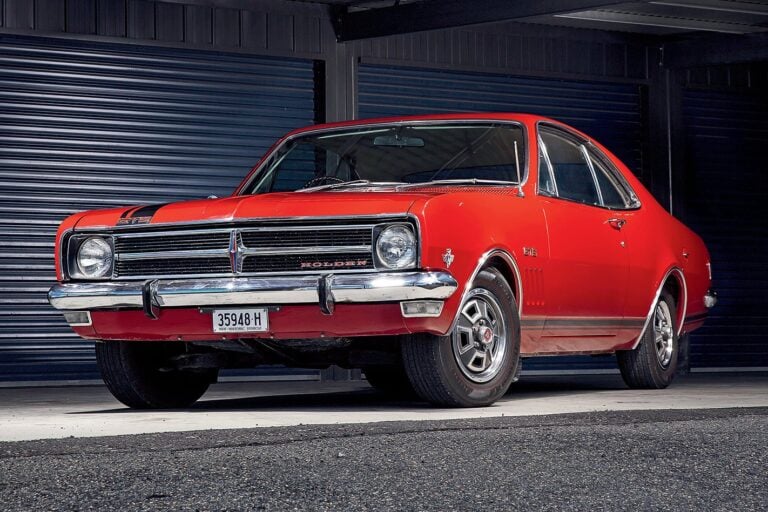
Holden's Pre-Commodore Heroes: HK Monaro GTS 327
Mighty two-door coupe a winner on and off track
-
 Ford Falcon
1970 XY Ford Falcon GT road test
Bill Bourke's GT Special goes into production to top the new range ...
-
 Features
1968-1972: Boom of the big bangers
Seatbelts arrive, Ford outsells Holden, a switch to the left proves too expensive, and Australia’s seven local car makers face an uncertain future