
Reviews

Gallery 1
7.0
/10
Score
Score breakdown
8.0
Safety, value and features
7.0
Comfort and space
6.0
Engine and gearbox
7.0
Ride and handling
8.0
Technology
Things we like
- Despite price rises, still a cheap car
- Easy to use cabin tech
- Darty and fun to drive
Not so much
- Dated and inefficient drivetrain
- Stiff ride quality
- Overseas models get more features
In a market where sub-$25,000 new cars are rare, the Kia Picanto stands out as one of the last genuinely cheap cars you can still buy in Australia. It’s small, simple and city-friendly, which is at odds with how many new cars are larger, more advanced and more expensive than ever before.
The Picanto offers a refreshingly accessible entry point for anybody wanting low-cost motoring but still includes many modern features that we expect from a new car. In saying that, it’s also more expensive than it’s ever been before, so does the Picanto still deliver the value that made light hatchbacks so popular in the first place?
How much does the Picanto cost to buy?
If you’ve got a budget of around $25,000 to spend on a new car, your choices are unfortunately slim, but all Picanto models fit under that price point. The entry-level Sport starts at $19,190 plus on-road costs for the manual and the now-automatic-only GT-Line sitting above the Sport priced from $22,590 +ORC.
4
2026 Kia Picanto pricing (excluding on-road costs):
| Sport manual | $19,190 |
|---|---|
| Sport automatic | $20,790 |
| GT-Line automatic | $22,590 |
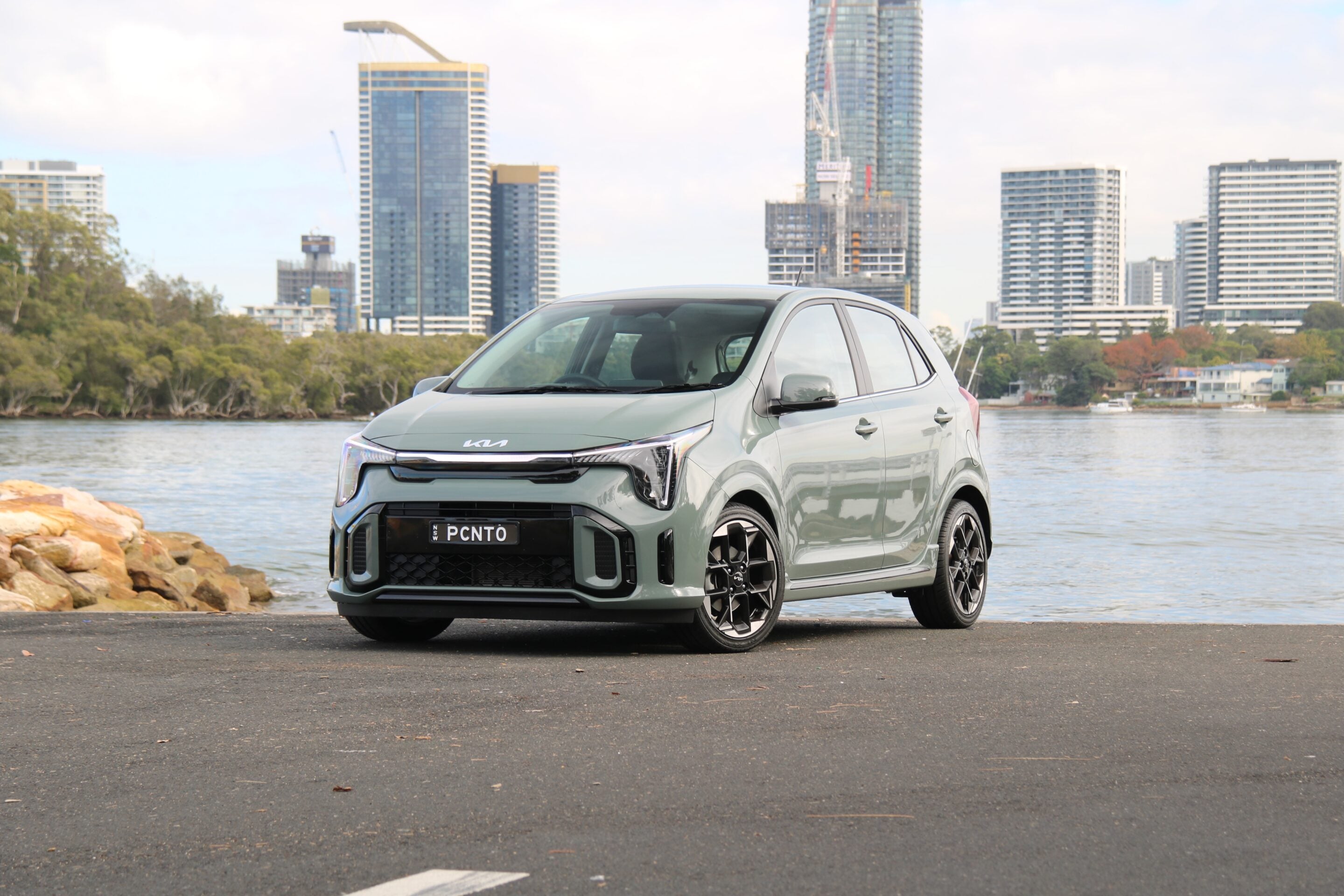
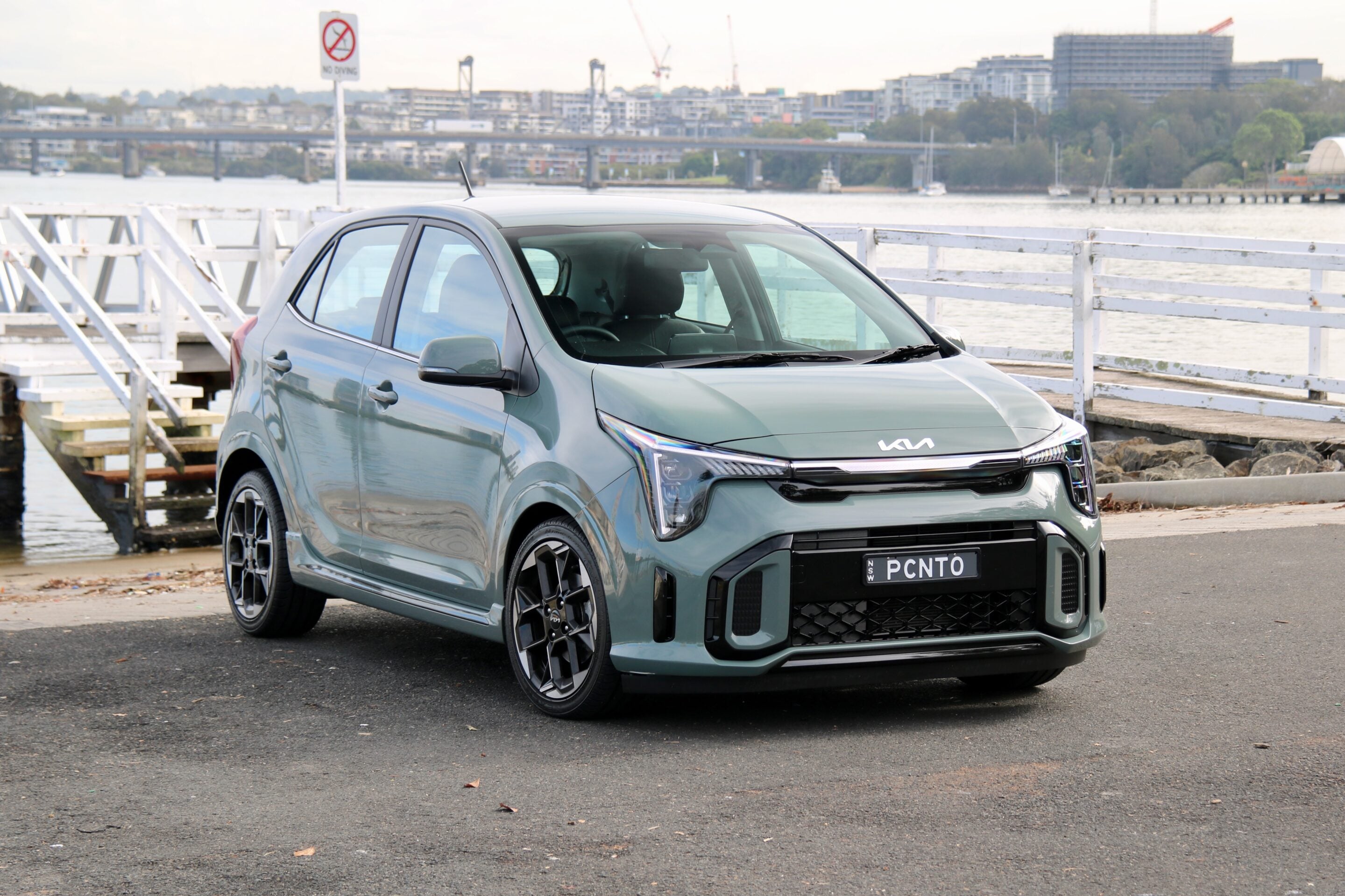
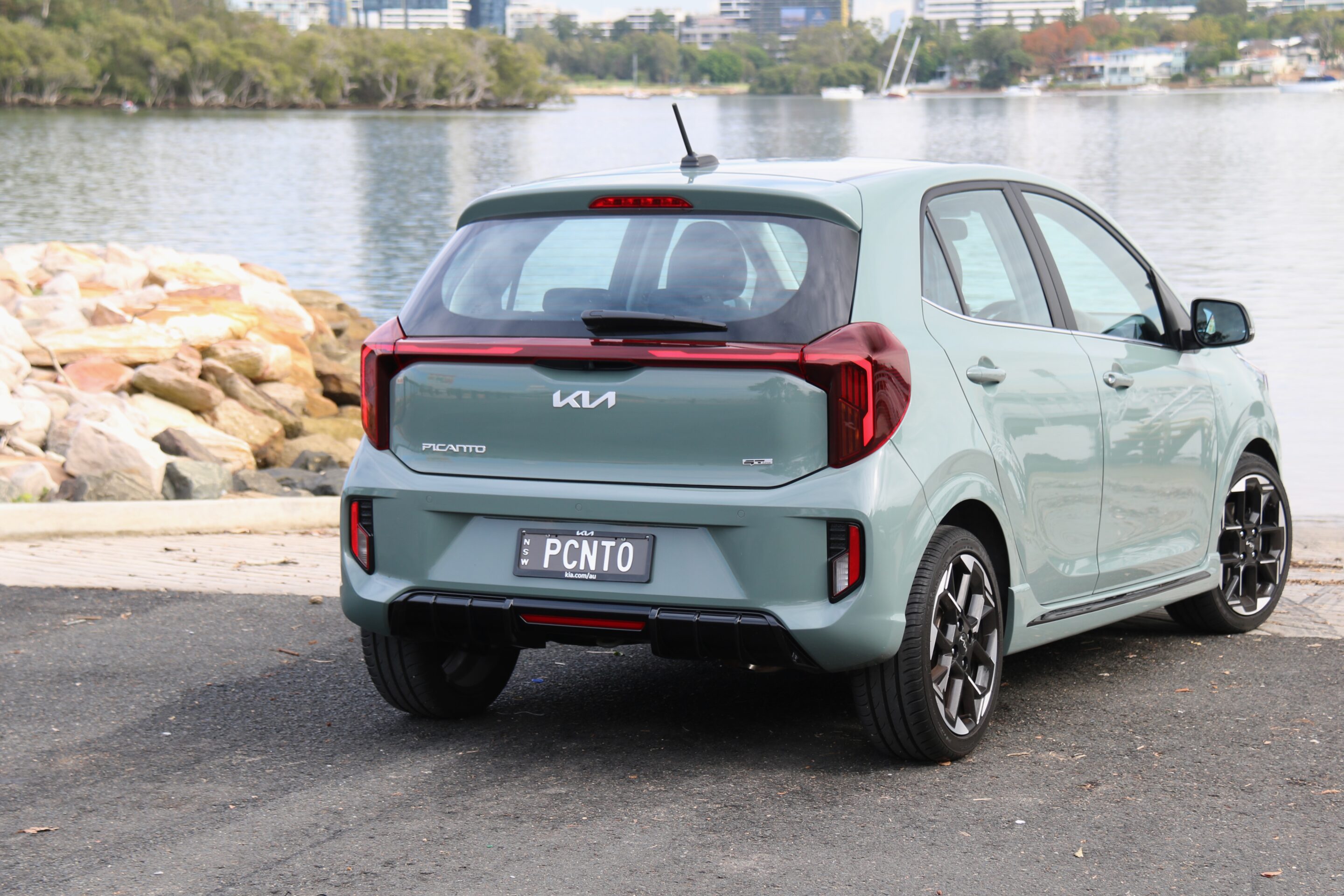
Once on-road costs are included in the price, our GT-Line auto test car in cool ‘Adventurous Green’ paintwork retails for $25,800 driveaway in New South Wales.
While stepping up to the GT-Line model adds cool features like the handsome 16-inch wheels, LED lighting and synthetic leather – ‘Premium’ in Kia jargon – upholstery, almost $26,000 driveaway for such a small car isn’t that cheap. Therefore, we think the entry-level Sport (around $23,500 driveaway for the auto) is better value for money as it shares most of the GT-Line’s equipment, including its lengthy standard safety feature list, but keeps pricing lower.
It’s well known that competitors to the Picanto are few and far between these days, but buyers still have options such as the MG 3, Mazda2, or if an EV makes sense to you, BYD Atto 1.
How fuel efficient is the Picanto?
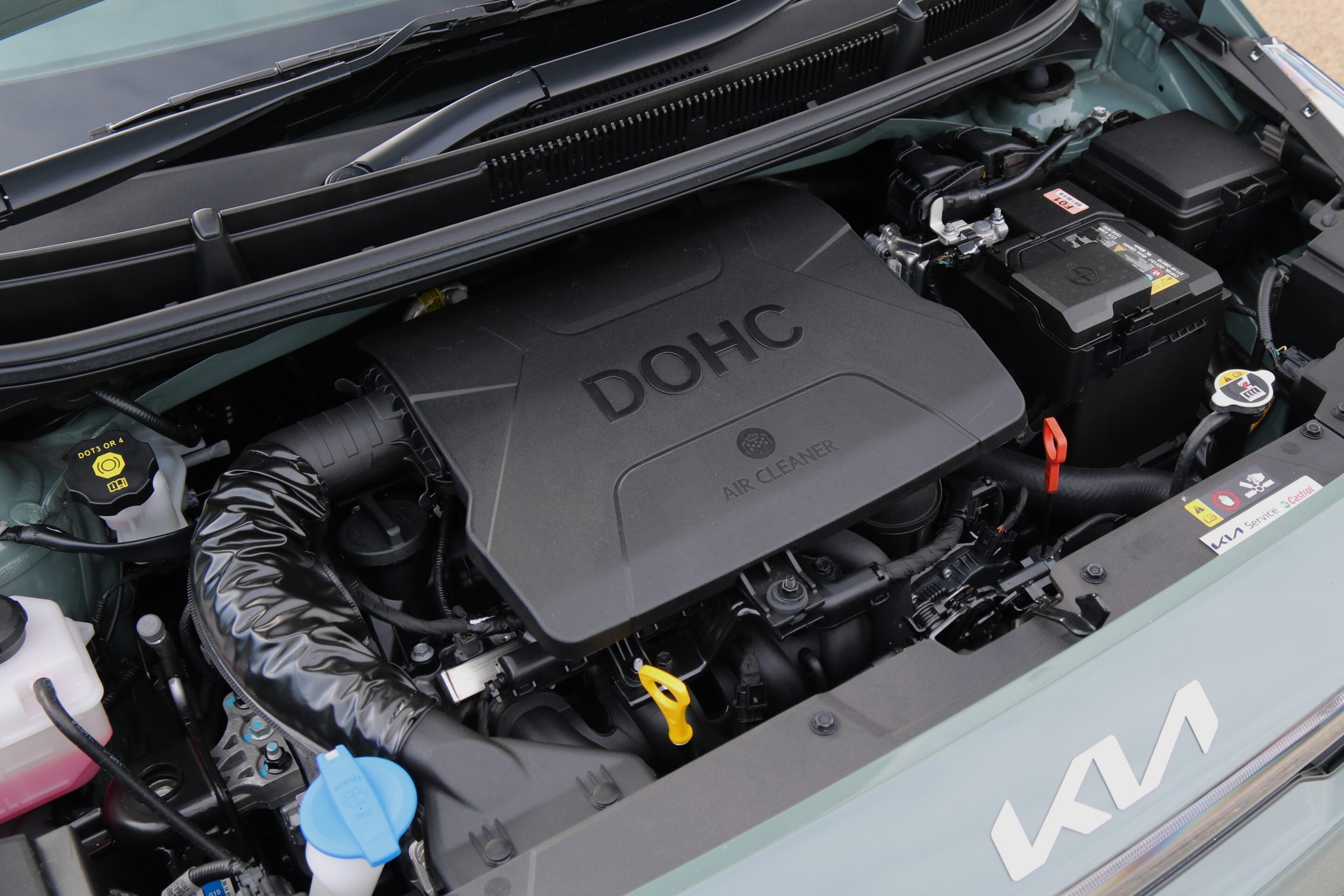
Reasonably, though probably not as efficient as you might expect. Rated at 6.0L/100km on the combined cycle, a Yaris hybrid this is not, and that’s thanks to the old 1.2-litre naturally aspirated four-cylinder petrol engine under the bonnet. Making just 62kW of power and 122Nm of torque, the Picanto is not a firecracker off the line. In fact, while Kia doesn’t provide an official 0-100km/h time, we’d guesstimate it to be around 13-14 seconds.
It’s an adequate engine for around town driving, and the four-speed automatic is fine, though could be smarter in its shifting. It must be said that the former Picanto GT’s turbocharged 1.0-litre three-cylinder was punchier and more fuel efficient than this engine. We miss it dearly but it’s no longer offered in the Picanto globally. If that engine made a comeback, the Picanto would be quicker, more refined and more fuel efficient.
4
There is a superior five-speed manual available, though Kia has killed that in the GT-Line model for the next model year, so if you want features like LED headlights, you’ve got to get the auto. Frustrating for some.
For fuel consumption, the Picanto auto is rated at 6.0L/100km, and in driving skewed towards urban, we achieved a somewhat high 6.7L/100km. The Picanto’s larger Stonic small SUV sibling with the aforementioned 1.0-litre turbo three-pot making 88kW/172Nm outputs is not only more powerful, but it’s rated from just 5L/100km, so you can only imagine how efficient a Picanto with that drivetrain would be.
Is the Picanto fun to drive?
In a zippy, darty, tiny car sort of way, yep. It’s quite agile, and the steering offers a good amount of feel too, making it fun to drive. The visibility is excellent thanks to thin pillars, and its active safety systems are refined enough too, especially the helpful adaptive lane guidance. There’s no adaptive cruise control, however.
In our test car at least, the ride of the GT-Line is quite firm. We actually had to check the tyre pressures to see if they were set too high, but alas, they were set to manufacturer specifications. In our time with it, we felt every bump that graced the Picanto’s wheels, and bigger ones were certainly a bit terse. At higher speeds, the ride settles down nicely, though more noise insulation would be great.
How practical is the Picanto?
Look, you’re not buying a Kia Picanto for its practicality alone… a Volvo this is not. It’s a light hatchback after all, but it can just about carry four adults reasonably well as rear headroom is good for six-footers. Legroom is tight, but it’s more practical than you’d first think, while there’s also a map pocket and USB-C charging port covering amenities, though nowhere to hold a bottle.
4
The boot measures 255 litres with the rear seats up and 1010 litres with them folded, which is surprisingly reasonable for such a small car. The boot is deep, though that means that there’s a big lip to lift luggage over and also a big lip once the rear seats are folded. We wish that Kia Australia offered the dual-level boot floor featured overseas to fix both issues. The boot is also largely devoid of features, though unlike the BYD Atto 1, at least there’s a light so you can see in there in the dark.
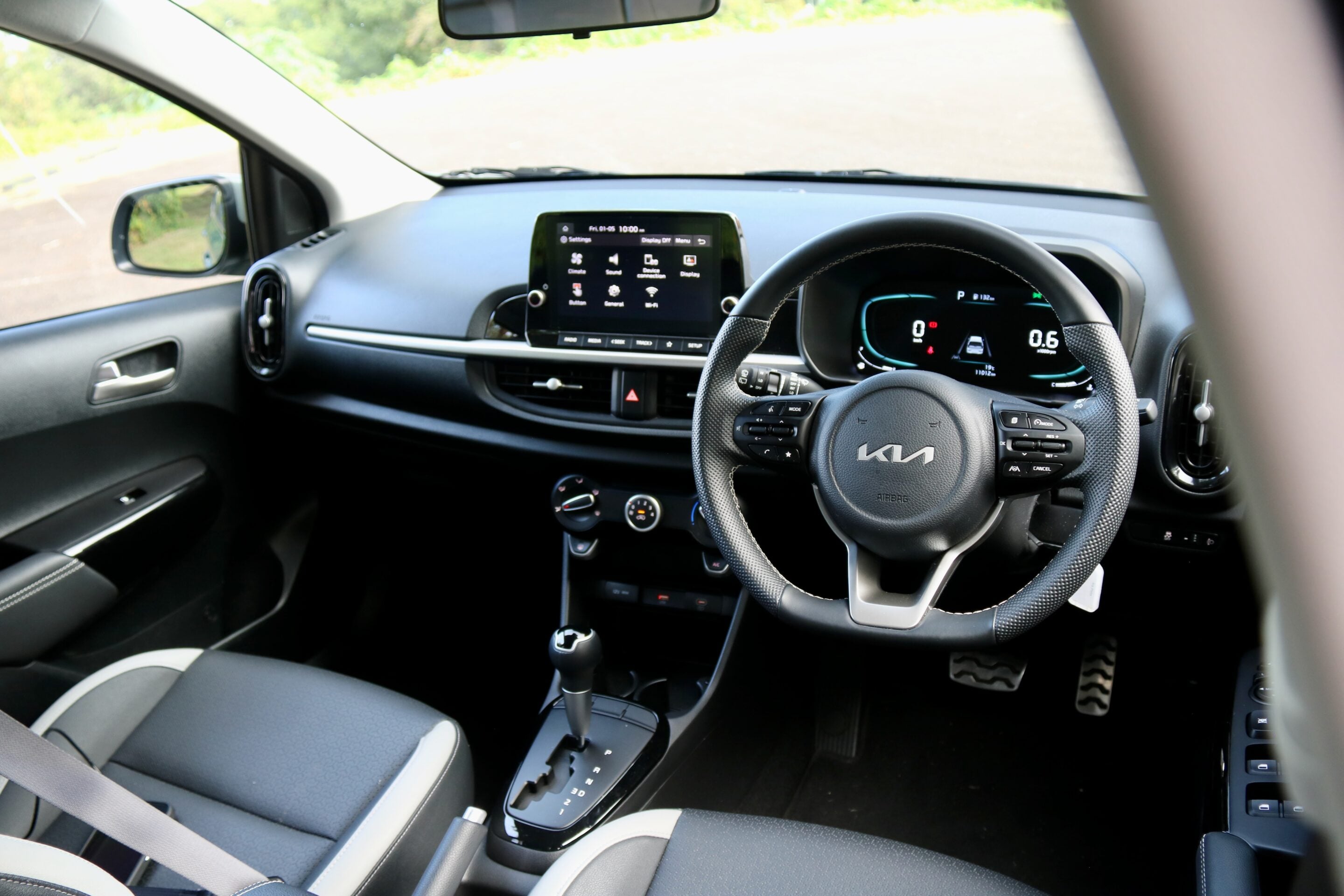
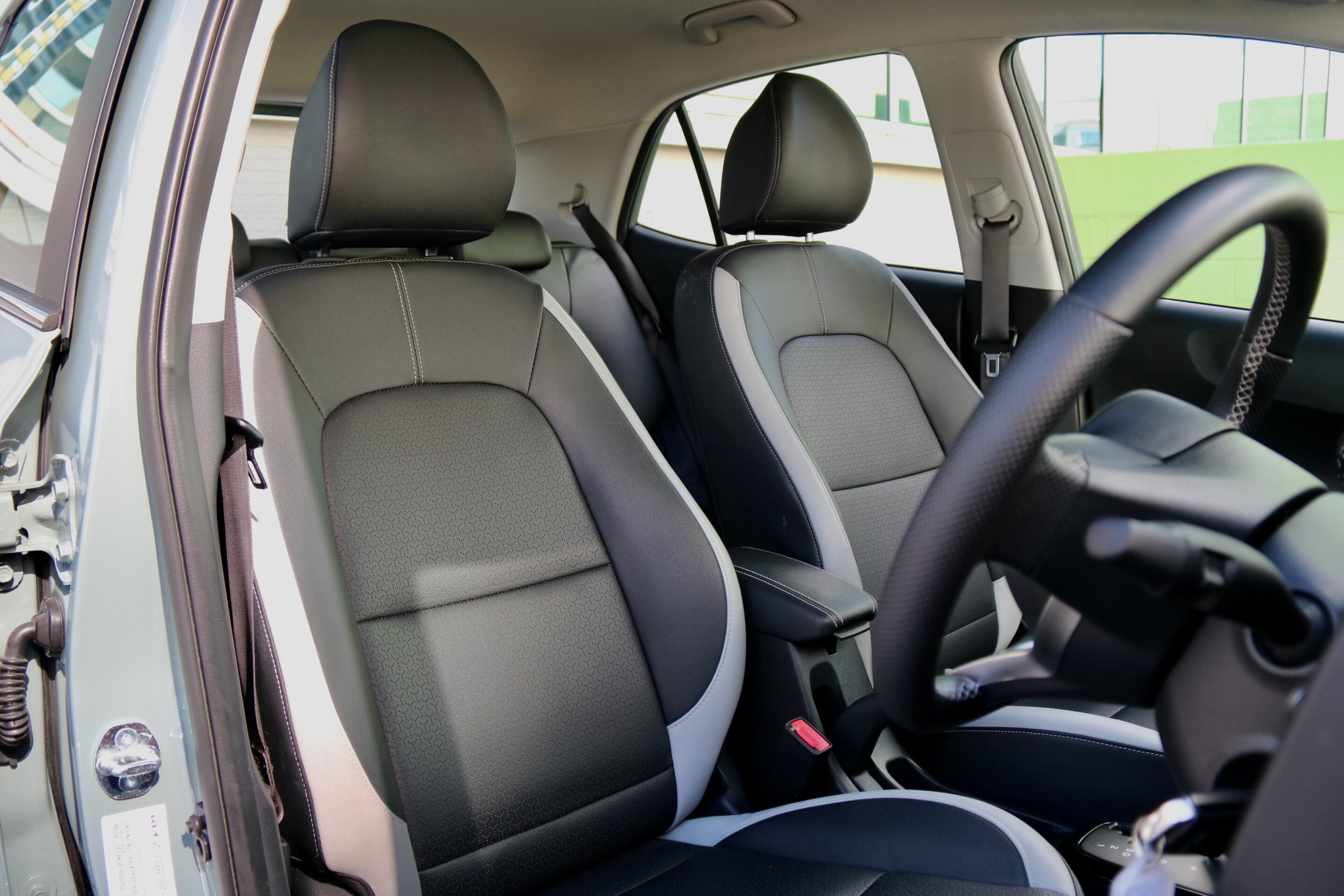
Moving to the front cabin, the Picanto offers a pleasing amount of tech and practicality for a car of its type. There’s a relatively modern 8.0-inch touchscreen in the centre, a 4.2-inch driver’s information display and plenty of places to store life’s trinkets, including covered storage in the central armrest. Both BYD and Mazda could learn from that last fact as both the Atto 1 and Mazda2 don’t feature any covered storage.
The 8.0-inch touchscreen is basic compared to newer Kia models, but at least it offers wireless Apple CarPlay and Android Auto smartphone mirroring. Screen quality is a bit grainy, but it’s quick and insanely easy to use. Sound quality from the six-speaker audio system is reasonable too.
5
An updated Picanto in South Korea recently launched with more recent software from the Stonic and a 10.25-inch digital driver’s display to make the cabin look more modern, so hopefully it launches locally soon. While we’re moaning, we also miss out on features like heated front seats, automatic climate control and a sunroof. Perhaps a GT-Line+ model, Kia?
Practicality features include configurable cup holders and a tray under the dashboard, reasonable door bins, a few trays in the centre and a small box underneath the sliding central armrest. A huge car the Picanto is not, but its in-car storage solutions are thoughtful.
How much does the Picanto cost to service?
A surprisingly high amount, actually. Five years/75,000km of servicing the Picanto costs $2079, or an average of $416 per year.
4
Helping that cost is the Picanto’s standard seven-year/unlimited km warranty. There’s also 12 months of roadside assistance, which is extended by a further 12 months with each dealer service up to eight years in total.
Picanto GT-Line standard features:
- 16-inch alloy wheels with a space-saver spare wheel
- Dusk-sensing automatic LED exterior lighting
- LED daytime running lights
- Intermittent manual wipers
- Heated and auto-folding mirrors
- Remote keyless entry
- Synthetic leather steering wheel and gear knob
- Synthetic leather seat upholstery
- Height-adjustable driver’s seat
- Manual air-conditioning
- Electric windows with remote open/close for the driver’s window
- 4.2-inch driver’s display
- 8.0-inch touchscreen
- Wireless and wired Apple CarPlay and Android Auto
- AM/FM radio
- Bluetooth calling and audio streaming
- Six-speaker sound system
- 3x USB ports + front 12-volt socket
- Cruise control with a manual speed limiter
- 6x airbags
- Autonomous emergency braking
- Lane keeping assistance with adaptive lane guidance
- Blind-spot monitoring with rear cross-traffic alert
- Safe exit alert
- Rear occupant alert
- Driver attention alert with lead vehicle departure alert
- Auto high beam
- Rear parking sensors
- Reversing camera
- Anti-theft alarm
Should I buy a Kia Picanto GT-Line?
There’s definite appeal to the Kia Picanto GT-Line. From its sporty styling to its darty dynamics, it’s got a cheeky character that so many other cars are missing. It’s also quite simple to operate, which is refreshing in today’s market, it’s reasonably practical and it’s also covered by a long warranty.
Counting against it is the firm ride quality, old engine tech that makes it somewhat thirsty and slow and that its pricing has crept up to the point where the GT-Line auto no longer looks like the bargain it once was. But overall, we still quite like the Picanto and wish there were more cars like it in Australia.
Kia Picanto GT-Line specifications:
| Price | $22,590 plus on-road costs ($25,190 driveaway in NSW at the time of writing) |
|---|---|
| Engine | 1248cc naturally aspirated four-cylinder petrol |
| Power | 62kW (@ 6000rpm) |
| Torque | 122Nm (@ 4000rpm) |
| Transmission | Four-speed automatic, front-wheel drive |
| Claimed fuel consumption | 6.0L/100km |
| Claimed CO2 emissions | 140g/km |
| Fuel type/tank size | 91 RON regular unleaded, 35 litres |
| Dimensions (l/w/h/wb) | 3595/1595/1485/2400mm |
| Boot capacity | 255 litres (rear seats up), 1010 litres (rear seats folded) |
| Tare mass | 993kg |
| Warranty | Seven-year/unlimited km |
| Five-year service cost | $2079 ($416 per year) |
| On sale | Now |
7.0
/10
Score
Score breakdown
8.0
Safety, value and features
7.0
Comfort and space
6.0
Engine and gearbox
7.0
Ride and handling
8.0
Technology
Things we like
- Despite price rises, still a cheap car
- Easy to use cabin tech
- Darty and fun to drive
Not so much
- Dated and inefficient drivetrain
- Stiff ride quality
- Overseas models get more features
Follow WhichCar/Wheels on Google
Click the button below to make WhichCar by Wheels a preferred source for your news.

We recommend
-
 News
NewsAustralians cutting corners on car maintenance as motoring costs surge, report finds
New study shows more drivers postponing servicing, tyre replacement and oil changes as household financial pressures intensify.
-
 News
NewsBYD Dolphin G plug-in hybrid hatch revealed ahead of launch
The first Europe-specific model from China’s BYD has been leaked ahead of its official reveal.
-
 News
NewsFuel excise cut unlikely to continue beyond June as global supply fears persist
Energy minister Chris Bowen says temporary petrol tax relief was designed as a short-term measure despite ongoing concerns over fuel supply pressures and global instability.
