
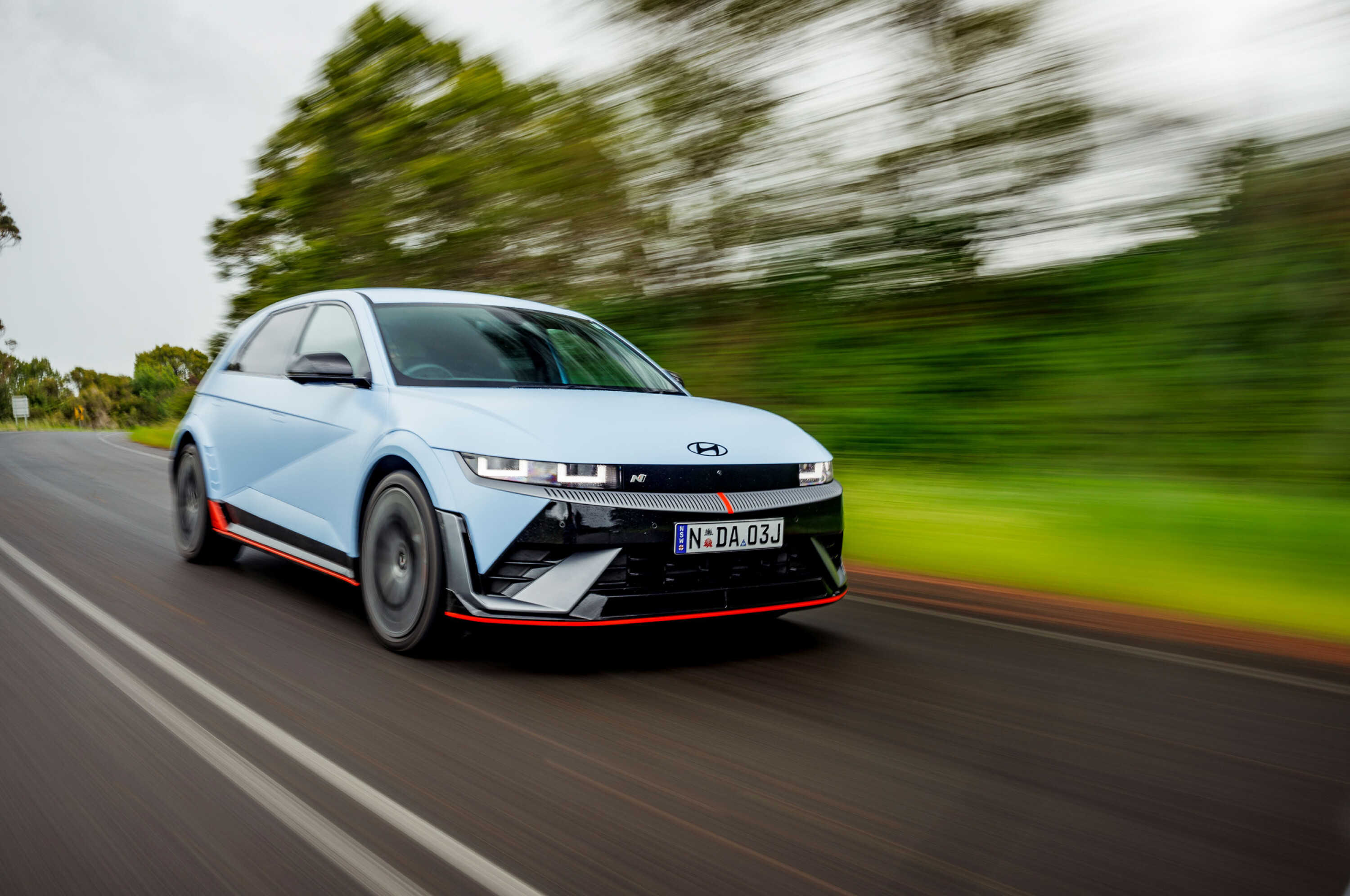
It’s not often the winner of the prestigious Wheels Car of the Year (COTY) award is a unanimous choice of all the judges after a week of rigorous testing on both track and road, but that is the case with the 2024-25 winner, the Hyundai IONIQ 5 N.
The boundary-pushing sports hatch beat the Toyota Camry Ascent Sport and stablemate, the Hyundai Santa Fe Calligraphy, into second and third place respectively.
The Hyundai IONIQ 5 N stood out because of the inventive, imaginative way it combines EV technology with motorsport-inspired performance and handling to create a truly thrilling drive. It’s the EV set to impress even those who will never relinquish their love of the internal combustion engine – and as Wheels Editor Andy Enright confirms in his edited Wheels Yearbook 2024 review of the winner below, that’s quite a feat…
1
Wheels Editor, Andy Enright
I pity those car enthusiasts who still feel that electric cars are some sort of soulless appliance.
Yes, there are many cheap EVs that are about as thrilling as reading a user manual for a USB hub, but then the same goes for many affordable combustion-engined cars.
Just as a dull car is a dull car regardless of how it’s powered, the inverse applies to fun and interesting cars.
Thing is, it’s easy to make dull cars. It’s far trickier to imbue a car with character, to make you want to drive it, to daydream of your favourite roads, to paint a huge smile on your face.
We’ve had well over a century of practice to figure out how to do exactly that with combustion-engined vehicles but, for the most part, around a decade to figure out how EVs deliver on that enthusiast promise.
The Hyundai IONIQ 5 N has cracked that particular problem, and in the most joyous way imaginable, which is why this landmark sports hatch wins Car of the Year.
It does so much so well that it delivered a unanimous verdict across all six judging scorecards in the blind final-round voting. Last year, COTY was a very close-run thing. Not on this occasion.
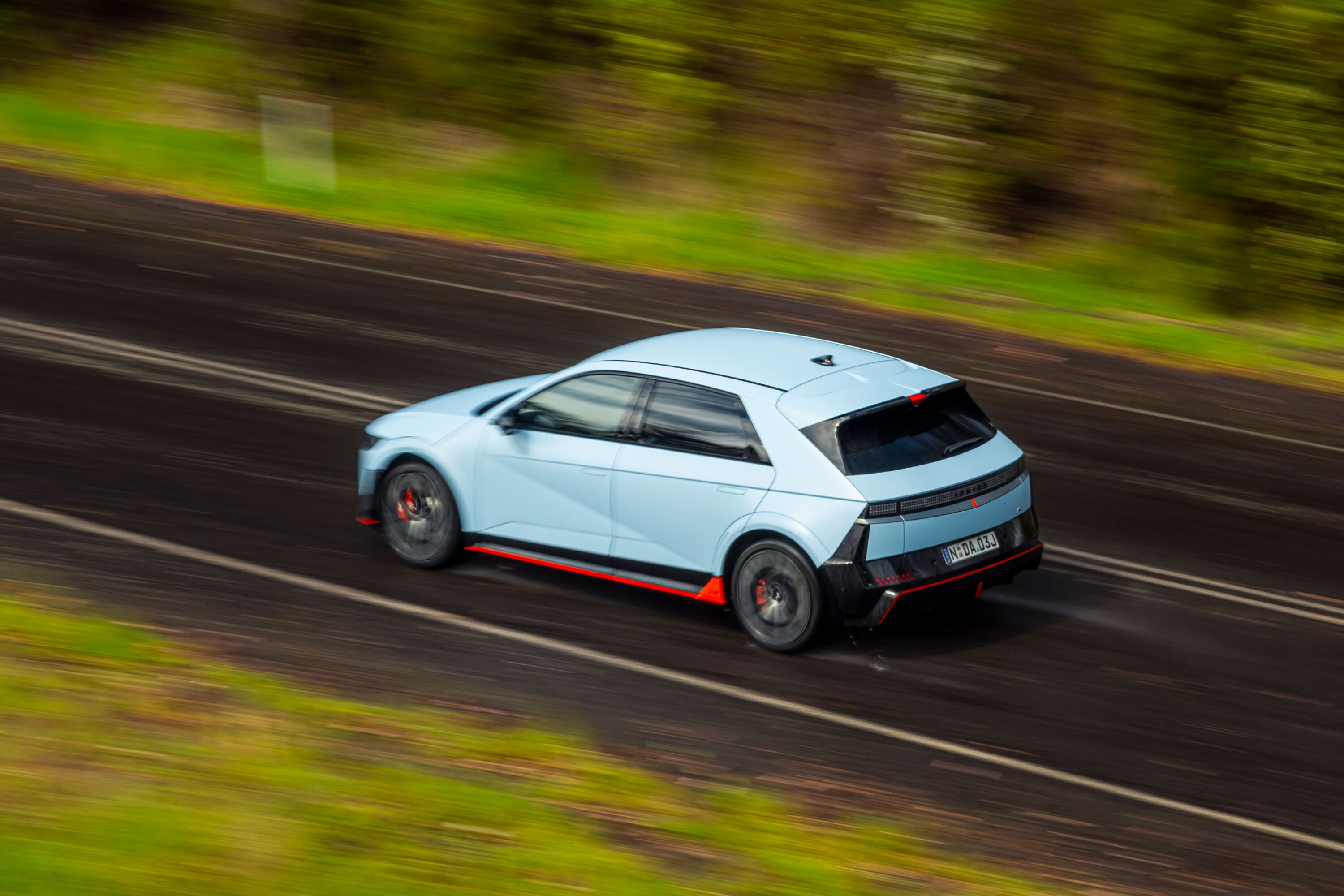
It takes a very special sort of road car to impress somebody who has won the Australian rally championship seven times, but after we ran performance tester Cody Crocker through the 5 N’s manual gear shifting system, he returned with a massive grin and a distinct reluctance to hand back the keys.
“I’ve got a new favourite car,” he said. “I had no idea it could do that.”
1
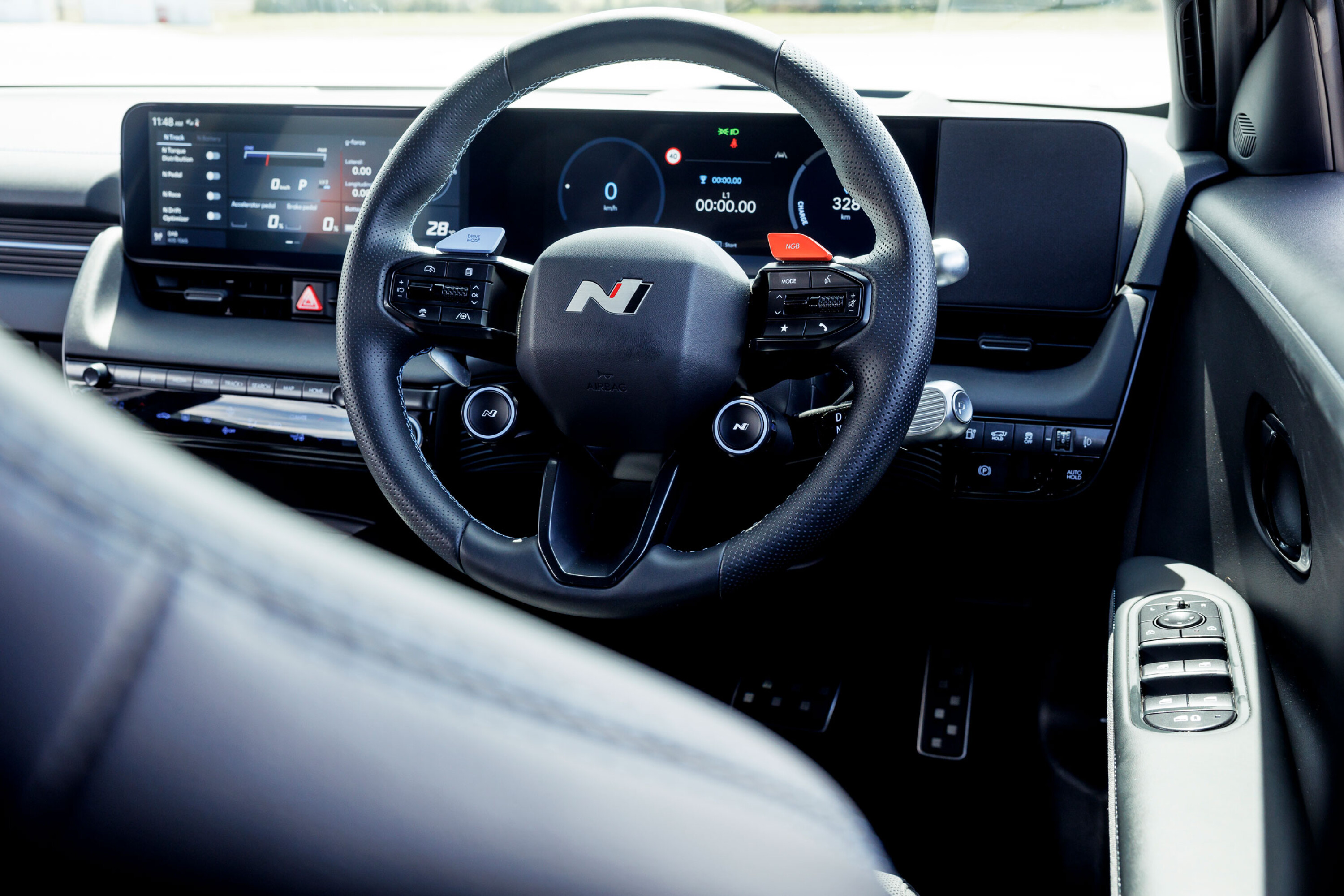
Ah, yes, that. It was always going to be a controversial move, offering drivers the option of artificially mandated gearshifts, a rev limiter, and the feeling of torque building as the entirely nonexistent engine comes on cam.
At first glance, it would seem to play into the hands of those who claim that electric powertrains are lame and that the old ways are better, but do we need to be that partisan, that binary?
Can we not take the best of both to create something new and incredible? That’s exactly what Albert Biermann and his team at Hyundai’s N division has done with this remarkable car.
What’s more, it blitzed the judging criteria.
Value? You’re getting a performance car with 478kW; comfortably more power than a McLaren F1 for $110K. Safety? The IONIQ 5 has returned a five-star ANCAP rating. Layer on top of that the bigger brakes, better tyres and additional safety systems of the 5 N and that box is resolutely ticked.
Cabin design and execution? It seats five adults in comfort, has a big boot and is well-appointed throughout, with thoughtful stowage inside the car, solid ergonomics and a flat floor.
How it drives? If that includes the ability to make you laugh out loud in pure joy, then nothing at this year’s event, even the fabulous Mustang Dark Horse, could top it. The mantra that ran through the 5 N’s development speaks volumes: driving still matters.
1
Of course, it’s not perfect. No COTY winner ever is.
Drive it like you mean it and that claimed 448km WLTP-mandated range shrinks somewhat.
Throw it from lock to lock around hairpins at a racetrack and the tyres will let you know that, despite its nimble feel, there’s 2230kg of physics at work here. Then there are the whispers that Hyundai is ready to unleash something even focused, and that the full-bodied IONIQ 5 was a mere toe-in-the-water platform for the Koreans in order to gauge customer reception. As ever, we can only test the cars that are put in front of us.
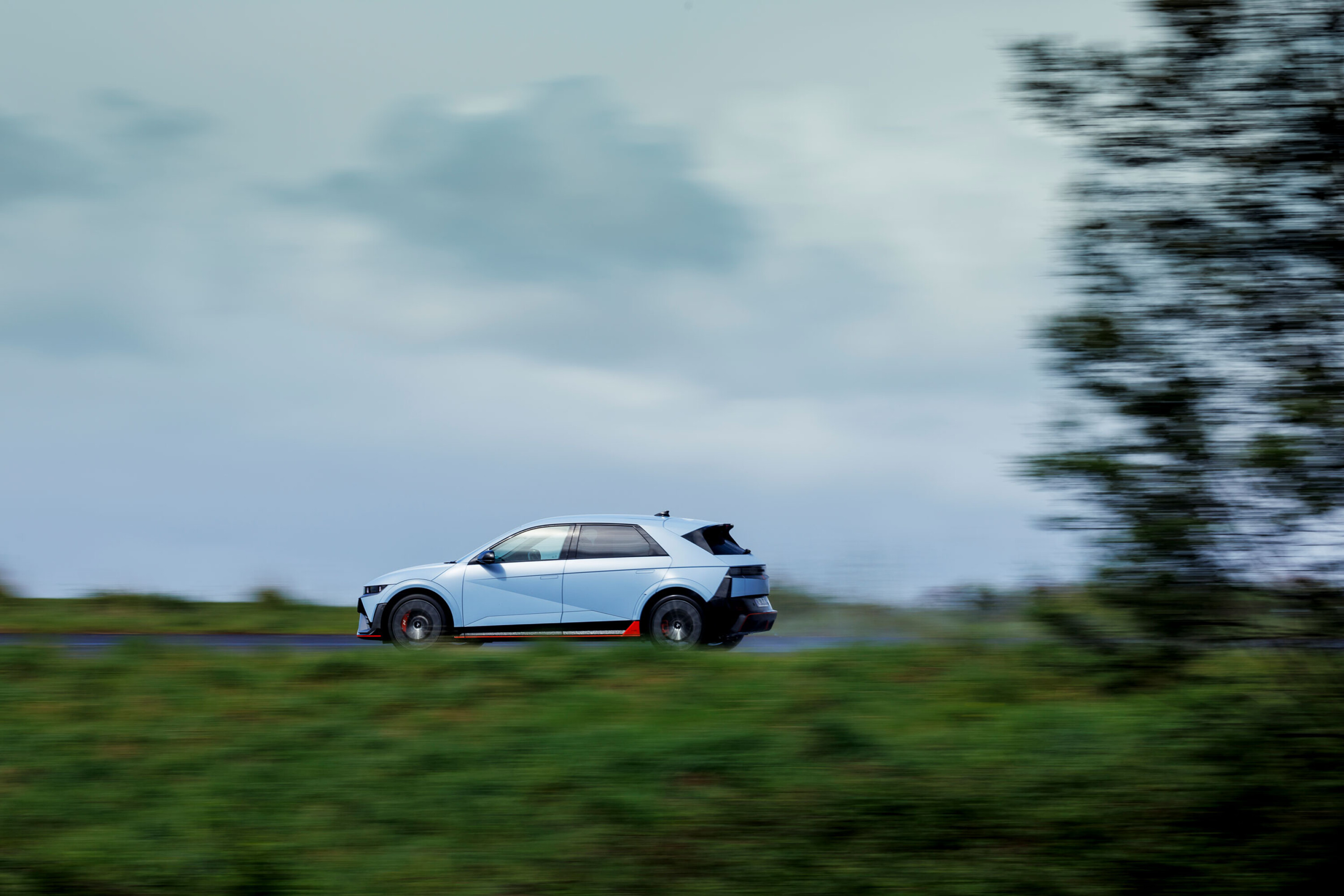
At Lang Lang it was imperious. One particular quirk of the surfacing of the ride and handling track at this proving ground is that performance cars shod with Pirelli P Zero tyres tend to shine. The 5 N we had was wearing a set of 275/35ZR21 P Zeros, so its prospects looked good from the outset.
The speed limit through many of the corners is a fairly generous 130km/h and the Hyundai felt planted and confidence-inspiring, even on the sections specifically designed to upset the car mid-corner.
It resists roll well and there is so much to be said for plucking the gears yourself. At first, you’ll feel silly. Ten seconds later, you won’t give a hoot about how silly you think it is – you’ll be laughing too much. Isn’t that what we want from performance cars today: to feel connected and engaged? The IONIQ 5 N delivers that in spades. Don’t get mired in how you got there. Just enjoy the end result.
1
It’s a car that rewards good drivers.
It offers a drift mode, but it’s far more fun to get the car on a circuit and switch all of the electronic systems off in order to tease at the subtleties of its handling envelope. Like all N cars, the warranty covers circuit use, and the 5 N was developed with this use case in mind.
At the company’s Nürburgring development centre, the development team aimed for a 20-20-20 exercise. That’s 20 minutes of hot lapping on a track day, then 20 minutes on a high speed charger and then back out for 20 minutes on track again.
Thanks to its 800-volt electrical architecture, the 5 N will charge from 10 to 80 percent in a rapid 18 minutes on a 350kW fast charger, or 70 minutes on a more pedestrian 50kW unit.
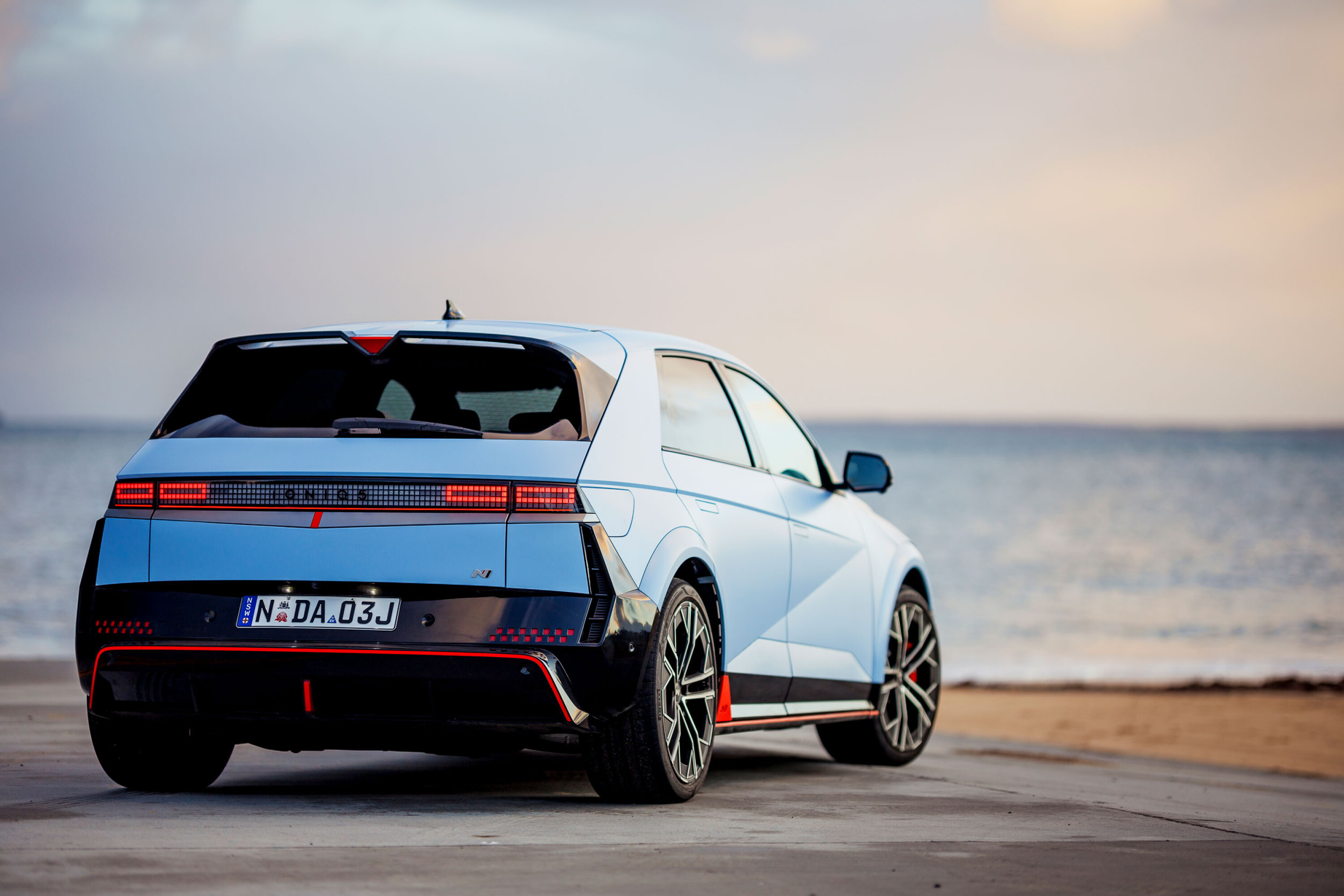
It’s on road that the 5 N really shines though. Its ride quality is more than compliant enough to make it realistic family transport, genuinely living up to the cliché of being able to drop the kids off at school while showing you a good time on the indirect route back.
The boot is a sizeable 480 litres with the seats up and 1540 litres with the second row folded. There’s even the utility of a V2L connector that can power tools, camping equipment or domestic appliances.
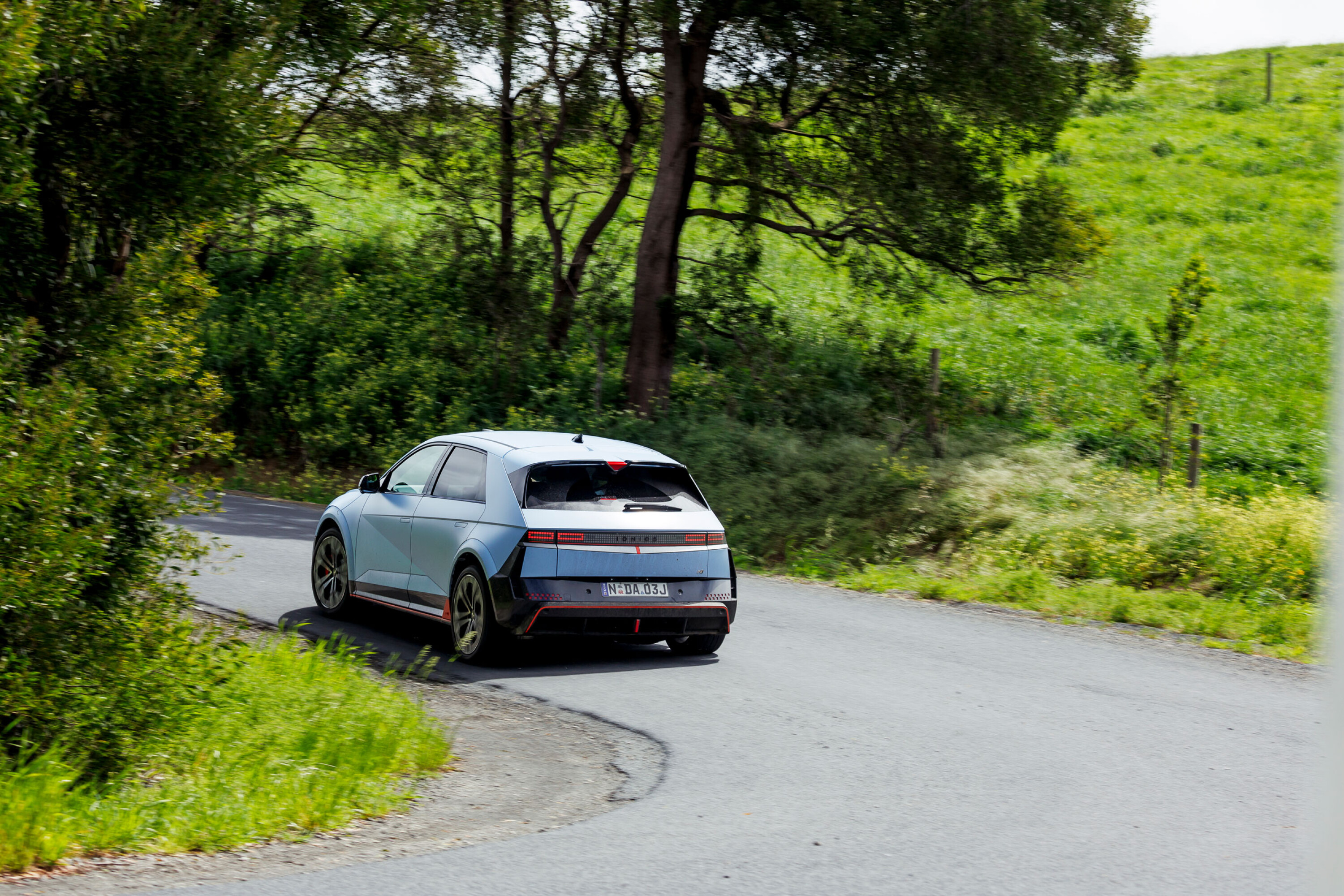
The Hyundai IONIQ 5 N is by some margin the most powerful car ever to have won Wheels Car of the Year. Heck, only one car in the lengthy winners’ roll boasts half the grunt of this rocketship Hyundai.
1
The last time a true enthusiast car won the big gong was in 2012, when the award was shared between the Subaru BRZ and the Toyota 86 coupe twins.
Since then we’ve witnessed the rise of SUVs which have become increasingly polished as family transport; albeit one given a dust-flecked tone by last year’s victor, the Ford Everest.
It takes something very special to break that mould. Car of the Year has long celebrated all-round excellence, but we enjoy it less when steady box-tickers win. This year, all the stars have aligned.
Not only do we get a brave, exciting and game-changing winner, but we get one that scores well across all the judging criteria. At $110K, the Hyundai IONIQ 5 N isn’t for everyone but it ought to be a car that everyone can see points to a bright future for keen drivers. In sweeping the board of all six judges, the IONIQ 5 N is a standout champion.
This is a win for optimism. It’s a win for something many had maybe forgotten in these turbulent times. A win that owes much to a scribbled note from Albert Biermann in the margin of his notes to the 5 N’s development team: ‘Driving still matters.’
1
| HYUNDAI IONIQ 5 N | |
|---|---|
| Price/as tested | $110,383/$112,383 |
| Drive | 2 x electric motors, 84kWh lithium-ion battery |
| Power | 448kW |
| Torque | 740Nm |
| Transmission | Single-speed reduction gear |
| Weight | 2230kg |
| L/W/H/WB | 4715/1940/1585/3000mm |
| Tyre | Pirelli P Zero 275/35ZR21 (f/r) |
| Safety | Untested |
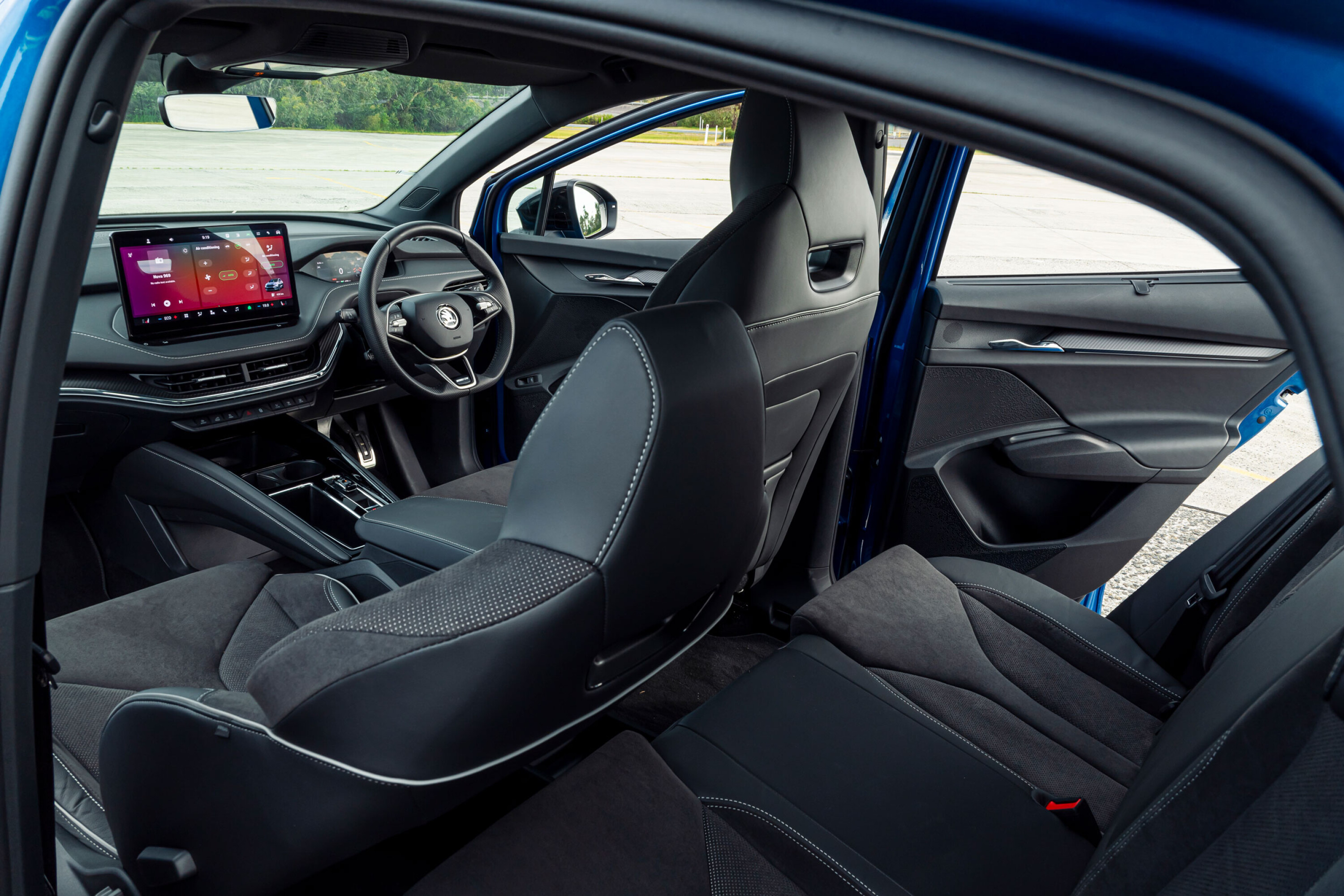
There is plenty of Tesla in the exterior design of this spacious Skoda, while one COTY judge was impressed overall, pointing out its ‘sharp’ looks, generous electric range and how spacious it feels inside, partly due to the typically clever Skoda packaging – every inch of space seems to be taken up with storage options. And partly due to the giant panoramic glass roof which sun-shy Aussies can cover, fortunately, with a clever, if slightly clunky to apply cover kept in the boot.
Most judges agreed that the Skoda’s level of performance was pleasantly usable – “sprightly rather than crazy over the top”, unlike too many of the too-scary-fast family EVs on the market.
The Enyaq Sportline we drove at COTY is powered by a single electric motor at the rear, making 210kW and 545Nm from an 82kWh battery, which delivers a claimed range of 561km on the WLTP cycle.
1
There was also universal praise for the nicely surfaced steering wheel, the combination of a large central screen with a practical smaller binnacle in front of the driver, and most of the interior surfaces. There was, however, quite a bit of criticism of the Enyaq’s door-handle design, which seems to have been created by whoever came up with those stupid Chinese finger traps, or perhaps just some strange Skoda sadist.
And while there was some praise for the rear-wheel-drive handling and dynamics, and the typically VW-sourced steering, everyone commented on the amount of creaks and rattles, particularly from the doors and door seals.
Skoda Enyaq Sportline RWD Specifications
| Price/as tested | $69,990/$69,990 |
|---|---|
| Drive | 1 x electric motor, 82kWh lithium-ion battery |
| Power | 210kW |
| Torque | 545Nm |
| Transmission | Single-speed reduction gear |
| Weight | 2070kg |
| L/W/H/WB | 4653/1879/1621/2765mm |
| Safety | Five stars |
2024-25 Wheels Car of the Year
Ford Mustang Dark Horse
The new S650 Dark Horse aims to show that the Mustang’s old days of the slightly unresolved and unsophisticated muscle car are behind it.
You might be wondering how a Ford that costs $105,332 as tested could possibly be considered good value. Especially when the Dark Horse doesn’t seem to be that different to the regular Mustang GT upon which it’s based, despite costing $22,000 more. And yet it only takes about 10 metres to realise the Dark Horse is unlike any Mustang we’ve ever driven.
1
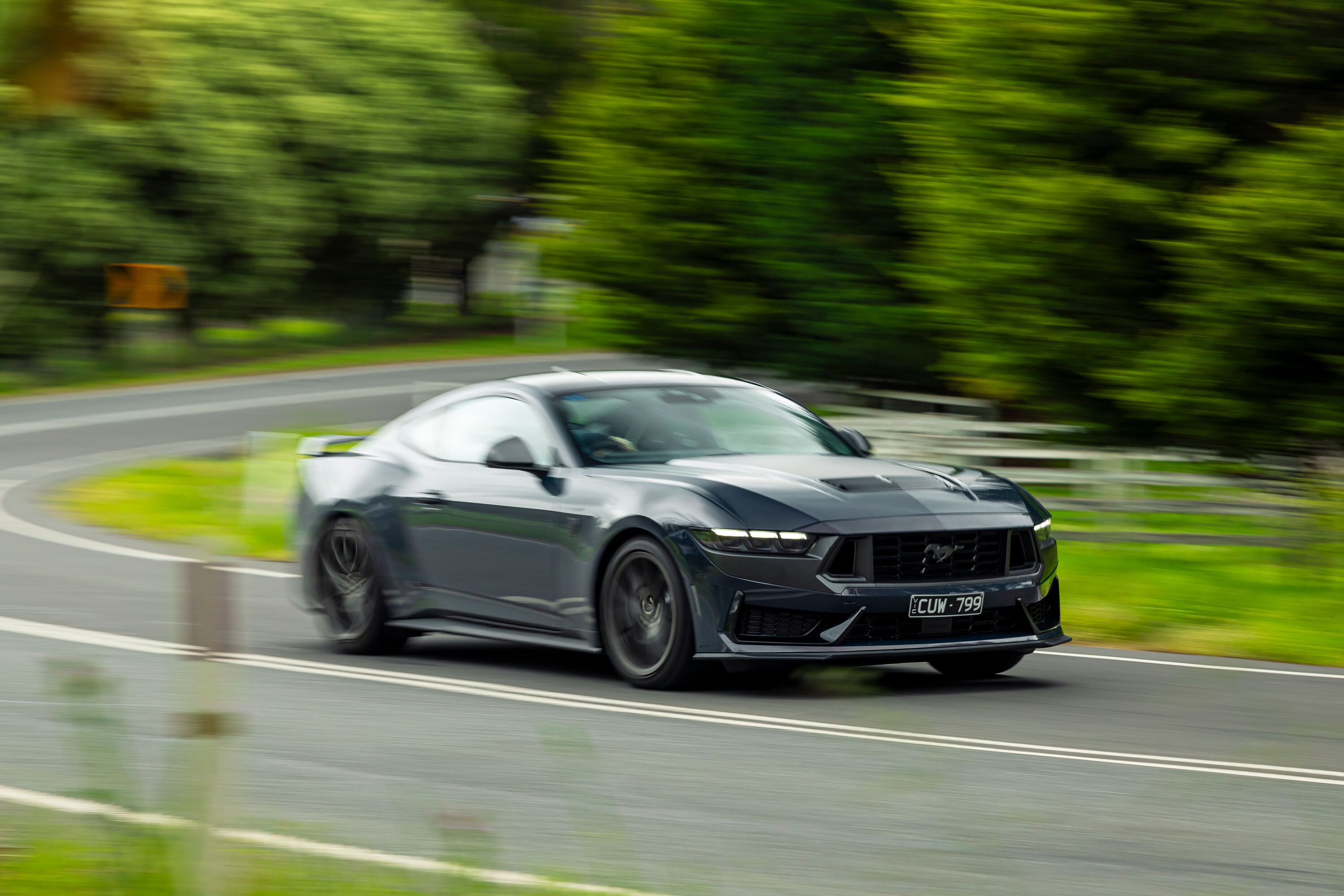
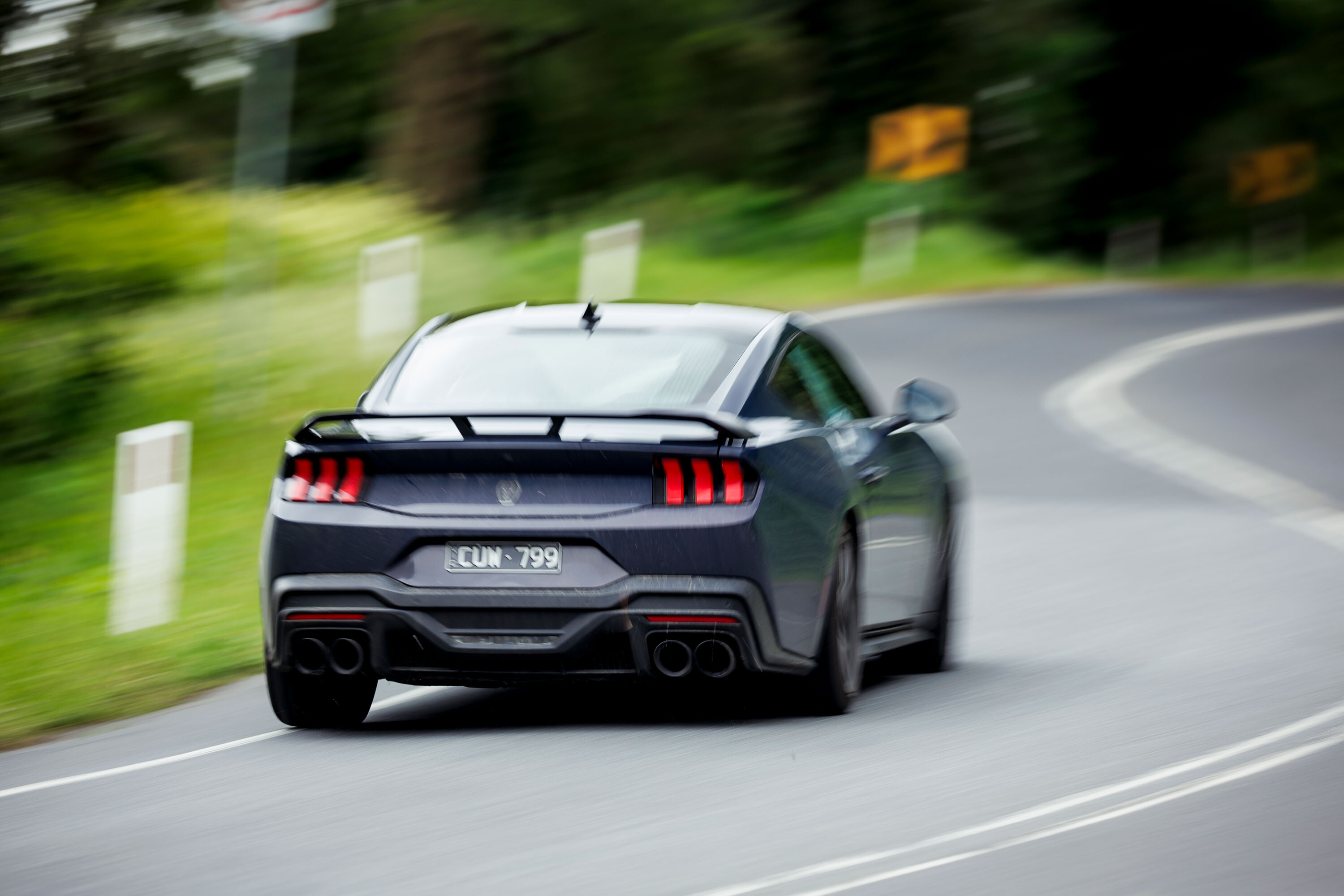
It starts with the steering. The Dark Horse scores a different calibration and rides on overhauled suspension compared with the GT for a tauter, more track-focused set-up, and as soon as you crank on some lock you know you’re dealing with something special. There isn’t much feel per se, but there’s none of the usual Mustang wooliness either, and around Lang Lang’s tricky mix of low- and high-speed corners, the Dark Horse is a riot.
Fast, loud and with an athleticism that belies its nameplate and 1822kg kerb weight, the Dark Horse delivers a driving experience that is surprisingly involving and rewarding. A big part of that is down to the gearbox. You can have the Dark Horse as a 10-speed automatic but our car is the six-speed manual (remember those?) and it is without question the better pick. The manual ’box is different to other V8 Mustangs, with Ford ditching the GT’s Getrag MT82-D4 in favour of the same Tremec TR-3160 unit that’s fitted to the Shelby GT350.It brings shorter ratios, a revised final drive and, crucially, a more positive shift action.
With 350kW/550Nm on tap, the Dark Horse shares the core of its naturally aspirated 5.0-litre V8 with the regular GT but it gains additional cooling and uses connecting rods taken from the Shelby GT500. It also scores an active exhaust with five modes, ranging from quiet to racetrack, and it sounds brilliant. Deep and menacing at idle, it also has enough light and shade as you rise through the rev range to sound properly exciting.
Combine all this with a surprising litheness through the lane-change manoeuvre and an impressive ability to soak up Lang Lang’s lumps, bumps and surface changes (unique springs and MagneRide adaptive dampers are standard inclusions) and it’s little wonder the Dark Horse breezed through the first round of voting to become a finalist.
1
Amazingly, though, the Dark Horse is even more impressive on COTY’s road loop. Poise isn’t a word you’d usually associate with a Mustang but over our road course’s challenging mix of broken back roads, that’s exactly what the Dark Horse delivers. Given its track focus and wider wheel and tyre package compared with the GT, you could forgive the Dark Horse for feeling overly stiff but the compliance and control delivered by the tweaked suspension and MagneRide dampers is surprising. Grip and traction are strong, and instead of being upset by mid-corner bumps or skipping wide in traction zones, the Dark Horse offers a sense of connection, confidence and speed that suggests it’s a better road car than it is a track-day machine.
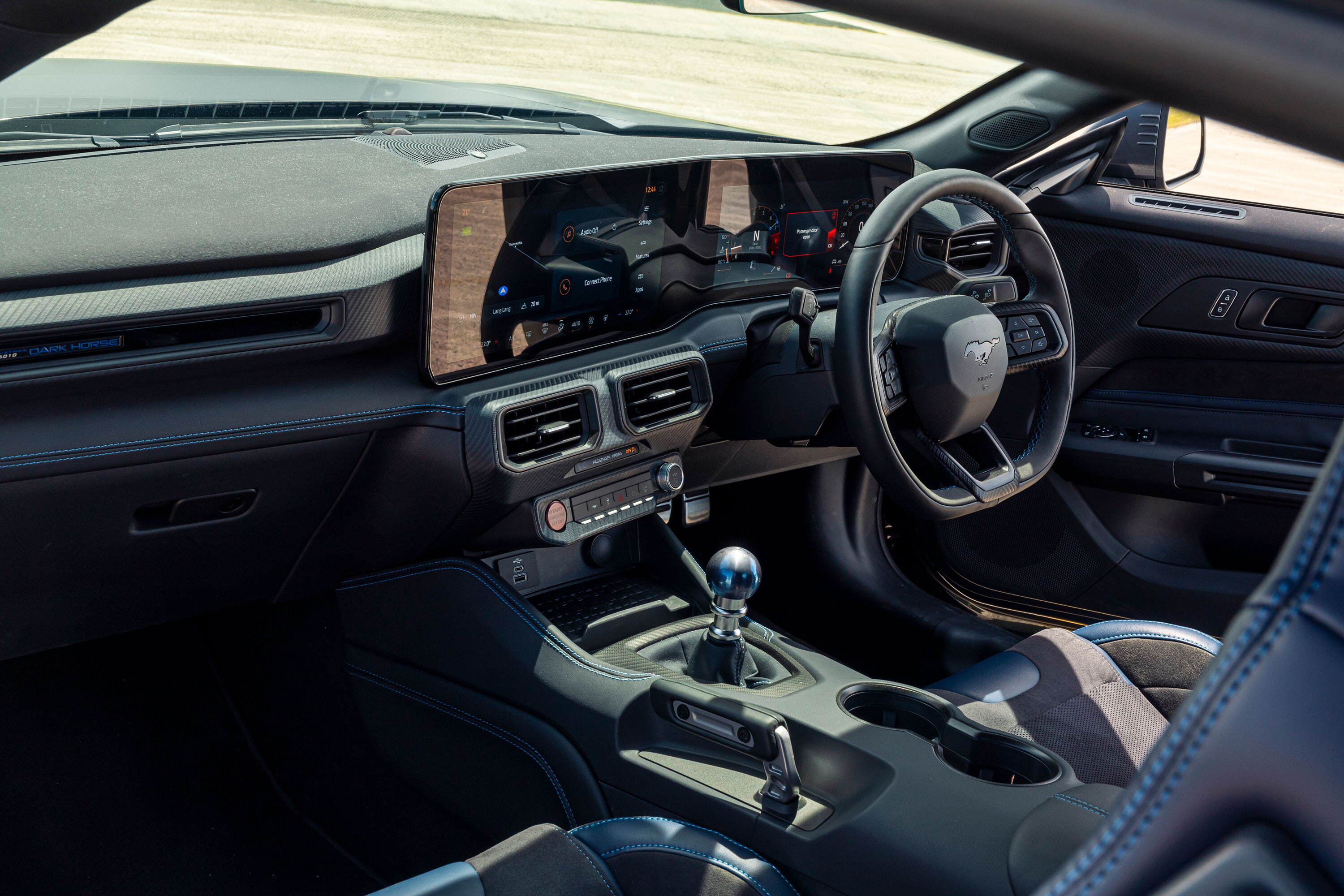
It’s certainly comfortable enough to use everyday. The ride has a pleasing duality and the cabin, which has long been a Mustang weakness, is a welcome improvement thanks to better quality materials and a new dual-screen digital dash. The dash which includes a nerdy level of performance data and the ability to cycle through design themes for the instruments which can replicate the look and feel of previous hero Mustangs like the original ’60s model, an ’80s Fox Body and, my personal favourite, the white dials of an SVT Cobra.
As it stands, the Dark Horse is a remarkable machine – certainly one that delivers a driving experience that is more than the sum of its parts.
– Alex Inwood
1
| Ford Mustang Dark Horse | |
|---|---|
| Price/as tested | $99,102/$105,332 |
| Drive | 5.0-litre V8, dohc, 32v |
| Power | 350kW @ 7250rpm |
| Torque | 550Nm @ 4850rpm |
| Transmission | 6-sp manual/10-sp auto |
| Weight | 1822kg (m), 1842kg (a) |
| L/W/H/WB | 4823/2097/1413/2719mm |
| Tyre | Pirelli P Zero 255/40R19 (f), 275/40R19 (r) |
| Safety | Untested |
Hyundai Santa Fe Calligraphy
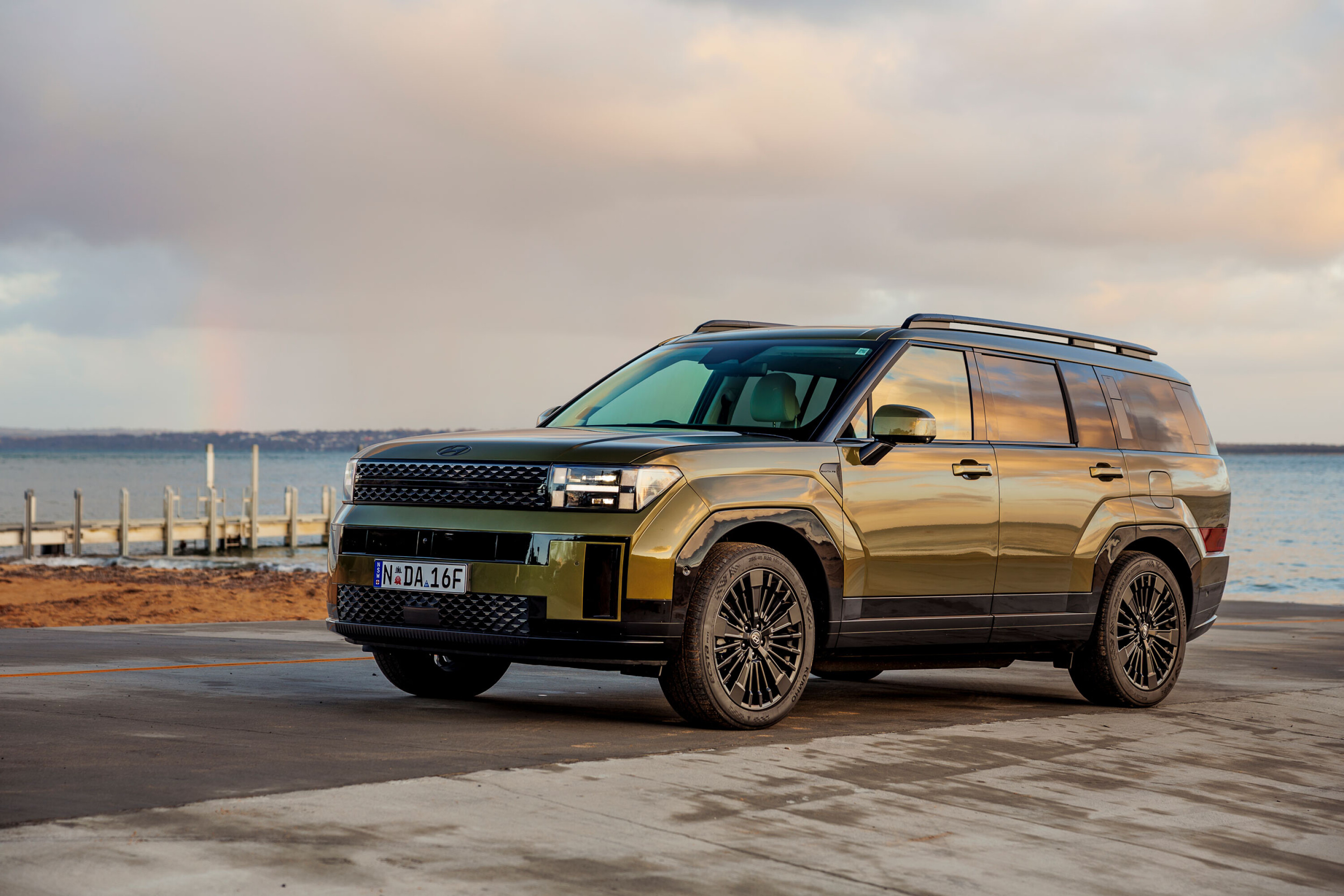
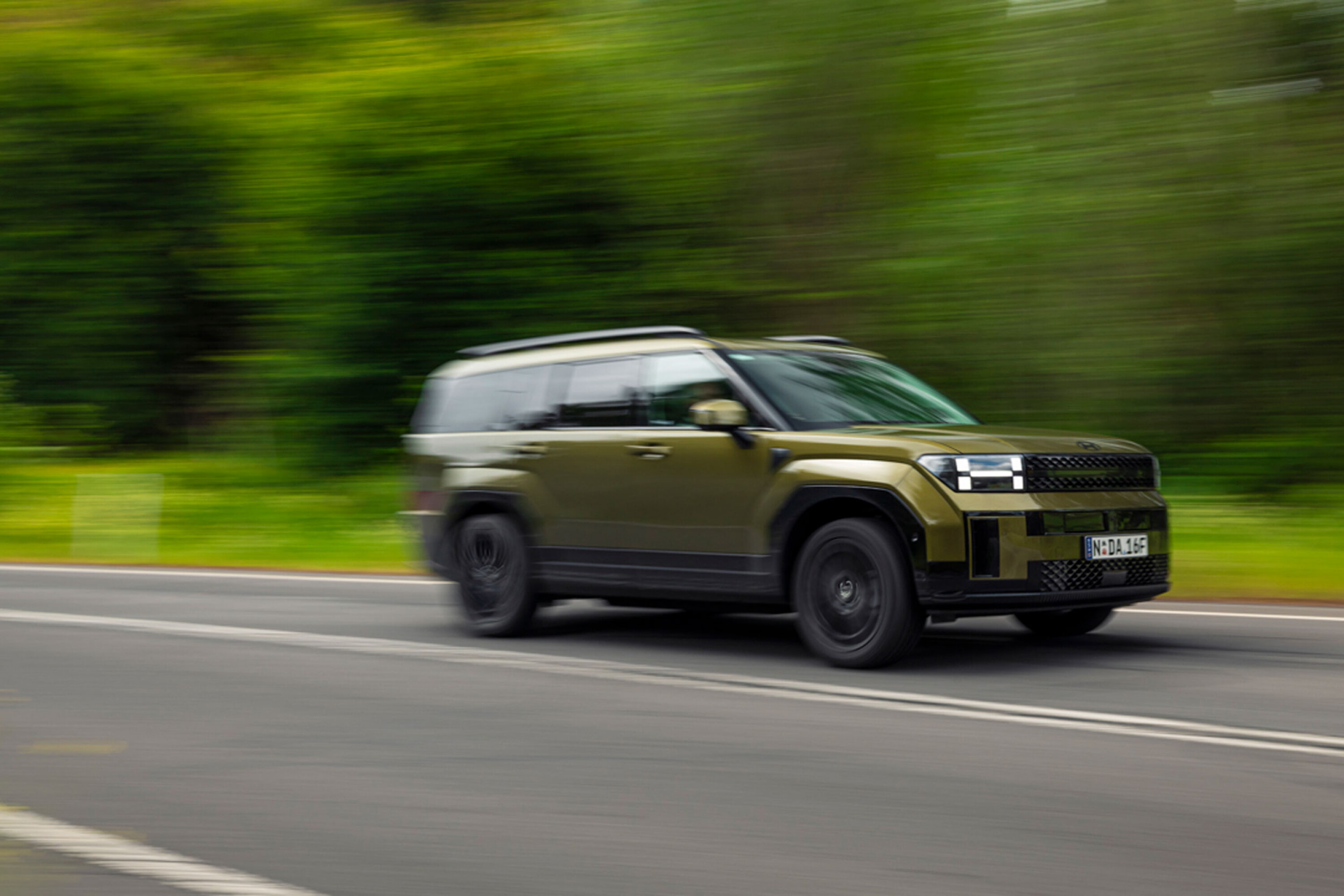
It’s ironic that Hyundai’s out-of-the-box design theme for the fifth-generation Santa Fe large SUV resembles a box on wheels. This eye-catching aesthetic, which is repeated outside and in, is designed to be exactly that. Hyundai wants the Santa Fe to be noticed because the previous four generations were too often overlooked by car shoppers.
1
The new Santa Fe hit Australian showrooms mid-year priced $10,000 above the outgoing model, which design changes alone can’t justify. All models are powered by a hybridised 172kW/367Nm 1.6-litre turbocharged petrol engine driving either the front wheels or all four. Hyundai will add a non-hybrid 206kW 2.5-litre turbo in due course, replacing the previous generation’s 3.5-litre V6. But diesel is no longer part of the Santa Fe range.
For now, the four-cylinder hybrid is where it’s at, and despite being the smallest Santa Fe engine ever, it delivers. Even though the Santa Fe Calligraphy we tested weighs in at 2105kg, the hybrid engine and six-speed automatic transmission do a more than adequate job of meeting daily driving demands.
There is a touch of throttle lag below 2500rpm, which can make the car feel a little lethargic, most obvious in Eco mode which is prioritising fuel economy. Move out of Eco to Normal mode and the engine responds better and is also more willing to smoothly drop gears to give the driver what they want. That said, the engine can become coarse when put under pressure.
The hybrid powertrain’s energy recuperation system is commendably invisible. There’s no jerkiness transitioning from regenerative braking to recuperation. It’s also clearly doing its primary job, because we recorded 6.6L/100km on our very hilly 50km open-road loop, just one litre higher than its official claim.
1
When it comes to ride quality, the Santa Fe is less impressive, but that’s more a reflection of its highly polished rivals than any real-world deficiency. The Santa Fe is another Hyundai whose suspension has not specifically been tuned for Australian conditions, the factory relying instead on historical data. This results in a vehicle that’s busier than its rivals, and also noisier on its Kumho Ecsta tyres.
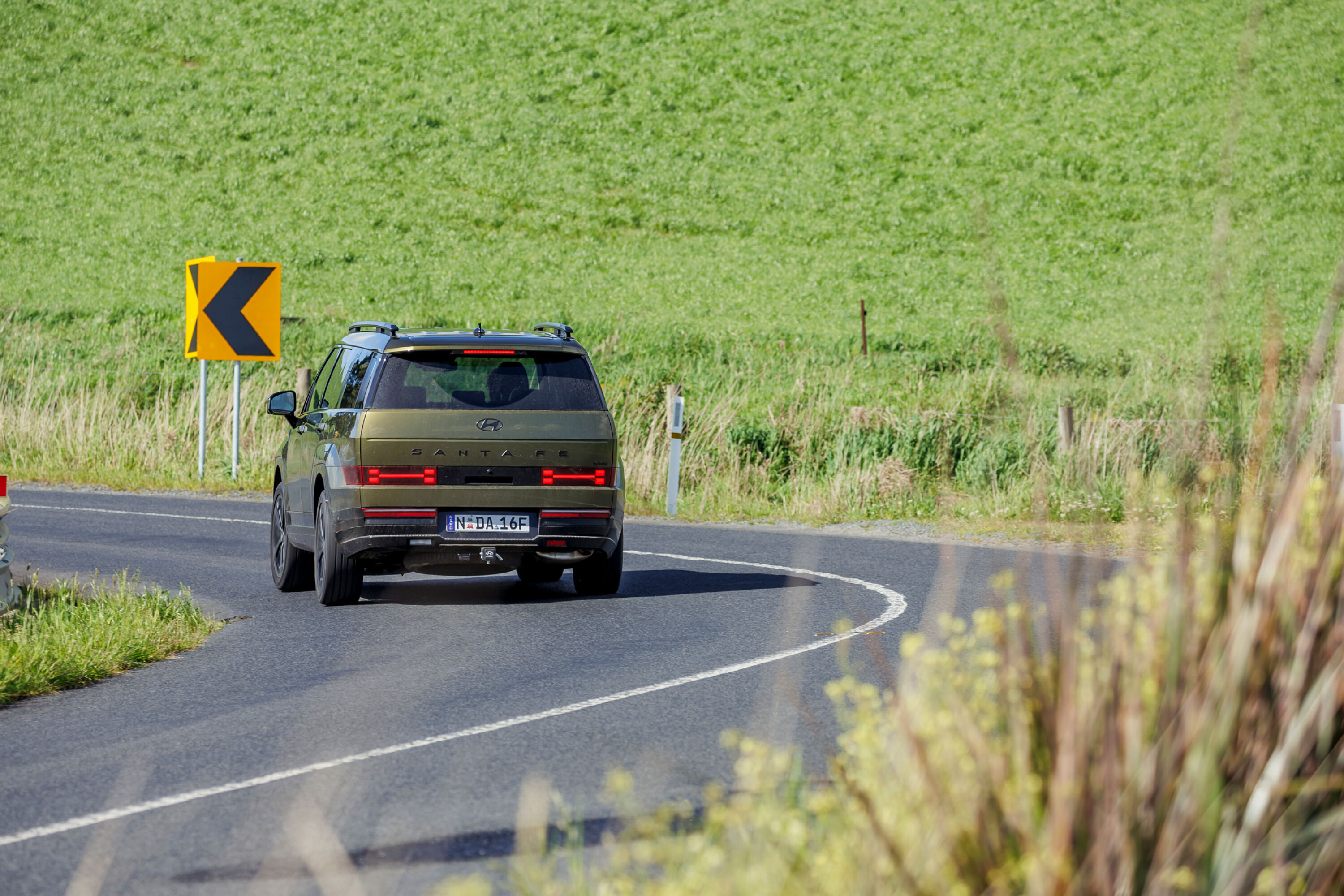
The ride isn’t overly terse or overactive, just without the suppleness to match the Kluger or indeed its Kia Sorento stablemate. The tyres and suspension tune do make up for it dynamically; this may be a family truckster, but it also has the poise and the grip to make winding roads more enjoyable.
While some may debate the importance of chassis dynamics for a family SUV, Wheels sees merit in driving competence and confidence. We’d much rather a dynamically proficient family vehicle than the alternative. But still, the wider target market will be more focused on the Santa Fe’s space and practicality than any dynamic overtones.
1
The new body is bigger: 45mm longer, 10mm taller, and riding on a 50mm-longer wheelbase, which liberates more legroom and cargo space inside. The boxy body also has some thoughtful touches, like the hidden handhold on the C-pillar which makes accessing rooftop loads easier, and also for clambering into the third row. The biggest dimensional change, however, has to be the boot opening which is 145mm wider, giving loads more load width. The boot floor’s loading height is lower, too.
The boot is a whopper in two-row mode (628 litres), but buyers will need to tick a few rooftop luggage options if they’re planning roadtrips with all three rows occupied because luggage space is almost non-existent in this configuration. Still, that’s the same for any SUV in this class, and Hyundai’s extensive – and affordable – options list again highlights the company’s family focus during development.
The range incorporates three model grades – Santa Fe, Elite and Calligraphy – and all come with three rows of seating in a 2+3+2 configuration. There’s a second Calligraphy model that replaces the bench middle row with two individual seats – handy for separating offspring that like to niggle and tease, and for walk-thru access to the third row.
1
We chose to test the top-spec Calligraphy because it’s expected to outsell both the base model and the Elite combined. It puts everything on the table for buyers, but does cost $75,000 plus on-roads.
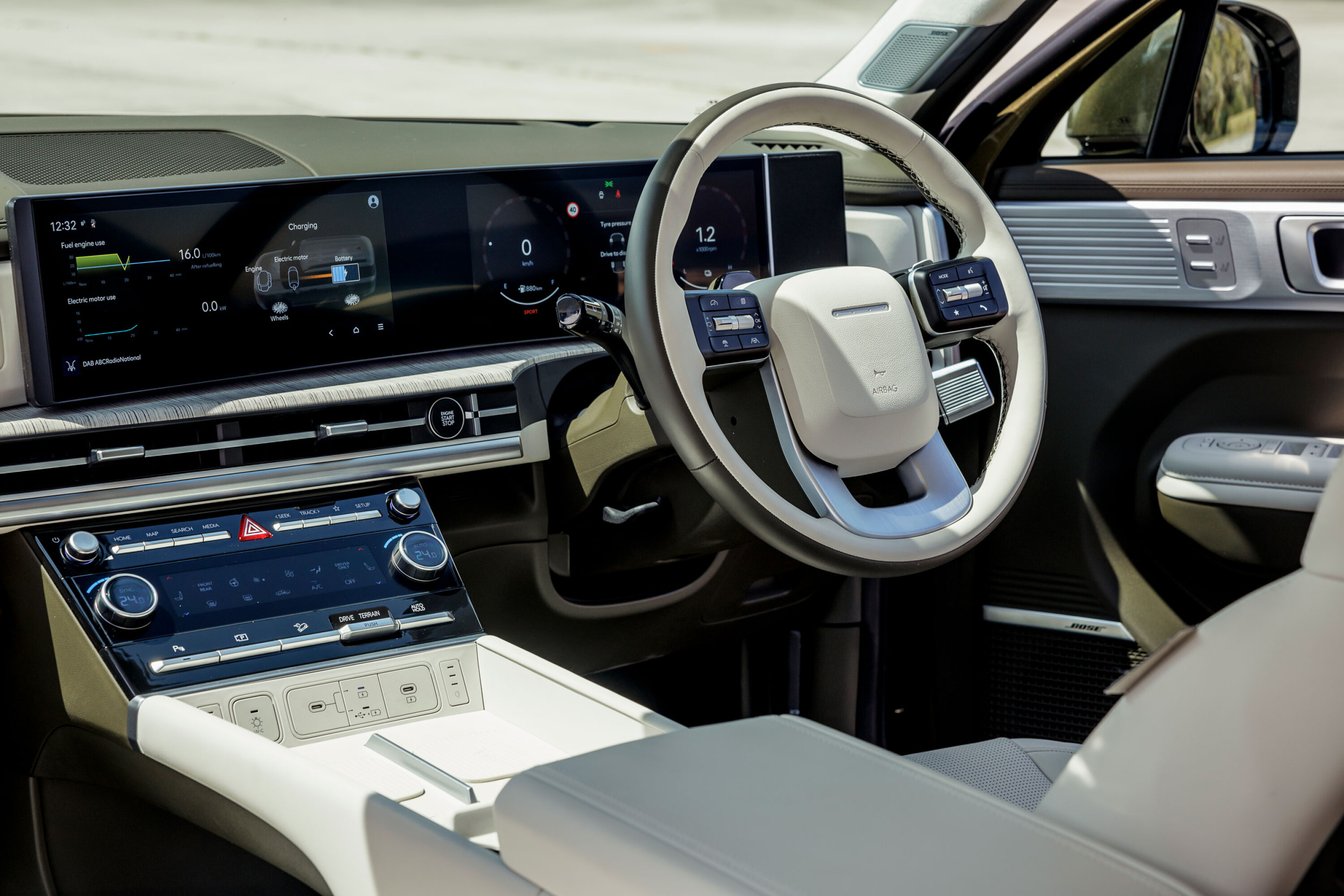
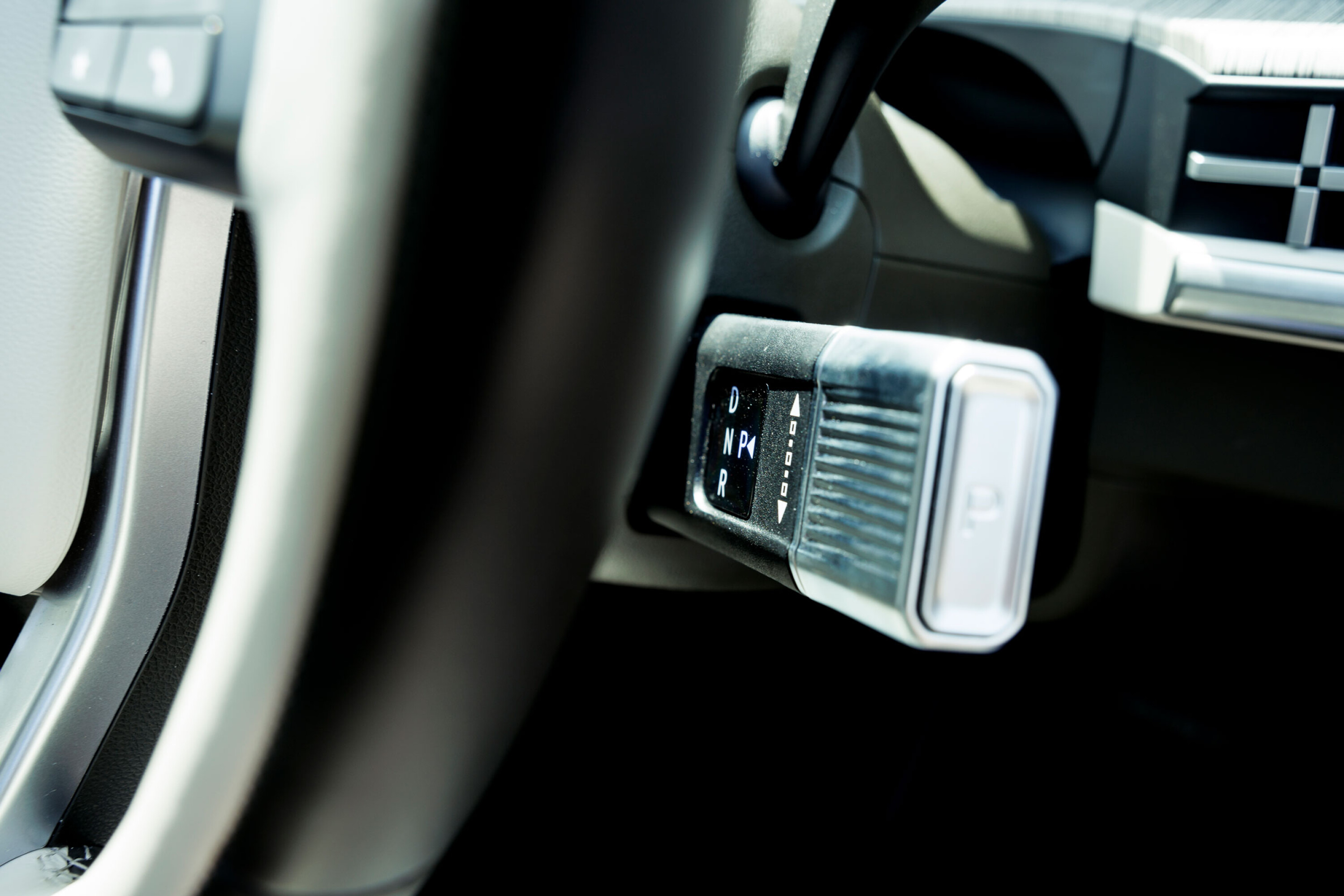
The cabin continues the boxy theme with amusing attention to detail, and also makes use of modern materials to convey quality and class. Again, Hyundai’s thoughtfulness and innovation shine through. For starters, dual wireless phone chargers speak to its family friendliness, as do the many useful storage spaces – including the centre console’s double-hinged lid that opens for rear occupants as well.
Kudos to Hyundai for also resisting the temptation to go all-in with touchscreen controls and retain actual buttons for the dual-zone climate control and other oft-used systems as well. And for adopting the one-touch speed warning override as debuted on Genesis models earlier this year, doing much to fix one of the Santa Fe’s most tedious features.
The second row has plenty of legroom and headroom, even with the Calligraphy’s huge sunroof, and the third row can accommodate adults at a push (if the second row compromises its legroom), but is more suited to children.
The more we delved into the Santa Fe, the more we understood the lengths Hyundai has gone to address buyer needs and concerns. This new Santa Fe is a thoughtfully designed and brilliantly executed family SUV that improves on the previous generation in all the right areas.
– Glenn Butler
1
| Hyundai Santa Fe Calligraphy | |
|---|---|
| Price/as tested | $75,000/$75,990 |
| Drive | 1598cc 4cyl, dohc, 16v, turbo, hybrid |
| Power | 172kW @ 5500rpm |
| Torque | 367Nm @ 1500-4500rpm |
| Transmission | 6-speed automatic |
| Weight | 2105kg |
| L/W/H/WB | 4830/1900/1770/2815mm |
| Tyre | Kumho Ecsta PS71 255/45R20 (f/r) |
| Safety | Untested |
Hyundai IONIQ 5 N
The first EV that you’d take for a drive just for the fun of it? That’s what the IONIQ 5 N could well be. Albert Biermann and the team at Hyundai’s N Division have engineered this to be ingrained from top to bottom with laugh-out-loud enjoyment and baked-in driver engagement.
1
It takes a very special sort of road car to impress somebody who has won the Australian rally championship seven times, but after we ran performance tester Cody Crocker through the 5 N’s manual gear shifting system, he returned with a massive grin and a distinct reluctance to hand back the keys. “I’ve got a new favourite car,” he said. “I had no idea it could do that.”
Ah, yes, that. It was always going to be a controversial move, offering drivers the option of artificially mandated gearshifts, a rev limiter, and the feeling of torque building as the entirely non-existent engine comes on cam. At first glance, it would seem to play into the hands of those who claim that electric powertrains are lame and that the old ways are better, but do we need to be that partisan, that binary? Can we not take the best of both to create something new and incredible? That’s exactly what Albert Biermann and his team at Hyundai’s N division has done with this remarkable car.
Value? You’re getting a performance car with 478kW; comfortably more power than a McLaren F1 for $110K. Safety? The IONIQ 5 has returned a five-star ANCAP rating. Layer on top of that the bigger brakes, better tyres and additional safety systems of the 5 N and that box is resolutely ticked. Cabin design and execution? It seats five adults in comfort, has a big boot and is well-appointed throughout, with thoughtful stowage inside the car, solid ergonomics and a flat floor. How it drives? If that includes the ability to make you laugh out loud in pure joy, then nothing at this year’s event, even the fabulous Mustang Dark Horse, could top it. The mantra that ran through the 5 N’s development speaks volumes: driving still matters.
1
Of course, it’s not perfect. No COTY winner ever is. Drive it like you mean it and that claimed 448km WLTP-mandated range shrinks somewhat. Throw it from lock to lock around hairpins at a racetrack and the tyres will let you know that, despite its nimble feel, there’s 2230kg of physics at work here. Then there are the whispers that Hyundai is ready to unleash something even focused, and that the full-bodied IONIQ 5 was a mere toe-in-the-water platform for the Koreans in order to gauge customer reception. As ever, we can only test the cars that are put in front of us.
It resists roll well and there is so much to be said for plucking the gears yourself. At first, you’ll feel silly. Ten seconds later, you won’t give a hoot about how silly you think it is – you’ll be laughing too much. Isn’t that what we want from performance cars today: to feel connected and engaged? The IONIQ 5 N delivers that in spades. Don’t get mired in how you got there. Just enjoy the end result.
– Andy Enright
1
| Hyundai IONIQ 5 N | |
|---|---|
| Price/as tested | $110,383/$112,383 |
| Drive | 2 x electric motors, 84kWh lithium-ion battery |
| Power | 448kW |
| Torque | 740Nm |
| Transmission | Single-speed reduction gear |
| Weight | 2230kg |
| L/W/H/WB | 4715/1940/1585/3000mm |
| Tyre | Pirelli P Zero 275/35ZR21 (f/r) |
| Safety | Untested |
Kia EV5 Earth AWD
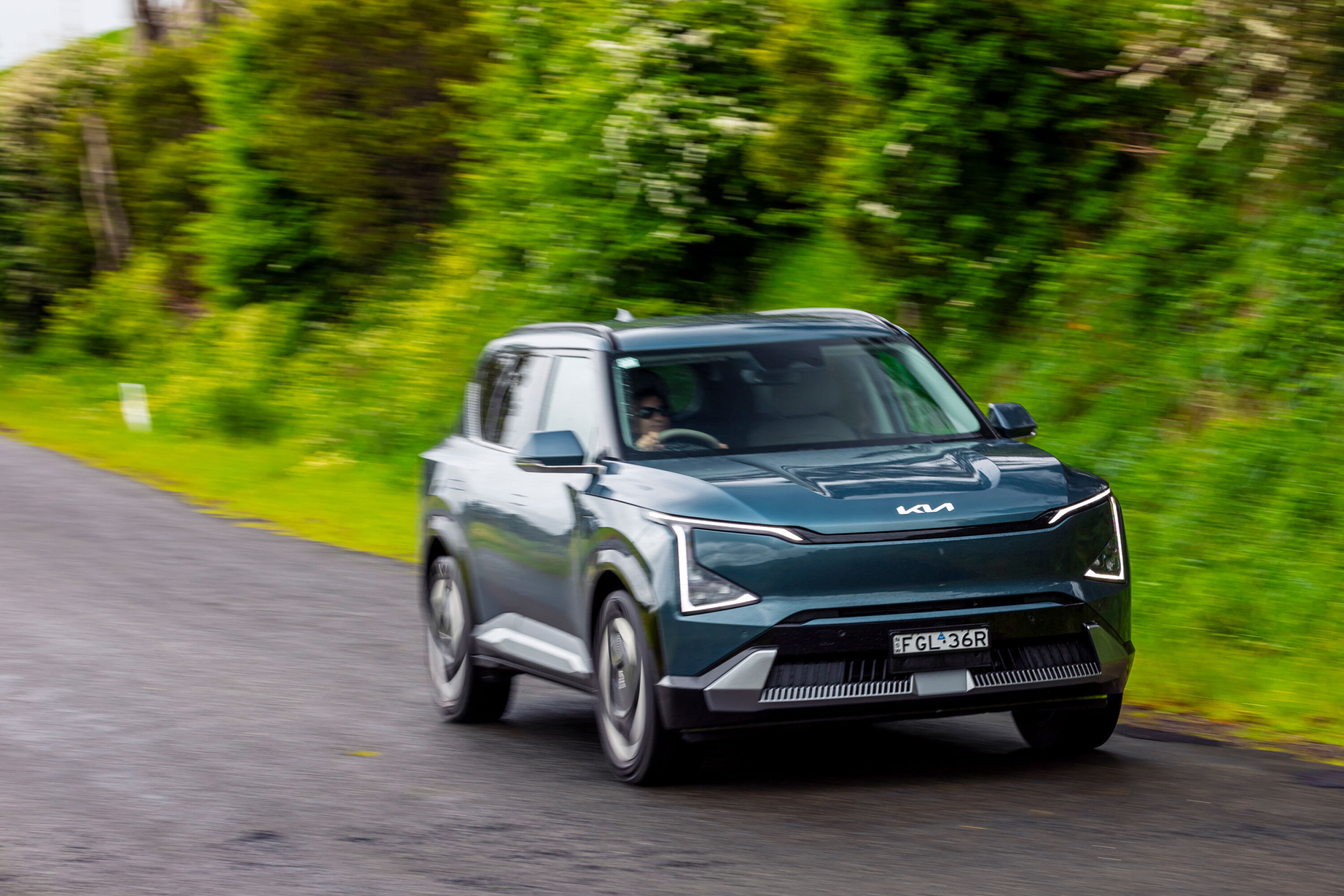
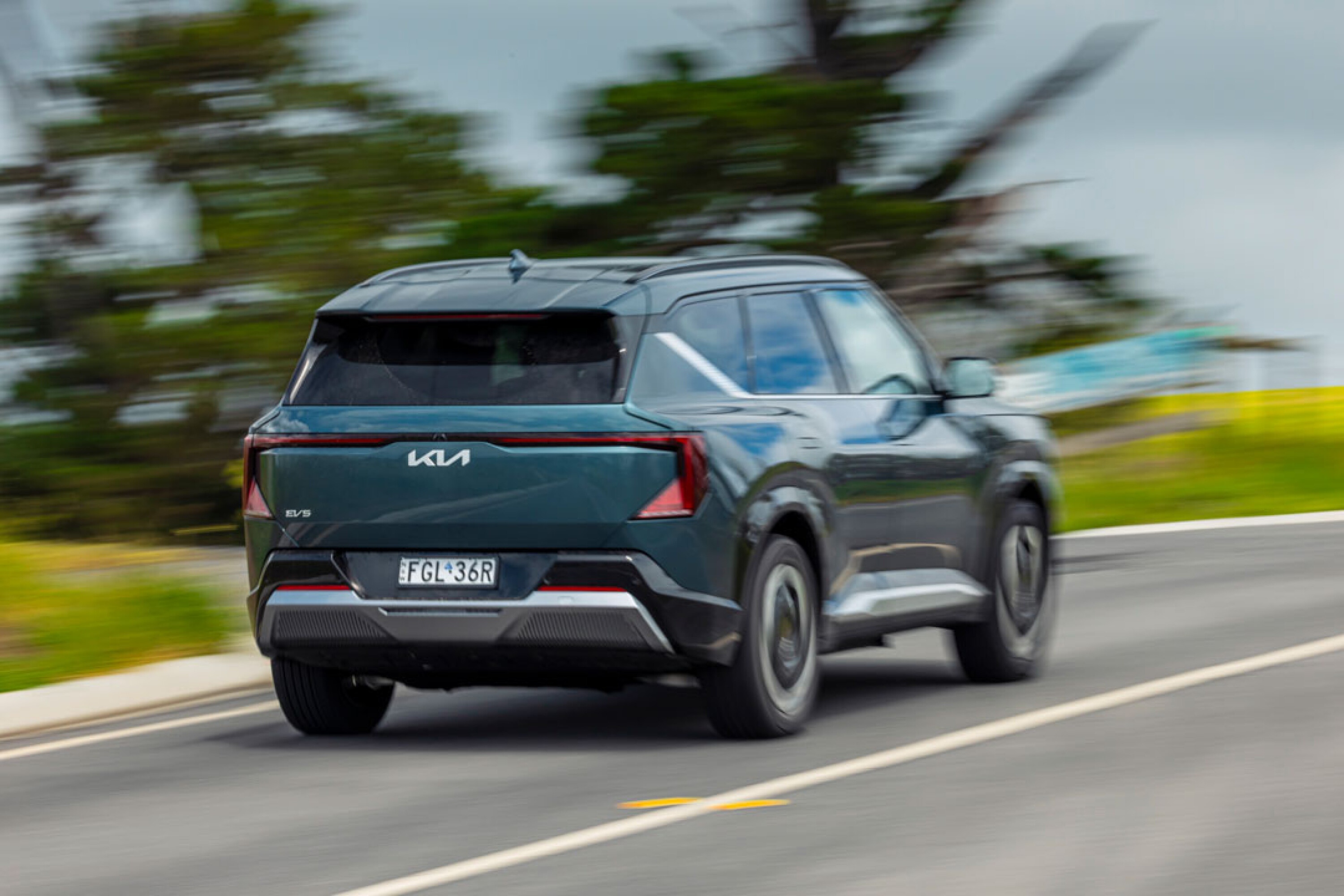
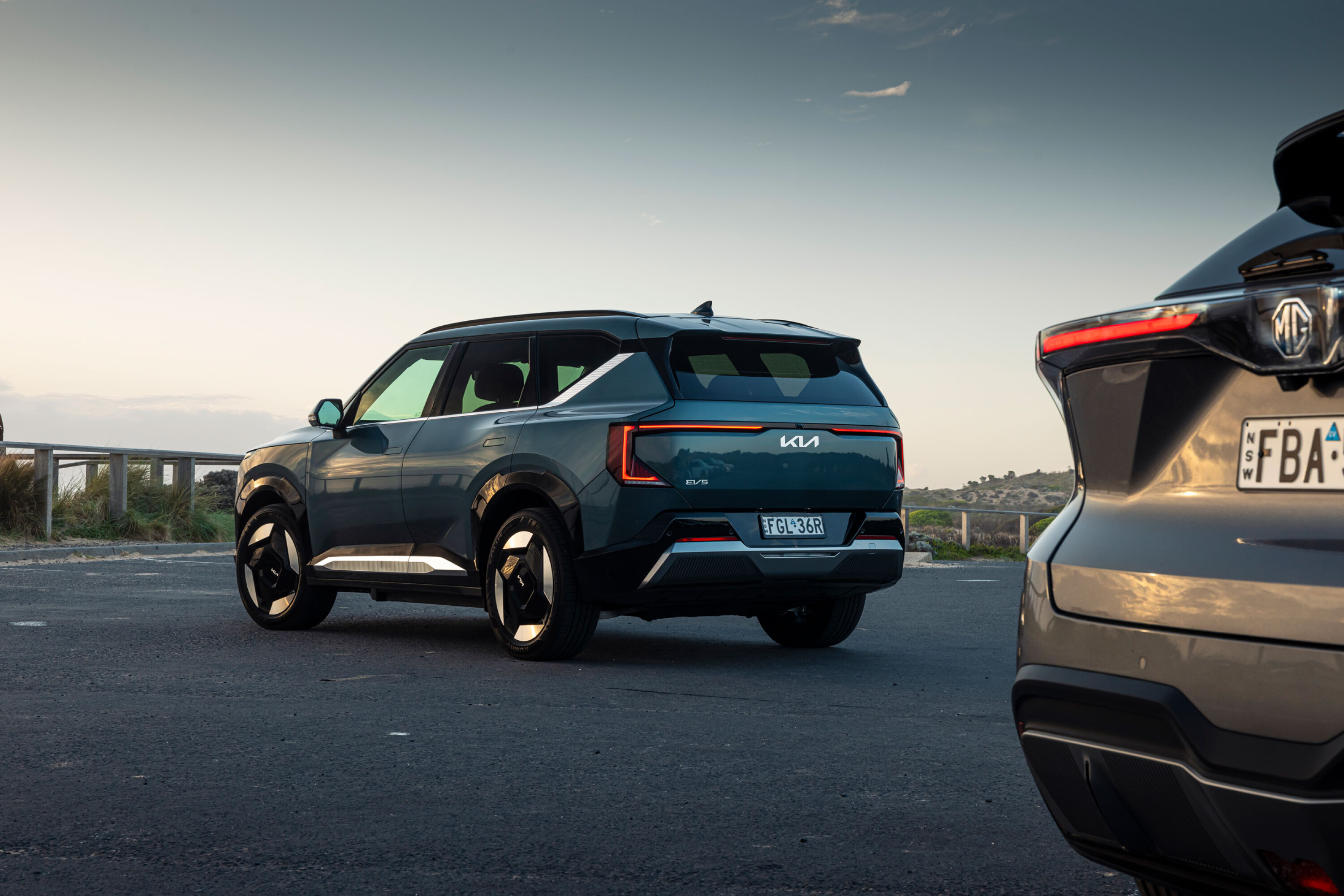
With the range starting at $56,770 drive-away for the base front-drive Air Standard Range, we chose the mid-spec $68,990 drive-away Earth with its larger 88.1kWh battery, 500km of claimed WLTP range, all-wheel drive and various other extra equipment. While it doesn’t quite make the same futuristic statement as the EV9 in the metal, it still looks plenty good to our eyes.
1
Inside, there are dual screens, a feeling of rock-solid build quality and a decent mix of materials – some premium, some a bit cheap. But on the whole, this is a pleasant place to be. Space in the back is also good, with a sliding second row, and there’s a decent 513-litre boot – no doubt helped by the lack of any spare wheel.
Back up front, there was one design feature that had the judges befuddled. Where you’d normally find the centre console, instead the EV5’s passenger seat lower cushion extends inwards almost like a faux bench. Nobody can sit on it, mind you. There’s a pocket in which to stuff things, but the consensus was a classic tale of form over function – no deal-breaker but robbing the EV5 of some crucial central storage space.
With its high seating position and tall overall proportions, the EV5 grants a curious boxy sensation when driving, as if you’re somehow in a short-wheelbase version. And it acquitted itself well enough around Lang Lang’s ride and handling circuit with accomplished EV damping, fluid handling and an absorbent ride quality.
1
While it has two electric motors, ‘just’ 230kW and 480Nm is on offer – something actually sensible if you ask us. You get the security and added usability of all-wheel drive with acceleration more than sufficient for the people who will be buying this vehicle. Not every dual-motor EV should be able to accelerate like a last-generation Ferrari hypercar. Especially in the hands of someone just trying to duck down to their local Woolies for more bread.
Away from the proving ground and road loops of COTY testing, the EV5 is a worthy alternative to the all-conquering Tesla Model Y.
In this guise, its $68,990 drive-away price undercuts the Model Y Long Range, but with comparable range (500km claimed WLTP, versus the Tesla’s 533km), a longer warranty (seven years versus four) and a more classic, car-like interior that makes a Model Y feel featureless inside. There’s also the fact it’s not a Tesla.
– Dylan Campbell
1
| Kia EV5 Earth AWD | |
|---|---|
| Price/as tested | $64,770/$68,990 (d/a) |
| Drive | 2 x electric motors, 88.1kWh lithium-ion phosphate battery |
| Power | 230kW |
| Torque | 480Nm |
| Transmission | Single-speed reduction gear |
| Weight | 2198kg |
| L/W/H/WB | 4615/1875/1715/2750mm |
| Tyre | Kumho Solus HS63 EV 235/35R19 |
| Safety | Untested |
MG4 Essence 64
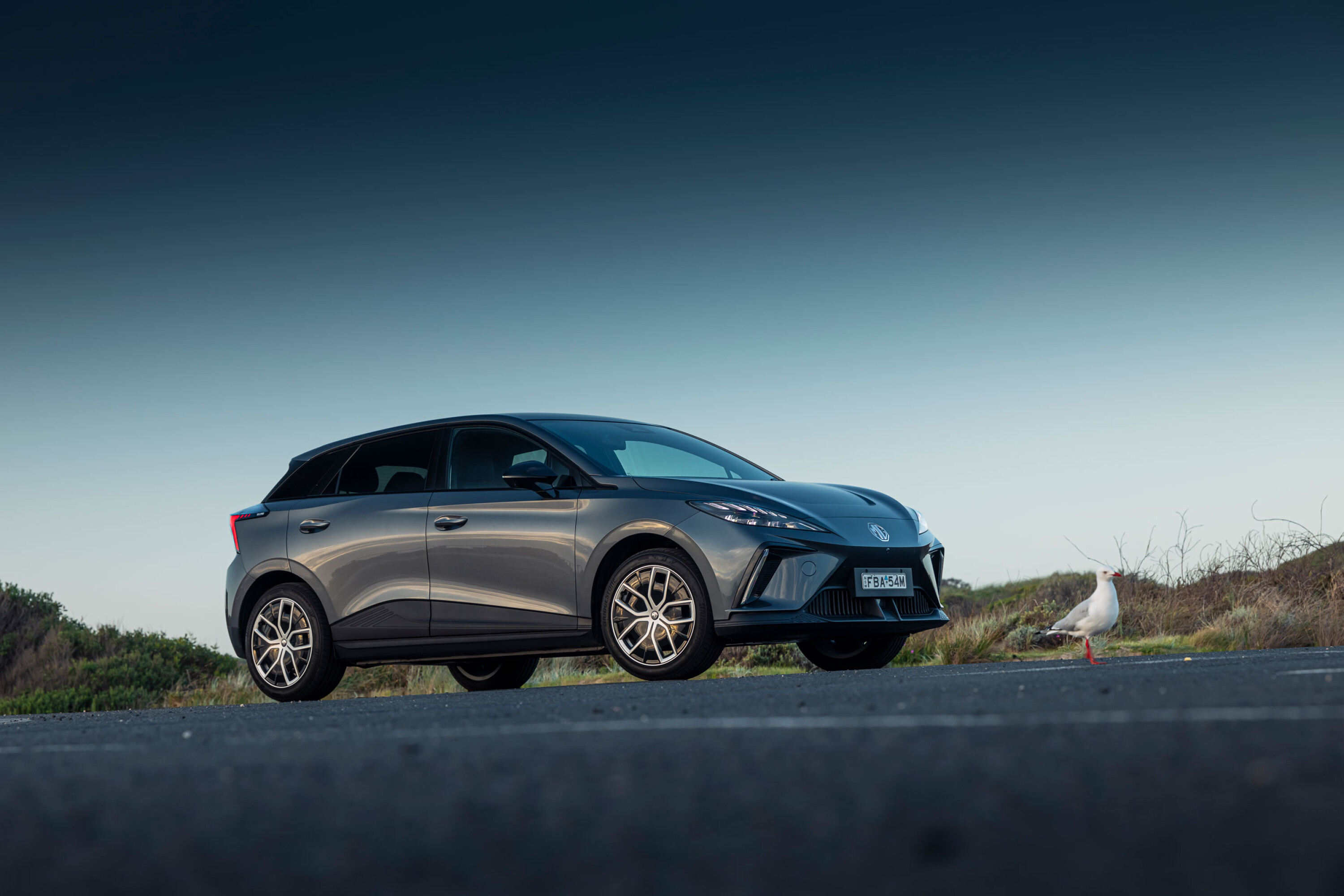
Here is a vehicle that offers performance, practicality and peace of mind – thanks to a 10-year/unlimited-kilometre warranty – but also changes the value equation and makes buying an EV a viable option for so many people by coming to market from just $37,990.
1
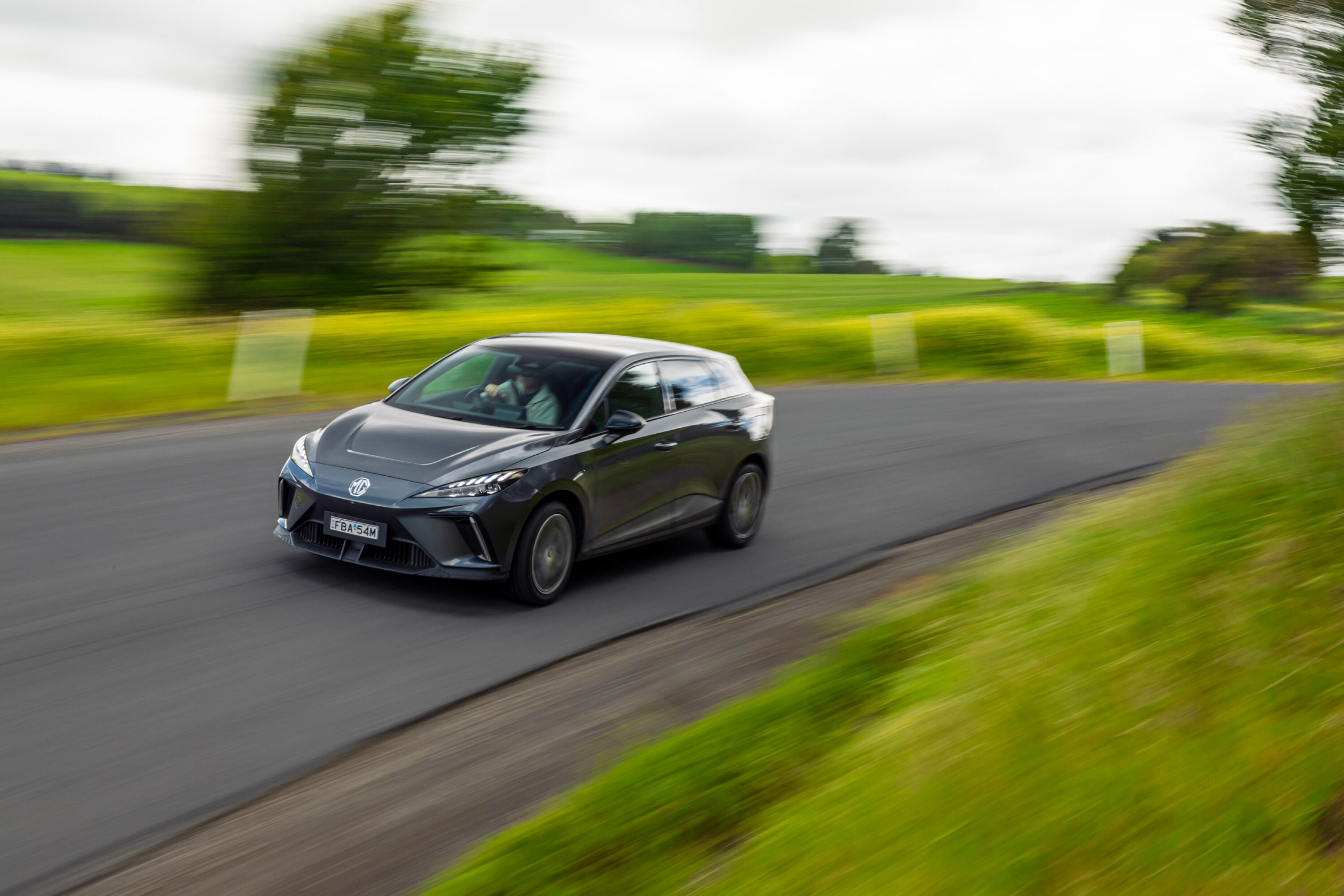
Even if this MG was only a very basic, barely pleasant thing to drive, it would be a game-changer, but in the shape of the MG4 Essence 64 model we were driving at COTY ($49,150 drive-away in Victoria), it’s a lot more than that. Indeed, even at this spec level, it’s a five-door, five-seat family hatch that makes plenty of EVs in the $60,000 to $70,000 price range look like terrible value, while also offering something to the purist with its single-motor, rear-wheel drive powertrain offering 150kW/250Nm and a 0-100km/h time of 7.2sec.
The fact is, it feels a lot faster than that and makes the most of the kind of instant-torque shove that electric vehicles are so good at delivering, particularly where you most want it in those overtaking moments between 60 and 80km/h, and 80 to 110km/h. It does lack a bit of punch above 120km/h, a problem that is resolved if you opt for a twin-motor MG4 model.
Better yet, as all of the judges noted after driving it around the ride and handling loop, the MG4 offers properly sporty turn-in, talkative steering. Having made it through to the final six of this year’s COTY, based on judges agreeing unanimously that the MG4 represents a vehicle that is a genuine game-changer and stands out from the field in terms of value in particular, as well as driver enjoyment (once you get it moving), it’s ride quality was found wanting on the testing road loop.
In terms of driving dynamics, there’s no doubt the MG4 is very good for what it is, and that it marks, as the judges agreed, a line in the sand for MG: “We don’t just make cheap cars – we make cars that are good to drive.”
– Stephen Corby
1
| MG4 Essence 64 | |
|---|---|
| Price/as tested | $44,990/$49,150 (d/a) |
| Drive | 1 x electric motor, 64kWh lithium-ion battery |
| Power | 150kW |
| Torque | 250Nm |
| Transmission | Single-speed reduction gear |
| Weight | 1672kg |
| L/W/H/WB | 4287/1836/1516/2705mm |
| Tyre | Bridgestone Turanza T005 235/45R18 (f/r) |
| Safety | Five stars |
Toyota Camry Ascent Sport
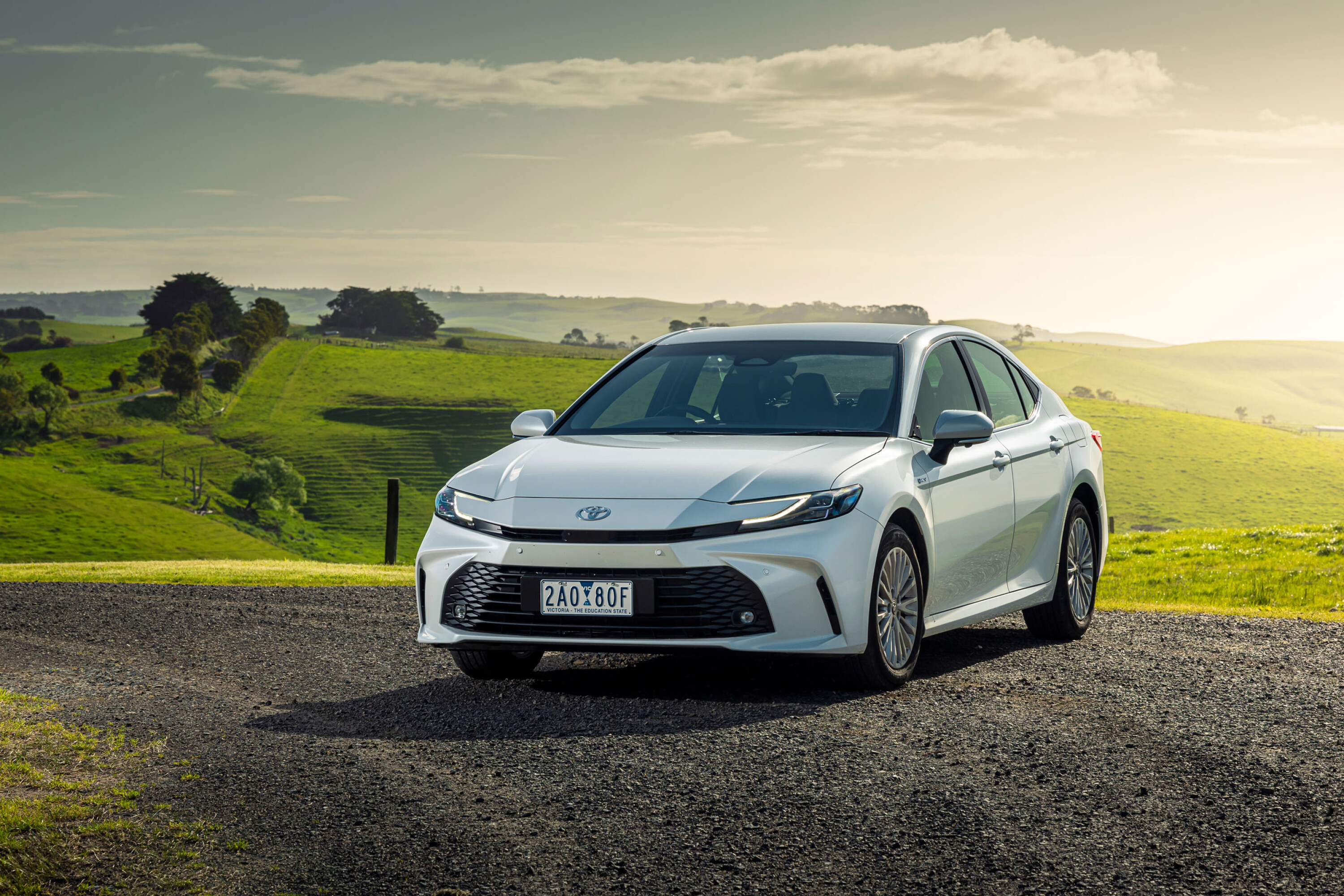
The reason this Toyota is Australia’s most popular sedan, our ubiquitous taxi, and is now employed by more ride-share drivers than any other vehicle, is easy to understand. No potential rival goes close to matching the Camry’s long-acknowledged low operating costs, reliability, and practicality.
1
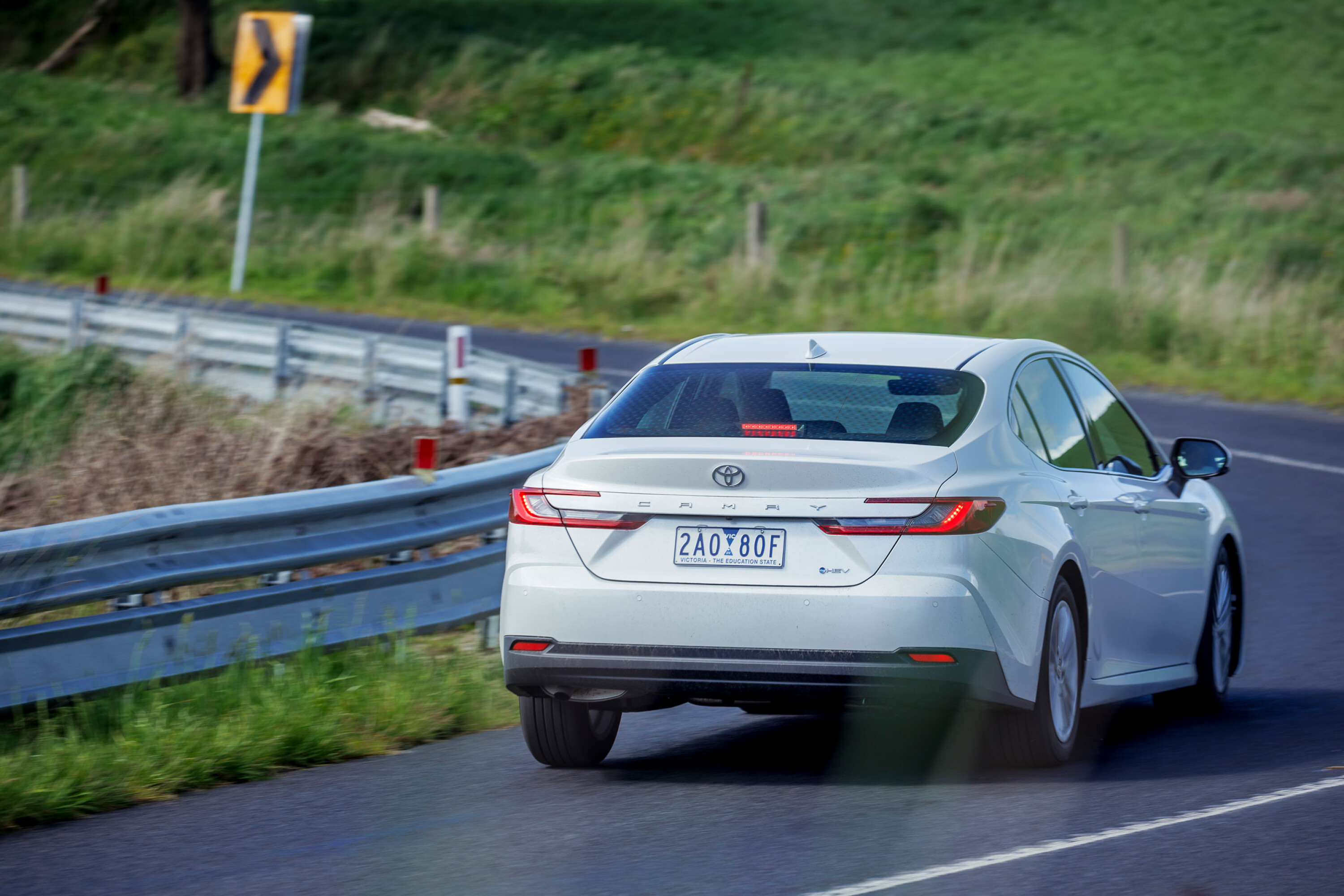
With the coming of the latest generation, the list of virtues grows to include true refinement, spacious comfort and, now it’s hybrid-only, extremely thrifty fuel economy plus, most surprisingly, driving pleasure.
Today’s ninth-generation XV80 Camry is a worthy evolution of the previous XV70 model – the first based on Toyota’s TNGA-K platform (RAV4 and Kluger), and the Camry that lifted the dynamics and refinement above the mediocre XV50 that ran until 2018.
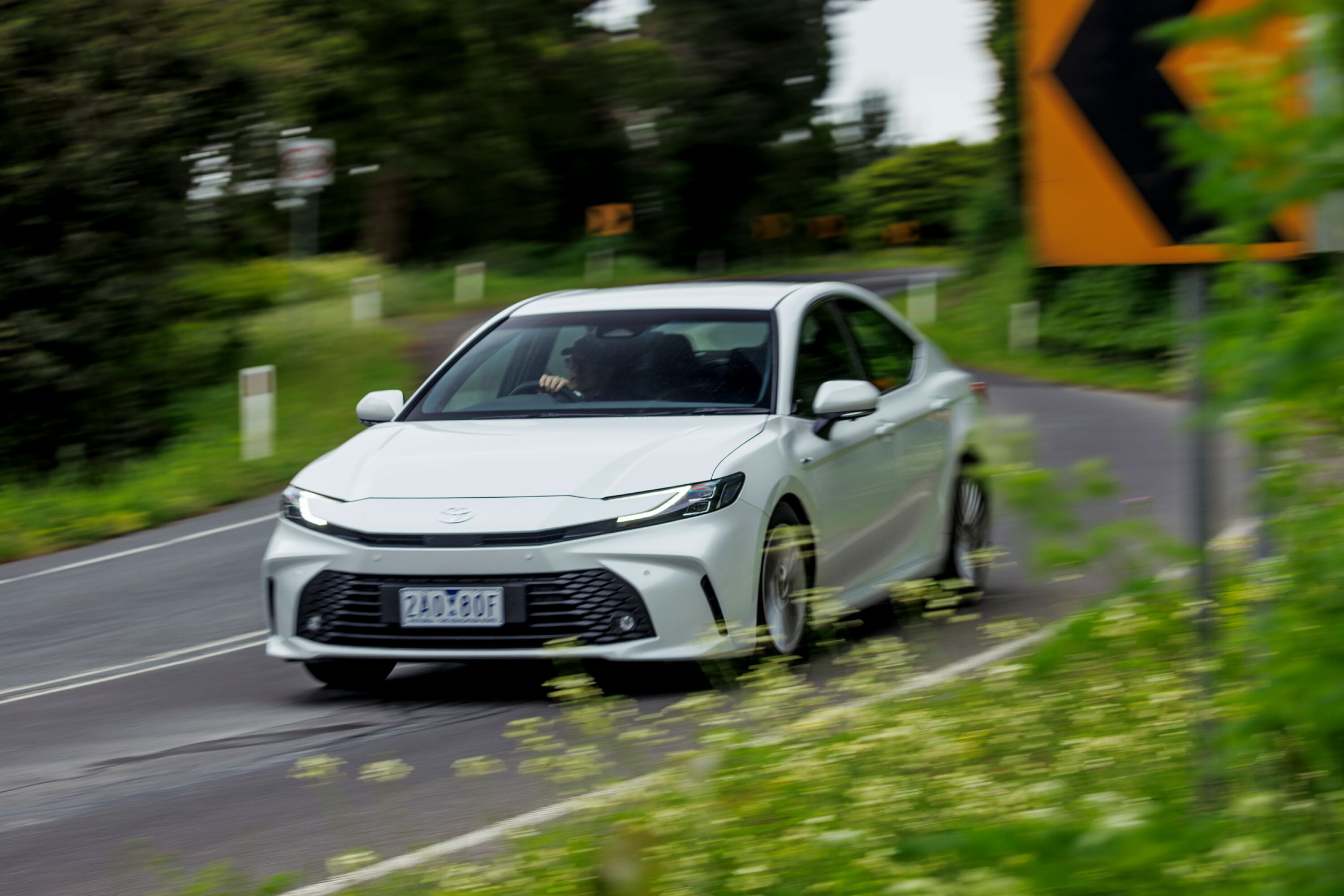
The new Camry is the latest evidence of a quarter of a century spent perfecting hybrid technology, and it shows. Driving it is to experience a wonderful powertrain, whose low-end EV-like performance gets you effortlessly around town. Quick and smooth, the experience feels more creamy and contemporary than ever. On the highway, more throttle is required to overtake but it’s so effortless that the erstwhile V6 is never missed. All this while delivery outstanding – think circa 4.0L/100km or less – economy, though admittedly the 2.5-litre DOHC four does need 95RON premium fuel. There’s no talk of a plug-in hybrid.
1
In as-tested Ascent Sport guise, and despite its conservative, evolutionary styling (the front doors and roof are carried over from the previous model), this is the sportiest Camry we’ve ever driven, as well as being the most comfortable. Subtle suspension and steering modifications (the power steering is now speed sensitive) and a reinforced structure mean this brilliant combination of qualities begins with quick, confidence-inspiring steering, relaxed yet stable and composed road manners, and surefooted braking via a short-travel pedal feel that is easy to modulate. Responsive handling, with just a touch of understeer, provides the Camry with the ability to be punted quickly and effortlessly on challenging roads. Yes, it’s true – here’s a Camry that is fun (perhaps pleasurable is more accurate) to drive.
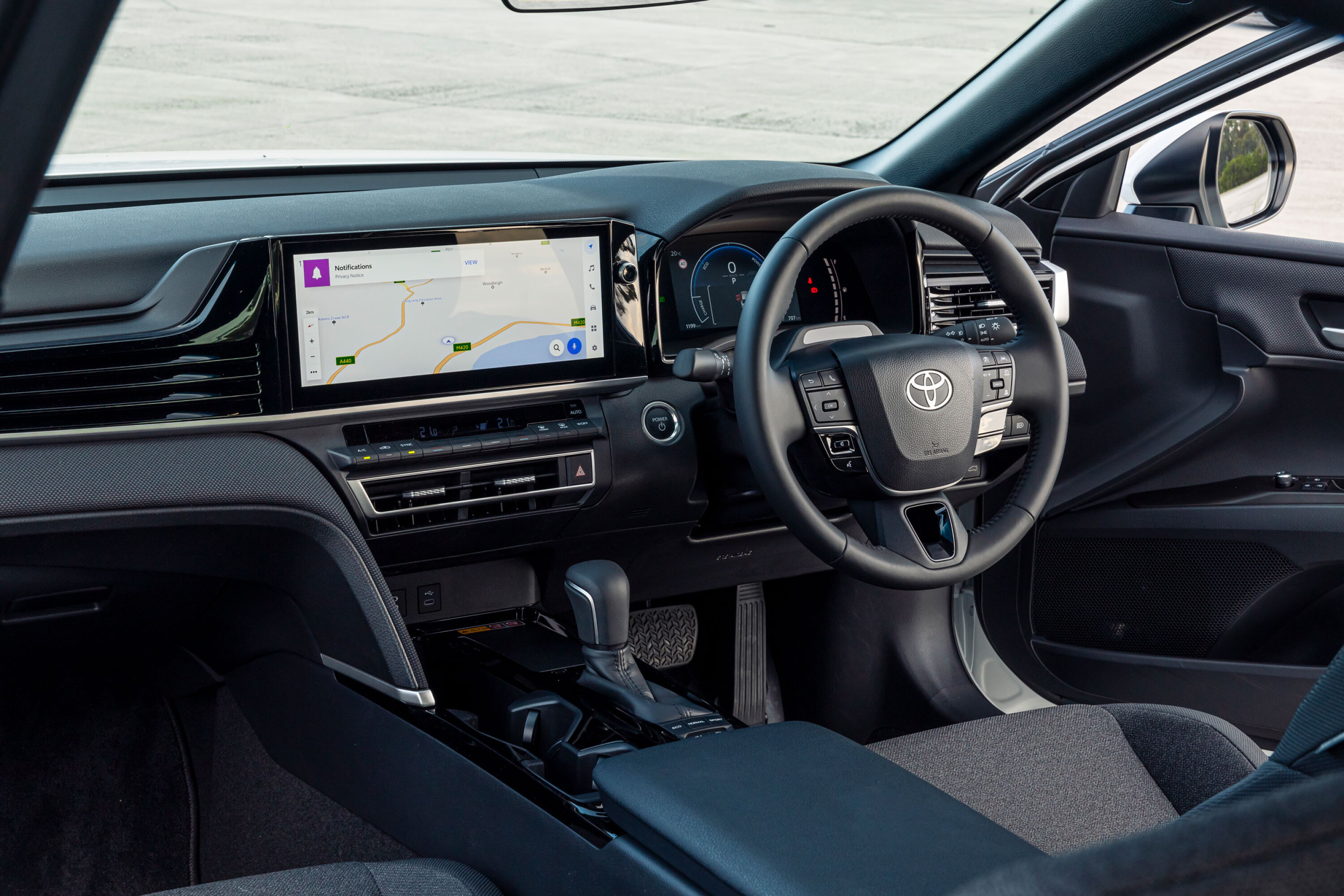
The three-tiered model line-up (the SX has been dropped) includes Ascent and Ascent Sport, clustered closely together on price and equipment. The top-of-the-range SL jumps both in price and equipment. The Camry Ascent, starting from $39,990 plus on-road costs, includes 17-inch alloy wheels, LED headlights and running lights, a urethane steering wheel, keyless entry and start, dual-zone climate control, a 7.0-inch infotainment screen, six-speaker audio, and 7.0-inch driver’s display plus 360-degree cameras.
Our $42,990 Ascent Sport gains high-grade LED headlights and LED fog lights, a powered driver’s seat with adjustable lumbar support, leather-wrapped wheel, and a wireless phone charger. The monitor steps up to a 12.3-inch display and all systems are equipped with wireless CarPlay and Android Auto, AM/FM/DAB+ radio, Bluetooth connectivity, and navigation.
1
The flagship Camry SL kicks off from $53,990 and gets a much longer list of standard features including 18-inch alloy wheels, a panoramic sunroof, leather seat trim (we prefer the cloth), a power-adjustable passenger seat, powered steering column and driver’s memory function, heated and ventilated front seats, heated steering wheel, 12.3-inch digital instrument display, digital rear-view mirror, rain-sensing wipers, a head-up instrument display, and a nine-speaker JBL sound system.
The spacious cabin allows a tall passenger to sit behind an equally tall driver, while the front seats deliver plenty of lateral support, a further encouragement to driving this Camry hard. Sensibly, there are plenty of buttons for the important controls and the 7.0-inch digital instrument display is terrific, with legibility much improved over the previous model. The boot is vast and supplemented by 60/40 split folding seats. A rear parking camera is standard.
All Camrys come with a standard suite of driver-assistance features that includes automated emergency braking with pedestrian and cyclist detection and automatic high-beam headlamps, active cruise control, and a feature that helps the driver prepare for curves by gently applying the brakes.
– Peter Robinson
1
| Toyota Camry Ascent Sport | |
|---|---|
| Price | $42,990 |
| Engine | 2487cc 4cyl, dohc, 16v, hybrid |
| Power | 170kW (combined) |
| Torque | 221Nm @ 3600-5200rpm |
| Transmission | CVT |
| Weight | 1565kg |
| L/W/H/WB | 4920/1840/1445/2825mm |
| Tyre | Yokohama BluEarth GT 215/55R17 (f/r) |
| Safety | Five stars |
2024-25 Wheels Car of the Year
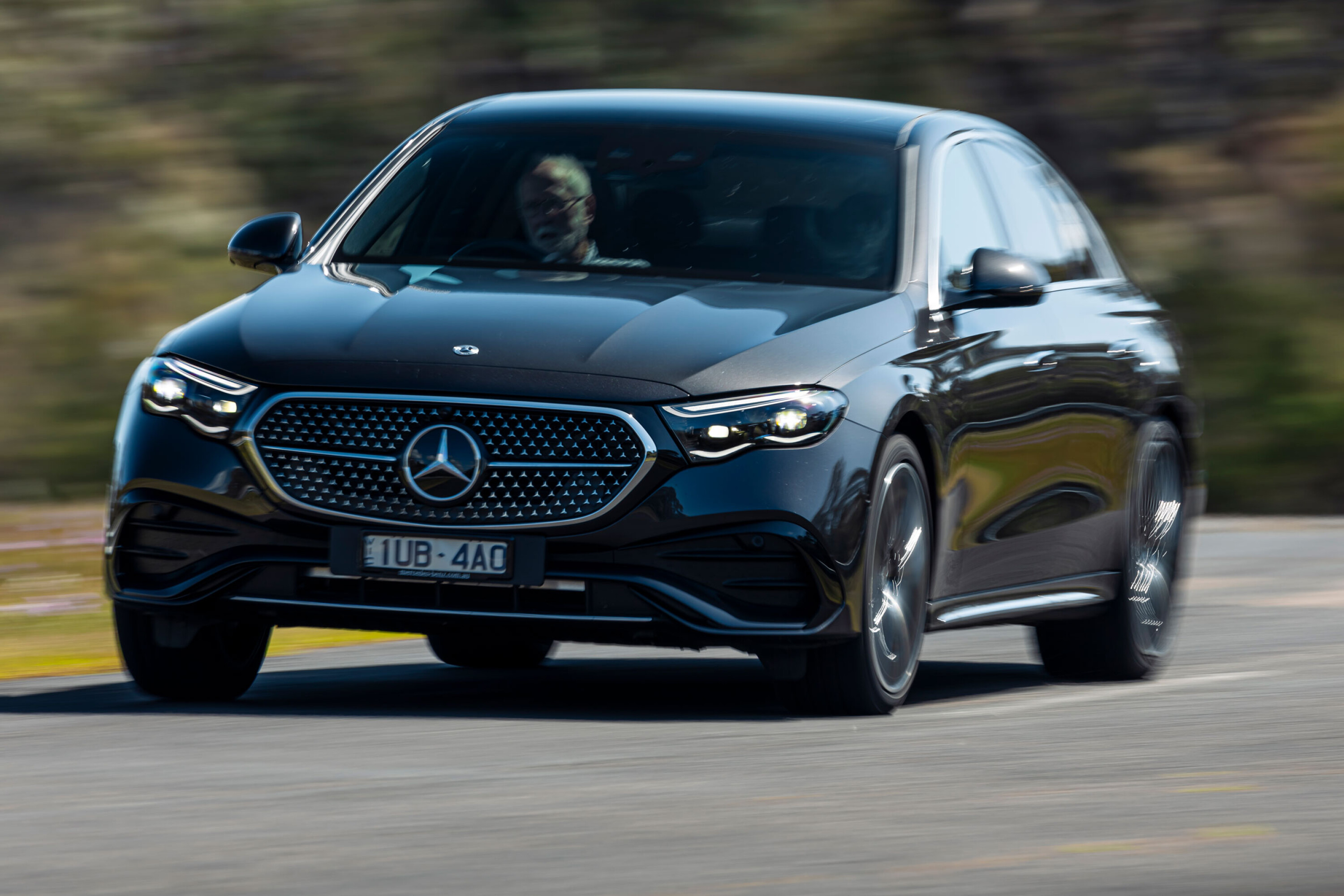
Beneath its executive exterior is a high-tech, Hyperscreened interior – like a giant smartphone with a steering wheel stuck into one side, faced by two seats.
The boot is classic sedan-capacious (although missing a spare wheel) while the rear seat is superbly comfortable, if tight on foot-room compared to your typical modern-age SUV.
Around the proving ground, a dime-tight turning circle impressed while the turbo-petrol four and nine-speed auto offered the most refined combustion powertrain I’ve ever experienced – incredibly smooth and just so very well done, as if the culmination of a century of development. But some rued the lack of a traditional straight-six, especially when the otherwise whisper-quiet four was put under demand.
1
Prioritising security, the ride and handling are appropriate for an E300, though the mildly hybridised engine does need to work to shift 1850kg. At Lang Lang, the ESC and ABS, and the watchful aura of active safety software felt second-to-none. Ticks against the safety and driving criteria, then.
Value was also hotly discussed – a little pricey for an E300, or a cheap, junior S-Class? Whichever it was, the E300 is unquestionably a beautiful, professional sedan.
Mercedes-Benz E300 Specifications
| Price/as tested | $130,414/$130,414 |
|---|---|
| Drive | 1999cc 4cyl, dohc, 16v, turbo |
| Power | 190kW @ 5800rpm |
| Torque | 400Nm @ 2000-3200rpm |
| Transmission | 9-speed automatic |
| Weight | 1850kg |
| L/W/H/WB | 4949/1880/1468/2961mm |
| Tyre | Continental EcoContact 6 245/40R20 (f), 275/35R20 (r) |
| Safety | Untested |
2024-25 Wheels Car of the Year
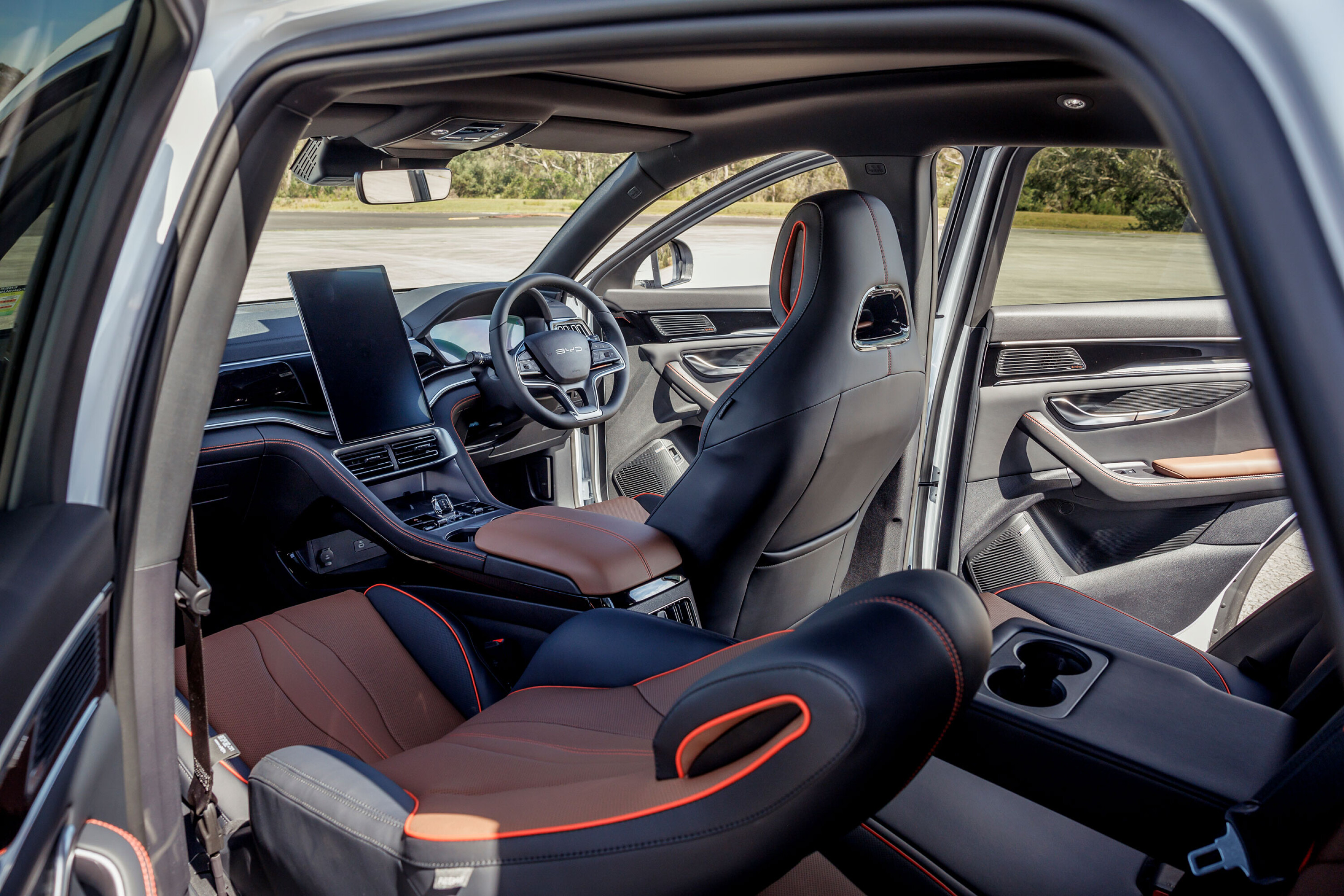
Let’s start with the good stuff. After establishing a beachhead with the popular Atto 3 small SUV and then consolidating its market share with a host of other electric models, the Sealion 6 mid-size SUV is BYD’s first proper shot at nabbing some serious sales volume in Australia. As a rival for the Toyota RAV4, it’s playing in one of Australia’s most popular segments, and in a brochure or on the showroom floor, it presents beautifully.
The exterior design is generically handsome, the cabin offers an impressive amount of room and high levels of standard equipment, and the technology offering is also suitably high-tech thanks to the inclusion of BYD’s large 15.6-inch touchscreen which can rotate through 180 degrees.
Then there’s the price. At $48,990 before on-road costs for the entry-level Dynamic or $52,990 for the all-wheel-drive Premium version we’re testing here, the Sealion 6 delivers a lot of SUV for the money.
The BYD’s value equation only gets sweeter when you consider what’s under the bonnet. In combining a 1.5-litre turbo-petrol four-cylinder with twin electric motors and a relatively large 18.3kWh lithium-iron-phosphate battery, the Sealion 6 is BYD’s first plug-in hybrid. Power and performance are healthy thanks to combined outputs of 238kW and 550Nm (the cheaper non-turbo Dynamic makes do with 160kW/300Nm) but it’s the claimed driving range of 1092km from a full battery/tank that really appeals.
The powertrain is impressively refined, too, and the handover between battery and piston propulsion is imperceptibly smooth. The system favours electric power, which lends an EV-like driving experience, and BYD claims a full battery will provide 81km of range before the petrol engine kicks in.
1
Where things start to head south is through the lane-change manoeuvre during COTY testing. Tip the Sealion 6 into the first swerve and its tail will scuttle cones on the outside before swinging wildly back the other way through the change-of-direction.
Things don’t improve around the ride and handling circuit. While the front seats lack proper lateral support, it’s the vague steering and underbaked suspension that really blemish the Sealion’s scorecard.
The good news is BYD is aware of the issues and has already introduced a running change to the suspension set-up for cars currently rolling off the production line. As it stands, though, it’s clear there’s plenty of room for improvement in how the Sealion 6 drives, despite its compelling on-paper promise.
BYD Sealion 6 Specifications
| Price/as tested | $52,990/$52,99 |
|---|---|
| Drive | 1498cc 4cyl turbo PHEV + dual electric motors, 18.3kWh battery |
| Power | 238kW |
| Torque | 550Nm |
| Transmission | Single-speed reduction gear |
| Weight | 2100kg |
| L/W/H/WB | 4775/1890/1670/2765mm |
| Tyre | Giti Giticomfort 235/50R19 |
| Safety | Five stars |
2024-25 Wheels Car of the Year
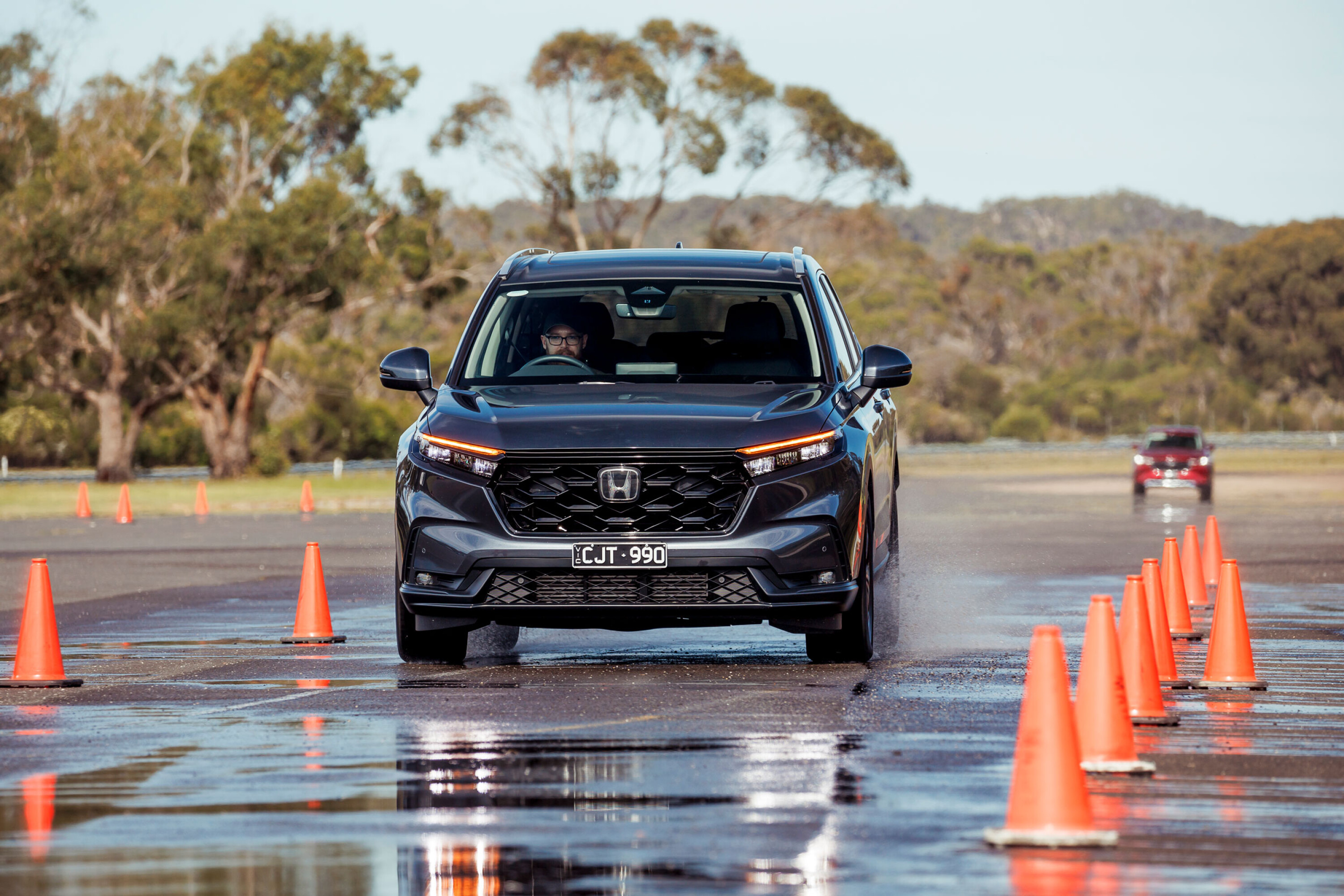
It eschews gimmickry and concentrates on utility, and that’s something which is sadly lacking. Many large vehicles at COTY were supplied without a spare wheel and tyre set. The Honda doesn’t just supply one, it’s a full-sized item.
It’s exactly this sort of consideration that sets the CR-V apart. Its designers have clearly thought long and hard about how it’s going to be used and have managed its compromises wisely. The ride and handling are measured and relaxing, yet it aced the lane change with less fuss than the driver-focused BMW iX2.
1
One chink in the Honda’s armour comes with its four-star ANCAP rating. It scored low (68 percent) on safety assist and there is a generation of buyers who may see a lack of electronic safety aids as a less-than-desirable thing.
COTY judges agreed that this was a very good five-seat SUV that could have asserted itself a little more stridently.
Honda CR-V VTi-L Specifications
| Price/as tested | $51,300/$51,300 |
|---|---|
| Drive | 1498cc 4cyl, dohc, 16v, turbo |
| Power | 140kW @ 6000rpm |
| Torque | 240Nm @ 1700-5000rpm |
| Transmission | CVT |
| Weight | 1669kg |
| L/W/H/WB | 4704/1866/1691/2700mm |
| Tyre | Michelin Latitude Sport 3 235/55R19 (f/r) |
| Safety | Five stars |
2024-25 Wheels Car of the Year
It’s more a reflection of the growing demand for better-equipped small and medium SUVs. In essence, Aussies have learned that it’s not always size that matters but how much it can do.
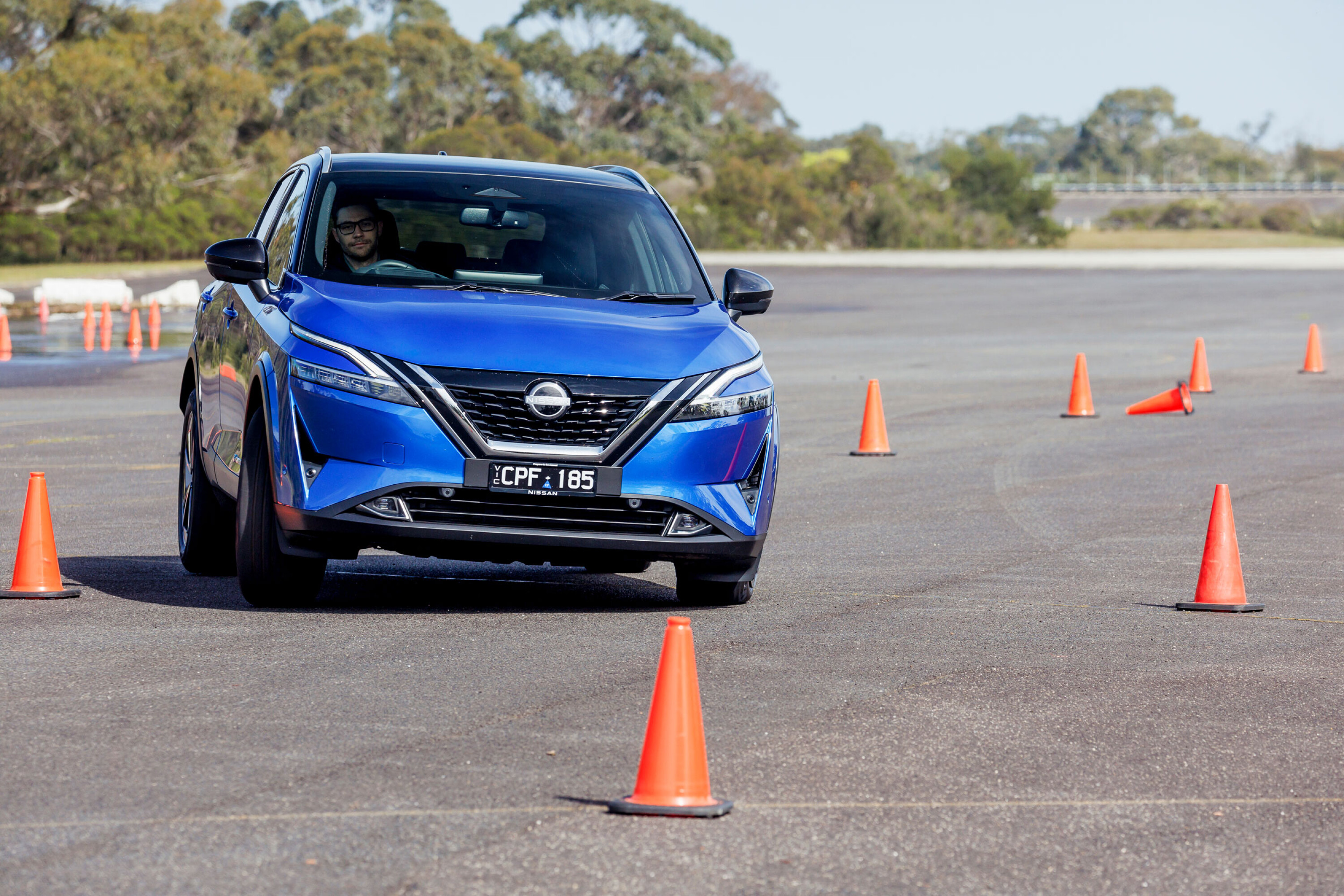
The first thing the Nissan Qashqai Ti e-Power does well is make a favourable first impression. The exterior styling is handsome and well executed, suggesting that a premium small SUV experience awaits inside. And the interior doesn’t disappoint: Blue-black leather with white piping covers the doors, dash, armrest and seats, quilted on the latter. A big screen sits atop the dash and has all the software expected of a contemporary small SUV flagship. There’s dual-zone climate control, a huge sunroof, electric tailgate… the point is the Ti has the substance to match its premium presentation.
Interior space is also generous… for a small SUV. The back seat can accommodate adults without compromising front-seat occupants (unless you’re a basketballer), and the doors open to an impressive 85 degrees, making it easy to move in and out. Then there’s the 452-litre boot, which matches many medium-sized SUVs for space and versatility.
The driving experience is another strength but also its greatest weakness, and that’s largely because Nissan is still figuring out how to integrate the e-Power’s petrol-powered electric generator approach with user expectations.
In Nissan’s e-Power range, an increase in engine noise has nothing to do with making the vehicle go faster, so it’s disconcerting to hear the engine revs climb as you’re slowing down for a red light, or to hear the note recede as you demand more of the car to climb a hill.
1
The 1.5-litre turbocharged petrol engine is quiet, but the soundtrack it makes is so out of step with expectation that you’d swear it’s actually louder than the norm. It doesn’t matter that the actual power delivery is smooth and quite generous for a small SUV. What ultimately matters is that the Qashqai’s e-Power hybrid system is not as efficient as its Toyota and Honda rivals, and it’s more expensive.
Nissan’s first effort is good but not great, and we suspect much better is to come.
Nissan Qashqai Ti e-Power Specifications
| Price/as tested | $52,090/$52,090 |
|---|---|
| Engine | 1497cc 3cyl, dohc, 12v, turbo + 2.1kWh battery + electric motor |
| Power | 140kW @ 4500-7500rpm |
| Torque | 330Nm @ 0-3000rpm |
| Transmission | Single-speed reduction gear |
| Weight | 1728kg |
| L/W/H/WB | 4425/1835/1625/2665mm |
| Tyre | Continental Eco Contact 6 235/50R19 |
| Safety | Five stars |
2024-25 Wheels Car of the Year
It’s unquestionably big – at 4.9m it’s close to a Volvo XC90 for length – and at $132,900 it’s certainly expensive.
While it’s possible to argue that no car costing this much can ever truly be good value, when you view the Polestar 3 in the context of its competitor set, it stacks up fairly well on price. A comparable BMW iX, for example, is $185,400 while an Audi Q8 55 e-tron Sportback is less powerful and starts at $165,900.
There’s plenty of substance to back up the obvious focus on style, too. A huge 111kWh battery provides 632km of WLTP range, while dual electric motors combine to produce muscular outputs of 360kW and 840Nm.
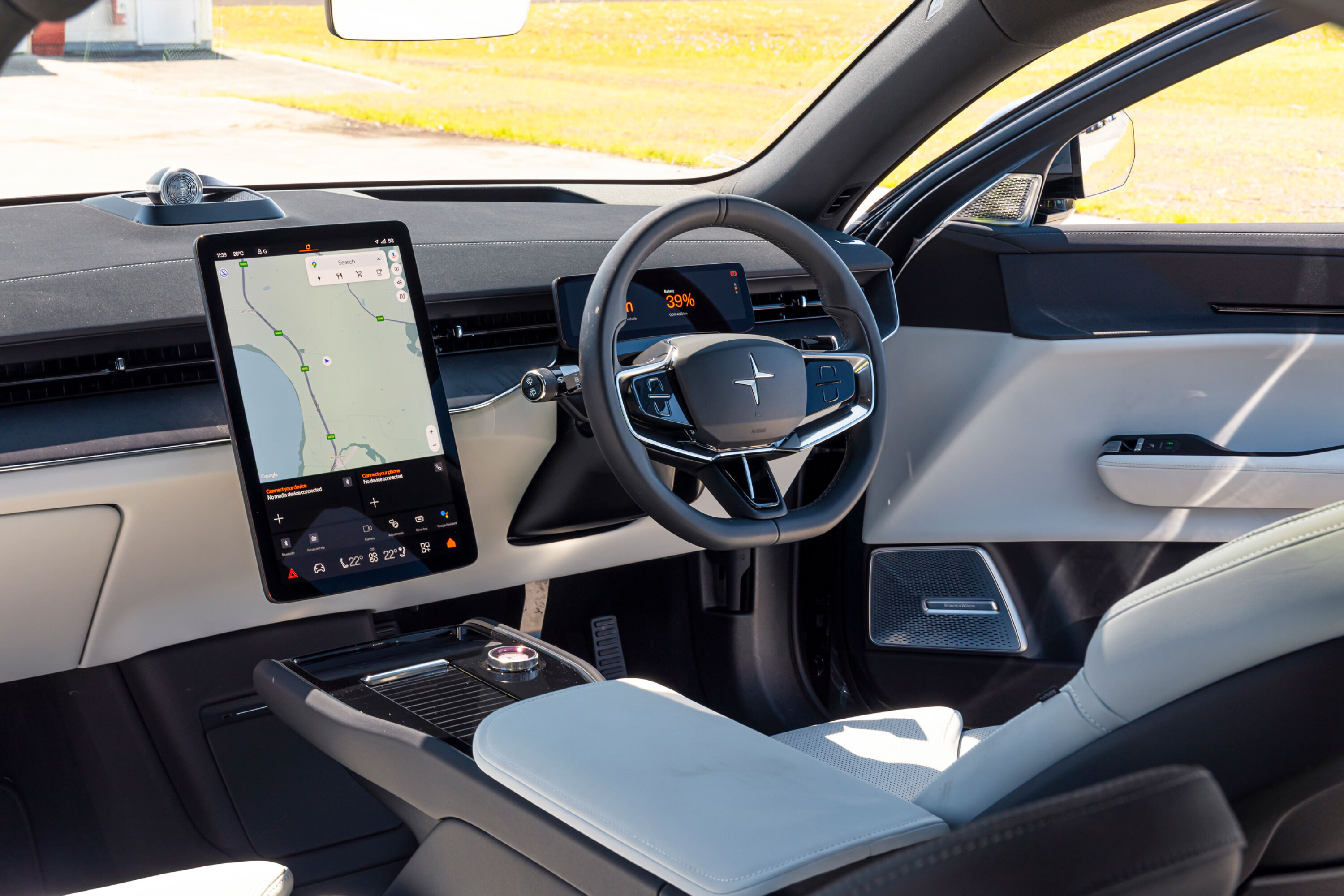
The long 2985mm wheelbase delivers a cabin with near-limousine levels of space in both rows. It’s a sense of room enhanced by the standard panoramic glass roof and the uncluttered Scandi-cool cabin design.
1
It’s a high-quality, well-made cabin that helps to justify the Polestar’s asking price but also one that brings some quirks. Almost every function is accessed by the large 14.5-inch portrait centre touchscreen and while its Google-based software and crisp graphics are impressive, its menu structure is also dense and confusing. There are almost too many settings (the steering, air suspension, braking regen, ESC and powertrain all have multiple modes) and they’re buried within a sub-menu so accessing them on the move requires you to glance away from the road for long periods.
Happily, the way the Polestar 3 drives is far more convincing. Forward visibility is excellent and the air suspension does a commendable job of delivering a ride that’s both controlled and comfortable. The handling is calm and fluid, acceleration is crisp, and enormous Continental tyres (265/45R21 up front and 295/40R21 at the rear) ensure there’s plenty of purchase and poise through the lane-change and wet stop.
Polestar 3 AWD Long Range Specifications
| Price/as tested | $132,900/$132,900 |
|---|---|
| Drive | 2 x electric motors, 111kWh lithium-ion battery |
| Power | 360kW |
| Torque | 840Nm |
| Transmission | Single-speed reduction gear |
| Weight | 2584kg |
| L/W/H/WB | 4900/1968/1614/2985mm |
| Tyre | Continental Sport Contact 7 265/45R21 (f), 295/40R21 (r) |
| Safety | Untested |
2024-25 Wheels Car of the Year
Dripping with style and personality, and packing a powerful twin motor electric powertrain that has pushed its kerb weight out to 2000kg, depending on your viewpoint the Mini Countryman SE is either a fun breath of fresh air or a gargantuan, obese and overstyled step too far for a brand made famous on the back of a very small, light car.
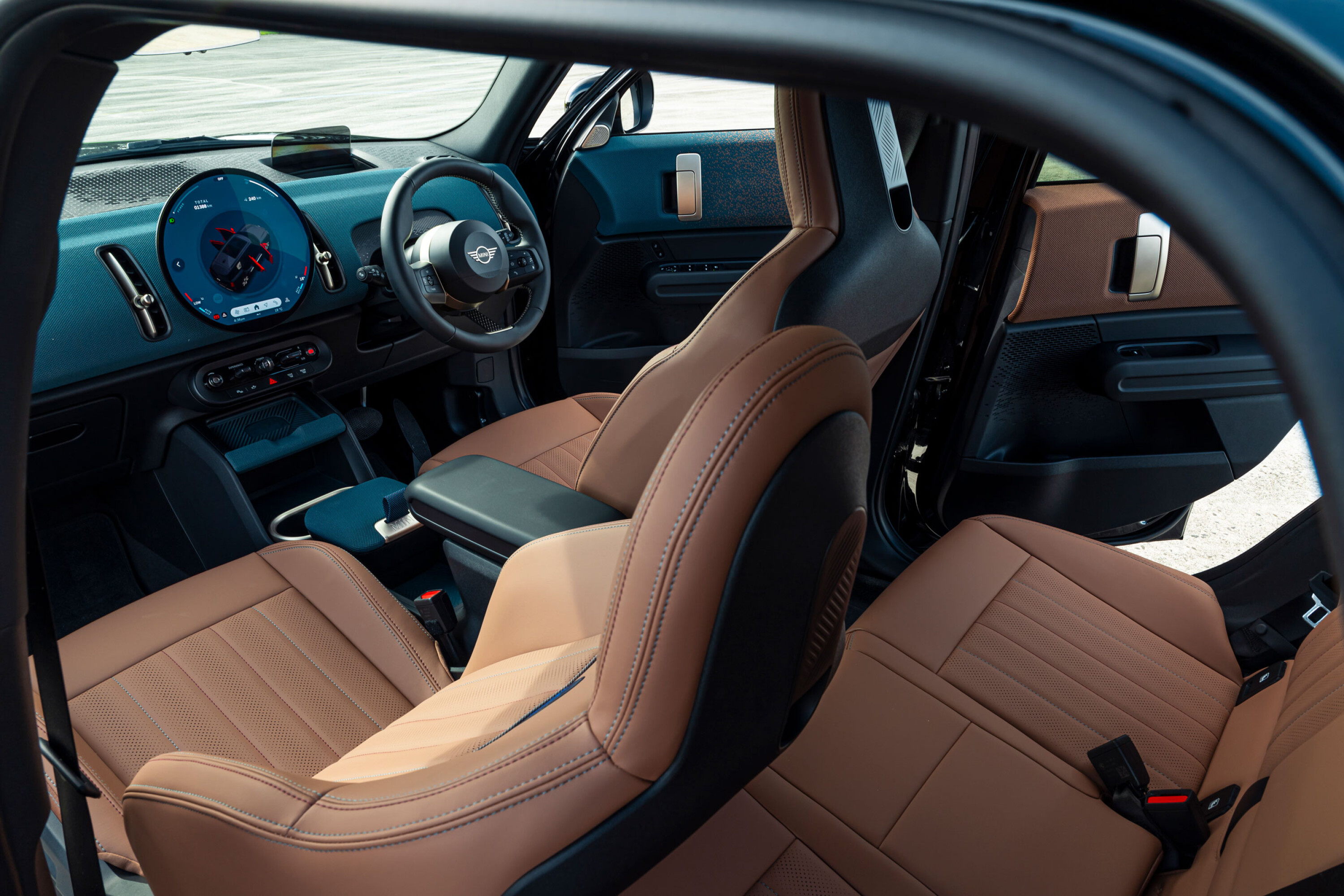
One thing it isn’t, however, is boring. After driving some of the more mainstream models in this year’s COTY field, slipping into the Countryman is like entering a world of hypercolour. If we gave out a gong for best interior then the Mini’s victory would be so resounding it’d make Australia’s clean sweep of the Ashes series in 2013-14 seem like a closely fought contest.
The interior’s showpiece is the knitted material used on the dash and doors, which is made entirely from recycled polyester and in our test car gradually transitions from blue into orange in much the same way as the cabin of the new McLaren W1 hypercar. The colour scheme pairs perfectly with the comfortable tan leather seats (the stitching on the upholstery uses different coloured thread for added visual interest) and the level of attention and finesse applied to almost every surface and detail is impressive. Even the middle spoke on the steering wheel, for example, is a taut cloth strap rather than a plastic or leather spar.
1
Importantly, the focus on style hasn’t come at the expense of functionality. The central OLED display, which is now bigger than ever at 240mm in diameter, is crisp, fast and intuitive to use. There’s a decent amount of front storage and while Mini has tweaked the key controls to give them some flair (you twist the starter toggle, for example, rather than press a button), it’s all fairly straightforward to use.
The catch is that such a fun and individual cabin doesn’t come cheap – our dual-motor Countryman SE All4 Favoured costs $75,990 before on-roads.
One thing that’s indisputable is the impressive performance delivered by the twin electric motors. With 230kW/494Nm on tap, the Countryman is quick and it sounds unique thanks to a pronounced Hans Zimmer soundscape that delivers different noises depending on your drive mode. But while it’s quick and fluid at speed, there was no hiding the Mini’s two-tonne heft through the lane-change manoeuvre where it felt top-heavy and cumbersome.
Mini Countryman SE All4 Specifications
| Price/as tested | $75,990/$75,990 |
|---|---|
| Drive | 2 x electric motors, 66.5kWh lithium-ion battery |
| Power | 230kW |
| Torque | 494Nm |
| Transmission | Single-speed reduction gear |
| Weight | 2000kg |
| L/W/H/WB | 4433/1843/1656/2692mm |
| Tyre | Continental Eco Contact 6Q 245/40 R20 (f/r) |
| Safety | Untested |
2024-25 Wheels Car of the Year
It’s tough to translate a big-car feel into something with a dinky wheelbase, and the latest to try is the promising Lexus LBX.
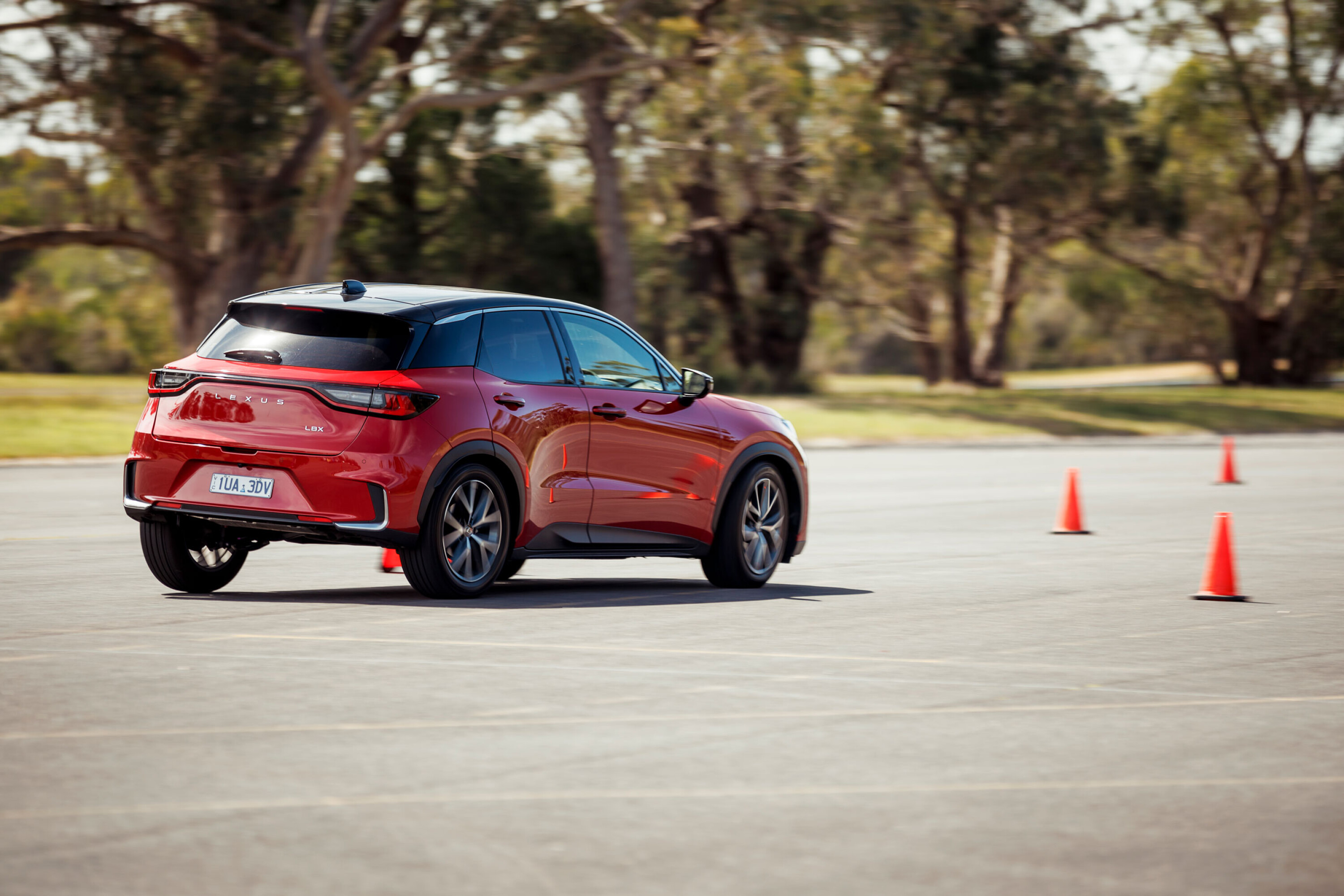
While COTY judges were unimpressed with the lack of legroom in the back, others loved the attention to detail of the cabin materials. The wheel, the stitched leather, the classy metallic finishes, and then the cultured step-off of the hybrid drivetrain and well-oiled feel to the steering felt premium, and that’s a tough trick to bring off in a car with a diminutive 2580mm wheelbase.
On the move, there’s some bump and thump from the torsion-beam rear and the engine can feel strained when pushed. But the front end is secure and the quickish steering is fun in a set of corners.
It seems an almost ideal car for seniors who have downsized to an apartment and don’t have access to EV charging, but want to keep running costs modest. They don’t need to carry adults in the rear, prefer something that feels assured and well-built, and which can undertake a longer drive when required. Does that feel-good factor merit a $12.5K price hike over a Yaris Cross? Lexus seems confident that it does.
1
This is a very clever vehicle that understands its target markets. Can it also be a slightly cynical exercise in leveraging the power of the Lexus brand? Absolutely. As long as buyers are happy in that compact, then there’s no loser here, the LBX more than warranting its niche.
Lexus LBX Luxury Specifications
| Price/as tested | $47,550/$49,300 |
|---|---|
| Drive | 1490cc 3cyl, dohc, 12v, turbo, hybrid |
| Power | 100kW |
| Torque | 120Nm (engine) / 185Nm (e-motor) |
| Transmission | CVT |
| Weight | 1330kg |
| L/W/H/WB | 4190/1825/1560/2580mm |
| Tyre | Yokohama Advan VE1 225/55R18 (f/r) |
| Safety | Five stars |
