
Hyundai wants the Santa Fe to be noticed because the previous four generations were too often overlooked by car shoppers.
The new Santa Fe hit Australian showrooms mid-year priced $10,000 above the outgoing model, which design changes alone can’t justify. All models are powered by a hybridised 172kW/367Nm 1.6-litre turbocharged petrol engine driving either the front wheels or all four. Hyundai will add a non-hybrid 206kW 2.5-litre turbo in due course, replacing the previous generation’s 3.5-litre V6. But diesel is no longer part of the Santa Fe range.
For now, the four-cylinder hybrid is where it’s at, and despite being the smallest Santa Fe engine ever, it delivers. Even though the Santa Fe Calligraphy we tested weighs in at 2105kg, the hybrid engine and six-speed automatic transmission do a more than adequate job of meeting daily driving demands.
There is a touch of throttle lag below 2500rpm, which can make the car feel a little lethargic, most obvious in Eco mode which is prioritising fuel economy. Move out of Eco to Normal mode and the engine responds better and is also more willing to smoothly drop gears to give the driver what they want. That said, the engine can become coarse when put under pressure.
The hybrid powertrain’s energy recuperation system is commendably invisible. There’s no jerkiness transitioning from regenerative braking to recuperation. It’s also clearly doing its primary job, because we recorded 6.6L/100km on our very hilly 50km open-road loop, just one litre higher than its official claim.
1
When it comes to ride quality, the Santa Fe is less impressive, but that’s more a reflection of its highly polished rivals than any real-world deficiency. The Santa Fe is another Hyundai whose suspension has not specifically been tuned for Australian conditions, the factory relying instead on historical data. This results in a vehicle that’s busier than its rivals, and also noisier on its Kumho Ecsta tyres.
The ride isn’t overly terse or overactive, just without the suppleness to match the Kluger or indeed its Kia Sorento stablemate. The tyres and suspension tune do make up for it dynamically; this may be a family truckster, but it also has the poise and the grip to make winding roads more enjoyable.
While some may debate the importance of chassis dynamics for a family SUV, Wheels sees merit in driving competence and confidence. We’d much rather a dynamically proficient family vehicle than the alternative. But still, the wider target market will be more focused on the Santa Fe’s space and practicality than any dynamic overtones.
1
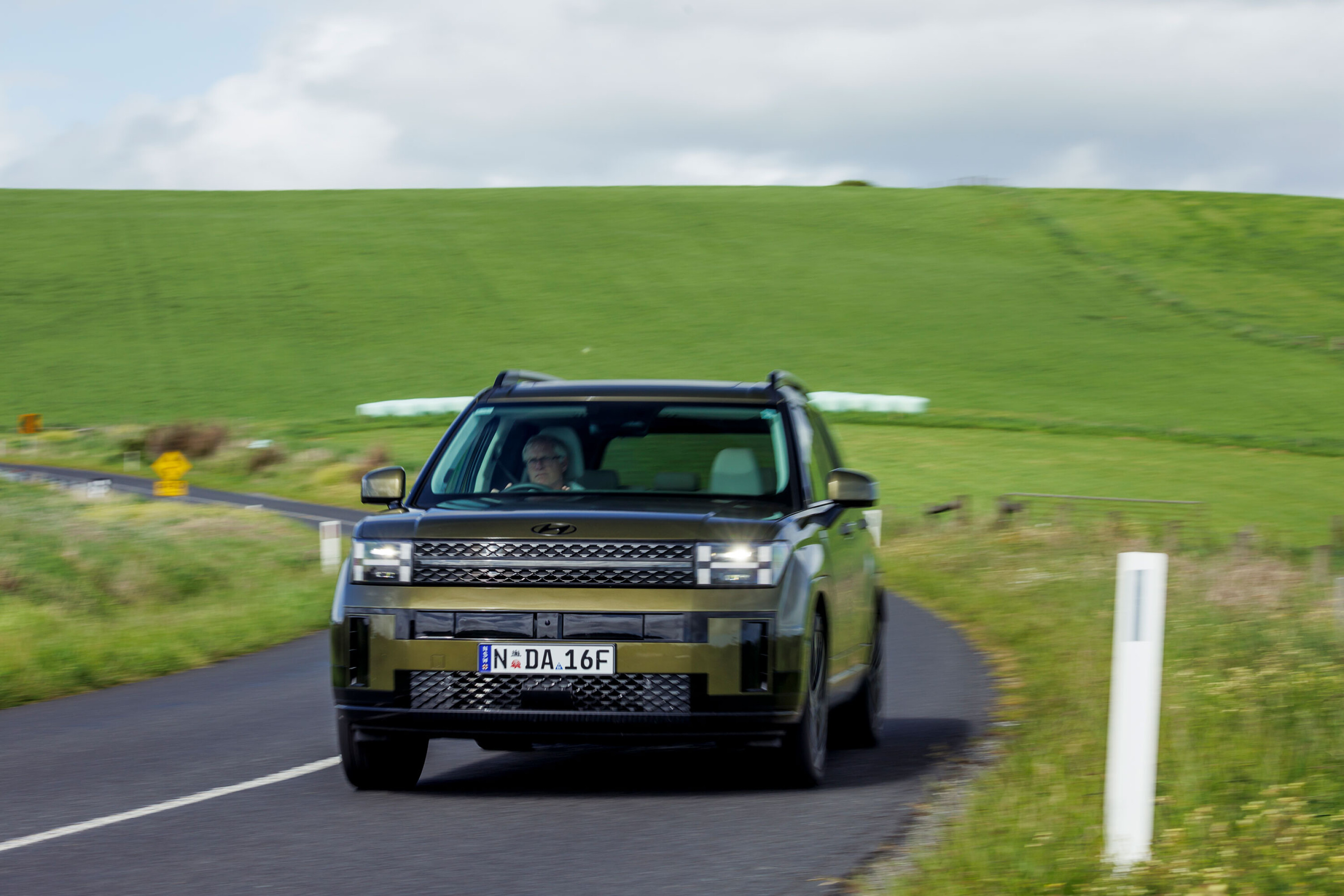
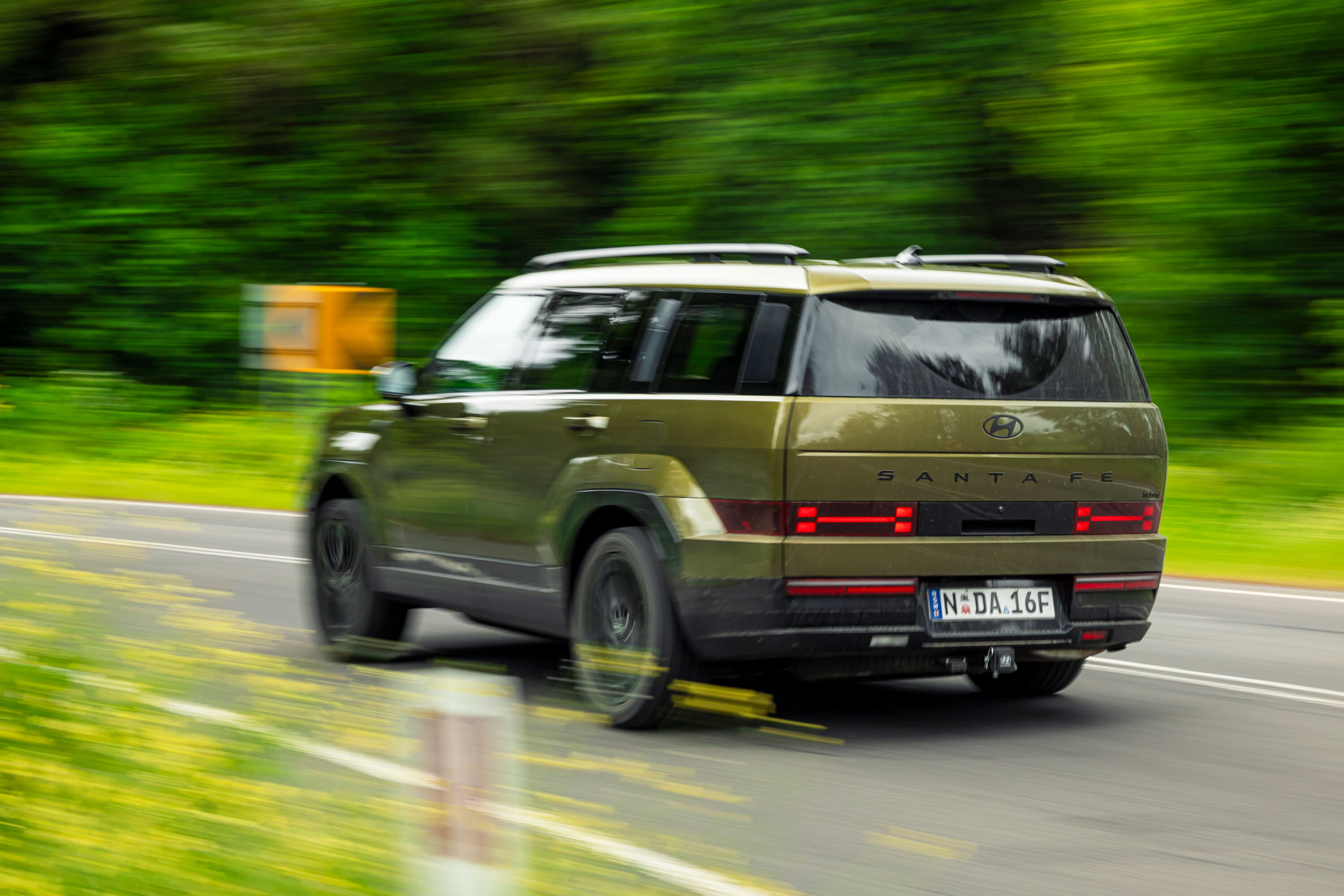
The new body is bigger: 45mm longer, 10mm taller, and riding on a 50mm-longer wheelbase, which liberates more legroom and cargo space inside. The boxy body also has some thoughtful touches, like the hidden handhold on the C-pillar which makes accessing rooftop loads easier, and also for clambering into the third row. The biggest dimensional change, however, has to be the boot opening which is 145mm wider, giving loads more load width. The boot floor’s loading height is lower, too.
The boot is a whopper in two-row mode (628 litres), but buyers will need to tick a few rooftop luggage options if they’re planning roadtrips with all three rows occupied because luggage space is almost non-existent in this configuration. Still, that’s the same for any SUV in this class, and Hyundai’s extensive – and affordable – options list again highlights the company’s family focus during development.
The range incorporates three model grades – Santa Fe, Elite and Calligraphy – and all come with three rows of seating in a 2+3+2 configuration. There’s a second Calligraphy model that replaces the bench middle row with two individual seats – handy for separating offspring that like to niggle and tease, and for walk-thru access to the third row.
We chose to test the top-spec Calligraphy because it’s expected to outsell both the base model and the Elite combined. It puts everything on the table for buyers, but does cost $75,000 plus on-roads.
1
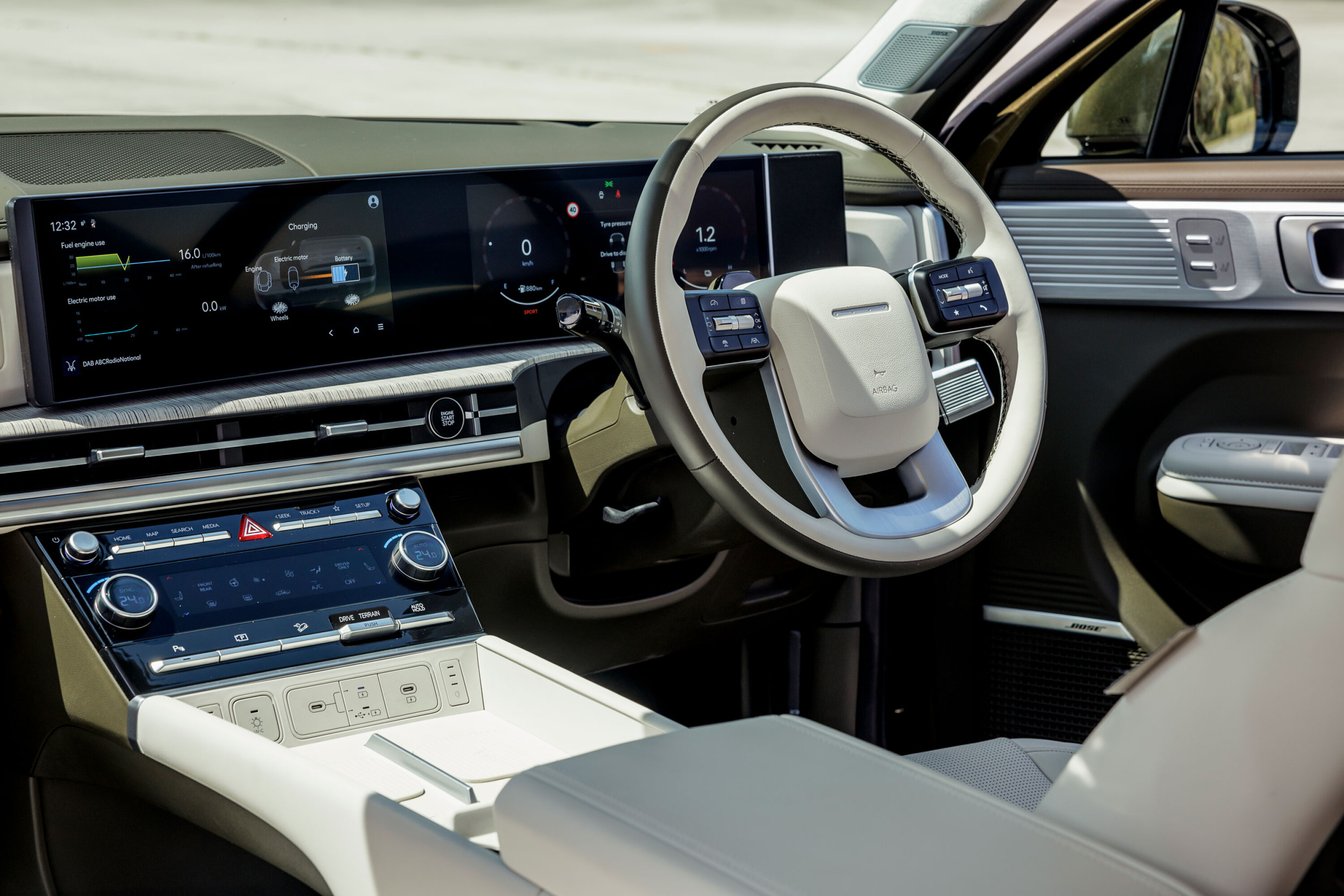
The cabin continues the boxy theme with amusing attention to detail, and also makes use of modern materials to convey quality and class. Again, Hyundai’s thoughtfulness and innovation shine through. For starters, dual wireless phone chargers speak to its family friendliness, as do the many useful storage spaces – including the centre console’s double-hinged lid that opens for rear occupants as well.
Kudos to Hyundai for also resisting the temptation to go all-in with touchscreen controls and retain actual buttons for the dual-zone climate control and other oft-used systems as well. And for adopting the one-touch speed warning override as debuted on Genesis models earlier this year, doing much to fix one of the Santa Fe’s most tedious features.
The second row has plenty of legroom and headroom, even with the Calligraphy’s huge sunroof, and the third row can accommodate adults at a push (if the second row compromises its legroom), but is more suited to children.
The more we delved into the Santa Fe, the more we understood the lengths Hyundai has gone to address buyer needs and concerns. This new Santa Fe is a thoughtfully designed and brilliantly executed family SUV that improves on the previous generation in all the right areas.
Hyundai Santa Fe Calligraphy Specifications
| Price/as tested | $75,000/$75,990 |
|---|---|
| Drive | 1598cc 4cyl, dohc, 16v, turbo, hybrid |
| Power | 172kW @ 5500rpm |
| Torque | 367Nm @ 1500-4500rpm |
| Transmission | 6-speed automatic |
| Weight | 2105kg |
| L/W/H/WB | 4830/1900/1770/2815mm |
| Tyre | Kumho Ecsta PS71 255/45R20 (f/r) |
| Safety | Untested |
Albert Biermann and the team at Hyundai’s N Division have engineered this to be ingrained from top to bottom with laugh-out-loud enjoyment and baked-in driver engagement.
It takes a very special sort of road car to impress somebody who has won the Australian rally championship seven times, but after we ran performance tester Cody Crocker through the 5 N’s manual gear shifting system, he returned with a massive grin and a distinct reluctance to hand back the keys. “I’ve got a new favourite car,” he said. “I had no idea it could do that.”
Ah, yes, that. It was always going to be a controversial move, offering drivers the option of artificially mandated gearshifts, a rev limiter, and the feeling of torque building as the entirely non-existent engine comes on cam. At first glance, it would seem to play into the hands of those who claim that electric powertrains are lame and that the old ways are better, but do we need to be that partisan, that binary? Can we not take the best of both to create something new and incredible? That’s exactly what Albert Biermann and his team at Hyundai’s N division has done with this remarkable car.
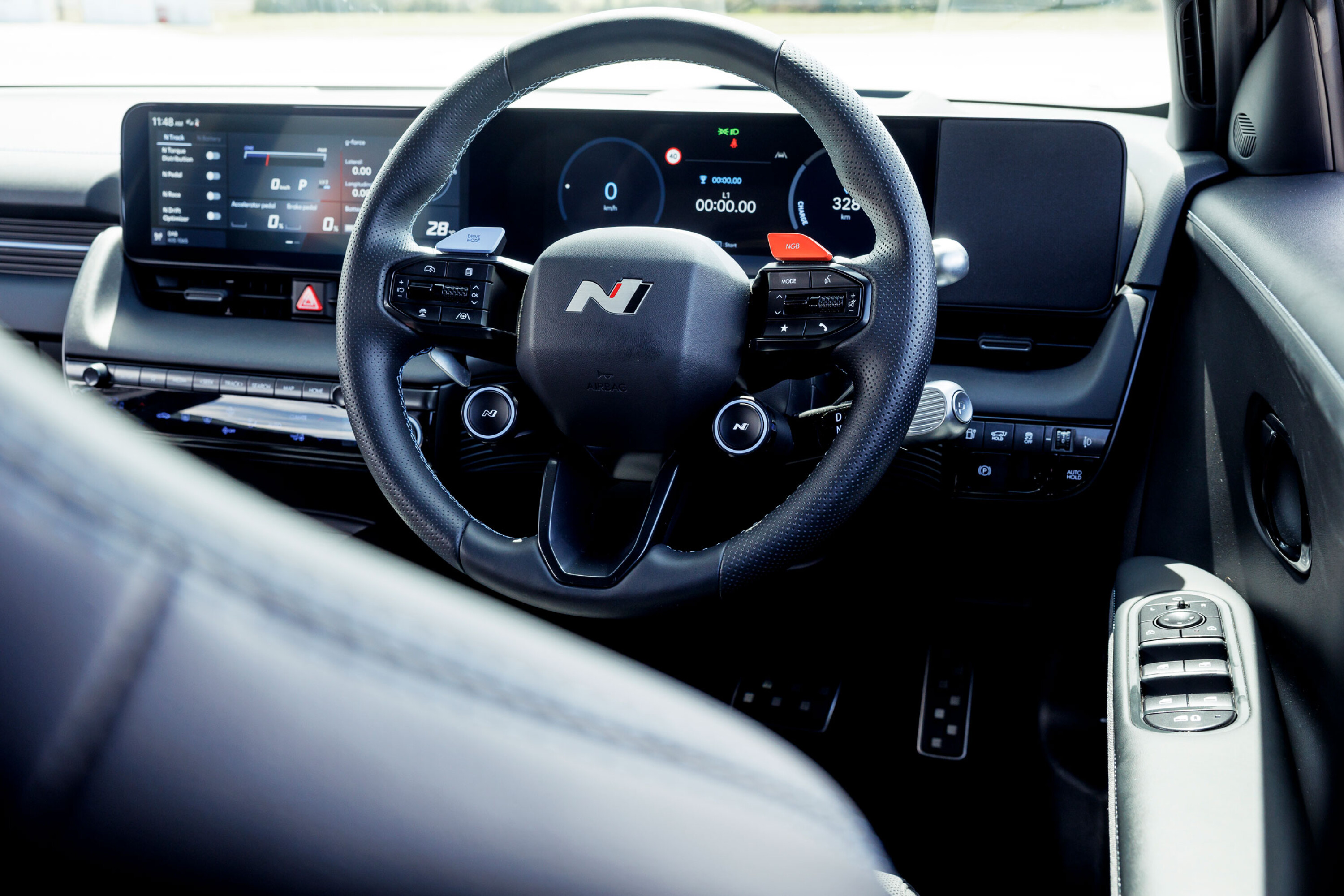
Value? You’re getting a performance car with 478kW; comfortably more power than a McLaren F1 for $110K. Safety? The IONIQ 5 has returned a five-star ANCAP rating. Layer on top of that the bigger brakes, better tyres and additional safety systems of the 5 N and that box is resolutely ticked. Cabin design and execution? It seats five adults in comfort, has a big boot and is well-appointed throughout, with thoughtful stowage inside the car, solid ergonomics and a flat floor. How it drives? If that includes the ability to make you laugh out loud in pure joy, then nothing at this year’s event, even the fabulous Mustang Dark Horse, could top it. The mantra that ran through the 5 N’s development speaks volumes: driving still matters.
1
Of course, it’s not perfect. No COTY winner ever is. Drive it like you mean it and that claimed 448km WLTP-mandated range shrinks somewhat. Throw it from lock to lock around hairpins at a racetrack and the tyres will let you know that, despite its nimble feel, there’s 2230kg of physics at work here. Then there are the whispers that Hyundai is ready to unleash something even focused, and that the full-bodied IONIQ 5 was a mere toe-in-the-water platform for the Koreans in order to gauge customer reception. As ever, we can only test the cars that are put in front of us.
It resists roll well and there is so much to be said for plucking the gears yourself. At first, you’ll feel silly. Ten seconds later, you won’t give a hoot about how silly you think it is – you’ll be laughing too much. Isn’t that what we want from performance cars today: to feel connected and engaged? The IONIQ 5 N delivers that in spades. Don’t get mired in how you got there. Just enjoy the end result.
Hyundai IONIQ 5 N Specifications
| Price/as tested | $110,383/$112,383 |
|---|---|
| Drive | 2 x electric motors, 84kWh lithium-ion battery |
| Power | 448kW |
| Torque | 740Nm |
| Transmission | Single-speed reduction gear |
| Weight | 2230kg |
| L/W/H/WB | 4715/1940/1585/3000mm |
| Tyre | Pirelli P Zero 275/35ZR21 (f/r) |
| Safety | Untested |
2024-25 Wheels Car of the Year
But the Chinese aren’t just focused on lithium-ion and electromagnets. They want a bite of the internal combustion pie as well.
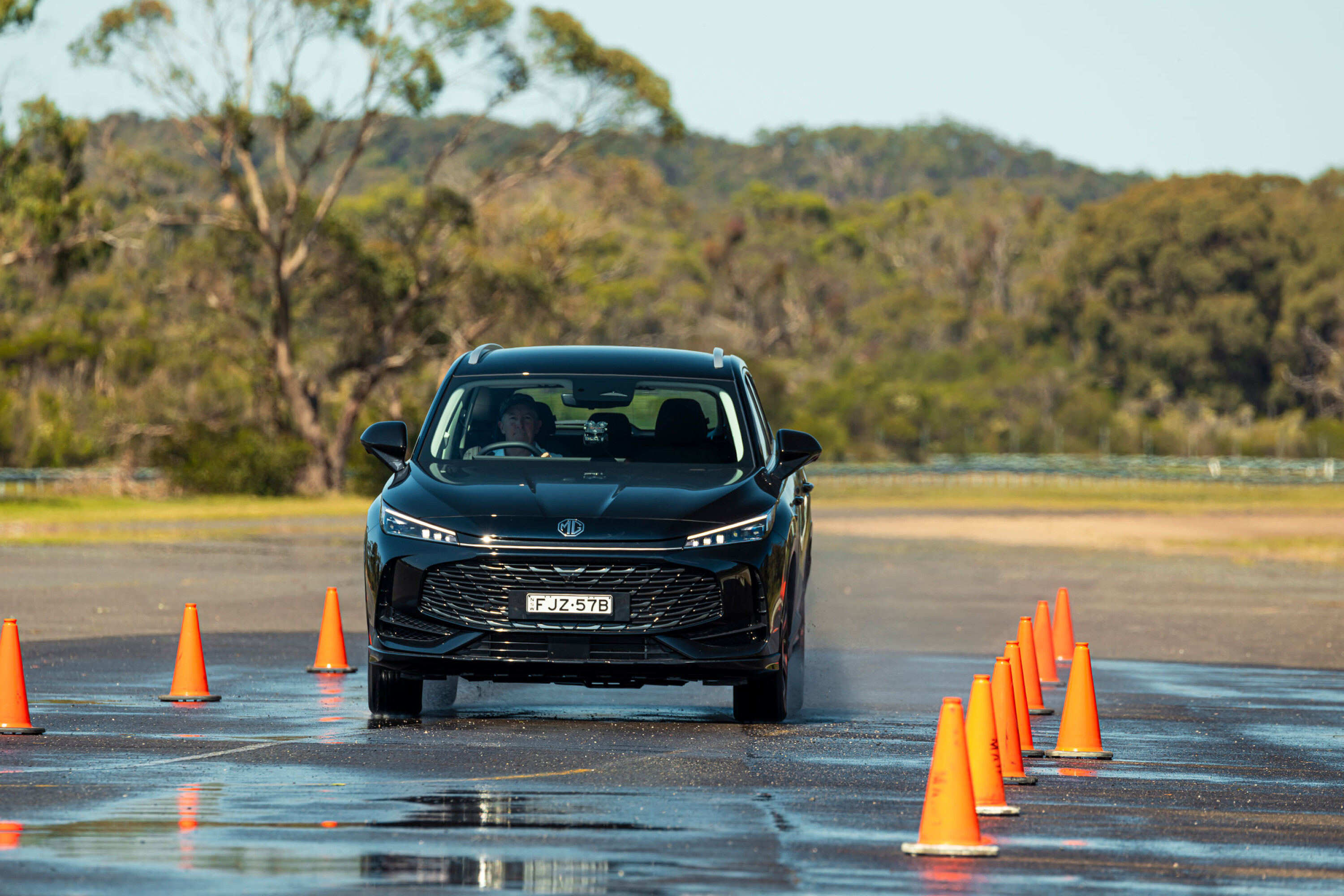
Enter the new MG HS. It took just a quick glance by the judges to recognise that this second-generation mid-size SUV has come a long way from its predecessor.
A decidedly European, smartly inoffensive exterior conceals a deeply impressive new interior. Even in base Vibe guise – our car for COTY – you get dual 12.3-inch screens, a very Volkswagen flat-bottom steering wheel and a lovely mix of black upholstery, ubiquitous piano blacks and just the right amount of brightwork.
It’s also bigger. Space in the back is also hugely impressive, with one of the most lounge-like rear seats of any car in the field. The boot is also a generous 507 litres, although the tailgate seems engineered to be hoisted by a motor. It’s a bit too heavy for manual operation in base Vibe guise, if you ask us.
1
While many owners probably won’t find themselves attempting to dip as deeply into the MG HS’s dynamics as COTY testing would, there’s no denying this is an awful lot of mid-size SUV for the money. Just $37,999 drive-away – for the black base Vibe we had at COTY in Victoria – gets you MG’s full active safety offering, an electrically adjustable driver’s seat and a whole lot of space. Not to mention a 10-year/unlimited-kilometre warranty. For the value criteria, the HS had it licked.
MG HS Vibe Specifications
| Price/as tested | $33,990/$37,999 (d/a) |
|---|---|
| Engine | 1496cc 4cyl, dohc, 16v, turbo |
| Power | 125kW @ 5600rpm |
| Torque | 275Nm @ 1700rpm |
| Transmission | 7-speed dual-clutch |
| Weight | 1554kg |
| L/W/H/WB | 4655/1890/1655/2765mm |
| Tyre | Maxxis Bravo HPM5 215/60R18 (f/r) |
| Safety | Five stars |
2024-25 Wheels Car of the Year
An electric motor on each axle making 375kW and 725Nm and delivering all-wheel-drive acceleration adds up to a claimed zero to 100km/h sprint of 3.2 seconds. Just over a decade ago, those figures would have caused all COTY judges’ jaws to hit the floor.
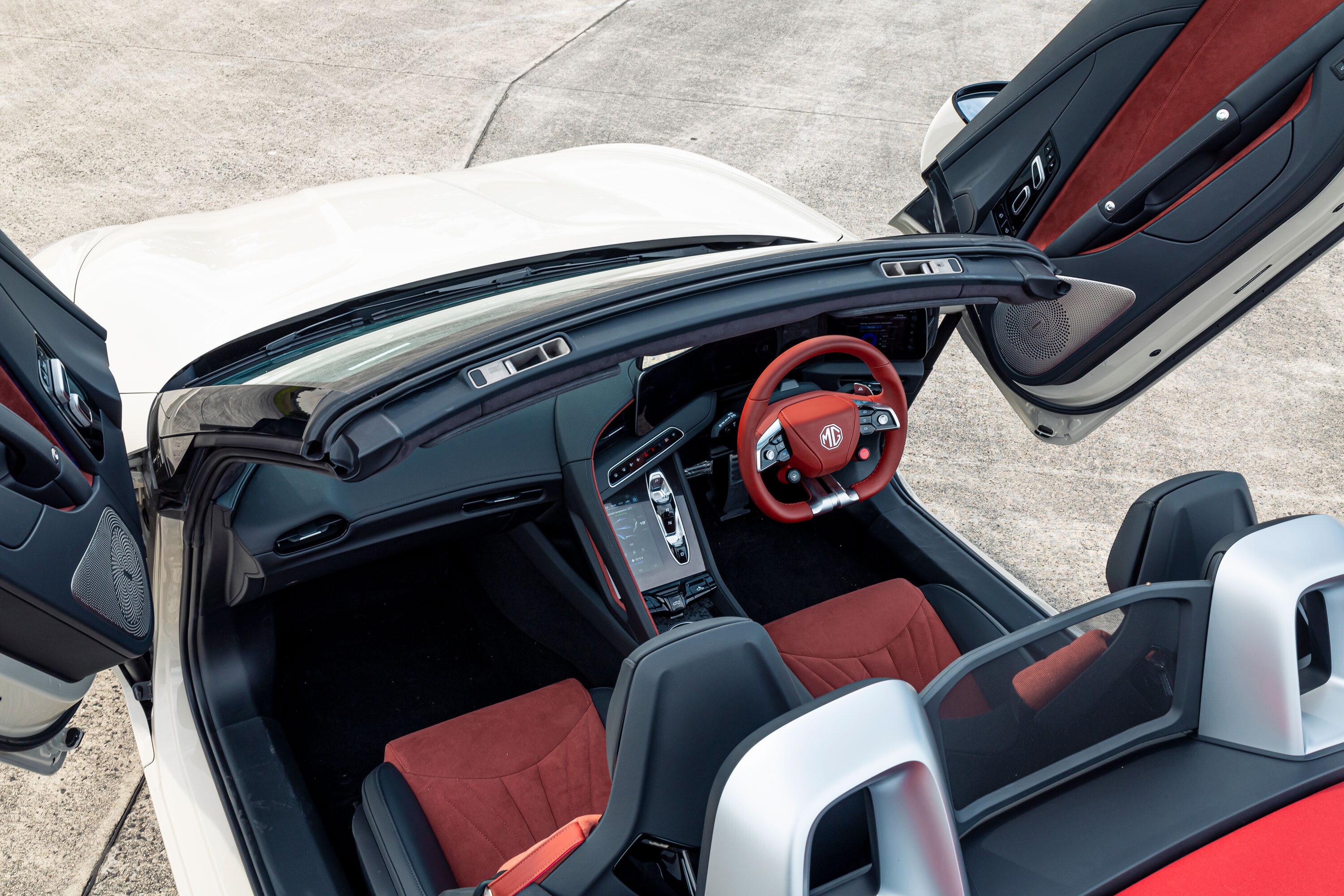
Getting your body into the Cyberster involves some sideways yoga as the aperture is supercar-tight, and once you squeeze into the seat you are faced with an interior far above anything we’ve seen from MG in recent years in terms of quality. Unfortunately, you’re also faced with three screens, two of which are obscured by the steering wheel.
1
Yes, the MG Cyberster is fast in a straight line, and that sensation feels even more daunting and daring with the roof down and the air howling around you. But the ride on bumpier roads is less than desirable and the whole vehicle seems slightly underdone, to the point of unfinished, and a few people suggested a hope that MG might get the next Cyberster right.
MG Cyberster Specifications
| Price/as tested | $115,000/$116,200 |
|---|---|
| Engine | 2 x electric motors, 77kWh ternary-lithium battery |
| Power | 375kW |
| Torque | 725Nm |
| Transmission | Single-speed reduction gear |
| Weight | 1910kg |
| L/W/H/WB | 4535/1913/1329/2690mm |
| Safety | Untested |
2024-25 Wheels Car of the Year
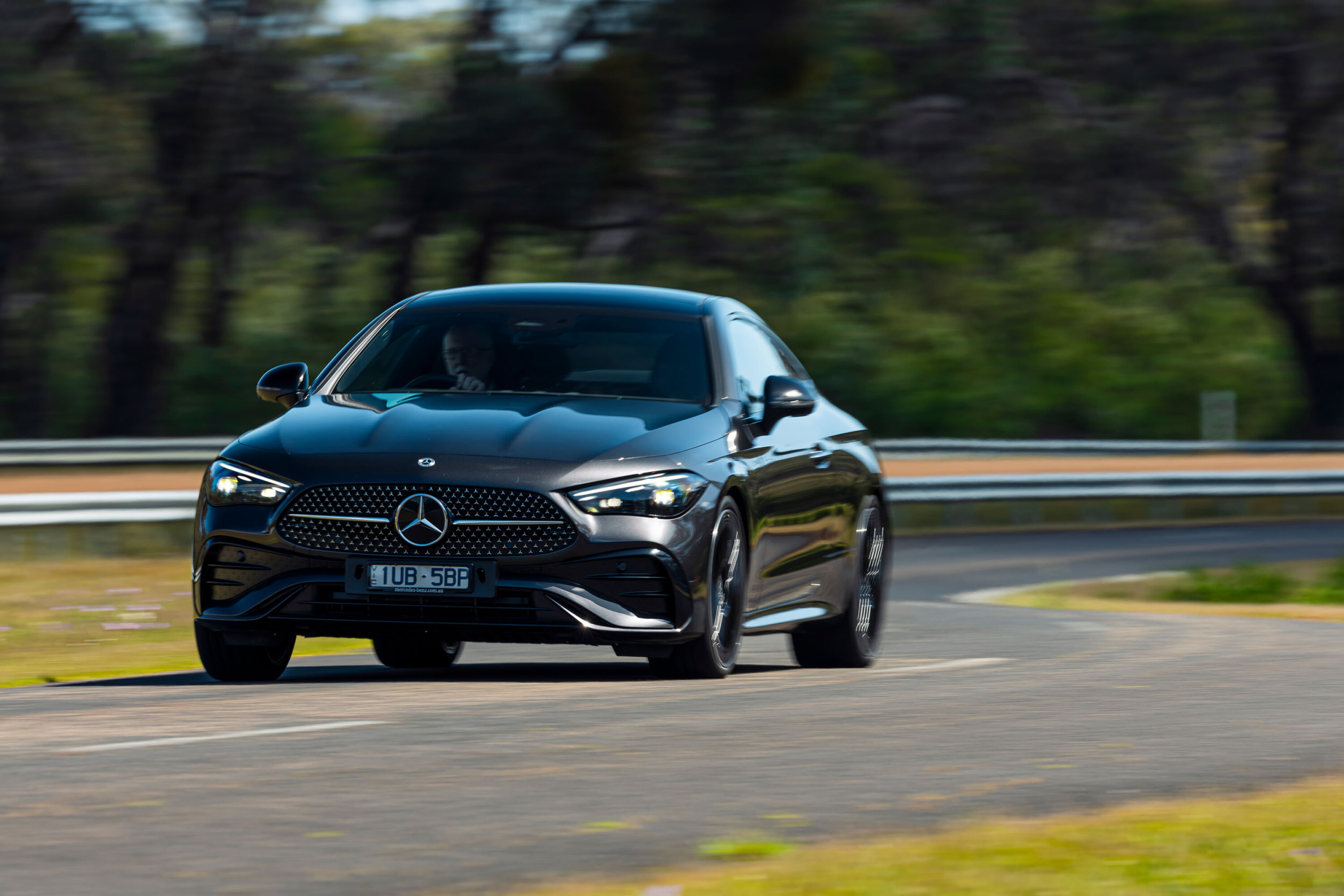
Isn’t that the point of a coupe in the first place; to sacrifice practicality for panache? I’ve never really understood the notion of an ungainly coupe, and from virtually every angle, the CLE offers something interesting. It’s almost lost the traditional three-box shape that we associate with Mercedes coupes in this corner of the market, the bootlid becoming almost as vestigial as the rear deck of an AMG GT. As far as Mercedes’ form language goes, it’s an interesting evolution.
The same could be said of how the CLE got here in the first instance. Before we were temporarily stalled by a pandemic, Stuttgart had decided to rationalise the C-Class coupe and its larger E-Class counterpart into one model. It’s a rational decision given that the Venn diagrams for the two cars’ client bases overlap significantly.
So, the good news is that we still have a Mercedes-Benz coupe to enjoy. And it is enjoyable, but in order to key into its charms, you need to temper certain expectations.
This being the CLE200, the entry-level model in the range, it’s perhaps unfair to expect it to drive like something off the DTM grid. Indeed, with 150kW and 320Nm from its 2.0-litre turbocharged four, it’s brisk but not intimidating.
1
That plays well with this car’s target market, which tends older and has likely grown up with Benzes in the family. They want modernity, but also a degree of knowing what they’re going to get.
The CLE200’s suspension is firmish, but the body is well controlled over the sort of mid-corner surprises that Lang Lang’s ride and handling track delivers with some generosity.
Mercedes-Benz also offers the punchier CLE300. This utilises a version of this engine in a higher state of tune, while the chassis offers the all-weather security of all-wheel drive.
1
The CLE is a decent size, with its exterior dimensions more closely mirroring the E-Class coupe than the C. Yes, you can fit four adults inside. Because the hip point in the vehicle is low, headroom is surprisingly generous. The boot’s a decent size at 420 litres. Combine that with a 65-litre fuel tank and modest 7L/100km thirst, and it results in a car that has over 900km of realistic touring range, again something that coupe buyers in this class warm to.
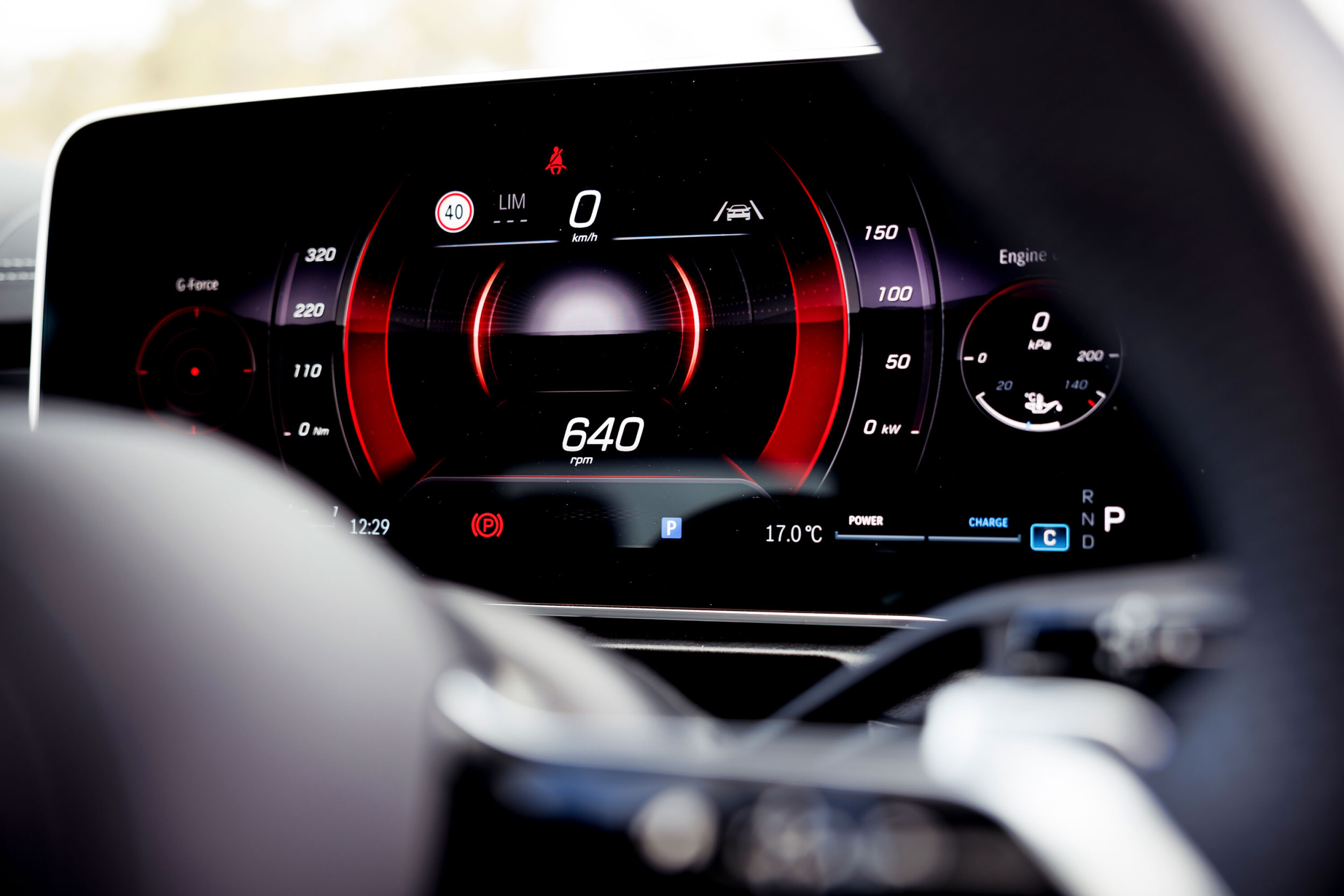
The cabin features a large infotainment screen in the centre of the dash, and a blend of high quality touchpoints with quite a swathe of harder materials used further down the fascia. That’s one area for improvement.
Mercedes-Benz CLE200 Specifications
| Price/as tested | $102,815/$106,715 |
|---|---|
| Drive | 1999cc 4cyl, dohc, 16v, turbo |
| Power | 150kW @ 5800rpm |
| Torque | 320Nm @ 1600-4000rpm |
| Transmission | 9-speed automatic |
| Weight | 1809kg |
| L/W/H/WB | 4850/1861/1423/2865mm |
| Tyre | Goodyear Eagle F1 245/35R20 (f), 275/30R20 (r) |
| Safety | Untested |
2024-25 Wheels Car of the Year
You might be wondering how a Ford that costs $105,332 as tested could possibly be considered good value. Especially when the Dark Horse doesn’t seem to be that different to the regular Mustang GT upon which it’s based, despite costing $22,000 more. And yet it only takes about 10 metres to realise the Dark Horse is unlike any Mustang we’ve ever driven.
It starts with the steering. The Dark Horse scores a different calibration and rides on overhauled suspension compared with the GT for a tauter, more track-focused set-up, and as soon as you crank on some lock you know you’re dealing with something special. There isn’t much feel per se, but there’s none of the usual Mustang wooliness either, and around Lang Lang’s tricky mix of low- and high-speed corners, the Dark Horse is a riot.
Fast, loud and with an athleticism that belies its nameplate and 1822kg kerb weight, the Dark Horse delivers a driving experience that is surprisingly involving and rewarding. A big part of that is down to the gearbox. You can have the Dark Horse as a 10-speed automatic but our car is the six-speed manual (remember those?) and it is without question the better pick. The manual ’box is different to other V8 Mustangs, with Ford ditching the GT’s Getrag MT82-D4 in favour of the same Tremec TR-3160 unit that’s fitted to the Shelby GT350.It brings shorter ratios, a revised final drive and, crucially, a more positive shift action.
With 350kW/550Nm on tap, the Dark Horse shares the core of its naturally aspirated 5.0-litre V8 with the regular GT but it gains additional cooling and uses connecting rods taken from the Shelby GT500. It also scores an active exhaust with five modes, ranging from quiet to racetrack, and it sounds brilliant. Deep and menacing at idle, it also has enough light and shade as you rise through the rev range to sound properly exciting.
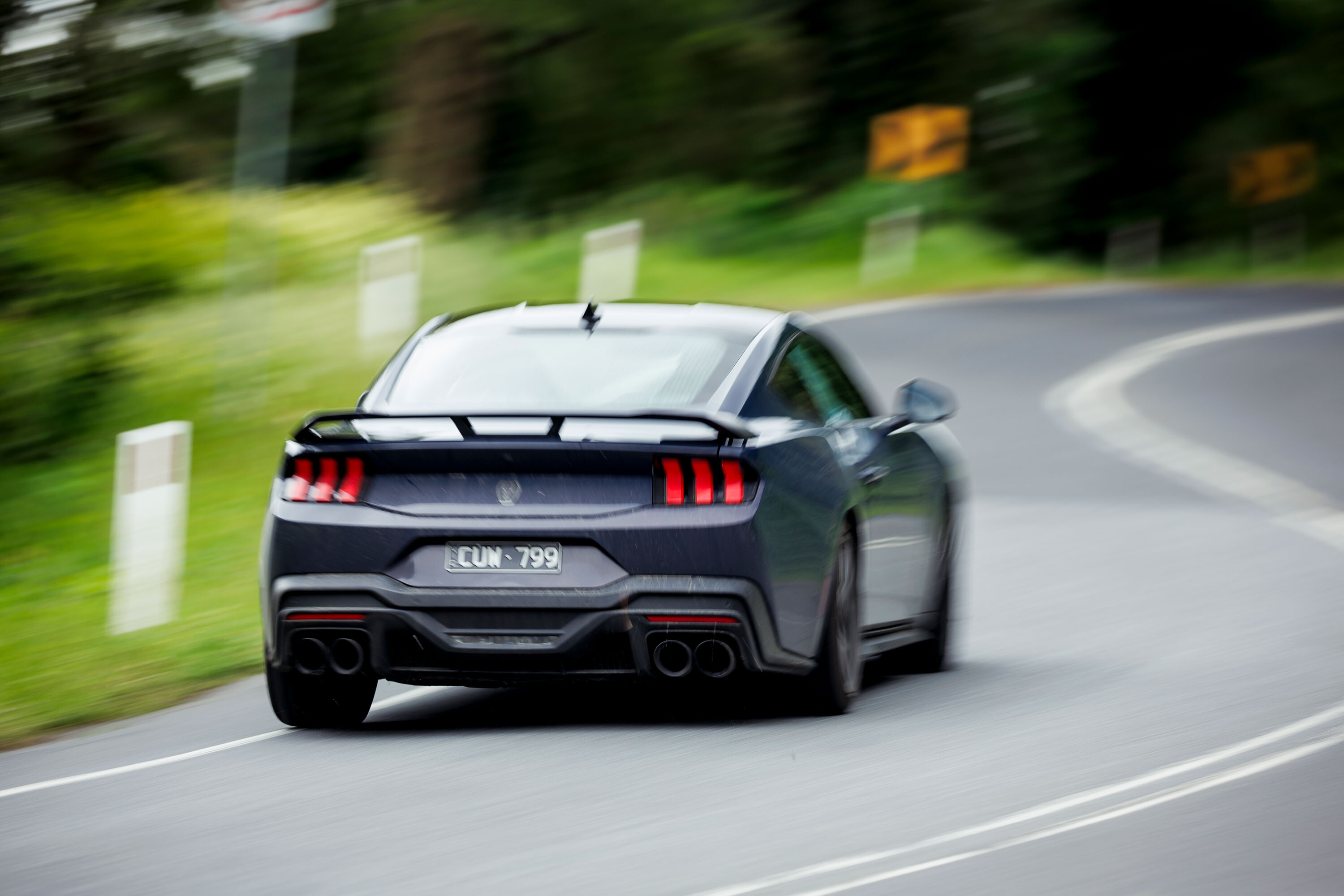
1
Combine all this with a surprising litheness through the lane-change manoeuvre and an impressive ability to soak up Lang Lang’s lumps, bumps and surface changes (unique springs and MagneRide adaptive dampers are standard inclusions) and it’s little wonder the Dark Horse breezed through the first round of voting to become a finalist.
Amazingly, though, the Dark Horse is even more impressive on COTY’s road loop. Poise isn’t a word you’d usually associate with a Mustang but over our road course’s challenging mix of broken back roads, that’s exactly what the Dark Horse delivers. Given its track focus and wider wheel and tyre package compared with the GT, you could forgive the Dark Horse for feeling overly stiff but the compliance and control delivered by the tweaked suspension and MagneRide dampers is surprising. Grip and traction are strong, and instead of being upset by mid-corner bumps or skipping wide in traction zones, the Dark Horse offers a sense of connection, confidence and speed that suggests it’s a better road car than it is a track-day machine.
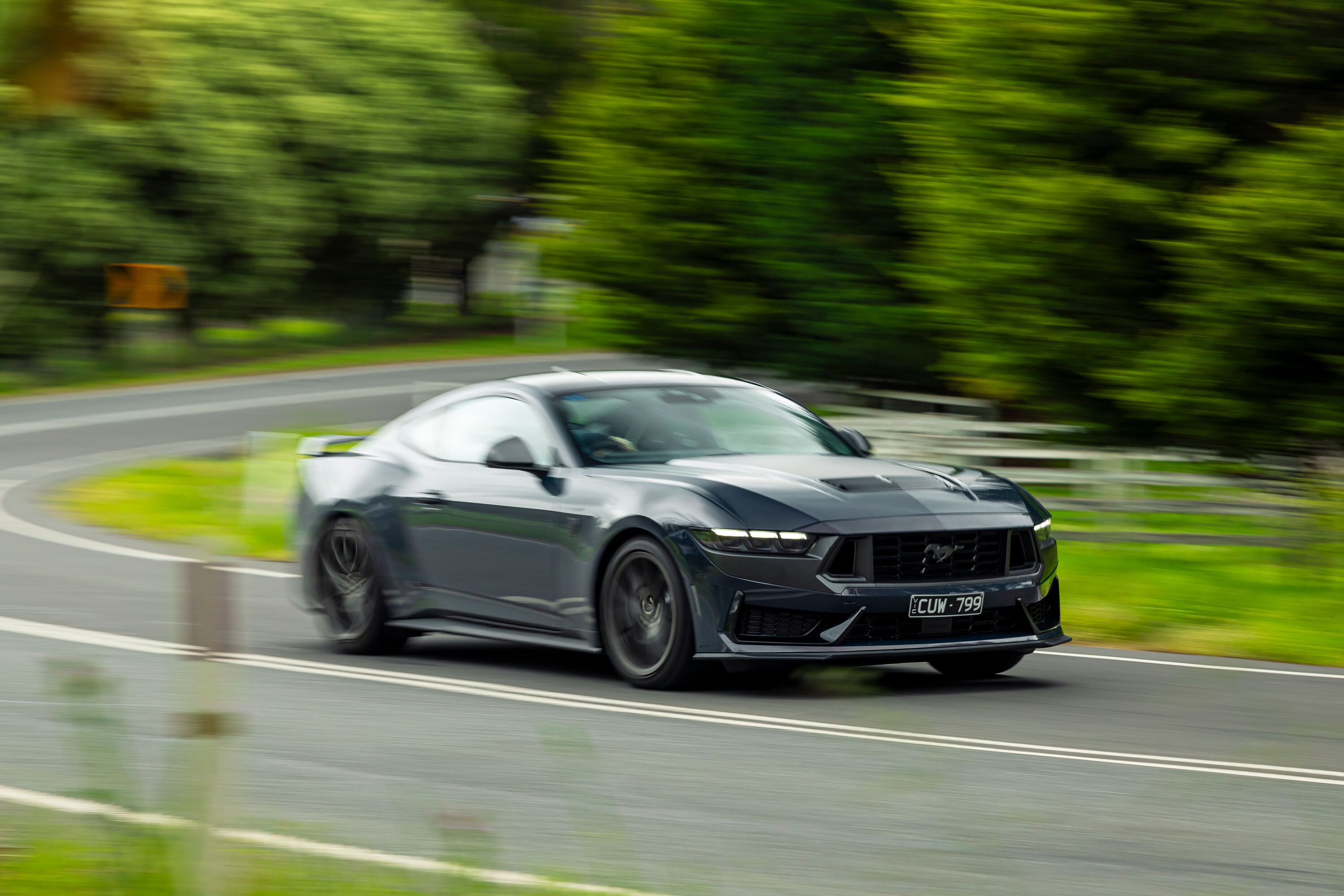
1
It’s certainly comfortable enough to use everyday. The ride has a pleasing duality and the cabin, which has long been a Mustang weakness, is a welcome improvement thanks to better quality materials and a new dual-screen digital dash. The dash which includes a nerdy level of performance data and the ability to cycle through design themes for the instruments which can replicate the look and feel of previous hero Mustangs like the original ’60s model, an ’80s Fox Body and, my personal favourite, the white dials of an SVT Cobra.
As it stands, the Dark Horse is a remarkable machine – certainly one that delivers a driving experience that is more than the sum of its parts.
Ford Mustang Dark Horse Specifications
| Price/as tested | $99,102/$105,332 |
|---|---|
| Drive | 5.0-litre V8, dohc, 32v |
| Power | 350kW @ 7250rpm |
| Torque | 550Nm @ 4850rpm |
| Transmission | 6-sp manual/10-sp auto |
| Weight | 1822kg (m), 1842kg (a) |
| L/W/H/WB | 4823/2097/1413/2719mm |
| Tyre | Pirelli P Zero 255/40R19 (f), 275/40R19 (r) |
| Safety | Untested |
2024-25 Wheels Car of the Year
In fact it’s been on the top step of the podium as recently as 2021. Since then, however, it’s faced a few headwinds with its product portfolio.
We’ve always loved this clever, enterprising and daring Japanese brand, and so have many Australians, given the success story of Mazda locally relative to other markets.
The CX-90’s proportions are pleasing and there’s a bit of raciness from its statement-making 21-inch wheels, while nestled in its front-end is a classic straight-six – in 3.3-litre turbo-diesel guise – producing 187kW and a hearty 550Nm.
Inside is almost BMW luxe – without the Bavarian price-tag – and there’s a sliding second row, an enormous boot and even plenty of space in the third row. Five top-tether anchorages is also a generous touch.
Yet much as the CX-90 tries hard to please, and much as we wanted to love it, we couldn’t. A lot of that had to do with its in-house-developed eight-speed automatic. A long-term test confirmed our suspicions that this transmission – occasionally clunky and too unsure of itself – felt unfinished. COTY cemented the sense further.
The ride quality is also too firm if you ask us. While the dynamics are decent (particularly for a 2241kg vehicle), the ride lacks the sort of sophistication and comfort you might have been sold with a simple glance at the smartly appointed interior.
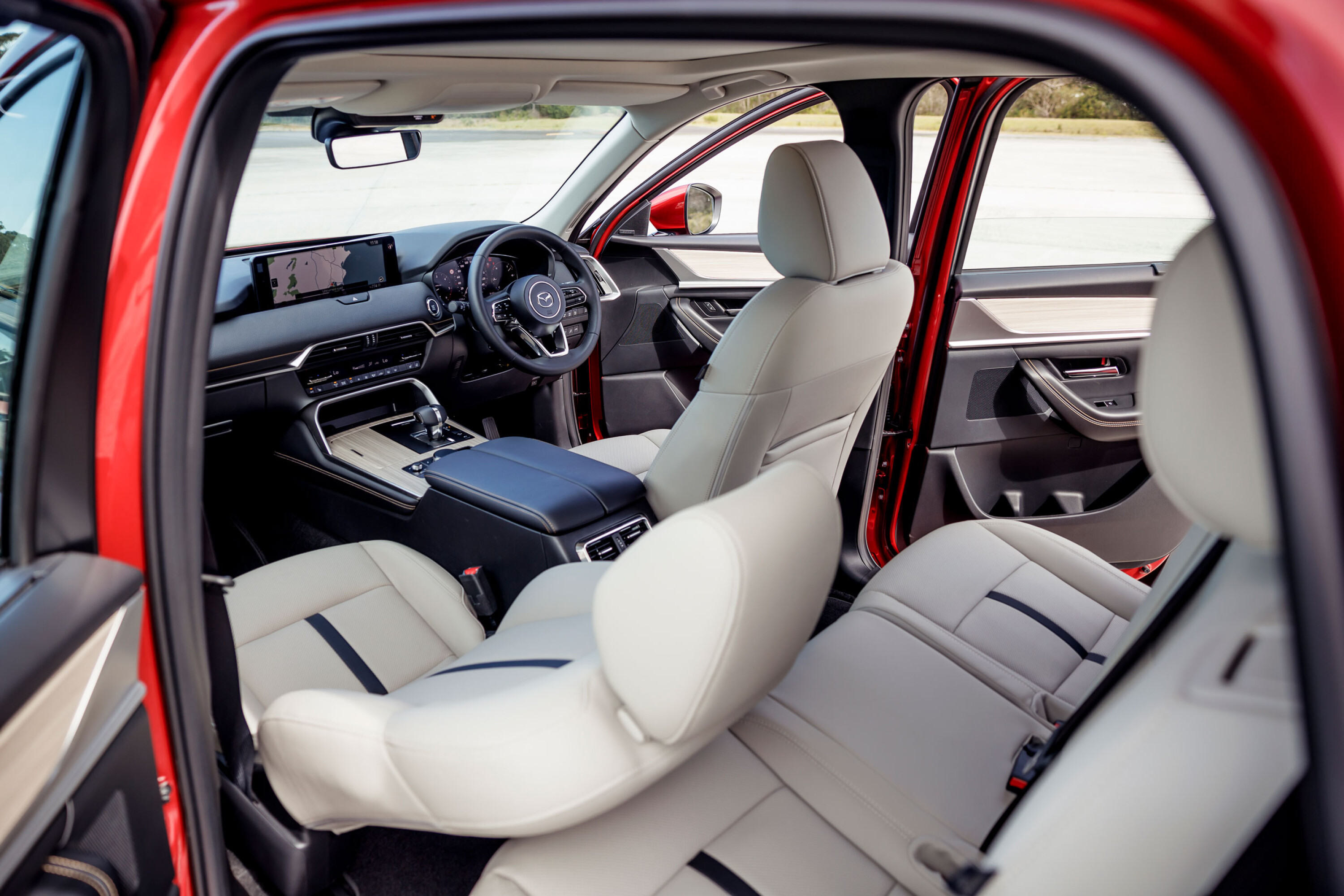
1
With a huge transmission tunnel between the front seats, storage space in the front row is also surprisingly MX-5-like for a large SUV. The rear-seat backrest also rattled over rough roads, while during harder cornering, it’s possible to experience some very unpleasant steering kickback.
Of its redeeming virtues, we love the thin-rimmed steering wheel and driver-focused seating position, the beautifully appointed interior and muscular engine. The cabin bristles with thoughtful touches from the rear window blinds to the 220V outlet in the boot.
Mazda CX-90 D50e GT Specifications
| Price/as tested | $85,550/$86,545 |
|---|---|
| Drive | 3283cc 6cyl, dohc, 24v, turbo-diesel |
| Power | 187kW @ 3750 rpm |
| Torque | 550Nm @ 1500-2400 rpm |
| Transmission | 8-speed automatic |
| Weight | 2241kg |
| L/W/H/WB | 5120/1994/1745/3120mm |
| Tyre | Toyo Proxes Sport 275/45R21 (f/r) |
| Safety | Untested |
2024-25 Wheels Car of the Year
For 61 years and counting, Wheels Car of the Year (COTY) has reigned as the most coveted award on the Australian motoring scene.
Now the longest-running annual car award in the world, Wheels COTY is cherished by both auto-makers and consumers as a trusted verdict on the best all-around vehicle on the market each year.
In 2024, Wheels COTY is back bigger and better than ever, with 25 cars in the running for the prestigious award. In a sign of the times, close to half of this year’s contenders were electric vehicles.
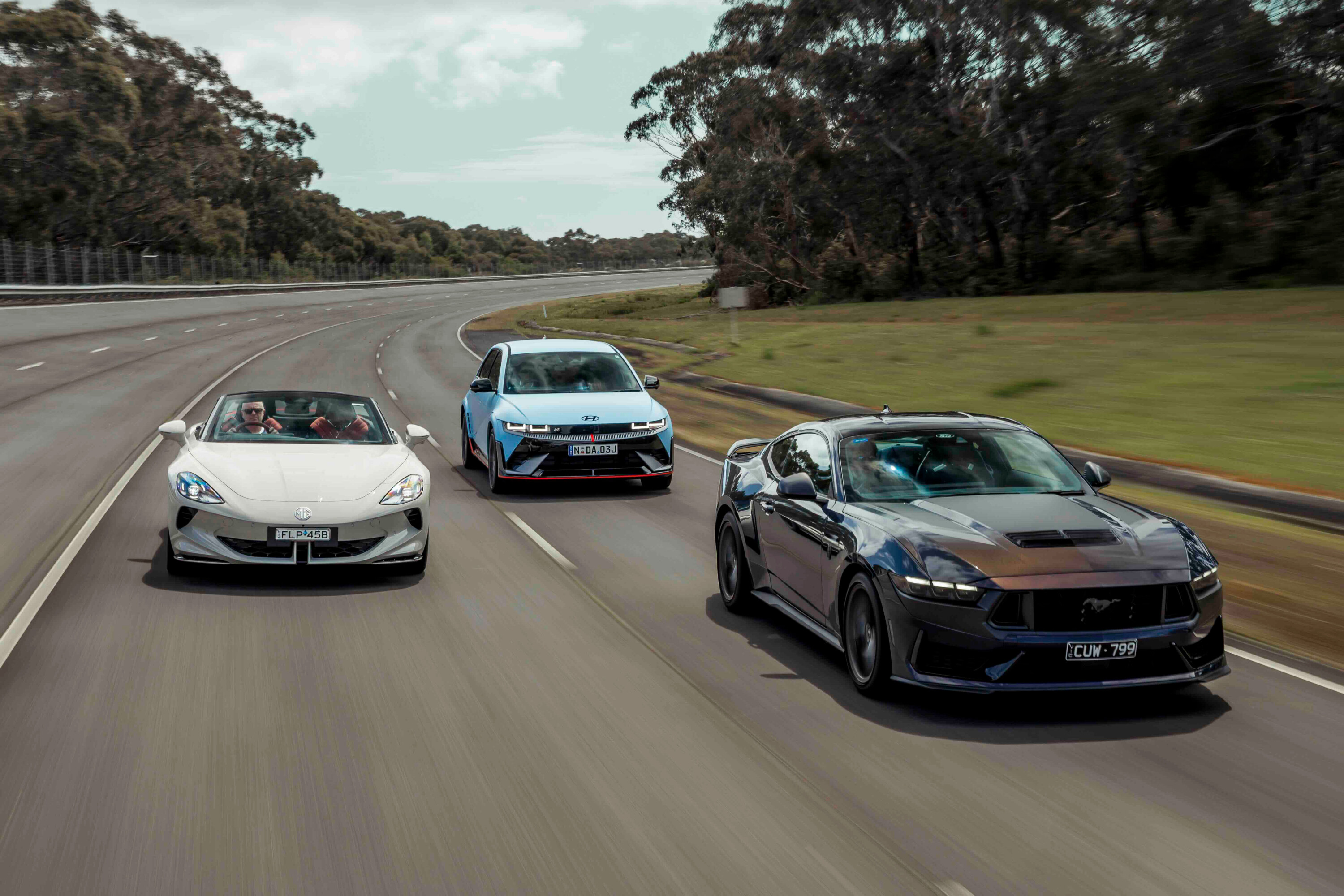
1
This year Wheels is also proud to welcome a new Official Partner of the award: Australia’s leading leasing company, Smart.
Smart’s chief customer officer Bianca Bates said this year’s Wheels’ COTY was exciting for Australia and reflected a new era for the auto industry. “The cars coming to the Australian market are changing rapidly, making the quality information provided by Wheels crucial for consumers,” Bates said. “Novated leasing allows customers to own the latest car flexibly and cost-effectively and is particularly popular with EV drivers.”
Over the course of a week, six current and former editors of Wheels magazine put each car through its paces at Victoria’s Lang Lang Proving Ground. From handling, speed and braking, to safety and design, over 12,000 kilometres of testing was completed, including independent performance testing of all 25 cars completed by 7-time Australian Rally Champion, Cody Crocker.
At the end of the week, the judges gathered to compare notes and come to a decision on the 2024-25 Wheels COTY winner.
1
“We’ve gathered a stellar line up for Wheels COTY ’24. It was hard to pick a pre-event favourite from the 25 cars in contention, but the industry’s most comprehensive testing process and six of Australia’s most experienced judges will deliver a worthy winner,” said Wheels editor Andy Enright.
Models from BMW, BYD, Ford, Honda, Hyundai, Kia, Lexus, Mazda, Mercedes-Benz, MG, Mini, Nissan, Polestar, Renault, Skoda, Tesla, Toyota and Volvo were among those tested during the exhaustive process.
The 2024-25 Wheels Car of the Year winner will be announced on Monday, December 16, coinciding with the on sale date of the 2024 Yearbook edition of Wheels.
This year’s award signals an exciting new chapter for both the Wheels brand and the iconic COTY award under new owner, Motoring Media Network (MMN).
| 2024 I 2025 Wheels COTY Final List | Petrol / Hybrid / Electric |
|---|---|
| BMW iX2 xDrive30 | Electric |
| BYD Sealion Dynamic Premium | Hybrid |
| Ford Mustang Darkhorse | Petrol |
| Honda CR-V VTi L AWD | Petrol |
| Hyundai Ioniq 5 N | Electric |
| Hyundai Ioniq 6 Dynamiq RWD or AWD | Electric |
| Hyundai Santa Fe Calligraphy | Hybrid |
| Kia EV5 Air or Earth | Electric |
| Kia EV9 Earth | Electric |
| Lexus LBX 2WD Luxury | Hybrid |
| Mazda CX-90 | Petrol |
| Mercedes-Benz CLE Coupe 200 | Petrol |
| Mercedes-Benz GLC 43 AMG | Petrol |
| Mercedes-Benz E-Class E300 | Petrol |
| MG 4 Essence 64 | Electric |
| MG Cyberster | Electric |
| MG HS Vibe | Petrol |
| MINI Countryman SE | Electric |
| Nissan Qashqai 1.5 Ti e-Power | Hybrid |
| Polestar 3 | Electric |
| Renault E-Tech | Electric |
| Skoda Enyaq Sport Line RWD | Electric |
| Tesla Model 3 Long Range | Electric |
| Toyota Camry Ascent Sport | Hybrid |
| Volvo EX30 Range Ultra | Electric |
2025 is going to be a big one for Volkswagen Australia, with all-new EVs hitting showrooms alongside new and facelifted core models.
The ID. electric vehicle range is the most critical inclusion for the VW brand, with four different EVs arriving in the 2025 model year.
So, what’s coming, what’s changing, and when should you expect each of the new model launches? Here’s your rundown for 2025 for VW Australia.
JUMP AHEAD
Volkswagen ID.4
1
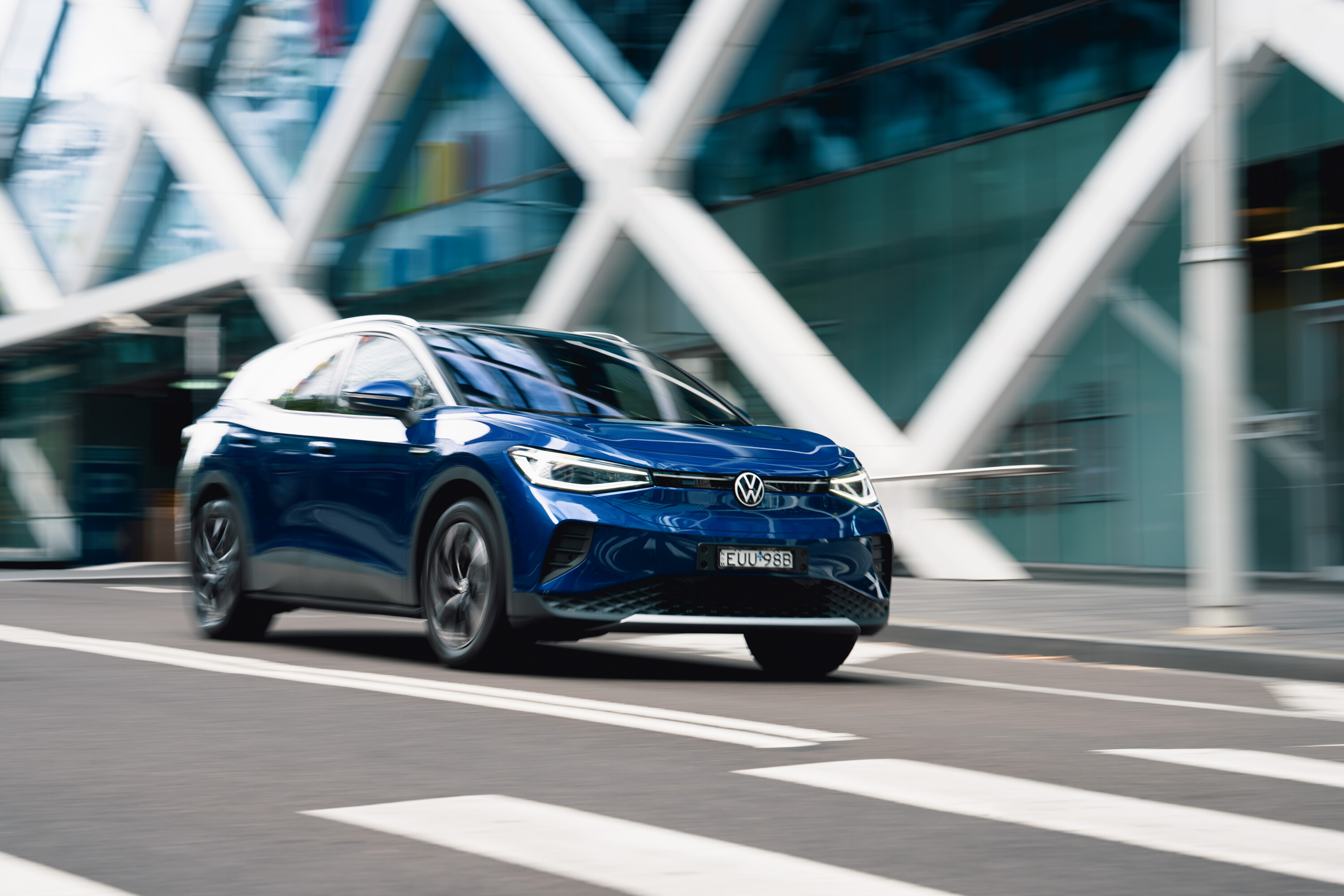
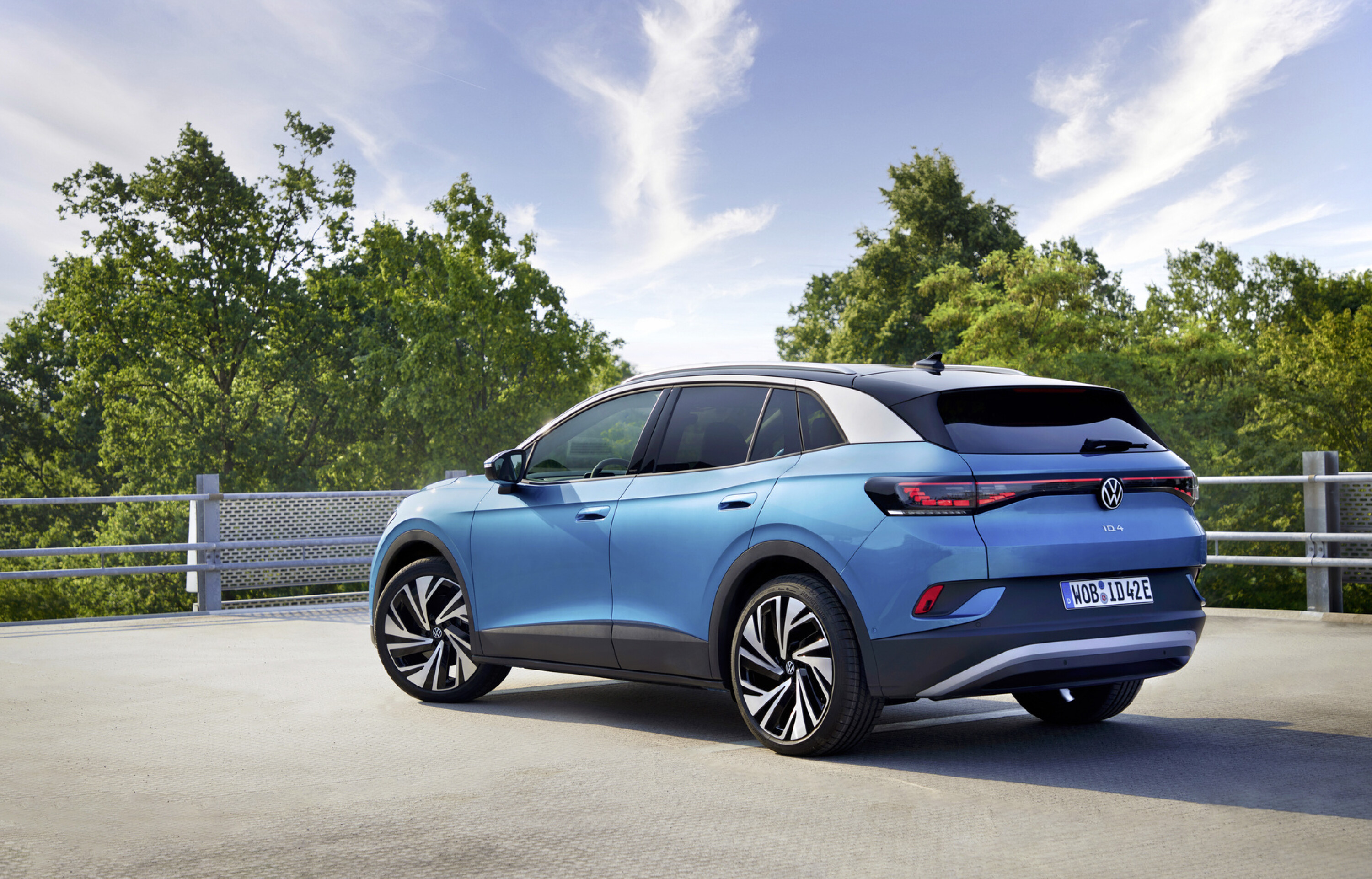
Think of an electric alternative to the VW Tiguan and you’re on the money when it comes to the VW ID.4, which is due to arrive in March, 2025.
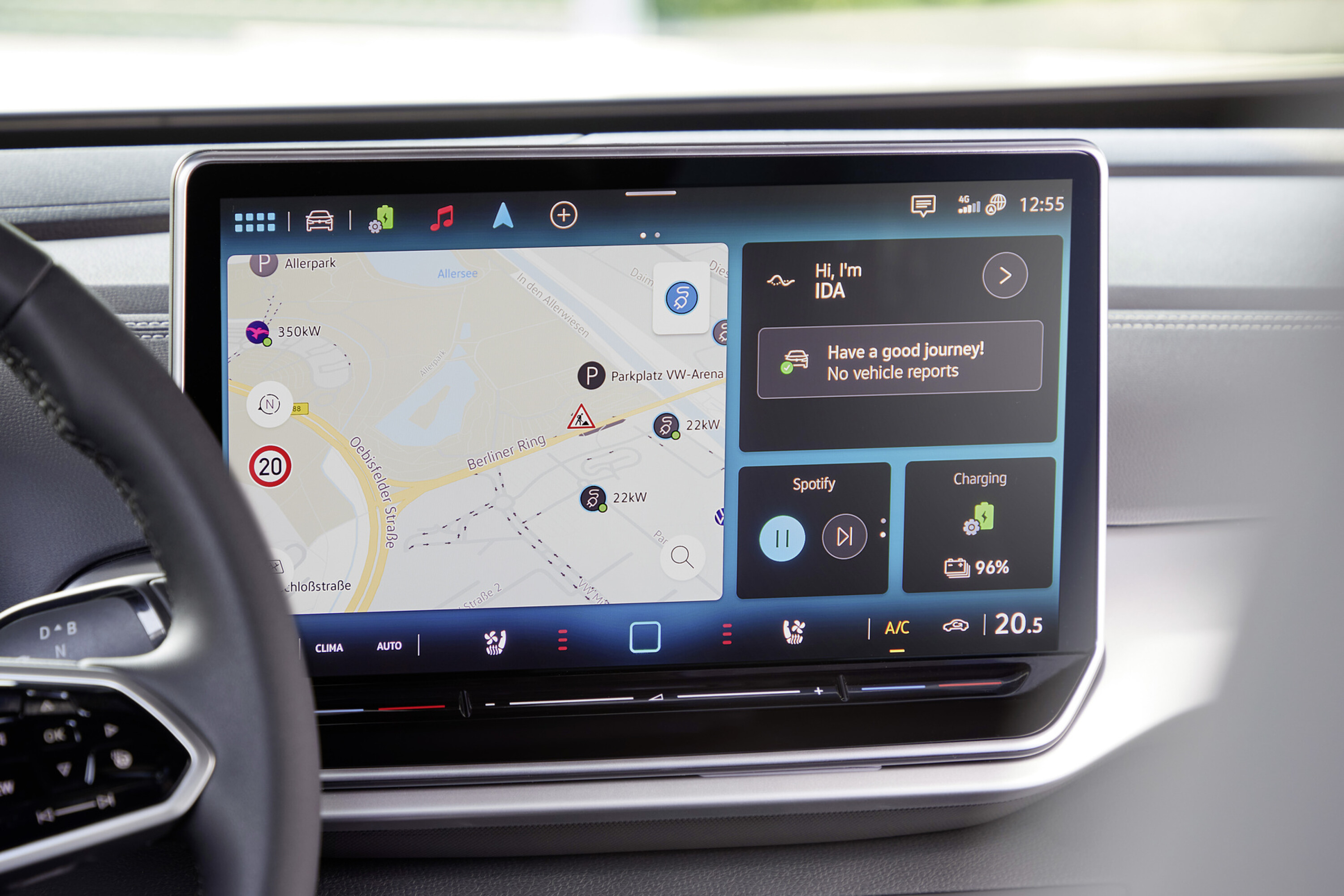
This family-friendly five-seat electric SUV will be initially be offered in single-motor ‘Pro’ rear-wheel drive guise producing 210kW and 545Nm, with the sportier GTX model ramping things up to 250kW thanks to the addition of a second drive motor for the front wheels. It also gets quicker DC charging at 175kW.
At just under 4.6 metres long, the ID.4 is bang on the class standard for a midsize SUV, and VW’s approach here is to offer this fully electric model with up to 550km WLTP driving range.
1
It’ll compete against the Kia EV6, Hyundai Ioniq 5, Tesla Model Y and even some VW Group counterparts such as the Skoda Enyaq and Cupra Tavascan.
1
Volkswagen ID.5
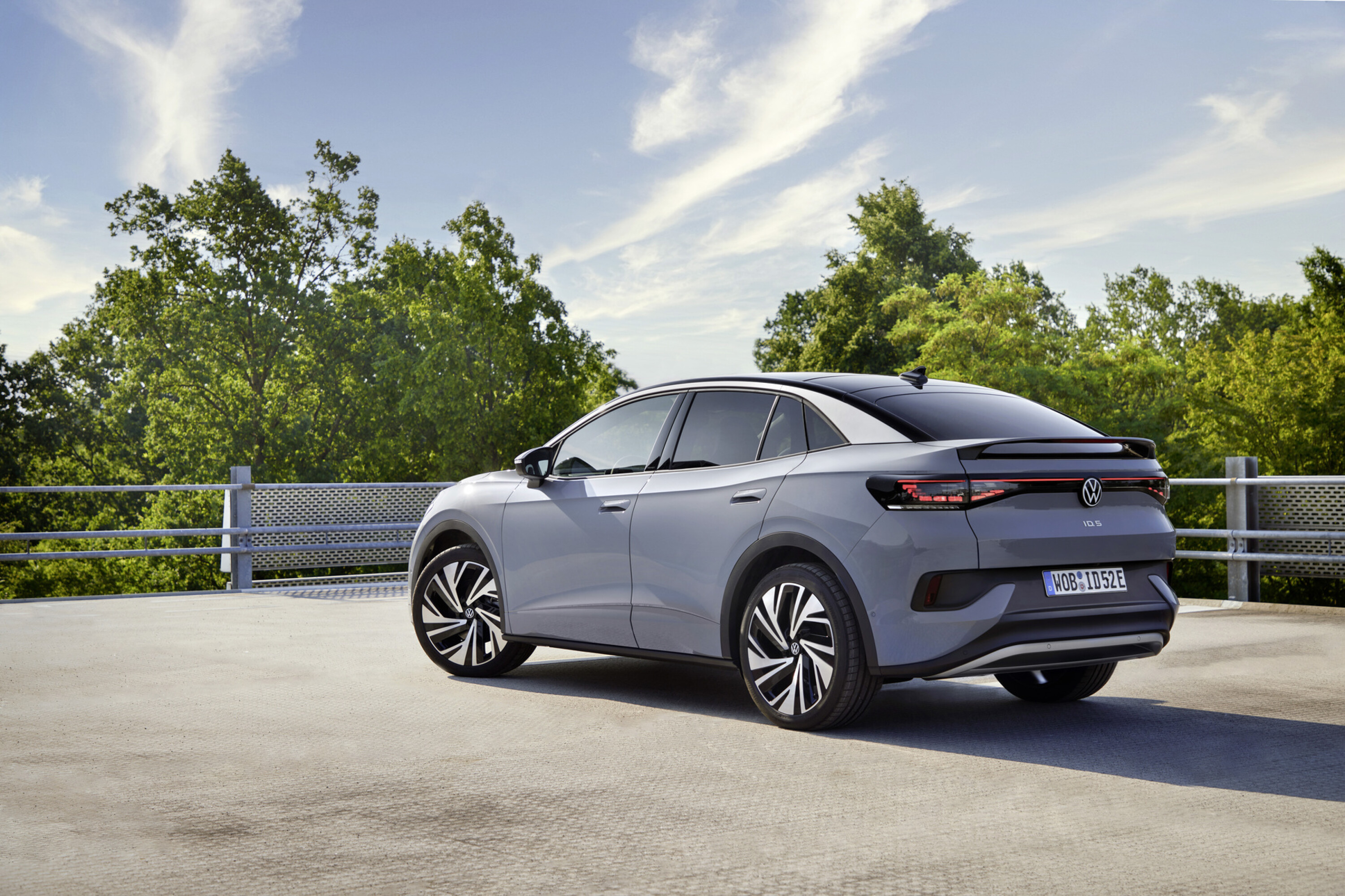
This is a sportier take on a midsize EV SUV than the ID.4, with a slope-backed bodyshell draped over similar mechanical innards.
Like the ID.4, VW Australia will offer a single-motor rear-wheel drive version with 210kW/545Nm alongside a sportier GTX model with all-wheel drive and 250kW, though VW’s local operation will employ the inverse strategy to the ID-4 with the ID.5, launching instead with the high-performance GTX variant. The ID.5 Pro will land later in 2025.
1
Driving range exceeds 500km for both versions of the ID.5
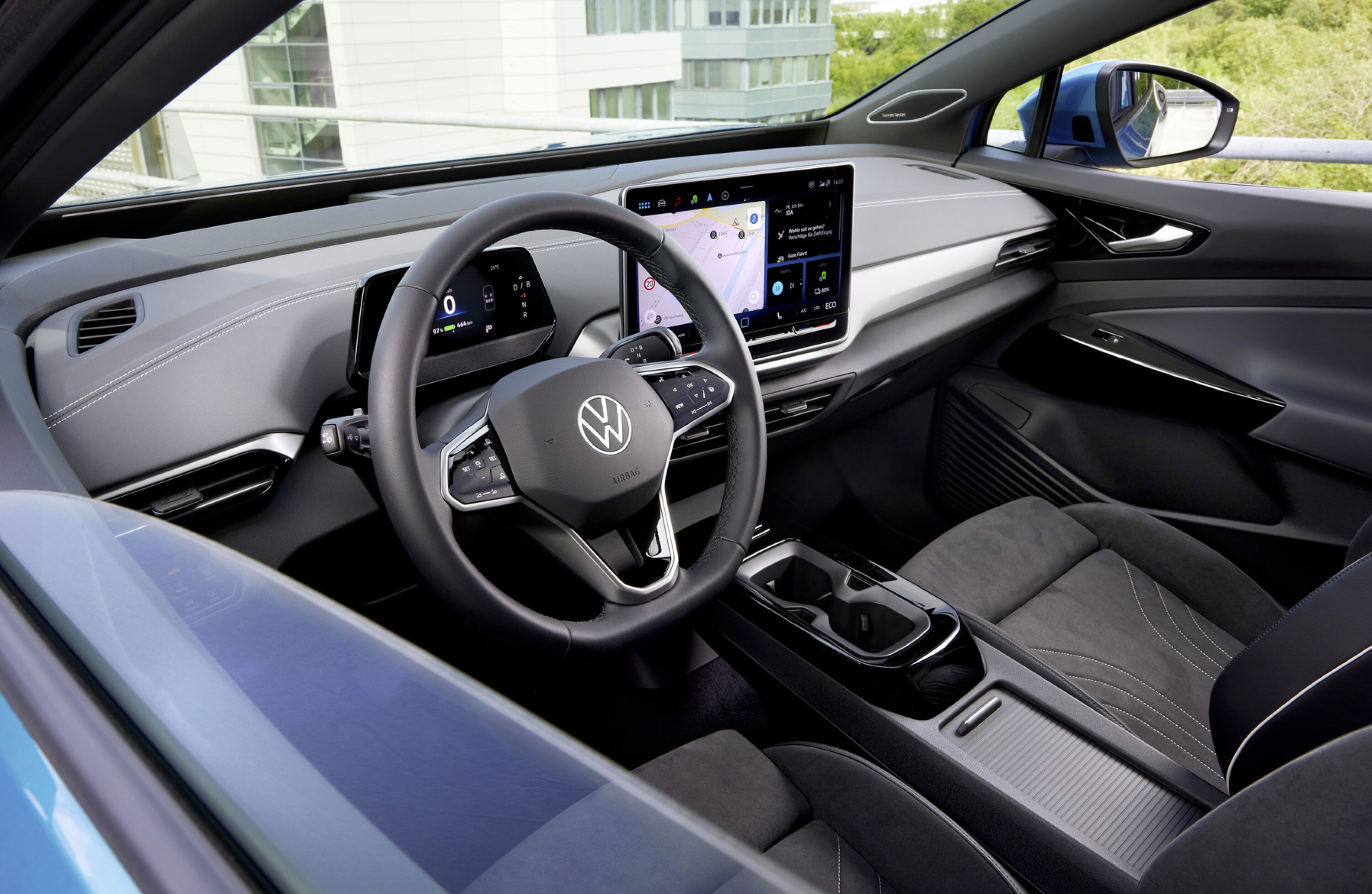
Mirroring the ID.4, the ID.5 picks up the 12.9-inch touchscreen and redesigned gear selector stalk inside the cabin.
Buyers of the GTX grades – the electric answer to GTI – will likely score sports seats with electric adjustment, heating up front and a heated steering wheel. Adaptive suspension is standard on all trims.
Driving range exceeds 500km for both versions of the ID.5 with the rear-drive Pro rating at 556km from a charge.
The ID.5 GTX will land in Australia at the same time as the ID.4, in March 2025.
1
Volkswagen ID.Buzz
The most interesting electric car to hit Australian roads? It could be, and it’s going to be a really interesting model range for the ID.Buzz, too.
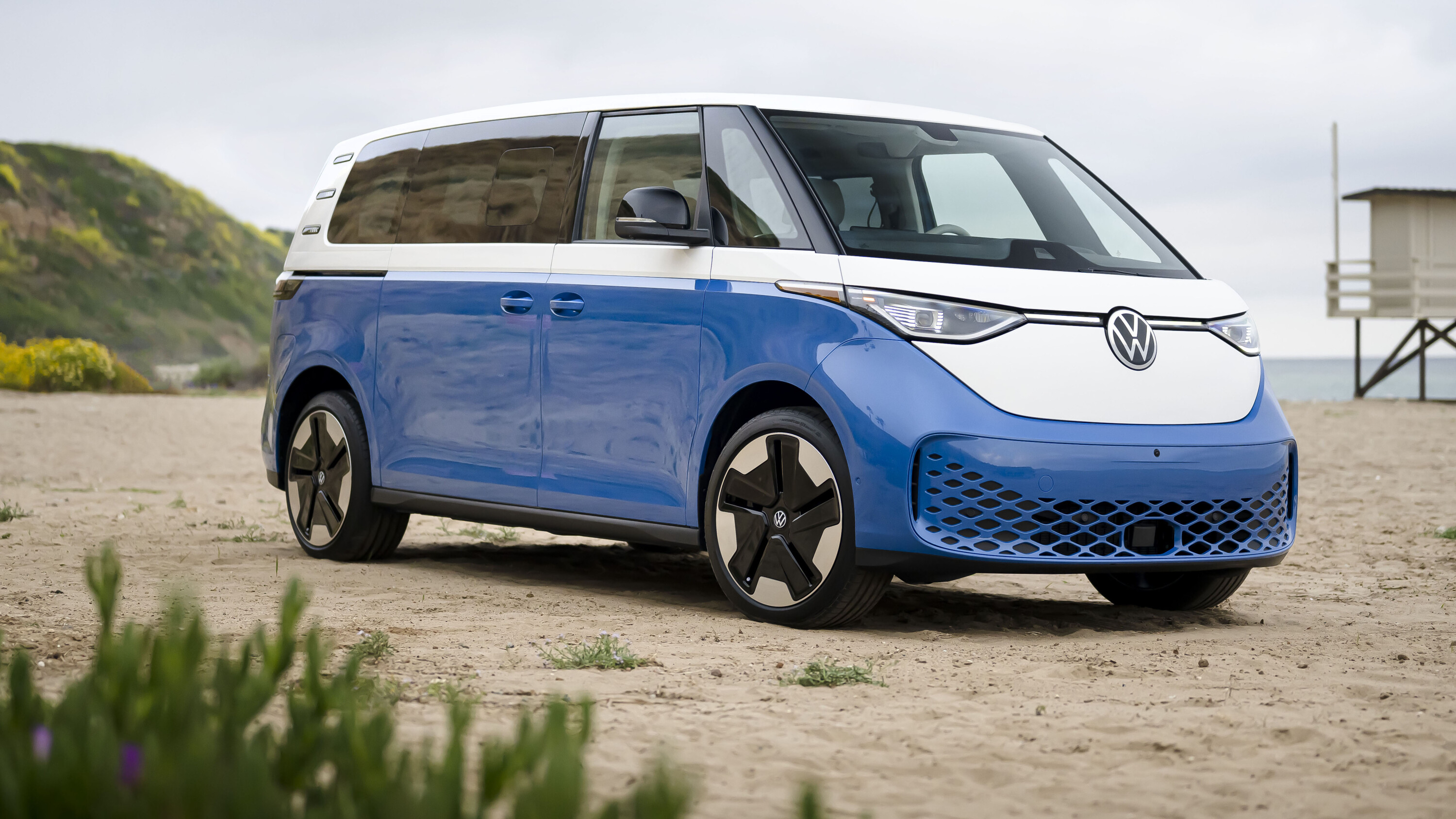
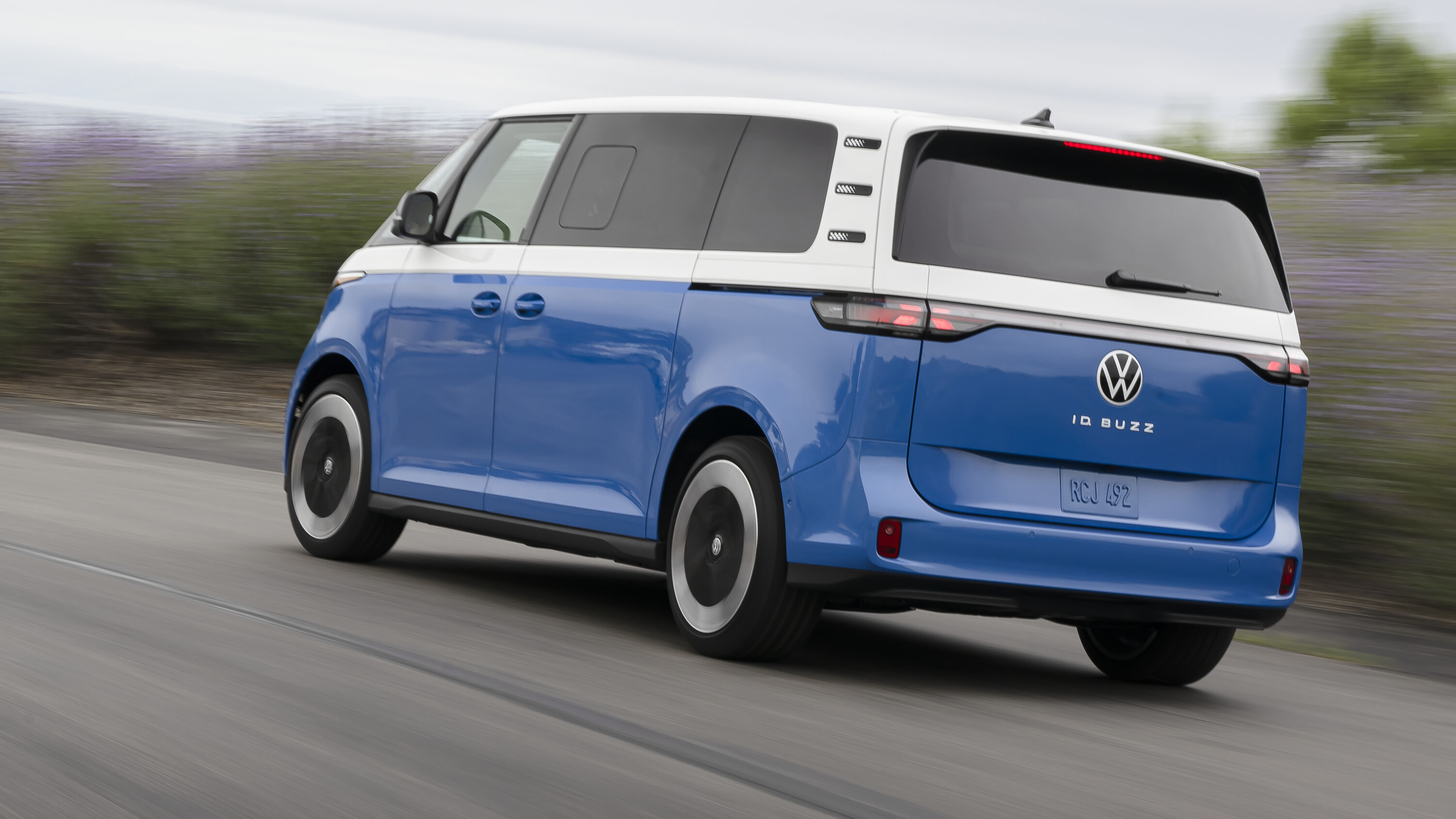
Launched in the last quarter of 2024, the full EV van with retro Kombi vibes arrives in five-seat short-wheelbase and seven-seat long-wheelbase guises at the same time – plus a higher-performance GTX flagship to crown the range.
The bulk of the ID.Buzz is offered with a 210kW/550Nm single-motor rear-wheel drive setup, with a 79kWh battery pack on short-wheelbase variants and an 86kWh battery for long-wheelbase models. The GTX takes the bigger battery pack, and grafts an extra motor onto its powertrain, delivering power to the front wheels and taking total outputs to 250kW/679Nm
1
As well as the passenger range of the ID.Buzz electric vans, there will be a Cargo model, offered only in short-wheelbase spec. The work van variant of the ID.Buzz still sports the same retro stylings, but sees different interior trim finishes and window-less panels on the back, with unpainted bumpers and steel wheels.
Pricing starts at $79,990 for the ID.Buzz Cargo, with the ID.Buzz Pro retailing at $87,990 as a five-seater, or $91,290 in seven-seat guise. The AWD ID.Buzz GTX arrives in early 2025, with an RRP of $109,990.
1
Volkswagen Golf
Released in the European market at the beginning of 2024, the Mark 8.5 Volkswagen Golf will go on sale in Australia in the second quarter of 2025.
It’s a facelift, as the numerals suggest. New bumpers, tweaked lights and alloy wheels are the most overt changes.
Underneath, the Mk8.5’s MQB Evo platform is treated to similar revisions as the Tiguan, meaning stiffer mounting points and improved rigidity, while the dashboard sprouts a larger 12.9-inch touchscreen on higher grades (up from 10 inches in the Mk8) running VW’s latest infotainment software
If you were a fan of the Golf Wagon, it’s gone – the Golf Mk8.5 will be a hatch-only affair in Australia. Happily, the Golf R and Golf GTI will be returning, with more power for the former as well as the addition of a drift mode.
Enticed? This will also be the last ever combustion-engined Golf, according to CEO Thomas Schäfer, if that helps shape your interest. Don’t mind electrons? The facelifted Golf may also arrive bearing a plug-in hybrid (PHEV) option as well, for all you treehugging types.
Volkswagen Tayron
In 2025 the Tayron will replace the Tiguan Allspace in Australia as VW’s midsize three-row SUV. New nameplate, familiar form factor.
Though it’ll use the same platform as the Tiguan, its sheetmetal, dimensions and cabin furniture are unique to the Tayron, helping split out VW’s two midsizers and introduce greater separation between VW’s five-strong SUV family.
We expect the Tayron will arrive in the latter half of 2025, following the new-gen Tiguan (see below), with a range of powertrain options that will likely include at least one plug-in hybrid.
Volkswagen Tiguan
WHEN: MAY 2025
Sporting a more premium feel and upgraded interior, the new Tiguan has been dubbed a “mini Touareg”. While diesel and the previous R flagship are gone, a range of petrol engines will be available.
Boot space increases thanks to a 30mm length increase, though the Tiguan remains a five-seater. Seven-seat seekers will have to wait for the Tayron, the Tiguan Allspace replacement, later in 2025.
Built on VW’s latest MQB Evo platform, the Tiguan offers improved materials and a refined driving experience. The top-spec 195TSI R-Line offers strong performance, too, replacing the hero Tiguan R of the outgoing second generation.
MORE
Midsize SUVs
1
Volkswagen Multivan
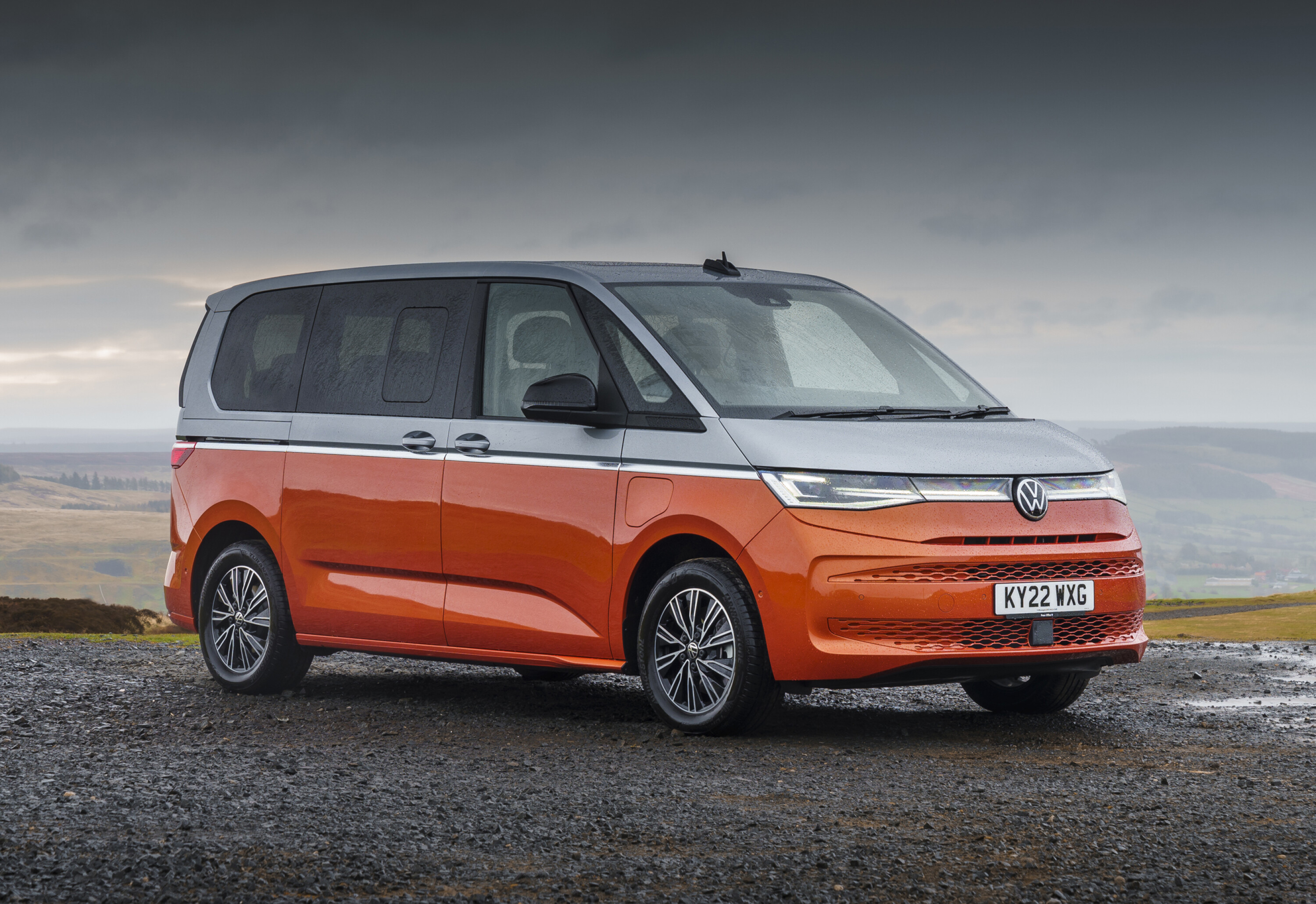
Alongside the ID.Buzz, Volkswagen will also offer a new-generation version of the Multivan people-mover.
Unlike models in years gone by which were based on the Transporter commercial vehicle platform, the new-gen T7 Multivan is a passenger-car-based three-row van running on the MQB Evo platform shared with the Golf 8.
The Kia Carnival and Hyundai Staria rival will arrive in the fourth quarter of 2024, with a 110kW/360Nm 2.0-litre turbo-diesel driving the front wheels initially.
Volkswagen will offer additional powertrain choices in 2025, perhaps with more power and all-wheel drive. A plug-in hybrid is available overseas but doesn’t sound likely in Australia.
The new model will come in Life (replacing Comfortline) and Style (replacing Highline) with pricing yet to be confirmed, though its local launch has been penciled in for April, 2025.
Volkswagen has focused on ease of use, making each individual seat – that’s now heated – 25 per cent lighter so anyone can lift and move them on the rail system, which now has increased flexibility.
The multi-function table remains, the front seats are 18-way adjustable and there’s a free-floating dash with a 10-inch display sitting atop. Safety is improved, too, with more driver-assistance features and the addition of curtain and centre airbags.
Volkswagen Transporter
1
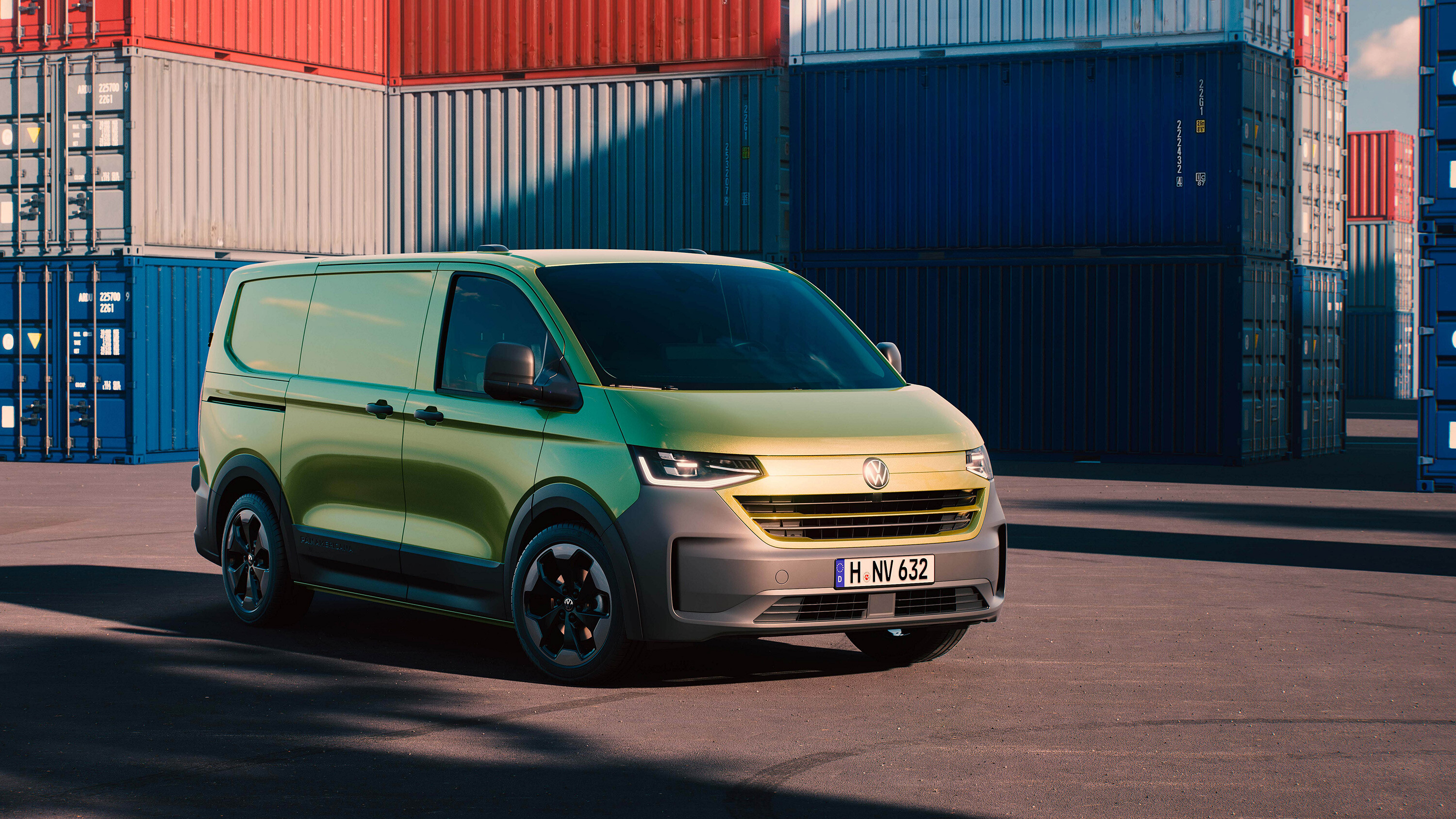
Due in the back half of 2025, VW’s trad White Van, the Transporter, will return in an all-new generation.
And, as with the relationship between the Ford Ranger and the VW Amarok, the next-gen ‘T7’ Transporter will essentially hang a Volkswagen face over Ford-sourced mechanicals, donated by the Ford Transit Custom.
Like the Transit Custom, the T7 Transporter will be eventually offered in pure combustion form, and as a PHEV and pure EV. Full local specifications will be revealed closer to its Australian arrival.
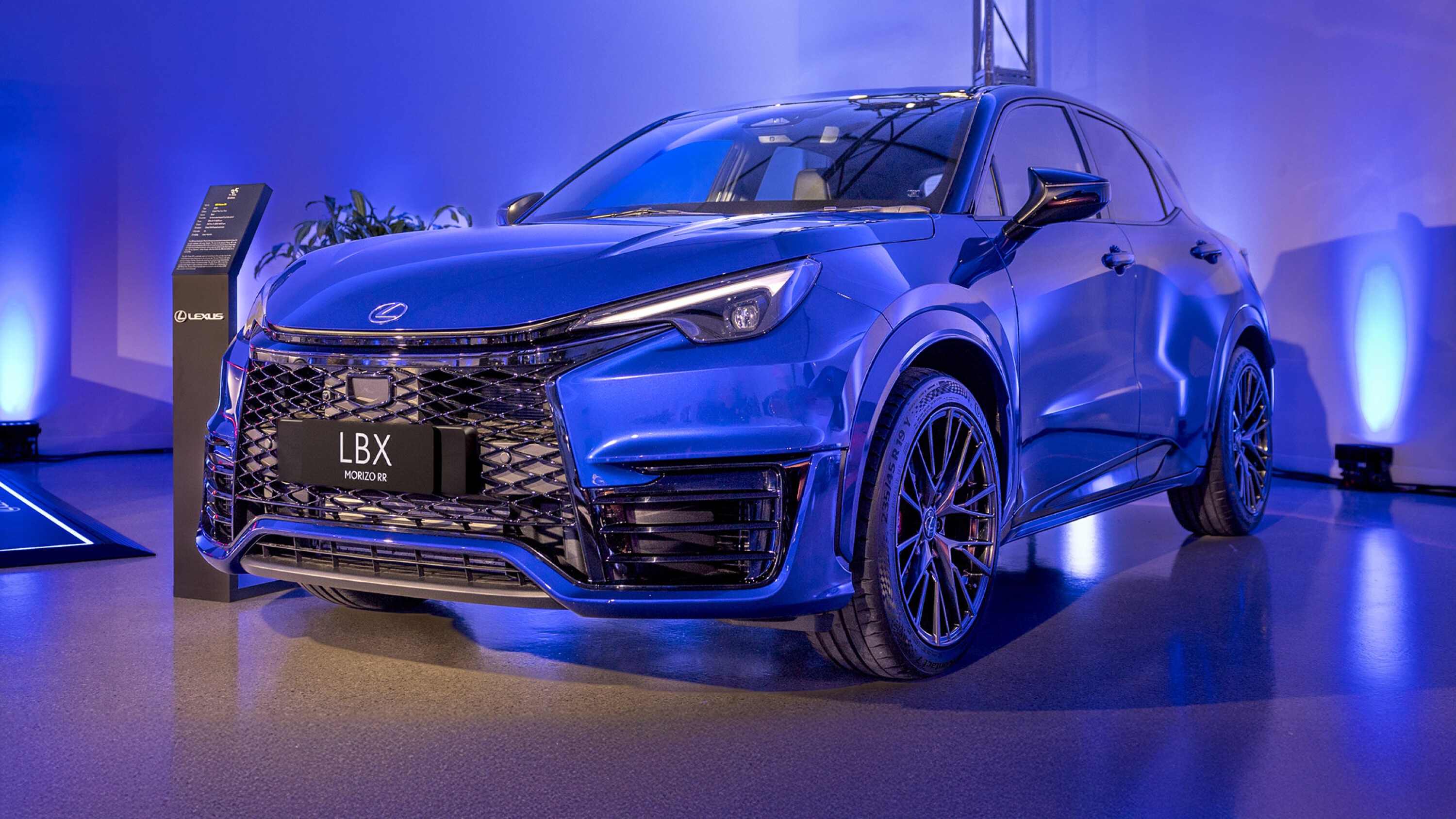
Lexus has announced the upcoming LBX Morizo RR, a high-performance compact SUV set to arrive in Australia in the first half of 2025, will start from $76,490 plus on-road costs.
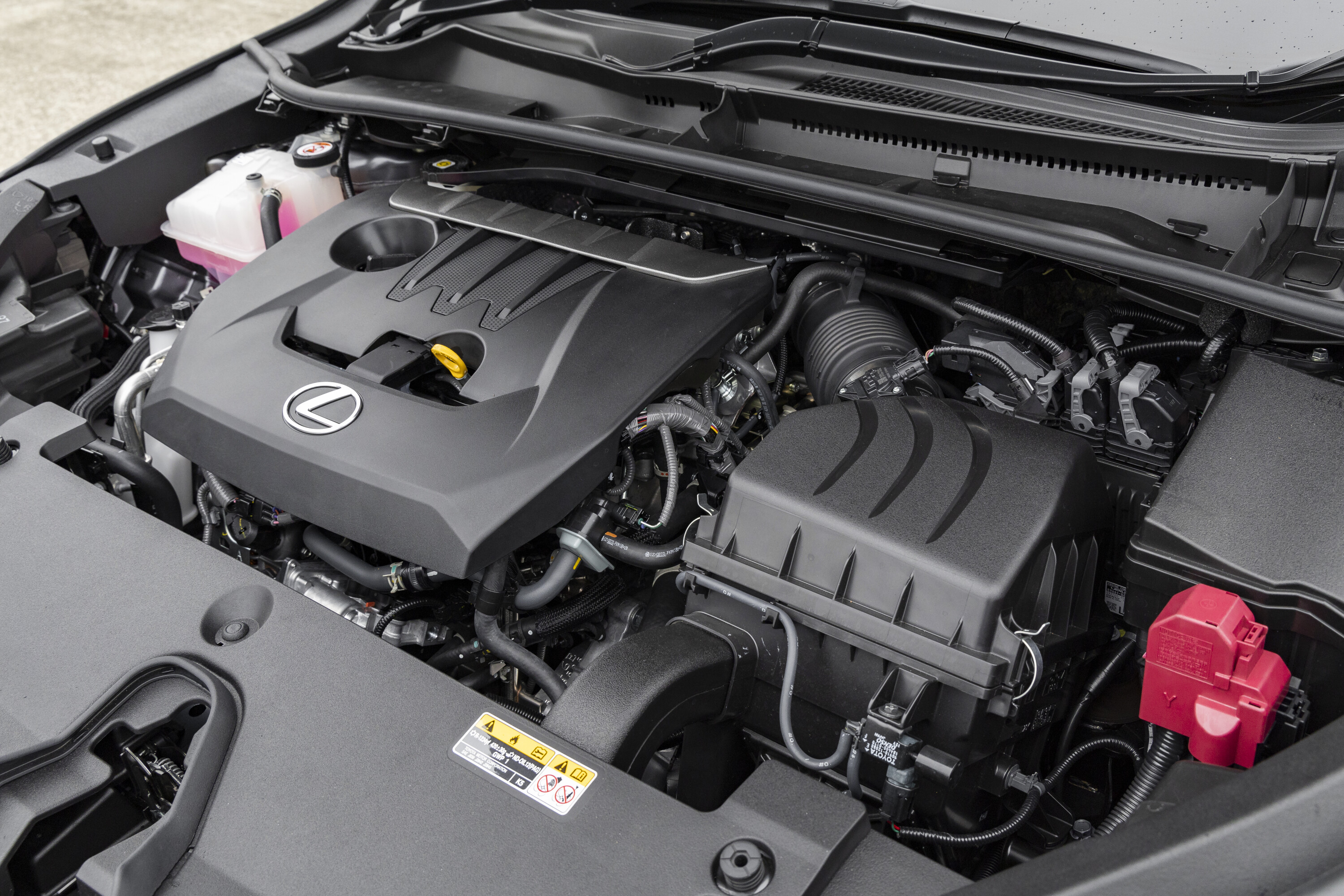
For the money – $20K more than the most expensive trim of the regular LBX – the Morizo RR does away with the 100kW/185Nm hybrid system in favour of a powerful 1.6-litre turbo petrol three-pot.
Outputs for the LBX Morizo RR are listed at 206kW at 6500rpm and 390Nm from 3250-4600rpm, sent to a full-time electronically controlled all-wheel-drive system and rear Torsen limited-slip diff through an eight-speed automatic.
1
Buyers in Japan get the option of a six-speed manual, but Aussies aren’t into such things at any business-satisfying volume. Don’t look at us; they all say the sales figures over the years prove it.
Likewise, Aussies and Europeans miss out on the 224kW/400Nm tune offered in Japan, which is also a match for the GR Yaris and GR Corolla. (The $60K Volkswagen T-Roc R also offers 221kW and 400Nm.)
Still, with close to the same torque figure and an identical claimed 0-100km/h time of 5.2 seconds in both Japan and Oz/EU spec, buyers are unlikely to be disappointed with the results.
1
A sports suspension package sees the Morizo RR sitting 10mm lower than the Luxury and Sports Luxury LBX variants, adding a new ‘Response Enhancing Damper Structure’ on the lower front suspension arms designed to improve responsiveness under load.
Stopping power comes from aluminium monobloc four-piston front calipers paired with 356mm ventilated discs, while the rear features single-piston calipers with 281mm solid discs.
The exhaust system features dual tips with an active secondary intake duct that adjusts based on speed, balancing enhanced engine acoustics at higher speeds with reduced noise during slower driving.
1
Exclusive to the Morizo RR variant are 19-inch alloy wheels and aerodynamic enhancements, including a revised front bumper and rear vertical fins.
The body itself is unchanged, but the arch surrounds have been flared slightly to accommodate the wider wheels.
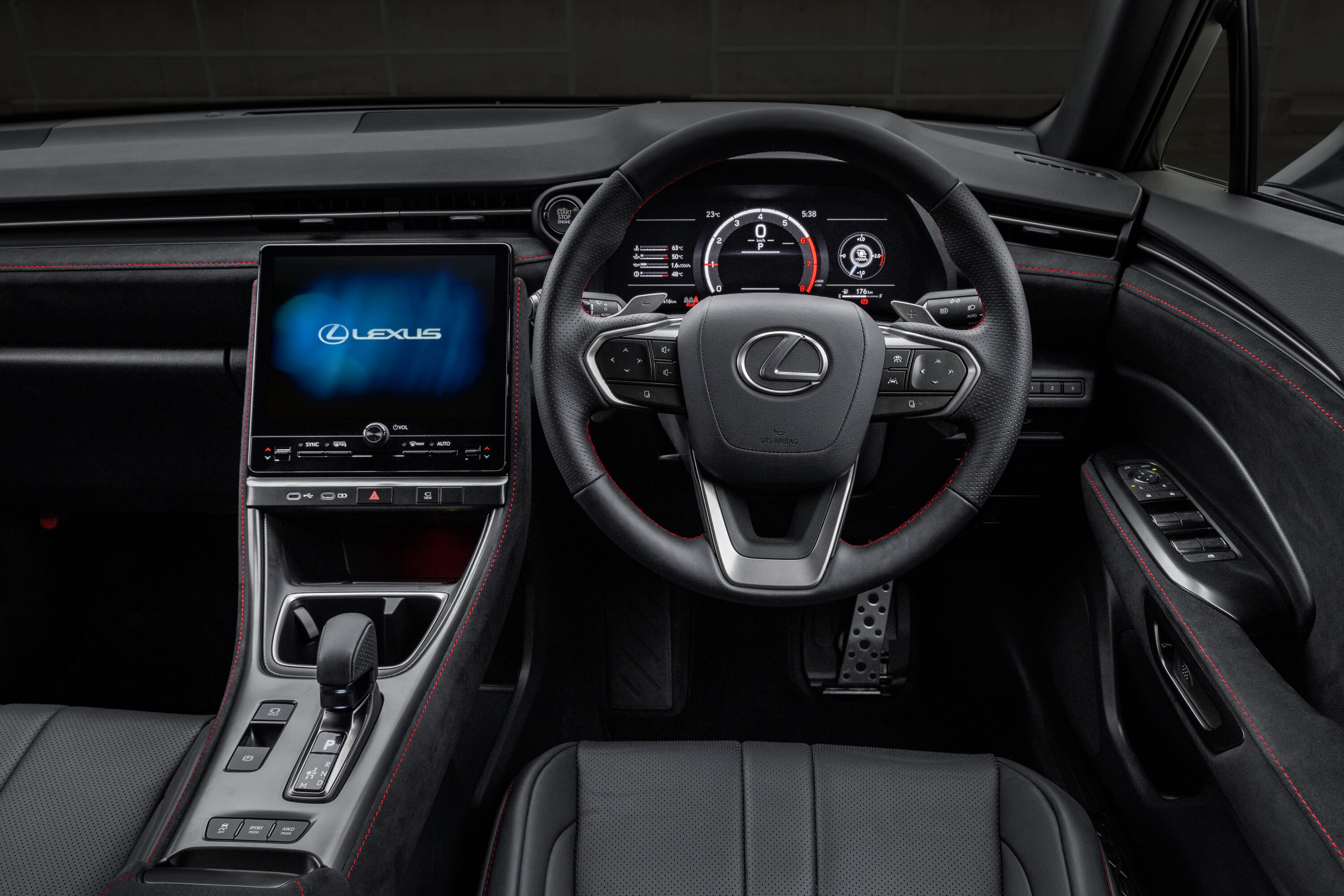
Inside, there’s black leather-accented sports seats, a dimpled steering wheel, and a shift knob with red contrast stitching.
2025 Lexus LBX Morizo RR pricing
Prices exclude on-road costs.
- LBX Morizo RR: $76,490
- LBX Morizo RR with two-tone paint: $78,240
MORE
Everything Lexus
