
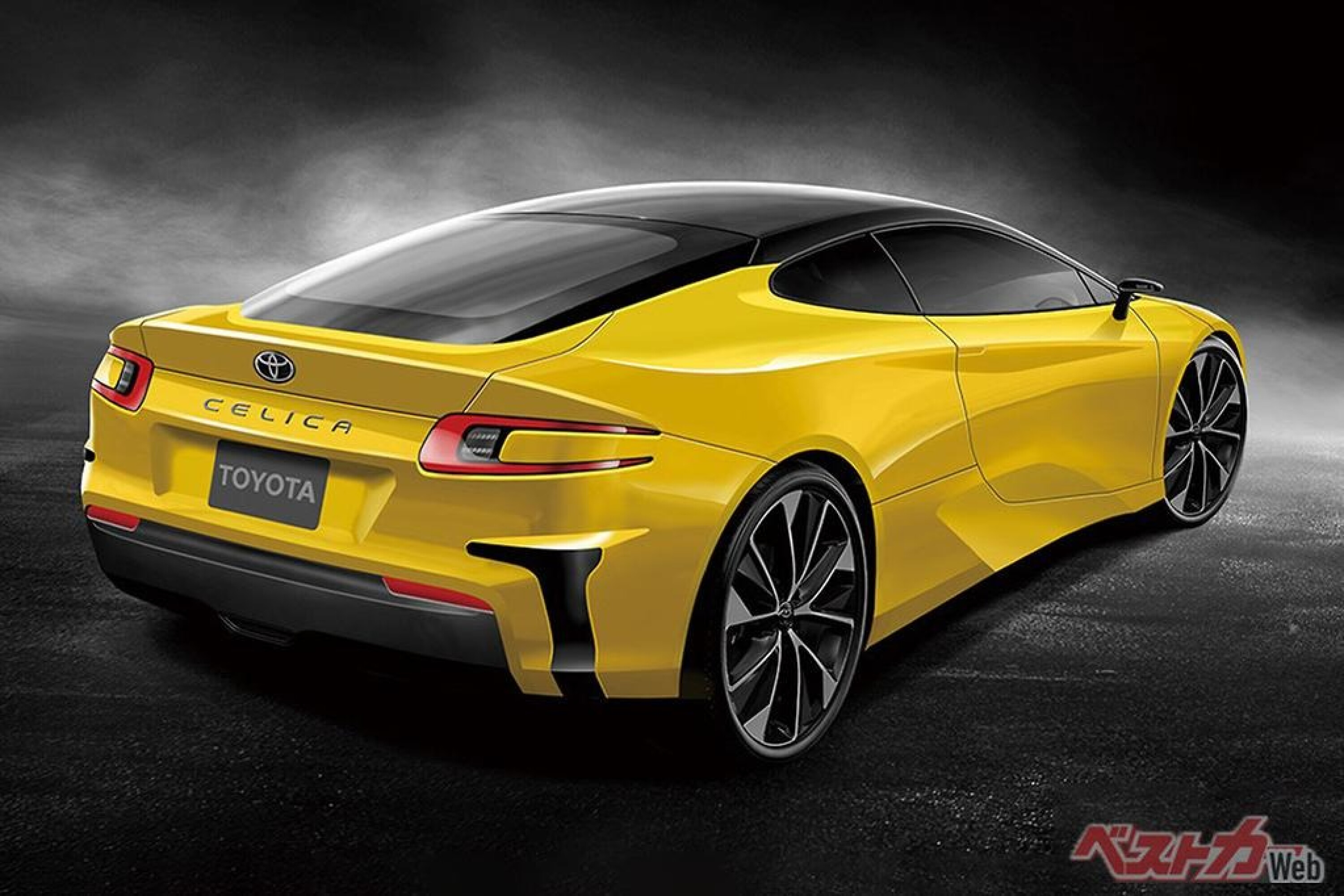
Below: We wouldn’t mind if the Celica looks a bit like this MR-E concept our mate Theottle created in 2023.
A senior Toyota executive speaking at this past weekend’s 2024 Rally Japan is understood to have confirmed comeback plans for the Celica name.
The confirmation emerged unexpectedly during a Q&A session, when Toyota Chairman Akio Toyoda was asked directly about the possibility of reviving the Celica.
Toyoda deflected the question – asked by Best Car editor Jin Hongo – to his Executive Vice President Yuki Nakajima, who is understood to have responded with the following, which we’ve translated here with Google Translate.
“To be honest, there is no sign of it right now. However, there are many people within the company who are eagerly awaiting the Celica. So…I’m not sure if it’s okay to say this in a public forum, but we’re doing the Celica!”
1
It’s no formal announcement, but this is nonetheless the first time Toyota has offered any official comment confirming plans for a new eight-generation Celica.
Speaking further – as he often does and as so few of his fellow Japanese automotive executives ever do – Toyoda tempered expectations by pointing out potential challenges in the development process, advising not to assume specifics just yet.
After this surprising statement, Chairman Toyoda followed up with some banter towards Nakajima and the audience together:
“Is this okay? There are a lot of challenges. Best Car wrote that Toyota is making the Celica, but you shouldn’t believe that,” to which Vice President Nakajima humorously replied, “I didn’t say when it will be released—it might even be next year.”
We wonder: Will it be front-wheel drive like its 1985-onwards generations, though, or return to its earlier rear-wheel-drive form?
We’ll look forward to an announcement – hopefully in the new year.
Questions about the next GR86
The event also included audience-driven Q&A, where fans asked about the next-generation GR86.
Questions ranged from the possibility of a turbocharged engine to whether the car would retain a rear-wheel-drive layout.
Kazuya Oshima, a racing driver and team leader for ORC ROOKIE Racing, confirmed that development work for the next GR86 was ongoing, particularly focusing on track performance.
Toyoda stirred the pot again, asking Nakajima to take the microphone once more, seemingly leading him towards…
…the future of Toyota’s engines
Reflecting on Toyota’s engine development strategy, Nakajima referenced Toyoda’s previous remarks at the 2024 Tokyo Auto Salon, where the chairman expressed admiration for Subaru’s boxer engines and Mazda’s rotary engines.
Nakajima: “At this year’s (2024) Tokyo Auto Salon, Mr. Morizo (Chairman Akio Toyoda) was asked, ‘What’s your favourite engine? What engine do you want to leave for the next generation?’ He answered, ‘Subaru’s horizontally opposed engine and Mazda’s rotary engine.’
“But there wasn’t a Toyota engine! This fired up all of Toyota’s engine developers. We are determined to create an engine that Morizo would want to leave behind. It’s not about whether it can or cannot be released or whether it will or won’t be preserved. We will release it!”
While the Japanese are known to be capable of enthusiastic conversation, you’ll rarely see any of their executives provide such detailed comments to western media – so we’ll have to take the Best Car team’s word that it went quite like that…
November: 2025 Polestar 4 Australian photos added
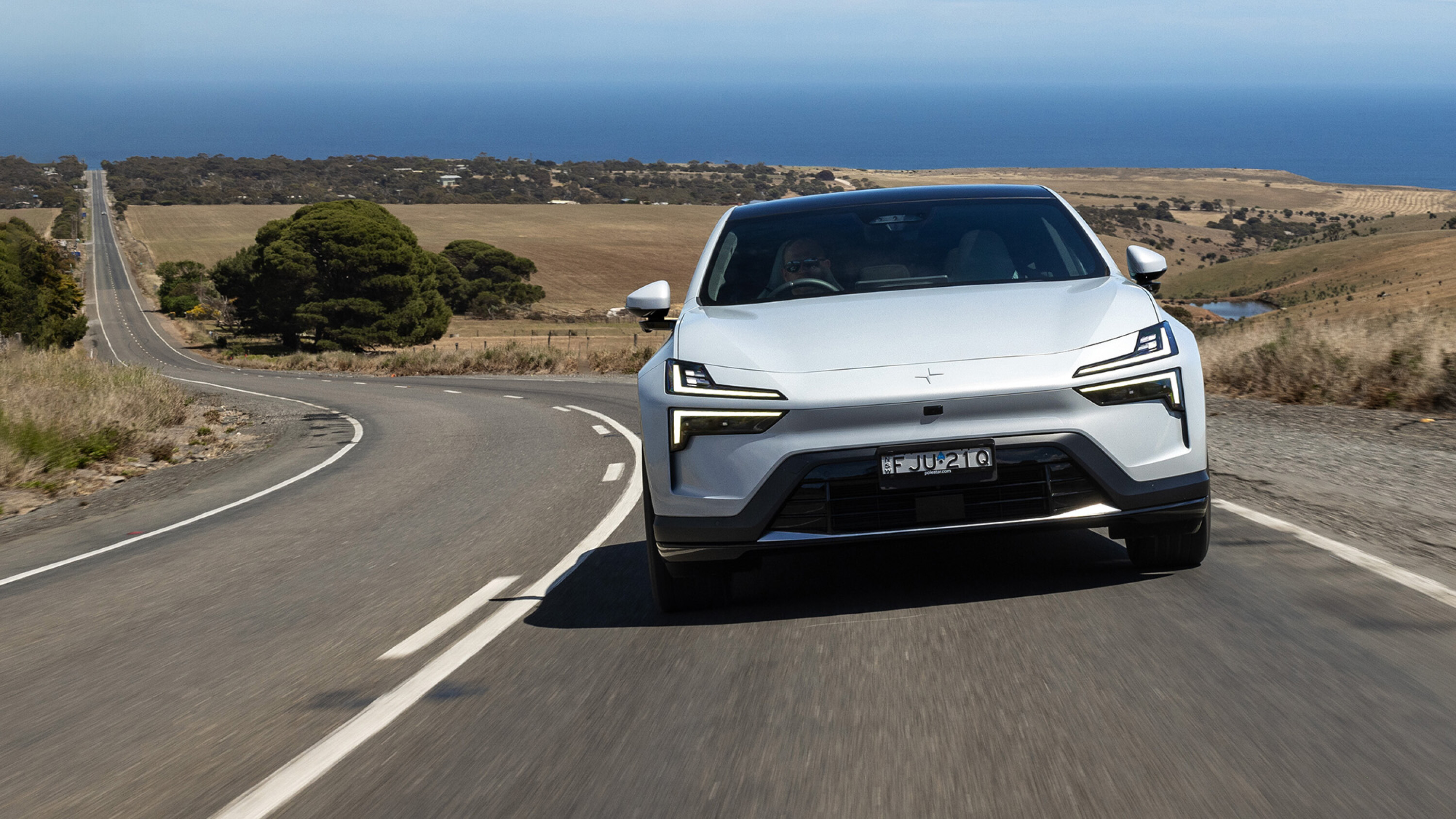
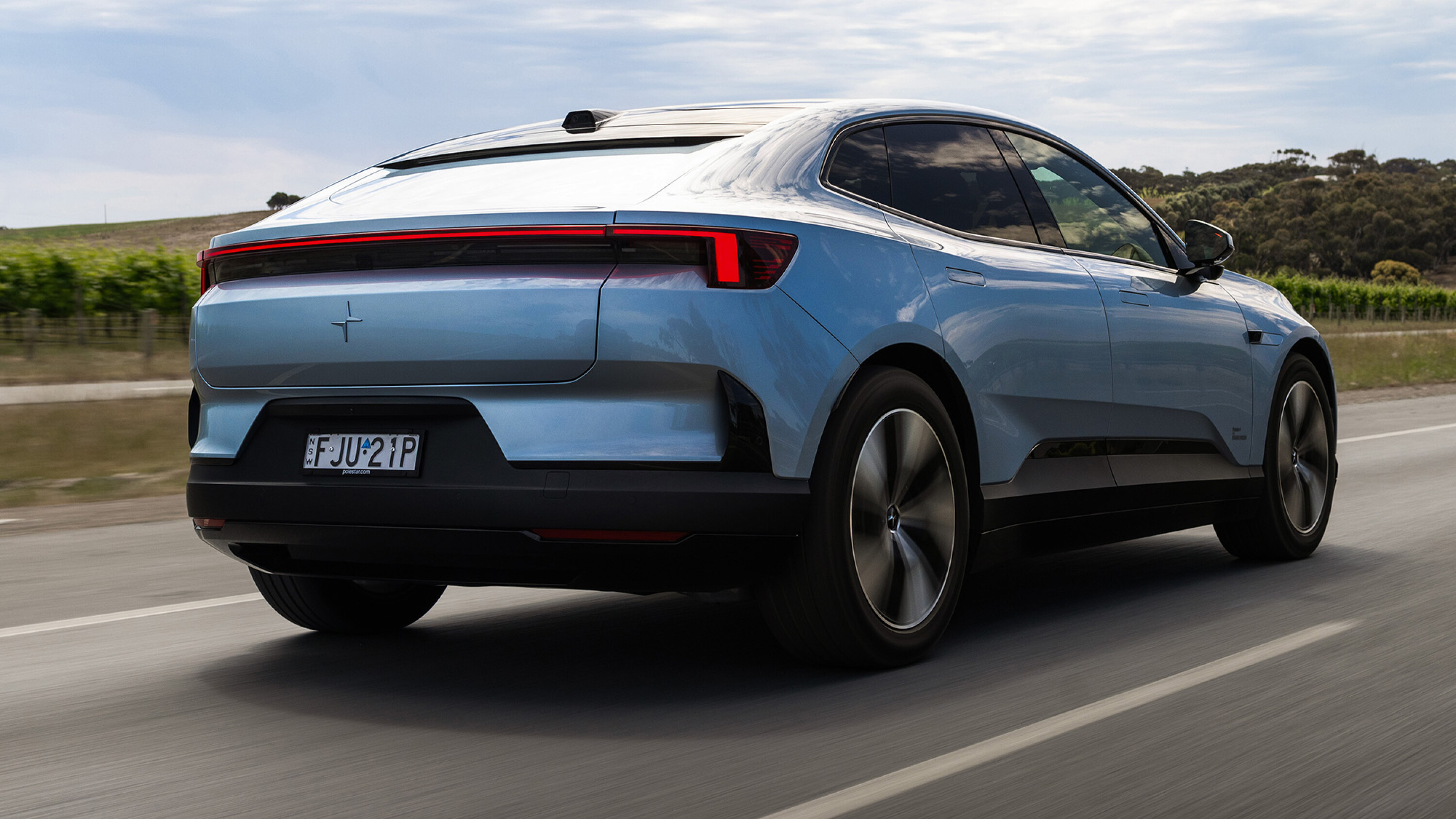
As the Polestar 4 closes in on its Australian launch, at last, the company has released local photos.
Pricing has also improved recently, compared to the numbers released in February.
At in its initial announcement in February, the 2025 Polestar 4 was listed with an opening price of $81, 500 before on-road costs for the Long Range Single Motor (LRSM) variant.
In September, that starting point was reduced to $78,500 before on-road costs, and that’s where it remains now.
The more powerful Long Range Dual Motor (LRDM) also fell in price, reduced from $93,080 to $88,350, again before on-road costs.
Importantly, the LRDM slipping below the luxury car tax threshold for low-emission vehicles ($91,387) means both variants now benefit from savings in on-road costs.
NOTE: The below story is otherwise unchanged.
1
February: 2025 Polestar 4 pricing announced
The Polestar 4 is officially on sale in Australia and Europe, with the Tesla Model Y and Hyundai Ioniq 5 rival getting tweaks to option pack pricing.
Production for Australia is scheduled to start in mid-2024 following deliveries in China kicking off late last year.
Local arrivals are expected to commence in August following the launch of Polestar 3.
Polestar hasn’t messed with the 4’s pricing since we first saw it, the Long Range Single Motor (LRSM) is still $81,500 before on-road costs and the Dual Motor (LRDM) remains at $92,150.
| Variant | Price (excluding on-road costs) |
|---|---|
| Long Range Single Motor | $81,500 |
| Long Range Dual Motor | $93,050 |
1
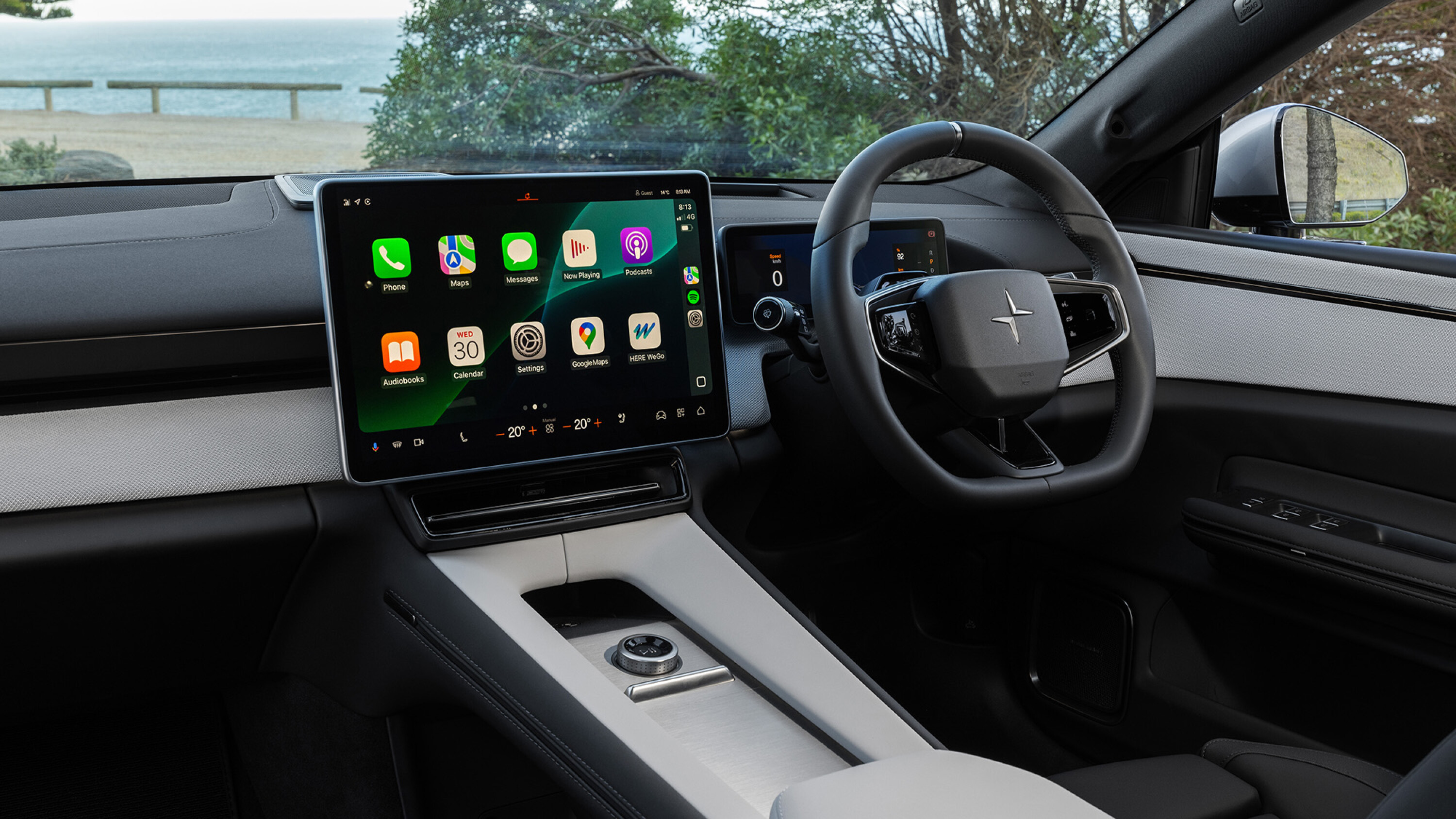
The standard specification includes 20-inch alloy wheels, Tailored Knit upholstery made from recycled materials, a 15.4-inch touchscreen running Android Automotive operating system, rear seat touchscreen, the Pilot Pack, and more.
| 20-inch alloy wheels | Power seats with driver’s memory |
| 15.4-inch landscape touchscreen | 10.2-inch digital driver’s display |
| Android Automotive operating system with built-in Google Assistant, Maps, Play Store, with downloadable apps, OTA software updates, and wireless Apple Carplay | Animal mode |
| Built-in dashcam and 4x USB-C connectors | 100% recycled plastic ECONYL textile floor mats |
| Cleanzone climate control with heatpump | 15W wireless charging pad |
| Tailored Knit upholstery | Eight-speaker sound system |
| Polestar app with vehicle functionality and smart home integration, digital key, NFC card, key fob | LED headlights with active beam |
| Retractable door handles | Full-LED rear light bar with persistent light signature, automatic dimming |
| Illuminated Polestar emblem | 4 cup holders (2 front, 2 rear) |
1
There have been changes to the cost of Polestar’s packs, with pricing for the Plus, Performance and Nappa Packs all dropping.
| Plus Pack $8000 | |
|---|---|
| 14.7-inch head-up display | Tri-zone climate control with air quality monitoring |
| 14-speaker Harman Kardon premium audio | Rear climate control and entertainment screen |
| Pixel LED headlights with Adaptive High Beam | Heated rear seats |
| 22 kW AC charging limit | Heated steering wheel |
| Powered steering column with profile memory | Automatic dimming side mirrors |
| Easy ingress/egress | Star Knit illuminated interior deco |
| Extended electric adjustment settings for front seats | MicroTech upholstery in Charcoal, or Tailored Knit upholstery in Mist, with Zinc deco |
| Electric reclining rear seats | Hands-free operation for powered tailgate |
| Performance Pack (requires Plus Pack) $7200 | |
|---|---|
| Polestar Engineered chassis tuning | Brembo performance brakes in Swedish gold |
| 22-inch Performance forged alloy wheels | Swedish gold valve caps, seat belts |
| Pirelli P-Zero 265/40R22 | |
| Nappa Pack (requires Plus Pack) $7000 | |
|---|---|
| Perforated Bridge of Weir Nappa leather, animal welfare-secured, in Zinc or Charcoal | Rear comfort headrests |
| Ventilated front seats with massage | Brushed textile headliner |
| Additional headrest speakers for Harman Kardon audio | |
| Standalone options | |
|---|---|
| Premium metallic paint | $2300 |
| Painted body cladding (requires Plus Pack) | $1400 |
| 21-inch Sport wheels (not available with Pro Pack) | $2500 |
| Electric folding tow bar | $2900 |
| Electrochromic panoramic glass roof | $2700 |
| Privacy glass for rear side windows | $700 |
| AC charging cable | $360 |
1
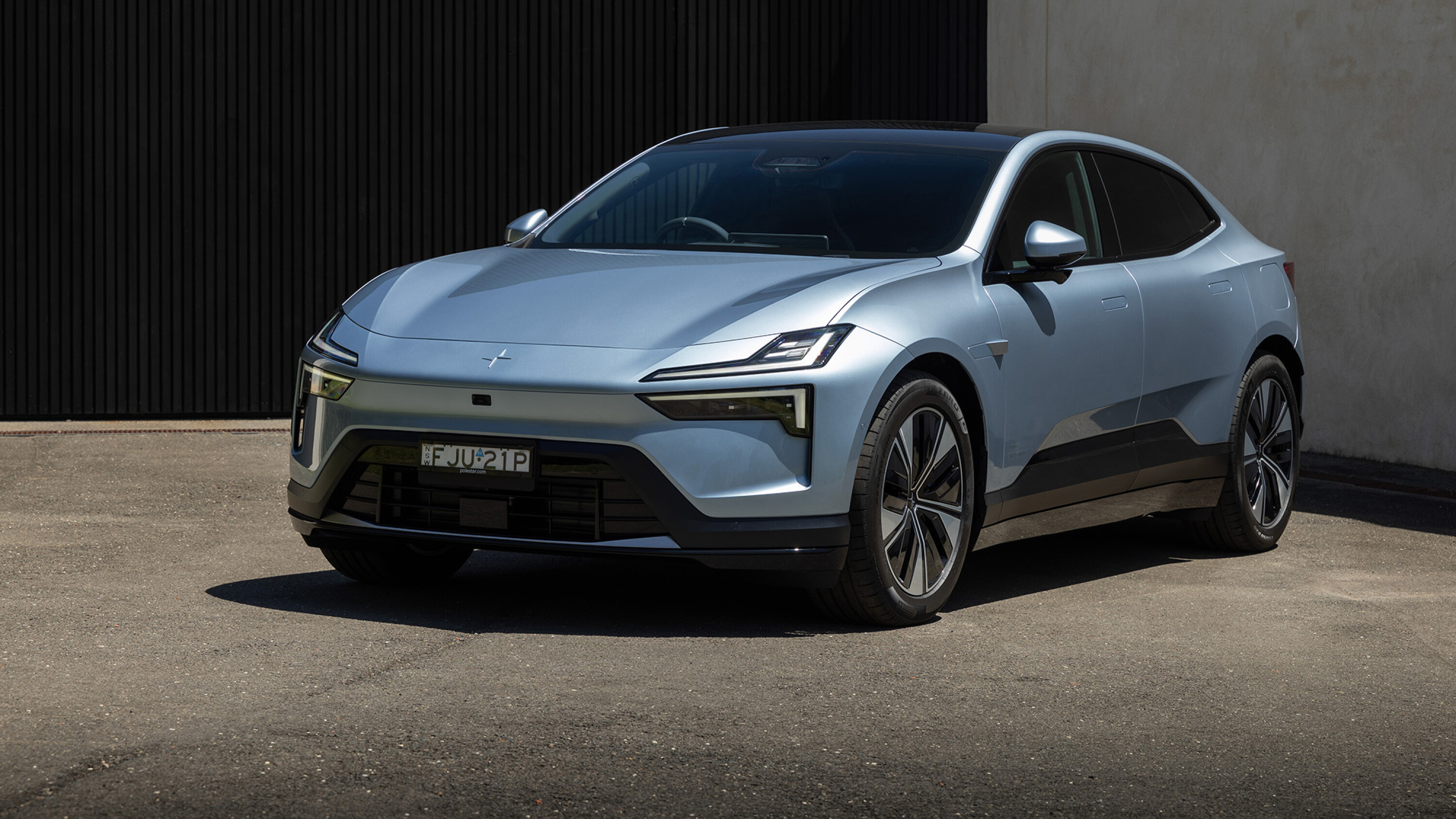
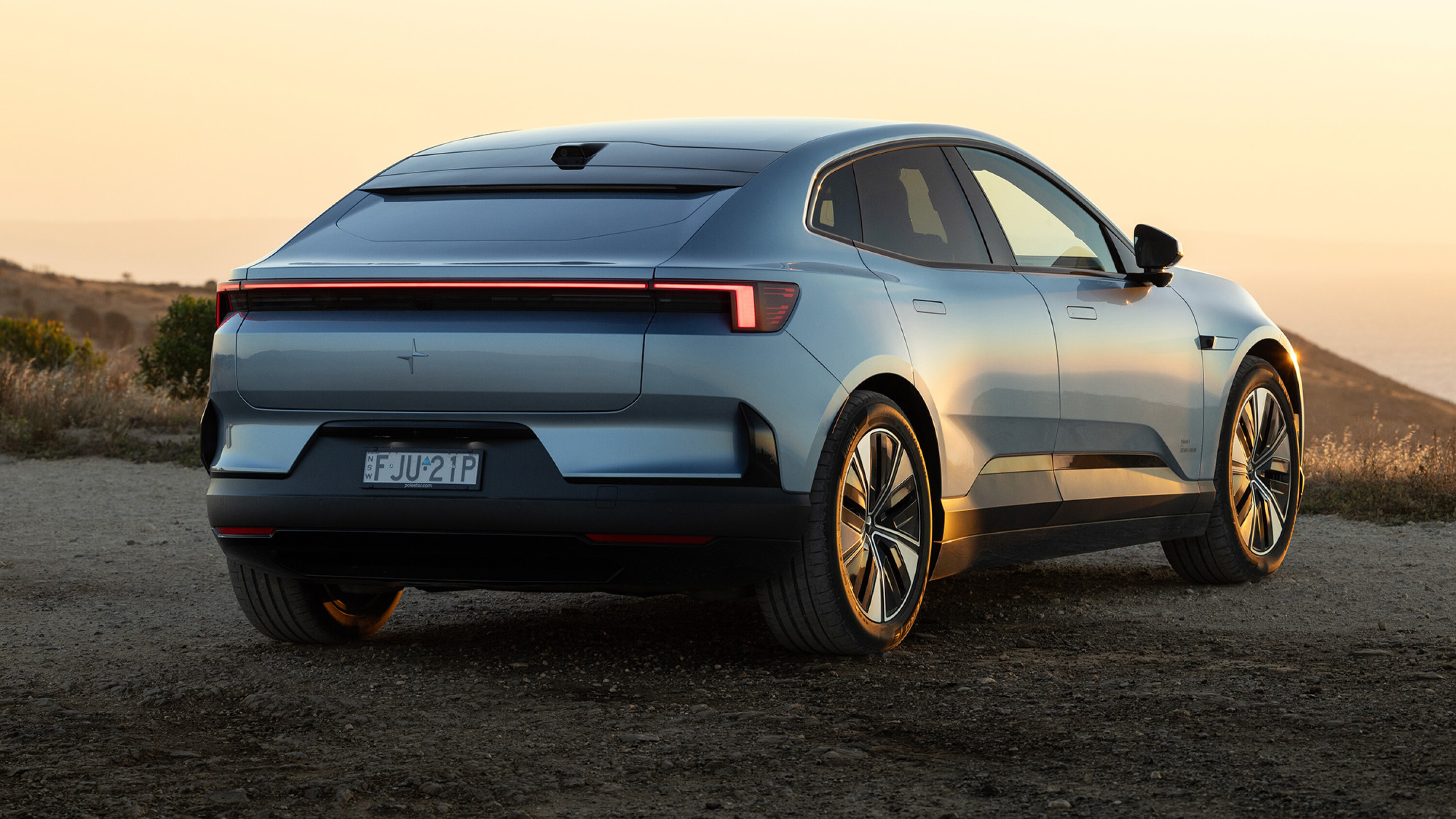
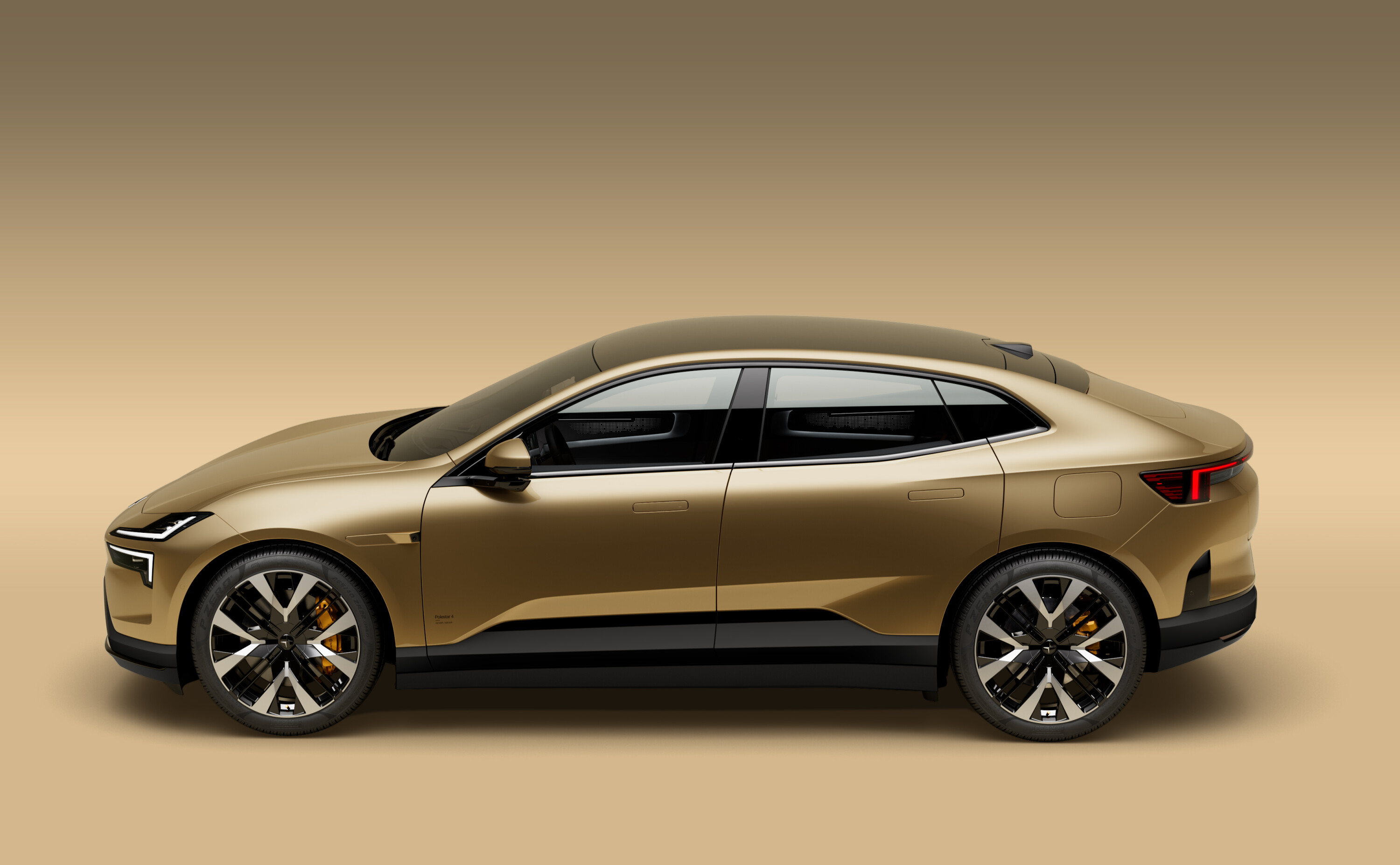
The Polestar 4 is the latest model in the range and continues to draw inspiration from the brand’s Precept concept car.
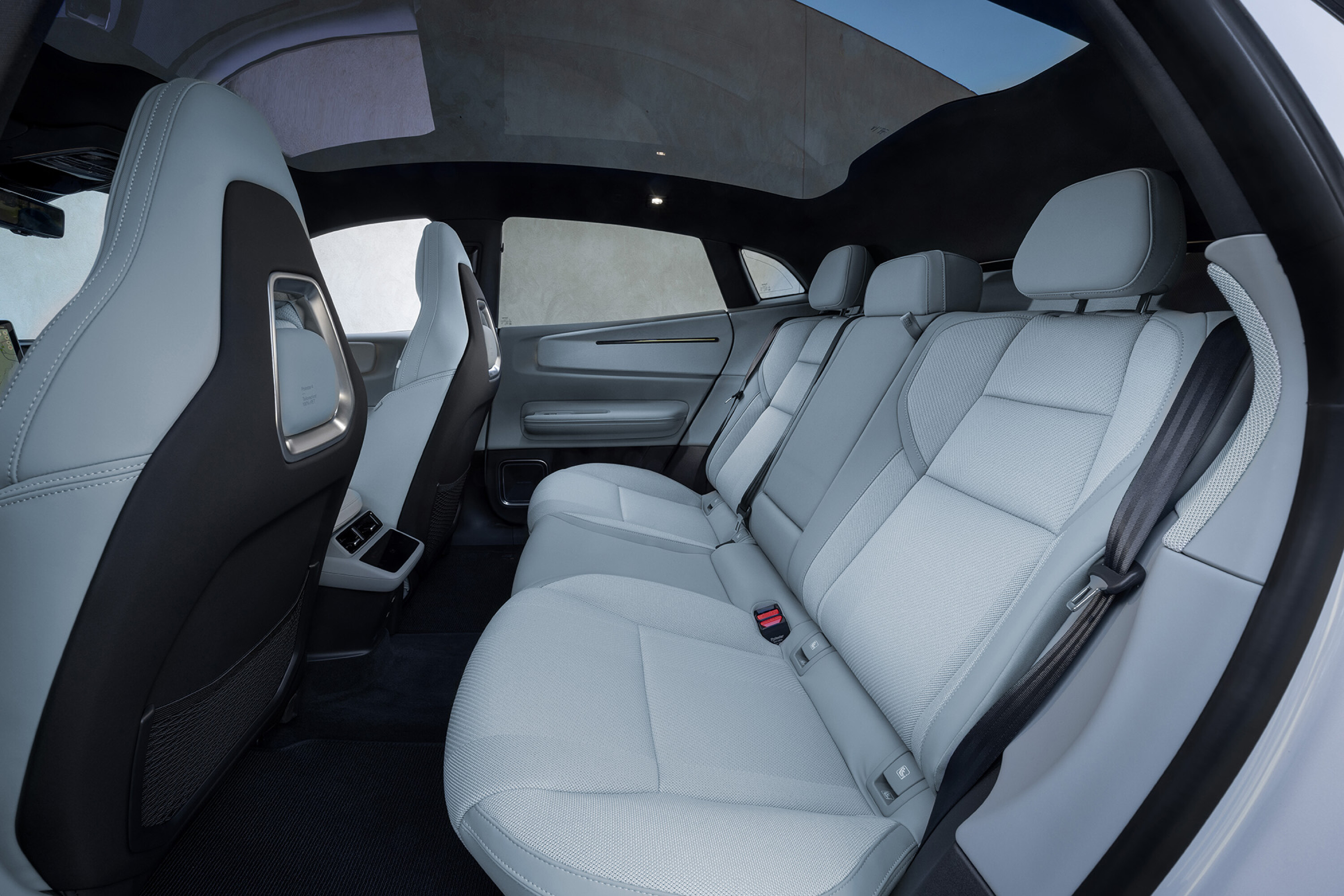
There are new interior materials and colours including Mist (inspired by fashion and sportswear trends), with fresh paint colours to reflect the brand’s continued development.
Recycled and sustainably sourced materials, with blockchain ensuring Polestar knows where its materials come from, contribute to a calculatable cradle-to-gate CO2 output from 19.9 tons of CO2 for the base car to 21.4 of CO2 for the dual motor.
1
The LRSM develops 200kW and 343Nm, with a claimed 0-100km/h sprint of 7.1 seconds.
It’s outshone by the twin-motor LRDM which essentially doubles every stat, making 400kW and 686Nm while cutting the standard sprint claim to 3.8 seconds.
Polesatar’s WLTP range target is 610km for the LRSM and 580km for the LRDM (without Performance Pack) from the 94kWh (usable) NCM battery pack.
DC fast-charging peaks at 200kW (DC) for a 10-80% charge in 30 minutes, while AC can come on board at 22kW for flat-full in 5 hours and 30 minutes.
Our original story, below, continues unchanged.
32
December 2023: Polestar 4 initial pricing and features revealed
The Polestar 4 will join the list of rivals trying to beat Tesla’s Model Y in 2024 with an entry point of $81,500.
Key Points
- New Tesla Model Y alternative priced from $81,500
- Long Range Single Motor and Dual Motor models confirmed
- 0-100km/h in 3.8 seconds!
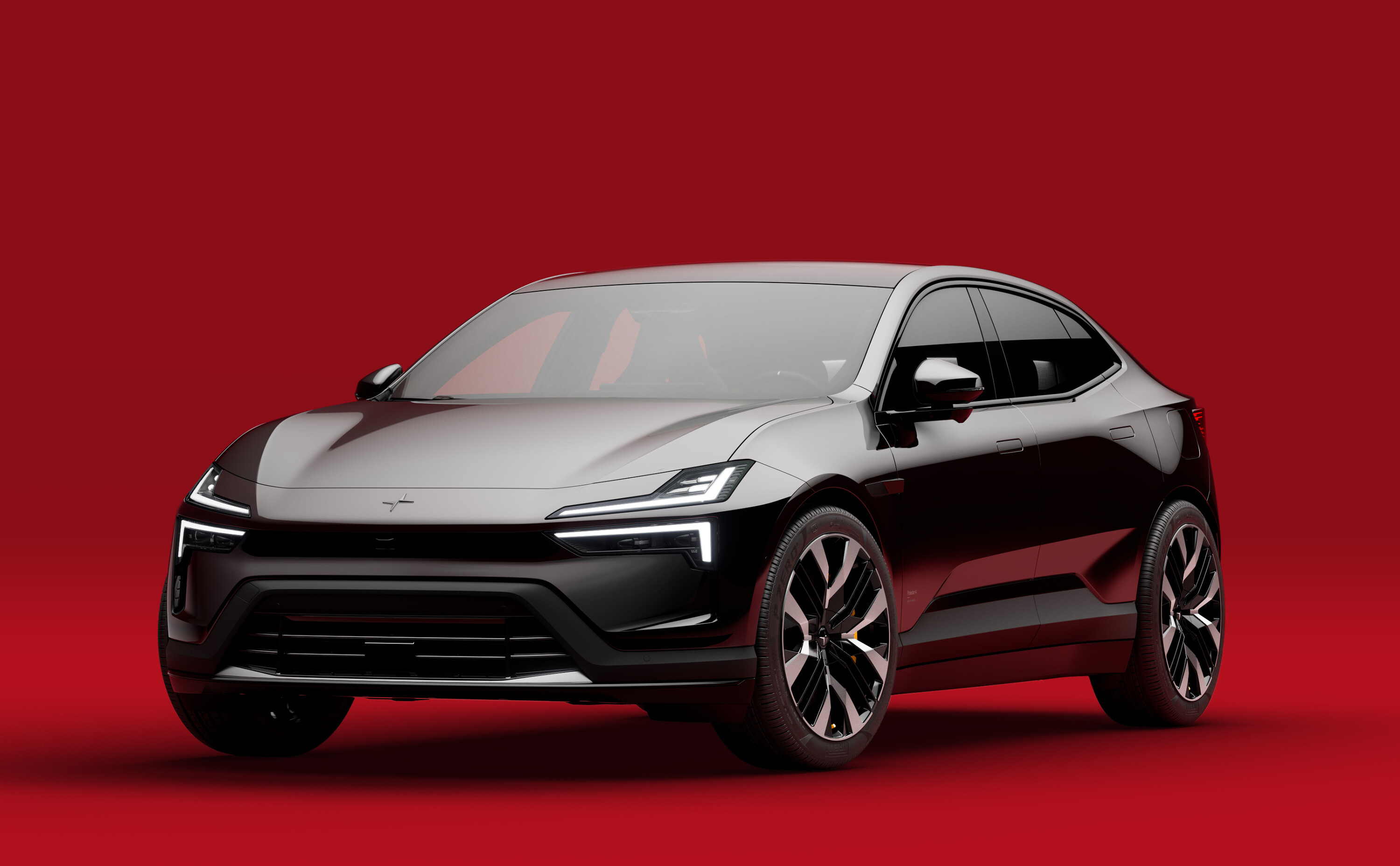
Pricing for the coupe-style SUV has been released on industry data site Redbook, with Polestar Australia yet to officially confirm details ahead of the model’s release in the third quarter of next year.
Although the Polestar 4 will be positioned as one of many Model Y alternatives, the company has again tucked a number of features into expensive options packs, as outlined below.
10
Polestar 4 models and pricing
Two models are listed, with the $81,500 Long Range Single Motor rear-wheel-drive Polestar 4 joined by a more powerful Long Range Dual Motor that costs from $92,150.
The Single Motor model brings outputs of 200kW and 343Nm, with a claimed 0-100km/h time of 7.4 seconds. The Dual Motor doubles those outputs to 400kW and 686Nm, with Polestar quoting a sprint time of 3.8 seconds.
| Output and performance | Long Range Dual motor | Long Range Single motor |
|---|---|---|
| Power | 400kW | 200kW |
| Torque | 686Nm | 343Nm |
| Top speed | 200km/h | 180km/h |
| 0-100km/h* | 3.8 seconds | 7.4 seconds |
| Efficiency | Long Range Dual motor | Long Range Single motor |
|---|---|---|
| Energy consumption* | 16.7-16.8 kWh/100km | 14.8-14.9 kWh/100km |
| Range target (WLTP)* | Up to 560km | Up to 600km |
| Drag coefficient | 0.269 Cd |
1
Features
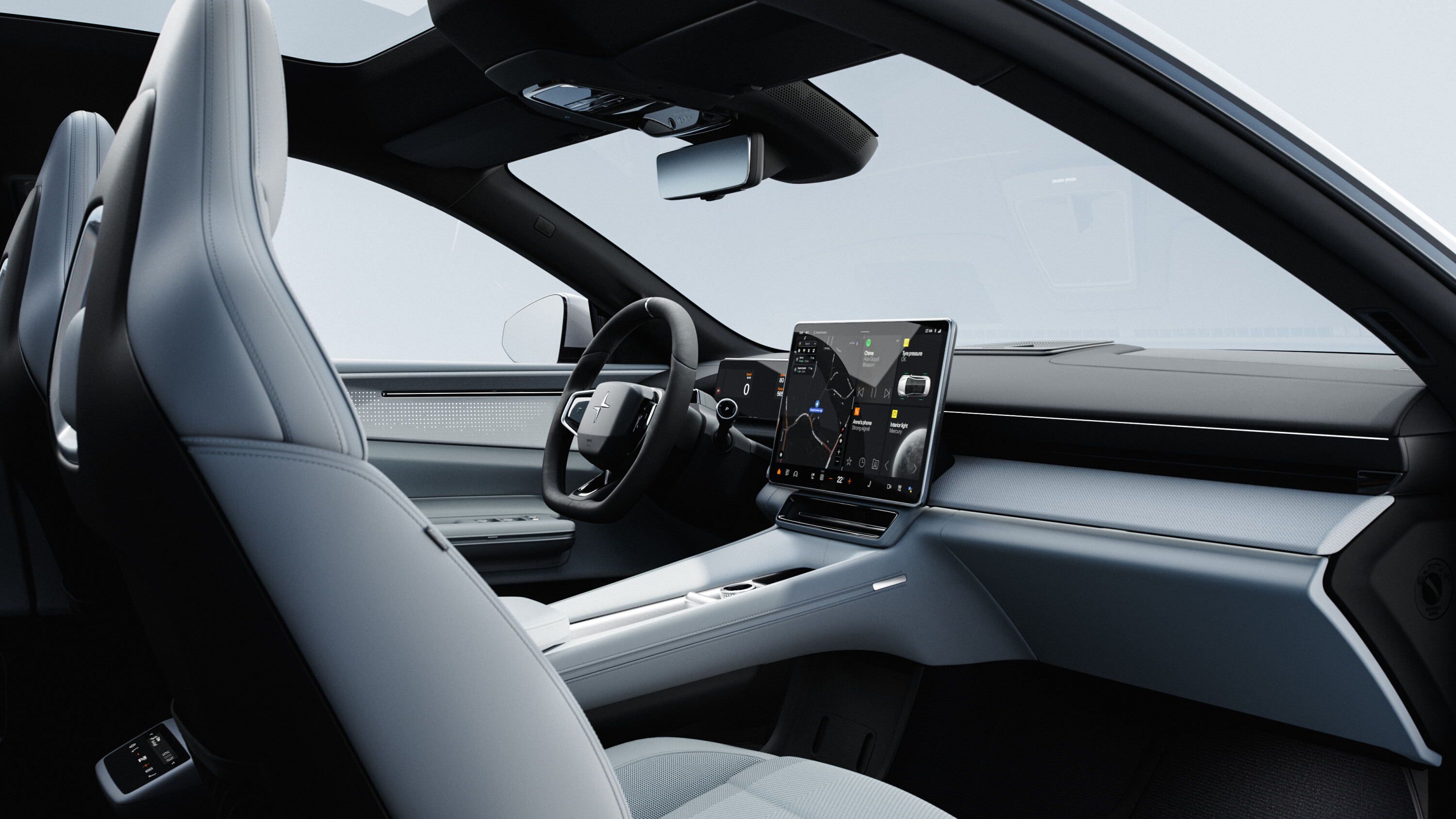
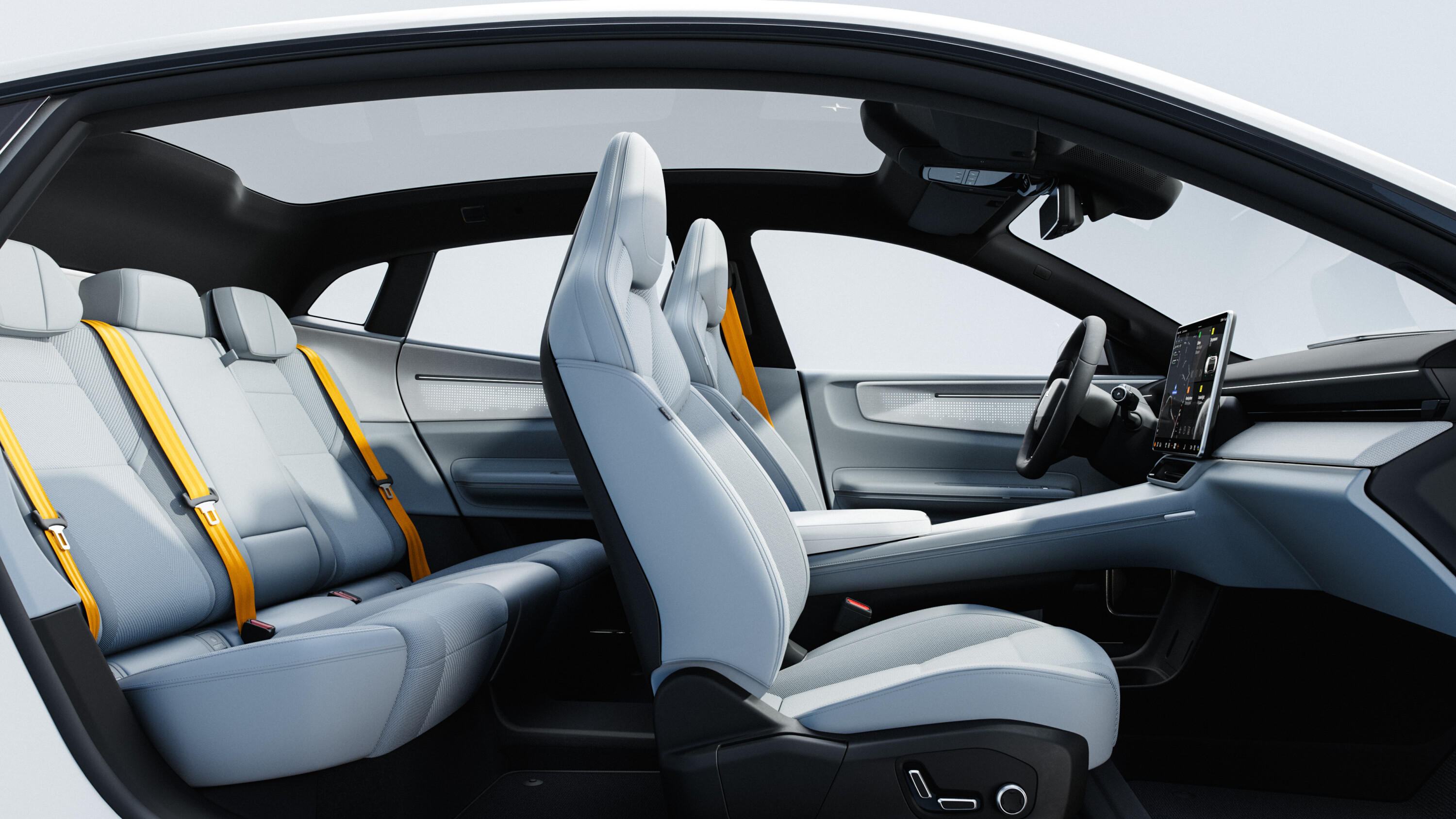
Standard equipment for both models, based on Redbook data, will include 20-inch alloy wheels, partial-leather upholstery, dual-zone climate, glass roof, and electric seats.
According to the Redbook site, an extensive list of options includes big items such as a panoramic roof, 21-inch wheels, “animal welfare” Nappa-leather interior upgrade, and various packages.
A $10,400 Plus Pack adds a long list of niceties, including electric seats front and rear, heated rear seats, rear colour display, hands-free tailgate, head-up display, and a premium audio system.
1
| Dimensions and weight | |
|---|---|
| Wheelbase | 2999mm |
| Length | 4839mm |
| Height | 1544mm |
| Width incl. mirrors | 2139mm |
| Ground clearance | 166mm |
| Turning circle kerb to kerb | 11.6m |
| Kerb weight | 2232-2351kg |
| Weight distribution | 50:50 |
| Front storage compartment | 15 litres |
| Rear luggage capacity | 500 litres |
| Rear cargo capacity | 1536 litres |
| Towing capacity | 2000kg (dual), 1500kg (single) |
| Tongue weight limit | 100kg |
| Roof load limit | 75kg |
1
A $9360 Performance Pack incorporates 22-inch wheels, high-performance tyres, and performance brakes.
The Polestar 4’s pricing positions it closely to the $78,400 Model Y Long Range, though the Tesla features all-wheel drive, while the higher-specced (GT-Line) rear-drive version of the Kia EV6 large electric SUV costs from $79,550.
Polestar 4 will sit between the Swedish brand’s first model, the Polestar 2 sedan, and the slightly larger Polestar 3 SUV due mid 2024 – tripling the size of the local line-up.
MORE
Everything Polestar
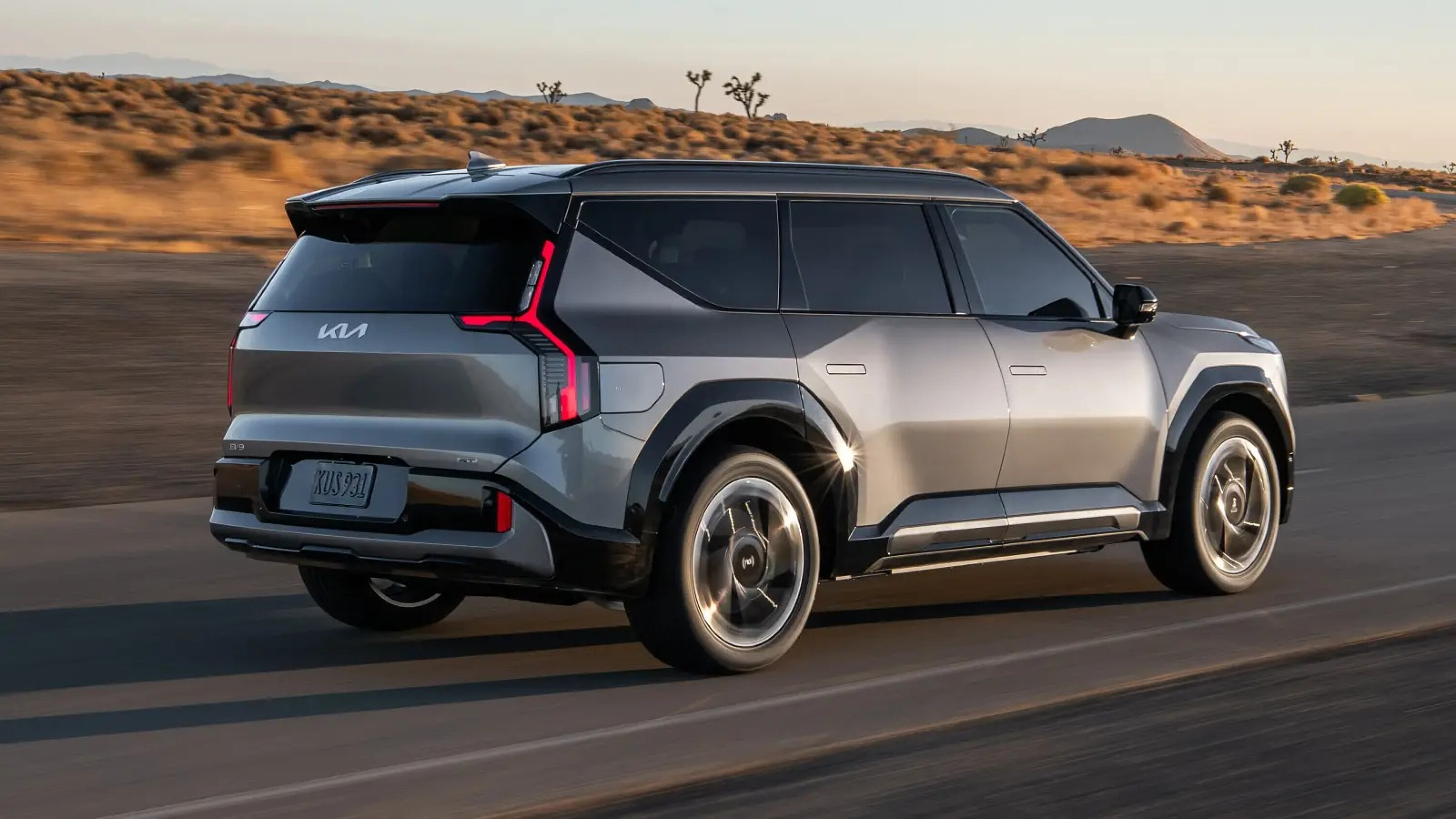
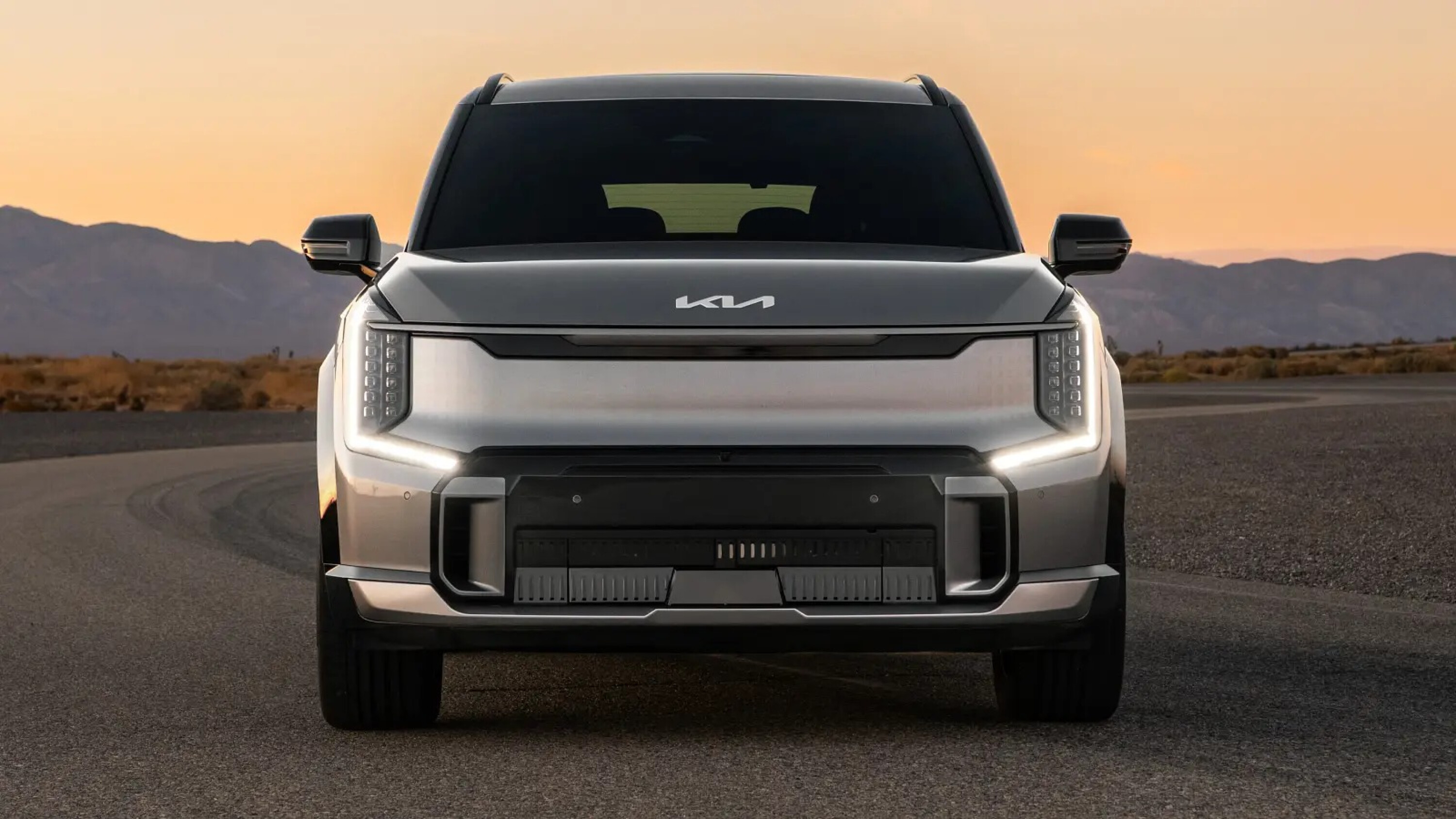
This is the 2025 Kia EV9 GT.
It was promised way back with the regular model’s global debut last year, and now it’s finally been revealed at this week’s LA motor show.
Snapshot
- Dual-motor setup produces 368kW and 700Nm, with a 0u2013100km/h claim of 4.3 seconds
- Likely equipped with a 99.8kWh battery, expected to deliver a range exceeding 500km
- Australian launch not yet confirmed, but local arm is known to be keen u2013 to say the least
Positioned as the most powerful model in the EV9 range, the GT will feature a dual-motor electric powertrain delivering 368kW and 700Nm in its standard configuration, with a boost mode temporarily jumping torque to 800Nm for a burst of acceleration.
With all of that in play, the EV9 GT claims a 0-100km/h time of 4.3 seconds, facilitated by a unique powertrain setup including advanced software for tailored performance dynamics.
And, yes: like the smaller but related Hyundai Ioniq 5 N, the EV9 GT will launch (literally) with fake noises and artificial gearshifts to replicate the tactile experience of traditional internal-combustion engines.
1
EV9 GT: The tech
As with the regular EV9, the EV9 GT is built on Kia’s Electric Global Modular Platform (E-GMP) and integrates a high-voltage 800V electrical architecture, supporting fast charging capabilities.
Specific range figures for the GT have not been disclosed, but other models on the platform offer driving ranges beyond 500km – or beyond 600km, in the new Hyundai Ioniq 9‘s case – depending on battery size and configuration.
1
Power is provided by two electric motors, the front unit producing 160kW and the rear turning out 270kW – although the combined output is listed at ‘just’ 374kW, which is still almost 100kW more than the 283kW offered with the existing EV9 GT-Line.
If you’re any good with maths, you’ll note the GT’s front and rear figures match the 430kW offered by the smaller EV6 GT. Well spotted.
Kia hasn’t said why the EV9 GT’s combined figure has been detuned, but we’ll hopefully learn more in the coming weeks. Regardless, its 4.3-second sprint time is unlikely to disappoint buyers.
1
Chassis tweaks for performance
For the enhanced handling buyers will expect, the EV9 GT gains an electronic limited-slip differential and electronically controlled dampers in its standard kit list, with adaptive settings tuned specifically for high-performance driving.
The braking system has also been upgraded with larger discs for improved stopping power (Kia hasn’t offered exact numbers), while all-wheel drive ensures power distribution across both axles for increased traction.
1
Design and features
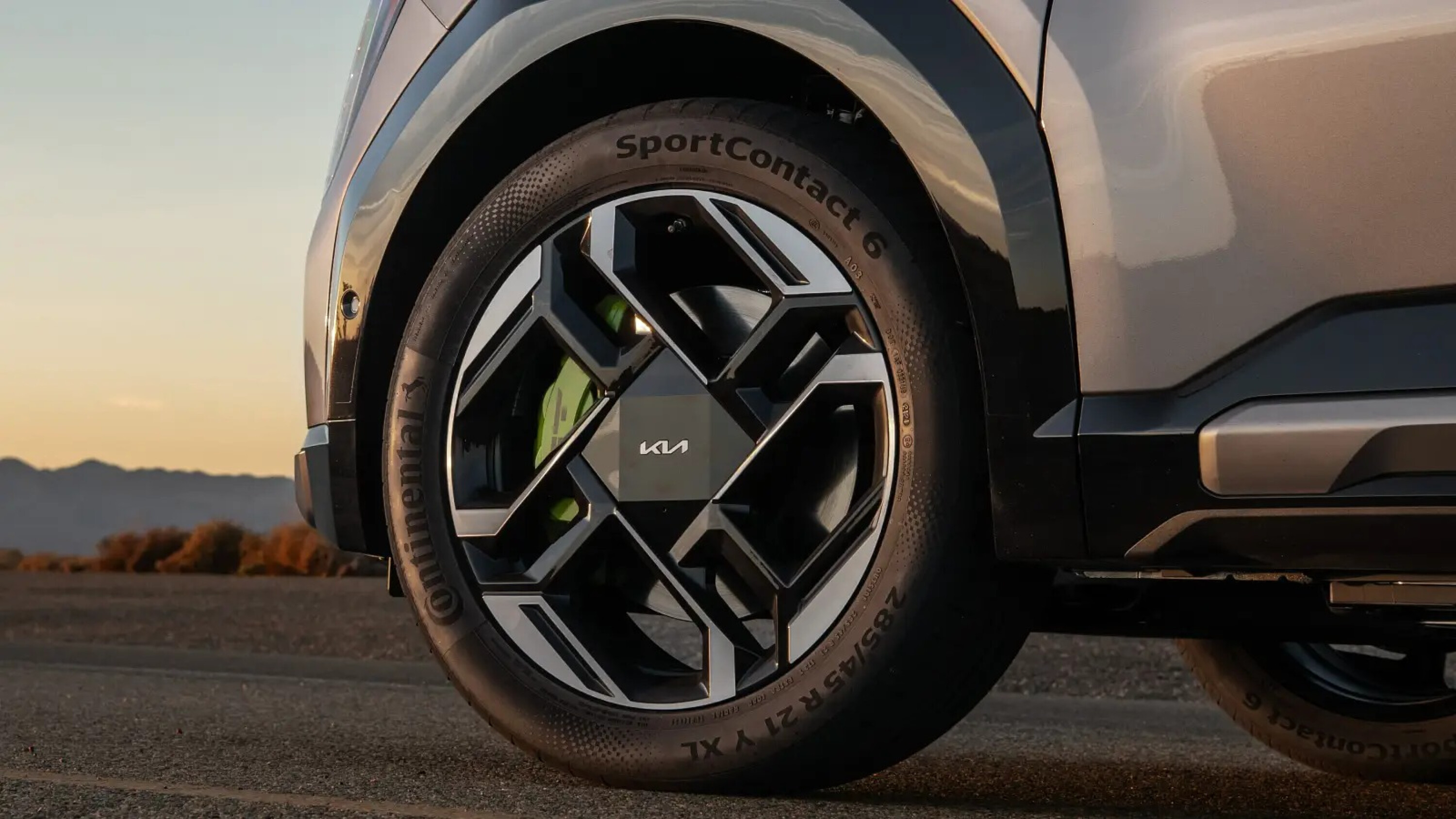
Design tweaks for the EV9 GT include distinctive front and rear bumper designs, GT-specific badging, and unique wheel designs.
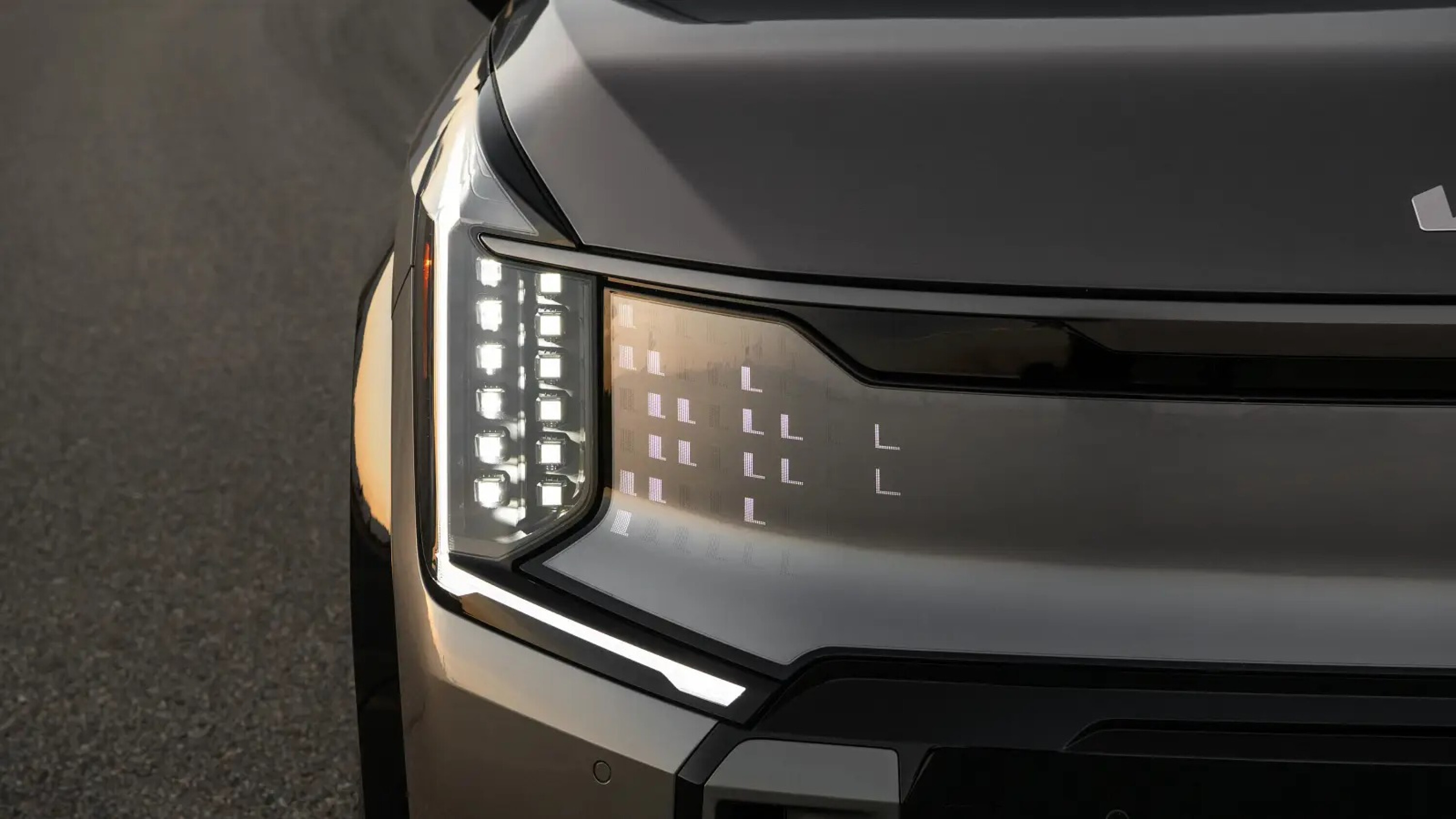
Don’t expect to get those cool LED arrows at the front, however, since Australia already misses out on the lighting array featured on Korean-market versions of the regular model – thanks, largely, to differing impact regulations and the related materials used to construct that panel.
1
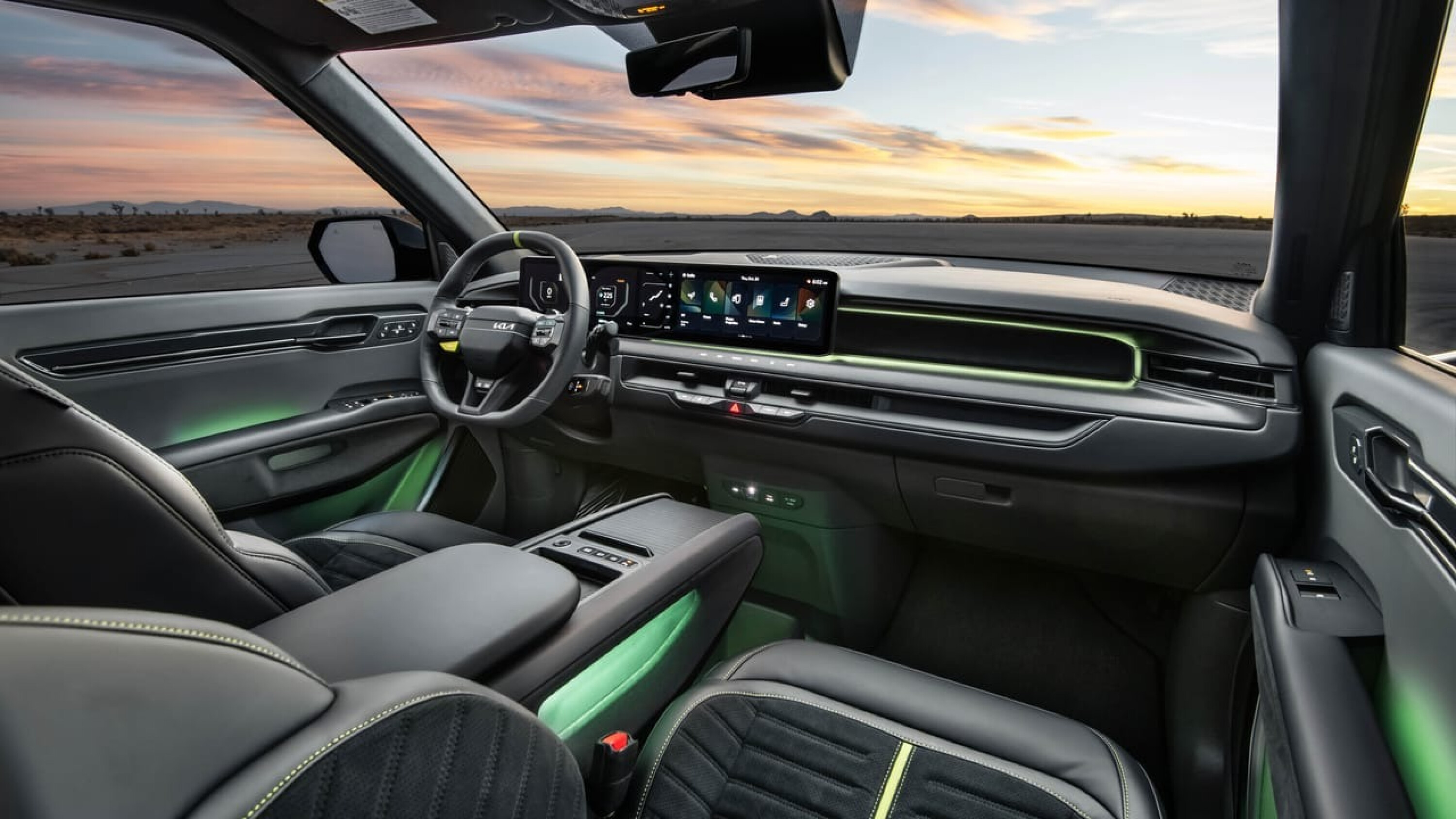
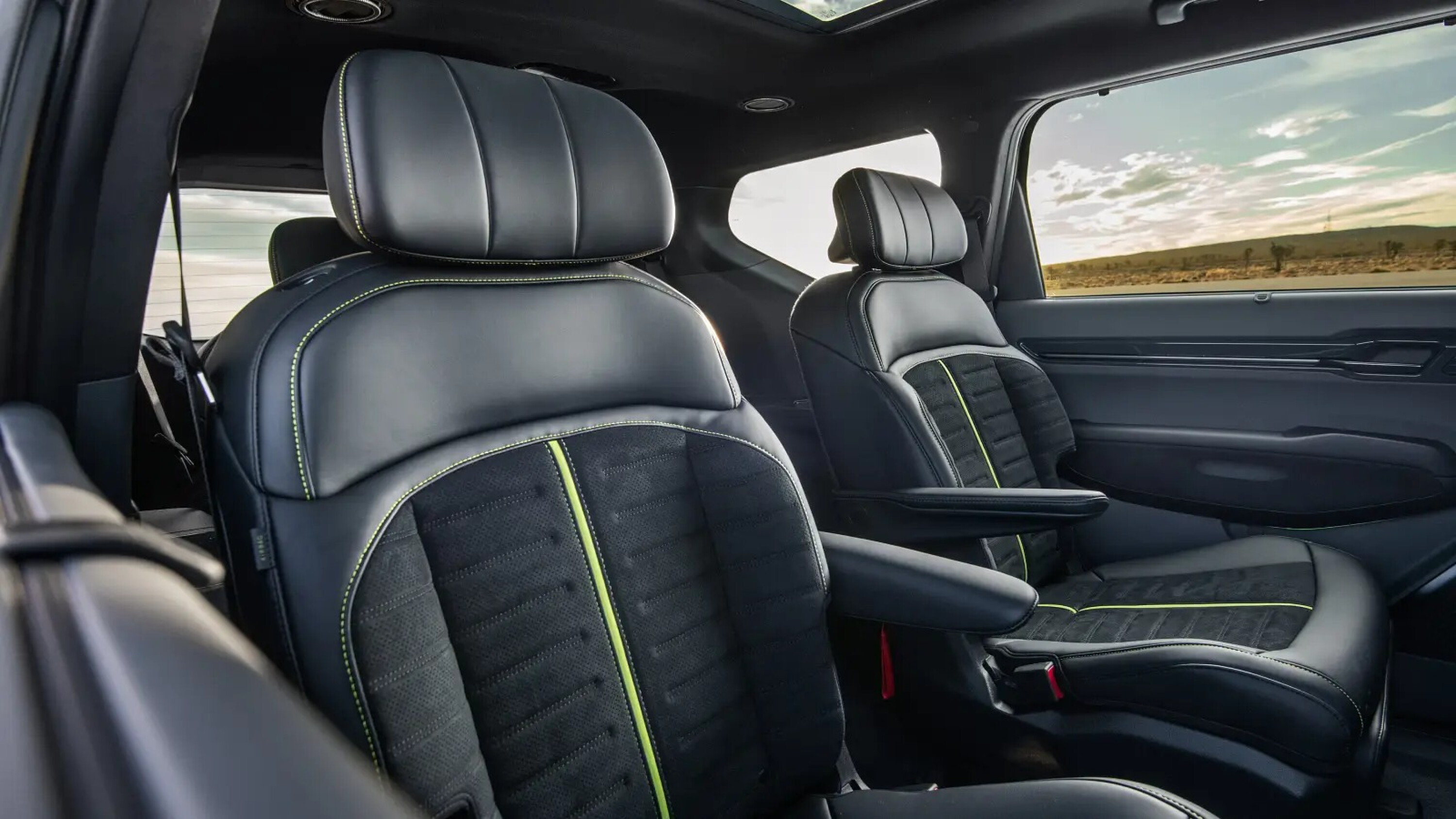
Inside, the EV9 GT features seating designed for additional lateral support, exclusive trim materials, and ambient lighting configurations not found in other EV9 variants.
The infotainment system retains Kia’s widescreen display setup, combining a 12.3-inch digital instrument cluster with a matching central touchscreen and supplementary display panel.
Standard connectivity features include over-the-air software update compatibility and advanced driver assistance systems (ADAS).
1
When will the Kia EV9 GT go on sale in Australia?
Australian details for the Kia EV9 GT will be confirmed closer to its local release date, expected in 2025 – although no official timing has been offered as yet.
Pricing is likewise unclear, but with the current top-shelf GT-Line model priced from just over $120K, the GT could come in somewhere beyond $130K or even $140K – assuming Kia doesn’t make any changes to its current pricing.
Do you think the EV9 GT could do good business at that price point? Tell us in the comments below!
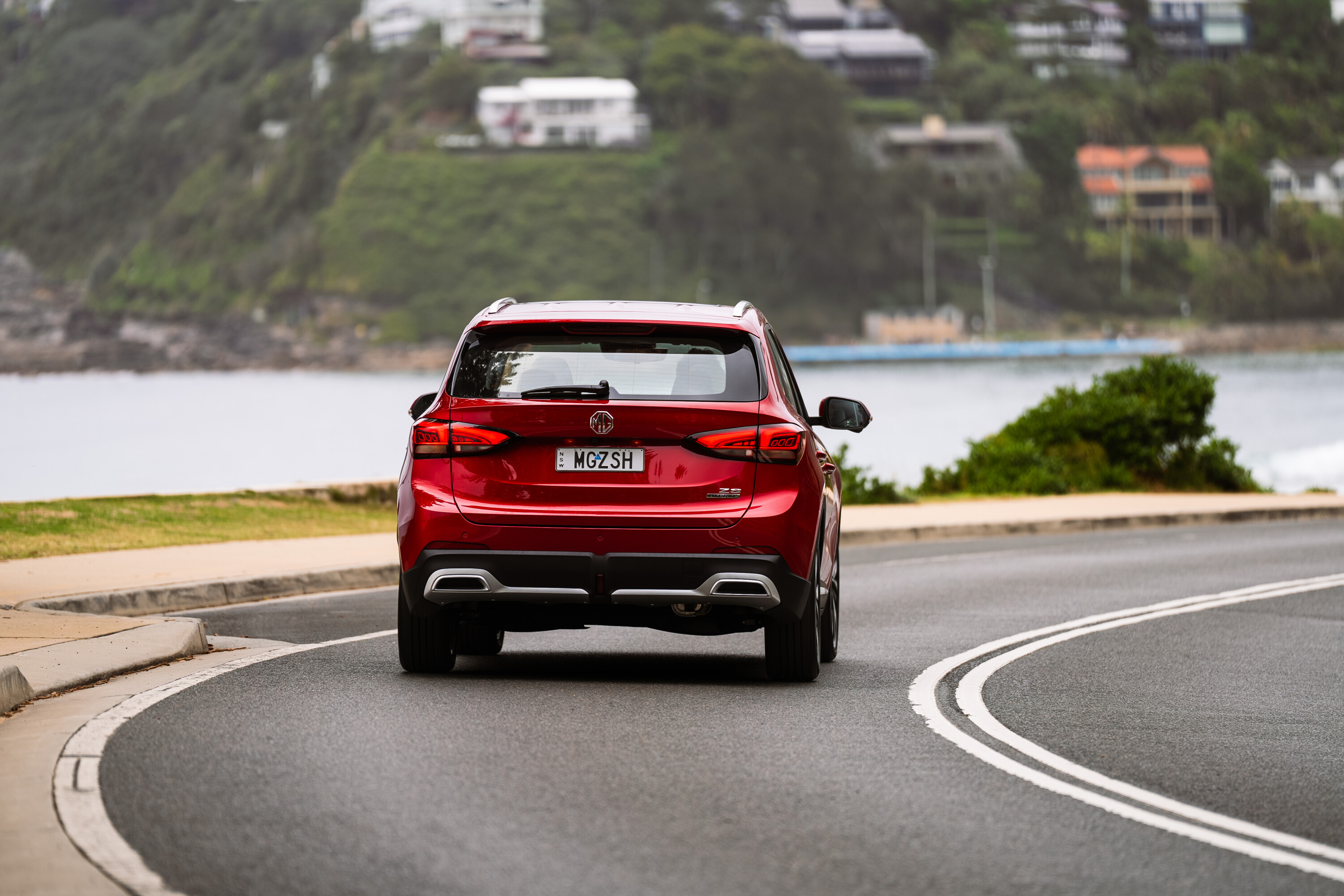
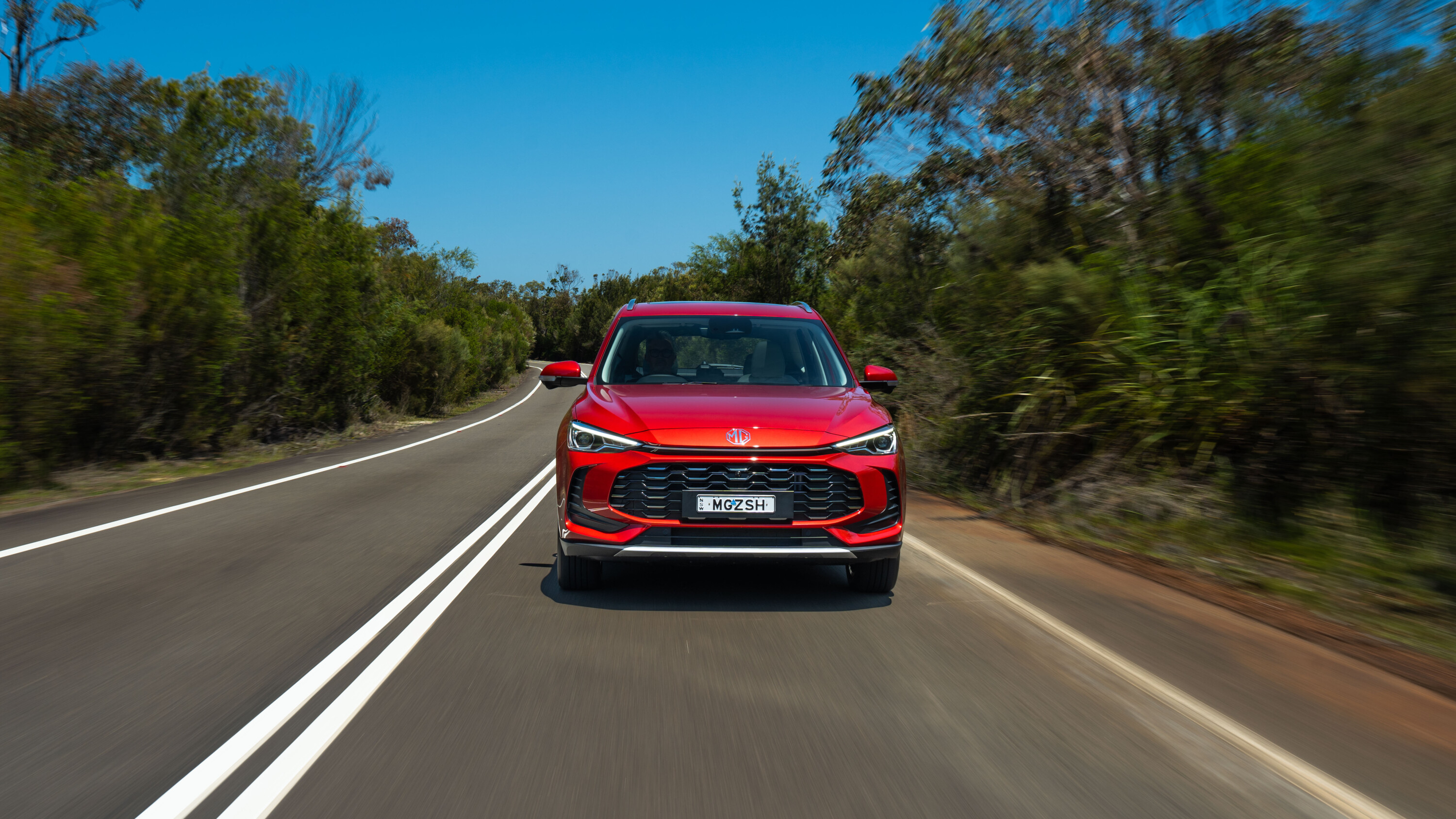
MG returns with a new hybrid version of its highly popular ZS compact SUV – and it’s the clever tech of that powertrain in this much improved model which will set it apart in this segment of the market.
It’s a pleasure to drive, proving ideal for the business of A-to-B daily life – which is what most of those looking to buy one will use it for –offering economical driving, surprising power, a spacious interior and next-gen driver tech.
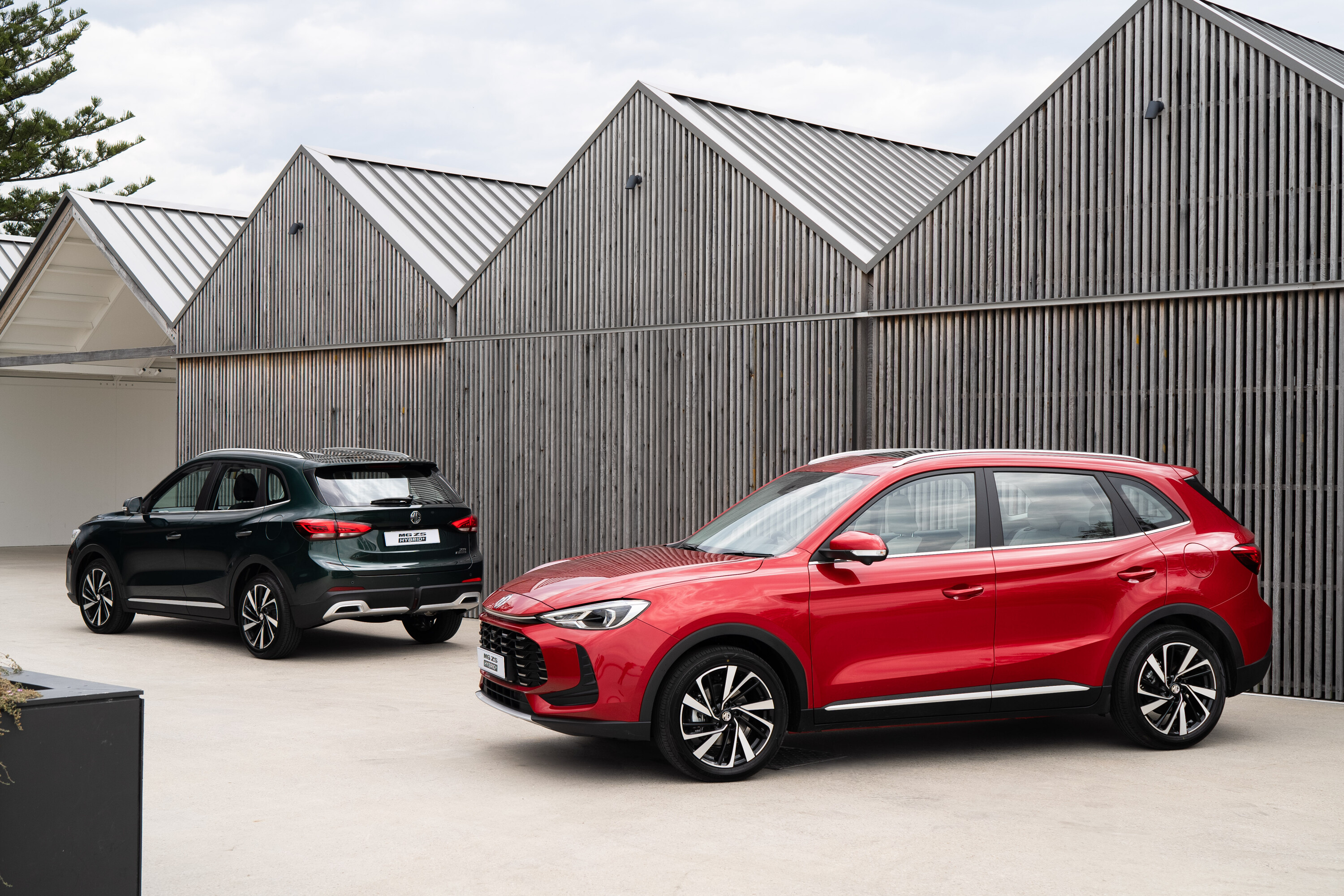
Australia gets two models – the entry-level ZS HYBRID+ Excite priced from $33,990 (DAP/MSRP) and the higher-spec ZS HYBRID+ Essence, priced from $36,990 (DAP/MSRP). Both feature a modernised design MG has focused on in other recent models such as the MG4, MG3, HS and Cyberster.
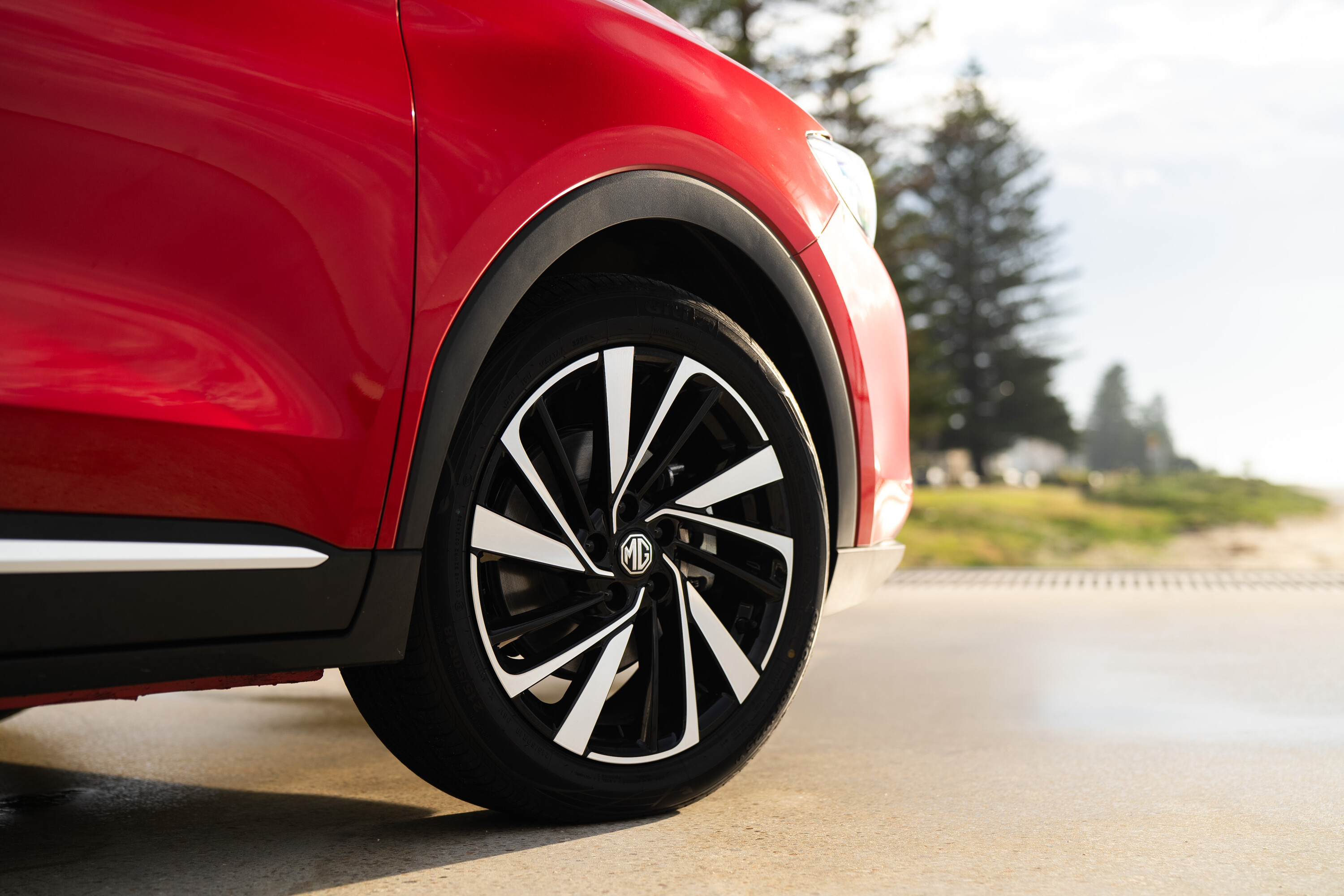
The higher spec Essence trim includes an electronic panoramic sunroof, larger 18-inch alloy wheels, a leather-wrapped steering wheel and PVC seats including 6-way power-adjustable driver’s seat and manual driver lumbar support.
1
Drive performance
The MG ZS HYBRID+offers a comfortable and dependable driving experience – with some surprising zip off the mark thanks to that 1.5-litre naturally aspirated four-cylinder engine abetted by a dynamic 100kW/250Nm electric motor and a three-speed optimised hybrid automatic transmission.
MG’s quoted combined fuel consumption of 4.7L/100km is rooted in the fact the electric motor is the primary source of power for day-to-day city driving. The ICE part of the equation kicks in when more power is required on the freeway or taking on a hill, delivering combined maximum power of 158kW and combined maximum torque of 465Nm.
Once power in the 1.83kW battery (which MG notes is one of the largest in this class of SUV) gets low, the combustion engine helps to power it back up, keeping the engine at the optimal RPM whatever the state of the road is ahead.
1
The hybrid set-up makes it not only a comfortable, eco-friendly drive but with the sense there is instant power there when needed – acceleration of 0-100km/h completed in 8.7 seconds and 80-120km/h in 7.2seconds.
Three levels of regenerative braking – high, medium and low – also allow the driver to control how much energy is returned to the battery when lifting off the throttle. Eight dynamic propulsion modes also allow the electronic control unit to adapt to the current driving conditions in real time to expertly balance power with efficiency.
Steering is assured and precise, while the MG ZS’s suspension system does a truly admirable job of smoothing out bumps and ruts in the road for a small SUV.
1
Tech and interior
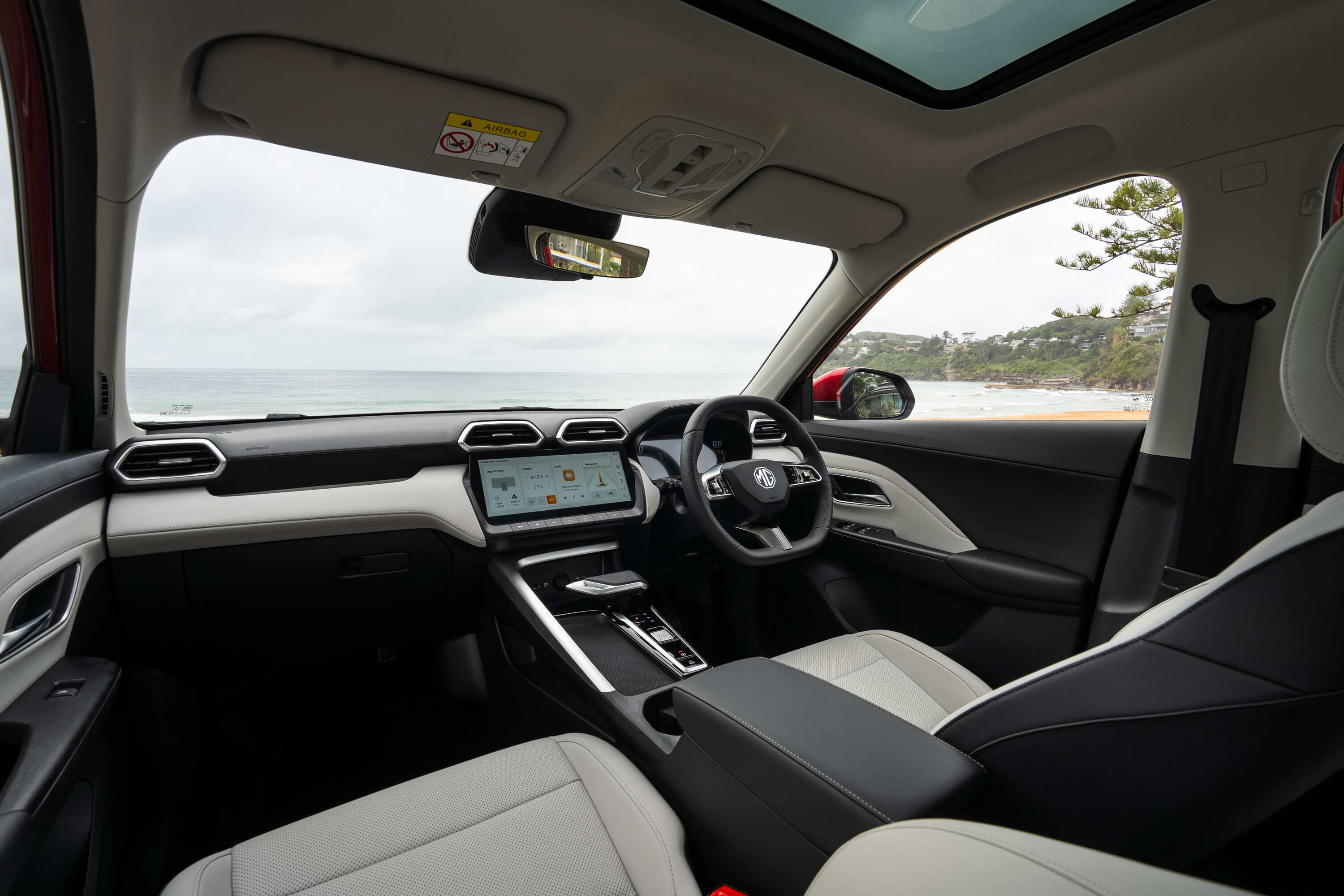
The new cabin feels optimised for space and comfort, as well as the impression the quality of the interior finish is better than many of its rivals, given the price.
Both variants feature a 12.3-inch landscape-mounted infotainment system, equipped with Apple CarPlay and Android Auto, complemented by a full 12.3-inch digital instrument cluster.
There has been a clear focus on user-friendliness in the design of the digital screens. Controlling hybrid functions such as regenerative braking or climate control within the cabin is easily performed through shortcut buttons under the main screen or customisable switches on the steering wheel. The digital instrument cluster can be customised to display multiple pieces of data, from the vehicle’s energy flow to fuel economy and other trip information, while the central screen is clearer and more responsive than iterations in earlier models.
1
A six-speaker audio system and six-way adjustable seat for the driver (manual in the Excite, electronic in the Essence) are standard in both models, while the top-spec Essence gets a leather steering wheel and heated front seats.
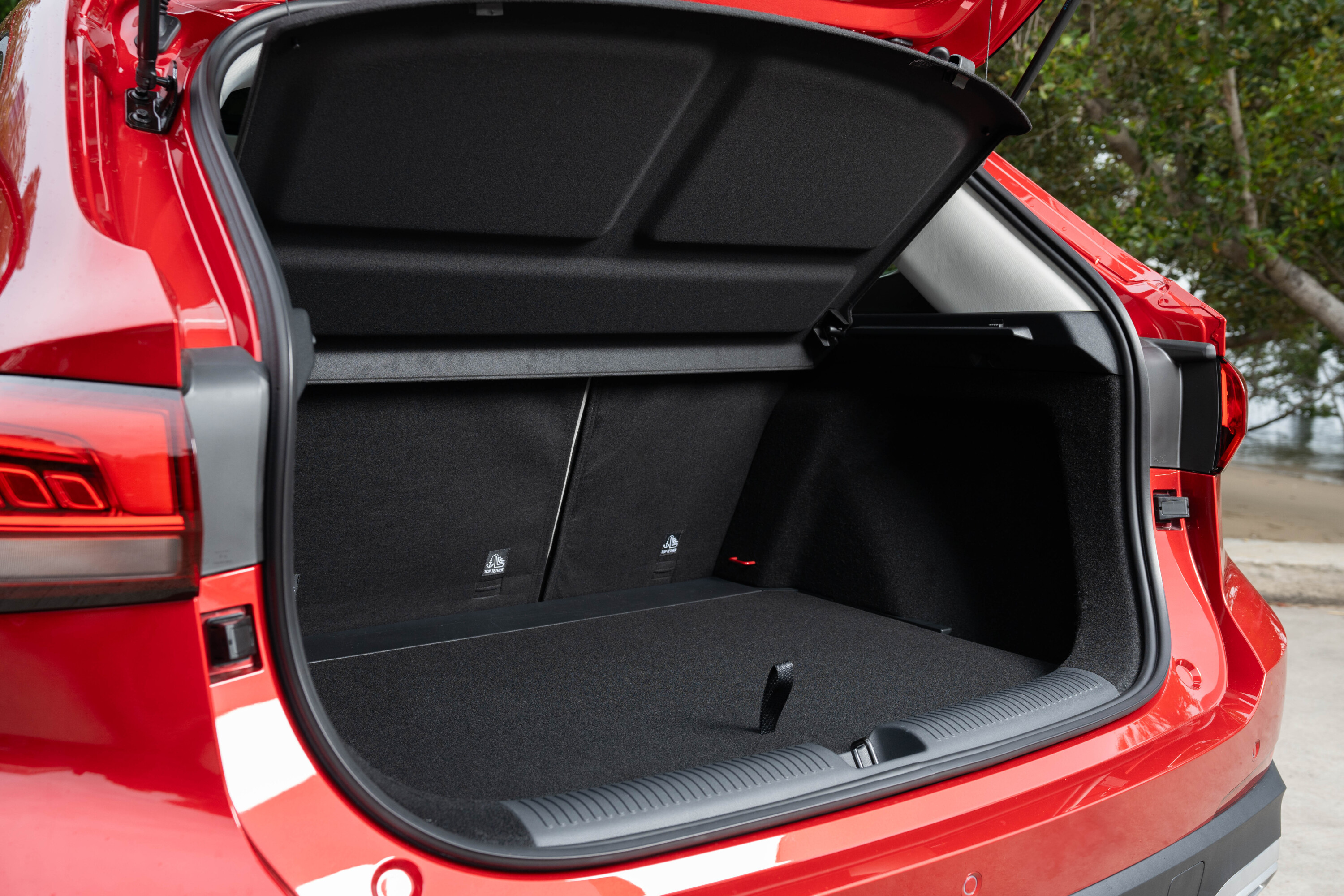
Adults up to six-feet-tall enjoy plenty of leg- and head-room in the back, and the cabin feels light and airy thanks to generously sized side windows. Boot space is a respectable 443 litres, expanding to 1457 litres with the rear seats folded.
ZS HYBRID+ also comes with 12-months complimentary access to MG iSMART Connected services. Via the iSMART APP, remote access allows an owner to check fuel tank level, tyre pressures and battery voltages, remotely lock and unlock the doors without a key, and use Find My Car to remember where you parked in that side street.
2
Safety and driver assistance
Both variants of the MG ZS HYBRID+ come equipped with advanced safety features, including a high-definition 360-degree camera and comprehensive MG PILOT Safety suite.
It includes: Autonomous Emergency Braking, Lane Keep Assist, Adaptive Cruise Control, Lane Change Assist, Intelligent Cruise Assist, Rear Cross Traffic Alert, Forward Collision Warning, Blind Spot Detection, and Intelligent Speed Limit Assist.
It’s easy enough to switch off these features if you find them overly sensitive or, in the case of the speed-limit warning, a little too loud.
12
With purchase of the MG ZS HYBRID+ comes the company’s industry-leading 10-year/250,000km warranty.
Its pricing combined with the improved exterior and interior design, and the fuel efficiency of its powertrain, will make the MG ZS HYBRID+ a highly compelling proposition for local consumers looking at the compact SUV segment, and a more than worthy follow-up to reinforce the brand’s success in Australia.
MORE
Everything MG
MORE
Small SUVs
| Common Features | |
|---|---|
| 17u201d Alloy Wheel (Excite) | Heated Front Seats (Essence) |
| 18u201d Alloy Wheel (Essence) | 2nd Row 60/40 Split Fold Seat |
| Automatic Headlights | 6-Speaker Audio System |
| MG PILOT Safety suite – Autonomous Emergency Braking, Lane Keep Assist, Adaptive Cruise Control, Lane Change Assist, Intelligent Cruise Assist, Rear Cross Traffic Alert and more. | 12.3″ Infotainment Screen |
| 360-degree camera (HD) | DAB Audio |
| Leather steering wheel (Essence) | FM/AM Radio |
| Front Cup Holders | Apple CarPlay and Android Auto |
| Front 12V Power Outlet | 4 USB Ports (2x Front, 1x Rearview Mirror, 1x Rear) |
| PACK INSTRUMENTS | Bluetooth Connection |
| 12.3u201d Instrument Cluster (7u201d Multifunctional Display) | Satellite Navigation |
| Driver’s 6-way Adjustable Seat (manual u2013 Excite, electronic u2013 Essence) | Remote Central Locking |
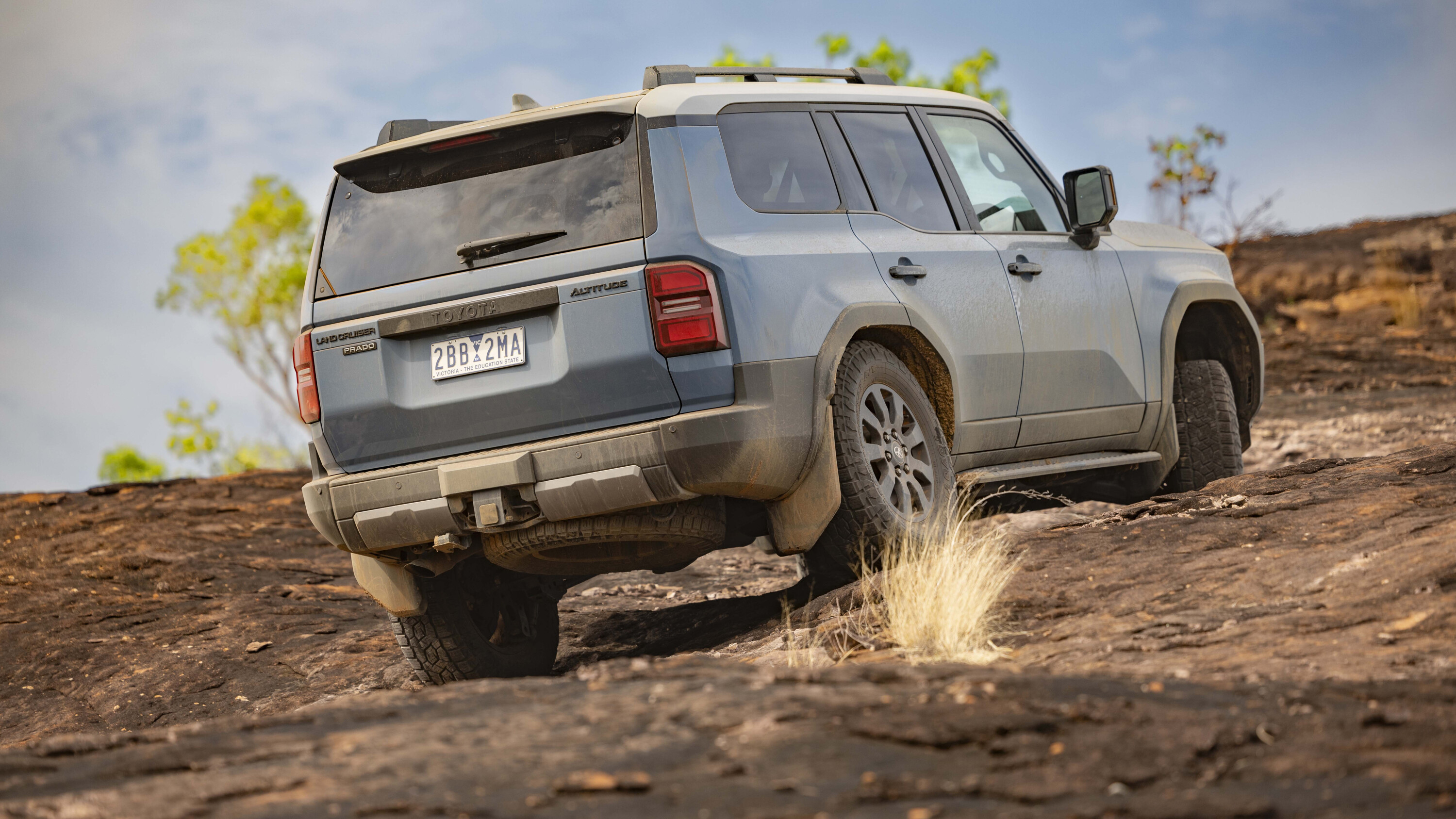
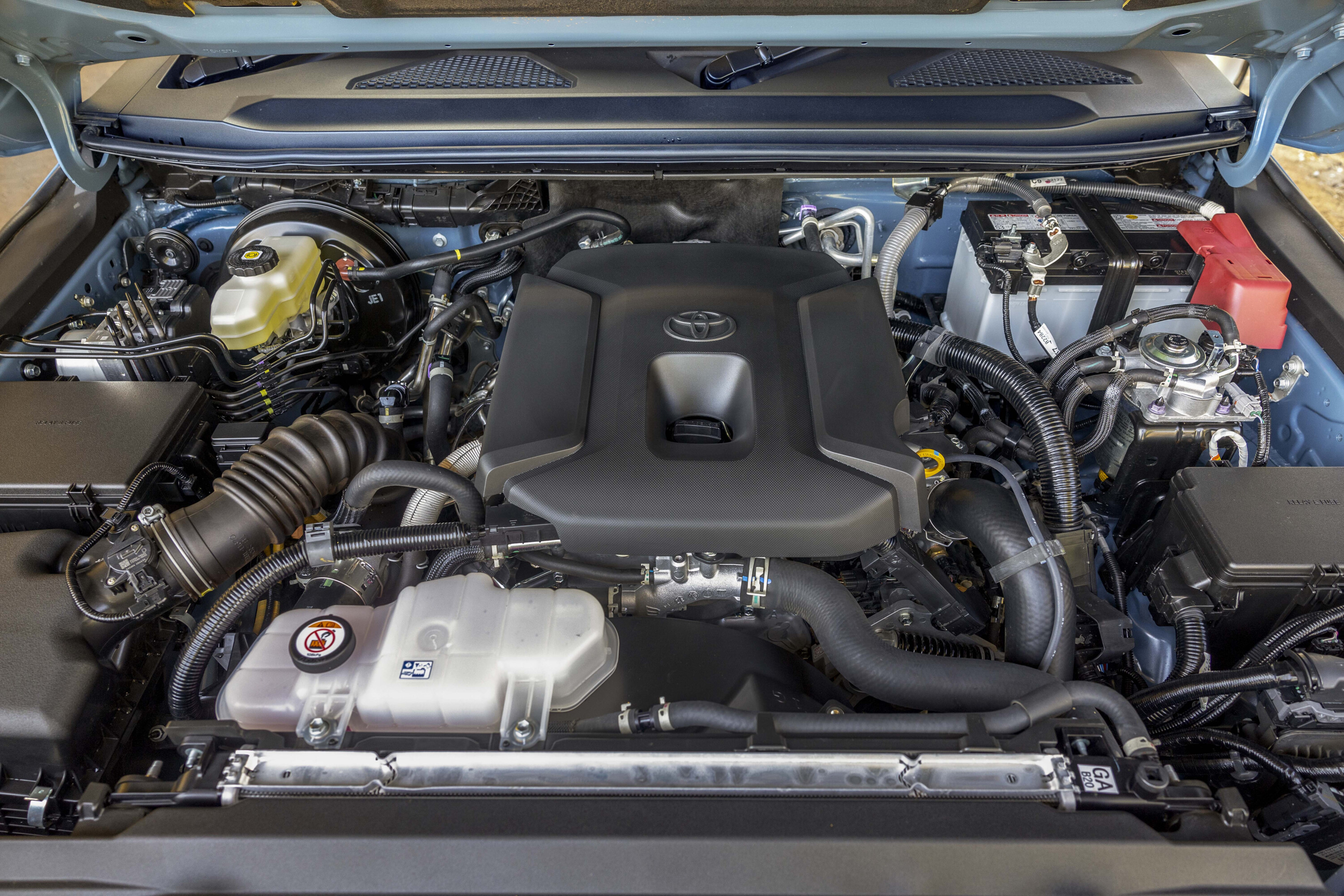
What do you need to know about the new Toyota LandCruiser Prado? We can get the key points covered first and then dig a little deeper. At first glance, it looks as if not too much has changed. The engine’s still a 2.8-litre turbodiesel, it still makes 150kW/500Nm, and the basic formula and target market aren’t particularly different.
Look closer and it’s clear that the Prado has adopted most of the good bits of the full-fat LandCruiser 300. It gets a version of that car’s GA-F chassis, a lot of its electronic smarts indeed it’s now being billed as a junior sibling rather than a distant cousin.
Braked towing capacity has risen from 3000 to 3500kg, it’s longer and wider than the old Prado and it features a far smarter eight-speed transmission to replace the clunky six-speed of its predecessor. It even features 48V (very) mild hybrid technology to boost the engine’s responses.
1
As you might have seen, pricing has stepped up to the tune of over $6K at the access point and $12K at the top of the line up.
Even the entry-level GX version is priced at $72,250 before on-roads, with the trims ascending through GXL, VX, the off-road focused Altitude and the flagship Kakadu version, which will leave you change for a takeaway coffee from $100k. Of those models, the GXL is expected to account for fully half of all Prado sales, with 20 percent of orders going to the VX trim, and the remaining 30 percent fairly evenly distributed between GX, Altitude and Kakadu.
Rivals? Toyota will claim that the Prado is such an established and popular fixture that it carves its own sub-niche, but if you’re looking at a rugged go-almost-anywhere 4×4, you’ll probably be considering upscale versions of the Ford Everest and the lower rungs of Land Rover Defender 110 ownership.
1
In that regard, Toyota has priced the Prado astutely, with the range able to find some clear air between these two formidable contenders.
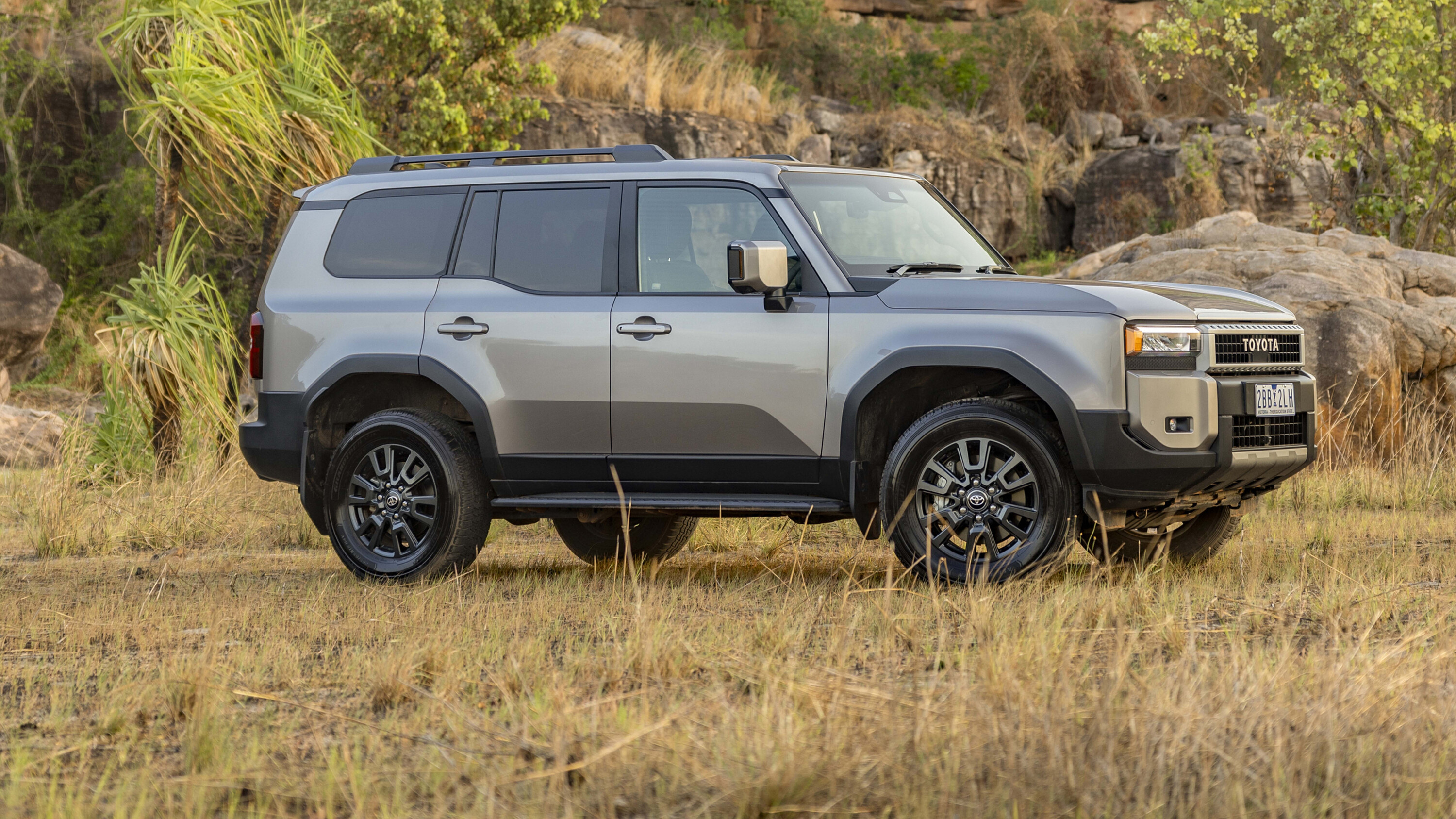
Given that all models in the range share fundamentally the same running gear, surely the best value can be found nearer the base of the range? In part that’s true. The GX version isn’t badly furnished, and is identifiable by its 18-inch alloy wheels, LED lighting, black bumpers and wheel arch mouldings.
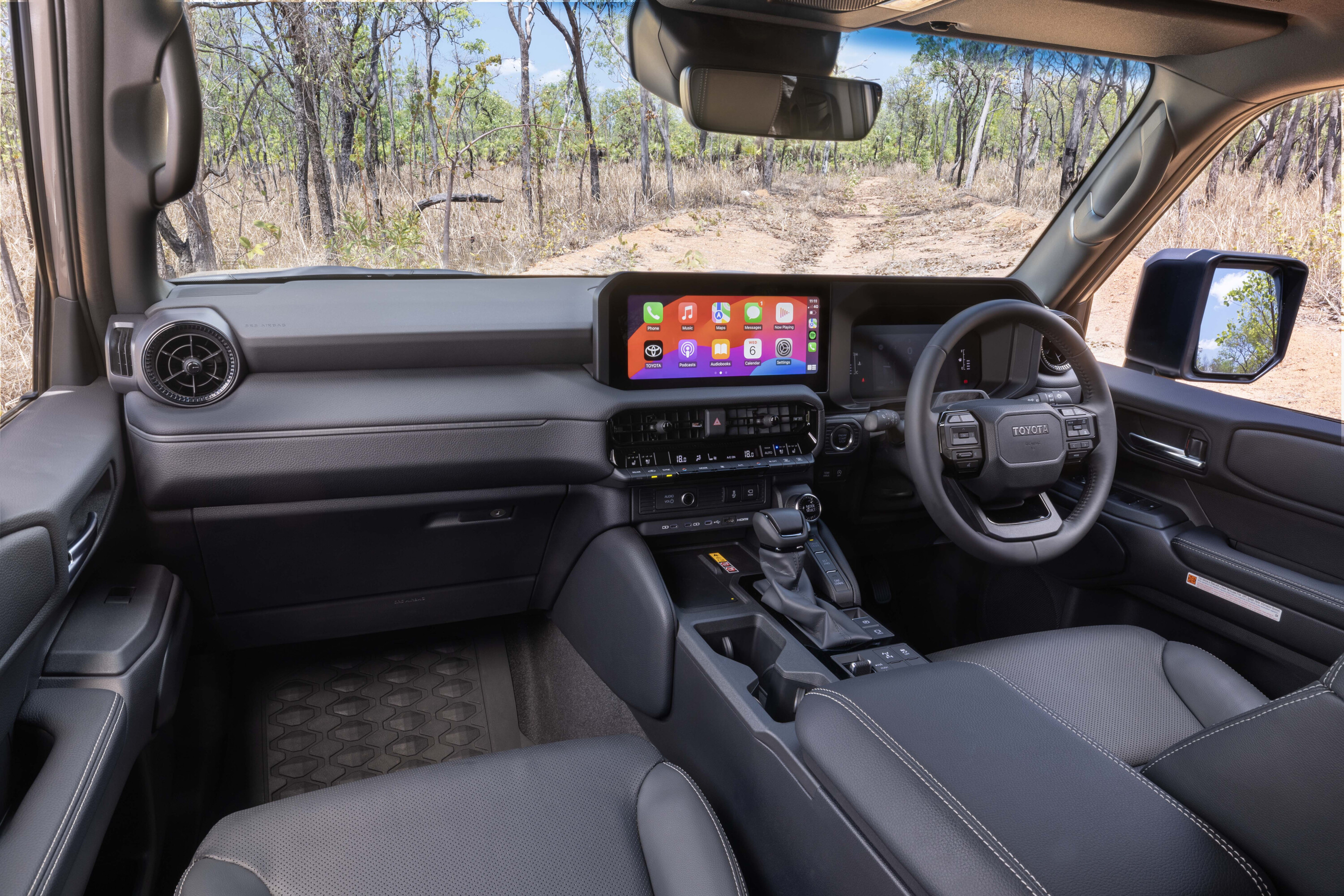
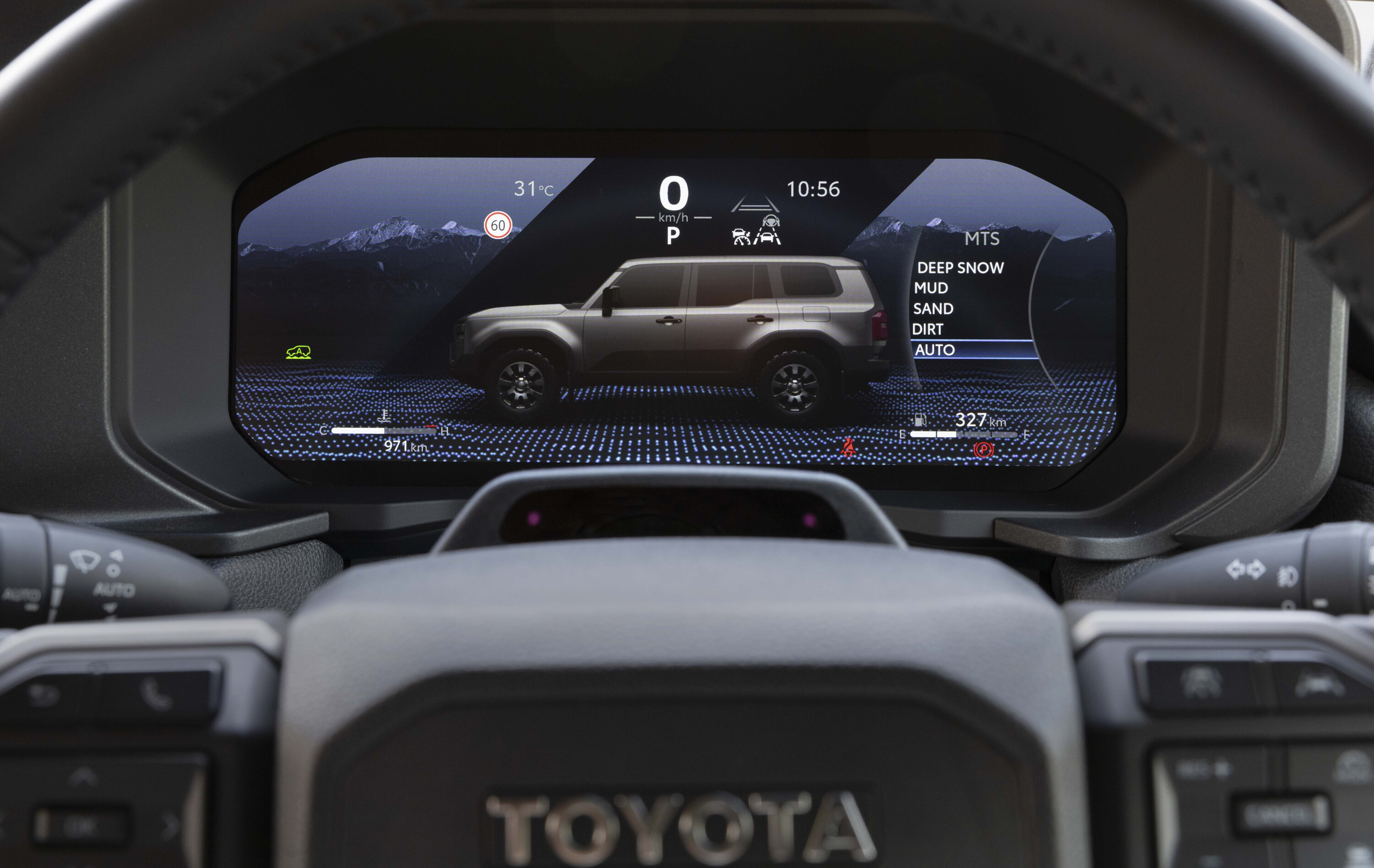
Inside, the five-seat GX gets hardwearing fabric trim and manually adjustable front seats with 60:40 split-fold rear seats. Unlike some of the pricier grades, it gets a smaller 7.0-inch digital instrument cluster in front of the driver. There’s also dual-zone climate control, smart entry and start, a basic urethane steering wheel with button controls, reversing camera and panoramic view monitor, a 10-speaker audio system, and five USB-C charging ports, one 12V accessory port and a 220V charging port.
1
Again, Toyota has boxed clever here, with the GXL commanding a premium of around $7,500 and is, in effect, the entry-level seven seater. That feature might well be enough for many to pay that premium, but it also weighs in with standard roof rails, a powered tailgate, rear privacy glass and silver front and rear guard trim.
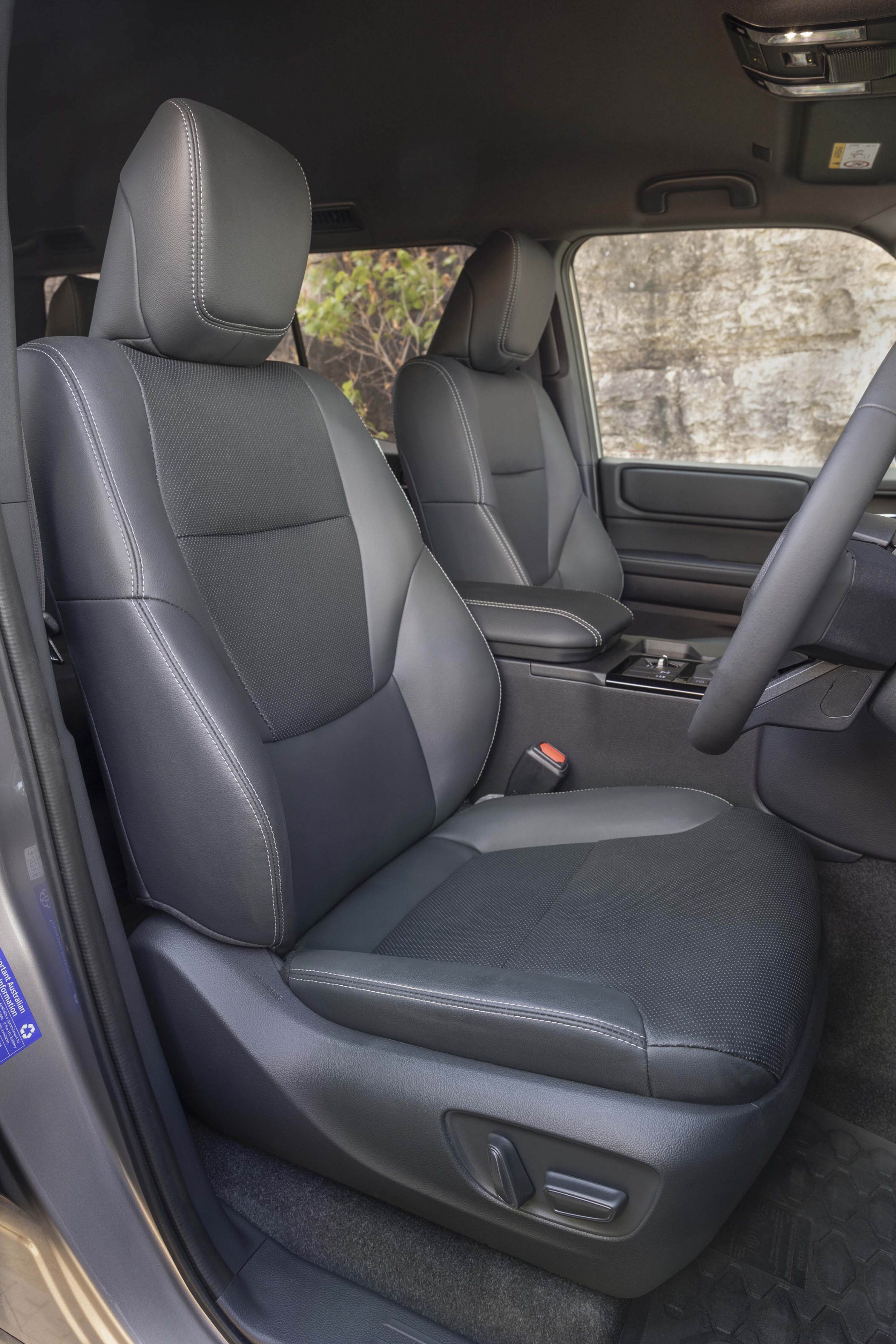
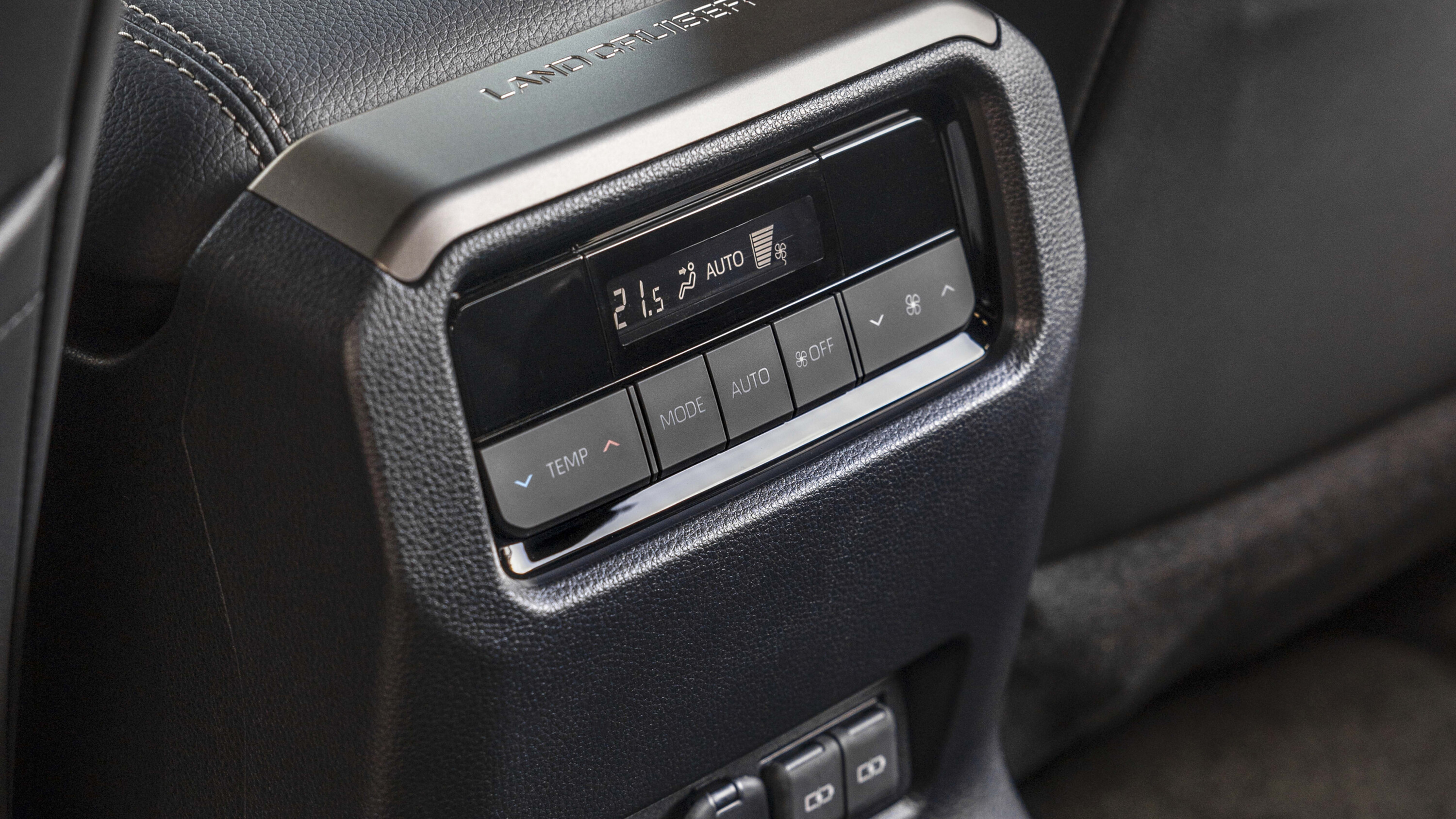
There’s also synthetic leather upholstery, heated and ventilated front seats with eight-way powered driver’s seat, leather-accented steering wheel and shift knob, rear-seat air conditioning panel and an auto-dimming rearview mirror. That’s on top of additional charge points, including a wireless charging pad and two extra USB-C ports in the 50:50 split fold third row.
The VX is a the mid-point model, and gets a Sport+ drive mode, 20-inch wheels and lower-profile tyres. You’ll identify this one by its black vertical grille, body-coloured bumpers and wheel arches, and piercing LED headlights (that also feature automatic high beam and dynamic auto-levelling).
1
Indoors, you get leather-bolstered seats, lumbar support and memory for the driver’s seat, a four-way power adjustable passenger seat, a power-adjustable steering wheel, a very handy refrigerated centre console, the bigger 12.3-inch digital instrument cluster, tyre pressure monitoring and a 14-speaker JBL stereo.
The $92,700 Altitude is the other five-seater in the range and stands apart as a specialist off-road targeted model. It’s the only version in the line up to get the decouplable sway bar for added wheel articulation, and is also the sole version to feature a rear diff lock to add to the centre-diff lock of the other versions.
It runs on chunkier 18-inch Toyo Open Country all-terrain tyres and comes with a moon roof and the option of two-tone exterior paint at a hefty $1675. There’s also a digital rear view mirror, a heated steering wheel and a colour head-up display.
1
The LandCruiser Prado range is topped by the Kakadu grade priced from $99,990.
It builds on the specification of the VX and adds a panoramic moon roof, illuminated side steps, heated and ventilated outboard second-row seats, Toyota-first adjustable driver’s seat cushion length, a digital rearview mirror, heated steering wheel and head-up display.
The ritzy $99,990 Kakadu rounds out the range, in effect a VX with pretty much the entire options list emptied into it. This builds on the VX’s equipment list, adding refinements such as a panoramic roof, illuminated side steps, heated and ventilated outboard second-row seats, adjustable driver’s seat cushion length, a digital rear view mirror, heated steering wheel and head-up display.
1
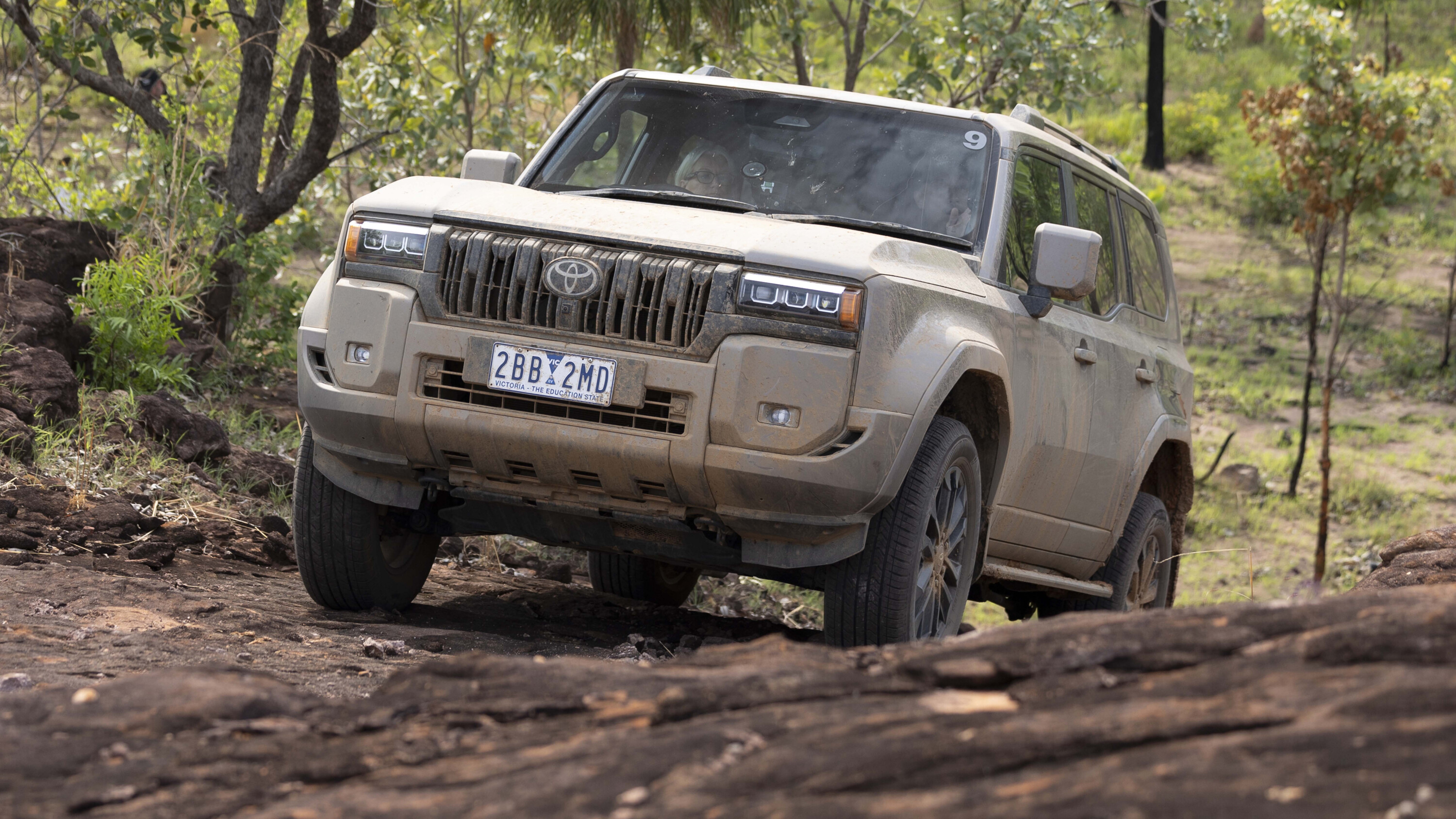
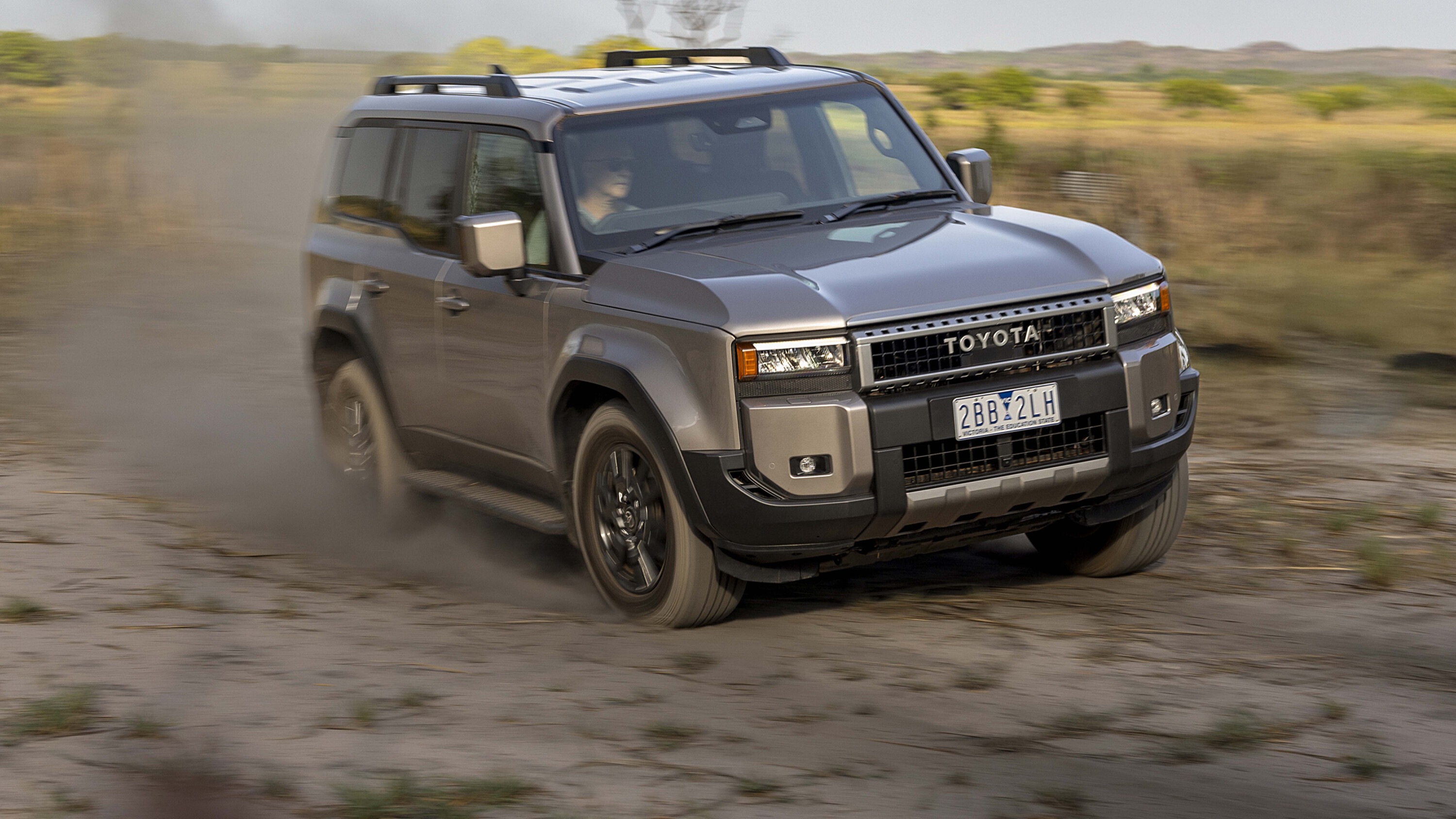
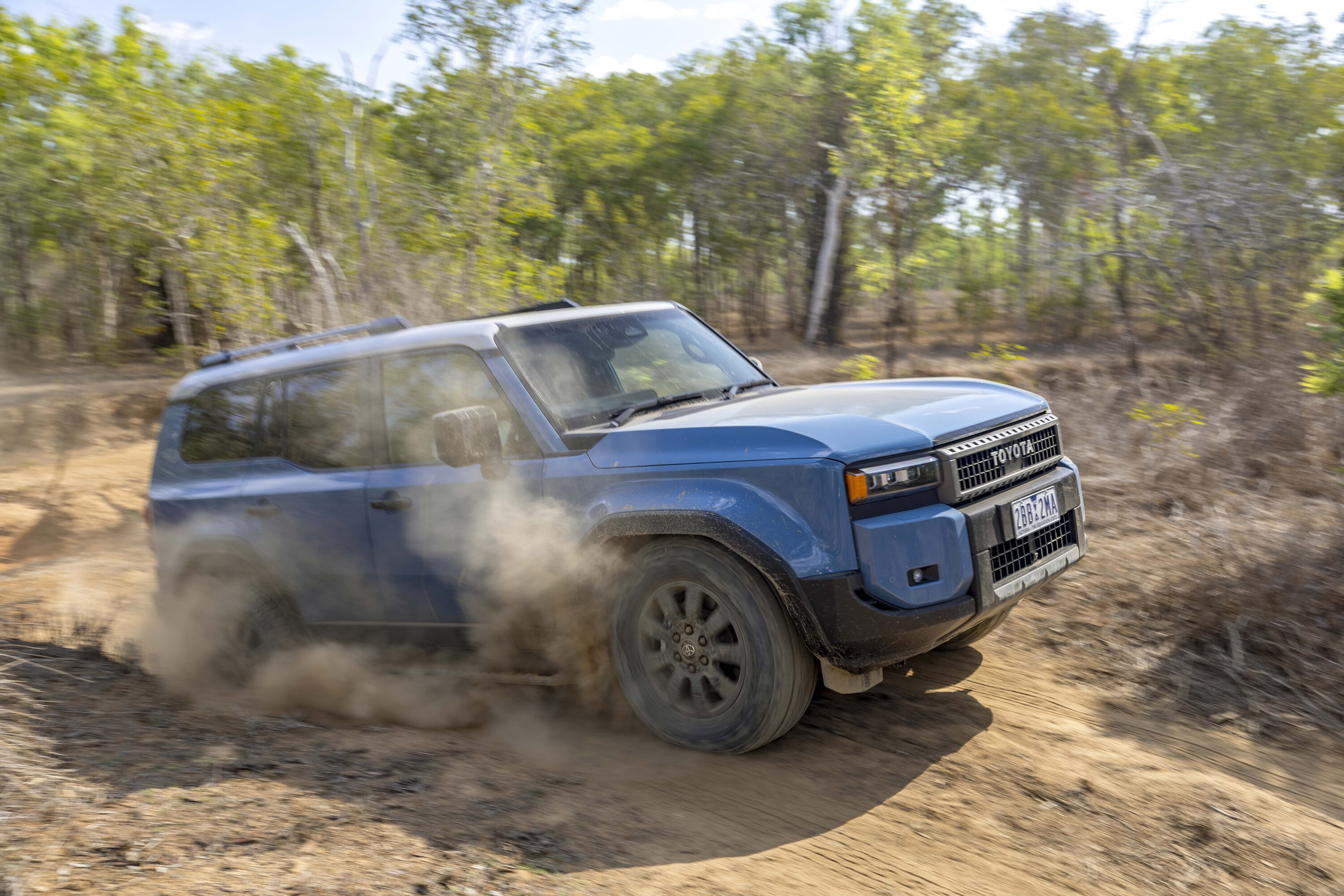
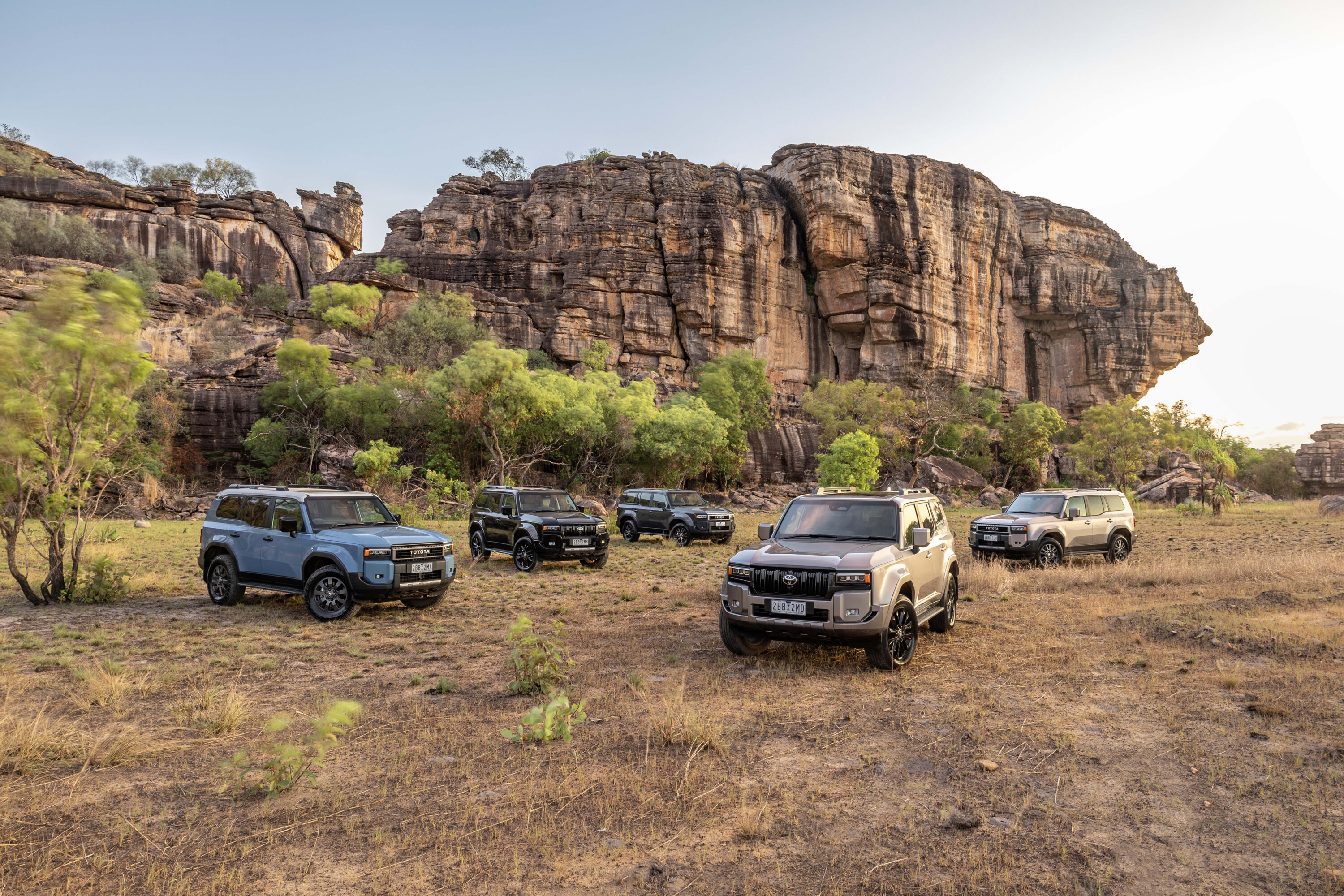
Somewhat aptly, we’re in Kakadu National Park to drive the new Prado, and Toyota has managed to thread routes through the park that take in a huge variety of Aussie off-road conditions.
Gibber tracks, hideous washboard, sections of talc-like bulldust, river crossings, mud splashes, rock crawls and even a spot of buffalo avoidance is all on the menu. About the only things missing are sand dunes and snow. We’re not short of seat time either. Given that this national park is the size of Wales, everything seems a very long way from point to point. We’ve got every Prado version available and we’re racking up hundreds of kilometres in each.
Some initial impressions. The steering is the first thing you notice. It’s night and day better on road, than the heavy and somewhat rubbery helm of the old car. The electrically-assisted system is lighter at low speeds and weights up agreeably when you’re travelling quicker.
1
The gearbox is also a good deal sharper at not only physically swapping cogs but its software is smarter, selecting the right ratio more often. One thing you probably won’t notice straight from the off is that 48V ‘V-Active’ mild hybrid system.
It’s very subtle. There’s a modest amount of electrical torque fill at low revs, but you’re more likely to notice the idle-stop system and how quickly the new integrated starter-generator can fire the four-pot diesel back into life.
It’s not as silky as you’d find with some of the best 48v petrol engines when it does reignite – there’s a bit of a shudder that runs through the cabin – but it’s not uncivilised. The ISG uses its own belt to restart the engine rather than the starter motor, so it’s very quick indeed.
1
Ride quality has improved significantly as indeed has refinement in the cabin.
The chassis that underpins this latest Prado is 50 percent more torsionally rigid than that of its predecessor, and this stiffness allows the suspension to concentrate on the task at hand, without having to factor in movement of the ladder-framed chassis, which in turn compromises its effectiveness. It’s still not what you’d call a plush ride, but it’s not harsh and is entirely acceptable given what the Prado can do off-road.
In addition to a stiffer chassis, Toyota has more effectively isolated the passenger cell from noise, vibration and harshness pathways, the entire frame sitting on eight cushion mounts. For a diesel with very large cylinders (at 689cc each, they’re propelling much bigger pistons than those that sit in the 576cc cylinders of the old 4.6-litre V8 LandCruiser).
1
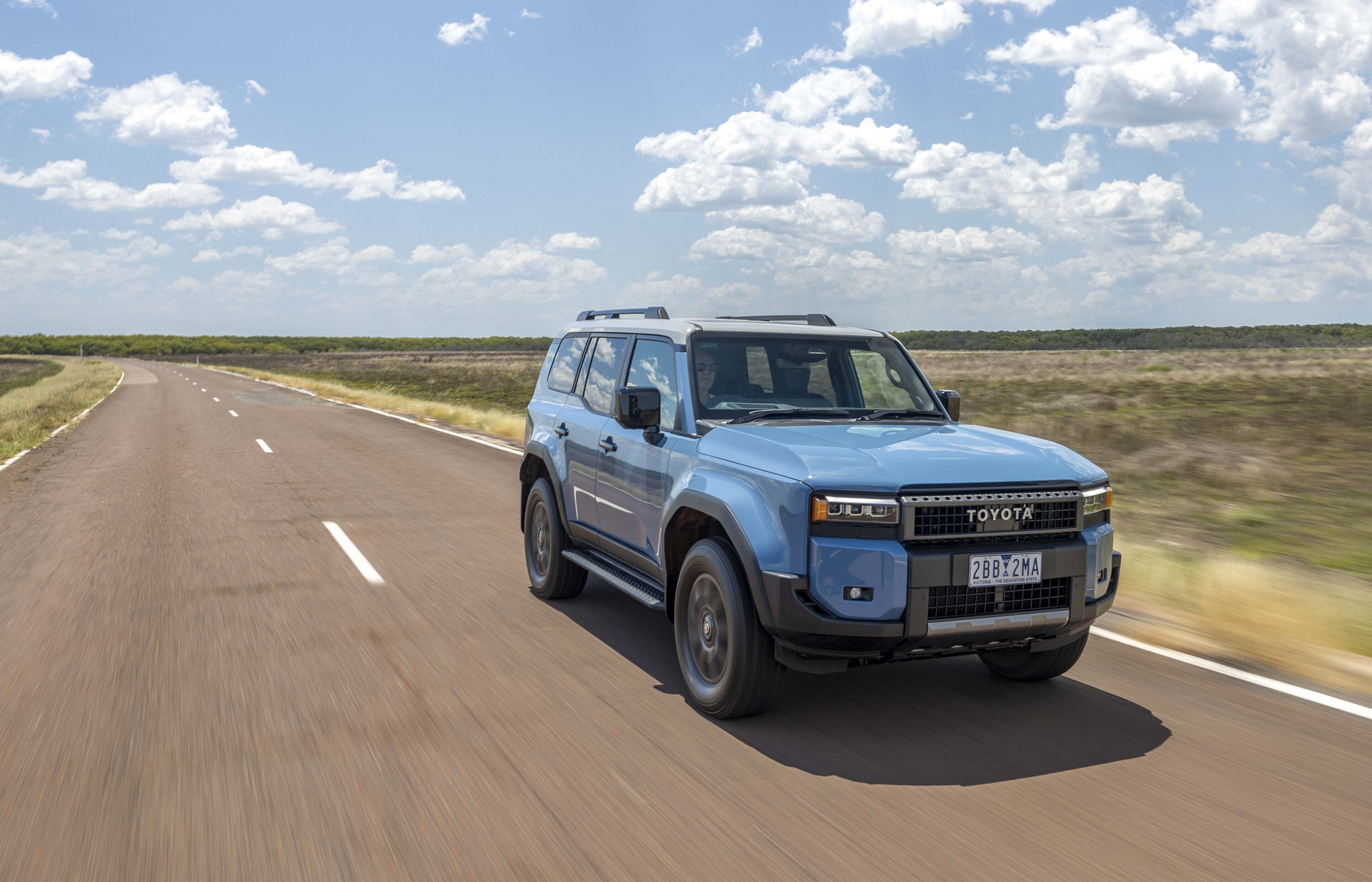
At highway speeds, the new gearbox defaults to running the engine at less than 2000rpm, and apart from some wind rustle over the very large portrait-oriented door mirrors, it’s all reasonably civilised. Even the Altitude’s knobby tyres don’t result in too much hum on bitumen.
Yes, there is some roll in corners, and the Prado doesn’t much like being hustled from lock to lock, when you feel its weight and inherent dynamic compromises of its ladder-framed underpinnings. By contrast, a Land Rover Defender is a degree more sprightly.
The new steering helps build confidence in the Prado, but Kakadu certainly wasn’t the location to fully assess this vehicle’s handling prowess on twisty blacktop. Spring for the VX or Kakadu grades and the vehicles are also fitted with Adaptive Variable Suspension (AVS) which uses linear solenoid actuators in the shock absorbers to improve ride and vehicle posture both on and off road.
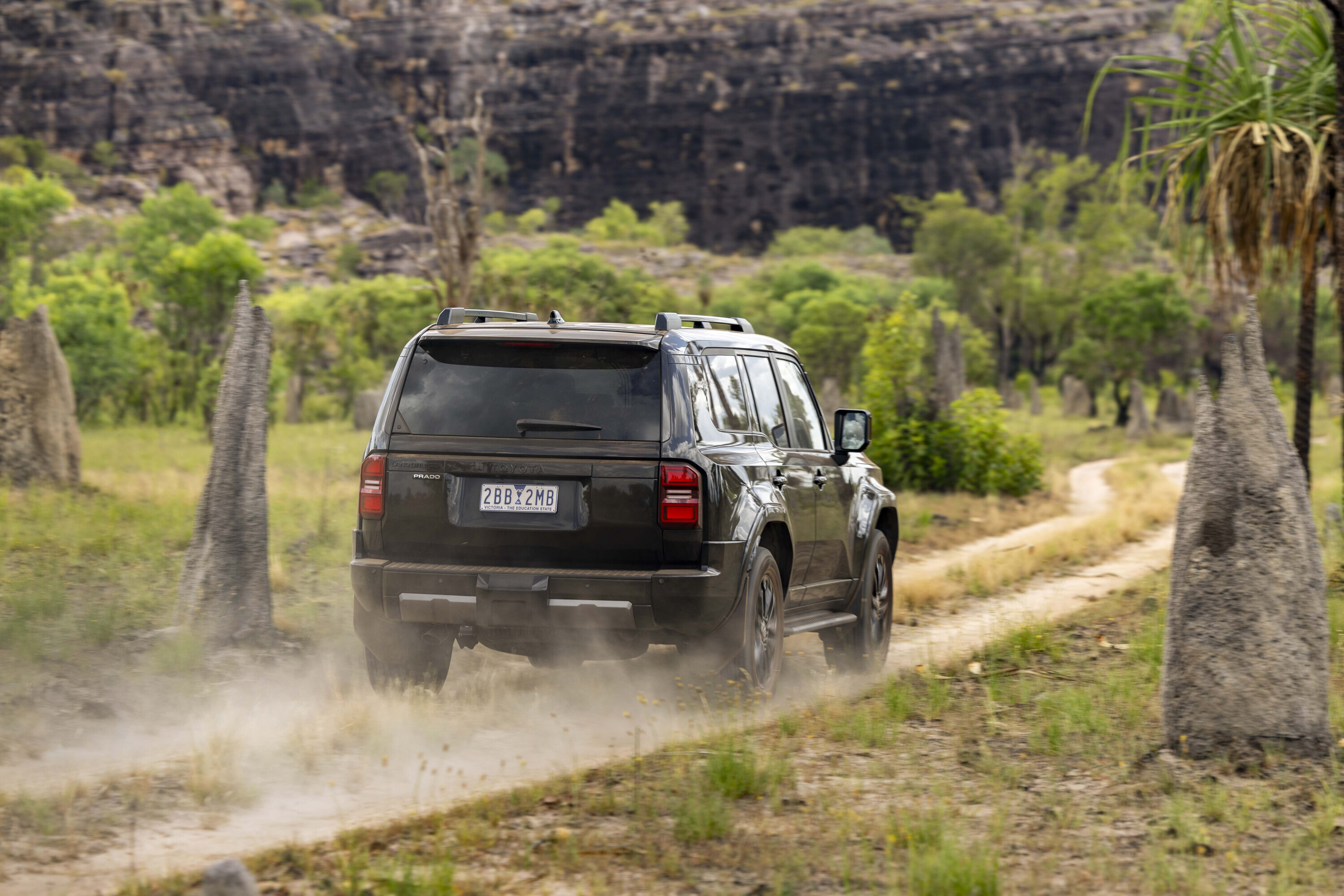
1
This is very much a case of give with one hand and take with the other in terms of ride, because these two versions ride on 20-inch alloys, and would suffer a noticeably firmer on-road ride otherwise.
With 150kW hauling a kerb weight of 2.5 tonnes, the Prado is no fireball in a straight line but 0-100km/h in less than 11 seconds doesn’t feel interminable and step-off out of junctions is helped by the crisper steering and quick-witted AWD logic. Braked towing limit?
That goes up from 3000kg to 3500kg, while the gross combination mass of the vehicle is rated at 6600kg. Delve a little deeper into the stats and it’s clear that due to the hefty increase in weight of this new model, actual payload figures are down.
1
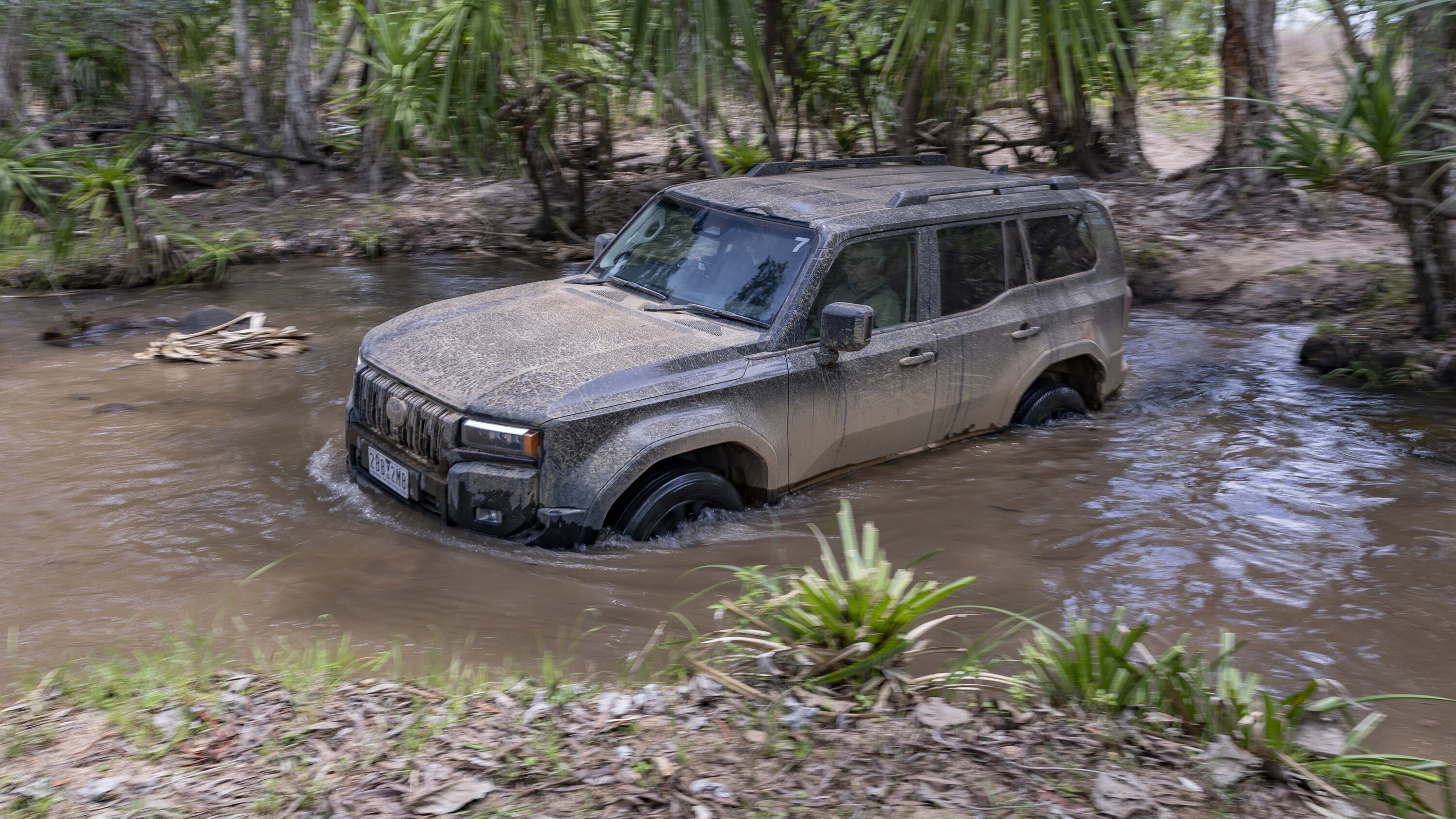
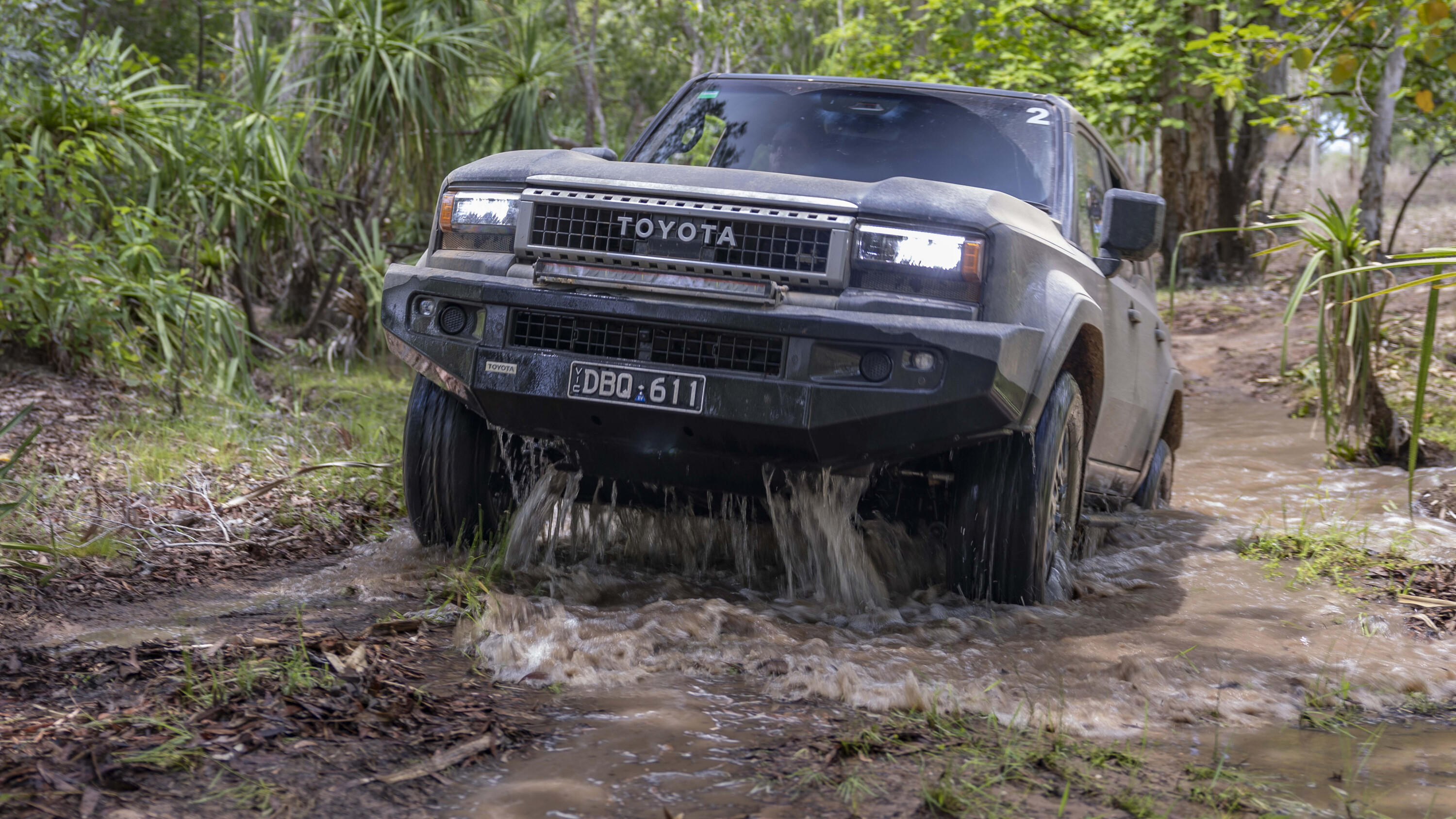
The Prado shines off road, as you’d probably imagine. With a 700mm wading depth, it was utterly unfazed by the early wet season creek crossings we tackled.
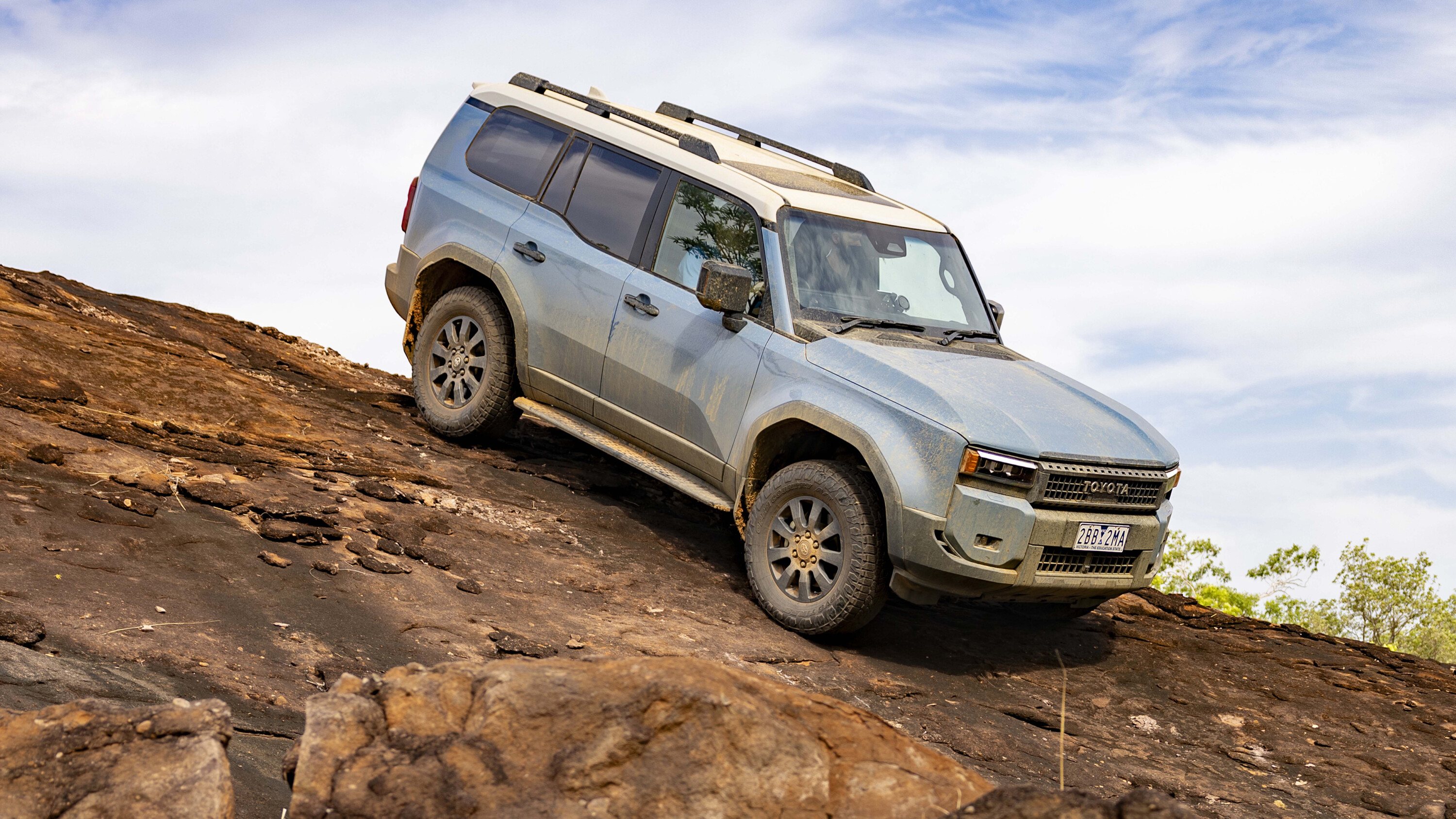
Ground clearance on the GX and GXL is 210mm, with the VX/Altitude and Kakadu offering a marginally more generous 221mm. The front and rear overhangs are relatively tight at 935 and 1205mm respectively. The GX and GXL deliver an approach angle of 31°, while the VX, Altitude and Kakadu measure 32°. Departure angle for all versions is 17°.
There remains a fair amount of lateral head toss on some of the worst roads, but it’s impressive on outback washboard. Dust sealing has also improved on this model, and the tiny toggle switch to notch the Prado between high and low range, during which the vehicle needs to be stationary with the transmission in Neutral, is a lot less clunky than the old car’s lever.
1
The demountable sway bar of the Altitude adds another 10 percent of ultimate wheel articulation, making this the one to go for if you’re intent of rock crawling, but otherwise even the GX boasts off-road ability beyond most owners’ ambitions.
Toyota has engineered a number of genuine parts during the Aussie evaluation process for this car, which means that items like the body-coloured front bull bar have been designed and tested by Toyota engineers to reduce cooling compromises and such like.
The Prado’s designers have aimed to improve visibility out of the car by lowering the window line by 30mm and raising the front seat hip point by 22mm. This does indeed give quite the commanding view out, but also brings with it an unexpected drawback. In any of the models fitted with a glass roof, headroom is surprisingly tight.
1
I found myself having to recline the front seats a little further than was ideal in order to stop my head brushing the roof (I’m 6’4”) and the issue was exacerbated in the second row. If you’re tall, given to wearing hats or are in the habit of propping your glasses atop your noggin, skip anything with a moon roof.
Interior quality seems generally very good, with a very sensible mix of physical buttons and touchscreen functionality. I’d have liked a button to turn the fairly insistent lane-keep off, and the steering wheel seems a little overburdened by small buttons, but otherwise it’s generally well-judged. The cooled centre box (from VX up) is a boon and is big enough to hold at least four drinks bottles.
The tall but narrow door mirrors aren’t the Prado’s greatest feature, because you’ll need to angle them a long way out to avoid a significant blind spot. They’re one of the few instances where styling seems to have taken precedence over substance.
1
At 2850mm in wheelbase, the Prado’s not anything like as long between its axles as family haulers like the Mazda CX-8 (3120mm), but to stretch the wheelbase out any further would then start to hobble the Toyota’s off-road chops.
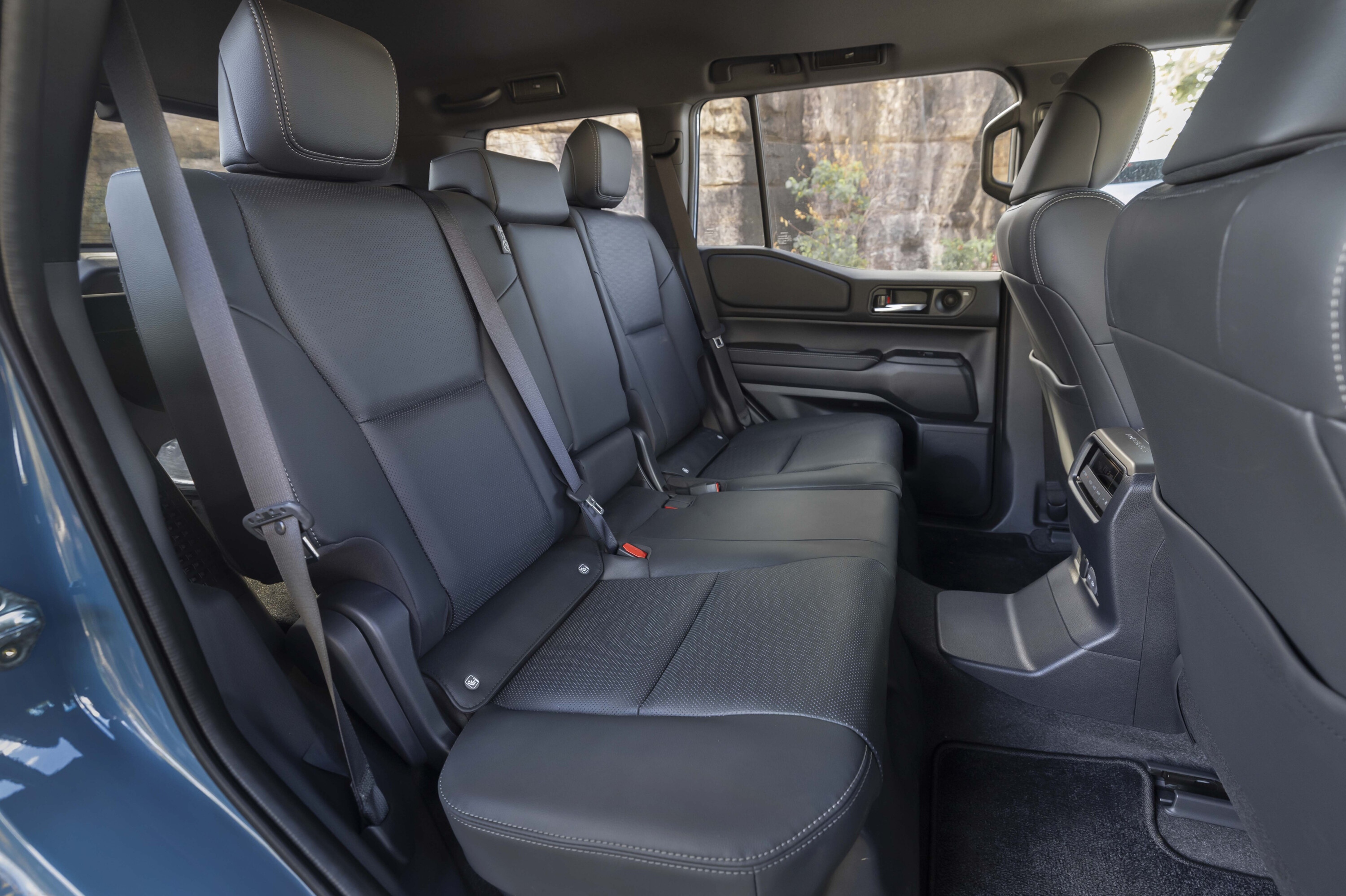
As such, accommodation in the seven-seat versions is a little more pinched than in these dedicated family haulers with no off-road pretensions. Likewise, third row amenity and access is fairly basic, and feet are nearly at the same height as your posterior when you’re back there. It’s not that comfortable, even for kids.
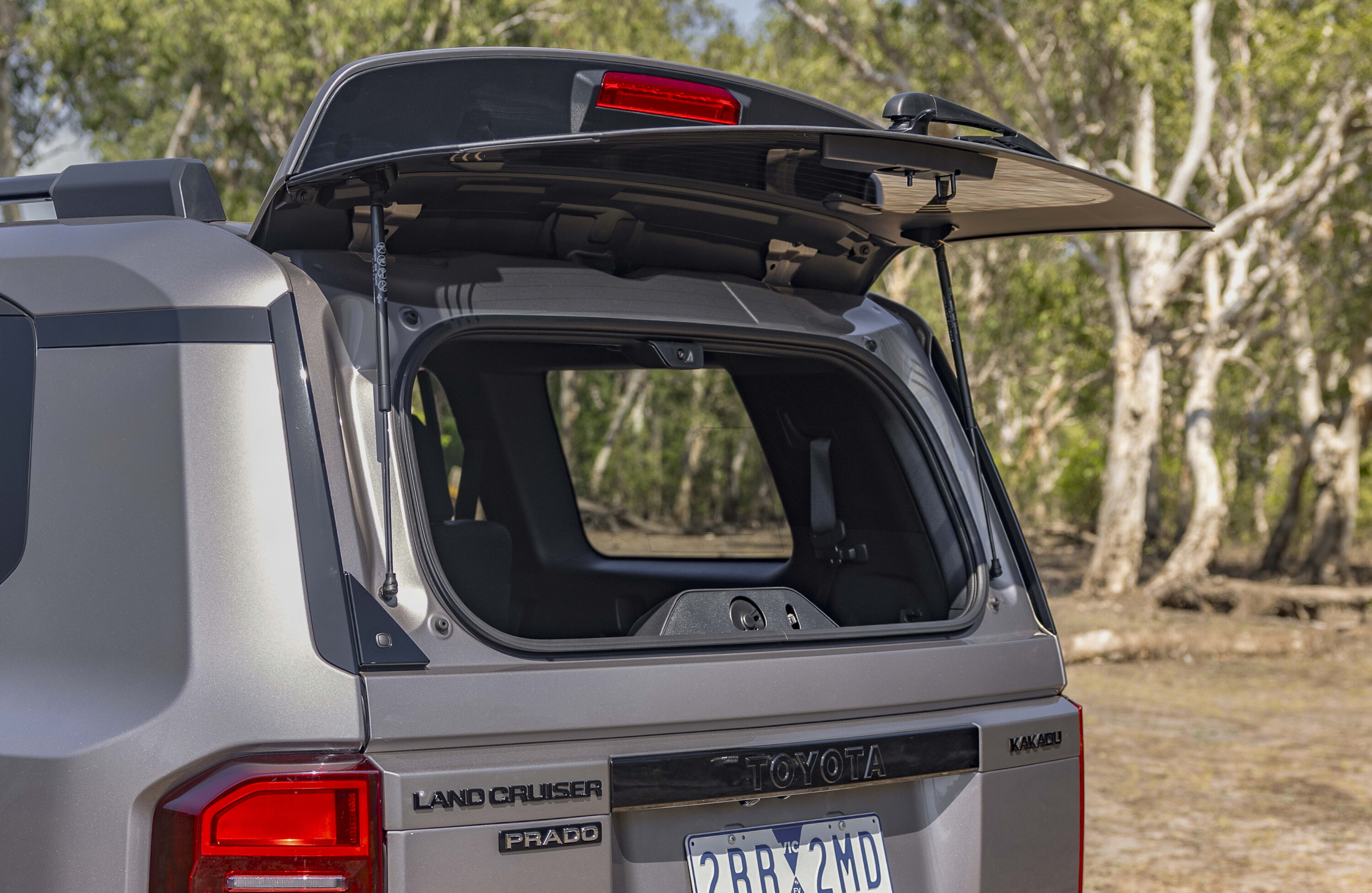
At 1980mm wide, the cabin is noticeably more generous in width than the last Prado, with plenty of space for that broad centre console. The low belt line increases the impression of airiness, and utility is also helped by a separately opening rear window.
1
The door pockets could be a bit more generous, and you’ll probably be looking for somewhere else to stow larger bottles.
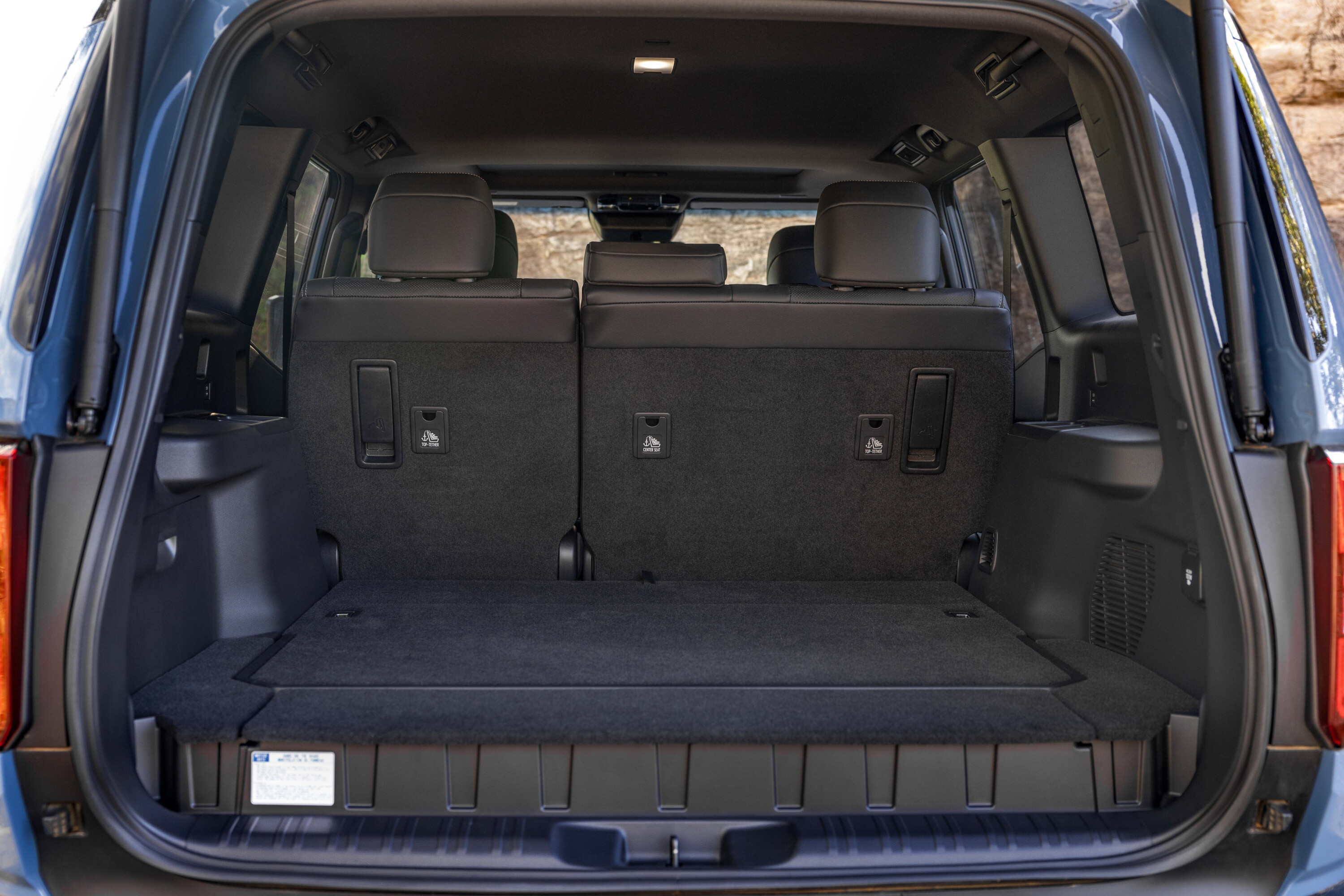
The five-seat models offer 954L of boot space with the rear seats in position and 1895L when they’re folded. Things get a bit murkier with the seven-seat models due to to two particular issues. The first is that the third row of seats can’t be removed and the second is that they don’t fold flat to the floor, thanks to the location of the 48V battery for the mild hybrid system.
This could well be a deal breaker for many looking to camp or tour with the Prado. Toyota can supply a rather flimsy-feeling accessory box to fill in the step-down at the rear, thus creating a flat floor, but the fact of the matter is that there’s only 182L behind that third row.
1
Toyota claims 906L with the rear seats folded, and 1829L with the second and third rows stowed. What’s more, removing the rear seats yourself will have warranty implications. Hmmm…
The Prado is well provisioned for safety gear and every grade gets nine airbags – including driver and front passenger knee bags and a centre airbag between the front seats. There are also three ISOFIX child seat mounts, standard adaptive cruise control, parking sensors and lane keep assist. The brakes are bigger than ever, with 354mm discs up front with four-piston calipers and a 335mm single-piston floating caliper aft.
The GX and GXL models get auto dipping headlamps while the VX grades and above get a smarter adaptive high beam. There are a whole heap of off-road driver aids including the Multi Terrain System largely carried over from the LC300 and a special low-speed rock crawling mode. There’s also a new camera and radar system and driver fatigue monitoring.
1
Fuel economy is rated at 7.6L/100km, and even on a 110km/h cross-country run with the air conditioning blasting and seat cooling maxed, we rarely saw consumption dip below 8.0L/100km.
In order to reduce NOx emissions, AdBlue is required for this engine which it drinks at a rate of 500km per litre, which means that you’ll typically travel about 8500km between refills of the 17.4-litre tank. The fuel tank is a 110-litre unit and word is that TMC engineers are looking at the feasibility of an in-house extra long range tank option, possibly something to equal the 150-litre dual tanks of the old Prado.
Toyota appears to have played a canny hand with the latest LandCruiser Prado. It understands that existing buyers err on the conservative side, and engineers from Japan have conducted hundreds of interviews here in Australia, the Prado’s biggest market, to establish exactly what customers want.
1
In effect, it was more of the same but better and that’s largely what it’s delivered.
The styling is progressive without being alienating, and the new features build upon the capabilities of the much-loved predecessor without alienating those looking to trade up.
Some may miss the feedback of the steering in tricky off-road spots, but that modest regression is easily outweighed by less effort and better accuracy on road and a whole slew of other refinements that make the Prado more formidable than ever.
Best of all, Toyota has not sacrificed the Prado’s hard-won reputation for durability at the altar of modernity. It still feels as tough as old boots, albeit ones that have been treated to a bit of spit and polish.
1
There are some issues to consider though. The packaging of the seven-seat models certainly isn’t all it could be and will scratch it from the shortlists of real power users, as could the drop in payload.
Third row accommodation is best reserved for short trips, as the seating position leaves something to be desired.
Toyota is banking that the rest of the improvements create a significant net positive for the LandCruiser Prado. I think they’re onto something. There will doubtless be a vocal minority who feel that in modernising it, Toyota has somehow dumbed the vehicle down and charged us a handsome premium for the privilege.
That’s a very harsh take. It’s an improvement over the old version in a multitude of areas, but it’s not going to be for everyone. Looking at the order bank that Toyota’s already built up, there’s probably some sound reasoning behind their confidence.
A wait worth its weight
Remember the interminable waiting lists for the RAV4? Aware that some buyers may be wary of placing an order for the new Prado due to supply, Toyota has introduced a new system where they will not take a dealer order if the rolling supply figures point to a wait of over 12 months.
As it stands, the company has 17,000 firm orders in this first year against an expected Aussie supply of 27,000 cars. So get in quick if you want a Prado in your garage in 2025.
“Is it a perfect science?” asked Sean Hanley, VP of sales and marketing. “No. But customers will know where they stand and it’s certainly better than anything we’ve had before.”
MORE
Everything Toyota
MORE
SUV Buyers Guide
| 2025 Toyota LandCruiser Prado specifications | |
|---|---|
| Engine | 2755cc 4cyl, dohc, 16v, turbo, mild hybrid |
| Power | 150kW @ 3000-3400rpm |
| Torque | 500Nm @ 1600-2800rpm |
| Transmission | 8-speed automatic |
| Weight | 2535kg (GXL) |
| 0-100km/h | 10.7sec (GXL, tested) |
| Price | $72,250 – $99,990 |
| On sale | Now |
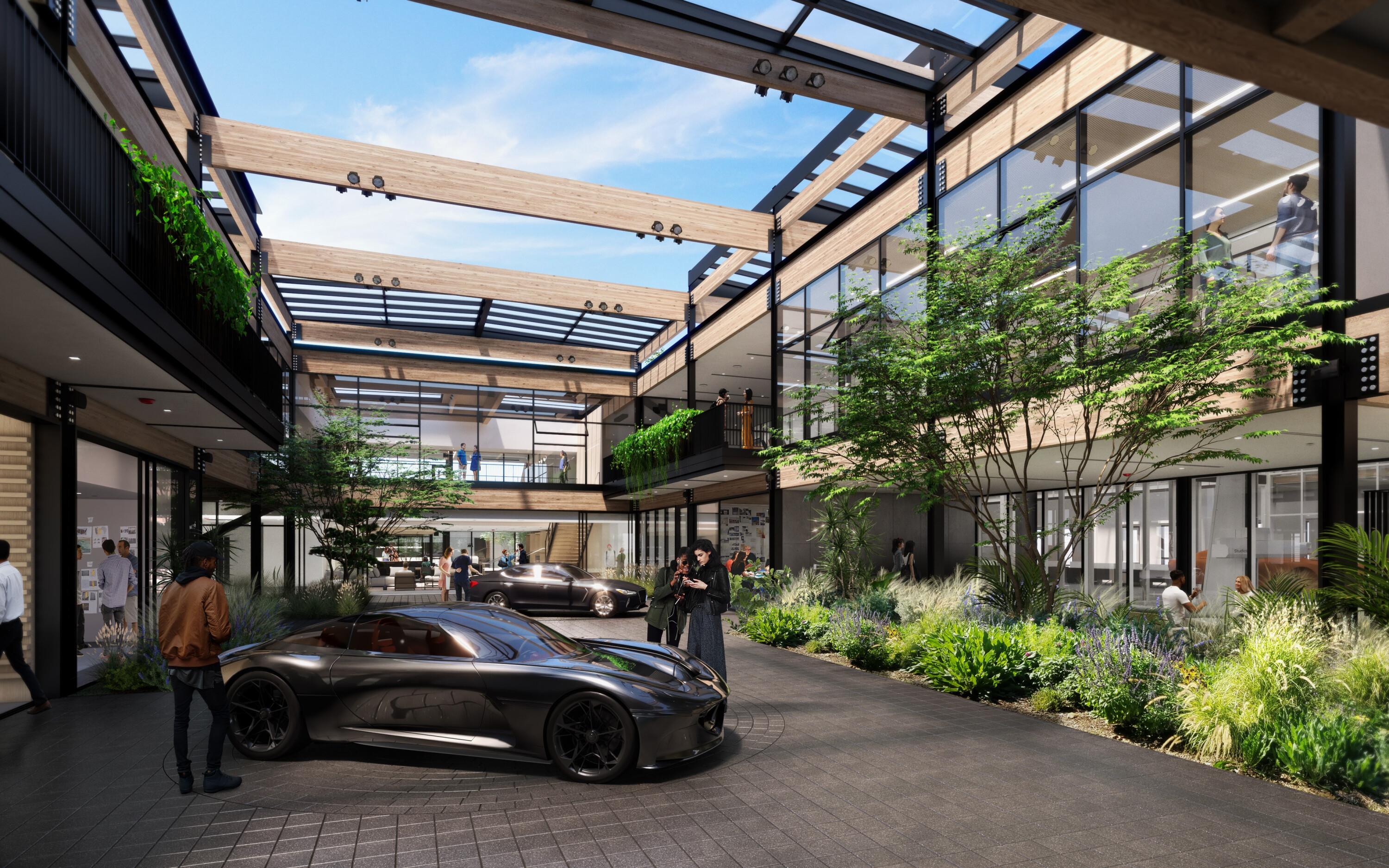
Luxury brand Genesis marks its 10th anniversary next year by announcing the establishment of a design studio at El Segundo in California in the first quarter of 2025.
In a space that will span 80,000 square feet and house 45 team members, the brand’s Chief Creative Officer Luc Donckerwolke said the “climate, cultural arts and automotive scene in Los Angeles offered us the possibility to create a dynamic and attractive work experience by integrating nature and light into the work and creative spaces”.
The quintessentially Californian announcement indicates the studio will “place visitors in a meditative state of mind distinct from the outside world”.
1
“The restrained yet warm aesthetic of Genesis Design California promotes a sense of calm and focus, expressing a reverence for design to reflect the values of the Genesis brand.”
Those lucky enough to work there will enjoy such facilities a modern tea platform in the lobby space, inspired by the brand’s distinctly Korean heritage; a colours, materials and finishes studio; clay modelling workshop; digital design lab; library for discussion, research and reflection; open workspace featuring a variety of collaborative breakout spaces and flexible seating; large, bright office and conference spaces; private spaces enclosed in soft acoustic felt for a calming experience; and outdoor spaces and lounge areas inspired by traditional Korean gardens and the outdoor aesthetic of Southern California.

1
Founded in Korea, Genesis has expanded to North America, Europe, China, Australia, Russia, and the Middle East with its unique ‘Athletic Elegance’ design identity, seen in models such as the G80, G70, GV60, GV70, and GV80.
It is aiming to be a 100 per cent zero-emission vehicle brand by 2030 and be carbon neutral by 2035.
MORE
Everything Genesis
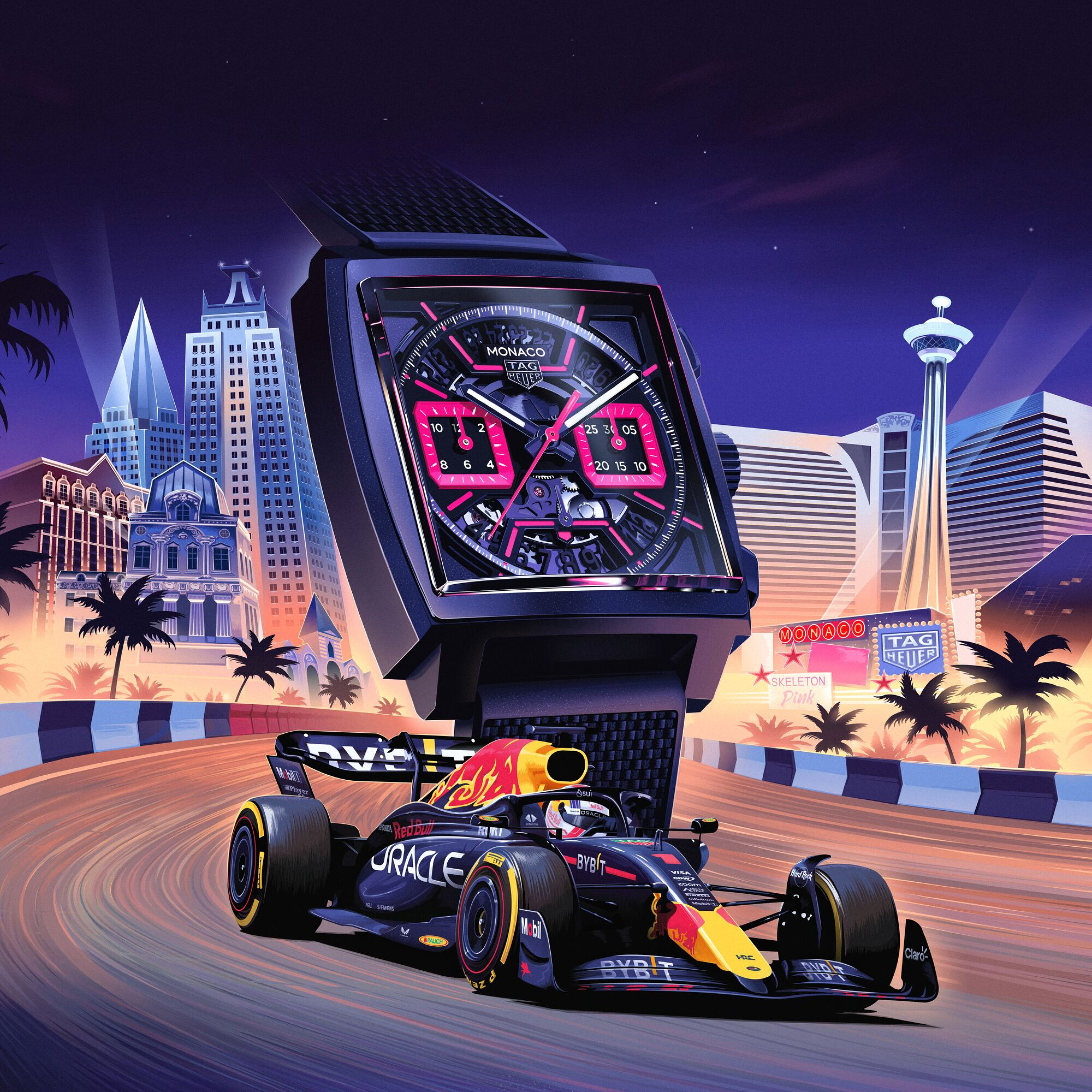
It’s the watch made world-famous when Steve McQueen strapped one to his wrist while starring in the 1971 film, Le Mans, and has become a favourite of collectors and watch lovers ever since.
The TAG Heuer Monaco and its iconic ‘cushion’ case, crown on the left side and distinctively designed and coloured dial has been a powerhouse for the Swiss brand since it debuted in 1969.
Its various iterations down the years have generally been thematically connected to motorsport, just as Jack Heuer’s Carrera model was in the early 1960s, but the new TAG Heuer Monaco Chronograph is something of a departure.
1
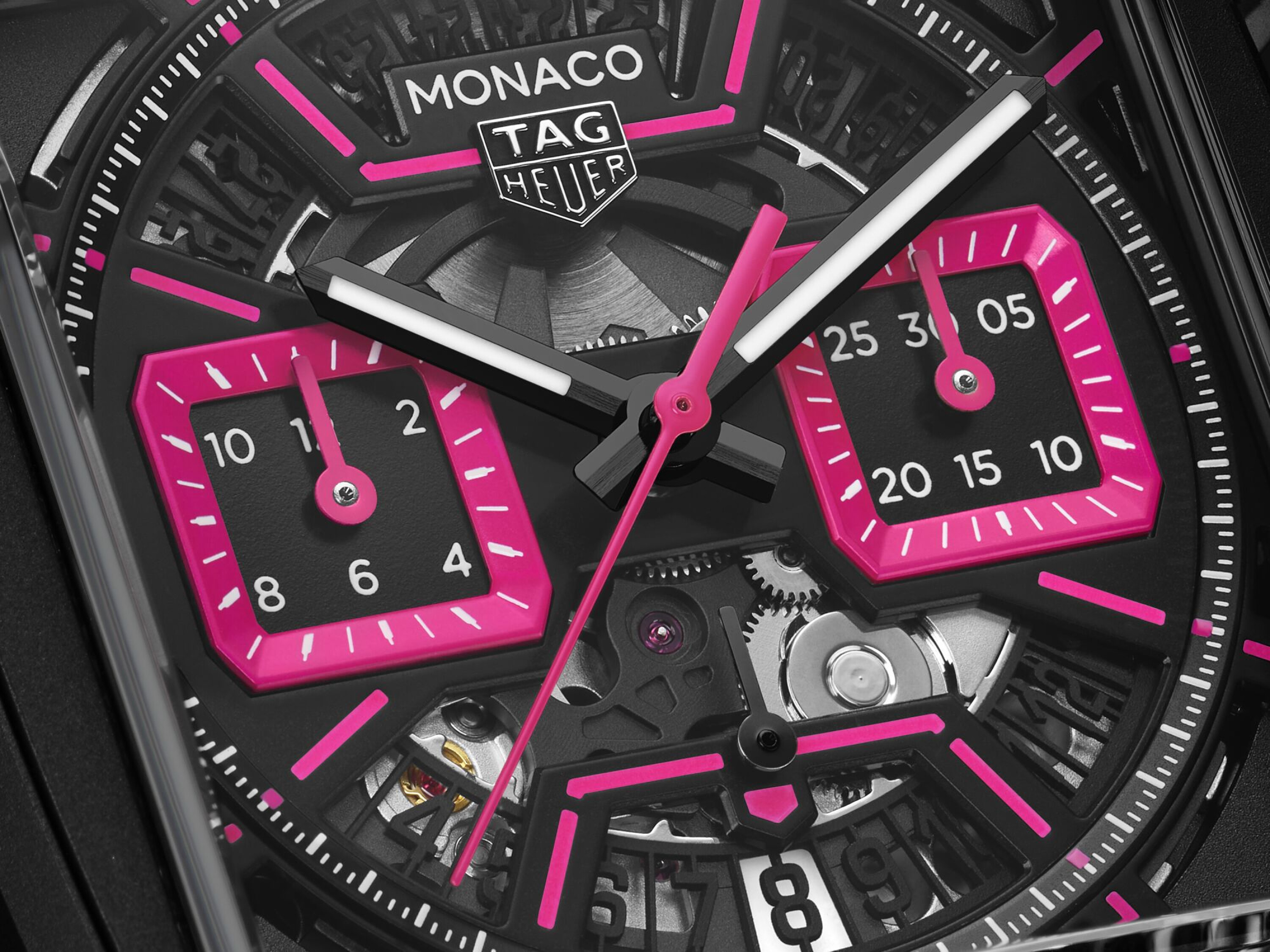
A horological tribute to the city of Las Vegas, the new Monaco creates an instant double-take thanks to its vibrant pink skeleton dial inside a lightweight 39mm titanium case finished in a slinky black DLC coating.
Stand-out pink accents on the 3 and 9 o’clock counters and hands, as well as on the chronograph seconds hand, are designed to reflect the energy-charged atmosphere of Las Vegas and its iconic city lights.
Black indexes and black gold-plated facetted hour and minute hands are lumed with light blue Super-LumiNova for night-time visibility.
6
Through the caseback, pink highlights can also be seen on the column wheel at 12 o’clock and the oscillating weight as part of the in-house automatic Calibre Heuer 02 movement. The mix of materials ensures wearability and comfort but also the durability and resilience of the timepiece.
The embossed black calfskin and rubber strap adds a finishing layer of style and the sandblasted case is water resistant to 100 metres.
‘In an era of conformity, this watch celebrates individuality and boldness,’ states TAG Heuer about the latest chapter in the long Monaco story.
Hard to disagree.
Price: A$16,300.
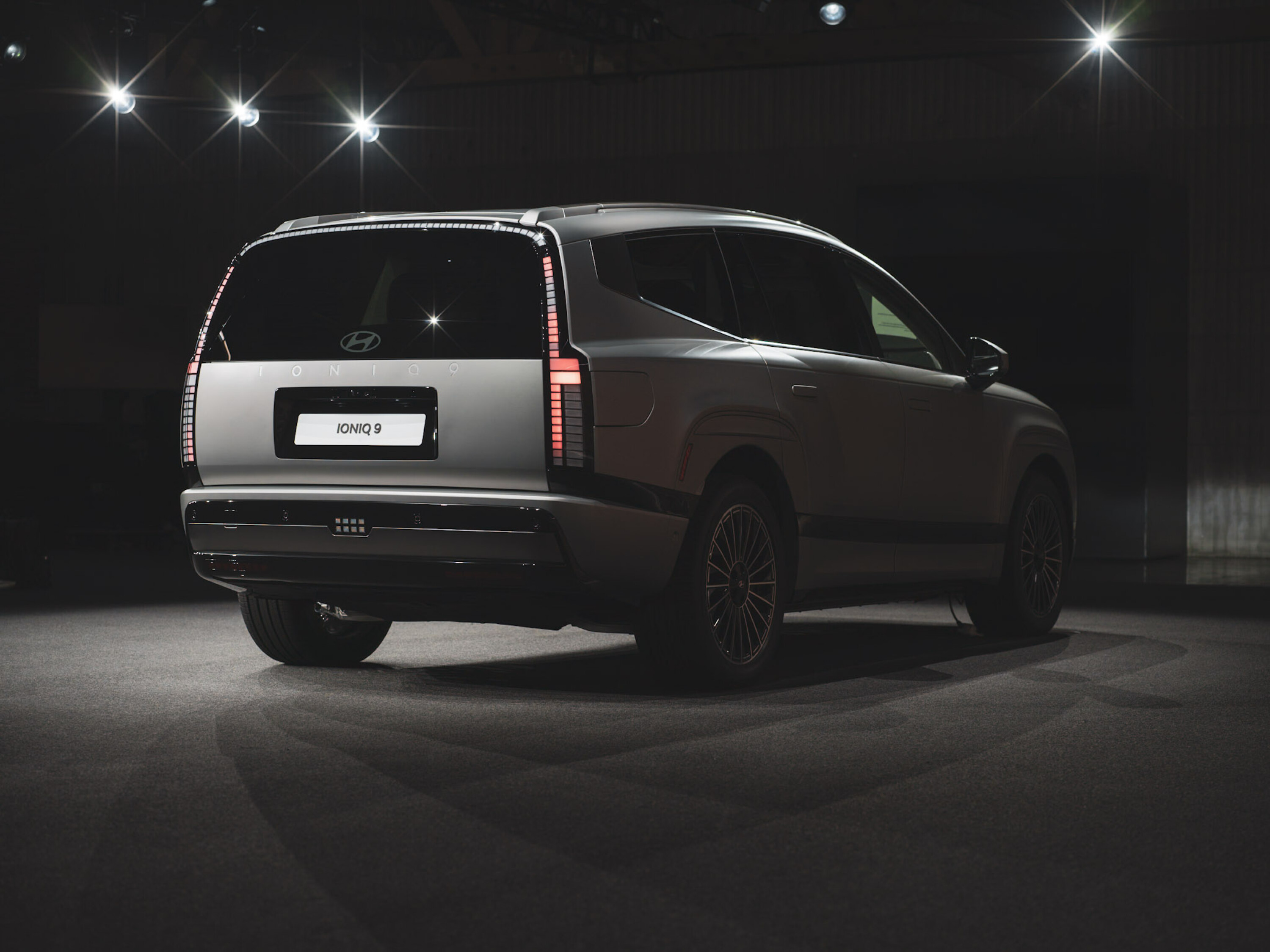
Hyundai is building on its determined progress toward an all-electric range of 23 models by 2030 with the PR debut in Los Angeles of its new its new three-row SUV, the IONIQ 9.
At an event at mid-century masterpiece Goldstein House in LA, Hyundai revealed the IONIQ9 with its impressive internal space for up to seven occupants, ‘aerosthetic’ exterior styling, latest in-car tech and high-capacity 110.3 kWh battery.
1
Room for all
Space is the priority in the new IONIQ 9, the cabin offering 1899mm of headroom and 2050mm of legroom when second and third rows are combined.
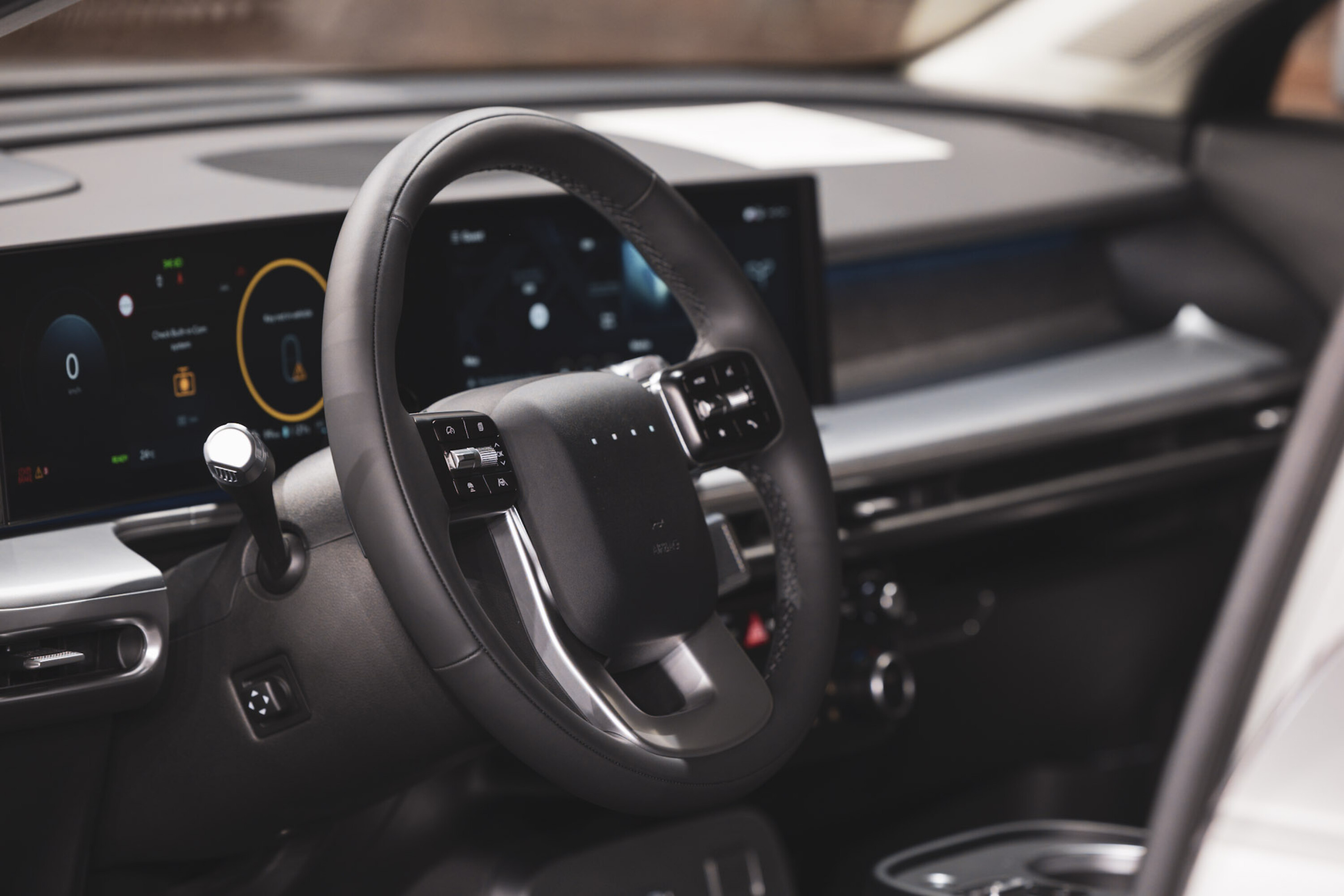
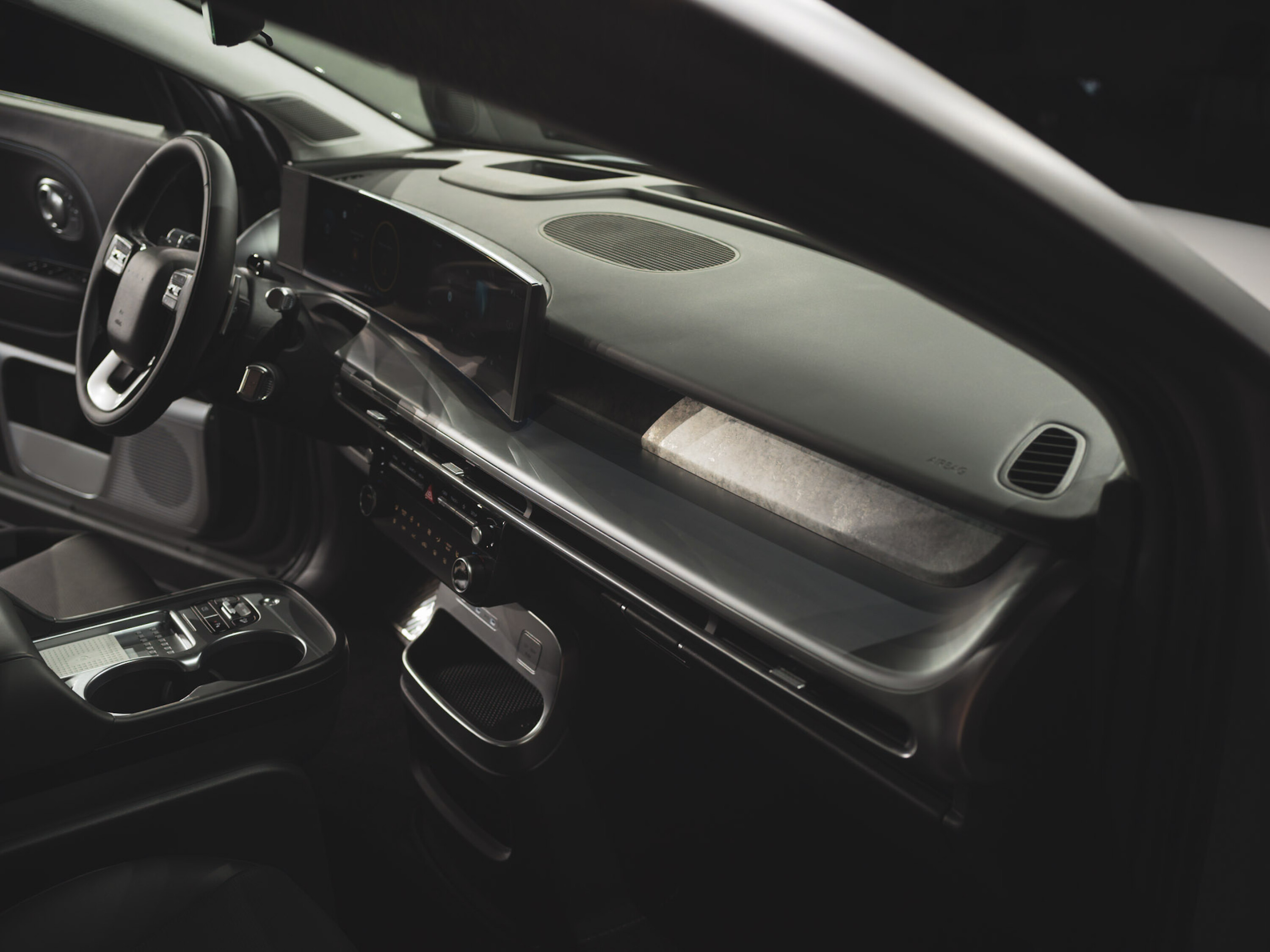
The interior design utilises elliptical elements to create a relaxing, lounge-like atmosphere. The ‘Relaxation Seats’ in the first and second rows can fully recline with a leg rest for four people to take a nap during re-charging, should they be so disposed.
These seats also incorporate Hyundai’s Dynamic Body Care system with a massage function using pressure and vibration to stimulate occupants’ blood flow and circulation. Meanwhile, ‘Swiveling Seats’ in the second row allow the second- and third-row occupants to face each other once the vehicle has stopped.
1
A slidable Universal Island 2.0 storage console can be moved by up to 190 mm for easy access by the front and second rows. The console provides 5.6 litres of storage in the upper tray, as well as 12.6 litres of storage in the lower sliding tray.
IONIQ 9’s infotainment system includes a 12-inch cluster and a 12-inch integrated monitor as part of the panoramic curved display. The standard in-car audio setup features an eight-speaker sound system, with the option of a premium BOSE 14-speaker stereo, which supports 5.1-channel surround sound, wireless updates and advanced BOSE features.
Luggage for up to seven people is, of course, a key consideration. With the third-row seats folded flat, the trunk provides up to 1323 litres of luggage space, or 620 litres with all three rows in place. A front trunk offers a maximum volume of 88 litres for RWD models and 52 litres for AWD models.
1
‘Aerosthetic’ exterior styling
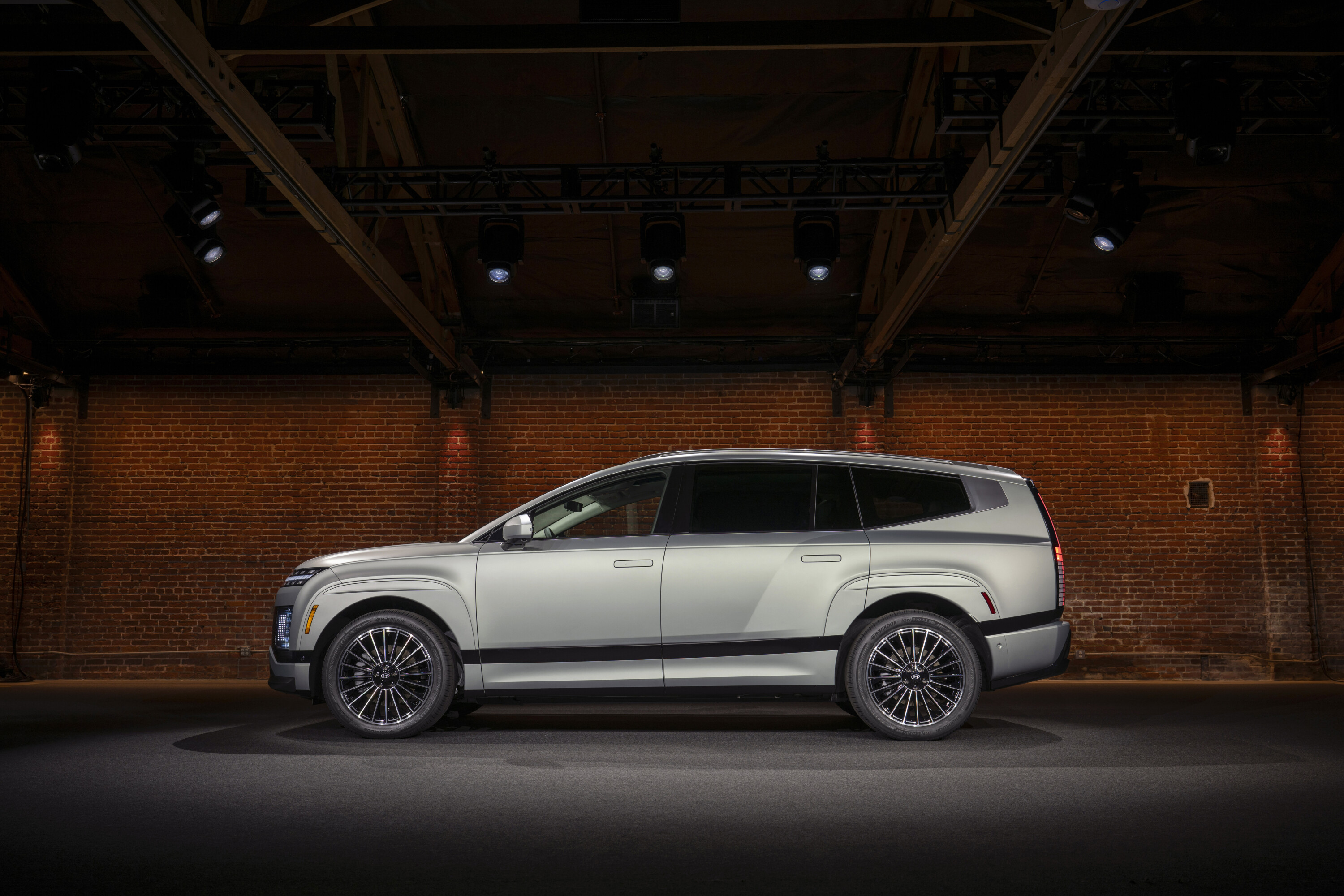
Hyundai describes the SUV’s exterior look as ‘aerosthetic’ – a smooth, curved roofline creating a streamlined aerodynamic profile and a low drag coefficient of just 0.259 Cd when fitted with digital side mirrors (or 0.269 Cd with conventional side mirrors). The streamlined roofline and rising lower line give the IONIQ 9’s silhouette a sleek, dynamic look.
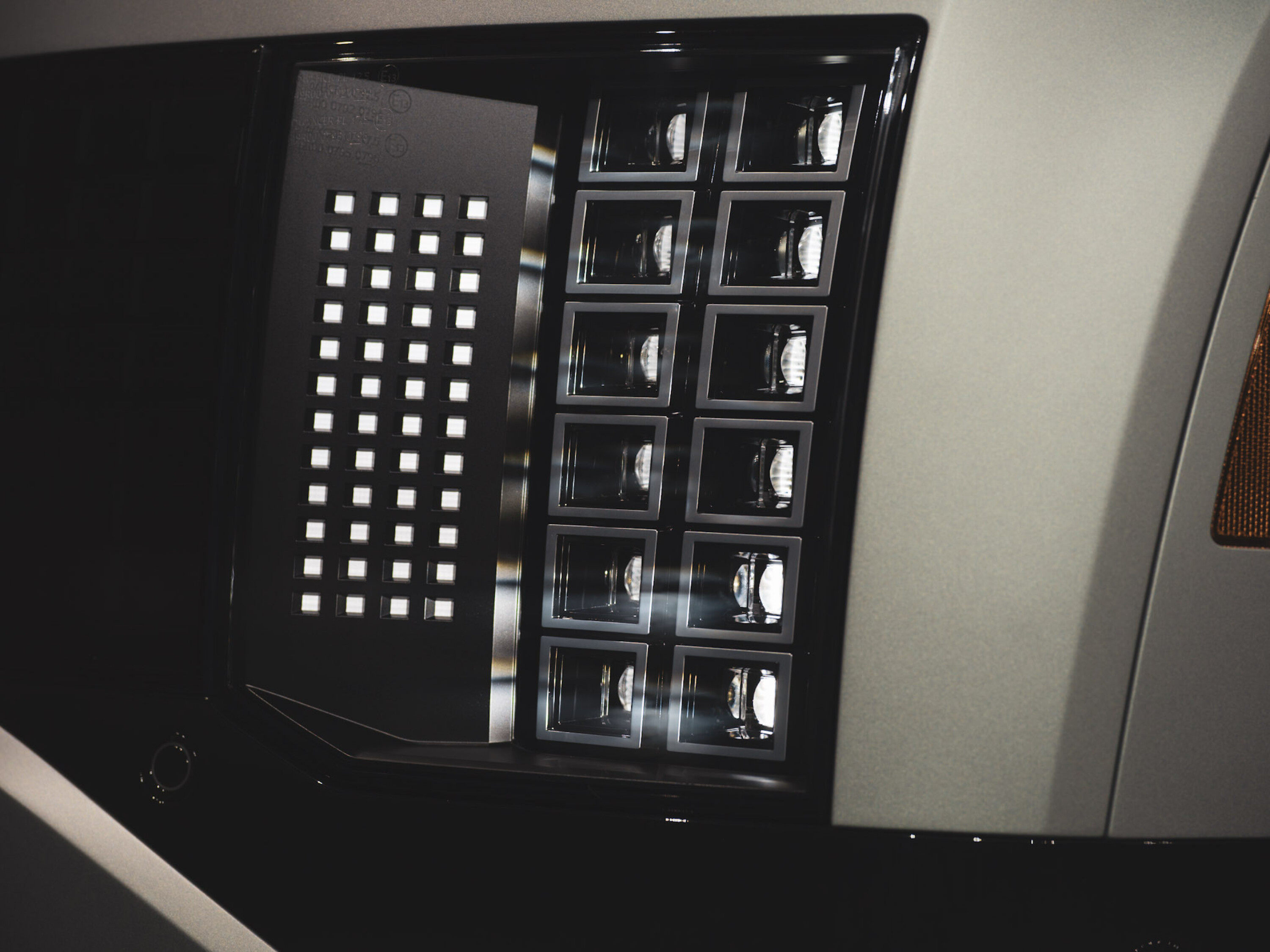
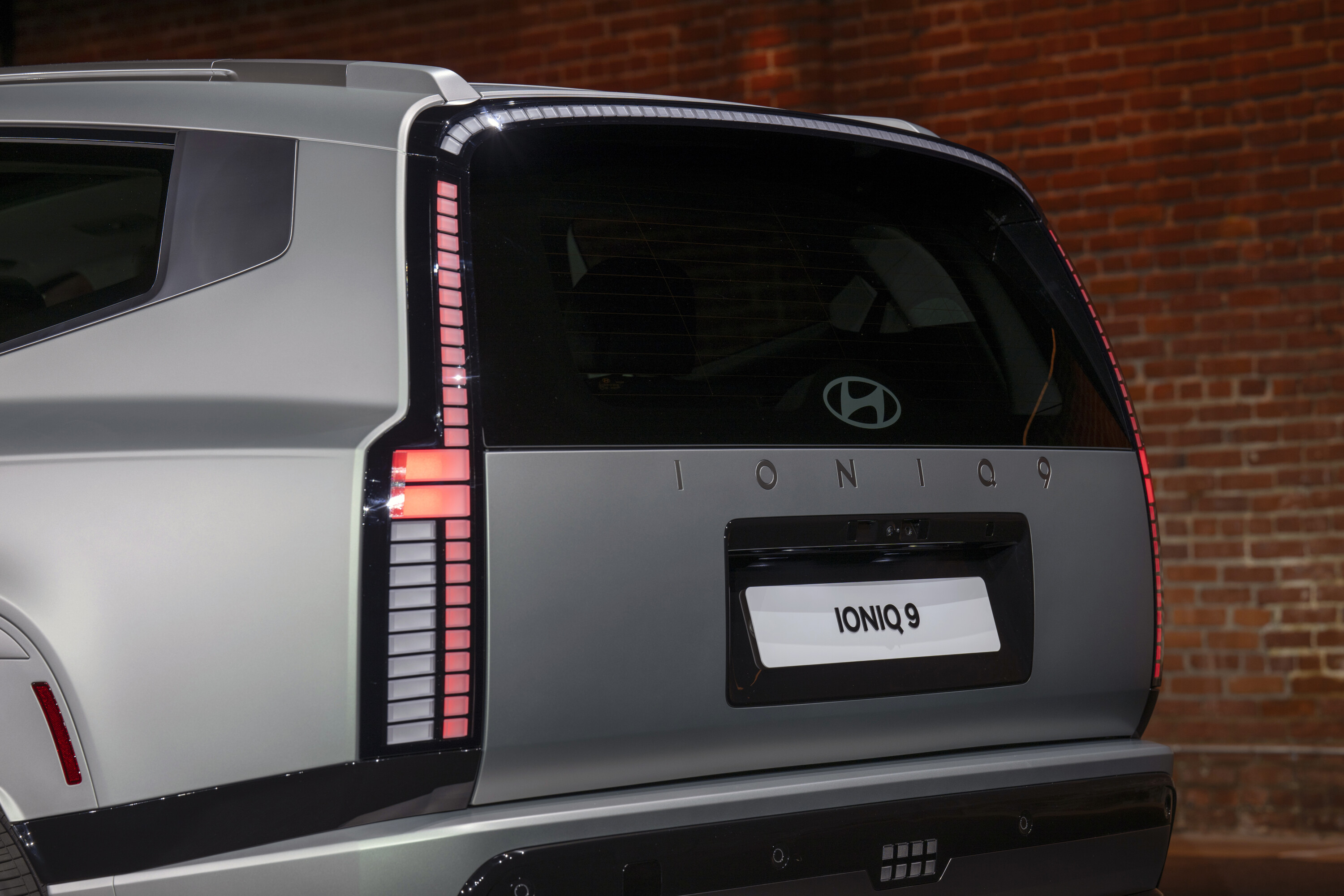
The SUV’s front-end design uses ‘Parametric Pixels’ integrated into the LED light units and lower fascia to create a unique look.
Aerodynamics are a key focus with energy usage efficiency enhanced by smoothing and balancing airflow under the body, a 3D-shaped underbody cover, aerodynamic wheels and hidden antennas.
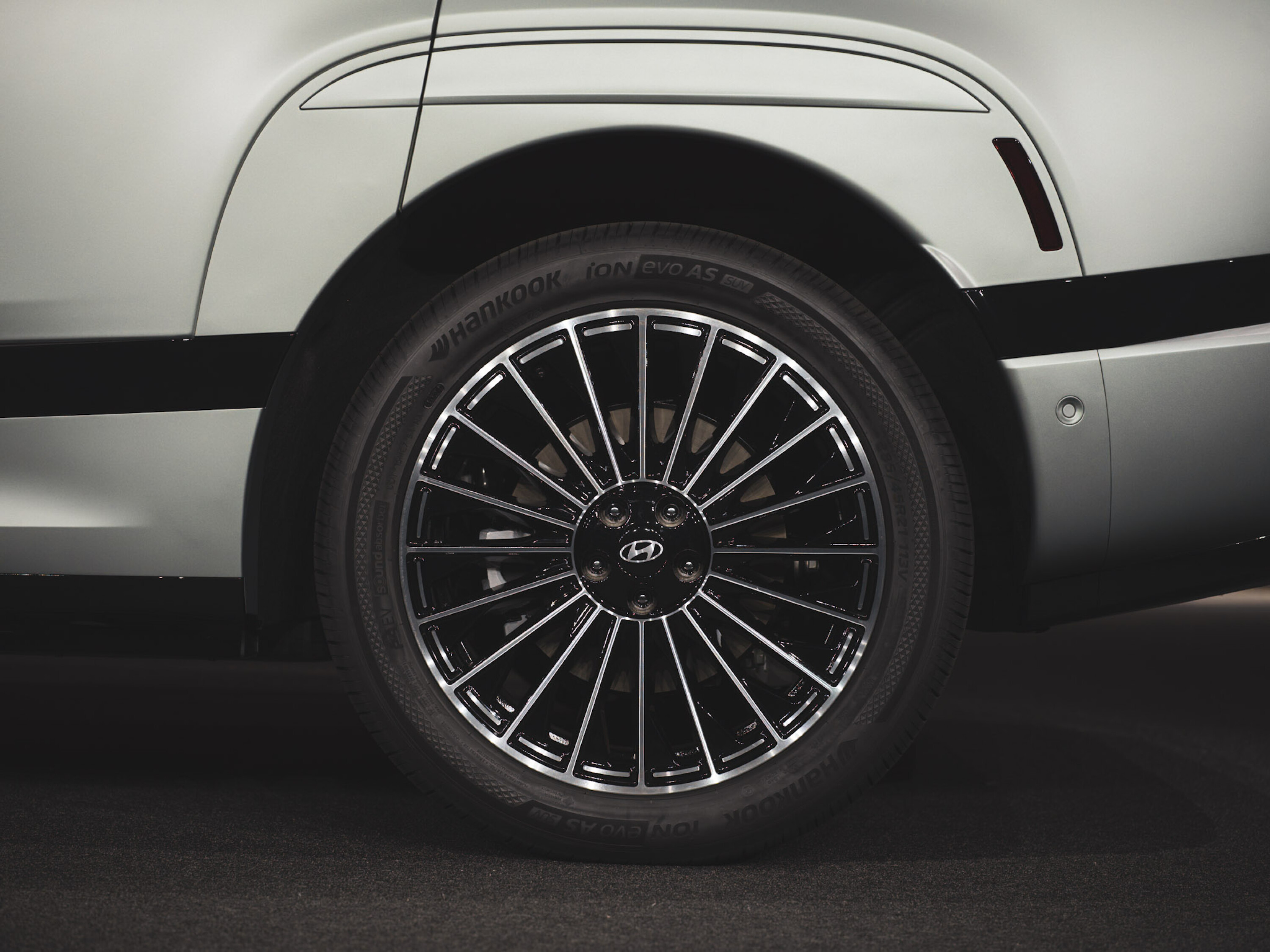
Wheel options include standard-fit 19-inch items, 20-inch and 21-inch wheel options, and a top-of-the-line 21-inch Calligraphy design.
1
Power and range
The IONIQ 9’s high-voltage, floor-mounted NCM lithium-ion 110.3 kWh battery is expected to achieve an outstanding WLTP-estimated all-electric range of 620 km and WLTP-targeted energy consumption of 194 Wh/km for the Long-Range RWD model with 19-inch wheels.
IONIQ 9’s charging time from 10 to 80 percent in 24 minutes using a 350 kW charger, while the platform’s vehicle-to-load (V2L) signature convenience feature and 400V/800V multi- charging capability lower the barriers to EV adoption.
The Long-Range RWD model is powered by a 160 kW rear motor, the Long-Range AWD alternative features an additional 70 kW front motor, while the Performance AWD models include 160 kW motors at both the front and rear.
1
The Performance model 19 can accelerate from 0 to 100 km/h in just 5.2 seconds, while the Long- Range AWD variant 20 takes 6.7 seconds, and the Long-Range RWD version 21 takes 9.4 seconds.
Hyundai says it has addressed common EV customer concerns with technology-related improvements such as a refined EV Route Planner, enhanced torque control display, a comprehensive energy report feature and other smart improvements.
The model features Hyundai AI Assistant, an AI-enabled voice recognition system similar to a home virtual assistant and activated by a button, to enhance the EV experience.
1
Safety features and drive assistance
IONIQ 9’s reinforced body structure is designed to prioritise battery safety by distributing collision energy and maintaining the SUV’s structural integrity.
Third-row seat belt pre-tensioners and load limiters improves the safety of passengers by preventing head impacts with the second-row seats and reducing head and neck injuries. IONIQ 9 is equipped with 10 airbags.
Hyundai’s latest Advanced Driver Assistance Systems (ADAS) are standard including Forward Collision-Avoidance Assist, Lane Keeping Assist, Blind-Spot Collision-Avoidance Assist, Safe Exit Warning, Safe Exit Assist, Rear Occupant Alert, Intelligent Speed Limit Assist, Driver Attention Warning, Blind-Spot View Monitor, High Beam Assist, Rear Cross-Traffic Collision-Avoidance Assist, Parking Distance Warning and more.
1
IONIQ 9’s likely roll-out
IONIQ 9 will go on sale in Korea and the United States in the first half of 2025, with subsequent rollout planned for Europe and other markets later.
IONIQ 9 will also offer enhanced convenience and design features as optional upgrades, with detailed specifications will be unveiled closer to specific market launches.
MORE
Everything Hyundai
Snapshot
- Mercedes-AMG G 63 will be priced at $368,400 and is available for Aussies to order from Wednesday, November 27 through Mercedes-AMG retailers.
- Optional packages will include AMG Performance Package $12,800; AMG Night Package II $4,000; AMG Carbon Fibre Package $17,700; Superior Line Interior Plus Package $14,200; MANFAKTUR Exterior Package $4,100; AMG ACTIVE RIDE CONTROL suspension $9,000; and AMG carbon fibre interior trim elements $7400.
- Overhauled cult off-roader gets new 4.0-litre bi-turbo V8 engine boosted by a 48-volt electrical system for more responsive acceleration.
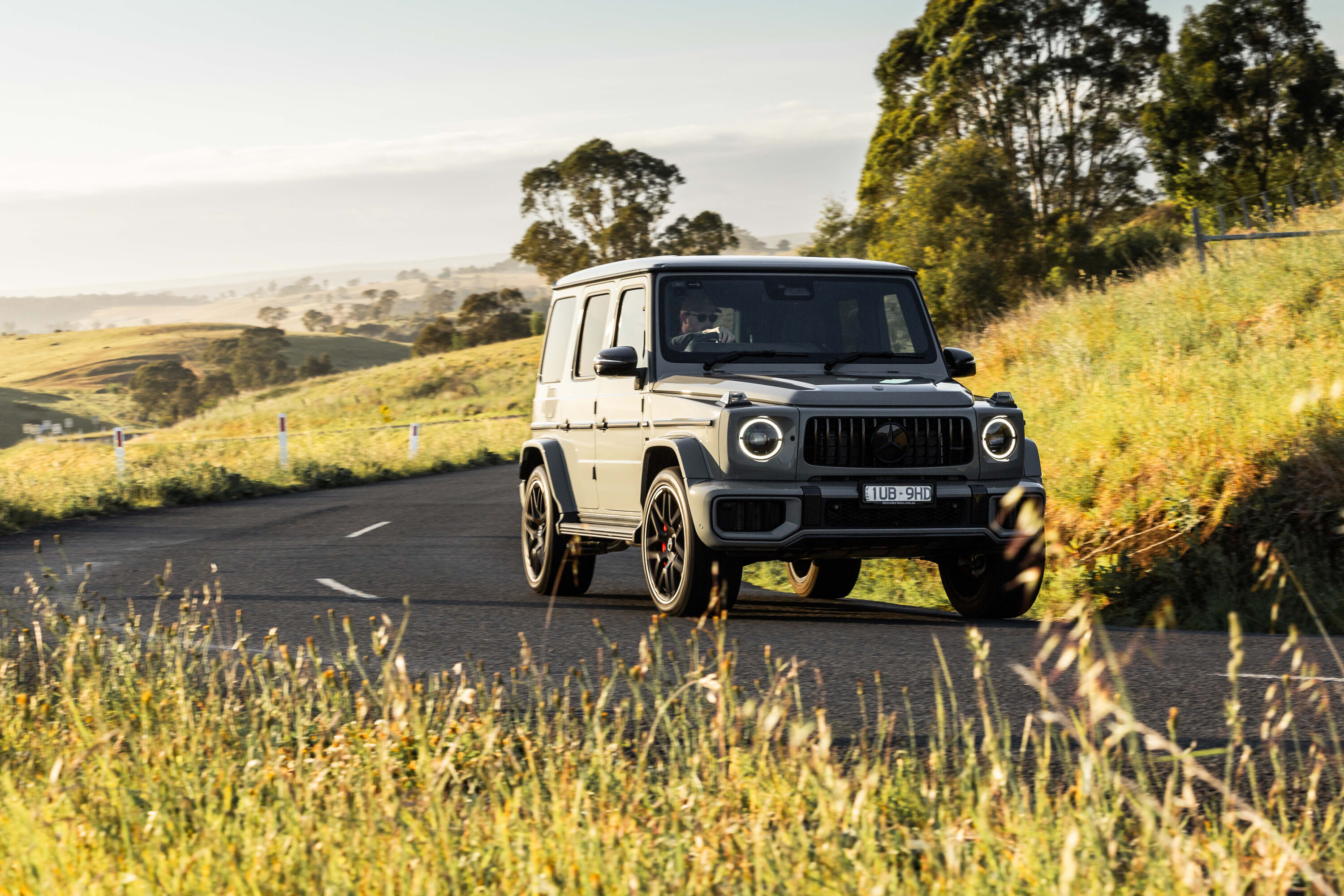
Mercedes-Benz Australia has announced Australian pricing for the much-anticipated update to its famous G-class wagon, the Mercedes-AMG G 63.
The refreshed off-roader has been given the full AMG performance treatment with the addition of a 4.0-litre bi-turbo V8 engine boosted by a 48-volt electrical system for serious acceleration for a vehicle this size.
The Mercedes-AMG G 63 is priced at $368,400 (excluding on-road costs and dealer delivery) and is available for Aussies to order from Wednesday, November 27 through Mercedes-AMG retailers.
A number of optional packages will be offered along with personalisation options for wheel, paint, upholstery and trim choices. Optional packages include:
| 2025 Mercedes-AMG G 63 options | |
|---|---|
| AMG Performance Package | $12,800 |
| AMG Night Package II | $4,000 |
| AMG Carbon Fibre Package | $17,700 |
| Superior Line Interior Plus Package | $14,200 |
| MANFAKTUR Exterior Package | $4,100 |
| AMG ACTIVE RIDE CONTROL suspension | $9,000 |
| AMG carbon fibre interior trim elements | $7400 |
1
Key new features
First introduced in 1979, the Geländewagen, or G-Class, has become a cult vehicle within the Mercedes-Benz line-up, standing out because of its unique shape and styling, its off-road capability and all-round toughness.
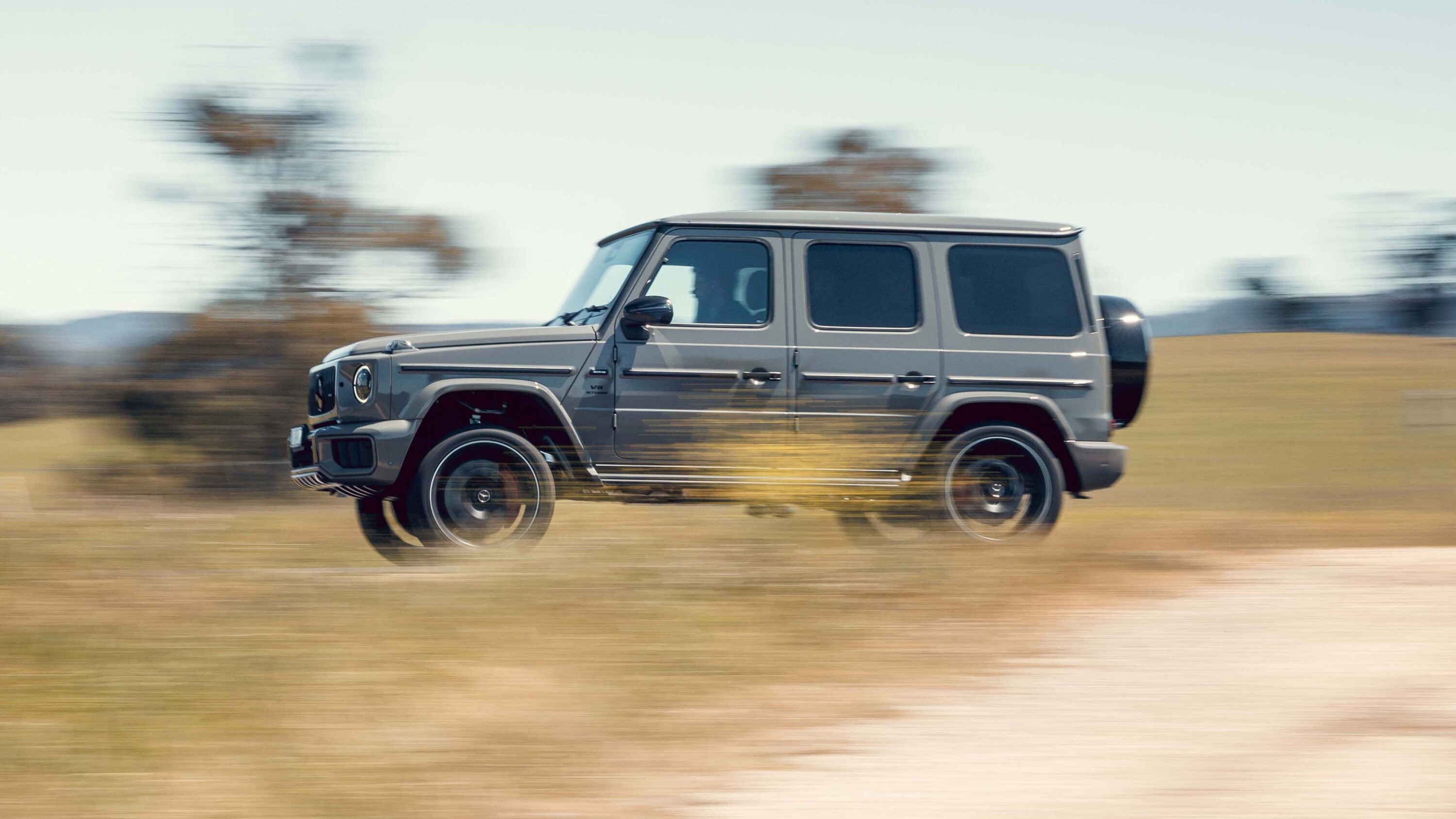
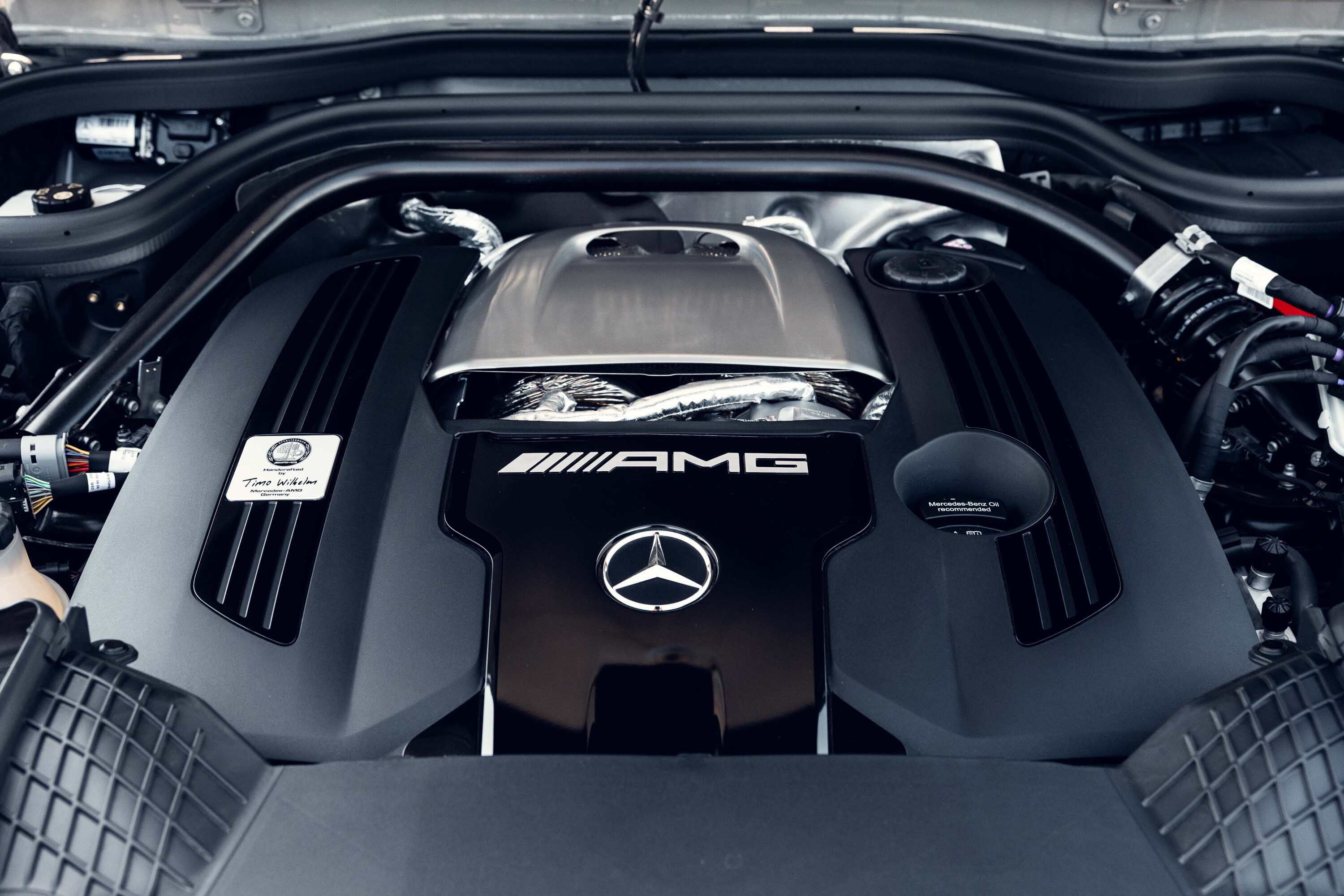
The new, overhauled version is distinguished by its 4.0-litre bi-turbo V8 engine producing 430 kW of power and 850 Nm of torque, and boosted by an Integrated Starter Generator with a 48-volt electrical system adding 15 kW and 200 Nm.
This combo allows the Mercedes-AMG G 63 to do the 0-100 km/h in 4.4 seconds. Activate the RACE START function as part of the optional AMG Performance Package and that figure drops back to 4.3 seconds.
1
The brand’s MBUX multimedia system is also introduced to the G-Class, including navigation with augmented reality plus touchscreen or touchpad control over many of the vehicle’s functions and settings.
AMG RIDE CONTROL suspension is standard on the Mercedes-AMG G 63, providing adaptive adjustable damping at each wheel based on the driving style, road conditions and the selected suspension level.
An upgrade to the vehicle’s active hydraulic stabilisers is optional with the AMG Performance Package to deliver rapid compensation for body roll – useful for extra stability both on and off road.

1
Updated exterior styling
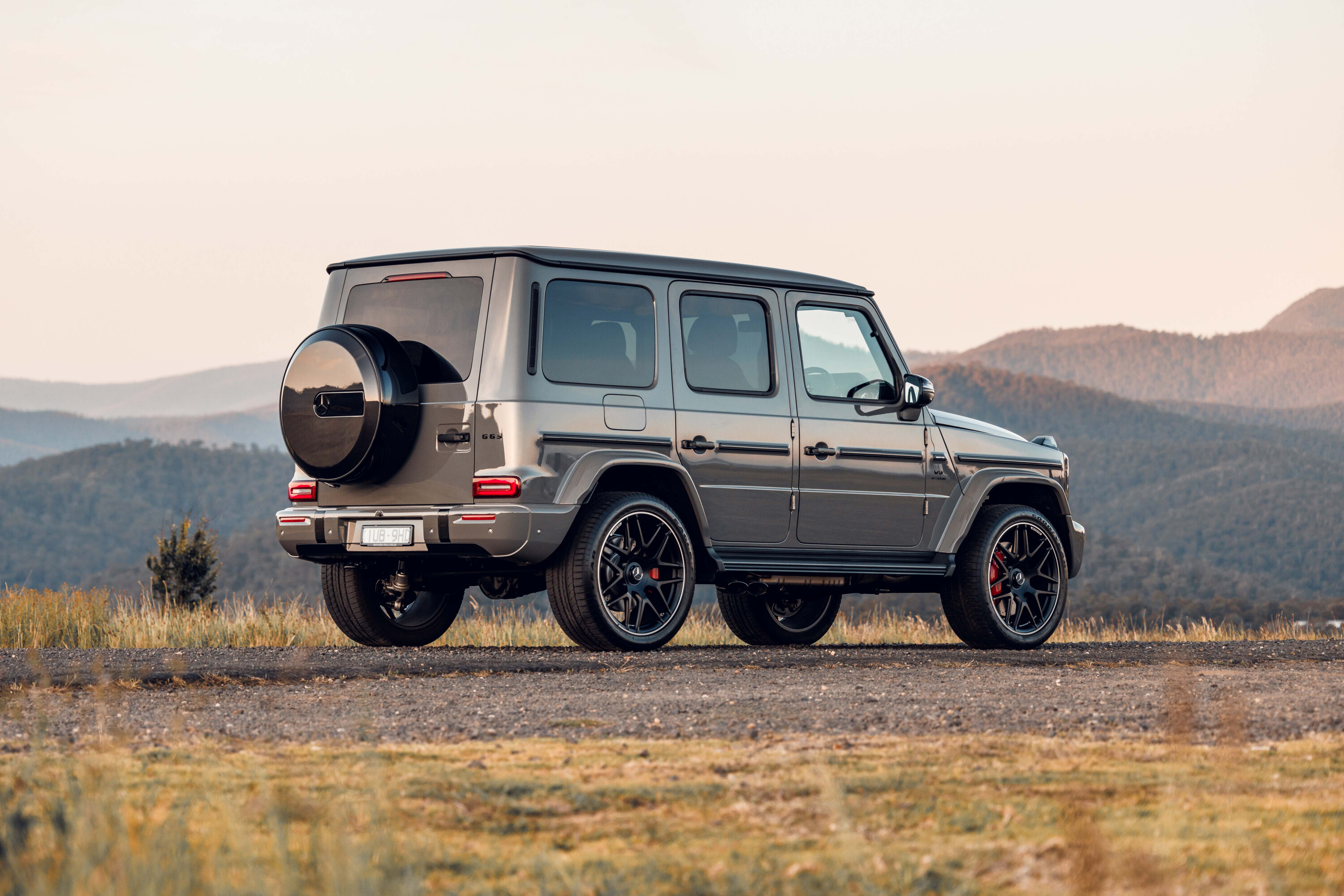
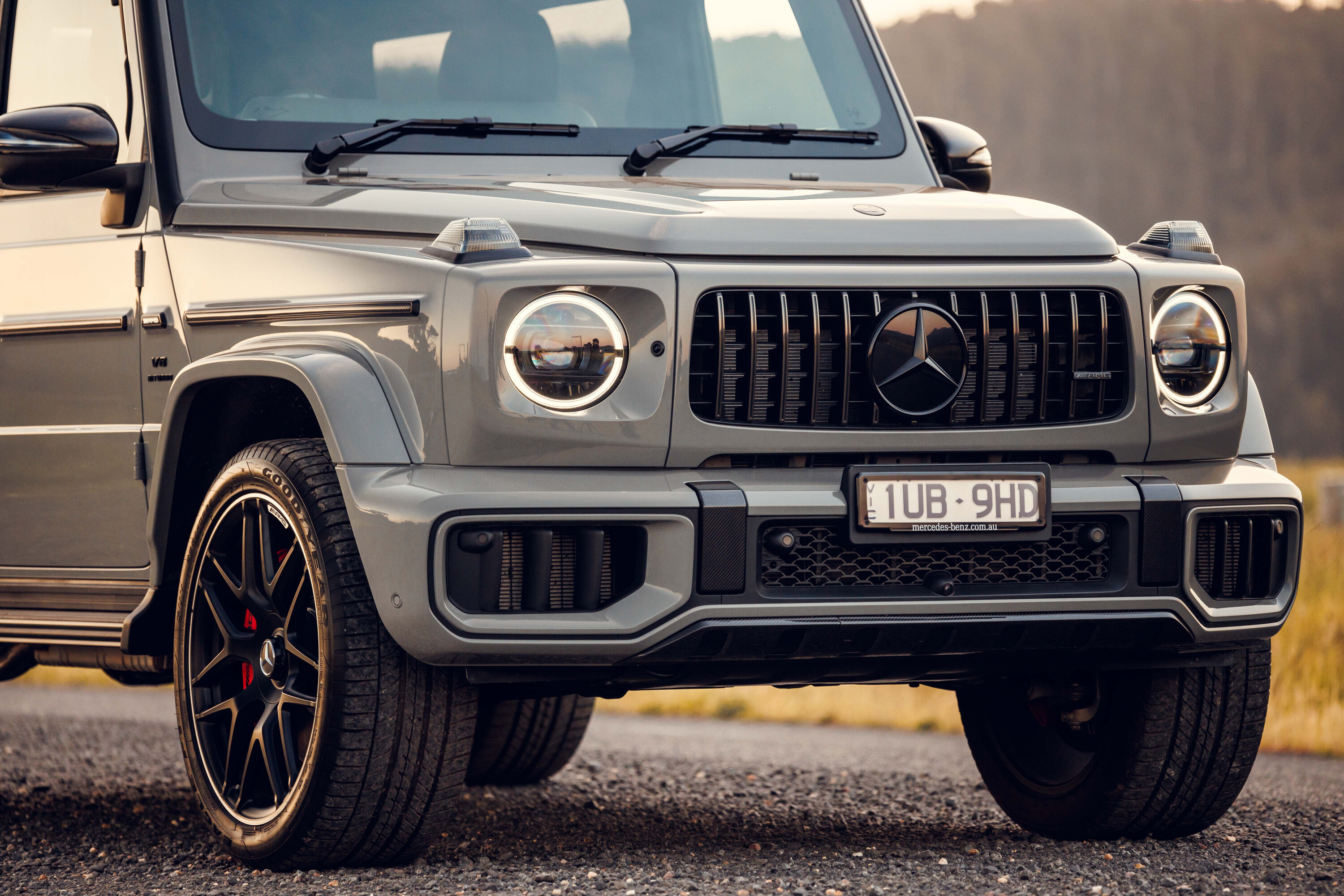
In a nod to its heritage, the famous G-Class profile has been retained but improved, with new air intakes on the front bumper set with three vertical louvres, a new badge bearing the AMG crest sitting prominently on the bonnet, new cladding on the A-pillar, a small spoiler lip on the roof edge at the rear, and a silver-chrome fuel filler cap clad with the AMG logo.
The AMG Night Package is standard, adding a radiator shell finished in dark chrome, darkened bumper inserts, mirror housings, simulated underguard, headlight units and exterior trim strips (an optional Night Package II adds darkened versions of the side-mounted twin tips for the AMG exhaust system, side running boards, black door handles, badges and typography).
AMG-specific 22-inch cross-spoke forged alloys in a matt black finish with a high-sheen rim are also standard, with brake callipers painted in red or painted black as a no-cost option.
1
Upscaled interior with new technology
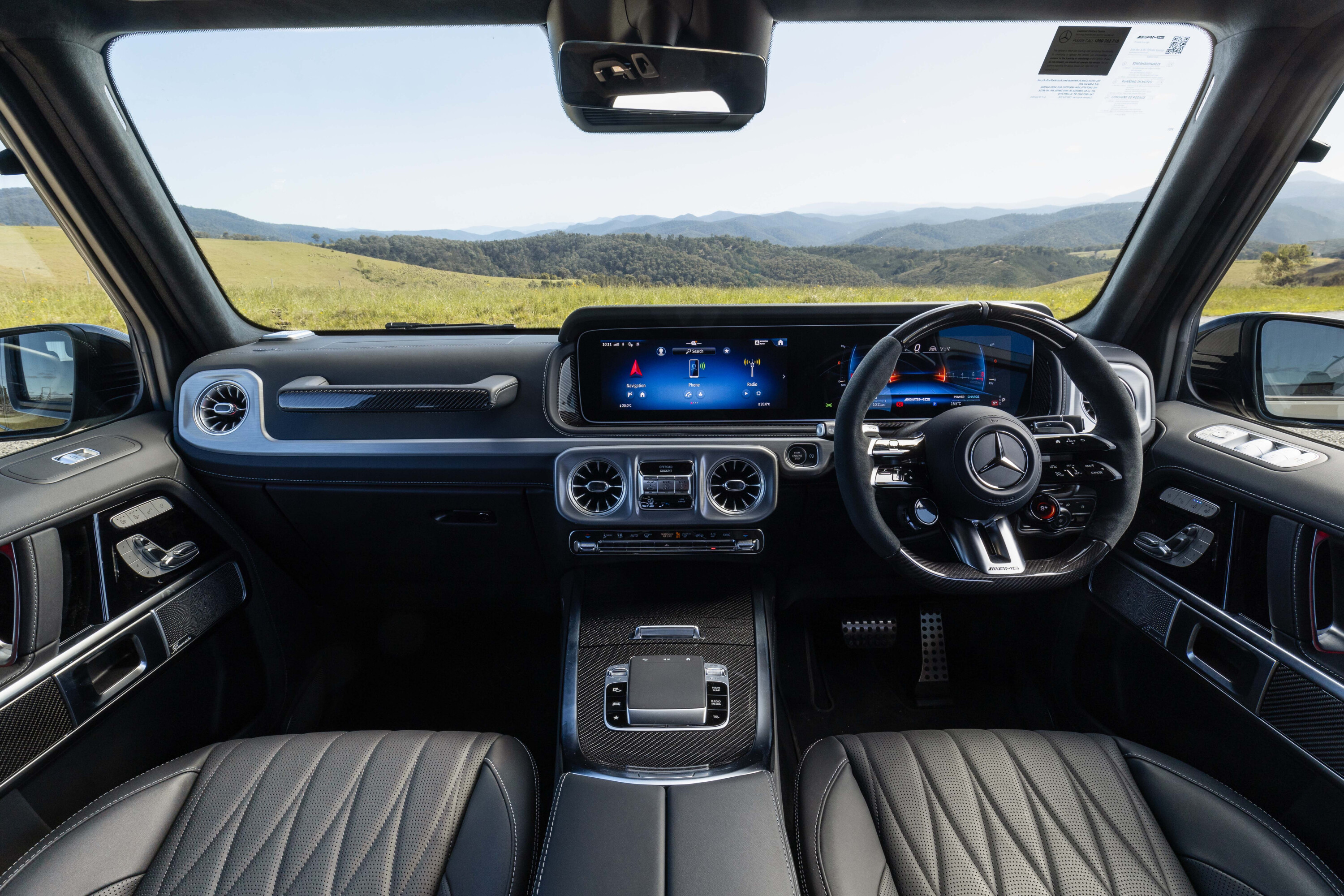
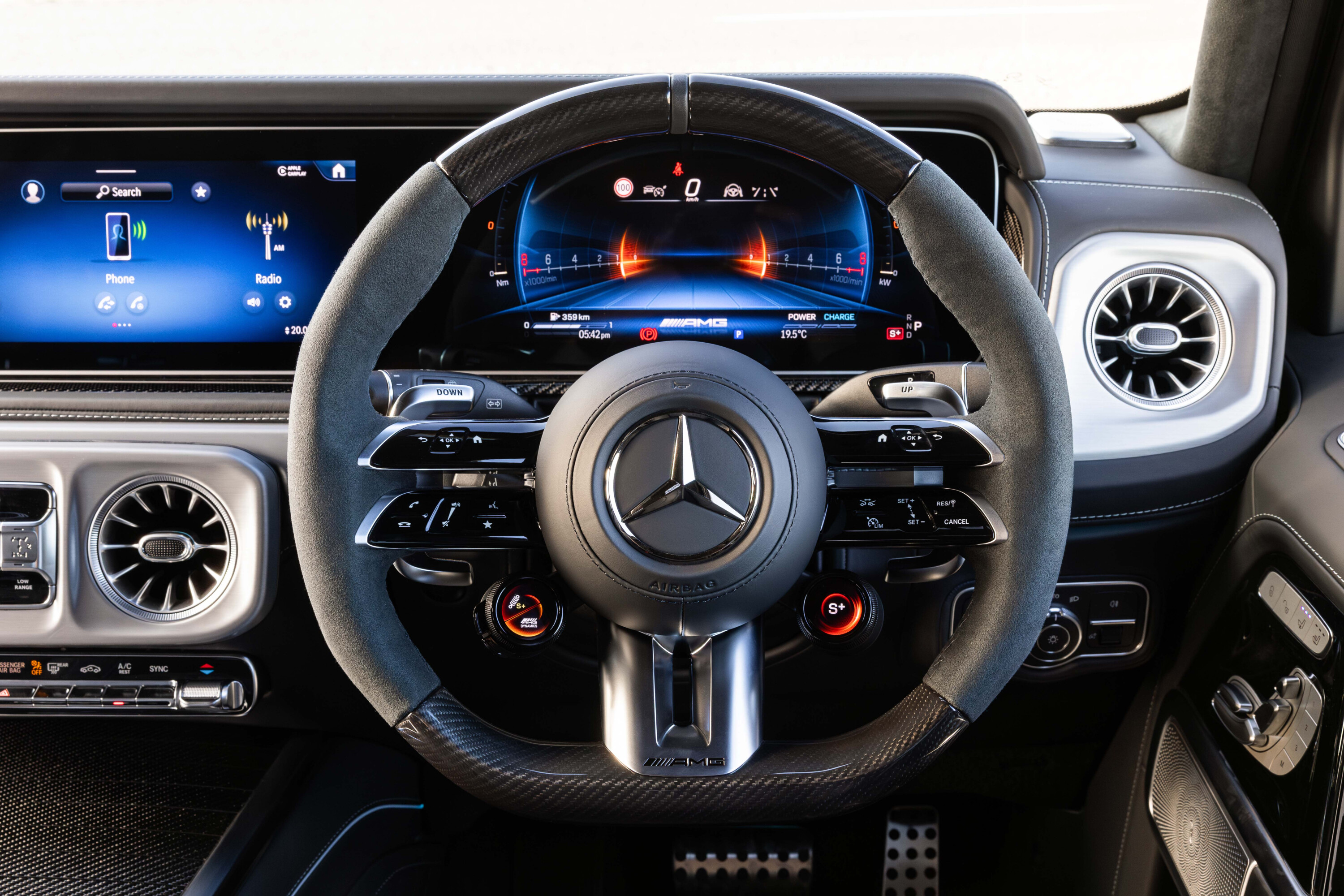
At the heart of its renovated interior is the brand’s MBUX multimedia system featuring augmented reality sat-nav utilising a forward-facing camera to picture the road ahead, overlaid with graphics.
The system also offers AMG-specific graphics, accessed via the central touchscreen, a touchpad in the centre console, or a haptic controller mounted on the steering wheel, delivering visualisation of the driving programs or telemetry data.
The system’s widescreen display can also be personalised by the driver -Supersport, for example, generates a central tachometer in the driver’s screen with horizontal displays to the left and right, creating a spatial impression of depth.
For those who decide to test the Mercedes-AMG G 63 off-road, vehicle and driving information – engine and transmission temperatures, topographical data, geocoordinates and compass direction, for example – are generated as part of the Offroad Cockpit and accessed through a button in the centre console.
2
Based on this data, a driver can select the optimal driving mode in AMG DYNAMIC SELECT, which now includes five on-road and three off-road modes (ROCK, TRAIL and SAND) to modify engine, transmission, suspension and steering responses. Three stages of adaptive adjustable damping can also be separately selected.
An impressive addition is the new ‘Transparent Bonnet’ feature, also accessed via the MBUX system – inbuilt cameras create a virtual projection of the ground conditions directly beneath and in front of the vehicle for the driver, useful while navigating steep or unstable terrain but also potentially helpful in the urban jungle to avoid pesky bollards.
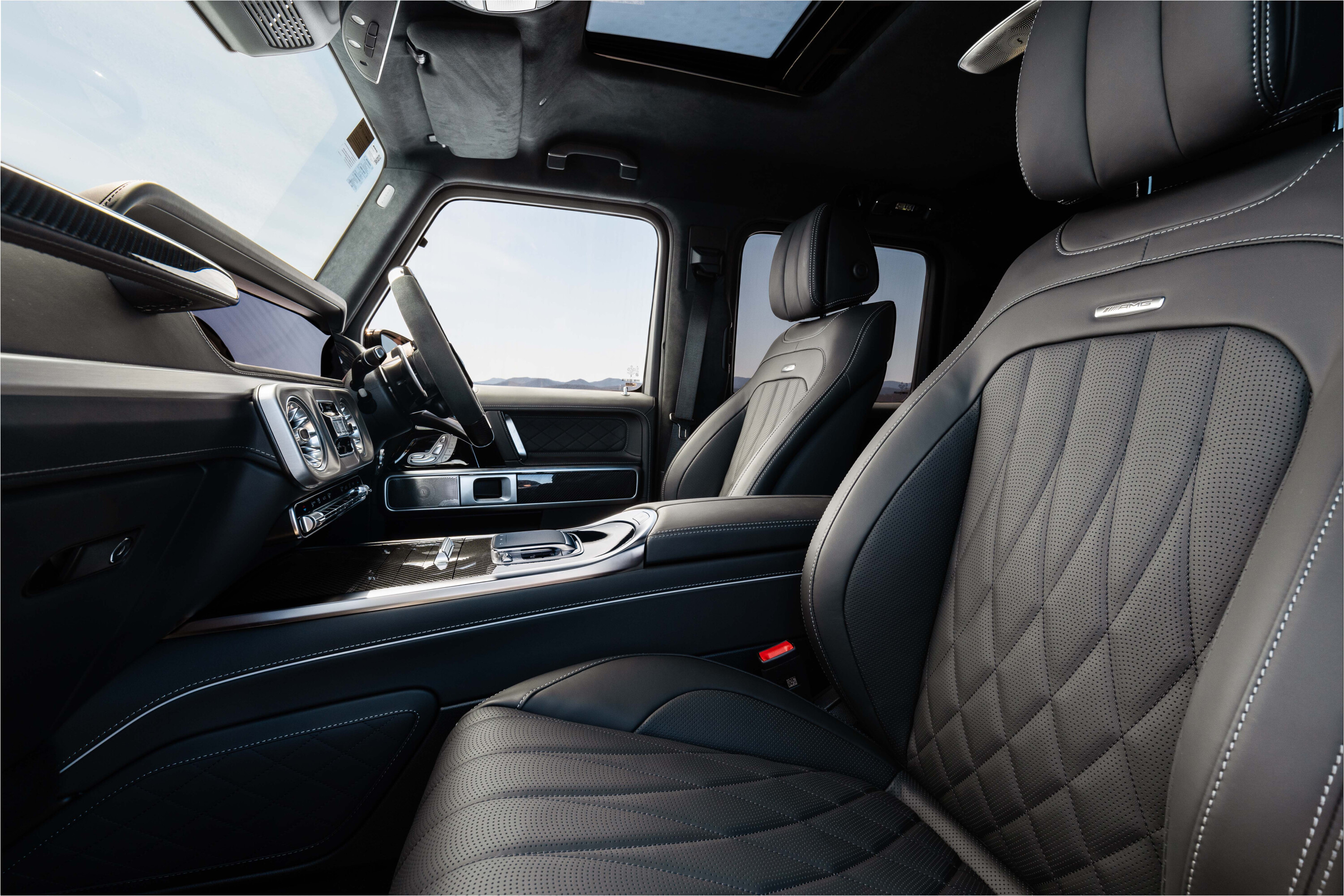
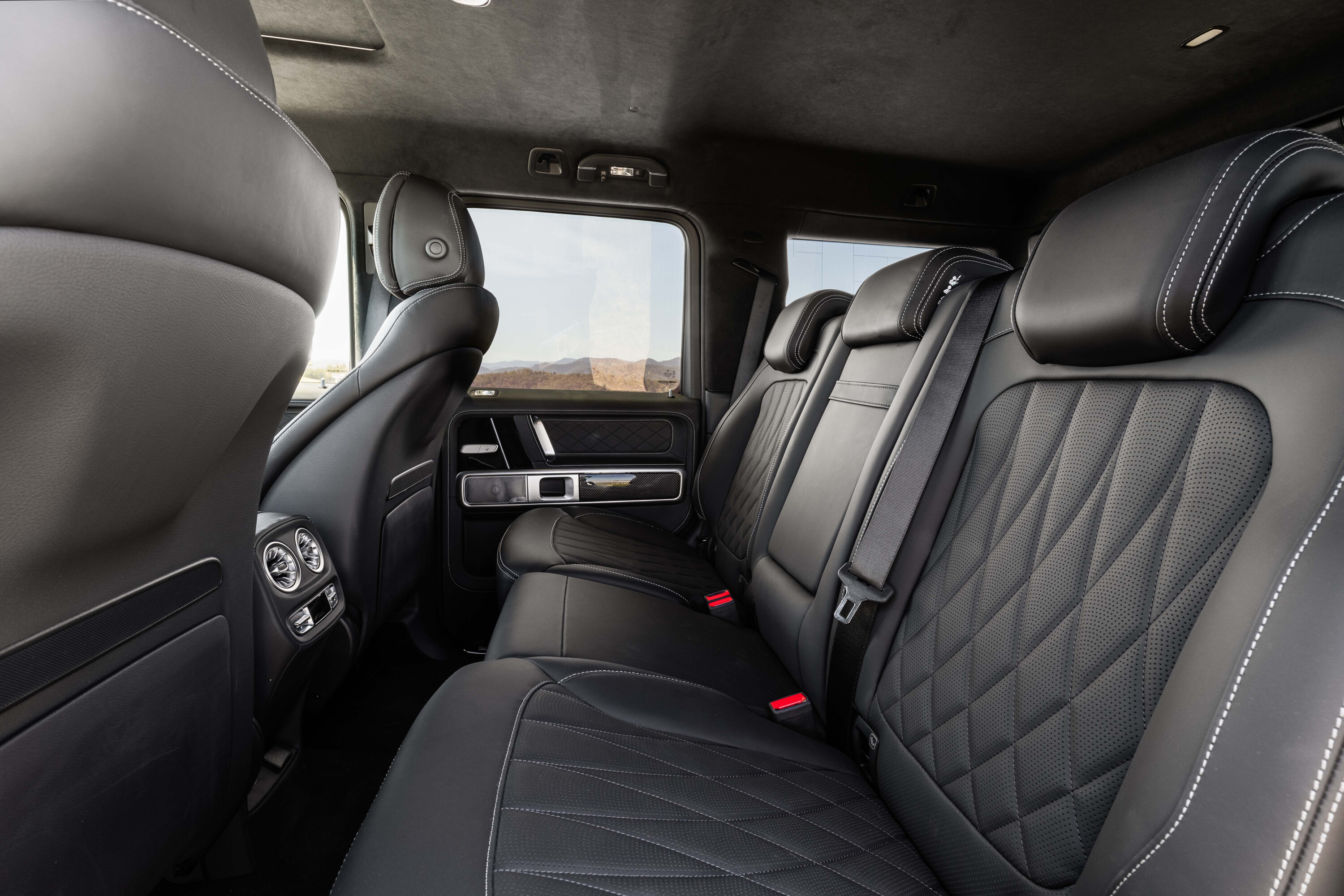
The standard Exclusive Line interior package also comprises sliding glass sunroof, 3D Burmester surround sound system, MICROCUT microfibre roof liner, cabin elements trimmed in MANUFAKTUR black flamed open pore ash wood and piano black lacquer, and AMG Performance steering wheel in Nappa leather.
1
Driver-assist technology
The G 63’s standard Technology Package includes Parking Package with a 360-degree camera and Driving Assistance Package with Blind Spot Assist, DISTRONIC active distance assist, and Active Steering Assist. PRE-SAFE accident preparation system and GUARD 360 Vehicle Protection Plus are also included.
1
Mercedes-AMG G 63 optional packages
| AMG Performance Package | |
|---|---|
| AMG Active Ride Control Suspension | Nappa leather and MICROCUT finish for the AMG Performance steering wheel |
| RACE START function for faster take-offs | 22-inch AMG forged wheels in techgold matt finish. |
| AMG TRACK PACE system | |
1
| AMG Night Package II |
|---|
| Dark-accented elements including side-mounted twin tips for the AMG exhaust system, the side running boards, badges and typography |
| Door handles in black with letter u2018Gu2019 inscribed on the button |
| AMG Carbon Fibre Package |
|---|
| Spare wheel cover at the rear |
| Simulated underguard at the front and rear |
| Carbon fibre insert for the AMG Performance steering wheel |
1
| Superior Line Interior Plus Package |
|---|
| Diamond design elements for the leather-clad seats |
| Active Multicontour Seat Package Plus |
| Nappa leather instrument panel, silver chrome air vents, and Ambient Lighting |
| MANFAKTUR Exterior Package |
|---|
| Choice of a metallic paint or MANUFAKTUR magno finish, plus roof, bumpers and flared wheel arches can correspondingly be finished in either obsidian black or night black magno. |
1
“The G-Class is an automotive icon, and the Mercedes-AMG G 63 has been the most popular model for many years,” said Michael Schiebe, Chairman of the Board of Management of Mercedes-AMG GmbH and Head of the Mercedes-Benz G-Class business unit.
“Our aim was therefore to make the enhanced performance even more tangible – both on and off-road. One of the ways we have achieved this is through improvements to the V8 engine and our new AMG suspension, which combines agility, driving dynamics and comfort. We are thus catering even more to our customers’ wishes. The new G 63 is more AMG than ever before.”
MORE
SUV Buyers Guide
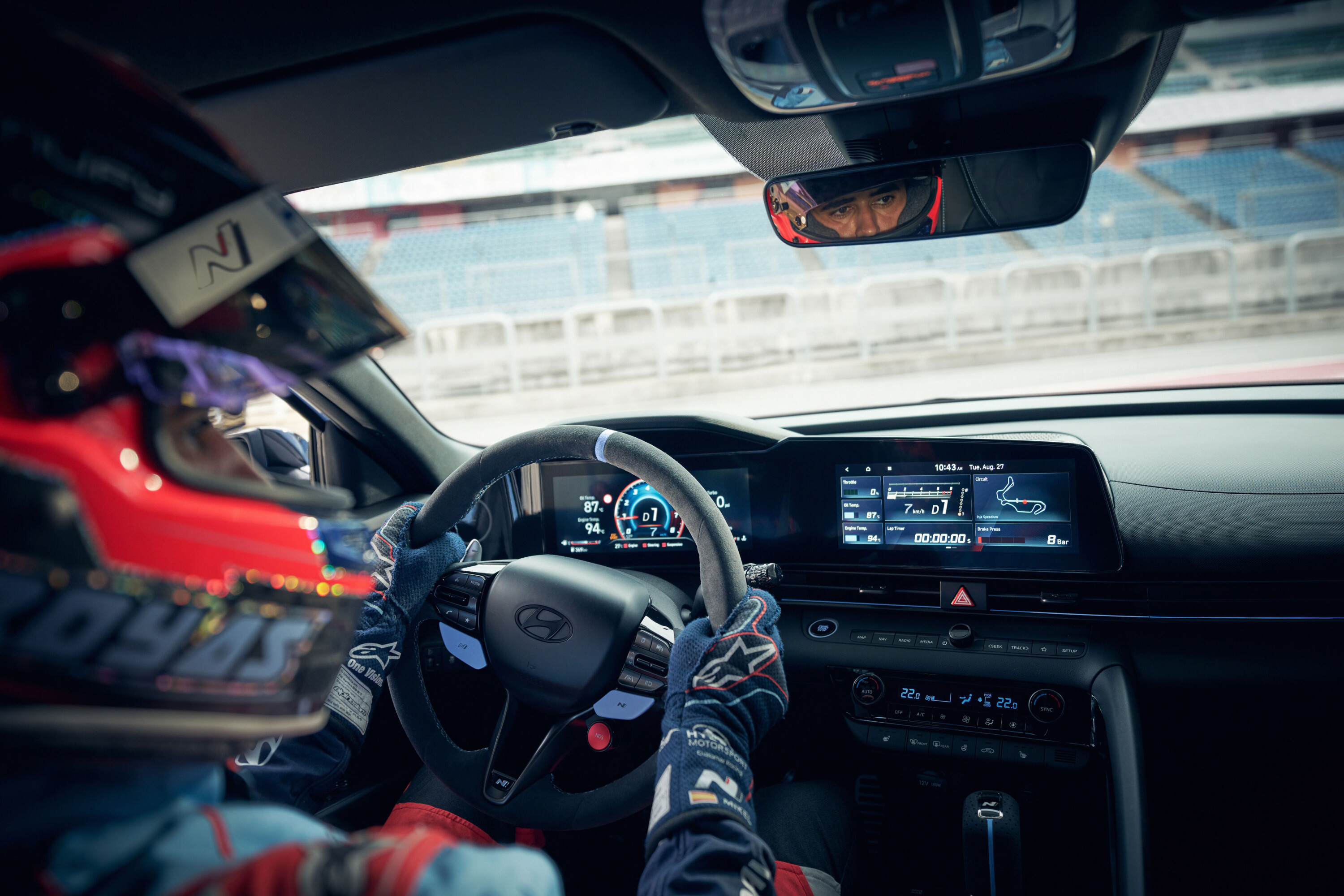
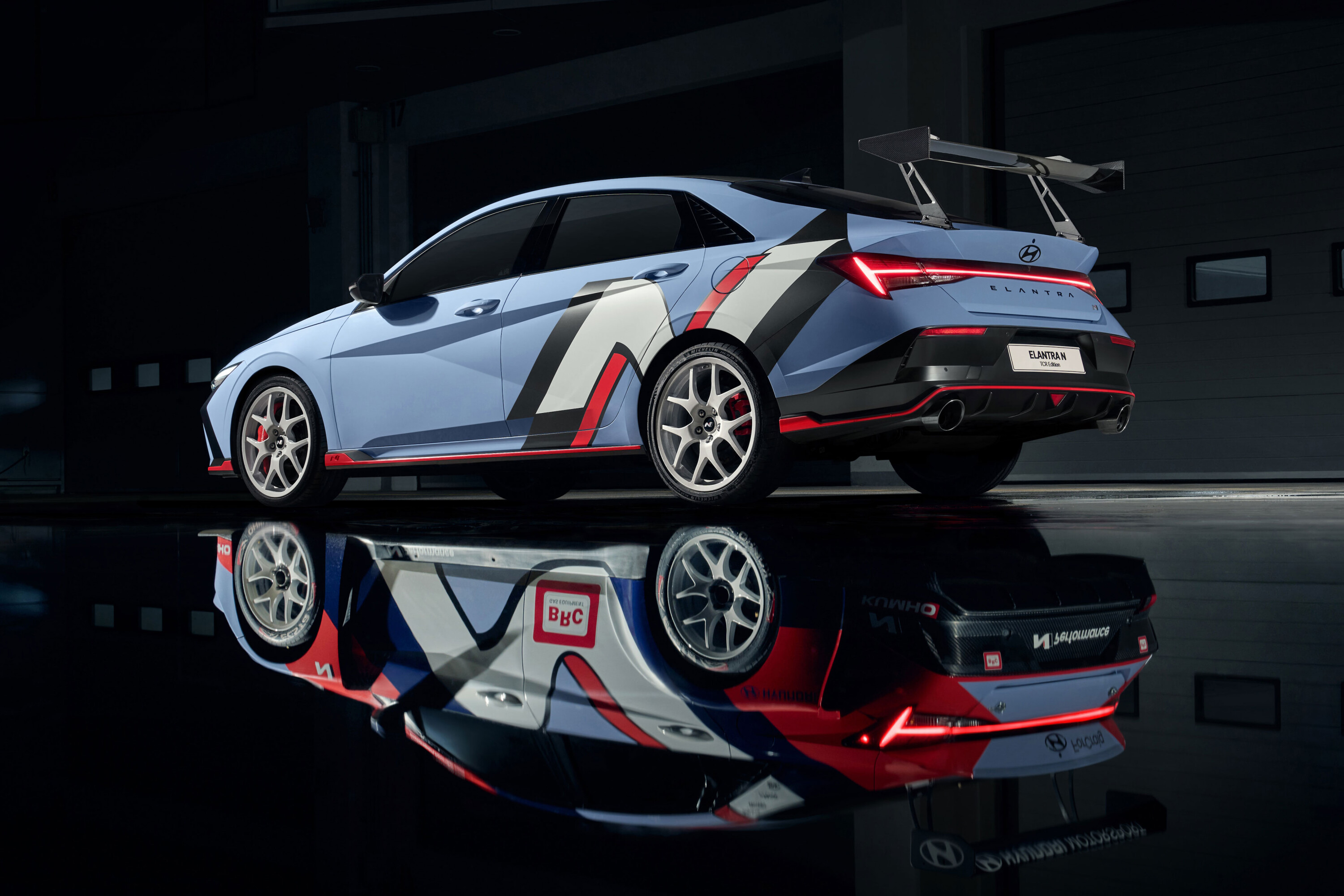
After joining the Touring Car Racing (TCR) World Tour for production-based vehicles in 2017, Korean maker Hyundai has honed its motorsport experience to reveal a special edition i30 Sedan N TCR Edition.
The high-performance sedan, which will launch in South Korea first this December before expanding to global markets during 2025, will sport new interior and exterior features inspired by Hyundai Motor’s TCR World Tour racers.
1
That inspiration includes a Carbon Swan Neck Spoiler, with adjustable downforce settings to suit driving conditions and preferences, as well as highly rigid, lightweight 19-inch N TCR forged wheels and N Performance four-piston, monoblock brakes as standard.
An Alcantara steering wheel with a Performance Blue top marker, Performance Blue seat belts and exclusive TCR Edition badging also reference its race cars. “Hyundai Motor has incorporated the experience and expertise accumulated in motorsports into i30 Sedan N TCR Edition,” said Joon Park, Vice President of N Brand Management Group.
“We will continue to enhance the DNA of Hyundai N, so that N-thusiasts can experience the thrill of motorsports in their daily lives.”
Hyundai has notched multiple race and championship victories since it started to compete in the TCR.
1
