
Toyota could soon crash the party for plug-in hybrids in Australia, with a high-ranking company exec revealing the brand is reevaluating its position on PHEV powertrains.
Toyota Australia has long been a pioneer of petrol-hybrid technology – it sells more hybrids here than any other brand – yet it currently doesn’t have a single plug-in offering across its broad product portfolio.
That could be about to change, however, with Toyota Australia’s vice president for sales and marketing, Sean Hanley, telling Wheels he thinks the potential for PHEVs is on the rise.
1
“I’m watching the market, not just for Toyota, I’m looking at it more broadly speaking and I think hybrid and plug-in hybrids in the next five years are going to come back into their own again,” he said. “I really do; I can see it a mile away.
“I’m even seeing it from other brands now that are suddenly bringing all these hybrids in, and plug-in hybrids. And all these stories about EV production being cut. I think there’s a bit of a correction happening.”
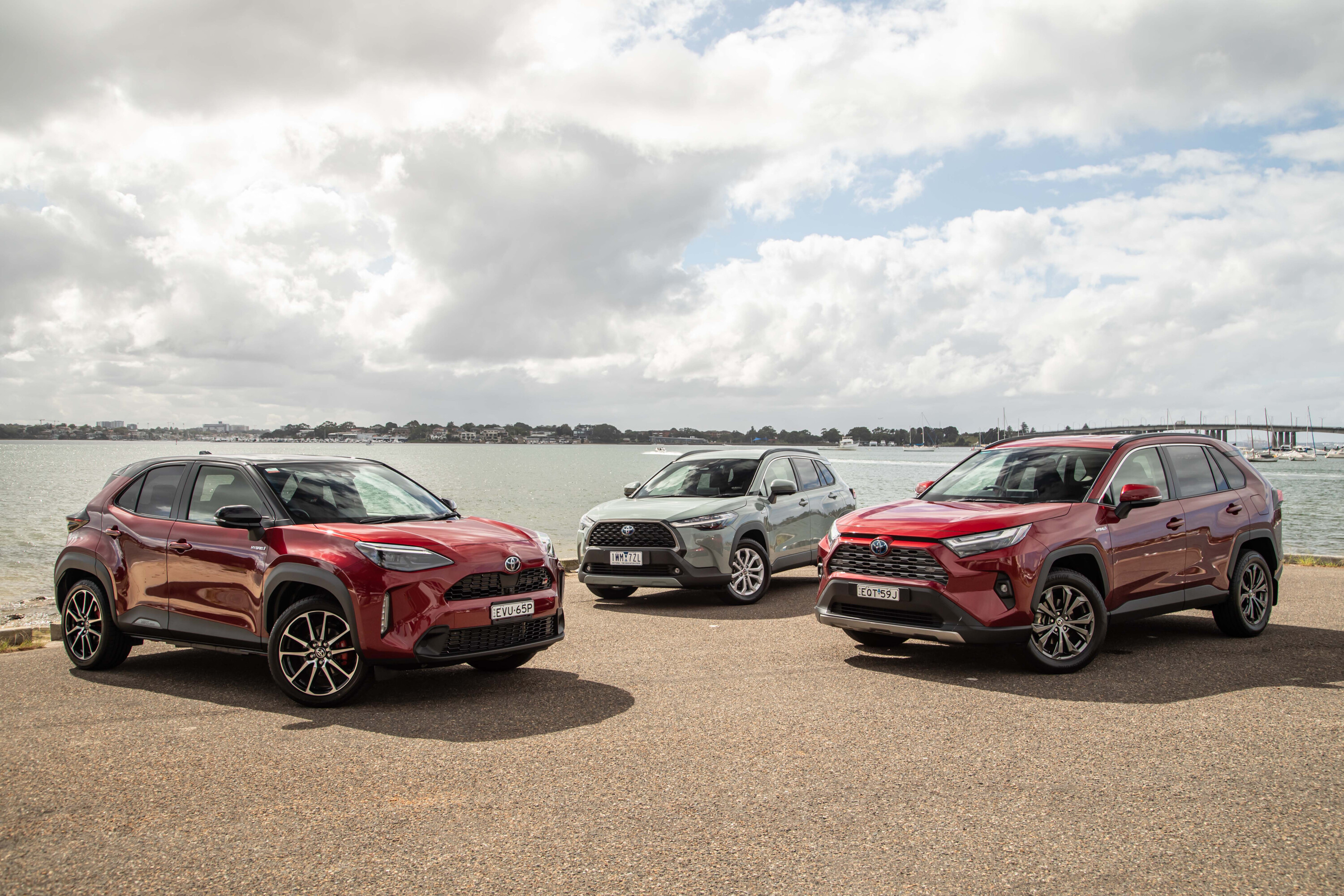
Hanley said the small-to-medium SUV segment — which includes the hugely popular Toyota RAV4 — is where he sees the most potential for PHEVs in Australia.
“Small SUVs, small-to-medium SUVs. Maybe RAV,” said Hanley.
Toyota currently only sells a small number of plug-in hybrids globally, though it does offer the RAV4 Prime in America which combines an 18.1kWh battery pack with a 2.5-litre petrol engine. It produces a combined output of 225kW, can travel 67km on electricity alone, and can hit 0-100km/h in 5.7 seconds.
When asked why Toyota was suddenly feeling more positive about PHEV powertrains, Hanley replied:
“I think the technology has moved on. I mean, if you had asked me five years ago, I might have said, I think plug-ins would be a difficult challenge at that time. I don’t hide from that comment because I think at that time, that was correct.
1
“But five years later, the technology’s moved on and it has accelerated. I think the technology’s moved on and I think [PHEVs] have something to offer.
“We believe we’re seeing a resurgence in hybrid and I think plug-in hybrids will be part of that. To what extent, I don’t know sitting here, but I think they’ll play a role and we should definitely be part of that given that we are the leaders in hybrid.”
As for when Toyota might add its first PHEV in Australia, Hanley suggested we could see one join the range in the next few years.
“Probably between 2025 and 2030,” he said, “because I’ve already made some pretty ambitious targets that 90 percent of our range will have some sort of electrification in the next couple of years.”
MORE
Everything Toyota
MORE
PHEV and Hybrid Cars
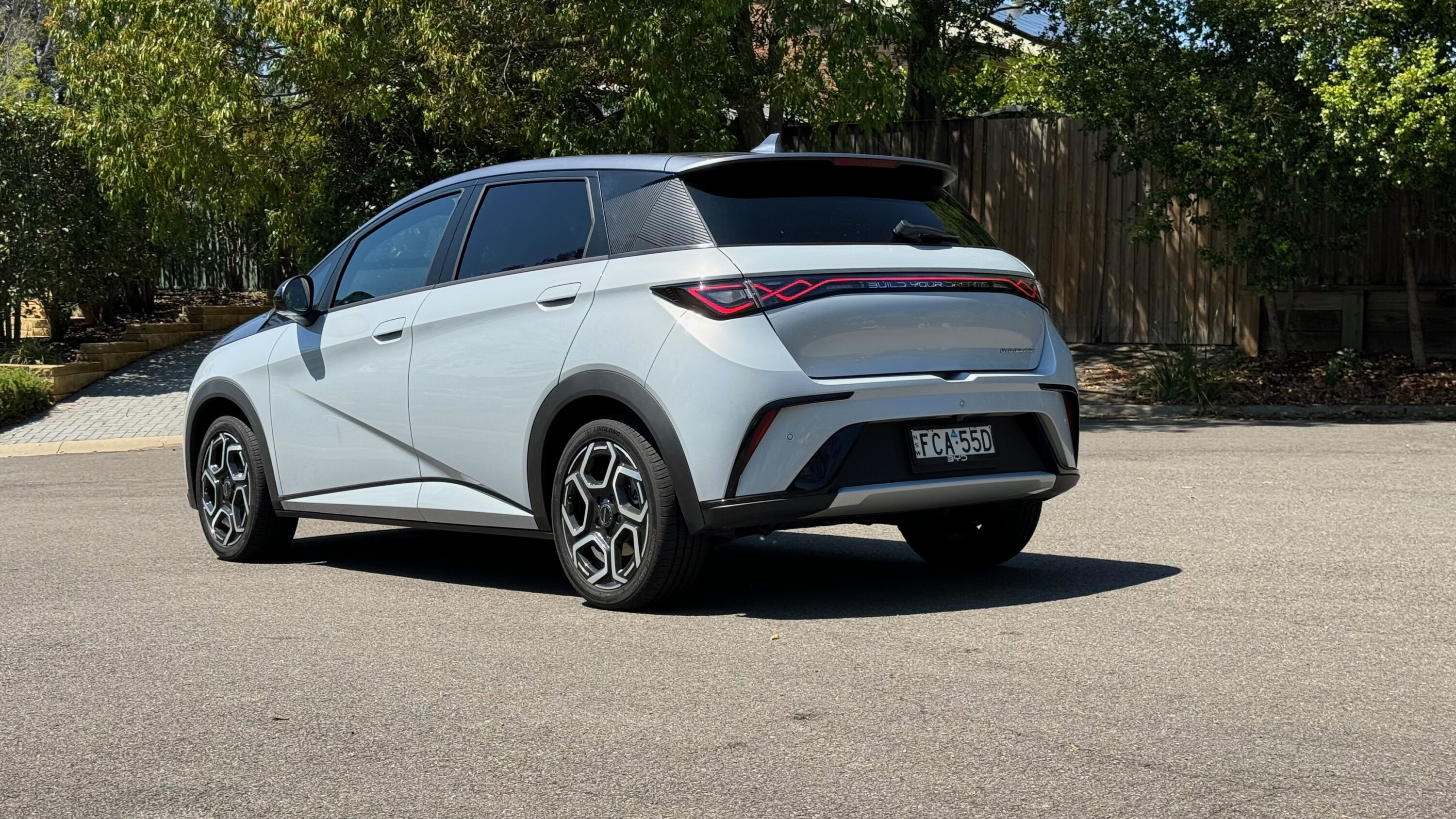
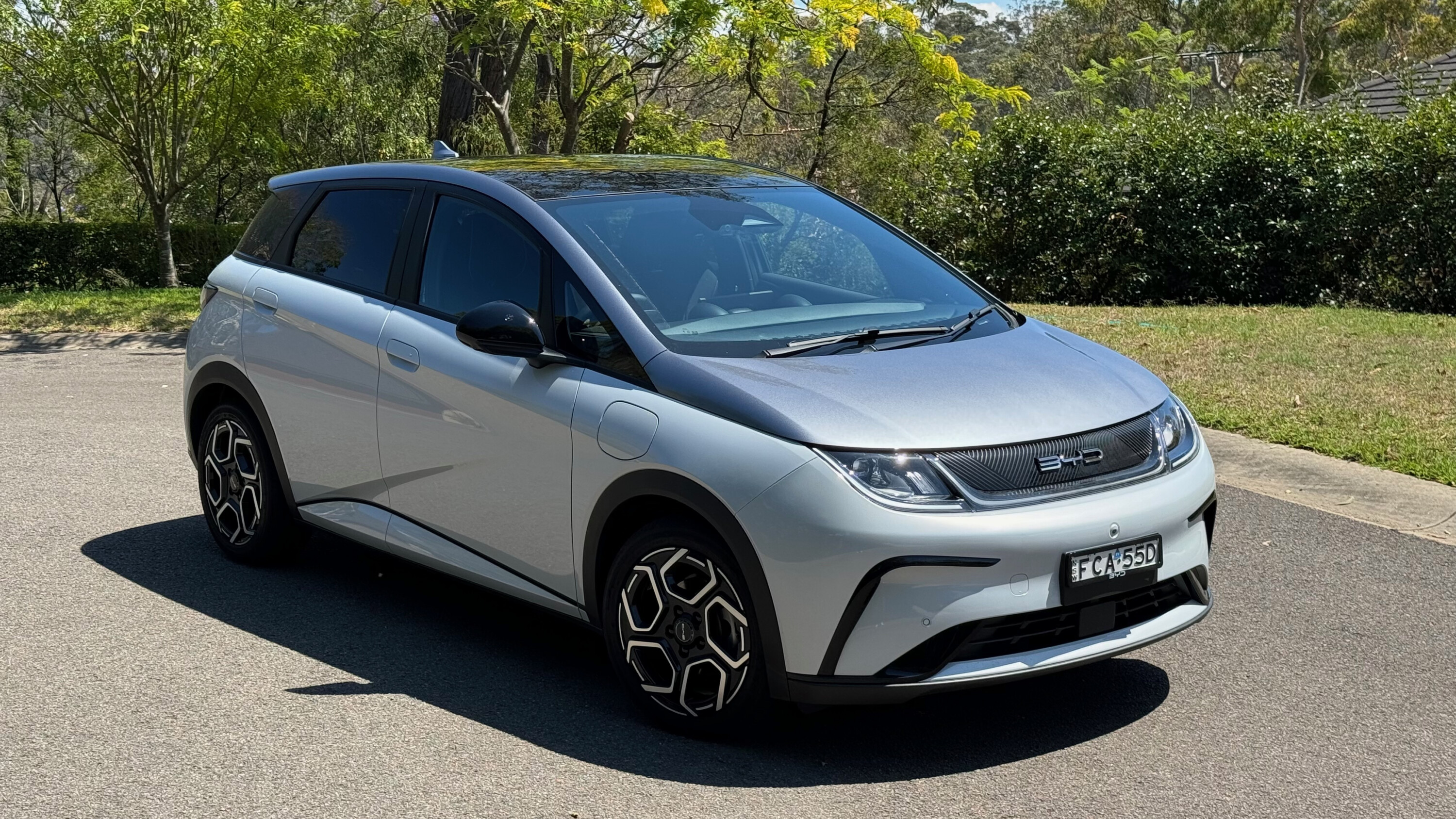
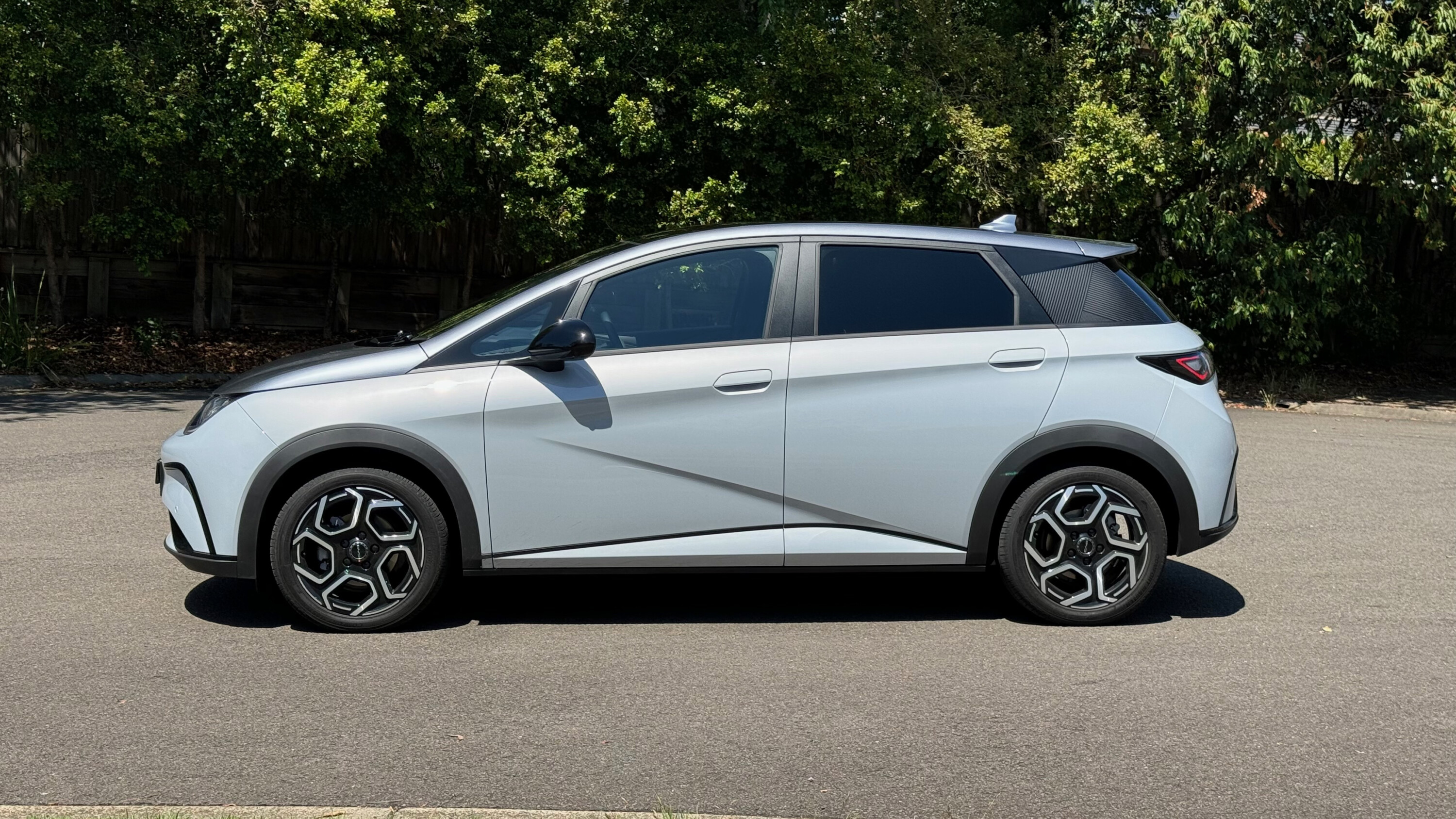
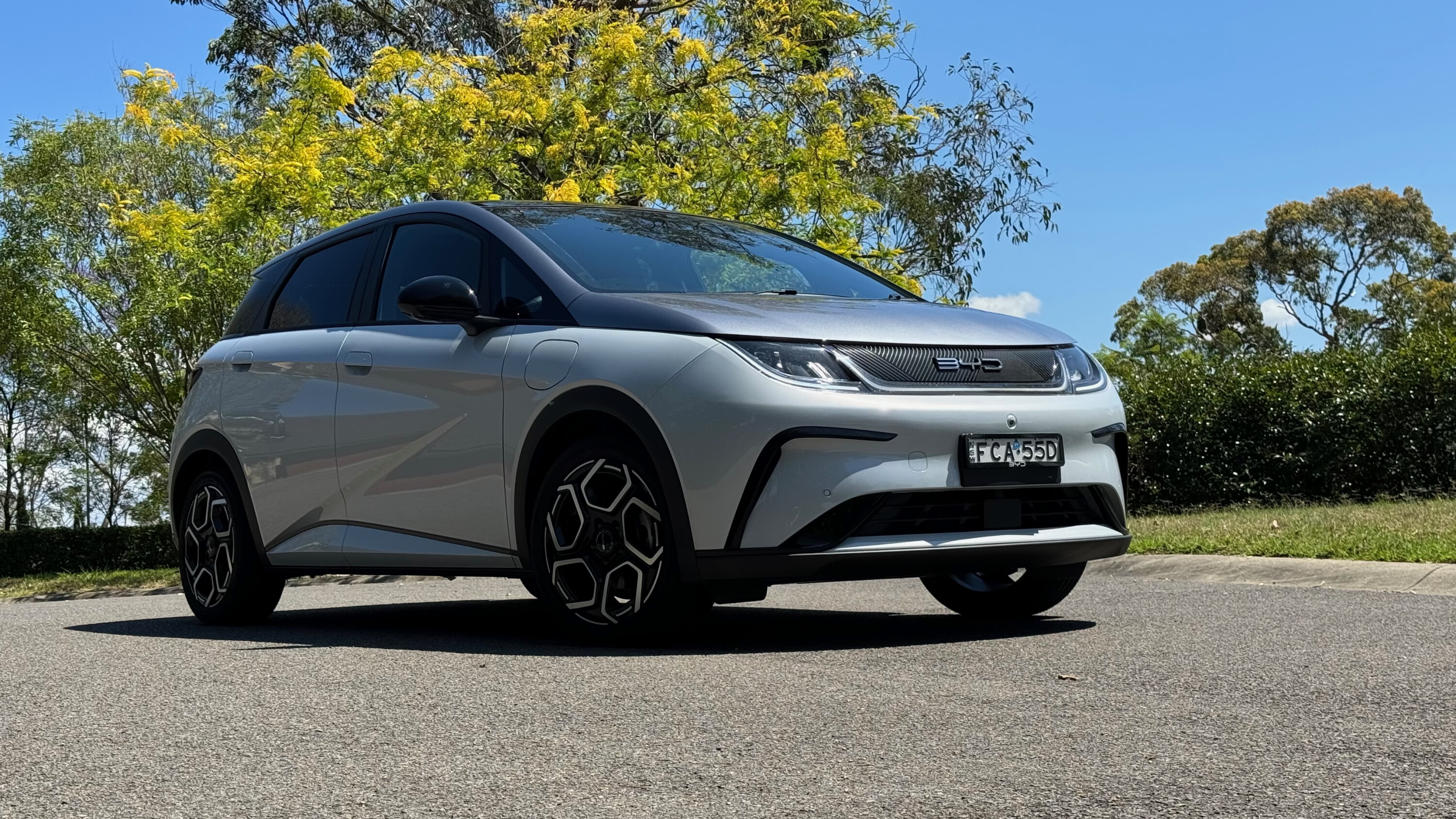
The most affordable electric car in Australia, the BYD Dolphin, is here – and it starts at just $38,890 plus on-roads.
That will get you into the lower-output, smaller-battery Dynamic model – which, with a 0-100km/h time of 12.3 seconds, sounds about as dynamic as a brisk walk to the toilet.
The more expensive Premium model tested here is the go for those who want a bit more range, a lot more poke, and a couple of extra features, too. And at $44,890 plus on-roads, it’s still very affordable for a compact EV.
1
JUMP AHEAD
Pricing and features
It might be cheap, but it’s also super well-equipped for the money.
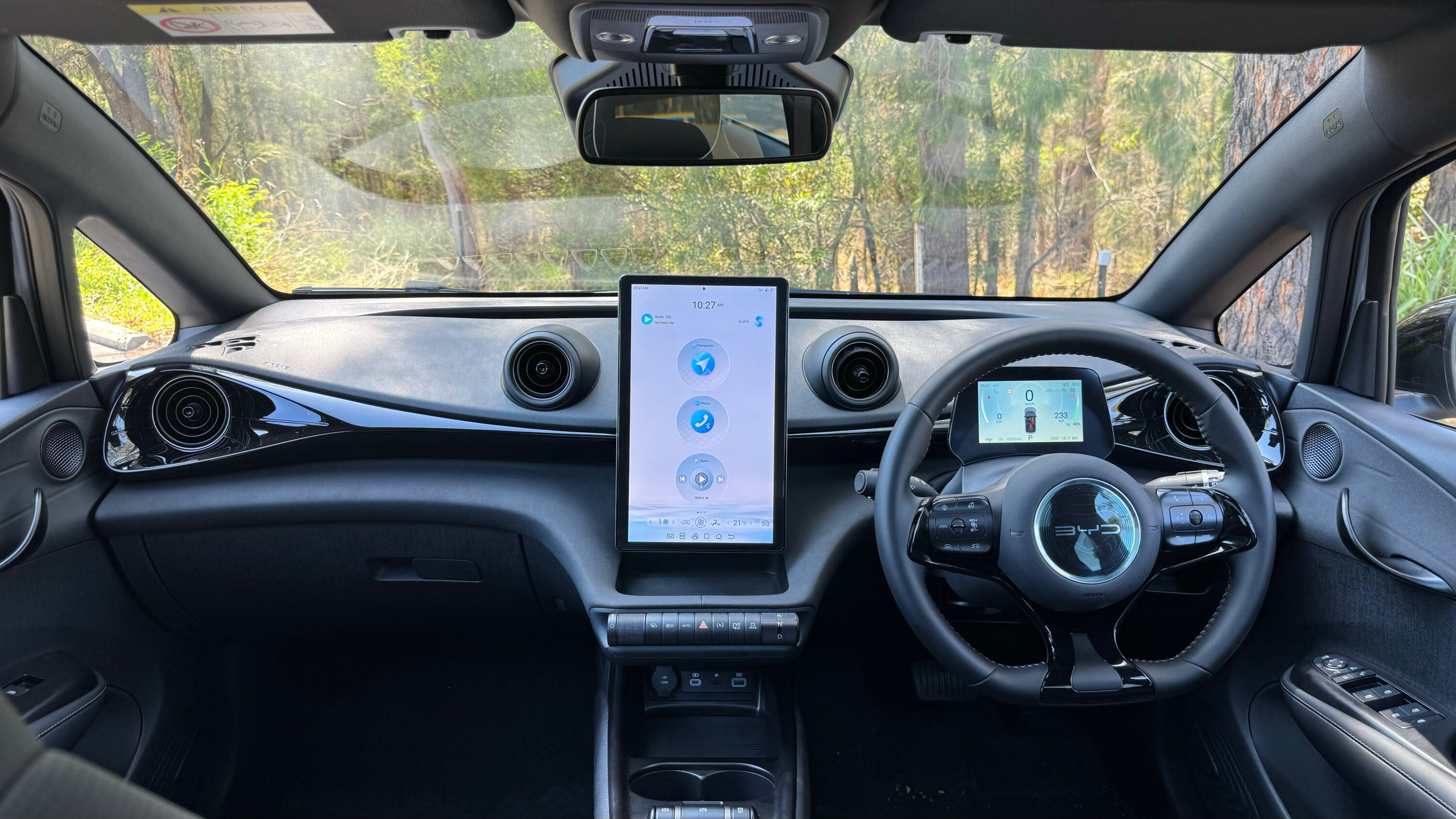
The entry-level Dynamic comes standard with 16-inch alloy wheels, LED headlights, LED daytime running lights, LED tail-lights, a panoramic glass roof, 12.8-inch rotating touchscreen infotainment system with wired Apple CarPlay, satellite navigation and digital radio, a six-speaker sound system, wireless phone charging, four USB ports, a 5.0-inch digital instrument cluster, power adjustable front seats with heating, fake leather trim, and keyless entry and start.
The Dynamic grade has a 44.9kWh battery pack, allowing it a WLTP-rated driving range of 340km, and a single electric motor at the front axle that produces 70kW and 180Nm.
1
Spend the extra $6000 for the Premium model and you get a few extra colour-coded bits and more paint choices, 17-inch alloy wheels and a different rear suspension package – multi-link rather than torsion – along with more grunt and range.
The Premium model upgrades to a 60.4kWh battery rated to 427km (WLTP), while the motor delivers 150kW and 310Nm – good for a 0-100km/h time of 7.0 seconds… a bit more like what you’d expect of an EV.
There’s AC charging at a maximum rate of 6.6kW, and DC charging varies between the grades – 60kW for the Dynamic, 80kW for the Premium.
1
Buyers get a six-year / 150,000km warranty, but there are some stipulations about certain components that’ll require a deep-dive into the fine print.
Battery warranty is an eight-year / 160,000km cover. Servicing intervals are 12 months / 20,000km, and there’s an eight-year capped-price plan for an average of $299 per visit.
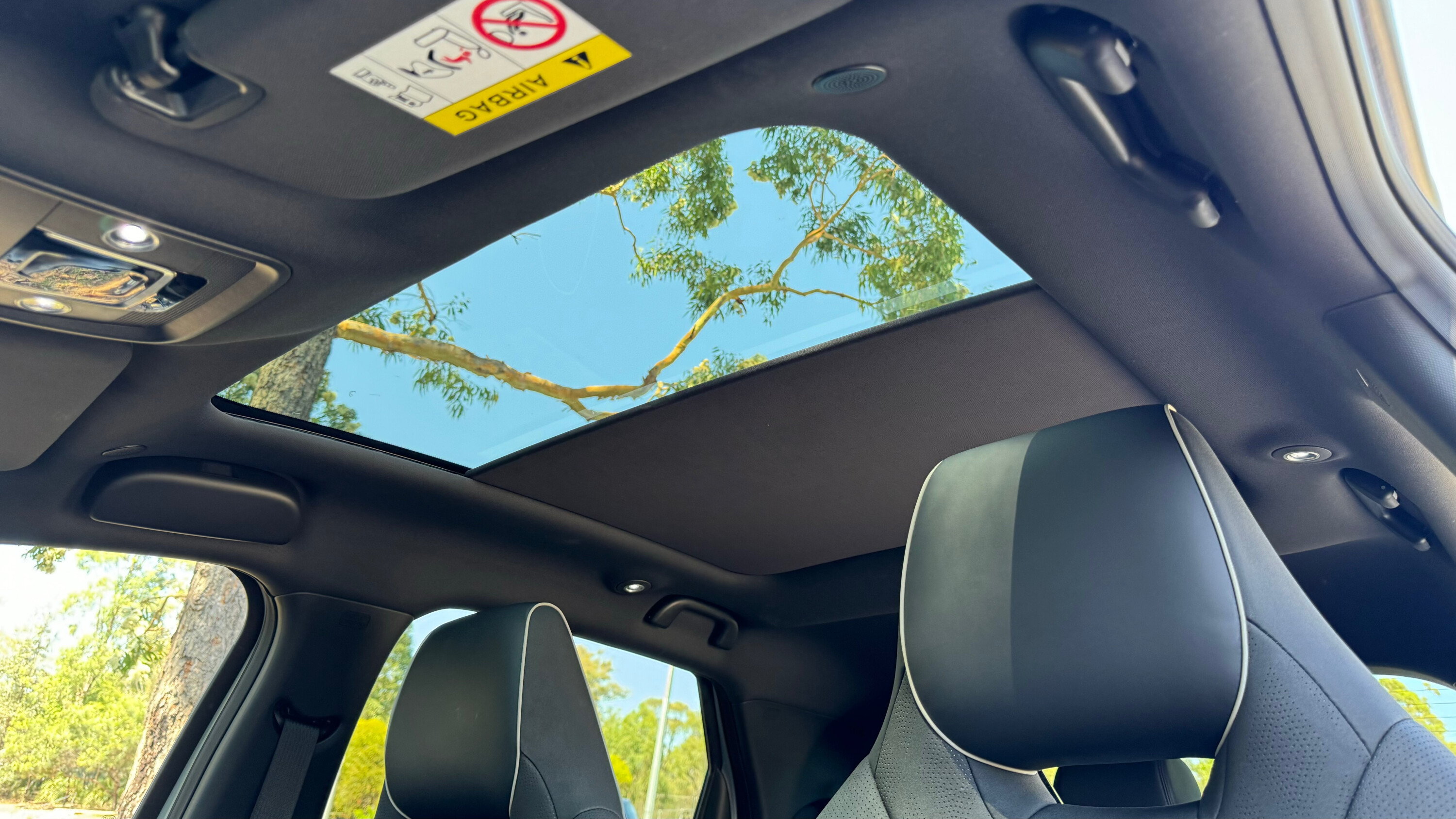
There’s no spare wheel, but you do get a decent 345-litre boot space, bigger than a GWM Ora (228L). Space in the cabin is decent, too, but a panoramic sunroof means taller rear-seat occupants suffer for headroom.
1
Safety
It may be affordable, but there haven’t been any corners cut on safety spec here.
The BYD Dolphin achieved the maximum five-star ANCAP safety rating against the strictest criteria to date (2023 date stamp), so it has all the gear you’d expect.
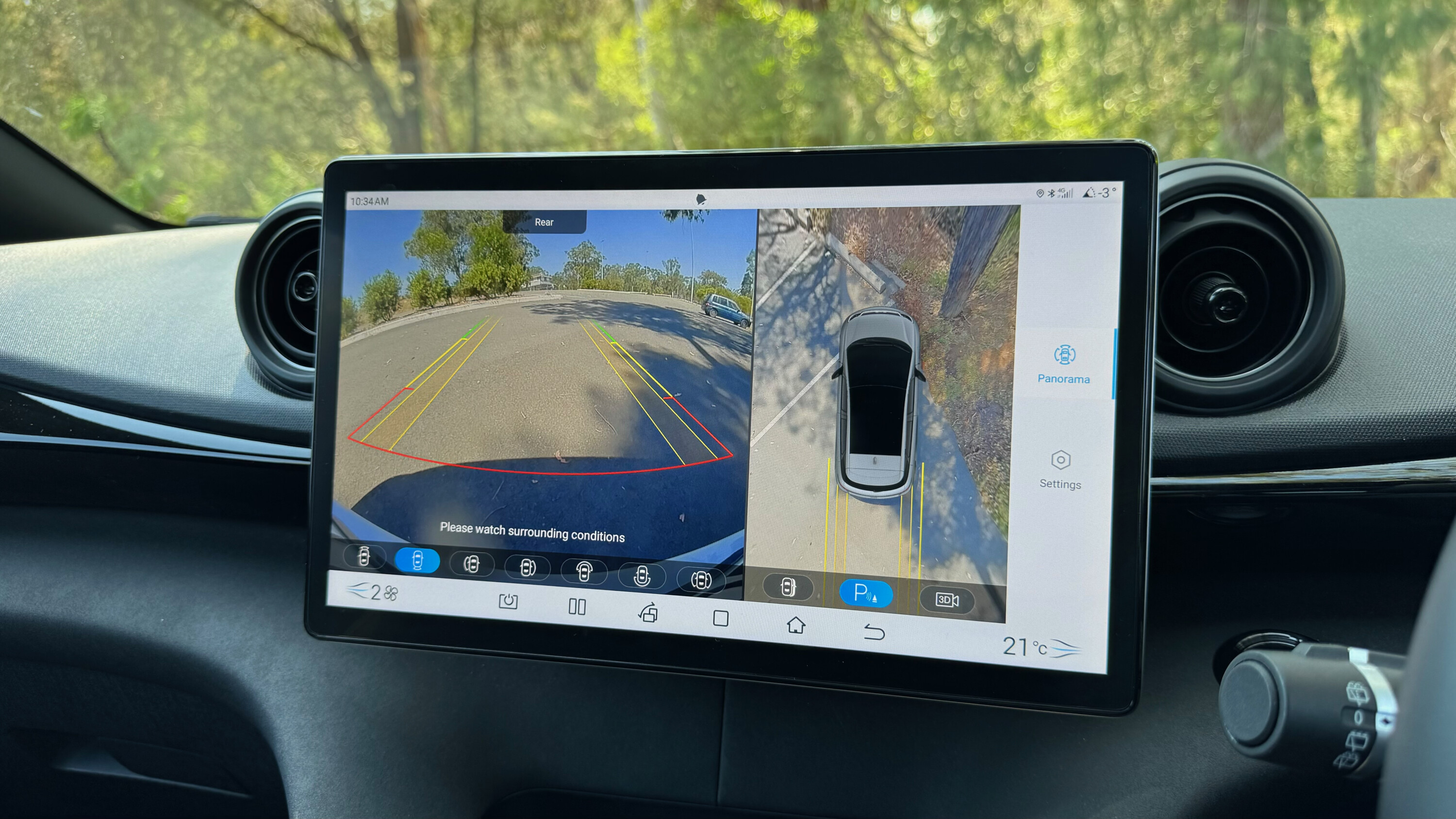
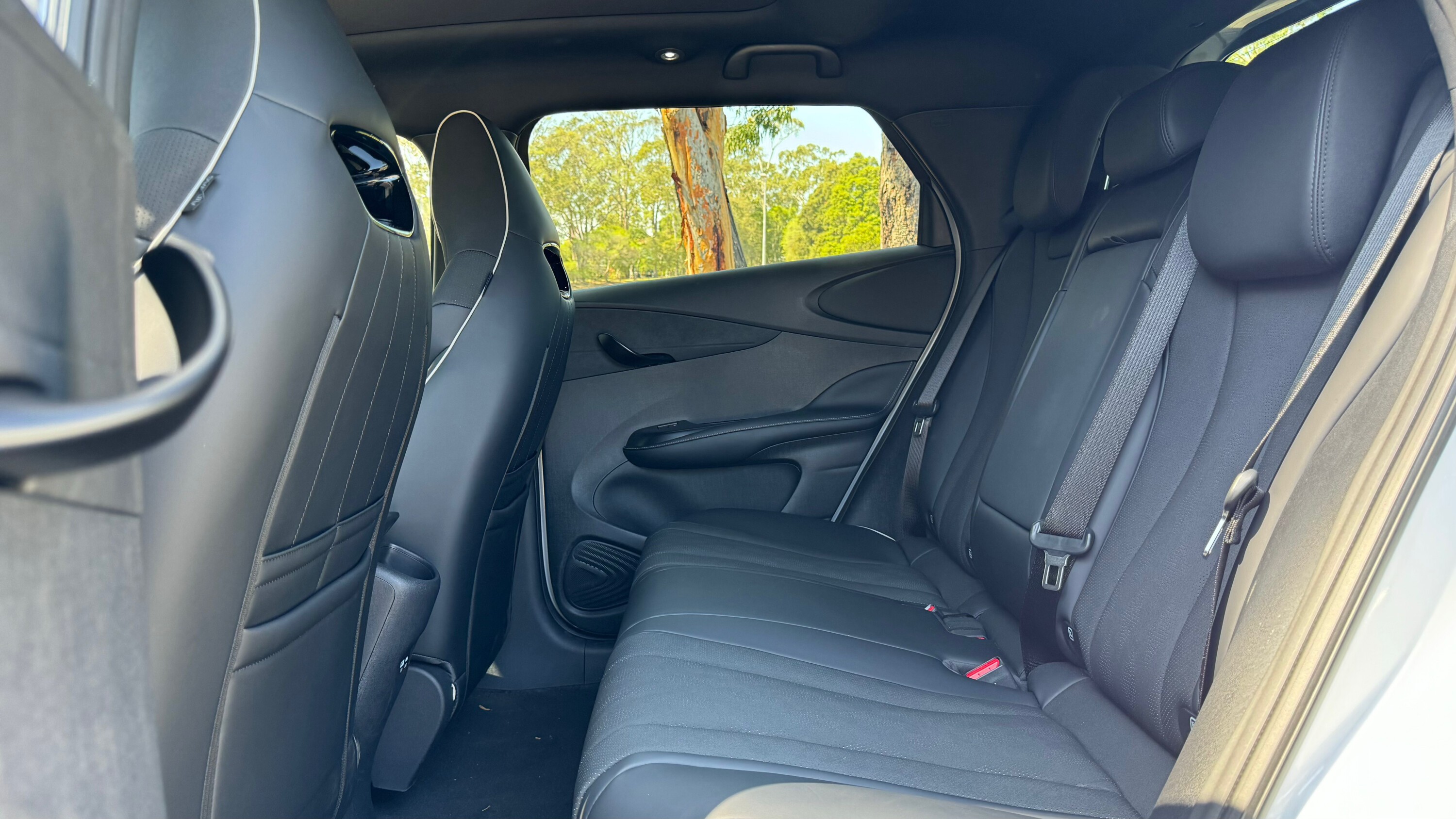
Standard is autonomous emergency braking (AEB) with pedestrian, cyclist and junction detection, and there’s lane-keeping and emergency lane keep assist, adaptive cruise control, ‘intelligent’ speed sign recognition, driver attention alert, blind-spot monitoring, rear-cross traffic alert with braking, front cross-traffic alert, a surround-view camera and parking sensors, and plenty more, including seven airbags.
That camera system is a sweet inclusion for urban-dwellers. Some of the other tech? Not so much…
2
On the road
The best compliment that can be paid to the BYD Dolphin is that it’s a great urban car.
If you live in a city, or will use it as a second car for daily duties in the burbs, then you’ll be well served – for the most part.
But if you find yourself on the freeway, or on a twisty road in the bush, you’ll quickly learn why the ‘ideal city car’ tag might also be a backhanded compliment.
That’s because the Dolphin’s chassis setup is flummoxed by bumpy roads, wobbling and lurching over bumps and never offering a whole lot of confidence, primarily due to its tragically underdamped rear suspension.
1
It’s a shame, because it seems to have a fair feel to the steering, although swapping out the LingLong Comfort Master tyres for some more reputable rubber would provide an instant improvement to the handling. At least the thing is easy to park.
But even half-throttle acceleration in the dry can cause the front tyres to spin and squeal, such is the shortness of grip on offer – so go easy on the go-pedal.
As you’d expect, there’s a decent amount of poke from zero, if only it could get the grunt to the ground. And it’s otherwise reasonably refined, with quiet-enough progress around town.
1
Oddly, there’s no single-pedal driving mode in the Dolphin, and the brake pedal feel is squelchy at the top of the pedal.
Just note, too – this car is best operated with the lane-keeping and emergency lane-keep tech systems disabled… which you’ll need to do every time you drive it. Plus, you might want to turn off the speed-sign recognition system, otherwise it beeps incessantly (albeit far less annoyingly than a Kia or Hyundai).
- What is a Powertrain or Drivetrain?
- Power vs torque
- Car suspension explained
- Automatic transmissions (‘gearboxes’) explained
- Chassis control systems explained
- Car vs Ute vs SUV: How the vehicle you buy should guide the way you drive
- What is the WLTP emissions and range test?
The best alternative is the rear-drive MG 4 which, by comparison, is a joy to drive. Prices start from $38,990 through to $59,990 for the manic X-Power model.
Another option would be the GWM Ora, which starts at $39,990 and tops out at $51,990 for the yet-to-arrive GT version. It’s stylish, but not as practical as the others.
1
Should I put it on my shortlist?
If you live urban and don’t give much of a hoot about driving dynamics, sure. But for the keen driver there are better choices, even if those alternatives don’t come with the same level of spec offered with the Dolphin.
MORE
Everything BYD
MORE
Electric Cars
| 2023 BYD Dolphin Premium specifications | |
|---|---|
| Powertrain | Front-mounted electric motor, LFP battery |
| Max power | 150kW |
| Max torque | 310Nm |
| Drivetrain | front-wheel drive |
| Energy consumption | 14.2kWh/100km (WLTP combined) |
| Priced from | $44,490 plus on-roads |
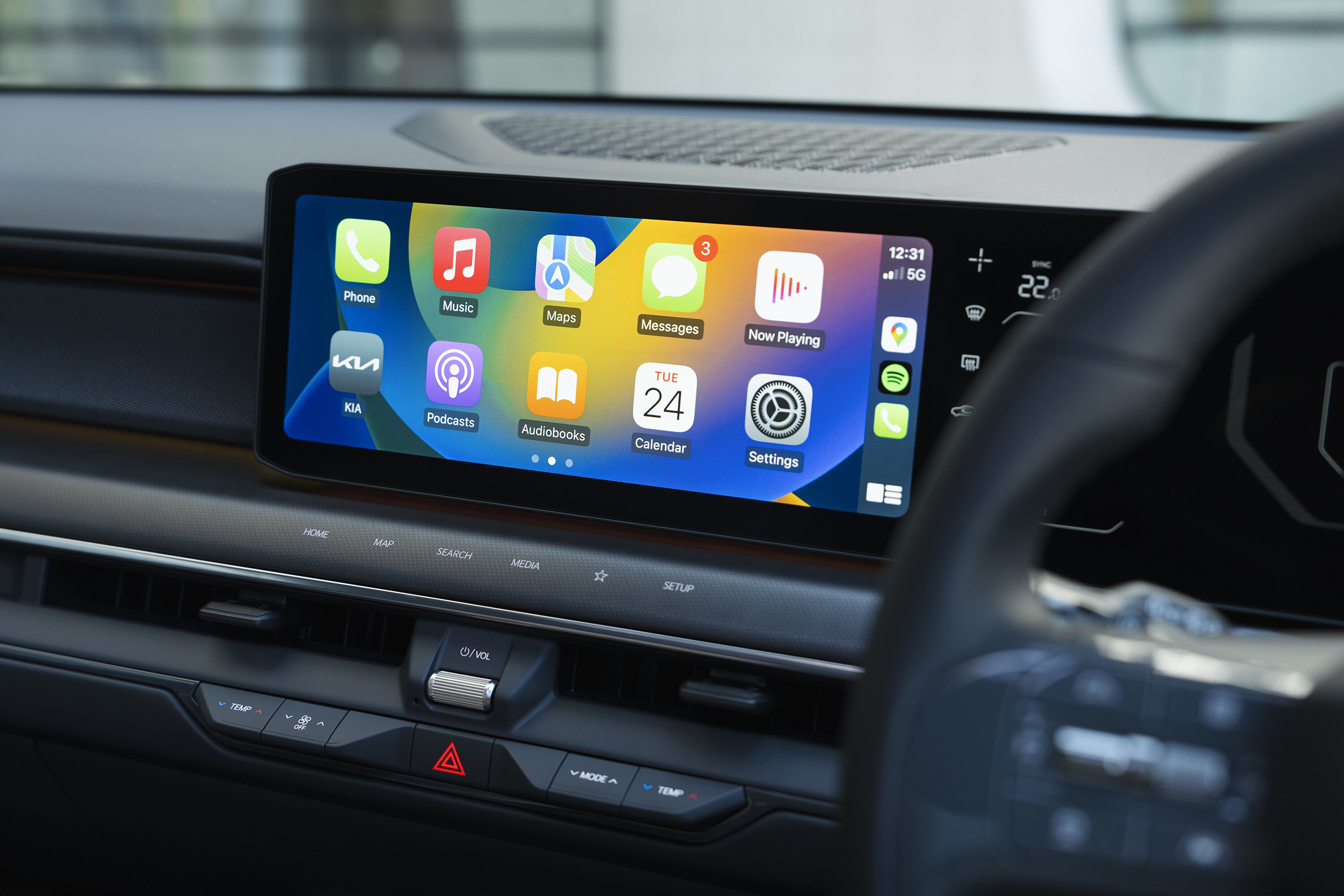
Wireless Apple CarPlay and Android Auto are set to become available in the latest Hyundai and Kia cars.
More-affordable Hyundai and Kia vehicles with smaller screens and no built-in satellite navigation have had access to wireless CarPlay and Android Auto since 2020.
However, navigation-enabled vehicles are limited to wired support due to a disagreement between either Apple or Google regarding whose maps should appear when the system is first loaded.
1
Now, a software update is currently rolling out in Europe for Hyundai and Kia vehicles fitted with the latest Connected Car Navigation Cockpit (CCNC) infotainment system to enable the feature.
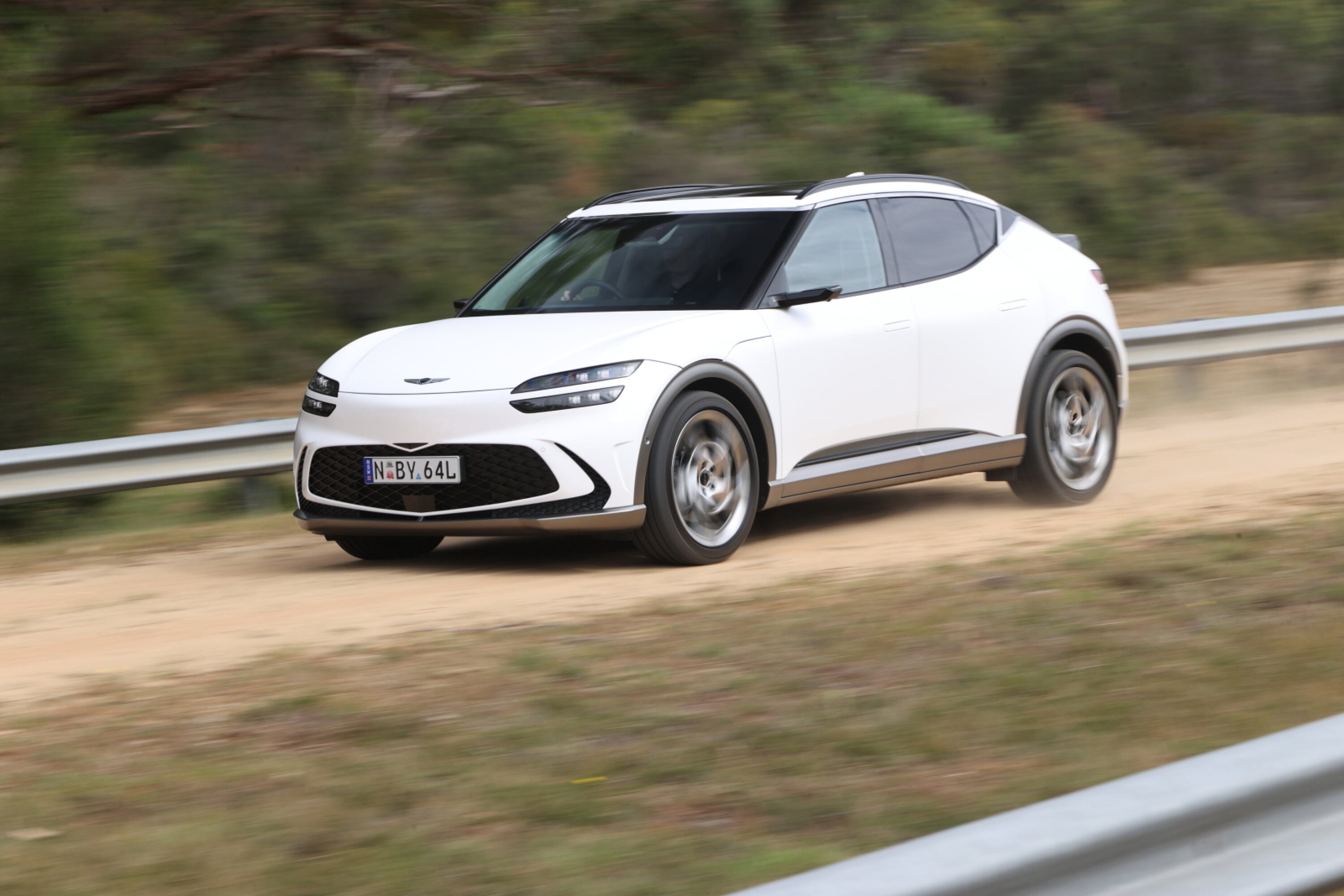
The CCNC infotainment system is currently fitted to the SX2 Hyundai Kona, DN8.V3 Hyundai Sonata N Line and the just-launched Kia EV9 in Australia. An upscale version, CCIC, is fitted to the Genesis GV60.
Future vehicles due to launch with the new software include the Hyundai Ioniq 5 N and the all-new Santa Fe, along with the facelifted Kia Sorento, Carnival and Genesis GV80.
WhichCar understands the Santa Fe, due in the first half of 2024, will launch with wireless phone mirroring installed from the factory.
Kia Australia has confirmed that while initial versions of the EV9 have wired Apple CarPlay and Android Auto, an over-the-air software update due in the next month or so will enable wireless connectivity for new and existing owners.
Likewise, a Hyundai Australia spokesperson said local technicians are currently testing wireless Apple CarPlay in the Kona and Sonata, with an over-the-air software update expected to be released in the coming months “if all goes to plan”.
A support document confirms that owners will need to delete their existing phone-to-car connection and re-pair after installing the update to enable wireless functionality.
1
It is unclear when Genesis vehicles will receive the update in Australia, and if it’ll be limited to the GV60 or also the existing G80, GV70 and GV80, which run the ‘premium-class Gen 6 navigation’ widescreen infotainment system.
“At this time we cannot provide any updates with regards to Genesis vehicles and the availability of wireless Apple CarPlay,” said a Genesis Australia spokesperson.
Unfortunately, current Hyundai, Kia and Genesis vehicles with the 10.25-inch or 12.3-inch ‘standard-class Gen 5W navigation’ system – including the Hyundai Ioniq 5, Ioniq 6, Kia EV6 and Genesis G70 – are not due to receive an update to enable wireless phone mirroring.
MORE
Everything Hyundai
MORE
Everything Kia
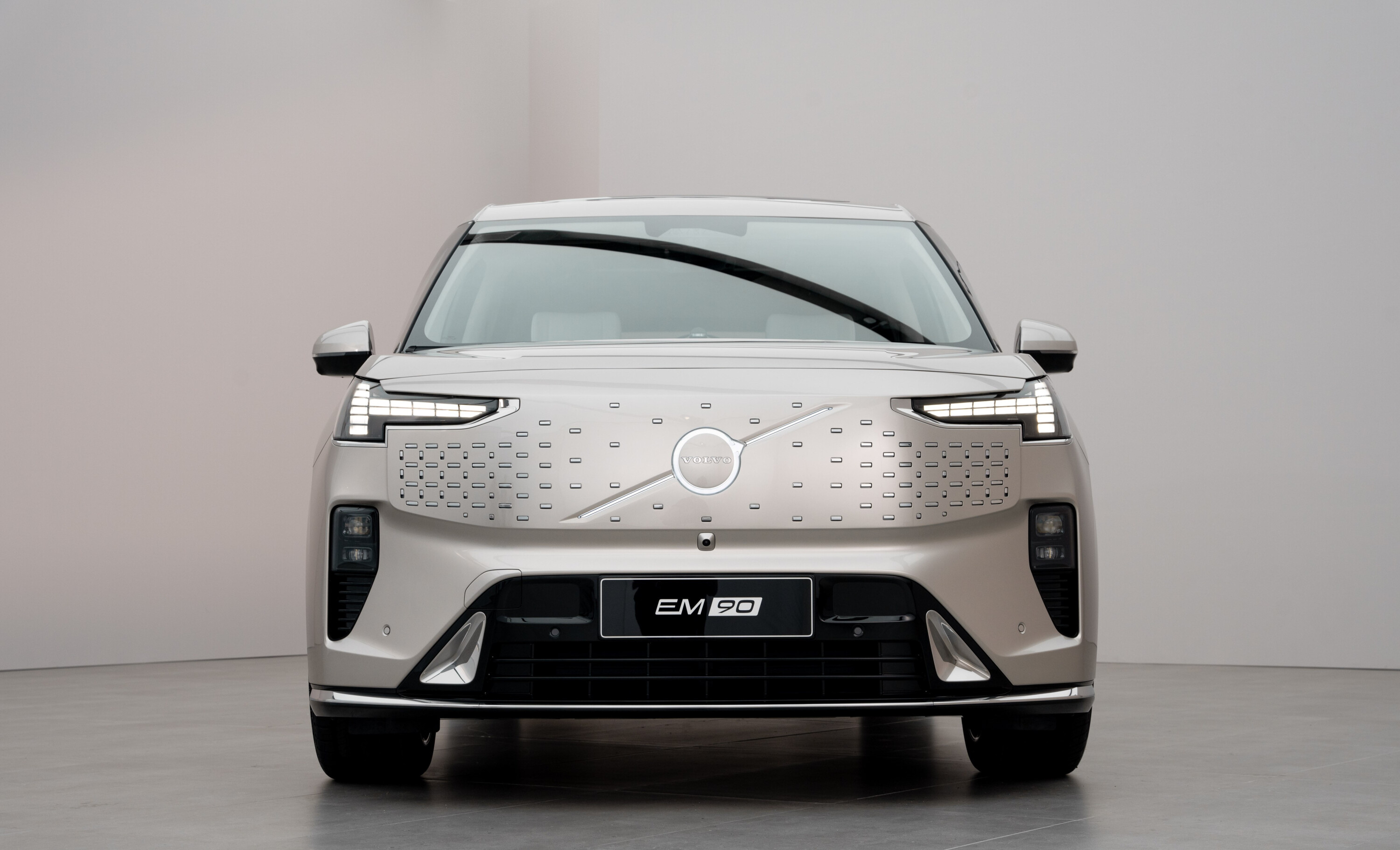
Volvo has unveiled the EM90 electric MPV as its first ever people-mover in its 96-year history.
The Swedish brand bills the EM90 as a vehicle that can lead a double life of family car and executive transport, though for now it is planned to be exclusive to the Chinese market.
The six-seater, which was leaked last month, is based on the Zeekr 009 sold in the same market by Volvo parent company Geely and pitched as a rival to the likes of the Lexus LM and Mercedes-Benz V-Class.
1
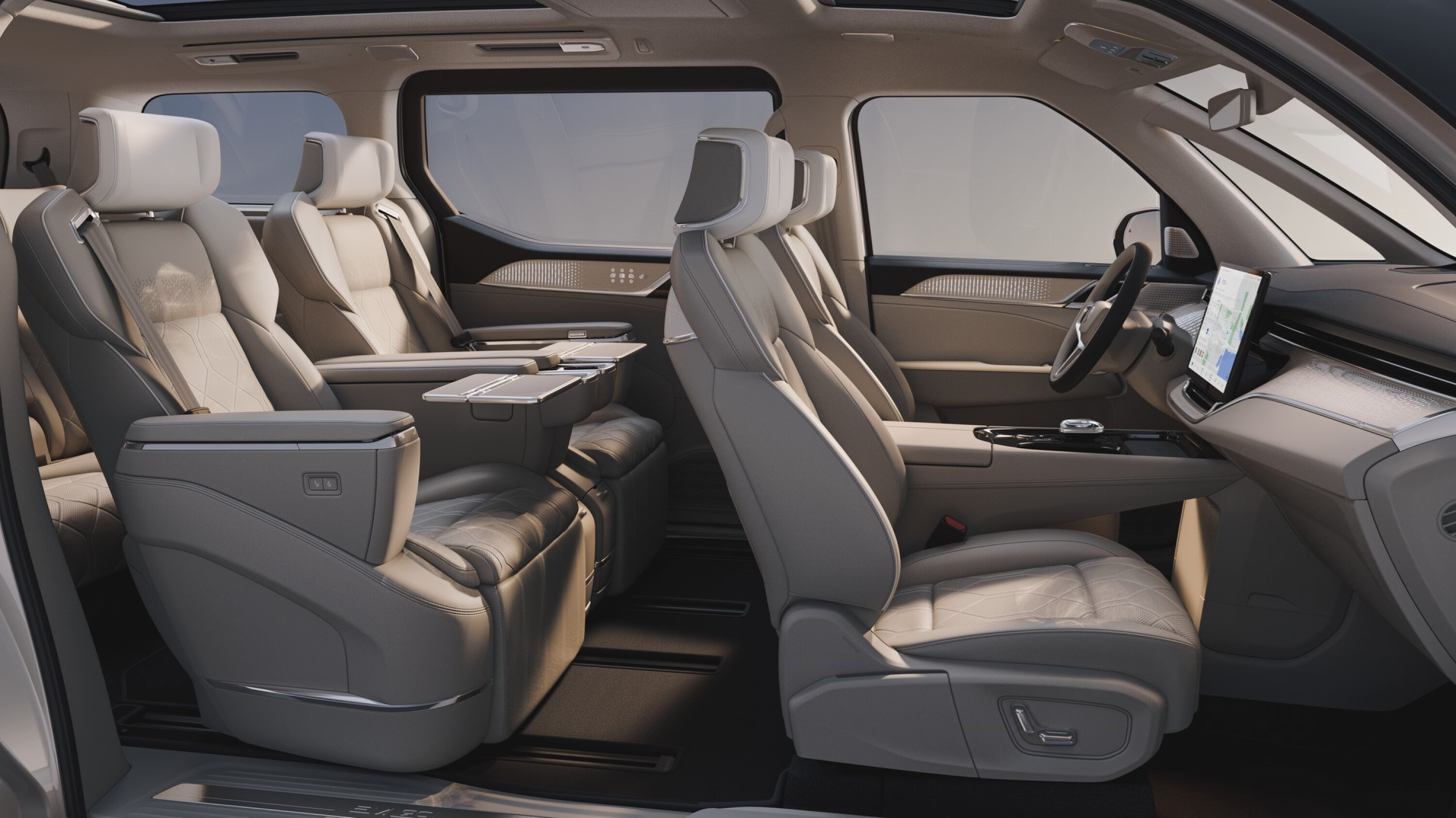
Volvo says a flick of a switch or a voice command enables the 5.2-metre-long EM90 to adjust its digital displays, seats, windows, lighting and air-con to tailor the interior for either meetings, a movie theatre, or even sleeping quarters using the rear seats.
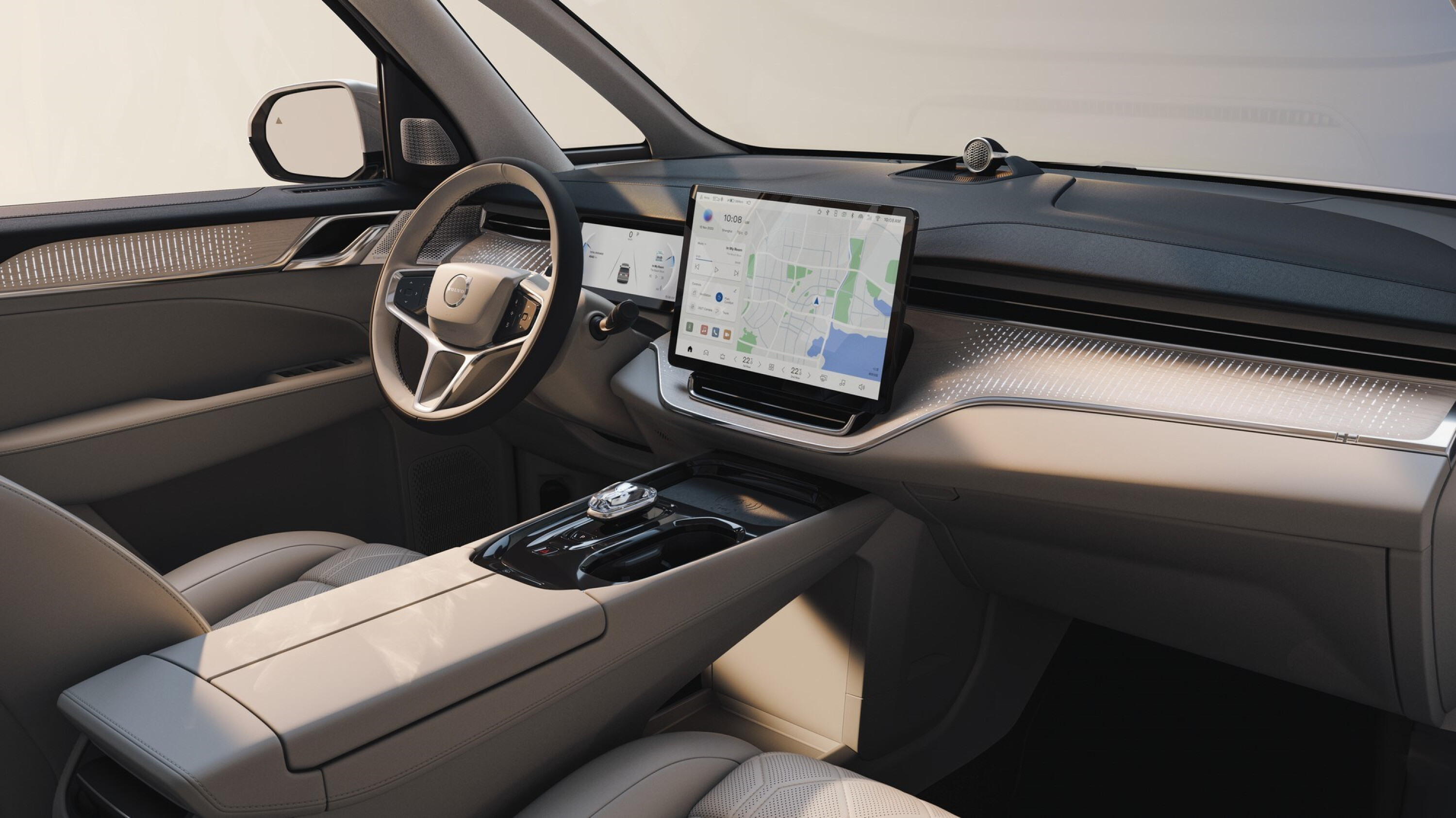
A large, 15.6-inch screen folds down out of the roof for rear occupants, while those up front have a similarly sized, 15.4-inch infotainment display.
There’s a 21-speaker Bower & Wilkins audio system, while a road-noise-cancellation system and air suspension are designed, respectively, to deliver a quiet and comfortable cain.

1
1
A 200kW e-motor is fed by a large 116kWh battery and the EM90 comes with a claimed 0-100km/sprint time of 8.3 seconds and a 738km range.
That range, however, is based on China’s typically optimistic CLTC rating system rather than Europe’s more widely recognised WLTP.
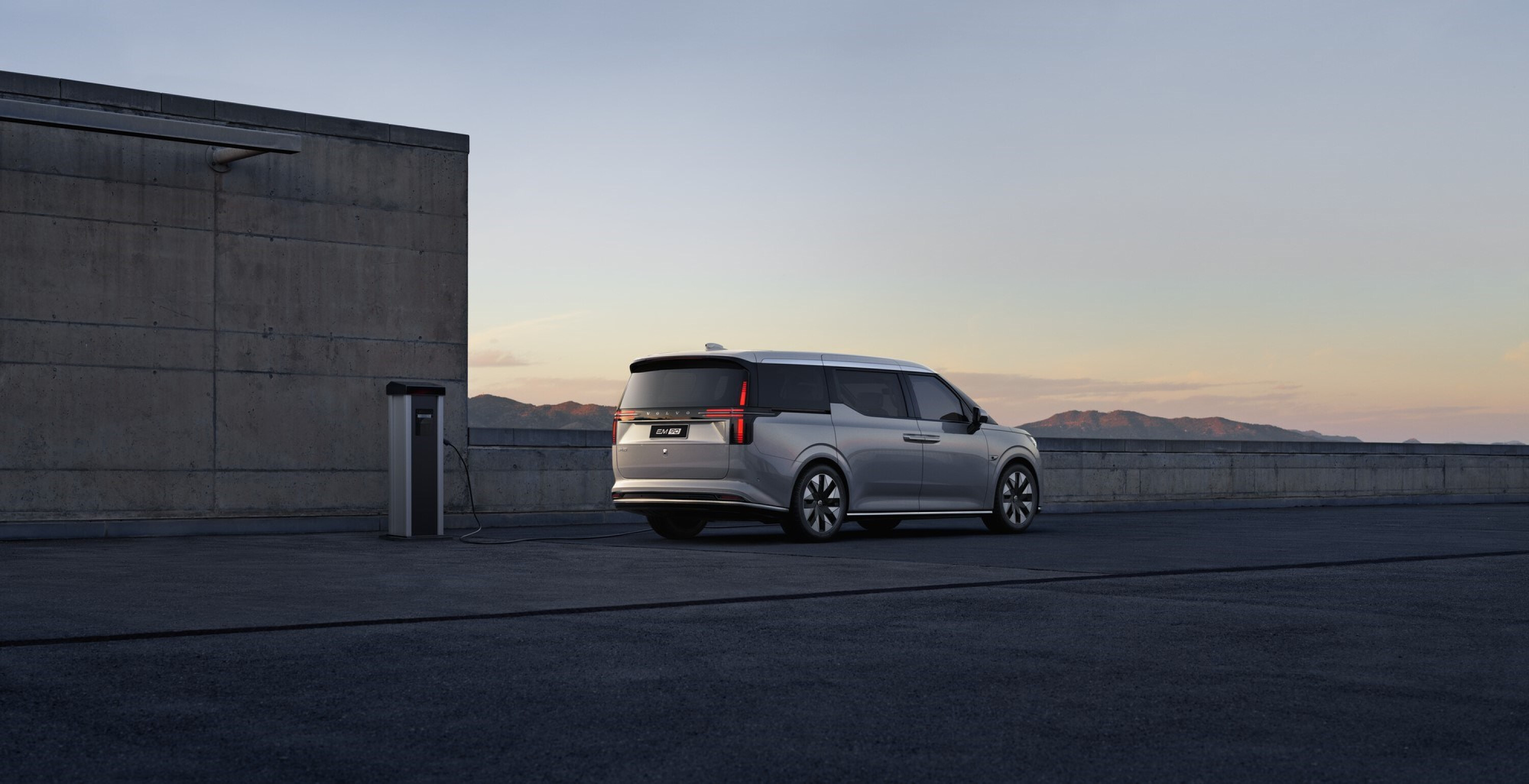
Rapid charging is said to take less than half an hour to increase the battery from 10 to 80 per cent.
1
Bi-directional charging allows the EM90 to charge power devices.
The EM90 rolls on either 19-inch or 20-inch aero wheels.
Another first for Volvo is the illuminated logo on the grille, flanked by the brand’s now-traditional ‘Thor’ LED lights.
1
MORE
Everything Volvo
Snapshot
- 2023 Skoda Kamiq: Full Australian line-up details
- New Run-Out variant added with lower cost for limited time
- Available until Q2 2024 when a facelifted model is expected to launch
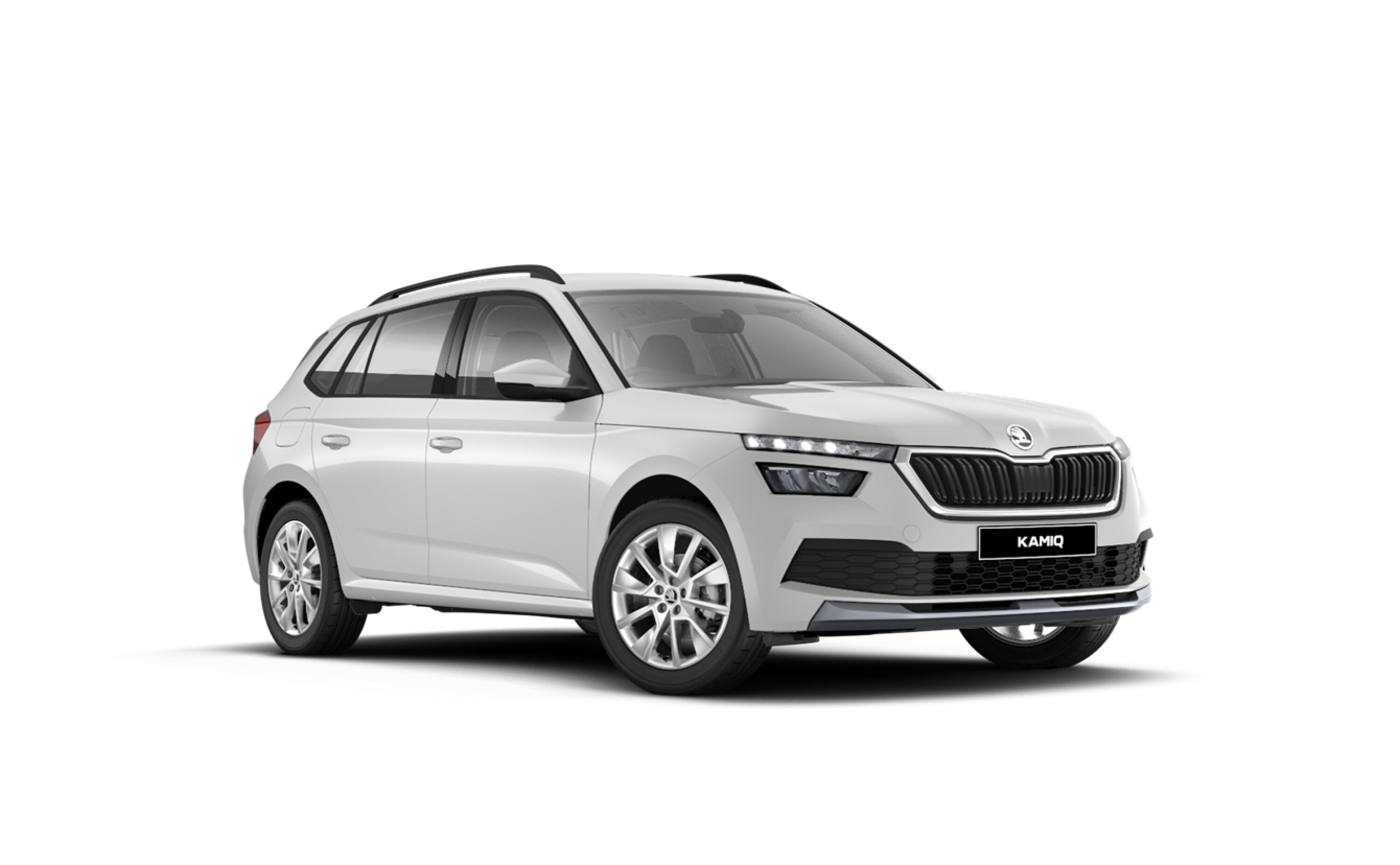
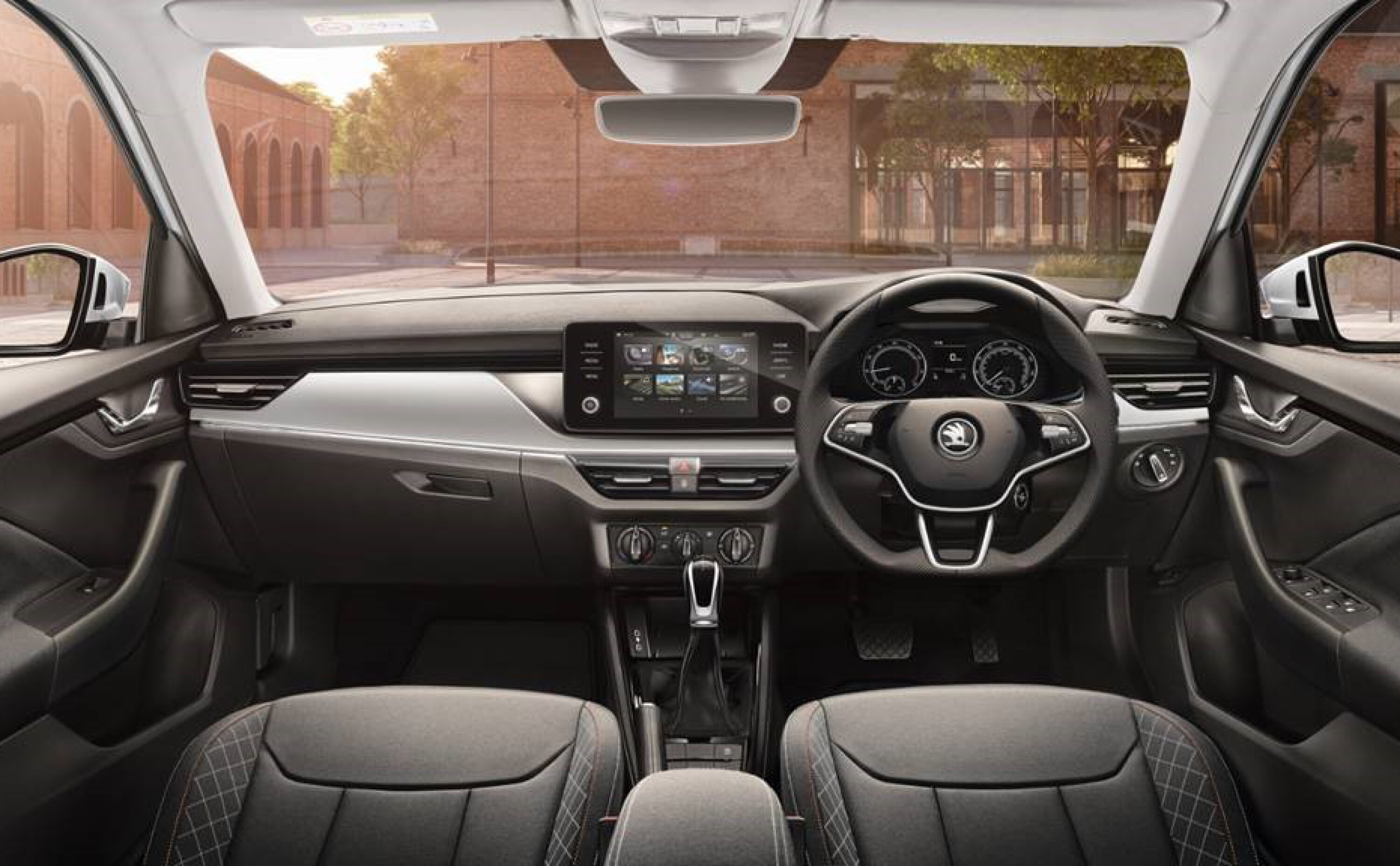
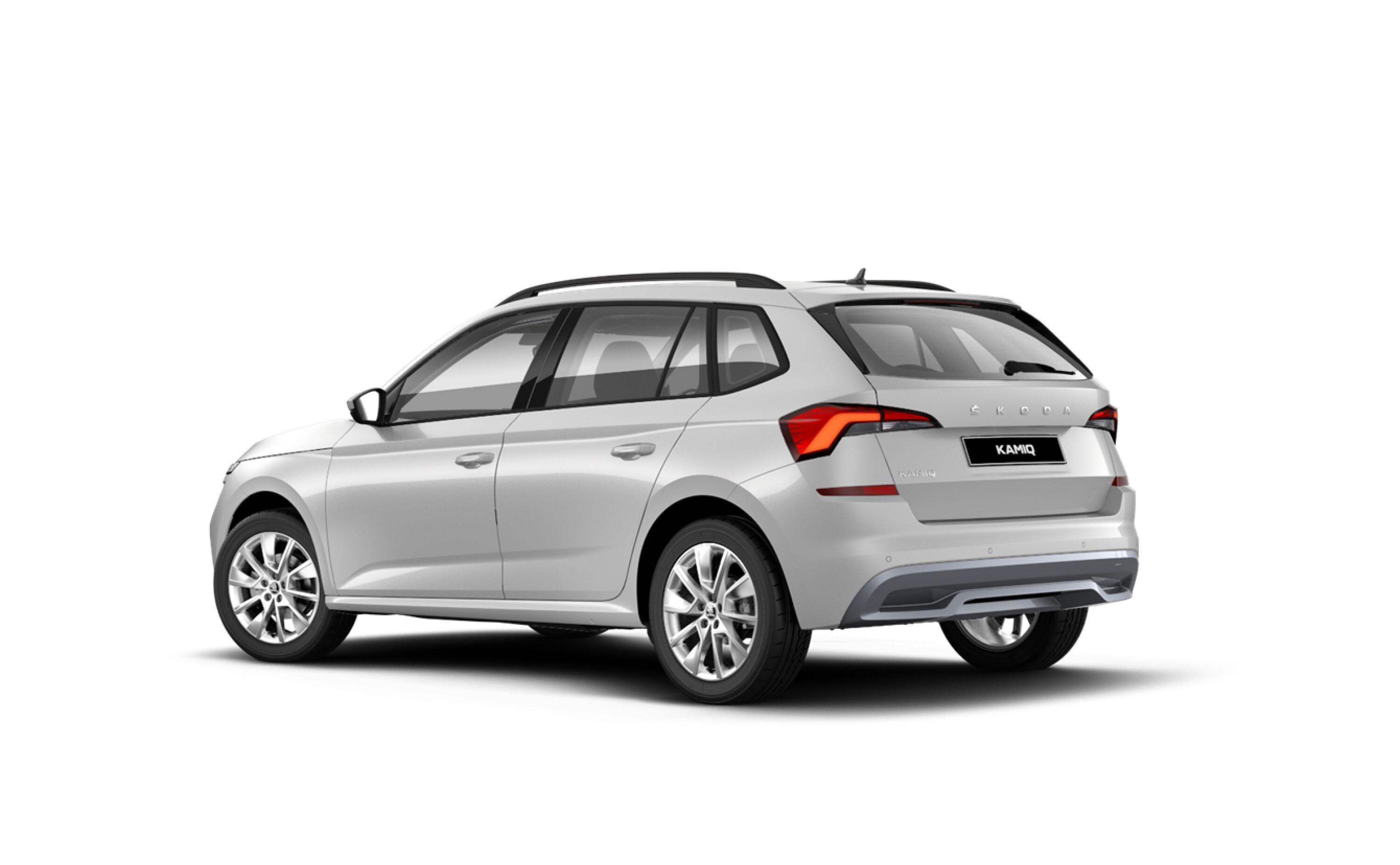
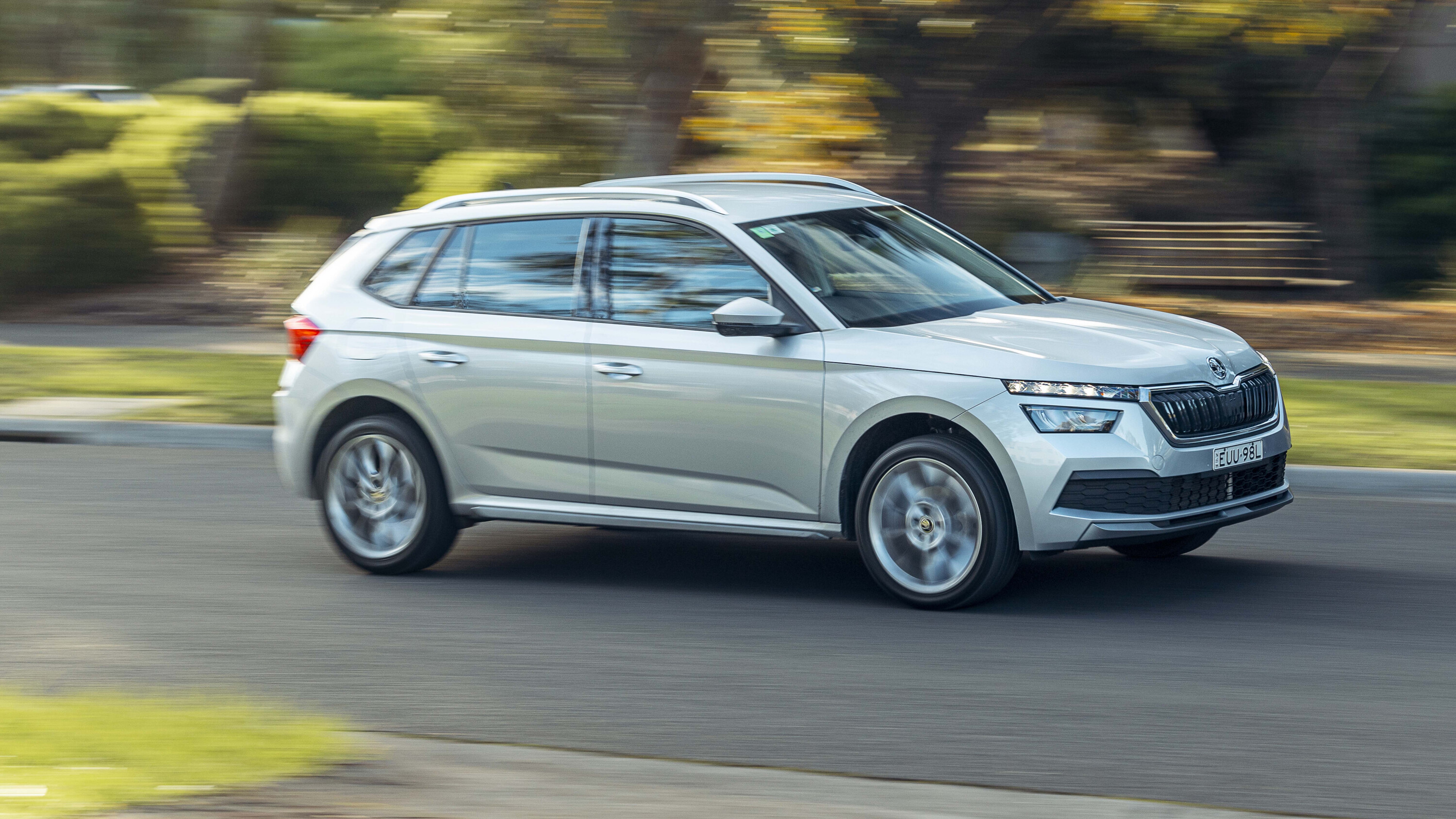
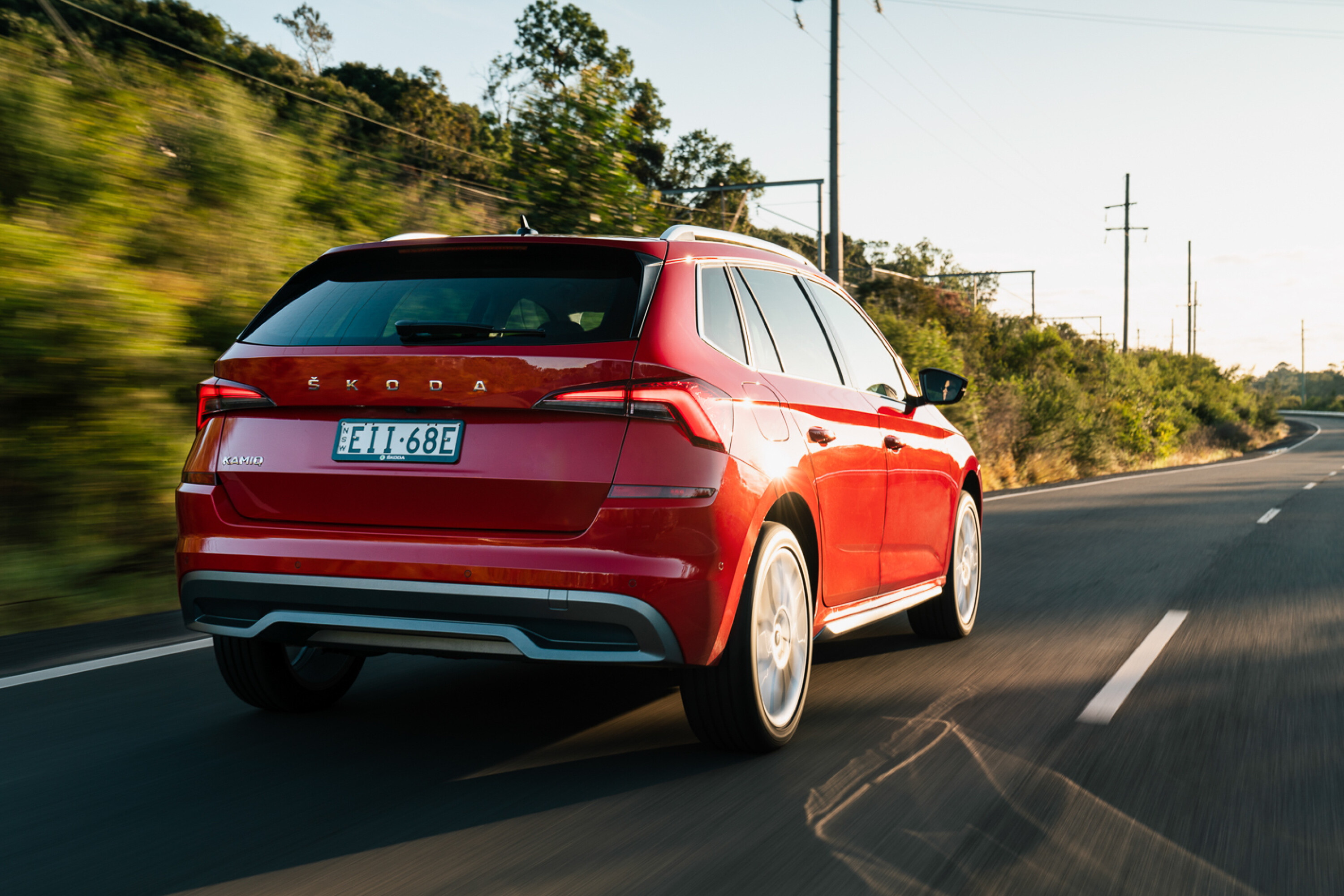
A more-affordable variant of the 2023 Skoda Kamiq small SUV has arrived in Australia for a limited time.
The aptly-named Kamiq Run-Out will be available until the second quarter of 2024, around the time a facelifted version is due to launch in Australia with revised styling, eco-friendly interior materials, matrix headlights, and faster charge ports.
Priced from $31,790 before on-roads – or $32,990 drive-away nationally – the Kamiq Run-Out maintains the turbo-three 85TSI, dual-clutch automatic powertrain and 5.4L/100km fuel consumption for $5000 less drive-away, losing some equipment available in the Style.
1
This missing equipment includes adaptive cruise control, lane-centring assist, an electric tailgate, a digital instrument cluster, a wireless phone charger, and dual-zone climate control.
However, Skoda Australia is keen to point out that the Run-Out still “has features typically expected in the mid-to-high specifications of competitor brands”, with national drive-away pricing fixed at $1200 more than the retail cost.
“We have seen competitors persist with inefficient naturally aspirated engines and plastic steering wheels in entry models, however we find that our customers typically want more,” said Skoda Australia marketing and product boss Kieran Merrigan.
1
“Škoda customers are the most discerning in the market. We have spent the last year articulating our seven-year warranty, our affordable seven-year servicing plan and our strong whole of life ownership credentials. Even with a seven-year service plan, buyers can now choose a Kamiq for less than $36,000 driveaway.”
The addition of the more affordable Kamiq Run-Out follows the return of blind-spot and rear cross-traffic alerts across the line-up last month – including the new variant.
Pricing for the now mid-spec Style has remained static, while the flagship Monte Carlo and Signature have risen between $1000 and $1500, respectively.
1
JUMP AHEAD
- 2023 Skoda Kamiq pricing
- 2023 Skoda Kamiq features
- 2023 Skoda Kamiq colours
- Engine, drivetrain, and fuel economy
- Safety
- Dimensions
- Warranty and servicing
2023 Skoda Kamiq pricing
| Model | Pricing (RRP) | Pricing (national drive-away) |
|---|---|---|
| Run-Out (new) | $31,790 | $32,990 |
| 85TSI Style | $35,490 | $37,990 |
| 110TSI Monte Carlo | $40,990 | $42,490 |
| 110TSI Signature | $41,990 | $43,990 |
1
2023 Skoda Kamiq features
| 2023 Skoda Kamiq Run-Out features | |
|---|---|
| 17-inch alloy wheels | Auto-dimming rear-view mirror |
| 8-inch infotainment system | Electric, heated & foldable mirrors with driver-side auto-dimming |
| Wired Apple CarPlay and Android Auto | Manual air-conditioning |
| Eight-speaker audio system | Rain sensing wipers |
| Four USB-C ports | Rear parking sensors |
| LED headlights and tail-lights | Rear-view camera |
| Leather-wrapped steering wheel | Tyre pressure monitoring |
| Fabric upholstery | Stow-away umbrella |
| Height adjustable driver and passenger seat with lumbar support | Black roof rails |
| Keyless entry and push-button start | |
2023 Skoda Kamiq 85TSI Style features
| In addition to Run-Out | |
|---|---|
| 18-inch u2018Crateru2019 alloy wheels | Electric tailgate |
| 10.25-inch digital instrument cluster | Rear privacy glass |
| Wireless Apple CarPlay and Android Auto | Dual-zone climate control |
| Wireless phone charger | Silver roof rails |
| Adaptive cruise control | Anti-theft alarm system |
| Lane-centring assist | |
2023 Skoda Kamiq 110TSI Monte Carlo features
| In addition to 85TSI Style | |
|---|---|
| 18-inch u2018Vega Blacku2019 alloy wheels | Black exterior trim |
| Sports seats | 15mm-lower suspension |
| Full-LED headlights with adaptive high beam, fog light and cornering light | Drive mode select |
| Panoramic sunroof | Automatic parking |
| Sports pedals | Animated front turn signals |
2023 Skoda Kamiq 110TSI Signature features
| In addition to 110TSI Monte Carlo | |
|---|---|
| 18-inch u2018Crateru2019 alloy wheels | Silver roof rails |
| 9.2-inch infotainment system | Power-adjustable driveru2019s seat |
| Satellite navigation | Heated front and rear seats |
| Leather and suede upholstery | Front parking sensors |
1
2023 Skoda Kamiq colours
| Candy white | Moon white* |
| Graphite grey* | Brilliant silver* |
| Black magic* | Race blue* |
| Velvet red# | Phoenix orange (Style, Signature)# |
| * Metallic paint, $550 | # Premium paint, $1100 |
Engine, drivetrain, and fuel economy
The Kamiq Run-Out and Style are powered by a 1.0-litre three-cylinder turbo-petrol engine, producing 85kW and 200Nm. Power is exclusively delivered to the front wheels through a seven-speed dual-clutch automatic transmission.
Both the Monte Carlo and Signature variants feature the existing 1.5-litre four-cylinder turbo-petrol engine, producing 110kW and 250Nm, also only available with front-wheel drive and the seven-speed dual-clutch.
All variants require at least 95RON premium unleaded.
| 2023 Skoda Kamiq fuel economy | ||
|---|---|---|
| 1.0-litre petrol (85TSI) | 5.4L/100km | 122g/km |
| 1.5-litre petrol (110TSI) | 5.6L/100km | 127g/km |
1
Safety
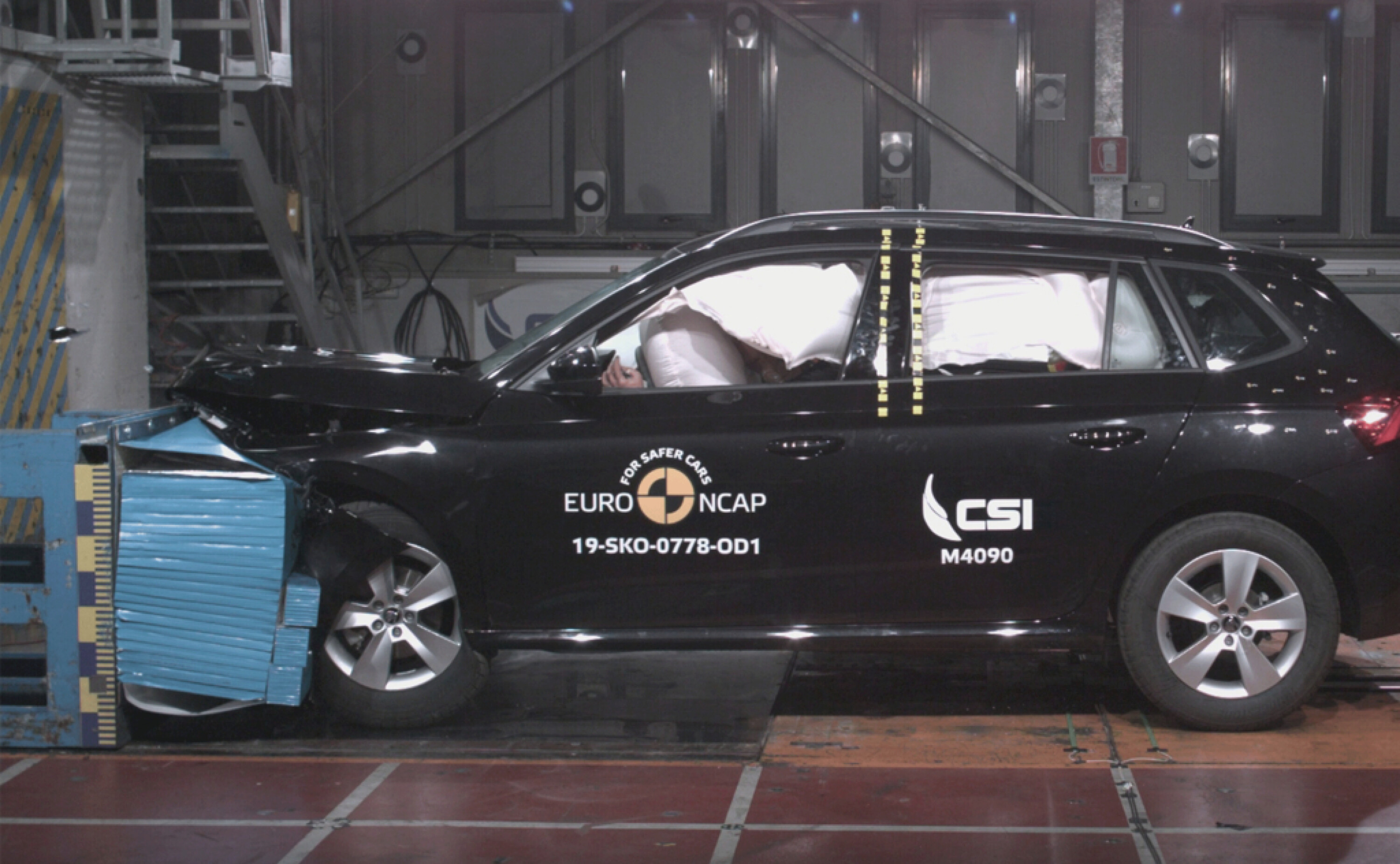
The Skoda Kamiq is covered by a five-star ANCAP safety rating, based on testing conducted in 2019.
It scored 96 per cent for adult occupant protection, 87 per cent for child occupant protection, 80 per cent for vulnerable road users and 76 per cent for safety assist.
All Kamiq models have seven airbags (dual front, side and curtain, and driver’s knee).
| 2023 Skoda Kamiq active safety features | |
|---|---|
| Autonomous emergency braking (vehicle, pedestrian) | Blind-spot alert |
| Lane-keep assist | Rear cross-traffic alert |
| Lane departure warning | Auto high beam |
1
Dimensions
The Skoda Kamiq measures 4241 millimetres long, 1793mm wide and 1531mm tall, with a 2651mm wheelbase.
2023 Skoda Kamiq boot space
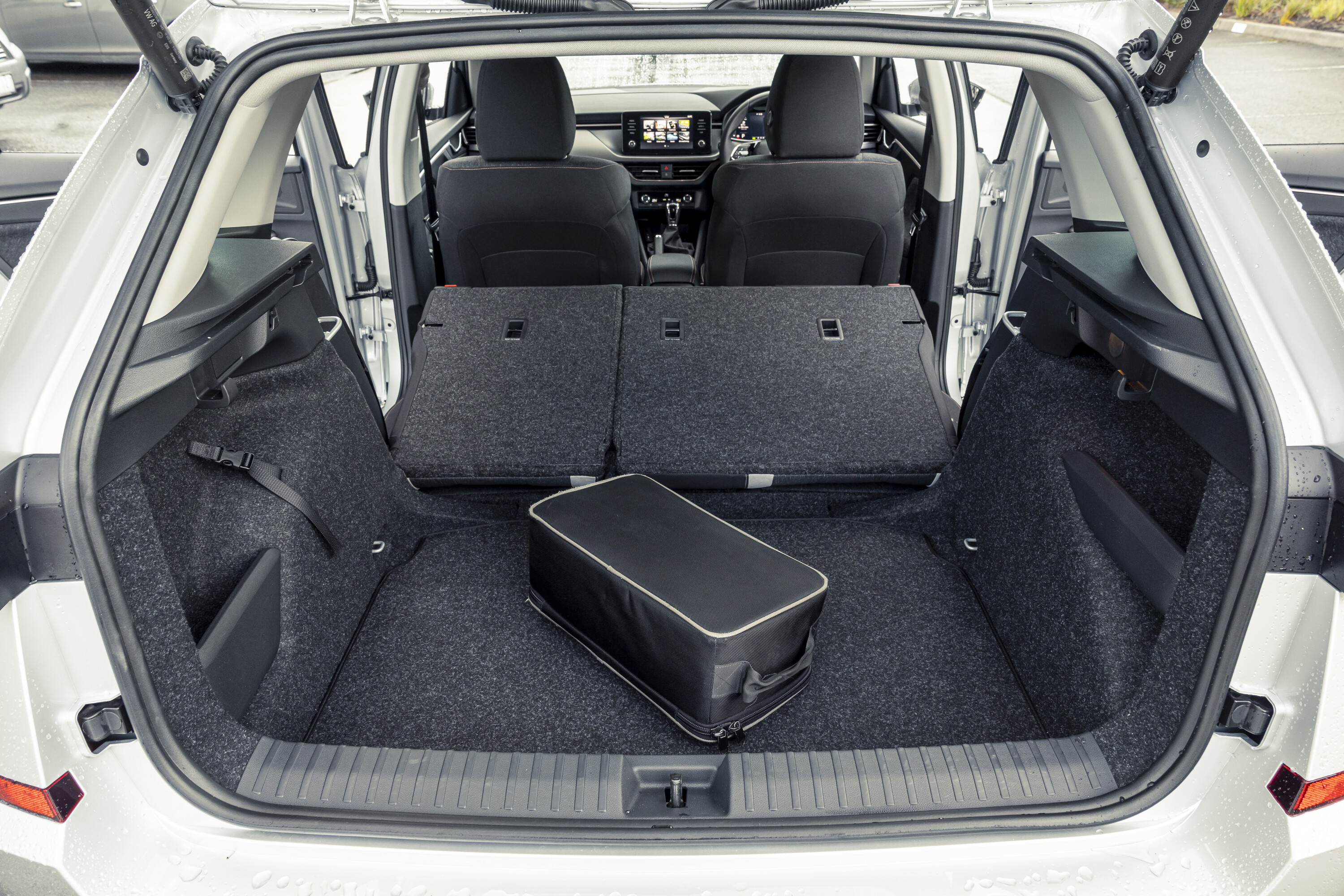
The Skoda Kamiq has a 400-litre boot, expanding to 1395L with the second-row folded.
Warranty and servicing
The Skoda Kamiq is covered by the brand’s seven-year/unlimited-kilometre warranty.
Skoda offers 12 months of complimentary roadside assistance, with a yearly top up available when the vehicle is serviced within the dealer network for up to nine years.
Maintenance is required every 12 months or 15,000 kilometres, whichever occurs first, with two service packs available to purchase.
| Service pack coverage | Cost |
|---|---|
| Five-year/60,000-kilometre | $1800 |
| Seven-year/105,000-kilometre | $2650 |
MORE
Everything Skoda
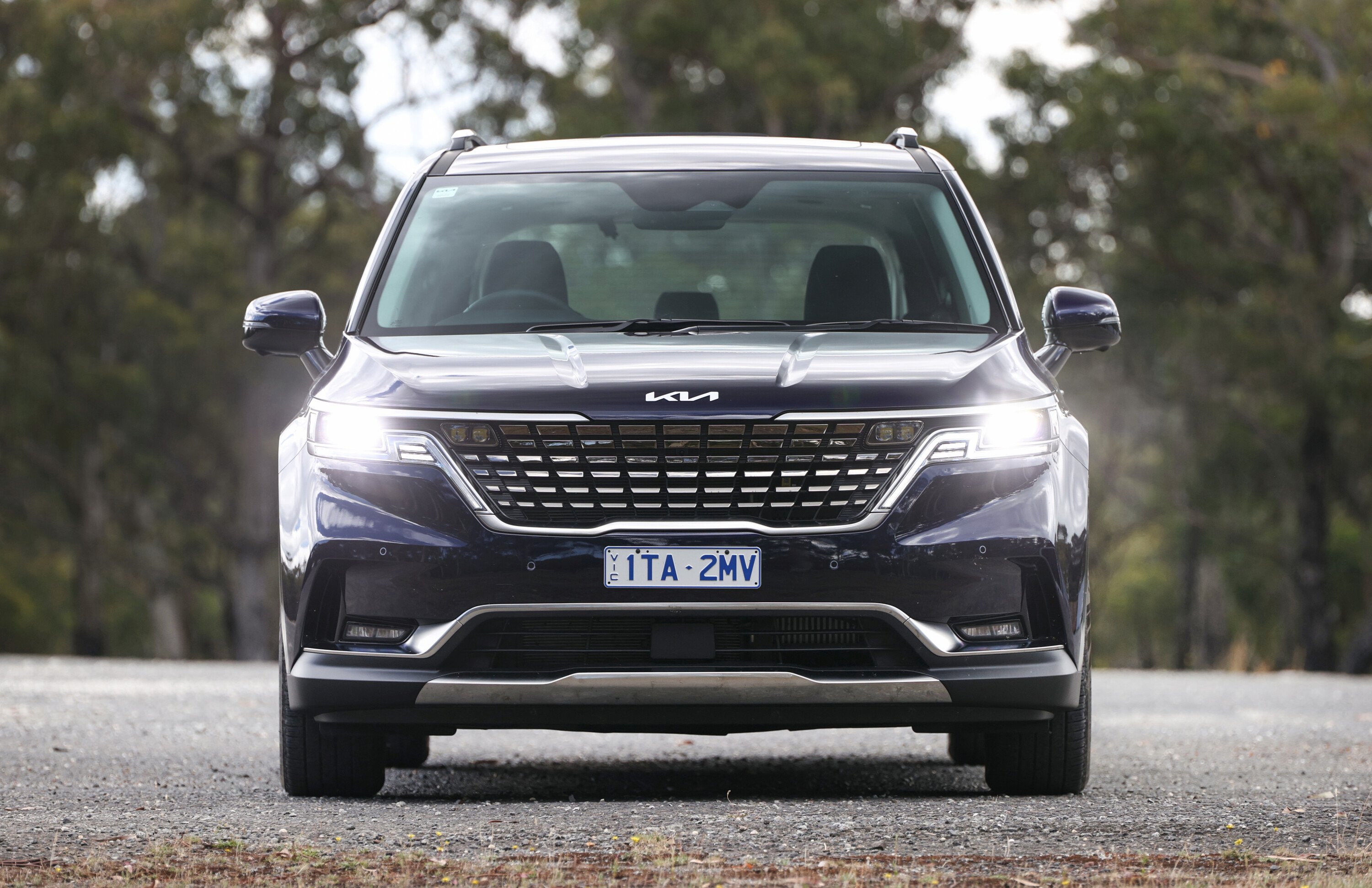
The Kia Carnival has made a name for itself in the multi-purpose vehicle (MPV) segment, becoming a go-to for families with its combination of ample space, comfort, and adaptability.
Commanding a significant 80 percent of the Australian people mover market, the Carnival is not only known for its extensive boot space but also as a preferred option for both corporate fleets and families who need more space than a large SUV can provide.
Constructed on the same platform as the Sorento SUV, the Carnival is a sizeable vehicle, measuring 5.2 meters in length and weighing just over two tonnes.
The 2023 Carnival Special Edition Diesel model arrived in early 2023 to offer extra choice to those already waiting for other variants, due to semi-conductor shortages.
1
Pricing and features
Positioned under the range-topping Premium variant, the Carnival Special Edition Diesel is priced at $67,500 drive-away in Victoria for the diesel version.
Powered by a 2.2-litre four-cylinder turbo-diesel engine, coupled with an eight-speed automatic transmission, it delivers 148kW and 440Nm of power.
A 3.5-litre V6 petrol engine option was available, but Kia Australia has temporarily halted orders for the V6 petrol engine in the Carnival, focusing production on international demand.
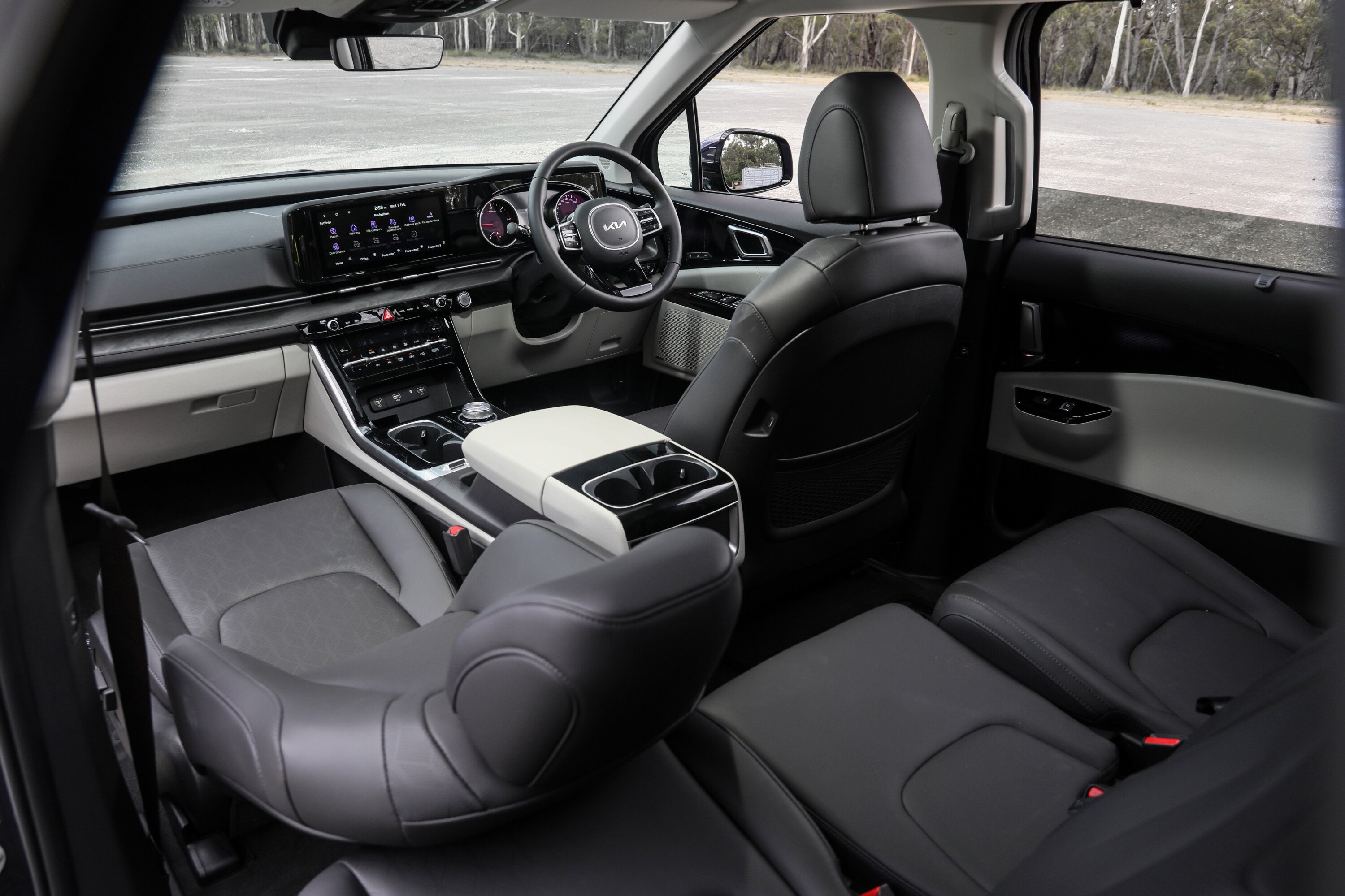
1
This new variant is positioned between the SLi and Platinum models. It features luxury elements and design aspects borrowed from the Platinum, such as black 19-inch wheels, dual sunroof panels, heated seats, and wireless phone charging.
In terms of window functionality, the variant differs from other models by offering auto up/down only for the driver’s window, rather than for all side windows.
Notably, it does not include some higher-end features like the 12-speaker Bose premium sound system and an electric passenger seat.
The absence of all these features is intentional to reduce the need of semiconductors, which are causing the long wait times.
| Kia Carnival Special Edition features | |
|---|---|
| 10-way power adustable driver seat | Front and rear parking sensors |
| 12.3-inch infotainment infotainment screen | Hands free powered tailgate |
| 19-inch black alloy wheels | Leather-wrapped steering wheel and shifter |
| 360-degree camera | LED fog-lamps |
| 4.2-inch instrument cluster display | Rear cross traffic collision avoidance assist |
| Apple Carplay and Android Auto (wired) | Rear privacy glass |
| Auto-dimming rear-view mirror | Smart key with push button |
| Dual-zone auto climate control | Sunroof |
| Dusk-sensing LED headlights | Synthetic leather seats |
| Eight-speaker sound system | Touch open sliding doors |
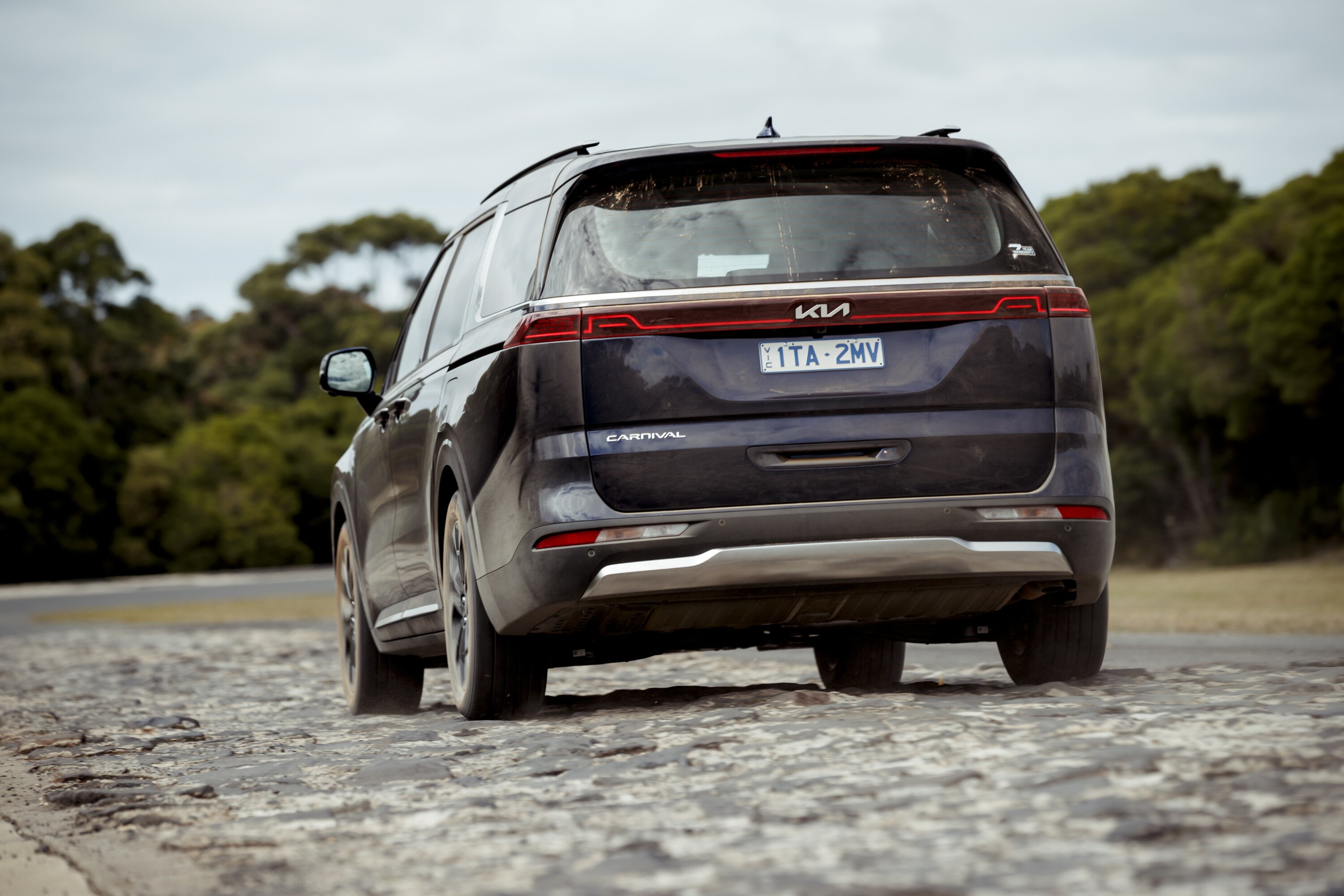
1
Safety
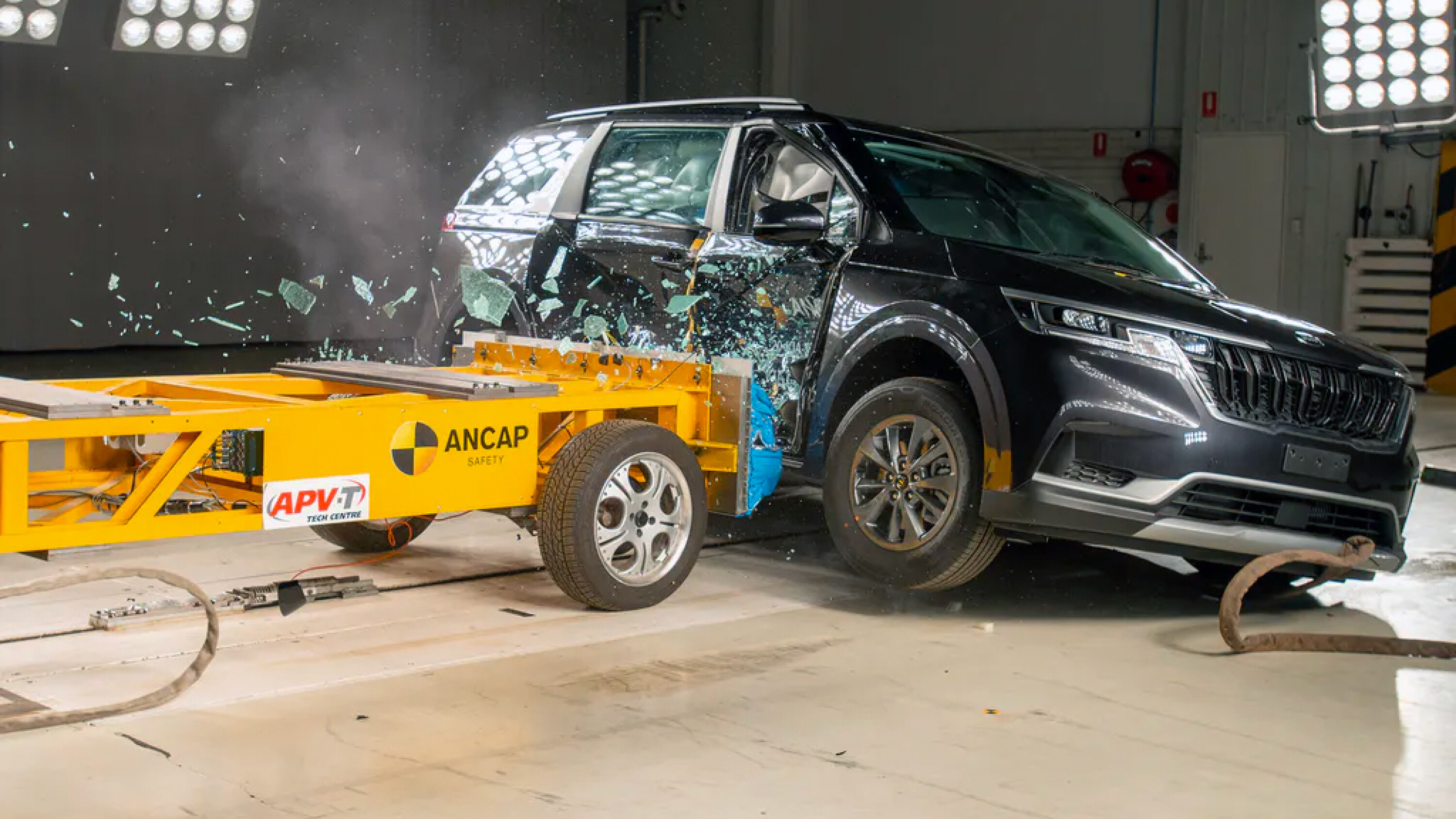
The Carnival has earned a five-star ANCAP safety rating in 2021, a testament to its extensive range of safety features offered across all models.
Regarding crash safety performance, the Carnival has excelled, securing a 90 percent score in adult occupant protection and 88 percent in child occupant protection.
1
| Kia Carnival safety features | |
|---|---|
| 7 airbags | ABS |
| Stability and traction controls | Forward AEB (high and low speed) |
| Forward collision warning | Reverse cross-traffic alert |
| Multi-collision braking | Front cross-traffic alert |
| Lane departure warning | Lane-keep assist |
| Driver attention detection | Safe exit warning |
| Blind-spot monitoring | Reversing camera |
The Carnival features a sophisticated auto emergency braking (AEB) system that can detect both pedestrians and cyclists.
Despite its array of technological features, the Carnival notably does not include rain-sensing wipers, which, while not essential for safety, is a surprising omission.
Key rivals
The departure of the Honda Odyssey from the Australian market, once a significant rival, has played a role in bolstering the Carnival’s dominance in the people mover segment.
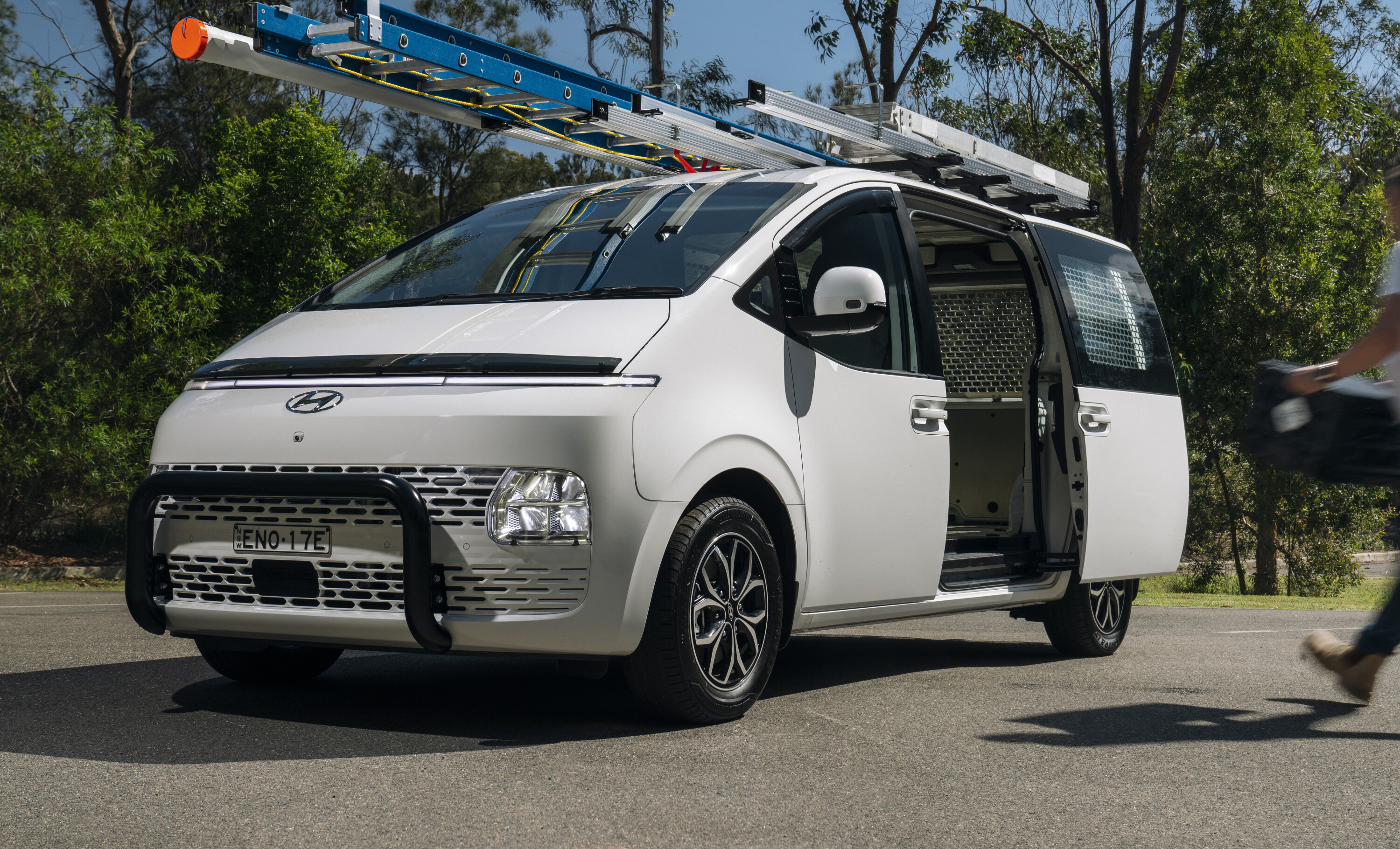
Notable competitors to the Carnival are:
1
Should I put it on my shortlist?
The 2023 Kia Carnival stands out as an attractive choice for families seeking a balance of space, comfort, and fuel efficiency.
Though its large size might seem overwhelming to some, the generous interior space and diesel fuel efficiency (given the unavailability of petrol models) are significant advantages.
In an effort to reduce wait times, Kia has introduced the Special Edition with a few less tech specs. If you’re in need of a people mover and don’t have the time to wait, the Special Edition will sure to tick all your boxes.
MORE
Everything KIA
The 2024 Ford Mustang GT California Special package has debuted in the United States.
Available as a US$1995 (AU$3130) option package for the Mustang GT Premium coupe or convertible, the California Special adds ‘rave blue’ exterior trim, a unique horizontal-slat grille, different 19-inch alloy wheels, and black side graphics.
Ford Australia said that, unlike the previous model, it currently has “no plans” to introduce the Mustang GT California Special locally. The standard Mustang line-up is due here in Q2 2024, priced from $64,990 before on-road costs.
“The original California Special package was geared toward California’s optimistic and carefree driving culture,” said Ford Mustang brand manager Joe Bellino.
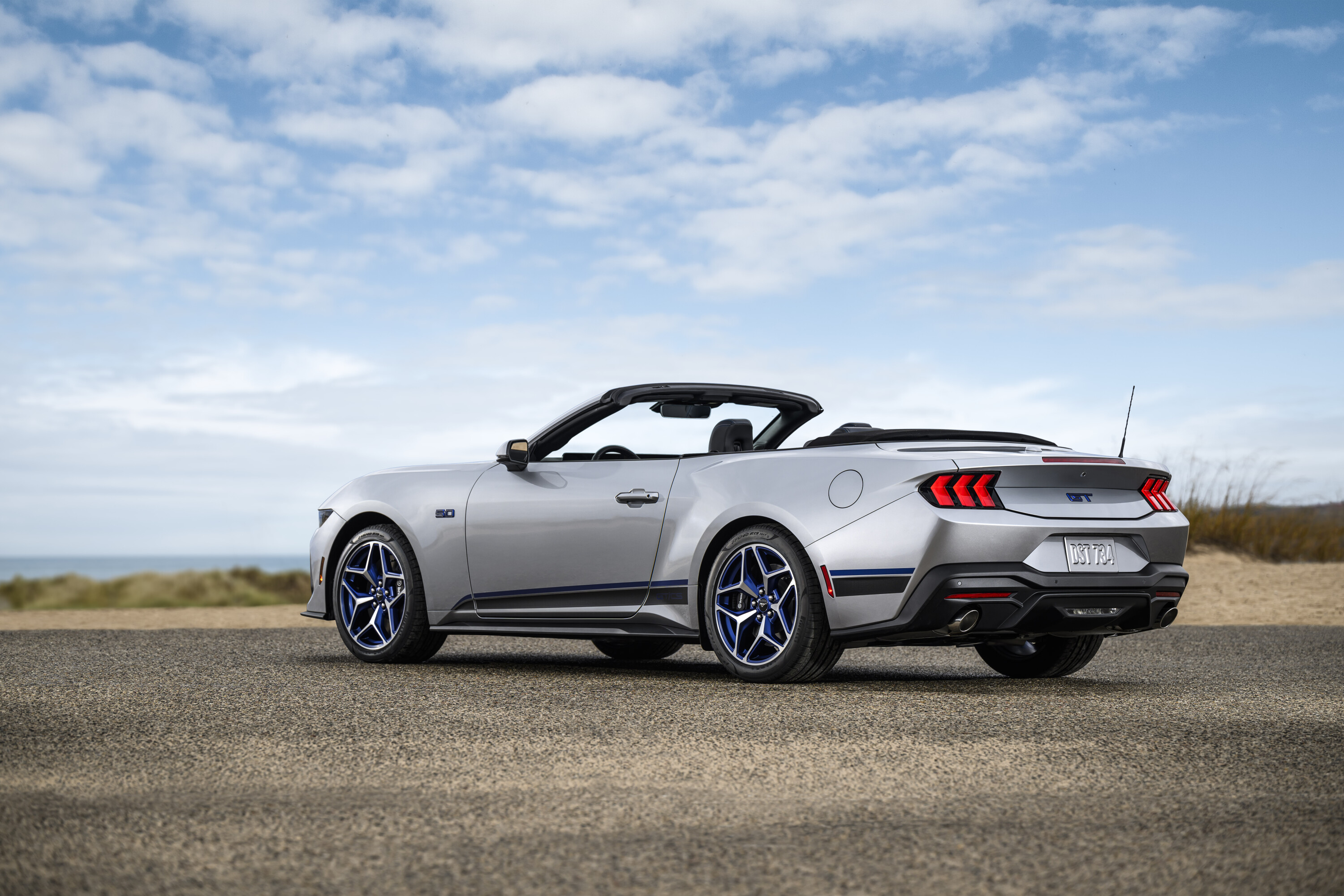
1
“We’re refocusing on those elements for the 2024 Mustang GT California Special, which brings vibrant style that looks as at home on Colorado Boulevard as it does on the Pacific Coast Highway.
“Rave Blue is such a distinct and exciting color, it really does make the California Special stand out not only from other Mustang models, but from previous California Special models.”
Inside, the Mustang California Special continues the blue theme, featuring perforated navy and black upholstery with dual-colour ‘raptor blue’ and ‘metal grey’ stitching. It also adds a California Special badge and GT/CS floor mats.
“Mustang has a rich well of special edition models to draw from, and we’ll continue to reinvent them for a new audience,” added Bellino.
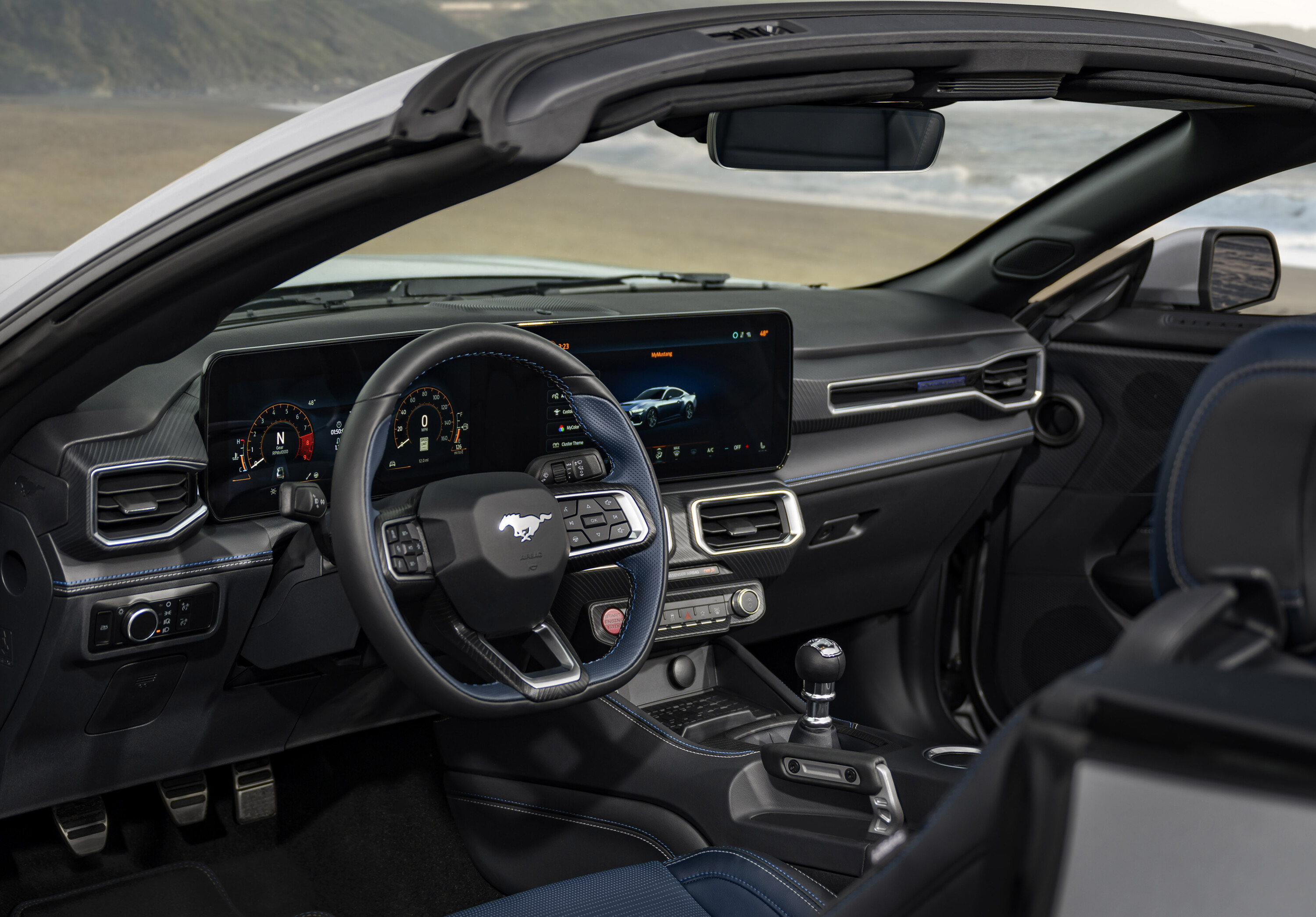
1
The GT California Special was first introduced for the first-generation Ford Mustang in 1968, five years after the famous nameplate debuted in 1963.
It became available in Australia for the first time in 2022 as an appearance package, with the $2000 premium over the standard GT adding most of the special styling tweaks that have carried across to the all-new model detailed above.
The 2024 Ford Mustang GT California Special package will debut in person at the Los Angeles auto show, which kicks off later this week.
Would you like to see the Mustang GT/CS return to Australia? Let us know in the comments below!
MORE
Everything Ford
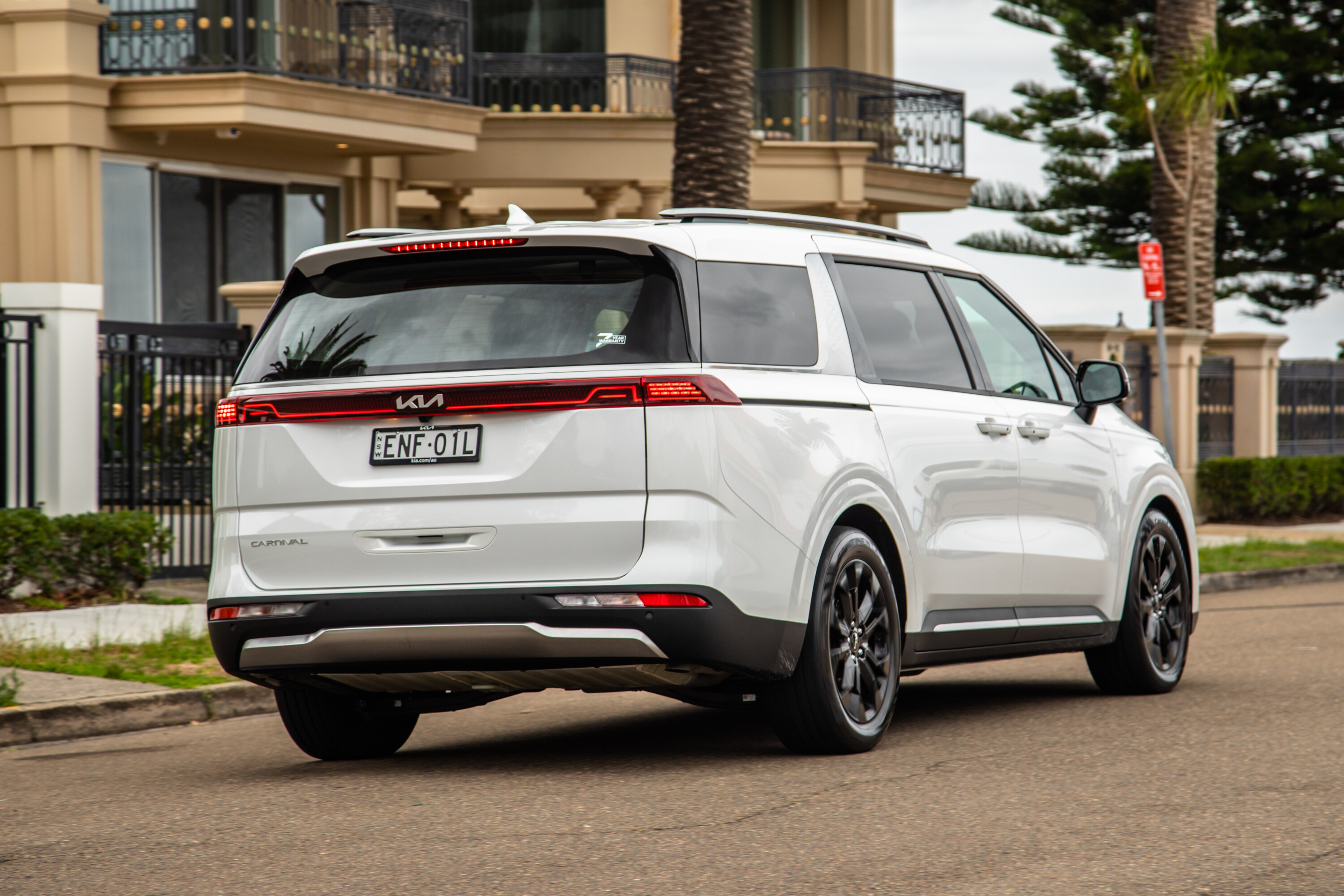
The Kia Carnival has established itself as a leader in the multi-purpose vehicle (MPV) segment, offering families a blend of space, comfort, and versatility.
The Kia Carnival not only boasts a cavernous boot space but also commands a remarkable 80 percent share of the Australian people mover market.
It’s not only a favoured choice among corporate and rental fleets but also a top pick for families seeking more room than your typical large SUV can offer.
Built on the platform used for the Sorento SUV, the Carnival stretches 5.2 meters in length and tips the scales at just over two tonnes.
The 2023 SLi Diesel variant adds a layer of efficiency and performance to the mix. But in a market that’s increasingly shifting towards SUVs, can the Carnival SLi maintain its ongoing appeal?
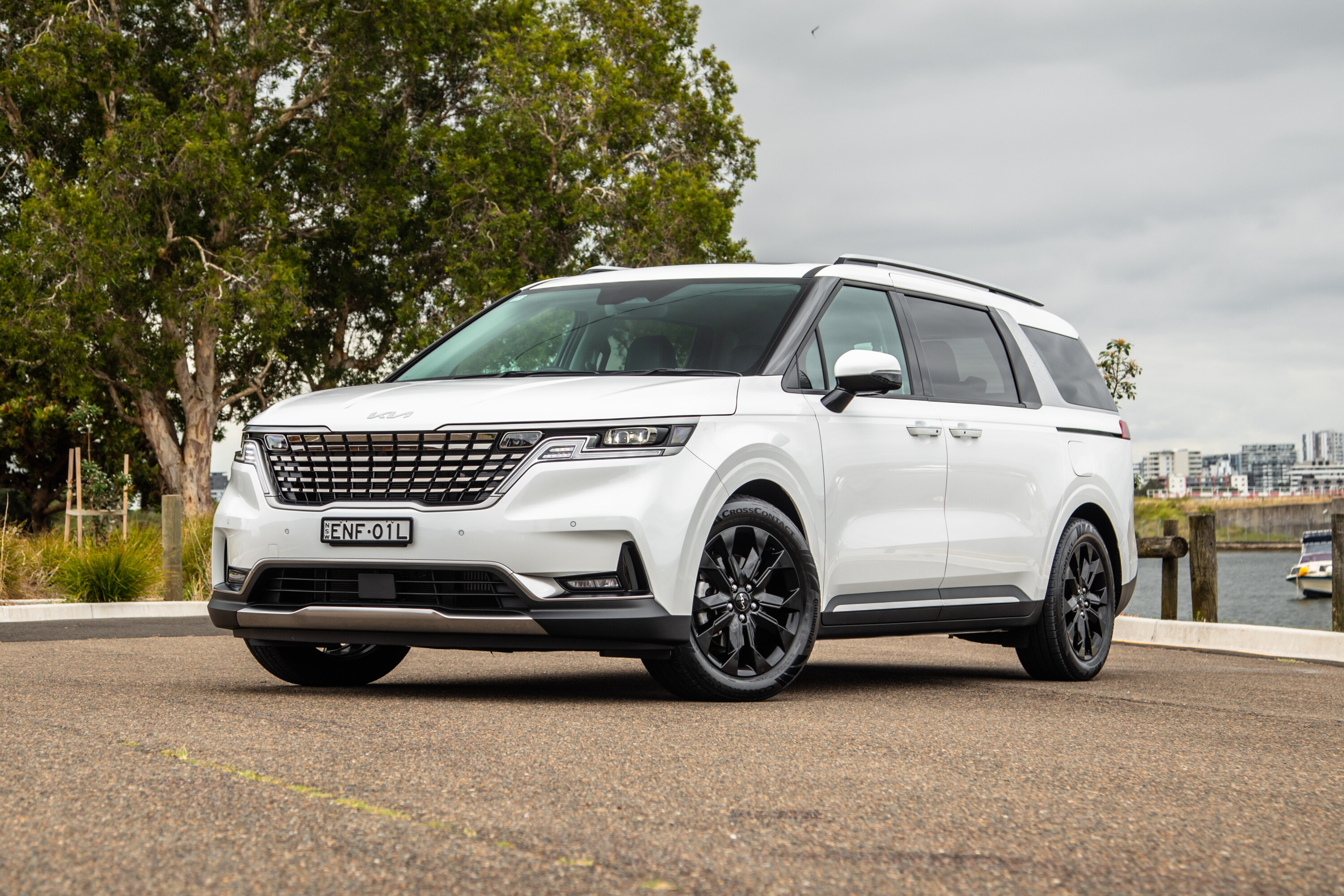
1
Pricing and features
Situated just about the entry-level grade Carnival, the SLi Diesel is priced between $57,780- $59,780 before on-road costs for the petrol and diesel models respectively.
Underneath, you’ll find a 2.2-litre four-cylinder turbo-diesel, paired to an eight-speed automatic transmission, delivering 148kW and 440Nm.
A 3.5-litre V6 petrol engine was available alongside the diesel however Kia’s Australia announced a temporary suspension of orders for the Kia Carnival people-mover equipped with these V6 petrol engines.
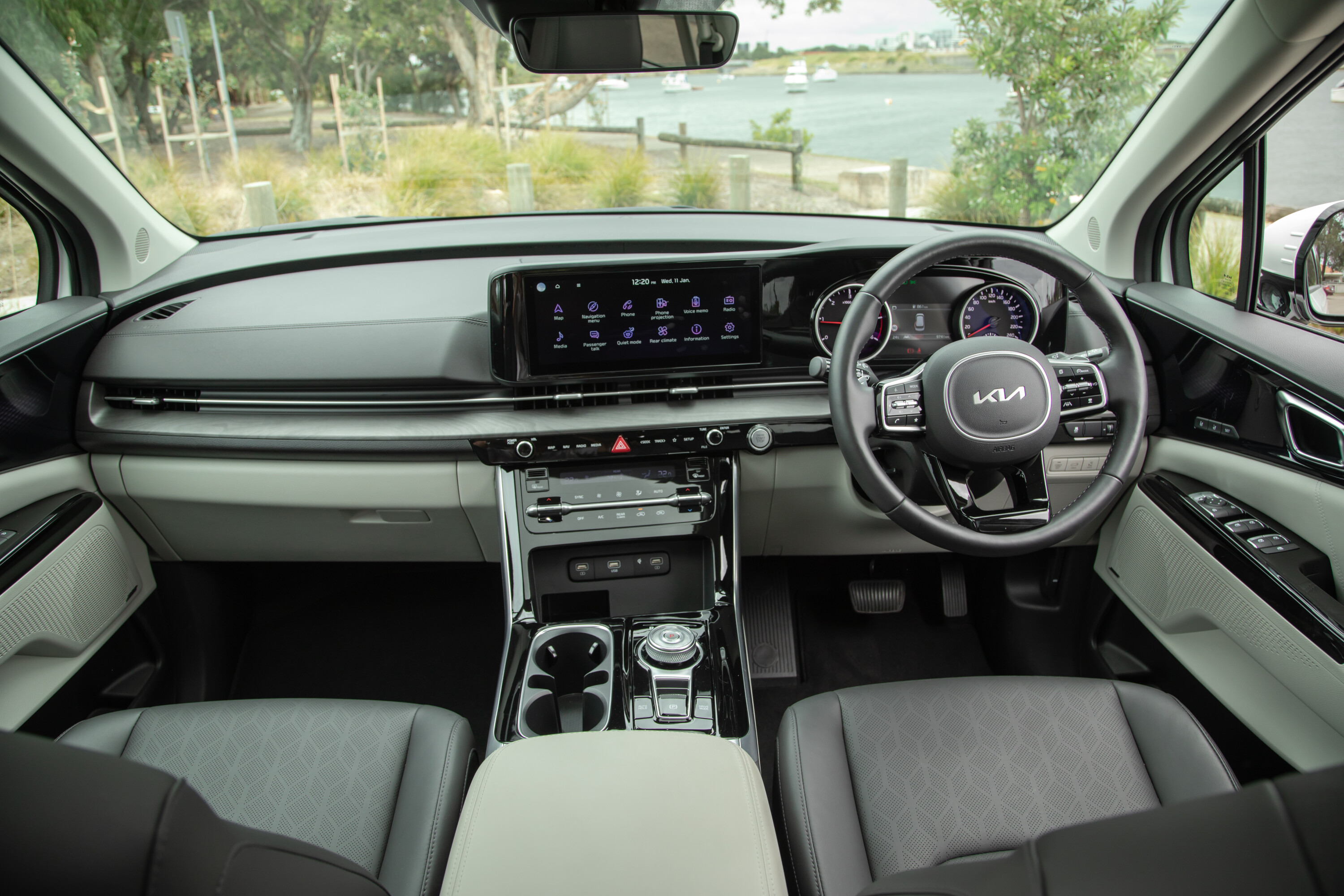
1
This pause in production stems from Kia’s decision to give precedence to the manufacturing of the 3.5-litre engine for international markets.
The SLi variants sits in third of the four variant line-up, meaning it’s really well equipped. Annoyingly, wireless Carplay is only available in the entry-level S grade, and not throughout the rest of the range.
| Kia Carnival SLi features | |
|---|---|
| 10-way power adustable driver’s seat | Front and rear parking sensors |
| 12.3-inch infotainment touchscreen | Hands free powered tailgate |
| 18-inch alloy wheels | LED headlights, fog-lamps and DRLs |
| 360-degree parking monitor | One-touch open sliding doors and tailgate |
| Adavanced smart cruise control | Power-folding heated door mirrors |
| Air-conditoning front and rear | Rear privacy glass |
| Apple CarPlay/Android Auto (wired only) | Reversing camera |
| Artificial leather seats | Roof rails |
| Auto folding heated door mirrors | Satellite navigation |
| Auto-dimming rear-view mirror | Smart key with push button & remote engine start |
| Digital radio DAB+ | Space saver spare wheel |
| Dual-zone climate control air-conditioning | |
1
Safety
The Carnival boasts a five-star safety rating from ANCAP, achieved in 2021, thanks to a comprehensive array of safety features available throughout the model lineup.
In terms of crash safety, the Carnival has performed exceptionally well, achieving scores of 90 percent for adult occupant protection and 88 percent for child occupant protection.
1
| Kia Carnival safety features | |
|---|---|
| 7 airbags | ABS |
| Stability and traction controls | Forward AEB (high and low speed) |
| Forward collision warning | Reverse cross-traffic alert |
| Multi-collision braking | Front cross-traffic alert |
| Lane departure warning | Lane-keep assist |
| Driver attention detection | Safe exit warning |
| Blind-spot monitoring | Reversing camera |
The Carnival’s advanced auto emergency braking (AEB) system is equipped with detection capabilities for both pedestrians and cyclists.
Additionally, despite its wealth of technology, the Carnival surprisingly lacks rain-sensing wipers, which, although not crucial for safety, are a notable absence.
Key rivals
With the Honda Odyssey, formerly a major competitor is no longer available in Australia. Its exit from the market is a contributing factor to the Carnival’s dominance in the people mover segment.
Other competitors to the Carnival include:
1
Should I put it on my shortlist?
The 2023 Kia Carnival SLi is a compelling option for those who prioritize space, comfort, and fuel efficiency in a family vehicle.
While its size may be daunting for some, the benefits of its expansive interior and diesel economy (without petrol currently available) make it a standout choice.
If you’re looking for a vehicle that can handle everything from daily commutes to family road trips with ease, the Carnival SLi Diesel is certainly worth considering.
MORE
Everything KIA
The 2024 Subaru Forester has surfaced online ahead of its November 17 reveal.
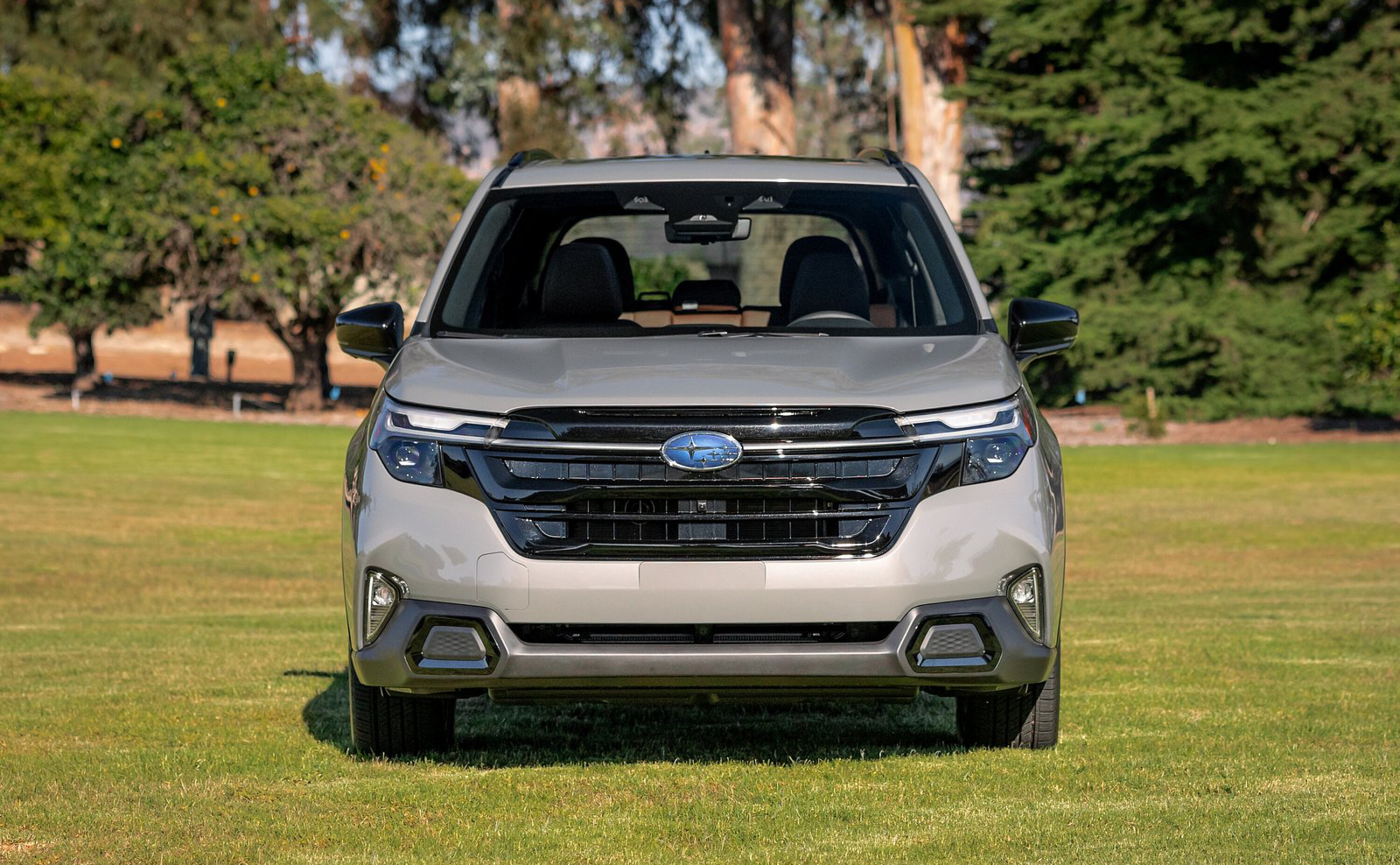
Subaru’s surprise was spoilt by the photo gallery, posted to social media site Reddit [↗], confirming the sixth-generation Forester will wear evolutionary styling with cues from the latest WRX, Outback and Crosstrek – as well as previous Foresters.
The updated front end sports a wider grille, new headlights with a slimmer DRL signature, more plastic cladding for the lower bumper, and slender triangular fog lamps.
1
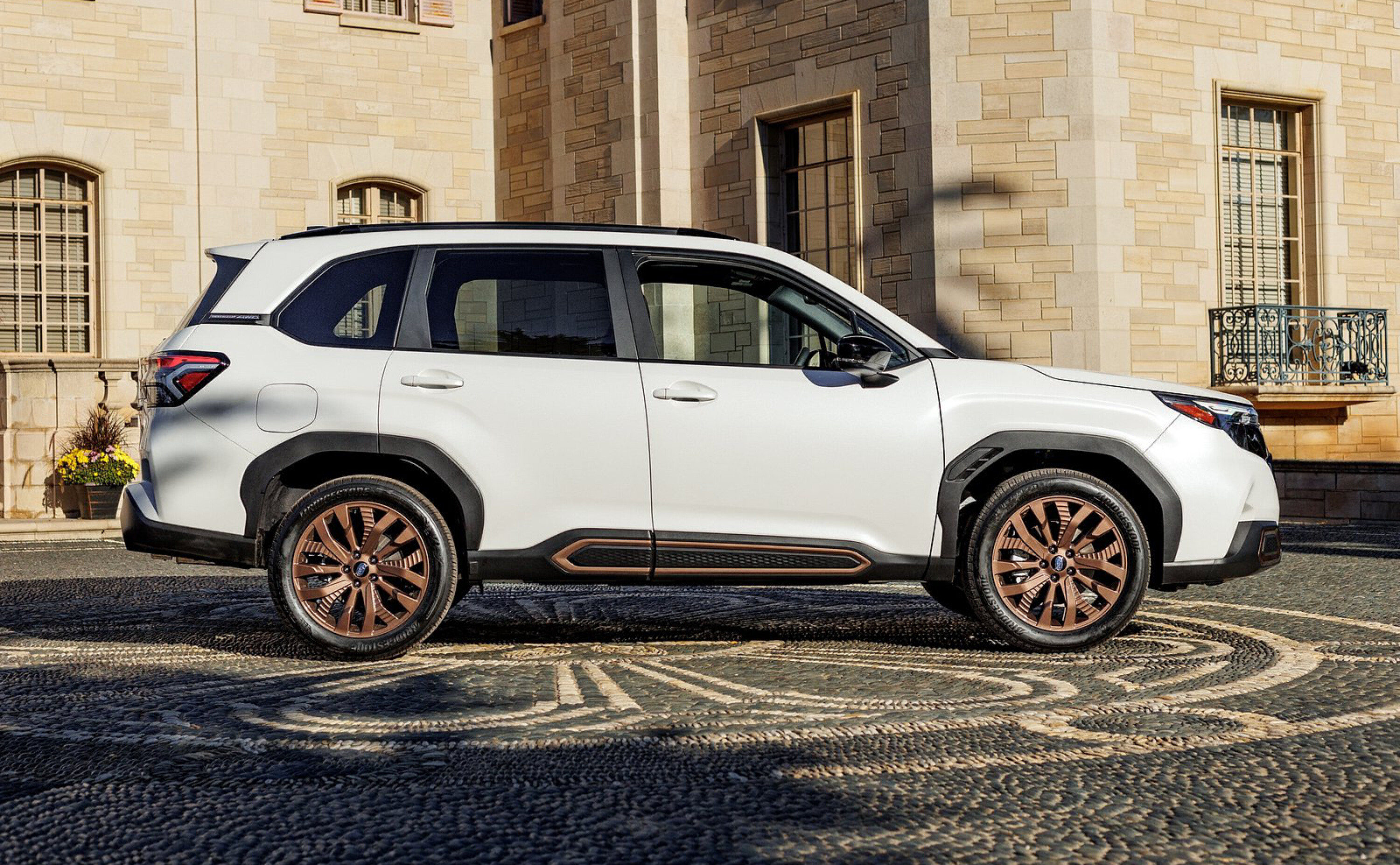
From the side, it appears Subaru was inspired by the third and fourth-gen Foresters, with the ever-so-slightly angular greenhouse of the current model replaced by rectangular, more open space.
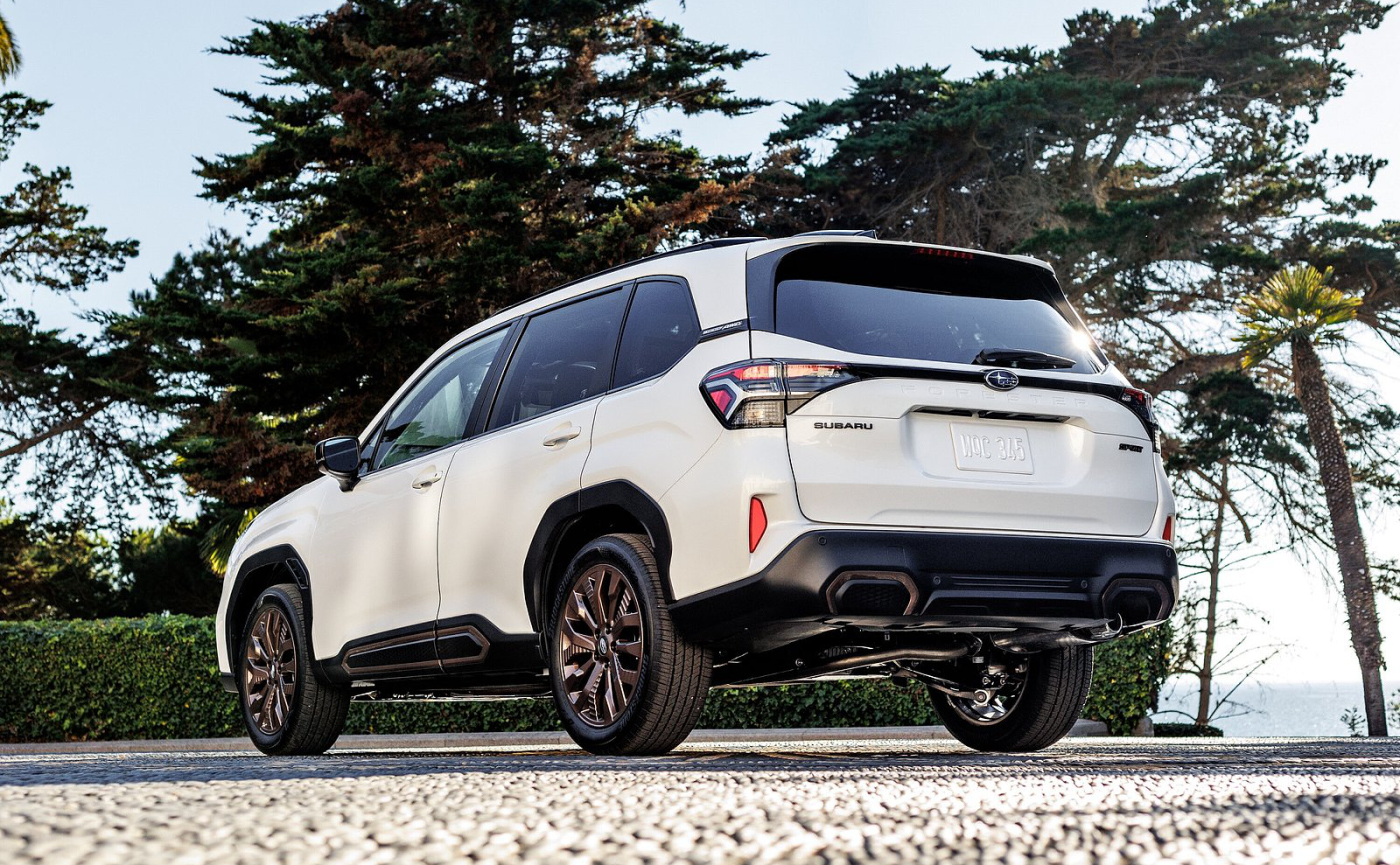
It also sports new-look alloy wheels with bronze highlights for the North American Sport variant, body cladding similar to the WRX and Crosstrek, and a prominent D-pillar line with ‘symmetrical AWD’ badging.
The brand’s lobster claw-shaped tail-light design – debuted in the current Forester and spread across the Subaru line-up – has been replaced with a new look, connected by a black strip running across the tailgate.
1
Chunkier plastic cladding also extends to the rear bumper, which continues the trend for fake exhaust outlets – but with a visible cutout for a small exhaust pipe on one side.
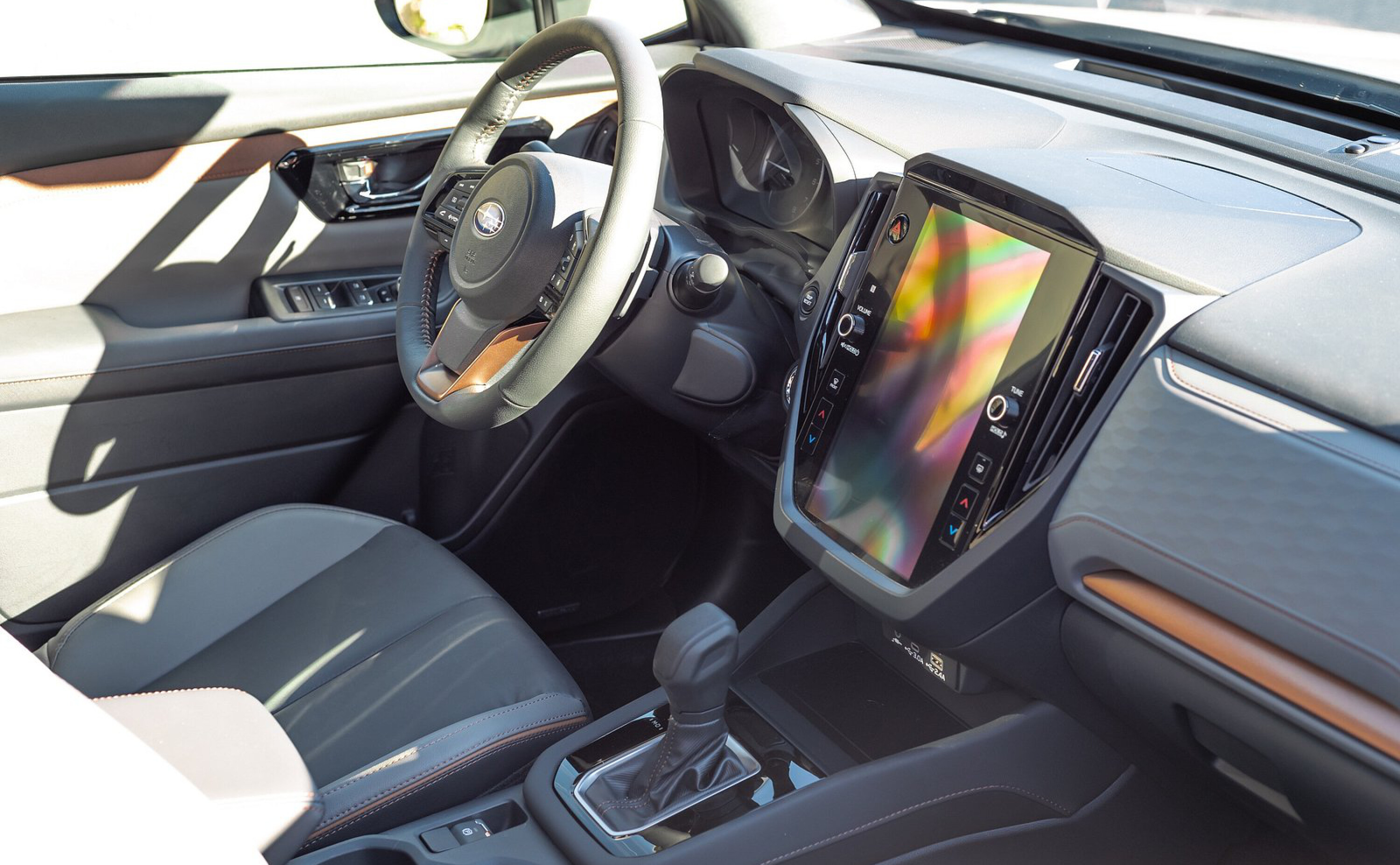
Inside, the new Forester again mimics the Outback, WRX and Crosstrek with a portrait-orientated infotainment system, fewer physical controls, USB-C charge ports, and what appears to be a wireless phone charger.
It is unclear if it will feature a full-digital instrument cluster, with the leaked images revealing a small central driver information display flanked by analogue dials.
1
A teaser released by Subaru last week said the new mid-size SUV is “an all-new fully redesigned vehicle”, though it’s expected to ride on familiar Global Platform underpinnings.
Under the bonnet, the existing 2.5-litre petrol flat-four is expected, along with a “stronger”, more powerful version of the 2.0-litre petrol-hybrid flat-four, hopefully improving acceleration and efficiency.
This will be followed by a turbo-petrol Forester XT – expected to share the Outback’s 183kW/350Nm 2.4-litre turbo – and off-road-focused Forester Wilderness variants.
1
Earlier this year, Subaru Australia managing director Blair Read said the brand had invested heavily in the sixth-generation Forester and plans to “bring its A-game” with the new model, which is confirmed for an Australian release next year.
“Forester is our number one selling model, and we need to bring our A-game in that segment, to keep Forester’s rightful place. So [our current] focus is [very much] on next-generation Forester,” he said.
The 2024 Subaru Forester will debut on November 17, Australian time, at the Los Angeles auto show.
MORE
Everything Subaru
Snapshot
- Prototype HiAce uses u2018hydrogen-to-iceu2019 and is powered by a 3.5-litre twin-turbo V6
- The prototype will be evaluated by several Aussie companies in a world first u2018pilot programu2019
- u2018Hydrogen-to-iceu2019 is cheaper the fuel-cell EVs to produce and brings no comprises to towing or loading ability, says Toyota
- HiLux and LandCruiser could be candidates for the same hydrogen powertrain, says Toyota
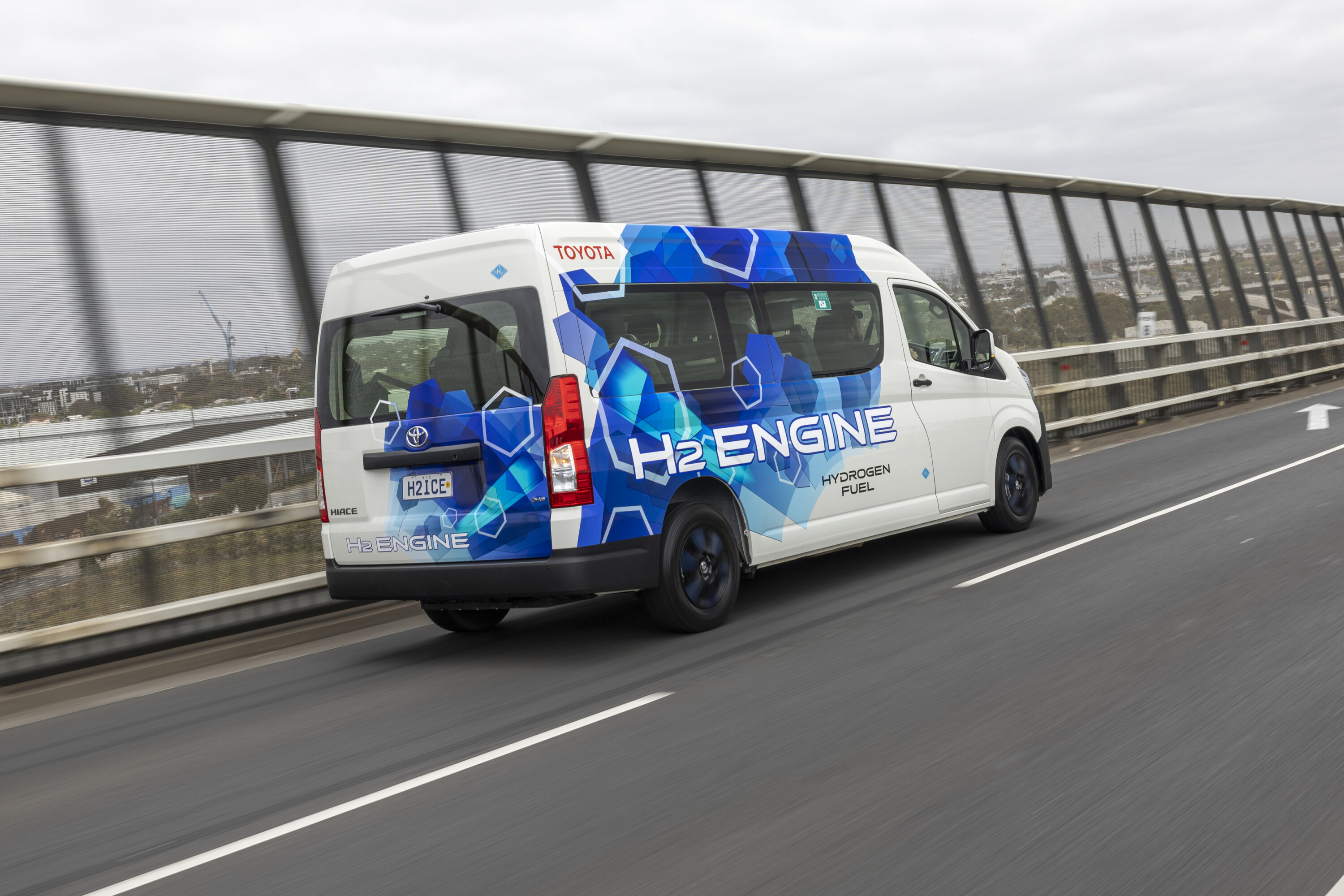
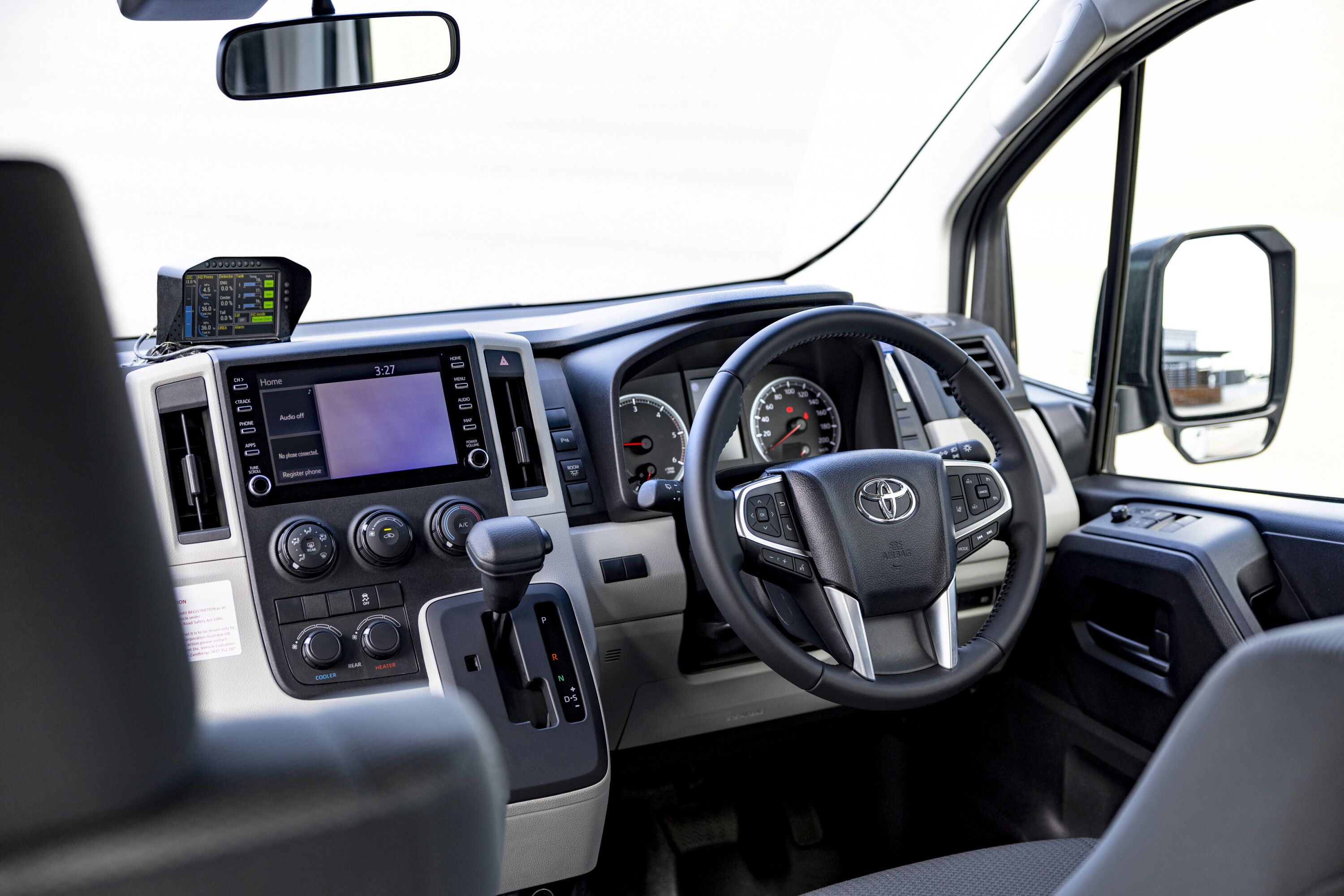
Toyota has revealed a hydrogen-fuelled version of its HiAce van that’s pitched as a more cost-effective way to drive a low-emissions vehicle.
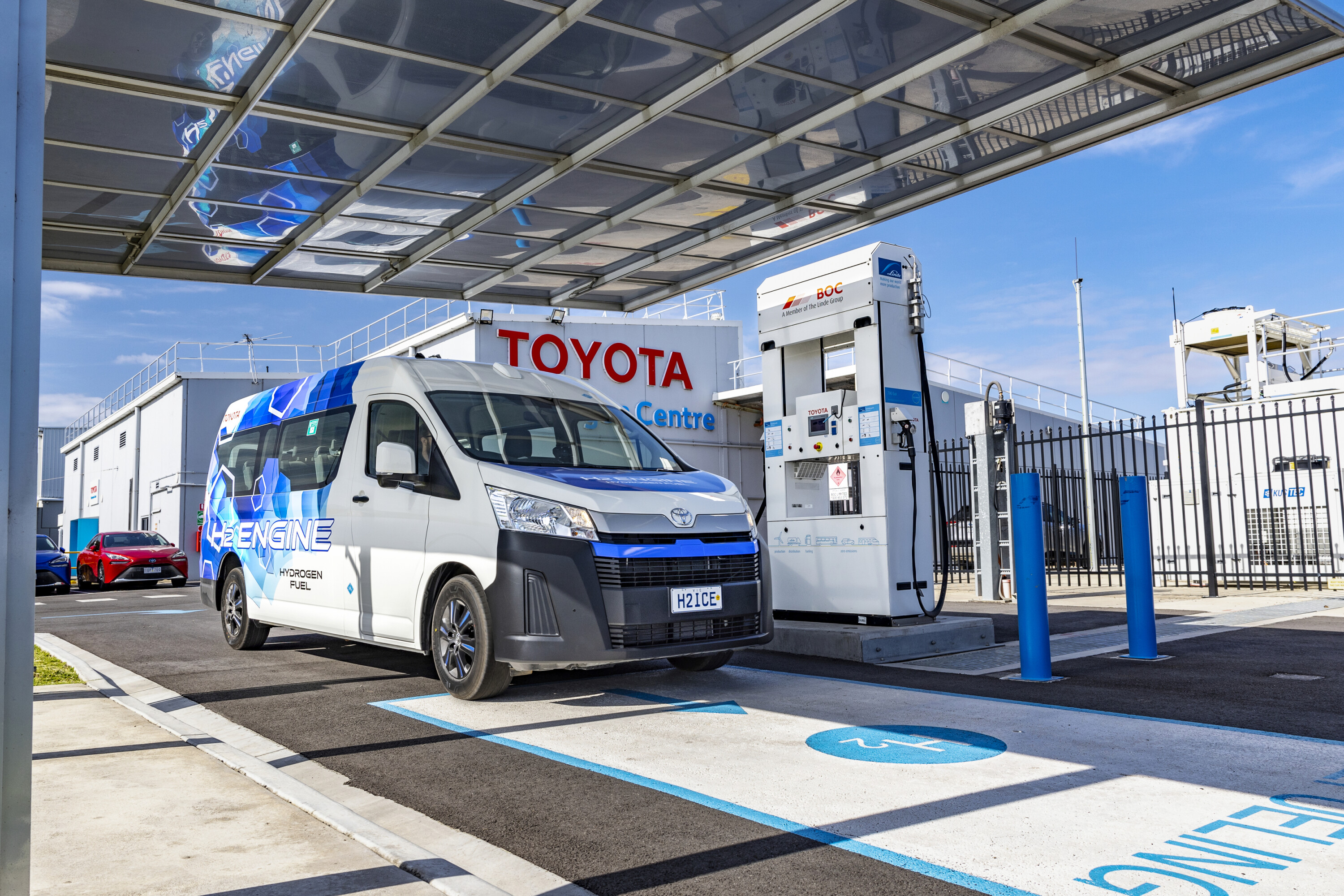
Revealed yesterday at Toyota’s hydrogen facility in Altona, the new prototype is powered by a 3.5-litre twin-turbo V6 that’s fuelled by hydrogen rather than petrol and doesn’t bring any compromises when it comes to towing or packaging.
Toyota also says its ‘hydrogen-to-ice’ tech is a cheaper alternative to existing fuel-cell EVs (FCEV) or battery electric vehicles (BEV) because most of the powertrain is based on existing hardware – the same V6 already powers the Lexus LX600.
1
“Importantly, we have used the proven petrol engine technologies which means we can keep the supply chain we have built up over many years,” said Mitsumasa Yamagata, the president of Toyota’s hydrogen factory.
“This reduces the amount we need to invest, which helps contain the overall development cost.”
The new model is yet to be confirmed for production but Toyota’s vice president of sales and marketing, Sean Hanley, said its price premium over a diesel HiAce van could be similar to Toyota’s current pricing for hybrid models.
“There will be some ‘up spec’ because there’s some development costs, but they’re nowhere near what it would be if you started from scratch to develop a whole fuel cell electric vehicle,” said Hanley. “So it’d be fairly close, you’re talking about 10 percent close. Maybe similar to hybrid right now.”
1
Toyota will use the hydrogen HiAce as part of a world-first ‘pilot program’ where it will be driven by several large Australian companies in order to evaluate the new powertrain tech for wider use in Toyota’s range.
The Toyota LandCruiser and HiLux are both possible candidates to receive the hydrogen-to-ice powertrain, with Toyota confirming it’s already exploring how to fit the LandCruiser with hydrogen power.
“Yes, there is the possibility to adapt into those large vehicles including LandCruiser,” said Mr Yamagata. “And again the advantage of this technology can be utilised in those vehicles including high towing and high loading.”
1
The prototype HiAce has a range of around 200km, although Toyota’s execs were quick to explain the production version would offer far more range.
“We are already working on much bigger hydrogen tanks and there’s also the possibility of adding our famous hybrid electric technology,” said Yamagata.
“What you see today is not the endgame, it’s the start” added Hanley. “So when you start to develop the technology and realise that you can put the bigger fuel tanks in it you’d be looking at a vehicle that could probably do 500, 600 or 700km on a tank with less than 10 minute refuelling.”
Performance is another potential area due for development. The prototype vehicle makes 120kW/354Nm, which is on par with a diesel HiAce, yet well down on the 305kW/650Nm that the same 3.5-litre twin-turbo V6 engine makes in the Lexus LX600.
1
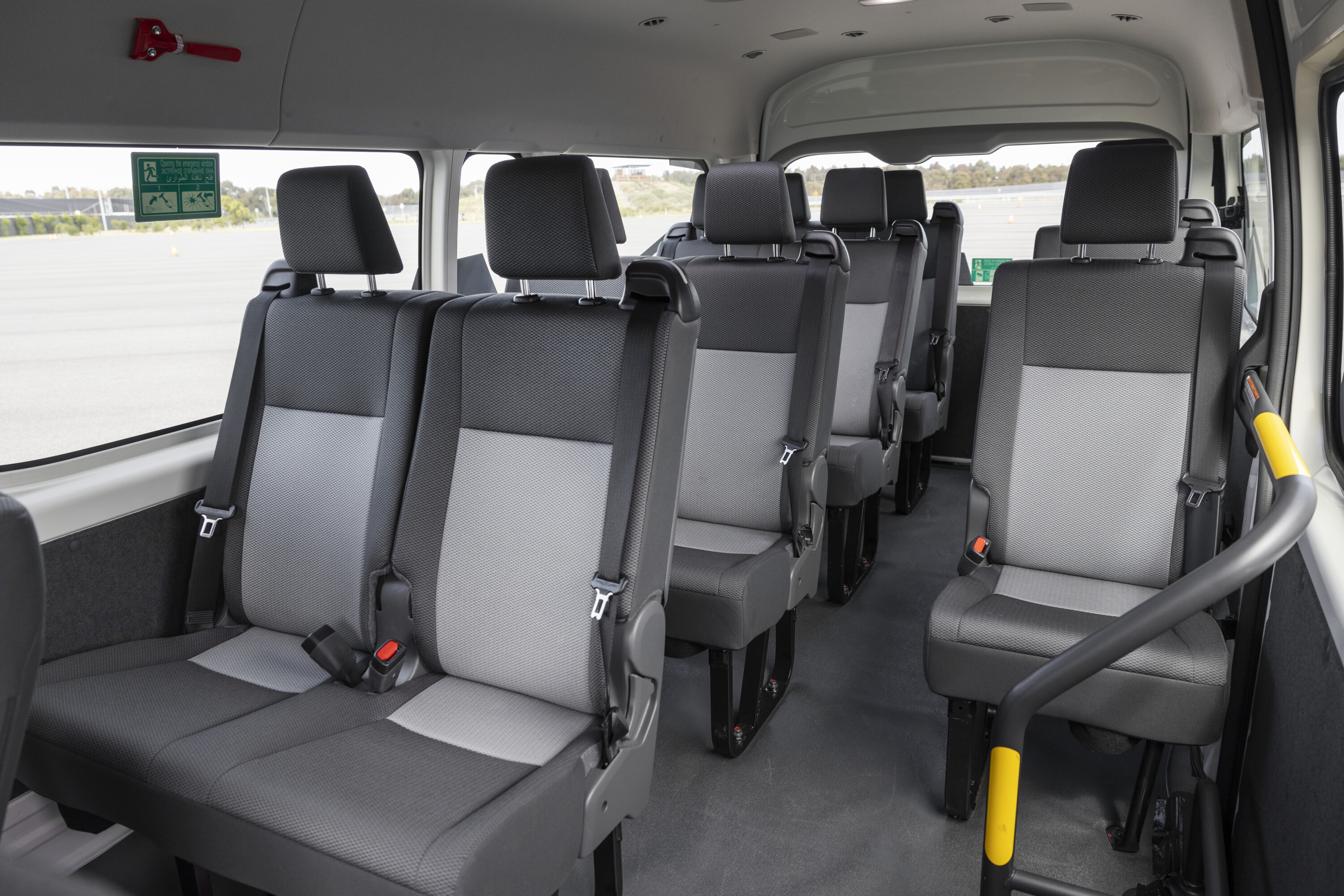
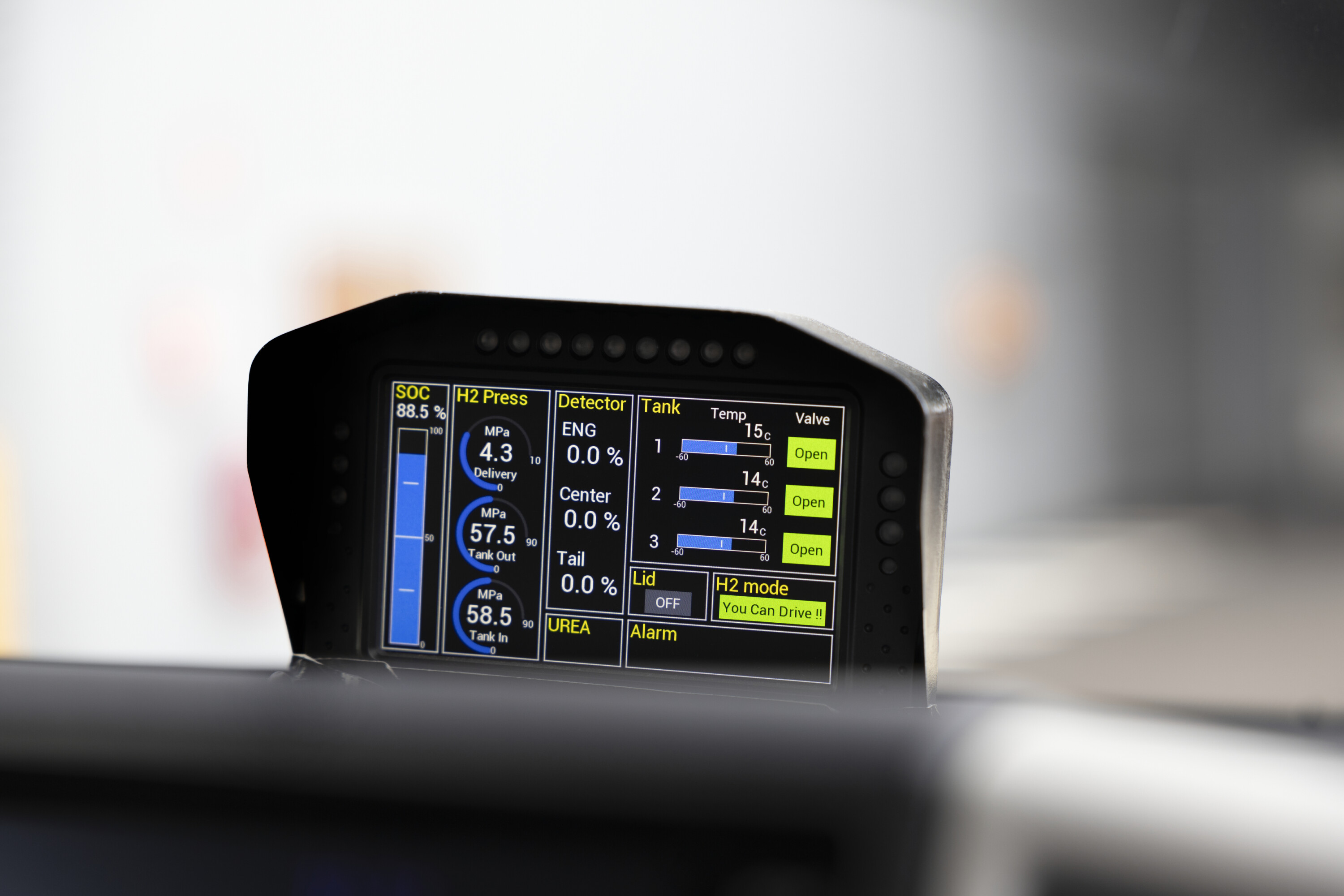
The prototype HiAce uses three hydrogen tanks, similar in layout to the Toyota Mirai FCEV, and it retains the same amount of luggage space and passenger room as a diesel-powered HiAce.
Towing capacity is another advantage of hydrogen-fuelled vehicles, says Toyota, and the prototype has a braked towing capacity of 1500kg.
While the hydrogen prototype has virtually zero C02 tailpipe emissions, it does produce a small amount of nitrogen oxides (NOx) as it still burns oil and needs to ignite the fuel inside the combustion chamber.
The prototype HiAce is the latest step in Toyota’s bid to be a world leader in hydrogen-powered vehicles.
1
A small fleet of Mirai FCEV sedans are currently on long-term leases to several Australian companies and in 2021 Toyota commissioned Victoria’s first hydrogen production, storage and refuelling facility in Altona.
And last month, Toyota and Hyundai signed an agreement with Ampol and Pacific Energy to increase the number of hydrogen refuelling stations in Australia.
Toyota isn’t the first company to explore ‘hydrogen-to-ice’ vehicles. Mazda launched the RX-8 RE in 2004, while the BMW Hydrogen 7, which used a 6.0-litre V12, was built in limited numbers between 2005-2007.
Both brands have since abandoned the concept.
MORE
Everything Toyota
