Mercedes-AMG has announced that its new GT XX prototype – a radical electric super-saloon previewing the next AMG GT 4-Door Coupé – has broken a series of distance records at Italy’s Nardò test facility. The most headline-grabbing achievement came when the car travelled 5480 kilometres in 24 hours, averaging 299 km/h and pausing only for ultra-rapid recharges at up to 900 kW.
The feat comfortably eclipsed the previous 24-hour benchmark of 3962 kilometres, set by Chinese brand XPeng earlier this month. Other recent attempts included Xiaomi’s YU7 Max (3944 km) and Mercedes-Benz’s own CLA electric prototype (3717 km).
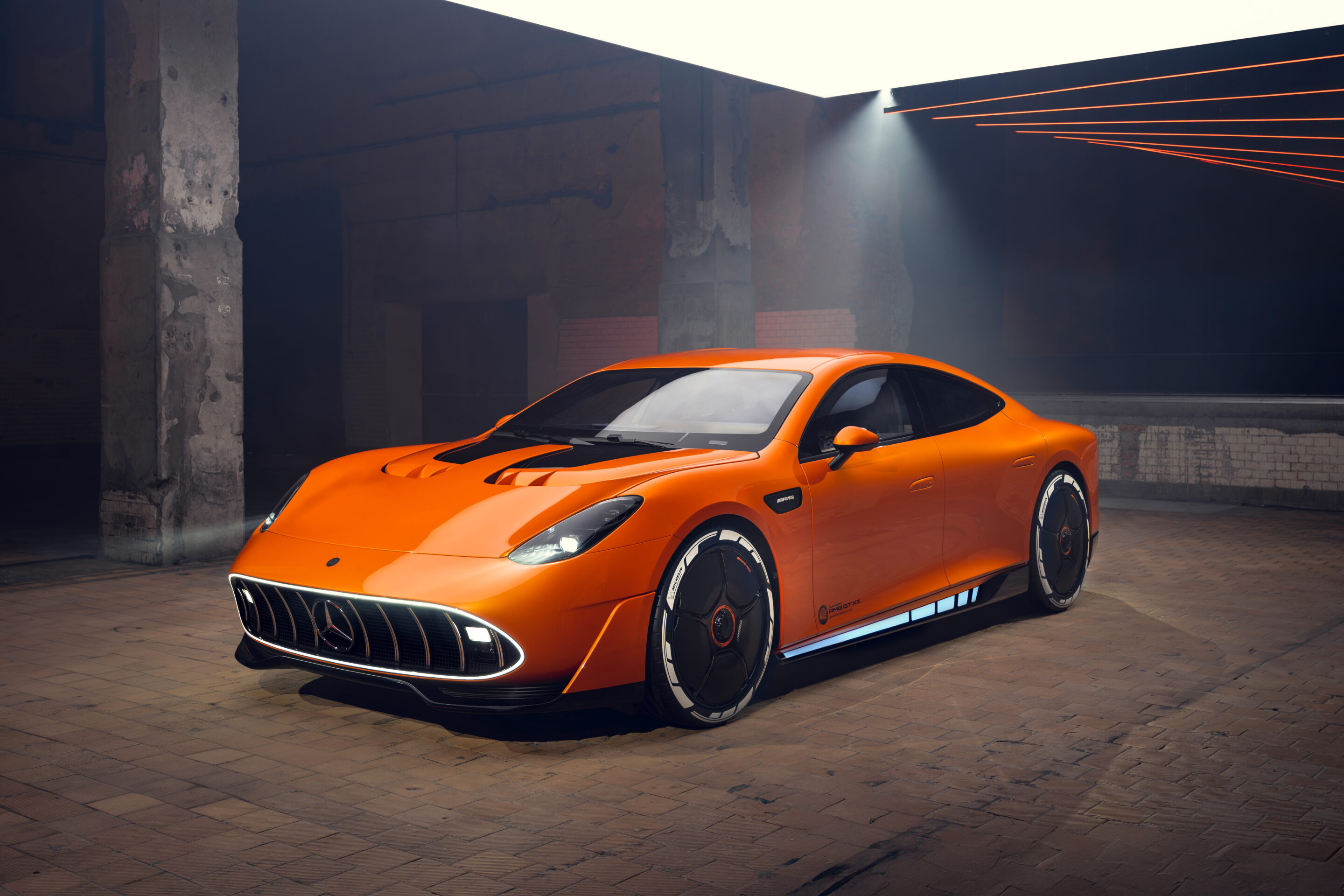
The GT XX’s record was just one part of an ambitious eight-day test programme, during which it set new endurance highs at intervals ranging from 12 hours to seven days. In its most remarkable run, the car circumnavigated the equivalent of Earth’s 24,907-mile (40,074 km) perimeter in just seven days, 13 hours and 24 minutes.
Two prototypes were used, supported by 17 professional drivers including Mercedes-AMG Formula 1 racer George Russell. Crews rotated in eight-hour shifts, with more than 100 engineers, logistics staff and a mission-control team at AMG’s German headquarters coordinating the effort.
At the heart of the GT XX is a sophisticated three-motor electric drivetrain built on AMG’s forthcoming AMG.EA 800-volt platform. With two axial-flux units at the rear and one at the front, the system produces 1,000 kW.
Feeding it is a 114 kWh cylindrical-cell battery, cooled by a unique oil-immersion system developed with input from Mercedes-AMG’s Formula 1 powertrain division. This setup sustains extremely high charging speeds, enabling a theoretical 400 km top-up in around five minutes.
CEO Michael Schiebe hailed the achievement, noting: “Enormous performance and extremely fast charging were always available and made these records possible. For customers, this confirms that our future EVs will be genuine AMGs.”
While still a concept, the GT XX points directly to AMG’s production future. The next-generation AMG GT 4-Door Coupé, due in late 2026, is expected to inherit its drivetrain, targeting 0–100 km/h in under 2.5 seconds and a top speed of 360 km/h.
Mazda is making its CX-60 midsize SUV more accessible with the launch of a new 2.5-litre Skyactiv-G petrol engine, available across Pure, Evolve and Touring grades. Priced from $44,240 manufacturer’s list price (MLP) for the entry-level Pure, the addition broadens customer choice and brings a lower-cost option into the premium-leaning SUV range.
The naturally aspirated G25 engine produces 138kW and 250Nm, driving the rear wheels through Mazda’s recently updated eight-speed automatic transmission. Fuel consumption is listed at 7.5L/100km combined, making it the most economical petrol-only variant in the CX-60 line-up.
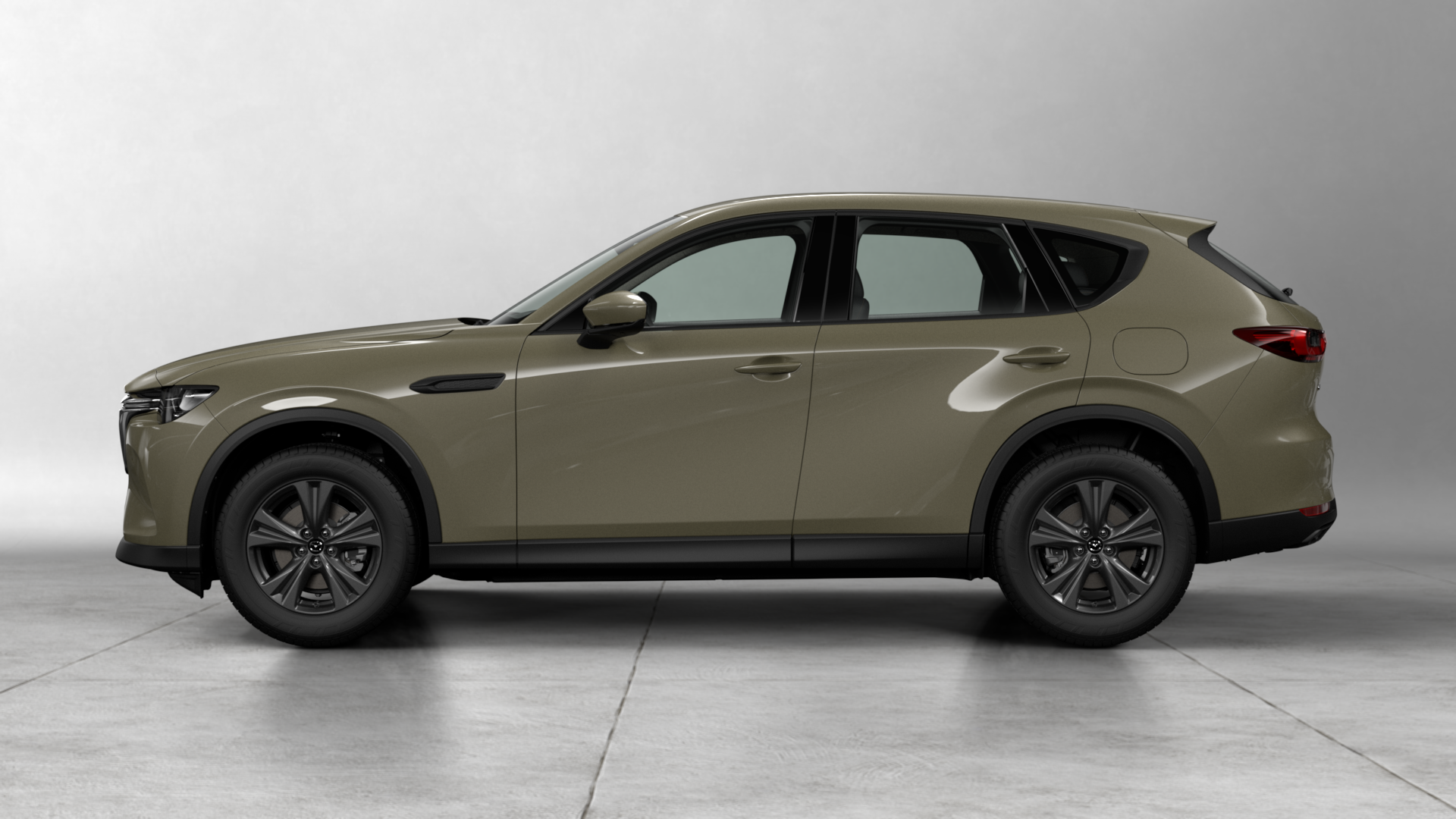
Pricing rises to $49,240 MLP for the mid-tier Evolve and $52,240 MLP for the Touring, while Mazda has also confirmed an introductory offer of $47,990 driveaway for the Pure, aimed at drawing buyers looking for value in a competitive segment.
Equipment levels mirror those of the existing six-cylinder CX-60s, with standard inclusions such as Mazda’s full suite of i-Activsense safety technologies, large infotainment displays, and the brand’s KODO design language. Customers also retain a wide choice of finishes, with eight exterior paint colours available, including premium Takuminuri shades like Soul Red Crystal Metallic and Rhodium White Metallic.
Mazda Australia expects the new G25 to be a popular option, forecasting it will account for around one third of CX-60 sales annually. The move responds to customer demand for a more affordable entry point without sacrificing key features or design appeal.
Mazda Australia Managing Director Vinesh Bhindi said the expansion underlines the brand’s focus on value and accessibility: “The addition of the G25 to the CX-60 range ensures consumers have even more choice. With its proven powertrain, elegant design and strong equipment list at a compelling price, it enhances accessibility to our premium SUV.”
The Mazda CX-60 G25 is on sale now, with the first customer deliveries expected to commence next month at dealerships nationwide.
Mazda CX-60 G25 Pure
- 10.25-inch full colour widescreen display (Mazda Connect)
- 18-inch grey metallic alloy wheels
- 360° view monitor
- 7-inch TFT LCD multi-information meter display
- 8 speaker audio with DAB+
- Apple CarPlay® and Android Auto™ (wireless and USB)
- Auto-dimming rear-view mirror
- Black cloth seat trim with 8-way manual driver’s seat adjustment
- Blind Spot Monitoring (BSM) with Vehicle Exit Warning
- Dual-zone climate control with rear vents
- Exterior mirrors with power adjustment, auto fold, heating and auto dimming
- Front & Rear parking sensors
- Leather shift knob
- Leather steering wheel
- LED headlamps with auto on/off and High Beam Control (HBC)
- Rear console with USB-C
- Satellite navigation
- Smart Brake Support (SBS) with Turn-across traffic
Evolve adds:
- 12.3-inch TFT LCD multi-information meter display
- 360° view monitor with see through view
- Black Maztex trim with 8-way manual driver’s seat adjustment
- Cruising & Traffic Support (CTS)
- Driver monitoring
- Front Cross Traffic Alert (FCTA)
- Remote operated power tailgate (open/close)
- Wireless phone charger
Touring adds:
- Black leather seat trim
- Exterior mirror memory
- Heated front seats (driver and passenger)
- Power seat adjustment (driver & passenger) with position memory (driver)
- Rear console with LED lamp
Pricing
| CX-60 Model Grade | Engine | Drivetrain | MLP |
|---|---|---|---|
| Pure | G25 2.5L Naturally Aspirated Petrol | RWD | $44,240 |
| Evolve | G25 2.5L Naturally Aspirated Petrol | RWD | $49,240 |
| Touring | G25 2.5L Naturally Aspirated Petrol | RWD | $52,240 |
Authenticity. It’s a quality that car manufacturers value above almost all others. It’s something that drives the decisions in boardrooms, that shapes how and why cars are made and which speaks of integrity and the power of the brand. The new Haval H7 has many admirable qualities. Yet authenticity doesn’t seem to be one of them.
Spot one on the road and it looks for all the world like a slightly less boxy version of its cousin, the GWM Tank 300. The styling features what Haval describes as a “rugged and capable presence” with what looks to be decent ground clearance, tight overhangs and black moulded wheelarch protection. Then you consult the spec sheet and realise that the sole variant Haval is importing is a front-wheel drive hybrid.
Before we decry this vehicle as a bit of a fraud, it’s worth pointing out that an all-wheel drive model does indeed exist, but it’s not yet slated for import. That may change. But first impressions count. The BMW Z3 never got over its reputation as a bit fey, largely because the first version imported was a feeble 1.9-litre version, and no amount of fire-breathing M models could change that.

We also lose one of the car’s most distinctive features – its Chinese-market ‘Big Dog’ badge – but perhaps that’s for the better. Strangely, the original Big Dog was sold in export markets as the Dargo – a uniquely Aussie name. Whereas in China, the Second Generation Big Dog gets a 240kW/539Nm plug-in hybrid system driving all four wheels, our version is a far simpler, and more affordable, confection.
Priced at $46,990 drive-away in the sole Vanta trim level, the H7 features a 1.5-litre petrol engine that’s mated to an electric motor that combines for 179kW/530Nm and rides on the B30 Lemon platform. Yes, really. There is a 2.0-litre turbo petrol AWD version also on sale in China, with a 9-speed DCT, but that makes 180kW and 370Nm, so what you’d get in terms of traction advantage you’d lose in power and torque. So count your blessings.
The Haval H7 is a decent size. At 4705mm long, it’s longer than a Toyota RAV4 (4615mm) or a Subaru Forester (4640mm), and that bluff profile means there’s plenty of headroom inside. I can quite comfortably sit behind my driving position and I’m reasonably tall (193cm). There’s a decent amount of foot space under the front seats, so this is most certainly a vehicle that can accommodate taller rear passengers. Despite that extra length, Haval hasn’t felt tempted to crowbar another pair of rear seats into it, which is probably wise.
At present, there are only four colour options, of which only Hamilton White comes without an additional $495 fee. Should you want another paint finish, you have the option of Dusk Orange, Moon Grey or Golden Black.
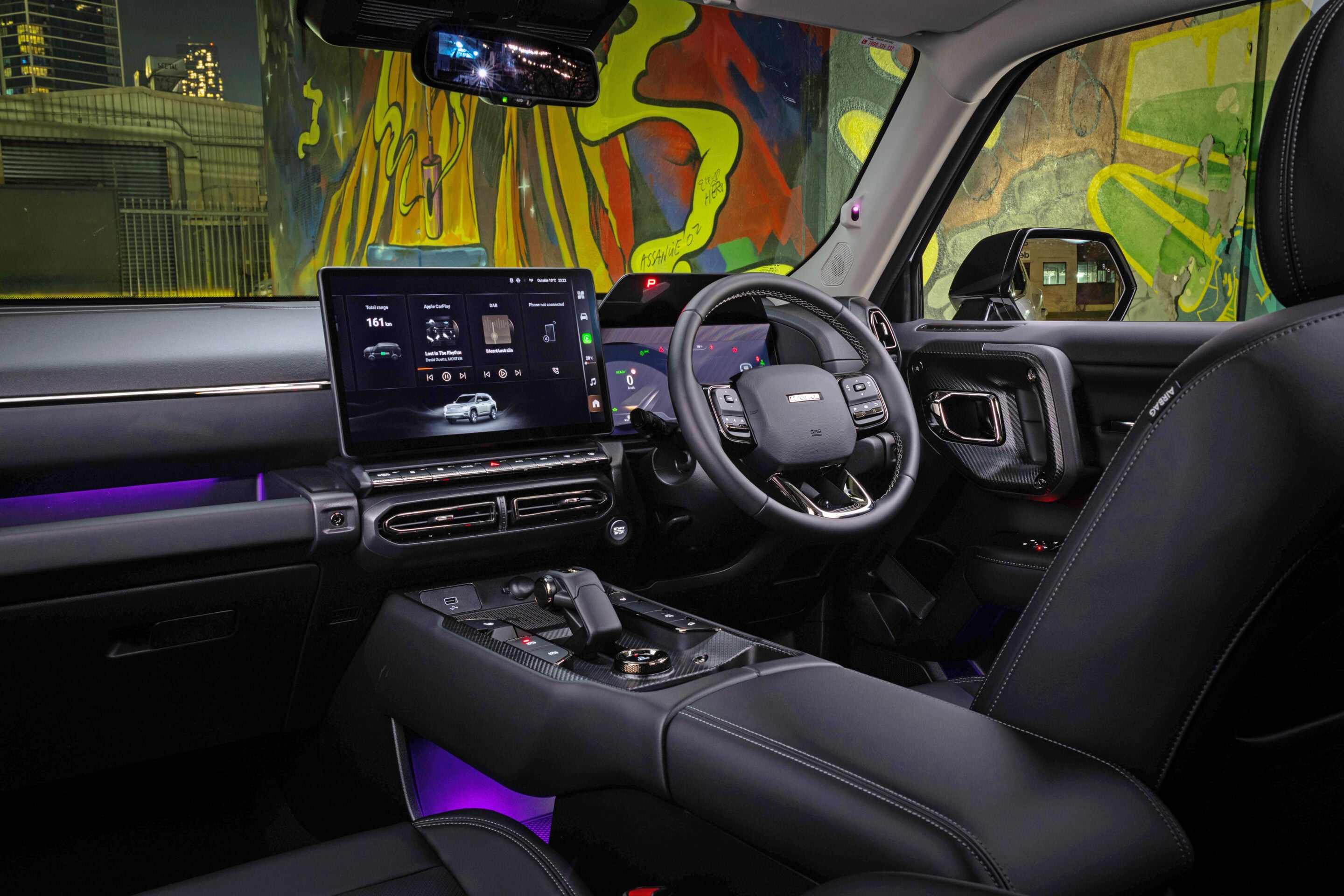
The cabin features an incredibly varied array of trims and finishes. Sitting in the driver’s seat, I can see soft-touch grain for the dah roll-top, hard-finish grained plastic elsewhere, stitched leather for the armrests and steering wheel, chrome for the door pulls, smoked chrome for the vents and steering wheel garnishes, brushed aluminium effect for the trims housing the window switches, a matte plastic for the vent surrounds, knurled chrome for the piano-style buttons and mock carbon fibre effect on the door mouldings and centre stack. It’s a lot.
Elsewhere, your eye alights on the big 14.6-inch centre screen, the weirdly bulging interior door catches and the gear selector that looks like some body part from a Terminator robot. Overhead, the colour palette switches from dark to pale, there’s a sunglasses holder for the world’s tiniest pair of shades and a big dual-pane sunroof.
Cabin storage is good, with clever extending fabric bands to keep bottles in their door pockets, a deep centre bin, a decently sized glovebox, a grippy and visible wireless charger for your phone, and a pair of cupholders in the centre that can extend the passenger holder for deeper bottles of big cups. What’s not so clever is the array of device charging options, with just one USB-A up front and one in the back. Rear seat occupants will have to fight over that one outlet, and they get no separate Air conditioning zone either, with just a knee-height vent available. The glass roof stops it feeling too gloomy back there, and there’s plenty of space for two, with a fold-down armrest revealing another pair of cupholders, but no post-through ski aperture.
Pop the tailgate and it motors up slowly to reveal a decently low loading lip and a flat, carpeted boot floor. The tailgate itself feels a little low at its highest extent, and there’s no auxiliary power routed to the luggage compartment. There are four lashing points, but there’s no spare wheel beneath the floor – just a polystyrene tray holding the towing eye, emergency tyre foam and inflator and a couple of other sundries. There’s also a label indicating that the boot floor has a weight limit of 100kg.
The boot is a reasonable size though, measuring 483 litres with the rear seats in position and the shape is good. You can’t drop the rear seats by pressing a button in the luggage compartment as you can with some rivals, but fold them nearly flat yourself and that frees up to 1362 litres of space. There’s no obvious stowage location for the rear cargo blind, and small details like this matter when you’re trying to maximise the space available. There are three top tether points and ISOFIX bindings on the two outer berths in the rear seats.
Press the start button and the Haval H7 comes to life in a mannered fashion. It passes the 10-metre test well, offering a refined throttle tip-in, a well-oiled feel to the steering, low noise levels and decent initial impression of body control. Perhaps the macho styling had lulled me into expecting something a little more agricultural, but that was a pleasant discovery.
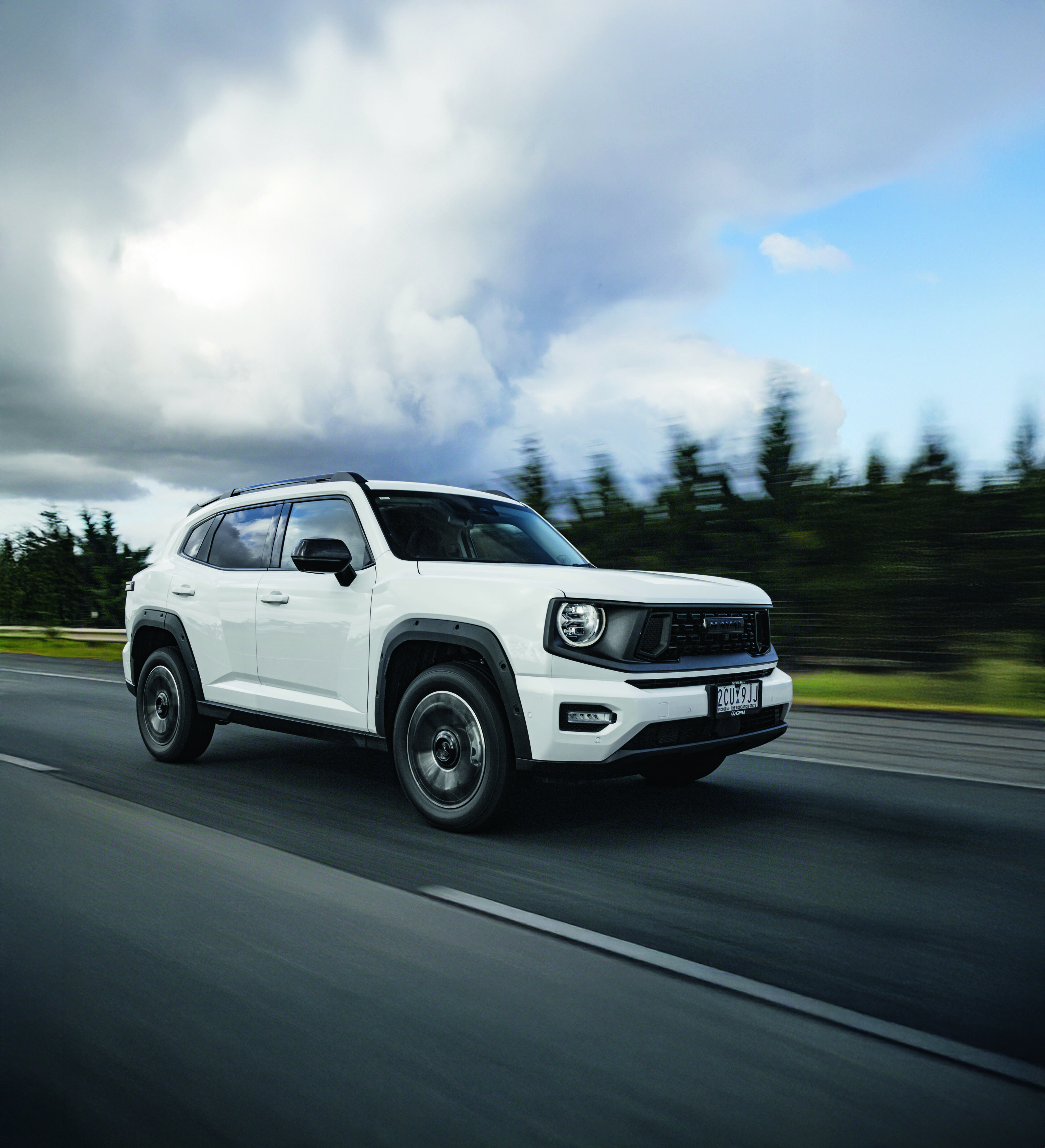
Out on the open road, the H7 notches up more points in the credit column. Twist the rotary drive mode dial into Sport and that throttle map takes up a little of the slack from the driveline, although switching into that mode is accompanied by the sound of a racing car flying past, which I could probably live without. Body control is generally good, with only a few sharper intrusions sending some bump and thump through the suspension to the passenger cell. The 235/60 R19 Giti GitiComfort F50 tyres are reasonably good, with enough sidewall to help the suspension out.
It’s not what you’d call quick, but it never feels notably underpowered, and the transition in and out of the internal combustion engine is never uncouth. The brakes take a little getting used to, as the re-gen isn’t as powerful as initially you might expect. A true one-pedal drive mode is available, and this is also quite gentle in its initial application of retarding force. It’s something you’d get used to, and the benefit of that is that there’s little of the nausea-inducing lurching that some electrified cars exhibit in this mode. You will have to leave a little more space ahead of you if you’re intent on saving the brake pads though.
On a more challenging piece of road, it’s fairly easy to find the outer bounds of the Haval H7’s comfort zone, with some fairly intrusive stability control interventions telling you to ease things back, while on larger bumps and compressions, the hazard lights occasionally flick into action. That’s not an issue you’ll have with typical use-cases though. Overall, it’s a well-judged dynamics package that will only feel a bit underdone if you’re looking for a truly sporty medium SUV. After all, there is no physical way to change gear; no paddles, no manual mode on the gear lever.
On dirt roads, the H7 fares reasonably well, coping with corrugations adeptly. There’s no specific off-road drive mode or traction control setting but there is a hill descent control function that feels crude but effective. The limitations of tyre grip intervene way before the 200mm ground clearance is likely to become an issue, and the front tyres can scrabble a little when modest throttle is applied on a loose surface hill. You’ll also find a degree of front wheelspin when accelerating out of a side road on dry bitumen too, as 530Nm through the front treads is the same amount of torque that a Porsche 911 Carrera S puts through its rears.
The driver assists can be modestly intrusive though, especially the attention assist, which is quick to admonish any transgressions. The overspeed warning and the lane-departure warning also sound intermittently, although the chimes are soft. The rear parking camera had a malfunction on test, intermittently displaying a black screen and then cycling through views. Haval needs to take a leaf from Renault’s book and rather than have you swiping through screens to set your ADAS preferences, it needs to default them all to on and then have a memory button, much like for driving position, that then clicks them into your mode.
On our test route, the Haval H7 returned a combined fuel figure of 6.5L/100km versus a claimed figure of 5.7L/100km. That’s a bit more than you’d expect to consume in a RAV4 hybrid, but it’s not bad given the amount of torque on tap and the fact that this feels almost a half-size up from even the spacious Toyota. On the plus side, it can drink from the 91RON bowser.
Other quirks? The indicator sound is very loud, and the indicators have two modes: a one-touch setting which blinks the indicators three times with a quick flick of the wand and then the normal self-cancelling setting. Woe betide you hold the indicator on for longer than the one-touch setting when changing lanes on a main road though. The blinkers will go into their normal setting and they won’t cancel. You’ll motor up the freeway switching from indicating left to indicating right. A confirmation swipe in the direction they’re set to doesn’t work, and nor will keying the car off and on again. The only solution I could hit upon was to park the car and then give enough counter steering input to cancel the indicators. It’s not ideal and needs some remedial work.
The infotainment system is generally good, and it’s easy to flick in and out of Android Auto or Apple CarPlay back to Haval’s native environment. Somewhat curiously, most of the HVAC settings are on physical piano keys apart from the most obvious one, the temperature settings, which still requires swiping at the screen to execute. The quality of the 8-speaker stereo system isn’t great for audiophiles, although it’s okay for podcasts. On the plus side, the head-up display is bright, easily configurable and very clear.
At present, there’s no ANCAP rating but the safety suite is extensive, with seven airbags, AEB junction assist, adaptive and intelligent cruise control, traffic sign recognition and front collision warning that recognises cyclists and pedestrians. There’s also tyre pressure monitoring, trailer sway mitigation and a 360-degree surround view camera. The braked towing limit is 1500kg, with an unbraked towing capacity of 750kg.
The H7 features a generous 7-year/unlimited kilometre warranty, an 8-year/unlimited kilometre battery pack warranty, 5-year roadside assistance, and 5 years of capped price servicing, although GWM has yet to decide what that price cap will be.
The Haval H7 offers a lot for $46,990, especially when the long warranty is factored into the equation. It’ll work for those looking for a smart-looking and spacious SUV for a growing family that won’t break the bank yet which features a decent draft of modern amenities. There’s a whole swathe of medium SUV buyers who are looking for exactly this blend of qualities. Some may dismiss them as undemanding, low-involvement buyers. We’d say they’re quite the opposite: pragmatic enough to understand their requirements and savvy enough not to overspend on excess capability.
If you want more, an all-wheel drive Subaru Forester hybrid starts at $46,490 plus on roads, and sacrifices boot space and visual impact for genuine all-weather grip and a badge that speaks volumes to generations of Aussies. There will also be a number of buyers sitting on their money until they’ve seen the all-new Toyota RAV4.
That’s as maybe. For the here and now, Haval has built an interesting and not unattractive medium SUV that brings a lot of tech, no shortage of space and a unique look and feel; to the market at a keen price. It’s not perfect, but its shortcomings are relatively easily rectified. The company describes this H7 as a bit of a toe in the water for Australia, with other models waiting in the wings. They’ll add something that this one currently feels a little short of. Authenticity. If that doesn’t bother you, there’s a lot to like here.

Specs
| Model | Haval H7 Vanta |
|---|---|
| Price | $46,990 drive-away |
| Engine | 1498cc 4cyl petrol hybrid, DOHV, 16v, turbo |
| Transmission | Dedicated hybrid transmission |
| Drive type | Front-wheel drive |
| Peak power | 179kW |
| Peak torque | 530Nm |
| 0-100km/h | 9.5 sec (tested) |
| Fuel consumption | 5.7L/100km (claimed) 6.5L/100km (tested) |
| Fuel tank size | 61 litres |
| CO2 emissions | 131g/km |
| L/W/H/WB | 4705/1908/1780/2810mm |
| Kerb weight | 1810kg |
| Available | Now |
Liverpool City Council has come under fire after confirming it spent nearly $140,000 on the installation and swift removal of a controversial roundabout in Austral in western Sydney that baffled motorists and went viral worldwide.
Nicknamed the “Diamondabout”, the oddly shaped intersection at Twenty Eighth Avenue and Fifteenth Avenue opened on June 20, only to be painted over less than a week later. Confused drivers were caught on aerial footage performing awkward manoeuvres, with one car seen in aerial footage performing a three-point turn to clear the sharp corners.
Council documents reveal the roundabout had originally been intended as an oval design, but amendments between Transport for NSW, council’s design team and its traffic committee saw a non-standard diamond layout approved in February, reports the Sydney Morning Herald. Officials were warned about potential compliance issues as early as October last year, but the final plans still went ahead.
The project cost $92,885 to build, followed by a further $53,914 to remove and remediate the site, bringing the total spend to $139,937. Give-way signs have since replaced the markings.
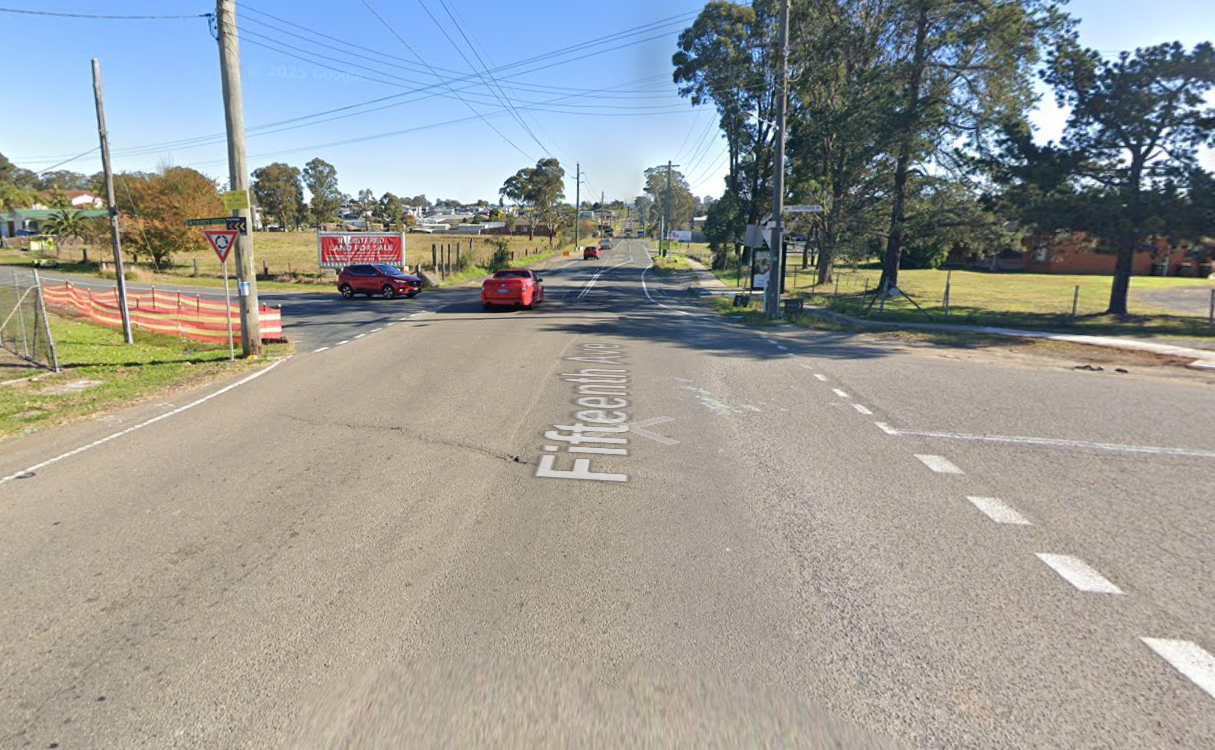
The diamond roundabout was one of six traffic-calming devices installed in Austral after residents petitioned for safety improvements to the congested Fifteenth Avenue corridor, a key route earmarked for major upgrades ahead of the opening of Western Sydney Airport. Both Prime Minister Anthony Albanese and NSW Premier Chris Minns have pledged $1 billion to transform the road into a state-owned transit corridor.
Councillor Peter Ristevski, a vocal critic of the project, said the fiasco had embarrassed not just Liverpool but Sydney as a whole. “This episode went viral globally and has left the council looking like an international laughing stock,” he said. “The waste of ratepayers’ money is unforgivable.”
Council has promised lessons have been learned. A spokesperson said the matter has been fully investigated and findings will be tabled at Wednesday’s council meeting. “The lessons are already shaping improvements to how we plan and deliver future traffic projects,” they said.
The embarrassment comes as Liverpool Council is already under scrutiny, with the NSW Office of Local Government conducting an inquiry into allegations of dysfunction, maladministration and mishandling of state grants.
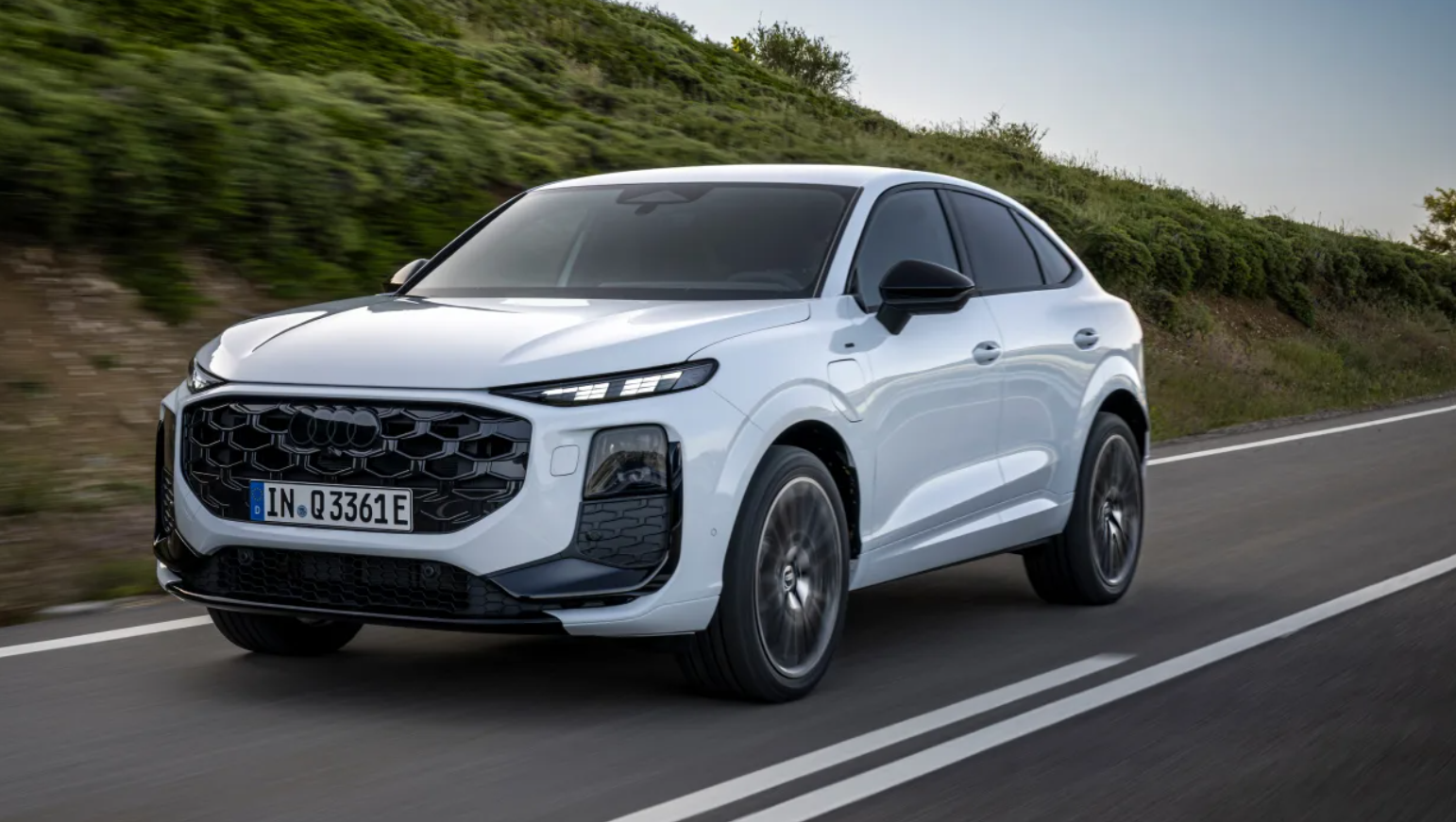
Audi has unveiled the Q3 Sportback, a swooping, coupe-styled version of its popular compact SUV. Arriving later this year, it will sit alongside the standard Q3 in showrooms, offering a more stylish option in a segment where rivals include the BMW X1 and X2, as well as the Mercedes-Benz GLA.
The Sportback variant carries a modest price premium of around $2,925 over the regular Q3, which means UK pricing is expected to start from roughly £38,300 (A$74,700). Audi is counting on its distinctive looks and expanded powertrain line-up to attract design-conscious buyers who also want efficiency and practicality.
The main difference between the Q3 SUV and the Sportback is its revised roofline. The body sits 28mm lower, with slimmer side glass, a new rear window, and a more sloping roof for a coupe-inspired silhouette. Audi’s latest design language is evident across the model, with a broad grille, sculpted headlights, and large alloy wheels. Buyers will also be able to option advanced Digital LED headlights and OLED tail-lights.
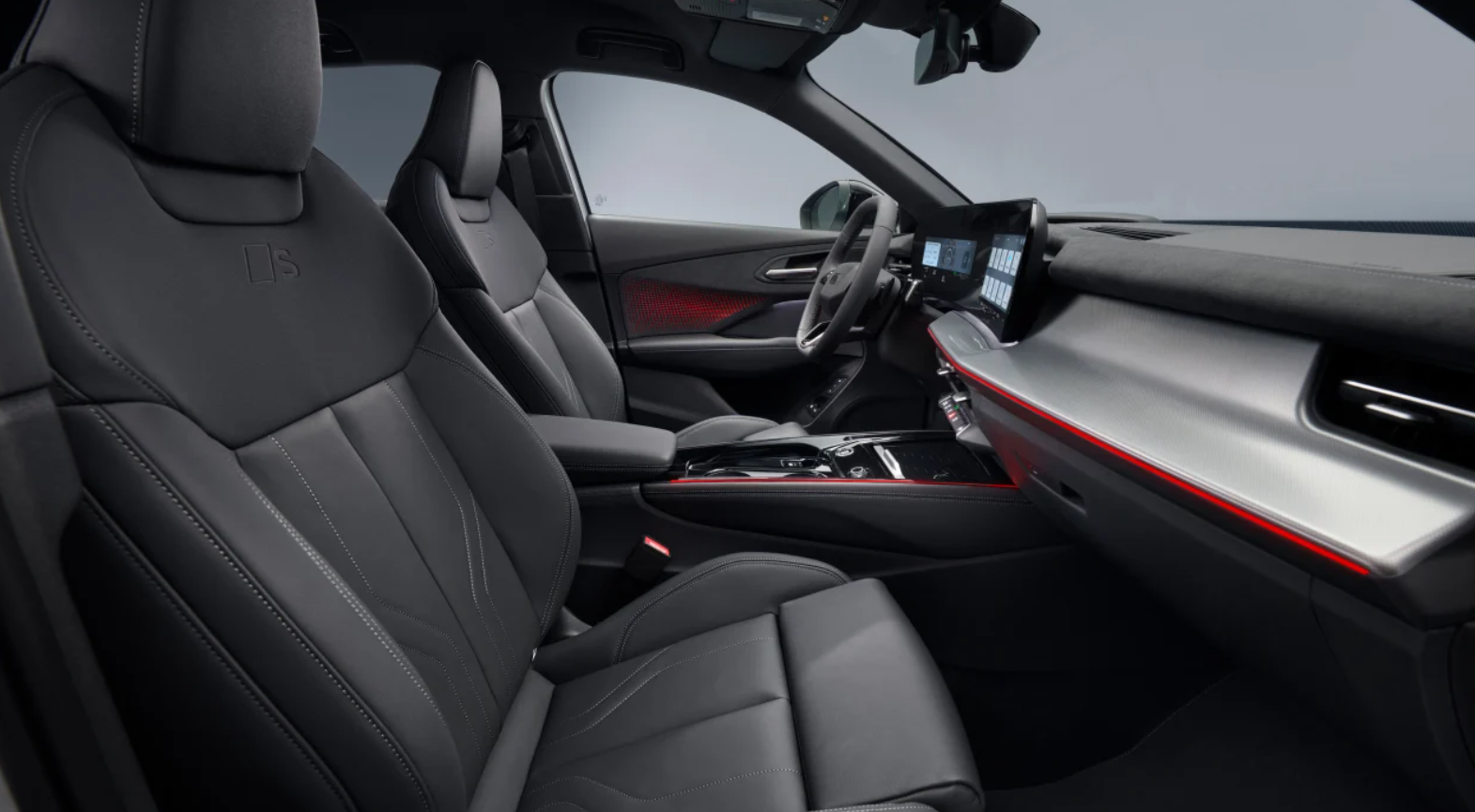
Inside, the Sportback mirrors the new Q3’s layout. A curved display houses an 11.9-inch digital driver’s cluster and a 12.8-inch central touchscreen, sitting within a streamlined dashboard that integrates air vents and shortcut buttons. A new steering column-mounted gear selector frees up space in the centre console, which now features additional storage and a wireless charging pad.
Practicality remains competitive, with 488 litres of boot capacity that expands to 1289 litres when the split-fold rear bench is lowered. Plug-in hybrid versions sacrifice the underfloor compartment – normally ideal for storing charging cables.
A broad range of engines will be offered from launch. Highlights include a plug-in hybrid pairing a 1.5-litre petrol engine with an electric motor and 25.7kWh battery. It produces 200 kW and offers up to 73 miles of pure-electric driving, supported by 50kW DC charging.
Other choices include 1.5-litre mild-hybrid petrol with 110 kW, two 2.0-litre turbo petrols with 149 kW or 203 kW, and a 110 kW 2.0-litre turbo diesel aimed at long-distance drivers. Petrol engines are front-wheel drive as standard, while the higher-powered 2.0-litre units come with quattro all-wheel drive and a seven-speed dual-clutch gearbox.
Suspension has been slightly revised to suit the Sportback’s lower stance, and adaptive dampers will be offered for those seeking greater ride flexibility.
MG Motor Australia has confirmed that pre-orders are now open for the MGU9, the company’s first foray into the country’s highly contested ute segment. Customers can secure their vehicle online or through dealerships, with early buyers receiving a $1000 MG OEM accessory package.
Kevin Gannon, Business Director ICE at MG Motor Australia, said the launch of the MGU9 represents an important milestone for the brand: “The MGU9 has been designed for and tested on Australia’s demanding roads and trails to deliver the capability drivers expect, while offering the innovation, comfort and value that MG has become known for.”
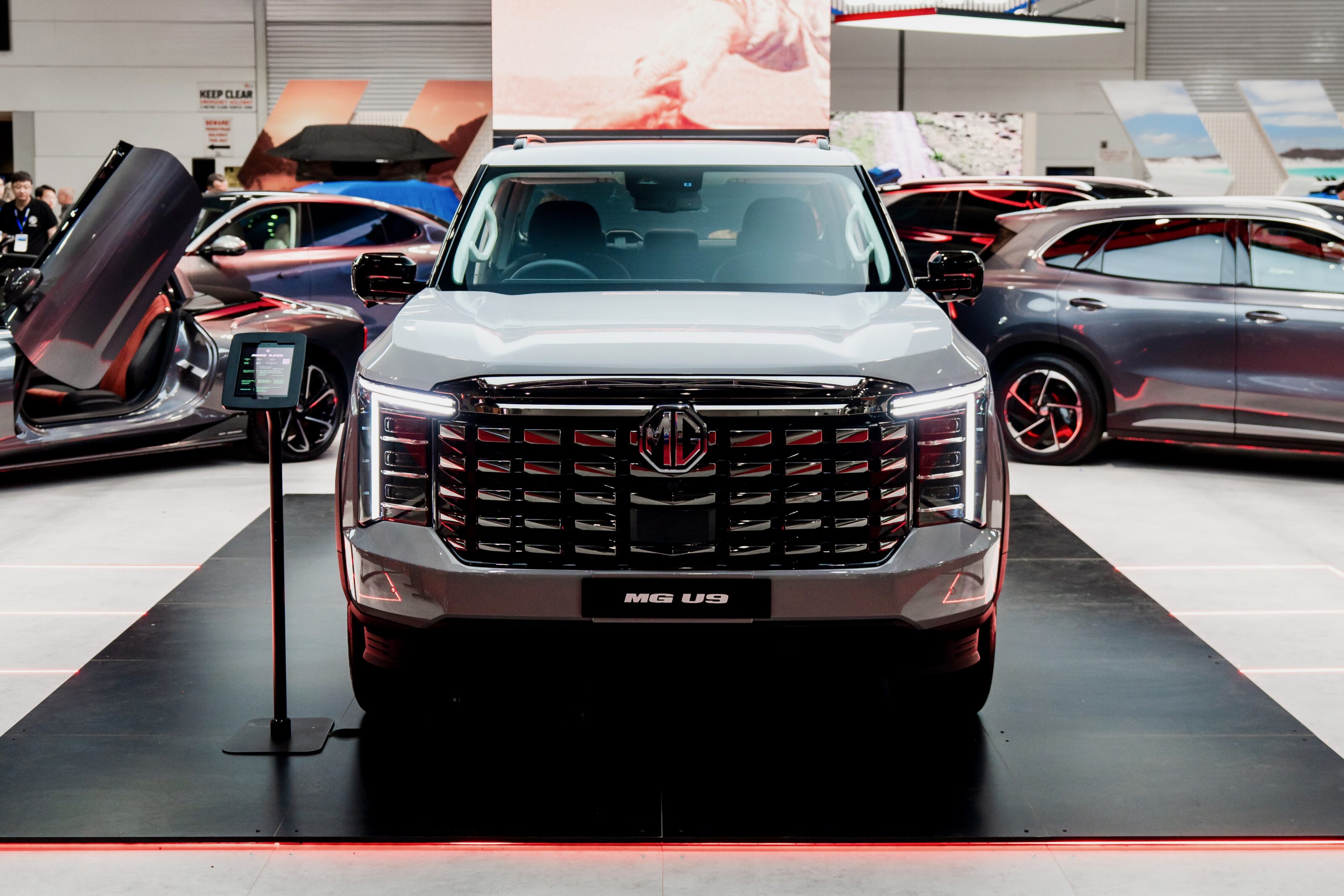
The MGU9 has been developed to combine traditional ute toughness with the refinement of a modern SUV. Built on a robust chassis and tuned for local conditions, MG says it balances on-road comfort with genuine off-road durability.
Key engineering highlights include an advanced multi-link rear suspension system, an 8-speed transmission paired with a 4WD drivetrain, and a 3.5-tonne towing capacity. Together, these features aim to provide both heavy-duty practicality and confidence-inspiring performance on any terrain.
Inside, the MGU9 places a strong emphasis on comfort and driver wellbeing. A spacious cabin features high-quality finishes, supportive seating, and thoughtful touches designed to reduce fatigue on long journeys. Practical elements include an easy-access tub and a discreet foldable rear step to simplify loading and entry.
The arrival of the MGU9 marks MG’s boldest product expansion in Australia to date, signalling its intent to compete with established rivals in one of the nation’s most iconic vehicle categories.
Customers can pre-order the MGU9 now, either online or through their nearest MG dealership.
Hyundai has unveiled its refreshed 2026 Tucson line-up, delivering price cuts of up to $2,500 across the range, alongside a stronger emphasis on hybrid power and new convenience features aimed at keeping the popular SUV at the sharp end of the medium SUV segment.
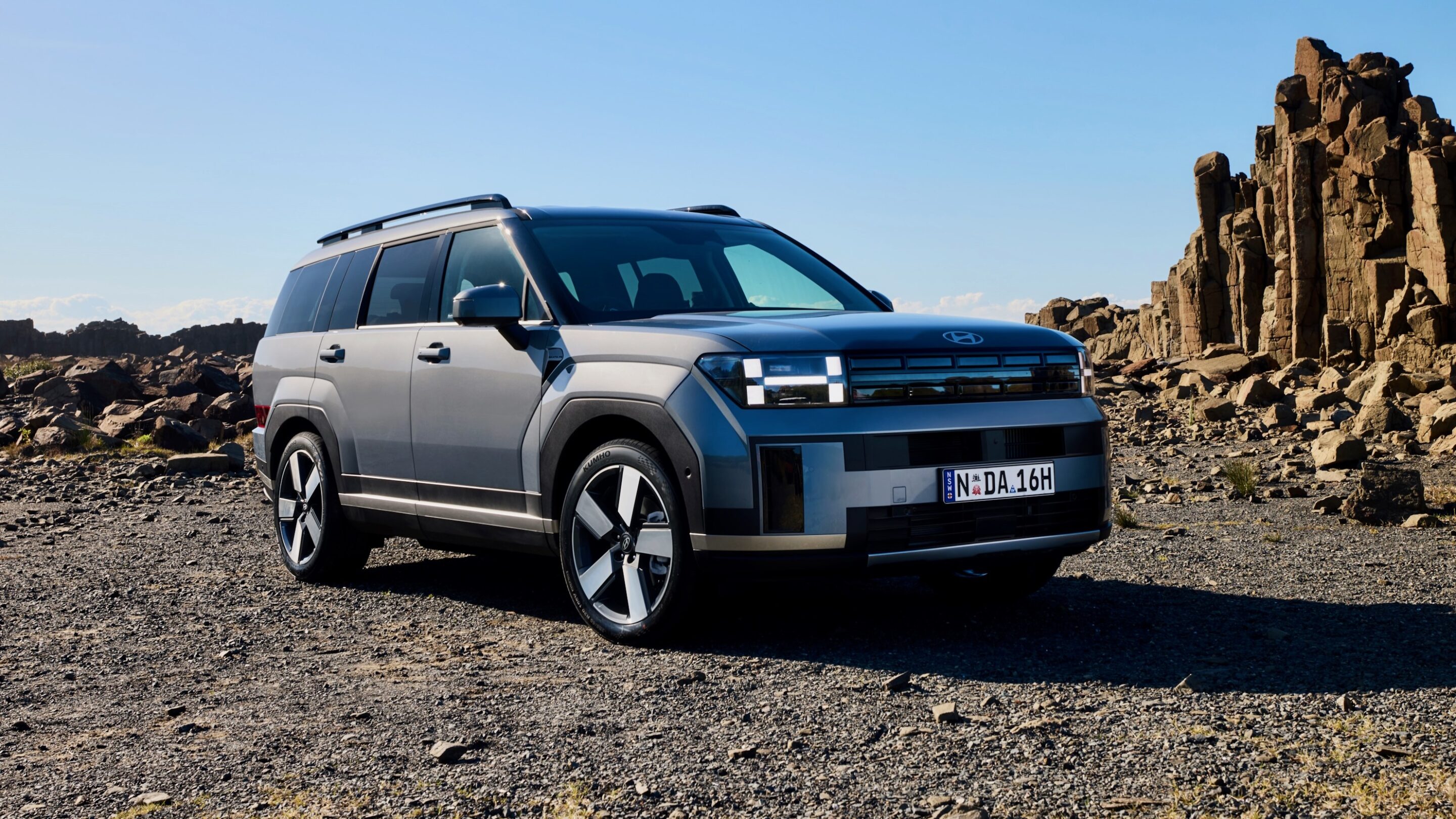
For the larger Santa Fe, updates are more subtle. A three-trim line-up continues, with Digital Key 2 now standard across the board. Entry models feature new 18-inch alloys, while distinctive wheel designs differentiate petrol and hybrid powertrains. Pricing climbs by $400 on all variants.
Hybrid-First Strategy
The most significant update is Tucson’s shift toward hybridisation. From 2026, the majority of the line-up will be hybrid-powered, leaving the 2.0-litre MPi as the sole petrol option. The outgoing 1.6-litre turbo-petrol engine has been discontinued, a move Hyundai says reflects its evolving focus on sustainability and efficiency.
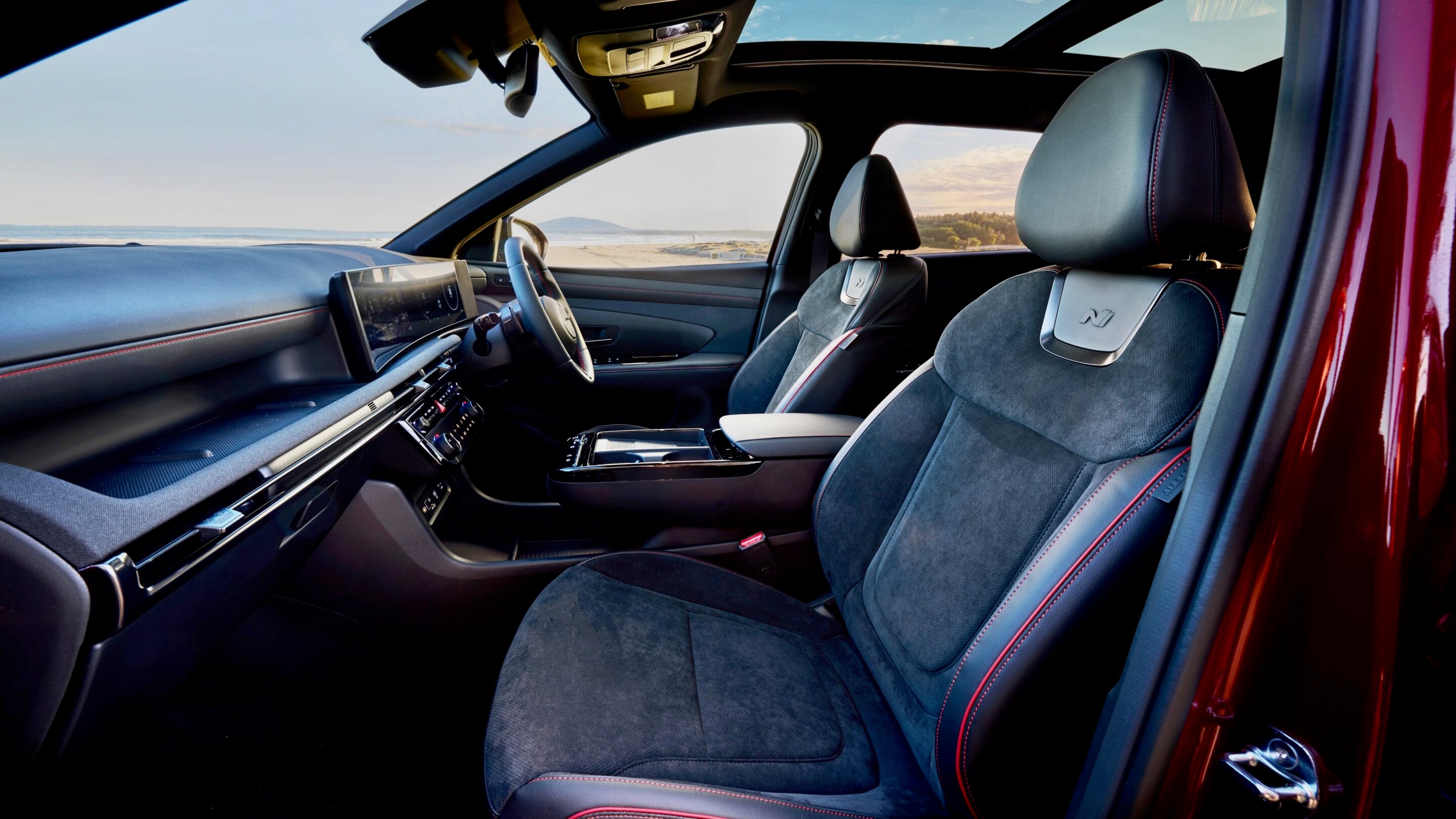
The three-tier trim structure continues, though the sporty N Line option pack is now exclusive to the mid-range Elite and flagship Premium grades, narrowing its availability but sharpening its image.
Price Reductions and Value Boost
Hyundai has repositioned Tucson pricing to strengthen its competitiveness. Depending on the variant, reductions range from $1,000 to $2,500, which the company says makes the SUV a more compelling choice for families weighing hybrid rivals.
Fresh Styling and Colours
Cosmetic changes are subtle but effective. Entry-level models gain new 17-inch alloys, while each powertrain variant adopts a unique wheel design. A new exterior shade, Ecotronic Grey, joins the palette, available in both pearl and matte finishes – the latter exclusive to N Line models. Titan Grey Metallic exits the range, while matte paint options are now reserved for the Premium and N Line.
Digital Key 2 Convenience
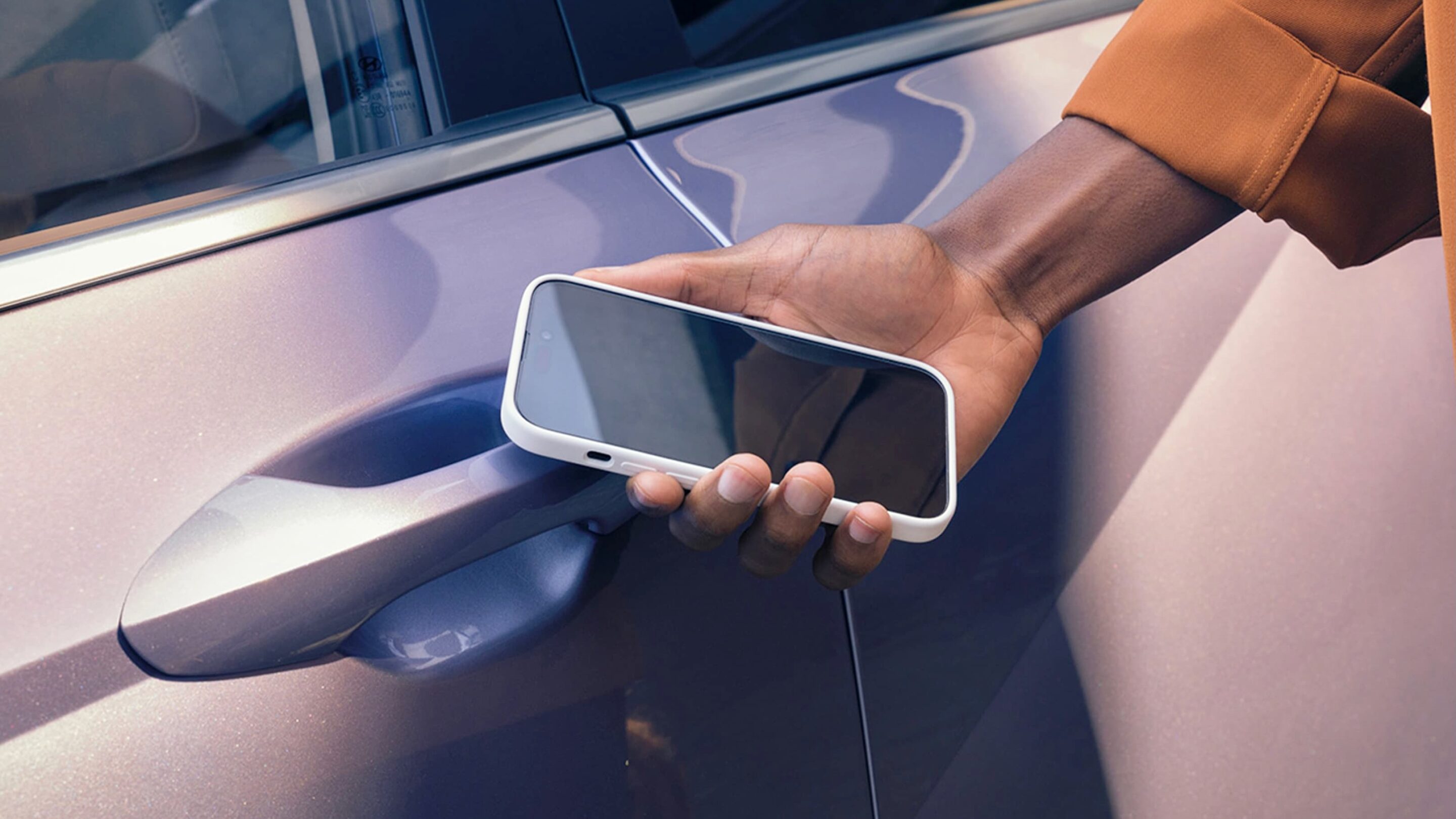
Headlining the technology updates is Hyundai’s new Digital Key 2, standard across the Tucson range. The feature allows owners to lock, unlock and start the car using a compatible smartphone or Apple Watch linked to Hyundai’s Bluelink connected services. Up to 15 digital keys can be shared with family and friends, removing the need for a traditional fob.
Hyundai Motor Company Australia CEO Don Romano said the changes keep the Tucson relevant in a highly competitive field: “With substantial price reductions, a hybrid-focused line-up, and Digital Key 2 convenience, the 2026 Tucson delivers more value and continues to be one of the most compelling medium SUVs on the market.”
Hyundai Tucson pricing
Tucson 2.0 MPi 6 speed FWD – $38,100 (-$1,000)
Tucson 1.6T-GDi Hybrid 6 speed FWD – $42,600 (-$2,500)
Tucson Elite 2.0 MPi 6 speed FWD – $43,100 (-$1,000)
Tucson Elite 1.6T-GDi Hybrid 6 speed FWD– $48,100 (-$2,000) (+N Line Pack $50,600 (-$2,000))
Tucson Elite 1.6T-GDi Hybrid 6 speed AWD – $50,600 (-$2,000) (+N Line Pack $53,100 (-$2,000))
Tucson Premium 1.6T-GDi Hybrid 6 speed AWD – $58,100 (-$1,500) (+N Line Pack $59,600 (-$1,500))
Specs
| TUCSON | 2.0 MPi 2WD; 1.6T-GDi Hybrid 2WD |
|---|---|
| 17″ alloy wheels – new design | FCA w/Junction Turning + Direct Oncoming |
| Full size spare wheel* (2.0 MPi 2WD only) | FCA 1.5 – Improved w/ 2-wheeler detection |
| Digital Key 2 | High Beam Assist (HBA) |
| Satin chrome beltline + mirror garnish | Intelligent Speed Limit Assist (ISLA) – Improved |
| Silver skid plates (front/rear) | Parking Distance Warning – Forward/Reverse (PDW F/R) |
| LED headlights (Bi-function MFR) w/LED static cornering lights | Smart key (new design) & push button start |
| LED DRL/positioning light & LED front turn signals | 2x USB C Type outlets |
| LED taillights/stoplight/licence plate lights (bulb turn/reverse) | 4.2″ Instrument Cluster |
| Shift by cable (SBC) – Petrol only | Wireless Smart Phone Charger |
| Drive Mode Select – Improved [+MY Drive Mode] | Auto up/down w/ safety front & rear windows |
| Automatic Collision Notification (ACN) / SOS function | LED interior lighting (room, s/visor, cargo) |
| 12.3″ Multimedia w/DAB+, Bluelink & OTA | 2x rear USB C Type outlets |
| 6.6″ Dual zone climate control w/Auto Defog & afterblow | Luggage net |
| TUCSON Elite | 2.0 MPi 2WD1.6T-GDi Hybrid 2WD & AWD |
|---|---|
| 18″ alloy wheels | 12.3″ Supervision Cluster |
| Dark chrome grille w/hidden DRL’s | 12.3″ Multimedia with navigation & Voice Control |
| Solar control w/screen + front door glass | Smart Power Tailgate |
| Privacy rear glass | Leather appointed seats |
| Shift By Wire (Hybrid) w/paddle shifters | Power driver seat |
| Highway Driving Assist (HDA) | Heated front seats |
| Rain sensor | Alloy scuff plates |
| Rear Occupant Alert (ROA) – sensor type | Electro Chromatic Mirror |
| TUCSON Elite + N Line Option Pack | 1.6T-GDi Hybrid 2WD & AWD |
|---|---|
| 19″ N Line alloy wheels | Body colour cladding |
| Projection type LED Headlights | Gloss black beltline & mirror garnish |
| Intelligent Front-Lighting System (IFS) | Chrome muffler outlet |
| LED reverse lights | N Line sports interior |
| N Line exterior styling | Leather/Suede appointed seats w/red highlights |
| Alloy pedals |
| TUCSON Premium | 1.6T-GDi Hybrid AWD |
|---|---|
| Sunroof – Standard | Integrated Memory System (IMS) 2 driver’s seat position |
| 19″ alloy wheels – new design | Power passenger seat & walk-in device |
| Projection type LED Headlights | Heated rear outboard seats |
| Intelligent Front-Lighting System (IFS) | Ventilated front seats |
| Blind Spot View Monitor (BVM) | Bose Premium Audio |
| Parking Collision Avoidance Assist-Reverse (PCA-R) | Head Up Display (HUD) – 12″ |
| Parking Distance Warning – Forward/Side/Reverse (PDW F/S/R) | 2nd row LED personal reading lights |
| Surround View Monitor (SVM) | Ambient lighting |
| TUCSON Premium + N Line Option Pack | 1.6T-GDi Hybrid AWD |
|---|---|
| N Line alloy wheels | Chrome muffler outlet |
| LED reverse lights | N Line sports interior |
| N Line exterior styling | Leather/Suede appointed seats w/red highlights |
| Body colour cladding | Alloy pedals |
| Gloss black beltline & mirror garnish | |
| N Line alloy wheels |
Santa Fe
Unlike the Tucson, the Santa Fe range has seen no lineup changes and now starts at $53,400 +ORC, which is an increase of $400.
Changes to the Santa Fe lineup include new one-inch-smaller 18-inch alloy wheels for the entry-level model (with a full-size alloy spare), as well as the new digital key.
2026 Hyundai Santa Fe pricing (plus on-road costs):
- Santa Fe 2.5L turbo 2WD: $53,400
- Santa Fe 2.5L turbo AWD: $56,400
- Santa Fe 1.6L turbo hybrid 2WD: $57,400
- Santa Fe 1.6L turbo hybrid AWD: $60,400
- Santa Fe Elite 2.5L turbo AWD: $62,900
- Santa Fe Elite 1.6L turbo hybrid AWD: $66,900
- Santa Fe Calligraphy 2.5L turbo AWD: $72,900
- Santa Fe Calligraphy 1.6L turbo hybrid AWD: $76,900
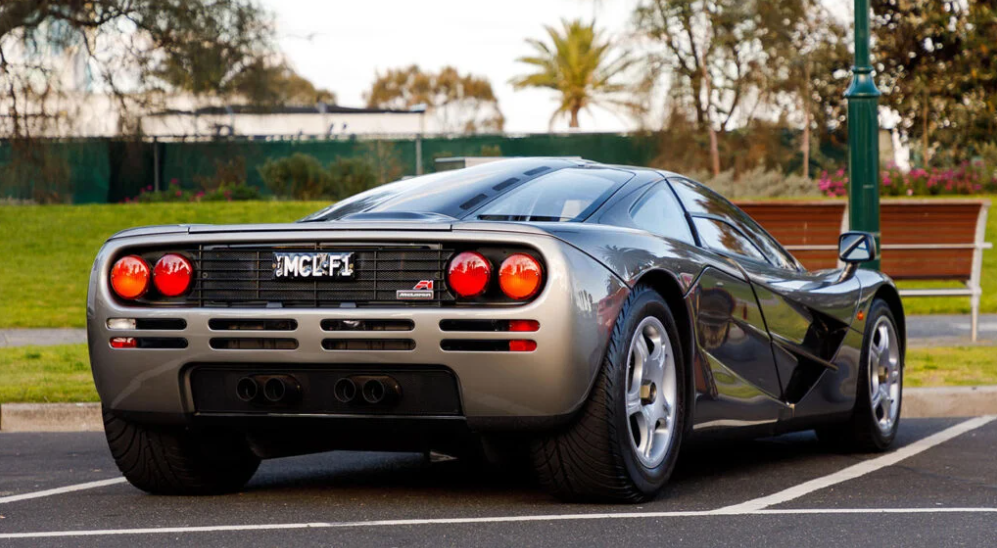
Australia is now without a McLaren F1 as the country’s sole example has now departed back to its homeland.
Chassis 009 has called Down Under home since new but is now in the hands of exotic car dealer Tom Hartley Junior after recently being offered for sale. With a reported price tag of AUD$37m, Wheels understands significant effort was made to find a local buyer without success.
The car was spotted being loaded onto an Emirates flight on Monday, August 18 leading to speculation it was headed to the Middle East, but its final destination was Stansted Airport in the UK.
Chassis 009 – one of just 64 road-going McLaren F1s and 106 in total including race cars and prototypes – has lived an eventful life, being originally delivered to Sydney to Dean Wills, then-CEO of Coca-Cola Amatil.
It was used regularly and exercised properly at Wills’ private facility north of Sydney but also garnered headlines when it was crashed heavily by a BMW mechanic while undergoing maintenance in 1997.
The substantial damage required a return to Woking with a reported insurance bill of $1million, during which it was painted a slightly darker grey than the original Magnesium Silver.
In 2005 it moved to Melbourne with Tony Rafits before being sold a year later to businessman Barry Fitzgerald who has been its custodian for the past two decades.
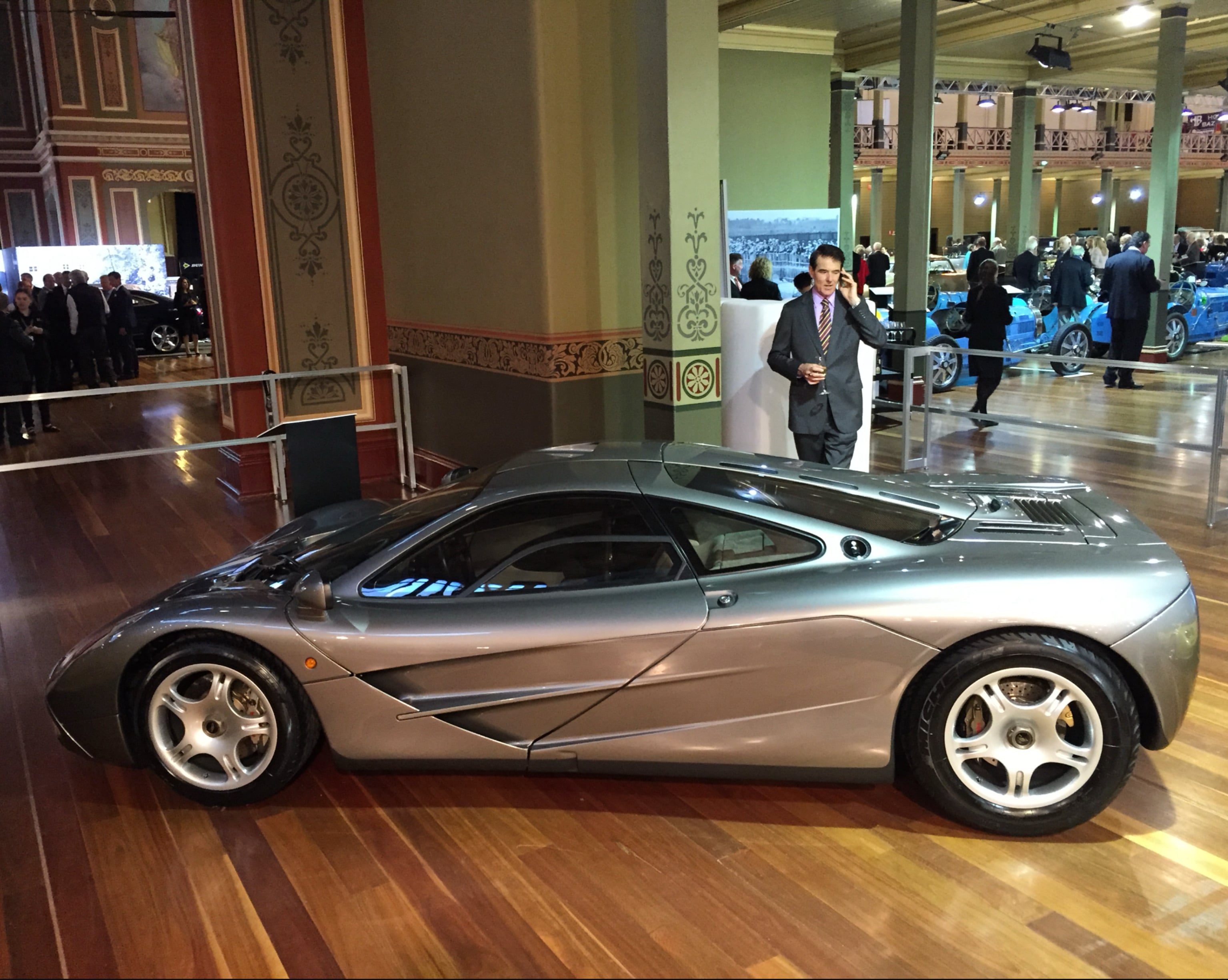
The F1 suffered further minor damage thanks to an off-road excursion during a New Zealand driving tour in 2016 but was once again repaired and, despite its stratospheric value, has been a frequent sight on Melbourne roads in the years since.
Sadly, having left these shores it is very unlikely to return, depriving the Australian car scene of one of its shining lights.
The Toyota GR Supra A90 Final Edition is Toyota’s ultimate send-off for its current-generation sports coupe – a focused, limited-run machine that transforms the standard Supra into something far more visceral.
While the regular model has always been a compromise between everyday usability and performance, this Final Edition embraces its hardcore side. It’s an indulgence, yes, but one that could easily become a sought-after collector’s piece in years to come.
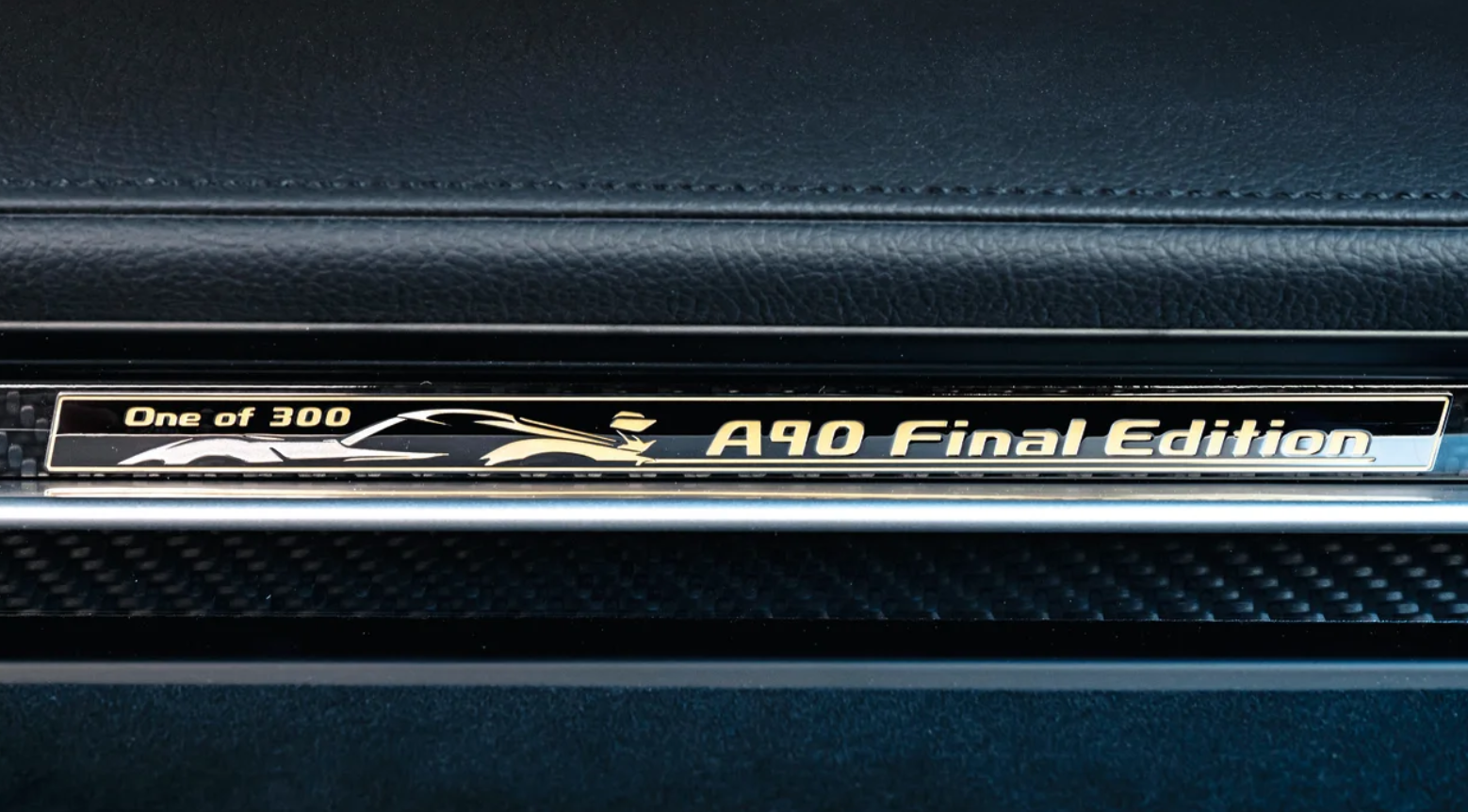
Only 300 examples will be built, none bound for Australia, making it all the more elusive. Priced at around A$242,000, this Supra is aiming squarely at track-focused rivals like the Alpine A110R and Porsche Cayman GT4 RS. It’s not just a cosmetic package – Toyota has gone to great lengths to re-engineer the car for sharper performance.
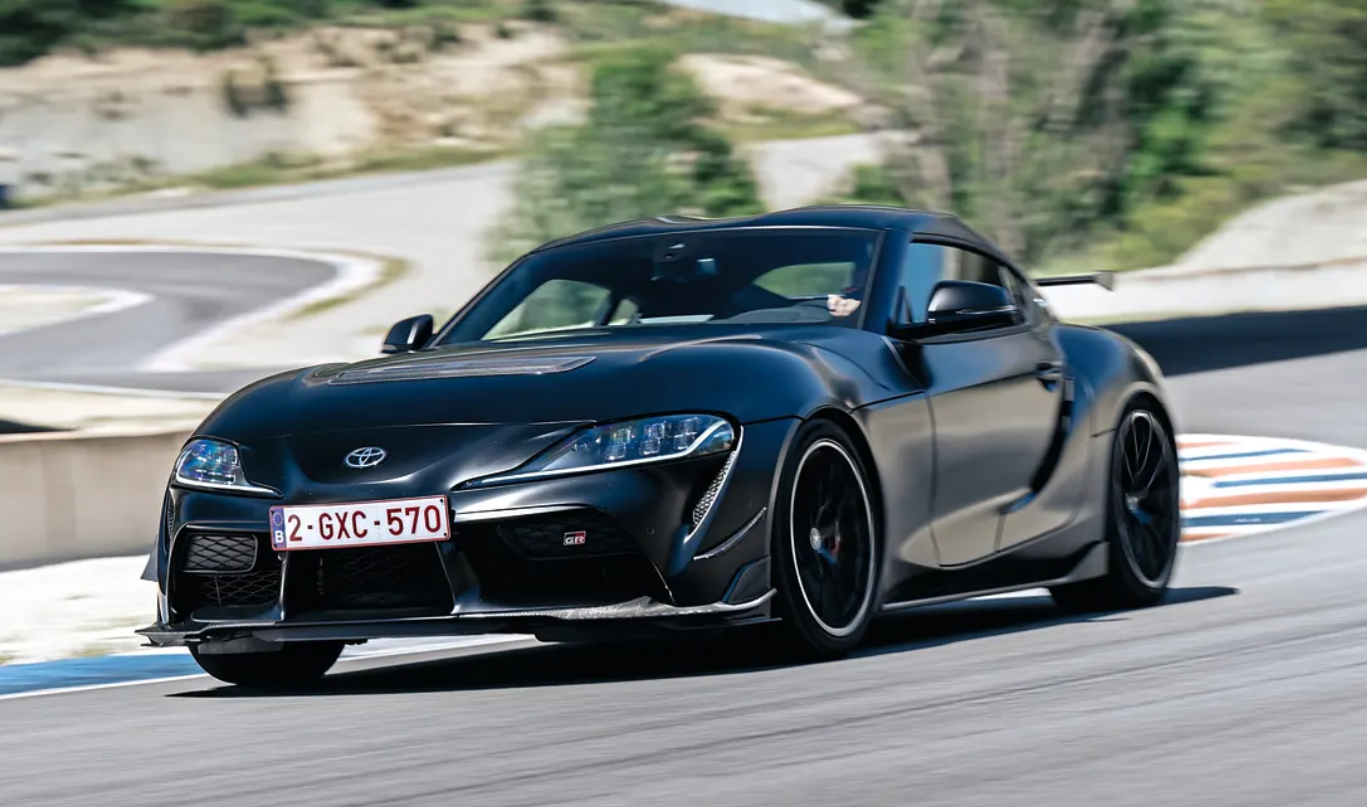
Beneath the bonnet lies a revised version of the BMW-sourced 3.0-litre turbocharged straight-six. Thanks to redesigned intake and exhaust systems, plus an updated ECU developed in collaboration with Akrapovič, the engine now produces 324kW and 571Nm – a significant gain over the standard Supra. This translates to 0–100km/h in 4.3 seconds, before topping out at a limited 274km/h.
In a refreshing move, Toyota equips the car exclusively with a six-speed manual transmission, underlining its focus on driver connection rather than sheer lap times. The gearbox is slick, supported by auto rev-matching, and paired with a Brembo braking system featuring 395mm front and 345mm rear discs for fade-free stopping power.
The chassis has been overhauled with manually adjustable KW dampers, stiffer body bracing, and an aerodynamic package derived from the Supra GT4 race car. A towering rear wing, new splitter, and functional aero elements not only boost downforce but also give the car an aggressive stance. Michelin Pilot Sport Cup 2 tyres provide enormous grip, though with a kerb weight nudging 1.6 tonnes, the Supra still demands careful weight management through tighter corners.
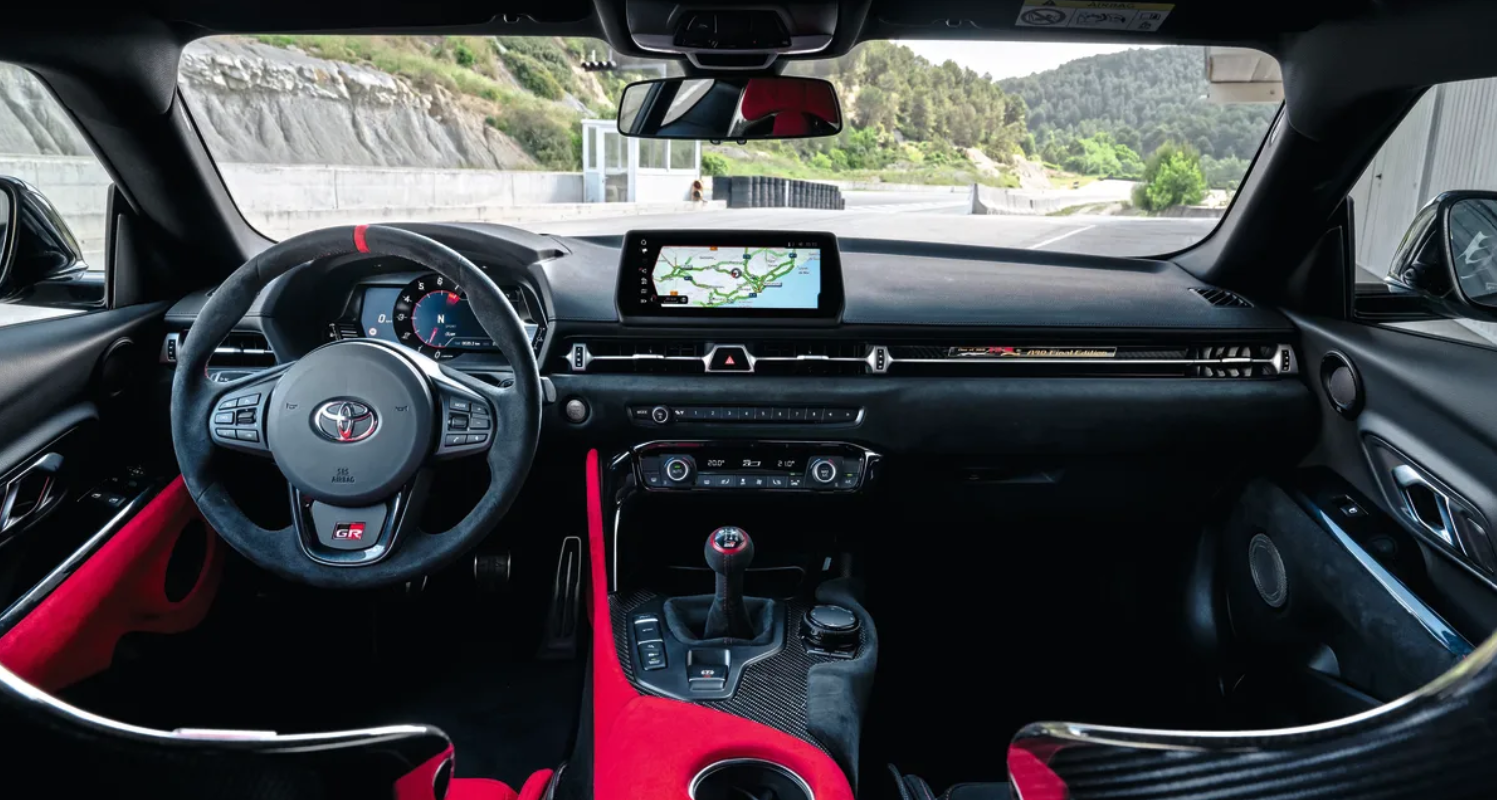
Inside, carbon-fibre bucket seats trimmed in vivid red Alcantara lock you in place, while knee pads on the centre console add a thoughtful touch for track use. The rest of the cabin remains largely unchanged, with BMW-sourced infotainment still present, but the atmosphere is suitably special.
The unveiling of the special edition comes as Toyota announced that last orders for the GR Supra would be taken in Australia at the end of August 2025, with production ending in early 2026.
The GR Supra A90 Final Edition is a fitting finale: more powerful, more engaging, and far more exclusive. Its steep price may divide opinions, but for those lucky enough to own one, it’s likely to be remembered as a modern classic.
Specs
| Model | Toyota GR Supra A90 Final Edition |
|---|---|
| Price | AUD $242,000 (approx.) |
| Powertrain | 3.0-litre, 6-cylinder turbo petrol |
| Power/Torque | 324 kW / 571 Nm |
| Transmission | Six-speed manual, rear-wheel drive |
| 0–100 km/h | 4.3 seconds |
| Top Speed | 274 km/h (limited) |
| Economy/COâ‚‚ | 7.5 L/100km / 204 g/km |
| Size (L/W/H) | 4,380 / 1,865 / 1,295 mm |
| On Sale | Not available in Australia |
Price: from $53,000 plus on-road costs
Drivetrains/fuel economy/CO2 emissions: 2.5-litre four-cylinder turbo-four, 8-speed DCT, 213kW/420Nm, 9.1L/100km, 212g/km; 1.6-litre four-cylinder turbo-hybrid, 6-speed auto, 173kW/367Nm, 5.6L/100km, 128g/km
Dimensions (length/width/height/wheelbase): 4830/1900/1770/2815mm
Bootspace: Unknown (third row up)/628L (third row folded)/1949L (third + second row folded)
Warranty/roadside assistance/service intervals: Five-year/unlimited km – extendable to 7 year/unlimited km through dealer servicing, service-activated, annual/every 10,000km
Five-year service cost: $2425 (2.5T), $2439 (hybrid)
| Driving | |
| Interior | |
| Practicality | |
| Overall value | |
Things we like
- Distinctive styling stands out from rivals
- Spacious and practical cabin
- Loaded with equipment across the range
Not so much
- Higher pricing than last generation Santa Fe
- Short 10,000km service intervals
- Toyota hybrids are more efficient
The large SUV segment is a tough one in which to compete, let alone succeed in. There’s plenty of sub categories, strong competition and Australians can be a tough crowd. But thanks to its combination of distinctive styling, awesome practicality, punchy drivetrains, value for money and long list of equipment, the Hyundai Santa Fe is a great large SUV offering. And that’s why it’s Wheels’ Best Large SUV for 2025.
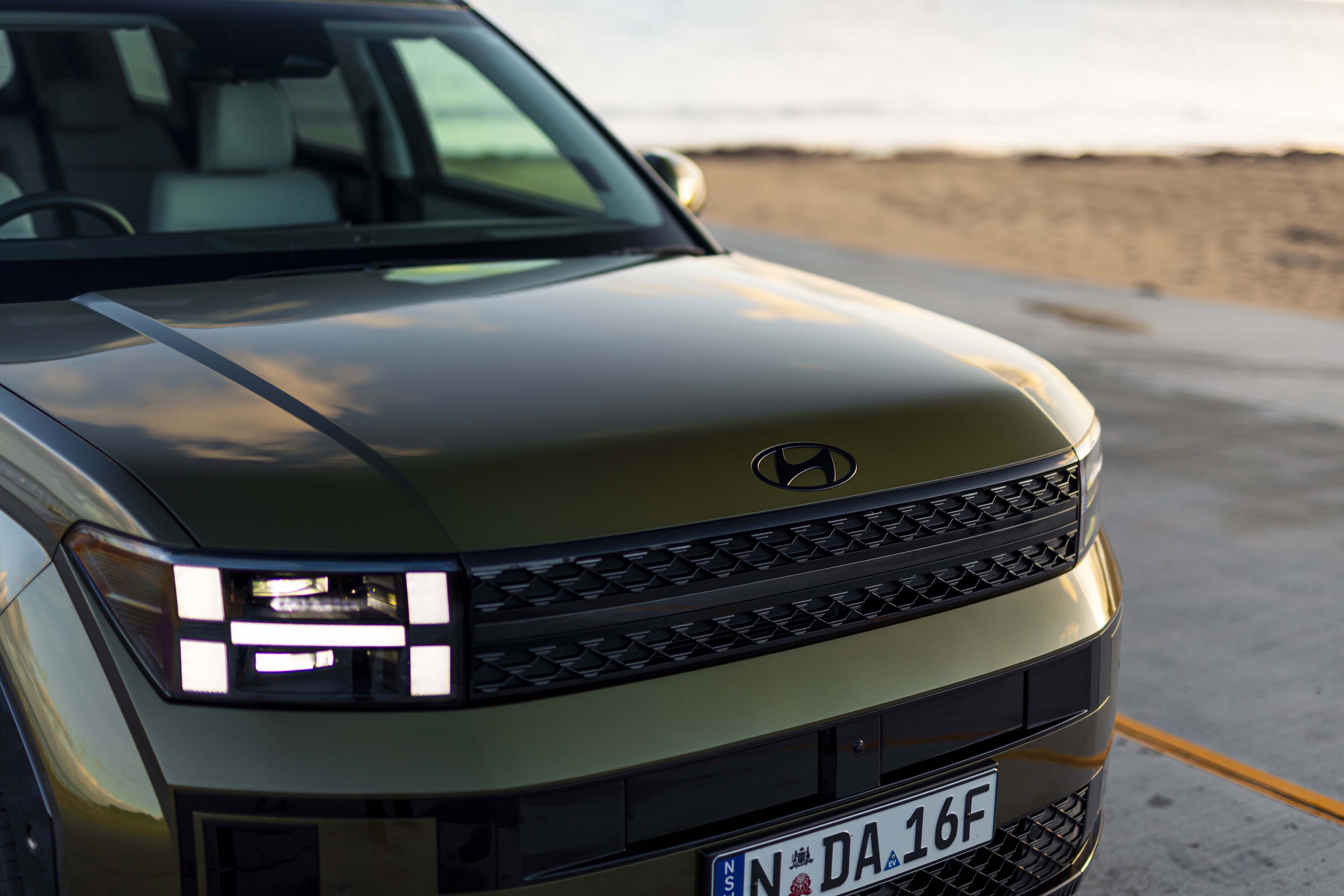
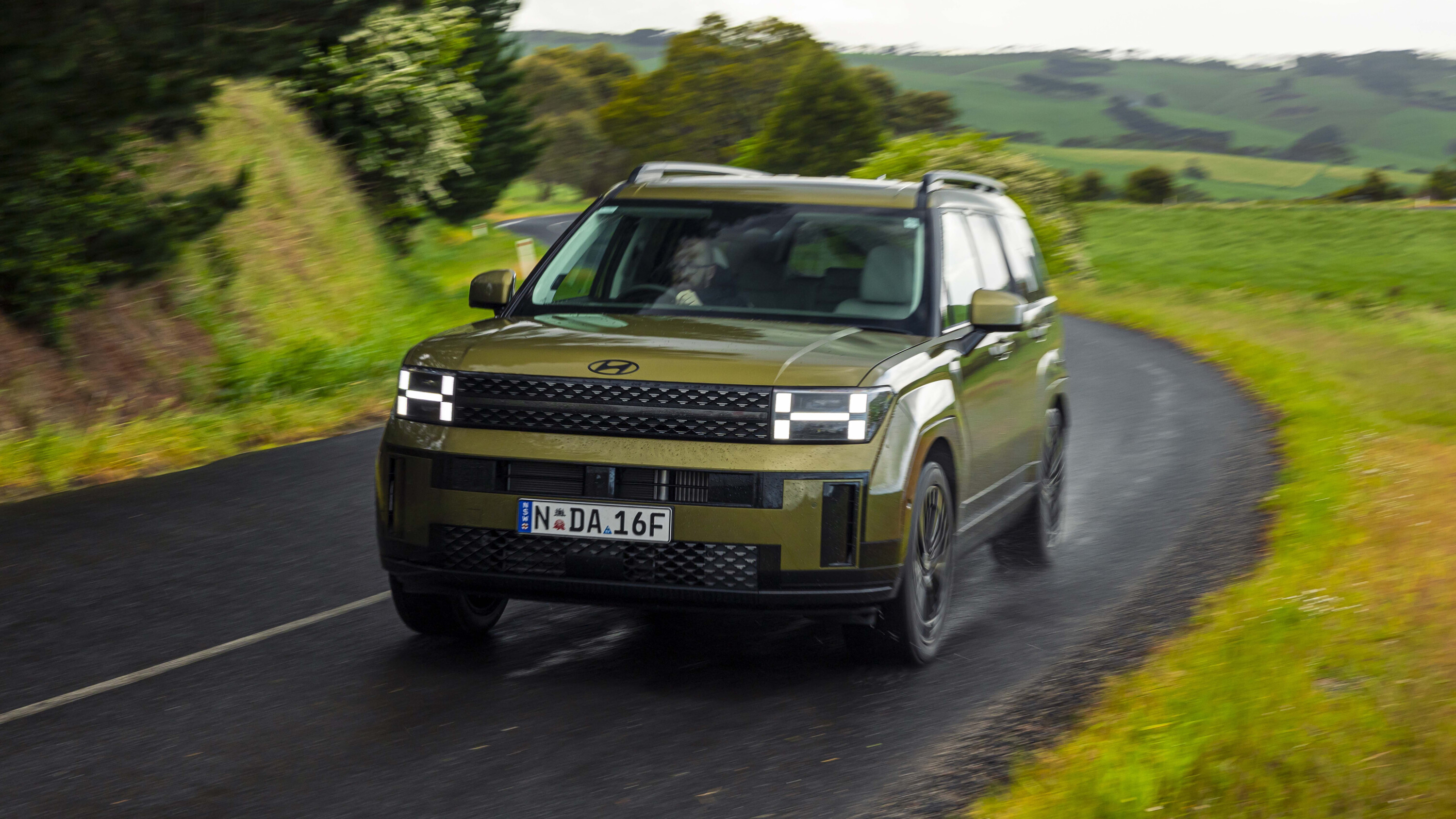
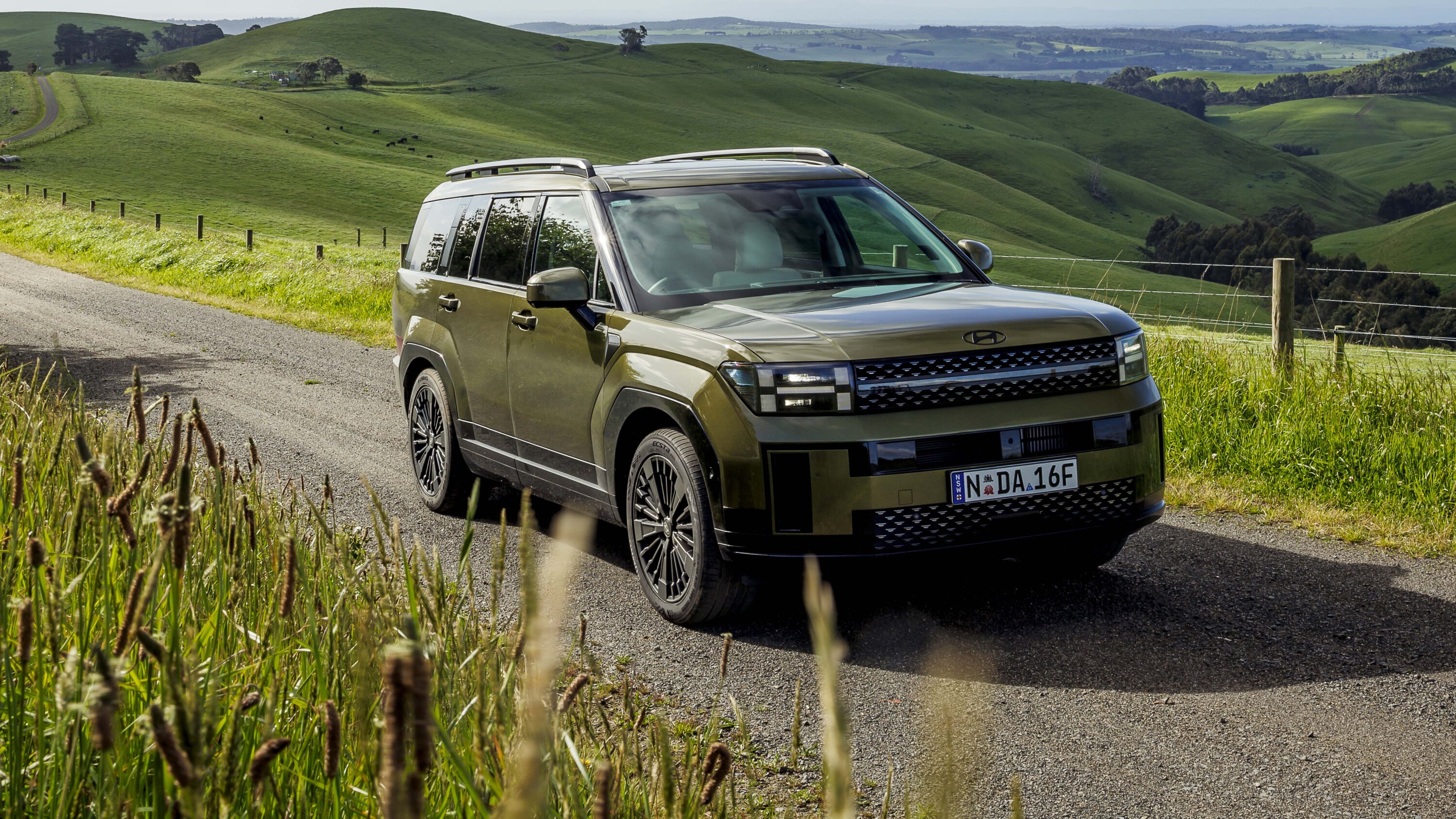
Priced from $53,000 plus on-road costs, the fifth-generation Santa Fe shocked us with its edgy, boxy styling which instantly placed it worlds apart from its predecessor. While it could be regarded as polarising, it’s certainly undeniably noticeable and neatly distinguishes the Santa Fe from a lot of its competition.
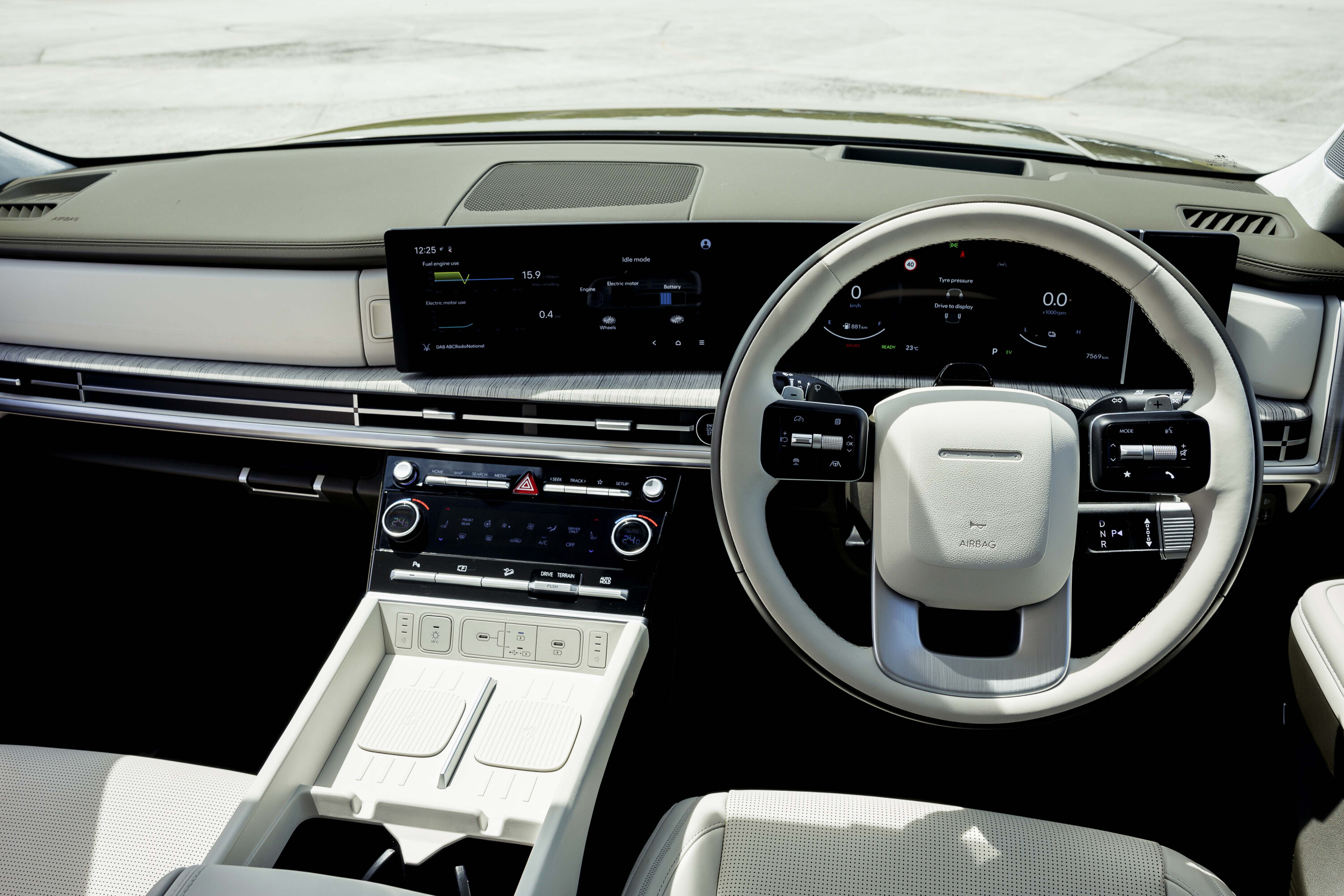
Inside, the Santa Fe rewards with a spacious, practical and well featured cabin with good quality materials and a long list of tech features. The standard dual 12.3-inch screens are packed with kit such as wireless smartphone mirroring and are easy to use. The Santa Fe’s practicality is impressive too, with plenty of interior storage spaces and enough room in each row of seating for adults.
The Santa Fe offers 213kW 2.5-litre petrol or 172kW 1.6-litre hybrid drivetrains, and both provide it with ample performance. There’s no diesel option this time around with the hybrid taking over as the fuel efficient drivetrain and we think it’s the obvious choice: it’s refined, offers fine performance and better fuel efficiency. On the road, the Santa Fe impresses with its refinement and comfort.
It’s true that the upper-spec Santa Fe models aren’t cheap, but they are very well equipped – plus, even the entry level model is more than well equipped and it’s priced comfortably under $60,000. Hyundai’s five-year warranty is average for the industry, and its 10,000km service intervals are shorter than some rivals, but service pricing is reasonable at under $500 annually for the first five years.
We adjudged the Hyundai Santa Fe the best large SUV for 2025 because of its insanely practical cabin, strong value for money, long list of features, comfortable driving experience and choice of drivetrains.
That it also looks unique is a bonus for those wanting a more distinctive family bus, but even if you aren’t a fan of the styling, it features many great traits to keep you invested.