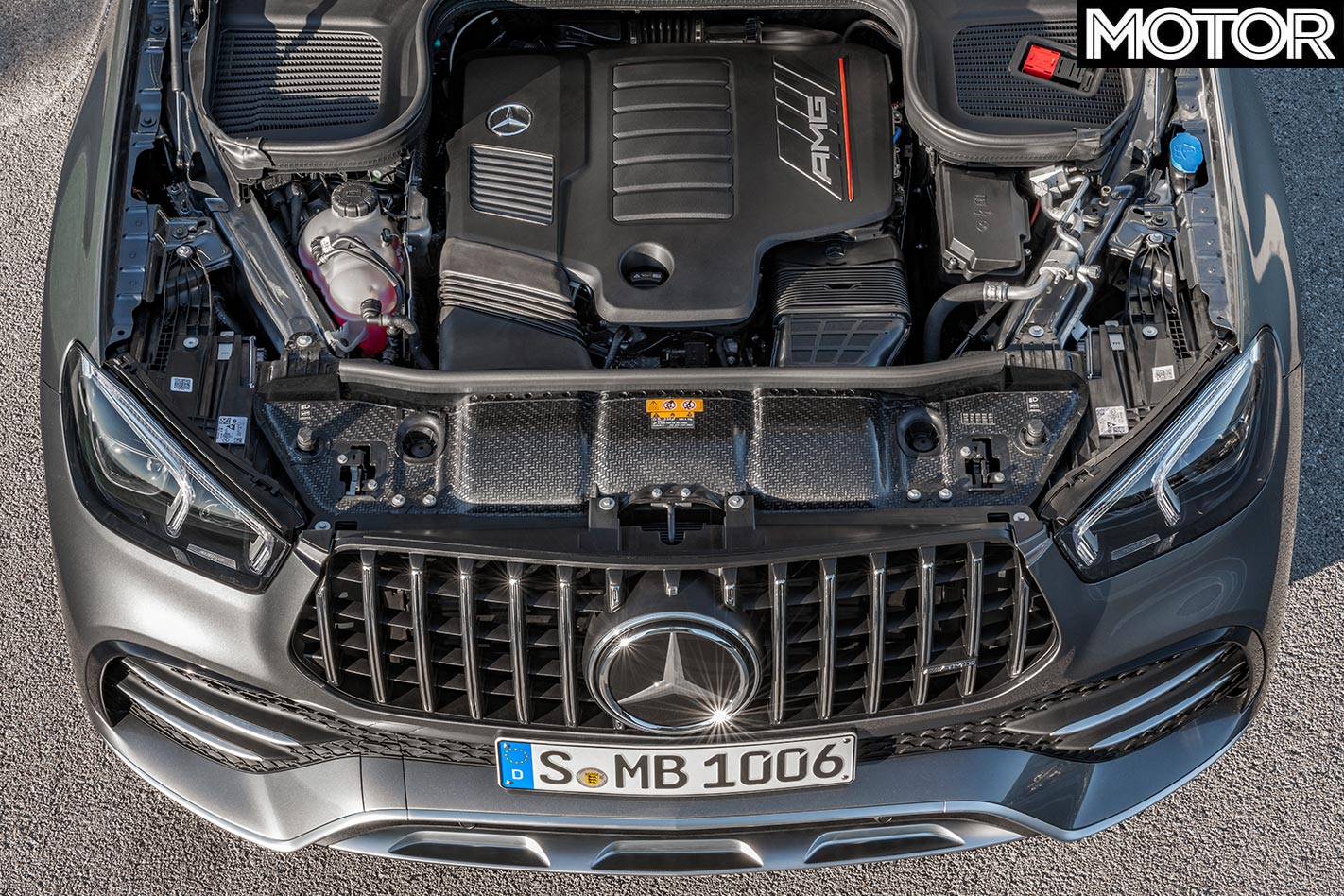
It’s big, it’s comfy and it’s relatively frugal… for a large SUV, anyway. Does that mean the Mercedes-AMG GLE53 can’t also be muscular? We grabbed the keys to Affalterbach’s inline-six powered behemoth and hit the roads in and around Melbourne to find out. But first we should point out that there’s a little more to the six than just the engine. This is Mercedes’ new 3.0-litre turbo six with a mild hybrid system, including an electric compressor designed to improve responsiveness and efficiency where the engine’s turbocharger can’t.
We’ve experienced this engine previously to much delight in AMG’s svelte E53 sedan and coupe, so does it translate so well to a big, plush SUV? Its 320kW and a burly 520Nm are certainly enough to reach and maintain highway cruising speeds smoothly, and its EQ Boost (overboost) from the mild hybrid system adds 16kW and 250Nm on top of that for a temporary 336kW/770Nm that makes overtaking effortless. The engine never feels like it’s struggling to pull the two-tonne mass around during normal duties.
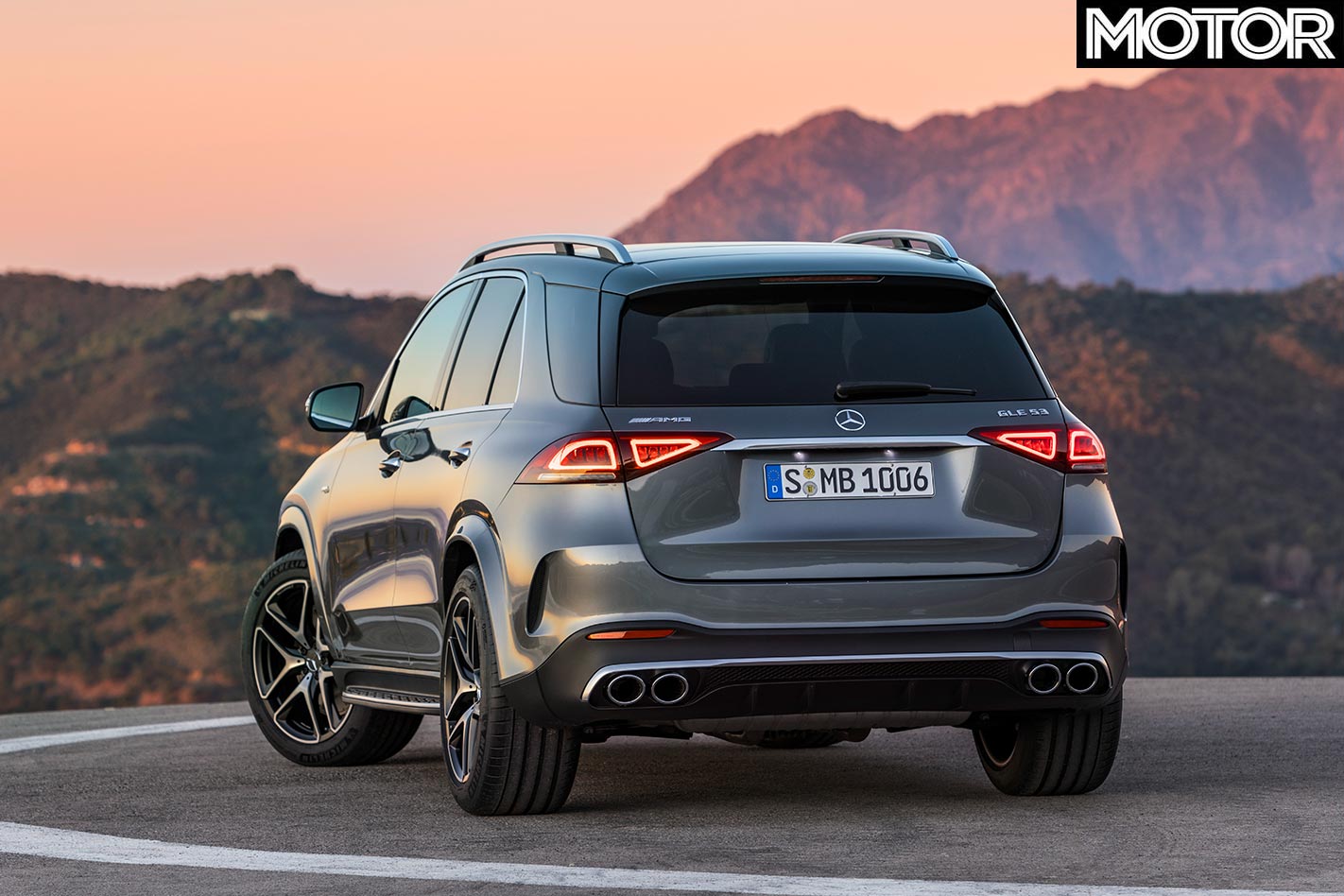
Around the city and the suburbs are where the majority of the GLE53’s time will likely be spent, we’d wager, which is unfortunate because its air suspension (and AMG Ride Control, a $5700 option) makes it a lovely highway cruiser. Its rather chunky Michelin Pilot Sport 4 SUV tyres also help that suspension keep harsh bumps from unsettling the ride or intruding into the cabin, while keeping road noise quite minimal. Inside the GLE53 feels abundantly capacious, so much so that our need to transport a road bicycle at one point during our tenure seemed it could have been achieved by riding the bike into the boot sitting upright.
What we’re saying is that the GLE53 is big. And it looks it. And feels it. Once you hit a winding road on a country drive, some adjustment of your extended kinaesthesia to the vehicle is required, especially if the last car you drove was a small coupe. In Comfort or even Sport, the GLE’s bodyroll is rather noticeable, though never to the point of concern. It’s just there. Sport Plus stiffens up the dampers enough to get a bit of speed more properly involved, which also means that tricky engine is at its most awake, the nine-speed TCT auto snapping through gears keenly and smoothly, the exhaust letting its AMG roots be known. Quite loudly, at times.
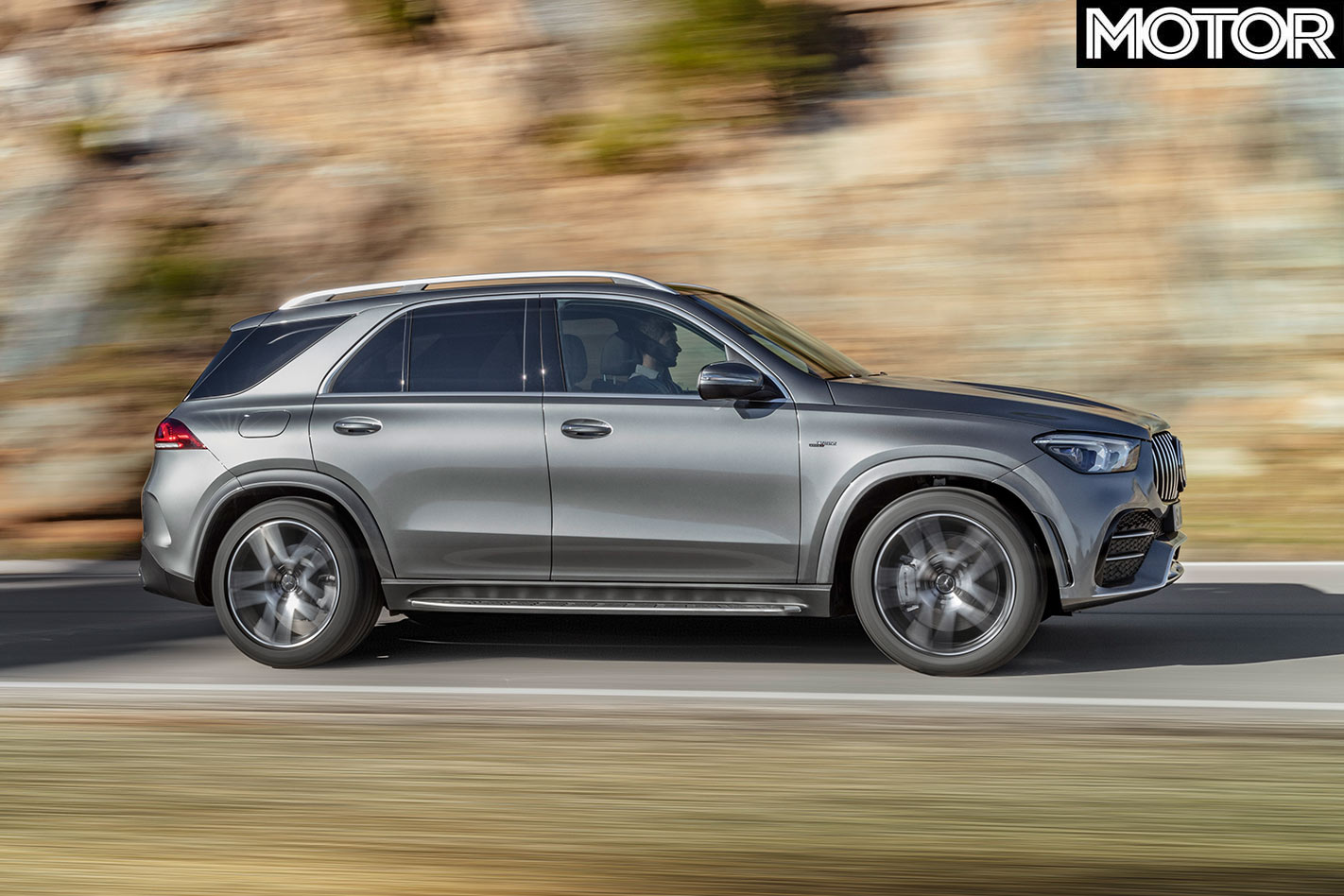
Once you’re in the groove of managing the GLE53’s weight, it corners and accelerates rather keenly for something of its size. The engine’s e-compressor filling the lag gap nicely and providing a smooth yet alert throttle response, while even the top end of the tacho is worth exploring for the extra gusto the EQ Boost provides. Even better is that it achieves all of this without skolling 98 like an ex-PM with a pint. After more than 300km, with a fair bit of hard driving, the ’53 still had more than half its 85-litre tank left.
It’s no dynamic wunderkind, but it’s enough to keep the kids (not included with the car) in the back seats entertained/terrified on the trip to the family’s weekend getaway. Realistically, the balance between comfort and handling is bang on what it needs to be in this segment. The only real complaint with the GLE under hard driving was its brakes, which were strong but would begin to smoke after hard use, which is quite understandable given the heft they’re required to pull up.
One additional bonus the GLE53 has over some more performance-focused SUVs is a wider range of drive modes, including Trail for unsealed tracks and a Sand mode for beach driving. We took the opportunity to twist the dial into Trail, wait for the air suspension to raise the portly GLE, and hit the tracks. Even at a relatively quick cruising speed through wide unsealed (and slightly muddy) tracks, the GLE was able to disperse the bumps from corrugated sections of track with ease, power through soft surfaces and mud, and corner without slipping, though at an admittedly lower speed.
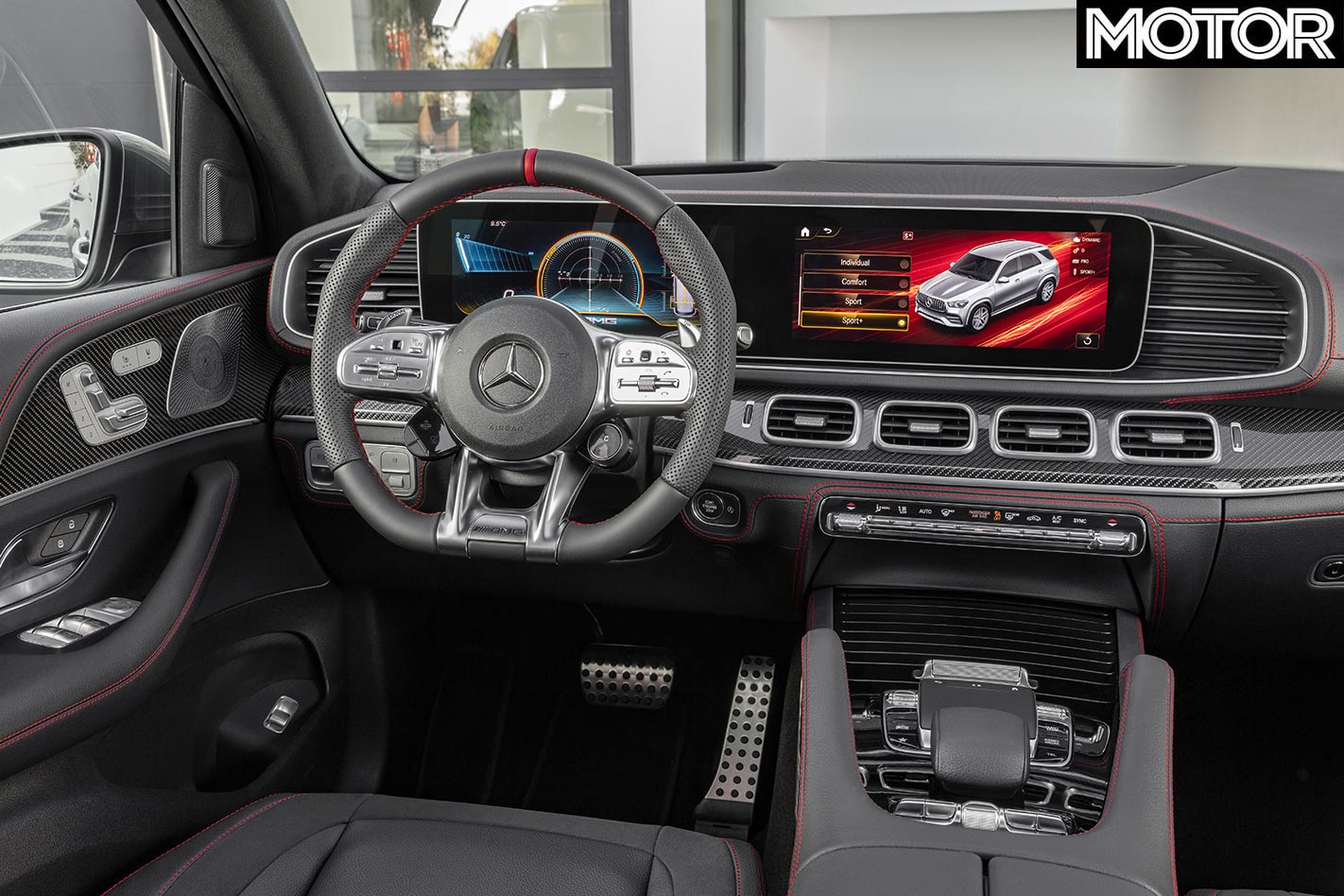
Wrap that up, and it’s back onto the mountain roads in Sport Plus in no time. At the risk of sounding trite, it’s a testament to the GLE53 being a jack of all, even if it’s a master of none. No-one will buy it instead of a sports car, or a proper rugged off-roader, or an economical family car, but it’s got a bit of all three about it. A C63 sedan won’t do everything this can, nor will a Landcruiser or Lexus LX. We’re impressed.
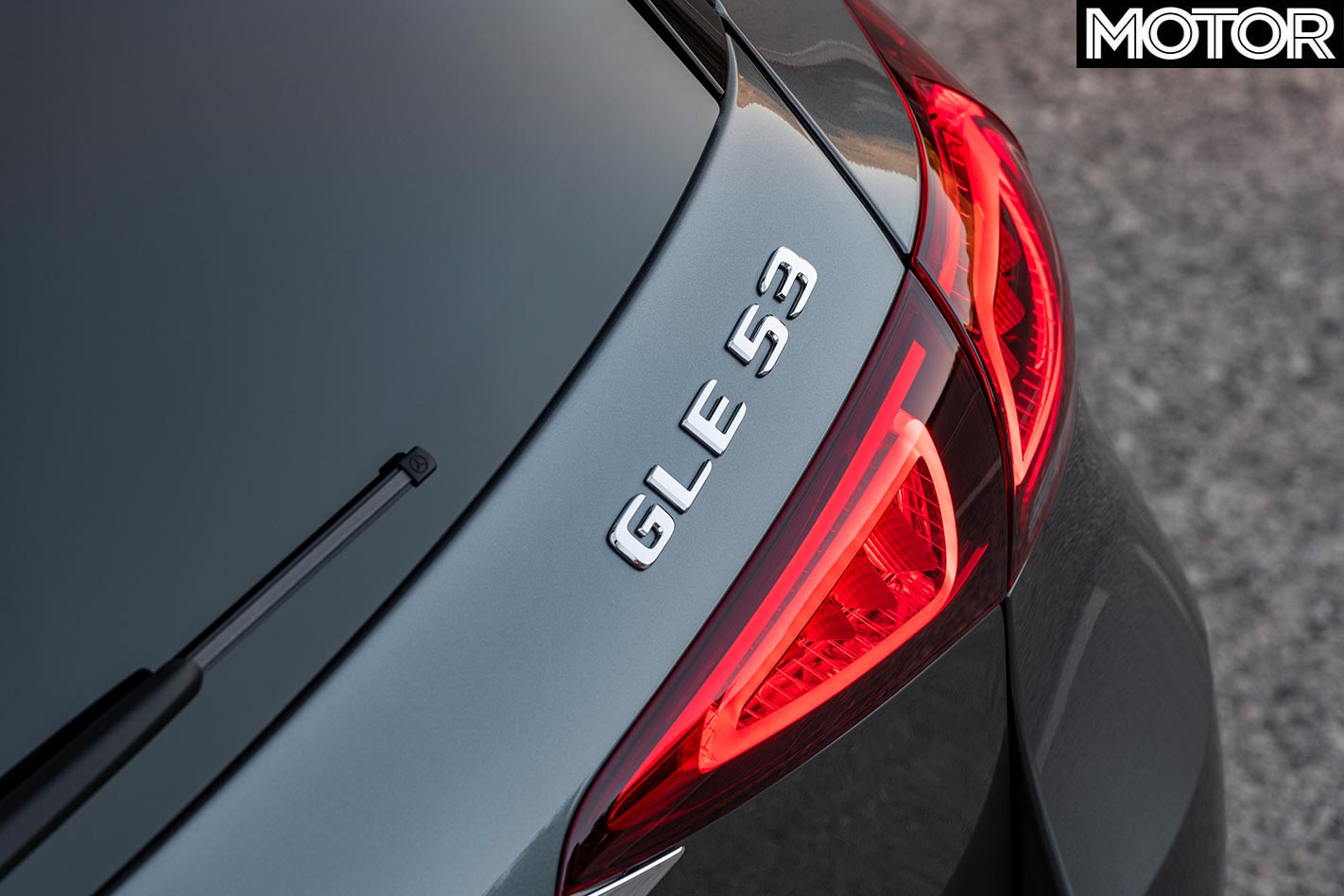
Mercedes-AMG GLE53 specs
Engine: 2999cc I6, DOHC, 32v, turbo Power: 320kW @ 6100rpm Torque: 520Nm @ 1800-5800rpm 0-100km/h: 5.3sec (claimed) Weight: 2250kg • price $166,700
Like: Fabulous engine; comfortable; malleable for varied lifestyles; thrifty Dislike: Very big; interior feels sparse; buying $500 of groceries just to fill the boot Rating: 3.5
I recently had the pleasure of spending a day touring New South Wales at the wheel of a selection of Audi’s updated A4 and A5 models, and the experience has reminded me of one of Australia’s most inexplicable motoring enigmas.But before we get into that, let’s recap on exactly what Audi’s mid-sized executive range can offer. While the pair of fraternal twins once represented simply a sedan, a coupe and a wagon, the 2020 A4 and A5 have evolved into a sedan, coupe, convertible, fastback, Avant and more off-road-oriented Allroad wagon.Not only do you now have the choice of six mechanically related machines beneath the two umbrella models, add in the selection of engine and transmission variants, and you are spoilt with 12 choices.
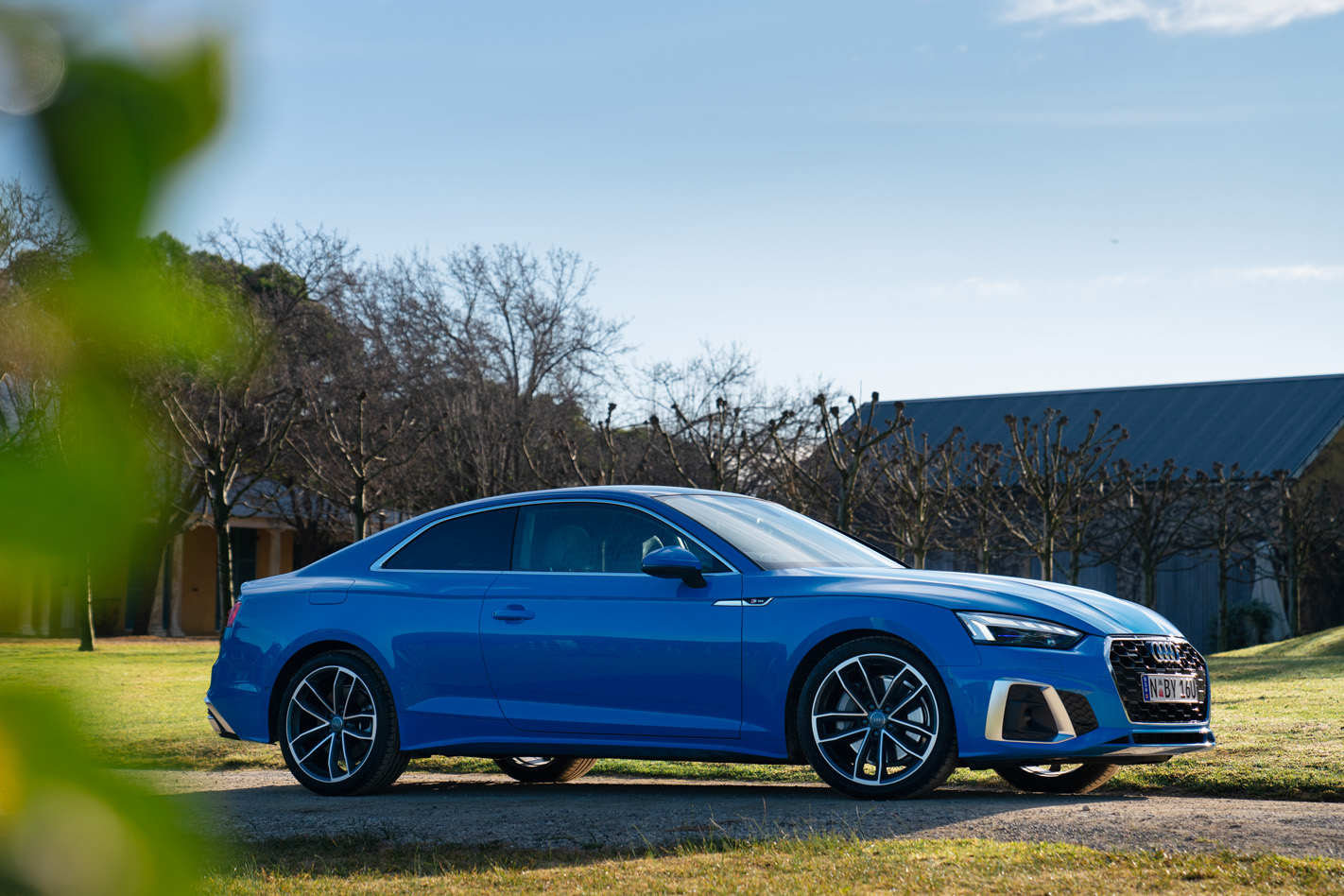
Building a case for the car
As the cards fell, my day with a tasting platter of Audi’s started at the helm of the A4 sedan in 45 TFSI, which bundles the company’s proprietary Quattro all-wheel-drive system into the bargain, along with the most potent version of the petrol four cylinders – a 183kW 2.0-litre with a decidedly diesely 370Nm of torque.This particular example had a whole heap of options thrown at it, but regardless, the A4 continues to impress right from the crucial first contact in its cabin, with design and quality nothing short of stunning, all the way through the driving experience.
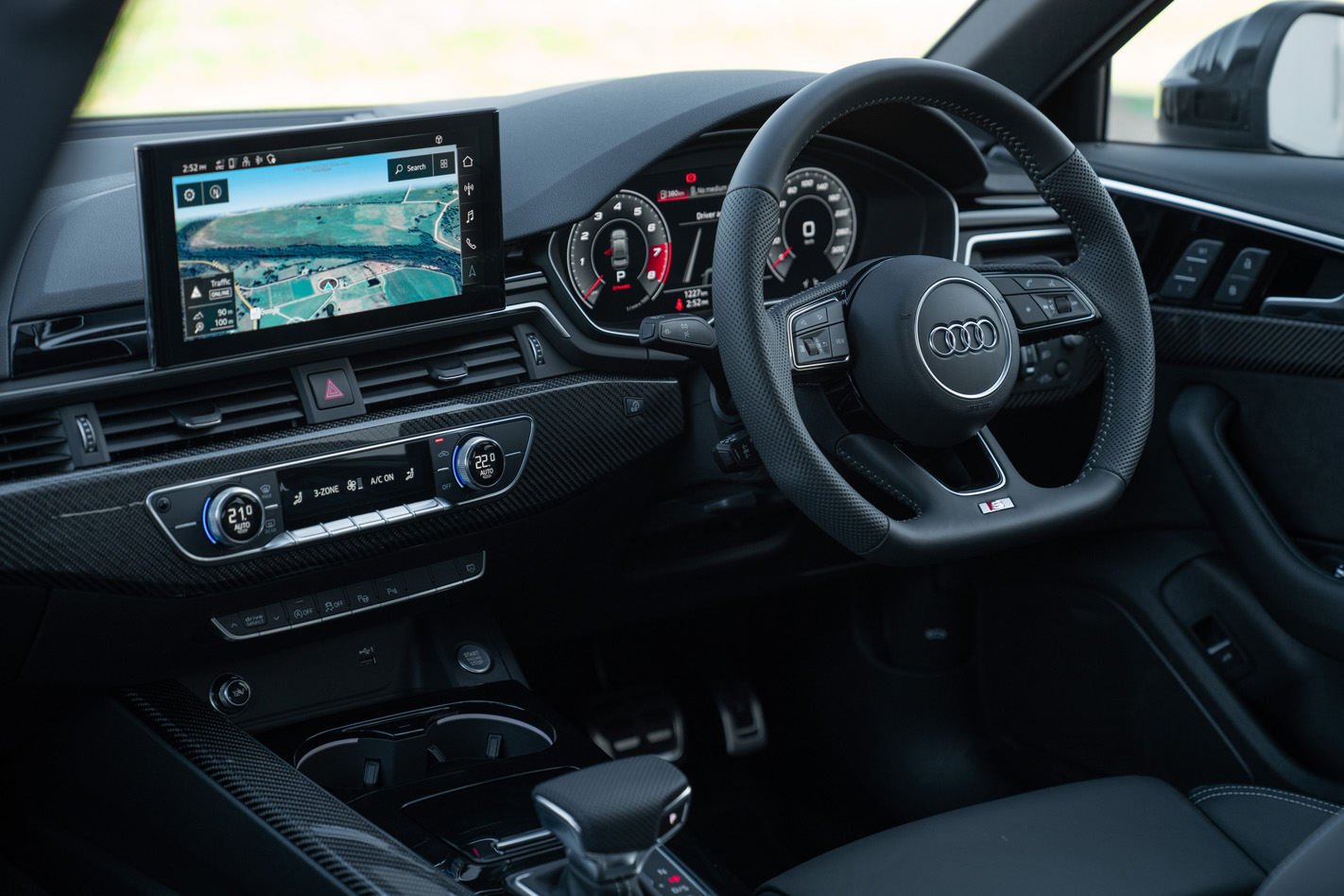
Once again though, I’ll point you in the direction of the options catalogue to match this one.Sydney’s roads, which seem to be in a permanent state of disrepair or repair-in-progress, don’t seem to bother the Audi, thanks to exemplary low-speed road manners and a seven-speed automatic transmission that does crawling and stop/start better than a hearse.Then there’s the technology. It’s a little overwhelming at first with a screen bigger than the one in my living room, but with a little surfing of the sensitive touchscreen and haptic feedback controls, everything falls into place intuitively.
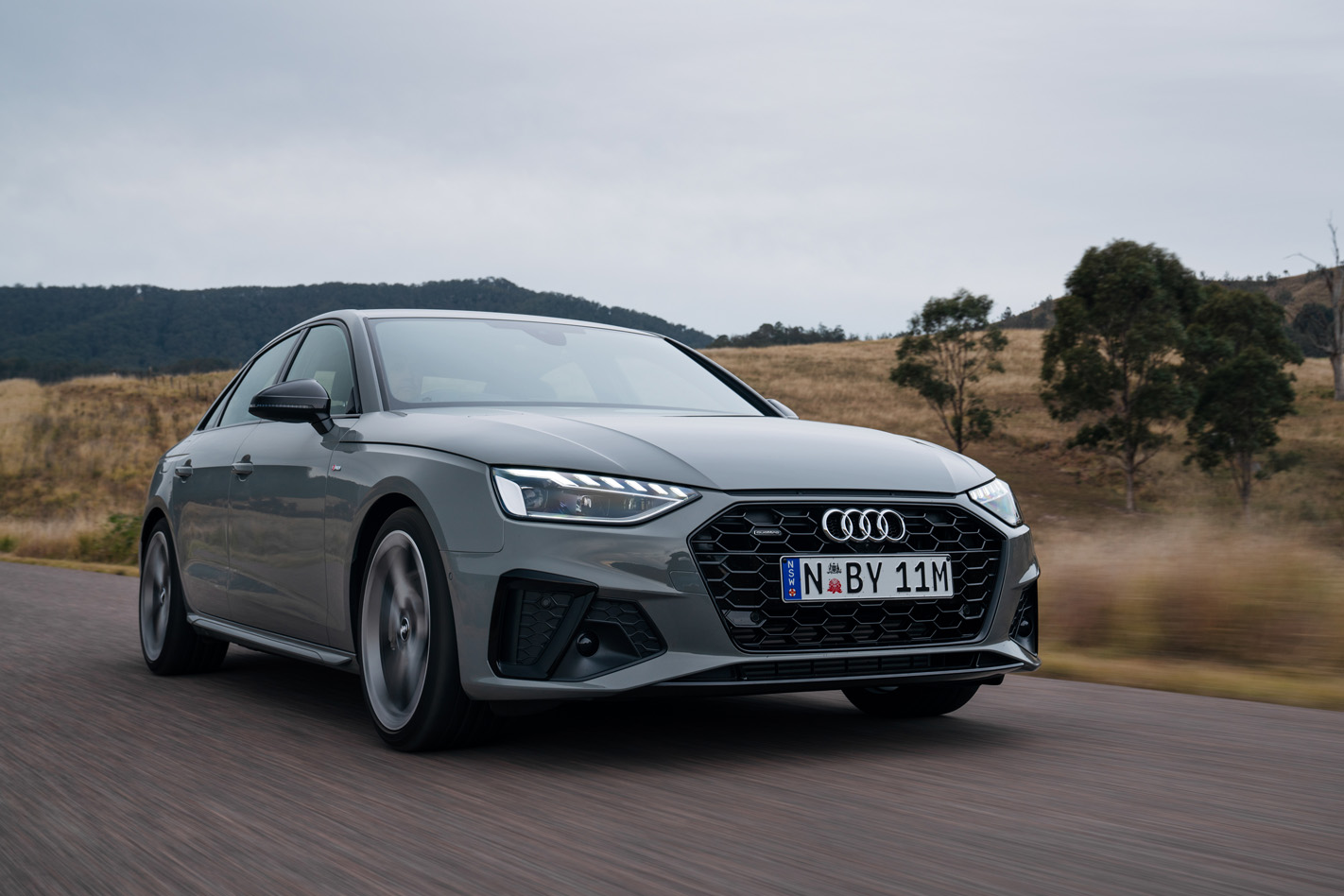
On the open road, the ride continues to surprise with impressive comfort and low cabin noise even when driving more enthusiastically.
A5 Cabriolet and Fastback
Just as I was getting into the flow with Audi’s high-achieving sedan, it’s time to swap into a different model and one at the polar opposite end of the spectrum and with it, the complete reset of my driving parameters. After all, I’m going from a four-door sedan to a two-door without a roof.
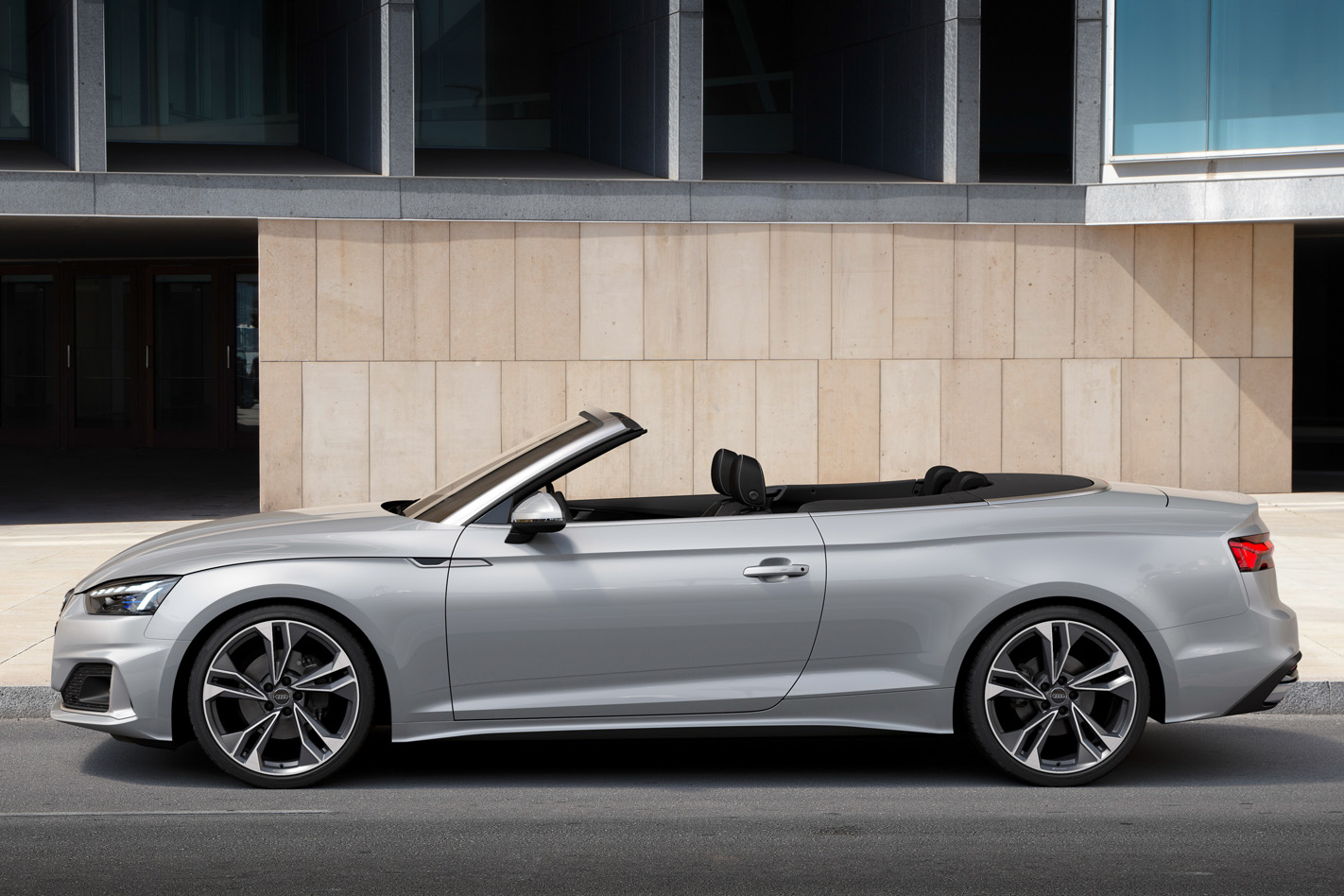
That in itself is amazing, as the previous-generation model had so much body flex and scuttle rattle that in fast corners I thought it was going to pop its entire dashboard out through the open roof like a shelled broad bean.On the contrary, the latest iteration of the A5 Cabriolet is brilliantly composed. Although there weren’t enough opportunities to push it to the limit, there never are in a handsome drop-top when the sun is out.
Even a freeway blast didn’t bring feelings of regret for leaving the roof off, thanks to powerful seat heaters and neck-warming blasts of warm air that are as hot as a hand dryer.
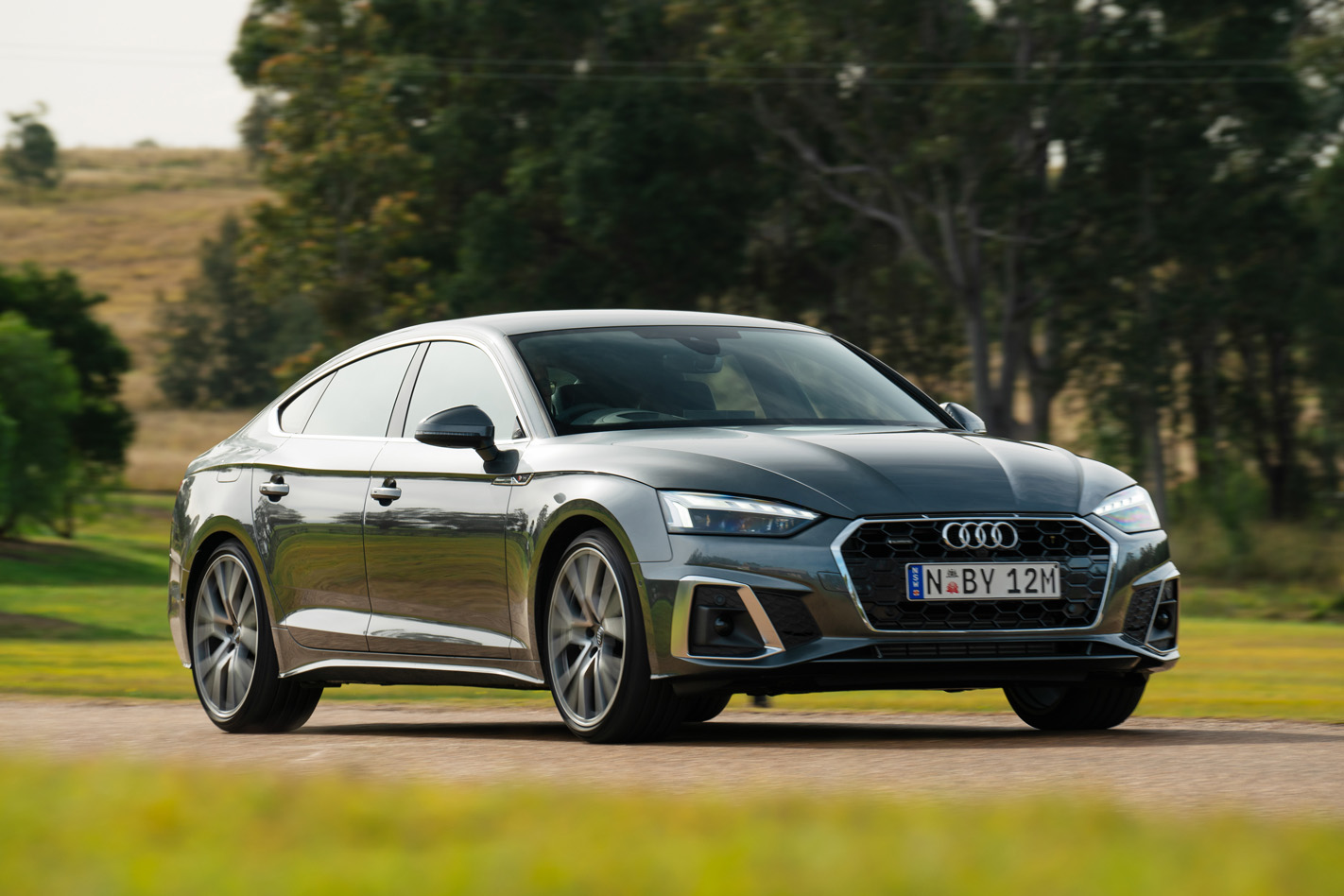
Later in the day, I would swap into the Fastback version of the A5 – a curious segment within a segment that caters for customers who prefer a more elegant coupe profile coupled with the convenience of four doors and a tailgate.
A4 Avant and Allroad
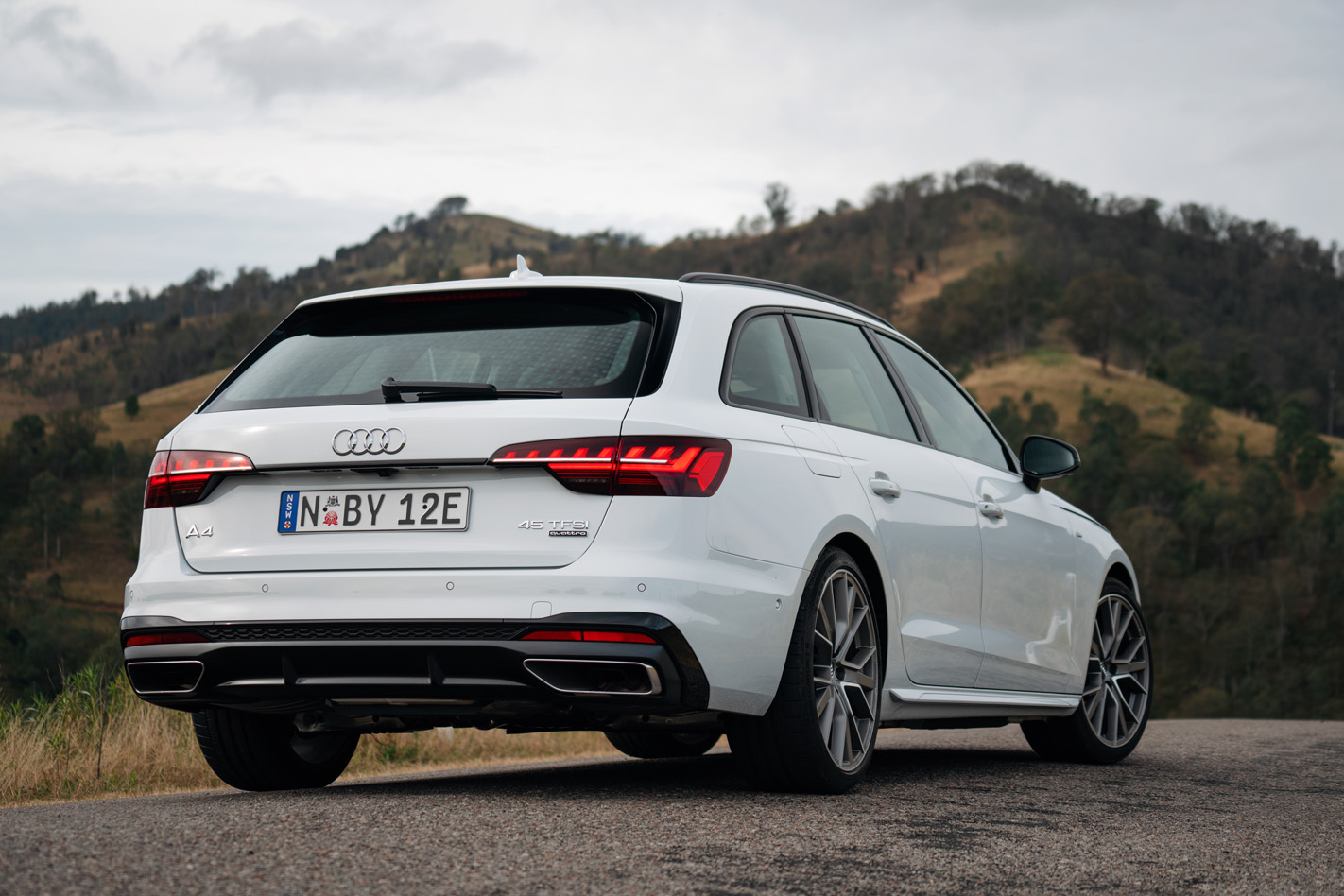
The wagon versions of Audi’s new A4 might have a big boot, but they do not handle like a loaded shopping trolley thanks to the shared MLBevo platform and the same sharp chassis as the other models.
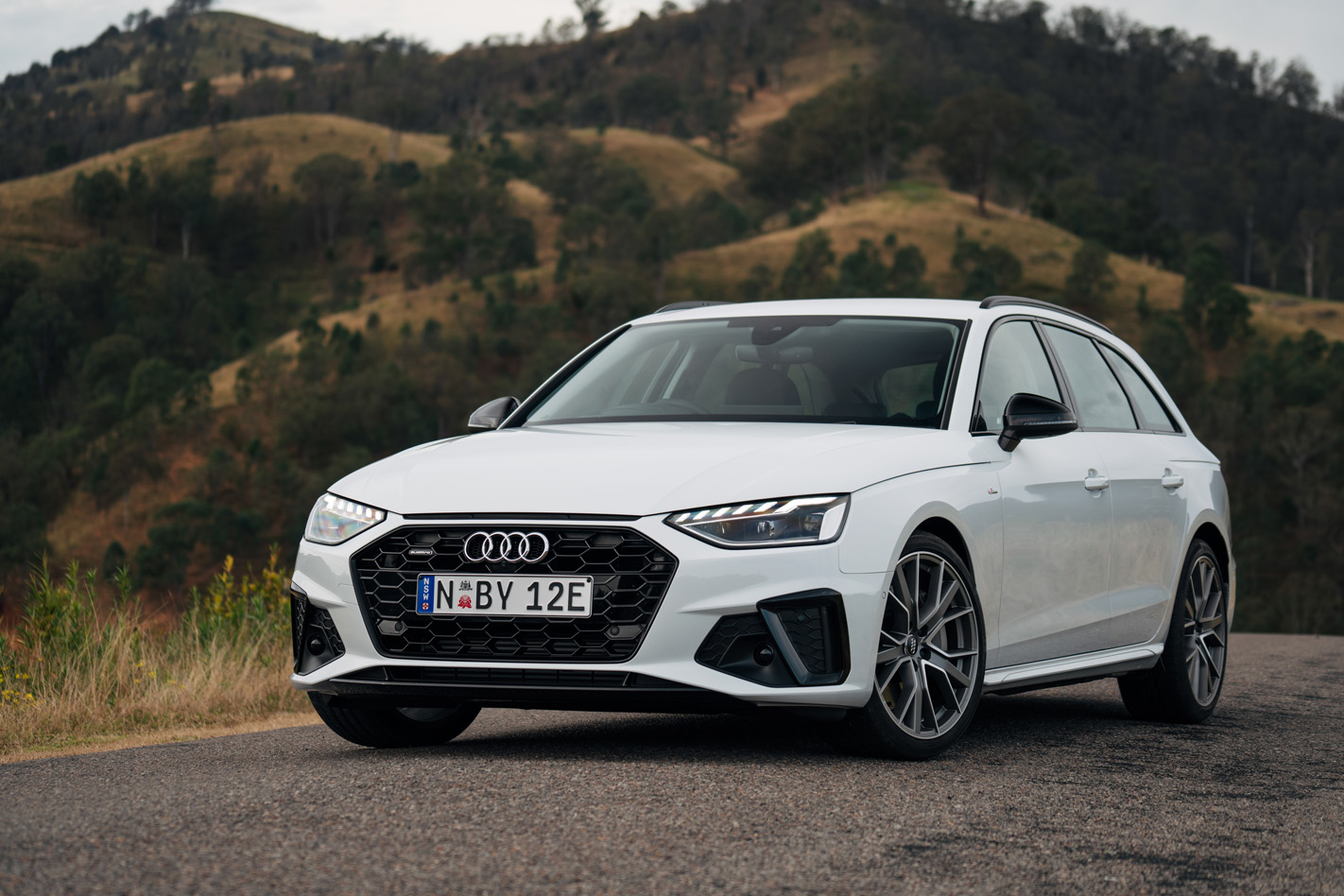
It wasn’t that long ago that an Audi Avant capable of blasting to to 100km/h from zero in about 6.0 seconds was outright RS territory, but now you can have it in mere S-Line trim.
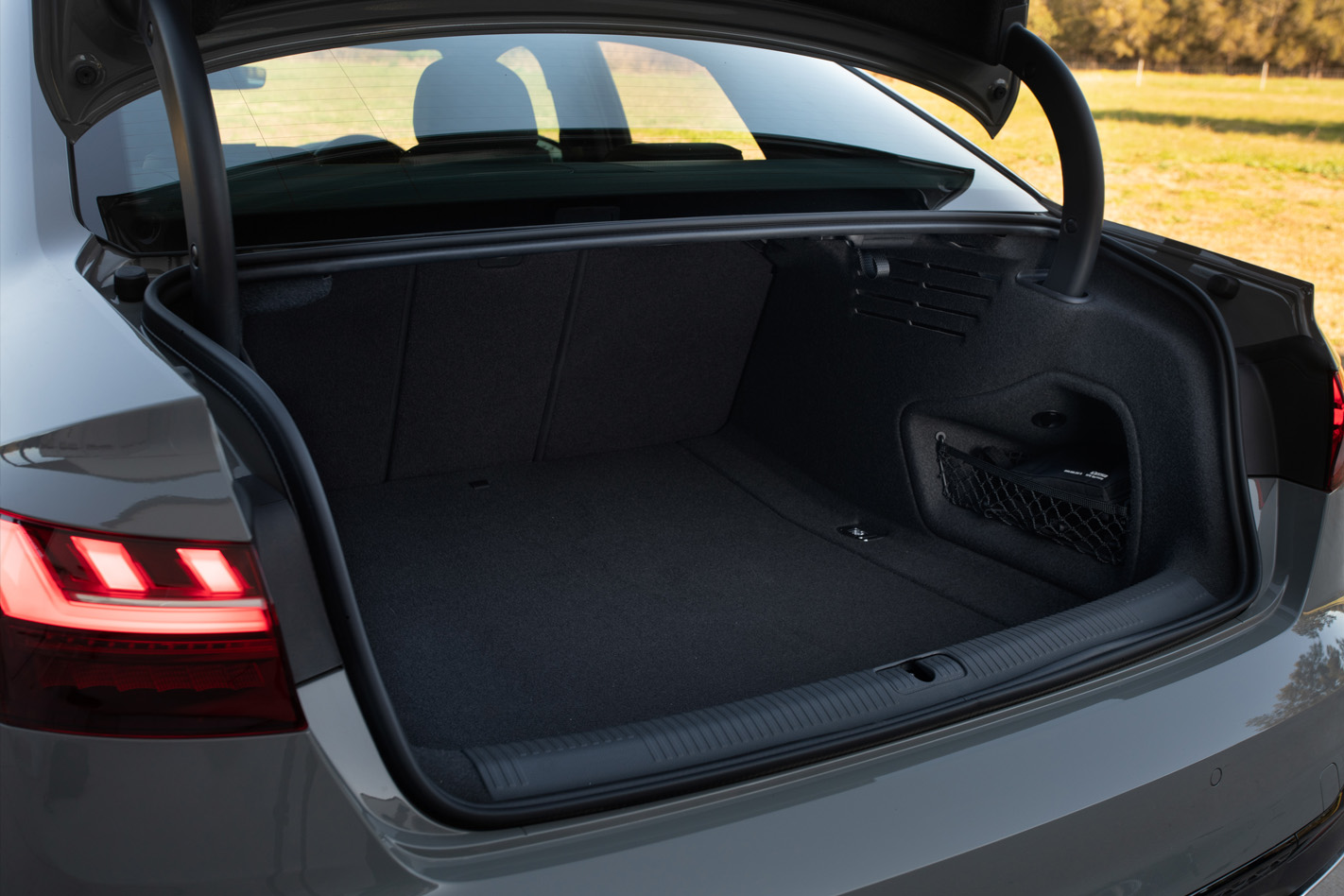
The A4 Avant is fast and huge fun through the corners, yet when you send it back to the freeway (where it’s also very comfortable), it’ll return fuel economy in the low sevens per 100km.Like everything in this delightful family of luxury models, the Avant is hugely impressive but that’s before you get to its unique selling proposition – that boot.
It’s only 35 litres bigger than the sedan luggage area at 495L, but that’s more a compliment of the sedan’s practicality rather than a criticism of the wagon. Fold the rear seats flat, however, and the Avant will swallow nearly 1500 litres of stuff.
However, should you need a little more ground clearance and the more forgiving bodywork to go with it, the Allroad is the A4 for you.
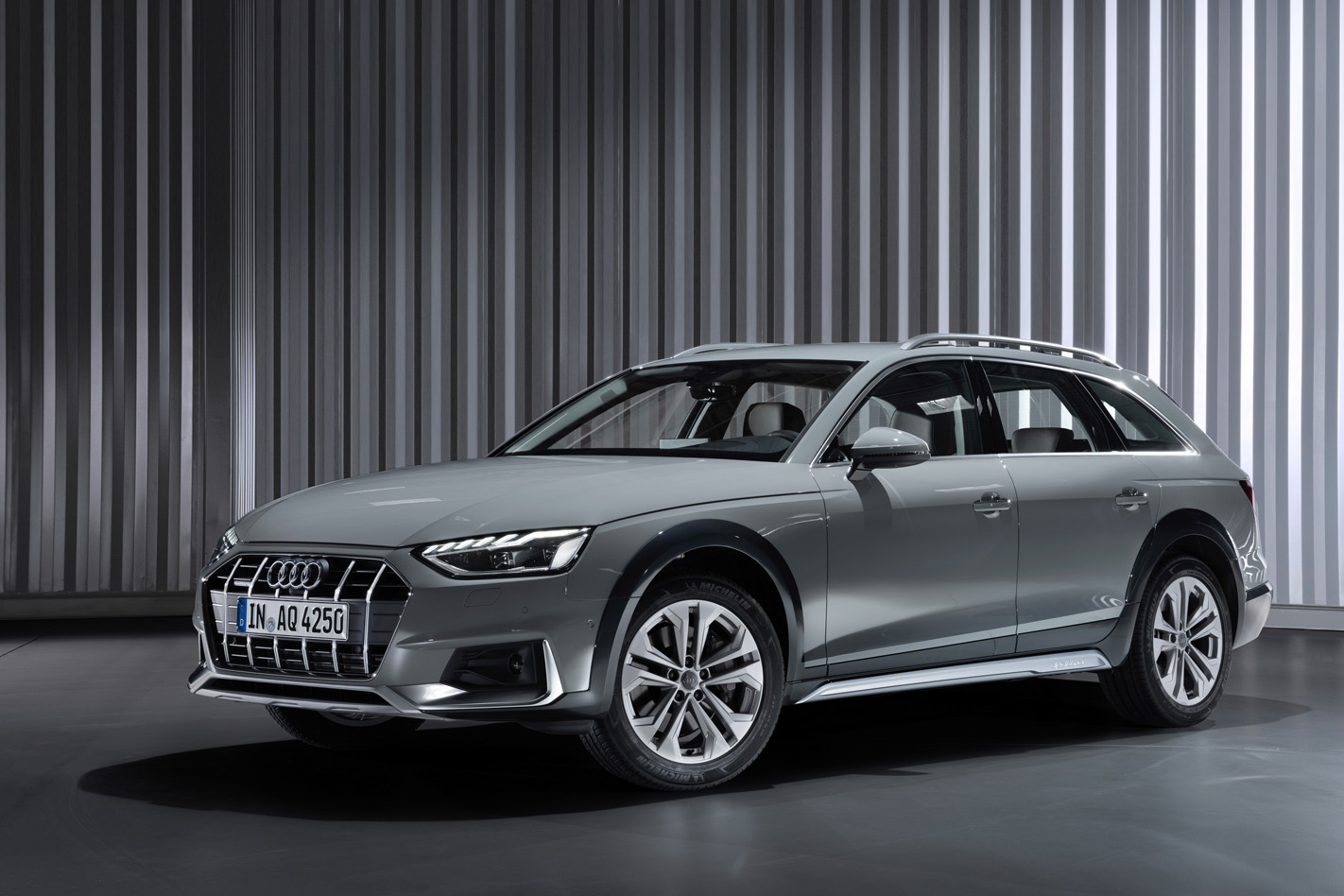
It also has 400Nm of torque to offset the smaller power figure of 140kW – perfect for towing if you like that kind of thing.So perhaps now you’ll understand why the whole notion of buying an SUV instead of the excellent A4 Avant or Allroad is utter madness. No?
SUV versus me
The A4 wagon is the clear favourite in the freshly updated A4 and A5 line-up but the strange truth is that, despite its incredibly comprehensive set of talents, you’re statistically far more likely to be fawning after its SUV stablemate, so let’s have a look how it compares.
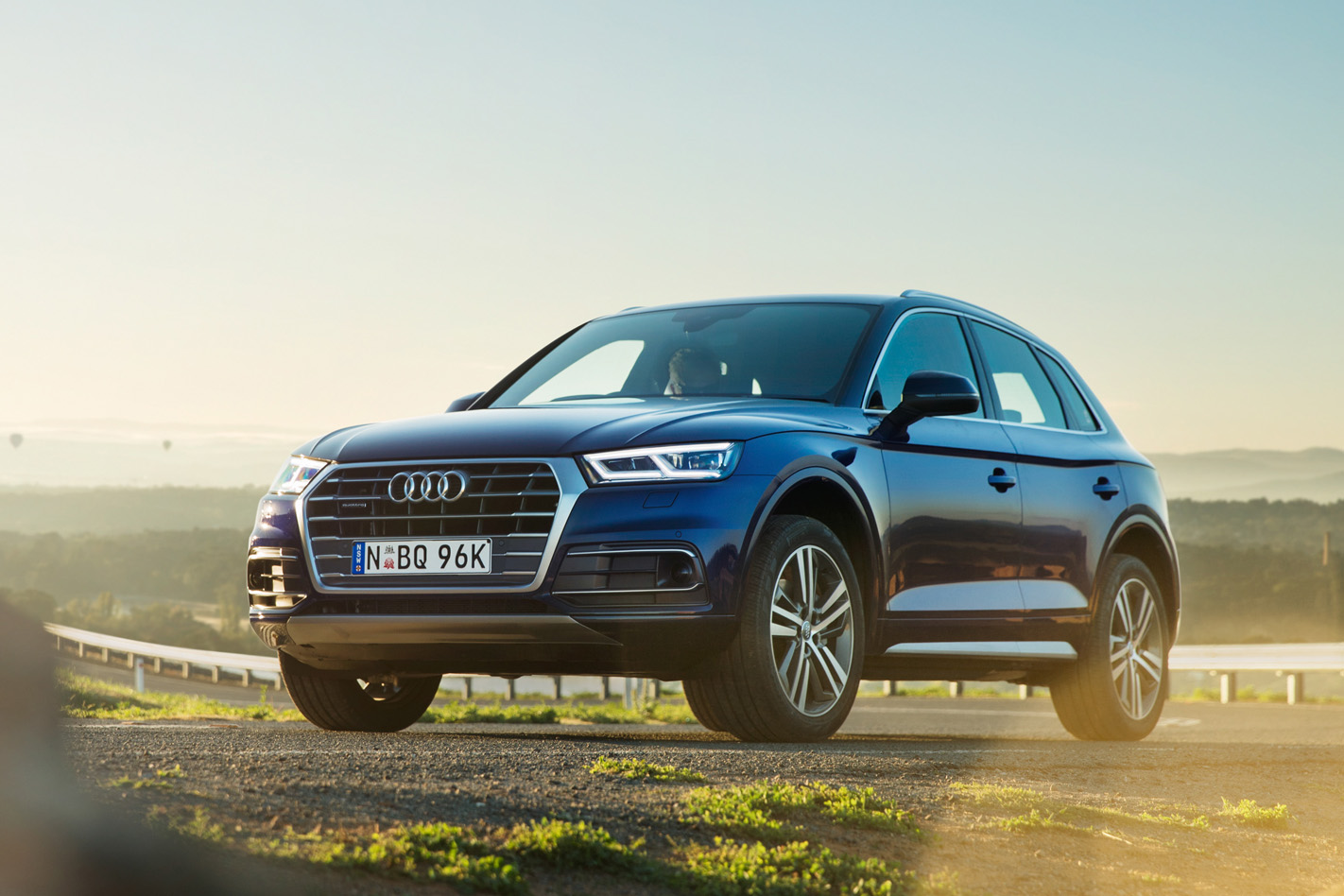
It uses more fuel on the combined cycle to the tune of 0.2L/100km and, while the Q5 is undeniably one of the best SUVs from a driving perspective, it has nothing on the A4’s dynamics.Want a diesel? Okay, how does the Allroad stack up with the SUV equivalent Q5 40 TDI Sport? Once again – more expensive, less economical, not quite as good to drive.A blast in Audi’s resoundingly good updated A4 and A5 range provided the perfect example of passenger car versus the SUV comparison, but the same theory and analysis can be easily applied to so many brands and their comparable models.
Toyota has revealed local pricing and specifications of the seven-seat stablemate of its newly-updated HiLux dual-cab ute – the Fortuner 4WD SUV.
Priced from $49,080. (before on-road costs), the facelifted Fortuner boasts a redesigned front and rear end, receives a bump in power output and a boost to its towing capacity.
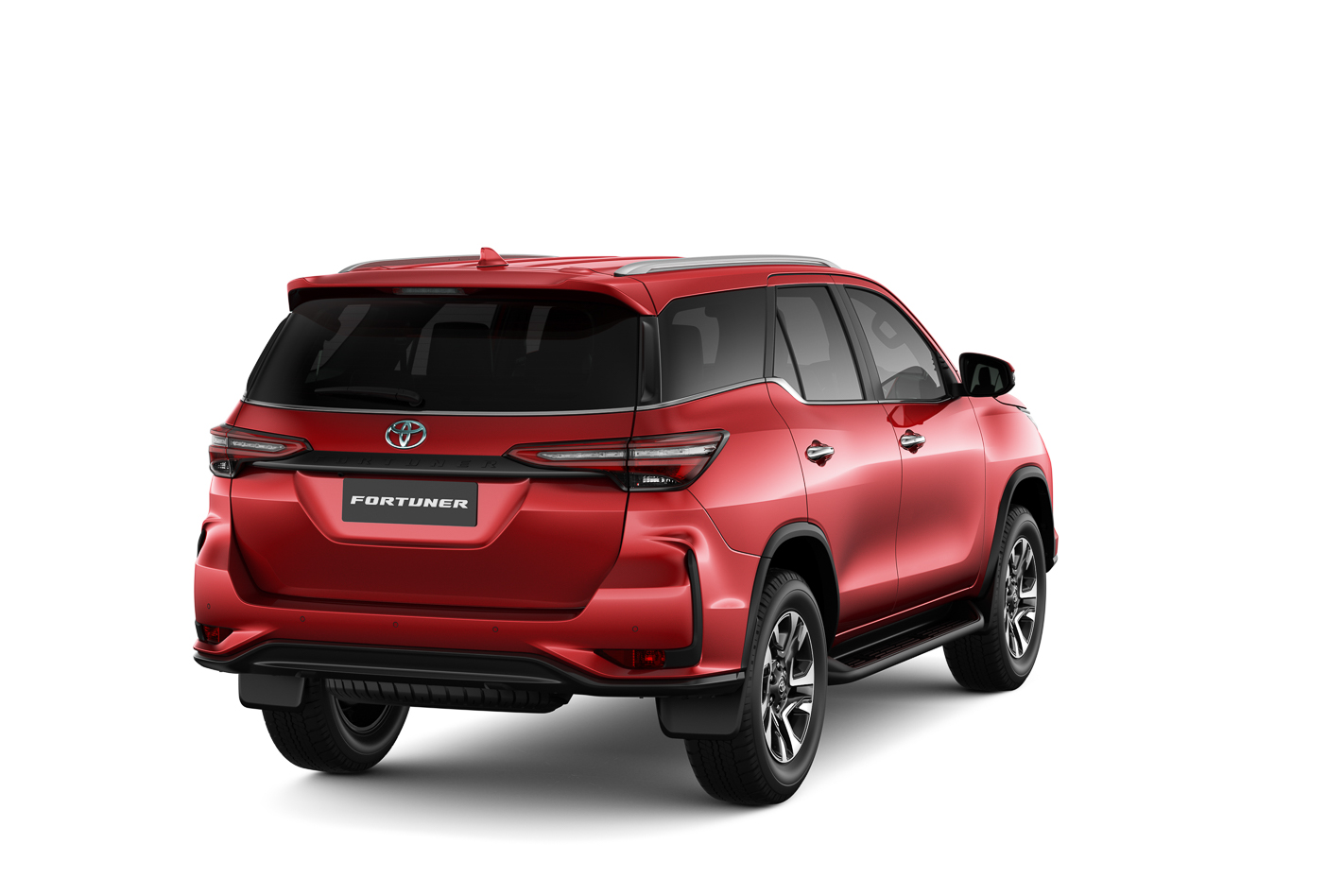
The 2021 Fortuner will go on sale this month alongside newly updated Hilux, featuring an updated version of Toyota’s 2.8-litre four-cylinder turbo-diesel under the bonnet, enabling maximum power outputs of 150kW/500Nm; up 20kW/50Nm compared to the outgoing model.
The performance jump comes via a more efficient water-cooled turbocharger that helps bring the higher outputs via the six-speed automatic transmission, while Toyota says it cuts fuel use by 11.6 percent on the official combined cycle – or 7.6L/100km down from 8.6L/100km.
At that rate, you’ll be able to drive your Fortuner more than 1000km on its 80-litre fuel tank. Toyota claims it’s also more efficient around town, with urban consumption down 17.3 percent to 9.1L/100km.
The Fortuner’s towing capacity has also improved, up 300kg to 3100kg, which is 100kg more than the Ford Everest.
Styling changes
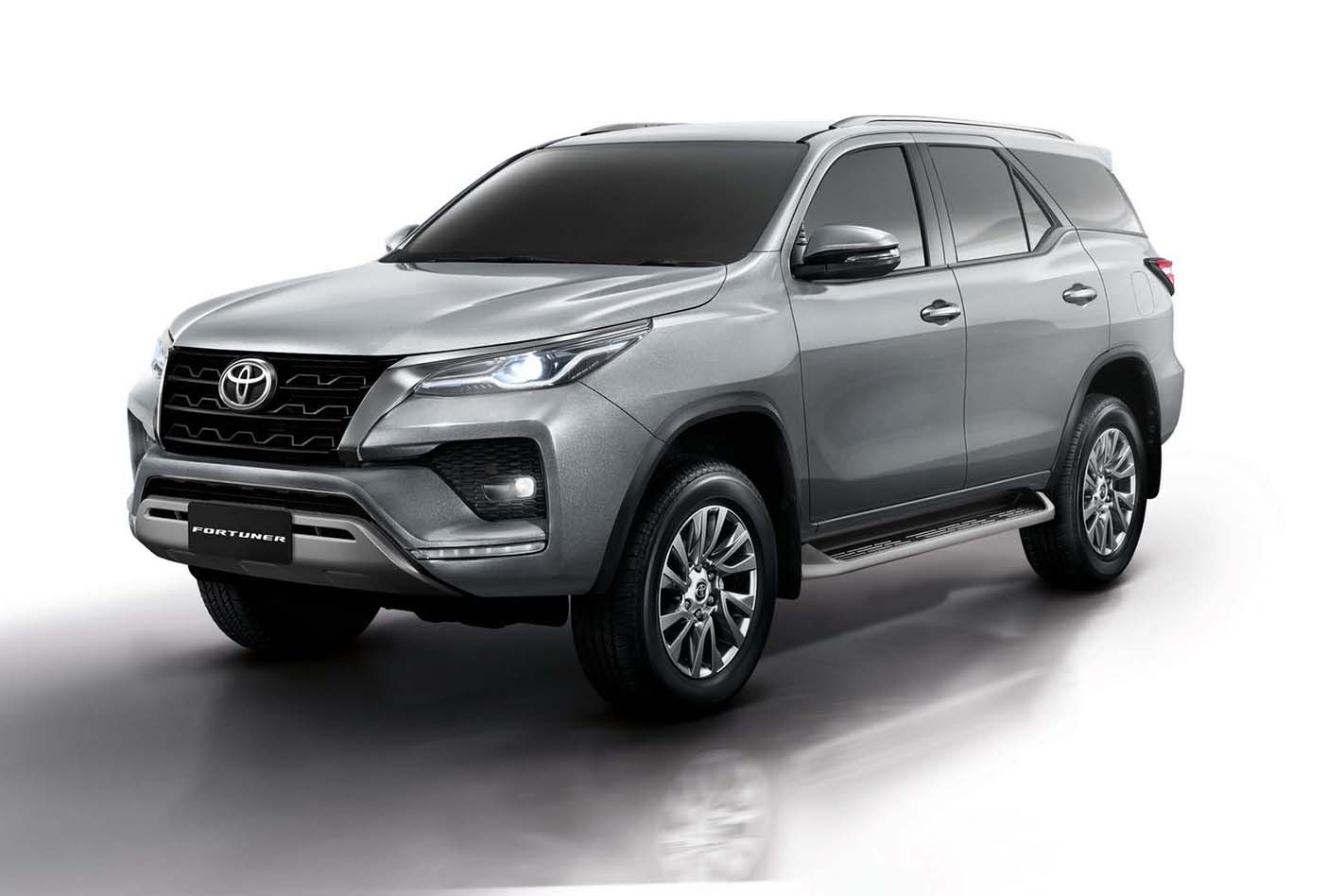
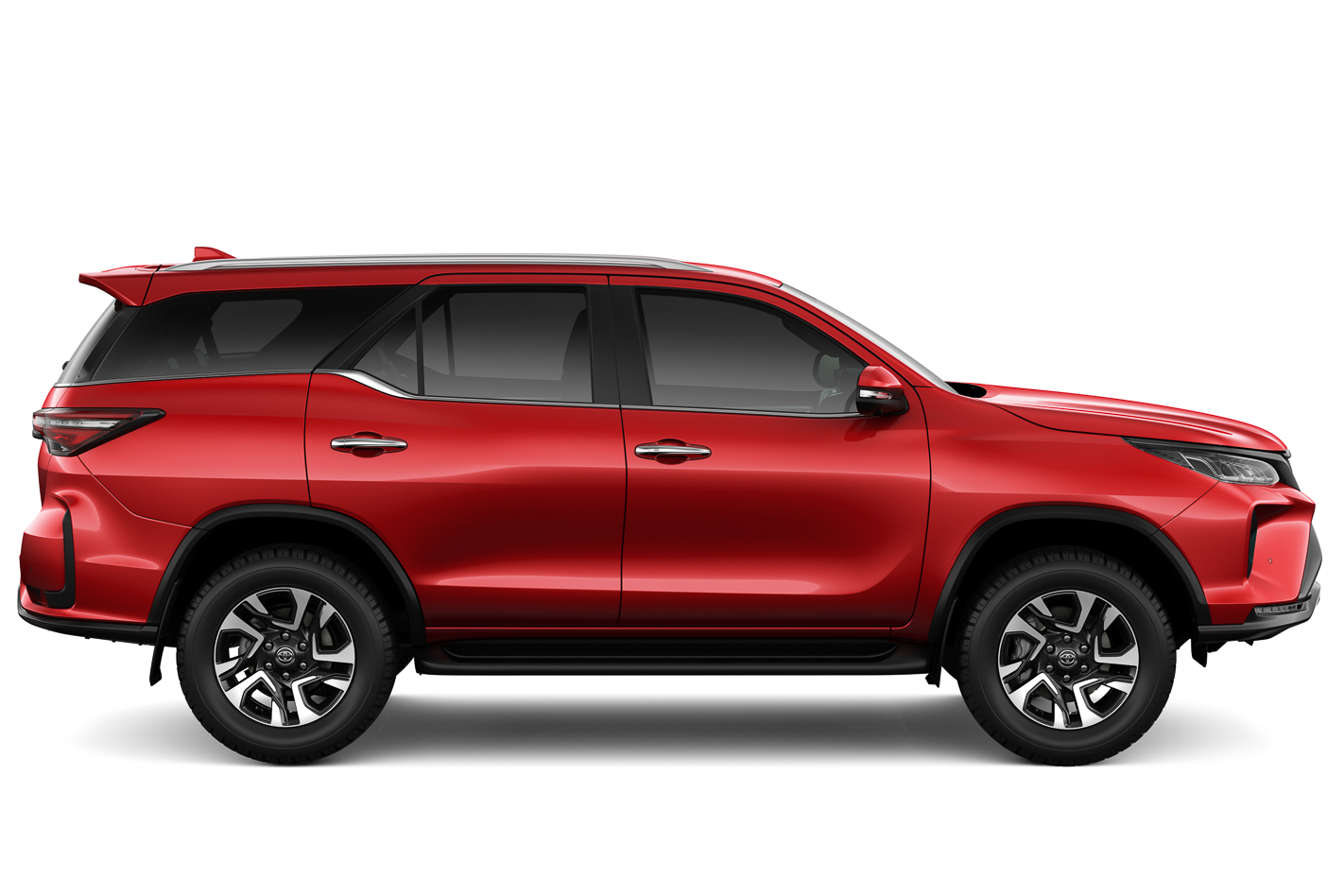
The GX, GXL and Crusade variants feature fresh exterior styling that give a ‘meaner’ aesthetic. Changes include the revised front end that centres on a larger black grille, restyled lower front bumper, slimmer Bi-LED headlamps and new tail-light design. The GX and GXL retain their 17-inch alloy wheel while Crusade receives newly designed 18-inch rims.
Equipment
Inside, the Fortuner now gets an 8.0-inch Android Auto/Apple CarPlay enabled touchscreen that includes voice activation capabilities. Other standard equipment includes an air-conditioned cool box, audio and phone controls mounted on the steering wheel, soft-touch instrument panel, 60/40 tumble-and-slide second-row seat, tilt-and-telescopic steering column, and six-way driver and four-way front-passenger seat adjustments.
Toyota’s Safety Sense driver-assistance suite is also part of the standard kit and includes autonomous emergency braking, lane departure warning, and active cruise control
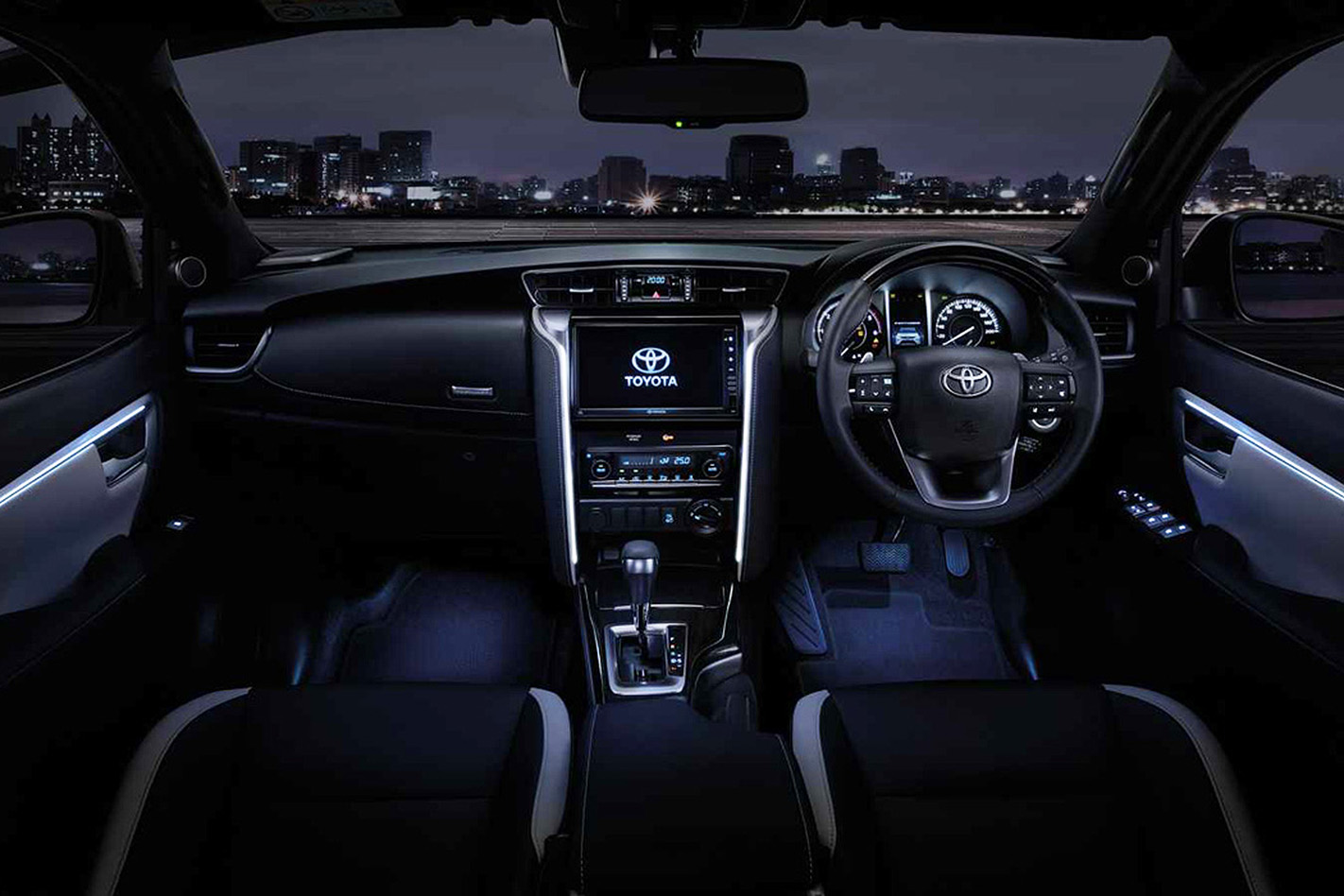
Upgrading from the GX to the GXL brings automatic climate-control air-conditioning, keyless smart entry and start, roof rails, fog lamps (now LED), privacy glass, and downhill assist control.
Satellite navigation and digital radio are also included with GXL and Crusade variants, and available in the GX for an additional $1000.
The Crusade meanwhile has an as an auto-dimming rear-view mirror, power-operated tailgate and an 11-speaker premium JBL sound system. It also has leather-accented seats and eight-way power-adjustable front seats, which are a $2500 option in the GXL.
A common complaint of the previous Fortuner was that it wasn’t as comfortable on-road as some of its less-rugged alternatives.
Toyota reckons it addresses some of those concerns with the new Fortuner, while maintaining its go-anywhere capability.
“Fortuner is something of a wolf in sheep’s clothing: it has the space, comfort and convenience of a premium SUV while its rugged underpinnings make it an enthusiastic off-road explorer ready for any adventure,” Toyota Australia vice president of sales and marketing Sean Hanley said.
“Our continual improvement of vehicles ensures Fortuner will thrive in Australia’s harsh environments as a diesel alternative to Kluger and an affordable choice for those who aspire to own a LandCruiser.”
The new Fortuner arrives in showrooms on August 27.
2021 Toyota Fortuner pricing
- Fortuner GX – $49,080
- Fortuner GXL – $54,350
- Fortuner Crusade – $61,410
For a year either side of 2000, it seems you weren’t any sort of performance car enthusiast in Australia unless you’d nailed your colours to the mast of either the Subaru WRX or the Mitsubishi Lancer Evo.
Forget Falcon versus Commodore. For a couple of glorious years there really was a substitute for cubes, and Lowndes and Skaife suddenly had McRae and Makinen to reckon with.
And then, almost as quickly as it appeared, the demand for these cars seemed to virtually vanish.
Sales of the first-gen Subaru WRX peaked in 1999 with 469 units in a month and tailed off thereafter. These days 90 sales a month is a good result.
But in April 2014, the WRX models totalled a heady 691 units, helped by the introduction of the latest generation STI and the CVT transmission.
That was a slightly artificial blip based on a backlog of orders and within a year, sales were back down to just over 200 per month.
Here are the five key reasons for the demise of the all-wheel drive rally replica.
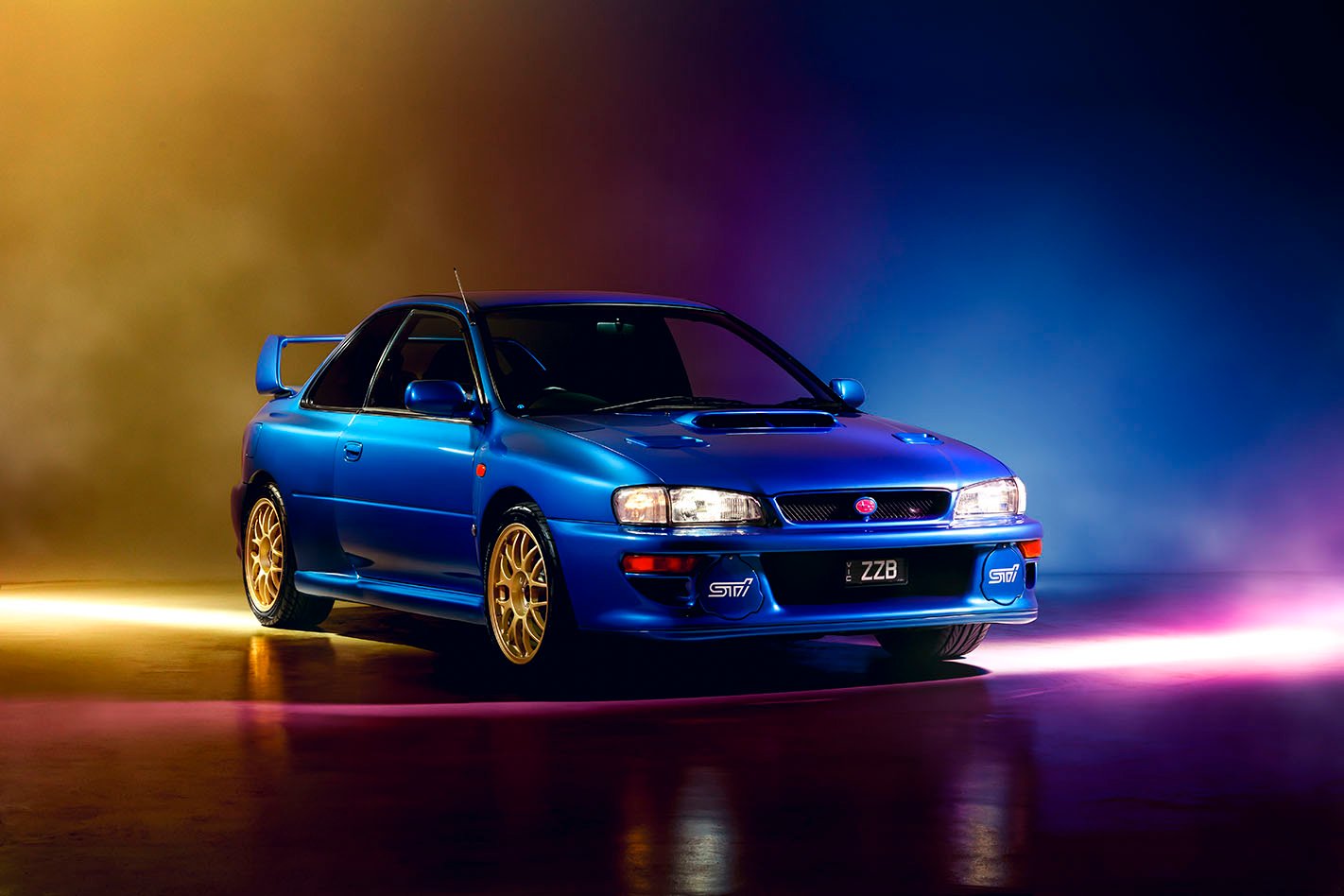
IMPORT CRAZE
Like most scenes, the appetite for JDM wares waxes and wanes.
At the turn of the century, importing a car from Japan was easier, a country where rigorous and expensive shaken regulations (a very rigorous bi-annual roadworthy) encouraged buyers to dispose of their cars just before three and five years of age.
During the early Nineties, Australia had seen the growth of ‘Fast Four’ culture, where Escorts, Geminis, Celicas, SSS Datsuns, Minis, Vee-Dubs and Alfas all gained a cult following.
The Nissan GT-R’s domination of Group A racing in 1991 and 1992 cemented Japanese performance front and centre in the minds of Aussie enthusiasts.
From there it was only a matter of time before the import flood gates opened, leading to the Cabin Boys and Autosalon subcultures. And, just like anything that becomes a cliche of itself, the genre became tarnished.
Wheels editor Ewen Page knew that between 2000 and 2002, a WRX or an Evo on the cover of the magazine would guarantee bumper sales. Page left the building in June 2002, with incoming boss Ged Bulmer recognising that a return to Aussie metal was the way to shift mags.

FWD GOT BETTER
If you ever needed an example of a bloody awful front-drive hot hatch, take the Alfa Romeo 147 GTA as an example.
Back in 2002, this thing packed a WRX-rivalling 184kW and was a torque-steering mess.
Put simply, anything with much more than 150kW was a bit of a handful. We can lump the Saab 9-3 Viggen in with the Alfa also. And, to an extent, the Mk1 Ford Focus RS.
Engineers hadn’t yet finessed the art of getting the front wheels to do driving and steering particularly well when deploying a decent slug of power.
That changed in 2007 with the launch of the RevoKnuckle front suspension system on the second-generation Ford Focus RS.
Here was a vehicle with 224kW which used lessons learned in rallying – and how’s that for irony? – to which reduce scrub radius and kingpin off-set while avoiding the increased cost, weight and complexity of a traditional double wishbone or multi-link front suspension.
The result was that the car could deploy that power without generating stacks of torque steer.
Tyre technology had also helped here, with bigger, grippier front boots giving increasingly sophisticated traction control systems less to think about.
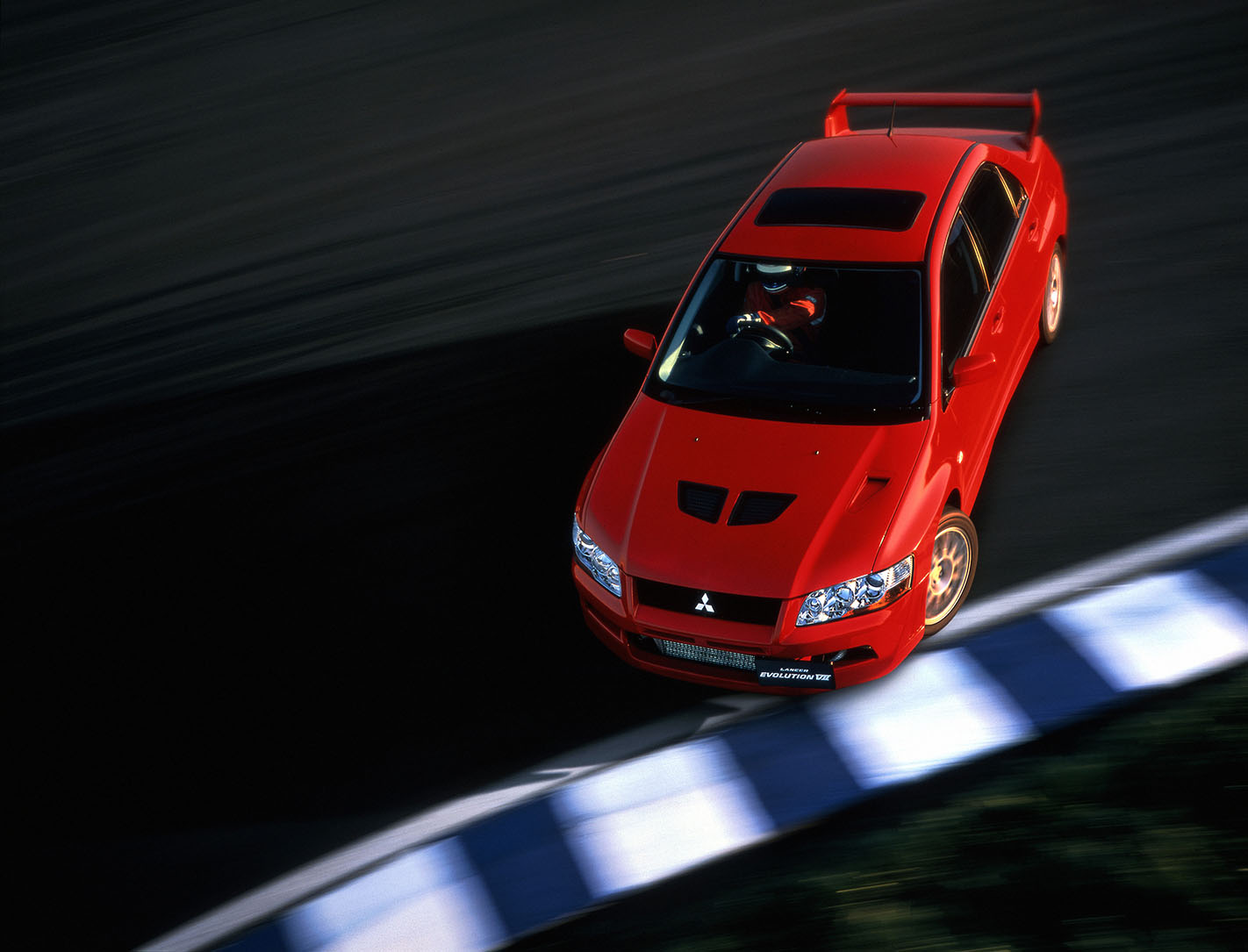
AWD GOT BETTER
As well as front-wheel drive cars getting better, all-wheel drive vehicles developed too.
Back in 2000, a Mitsubishi Evo VI made 206kW. Five years later an Evo IX was still a 206kW car, hamstrung by the Japanese gentleman’s agreement not to exceed this figure. Other manufacturers were unencumbered by such agreements.
By 2005, you could happily buy all-wheel drive powerhouses like the 220kW Volvo S60 R, a 253kW Audi S4 V8 or a 270kW HSV Coupe4.
If you had even more money, a $315,00 Porsche 996 Turbo or a $399,000 Lamborghini Gallardo all delivered drive to each corner.
The genie was out of the bottle and both Subaru and Mitsubishi found themselves trapped at the limit of their brand equity, both cars beached at circa-$56K and unable to defend themselves against the quality and profit margins of a forthcoming wave of premium AWD hatches like the Audi RS3 and Mercedes-AMG A45.

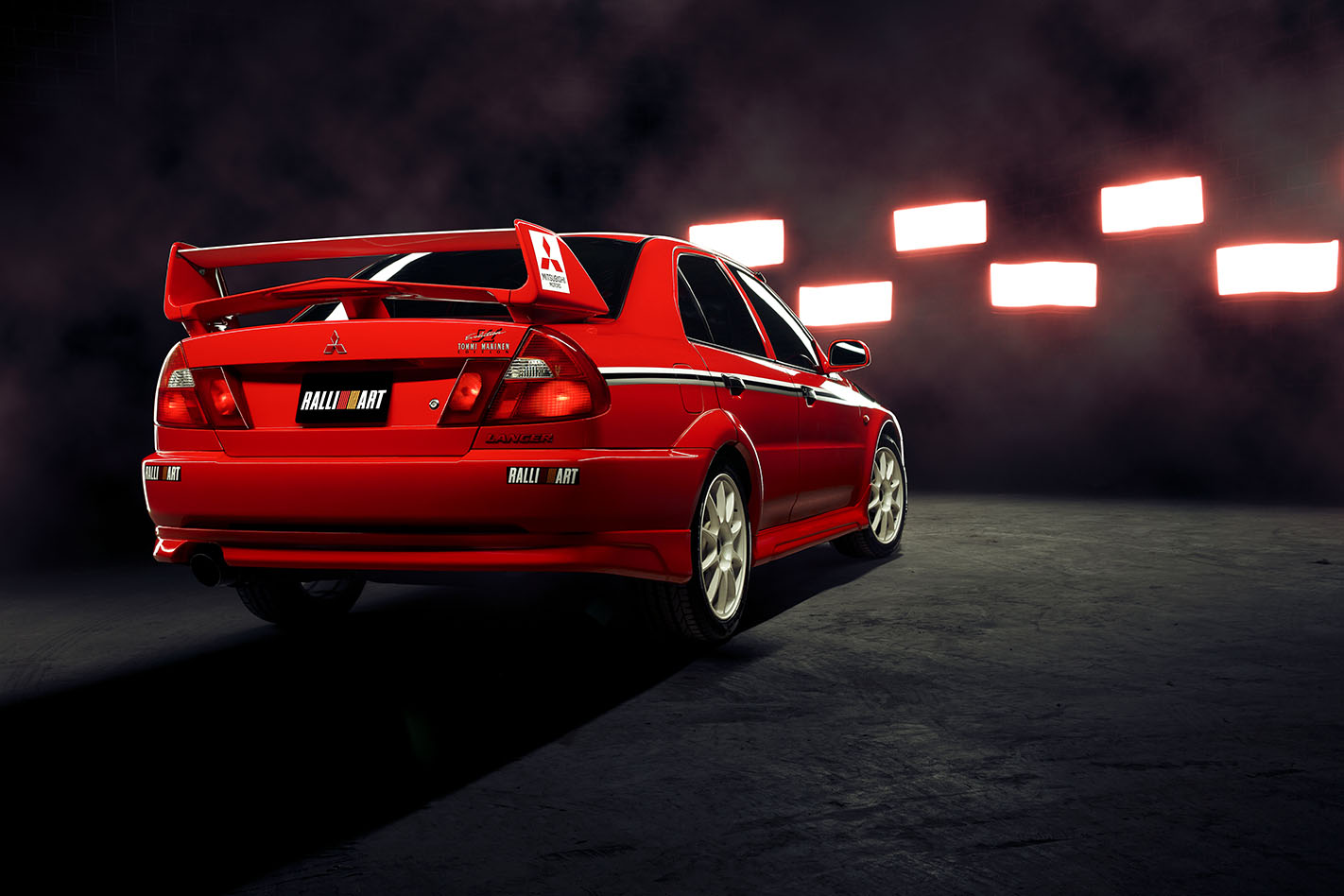
RALLYING DIED
Okay, so it didn’t actually die, but Mitsubishi eventually pulled the plug on World Rally Cars in 2005, with Subaru doing likewise in 2008.
Mitsubishi went on to withdraw the Lancer Evo line of production cars in 2016, the final Evo X dipping out after a nine-year production run or, if you prefer, the same duration as Evos I through VI.
The Subaru WRX and STI has continued in production, but with no top-line rally success to draw upon, the rally replica cachet has been largely lost.
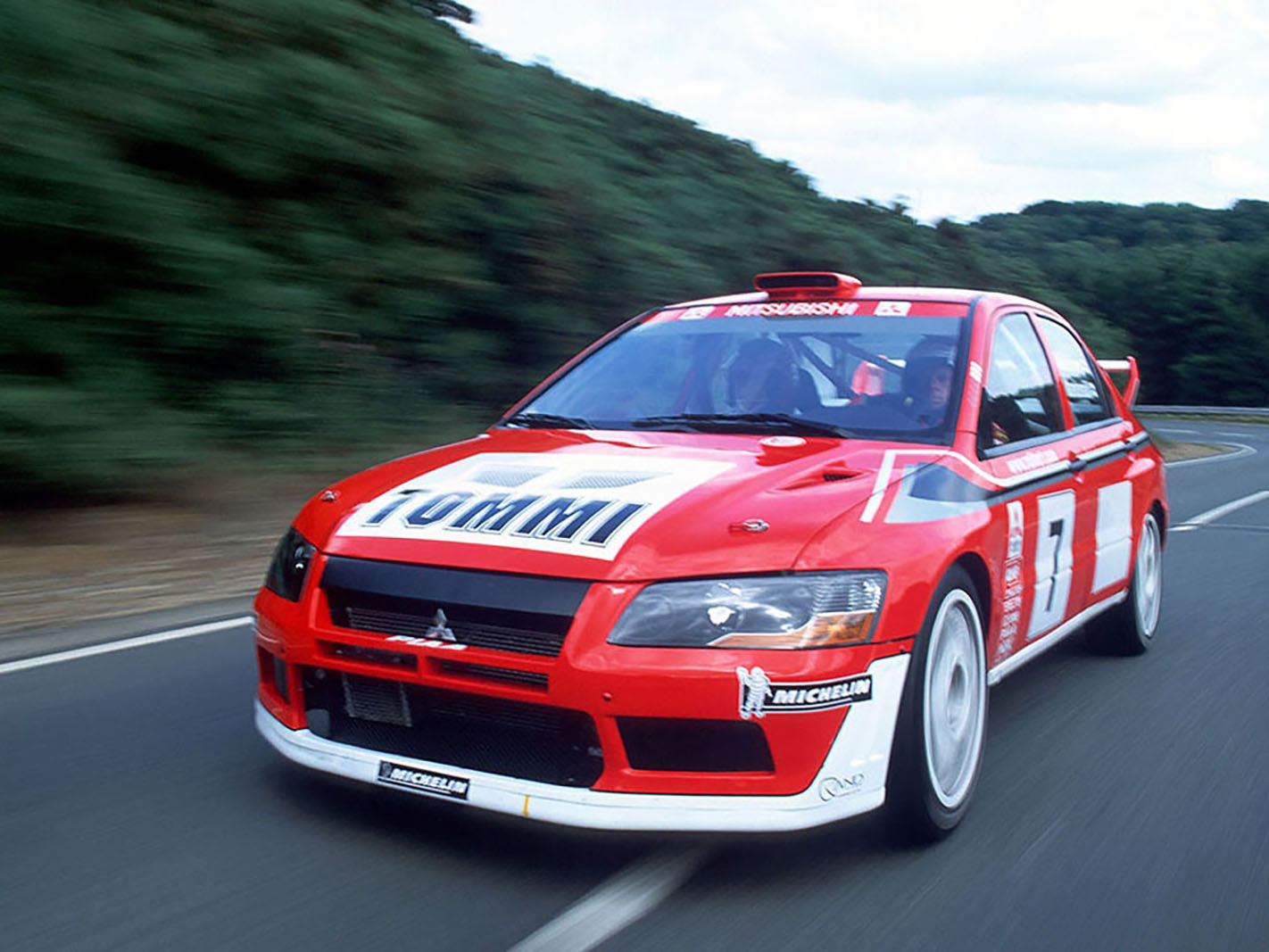
EMISSIONS HAPPENED
Granted, it’s not seen as such an issue in Australia, but it’s head-in-the-sand stupid to think that what happens on a global scale doesn’t have an influence on the cars that we get here.
Take the Lancer Evo as an example. In March 2014, Mitsubishi spokeswoman Namie Koketsu issued a press release stating: “Mitsubishi Motors does not have any plans to design a successor with the current concept, as a high-performance four-wheel drive gasoline-powered sedan. Mitsubishi Motors will explore the possibilities of high-performance models that incorporate electric vehicle technology.”
Emissions also saw the Subaru WRX withdrawn from the UK, one of its biggest right-hand drive markets, in 2018.
Autocar’s Matt Prior realised the inevitable.
“What would it take to make a new WRX possible? A change in the world, I fear,” he opined.
“The time has gone. The car was created to serve a purpose – because rallying demanded that car makers produced a certain number of road cars with a similar mechanical specification to the competition ones – and the WRX served it.
“Today, the demands of a permanent four-wheel-drive system are troubling for efficiency, too few people want the compromises brought about by the mechanical layout and, most importantly, race and rally series don’t want to make it prohibitive for manufacturers to join in, so the homologation requirements are less.
“If those were to change, perhaps we’d see a new raft of specials like the WRX. But I doubt they will, so I doubt we will. Pity.”
Let’s face it: selling a used car is one of life’s less exciting moments.
From preparing the car for sale, to listing it online and then subsequently dealing with prospective buyers: the experience is – more often than not – not only time-consuming but can be downright frustrating too.
Dealing with prospective buyers can be a real pain – they’re impatient, can be rude, demanding and can even be sketchy. But at the end of the day, you both want the same thing: a fair and amicable deal.
Here are some handy hints at how best to manage expectations of prospective buyers for when selling a car.
1. Dealing with enquiries
After the first few enquiries, you should start to notice a pattern of questioning being asked about the car.
Do yourself a favour by saving a list of responses in your phone or on your computer that you can quickly cut and paste to address similar leads.

Have patience when communicating with a potential buyer. They don’t know that you’ve had the same conversation over and over again. Don’t take out your frustrations on them as it might sour the experience and in turn, they could get scared away.
You should be across all types of communication when selling your car, accepting enquiries via text message, phone call or by email. Try not to pressure people into communication via one specific type, it might limit the number of leads you receive.
Always keep your identity safe by revealing only what is necessary.
Make sure to disclose specific details about the condition and details about the car especially if the potential buyers ask about it and doubly so if they live far away. It’s better to be up-front about the car rather than lead someone on, as they’ll get angry having wasted their time if they find out the truth.
Keep your options open even if you’ve organised an in-person inspection with someone else. You never know if someone is going to buy a car unless they lay down a deposit so make sure you keep in contact with other buyers – even if you think you’re going to get a sale.
2. The in-person inspection
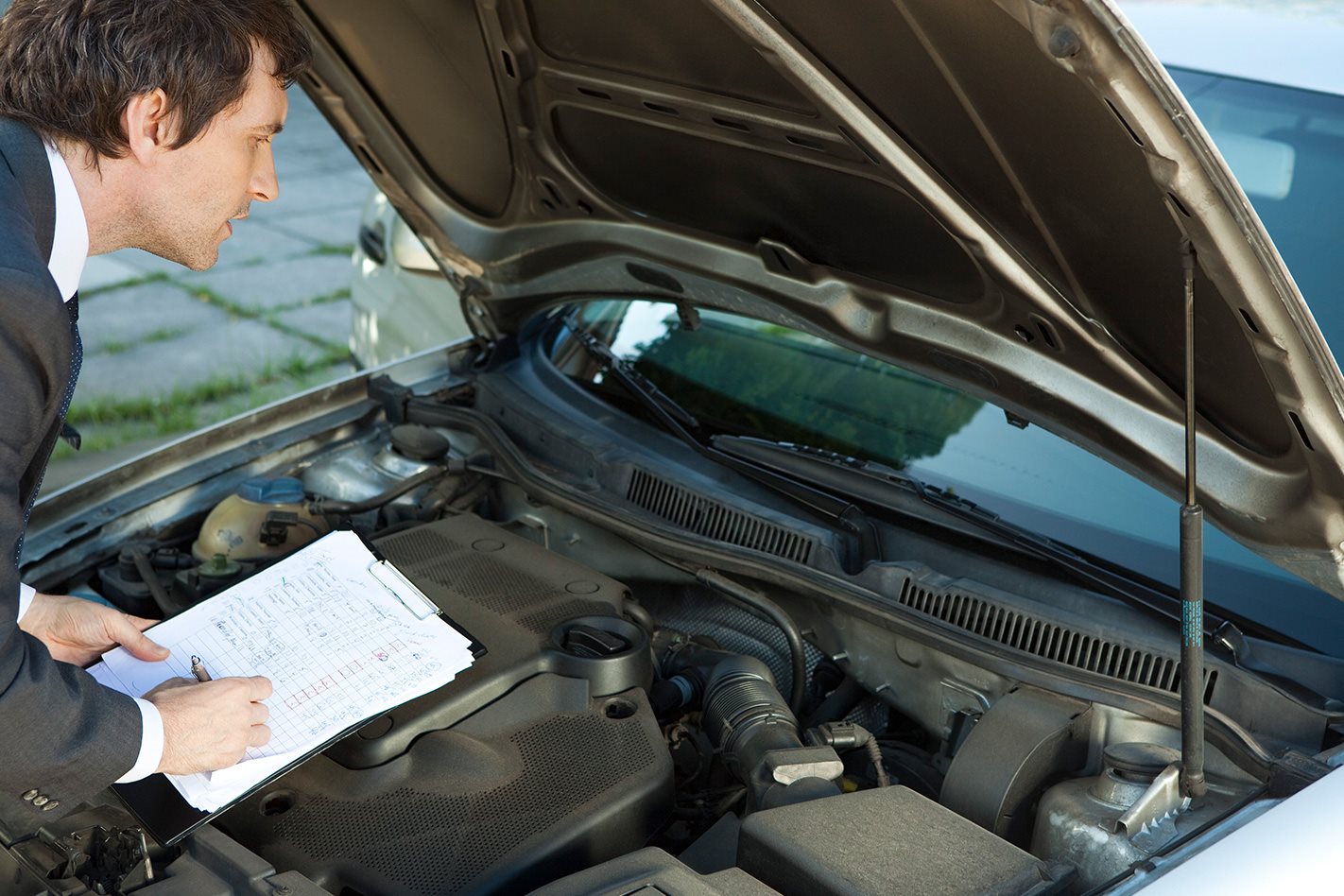
Have all service books, manuals and literature that comes with the car handy when showing someone the car.
Be friendly and attentive. Put your best foot forward and give a good impression that the car has come from a good home and that could subconsciously improve the chances of a sale.
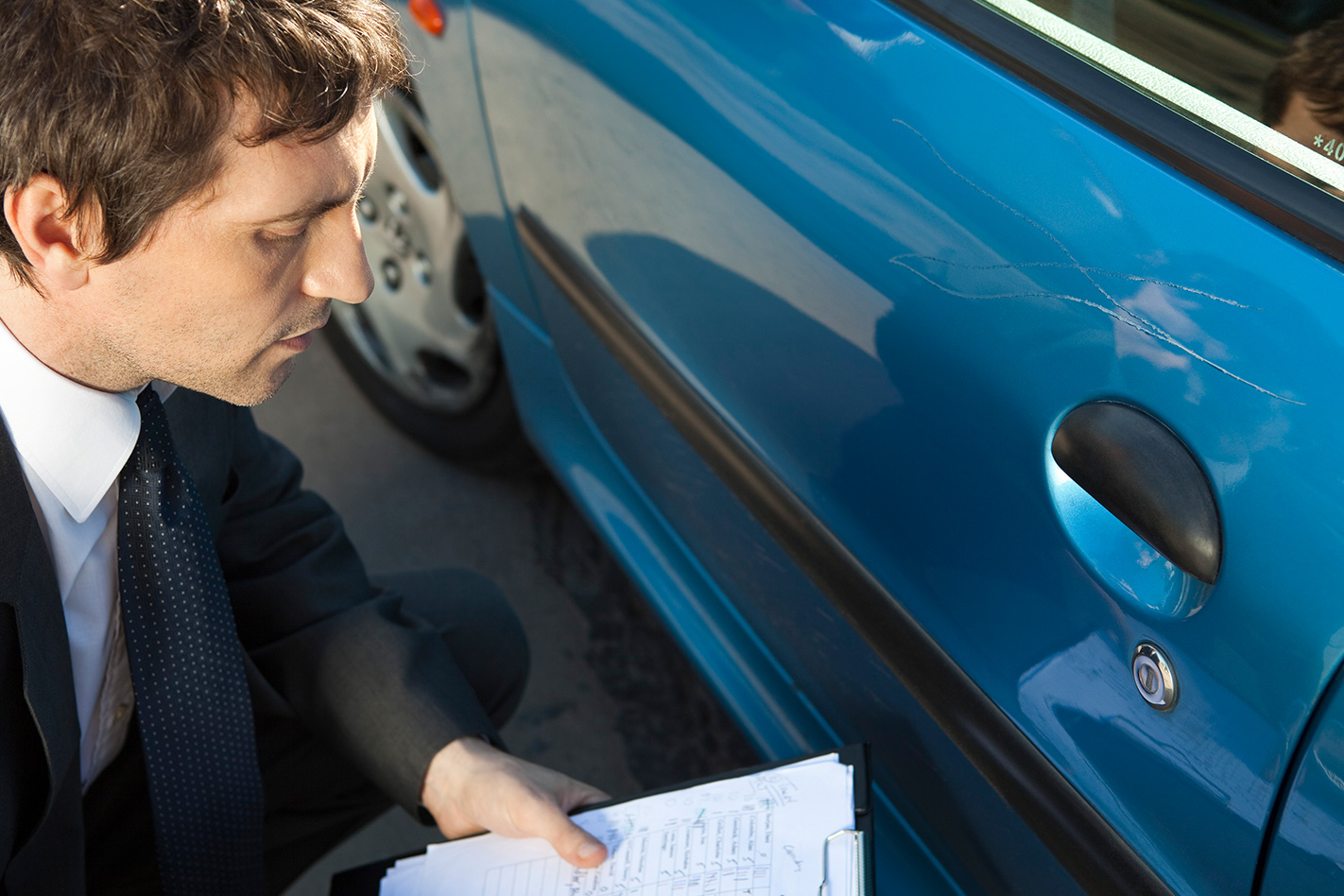
On the one hand, you could have concerns about your identity and safety by having the inspection at your house. On the other hand, you could like you’re trying to hide something or preventing recourse if showing away from home.
3. The test drive
The test drive is a concerning but important part of the selling process. You should always offer up a short drive to those who ask unless the car isn’t in roadworthy condition.

Always request that they hand over their driver’s licence when handing over the keys to your car. It gives you a bit of insurance in the sense that you have the driver’s details should they run off with the car or damage it while on a drive.
You should also insist on being in the car at the time of the test drive. Not only is it important for keeping potential buyers honest when driving someone else’s car, but you can also answer any questions they have while on the drive.
Make sure your insurance covers the potential buyer in the case of an accident. It might be tempting to overlook such a quick drive but you could have little or no recourse if something goes wrong and they damage your car.
4. Negotiating a deal
Be upfront about what kind of deal you’re looking for and make sure the buyer knows about all inclusions, like extra parts or tools.
Don’t feel pressured into doing a deal on the spot. You have control about the sale so only accept if the conditions are right.

Make it known to the buyer if they have to get a roadworthy certificate for themselves. Manage expectations about how the deal is going to be done. You have the power to accept payment in any form you want.
For more information on which type of payment is best, read our explainer about how to pay for / accept payment for a used car.
The chance to buy a Ford Mustang built to nail eight second quarter miles right out of the box has just opened up in Australia – if you get in quick.
Herrod Performance announced it has an official “brand new, never raced” 50th Anniversary Ford Mustang Cobra Jet allocated for its store in Melbourne, and it’s willing to sell it to one lucky customer.
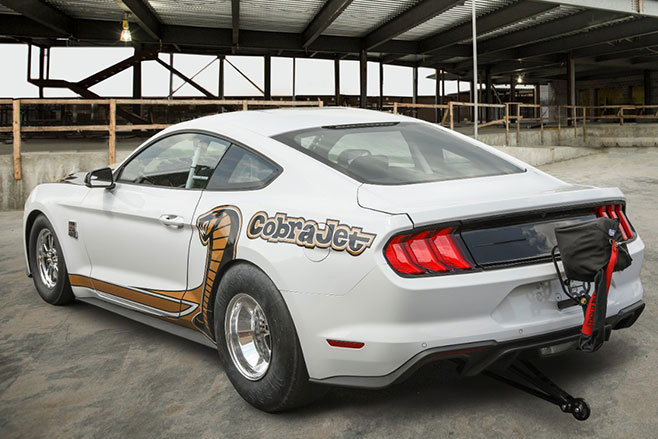
But what you get in return is a special edition 820kW Mustang specially made for the drag strip. Powering it to mid-eight-second quarter miles is a bored 5.2-litre V8 sucking boost from a 3.0-litre Whipple supercharger. The rest of the car is stripped down to the bare essentials required for racing, including a roll cage, race seat and special racing wheels.
There’s also a 9-inch solid rear axle grounding power, two-way coilovers handling squat, adjustable height suspension along with a parachute and wheelie bar. The car Herrod Performance has pictured online is finished in Oxford White and sporting the optional Cobra Jet decals.
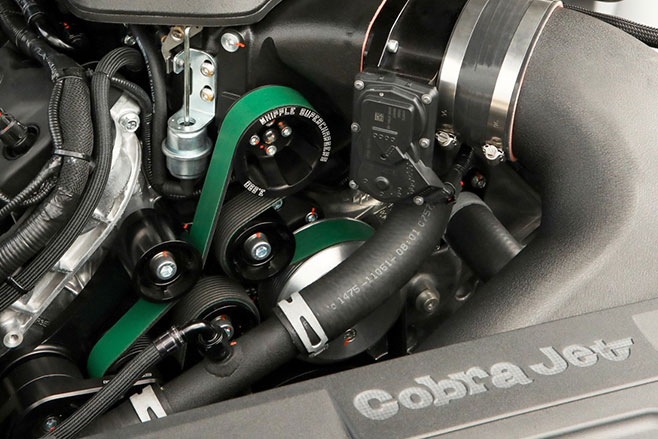
You might be wondering what Ford is doing with the 50th Anniversary Cobra Jets given they were released in 2018. As it turns out, they take a bit of time to put together, given their specification, and the run of 68 – in a nod to the debut year of the 249kW 429 V8 original – units has been stretched over a couple years.
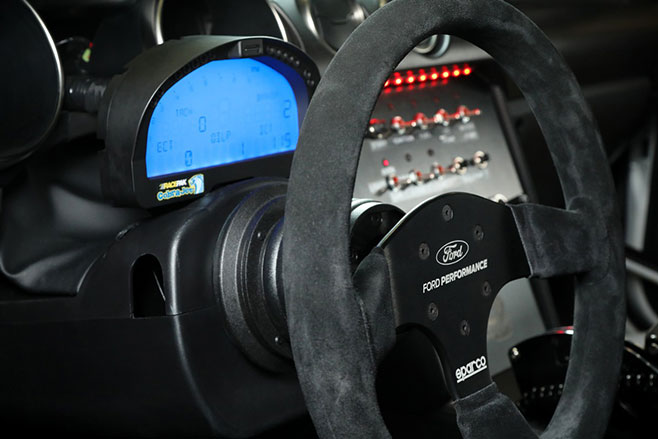
It won’t be the first powerful Mustang Rob’s sold. He already sold one to a private collector and is the man behind the Ford Mustang R-Spec and other nutter V8 Ponys. But given the car’s serious drag strip focus, you will need to bring a trailer before taking this one home.
- Introduction: German Steel
- Month 2: Power Pact
- Month 3: The C63 Life
- Month 4: Heavy Hitter
- Month 5: Track Animal
- Month 6: The Last Blast
Introduction: German Steel
For the last three issues of MOTOR, a Red Hot Chevrolet Camaro ZL1 has been lurking in the MOTOR Garage hastening the end of the world’s premium unleaded supplies at a rate of approximately 16L/100km on a normal day. And now, we fully intended to do what any environmentally responsible publication would do to balance things out and that’s to put on the new all-electric Nissan Leaf as our next long-termer.
Except, there was a terrible error and we called Mercedes-AMG instead and requested a twin-turbo V8 C63 S Coupe for four months and they said yes. So, there.
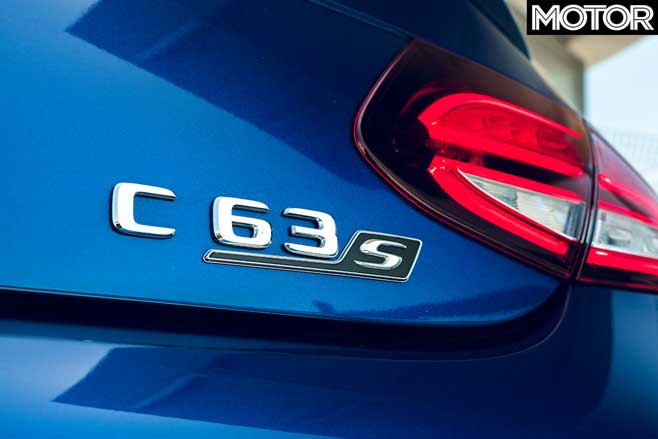
Yes, the C63 S Coupe you see here will just have to tide us over until said small electric runabout arrives. Which could be a very long time, is what we told Mercedes anyway.
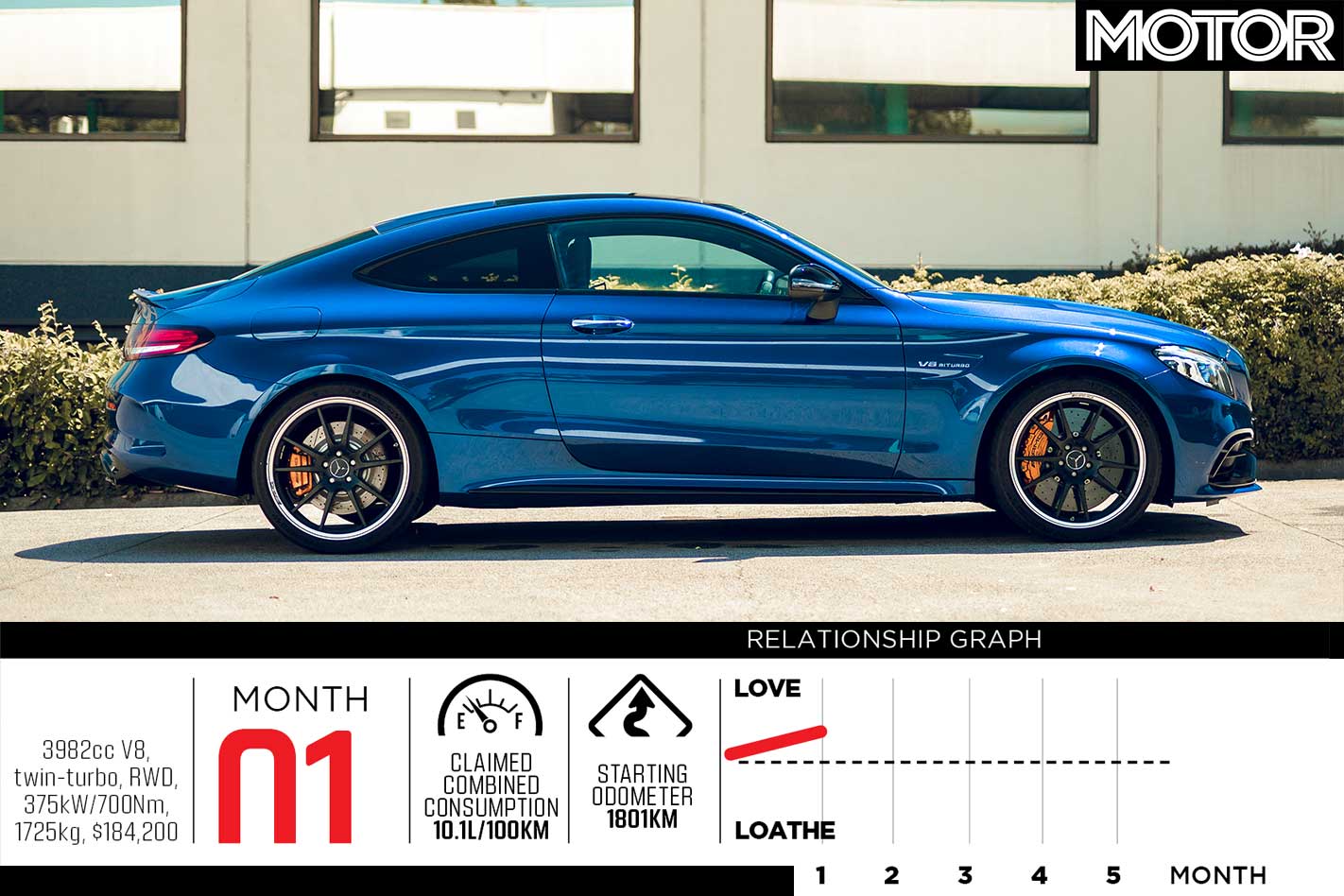
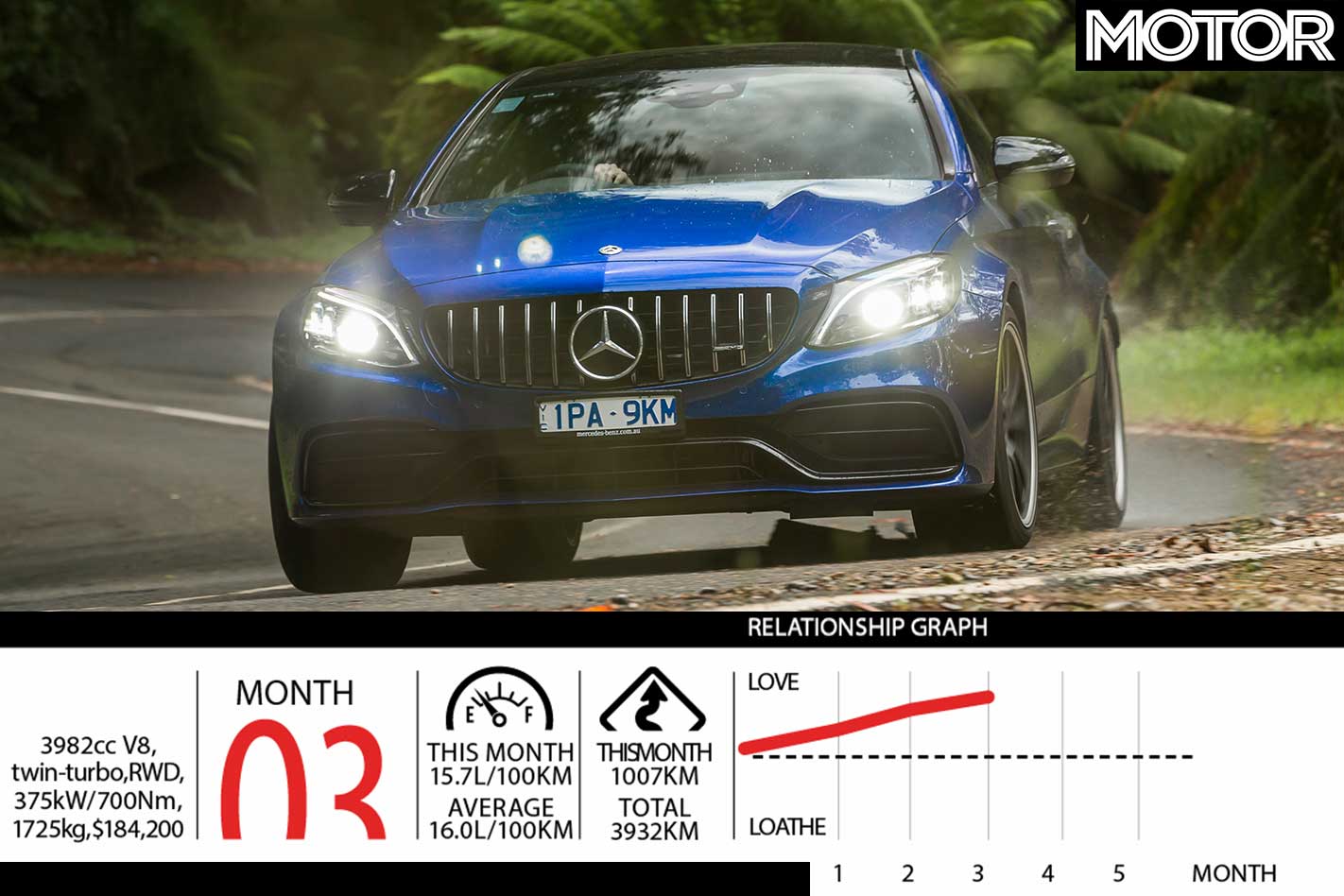
But in all seriousness, your eyes don’t deceive you: for the next five issues we will be granting you vicarious access to possibly the world’s best all-round muscle car. We’ll delve deep into the things that stoke the fires of lust for us and the things that (would) make us wonder if we’ve spent our $184,200 incorrectly. If we should’ve just gone for the Mustang/jet-ski combo after all.
Certainly, we’re already liking Brilliant Blue Metallic 1PA-9KM on paper. The 12 vertical slats in the front nose identify it as the latest updated version of Merc’s mighty muscle car, the biggest change of which was a softening of suspension for better liveability.
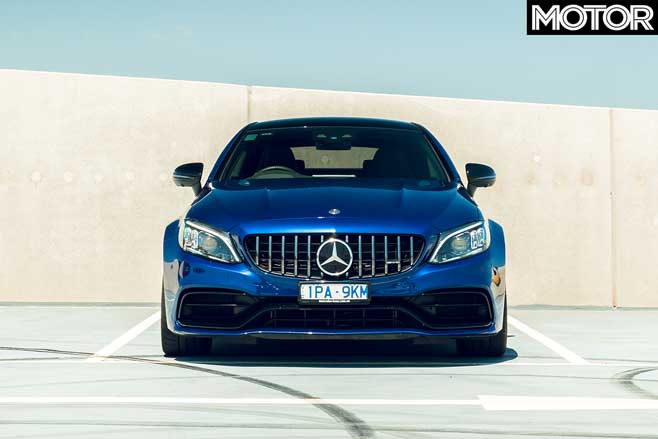
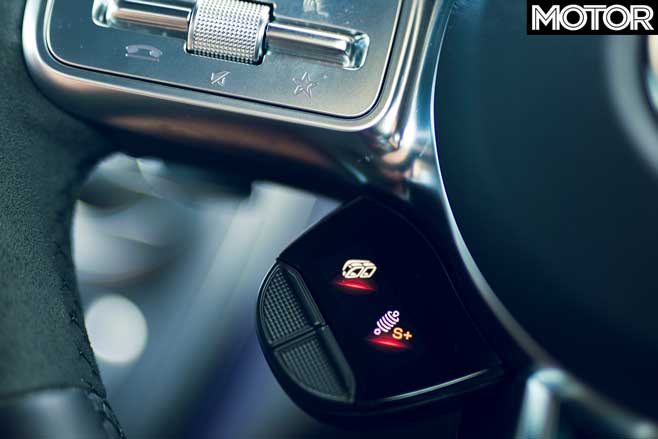
There’s also a new nine-speed wet-clutch auto (previously seven-speed); updated interior gubbins including a slimmer 10.5-inch central infotainment display and a new, 12.3-inch digital instrument cluster; and the latest generation AMG steering wheel which has two itty bitty LCD screens of its own (and no less than 21 controls). And one of those is AMG’s nine-stage traction control, trickled down from the GT3 race car, via the AMG GT R, and adjustable in the C63 S via a rotary dial on the steering wheel. There’s also the new Track Pace in-car app.
Power is unchanged, but short of sneaking in an all-wheel drive system (boo, don’t do that) it wasn’t really short on grunt, to be perfectly honest.
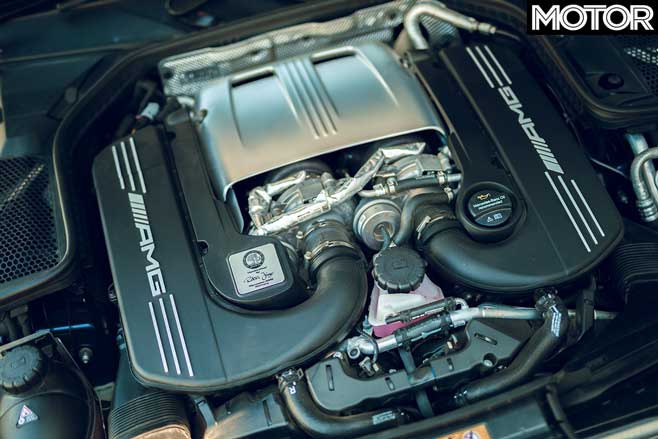
And one unchanged item – and long may it live – is the engine, the beating heart and almost entire personality of the C63 S. Eight cylinders are gloriously arranged in the holy ‘vee’ configuration (feel free to pause for a quick Hail Mary) cradling two precious turbochargers which do all sorts of magical things to the 4.0-litre displacement. Outputs of 375kW/700Nm reach an electronically locking rear differential sending power, of course, to the rear wheels only.
The whole shebang is packaged within a muscular, and not exactly petite, coupe body with bulging wheelarches and bonnet ridges, an angry front bumper flaring at the outer openings like the cheeks of a rampaging rhino; there are quad exhausts and a little lip spoiler, too.
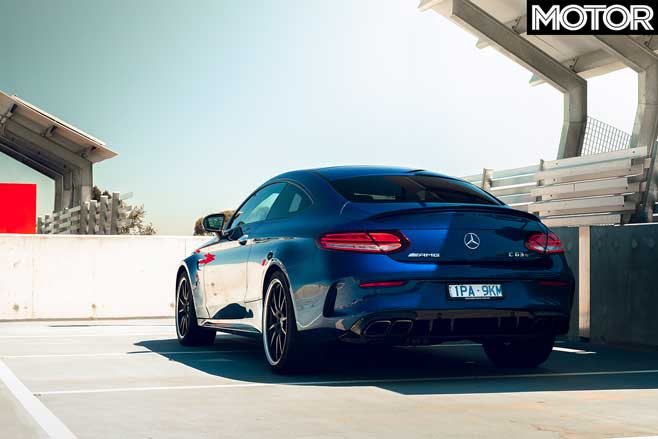
I think this is one of the best-looking new performance cars you can buy. From the front three quarter especially, goodness gracious, it looks so good.
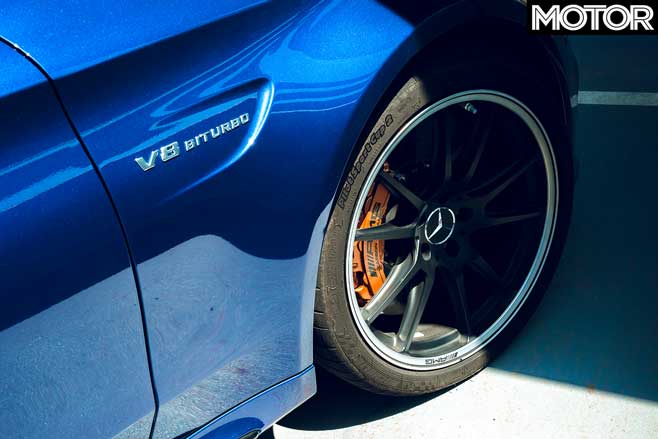
And in this spec, too! Optional ceramic brakes, AMG Performance front seats (which became optional with the update), the 19-inch front/20-inch rear split five-spoke forged wheels in black with machined lip, and highly regarded Michelin Pilot Sport Cup 2 tyres. Dream spec? Close, for me.
We have much to explore over the next four issues. Is the C63 S Coupe just a dream jigger? For practicality, looks, luxury and V8 rear-drive performance, do your really need anything else?
Did they fix the ride quality? Could one put up with the notoriously jerky transmission? Will the COMAND hand controller drive us to homicide? How long will the rear tyres last?
And did they actually bugger the handling with the softer suspension? At 1725kg there’s lots to control, after all.
May we find out all these things, and more. And may the Leaf remain on the shelf at Harvey Norman.
2020 Mercedes-AMG C63 S Coupe Pros & Cons
Things we’re keen on 1 – The exhaust button 2 – Cold rear tyres 3 – Shop windows
Things we’re scared of 1 – Weighs a bit 2 – The fuel bill 3 – The tyre life
Update 1: Power Pact
Two cars beat with the same heart, but different blood
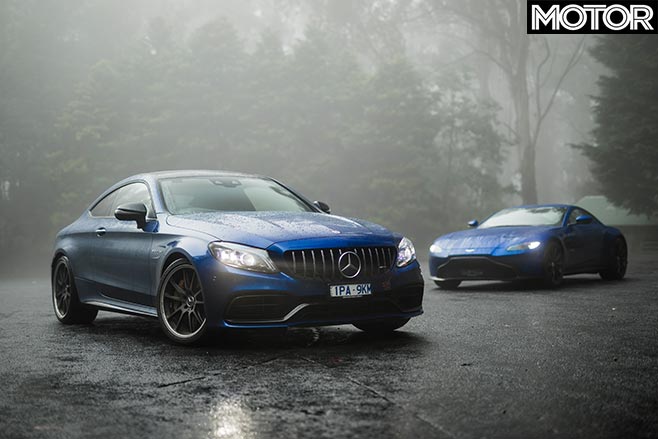
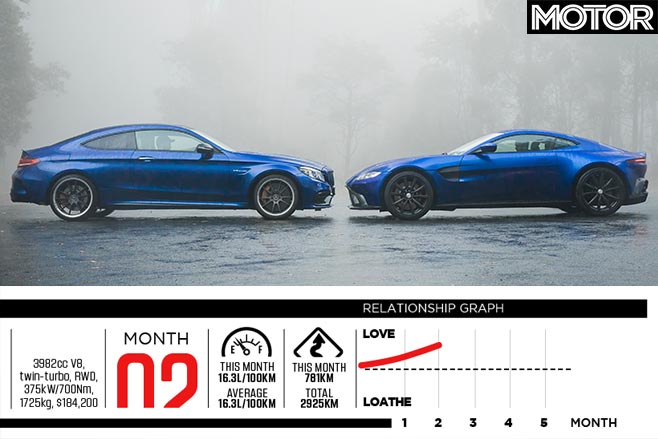
If the AMG C63 S Coupe and Aston Martin Vantage were friends, it might be in the C63’s best interest to not go out on the town together. “The Aston is like the pictures she puts on her dating profile,” observed one field-playing, perpetually single MOTOR staffer, “and the C63 is what she looks like in real life.” Ouch.
Indeed, it’s a curious thing to see these two cars parked beside each other, as they are today at the top of a foggy Mount Donna Buang, one of the best driving roads near-ish to Melbourne (and a place loved by quacks filling up enormous water cans from a fresh water spring there, but that’s a story for another time). In very similar shades of electric navy blue, from the rear the C63 S Coupe looks a bit tall, hunched like it has a sore back and awkwardly bulgy when parked directly beside the evocatively styled, pure-bred British sportscar.
The Vantage also looks pretty good topless
That might say more about the Aston’s seductive styling than it does the AMG’s, itself a car oozing enormous look-back-after-locking appeal. But for all the styling talk, the reason we have these two cars together today is actually what’s under the bonnet.
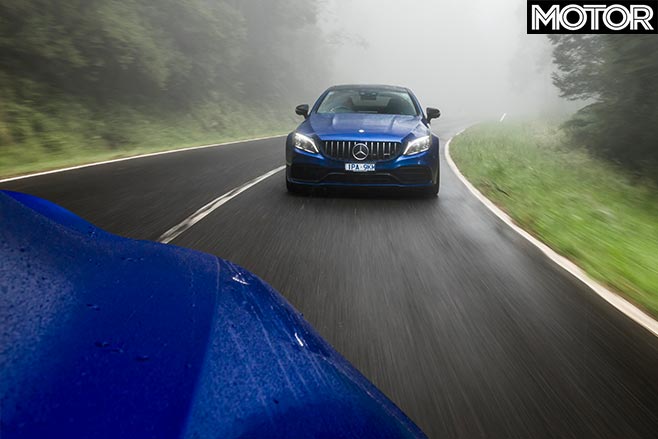
Engines are notoriously expensive, difficult and time-consuming things to develop, and so Daimler – which owns Mercedes – cut a deal to own five per cent of Aston Martin in exchange for providing AMG powerplants, as well as electronics and Mercedes infotainment.
As such, both two-door rear-drivers here pack the same 4.0-litre twin-turbo M177 AMG V8, outputting 375kW, but 700Nm in the C63 versus the Vantage’s slightly lowlier 685Nm, to protect, presumably, its different ZF eight-speed transmission.
Buried among some familiar Mercedes switchgear, the Vantage’s circular crystal start button cranks the V8 up with what sounds to be a different, faster starter motor but settles to a familiar and recognisable idle to that of its C-Class comrade.
But the similarities don’t extend a whole lot further than that. While the C63 has a more brutish, bassy tailpipe burble, the Aston, heard from the driver’s seat, growls and snarls loudly from behind the dash with a certain class and sophistication, even if it does sound a bit, well, fake.
A creamier powertrain character in the Aston is also thanks to the aforementioned ZF ’box, mounted in the rear of the Vantage for better weight distribution. It’s miles smoother and more refined than the nine-speed MCT wet-clutch in the C63.
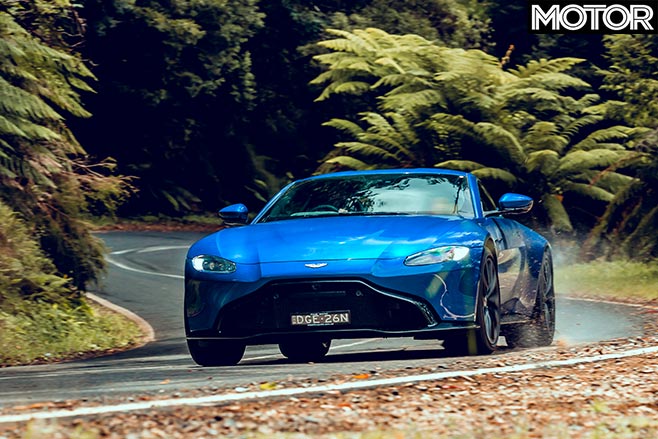
Whereas the ZF is seamless in its low-speed operation, the C63’s transmission lets you know what it’s thinking, sometimes with a clunk. It feels a lot tighter and asks more patience – a trade-off, as when both ’boxes are in their raciest modes it is the AMG’s that’s the quicker-shifting and more responsive. But certainly the C63 would be a better all-round car for fitment of something more like the ZF ’box, even if some responsiveness was sacrificed (the ZF is hardly too slow when using the paddleshifters).
While the transmission and sound design attempt to completely cloak the Vantage’s V8 in a different character to that of the C63’s, put your foot down and the jig is up: the Vantage’s power and torque curves, and overall delivery, are unsurprisingly identical to that of the C63 S, pulling hard from low in the revs after a short delay as the turbos spool up. Put the Vantage in Sport Plus and the exhaust note becomes quite a bit more AMG again too.
Prefer three pedals? The Vantage can deliver
It’s in the handling stakes the cars are most different. The C63 feels heavier, taller and narrower; the Vantage sits you lower and more towards the rear wheels. The Vantage has more grip in the wet thanks to its Pirelli P-Zero tyres, but with its solid-mounted rear end it’s the C63 S that’s the friendlier, easier, more communicative and confidence-inspiring car to drive.
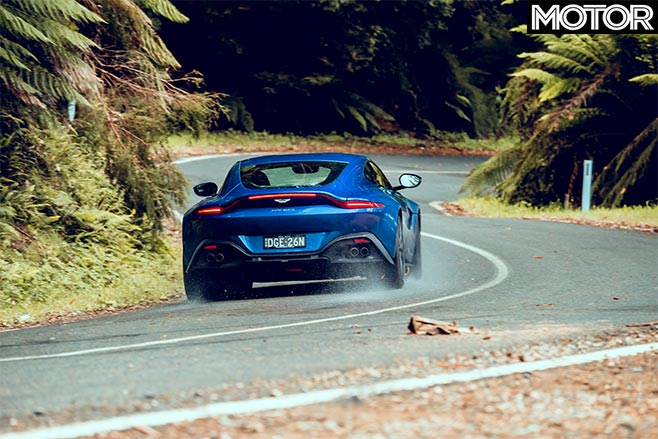
What lessons could the far pricier Vantage teach its distantly related German cousin? Transmission aside, the relatively raw and focused C63 S could learn a thing or two about refinement from its British friend. The Vantage is the much nicer car.
Beyond C63, it’s also the better proposition to the similarly priced (and engined) AMG GT, the Vantage having the far more sorted chassis.
The Vantage also shades the C63 for that difficult to quantify X-factor, but you’d hope a purpose-designed, $299,950 sportscar would do that. For that outlay, you could buy the C63 S, an A45 S to bribe the significant other and a cheeky second-hand Toyota 86 for some club motorsport fun.
Not that we’re dreaming of such things, as the C63 S Coupe is proving plenty of car for us for now. It’s surprisingly huge fun at urban speeds. Slippery-when-cold Michelin Pilot Sport Cup 2 tyres combine cheekily with a lovely tight diff and lenient Sport ESP mode for a lot of safe, low-speed fun. The big Merc also easily sounds best at low engine speeds, with a loud and lovely V8 burble. And it’s attracting a lot more stares from pedestrians than we were expecting given this car has been out a little while.
That is unless of course it’s parked next to an Aston Martin Vantage.
2020 Mercedes-AMG C63 S Coupe Pros & Cons
Things we’re loving 1 – Easy to drive 2 – Effortless power 3 – Thoughtful touches
Things we’re ruing 1 – Thuddy suspension 2 – Jerky auto 3 – Infotainment
Update 2: The C63 Life
Three months in, daily usability put to the test
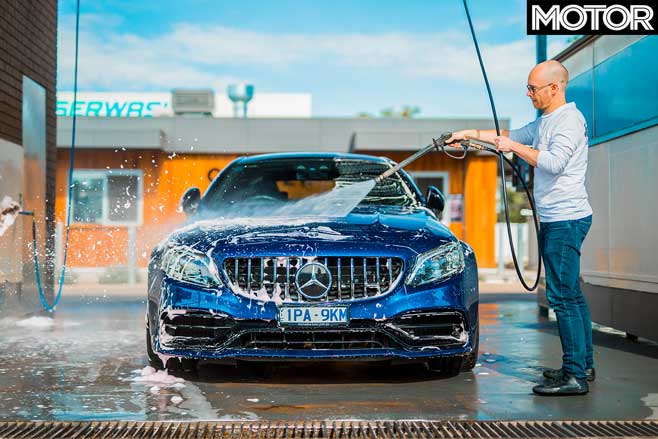
Not all relationship milestones are worth celebrating. There’s the first time you realise your new star-crossed lover may have sleep apnoea; or makes the bold move to use the toilet in front of you. There are worse things again, at which time the first date will feel to have occurred in a year BCE.
Car ownership is similar. After the utter thrill of deciding what you’re going to get, ordering it, waiting, taking delivery and those first giddy few weeks, the novelty inevitably starts to wane. You see it without its make-up on, another side emerging.
Three months into my ‘ownership’, I’m starting to see all sides of our Mercedes-AMG C63 S Coupe long-termer. And as mystery items start to accumulate beneath the seats like in all the cars I’ve ‘owned’, and the tyre sidewalls transition from a wet-look gloss to a shade of matte charcoal-almost-brown, I like what I’m seeing. For the most part.
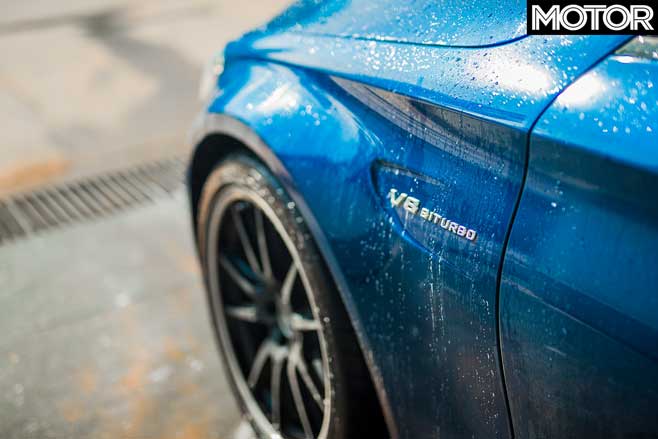
There are plenty of pleasantries to discover daily driving this 375kW twin-turbo brute. It starts with all the obvious modern conveniences such as keyless entry and a seat that will electrically move back and forward to aid ingress/egress, especially with those long, heavy doors. (Actually the seat thing annoys me but you can turn it off.) Once seated, a little robotic arm hands you the seatbelt while the car gently mists perfume through the air-conditioning as if it’s trying to say something. There are heated seats (and cooled, an option), though no heated steering wheel.
Inside you’ll find a spacious and thoughtfully designed interior. Making up for a uselessly cramped glovebox is a shoebox-sized centre console with handy barn-door lid. The cup holders, sitting at the base of the centre stack, are a tad cosy, but cleverly partly clip out for ease of mopping up if you happen to have, well, a bit of an acco.
Apple CarPlay and Android Auto are available, which is a relief as it takes an age to get used to the standard COMAND infotainment that never feels quite the best solution.
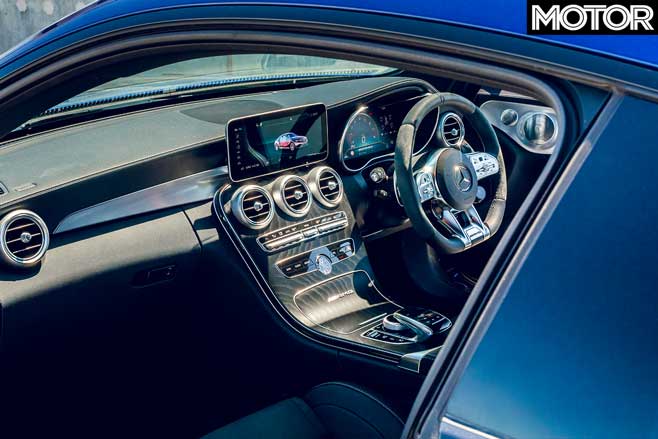
Unavoidably irritating, though, in a low-key way, is the lack of a simple tactile play/pause button anywhere (despite some button double-ups). Said playback controls exist within the infotainment, but the main centrescreen is inexplicably not of the touch variety (despite being within easy reach), so you have to use the steering-wheel thumb pad, which is at least a better option than the fiddly central hand controller. Golly, we’re hard to please, aren’t we?
But wait, there’s more… the large boot opens and closes electronically (an underrated thing when you get used to it), but oddly there is no external boot button whatsoever (that I, nor several other people, could find). The distance-to-empty figure also disappears and leaves you to it with about 30km remaining. Fortunately urban range from the 66L tank is a decent 400-450km.
For all that, though, the daily use positives outweigh the negatives. Easily. Great seating position, nice-feeling controls, effortless power.
The chin almost never scrapes, even on the most foreboding-looking driveways. The parking cameras are truly unreal; there’s a view offering a perfect picture of the wheels relative to the kerb, meaning those gorgeous forged jobbies should never have to meet one. The automatic park brake is intuitive to the point you forget it exists. There’s a handy elastic storage net on the transmission tunnel in the passenger footwell that’s perfect for, say, a bunch of bananas. Particularly if you intend on some hard cornering coming back from Coles.
And you might, because the C63 S has the benefit of being a very fun car even at low urban speeds. V8 burble and fairly compact dimensions for a large car, but also the Cup 2 tyres are delightfully frisky when cold. Especially when combined with slackened ESP and that electronically locking diff…
That’s what a hoon would say. Not me. Relationship going well. I’m just trying not to fart in front of it.
2020 Mercedes-AMG C63 S Coupe Pros & Cons
Things we’re loving 1 – Easy to drive 2 – Effortless power 3 – Thoughtful touches
Things we’re ruing 1 – Thuddy suspension 2 – Jerky auto 3 – Infotainment
Month 4: Heavy hitter
Softer C63 loses some agility; also, we weighed it
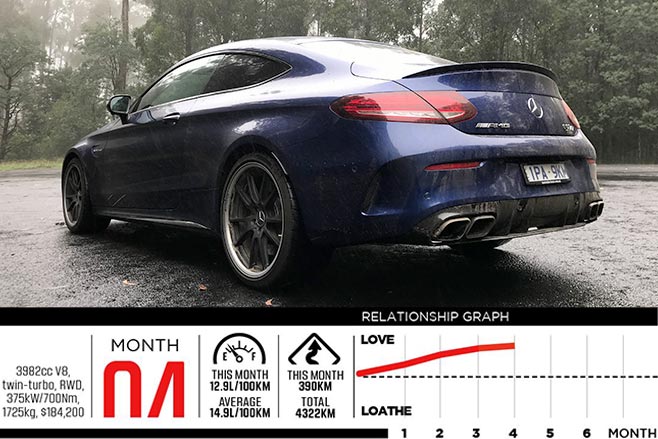
One of the chief complaints of the original 2015 C205 Mercedes-AMG C63 S Coupe was it was a bit too firmly sprung. While the burly, twin-turbo V8 rear-driver resisted body-roll to an impressive degree, it made you aware of its handling pedigree at all times, even in traffic, by way of feeling like the dampers were stuck in Sport mode.
For the C63 S facelift released in 2018, whether meekly or begrudgingly, AMG engineers sought to change their uber-coupe’s ride/handling balance. Front spring rates were reduced 10 per cent, rears 20 per cent and the rear anti-roll bar also softened compared to the previous model.
We’ve got the coupe, but we’ve driven the sedan
These changes have helped turn the C63 into a much more comfortable car relative to the pre-facelift model, even if it’s still a tad harsh by the standards of rivals, especially the very grand touring-focused Audi RS5 Coupe.
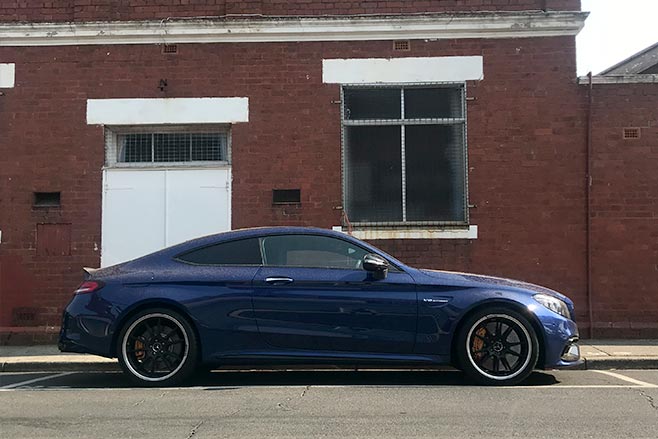
With ride quality pleasingly no longer really a front-of-mind thing, this month we wanted to turn our focus to how the suspension softening has affected the handling. And the immediate verdict is: detrimentally.
That’s not to say the C63 S is a poorly handling car; very much the opposite is true. But as you pedal the big coupe up a twisty road, braking, accelerating and loading up the suspension through corners, you are quite a lot more aware of its mass.
It doesn’t lessen any cravings to take the C63 out for a burn just for the sake of it, and it’s still a deranged-fast and satisfying car, but it does mean you have to be a bit more aware and patient with your inputs when hustling.
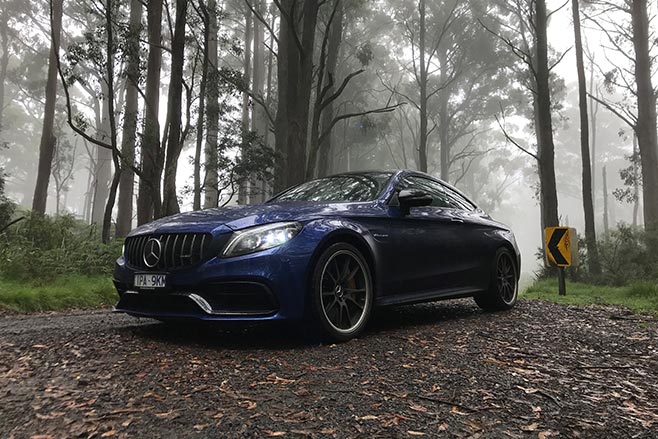
The adaptive damper button goes some way to resolving this. Sport mode introduces a modicum more control without compromising compliance, but still doesn’t quite eradicate a wish that the C63 was about 150-200kg lighter (I’m personally quite fond of lighter cars too, I have to say). Naturally the next step is to reach for Sport Plus dampers only to find the pendulum swinging too far the other way, the shocks firming like tensed calf muscles and threatening to bounce you off the road. They’re really only suitable for smooth racetracks only.
While being more aware of its weight, once you accept the C63 requires a bit more of a deft touch and some patience as you get stuck in, the enjoyment is still there. You get into a nice rhythm of accelerating, braking, tipping in and feeling the weight gently bind the suspension, slowly unwinding the steering and repeating. But yes, the C63 S Coupe lacks the tautness and lightness of, say, a BMW M4.
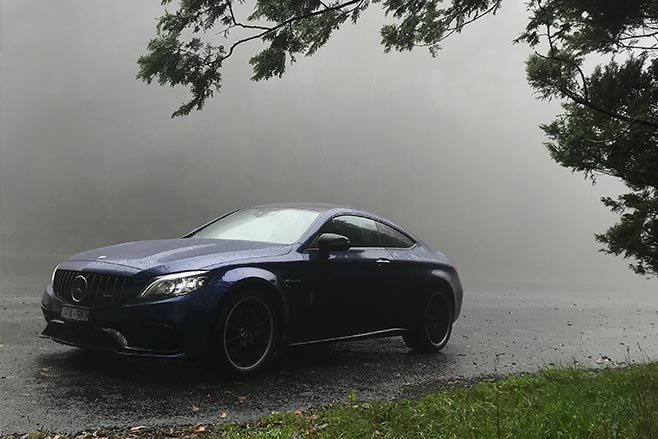
Press on for possibly a little too long and things start getting hot under the collar – another thing that would be helped with less weight – but it’s the front tyres you need to be caring for. The front carbon ceramics dispel huge amounts heat and send front tyre temperatures through the ceiling. And while increasing understeer and ABS is all the indication you really need, any doubt is removed by the handy tyre temperature gauge in the instrument binnacle providing a live read of temps and pressures (pictured above).
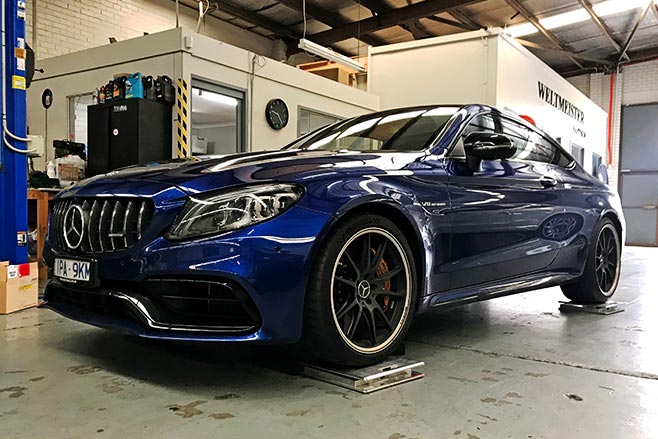
We were curious exactly how much a 2019 C63 S Coupe weighed, so we weighed it. AMG claims the C63 S Coupe is 1725kg DIN (90 per cent full tank of fuel). It’s not clear whether AMG’s DIN figure is with steel or carbon brakes, or on what wheels. Carbon brakes save 8kg overall compared to standard steel items; while the ‘ultralight’ forged 19/20-inch staggered wheels save 5.3kg in total. AMG says these wheels are even lighter than carbon wheels of the same size.
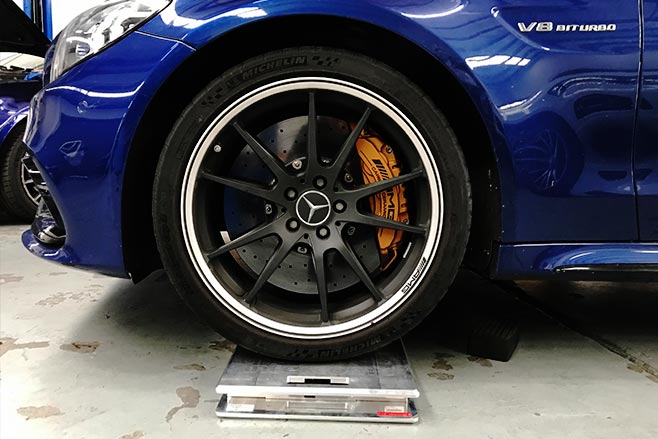
Ours had a full tank of fuel and full wiper washer bottle (had to mention that) and was empty of any of our own paraphernalia. It weighed 1835.5kg.
Weighing our Peugeot 308 GTi hot hatch
Weight was split 999kg front, 836.5kg rear (or 54/46 front-to-rear). Interestingly, weight on the left front tyre was 485kg but 514kg on the right, 29kg less. Motorsport veteran Ray Ciao who weighed the car guessed this was because it was built foremost for left-hand drive, engineers trying to balance the weight of the driver. It might also partly explain why the right front tyre gets hot and upset a bit sooner than the left, even when equally taxed.
Next issue all four tyres are very much taxed as we put the C63 S through its paces at a Winton Motor Raceway track day.
2020 Mercedes-AMG C63 S Coupe Pros & Cons
Yes please:
- Underrated steering
- Amazing seats
- Rear-end feel
- Yes, it’s a bit heavy
- Tyres get a bit hot
- Still a bit firm
Month 5: Track Animal
C63 S proves its track mettle at Winton
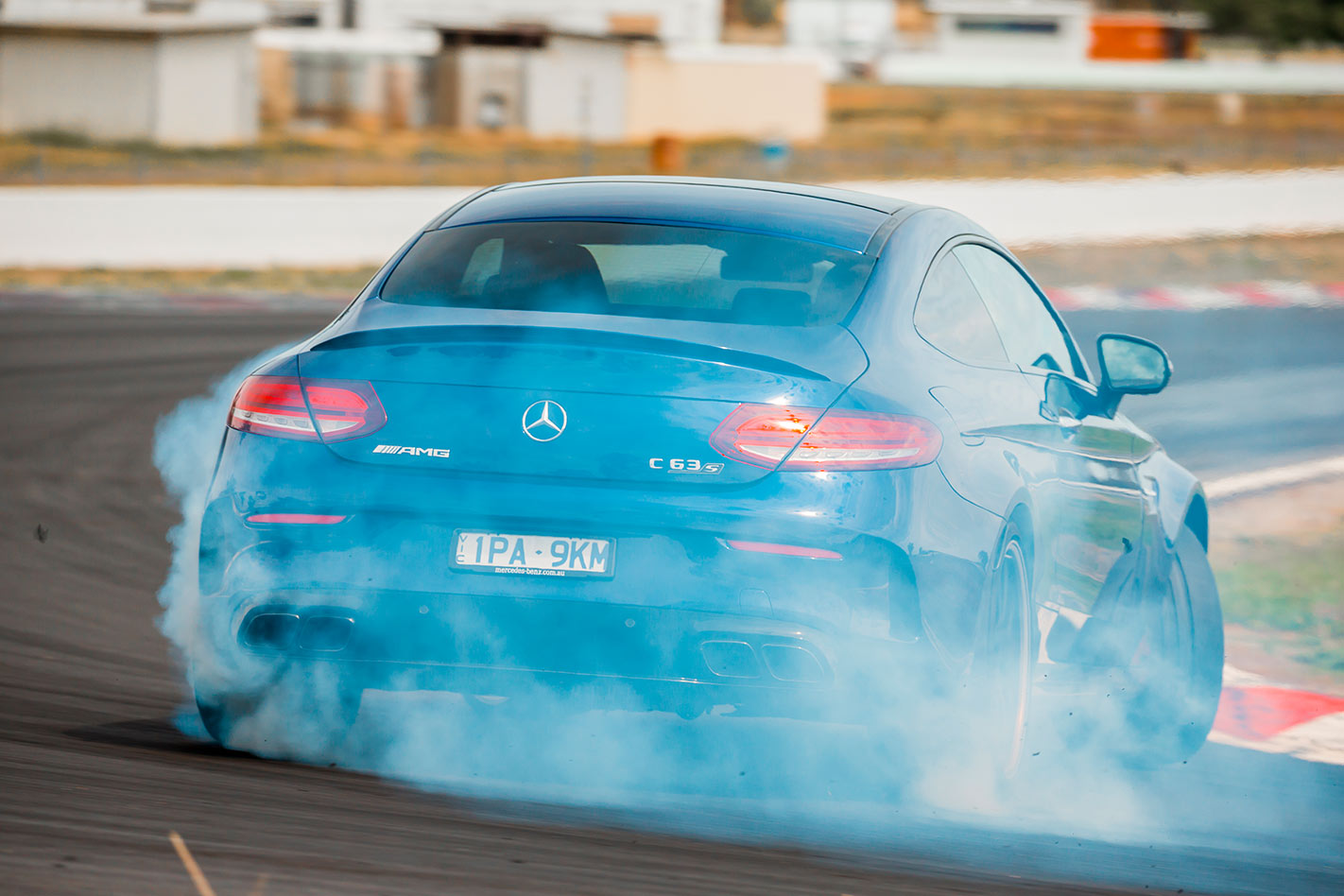
Unlike a certain Bavarian rival, the C63 has never really been known as a track day car. A bit too big, soft and heavy, it’s been the cruiser keener on vaporising rear tyres than getting down lap times. But with every new iteration, Mercedes-AMG seems hell-bent on changing this perception.
With its motorsport-inspired solid-mounted rear end and new Nine-Stage Traction Control (as seen on the AMG GT R road car and GT3 racer), the C63 S has never felt more ready for track use out of the box. A new onboard lap-time and data-logging app, Track Pace, hammers the point home. And taking all that as encouragement, we thought we’d put the track promise to the test at a Winton Raceway Test & Tune day.
For starters, if you’re going to track your C63 S, fitting Michelin Pilot Sport Cup 2s will do wonders for helping conceal the car’s weight, but also in offering superb feel and friendlier wear characteristics. AMG offers them as a $1200 option but it’s much more economical to buy them yourself and stash the standard UHP tyres for later.
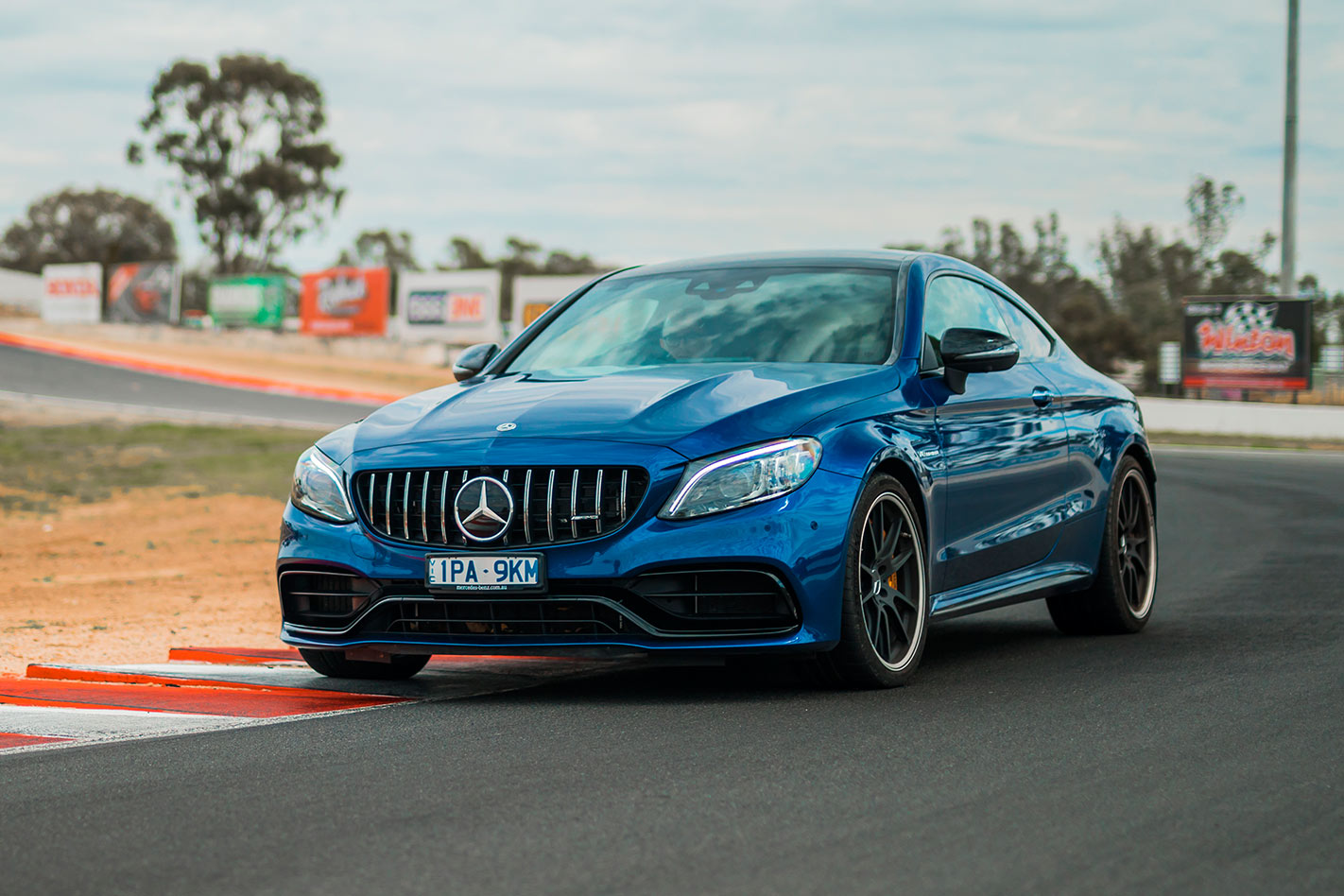
As we took to Winton’s 3.0km layout, there was no doubting you should get the 402mm optional six-pot ceramic front brakes. The reasonable $7900 ask is money well spent, the pedal feeling good for about six hard laps. Kinda what you want when barrelling towards Turn One at 195km/h in 1725kg of big, bad Merc. Although we did help the brakes by not throwing mechanical sympathy completely out the window.
And that is indeed a prominent theme when tracking the C63 S Coupe. The Sport Plus damper mode might be too stiff for the road but it’s ideal for a smoother circuit, keeping the C63 S’s body controlled and tight despite the newly softer spring rates. But still it’s with tyre and brake preservation in mind that you hurtle out of pitlane in a car like this – and, again owing to the weight, the on-track limit is not as difficult to reach as you perhaps would have thought, even with the Cup 2s.
That’s not to say, of course, that the C63 S is not spades of fun on a track. It’s stonkingly fast (with no let-up in the power even after repeated laps in fairly warm weather), snarls a loud V8 note easily heard through a helmet, the highly strung paddle-shift auto also stepping up its game for response in a fantastic way. There’s a clear-enough connection to all four tyres through both the steering and the seat; and a good overall balance with plenty of adjustability. It’s also fast enough that at a busy track day you’ll be carving up traffic like an LMP1 car at La Sarthe.
The nine-stage traction, controlled by a steering wheel rotary dial and activated by turning off the ESC, is also a giggle – and actually helpful. In its most conservative setting (nine), you can flatten the accelerator mid-corner and the computer will only apply the maximum possible throttle to the exit. Wind the TC back and predictably you get more and more slip. It can be helpful to leave the traction to a computer while you focus on other things, but eventually you’ll want to take over. It’s not intended to be a drift mode either but it can sort of be used as such; no ESC meaning in theory it could be possible to spin the car, too.

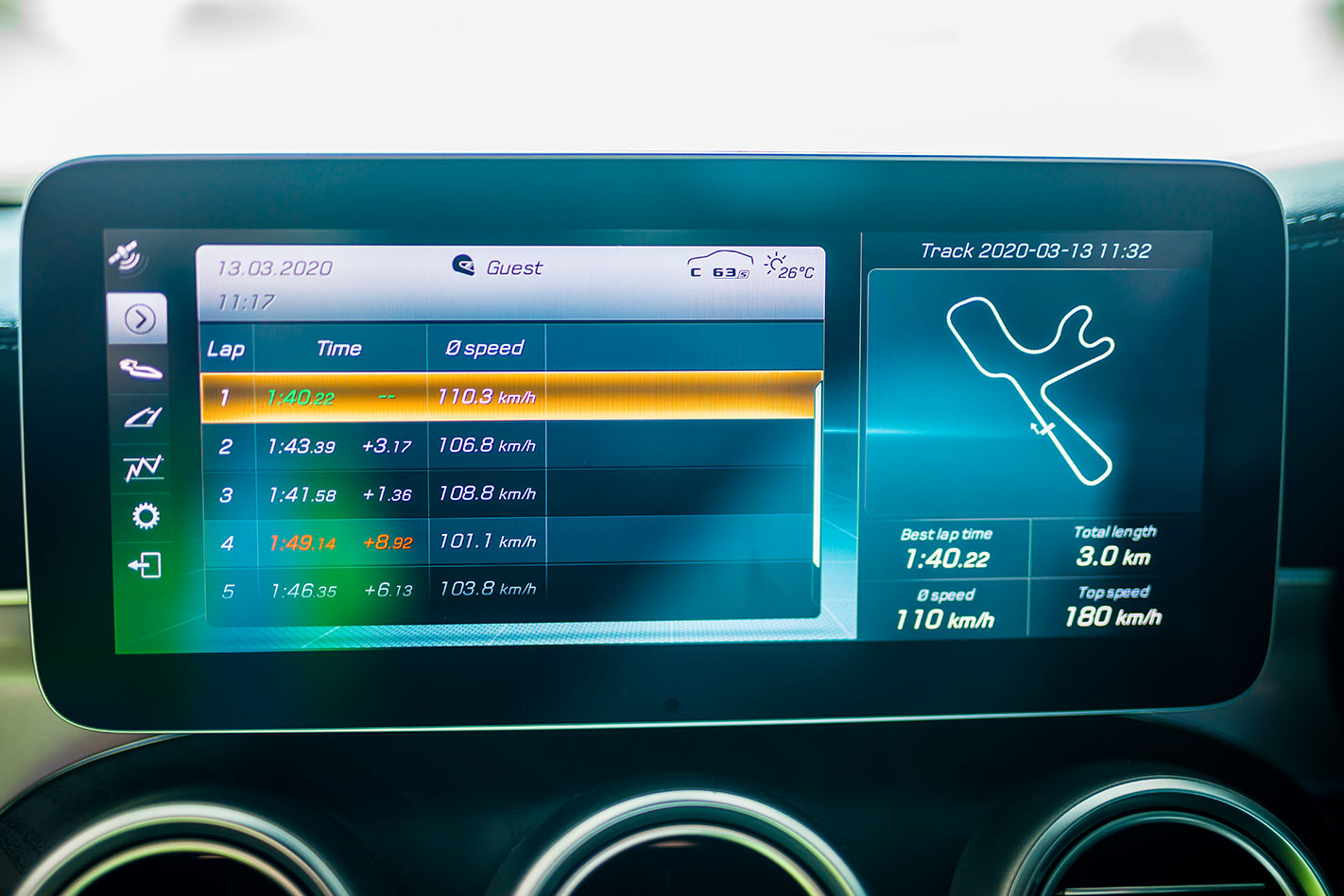
The Track Pace app is also really cool. Drive a lap for it to record the track over GPS and then it’ll start logging your times on the centre 10.5-inch display, showing best and worst and even a delta time (just to throw you off on a good lap). According to the app, yours truly (no pro) managed a careful 1:37.86, a lot left on the table. Winton is a bit faster now, too, thanks to its reprofiled turn four with its awesome F1-esque low and wide kerbs.
For track day addicts, you might prefer something a bit lighter but the C63 S combines track and road ability with everyday comfort in a pretty impressive package. And with its appetite for rear tyres intact…
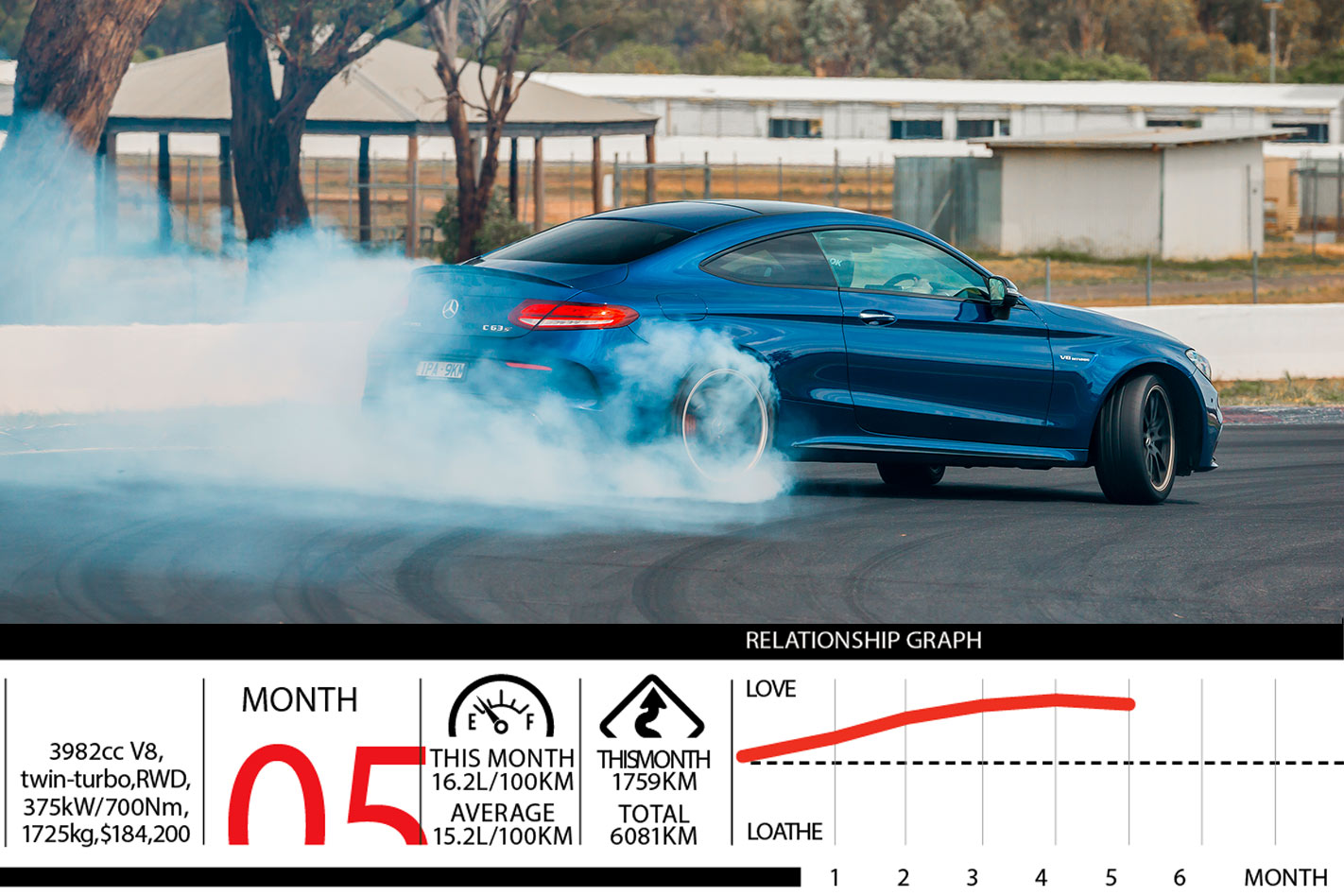
2020 Mercedes-AMG C63 S Coupe Pros & Cons
Things we fell for:
- Grunt a-plenty
- Repeatability
- Smiles for days
- Bit burly
- Big drinker
- Is a bad influence
Month 6: The Last Blast
It’s a sombre so-long, if not all roses and rainbows
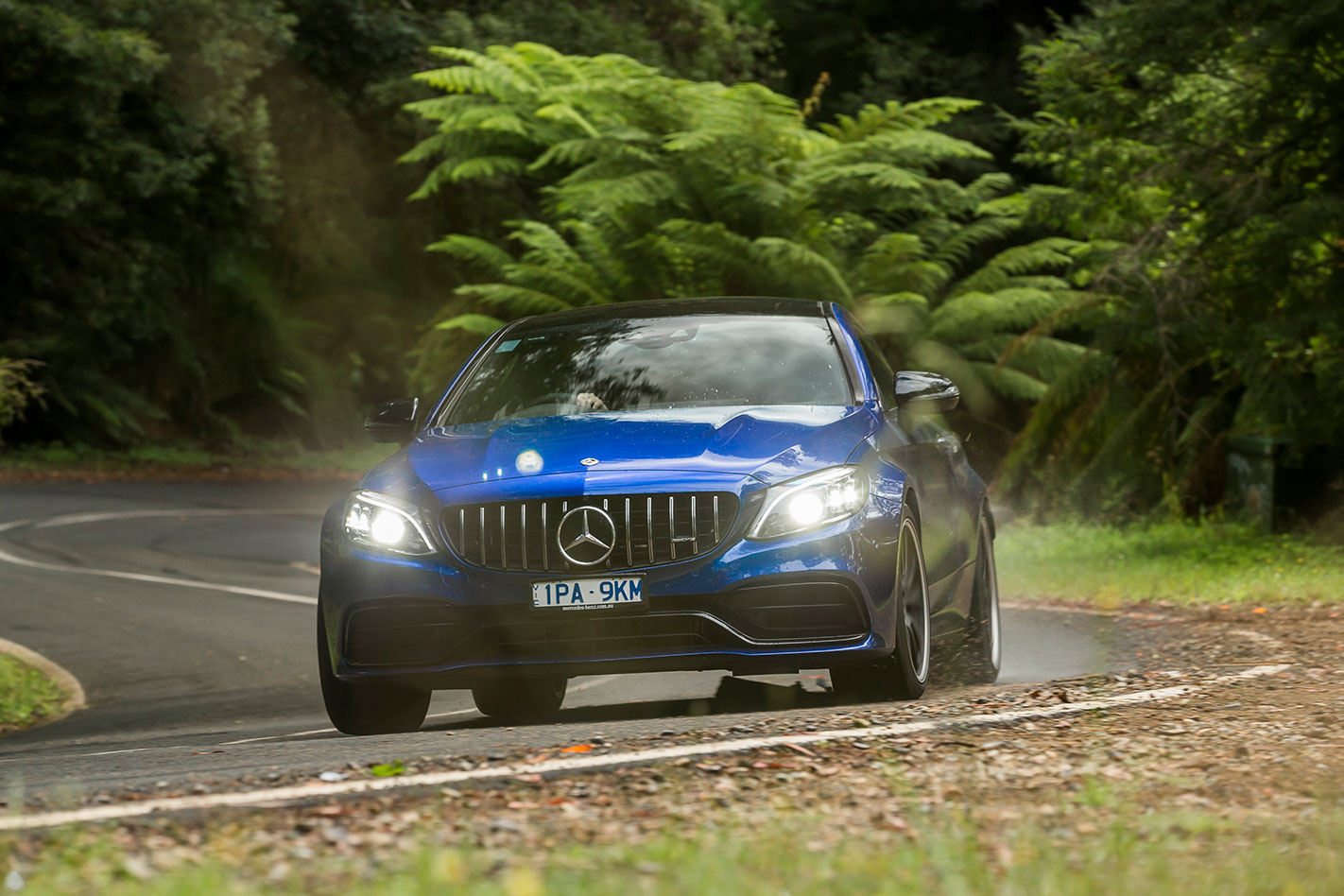
The time has come to hand back the dark blue beast, our Mercedes-AMG C63 S Coupe. It’s a sad, sad day.
Over the last six issues we’ve come to know the facelifted version of AMG’s thuggish twin-turbo V8 rear-driver and overall, it’s extremely positive. And no, I’m not just saying that because they gave me a car to drive around in for however many months.
The C63 S Coupe is, first and foremost, an outstanding cruiser. I could bang on about how much I love it, and perhaps I have over the last six issues anyway. It all boils down to: would I buy one? Yes, I would.
It’s certainly a difficult farewell. I just never tired of perving on that fat, front three-quarter stance. Nor hearing the V8 burble on start-up, like I’d just cranked up a Tiger tank. I’d drive around with the rear backrest down as the idle note that came through the boot opening was bliss, and loud enough to negate opening the active exhaust (and so quietening the note to passers-by; I will admit, with the active exhaust open around pedestrians I felt a bit self-conscious). But also at higher rpm you were spared the artificial intake noise that comes through the speakers which, while definitely adding something, is not quite my cuppa.
With the softening of the suspension I think Mercedes-AMG has successfully repositioned this car as well. Most people are buying it as a daily, and owing to the loud exhaust just off idle, the effortless turbo torque, and those spot-yourself-in-shop-windows looks, it’s a very pleasing and satisfying cruiser at that. The softer ride has made it much more comfortable, even if a lot of people will still find it a tad harsh. The trade-off is you lose a degree of body control while admittedly asking a lot of the car on a twisty road – especially on higher lateral load-generating Cup 2s – and on a track, the car’s mass is a fair bit more obvious than it before. Responses are a bit slowed and yes, it’s a trade-off, but one I’d be happy with. And it’d never stop me going for a burn.
Of all the time I spent with it, how might I improve the C63 S Coupe? Well, I’d ditch the clunky wet-clutch 9G-TRONIC transmission (sorry, AMG) in place of a ZF eight-speed. The AMG unit is pretty responsive when you’re up it but just feels too highly strung and not smooth enough around town.
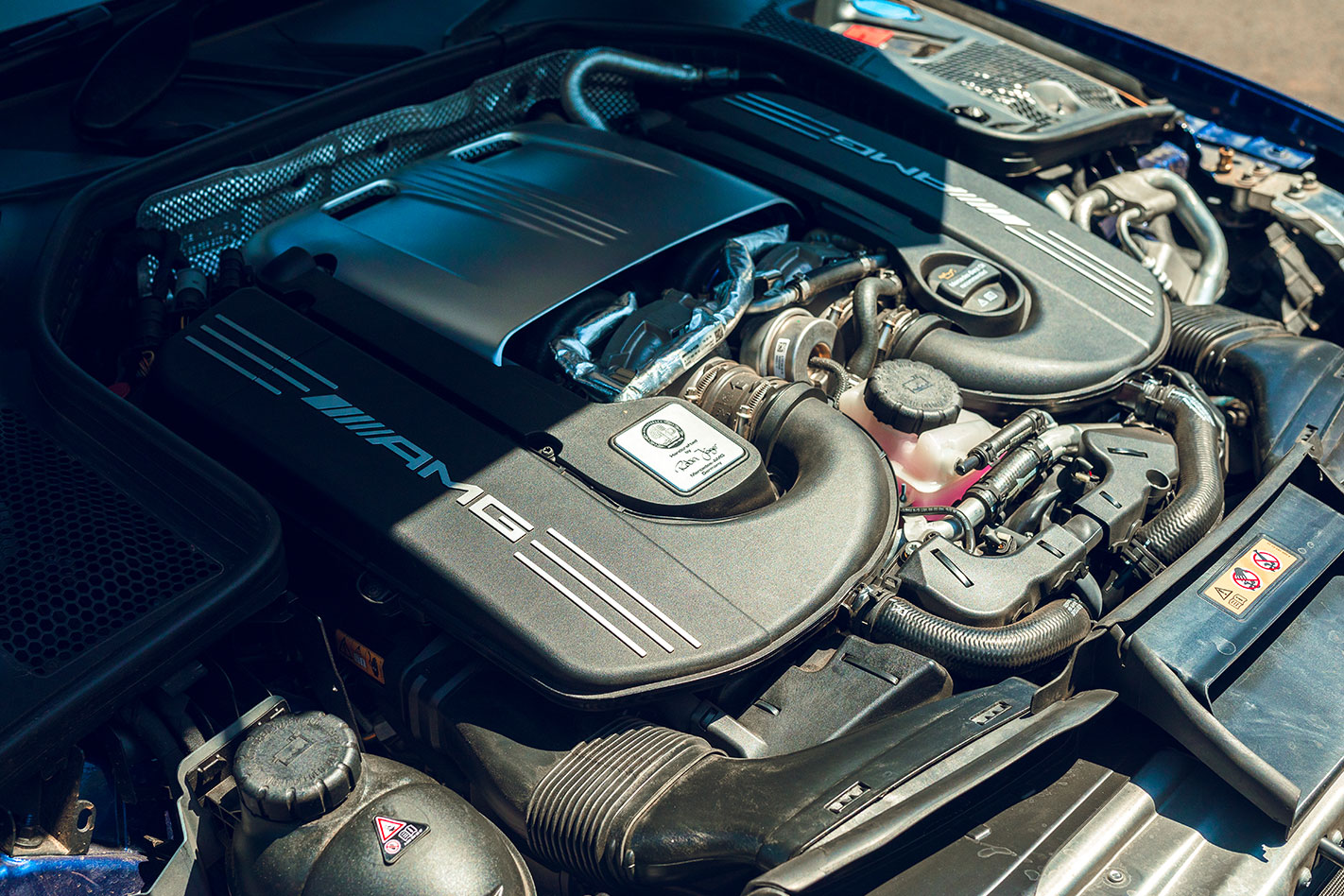
While we’re talking gripes, let me get a bunch of them off my chest. The suspension still thuds harshly over cats’ eyes. The glovebox is too small (though the centre console is pretty big). I’d fit an exterior boot release button (somehow there isn’t one). I’d change at least one of the dash buttons into a simple play/pause. I’m glad for Apple CarPlay as it means I don’t have to interact with the COMAND system as much (a good thing), although life would be a lot easier if the screen was of the touch variety (it’s not). And the interior is nice enough – love the steering wheel – but I don’t think the styling is going to age very well. I also expected better for build quality from my first extended period in a Mercedes-Benz, too. Nothing broke, it’s just how everything felt put together. Undeniably high quality, but not to the degree I personally hoped. Maybe my expectations are too high.
What are some of the small things I loved? Even though it’s been out a few years, and even in dark blue, call me vain but the C63 turns more heads than I thought it would. It’s a very easy car to drive. The front spoiler somehow never scraped. The belt butler, a little electric arm that brings the belt to you to save you stretching to the B-pillar, is a nice touch. The parking cameras are unreal. The electronic tailgate is appreciated; press the boot button on the keyfob twice and it’ll go down. There’s a small cargo net on the transmission tunnel in the passenger footwell which is handy to stop things flying about. I honestly could go on.
Mine would have the optional carbon-ceramic brakes even though I’d probably have a different car for track days. Depending on how long you planned to own the car you’d probably get their $7900 cost back as they last a lot longer than steel ones. I’d consider steel brakes for regular track abuse as they’re cheaper to replace.
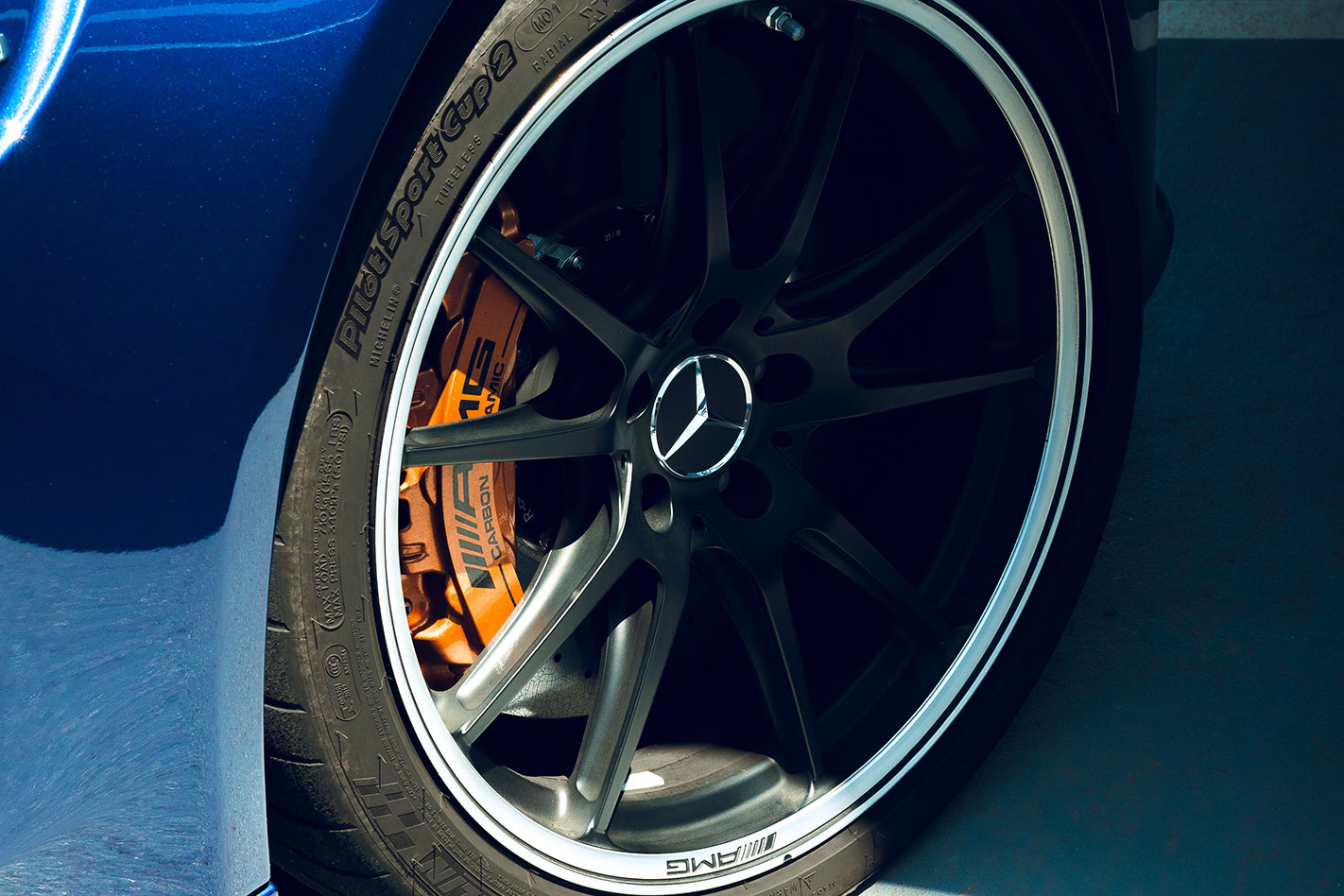
Why wouldn’t I track my C63? I might do one track day to see what it’s like, but beyond that it’s just too heavy for my liking. You feel like you have to nurse the brakes and tyres a little too much. No thanks, I want to be able to thrash my track car with merciless, irresponsible abandon. Maybe if it was 150kg lighter.
I’d have Michelin Pilot Sport Cup 2 tyres. While noisier and harsher, they have no grip when cold which, when combined with the lenient ESC Sport mode, makes for a surprisingly entertaining car even at urban speeds. Not to condone anything there… but it’s a little thrill that’s sometimes the highlight of your entire day. And that I will very much miss.
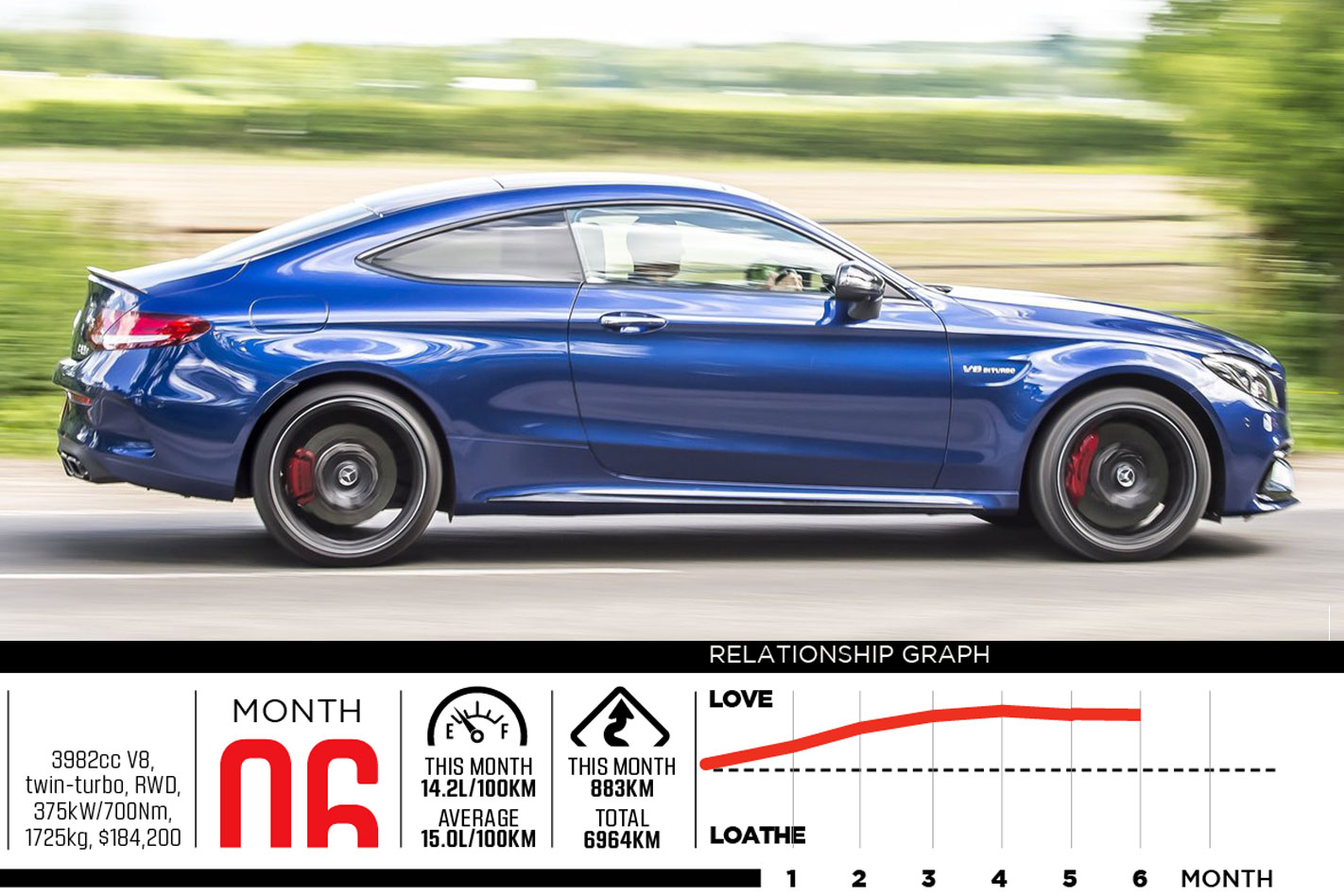
2020 Mercedes-AMG C63 S Coupe Pros & Cons
Things we will miss
- Satisfying noise.
- Effortless grunt.
- Fat stance.
- Transmission.
- Tyre bills.
- Infotainment.
Sign-up here for your free weekly MOTOR report
It seems like one of the few remaining socially acceptable places to find a V8 engine is under an SUV’s bonnet, and Volkswagen reckons there’s sufficient appetite Down Under to introduce the new Touareg V8 TDI to its line-up.
Reshuffling the entire range to now consist of an entry 170TDI, mid-range 210TDI Elegance and 210TDI R-Line twins and adding a 310TDI R-Line V8 hero, the new Touareg line-up drops the 190TDI variant which allowed VW to bring Touareg to Australia sooner than anticipated.
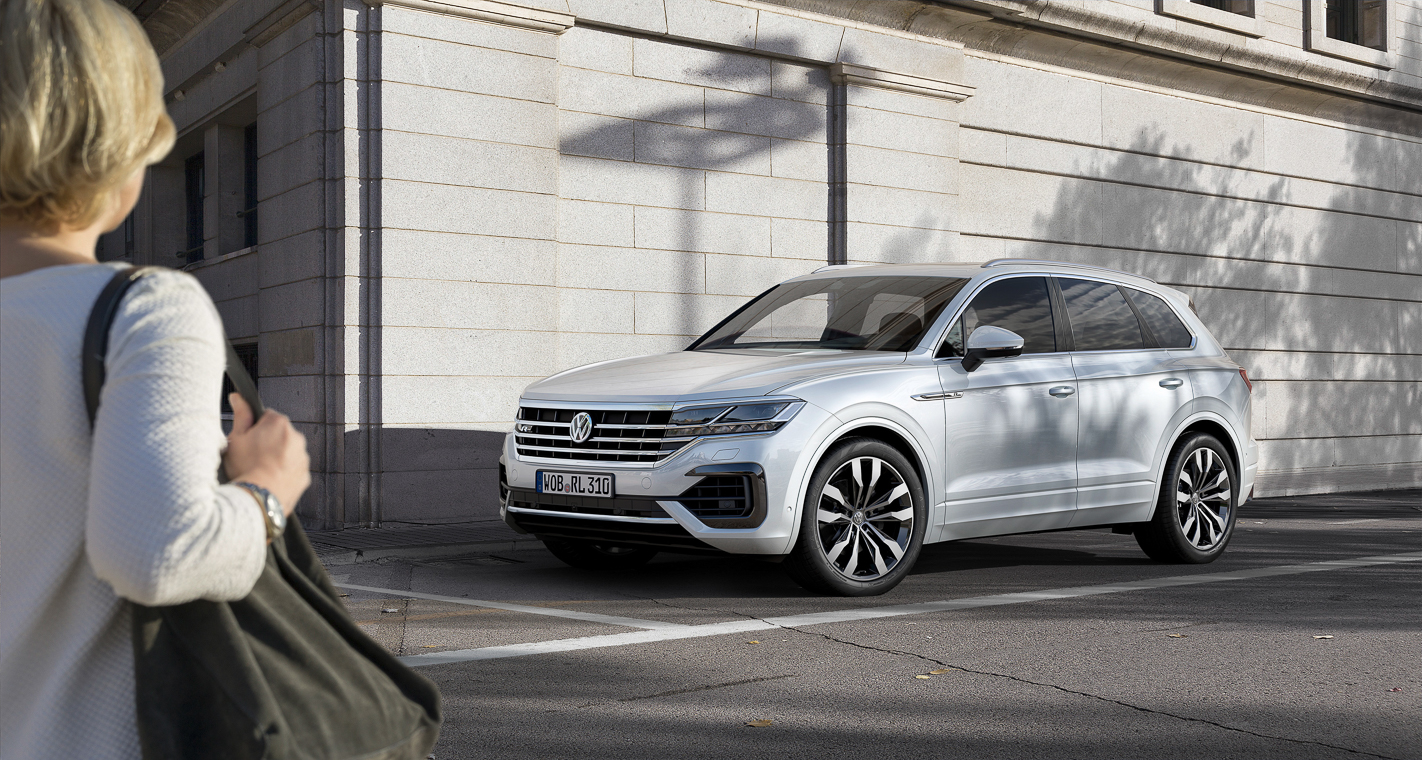
The V8 R-Line hero will cost $136,490 (before on-road costs) when it arrives in October, which is sizeable coin but fares well when you consider it’s fully-loaded with kit and compares favourably against the $140,900 BMW X5 M50i and $152,459 Range Rover SDV8.
New generation EU6 engines are now more efficient and powerful than before, by way of start/stop technology and a Selective Catalytic Reduction system with AdBlue to reduce emissions.
The fuel tank is also larger across the range at 90 litres, and fuel usage for both V6s is quoted as 6.8 litres per 100 kilometres. Volkswagen says the diesel V8 uses just 7.5 litres per 100 kilometres – a claim we look forward to testing.
In terms of performance, the new V8 is said to almost match the acceleration of Golf R hyper hatch with a zero to 100km/h sprint of 4.9 seconds, using the full potential of its 310kW/900Nm twin-turbocharged 4.0-litre V8 and eight-speed torque-converter automatic transmission.
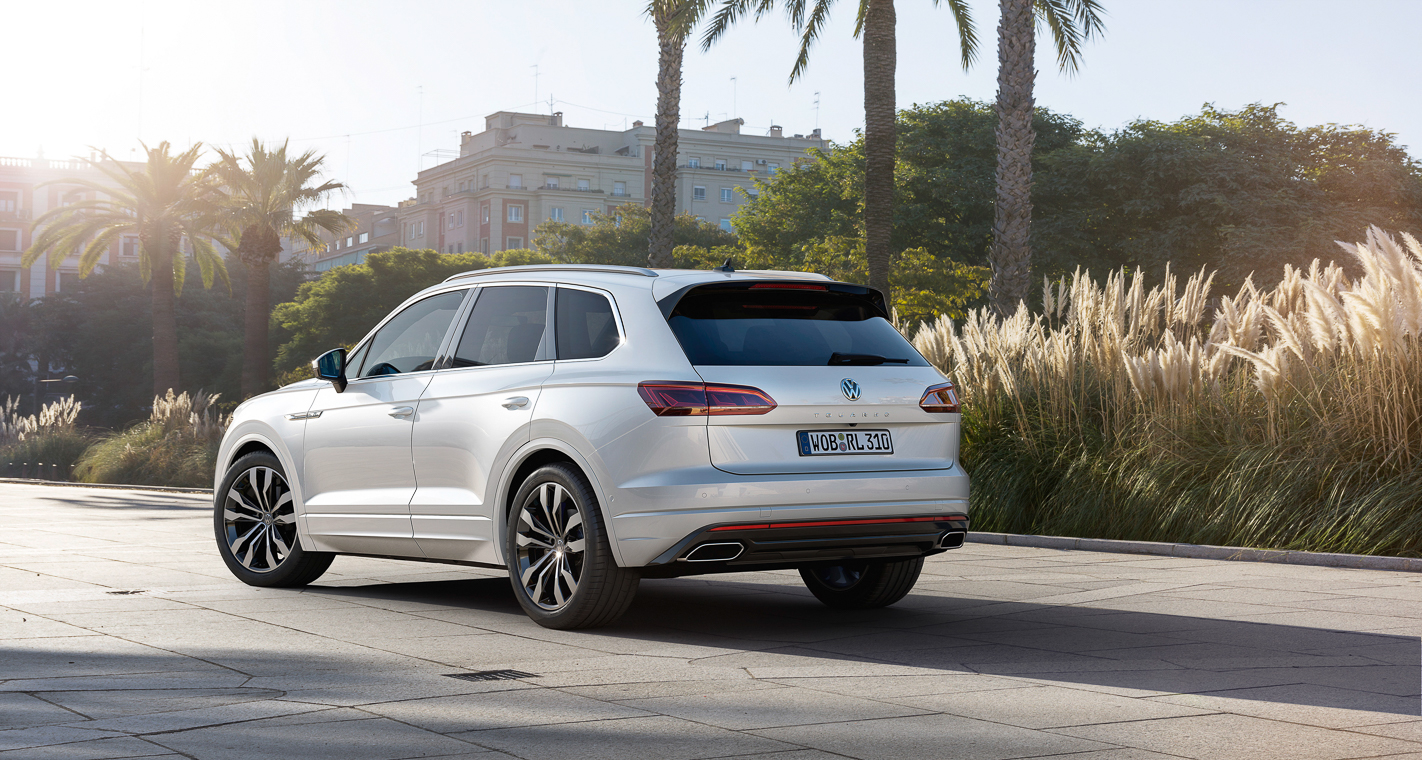
Even the 210TDI V6 is quick, and will match the Golf GTI for pace. VW says the 210kW/600Nm 3.0-litre turbo diesel will hit 100km/h from rest in 6.1 seconds, while the new 170TDI 170kW/500Nm 3.0-litre turbo diesel carries “Amarok V6 ute pace” with a 7.5 second sprint to 100km/h.
Volkswagen has simplified the range by differentiating R-Line as a specific variant of 210TDI cars rather than option pack, available as standard for the V8 TDI.
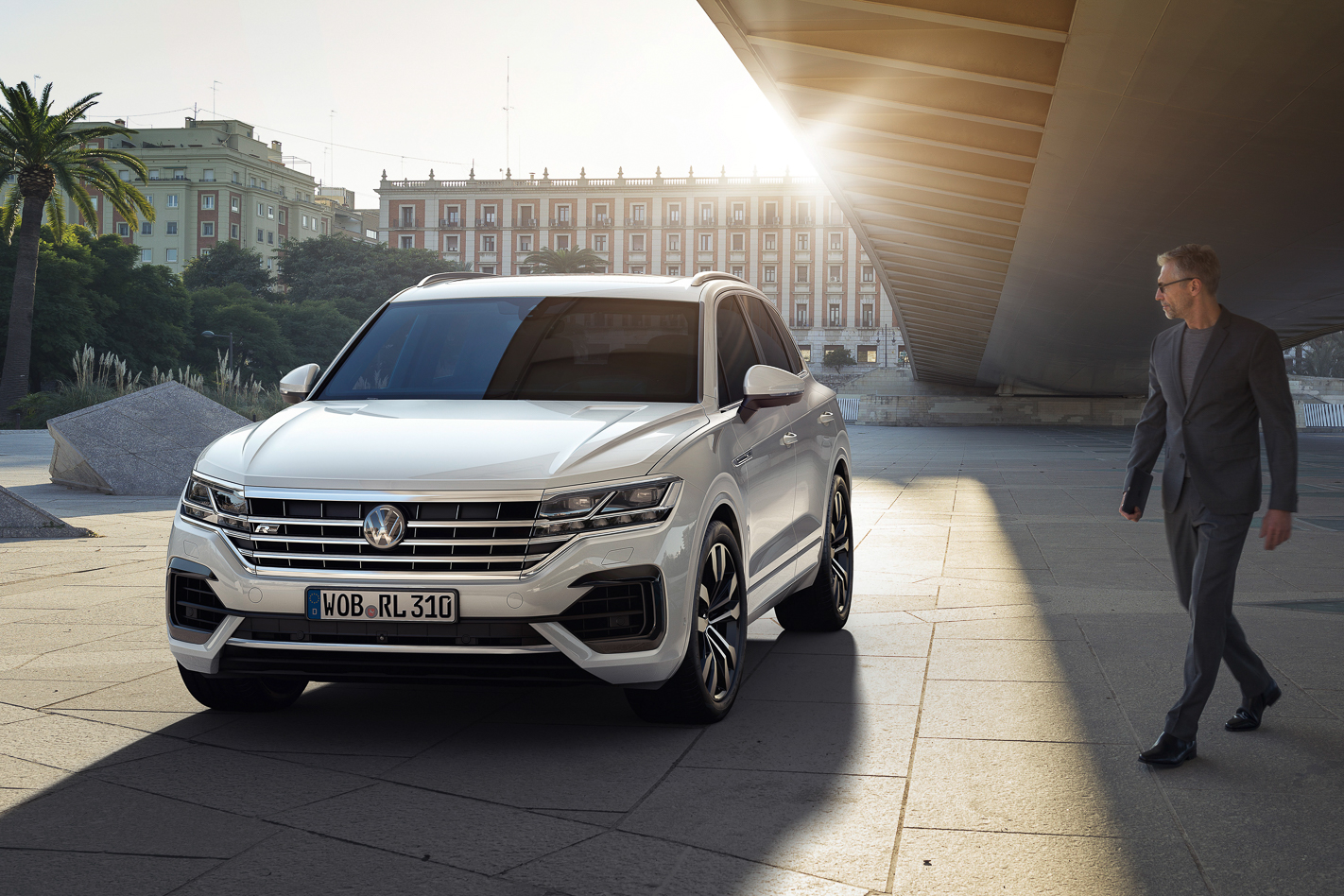
Volkswagen launches the Touareg in the North African desert
The V8 is loaded with option packages available for the rest of the range including a Sound and Comfort package and Innovision package, the only option is a $3000 sunroof and your choice of paint colour.
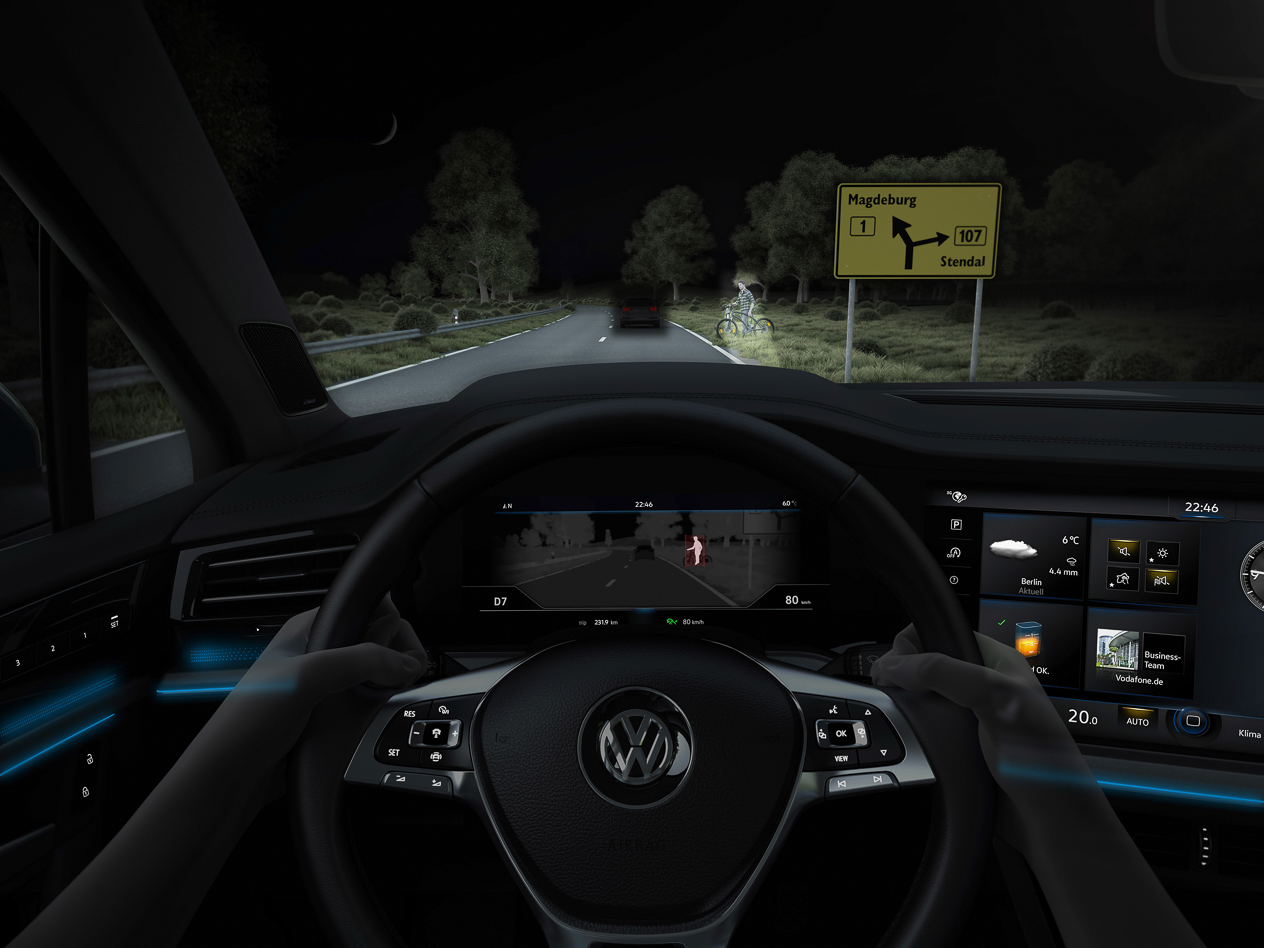
Also included on the new V8 Touareg is night vision, which can automatically pick up heat signatures of pedestrians and wildlife after dark and automatically prime the brakes for maximum braking force.
Volkswagen latest Touareg shares its engine with high company such as the Bentley Bentayga V8 as well as the Audi SQ7, though VW’s unique selling point is value, offering the strong powerplant at a price that undercuts rivals.
You’ll see the new range of Touaregs on Australian roads at the start of Q4 of this year, after a special run of 150 Touareg 190TDI Adventure to send off the outgoing EU5 190TDI engine.
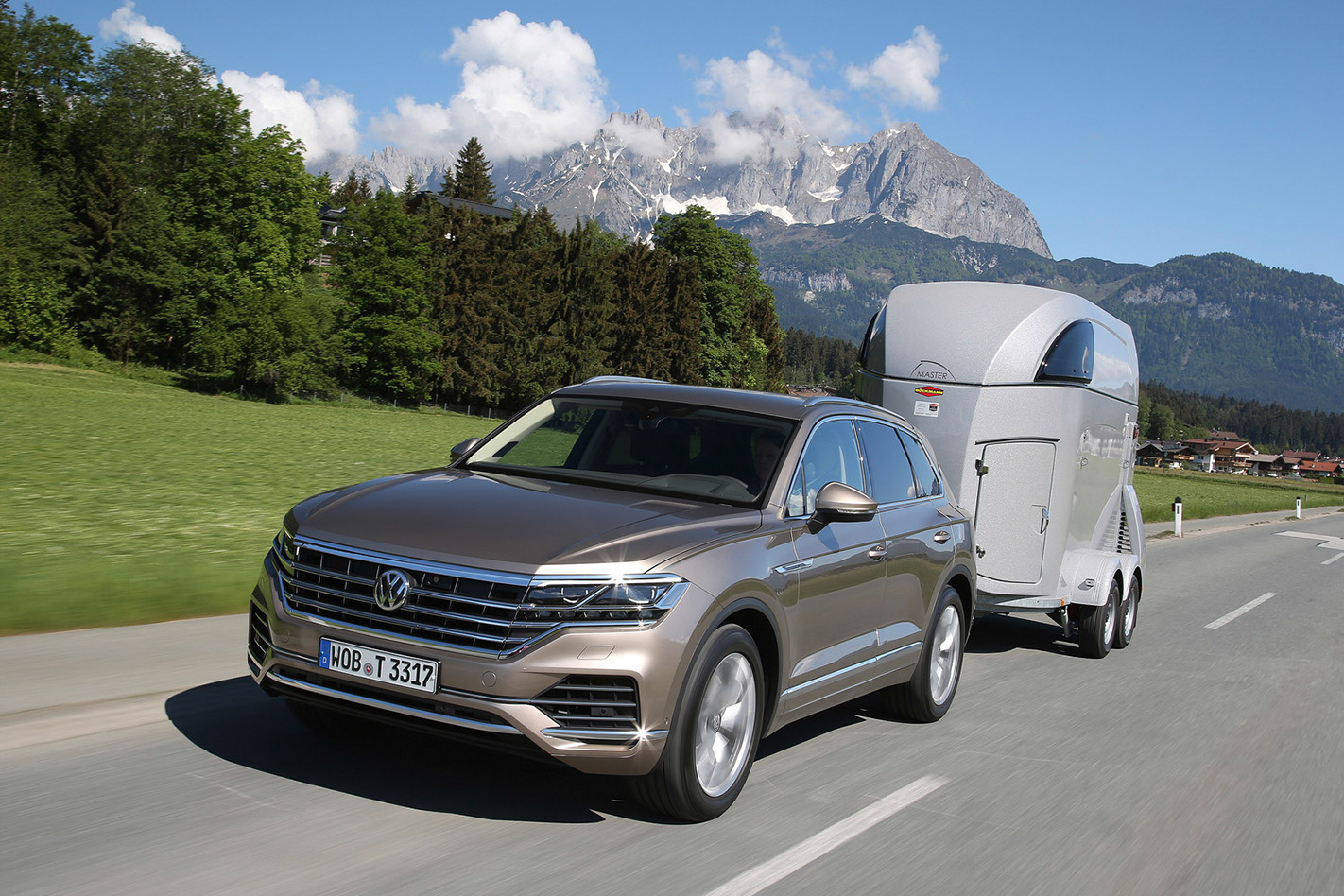
Now available in showrooms for $90,990, the Touareg Adventure is based on the 190TDI Premium and brings a bunch of extras to justify the $4200 mark up including:
- Surround-view camera system
- All-wheel steering
- Additional underbody protection including radiator guard, metal engine protection and reinforced oil pan and fuel tank protection
- 19-inch Esperance alloy wheels
- Power-adjustable front seats with memory
- Power-folding door mirrors with memory and environment lighting
- Additional off-road settings including a ‘Gravel and Sand’.
- Direct tire pressure monitoring
- Manoeuvre braking
- Park Assistance Plus
- Chrome roof rails with removable crossbars
- Larger fuel tank (90 litres replaces 75 litres)
- Fine-grain ash wood interior inlays for dashboard and doors
- Atacama Beige or Florence Brown seat trim
- A choice of four exterior paint colours: Pure White, Sechura Beige Metallic, Silicon Grey Metallic and Deep Black Pearl Effect.
2021 Volkswagen Touareg Australian pricing
- Touareg 170TDI – $81,490
- Touareg 210TDI Elegance – $99,490
- Touareg 210TDI R-Line – $108,490
- Touareg V8 310TDI R-Line – $136,490
- Innovision package (170TDI) – $8000
- Sound & Comfort package (170TDI and 210TDI Elegance) – $8000
- Sound & Comfort package (210TDI R-Line) – $6500
- Panoramic sunroof (210TDIs and V8) – $3000
Don’t let anyone tell you that the days of the barn find are over, because this rare 1960 Aston Martin DB4 has surfaced out of nowhere – and it hasn’t moved in the past 30 years.
Not only that, but it appears as if the car once belonged to the man who put the DB into the name, former Aston Martin company owner David Brown.
We’re most accustomed to finding million-dollar barn finds listed through prestigious auction houses, but this Melbourne-based owner is going a very different way by listing his 1960 Aston Martin DB4 on Facebook Marketplace.
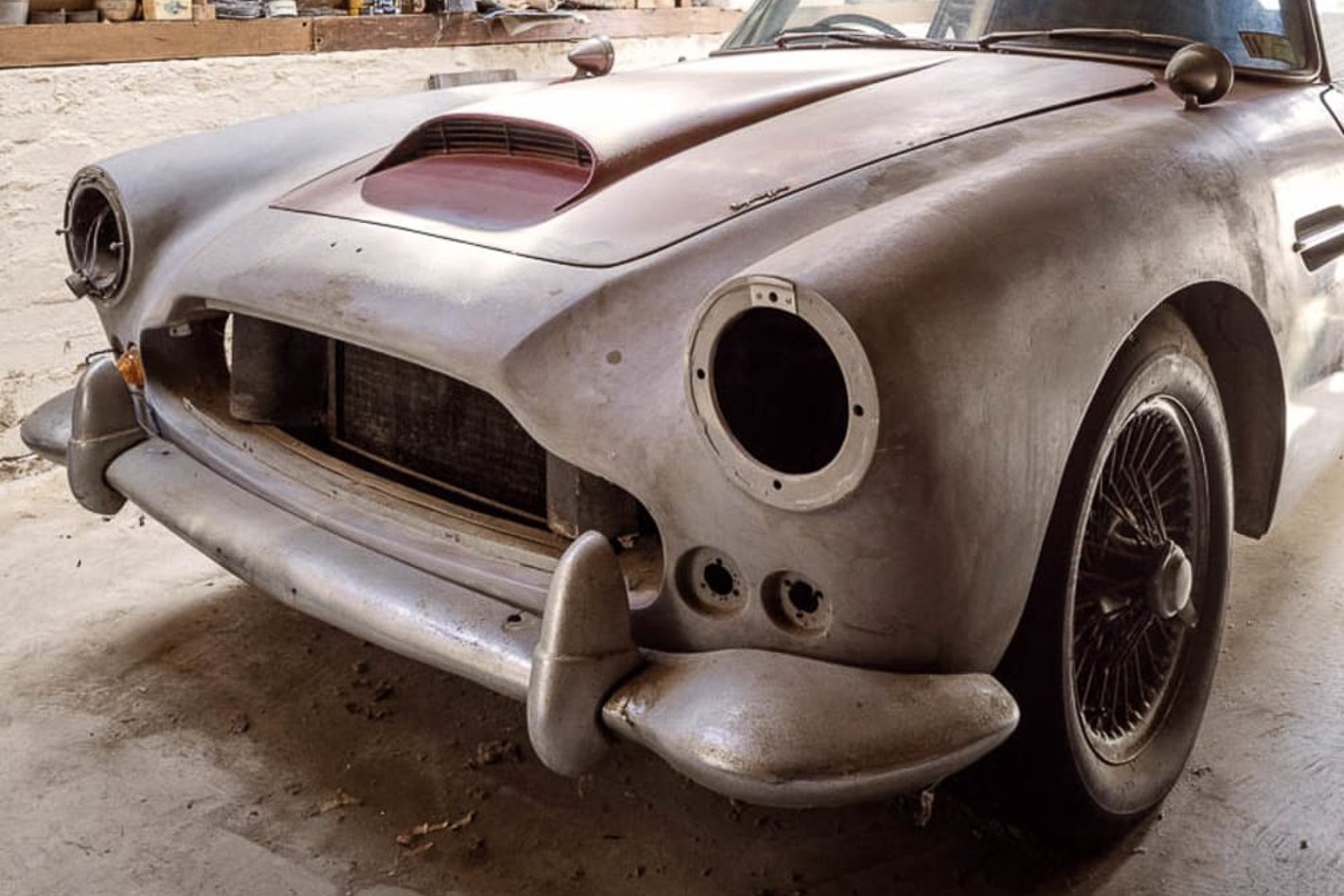
The car is offered for sale by Octane Australia on behalf of its owner and they have seen fit to list it for $1,000,000, excluding government charges such as stamp duty and registration.
Its condition is decidedly worse for wear, but after 30 years of non-use, you’d expect nothing less. That said, it does seem like a near-complete original example with a low 146,000km on the odometer.
This DB4 can even claim an impressive ownership history, presenting as a four-owner car over its 60-year life
It was even delivered new to renowned Aston Martin owner, the late David Brown, who bought the company in 1947 and set it on a course to success.
It was his initials that formed part of the brand’s identity from that moment on until he sold the company in the 1970s, and revived with the launch of the DB7 in 1994.
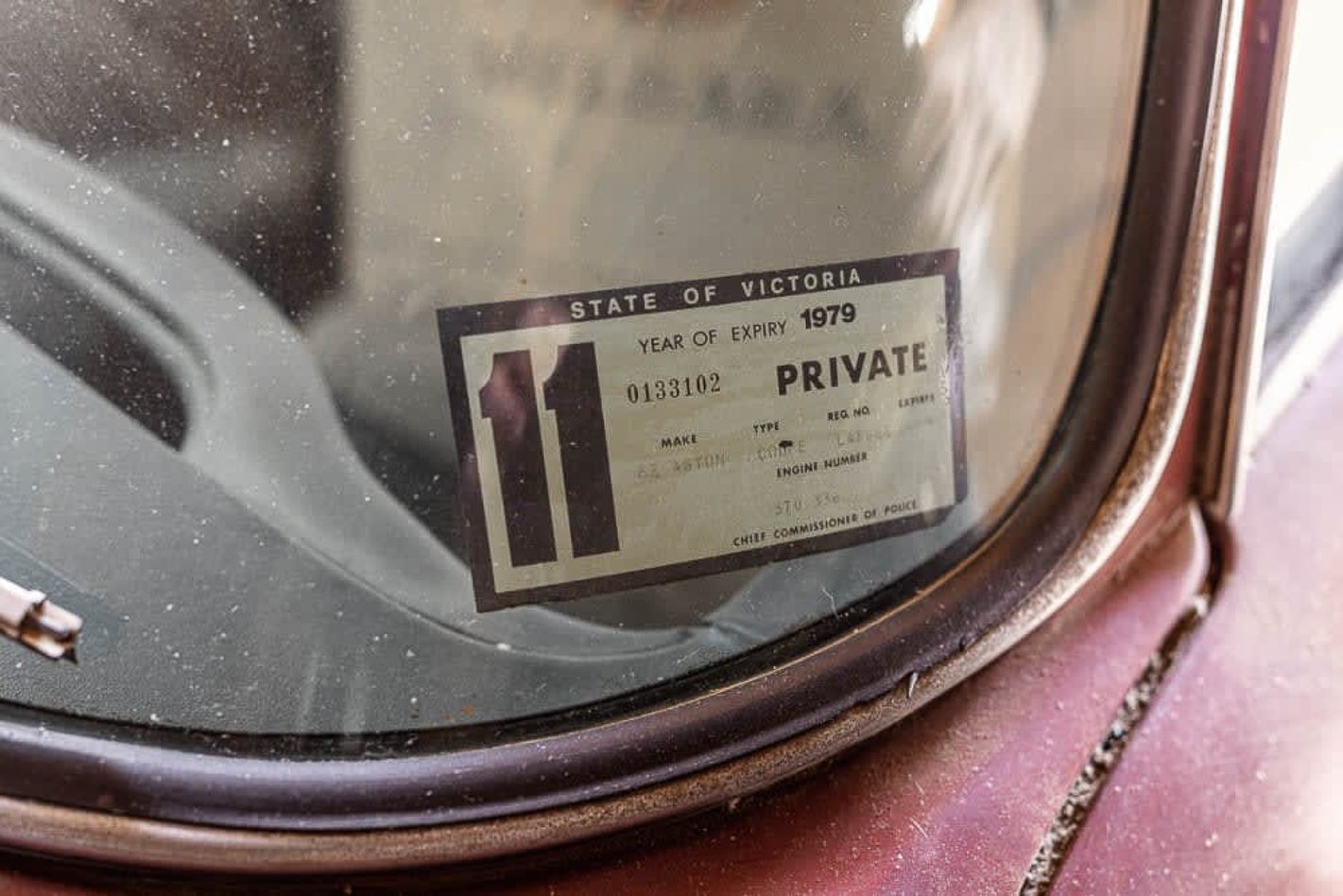
It was its star owner’s profile and standing that afforded it a few extra non-standard additions, according to the seller, which include power windows, a rear window demister, a Motorola radio and a locking rear differential.
First imported to Australia in 1962, the car was acquired in 1979 by its current owner, who drove it for ten years before parking it up to gather dust.
There are some small (but key) elements missing, like headlights, grille and a reversing light cover, and the interior will definitely need a makeover, but this DB4 looks incredibly complete even under its heavy sheen of dust.
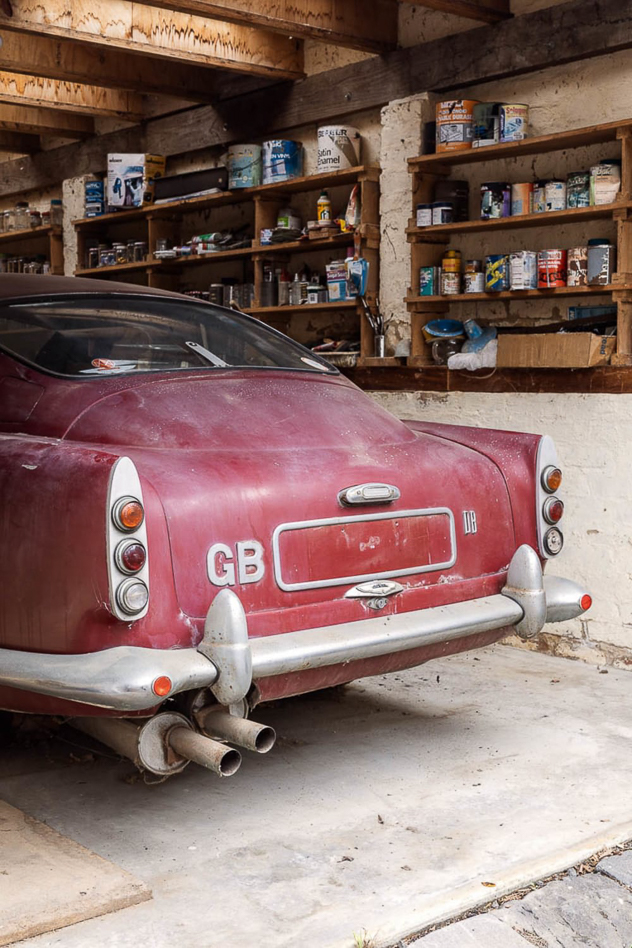
To put the astronomical price in context, other Aston Martin DB4s usually fetch somewhere between $600,000-800,000, though none are quite as interesting as the car in question thanks to its links to David Brown.
Add the fact that collectors are usually drawn to barn finds, and this could well come close to its asking price.
However, the decision to list the DB4 on Facebook Marketplace is an odd one. It’s a free medium that’s usually reserved for flogging off useless junk you find around the house rather than top-dollar classic cars.
For the seller’s sake, we hope there are not too many tyre kickers.
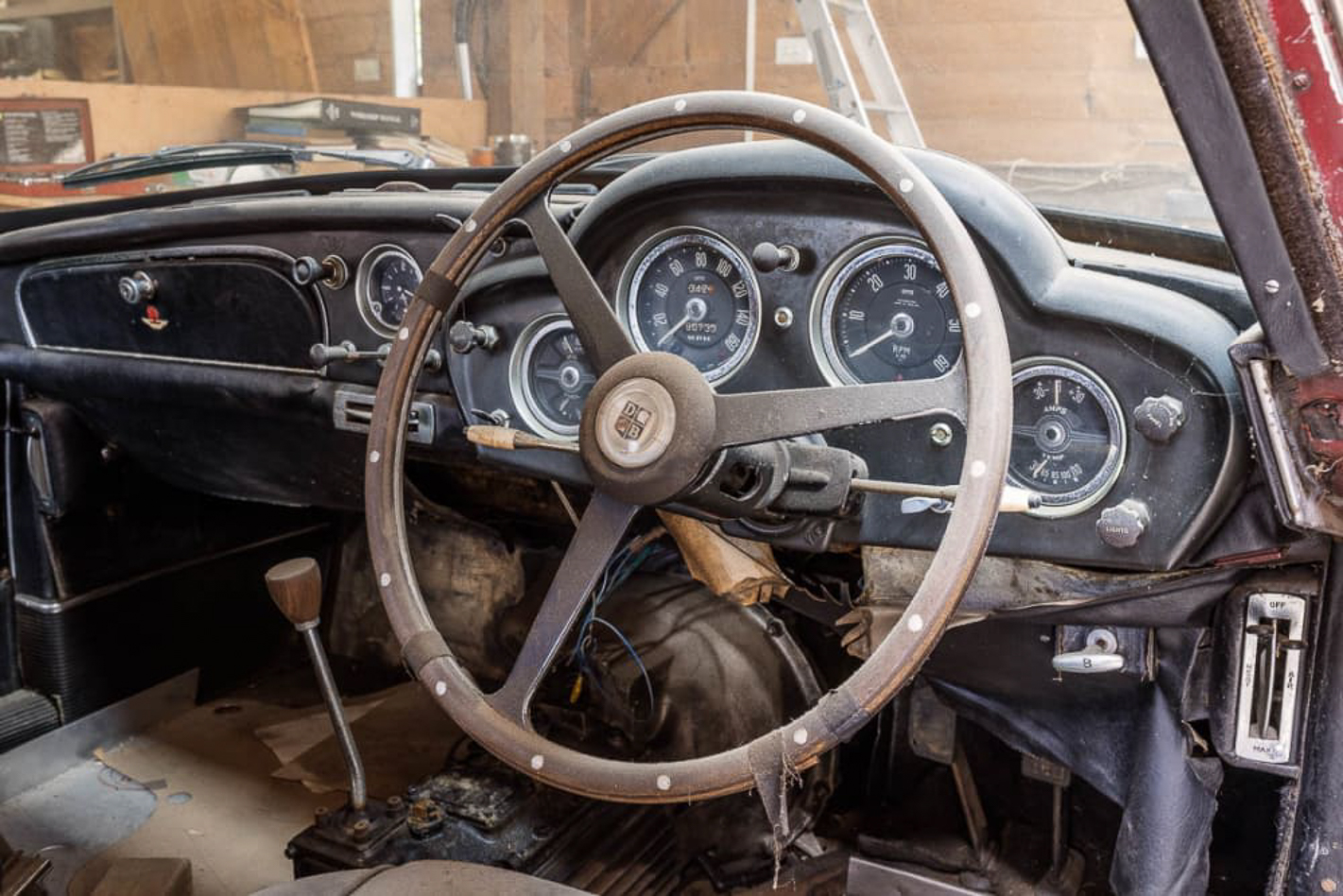
It obviously looks in rough condition after 30 years of sitting idly in a back-alley shed in the suburbs of Melbourne, but if you were after the ultimate iso-project – this could be the one.
Click on the lead photo to view an image gallery of the 1960 Aston Martin DB4 barn find supplied by Octane Australia.
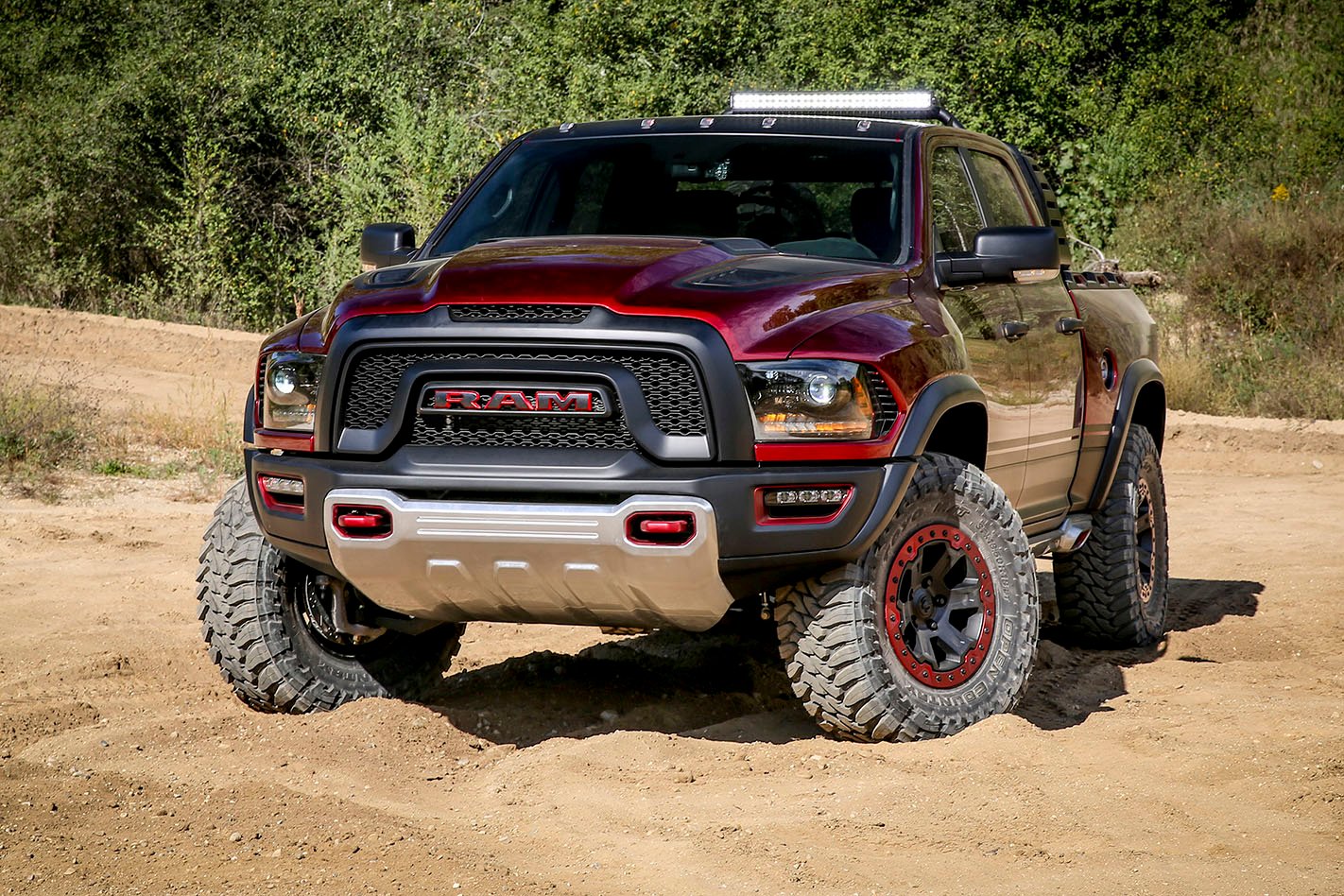
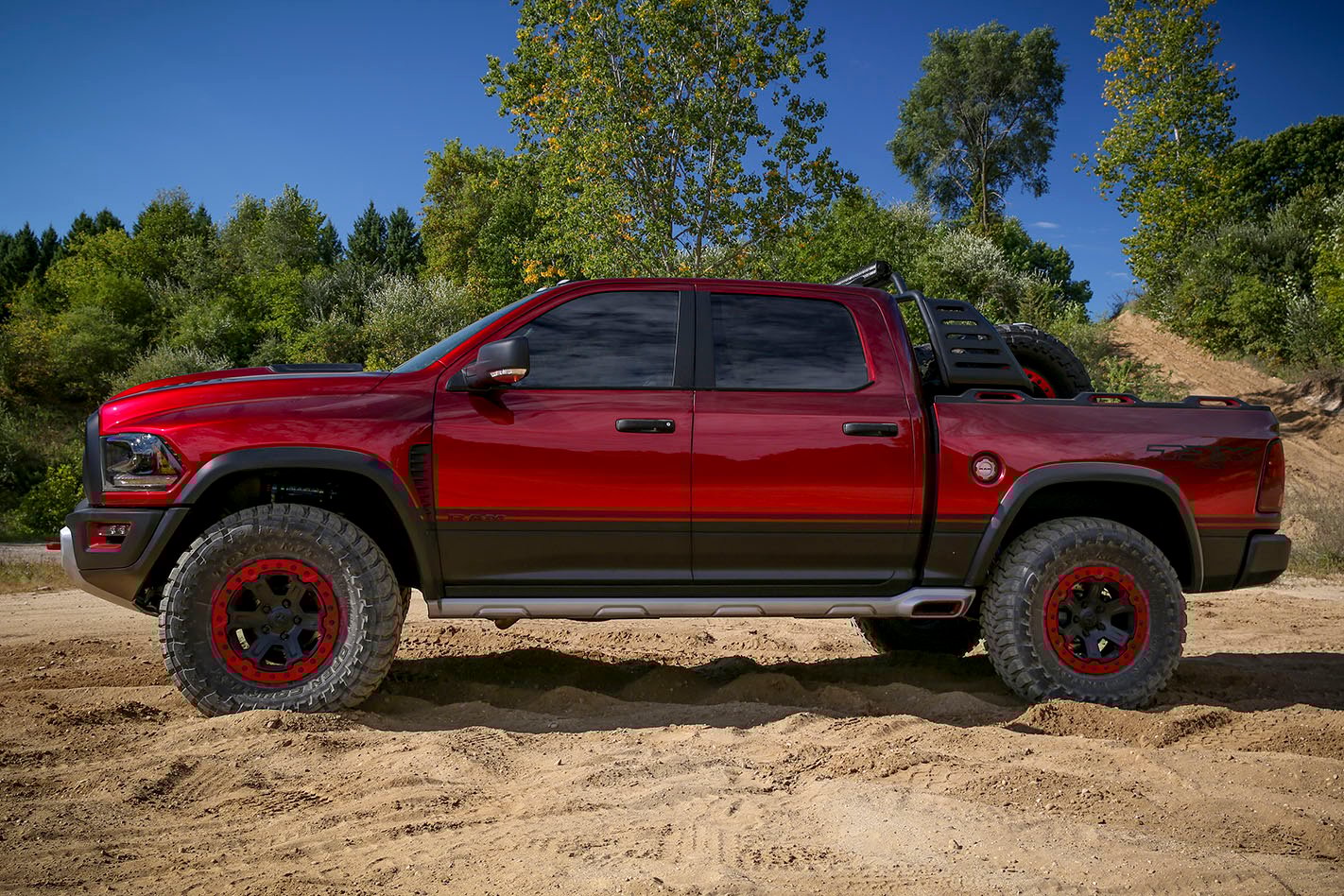
A supercharged V8 super ute is about to be unleashed onto the world by Ram, and we are pretty bloody excited.
The Ram 1500 Rebel TRX is due to be revealed next week, with the American pick-up set to up the ante and land a blow on Ford’s ultra-popular F-150 Raptor.
What sets the Ram TRX apart is its engine, which is said to be the Hellcat unit that has been the halo powerplant in the Dodge range and is also fitted to the crazed Jeep Grand Cherokee Trackhawk.
UPDATE, May 2023: Ram 1500 TRX v Ranger Raptor
?♂️ Australia’s most outrageous utes face off in a rock-spraying, fuel gargling celebration of excess. Strap in, it’s about to get noisy!
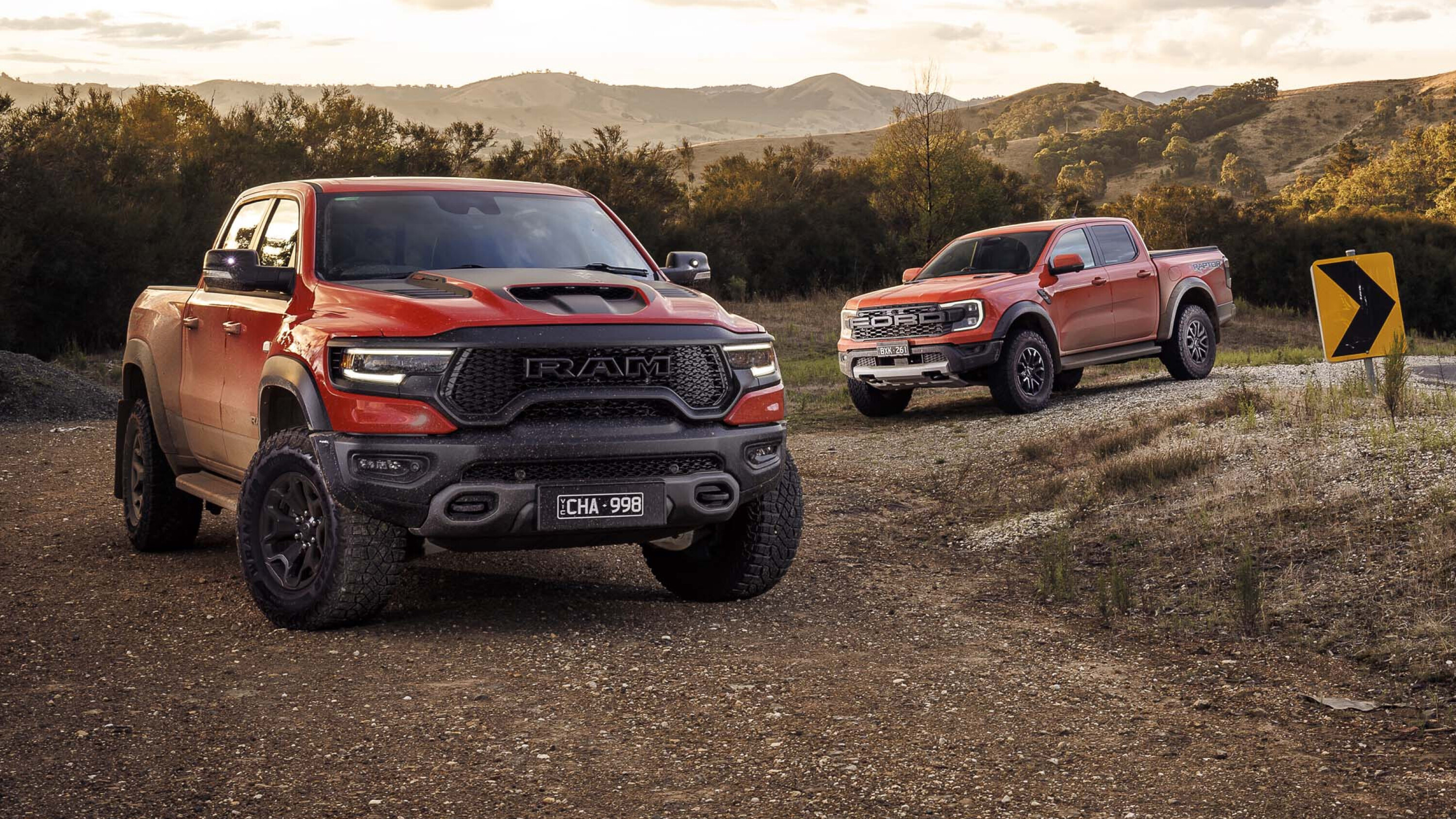
STORY CONTINUES: Everything we know about Ram’s new 1500 TRX
The 6.2-litre supercharged Hemi V8 can be delivered in Hellcat, Redeye, or Demon specification, producing 522kW, 534kW and 594kW respectively.
It’s unclear which version will be fitted to the TRX, but industry speculation suggests the base Hellcat 522kW/868Nm version is a shoo-in for the lead role.
Even in its least powerful guise (least being a loose term in this setting), the blown V8 would make the Ram TRX the most powerful dual-cab ute in the world.
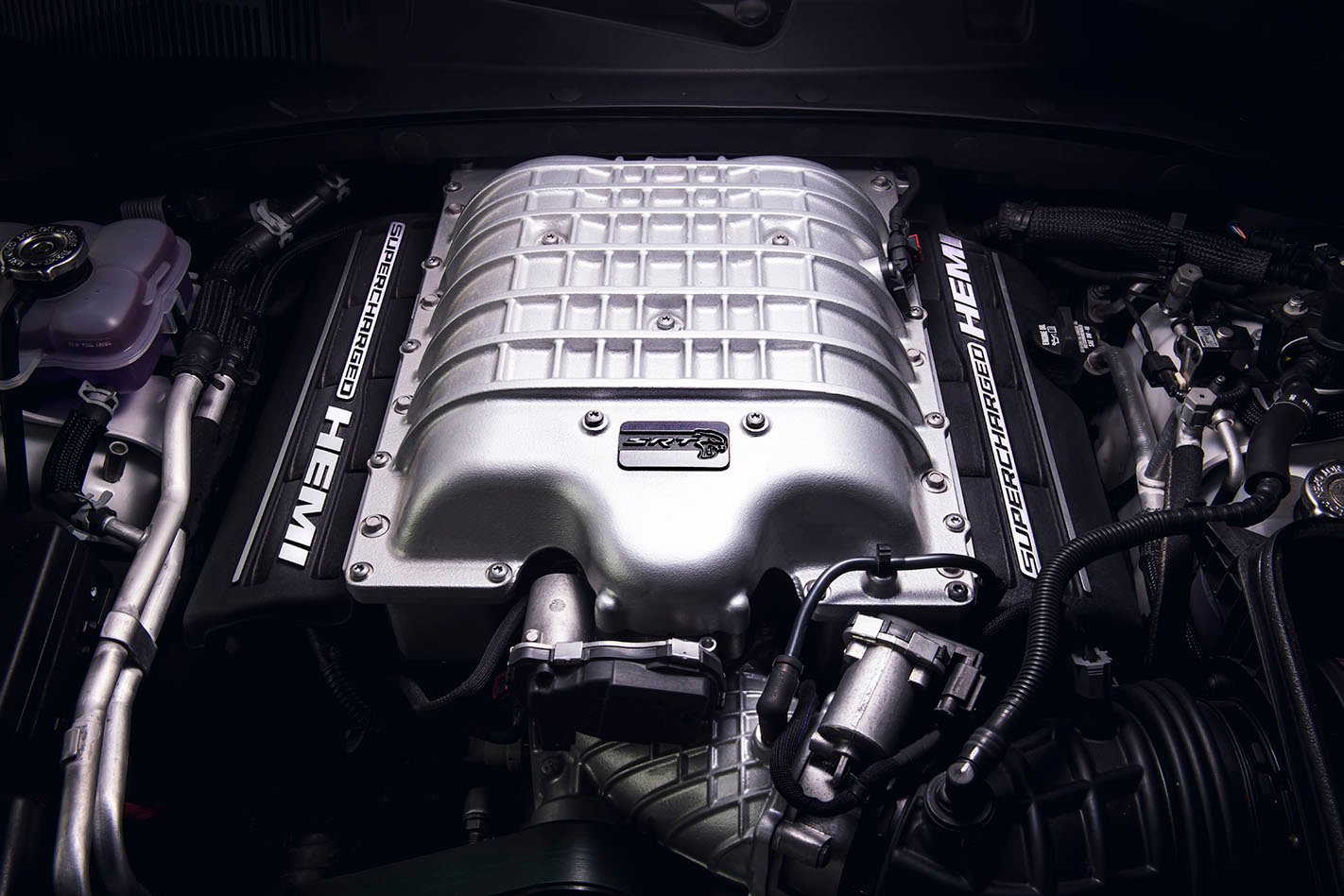
Power will be sent to all four wheels via an eight-speed automatic gearbox. Spy shots of the interior have revealed that several different drive modes will be available for the driver to select.
American pick-ups aren’t big on subtlety, so expect flared arches, meaty wheels and tyres, bulging bonnets, and rock-smashing bumpers.
The suspension will receive a working over to match the new engine. Expect beefed up control arms and suspension links, wider track, long-travel shocks, and ARB air-lockers on each axle.
Timing for the TRX’s reveal has been cleverly calculated by Ram, with its biggest competitor the Ford F-150 Raptor currently at the end of its life cycle. A new generation Raptor is currently in development.
An official reveal for the TRX has been slated for August 17 in North America, while production is expected to begin later this year, with showroom deliveries likely to start early next year.
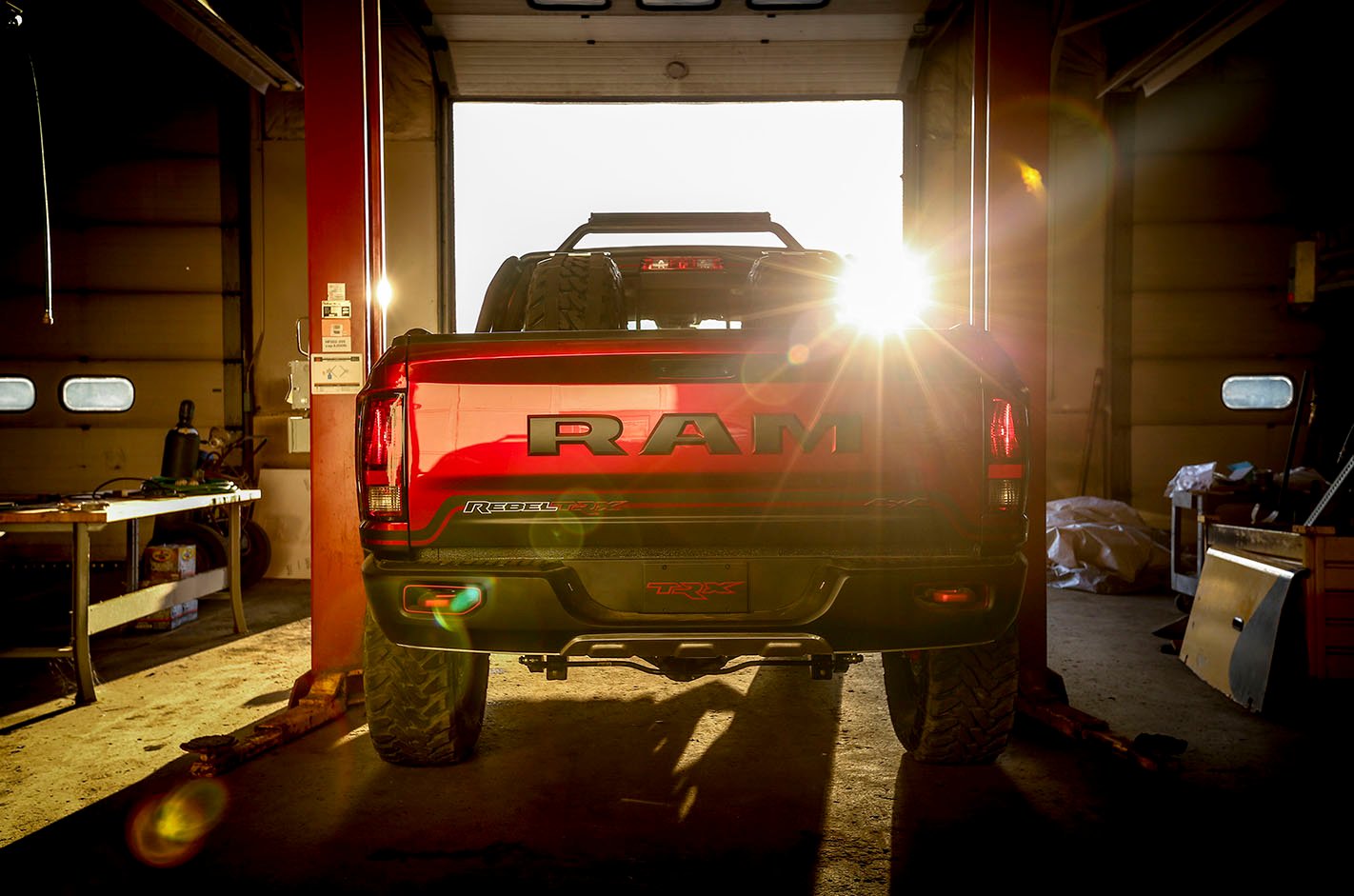
But, what about Australia?
Ram Trucks Australia is keen for the mega ute to make its way Down Under.
Distributed locally by ATECO with approval from North America, Ram Trucks are re-engineered to right-hand drive in Clayton.
The big American pick-ups are enjoying a sales boom this year, while the rest of the industry struggles.
Officially, there is no word on if or when the TRX will be available in Australia.
However, it’s no secret that Australians love their fast utes, and Wheels understands the local distributor is eager to have the TRX available locally as a halo for its growing range, and are currently deep in discussions to make an Aussie arrival a reality.
The TRX would be the most expensive Ram available, sitting atop the DT (due in 2021), as well as the existing DS Laramie and Express models.
Demand in the US will largely dictate when Australia will receive the TRX, while ATECO and contractor partners like Walkinshaw will need to complete an evaluation on the re-engineering process for the high-powered pick-up.
Currently it is too early for an estimation on when the TRX will arrive in Australian showrooms, but it could be well over a year. Price? It’ll be more expensive than anything currently offered by Ram.