
Italians enjoy a reputation of being car lovers, and it’s a country where speed is often celebrated, not denigrated. However, this speeding ticket was a little out of the ordinary.
A driver in the tiny Italian town of Offagna, not far from San Marino, recently copped a $1380 fine for allegedly doing 703km/h in a 70km/h zone. Yes. You read right. A Ford Focus, doing the cruising speed of a Boeing 787, or a third faster again than the mighty Bugatti Chiron Super Sport’s 489km/h world-record-holding effort.
MORE People are jumping roundabouts and it’s weird
Now, here at WhichCar we’re fans of the Ford Focus, especially the RS and the new ST… but even if you dropped the fastest Focus ever made from space, it’s not getting to 703km/h.
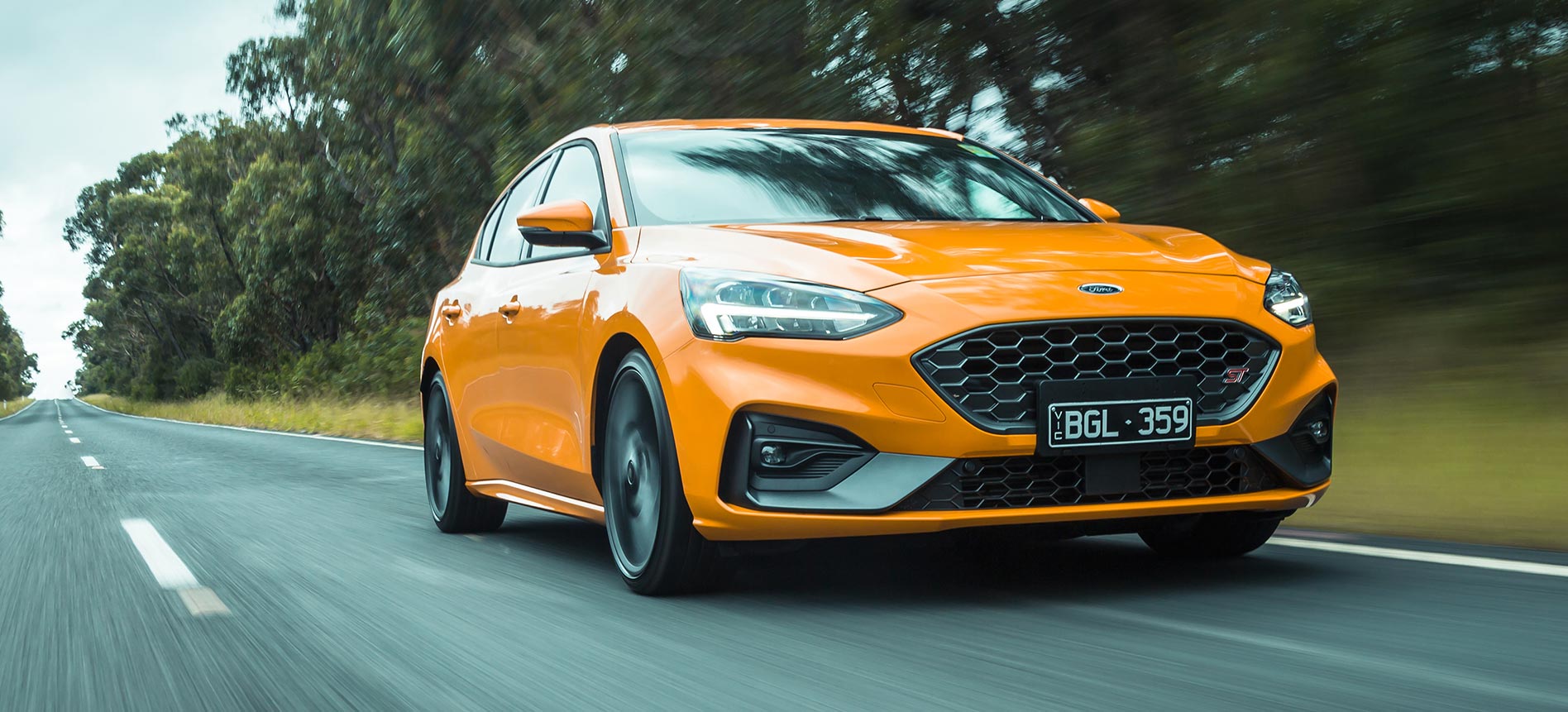
What makes the whole thing more amusing is that the local constabulary issued the fine to our shocked Focus fan without first checking it, docking her ten points from her licence and issuing an 850-Euro fine.
According to Autopassoinati, a local town councillor is advising that the Focus driver not only ignore the notice, but to appeal for compensation.
We reckon she ought to be calling the good people at the Guinness Book of Records… or maybe she could pop over to Maranello and see if the Ferrari F1 team needs a new motor.
It’s not the first time by any means that the WhichCar Weekly team has discussed electric cars and their feasibility for Australia, but the zero-emissions movement is gathering pace and the various state and federal governments have no choice but to get involved.
However, while the latest high-profile announcements appear to suggest our nation is finally joining the rest of the civilised world and making EVs easier to buy and run, the reality is sadly not quite there yet.On this week’s chat Wheels online editor Cam returns to the WCW virtual studio to talk about the NSW government’s latest EV plans and how they still intend to claim your pound of flesh even if you are helping the environment.Next up, we go from ways to use less petrol, to possibly the best way to use as much fossil fuel in the shortest space of time and Cam’s latest update on the incredible (possibly incredibly stupid) Cannonball Run.
Just when you thought the carefully organised and surgically choreographed attempts to smash this trans-US speed trip couldn’t be broken, someone weighs in with the equivalent of a rusty sledgehammer and bludgeons the top time to death. And we haven’t even got to the best parts yet.Andy, Dan and Cam need little encouragement to chat about their favourite epic car trips, so that’s exactly what they do next, as well as offering some suggestions for cars that could threaten the new Cannonball run record. Click play to listen in.You can find WhichCar Weekly on all manner of podcast apps including iTunes and Podbean. Please rate, subscribe and leave a review!And if you want yet more WhichCar action whether it be behind the scenes insights or the very latest from the automotive front line, follow the day-to-day happenings of the WhichCar team on Facebook, Twitter and Instagram @whichcarAnd if you really want to get involved, send us a question or auto anecdote of your own. We endeavour to answer all your messages.
Listened to or watched the WhichCar weekly podcast? Help us out
- Leave a note in the comment section below
- Leave a review on Apple Podcasts/iTunes
- Subscribe to our podcast
What compels a person to drive across the United States of America as fast as possible, in search of a record that isn’t officially recognised, and that could see you thrown in jail for attempting?
It’s a question best answered by the documentary Apex: the secret race across America.
On the surface, the film is a look at Alex Roy and Dave Maher’s 2006 Cannonball Run, which resulted in a new record time of 31 hours and four minutes.
At the time it was the first Cannonball record in several decades, and revived the highly illegal practice for the modern era.
Roy had the foresight to document his entire journey, both from inside the car and aboard the support plane that flew above – yes, he had a whole damn plane supporting the run.
But, there’s more to Apex than just the ’06 record. It’s a love letter to the history of the Cannonball, and is as much about the original event and ‘80s recreations as anything done in the modern era.
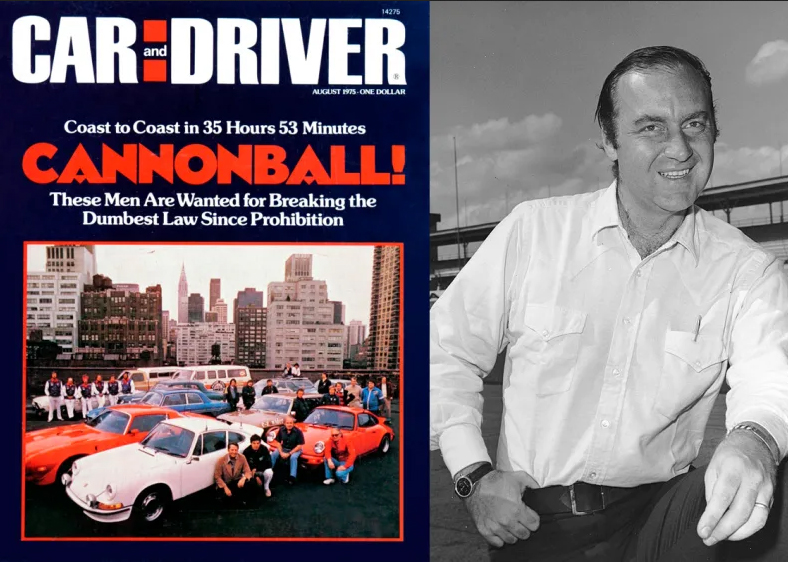
The film brings you inside the clandestine family of renegades and lunatics.
Interview subjects include Will Wright, SimCity creator and former partipant and record holder in the U.S. Express, along with Indy 500 winner, racer, and former participant Bobby Unser, and the man who started it all Brock Yates.
Roy has been prolific in the media in the 14 years since his record-setting run, but the movie is still able to offer genuine insights into how he went about breaking the record in ’06.
It begins with the meticulous planning and preparations. It’s understood that most modern Cannonball Runs are well planned, but the exact extent of Roy’s preparedness is staggering.
Something not directly addressed in the film is the fact that director J.F. Musial had a small but direct involvement in the ’06 record. The young New Jersey native helped prepare some of the material Roy used to plot his cross-country journey.
A deep current of tension runs throughout the film, as Roy and Maher encounter a series of challenges across the country – from agonising road works, to the mighty fury of nature.
Viewers will be on the edge of their seat as the pair have a near-miss with law enforcement, prompting some clever gamesmanship to avoid capture.
In the vast middle-of-nowhere expanse between Los Angeles and New York it’s easy to lose the sense of speed of Roy and Maher’s run.
That changes as the pair enter Los Angeles. With the plane now out of the equation, footage is taken from the back seat of the pair’s M5 as it hauls ass down nearly empty highways, before finally taking an exit ramp, and heading for the final destination
Released last year, the movie’s timing is somewhat fortuitous. There’s a current spate of high-speed record runs that, set against the backdrop of a global pandemic, are adding a controversial new chapter to a book already filled to the brim with intrigue and recklessness.
Apex: the secret race across America can be viewed in Australia via iTunes.
What is the fundamental difference between a sports car and a grand tourer? The design, the number of seats, engine location, power and performance are all worthwhile guesses, but incorrect. It is the driving position that differentiates between the former and the latter. In a proper sports car, the body-hugging seat must be mounted as close to the road as possible, so that if there were a hole in the floorpan the driver could reach down and touch the tarmac. Hip height is the number one decider when it comes to the intensity of interaction and explains why only a handful of grand tourers handle like sports cars.
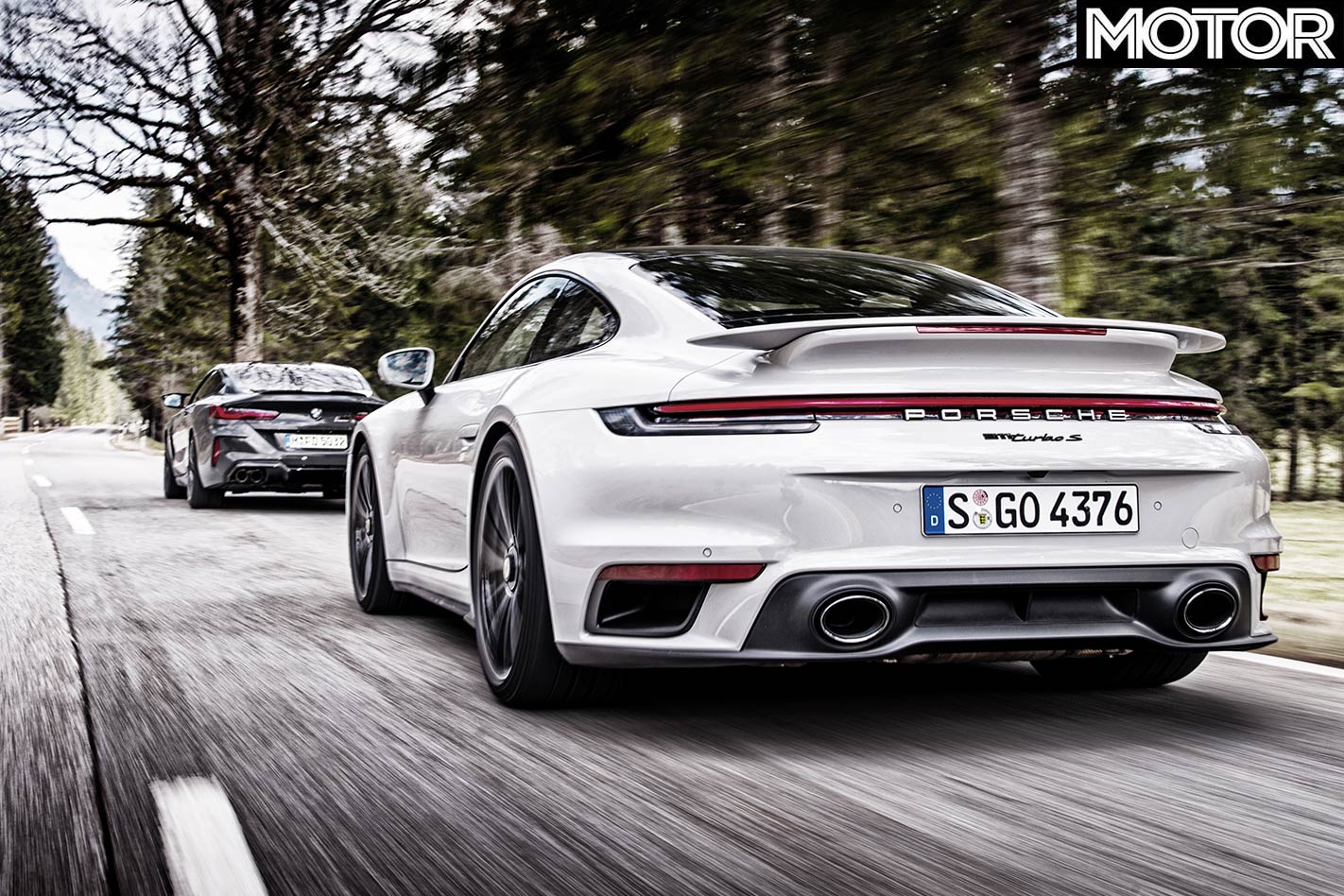
The 911 has belonged to the sports car tribe since its arrival on the scene almost 60 years ago. Nevertheless, the Turbo, thanks to all-wheel drive and a catalogue of comfort and convenience items, has over time seen the sports car and gran turismo orbits intersect, evolving into an incredibly effortless high-speed autobahn eater. Porsche’s new sports car boss, Frank Walliser, the wiry engineer who fathered the 918 Spyder and the Le Mans-winning 919 Hybrid, is determined to make future 911s even more focused and driver-oriented, and this includes the 992 Turbo S. “I feel we have steered the 992 Turbo fractionally more in a back-to-the-roots direction,” Walliser told MOTOR. “To do so, even little things helped: stiffer joints, harder rubber bushings, tighter attachment points, modified spring and damper calibrations.” Walliser and his team may have over-achieved, reversing the trend to an extent that a Turbo GTS could be warranted.
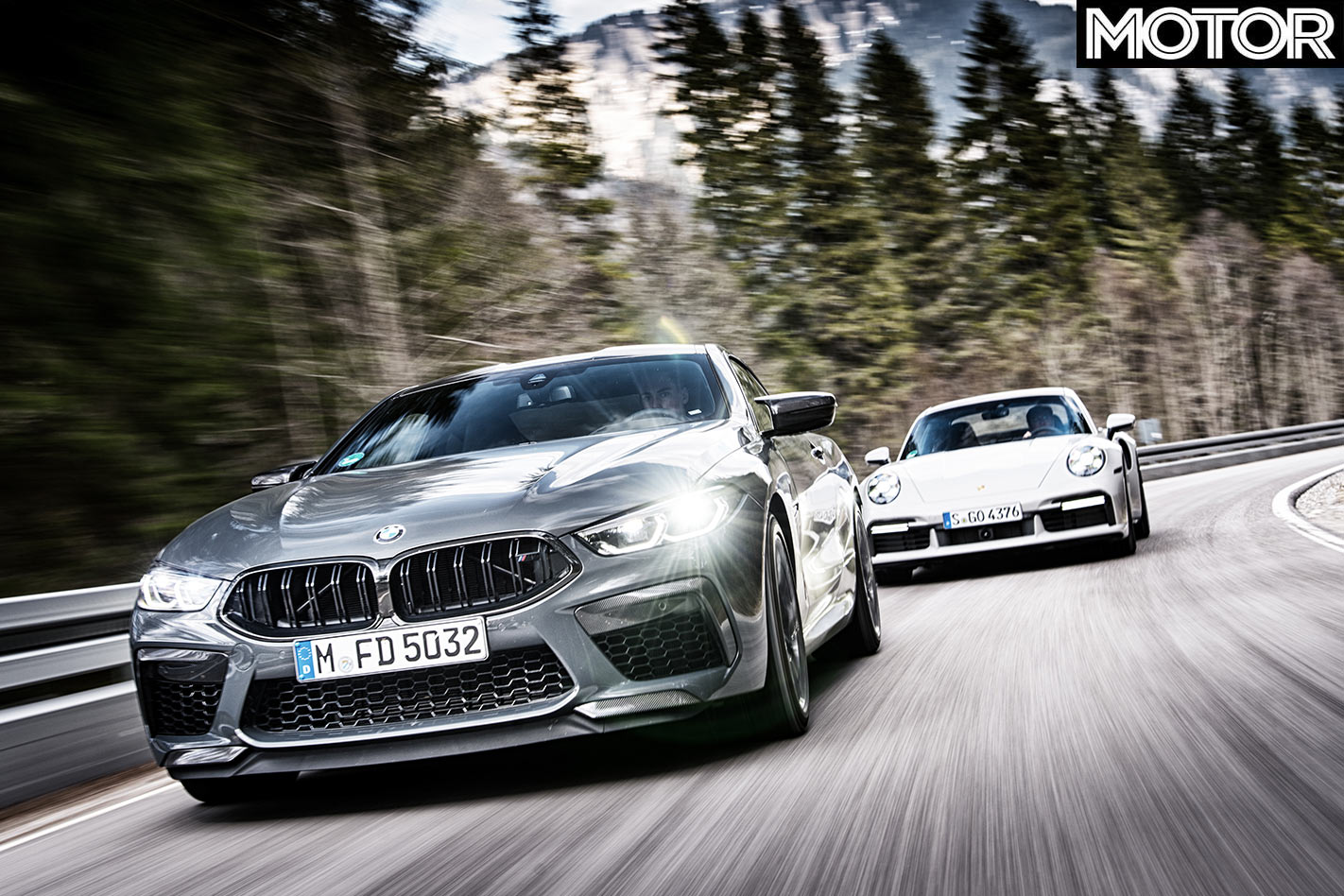
In essence, the BMW M8 is a short, nimbler and marginally lighter M5, an evolution of the F12 6 Series. It’s a formidable base, as the M5 is a top-rung performance sedan, but even in Competition guise the M8 is going to have its work cut out in a sports car head-to-head with the 911. Blame physics. The BMW is 332mm longer, 60mm taller and carries an extra 245kg. Its 4.4-litre twin-turbo V8 might have the benefit of an extra 650cc and two cylinders compared to the 911’s 3.8-litre twin-turbo flat-six, but the spec sheet reveals an 18kW/50Nm deficit. Combine the two and the Porsche has less mass and 291kW/tonne to motivate it compared to the M8’s 244kW/tonne. And it’s for weight reasons the 911, at least, spurns any form of hybridisation – not even a 48-volt mild hybrid system like that in the Panamera. “The benefits of partial electrification are marginal compared to the complex weight, packaging and cost issues,” explained Walliser.
As such, the big Beemer’s best bet at victory appears to be in the providing of crushing day-to-day performance. On the autobahn it excels, displaying commendable poise and composure even through long sweepers at warp speed. The ride is almost cushy, the multi-talented chairs cosseting, stability unwavering and that monster V8 always provides a creamily effortless rate of progress.
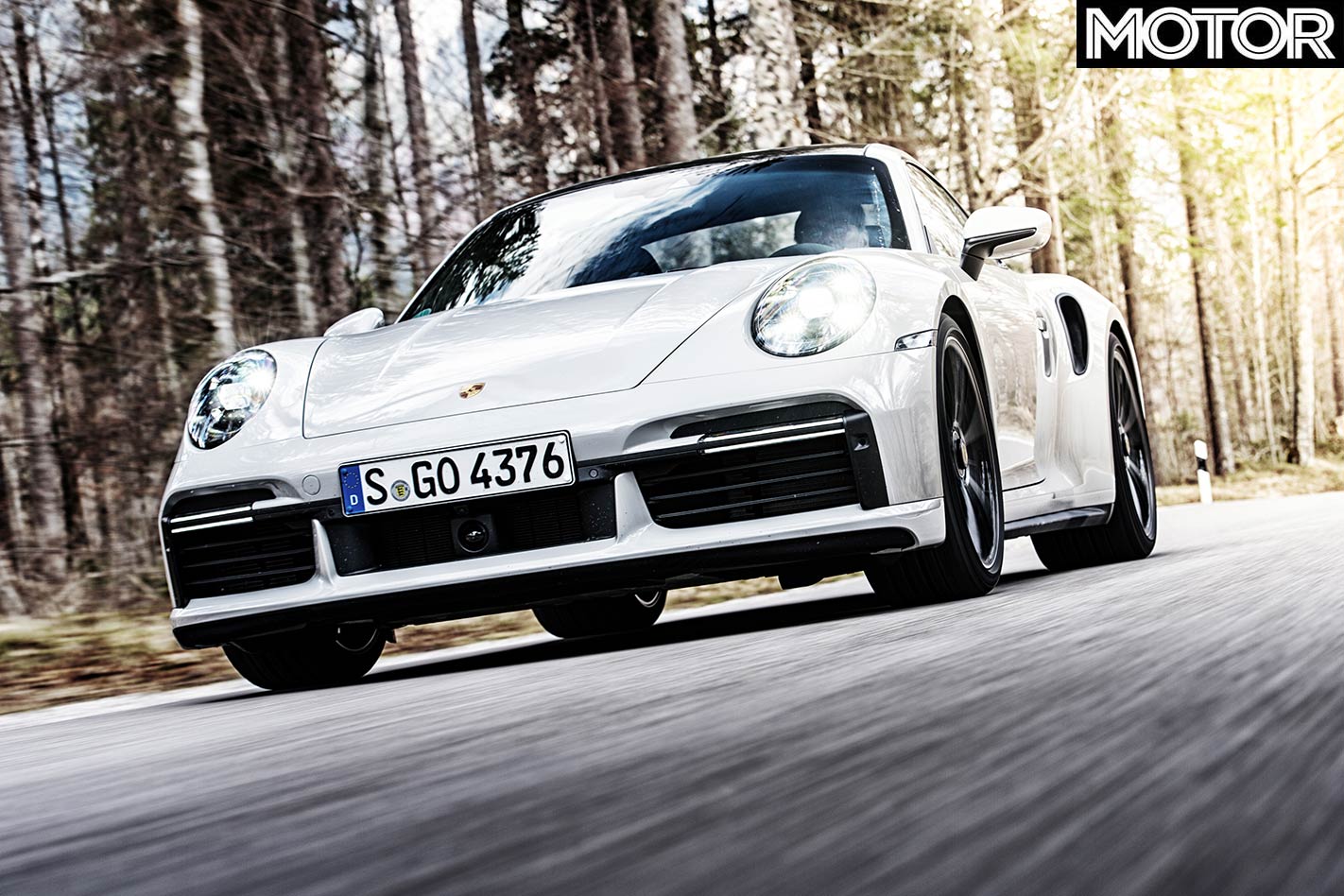
Life isn’t as relaxed in the Porsche. Even with the drive selector in Normal, the optional sports suspension provides more road information, thumping over expansion joints and repair patches, the dry-weather focused tyres (255/35 front; 315/30 rear) erode confidence on wet surfaces and carpark manoeuvres are met with judders of protest as the front wheels skip across the tarmac.
It is possible to make the 992 Turbo S draw in its claws; just leave it in Drive and don’t touch the rotary drive controller. This approach does wonders for fuel consumption and the health of your licence, but it’s barely more exciting than taking the bus. A brief twist from Normal to Sport changes everything: throttle response, gear shift points, exhaust note, damping stiffness and the driver’s pulse rate. For those in need of more excitement, there’s Sport Plus, but for most it will be best left for the track. One more click activates Porsche’s Individual mode, a user-defined combination of settings. Manual PDK mode explicitly avoids automatic upshifts, even when the rev limiter is frenetically hammering at the 7000rpm mark.
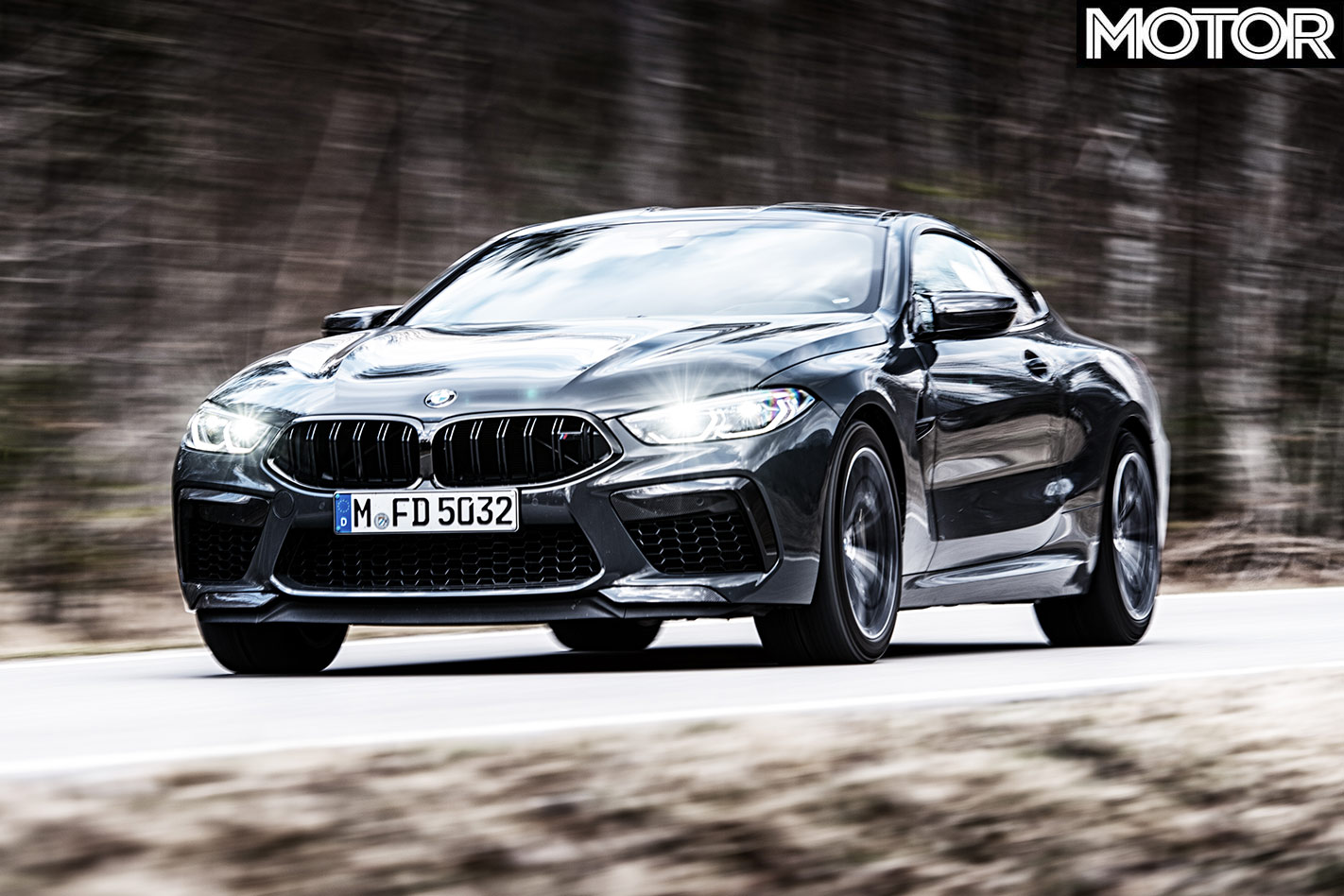
BMW takes things one step further by allowing two combinations of settings to be saved using the fire-red steering wheel toggles marked M1 and M2. Engine and transmission operate in Efficient, Sport or Sport Plus modes. The three tuning stages of the dampers are Comfort, Sport and Sport Plus. Brakes and steering each offer a choice of Comfort or Sport. The xDrive system can be set in 4WD, 4WD Sport or 2WD. Stability control is available in at least three stages. The standard M Sport exhaust is even more brutal in Sport Plus.
Modern supercars are high-tech bombshells conceived by cream-of-the-crop mechanical engineers and top-notch software specialists, and these flagship coupes are no exception. Trouble is, the target audience has a long history of struggling with such complexity; dealers we contacted confirmed that a large percentage of cars come in for their first service still running the original delivery settings. It could be a lack of awareness, information or training, but maybe it’s simply wishful thinking that the owner of an M8 Competition is dying to calibrate thirteen different performance parameters before firing up the engine.
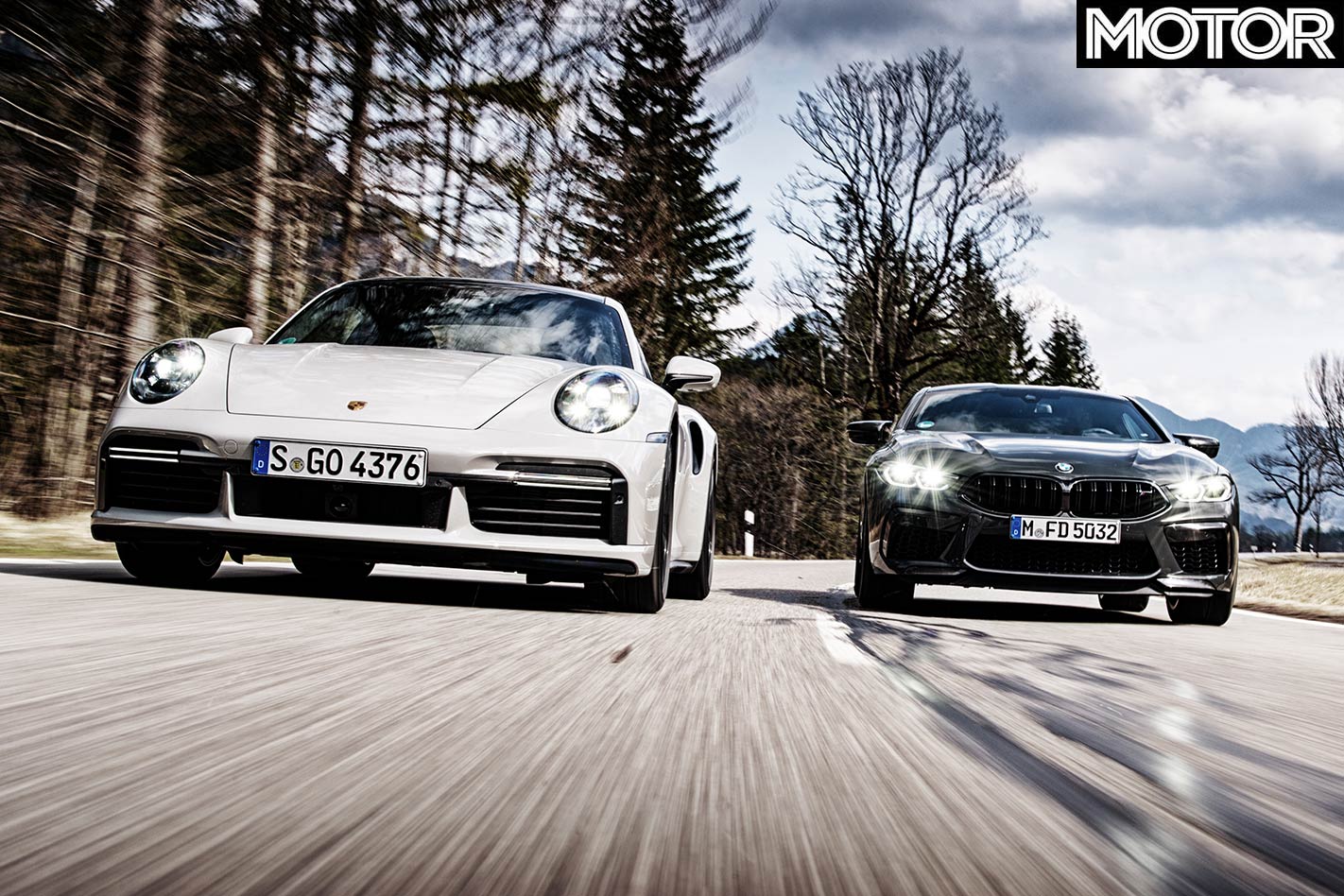
Not that the Porsche is some back-to-basics analogue machine. The original 911 Turbo didn’t even have a fifth gear let alone any driver aids, but the 992 offers PASM, PDCC, PSM, PCCB, VTG, PTV, PDK, PDLS and PAA, covering everything from a self-shifting gearbox to active anti-roll bars to torque vectoring differentials to carbon-ceramic brakes to active aerodynamics. The latter extends and retracts the larger front air dam, can selectively block the radiator and air intake apertures and vary rear spoiler angle. At low to medium speeds and through all but the very fastest of corners, the wingwork is set for maximum downforce; only above 250km/h does drag reduction become a priority. Meanwhile, the tech continues as larger, symmetrical turbos spin in opposite directions on each side of the car to improve gas-flow, and incorporate computer-controlled wastegates for finer boost control.
What remains constant regardless of the drive mode selected is the feel of the steering and brakes, so there are no nasty surprises at the limit. In the BMW, the steering is fine in Comfort but heavier and somewhat syrupy in Sport, while selecting the same for the by-wire brakes makes them act a tiny bit faster, but unless you keep switching between settings the difference is marginal.
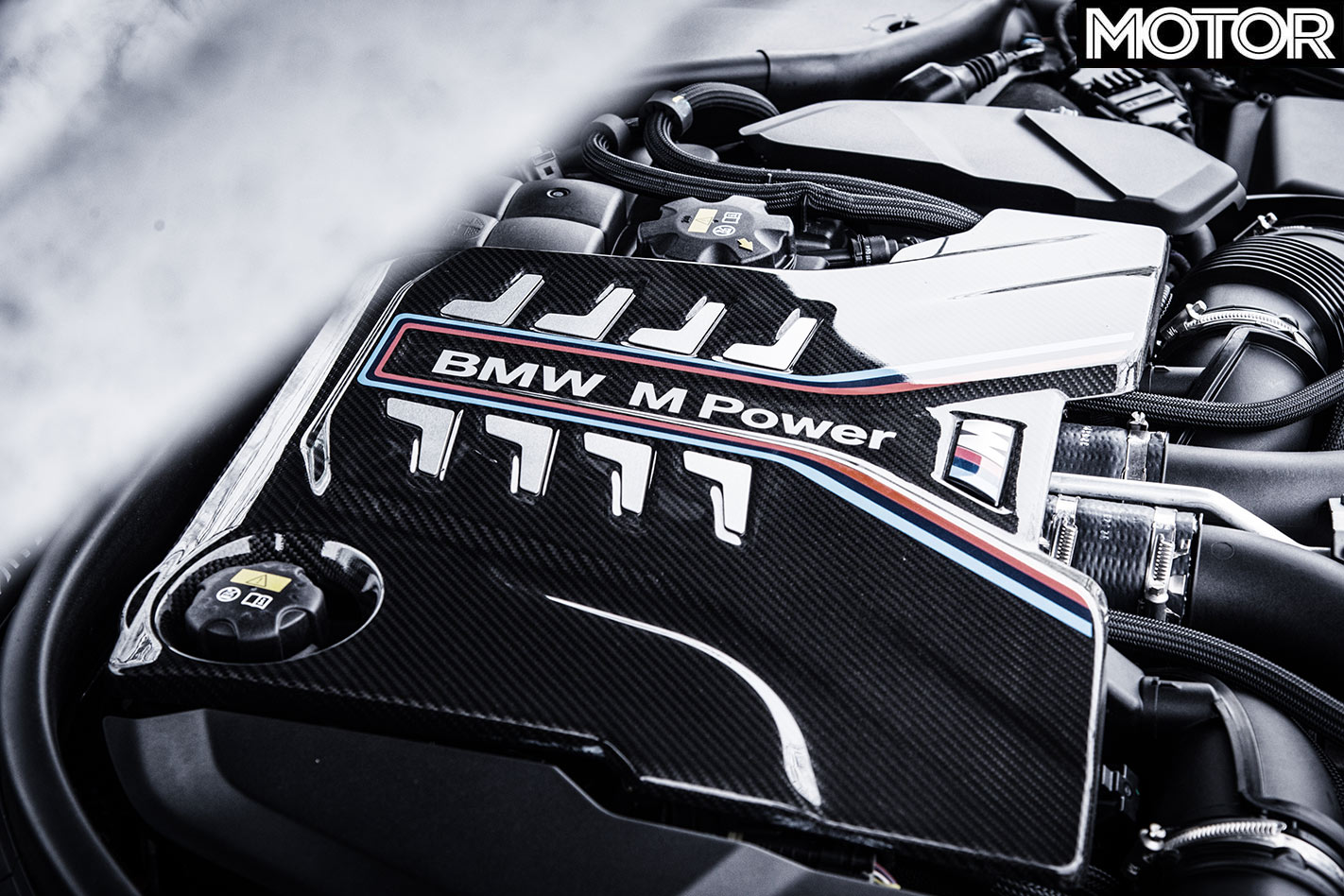
Neither car lacks for performance. Both have fascinating engines and remarkable transmissions. The M8 defies its mass to jet to 100km/h in 3.2sec and on to 200km/h in 10.6sec, topping out at 305km/h. It’s a certified missile, yet that will be scant consolation to the driver as they watch the Porsche disappear into the distance. The 911’s near-50kW/tonne power-to-weight advantage manifests itself in vastly superior straight-line performance, bringing up 100km/h in just 2.7sec and 200km/h in 8.9sec. Top speed remains 330km/h, achieved in sixth, the final two gears used as overdrives.
The BMW’s extra mass only becomes a greater handicap in the twisties, where it must be constantly accelerated, stopped and thrown around corners. Pressing on results in ever more roll and pitch, with every greater body movements eroding confidence, though it looks more dramatic from outside than within. It always feels much bigger and bulkier than the Porsche and is too heavy with insufficient balance to shine on B- and C-roads. In contrast, the 911 has cat-like responses, cornering grip that verges on the unreal and monstrous brakes – 420mm carbon-ceramic discs with 10-piston calipers up front – that vanquish speed like the arrestor cable on an aircraft carrier. A 992 Turbo S at full speed is a physical and mental assault.
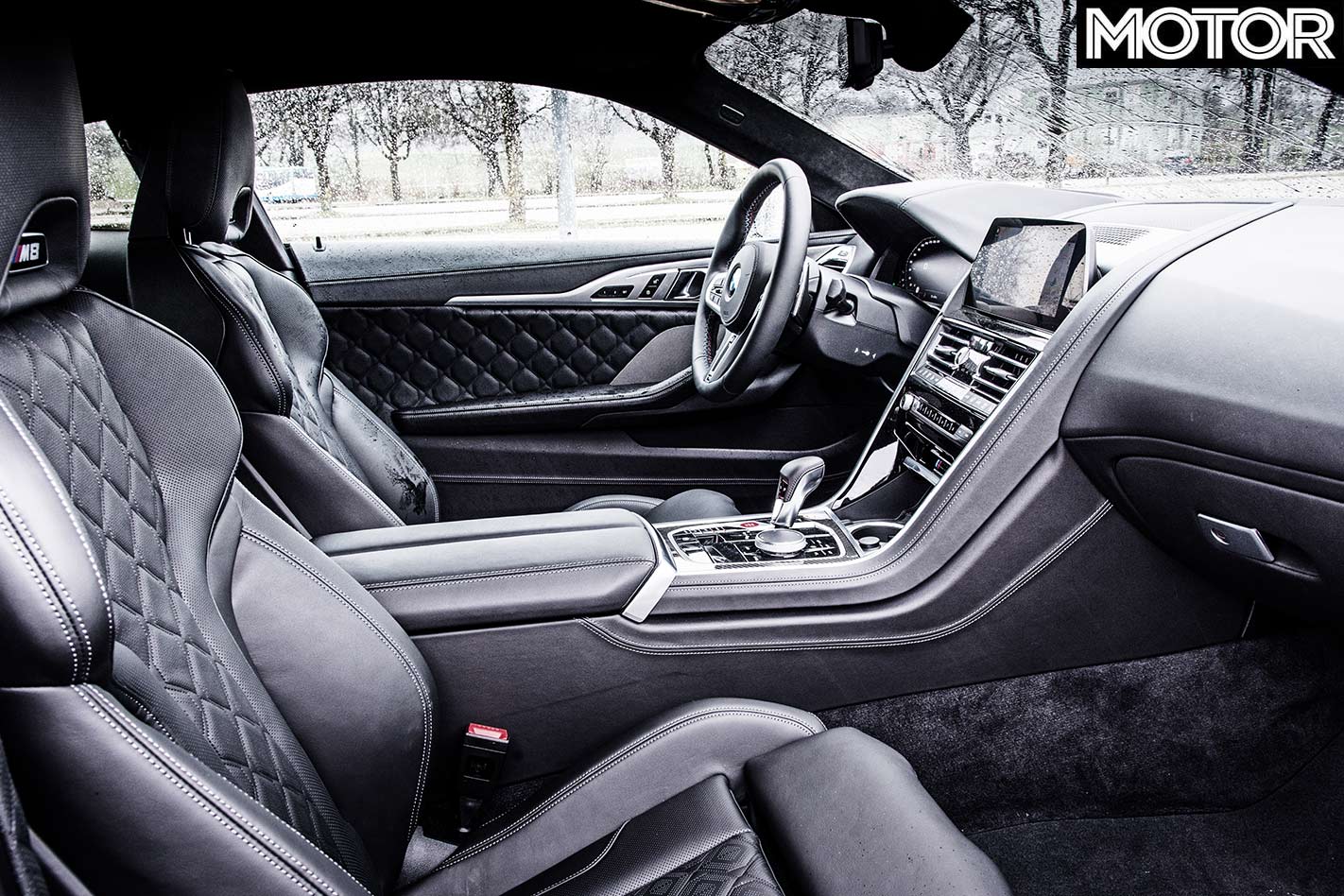
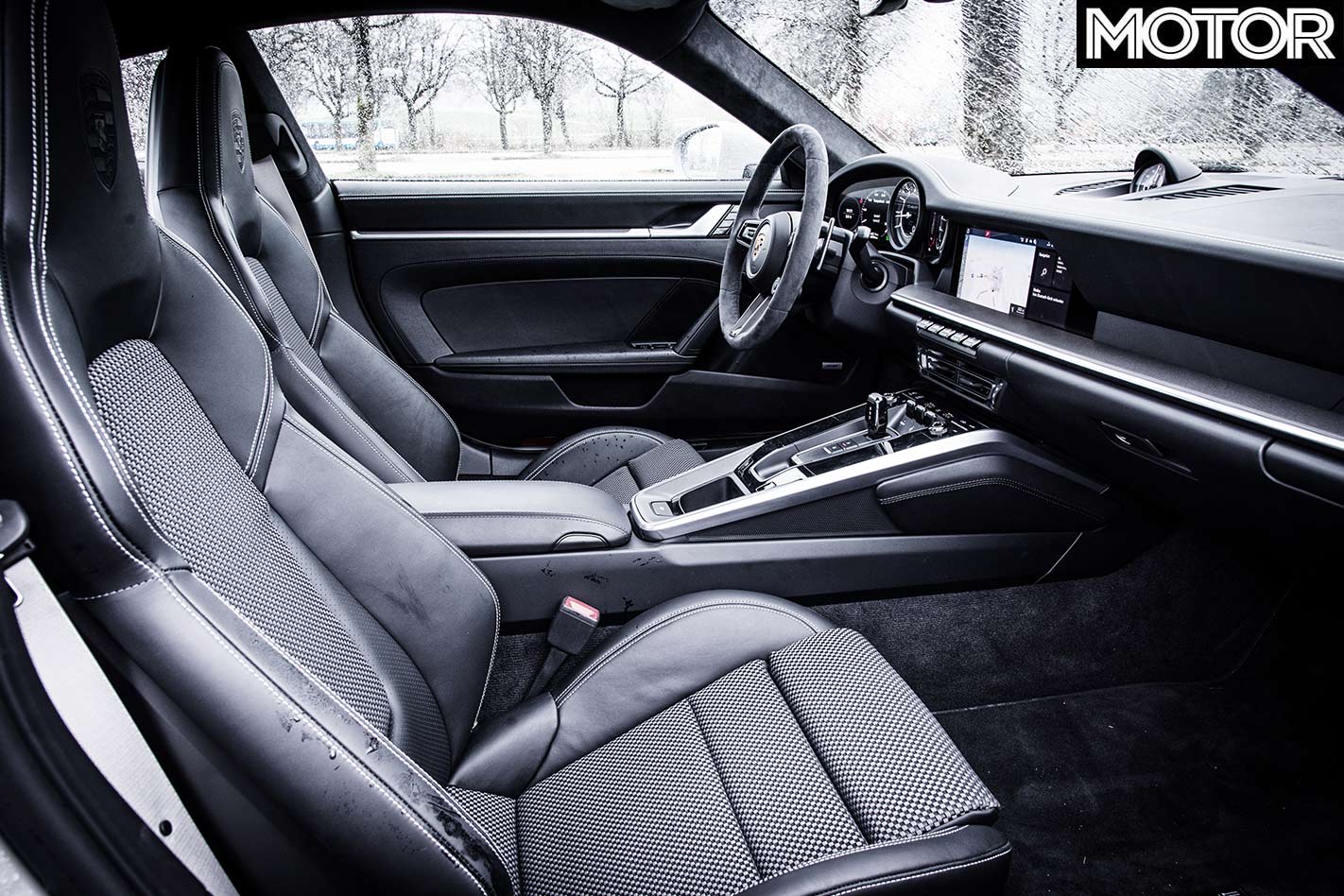
Yet it’s also the more practical machine. The M8’s rough road ride comfort is sub-par and, like the old 6-Series it effectively replaces, its packaging is abysmal. It’s 332mm longer than the 911 yet the rear seats are way too small for adults and restrict the adjustment range of the front occupants, while accessing the luggage area is awkward. The cabin is surprisingly cramped given its external dimensions, too. Swapping into the Porsche is like stepping from a shady cove onto a brightly lit stage.
In theory the M8 should be brilliant. After all, the M5 on which it’s based has shone in a variety of different super sedan shootouts, including a podium at our own Performance Car of the Year 2019. BMW presents the M8 as a precision tool, not an enabler of hooliganism. Which is a shame, because the irresistible 750Nm torque summit from 1800-5600rpm is perfectly capable of initiating controlled drifts in 4WD Sport and sending up enough smoke to darken the blue sky in 2WD.
The M boys could have cobbled together a de-contented rear-drive M8 CSL with only two seats and without all-wheel drive, but we’re told the market for such a car is too small to justify the investment. Instead, they opted for an all-in high-tech model featuring M-specific upgrades for aerodynamics, suspension, steering, brakes and drivetrain.
On your favourite stretch of challenging road, the BMW’s sports car genes show their worth over a traditional GT. While it is notably quicker than, say, the Aston Martin DB11 V8, it lacks that special sense of occasion. Similar money buys a Mercedes AMG GT R, a superior track weapon and much more of a proper sports car. In the final analysis, the closest rival is perhaps the new Bentley Continental or, money no object, the Ferrari GTC4Lusso V8. But what it’s not is a 911 beater. Perhaps it shouldn’t expect to be given it undercuts the flagship 992 by $120,000, but ever since M boss Markus Flasch described the uber-coupe as “BMW’s supercar” and a “Porsche Turbo killer”, expectations have been raised accordingly. Expectations that have failed to be met. The Porsche is not only convincingly the more involving sports car, it’s also – true to its legacy – the more impressive all-rounder.
BMW M8 Competition specs
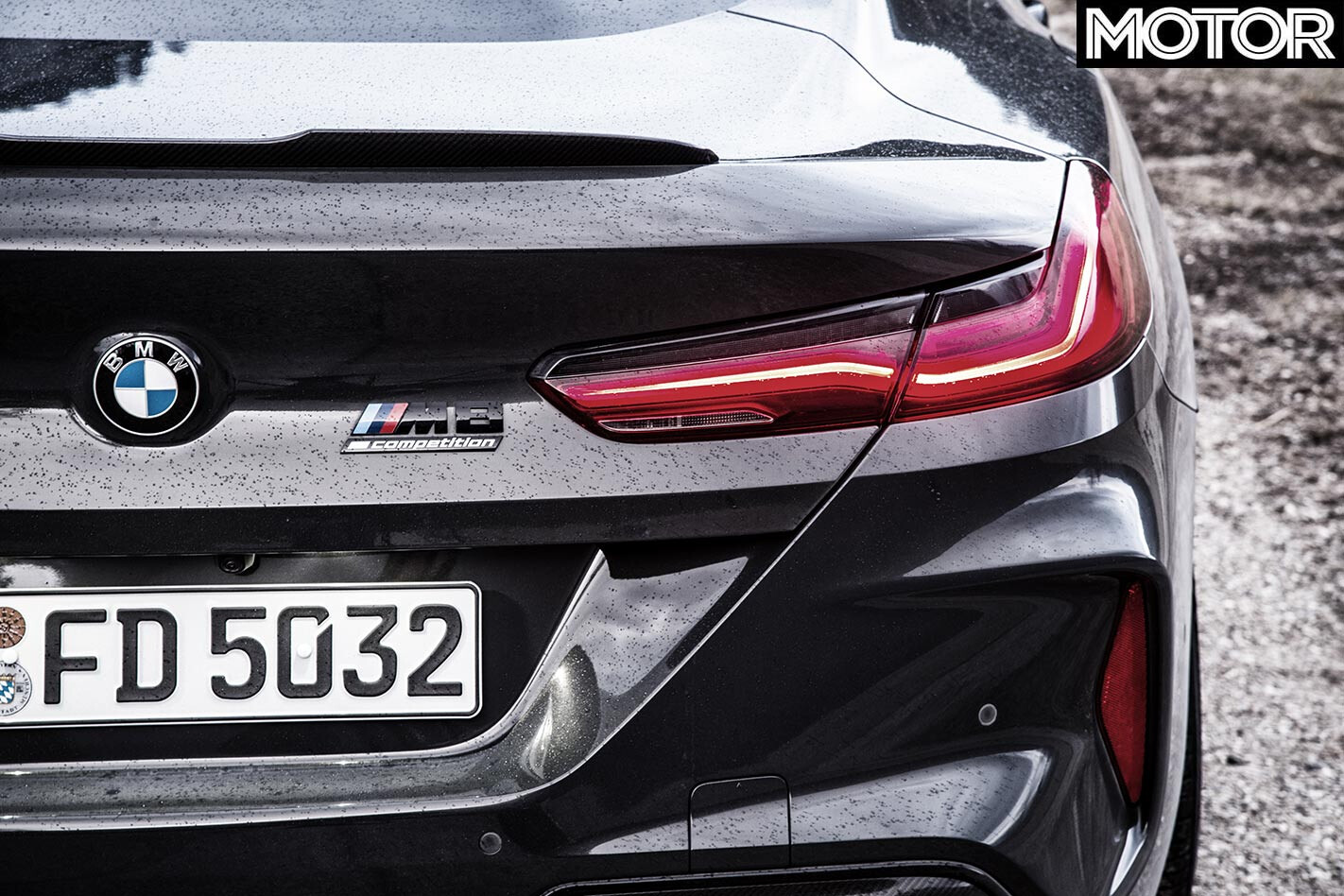
Body: 2-door, 2+2-seat coupe Drive: all-wheel Engine: 4395cc V8, DOHC, 32v, twin-turbo Bore/stroke: 88.3 x 89.0mm Compression: 10.0:1 Power: 460kW @ 6000rpm Torque: 750Nm @ 1800-5600rpm Weight: 1885kg Transmission: 8-speed automatic Power-to-weight: 244kW/tonne Suspension: Double wishbones, coil springs, adaptive dampers, active anti-roll bar (f); multi-links, coil springs, adaptive dampers, active anti-roll bar (r) L/W/h: 4867/1907/1362mm Wheelbase: 2827mm Tracks: 1627/1632mm Steering: electrically assisted rack-and-pinion Brakes: 400mm ventilated/drilled carbon-ceramic discs, 6-piston calipers (f); 380mm ventilated/drilled carbon-ceramic discs, 4-piston calipers (r) Wheels: 20 x 9.5-inch (f); 20 x 10.5-inch (r) Tyres: 275/35 ZR20 (f); 285/35 ZR20 (r); Michelin Pilot Alpin 4 Price: $352,900 PROS: Monster powertrain; slick drivetrain; high-speed manners CONS: Poor packaging; iffy ride; too heavy; premium over M5 Star Rating: 4 out of 5 stars
Porsche 911 Turbo S specs
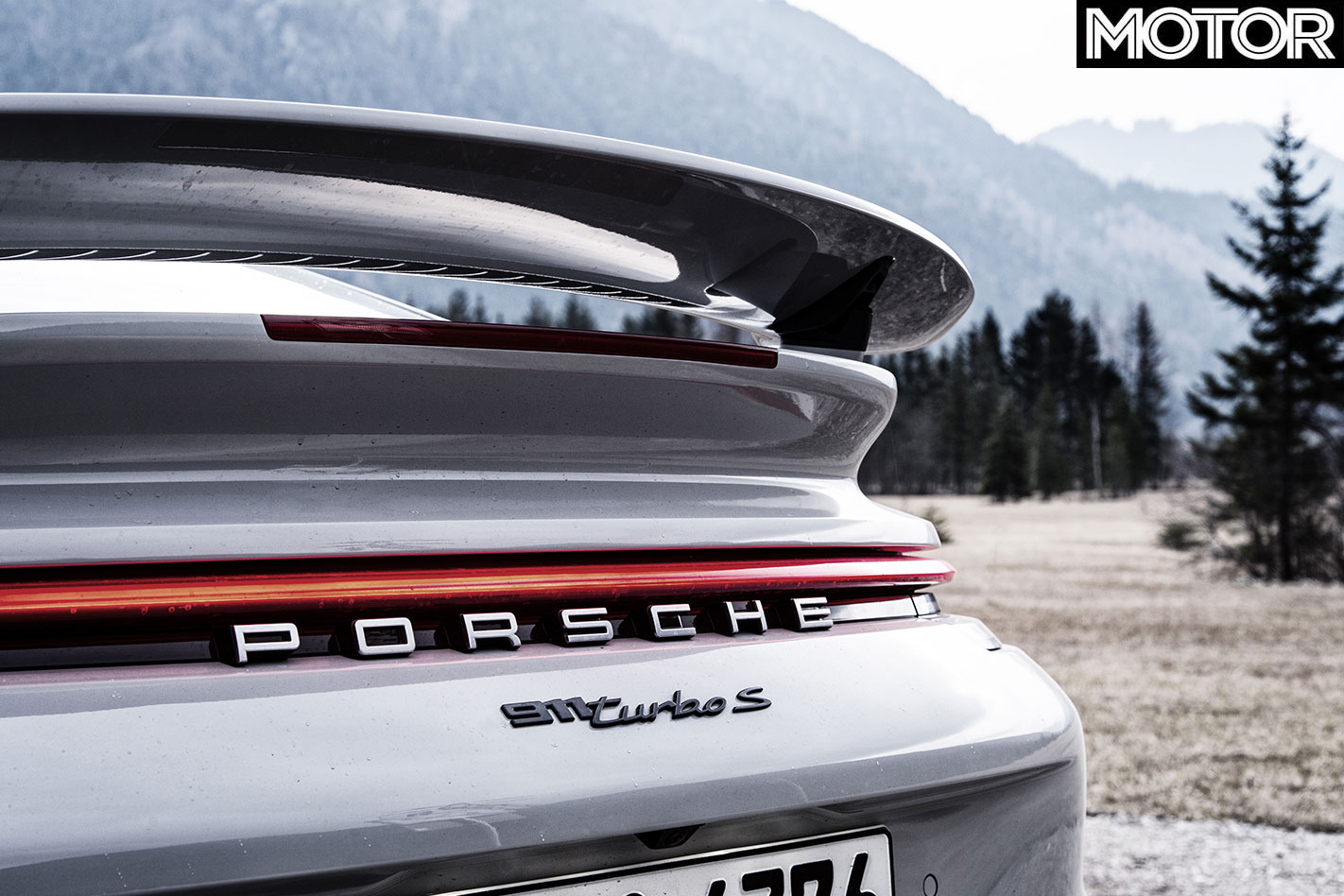
Body: 2-door, 2+2-seat coupe Drive: all-wheel Engine: 3745cc flat-6cyl, DOHC, 24v, twin-turbo Bore/stroke: 102.0 x 76.4mm Compression: 8.7:1 Power: 478kW @ 6750rpm Torque: 800Nm @ 2500-4000rpm Weight: 1640kg Transmission: 8-speed dual-clutch Power-to-weight: 291kW/tonne Suspension: struts, coil springs, adaptive dampers, active anti-roll bar (f); multi-links, coil springs, adaptive dampers, active anti-roll bar (r) L/W/h: 4535/1900/1303mm Wheelbase: 2450mm Tracks: 1583/1600mm Steering: electrically assisted rack-and-pinion, rear-wheel steer Brakes: 420mm ventilated/drilled carbon-ceramic discs, 10-piston calipers (f); 390mm ventilated/drilled carbon-ceramic discs, 4-piston calipers (r) Wheels: 20 x 9.0-inch (f); 21 x 11.5-inch (r) Tyres: 255/35 ZR20 (f); 315/30 ZR21 (r); Pirelli P-Zero Price: $473,900 PROS: Ridiculous speed; superb dynamics; practicality CONS: Massive price tag; ride comfort compromised Star Rating: 5 out of 5 stars
UPDATE 10/07/2020: Preliminary details have emerged about the next iteration of the Test Drive Unlimited series, which we now know will be titled Test Drive Unlimited: Solar Crown (TDU3).
KT Racing (Kylotonn) is confirmed as the game developer behind the title, announced in a video interview (below) which details several other bits of information about the long-awaited title as well.
While they stop short of showing any actual gameplay, we can see some initial close-ups of cars that’ll feature in the game and get some background information from KT Racing creative director Alain Jarniou.
The ‘Solar Crown’ name is repurposed from the competition that featured in TDU2, in-keeping with the competition’s ideology that the whole game will be freeform and unrestricted in terms of progress.
Same as the last two games, TDU3’s environment will be based upon a real-life island according to Jarniou. We’ve previously seen Oahu, Hawaii and Ibiza, Spain, which both delivered huge amounts of space for players to roam and race upon – especially impressive, considering the last time we saw a TDU game was almost ten years ago.
There’s also a snippet of information within the game’s teaser that points towards to inclusion of Bugatti, Dodge, Ferrari, Koenigsegg, Lamborghini and Porsche as manufacturers being involved.
From brief snippets, we can already see a Bugatti Chiron, Porsche Carrera GT, Pagani Huayra, Lamborghini Diablo, Koenigsegg Regera and Apollo IE. it’s worth noting that this is just the start of what cars will be on offer, too.
KT Racing will be drawing upon its experience gained from developing the handling physics of WRC games, which should hopefully see an improvement over TDU2.
We’re glad to see more information rolling in about Test Drive Unlimited: Solar Crown but it’s a long way off yet. We’ll be keeping our ear to the ground and will divulge more as soon as it’s revealed.
What are your initial impressions so far having watched the video?
ORIGINAL STORY: The long-awaited third instalment of the Test Drive Unlimited franchise has been quietly confirmed by an executive at a French game developer, lifting hopes that a follow-up to the much-loved open-world racing game series is finally in development
Speaking with VentureBeat, Benoit Clerc – head of publishing at Nacon – dropped the first solid evidence that a sequel to 2011’s Test Drive Unlimited 2 is in the pipeline.
Talking of Nacon’s (and parent company BigBen’s) numerous acquisitions over the past few years, Clerc spoke of one of their subsidiaries; a Paris-based games studio named Kylotonn, bought by BigBen in 2018.
“They’re specialized in racing”, says Clerc.
“They’re doing off-road racing with WRC (World Championship Rally), and they’re doing two-wheel racing with Isle of Man TT… They’re currently working on our biggest project by far, which is the next Test Drive Unlimited game.”
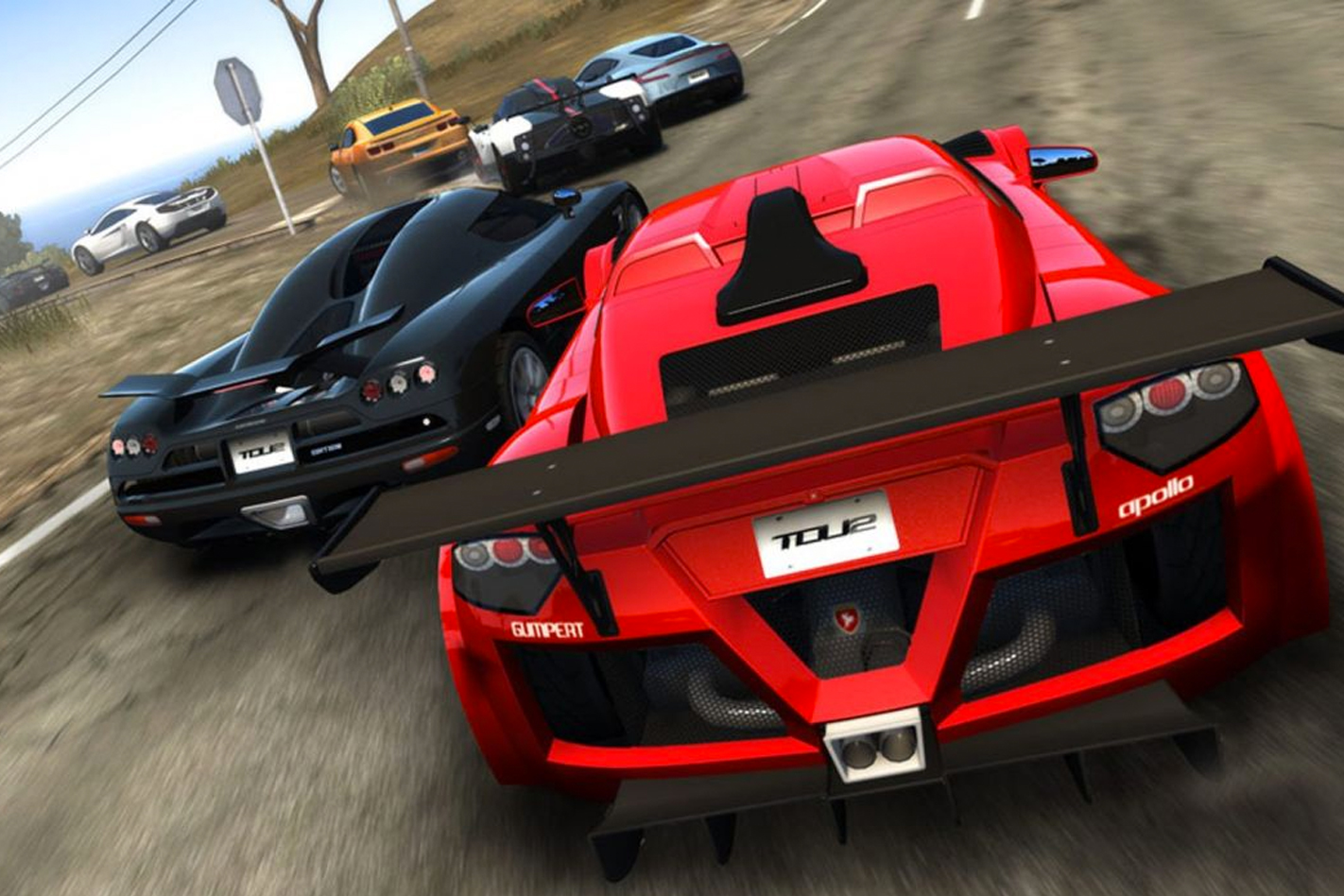
Unfortunately Clerc doesn’t go on to mention any further details regarding the highly anticipated sequel, other than that it is in fact, in development.
Having previously worked on FlatOut 4, WRC 5, 6 & 7, and V-Rally 4; the Parisian game developers were handed TDU3 after BigBen’s acquisition of Kylotonn in 2018. BigBen had previously purchased the rights to the Test Drive franchise back in 2016.
Whilst we don’t have much to go on officially from those at Nacon and Kylotonn – the information we do have seems to align with a previous leak on Reddit; which predates the interview with Clerc, and correctly listed Kylotonn as the game’s developers and BigBen as the publisher.
Of course what is to follow remains unsubstantiated at the time of writing, but the Redditor – who claims to be a Ubisoft Paris employee – leaks a fair bit of information reportedly collated from a number of friends working for various game studios regarding TDU3 (or “Project Sunrise”, as they call it).
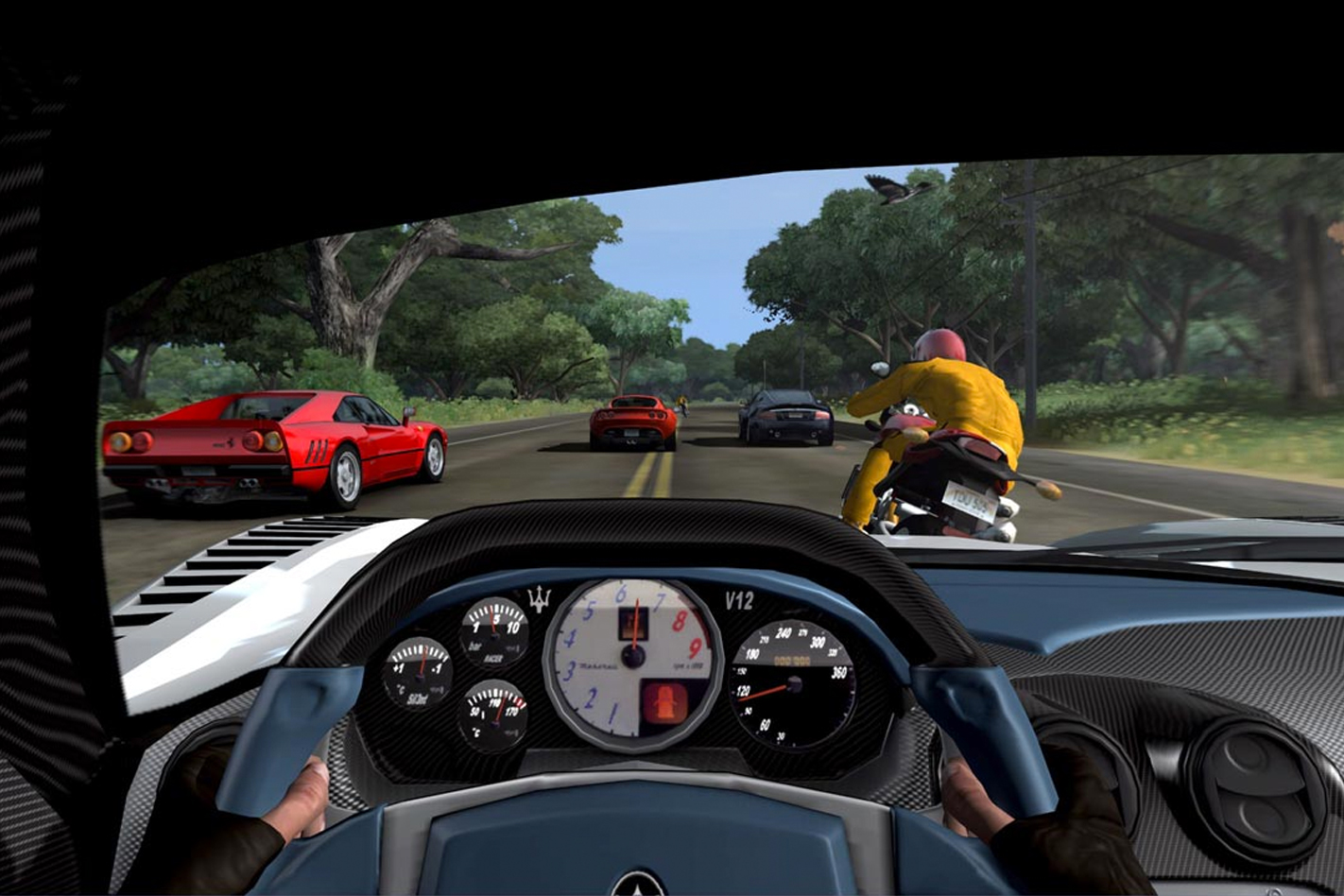
The Redditor goes on to allege that TDU3 will take place in South America and boast a playable map that “will be a little bigger than The Crew”. With The Crew’s gargantuan map covering just under 5000 square kilometres, the next Test Drive Unlimited should give players a massive amount of space to roam and race
They also assert that the game intends to include around 90 cars upon launch, but worryingly continues by saying “[they] think that number has dropped down due to some licencing issues” (*cue painful flashbacks to TDU2’s reduced car list*). Players will reportedly choose between a Renault Clio RS, a Mitsubishi Evolution, or a Polo GTI as their starter vehicle.
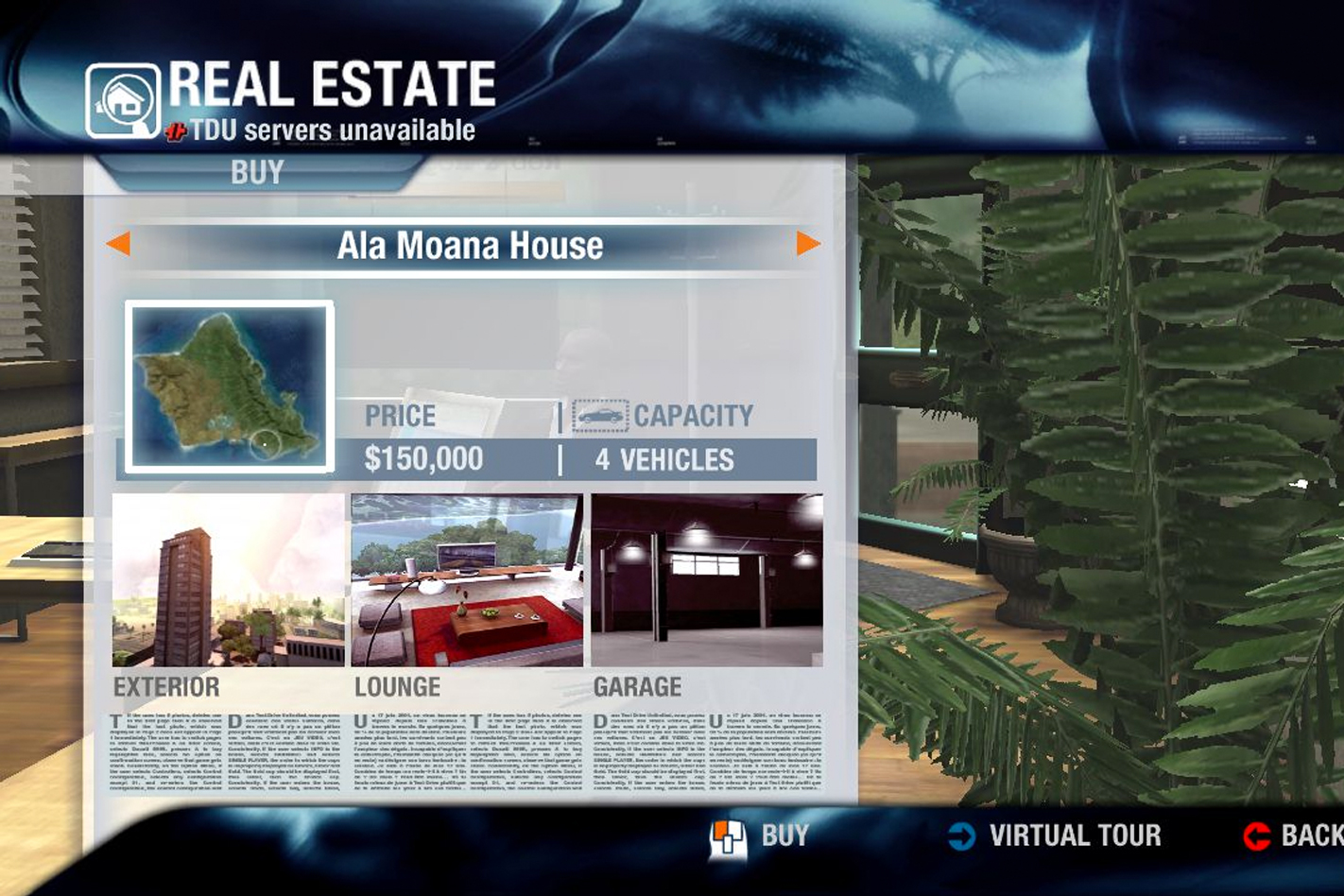
TDU’s signature housing system is said to return, with more unique houses “than TDU1 and 2 combined”, and the game will boast more of a multiplayer focus; with regular updates bringing new game modes etc.
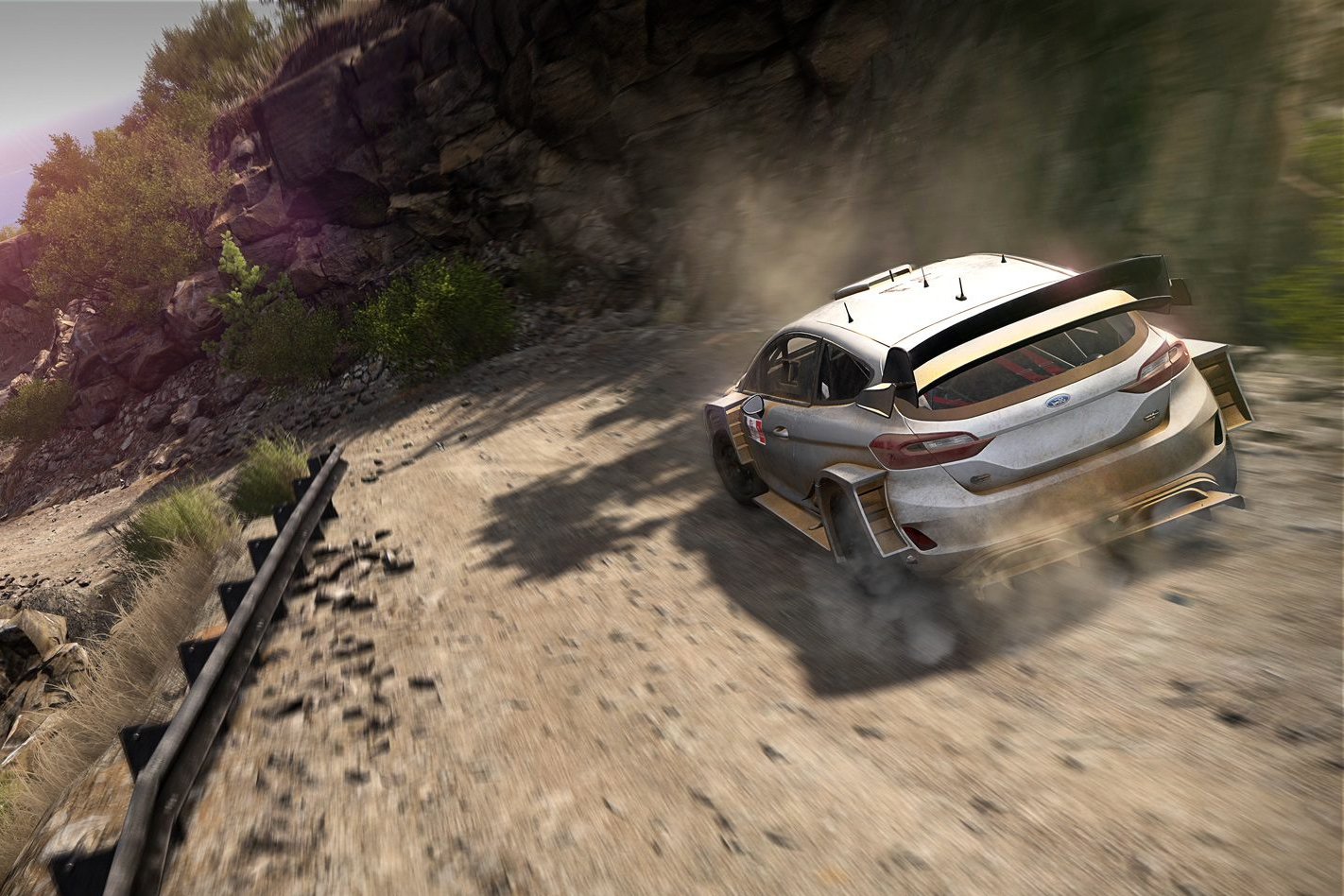
The physics system is said to be lifted from WRC 8 (pictured below), although with much improved visuals “since they are rebuilding part of the KT engine”.
Now here are the juicy bits: the Redditor states that the developers are currently aiming for a late-2020 release, although they themselves show some scepticism given “the current state of the game”.
They close by stating that the game will release on Playstation 5 and Xbox Series X, although PS4 and Xbox One versions “could happen”. On the PC front; the leaker says that the third Test Drive Unlimited will remain an Epic Store exclusive for the first year, before appearing on Steam and Google Stadia.
If the game is indeed on schedule for a late-2020 (or early 2021) release, we should expect to see a more substantial announcement and even some game material in the coming months.
This is one that has a few of us in the office excited, given our fond memories of the first TDU title, so be sure to stay tuned here at WhichCar. Any further information regarding Test Drive Unlimited 3 will be found right here!
It hasn’t quite sunk in yet, but Holden Special Vehicles is, for all intents and purposes, about to shuffle off its mortal coil.
Sure, the people behind HSV will continue to showcase their world-class engineering skills under a new name, but there will be no more cars rolling out of Clayton with the iconic lion badge stuck on the boot. And that’s a damn shame.
It was inevitable really. With the death of the Holden brand, HSV’s lifespan was carved into stone. An end was imminent.
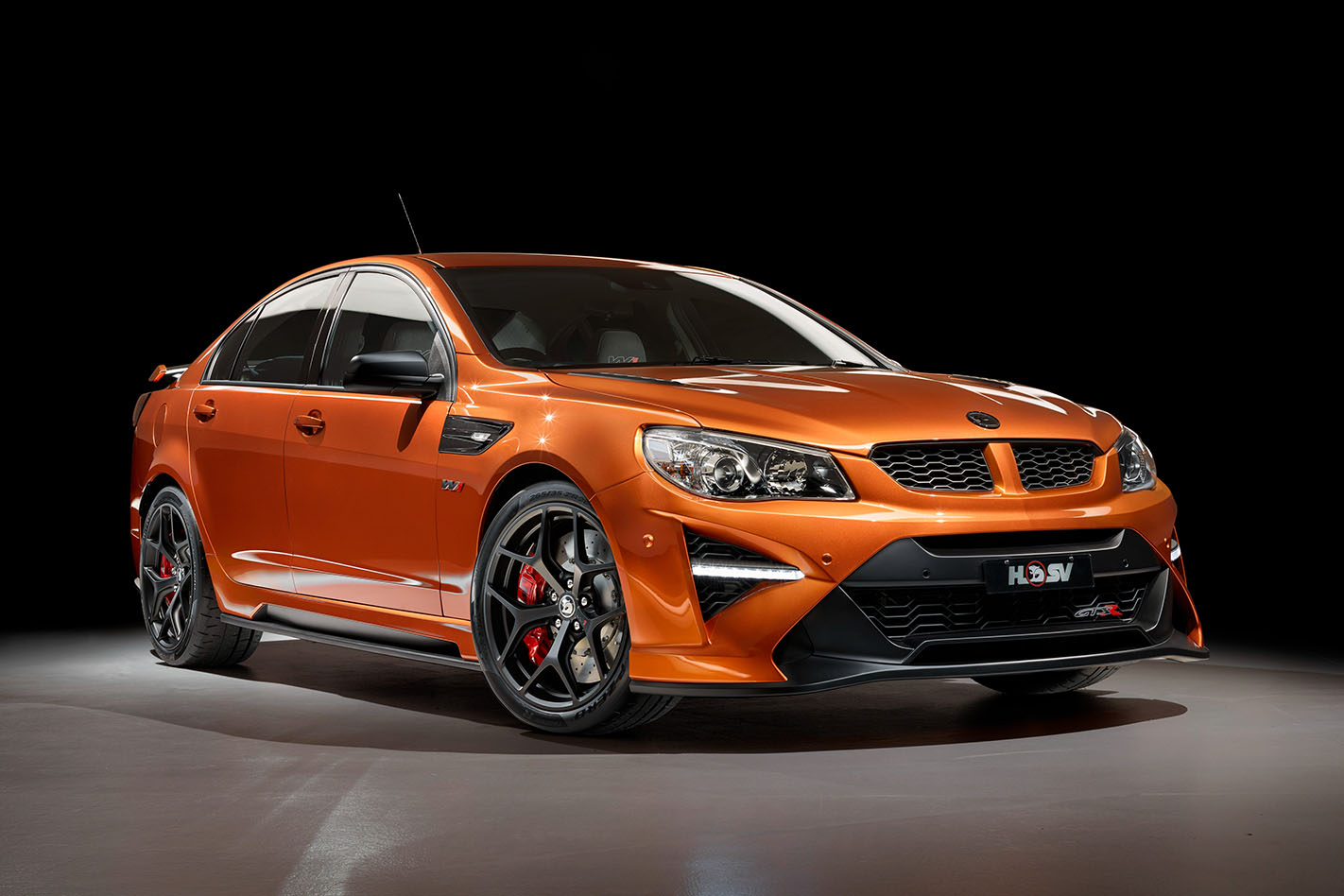
In the 33 years since its inception in 1987, HSV has pumped out V8 powered monsters that Aussies have be proud to put in their driveways. On rare occasions, they even escaped our shores and wooed enthusiasts in Europe and America.
Top Gear presenter and the king of drift Chris Harris gave HSV his seal of approval following a very sideways day in a Maloo GTS in 2014.
“This thing is hilarious,” he yelled after throwing the supercharged ute into a long smokey drift. One of many from the day’s antics.
“I’m gutted it could be the last proper HSV,” he remarked once filming had concluded. “It’s such a cool brand and I’ve had a great, fun time in it.”
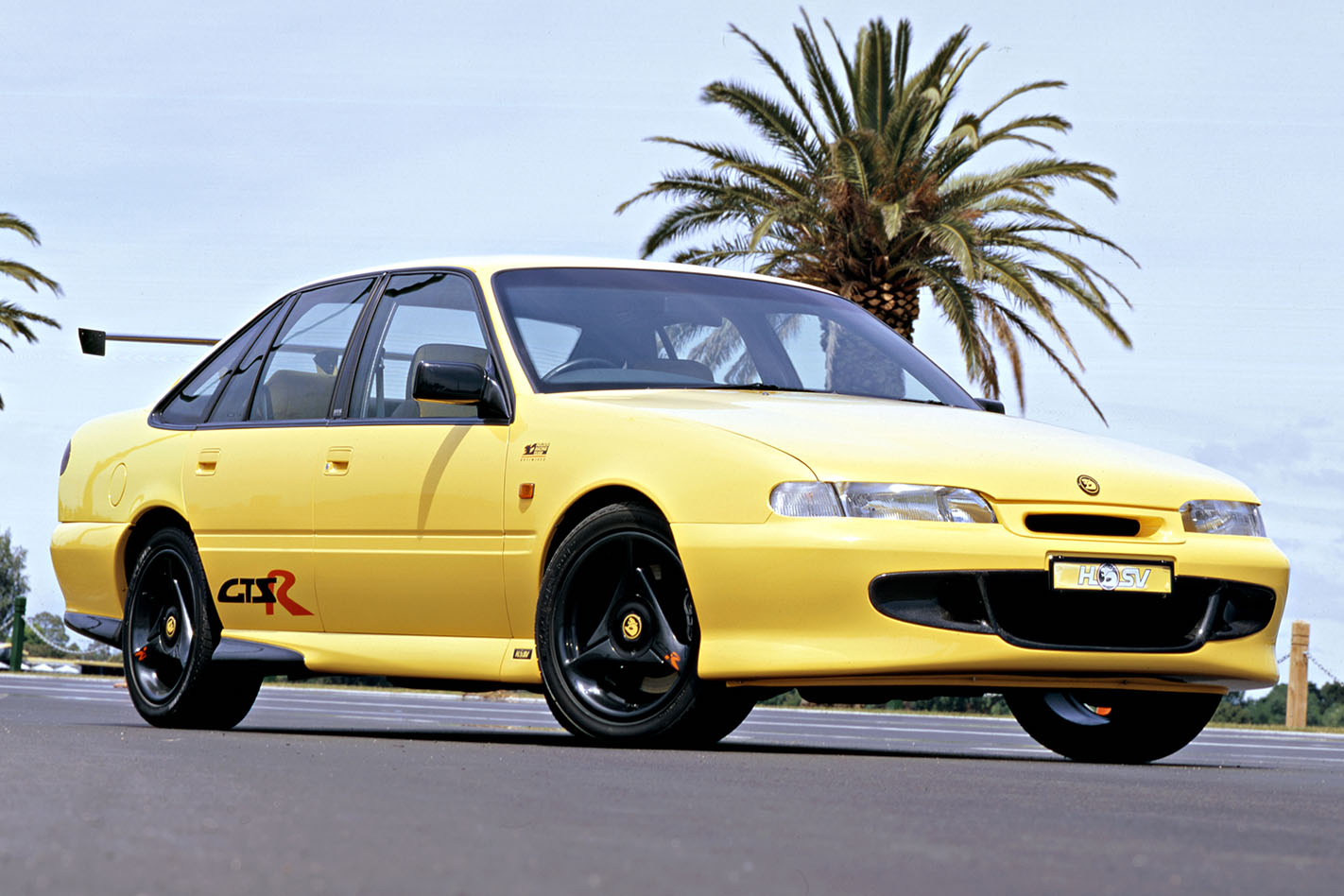
HSV punched well above its weight, with Australia’s answer to Mercedes-Benz’s AMG and BMW’s M Division taking the fight to those German performance brands and holding its own.
It wouldn’t be hard to argue that some of the most appealing (to Aussies, at any rate) sports sedans ever built originated in Clayton.
Founded 1987, HSV was established as a partnership between Holden and Tom Walkinshaw and his eponymous racing team, effectively replacing the Holden Dealer Team (HDT) operation that was so closely associated with Peter Brock.
Genesis for the brand was the Holden VL Commodore SS Group A SV – sometimes known simply as a VL Walkinshaw.
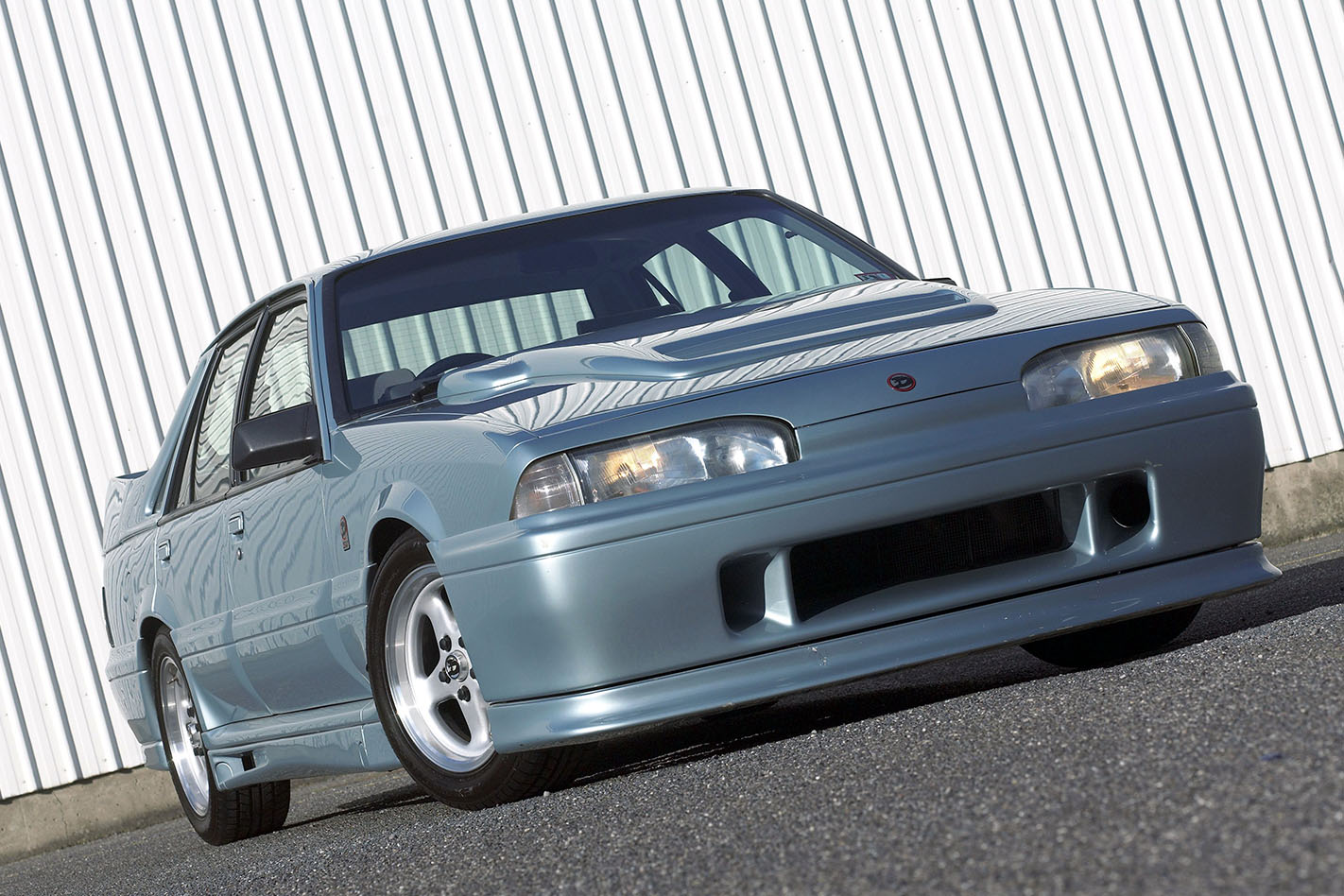
Controversial bodykit aside, the Group A VL was an indicator of the engineering power that was brewing in Melbourne’s outer suburbs – it was the first model to be fitted with a fuel-injected version of Holden’s V8 engine.
To appease Group A racing homologation rules of the time, the car was sold and badged as a Holden.
It wasn’t until later that the first HSV-badged car was produced, the SV88, built as a direct competitor to Peter Brock and HDT’s Director.
The rest, they say, is history.
While Ford bounced between different high-performance partners like Tickford and FPV, Holden and HSV were inseparable, working in harmony to produce a constant stream of fast metal to appease an insatiable and loyal customer base.
Badges like GTS and Maloo are now ingrained in the mind of of Aussie enthusiasts, instantly denoting a potent and exciting level of performance – something feared and begrudgingly respected in equal measure by Blue Oval loyalists.
Sure, HSV produced a few duds along the way (we’re looking at you, Avalanche), but there were more hits than misses.
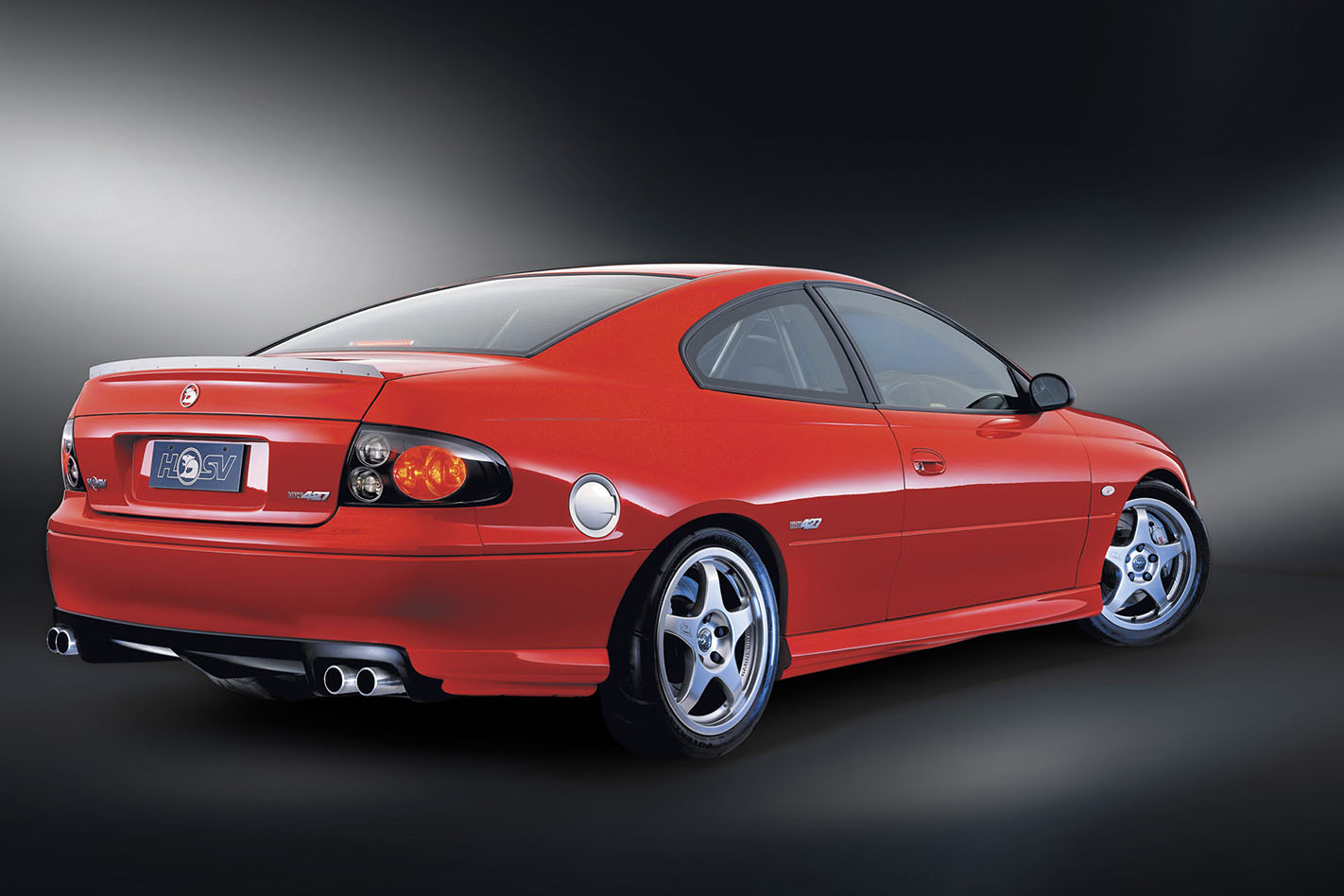
The Clayton company built a reputation for thinking ahead, taking on ambitious projects like the HRT HSV 427 and W427, both making use of giant 7.0-litre V8 engines.
While both of these failed to meet their lofty potential, they speak to HSV’s desire to always up the ante, and push the limit a little further.
With the writing on the wall, and the well of Commodore-based products that had formed the backbone of the company running dry, HSV has been forced to change and adapt.
It’s only thanks to HSV’s engineering prowess that Chevrolet Camaro was able to be offered to Australian enthusiasts.
With a transition to GMSV all but confirmed, the story of HSV has come to an end, and a new chapter is beginning.
Let’s hope it continues that same full-throttle spirit that we know and love.
How do you tease a new generation of a luxury icon? By giving you a look inside, first.
This is our first look at the new Mercedes S-Class executive car: its brand new My MBUX infotainment system.
Look at that big screen…
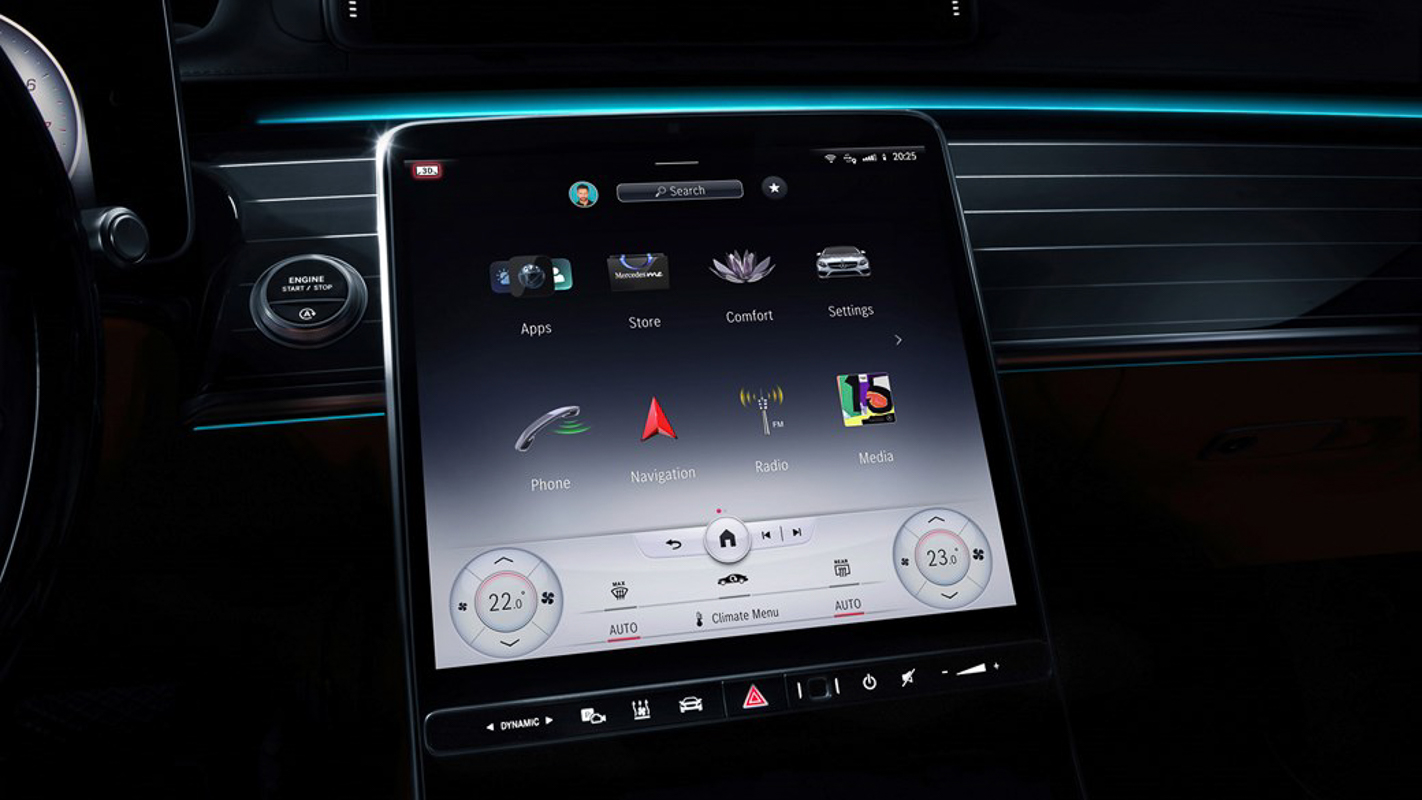
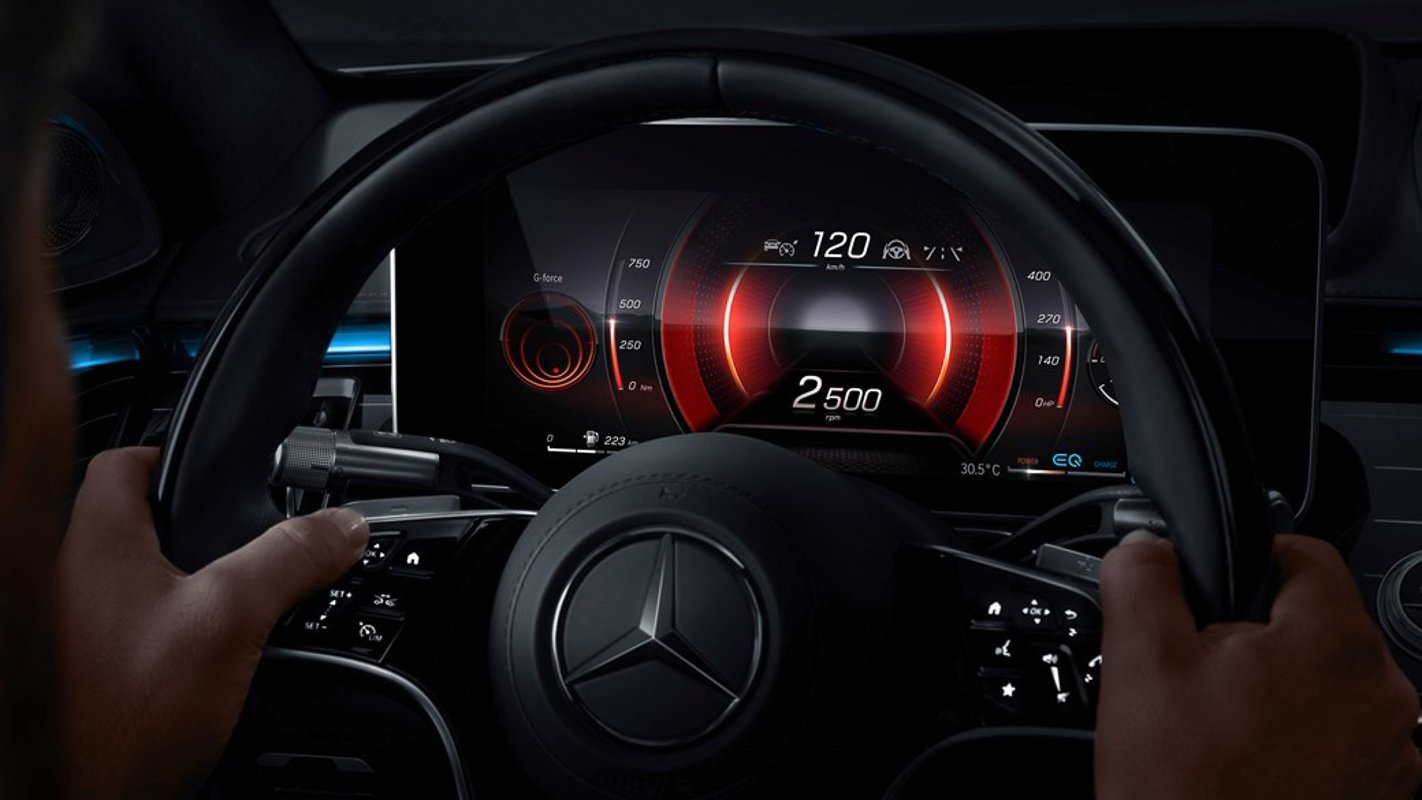
Yes – the Merc’s new interior debuts a brand new way of displaying information. As we revealed in some earlier spy shots, the S-Class’ new central infotainment screen is flush with the centre console and flexes upwards on the dashboard, keeping the rest of the front fascia clean. It’s available with haptic feedback and super-crisp OLED technology. That clean interior design approach extends to the use an augmented reality head-up display and 3D instruments.
Hey Mercedes!
Merc’s voice assistant has also had an upgrade, allowing for even more natural speech; if someone says they’re tired, one of Merc’s ‘Energising Comfort’ programs can be activated, for example. When certain prompts arise, like an incoming call, the ‘hey Mercedes’ activation phrase is not required – someone can simply say ‘accept call’. Mercedes says its voice assistant can be used in 27 languages.
The voice assistant can be also used like a Alexa or Google Home, so you can ask it general knowledge questions and get answers via the internet. Also like smart speakers, you can link up your car to your smart home network and activate smart devices in your home from the car.
An augmented reality head-up display?
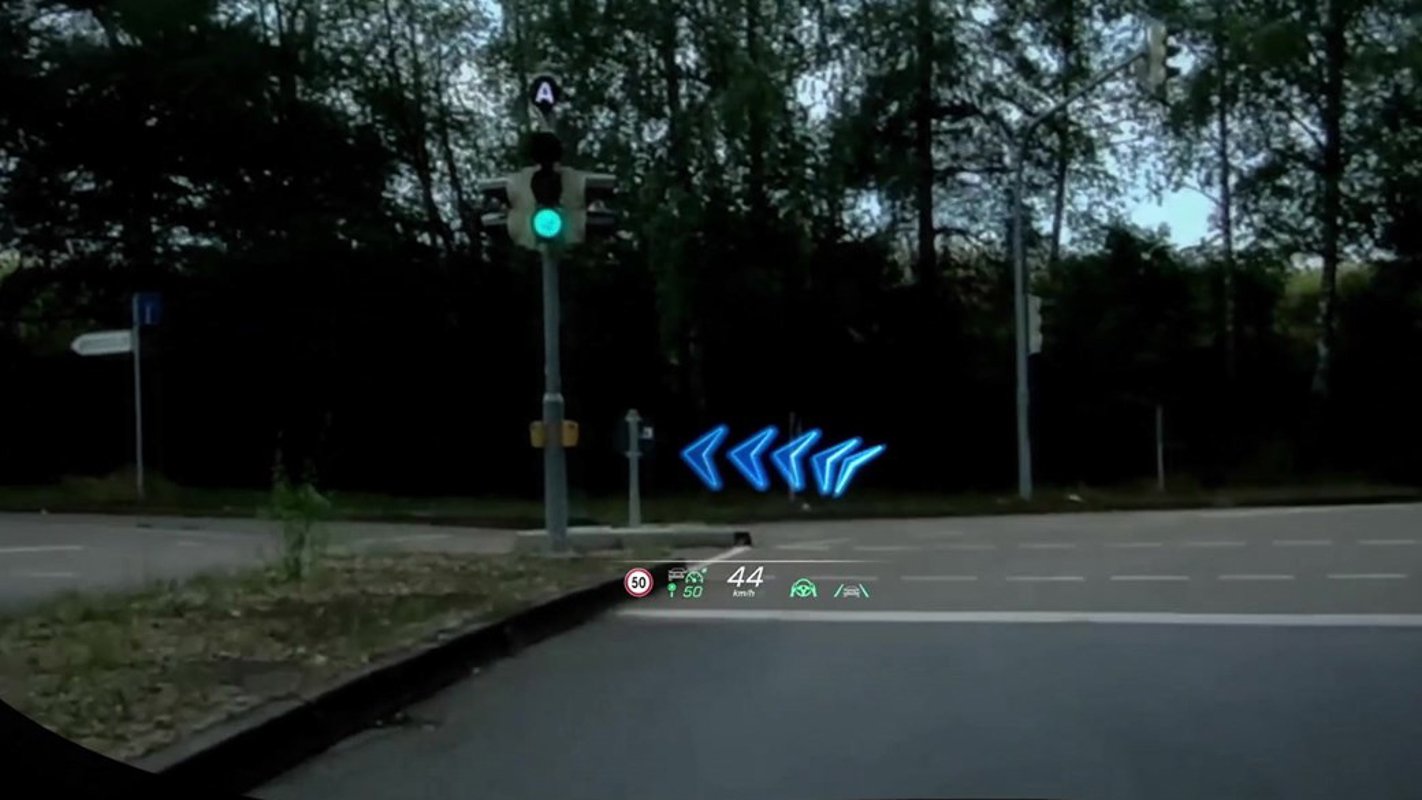
Absolutely. It’s a step on from the brand’s augmented reality navigation via the central infotainment screen. The ‘AR-HUD’ tech effectively makes the windscreen a 77-inch display in itself and, like the version before it, displays arrows ahead of you when a turn is coming up. It also reads lane markings and can display arrows pointing which lane you should be in, too.
New personalisation options
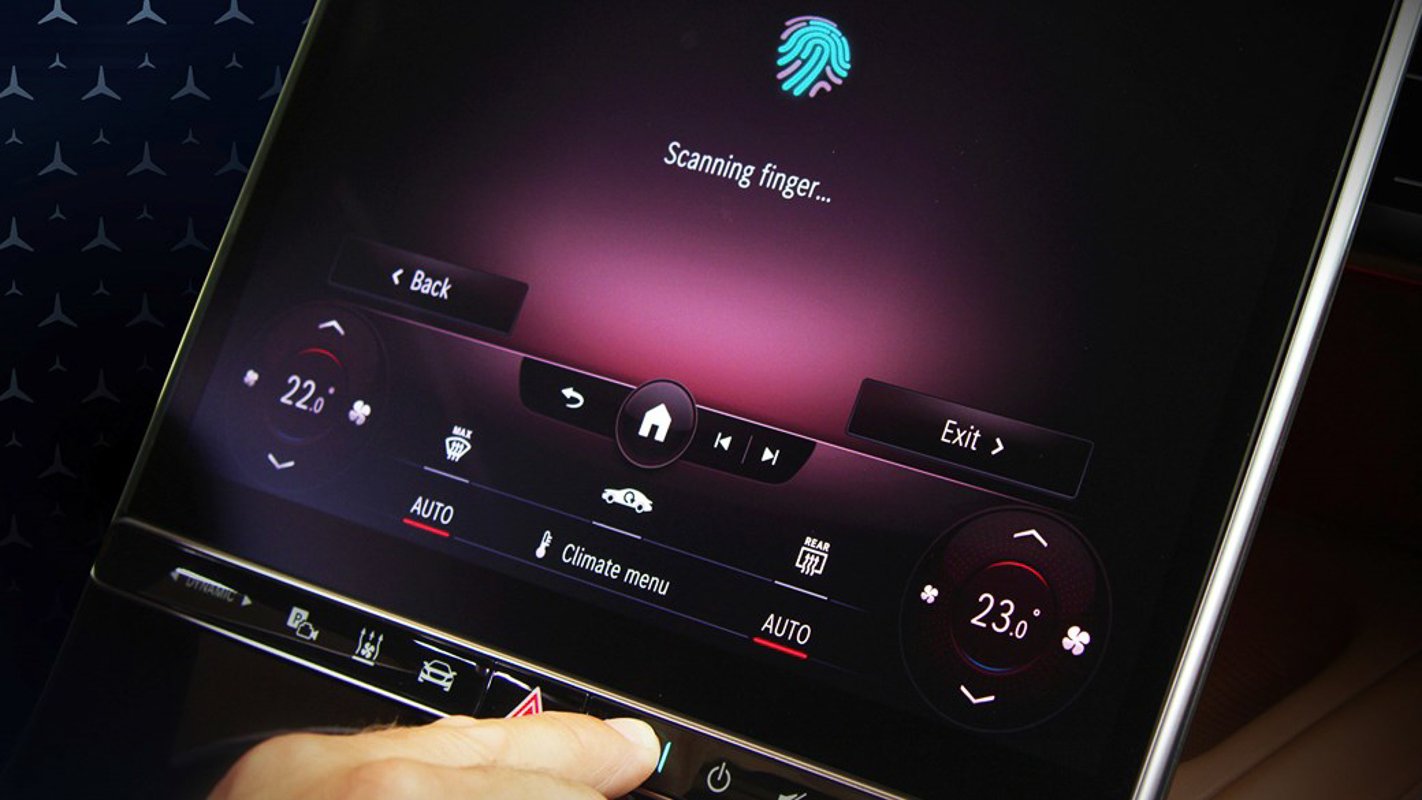
The new MBUX technology is designed to be more personalised to each occupant (hence the ‘my’ tag) and introduces a number of biometric security measures like fingerprint and face scanning tech and individual voice recognition. An occupant’s Mercedes Me account can be scanned via a QR code, instantly interlinking the account with the car. Driver displays and colour schemes for the infotainment system can be personalised, too.
Getting comfy…
Merc highlights that up to three screens are available for the rear passengers, with individual content accessed by the Mercedes Me account (via those aforementioned biometric detection systems) can be displayed quickly and shared between all occupants.
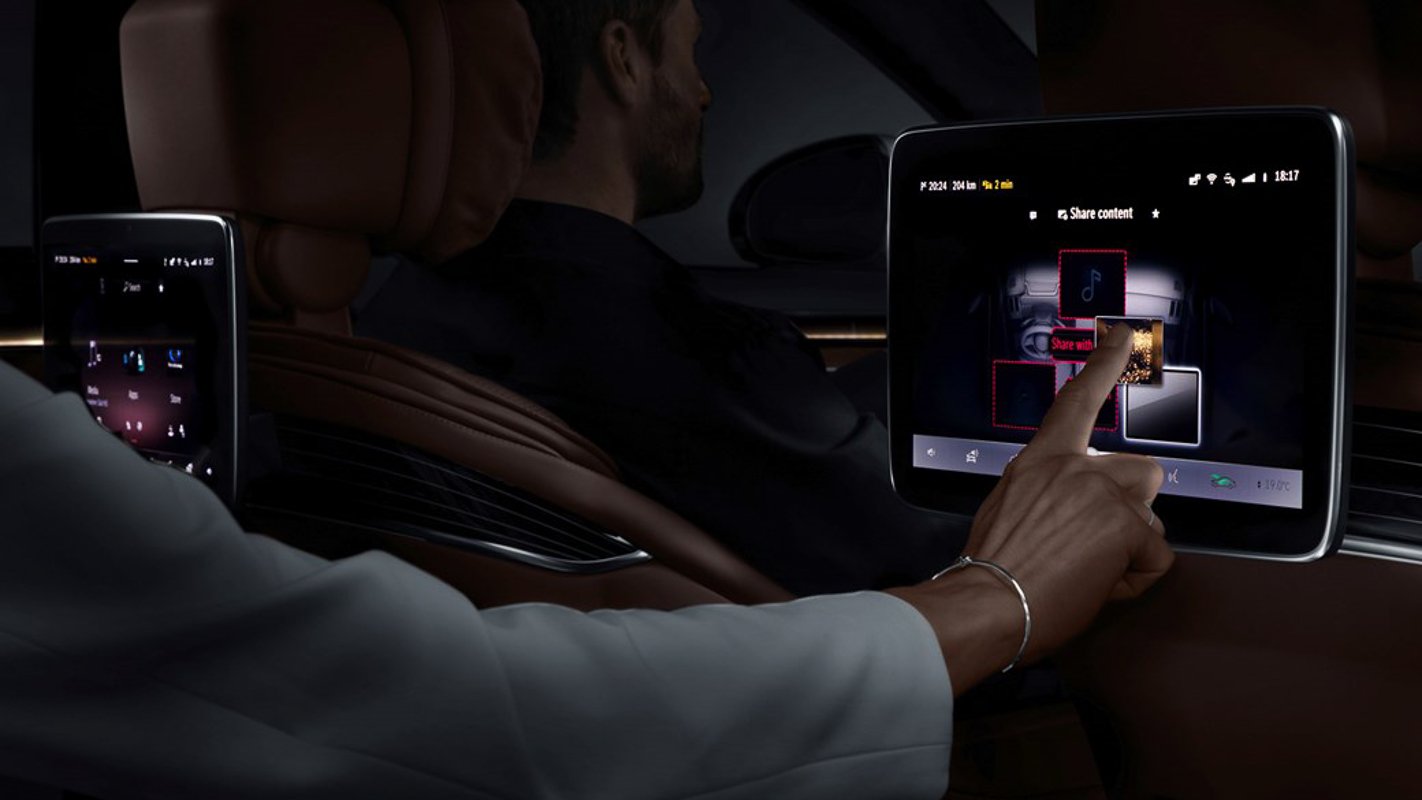
The voice assistant can be activated from the rear, too, and gestures like glancing over your shoulder can close the rear sun blind. The car even guesses your size and weight when you sit in the drivers seat and pre-positions the door mirrors.
When will we know more?
Mercedes confirmed that the new S-Class will make its official debut in September 2020.
This article was originally published on carmagazine.co.uk
There’s no lairy wing at the back nor are the guards pumped to accommodate aggressively wide wheels and tyres, but then again Audi’s S-badged models have traditionally concealed their muscle so well you could argue the badge should stand for ‘Sleeper’ rather than ‘Sport’.
So that’s how it is for the all-new fifth-generation S6 that again sets up a game of ‘spot-the-difference’ between it and the more junior A6 55TFSI, which asks for $33,900 less.
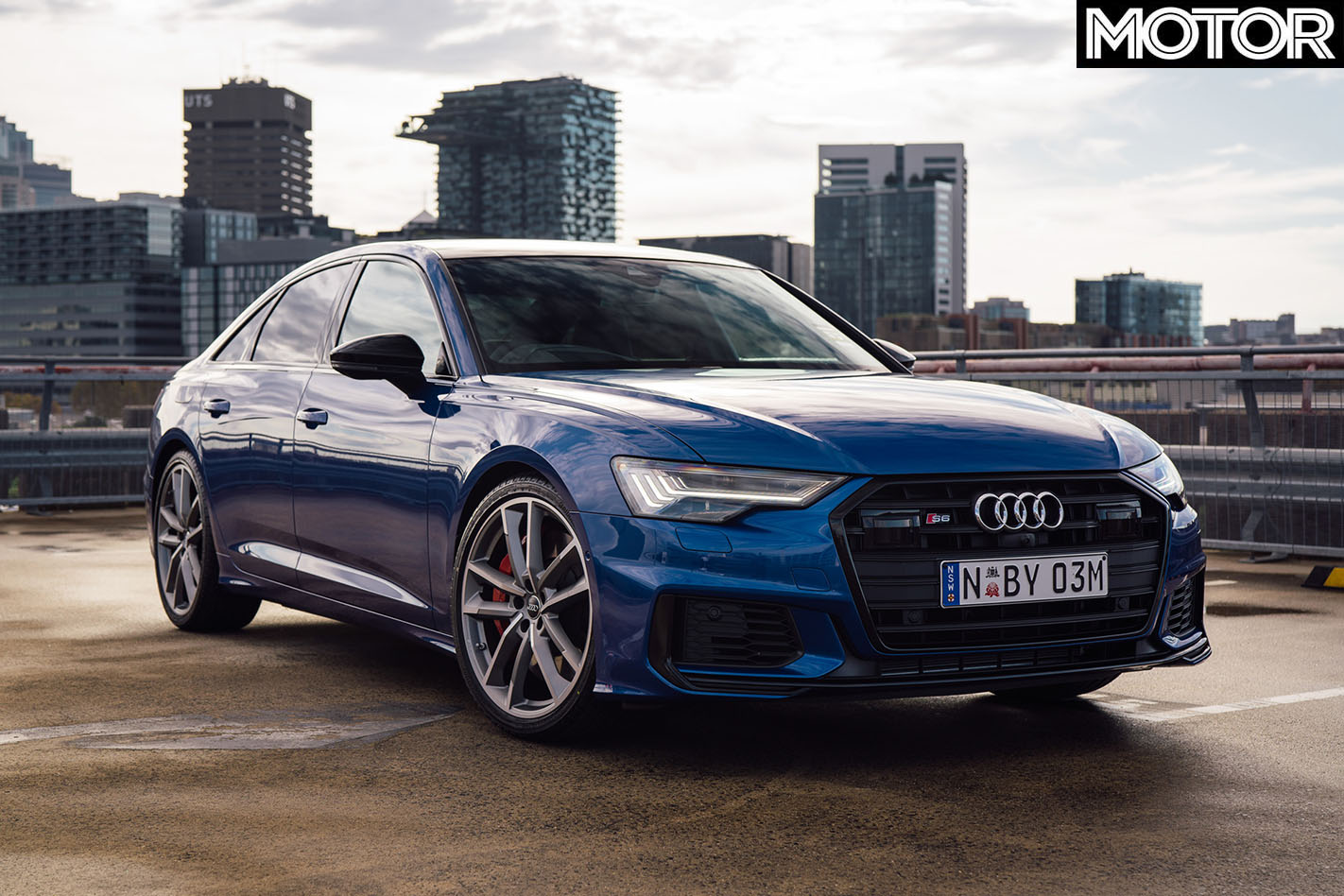
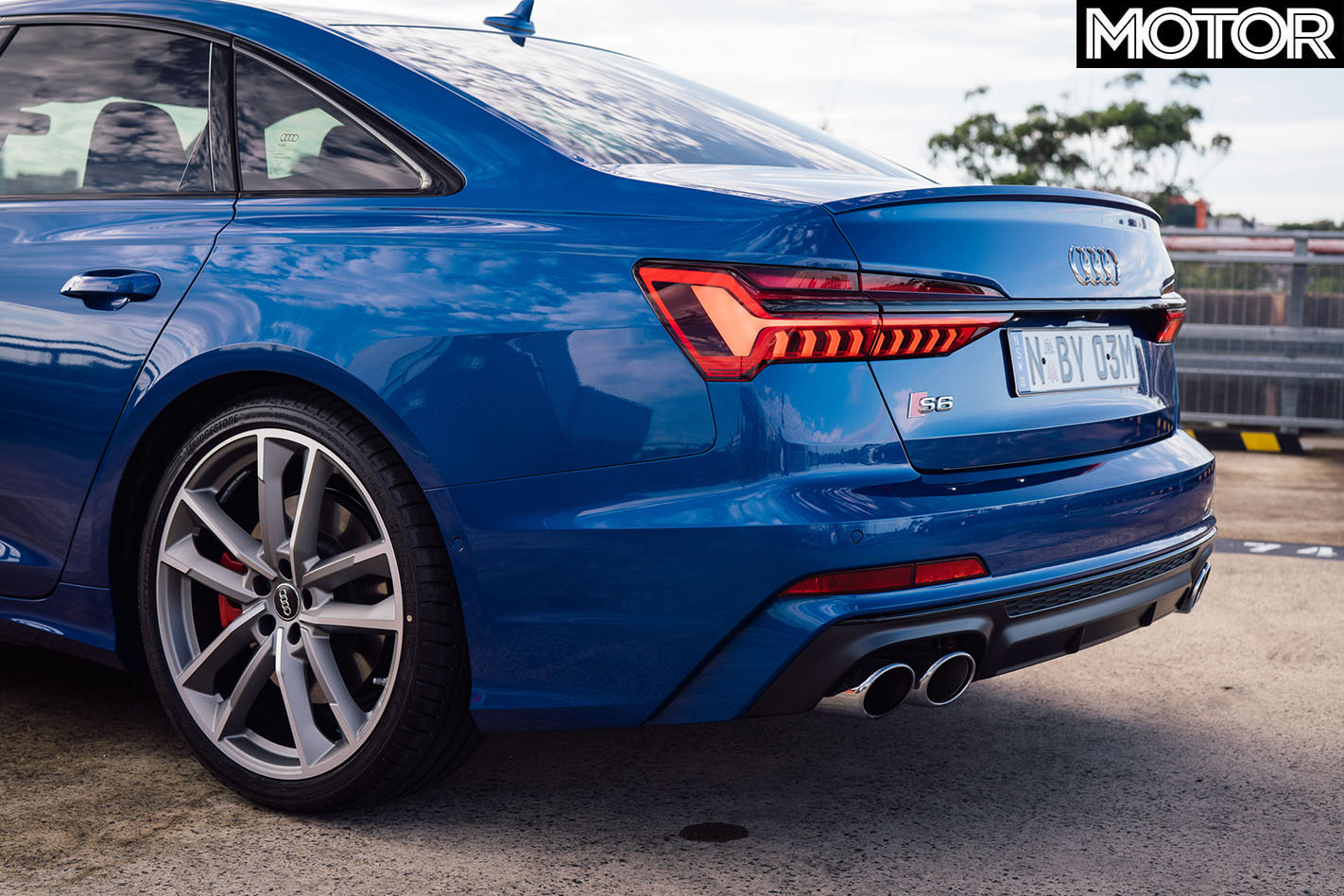
With the same shell and identical front and rear bumper structures, you only have 21-inch wheels (versus 19-inch), blacked out trim elements, king-sized red brake calipers and four oval exhaust tips to size up this baby limo at first glance.
This absence of visual flair has previously made the S6’s concealed muscle more exciting to discover. And initial specs suggest it carries a big stick, with 331kW/600Nm trumping the previous version’s outputs by 22kW/50Nm.
But not all things are as they were. Rather than harness a watered down version of an RS6 engine, this S6 is the first after three generations to use a different core donk to its big bro.
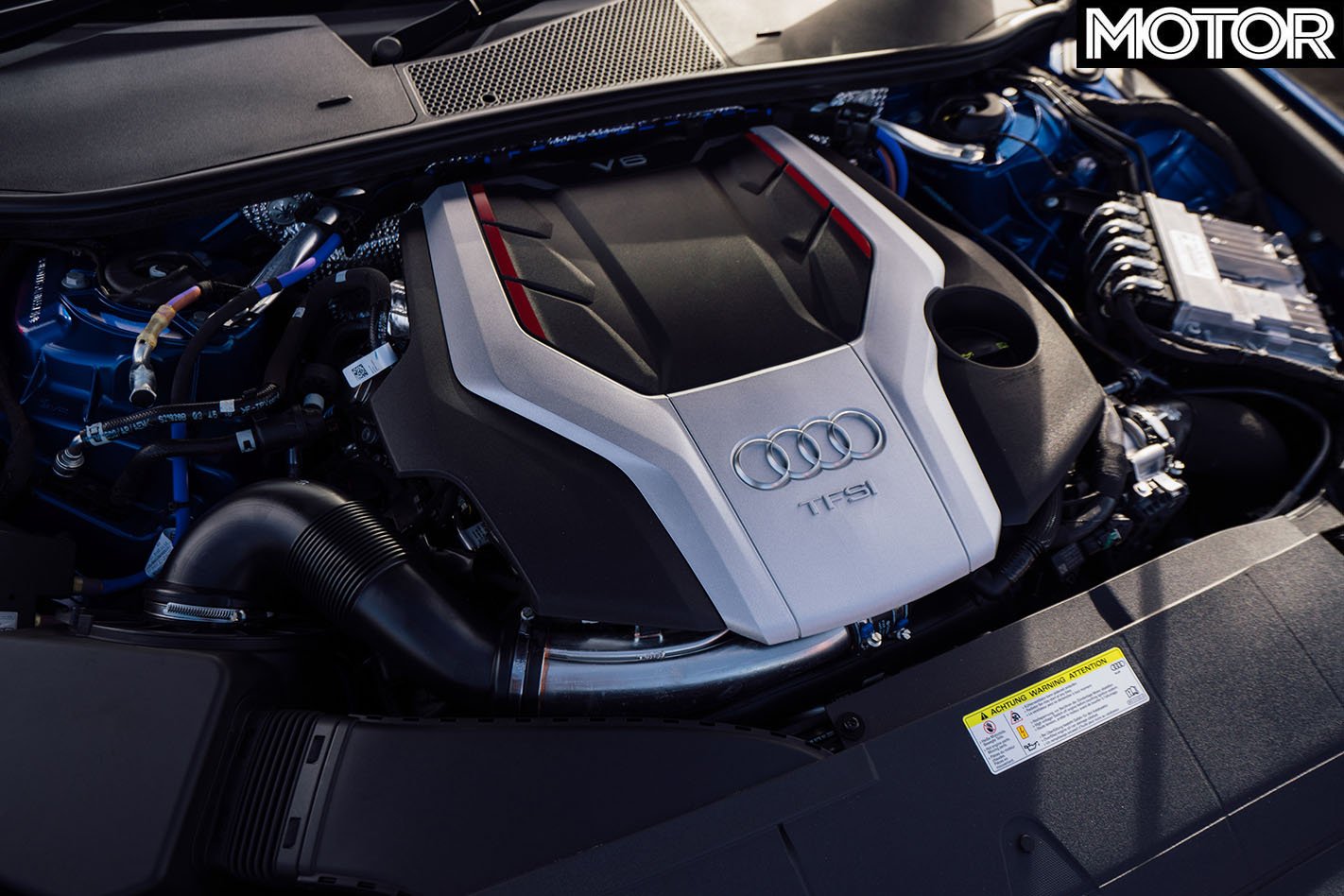
It’s flicked the 4.0-litre twin-turbo V8 and its seven-speed dual-clutch. Instead its nose harbours the downsized RS4 and RS5 twin-turbo 2.9-litre V6 matched with an eight-speed automatic.
We’re lucky in a sense, however – Australia’s more relaxed emissions laws mean we avoid the 257kW/700Nm diesel S6 powertrain used in Europe.
There’s also electric supercharging to help us warm to the idea of a downsized V6 where the car’s existing 48-volt battery architecture drives an extra compressor wheel, just like the SQ7 diesel V8’s system.
Although there’s no sign of it when you lift the bonnet, the e-supercharger sits downstream from the throttle body so it can charge intake air when the turbos are slow to spool. It does not change peak power figures, but gives this slightly-heavier S6 a hurry-up off the line instead.
The technical data report says it should hit 100km/h from rest in 4.5sec. Yet, as soon as we launch off the start blocks at Heathcote Raceway you know that’s bullocks as the S6 pinches you against its quilted leather seat.
It’s swift enough to hit triple figures in 4.38sec, comfortably beating its claimed time and asserting dominance over the old V8 version’s 4.6sec claimed time.
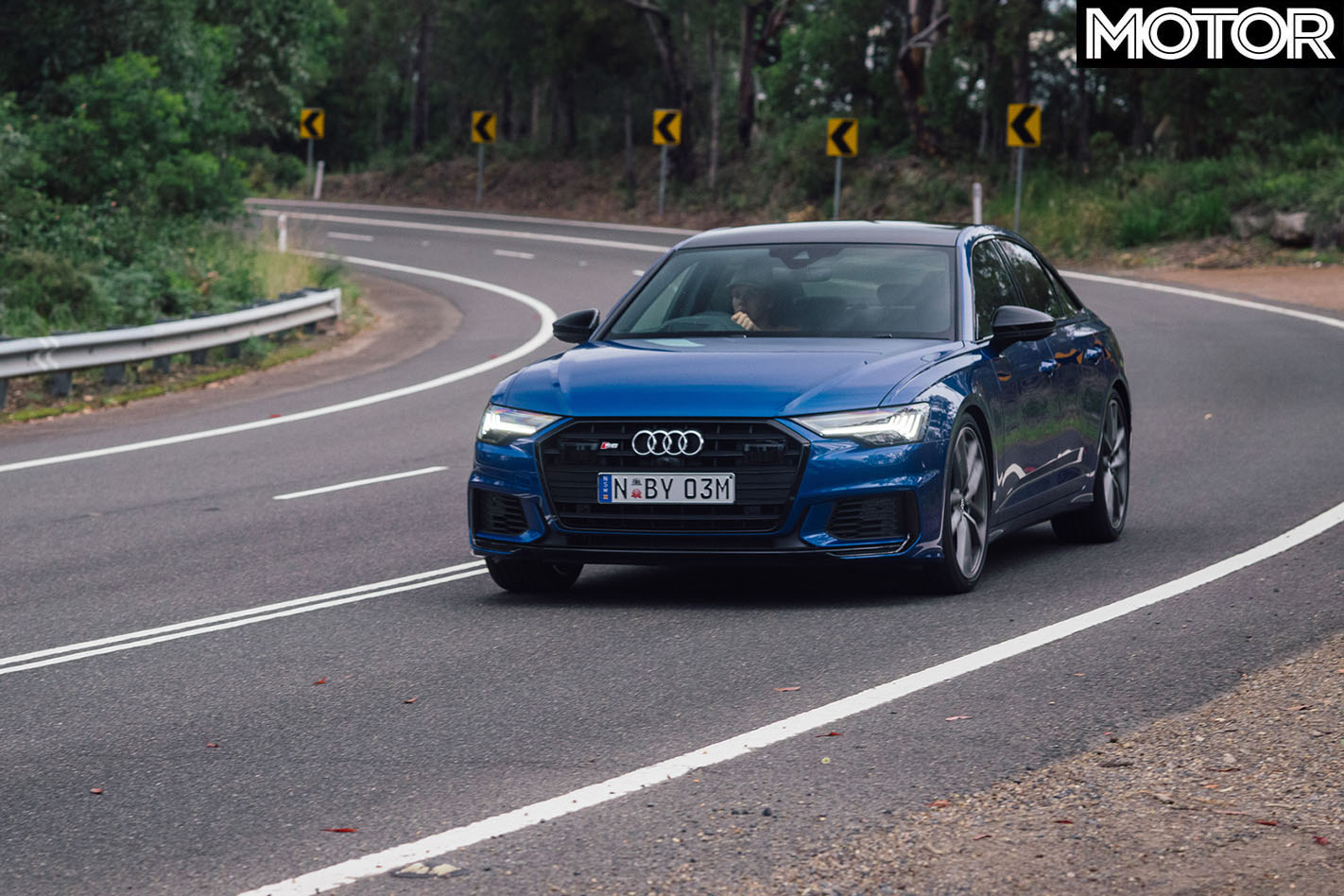
Despite this pace, it’s surprising given how the S6 labours to generate momentum over the first 100 metres or so. It’s only once you’re above 100km/h, and the 2.9-litre’s winding out in third gear, that the S6 really feels like it’s lifted its skirt and strides forward with pace worthy of the Autobahn’s fast lane. And the times prove it.
This near two-tonne sedan will stay with a Toyota Supra from 80-120km/h (which takes 2.66sec) and it’s carrying 183.84km/h across the 400m line after 12.47sec. That’s quick enough to hurry up last-generation hyper-hatches like the AMG A45 or RS3 if you ever find them on a long straight road.
As for stopping, the Audi hauls from 100km/h in 34.67m, or shorter than some hot hatches thanks to huge 400mm front discs and six-pot calipers.
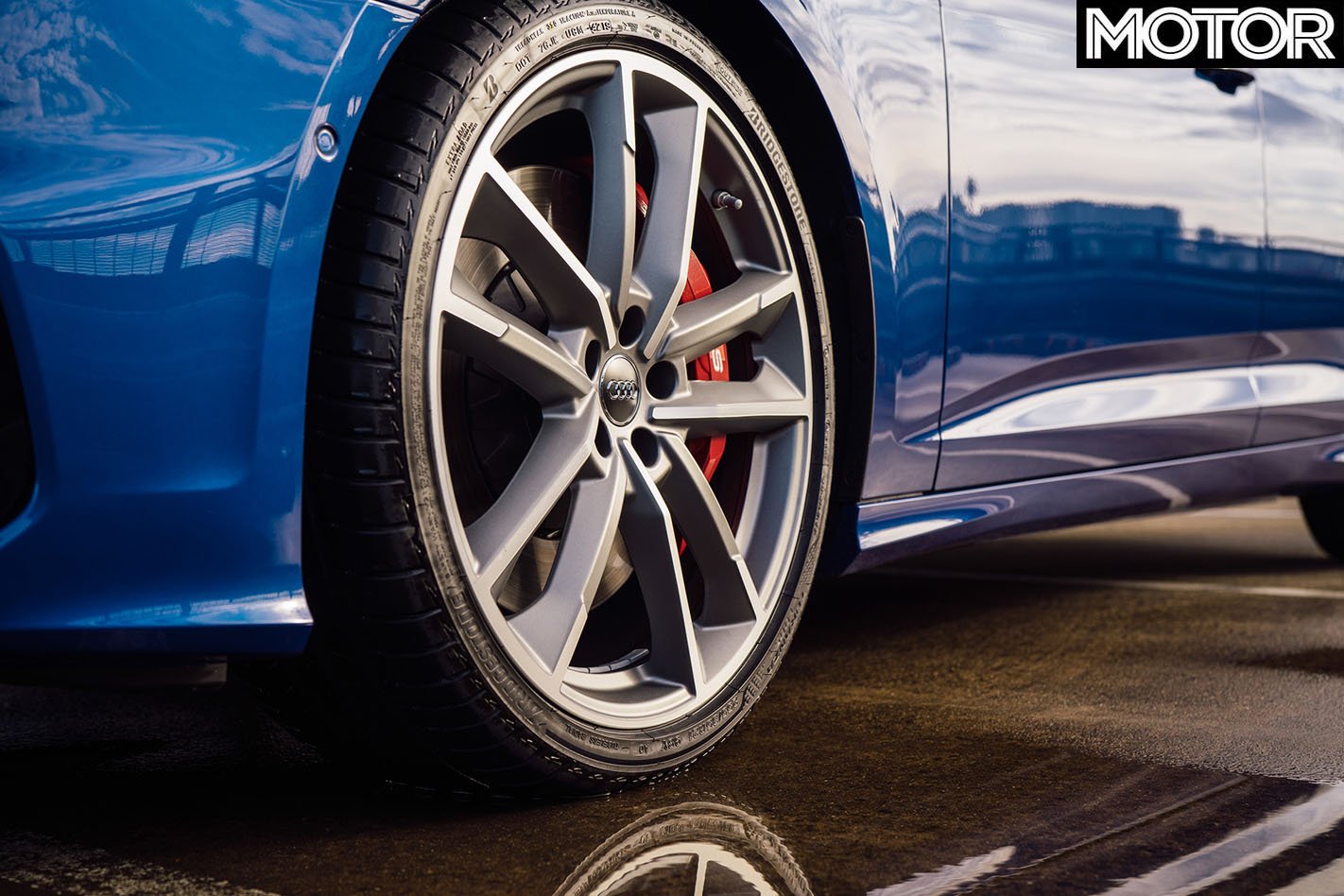
However, while its braking and acceleration suggest a high degree of agility there’s no denying the Audi S6 is a heavy car. Audi’s worked hard to minimise the weight increase over the old version, keeping that to just 15kg with an exotic-metal infused MLB Evo platform that cancels out extra weight from the battery.
Yet there’s no saving its ride-height adjustable air-suspension from two tonnes. For the most part it does what it should and delivers excellent ride comfort, smoothing out wavy roads with proper long-stroke cushioning while keeping the car’s trajectory solid and straight at speeds above 140km/h.
Lateral loads are what really challenge it, though. The humble grip on 255mm-wide Pirellis expose a lack of roll stiffness in both fast sweepers and hairpins, even when it’s hunkered down an extra 10mm in Dynamic mode.
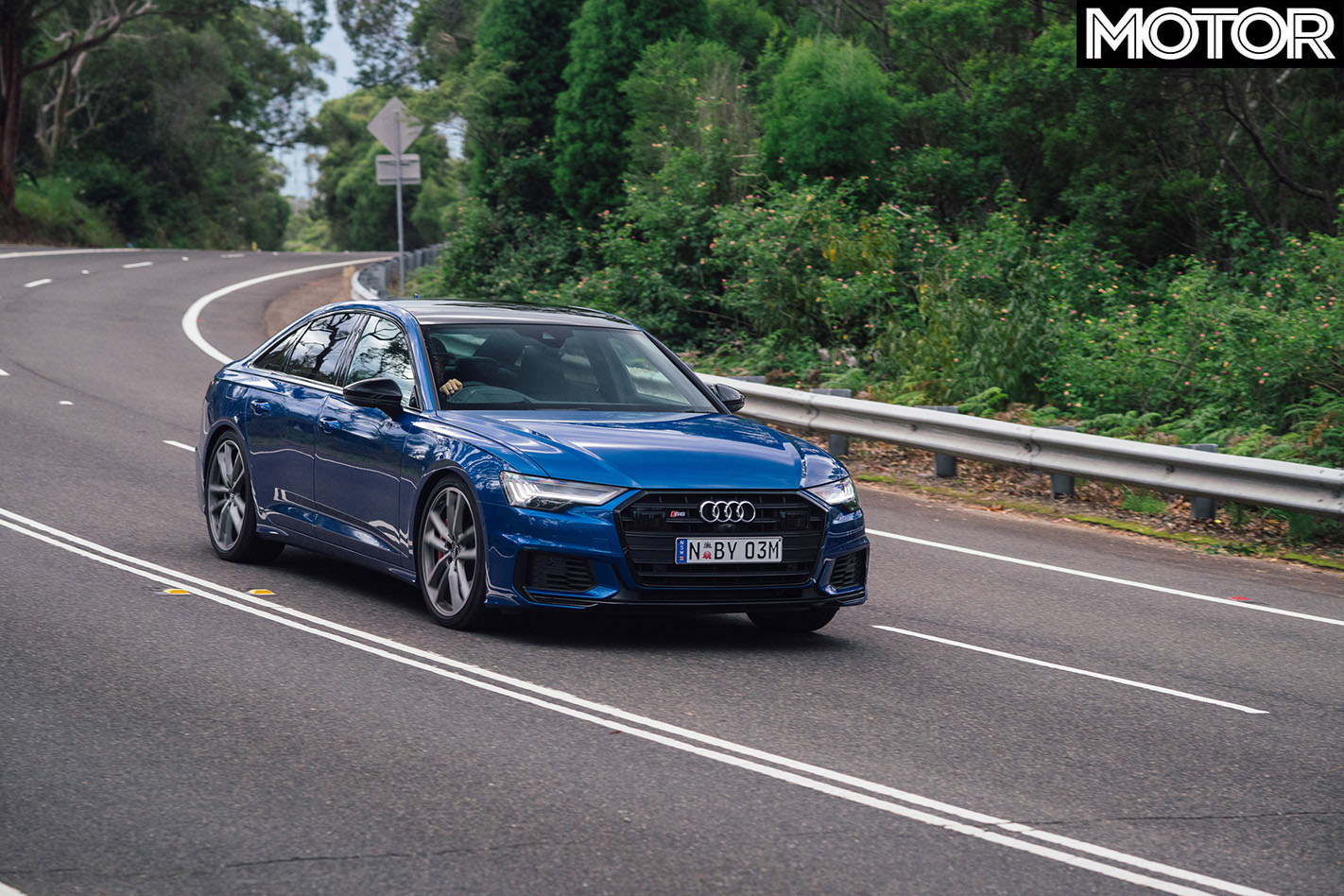
On top of this, while the progressive steering rack gains accuracy at higher speeds it’s not as linear or as responsive as we’d like and the S6 can get flustered when being hustled.
Mind you, it will rotate nicely if you nail your trail braking and hold its cornering line under power out of corners. We’d just suggest keeping an eye on the front brakes during a blast, because while they might not wilt in the heat of battle, they can get a little smoky given they’re tasked with reining in the front axle in lieu of a limited slip differential.
We only wonder what potential lies undiscovered here since our car is missing Audi’s $7700 Dynamic package. The pack adds rear-steering out back and dynamic steering up front, along with an electronically-controlled rear LSD, and while the verdict is out on what effect they’ll have on the S6 we know they’ve transformed other Audis.
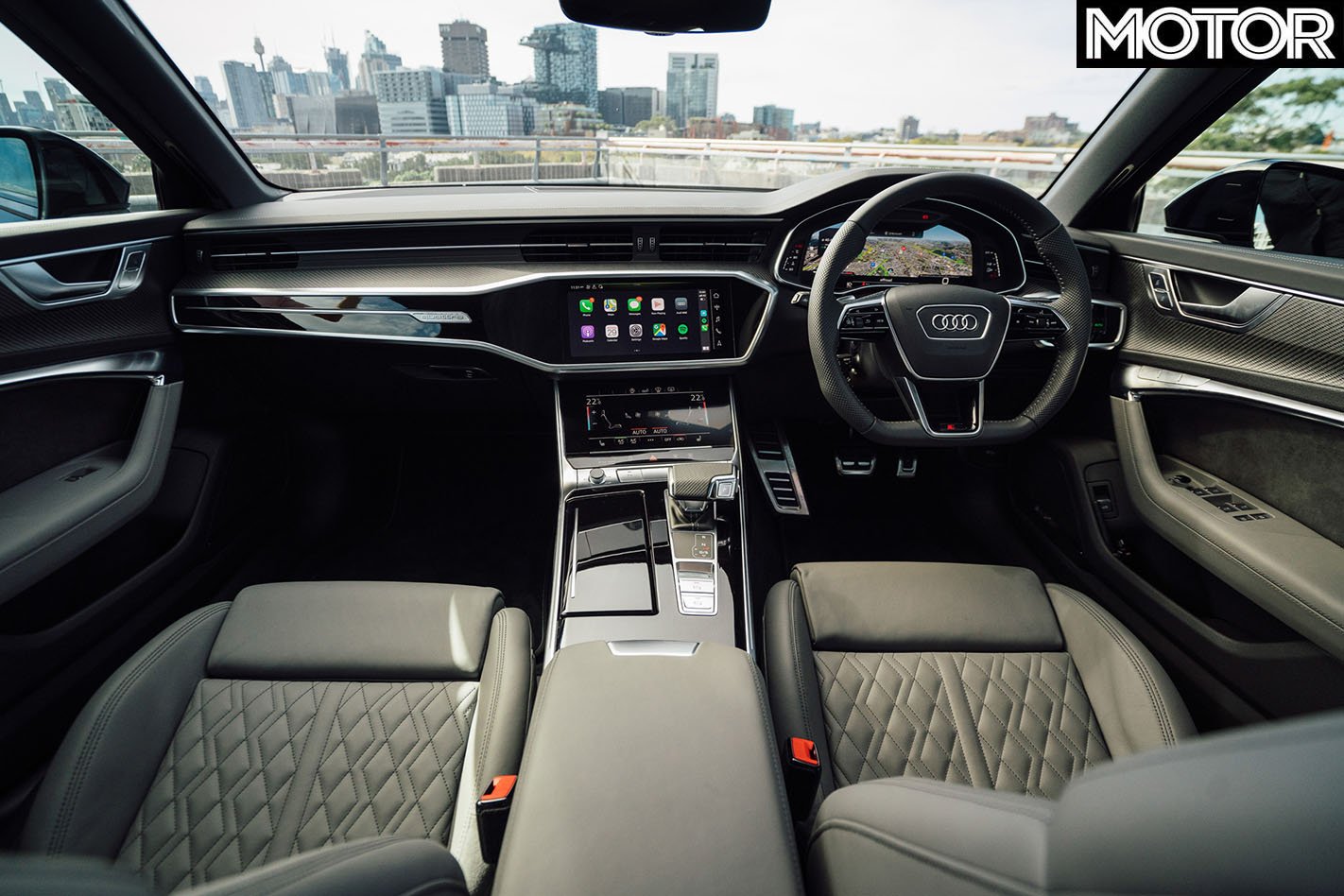
Until then, though, our S6 remains one dimensional in purpose. It’s built to turbo-charge long journeys and make sure that with a cloud-like ride, powerful brakes and sure-footed grip, touring at high speed is a pinch.
There is one hiccup. On a roll you can catch the drivetrain snoozing at steady speeds even when it’s primed in Dynamic mode, but we suspect it’s more a problem with throttle mapping than the auto’s actual hardware. The eight-speed is otherwise silky smooth and rarely puts a gear wrong. It’ll happily downshift and hold your selected cruise speed without as much as a vibration, even when selecting third gear at 110km/h.
Boosting its grand touring credentials on the open road are radar systems that co-pilot the car with eerie intuitiveness. The throttle pedal will shrug your foot off when it knows the car is approaching a lowered speed limit, while the lane keep assist is so accurate and smooth you almost trust it to take the wheel if it were legal.
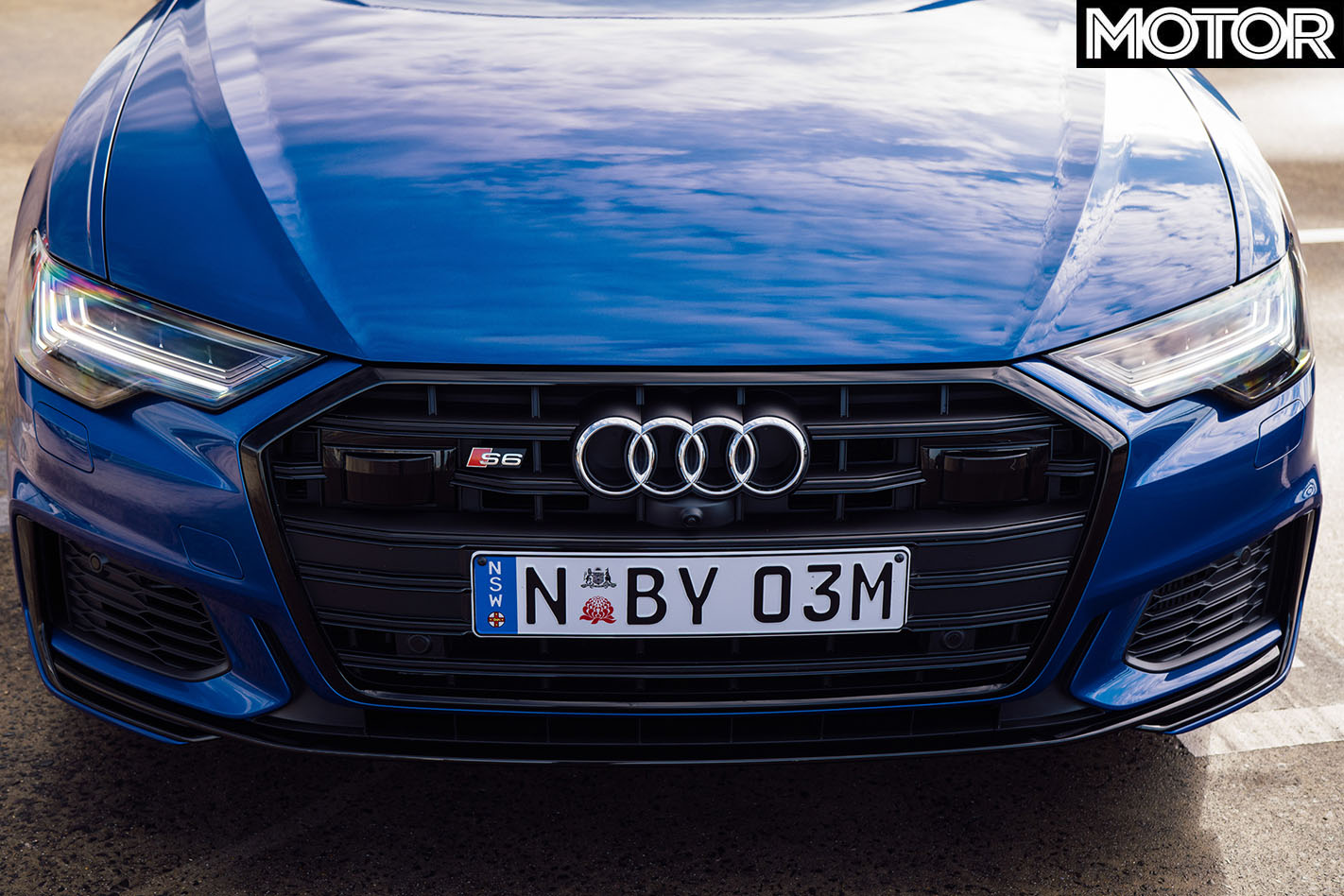
Ultimately, the S6 feels like the place where Audi’s different principles intersect. It’s as comfortable as the A8 yet more accelerative than an S4, but it’s also lost that spiritual link its forebears had with each RS6 for that all important exotic appeal.
We’ll just wait and see how much that matters when it takes on AMG’s hybrid E53 and BMW’s M550i xDrive.
3.5 Stars out of 5 Like: Silken ride; robust brakes; refined daily manner; frugal engine Dislike: We miss the V8; handling a bit boat-y; almost too subtle looking?
2020 Audi S6 TFSI Specs
ENGINE 2894cc V6, DOHC, 24v, twin-turbo, e-s/c POWER 331kW @ 5700-6700rpm TORQUE 750Nm @ 1900-5000rpm 0-100KM/H 4.38sec (tested) WEIGHT 1910kg PRICE $149,900
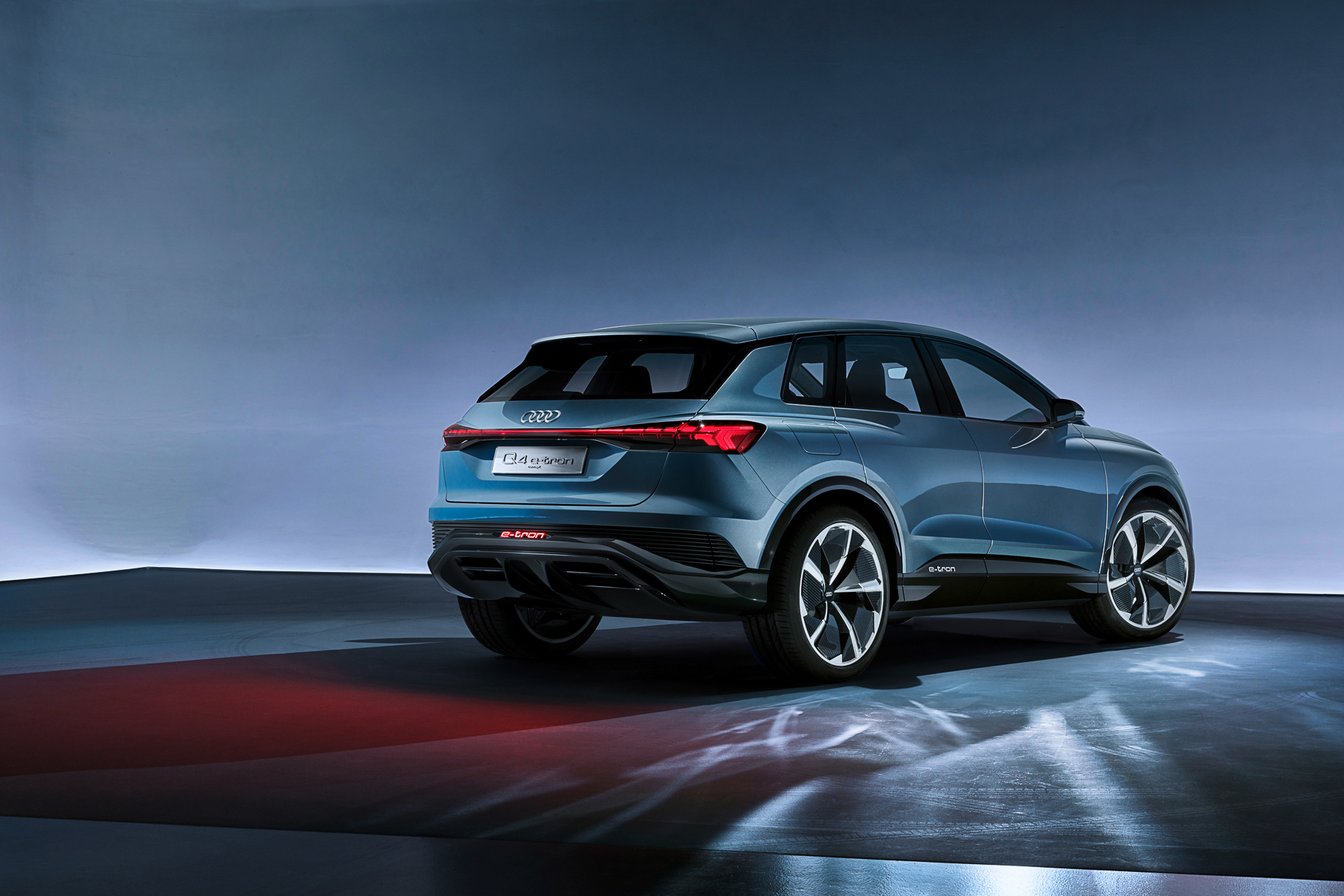
UPDATED – The advent of the electric car hasn’t been accompanied by affordable pricing, and while Audi’s Q4 e-tron won’t necessarily be cheap, it could pave the way for a mindset change from premium carmakers.
Audi has taken the idea one step further, unveiling a Q4 Sportback to accompany the Q4 SUV, and releasing a brace of details in the process.
First shown at the 2019 Geneva show as a concept, the Audi Q4 e-tron will be the first four-ring EV to be built on parent company Volkswagen’s new MEB electric platform.
A pair of electric motors – one at each end of the Q4 e-tron Sportback – will produce 225kW between them and will be fed by an 82 kWh battery which will provide a claimed 450km of range.
A rear-motor version increases that range to 500km, according to Audi.
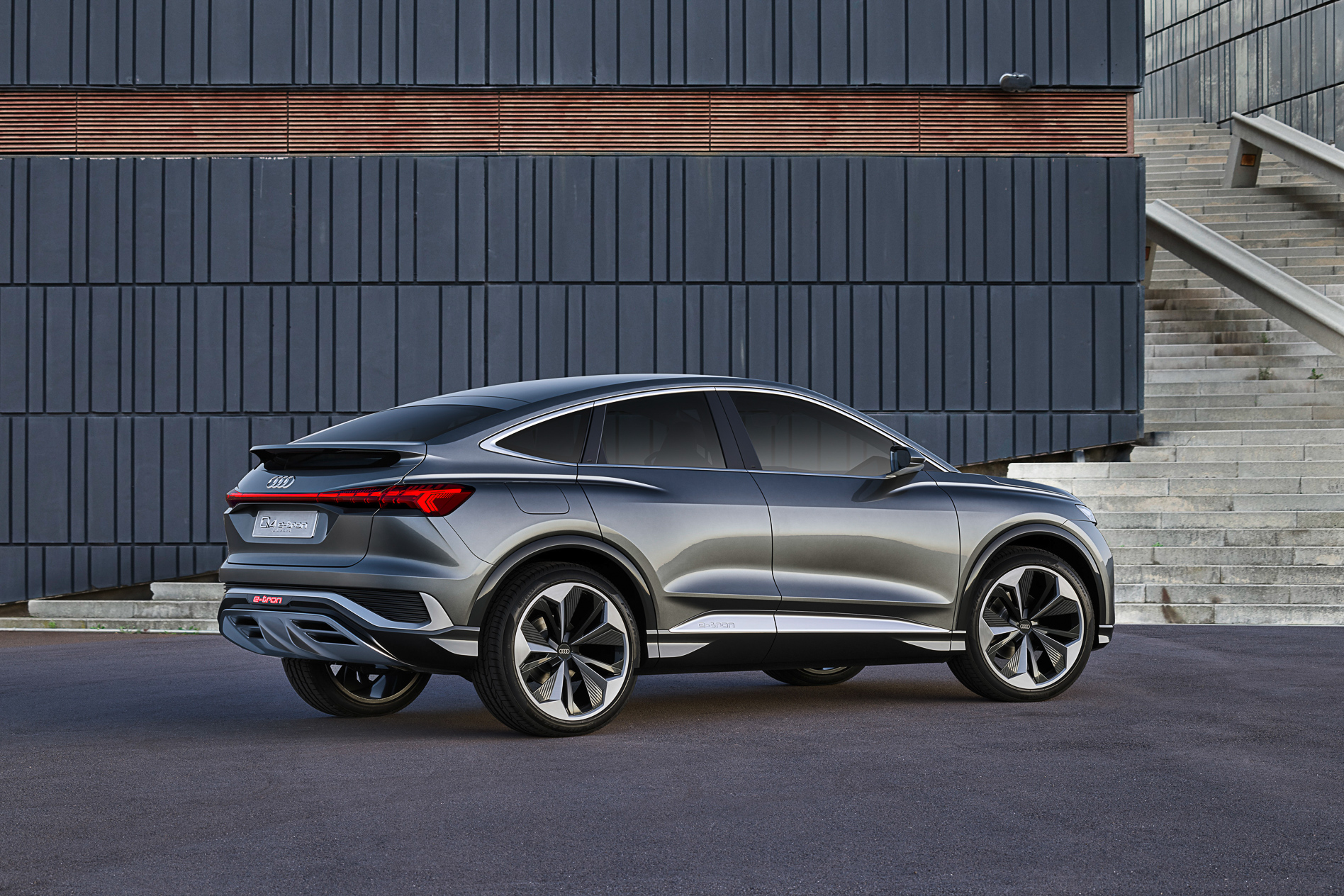
The electric motor in the rear offers 150kW and 310NM of torque, while the front motor supplies the front wheels with up to 75kW and 150Nm.
At 4600mm long and 160mm high, the Sportback is both 10mm longer and lower than the SUV, while its 2700mm wheelbase provides interior space that replicates that of a large SUV, according to Audi.
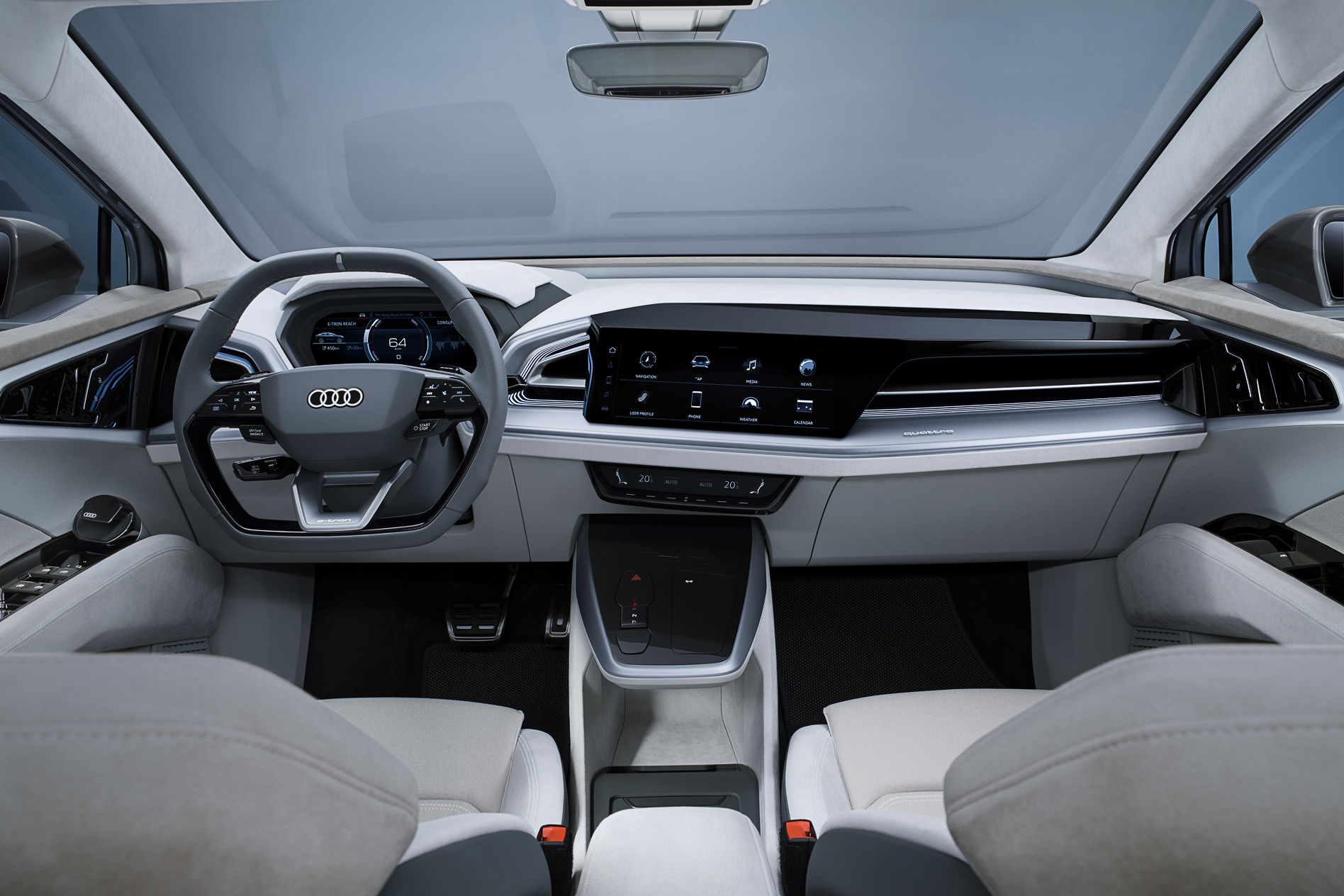
Speaking of interiors, the concept shows off a fully functioned digital dash and 12.3-inch multimedia screen, along with a large heads-up display.
Because an electric car doesn’t use a standard gearbox, Audi designers made the most of the extra room in the centre console for more storage.
Dynamically, the Q4 e-tron Sportback rides on production-empathetic MacPherson struts up front and multi-link suspension in the rear, all modulated with steel springs and adaptive shocks.
With MEB production resuming after COVID-19-related delays, the small Audi EV crossover could hit the US market by the end of the year.
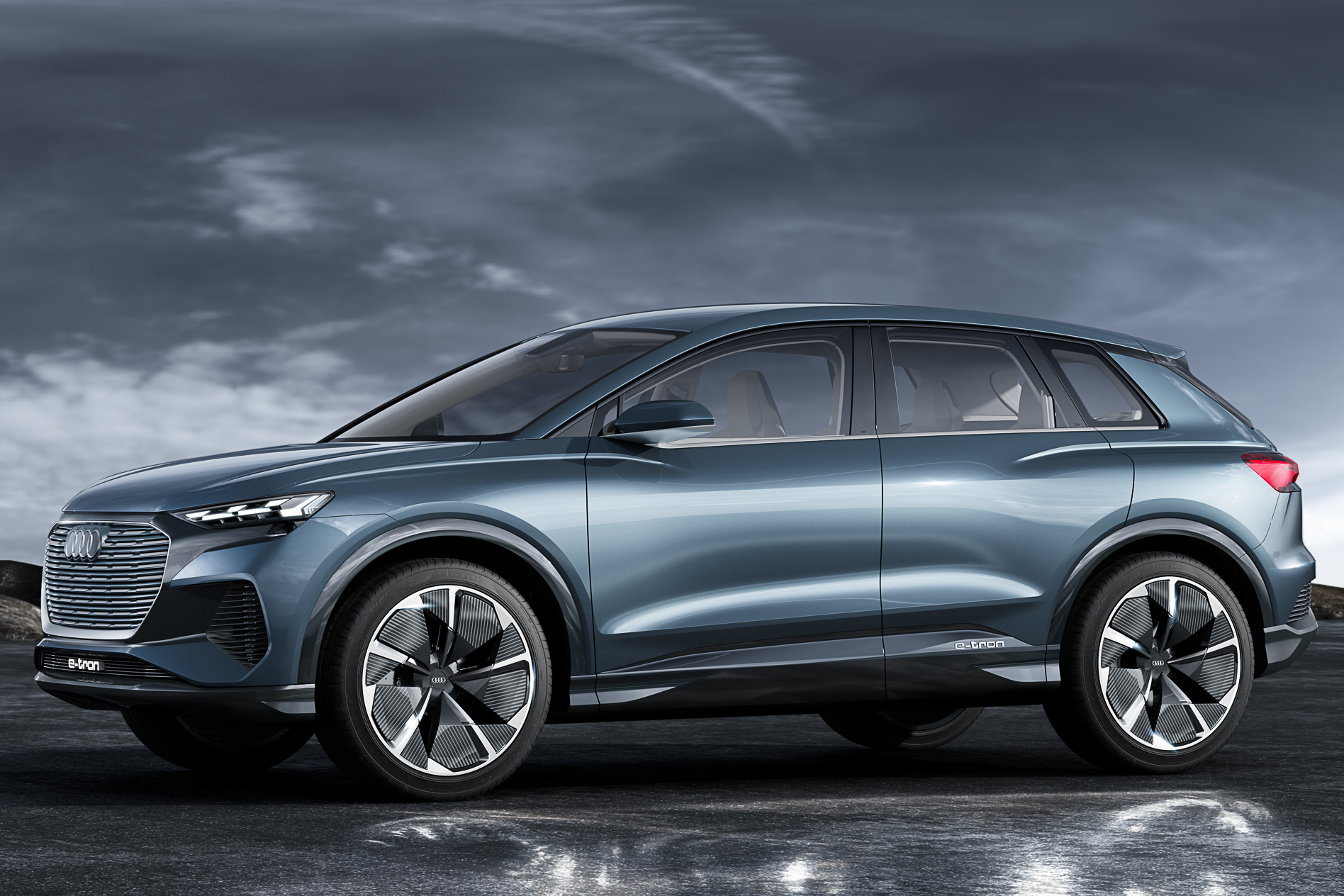
Pricing in the US is expected to be around US$45,000, which – even given the instability around exchange rates at the moment – should see the Q4 E-Tron lob here under the magic $100,000 mark.
At present, the cheapest electric luxury SUV is the Jaguar I-Pace which starts at $124,100, while the Mercedes-Benz EQC kicks off at $137,900. The e-tron is expected to sell for around $140,000.
Expect the Q4 E-Tron to wing its way down under, given the Australian car buyer’s undying love of all things SUV.
As well, there is positive energy (hah!) around EVs from premium carmakers like Audi. “Without a doubt, there is an appetite for electric cars, and you hear people talk at that premium end especially, about looking forward to one of their next cars being an electric car,” Audi Australia’s product pricing and planning director Shawn Ticehurst told us earlier this year.
“It’s the conversations you hear at barbeques and parties; the minute someone knows you’re a ‘car guy’, they’ll say ‘I’m really keen for my next car to be electric’. It’s in people’s mindsets now, where perhaps it wasn’t even two years ago. They are fascinated by it.”
The shift away from the expensive bespoke underpinnings of the larger E-Tron SUV means that Audi can sell the smaller crossover at a more affordable price.
While the Q4 E-Tron is likely to share electric motors and battery packs with cars like the VW ID4 electric crossover, we’d expect the Audi product to ship initially with all-wheel-drive, whereas the 500km-range ID4 is expected to debut in rear-wheel-drive format.
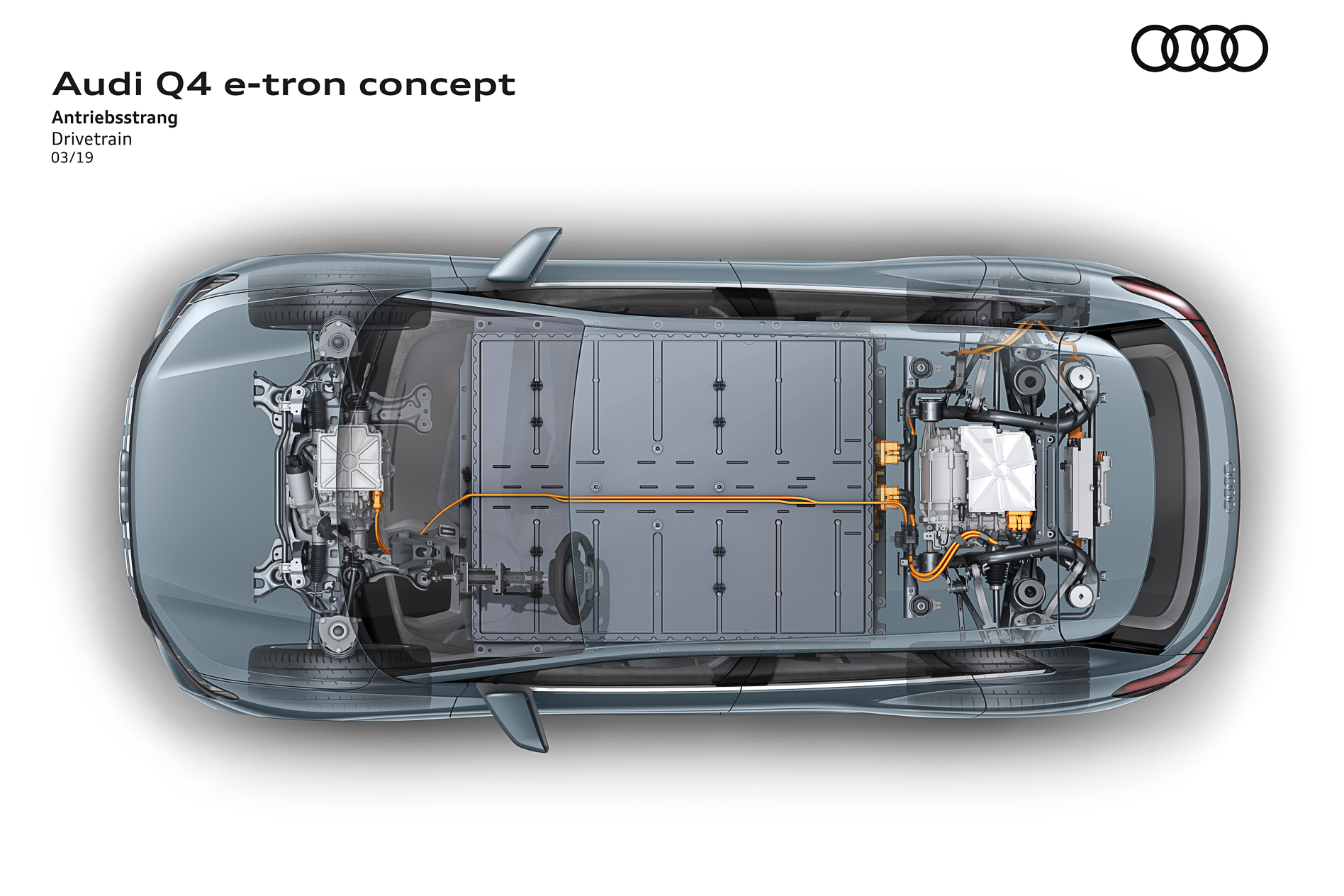
The MEB platform is VW’s jack-of-all-trades electric platform and can be stretched or shrunk to suit different body styles. The ability to add length to the platform means there is more room for batteries, which results in more range.
As well, energy densities are constantly improving, which could give the Q4 up to 500km by the time it arrives – though Audi’s WLTP range figures are usually pretty conservative.
Underneath the delayed E-Tron – which is closer in size to a Q5 – is a modified version of the group’s MQB chassis, which sits under cars like the A4 and Q5. However, Audi’s desire to rush an EV to market meant expensive re-engineering and a higher cost-per-unit price for the beleaguered E-Tron, which was expected to touch down in Australia later this year, about 18 months after it was initially slated to arrive.
It’s no secret that Audi is on a style tear at the moment, intent on making stylish coupe versions of all of its SUVs.
The latest in a long line of Audi SUVs to get the treatment is the Q3 Sportback. It’s one of the more affordable ways to get into a stylish coupe SUV, but does it compromise on the things that make SUVs great?
What is the Audi Q3 Sportback?
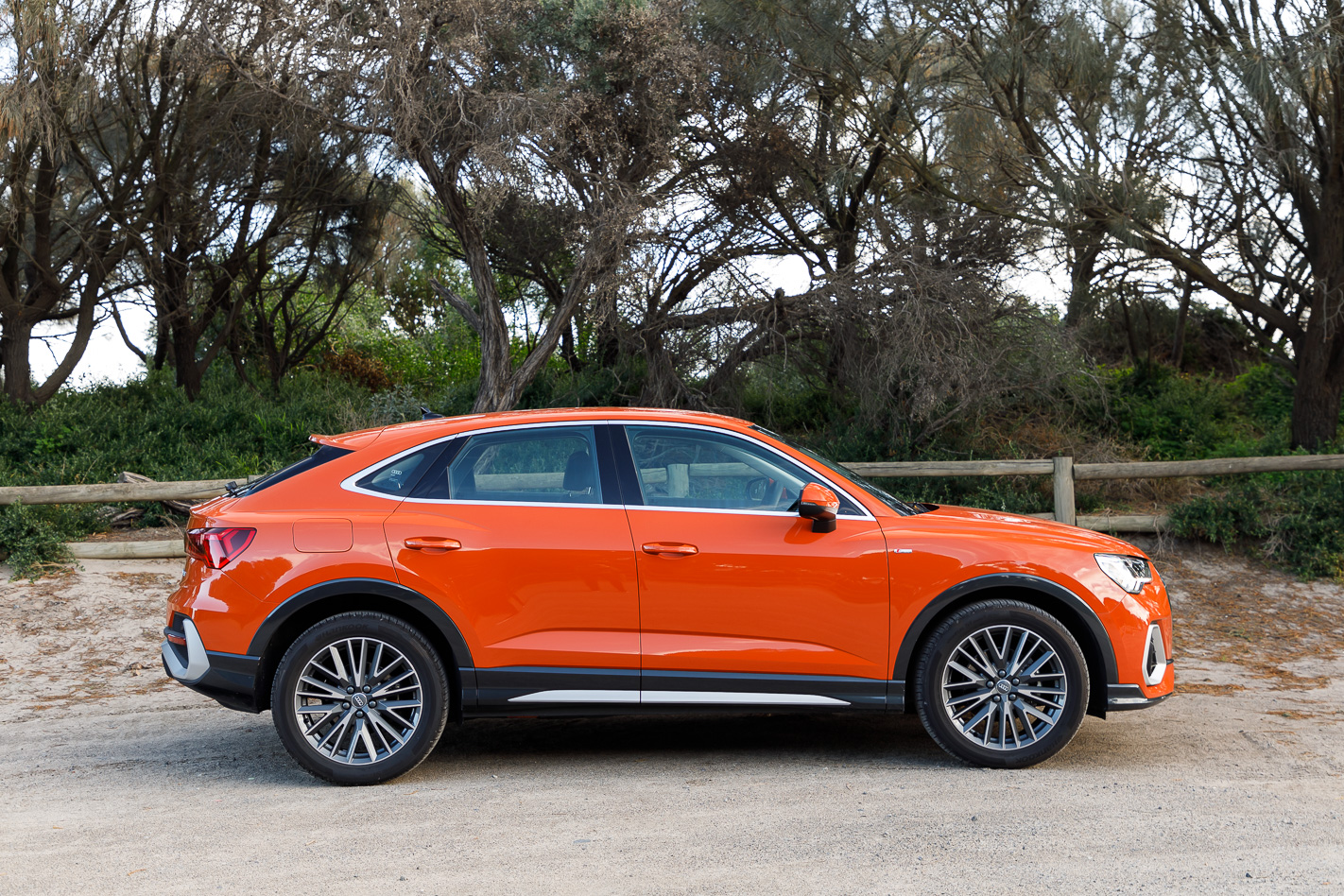
People typically bemoan the coupe-based SUVs that usually end up looking hunch-backed with a rear end the size of a rhino, and yet – somehow – it seems to have translated quite well on the Audi Q3 Sportback.
But the slicked-back treatment is fraught with danger, focusing less on the actual reasons you’d buy an SUV – such as space and practicality – in favour of style and dynamics.
However, it is actually refreshing to see from a brand that has typically held more reserved designs across its model range in years gone by.
Now, you can get suave coupe design language from the Q3 which is on the other end of the price spectrum to style icons like the bigger brother Q8, and those from other carmakers like the Mercedes-Benz GLE Coupe and BMW X6.
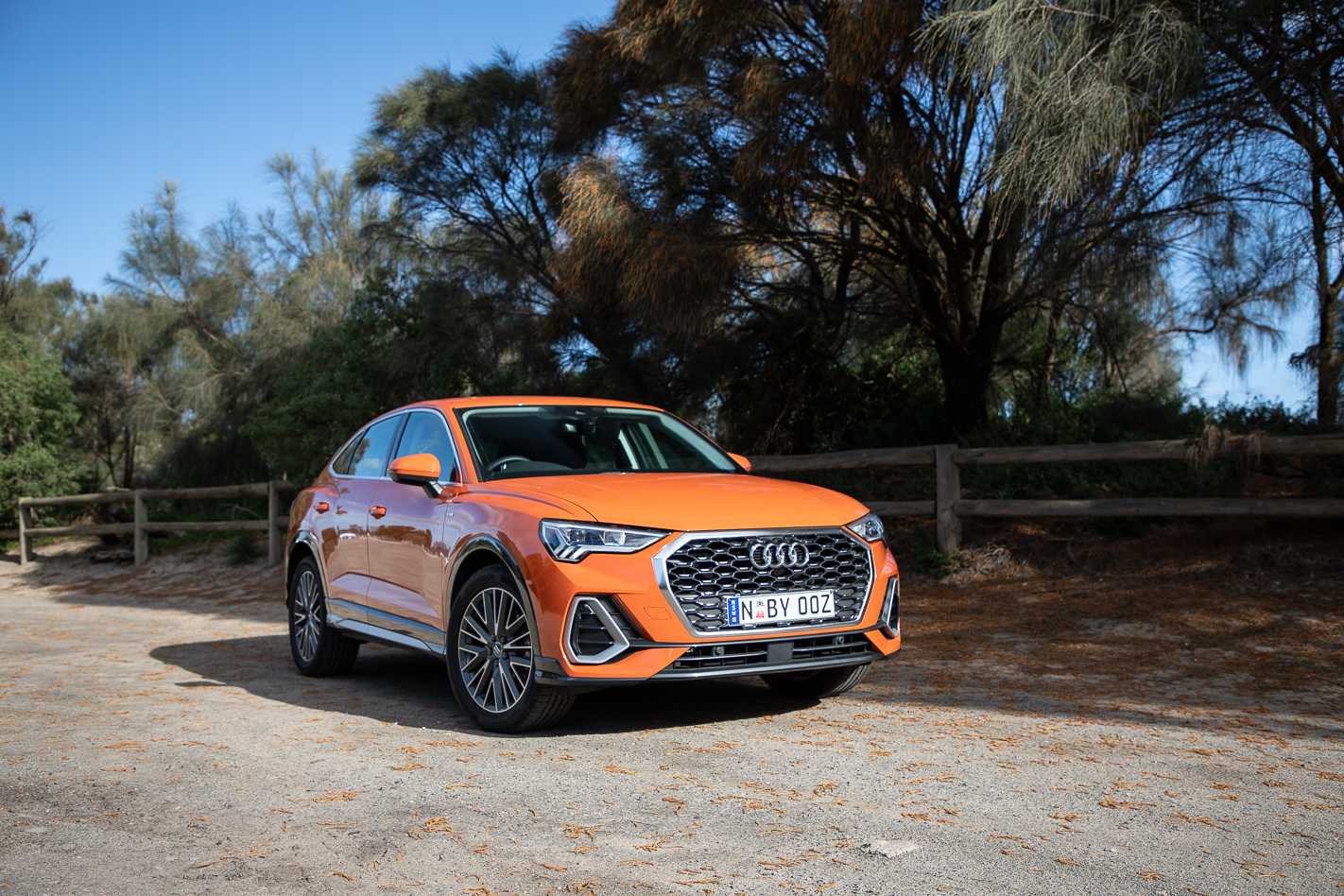
It does pay to be fashionable though; the Q3 Sportback’s price is $3500 more expensive than the regular Q3 and the 35TFSI S Line car we had on test is just $100 shy of $50,000 before options and on-road costs.
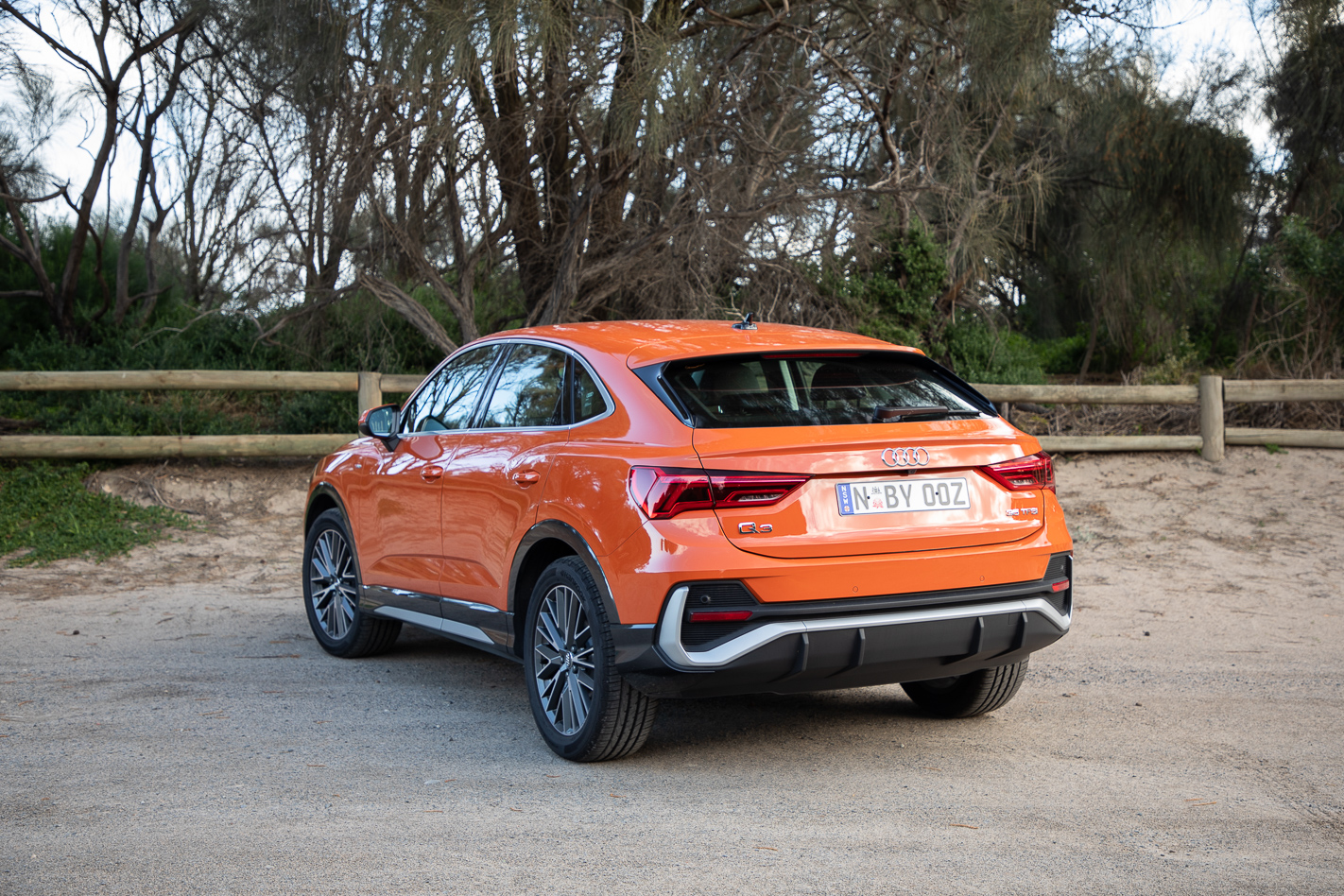
You can see that there’s not a lot changed on the front end, which is no bad thing, but around the rear, you immediately notice the tapered roofline and rear window which eats into the Q3’s boot.
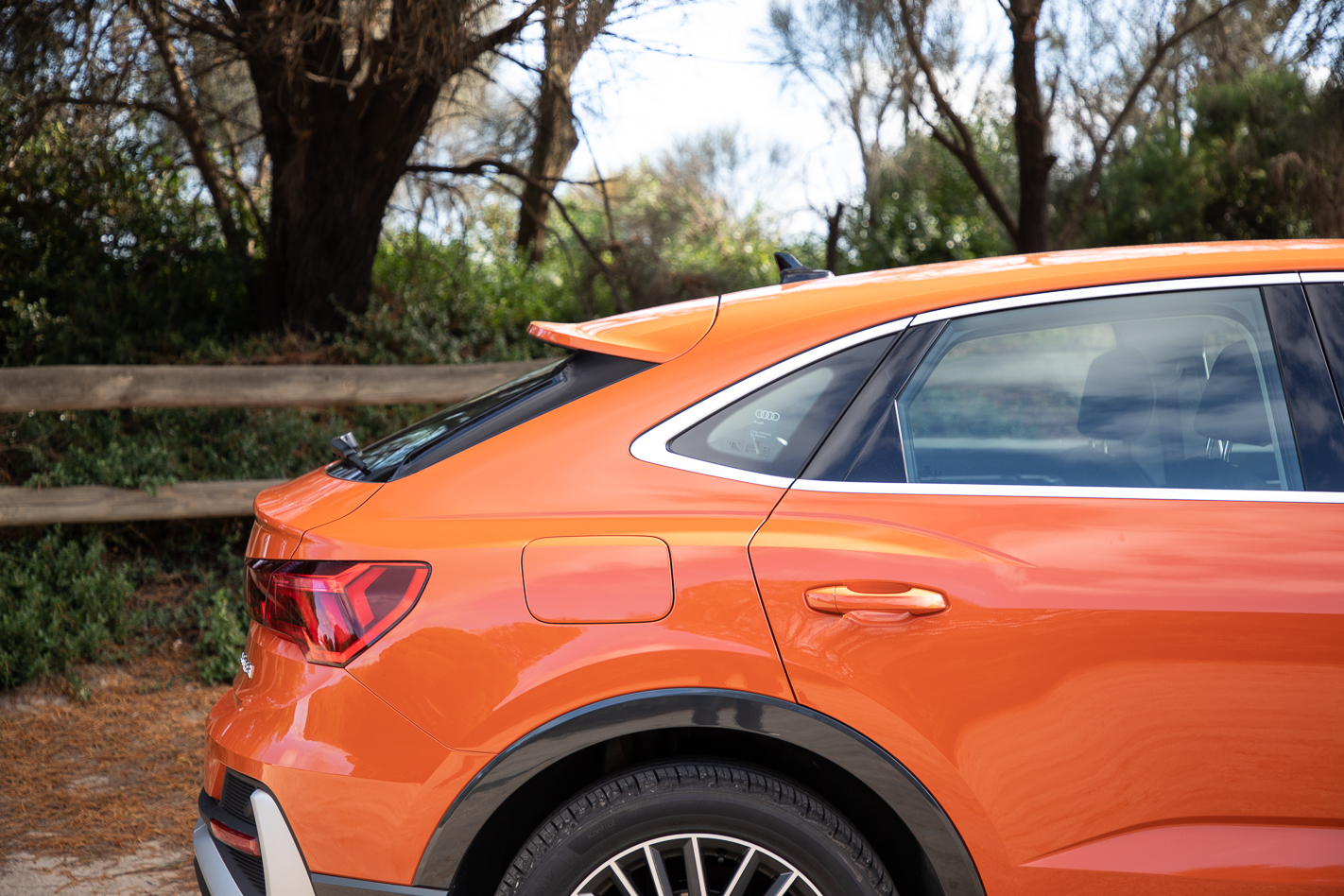
Surprisingly, though, the Q3 Sportback concedes no official boot space over its wagon-shaped Q3 counterpart, both with an identical 530-litre capacity.
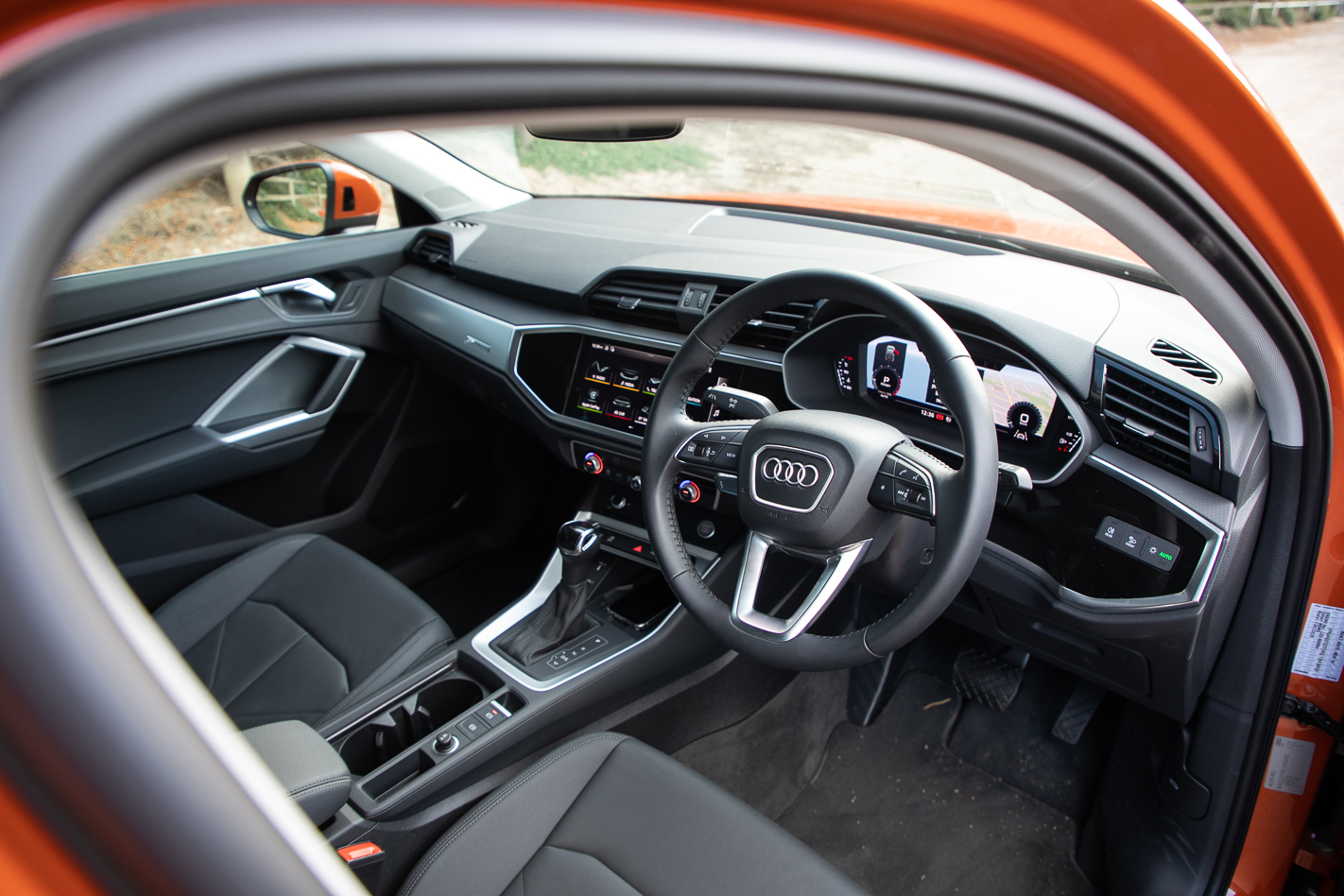
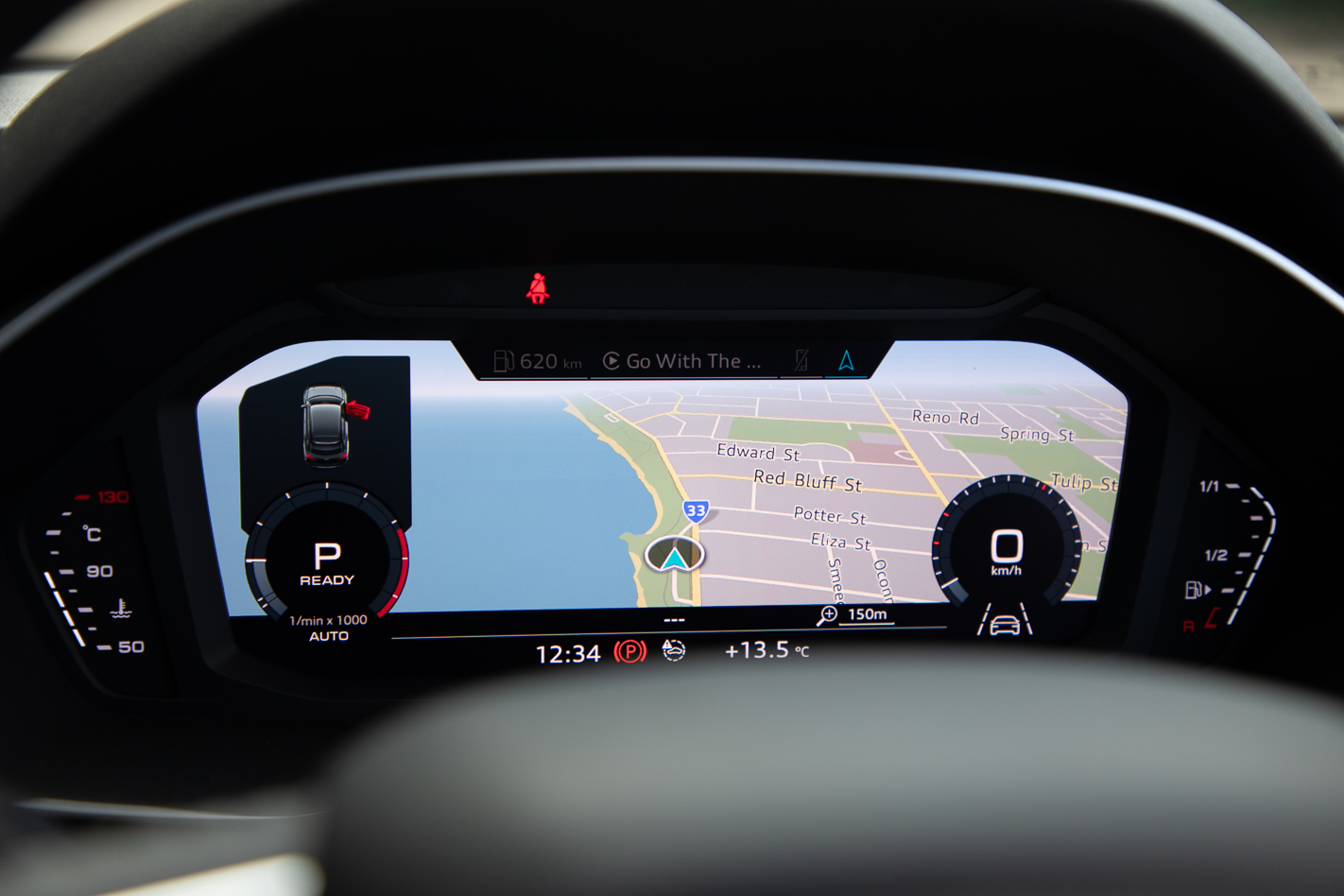
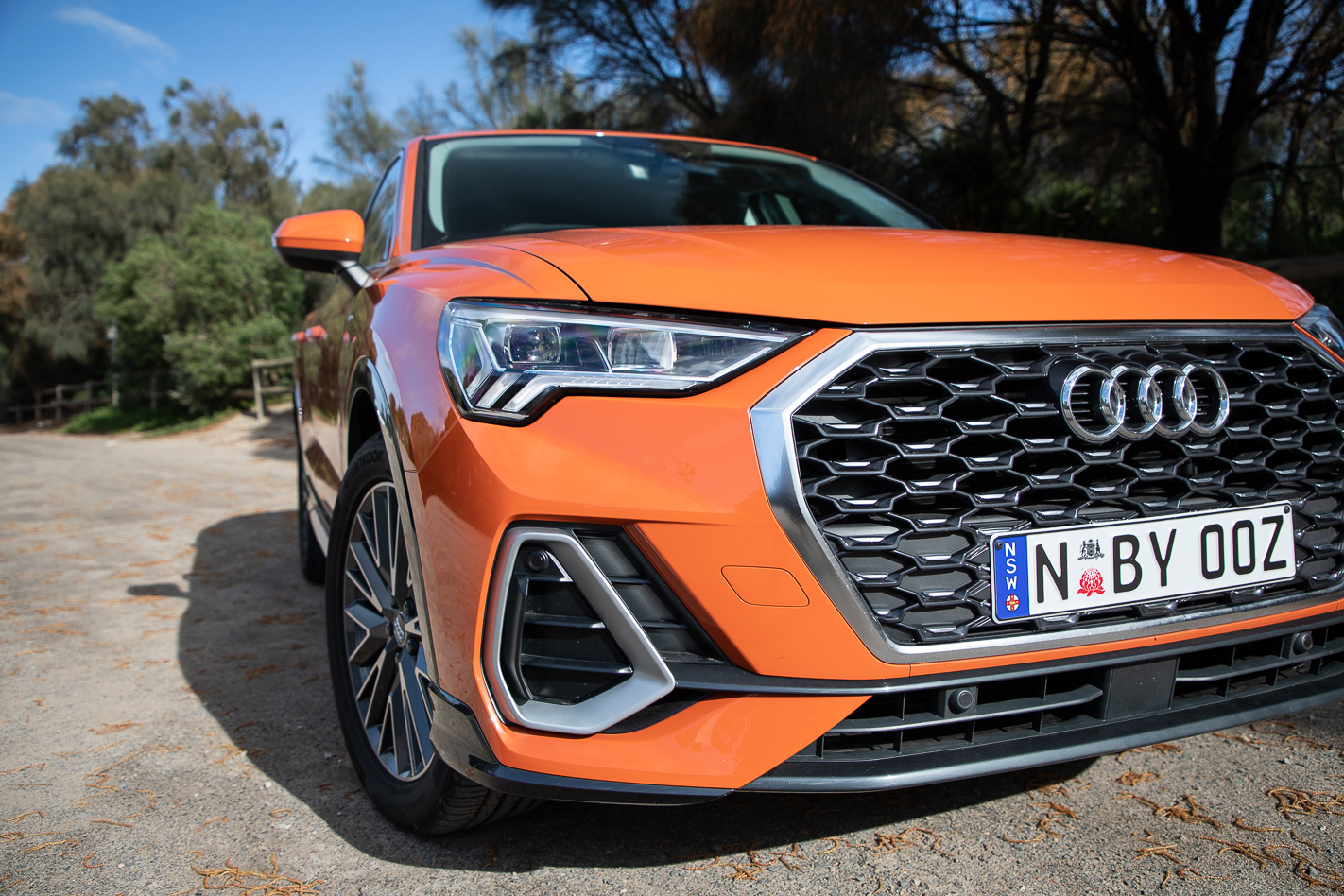
Our Q3 Sportback S Line in question wears striking Pulse Orange paint colour from the standard palette and includes option-up 19-inch wheels (though a 19-inch five-twin-spoke wheel design is standard), wireless Apple CarPlay and phone charging, a 10.25-inch digital instrument cluster, 10.1-inch infotainment screen, digital radio and navigation as standard.
Keyless entry and engine start, ambient lighting, dual-zone climate control, leather-appointed upholstery and LED headlights all join the party as standard, too.
A number of safety items are equipped as standard to help the Q3 Sportback achieve a five-star ANCAP safety rating including six airbags, autonomous emergency braking with pedestrian and cyclist detection, lane keep assist, rear cross-traffic assist and tyre pressure monitors.
What is the Q3 Sportback like to live with?
It seems as though on paper there are not as many concessions for ‘going coupe’ as you’d expect. It may begin $3500 more expensive than its wagon twin but there’s still plenty of space up front for the driver and a great number of amenities to make the experience suitably stylish.
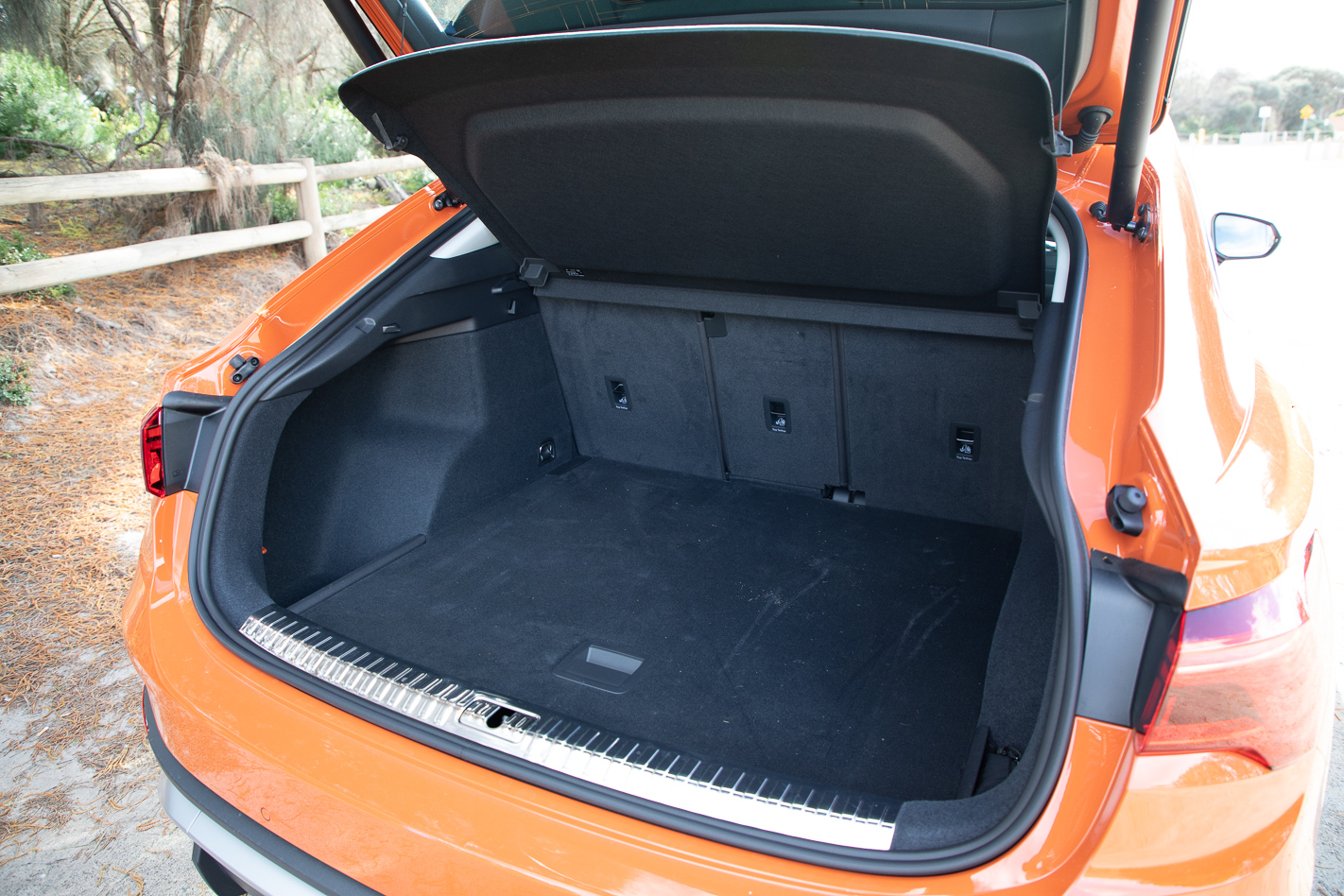
As stated before, that same 530-litre amount of boot space is available and it’s genuinely usable as well – there’s a comfortable loading height and the rear window doesn’t intrude on space either.
Audi Q3 Sportback is the style-driven sibling of Q3 wagon
However, the Q3 Sportback isn’t able to pull off the same magic when you get into the second row. I’m 187cm and my head is firmly pressed into the roof, though for smaller people there’s a comfortable, tall backrest and extended seat squab. There are rear air vents with dual USB-C ports underneath too.
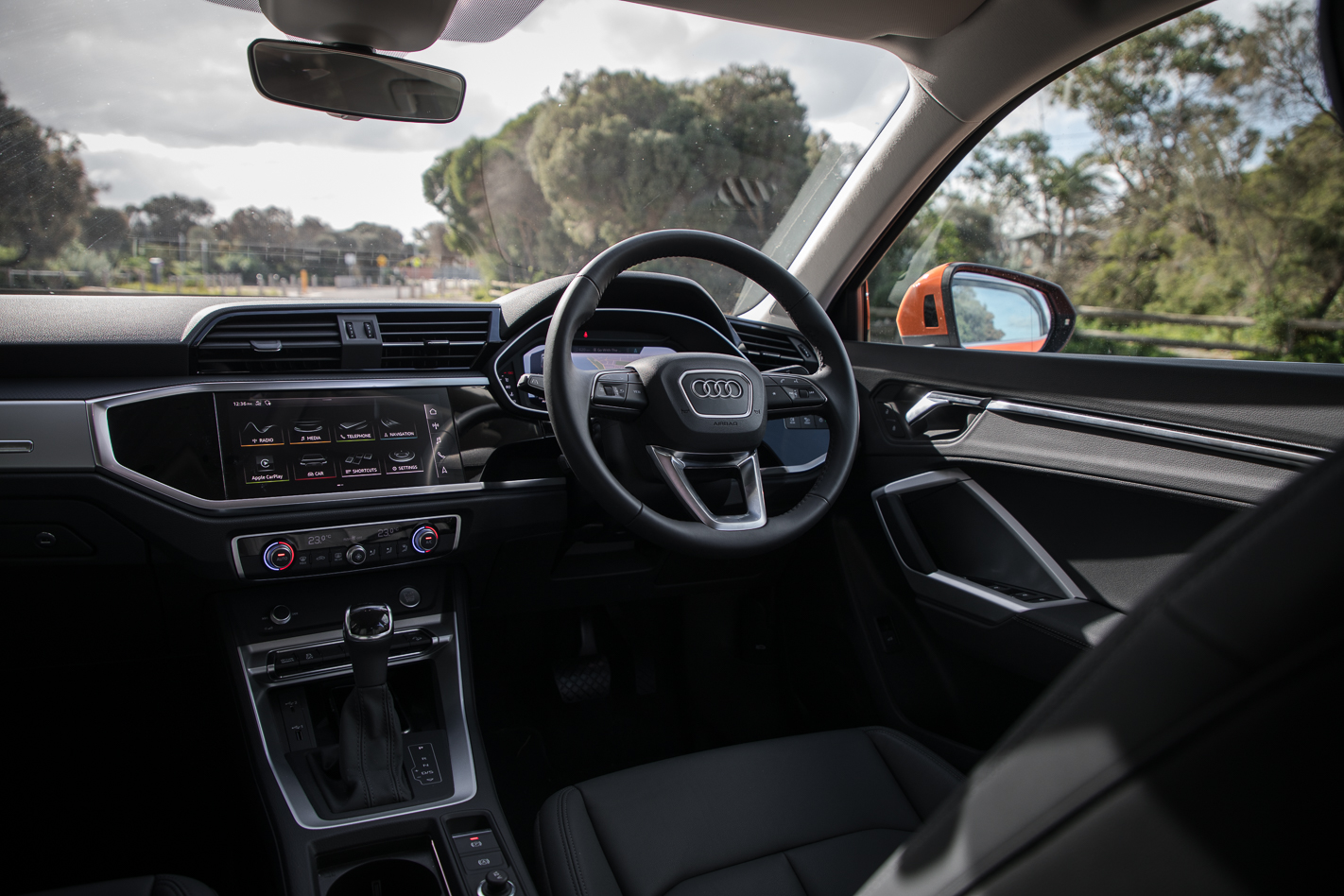
In the hot seat, it’s a much more comfortable place to be and you get a full view of the driver-focused dash which incorporates a 10.1-inch screen for the main commands while Audi’s 10.25-inch Virtual cockpit takes place of a normal instrument cluster.
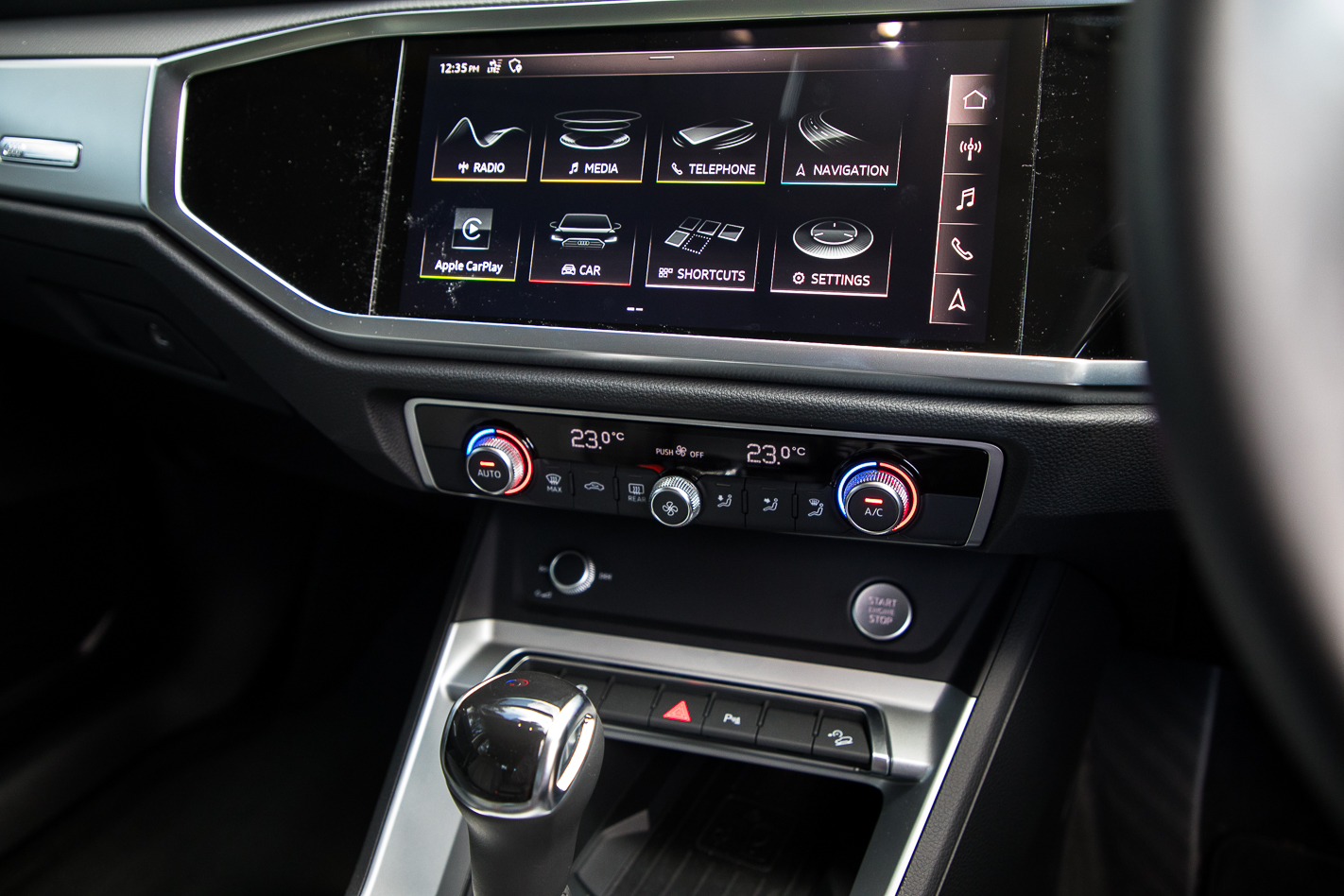
Using the central touchscreen with updated infotainment is a fairly simple affair, and there’s wireless Apple CarPlay and phone charging too which makes connectivity an easily managed ‘set and forget’ thing.
But I do miss the rotary controller which made quick on-the-fly commands easy. A happy medium would have been to include both, but let’s not stand in the way of progress…
A major part of the Q3 Sportback’s angle – and coupe SUVs in general, for that matter – is its drive experience so we hit the road to see if there’s any dynamic pedigree within the Sportback name.
What is the Q3 Sportback like to drive?
In a way, driving the Q3 Sportback allows you the best of both worlds.
Its tall and commanding profile allows you a higher perch over other cars (while not too large – it’s still a small SUV) while conversely, its low-slung nature and sporting characteristics ensure it’s steady around corners and entertaining to drive.
The ride and handling are completely fit for purpose – it doesn’t sway around corners in the way a traditional SUV would and the ride comfort levels are high too. It’s even a fun steer, with light and direct inputs resulting in a quick change of direction.
Where the Sportback shape can hurt a little bit is with visibility. Though it remains quite decent in consideration with its design, you have to be that extra bit careful to doubly make sure nothing is behind you when reversing.
The engine mated to this Q3 Sportback 35TFSI is a 1.5-litre turbocharged four-cylinder that outputs a meek 110kW and 250Nm to the front wheels via a six-speed dual-clutch automatic transmission.
While that’s not especially powerful, it at least bodes well for fuel use. Audi says it’ll sip 7.3 litres per 100 kilometres which is a figure I managed to match on test.
The transmission and engine combo is a great match, faithfully putting the power down across a number of surfaces and delivers intuitive gear shifts at all the right times.
You do get the odd fumble from the gearbox when switching between drive and reverse but it’s nothing to worry about.
While the 35TFSI powerplant in this car gets the job done just fine, if you want the kind of sporty nature that the Q3 Sportback’s design lends itself to, we’d opt for the more powerful 40 TFSI engine or even the RSQ3, both of which use all-wheel-drive, also.
Is the Audi Q3 Sportback worth it?
While there’s plenty of manufacturers out there doing it wrong, there are some car makers like Audi which has done the whole coupe SUV thing justice.
It does impede on rear-seat space and cost an annoying $3500 extra over the standard Q3, but there’s still plenty of space in the boot for weekend getaways and it brings proper style to a more affordable price point when compared to its premium rivals.
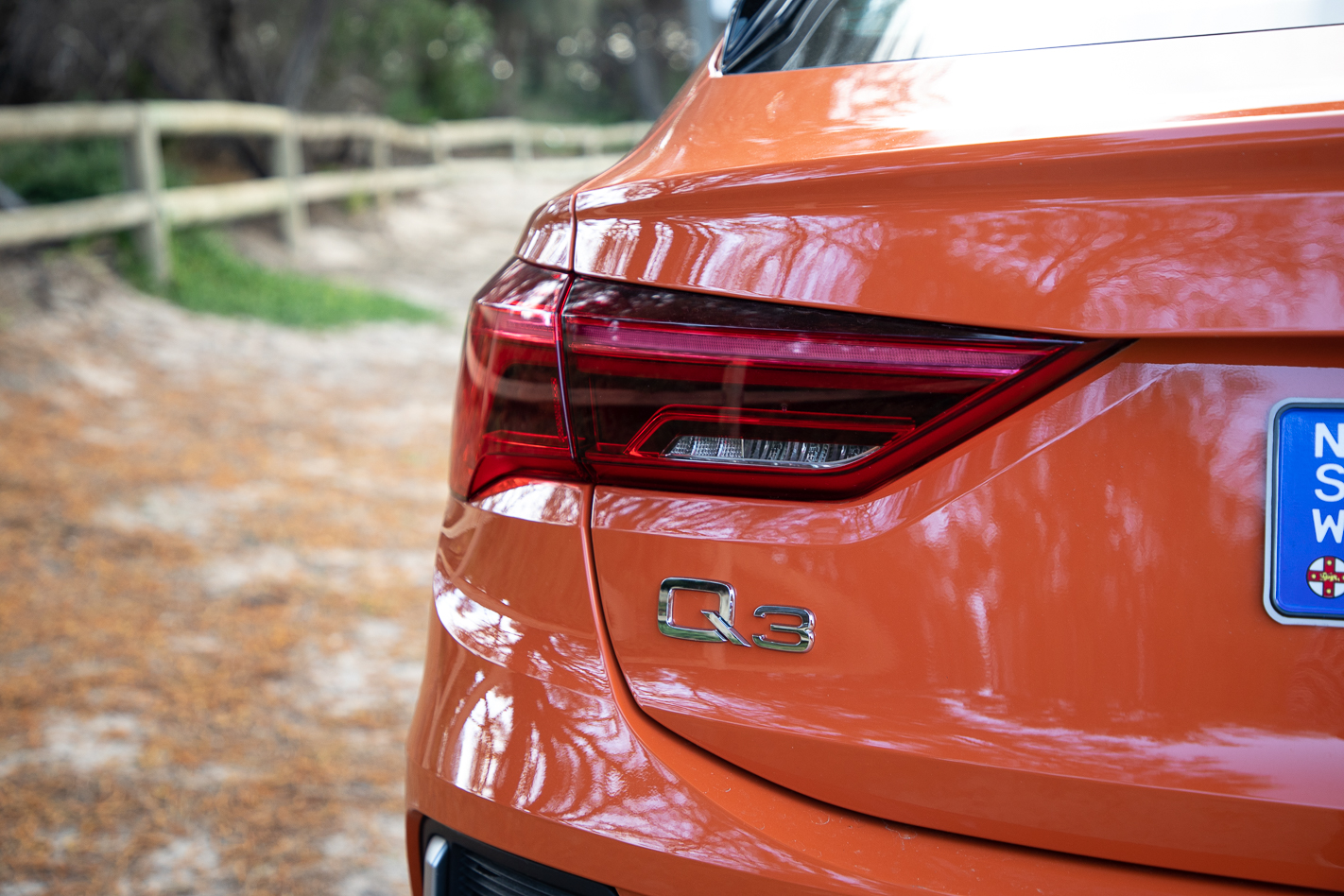
Make no mistake, we imagine those shopping for the Q3 Sportback are doing so for aesthetic reasons rather than driving ones – and in that regard, it delivers in spades.
For the style-oriented brief that was set, Audi has done its part and provided a good looking, well-equipped and head-turning alternative to the sea of SUVs.
If you want to change it up a bit or need a bit of spice in your life, you can do a lot worse than a Q3 Sportback.
Pros: Stylish and spacious, great interior materials and standard equipment Cons: 35TFSI engine not especially exciting, enclosed second row
Rating: 4/5 stars
