
For season two, we’re offering an amazing prize for our viewers. How does a trip to the Maldives sound? Pretty awesome, right? The competition is open now, so make sure you tune into WhichCar TV on Channel Ten at 4pm AEDT.
And, if for some reason you can’t (and it had better be a good reason!) then there’s a host of ways to catch up on the show, check out behind-the-scenes stuff and find out more about the cars Aussies want to buy.
For example, our weekly podcast, our Facebook page and our YouTube channel are standing by 24/7, and you’ll be able to check out each ep on Ten Play
WHAT
WhichCar TV episode two
WHEN
4pm Sundays
WHERE
Channel 10
FIND THE HOSTS ON INSTAGRAM
Daniel Gardner (@octanedan)
Emma Notarfrancesco (@emmanotarfrancesco)
Alex Inwood (@clutchkickalx)
MISSED THE SHOW?
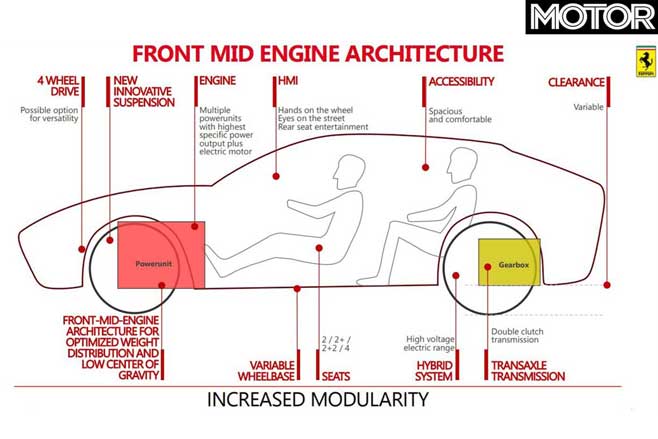
Ferrari’s upcoming Purosangue SUV model has sparked controversy years before its debut following news that the Italian car maker has begun legal proceedings against a charity that has trademarked the “purosangue” name.
According to a Financial Times report, an anti-doping non-profit charity known as the Purosangue Foundation trademarked the word in 2013, long before Ferrari conceived the idea of an SUV.
Purosangue, Italian for “pure blood”, was chosen by the charity as a representation of its work in campaigning against doping in sports. The organisation said it initially trademarked the use of the purosangue name for use in “clothing and other products”.
Ferrari, on the other hand, claims that the charity “has not made sufficient commercial use of the name to warrant exclusivity”, and that the “registration should be removed because of lack of use over the past five years”.
The charity maintains that the word has been in constant use, including being used on a line of branded sneakers and clothes produced in partnership with Adidas.
Adding to that, it said it had sought to negotiate the use of the word with Ferrari, but ended up blocking the Italian car maker’s application to trademark the brand in Europe after talks failed.
Max Monteforte, the Purosangue Foundation’s founder will be challenging Ferrari’s lawsuit with the date for the case hearing set for March 5 in Bologna, Italy.
Founded in 2011, the Purosangue Foundation runs sports training camps in Italy and Africa with the goal of spreading a culture of clean and social sports.
Even though the concept of off-road mid-engine sports cars went down with rest of the Group B rally weapons of the 1980s, it has never failed to captivate the imagination, even in today’s world of sanitised and customer-focused creations.
Like Lamborghini with the Sterrato concept, Alpine has produced its own take on the off-road sports car shtick with the Alpine A110 SportsX concept, which made its debut at the International Automobile Festival of the Invalides in Paris.
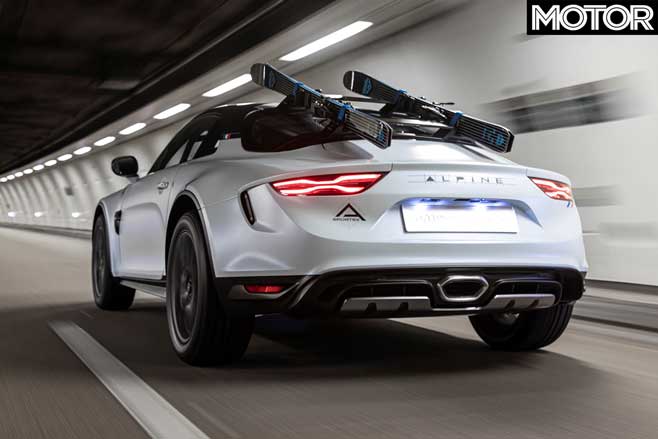
Touted as a styling exercise, the SportsX concept is based on the A110 Pure and is said to be inspired by the rally versions of the original rear-engine A110, particularly Alpine’s 1973 Monte Carlo Rally-winning example.
Alpine would eventually go on to win the inaugural season of the World Rally Championship in 1973, making it the first car to ever win the WRC title.
While the SportX retains the A110’s original 185kW/320Nm mid-engine rear-wheel drive powertrain, its exterior has been suitably beefed up with an 80mm wider body, 60mm raised ride height, and a neat mount over the rear window for a pair of skis.
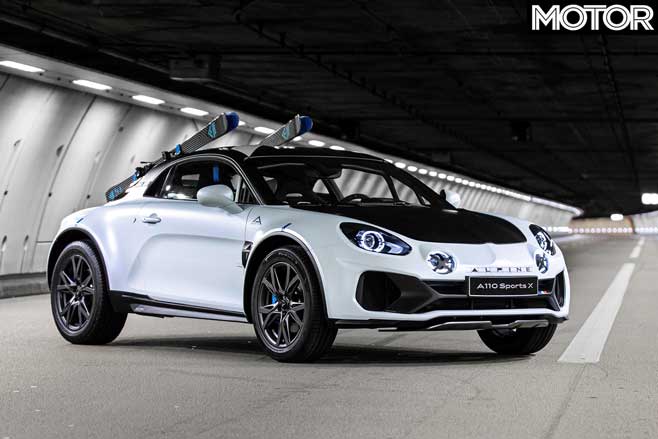
Unfortunately for the more adventurous of A110 fans, Alpine has stated that the SportsX is “not available for sale” with the concept of an off-road sports car still a tantalising fantasy.
That being said, if you are still enamoured by the whole idea of a sports car that can take on the dirt, read our exclusive drive review of the Sterrato concept.
Alternatively, if you are looking for your next garage project, check out the build process of turning a classic MX-5 roadster into a supercharged rally-raid weapon.
IF WHEELS COTY included an award for ‘most improved over its predecessor’, then the new Audi Q3 would almost certainly be headed out of Lang Lang with a medal pinned to its compact-SUV chest.
Instead, it struggled to overcome a key criteria that’s been a regular COTY stumbling point for modern Audis, but also dipped against a less-expected one.
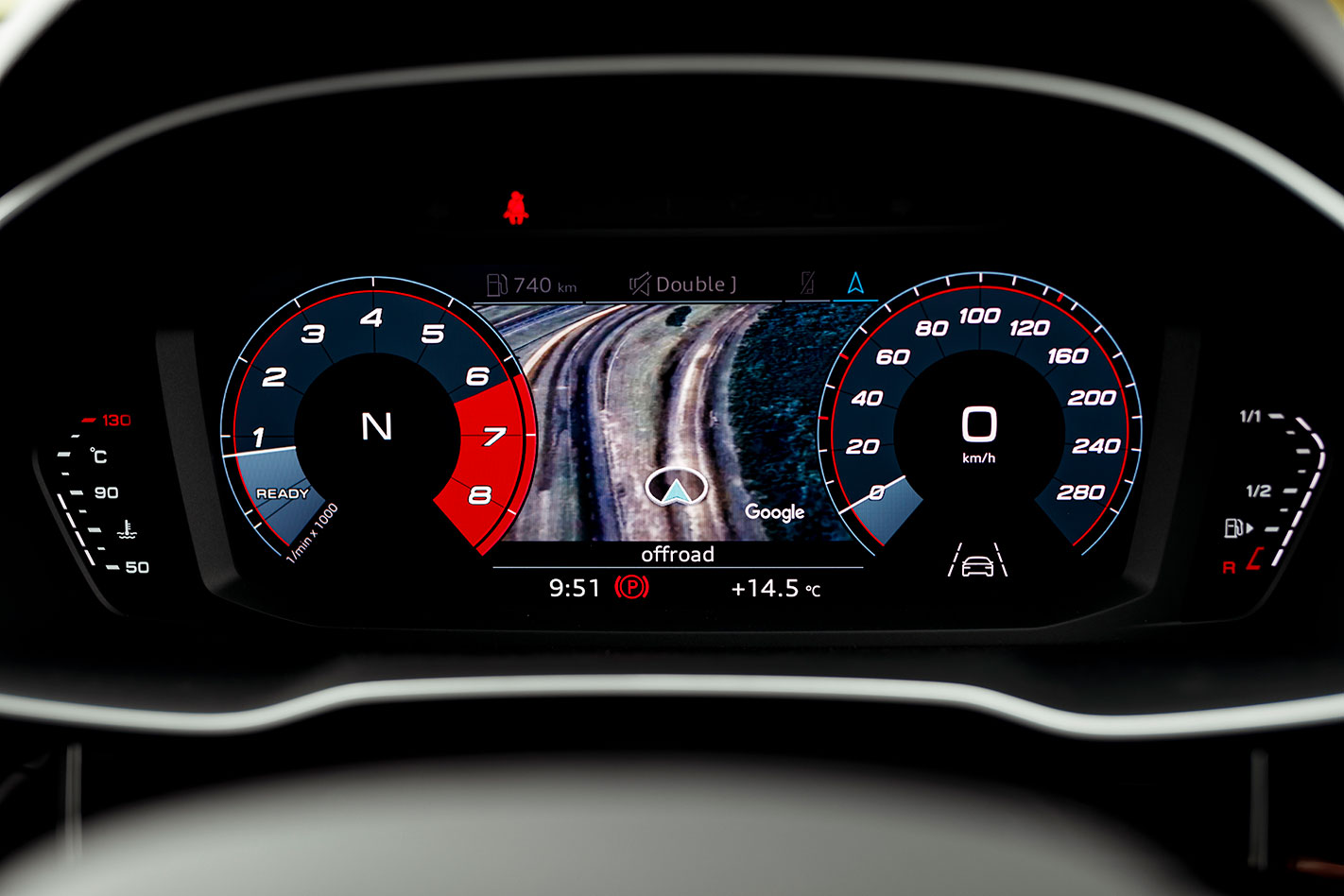
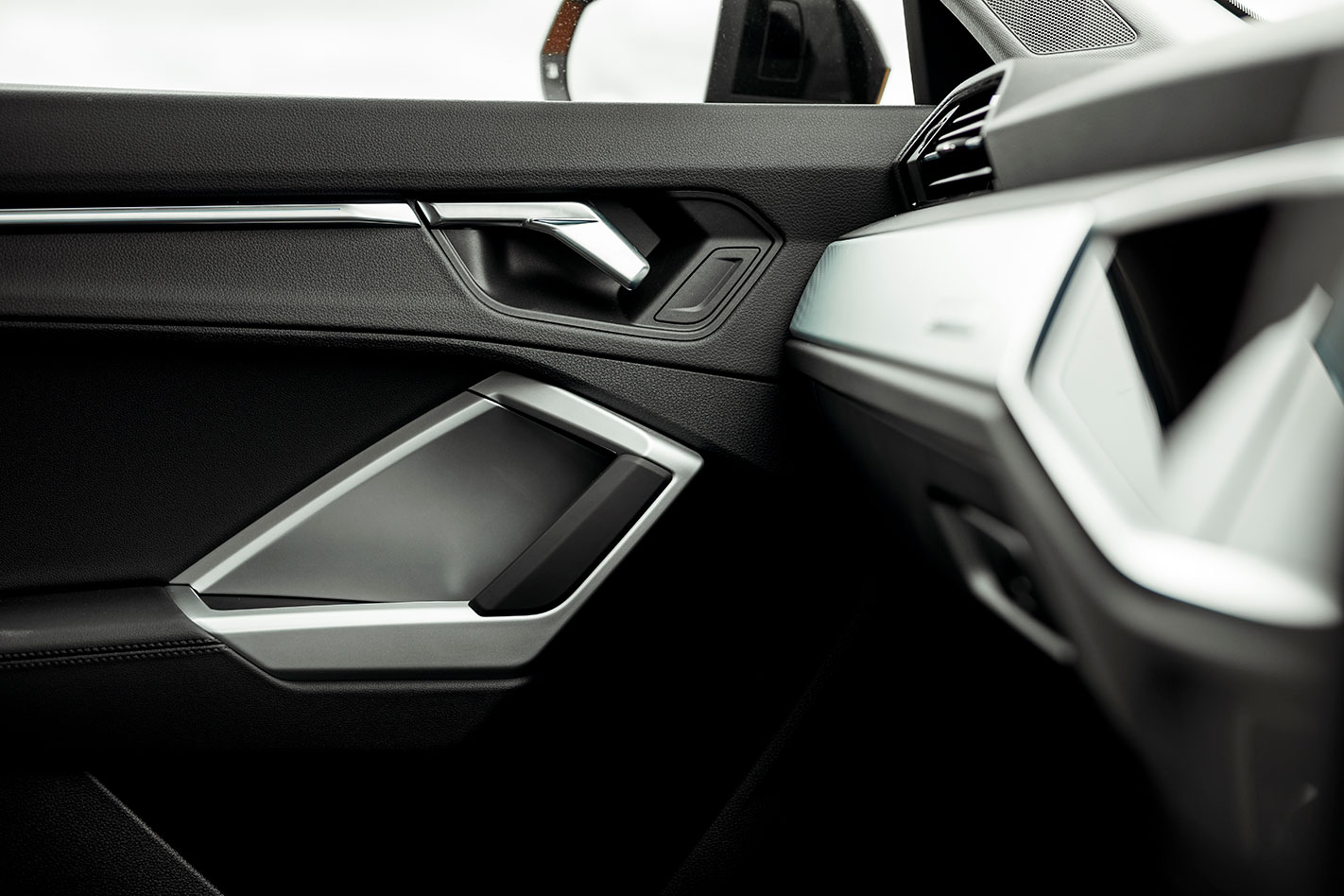
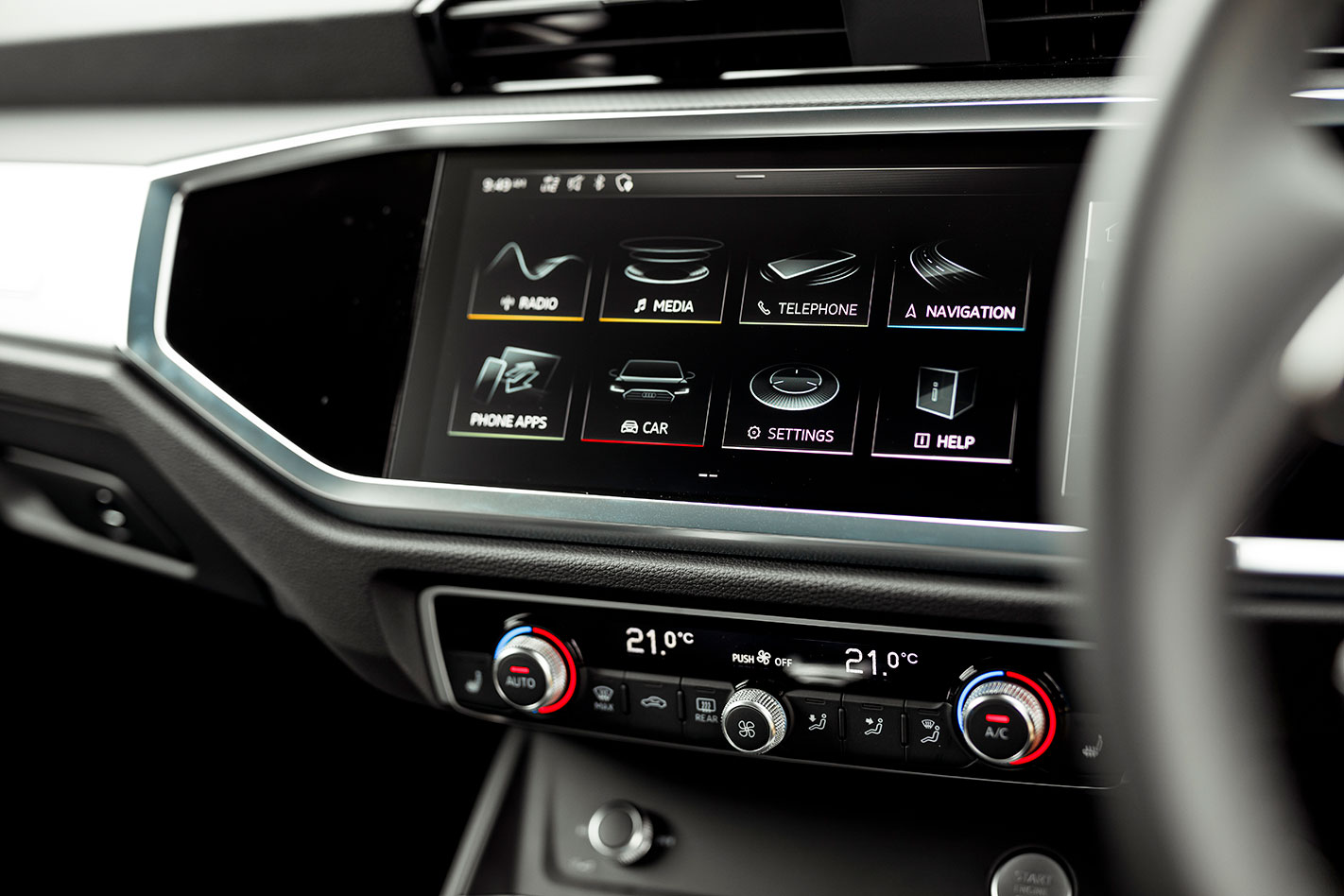
More predictable was the strong start in terms of design, cabin packaging and general user-friendliness. Early points were scored for the now-larger interior’s greater flexibility, with the sliding and folding rear seat enabling extra legroom or greater boot space, depending on daily requirements. The typical high-quality Audi interior was also noted, along with the beautiful integration of the slick multimedia screen.
The move to a version of the ubiquitous VW Group MQB platform also gifts the Q3 with decent dynamic prowess. Byron was in the majority with comments about the all-round poise, and a composed ride that made for a benign, enjoyable drive, even if the lack of meaningful steering feel did dull some of the driver-involvement sparkle.

But the fitment of the VW Group’s older 1.4-litre turbo four resulted in a swift kicking against both the Technology and Efficiency criteria. Instead of the lighter, more sophisticated and frugal 1.5-litre four (making identical power and torque) as fitted to European Q3s carrying the same 35TFSI designation, Australia gets the iron-block unit, lacking cylinder deactivation, and drinking 7.2L/100km, instead of 5.9L/100km for the 1.5. Oh, and it demands premium fuel, too. The fact that Aussie cars also get a six-speed dual-clutch transmission, rather than the seven-speeder fitted in Europe, didn’t help the situation. Nor did the lack of paddleshifters and a manual mode that sees the shift pattern arse-about.
Then the Q3 was flung through the swerve and recover exercise, and copped criticism for an excessively heavy-handed ESC calibration that pretty much neuters it to around 40km/h. Perhaps that’s okay for the target market, but the judges felt it showed a lack of development that plenty of other cars on test didn’t suffer from.
In the face of hard-nosed pragmatism, there was a consensus that the premium-priced Q3 really didn’t bring enough to the table to make it a more compelling offering than other SUVs in the VW Group, like a Tiguan. And let’s not forget that stablemate Skoda Karoq does get the newer 1.5 plus seven-speed combo, and sells for just $32K. Enright concluded that he rated the 110kW Q3 as a decent drive, but at $53K in Launch Edition spec, it was, he pointed out, almost the same money as a Volvo XC40 T5 R-Design, replete with 185kW turbo 2.0-litre and all-wheel drive.
More broadly, there was a general consensus that while the Q3 will please its owners with fine packaging and design, its oily bits don’t feel premium in the places that count.
THE JUDGES’ COTY SCORECARD
Function: 3.3 Efficiency: 3.0 Safety: 3.2 Technology: 2.8 Value: 2.7
AUDI Q3 SPECS
BODY
Type: 5-door SUV, 5 seats Boot capacity: 530 – 675L Weight: 1470kg
DRIVETRAIN
Layout: Front-engine (east-west), FWD Engine: 1396cc 4cyl turbo-petrol (110kW/250Nm) Transmission: 6-speed dual-clutch
OTHER
Tyres: 235/55R18 ADR81 fuel consumption: 7.3L/100km CO2 emissions: 164g/km Crash rating: 5 stars (ANCAP)
PRICES
$46,400 – $52,750
THE BMW 3 SERIES was a shoo-in for the top three at Car of the Year this time round. The pre-event scuttlebutt even had some proclaiming it the favourite to trouser the big gong, the first BMW to do so since the i3’s controversial win in 2014. The G20-generation 330i had already aced a couple of Wheels comparisons against some illustrious rivals and the four-cylinder sedan was joined, for the first time in Australia, by the six-cylinder M340i xDrive. By most accepted measures, this formidable one-two combo had the punch to spark many of the other contenders out cold.
Indeed, after the first round of voting, the 3 Series was second-favourite on the judges’ scorecards. But then something odd happened. Given that there was a tie in the lower orders of the voting, COTY protocol dictated that the seven judges return to the voting room and strike off one of their five choices. In doing so, the BMW found itself plummeting from second place to last and it was auf wiedersehen, Dreier.

All of which suggests it had squeaked in by the skin of its teeth on most of the scorecards. So what went wrong? In truth, very little. The judges merely felt that the remaining contenders stood up better to the detailed criteria of COTY. At least two of the judging panel were left distinctly flat by the 3 Series’ blend of talents. One word kept coming up, time and again: connection. The 3 Series’ overall polish, slick steering and morbidly obese steering wheel left some of the panel feeling removed from the action, questioning how the BMW had garnered such a billing as a driver’s tool.
Of the two cars, many preferred the urgency and pointability of the four-cylinder 330i, but the M340i xDrive’s all-wheel-drive traction saw it nail a 4.5sec 0-100km/h time. Only the 911, the Supra and the Tesla Model 3 Performance could better that, and none were as quiet on our noise meter.
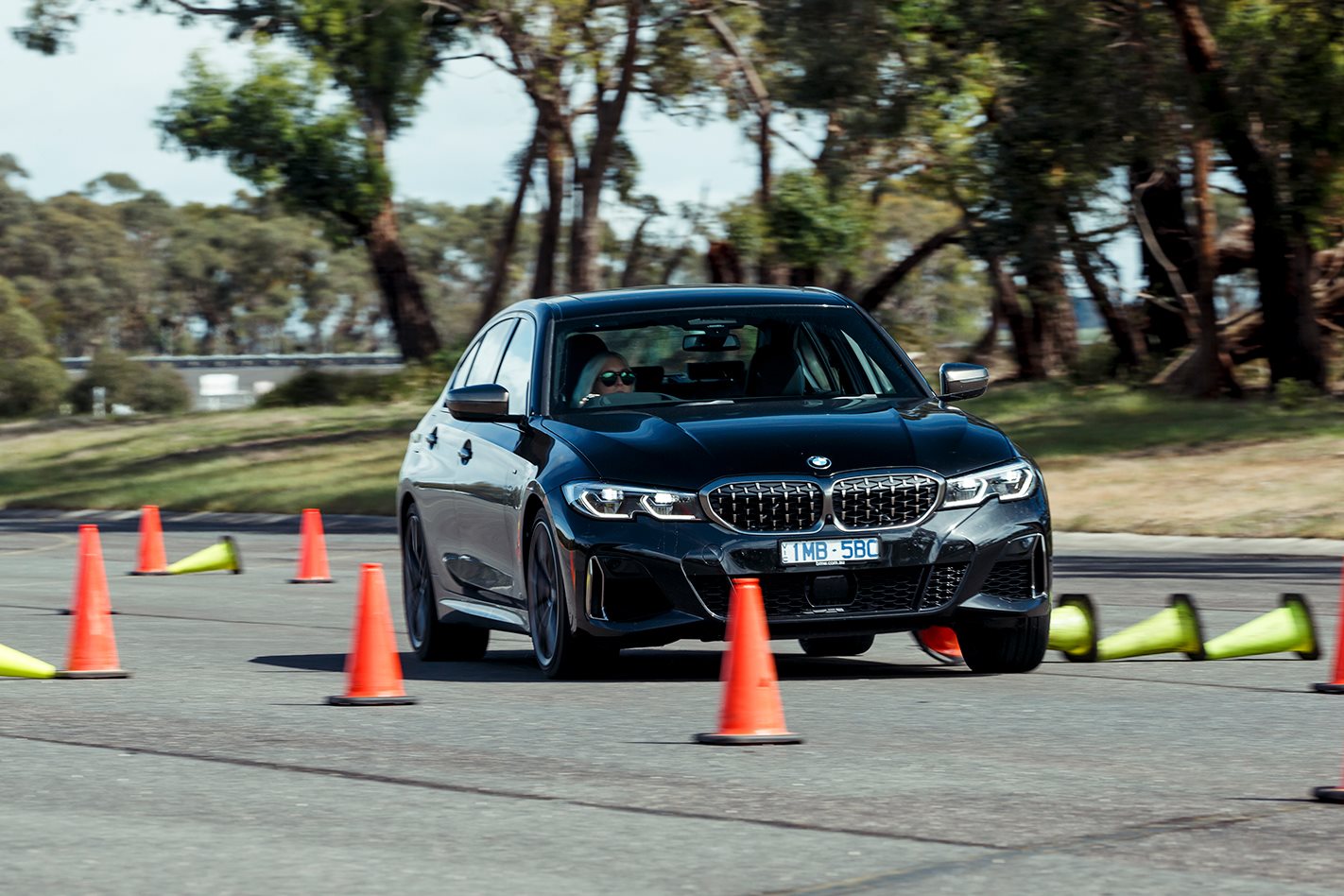
My personal take? The 3 Series is a subtle thing that takes some time to key into. I’d been lucky enough to clock up many hundreds of kilometres of seat time in the G20 generation and it’s definitely a grower. Both Hagon and Westerman clued into this, noting that it was one of those cars they’d like to spend more time with on the road. Perhaps its blend of talents weren’t explicit enough to win sufficient credit in the rapid-fire cut and thrust of a COTY first round. Or perhaps others just nailed their respective brief better. Nevertheless, the final tot-up was shocking and ruthless.
Munich fielded three models and a ringer in the shape of the Supra this year. With that array of firepower, BMW was probably justified in feeling a certain confidence. The car shouldering the heaviest burden of expectation didn’t crumble beneath it, but proved sufficiently aloof to leave some judges unmoved.

THE JUDGES’ COTY SCORECARD
Function: 3.7
Efficiency: 3.6
Safety: 3.3
Technology: 2.8
Value: 3.2

BMW 3 SERIES SPECS
BODY
Type4-door sedan, 5 seats
Boot capacity 375 – 480L
Weight1460 – 1740kg
DRIVETRAIN
Layout
Front-engine
(north-south), RWD/AWD
Engines
1995cc 4cyl turbo-diesel (140kW/400Nm);
1998cc 4cyl turbo-petrol (135kW/300Nm);
1998cc 4cyl turbo-petrol (190kW/400Nm);
1998cc 4cyl turbo-petrol + e-motor (215kW/420Nm);
2998cc 6cyl turbo-petrol (285kW/500Nm)
Transmission
8-speed automatic
OTHER
Tyres215/45R18 – 255/35R19
ADR81 fuel consumption
2.2 – 7.7L/100km
CO2 emissions50 – 177g/km
Crash rating5 stars (ANCAP)
PRICES
$64,900 – $99,900

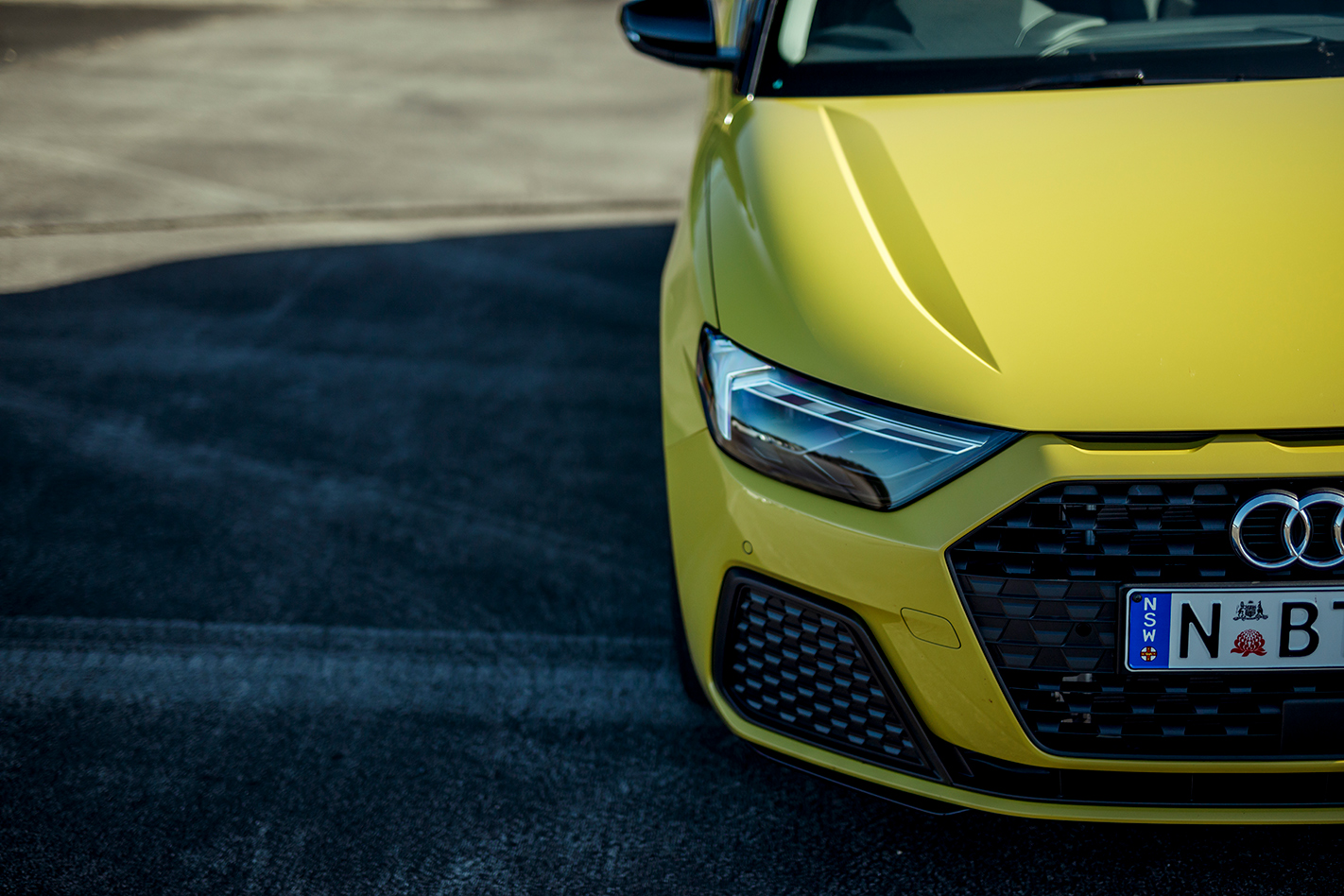
From a distance Audi’s second-generation A1 looks good. Really good. Elegant curves and a slit in the bonnet inject genuine personality into a B-segment hatchback. Mathioudakis was all but writing a cheque.
Priced from $32,350, it also undercuts the (larger, more convincing) entry points of luxury rivals by about $10K. German luxury at a mainstream price looks good on paper, the four rings a tempting alternative to the Asian emblems that dominate at this price.
But dig beneath the surface and there’s lashings of Volkswagen Polo DNA tempering the premium positioning, from that entry 30TFSI through to the 35TFSI and 40TFSI.
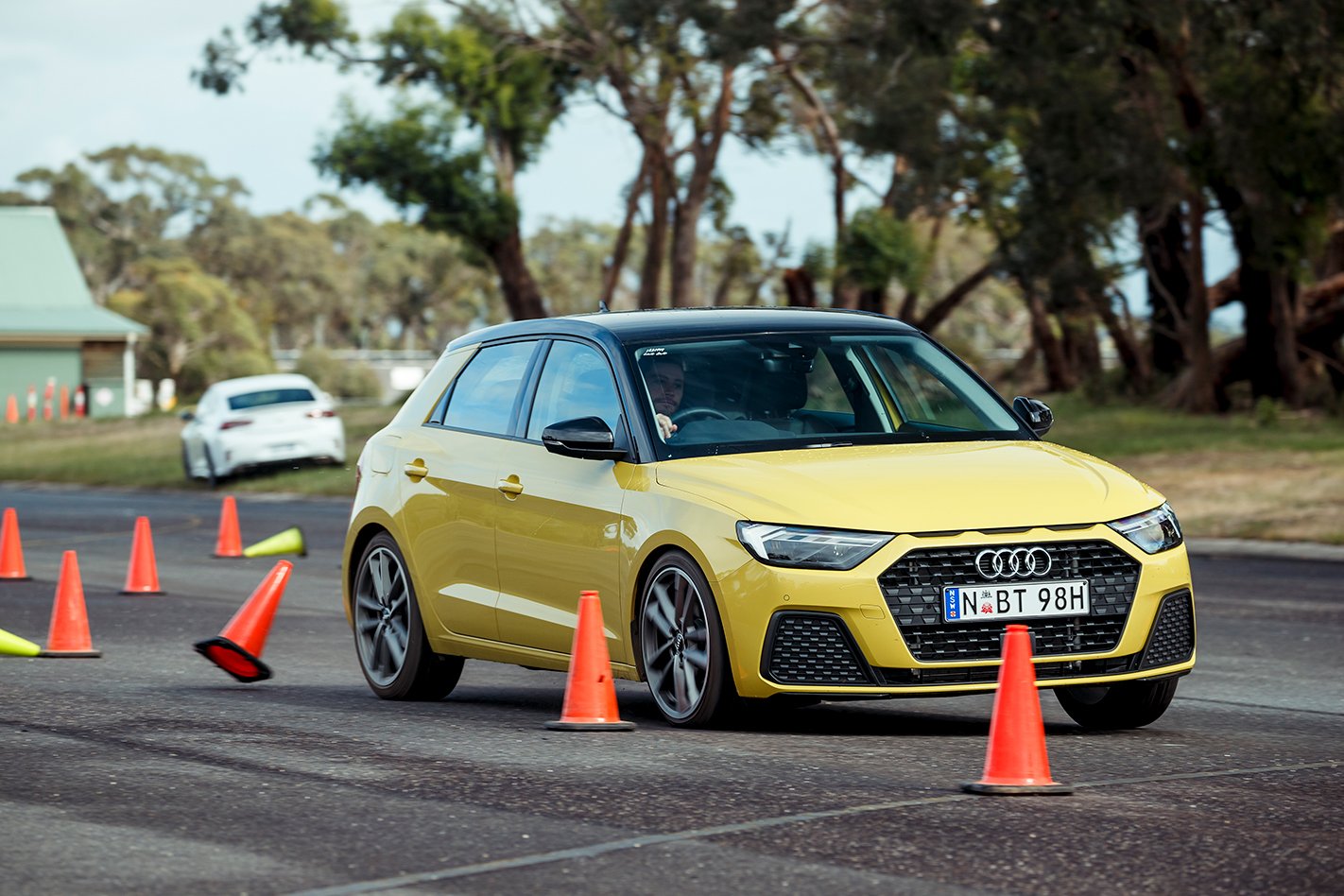
The new A1 and Polo share architectures and, in some cases, engines, making direct comparisons impossible to ignore. Audi’s three-year warranty is a kick when the Volkswagen’s, covering the same hardware, lasts another two.
That you then have to pull on an old-school handbrake and do without a covered centre console subtracts valuable points – and leaves the Audi floundering against the COTY scorecard. Absent sat-nav is a penny-pinching black mark in the lower two variants, too, diverting discussions to what was missing rather than the A1’s many appealing assets.
The A1 is also lacking active safety kit judges thought should at least be available; think rear cross-traffic alert and blindspot monitoring, now common on mainstream hatchbacks the A1 brawls with. Radar cruise is also part of an expensive pack only available on the flagship 40TFSI.
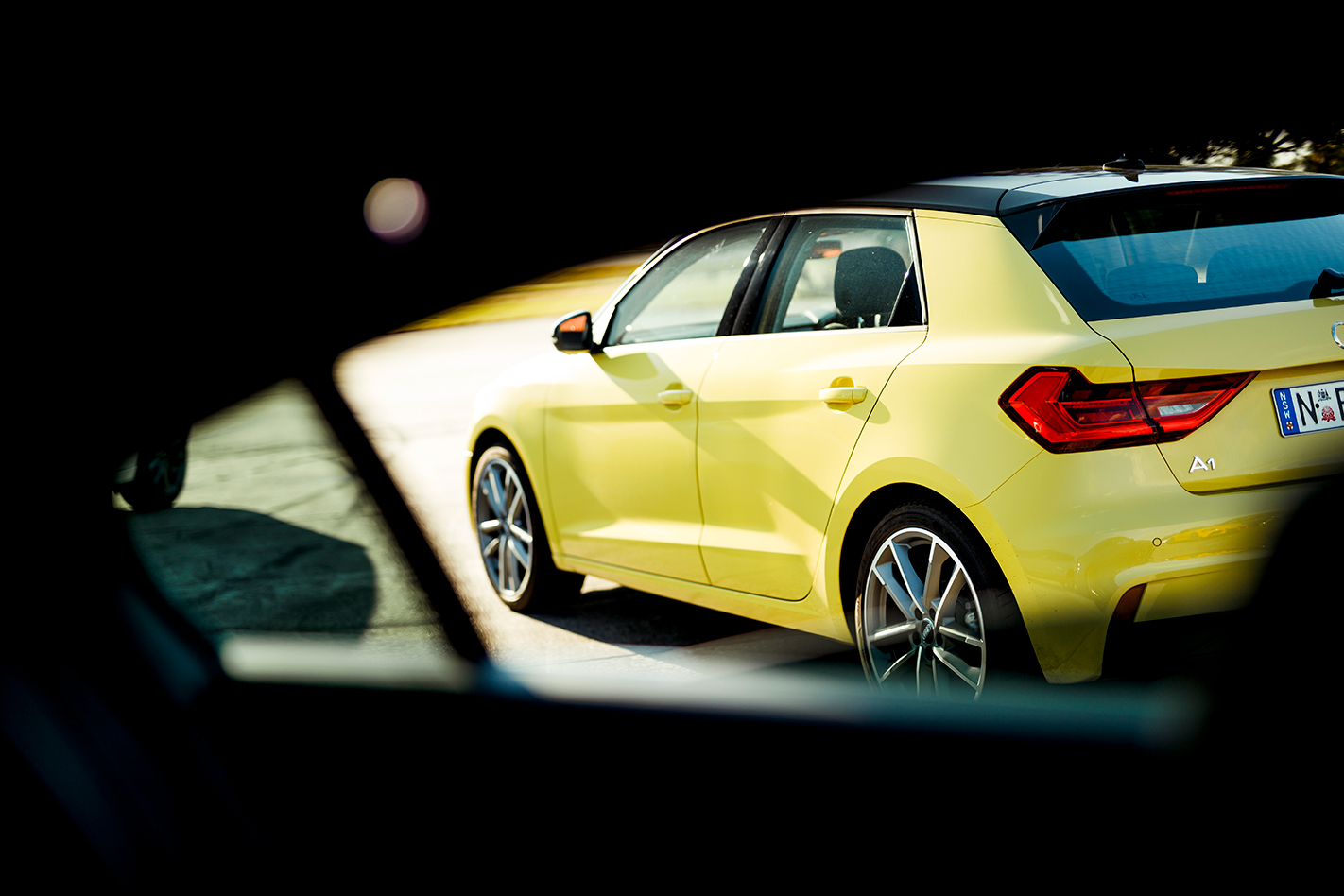
Among the hard plastics and compact cabin there are flashes of allure. The 8.8-inch infotainment screen is crisp and clear, while in the 40TFSI it steps up to 10.1 inches and incorporates wireless Apple CarPlay.
It also fights back in functionality, the playful and engaging handling and mid-corner poise a highlight, each helped by the lightweight construction.
It’s a shame the ride doesn’t exude the same maturity, feeling jiggy on anything but perfect hotmix. The stability control is also late to catch an aggressive swerve-and-recover simulation, detracting from the car’s driving nous.
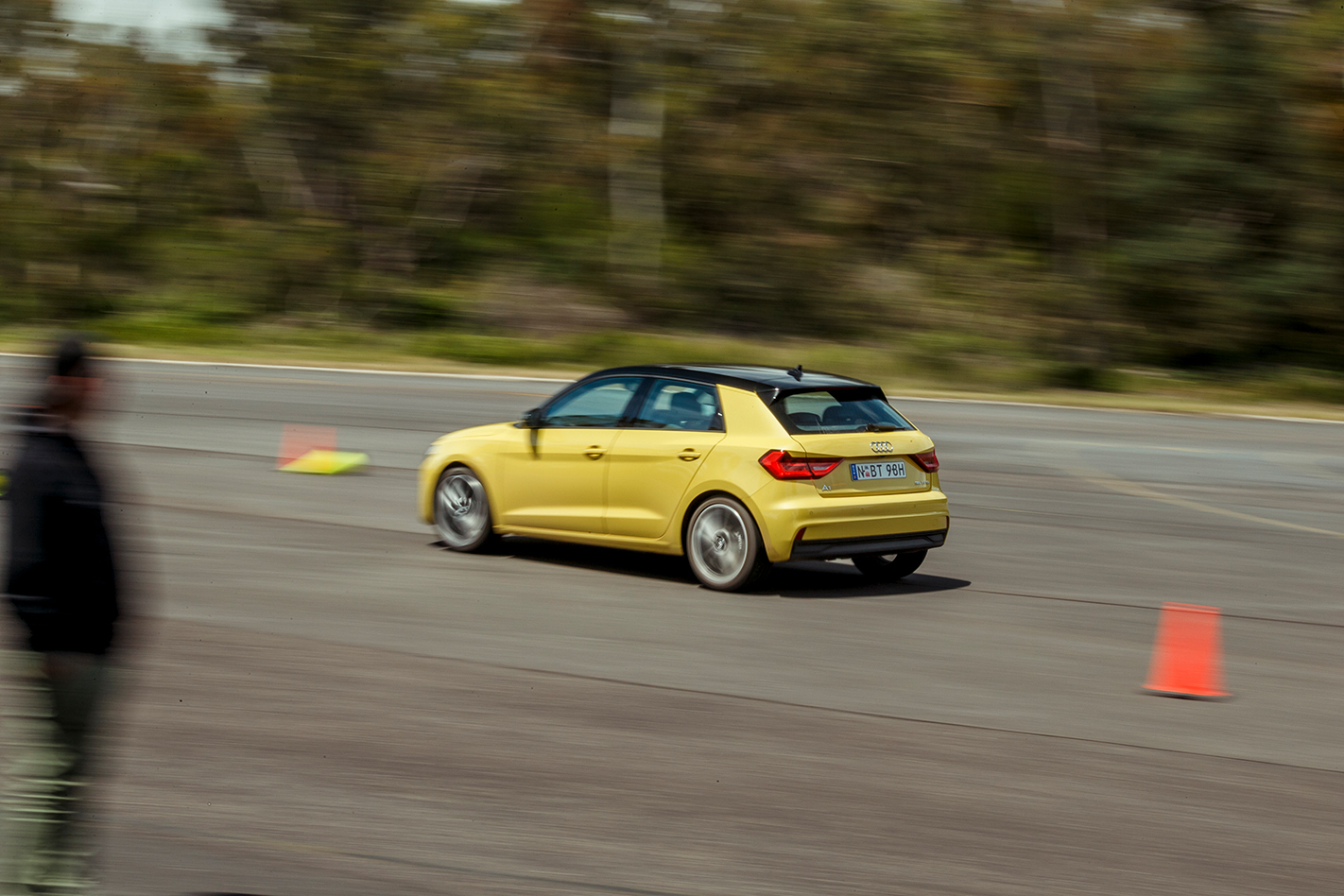
The characterful three-cylinder engine in the entry-level 30TFSI won admiration for its useable mid-range and spirited thrum. However, the hunting dual-clutch was less endearing, as was the vibey idle.
The 35TFSI reigns in the charm but steps up performance, its 110kW providing wisps of warmth. The flagship 40TFSI didn’t make a COTY appearance, although we’re familiar with its 147kW 2.0-litre punch from the Polo GTI, a car that costs a cool 30 percent less than the heftier $46,450 ask for the Audi.
It’s that questionable value that saw the A1 begin to unravel. Beauty turns heads and premium badges bring a fuzzy glow, but the criteria ultimately served the A1 some cold, COTY-crushing truths that ended the funky five-door’s 2020 chances at round one.
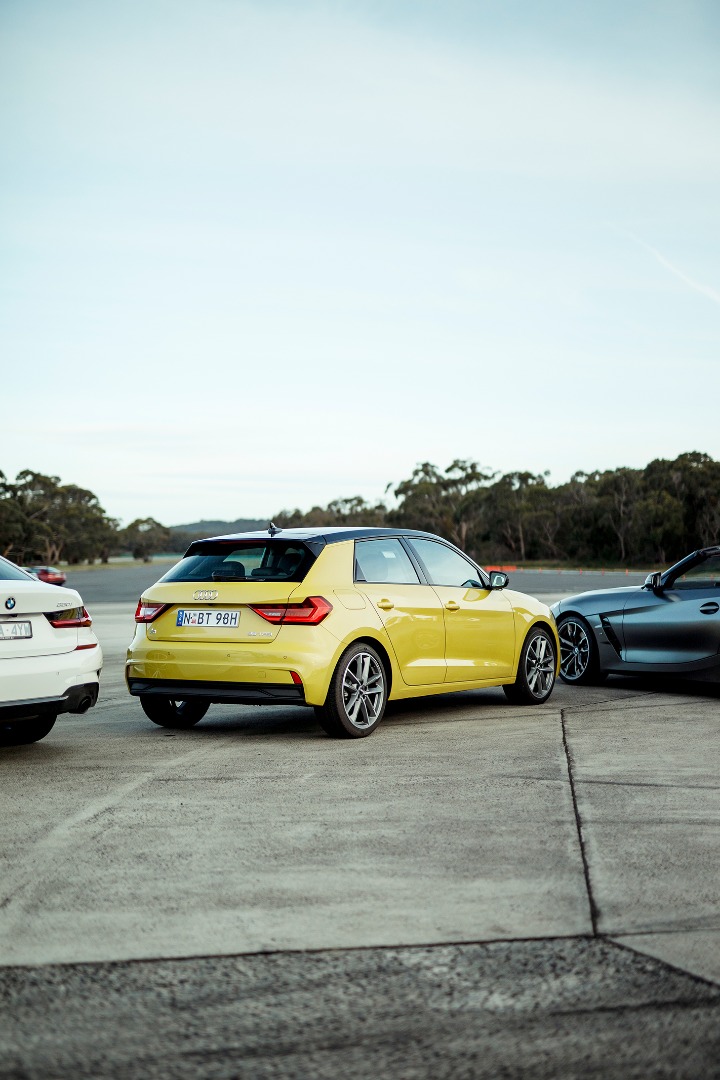
THE JUDGES’ COTY SCORECARDS
Function: 3.1
Efficiency: 3.1
Safety: 2.9
Technology: 2.6
Value: 2.6
AUDI A1 SPECS
BODY
Type 5-door hatch, 5 seats
Boot capacity 335L
Weight 1125 – 1338kg
Drivetrain
Layout
Front-engine (east-west), FWD
Engines 999cc 3cyl turbo-petrol (85kW/200Nm); 1498cc 4cyl turbo-petrol (110kW/250Nm); 1984cc 4cyl turbo-petrol (147kW/320Nm)
Transmissions
7-speed dual-clutch;
6-speed dual-clutch
Other
Tyres 195/55R16 – 215/40R18
ADR81 fuel consumption
5.4 – 6.4L/100km
CO2 emissions 122 – 146g/km
Crash rating 5 stars (ANCAP)
Prices
$32,350 – $46,450
Got a new coffee machine a while back. It’s not that I’m a coffee snob (although I’ve lived in Melbourne for 35 years), but I don’t really see the point in drinking that instant, granulated swill (or worse, the coffee-coloured dust variety) when real coffee is not exactly rocket surgery.
So, what level of sophistication in a coffee machine do we need at 13 Struggle Street? The dolphin-hugger in me can’t reconcile those pod (not a dolphin-based pun) machines that, even though they’re convenient and available with lots of grind and flavour combinations, leave a deadly trail of quasi-metallic, squished pods that have a half-life like a Chernobyl Camry.
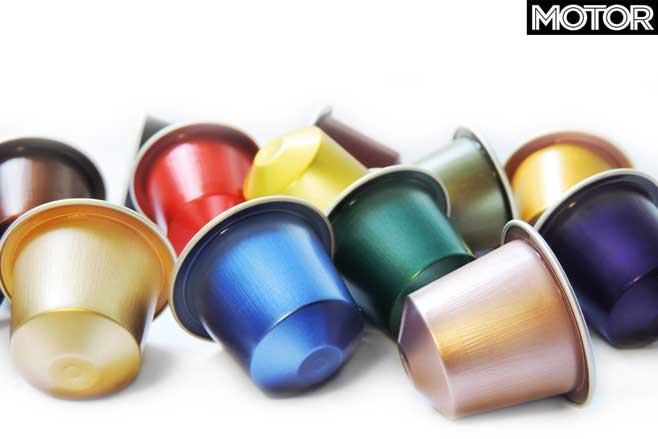
Personally, I favoured one of those machines you see in old-school Greek and Italian cafes with a row of little cups on the top, a bunch of brass levers and steam gauges, and a dirty big chrome eagle right on top to guard the little cups. These things are, however, bigger than my actual kitchen. And they cost about the same as that glow-in-the-dark Camry.
Eventually, we settled on a machine small enough to fit in the corner, but still with a proper high-pressure frother, a grinder that works in real time so the beans are always freshly brutalised and, crucially, a pressure gauge (the tappet-head in me refused to negotiate on that point).
Which means there’s still a fair bit of human involvement in turning coffee beans into a life-saving pre-brunch beverage. You have to judge the grind size and volume based on what particular little brown pellets are waltzing around the hopper at the time, and get the temperature and froth of the milk spot on without burning it or turning it into cheese. Oh, and did you know long-life milk froths better because, at a molecular level, it has a longer protein strand? Who said I’m not a man of science?
The point of all this is that you still have the opportunity to bugger things right up and turn a cupful of wonder into a putrid chalice of disappointment. Which is great, if only because there’s a huge sense of achievement when you get it right. Maybe not for a proper barista, but for a dill like me who still thinks of a hammer as an integral part of any socket set, producing coffee that doesn’t stain the ceiling remains a big win.
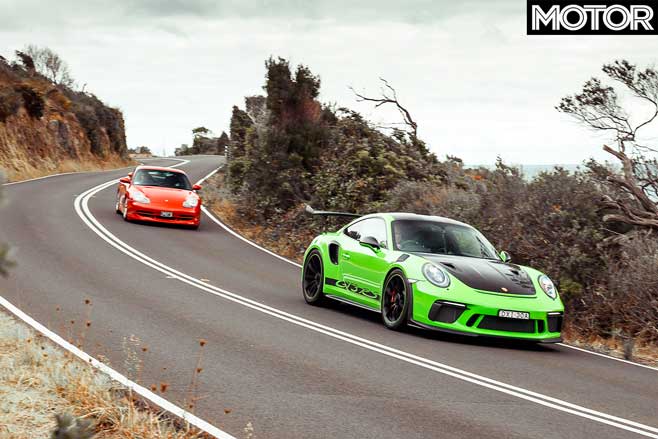
It’s this sense of victory that still draws me to cars with a certain degree of manual operation and analogue feedback. It’s why I’ll still take a conventional three-pedal manual over any other arrangement, because I still get to grin when I’ve made the perfect heel-toe downshift. I still want to feel what the front (and rear) tyres are doing and I don’t mind at all if I can hear the exhaust note as an indicator of throttle position.
Driving a compact SUV the other day (in the name of science) I was amazed how numb and featureless it felt. The ride was awful yet it still body-rolled, and the CVT transmission, although very efficient, was clearly unconcerned about improving my experience beyond saving a few drops of fuel.
Then there was autonomous braking, lane-keeping and active cruise to relieve you of any obligation to think about actually driving. This joyless little blob did the job without fuss and was certainly about as idiot-proof as a car could be, mainly by depriving the driver of any real ability to control the action beyond the vague direction of travel.
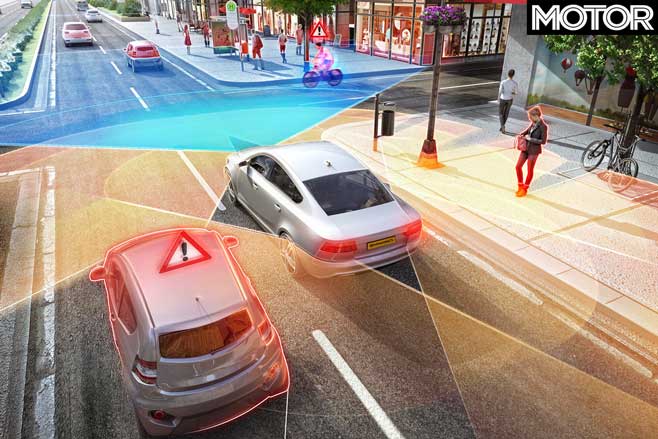
Which is when I realised that this thing was the pod-machine of the car world. And as such should really be inserted into a slot and crushed. Or – and I’m not fussy – placed in the hopper of a big, steam-powered mutha with a giant eagle on top, ground to atoms and drowned in boiling water. Frothy milk optional.
Satisfaction takes many forms around here.
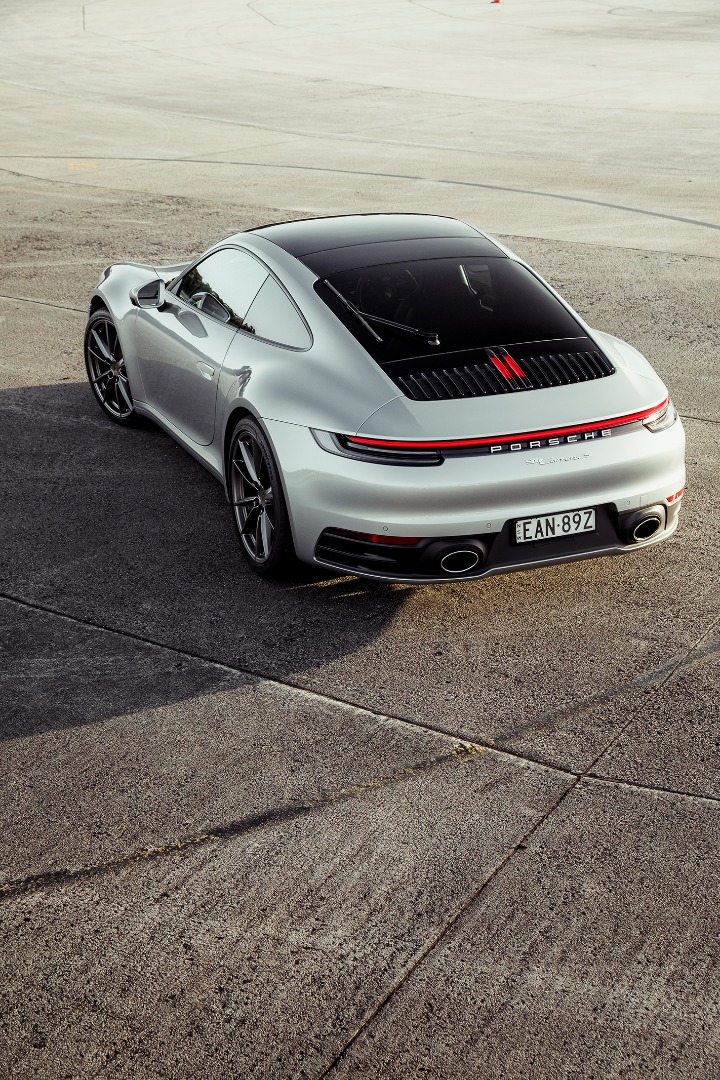
With age, the human backside often becomes broader. But the wider rear of the 56-year-old Porsche 911 is a sign of greater vitality and vigour, not less. The new Type 992 is faster than the 991 it replaces, and with the extra ferocity comes greater finesse.
The all-new, aluminium-intense body of the 992 uses the same wheelbase as the 991. The structure is a little lighter, despite increases in overall width and length.
The design of the new-generation 911 puts more visual emphasis than ever on its rear haunches, an effect boosted by Porsche’s decision to fit rear wheels with an extra inch of diameter compared to the fronts across the range. The better to balance levels of front- and rear-end grip, say company chassis experts.
There’s very little wrong with the design and presentation of the 911’s carefully crafted 2+2 interior, which features a perfectly proportioned driving position and a beautifully integrated infotainment touchscreen.
Porsche has upgraded the 3.0-litre twin-turbo flat-six for the 992, as it was first introduced in the 991.2 back in 2015. Switching from identical turbos for each set of three cylinders to a pair of mirror-image turbos enabled a redesign of inlet- and exhaust-system plumbing. Power and torque maximums for both plain 911 Carrera and more powerful Carrera S models jump to new highs as a result. Even more important is the arrival of an eight-speed dual-clutch in place of the seven-speeder in the previous 911.
There is a hybrid in the new 911’s future, but it’s still some way off. Right now, the 992 range consists of eight models; Coupe and Cabriolet in Carrera and high-output S specifications, in rear-drive or all-wheel-drive forms. Prices begin at $229,500 for the Carrera Coupe and extend to $302,200 for the Carrera 4S Cabriolet. For COTY, we chose a $264,600 Carrera S Coupe.
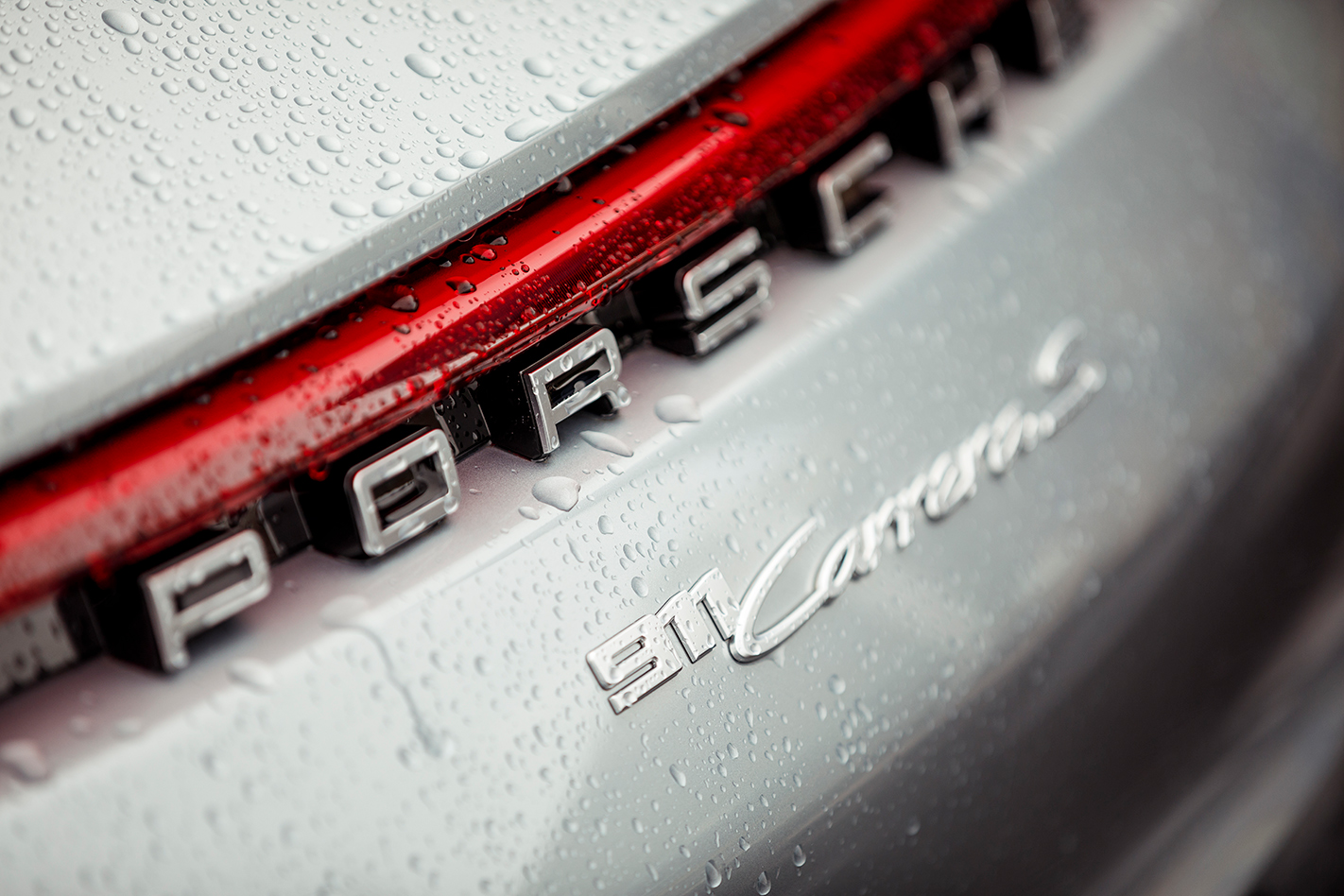
There are two ways to judge the value of the 911. One is to compare it with other exotics (mostly Italian and inevitably much more costly), and declare it a near bargain; the alternative method is to compare the Porsche with other brilliantly rewarding sports cars (some of them also made in Zuffenhausen) that cost much less, and conclude that the law of diminishing returns makes the 911 a mediocre choice at best. There were supporters of both viewpoints.
What no-one argued about was the Porsche’s joyous brilliance while its wheels were turning. The 992 is irresistibly seductive, combining serious speed with stellar handling. This prowess was partly the product of sublimely precise steering. “Butter smooth,” was the apt description of judge Andy Enright.
Equally impressive were the Porsche’s brakes, which delivered sub-36m stops from 100km/h. Acceleration? In our 0-100km/h tests, the Carrera S beat the factory claim of 3.5 seconds by a tenth.
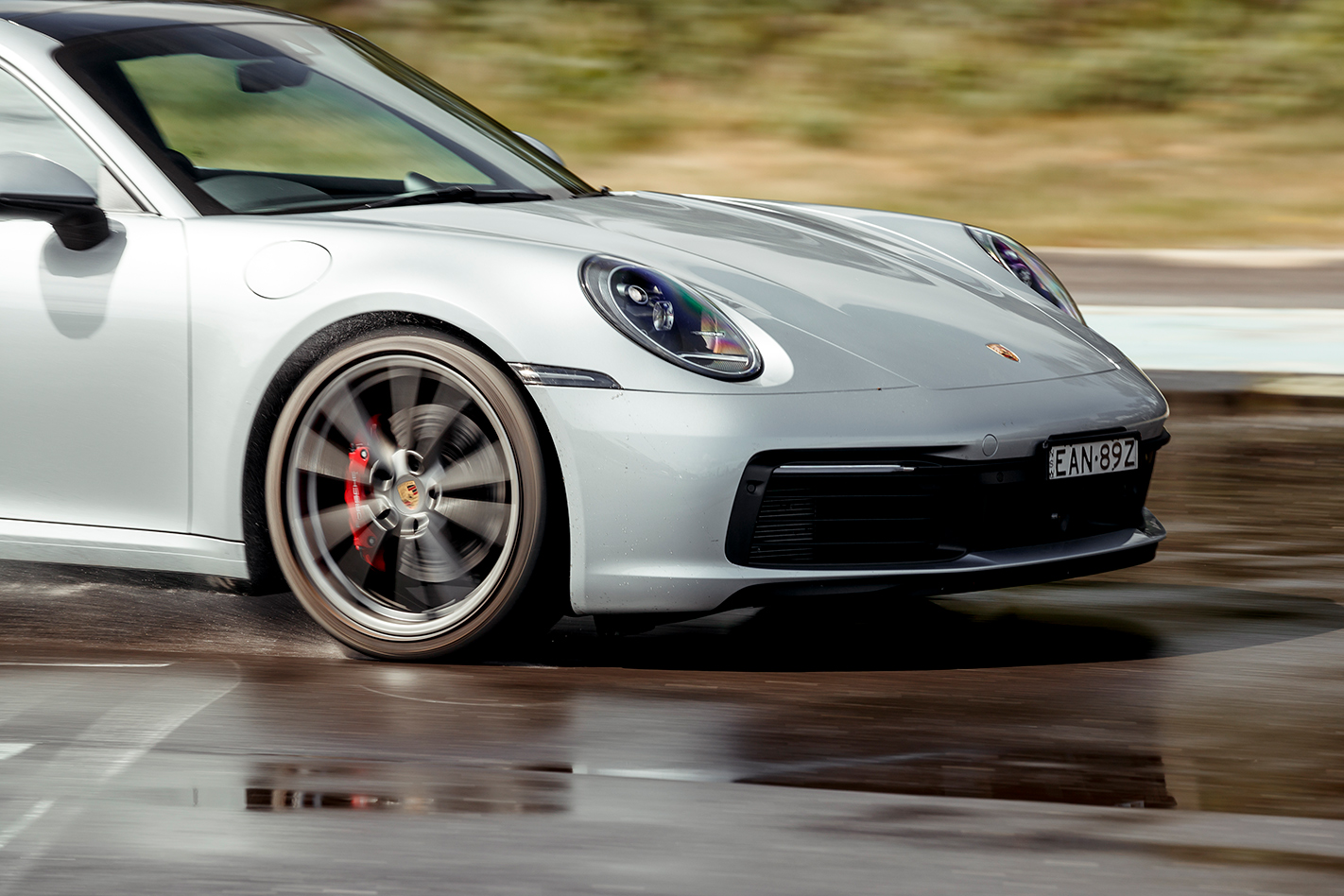
Dynamically, the new Porsche 911 delivers exactly what its reputation, design and technology promise: a truly special driving experience. Just as importantly, the suspension comfort of the Porsche is outstanding for something with so much cornering, braking and acceleration to offer.
“Apart from the road noise, this thing is pretty much perfect,” was the summary of editor Inwood. It was a thought echoed in the notes of other COTY judges.
As for efficiency, improvements to the 992’s drivetrain contribute to marginal reductions in fuel consumption compared to the 991.2 it replaces; 0.5-1.0L/100km. But the 13.0-plus L/100km consumption recorded during the public road phase of COTY testing is high for a car which has only two genuinely useful seats.
What also pricked the judges’ attention was the 911’s lack of safety and driver-assistance equipment now becoming commonplace in much cheaper mainstream models. Examples? The AEB system doesn’t work in reverse; lane-departure warning alerts the driver but doesn’t steer to keep the vehicle in its lane; there’s no cross-traffic alert, front or rear.
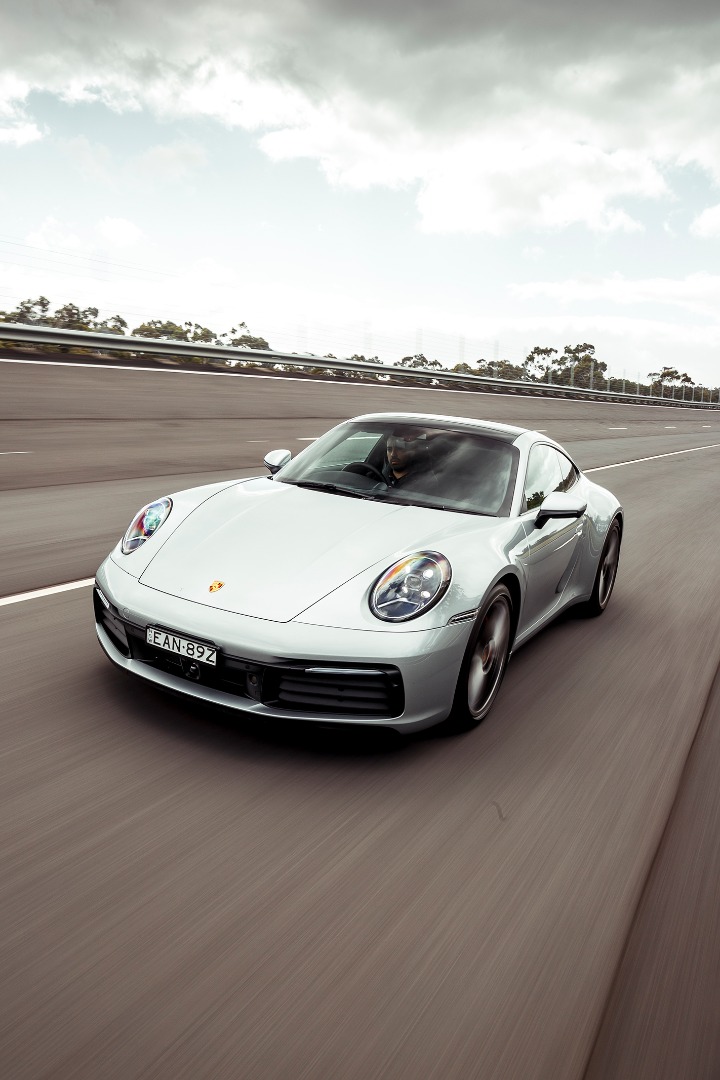
The new 911 is almost pitch perfect when singing its song of seduction, but against COTY’s broad-based criteria, this wide-rumped Porsche’s value, efficiency and safety hit a few dud notes.
THE JUDGES’ SCORECARD
Function: 4.1
Efficiency: 2.4
Safety: 3.0
Technology: 3.0
Value: 3.2
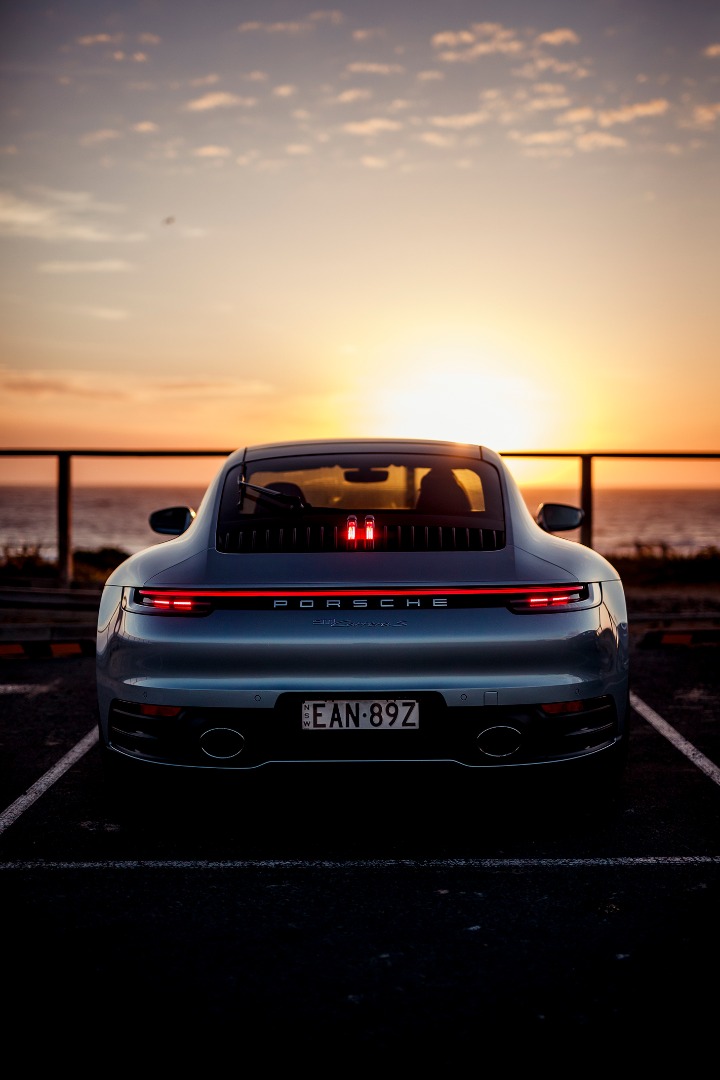
PORSCHE 992 911 SPECS
BODY
Type: 2-door coupe/cabrio, 2 + 2 seats
Boot capacity: 132L
Weight: 1505 – 1635kg
DRIVETRAIN
Layout: Rear-engine (north-south), RWD/AWD
Engines: 2981cc flat 6cyl, twin-turbo petrol (283kW/450Nm); 2981cc flat 6cyl, twin-turbo petrol (331kW/530Nm)
Transmission: 8-speed dual-clutch
OTHER
Tyres: 235/40R19 – 305/30R21
ADR81 fuel consumption: 9.4 – 9.6L/100km
CO2 emissions: 232 – 248g/km
Crash rating: Not yet rated
Prices: $229,500 – $302,200
Cristian wants to eat the doughnut in his hand. But he’s failing. Terribly. Not by his own fault, though. The BMW X3 our photographer is passenger in is more to blame. As we belt up Mount Donna Buang, a few hours east of Melbourne, each corner arrives just in time to rip it away from his gaping maw, the huge centrifugal forces proving this X3 is much more than a high-riding family wagon on fancy wheels.
That’s because this is the brand-new M version. Of course, that letter and this car are not the most natural pairing. A few decades ago we’d imagine engineers in Munich headquarters would strangle product planners for even suggesting the idea. But the market demands more performance SUVs than ever. Sales are so lucrative BMW M predicts the X3 will become its best-selling car. Even better than the M2.
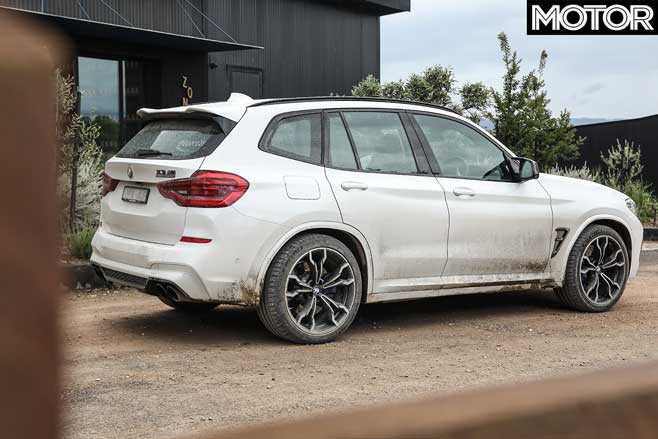
The X3 M scores some serious weapons to help get the job done and out here, on these corners, they seem to be working – especially in range-topping Competition trim. Michelin Pilot Sport 4 S boots lend enough grip to enter a bend without touching the brakes. The nose, perched high off the ground, tenaciously tracks your intended line. It’s so much more hunkered down than the regular X3 that it feels like a completely different car.
The thing is, after going over what’s changed (and the $157,900 price!) it basically is. And one squeeze of the throttle reinforces that. Its nose harbours the all-new S58 engine we’ll see in the next M3 and M4. Twin turbos pressurise an inline-six to produce 600Nm. And with a forged crankshaft, closed-deck block and 3D-printed cylinder head, the new three-litre is good for 375kW. But then there’s the rest of the story.
Grunt is squeezed through an eight-speed transmission and xDrive system from the M5 before reaching all four wheels. It has an active rear differential, adaptive dampers, extra engine bay bracing and an M-specific steering rack. Then there are the brakes, which include beefed-up four-piston front calipers and drilled discs to haul down its two tonnes.
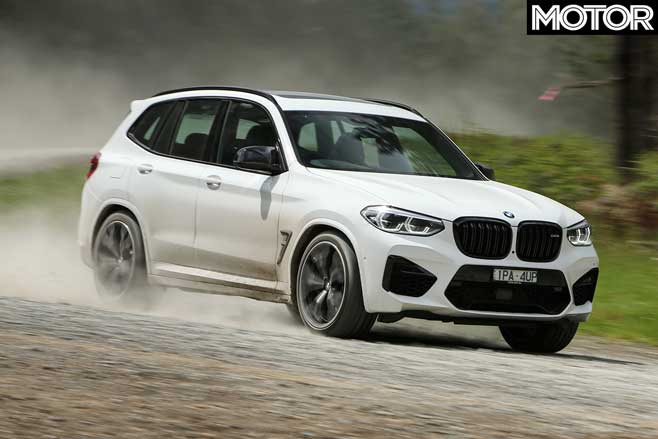
These parts create an SUV that feels as rapid as anything I’ve driven up here. As for Cristian’s doughnut, he’s given up. The coffee in his other hand threatening to erupt over the interior has taken top priority. My concern, meanwhile, is what’s ahead of us – a silver Jaguar F-Pace SVR. It’s a reminder that if BMW wants the X3 M Competition to be as popular as it hopes, it will need to vanquish a broad set of rivals.
Naturally we’d have the updated Mercedes-AMG GLC 63 and Porsche Macan Turbo ready for battle, but since they weren’t available at the time, they’ll ambush the emerging winner in a later comparison. Think of today as the first round before the winner earns a ticket to the final. It won’t be easy.
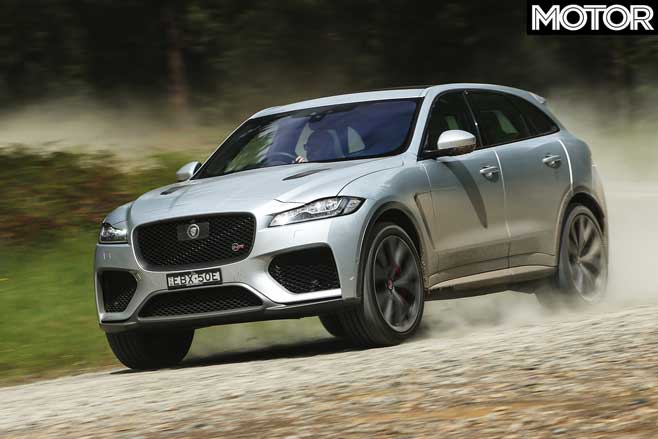
Like the X3 M, Jaguar has stuffed the F-Pace SVR with as much go-fast engineering as it can handle. Within its engine bay a supercharger wraps a belt around a five-litre V8’s crankshaft. It’s good for 405kW and 680Nm. It then pushes that through an eight-speed transmission to all four wheels, while an active locking rear differential then distributes torque across the rear axle. It costs $142,200 – the cheapest base price here – but the list of goodies keeps going.
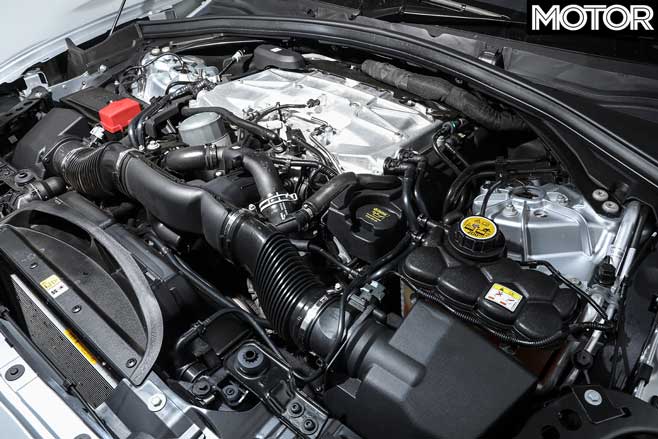
At each corner huge 22-inch optional wheels make dinner plate-sized brake discs look small. And as we buck and bump along the road towards Mount Donna Buang, the SVR’s stiffer springs, roll bars and dampers help settle its massive weight. There are also gleaming exhaust tips pouting from the rear valance, revealing the lightened SVR exhaust system. You will hear this thing well before you see it. And you could say the same for our final contender, which delivers looks and noise in equal measure.
The Alfa Romeo Stelvio might be the brand’s first SUV, but the four-leaf clovers on its guards reveal it always had a fast one in mind. Dubbed the Q (for Quadrofoglio), it splits the other two on price at $149,900 and shares many of its parts with the Giulia Q. That Ferrari-inspired twin-turbo V6, for example, is straight from the sedan with the same 375kW and 600Nm. And the similarities don’t end there.
It rides on 20-inch wheels of the same beautiful telephone-dial design seen on the Giulia, and the brake discs and caliper specs are identical. Even its eight-speed transmission has the same gear ratios. It also gets an Alfa Active suspension system controlled through a drive mode selector. Think of it as a Giulia Q on stilts with a (slightly) bigger boot and all-wheel drive grip, because it certainly drives that way.
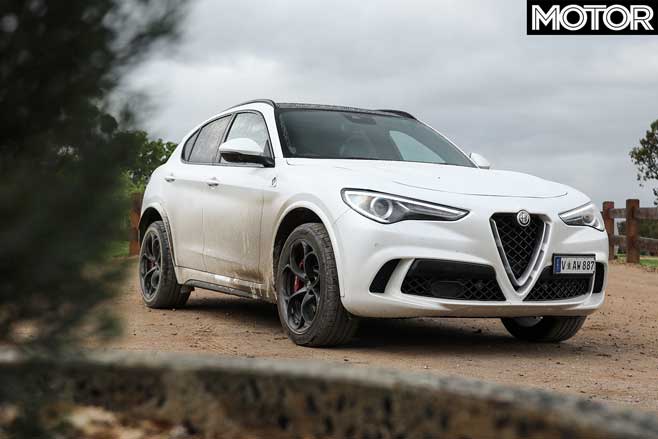
The Stelvio’s chassis breathes with the road, rather than beating it into submission like the X3 M. Amazingly, it retains the Giulia’s signature suppleness, even though it bears another couple hundred kilograms on its bones and holds them higher above the road.
This composure belies the slightly numb brakes. They’re operated by electronic wire, just like the Giulia Q – there is no mechanical connection between pedal and pad – and require a delicate foot like they’re carbon-ceramics that need some heat to work properly. And, keeping true to this theme, they come alive with more speed.
Pluck the sabretooth-sized gear paddle on the left to downshift and the revs spike and reveal that the engine’s bottom-end thrust is just as vicious in the Stelvio. It’s just a shame you can only access the exhaust’s real growl in Race, which turns off ESP and the soft damper setting. When the next corner arrives we squeeze the brake pedal. Hard. And suddenly they bite with feel. Being a lighter vehicle than the other two would no doubt also help.
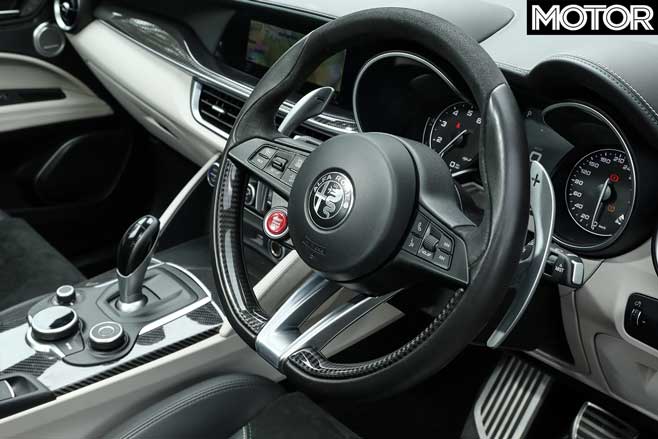
This is a seriously impressive point-to-point device. The steering rack is razor sharp and quick. And the front-end sniffs out the apex before you’ve even thought of turning in. Its light controls and fast reflexes fool you into believing it’s even lighter than it is. But once taken it to the limit, where the rear inside tyre will hop as it fights to put down power, you’ll feel its clever hardware strain against physics’ demands.
The Jaguar, meanwhile, very much serves physics. As well as being the heaviest of the three, the F-Pace is also the softest. There’s a sponginess to it that implies it uses rubber-rich suspension. Perched higher than its rivals, it also needs an extra moment to respond and some extra care when being hustled. Stomp the throttle and that engine amplifies the oscillations… as well as the theatre.
The thunderous noise from the Jaguar’s exhaust sounds like an elephant and lion roaring down a drain pipe at each other. It’s only a shame the transmission is not as sharp. For a start, the paddles are hidden behind the steering wheel spokes and feel soggy to pluck. And the torque converter is lazy, if not downright reluctant, to downshift into lower gears.
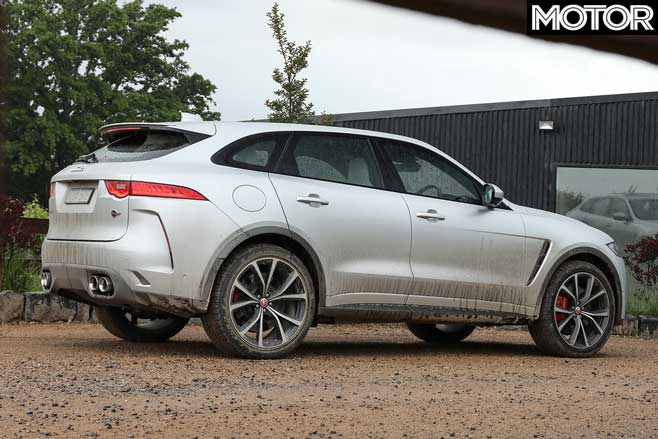
Thankfully the steering is more eager. It feels accurate, with a slightly elastic yet meaningful weight. It forges a good connection to the front wheels. There’s also a fair amount of grip to power out of corners. But the F-Pace SVR feels just a tad too doughy or soft to be taken seriously. It’s like a big lazy V8 muscle car trapped inside an SUV body.
No such problem in the X3 M. It feels like a sports wagon, only with a full cargo load, so it tackles corners with a wider and lower stance than the other two. It’s clearly more capable, no matter what type of surface you choose. Yet it’s clinical in the way it picks apart its, erm, competition.
The X3 M’s gearbox is remarkably obedient, snapping through shifts, while the paddles, as uninspiring as they look, feel crisp and immediate. The S58’s grumbly, high-revving exhaust note is disappointingly toned down inside, where it sounds a touch artificial.
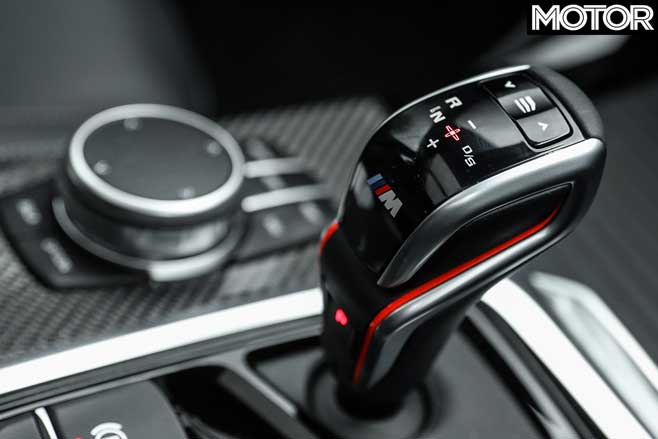
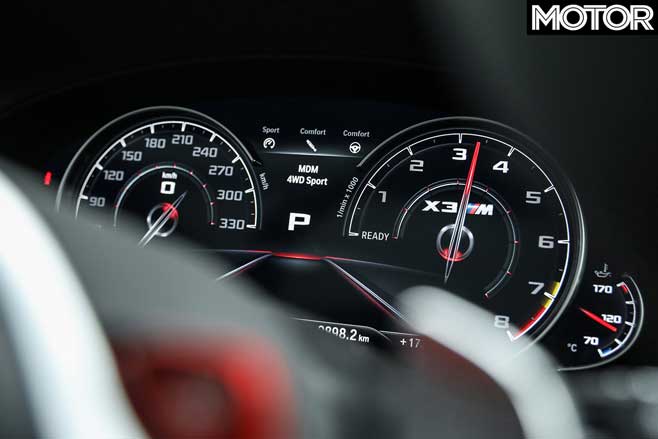
Then there is the number of ways to program its modes. It’s almost overwhelming. For instance, the transmission shift program has three modes, as does the steering weight, ESP, damper stiffness and engine response. The xDrive, meanwhile, offers 4WD or 4WD Sport for a change to a more rearward bias. You feel trapped inside a race engineer’s laptop when you just want to get on and drive the thing.
Granted, the M1 and M2 buttons on the steering wheel allow you to preset combinations, one for winding roads and another for straights, perhaps. But we’re not sure all this customisation really broadens the X3’s talents.
The adaptive dampers are always firm and the steering weight feels best in Sport. The shift program should just always match the level of engine response. And neither does 4WD or 4WD Sport make any measurable difference in a straight line – as we’re about to discover at Heathcote Raceway.
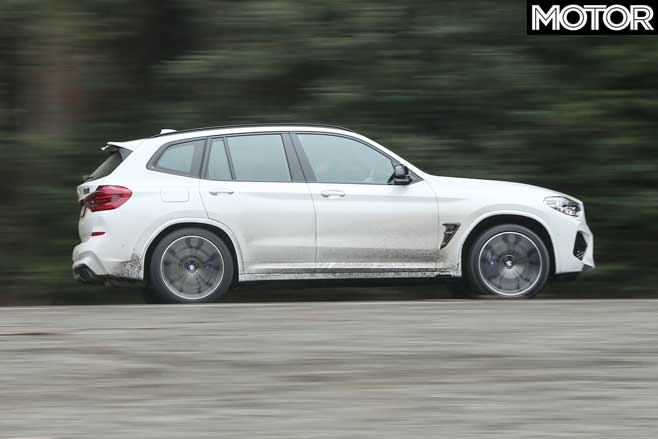
Switch the X3 M into its most aggro settings. Hold the brake. Add throttle. Nothing more than 2700rpm, though, or you will break the stall. Release the brake and it lunges forward, hitting 100km/h in 4.1 seconds and the quarter mile’s end in 12.1, with consistency typical of its clinical nature.
ESP on or off, 4WD Sport or not, it repeats the result again and again, the only difference being how much rubber it leaves behind on the launch pad. But we reckon there’s more time to find in manual mode.
The X3 M upshifts at around 7000rpm, meaning second gear leaves 200rpm on the table. These extra revs would let it hit 100km/h without a shift. But because the engine spins so fast, despite being undersquare and geared long, it’s tricky to grab the next gear without hitting the limiter.
Even the X3 M’s gearbox would be an upgrade for the SVR’s, though. We’ll explain why in a second. First, let’s get the big SVR off the line. Tickle the throttle to 1500rpm, then stomp the gas. It squats and takes off with its nose in the air, like a massive oblong powerboat, and you have to fight to keep it straight as the steering lightens.
Soon after, it nails a 4.2sec 0-100km/h sprint and a 12.2sec lunge down the quarter-mile. That’s a tenth slower than the X3 M in both measurements, even with a higher power-to-weight ratio. But its modest 187.6km/h trap speed is even more baffling, as it’s packing the most horsepower here.
We’re guessing the horses in Warwickshire, England, are either malnourished or the SVR’s short gearing is preventing it from winding out its stonk. Its speed in gears reveals that much; third arrives at 91km/h and fourth at 136km/h, whereas the X3 can run to 100 and 150 respectively.
The Stelvio’s speed in gears are even shorter again compared to the SVR, but some tyre punctures earlier in the test ruled it out of a direct comparison on the strip. Not to leave it out from the battle completely, though, we’ve deferred to its acceleration times from recent Performance Car of the Year testing, when it showed jaw-dropping speed on The Bend Motorsport Park circuit’s main straight.
Zero to 100km/h from rest on that occasion took just 3.79 seconds and the quarter-mile was done in 11.94 seconds. Yeah, that was a different day and a different track, but it’s at least two-tenths clear of its rivals in both measurements. And it’s believable, not least for a couple of things.
For one, it’s relatively light at 1830kg. Combine that with short gearing, an almost frictionless torque converter and its free-revving, torque-rich V6 and you’re left with a recipe for a rocket. But certainly, not just the Stelvio, for all three cars it’s worth looking at the numbers and letting them sink in. All three are serious traffic light scalp-takers.
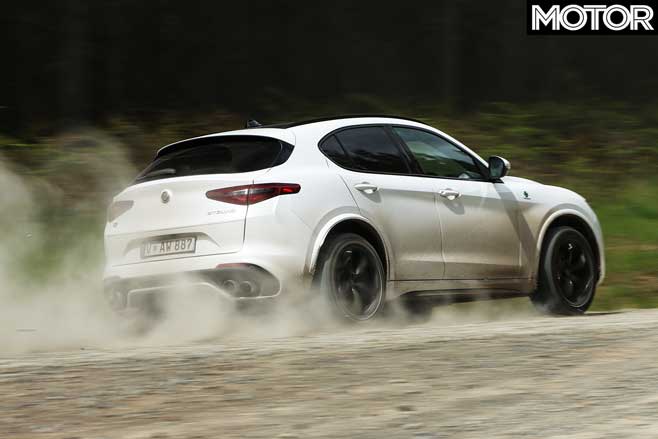
If only everything else on the Stelvio worked. Its windows have refused to go up or down for the entire duration of our test. And the wing mirrors sporadically bow out from service. These suspicions about its reliability only undermine the good things, like its ride, visibility and smooth powertrain. But that’s sort of par for the course in its low-rent interior.
Like the Giulia that inspired its cabin design, the Stelvio’s interior surface finishes and the gear lever’s ghastly backlighting drag down its premium ambience. Mind you, the carbonfibre seats and steering wheel spoke inject some excitement into the cabin, but also bump the price.
The Sparco seats cost an extra $7150 for the pair, while the steering wheel adds another $650. Add some fancy tri-coat paint for $4500 and our Stelvio rolls up at $162,250 – the most expensive on test. It’s a shame, because the Stelvio Q is a quick and pretty SUV that’s a good alternative to the typical choices.
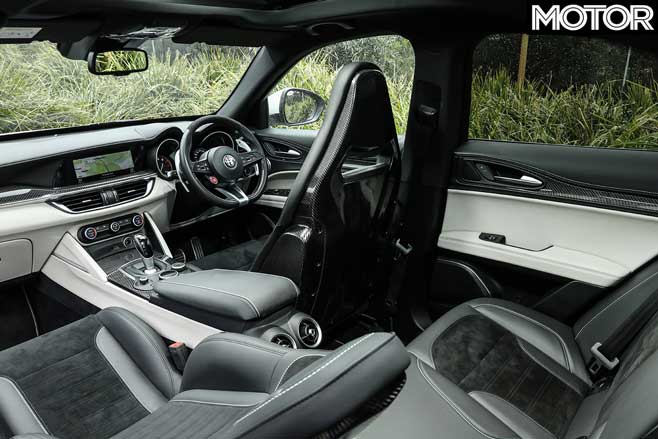
Then there’s the Jaguar, which starts as an absolute bargain at its base price. But with an active safety pack, panoramic roof, 22-inch wheels, a head-up display and a few other things you would expect as standard (like DAB+), its price inflates from $142,262 before on roads and options to $156,981 as tested. You get some cool front seats for the dosh, and the decent cabin drowns out unwanted noises while welcoming the nice ones – like the engine’s roar. That V8 would make anyone forget they’re driving a family SUV every time they sink the throttle.
Overall, the Jaguar is a charismatic, charming and good-looking beast. However, while its aggressive looks are almost worth the price of admission alone, the monstrous 22-inch wheels spoil its ride and deflect on most surfaces with no improvement to handling. Yes, it’s an SUV, but the seating position is just too high. In contrast to the X3 M Competition’s.
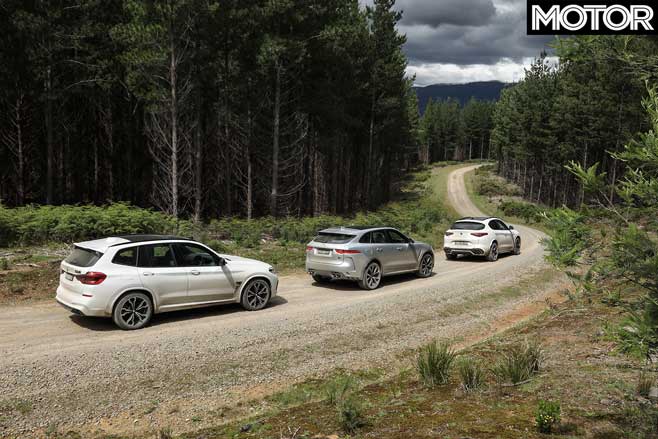
Speaking of the X3 M, yes, it rides firm, and the drive modes are frustrating. But you sit nice and low, at least for an SUV, and on the most supportive seats, where you’ll slowly submit to its various talents. For one, without many options to tick, except seat heating and rear seat adjustment, the X3 M Competition is only $1000 dearer than its list price – set at $157,900. Then there’s what it does so well. It’s freakishly fast from point to point, an encouraging handler, consistent in a straight line and rarely drops the ball in terms of ergonomics or refinement.
At the end of the day, the X3 M is the car we’re most drawn to. And, without a ridiculous price difference, it’s the one we’re staying in. So ring the bell on round one, BMW is the winner. It earns the chance to prove its mettle against Mercedes-AMG and Porsche – stay tuned.
Fast Facts
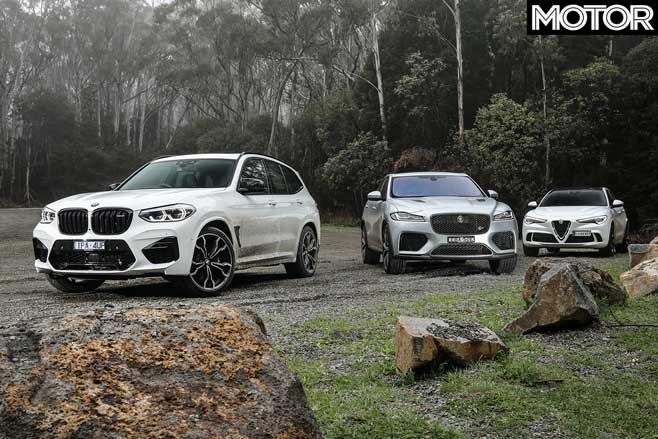
| u00a0 | BMW X3 M Competition | Jaguar F-Pace SVR | Alfa Romeo Stelvio Q |
| Body | 5-door, 5-seat SUV | ||
| Drive | all-wheel | ||
| Engine | 2864cc inline-6, DOHC, 24v, twin-turbo | 5000cc V8, DOHC, 32v, supercharger | 2981cc V6, DOHC, 24v, twin-turbo |
| Bore x Stroke | 84.0 x 90.0mm | 92.5 x 93.0mm | 86.5 x 82.0mm |
| Compression | 9.3:1 | 9.5:1 | 9.3:1 |
| Power | 375kW @ 6250rpm | 405kW @ 5500-6500rpm | 375kW @ 6500rpm |
| Torque | 600Nm @ 2600-2950rpm | 680Nm @u00a02500-5500rpm | 600Nm @ 2500-5000rpm |
| Power/Weight | 190kW/tonne | 203kW/tonne | 205kW/tonne |
| Transmission | 8-speed automatic | ||
| Weight | 1970kg | 1995kg | 1830kg |
| Suspension (f) | struts, adaptive dampers, anti-roll bar | double wishbones, adaptive dampers, anti-roll bar | |
| Suspension (r) | multi-links, adaptive dampers, anti-roll bar | ||
| L/W/h | 4726/1897/1669mm | 4737/2071/1670mm | 4701/1955/1681mm |
| Wheelbase | 2864mm | 2874mm | 2818mm |
| Tracks | 1617/1602mm (f/r) | 1648/1666mm (f/r) | 1622/1675mm (f/r) |
| Steering | electrically assisted rack-and-pinion | ||
| Brakes (f) | 395mm ventilated/drilled discs, 4-piston calipers | 395mm ventilated discs, 4-piston calipers | 360mm ventilated/drilled discs, 6-piston calipers |
| Brakes (r) | 370mm ventilated/drilled discs, single-piston calipers | 396mm ventilated discs, single-piston calipers | 350mm ventilated/drilled discs, 4-piston calipers |
| Wheels | 21.0 x 9.5-inch (f); 21.0 x 10.0-inch (r) | 22.0 x 9.5-inch (f); 22.0 x 10.5-inch (r) | 20.0 x 9.0-inch (f); 20.0 x 10.0-inch (r) |
| Tyre Sizes | 255/40 ZR21 102Y (f); 265/40 ZR21 105Y (r) | 265/40 ZR22 106Y (f); 295/35 ZR22 109Y (r) | 255/45 R20 (f); 285/40 R20 (r) |
| Tyres | Michelin Pilot Sport 4S | Pirelli P Zero | Pirelli P Zero AR |
| Price | $157,900 ($158,900 as tested) | $142,262 ($156,081 as tested) | $149,9000 ($162,250 as tested) |
| Pros | All-round athlete; standard kit; seating position | Looks; noise; charm | Supple and sharp chassis; effortless surge |
| Cons | A bit clinical; high base price | Heavy; high; slower than expected | Reliability suspicions; numb brakes |
| Rating | 4 out of 5 stars | 3.5 out of 5 stars | 3.5 out of 5 stars |
The Strip
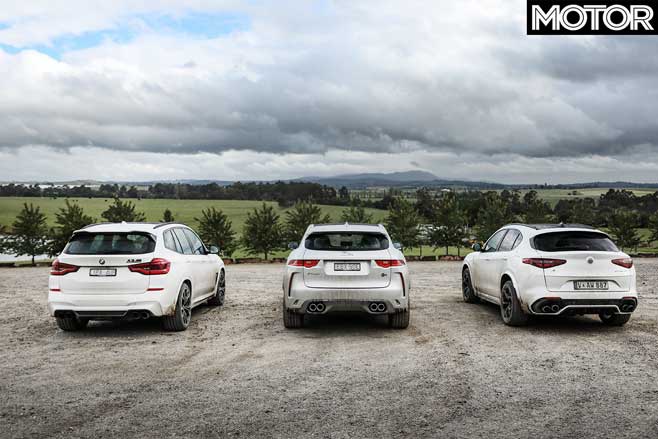
| u00a0 | BMW X3 M Competition | Jaguar F-Pace SVR | Alfa Romeo Stelvio Q |
| 0-10km/h | 0.27sec | 0.30sec | – |
| 0-20km/h | 0.62sec | 0.63sec | – |
| 0-30km/h | 1.04sec | 0.96sec | – |
| 0-40km/h | 1.37sec | 1.32sec | – |
| 0-50km/h | 1.71sec | 1.68sec | – |
| 0-60km/h | 2.10sec | 2.07sec | – |
| 0-70km/h | 2.57sec | 2.57sec | – |
| 0-80km/h | 3.04sec | 3.03sec | – |
| 0-90km/h | 3.54sec | 3.54sec | – |
| 0-100km/h | 4.11sec | 4.21sec | 3.79sec |
| 0-110km/h | 4.75sec | 4.84sec | – |
| 0-120km/h | 5.41sec | 5.52sec | – |
| 0-130km/h | 6.08sec | 6.21sec | – |
| 0-140km/h | 6.82sec | 7.04sec | – |
| 0-150km/h | 7.69sec | 7.92sec | – |
| 0-160km/h | 8.60sec | 8.85sec | – |
| 0-170km/h | 9.58sec | 9.84sec | – |
| 0-180km/h | 10.71sec | 11.13sec | – |
| 0-190km/h | 12.05sec | n/a | – |
| 0-400m | 12.10sec @ 190.39km/h | 12.20sec @ 187.55km/h | 11.95sec @ 191.50km/h |
| 80-120km/h (Drive) | 2.32sec | 2.51sec | 2.30sec |
| 100-0km/h | 33.47m | 35.16m | 35.6m |
| Speed in Gears | |||
| 1st | 64km/h @ 7200rpm | 61km/h @ 6600rpm | 54km/h @ 7200rpm |
| 2nd | 100km/h @ 7200rpm | 91km/h @ 6600rpm | 84km/h @ 7200rpm |
| 3rd | 150km/h @ 7200rpm | 136km/h @ 6600rpm | 125km/h @ 7200rpm |
| 4th | 187km/h @ 7200rpm | 172km/h @ 6600rpm | 156km/h @ 7200rpm |
| 5th | 245km/h @ 7200rpm* | 223km/h @ 6600rpm* | 204km/h @ 7200rpm* |
| 6th | 280km/h @ 6275rpm* | 283km/h @ 6510rpm* | 268km/h @ 7200rpm* |
| 7th | 280km/h @ 5155rpm* | 283km/h @ 5450rpm* | 285km/h @ 6300rpm* |
| 8th | 280km/h @ 4015rpm* | 283km/h @ 4340rpm* | 285km/h @ 4910rpm* |
Heathcote Raceway, 21.5˚C, dry. Driver: Louis Cordony *Manufacturer’s claim Official timing supplier: www.vboxaustralia.com.au
We all know that making poor decisions such as reaching for your phone or having a few drinks can turn safe day-to-day driving into a dangerous form of transport. But you might be making a number of seemingly-innocent mistakes that put your own safety and the wellbeing of others around you at risk every time you hit the road.
They they might not technically be illegal, the following faux-pas still fall afoul of common sense.
Wearing your seatbelt incorrectly
Or worse, not at all. It may be hard to believe, but many Australians are still choosing to not buckle up in cars and it’s showing in shocking crash statistics.
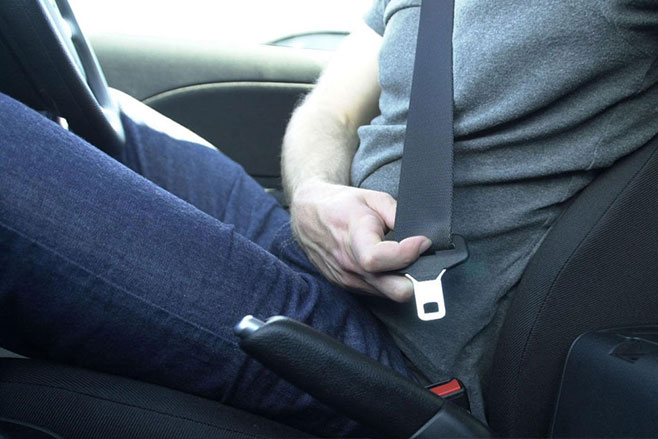
Of the 133 people killed on Victorian roads this year, 20 percent were not wearing a seatbelt. A belt increases your chances of avoiding death or serious injury in a crash by almost 50 percent, and you are 30 times less likely to end up outside the vehicle.
Wearing a seatbelt incorrectly is almost as bad. A test conducted by the NSW Centre for Road Safety last year graphically demonstrated the consequences of tucking the shoulder sash under your arm. At the point of impact, the test dummy’s torso was not restrained and the head is slammed into the dashboard.
As well as the head trauma caused, the incorrectly-placed seatbelt also applies massive forces to the vulnerable abdomen and ribs, resulting in internal injuries as well.
The seatbelt’s job is to also hold you the correct distance from the airbag. In the event of a frontal impact, unrestrained passengers can be thrown into a rapidly-expanding airbag which severely increases neck and upper body injuries.
Wear your seatbelt and wear it correctly every time you get in the car.
Feet on the dashboard
All new cars and many older vehicles have an airbag hidden in the dashboard immediately in front of the front passenger, which is designed to prevent contact with the dashboard.
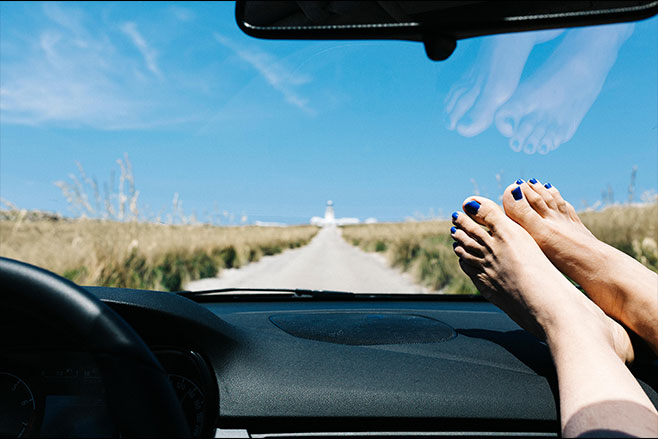
But if your feet are resting on the dashboard during a collision the deploying airbag has the potential to force the passenger’s legs upwards or back towards their face at speeds of up to 320km/h.
Even if the car does not have a passenger airbag, the elevated positon of the passenger’s legs allows the body to slide underneath the seatbelt causing the internal organs of the abdomen to take the brunt of the impact.
In either scenario, the result can be a torn bowel, spinal, leg and facial injuries. That’s probably the best-case result too, as death is a very real outcome of propping your feet on the dashboard.
Always keep your feet on the floor when riding as a passenger.
The gorilla grip
The driver is just as much at risk from their airbag as the passenger if they are seated in the wrong position.
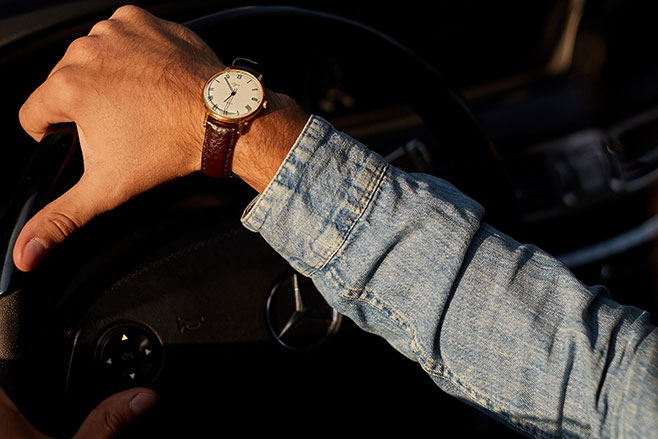
Allowing an arm to cross over the steering wheel centreline or adopting the ‘gorilla grip’ of steering with just one hand at the top of the wheel is potentially dangerous if the airbag should deploy. You might think you look like Vin Diesel driving like that, but you’re putting yourself at unnecessary risk.
If this happens, the driver’s arms are blasted upwards with extreme force into the car’s roof resulting in broken wrists and/or facial injuries.
Always keep your hands on the wheel somewhere between quarter to three or ten to two.
Tailgating
Like most bad driving habits, most people believe that failing to leave a sizeable gap between cars isn’t a big deal. But it can all go wrong in an instant. It’s arguably one of the most dangerous ways to drive and if you do happen to crash while tailgating it’ll automatically be your fault. The risks are too great to employ such an aggressive driving manoeuvre so don’t even think about it!
Loose items
Computer modelling has shown that a grain of sand hitting the earth at 100 times the speed of light would destroy the entire planet, which illustrates just how dangerous innocuous objects can become when travelling at high speed, no matter how improbable.
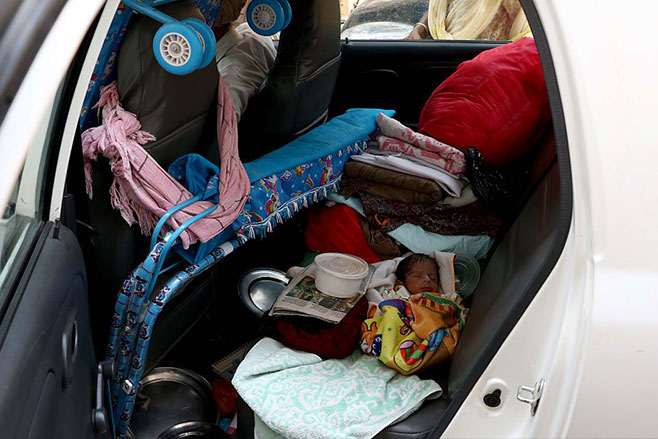
Any item that isn’t secured while driving has the potential to fly about the cabin during a crash, including pets. Unrestrained dogs weighing many kilos are extremely dangerous to other occupants not to mention the danger posed to their own safety.
And that grim reality was demonstrated last year in Spain when a toddler was killed when a tablet device that was loose in the car struck her in the face during a collision.
Even that 250g box of tissues on the back shelf will become a nasty missile in the event of a high-speed crash, so make sure you never leave items, particularly heavy ones, unsecured when traveling. Another reason to keep your car clean and clear.
Unrestrained rear occupants
That rule applies to people too. Even if the driver is safely restrained, a passenger not wearing their seatbelt in the second row can cause them fatal injuries in a frontal impact.
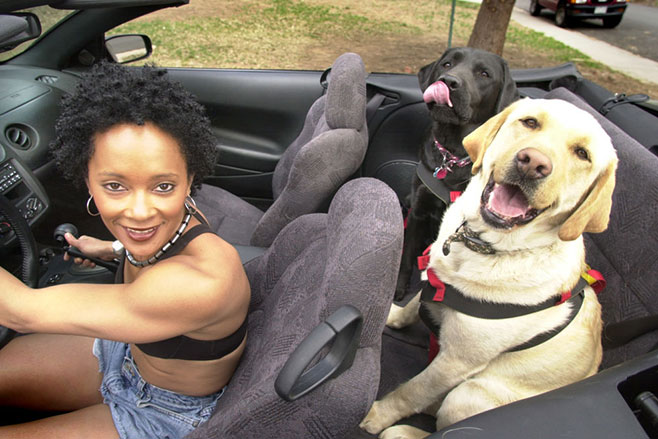
The force of an unrestrained human bearing on the back of a front occupant is enough to crush them into the steering wheel, dashboard and windscreen.
It is the driver’s responsibility to ensure everyone in the car has their seatbelt properly buckled but it pays for everyone to be aware of the potential dangers.
Driving too slow
Speeding motorists are often publicised as a common menace on our roads, but driving too slowly can also cause serious crashes too.
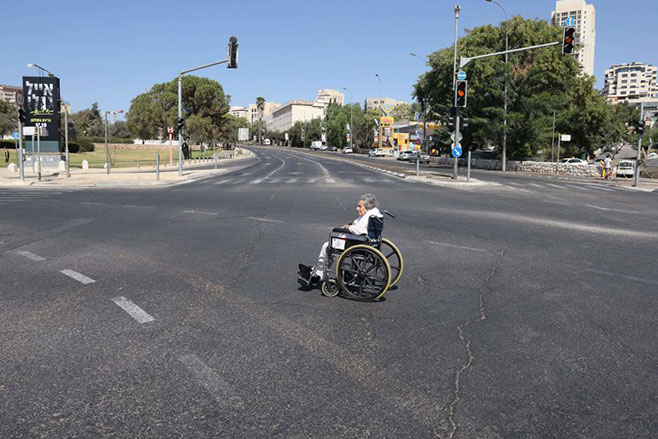
Research conducted by David Solomon in the 1950s and again by repeated studies in the late 1960s revealed that the severity of crashes was more closely related to speed differential between vehicles rather than whether said vehicles were travelling at high speed.
Even in the absence of scientific studies and the ‘Crash Risk Curve’, it doesn’t take a genius to realise the hazard posed by a slow-moving object in otherwise fast-moving traffic. Think sitting at 80km/h on a 100km/h highway makes you a safer driver? You’re wrong.
Driving while tired or stressed
Other studies have shown that tired and or stressed drivers can be as dangerous at the wheel as those driving under the influence of drugs and alcohol.
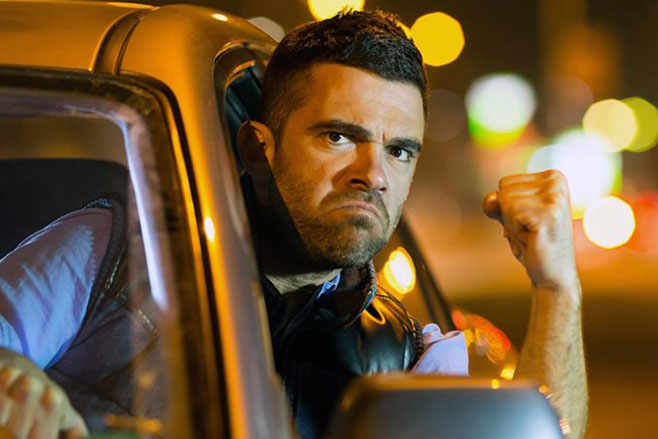
While the effects of tired drivers are widely known and can result in potentially fatal ‘microsleeps’, stressed drivers are far more likely to suffer attacks of ‘road rage’ which can lead to a multitude of dangerous actions.
Running red lights, aggressive manoeuvres and speeding are all common actions by angry drivers with potentially costly and deadly outcomes.
Only ever get behind the wheel when you have a clear head and can direct your full attention to safe, alert driving.
Interior light at night
Something as simple as driving with the interior light on can put you and your passengers at greater risk during night driving.
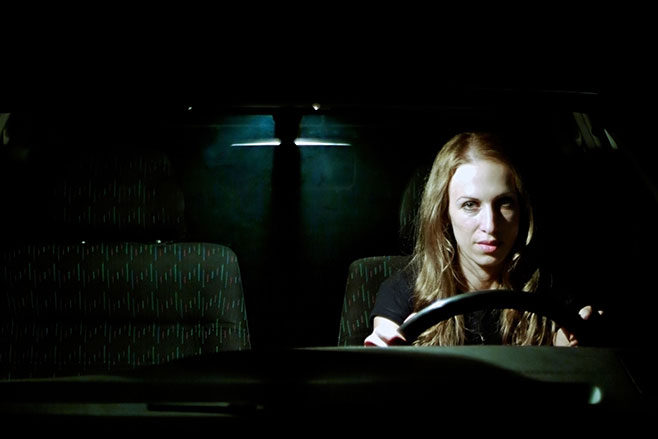
A bright light inside the cabin reduces the driver’s vision of the surroundings outside the vehicle. It might only seem like a small reduction in vision, but that is often all it takes to miss a vital warning sign such as wildlife or another dimly lit hazard.
Occupant activity inside the car is also a distraction and keeping the house lights up only encourages the driver to divert their attention away from the road.
When driving at night, keep the cabin lights out or use focused directional beams if a passenger needs to read a map or other essential information.
Did we miss one? Hopefully, we don’t have to remind you of the illegal ones, but let us know your road-user pet hate or something you see dangerous Aussie drivers doing in the comments below, or get in touch via our social media pages.
