
MOST FUN – Alpine A110
The reborn classic Alpine A110 might not be as fast around a track as, say, a BMW M2 Competition. It might not be as usable as a Porsche 718 Cayman, or as eventful as an Alfa Romeo 4C. But on the intensity of withdrawal symptoms if you’ve not driven it in a while? Sort outs everything in its class, and beyond, if you ask us.
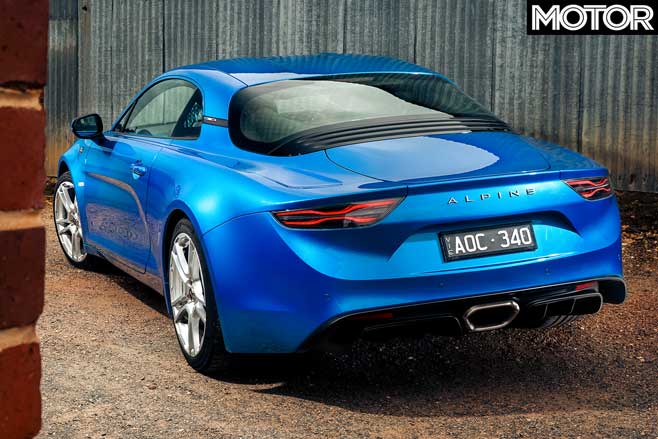
Essential to Alpine ownership is first and foremost getting it on a track and turning the ESC off. To do so is to find one little, slightly under-tyred car with a total manic addiction to corner-entry oversteer – almost zero provocation required.
At first, having fairly sudden, short-wheelbase oversteer gatecrash any cornering party you’re hosting might be a little too exciting for some, but when you know it’s coming, it is there to be worked entirely to your advantage. Not to set quicker times of course. But to cackle like you’ve never cackled before, pursuing ever-more lurid angles into corners on the brakes, with enough power to hold the slide back out – including in third gear. Just.
And in the real world on real roads the Alpine continues to entertain, but in a different way. Instead, it delights with a beautiful, lightweight feeling (it’s made almost entirely of aluminium and weighs just 1103kg) and novelty-soft spring rates. Wind it up on a twisty road and by way of pitch and yaw the sensitive A110 reacts to every input, to the point it’s not possible to think about anything else but driving it. And nor will you want to!
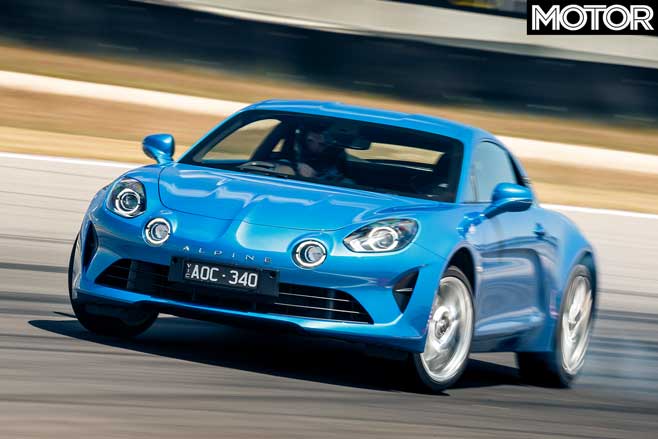
The giggles are not limited to merely track antics or the lovely, immersive suspension either. The 1.8-litre Alpine A110 also has a loud-and-proud turbocharged four-cylinder personality, and sounds great. With 185kW, there is plenty of acceleration, 0-100km/h taking just 4.5sec, and the Getrag seven-speed paddleshift twin-clutch is plenty responsive. And all over the car you’ll discover charming, quirky French design details making you feel like a modern day Jean-Luc Therier.
As fun as driving gets? The A110 has gotta come close.
Scariest – Hennessey Exorcist
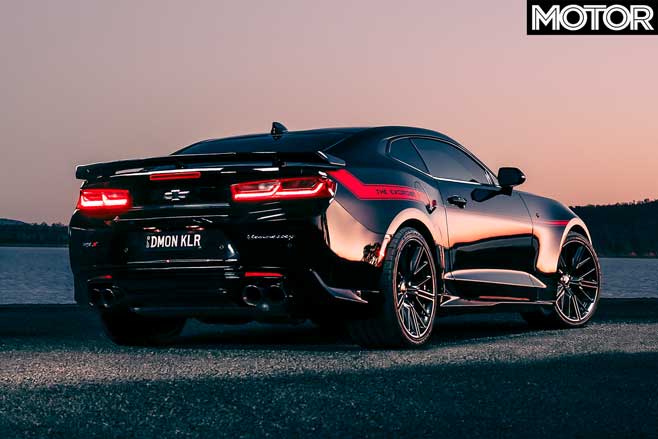
Attempting to channel 746kW/1197Nm through the rear wheels is always going to be a recipe for terror. The Exorcist claims to vanquish (Dodge) Demons but will still give you nightmares. It’s not just the outright speed, it’s the relentless nature of the delivery and the accompanying noise, which is part supercharger scream and part Funny Car.
Hardest to Master – Lotus Exige Sport 410
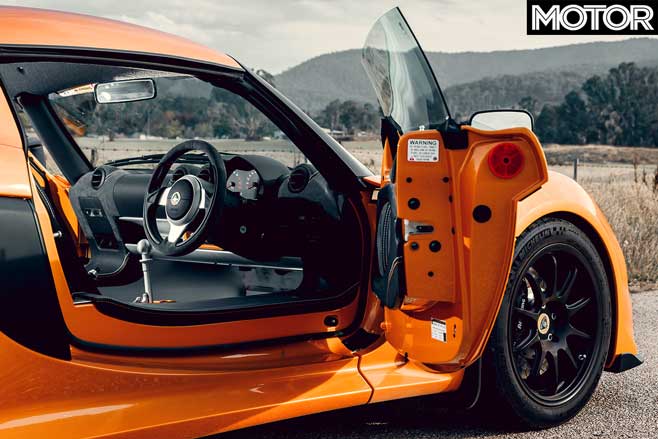
Some cars flatter your ability; other cars, well, humble it. Like this one. A short wheelbase and heavy lump of 3.5-litre V6 in the middle makes trying to trail-brake around a stubborn understeer tendency a twitchy affair; and when the sticky rear Michelins do let go, the unassisted steering means you’re in for a fight. But master the 410 and you’ll be able to drive anything.
Equipment and value
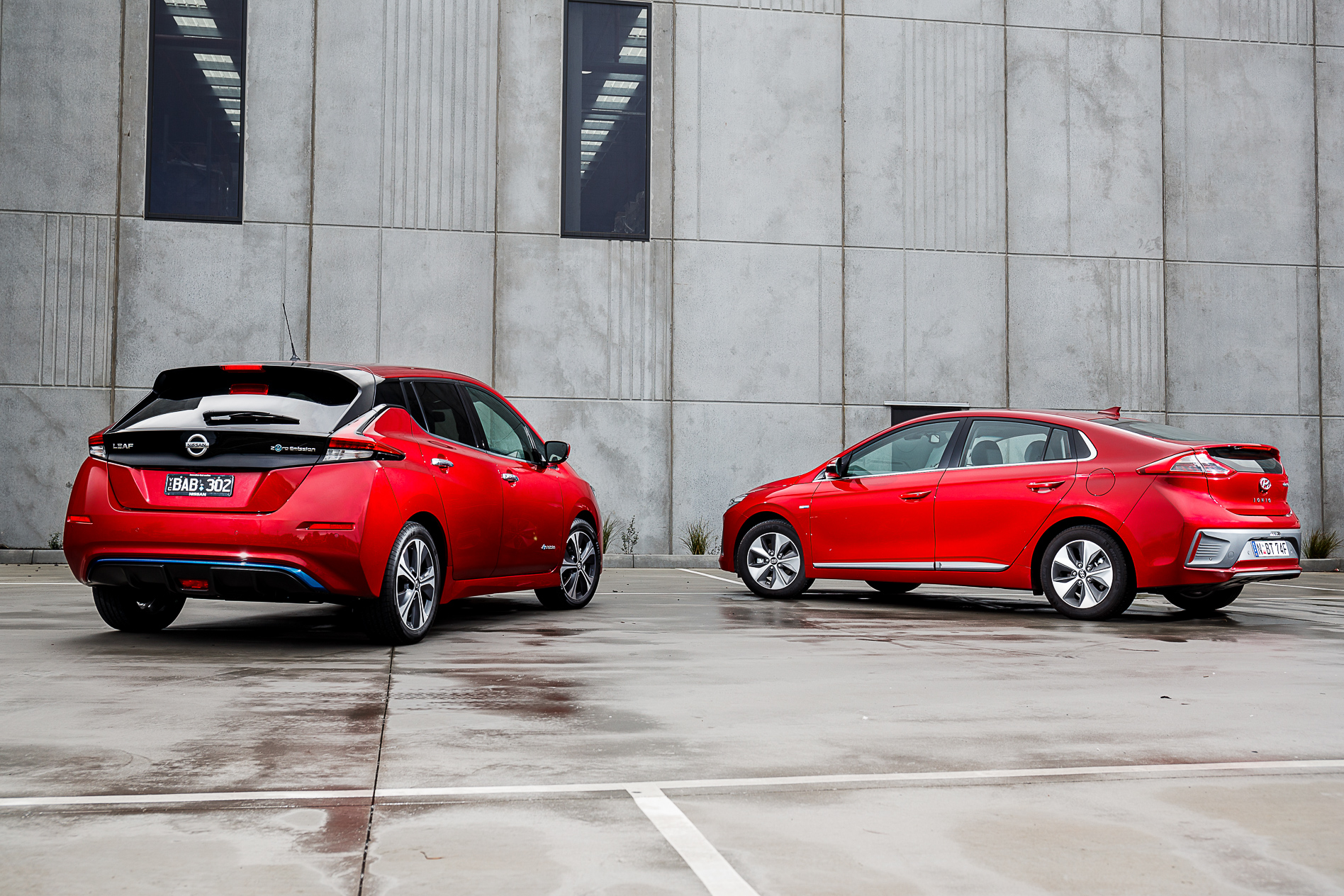
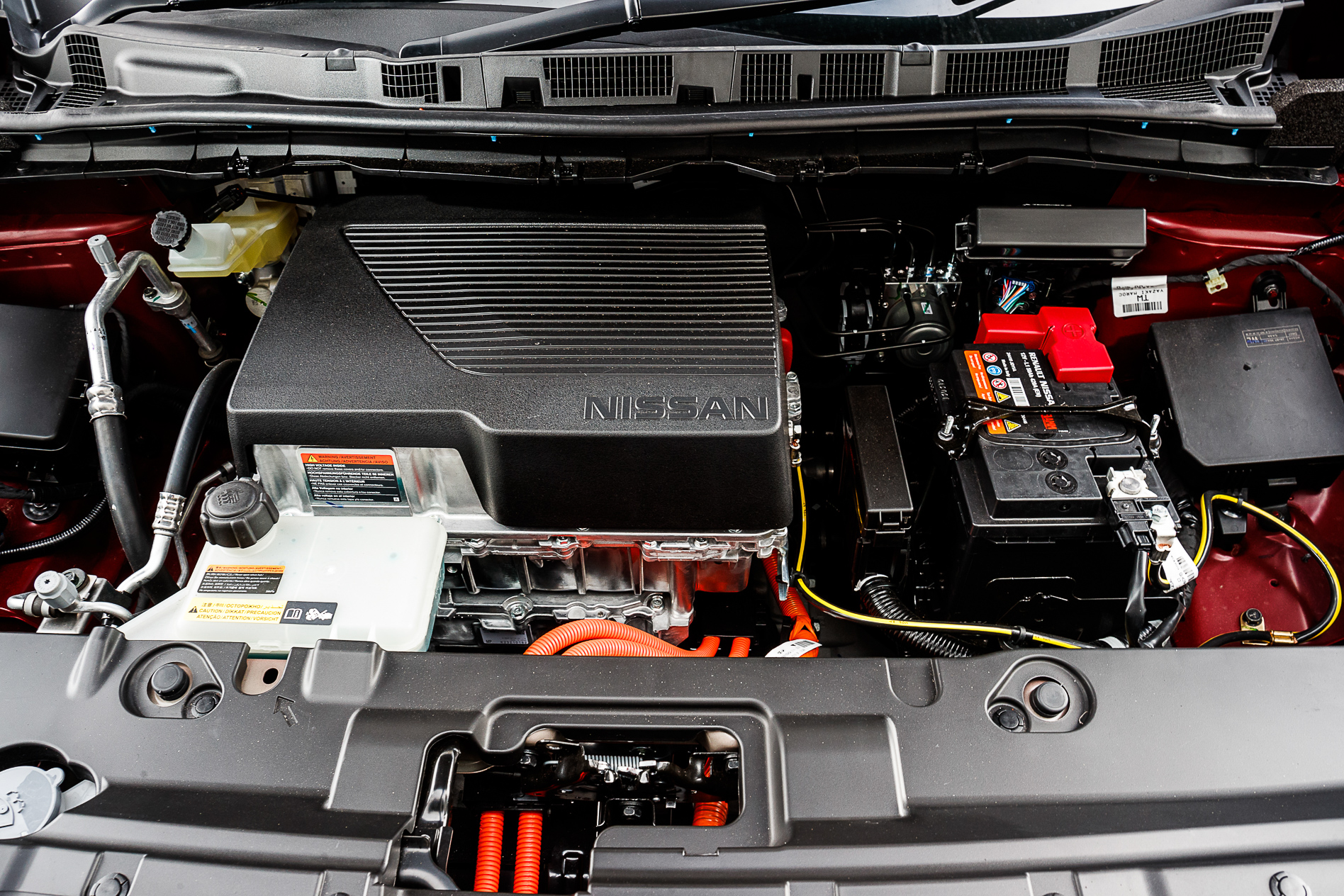
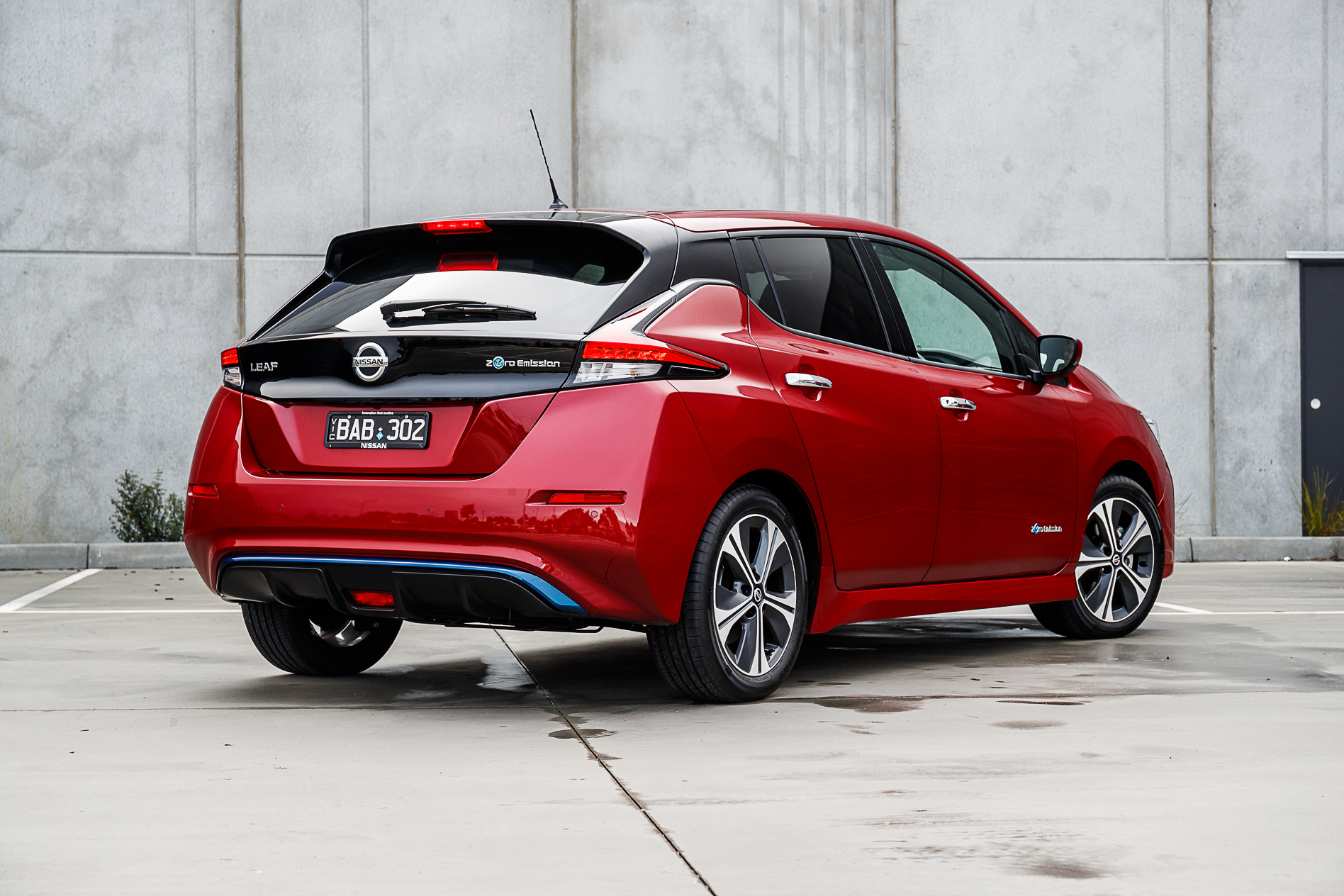
Fifty grand is a lot for a hatchback regardless of the electric gubbins. The fact that there’s no stripped-out, entry-level version is a shame for those who just want the electric powertrain. Your $49,990 buys goodies like AEB, adaptive cruise control, blindspot monitoring, high-beam assist, reversing camera, heated leather seats (front and rear), heated steering wheel and a Bose sound system. The Leaf is covered by Nissan’s five-year, unlimited-kilometre warranty.
Score: 15/25
Space and comfort
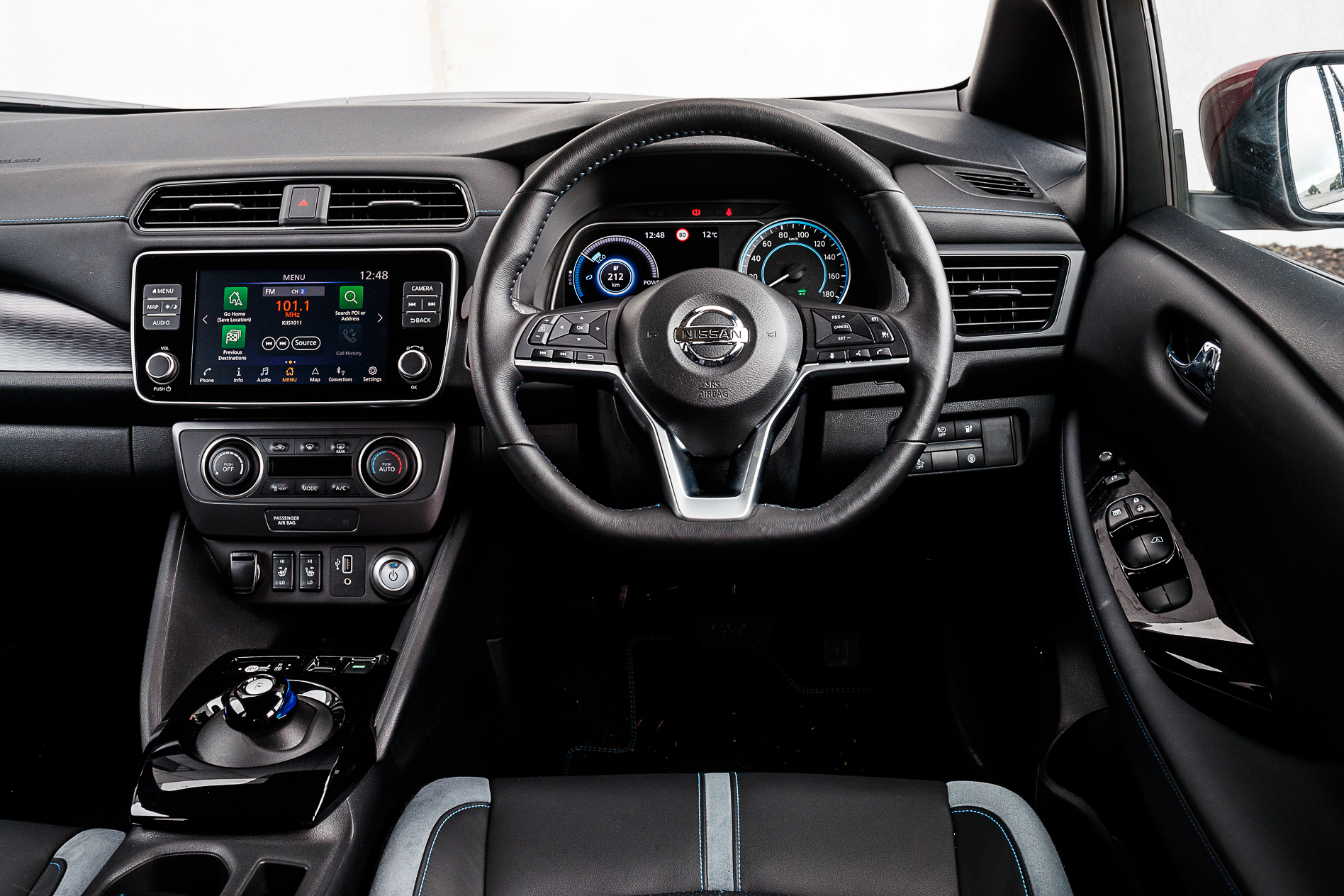
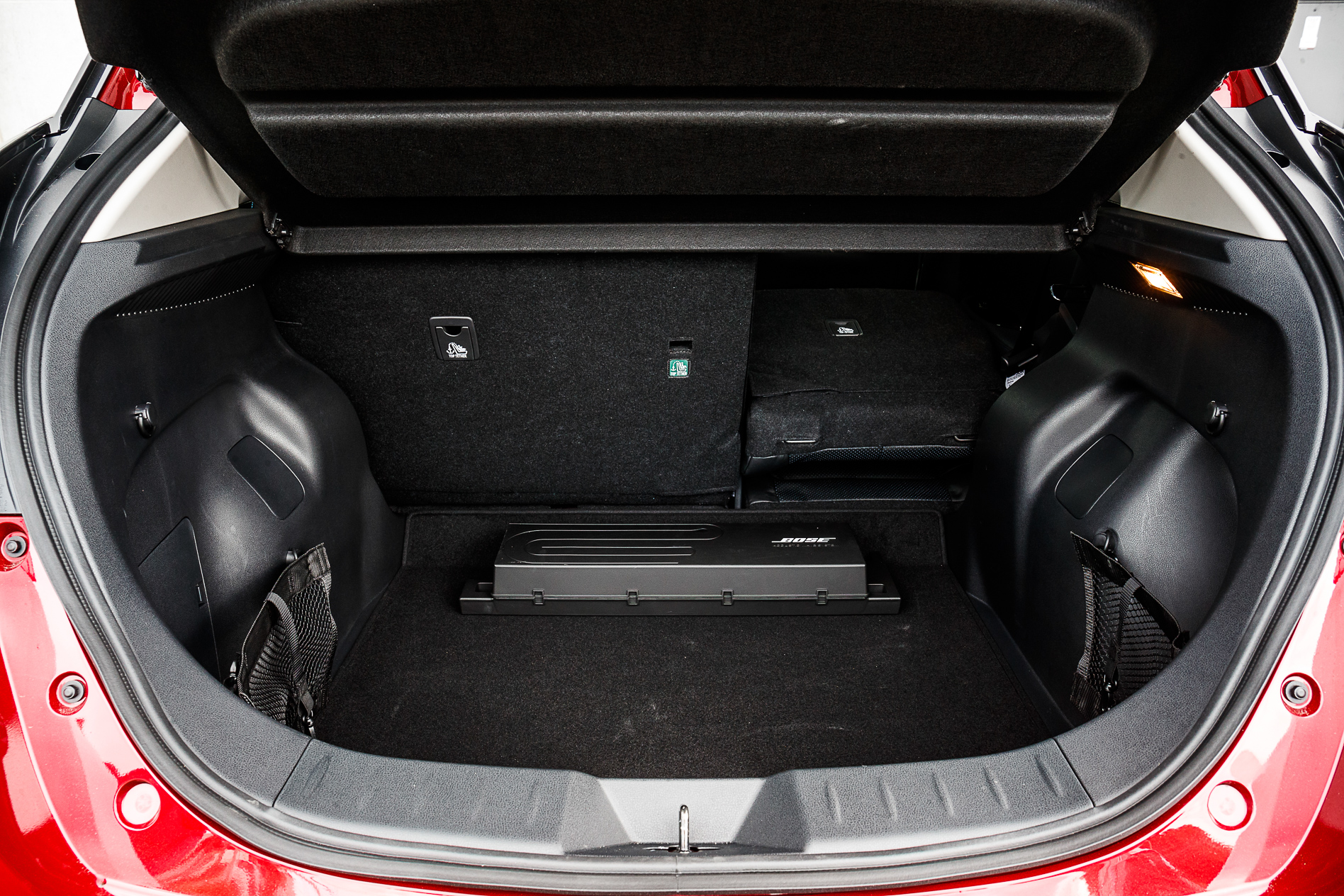
Cabin space has grown over the first-gen, revealing a spacious interior and 405 litres of cargo capacity. The new infotainment system (8.0-inch touchscreen) is a step forward for Nissan, though the futuristic ‘gear’ leaver is odd. Head and legroom is adequate front and rear. Gripes are a foot-operated park brake, a lack of steering wheel reach adjustment, a high driver’s seat andan elevated rear floor and uneven load bay due to the batteries and sound system.
Score: 18/25
Ride and handling
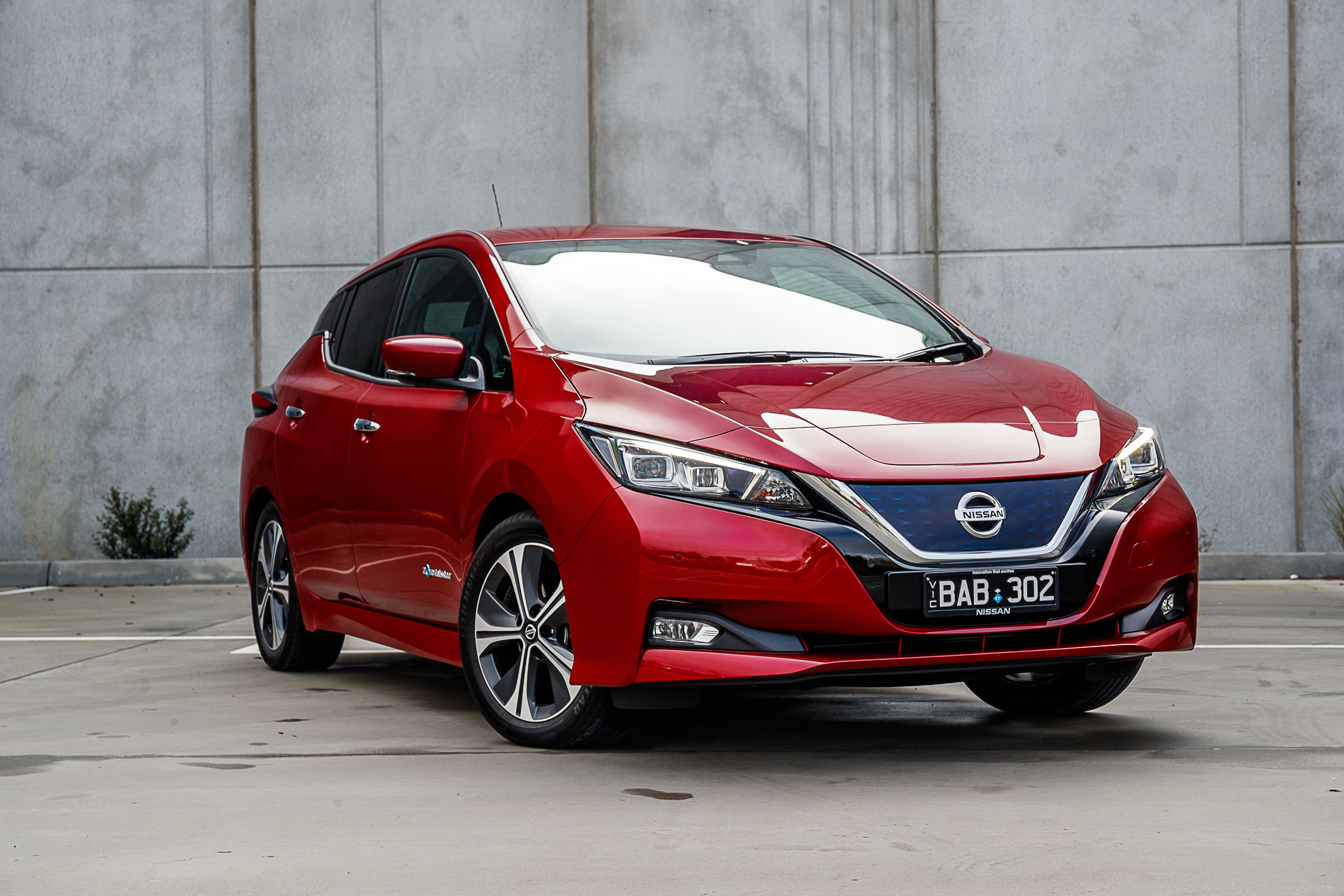
The taut Leaf isn’t ham-fisted. It’s fun to duck in and out of traffic – just don’t expect an electric hot hatch at 1594kg. A downside to the Newtons is torque steer and traction issues. The e-Pedal regenerative braking is strong and takes some acclimatising, but the Leaf, on its 17-inch alloys, drives relatively ‘normal’. Ride quality errs on the firm side, the damping could use attention and there’s steering rack rattle, but NVH levels are impressively quelled.
Score: 16/25
Performance and economy
With 320Nm coming on from 0rpm, the Leaf feels far perkier than the claimed 0-100km/h in 7.9sec. The AC synchronous electric motor now produces 110kW, while the lithium-ion battery pack is 40kWh. Range is up 100km from the first-gen to a claimed 270km (via WLTP testing). There are three charging options – a 50kWh DC fast charger can zap you from zero to 80 percent charge in 60 minutes. Switching the air-con on doesn’t drastically affect the range.
Score: 19/25
Total score: 68/100
Equipment and value
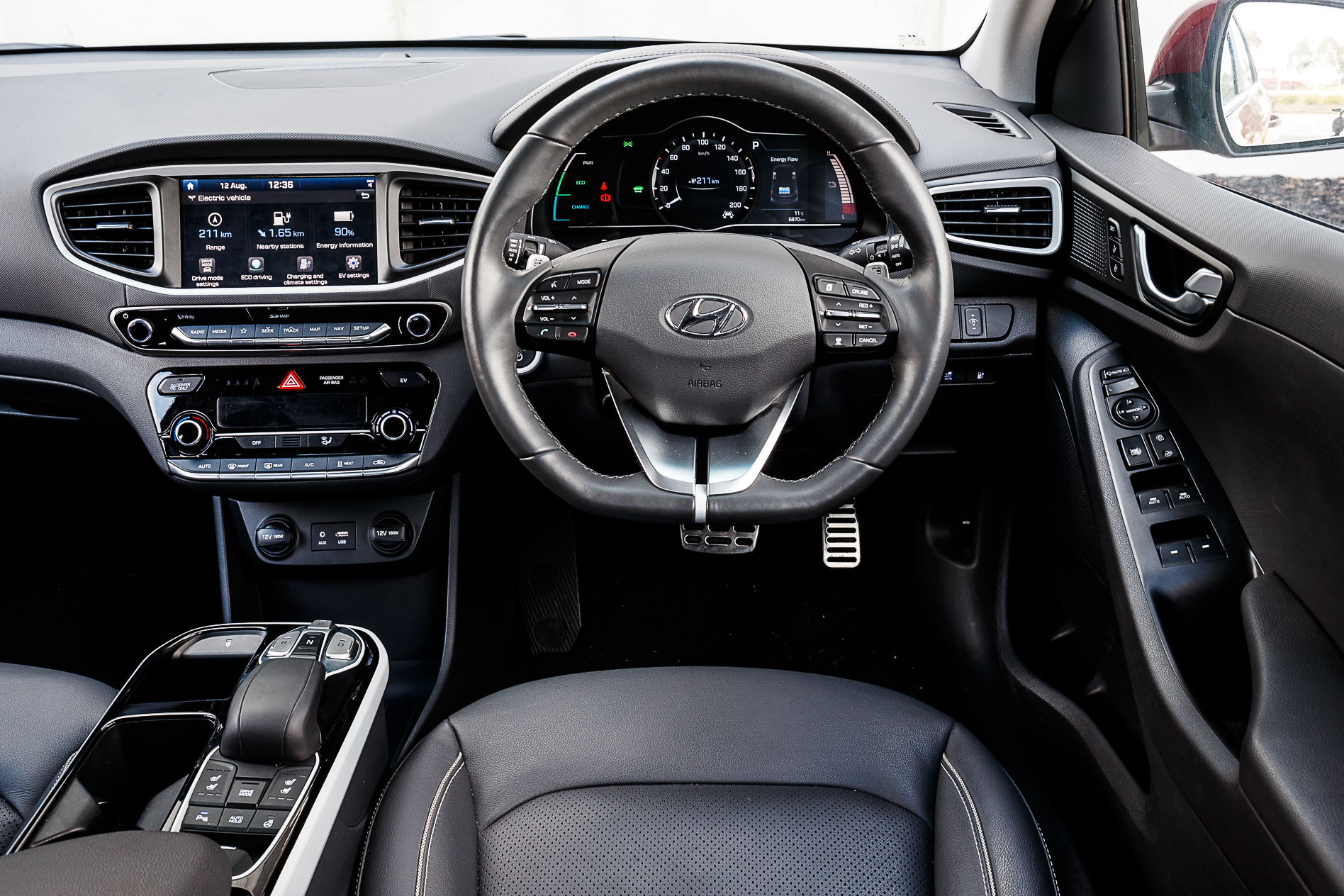
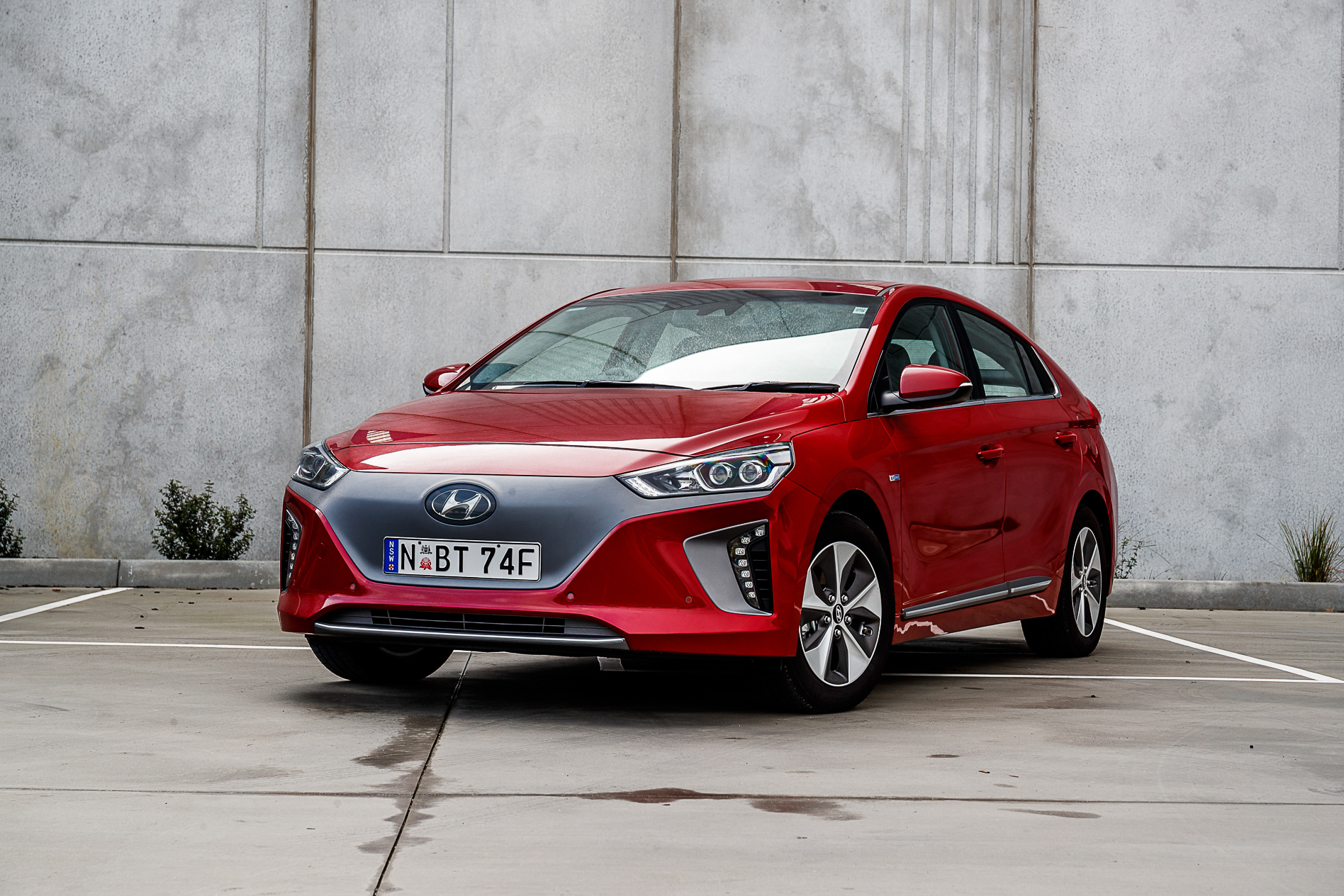
Australia’s cheapest EV. That’s a slogan you want in your arsenal, and Hyundai has with its $44,990 Ioniq. We’re testing the $48,990 Premium, which still undercuts the Nissan Leaf by a grand. The extra $4K brings heated/ventilated leather seats, wireless phone charging, parking sensors, sunroof, and LED headlights. Like the Leaf, it’s well equipped, and there’s an eight-year battery warranty as well as Hyundai’s five-year unlimited-kilometre warranty.
Score: 15/25
Space and comfort
The Ioniq is the one to pick if you often go four-up. The seats are firmer, but comfort and space is i
mpressive front-to-rear with little EV compromise. Storage is accounted for with myriad stowage compartments, and there’s rake and reach adjustment for the steering. The boot is practical, with a flat load bay when the rear seats are stowed, while boot space is 350 litres. Overall, the Ioniq feels more like an Elantra that happens to be electric, and not a quirky EV.
Score: 20/25
Ride and handling
Comfort and ease of use gain priority over ultimate dynamics. And that’s a good thing. The ride quality is supple in both urban and country environments thanks to chunky-profile tyres and well-tuned suspension. There are four levels of regenerative braking, from none to a lot, but the steering lacks feedback. Sound deadening also could definitely be improved, as roar from the 16-inch Michelin Energy Saver tyres is present at highway speeds.
Score: 18/25
Performance and economy
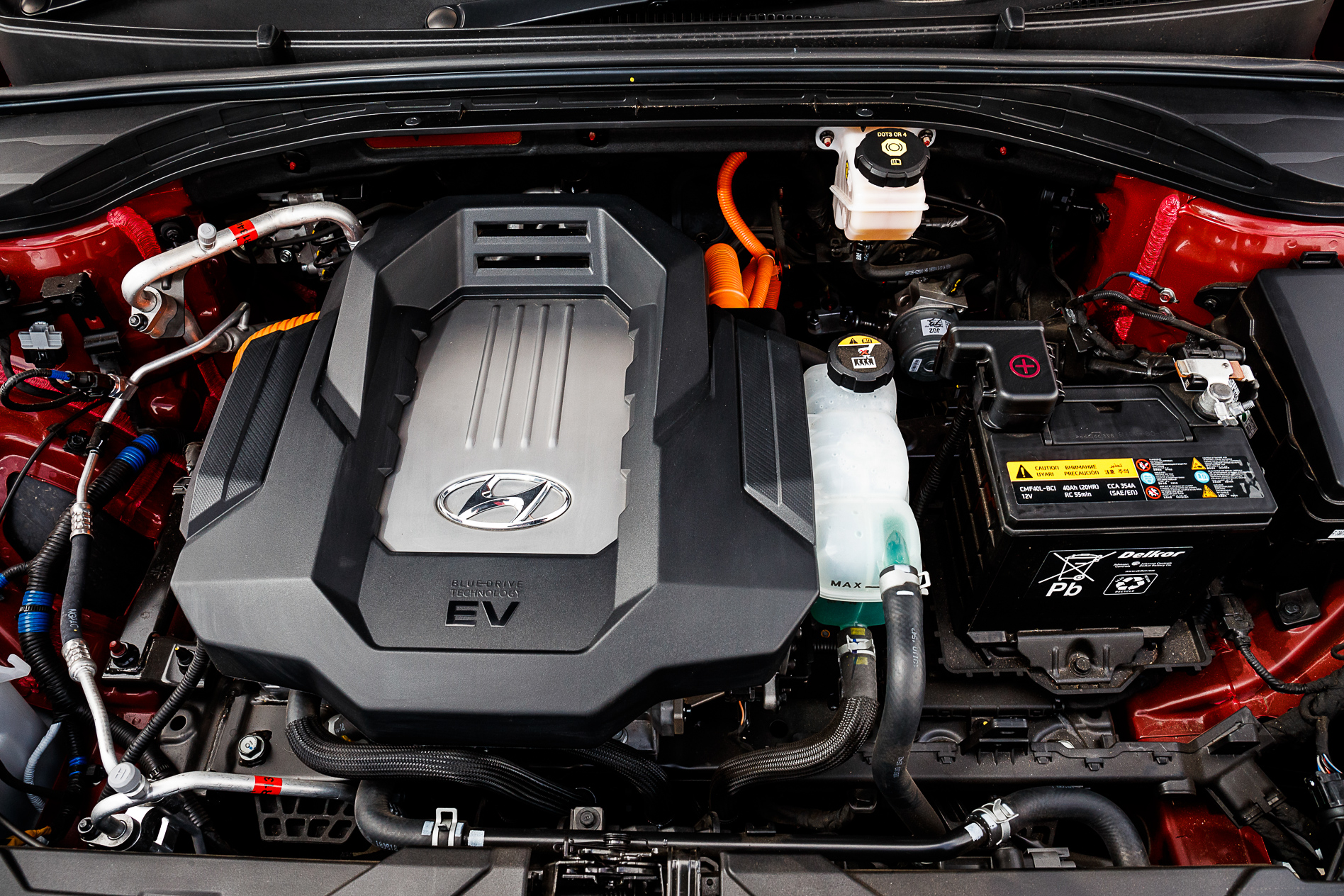
Mustering 88kW and 295Nm (in Sport), the Ioniq is slower than the Leaf and the 28kWh battery pack is smaller. Hence the range is reduced and comes with a caveat. Yes, 230km is stated, but turn the air-con on and it drops instantly by about 50km. As with the Leaf, highways kill efficiency. A 6.6kWh charger ($1995) returns 100 percent charge in 4.5 hours at your house, while 80 percent charge can be achieved in 23 minutes using a 100kWh DC fast charger.
Score: 14/25
Total score: 67/100
Verdict: Turning over a new Leaf
The Nissan Leaf’s extra range and greater useability win out. Using the Leaf as a, ahem, ‘normal’ car cuts the overall range far less than in the Hyundai. It’s not perfect, and it certainly isn’t cheap (considering you can buy a Tesla Model 3 for $66K), but it makes a better case as an EV over the Ioniq. When vehicle-to-grid technology arrives down under at a feasible price, the Leaf’s ability to contribute to the local grid in times of peak demand, later recharging in an off-peak period, could further reduce running costs while being part of a bigger picture solution for energy demands.
What is it?
The Suzuki Vitara nameplate goes back more than 30 years, and the latest model retains its reputation as stylish but modestly priced SUV. It offers a roomy cabin and a choice of three engines, among them a punchy turbocharged petrol that comes with an all-wheel-drive option.
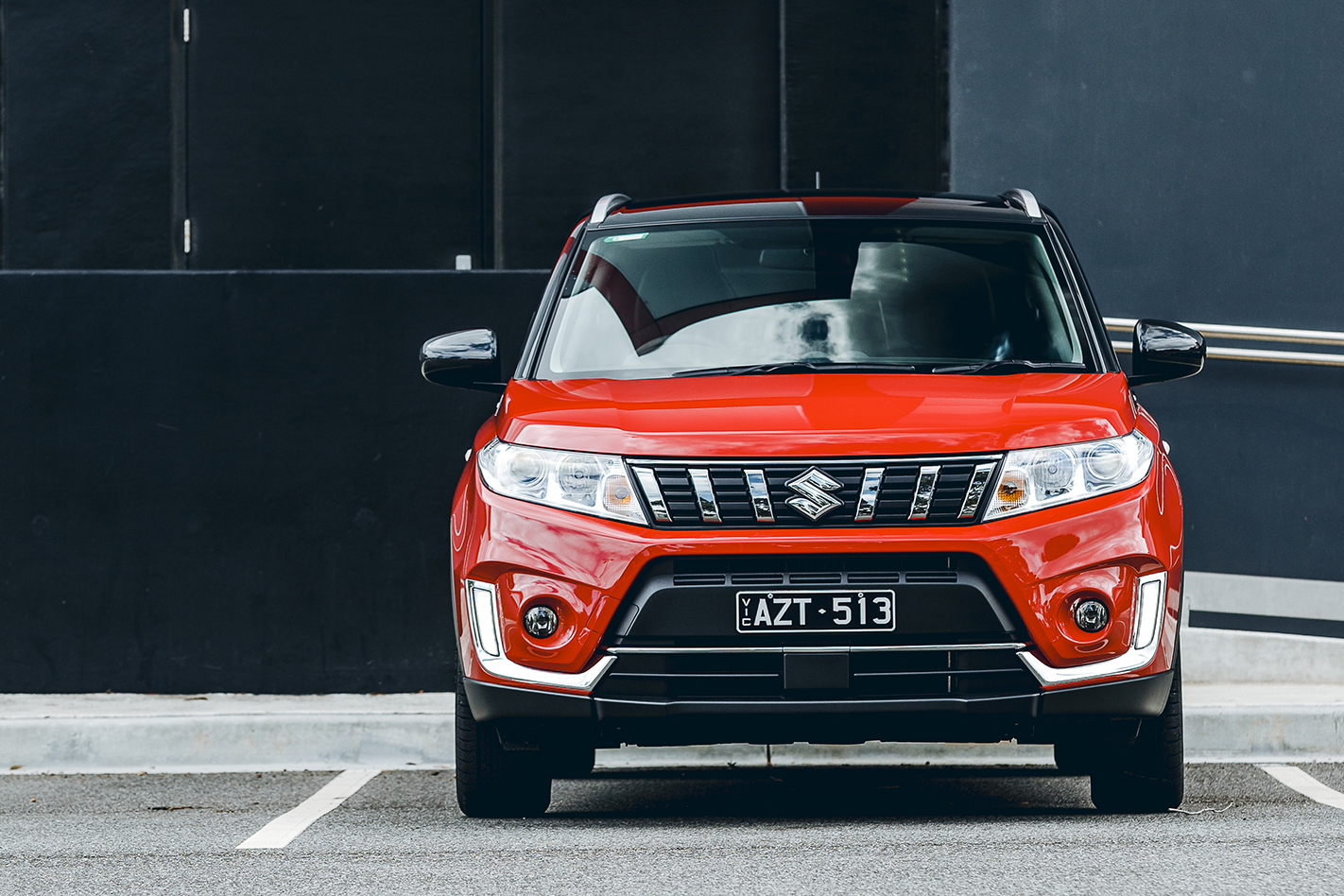
The Vitara we’re reviewing here is the entry-level spec with the 1.6-litre petrol engine, front-wheel-drive and six-speed automatic gearbox that retails for $24,490 – a cheaper six-speed manual version is also available for just $22,490.
This current model is the mid-life update of the fourth-generation Vitara that arrived at the beginning of 2019 that brought a host of cosmetic changes and some new equipment but nothing by way of mechanical changes.
What’s it like to live with?
The Vitara is an affordable and honest SUV that retains benefits of being a high-riding wagon by not trying to be a high-riding hatch. The cabin itself is deceptively roomy, despite the its 2500mm wheelbase being 70mm less than the Mazda CX-3 that only offers light-hatch levels of interior space. The front seats are basic but comfortable and the rear pew seats two adults comfortably with good legroom, headroom and all-round vision.
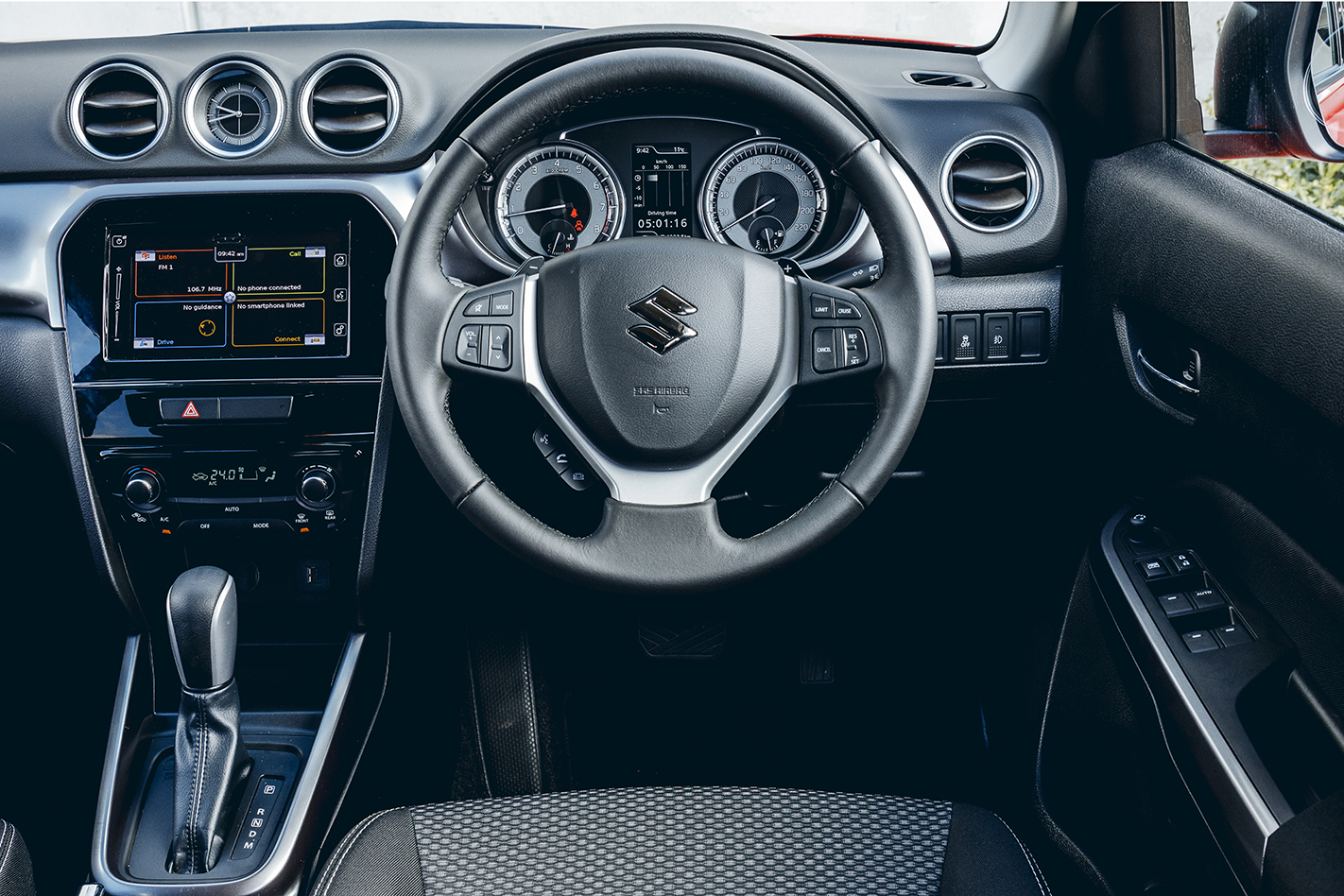
You get quite a bit of kit for a sub-$25k SUV, including Suzuki’s latest multimedia system with satellite navigation and Android Auto/Apple CarPlay connectivity, leather-trim steering wheel, climate control air-conditioning, push-button start, paddle shifters, alloy wheels, and stitched seat trim.
There are compromises however, including hard plastic door trims and nothing by way of active safety such as autonomous emergency braking, even as an option, despite it being available in the Turbo S versions.
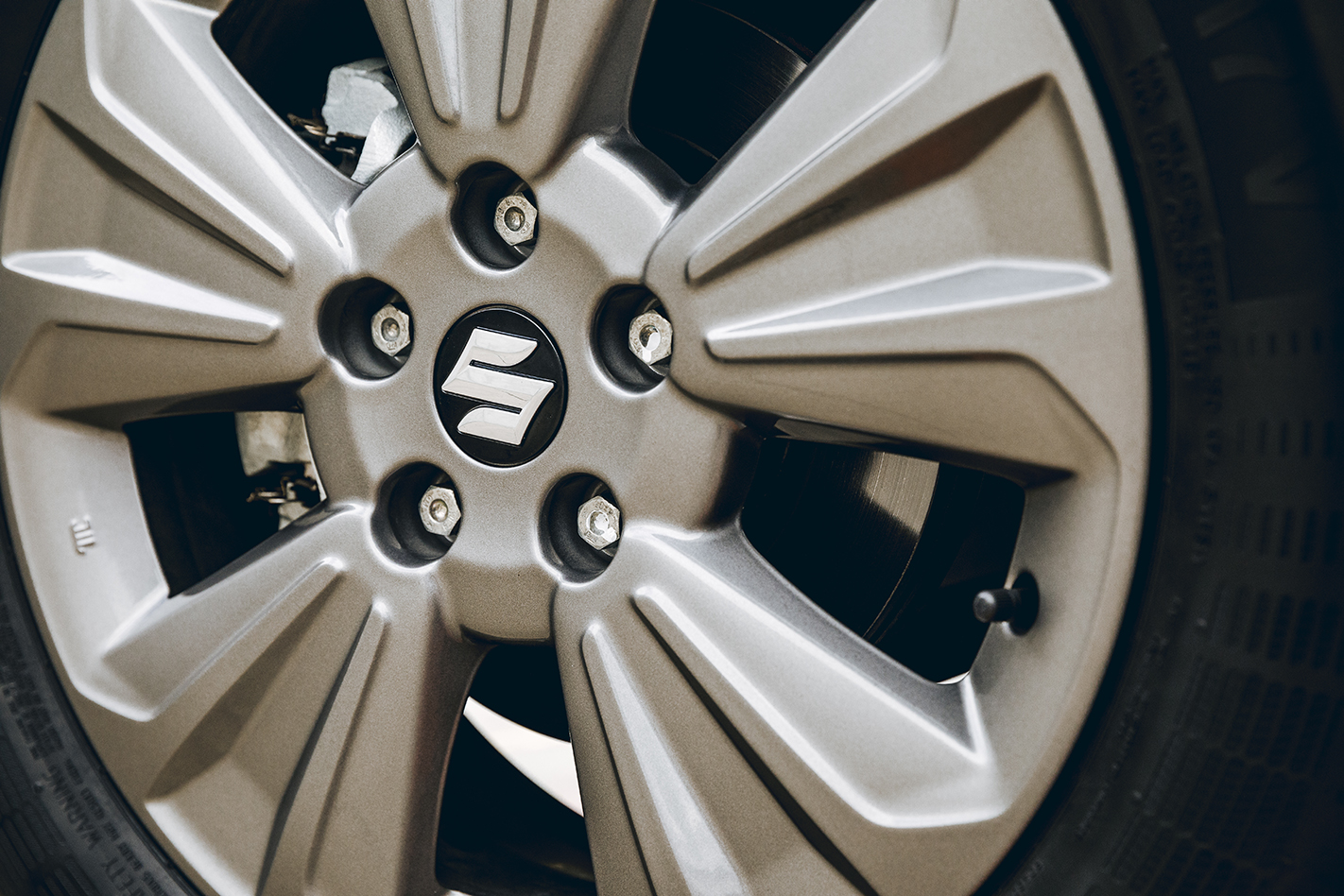
Rear seat passengers also miss out on amenities such as the centre armrest, seat pockets, air vents and USB ports, though this is pretty much the norm across its entry-level rivals.
The rear seats are otherwise a pleasant place to be and seats two adults comfortably with good legroom, headroom, and all-round vision. The 60:40 split seat backs fold down to extend the 375-litre boot space (which is about average for a small SUV) to 1200 litres.
With the 1.6-litre engine the Vitara has a frugal official fuel economy rating of 6.0L/100km and is covered by a five-year, unlimited kilometre warranty.
What’s it like to drive?
The original Vitara was a handy off-roader and while the fourth generation still bears a family resemblance it is primarily a soft roader. That said it’s not averse to travelling on bitumen.
Despite its small footprint it feels well planted on gravel and its 185mm ride height means you don’t end up most with of the road surface in your wheel arches. The one initial downside is the light steering, which has a nice fluid feel on bitumen, but takes getting used to before you can negotiate pebbly bends with confidence.
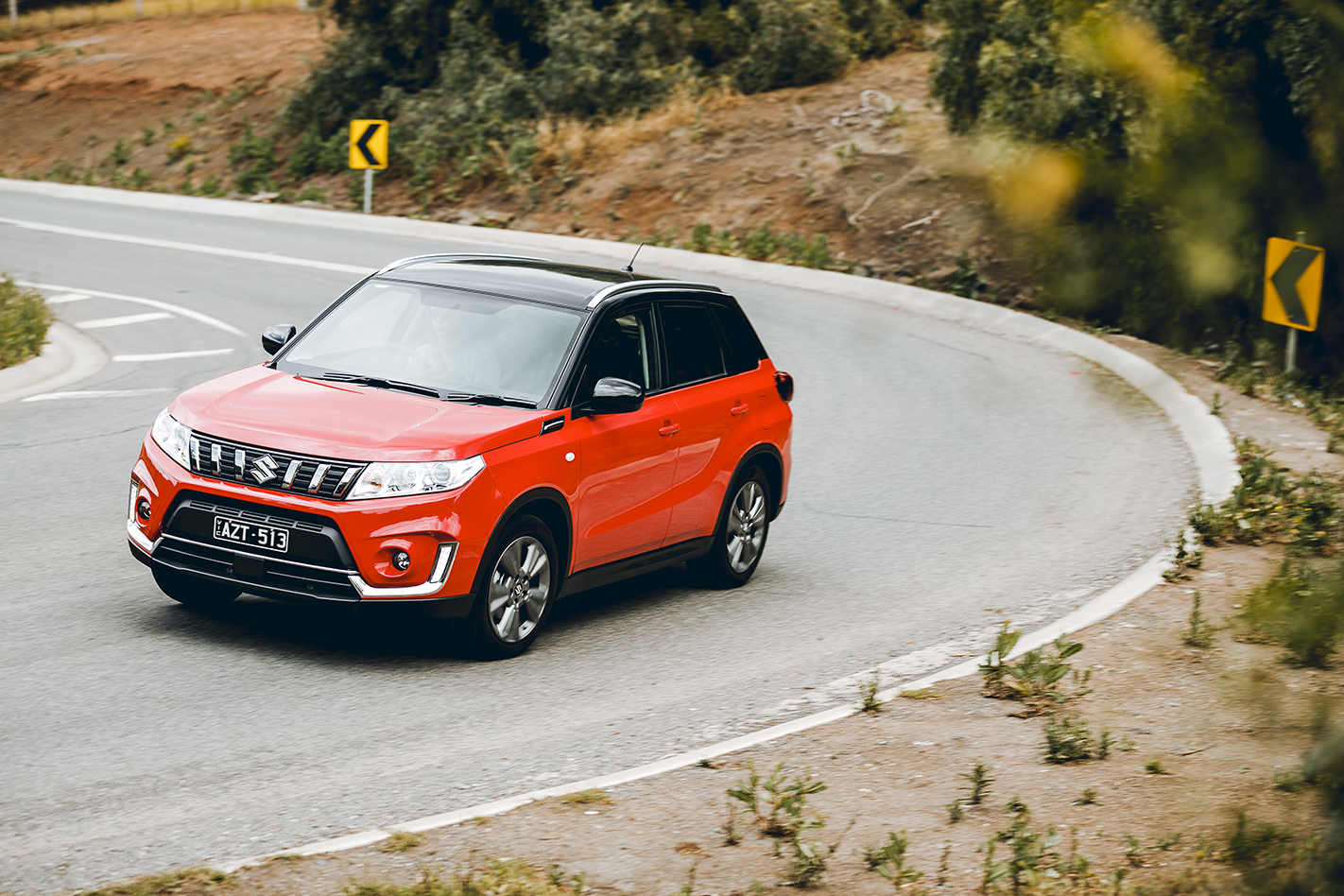
On deteriorating bitumen at 100km/h, the soft suspension tackles road imperfections well, with little compromise to handling and lateral toss. With just the driver on board there’s some floaty secondary bounce, but putting a load in the back or a body or two in the rear seats does well to contain things.
In its element, on freeways and around town, the Vitara offers a smooth, comfortable and quiet ride, however you do get wind noise seeping into the cabin from all corners at higher speeds.
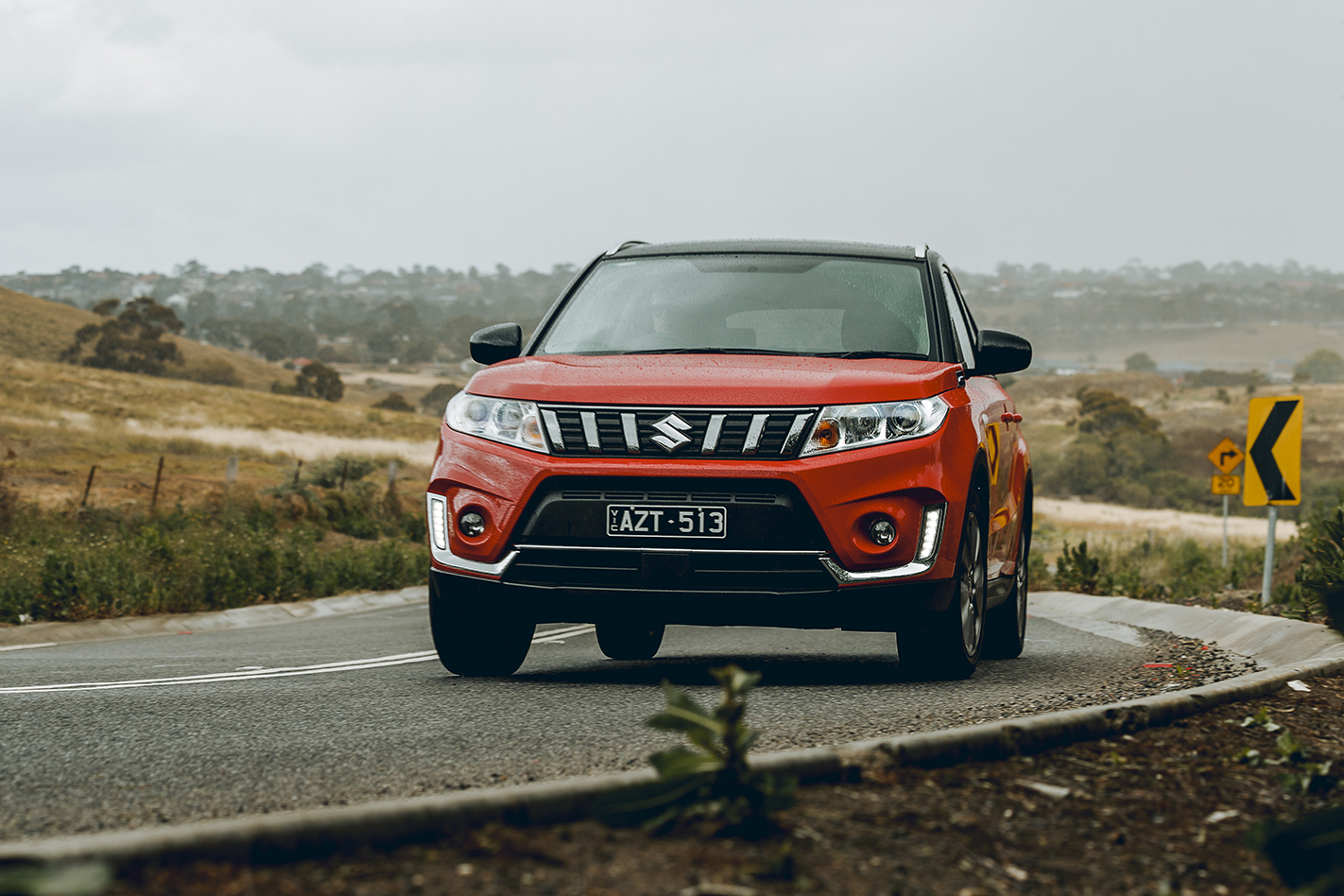
The Vitara’s 1.6-litre engine is a hard worker, and is paired with the same six-speed automatic transmission found in the upper-spec S-Turbo variants. It’s tuned for economy over performance, though each is aided by its lean 1120kg kerb weight.
Is it worth it?
Suzuki does cheap and cheerful cars well, and the Vitara’s sub-$25k retail price doesn’t come at the expense of comfort and reliability.
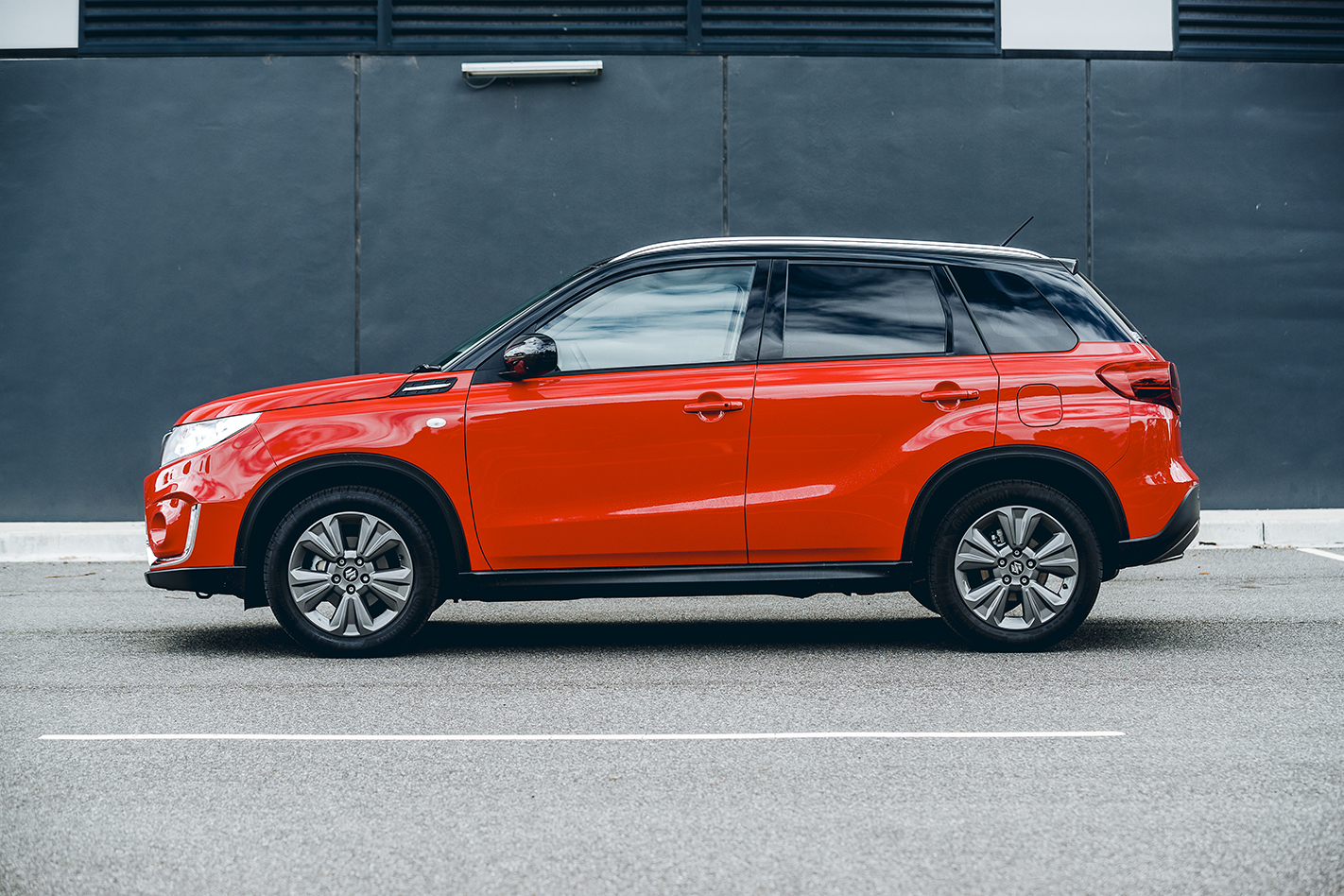
But its decent standard equipment list fails to mask a lack of refinement while the unavailability of advanced driver assistance technology is an archaism in this 2020 model year. If you’re happy to overlook all that, than you’ll find the Vitara to be one of the better SUVs in its price range.
Pros: Great value, smooth ride, well equipped Cons: No autonomous emergency braking, hard cabin plastics
Rating: 3.5/5
Make no mistake, this is a great result for HSV. In fact, it’s a hell of an achievement for any car to crack the Performance Car of the Year 2004 sextet, but HSV has been suffering through a PCOTY drought over the past few years.
This feature was originally published in MOTOR’s April 2004 issue
The 300kW GTS sedan couldn’t crack the top six last year, stuck in seventh on the outside looking in. The last HSV to make a top six appearance was back in 2001, when the VX GTS finished sixth.
So how come the 285kW R8 could go where the 300kW GTS couldn’t? Unlike the more powerful GTS, it presents a polished and complete package for the first time and really took it to the big-dollar Euro boys.
The general order of operation at PCOTY is always slowest to fastest, and a ticket in the hot seat of the HSV signalled the beginning of the big bangers. Both its Avalon acceleration times and top speed runs had it hovering on the fringe of the top six and deep in the minds of the judges.
Despite ‘lacking’ 15kW, the R8 was just six one-hundreds of a tick slower around Winton than last year’s 300kW GTS sedan. It’s hard not be impressed by a bog standard road car cracking a 1:43.50 around Winton, but the R8 got lost in the shuffle of big numbers as the Lambo and CSL waged their own little war six seconds up the road. Still, it impressed all who fanged it, from Cam all the way through our ranks.
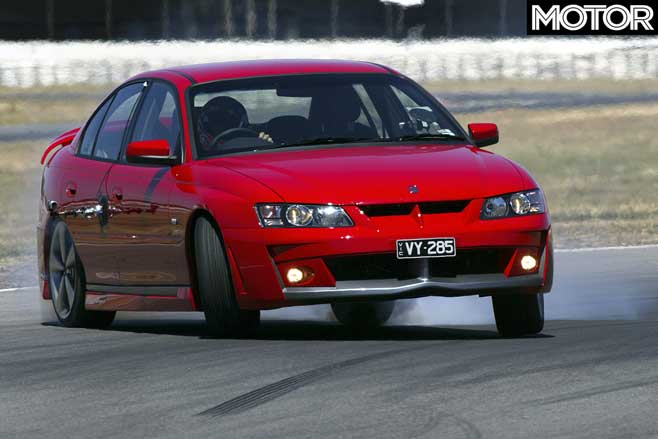
Whether you chose to drive it on the lock stops (something all of us had a go at) or preferred the neat and tidy way, the Clubbie had plenty of quills in its bow. Rear-end grip is still a strong point if you’re sensible with the throttle, but does trade off a bit in front-end push on the exit of faster corners. The rear squat also lightens the front wheels in the tighter stuff, so you can expect a bit of turn-in understeer if you overcook a slow corner.
If it was fun on the track, the R8 showed some genuine cross-country ability on the road. There are few finer cars to punt harder over typical Aussie roads. The R8 has real compliance in the suspension, and power and torque aplenty when you’re having a go. The brakes are another plus, although they were getting tired at Winton, but the gearbox is still slow and heavy. And guess what? We never blew the power steering pump.
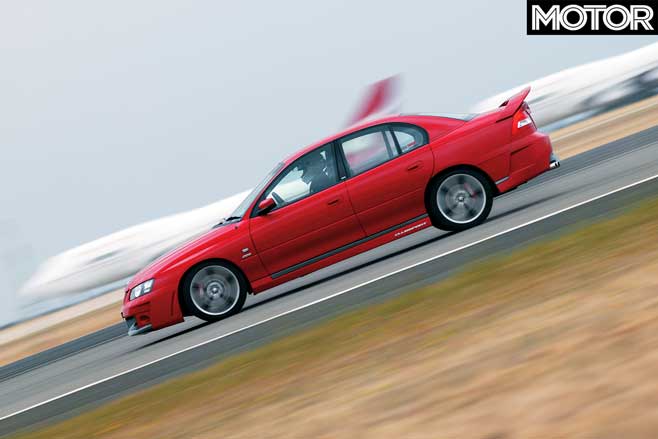
The GTS has always scared off the judges when the near enough to one hundred grand sticker price came up. But with a loaded R8 scraping under $70k, this HSV represents reasonable value for money.
At the end of the number crunching, the HSV sat in a somewhat lonely fourth place, 25 points adrift of the big three and 15 points clear of the Nissan 350Z. In the final reckoning, the Clubbie impressed MT enough to draw a surprise second place vote for its combination of power and poise for the bucks. He reckoned it good, strong, honest fun. Can’t argue with that.
Unfortunately for the Clubbie, both Morley and Lucky Bastard put the Zed on their ballot forms, thus relegating the big, red HSV to fifth on the pop charts.
Fat chronic blunt
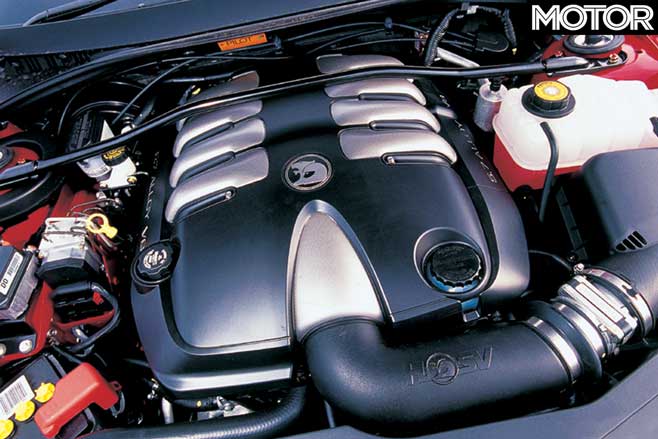
What’s the bet there’ll be a technofile out there staring in disbelief at a low-tech HSV in fifth place? Keyboard poised to argue the toss with us about dinosaur technology, blah, blah.
Yep, the ClubSport is the only car without double overhead cams in the top 16 (rotary RX-8 aside, nerds). At 5.7 litres, it has the largest-capacity engine in the top six but the worst specific power. It was tied at 50kW per litre with the V6 Crossfire, and only the similar-engined Commodore SS had a worse specific power output at 43kW per litre.
In short, it is a blunt but very effective weapon. And it beat the brains out of many so-called high-tech cars, including the quad-cam, twin-turbo W12 Bentley Continental GT. And you could have 5.4 R8s for the ask of the British/German barge. So there.
PCOTY 2004 Results – 5th
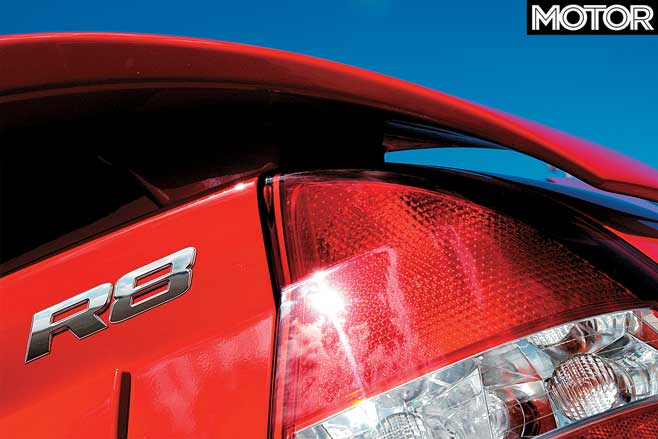
0-100km/h: 5.92sec 0-400m: 14.08sec @ 167.4km/h 0-1000m: 25.13sec @ 216.4km/h Top Speed: 260km/h Winton Lap Time: 1min 43.50sec
Judges’ Scores
| Judge | MT | JT | DE | CM | GK | DM | LB |
| Performance (/20) | 17 | 17 | 16 | 16 | 17 | 14 | 17 |
| Dynamics (/20) | 18 | 15 | 18 | 16 | 16 | 17 | 16 |
| Driveability (/20) | 17 | 14 | 18 | 15 | 16 | 16 | 16 |
| Design & Function (/10) | 9 | 7 | 8 | 8 | 8 | 8 | 9 |
| Value (/10) | 8 | 7 | 9 | 8 | 8 | 6 | 9 |
| Total (/80) | 69 | 60 | 69 | 63 | 65 | 61 | 67 |
Total Score: 454/560 Votes: 1 x 2nd
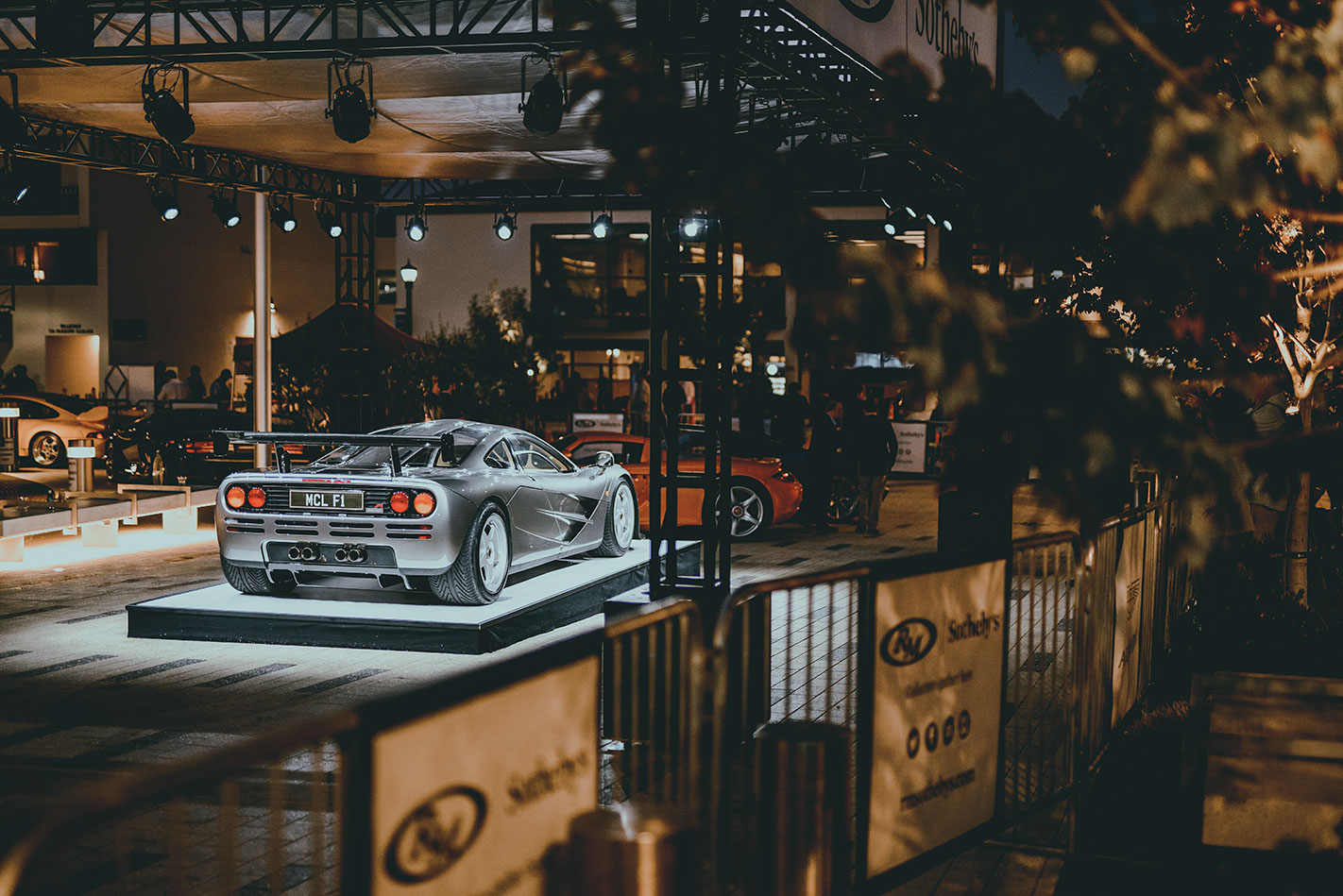
Being a staff photographer for these pages, I’m extremely fortunate with the amount of control I have over things. A car is brought to me, a location is agreed on, time is given to get a range of shots, the journalist hops through certain hoops and, hopefully, everyone is pleased about the outcome. It’s all too easy to settle into a bit of a rhythm, so what better opportunity to step outside this carefully curated comfort zone than Monterey Car Week?
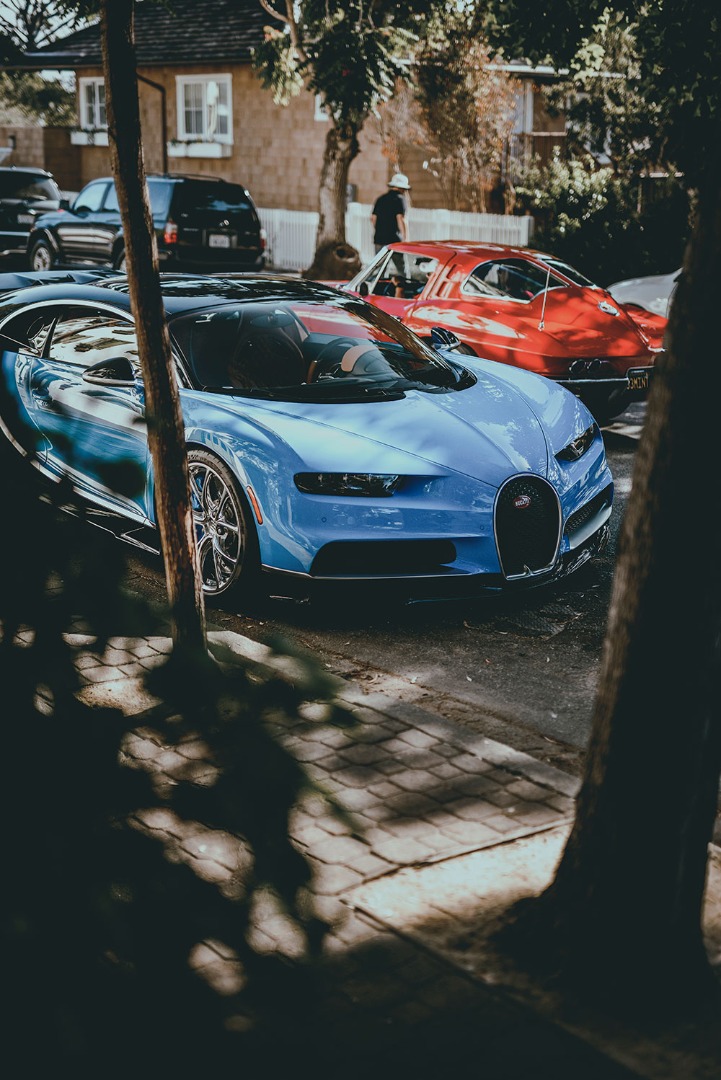
Monterey county plays host to several car-themed events; from the motorsports reunion at Laguna Seca, to the headline-grabbing auctions. Various car rallies thread through the Pacific Coast Highway’s Big Sur and around the quiet town of Carmel-by-the-Sea. Supercar heavyweights such as Pagani, Koenigsegg and McLaren take up residence in various lodges and resorts around the region, hosting deep-pocketed clients. Launch events and ritzy parties such as the Quail motorsports gathering and the McCall’s Motorworks Revival are thrown throughout the area, all leading up to the prestigious concours d’elegance staged at the Pebble Beach golf course come week’s end.
Car Week is and always has been a meeting of money; old money, new money, buyers, brokers, sellers, owners and enthusiasts. The biggest collectors flexed their Benjamins, arriving by private jet, while their multiple supercars were delivered by transporter to be parked outside their chosen resort accommodation.
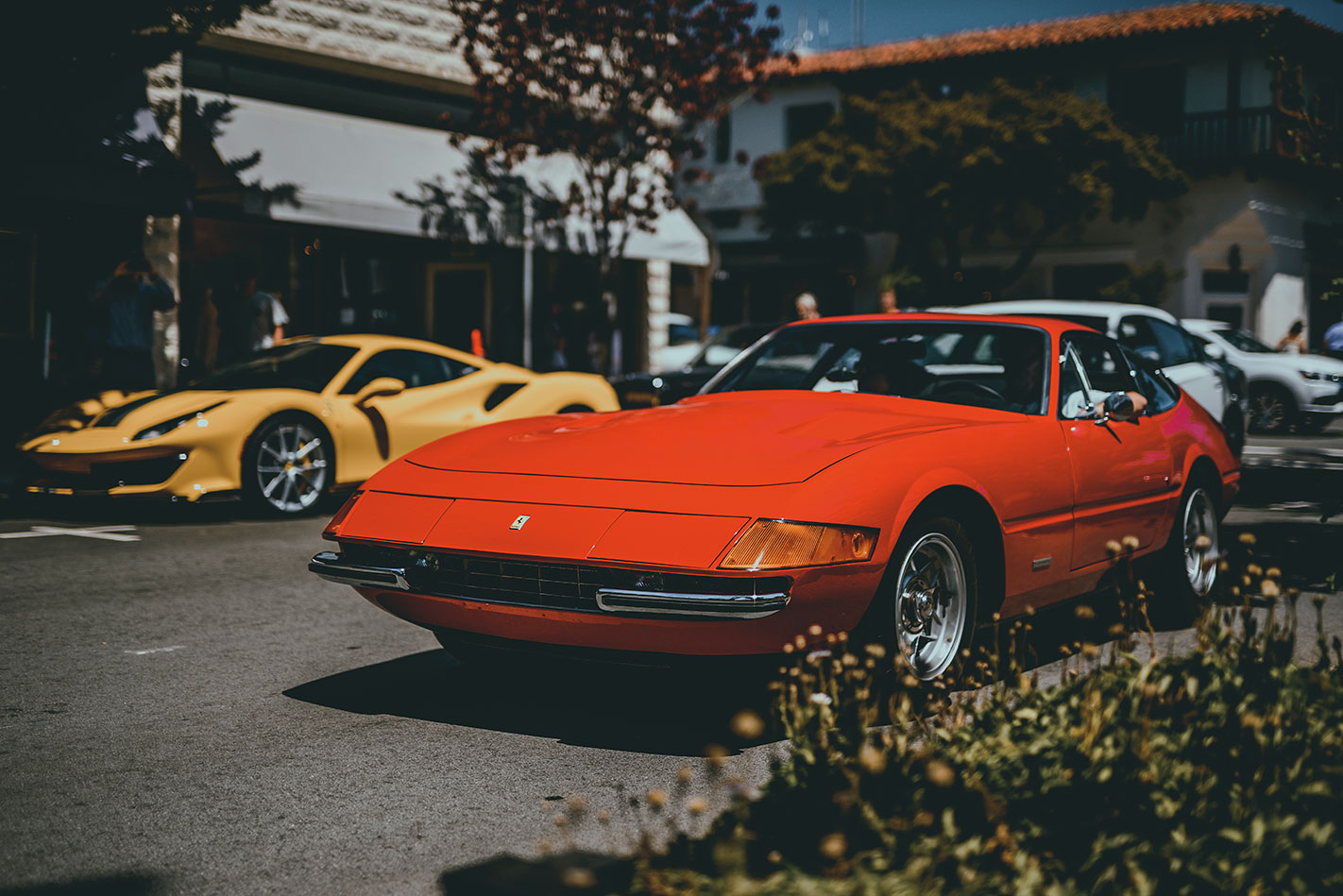
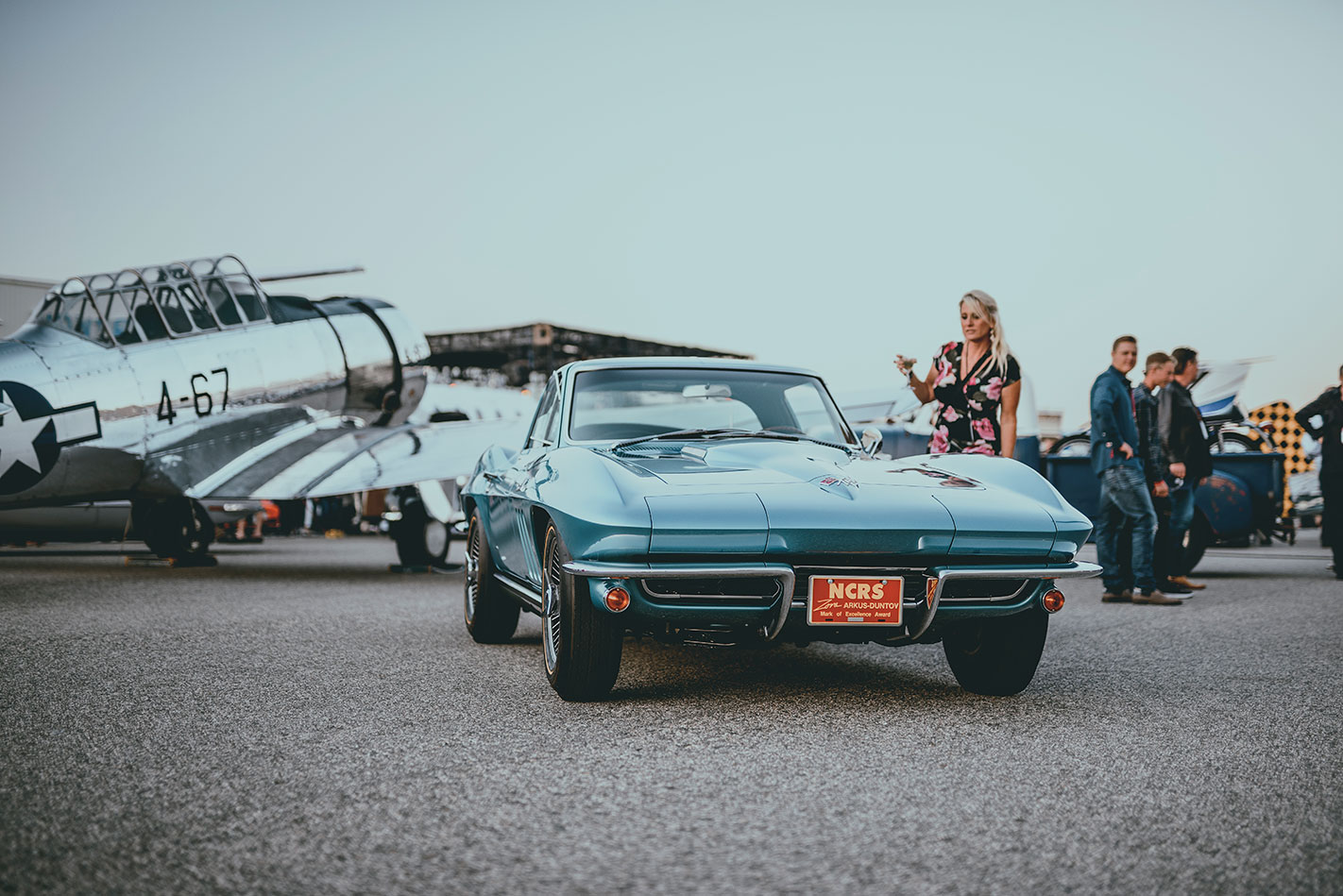
It’s initially disorientating. Carmel-by-the-Sea, more famous to most as the sleepy town that voted in Clint Eastwood as mayor, is turned into a moving motorshow. A Lamborghini Miura trundles past a street-parked Bugatti Chiron. Looking up, I catch a glance of a Mercedes 300SL Gullwing making its way down to the coast. Turning the other way, a Lexus LFA and a McLaren Senna are eyeballing each other across a four-way junction. An Audi Sport Quattro lurks on a side street opposite a Ferrari 250 GTB Lusso while a Gulf-liveried Ford GT rolls to a halt outside a coffee shop. My kerbside deli lunch is spent in the company of W Motors’ new Fenyr abomination, and an original Ruf CTR Yellowbird. But as much as I’m distracted by the metal on display, I’m just as intrigued by the legions of car spotters.
Whether it be for Youtube or Instagram, car spotters hunt down and document rare and expensive cars seen ‘out in the wild’ or cooped up in dealerships and private collections. There’s a certain safari element to how they find and shoot their subjects. Once they latch on to something, a few minutes are given to looking and shooting before they’re on to the next. If it’s followers you’re after, it can be quite a lucrative way of combining a passion for cars and creative media. Some of the biggest players’ audiences stretch into the hundreds of thousands, even millions. Pretty good going when they have next to no control over their subject or environment.
“I started taking photos of cars because I liked them. That’s about it,” explains Englishman Alex Penfold, who has 450,000 followers on Instagram at the time of writing. “I started shooting while going to the Goodwood Festival of Speed with my dad. The photos were bad but I liked the cars, and then I realised I could try and make the photos nicer. Around 75 percent of my work these days is paid content or to build more followers, but I’ll also just post things that I personally like. But I’m not here for work, I’m here for a jolly with mates.”
Spotters are among the best people to follow at an event like Car Week. Short of being privy to the whats, whens and wheres in an official capacity, hanging around someone with fingers in pots and ears to the ground means a lot less chance of missing something. That is, unless they want you to miss it. Exclusivity is big in car spotting, and throwing people off the scent is fair game in order to score a clean pic of an elusive red Pagani Zonda Cinque roadster that no-one else has.
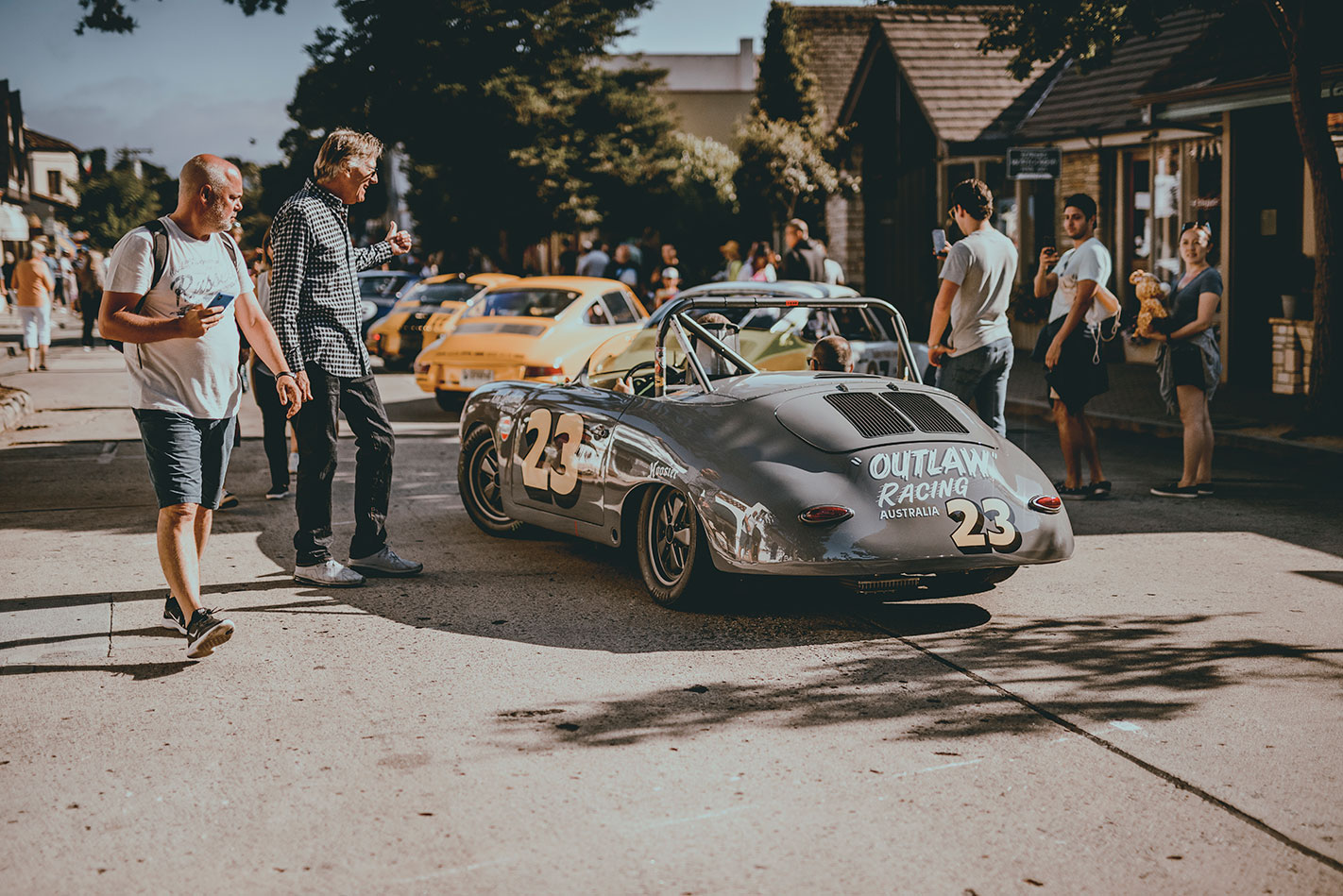
But the game extends beyond that. Once you happen across a car, the fun begins. What’s the best angle? How do we deal with the light? How many people are going to walk in front of my shot? Which way is the car going to be travelling? How long can I stand in the middle of the road for? No matter the factors, the final objective seems always the same: get a clean shot of the car with as few people in it as possible. Or, if immediacy’s not an issue, come back later, re-create the shot with a now deserted background and montage the car and the scenery together.
I spend the week picking up tricks of the trade and begin to enjoy the hunt. Towards the end of the week, we receive a tip-off that a one-of-three Ferrari F50 GT is being unloaded off a truck somewhere within Pebble Beach. After a quick dart across town and some choice shortcutting, eventually we find it, along with a sizeable crowd. So much for getting a unique angle. Time to abandon the spotting circus and drink in some cars instead. The Ferrari display piques my interest. Soon enough I find myself standing next to a 1963 Ferrari 250 GTO, presented completely devoid of any barriers protecting it from foot traffic. This Tour de France-winning example sold last year for a reported US$70 million (A$100 million), and word is that it’s currently valued at some US$80-90 million.
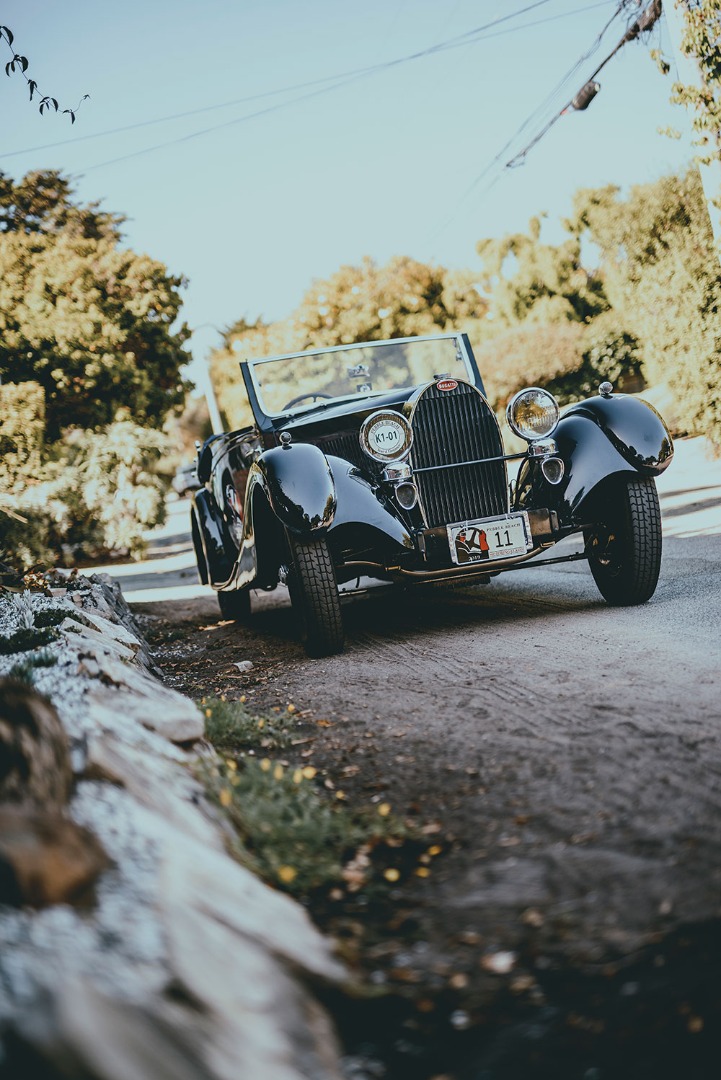
Not only is this car worth more than an entire street in the nicest part of town, it has made as much money in the last 12 months as an ethically wayward merchant banker. And right next to it is another, almost identical one. These two are just some of Maranello’s finest sitting on the first fairway of the Pebble Beach course as part of the 90 years of Scuderia Ferrari celebration. Casually dotted around the fairways and greens are a couple of 250 Testarossas, a one-of-five 288 GTO Evoluzione and a selection of Schumacher’s Formula 1 steeds.
As a bucket list event, Monterey Car Week doesn’t disappoint. Even the C-list parking lots at many of the events are packed with the sort of exotica that would be showstoppers in Australia. It may be occasionally overwhelming but, once in a while at least, there’s something to be said for stepping outside your comfort zone.
Autonomous driving is old hat. Say hello to autonomous drifting.
Researchers at Stanford University have designed and built a completely autonomous electric vehicle whose sole purpose is to take corners with as much oversteer as possible – and it’s all in the name of safety.
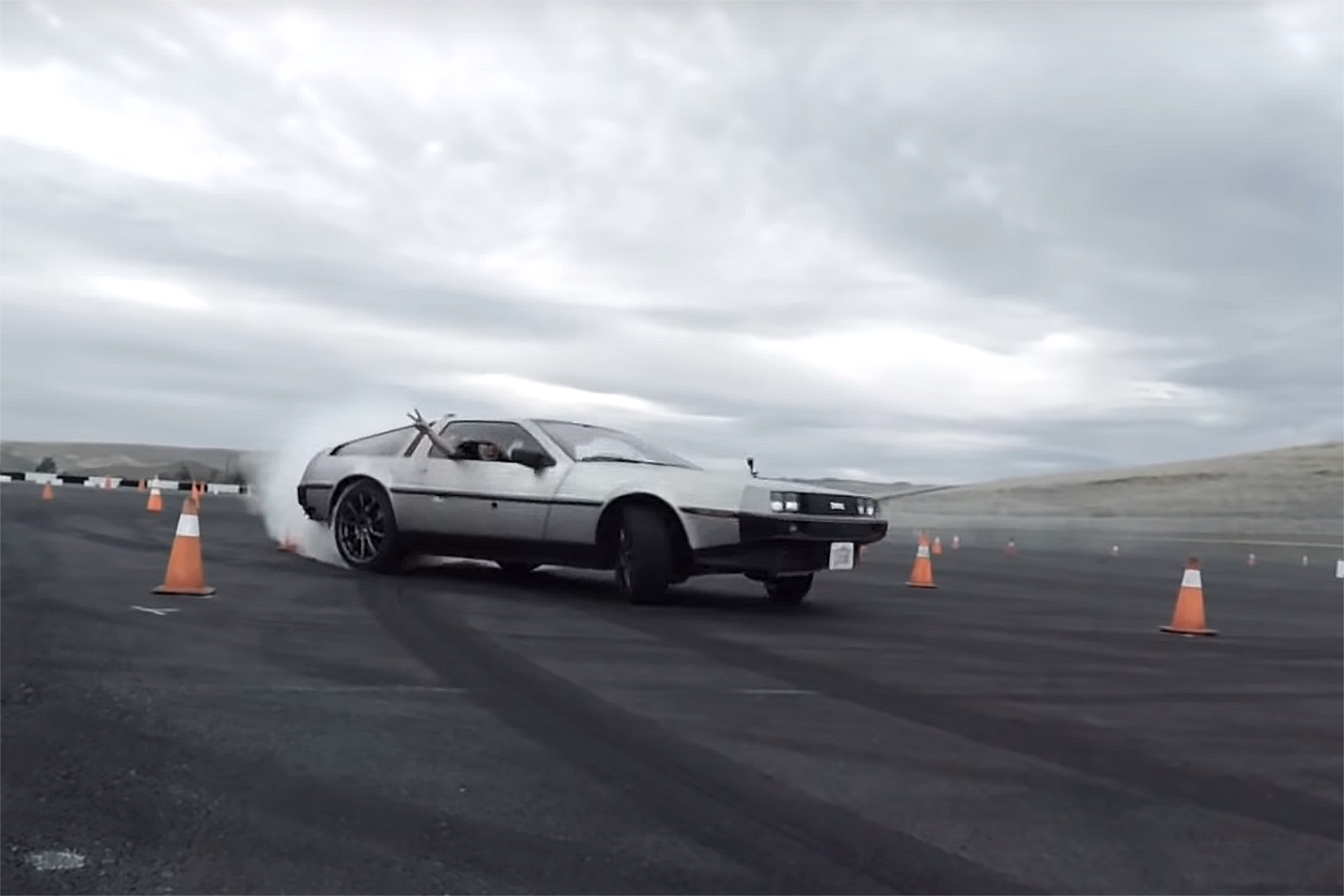
Dubbed MARTY – for Multiple Actuator Research Test bed for Yaw control – the Delorean-based drift mule is the brainchild of Jon Goh, a recent mechanical engineering PhD graduate from Stanford. Working at Stanford’s Dynamic Design Lab researching vehicle handling technology and autonomous driving, Goh built the lab’s DMC Delorean to be a lot more than just a self-driving showboat.
Its role is to see if a computer is able to exploit the full range of a car’s dynamic ‘envelope’ to evade danger, rather than just the relatively slim – but safe – zone between oversteer and understeer. Trained to drift by being fed data gathered from professional drifters, MARTY pulls off what seems impossible: amazing agility and supremely smoky slides that follow a plotted course with centimeter precision.
“Through drifting, we’re able to get to extreme examples of driving physics that we wouldn’t otherwise,” Goh said.
“If we can conquer how to safely control the car in the most stable and the most unstable scenarios, it becomes easier to connect all the dots in between.”
And it’s not just repeating a set routine recorded by a human driver, like some “self racing” prototypes in the past. It’s simply instructed on the path it needs to take and where obstacles are, with its computer working out how to navigate the route in the most sideways attitude possible.
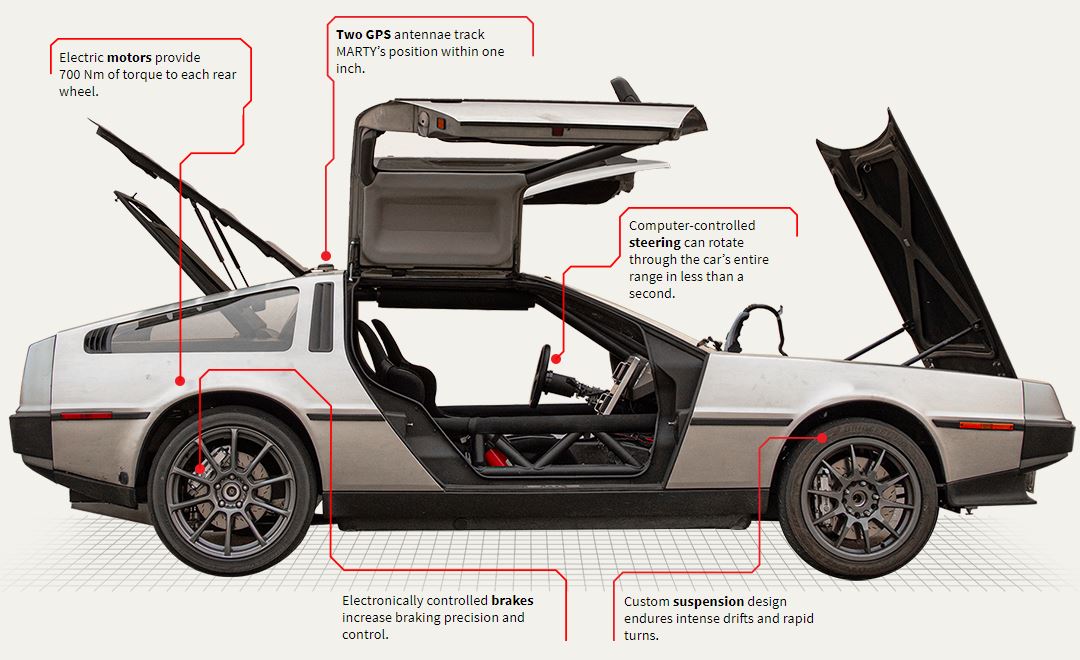
Getting sideways isn’t a problem either. MARTY has ditched the standard Delorean V6 in favour of twin electric motors that send a massive 700Nm to the rear wheels, while custom suspension provides improved handling characteristics. Controlling it is an ultra-fast electric steering rack that can go from lock-to-lock in under a second, with the car’s computer being fed positional data by two high-resolution GPS receivers with a positional accuracy of less than 2.5cm.
“We’re trying to develop automated vehicles that can handle emergency maneuvers or slippery surfaces like ice or snow,” said the head of the Dynamic Design Lab, Professor Chris Gerdes.
“We’d like to develop automated vehicles that can use all of the friction between the tire and the road to get the car out of harm’s way. We want the car to be able to avoid any accident that’s avoidable within the laws of physics.”
Autonomous driving is still very much in its infancy, and while the car industry was initially bullish on the idea of huge fleets of self-driving robotaxis, an increasing number of carmakers are beginning to concede that truly autonomous road-going vehicles are highly unlikely for the forseeable.
But MARTY is not road-going. It exists only to tear up skidpans to gather data and validate technology, so without the challenges of interpreting road markings, keeping clear of pedestrians, trees and other cars, and the need to comply with road laws, MARTY works rather well.
And for the question you’ve probably been pondering the entire time you’ve been reading this, why use a Delorean? Gerdes sums it up with a sly nod to Back to the Future:“The way we see it, if you’re going to build a research vehicle, why not do it with some style?”
Want to delve into the nerdy detail? Don your mortarboard and head here to read Goh’s research paper on MARTY.
BEST HANDLING – McLaren 600LT
Before we award the gong for best handling it probably makes sense to define the term. Handling isn’t about outright grip or speed, it’s the connection you make to a car. How easy is it to drive the car to its limit and how does it respond when you do so? Bigger tyres and stiffer suspension can make a car quicker, but doesn’t necessarily improve handling.
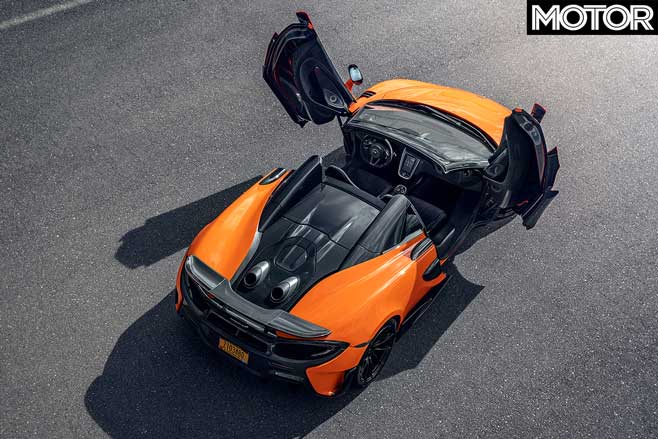
Good handling is egalitarian; you can find it in a Ford Fiesta ST or a Porsche Cayman or, indeed, in a McLaren 600LT, the best-handling car we drove in the past 12 months. The mighty Mac happens to major in both categories: it can go around corners at a tremendous rate of knots, but crucially you don’t have to do so to enjoy it.
Key to this is the steering. Its biggest shortcoming is quite pronounced kickback over mid-corner bumps, but in every other circumstance you are rewarded with a beautiful stream of communication from the front tyres. This is true steering feel, the type very few cars possess these days. This provides tremendous confidence, which is paramount when trying to drive something as potent as the 441kW/620Nm, 0-100km/h in 2.9sec 600LT.
Changes over the ‘regular’ 570S are surprisingly few. The rear is elongated by 74mm (hence the Longtail moniker), the ride height dropped by 8mm, the front track increased by 10mm and Pirelli P Zero Trofeo R semi-slicks are fitted. Most importantly, up to 100kg is shed, depending on how many option boxes you tick.
This makes the 600LT very agile, while the lighter wheels and brakes not only reduce unsprung weight but provide outrageous stopping power. Again, though, it’s McLaren’s calibration of the parts rather than the parts themselves that is so impressive.
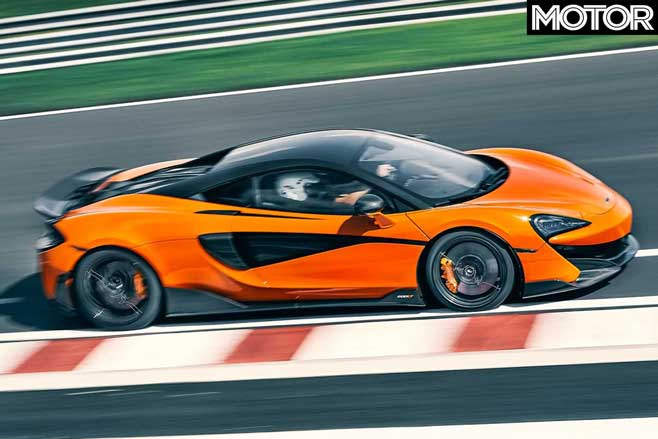
To drive this special McLaren hard is to become immersed in the process, every input answered incredibly accurately. It requires respect, as there’s a lot of power being sent through just two tyres, but the ESC is brilliantly judged in Sport, allowing you a window into what the 600LT would be like unshackled on a racetrack.
One of the true hallmarks of a great-handling car is that it provides options rather than forcing you into a particular driving style. The 600LT has more than enough front grip to be driven conventionally, yet is adjustable enough that if you have the ability and confidence to use the brakes and throttle to adjust its balance, it’s more than happy to indulge. It’s a remarkable supercar.
Best Steering – Lotus Evora 410
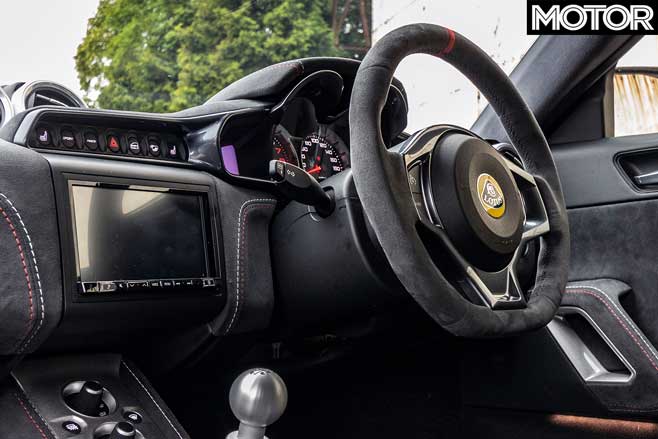
We don’t subscribe to the notion electric steering is inferior, but it can’t be coincidence that this category’s finalists, the McLaren 600LT and Lotus Evora 410, both retain hydraulic assistance. Both offer an exceptional connection to the road and near-perfect weighting, but the Lotus is disturbed less by road irregularities and therefore gets the nod.
Best Electronics – Porsche 992 911
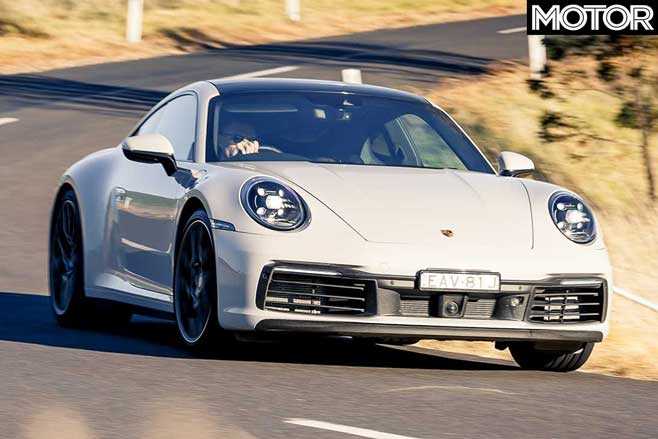
The best computer chassis trickery leaves you alone and only makes its Electronic Stability Program intervention obvious when you’ve made a mistake. And even when you haven’t, it imperceptibly works in the background to augment your inputs as driver. No other system does either of these things quite as effectively, or subtly, as that of the new 992-series 911.
- We build Lego Technic kit number 42110
- 2573 pieces of khaki plastic glory
- Has ‘most sophisticated gearbox’ to date
As the covers were coming off the actual Land Rover Defender, Lego announced a version that’s both far more accessible to more people and available far earlier than the real thing.
Of course, some of you might have seen the Lego Defender make some waves before the car’s debut earlier in 2019, as images of the box leaked ahead of both the real car’s and even the Lego kit’s reveal.
Read more: Land Rover Defender revealed
Now both are out in the open and, while CAR waits to get some serious time behind the wheel of one, we thought we’d get to work making the very cool new Technic set.
What does the Defender kit feature?
Even before you get building, the box itself showcases some of the 4×4’s clever details. There are 2573 pieces and the model number – ‘42110’ – is also quite clever: ‘42’ is in reference to its length in centimetres (it’s also 22cm tall and 20cm wide) and ‘110’ is naturally a nod to the five-door size real-life Defender.
Open the box and it’s your standard Lego Technic kit; no history book on the Defender and the Land Rover Series I-III, for example, unlike the bright orange 911 GT3 RS kit you can also get.
Read More: Celebrating Lego’s best car creations
The car itself has plenty of clever details. The doors, bonnet and tailgate all open, and there are five seats inside, and there’s an Adventure Pack-style roof rack with ladders, traction mats and a storage box and a working winch.
Lego says that the four-speed sequential gearbox with high and low-range is ‘the most sophisticated gearbox to date’ on a Technic model, as it drives all four-wheels via three differentials.
Each wheel is independently suspended, and you can steer your Lego Defender from outside the car via a cog attached to the roof.
Even the engine has some grounds in reality; it’s an inline six just like the Ingenium P400 model Defender with working pistons. The wheels are unique to the Defender kit.
And what was it like to build?
Quite challenging, if I’m honest. The 11+ age rating on the box felt a little embarrassing as one part (out of a total of four) took four hours to piece, meaning it’s a build that’ll take several lumps of time to complete.
As always, Lego’s instruction manuals are a work of genius and illustrated in excellent detail, with the Defender’s book feeling mighty thick in your hands as you flick through the pages.
I blame my own incompetence for not reading it correctly while closing in on part two; however, as a cog deep in the bowels of the gearbox wasn’t engaging properly and clicking during the build when the wheels were attached, meaning said the wheels locked and the engine’s piston’s didn’t make their revolutions.
Entirely my own doing, after having missed a crucial step, but it meant I had to disassemble all of my hard work.
And when you’ve finished being rubbish?
The details that Lego thought of became so tremendously impressive as I progressed through the build. When you’re piecing together a small part of the chassis or body, sometimes you weren’t aware of what it was until the final few steps.
It still continues to amaze how small Lego has to think to ensure that everything fits together and works together (when the builders actually read the instructions properly, that is).
And yet focusing on tiny details has to be balanced with seeing the bigger picture; Lego has absolutely nailed some of the new Defender’s styling cues.
The headlights and rear lights, grey skid plate on the front bumper, bulky wheel arches, even an infotainment screen inside are all integrated into the build.
How much is the Lego Defender?
It’s listed as costing between $249 and $279 online and there seems to be demand as, at the time of writing, the kit is on backorder.
In terms of Technic cars, the kit is more expensive than the 911 RSR but half the price of the Bugatti Chiron.
Lego Defender: hands-on verdict
Getting to the finish line was so satisfying, not least because the build was such a challenge but what you get at the end isn’t just something to put on a shelf but wieldy enough and filled with so many useful details to play with. If you’re, ahem… a kid.
There are a few Lego models out there that look and feel questionable as to the car they’re based on, but the brand has absolutely nailed the Defender.
This review first appeared on our sister site Car Magazine UK
Specs
| Price when new: | $260 |
| On sale in the UK: | Now |
| Engine: | Ingenium six-cylinder petrol |
| Transmission: | Four-speed sequential, four-wheel drive |
| Performance: | Depends on how hard you push |
| Weight / material: | Less than a real one |
| Dimensions (length/width/height in mm): | 420/200/220mm |
No, we haven’t screwed up. Yes, the BMW Z4 scored a single point more than the Nissan 350Z but it still finishes in sixth place. You see, the points allocation establishes the finishing order of PCOTY participants from last-place 19th through to the unlucky seventh-placed Audi S4.
This feature was originally published in MOTOR’s April 2004 issue
The point scores also establish the top six, but from here each judge gets to vote for his top three, including the very important vote for the winner. Think of it as a footy season with the points scoring representing the home and away season complete with a minor premier. From here, the top six cars make the finals and votes are cast. That’s why, despite scoring more than the big Nissan, the Z4 gets no votes and must leave the game in sixth overall.
Okay, so pens away and keyboards down? Good.
As the least powerful car to make this year’s PCOTY top six, the 170kW Z4 does it with finesse. The 3.0-litre straight six, as used in everything from 3-Series to X5 with 5-Series in between, is such a sweetheart of a mill that you soon forget its less than dazzling on-paper spec (certainly in this company) of 170kW at 5900rpm and 300Nm of twist at 3500rpm.
It revs harder than the numbers suggest and has a thick and creamy bottom end. The only complaint about the power delivery is that, with such a capable and neutral chassis, you’re always wanting a bit more poke.
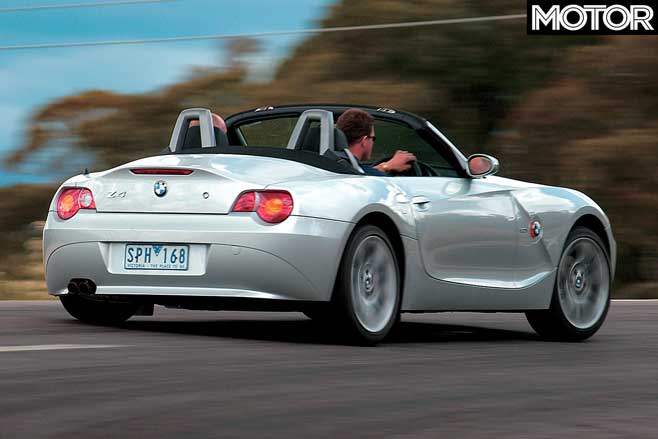
This was especially true at Avalon, where the Z4 never finished higher than 14th (for both standing kilometre time and overall top speed) out of the 19 cars present. But the 241km/h top speed is not bad for a lidless roadster, although it’s down a few kays on the Honda S2000 from last year. And stability under braking was another plus.
The Z4 sneaked back into the reckoning at Winton with a solid mid-pack 1:45.28, squeezed between a couple of GTs: the 411kW Bentley and the homegrown 290kW FPV Falcon. But more than the raw numbers, the Z4 thrilled with a benign chassis that allowed adjustability well after you’d pointed into the first half of the corner.
The only gripe was with the initial weirdness of the electronically adjustable power steering. The varying degree of assistance masks feel, but familiarity breeds more confidence. Still, you never quite fall for the steering like you would in a Boxster.
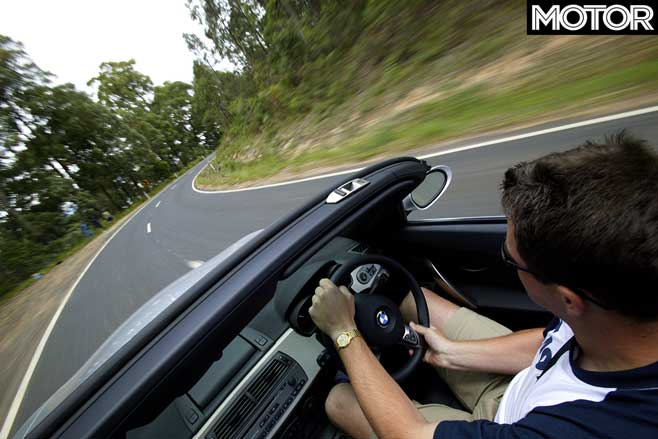
If the Z4 was back in the reckoning by Winton, probably hovering just south of the big six, it started to prepare for the finals by The Hillclimb. Nearly every judge hoisted himself out of the lithe roadster singing its virtues. MT was especially vocal, claiming that while it might not be that focused as a track car, it sure makes for a hell of a road car.
For fast road work, the Z4 is a right weapon. The torquey power delivery of the straight six, coupled with the gear-for-all-occasions six-speeder, makes for very rapid progress indeed. The brakes are more at home on the road than under the microscope of the track.
Big bumps can unsettle the firmish rear end, a complaint we first noted at Bang For Your Bucks last year, but torsional rigidity is remarkable for an open-top car, especially one not so distantly related to the flimsy Z3.
Off means off
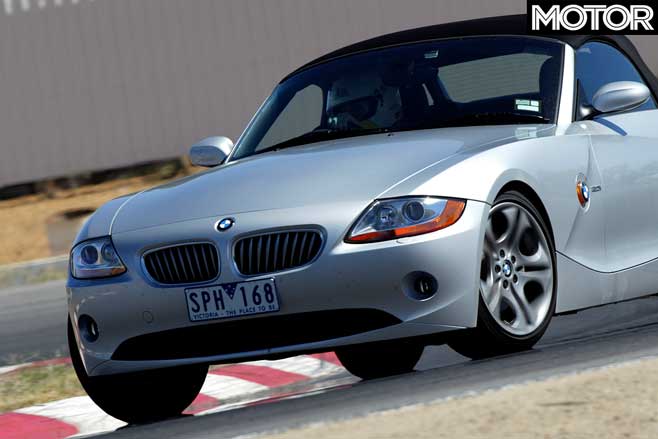
Press the traction control button on the BMW and the little orange triangle appears on the dash. You’re on your own, right? Nope. There’s no mention in the owner’s manual, but you need to depress the button for seven seconds before it’s really off.
Still, it’s not as bad as some of the traction systems on display at PCOTY. Both the Nissan 350Z and Mazda RX-8 let you think you’re flying solo but still keep one eye on things. Both sexy Japanese coupes would grab the unladen wheel through the sweeper at Winton even when things were well in hand.
But the traction/stability control prize goes to the Volvo. It offers On, Reduced and Off, but only after you press the button five times at intervals of approximately one second.
PCOTY 2004 Results – 6th
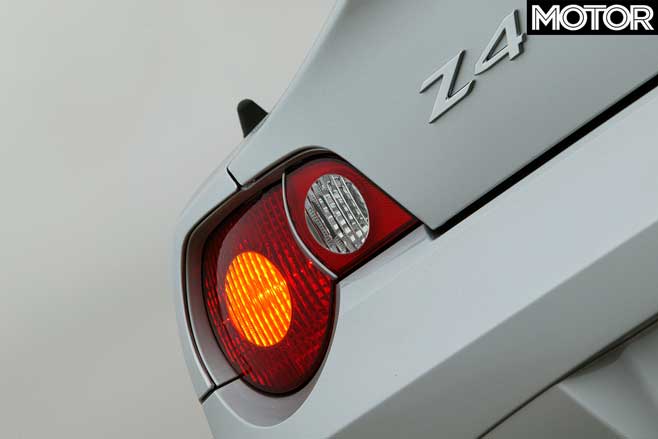
0-100km/h: 7.02sec 0-400m: 14.92sec @ 153.2km/h 0-1000m: 27.10sec @ 196.7km/h Top Speed: 241km/h Winton Lap Time: 1min 45.28sec
Judges’ Scores
| Judge | MT | JT | DE | CM | GK | DM | LB |
| Performance (/20) | 14 | 15 | 14 | 16 | 16 | 13 | 12 |
| Dynamics (/20) | 19 | 17 | 18 | 17 | 17 | 16 | 18 |
| Driveability (/20) | 16 | 17 | 18 | 17 | 17 | 17 | 14 |
| Design & Function (/10) | 8 | 7 | 8 | 8 | 8 | 8 | 8 |
| Value (/10) | 8 | 7 | 5 | 8 | 7 | 5 | 6 |
| Total (/80) | 65 | 63 | 63 | 66 | 65 | 59 | 58 |
Total Score: 439/560 Votes: 0
Porsche weaves a seductive line in fairy tales.
Half-truths often become legends while nods and winks gently coalesce into established facts. It’s our fault, really. We want to believe. The romance of Porsche’s competition pedigree is an intoxicating backstory that has us teasing out the mitochondrial DNA of the most tenuous motorsport connections. But Porsche didn’t have to bother gilding the lily with the Porsche 996 GT3.
To contextualise the genesis of this car, you need to understand nothing more abstract than cooling. More specifically, water cooling. The 996 generation might have seen the 911 switch from air to water cooling upon its introduction in 1998, but delve back a good deal further and it’s apparent that this shift in strategy was both critical and inevitable.
History seems to have airbrushed the fact that Porsche’s iconic 935 racer was originally prone to head-gasket failures due to overheating, the works cars only completing four of the nine rounds of the 1977 World Championship of Makes. For 1978, Porsche switched to water cooling for the heads, introducing the vastly improved 935/78 ‘Moby Dick’ car. The water-cooled heads continued for both production and race versions of the 959 supercar, with the subsequent 956 and 962 racers featuring fully water-cooled Hans Mezger-designed engines.

The 911 GT1 homologation special of 1996 was fully water cooled, and it was this car’s engine that would form the basis of the bombproof iconic M96/72 Mezger engine, first seen wedged into the rear of the 996 GT3 when it was unveiled at the 1999 Geneva Motor Show.
As this model (and indeed the GT road-car division) celebrates its 20th birthday, it’s worth considering the GT3’s place in Porsche’s performance panoply. In short, it has become the yardstick of progress. It’s to the GT3 and, indeed, its RS counterpart, that we look for the purest, most distilled essence of the Porsche 911, and in those two decades it has become nothing less than Porsche’s soul and its shop window. That’s quite an achievement for a badge that’s been around for less time than that of a Suzuki Baleno or an Audi TT.
Wheels’ first acquaintance with the 996 GT3 came back in September 1999 when Peter Robinson got behind the wheel of the fastest road car Porsche had ever built, 20 berserker GT1 homologation models aside. It was rapidly apparent that this was the real deal, something aside from the usual slightly cynical go-faster special.

“Fire up the engine and listen to the rattles and clatter, the uneven, lumpy idle and jagged rise and fall of revs. There’s only one car that’ll make these familiar sounds – a Porsche 911. And a racing 911 at that,” wrote Robinson. Its 265kW might well be eclipsed by modern hot hatches but the 996 GT3’s hardcore bloodline wasn’t hard to trace. “Push, really push, using second out of bends and you can balance the GT3 on the throttle. The transition to oversteer is soft, even if the speeds are not, for the natural poise of the chassis and the limitless torque mean the wheel and throttle can be worked together to hold a slide. And there’s no electronic device to restrain the engine, just a mechanically variable limited-slip differential that gives up to 40 percent power distribution under power and 60 percent on the overrun,” he noted.
This latter part is key and is an integral aspect of what makes the 996 GT3 such an intriguing car. It arrived at a time when electronic stability control devices were being adopted widely. Audi and Mercedes, having been given a salutary lesson by the dynamic shortcomings of the TT and A-Class respectively, were high-profile examples of car makers putting their faith in stability control. The 997 GT3 would be fitted with stability control as standard, but the 996 was both the first and the last of the purely analogue GT3s. Your right boot was the governor.
As with most Porsches, there’s myth to be separated from fact with the 996 GT3. While its genesis was undoubtedly competition-derived, it’s not exactly the acme of lightweight, race-bred purity. Yes, the lighter bucket seats saved 20kg and binning the rear seats saved another eight kilos, but that was more than offset by the heavier engine and the beefier G96/90 gearbox. While later models would opt for thinner glass and lightweight body panels, the 996 GT3 was actually 30kg heavier than the base Carrera. And that beautiful rear wing never creates overall downforce, even at the car’s 302km/h top speed. ‘Near zero’ was the claim.

There’s no doubting the specific output of 100bhp (74.6kW) per litre though, which represented a high bar for naturally aspirated engines at the turn of the century. Nor the 7min 56.33sec lap time of the Nurburgring, driven by Walter Röhrl, which eclipsed the 7min 59sec mark set in 1996 by Dirk Schoysman’s notoriously tinkered-with Nissan Skyline R33 GT-R V-Spec.
The 996 GT3 was offered in two distinct iterations, known as the Mk1 and the Mk2. The car you’re looking at here is a Mk1, produced between August 1999 and July 2000, with the Mk2, easily recognised by its more angular headlamps and flat-plane rear wing, being built between August 2003 and July 2004. Some 1858 Mk1s were built in total with 2589 Mk2 models being built alongside 200 GT3 RS models, making the latter one of the very rarest 911s. We’ll deal with that one another time.
Viewed dispassionately, the Mk2 is a superior car, rectifying many of the Mk1’s shortcomings. Its brakes were less prone to wilting on track and the engine felt stronger at the top end. With power lifting from 265 to 279kW, and each car consistently making that figure, the Mk2 also feels torquier and shifts more cleanly. It brought the option of factory carbon-ceramic brakes and it also carried over the stronger steel synchro rings from the late Mk1 models, early cars suffering a gearshift action that could get a bit soft.
Yet despite all of that, many prefer the Mk1 car. Its curvaceous rear spoiler and side skirts look fantastic and its ride quality is probably better suited to fast road use. The Mk2 features firmer springs and dampers that translate into a brittle feel on typically patchy Aussie B-roads. One enduring myth, repeated ad nauseam, is that the the Mk1 was built at Weissach, whereas the Mk2 was developed there but built alongside other 911s at Zuffenhausen. It’s poppycock. They’re all built at Zuffenhausen.Production of the first batch of 1350 GT3s was scheduled for late 1999 to accommodate the production of 996 Turbo. The only fully Weissach-built vehicles were the GT3R race cars.
Whichever 996 GT3 you choose, it’s a fundamentally tough car, mechanically at least. The key piece of advice when buying is to not be put off by a generous number of owners or evidence that the car has been tracked regularly, but rather check that the vehicle hasn’t been accident damaged. Some will have been reshelled, which is where a professional inspection can be money extremely well spent. Inconsistent panel gaps and a lack of protective film on the B-pillars suggests body repairs. Beneath the bonnet is a vehicle identification sticker and this should match that in the service book. A particularly nefarious trick by some sellers is to steam the sticker from the log book and apply it to a replacement bonnet, so check that both decals are present and correct. Finally, be sure that what you’re looking at is a GT3 and not a Carrera wearing a factory aerokit. The 13th number from left of the chassis number should be a nine and not a zero.
The Mezger engine isn’t afflicted by the notorious rear-main seal issue of the 996 Carrera, but front main seals can leak and should be replaced as a matter of course when clutches wear, which tends to be around 20,000km for cars that see occasional track use. The 996 GT3 leaves the factory with Mobil 1 0w40 and it’s a good choice. A relatively light oil is required in order to splash-lubricate the camshaft and lifter bucket interfaces.

Many 996 GT3 Mk1 owners retrofit the 350mm Mk2 brake discs to their cars to beef up stopping power, and few Mk2s will still have their factory-option carbon ceramic rotors, most owners instead switching back to steel units on account of the replacement cost. The gearboxes are ostensibly bulletproof, although shift issues on early 996s can be traced to the aforementioned weak synchro rings, a $4000 job that will probably have been carried out by now on all but the very lowest-mileage cars.
Rear struts and drop links should be the key inspection items if your 996 GT3 doesn’t feel quite as it should, and new owners should book their vehicles in for an alignment check, just to be on the safe side. Check tyre wear and make sure that the car is running on suitable rubber.
If anything, the 996 GT3 feels more special now than it did when it first appeared. It was launched into a tiny temporal window where an old-school approach to driver assistance met with a modern-feeling engine and tyre combination. We just didn’t know it at the time. With hindsight it’s easy to see why the original more than deserves its place in Porsche’s canon of greats.

Who owns one? Alan – Sydney
“At the time I thought I’d bought the wrong car. I was originally looking for a 996 Turbo, but a Mk1 GT3 came along and I couldn’t resist. Reason intervened and I realised I shouldn’t be putting commuting miles on it, so I bought something else for that job. Besides, the seats weren’t really comfortable enough for Sydney roads and traffic. I’ve done a few track days with it and it’s just the most fun. The engineering is real barn-door stuff that you tend not to see now and it soaks up punishment. I love the fact that the 996 GT3 feels so right-sized. I tried a new GT3 and it felt vast in comparison! Looking at values of early GT3s today, I’m glad I bought the ‘wrong’ car.”

Fast Fact
996 GT3 buyers chose between Comfort and Clubsport specs, the latter featuring a half cage behind the front seats, a fire extinguisher, flame-retardant bucket seats and, in the Mk1, a single-mass flywheel. It also did without side airbags. Australia took 77 Mk1 Clubsports and 13 Mk1 Touring models.
The Good: Brilliant Mezger flat-six; adjustable handling; no stability control or flappy paddles; effervescent hydraulic power steering
The Bad: Relatively thin on the ground in Australia; front splitter is a consumable item; 996’s interior finish hasn’t aged well
By the numbers
- 40 seconds – quicker at the Green Hell than Carrera2
- X1X1 – Arctic silver metallic, the most popular colour
- 63 litres – Fuel tank on RHD 996 GT3
- 9000rpm – Theoretical rev limit on M96/72 engine
- 164 – 996 GT3s sold in Australia
