
If you like the idea of a BMW M5 Competition but find yourself about $100K short on the budget sheet, there’s good news on the way, in the form of the BMW M550i xDrive.
At $134,900, the M550i Pure is the first version of the model which will show up in Australia, in Q1 2020, with a massive 390kW/750Nm at its disposal. This comes thanks to BMW’s brawny 4.4-litre twin-turbo V8.
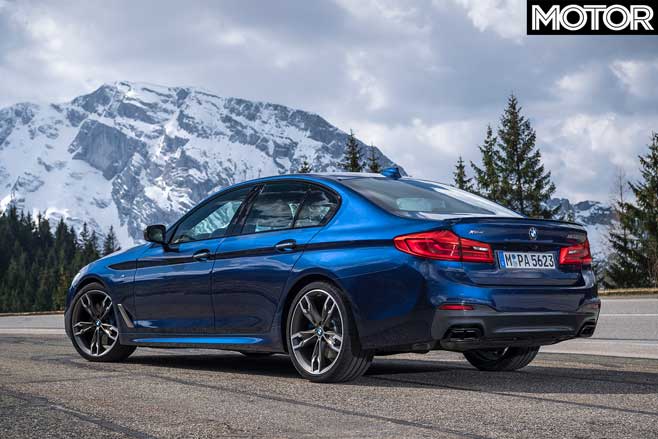
Sure, that’s 70kW short of that engine’s output in the M5 Competiton, but the torque equals the full-fat M car, which itself costs a much heftier $229,900. And though the M5 is obviously the more aggro of the two, the M550i is claimed to be able to hit 100km/h in just 3.8 seconds.
It’s not short of kit, either, with adaptive dampers, and M Sport differential, and some M goodies like the steering wheel and aero pack, the M550i Pure seems to hit a sweet spot in terms of bang for buck.
After that, the higher spec M550i will arrive, ocsting an extra $15,000 over the Pure (for a $149,900 total), adding ‘Adaptive M Suspension Professional’ which includes Active Anti-Roll Stabilisation and BMW’s real-wheel steering, called Integral Active Steering.
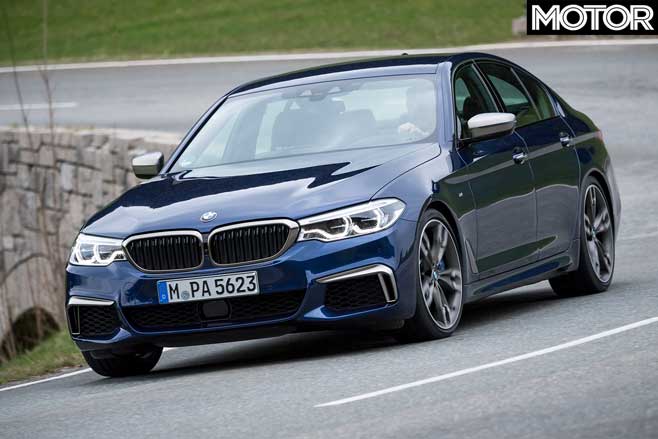
The full version of the M550i also gets Laserlight headlights instead of LEDs, soft-close doors, an instrument panel finished in leather, ambient air and ionisation, a sunroof, and metallic paint.
The sunroof and metallic paint are options on the Pure variant for $3000 and $2000 respectively.
The M550i will launch a little later than the Pure in Q2 2020.
At the Australian launch of the Toyota GR Supra earlier this year MOTOR sat down with Toyota’s sports car boss Tetsuya Tada for a chat on the finer details of the Supra.
What ensued was a fascinating chat (albeit a three-way one through a translator) about the development philosophy behind the Supra which unearthed these nine perhaps little-known facts about the Supra.
01 – Link to the past
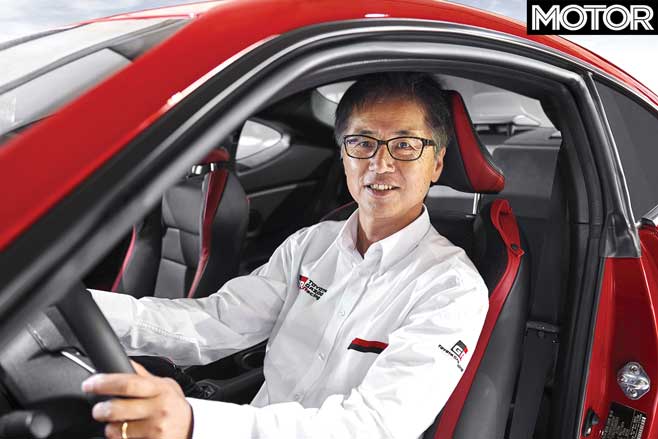
Tada-san was the perfect person to lead development of the new Supra, as his mentor was Ichiro Suzuki, chief engineer of the previous Mk IV (or JZA80) Supra. The lessons Tada learnt lay dormant during Toyota’s sports car hiatus before the Toyota 86/Subaru BRZ project was greenlit.
02 – The golden ratio
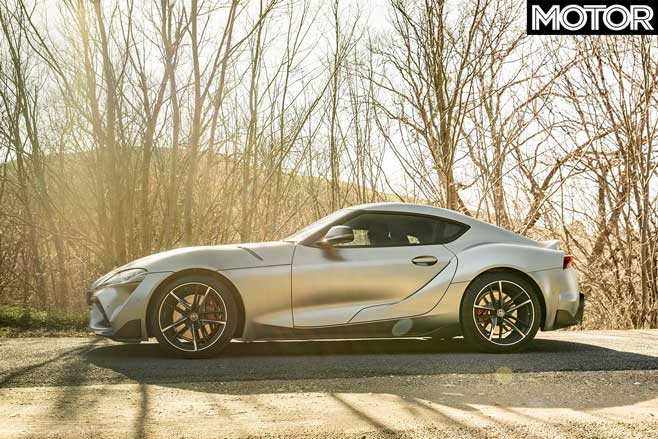
Toyota’s guiding principle during chassis development of the new Supra was the ‘golden ratio’, a mathematical ratio found commonly in nature that tends to make things ‘beautiful’. Divide the Supra’s wheelbase (2470mm) by its rear track (1590mm) and according to Toyota you’ll get the golden ratio of 1.55:1, though the ratio is technically 1.618:1, expressed by the Greek letter ‘Phi’.
03 – Similarly equipped
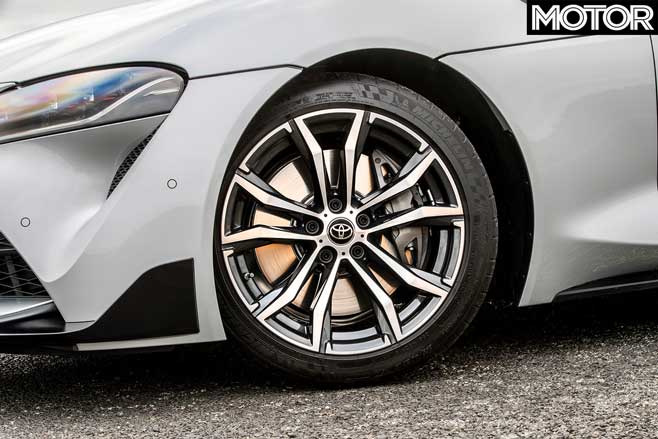
Front brakes are identical on both GT and GTS guises, 348mm front discs clamped by four-piston calipers. However, while the GT makes do with 330mm rear discs, the GTS scores larger 345mm discs, though both use single-piston calipers. The brakes also work to prevent fade and lightly clamp the discs to dry them during wet weather.
04 – Lower and stiffer
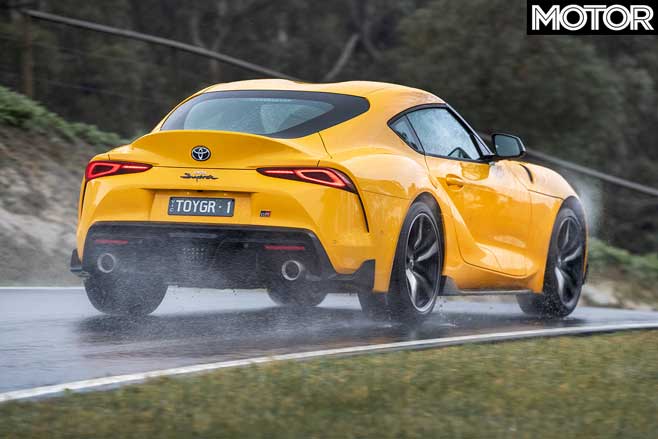
The Supra has a lower centre of gravity than the 86, despite using a conventional piston engine rather than a boxer. It also has greater structural stiffness than the all-carbon LFA, a figure 2.5 times greater than the 86.
05 – Exceptions to the rule
Toyota has an extensive list of standards, “a constitution we have to stick to” according to Tada, which runs some 2000 items long. Tada successfully negotiated to allow the Supra to break some of these. For example, Toyotas must have a minimum running ground clearance of 130mm, but the Supra’s is 119mm.
06 – Hot tuner
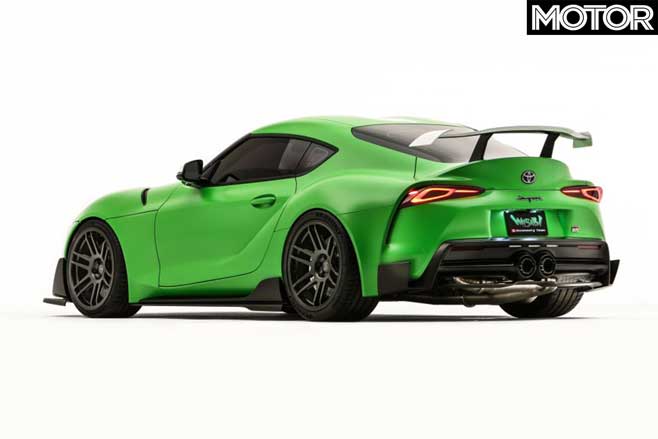
Appreciative of the fact that the A90 Supra would be a darling of the aftermarket, Toyota previewed the car to a number of aftermarket outfits such as HKS, Cusco, Akrapovic and Litchfield six months ahead of launch in order to gain their feedback.
07 – Past blast
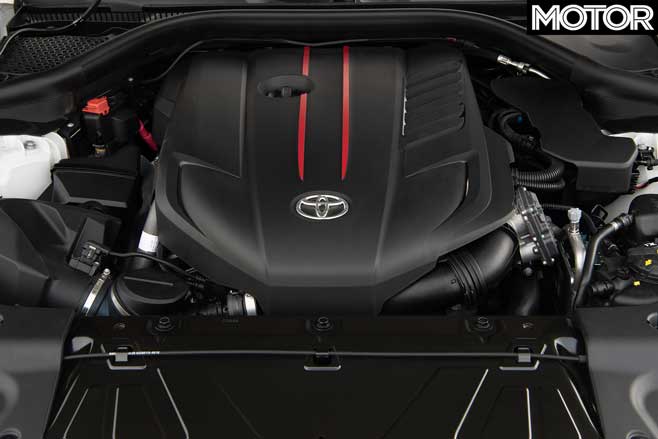
On a related note, the engine bay is big enough to accommodate the iconic 2JZ-GTE engine from the JZA80, a conversion that’s become popular in the professional drifting community.
08 – Striking the balance
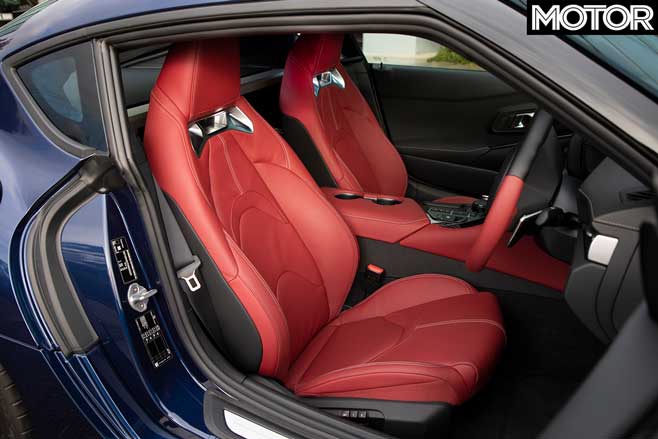
Toyota boasts of 50:50 weight distribution, but it isn’t quite that simple. The four-cylinder models available in Japan are 50:50 when empty, but the six-cylinder is slightly nose-heavy. However, it’s designed so that when two passengers are added the weight distribution becomes 50:50, whereas the four-cylinder models become slightly rear-heavy.
09 – Thinned grasp
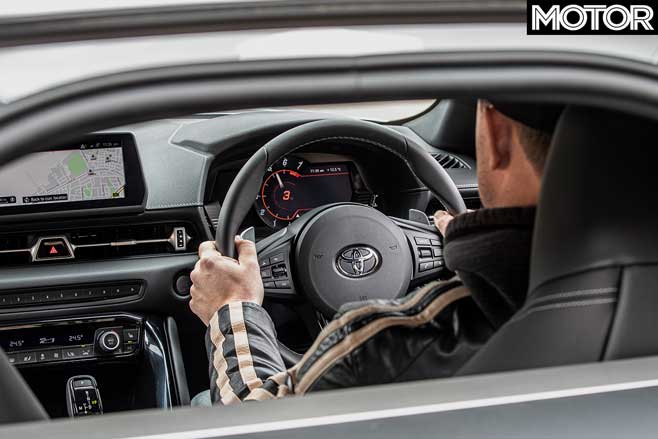
The steering wheel is Toyota’s own design, with a 373mm diameter and a thinner rim in place of BMW’s traditionally very thick wheel rim, Tada-san politely expressing his opinion that he prefers a thinner steering wheel.
It’s never been totally clear what the ‘R’ in Renault Sport Mégane Trophy-R actually stands for. Given the model’s hardcore track focus, presumably it represents racing, but for this latest version it could equally stand for redemption.
The third-generation Mégane RS has had a somewhat mixed reception thus far; by any standard it’s an exceptionally capable car, but some of the magic that made its predecessor one of the finest front-drivers ever to hit the road has been lost.
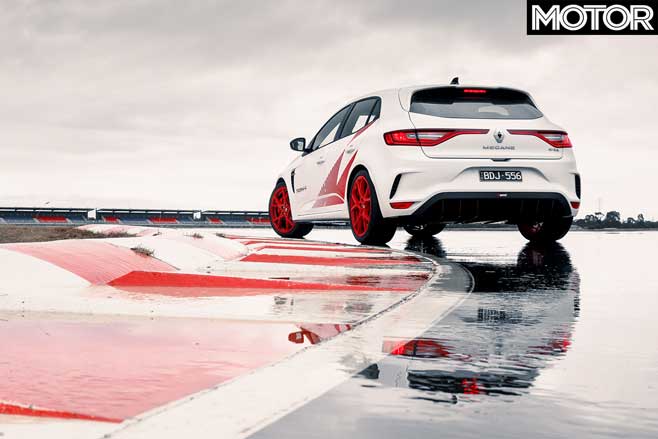
Whether intentional or not, in broadening the Mégane RS’s appeal Renault has sacrificed a little desirability in the eyes of the hardcore enthusiasts that made Australia the second biggest Renault Sport market per capita behind only its French homeland.
The Trophy-R is Renault’s response. Its engineers have thrown everything they can at this hardcore, limited-edition hot hatch, in the process wrestling back the front-wheel drive Nürburgring lap record from the Honda Civic Type R with a remarkable 7min40.1sec lap, a solitary second behind the likes of the Alfa Romeo Giulia QV and Porsche 997 911 Turbo.
Just 500 will be built, with 20 of those making their way to Australian shores. Thirty of those 500 will be special Record Editions, equipped to the same standard as the Nürburgring hot-lapper with carbon-ceramic brakes and carbon fibre wheels from Geelong’s Carbon Revolution, but just one example will come to Australia with the price to be set by auction.
This is because the Trophy-R Record Edition is terrifyingly expensive. Converting its UK price to Aussie dollars results in a figure of AUD$131,000, but that doesn’t take into account the fact that that UK price is scarily similar to machinery like the Porsche Cayman GT4 and Mercedes-AMG C63 S.
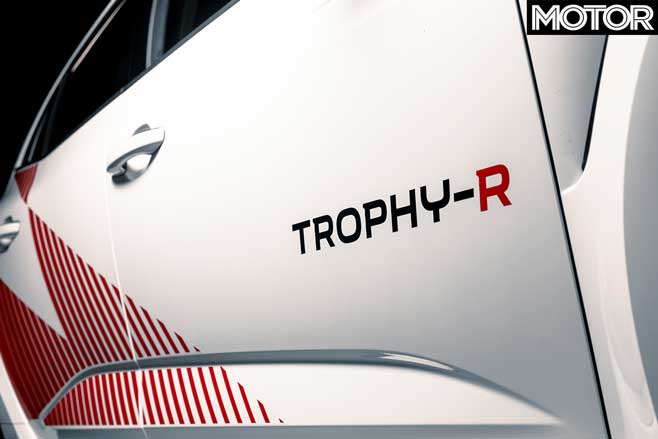
Happily, the regular Trophy-R doesn’t cost anywhere near that much, though $74,990 is still a fair chunk of change, particularly in comparison to the $61,990 Renault charged for the previous RS275 Trophy-R, let alone the $52,990 you’ll need for the standard RS Trophy.
So what do you get for your extra $22K? Well, let’s start with what you don’t get. Key to the Trophy-R’s speed is a significant weight loss. In total, more than 100kg have been shed, with no part escaping scrutiny in the quest for the lowest possible number on the scales.
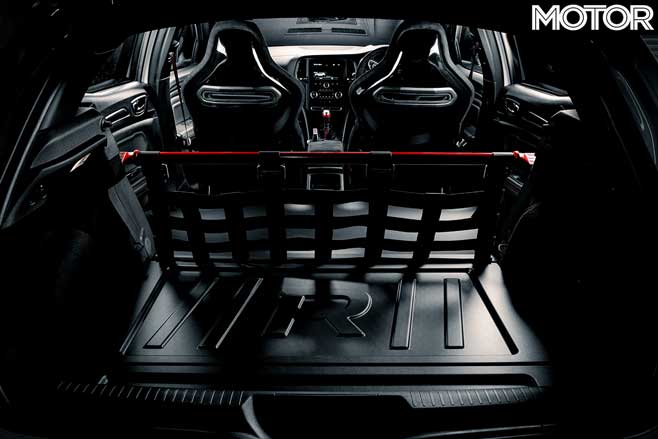
Replacing the rear seats with a plastic cover saves 25.3kg, composite front seats a further 7kg each side, a carbon-composite bonnet deletes 8kg, the Akrapovic exhaust is 6kg lighter than standard and the lightweight wheels lose 2kg from each corner (with the carbon wheels a further 2kg lighter each). But that’s just the obvious stuff: a smaller battery saves 4.5kg, no back seats mean you can fix the rear windows in place and make them thinner, there’s no rear wiper and a smaller infotainment screen deletes 250g.
The biggest saving, however, comes from an unlikely source. For the hardcore Trophy-R Renault Sport has ditched the standard car’s all-wheel steering to the benefit of 38kg and, possibly, more predictable handling. Thankfully, there is giveth as well as taketh.
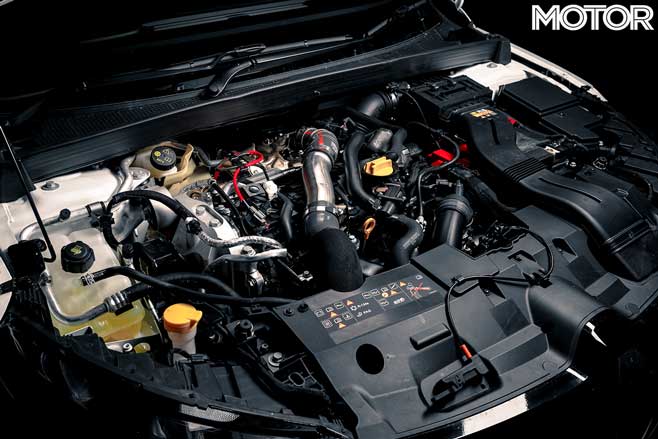
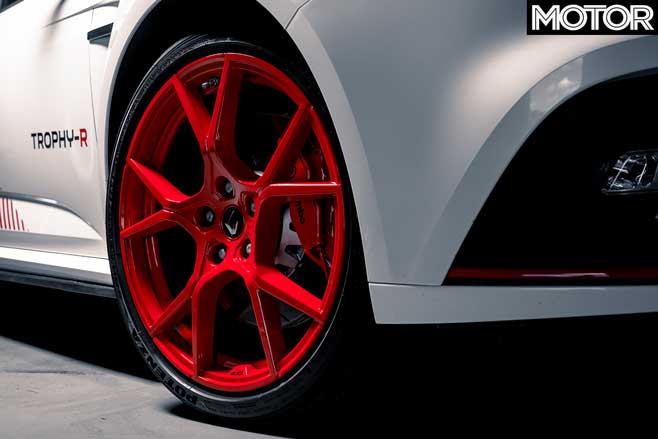
Adjustable Öhlins suspension can be tweaked for height, compression and rebound, Brembo brakes do the stopping, there’s an extra degree of front negative camber, track-spec Bridgestone Potenza S007 tyres, new ducts and diffusers double the downforce with only a 1.5 per cent drag penalty and, like the Trophy, power lifts from the standard car’s 205kW/390Nm to 220kW/400Nm with a ceramic ball-bearing turbo for quicker response. Renault claims the result is a top speed of 262km/h and a 0-100km/h sprint of just 5.4sec which, if replicable, will make the Trophy-R the quickest-accelerating front-driver we’ve ever tested.
It is, but only by a whisker. Funnily enough, our current benchmark bum-dragger is the Civic Type R with a 0-100km/h time of 5.68sec and 13.66sec quarter mile at 174.92km/h. Just as at that famous German racetrack, the Mégane Trophy-R is fractions of a per cent faster, clocking 0-100km/h in 5.66sec and 13.60sec at 175.31km/h over 400m. There’s probably another tenth or so in the Renault, but extracting good acceleration numbers out of it is, frankly, a right pain in the posterior.
For once traction isn’t an issue – the sticky Bridgestones and limited-slip diff are up to the task of handling the power – but all sorts of electronic protections. Launch control is standard but doesn’t allow nearly enough revs (count on times around the 6.0sec mark using it) and the ECU won’t allow more than 3000rpm or so when at a standstill.
There is a way around it: activate launch control but then abort the start and come to a stop once more; flooring the throttle will momentarily spike the revs to around 4000rpm, then slip the clutch (dropping it triggers another override and bogs the engine) to get the car moving and change gears as quickly as you can. It’s not the most pleasant experience, nor the most consistent.
The drivetrain itself is fine without being anything particularly special; the engine certainly feels keener for the loss of kilograms but there’s still a degree of turbo lag, it could do with a more enthusiastic top end and the gearbox is accurate enough but doesn’t have the finely-honed precision of, say, a Civic Type R – gearshift quality has never been a fast Mégane strong suit.
But if you want to spend $70K and go quickly in a straight line, buy a Mustang, the Trophy-R is all about corners, preferably ones with kerbs that match its red-and-white colour scheme. The Bend’s West Circuit has 12 of these, ready for the Renault’s attention.
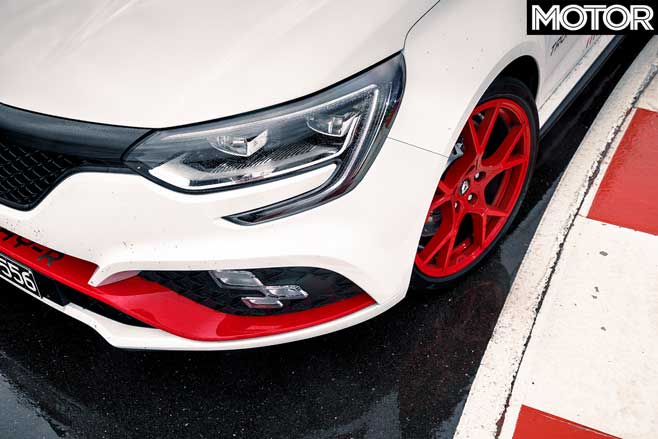
It quickly becomes apparent that deleting 4CONTROL system has done the Trophy-R no harm whatsoever; in a powerpoint presentation or data spreadsheet all-wheel steer no doubt has its benefits, but unless it’s perfectly calibrated (see Ferrari 812 Superfast, Porsche 911 GT3, Mercedes-AMG GT63) we’ll take the consistency and predictability of front-steer only. Suddenly, the Megane’s steering is a highlight for its accuracy and weighting.
Once the Bridgestones are up to temperature, accuracy is the word that best defines the Trophy-R. On cold tyres lurid oversteer is only a throttle lift or trailed brake away, but as the rubber warms the adjustability is replaced by grip – lots and lots of grip. Too much grip? It’s possible.
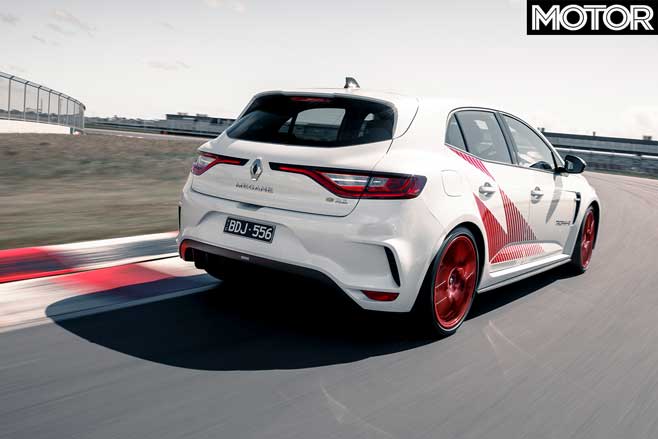
The Bend’s wide, flowing layout doesn’t play to the Mégane’s strengths to the same degree as somewhere like Winton or Wakefield, but the experience is a little underwhelming for something so focused.
There’s definite appeal in the precision the Trophy-R displays, but it gives up its speed quite easily; while the adhesion is impressive, on track you quickly reach that threshold and then wonder…what’s next?
Don’t get me wrong, the Trophy-R operates at an extremely high level, but I can’t shake the thought that a Civic Type R, particularly on similar rubber, would be every bit as accurate and just as quick, without resorting to the extreme measures of the Renault.
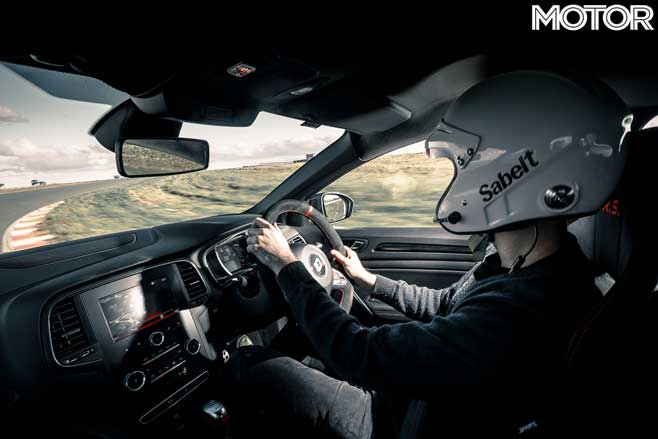
The good news is, as long as you don’t need to carry more than two people, those extreme measures don’t really hurt the Mégane’s day-to-day useability. Air-con and an infotainment system both make the cut this time – unsurprisingly, virtually every customer of the previous Trophy-R ticked those two options – which means you can remain cool and use music to drown out the substantial road noise.
At urban speeds the ride is pretty uncompromising, the resultant jiggling a reminder a personal Trophy-R-style diet mightn’t be a bad idea, but like most competition-spec dampers bump absorption increases along with road speed and the Mégane never loses its composure.
Perhaps ironically, given the focus on ’Ring heroics and track performance, the Trophy-R comes alive on the road. The accuracy and precision that were impressive but not necessarily required on the wide expanses of the track suddenly become invaluable, allowing the Mégane to be driven extremely hard with total confidence.
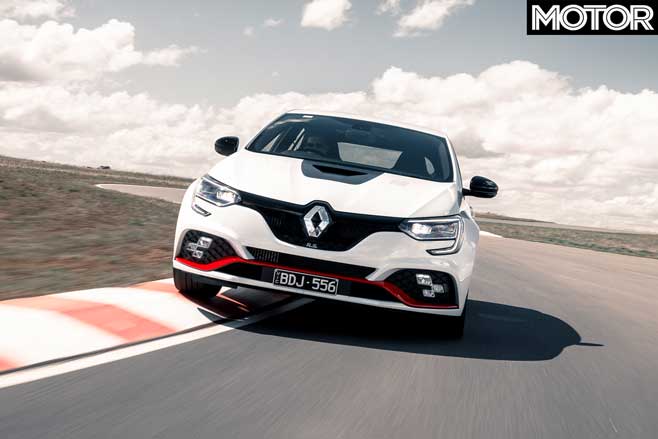
With familiarity it’s possible to commit to corners early, factoring in a small degree of slip so that the front wheels kiss the apex perfectly, the beautiful steering feeding constant information to your fingertips.
This communication means you don’t have to drive the Mégane a million miles an hour to enjoy its responses, yet if you do it relishes the challenge. The brakes are strong and on the road you don’t really notice the engine’s lack of zing at the top end, the outrageous fireworks from the exhaust on the over-run capturing your attention instead.
Unlike on track, in this environment the Mégane Trophy-R provides a deftness of touch and degree of theatre a Civic Type R can’t match. At $75K its value is questionable, but if the 20 punters with their names next to Australia’s Trophy-Rs intend to use them as something fun and rare to attack a weekend drive day, then it’s difficult to fault their logic. For the rest of us, if some of the R’s talent has filtered its way into the regular Trophy, then the Mégane RS’s redemption will be complete.
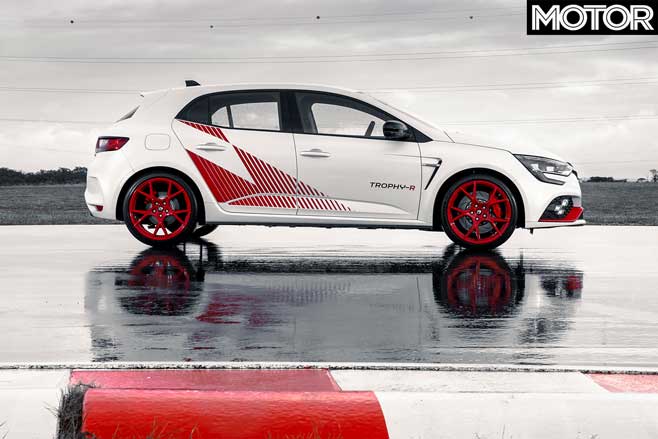
FAST FACTS 2020 Renault Mégane Trophy-R BODY: 5-door, 2-seat hatch DRIVE: front-wheel ENGINE: 1798cc inline-4cyl, DOHC, 16v, turbocharger BORE/STROKE: 79.7 x 90.1mm COMPRESSION: 9.0:1 POWER: 220kW @ 6000rpm TORQUE: 400Nm @ 3200rpm WEIGHT: 1281kg POWER-TO- WEIGHT: 169kW/tonne TRANSMISSION: 6-speed manual L/W/h: 4364/1875/1435mm WHEELBASE: 2670mm TRACKS: 1620/1598mm (f/r) STEERING: electrically assisted rack-and-pinion BRAKES: 355mm ventilated discs, 4-piston calipers (f); 290mm ventilated discs, single-piston calipers (r) WHEELS: 19.0 x 8.5-inch (f/r) TYRES: 245/35 R19 (f/r) Bridgstone Potenza S007 PRICE: $74,990
PROS: Brilliant on-road dynamics; steering; looks cool; noise CONS: Impractical; expensive; uninspiring powertrain RATING: 4 out of 5 stars
Straight-line sprints aren’t the forte of the Renault Sport Megane Trophy-R, yet it’s still the quickest production front-driver MOTOR has ever tested.
The Trophy-R is built for corners, which is why it’s the current front-drive lap record around the Nürburgring Nordschleife, However, the recipe that’s made it so successful on track – more power, less weight – nevertheless also helps its acceleration numbers.
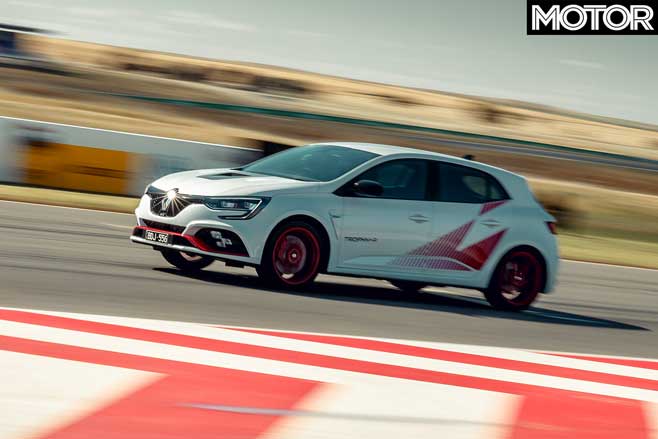
Compared to the standard Megane RS280, outputs increase by 15W/10Nm to 220kW/400Nm as well as using a ceramic ball-bearing turbo for quicker response. As such, Renault claims a remarkable 5.4sec for the 0-100km/h sprint.
For reference, the quickest numbers we’ve ever recorded from a front-driver are 0-100km/h in 5.68sec and a 13.66sec quarter mile at 174.92km/h in the Honda Civic Type R. The Renault gains the upper hand, but only by the narrowest of margins.
The Megane sneaks ahead to 100km/h (5.66) before its 100-odd kilogram diet helps it open the gap ever so slightly over the quarter mile, clocking 13.60sec at 175.31km/h. Remarkable numbers for a front-drive hot hatch, but there’s more in it.
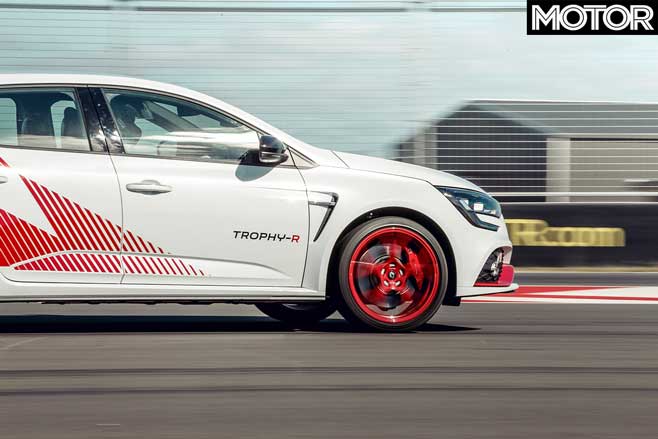
The Trophy-R is a very difficult car to launch, but not for the reasons you might expect. Traction is strong enough to contain the power, but there are all sorts of electronic protections working against you achieving the perfect launch.
Launch control doesn’t dial up enough revs (using it resulted in 0-100km/h times of 6.0sec) but even without it the ECU will only allow around 3000rpm at a standstill. Attempt to drop the clutch and the engine will bog, so the only option is to increase the revs as much as possible, slip the clutch to get it off the line and then change gears as quickly as possible.
There’s a certain degree of trial and error in the process; nail the perfect combination of inputs and it seems feasible our times could be improved by a tenth or so. For a complete rundown of the new Megane Trophy-R beyond just its straight-line acceleration, read our first drive review.
Excess is relative. However, if Mercedes-Benz’s GLS monster SUV isn’t endowed with enough bling and opulence for you, then the Three-Pointed Star’s Maybach division has you covered with the GLS600. The Rolls-Royce Cullinan and Bentley Bentayga now have some high-rolling company.
The Maybach GLS600 prioritises rear-seat passengers and can be optioned with two leather-clad reclining seats (taking centre stage over the traditional rear bench). The executive-style rear seats gain a panoramic glass sunroof above for an airy feel, while there are two 11.6-inch tablets with MBUX to play with in the rear pews. The boot capacity is rated at 520 litres.

The Maybach gains top-shelf materials like nappa leather and real wood (which has been aged for at least 10 years) as well as design highlights tailored to luxury and comfort. Everything inside has a hand-crafted attention to detail. Extensive mood lighting (there are 64 colours to choose from), two high-resolution 12.3-inch touchscreens (featuring MBUX) and appealing graphics enhance the cabin ambience.
A Maybach-specific exterior feature is the two-tone paintwork, which is available in seven colour combinations. The GLS600 rolls on 22- or 23-inch wheels, while extra chrome ‘bling’ has been added to the styling to fit with the upmarket Maybach image.
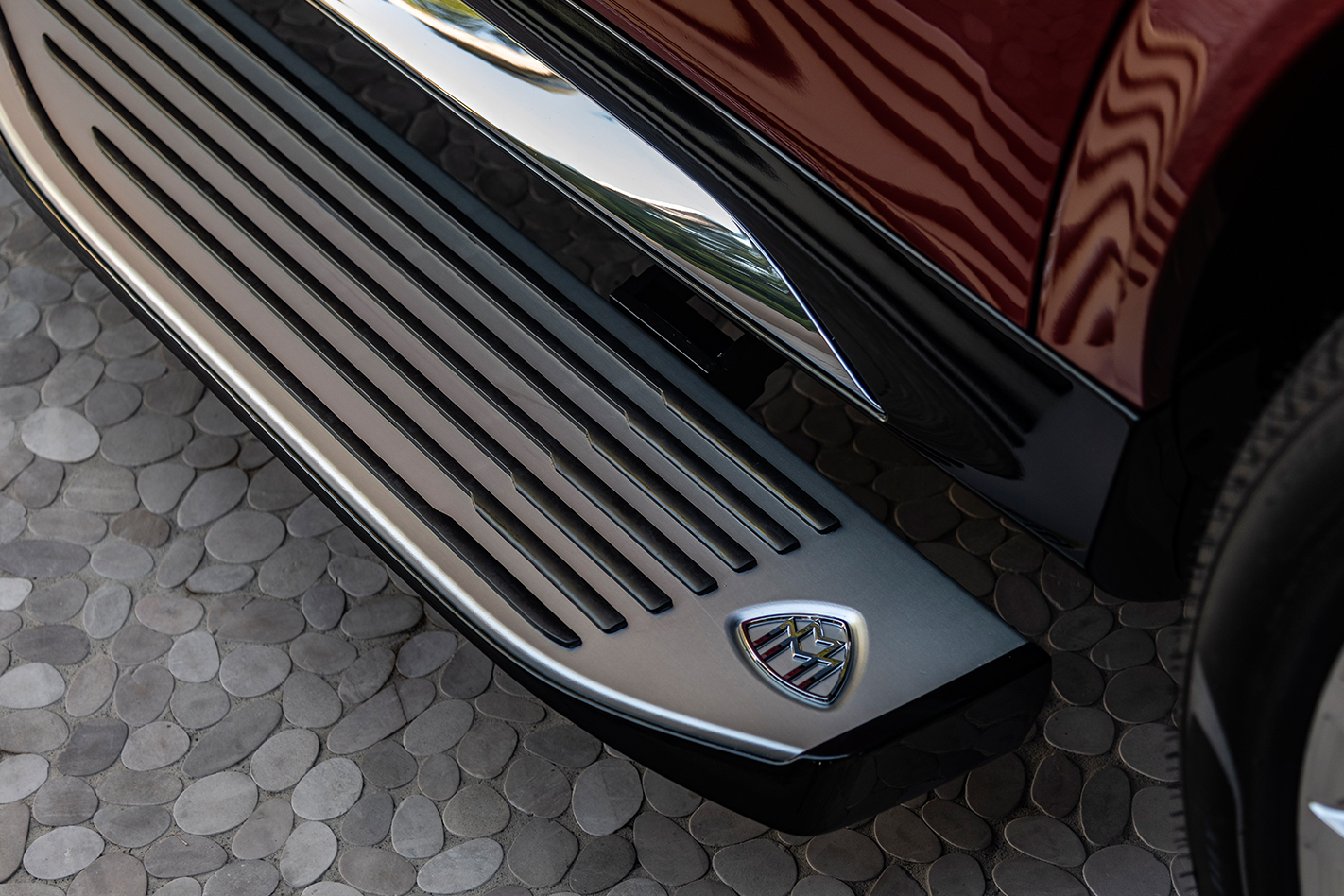
Find the GLS body style too high and too difficult to get in and out of? Don’t worry, there are 2.06m running boards down both sides that electronically extend and retract to aid access to and from the lavish cabin. They are illuminated for vision and covered in black rubber for purchase. They don’t ruin the overall aesthetic as the running boards retract behind the sill panels (or extend out) in around 1.5 seconds. Amplifying the level of luxury is the fact that the air suspension can be lowered 25mm when a door is opened. Once inside, space is hardly at a premium with a wheelbase stretching more than 3.1m.

Despite being a version of the widely used 4.0-litre twin-turbo V8, the GLS 600 gains a bespoke tune for the M177, which has been developed exclusively for Maybach and results in 410kW and 730Nm. The aim of the game here is effortlessness over overt performance. For an SUV that weighs 2785kg, the GLS600 is brisk, with the 0-100km/h test being covered in 4.9 seconds – and it’ll go on to a top speed of 250km/h. Fuel economy is rated between 11.7 and 12.0L/100km despite the 2.8-tonne kerb weight.
The Mercedes-Maybach GLS600 also ties Benz’s EQ Boost system to the venerable bent-eight (as seen in the high-performance GLS and GLE variants). The 48-volt system is charged with 16kW and 250Nm, which can be accessed temporarily in conjunction with the conventional combustion engine. Drive is, as you’d expect, sent to all four wheels and torque can be distributed from 0-100 percent between the axles. A 9G-Tronic nine-speed transmission is called upon to change gears.
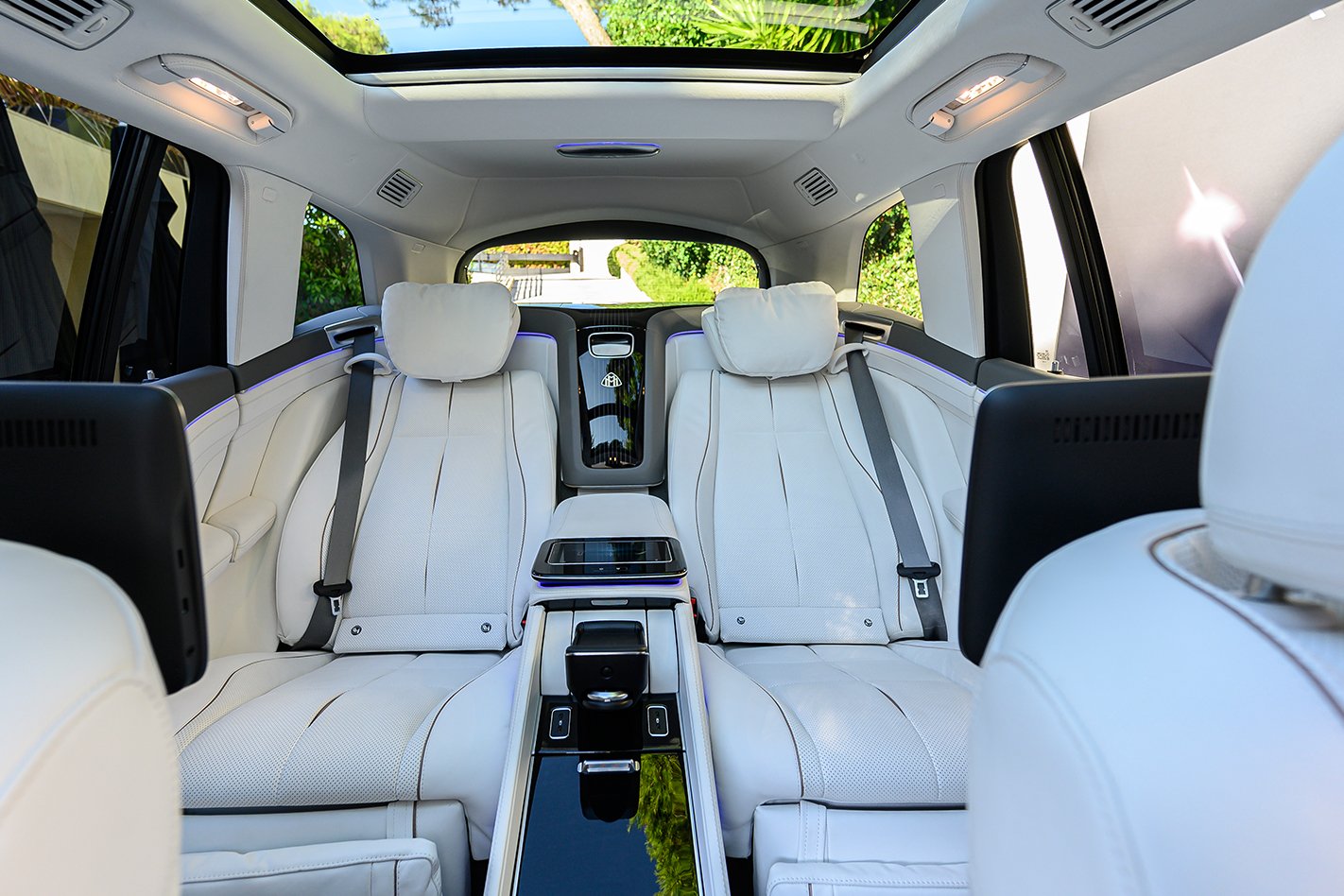
Of course, it’s not just the interior that’s plush, with the GLS600’s ride quality set to offer ‘S-Class waft’ with standard air suspension and adaptive dampers. E-Active Body Control taps into the 48v electrical system to quell body roll, meaning the Maybach SUV should remain flat while cornering to increase passenger comfort. The big GLS also scans the road ahead for potholes and readies the suspension to cope with it.
As a halo of the range, the Maybach version will be the most expensive GLS, too, when it lobs in the third quarter of 2020. With the GLS400 and GLS450d coming in at $144,600 and $151,300 respectively, a circa $300,000 sticker is likely for the most luxe offering.

More than 45,000 units of the Mercedes-Maybach S-Class have been sold worldwide since its inception in 2015. And in an SUV-loving market, that Maybach GLS600 should eclipse that figure. Comfortably.
Volkswagen has answered the prayers of tradies and adventurers around Australia with the release of factory-approved extra-long and extra-extra-long versions of its Amarok dual-cab ute.
The VW Amarok XL style-side dual-cab ute offers single-cab tray length with the flexibility of five seats, while the XXL takes the notion even further.
An extra body section is added to the centre of the ute, which retains its factory rear leaf springs but scores a longer propshaft, as well as new ancillaries like wiring and brake lines to suit.
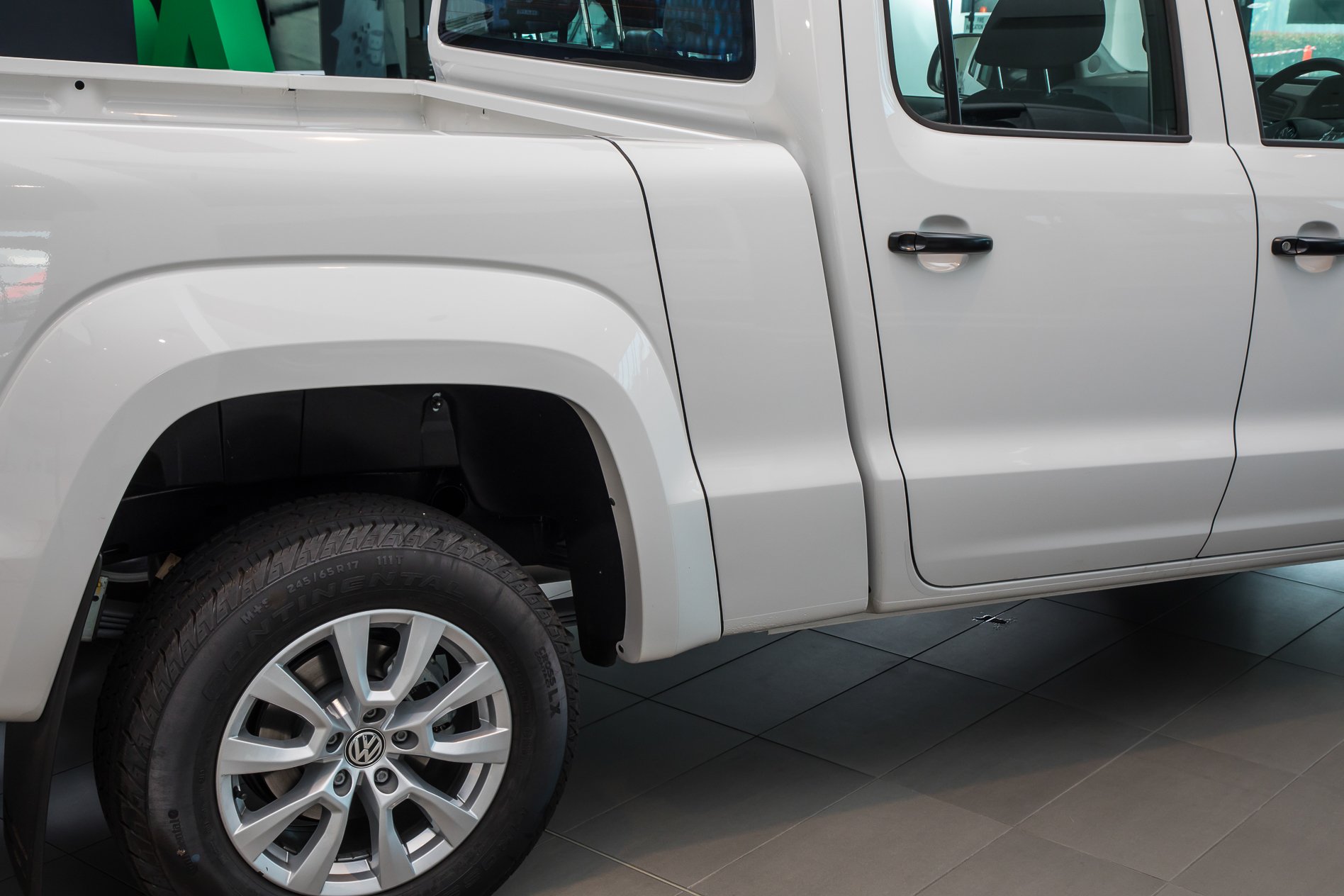
The Amarok’s wheelbase will jump from a base figure 3095mm for the dual-cab to 3405mm (XL) or 3745mm (XL), while its overall length has increased from 5254mm to 5564mm (XL) or 5904mm (XXL).
While the width of the style-side tray remains the same, the 1555mm length jumps to either 1865mm (XL) or 2205mm (XXL).
The Amarok extended ute is built by Adelaide-based Adaptive Manufacturing, which has been tasked to take on the conversion locally. Veth Automotive in the Netherlands designed the original conversion, which sees the chassis lengthened by 310mm for the XL and 650mm for the XXL.
While the Amarok XL and XXL will be sold as style-side utes, both can be supplied as a cab-chassis version to enable the addition of a steel tray, offering an enticing base for slide-on campers and other adventure conversions.
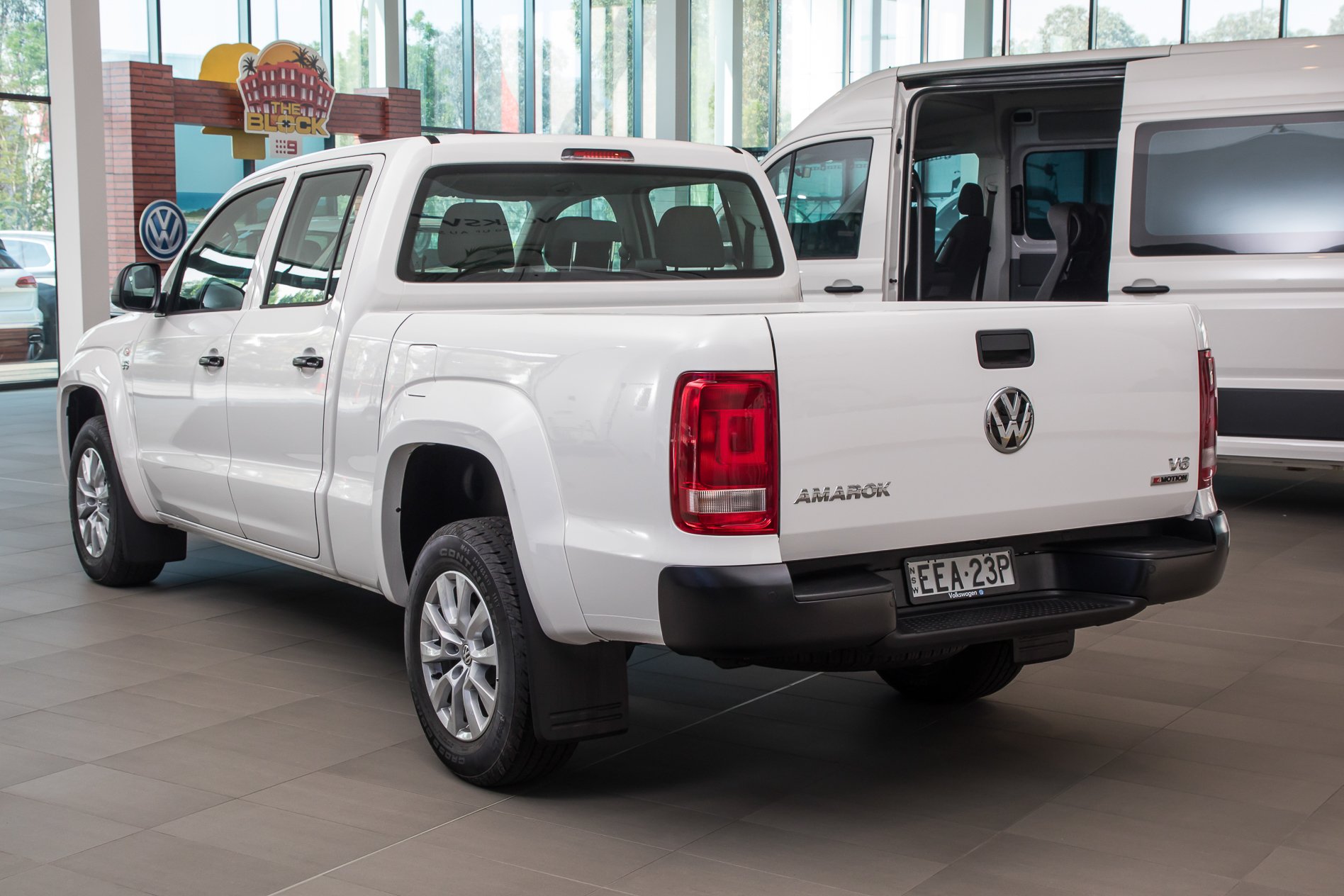
Its braked towing capacity of 3500kg is unaffected, but payload figures will decrease slightly in response to the additional weight of the conversion.
The long Amaroks can be built from any of the cars in the current range, including those powered by the smaller four-cylinder turbo-diesel engine.
While VW has recently announced a manual option for its 3.0-litre V6 turbocharged diesel engine, the pair will only be offered in eight-speed automatic guise.
Pricing is yet to be confirmed, but it’s suggested that it will cost somewhere near $15,000 on top of the price of the car.
Volkswagen has left no stone unturned on this Amarok conversion, going as far as to test and reprogram the electronic stability control (ESC) to suit the longer wheelbase vehicle.
Volkswagen says it will continue to source its conversions from Australian suppliers, while service and repair will be available at its network of more than 100 dealers nationwide.
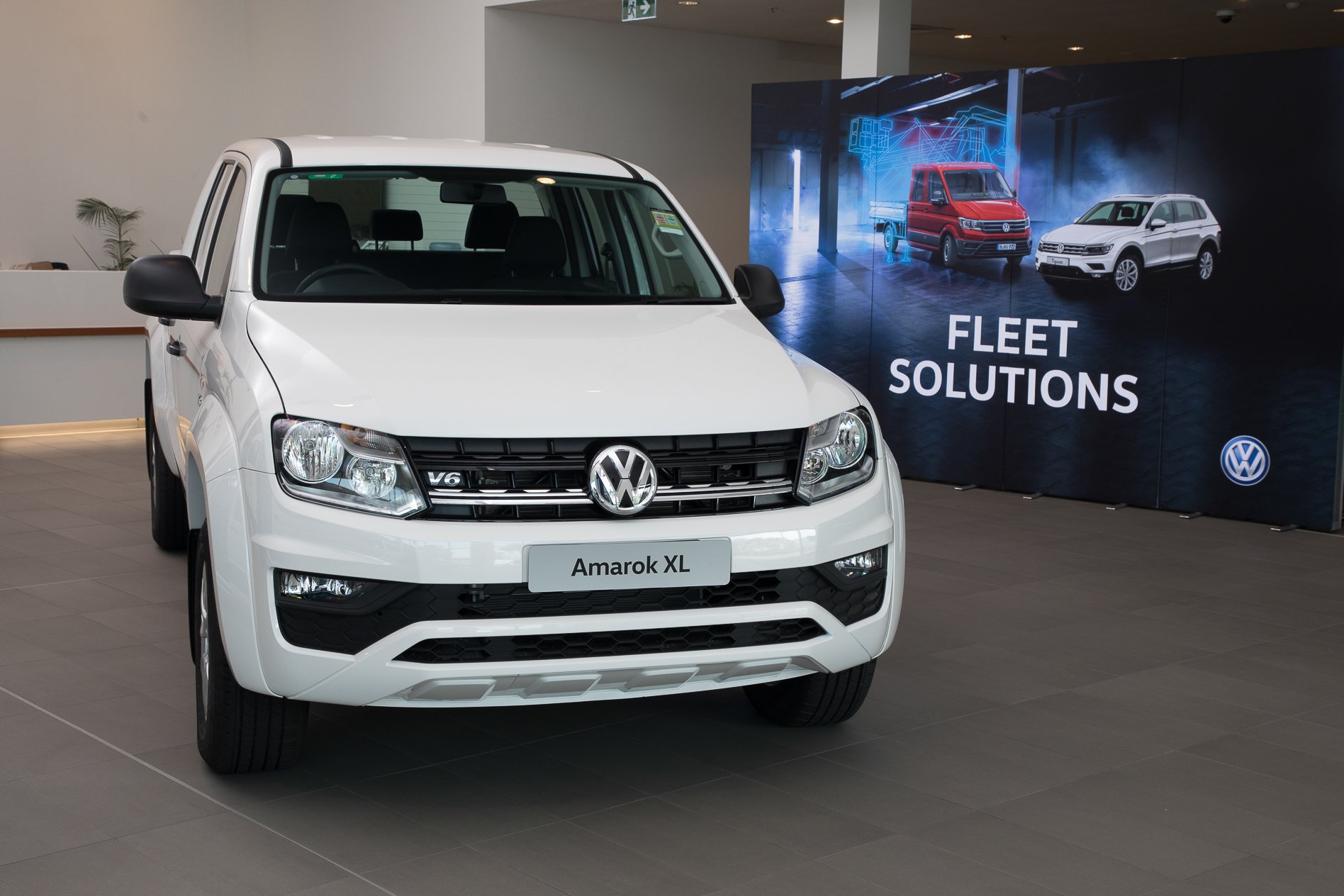
Both conversions are covered under the same five-year/unlimited-kilometre warranty as the base vehicle.
Volkswagen Group Australia’s (VGA) National Conversion Manager Andrew Hester says approved converters meet rigid factory criteria and back the standard five-year warranty.
“VGA has a breadth of capability it has never possessed and a range unrivalled elsewhere,” Hester said.
“The four top-to-tail solutions that you see here are very much the tip of the iceberg. Volkswagen and its partners can engineer literally dozens of bespoke variants.”
Does the idea of an elongated Amarok interest you? Let us know below!
Hyundai has yet to give the world a mid-engined car, though not for the lack of trying as it unveils the fourth iteration of its “Racing Midship” mid-engine racing prototypes at the Los Angeles Auto Show.
Christened the Hyundai RM19, the new prototype is based on the new Veloster and serves as a follow up to the RM 14, RM15, and RM16 concepts, all of which were based on the previous-generation Veloster.
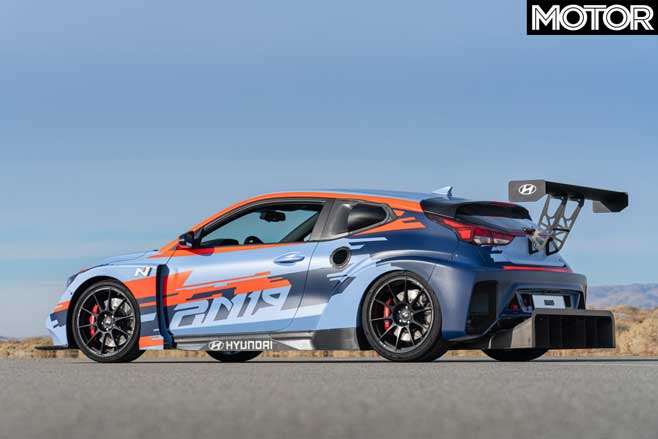
Where its predecessors featured the 2-litre T-GDi engines from its road cars, the RM19’s powerplant of choice hails from Hyundai’s TCR racers. Free of TCR regulation restrictions and tuned with extra boost to yield 290kW, the engine is said to be able to punt the rear-driven RM19 from 0 to 97km/h (0-60mph) in less than four seconds.
That being said, the RM19’s drivetrain is surprisingly old-school compared to its predecessor, the RM16, which employed a sophisticated 48V electric supercharger to massage power outputs to a healthy 220kW.
Like its predecessors, Hyundai says the RM19 serves as a development platform in evaluating different powertrain and performance levels for “future N brand products”, including a “potential brand-halo car”.
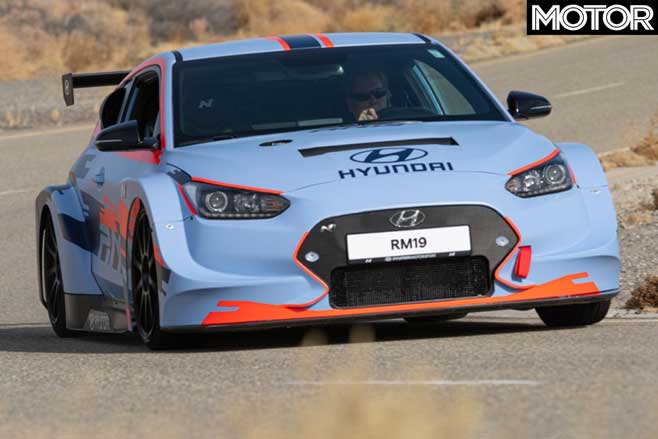
Hyundai isn’t ruling out the utilisation of the electrified drivetrains for their high-performance models with the company working closely with its strategic partner, Rimac Automobili, to develop high-performance electric and fuel cell prototypes.
“The RM19 signals future brand aspirations for Hyundai’s high-performance N brand, solidly moving N into the prestigious arena of supercar-level performance,” said Thomas Schemera, executive vice president and head of product at Hyundai Motor Group.
After a two-year hiatus, Caterham cars are back on the menu in Australia.
The British sports car maker needed to spend a couple of years meeting new European WLTP emissions regulations and subsequently regaining Australian Compliance Approval, but the brand’s main attraction (the Caterham Seven) is now available to order again.
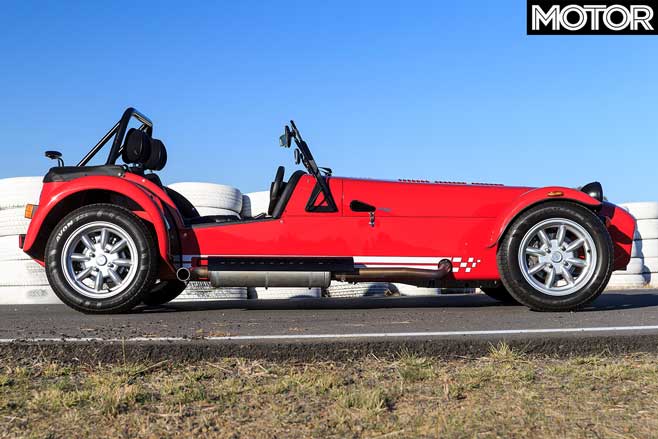
With a revised range, only three versions of the Seven are up for grabs in Australia (as opposed to the eight previously available), with three models providing a span from base to halo.
At the lower end of the spectrum is the Caterham Seven 275, the $73,700 offering which forms the simplest way to get into a Caterham.
The 275 is powered by a 1.6-litre Ford Sigma inline four, good for 100kW and 160Nm, but in a package that weighs just 540kg (an international weight figure). Caterham claims a 0-100km/h of 5.0 seconds flat.
The other two model available are quite similar in specification level, but one’s packing a bit of extra kit.
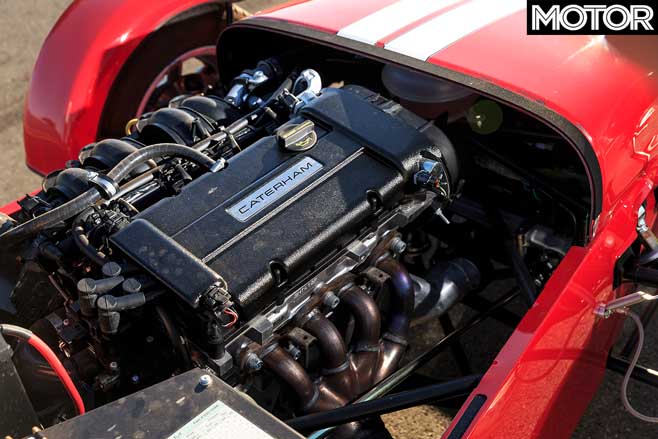
At $114,000, the Caterham Seven 485 S runs a dry-sump 2.0-litre atmo engine making 177kW and 206Nm. This, in a package that weighs around 525kg, makes for a supercar-fighting track car that can hit 100km/h in just 3.4 seconds.
The 485 comes with a limited-slip diff, which the base 275 misses out on, plus adjustable suspension.
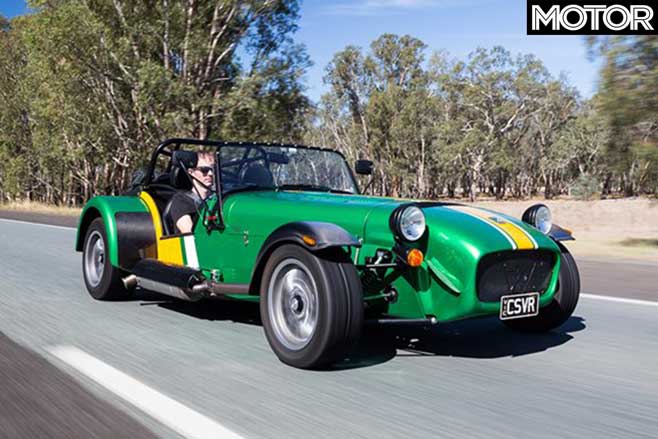
Or, for an extra $1000, you can have the Caterham Seven 485 CSR, which adds inboard front suspension, an anti-roll bar at the front (both models have them at the rear), more aero-friendly guards and, and independent wishbone rear suspension.
Both versions of 485 come with Avon ZZS tyres which are made from a soft compound that suits the Caterham Seven’s lightweight nature. On the CSR, you can wrap these tyres around a set of 15-inch CSR-specific wheels.
Interested buyers will need to contact Caterham’s Cremorne showroom in Melbourne, which can deliver to customers at an extra fee for transport.
IT’S A humdinger of a pub. Old and regal, The Hotel Belvedere clings to a mountainside high in the Swiss Alps, but it’s the road that really sets it apart. It’s so close to the pub that it touches it, the blacktop sweeping by so tightly that boozy beer hounds could feasibly brush passing traffic on their way back from the bar. It’s called the Furka Pass and it’s the kind of road you could imagine James Bond driving… because he has.
Watch the opening sequence of 1964’s Goldfinger and you’ll spot a dashing Sean Connery at the wheel of his Aston Martin DB5, its nose cleaving a path through the pass’s hairpins.
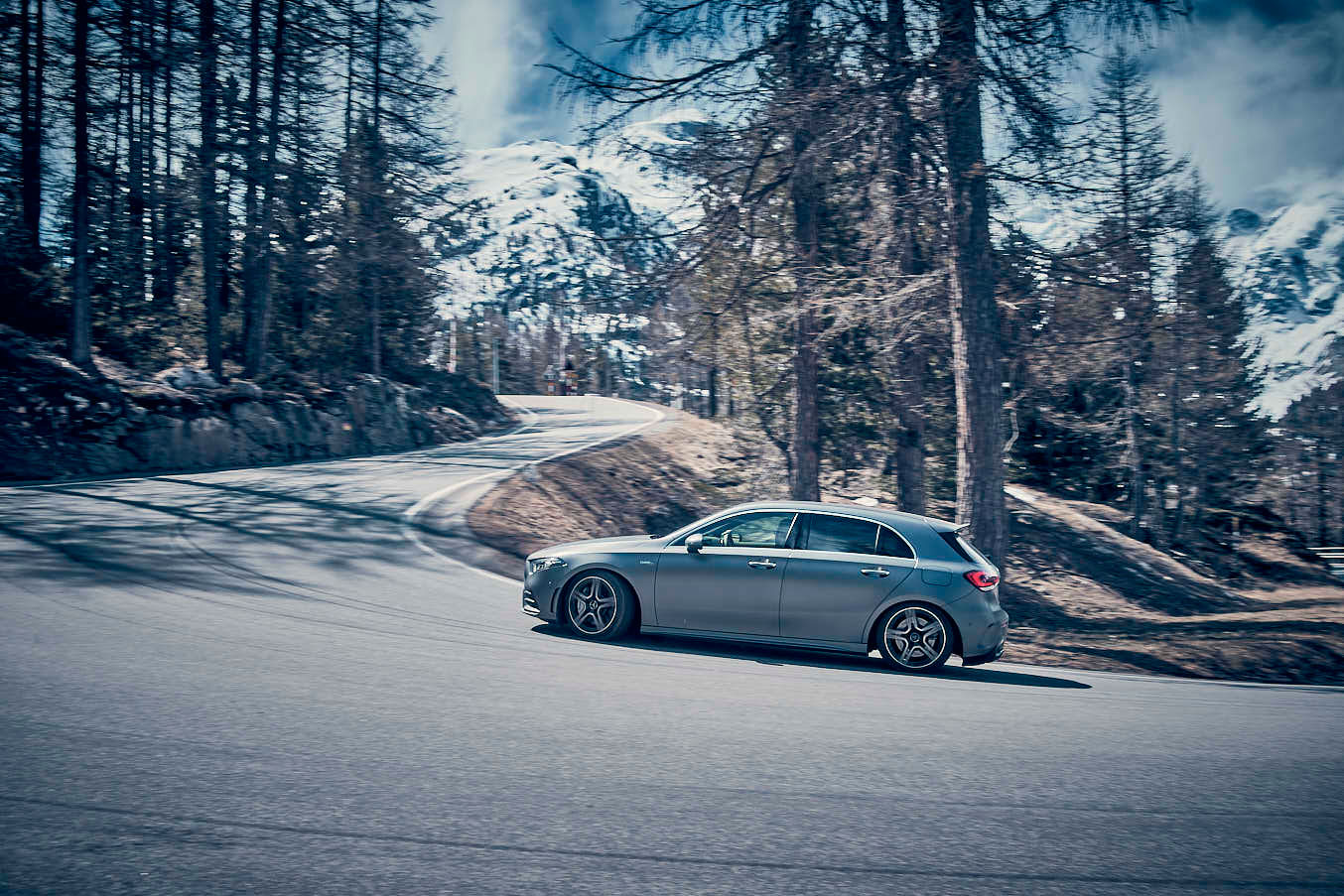
We had to visit it, naturally, and our idea, conceived in the middle of a typically scorching hot Aussie summer, was rather brilliant. Or so we thought.
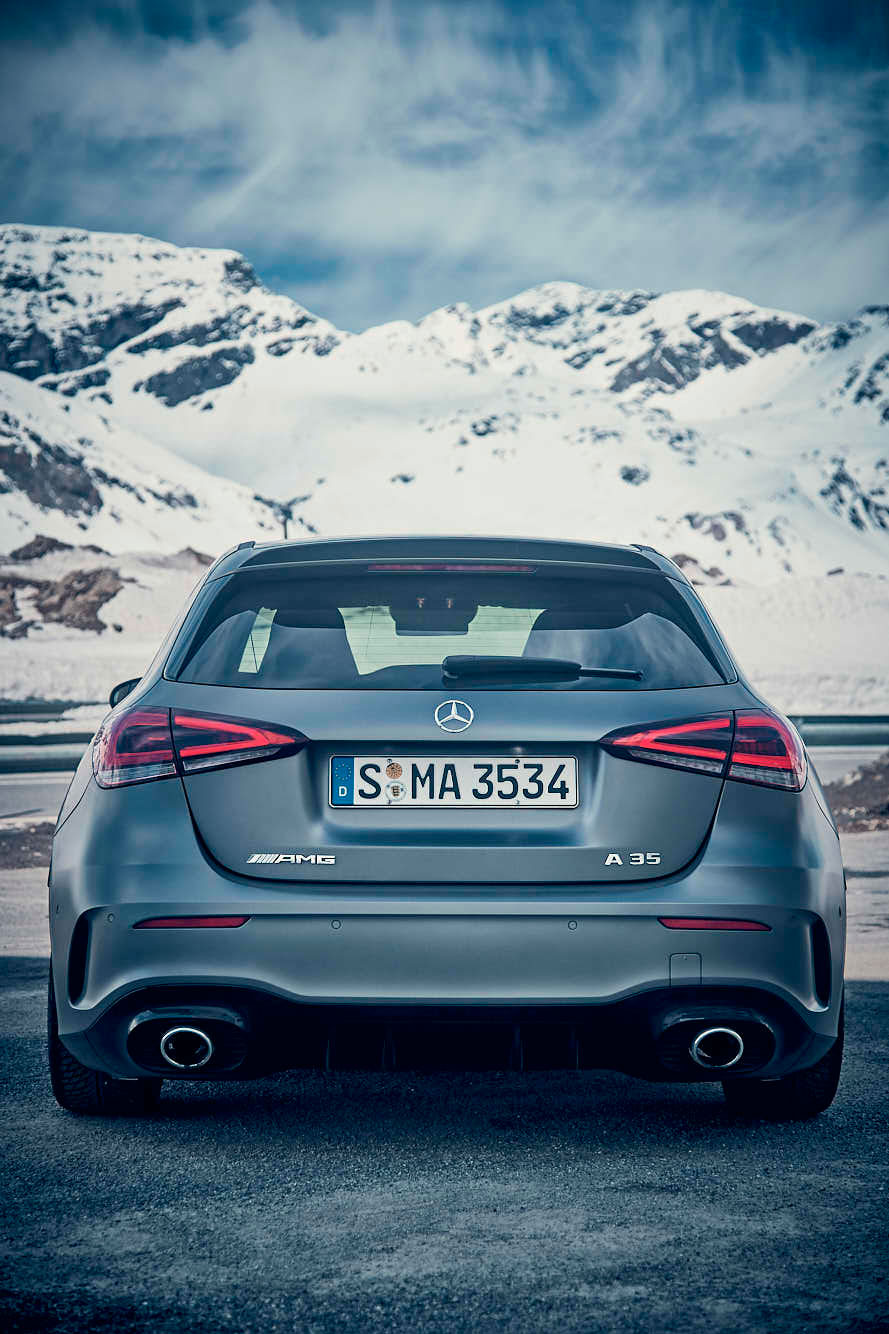
The crux of it was to pedal AMG’s newest (and cheapest) creation – the highly rated A35 – up the mountainside to deliver some Aussie beer to the publican. A generous gesture, you’ll agree, even if the A35’s positioning as the entry-level AMG meant light beer may have been more appropriate. But come on: driving bliss, with a Bond connection, and a doozy of a pub to explore for lunch? It sounded super.
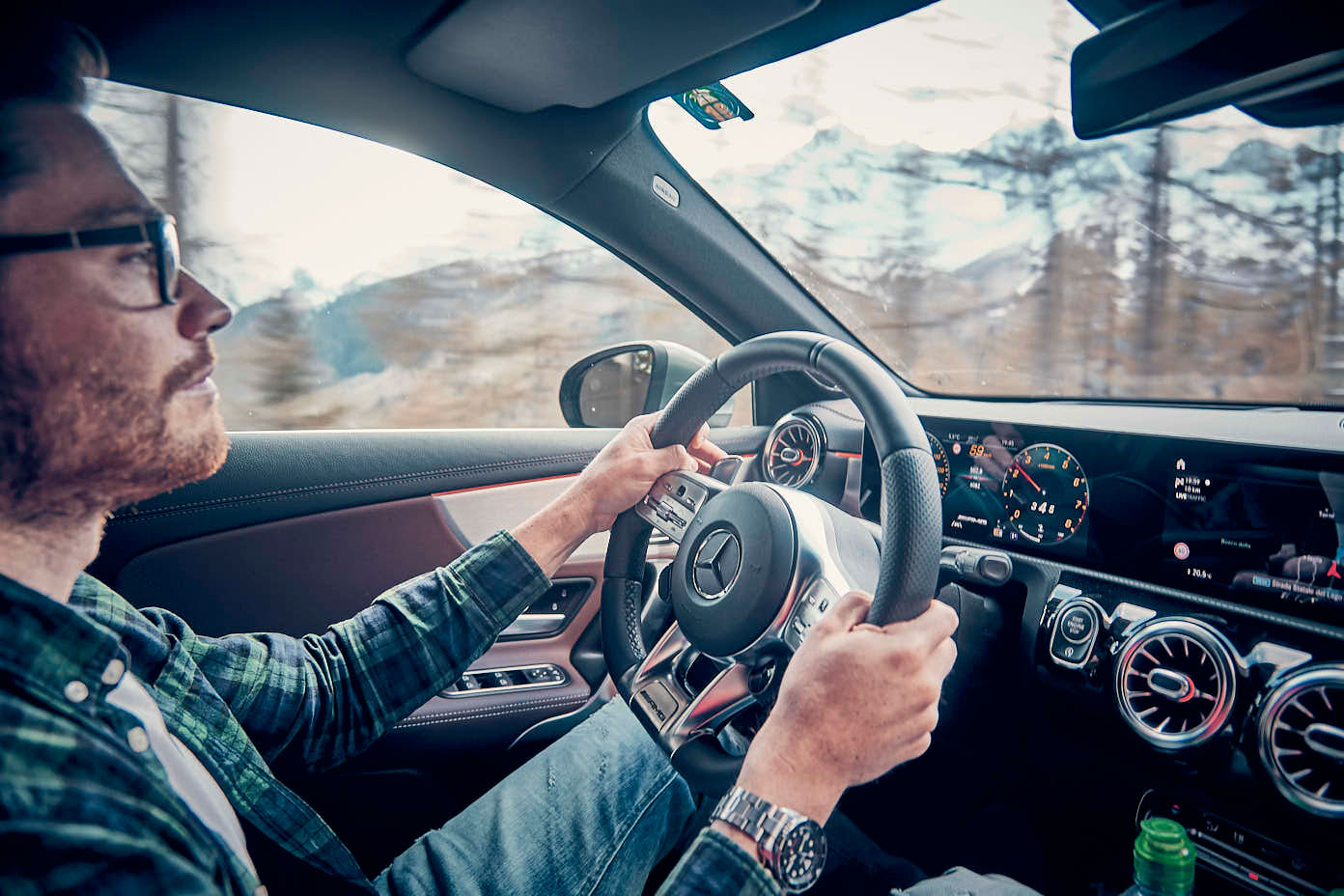
Until the first piece of bad news arrived. Turns out the glacier that once attracted tourists to this particular Alpine area has melted to the point that the Hotel Belvedere has been abandoned, its windows boarded up, its bar now deserted. And contrary to the evidently melting glacier, the Furka Pass was snowed in and had not opened for spring.
So with the speed and grace of a third grade prop, we pivoted. Google suggested there were some other, slightly lower (though no less spectacular) passes we could tackle, which means this two-day adventure now boils down to two questions: is the A35 a genuine hot hatch contender, or will it forever be in the shadow of its bigger brother – the all-new, and slightly unhinged A45? And can the Alps really be as extraordinary to drive as they are to look at?
DAY 01 – Passes driven: Julier, Maloja, San Giacomo Filippo, Splugen (13 hours, 4 countries, 653Km)
A word to describe our A35? Unassuming. Without the optional, gawp-worthy aero kit and painted in the kind of dour hue usually reserved for cement salesmen, it appears, on first glance, to look like any other A-Class. I kind of like that. There’s no uncouth barking from the exhaust, either, or any irritating jostling from the AMG-specific suspension as we slip out of Stuttgart and plug our first Alpine pass into the sat-nav.
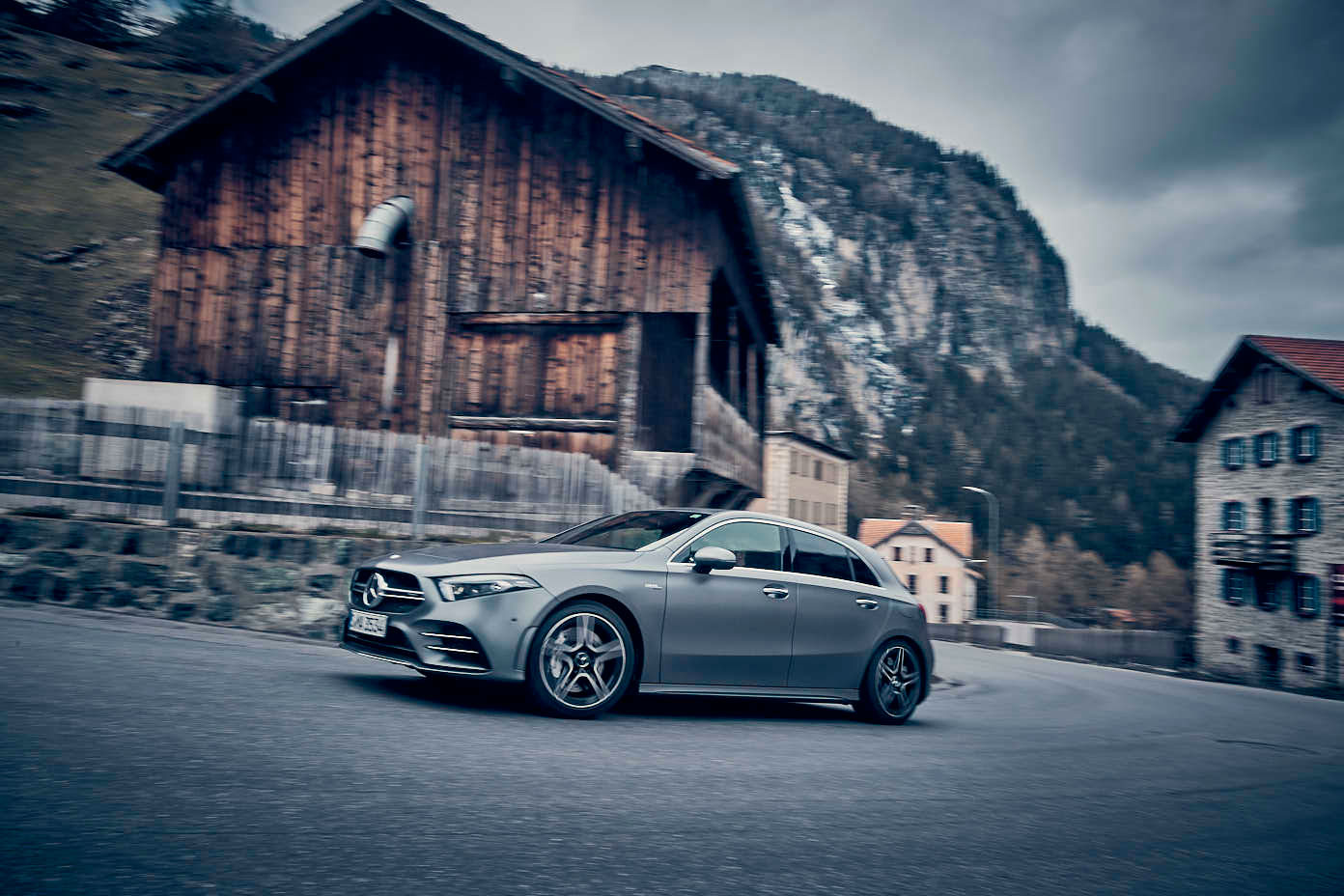
Type ‘Julier Pass’ into Google and you’ll find it listed as one of Europe’s most dangerous roads. Not that you’d know it from the bottom. Rush past the sign that confirms the pass is open and for a while you’ll meander gently through brilliant green countryside, but eventually you start to climb. Lift your eyes at this point and you’ll realise the treat that lies ahead. Hairpin heavy but wide and smooth and with excellent sight lines, the Julier delivers the kind of serpentine seduction most enthusiasts imagine when they’re asked what the perfect road looks like. It’s grippy too, despite the car’s readout suggesting an ambient temp of just 1.0C, and mercifully, traffic is light. This initial section runs for 2km and the best part is actually before the sequence of 11 hairpins. Here, the corners require only half a turn of lock and they flow together beautifully, the car sweeping from one to the next in a natural rhythm. The zig-zag section is more point and shoot, with frenzied bursts of max throttle, heavy braking and quick twirls of the wheel, but the genius is that the hairpin apexes aren’t too acute, or too close together. There’s enough room to run out second and grab third before you pitch the A35 into the next corner.
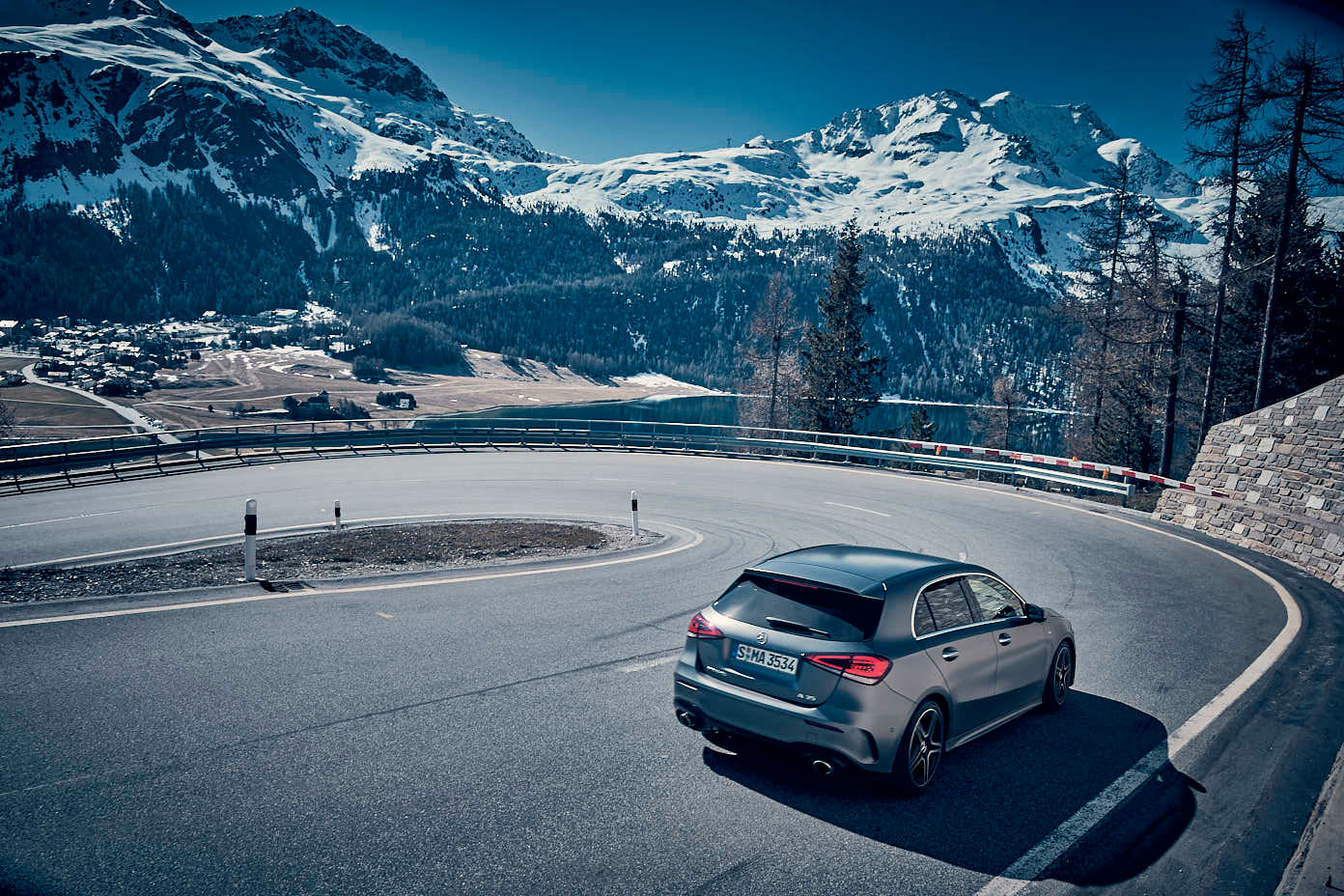
The car itself is a curious one. AMG has worked hard to improve the A35’s dynamics over the regular A-Class range by stiffening up the springs, dampers and anti-roll bars, replacing the front uprights and solidly mounting the rear subframe, yet initially it feels aloof. In fact, even on Michelin Pilot Alpine winter tyres (235/40R18), it’s so tied down that it’s almost impervious to the Julier’s degree of difficulty. There’s no denying its pace, or the tremendous amount of grip on offer – it corners with almost the same tenacity as the old A45 – but what’s lacking is that good old intangible: engagement.
Activating ESP Sport and cycling through the driving modes to Sport+ loosens things up a little, and you do get an intuitive sense of where the limits are, but the sense is that this is a car that doesn’t really understeer or oversteer. It just grips and goes. And as commendable as that is, I finish the first section of the Julier wondering if the A35 might be a little one-dimensional.
It’s an idea to ponder as photographer Steffen and I tuck into some steaming soup at the summit, 2284m above sea level. With the pass’s main restaurant still closed for the winter, our only option is a tiny wooden store run by 89-year-old Godfried Wvss. With swollen knuckles, a stooped stance and a wind-beaten face, Godfried appears to be the kind of bloke who has spent more than his fair share of time exposed to the elements, yet he’s whipcrack sharp. In his broken English, Godfried tells us how he ran a ski school from this shack for 27 years – still skis every day, in fact – and how he has taught countless wealthy Arabs to master the alpine art, including “the Shah of Persia”.
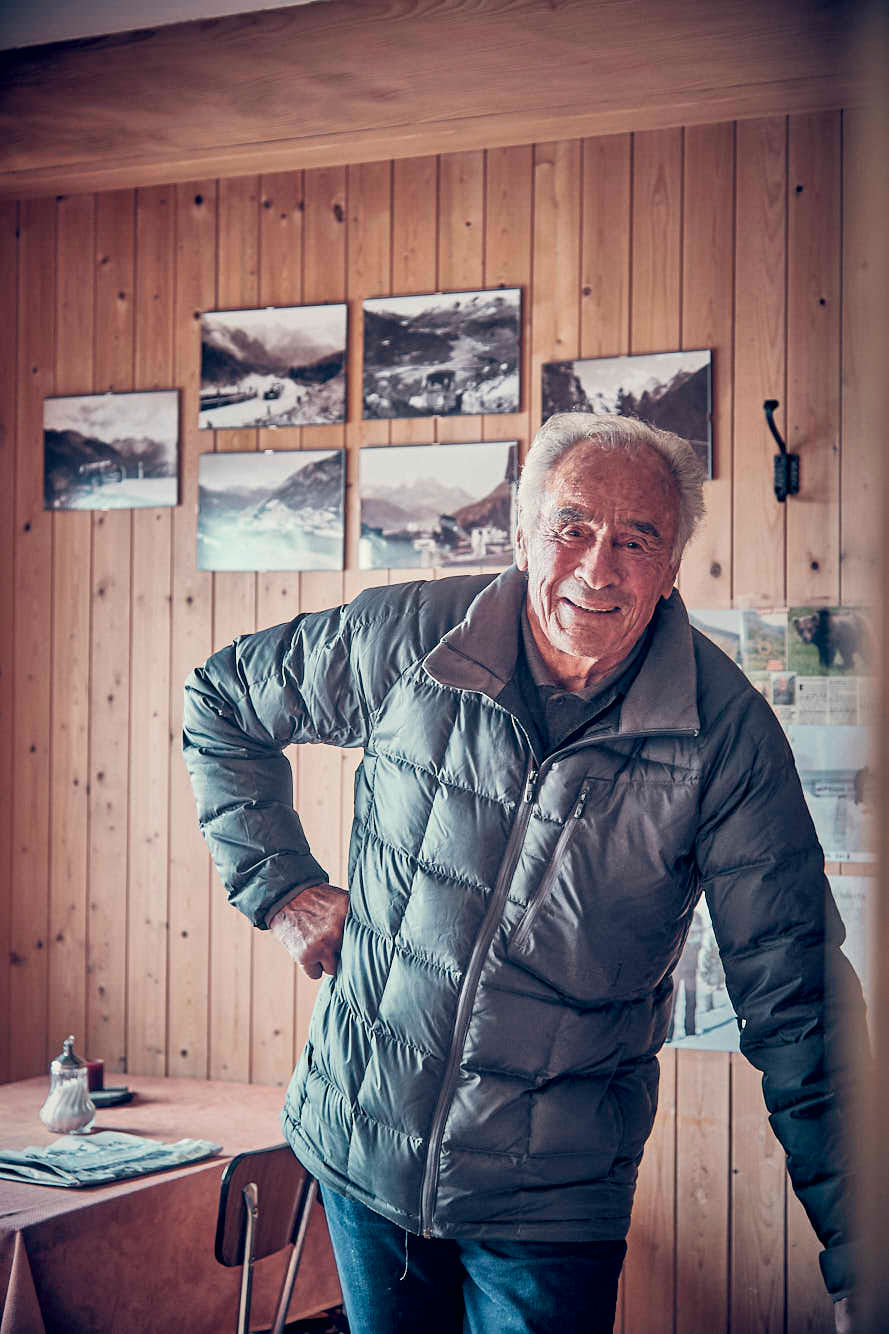
Godfried points out an ancient Roman column right at the summit and explains how the Roman army marched through the Julier in ancient times. Oddly, this seems to still be something of a sore point with Godfried, and as we part he draws our attention to a section of the cliff face looming over his shack. It looks identical to the rest of the surrounding rock, except that its top has buckled slightly under the weight of the snow. Rock doesn’t buckle like that.
“It’s a bunker,” says Godfried as he points out four other hidden artillery gun posts. “To stop the Italians coming through again.” I’d heard rumours that ever-ready Switzerland is littered with secret weapon strongholds (see sidebar), but to see evidence of the country’s preparedness for invasion is strangely off-putting.
NEUTRAL? LET’S DEBUNK THATSwitzerland is famous for its ‘armed neutrality’, a stance it has held since 1516 which means it doesn’t take part in military conflict. Don’t, however, think it would be a pushover should you be considering an invasion. The Swiss maintain a full-time army and airforce, and require all males between 18-34 to complete military service. Then there are the secret bunkers. Hidden in mountains and also disguised in plain site as barns and cottages, the structures house heavy artillery, guns, supplies and ammunition. There are even rumours of a secret airforce base inside a mountain, which has camouflaged doors that slide open to allow fighter planes to rocket out of.
With the day disappearing we head towards St. Moritz and the promise of our second mountain pass, nestled some 20km away. Dubbed the Maloja Pass, it appears from nowhere, a plunging concrete chute that twists and turns so tightly that it doubles back underneath itself in sections. It’s an extraordinary piece of engineering, and you can’t help but admire the time and effort that went into creating this melange of acute hairpins, bridges and stone walls. It seems purpose built for driving nirvana, but sadly, it doesn’t quite turn out that way.
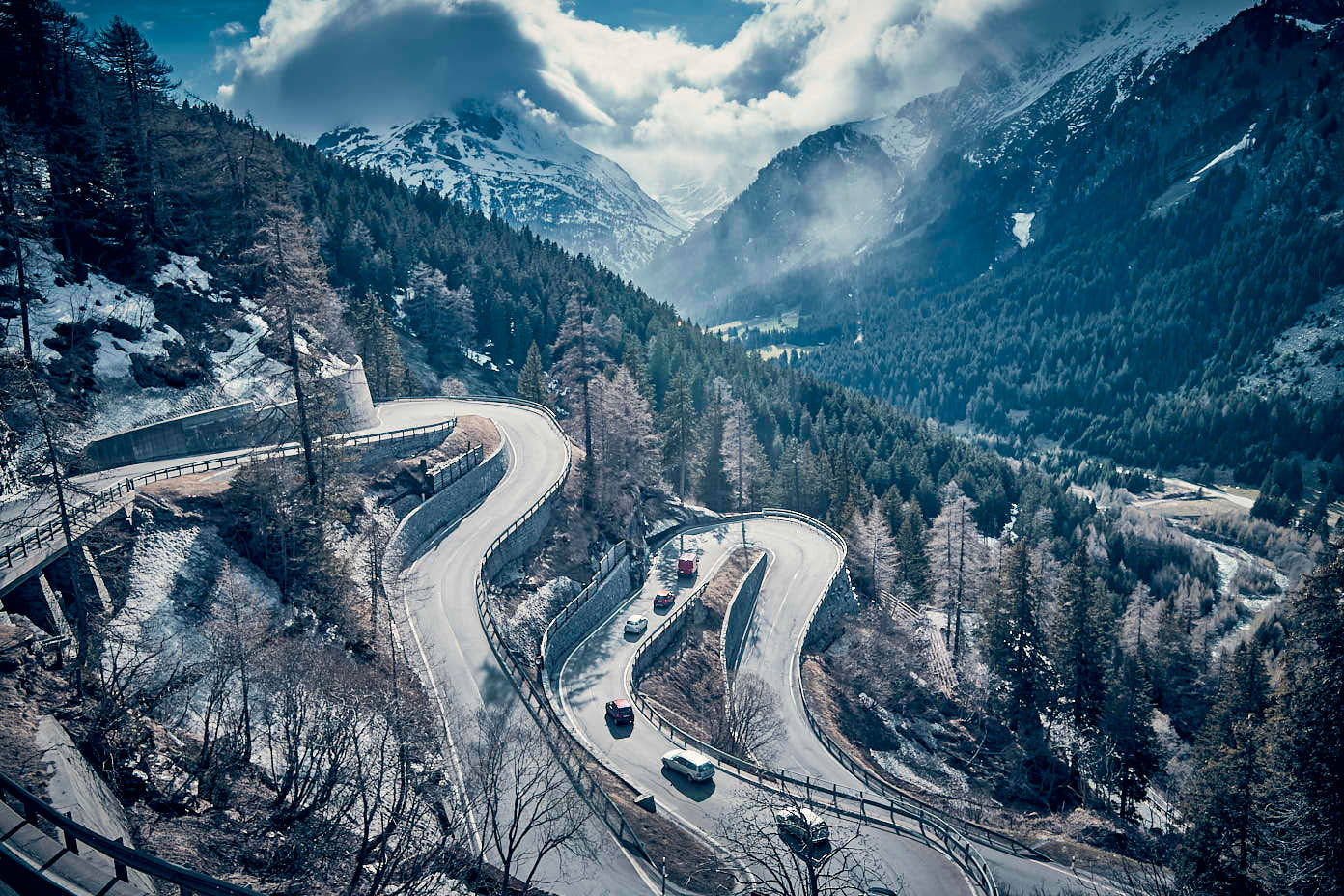
We’ve arrived at 5:30pm and commuters clog the Maloja’s hairpins, yet it’s the buses that are the real issue. The lumbering beasts take up both lanes as they swing through the many turns and the whole pass is so choked and clogged that we almost give up. Mercifully, after 30 minutes of waiting, I steal a clean run.
Because the Maloja is so much tighter than the Julier, the trick here isn’t only how quickly you can apply lock, but how fast you can get it off again. The A35 acquits itself well. The steering (2.5 turns lock-to-lock) is quick-witted and accurate and has a tight-enough turning circle to make it around without needing to swing wide to open up the corners. Again, the A35’s purchase is immense and its ability to pivot at the apex and slingshot out the other side is impressive. I find myself getting on the throttle earlier and earlier, but what I really want it to do is slide a little. To show some character and to dance around the edges of grip. Instead, all I get is steadfast surefootedness. It’s enough to have me wondering what an Alpine A110 or a BMW M2 would be like on this road. Epic, probably.
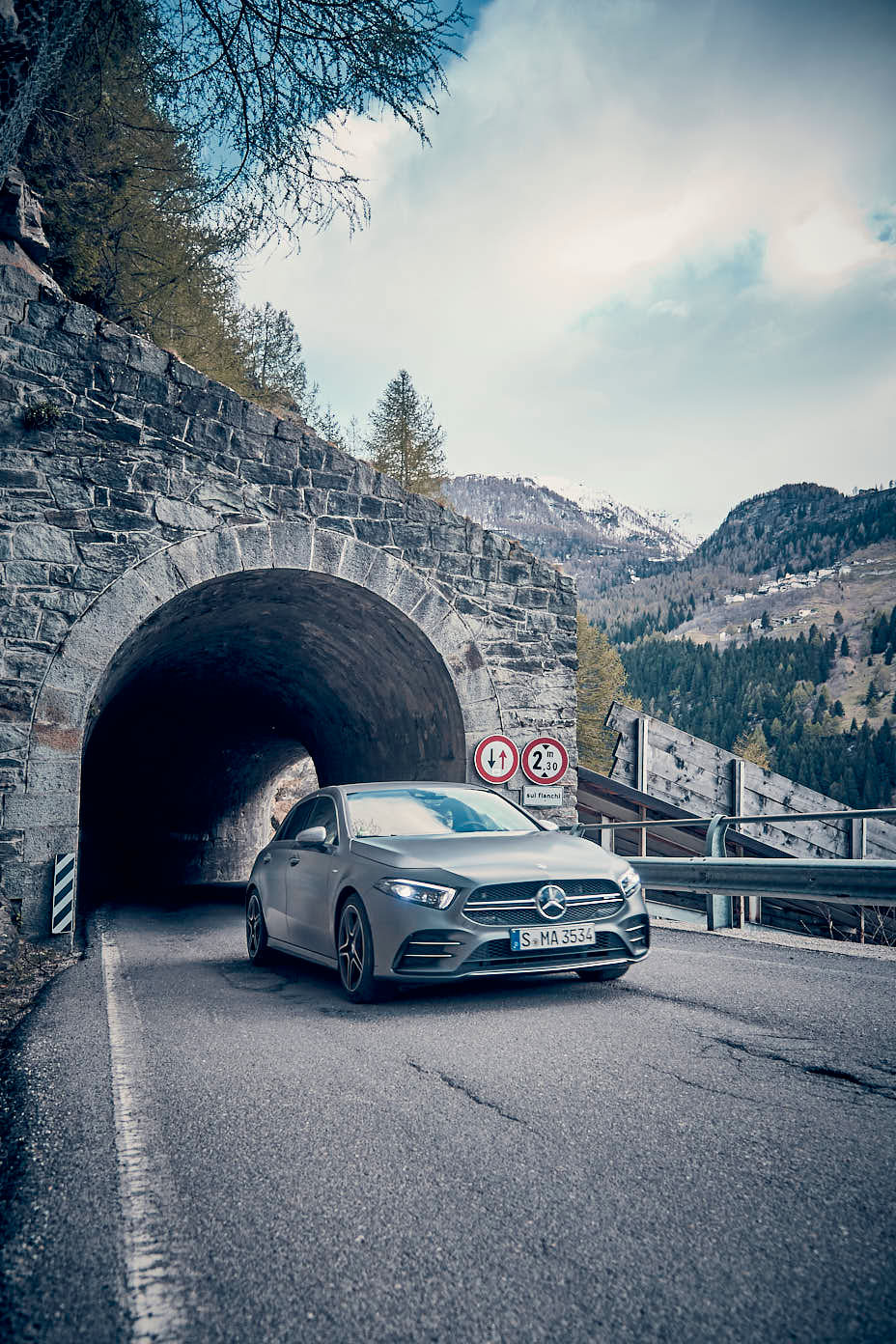
With the Maloja behind us we dive briefly into Italy for the circuitous route back to our final driving challenge of the day – the Splugen Pass. This is the one I’ve been looking forward to most, and also the one that Godfried had suggested might be closed. It isn’t, but despite some truly epic Game of Thrones-esque scenery, the Splugen turns out to be a disappointment. It’s freezing, with deep snow banks on either side of the road and black ice lurking in the shadows. It’s narrow too, and unlike the Julier, which scythes from hairpin to hairpin beautifully, the Splugen’s apexes are so acute and close together that it’s more about survival than fun. I’m suddenly grateful for the A35’s unwavering purchase, but as we pull into our hotel, I can’t shake the feeling that the car has more to give. It’s a beguiling thing, this A35, with a degree of subtlety I’m not used to from AMG. I’m convinced it has layers left to peel back.
DAY 02 – Passes driven: Julier, Bernina (7 hours, 3 countries, 340Km)
DAY TWO dawns bright, crisp and clear. We’ve lucked in with the weather. Snow still lines the roadside, but the sun is warm and the sky devoid of any clouds. We achieved more yesterday than expected, so today we get a bonus Pass. After much debate and a few beers at dinner the evening before, we’d settled on the Bernina, with its 2328m summit the highest yet. And to get there we have to go back over the Julier Pass. Nice.
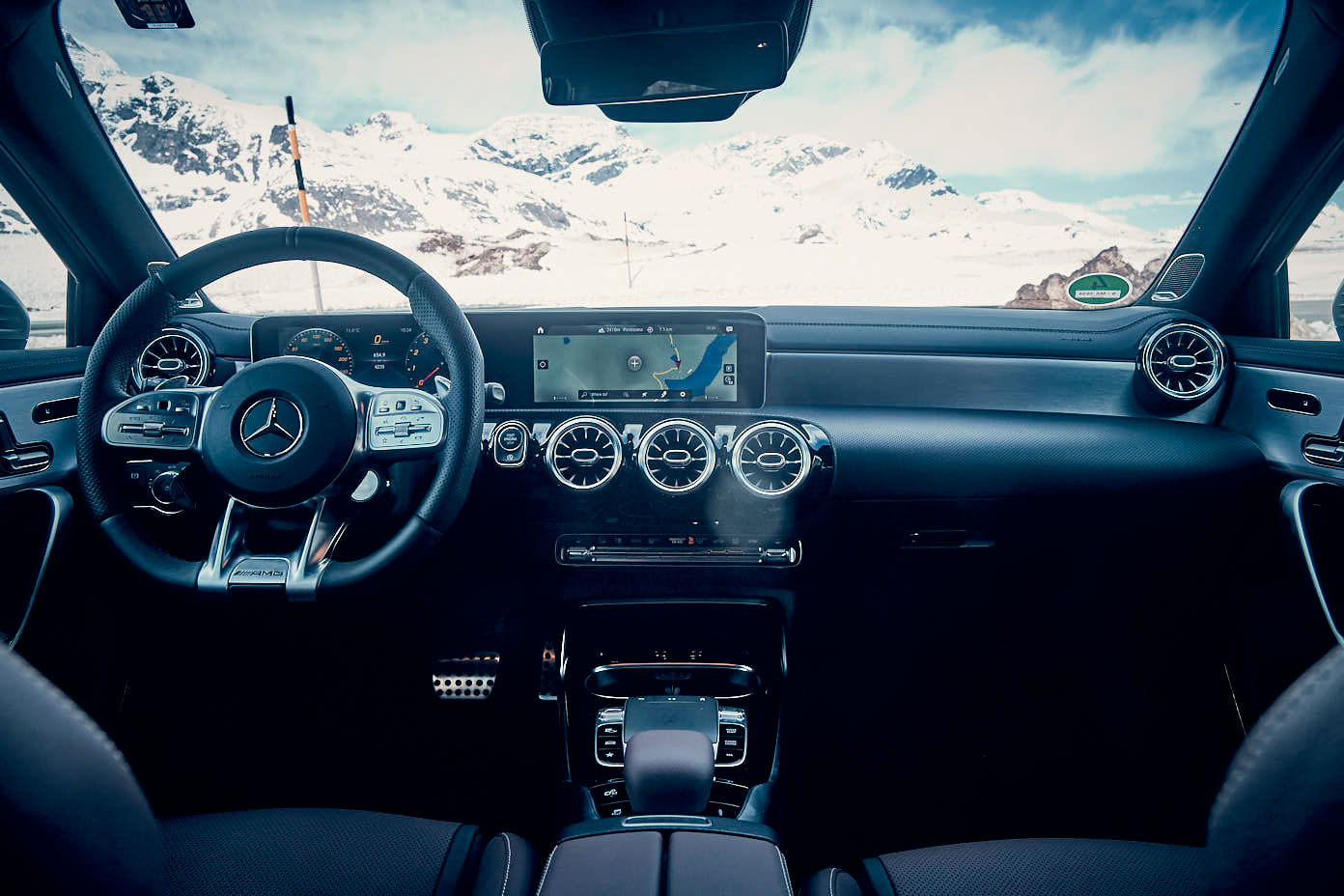
Second time around, the Julier still manages to surprise. Going up was more fun than coming down, though the AMG seems to relish our new trajectory. Dive-bomb in too hot and the front will start to push, but if you moderate your entry slightly it’s so hunkered down and neutral that you can flatten the throttle before the apex and just let the car manage the traction. It’s a wicked point-to-point machine and the engine’s plenty plucky, too. Based on the M260 2.0-litre turbo four, AMG’s changes include a new twin-scroll turbo to lift outputs to 225kW/400Nm. There’s plenty of mid-range shove (at 4.7 secs 0-100km/h, it’s only 0.5s slower than the old A45), but it’s never musical or truly engaging.
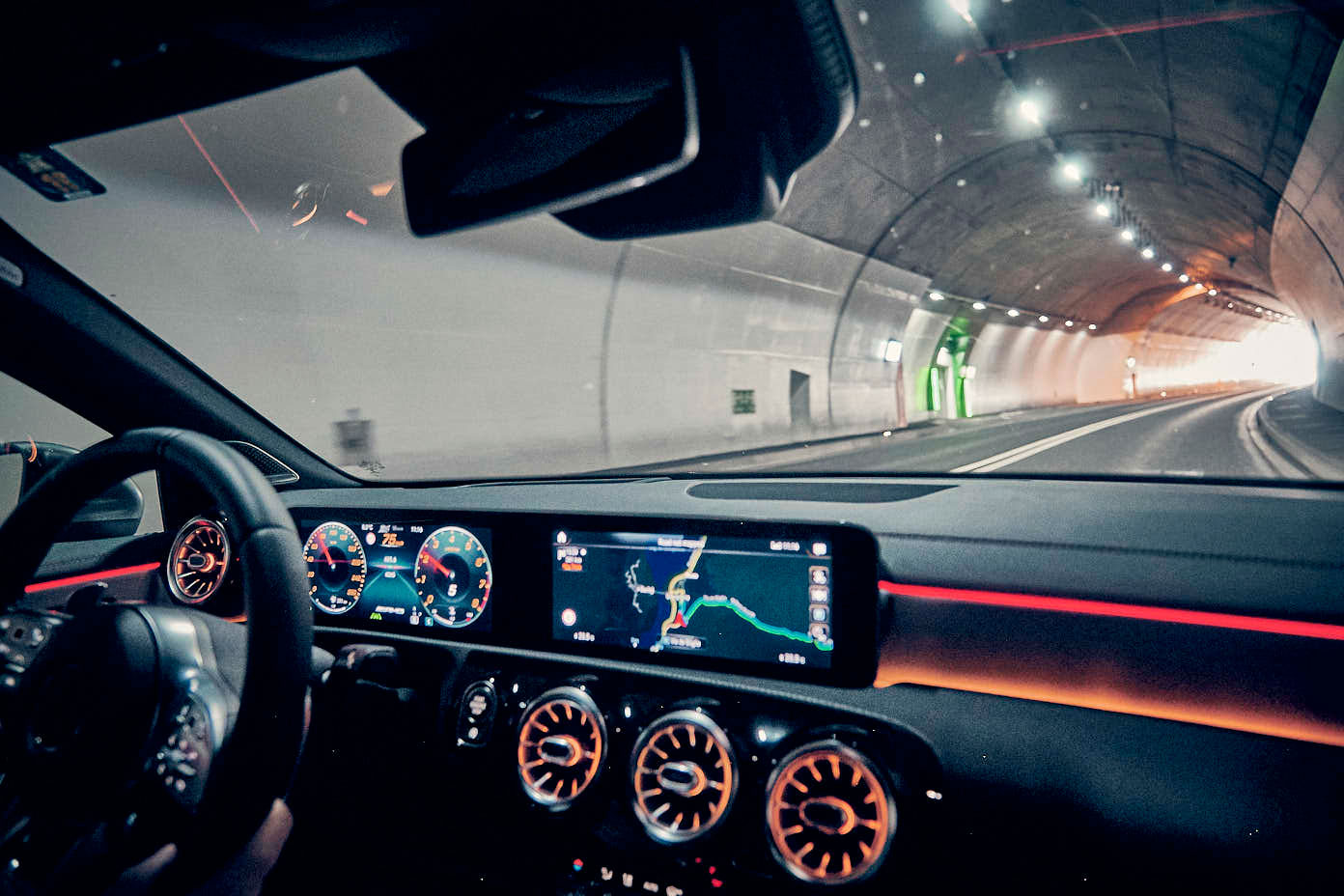
It’s only 30 minutes to Bernina and this section of the mountain range instantly feels more Alpine. An enormous gondola slowly transports snowboarders up the mountain and the road is punctuated by poles to measure snow depth every 15 metres or so. The climb to the summit is fairly mundane, though we aren’t the only ones here keen for a drive. Halfway up we spot a Porsche Taycan test mule, its quarter panels covered in tape with fake exhausts stuck to its rump. It sits alone in a deserted car park and the reception, when we pile out to say hello, is frosty. Mentioning I’m from Wheels is a grave error and before I can say another word, the windows are up and the Taycan rockets away at speed.
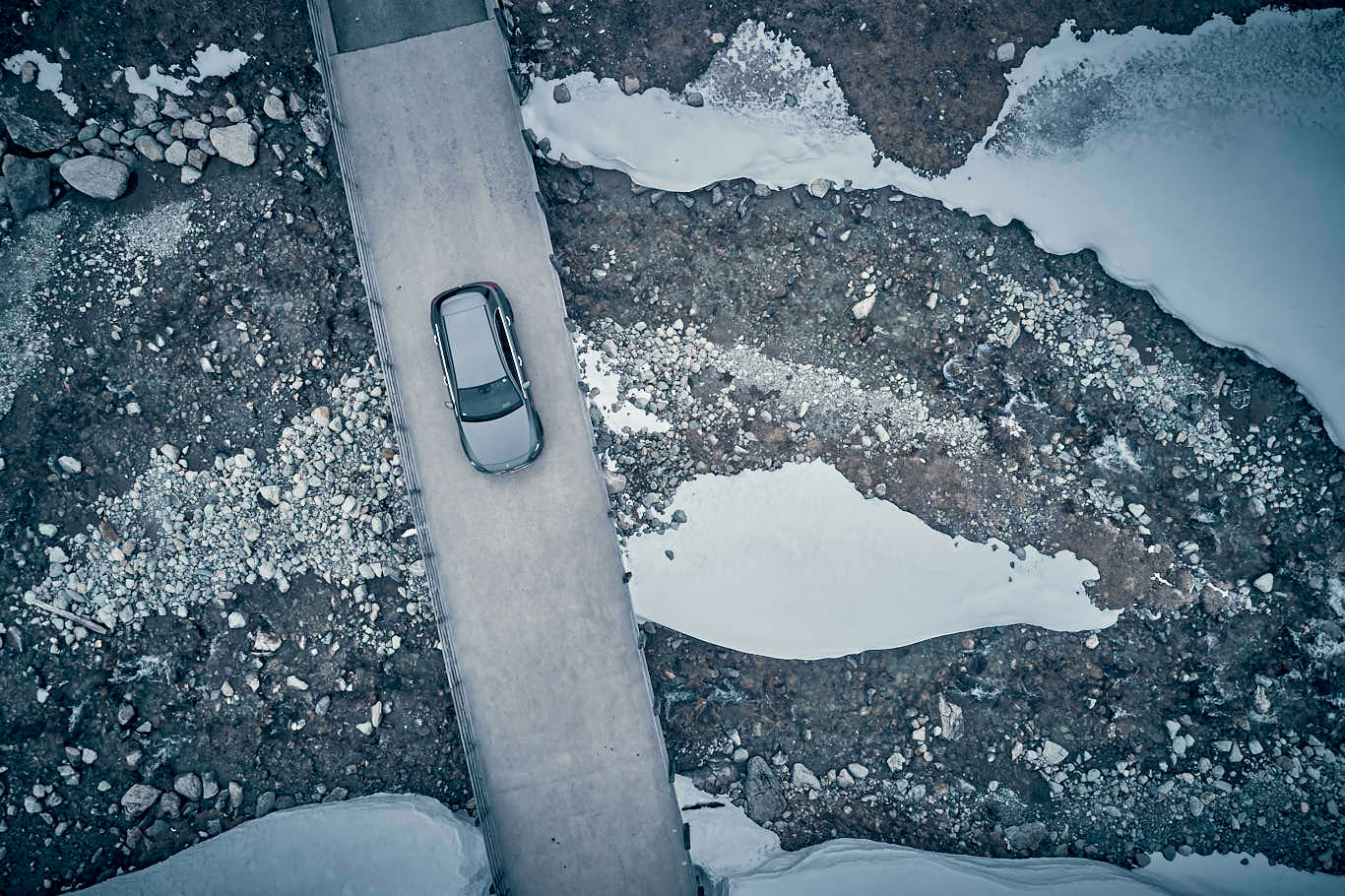
Lurking on the far side of the pass is the highlight of our adventure. Wide and nicely cambered, the Bernina combines all of the goodness of the Julier but adds faster, open sections that allow the A35 to tear through its first four gears. It’s also deserted. And twice as long.
The A35 and I have also come to an understanding. I realise I’ve been over-driving it in an attempt to get it onto its tippy-toes. Instead, it’s better to let it settle into its own rhythm and revel in the tenacious grip, rather than try to breach it.
Accept this and the A35 is an extraordinarily accomplished hatch. But now that the A45 has been revealed, is there room or reason for it exist? Blasting along the autobahn at 180km/h on the way back to Stuttgart provides time to reflect.
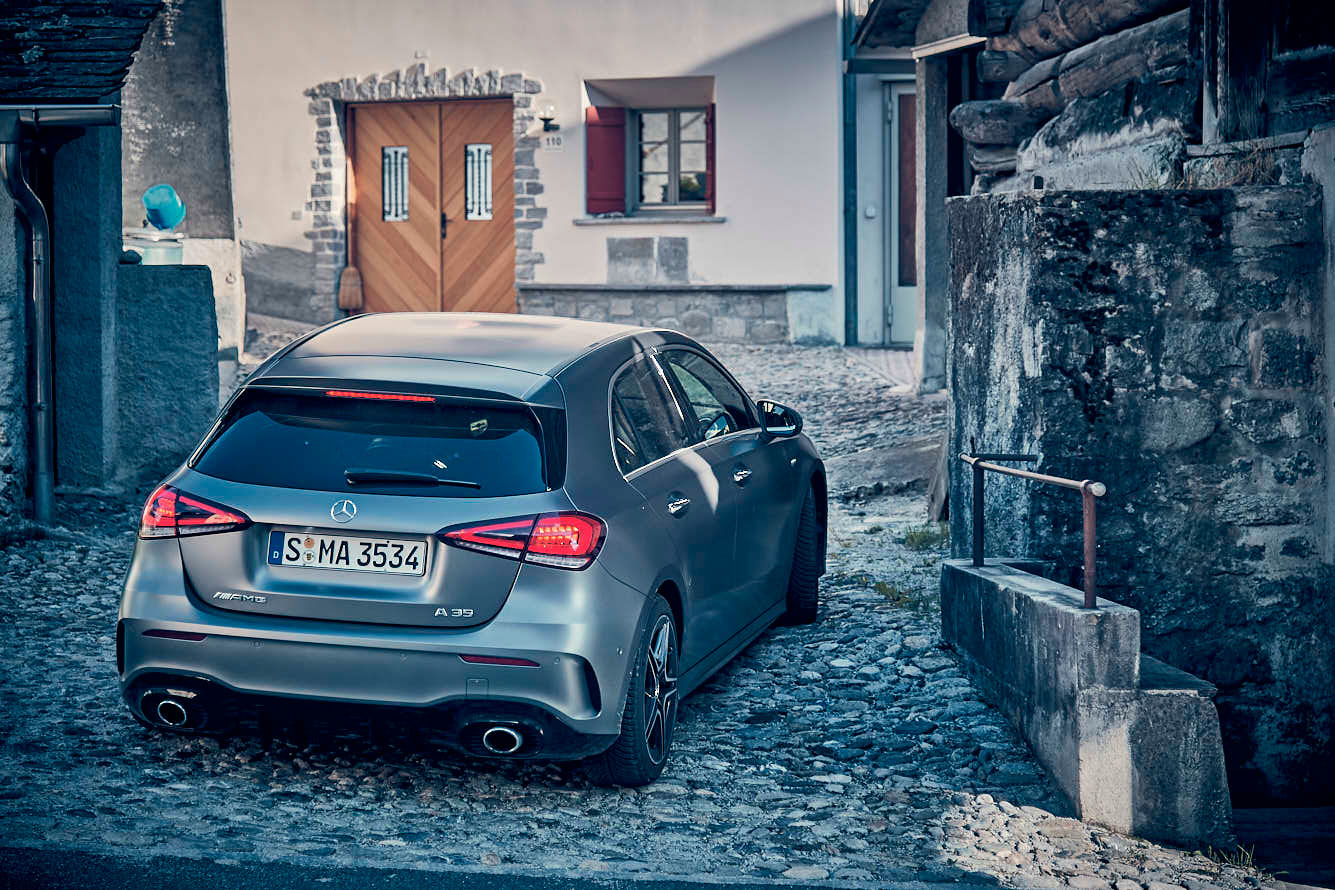
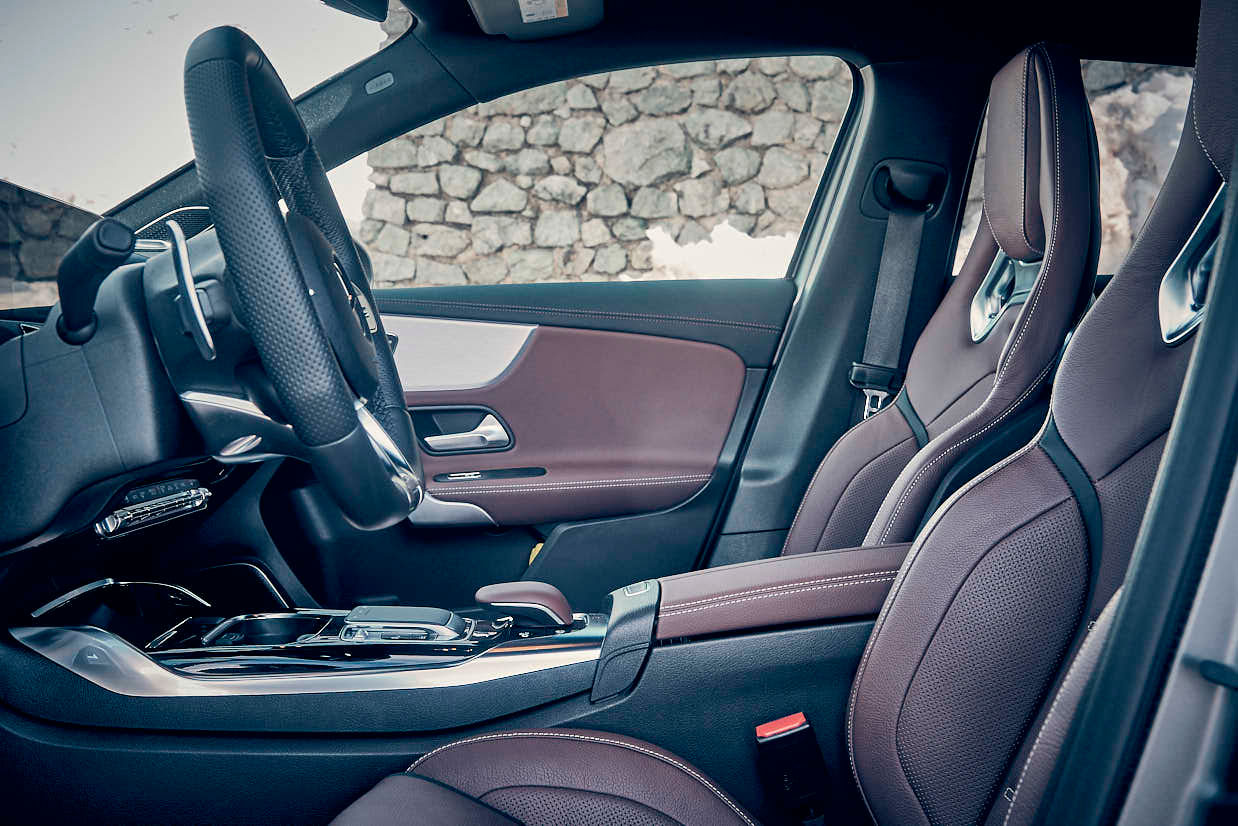
Even at this speed the A35 is solid and comfortable, its cabin infused with enough screens to appease even the fussiest of millennials. Of the past 32 hours, I’ve spent 24 of them wedged into its heavily bolstered driver’s seat yet my back feels fine. Nor am I overly fatigued, or feel as though I’ve been shaken to death by overly firm suspension. Good luck trying that in the A45. So yes, it has a personality all of its own, just like each of the passes we’ve driven. It really is petrol-head heaven, this part of the world. The kind of playground seemingly purpose built to facilitate the thrill of driving. Even if there’s no longer a doozy of a pub waiting at the end of it.
- It’s a fully electric estate car
- VW ID Space Vizzion at LA show
- 82kWh battery, 589 kilometre range
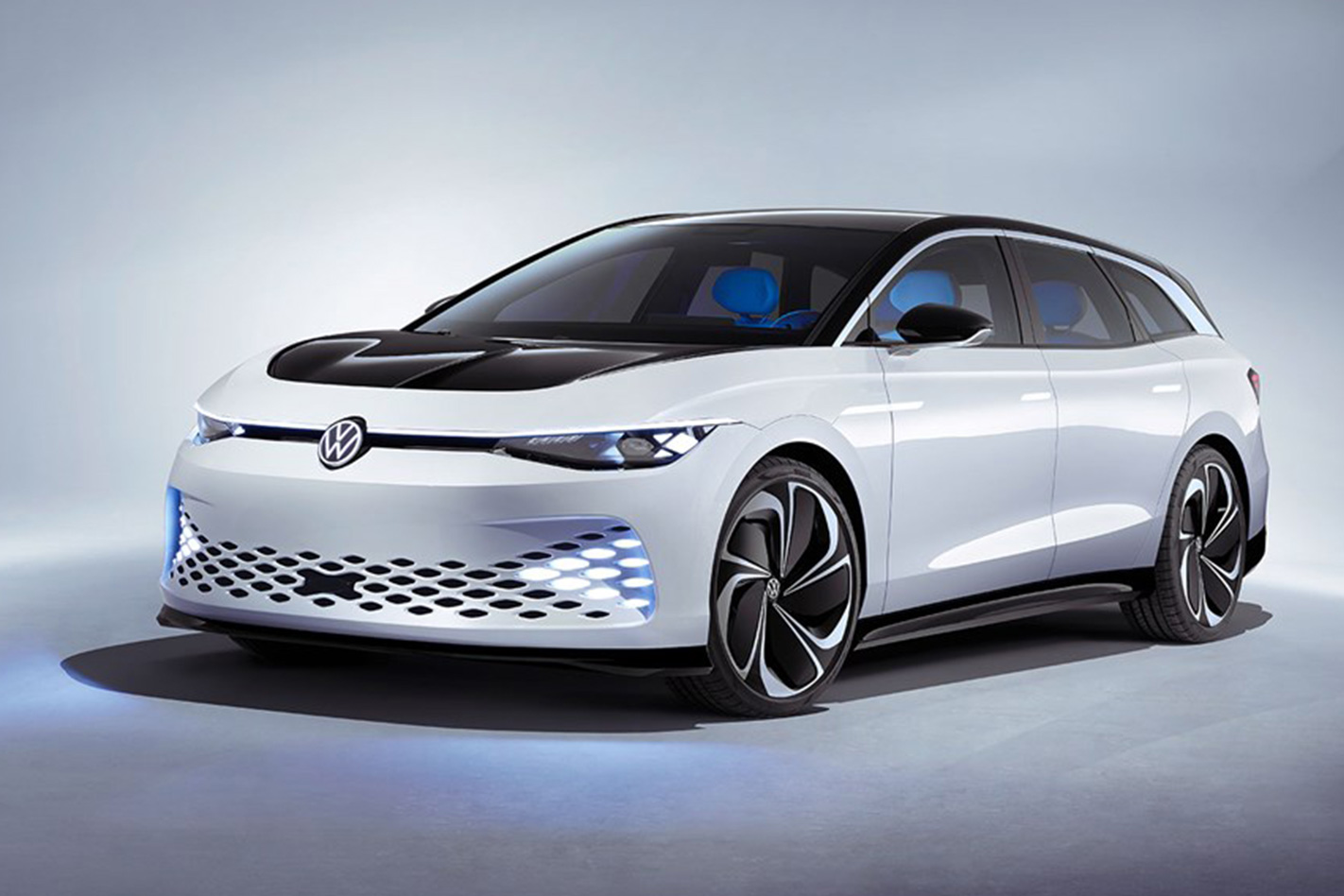
Wolfsburg calls the EV estate a ‘gran turismo with the proportions of an SUV’ and this concept car previews the production version destined for Europe and North America. You read that right: VW has committed to a full electric estate car, due in a little over a year’s time.
Much as the new Golf Mk8 will continue to be sold alongside the ID 3 range in the sector below, so the Passat will soldier on in this class, alongside the electric saloon and estate car you see here. They’re big cars, at 4958 long and 1897mm wide – meaning the ID Space Vizzion packs a roomy 586-litre boot. This we like.
MEB e-creds with estate car boots?
Exactly. The MEB electrical architecture from the ID 3 hatchback underpins the Space Vizzion and packs in an 82kWh battery pack for a claimed 589 kilometre electric range on the latest European WLTP test cycle.
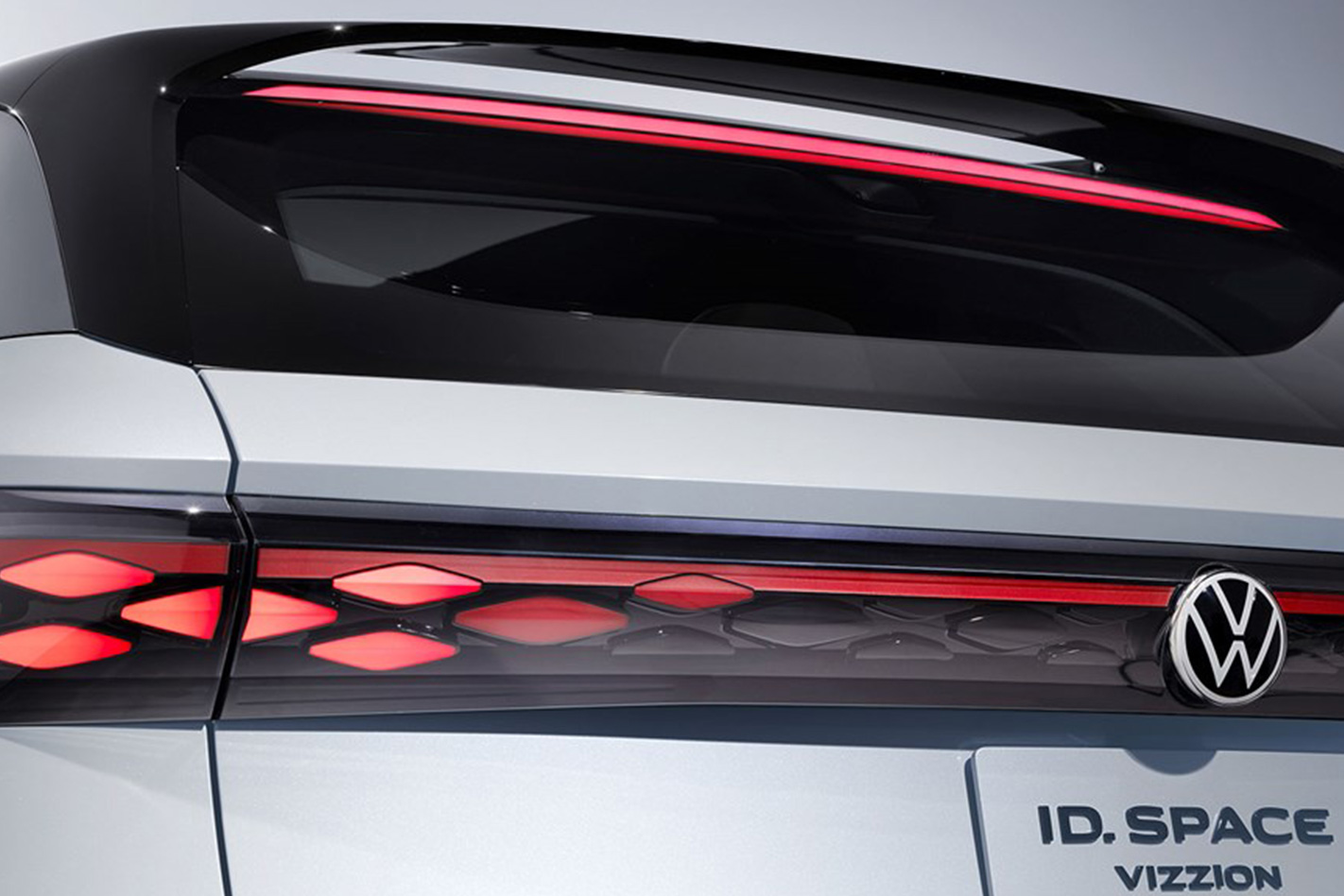
As is now the norm with electric cars, it’s a wickedly fast wagon, too: VW quotes 0-60mph in 5.0sec, thanks to a big 205kW electric motor driving the rear axle. It’s abetted by a smaller 75kW motor up front, providing 4Motion all-wheel drive for all-weather traction.
Volkswagen is proud of how the slippery shape helps extend performance and range; with a drag coefficient of just 0.24, this is an unarguably smooth, aerodynamic design for such a big estate car. Note also the lift-up flap under the boot floor housing two electric skateboards for last-mile transport to your destination.
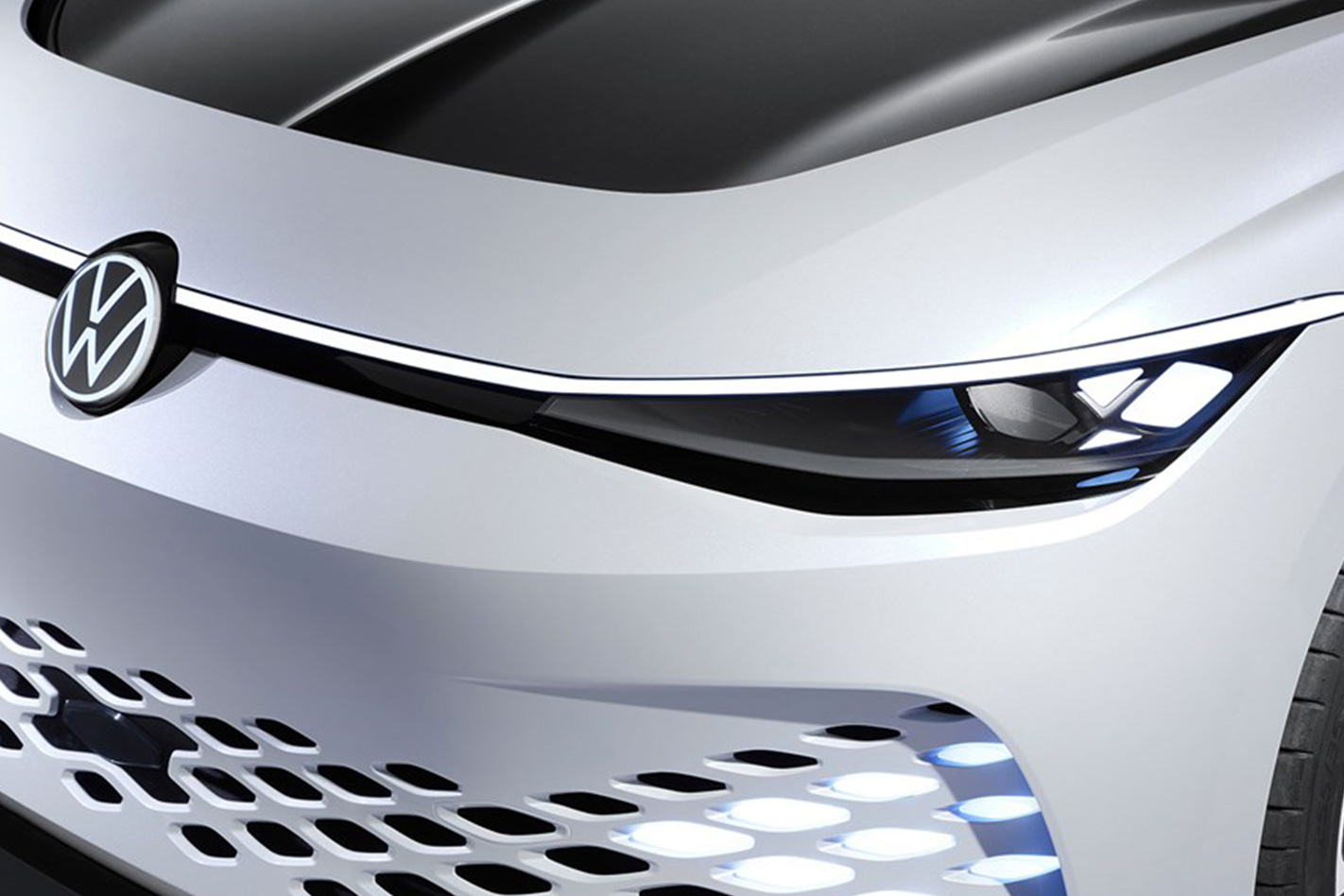
An LA auto show debut
Volkswagen regularly supports the Los Angeles motor show and the ID Space Vizzion is the brand’s showcase message at the 2019 expo.
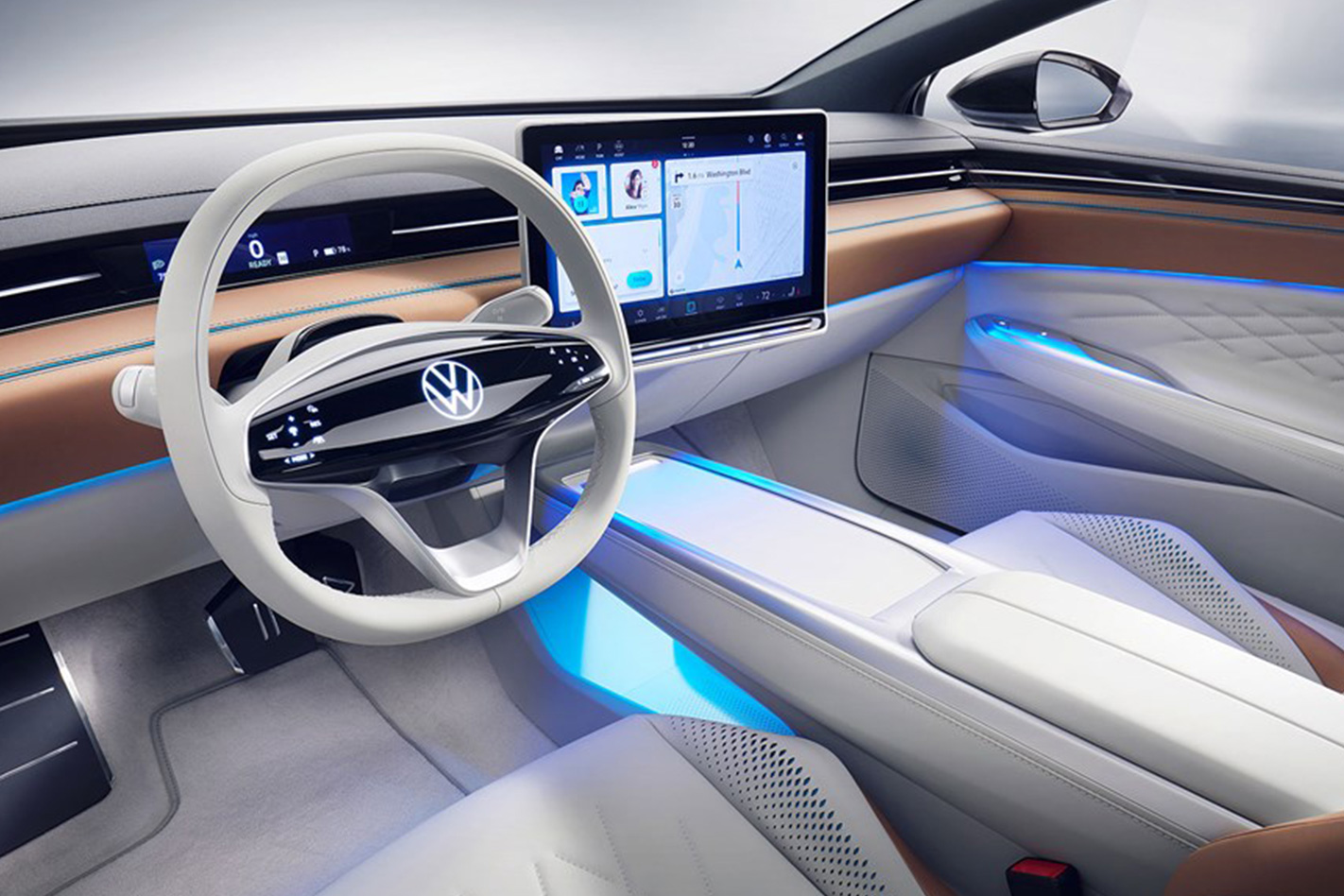
Strip away some of the sillier concept car cues – like the gargantuan 22-inch alloy wheels and illuminated VW badges – and you’re left with a silhouette that looks entirely do-able.
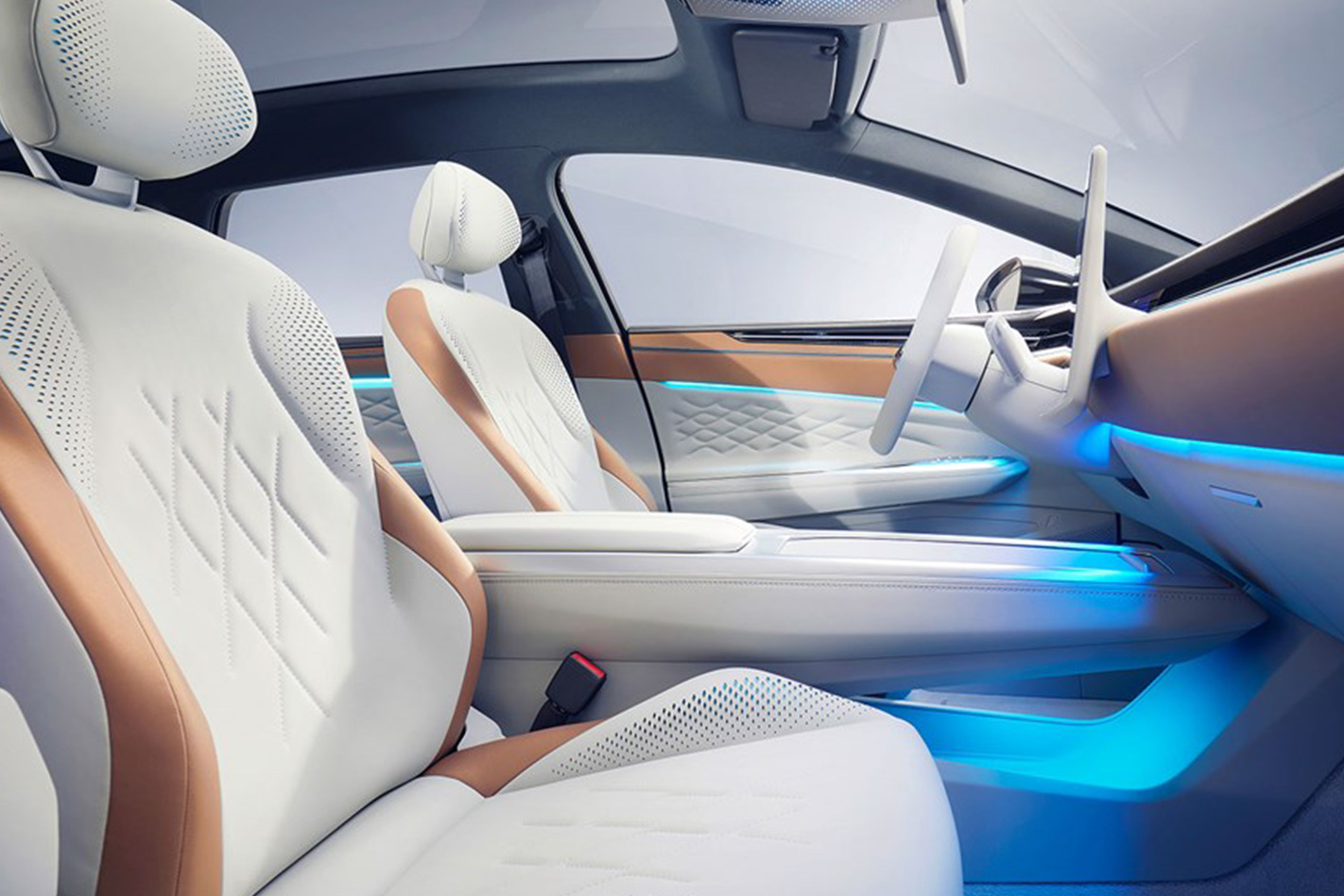
Will the organic AppleSkin leather substitute make it to production? Word is that Wolfsburg is working hard to make this naturally sourced upholstery using residuals from apple juice production feasible.
This article first appeared on www.CARmagazine.co.uk
