
Hyundai is leaning harder and harder into its ‘N’ sub-brand with a heavy focus on becoming a brand that makes exciting cars.
Only weeks after Hyundai Australia revealed the iMax Drift Bus for the World Time Attack Challenge, the brand’s US arm has unveiled the Hyundai Veloster N Performance Concept, set to debut at SEMA 2019.
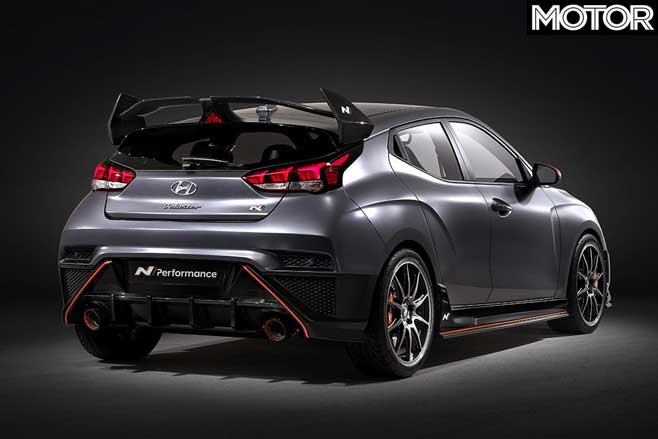
Though Australia isn’t on the list (so far) to receive the Hyundai Veloster N, we’ve got access to the step-down Veloster Turbo, which we’d like to see some of this concept’s parts attached to.
On this N Concept, the US-based customisation team has gone to town on creating a track-spec Veloster without the need to fettle the engine.
It says the modifications are all “OEM-quality… to maximize visual appeal and dynamic performance.
“These bolt-on accessories are designed to have high potential for aftermarket availability.”
Racing coilovers from H&R, Daewon anti-roll bars, chassis bracing, and a set of Alcon forged brake calipers (six-piston fronts, fours at the rear) all top the list of the mods mostlikely to hone the Veloster as a driver’s car, though 19-inch Oz racing wheels add to the tough track vibes, and are shod with Pirelli P-Zero Corsa tyres for more grip.
A Capristo cat-back performance exhaust with anodized tips should make for more of an aggro rumble, and a plethora of visual changes (including splitters, sills, diffusers, and vents) give the Veloster more racey appeal.
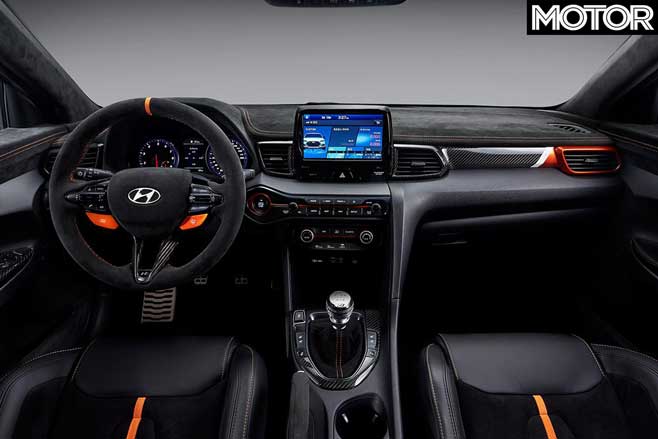
Inside, Alcantara abounds (on the gear knob boot, steering wheel lower bezel, parking lever, air vent surround… the list goes on), plsu there’s a pair of Sabelt racing seats, also with Alcantara, and a red start button.
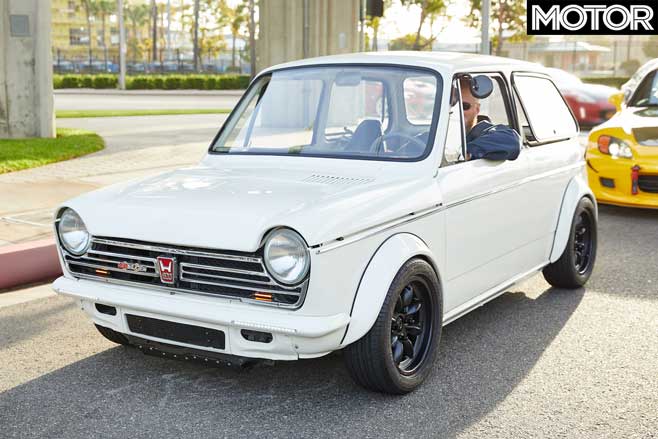
Motorcycle engine transplants aren’t new, but there aren’t many that are as well executed as Stephen Mines’ (no relation to the famous tuning brand) custom 1972 Honda N600 with a Honda VFR800 V4 engine.
Don’t take our word for it, the judges of the inaugural Honda Super Tuner Legend Series also concluded it worthy of the gong, with Honda USA set to showcase the little custom kei-car at their booth at SEMA 2019 in celebration of the 60th anniversary of their US operations.
To say that it is just a kei-car with its engine swapped out for a motorcycle engine is a huge disservice to the five years’ worth of re-engineering work done to it.
For starters, Mines’ N600 is rear-wheel drive, instead of front, with the 782cc V4 engine mounted longitudinally and power sent via a propshaft – instead of a motorcycle chain drive. Mines even incorporated the shell for the motorcycle tank as an engine cover.
While the N600’s original 34kW 598cc twin-potter maxes out at 9,000rpm, the motorcycle engine chucks out 86kW and spins up to a dizzying 12,000rpm with power sent through a VFR800 sequential six-speed gearbox.
With a free-revving engine exhaling through a Supertrapp exhaust and gear shifts executed via a set of paddle shifters, this N600 sounds closer to a Formula single-seater at full chat than your average kei-car. Just listen to how it screams through the canyons in Matt Farah’s One Take video series and tell us that it doesn’t send chills down your spine.
Although Mines’ N600 weighs in at 635kg, 15 percent heavier than the 550kg figure of an original N600, but who are we to complain when it has a 250 percent power bump?
Besides the drivetrain, the N600’s mechanicals has been thoroughly re-engineered with all-round double-wishbone assemblies and brakes lifted from a first-gen Mazda MX-5, with drive-sent via a Ford-sourced differential sitting between the rear axle on a narrowed MX-5 subframe.
If there is one drawback, is that the motorcycle gearbox still operates through a motorcycle clutch, which is better operated with fingers rather than feet, and that it doesn’t have a reverse gear.
The Honda Super Tuner Legend Series is held in conjunction with the second-annual Hot Wheels Legend Tour in The States where owners of custom cars present their creations in hopes that it will become a new addition to the Hot Wheels toy car line.
Spoiler alert: If you thought the 2020 Ford Mustang GT500 was just going to be a bigger, faster version of the Shelby GT350, you’re in for a surprise. It’s much more special than that. But you won’t realise just how unique until you get to drive it on a mixture of road, track and drag strip.
The last GT500 could top 200mph (320km/h) but had less grip than a vicar’s handshake and handling that was more wild and wayward than a herd of cats. Fun but not fast.
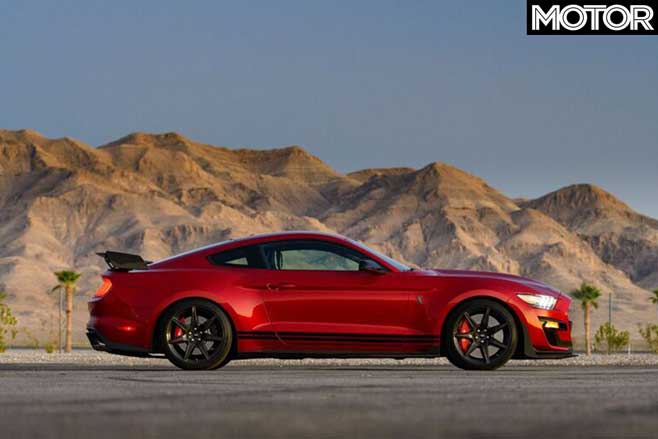
So there was a lot of work to be done to bring it back into line. The GT350 and then the 350R showed us what the new chassis can do. But then they also seduced us with their exotic flat-plane, rev-forever V8s and even a set of carbon wheels on the R.
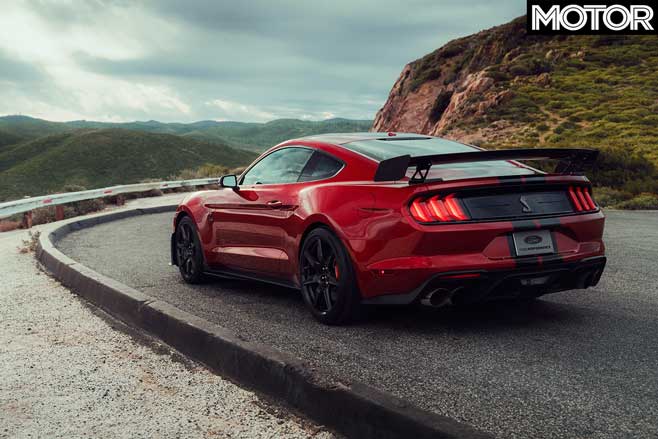
So when we first saw the spec of the new GT500, it was a bit of a head-scratcher. Yes, it has the obligatory supercharger – and a suitably muscular 567kW to go with it – so it was usefully up on power over its little brothers. But it also has a seven-speed DCT gearbox, the first on any muscle car, instead of the 350’s six-speed manual. So it’s clearly a more road-focused machine. Right?
Wrong. What the Ford Performance team has managed to conjure up, in large part thanks to that DCT ’box, is a proper multi-modal muscle car that can change its character completely to suit whatever environment it’s playing in. Where the GT350 is a one-mode, always-on, deeply involving driver’s car, the GT500 can be dialed into several very different characters with the push of just a few buttons.
Want to do a lot of road work? No problem. Just back all the systems down to Normal mode, put the exhaust into quiet mode, and you find yourself in an almost spookily quiet, very comfortable car. The only bit it can’t do on the commute is economy. With a 60-litre tank and a high consumption rate, even at moderate speeds, you get electric car-style range anxiety if you attempt a journey of over 300 kays.
It was so quiet and composed on the road – the first part of our test route – we were worried that Ford had oversanitised the GT500. But we needn’t have worried. All it took was a few laps around the Las Vegas Motor Speedway to kill off any fears. With the chassis set in Track mode, the GT500 turns from being a thirsty commuter into a ready-to-race missile. The calm road manners translate into a neutral-handling car that can be pushed front and rear at will.
All sense of size and weight falls away the faster you go, the mass of the car feeling like it has been sucked from the edges into a ball just under the driver’s seat. Throttle response is instant and millimeter-linear, steering feel accurate so you can back in and steer out with minimal input from the helm. You can overwhelm the rears and go sideways if you flatten the throttle before fully straight, but the car doesn’t lose all its composure and keeps moving forward.
The front-end grip is nothing shy of extraordinary. In Track Pack spec – we’ll get to the details of that in a minute – the GT500 still weighs almost 1900kg. You just should not be able to lean as hard as you can on a front axle and not expect it to understeer you into the outer kerbs. Yet here we are in the 500 asking it to turn and slow from deep into three figures – again and again – and it’s just doing it. The word impressive just doesn’t do it justice.
It’s the same story at the drag strip. Where you had to possess snake-like reactions and ballet-like throttle control in the previous GT500 to get anything approaching a respectable quarter-mile time, the new car makes it simple.
Summon Drag mode in the dash and the GT goes through another transformation. The rear shocks get slightly softer, to allow for better weight transfer on launch, and you get a whole sub-screen of drag apps to play with.
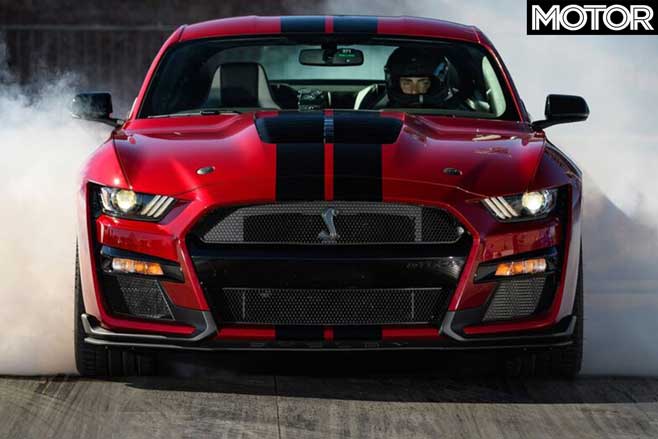
You set the launch rpm, press a button – then release and press again – to engage Line Lock, do your pre-launch burnout, then roll to the line, hold the brake, put the throttle to the floor, wait for the lights and bam! you’re gone. Just under 11 seconds later you rip through the 1320 at over 210km/h. Or even more than that if you are in the base-spec car, which doesn’t have the drag of the Track Pack aero.
How does it achieve all this? The refreshingly simple spec sheet tells all. The 5.2-litre cross plane crank engine and Tremec seven-speed DCT transmission remain the same, irrespective of whichever pack you have or have not chosen, but the GT500 is available with two optional exterior packages.
The base car, which is anything but basic, runs on 20-inch wheels sporting a set of Michelin 4S tyres. A 3.73 Torsen limited slip, diff cooler and Magneride dampers are standard, along with a set of 394mm six-piston front and 381mm four-piston rear Brembo brakes. The discs are available only in steel, Ford wanting to keep owner running costs down.
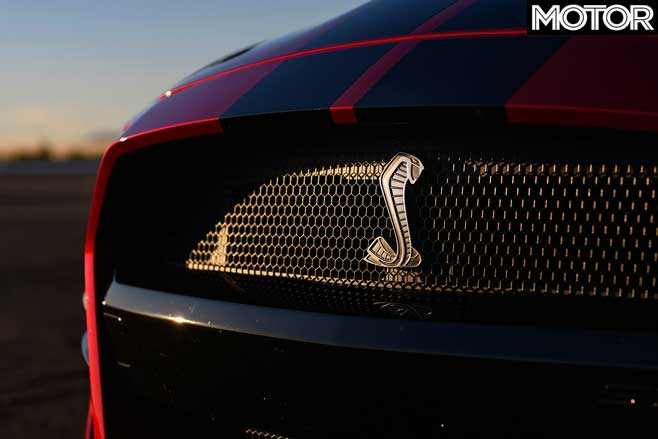
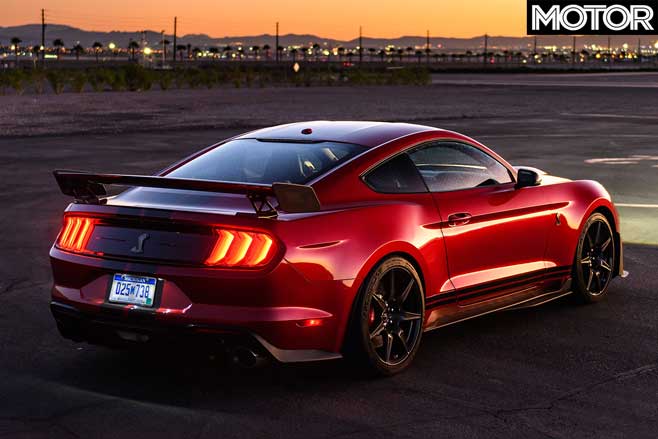
Outside, other than some styling that is so aggressive it’ll give you a black eye just looking at it – that Mako shark grille flows 50 per cent more air than the 350 to cool the higher output mechanicals – standard equipment includes a rear spoiler and diffuser plus a dual exhaust with quad tips and clever valves.
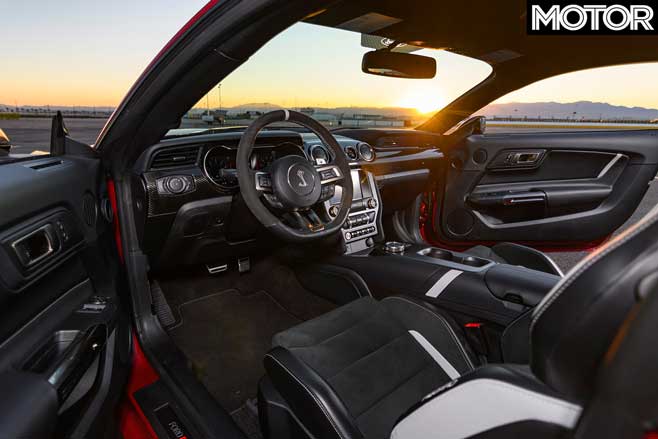
Inside, you get a familiar Mustang dash complete with everything from the 12-inch digital instrument cluster, which rearranges itself according to which mode has been selected, and a set of leather-trimmed Miko suede sports seats.
Add the Handling Pack and you get a Gurney flap for the rear spoiler plus a set of splitter wickers for the front.
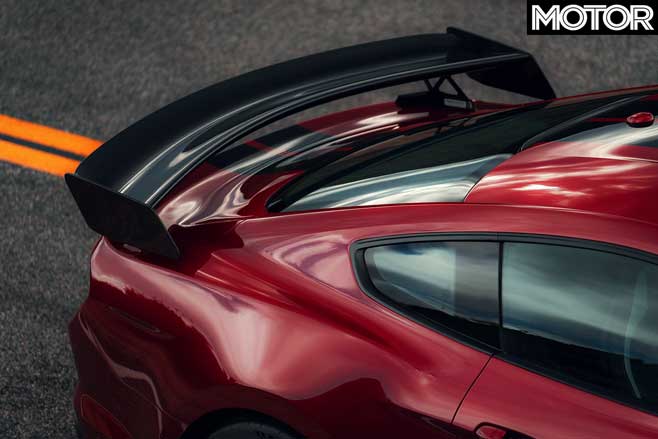
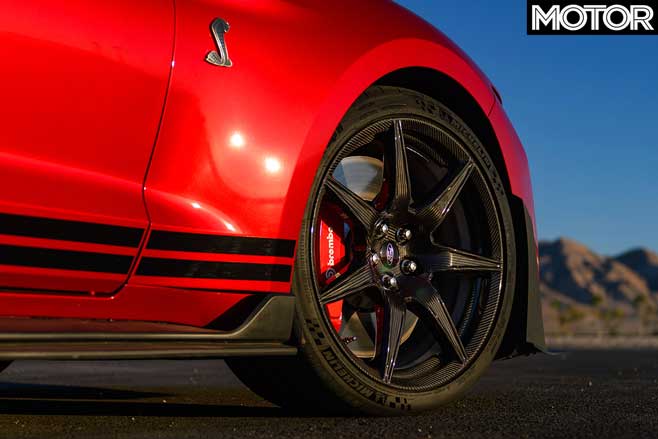
But where it gets really interesting is the Track Pack. This US$18,500 option includes a set of 20-inch carbonfibre wheels with a set of Michelin Cup Sport 2s, deletes the rear seat, adds a carbonfibre GT4 rear wing and adjustable strut top mounts, then swaps out the front seats for a set of Recaros. To really eke out every last bit of value from your GT500, this is a necessary option. Unlike the US$10,000 painted stripes, which should be avoided. But whatever spec you get, you will not be disappointed.
The three-pedal GT350R might still be the more involving car, but in the real world of commuting and mobile phones, the GT500 is the more usable. And the more you use it – on road, track or strip – the more you will enjoy this special car.
It’s not coming to Australia, but that’s why we’re getting the Mustang R-Spec.
FORD MUSTANG SHELBY GT500 SPECS
Engine: 5163cc V8, DOHC, 32v, supercharged Power: 567kW @ 7300rpm Torque: 847Nm @ 5000rpm Weight: 1891kg 0-100km/h: 3.1sec (claimed) Price: USD$72,900
Rebecca Amos is a mother of two, wife, writer, filmmaker, wanderer and constant renovator.
What is it?
The Lexus UX250h Luxury 2WD is a compact hybrid SUV touted as “an urban crossover with the agility of a hatchback”.
The pricing, which starts from $47,950 before on-roads plus a $1550 option pack on the car we’re testing here, suggests a target market of young executives looking for a luxury upgrade from their current car before moving into the family-sized SUV stage of life. There’s probably a second market in families looking for a second car for the household, too.
What’s it like to drive?
In a word? Quiet. The hybrid engine means starting the car and taking off are essentially silent, and I love it.
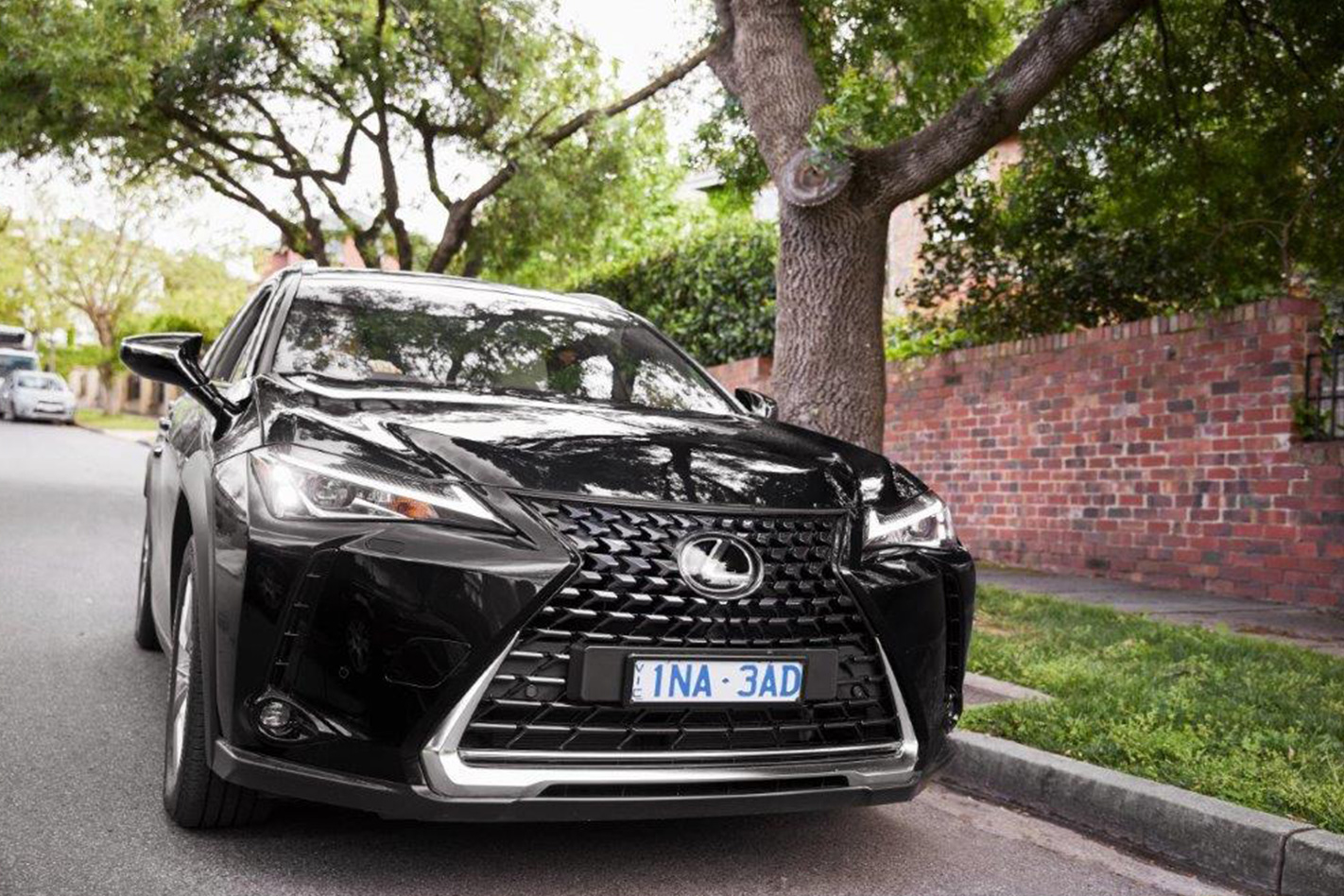
The spindle grille at the front gives the car a rugged, somewhat masculine front and the appearance of a more outdoors-y offering, but its luxury interior reassures you that this is a comfortable and easy to drive inner-city car. The contoured seats and sporty looking steering wheel make for a sporty feel , but it remains easy to manoeuvre using the in-built reverse camera, sensors and park assist.

With fuel consumption at 4.5L/100km, the budgetary and environmental benefits of this hybrid are excellent. I drove around the inner city for a week and the fuel gauge barely moved off ‘full’.
What’s it like to live with?
With luxury finishes throughout, the interior of the Lexus UX250h is impressive. Styled with the look and feel of a luxury sports car, including a leather interior and a solid-feeling middle arm rest panel, the car provides a pleasant sense of arrival when you hop in.
For someone who uses their car as a third office – after the actual office and the home office – the wireless phone charger is fantastic. I love the reliability of being able to charge the phone without having to remember the USB cord.
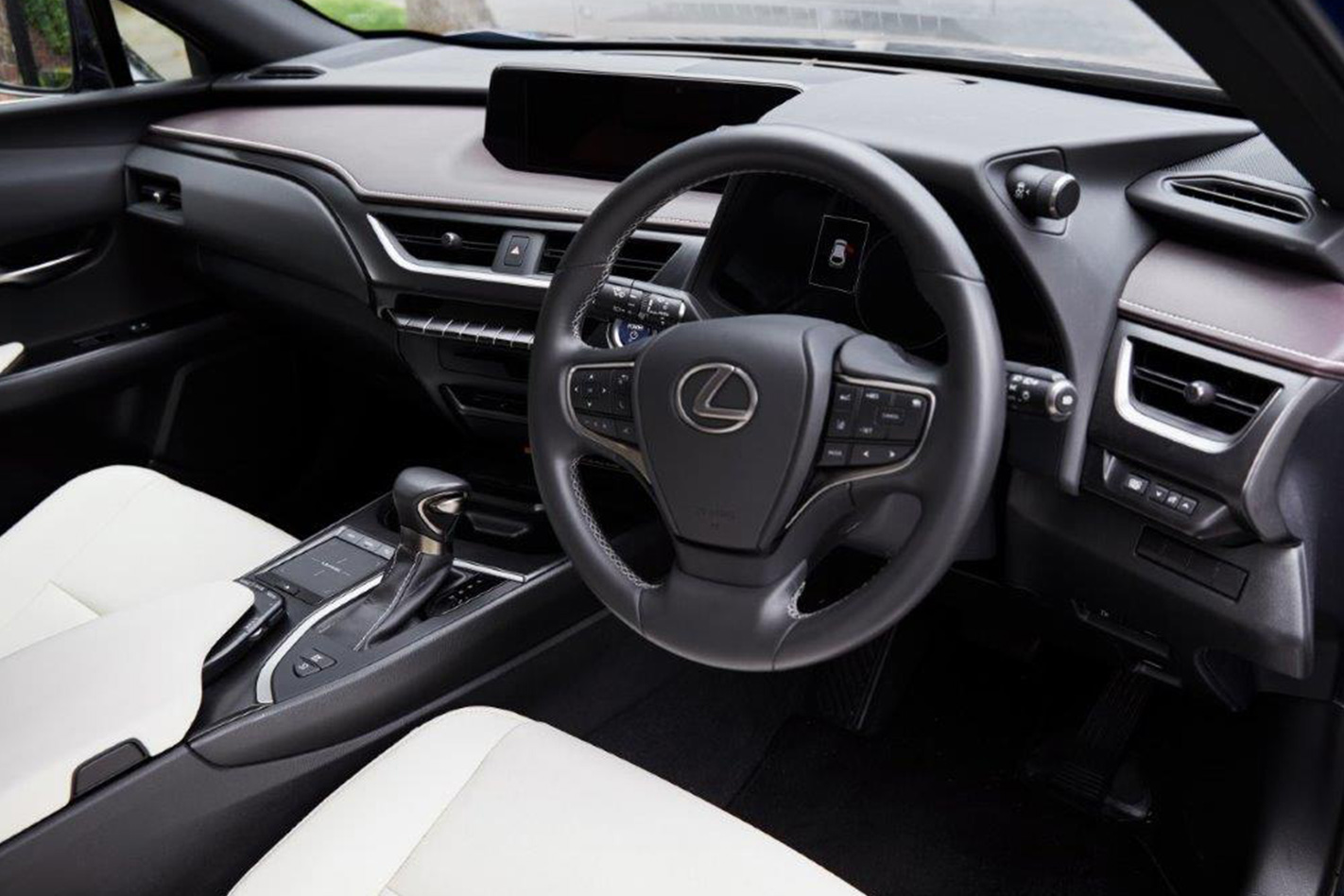
Connectivity is easily achieved through Bluetooth syncing; and the multimedia system is familiar and easy to use. The palm rest media control atop the centre console combines with the touch pad control to provide safer authority over your iTunes playlist, or for switching between the sat nav and entertainment system as you drive.
Also in the front of the cabin are two USB ports, a 10.3-inch display screen, front seat warmers and an efficient heating and cooling system. It’s worth noting however that the hands-free power tailgate, aforementioned wireless charger, alloy scuff plates, rear privacy glass, cornering lamps and headlamp washers are all part of the option pack we talked about in the first section.
I really enjoyed the standard sound system though. It has a balanced, ambient sound quality throughout the car, even at a louder “see, mum is still cool” level.
For those looking for a compact SUV for their family, I would suggest there is only one sweet spot where this car could suit – kids that no longer need car seats, but have not yet reached full sized adults (let’s call it 8-13 years old). Whilst car seats do fit snugly into the back seat, head height is a problem. Adults too; I’m 5ft 8in and sat neatly, but if you are any taller than that you could struggle.
Generally speaking, the car feels more suited for two people, rather than four, for everyday use. On the upside, the rear seats are very comfortable and the inclusion of two USB ports in the back is a helpful addition.
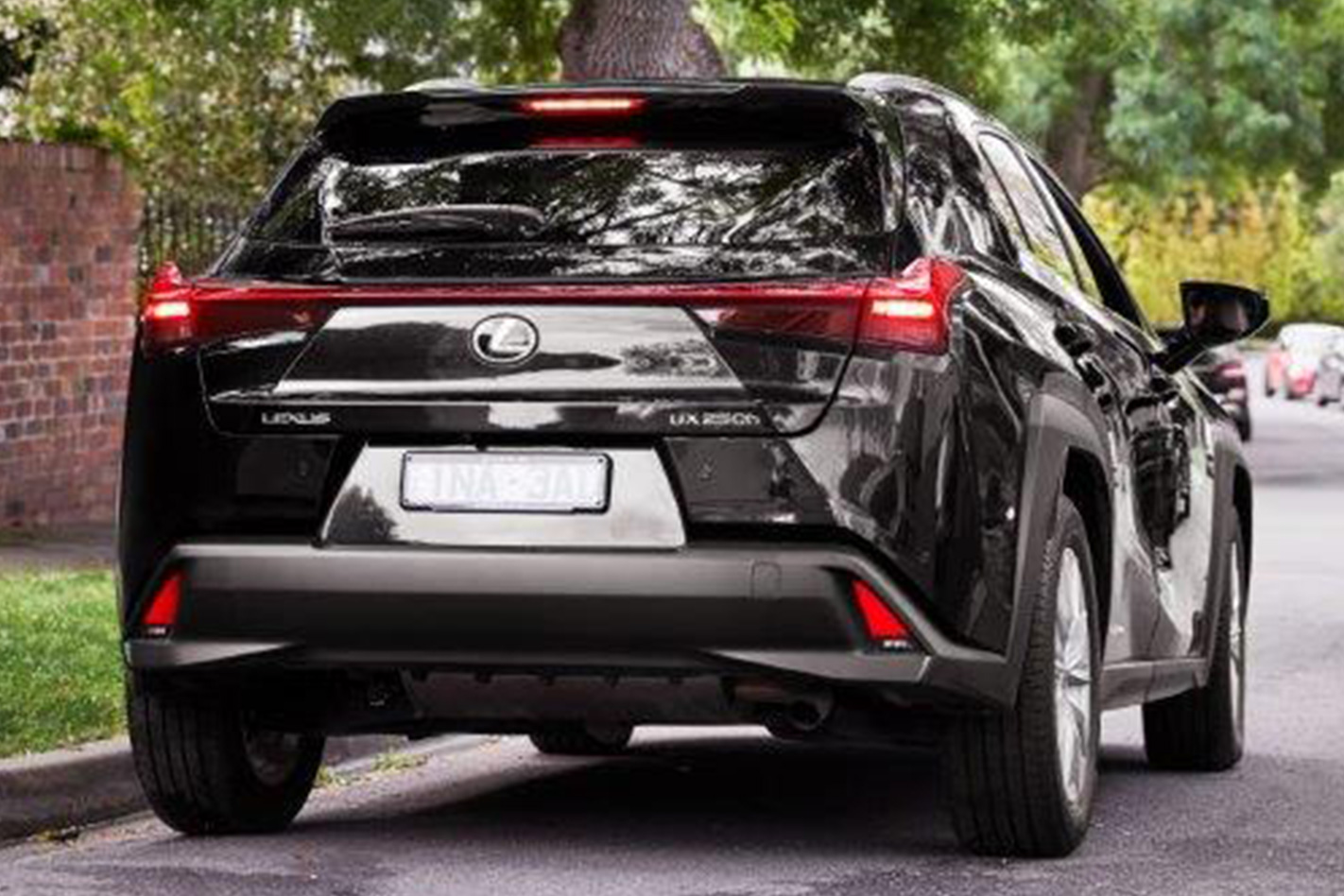
The boot was sufficient in size, with enough space for bags and grocery shopping, but the elevated boot height (to house the spare tyre underneath) might be a challenge for some as it’s quite some distance off the ground.
ready to ‘consider’ a UX F performance SUV – here’s why it should happen
Is it worth the money?
Whilst this car is not going to be everything for everybody (nor does it purport to be), for those in the market for a compact SUV with some luxury upgrades and a brand name to impress, there is a lot to like about the Lexus UX250h.
Pros: Fuel efficiency, ease of use, luxury interior finish, multimedia system
Cons: Better suited for two people or small families that don’t require an abundance of space
Rating: 4/5 stars
The Audi A1 clubsport quattro concept of 2011 was one of the great missed opportunities, a 370kW TT RS engine squeezed into the nose of the then-new first-gen A1 promised exciting things that never quite materialised.
While there is no such fanciful concept to tease audiences with for the second-gen iteration, Formula E racing driver, Daniel Abt has taken up the challenge of seeing how wild the A1 can get – and the result speaks for itself.
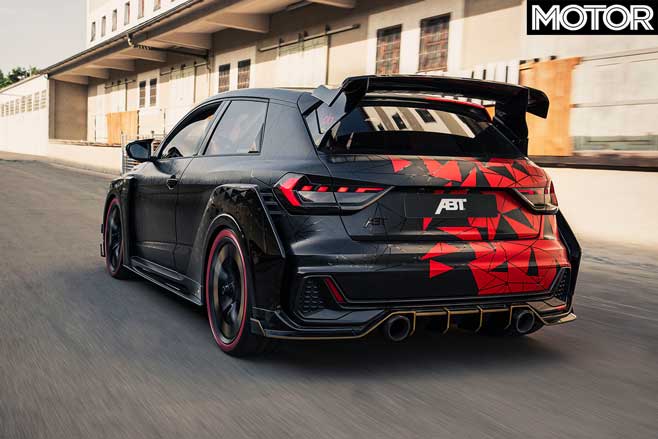
The ABT Audi A1 1of1 packs 294kW on tap, courtesy of a 2-litre inline-4 turbo engine lifted from a TT Cup race car and tweaked to produce an additional 40kW. On top of that, Abt didn’t bother with taming its heart, opting instead to use a stainless steel straight pipe, keeping its vocal range as unhinged as the racing car from which it came from.
Complementing the power bump, the A1 1of1 handling is tweaked with a whole revamped suspension system with lowered H&R springs, bigger brakes, and 265-width Michelin Pilot Sport Cup 2 tyres. It also seems the A1 is still front-driven, as no mention is given to a swap to AWD. Underbody shots in the video also show no sign of a conversion.
As for appearances, the A1 1of1’s widebody kit itself was an in-house custom job, with its geometric pattern and dual-tone colour palette the work of Erik Aleksanjan, the same designer who was responsible for dressing up Jon Olsson’s Audi RS6.
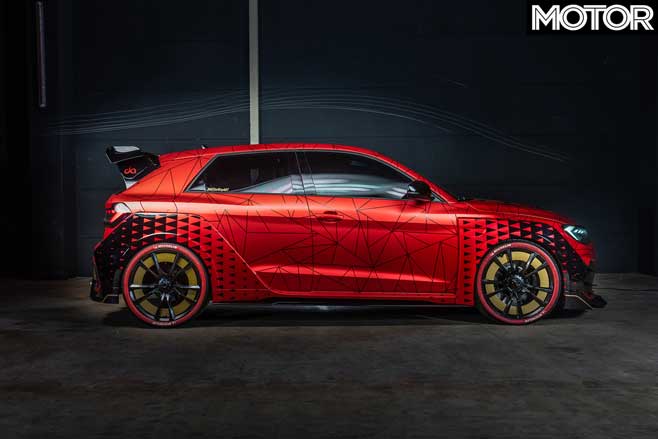
Round the back, the A1 1of1’s giant rear carbon-fibre wing gives it a rallycross look, whereas its 19-inch ABT ER-F wheels features internally mounted golden aero-rings that is reminiscent of classic racing aero wheels and pays homage to Formula E race cars, Daniel Abt’s current motorsports chariot.
As its name implies the A1 1of1 will be a one-off and remain just as unobtainable as the 2011 clubsport quattro concept.
That being said, Abt Sportline, the team and aftermarket company Daniel Abt races for, has performance mods available for the range-topping A1 40TFSI that will bump power up from 147kW to 176kW.
Lamborghini’s 6.5-litre V12 is set to find a new home in a track-only hypercar developed by its motorsport arm, Lamborghini Squadra Corse.
Set to debut in 2020, the yet-to-be-named hypercar has finally been teased by the Sant’Agata brand, with its power output and some of its technical aspects confirmed.
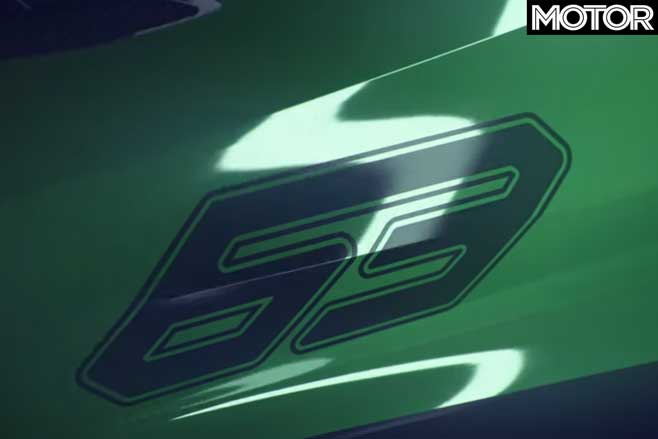
The engine, first of all (and arguably most importantly), is to produce 619kW according to Lamborghini, 53kW more than it does in the daddy Lambo, the Aventador SVJ.
Lamborghini also released a dramatically edited teaser video which shows off the large wing, the roof-mounted airscoop, and the intakes on the bonnet.
There’s engine sound at the end of the clip, but it’s not clear if it’s a recording of the car itself or not.
Lamborghini says the hypercar will consist of a chassis based upon a carbon fibre monocoque with an aluminium frame fitted to the front, with a rollcage housing the engine “that maximizes the torsional and bending stiffness characteristics.”

The V12 is married to a 6-speed sequential gearbox, which is a load-bearing element of the hypercar’s suspension – the suspension arms are connected directly to the gearbox. Lamborghini says this allows “optimal kinematics and a significant improvement in the stiffness to weight ratio.”
After the gearbox, power is transferred through a mechanical self-locking differential which allows the driver to adjust its ‘pre-load’ for different driving circumstances.
Unfortunately, there’s no race set to feature the unnamed V12 hypercar, but Lamborghini is keen to point out its first racing SUV, the Urus ST-X, will debut on track at the 2020 world finals of the Lamborghini Super Trofeo series.
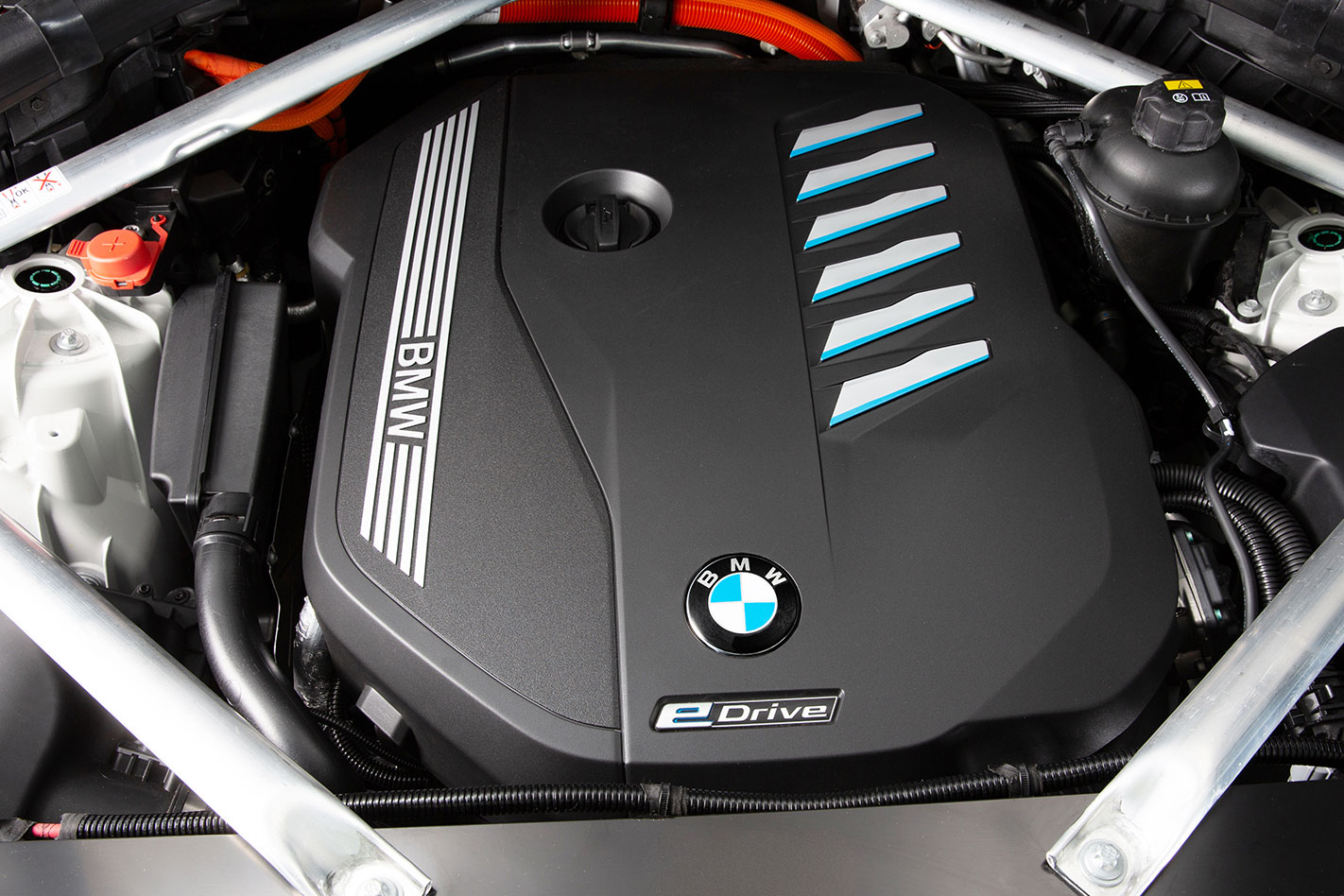
Once seen as something of a halfway house en route to pure electric vehicles, plug-in hybrid (PHEV) technology is not only ‘right’ for the current market, but in demand with buyers.
Speaking with Wheels at BMW Welt in Munich, Dr Heinz Treseler, who forms part of the powertrain team for the X5 PHEV, said that while EVs might be the future, they account for a tiny percentage of overall sales. Meanwhile, there’s been an increase in interest towards PHEVs.
BMW and Mercedes-Benz both are ramping up their plug-in-hybrid offerings in Australia as buyer demand shifts towards the more flexible set-up of having electric and internal-combustion motors working in combination.
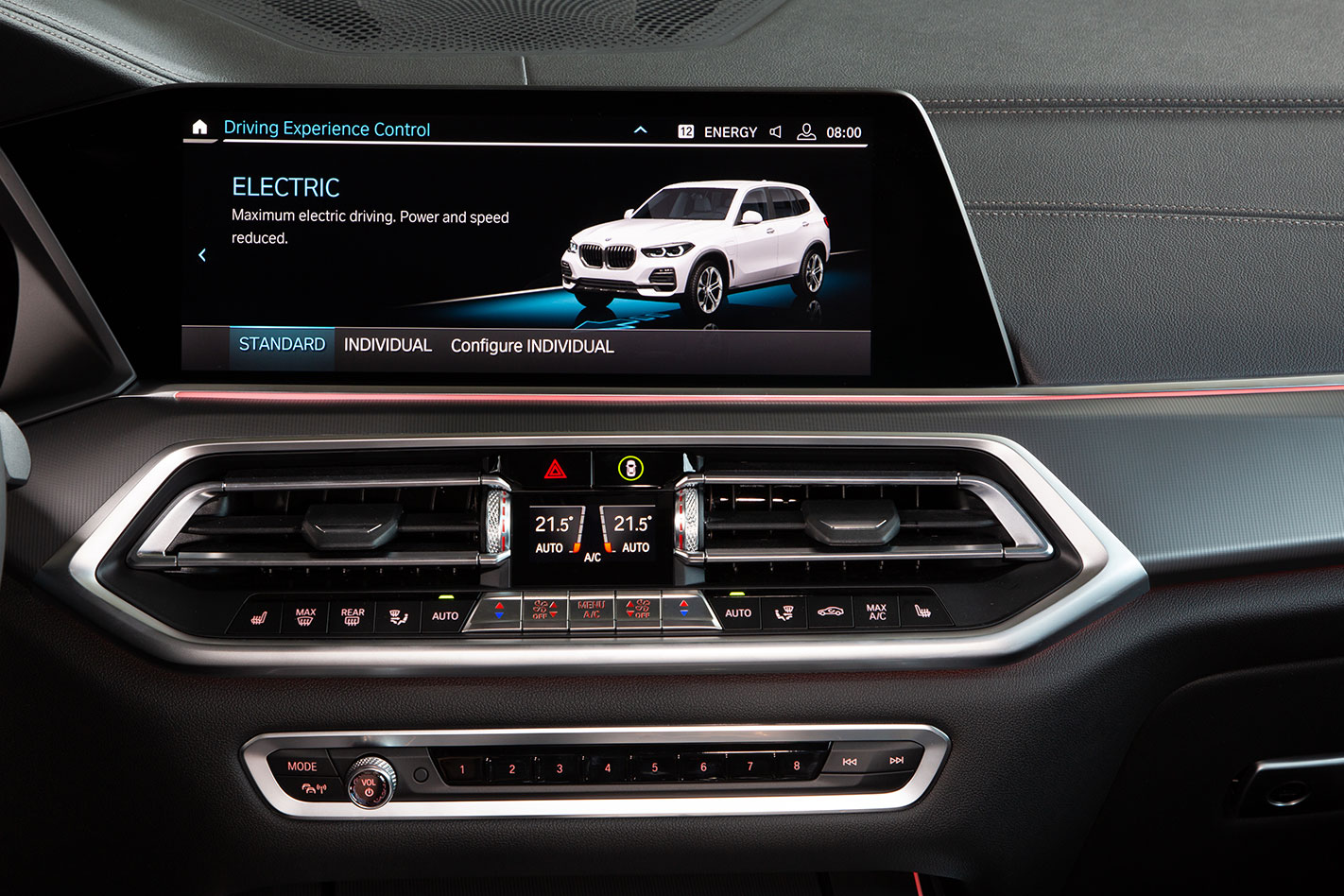
When asked whether the plug-in hybrid push was company or consumer based, Dr Treseler didn’t hesitate in his response, stating that it is “customer driven”.
“If you are a commuter [with regular journeys of more than 300km], PHEV is not the best choice for you. But if you work in the vicinity of [a city] and commute often to the CBD and sometimes have long-distance drives, then PHEV is the best solution,” Dr Treseler said.
He believes that while electric should form the basis of future vehicles, plug-in hybrids are more than just an entree to the main course and that the technology could continue in parallel with EVs.
“For many cases it [PHEV] is still the best solution. There are limits with pure electric drive at the moment,” Dr Treseler said.
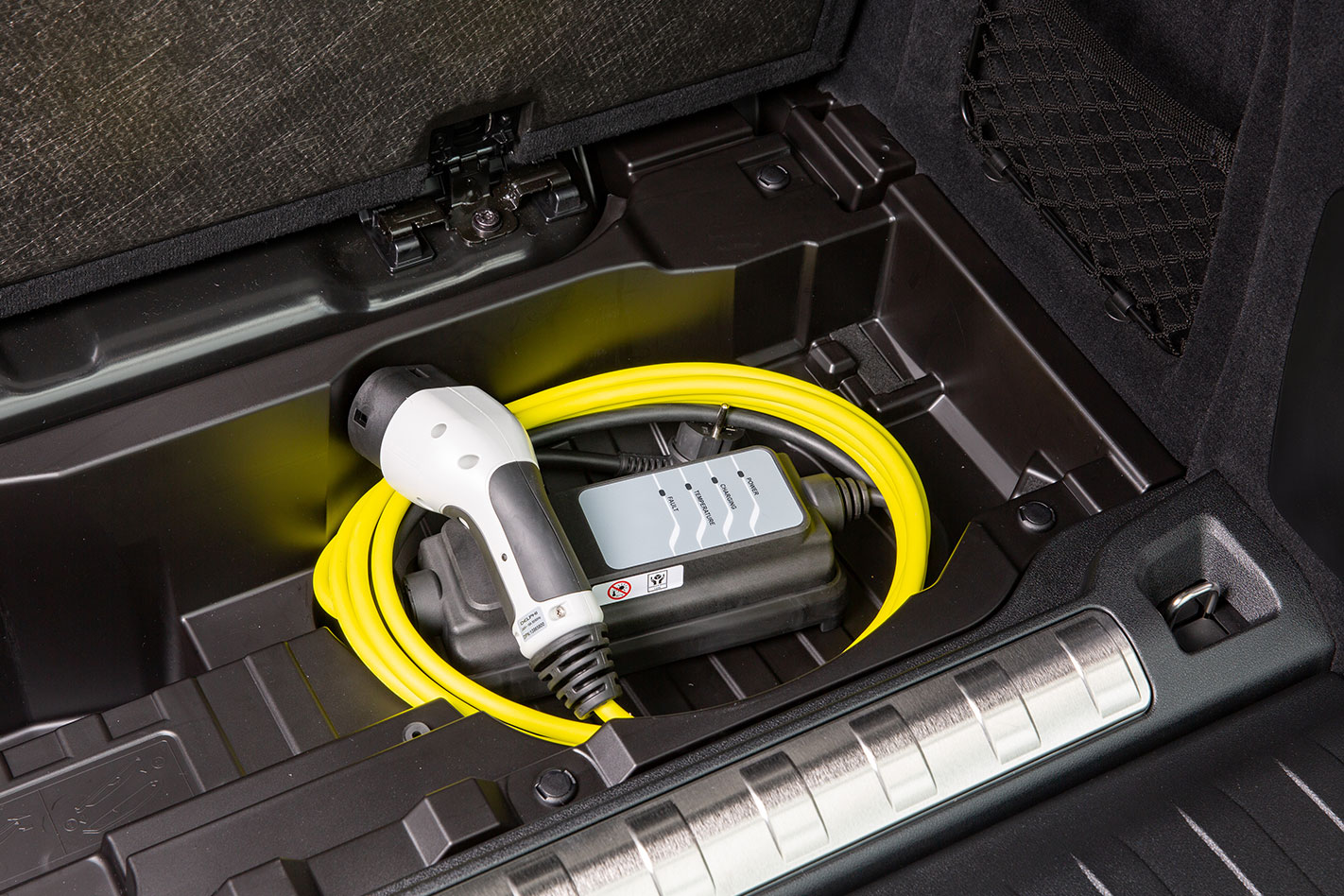
Interestingly, despite the waning popularity of diesel engines, BMW’s 3.0-litre in-line six oiler is soldiering on and remains a viable option, according to Dr Treseler. “For many customers, a diesel engine is still the best choice,” he said.
Dr Treseler said that because of this, keeping up with buyer trends and demands remains vital, although he is uncertain whether the conversion rate of buyers switching to EVs will accelerate in the future.
“It will be interesting to follow this in the next two to three years, because we have to see how many customers actually want completely electric vehicles. I’m personally interested in this development over the next few years,” Dr Treseler said.
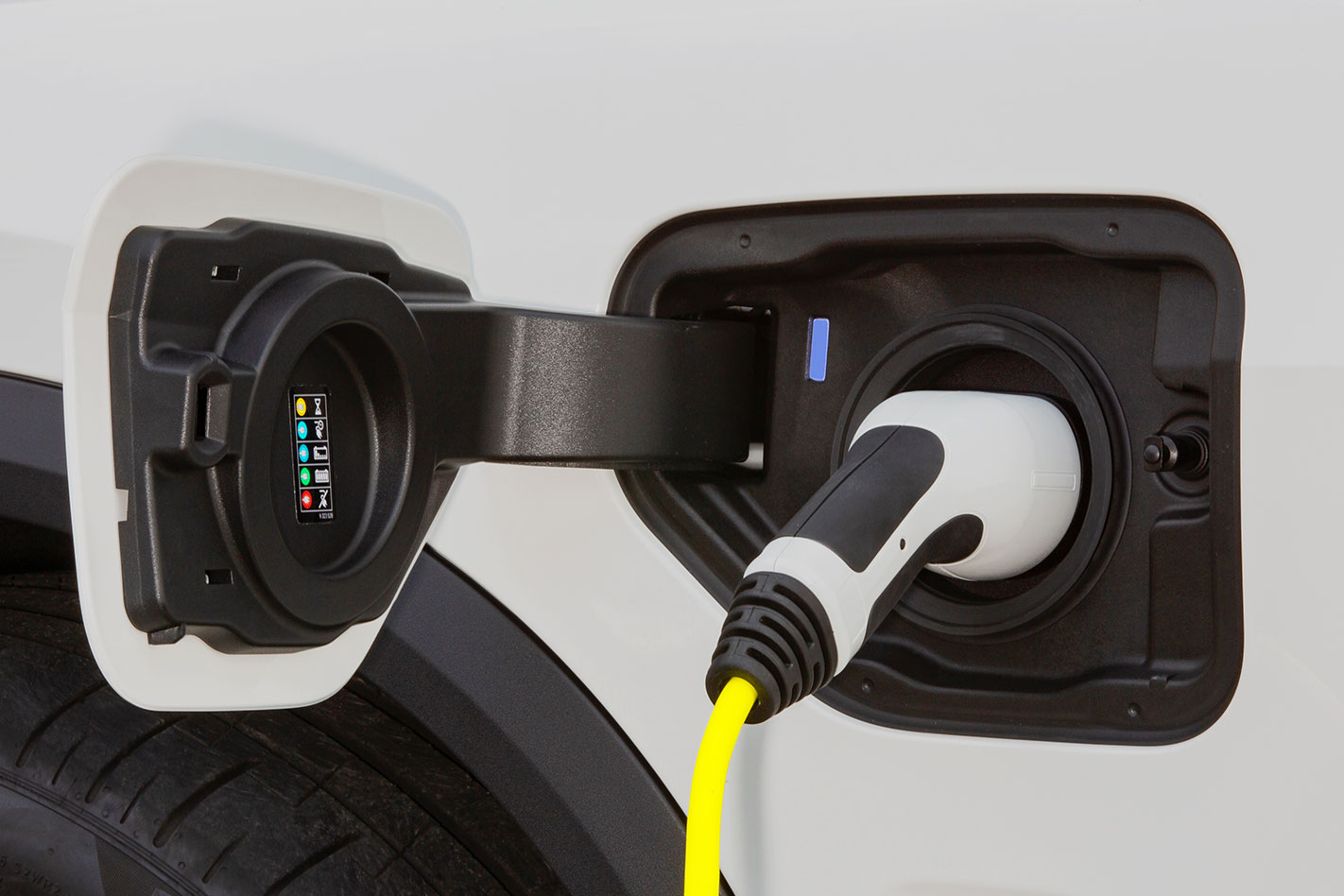
BMW Australia Corporate Communications General Manager, Leanne Blanckenberg, said that more needs to be done to make EVs viable, both globally and down under.
“Until the infrastructure and the incentives are there to push the customers to buy that technology [EV] we need to have something else to offer,” Blanckenberg said.
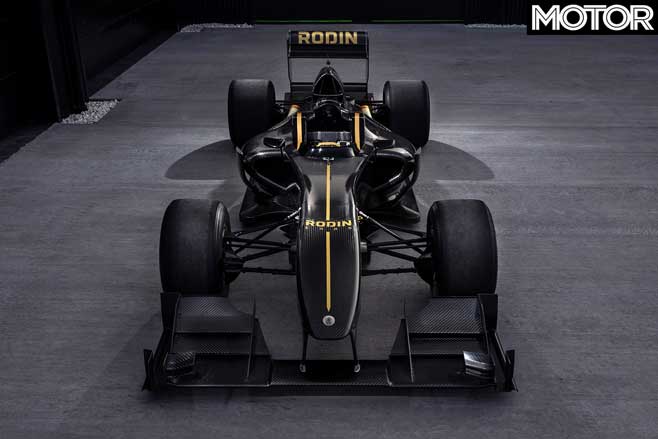
If you’ve always felt you had the skills to drive in F1 but lacked the opportunity, New Zealand’s Rodin Cars is here to help, offering its FZED single-seater for sale to punters whose bank account is as deep as their talent reserves.
The FZED is an ultra-high performance open-wheel track car eligible for a number of series around the world, including New Zealand’s Formula Libre and the European BOSS series. At $US650,000 (AUD$950,000), it’s more expensive than traditional GT3 machinery, but Rodin claims the FZED has “performance to rival modern era Grand Prix cars”.
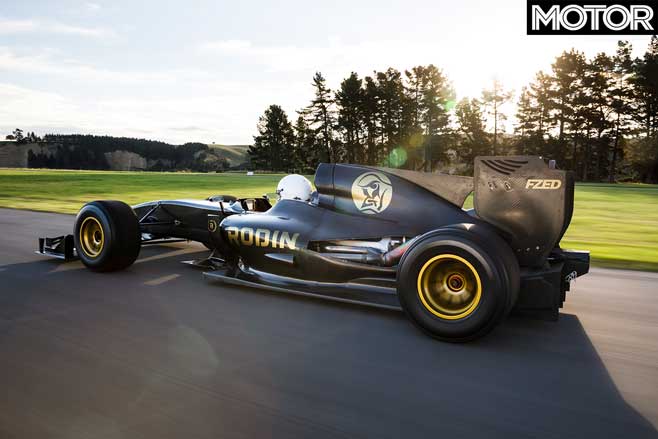
It’s based on a carbon-composite chassis built by Italy’s HP Composites with an aero package to match, including an Indycar-style underbody tunnel rather than the traditional flat floor found on most racing cars. Weight is a feather-like 609kg with all fluids before the driver is added.
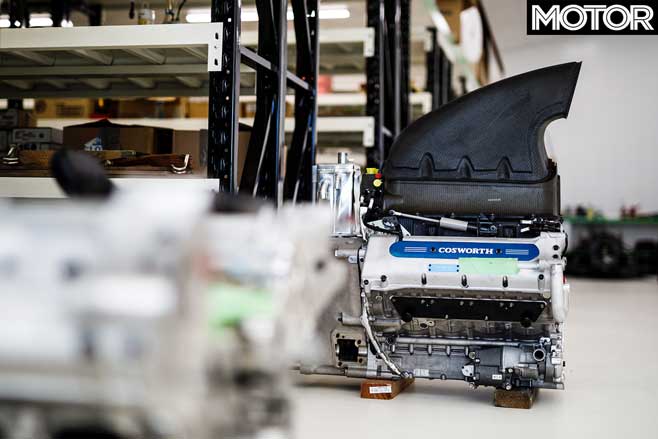
Producing power is a 3.8-litre Cosworth GPV8 that revs to 10,000rpm, with maximum power of 503kW at 9600rpm and 490Nm at 7600rpm. Acceleration is on-par with the quickest road-going hypercars, 0-160km/h completed in just 5.0sec on the way to a 300km/h top speed.
The engine has been set-up not just for power but also reliability, Rodin claiming more than 5000km can be completed between rebuilds and the engine is able to run on regular 98-octane fuel.
The rest of the mechanicals are a who’s who of motorsport suppliers: six-speed paddle-shift gearbox by Ricardo, all-carbon brakes by Alcon, four-way adjustable dampers by Ohlins, 13-inch wheels by OZ Racing and slick tyres by Avon.
Many other components are designed and built by Rodin Cars using its battery of 3D printers, including the exhaust system, all fasteners and the steering wheel which are all created from titanium.
Rodin and the FZED are the brainchild of Australian IT millionaire David Dicker, a car nut with some pedigree as a former Ferrari Challenge class champion. He not only built the company from scratch, but designed and built a giant facility on New Zealand’s South Island, including kilometres of test track where FZED owners will be able to hone their skills and stretch the legs of their new purchase.
“The Rodin FZFED is a far more practical and durable proposition compared with buying and running an historic Grand Prix car,” says Dicker. “People do buy them, I had one, but they are more difficult to run, plus there’s the risk of crashing a car with an important heritage. The beauty of the FZED is that you get the Grand Prix experience in a package that has been designed for easy access and reliable performance.”
Rodin is currently assembling the first five examples, which will all be finished in a black-and-gold corporate colour scheme, though owners will be able to specify their own paint on request as well as having a custom seat fitting.
New Zealand has a rich history of punching above its weight when it comes to motorsport. Time will tell if Rodin is able to follow in the footsteps of the likes of Bruce McLaren, Rod Millen and Possum Bourne, but the FZED is certainly an auspicious start.
- Pricing starts at $32,350
- Three variants, each with their own engine
- New colours and equipment packages
- More interior and boot space
While newcomers like the fresh Q3 and E-Tron as well as Audi favourites like the RS3 have been either delayed or stopped altogether (with sales hurting as a result), the introduction of the A1 and Q3 signifies that the brand is back on track.
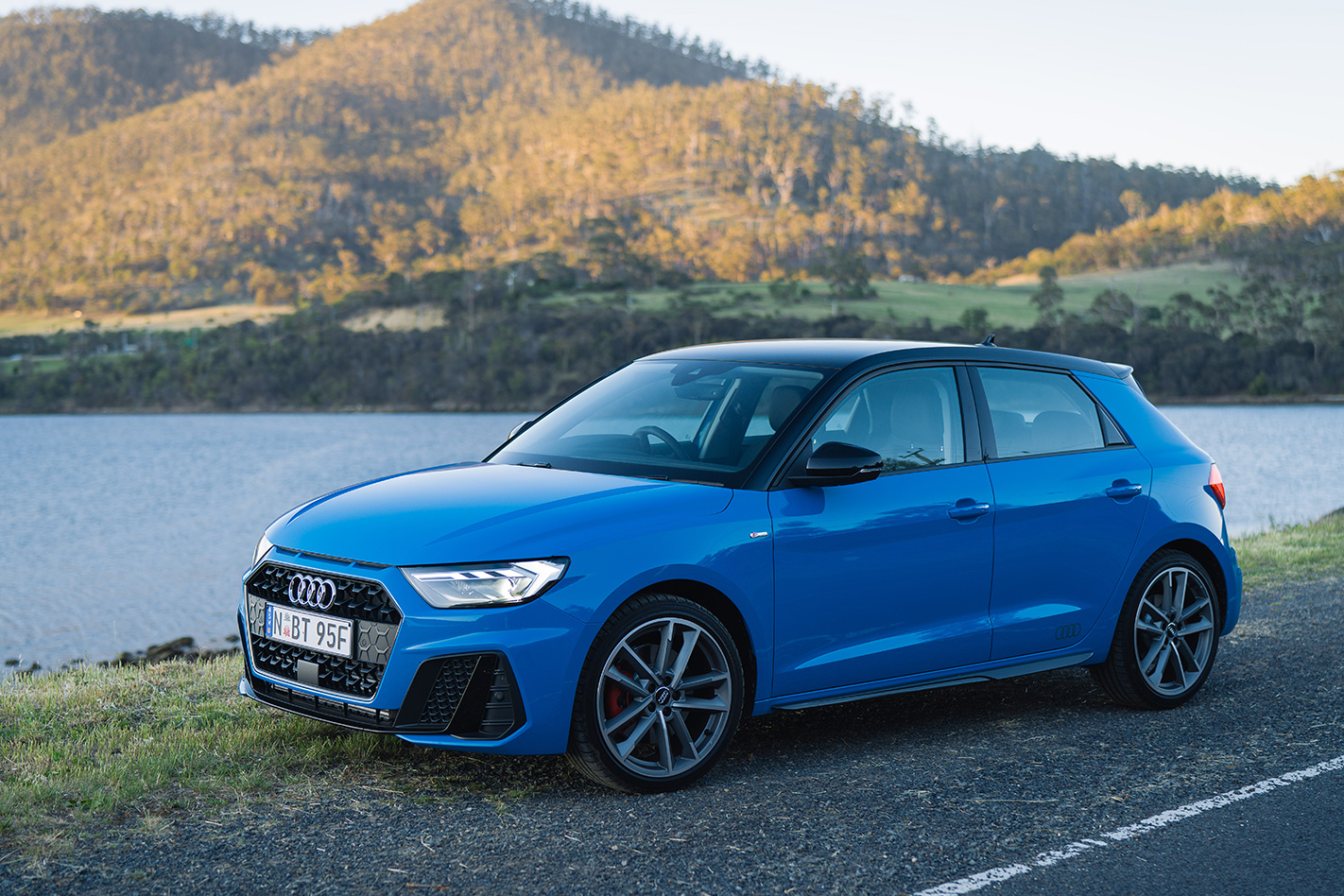
The all-new A1 shakes the cutesy looks of old, ushering in a number of sporty design cues taken directly from the legendary Audi Sport Quattro of the 80s.
“Through its bolder presence and striking new design, the all-new A1 Sportback makes a much more dynamic impact,” said Shawn Ticehurst, director of product planning & pricing at Audi Australia.
“The new A1 is much bigger, and its innovative technology has the ability to seamlessly integrate with our modern world, and we’re really excited about its potential.”
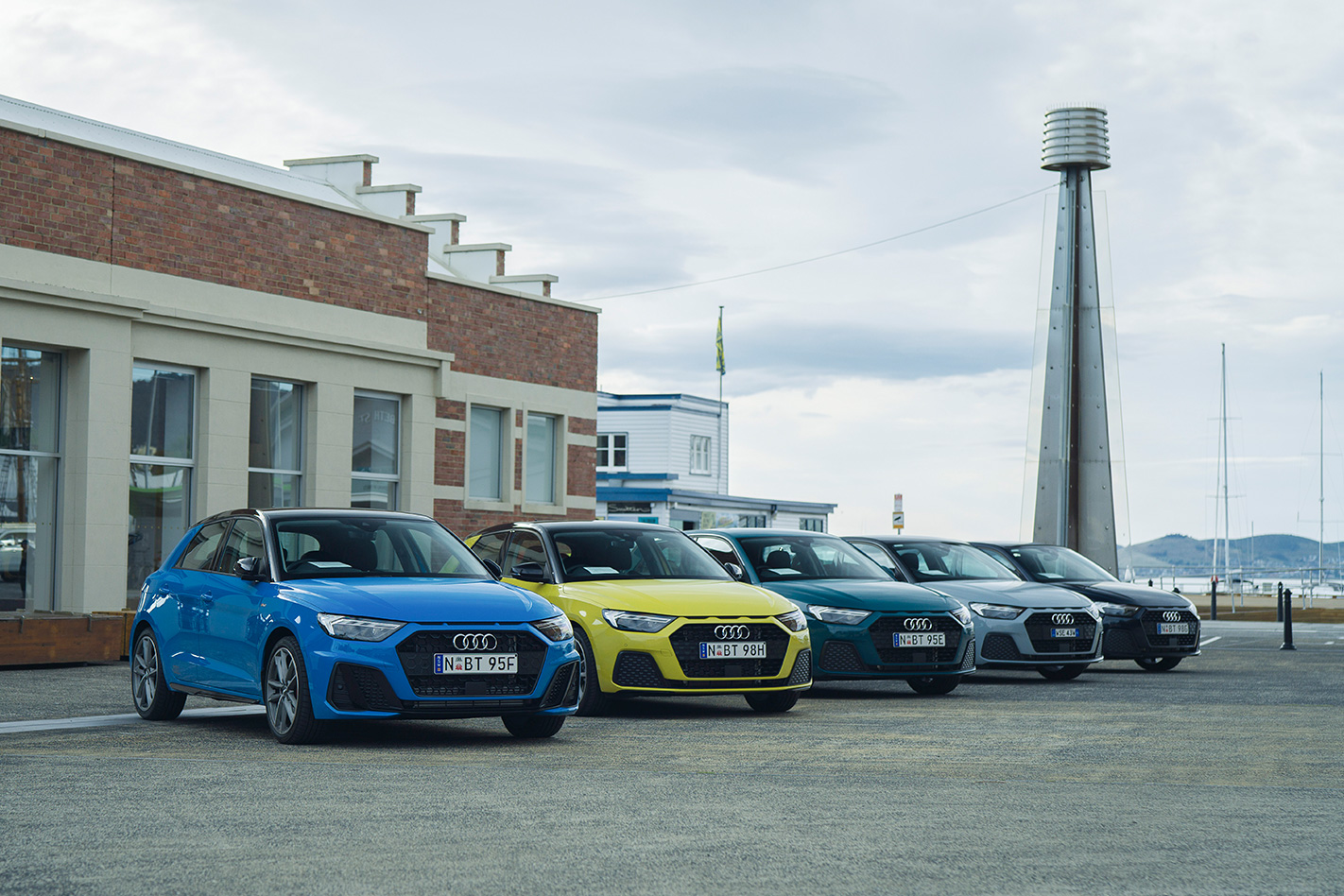
Audi says 70 percent of previous A1 buyers counted design as being a major drawcard to the purchase of an A1, so in addition to a heavily redesigned car, the new A1 will be offered with a number of new colours and packages too.
Three variants featuring three different engines will be on offer for Australia, with the range starting at $32,350 for the 30 TFSI, growing to $35,290 for the 35 TFSI and ending at $46,450 for the 40 TFSI topper.
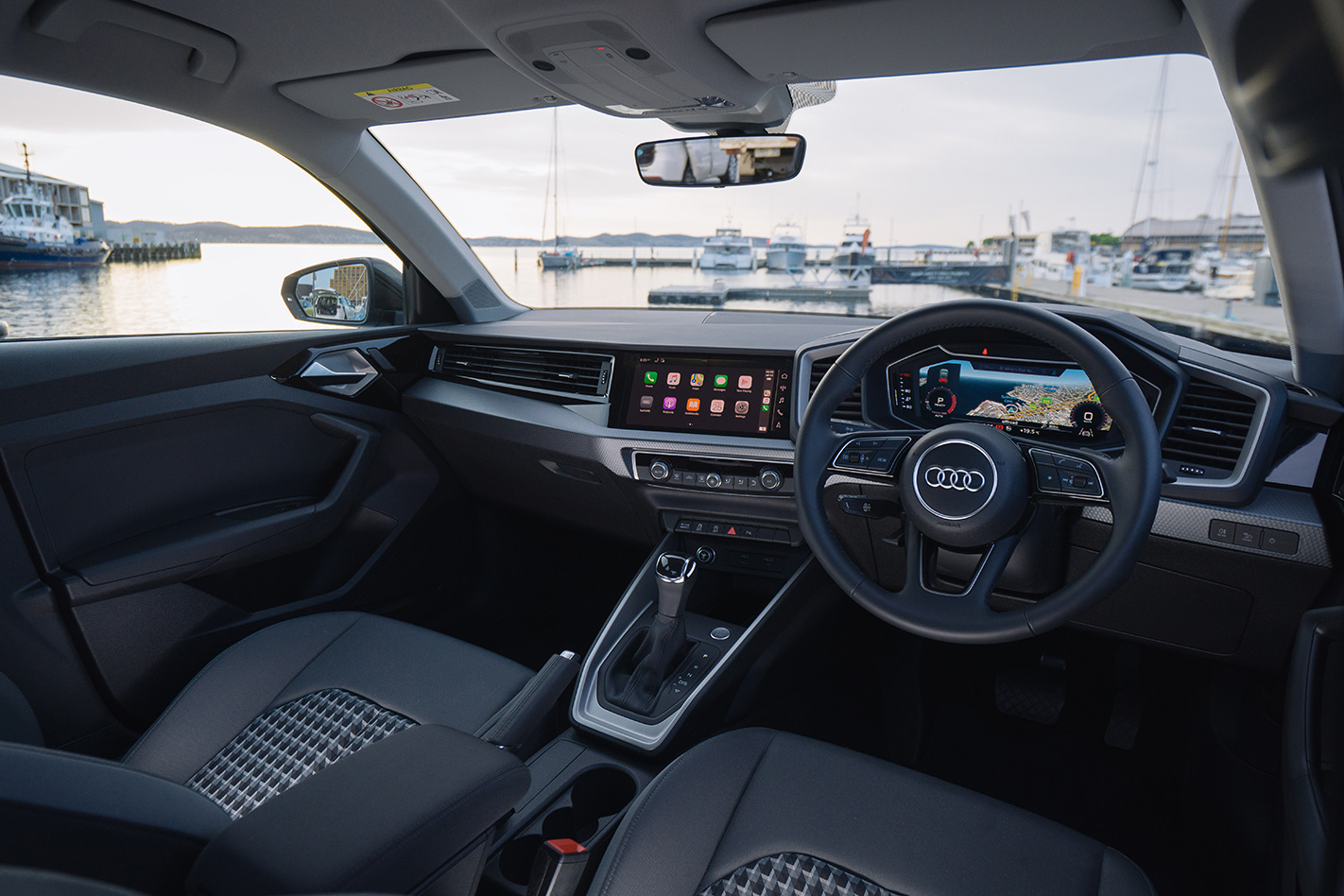
Much like the Volkswagen Polo on which it’s based, the A1 has grown in size by almost a segment. It’s now 56 millimetres longer than before, but the wheelbase is stretched by a full 94mm allowing for a roomier interior. The boot has been expanded by 65 litres to a 335-litre total and it’s also shorter while supplying more headroom.
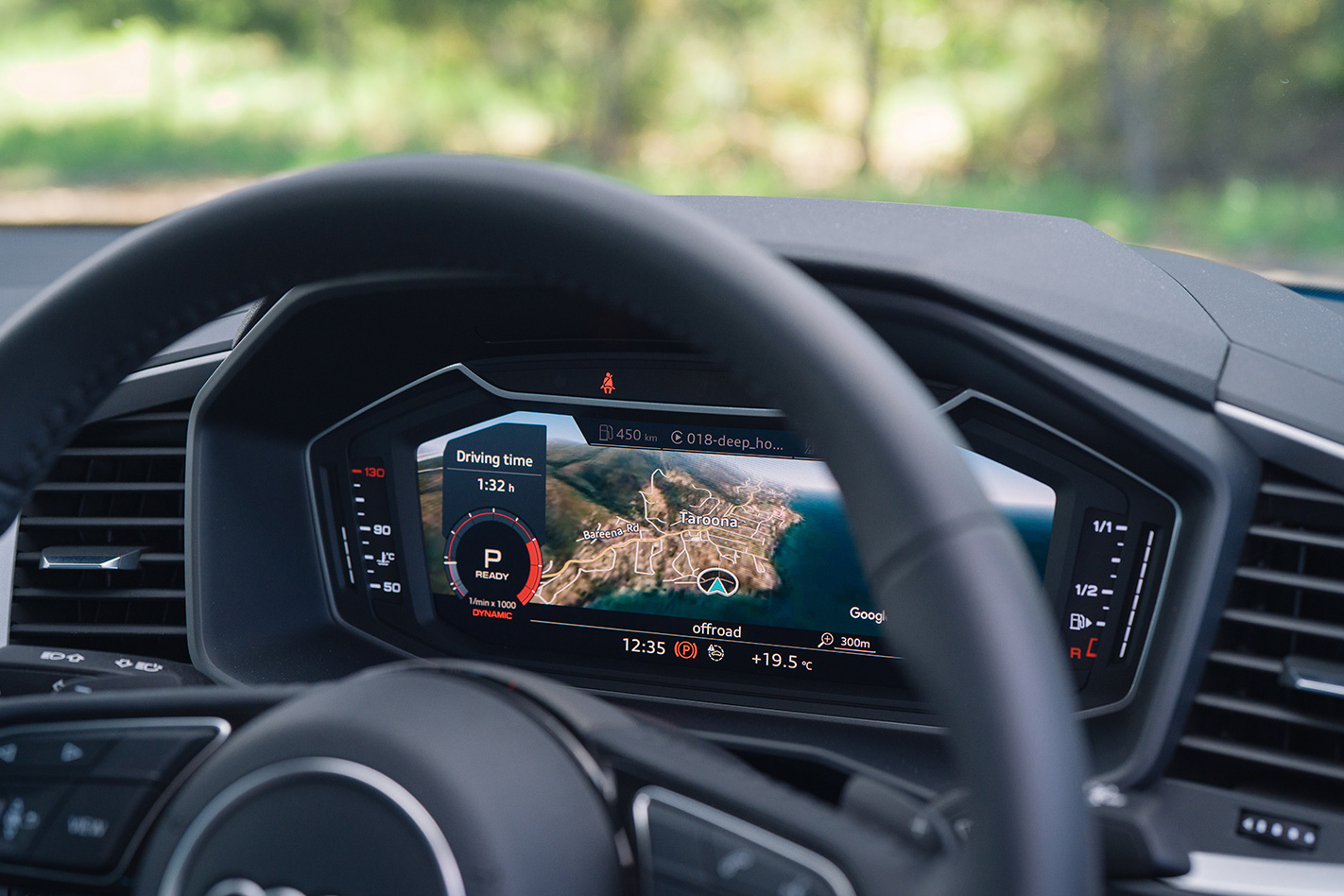
The new A1 also promises to be more tech-savvy than ever, as each A1 receives an 8.8-inch touchscreen plus a 10.25-inch digital instrument cluster as standard. Smartphone integration with Android Auto and Apple CarPlay is available, plus two USB outlets (one USB type A, one USB type C) feature up front.
Like the previous generation, each variant of the Audi A1 will get its own engine.
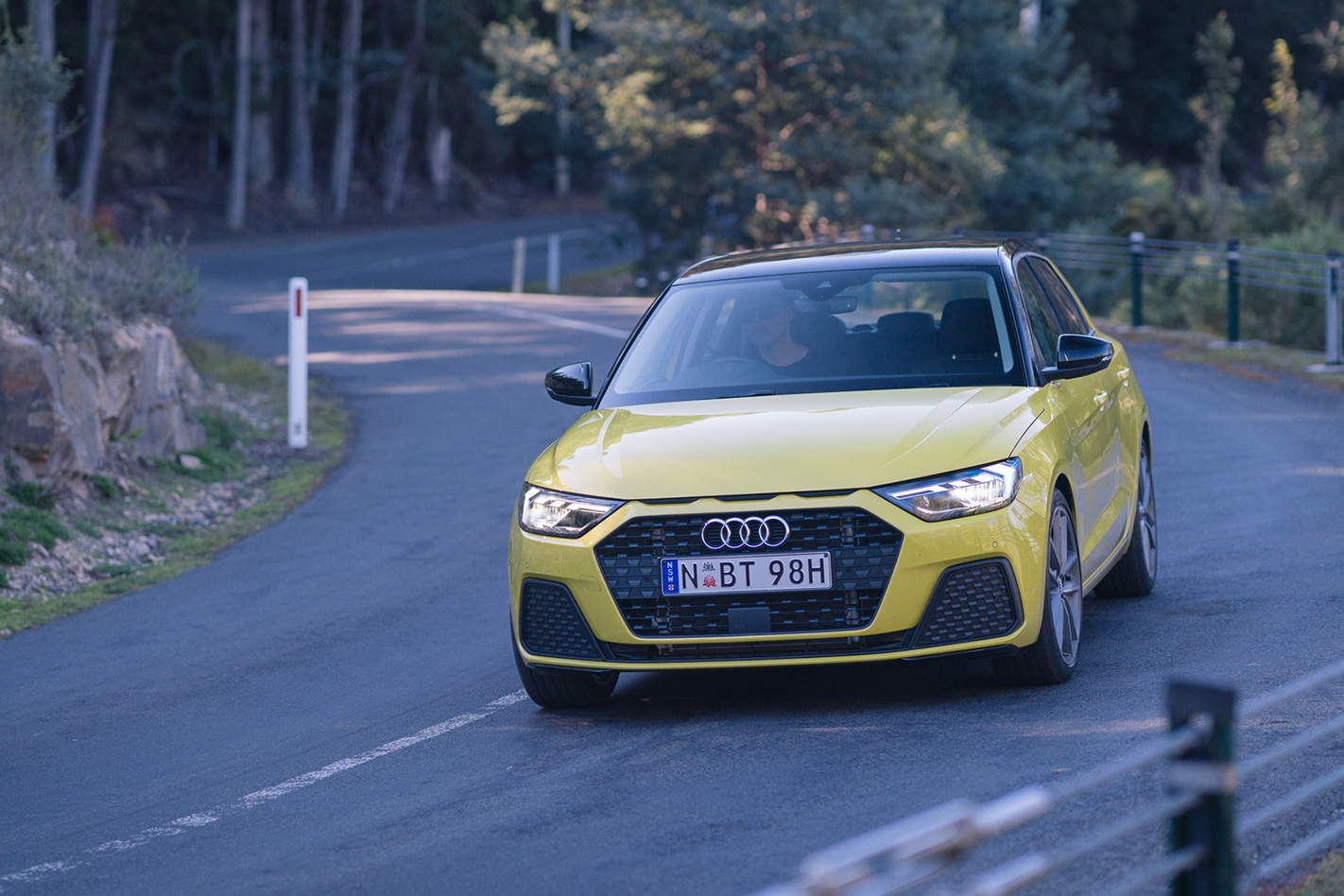
Starting the trio is the 30 TFSI powered by a 1.0-litre 3-cylinder engine that outputs 85kW and 200Nm. Fuel consumption is claimed at 5.4 L/100km.
Moving up, the 35 TFSI gains a cylinder and some extra pep, equipped with a 1.5-litre 4-cylinder engine that produces 110kW and a peak torque figure of 250Nm.
Audi rounds out the new A1 range with the 40 TFSI which it intends as the performance hero. Backing up that claim is a 2.0-litre four-cylinder engine that produces 147kW/320Nm and a claimed 0-100km/h sprint time of 6.5 seconds.
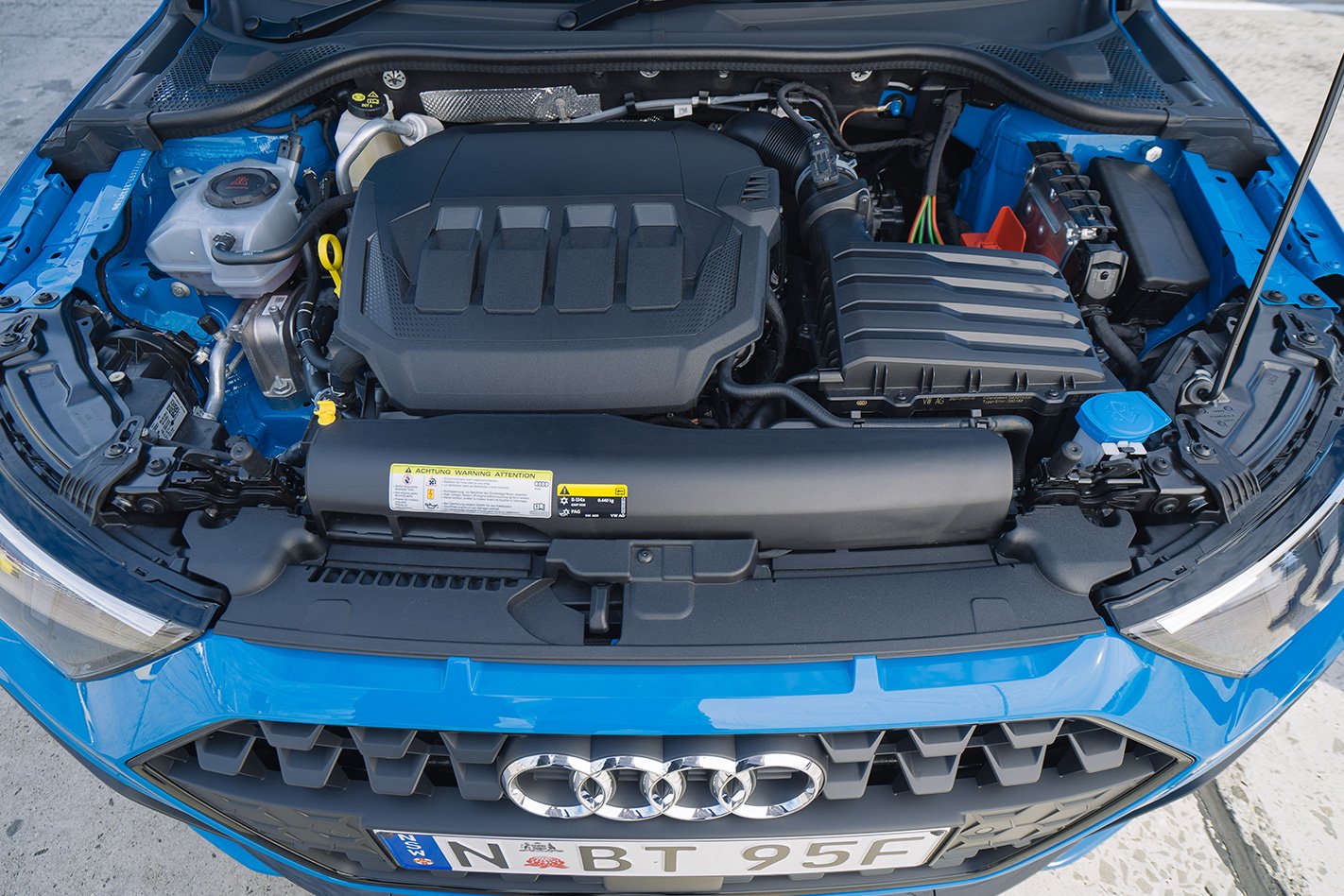
The 30 TFSI and 35 TFSI engines both receive seven-speed dual-clutch automatics while the 40 TFSI has one fewer ratios with a six-speed transmission.
In terms of kit, the 30 TFSI will come fitted with 16-inch alloy wheels, digital radio, an 80W six-speaker audio system and a multi-function steering wheels with cruise control and speed limiter.
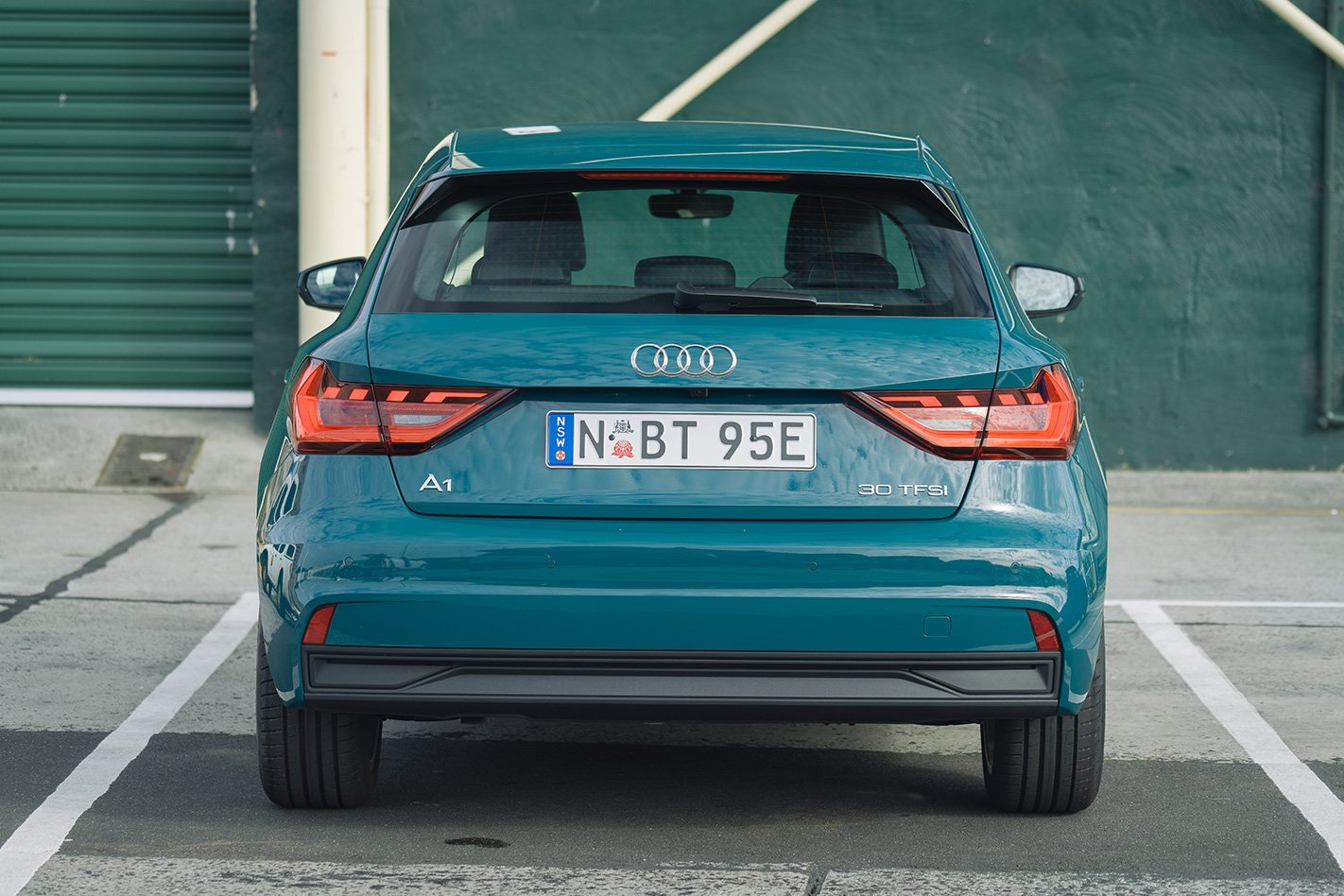
Topping that, the 35 TFSI gets 17-inch alloy wheels plus convenience features like keyless entry, wireless smartphone charging and an auto-dimming rear view mirror.
Audi’s A1 40 TFSI features 18-inch alloys along with an S line exterior as standard, LED headlgiths and dynamic indicators, red brake calipers, dual-zone climate and sports front seats. It also receives Audi’s virtual cockpit instrument cluster display, 3D maps with Google Earth mapping and ability to use Apple CarPlay wirelessly.
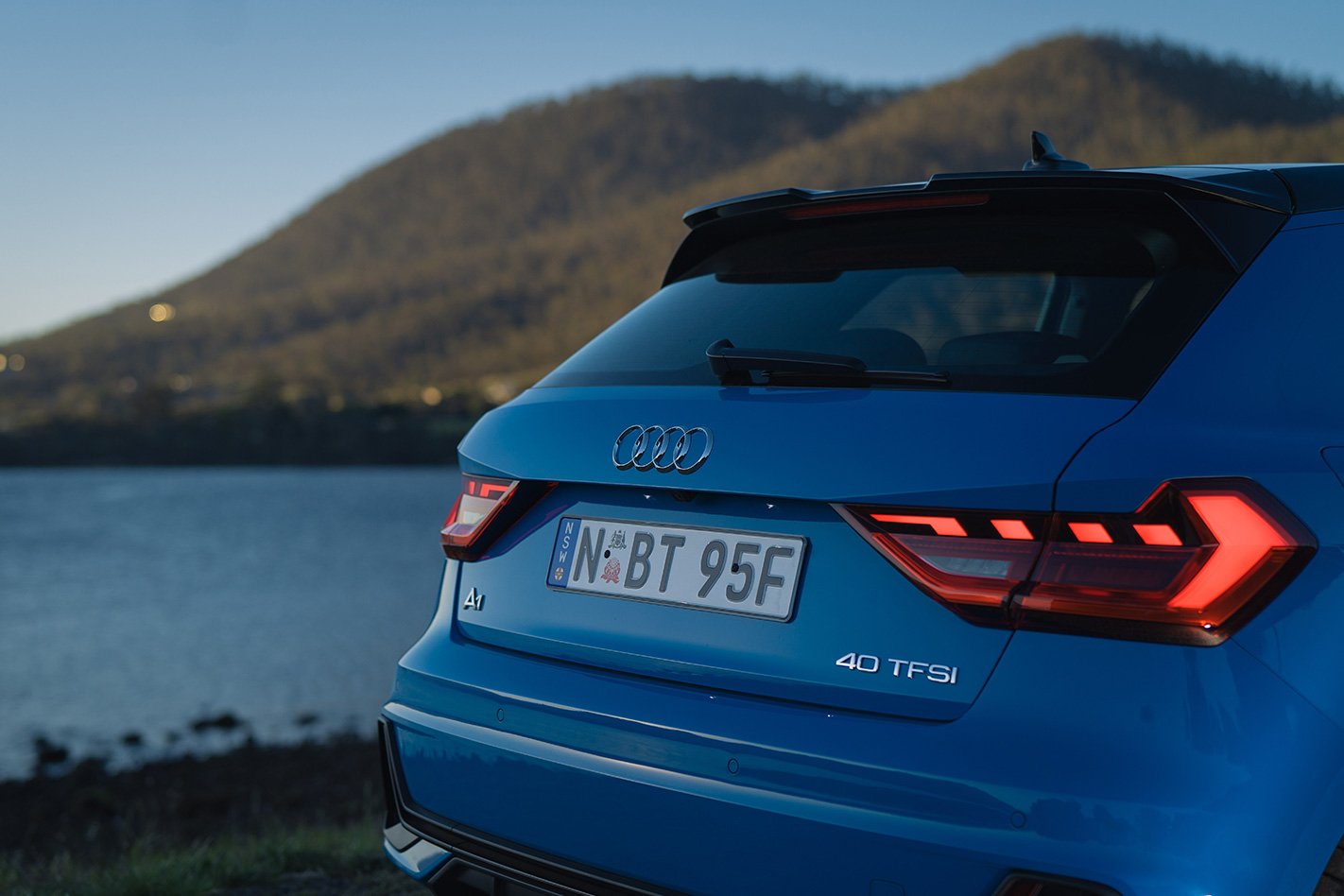
Audi will offer a $2990 Style package for the 30 and 35 TFSI which adds LED headlights with dynamic indicators and one-size larger alloy wheels. The 35 TFSI is also available with a $3200 Technik package (MMI Navigation, virtual cockpit, wireless CarPlay, 180W sound system).
A $2990 Premium plus package (adaptive cruise control, park assist, Bang and Olufsen audio, leatherette upholstery, and heated front seats) as well as a $1110 S line interior package (Alcantara/leatherette upholstery, black headliner, flat-bottom steering wheel, stainless steel pedals and silver grey inlays) is available for the 40 TFSI.
The Audi A1 has achieved a 5-star ANCAP safety rating, thanks in part to standard autonomous emergency braking, lane departure warning with pre sense features and six airbags.
As an ownership proposition, the A1 will be offered with Audi’s service plan package which costs $1480 for three years or $1990 for five years and is able to be financed.
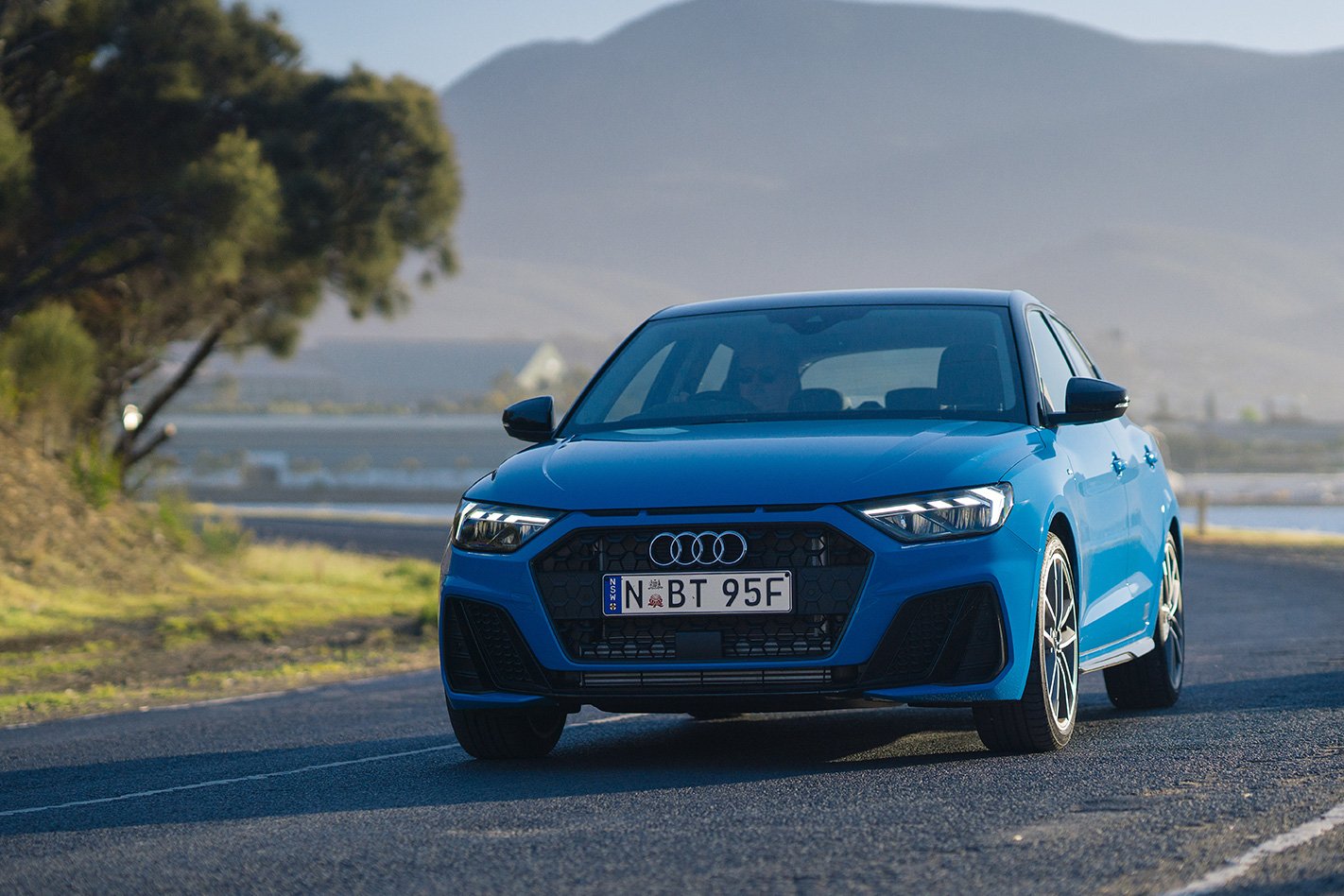
The Audi A1 is now available for sale, with initial customer deliveries scheduled for November.
2020 AUDI A1 PRICING
- A1 30 TFSI – $32,350
- A1 35 TFSI – $35,290
- A1 40 TFSI – $46,450
- Style pack (30 and 35 TFSI) – $2990
- Technik pack (35 TFSI) – $3200
- Premium Plus pack (40 TFSI) – $2990
- S line interior pack (40 TFSI) – $1100
If you want to get a quick sense of how few electric vehicles are sold in Australia, here’s a cool stat – in 2018, we collectively bought one EV to New Zealand’s 2.6, the US’s 266 and China’s 888.
That’s 1350-odd EVs (give or take a few thanks to Telsa’s lack of sales data) in a market of one million-plus sales for a population of 25 million. New Zealand doesn’t even have five million people!
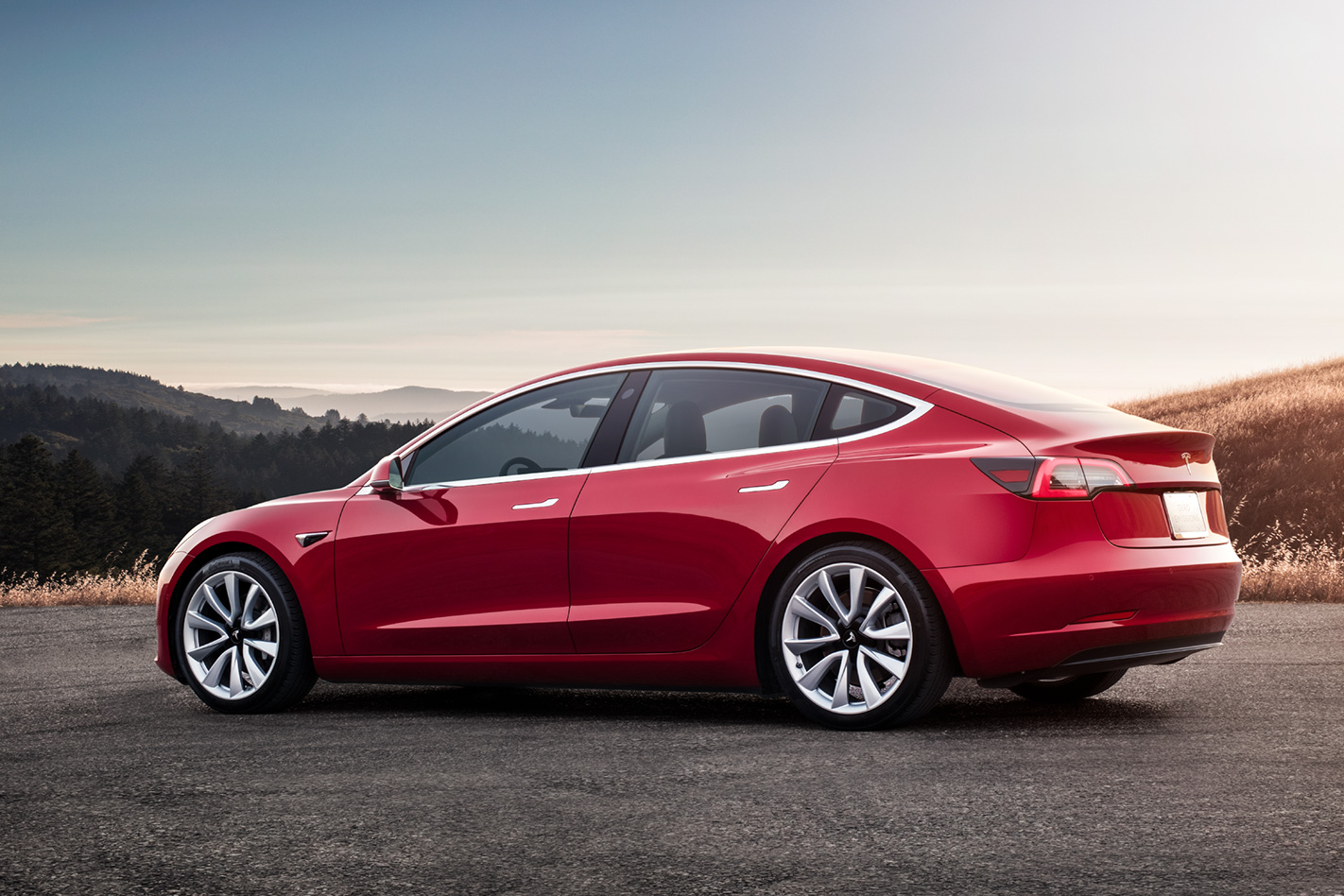
While the figure will probably double in 2019 thanks to the overdue arrival of Tesla’s Model 3 (above), it’s still not a strong result.
Why the recalcitrance? Well, a study conducted by Nielsen suggests that Aussie buyers simply aren’t aware of their options – and if they are, there is still much confusion around range, recharging and price.
“While there is a strong desire among Australians to ‘do their part’ to improve the environment and reduce their carbon footprint, their willingness to change habits and buy electric vehicles is stalled,” the report’s author, automotive lead Michael Brown, said.
Among the concerns expressed by the sample group, a lack of general knowledge around the subject was a key factor. Just 16 percent of respondents said they felt informed about electric vehicles, with 60 percent suggesting they weren’t informed.
That manifested itself when it came to EV brand knowledge, with 23 percent listing car brands that don’t make electric vehicles.
Of more concern, 74 percent of survey respondents suggested they were either concerned or very concerned about safety in EVs – this despite the apparent lack of knowledge about EVs.
Range anxiety, too, was cited as a factor, with almost half the respondents believing that an EV could travel no more than 100-300km.
“Yet, while most people claim to drive less than 80km a day, the dangers of running out of charge on long road trips is a major deterrent to purchase,” claims Brown.
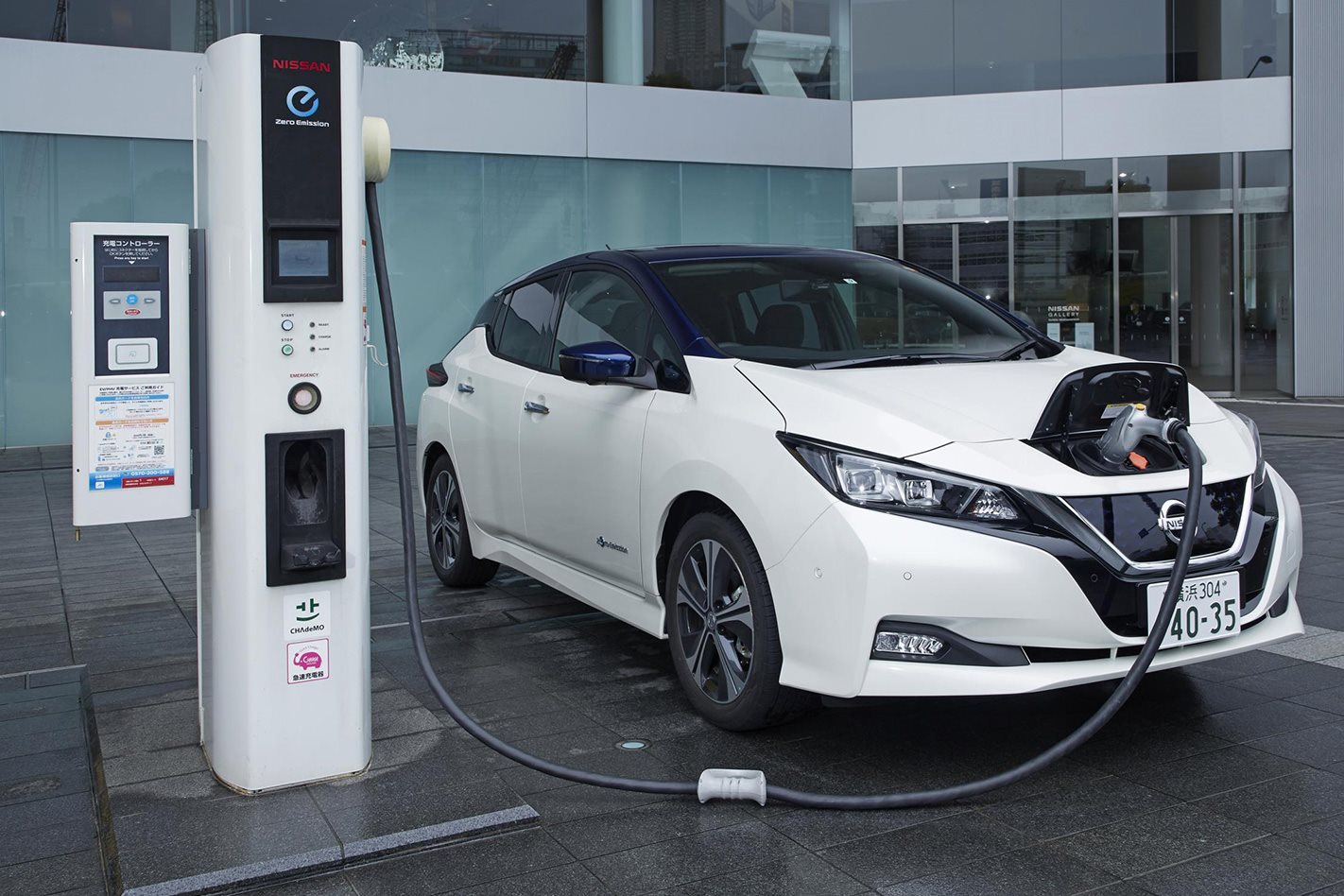
However, purchase price came out as the lead concern around buying an electric car, with 79 per cent suggesting it as a key driver. Nielsen also claims that up to 50 percent of respondents suggested that they would pay no more than $30,000 for an EV.
The public relations and brand experience manager for Volkswagen Australia, Kurt McGuiness, suggested the small sample size – 0.001 percent of the vehicle buying pool – overlooks the strength of the SUV and dual-cab sectors when it comes to vehicle pricing, while pointing out that EVs are more expensive than their combustion engine cousins for a reason.
“The fact of the matter is new technology costs more than old technology,” McGuiness told WhichCar. “A new iPhone costs at least five times that of a generic mobile with fewer features from a supermarket, yet many will happily queue overnight to buy a new iPhone on launch day.
“The inbound raft of electric vehicles on our roads boast some of the latest in automotive tech and design, and while price parity between EVs and ICEs is only a matter of time, the reality is that for many people, EVs will offer unprecedented levels of convenience and cost savings in the form of home-based charging.”
McGuiness, who sits on the Australian Council of EVs, says companies like Volkswagen and others must bear some of the responsibility for the perceived lack of knowledge, but he also believes the government has not helped in this regard.
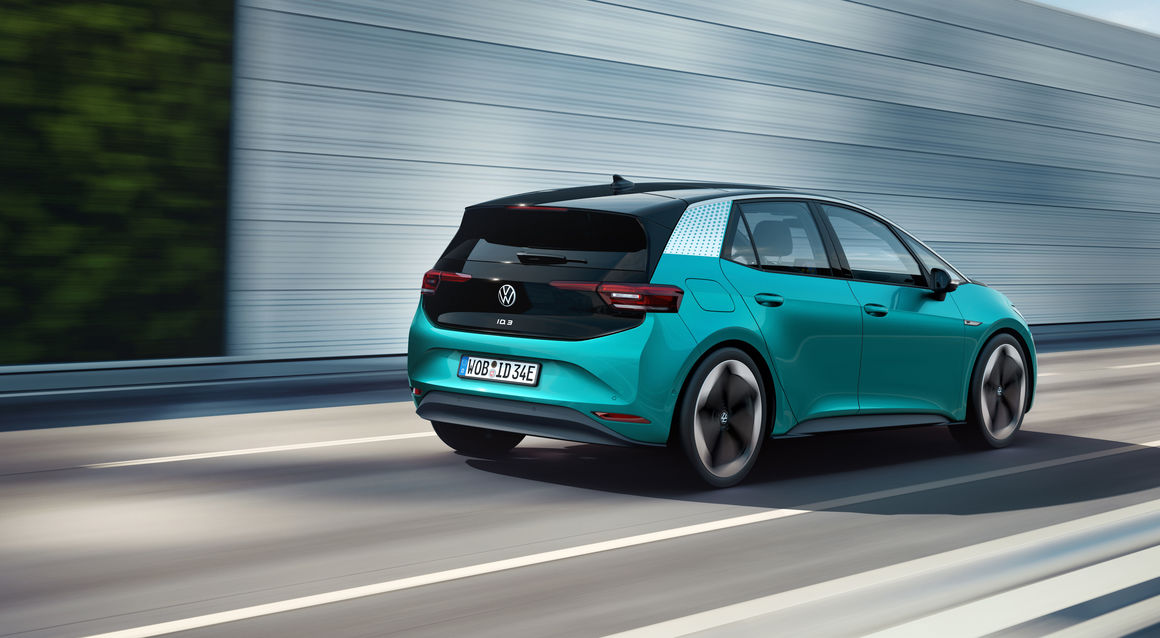
“A lack of leadership at a federal level has not helped things,” said McGuiness. “In the last national election, the rhetoric around electric vehicles was woeful and extremely unhelpful. I believe that if consumers knew that they were missing out on the latest vehicles from Europe because of our poor fuel quality, they would be asking our government why first, and immediately looking into electric mobility second.”
Is the Nielsen report right – are we all still a bit scared of the EV? Let us know in the comments below!
