
Mini Australia has confirmed that the all-electric Mini Cooper SE three-door hatch revealed at the Frankfurt show earlier this week will come to Australia in 2020.
Mini has declined to confirm pricing or specification levels ahead of the car’s Australian arrival which could be as early as mid-year.
Read more
Right-hand-drive production starts late this year ahead of a UK on-sale of March 2020, where it will be priced from GBP27,900 ($50,100) up to GBP33,900 ($60,960) depending on spec.“The Mini Cooper SE hatch marks a new era for our brand in providing our customers with a progressive mobility solution wrapped in a package that is unmistakably Mini in its look, feel and the way it drives,” said Mini Australia General Manager Brett Waudby.
“We look forward to introducing this exciting and game-changing member of the Mini family to the Australian market next year.”
Mini Australia says the Mini Cooper SE Hatch will have the same occupant and luggage capacity as the petrol model. Visually, the only clues to the Mini Cooper SE’s electrification are the laser disc-style alloy wheels, slightly slimmer front grille and E badging.
Inside, the Cooper SE hatch gets a new digital instrument cluster in place of other models’ analogue dials. The three drive modes standard on other Minis – Sport, Mid and Green – are supplemented by a fourth mode, Green+, which switches off some in-car tech and air-conditioning to maximise touring range.
In the UK, the electric Mini will be offered in three trim levels. All have satellite navigation and has EV charging points automatically displayed.
The new electric Mini offers a competitive 135kW of power, which Mini says can silently propel the hatch from 0-100km/h in 7.3 seconds, 0.5s slower than a petrol-powered Cooper S auto. The total touring range on a single charged is a claimed 235-270km according to the latest WLTP measurement standard.
Mini says the Cooper SE hatch can regain 80 percent of its charge in just 35 minutes via a 50kW fast charger.
Mini says the new EV is 145kg heavier than a Cooper S, largely due to its T-shaped battery pack, which may have some impact on Mini’s usually sharp dynamics — although the lower centre of gravity afforded by the in-floor battery placement should offset this somewhat.
The Mini Cooper SE hatch isn’t the first all-electric Mini. In 2009 the company released the Mini E, a limited edition pure electric three-door hatch with a 120km range that was offered to select customers in California and Paris for short-term lease.
Keep abreast of the 2019 Frankfurt Show right here
In terms of things that you don’t expect while attempting to v-max a Bugatti Chiron at nearly 500km/h, getting all four wheels off the deck has to be pretty high up the list.
But, that’s exactly what happened to Andy Wallace while he was attempting to crack 300mph in a modified Chiron early last week.
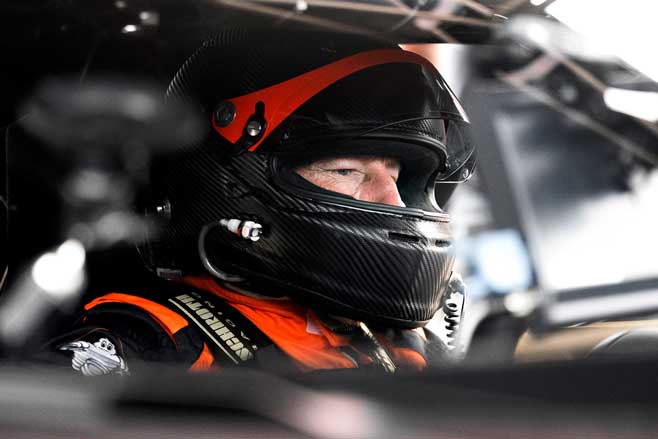
Speaking to Wheels, Wallace recounted how he went airborne in a modified Chiron during his 490.48 km/h run at the Ehra-Lessien test facility.
“There is a surface change [on the straight], and I was calling it a ramp and jump, and everyone was wondering why I was calling it that,” he said.
“That was until they looked at the data, and they realised that it actually is a jump. This occurs at 447km/h on that fast run.
“It goes from a nice smooth surface, to an older surface. It felt to me inside the cabin that it was all coming off the ground and then coming down.”
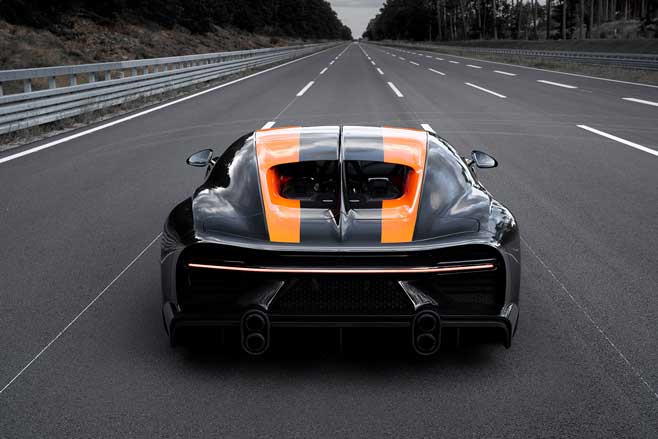
While Wallace knew full well that the ‘ramp’ would be in his way for each of his record attempt runs, there was nothing he could do about it but keep his foot firmly planted in the firewall.
“You know that surface change is there, and after you have fired yourself off the banking, and the numbers are coming up, you kind of brace yourself for going over this jump,” he explained.”
“You can’t lift though. In fact, lifting makes this much worse, because then you get a pitch change at the front and it gives you a whole heap of trouble.
“You are far better off staying flat, which means there is not much you can do about it, you just go with it and hope it is alright.”
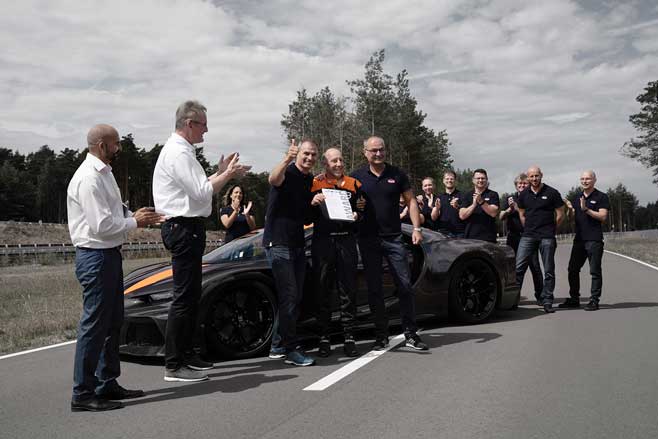
Surprisingly, that isn’t the first time Wallace has achieved lift off in one of Bugatti’s million-dollar hypercars.
“The Chiron has always been really good when I have been on the road and gone over something where I have left the ground,” he explains.
“It always comes down really square down on four wheels, it never does this pitching back and forth. Just up then down, which is quite useful in this case.”
How about that, eh? Someone get Robbo on the phone.
HYPE is starting to grow around AMG’s upcoming rival to the Porsche 911 GT2 RS – the AMG GT R Black Series. Recent spy shots have revealed heavily modified body work with huge bonnet scoops and an enormous two piece rear wing, and now we have some news around the engine.
Speaking to Wheels at the Frankfurt motor show, AMG boss Tobias Moers hinted the GT Black Series will score a “new” V8 powerplant. Said to be a momentous step up on the GT R Pro, the Black Series’ engine is rumoured to pack more than 515kW, which should see it eclipse Porsche’s GT2 RS for outright grunt.
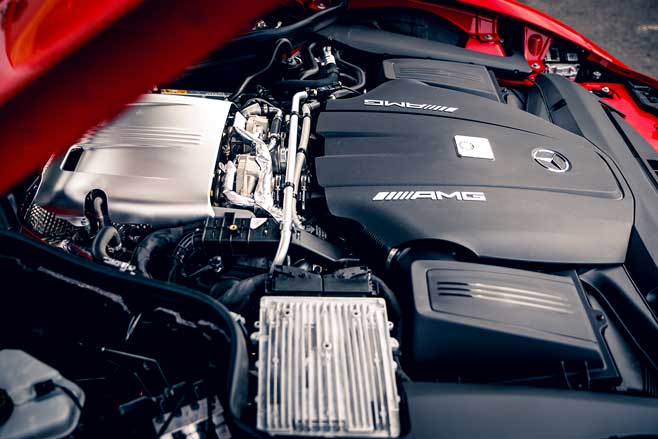
Moers revealed the power unit will utilise the same block as the company’s venerable M178 V8 and that “it’s still a 4.0-litre engine and twin turbo, but it’s a different engine”. He went on to say that “it’s not a typical AMG V8”, and that it won’t be fitted with EQ Boost which alludes to substantial mechanical alterations rather than electronic enhancements.
The Black Series won’t be merely a straight-line star, gaining focused hardware for attacking apexes. “Expect something different. Engine, power output, suspension, aero… everything. There’s not much in common with the GT R,” Moers said.
Animated and full of enthusiasm for the project, there was a sense that Moers wanted to elaborate far more than he’s able to on a car that will be released in 2020. Development on the AMG GT Black Series is so advanced that Moers himself has already tested it.
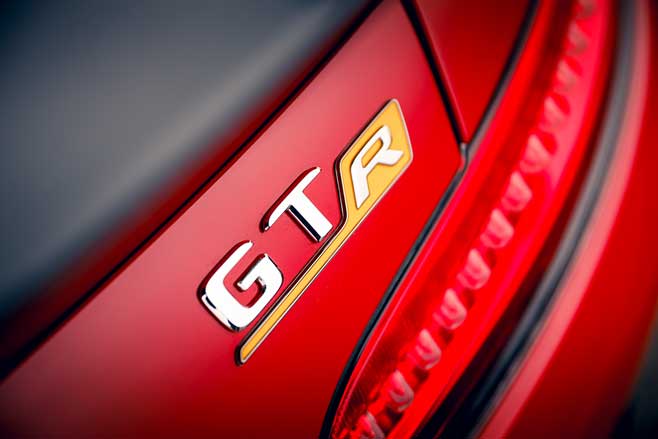
Despite the ever-growing focus on hybrid technology Moers stressed that technologies old and new cold coexist into the future at AMG. When asked whether this could be the last Black Series with an internal-combustion engine, the AMG guru let out an exaggerated “no”.
“I don’t think so,” he said. “Maybe it’s not a high percentage of our portfolio in the future, but there will still be room [for pure ICE powertrains]”.
When asked about the huge wings spotted on the test mules and whether or not the Black Series would include active aero, Moers simply laughed and said “yes – there was no chance to camouflage that. They look similar to the production car”.
When asked what excites him the most about the Black Series, Moers seems to take heart in proving the doubters wrong. “When we brought the GT R to market everybody told me, ‘okay, what are you going to do with the Black Series?’
“I told everybody that it should really be a step up and it took time to get all the things together. But now we’re there and the car is on the track, we are on the Nordschleife. I think it’s something really surprising. Surprising for everybody.”
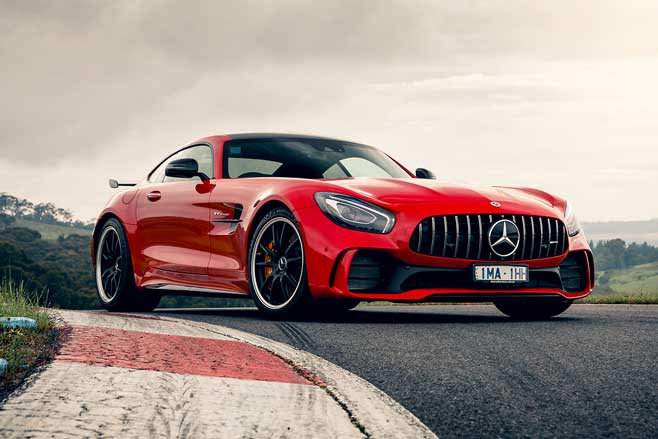
Just as the questioning finishes, Moers drops the final bombshell that some of the lessons learnt through the AMG One – the company’s delayed hypercar which utilises a Formula 1 engine – have filtered down to the Black Series, alluding to the tyre tech.
As for timing, AMG is tipped to reveal the production version of the GT Black Series in the middle of next year with Aussie delivering starting in 2021.
Gerry McGovern is rather pleased with himself. He leans back with confidence as he discusses his latest creation, the highly-anticipated reborn Land Rover Defender.
“This is a hero vehicle, a freaking hero vehicle. We don’t want to water it down,” he tells Australian media with glee.
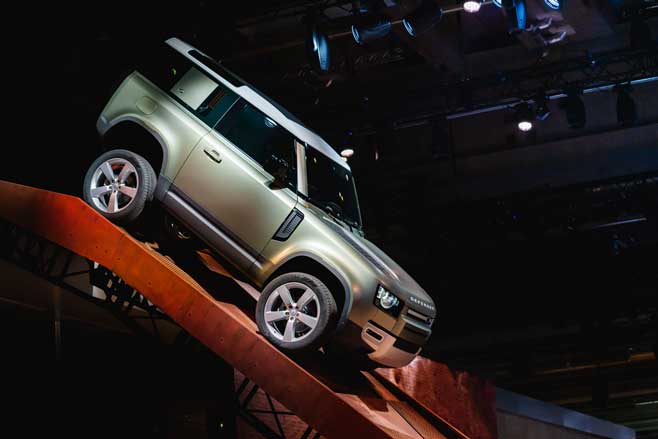
The Land Rover Design boss is prepared when questions inevitably turns to public perception of the new product, and he quickly rattles off a response that is almost word-for-word from a press release.
“Everyone has got a view of what it should be. But I think it is a no-nonsense design. It recognises its past, but isn’t harnessed by it,” he says.
There is a briefest of pauses before he begins to reveal what he really thinks.
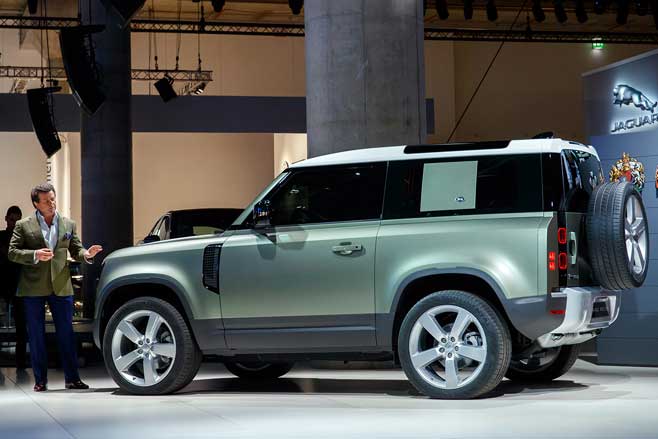
“The reality is, as good as the Defender was and people fell in love with it all over the world, it was designed for a different time,” he adds. “The world has changed massively since then, and this vehicle had to change as it had to address all the hygiene factors that the other couldn’t.
“That is partly why the old [Defender] had to stop. Partly because of emissions, comfort, safety, all those things had to be addressed. The Defender was appropriate for its time.”
When working on a nameplate as significant, and as loved, as the Land Rover Defender, McGovern was well aware that his work would suffer intense scrutiny from traditionalists. But, he doesn’t seem bothered by the opinion of these dyed-in-the-wool types.
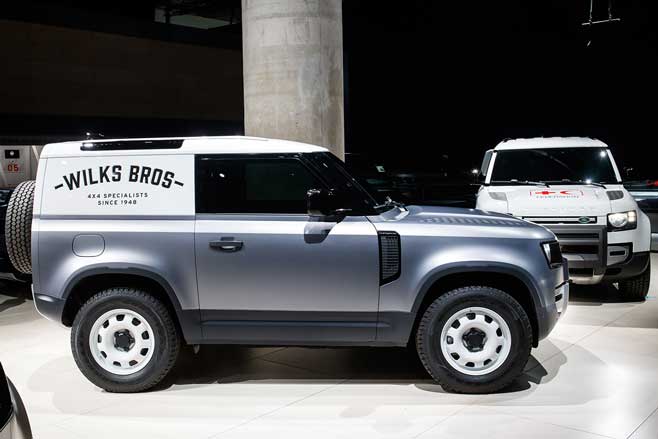
“There are always going to be people that aren’t happy,” he says. “With the greatest respect, I am a professional designer, and I am designing this thing for a new generation.
“I hope the traditionalists will come with us, but if they don’t, that is for them.
“If you become preoccupied with making everybody happy, you will fail.
“We hear a lot about how much people love the original Defender, you don’t hear very much about the people that don’t like it, because they don’t comment on it, they are not interested, and that is what you have to think about.”
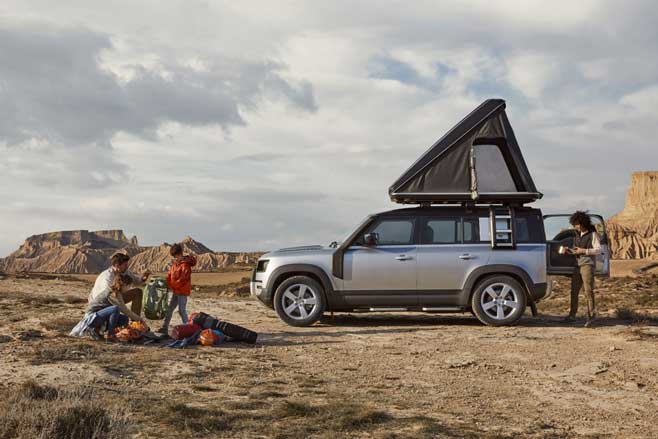
McGovern is confident that in the transition from a body-on-frame to monocoque chassis, and solid axles to independent suspension, the Defender’s capable character hasn’t been lost.
“This can reach from being a hardcore, hard-nosed, kick the shit out of you product, to a real lifestyle product as well,” he says.
What do you think of the new Land Rover Defender? Let us know in the comments.
Alpina has treated the world to what it never knew it wanted: an M3 wagon, of sorts.
This is its all-new Alpina B3 S Touring. And while it might be missing the comically pumped guards and bonnet bulge you’d expect on an M3, it actually is the first production 3 Series to be revealed with the new M3’s engine known as the S58.
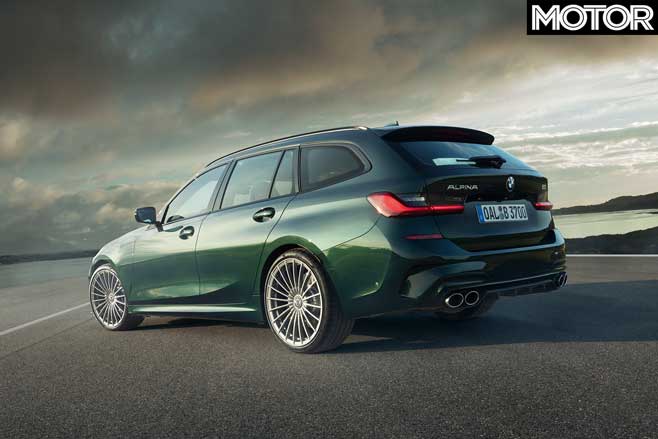
BMW has traditionally let Alpina plug its model portfolio gaps and the B3 S Touring is the latest example. Of course, to help differentiate it, the 3.0-litre twin-turbo six has been tuned with specific turbochargers and a completely different character.
Instead of the 375kW and 600Nm found in the X3/X4M, it detunes power to 340kW and inflates torque to 700Nm. That’s 16kW and 40Nm up on the old car, even with the fitment of a new petrol particulate filter. And while Alpina’s ignored quoting acceleration times in the press package, it’s still gone to the effort of optimising its launch control function for 0-200km/h blasts.
It’ll do them quickly since an electronically controlled rear limited slip differential teams with an all-wheel drive system to keep the B3 S Touring’s nose pointing straight. There’s no word on whether it’ll be able to disengage the front halfshafts, but it also scores an eight-speed auto developed with ZF that will help it max out over 300km/h in top gear.
Bigger cooling ducts in that unique front bar, along with two extra coolers and an underside NACA duct cooling the transmission, should control critical temperatures at full throttle. Meanwhile Eibach springs, bump stops and stabiliser bars combine with the three-mode adaptive dampers to tune the 3 Series Estate’s handling to Alpina’s tastes.
Brakes are uprated to 395mm front discs and 345mm rear discs within trademark blue fixed calipers that hide behind 19-inch wheels. Or you can up the size to 20-inches with forged items that Alpina claims are 13.7kg lighter than regular alloy equivalents. Each set come wrapped in 255mm and 265mm wide Pirelli P Zero tyres.
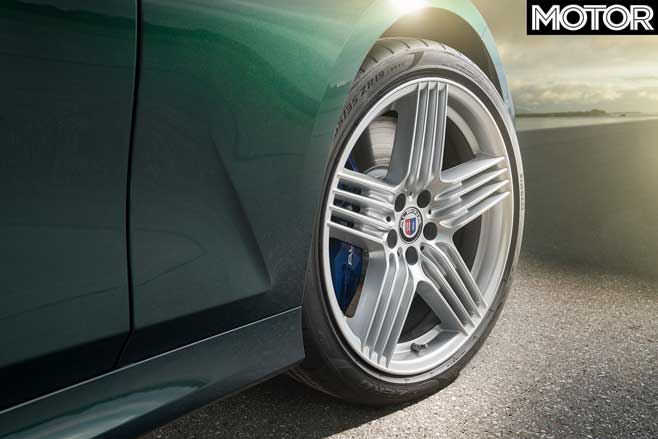
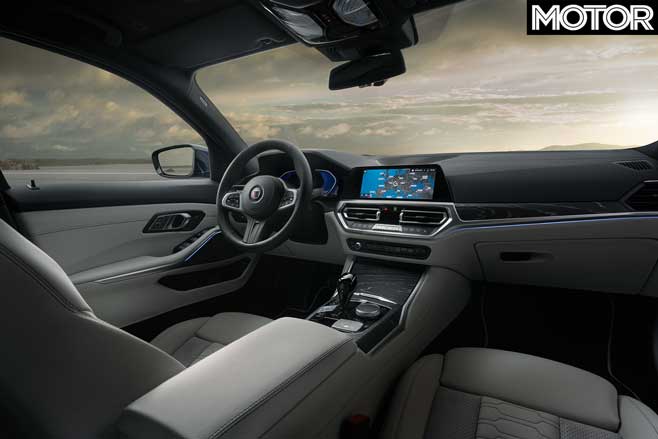
Alpina considers itself quite the connoisseur on interior design so you can imagine there’s a fair bit of customisation on offer inside should your budget allow it. Meanwhile, it claims the option Lavalina leather is the most natural material of its kind. It’s also reflashed the digital cluster with Alpina-specific tachometers and gauges.
European deliveries begin in the second half of 2020 with Australia hoping to secure the B3 Touring for local deliveries later that year.
Those German masters of excess, Brabus, have built the G65 Mercedes-AMG won’t.
Christened the Brabus G V12 900 “One of Ten”, Brabus’s new V12 G-wagen creation boasts a power output of 662kW and 1500Nm, which allows the massive 2660kg 4×4 to go from 0 to 100km/h in 3.8sec with the top speed electronically limited to 280km/h.
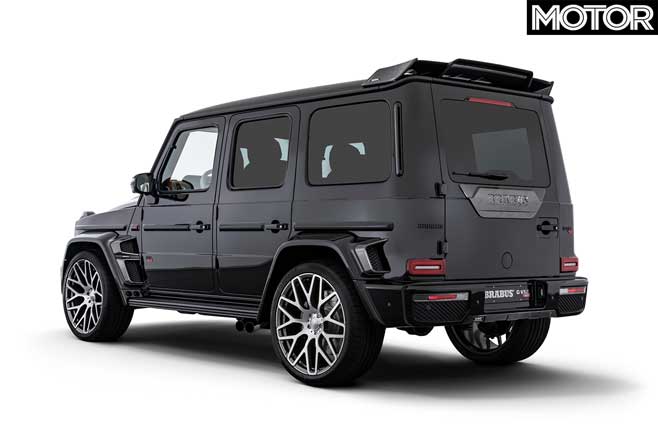
These performance figures are similar to the V12-powered 2017 Brabus G900, though the G V12 900’s new nine-speed automatic lends a marginal 0.1sec 0-100km/h and 10km/h higher top end advantage.
AMG bid farewell to the V12-engined Gelandewagen with the 2017 ‘Final Edition’, the latest W463 G-Class topping out at the 430kW/850Nm 4.0-litre twin-turbo V8 G63, and ceased V12 production altogether earlier this year.
This gives Brabus a problem, as previously it had the G65 AMG as a base vehicle to work on. Instead, the Bottrop modification house had to adopt the 6.0-litre bi-turbo V12 engine used in the S600 L limousine.
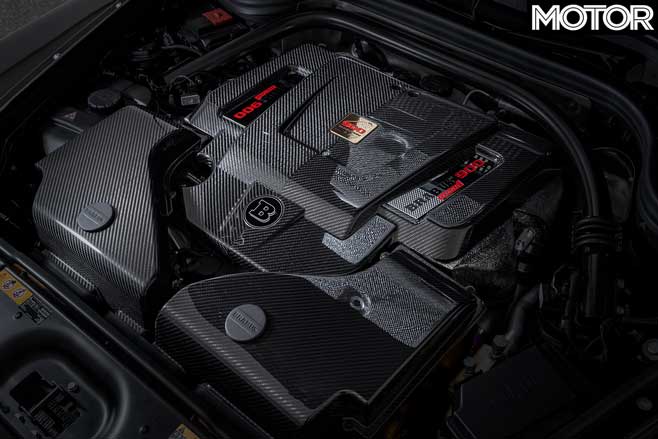
In order to up the S600’s 390kW power figure, Brabus enlarged the cylinder bores and fitted a new billet crankshaft, increasing displacement from six litres to 6.3 litres, making this one Mercedes that could accurately wear AMG’s ‘6.3’ badge.
To cope with the extra grunt, there are forged pistons and billet connecting rods, larger turbos along with a new intake module, reprogrammed engine electronics, and a dual-mode performance exhaust system. Sneakily, while Brabus claims 1500Nm, the peak figure is actually limited to 1200Nm to protect the driveline.
To ensure high-speed and handling stability, the G V12 900 is fitted with a widebody seen on Brabus’ other G-wagen iterations such as the G700 Widestar, which widens the G-wagen’s body by 100mm.
This allows the fitment of gargantuan wheels and tyres, with a choice of 23- or 24-inch rims measuring 10 inches wide at the front and 12 inches wide at the rear wrapped in 295/30 and 355/25 tyres respectively.
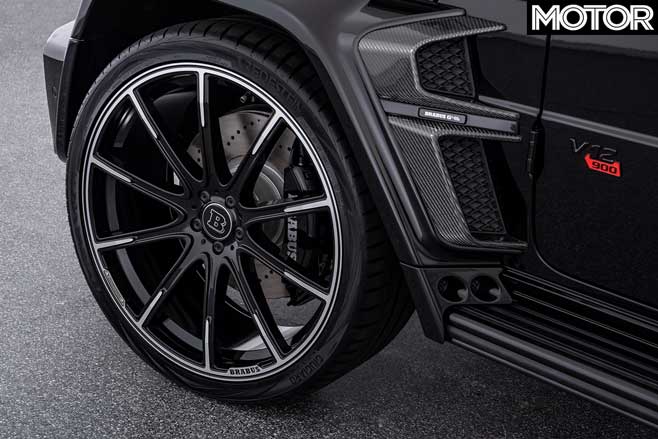
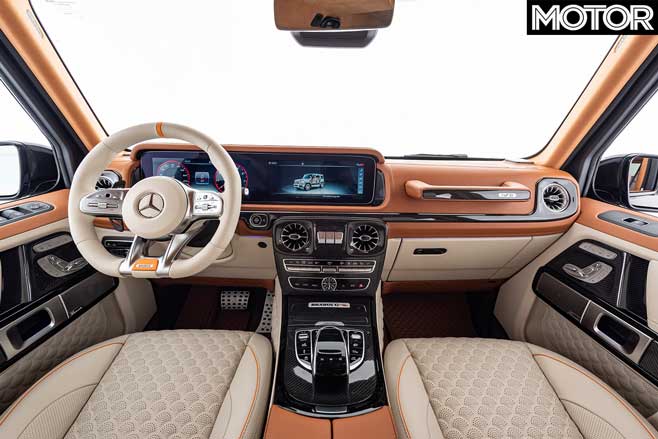
Inside there are swatches of porcelain and saddle brown leather with orange highlights on the seats, steering wheel and door trims. Brabus also modifies the rear doors to open wider to make access to the back seat easier.
As evident from its “One of Ten” moniker, Brabus will only build 10 examples of the G V12 900, with prices starting from €605,055, or well over a million Aussie dollary-doos.
Hyundai has announced a lighter, lower and faster i30 N special edition named the Project C.
Why project C? Well, Area C is apparently the name of an internal test track in Namyang. But it also denotes the heavy use of carbon fibre parts and a focus on a lower center of gravity.
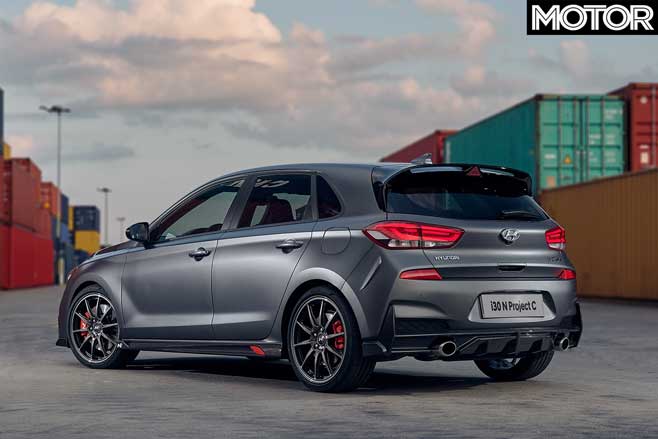
While you’d never call the i30 N over weight, it definitely teeters on the heavy side on the hot hatch spectrum or enough to provoke an extreme diet that’s saved just over 50kg.
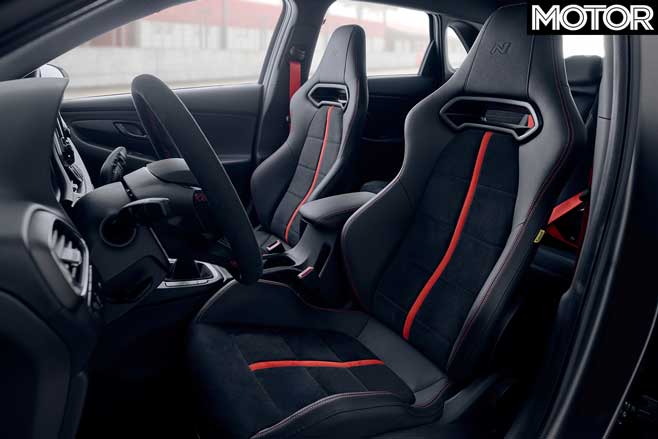
Think of it as the i30 N’s Trophy R moment, or a GT3-spec makeover, as carbon fibre reinforced plastic adorns its bonnet, sills, diffusers, rear spoiler and the back of its Sabelt bucket seats. The collection of CFRP sheds 23.5kg and comes finished with a high-gloss clear coat.
We’re familiar with its O.Z Racing forged 19-inch wheels because they’re offered as an option on local models. They importantly drop another 22kg from the Project C’s weight while a pair of aluminium rear suspension knuckles slash the final 4.66kg.
The car’s standard turbocharged 2.0-litre four-cylinder remains untouched but its 202kW/373Nm outputs now equal a 146kW-per-tonne power to weight figure, as opposed to a fully-equipped standard car’s 134kW per tonne. This helps the Project C drop a tenth from the i30 N’s standard 0-100km/h claim, registering a 6.0sec sprint.
Engineers have also focused on the car’s suspension package. For instance, stiffer suspension springs drop the right height on specifically tuned dampers by 6mm, while the CFRP bonnet, seats and rear spoiler help lower the centre of gravity another 2.8mm.
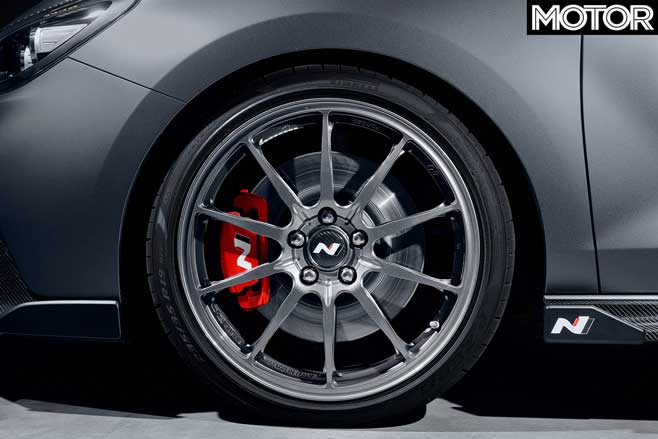
Hyundai’s made an effort to specialise the interior by adding alcantara on more surfaces, designing its colour theme around Deep Orange – a colour seen externally on the brake calipers. It also scores a new aluminium shift knob shaped like a piston head.
As much as we’d love to see the Project C face off with its established rivals on local soil, Hyundai says it unfortunately building 600 examples only for European customers when deliveries begin later this year. Boo.
*This article originally stated the i30 N’s power-to-weight ratio when fully equipped was 141kW/tonne. This has been updated along with the Project C’s figure.
IT SEEMS like a no-brainer – why pay full sticker price for new car when you can get a cheaper demo model with few kays on the odometer? Whenever something seems too good to be true it is, so some due diligence is needed if going down the demonstrator path.
What is a demonstrator car?
First of all, a demonstrator model can mean a variety of things. Most commonly the term refers to lightly-used cars which have been bought by dealerships and offered to customers to test drive. This means that it is technically not a brand-new car, having been driven a small amount of kilometres by interested customers and car dealers.

Demonstrators might also take the form of car-manufacturer company cars driven by executives, or used for photo shoots and TV commercials.
Then there are the media demonstrators which can get a bit more of a rigorous going over, though often this depends on the type of car – a demo Toyota Yaris is less likely to have its limits tested than say a BMW M3.
Although small, this means extra wear and tear on the car which translates into a lower price for the end buyer.
The safest bet is to get something with very low mileage so any abuse it may have suffered wasn’t prolonged. Ex-demo models with just a few hundred kays on the clock are common, and they’re all covered by a balance of the manufacturer warranty. This means that the warranty period kicks in from the time the car is registered, so a car that’s been on the books for a year may only have two more years of warranty left on it.
Crashes do occasionally happen, and demo models are technically more susceptible to the odd bingle because they’re often driven by people who aren’t used to them. So get them checked for any signs of repairs, just like you would a used car.

Do your homework
As with buying any car the number one rule is to know your subject so you’re comparing apples with apples.
Learn its price before and after on-road costs are added, as well as extras such as metallic paint, sun roof, safety packs and so on. This way you’ll know instantly whether or not it’s a good deal.
You should be getting a discount on demonstrator cars, as they’re not brand-new and have already been driven.
Car manufacturer websites let you “build cars” and offer a drive-away price based on spec and features. This is a great place to establish a benchmark.
What prices to expect
Unfortunately this isn’t so straight forward. Similar to getting a bargain price on any car, much depends on timing.
At the very least you want to save a few thousand dollars off the new on-road price, though be mindful that similar deals sometimes appear on brand-new cars, particularly during an end of life model run-out or end of financial year sales. Conversely, the more in-demand a car is, the less likely a car dealer will be to offer a demonstrator model at a discounted rate.

Also remember that demos can date back to the previous model year, which will give them less resale value than current stock.
Timing is also important. WhichCar’s resident car dealer Trevor (not his real name) said some car dealers flogged off demo models to make monthly targets.
“Every time you go to buy these cars it depends where the dealer is at on the day, how their month is going and what the situation is and how desperate they are,” Trevor said.
“If they’re trying to hold a bit of margin and make some money they won’t go down but if they just want to clear some stock that’s when you’ll get the deal. So trying to actually put a dollar value on it is very difficult.”
Our advice is to not be in a hurry when looking for a good deal on a demonstrator model, and shop around until you find something with the best price. This ensures you have the most chance of a good deal, rather than settling quickly.
Once you’ve found a car, the buying process is no different to anything else on the lot. Just be sure to be confident but realistic when negotiating.
Hyundai’s latest concept car, unveiled at the 2019 Frankfurt motor show looks towards the brand’s future and celebrates its past all in one fell swoop. The 45 concept pays homage to Hyundai’s 1974 Pony Coupe Concept – the car that would go on to become its first-ever volume-produced model.
Though teaser images gave the impression of a hatchback, the Concept 45 is more akin to a crossover with its vast wheels, pronounced wheelarches and high windowline. The fastback shape harks back to the Pony Coupe Concept, as do the car’s sharp angles and quad headlight graphics.
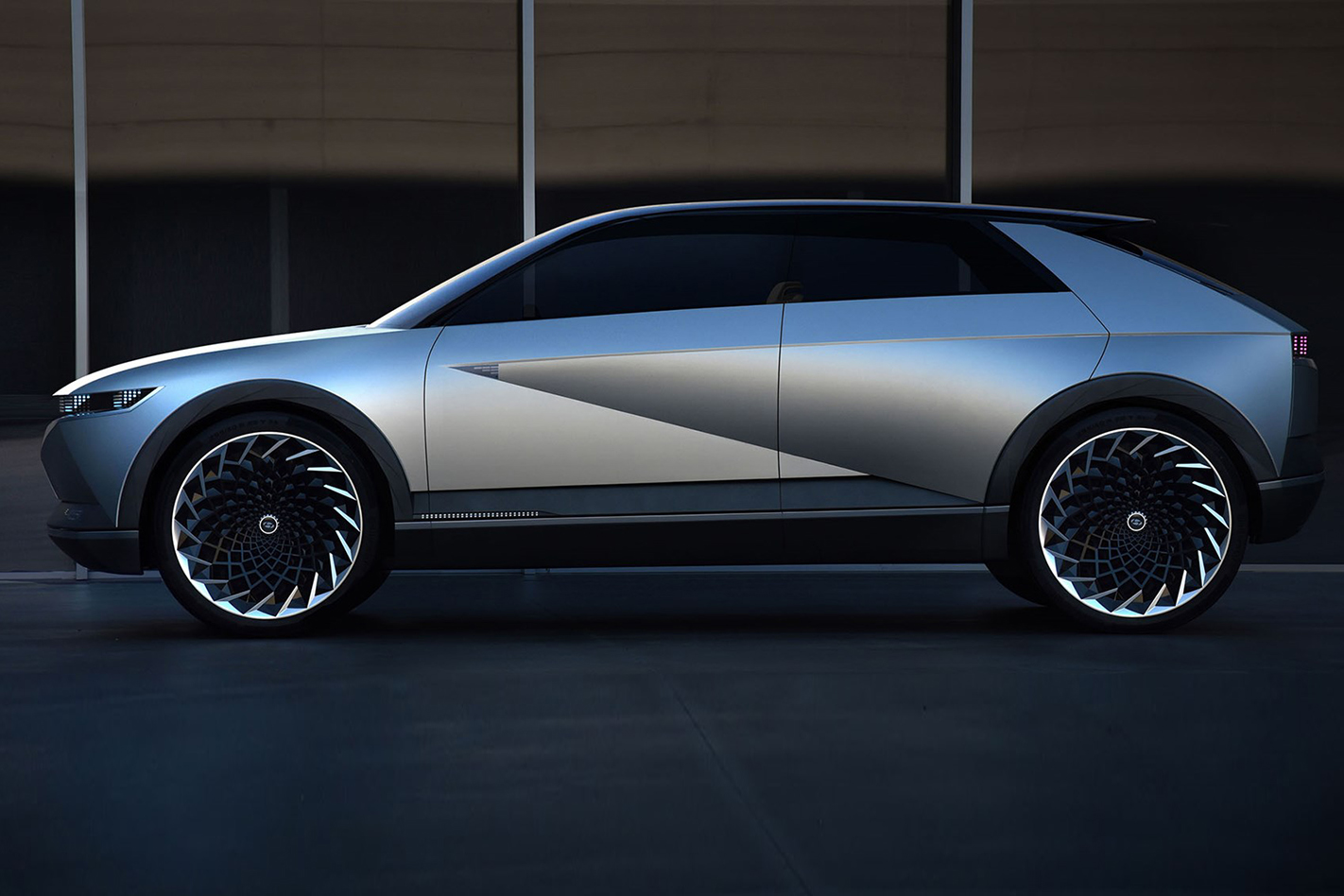
Hyundai says that the 45 name not only harks back to the 45 years since the Pony, but the 45-degree angles at the front and rear, giving it a diamond-shaped profile.
It’s all part of the brand’s vomit-inducingly named ‘Sensuous Sportiness’ design language, all aimed at producing a sleek and instantly recognisable set of design details to characterise future Hyundais.
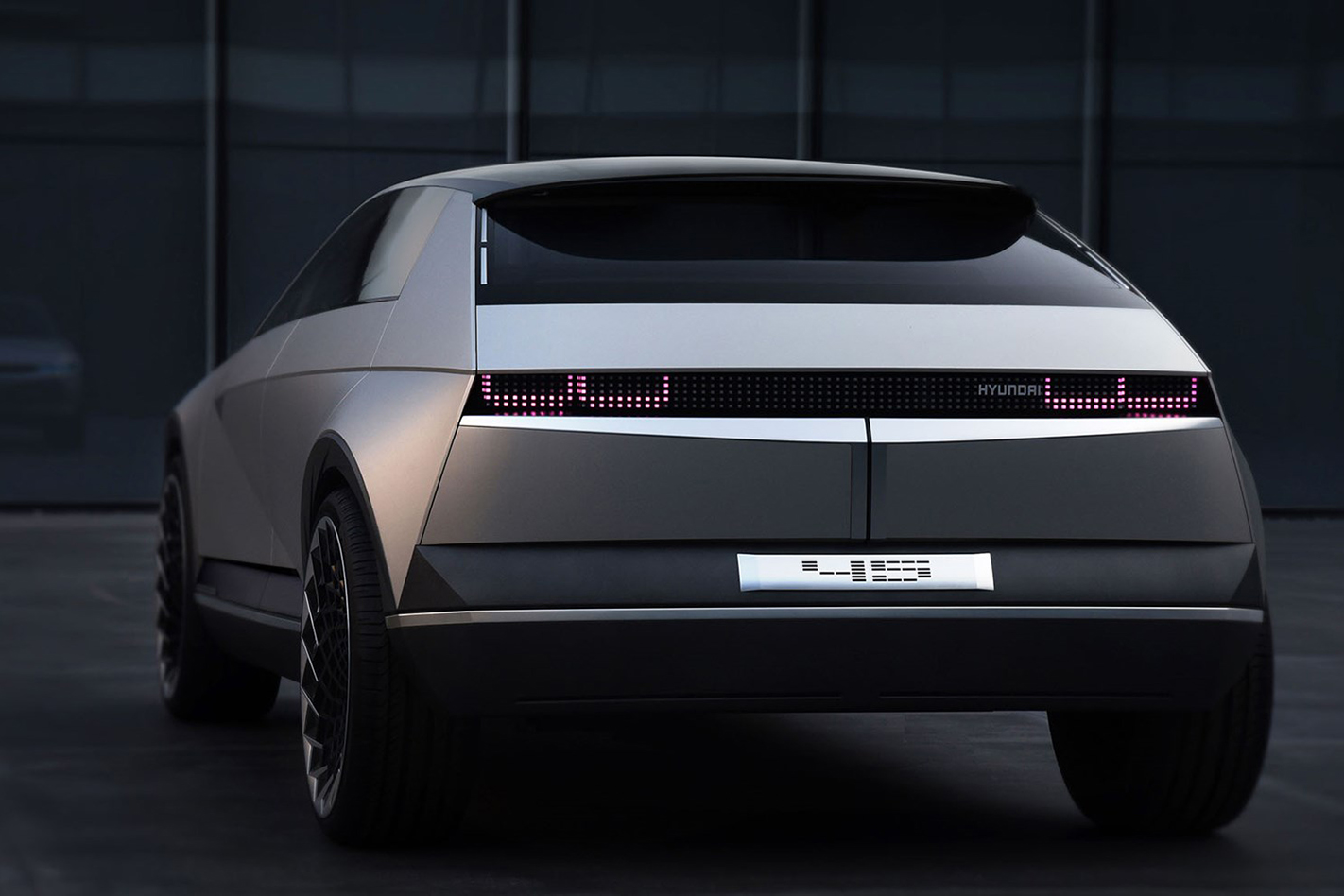
This isn’t a production model so Hyundai’s under no pressure to make realistic claims about its underpinnings. However, as is in vogue, it’s an all-electric powertrain riding on a ‘skateboard’ chassis that positions the batteries low in the body for greater stability.
The real benefit, though, is that it gives a totally flat floor, allowing Hyundai to outfit the interior as a ‘living space’ – as befits the 45’s nature as a fully autonomous vehicle.
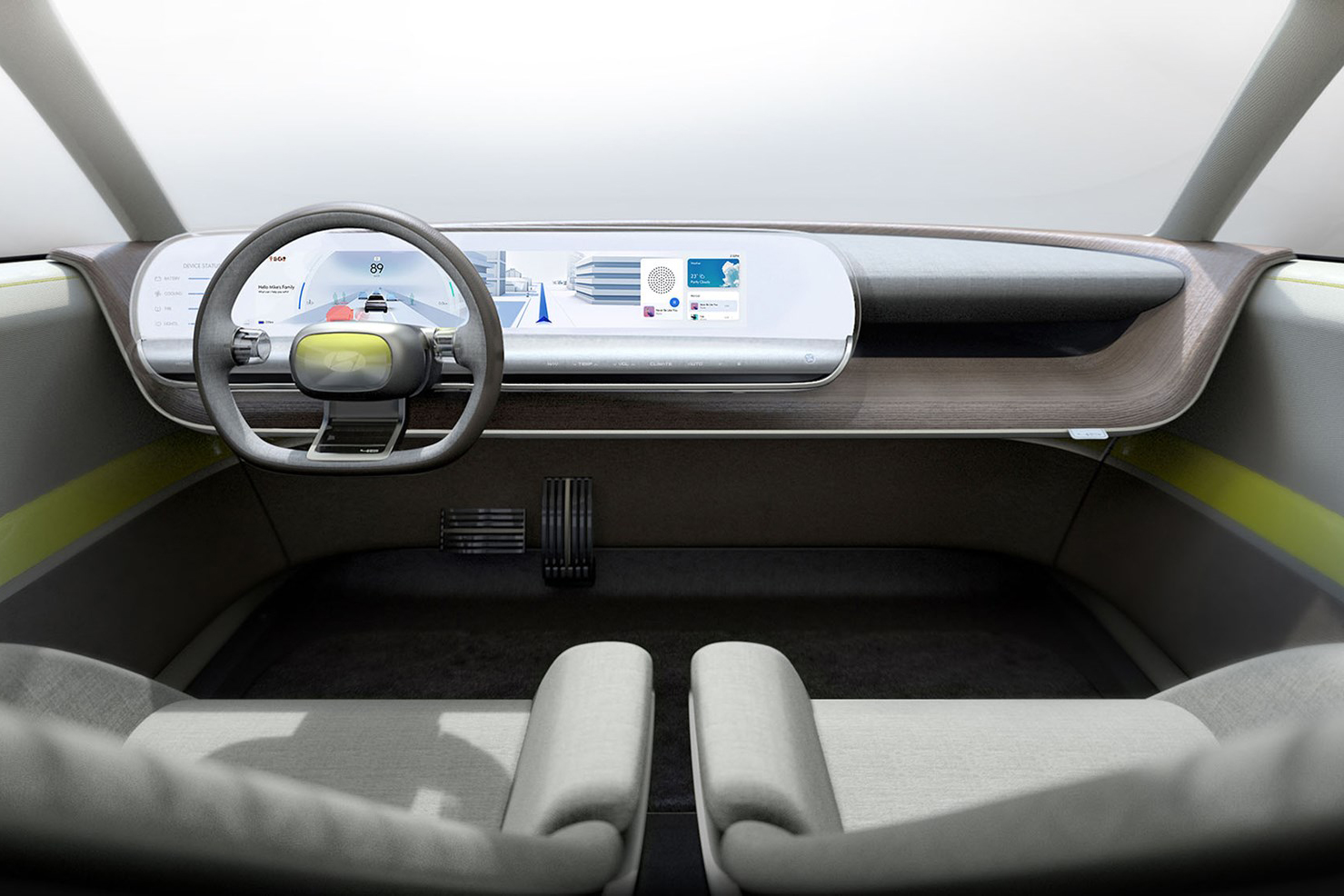
Twin sliding doors open opposed to each other to leave plenty of space to clamber in, and once inside there’s an ‘inviting fusion of wood, fabric and leather’ plus a domestic-style carpet.
Front seats swivel to face the rear for a more convivial environment, and if the driver wishes to actually drive they’ll be presented with information via an ultra-wide ‘projection beam’ screen setup.
The 45 is packed with smart little touches that may make it to production on other Hyundai models in future. The side mirrors have been replaced by cameras, with the lenses rotating past a brush to ensure they’re kept clean at all times.
A light bar on the door sill shows state of charge before the driver even steps into the vehicle, while the car’s seats swivel towards occupants to make ingress and egress easier. Light and space has been considered throughout, with a bright headlining and transparent door bins.
The 45 Concept is unlikely to go into production, however some features could make their way onto production models, and the design is likely to influence future Hyundais.
This article was reprinted from Carmagazine.co.uk
Audi has revealed a fourth vehicle in its electrifying AI (pronounced eye) quattro concept procession at the Frankfurt motor show but, unlike the previous road-going trilogy, the AI:Trail plots a new course … off-road.
Like the trio of previous AI design studies, the latest instalment is purely electric driven and possesses autonomous capability, but its all terrain ability and unique features demonstrate that driverless vehicles don’t have to be boring, says Audi.
Speaking to WhichCar at the IAA Frankfurt motor show, Audi AG board of management chairman Bram Schot said his own offspring illustrated the need for different types of vehicles and for Audi to provide solutions for both types of consumer.
“I’ve two kids one is 22, one is 25,” he said. “One wants to (car-) share the other wants to own ten cars. You tell me what the new generation is. “At the end of the day they will have a choice. Driving themselves or not.”
Either way, Schot explained that the next generation of vehicle owners, custodians or purist drivers is gravitating toward electric power along with models that are still fun to use.
“Electric, but electric combined with sportiness,” he said.
That’s precisely where the final member of the AI quartet comes in according to the German manufacturer.
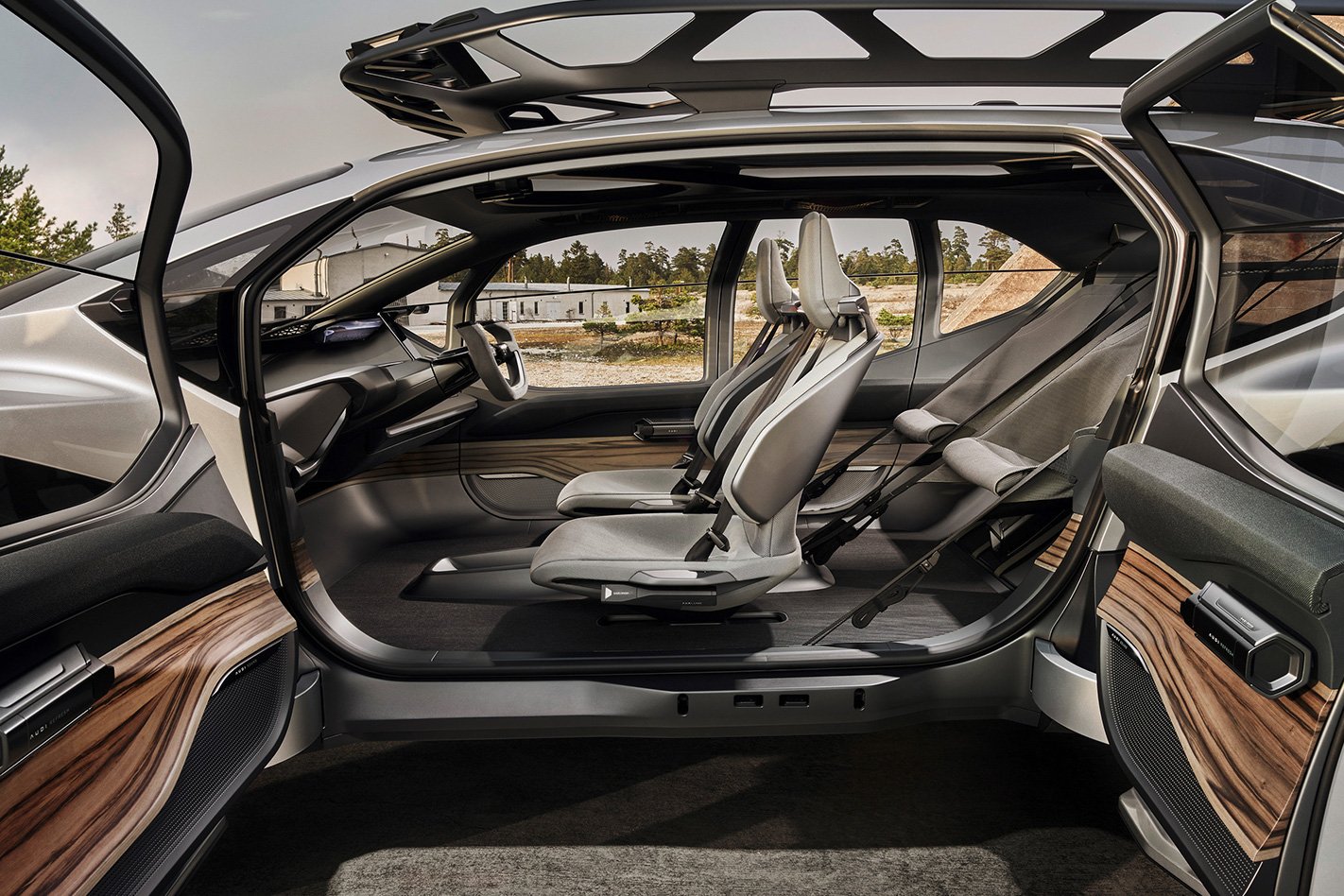
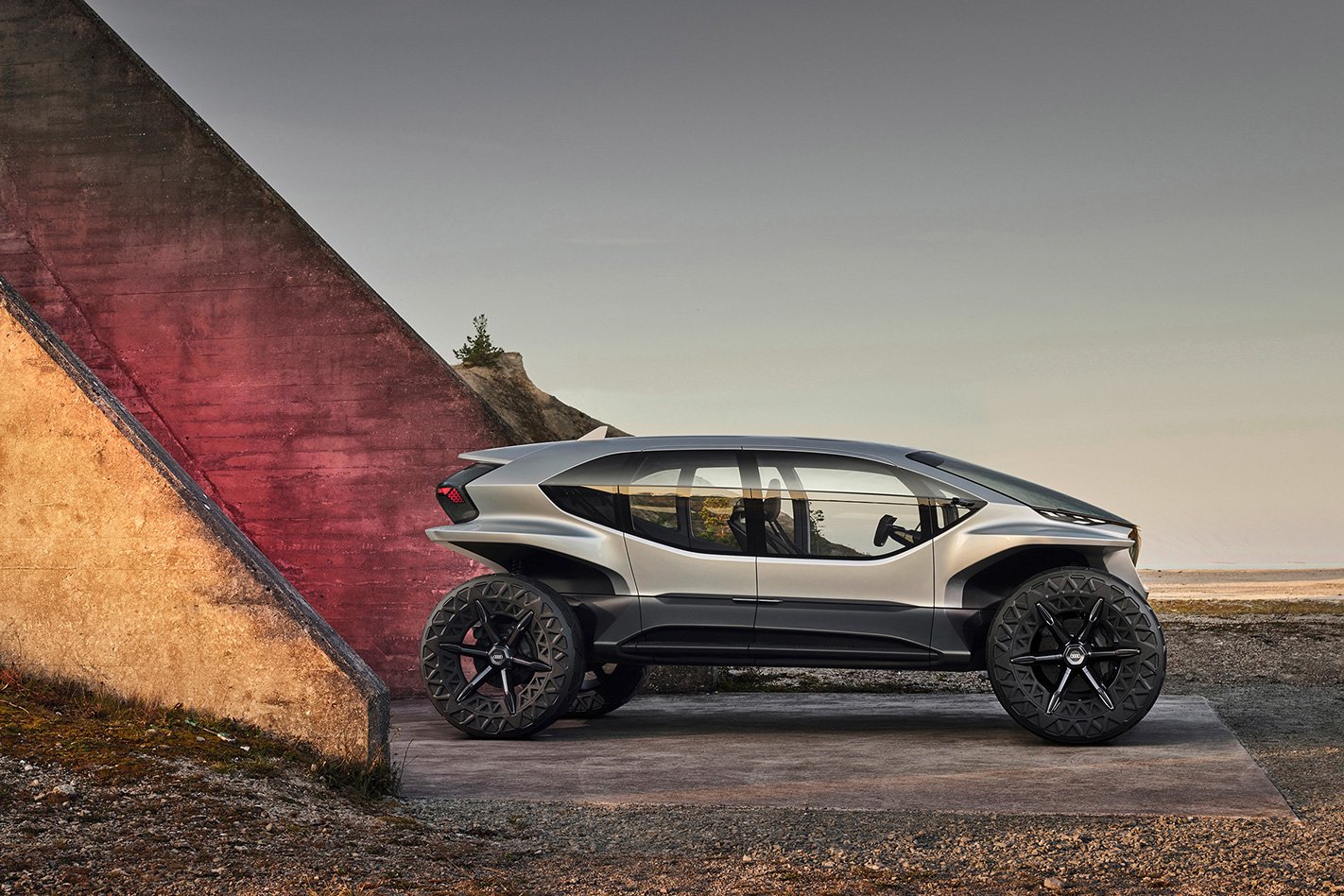
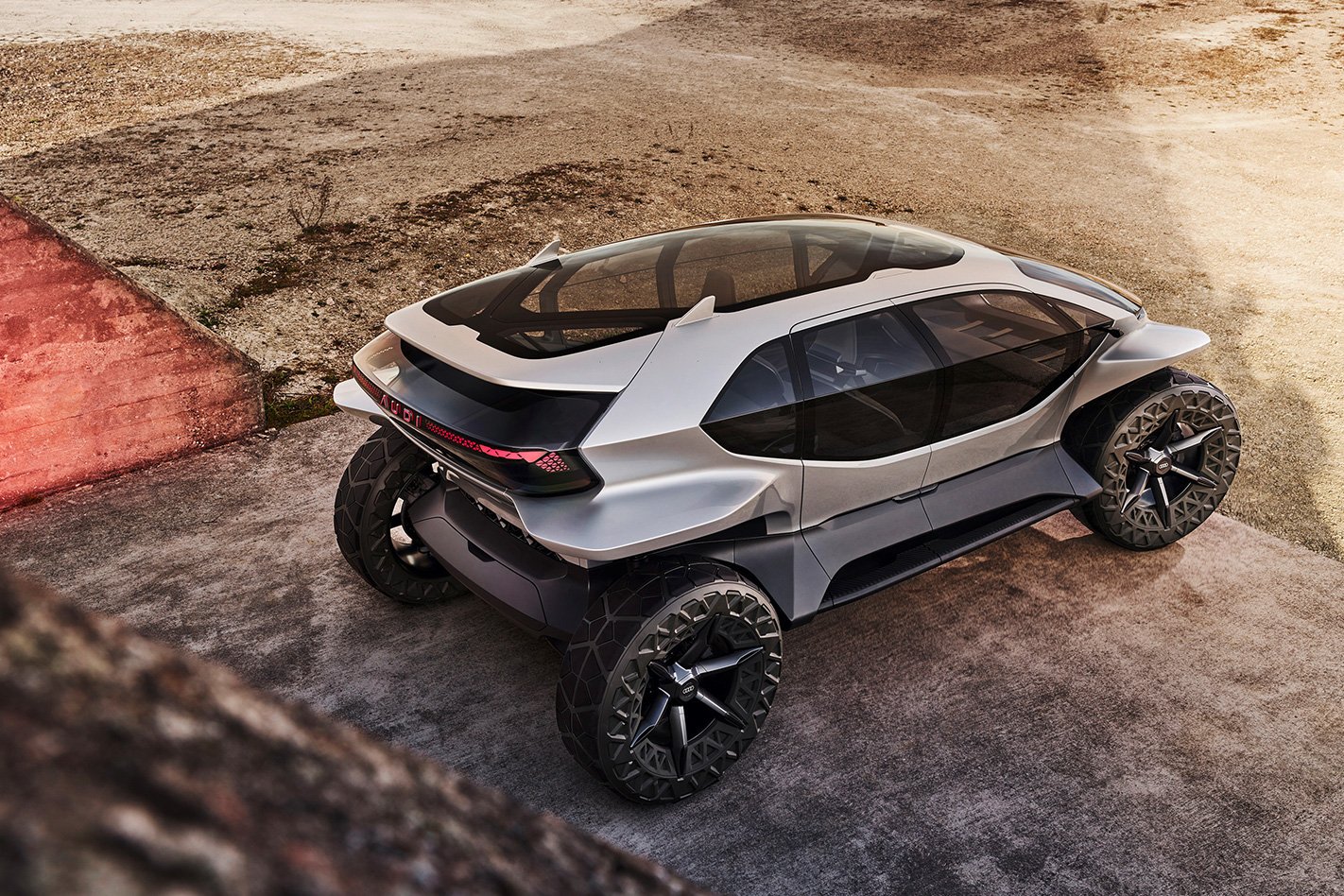
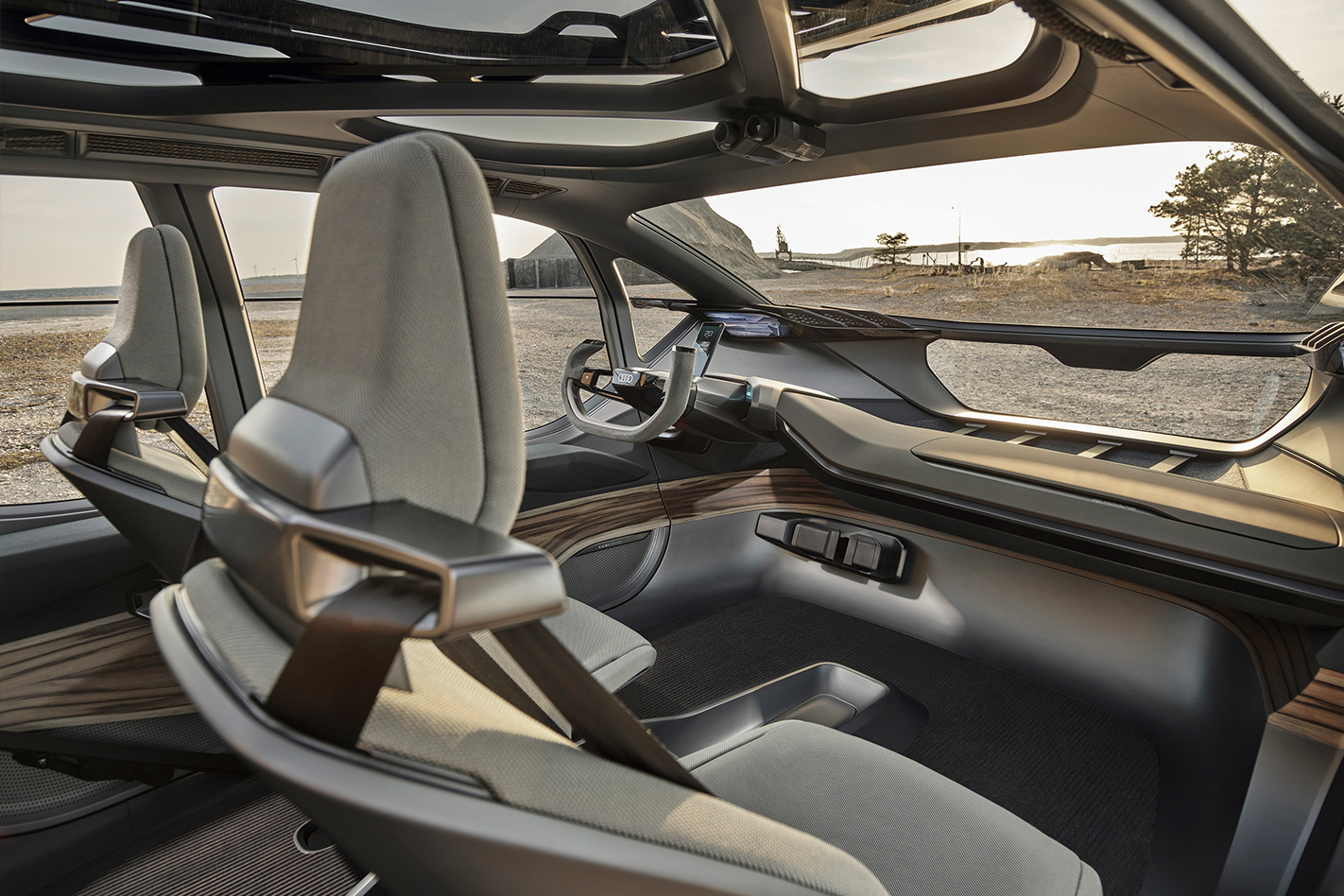
Following in the tyre tracks of the Aicon, AI:Me and AI:Race, the AI:Trail is a culmination of extensive glazing to allow the outdoors in, with aluminium, steel and carbon fibre construction for maximum durability and minimal weight.
It rolls on 22-inch wheels with knobbly tyres that take overall diameter to 33.5 inches for commendable off-road prowess, paired with the company’s proprietary quattro all-wheel drive – naturally.
Not only is its bush-bashing ability likely to appeal to an Australian audience, the AI:Trail also has the longest battery range yet showcased in the concept line-up. With a single charge, the go-anywhere EV is capable of driving up to 500km and Audi’s supporting fast-charger tech would mean the Melbourne-Sydney benchmark trip would be punctuated by just one pit stop lasting less than 30 minutes.
A scalable lithium-ion battery can be specified to provide up to 320kW, while torque peaks at 1000Nm but in the interest of energy conservation, the buggy inspired Audi has been limited to a top speed of 130km/h.
Audi has not indicated if the EV off-roader produces a soundtrack to rival other iconic quattro models, but Schot explained that there was no plan to give future electric models an artificially produced report.
“You will love not having sound. No joke,” he said. “If I get up in the morning and I drive my e-tron I am very happy to listen to the birds. It’s a completely different experience in that sense and you don’t want to have the sound because it’s so smooth.”
As well, Audi head of design Marc Lichte said a generated soundtrack was “not planned” but owners of electric vehicles would not lament the absence of combustion noise. Instead he said customers would appreciate the silence of EVs and the more visceral experience it imparts to the company’s future models, including the e-tron SUV pioneer.
“The e-tron has the best aerodynamics in this segment worldwide,” he said. “The result of this is almost no noise up to 130km/h and this creates a completely new driving experience.
Because there is no noise you focus more on the performance of the car.”
The AI:Trail can accommodate up to four occupants but, when stopping over in remote spots, the rear seats can be removed and repurposed into hammock-style camp chairs.
Along with expansive glass panels including a forward vision-boosting glass grille, long travel suspension and enormous brakes, its unique exterior styling also omits headlights. Instead of conventional on-board lighting units, the AI:Trail sends out a pair of high-intensity LED-equipped drones to light the way ahead.
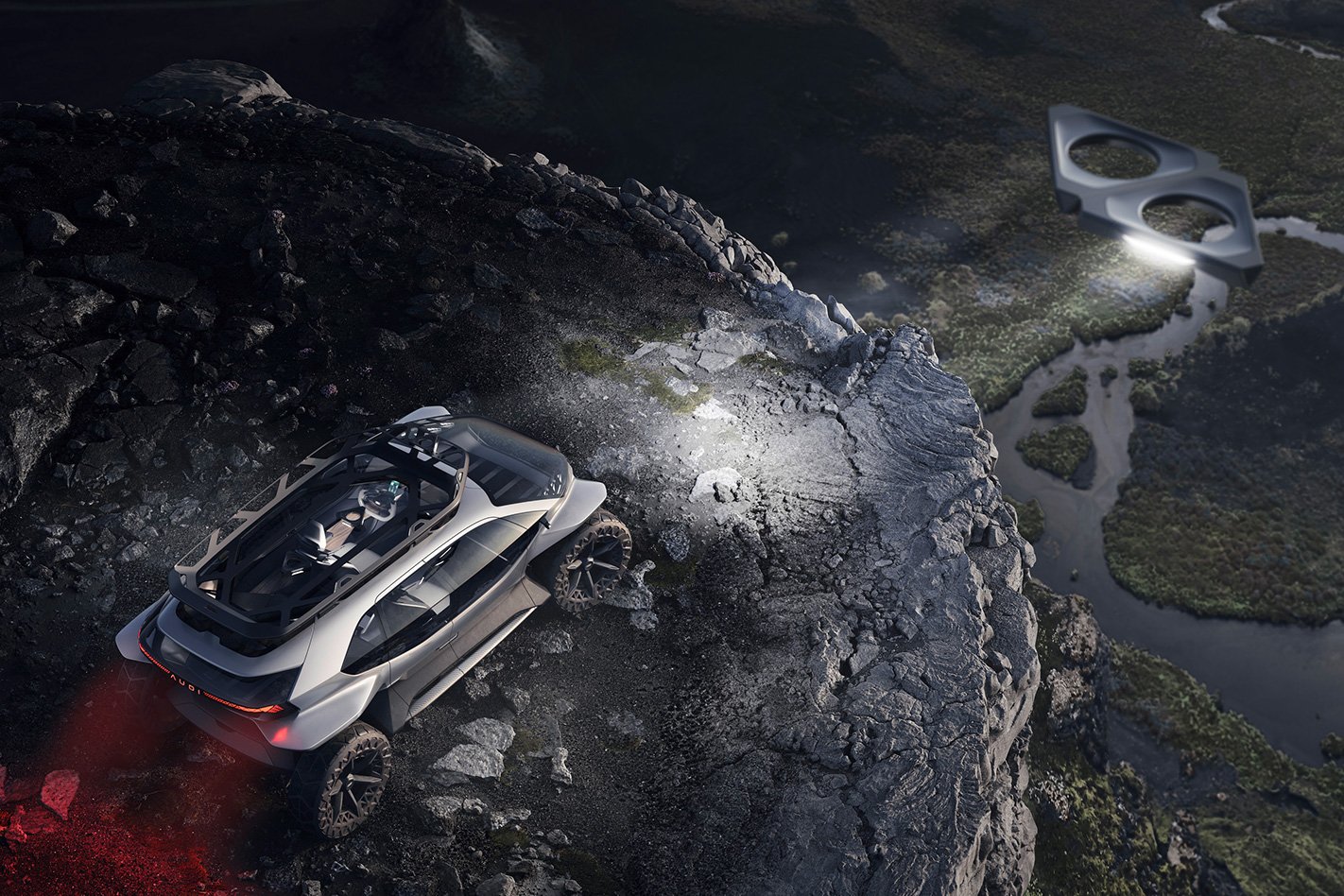
If that’s not enough, the rotor-less Audi Light Pathfinders can also relay a video image back to the cabin for the ultimate in vision. When they have fulfilled their duty, the pair of ALPs self park on the roof-mounted inductive charging stations ready for the next deployment.
The most all-terrain capable of the AI concepts offers a host of driver assistance systems while away from the road including optical sensors and a specially calibrated ESC system that alters the tyre pressures accruing to the surface.
But once back on the road, its autonomous systems allow occupants to take a step back from the more mundane motoring duties. According to its maker, the AI:Trail is autonomous driving level-four, allowing to to negotiate door-to-door journeys without driver intervention.
