
An eight-year-old boy was found on the side of a German highway early on Wednesday morning, after ‘borrowing’ his parent’s Volkswagen Golf for a quick joyride.
The child’s mother frantically phoned police at 12:25AM after learning her son had nicked the family hatchback from their home in Soest.
UPDATE 27/08/19: He’s done it again! Our boy has landed himself in big trouble yet again, repeating his high-speed escapade twice in a single week. This time he was nabbed at 177km/h and even ran red lights. Unfortunately for his parents, the late night drive ended after he crashed into a trailer, badly damaging the family car. Luckily no one was hurt, but it is reported that there will be consequences to his actions this time. He will now receive psychological counselling to help resist the need for speed.
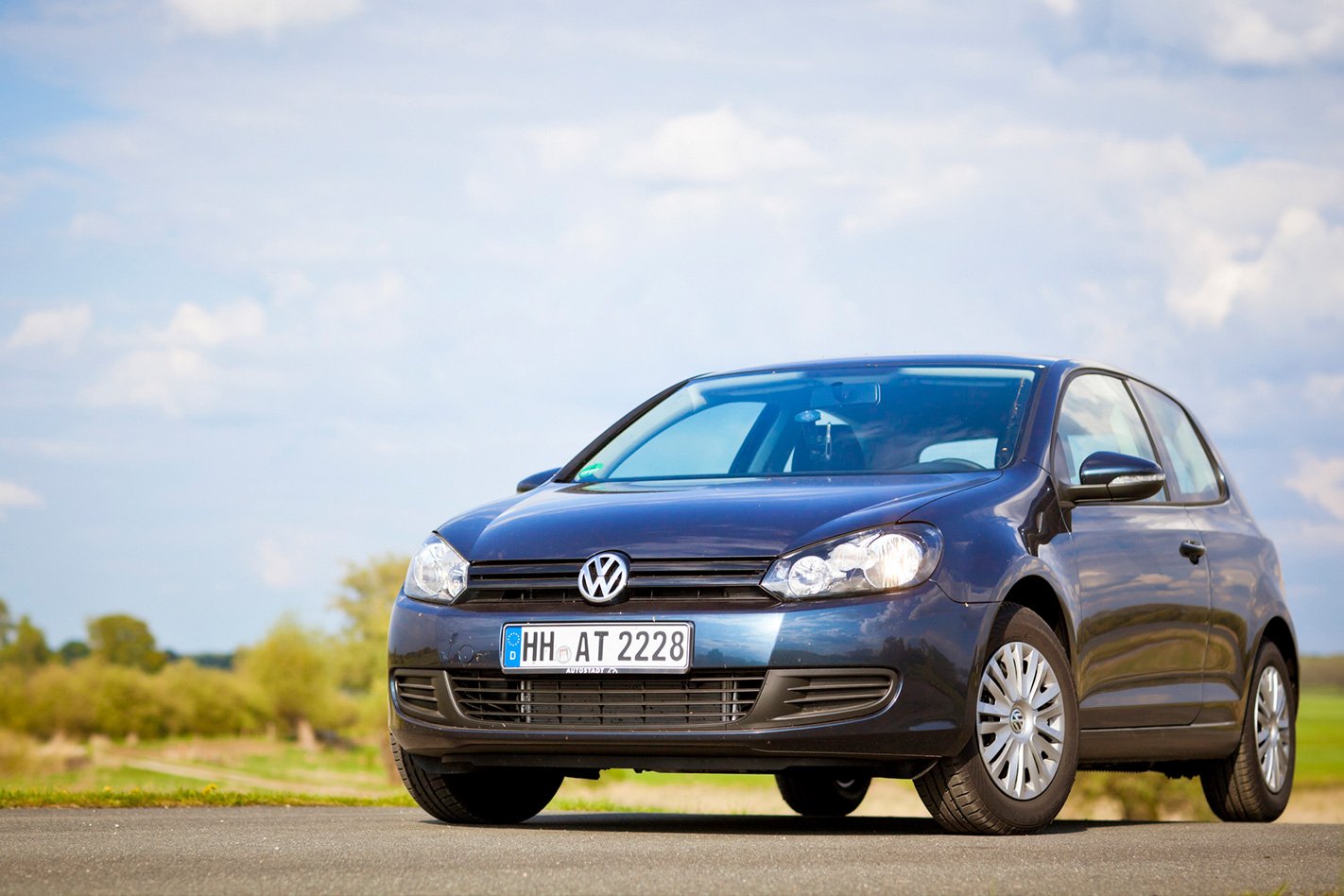
After hitting speeds of 140km/h on the A44 motorway near the German city of Dortmund, the child pulled over onto the hard shoulder, put his hazard lights on and placed a warning triangle behind the car, after his high-speed escapade made him feel unwell.
Once found, police said that the boy told them, “I just wanted to drive a little”, before bursting into tears.
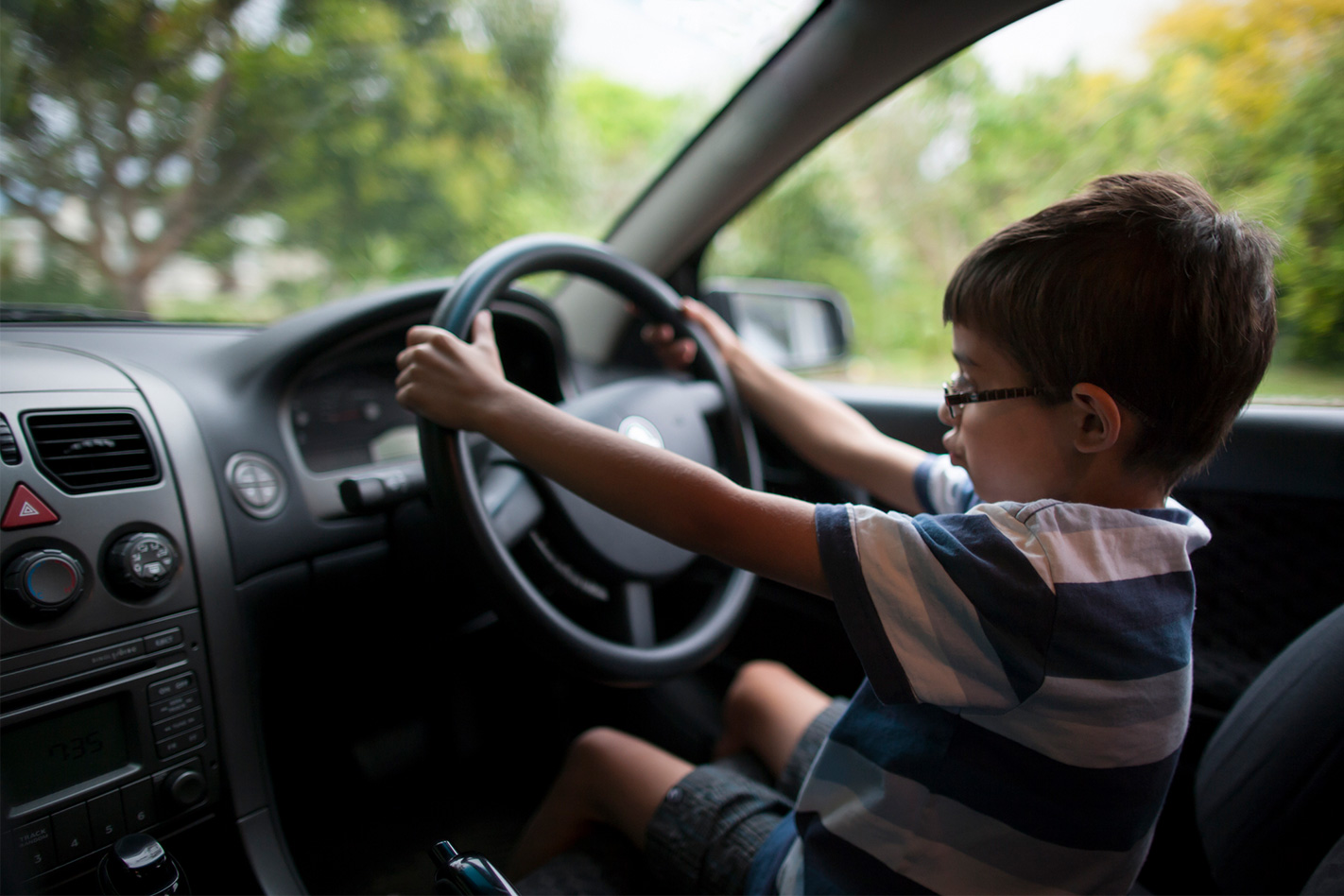
Reportedly, the boy has previously driven cars on private property and is fond of bumper car rides and go-karts.
Ending the tense high-speed escapade, the mother called authorities at 01:15AM after finding her son on the side of the motorway.
We can’t help but admire a kid who’s so keen to drive he teaches himself – at speeds up to 140km/h – on a German freeway. And he’s clearly safety-conscious, too!
Somewhat ironically, Germany has some of the most stringent and demanding learner driver regulations in the world – and we reckon this young fella will pass with flying colours.
No property or people were hurt during the late-night joyride; however, spare a thought for the poor kid, who’ll be likely grounded for the next decade.
The former chairman of the Volkswagen Group, Ferdinand Piech, has died.
It’s been reported that the 82-year-old passed away in a clinic in Bavaria Sunday night after collapsing at a restaurant.
Piech, the grandson of Ferdinand Porsche, was regarded as one of the most formidable figures in the automotive world during his long reign at Volkswagen.
He began working at Porsche in 1963, before moving to VW in 1972.

He was made CEO of the VW Group in 1993, turning the then-ailing company’s fortunes around through tough management and a focus on reducing costs without cutting quality.
During his tenure as CEO, Piech built the VW Group into a global powerhouse by acquiring and reviving numerous brands, including Skoda, Bentley and Lamborghini. He was also behind the revival of the Bugatti brand, though the program would ultimately cost the brand a lot of money.
Piech also signed off on VW’s acquisition of Porsche in 2012, though it was almost the other way around; the sports car company came perilously close to stealing VW from under Piech’s nose.
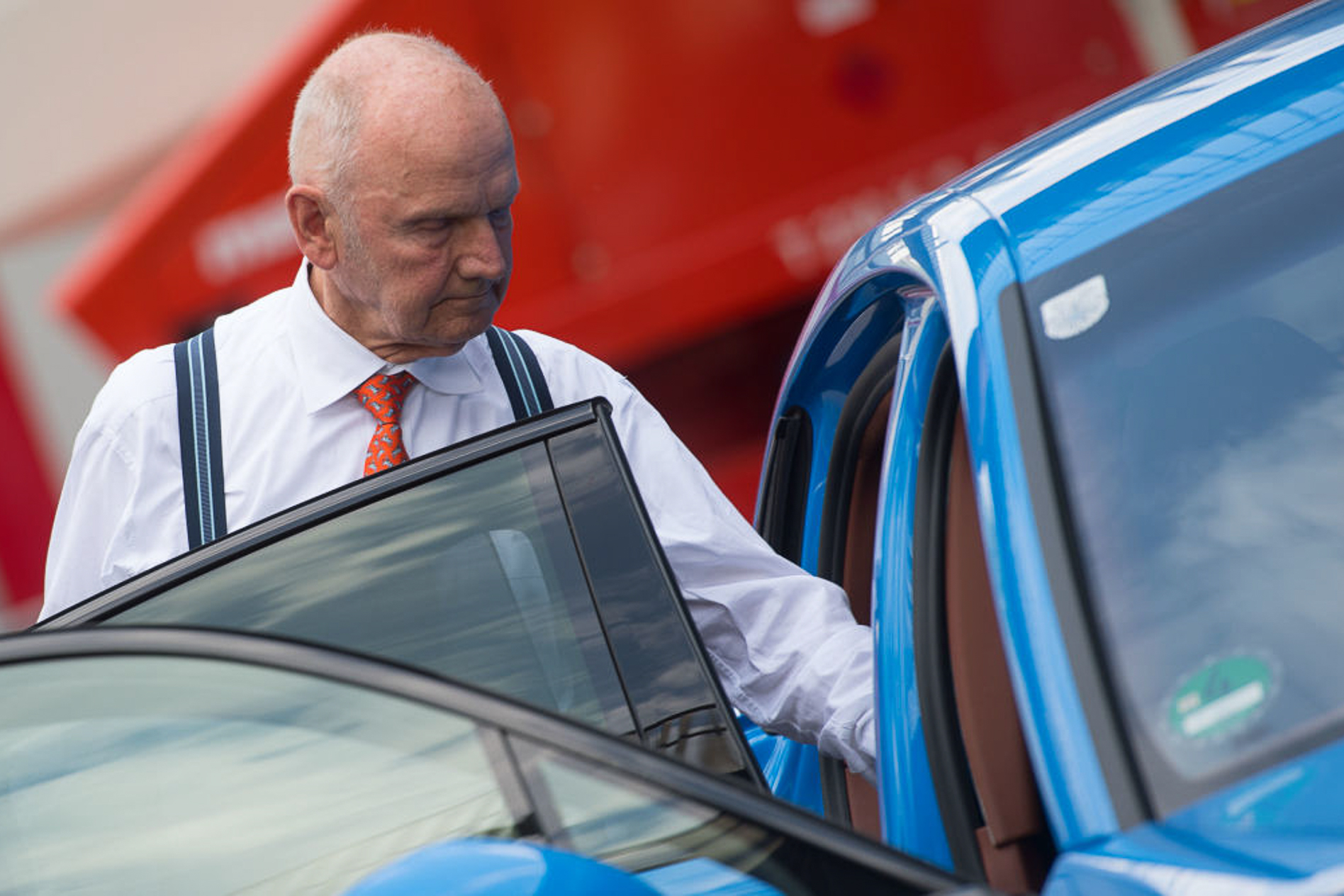
Piech at the Porsche annual stockholder meeting in 2017
A former engineer, Piech was instrumental in the development of all-wheel-drive for passenger vehicles via his work with Audi, and he also pushed the company to move into areas like passenger car diesel technology.
A strong-willed character, his desire for the brand to succeed in the United States brought about the onset of the emissions testing scandal in 2014 that came to be known as Dieselgate.
Though Piech would step down from Volkswagen before the scandal broke, it was his bull-at-a-gate management style that would ultimately lead to engineers within the company and outside of it to concoct a solution to lowering stated emissions from its diesel products.
Piech himself would escape prosecution in relation to the scandal, but it is a legacy that in many ways sums up his time at the helm of the Volkswagen Group – succeed, no matter what.
“If I want to achieve something, I approach the problem and push it through without realising what’s happening around me,” he wrote in his 2002 autobiography. “My desire for harmony is limited.”
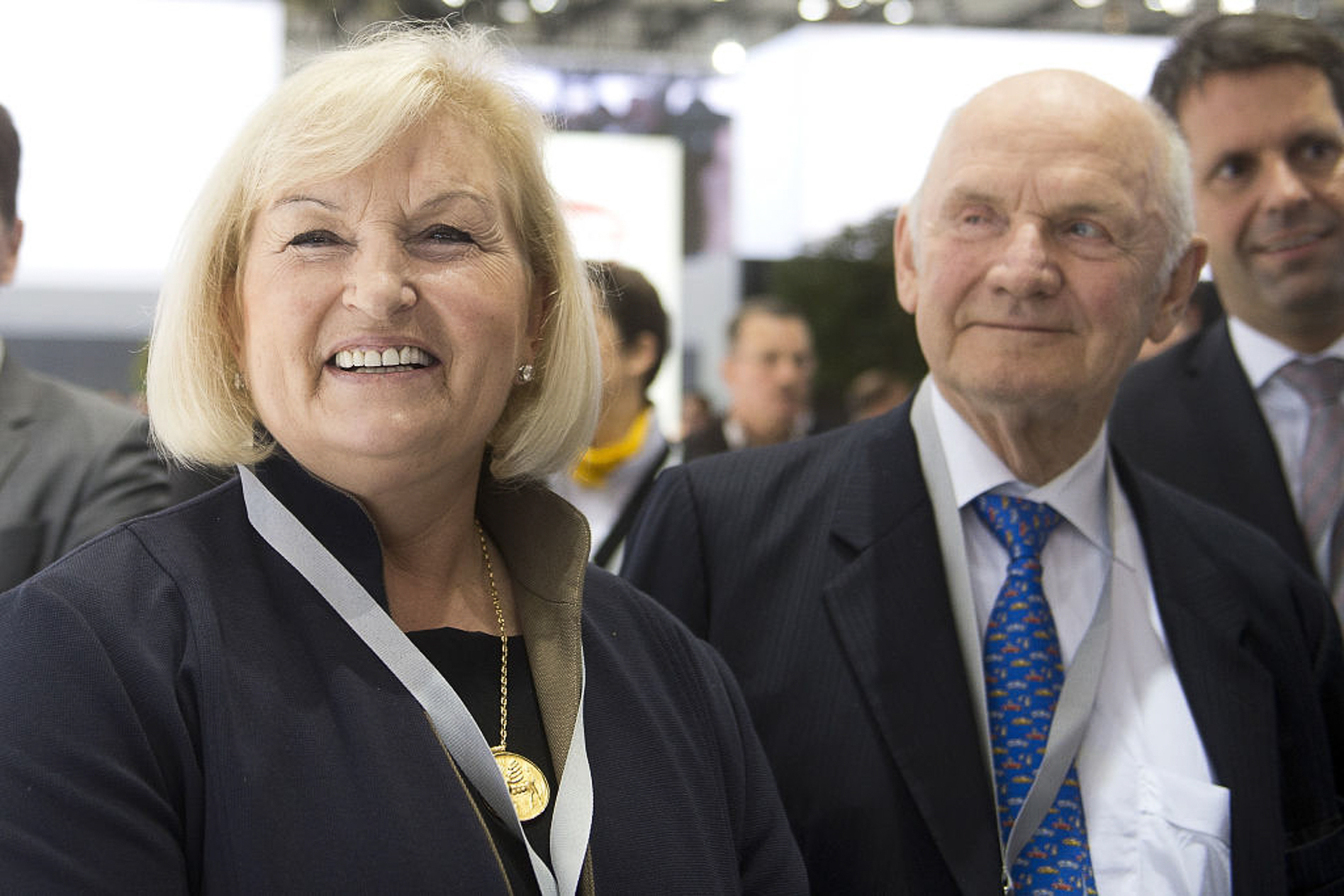
He is survived by five children with his first wife, the former Corina von Planta; two from his relationship with Marlene Porsche, the former wife of his cousin Gerhard Porsche; three with Ursula Piech (below); and two other children.
We all have memories of a ‘10-second car’ Brian O’Conner needs to deliver Toretto in the original Fast & Furious movie. That car is an A80 Toyota Supra with very 2001-esque vinyl graphics and a huge rear wing. It’s iconic to fans of the movie, and it’s back – sort of.
Several day-glo orange A90 GR Supras spotted on the set of Fast 9 have been uploaded to Instagram via user pw40. They were taken in Georgia’s capital, Tbilisi, as the crew filmed the ninth instalment of the popular series.
It’s clear to see that while the Supras are sans graphics, we wouldn’t be surprised to see a few NOS bottles appear as they did in the original film.
https://www.instagram.com/p/B1WguioAP5-/
Eight A80 Supras were used in original filming, but only one of them was manual and an original turbo variant. Branded ‘Hero 1’, the feature car was also the only one to be tuned with performance upgrades. Many of the stunt cars went on to be used in 2 Fast 2 Furious, while the red, engineless Supra that originally arrives as the ’10-second car’ was borrowed by Rhys Millen.
A black 1970 Dodge Charger was also spied on set, complete with a full widebody kit, and would no doubt be driven by Vin Diesel’s alter ego, Dominic Toretto. However, how it and the Supras have been written into the storyline (given Paul Walker’s passing) is yet to be determined.

Buy the new Toyota Supra or get a used Nissan GT-R?
Fast 9 is expected to be released in May 2020, which is a year later than predicted and gives a chance for the off-shoot Hobbs & Shaw to gain traction of its own. Until then, we’ll just have to continue living life ‘a quarter-mile at a time’.
A total of 235 Ferraris sold since 2017 could be at risk of catching fire, with a recall published by the Australian Competition and Consumer Commission (ACCC) stating a manufacturing defect is to blame.
Ferrari says there’s a fault in the fuel system used in Ferrari 488 GTB, Pista, and Spider, as well as the GTC4 Lusso and Lusso T. The Ferrari 812 Superfast is also affected by the recall.
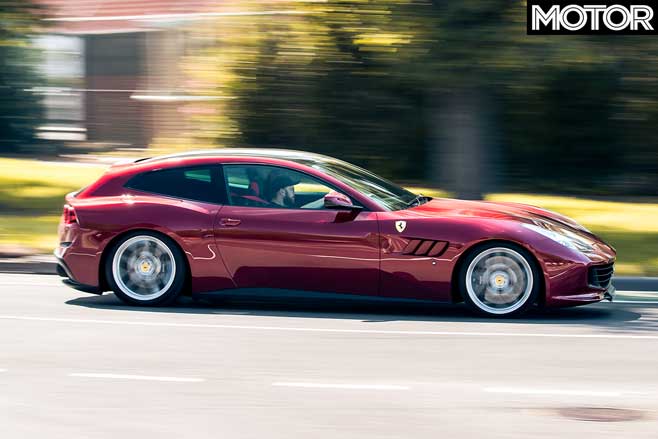
“Due to a manufacturing defect, there is an abnormality in the fuel vapour separator component located between the evaporative emissions canister and the fuel tank,” the recall states.
“The abnormality poses a risk of fuel vapour leakage, which may result in a fire.”
The models according to the VIN list released by the ACCC on the Product Safety Australia website are primarily 488 GTBs, making up 88 of the 235 vehicles recalled, though a further 61 Spiders and three Pistas make the number of 488s recalled total 152.
A total 27 GTC4 Lussos, and GTC4 Lusso Ts, have been recalled, as well as a surprisingly high 56 Ferrari 812 Superfasts.
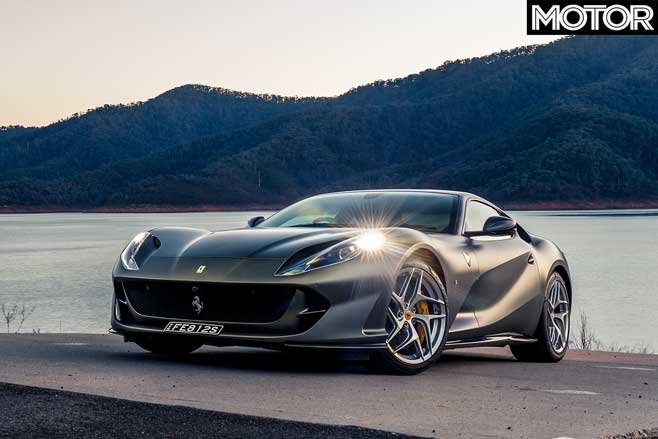
The recall says Ferrari will fix the issue free of charge, as is standard for a manufacturing fault recall.
“Consumers should contact their local Ferrari dealer to arrange a replacement of the fuel vapour separator, free of charge.”
This isn’t the only recent recall from the Prancing Horse, with 54 Lussos having been recalled for door cables used in the opening mechanism having the potential to break and prevent doors from being opened.
Another 65 Ferraris including 458s, 488s, and Californias, built between 2016 and ’18, have been recalled for “potential non-conformity of the air bag and the seat belt pretensioners,” which could lead to a lack of protection in a crash.
Out of the blue, Chinese manufacturer Lynk & Co has beaten the Nürburgring FWD lap record of 7min 20.143sec with its 394kW 03 Cyan Concept race car.
According to Lynk & Co, the lap time was achieved on the full 20.832km track layout, rather than the shorter 20.6km version that is often used by other manufacturers. The claimed lap time for the shorter version is 7min 15.123sec.
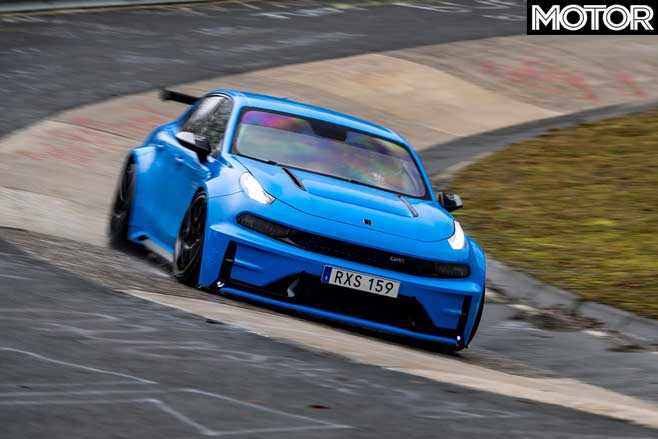
Though the lengthy lap time already trumps the Renault Megane RS Trophy-R’s lap record by at least 20 seconds, the 03 Cyan Concept isn’t a production model – though it is road-legal – which means Renault gets to keep the showroom bragging rights.
For those who aren’t familiar of Lynk & Co, don’t worry, the hipster-named brand was formed three years ago by Chinese auto giant, Geely, who also owns Lotus, Volvo and Cyan Racing.
Lynk & Co claims that the 03 Cyan Concept is basically conceived as a road car version of the race car that Cyan Racing runs in the World Touring Car Cup (WTCR).
Underneath its polarising looks, the 03 utilises Volvo’s Compact Modular Architecture (CMA), which it shares with the XC40 compact SUV and future Volvo 40 series models.
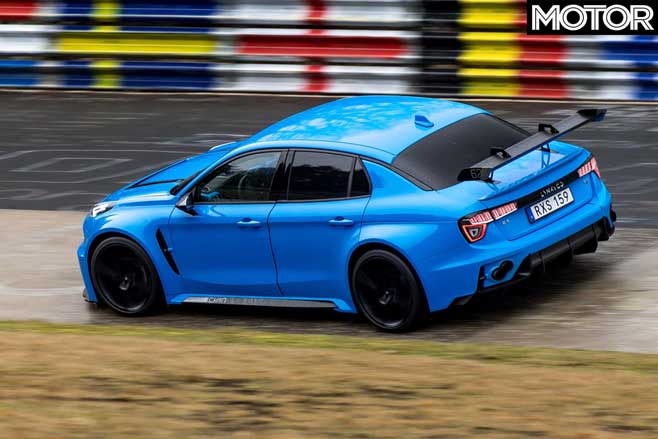
While the production 03 makes do with middling 1.5-litre and 2-litre turbocharged donks from Volvo’s stable, the 03 Cyan Concept’s 2-litre turbocharged engine was tweaked by Cyan Racing.
Cyan Racing was formerly known as Polestar Racing, the racing team who ran Volvo’s racing programme in the Swedish Touring Car Championship since 1996 and later became a tuner for Volvo cars.
In 2015, Volvo acquired Polestar Performance while the outfit rebranded itself as Cyan Racing and continues its relationship with the Swedish car maker as its official motorsports partner.
Currently Cyan Racing competes in the WTCC, Scandinavian Touring Car Championship, and the new WTCR racing series.
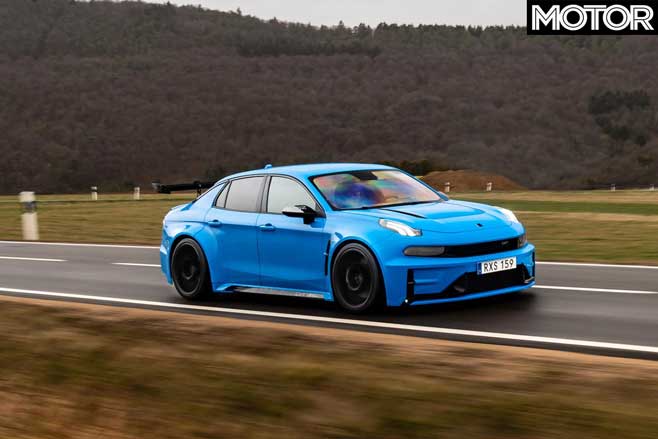
The team behind the 03 Cyan Concept’s development is said to be the same team who were responsible for Volvo’s insane 2011 335kW C30 Polestar concept and 2012 379kW S60 Polestar concept.
That being said, the team are no strangers to exploits on The ‘Ring. In 2017, the team set a record lap time of 8min 34.813sec in a S60-based touring car on the expanded WTCC track layout of the Nürburgring, as well as taking the four-door production record with a “secret” 7min 51.11sec lap time in a S60 Polestar.
According to Cyan Racing, the 03 Cyan Concept is used as a development platform for future Lynk & Co performance cars and parts.
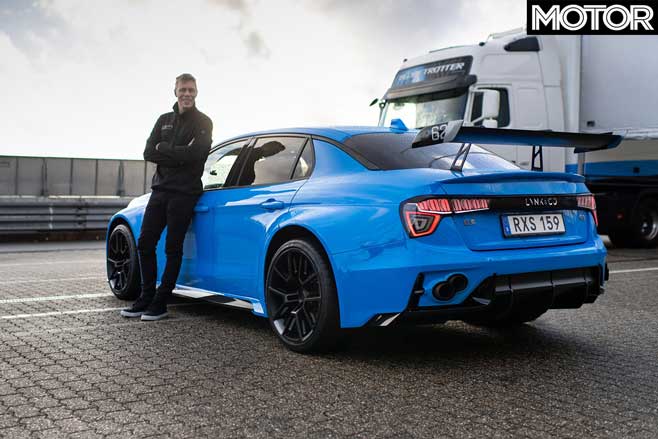
“While our main purpose for the laps on the Nürburgring is development, the records that we broke are a true testament to the potential and capabilities of the Lynk & Co platform, as well as our engineering philosophy from more than two decades of motorsport and road car performance,” said Thed Björk, Lynk & Co Cyan Racing’s WTCR driver and lap record setter.
As of the time of publication, the Lynk & Co brand only exists in the Chinese car market, though that may change soon as the brand’s global rollout expected to get underway soon with the Australian market in its sights.
A four-door sedan that is faster than a supercharged V8 Jaguar with a roll cage, and more agile than a hot hatch. Sounds pretty darn good, right? Well, it could be coming to Australia soon.
Described above is the Lynk & Co 03 Cyan Concept, currently undergoing a transformation into life as a production car, with a possible eye on sales Down Under.
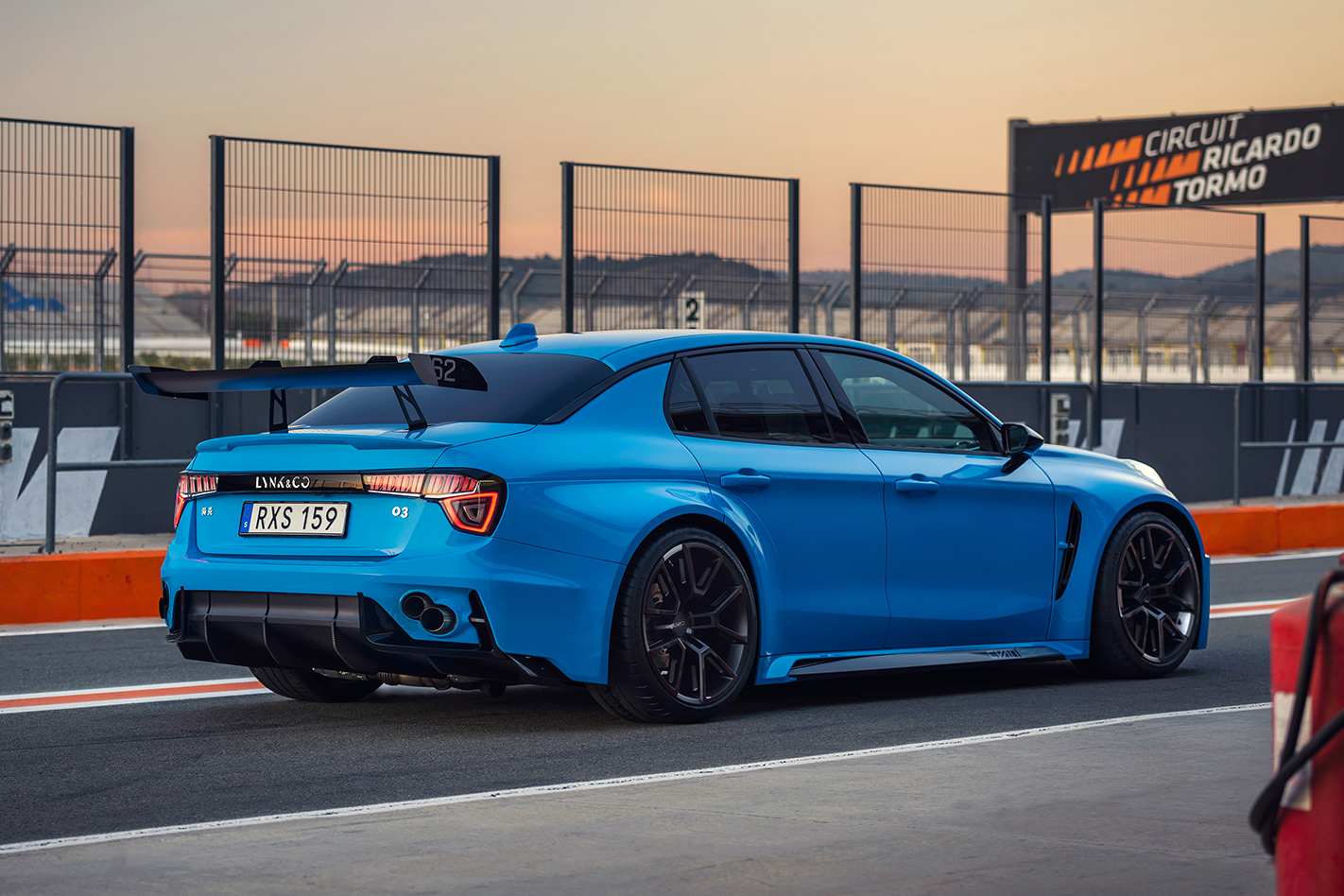
For many, the name Lynk & Co would be unknown, and we don’t blame you, as the company was only founded three years ago.
It’s part Swedish, part Chinese, and owned by automotive conglomerate Geely, sharing its architecture and engines with Volvo (also owned by the Chinese giant).
Currently being offered only in the Chinese market, Lynk & Co has an edict to appeal to younger buyers by focusing on styling and technology. However, it seems performance isn’t at the bottom of the priority list, as shown by the super sedan we mentioned earlier – the 03 Cyan Concept – which is quite literally underpinned by a race car.
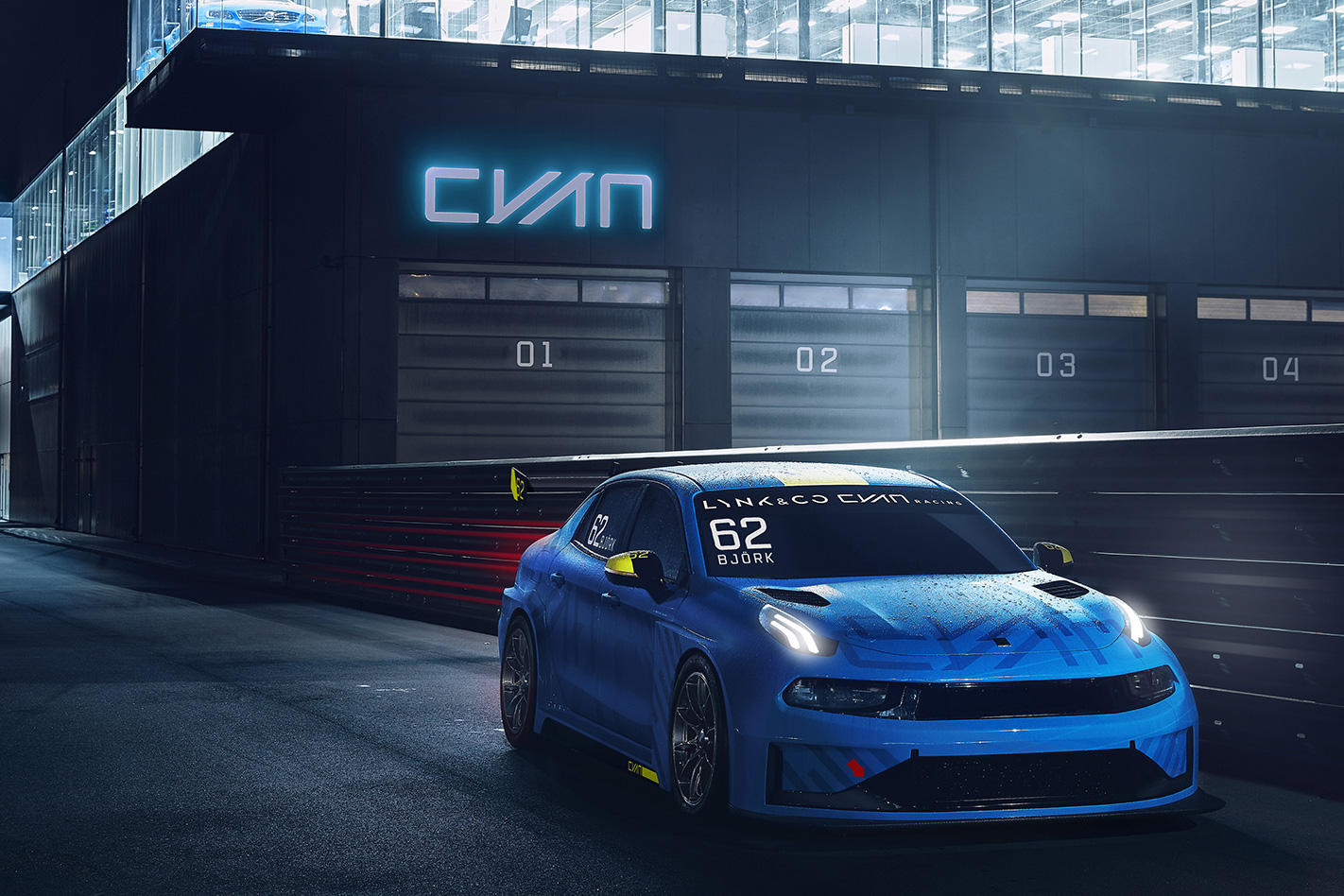
Cyan Racing (nee Polestar Performance, Volvo’s factory race team) field a Lynk & Co 03 in the World Touring Car Cup championship, which adheres to TCR regulations.
The 03 Cyan Concept puts a road car’s interior inside the traditionally stripped-out racer cabin of the TCR car, while utilising a version of the 2.0-litre turbocharged four-cylinder engine tuned to 373kW and 504Nm, powering the front wheels via a six-speed sequential gearbox and proper mechanical differential.
The result is a car that lapped the Nurburgring quicker than Jaguar’s riotous Jaguar XE SV Project 8, which has a rollcage instead of back seats and supercharged 5.0-litre V8 under the bonnet. The 03 Cyan Concept is currently a one-off, but will undergo cold weather testing in Sweden soon, with plans for a production car to be sold in the near future.
Australians are rabid when it comes to performance vehicles; we are frequently among the top players on a per-capita basis when it comes to sales for performance sub-brands, so Lynk & Co could use the production version of the 03 Cyan Concept as an arrowhead into our market, following plans to begin sales in Europe and the US.
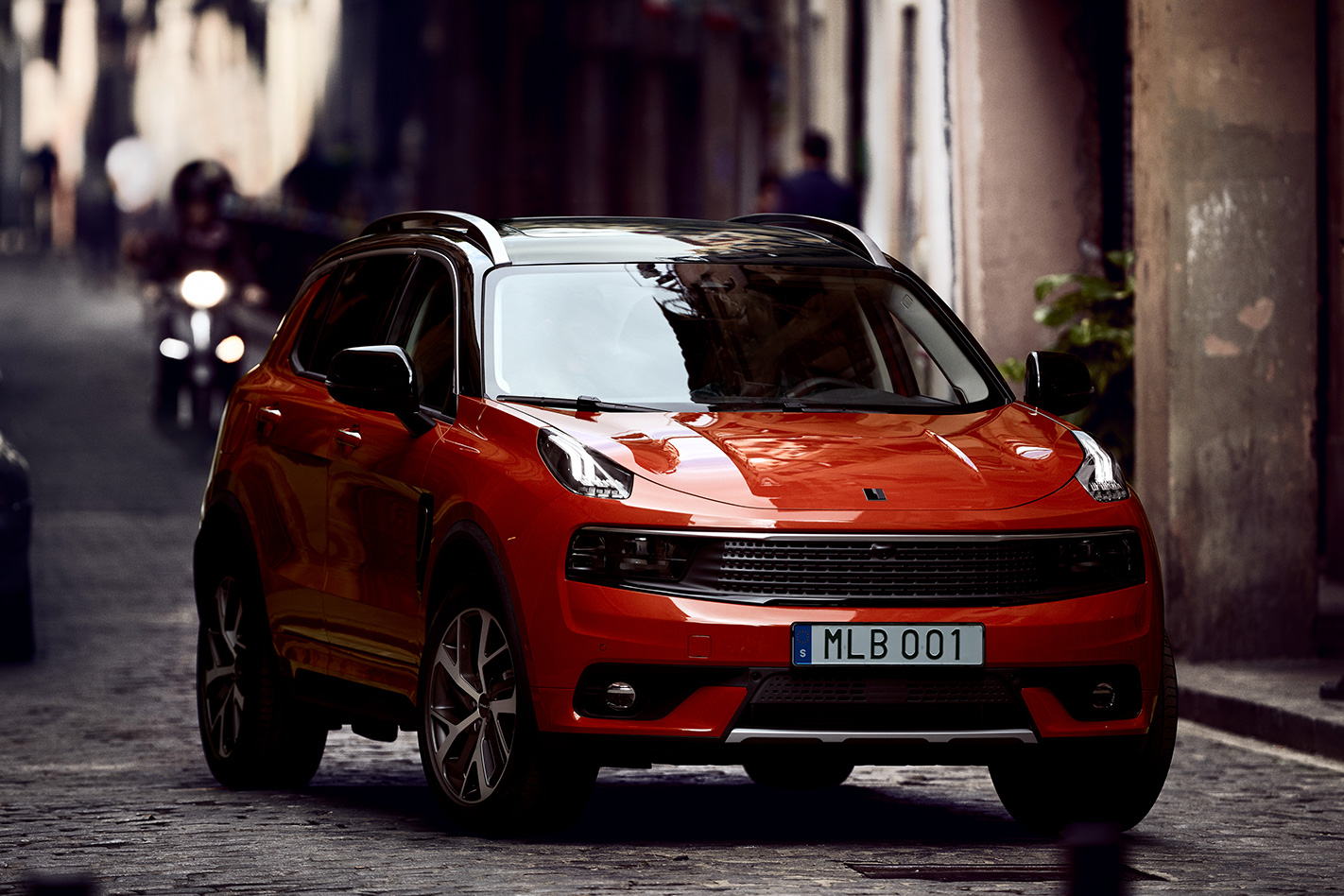
“Lynk & Co, Polestar, yes [we’d introduce them in Australia] in terms of supporting them for customer service at the very least,” Nick Connor, Volvo Australia managing director, recently told Wheels.
“I think because they have no infrastructure in Australia that’s something we’ll talk about.”
“It seems obvious to me that we have a network of very confident dealers and we’re servicing [Geely] SPA and CMA platform cars so if there are CMA platform cars from Lync & Co it would make sense for us to look at supporting them, but nothing is nailed down yet,” he said.
“I think they’d [Lynk & Co] set up their own sales network. Their international supply model is one of direct supply over the internet so they’re not planning to setup sales here. Maybe it is direct supply and Volvo dealers look after the customer service aspect.”
Any Australian sales would have to wait until after Europe and the US are conquered, but there is plenty for local customers to be excited about.
Currently the company builds three vehicles, creatively dubbed the 01, 02, and 03, covering the medium SUV, small crossover, and compact sedan segments respectively.
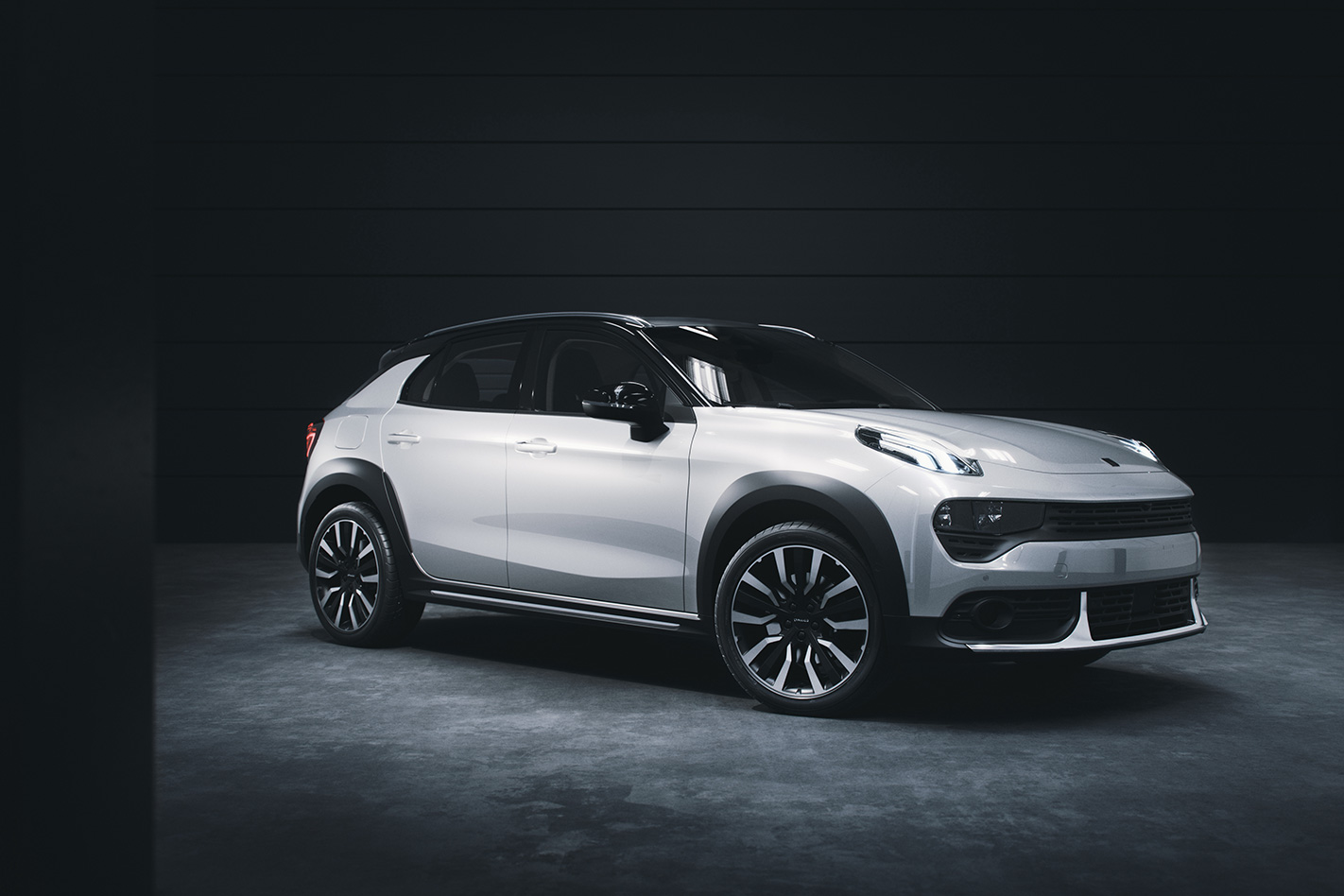
Each is built on Volvo’s ‘Compact Modular Architecture’ (CMA), that helped the XC60 and XC40 SUVs to back-to-back Wheels Car of the Year victories, while utilising engines from the Swedish brand.
Geely intends to use Lynk & Co as a hammer blow to car dealerships, with plans to sell vehicles directly to customers via the internet without a brick and mortar middle man. The same would be replicated in Australia.
Aussies need not worry that the brand is unproven either, having sold over 120,00 vehicles in China last year, more than the second-best selling car brand in Australia managed (Mazda, 111,280).
If it can blend performance and style with a convenient buying process, Lynk & Co could have a recipe that will appeal greatly to Aussie buyers.
What stands out?
The Kia Stinger is a stylish and very well equipped four-door sports sedan with a sleek coupe-like roofline. It comes with a choice of 2.0-litre four-cylinder turbo or 3.3-litre twin-turbo V6 petrol engines, with the latter providing impressive performance. It has a sophisticated and spacious cabin that’s comfortable for long-distance cruising. Automatic emergency braking is standard across the range
What might bug me?
The groan from taller passengers as they duck beneath the low, sweeping roofline to get into the rear seats.The disappointment caused by the V6 engine’s meek engine and exhaust note when you put the foot down. There is an optional sports exhaust, but this creates the opposite extreme of being too loud when you’re not revving hard. The only way to make it quieter is to select Eco drive mode.Suddenly not being able to see properly at night because the auto-dipping headlights can go from blazing main beam to candle-power on deserted country roads.Not being able to see through the rear window when it rains. Despite technically being a hatchback, the Stinger has now rear wiper.No longer being able to choose a mid-spec Stinger Si, which bridged the price and equipment gap between the S and GT-Line/GT versions and had the smoother standard suspension, making it the sweet spot of the range.
What body styles are there?
Five-door liftback sedan only. The Kia Stinger drives its rear wheels and is classed as a large car, lower priced.
What features do all Stingers have?
Satellite navigation, displayed on a colour central touchscreen that also controls cabin functions.A reversing camera, and rear parking sensors.Advanced driver assistance technology including autonomous emergency braking with forward collision warning system, front parking sensors, a lane keeping assist and driver attention alert. (For more on these systems, please open the Safety section below.)An MP3-compatible sound system with an AM/FM/Digital (DAB+) radio, auxiliary and USB inputs, Bluetooth audio connectivity, and at least six speakers.Support for Apple CarPlay and Android Auto, which lets you display some smartphone apps and maps on the touchscreen and control them from there (or by voice).Electric folding and heated door mirrors with side indicators and puddle lamps, and an auto-dimming rear-vision mirror.Keyless entry and start.Auto levelling headlights that can turn on automatically when it gets dark, LED daytime running lights, and LED rear brake and tail lights.Dual-zone climate control, which allows you to set different temperatures for either side of the cabin. Air-conditioning vents for rear-seat passengers.Two 12-volt power sockets, and two USB phone charging sockets. A driver’s seat with eight-way power-adjustable lumbar (lower back) support, and power-adjustable front passenger seat.Cruise control, which is operated from the steering wheel along with the audio system and your phone.Wheels made from aluminium alloy (which look nicer than steel wheels and are lighter).Eight-speed automatic transmission, and paddle shifters on the steering wheel that allow the driver to electronically control gear shifting.Seven airbags. Electronic stability control, which can help you recover from a skid and is mandatory on new cars. (For the placement of airbags, and more on Stinger safety features, please open the Safety section below.)The Stinger comes with Kia’s industry-leading seven-year, unlimited kilometre warranty.
Which engine uses least fuel, and why wouldn’t I choose it?
Two petrol engines are available in the Stinger: a 2.0-litre four-cylinder turbo and a significantly more powerful, 3.3-litre twin-turbo V6.The 2.0-litre is marginally the more fuel-efficient, using 8.8 litres per 100 kilometres on the official test (city and country combined).The main reason you would not choose it is that you want more fun from your Stinger, which is what the car is about. The V6 has significantly more power, accelerates faster and is far more entertaining to drive. It’s a bit thirstier, with an official fuel use figure of 10.2L/100km.The 2.0-litre engine experiences turbo lag, which means there’s a slight hesitation when you push the accelerator from a standing start as the turbo starts spinning to provide additional power. But once you get going, acceleration between gears is good.The six-cylinder Stinger 330Si averaged 11.6L/100km in comparison testing for the December 2017 edition of Wheels – between the accompanying 2.0-litre turbo Volkswagen Arteon (10.1L/100km) and the 6.3-litre V8-engined Holden Commodore SS-V Redline (14.7L/100km).Every Stinger drives its rear wheels through an eight-speed automatic transmission.
What key features do I get if I spend more?
The Stinger comes in two model grades, S, and GT (known as GT-Line in the top-spec 2.0-litre variant). The S is with the 2.0-litre, four-cylinder turbo or the 3.3-litre twin-turbo V6, (200S and 330S) while the GT-Line is a 2.0-litre turbo version of the V6-engined GT. The V6 version of each specification is the more expensive.The least expensive S models come with cloth seats and 18-inch alloy wheels, 7.0-inch infotainment screen and all of the features common to all Stingers mentioned above.Equipment levels spike when you move to GT-Line and GT models, including additional driver assistance technology in the form of blind spot detection, and rear cross traffic alert. Ride and handling is enhanced with the addition of dynamic stability damping control, which adjust the suspension to suit road conditions.Advanced smart cruise control that keeps a safe distance from the car in front even in stop-start traffic, rain-sensing windscreen wipers, and front parking sensors.Parking is made easier and safer thanks to a 360-degree surround-view camera that shows a simulated top-down view of the car to help avoid obstacles.The headlights are longer-lasting LED and feature automated high-beam dipping, and dynamic light bending to help you see into corners as you turn.The GT-Line and GT also have bigger 19-inch alloy wheels that are wider at the back than the ones used on the front, with lower-profile tyres for a sportier look and improved handling.They also feature a powered sunroof, while inside, the powered driver’s seat gains four-way lumber support for your lower back and two seat position memory settings. Both front seats can be heated or ventilated. The leather-trimmed seats have GT-Line/GT logos, with the V6 GT’s trimmed with more expensive Nappa hide.And music lovers will appreciate the 15-speaker Harman Kardon premium sound system that includes two under-seat subwoofers powered by an external amplifier.
Does any upgrade have a down side?
The range-topping GT’s active suspension has drawn criticism for being too soft on its Comfort setting, and too harsh on its harder-riding Sport mode.
How comfortable is the Stinger?
The Kia Stinger is a well sorted grand tourer, able to eat up long-distance travel with relative ease and little effort.The front sports seats are heavily bolstered, but are comfortable and hug the driver and front-seat passenger in tight when used as a sports car.Once inside, the Stinger’s ergonomics are good, with a well laid-out dash behind an adjustable steering wheel. The instruments and multimedia display are clear and easy to read. There’s a dash of style, too, via three jet turbine-look air vents set below the high-mounted multimedia interface’s touchscreen.The quality of the materials is good for a Kia, with soft-touch surfaces and interesting textures almost everywhere a hand or elbow falls. As a plus, the passenger’s seat includes height adjustment on all variants.The view is a little sombre out of the Stinger’s back seats. There’s plenty of knee and toe room, and the outboard seats are nicely shaped and supportive. However, the falling roofline makes getting in and out of the smaller rear doors’ openings much more difficult than for the front seats.
How is life in the rear seats?
The Stinger has comfortable seats but is quite narrow for a large car so you won’t have the same three-abreast comfort as say an Aussie-built Holden Commodore. Anyone who does squeeze into the middle seat will need short legs to fit them around the transmission tunnel that’s needed because this is a more traditional rear-drive car.Two adults will find it spacious enough, although the sloping roofline can make headroom tight for taller people, particularly in the GT-Line and GT models equipped with the sunroof. It also makes getting in and out a little difficult. The small rear windows make things a little claustrophobic, not helped by the blackness of the interior.Rear-seat passengers can plug in their devices to a 12-volt or USB socket mounted on the back of the centre console. There are rear-seat air vents in both models, map pockets on the front seatbacks, good sized door pockets, and a centre armrest.The Stinger offers three child anchorage points as well as two ISOFIX child-seat mounting points.
How safe is the Stinger?
Standard safety equipment includes stability control and seven airbags. There are airbags directly in front of the driver and front passenger; two outside the driver and front passenger to protect their upper bodies from side impacts; a knee airbag to protect the driver’s knees and curtain airbags that protect the heads of front and rear occupants from side impacts.A reversing camera is also standard.Autonomous emergency braking, which assesses the likelihood of you driving into an obstacle is standard.Then there is the lane-keep assist, which uses the cameras to detect lane lines on the road and automatically help you steer within them. Driver attention warning alerts if you are drifting laterally on a freeway – a sign of fatigue. And auto-on headlamps ensure you are visible at dusk.The GT-Line and GT add blind-spot detection, which provides a visual warning in the door mirror of a vehicle in a blind-spot near one of the Optima’s rear corners, and rear cross-traffic alert, which helps you avoid bingles when reversing out of carparks or driveways – warning you if another vehicle is about to cross your path.The Stinger’s body structure uses high-strength steel, which Kia says provides extra protection in a collision.The Stinger received a range-wide five-star Australasian New Car Assessment Program (ANCAP) rating in April 2018.
I like driving – will I enjoy the Stinger?
In a word: Yes. Kia’s parent company, Hyundai, developed the Stinger’s chassis from the outset to be a fun, enjoyable drive, and local suspension tuning has taken that a step further. The rear-drive is significant in the context of the loss the Australian-built Ford Falcon and Holden Commodore.But there are different levels of enjoyment in the Stinger. The four-cylinder cars carry less weight over the front wheels and feel more nimble in spirited cornering, but the turbocharged 2.0-litre engine shared with the Kia Optima doesn’t sound that great. And turbo lag from the single turbocharger saps performance from a standing start or low revs, though this is lessened in Sport mode.The V6 feels much more spirited and nimble and accelerates more like a V8-engined car, but without the satisfying noise. The electronically assisted steering feels better in the V6, but that’s more to do with the weight of the bigger 3.3-litre V6 over the front axle.All Stingers have an eight-speed automatic transmission. It’s the only part of the Stinger to draw negative attention as it will often switch to a higher gear too soon. The steering wheel-mounted paddle shifters, which let you control gear changes, come in handy at this point.Despite the appeal of the GT-Line and GT’s adaptive dampers that can switch the suspension between comfort and sport modes, the Stinger seems more at home on its default dampers, cornering just as hard as the more pricey models but without being either too soft or hard.
How is the Stinger for carrying stuff?
The Stinger has a 406-litre boot, which is a little tight for a large car. For more space, the rear seat has a 60-40 split fold which extends the load area to 1114L.
Where is the Stinger made?
The Kia Stinger is built in South Korea.
Are there any rivals that I should consider?
Other larger sedans in its price range include the Holden Commodore, Volkswagen Arteon and the Skoda Superb.You may also want to consider medium-sized rivals offering a similar amount of interior space including the new Toyota Camry, Ford Mondeo and Volkswagen Passat.
I like this car, but I can’t choose which version. Can you help?
The Stinger 330Si is the sweet spot in the line-up. It’s $4000 cheaper than the range-topping GT, but has the same engine and performance. It rides on the standard suspension set-up that does a much better job of all-around driving comfort than the GT’s adaptive dampers.
Are there plans to update the Stinger soon?
The Kia Stinger arrived in September 2017.In March 2018, automatic emergency braking and lane-keeping assist were added as standard equipment to the entry-spec Stinger 200S and 330S. The lack of these features previously saw each variant gain a poor 3-Star ANCAP rating, but the update means a 5-Star rating now applies to the whole Stinger range.Kia Australia deleted the mid-sped Stinger Si grade from the range in July 2019 for the 2020 model year, leaving just the entry-level S and GT-Line/GT.A mid-life facelift is expected to arrive in 2020 which should see further improvements to its chassis and suspension tune.
The scenario you see playing out here may never have happened at all. Until just a few weeks ago, Volkswagen Group – the parent company that owns Czech brand Skoda – had deemed Australia too hot and dusty for certain high-performance engines. And that included the mighty dual-turbo diesel that powers Skoda’s new Kodiak RS.
It’s not that the company couldn’t make the latest member of the seven-seater family work in an extreme climate, but the measures required simply didn’t make economic sense. It was the same for the Audi S3 and the current Volkswagen Golf R, both of which arrive in Australia with detuned engines, compared with their European counterparts.
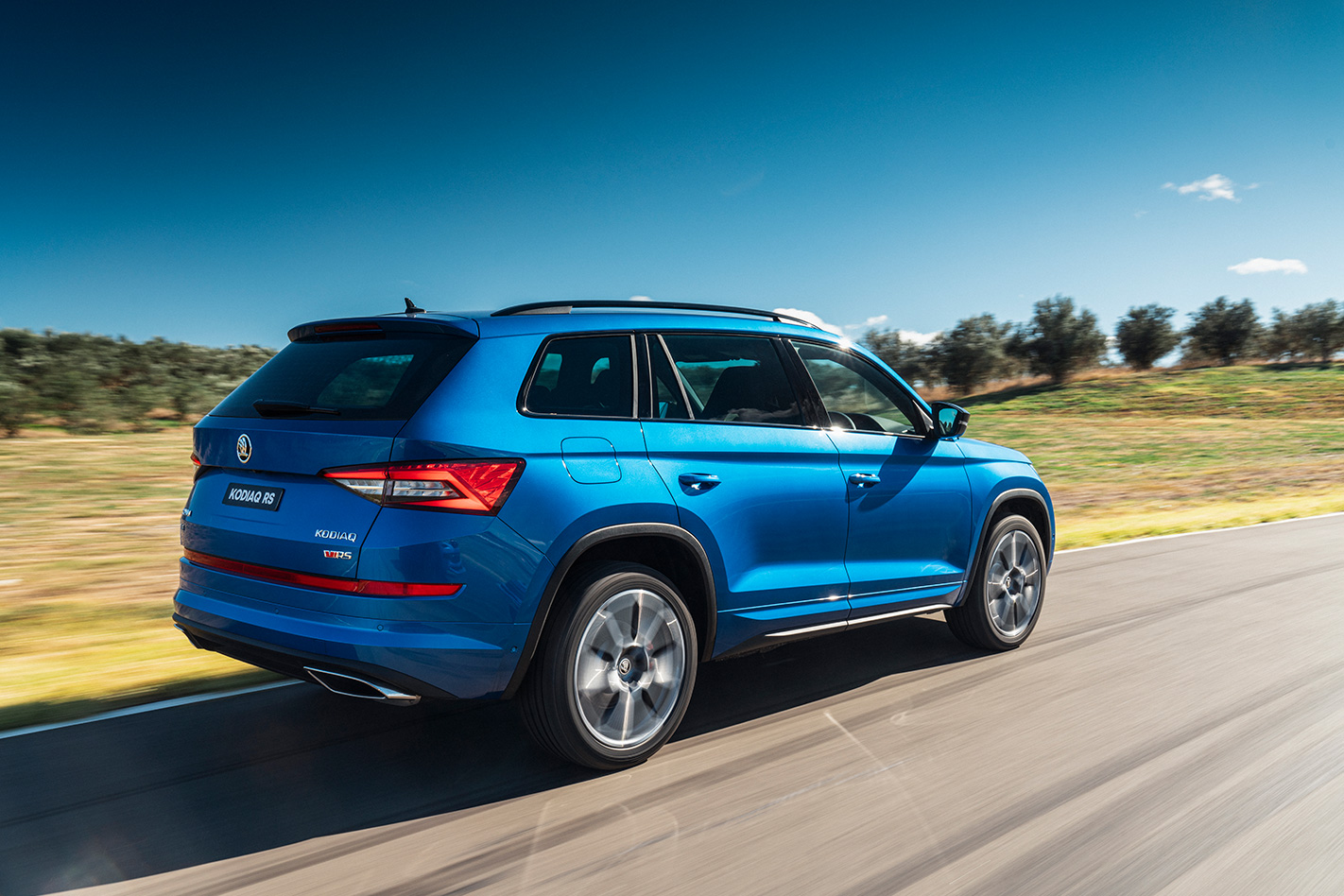
Far simpler than modifying air ducts, detuning the engine and chucking in a larger capacity radiator was a review of Australia’s climate in the eyes of VW Group, and that’s exactly what Skoda Australia campaigned for … and won.
Instead, Australia is now regarded as ‘moderately hot’ and the fruit of that hard work is exactly the same Kodiaq RS that’s sold in Europe. It’s now available to Australians including every one of its 176 kilowatts and the full 500Nm of torque, not a muzzled version.
And it’s exactly that full-fat, unfettered Kodiaq that we got our hands on weeks ahead of the official local press launch, and before anyone else in Australia had driven it.
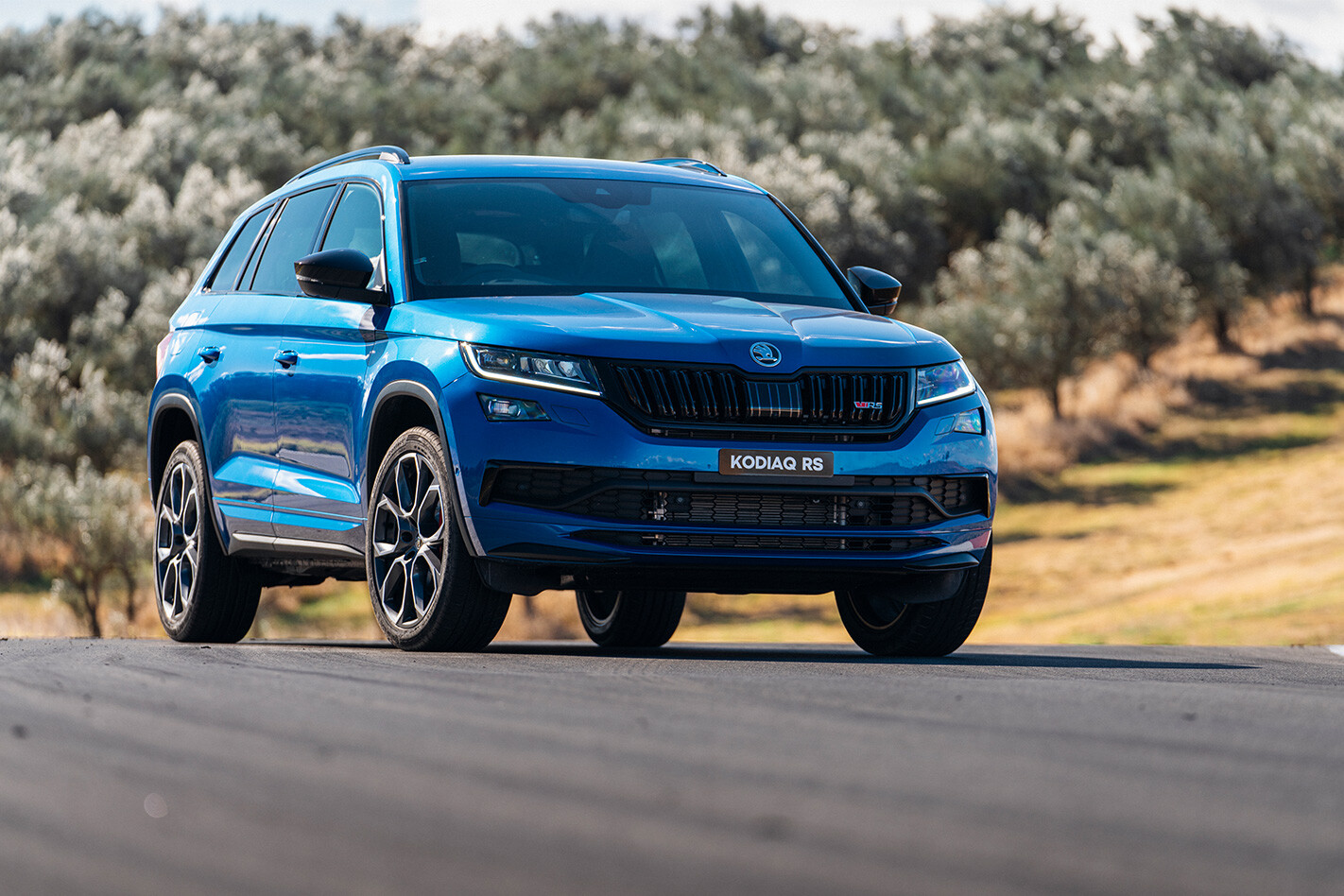
In more pedestrian 132TSI or 140TDI incarnations, one of the first qualities you notice about the Kodiaq large SUV is how beautifully lively and rewarding its chassis is to throw through a few corners.Shortly after, you might find yourself yearning for a bit more power.
That’s where the new RS blasts in. It takes the same excellent platform courtesy of Volkswagen’s prevalent MQB blank canvas and adds a little Skoda RS magic. Off the mark, the Kodiaq RS is brilliantly rapid.
As soon as the throttle is stabbed to the wide open position, a tiny turbo accelerates up to maximum boost like a Jack Russel across a putting green. That’s enough to get the first of the dual clutches in the automatic transmission slipping hard and sending the initial wave of torque to all four wheels with dutiful urgency.
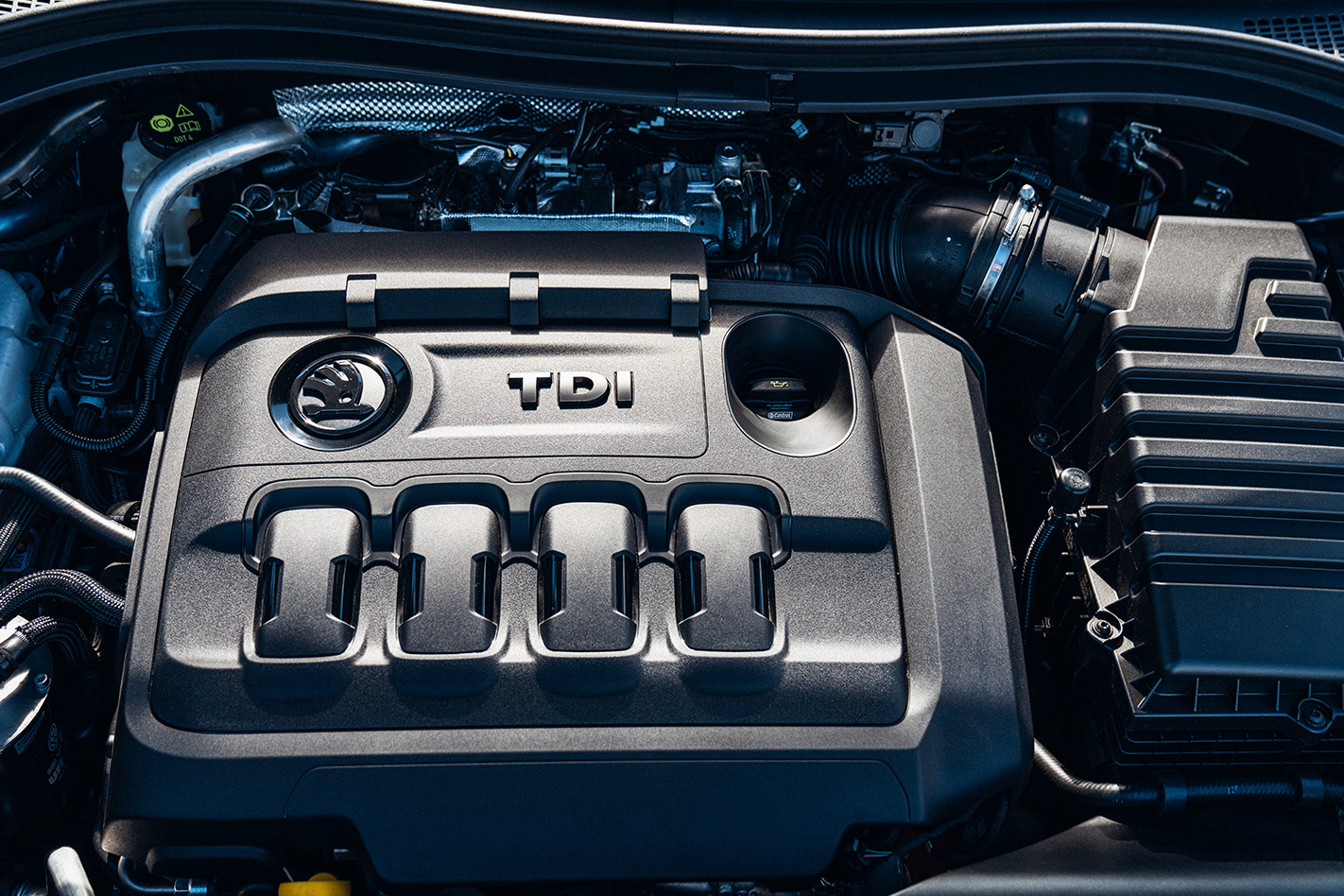
Shortly after, the second turbo – fuelled by the exhalations of the little guy – begins a larger boost assault, ramming more air into the now faster-spinning engine (we’re now talking Saint Bernard bounding along a windy beach, if you needed another visual analogy).
The onset of full boost wicks the torque and power up to their peak outputs and the four Pirelli P Zeros slap all that go down to the blacktop with the competency you would expect.
Officially, the Kodiaq RS gets from a standstill to 100km/h in 7.0 seconds, but thanks to its ability to jump off the line like someone has stamped on its tail, it feels significantly faster. Okay, we’re done with the dog references now.
Extracting that much energy and drama from just 2.0 litres of four-cylinder donk would be tarnished if it was accompanied by a diesel clatter and muted report, but it isn’t. Some noise is piped into the cabin via the sound system, but a microphone strapped to the back of the RS confirmed for us that a huge dollop of its deep note is very real. Top marks here too.
There’s a little more roll than expected through corners but no more than the standard Sportline Kodiaq and, like the other variants, the RS has the same lovely feedback through the steering that is more akin to a previous hot-hatch era than family lugging SUV.
It’s 20-inch wheels (of the same design as the Octavia RS) wear low profile rubber that resists deformation on faster corners and there is an even greater sense of confidence in its manners.
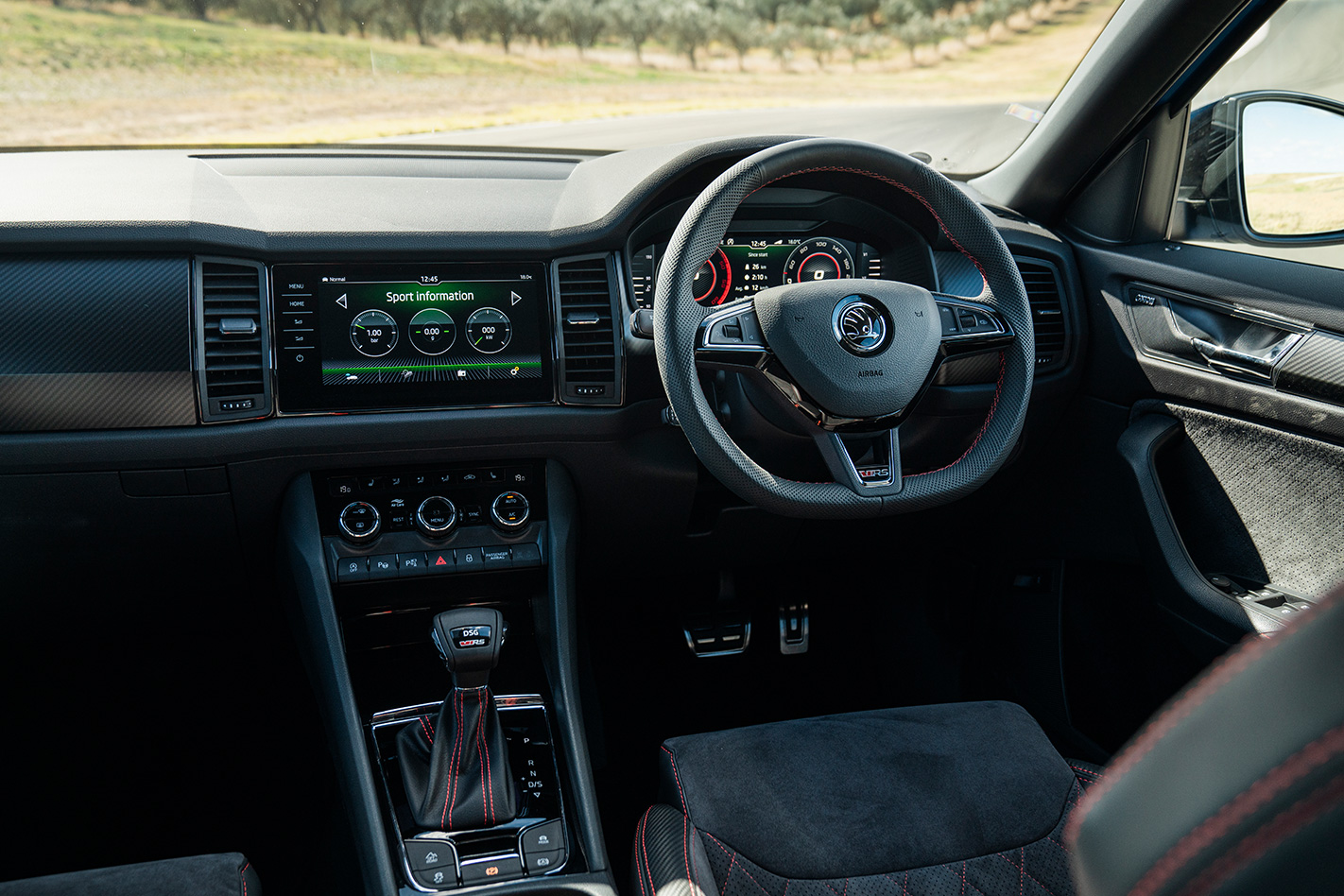
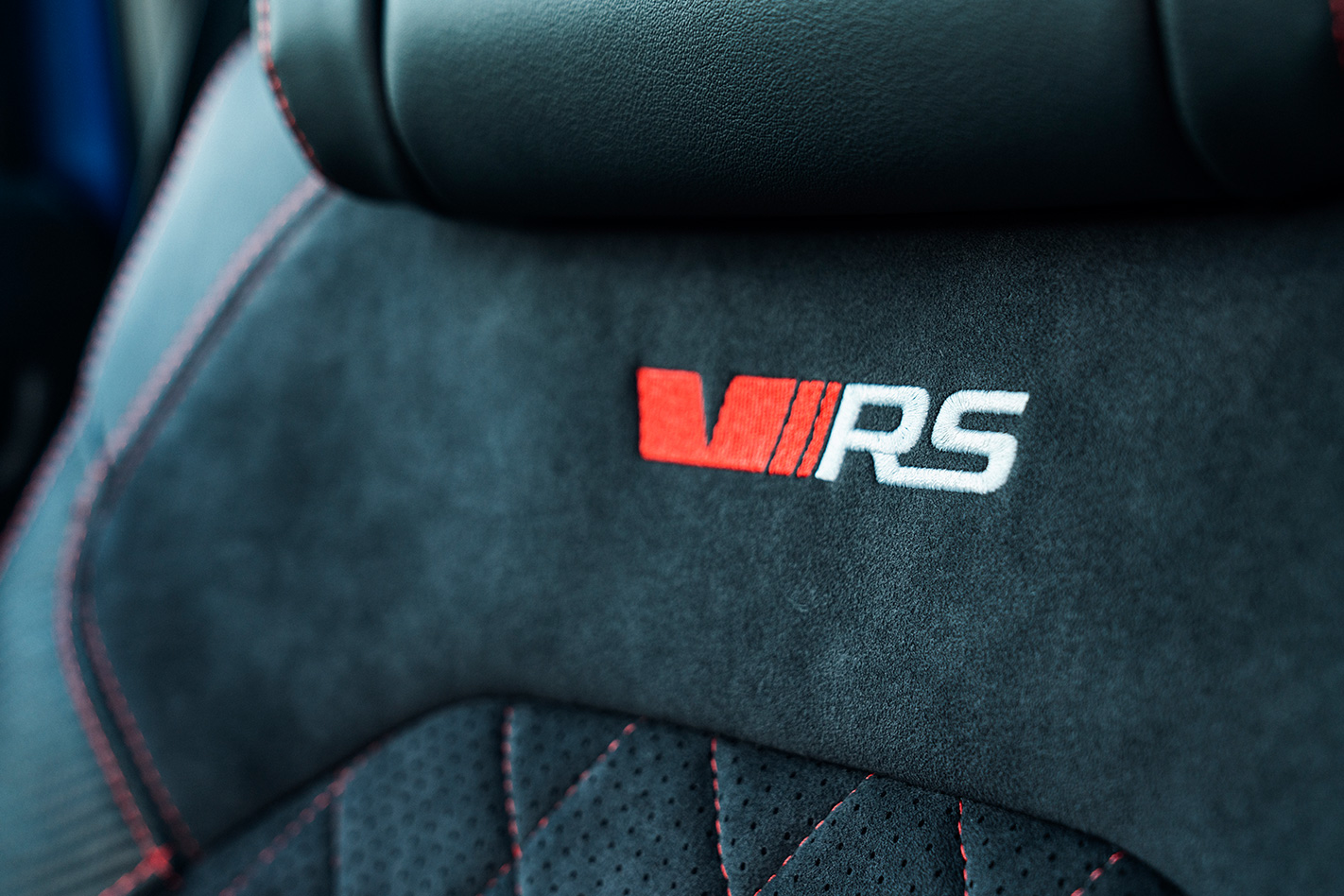
Despite the enthusiastic driving style, the excellent Alcantara appointed seats keep you pinned with a decidedly un-SUV like driving position and complement the understated interior that manages to be noteworthy and desirable without being ostentatious.
We will wait for a full on-road assessment before making a final judgement on its ride and handling but the early signs are good – especially given what its 132TSI and 140TDI siblings have already proven away from the track.
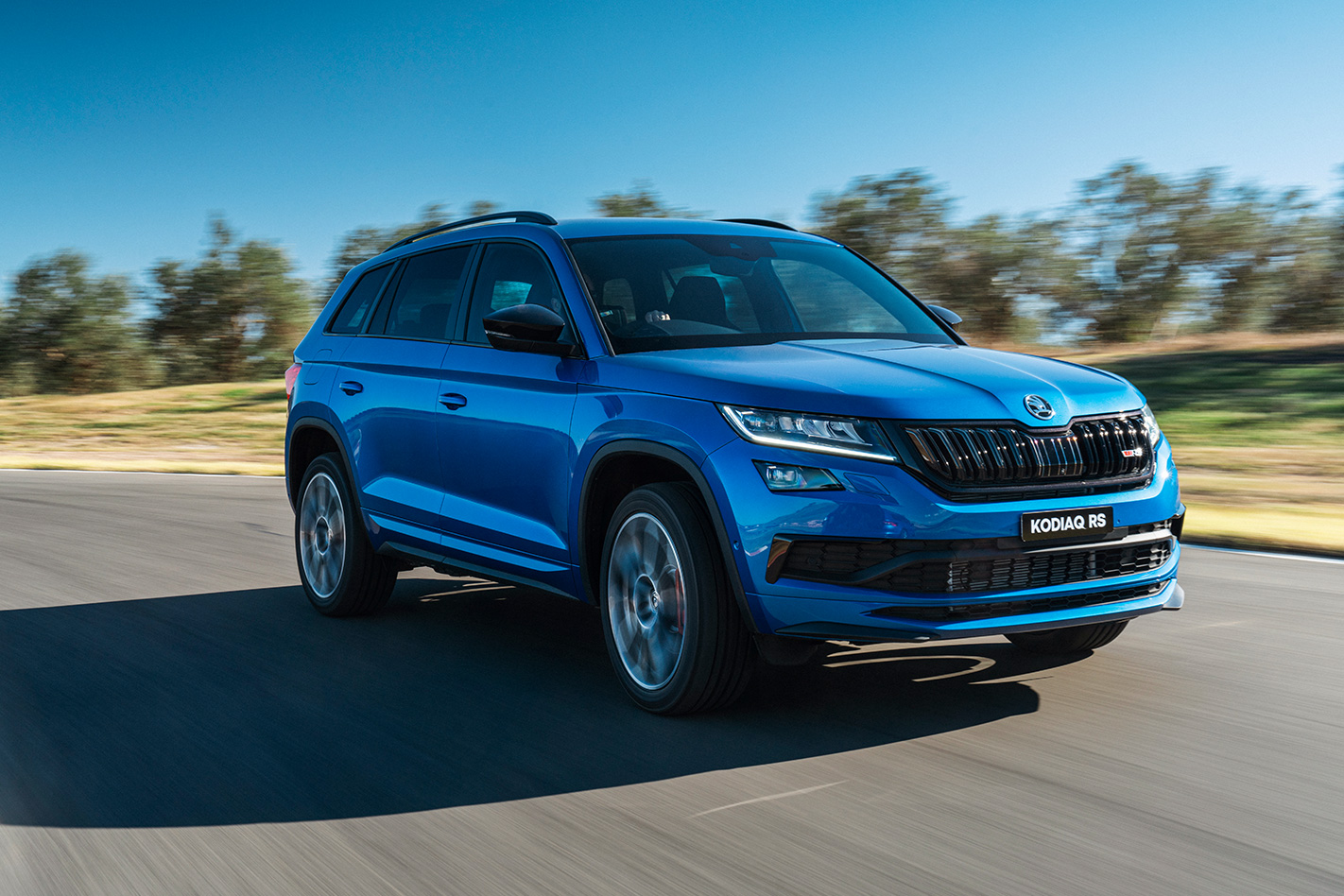
Park the new RS next to a fully optioned Sportline and there is a similar visual appeal. At the pointy end of the spectrum, the Kodiaq is doubtless a good looking machine, but this RS newcomer is finally keeping the promises that its handsome exterior makes.
For years, the Octavia RS has been Skoda’s performance-with-practicality bargain of the century (that Australians seem to ignore). But with RS genes now woven into its popular large SUV, it appears there is little else in its class that can touch the Kodiaq RS for all-round ability.
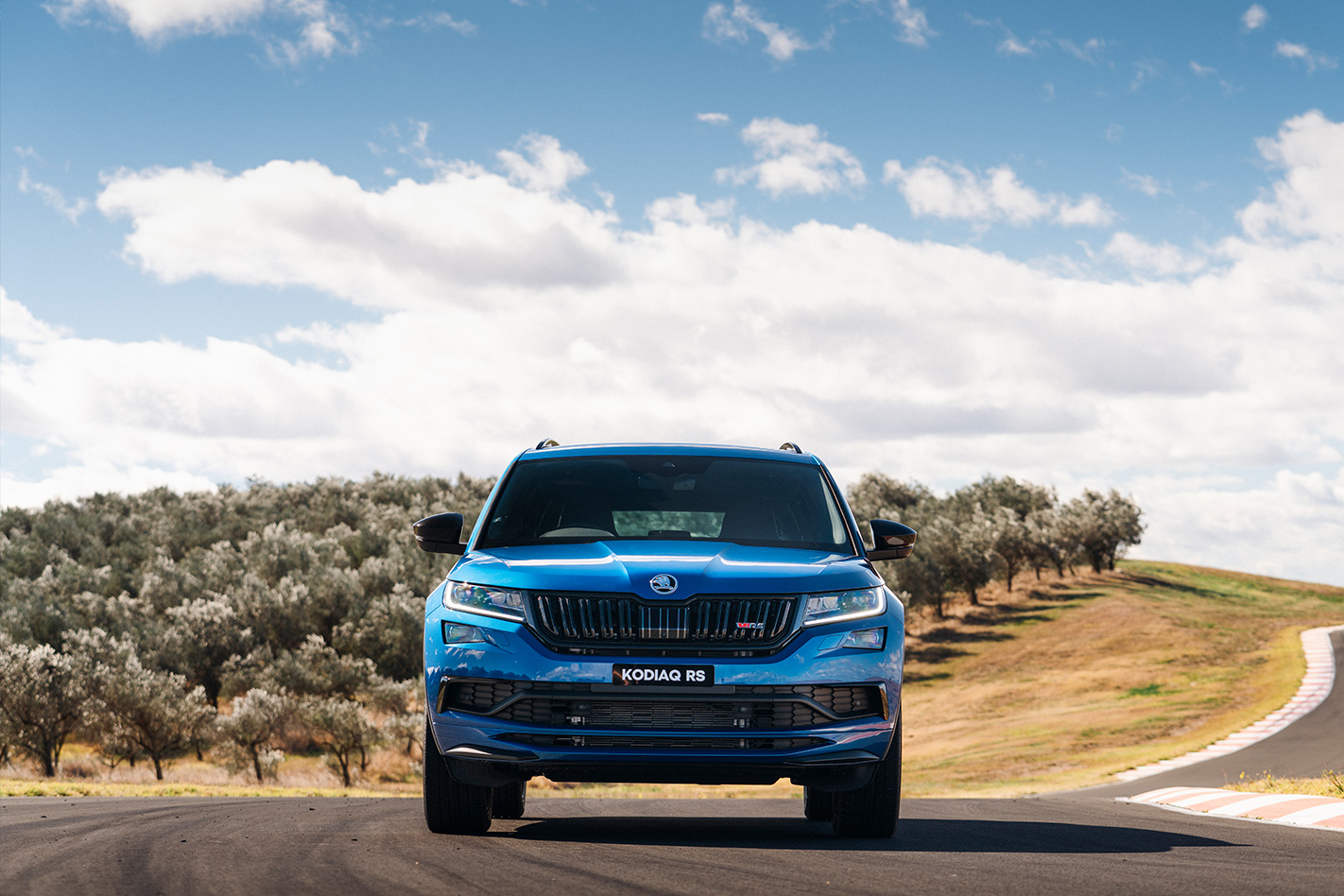
Ultimately, its success comes down to price in Australia’s competitive market and with pragmatic buyers. At $65,990 you could argue the Kodiaq RS is pricey, but like its long list of attributes, there’s not a lot to compete with it on cost either.
SUVs, the automotive world’s necessary evil. As much as we might complain that the high-riding crossover is eroding love for traditional sedans and wagons – even performance cars – we also have to thank them for supporting the future of supercars.
Lamborghini is one of the first of those niche car builders to enjoy a life-boosting injection from the SUV, having launched its Urus half-way through 2018 and now reaping the rewards.
Sales are jumping through the roof, and all of that cash will go into building cars more akin to what we’d expect of the Raging Bull badge; think the latest teaser from Bologna of a hybrid hypercar, doubtless to break at least some sort of record.
After its first half-year of sales in 2018, Lamborghini sold 1761 Urus units out of the 5750 cars it sold worldwide – an accomplished success. But now in the first half of 2019, the maker has delivered 2693 Uruses, bringing total sales up to 2553, which is an almost 100 percent increase on the same period last year.
That’s a pile more money that we’ll see materialise into future developments, and could spur Lamborghini to launch an IPO on the stock exchange after a valuation of USD$11 billion. It would follow in the footsteps of fellow Italian supercar maker Ferrari, but unlike the SUV-less Prancing Horse brand, Lamborghini’s burgeoning SUV should help elevate, rather than deflate, its share price.
According to Bloomberg Intelligence’s Michael Dean and Gillian Davis, the upcoming Aventador and hybrid supercar will lift margins above 30 percent, and provide a platform for the Volkswagen-owned company to launch its IPO.
“VW’s partial IPO of Traton trucks sets the stage for further corporate restructuring, which should include a Lamborghini IPO, in our view,” Dean and Davis said.
Lamborghini’s newfound success isn’t going unnoticed, with Ferrari’s upcoming SUV spotted testing already, and British company Lotus, renowned for producing lightweight sports cars, also getting in on the SUV act. But purists shouldn;t completely despair, as stalwart supercar marque McLaren says it has no interest in diluting a focused supercar lineup with a High Street tractor.
It seems that all the news about airbags is pretty much all bad at the moment, but Honda wants to change the direction of the conversation.
Via its American operation, Honda has lifted the lid on a brace of clever new airbag technology that could be rolled out as early as next year.
The new multi-stage front airbags have been designed chiefly to better protect occupants in the case of frontal offset-style crashes, where the car is impacted at an angle.
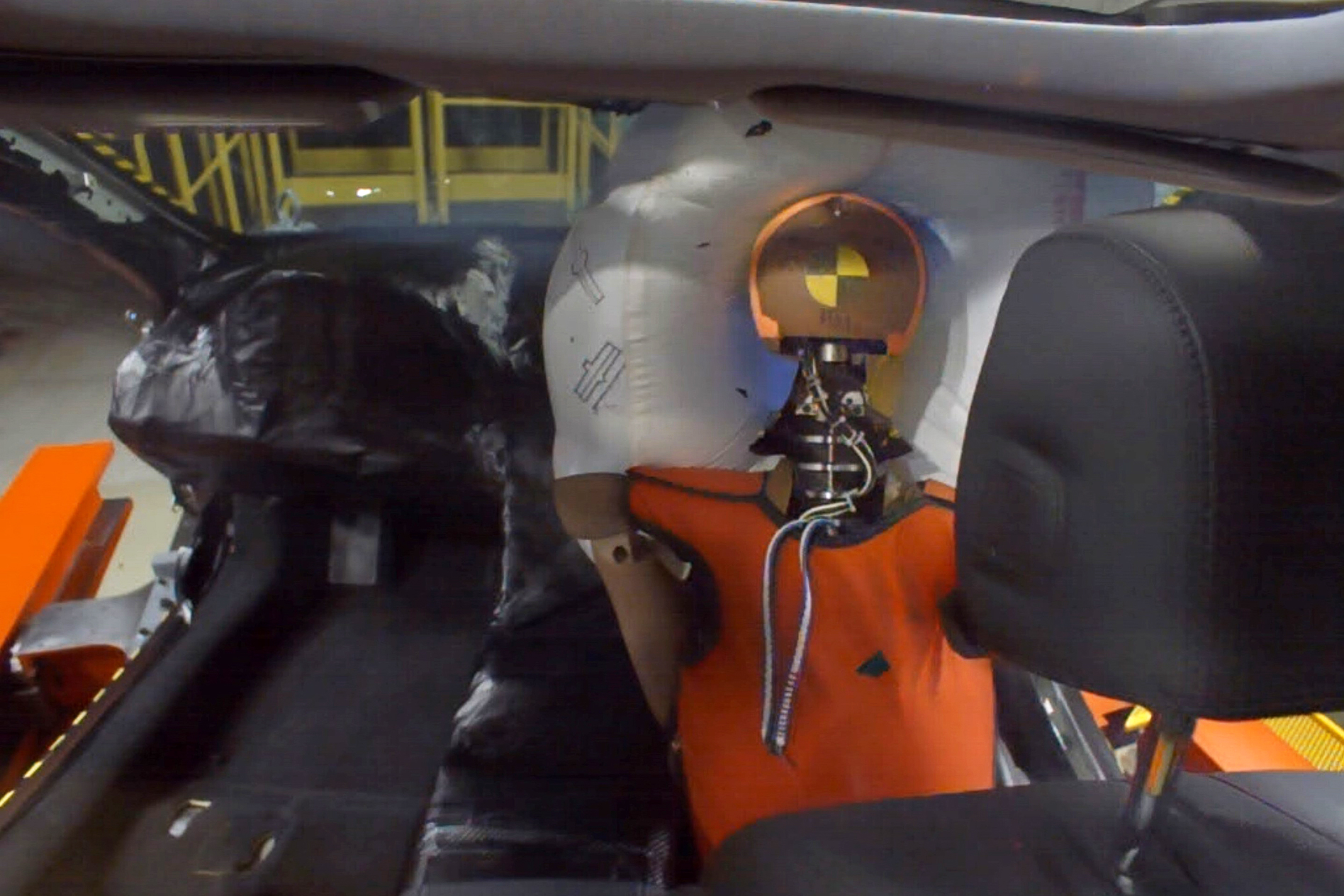
Current airbag tech uses a single inflatable ‘pillow’ that works most effectively when the occupant is propelled forward in a straight line, like the case of a nose-to-tail or direct head-on crash.
However, Honda researchers have found that in the case of more offset crashes, the single bag isn’t as effective at providing good coverage, and an occupant’s head could slide off the side of the bag or even over-rotate.
This massively increases the chances of head traumas, according to Honda.
The new airbag design works by incorporating a pair of small bags to the sides of the primary bag, while a fine mesh ‘sail panel’ links the two smaller bags together.
It works almost exactly the same way as a wicket-keeper’s gloves or a baseball catcher’s mitt; the head of the occupant is caught by the sailplane, which also works to wrap the smaller bags around the side of the head as it’s being directed towards the primary bag.
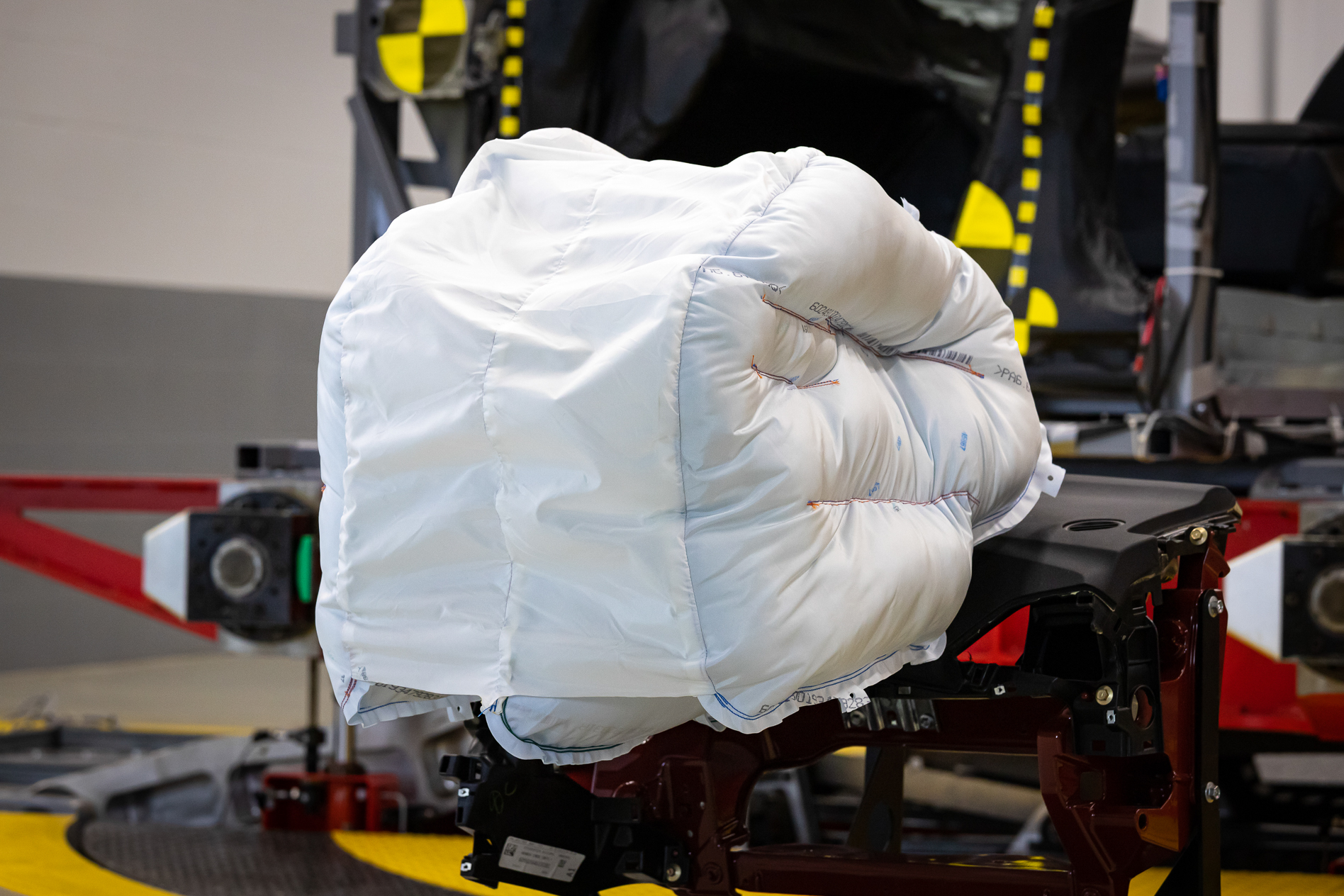
Development and testing programs for the new airbag were led by engineers at Honda’s research and development facilities in Ohio in partnership with Autoliv, one of the company’s safety systems suppliers, using data based on real-world crash events as well as extensive studies into previous crashes.
Meanwhile, the Takata airbag recall rumbles on here in Australia, with Honda Australia recently adding more than 45,000 more of its cars to the worldwide recall that has claimed more than 30 lives.
The cars, which include the Accord Euro (2003-2009), City (2009), Civic (2001-2005),CR-V2002-2006, 2008-2009) and Jazz (2003-2007, 2009), will have their updated Takata airbags removed and replaced with non-Takata items.
“Honda Australia’s current completion rate for the Takata Recall is just over 90 per cent, with over 63,000 Honda vehicles still to be rectified,” Honda Australia’s director Stephen Collins told WhichCar.
“It is imperative for all affected Honda customers to act on their recall notices and book their cars in as a matter of urgency. Honda customers can check if their vehicles is affected via the website: www.honda.com.au/recall.”
All vehicle owners who could be potentially affected by the Takata recall should visit the FCAI website or text TAKATA to 0487247224 to check the recall status of their cars.
WhichCar investigated the recall process mid-way through 2018 and found BMW’s process to be a smooth experience.
Haven’t checked if your car is affected yet?
Visit https://ismyairbagsafe.com.au/ now!
