
Space shuttle Atlantis reportedly unleashed the force of 60,000 Corvettes when it took off on its recent final mission. Glenn Butler was there with just one, but still had a blast.
I was a kid the day Skylab fell to earth in 1979. At my primary school, we followed the planned re-entry, the expected splashdown in the Indian Ocean … the actual impact across a wide swathe of southern West Australia.
The concept of travelling and living in space blew my young mind wide open, expanding my horizons well beyond the few suburbs I could reach on my BMX. An adult mind would struggle with such a monumental existential recalibration, but a child embraces it without question or fear.
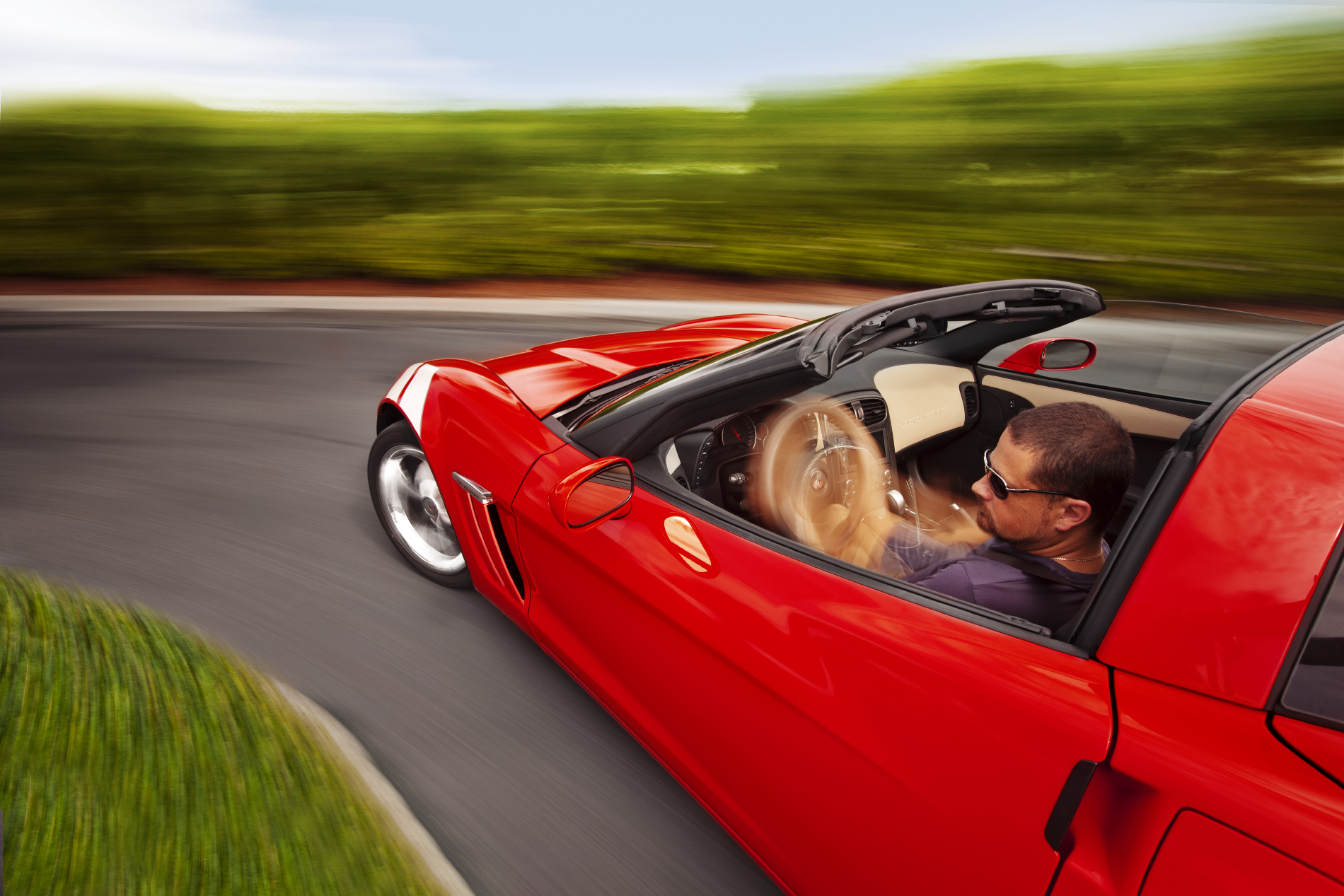
Two years later the space shuttle Columbia blasted off on its maiden voyage from Kennedy Space Center on Florida’s Cape Canaveral. Newspapers heralded the world’s first reusable space plane as a forerunner to intergalactic 747s that would take us to new worlds. I watched the launch on TV, my dreams riding shotgun with the crew as they blasted off into the Final Frontier.
At its core, the space shuttle is a mechanical beast of burden, transport for people and possessions. But, just like a car, it’s more than that: an explorer of far horizons, a travelling companion, a dream machine. Much like my dad’s VC Commodore to an eight-year-old, though on a different scale of operation.
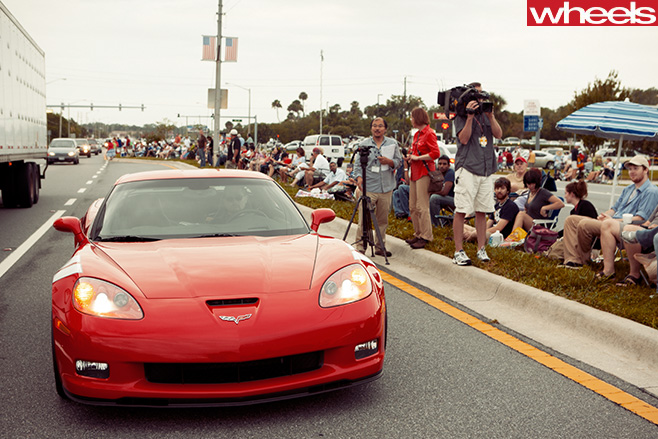
So, for a car fan who grew up with the space program, I had to go to the space shuttle’s 135th and final launch. And it had to be in a Chevrolet Corvette, the car astronauts drive.
T-minus one day
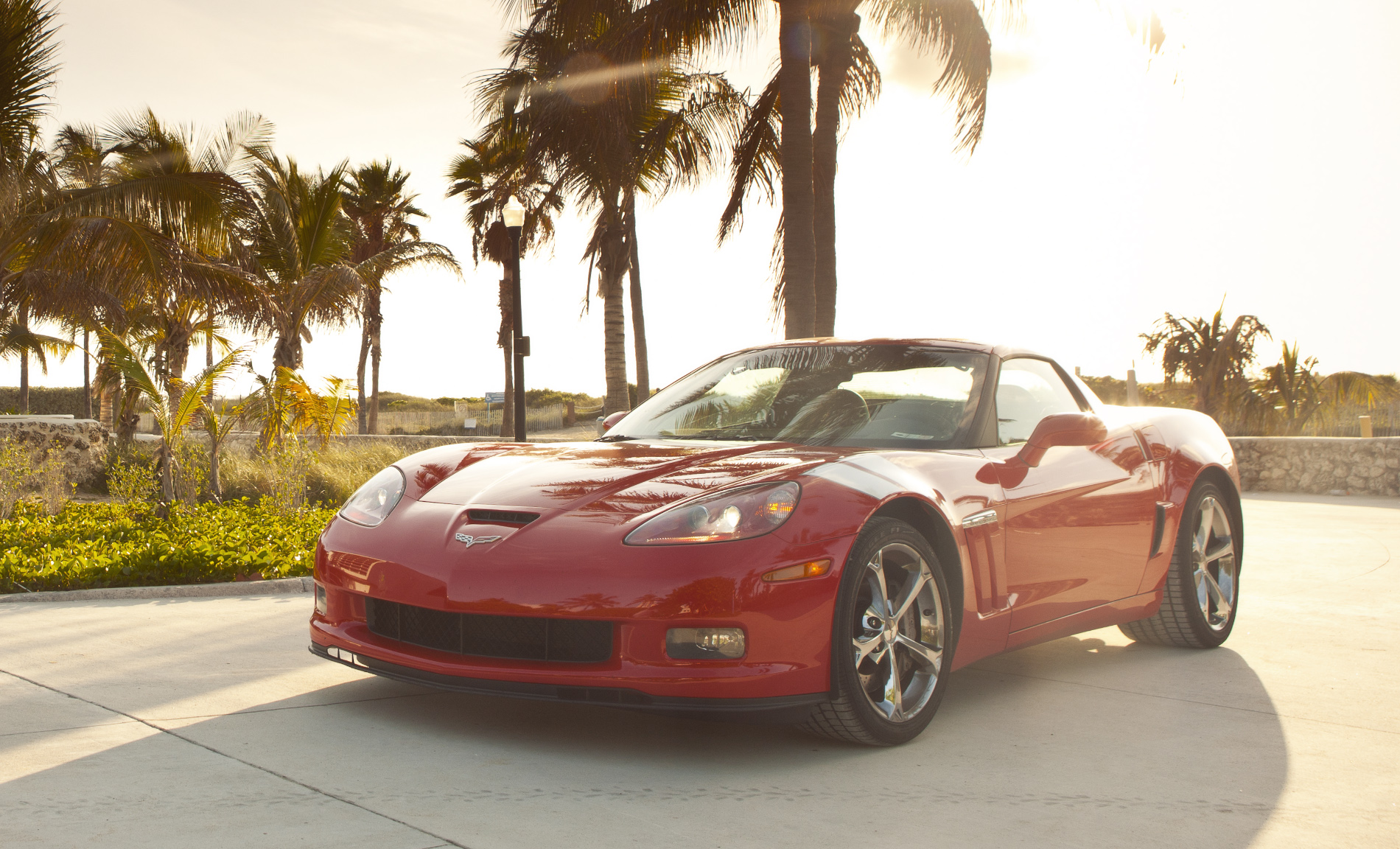
The trip starts early morning on Ocean Drive, Miami’s South Beach boulevard, the Corvette’s familiar 6.2-litre V8 growling at the seagulls picking trash off the now-deserted street. Last night this Art Deco restaurant strip resembled an MTV music video; a thumping and gyrating, pumping and sweating mass of humanity all vying for attention on a humid 36-degree evening. Serious cash cruised the strip: Bentley convertibles, Lamborghinis, Ferraris, Maybachs, Maseratis and even a Rolls-Royce. All pimped. All piloted by guys with golden grilles and, in the passenger seat, sultry girls with criminal curves in skin-tight dresses. A world away from the space geeks and astronauts 350km north …
Another party town, Fort Lauderdale, disappears beneath the Grand Sport’s fat rubber. Like the relationship between astronauts and Corvettes, the Grand Sport model traces its roots to the 1960s and Corvette’s racetrack heritage. Think of it as a Clubsport; wider tyres and track, more aggressive suspension and brakes, all in the name of dynamism. Heritage stripes on the front quarter panels are a giveaway, as are the chrome alloys beneath and the delicate lip spoiler on the tail. The GS is effectively a bridging model between stock C6 ‘Vettes and the ballistic Z06 and ZRl. In America it costs US$55,045 – bugger-all for a 4.0-second car capable of lapping Virginia Raceway faster than a Porsche 911 Carrera S, according to Car & Driver magazine.
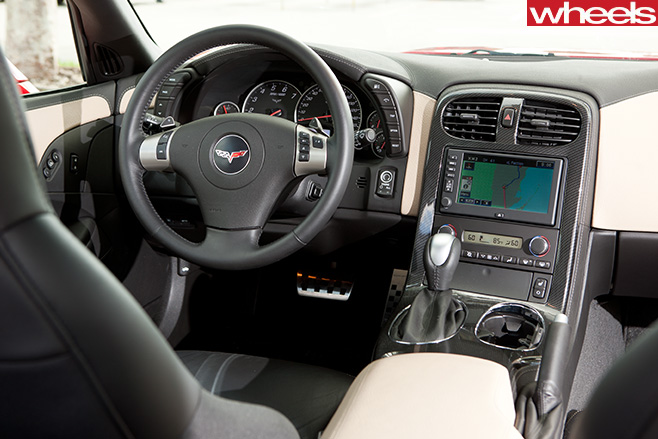
I’m experiencing little of the ‘Vette’s prowess, however. Florida roads don’t follow the coastline; instead the coast is remodelled to fit the road. I do find one quiet backroad to play with the throttle’s intimacy and the ‘Vette’s 305-section rear tyres. The Corvette’s G-meter peaks at 1.1g, well short of the shuttle’s 3G from take-off until the solid rocket boosters are jettisoned two minutes in. My personal record is 5G a few years back in a Russian training jet. I blacked out, my consciousness winking out like an old television’s picture. That flight was a dream achieved, though its velocity didn’t beat the wind-assisted 1100km/h I once saw on a commercial jet’s in-flight info screen.
We drive towards Orlando, the capital of Orange County and Florida’s third city, 70km inland from Cape Canaveral but with the closest hotel room I could secure. A million space fans are expected on the coast, looking out across the same body of water into which the Challenger’s crew capsule crashed in 1986. That was the year I got my car licence and had my first car crash. I lost control for a couple of seconds, though it felt far, far longer. Later that year I read the shuttle’s crew cabin had been found intact despite the explosion 73 seconds after take-off, suggesting they were probably alive for the three-minute free-fall into the ocean.
A few of the 200 satellite radio stations buzz with shuttle talk. Doubt remains over the launch scheduled for 11:26am the next day. Tropical thunderstorms and sullen clouds besiege Florida, and are forecast to continue. NASA says there is a 70 percent chance of “no-go” (do they express the odds backwards to deliberately dampen expectations?) dropping to 60 percent the next day and 40 percent the day after, when I’m booked to fly home.
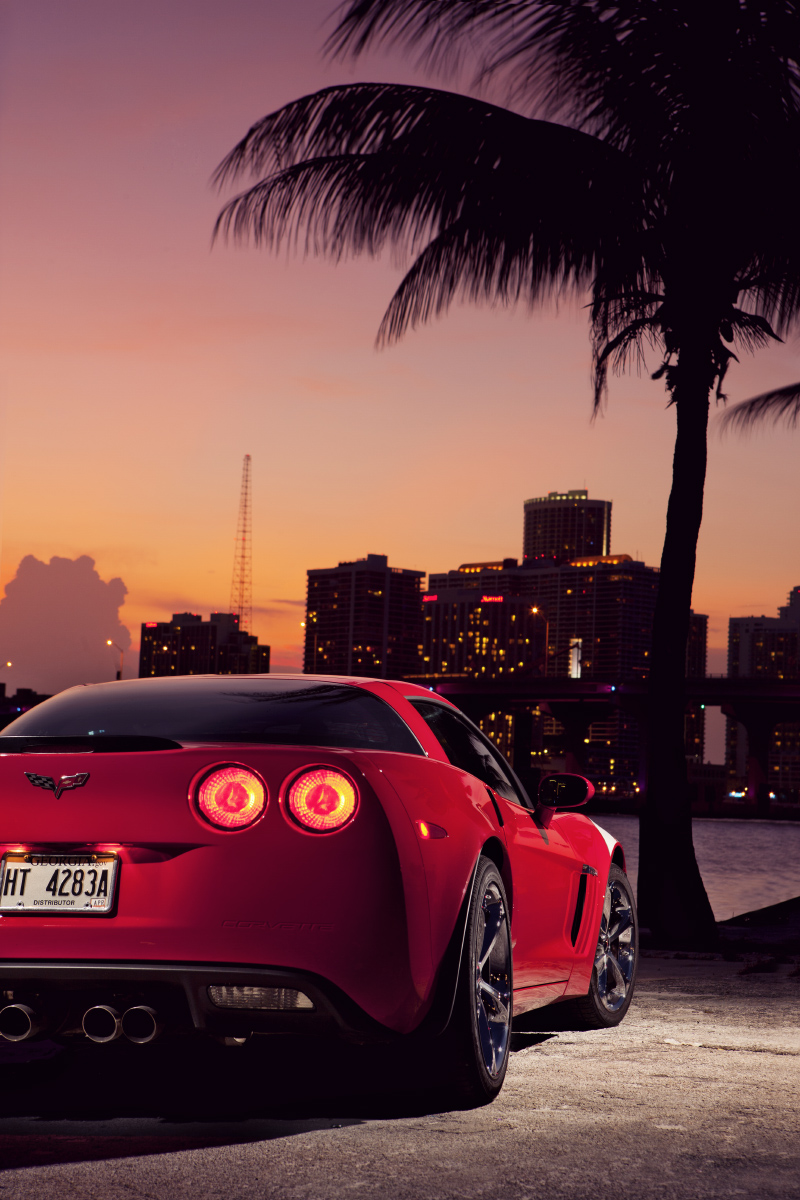
T-minus 6 hours
Dawn is an hour away as I thumb the ‘Vette into life. It’s already 27deg C, and humid. I’m sweating in shorts and a T-shirt thinking about four astronauts in their big, bulky space suits. The ‘Vette’s satellite radio delivers NASA’s latest launch update. Still a 70 percent no-go. The Corvette’s sports seat numbs my left leg; it lacks underthigh support and is too soft elsewhere. Still, how would I go squashed into a shuttle seat as it climbs through the atmosphere to a 380km orbit? How would it feel to cover 7.7km every second, 27,160km/h, or Mach 23? How would my nerves cope with being so far from home, at the very end of a fragile cord of technology and equations?
T-minus 5 hours, 25min
Gridlock. At 6am. The highway into Titusville, the town with the best view, is a parking lot and we’re still at least 16km away from it. Panic nibbles my nerves. Will I make the launch? Will there even be a launch? For the first time, Twitter proves itself useful: the feed #spaceflightnow reports that fuelling was completed overnight, though STS-135 is still 70 percent no-go. I double back to strike the coast road farther south, hopeful of following it into Titusville.
T-minus 4 hours, 18min
Titusville. People and cars cover the roadside and the centre strip. Picnic blankets drape SUV roofs, front yards are commercial parking lots with some entrepreneurs charging $50, which late arrivals will pay. We park at a condemned house. The synergy is not lost on me.

Standing on the balcony peering east across the water to the cape, the launch pad is visible, the shuttle barely, its rust-coloured fuel tank and launch tower more prominent through the heat haze. Binoculars bring it closer and I strain to see movement on the tower, but it’s like looking for fleas on an ant. It’s real. And I’m here to see it go. If it goes. Heavy clouds blanket the sky.
T-minus 3 hours
The crowd stretches forever and more people are coming. Every space that’s not a road is claimed. Parkland separates the road from the water, but today it’s a parking lot and campground. Brandon’s an Aussie driving round America in a rented Challenger and he’s having a beer for breakfast. He got here two days ago, so is three rows back, but the gentle slope allows an unobstructed view. Next to him is Gary, a semi-retired concrete company owner. It’s his fourth launch “and none of those went off on time”. He’s backed his custom-built camper – a converted semi-trailer – out over the water. The liftgate serves as a first-class viewing platform, while the interior has been fitted out as living quarters for him and his younger girlfriend, and a garage for his helicopter. Live the dream, brother.
T-minus 1 hour
Crowds of spectators thicken along the dual carriageway, slowly clogging it. Police patrols move people off, trying to maintain a useable road. The crowd mass sucks in until the police leave, then exhale onto the road again.
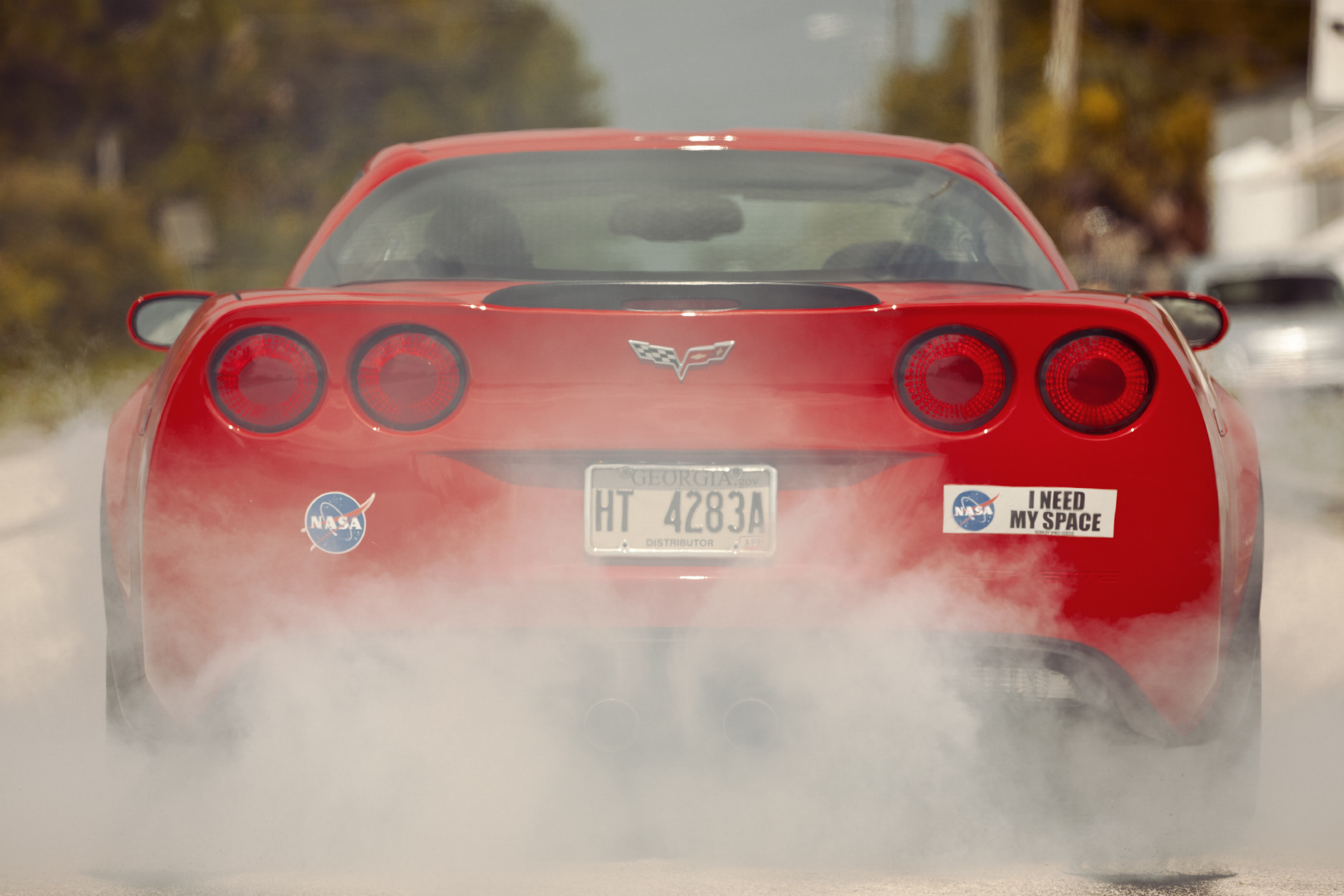
A blue hole appears in the clouds above. #spaceflightnow reports 40 percent no-go.
T-minus 20 minutes
The police surrender, the road is jammed. So is
the mobile network. My smartphone loses the twitter feed, and then reception. No internet, no mobiles; just like life in 1981 when Columbia first flew. More blue holes appear in the cloud cover. I dare to dream.
T-minus 10 minutes
A huge cheer goes up farther down the crowd, I can only guess why. It’s followed by an impromptu rendition of ‘The Star-Spangled Banner’, which elicits another cheer. My first reaction is that of a cynical Aussie. These public displays of patriotism sit uncomfortably with a bloke from a country where nobody knows the second verse to ‘Advance Australia Fair’. We’re proud of our nation, but not showy like the Yanks. But then, we haven’t put people into space 166 times, let alone on the moon. We haven’t conducted 134 shuttle missions with a 98 percent success rate. We invented the bionic ear, the winged keel and Wi-Fi. But nothing matches the achievement of space travel.
T-minus one minute
The ’Vette’s doors and hatch are open wide, its radio tuned to Launch Control. Incredibly, the voice of shuttle Commander Chris Ferguson sounds calm, running through pre-flight as if it were a shopping list.
It dawns on me just how incredible it is to send people into space and expect them to return safely. So routine that shuttle launches seldom make the news anymore. I’ve spent years recognising companies that design and develop affordable cars like the Corvette, capable of searing acceleration and economy. I’ve flown countless hours round the globe and trust the aircraft builders, the pilots, the airport staff to get me there safely every time. Sometimes even with my luggage.
But the Space Shuttle Program, the Space Transportation System, is magnitudes greater than all other forms of human transport. It’s the audacity that conceived it, the intelligence that realised it (with less computing power than I’m using to write this article), the fastidious experts who make every voyage as safe as possible, the brave astronauts who bet their lives.
The countdown continues.
T-minus 31 seconds
The countdown stops. Sensors have failed to report the retraction of an oxygen vent arm. Radio chatter loses its methodical tempo and becomes a rapid-fire discussion. It’s not going to happen. One million people stand next to me. Nobody makes a noise. We’ve all been building up to this moment for weeks, and nobody wants to come back tomorrow.
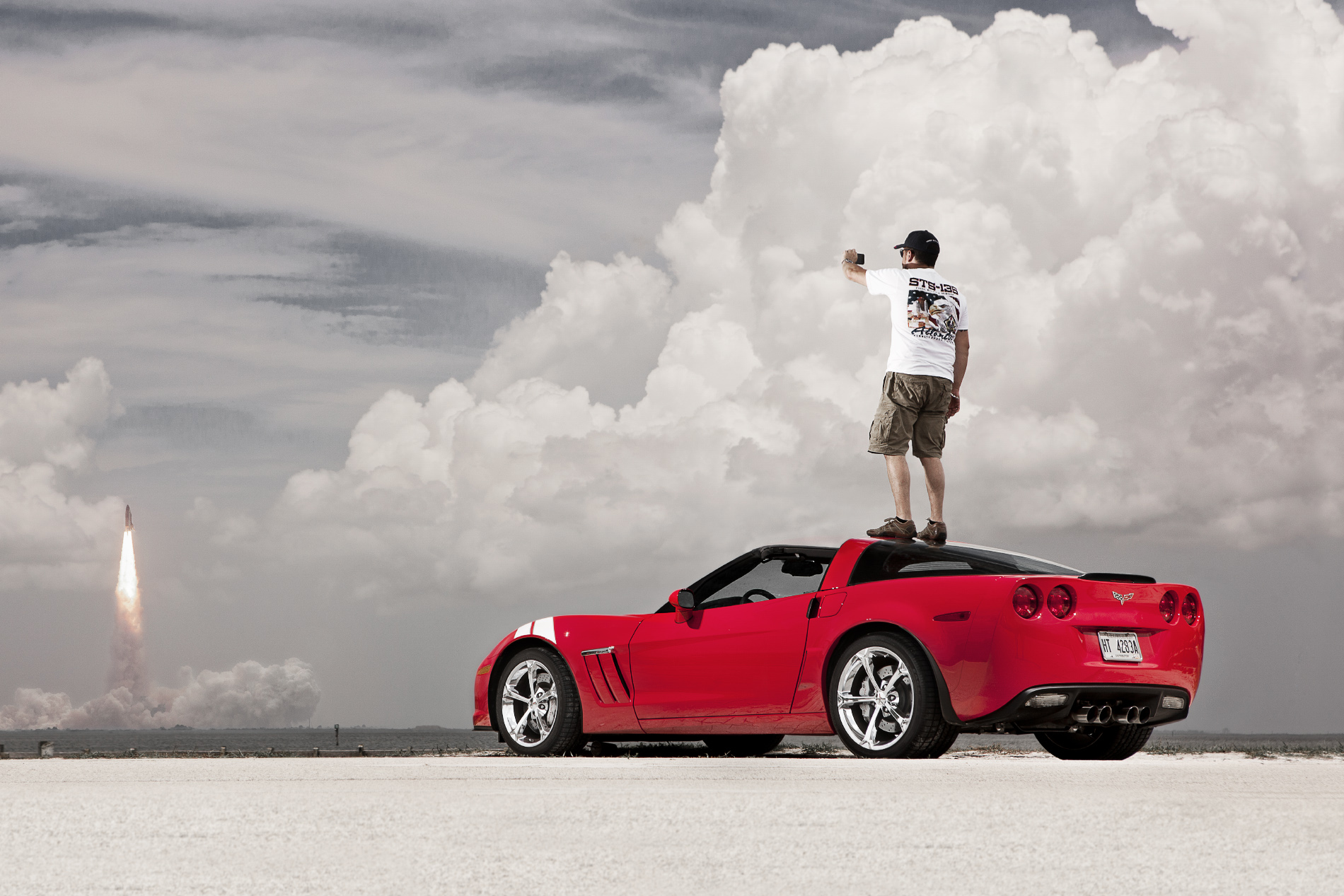
Two minutes elapse before NASA restarts the launch. T-minus one minute. The shopping list recital resumes. Calmness in Commander Ferguson’s voice brings relief to a million others who breathe again. This time, the countdown runs right through. When I hear “go for main engine to start” my throat tightens uncomfortably. This is momentous. The engines flame into life and clouds of steam billow, quickly growing larger than the little space shuttle itself. It’s eerie. It’s silent. The lump in my throat grows. Then the radio starts: “T-minus 10… 9…” The crowd joins in, outstripping the controller’s metronomic precision in their enthusiastic haste. When the count reaches zero, Atlantis lifts off. I cheer, swept up by the euphoria. A million heads follow the ascent, craning slowly back in unison. The shuttle pierces a low cloud, a false departure from sight. Forty seconds after launch Atlantis reaches the real cloud ceiling, and disappears. The flames propelling it illuminate the clouds for a few seconds more; a warming and spectacular farewell.
I’m speechless. My voice recorder keeps rolling,
but I don’t know what to say. What words can describe what I just witnessed and will never see again?
This is humanity’s highest achievement, the greatest single effort to expand the boundaries of our existence. And I watched STS-135 launch. The last flight of the space shuttle, 30 years after the first. The end of an era I grew up with. The lump grows again in my throat. The shuttle has disappeared through the clouds. Around me, people pack their cars and turn for home. I’m not ready to leave. It seems disrespectful.
A full minute later the sound reaches me. It starts like wood crackling on a distant fire, building into a sustained wave of thunder that envelopes and shakes me. Every boom and crackle conveys the intensity of a chemical reaction that has propelled 2000 tonnes of space plane, its crew and cargo, tanks and rockets beyond gravity’s tenacious grip. It’s the sound of 60,000 Corvettes.
The Final Frontier just receded a little farther.
Australia’s first electric car-sharing service has arrived in Melbourne with a small fleet of Hyundai Kona Electrics available to a select handful of CBD residents from today.
Like relatively conventional car-sharing services, of which there are a growing number around the country, Ohmie Go offers the independence of a car without the cost and commitment of ownership. The key difference is that members have access to zero-emissions mobility and easy fast charging, compared with the combustion-powered vehicles offered by all other car-sharing models.
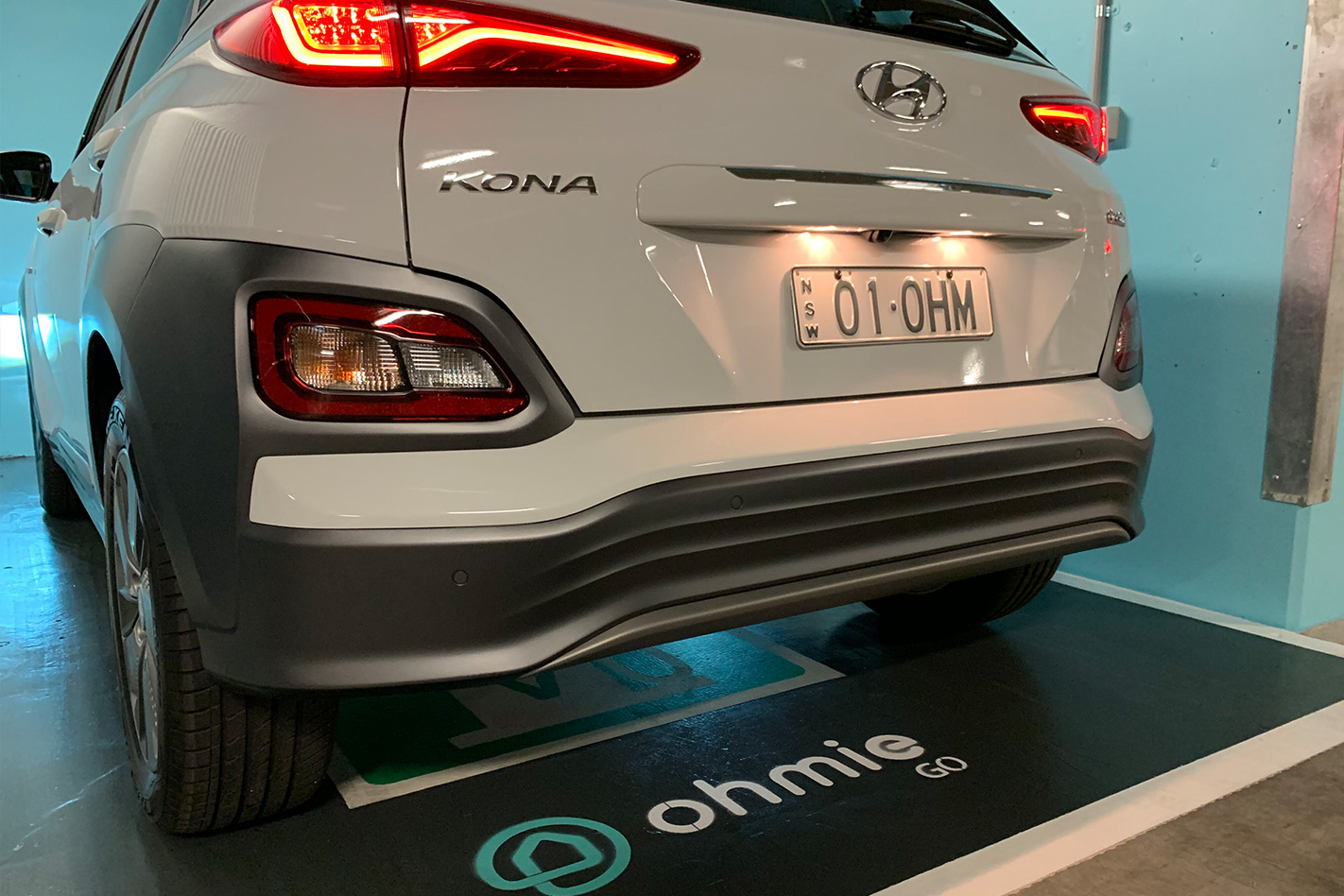
The milestone car-sharing evolution will appeal to high-density housing inhabitants that may have felt petrol and diesel car-sharing is contradictory to the cause, or not suitable to inner-city living.
Ohmie has not released subscription or rental rates but says the service is “cost-effective” although many car-share customers are more attracted to the convenience, over any potential money-saving advantages.
For now, Ohmie Go will only be offered to EQ Tower residents but, with the backing of Hyundai and Jet Charge, the company is growing its EV-sharing fleet in partnership with other new developments across Australia.
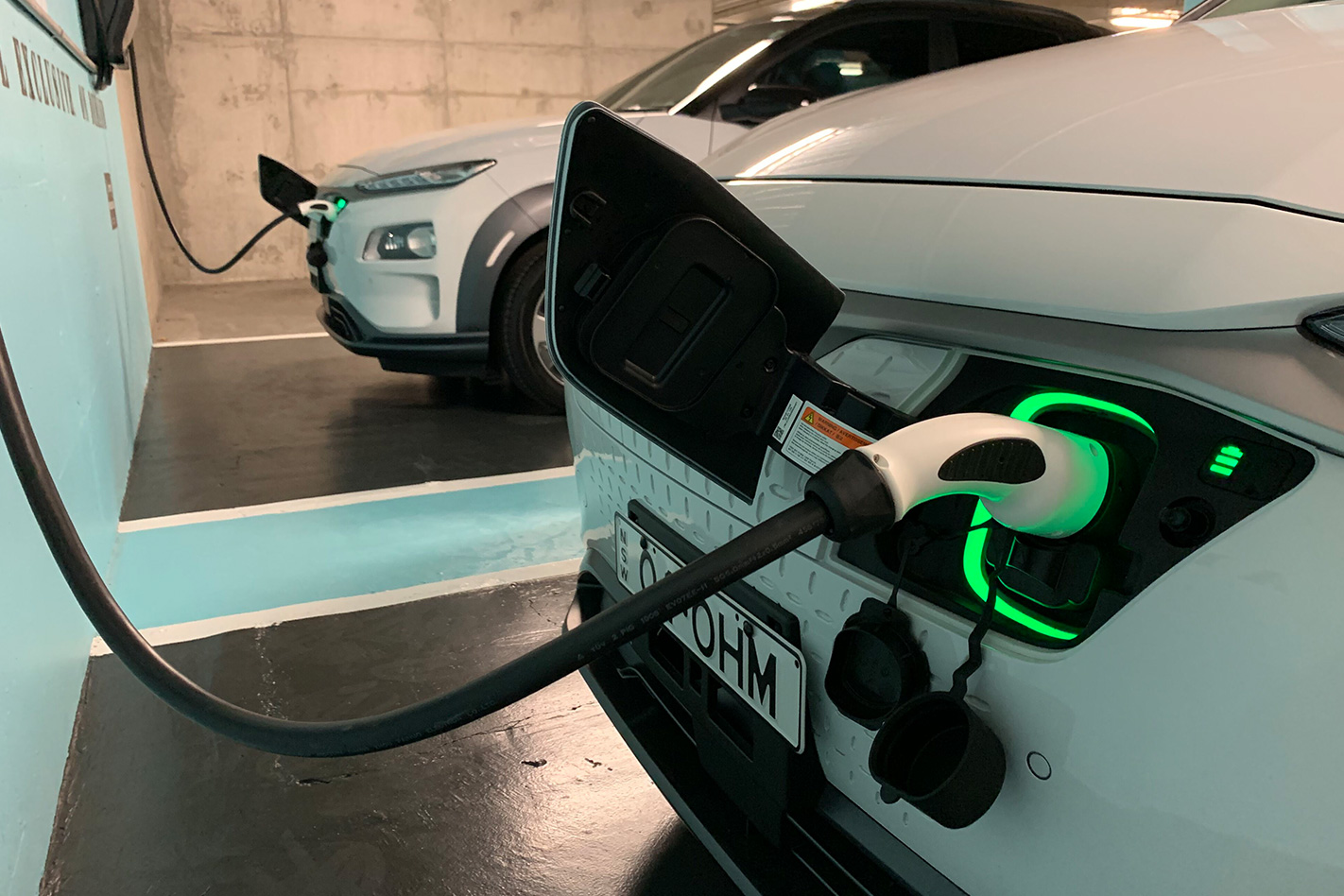
Ohmie CEO Kyle Bolto said the advent of electric vehicles and the way consumers chose to use them will not follow the same trends as traditional vehicles, and the EV car-sharing movement was part of an entirely new motoring landscape.
“Personal mobility is undergoing the most significant shift since the invention of the car, including entirely new ownership models, multi-modal transportation methods and eventually vehicles that drive themselves,” he said.
For the Ohmie Go initiative, Jet Charge provided the battery charging hardware and the EV charging authority said it had been exploring partnerships to deliver a project of this nature for some time before finding Ohmie.
“We have been waiting for years to team up with a company that recognises EVs as being both a mobility and energy asset,” said Jet Charge founder Tim Washington.
“In Ohmie and Kyle’s team, we have found that company. They share our vision of offering a leading car-sharing business using 100 percent electric vehicles and also using the same vehicles to support our electricity grid, maximising that vehicle’s utilisation.”
Interestingly, Washington told WhichCar that the company is busy installing “dozens” of wall-box chargers each day to both residential and business locations, quietly building Australia’s EV infrastructure.
Data collected from the first Ohmie Go installation will be used to improve the service and the company is already considering diversifying the options with scooters and other vehicle types offered for work places and even holiday resorts.
It’s just the latest development in the growing electric vehicle cause and proof that the advancement of clean motoring and emissions-free care will continue regardless of governmental support, which continued to languish compared with the rest of the modern world.
If you’re an EV sceptic, it seems resistance really is futile.
Audi’s RS cars are one of its biggest assets in terms of appealing to enthusiasts, and this year marks 25 years since the first car bore the ‘RennSport’ signifier for Audi.
Borrowed from stablemate Porsche, the RS (race sport, to English-speakers) badge first appeared in 1994 on the Audi RS2, a car which was built with plenty of help from the Stuttgart brand.

Porsche’s door handles, mirrors, and wheels were borrowed from various models, plus brakes and suspension were the work of 911-builders, with the engine also copping a tickle.
The result was a supercar-fighting wagon that was famously able to reach 50km/h from a standstill faster than a McLaren F1.
Only a few years later in 2000, the first Audi RS4 would become available, marking the beginning of a regular lineup of RS cars throughout the Audi range.
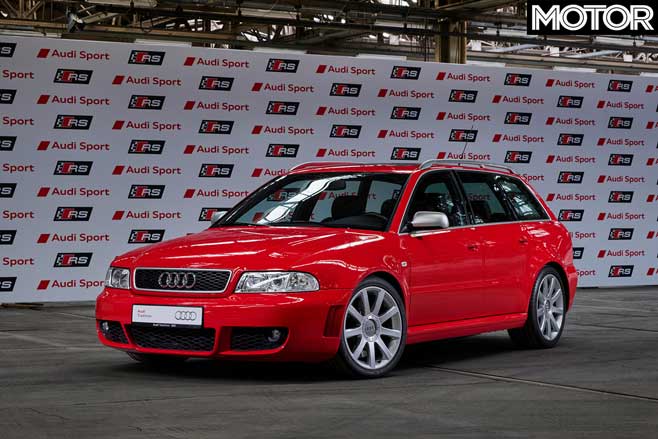
Every Audi from ‘3’ to ‘7’, and even the TT, were fettled by Audi Sport’s go-fast wizards and had an RS badge slapped on the grille.
Audi says the philosophy behind the ‘RS’ badge has always been “performance, prestige… and practicality,” which could explain why the R8 doesn’t get included in the list. It also could be confusing if Audi ever decided to hand the A8/S8 over to Audi Sport for a proper treatment.
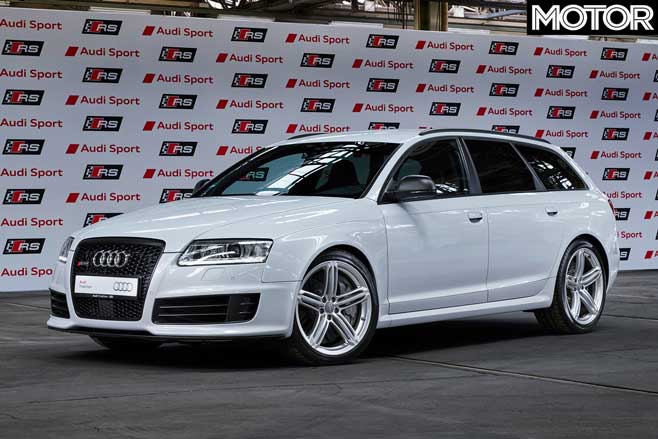
In the last 25 years, Audi has built 25 RS models, with the current line up including the Audi TT RS Coupé and Roadster, RS3 Sportback and Sedan, RS4 Avant, and the Audi RS5 Coupé and Sportback.
Audi also says that later this year, “six further product innovations are being presented, of which two are completely new RS models.” Don’t be surprised if RS6 and RS7 rejoin the lineup this year.
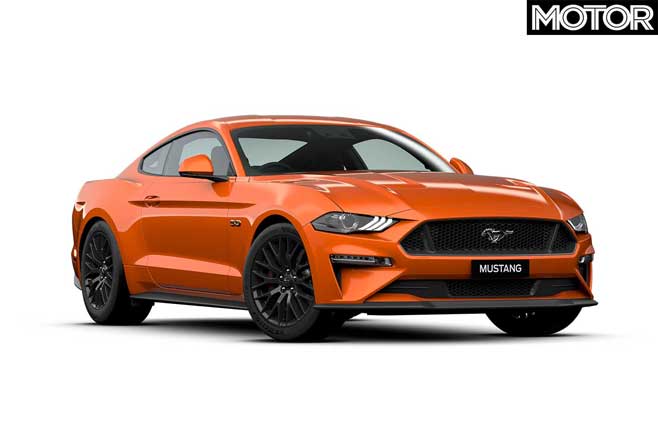
Not resting on its strong-selling laurels, Ford Australia has announced updates to the 2020 Ford Mustang GT, including new styling and servicing deals for buyers of the popular pony car.
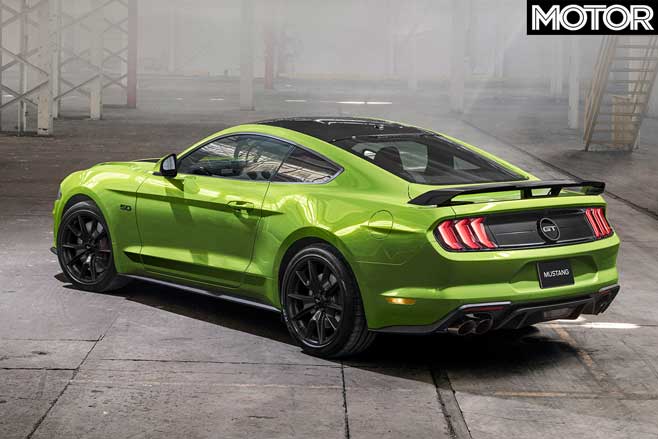
A range of retro-inspired colours, including a new version of ‘Grabber’ Green called Grabber Lime, is set to separate the MY20 from other model years, along with an optional ‘Black Shadow’ styling pack.
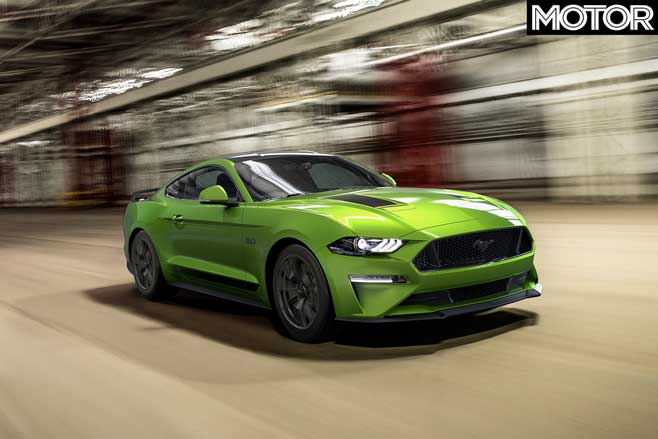
To give the Mustang GT an extra dash of flavour, Ford Australia will also offer – for $1000 of your hard-earned – a Black Shadow styling pack, which adds a black painted roof, bonnet and side stripes, 19-inch, 10-spoke alloys (also in black), and blacked out badging on the grille and for the ‘5.0’ signifier.
Mustang program chief engineer Carl Widmann says the black shadow pack was inspired by the sticker packs offered on muscle cars decades ago.
“The Black Shadow pack takes the Mustang GT Fastback to another level,” says Widmann.
“It gives the classic Mustang lines a sinister flavour that really adds a raciness and competition look to it and harks back to some of the graphic and decal packages that we’ve had in the past.”
Having a tough-looking pony is clearly important, but something customers might find more practical is the Ford Service Benefits program, which is now available to Mustang customers for the first four years of ownership, or until the car hits 60,000km on the odo. Whichever comes first.
With this servicing plan, eligible customers pay a maximum of $299 to service their MY2020 Mustang “per A or B logbook service at participating dealerships.”
Ford Australia CEO Kay Hart says it’s important to keep things fresh with one of Ford’s most “iconic” cars, especially considering its local popularity.
“The Mustang is an icon, and Australian customers have been asking for more ways to customise and individualise their particular vehicle, so we’re pleased to offer more ways of doing just that,” says Hart.
“These new offerings help make the 2020 Mustang really stand out, and for the first time, our Ford Service Benefits program, with our service price promise, is part of Mustang ownership, too.”
No changed to mechanical specifications have been announced for the 2020 Mustang, so its 5.0-litre atmo V8 will make the same 339kW and 559Nm as the current GT. No word on a fix for its overheating issue, which MOTOR has encountered numerous times on track, either.
Ford Australia says the 2020 Mustang will be available in local dealerships from November 2019, with updated pricing details to be confirmed closer to the date.
Nissan’s ageing Navara dual-cab platform has underpinned an all-electric tradie ute that is capable of a claimed 400km range.
Head of electrification for the Japanese maker, Nic Thomas postulated to Wheels just last week that its upcoming electric vehicle platform might underpin an electric ute in the future. However, it appears it has already built one with the Navara as the base for an electric pick-up in China.
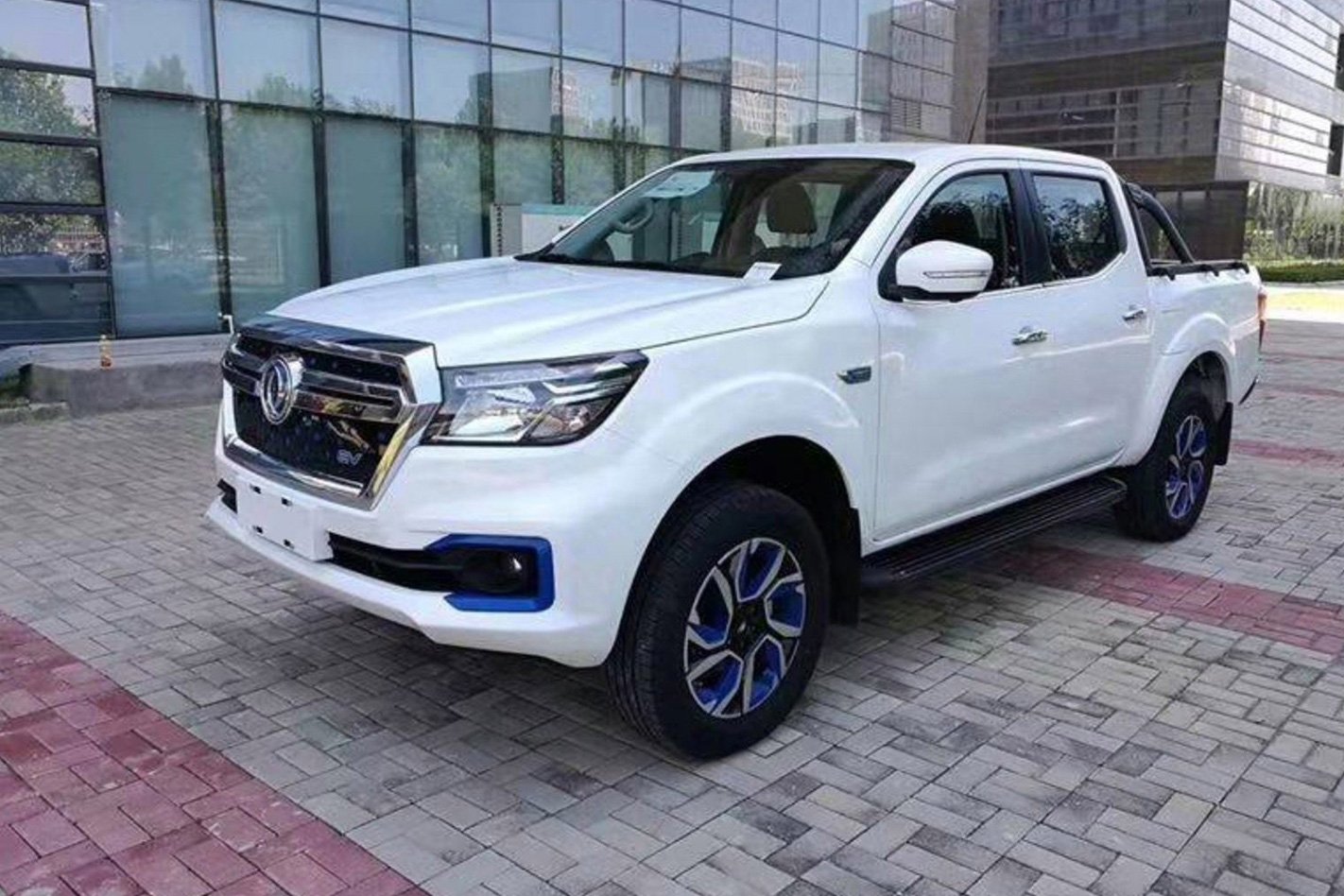
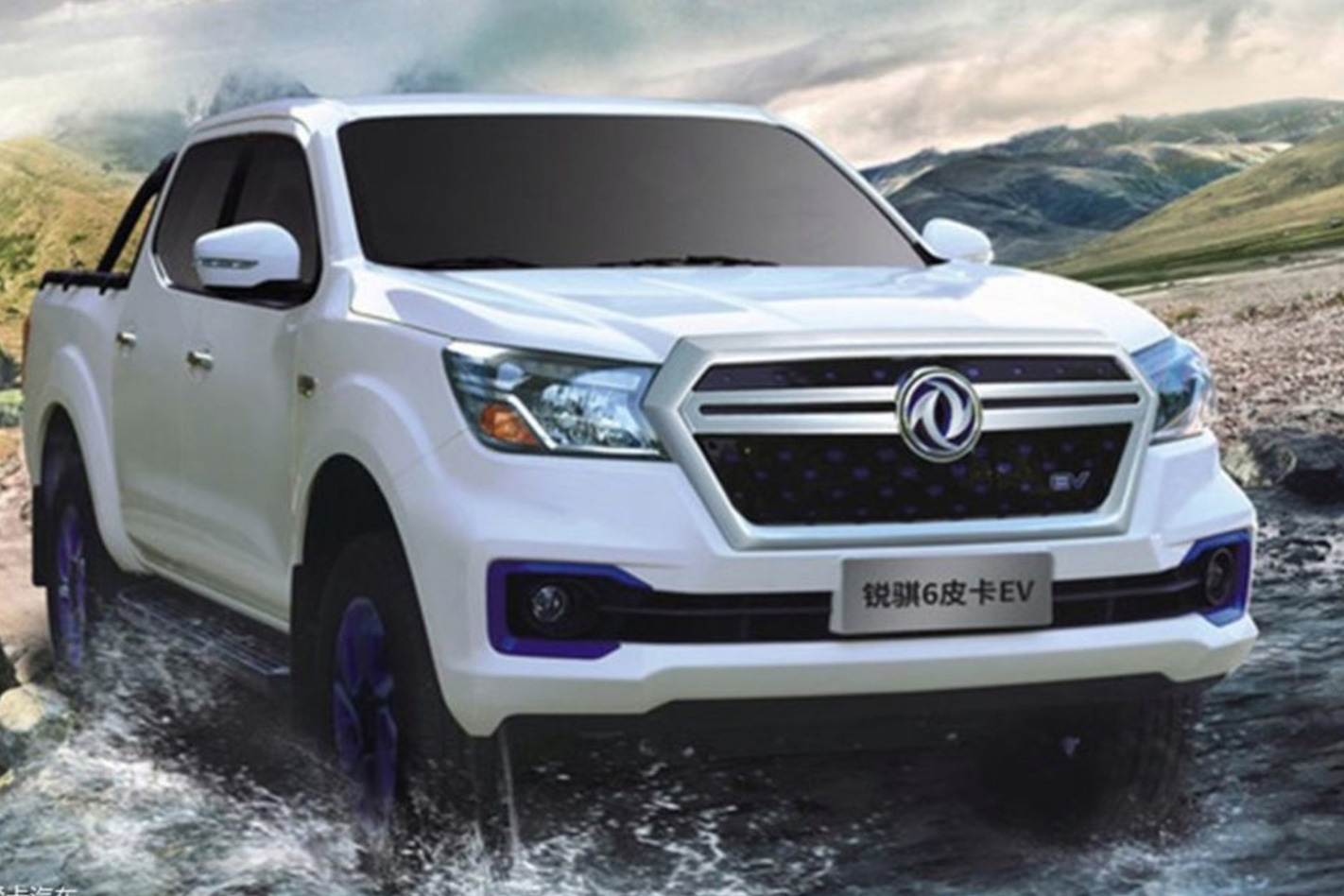
Named the Nissan-Dongfeng Rich 6 EV dual-cab ute, the electrified workhorse has been unveiled ahead of its on-sale date next month. Nissan’s joint-venture with the Chinese automaker has seen the D22 Navara’s F-Alpha platform underpin two generations of the Rich ute in its home market.
Usually powered by a choice of either a 2.4-litre petrol or 3.0-litre diesel turbo engine, the new Rich 6 EV replaces combustion power and four-wheel-drive from a single electric motor that produces 119kW and 420Nm of torque. No acceleration performance details are provided, except that the Rich 6 EV has an unflattering payload capacity of 490kg.
The battery is a 68kWh lithium-ion cell pack that provides an NEDC claimed range of 403km. That’s a pretty handy range for the urban tradie, but keep in mind that NEDC is an outdated and less accurate (inflated) testing protocol. As a comparison, the Hyundai Kona EV with its 64kWh battery, has an NEDC range of 557km and more accurate WLTP range of 449km. Usefully, the battery in the Rich EV is fast-charge compatible and can energise from flat to 80 percent capacity in 45 minutes.
It is otherwise a pretty regular four-door, five-seat ute, measuring 45mm longer, 60mm narrower and 10mm lower in height compared to the Nissan Navara 4×4 dual-cab. Surprisingly, it is not much heavier than the diesel Navara despite the large battery pack, tipping the scales just 88kg heavier – the addition of a second motor to achieve 4×4 capabilities would increase that further.
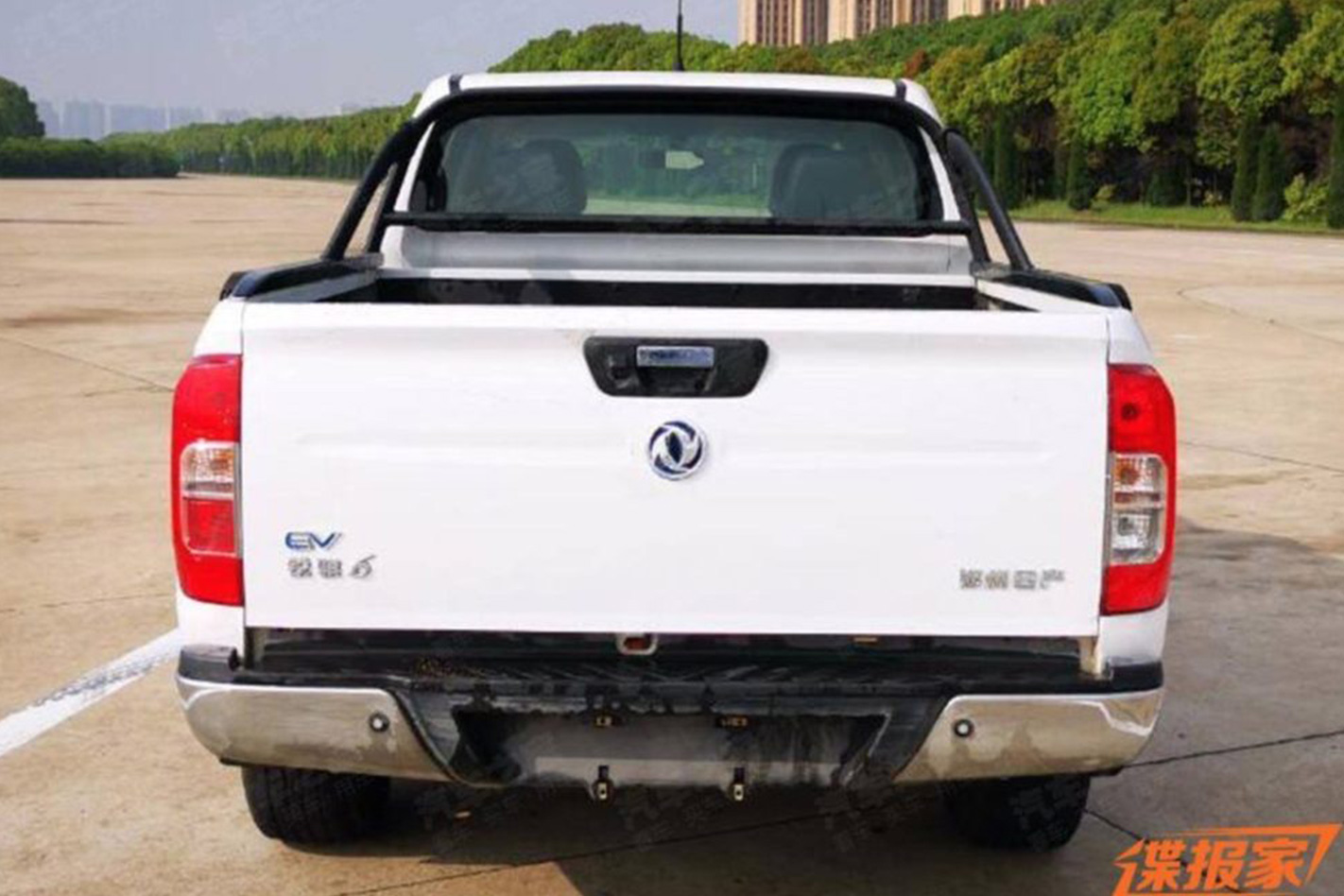
The real kicker is that, unlike in Australia where even the most basic of electric car costs $50,000, the Rich 6 EV is expected to be priced around $24,000 after Chinese government subsidies.
Is it for Australia? Highly unlikely, though it is a preview of what the future of the ute could look like.
The Reader: Randy Stagno Navarra The Car: 2016 Mazda MX-5 2.0-litre The Mileage: 33,450km The Ownership period: 1 – 2 years
This feature was originally published in MOTOR’s May 2018 issue
You’re a massive car nut, where does that come from? [My family’s] always been into cars. We’ve always had Fiats, Alfa Romeos and Golfs. Dad’s had umpteen Minis, Austin-Healeys and Sprites. I met my wife through mutual friends in the car scene. Most of my friends are in the [car] club and they range from school teachers, to lawyers, to accountants.
How’d you come cross the MX-5? I bought a three-door Sierra Cosworth that I had to get rid of, no-one knew anything about them. In the end I got offered good money for it and the car is back in the UK. I had a friend working at Mazda who offered me a drive of the MX-5, the NB had just come out. I bought my first one in 1999. This is number 11.

Why not the 1.5-litre? On the road I prefer the 1.5. I love the way it revs, that’s something the 2.0-litre lacks and I think the 2.0-litre is a bit of an afterthought, because of the American market. The ride is a bit better than the 1.5, yes it’s softer, so it moves around more, it actually feels better engineered.
But then you take the 1.5 on the track and it’s not as good. It lacks torque. I did a 1:36.8 in the 1.5 at Sandown, then a 1:32.4 in the 2.0 litre. But in the 13 years on track I’ve done a clutch once.
What’s it got? It’s got lowered Whiteline springs, Whiteline adjustable swaybars, adjustable end-links, and that’s it. The only difference is I put on a set of brake pads and 17 x 8-inch wheels with some good Yokohama rubber [for the track].
What do you love about MX-5s? They all do the same thing. Put a smile on your face. What Bob Hall said about them is true. If you can’t drive a car with 90 horsepower you can’t drive one with 900 horsepower. I did an event at Bathurst in the NC, lived out my dream as Peter Brock. Drove it there, and drove it back to Melbourne. They’re just so versatile.
For more than 70 years, the mission statement for two of the world’s most iconic off-road vehicles – the Jeep Wrangler and Land Rover Defender – remained largely the same.
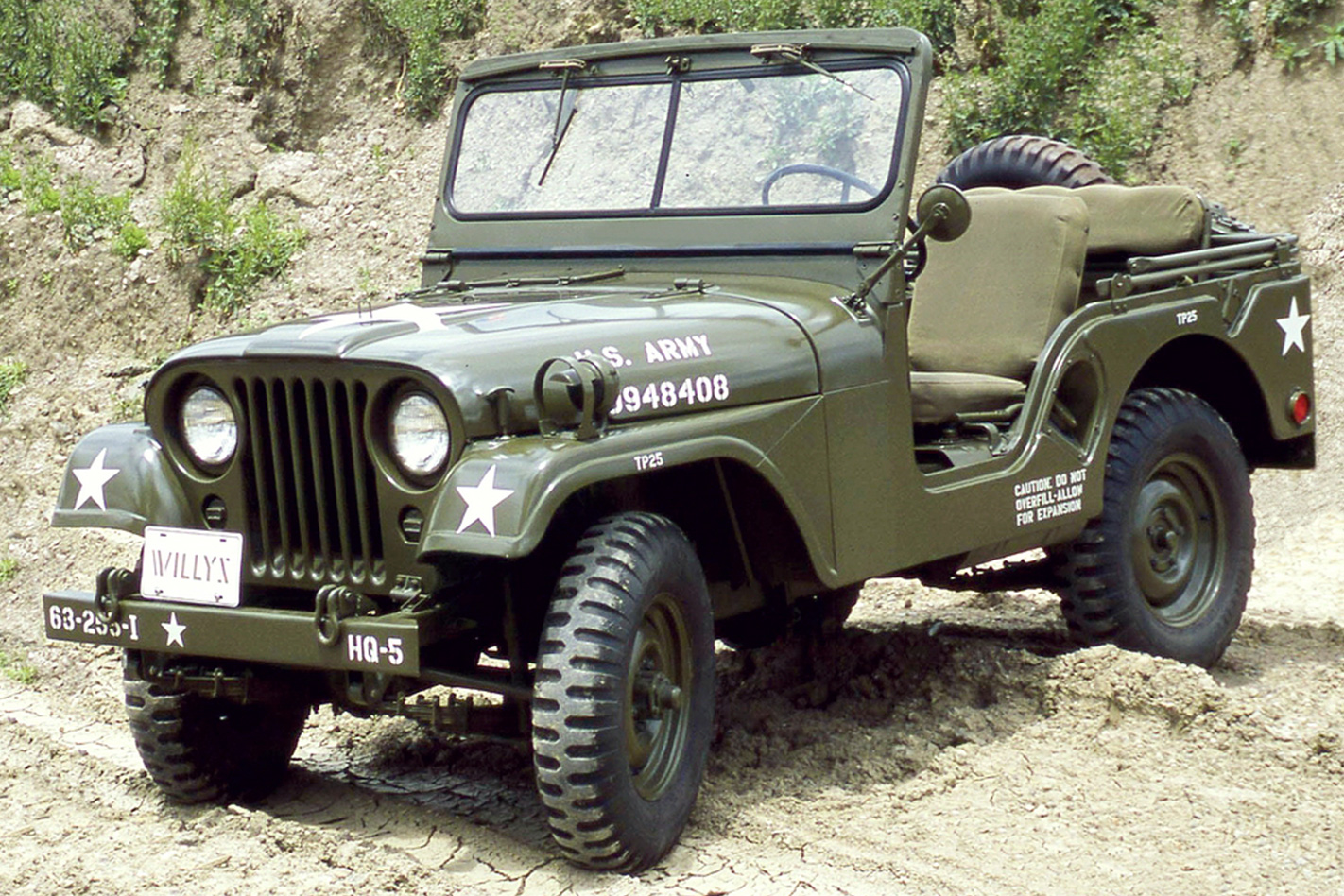
Respectively, stiff-upper-lip Land Rover and yeehaw Jeep couldn’t be more different in their image and execution, but the Wrangler and Defender were like twins separated at birth. Both sacrificed much of their on-road driving experience for unrivalled performance once the bitumen came to an end. They also both found their genesis in military vehicles launched in the 1940s.
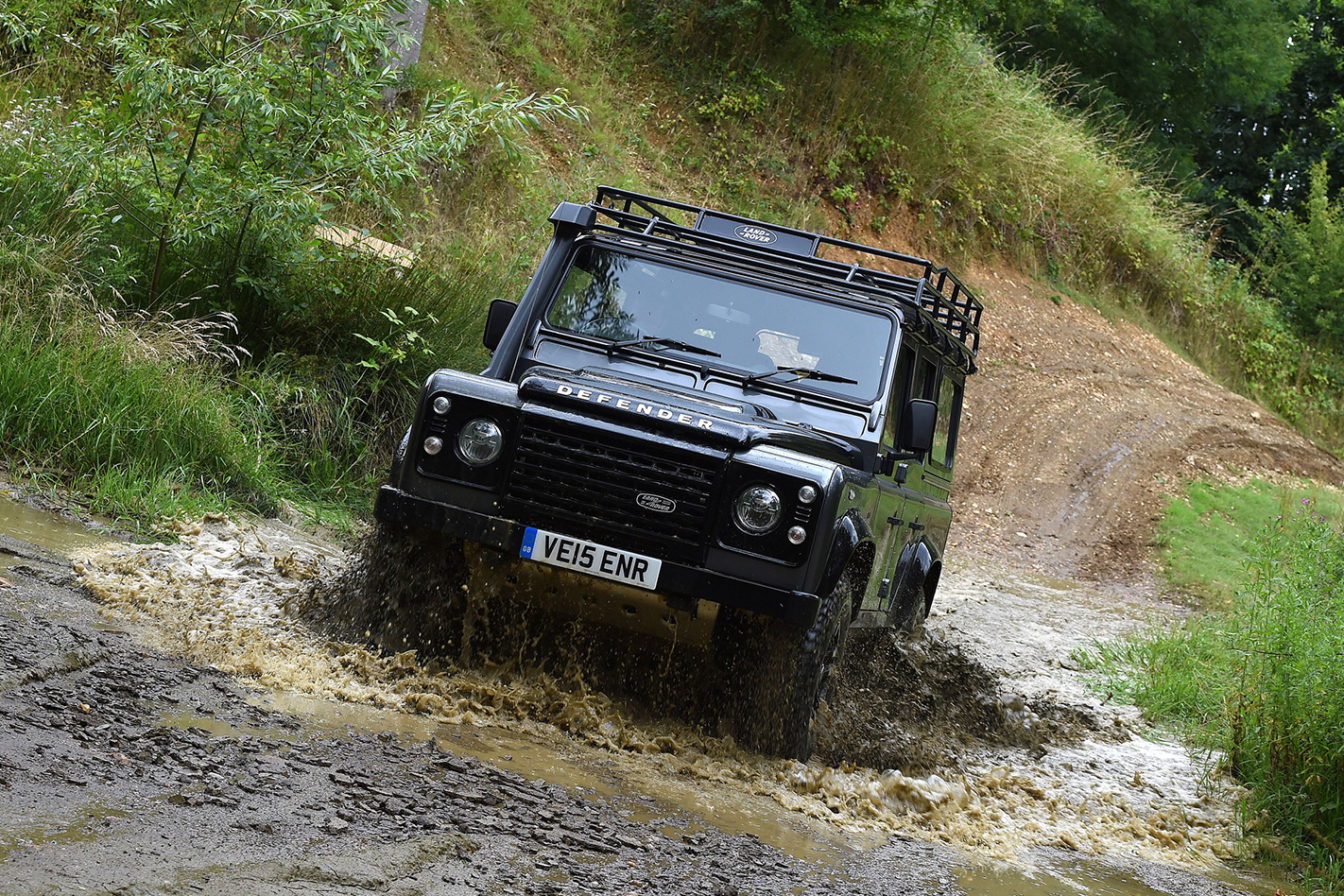
In the ensuing decades since launch, materials technology, construction, capability and overall design has evolved considerably for both models, but the core principle of uncompromised off-road ability has remained the driving force all along.
And to that unapologetic determination to dominate the field, the diehard enthusiasts flocked. No nonsense mechanicals lent themselves to extensive modification, boosting go-anywhere prowess even further, dependability and ease of repair appealed to serious adventurers, and the unmistakable styling of both has a timeless allure.
But after seven decades of beating the same path as the Wrangler (and a hiatus), the returning Land Rover Defender is about to set a new course, and pursue a very different trail for the first time since the original Series 1 emerged in 1948.
After an extended and protracted teaser campaign, Land Rover is about to reveal the successor to the Defender nameplate, but its name is just about where the connection to its past ends.
While the Wrangler battles on with a tried and tested (but also inherently flawed) recipe in the name of satisfying a longstanding customer base, the new Defender will be a sophisticated, polished and modern machine that is likely to be a delight on the road.
It’ll have independent suspension that’s supported by air springs, it will borrow the advanced, lightweight platform and architecture that is proliferating the rest of the range, and it will incorporate state-of-the-art technology, including augmented reality that will make the bonnet disappear.
Defender fans are going to hate it.
Sure, its maker says it will be “the most capable car we’ve ever built” and if it delivers an enhancement of the off-road ability already found in other Land Rover and Range Rover models, they are on to a good thing, but that won’t matter to the traditionalists.
Conversely, peer under the boxy body of the 2019 Jeep Wrangler and you’ll find a pair of live axles connected to a ladder chassis and, while the current model is probably one of the best in its bloodline to drive on-road, it’s still seriously compromised.
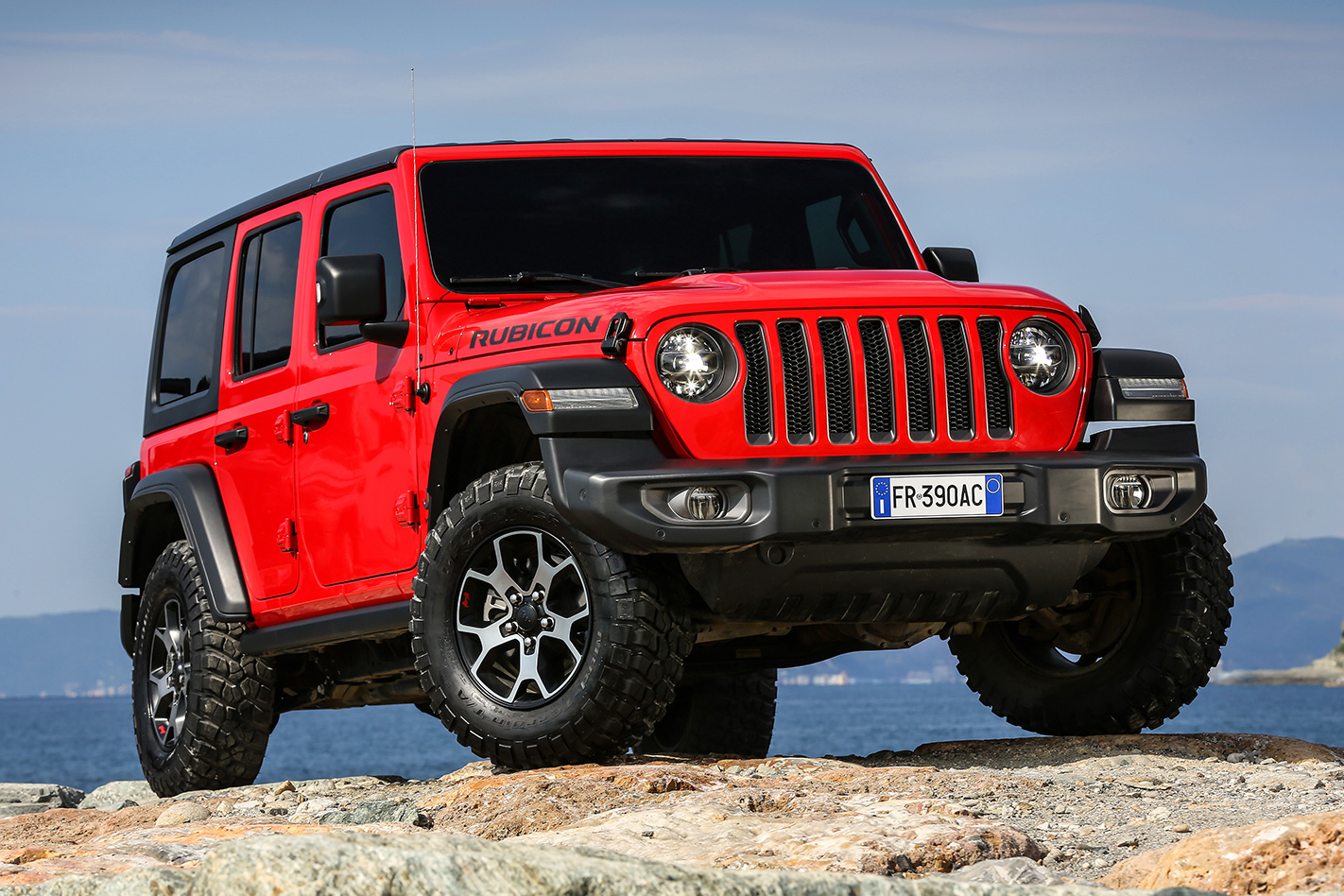
Get it away from the blacktop, however, and the Wrangler is better than ever. It’s very much business as usual.
And so, just like the seven-slot grille purists that would drop Jeep in a heartbeat if the next Wrangler was a comfortable, refined high-rider packed full of high-tech electronics and cottonwool, those owners that really put their Defender to hard yakka will be jumping ship faster than you can say “trunnion grease nipple”.
On the one hand you have a maker persevering with an outdated design to retain a longstanding customer. And on the other, you have a manufacturer deliberately breaking from tradition fully aware that its decision will cost it a loyal following overnight. So who is right?
Actually, they both are. And the answer comes down to numbers.
Not long after the JL Wrangler launched in its native North America, Jeep sold nearly 28,000 in just one month setting a new monthly sales record, with a 70 percent increase over the number sold in March the previous year. The Wrangler is America’s favourite Jeep.
Need that putting into stark contrast with some easy to understand figures? In the Defender’s best year – 2012 – Land Rover sold just shy of 20,000 … worldwide.
That’s right, in a good month, Jeep can find more homes for Wranglers in a single country than Land Rover could find in an entire year across the planet.
Put simply, Jeep cannot afford to lose its Wrangler customers, while Land Rover can’t afford to keep the Defender’s.
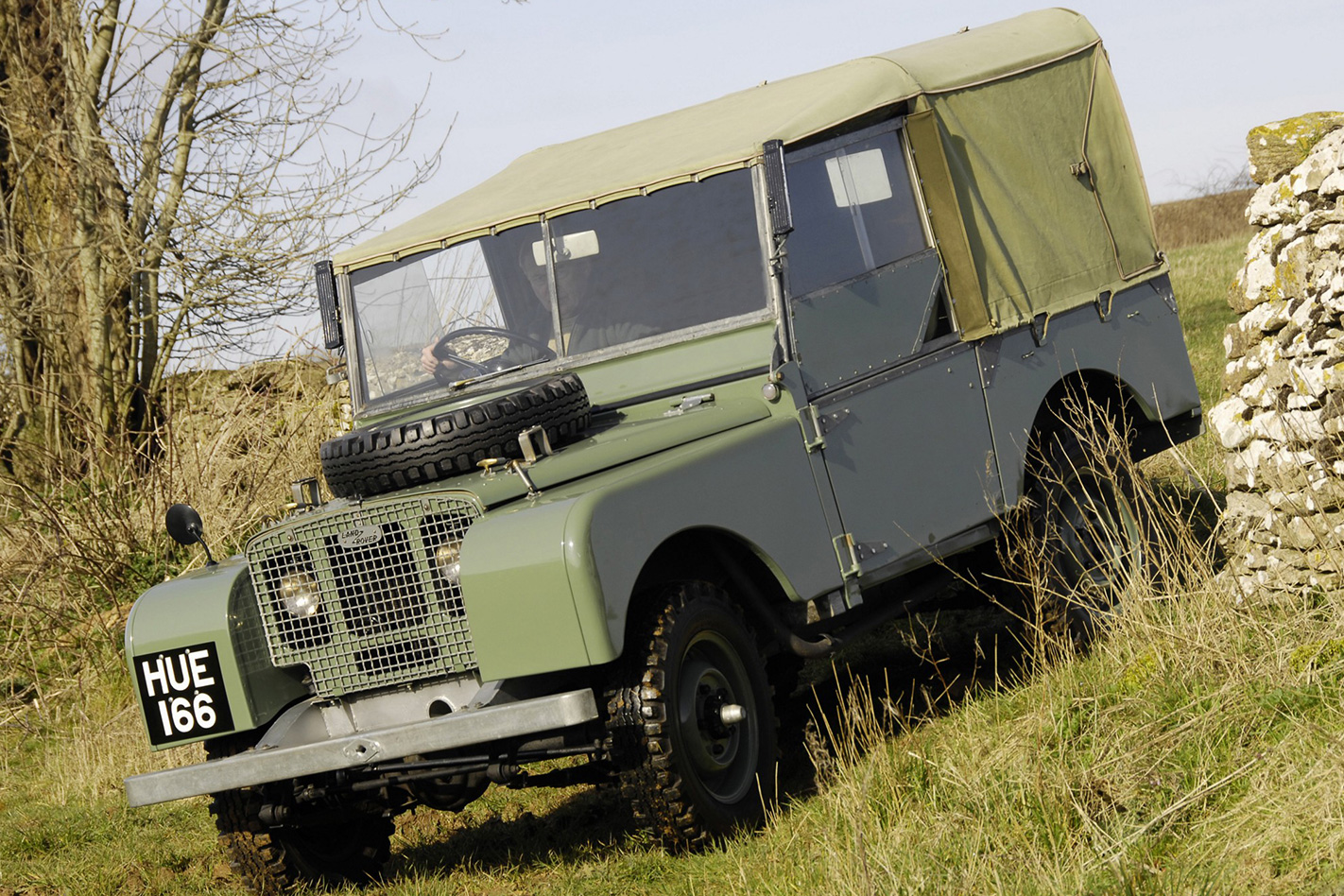
The bean counters at JLR would have looked at the Defender’s audience, the cash that it has the potential to haul in as a hardcore utilitarian off-roader bought by farmers who replace their vehicles only when at least two wheels have fallen off. And then they would have looked at the brand power of the Defender moniker.
Instead of pressing on with the same old deeply esoteric recipe, the Defender moulds could be recast to produce a luxurious, sophisticated machine with decent all-terrain ability that will appeal to a crowd many times the size of the existing customer base.
As long as the Defender exists as a model that can be repurposed to capture an entirely new, larger and more lucrative audience, the relatively small clutch of ‘green lane’ enthusiasts doesn’t stand a chance.
When Land Rover finally puts an end to its drawn-out campaign of teaser images, ‘leaks’ and ‘spy shots’ in September, I am certain the resulting vehicle will offer styling that is a clever retro nod to the original. I’m confident that it will be packed full of comfort and luxury features to Rival a Vogue. And I don’t doubt that it will quite possibly be the most capable off-roader in the JLR line-up.
But if I was faced with a hoard of stampeding zombies and forced to choose between the 2019 Wrangler or the 2020 Defender as the vehicle to keep my brains off the menu, I’m pretty certain I would be making a bolt for the Jeep.
What’s in the garage?
An SUV in its fourth generation? Wow, that must be one of the oldest SUV model line-ups in existence. Hang on, it is.
BMW’s X5 is the SUV that started it all, the big, soft four-wheel-drive that convinced the world they no longer wanted sedans and wagons. Twenty years since the Bavarian car maker first revealed the E53 it has sold more than 2 million X5s around the globe. It didn’t take long for rival companies to clue on to the fact that SUVs were big business; the X5 is now just one of a large group of premium SUVs on the market. So it’s got some competition to beat.
To see how the new model fairs we’ve been driving the diesel-powered 30d, which hits the showroom at $112,990 plus on-road costs. However, the PR department was nice enough to give us a few extras that include the M Sport Package for an additional $4000, massive 22-inch alloys at $3900, and a $2700 leather covered instrument panel. All up, the extras cost $18,100 and bring the total price of the car to $131,090. Ipso facto, it has a lot of convincing to do to prove that it’s worth its weight in gold.
What we reckon

Trent Giunco
Staff Journalist

Felipe Ubilla
Art Director

Alex Rae
Online Editor
Review
Power and performance
Diesel SUVs are not just fuel efficient, long distance cruisers, as the 30d proves that the old oiler still has plenty of life in it, motivating the X5 to the point that it will keep up with hot hatches like the Hyundai i30 N. If you’re feeling really competitive, it even has launch control.
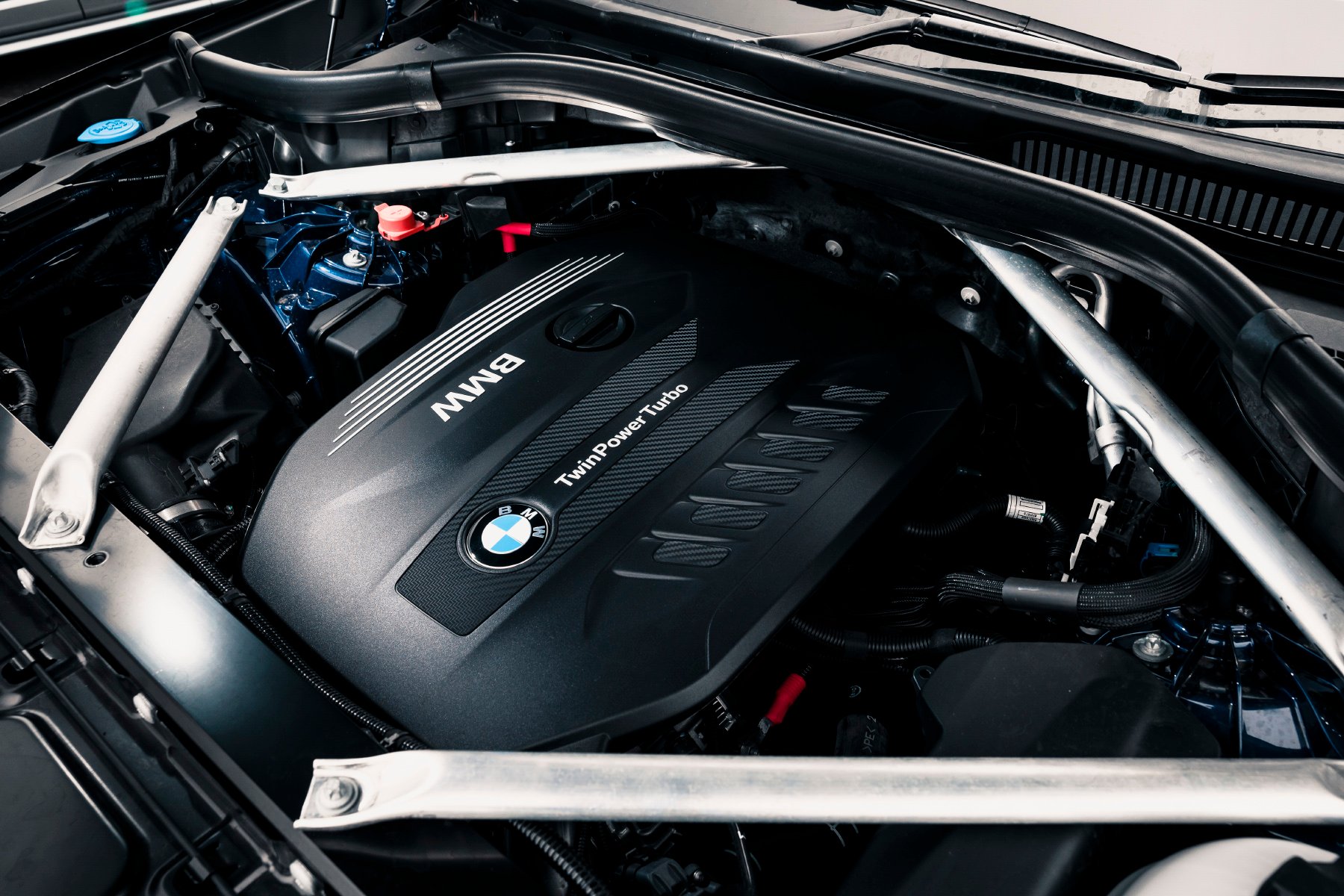
Helping the 30d launch off the mark is a 3.0-litre straight-six turbo diesel producing 195kW at 4000rpm and 620Nm at 2000-2500rpm. In our performance testing at Heathcote Raceway, we managed 0-100km/h in 6.6 seconds and a quarter mile sprint in 14.8sec. In short, it’s quick and responsive and more than enough for most urban requirements.
Beyond an energetic and immediate lurch from the line when the throttle is prodded, the drivetrain – connected to a quick reacting ZF eight-speed automatic and grippy all-wheel drive – is smooth and refined. At cruising speed it mumbles along quietly and even around town it isn’t intrusive with the usual rattle associated to a diesel. BMW is known for its sweet straight sixes, and that certainly extends to its diesel mill. But it might come at a cost, as the manufacturer-claimed 7.2L/100km combined fuel consumption figure was off by about 4.0L in our testing – though that included some runs down the drag strip.
Ride and handling
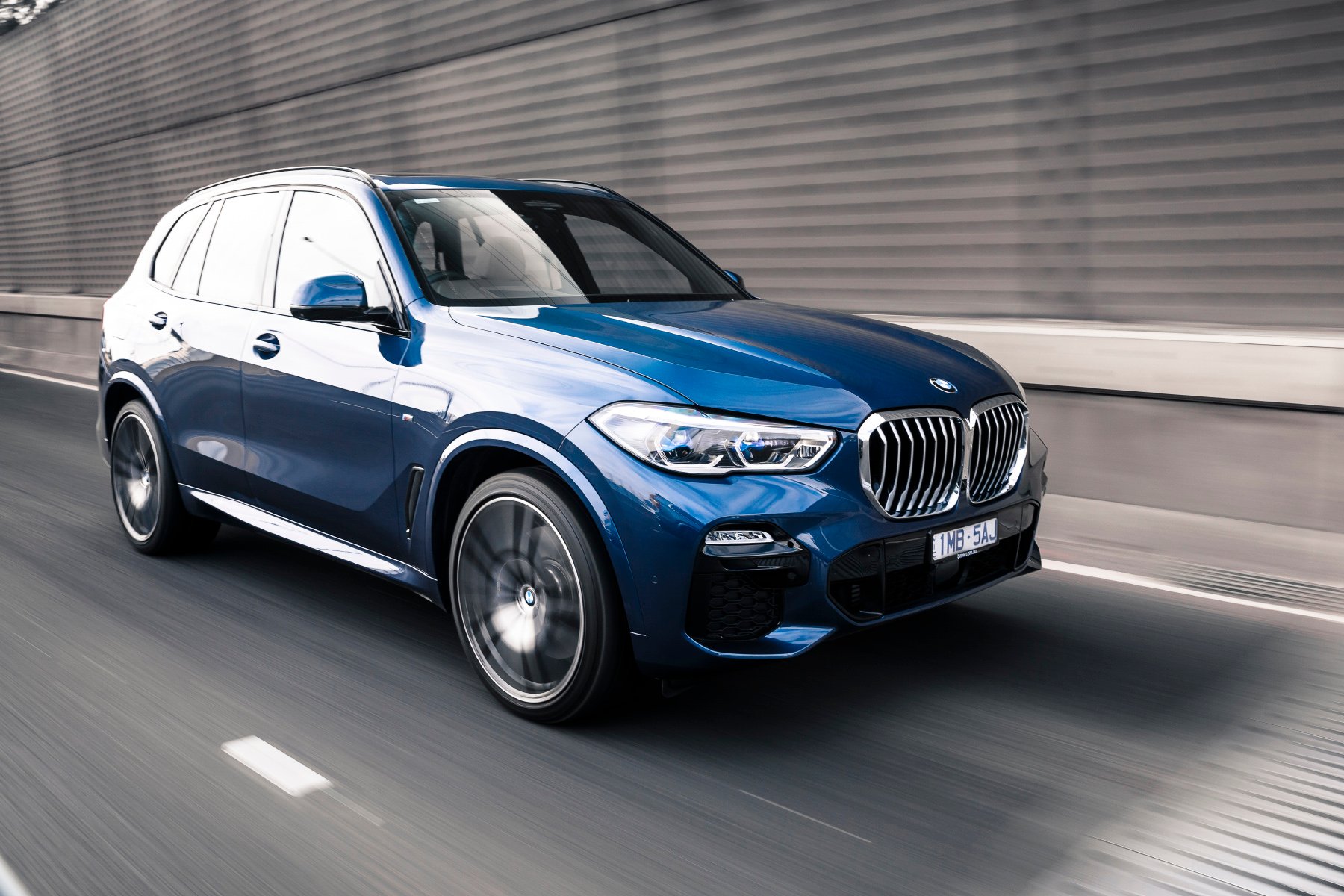
How do you hide the dynamic handling gremlins created by shoving 2.1 tonnes of weight in a tall SUV silhouette? Mostly, you don’t, and it’s a problem only compounded by the large cost-option 22-inch alloys with low profile tyres. Yes, there is adaptive suspension added to our test vehicle thanks to the M Sport Package, but it isn’t enough to keep the X5 from crashing over sharp bumps and feeling a bit edgy on its feet when cornering quickly. It is, however, a pretty smooth sailor in Comfort mode and on the right road – anything shy of unloved bumpy country bitumen and rotten city streets.
Adding more weight to the cabin, in the form of humans in the second row, makes it feel even harsher, but that’s really the price to pay for optioning a set of rims bigger than a TV set from the ’90s. On the flip side, the brakes are strong and bitey and pull up the big buses’ heft quickly.
Interior and comfort
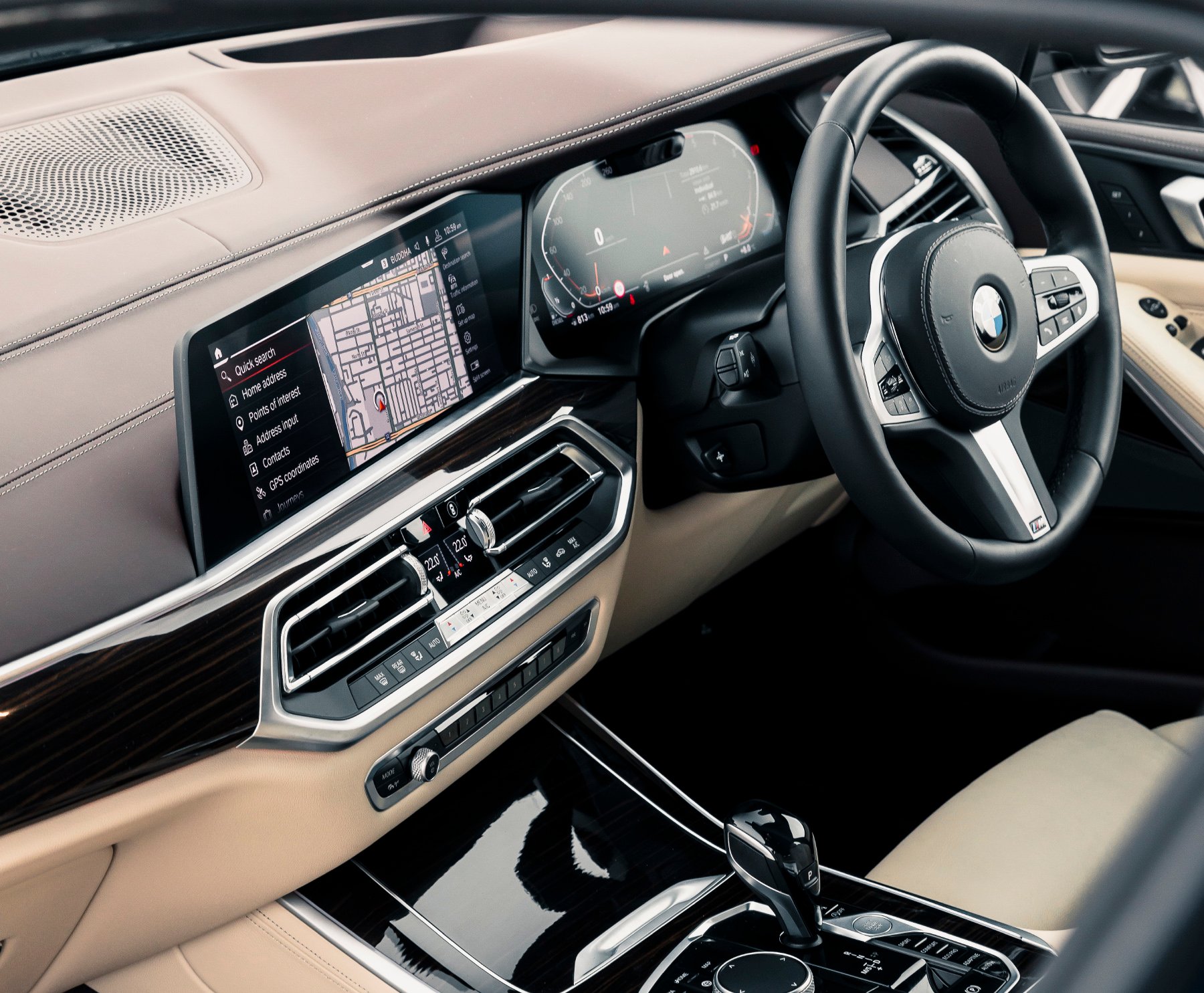
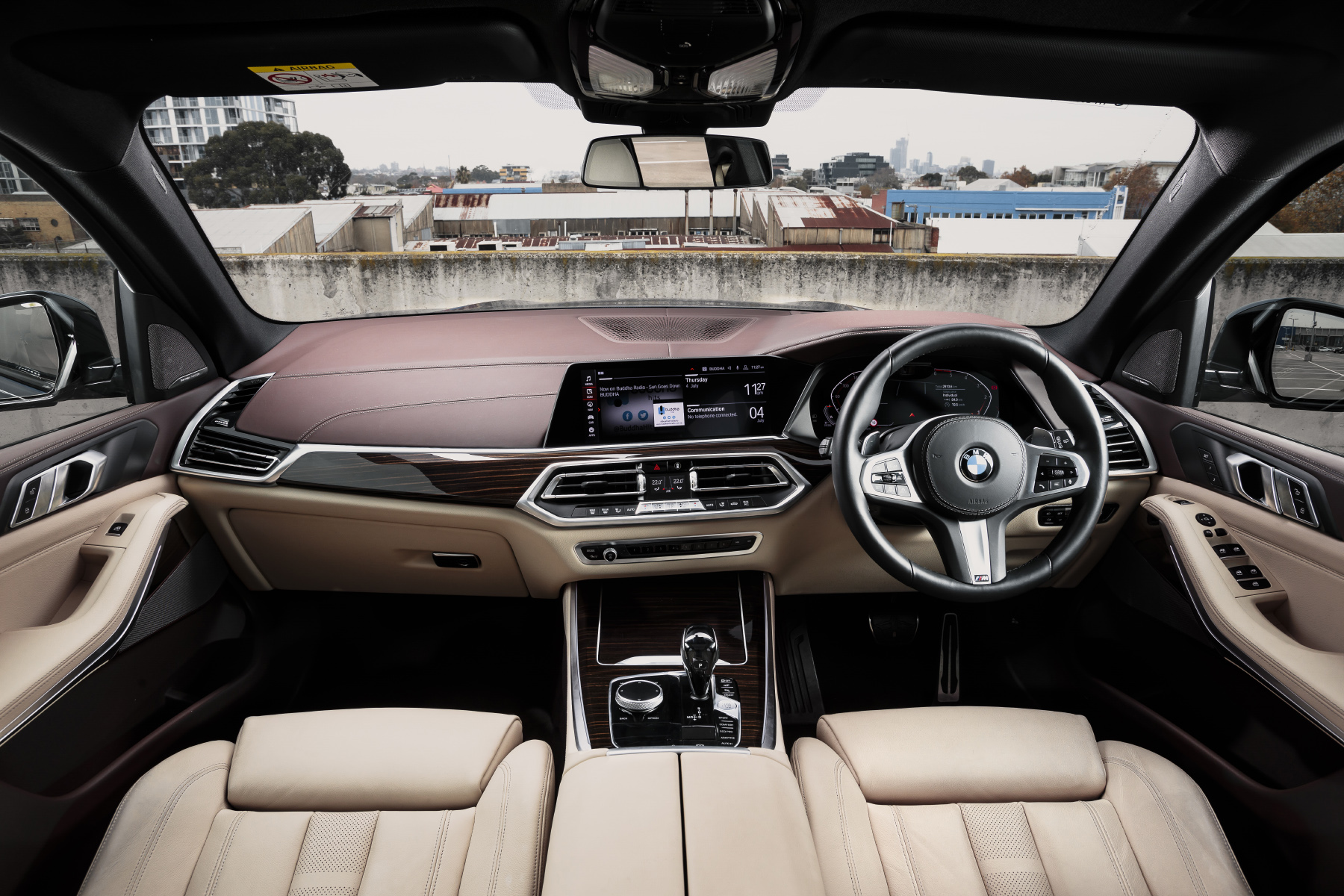
Wow, what an opulent cabin. Lashings of soft leather and lovely woodgrain trims abound inside the X5 and it feels like a million bucks. Unfortunately for penny pinchers, the loveliness of this cabin comes at an $8900 premium; the wireless charging pad alone costs $900, and Apple CarPlay can only be activated via a $179 yearly subscription, while Android phone users miss out completely. Shamefully, both are services that have become standard expectations (without the yearly subscription) in this segment. The twin digital screens (one for the driver, one for the central infotainment) look lovely and come loaded with some very snazzy graphics and software.
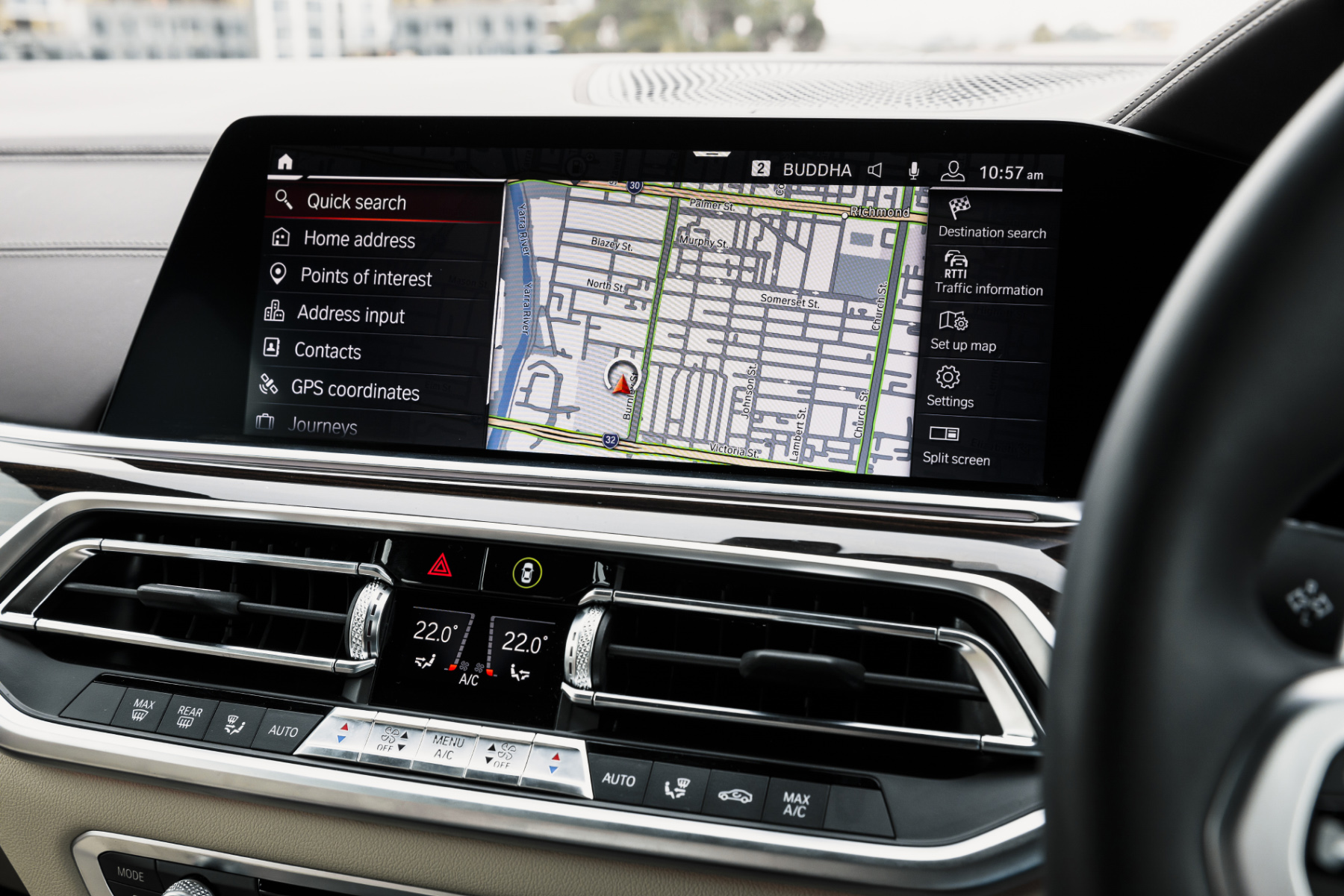
But there are further highlights for those after a well-furnished interior, with the cost-option harman/kardon sound system a strong performer and the four-zone climate control a boon for rear-seat passengers. Incredibly, though, there aren’t seat heaters.
Room in the back is good, but not segment busting, as the front seat backs come close to adult knees. Further back, the 645L boot is as capacious as it reads on spec, with a massive opening to take in a pram and a family’s luggage.
Verdict
It’s hard to throw much shade at the X5 from the standpoint of being a comfortable family cruiser on first impression. The cabin meets luxury expectations, while the quality and materials is what you should expect at this price point. But once you get moving it’s not quite as plush, with a busy ride underneath that’s too apparent on the wrong road. There is optional two-axle air suspension available which might tidy that up, or perhaps you’d not opt for the huge rims underneath. The latter would be the smart choice, as you’d make twice the saving, leaving the wallet open for the extras that make this pricey test unit such a nice cabin to sit in. But there’s no question about the drivetrain, which is a terrific unit.
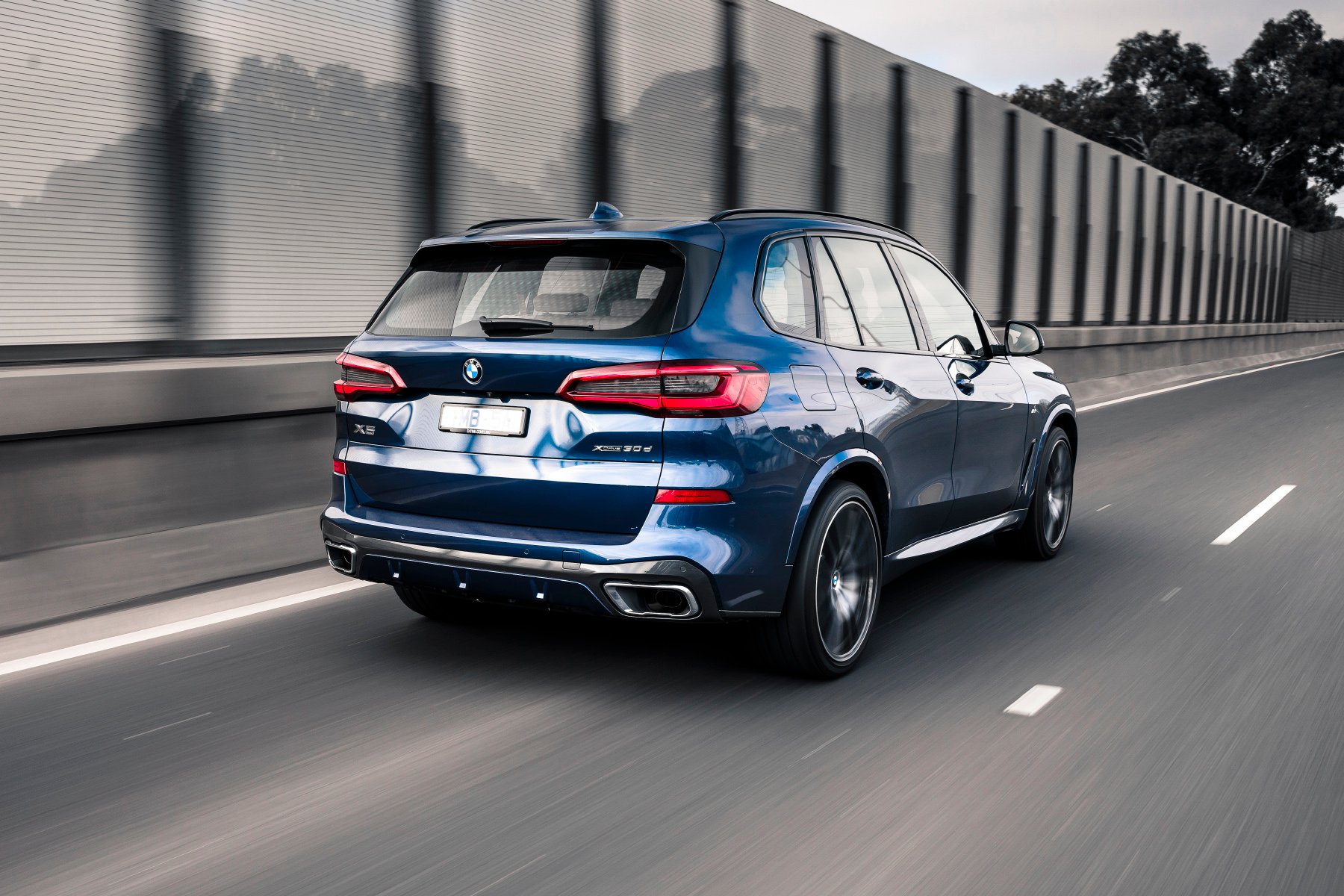
2019 BMW X5 30d xDrive PRICING AND SPEC
Model: BMW X5 30d xDrive
Engine: 2993cc, turbocharged 6cyl, dohv, 24v
Max power: 195kW @ 4000rpm
Max torque: 620Nm @ 2000-2500rpm
Transmission: 8-speed automatic
Weight: 2110kg
0-100km/h: 6.6sec (tested)
Economy: 7.2L/100km (claimed), 11.2L/100km (tested)
Price: from $112,990 ($131,090 tested)
On Sale: Now
The 2020 Mercedes-AMG GLC43 and its GLC43 Coupe variant have undergone a fairly significant update to, AMG says, become better driver’s SUVs.
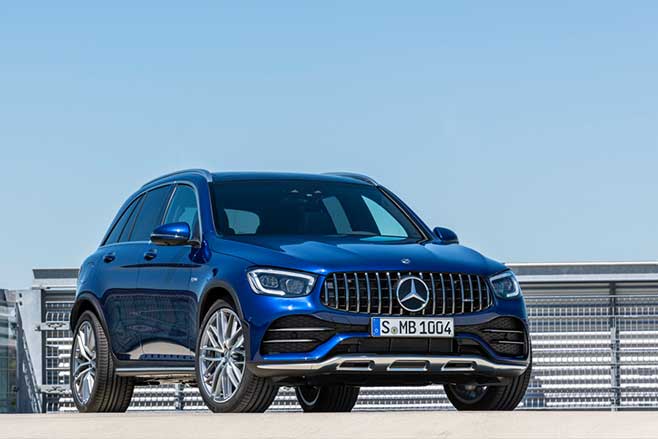
Not only has the GLC43 had a literal facelift, with smaller, flatter headlights and a chrome-finned AMG-specific grille, but the it’s has also gone in for a little bit of time at the gym to pack an extra 17kW for a new peak power figure of 287kW from its 3.0-litre twin-turbo V6.
The 520Nm torque figure remains the same, as does the GLC43’s 0-100km/h claim of 4.9 seconds. Weights for the facelifted ‘43s are unconfirmed, but we imagine they’ve not strayed too far from the 1855kg the previous versions weighed.
The 9-speed TCT (Torque-Clutch Transmission) automatic gearbox puts power to all four wheels via AMG’s rear-biased 4Matic system, with a front/rear axle split of 31 to 69 per cent.
AMG says it “provides for enhanced driving dynamics and higher lateral acceleration on the road as well as improved traction when accelerating.”
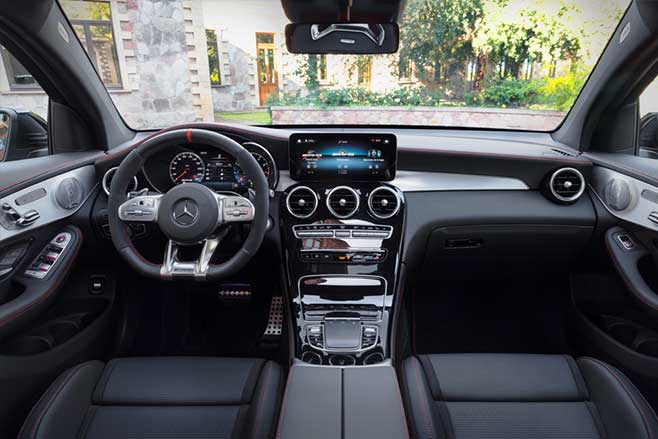
Underneath, the 2020 GLC43’s air suspension can adjust to keep the ride height the same regardless of what load it’s carrying, though it lowers at high speeds for better stability.
The latest version of Mercedes’ MBUX infotainment is also standard for the new GLC43, with voice control its main ‘gimmick’.
“Thanks to artificial intelligence, MBUX recognises and understands nearly all sentences from the fields of infotainment and vehicle operation, even if they are expressed indirectly.”
A Mercedes-Benz Australia spokesperson has told MOTOR to expect both the AMG GLC43 and the Coupe to go on sale locally in Q1 2020.
- Update #1: Welcome to the family
- Update #2: Bound for South Australia
- Update #3: Suburban bliss
- Update #4: The not-so-softroader
Update #1: Welcome to the family
By Glenn Butler
Published May 23, 2019
I’ll come clean: I once owned a Nissan X-Trail. I was one of the 71,193 Australians who bought a first generation Nissan X-Trail (2001-08). I was attracted to the X-Trail’s ability to go off-road, and secondly because the cargo area had rubber instead of carpet which made my dog’s fur easier to deal with.Beyond that, I was prepared to compromise on elements like on-road driveability, ride comfort and manoeuvrability.
So when we I learned were evaluating the current Nissan X-Trail for a long term test, I wanted to see if its on-road manners had improved over the last ten years, and whether the car’s ruggedness had been retained or diluted.
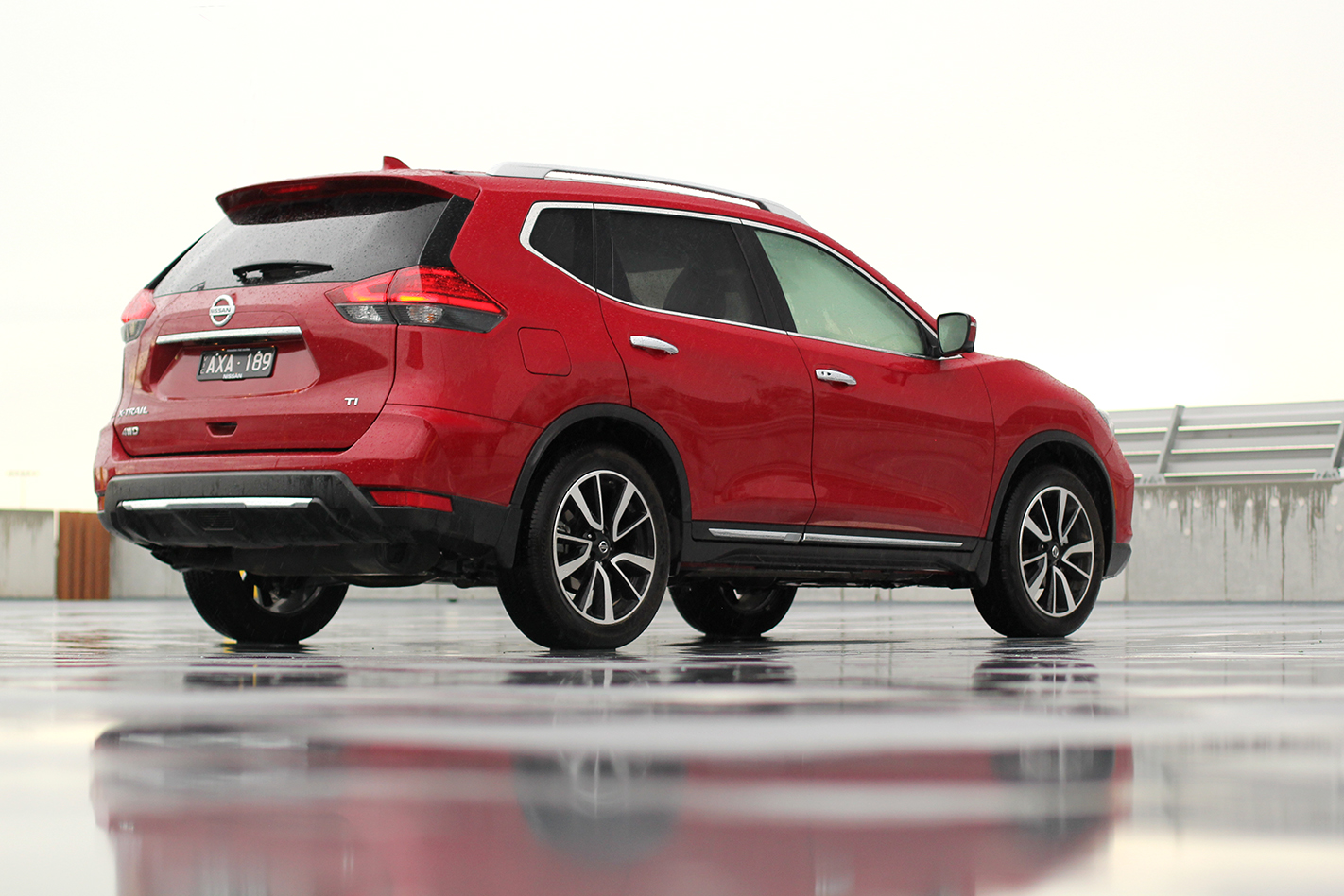
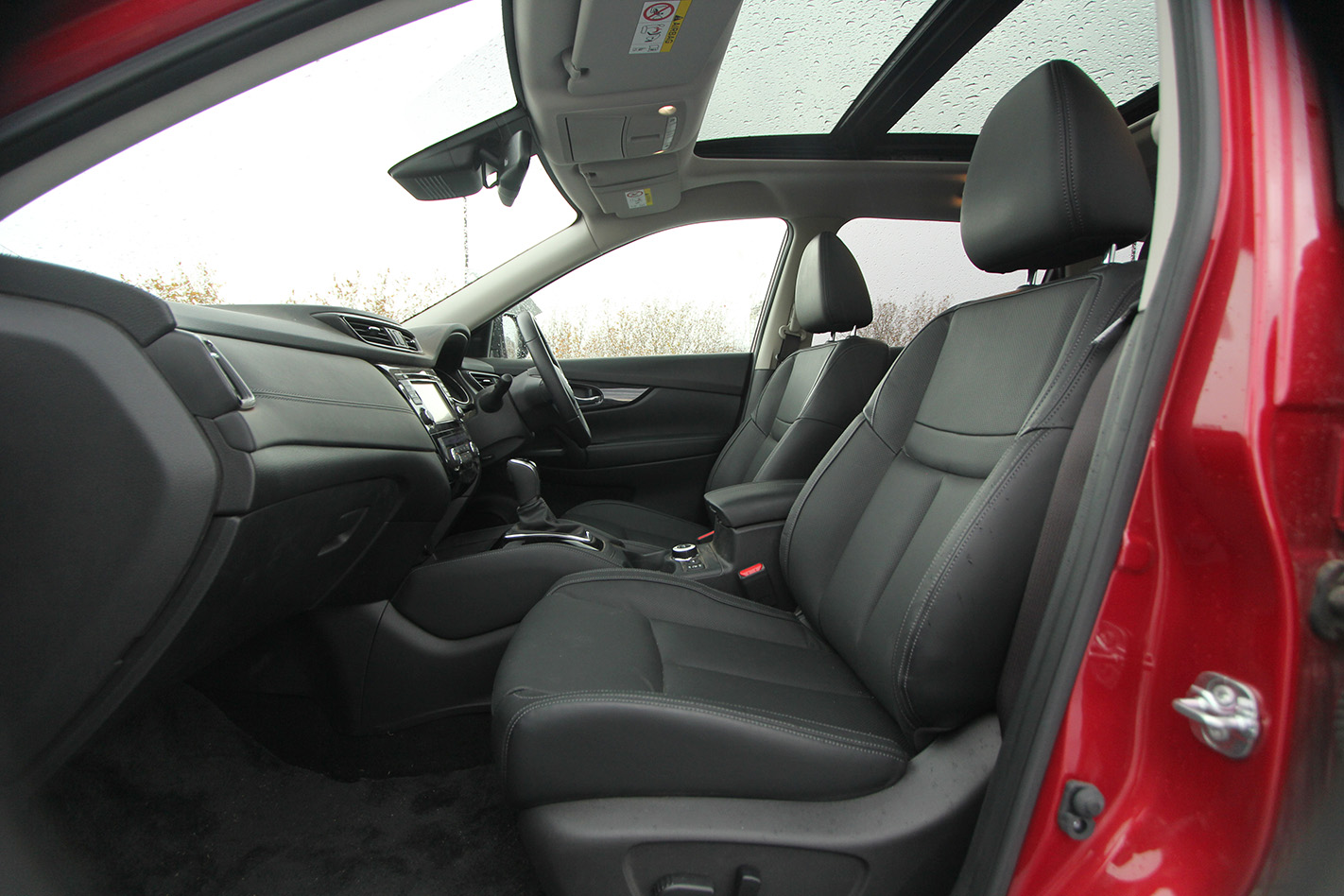
So far, so good. The 2019 Nissan X-Trail is considerably bigger than my 2005 model, so it’s a lot more spacious and comfortable, which makes it easier to live with. Up front, the driver’s seat and steering wheel are both multi-adjustable, and I’ve had no problem finding a good driving position.
I’m a bit confused as to why Nissan has gone for a foot-operated parking brake when a button would do the job just as well.
The infotainment system has all the features I’d expect of this price tag, but the graphics are starting to look a bit dated. This is an area where cars have leapt ahead in recent years, and the X-Trail is falling behind.
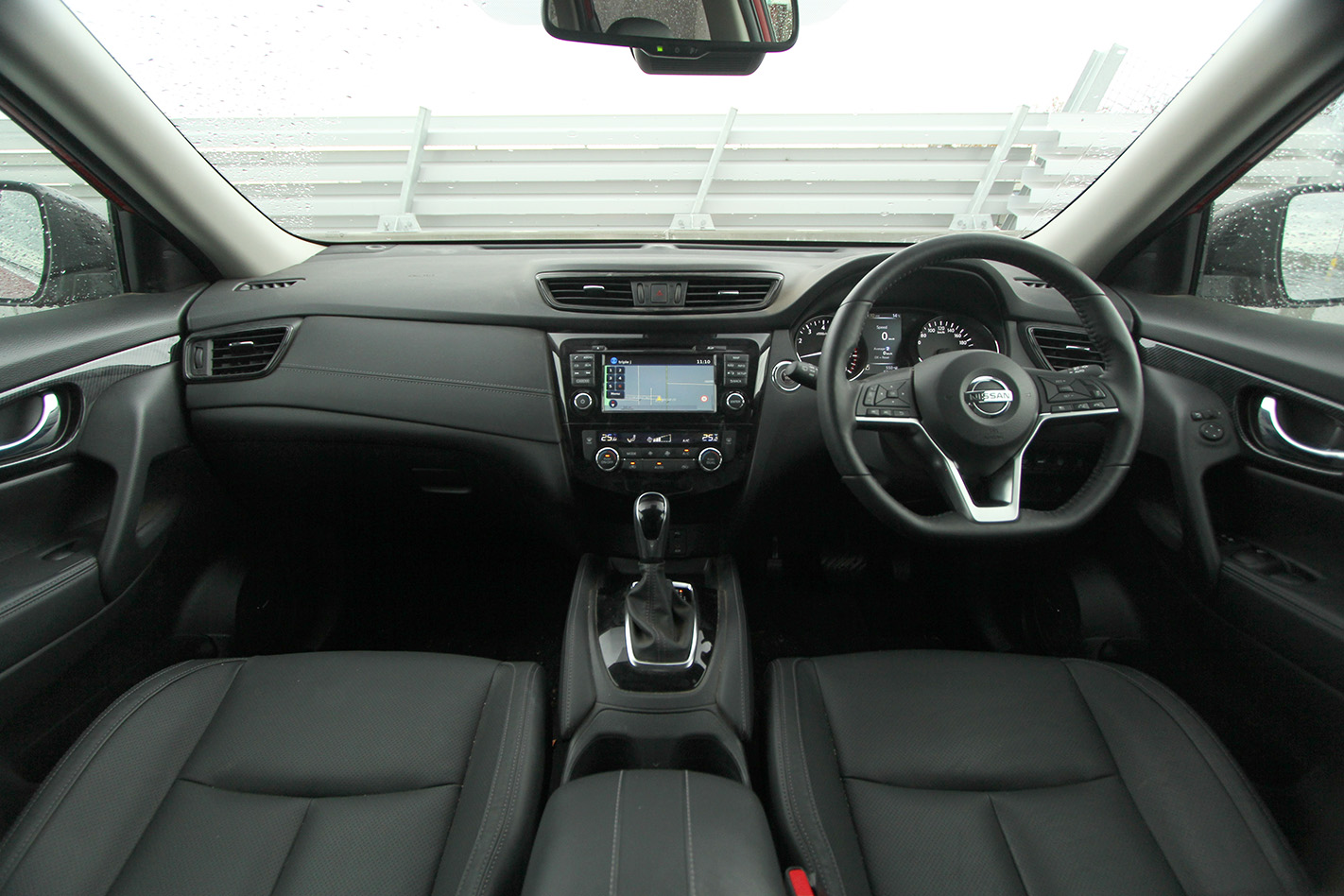
I’m also not a fan of the touchscreen’s demand that I agree to the safety message every time I get in the car, before being able to do anything.
The second row of seat has loads of legroom for passengers, and headroom too.
It’s also realistic for three adults, thanks to the X-Trail’s generous width, and air-conditioning vents in that row are a nod to comfort. Getting in and out of the X-Trail’s big door openings is easy, and the doors are relatively light for their size.
As for the cargo area. I was a fan of my old model’s rubber mat (easy dog hair removal, y’see), but must admit the carpet has a more premium look and feel. I’m sure Nissan has a rubber mat on the accessories list (will report back on that later).
I’m liking the big boot, and the split floor which can be used as a partition to secure smaller loads. The Ti model’s electric tailgate is another handy convenience.
In day-to-day driving the Nissan X-Trail Ti is a very easy machine to drive. This model’s 2.5-litre petrol engine feels responsive and energetic, and pairs well with Nissan’s very smooth Continuously Variable Transmission.
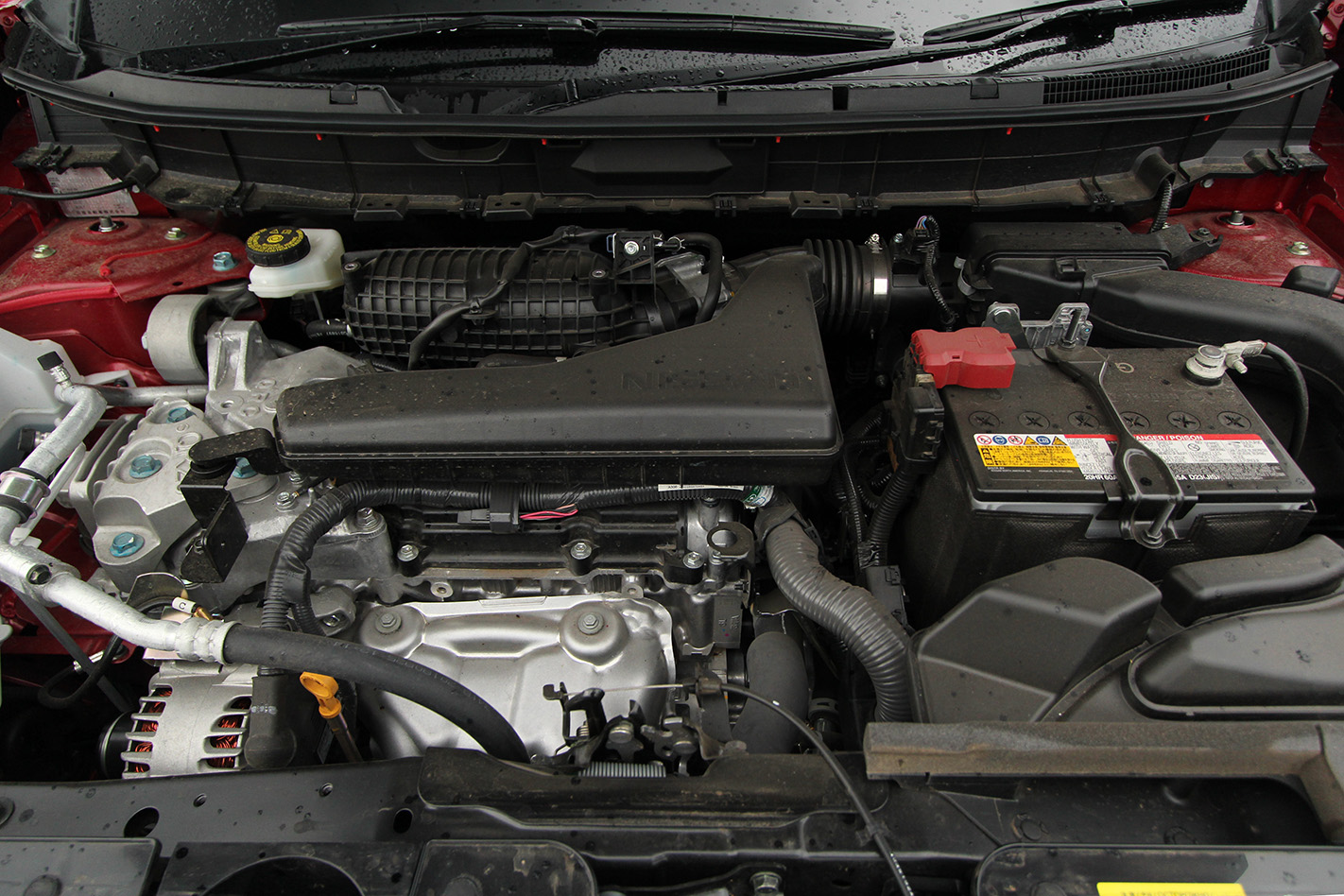
The engine’s stop-start functionality is a bit too eager to stop before the vehicle has actually come to a stop, and sometimes slow to start again. But it is saving fuel, so perhaps that lethargy is worth it in the long run. We will see.
No complaints about the X-Trail’s suspension, beyond the fact it’s set quite soft to absorb bumps which means the body leans a bit in corners. This may be a ‘Sports’ Utility Vehicle, but it’s definitely designed for utility over sports, so I’m fine with the suspension favouring ride quality instead of dynamics.
All in all, the new Nissan X-Trail has made a good first impression on me, and it’s certainly come a long way in the refinement and practicality stakes since my mid-2000s original. I suspect this new model won’t match the old one for off-road capability, but we’ll save that test for a later instalment.
Update #2: Bound for South Australia
By David Bonnici
Published June 2, 2019
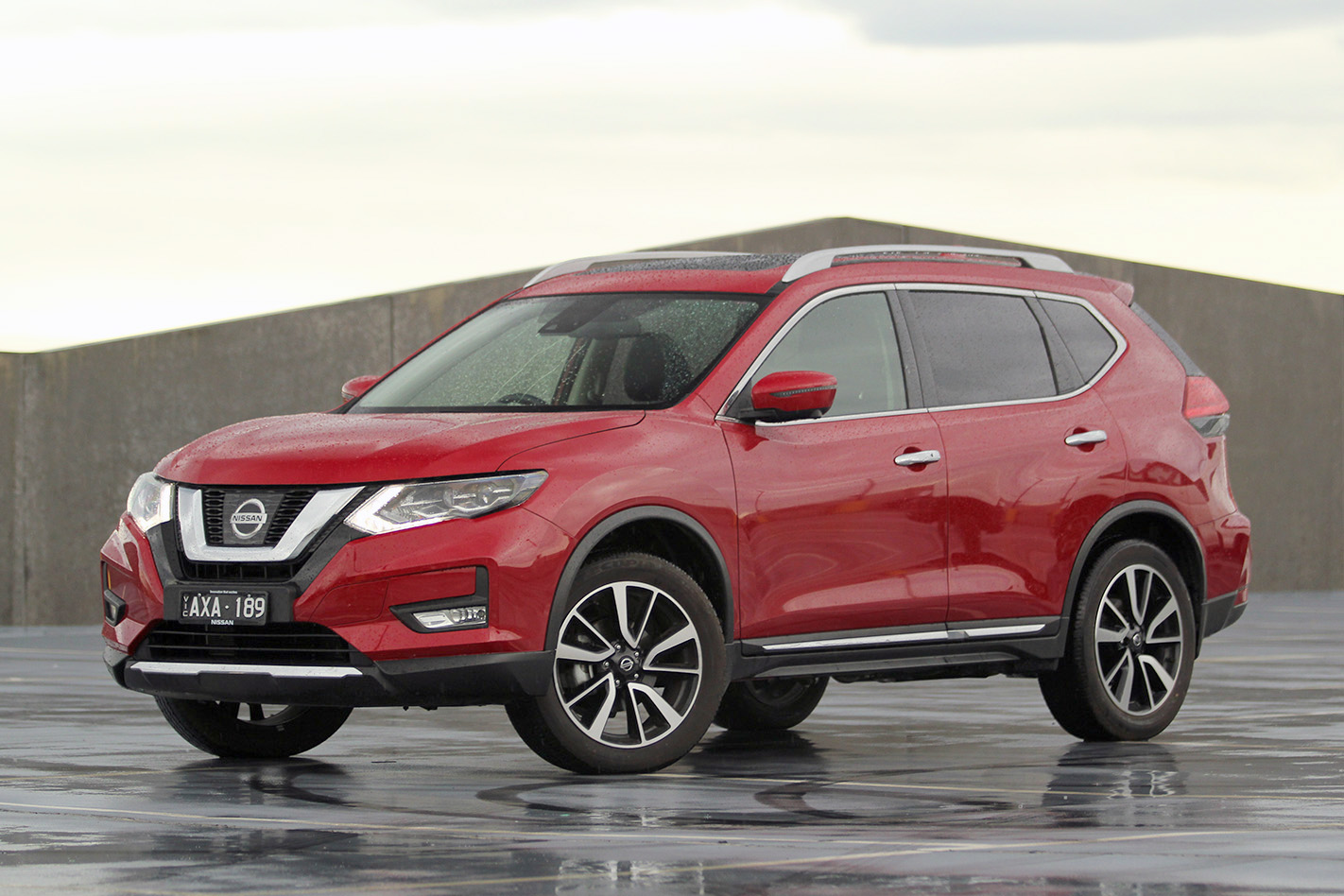
I must admit the Nissan X-Trail wouldn’t be my first choice as an urban SUV. Even with the Ti spec’s creature comforts it still doesn’t feel quite as refined as some of its fresher rivals, like say the Mazda CX-5, Subaru Forester or the quirky Peugeot 3008.
On the plus side its lesser refinement translates to a sense of ruggedness that makes it great choice for families whose lifestyle involves plenty of country driving. I soon realise this after turning off the Western Freeway near Ballarat to take a more enjoyable route toward Dunkeld for a culinary detour on the way to South Australia’s Coorong region.
On the motorway, the top-spec X-Trail Ti’s 19-inch wheels generated considerable road noise on coarser surfaces and its active cruise control had trouble settling on the selected speed, which I reckon was due to it sensing cars in adjoining lanes on gentle curves.
But on the meandering C296 heading south-west of Ballarat, Nissan’s globally popular mid-sized SUV seems to be in its happy place. The 2.5-litre petrol engine is more than adequate for negotiating hills or overtaking, and the suspension handled road imperfections well and lapped up bends.
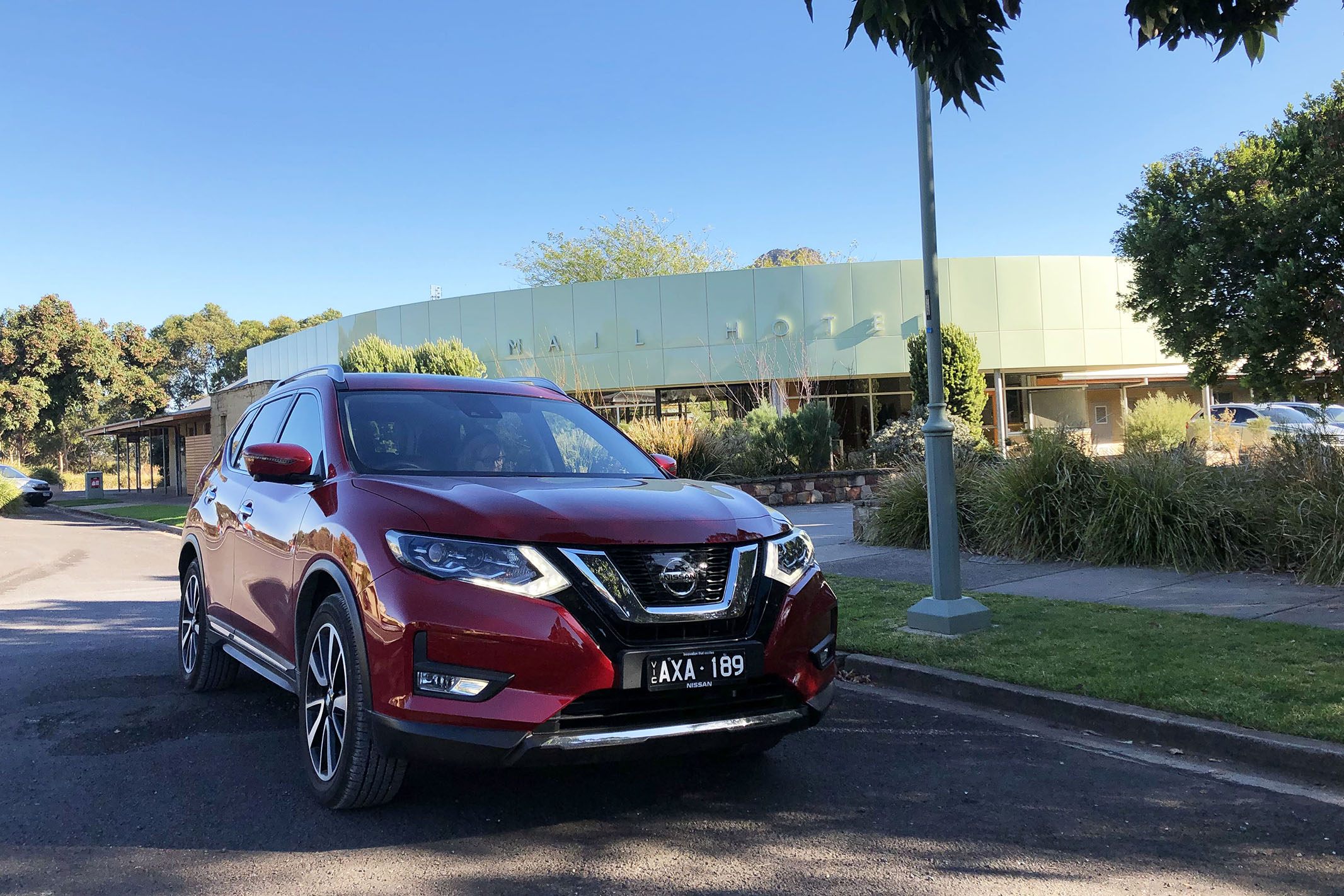
This is by no means the most direct way to South Australia’s Coorong region, but we had decided to book a night at Dunkeld’s Royal Mail Hotel, one of Australia’s premiere gourmet travel destinations – you can read more about our experience here.
Well-fed and watered, we wake to the sound of native bird life and prepared for the next leg of our journey.
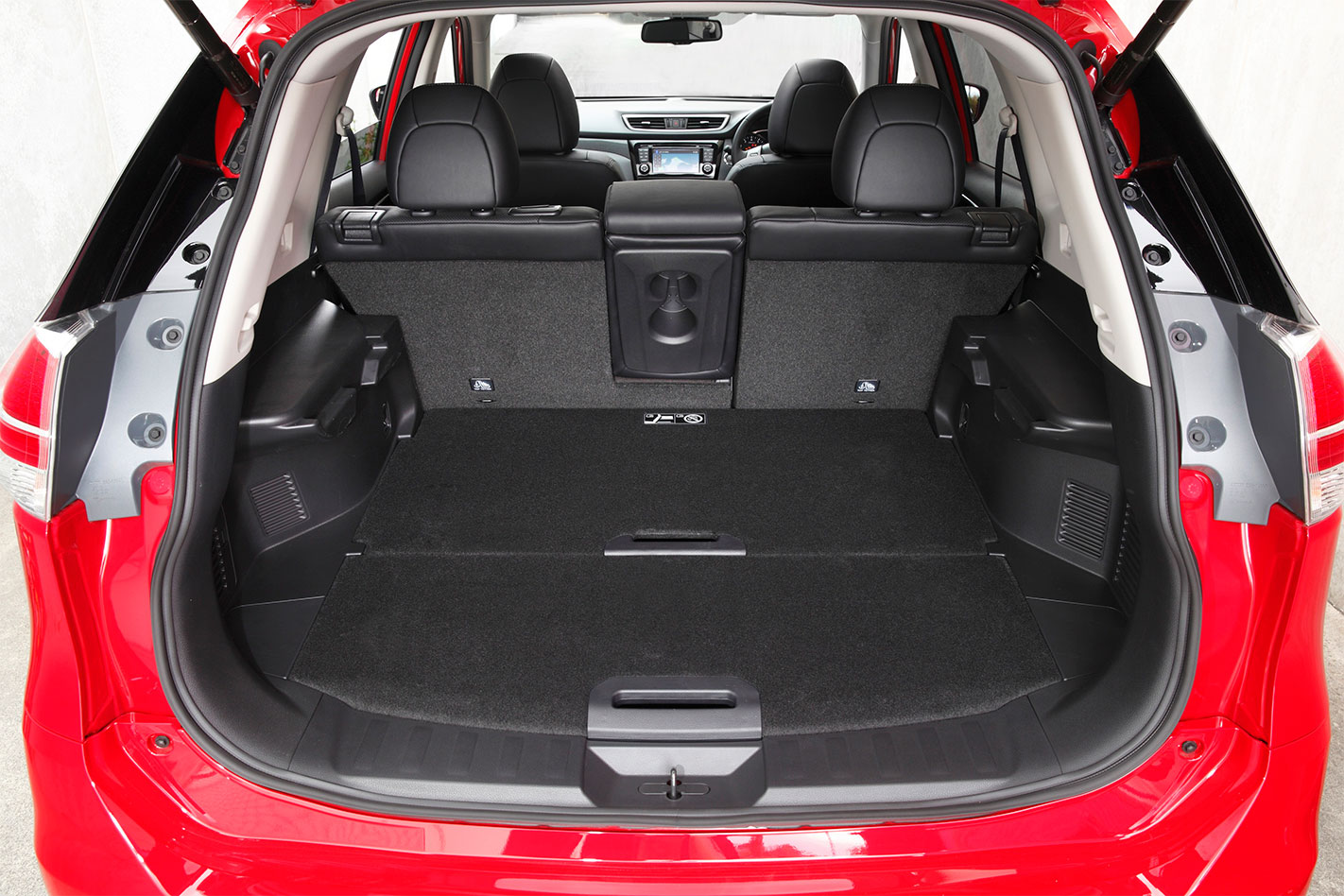
As with a suitcase, you can never repack a car as neatly as before you departed. We do tend to over pack but our luggage and extras including folding chairs and shopping bags filled with supplies were easily swallowed by the X-Trail’s capacious 565-litre boot, which is one of the biggest in its class.
Being able to slide the rear seats forward to eke a few extra litres of stowage can definitely be an advantage.
All packed, we head west, staying on the Glenelg Highway, which ultimately ends up at Mount Gambier, but turned on to the C198 at Casterton. The X-Trail is averaging about 9.0 litres/100km by this point.
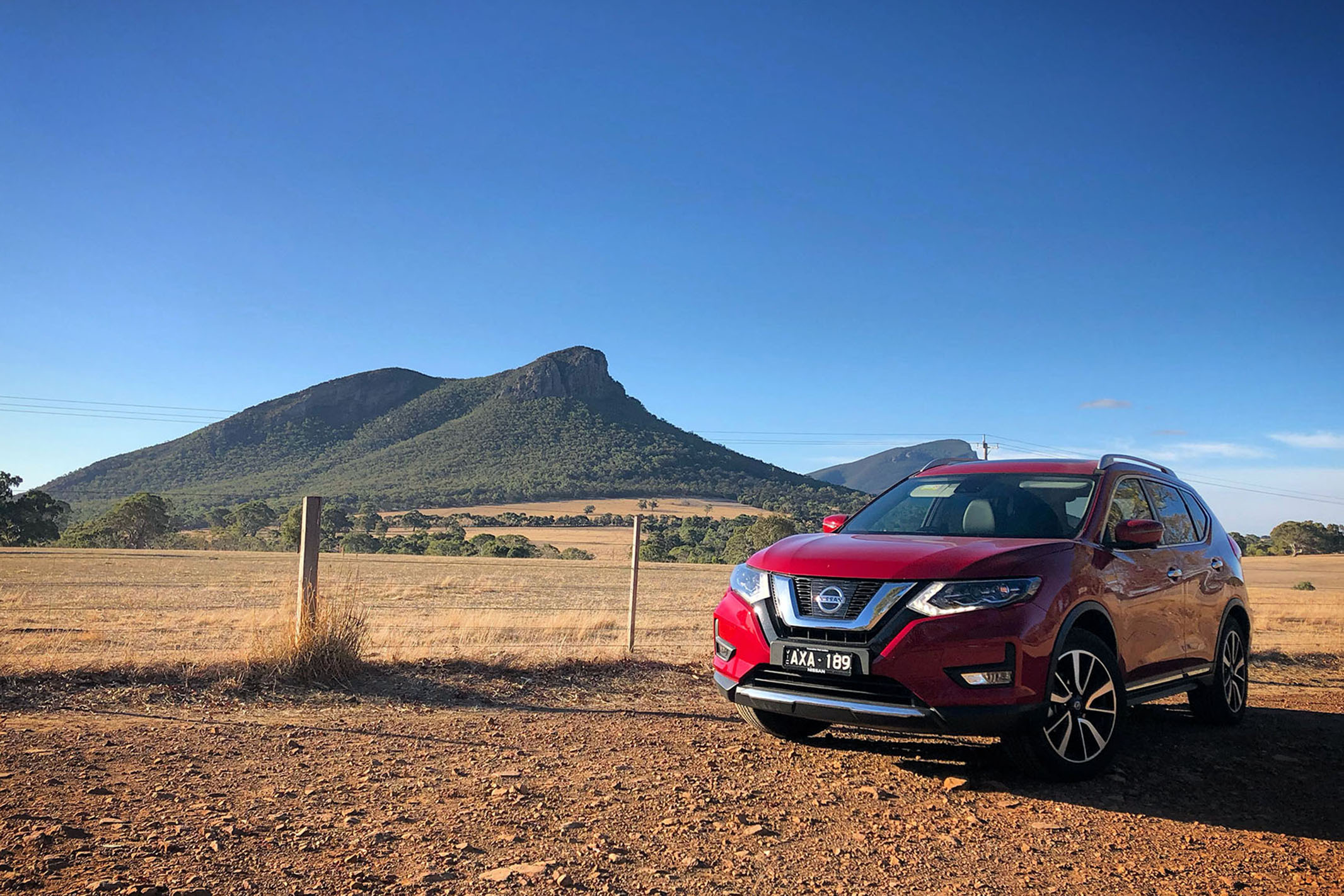
One good thing about South Australian rural highways is the 110km/h speed, limit even on single lane roads. The terrain is pretty featureless, though, as we head toward Kingston SE on the coast, via the Princes Highway which meant bypassing Robe.
The active cruise control works better here, co-operating well with the CVT gearbox that manages to find the right revs when negotiating the odd hill or slowing down behind slower traffic – which isn’t always the case in city traffic.
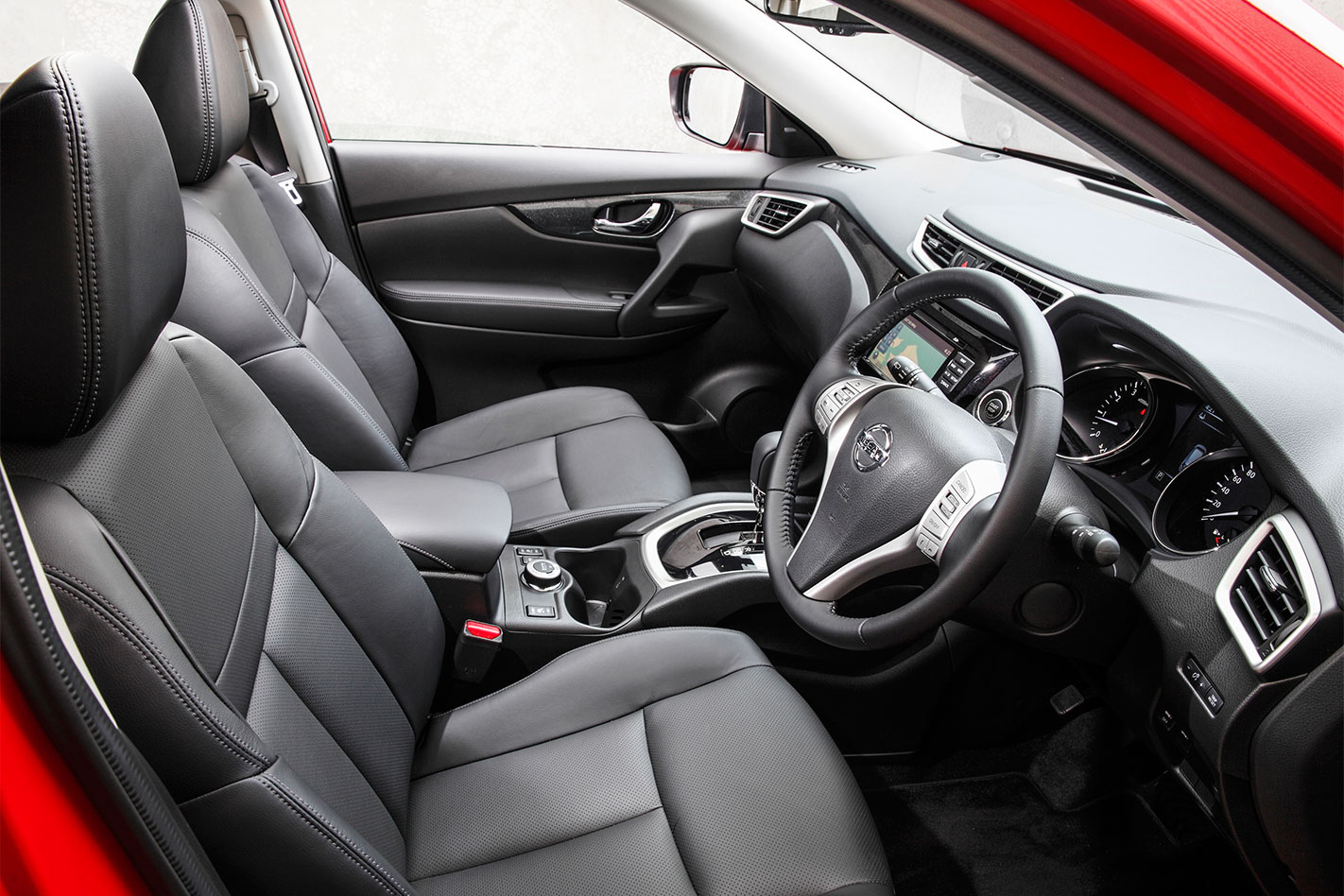
A few hours into the journey and I still feel good without a hint of saddle soreness. The Ti’s heated, power-adjustable and leather upholstered seats aren’t plush, but they’re comfortable, supportive and afford a good driving position.
We head further north west along the Princes Highway, finally capturing a glimpse of the lagoons of the stunning Coorong National Park, which are separated from the Southern Ocean by a 130km strip of sand dunes.
We soon arrive our ultimate destination, Meningie whose west-facing position on the Lake Albert makes for stunning over-water sunsets made all the more alluring by birdlife, including the pelicans that are synonymous with the region.

We stay at the Lake Albert Motel across the road from the lakeside park. It’s fair to say this isn’t as salubrious as the Royal Mail, but it’s very clean and a bargain for under $100 per night considering the location.
Woken early by the pesky corellas, we headed along Nurrung Road that encircles all but the north eastern end of Lake Albert and ended up a Long Point, which juts into the glassy lagoon close enough to the dunes to hear the surf pounding on the other side.
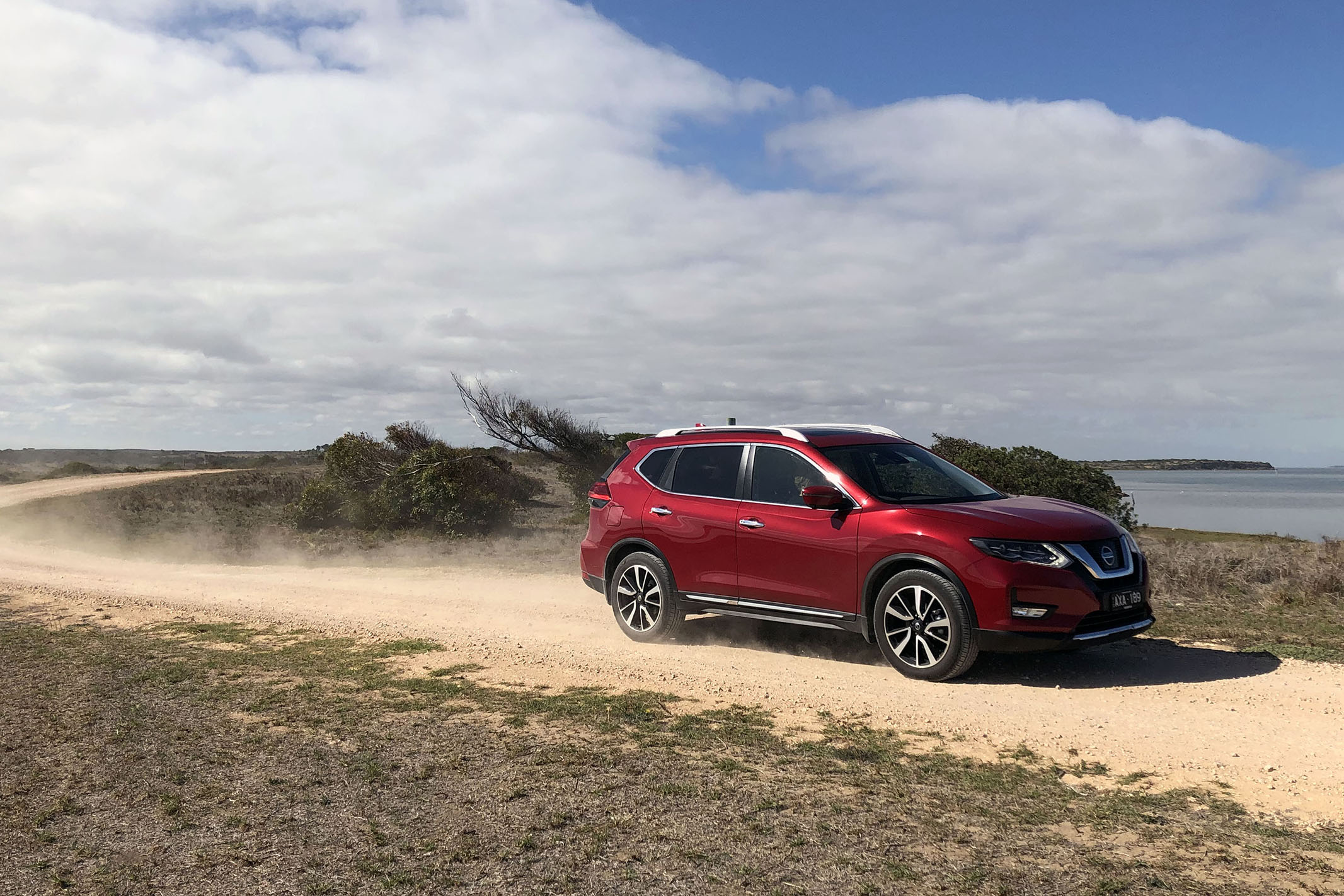
The X-Trail is in its element on the white limestone dirt road that leads to the Point, which we had to ourselves for most of the time, apart from the fur seals that use the little jetty to nap and dry off.
That evening, we head south a short distance from Meningie to McCallum Point, which has access to the lagoon beaches. The X-Trail’s AWD system (that distributes up to 50 percent of power to the rear wheels) allows for moderate off-roading that is sufficient enough to negotiate the wet sand with a bit more confidence than more road-focused SUVs.
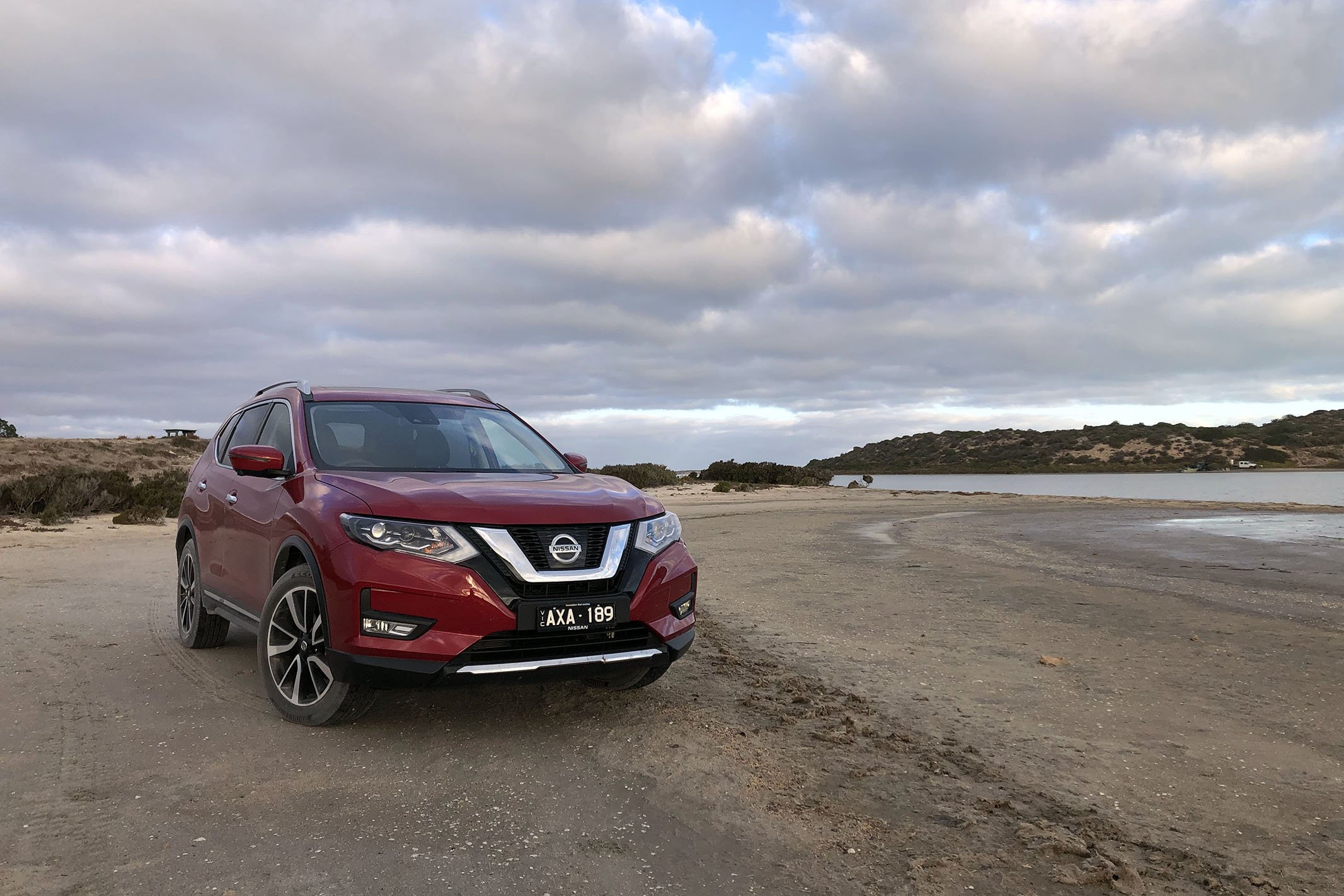
The Coorong is a mecca for serious off-roaders, with great fishing and plenty of campsites, but most of the dirt roads in the area are negotiable by normal cars in dry conditions, making it the perfect place for those who like driving around to discover spectacular views.
And the X-Trail proves a great ride to do all this in. It’s still not my first choice of urban SUV, but having travelled in it this far makes me appreciate its strengths as an open-road tourer with enough power, space and off-road capability to let you and your family get to places many of its mid-sized rivals can’t.
Update #3 – Suburban bliss
By Tony O’Kane
My younger self would be aghast to hear this, but these days I’m finding myself gravitating towards cars that are comfortable rather than cars that are fast, loud and exciting. Ergo, I found myself happily slipping behind the wheel of our X-Trail long-termer rather than fighting my colleagues for the keys to BMW’s oh-so-sexy M850i Coupe, which passed through our garage not that long ago.
Now I did eventually steal some time in BMW’s flagship two-door and it was an absolute blast, but did I regret preferencing the X-Trail over it? Not at all. Why? Because my life exists mostly in and around the suburbs, not on twisting coastal roads or race tracks. Often times, cars that are great fun on the latter just induce anxiety when driven within the former – especially when the price tag stretches deep into the triple digits.
And to be honest, I’m glad I spent a bit more time behind the X-Trail’s wheel (which, I’ve got to say, I’m glad they remodeled as part of the X-Trail’s facelift back in 2017 – the old one was just dorky and uncomfortable). Though it’s one of the oldest cars in its segment, having launched globally six years ago, there’s still an honest charm about Nissan’s mid-size SUV that has enduring appeal. A lot of that, I reckon, comes down to how easy it is to drive.
Sure it’s got a CVT, the most reviled of all automatic gearboxes, but it rarely has that hyperactive rubber-band feel that some CVTs suffer from. In the X-Trail, you simply slot it into Drive and it does everything it needs to do almost imperceptibly – and very quietly – in the background. You don’t notice its ratio changes, and that’s a good thing.
Its engine, meanwhile, may be lacking technological sophistication in the form of turbochargers or hybrid assistance, but it has more than enough poke for the day-to-day commute and/or school run. A little bit dull, but easy and fuss-free. Same too with the ride, which is plush enough to smooth out most road imperfections but never floaty or unstable.
Hardly an adventurous or cutting-edge machine from an engineering point of view, but it’s definitely a good formula for a family wagon – no wonder it’s Nissan Australia’s most popular model. That said it’s far from perfect: I’m not a fan of the amount of rock-hard plastics on its centre console, nor am I impressed with Nissan’s infotainment suite. Infotainment is definitely one area where Nissan lags significantly behind the rest of the pack, and I wouldn’t begrudge anyone who turns up their nose at an X-Trail when they see that dinky screen and antique interface.
Good thing, then, that the rest of the package is so competent.
Update #4 – The not-so-softroader
By Tony O’Kane
One would be forgiven for looking at the Nissan X-Trail and thinking it’s a bit of a pretender, a jacked-up faux-4×4 whose only claim to off-road prowess is its ability to deal with damp grass when dropping the kids off at footy practice.
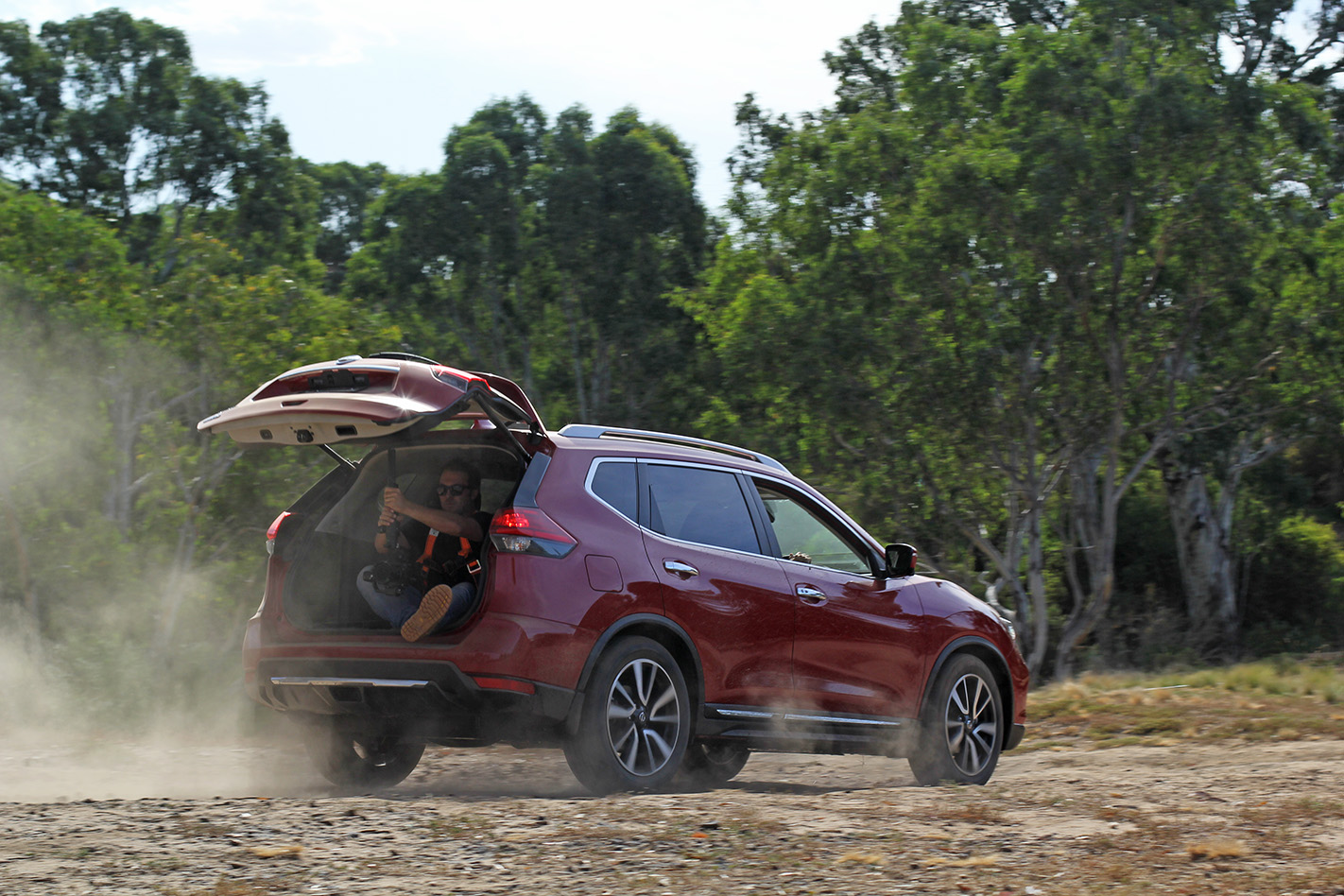
But that’s not so. Earlier this year we shot an SUV-centric episode of WhichCar TV where we pitted a selection of vehicles from the compact end of that class to discover their strengths and weaknesses. The X-Trail wasn’t part of the gang in front of the camera, but it was very much there in a behind-the-scenes role as our primary camera vehicle – a role that it excelled at.
And on day one of that particular shoot, it showed us that it had more than a modicum of talent when the asphalt ran out. We went to the Werribee 4×4 Proving Ground for the off-road portion of our ‘SUV Auto Games’, which saw the genuinely rugged Suzuki Jimny and Subaru XV go head-to-head on a moderately challenging dirt, mud and rock trail – with a water crossing thrown in for good measure.
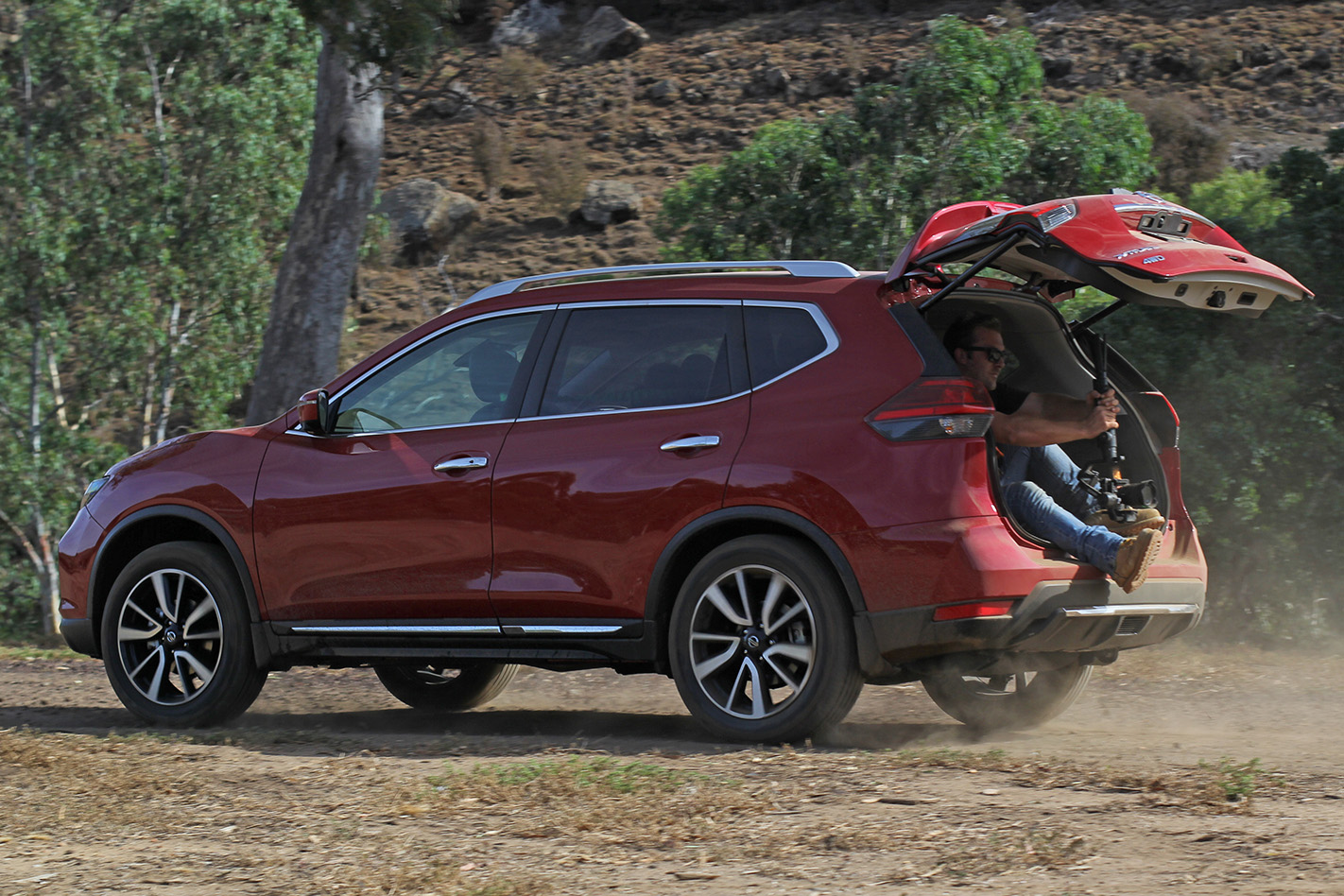
While you can see the Jimny and XV making light work of all that (well, except for the final challenge of an ultra-steep, ultra-slippery hill ascent), what you can’t see is the X-Trail being used for all of those car-to-car tracking shots. It traversed the exact same route as the Jimny and XV without ever getting stuck or being challenged for traction, except for one crucial difference – it did the route double the number of times as the Suzi and Subie.
And it did so with the tailgate up and a camera operator lashed into the luggage area. It also performed double the number of water crossings in a creek that was steadily getting deeper throughout the day, thanks to some upstream rain, with the torrent eventually rising well above the tops of the tyres.
Throughout all of this, the 4×4 mode switch was largely left in “auto”. Nissan’s electronics are apparently clever enough to figure out when the car’s being driven on dirt, adjusting the settings accordingly. More surprisingly, given it had a longer wheelbase and less ride height than the Jimny and XV respectively, it didn’t get hung up on dirt humps or rocks either.
While it’s obviously no rock-hopper, if you’re planning on doing some mild off-roading the X-Trail’s abilities will likely take you a lot further than you expect. It performance definitely won it the respect of the WhichCar video team.
