
Mercedes claims the C63 S coupe can crack 100km/h in 3.9 seconds. However, replicating that figure in the real-world proves difficult.
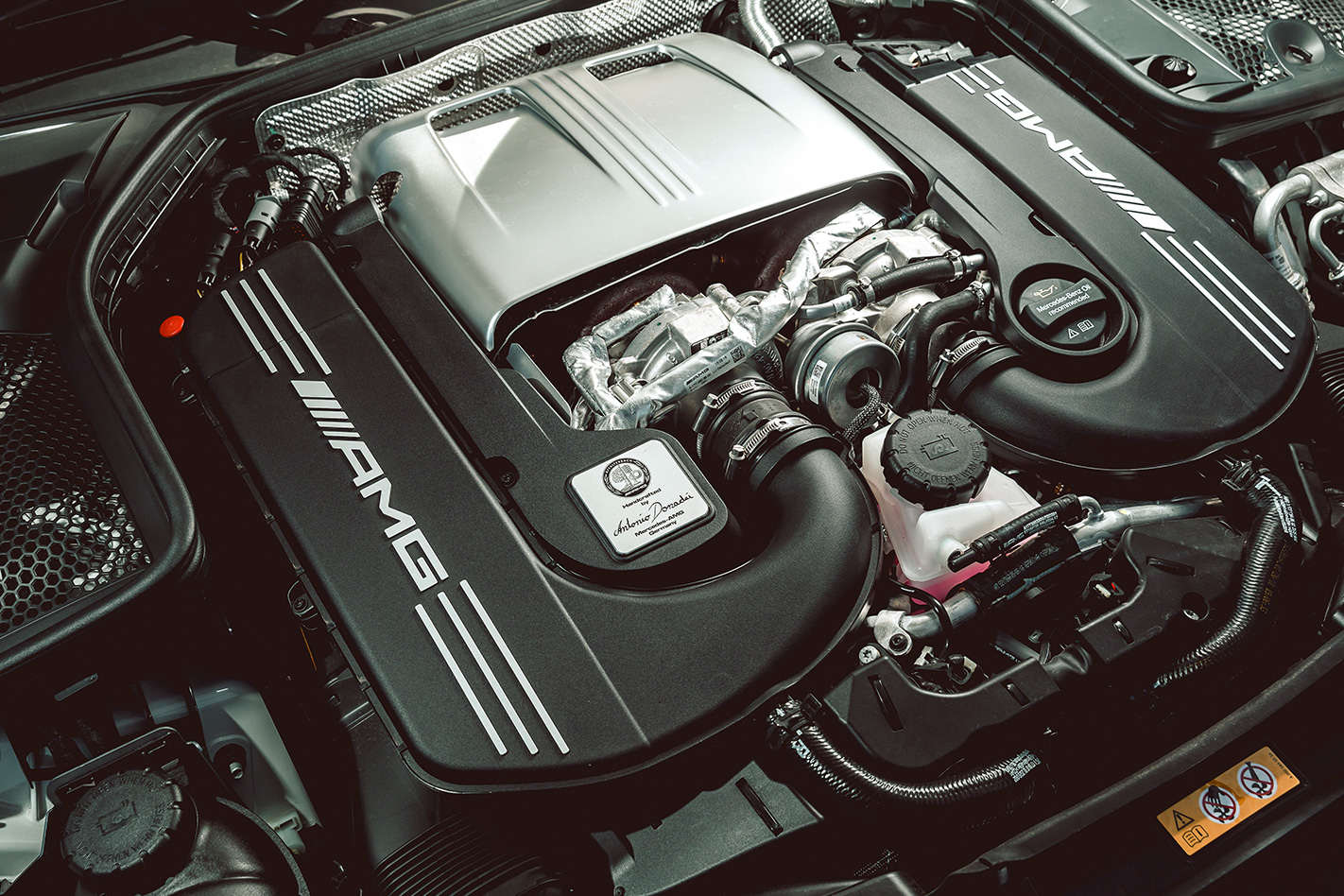
Powered by a 4.0-litre twin-turbo V8 with 375kW and 700Nm, the C63 S should be a straight-line weapon. But the art of delivering all that power through just the rear tyres via a nine-speed automatic transmission is a bit of a dark art.
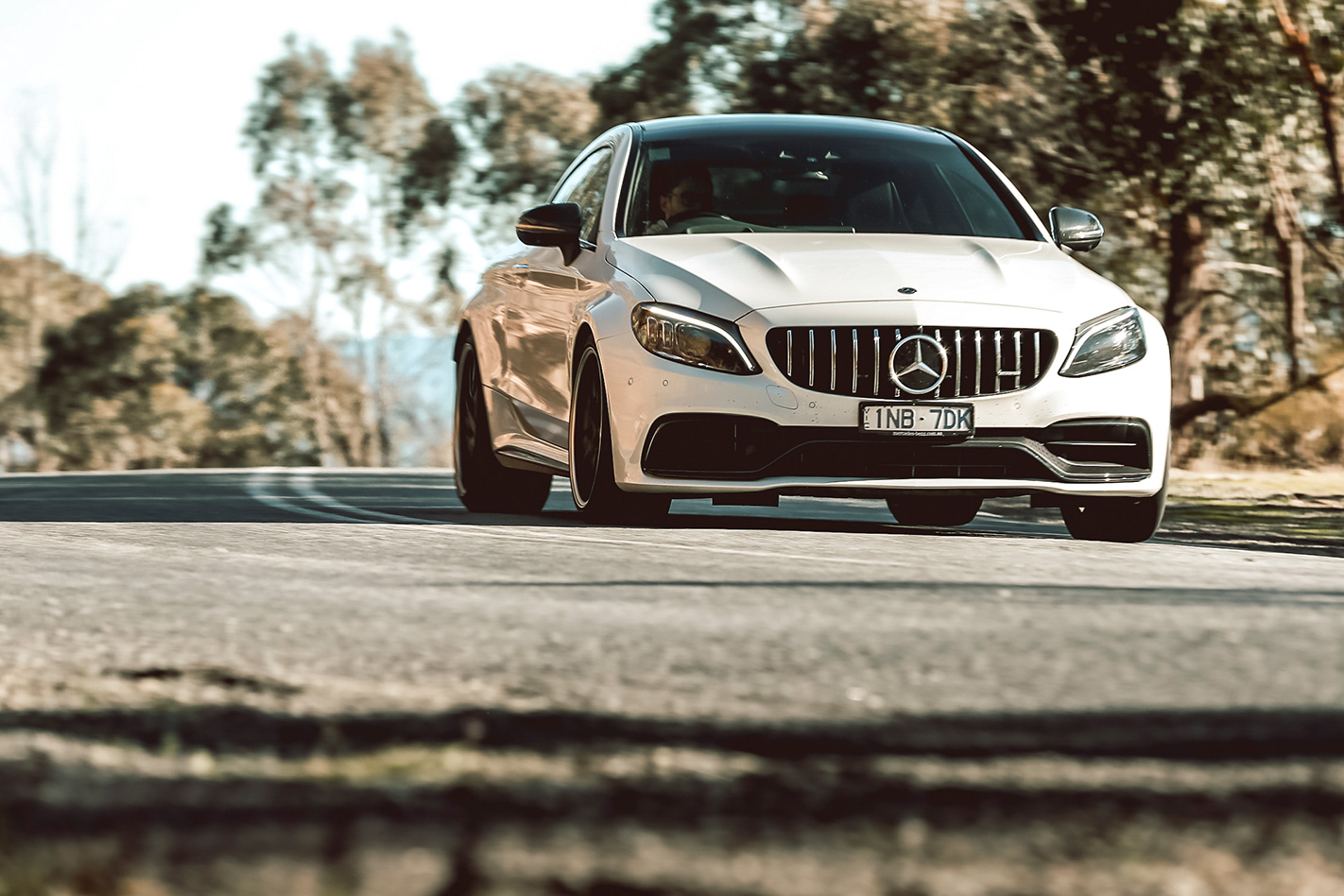
The sophisticated nine-stage traction control system sourced from AMG’s top-shelf GT3 and GT4 race cars paired with a specially-tweaked Race mode make a tantalising proposition for performance buffs. Yet trying to performance test the C63 S coupe was a frustrating experience for Wheels Deputy Editor Andy Enright.
Several attempts using the starting line of Heathcote Raceway’s drag strip resulted in a number of frustrating launches with the C63 S, serving up either unproductive wheelspin or overbearing traction-control interventions. It seemed that a 0-100km/h time of 4.9 seconds was going to be the best number we could extract.
Suggesting that his experience with extracting a 4.0sec 0-100km/h time from the AMG GT R might help (both the GT R and C63 S use the same traction control system), Editor Alex Inwood managed to carve the down, but not without some time playing with the system:
“It’s a complicated and finicky beast to launch, this C63 S,” says Inwood.
“Simply activating Race mode and dialling up launch control isn’t the fastest way. Do this and all you get are aggressive interventions from the traction and stability systems as the car’s brain battles to limit slip at the rear axle. Turning ESC off and engaging the 9-stage traction control function seems an obvious shortcut to success but again, it’s difficult to find a sweet spot between time-sapping traction interventions and even slower slews of wheel spin.
“On the slippery drag strip, the fastest way was the dial the TC to setting 8 (almost off), switch the transmission to manual, load the drivetrain up slightly on the brake and then feed in the power. Full throttle will see you go nowhere, not enough throttle is slow, so juggling the right amount of wheel spin and short shifting slightly to make the most of the prodigious torque on offer yielded the fastest attempt. Still, it was some way off AMG’s official claim.”
Using the top end of the strip, Inwood’s best results was 4.4 seconds to 100km/h. While still 0.5 sec adrift of Merc’s claim, it was a nice improvement over the initial passes.
But of course, you don’t get a second go at the traffic light grand prix.
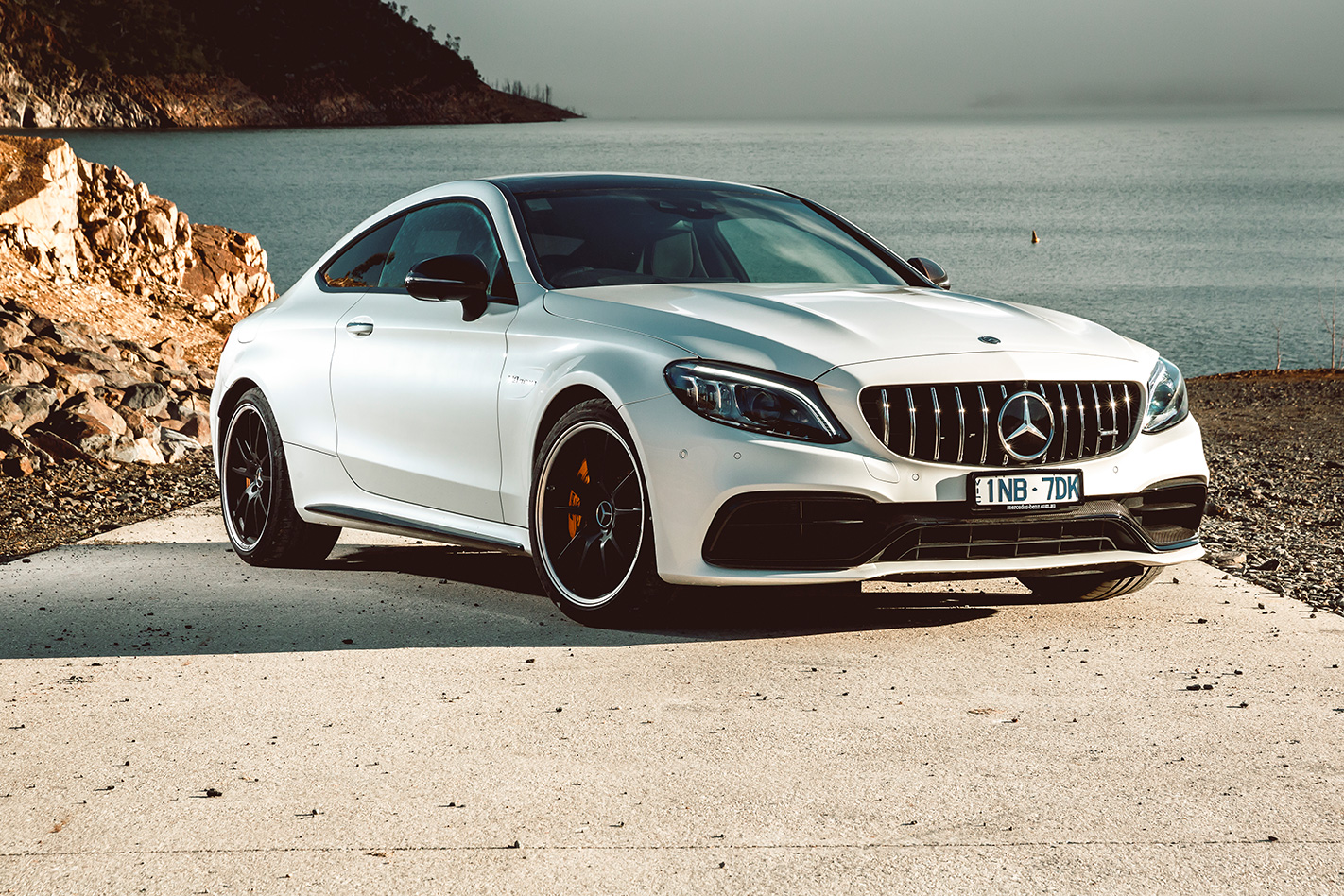
Enright reported the most frustrating aspect of launching the C63 S was inconsistency, with a base Porsche 718 Cayman’s easily repeatable 4.7 second sprint meaning the mid-engine four-cylinder would be shaming the twin-turbo V8 beast nine times out of 10.
Peak torque arrives at just 1750rpm and is sustained until 4500rpm, while maximum power comes on at 5500-6250rpm before a 6900rpm cut-out. With the full force of 700Nm from the line, the Michelin Pilot Super Sport Contact5 tyres wrapped around the rear wheels in 285/30ZR20 profile take a serious punishment.
The C63 S is beaten by a base 718 Cayman in every increment to 80km/h when the AMG begins to deliver its power advantage with greater efficiency; 140km/h is dispatched a full second quicker in the Merc.
In-gear acceleration between 80 and 120km/h takes just 2.3 seconds, while the quarter mile returns a 12.4 second time slip with a trap speed of 190.3km/h. Braking from 100km/h to a stop happens in just 36.7 meters.
Read the full performance figures from our independent testing below:
0-20kmh | 0.9 sec |
0-40km/h | 1.7 sec |
0-60km/h | 2.6 sec |
0-80km/h | 3.5 sec |
0-100km/h | 4.4 sec |
0-120km/h | 5.8 sec |
0-140km/h | 7.3 sec |
0-160km/h | 9.1 sec |
0-180km/h | 11.4 sec |
0-200km/h | 14.1 sec |
400 metres | 12.4 sec @ 190.3km/h |
80-120km/h | 2.3 sec |
100-0km/h | 36.7 metres |
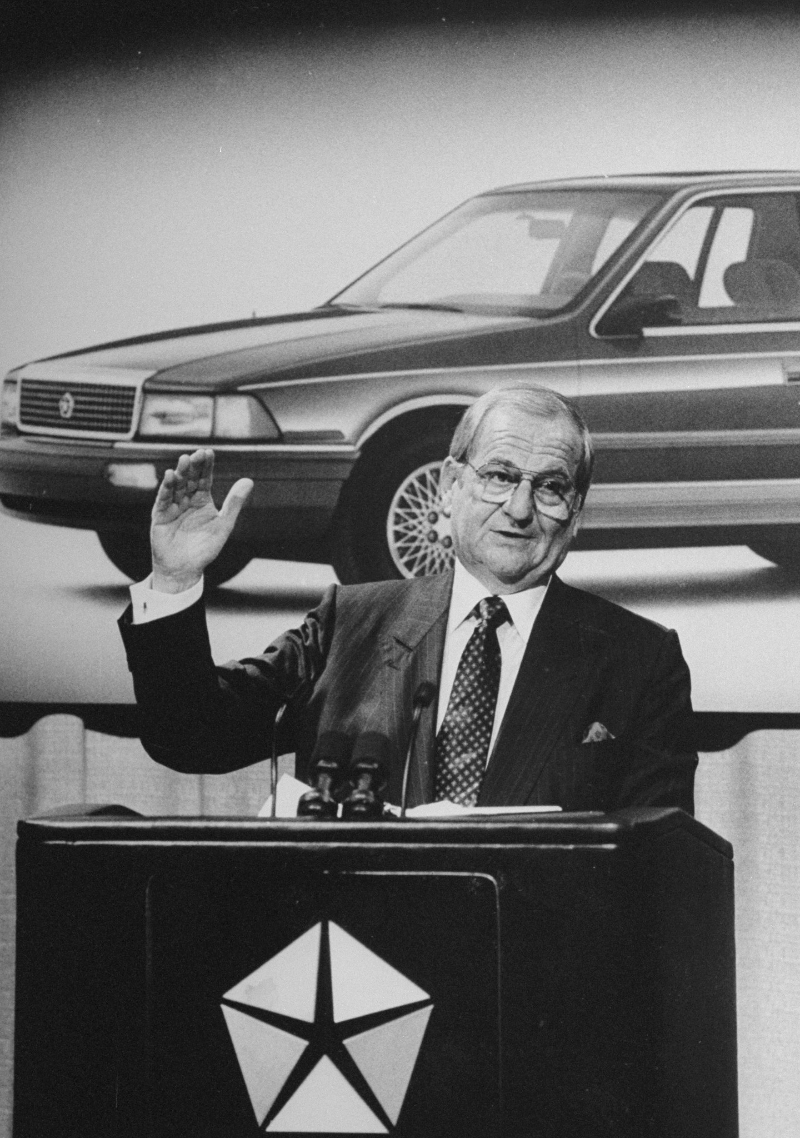
Automotive kingpin Lido Anthony “Lee” Iacocca has died at age 94, announced dead in his Bel Air, Los Angeles residence this morning.
Born October 15, 1924 to Italian-American immigrants in Allentown, Pennsylvania, Iacocca became a Detroit heavyweight, getting his start in the automotive industry as an engineer at the Ford Motor Company before becoming the Blue Oval’s CEO in 1970.

Iacocca led the team that brought the world the iconic Mustang in 1964 and is credited with the famed quote, “What you race on Sunday, you sell on Monday,” used to justify Ford’s entrance to international racing in 1963.
After his promotion to CEO, Iacocca had a short fall from grace when he rushed the introduction of the 1971 Pinto. There were tooling issues that caused a major fault within the fuel tank.
Despite the serious defect, the Pinto went on sale and caused an estimated 500 deaths due to the fuel tank combusting in rear-end collisions. Following the recall of 1.5 million Pintos, Henry Ford II fired Iacocca in 1978.

Iacocca arrived that same year at Chrysler as its new CEO and is credited with saving the company from shutting its doors in the 1980s. He helped introduce the Dodge Aries and Plymouth Reliant, which were similar to proposal designs Ford had rejected during Iacocca’s time at the company. The CEO famously appeared in the ads saying, “If you can find a better car, buy it.”
By 1987, Chrysler had bounced back and bought Jeep, which was a division of AMC. The purchase included the acquisition of the Jeep Grand Cherokee.
Iacocca is perhaps one of the most famed automotive leaders of all time, and was listed by Portfolio magazine as the 18th-greatest American CEO of all time. Iacocca has also published several books, including a best-selling autobiography, Iacocca: An Autobiography.
Audi’s V8-powered limo halo is here with the arrival of the 2020 Audi S8.
With 420kW and 800Nm, the twin-turbo 4.0-litre V8 powering the S8 is also assisted by a mild hybrid system which consists of a 48-volt belt alternator starter and an extra lithium-ion battery.
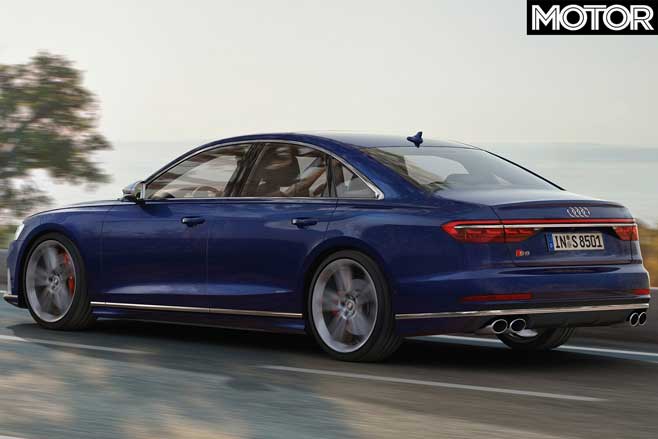
But it’s not all about efficiency, with an active exhaust providing a little bit of theatre with the V8’s sounds.
As of the initial press release, Audi has yet to confirm the performance figures for the S8, offering only its limited 250km/h top speed.
The 5.17m-long S8 also comes standard with a few features to help keep its heft in check, such as all-wheel steering as has featured on other large Audi models before. It also features predictive active suspension “which works in combination with the adaptive air suspension, [and] can lift or push down each wheel separately via electromechanical actuators.”
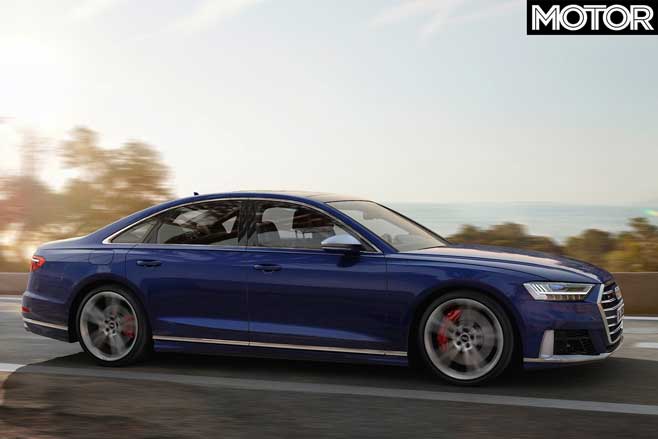
Effectively similar to Bentley’s ‘Dynamic Ride’ (given both Audi and Bentley are VW brands), the active system allows the car’s suspension to counteract extreme body roll or pitching using the suspension to keep the car level.
A sport differential also helps back up Audi’s claims of the S8’s sporting ability, with the diff tuned in a way that controls the rear torque distribution to “literally pushe the car into the curve and nip any hint of understeer in the bud.”
Audi says these three systems working together in such a way is “unique in its class and ensures composed and sporty handling in all situations.”
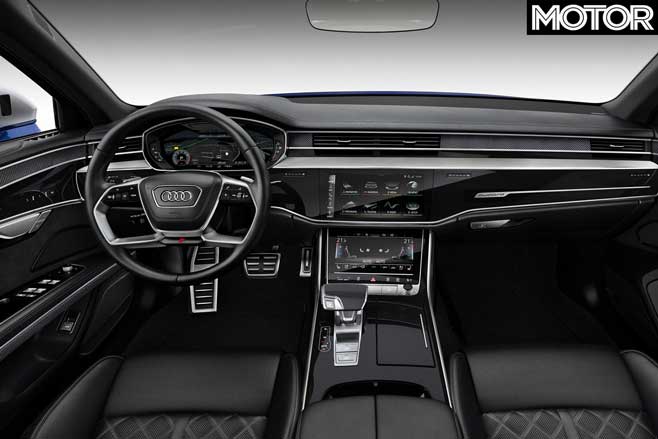
Audi even offers 420mm front and 370mm rear carbon ceramic brakes as options, which it says reduces unsprung weight by 9.6kg.
The S8’s arrival in Australia is likely but unconfirmed, though timing for international markets is also yet to be confirmed.
Just how much do remember from your days of learning to drive? The day you took your test might be decades ago and in the ensuing years, it’s likely the only education you have received is pure on-the-job experience… and perhaps the nagging of an occasional back-seat driver.
While experience is undoubtedly one of the most important aspects in becoming a better driver, many years at the wheel, unfortunately, allows some bad habits to sneak in too. The antidote is simple, though.
Just like your first-aid refresher course, periodically seeking professional guidance will help remind you of the important basics of safe driving whilst ironing out some less welcome traits that you might be totally unaware you are doing each time you hop behind the wheel.
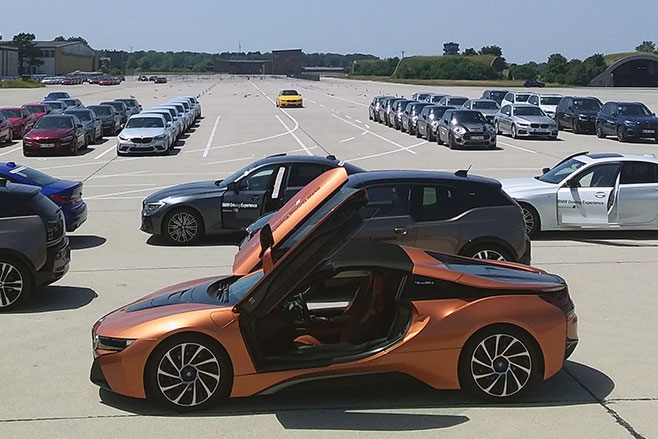
We stopped by BMW’s Driving Academy in Maisach, Germany to find out how a half day on a military airfield can make you a safer, more competent driver.
Driving position
Before we even hit the tarmac, each participant is put through a briefing to outline the key steps you should check before hitting the ignition, including your driving position. Posture is a frequently neglected and a vast majority of drivers could be positioning themselves more effectively.
Starting with the height, your seat should be adjusted so that you have at least a palm’s width between the roof and your head for optimum visibility without risking contacting the ceiling in a crash.
Then the distance from to the pedals needs to be adjusted so that your left leg isn’t fully extended straight when disengaging the clutch. This is vitally important so that you can apply maximum brake pressure with the right leg if needed. It also means you can’t lock your leg against the floor if a collision looks imminent, which will prevent more serious injury on impact.
The back of your thigh must also remain in contact with the seat when your feet are on the pedals. No clutch pedal? Avoid using the footrest and instead simulate an imaginary clutch pedal by extending your leg into the footwell.
Seat base angle adjustment, where offered, can help keep your legs in contact with the seat and avoid ‘submarining’ where the occupant slides under the seatbelt in a frontal impact. Make sure this useful adjustment is made if your car has it.
Next, use the steering wheel adjustment and back-rest to position your torso the correct distance from the controls. In the right posture, you will be able to see all the instruments and your back will stay in contact with the seat even when the steering is turned to a steep angle.
You should be able to touch your wrist on the top centre of the wheel without leaning away from the seat back.
Finally, set the height of the headrest so that it will adequately support your head in a collision. Contrary to popular belief, it’s there for both front and rear impacts. In a significant frontal impact, the deployed airbag will push your head back at the seat with significant force, so make sure it’s adjusted correctly.
Now it’s time to go.
Exercise 1 – Wet braking
Many drivers have never experienced a full emergency stop under maximum braking force, but this first exercise allows participants to experience what it’s like when the antilock braking system (ABS) is in full effect.
A special sprinkler system keeps the asphalt consistently damp even in the unusually hot European sun and reduces the traction of the road surface so that when the brakes are applied hard at 30km/h the wheels will try to lock and skid, but ABS will intervene and prevent it.
When operating, the ABS produces a noticeable grinding sound which can be felt through the brake pedal but is completely normal. The sound is the pump and valves redirecting pressure to the wheels with the most grip, allowing the car to stop as rapidly as possible.
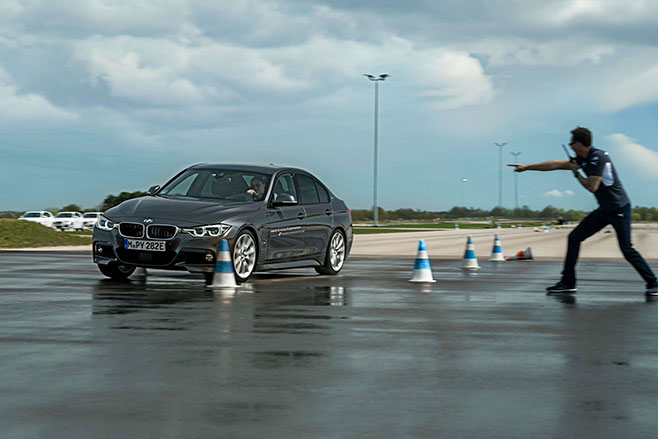
The result is the minimum stopping distance regardless of the conditions and driver ability. Some inexperienced – and even some vastly experienced – drivers may detect the strange sensation and reduce pressure on the brake pedal – but this is the wrong thing to do.
Maximum pressure is the key, and a familiarity with the ABS reaction will allow you to do the right thing in a real emergency situation.
Next, a turn is introduced while under braking to simulate avoiding a hazard in front of the car. This exercise demonstrates how ABS allows the car to continue steering even when braking as hard as it can, unlike a skidding car which will try to head straight on regardless of steering input.
The test also highlights how you might be tempted to look at the hazard while braking but this is not the best course of action. As our instructor tells us, “look where you want to go, not at what you want to hit”.
If you look at the obstruction, you are much more likely to hit it, but if you turn your vision to a safer course, you have a better chance of avoiding the hazard.
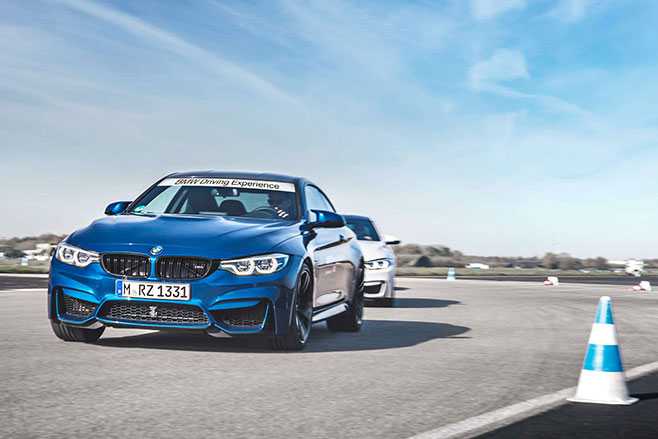
It’s during this apparently simple test that you can also see the clear correlation between speed and stopping distances. By doubling the speed from 30km/h to 60km/h, the BMW M4 required about five times the distance to come to a complete stop.
To summarise;
- Apply maximum brake pressure in an emergency
- Look where you want to go
- Steer away from the hazard
- Drive to the conditions and increase your stopping distance when it’s wet
Exercise 2 – Technical Motorkhana
In our next challenge, we went up against the clock in a tight and complicated course mapped out with cones to hone our car control skills.
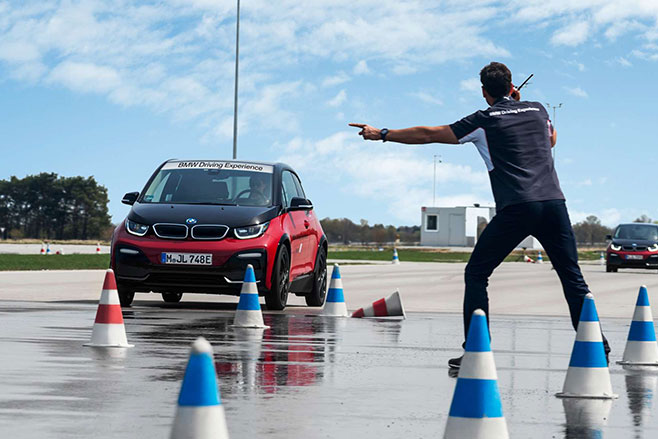
The relatively low speeds of the exercise enable the limits of the BMW i3 electric hatchback to be found in a safe manner and experience what happens when a vehicle is pushed too hard but, more importantly, how it feels when you get it right.
Once again, the rule of looking where you want to go is paramount and, in almost all cases, cones were tumbled when the participant looked directly at them and not beyond them.
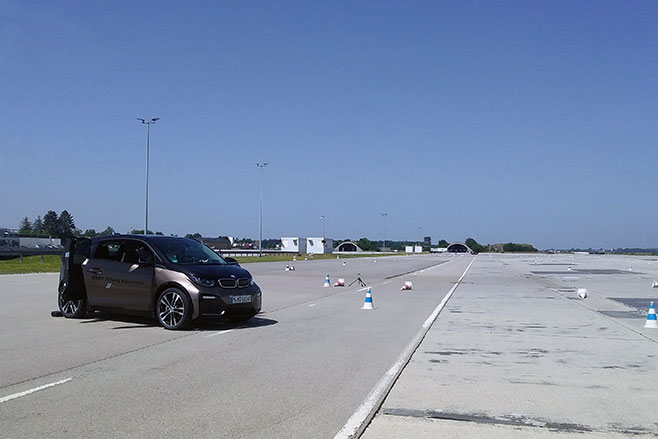
Entering a corner too fast caused the i3 with its efficient but skinny tyres to plough on ahead in ‘understeer’, but with firm but careful braking prior to the corner, it’s possible to sail through the bend with a quiet chirp from the tyres and gradual acceleration from the middle to the exit.
The course concludes through a slalom where the problem of over-correction and too much speed becomes apparent very quickly. The correct approach is constant speed, small and precise steering inputs and a rapid negotiation of the challenge while looking at the gap between the cones.
To sum up;
- Slow entry, fast exit
- Look where you want to go
- Gentle application of power
- Small but precise steering inputs
Exercise 3 – Paced circuit laps
After gaining confidence with the lower-speed activities, we boarded BMW’s i8 hybrid sportscar and headed out to the high-speed circuit to experience how a vehicle’s behaviour changes at speed.
Even though the i8 is a lightweight, high-performance car with a low centre of gravity and potent ability, the same rules apply to any car.
In fact, with higher velocities, even more care and precision are required. Corners approach faster than many drivers would be accustomed to, and the vehicle needs to be positioned correctly to avoid losing traction.
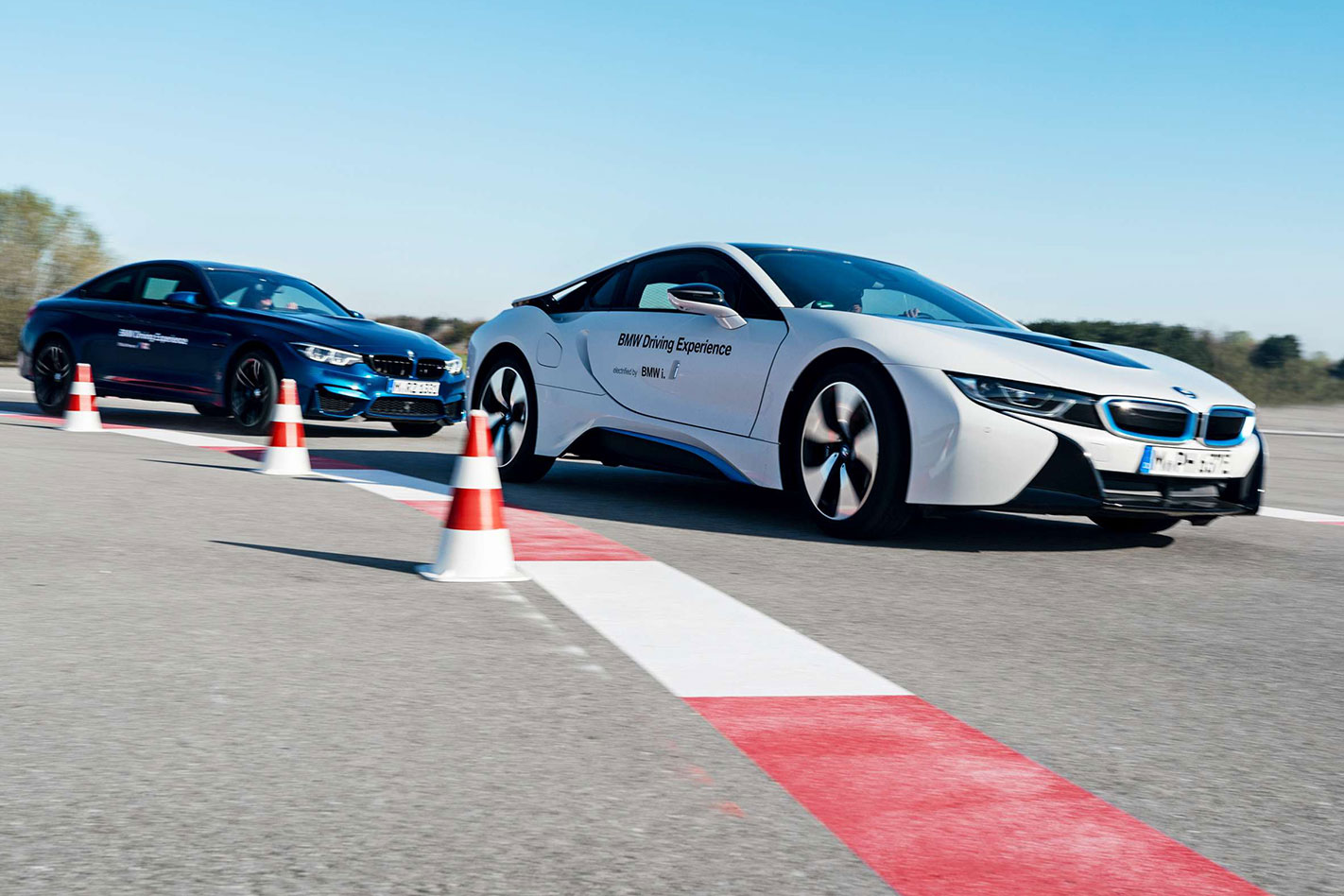
As with any car, the tyres will complain far more in the hands of a clumsy driver and are a warning that the limits of adhesion are close. With a smooth line, braking before the corner and more precise steering, however, the car can be guided through the corner with little tyre noise and more speed.
More aggressive steering, (and to an extent, braking and acceleration) will upset the vehicle and stability is affected exponentially at speed, so it’s vital to keep inputs deliberate and smooth.
A race track is wide and smooth to allow you to use all the space. At first, it can feel strange to start on the far left of the track, swing into the corner’s apex on the right before exiting to the far left again, but in doing so you will maintain a smooth line.
Unlike the slower exercises where the driver’s attention was closer to the vehicle, at high speeds it is essential to look up and into the distance. As the speed increases, objects and hazards aren’t distant for long and the key learning is to keep your vision high so you have time to react to anything that may happen ahead of your car.
This is a useful rule to apply on the freeway, as well, because it gives you extra time to react to hazards ahead.
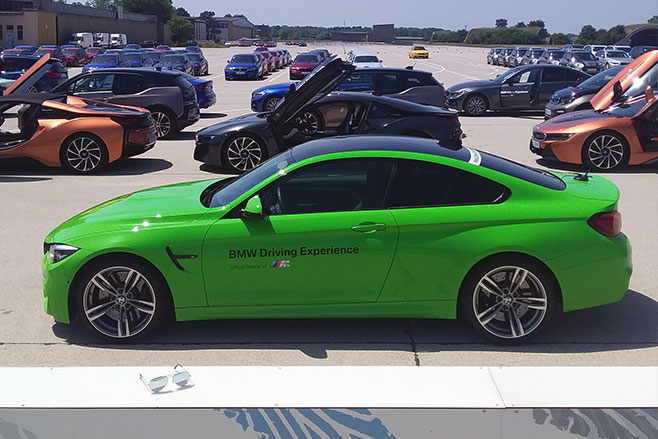
Unless you have spent time on a racing circuit, it is very unlikely you’ll have experienced the conditions that driving a sportscar can create close to the fringes of its ability, but what can initially be an intimidating prospect will become more familiar with practice.
Once again, this will prepare you better for if you are faced with an emergency situation in day-to-day driving.
To sum up;
- Keep your vision high
- Avoid aggressive steering
- Use all of the track to maintain a smooth course
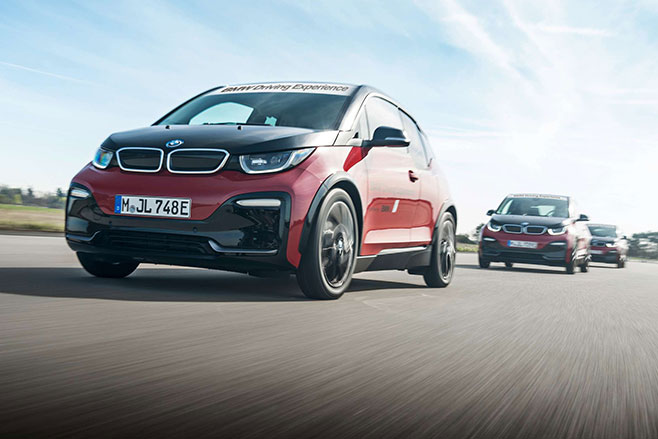
As with all the exercises, simulating potentially stressful situations but in a controlled and safe environment, allows drivers of all abilities to focus on pragmatic, defensive driving. And a greater understanding of how a vehicle reacts in emergency situations will make you a better and more responsible road user under all circumstances.
Don’t get complacent at the wheel. Book yourself an advanced driving course and become the best driving version of yourself you can be.
To quote singer and full-time pants man David Lee Roth, “I’m a family man; in fact, I started three last week.”
This feature was originally published in MOTOR’s December 2001 issue
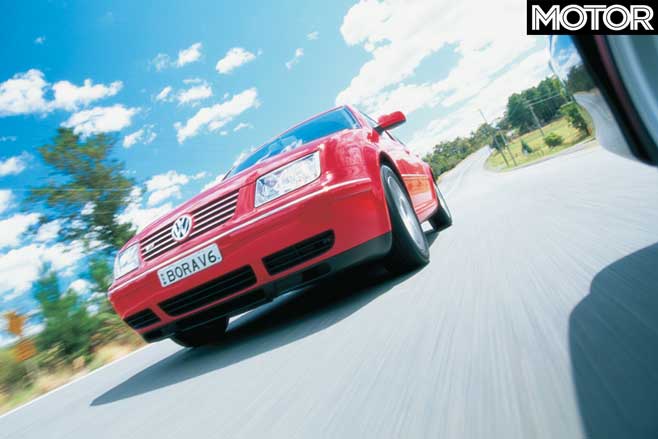
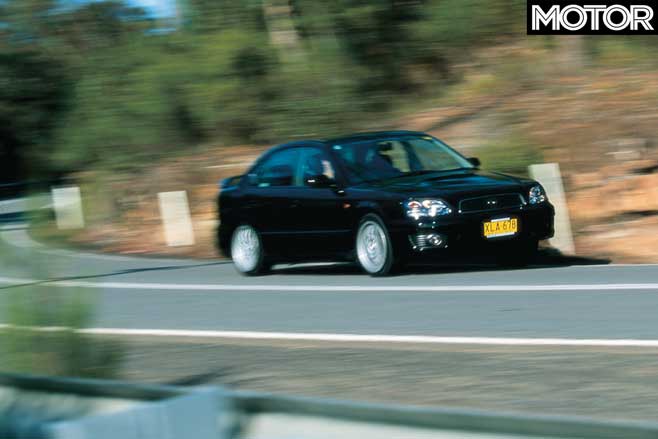
In Roth terms, the Subaru Liberty B4 is a family man’s sedan, maternal styling trying to hide the effect of 190kW from sequentially-acting dual turbochargers. It’s an approach to muscle cardom many Australians may not totally appreciate but one the Europeans and Japanese really dig.
Not impressed? Then realise this; the Liberty B4 has almost the same power as a 5.0-litre V8 yet weighs about 150kg less than an XR8.
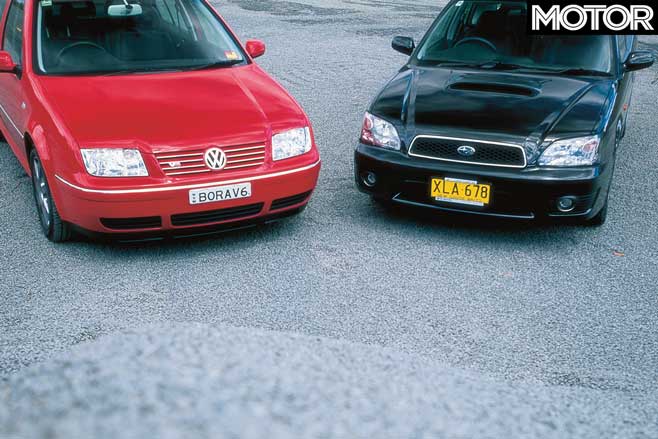
When it comes to keeping things low-key, the body kit can hardly be called boofy. That puny rear wing and bonnet scoop directing air to the intercooler is more muted apologies than lusty overtones. And look at the, well, rather dull Liberty B4 colour range: graphite black mica, silver metallic, deep blue mica, and pure white.
This isn’t a car that’s going to be noticed. The statement is in not making a statement; let the whisper of the twin turbos do the talking. With poetic understatement, the B4 is anti-Evo, but almost as evil.
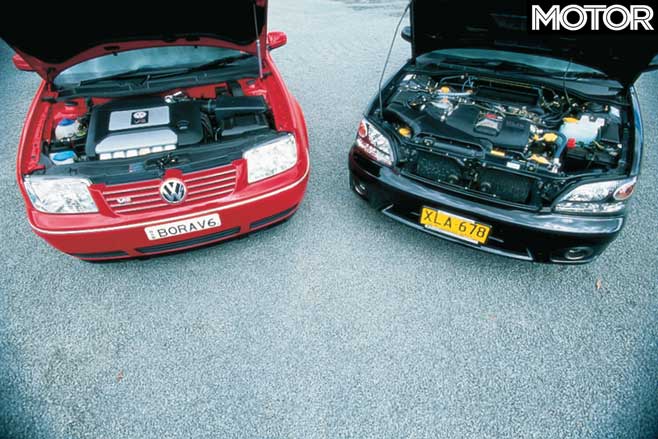
The Volkswagen Bora 4Motion speaks the same no-lair lingo. Let’s remember that the Liberty B4’s water-cooled boxer engine carries DNA dating back to the air-cooled Dak-Dak; fortunately, sometime last century the two paths diverged. VW could care less to see Subaru succeed with the boxer four-cylinder when the German maker has been busy breaking just about every rule on engine design, and succeeding.
VW’s narrow V engine is impressive. In the Bora, the 2.8-litre V6 is about the same size as an in-line four, with about twice the power. It packs 150kW at 6200rpm and 270NM at 3200rpm.
VW and Subaru appear to agree that a proper sports sedan needs bags of grip and all-wheel drive. Even so there is contrast. A Haldex clutch controls the Bora 4Motion’s centre differential, while the Liberty B4 uses a viscous coupling. From the driver’s seat, both feel decidedly front-drive biased.
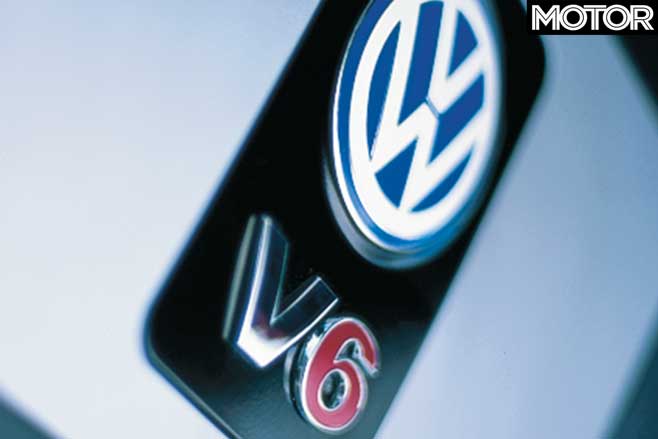
With 40 fewer kilowatts than the B4, the Bora is at a disadvantage before either turns a wheel. For a similar spend, (Bora at $54,400 to the Liberty at $55,130), VW offers an interior crammed to the roofline with style and safety, but the naturally-aspirated 2.8-litre engine is bread roll short of a buffet against the might of the twin-turbo B4.
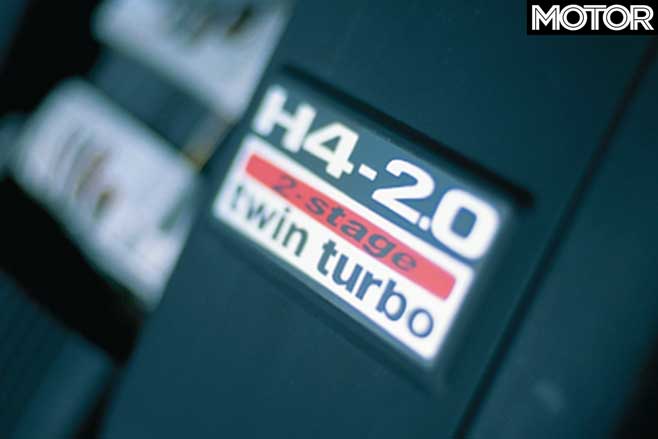
What an engine! The B4’s motor is basically the same as the WRX 2.0-litre, with a couple of performance changes. The B4 cylinder heads are the exotics from the STi, with very light hollow intake valves and sodium-filled exhaust valves. Forged alloy pistons with molybdenum-coated full skirts are works of art. Compression ratio is 9:1 compared with the WRX’s 8:1.
The B4 engine is more powerful and more driveable than the WRX thanks to a small primary turbo to boost on low revs and a larger secondary huffer to up the herbs at high revs. It makes maximum power of 190kW at 6400rpm, fairly early on in a 7500rpm rev range. The story of this engine is torque, and it produces plenty from 278Nm at 2000rpm to a maximum of 320Nm at 4800rpm.
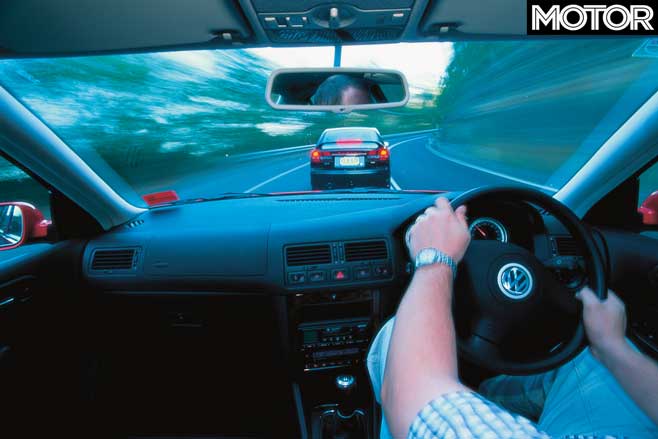
From the initial touch of the clutch, throttle and gear stick, these are two very different cars to drive. It is the B4 that’s sharp, positive and defined; firm even, and compared to the soggy response of the Bora, the Subaru immediately starts earning your trust.
Subaru starts with a torsionally stiffer body shell with less body flex to affect the suspension, which means the springs, dampers and sway bars can be dialled in more effectively. Sizing up the two, the Subaru is longer overall and, more importantly, longer in the wheelbase by 137mm. The squarer Bora looks wider, and it is. Track width and kerb mass favour the Bora, only marginally. Suspension for both is McPherson struts front and multi-link independent rear.
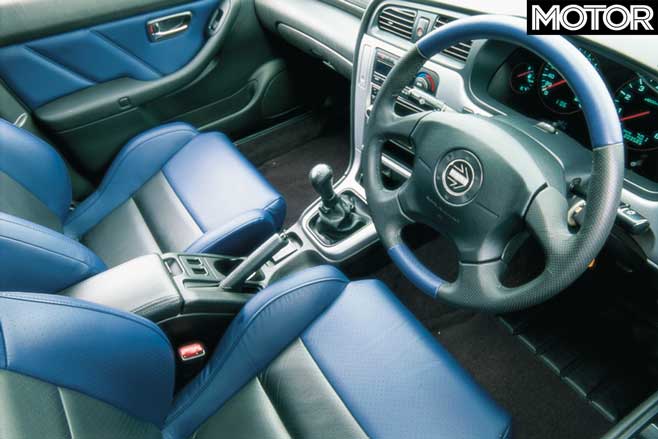
The B4’s insides are about as flash as a cupboard with the light off, with exception of a Vegas-like instrument light display. The instruments arc up in sequence, beginning with the thin golden gauge surrounds, followed by the bright red needles and finally the faces come to full light. It is a neat trick for a car that isn’t really all that tricky.
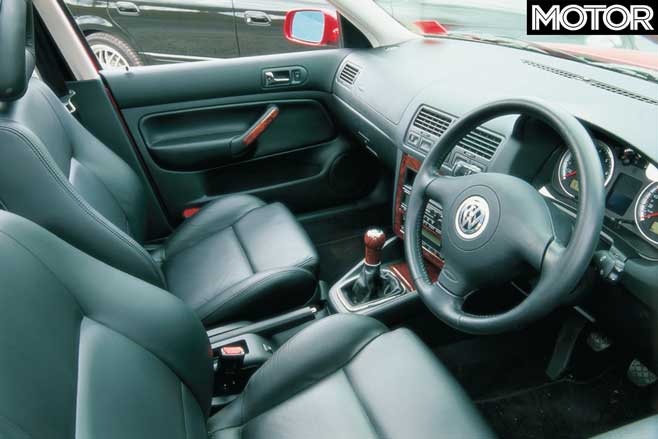
On interior design, the B4 is an oasis of black and purple leather in a desert of blah. Practical, yes, but not pretty. You buy Subaru for other reasons, and experience states loud and clear those reasons are ride and handling. It will be very tough to beat, mainly because once you get past the Visual nothingness of its exterior and interior design, the Subaru does few things wrong on-road.The Bora 4Motion is the better equipped car, with gear like a glass sunroof, a 60/40 folding rear seat (the B4 has a ski port), front and side airbags, leather seats, six-speed manual gearbox (B4 has a five-speed), cruise control, six CD stacker, and a pollen-dust filter. On the face of it, VW loads the Bora 4Motion with more stuff while Subaru sweats the basics.
Fast Facts
| u00a0 | Volkswagen Bora V6 4Motion | Subaru Liberty B4 |
| Body | 4-door, 5-seat sedan | |
| Drive | all-wheel | |
| Engine | 2.8-litre V6, DOHC, 24v | 2.0-litre horizontally-opposed four, DOHC, 16v, turbocharged |
| Bore x Stroke | 81.0 x 90.2mm | 92.0 x 75.0mm |
| Compression | 10.5:1 | 9.0:1 |
| Power | 150kW @ 6200rpm | 190kW @ 6400rpm |
| Torque | 270Nm @ 3200rpm | 320Nm @ 4800rpm |
| Power/Weight | 103kW/tonne | 127kW/tonne |
| Transmission | 6-speed manual | 5-speed manual |
| Weight (dry) | 1457kg | 1495kg |
| Suspension (f) | MacPherson-type struts, coil springs, anti-roll bar | |
| Suspension (r) | multi-links, coil springs, anti-roll bar | |
| L/W/h | 4376/1735/1444mm | 44605/1695/1415mm |
| Wheelbase | 2513mm | 2650mm |
| Tracks | 1513/1487mm (f/r) | 1460/1460mm (f/r) |
| Brakes (f) | 312mm ventilated discs, single-piston calipers | 294mm ventilated discs, 2-piston calipers |
| Brakes (r) | 256mm ventilated discs, single-piston calipers | 290mm ventilated discs, single-piston calipers |
| Wheels | 16.0 x 6.5-inch (f/r) | 17.0 x 7.0-inch (f/r) |
| Tyre Sizes | 205/55 R16 (f/r) | 215/45 R17 (f/r) |
| Tyres | MIchelin Pilot HX | Bridgestone Potenza RE010 |
| Price | $54,400 | $55,130 |
The Strip
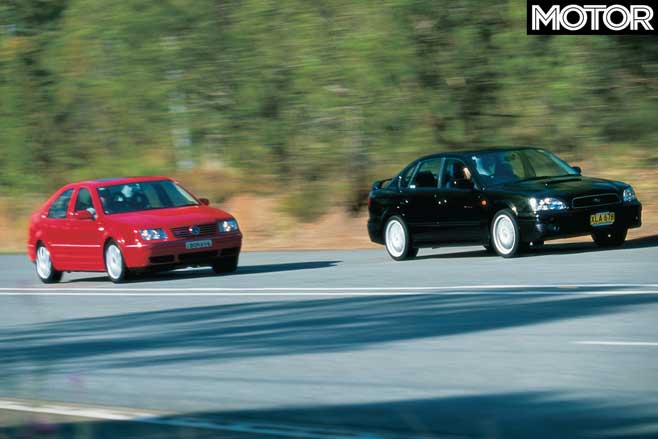
| u00a0 | Volkswagen Bora V6 4Motion | Subaru Liberty B4 |
| 0-10km/h | 0.42sec | 0.29sec |
| 0-20km/h | 0.96sec | 0.84sec |
| 0-30km/h | 1.58sec | 1.46sec |
| 0-40km/h | 2.29sec | 2.05sec |
| 0-50km/h | 2.91sec | 2.63sec |
| 0-60km/h | 3.91sec | 3.16sec |
| 0-70km/h | 4.82sec | 4.15sec |
| 0-80km/h | 5.77sec | 4.85sec |
| 0-90km/h | 7.30sec | 5.68sec |
| 0-100km/h | 8.67sec | 6.50sec |
| 0-110km/h | 9.32sec | 8.03sec |
| 0-120km/h | 10.18sec | 9.18sec |
| 0-130km/h | 12.08sec | 10.51sec |
| 0-400m | 16.25sec @ 138.5km/h | 14.79sec @ 153.5km/h |
BMW, the company that brought us the i8 performance coupe and the i3 hatchback, has revealed the next chapter in its clean-yet-quick future, the Vision M Next.
Revealed as part of BMW’s NextGen conference in Munich, the Vision M is a 441kW gullwing stunner that deliberately invokes design references to both the current carbon-hulled i8 and to BMW’s legendary M1 from the late 1970s.
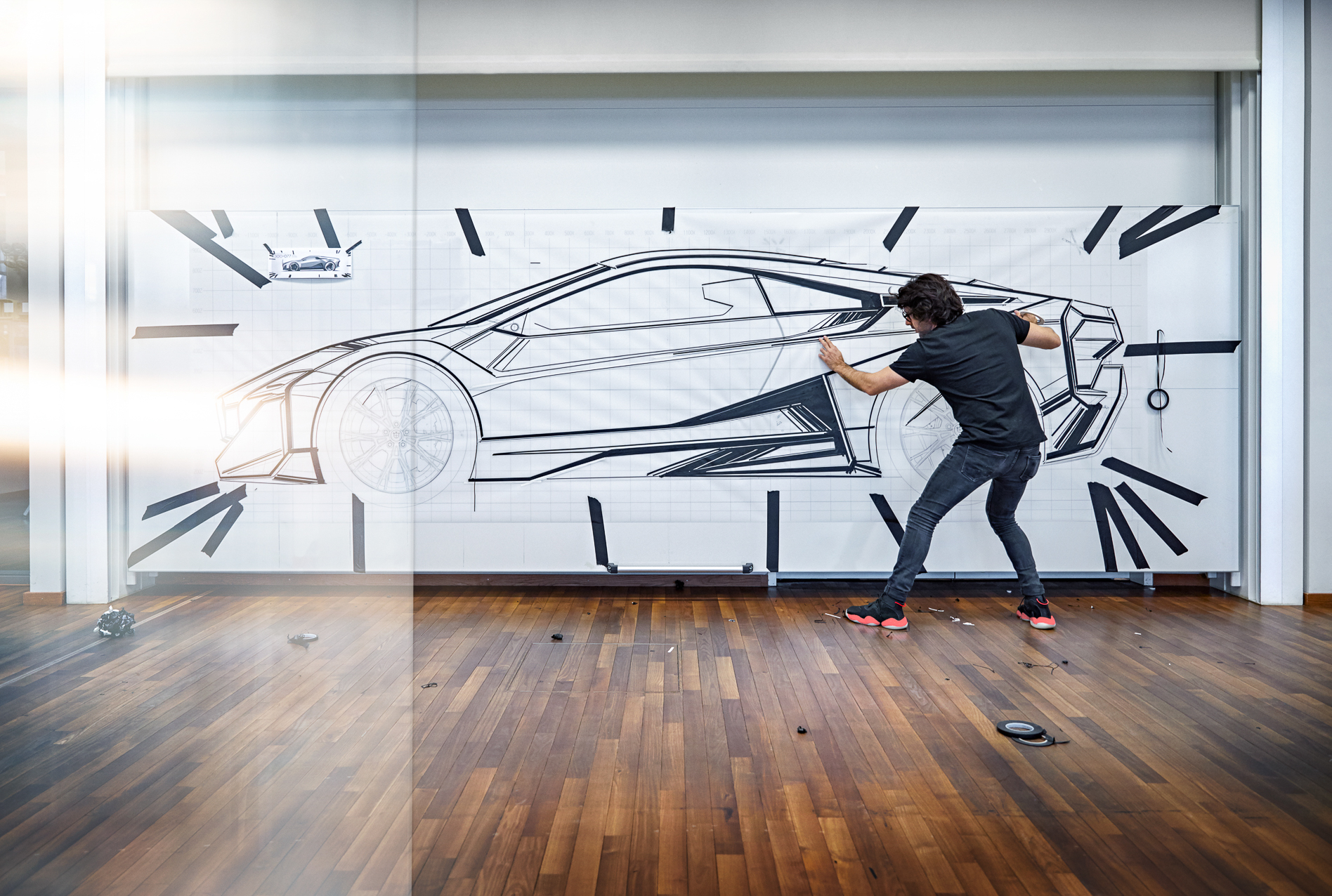
It also offers a glimpse into a laser-led future, debuting Laser Wire lighting technology which uses glass fibres coated with phosphorous, which can then be used to make much more intricate head and tail light graphics.
Recycled carbon fibre is used for the side skirts, while the M1 and the BMW Turbo are celebrated in the rear Laser Light signature.
The Vision M uses a four-cylinder turbocharged petrol engine in conjunction with an electric motor which BMW claims will sling the coupe to 100km/h in three second flat and onto a top speed of 300km/h. The petrol engine – a step up from the three-cylinder 1.5-litre turbocharged unit in the i8 – sends its drive to the 22-inch rear wheels, while the electric motor contributes power to both axles.
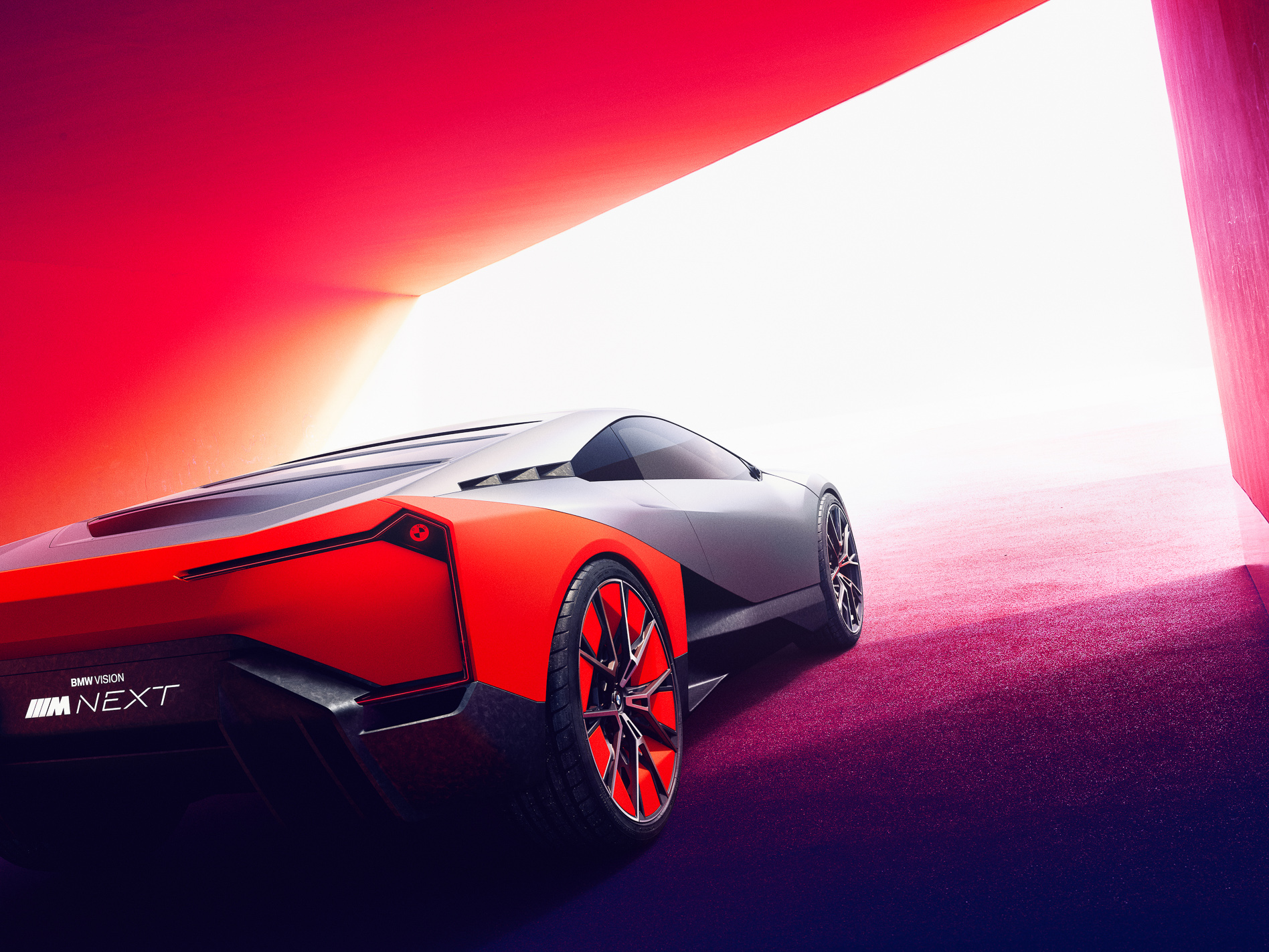
The front wheels are 21 inches in diameter. As well, the Vision M can drive for 100km on electricity alone, making it a sports car that would also be suitable for use in city centres if zero-emission zones were enforced.
The gullwing doors can unlock via facial recognition and are opened via buttons instead of handles. A so-called Boost Pod brings together all the control options and information across three distinct visual tiers in the driver’s direct field of view.
The first plane is formed by the cut-down steering wheel that wears two small displays. Following this in the driver’s line of sight is what BMW calls a Curved Glass Display, which uses a transparent surface that stretches around the steering wheel like a visor.
The full-surface Augmented Reality Head-Up Display in the windscreen constitutes the third plane. The driving settings can be modified on the steering wheel, while information such as revs, road speed, energy management, the driver’s heart rate and availability of Boost+ mode is spread among a total of five clusters in the Curved Glass Display behind.
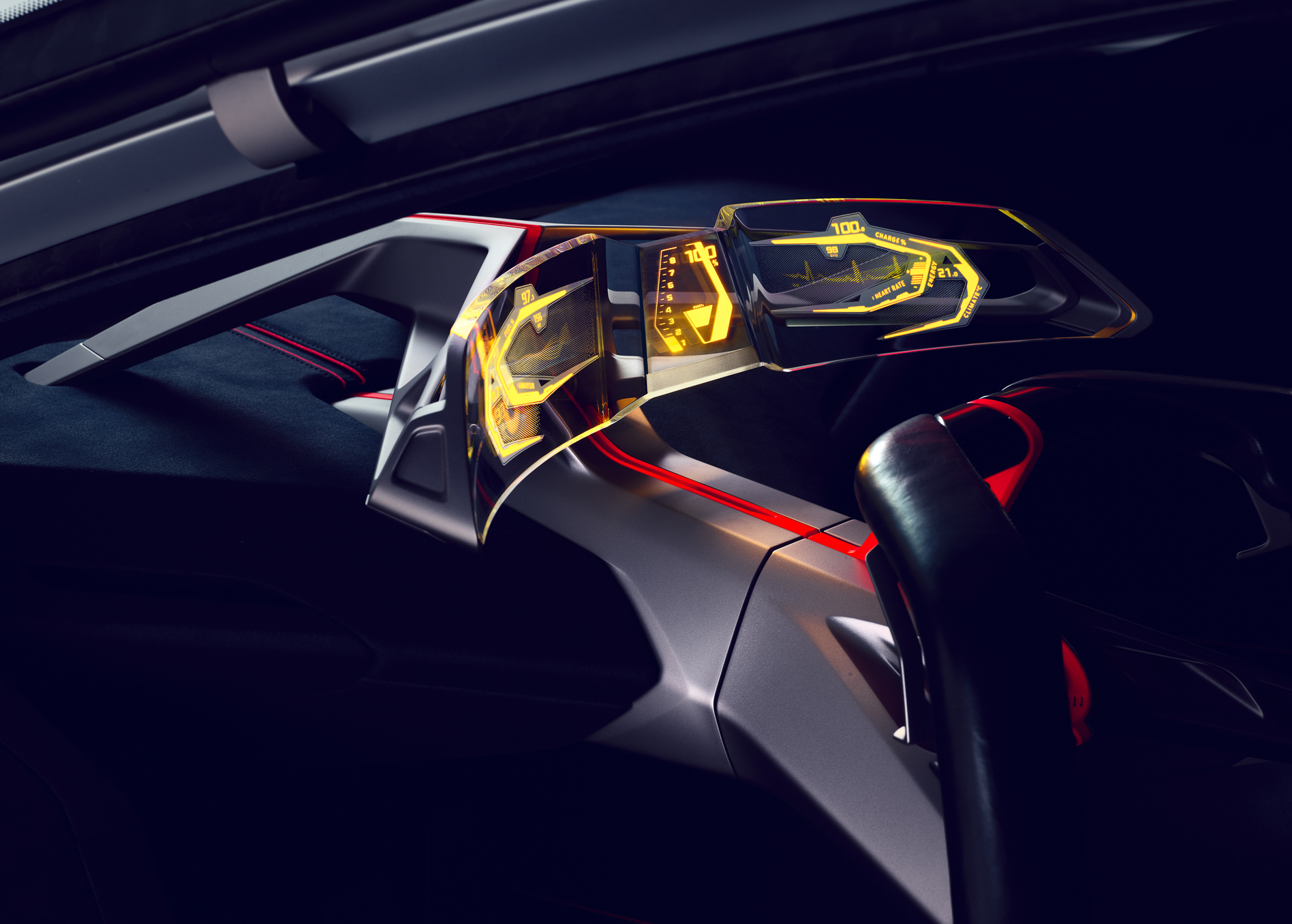
Think of the Boost+ mode as the M button in the current crop of BMW’s sports cars.
Of course, radical prototypes are one thing, but is there a production car based on the M Next concept in some form?
“We show things with a serious intent,” Pieter Nota, BMW member of the board of management customer, brands and sales, told WhichCar at the event. “I can’t commit to that now but, of course, we show such a study to have an impact in the market.
“Also the Vision i-Next that we have shown in Los Angeles for the first time last year, is a blueprint for our i-Next (production model) coming out in 2021.
“I wouldn’t commit today 100 percent – these things still need some decisions – but we don’t put it out there as a play.”
He believes, though, that BMW customers are ready for an M car with an electrified drivetrain.
“Absolutely. The M Next is a supercar but we use the electrification to give it an extra boost. But it’s an entirely convincing package and a statement that M also goes electric. The future for M is also certainly electric. I think customers are ready for that.”
As well as autonomy and electrification, one of the biggest revolutions in vehicle technology occurring right now is connectivity, which among its many applications allows for convenient ways to communicate, navigate and be entertained whilst driving.
All of this convenience requires data that is collected and stored by vehicles and mobile devices, which has useful applications such as being able to direct you to the nearest petrol station, or instantly alert emergency services that you’ve had an accident.
That data is stored in the car’s many computers, allowing it to become a major law enforcement tool that, depending on which car you’ve driven, can track all your movements, exact routes, who you’ve spoken to and even when you’ve opened the doors.
Law enforcement agencies, including police forces in Australia, are now using ‘vehicle forensics’ software produced by companies like Berla that creates “solutions for investigators to identify, acquire, and analyse critical information stored within vehicle systems to uncover key evidence that determines what happened, where it occurred, and who was involved”.
As the US company explains on its website, vehicle systems are constantly collecting performance metrics, monitoring sensor data, scanning external environmental conditions, processing telemetry data, and communicating with other vehicles and infrastructure.
All that information is stored by up to 70 computers contained in each car and has the potential to provide critical evidence that can prove valuable when investigating an incident involving the vehicle or any of its drivers.

According to Berla, there are three key categories of information a vehicle can contain that can be crucial to a police investigation. These include:
Vehicle events: The car stores event logs allow investigators to know everything about a car from gear shifts, speed logs, odometer readings, when the car was turned on and off, and even when fuel was added.
Location data: This includes navigation information such as track logs, saved locations, active routes and previous destinations.
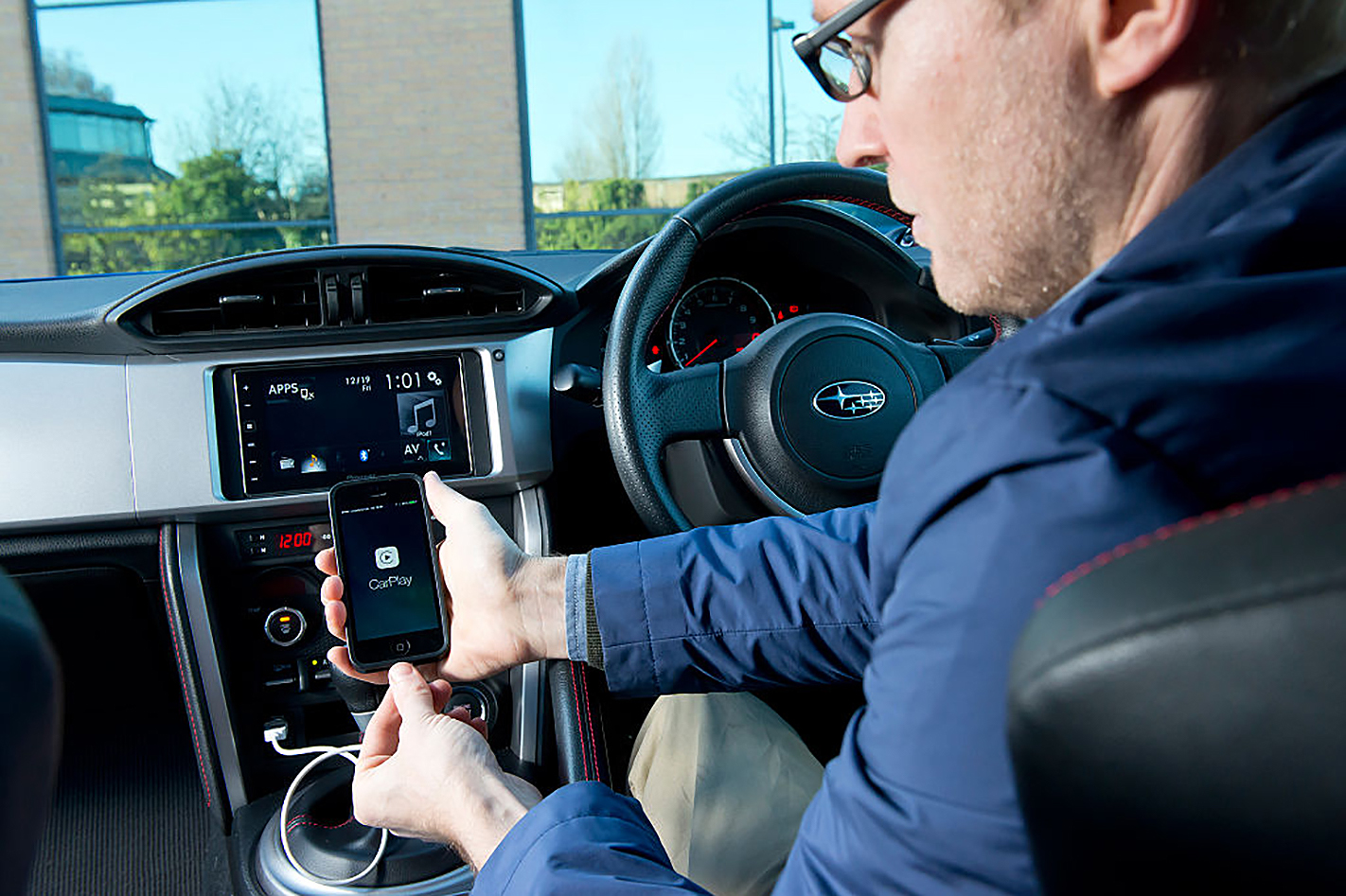
Connected devices: Smartphones that have been connected via the USB ports, Bluetooth or wireless network can be identified, along with all of the data associated with those devices. We’re talking phone contacts, calls, texts, social media feeds and everywhere you’ve been.
That information will still be there, even if you’ve deleted it all from the device itself.
According to Berla, accessing all this information via a warrant means police can find out what happened and when by providing a sequence of events leading up to an incident.
Investigators can also view older data to establish a lifestyle pattern and any unusual events before the incident, and determine a timeline down to exactly when and where someone got in and out of a car.

And more importantly they can establish who was involved by accessing unique identifiers that tie individuals to a specific vehicle; identify known associates and establish communication patterns between them, and determine who may have been present or aware of key information during an incident.
Berla’s software can tap into a broad range of vehicle computers and infotainment systems from most vehicle brands, including Audi, BMW, Ford, Fiat/Chrysler, Holden, Mercedes-Benz, Nissan/Infiniti, Toyota/Lexus and Volkswagen
Some of the individual models that can reveal such information go back several years, but the newer and more advanced the car the more information it can collate, store and reveal.
Using Berla’s vehicle lookup tool finds that a 2018 Holden Astra RS-V hatch can reveal phone data including call logs, texts, metadata, and contacts, location info including routes and stops, and undisclosed vehicle data.
Privacy concerns
So if you’re not intending to use your car for a crime and have nothing to hide, should you be worried that your car is storing so much personal data?
The fact that information is stored and accessible means it could get into the wrong hands, so there is cause for concern. Then there’s the fact Australians don’t have rights that ensure their data is protected.
“Everything about you, can be used against you potentially by somebody,” said Australian Privacy Foundation Chair David Vaile, who added that as cars become more advanced they’ll be able to provide even more information about us.
As recent high-profile cyberattacks have shown, personal data security can never be guaranteed. When it is exposed there’s very little that can be done about it as, unlike most Western and Asian countries, Australians don’t have a right to sue if their privacy is breached.
Vaile is also concerned that access to the metadata from your car’s in-built mobile connection or from a previously synced phone isn’t subject to a search warrant.
“There is a whole raft of information that’s in the nature of metadata where they say ‘oh that’s different, we don’t need a warrant for that’.
“It turns out though that if you’ve got a mobile device or a car system like Apple CarPlay or Google Android Auto, and they’re using the 4G or 5G mobile system, they are generating very large amounts of metadata.
“What used to be considered sort of useful if you’re trying to track who someone is calling, but not much use for anything else … is now much, much more detailed and provides much more information about you.”
Vaile added that laws surrounding metadata are so obscure that carmakers and internet service providers may also inadvertently hand over more detailed data they weren’t obliged to provide without a warrant.
Other concerns include the security of your data for a car no longer in your possession, such as the car you’ve sold or hired, and the fact that laws surrounding data collection are subject to change.
Are you concerned about the privacy implications of the data stored in your car, or do you think it’s a necessary evil for authorities to fight crime and terrorism? Tell us in the comments section below.
As the afternoon sun dips behind the trees that trace the quiet Victorian lakeside town of Eildon, I don’t have even a second to question the idea that modern sports cars have become too kind.
The light blots away to shadow and the winter-cold tarmac remains wet, with the moss sod right-hander ahead about as moist as the palms of my hands. The Lotus Exige underneath my feet might be considered modern, but it’s not bloated with computers that make the art of driving fast too easily accessible. It demands commitment and skill, and I’m on the edge of my seat. It is as raw, analogue and brutalist as sports cars get, but it gives so much reward.
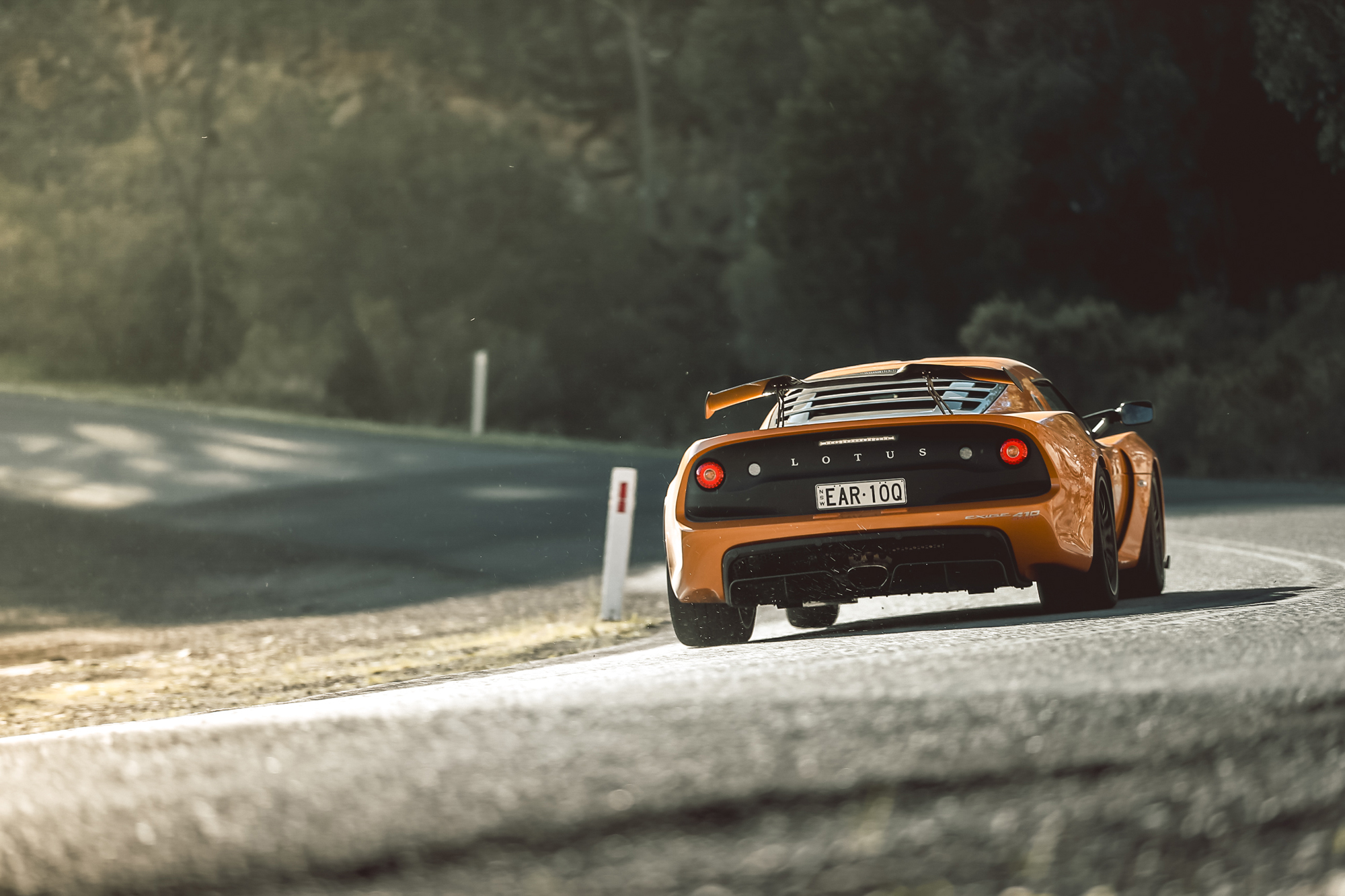
We spent two days in Lotus’ 80:20 creation – the denomination intended to explain the Exige 410’s split personality of 80 percent track, 20 percent road – on some of Victoria’s best Targa roads.
It was an enlightening experience that provided thrills and challenges in equal measure. If you ever you feel like you need to spice up your life, have a thrash in one of Lotus’ most extreme creations.
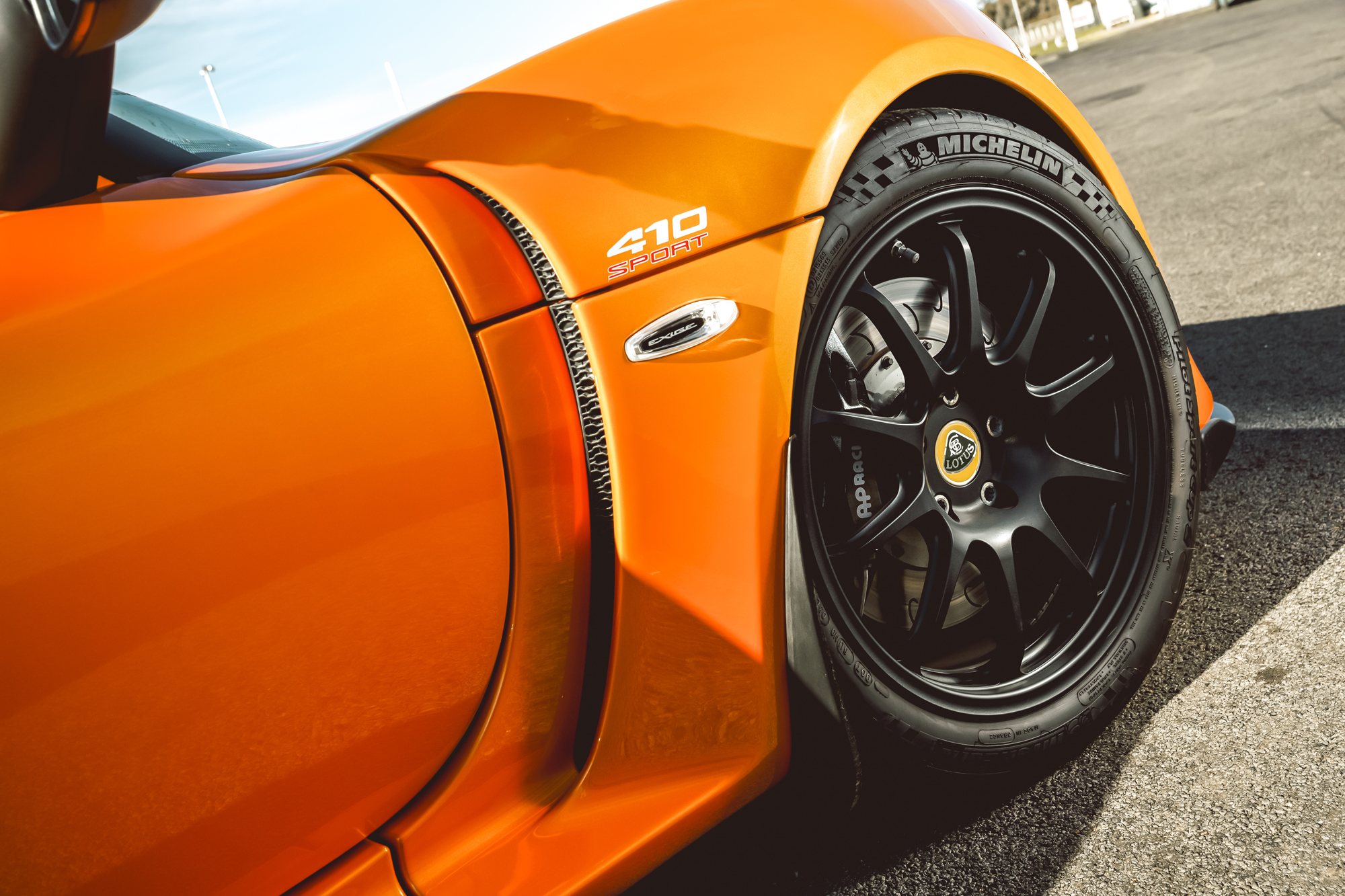
Powered by a Toyota-sourced 2GR supercharged 3.5-litre V6, the Exige Sport 410 sends power to the rear wheels via a six-speed manual gearbox. Ratios are selected with an aluminium open-gate manual gear shifter that looks like it could take pride of place in a modern art gallery. Peak power of 305kW (410 horsepower in old money, hence the badge), arrives at 7000rpm, while torque tops 420Nm at 3500rpm.
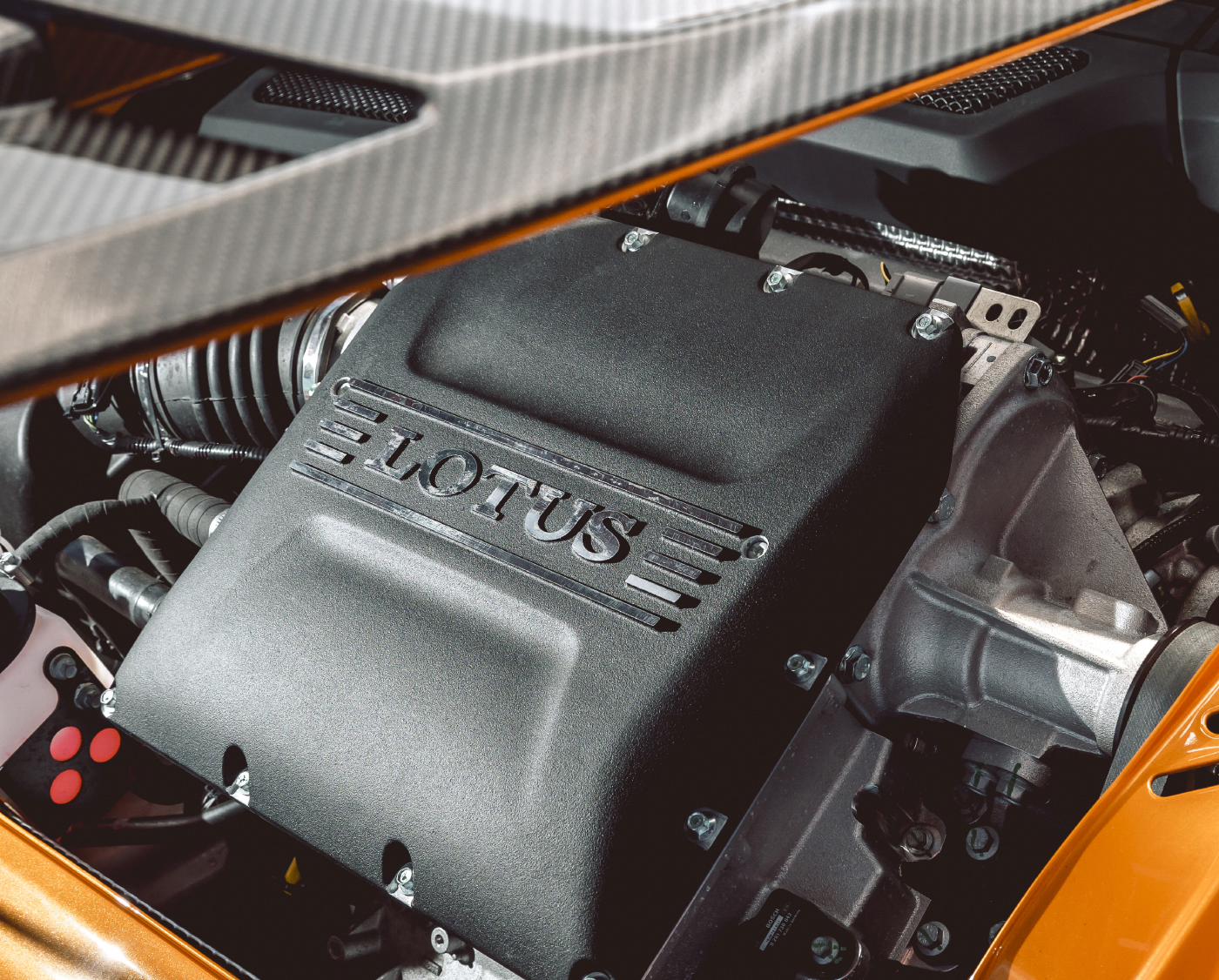
There’s no doubt as to where the Exige’s power is sourced from when nestled in the cabin, as just about the only thing you can see in the rear view mirror is the beefy supercharger sitting atop the engine. Also in direct eyesight is the throttle cable.
It’s about as comfortable a cabin to sit in as hiding in the cupboard, and getting into the seats is a lesson in human origami while removing yourself is a truly indignant experience. But we are here for the thrill of the drive.
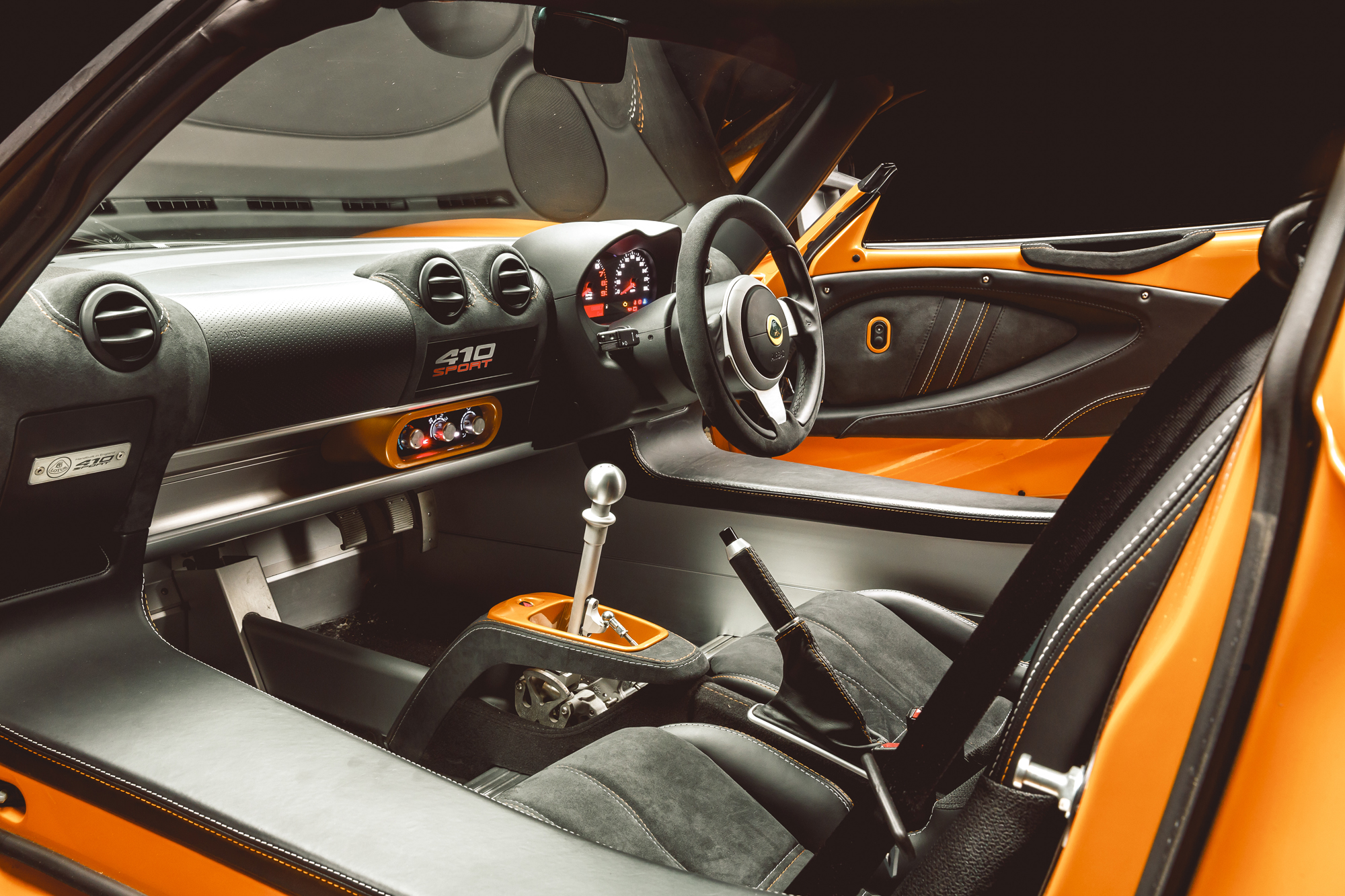
Acceleration is brutal. Plant your right foot into the firewall and first gear disappears in an instant, with the opening of the exhaust valve at 4500rpm a better indicator of nailing the change in ratios than the shift lights – the revs just build too damn quick in the first gear to even bother getting it perfect.
For the subsequent gears the three shift lights in the tachometer allow you to eke out as many revs as possible. The shift action is slick and satisfying, particularly when done in urgency. However, eclipsing the joy of the gear change is how the Exige Sport 410 sounds. Above 4500rpm a valve in the exhaust opens, unleashing a truly demonic howl that encapsulates the spirit of old-school Formula 1. It’s truly race car-spec. For unsuspecting outsiders, it’s probably frightening. Those wanting to save an extra 10kg from behind the rear axle can option a titanium exhaust system, which takes the aural delights a step further.
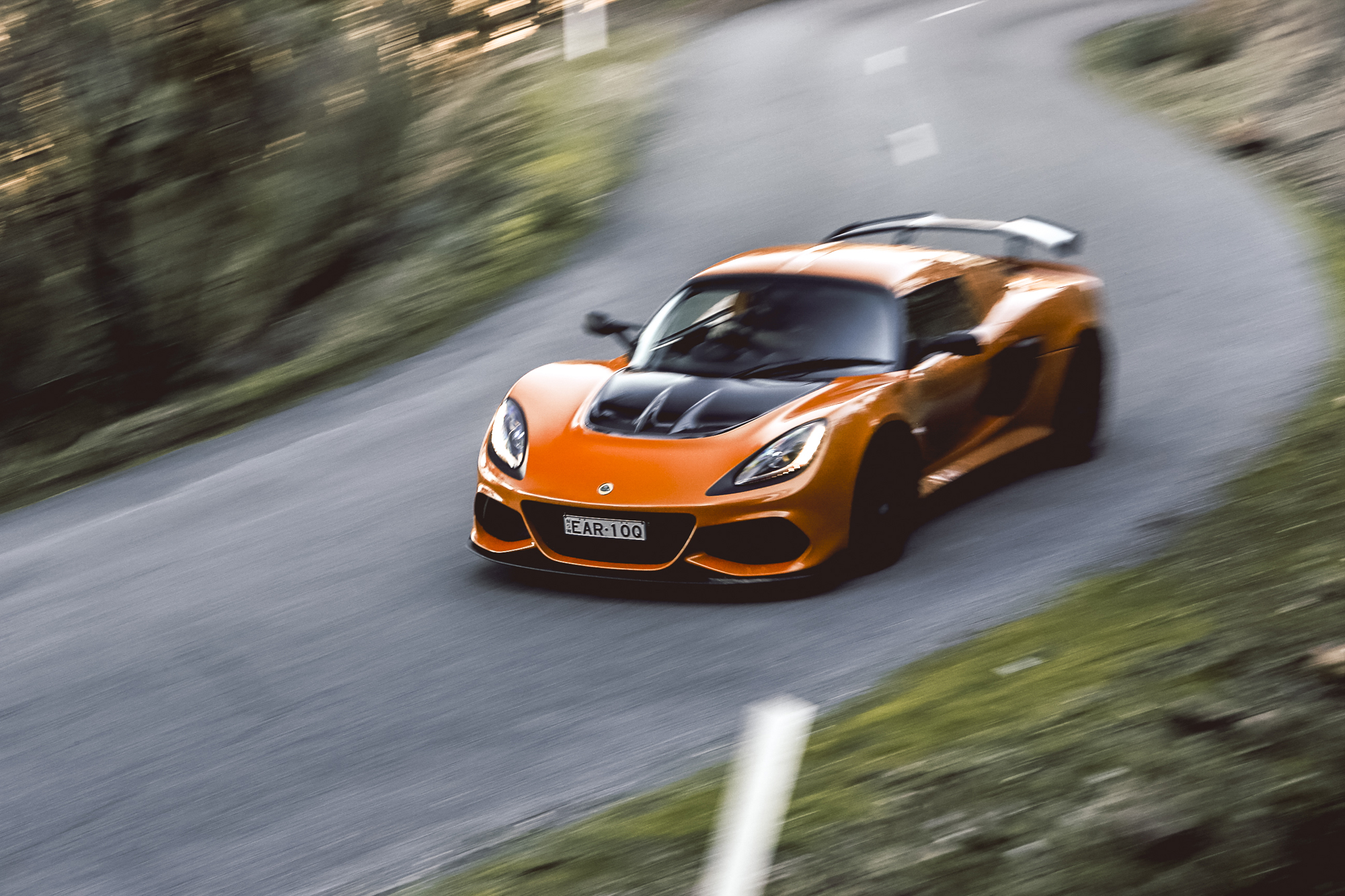
The six-cylinder heart of the Exige 410 isn’t simply an uprated version the Sport 350’s V6, instead using a detuned version of the more extreme 430’s engine. Plenty of other components are lifted from the 430 including oil cooler, larger clutch, AP Racing J-hook brake discs and three-way adjustable Nitron dampers – all of which have been tuned to suit the 410’s more compliant road character. Upgrades over the Sport 350 included a new water-to-air chargecooler, an additional front radiator and new water-to-oil oil cooler.
Australian-delivered Sport 410’s differ slightly from international models. The carbonfibre race seats are replaced with those from the Sport 350 as standard, while the front splitter, wing blades in the front clam, and rear diffuser are finished in glass fibre reinforced plastic (GFRP) rather than carbonfibre. A lithium-ion battery is replaced with a standard unit, while air-conditioning is included as standard.
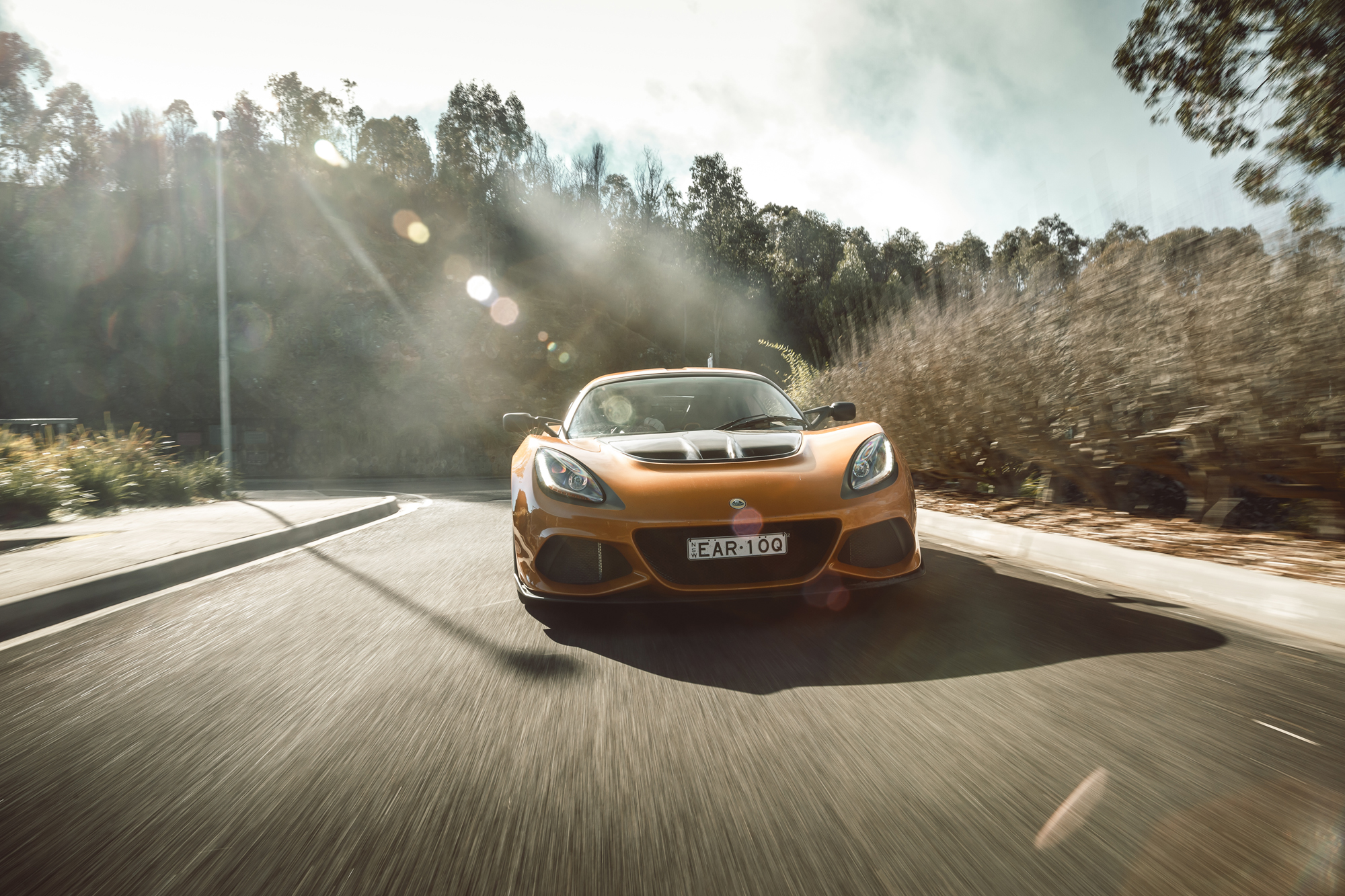
Eat a particularly hearty lunch and you’ll be adding a decent percentage to the Lotus’ weight. With an 1110kg kerb weight, the 275kW per tonne power-to-weight ratio is better than a Porsche 918 Spyder.
Wheels’ independent performance testing pours cold water on Lotus’ claimed 0-100km/h sprint of 3.4 seconds – our data suggests you’ll be cracking the tonne in 3.9 seconds. But that’s nothing to sneeze at; in fact it makes the Exige Sport 410 the fastest manual car we have ever tested. For context a Porsche 991.2 911 GT3 Touring with three pedals will get to 100km/h in 4.3 seconds from a standstill.
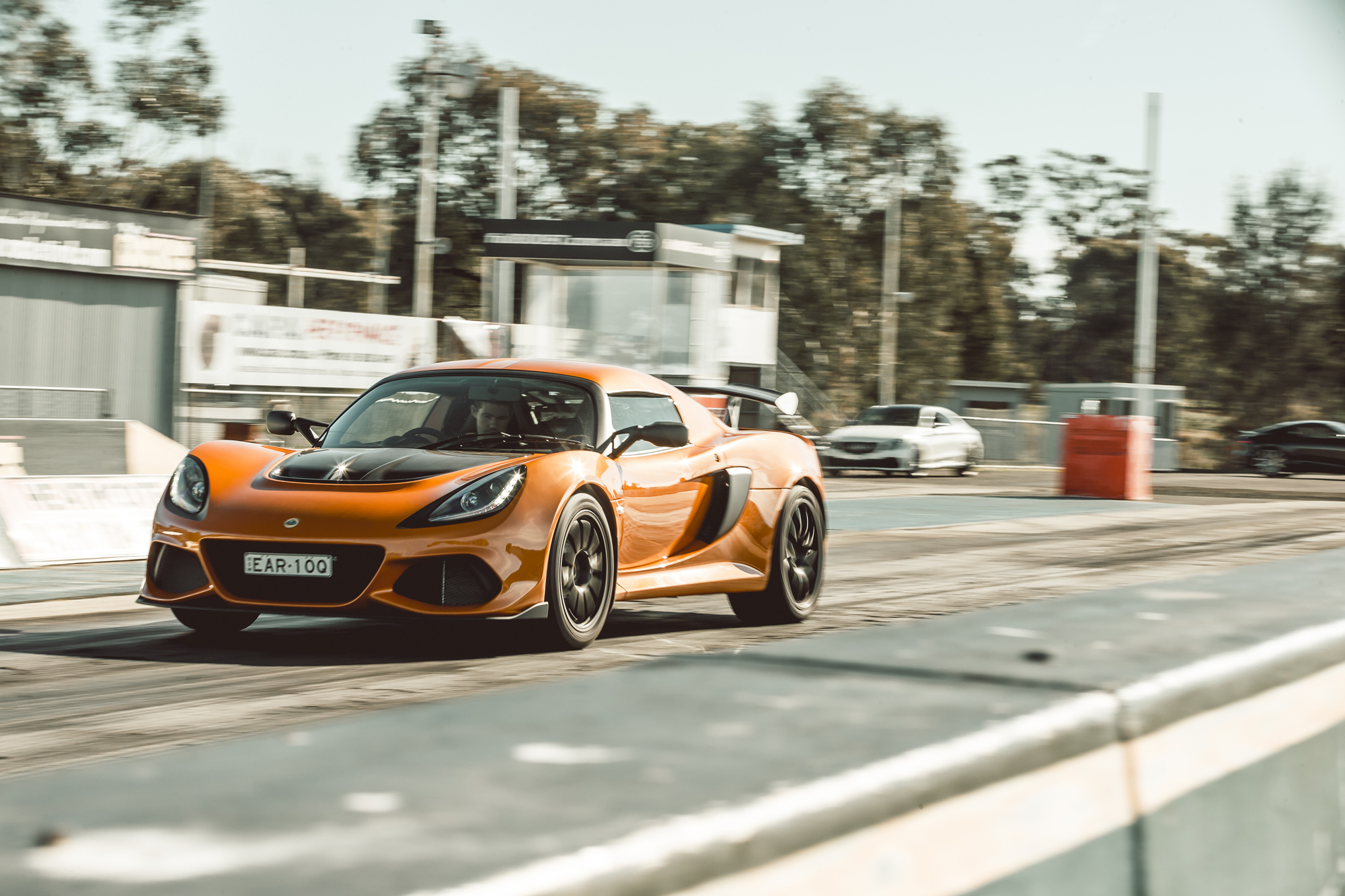
The front and rear anti-roll bars are adjustable and sourced from Eibach, and were set to their softest setting on our test car, along with the dampers. Despite this, the ride still remains harsh, but that’s to be expected for a car with 80 percent of its focus on the track. The Exige Sport 410 demands your full attention as it bucks over mid-corner bumps, though its dampers settle quickly and the chassis is more flexible than expected for a low and firm sports car.
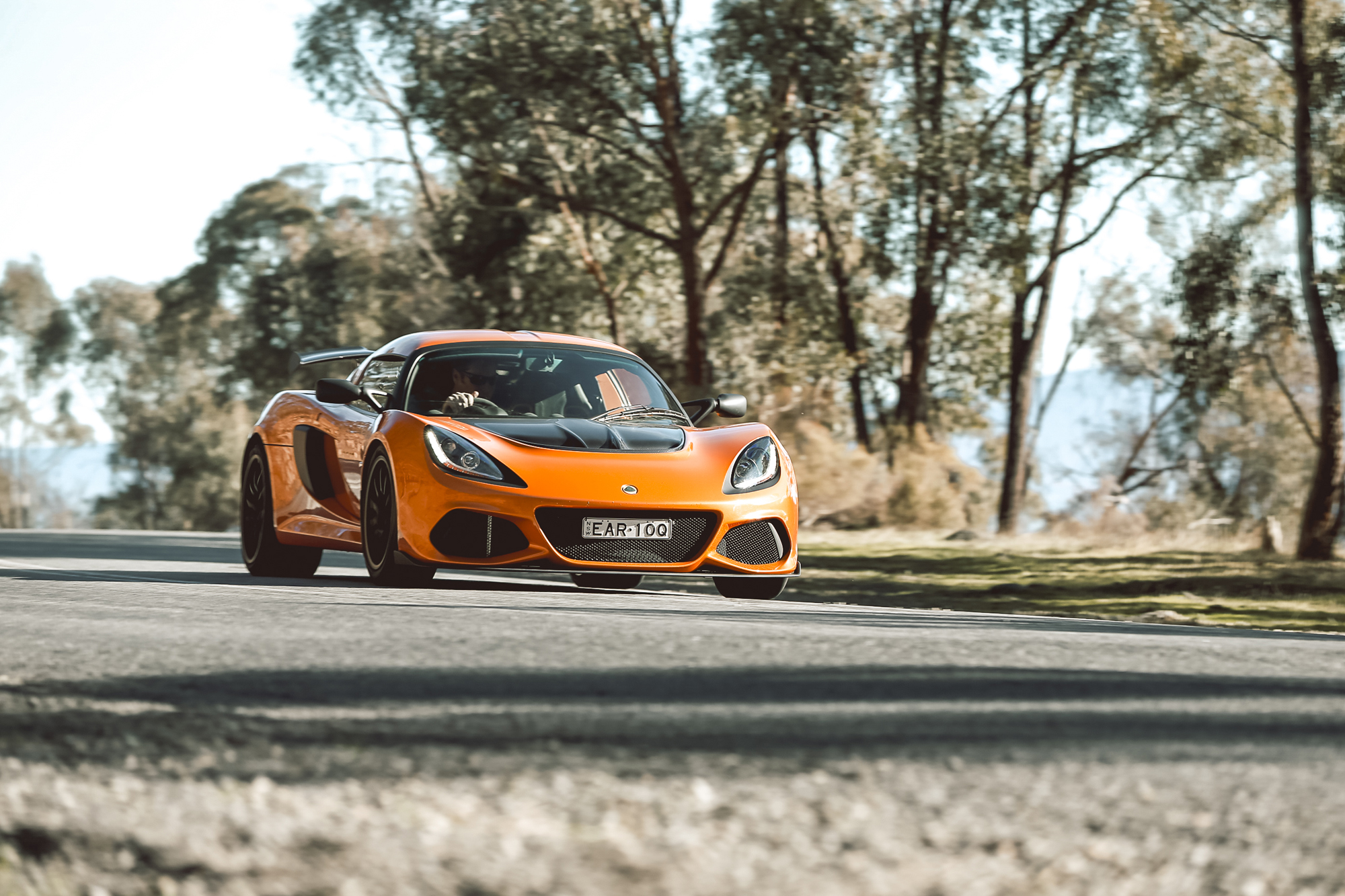
Lotus’ of old had an unenviable reputation for brake fade and poor pedal feel when it came to stopping power, but not the Exige Sport 410. The two-piece AP Racing brake discs with forged four-piston callipers haul the featherweight coupe to a stop with face-warping efficiency. Pedal feel is excellent, and extended uses yielded no fade during a belt across the high country.
There’s no power steering, meaning slow-speed maneuvering is unpleasant and tiresome at best. But at speed Lotus’ decision comes into stark clarity. Steering isn’t the quickest, but it’s wonderfully direct, and extremely communicative, giving the sense your fingertips are brushing the road underneath the front tyres.
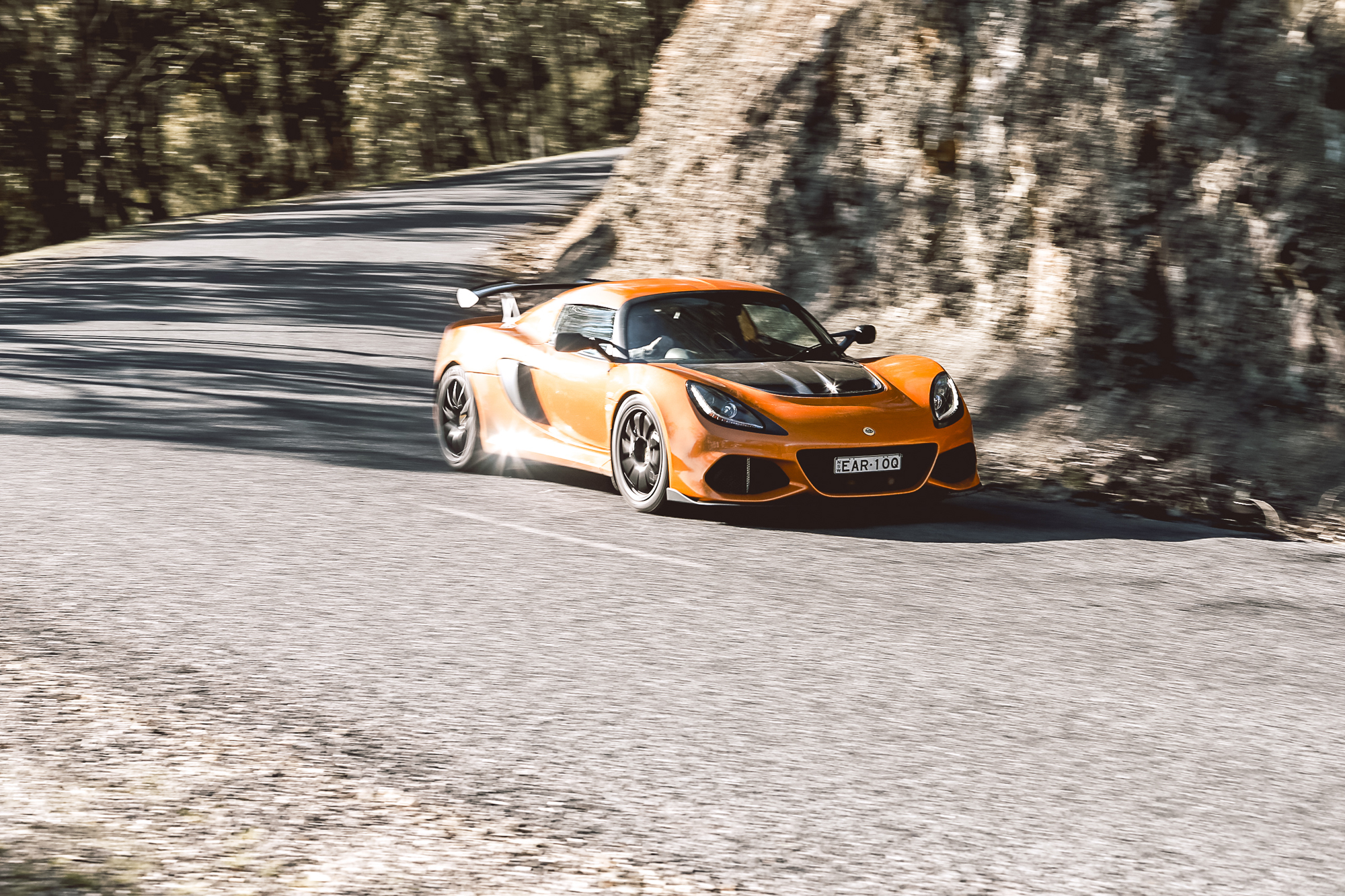
The front lip, rear spoiler, and sizeable diffuser aren’t for show. Lotus claims that the Exige Sport 410 generates 70kg of downforce at the rear, and 45kg up front, for a total of 115kg of downward pressure at 280km/h. You don’t need to be nearing 300km/h to get neck-straining grip though the Michelin Pilot Sport Cup 2 tyres that adorn each corner in rather chunky specifications (215/45 ZR17 front and 285/30 ZR18 rear), and the meaty rubber allows for more compliance when riding bumps, and retains impressive bite once warmed up. Mid-corner speed is a specialty of the Exige Sport 410, with the chassis and tyres relishing fast and flowing corners.
When the road begins to snake and twist away from you, and you lean into the Exige’s immense well of ability, it’s a visceral and thrilling experience. Lotus claims that the Exige Sport 410 “demonstrates that race car responses can be enjoyed far away from the race track”. While we reel at the thought of regurgitating PR guff, this assessment is spot-on. Priced at $159,990 plus on-roads, thrills that equal the 410’s race car-like attributes don’t come much cheaper. You’d need to spend significantly more than that to find another road car which delivers such an unadulterated and raw driving experience. Long may we continue to be blessed with the pure driving experience of cars as analogue and unforgiving as the Lotus Exige Sport 410.
LOTUS EXIGE SPORT 410 PRICE AND SPECS AUSTRALIA
Model: Lotus Exige Sport 410
Engine: 3456cc V6l, DOHC, 24v, supercharged
Max power: 305kW @ 7000rpm
Max torque: 420Nm @ 3000-7000rpm
Kerb weight: 1110kg
Transmission: 6-speed manual
Economy: 14.9L/100km
0-100km/h: 3.4sec (claimed), 3.9sec (tested)
Price: $159,990
On sale: Now
The Bentley Continental GT is now the Pikes Peak production car record-holder, after New Zealand driver Rhys Millen steered the twin-turbo 6.0-litre W12-powered Brit up the ‘Race to the Clouds’ on June 30 in the US.
The Colorado motorsport event sees cars from various categories vying to take as little time as possible to race up a treacherous 19.98km mountain road, with Volkswagen’s I.D R electric racer holding the current outright record of 7:57.148.
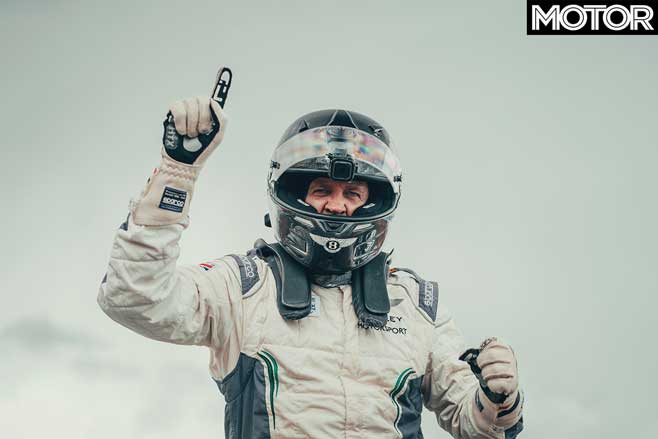
Bentley has broken that record with its 467kW Continental GT by more than eight seconds with a time of 10:18.488.
“This is an amazing finish to a wet, snowy 2019 run at Pikes Peak,” said Millen after setting the new time.
“We came here with one goal in mind, and that was to be the fastest production car up the mountain and set a new record.
“It was an incredible week. Today was a challenge with what Mother Nature threw at us, but the Continental GT held strong all the way to the top, and we are now number one.”
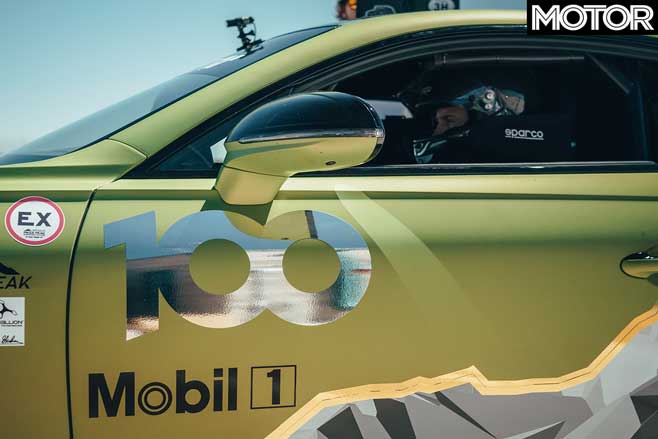
The climb begins at 9,300ft above sea level, and after 156 turns reaches a height of 14,100ft, where the air is about one third as dense as at sea level. This creates a loss of power for combustion engines, with less air to take in and mix with fuel.
“This new record once again proves that the spirit of endeavour and desire to push the boundaries of automotive performance remain at the beating heart of Bentley,” says the brand’s director of motorsport, Brian Gush.
“It clearly demonstrates the Continental GT’s astonishing breadth of ability.”
As of this month, Ian Callum no longer works at Jaguar as director of design. And while it gives his replacement, Julian Thomson, a chance to bring fresh ideas to the table, it means the man who gave Jaguar its ‘modern makeover’ is no longer around.
Who is Ian Callum?
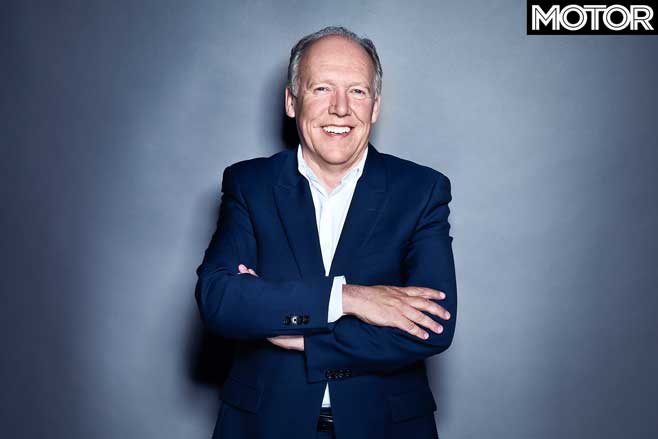
For the last two decades, Ian Callum has been a staple of Jaguar’s design team, and for a lot of that time its leader. He has helped transform Jaguar into a modern, stylish brand without disrespecting the historic (albeit outdated) design language he inherited from Jaguar’s past.
When Callum joined Jag in 1999, the company was owned by Ford, and Callum himself also worked for Tom Walkinshaw as a design consultant for the likes of Aston Martin, then a very different company itself.
Before the first Jaguar Callum had put his name to, he’d been unofficially responsible for creating the Aston Martin DB9’s design, as well as a great deal of the V8 Vantage of the same era.
But before long, Callum had made his way to the top of the design food chain at Jaguar and was reinventing the brand’s design language to take its British charm into the modern era.
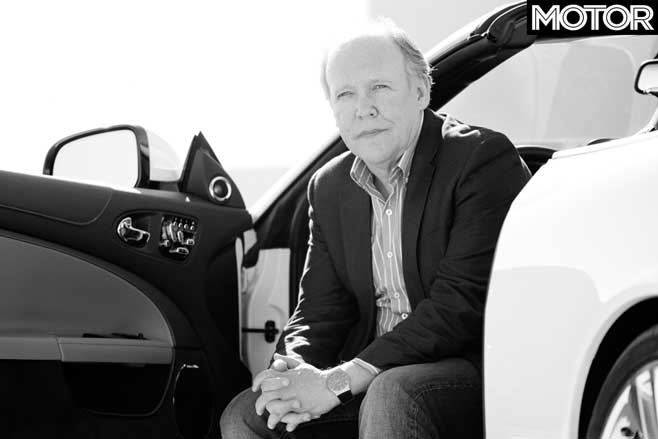
“I came into this role with a mission to take Jaguar design back to where it deserved to be,” he said upon the announcement of his departure from Jaguar.
“It has taken 20 years, but I believe I have achieved what I set out to do.”
2003 Jaguar R-D6 concept
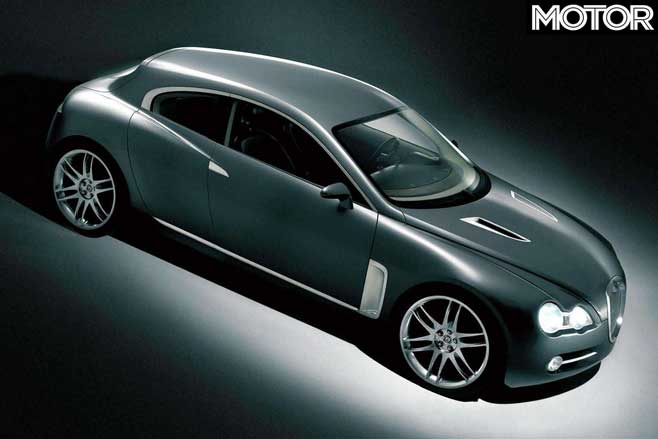
Rather than getting straight to work on a production model, Callum’s first big project was one that is now very clearly the link between old and new for Jaguar.
While the R-D6 ‘hatch’ concept used a diesel V6 engine and some clearly traditional Jag design elements, it stepped away from the ‘old world’ of car design and started incorporating those elements into something new.
The interior was also a far cry from tradition, with a leather and aluminium-styled ‘futuristic’ dash and red lighting.
2005 Jaguar XK
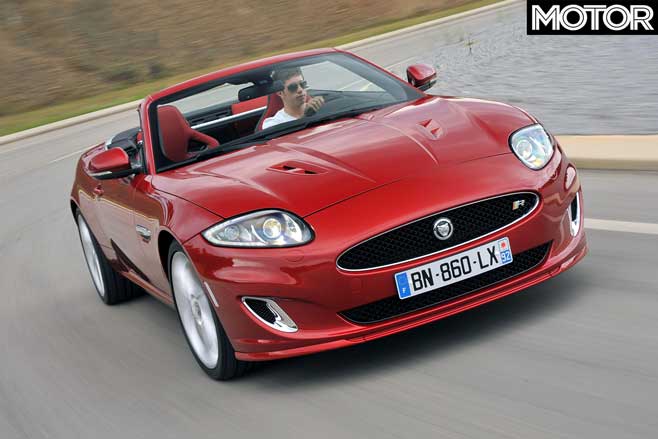
Though Callum happily admits the XK is similar in many ways to the Aston Martin DB9, he defends the similarities with a rather simple statement, one he gave US outlet Car and Driver during an interview in 2010.
“They have values about them that are similar, I’d say,” Callum said.
“The way they sit, their overall proportions—but these are my values, what I think makes a car correct. I’m not going to change those values because I’m working for a different brand.”
The DNA from the XK would go on to inform the first of Callum’s truly modern designs.
2007 Jaguar XF
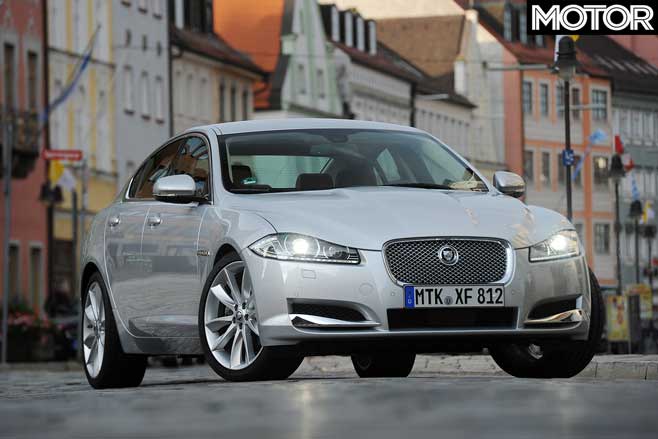
“One of my biggest highlights was creating XF, Callum recalls,
“It represented the beginning of a new era moving Jaguar from tradition to contemporary design – it was a significant turning point in our story.”
Even the first XF concept (called C-XF) from more than ten years ago very clearly looks like the current iteration, not that the first wouldn’t hold up today.
2009 Jaguar XJ
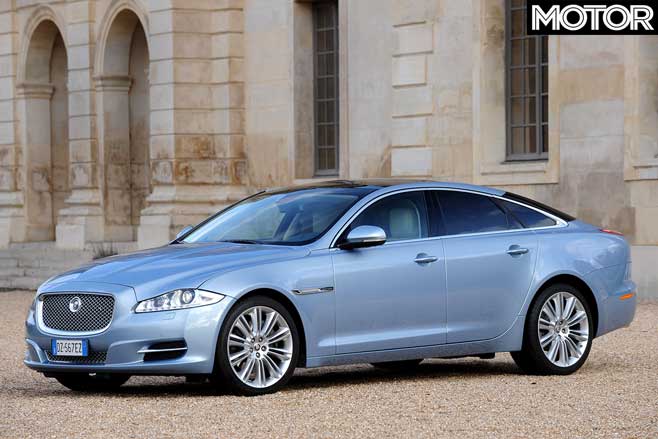
Taking a revered badge such as ‘XJ’ and recreating the car it’s attached to is a risky move, but in the previously mentioned C&D interview, Callum asserts that he thinks it fits with the necessary progression of the brand’s design.
“My point of judgment is always: ‘What would Sir William Lyons think of this?’ And I honestly think he’d approve, hugely.”
2010 Jaguar C-X75
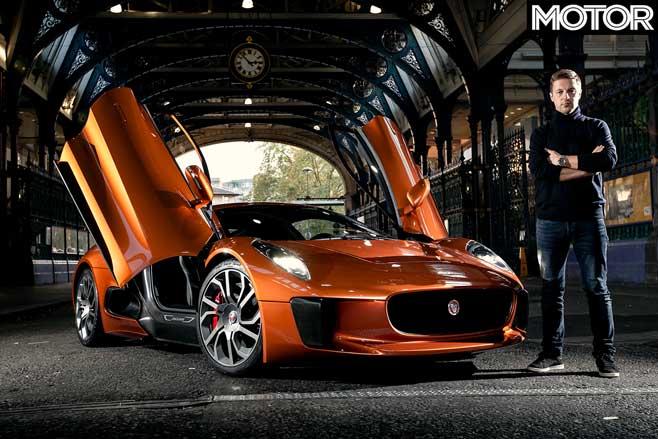
Though Aston Martin had long been the ‘Bond’ brand, Jaguar also formed a partnership with the franchise for the film Spectre and supplied the villain’s car – in the form of the C-X75 concept supercar.
It also clearly harks back to the XJ220 of the 1990s.
“C-X75 is only a concept supercar,” Callum said at the time it was revealed, “but it’s a clear statement of Jaguar’s intent to continue creating bold, innovative and beautiful performance cars.”
Of course, a bold performance car was just around the corner.
2012/13 Jaguar F-Type and Coupe
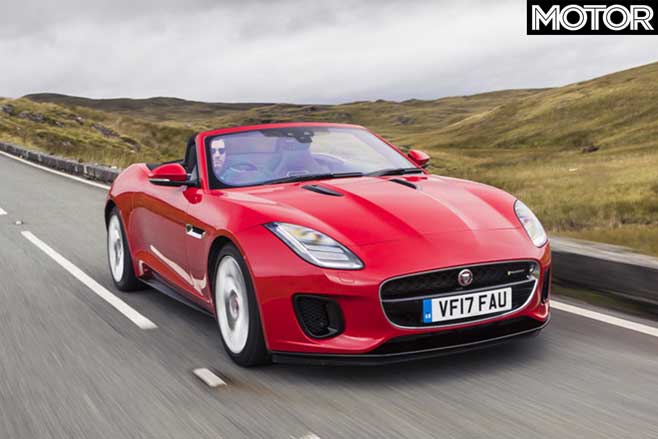
Snarling supercharged sixes and glorious thumping V8s mark the F-Type as one of the most dramatic Jags ever, but even when switched off there’s a bit of theatre to the sports coupes and convertible.
Taking a direct spiritual line from the E-Type, one of the most beautiful cars of all time, Callum brought a two-door design back to the Jaguar line-up.
In fact, it was so significant for him, he called it “a dream come true.”
2014 Jaguar XE
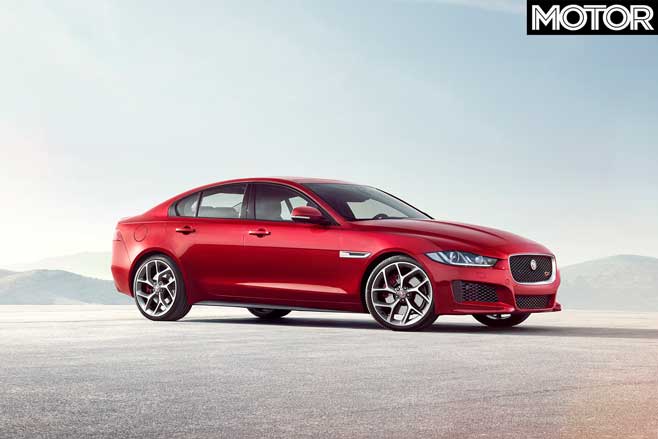
The ‘entry-level’ Jag was introduced to ‘replace’ the X-Type, which had survived quite deep into the 2000s for a car with Jaguar’s pre-Callum design language.
Of course, the XE fixed that with a design much more closely based on the elements introduced by Callum.
It also became the basis for one of Jaguar’s wildest-ever cars, the XE SV Project 8.
2015-18 Jaguar’s SUV revolution (F-Pace, E-Pace, I-Pace)
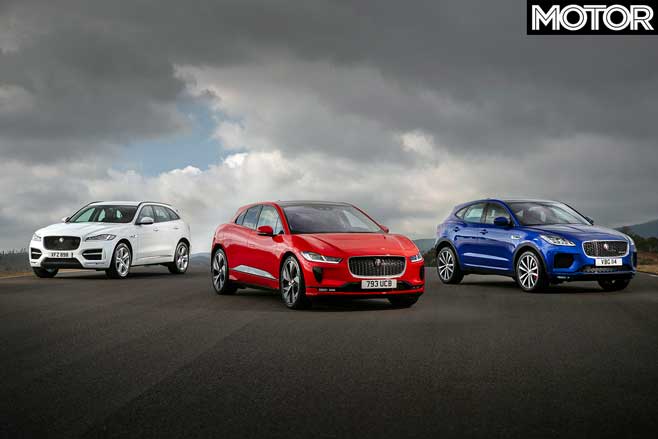
While SUVs generally tend to be the less-than visually appealing members of a brand’s range, Callum managed to make the F, E, and I-Paces look muscular where they need to (F-Pace) and elegant where the market needs something beautiful (I-Pace).
Even the smaller E-Pace manages to incorporate Callum’s design language without looking awkward.
The future of Jaguar design
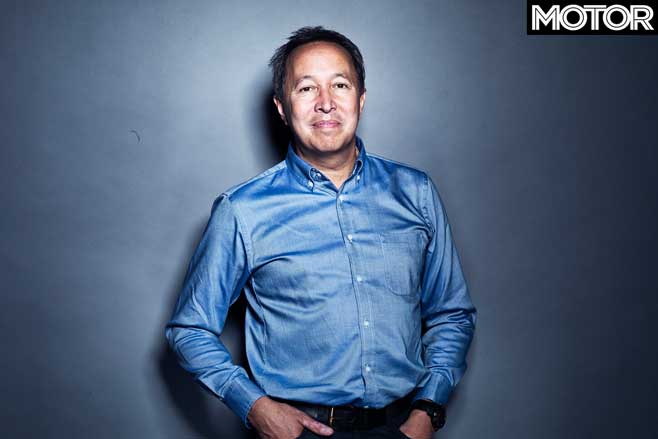
Of course, moving forward, Ian Callum will remain a consultant available for Jaguar to ‘check in’ with if his advice is needed, though Callum feels his replacement, Julian Thomson, is more than up to the task.
“Designing Jaguar cars was a lifelong dream for me, and I’m delighted to remain involved as a consultant for the brand.
“I have worked closely with Julian Thomson for 18 years – he is a hugely talented designer and absolutely the right person to lead Jaguar design into its next chapter.”
