
Ford’s new Focus ST-Line wagon is perhaps the greatest achiever in the new Focus line-up right now – though we can’t wait to get our hands on the upcoming ST.
It gets a more sophisticated suspension setup over the hatches (except the new Active) and brings with it a cavernous boot and wagon styling. But for comparative money, a used Skoda Octavia RS can be had. Questions is, which would we buy?
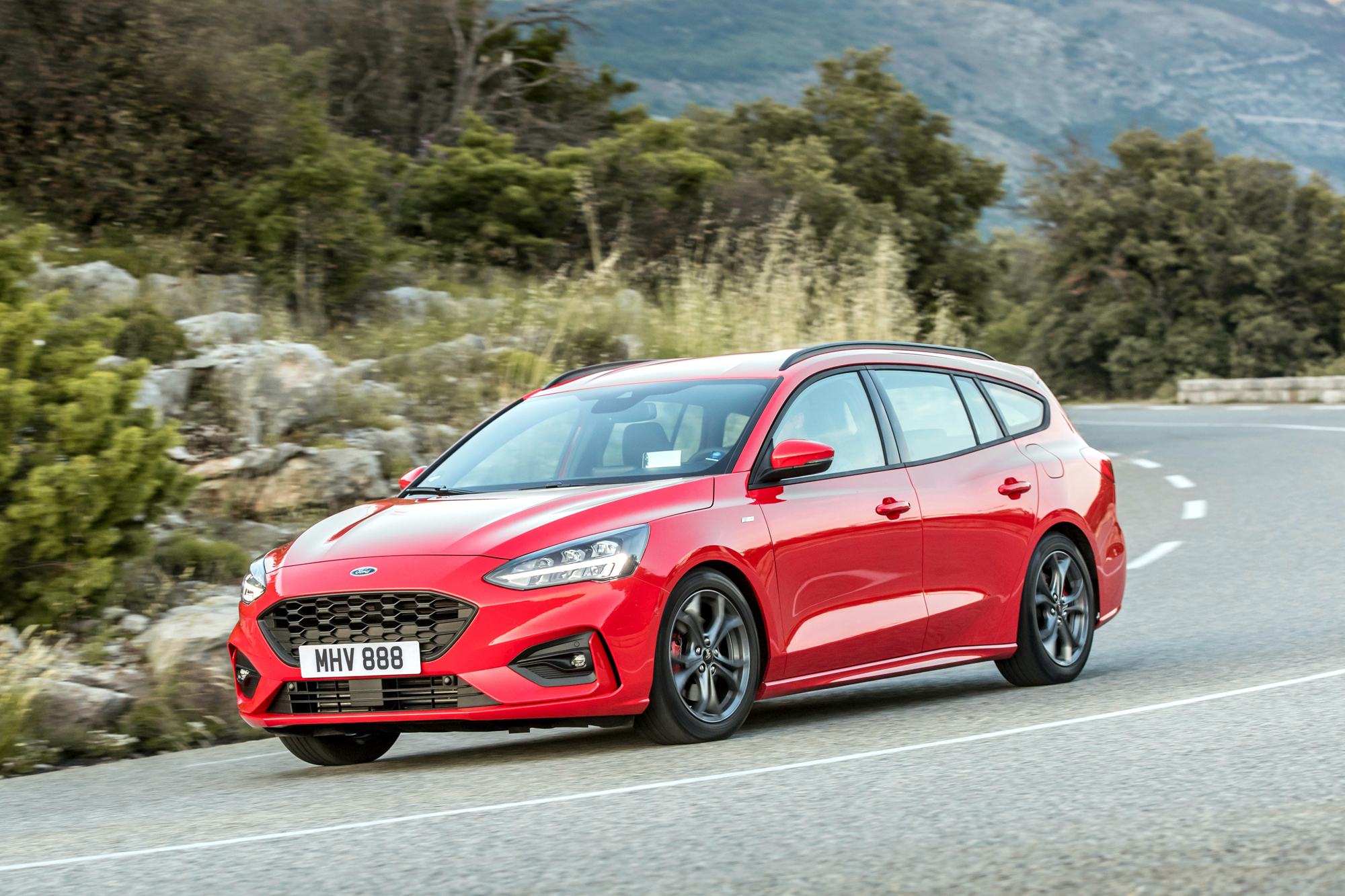
2019 FORD FOCUS ST-LINE WAGON
Ford Australia has never hit a home run with its Focus, ceding sales to the Toyota Corolla, Hyundai i30 and Mazda3. That’s a pity, because it’s a good performer and now offers something those can’t – a wagon bum.
The latest-generation Focus was introduced here late-2018 and brings the first ST-Line badged wagon to Australia. A hotter ST is coming but is only confirmed in hatchback guise, so this is the hottest wagon in the line-up for the foreseeable future. And priced at $30,900 it jumps off the page with value.

Under the bonnet is a 1497cc three-cylinder turbo engine, the same unit found in the new Fiesta ST. It’s a little less wild, producing an output of 134kW at 6000rpm and 240Nm at 1750-5000rpm. That’ll send it from 0-100km/h in 8.2sec (as tested by Wheels) and there could be good tuning potential given the Fiesta ST relationship.
Grunt goes through an eight-speed automatic transmission – a slick shifting unit – and helps fuel efficiency achieve a claimed 7.5L/100km on the government combined cycle. The only gripe is the selector knob looks a bit fuddy. In fact, the cabin as a whole isn’t terribly sophisticated, and there are swathes of boring black plastics around the interior. Gaining attention is a crisp 8.0-inch touchscreen with Apple Carplay and Android Auto connectivity and comfortable fabric seats with some light side bolstering. Being a wagon, the boot is large and practical, offering 575L or 1653L with the rear-seats folded.
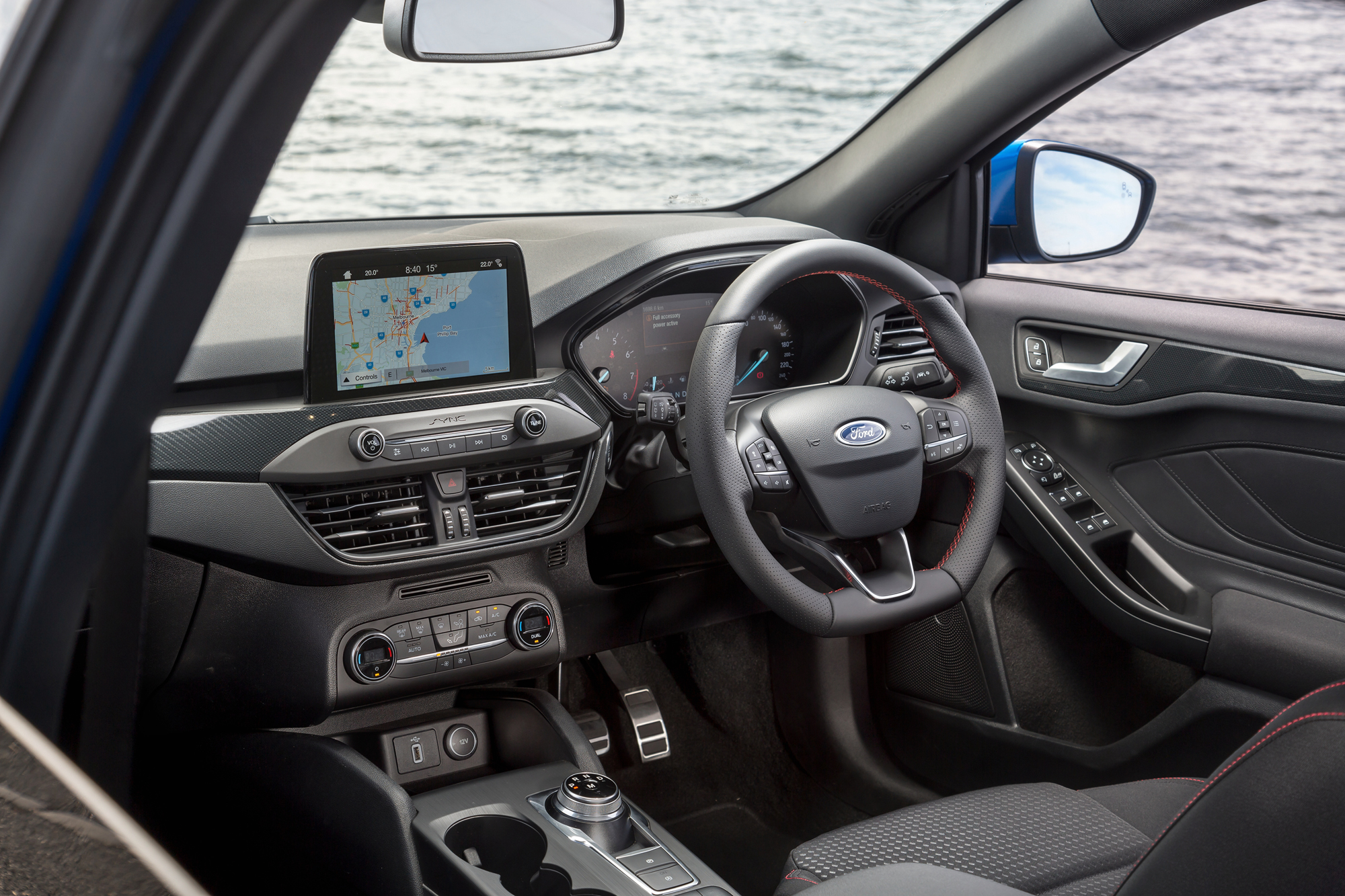
Standard under the arches are 17-inch wheels that help cushion compliance, though 18-inch alloys are available and the ST-Line’s multi-link rear suspension setup, that the torsion beam hatch doesn’t get, helps improve ride comfort as well as dynamic ability.
Having a squirt, the engine feels vibrant above 2500rpm with a throaty three-pot rumble and mid-range pull. Power is good enough to have some fun but it’s short of the Skoda’s hot hatch punch.
Through bends, the body is well controlled and fairly flat-footed and the blend of performance doesn’t have the tugging torque steer of some warm front-wheelers, but the nose can be a touch wooly and the steering feel detached.

2015 SKODA OCTAVIA RS 162TSI WAGON
This is the ultimate Czech cult car, the hot hatch of wagons. Equipped with many of the components found in Volskwagen’s hot Golf GTI, the Octavia RS uses the same EA888 2.0-litre four-pot turbo to produce 169kW at 6200rpm and 350Nm at 1500-4600rpm. As ubiquitous an engine the VW mill is, tuning options are vast, and fairly affordable, so a used example nearing the end of its factory warranty is a top option for many petrol heads.
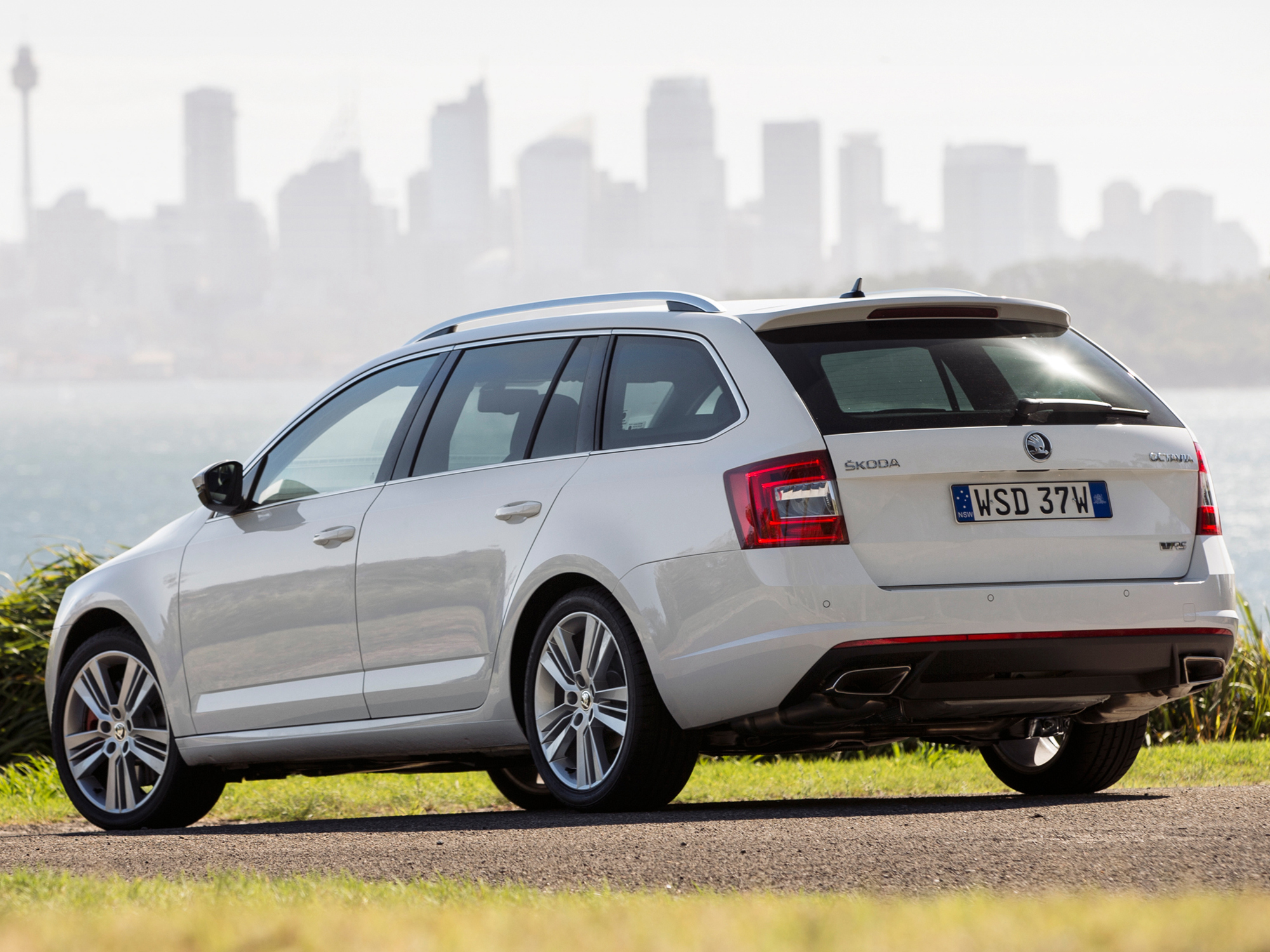
For enthusiasts, there’s further incentive to opt for the Skoda, with the RS available with either a six-speed DSG auto or manual (you can’t get the latter in the Focus). And it’ll smoke the ST-Line at the traffic light grand prix, with a claimed 0-100km/h time of 6.9s and 7.2s for the manual and auto respectively.
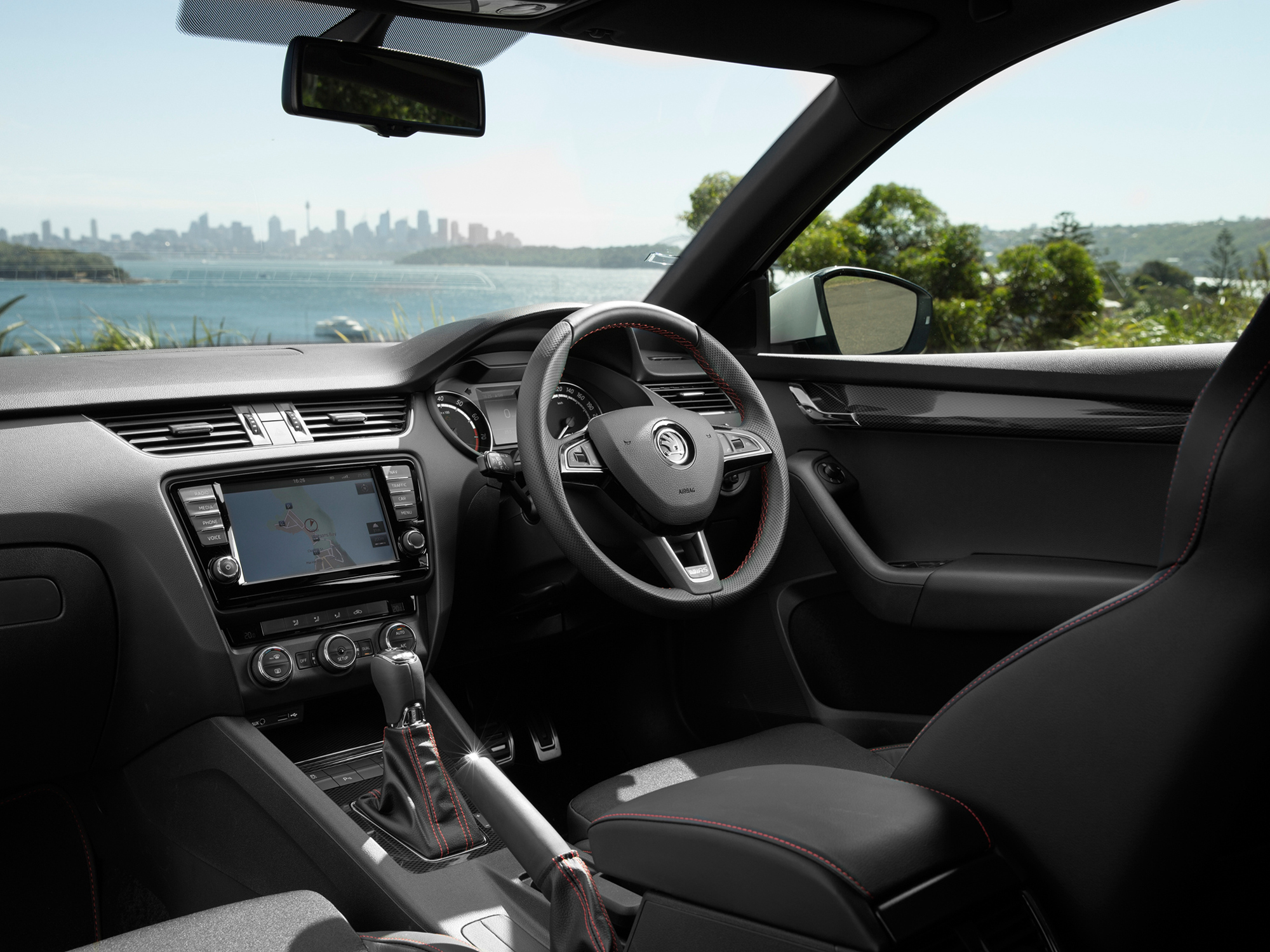
While the interior is a little dated, it holds up to the Focus with a CarPlay/Auto compatible infotainment and sporty trim elements adding drama and visual excitement over the Ford. The boot is also a little larger at 588L, and there’s Skoda smarts throughout the cabin such as a cargo net and divider shelves.
It might look like a slam dunk for the Skoda given its performance and packaging advantages, but keep in mind that used examples will be around three to four years old and staring down the end of their warranty (five years, unlimited km when new). Servicing costs are also higher, and the Ford comes with a five-year, unlimited km warranty and cheap fixed-price servicing.
So, let the stoush begin.
Specs comparison
| 2019 Ford Focus ST-Line wagon | 2015 Skoda Octavia RS wagon |
Price (new) | $30,990 | $39,090 (manual) |
Engine | 1.5-litre turbo 3cyl | 2.0-litre turbo 4cyl |
Output | 134kW/240Nm | 162kW/350Nm |
Transmission | 8-speed automatic | 6-speed manual |
0-100km/h | 8.2 seconds (tested) | 6.9 seconds (claimed) |
Efficiency (combined) | 6.4L/100km | 6.4L/100km |
Drivetrain | FWD | FWD |
Doors | 5 | 5 |
Seats | 5 | 5 |
Wheel size | 215/50R17 | 225/40R18 |
Boot size | 575L | 588L |
Country of origin | Germany | Czech Republic |
Wheels staff picks

Trent Giunco
Staff Journalist

Alex Rae
Online Editor

Cameron Kirby
Staff Journalist
Reckon we’ve got it right? Or are we way off the money (literally)? Find your best and let us know in the comments what you’d buy.

You would be forgiven for thinking that widespread global electric vehicle adoption was little more than a fantasy, many decades from the faintest likelihood, given Australia’s archaic attitude to alternative energy and complete lack of federal government support.
But it’s a very different story in almost every other developed part of the world with all the mainstream manufacturers – including BMW – responding to an explosion in electrified vehicle demand.
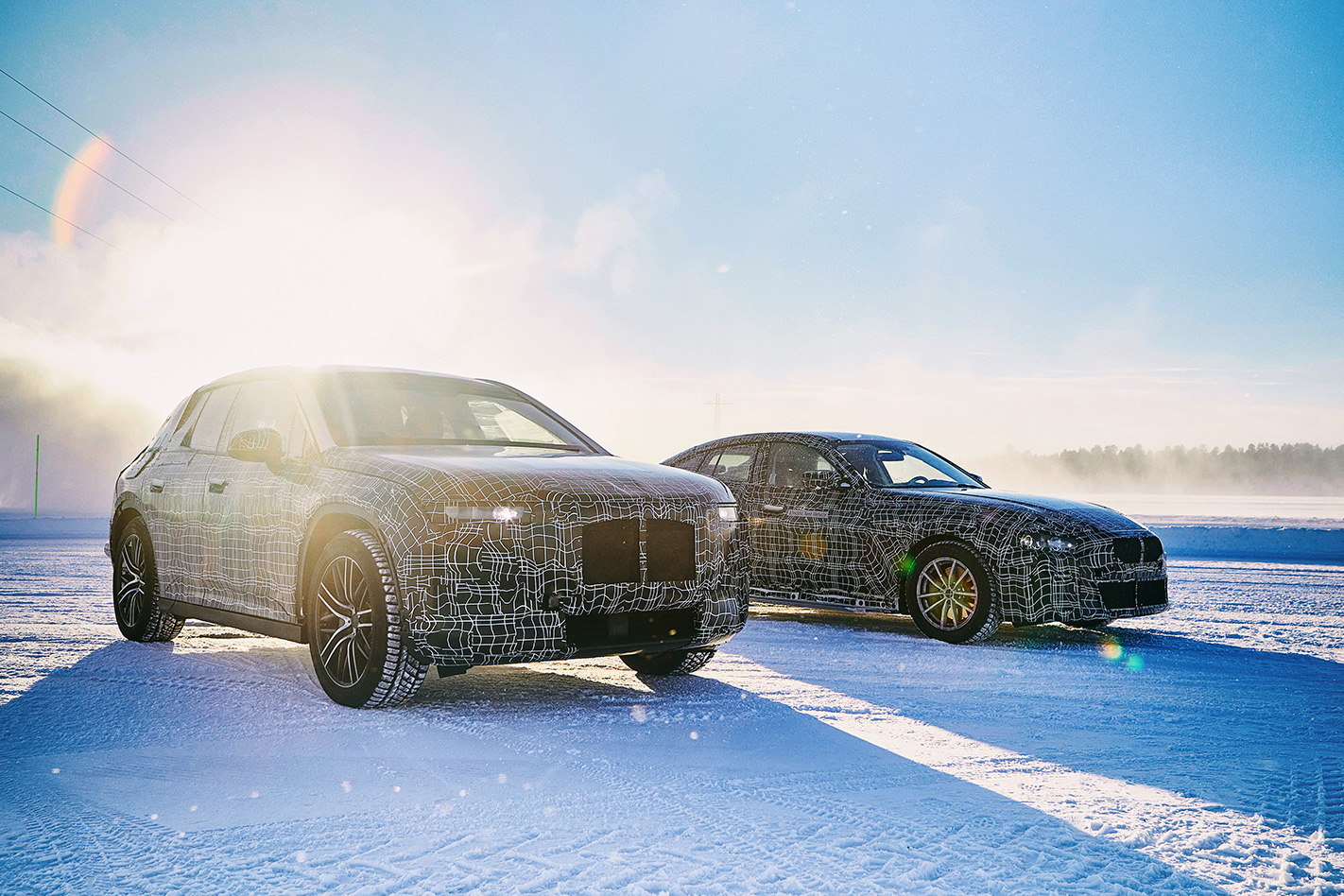
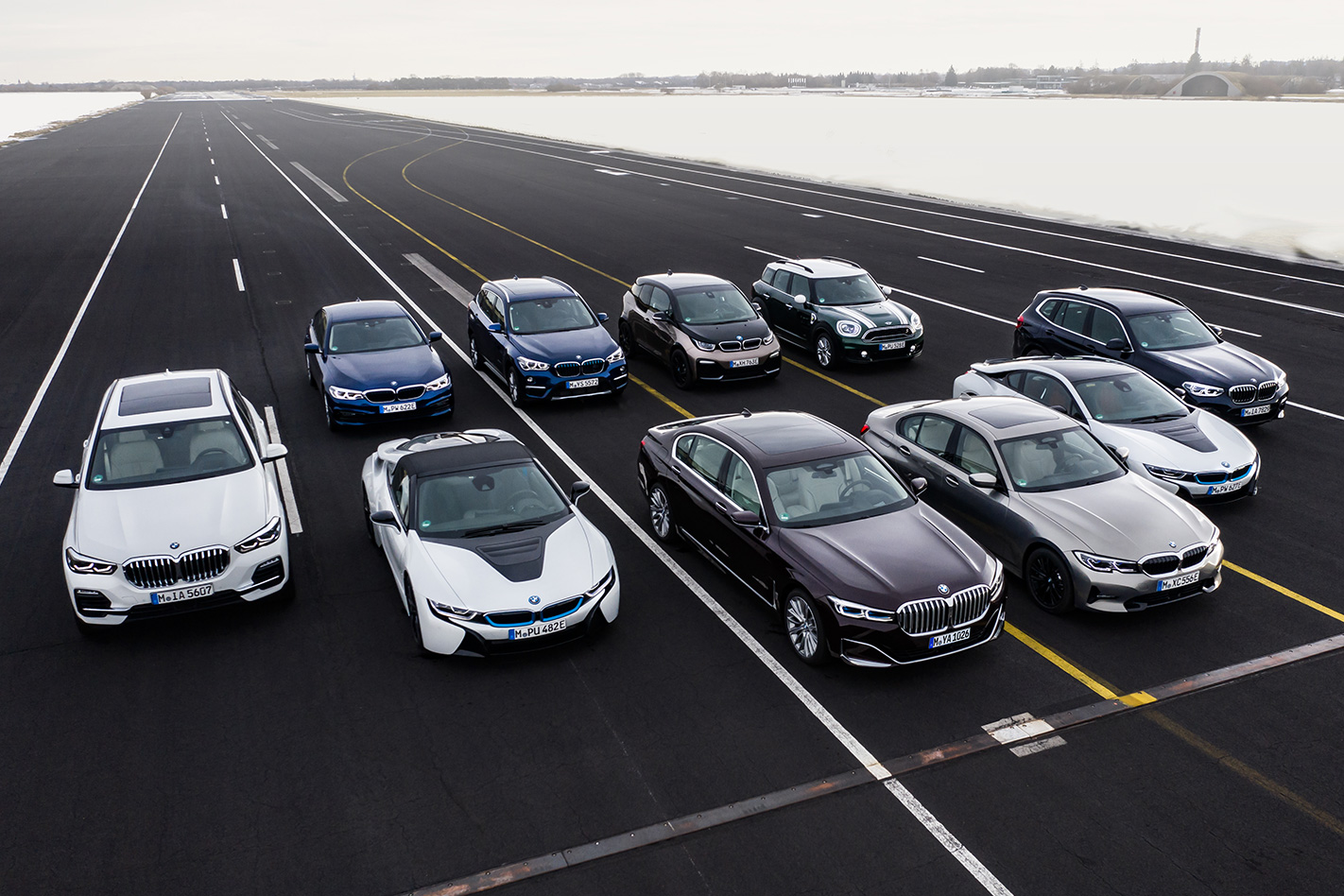
Last year, the German carmaker announced that it would offer a choice of 25 electrified models – including pure EVs and plug-in hybrids – by the year 2025. But unexpectedly high demand for more efficient vehicles prompted the company into hitting its own target early.
“We said last year that we would have 25 electrified vehicles on the road in 2025, we’ve now advanced that by two years so we will have that in 2023,” said BMW member of the board of management, customer, brands and sales, Peiter Nota.
It’s the start of a vigorous electric era for the iconic German manufacturer.
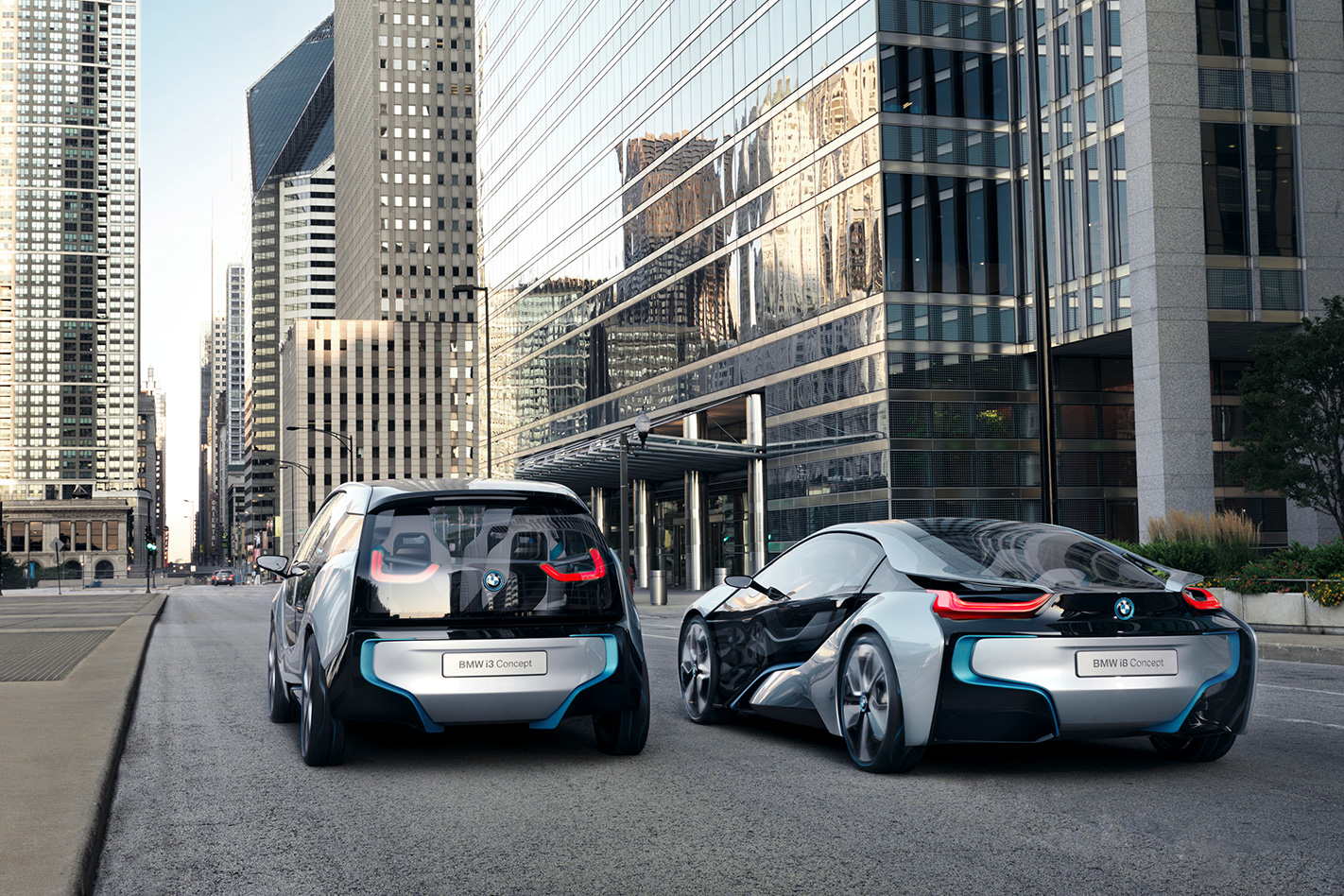
From the early days of ambivalent mild hybrids and the niche i3 and i8, BMW’s electrified ranks have blossomed to a broad spectrum of plug-in hybrids covering passenger and SUVs, and its recent build in momentum will continue.
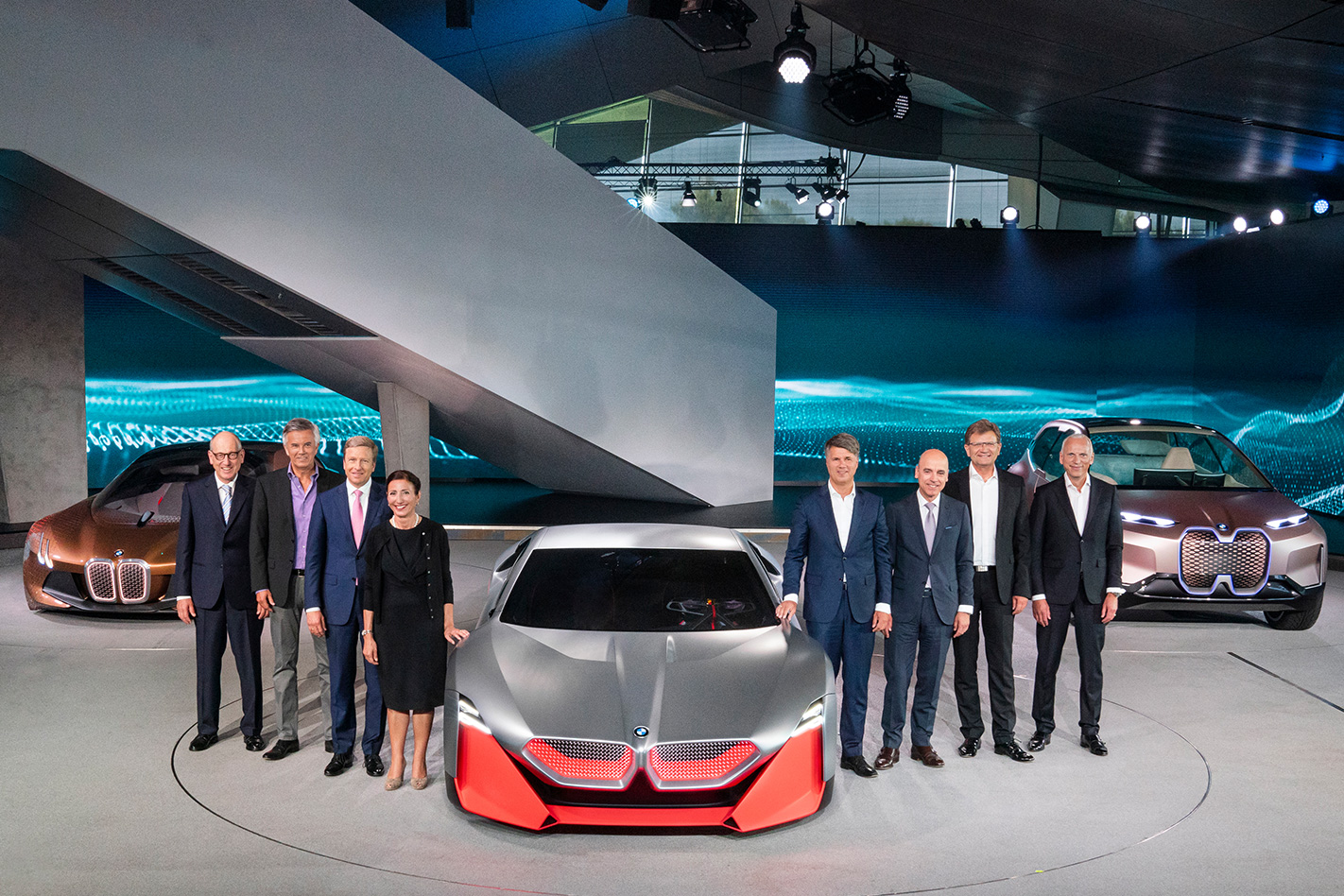
Speaking at BMW’s NextGen technology event at the company’s headquarters in Munich, members of the board of management highlighted its electrified roadmap, as well as a strategy that will one day see purely combustion-powered models outnumbered by EVs and PHEVs.
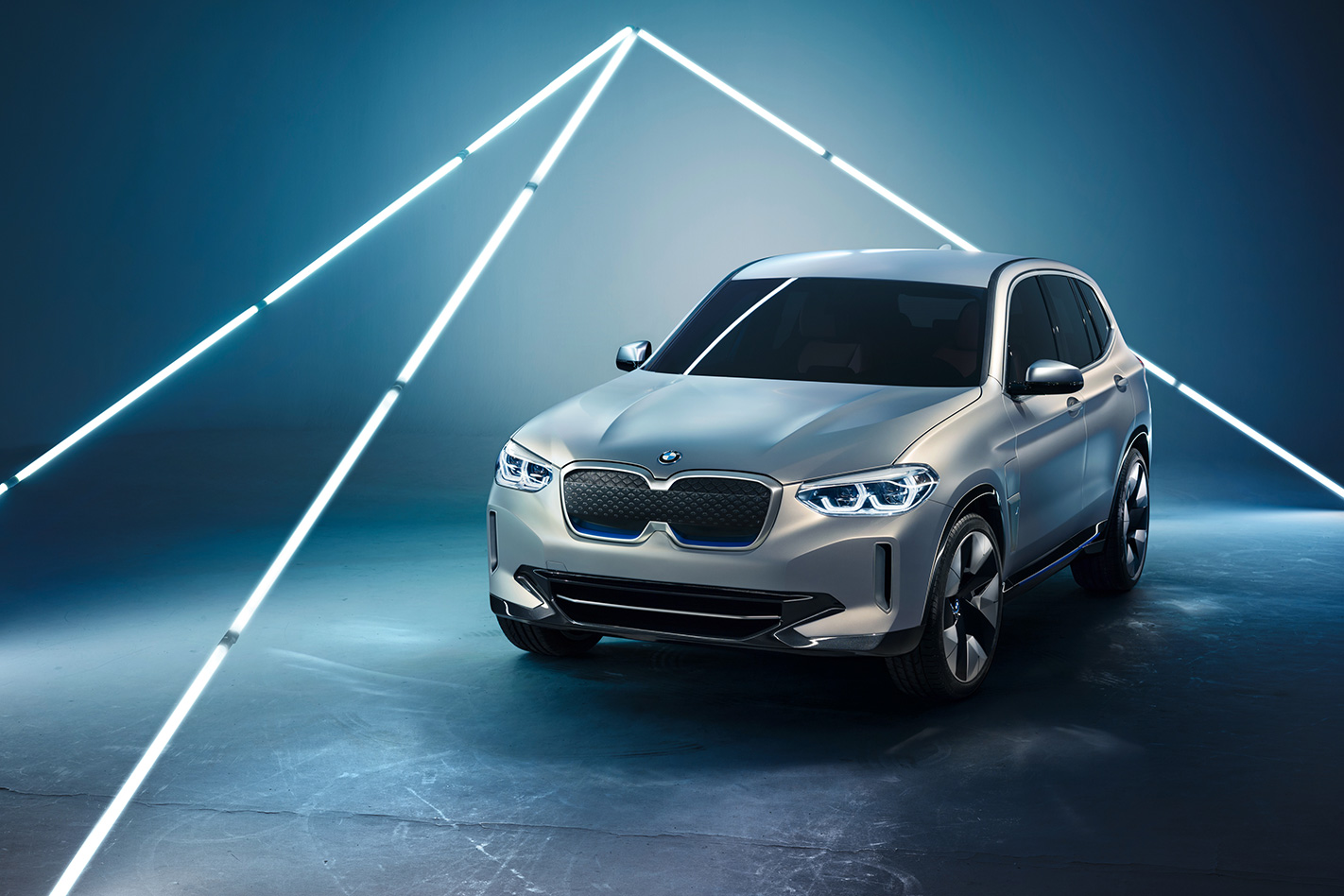
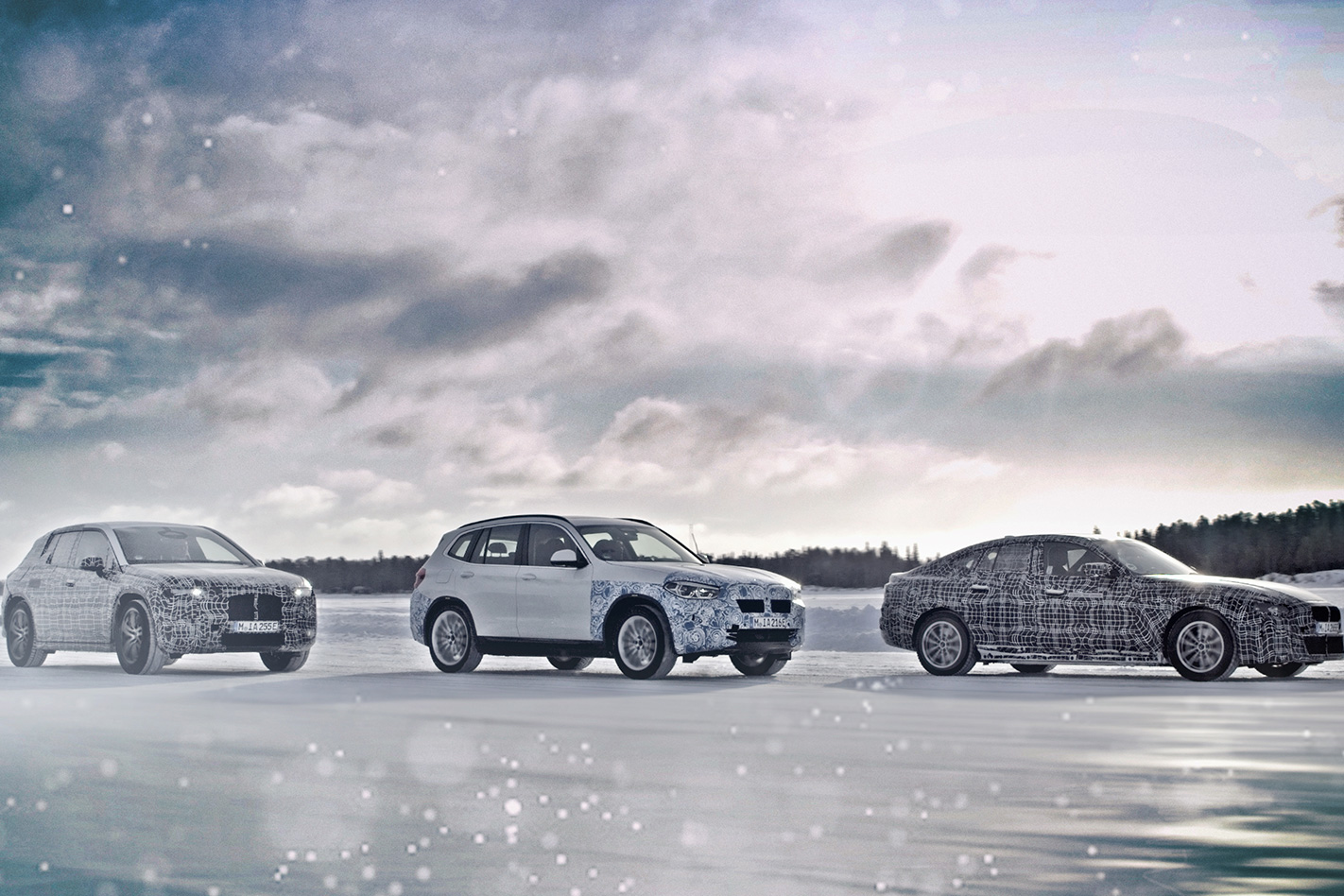
Part of that plan will see the introduction of its first pure electric vehicle since the 2013 i3, with an electrified version of the popular X3 formulaically dubbed the iX3. But its arrival next year will be followed by a larger electric SUV in 2021.
And such is the company’s distant gaze, Nota explained that battery power was not an end game, with more advanced electrification on the way, aided by partnerships with other future-focused manufacturers.
“We see hydrogen and fuel cells as a solution for larger cars in the future,” he said. “Battery electric vehicles are the road for the coming years up to 2030-ish. Certainly, around or after that, fuel cell technology will come in as well.
“It’s suitable for larger cars and longer distances. We have a firm place for this technology in our portfolio. We are investing in it and we have cooperations; for example, we are working with Toyota on that.”
But producing cars that run on something other than petrol and diesel is only part of the vision, says BMW.
Here’s how the company’s zero-emissions dream will shape everything from its vehicles and manufacturing to its marketing and core culture in the coming years.
Reducing carbon on and off the grid
What’s the point of driving electric cars if they simply move the carbon emissions to electricity generation sites and production lines? It’s a common argument, and one that BMW is meeting head-on.
By next year, every BMW factory worldwide will be powered by renewable energy, and the energy used to charge their batteries is heading the same way. In the company’s native Germany, 65 percent of electricity will be generated using renewable sources by 2030.
That puts Australia to shame; 73 percent of electricity is generated by coal-fired power stations and a whopping 86 percent is produced by burning fossil fuels.
Can Australia catch up to the standards set by many if not all other nations? Only time and, most likely, a different government can tell.
Cutting dependence on polluting technologies
There’s a similar argument pinpointing the use of potentially harmful materials in the production of EVs but, here too, BMW is addressing the key areas.
By next year, all BMW electric vehicle motors will be produced without using so-called rare-earth metals. While the materials are not especially rare, the mining processes to extract and manufacture useable metals and magnets can have serious environmental impacts.
For now, lithium, cobalt and nickel required for battery production will continue to be used, but the company is shifting all battery compound supplies to sustainable sources.
Senior vice president for i-model line and electrified models, Robert Irlinger, told WhichCar that BMW is continually searching for and developing alternative materials for use in battery manufacturing.
“If you see that one material gets rare and extremely expensive, we research and get rid of this material,” he said. “If it damages or is poisonous, we get rid of it.”
As a bonus, Irlinger explained that finding ways of utilizing more common and cheaper materials in all components, including battery technology was driving down the end cost of cars for customers.
More affordable electrification
For now, battery range is the main contributing cost to electric vehicles and, put simply, the further customers demand EVs travel, the more they will cost.
Think of it as the difference between buying a four-cylinder and eight-cylinder car.
That said, Irlinger reports that, thanks to the company’s ambitious electrified vehicle sales targets of 30 percent increases year-on-year, the cost of electric vehicles must, at some point, equal combustion powered equivalents.
“There has to be a tipping point because if you look at the numbers we communicate, 25, up to maybe even 30 or 50 percent, (will be electric) if we aren’t profitable with battery electric cars then where does the profit come from?” he asked.
“There must be a point where battery electric cars cost-level with internal combustion engines.
“My boss Mr Frolich says ‘it’s not only fine to be the technology leader in powertrains, you have to be the cost leader as well, because our company is here to make profits’.”
Improving performance as well as efficiency
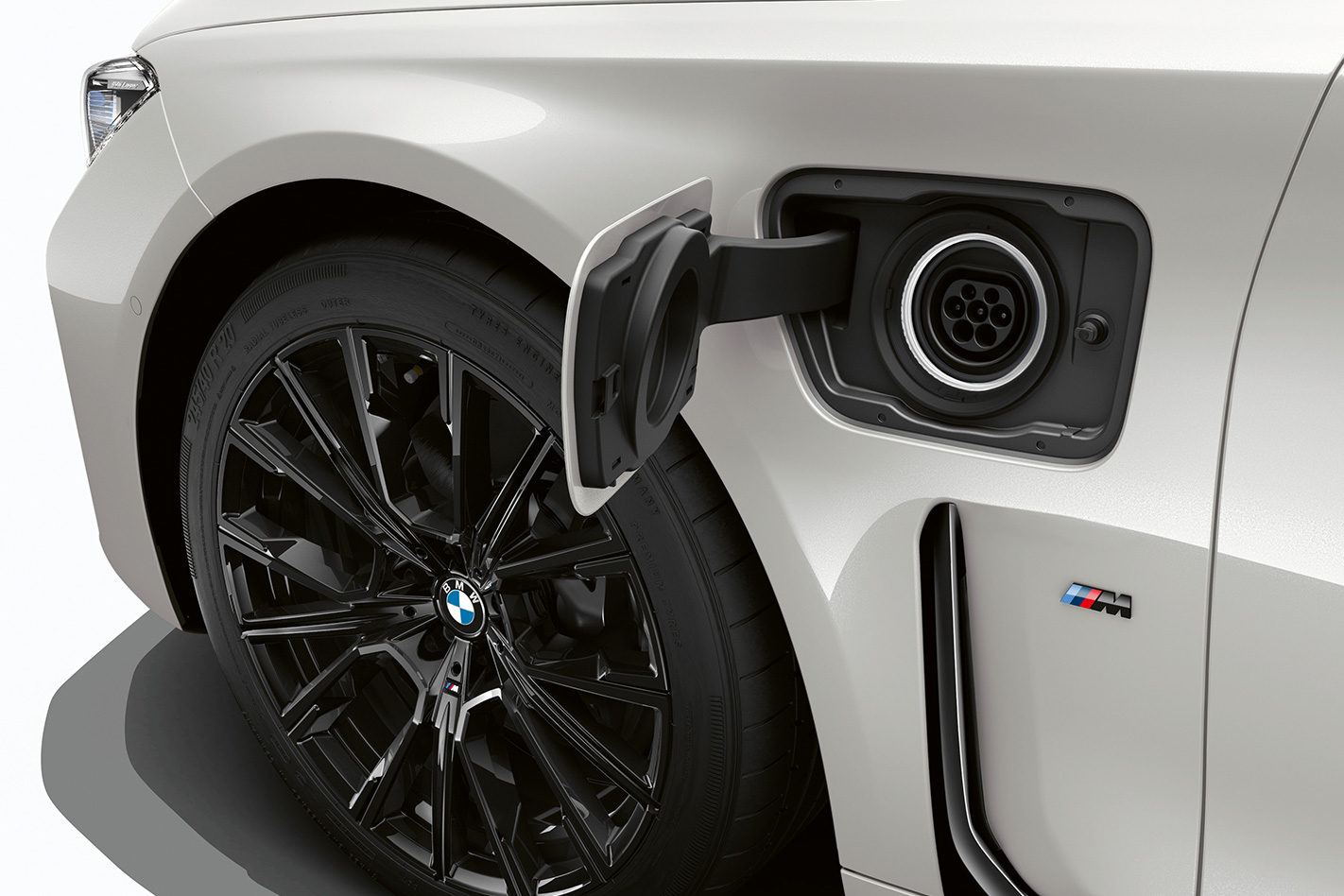
You might be surprised to hear that a large chunk of an electric vehicle’s charge is wasted as heat by the powertrain’s power management electronics, but BMW is working hard in this area to make EVs go further by making them more efficient.
At the top of the list for improvement is aerodynamics, said Irlinger, closely followed by reducing vehicle weight and tyre resistance.
But with a holistic approach to efficiency improvement, future EVs will go further on the same charge. Or perhaps faster?
“There will be electrification in the M-cars,” said Irlinger. “It will take some years to do this, because still the weight of the battery is still quite high and M is not only about the sheer power. It’s all about handling and agility.”
With the reveal of the Vision M Next concept at the NextGen event, BMW has for the first time linked electrification with the coveted M badge, hinting at a future where even the line-up of muscular sportscars and sedans will be powered, in some part, by electricity.
What’s hot and what’s not?
While PHEVs, alternative battery materials and hydrogen fuel cells are definitely on the cards, not all potential tech is making the BMW cut.
Irlinger explained that some countries – including Australia – have the potential to provide electric vehicles with energy generated by the sun, but there was little hope of the vehicle itself ever carrying enough solar cells to power its motor.
“You have to put the car in the sun but then there is a second issue – it gets warm like hell and then you have to cool it down. It’s not the technology we think of,” he pointed out.
Nor do supercapacitors feature greatly in BMW’s potential EV tech portfolio.
“The batteries are so powerful that you don’t need this,” said Irlinger. “They are a buffer in the electric powertrain so we don’t need it.”
Shattering EV stigma
Finally, BMW is working hard to ease so-called range anxiety and prove that, in a majority of cases, an EV’s range is more than adequate to not leave you stranded on the side of the road with a flat – battery.
In Rotterdam, for example, BMW has been conducting a City Drive test in which participants are recognised and rewarded for going further in plug-in hybrid BMWs without firing up the on-board petrol engine.
With its series of challenges set in geofenced zones, 90 percent of the entrants managed to travel exclusively on electric power.
Irlinger said that it was not hard to convince drivers about electric power, as long as customers could be encouraged to take a test drive.
“Educating your customer is always difficult but I think you just have to give them decent products,” he said. “Our marketing has to get them into the cars. What we see is that if someone once drives a plug-in hybrid, they are immediately far more willing to buy a full-electric vehicle. It’s not the education they need, it’s the experience.”
Alas, it seems it’s here also that Australia lags behind the rest of the world, with a widespread perception that EVs don’t work in a larger-than-life nation.
“Australia may be a difficult country for e-mobility because there are some huge distances but if you look at the major cities like Sydney and Melbourne, in the city there is already a good case,” concluded Irlinger.
“We say you need both technologies because some countries a good for battery electric, others might still be for a long time better with plug-in hybrid.”
Regardless of whether Australia changes its attitude to electrification, or whether the government decides to offer initiatives and incentives to encourage their adoption, BMW will continue to press on into a brighter future along with all those nations that are making the switch.
The 2020 Volkswagen Golf Mark 7.5 range has dropped in price across the board, with Volkswagen announcing that the entire range has moved to national driveaway pricing.
Representing a substantial saving over the previous year’s line-up, the Volkswagen Golf range starts at $24,990 driveaway for the entry-level manual 110 TSI Trendline, extending all the way to the hot Golf R wagon at $57,990 drive-away.
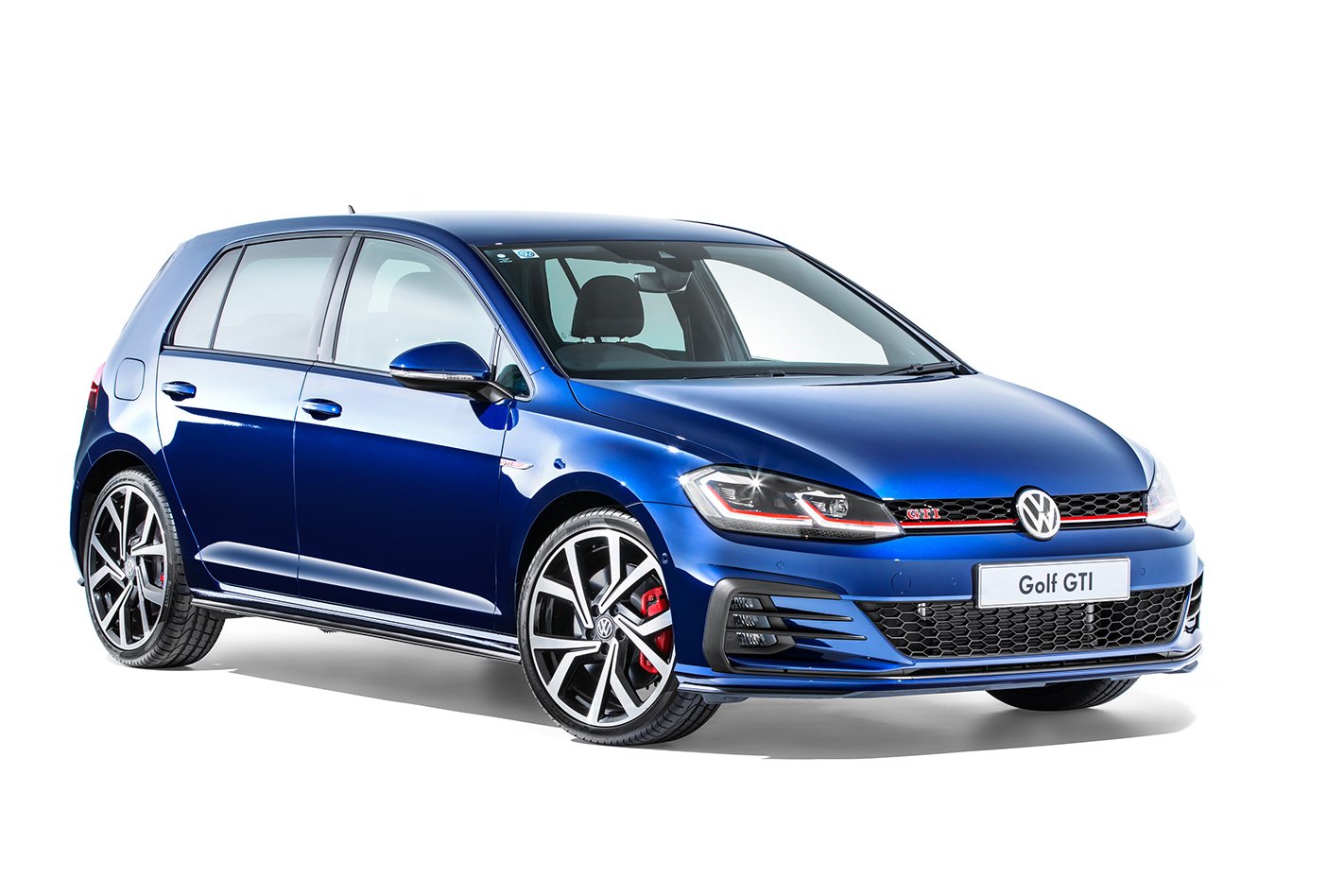
The rejigged pricing for the range marks Volkswagen’s final push for the current generation Mark 7.5 model, before the new Mk8 debuts towards the end of next year.
Diesels aren’t making a return after being dropped last year.
That shouldn’t factor into sales too heavily, though, with Volkswagen saying 70 per cent of Golf sales are for cars over $30,000, with a quarter of buyers opting for the sporty Golf GTI and Golf R models.
The Golf Highline in hatchback and wagon forms are the most affordable they’ve ever been, priced at $34,990 and $36,990 driveaway, respectively.
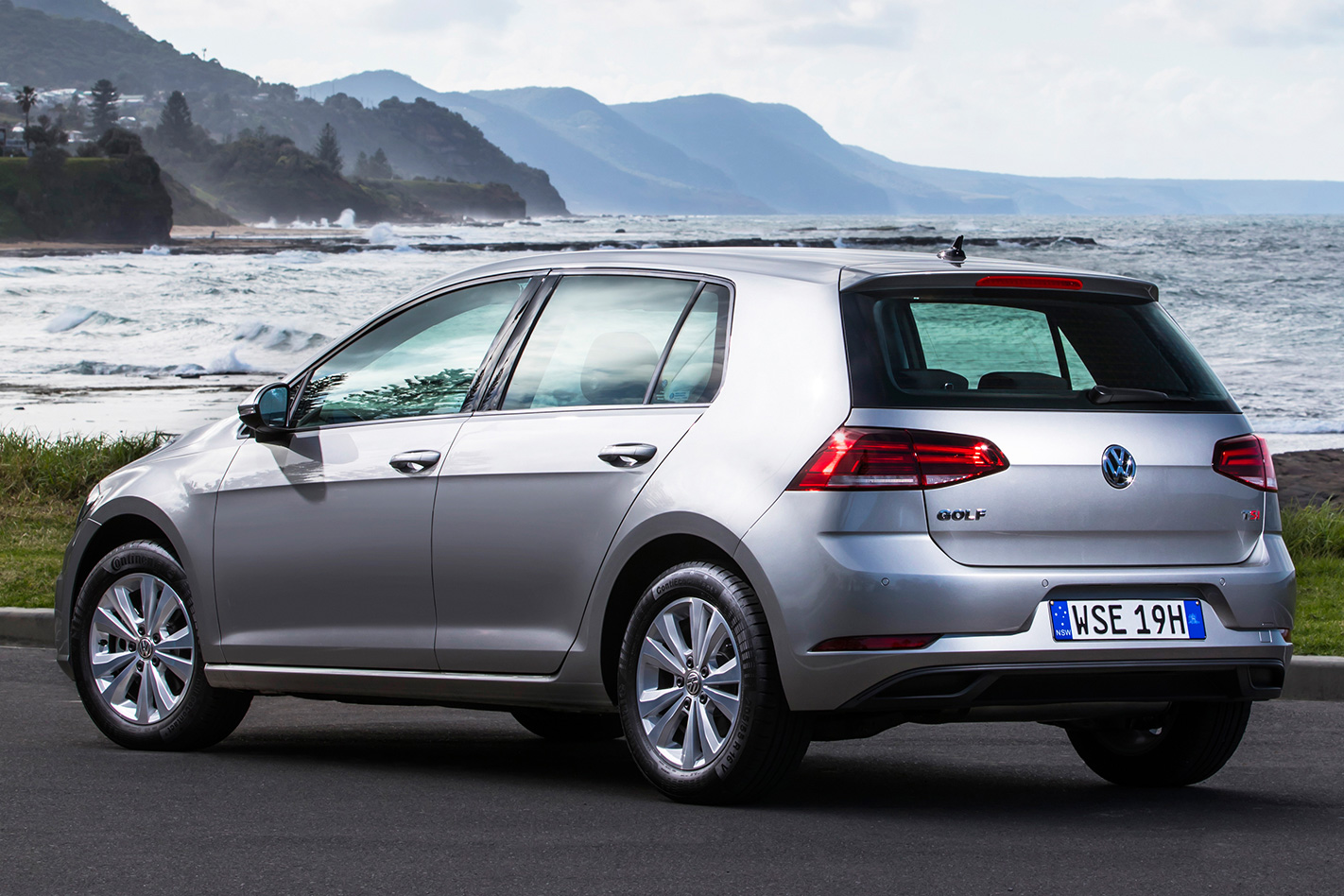
The 2020 range is covered by Volkswagen’s five-year/unlimited kilometre warranty. The company’s fixed price service scheme has also been overhauled, now costing $1100 for three or $1350 for five years for the non-GTI and R variants.
The Golf Mk8 is expected to arrive in Australia in the fourth quarter of 2020, with the sports-oriented Golf GTI and R to follow either later in the same year or in the early part of 2021.
Standard equipment is as follows:
Golf Trendline 110 TSI:
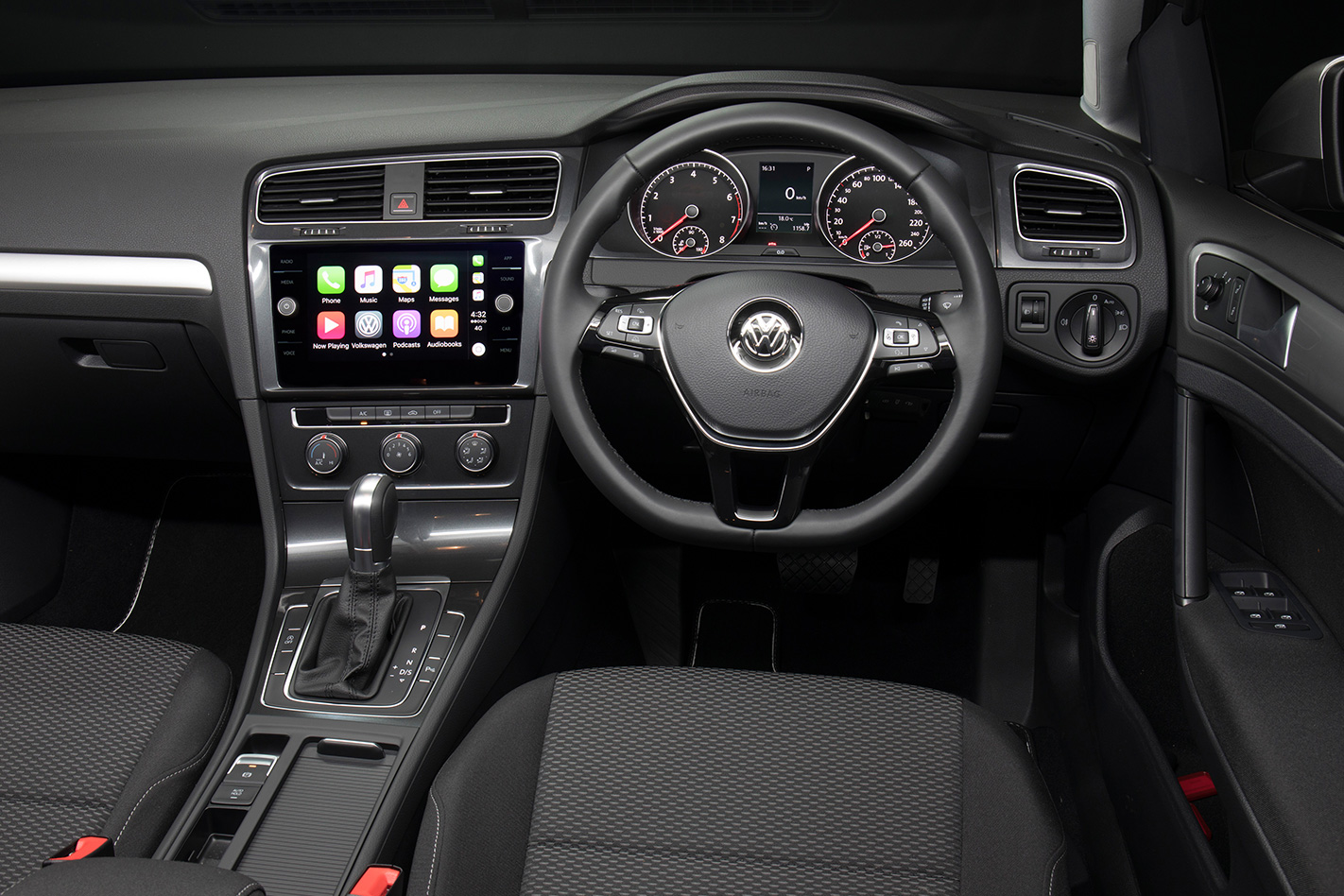
- 110kW/250Nm 1.4 litre turbo petrol engine
- 7 airbags
- 16” alloy wheels
- 8” infotainment system
- App-Connect interface for Apple CarPlay and Android Auto
- Leather multi-function steering wheel
- Cruise control
- Rear View Camera (RVC)
- LED tail lights
- Parking distance sensors front and rear
- Automatic headlight function
- Rain sensing windscreen wipers
- Black roof rails (Wagon)
- Luggage partition net (Wagon)
- 7-speed DSG standard
- Air Care dual zone climate control air conditioning
- Discover Media 8” audio and navigation system
- Keyless Access, keyless entry and starting system
- Power folding door mirrors
- 17” (Dijon) alloy wheels
- Comfort front seats
- Chrome interior and exterior highlights
- Carpet floor mats, front and rear
- Adaptive Cruise Control (ACC)
- Blind Spot Monitor with Rear Traffic Alert
- Lane Assist with adaptive lane guidance
- Traffic Jam Assist
- Park Assist
- Vienna leather appointed upholstery
- Electrically adjustable driver’s seat with memory function
- Exterior mirrors with memory function
- Light Assist, automatic high beam function
- Panoramic electric glass sunroof
- LED interior ambient lighting
- Heated front seats
- 17” (Karlskoga) alloy wheels
- LED headlights for low and high beam
- 1.8 litre TSI 132kW/280Nm petrol engine
- 4MOTION all-wheel-drive
- 17” (Valley) alloy wheels
- Cruise control
- Parking distance sensors front and rear
- Manoeuvre braking front and rear
- Keyless Access, keyless entry and starting system
- Electrically foldable exterior mirrors
- Driving Profile Selection with off-road mode
- Air Care dual zone climate control air conditioning
- Carpet floor mats, front and rear
- LED interior ambient lighting
- 7 airbags
- Extended Electronic Differential Lock (XDL)
- Adaptive Cruise Control (ACC)
- Lane Assist with adaptive lane guidance
- Traffic Jam Assist
- Emergency Assist
- Park Assist
- Light Assist, automatic high beam function
- Proactive occupant protection system
- Vienna leather appointed upholstery
- Comfort sport front seats
- Exterior mirrors with memory function
- LED headlights for low and high beam
- Colour Multi-Function Display (MFD Premium)
- 180kW/370Nm 2.0-litre turbo petrol engine
- 7-speed wet-clutch DSG
- Front differential lock
- Ventilated disc brakes, front and rear (Golf R brakes)
- Lane Assist with adaptive lane guidance
- Active Info Display
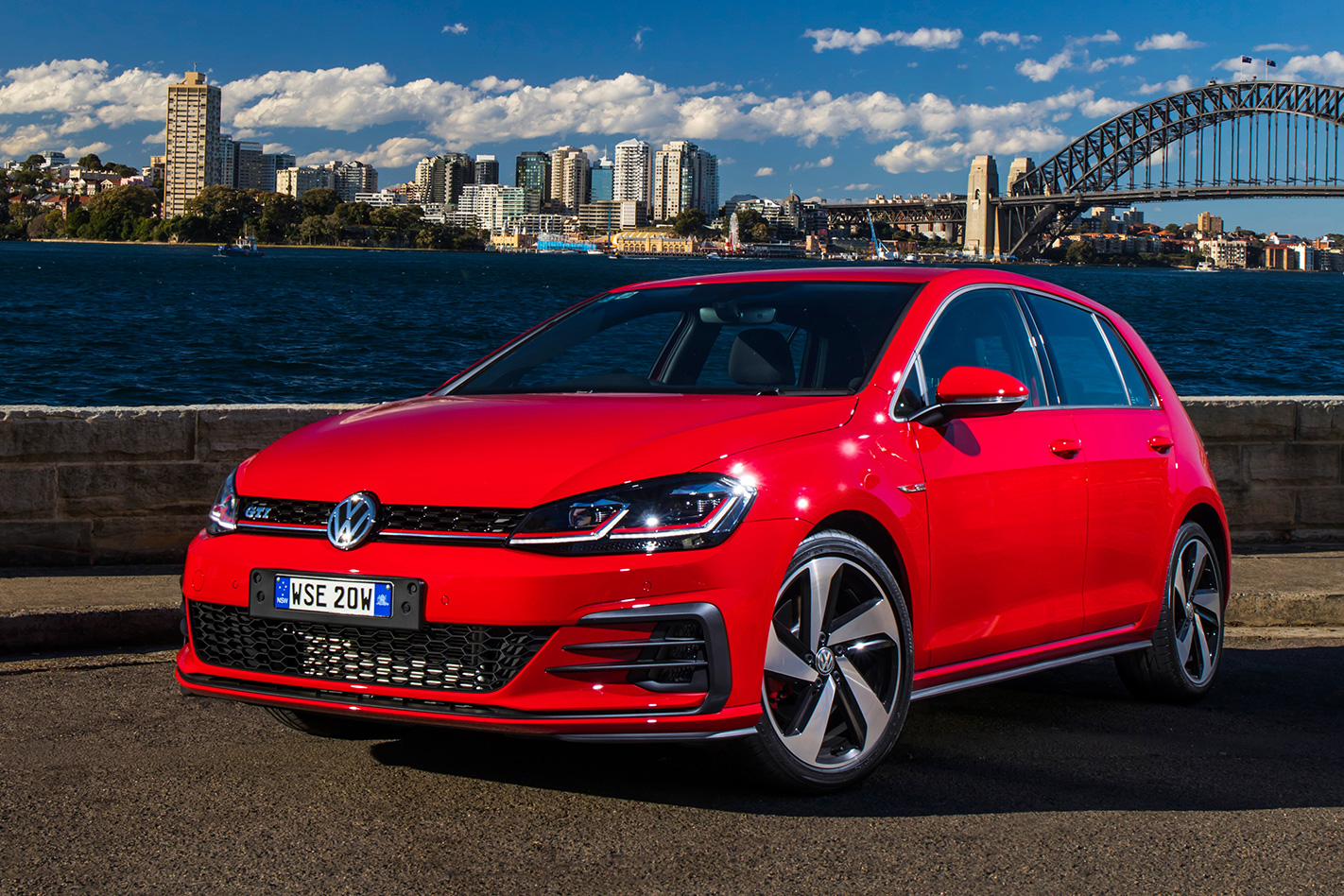
- 18” alloy wheels
- Adaptive chassis control
- GTI body styling
- Leather sports multi-function steering wheel with gearshift paddles
- ‘Clark’ sport cloth seat upholstery
- 213kW/380Nm 2.0-litre turbo petrol engine
- 4MOTION all-wheel drive
- Vienna leather-appointed upholstery
- R Body styling
- 19” Spielberg alloy wheels
- Metallic and Pearl effect paint
2019 Volkswagen Golf pricing
- Golf Trendline 110TSI 6-speed manual – $24,990 DA
- Golf Trendline 110TSI 7-speed DSG – $26,990 DA
- Golf Trendline 110TSI Wagon 7-speed DSG – $29,990 DA
- Golf 110TSI Comfortline – $29,990 DA
- Golf 110TSI Comfortline Wagon – $32,990 DA
- Golf 110TSI Highline – $34,990 DA
- Golf 110TSI Highline Wagon – $36,990 DA
- Golf Alltrack 132TSI – $37,990 DA
- Golf Alltrack 132TSI Premium – $41,990 DA
- Golf GTI – $47,990 DA
- Golf R – $54,990 DA
- Golf R Wagon – $57,990 DA
Packages
- Driver Assistance Package (Trendline and Comfortline) – $1,500
- Driver Assistance Package (Alltrack 132TSI) $1,200
- Sound & Vision Package (Comfortline, Highline) – $2,300
- Sound & Vision Package (Alltrack Premium) – $2,500
- Sound & Style Package (GTI) – $2,300
- Luxury Package (GTI) – $3,900
- R-Line Package (Highline) – $2,500
It was good while it lasted, Australia.
But it seems all good things must come to an end, with motoring freedom having its death warrant signed last week.
Wheels revealed earlier this year that the Traffic Accident Commission’s (TAC) relentless pursuit of safety will result in mandatory speed limiters for new cars sold in Australia, which was already a hard knock for driving enthusiasts, but fresh news that drug and alcohol detectors will also be installed spells the end for vehicular privacy.
For generations, the car has been an indelible symbol of independence and freedom. For many, driving a car is an escape from the punishment of a day-to-day grind, a way to clear their head.
But if the TAC has its way, no longer will the car provide escape and privacy, it will be a tool used only to shuffle us from point A to point B, with Big Brother watching every move, sniffing every breath.
Look, the TAC’s intentions here are admirable, with the scourge of drink and drug driving something worthy of our scorn. But is this how we need to tackle the issue, by violating the privacy of every new car buyer in Australia?
Imagine if your phone recorded every conversation you had, and lawyers were informed if you said anything defamatory. How would you feel if your shoes tracked your location and transmitted it to a central database?
The bundle of new safety systems to be introduced in Australia will be mandatory in Europe by 2022, where the status of each monitor will be recorded in a black box. It’s not hard to imagine who will have access to that information and it is unlikely we’ll get any say.
It makes you uncomfortable, no?
While the TAC is sure to spin these devices as existing for the greater good, intended to keep us all safe, the truth is mandatory speed limiters and drug and alcohol detectors are not of the same ilk of seat belts or anti-lock brakes. They are designed to prevent automotive dissent, putting a halt to any discussion and deviation from what we think is acceptable on the roads.
We should encourage technology that keeps occupants safer, not remove the freedom and privacy that the car has long afforded members of society.
The predictable response from some corners of the web will be along the lines of, ‘only those with something to hide need worry’, and while I understand where this viewpoint comes from, I also believe in everyone is innocent until proven guilty.
While the TAC forges ahead and puts Big Brother inside the cabin of every new car, core issues central to our road toll remain ignored.
Australia has no system of enforced driver training, multiple states do not implement regular roadworthy checks on vehicles, and we do not conduct further testing of licensed drivers to reinforce good driving habits.
As described by the TAC, when initially implemented, drug and alcohol detectors won’t stop you from driving while impaired; they’ll simply inform the police and insurance companies after the fact.
If we are to put an end to drink driving, this is not how you do it, and removing the privacy of motorists is too high a price to pay.
Victorian motorists have been hit with a rise in petrol prices over the weekend, coinciding with the start of school holidays.
Victorian fuel prices had settled for the month at a reasonable 125c/L for 91-octane throughout last week, but shot up again over the weekend, with the average fuel price climbing to 144c/L according to the RACV.
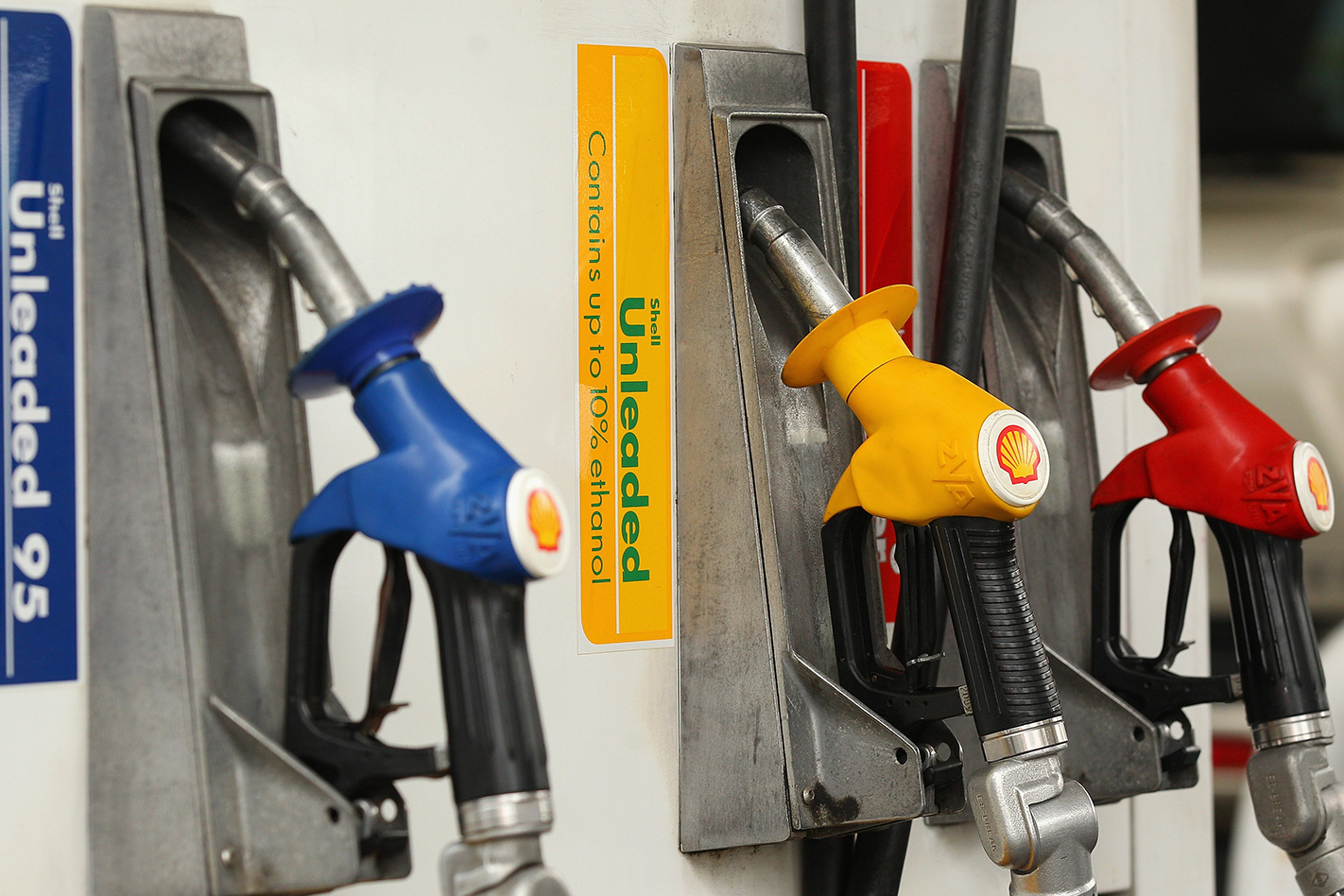
Some service stations are charging even more, with prices of 165c/L not uncommon around metropolitan Melbourne.
Petrol comparison service PetrolSpy Australia shows the majority of Melbourne’s suburbia with prices around 165c/L for 91-octane, with 98-octane rated fuel fetching roughly 20 cents more across the board.
The price for the same fuel in NSW, by way of comparison, has trended down for the last seven days, and is currently hovering around the 141c/L mark.
The rise comes at an unfortunate time for families, with Victorian school holidays starting this week meaning an extra unaccounted-for cost impacting families heading away on family road trips or transporting kids to holiday activities.
It’s uncertain how long the increased prices are set to last; however, if it’s another spike in the petrol price cycle, it may linger throughout the two-week break.
Three weeks ago prices spiked at 165c/L average for 91-octane. With a little way to go before we hit those levels, it’s advised that you fill up now before prices hit their peak.
For some simple ways you can combat the increases these school holidays, read our top tips for fuel saving.
The new Supra is likely to take many forms once tuners get their hands on it, but the HKS Toyota A90 GR Supra is one of the first, and could remain one of the best versions of this BMW Z4 twin.
Not only does the HKS Supra wear a somewhat subtle and ‘dark’ version of the usually wild HKS livery, it also sports the hardware to back up its visual promise of theatre.
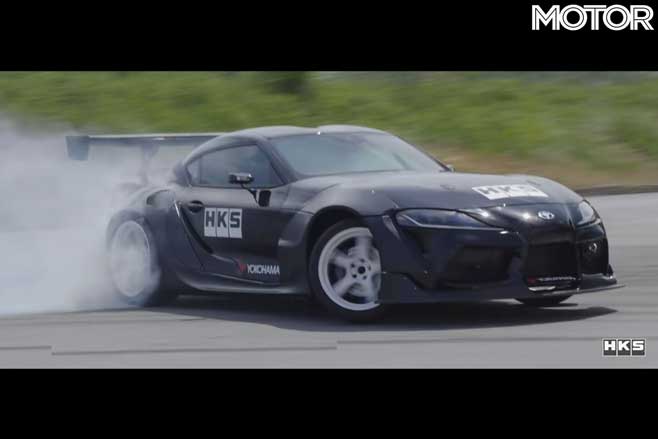
Under the hood of the HKS Supra is, of course, a turbocharged Toyota 2JZ straight six, though this one with the tuner’s 3.4-litre upgrade.
Not only that, but the interior has been stripped to the point where it’s no longer recognisable as a twin to the Bavarian roadster, with Bride racing seats, a race-spec dash, and fitouts like a sequential shifter and hydraulic drift handbrake.
Piloting the Supra, which is the second professionally built 2JZ-swapped drift A90 MOTOR is aware of after Daigo Saito’s, is Nobuteru Taniguchi, also known as ‘Nob’ – the beginning of his name altered to become an acronym for ‘no one better’.
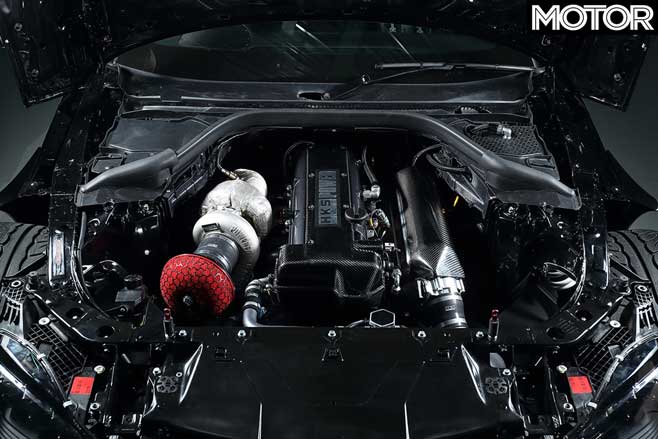
In a shakedown video produced before the car’s power was amped up to its current 515kW and 883Nm, Nobuteru also made the announcement the car would be going with him to the 2019 Goodwood Festival of Speed.
The video also shows off the HKS Hipermax suspension working hard to keep the wheels down as they turn hard into Nobuteru’s sharp slides.
We need only wait a few days until July 4 when we will see the car at maximum attack in the UK.
You might have been to this guy’s house. Over the past 25 years, four million tickets have been sold for the Goodwood Festival of Speed. Allowing for those who come every year, at least half a million people have wandered through the parkland around Goodwood House on the south coast of England over the four July days on which it hosts the Festival.
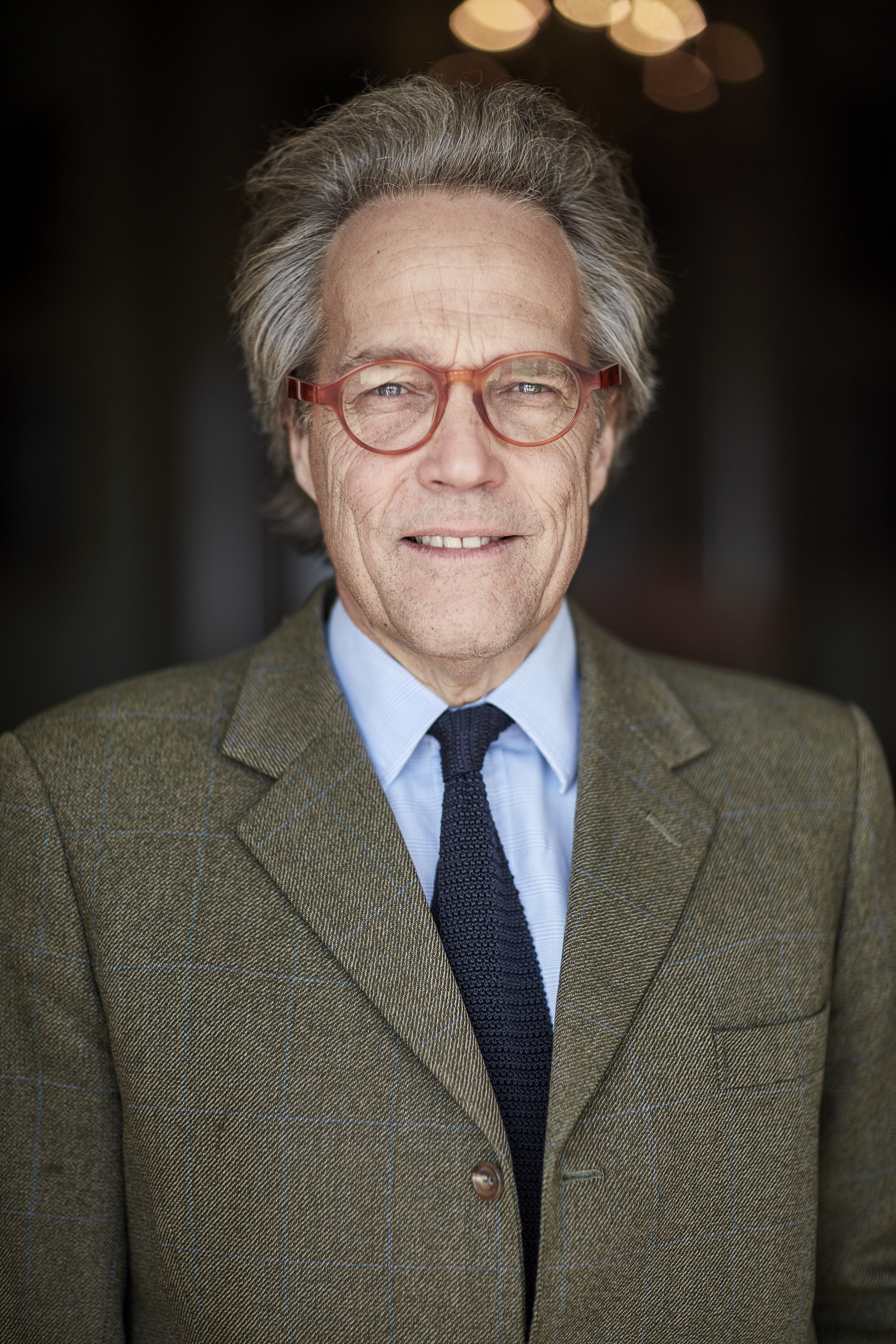
Charles Gordon-Lennox, 11th Duke of Richmond, started the Festival in 1993 on what is essentially his driveway. It was joined by the Revival in 1998 and the Members’ Meeting in 2014. Together, these three annual events have become as central to motorsport culture as the great races and rallies they celebrate. They outrank the British Grand Prix on the bucket list of Australian or American motorsport fans making a pilgrimage to Europe, and maybe Monaco and Le Mans too.
If that’s your only experience of this place, you’d be forgiven for thinking that it’s a permanent motorsport theme park, so vast and varied are its structures and entertainments. For the three weeks it takes to construct, the Festival is the world’s largest greenfield construction site, and once completed it draws enough electricity to power the nearby city of Chichester.
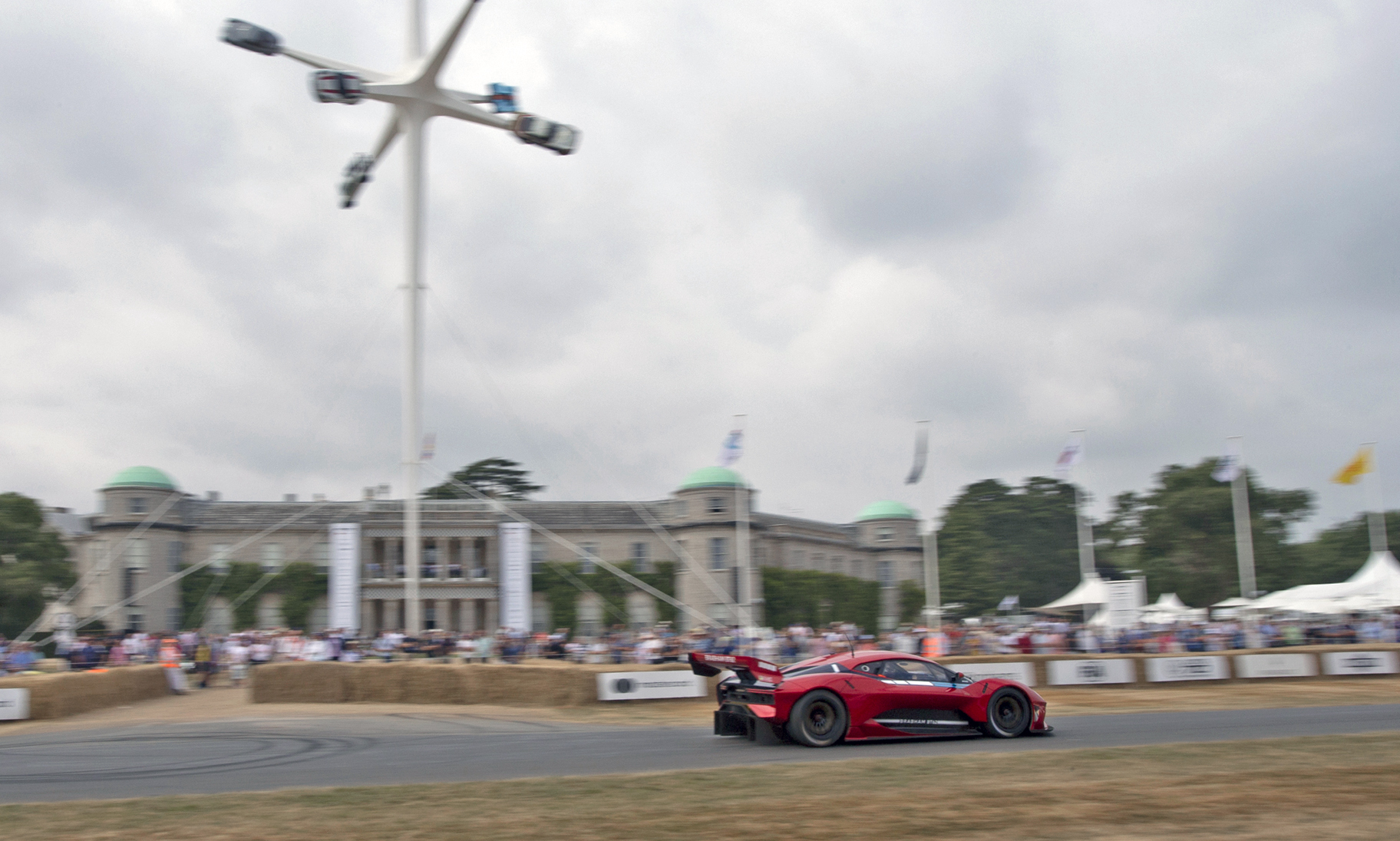
The house itself is dwarfed by it all, flanked by colossal video screens and towered over by one of Gerry Judah’s 100-tonne, 150-foot, am-I-actually-seeing-that automotive aerial sculptures.
But visit at any other time and there’s weirdly little evidence that the Festival happens at all. The front door is opened by the steward (you don’t need to knock) and I’m shown through the grand entrance hall and up a sweeping staircase to the working part of the house, through an antechamber occupied by the Duke’s three personal assistants and into his private office, where Monty the butler is preparing coffee.
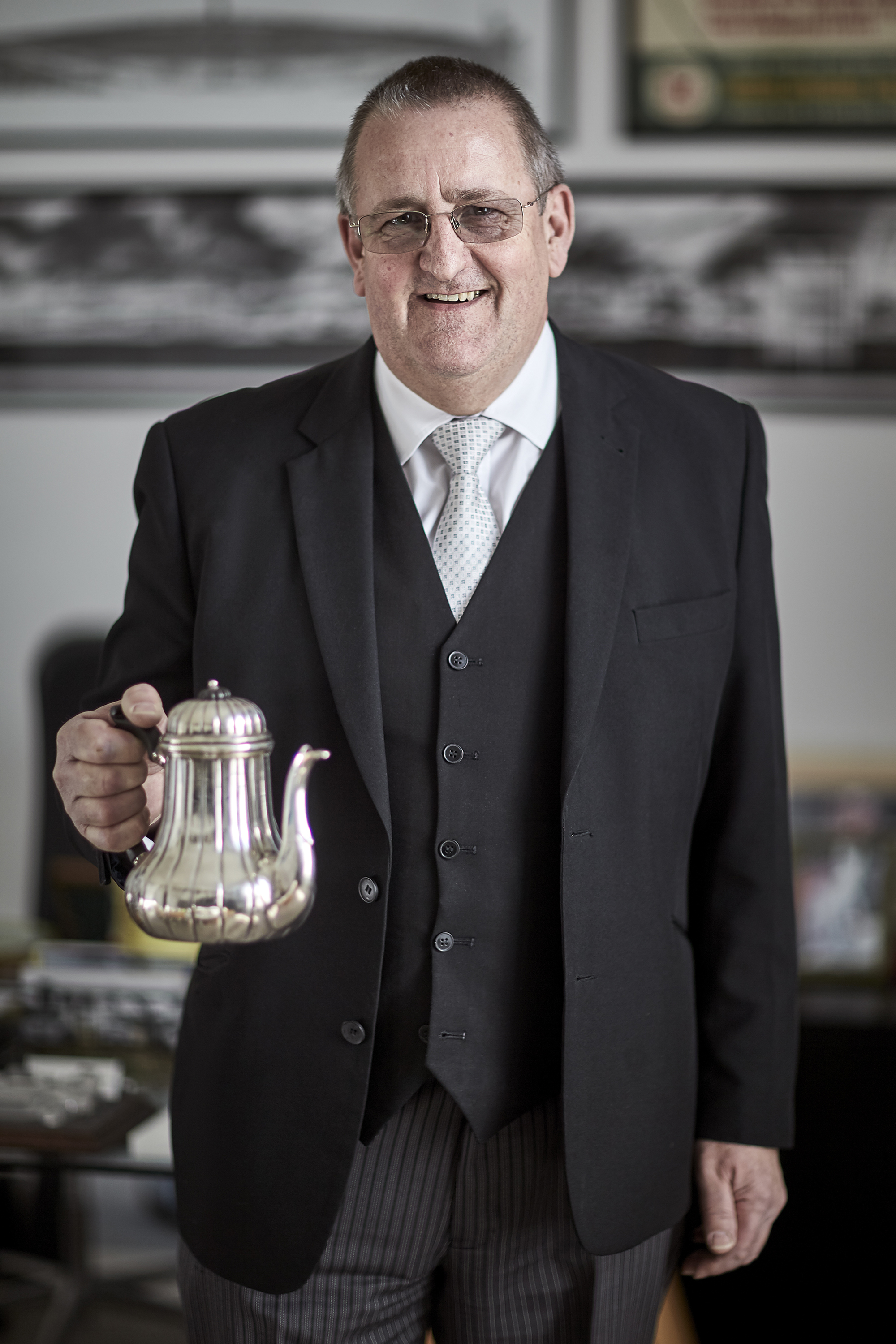
Before His Grace joins us, I have a nose around his extraordinary Duke-cave. A quarter-century of hosting the greatest cars and drivers in motorsport makes for good memorabilia. There’s a gigantic Betty Boop cardboard standee, one of Dick ‘The King’ Petty’s feathered stetsons in a glass case, countless steering wheels and helmets and awards, and a large glass desk which has been completely occupied by model cars. I suggest to Monty that it must be a nightmare to dust. “A lady comes in once a week,” he confides. “She knows to put it all back in exactly the same place. He’d notice otherwise.”
Since 1993 and the first Festival, his boss has been the world’s motorsport fairy godfather. He was then plain Lord March. He inherited the dukedom on the death of his father in 2017. That first Festival was pleasingly amateurish – Charles was up a ladder painting the bridge over the drive as the first cars started to arrive. “We hoped for 2000 people. In the end I think we had 20,000 people here in that first year. But we’ll never really know because most of them broke in.”

Charles was rebooting what his grandfather started: the perimeter road of the wartime airfield on the estate was a racetrack from 1948 to 1966. “Maybe the best thing that could have happened was that my grandfather shut the circuit in ’66. I was very upset about that as a small boy. But if he hadn’t, maybe it would now just be another circuit. The Festival of Speed isn’t at the circuit, I know. But it still carries that Goodwood spirit, which we felt was kind of in the air. Everyone had forgotten. At the outset I wondered if Goodwood still meant anything to anybody. All I’ve done is put it back together, in a way.”
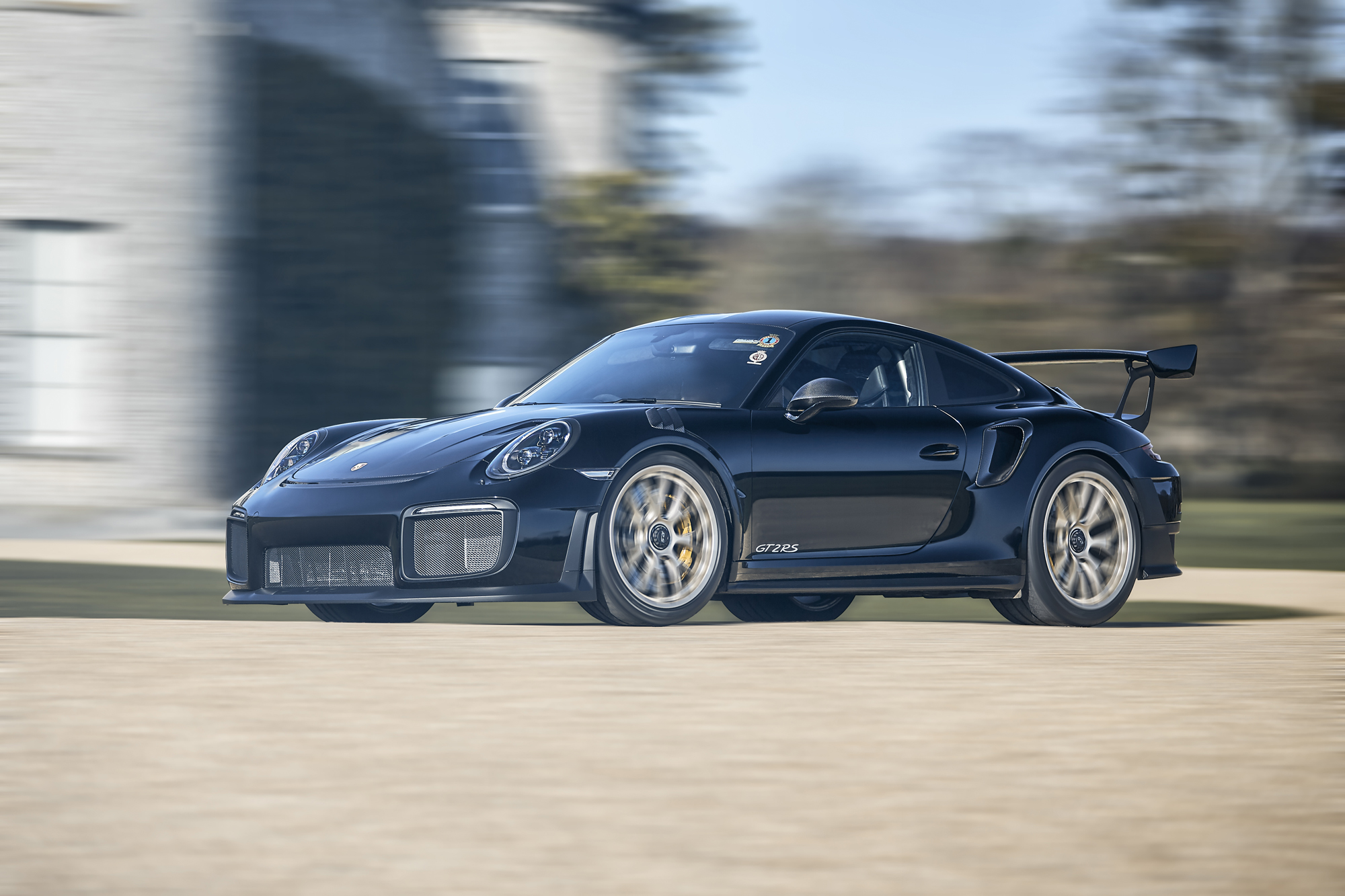
Not only has the Festival grown to become a great motorsport event in its own right, but it has also become important to the global car industry as a place to launch and show new models. When Porsche launched the GT2 RS during the Festival in 2017, the first that the assembled global media saw of it was when Mark Webber ripped past them in one, deep into three figures down the pit straight at the circuit. You can’t do that in an exhibition hall.
For a man entitled to wear a coronet, the Duke is remarkably modest about the scale and significance of what he has built. “I don’t do a bloody thing,” he says. “I just sit here and drink lots of cups of tea.” This is untrue. He is intimately involved in every aspect of these events. He once told me how many lightbulbs illuminate the row of street-food stalls in the hangar at the Members’ Meeting.
I wonder if his title impresses CEOs and billionaire collectors, and opens doors – garage and otherwise – which might otherwise stay shut? “I think, on the whole, it might mean they think twice about not replying. So in that sense it might help a bit. But I still get plenty of people who never bloody write back.”

He’s not media-shy. You’ll have read interviews with him before, but they often focus on the events and the estate, and on the cars and drivers he has hosted. I want to ask about him: where his love of cars comes from, how deep it runs, and what shitboxes it found expression in before Porsche started sending 917s to his house for him to drive.
“If you really want to know where all this began, it was with this,” he says, reaching from his desk to the shelves crammed with motoring books. This one is kept in easy reach: The Automobile Book from 1962, by Ralph Stein. “Here’s my name: C. H. Settrington, as I was at the time. I fell in love with these pictures. I’m a firm believer that if you want something enough you can get it. And they’ve all been here, these cars: every single bloody one, really. And a hell of a lot of them I’ve driven.”
And it turns out the very first Festival of Speed featured only Charles and his go-kart. “I first drove just down there,” he says, motioning from the office window to the drive below. “I terrorised everyone. I’d set off from the stableyard and go up the hill. I’d fly off all the time. The kart used to blow up constantly and I’d have to go up to London to get piston rings for it.
“Then when I was 16 I bought a Morgan three-wheeler for 200 quid. It was a pile of junk but I was mobile, until the back wheel fell off.
“Then I had the gorgeous Datsun Cherry. I put cosmic wheels on it and painted all the wheel centres blue. I had it when I was working with Stanley Kubrick as a photographer, so I was roaring around the country in it.
“After that I went to Africa for a year, and when I came back, rather to my horror my father had given the car to the cook. He didn’t really believe in possessions. It didn’t occur to him that it was important to me. She’d spilled a churn of milk in the back and the smell was so bad I couldn’t have it back.”
There followed a Mini Cooper on Webers, an Austin-Healey MkIII and then “some pretty average road cars”.
“And then I made my first bit of money (he had successful careers in photography and advertising before taking over the estate). I saw this used Ferrari Lusso for sale. It was absolutely stunning, silver with the light blue interior. It was £21,000 (A$42,000) in 1980, and I went all the way north to Yorkshire to see it. And that was my first mistake.”
And why was that a mistake?
“Because I didn’t buy it! I was always a bit of a Porsche fan anyway, so instead I got a 924 Carrera GT. They were only made in ’81. I ran it on the road for 10 years before I blew it up at Silverstone. I did my world record run from Goodwood to London in that. I’ll tell you what the time was, but you can’t print it.”
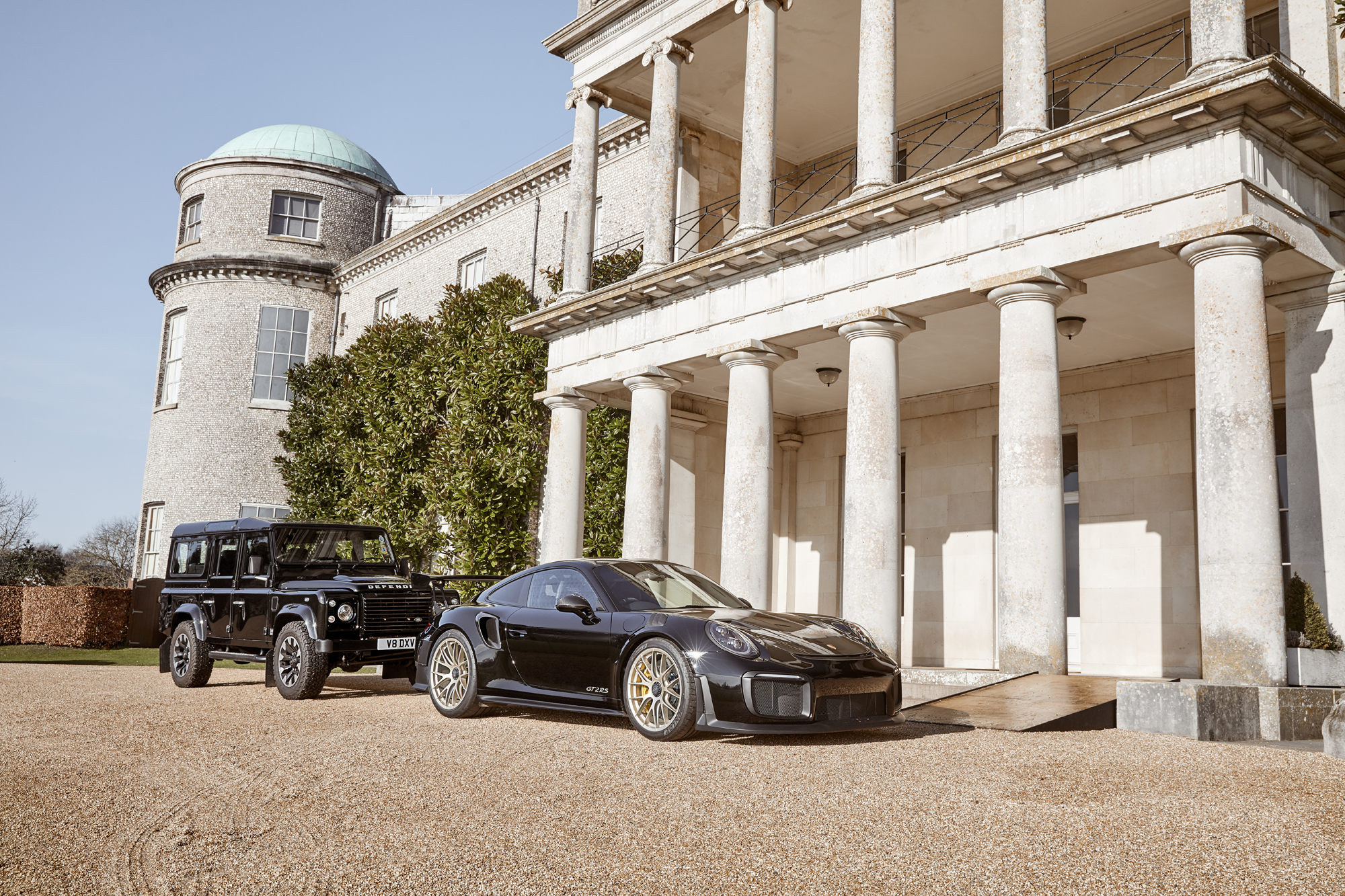
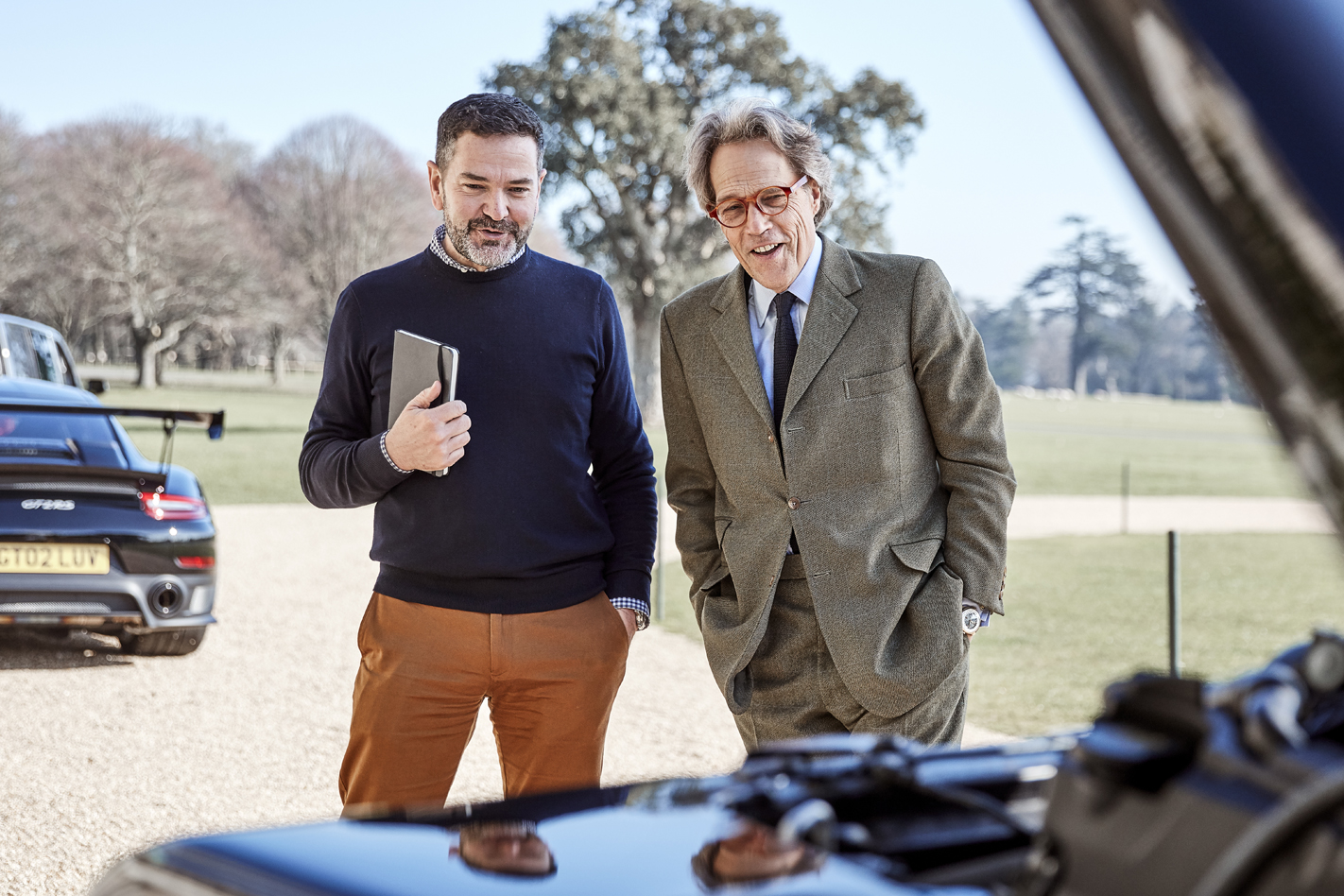
With most of the world’s carmakers as clients, the Duke is more guarded about his current choice of daily driver, but is happy to own up to the two cars parked outside: that 911 GT2 RS, and a V8 Defender. We leave the cups to Monty and walk down to poke around them. “They launched the GT2 RS here and I said to Porsche I ought to buy one as it’s now a Goodwood car. Then they actually called me up to confirm the sale, so I thought I’d better do it. We mainly use it on the track here.
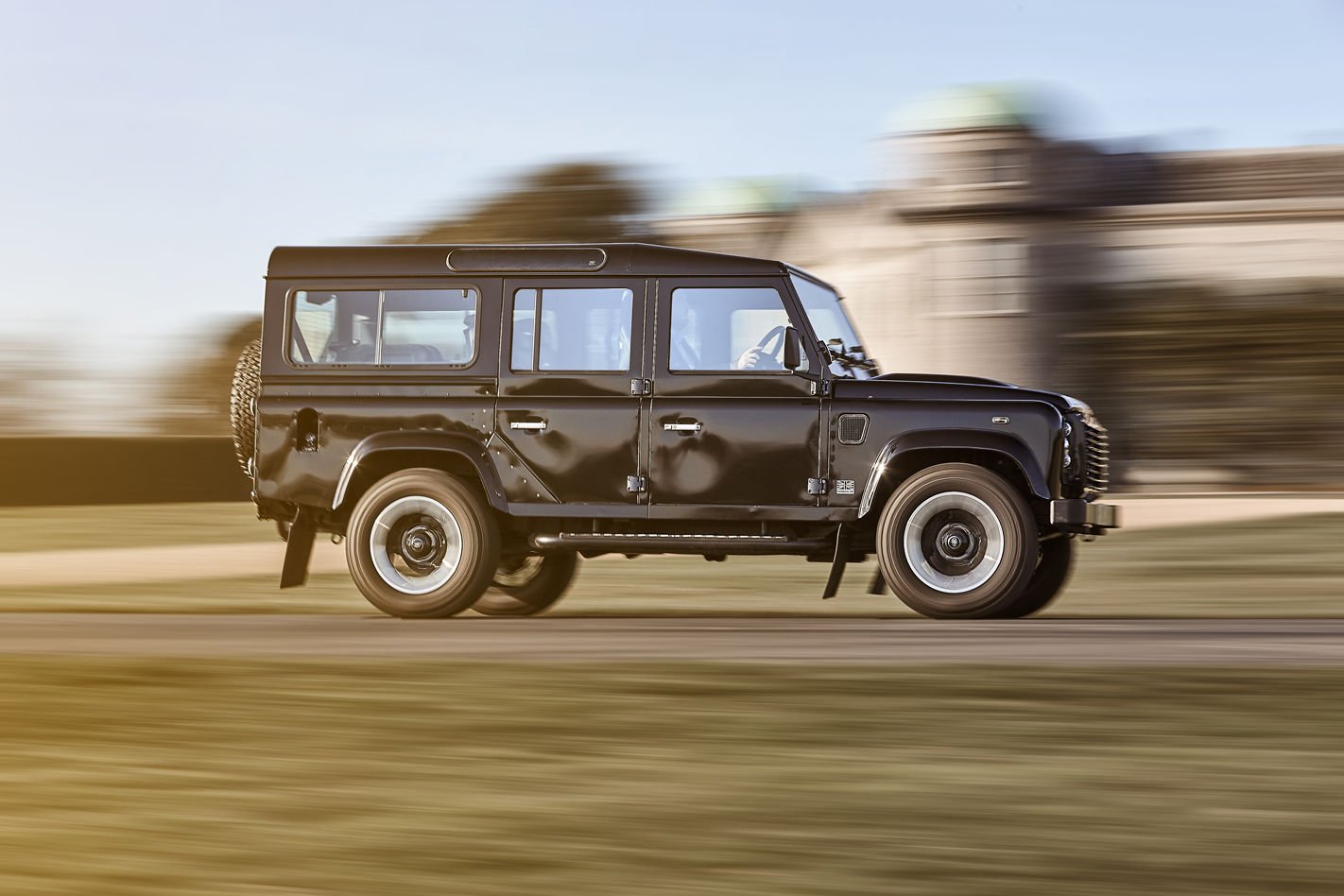
“With the Defender, we heard they were doing a V8, so we had to have one. It’s great fun on shoots. It’s actually number one of 150. I didn’t know they were giving me the first one until it arrived.”
We only have time to drive one before lunch. I pick the Land Rover, reasoning that no experience will ever out-English being driven up the drive of his stately home by a duke in a V8 Defender. Our progress is anything but stately. Charles drives like he owns the road, which of course he does. This is the same stretch on which he first blew piston rings in his go-kart and he hustles the Defender with the same enthusiasm, making the off-road rubber squirm and squeal with every turn of the wheel and stamp of the brake. The Duke is chuckling as he drives, genuinely engrossed and delighted. “It’s not slow, is it? And it actually goes round corners and stops pretty well. Have you driven one? No? Oh you’ve GOT to have a go. Let’s swap.”
Mucking around with cars like this, there’s a sense of fun and mischief about him which you wouldn’t expect of a 64-year-old duke. But he is a duke, and for all its sharp branding and modern marketing appeal, Goodwood remains one of England’s great, traditional ducal estates. One man is in charge, and his staff sit a little straighter in their seats as he passes.
His job is simply to pass “this place”, as he refers to it, to his son in better condition than that in which he inherited it. There’s an unwritten rule that these estates are passed on to the heir at the age of 40. The current Duke is so indelibly associated with Goodwood’s motorsport renaissance that the idea of anyone else at the wheel is worrying. But Charles’ son Charlie – all Dukes of Richmond have been Charles since Charles II illegitimately sired the first in 1672 – plainly has some petrol in that blue blood. “He is 24, and ultimately he’ll be responsible for the whole estate. Fortunately he’s very keen on his cars. He’s raced at Revival and can take a NASCAR up the hill now. He’s really confident.”
We might be in safe hands. But how much longer do we have this Charles for?
“There’s a 15-year bigger gap between Charlie and me than there was between me and my father,” he says. “It can be tough. I’m rather dreading it,” – you know he isn’t – “but you’ve probably got me for another 10 years.”
Until now, the traditionally styled Cayenne was Stuttgart’s answer to the Audi Q7, BMW X5 and Mercedes GLE, but with their sleeker SUV siblings, the Q8, X6 and GLE Coupe, presenting a sportier image, Porsche had no alternative but to jump on the fastback SUV bandwagon. Meet the new Porsche Cayenne Turbo Coupe.
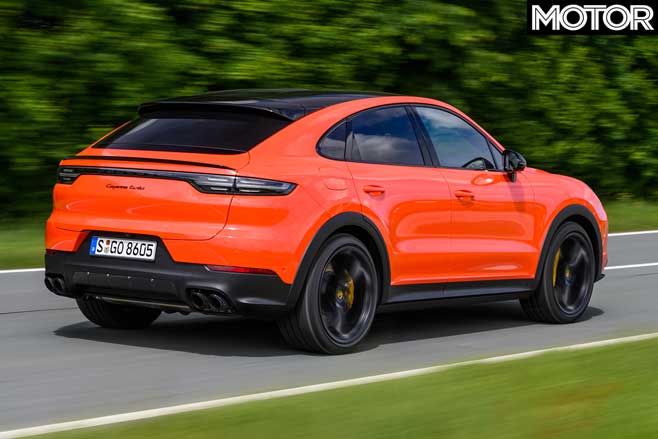
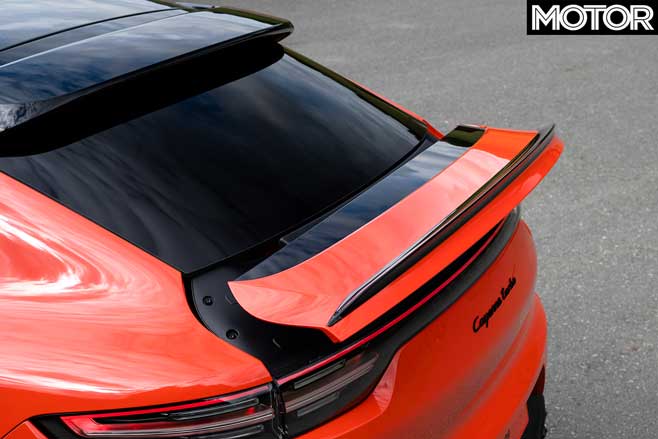
To get that windswept coupe look, you’ll have to fork out around $12,000 extra and that buys you an aggressive, in-your-face piece of kit. The low-roof Cayenne is wider, ground hugging, arguably prettier and visually different, especially at the rear where flared wheel arches, a carbonfibre diffusor, extended fixed roof spoiler and motorised second aerofoil make up the improved Porsche Active Aerodynamics system (PAA).
While the faster A-pillars and more steeply raked windscreen lower the roofline by a token 20mm, it drops away significantly from the B- to the C-pillars, affecting ease of entry and exit to the back seats. Rear headroom and ambience is (like the Lamborghini Urus) darker and more claustrophobic.
The roof and cabin trim are made from carbonfibre, it rides on matte 22-inch rims (21-inch are standard), black-and-white plaid upholstery adds a touch of classic 911, leather and Alcantara abound, and the sports exhaust exits via four fat tailpipes.
There’s a choice of two engines, the Turbo’s 404kW 4.0-litre V8 and a 254kW 3.0-litre V6, and three different sport packs. The most extreme iteration saves up to 22kg, but costs an uncool $17,000. There is also a $3270 off-road option featuring skid plates, underbody protection panels for engine and rear axle, bespoke instruments and a second tow eye. Satnav is standard but Porsche still charges extra for keyless go, digital radio and every assistance system except ABS and ESP.
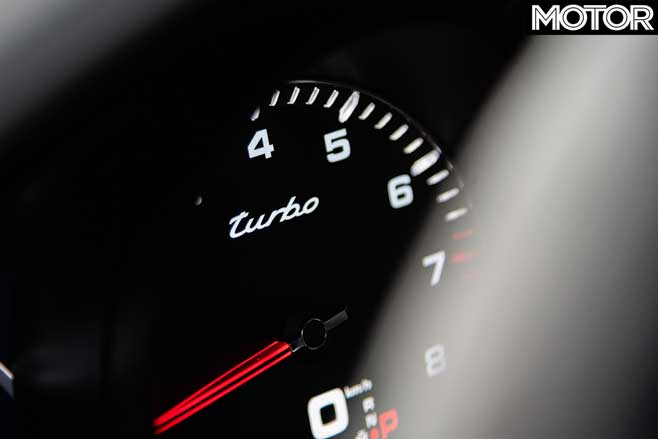
Our fully loaded test car boasted carbon-ceramic brakes (grabby and noisy), matrix headlamps (a must-have), rear-wheel steering (much more important than the even-pricier 48-volt anti-roll bars), torque vectoring (delete) and Innodrive, which includes active cruise control. Nice, but not essential, are the crowded head-up display, ventilated massage seats and Burmester sound system. Missing is any type of electrification, until the 507kW V8 hybrid arrives in 2020.
At 2275kg, the Turbo Coupe is about 750kg heavier than the new 911 but it is nearly as quick, sprinting from 0-100km/h in 3.9sec, and 0-200km/h in 14.6sec. Top speed is a remarkable 286km/h, considering its frontal area.
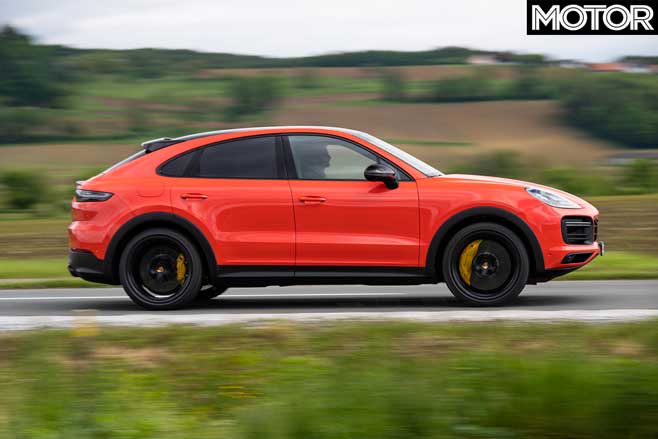
In Sport Plus with the exhaust set on max volume the Cayenne roars like a dive bomber, earning respect but not making any friends. Even in Porsche’s homeland, social acceptance is a growing issue and the zero-emission Taycan cannot arrive too soon. On that note, the Turbo Coupe did not better 15L/100km. It could have, but the temptation to gun this ‘truck’ with a sports car heart is irresistible.
On the autobahn, fast-lane regulars no longer underestimate the overtaking power of high-performance SUVs. Despite its bulk and mass, the Cayenne Turbo Coupe rules the 138 to 200km/h domain like no other ‘CUV’. With 770Nm available from 2000 to 4500rpm, and a fast-acting eight-speed transmission, only its considerable drag causes it to fall behind the 911 at the end of a straight.
Despite that, engineers turned this disadvantage into an asset, creating enough downforce to make the Cayenne Coupe the world’s first ground-effect SUV. On the A7 north of Stuttgart there are a couple of 240km/h bends which you can take flat in a GT3 – and in the Coupe. The Porsche is hugely confidence-inspiring.
Low-speed ride is harsh and low-gear throttle response is brusque, even in Normal mode, but the Coupe has most rivals firmly under control when it comes to handling, roadholding, performance and brakes.
On a rainy day, you want the dampers in Normal, drivetrain and steering in Sport, and ESP off, because the intermediate handling mode spoils the fun before it begins. Unfortunately, you can’t lock the drivetrain in rear-drive, deactivate the diff or play with the torque split.
Selecting Sport Plus sharpens the steering, makes the suspension flex its muscles and ramps up transmission shifts. Although you’re much better off in Sport, using the shift paddles when appropriate, Normal is for cruising with Innodrive choosing the ratios.
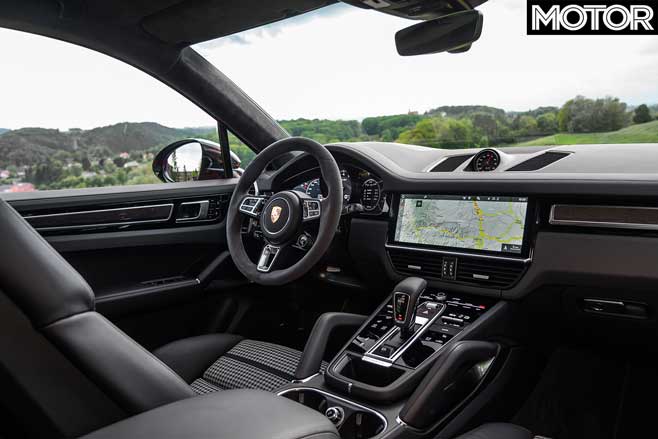
Hard cornering typically starts with a nudge of understeer followed by a long neutral phase which either turns into a brief all-wheel slide or lays down as much power oversteer as the remaining tarmac can take. With peak torque available from 2000rpm, third-gear drifts are definitely an option. In the dry, the Pirelli P Zeros and trick suspension produce unreal grip and traction, the tyres yowling for mercy.
Since even the most powerful Cayenne is unlikely to grace a racetrack, the 10-piston fixed-caliper steel brakes are fine for hard everyday use. What Porsche does so much better than just about everyone else is to sync the weight of the controls with the selected drive mode. Steering, brakes and acceleration work together with impressive subtlety and emphasis.
While the Cayenne Turbo Coupe (and maybe a Turbo S Coupe, or Turbo-S E-Hybrid) has joined the coupe SUV club, the thought of a Cayenne ‘XL Coupe’ with three rows of seats is almost unbearable.
Thankfully, when news of the BMW X8, Audi Q9 and Merc GLS Maybach started leaking out, a three-row Cayenne Coupe didn’t make it past the planning stage.
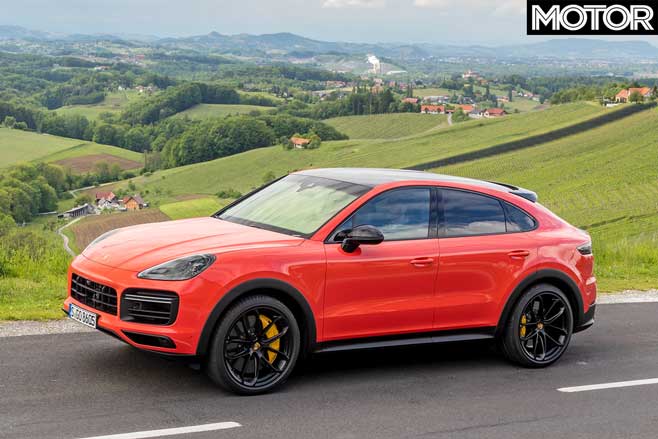
2020 PORSCHE CAYENNE TURBO COUPE SPECS Engine: 3996cc V8, DOHC, 32v, twin-turbo Power: 404kW @ 5750-6000rpm Torque: 770Nm @ 2000-4500rpm Weight: 2275kg 0-100km/h: 3.9sec (claimed) Price: $254,000 (est)
Like: Brakes, 911-humbling performance, astonishing grip, high-speed stability, plaid seats Dislike: Harsh ride, pricey options, rear seat space, weight, fuel consumption
Rating: 4.5 out of 5 stars
“It’s unreasonable, it’s unwarranted and we’ll certainly do everything we can to go against it”.
It’s safe to say that, when it comes to the Victorian stamp duty changes, Mercedes-Benz Australia boss Horst von Sanden doesn’t mince his words.
However, von Sanden believes the Victorian changes (which, like Queensland, could set a precedent for other states) go much further than merely increasing the purchase price of high-end vehicles.
Combined with the infamous and well-documented Luxury Car Tax (LCT), von Sanden expresses his displeasure at some of the attitudes towards the increasing taxes.
“There is more risk in it than simply saying, ‘oh, some bloody rich people are not prepared to pay more tax’. It’s like smoking or drinking etc., every consumer knows there’s tax on certain things, but this goes too far,” von Sanden said.
Given that technology-driven advancements usually come from luxury brands, diminishing sales could have a lasting impact on the industry. As a result, von Sanden says that while the Government might snatch a cash injection in the short term, the ramifications could lead to a slow-down in overall development and breakthrough advancements.
The luxury car tax is a pain, but it is here to stay
“Lifesaving and environmentally friendly technology is mainly developed in the top-end of the car industry. If all of a sudden we damage the sales and the future of the top-end, we reduce the funds for developing crucial technology. It might end up being a false economy,” von Sanden said.
According to von Sanden, it’s predicted that the changes will most likely see a fall in monthly figures in the long run. “It sure will impact on sales, but not only for Mercedes,” he said.
The flow-on effect could also hamper staff on the ground if sales slide.
“Our dealers could then struggle to make the money they need to in order to pay for training and education of apprentices and to employ the number of people we employ today,” von Sanden said.
The Mercedes boss was quick to stress that this isn’t a burden or fight the company should take on alone and that it’s not only a problem for German marques.
“It’s not only the German manufacturers that will suffer, it’s the entire industry. It’s mainly an FCAI topic to represent all the OEMs because we [Mercedes-Benz] believe it’s getting to a point where it’s unfair,” von Sanden said.
The irony is that while von Sanden expresses his displeasure surrounding LCT and stamp duty, Mercedes-AMG is launching one of its most expensive models, the $349,900 GT63 4-Door.
“We decided on that car before the decision was handed down. We still believe we will find buyers for that car, but now we might find a few less,” von Sanden said.
Despite the impending changes to the Victorian stamp duty and a “challenging” 12 months, von Sanden is upbeat at the prospect of Mercedes-Benz turning things around in the upcoming financial year.
“We are confident that the times are getting better for us,” he said.
THE AUDI R8 V12 TDI Concept could have spawned a new automotive era, if only Audi had put it into production.
Coming off Le Mans 24 Hours success in 2007 and 2008 with its R10 TDI prototype, Ingolstadt bosses decided to throw a similar engine in the back of the new road-going R8 coupe, creating the first diesel supercar, the R8 V12 TDI.
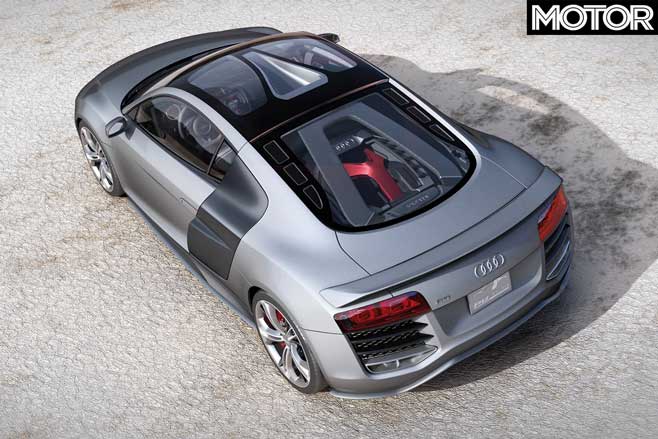
Its 6.0-litre twin-turbo V12 was a low-revving monster, producing 368kW/1000Nm, enough grunt to seemingly spin the world in the other direction, and with quattro drive – and despite weighing 150kg more than a petrol V8 R8 – could accelerate from 0-100km/h in 4.2sec and to 160km/h in less than 10sec, amazing for a diesel-powered car 11 years ago.
One benefit of a 306km/h supercar (actually Audi referred to it as a super-sports car) running on diesel was economy. The R8 V12 TDI consumed only 9L/100km – that’s hot hatch levels of economy – so it was not only a powerhouse performer but also miserly at the bowser.
Painted in Grace Silver or Le Mans Edition Brilliant Red, Audi’s exotic road racer must be one of the most gorgeous cars of the late noughties, with cool LED headlights that became an R8 signature.
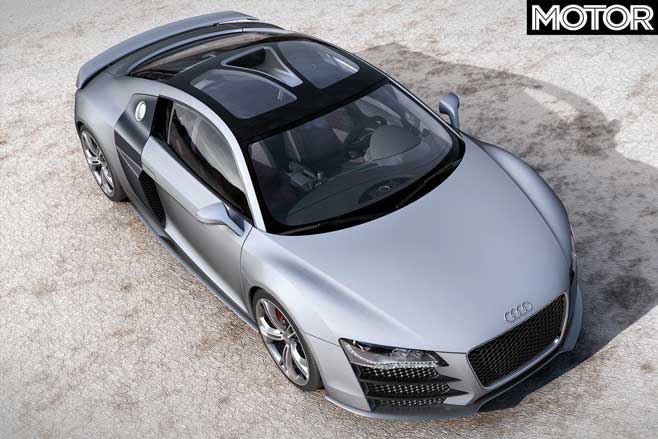
But even a Le Mans-winner ‘halo’ wasn’t enough for Audi to put the car into production.A year after its launch, Audi canned development citing production costs as the main impediment, plus the lack of demand for diesels in the US market which made up one third of the R8’s sales.
Love for diesel power has progressively waned since the ill-fated R8 V12 TDI was offered as the future of fuel efficient supercars and today hybrids and EVs are that future.
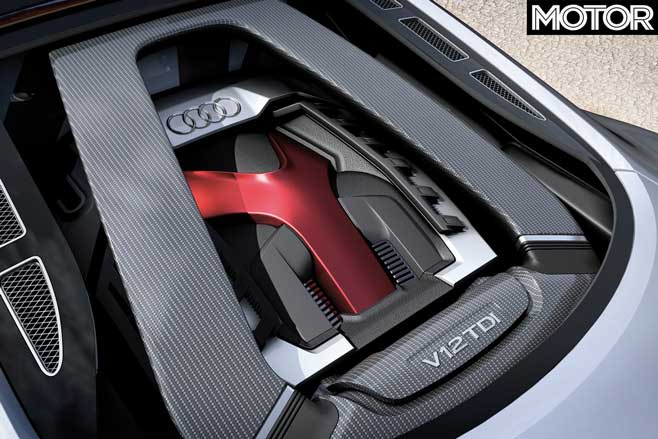
The R8 V12 TDI was a product of ambitious times. Audi had an idea to leverage what it learned from Le Mans and apply it to road cars and flexed its engineering muscle, but in the end it went no further than the concept versions. Still, at least Audi’s screaming V10 was to come.
2008 AUDI R8 V12 TDI CONCEPT SPECS Engine: 5934cc V12, 48v, twin-turbo diesel Power: 368kW @ 4000rpm Torque: 1000Nm @ 1750-3000rpm 0-100km/h: 4.2sec (claimed) Price: N/A
