
It’s the cheapest, slowest and least powerful Porsche you can buy, a four-cylinder SUV that’s no more powerful – and significantly slower – than a Golf GTI.
You’d be forgiven for thinking the base Macan is a cynical cash cow designed only to appeal to badge snobs, but it’s actually a superb SUV that honestly makes you question why you’d need anything else on a day-to-day basis.
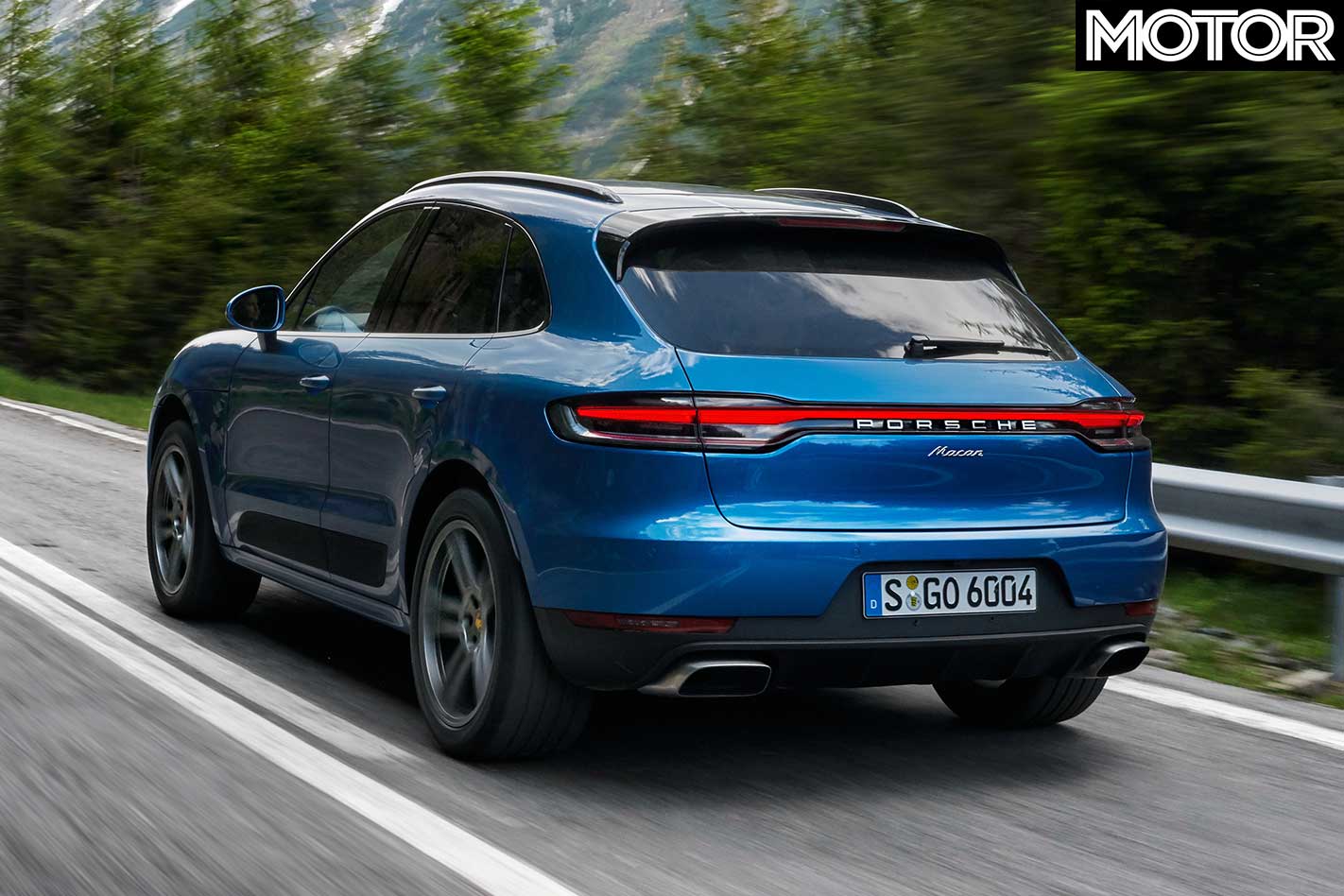
There will be those who recoil at the idea of a four-cylinder Porsche, but the Macan feels quicker than the numbers suggest, the 2.0-litre turbo four-pot smooth and eager with a better soundtrack than a non-GTS Cayman.
Crucially, amazingly, it feels just like a Porsche. In the weighting and response of the steering, the feel of the brake pedal, the brilliant gearbox mapping, this $80K-odd Macan is indistinguishable from other Porsches costing three or four times as much.
Admittedly, our test car wore almost $20,000 worth of options, but deleting the panoramic roof and 20-inch Macan Turbo rims takes care of $9500 of that. But the Macan doesn’t just drive beautifully, the ride quality is fantastic and Porsche’s latest interior is as good as any. Except perhaps the car it’s closest to, the Audi Q5 45 TFSI, which starts at $73,211; a decent saving, but if you’re a keen driver spend the extra on the Porsche.
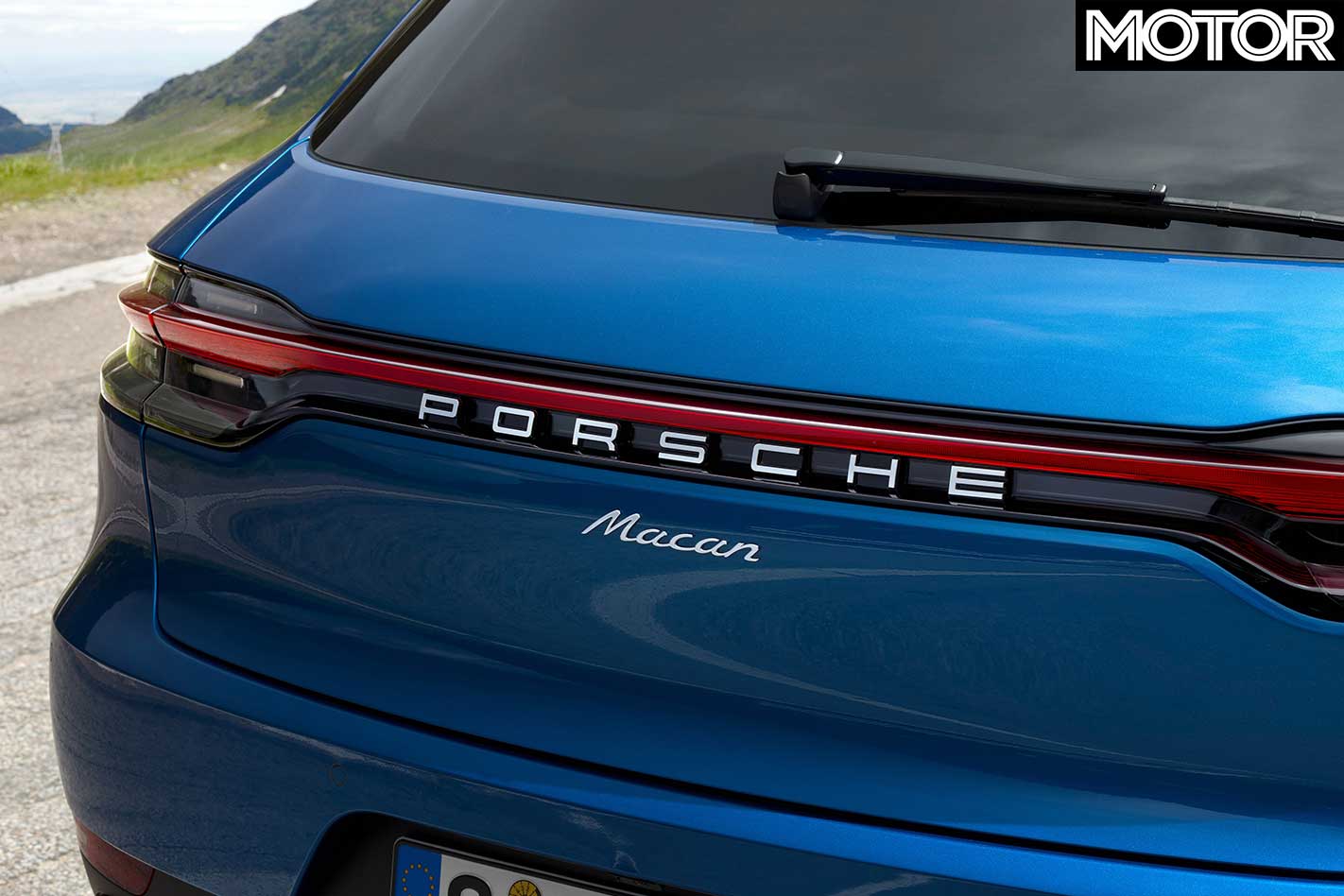
2019 PORSCHE MACAN SPECS Engine: 2.0-litre inline four, turbo Power: 185kW @ 6750rpm Torque: 370Nm @ 1600rpm Drive: AWD Weight: 1795kg Price: $81,400
BMW Australia has announced pricing for the rest of the all-new 3 Series range, with the 320i range opener, 330e plug-in hybrid and performance-oriented M340i xDrive joining the 320d and 330i that have been in local showrooms since March.
Set to begin deliveries in September, the new additions to the 3 Series family will help broaden the appeal of BMW’s stalwart midsize sedan.
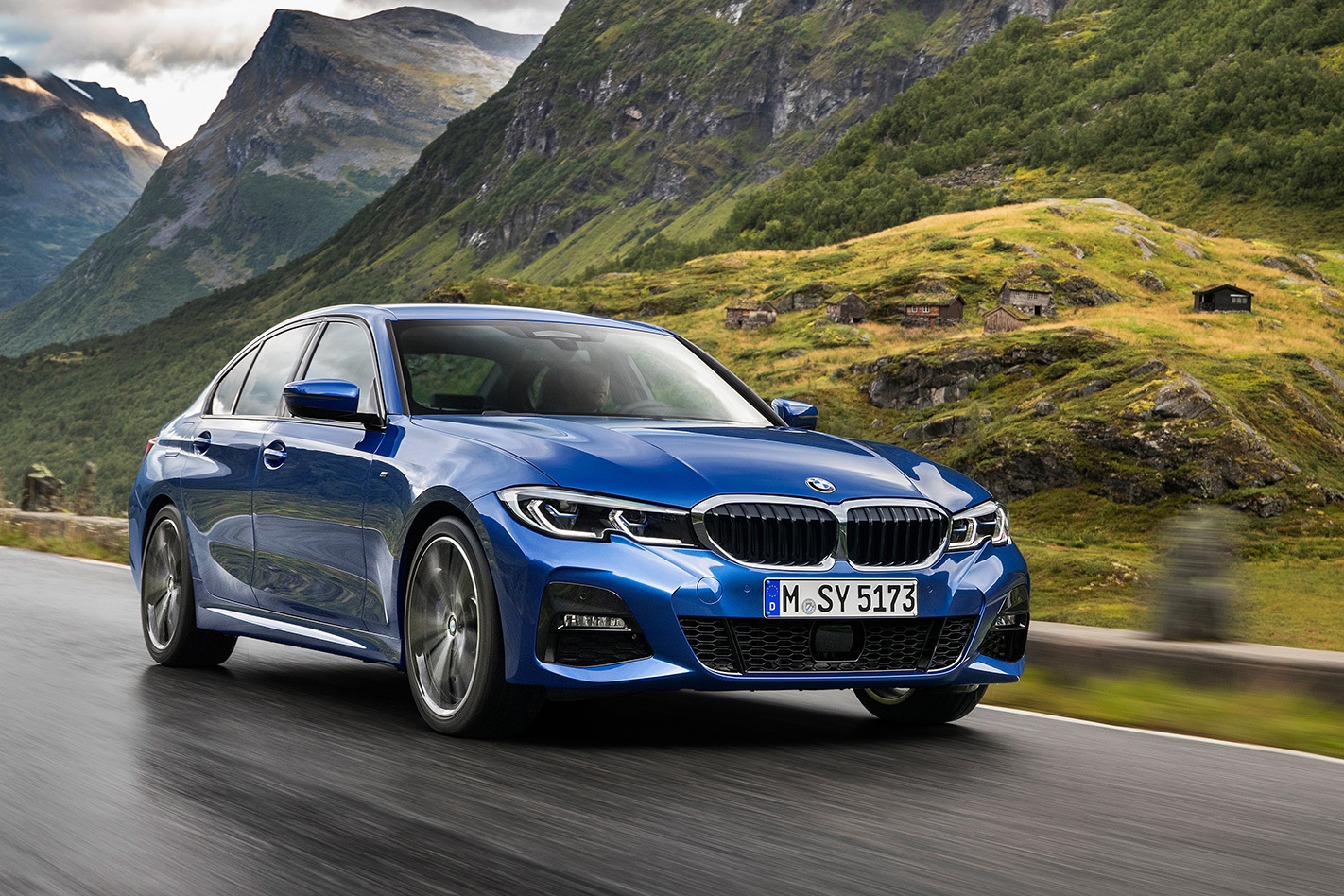
The 320i brings the price of entry down lower, retailing at $64,900 and representing a $3000 saving against the similarly-specified (but diesel-powered) 320d that has, up until now, been the cheapest variant in the range. Powered by a 135kW/300Nm 2.0-litre turbo petrol, the 320i trades mechanical oomph for a more budget-friendly pricetag when compared to the more muscular 320d.
Its equipment levels are roughly the same as the 320d, though, with features like the M Sport package (which bundles a sportier steering wheel, seats, Alcantara upholstery and a black headlining together), M Sport suspension, advanced driver assist features, parking assistant, a dual-screen infotainment/instrument panel, LED headlamps, wireless phone charger and 18-inch alloy wheels all as standard.
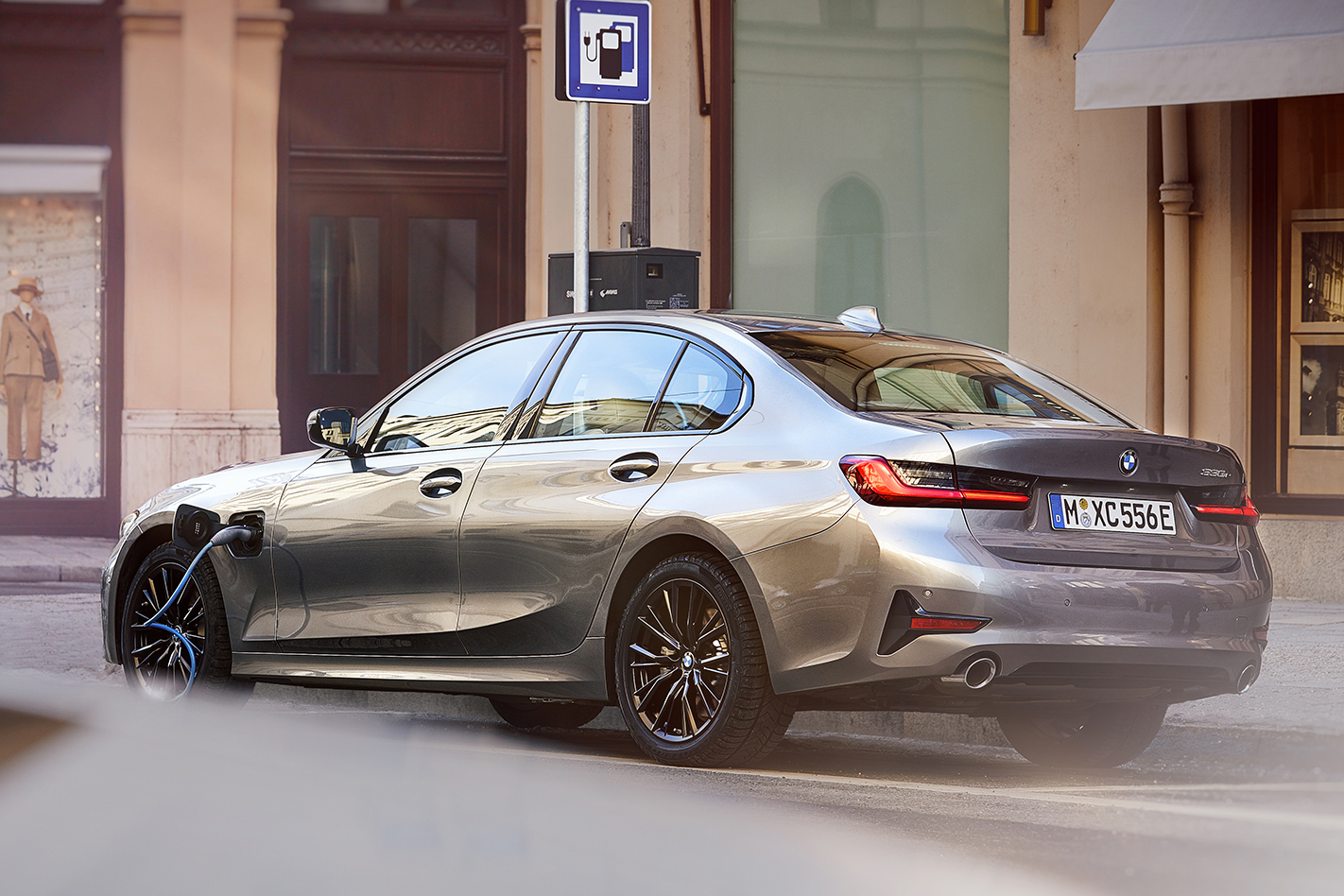
Meanwhile, the 330e sits in the middle at $75,900. It asks a $5K premium over the turbo petrol 330i’s retail sticker, but brings a synchronous electric drive motor and lithium-ion battery to endow it with a useful 60km of emissions-free range. With 185kW (or 215kW for short periods) and 420Nm when both its petrol and electric motors are working in concert, the 330e can zip to 100km/h from rest in a hothatch-like 5.9 seconds.
Its specification builds on that of the 320i/320d, with M Sport brakes, adaptive M suspension, keyless entry, Vernasca leather upholstery, 360-degree parking camera view, additional driver aids and 19-inch alloys as standard.
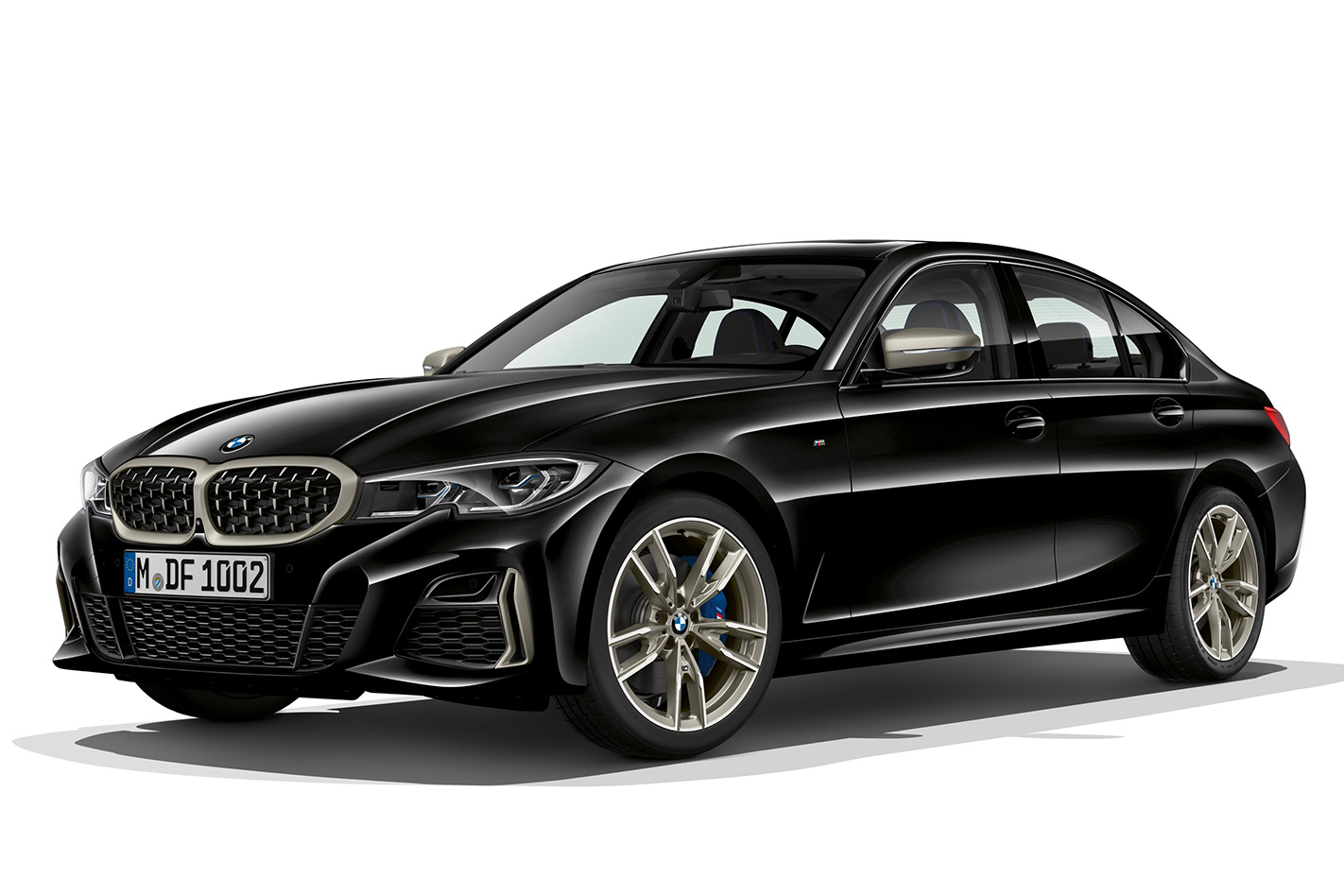
However it’s the M340i xDrive that’s the star performer for now – at least until the next-generation M3 breaks cover. The M340i is the only model in the range to feature an engine bigger than 2.0 litres, with its 3.0-litre turbocharged inline six generating 285kW and 500Nm – 45kW and 50Nm more than the previous-generation M340i.
With all of that power going to all four wheels via a quick-shifting eight-speed automatic, performance is predictably brisk, and the zero-to-hundred sprint is done away with in just 4.4 seconds.
Standard equipment also gets a boost with the M340i, which receives a powered tailgate, leather-trimmed dash, adjustable lumbar support, heated front seats, laser headlamps, a Harman/Kardon 16-speaker premium audio and 19-inch lightweight alloy wheels.
The existing 320d and 330i carry over with no changes
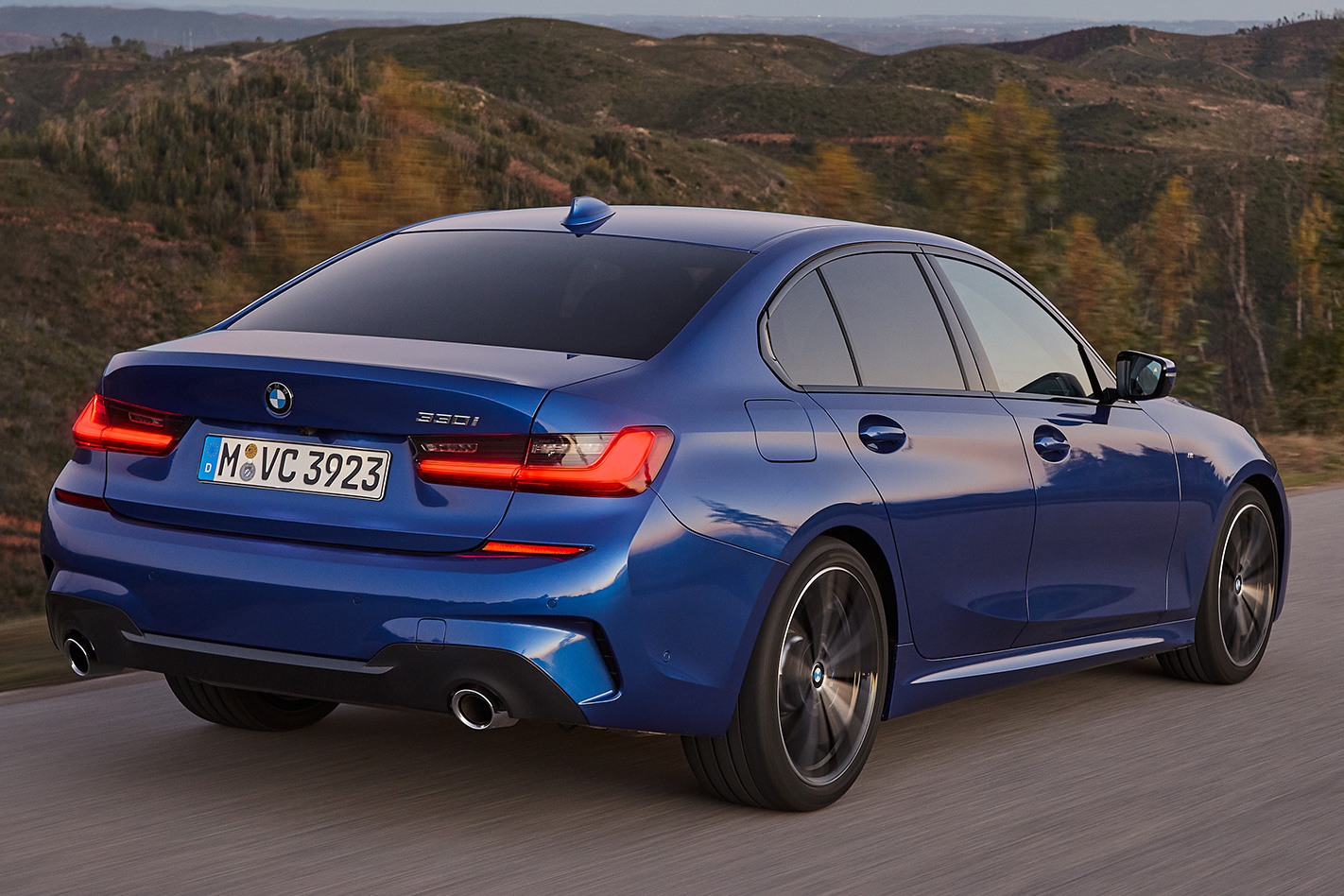
The 320d starts at $67,900, which is an increase of $2100 over the equivalent last-gen diesel.
With a twin-turbo four-pot, the 320d sends 140kW and 400Nm to the rear wheels via an eight-speed automatic gearbox. Power has not increased during the generational leap as the engine carries over from the sixth-gen model.
However, BMW claims the latest 3 Series is up to 55kg lighter than its predecessor depending on specification.
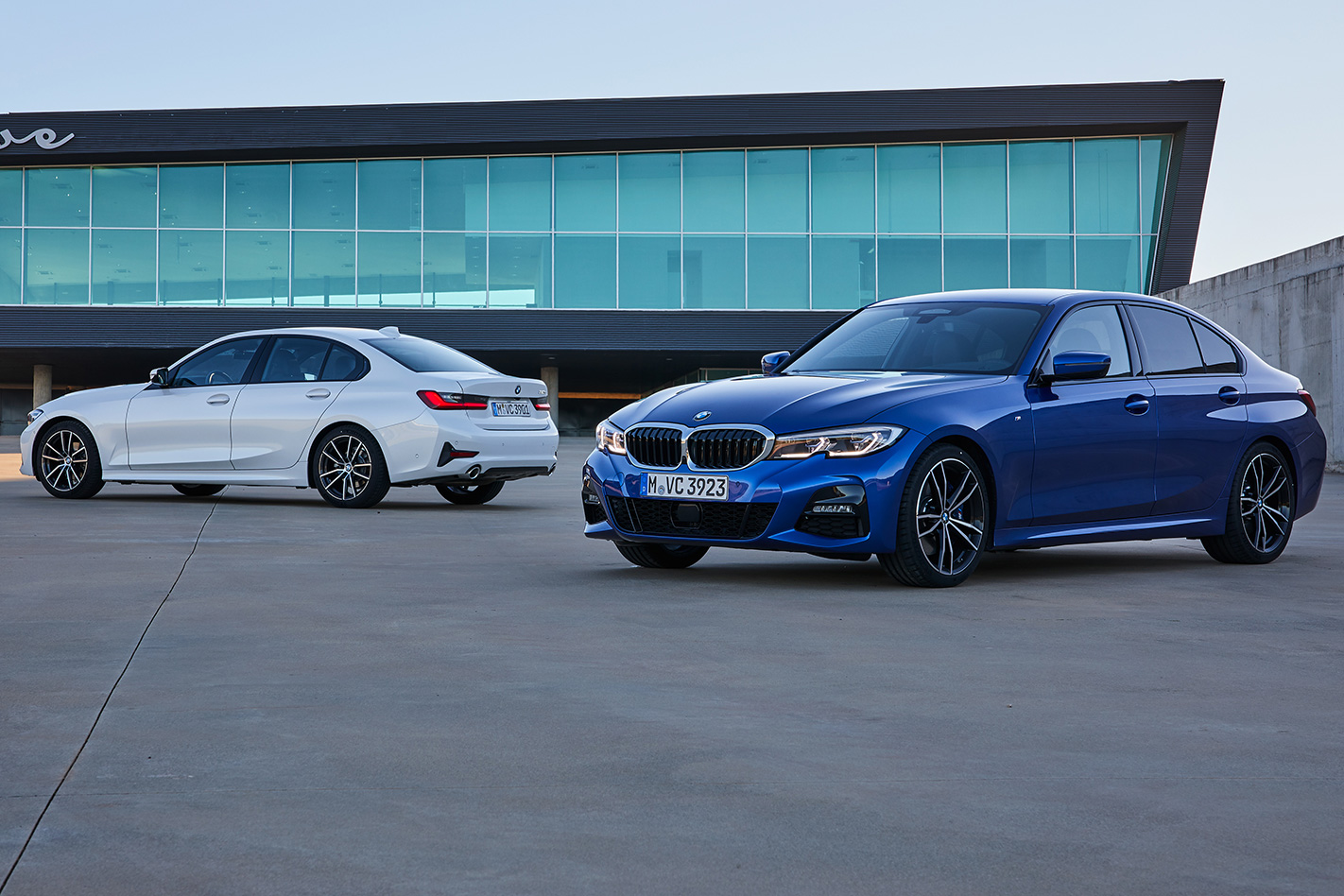
Stepping up to the more powerful 330i costs $70,900, meaning the cost of the mid-level sedan has not changed between generations.
The same can’t be said for power, with 190kW and 400Nm being sent to the rear wheels (up 5kW/50Nm) via an eight-speed automatic ‘box. The engine is a modified version of that fitted to the outgoing 330i.
Australian customers will be treated to the latest-generation of BMW’s adaptive M suspension as standard on the 330i, lowering the ride height by 10mm and adding electronically controlled dampers. The 320d has M sport suspension as standard, which lowers the ride height, but misses out on the adaptive dampers.
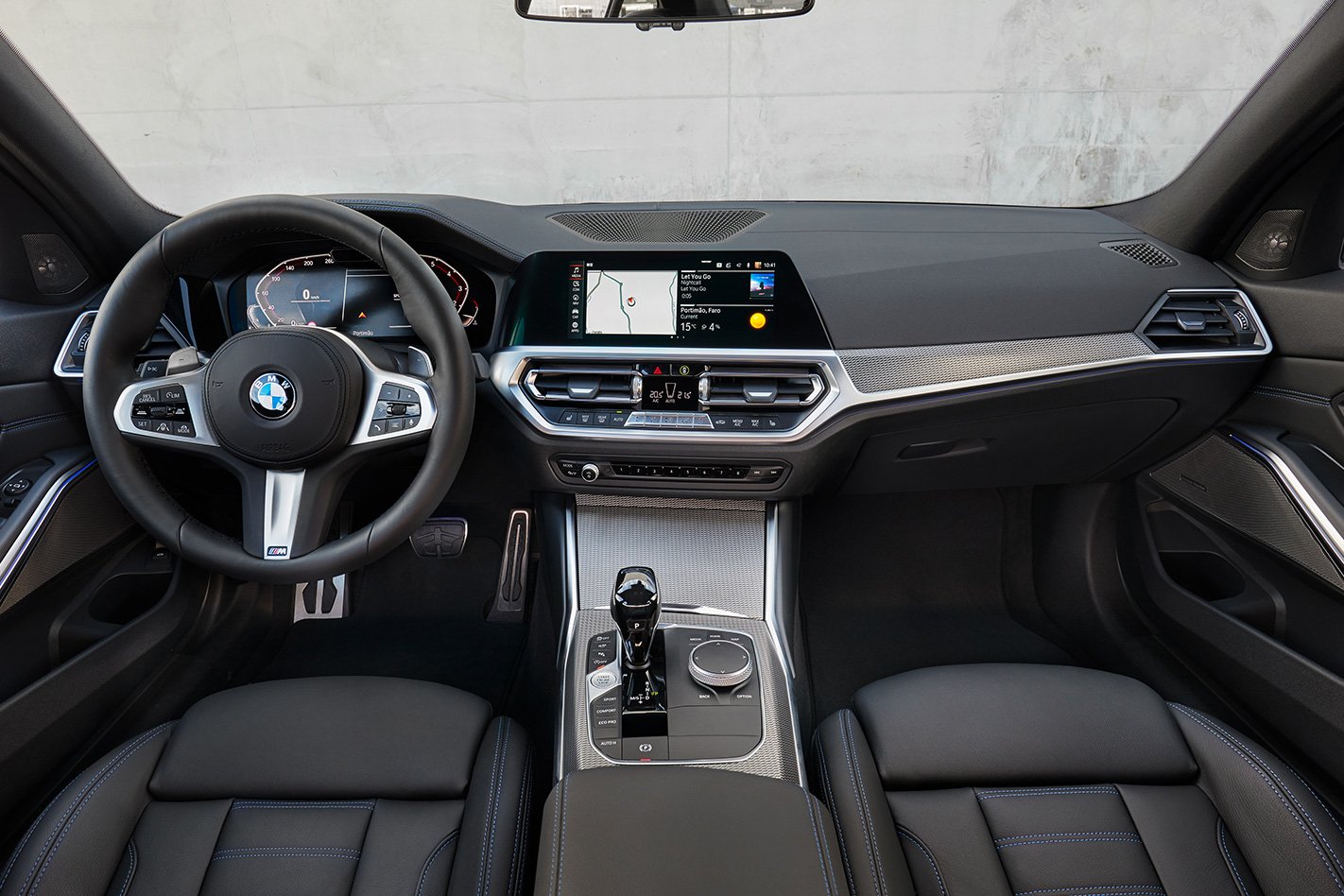
Customers can also option an M Sport limited-slip differential for their 330i, with the electronically controlled system aiding the car’s dynamic ability.
Competing against the all-new 3 Series are its classic rivals, the Audi A4 and Mercedes-Benz C-Class.
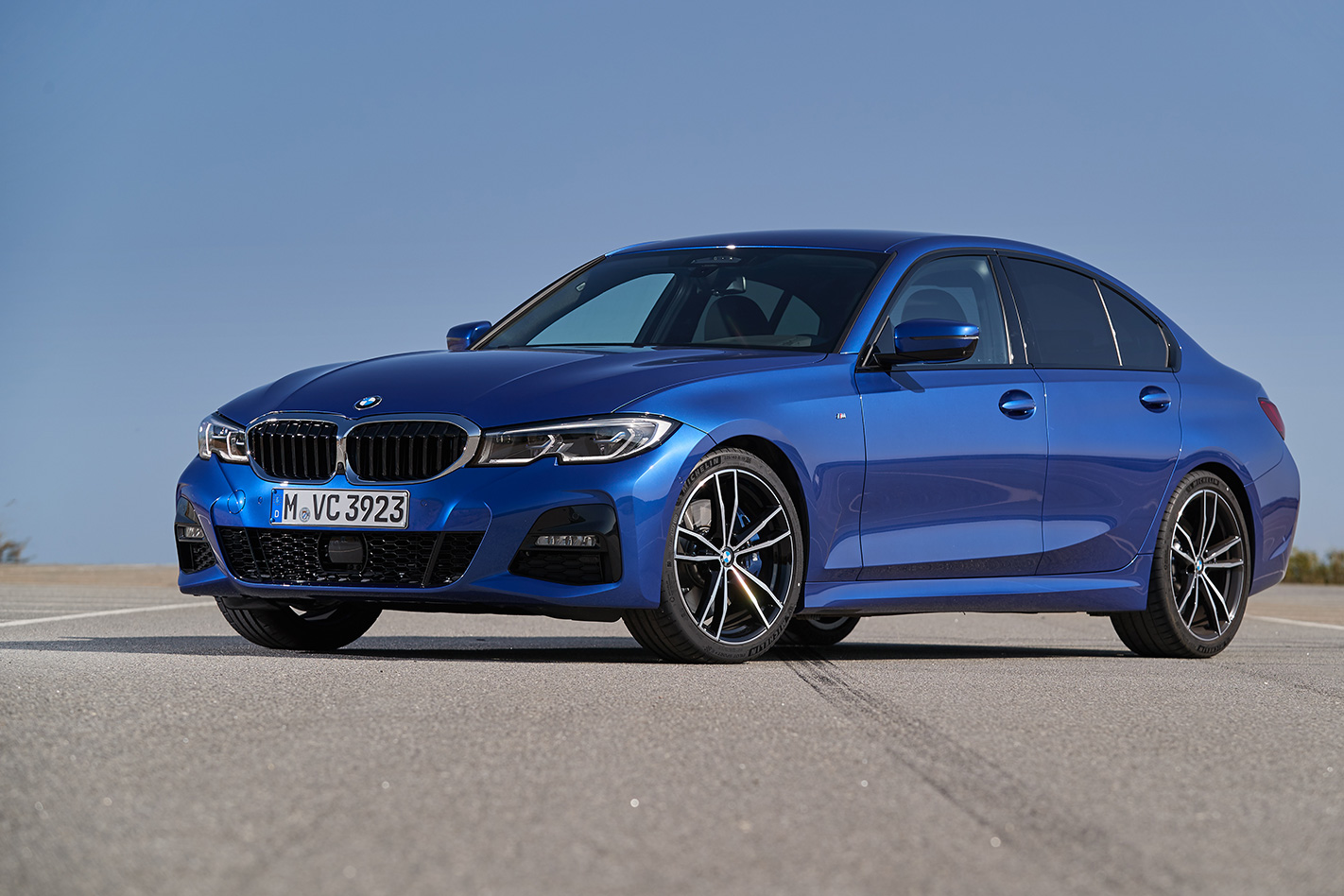
The latter’s C220d starts at $64,900, undercutting the BMW, while the C300 wears a sticker price of $71,400, making it the most expensive of the German trio in equivalent spec. The older C300 has the same 190kW output as the BMW 330i, but is down 30Nm.
Meanwhile, the A4 2.0-litre TDI starts at $67,300, making it line-ball with the diesel BMW. Both have a 2.0-litre turbo engine producing 140kW and 400Nm, with the most significant difference being where power is sent – the Audi diverting grunt to the front treads, while BMW preferences the rear.
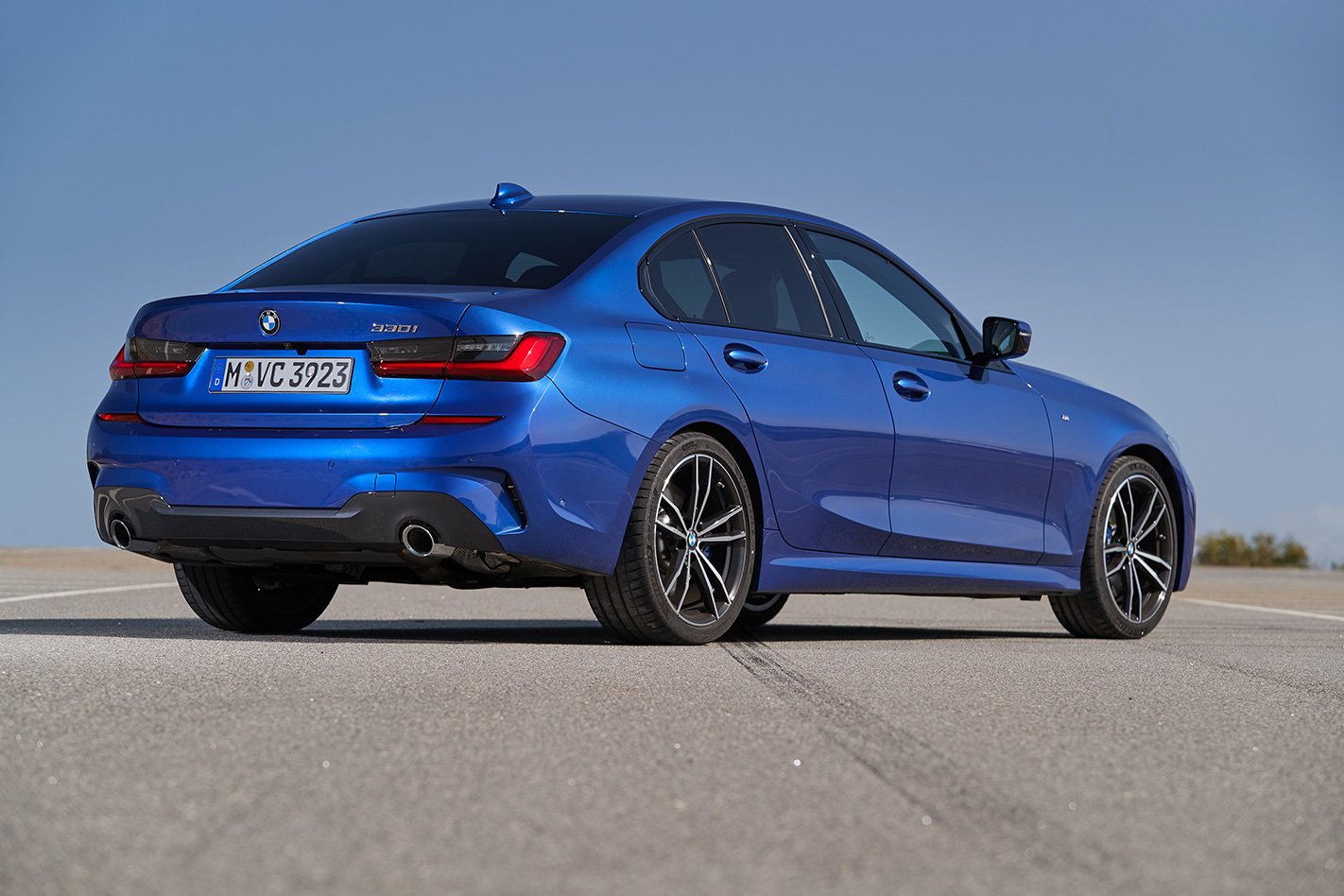
Audi’s A4 2.0-litre TFSI is priced at $70,300, making it the cheapest of the Germans, however it is the least powerful with outputs of 185kW and 370Nm.
PRICING
The full BMW 3 Series range is available for order now, though the 320i, 330e and M340i xDrive aren’t due to begin deliveries until September 2019.
- BMW 320i – $64,900
- BMW 320d – $67,900
- BMW 330i – $70,900
- BMW 330e – $75,900
- BMW M340i xDrive – $99,900
With turbo four-cylinders replacing free-breathing V8s in German’s premier touring car series this year, BMW, like most car makers with a deep regard for its past, has been keen to link the new engine to that of the old.
In this case, that’s the first of its turbocharged race engines, the M121 which powered Dieter Quester to the 1969 European Touring Car Championship while slung between the chassis rails of a 2002 Ti. Thing is, while the brand is keen to suggest lots and lots of heritage – and the two engines do have a fair bit in common – there’s also half a century of tech development poking its nose in, too.
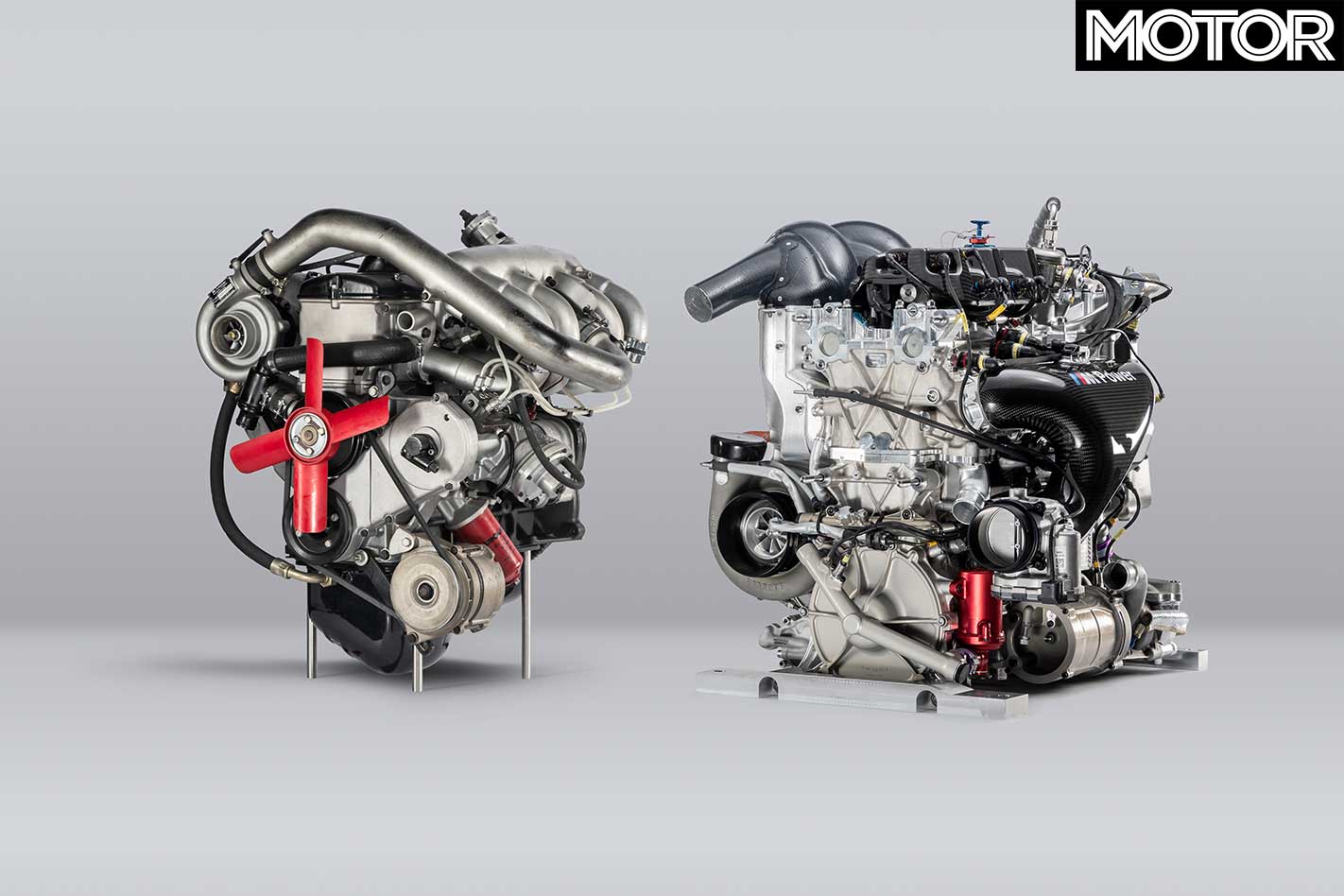
So what remains of the M121 when it comes to the new P48 that will be seen in this year’s M4 DTM car? Fundamentally, the connection between the two engines amounts to the inline-four cylinder arrangement, the use of turbocharging, alloy construction and the two-litre capacity. Beyond that, the game has really changed.
While the M121 was limited to about one bar of boost to avoid blowing the head into orbit, the new P48 has no such problem and can reportedly handle sustained boost of about 2.5 bar. Which means that, compared with the 210kW at 6500rpm of the old girl, the new 2.0-litre manages something like 450kW at a thought-provoking 9500rpm. It should sound amazing.
There’s also word of a 5.0-second, 22kW push-to-pass function that should help cure boring races. Besides the extra boost, the power gains are all down to efficiency. The new engine has throttle-by-wire, a dry-sump, intercooler and direct injection using a mechanical pump to create fuel-rail pressures of something like 350 bar which, surprisingly, is no higher than a contemporary BMW road car, yet is still about on par with the pressure created by the best industrial pressure-cleaners.

Lightness is another key point and at 85kg, the new engine is super-light. Mind you, that has involved moving stuff like the starter-motor and alternator to the rear-mounted transaxle (which has improved weight distribution).
It’s been said a million times but finishing first involves finishing, so reliability is a key factor in the P48’s design. Apparently, the unit is good for 6000km of racing, meaning each car should only need one engine change per DTM season. We’ll see about that.
Turbo Pioneers
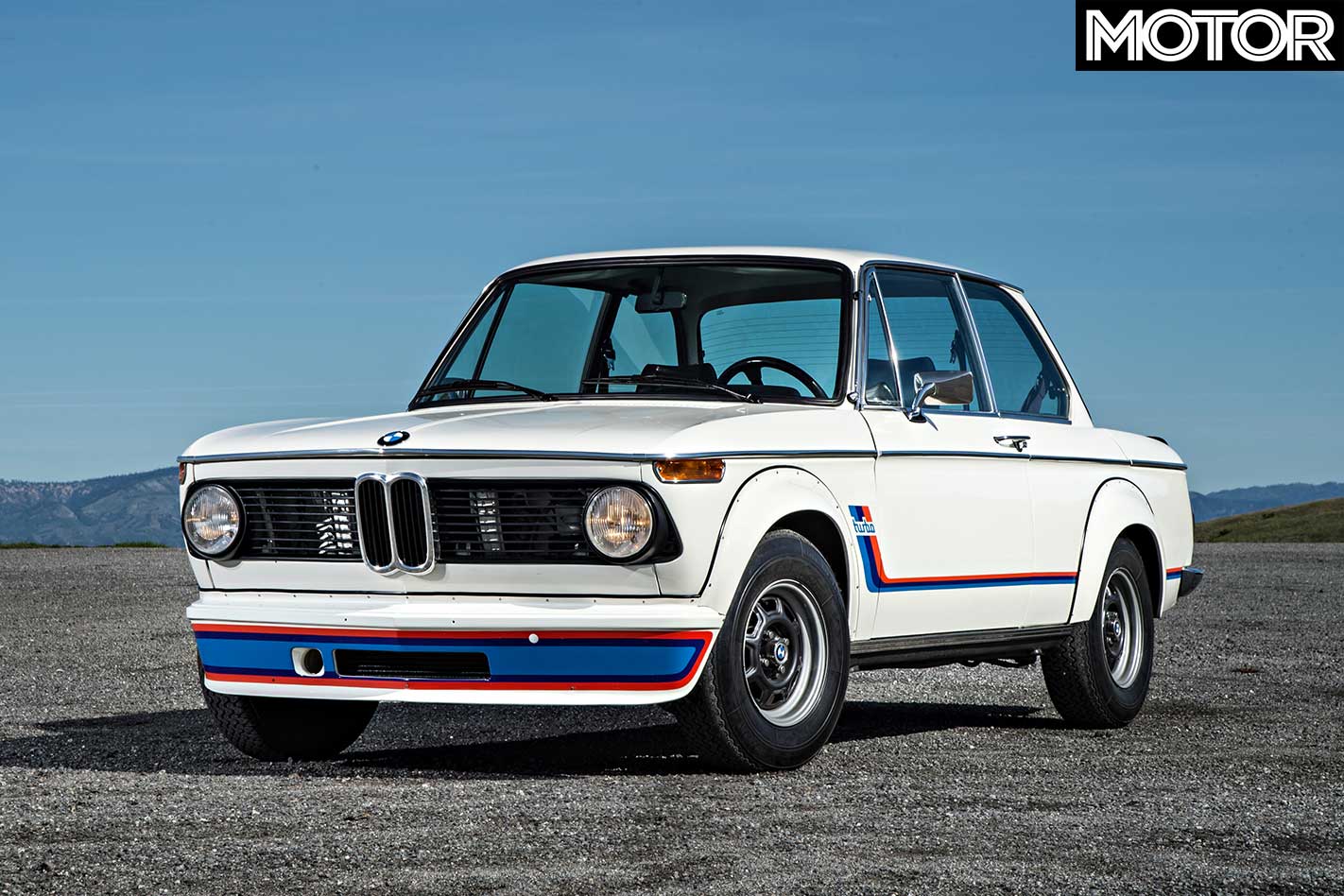
The 2002 Ti racecar of 1969 eventually spawned BMW’s first turbocharged road car, the 2002 Turbo in 1973. Question is, what will this latest step into a turbocharged future bring us in the way of road cars?
Restricted Fuel Flow The actual limiting factor in the P48’s power ceiling will be the mandated fuel-flow limit of 95kg-per-hour. The push-to-pass function is expected to liberate 100kg-per-hour for those crucial five seconds.
Lean Machine
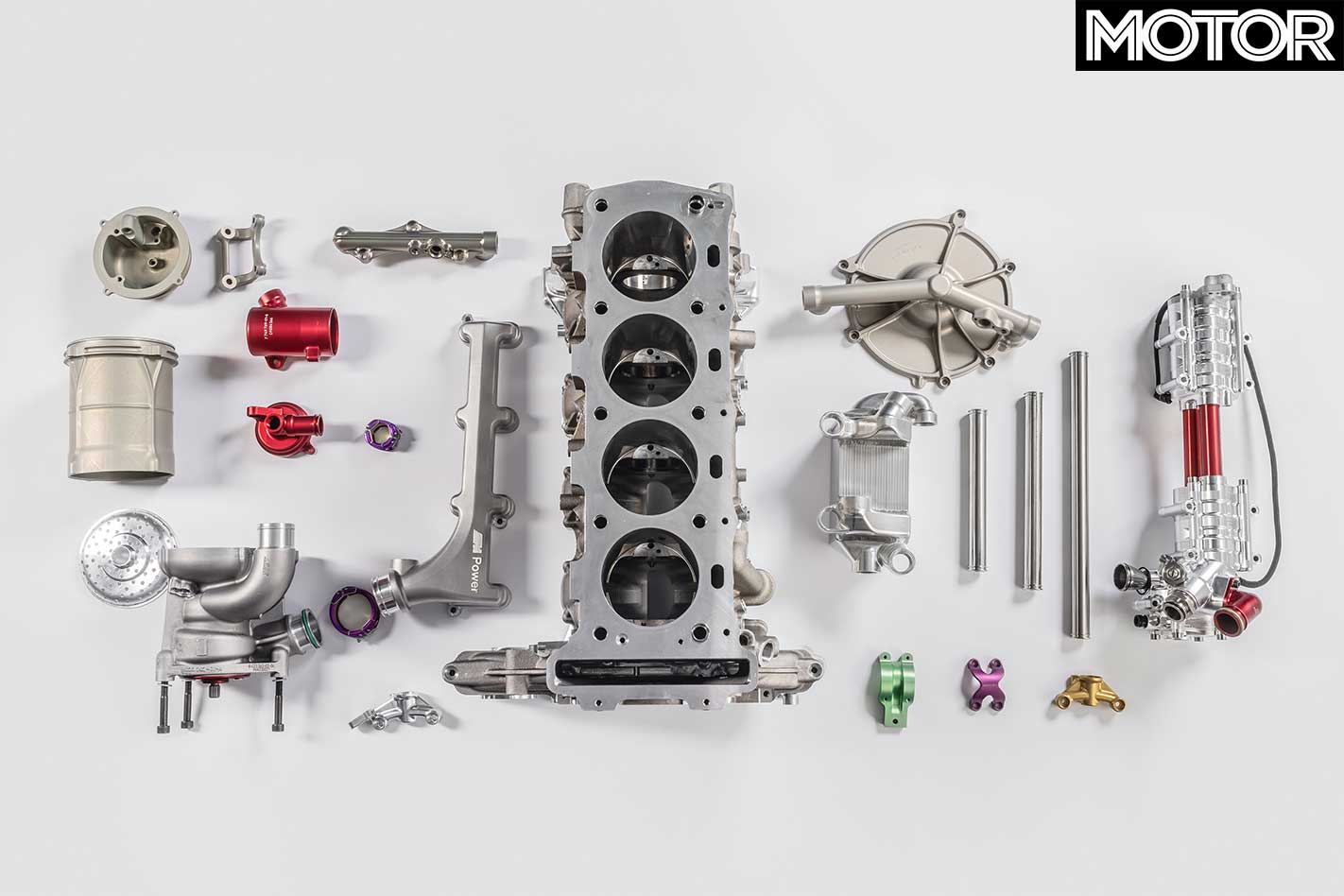
Direct-injection allows the new engine to operate in a lean-burn state. That means it can save fuel when possible to improve range, but also to make the most of that regulated fuel-flow rate when full power is required.
Serious Power 450kW from two litres equates to your turbo Barra making 900kW. Err, yeah, valve springs and a bigger turbo-pipe aren’t gonna cut it. And light? The P48 weighs even less than the original VW flat-four, one of the lightest production engines ever.
Best value car award
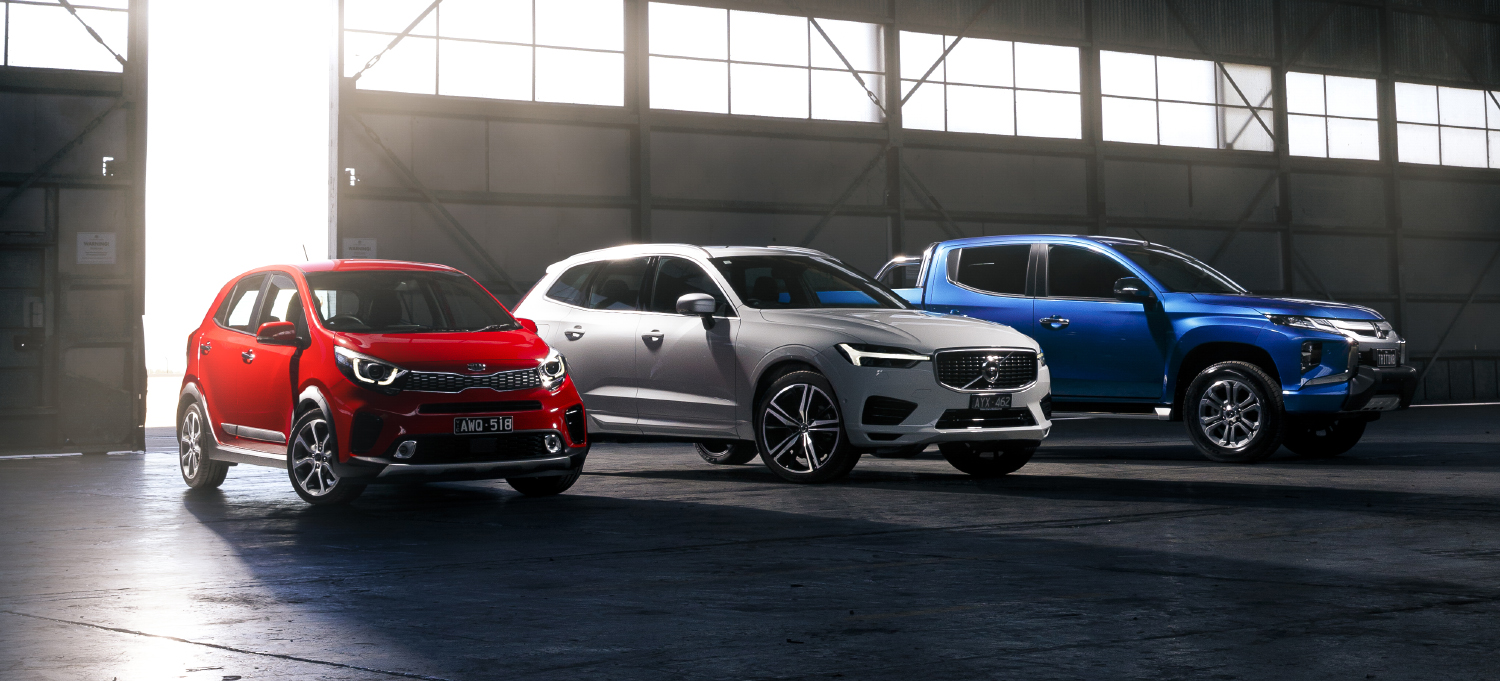
Wheels’ Gold Star car award uses data such as depreciation and running costs to calculate what the best value new cars in eight different segments are. To understand how we calculate the numbers and what considerations were put into the algorithm, read the 2019 Gold Star Car Award 101 here.
The top 3 premium hatch contenders
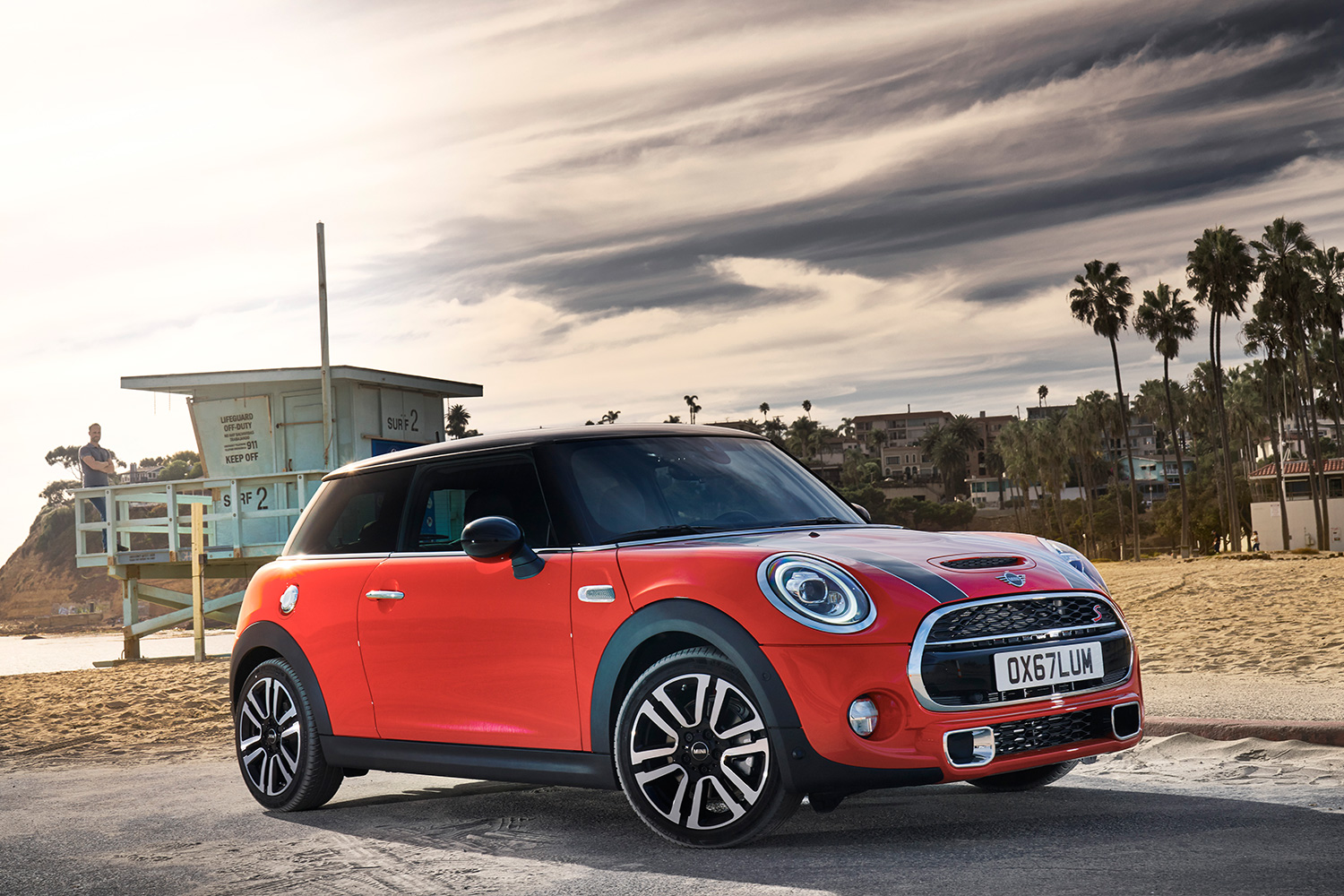
- Mini Cooper 3D hatch
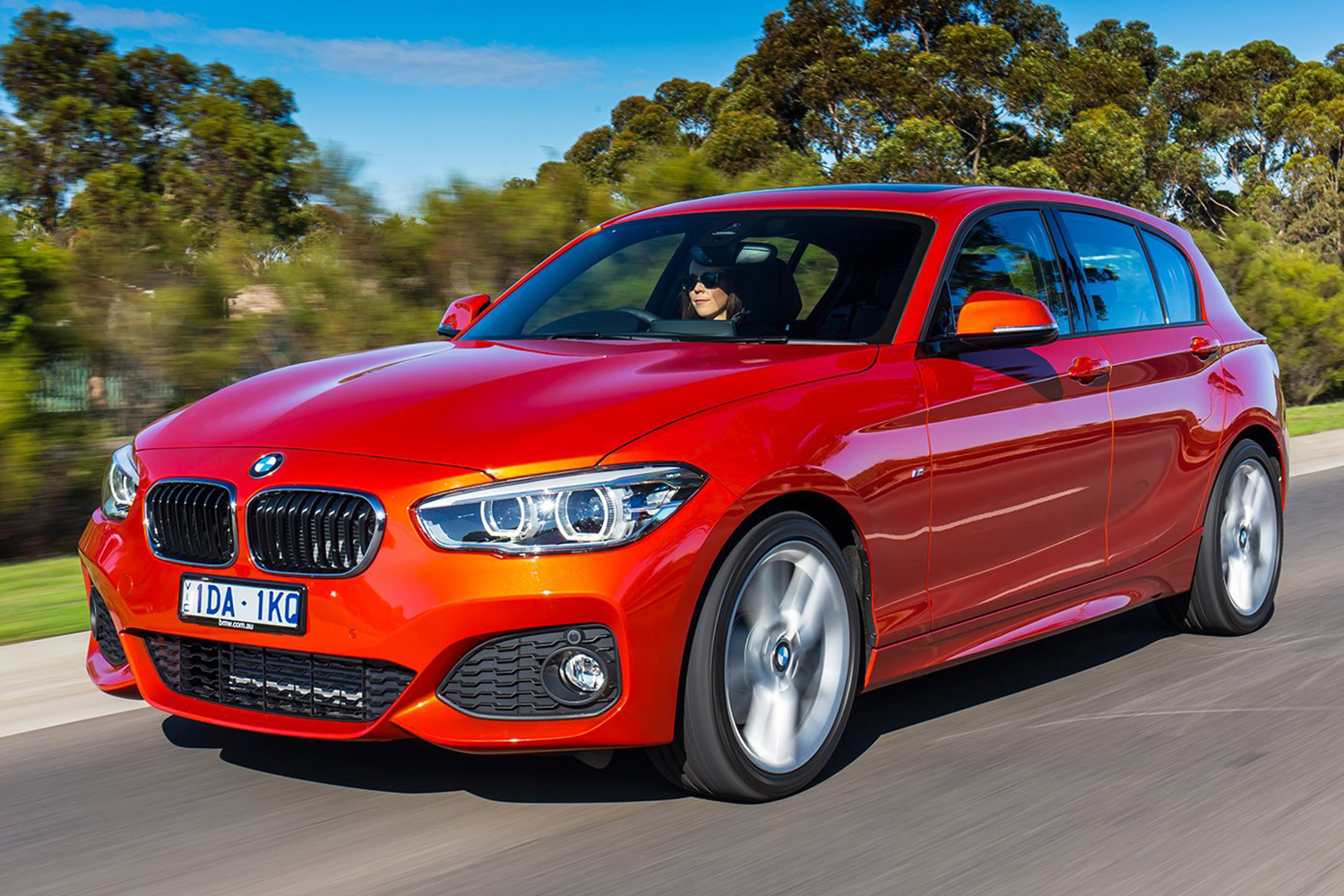
- BMW 118i Sportline
- Mercedes-Benz A180
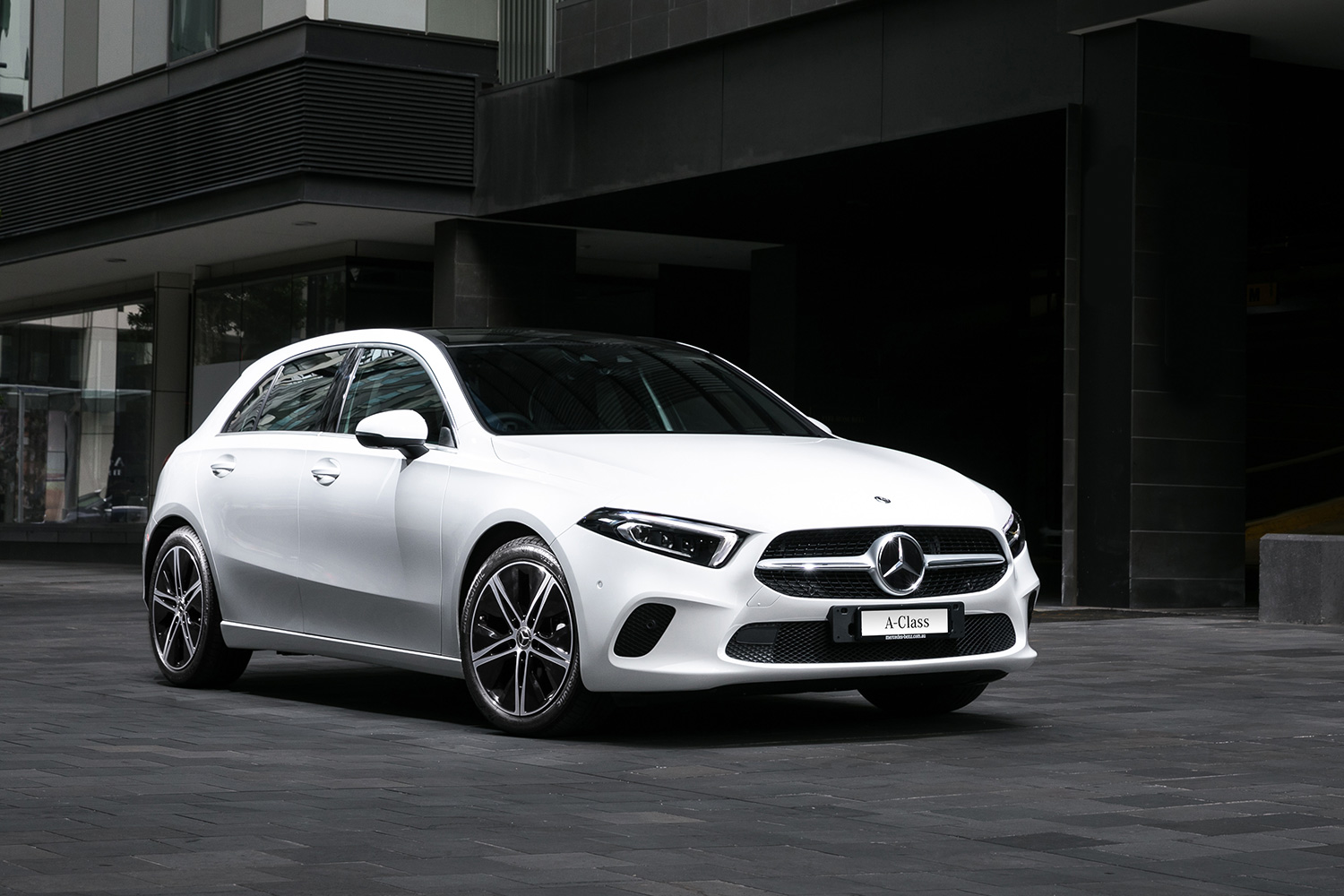
What the numbers said
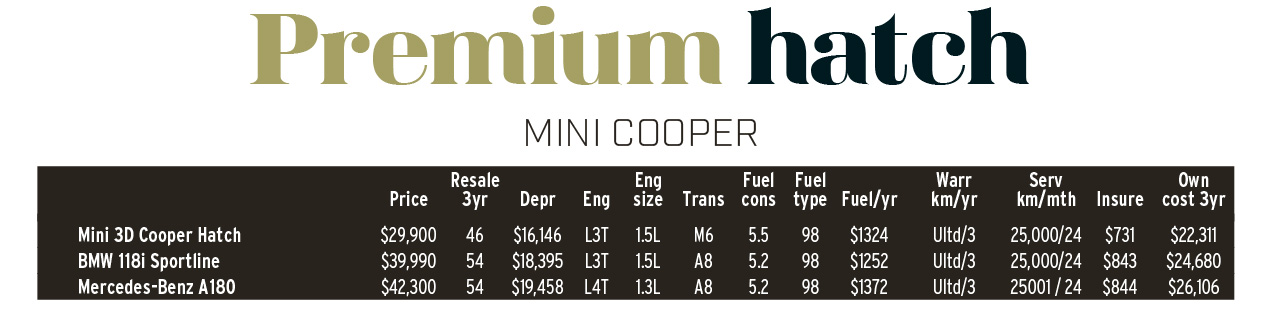
Mini’s ace is that it offers a lower-cost premium light car than BMW and Mercedes, which are at least $10,000 more expensive to buy into. While the Cooper is pricey for a baby hatch, at $29,900, it’s a cost-effective way into a classy little car.
Despite having the poorest retained value of 46 percent, its relatively low purchase price equates to the least depreciation in dollars over three years. It splits the two Germans for fuel economy (although there’s hardly anything in it across all three), shares the same three-year warranty period, is the cheapest to insure and, along with the BMW, has the longest servicing interval at 25,000km/24 months.
Small and affordable but doesn’t feel cheap? This could be your car.
Wheels’ pick
Mercedes-Benz A250 4Matic $49,500
With an extra two doors, punchy 2.0-litre turbo engine, sophisticated AWD and multi-link rear suspension, the A250 is from a class above the Mini, and priced accordingly. Is it worth it? If the pace and poise don’t convince you, perhaps the twin 10.25-inch screens stretching across the sculpted dash will.
When it comes to creating niche vehicle segments within already niche segments, BMW is somewhat of an authority. Its X6 arguably kick-started the coupe SUV craze at the large end of the spectrum, which was followed by a version in each size category. Its range of Gran Coupe models, meanwhile, effectively does the reverse by turning coupe-profiled vehicles into four-door offerings.
So it is surprising just how long the German car maker was absent from the compact SUV market. While arch-rivals Audi and Mercedes were busy bumping gloves with their Q3 and GLA models, BMW sat on the sidelines, looking a bit forlorn.
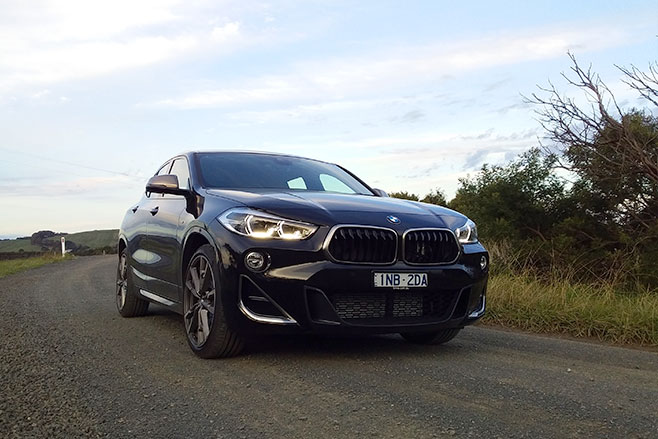
But in 2018 the BMW X2 finally entered the fray, and soon made up for its late arrival. Available in a choice of diesel and petrol variants with front or all-wheel drive, the X2 proved stylish, practical and great fun to drive.
Read: 2019 BMW X2 M35i xDrive quick review
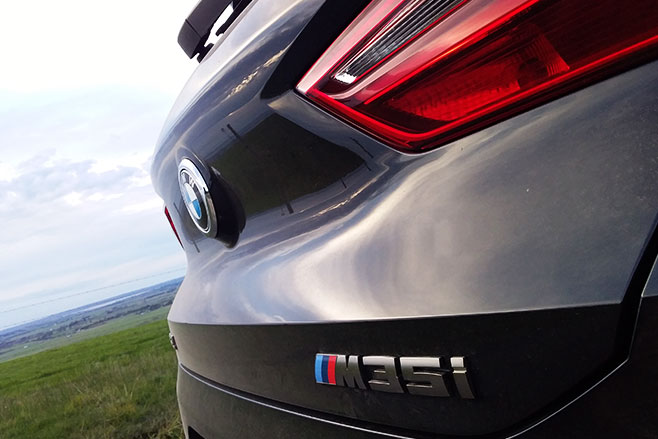
Now, though, a new option has arrived which takes the line-up to four versions. The M35i has a spacious cabin, a powerful turbo engine coupled to four-wheel drive and the iconic M icon on its boot, but it also rides on jacked-up suspension.
A compelling all-rounder, or a jack of all trades that’s yet to master one?
VALUE
There’s no ignoring the fact that, with a starting price of $68,900 before on-road costs, the flagship of the X2 range is expensive, but the market for $70k compact crossovers is nowhere near as competitive as, say, the affordable (and premium) hot-hatch arena.
If you’re after something with potent four-pot turbo power wrapped up in a compact SUV shell, then your options are severely limited. That’s where BMW gets away with pricing this little model at the pointy end.
But you do get a good selection of gear as standard, as well as a dusting of kit moved from the lesser variant options list on to the stuff that’s included in the base price.
There aren’t many offerings in the market that can compete with the X2’s unusual but not unattractive proposition. Next year, Audi’s Q2 range will be capped off with a 221kW/400Nm SQ2, but until then its sportiest version offers just 140kW.
Mercedes can offer the AMG GLA 45 which pumps an impressive 280kW through all its wheels, but it starts at just under $90,000. Ouch.
Jaguar’s E-Pace P300 comes close with 221kW and 400Nm for an asking price of about $64,000, but its hefty 1.8-tonne weight seriously impacts its athleticism.
Without an obvious rival for now, you could argue the X2 M35i is excellent value to the right buyer. To everyone else, it’s an expensive indulgence that’s hard to justify on paper. But let’s look at how it performs in the real world.
STANDARD FEATURES
The X2 M35i produces 225kW and 450Nm of torque from just 2.0 litres and four cylinders, which is a commendable output. An eight-speed automatic transmission is also standard, sending power to all four wheels.
That combination is enough to accelerate the X2 to 100km/h in 4.9 seconds, which is fast no matter how you look at it, and made possible by a new launch-control function. Great for bragging rights, sure, but we can’t see a lot of use for the feature in a high-riding crossover.
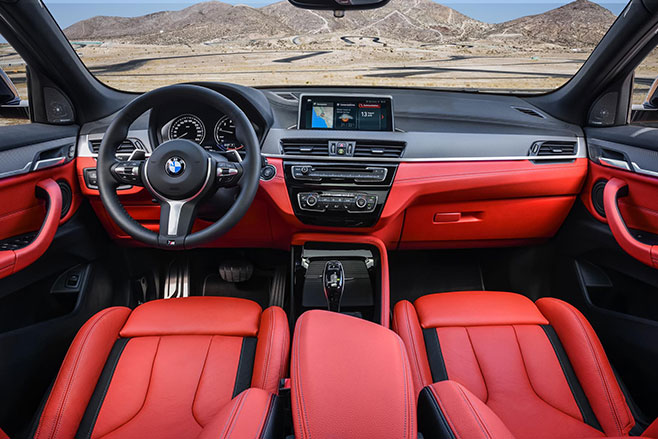
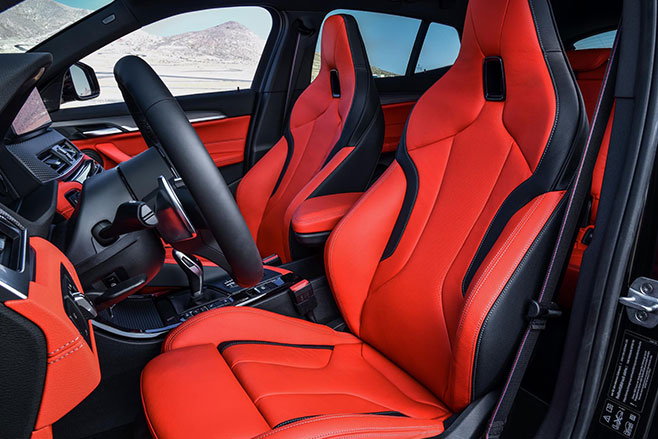
Desirable inclusions are the high-standard ‘Dakota’ leather interior, 20-inch alloy wheels, sport suspension, a shoutier exhaust, sports seats, top-shelf Harman Kardon stereo, keyless entry, 8.8-inch central touchscreen, electric tailgate with contactless operation, LED headlights and a head-up display.
Our test car was fitted with the Enhance package, which adds a panoramic sunroof, metallic paint and wireless device charging for $2900.
SIZE
To offer some size context, the X2’s platform has evolved from BMW’s Mini brand, which not only lends the transverse engine configuration and excellent handling characteristics but its more compact proportions, too.
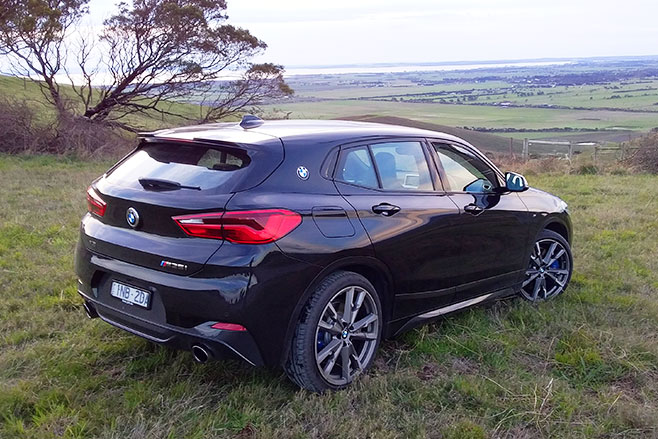
That said, the Mini in any of its blossoming varieties is not a particularly small car anymore. The X2 M35i has a cosy cabin with a functional second row of seats, but don’t let the high-sided SUV stance fool you. Headroom in the back is only just adequate and it feels narrow.
A decent amount of space is found behind the seats with a 470-litre boot that expands to 1355L with the second row folded flat. With the seats in place, however, a 1.0m by 0.7m framed print slots in nicely, lying flat on the boot floor like it had been custom made. Not only is the boot a good size, critically, it’s also a useful shape.
Interior dimensions translate to manageable exterior measurements too and living with the X2 is a breeze.
SAFETY
As well as the safety features you might expect to find on any modern premium vehicle, the M35i brings a host of extras to sweeten the deal. Its head-up display was almost unheard of in a vehicle class this size until very recently and BMW’s host of technology also brings LED headlights that steer around corners and dip automatically.
There’s also lane-departure and forward collision warning.
It’s also worth noting that the beefier M-Sport brakes, sticky rubber on large wheels and an all-wheel drive system that incorporates a limited-slip differential not only enhances driving characteristics but boosts the X2’s stability and safety in adverse driving conditions.
The X2 range has been granted a maximum five-star ANCAP safety rating.
COMFORT
From the second you slide into the leather-upholstered sports seats and grasp the thick M Sport steering wheel, the X2 M35i fills each journey with a sense of occasion. It might be a representative of the baby BMW SUV, but it sacrifices little in luxury touches when compared with some larger and more expensive BMW models.
The driving position is purposeful and the deep bucket seats are particularly comfortable for slimmer occupants with lots of electric adjustment as well as heating for chilly mornings.
However, once on the road, the compromises of this more sporty focused model become evident. The ride quality is stiff no matter which of the three drive modes is selected, while the wide, low-profile tyres roar on all but the smoothest road surfaces.
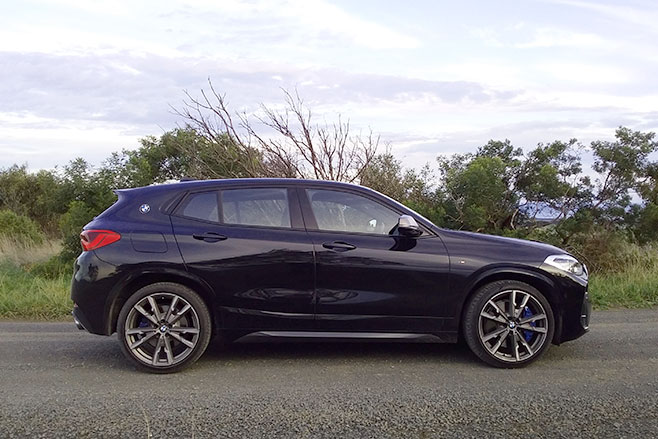
It’s not an unforgivably fussy ride, but you would have to be prepared to sacrifice a little comfort compared with the rest of the range for the dynamic benefits that the M35i brings to this compact SUV table.
Convenience features such as keyless entry, plenty of cabin storage despite its smaller interior measurements and hands-free boot opening boost the overall comfort experience to an extent, but customers at this end of the range ought to know that the M badge on its boot comes at more than just a monetary cost.
ON THE ROAD
Think not of the X2 M35i as an all-wheel drive and approach it more as a front-drive-plus because that’s exactly how it feels.
Yes, power can be sent to both axles depending on the conditions and driving style, but there is so much front end traction enhanced by a really competent LSD, that the M35i feels as though it spends a majority of its time using predominantly the front rubber.
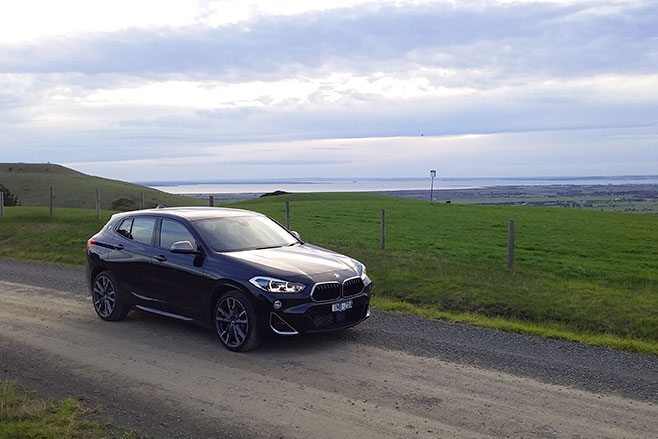
There is some torque steer under hard acceleration and the front wheels will grab hold of surface indifferences tugging gently at the steering wheel. Only when the limits of the front axle are surpassed do the rear wheels come into play and prevent an overzealous driver from embarrassing themselves, and this will appeal to drivers who miss the character of their early-2000s hot-hatches.
There is plenty of power and acceleration accompanied by a unique soundtrack – far more conspicuous than we were expecting – but not enough to find yourself overindulging. That manner imparts a sense of confidence on the road regardless of the weather.
Pushing through some challenging corners that alternated through damp and dry, the X2 deals out power carefully and its stiff spring settings resist roll as well as you could expect from a higher-riding crossover.
Apply power mid-corner and the clever mechanical diff loads up the steering and tightens the line through the bend with surprising obedience.
Braking is equally confident, and while a firmer pedal would be welcome for fast blasts, the overall package is completely in accordance with the M Performance mantra. It’s not quite a full-fat M-car but there are hints of brilliance everywhere.
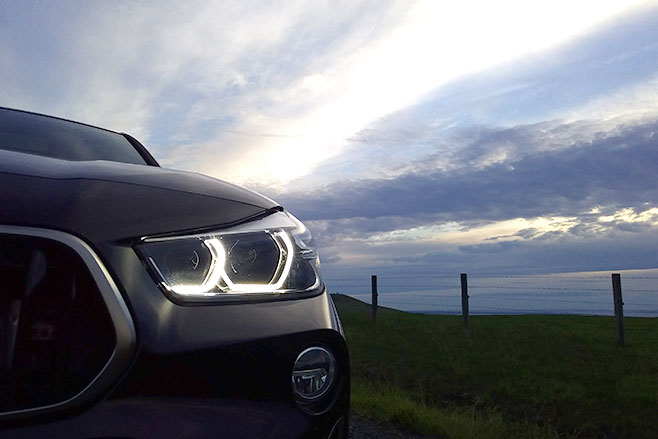
That said, it’s not up to the job of fighting pure performance cars that take their base from passenger vehicles. No matter how well you engineer an SUV’s chassis, it will always be fighting the physics of gravity and ride height.
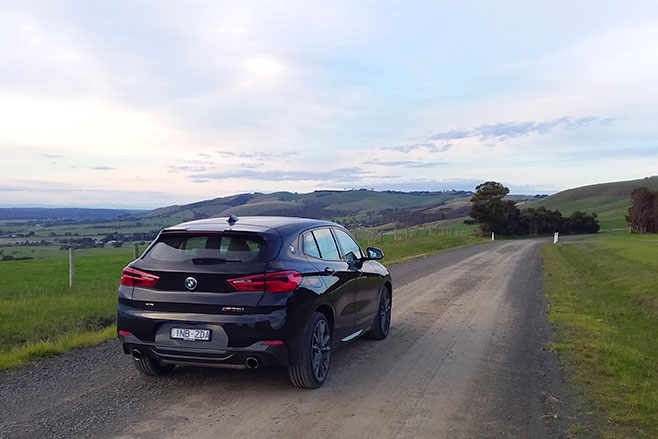
Delightfully, though, the X2 M35i excels when the tarmac stops and the way ahead is paved with loose gravel.
With a more slippery surface under-tyre, the M35i is amazingly agile in a way you can’t appreciate on the optimum grip of asphalt. There’s still the same front-drive nature but the rear end is forced to get more involved and, in combination with a short wheelbase, the X2 changes direction rapidly and feels incredibly at home on the dirt.
Its suspension is too stiff for anything more than a perfectly graded road, but an accomplished traction control system, nimble footwork and communicative steering come together when the sealed road comes to an end.
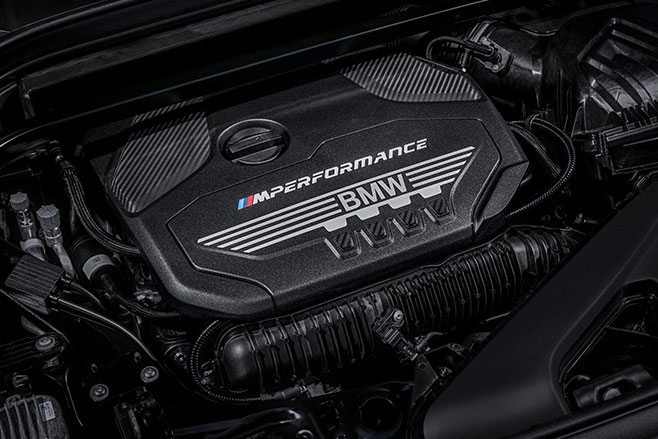
When driven hard, the X2 M35i really deserves its boot badge colours and a surprisingly aggressive nature justifies M Performance credentials. There is a small sacrifice to be made in cruising comfort, but you won’t remember when you’re flying along remote roads ahead of a dust cloud.
VERDICT
The X2 is for driving enthusiasts who’s requirements have outgrown a hot hatch but their aspirations have not.
In a battle with the best of today’s hot hatches which include a Hyundai i30 N for less than $40,000 and a Ford Focus RS with 257kW, all-wheel drive and a $50,000 sticker, the X2 loses on price and outright performance.
In standard form, the X2 is a simple proposition, but with the addition of an M Performance engine and trimmings, the X2 confronts a miniature identity crisis. Is it a hot hatch, all-terrain wagon or practical runabout? It surely can’t do all three.
But the BMW does offer a streak of versatility that will appeal to an audience that has moved into another life stage. A boosted ride height and more cabin space advance the X2 M35i’s practicality ahead of most high-performance hatchbacks, while the all-paw traction and a little extra ground clearance will likely offer more all-terrain ability should you need it.
More importantly, however, the class of hot hatch that the maturing market has as a reference and will compare the BMW with – we’re talking fifth-gen Volkswagen GTI et al – is categorically blown out of the water by BMW’s newest addition to the growing SUV pool.
Serious performance matched to classy styling as showcased by the newest X2 variant is redefining what a small high-performance car can do – for a price.
Hi WhichCar.
I’m thinking about buying an MG ZS Essence and was hoping to get your intel. I currently have a Nissan X-Trail but it’s getting old, my kids are all starting to drive so it’s going to be their car and I need something to replace it.
I like the MG logo and I’ve always loved MGs. The ZS reminds me of the cute little sports car with lift-off roof and it brings back memories.
I have thought about some other cars and I know what’s out there, but I won’t get a brand new car with panoramic roof alloy wheels and leather-look seats for that money. I might get a Hyundai but I’m a bit of a snob and the MG seems more prestigious over the Hyundai. The MG just looks more solid and it’s cool.
Getting something new is not essential but I’ve never owned a new car before and I’d really like the experience. I’ve managed to get the price down to $25,500 driveaway, which seems like a bargain. What do you think?
Tori, Bentleigh

Hi Tori.
Buying a brand new car from a dealership is a really exciting experience and about as convenient as the process of acquiring your next vehicle gets, but it’s also a significant commitment so you want to be absolutely sure you are making the right choice.
It’s easy to see why you are considering the MG. As you say, it’s a brand that carries rich heritage, the ZS is a sharp looking model and it has a generous standard kit list for an almost unbeatable price.
While many are skeptical of such a new brand to the Australian market, the company has given itself a big vote of confidence with a seven-year warranty and roadside assistance (That’s only matched by Kia). Even if the now Chinese-built cars start falling apart on you, at least you know you won’t end up out of pocket as a result. Peace of mind counts for a lot when investing in a car.

Range-wide standard equipment highlights include 17-inch alloy wheels, an 8.0-inch touchscreen with cool high-resolution graphics, reversing camera and Apple CarPlay smartphone connectivity (but not for Android devices). But, as you’re looking at the range-topping Essence, a massive panoramic glass roof, keyless engine start and navigation are also thrown in.
There are also great things to say about the interior, which is understated but well designed and constructed using decent materials. There’s also a huge boot and cabin space that borders on the class above.

But let’s look at some of the things you might not be so keen to live with.
Firstly, under the bonnet lies a tiny 1.0-litre engine and although it has a turbo, still only produces a paltry 82kW and has to propel a car that weighs more than 1.2-tonnes. For comparison, a Honda Jazz micro hatchback has 88kW and weighs just over 1.0 tonne. So the MG is slow – really slow.
Then there is the way it drives. Its suspension can be uncomfortable at speed and doesn’t cope with imperfections in the road well. The steering is vague and the body rolls unashamedly in corners. Almost everything in its class drives better.
In summary then, the MG packages a decent amount of kit for the price, but at the cost of driving enjoyment and some refinement that you can take for granted in other brands.
Speaking of which, it’s interesting that you regard the MG as the more prestigious brand compared with a Hyundai. While the South Korean maker has been kicking goals in terms of quality, features and ownership experience for many years in Australia, MG is a relative newcomer that still has a lot to prove by comparison. Branding can be a very powerful tool! So try to be pragmatic when browsing your options.

If you are still thinking of going for the MG then here is our one golden rule and the piece of advice that doesn’t just apply to your circumstances Tori, but everyone looking to buy a new car: Drive it. And once you have driven it, drive a few of its closest rivals.
The ZS sure looks like a great deal on paper but if there is something that stands out that you simply couldn’t tolerate once you are behind the wheel then you have your answer. And by driving a handful of its closest competitors you will more accurately establish what it does well and not so well.
Obvious rivals you should sample include the Honda HR-V, Mazda CX-3, Hyundai Kona, Holden Trax and Suzuki Vitara. You won’t match the equipment level measure-for-measure on price, but a bit of negotiation can go a long way. And you may be happy to sacrifice a few luxury options for a car that you are happier with all round.
See how it stacks up with one of the best cars in the class here.
Or how about these for a couple of wild cards? If you are considering budget Chinese brands then have a look at the Haval H2 or our pick of the lesser-known SUV brands: the SsangYong Tivoli, which packs a lot in for not much cash.
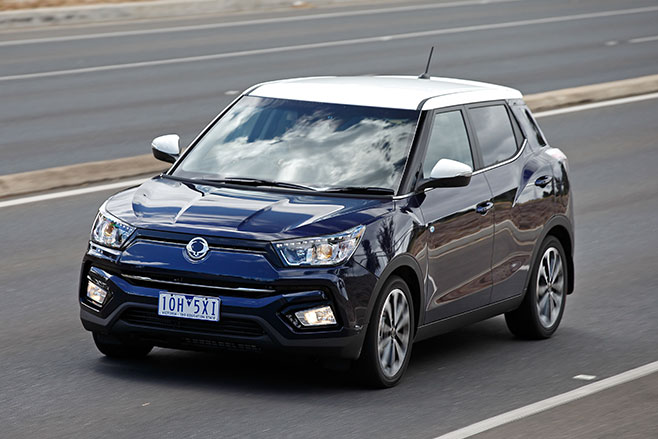
But our final piece of advice would be to spend a day trawling your local dealers for ex-demo and even one-owner vehicles.
Your budget will stretch to some of the more familiar brands and with long warranties offered on almost all new models these days, you can jump into a pre-owned vehicle with the same confidence as many new cars.
It’ll take a little more work and research and it certainly isn’t as convenient as walking into the first dealership you are considering and rolling out with a new car, but we guarantee you will end up with the car that is right for you.
It’s the 87th running of the 24 Hours of Le Mans endurance classic this weekend, and there are a handful of Australians and New Zealanders in contention to win this most coveted event.
While much of the attention is on the Toyota Gazoo Racing team to take line honours with a Toyota TS050 with two-time F1 world champion Fernando Alonso at the wheel, there are four Australians and New Zealanders in with a real shot of winning their categories.
Australia’s best hope is Matt Campbell (below), who returns this year in a Porsche 911 RSR in the GTE Am category. It’s an evolution of the car in which he won last year’s race driving for the Dempsey-Proton Porsche team.
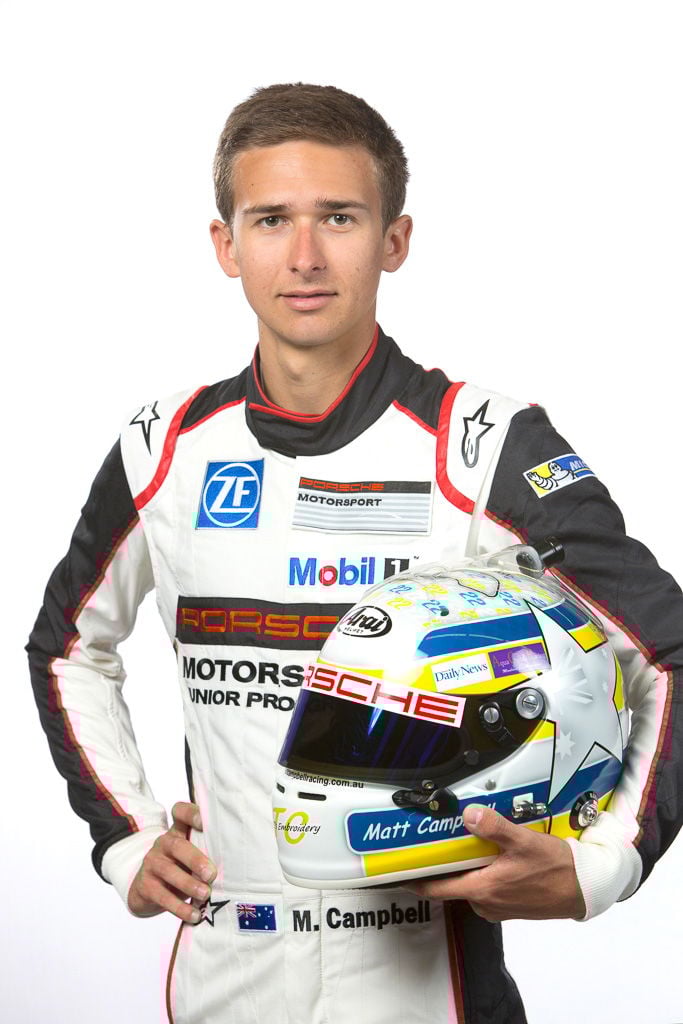
Yes, Dempsey as in Patrick Dempsey: actor, Hollywood heart-throb and amateur race driver who has driven in four Le Mans 24 Hour events himself for a best result of second in class in 2015.
It was as a team owner that Dempsey finally reached the top step of the podium at Le Mans, when Matt Campbell and co-drivers Christian Ried and Julien Andlauer beat a Ferrari to win the GTE-Am class. Kiwi racer Earl Bamber finished third in another Porsche.
This year, Bamber (below) is driving a Porsche 911 RSR in the GTE Pro category, and is hoping for his third win at Le Mans. He will start from fourth on the GTE Pro grid.
Campbell was quietly positive about his chances in the race when WhichCar caught up with him in the pits before final qualifying on Thursday.
“I think the race week is going positive so far. The test day went well. Qualifying was a little difficult early on with the changing conditions and a bit of bad luck with traffic [Wednesday]. We’re third in class, so I’m hopeful.”
Campbell’s trio moved up into second in final qualifying, just two-tenths of a second behind the team’s other car.
Australia’s other big hope for the race is Ryan Briscoe (below), a seasoned professional who spent 11 seasons competing in IndyCar and came third in the championship in 2009.
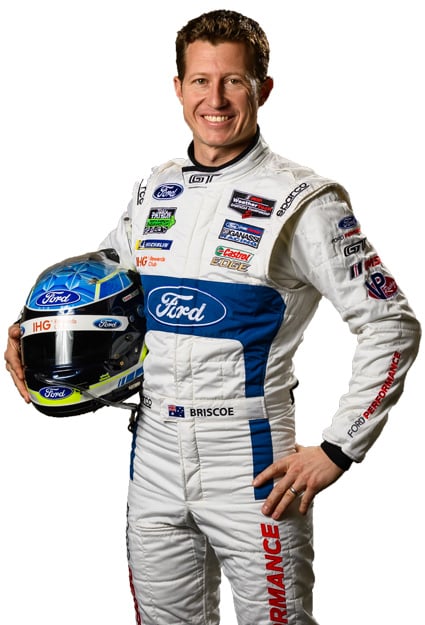
Since 2016 Briscoe has been driving for the Ford Chip Ganassi Racing team in the GTLM Sports Car Championship and finished second in both the 2016 and 2018 seasons.
Briscoe’s Ford GT (entered in the GTE Pro category) will be co-driven by another Australasian, Kiwi Scott Dixon (below), and England’s Richard Westbrook.
Dixon is a five-time IndyCar champion who holds more race wins than any other current IndyCar driver.
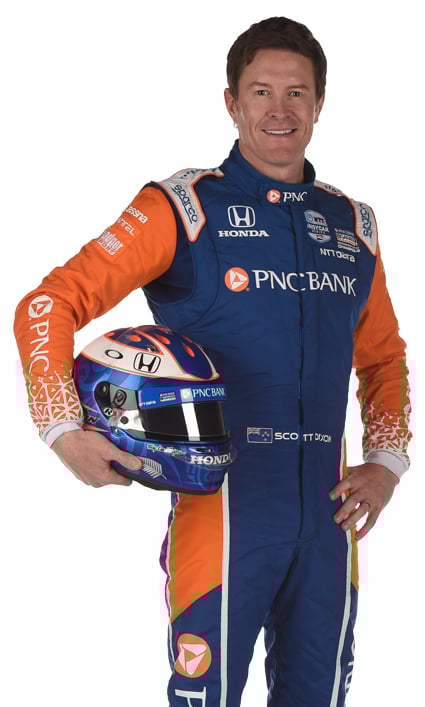
Another highly successful driver, Westbrook’s most recent success came at the 24 Hours of Daytona in 2018 which he, Dixon and Briscoe won.
Briscoe is feeling positive about the team’s potential in the race. “In our preparation and my own preparation, I’m feeling pretty good. [But] we won’t really know until lap one of the race.”
Briscoe’s car will start from tenth in the GTE Pro category.
The 24 Hours of Le Mans starts at 3pm on Saturday local time, which is 11pm Australian Eastern Standard time.
As the great-grandson and grandson of Mini Cooper founders Charles Cooper and John Cooper, and the son of John Michael Cooper, the creator of John Cooper Works, you’d think Charlie Cooper’s shoulders would be weighed down with legacy.
After all, these men were revolutionaries. They were the first to build rear-engine race cars that looked like matchboxes (and almost weighed the equivalent), transforming motorsport from Formula One to rally to the Indianapolis 500 in one fell swoop. However, the case is quite the opposite.
Like his family, the founder of lauded cycling brand Cooper Bikes, Mini ambassador and Mini Challenge pro-driver is also a futurist, mobility enthusiast and an entrepreneur. As the British marque now owned by BMW celebrates its 60th year, we talk to Cooper about the family business, how the Germans have kept his family’s legacy alive and what his grandfather would think, had he been alive to see his beloved Cooper powered by a plug.
What point did you decide to go into the family business?
As a kid, I was a massive petrol head but, unlike my father and grandfather, I didn’t go the engineering route. But I think it really hit home when my grandfather died in 2000. So I always took it for granted [that he would be around] – as you do when your grandparents are alive, and you don’t make the most of it.
So I would hear stories and think ‘he was just granddad to me’, but when he died and dad created the John Cooper Works brand, I really wanted to be involved at the start of it. I started hearing more about the stories and how revolutionary he was in terms of what he did for motorsport.
What he did for the car industry. My father was also a racer, so I wanted to keep the story in my family and to keep the Cooper legacy alive – it meant a lot.
Besides the fact it’s in your blood – what is it about Mini Cooper that excites you the most?
There are so many opportunities and challenges in the automotive industry. But there is a really exciting future for Mini and great things happening. Before start-up culture existed, it was the first real start-up. And I think that’s what my grandfather did with his little garage in the south of England.
Mini celebrates 60 years this year, it’s a marque that carries so much sentimentality and emotion for many. Now it’s owned by BMW of course so it has a new life. How do you feel about the evolution of the Mini, as a family?
Totally. We take it very seriously. I think that is the beauty of how the brand has evolved today. The product was the first thing we talked about, that was the design deal. You know, the elements of what makes a Mini. For example, Cooper’s all about that go-kart feeling, the handling and the experience.
So regardless of whether it’s the more traditional three-door or all the way to Mini Countryman SUV, it still has the elements. And Mini will never lose that.
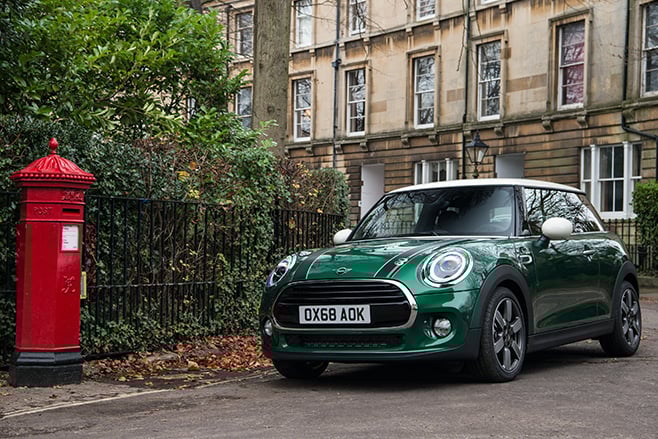
There is the argument that if you don’t evolve, you get left behind.
Right. It’s been clever in terms of how it has evolved because Mini has stayed relevant the entire time, and very few brands can do that. Now, a young person can have this emotional connection with Mini, the same way a young driver first might have had in the 60s. I don’t think there’re many brands like that, that have evolved in such a way.
Do you think that’s where the success is?
A big part of that is actually just having a product that’s designed to be a good product. It would be very easy to relaunch a very strong, powerful brand but a bad product. We’ve seen that in different segments of the automotive world. Not naming any names, but they’ve suffered because they’re great brands but they’ve come out with a product that is really not as good.
I’m closely aligned to the John Cooper Works brand, so some of the JCW products coming out, I’m really excited about. But on a whole, looking at all the Mini products coming in the future, that’s what will keep the brand alive.
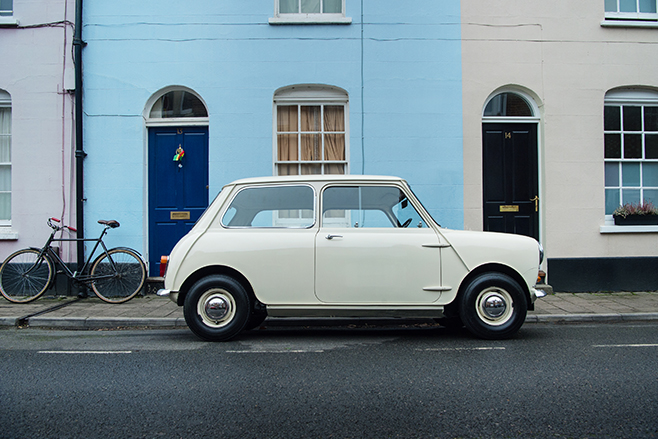
What else are the original values instilled by your grandfather and father that still ring true for you?
My grandfather was…well, if you had someone talking about what makes an entrepreneur, he embodied all it. I was very lucky to spend time with Oliver Heimler [head of Mini design] in the design studio in Munich. And when I met Oliver and his team and told them stories about my grandfather, he said that’s what they try and bring to the table.
There was this spirit of letting anyone, whether it’s the most junior designer, mechanic or engineer, come up with a new concept or idea – and again, it felt very much like that start-up culture I was talking about earlier. There is also this real British feel to what Mini is doing- it is still exciting. I do think that’s why Mini lives on today.
But my father is incredibly entrepreneurial as well. In the 80s, he kept the Cooper brand alive. Production wasn’t there, so he used to sell kits to Japan, which was the biggest market at the time for classic Cooper kits. And then obviously it was re-launched in the 90s with Rover. If it wasn’t for my father, the brand wouldn’t be here today.
That’s a heavy legacy to bear! And now you’re the ambassador of the brand, balancing it with your own bike company, Cooper Bikes.
I know! [laughs] One of the things I will say is that I’m passionate about mobility and the future of mobility. I mean, I am my own person and Cooper Bikes fits in perfectly. I’m working on a project right now with Mini about the future of mobility so it all does come together.
As much as I love getting in my car and driving on a race-track or on the roads, I also love cycling.
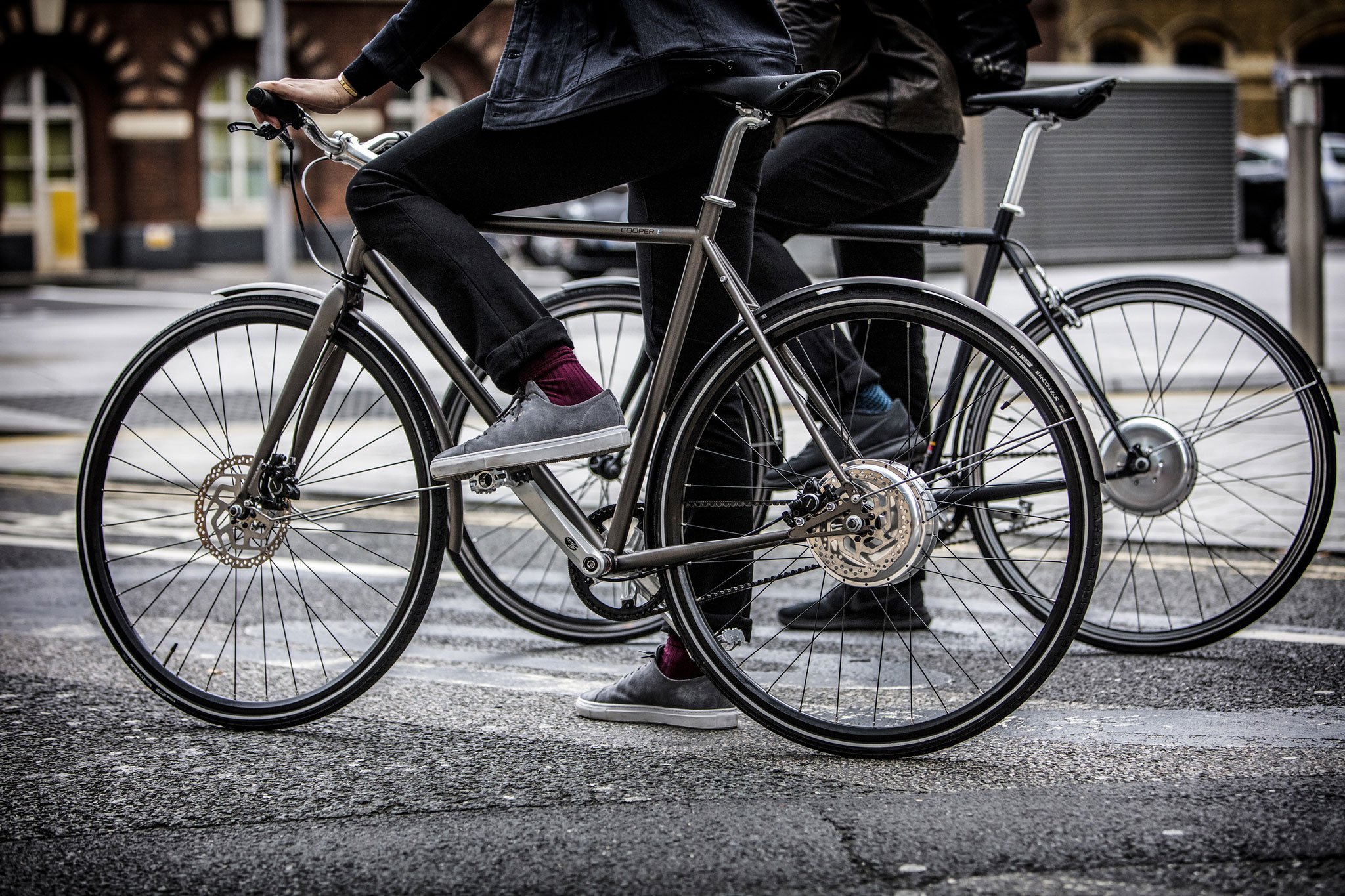
Your e-bikes use similar technology found in Formula 1 cars and its not uncommon for motoring enthusiasts to also love cycling. Have you found more connections between the two industries than expected?
There are definitely connections. I mean, a bicycle is a much simpler than a motor car. There are certainly fewer elements. But they are getting more complex, especially with things like electric bikes. But some of the challenges are the same – especially when it comes to using design to try and set yourself apart.
In the e-bike world, technology is a big challenge. There are parallels with the automotive world. I think we’re getting to that stage where we’ve stopped talking about ‘cars’ and ‘bikes’, it’s just modes of transport. We’re starting to think less about getting in a car for a journey, and more about using the right mode of transport for the way to get somewhere.
On the eve of a new dawn of electrification for Mini, what do you think your grandfather would say if he were alive today?
He was lucky that before he died, he saw one of the final prototypes of the Mini that was launched in 2000. And when he saw it, he said: “Wow, it is a Mini!” I think everyone involved in that project was pleased because that was his real, instant response, which was a good thing.
He was always pushing boundaries, and actually seeing the Mini go electric would have been a natural progression for what he would be doing if he was around today. I think it perfectly fits in with what he would be doing. I think he’d probably be involved with Formula E motorsport and the technology would really excite him.
It’s a cliché but, he had a glass-half-full attitude, so he’d be looking at all the opportunities around electrification.
Nothing about the Porsche 991.2 911 GT3 RS makes sense. It defies expectations, logic and certainly physics, delivering a pure hit of driving adrenaline straight to your rapidly pulsating heart. It doesn’t make sense that a car that looks like it’s escaped from the Bathurst 12 Hour grid should be allowed on the public road. It has a bright green roll cage, ferchrissake!
The Lizard Green paint definitely doesn’t help it blend into the background, but the GT3 RS could be painted dishwater grey and still spin observers’ heads quick enough to cause whiplash. The 911 Turbo bodyshell gives the RS a very Instagrammable, erm, RS.
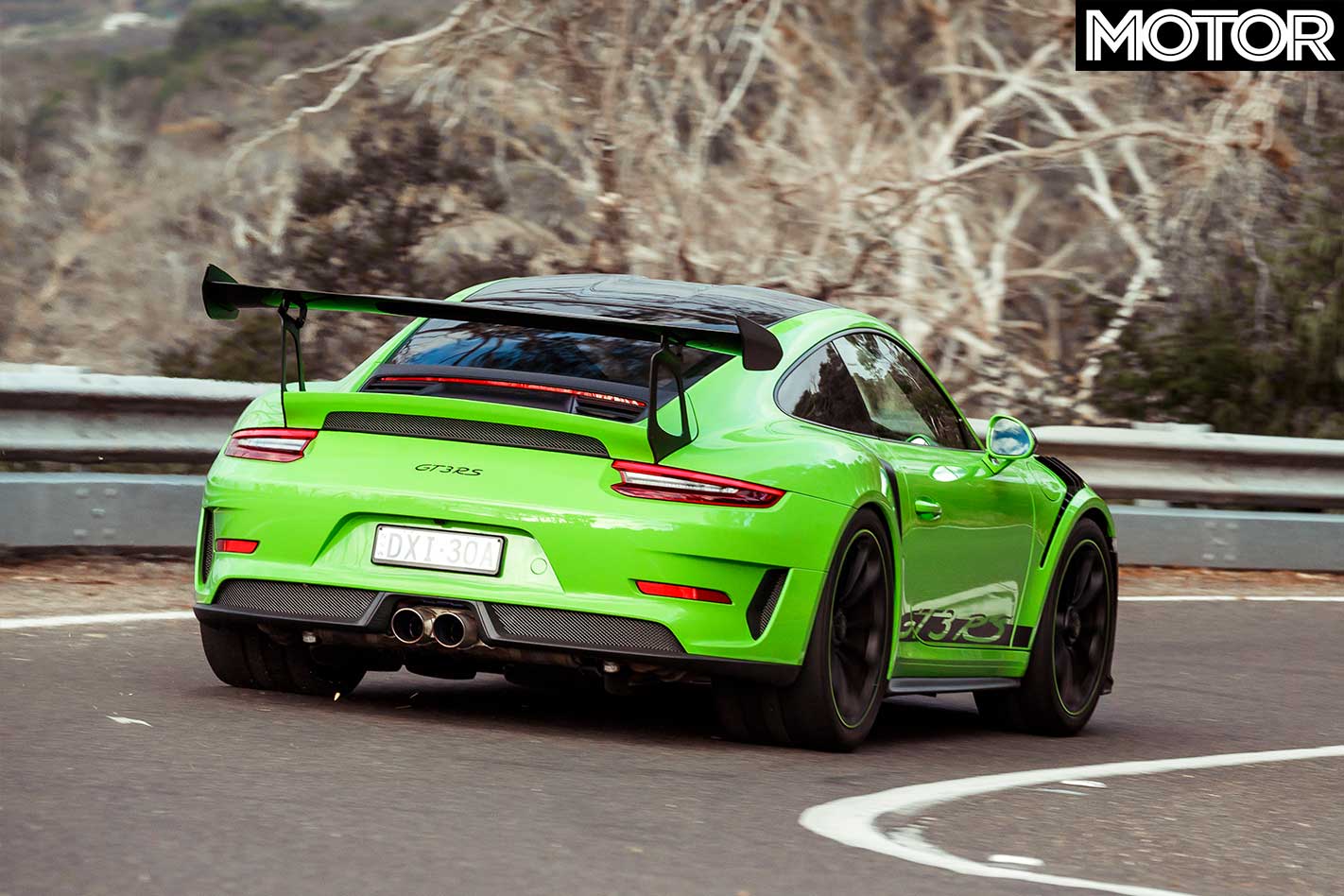
Optioning the $34,390 Weissach Package lays a liberal layer of carbon fibre across the top of Porsche’s road racer, the bonnet, roof and rear wing all shedding weight, while elsewhere the anti-roll bars and shift paddles also cop the carbon treatment.
If you’re truly offended by the thought of extra kilograms, an extra $7600 will substitute the steel roll cage for a titanium one to save 12kg and a further $26,600 will add magnesium wheels and drop another 11.5kg. A $68,590 option package won’t make sense to most, but the take-up rate suggests it makes very good financial sense for Porsche at the very least.
While the chassis engineers went to extreme lengths to remove kilograms, the aerodynamicists did everything they could to add them back on in the form of downforce.
At 200km/h the GT3 RS enjoys 144kg of air pressure, more than double the standard GT3 (69kg) and more than the equally wild-looking Jaguar XE Project 8 makes at 300km/h (122kg)! That ironing board rear wing plays a huge part, but so do the vents in the front guards, which suck out the turbulent air created by the turning wheels and pin the nose to the ground.
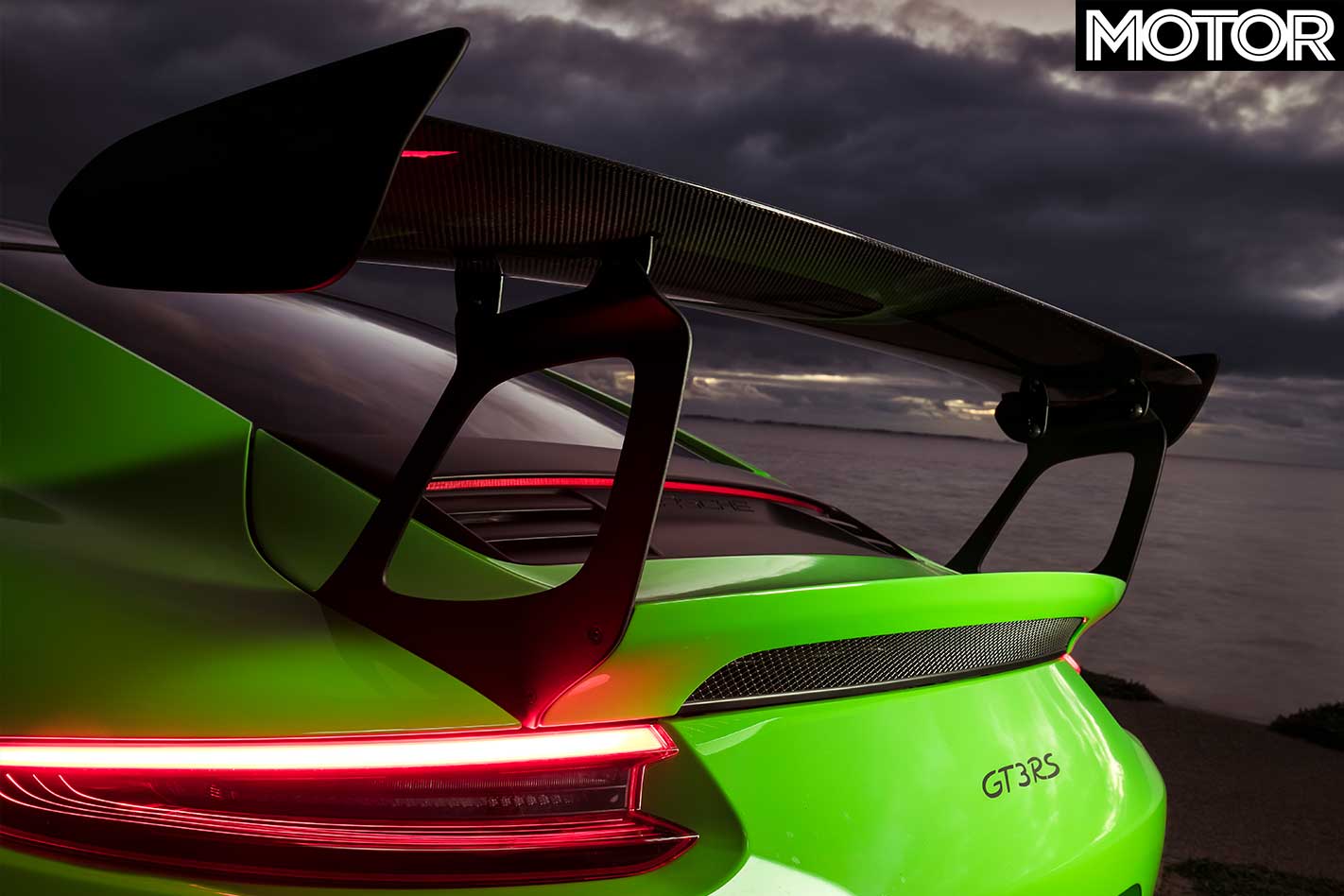
Front-end response is where the GT3 RS separates itself from every other 911 bar perhaps the equally focused GT2 RS. An extra 37mm of front track and 20mm-wider front tyres (265/35) make a mockery of the weight distribution; if you’re understeering in a GT3 RS on the road, you’re probably already on your way to a crash as you’ve clearly made a mistake. The rear tyres are equally fattened, but even 325mm-wide Michelin Pilot Sport Cup 2s aren’t sufficient to harness the savage brutality of one of the most ferocious production engines ever built.
For all the wizardry contained within the GT3 RS chassis, the experience is utterly dominated by the berserk 4.0-litre flat-six in the rear. It’s tough to know where to begin, so let’s start with the raw numbers: 0-100km/h in 3.18sec, 0-200km/h in 10.61sec and an 11.07sec quarter mile at 203.78km/h. Elsewhere in this issue you’ll find the Mercedes-AMG GT R, which recorded exactly the same 0-200km/h time as the 911, but needed an extra two cylinders and a pair of turbochargers to do so.
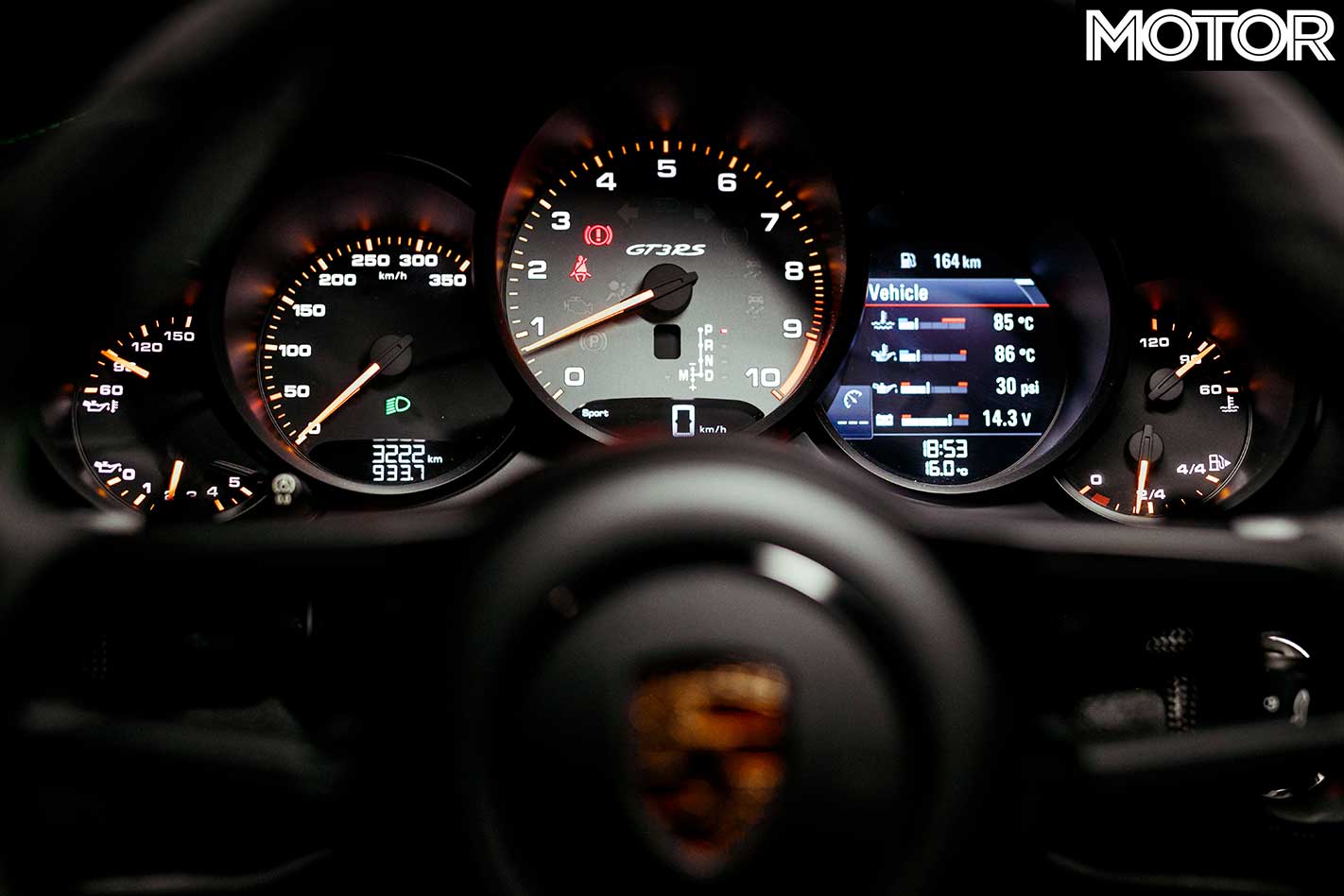
The acceleration is enough to require your full attention, a difficult task when the engine emits a piercing mechanical scream like some undead monster from Game of Thrones. It can catch you out: whereas turbochargers give you the full hit almost instantly, the GT3 RS keeps accelerating quicker and quicker as the revs rise, exponentially decreasing the distance between you and your braking point. It’s important to keep your wits about you.
Just how Porsche manages to make a car with massive wheels and virtually no suspension travel ride with compliance is engineering witchcraft, but it can’t completely defeat physics. On a bumpy back road the GT3 RS can be a wild ride, the steering constantly wriggling in your hands as it chases cambers and undulations and the revs flaring as the rear suspension runs out of ideas and lets the tyres skip free of the surface. Never is it unruly – only once in hundreds of kilometres over scarred roads does the splitter kiss the ground – but it does demand a certain workload from the driver.
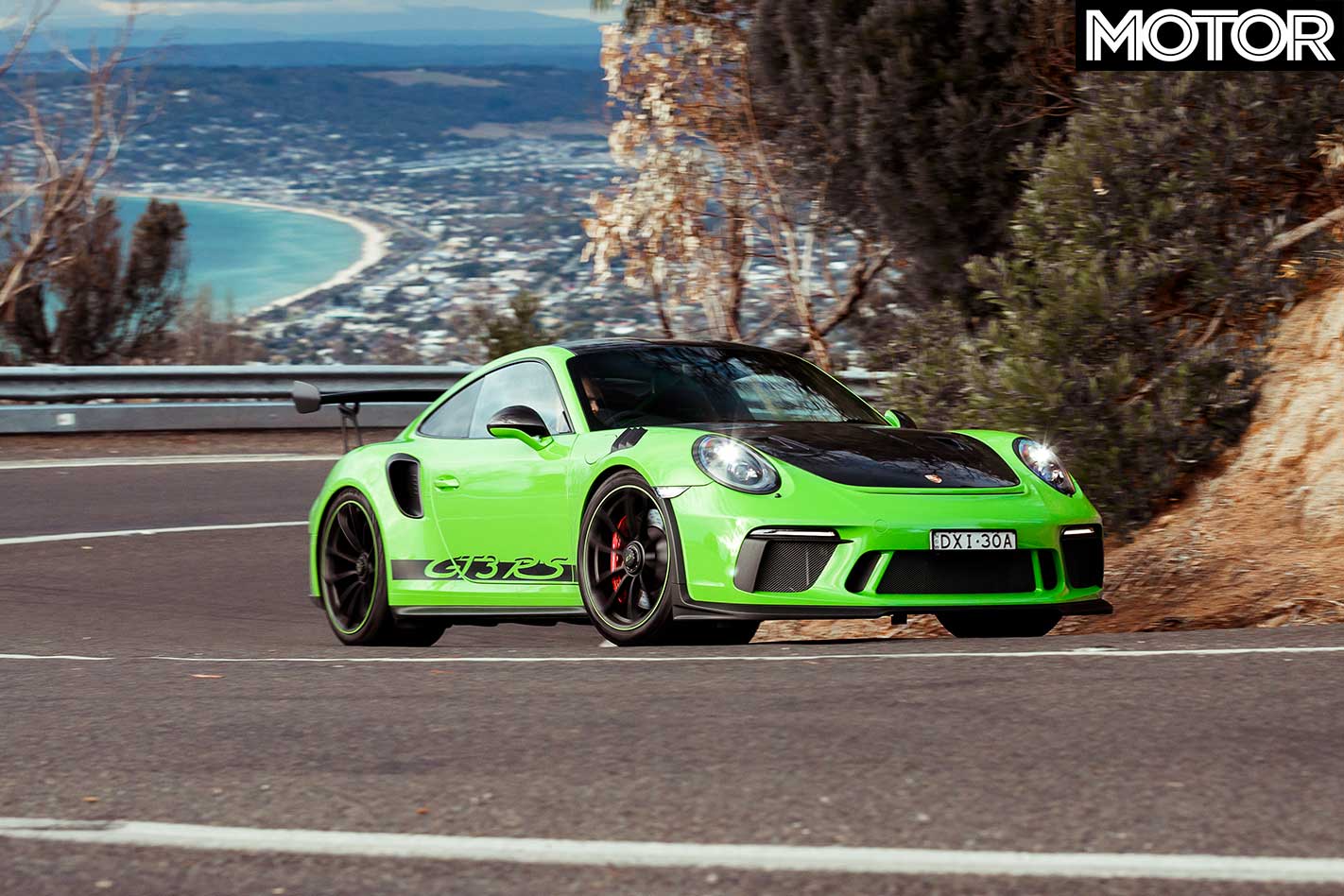
There’s no point trying to exploit the limits of the GT3 RS on the road – it’s simply too fast, too capable. After a full day behind the wheel criss-crossing Victorian twisties I was mentally shattered simply because you’re invariably going to be operating at your limit rather than the car’s – at full attack it’s berserk, a tarmac assassin, its engine matching the ferocity of the Ferrari 812 Superfast’s V12 but with a chassis of equal focus. It’s bordering on being too intense.
Put your sensible hat on and it’s tough to make a case for the GT3 RS. As a road car the new 992 Carrera S offers more accessible performance with far greater refinement and comfort, whereas if you’re that addicted to track days, buy a Cup car. But then nothing about the 991.2 GT3 RS makes sense. This doesn’t stop it being possibly the greatest performance car currently on-sale and inarguably one of greatest driving machines of all time.
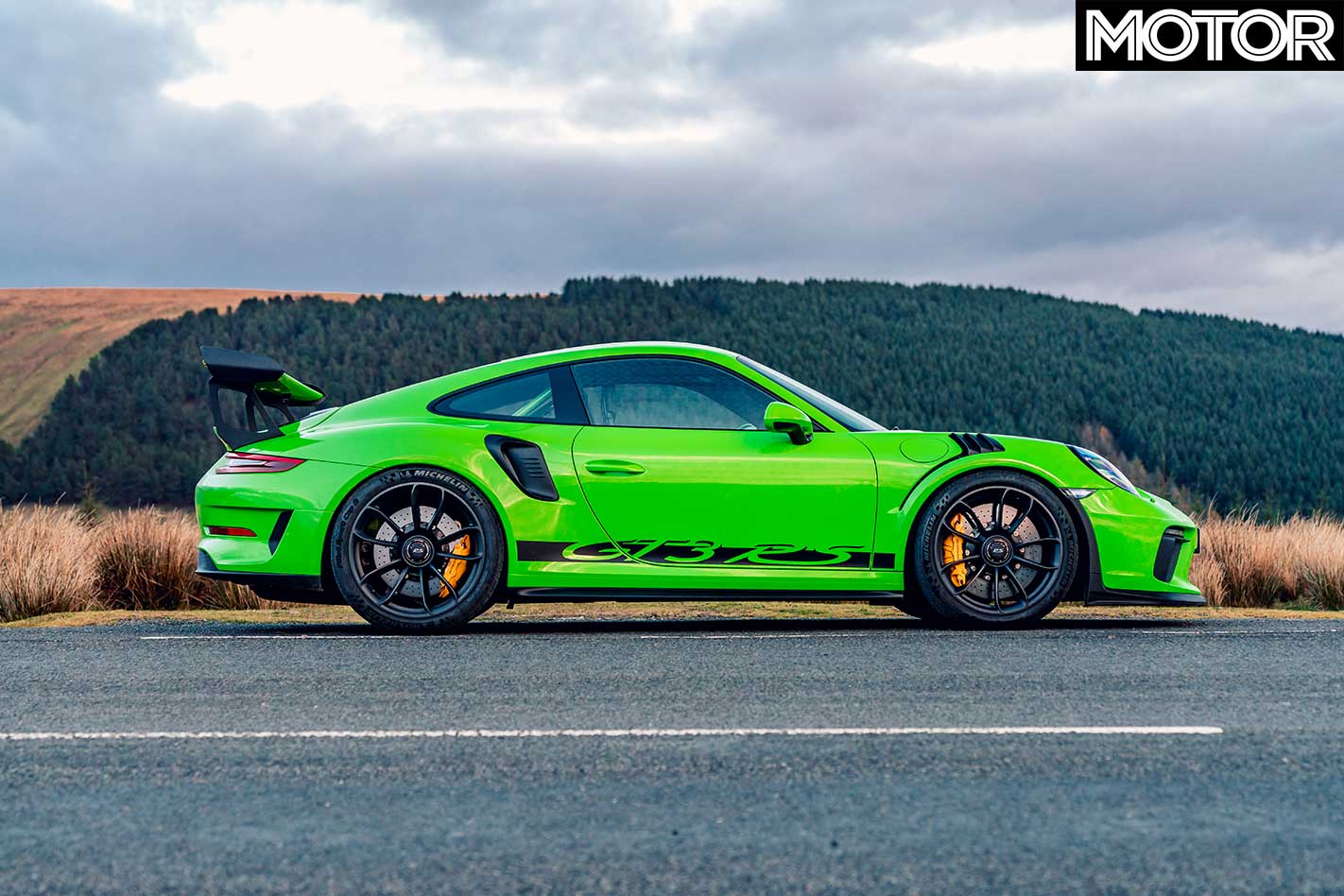
2019 PORSCHE 911 GT3 RS SPECS Engine: 3996cc flat-6cyl, DOHC, 24v Power: 383kW @ 8250rpm Torque: 470Nm @ 6000rpm Weight: 1430kg 0-100km/h: 3.18sec (tested) Price: $416,000
Like: World’s greatest engine? Ridiculously fast and capable; looks incredible Dislike: New 992 makes more sense as a road car; struggles on very bumpy
Rating: 5 out of 5 stars
Best value car award
Wheels’ Gold Star car award uses data such as depreciation and running costs to calculate what the best value new cars in eight different segments are. To understand how we calculate the numbers and what considerations were put into the algorithm, read the 2019 Gold Star Car Award 101 here.
The top 3 mainstream hatch contenders
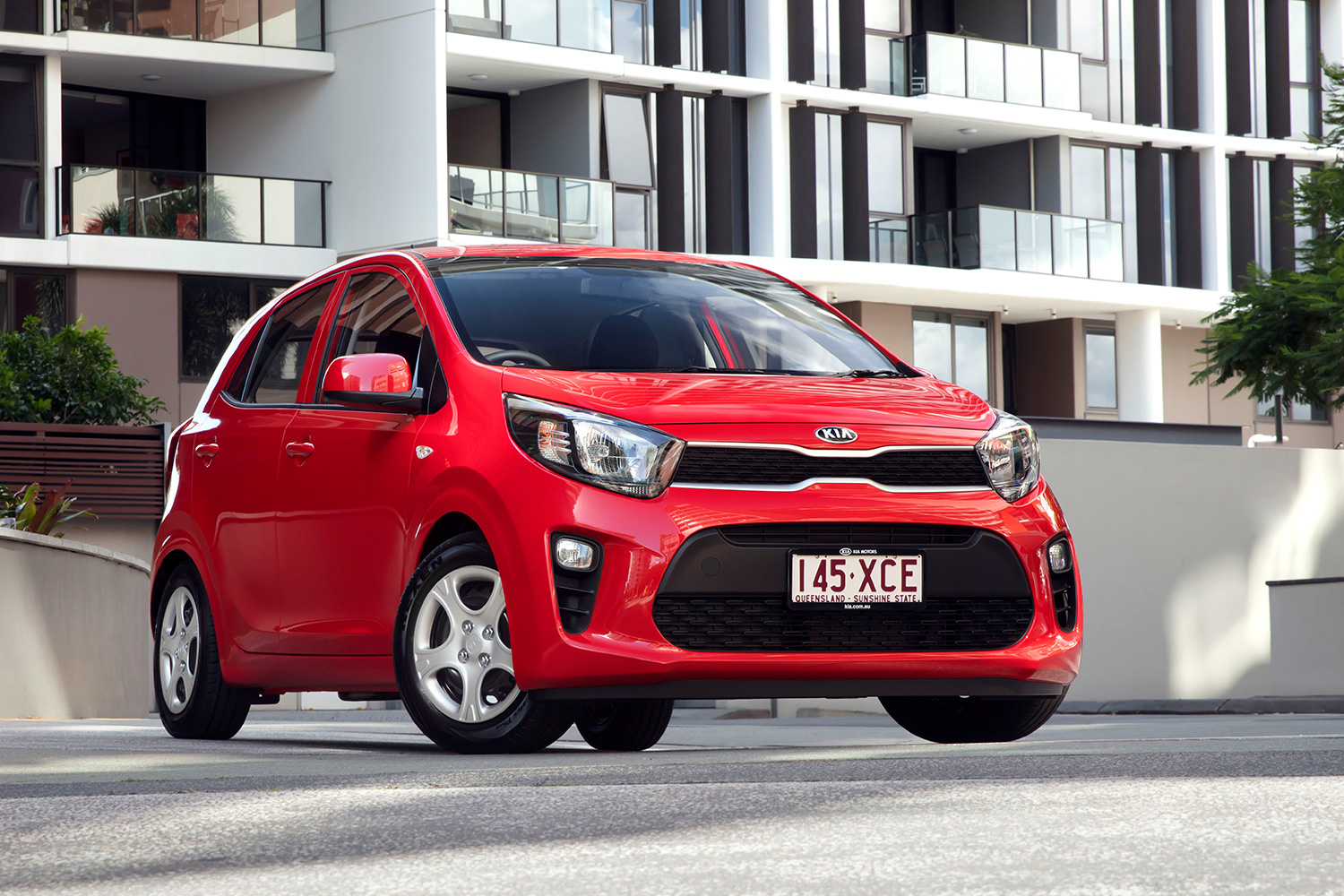
- Kia Picanto S
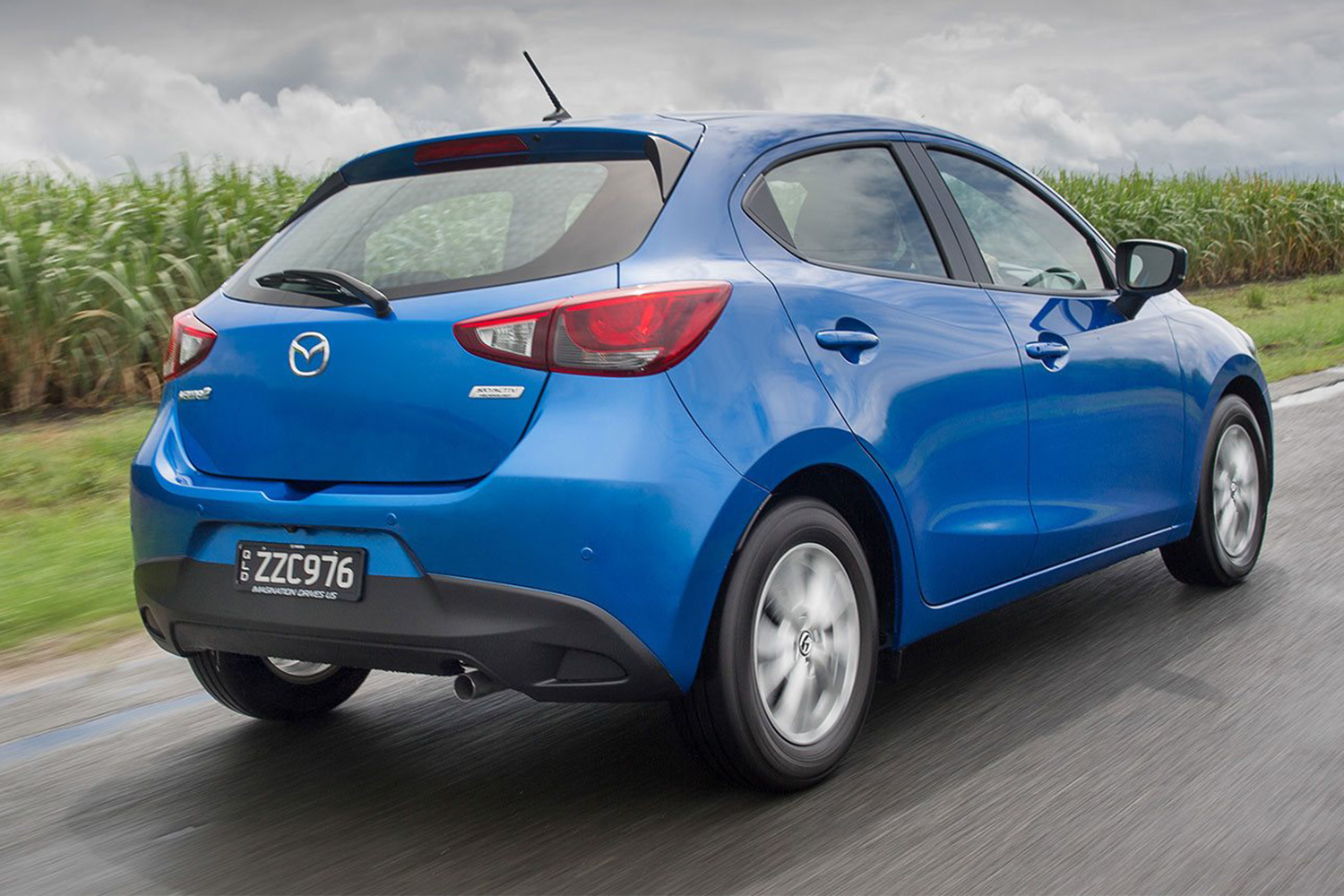
- Mazda 2 Neo
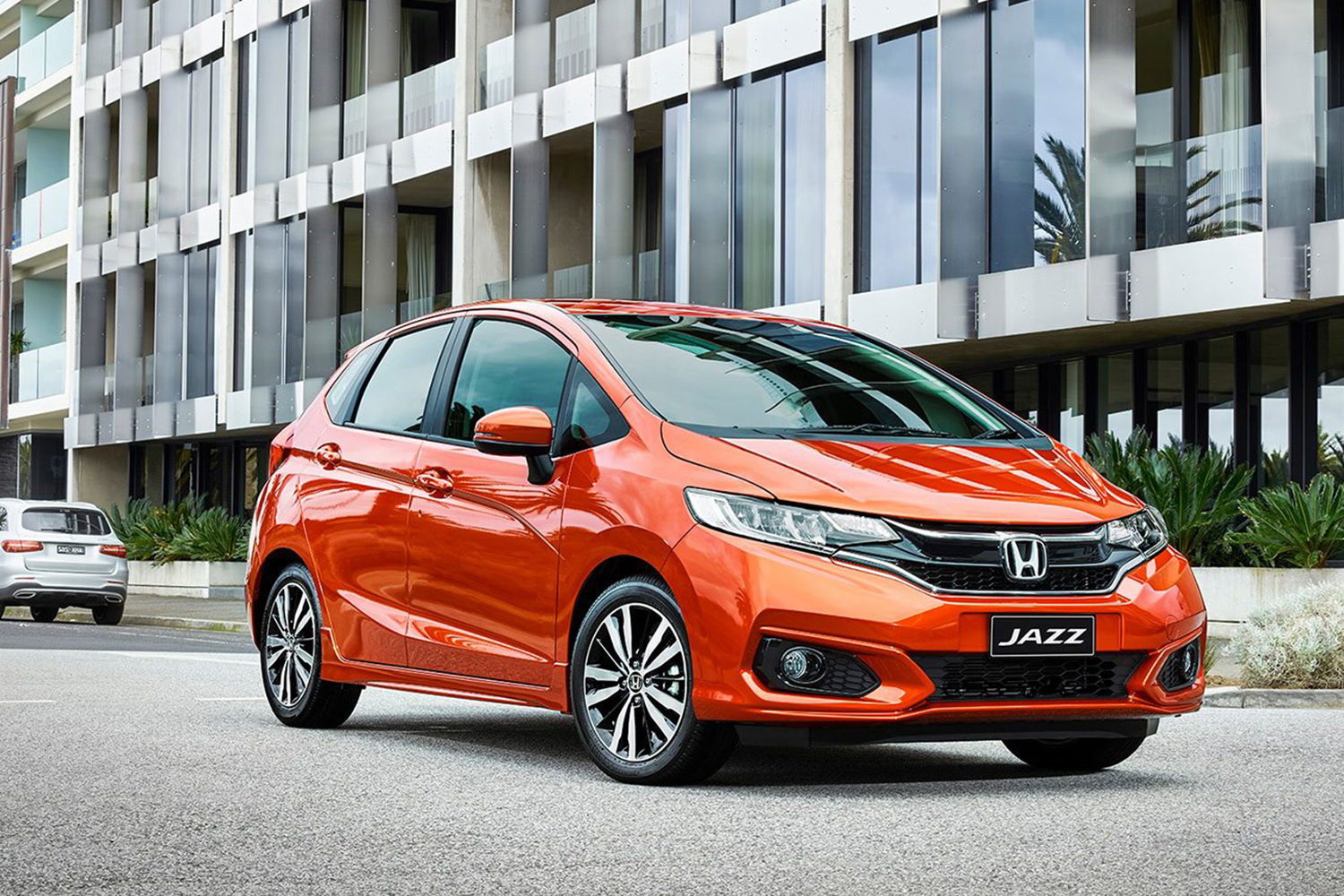
- Honda Jazz VTi
What the numbers said
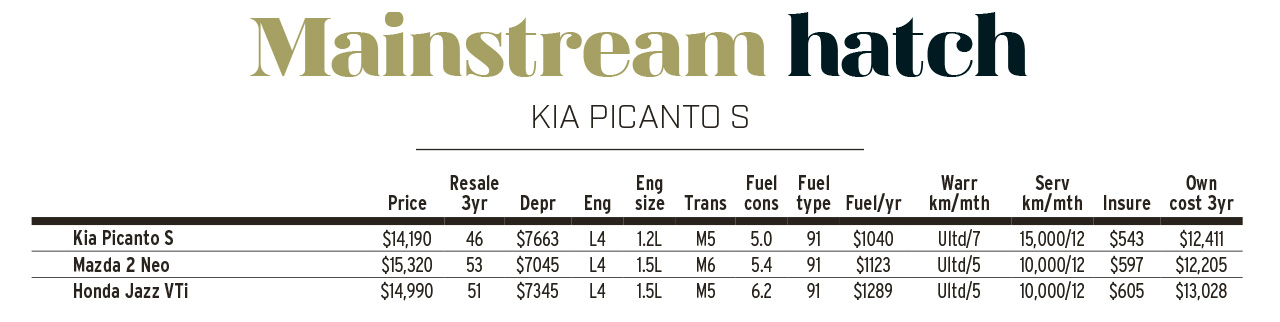
Sub-light cars can be a false economy – not cheap enough to be worth the saving over a light car and much the same money as a good newish used small car. None of that is true of our sub-light – and overall Gold Star Cars 2019 – champion. The Kia Picanto S might only be about $1000 less costly than many light cars, but the fact it’s not a lesser option – just a smaller option – means it still adds up.
You see, while some sub-lights are a bit sub… standard, the Kia looks good, steers and handles well, and goes all right with a 62kW 1.2-litre engine pulling 976kg. The depreciation cost of owning a Picanto over the first three years is less than almost any other new car. The baby Kia uses just 5.0L/100km officially, on regular unleaded, without any fancy eco-tech.
The 12-month service interval makes complete sense for such a mechanically conventional and simple machine, and Kia’s industry-standard seven-year warranty seals the deal.
Wheels’ pick
Toyota Corolla SX $26,870
It’s no surprise a sub-light hatch got the top gong given cheap-as pricing, but for a bit more space and substance, the mid-spec Toyota Corolla SX looks sharp and is packed with gear: adaptive cruise control, lane-keeping assist, LED headlights and an 8.0-inch touchscreen, along with dual-zone climate control, wireless mobile charging, sat-nav, and keyless entry and start.
