
We know you’re thinking a Hyundai Kona might have landed on this page by accident. After all, a shrunken down crossover is hardly typical MOTOR fodder.
But it actually piqued our interest for a couple of reasons. One, it’s available with the i30 N-Line’s 1.6-litre turbo four-pot and seven-speed dual-clutch, so it gets a decent 265Nm and (detuned) 130kW. You can tick the box on this powertrain in any one of the range’s available trims – they start at $27,000 and stretch to $39,000. The alternative to the turbo donk? A 2.0-litre atmo two-wheel drive version with 110kW/180Nm. No thanks.
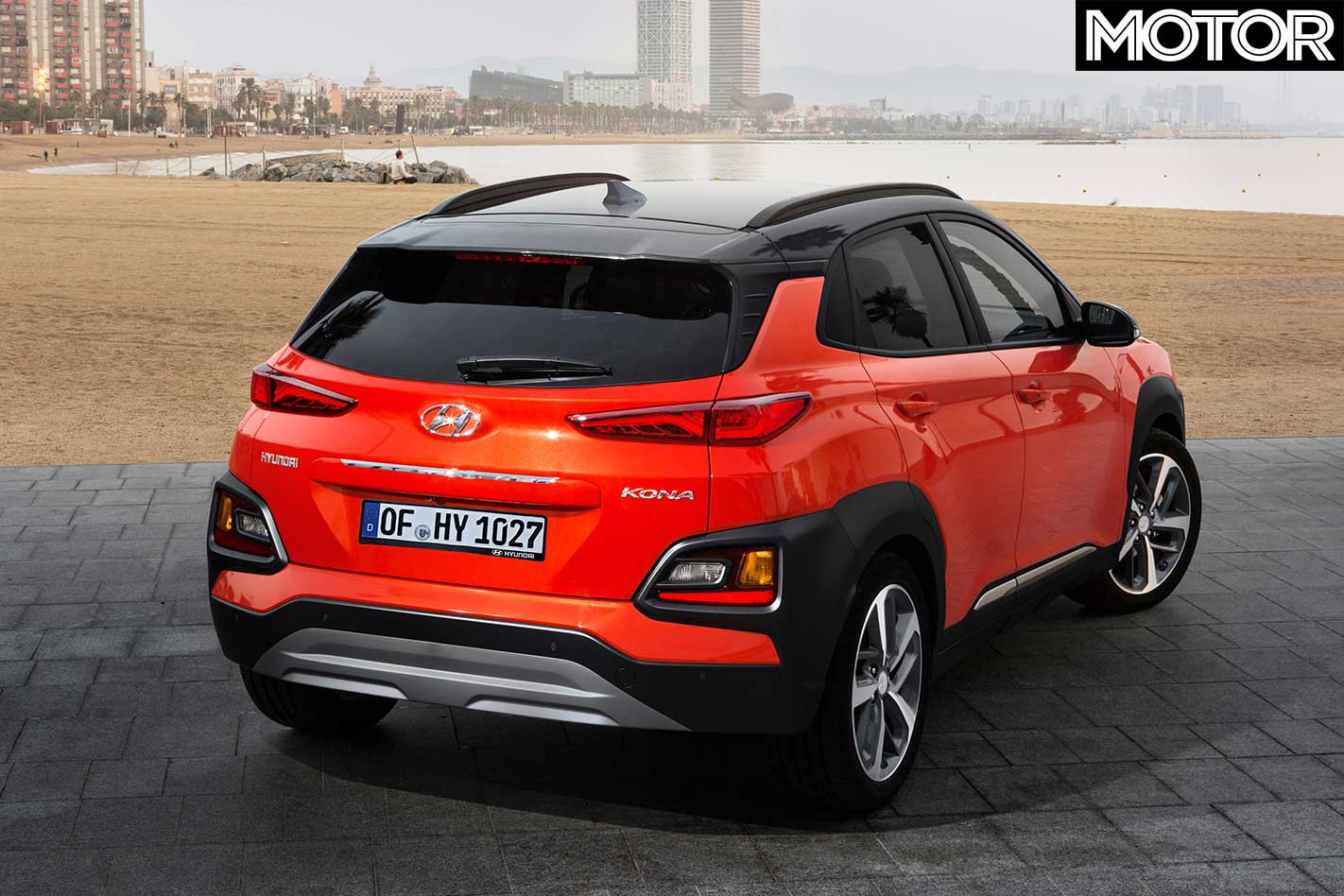
That’s because this punchy engine pairs exclusively with all-wheel drive, handling those outputs in either active or locked split. It also scores beefier brakes front and rear since it’s far tubbier than the 1290kg atmo version at 1414kg. Now, this might be a bit of stretch, but not too long ago a 2001 Subaru Impreza WRX hatch weighed near that and relied on only 30kW and 27Nm extra.
Okay, the Kona is hardly a getaway car, but its all-paw drivetrain makes decent work of a wet test road. Prod the centre diff button and the all-wheel drive locks distribution at 50 per cent front to rear. Accelerate hard out of corners with heaps of steering lock and instead of the front wheels scrabbling for traction, pushing its nose towards the bushes, you can feel it drive from the rear and tighten your line.
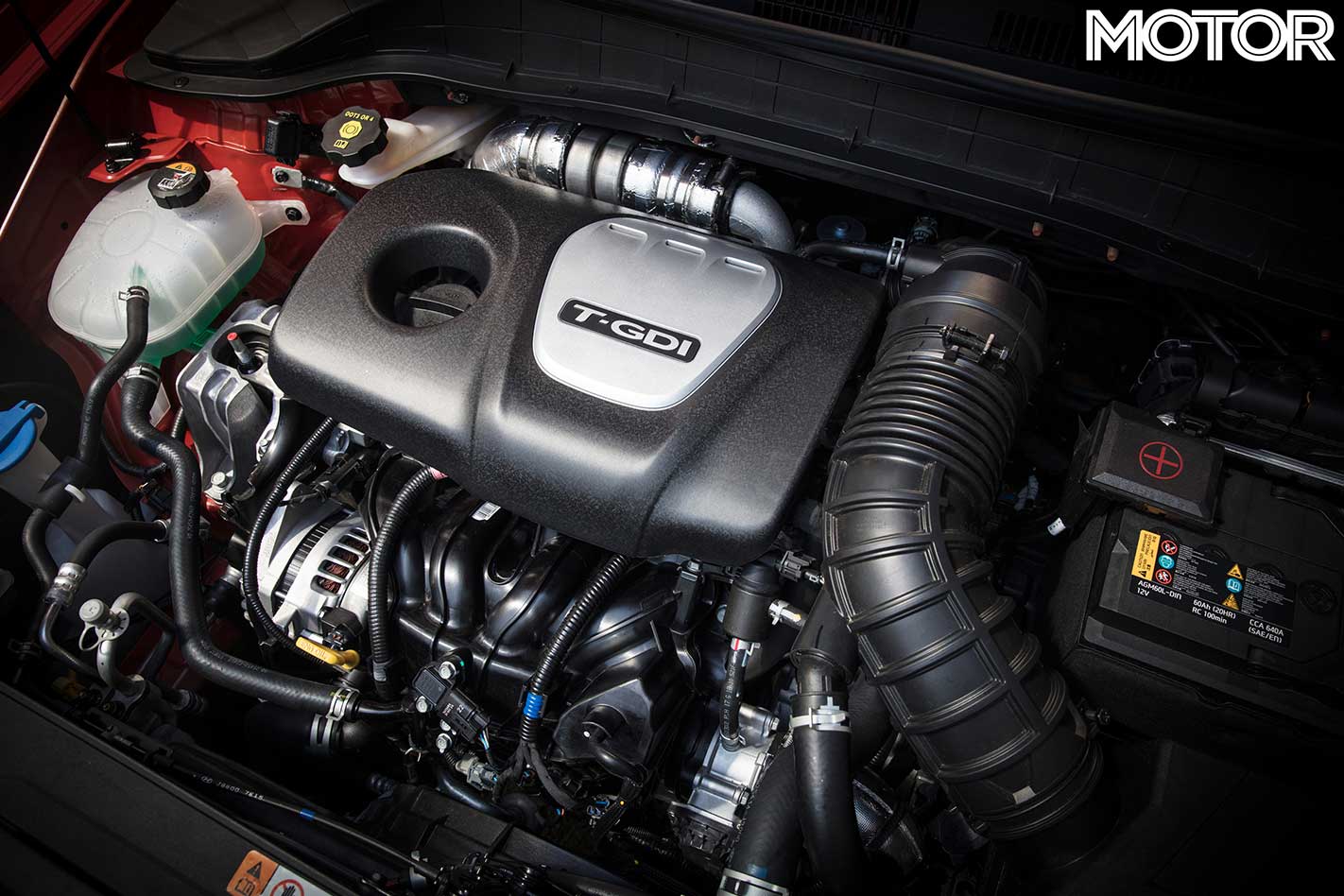
It’s an agile thing and uses its small spread of grip to its advantage. It could definitely give a couple MX-5s a hurry up on a Sunday morning’s drive. But there are some inevitable pitfalls, like its heavy steering weight in Sport mode and only giving feedback at its outer grip limits. The 17-inch wheels add a touch of bounce to its ride but overall it’s comfortable and well setup. And its looks? Erm, we’ll let you decide.
On this brief acquaintance we’d say the Kona is a pleasant surprise. And the only accident is Hyundai has built something you could relate to a Subaru WRX‘s character.
2019 HYUNDAI KONA 1.6T SPECS
Engine: 1.6-litre inline four, turbo Power: 130kW @ 5500rpm Torque: 265Nm @ 1500rpm Drive: AWD Weight: 1414kg Price: $33,000
MORE: Hyundai Kona Range Review MORE: Hyundai Kona Specs, Range & Price
Best value car award
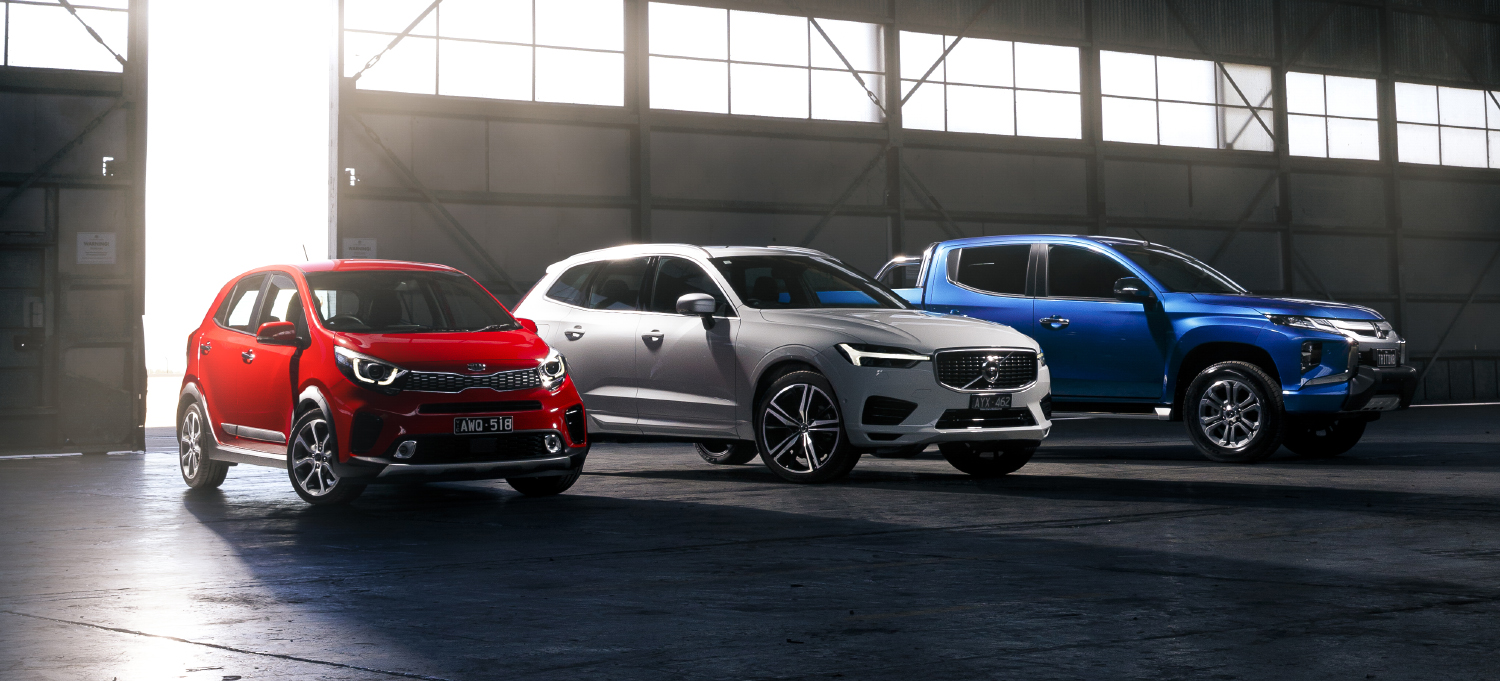
Wheels’ Gold Star car award uses data such as depreciation and running costs to calculate what the best value new cars in eight different segments are. To understand how we calculate the numbers and what considerations were put into the algorithm, read the 2019 Gold Star Car Award 101 here.
The top 3 dual-cab ute contenders
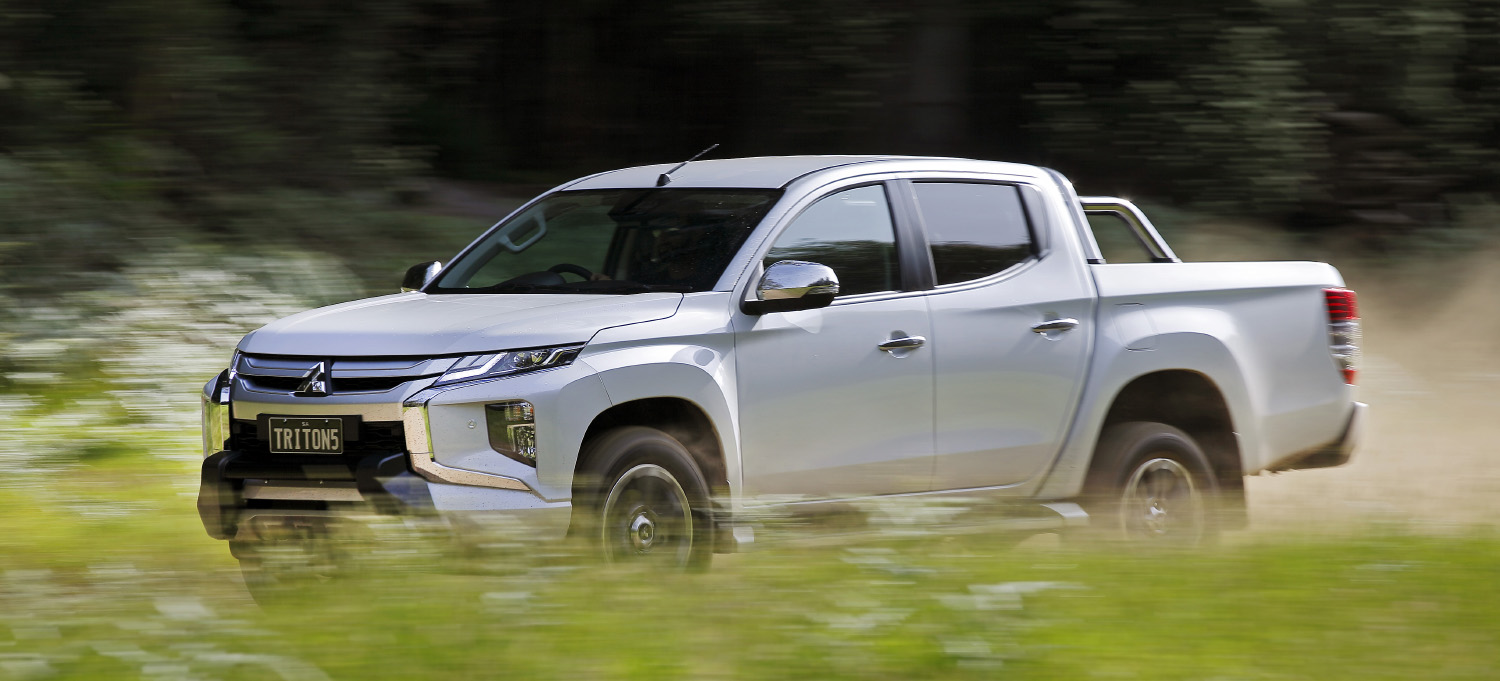
- Mitsubishi Triton GLS Premium
- Holden Colorado LTZ
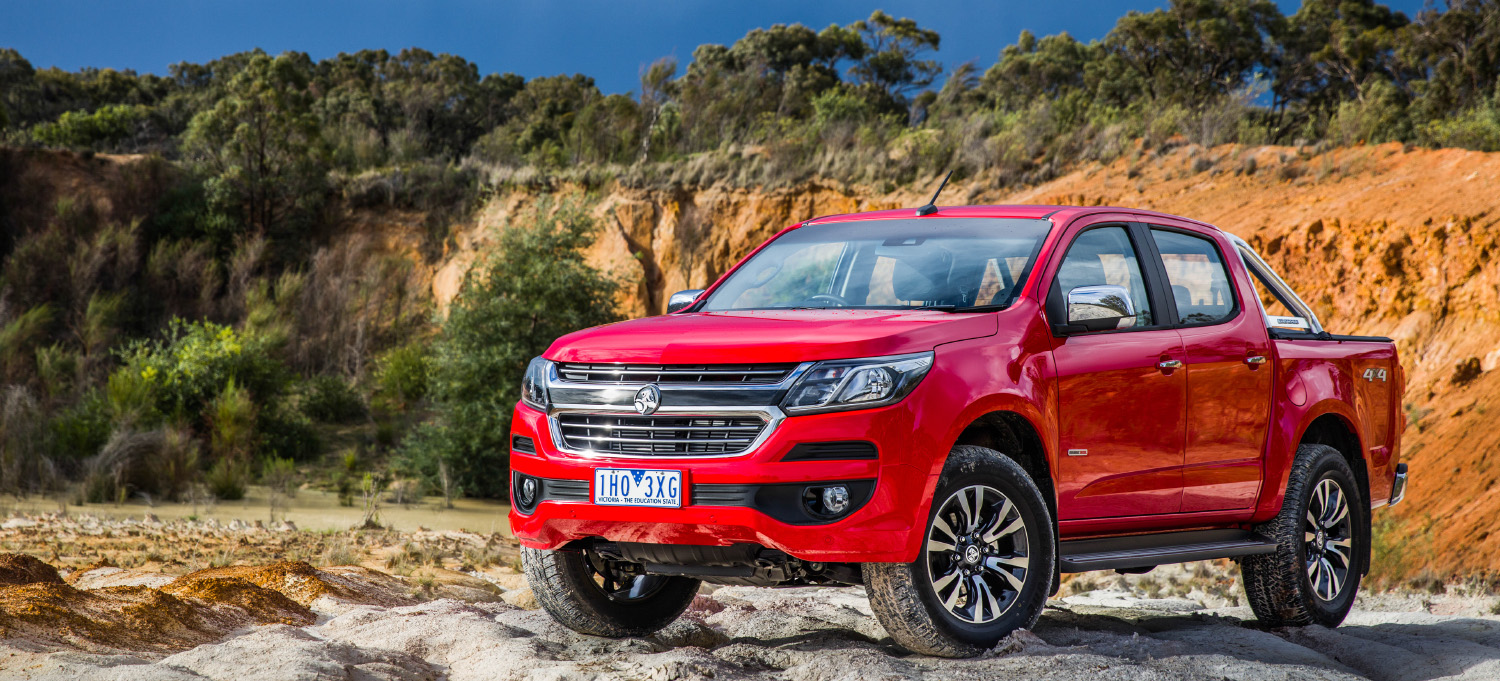
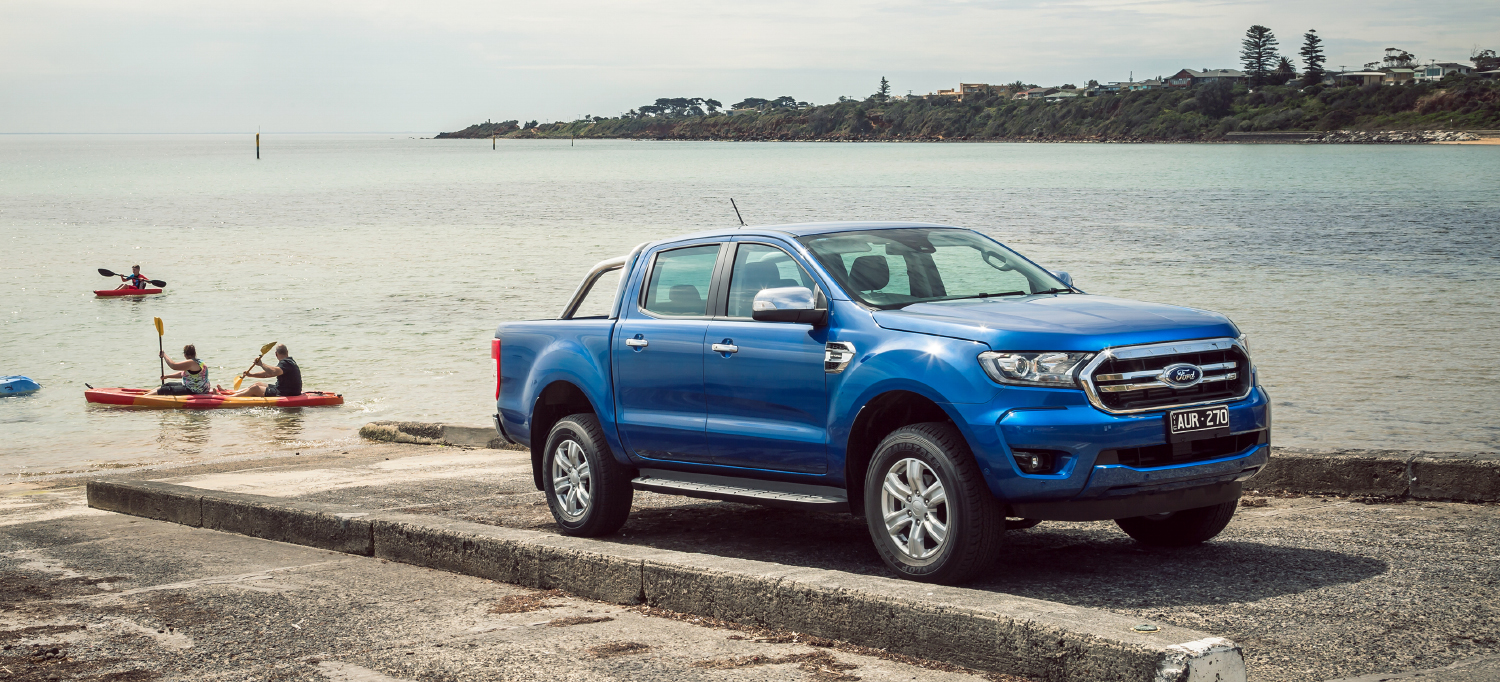
- Ford Ranger XLT
What the numbers said
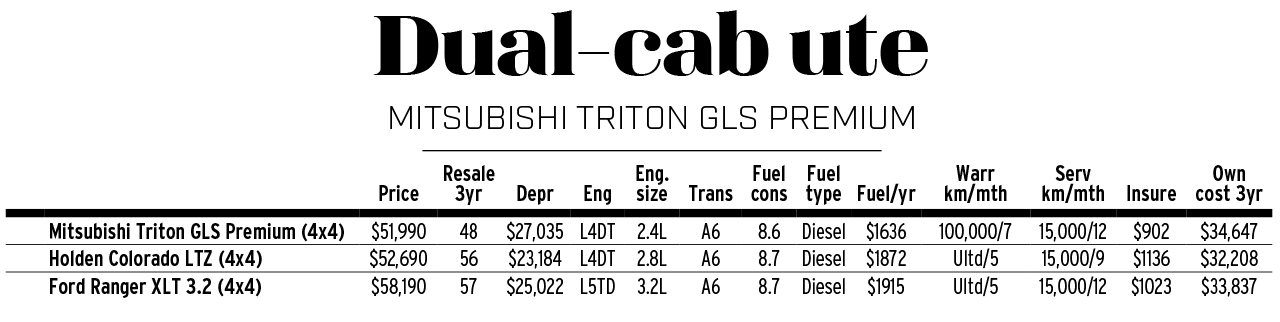
Even on face value, the Diamond Star dual-cab ute is a great buy.
The Triton is among the least costly in class – represented here in top-spec trim among mid-spec rivals – and comes loaded with standard equipment, including some of the best active safety tech in the segment.
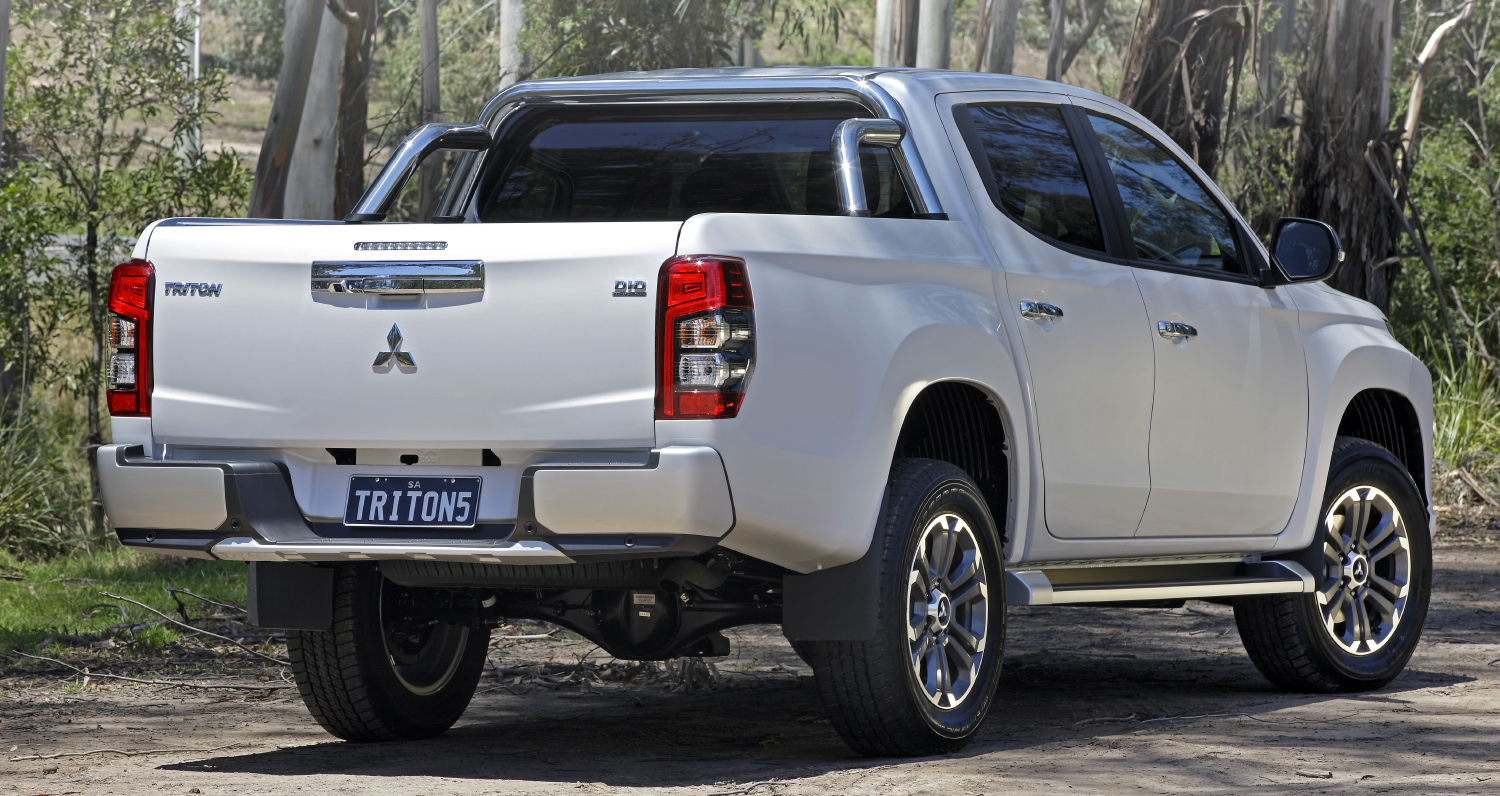
Having just had a facelift, it is a genuine tough-look alternative to Ford’s Ranger. Its gruff, torquey 2.4-litre turbo-diesel four uses less fuel than the other placegetters, at 7.6L/100km officially, despite being paired with a five-speed auto rather than oppositions’ six-speeders. An extended seven-year warranty is a further conquest, and the Mitsubishi’s 12-month service interval tops the Holden Colorado’s nine months while matching the Ford.
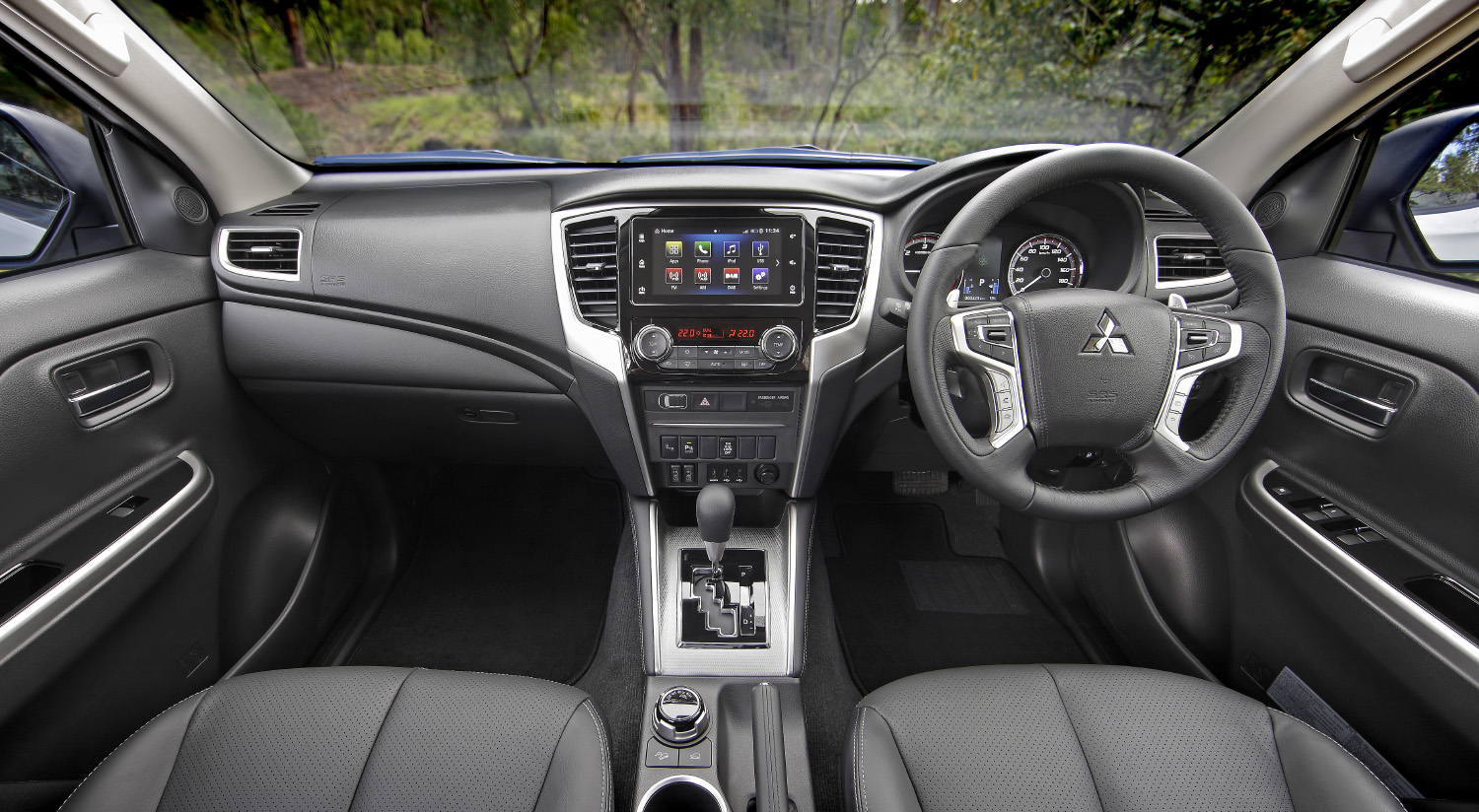
The Mitsu’s resale isn’t as optimistic, though this top-tier model at a considerable discount to the others means you pocket thousands up front.

Ford Ranger XLT 2.0L $59,790
Although nearly $8K more than the Triton, Ford’s Ranger XLT is the better ute.
The steering feels more natural and connected, the cabin more comfortable, suspension more compliant (yet with better towing capacity at 3.5-tonne) and the 2.0-litre engine mated to a 10-speed auto is quiet and refined. AEB, adaptive cruise and steering assist is available in the $1700 Tech Pack.
It was a last minute decision, we were told, to switch the launch of Audi’s much-vaunted e-tron from its original venue – a freshly made-over Audi car plant in Brussels – to somewhere more cosmopolitan… and a lot more confrontational.
The huge Audi event in downtown San Francisco last December, which hosted 1500 journalists from around the world and featured world-renowned DJ Diplo playing at a huge, was less than 50km from the head office of Tesla, which – until the launch of the Jaguar i-Pace at least – offered the only battery-electric SUV in the world.
Active displays, lectures and scores of Audi engineers and managers touted the virtues of the incoming e-tron. The company showed off its battery cradle, its brake-by-wire system and more, declaring that the e-tron would offer electric driving without compromise.
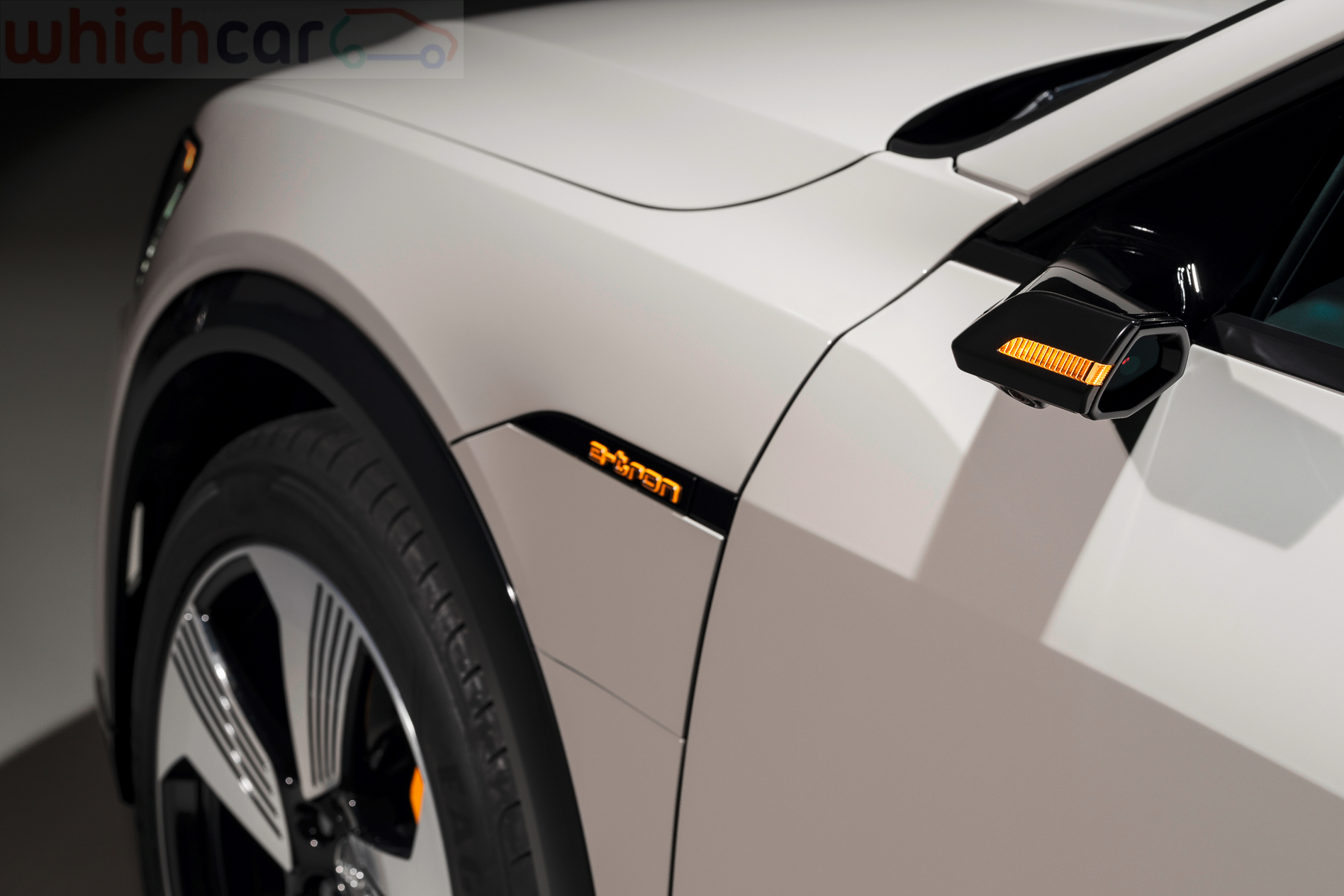
Its newly made-over factory in Belgium, too, would push e-trons out the door at the rate of 45,000 cars a year.
Slated to sell from around $144,000 in Australia, it was due to touch down here in the next month or so, offering a range of more than 400km from its two electric motors.
Unfortunately, it’s been far from smooth sailing since Diplo exited stage right.
As production ramped up, delays in sourcing batteries – the e-tron uses more than 400 individual lithium-ion pouch cells – slowed output at the factory, while strikes at its motor plant in Hungary also slowed build rates for the e-tron.
The battery supply issue is quite a tricky one, according to reports out of Europe. Supplier LG has asked for price increases from Audi’s parent VW on the news that the carmaker is planning to set up battery factories with other suppliers.
VW, in turn, is unhappy that it has to share output from LG’s Polish plant with arch-rivals Mercedes-Benz and BMW.
In fact, Audi’s own predictions of building more than 55,000 e-trons this year have been cut by 10,000 units, while production of a planned e-tron Sportback – a coupe version of the e-tron – has been pushed back to later in 2020.
Now, the company has been forced to recall around half of the examples of the e-tron sold into the US – 540 delivered cars and 1644 in total – to affect a repair on a seal around the charging port that could potentially allow water to enter the battery pack’s electronics and result in at worst case a – as Audi calls it – ‘thermal event’. Or as we call it, a fire.
“We are applying an abundance of caution as no such incidents have been reported globally,” read a statement. The e-tron has only been on sale in the US since April, with around 1100 listed as sold in April and May.
A recall to fix an all-new car is not unusual in this day and age, of course. The e-tron is built with a variety of bits from across the VW empire, including a modified version of the same platform that rides underneath the A4 and Q5.
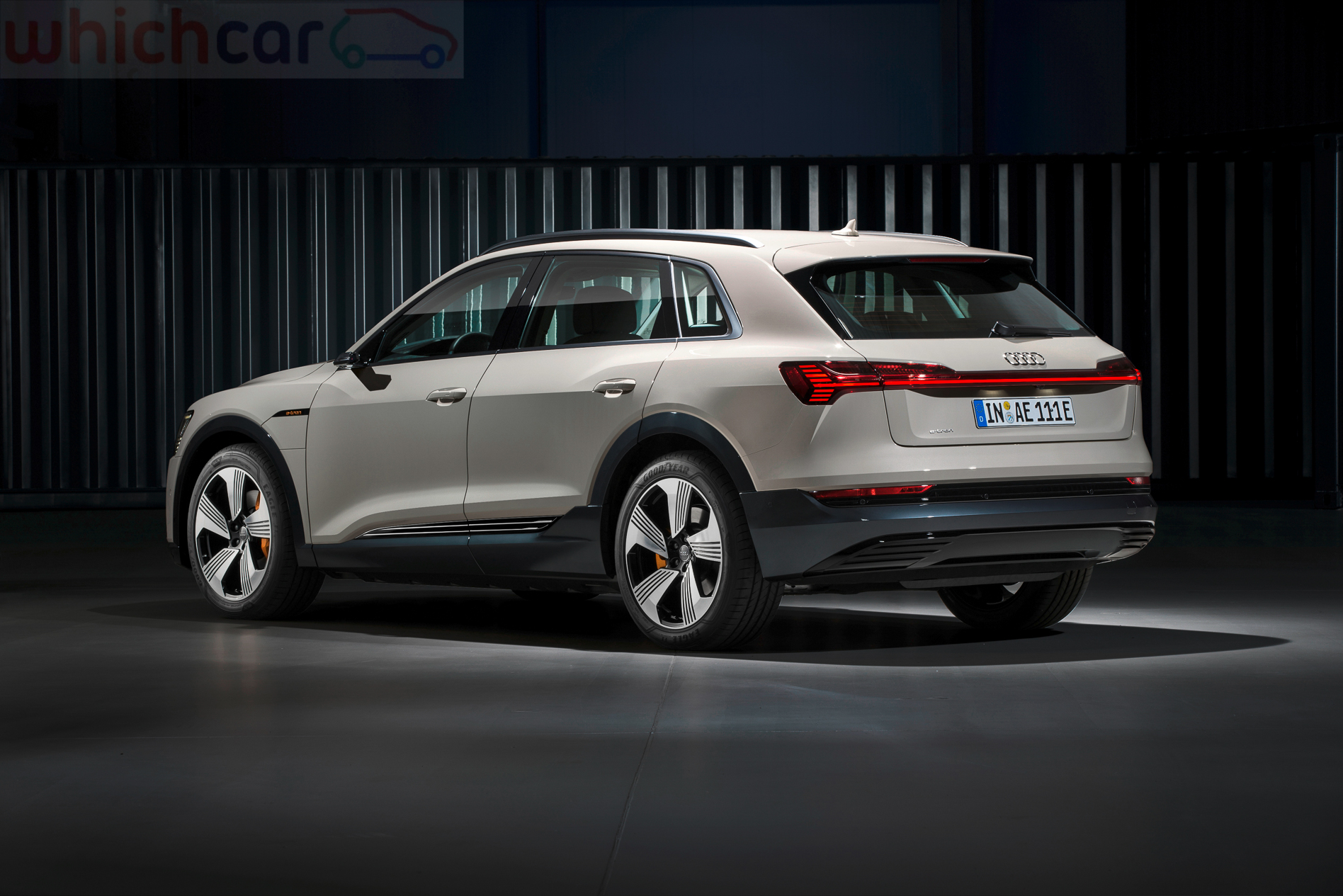
The aim of every car company is to use the same underpinnings across as many variants as possible, and Audi intends to roll out the aforementioned e-tron Sportback, as well as an A8-sized sedan, on the same MLB Evo base.
Such a limited number of variants, though, means that the cost per unit will be extraordinarily high, and with Audi sharing a dedicated EV platform with Porsche for bigger cars and a smaller EV platform with VW for smaller fry, e-tron and its siblings will have to sell in pretty hefty numbers for Audi to see any kind of positive financial return – if indeed it ever does.
Audi makes its own motors, its own braking system, battery array and cradle, and control modules; in fact, engine techs who used to slide pistons into engine blocks are now winding copper coils for the motors.
All of this start-up development costs billions of dollars in retraining staff, R&D and testing, and the e-tron may well be serving as the company’s loss-leading guinea pig as it seeks not only to kick off its electrified future but to get onto an even footing with companies like Jaguar, whose similarly priced i-Pace beat the Audi to market by almost a year.
Similarly, Mercedes-Benz’s EQC electric SUV, while still some months away, will add another player into a small sector already well served by the two-year-old Tesla Model X.
Audi would be hoping for no more missteps with the e-tron, as it builds up to right-hand-drive production later in the year. The Australian launch is running some six to eight months behind schedule as the production issues take hold, but the company says interest for the car is high.
Here’s hoping the e-tron can leave its gremlins behind it.
BMW has unveiled the wagon version of its latest-generation 3-Series midsizer, that it claims has been designed with driving pleasure foremost in mind.
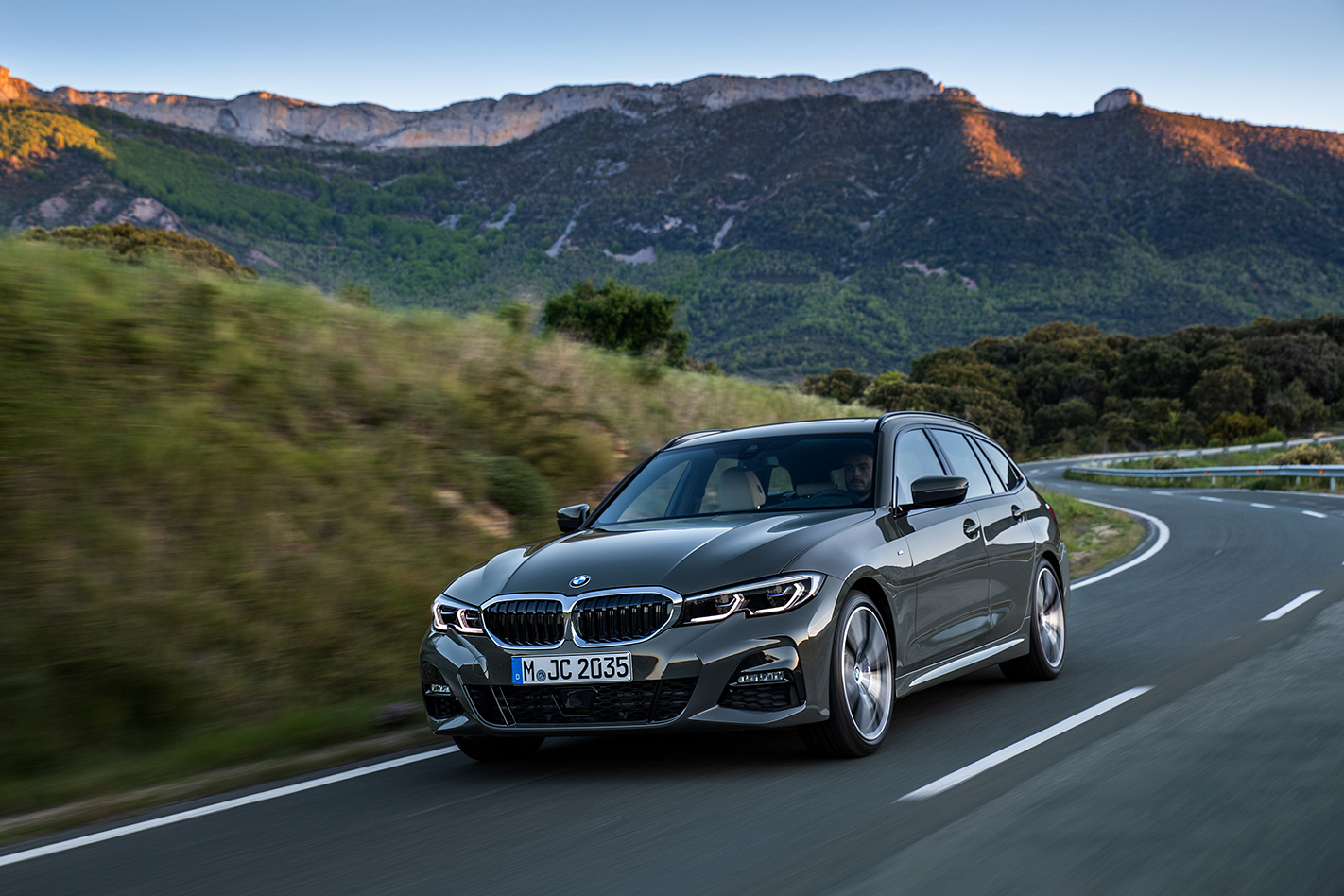
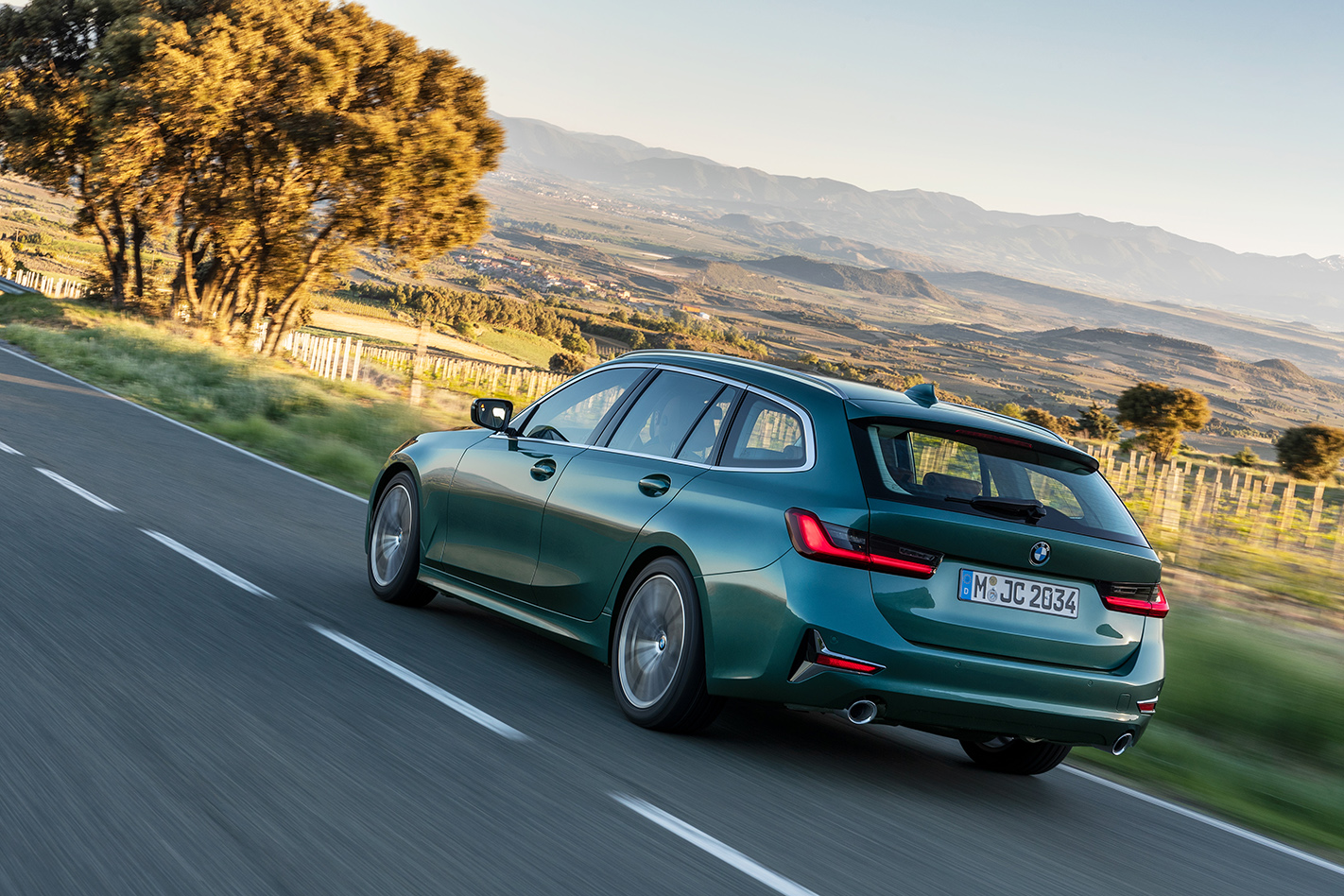
The stately 2020 3-Series Touring closely follows the sedan’s design language forward of the B-pillar, but aft of centre reveals unique design cues that, apart from the obvious, include an additional kink on the rear door and a rising window line that reflects the sloped roofline, which leads to a raked tailgate that gives it a shooting-brake-like silhouette.
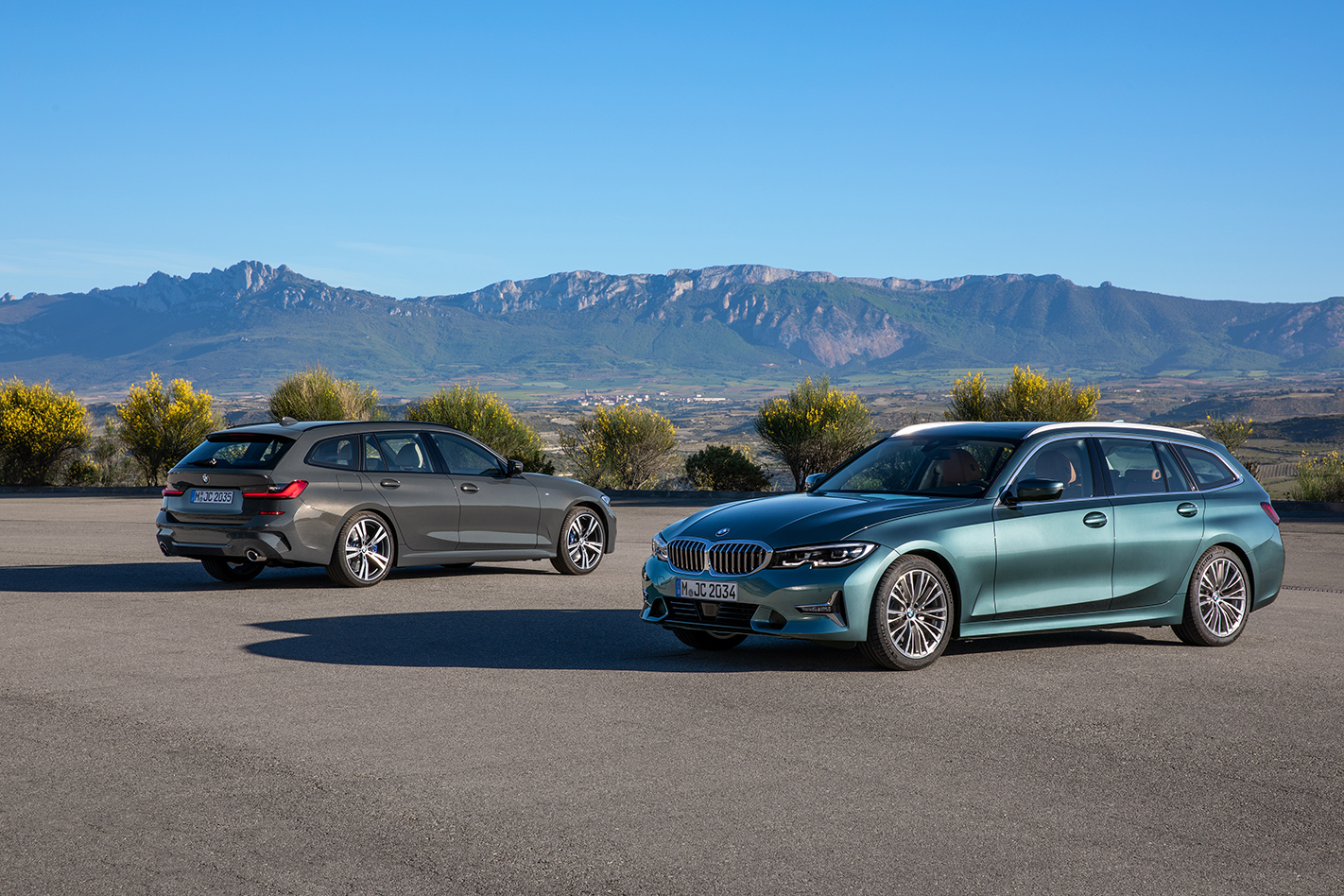
BMW claims the new design brings aerodynamic improvements over its predecessor that combine with a lower centre of gravity, increased body rigidity and a 10kg weight loss for a “noticeable increase in agility”.
Powertrain options mirror the sedan’s 2.0-litre four-cylinder 318d, 320d diesels and 320i and 330i petrol along with the powerful 3.0-litre turbocharged straight-six M340i xDrive which produces 275kW for an Audi S4-beating 4.4-second 0-100km/h sprint.
The Touring will also get the plug-in hybrid 330e powertrain that’s expected to be introduced to the 3-Series range sometime next year.
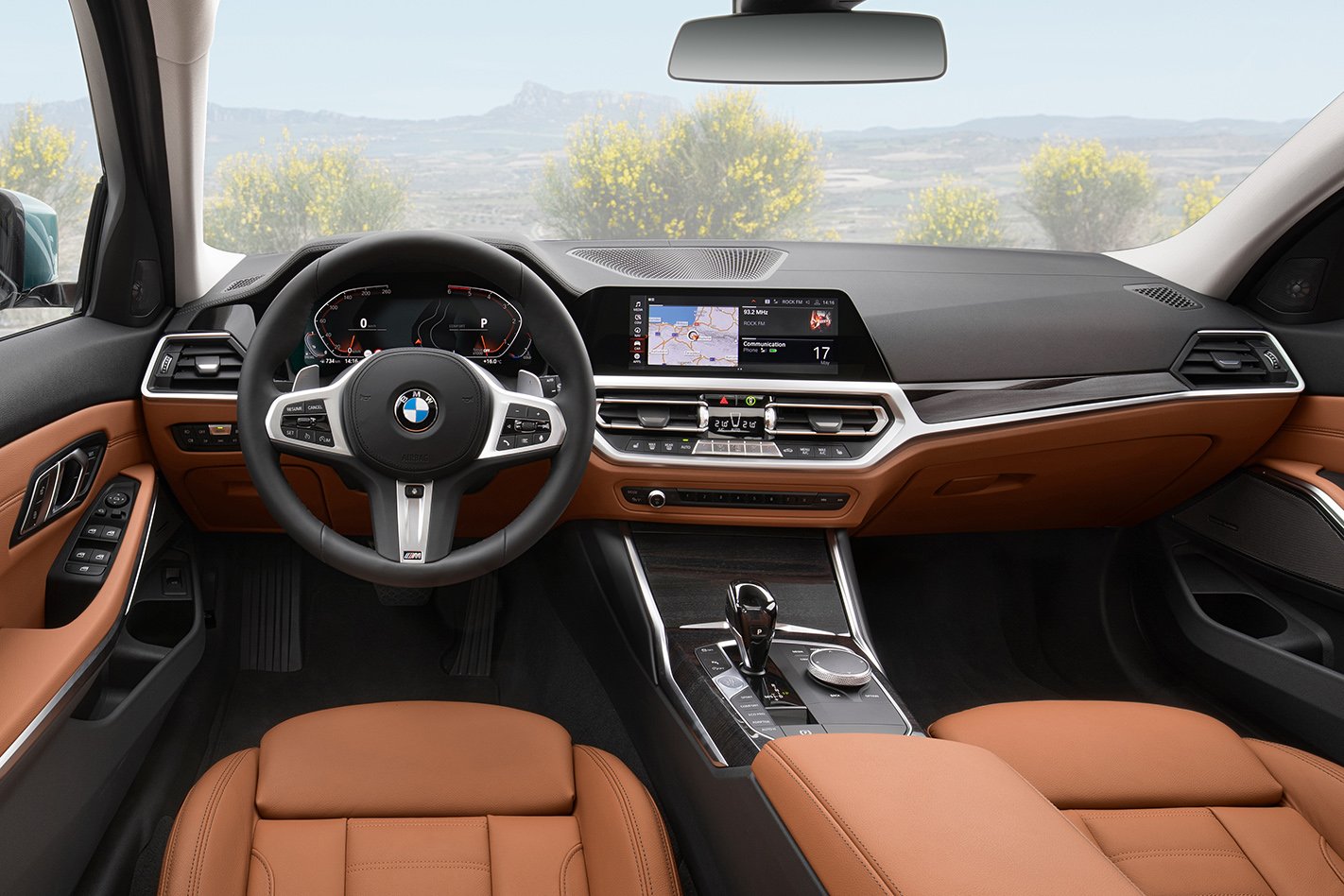
Cargo area apart, the interiors of each variant are identical to their sedan counterparts. The 500-litre boot space behind the 40:20:40-split rear seats is five litres bigger than the previous model, but is still just 20 litres bigger than the sedan – a downside of the attractive, but space-depriving forward raked tailgate glass.
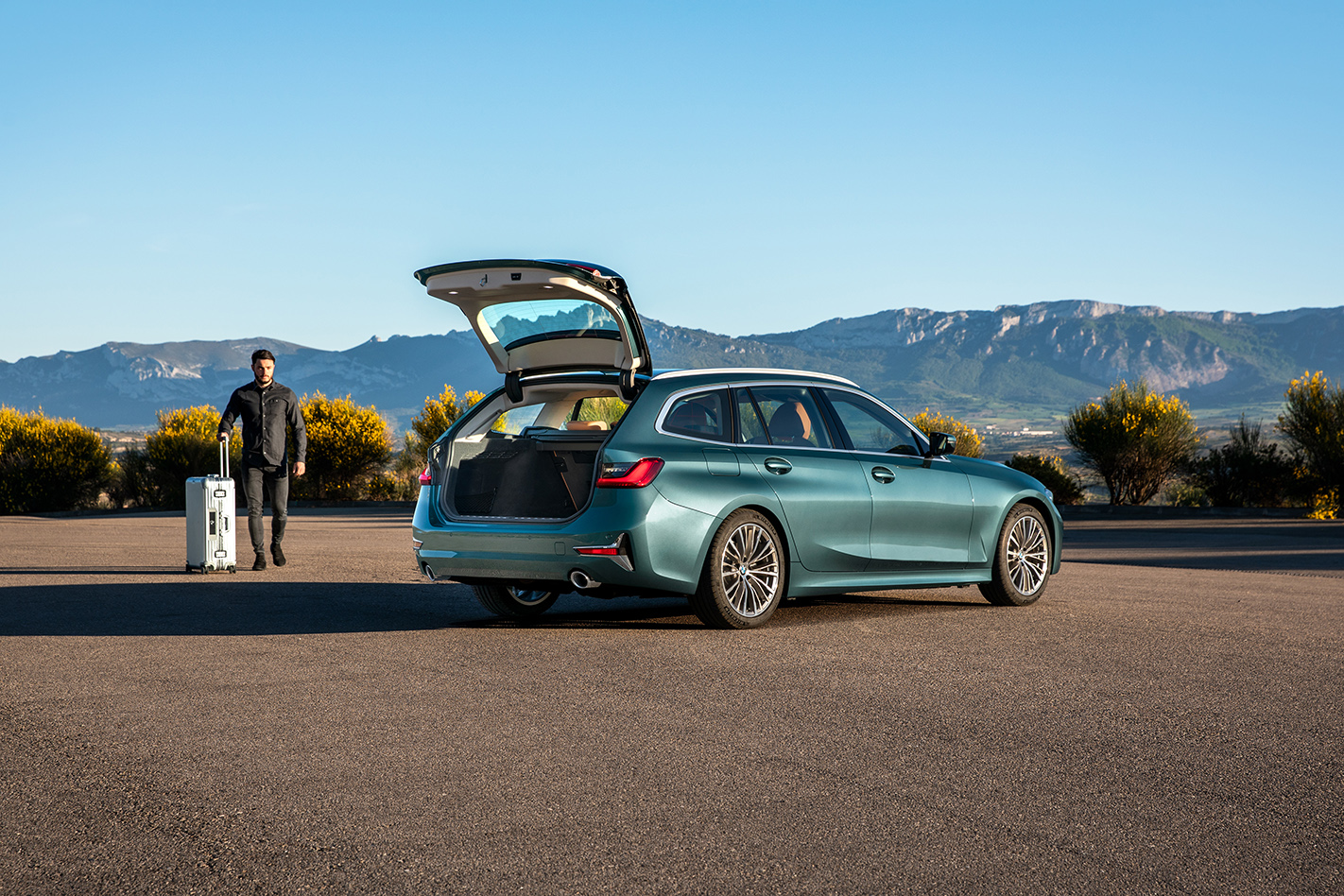
The hatch opening is bigger and the bottom lip lower for easier loading though, and with the rear seats down you can carry up to 1510 litres. Like other BMW wagons, the back window can be opened separately from the powered tailgate.
Equipment levels in each variant matches the sedan equivalents, with the bigger engines bringing more standard equipment. Standard inclusions include a fully-digital instrument cluster, a 10.3-inch central information touchscreen, USB-A and USB-C connectivity, head-up display, wireless phone charger and autonomous emergency braking.
So far, the BMW 330i Touring is the only variant confirmed for Down Under, with a BMW Australia spokesperson telling WhichCar it will be available in time for Christmas.
The 320i and M340i sedans are also expected around that time, which will bring the new G20 3-Series range to five variants, including the 320d and 330i sedans already in showrooms.
The hulking Mercedes-Benz GLS and GLE won’t be the only seven-seat options in Mercedes-Benz’s SUV range, thanks to today’s announcement that the more compact (and budget-friendly) GLB-Class is on its way, toting three rows of seats within its comparatively small frame.
European sales are set to commence by the end of 2019, with an Australian arrival the following year. Based on the MFA platform that underpins the new-generation A-Class and B-Class, the Mercedes-Benz GLB-Class will be a bigger-on-the-inside companion to the GLA-Class that’s been Benz’s entry-level SUV offering since 2014, and a more affordable three-row option to the soon-to-launch next-gen Mercedes-Benz GLE-Class.
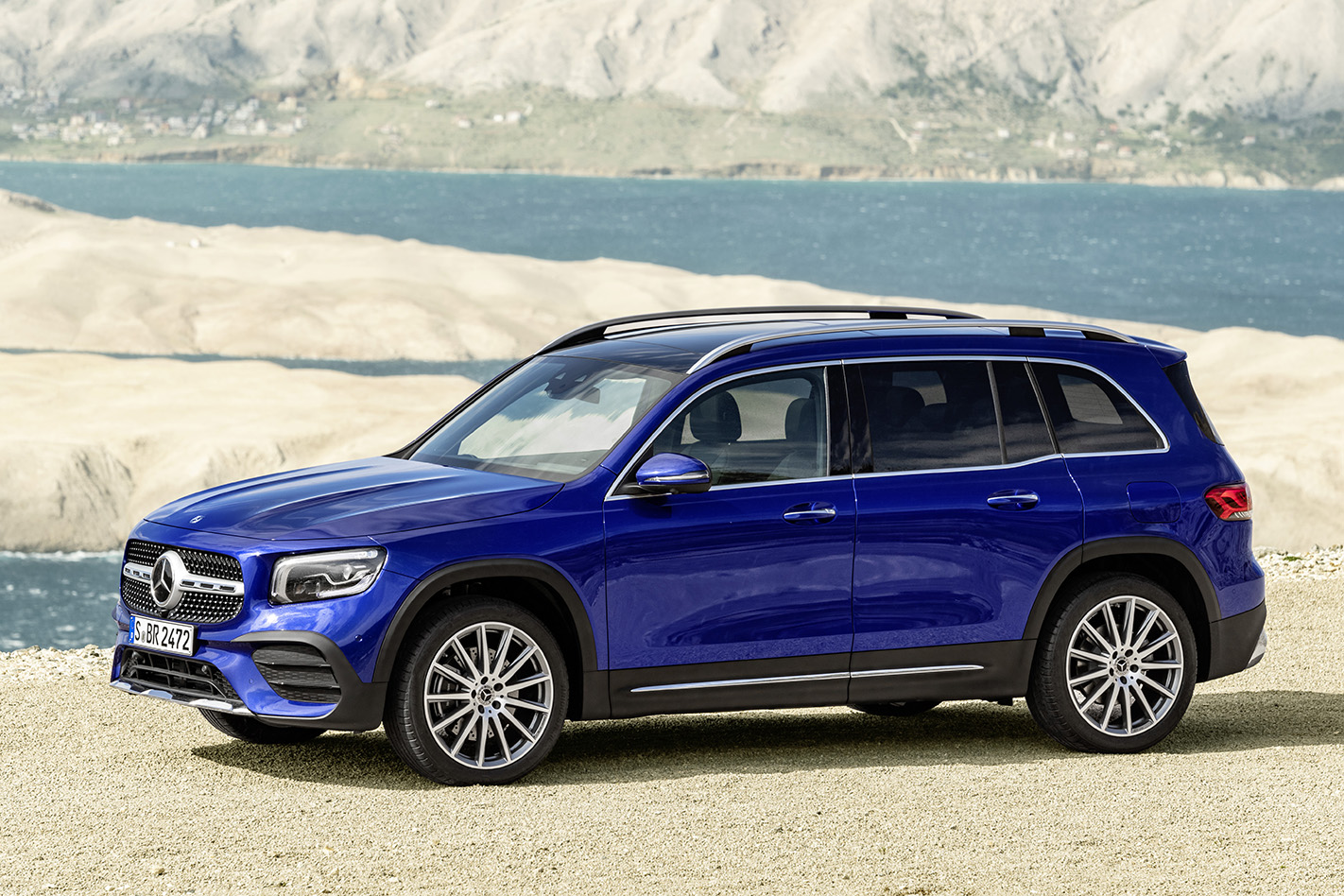
However its key point of difference to the GLA, besides slightly larger base dimensions and larger cabin volume, is its ability to seat an extra two passengers in a third row of seats – a first for an MFA-based Mercedes SUV.
Positioned to compete against the slightly bigger BMW X3 and upcoming next generation Audi Q3 (which will move up in size to distance itself from the Audi Q2), the GLB-Class measures 4634mm long and 1834mm wide overall, and sits astride a 2829mm wheelbase.
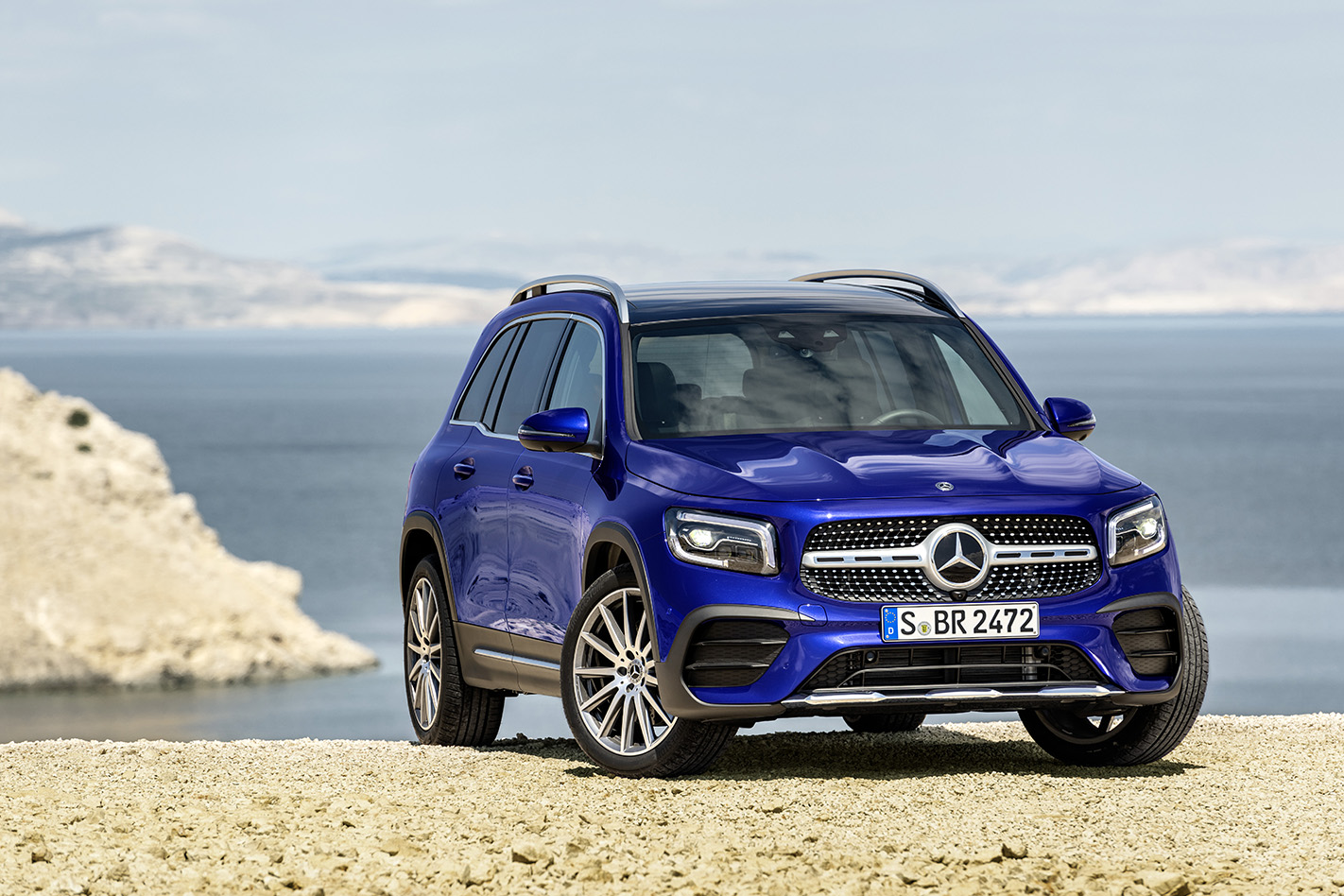
Compared to the B-class MPV it’s around 10 centimetres longer overall, while it’s around 20cm longer than the GLA-Class and just 22mm shorter than the GLC-Class.
Its upright and boxy design, with generously sized windows affording good outward vision, also makes the GLB look like a GLS-lite, while also contributing to increasing cabin space by maximising headroom.
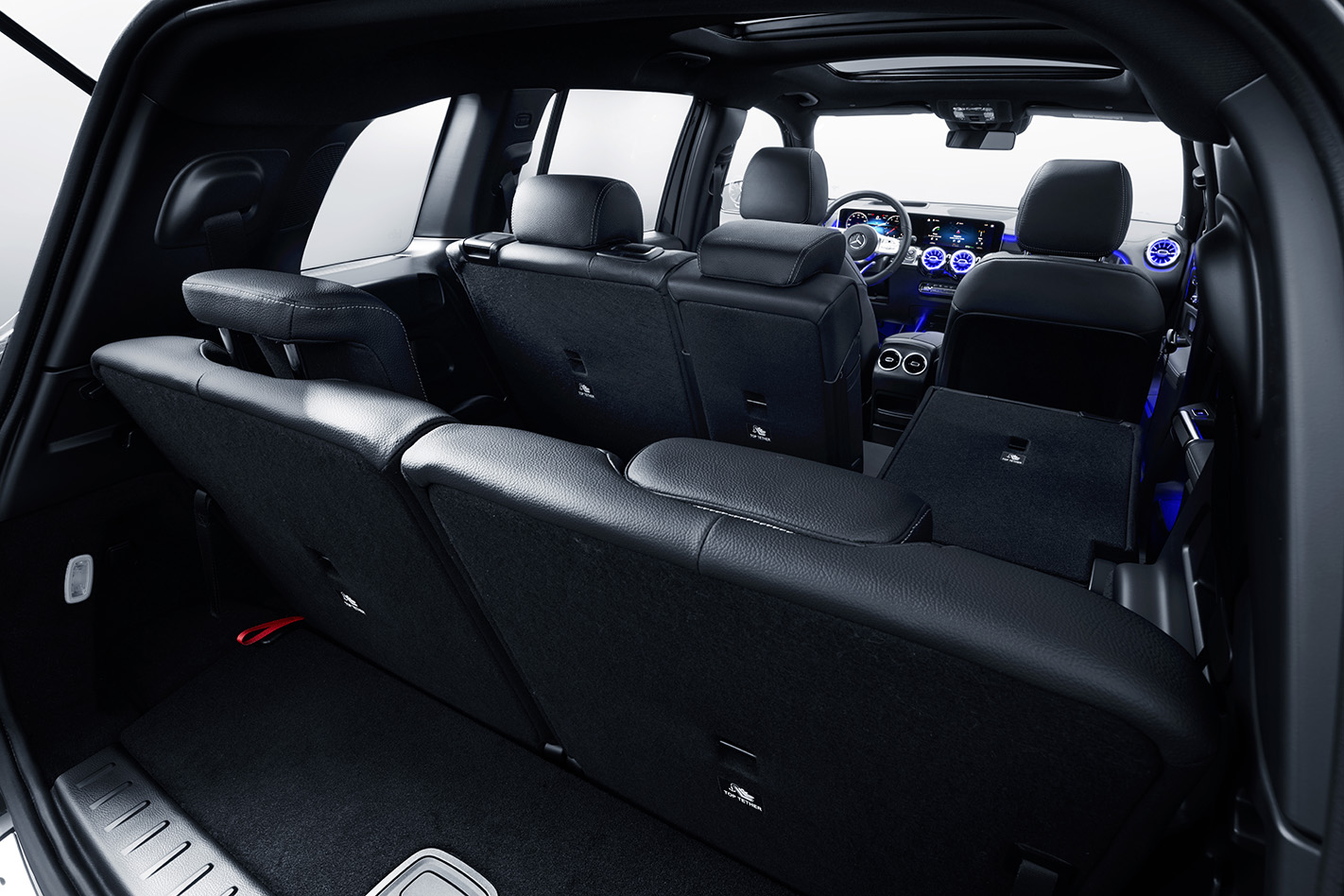
The packaging advantage of the transverse-engine MFA platform also means the GLB provides a more capacious cabin than the GLC, with the optionally-available third row said to be usable by passengers up to 1.68m in height.
And there’s a 560 litres seats-up cargo capacity too, expanding to 1755 litres with the seats down in the GLB five-seater. The second row is also able to slide forward, and doing so while adjusting the backrest into a more vertical position can liberate an additional 179 litres of cargo space above the official seats-up capacity, while still allowing five people to squeeze in.
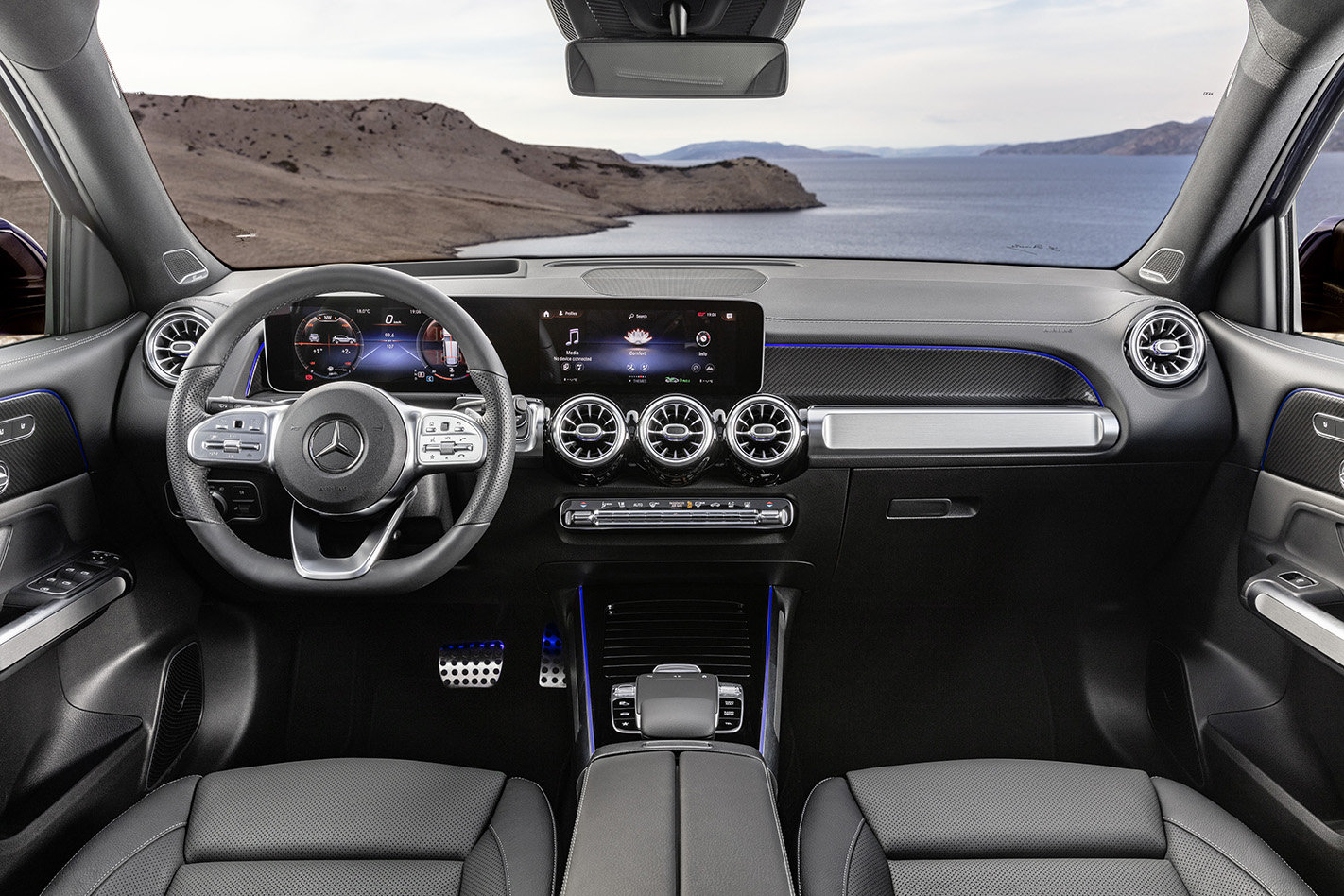
As with the A-Class, the GLB’s interior will be dominated by a twin-screen arrangement that fuses an all-electronic instrument panel together with the centrally-located infotainment screen, all run by Benz’s latest MBUX operating system.
Gimbal air vents, now a Mercedes hallmark, deliver air to passengers, while the design much use of aluminised surfaces for a premium feel.
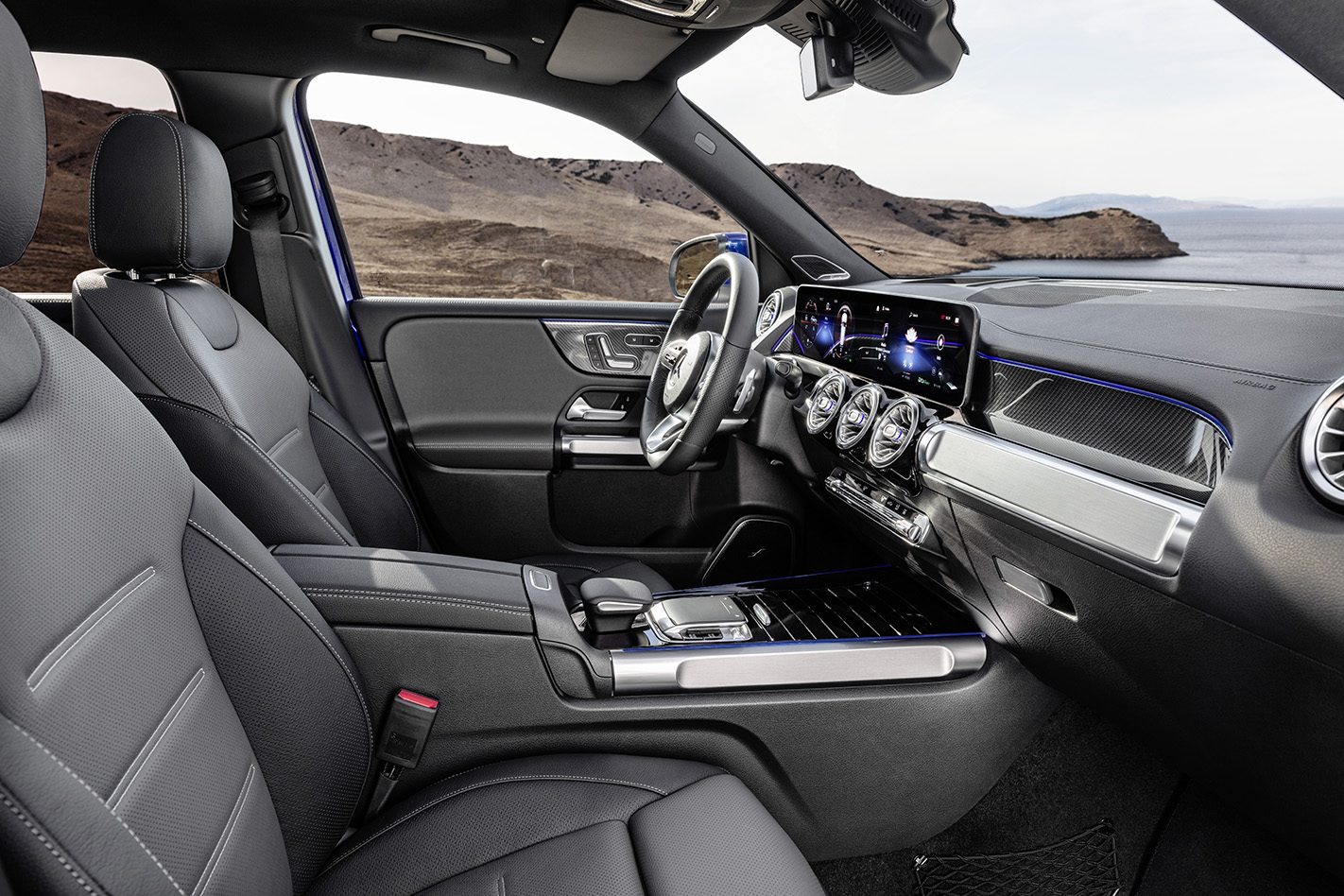
Mechanical details are still yet to be ironed out for Australia, however the engine range will be entirely comprised of four-cylinder turbo petrol and turbo diesel options. Low-spec models will take power to the front wheels, while 4Matic all-wheel drive will also be available – and likely standard on more powerful variants.
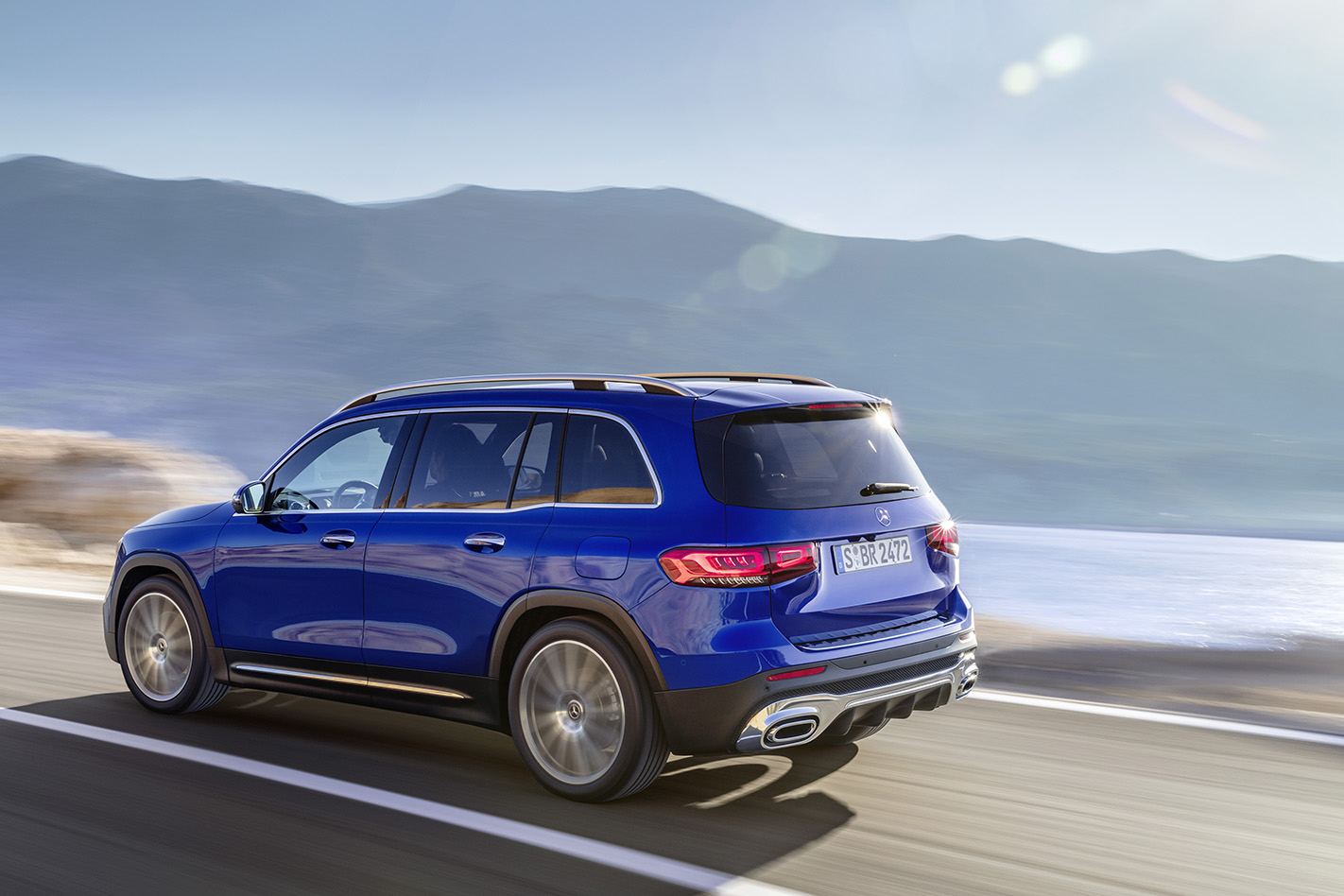
In Europe, the range will open with the 120kW/250Nm 1.3 litre GLB 200, however it’s expected that the 165kW/350Nm 2.0-litre GLB 250 will be the base in Australia. A pair of diesels, the GLB 200d (110kW/320Nm) and GLB 220d (140Nm/400Nm), round out the rest of the range, while all bar the GLB 200 petrol use an 8-speed dual-clutch automatic transmission.
AMG-engined variants will eventually arrive, likely kicking off with a GLB 35 using the same powertrain hardware as the Mercedes-AMG A35 hot hatch
The AWD underpinnings feature a default 80:20 front/rear torque split (which switches to 70:30 in Sport mode), however this can be locked to an even 50:50 split in off-road mode.
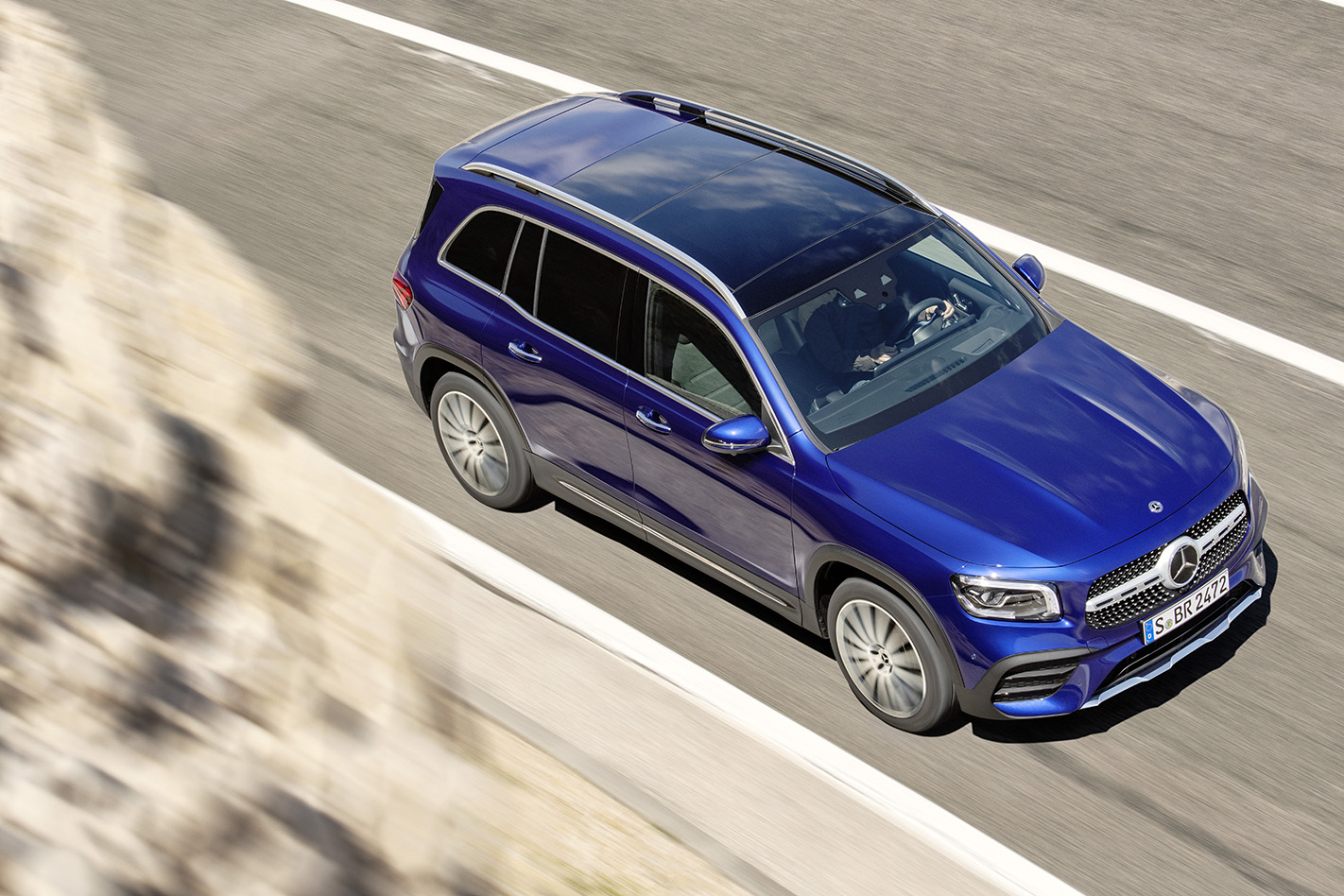
The Off-Road Engineering package, meanwhile, brings a range of information ‘pages’ to the instrument cluster, displaying things like vehicle tilt, wheel position and more, while also adding another drive mode tailored specifically to maximise grip on slippery surfaces.
Mercedes-Benz Australia has confirmed that the GLB will be heading our way, though its arrival isn’t expected to occur any sooner than the third quarter of 2020. Precise pricing and features have yet to be announced, as has whether the three-row capability will be available in our country.
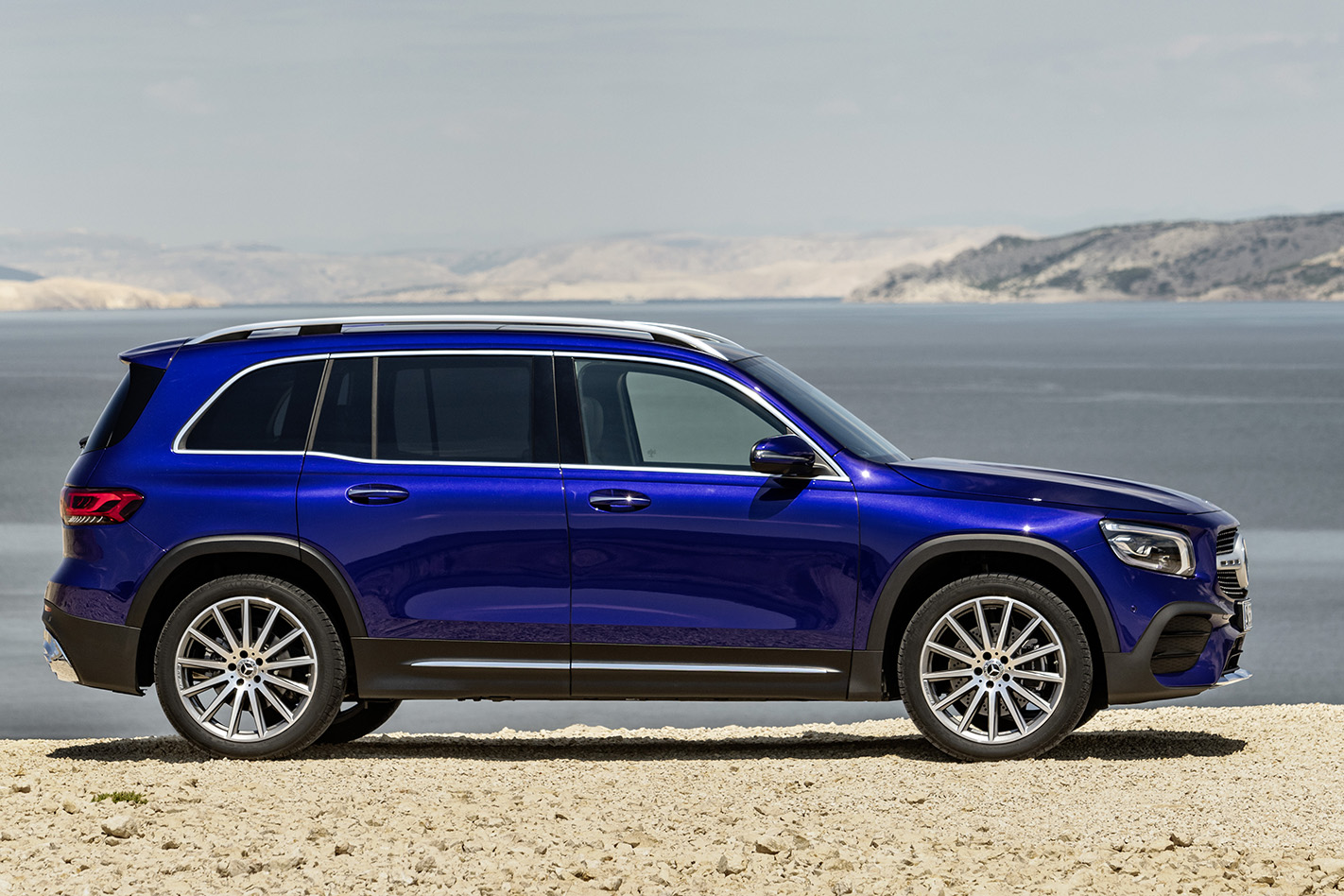
Microsoft’s driving simulation Forza Horizon 4 might pride itself on its accurate depiction of its cars and the English countryside, but its creators have taken leave of reality with the latest downloadable expansion, Lego Speed Champions.
Based on the popular Lego toy line of the same name, the Lego Speed Champions expansion allows players, to get behind the wheel of the Lego versions of the McLaren Senna, 1967 Mini Cooper S rally, and Ferrari F40 Competizione from the eponymous toy line.
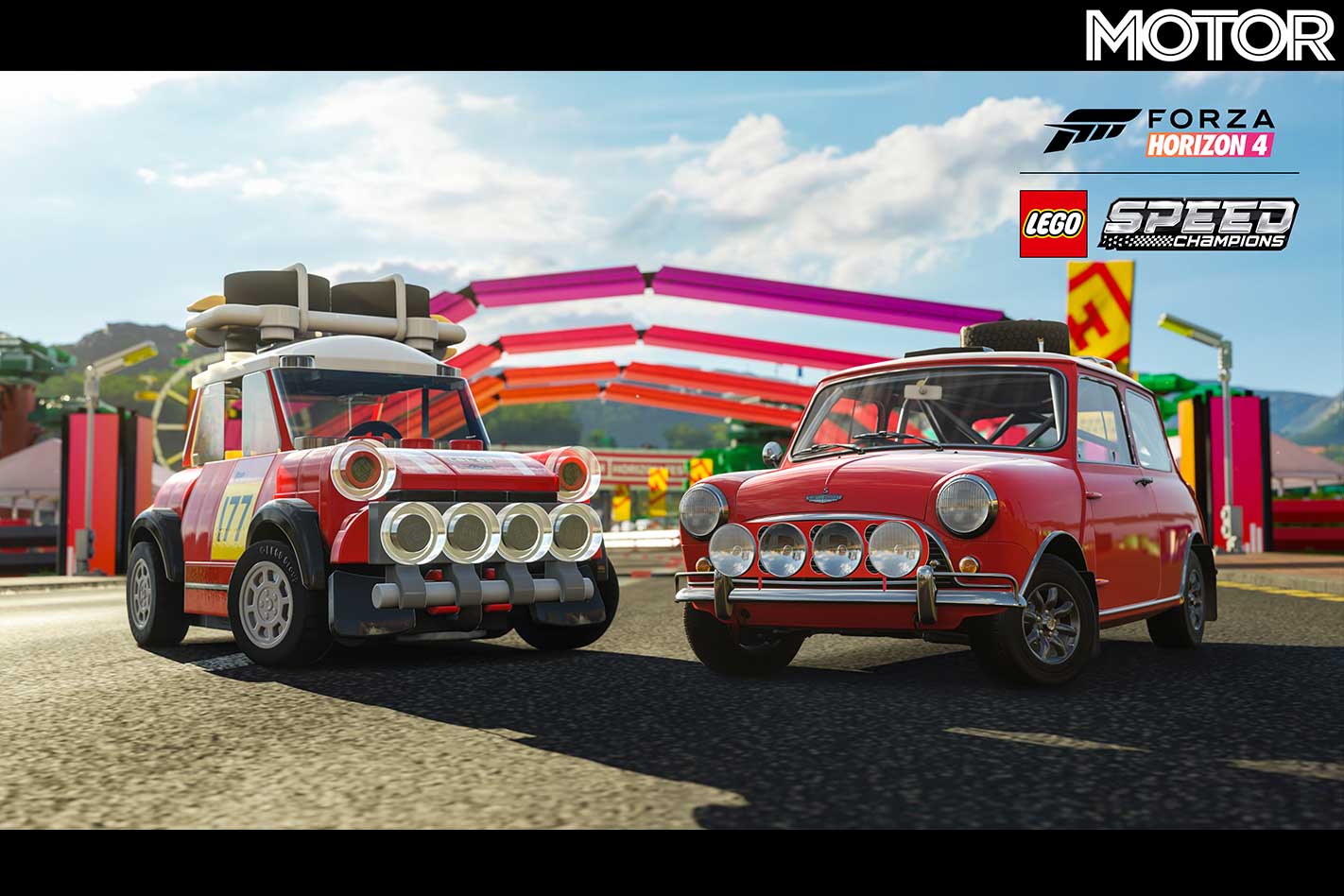
Despite being based on blocky toys, Forza Horizon 4’s developers didn’t skimp on accuracy as the in-game Lego models boast “the most realistic looking Lego models ever put in a game”, with the Lego models sporting the pressed-on-sticker look and embossed Lego logos on the studs, just as how the real-life toys would appear.
Adding to that, players can race both the Lego cars and their real-life counterparts through a Lego-themed region known as Lego Valley, which is populated with nine zones, some of which are based on popular Lego toy sets, and features a Lego city and Lego race track.
Given Lego video games’ trademark blasé attitude towards the concept of structural integrity, players are free to wreak havoc on the Lego-themed scenery in both Lego brick shaped cars and real life cars from the game with little consequence.
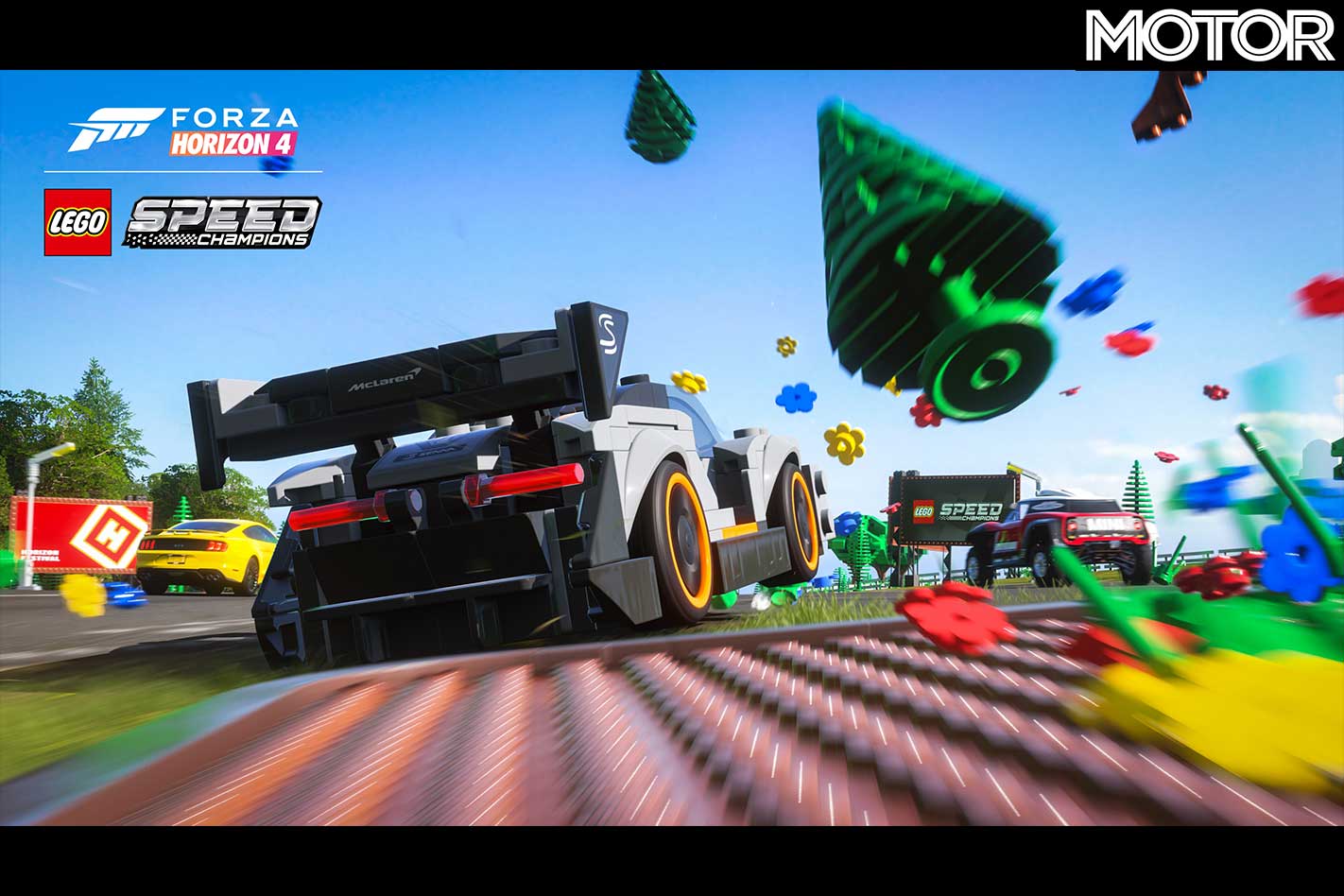
All in, together with a new “Brick Challenge” campaign, the game’s developers say that the expansion contains around “10 to 15 hours of additional gameplay” with Forza Horizon 4’s headlining seasonal changes also playing its part in the virtual plastic block world.
Forza Horizon 4’s Lego Speed Champions expansion will be available for download worldwide from tomorrow for Xbox One and Windows 10 computers, for the price of AUD$29.95 from the Microsoft online store.
That being said, the expansion is free for players who already own the Forza Horizon 4 Unlimited Edition, Forza Horizon 4 Expansions Bundle, and Forza Horizon 4 Ultimate Add-ons Bundle.
Honda’s fastest four-wheeled vehicle could well now be… a lawnmower. But it’s not just any grass-cutter. It’s the Honda Mean Mower V2, a reengineered Honda HF 2622 ‘lawn tractor’ with a 13,000rpm CBR1000RR Fireblade SP engine providing about 150kW.
It’s also just set the Guinness World Record for ‘Fastest Acceleration 0-100 mph for a Lawnmower’, setting a 6.285 second average.
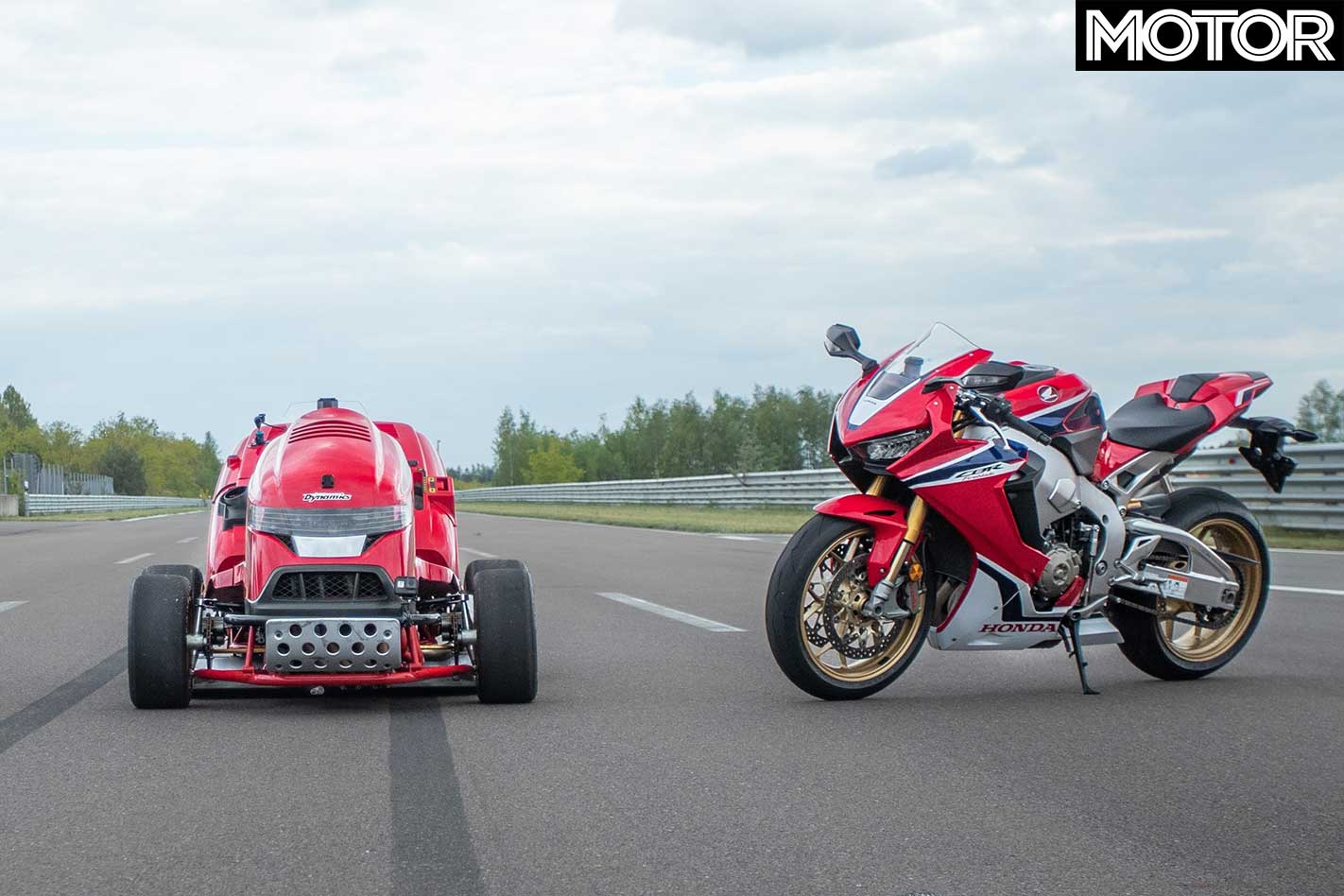
Driven by stunt driver and racer Jess Hawkins, the VBOX data also suggested the Mean Mower has the potential to hit 100km/h in about 3 seconds. That puts it likely on par with Honda’s NSX, though Honda won’t confirm its hybrid supercar’s performance data.
The Mean Mower was put together by Honda’s British Touring Car Championship partner, Team Dynamics, though the brief for the record to hold up meant the Mean Mower still needed to look like a mower.
It also still needed to actually mow.
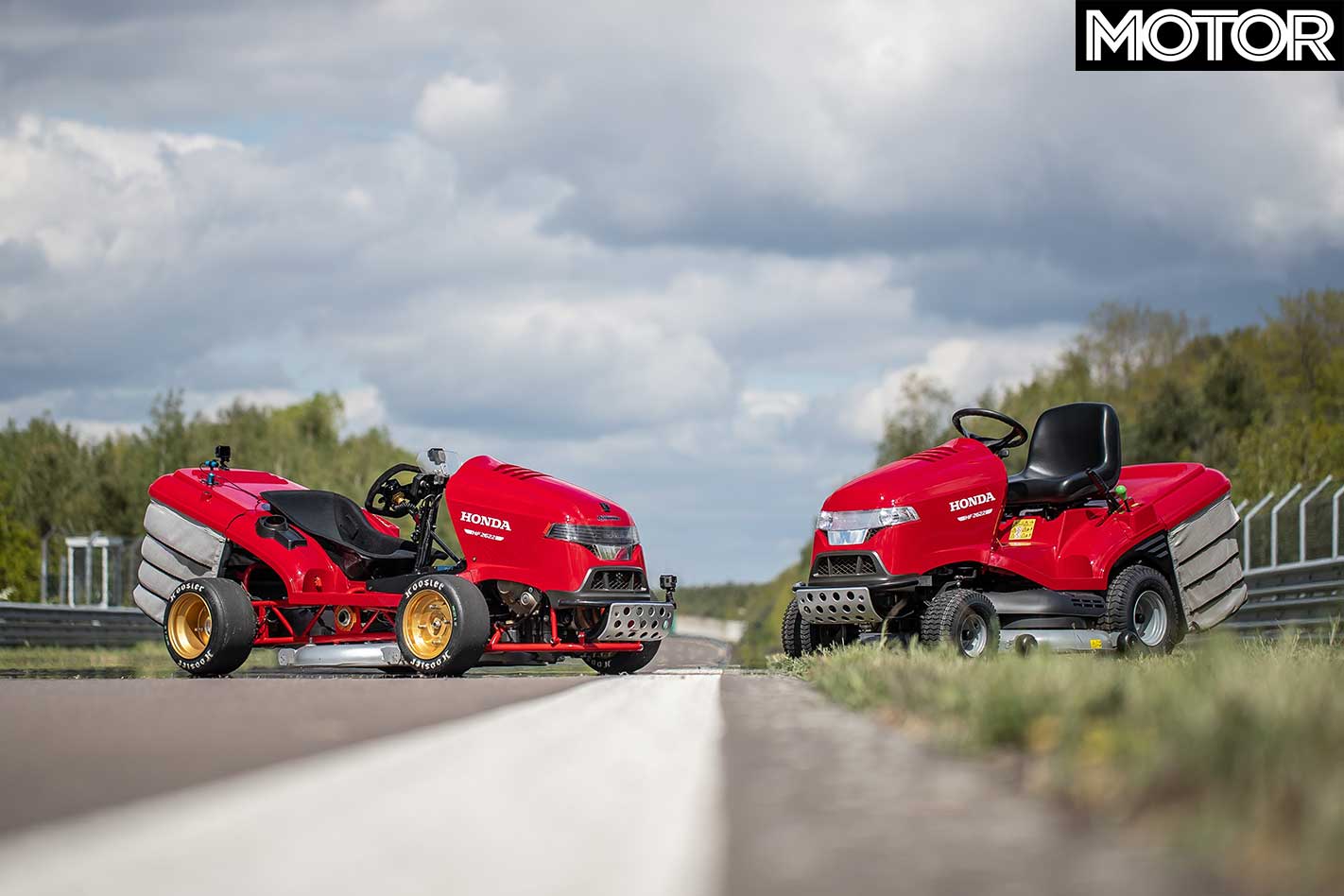
Even Honda UK manager Dave Hodgetts says despite the impressive engineering behind the mean mower, it still required a certain resolve to pilot, commending Hawkins on climbing behind the wheel.
“The original Mean Mower was an incredible machine; but this time we’ve taken it to a whole new level with version two.
“After taking the top speed record in 2014, we wanted to do something a little different by setting an all-new record for acceleration, and the result is fantastic.
“Team Dynamics have gone above and beyond in developing and building this real feat of engineering, and hats off to Jess for being brave enough to get behind the wheel!”
With a 6.0-litre twin-turbo W12, the 2020 Bentley Flying Spur is going to be fast.
But on top of that, the new four-door from Crewe in the UK also rather elegant, and Bentley says it hasn’t carried anything at all over from the previous generation aside from the name.
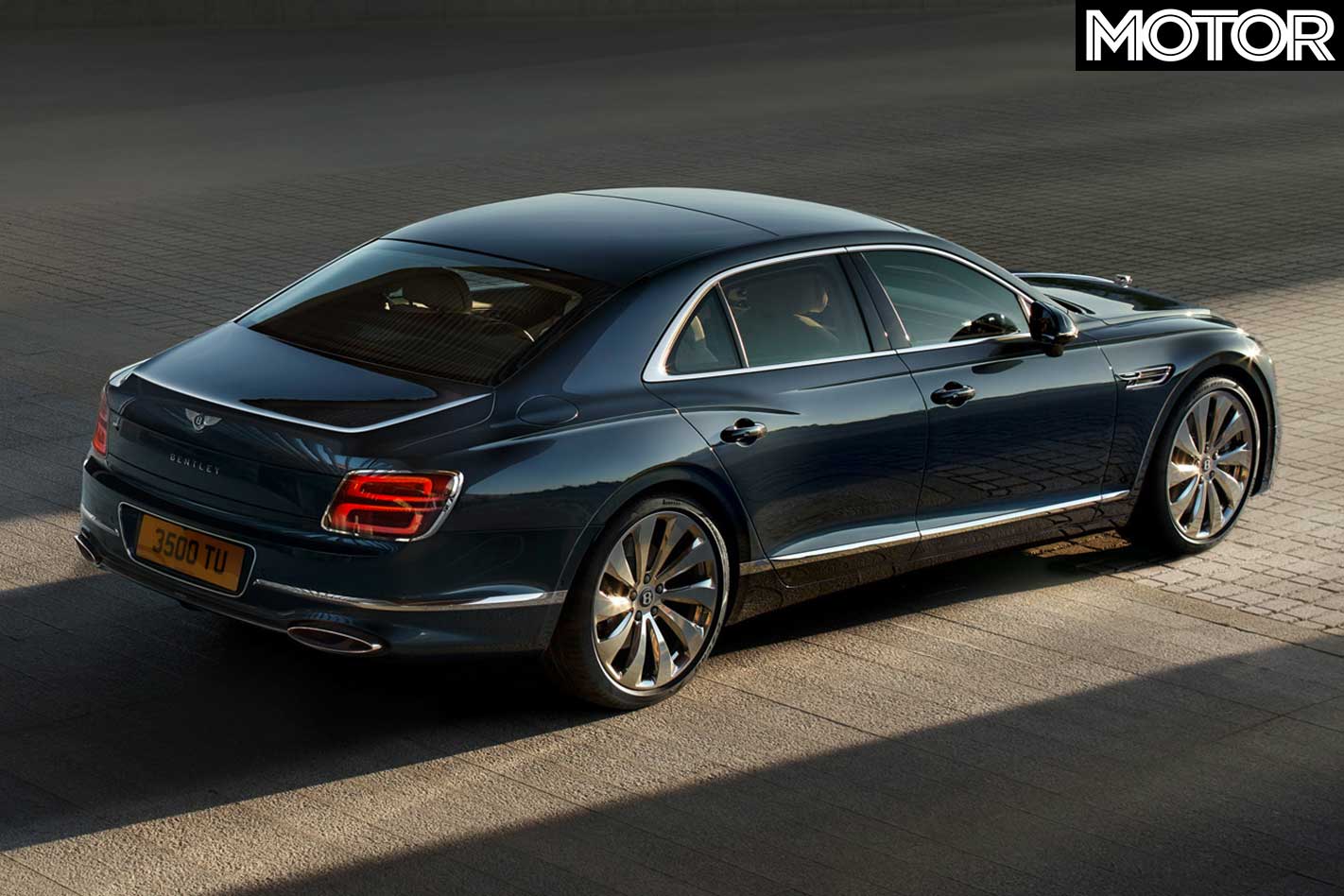
With 467kW and 900Nm, the same as the Continental GT, the new Flying Spur will be able to hit 100km/h from a standstill in just 3.8 seconds, Bentley says. That’s rather impressive given its 2437kg claimed weight.
If you really need it to, the Flying Spur will crack on to a 333km/h top speed.
Of course, the comfort and style of the Flying Spur is just as important as its brutal speed, or as Bentley puts it, the car is “a technological tour de force of innovation, connectivity, passenger comfort and driver excitement.”
Allowing much of this to happen is the underlying Volkswagen Group MSB platform, which is shared amongst other large luxo cars like the Continental GT and the Porsche Panamera.
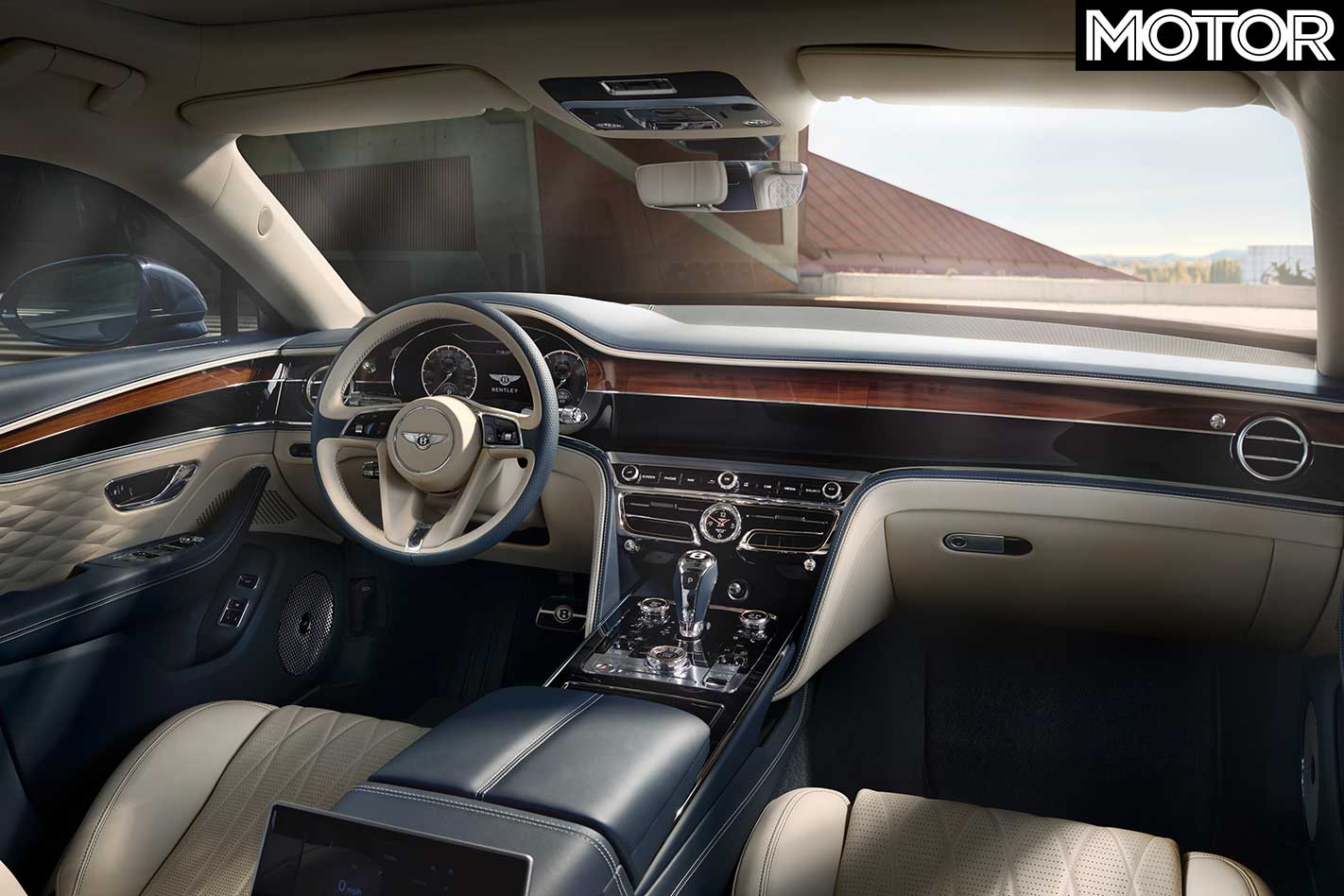
The dual-clutch eight-speed gearbox also comes from Germany, and if the while the Flying Spur was “designed, engineered and handcrafted in Great Britain,” there’s still some VW Group/Audi/Porsche happening in the cabin.
All-wheel drive and Bentley’s Dynamic Ride system are coupled with, for the first time in a Bentley, all-wheel steering to create a more stable, nimbler ride. The Dynamic Ride system helps this via the roll bars, where electric motors apply force to counteract body roll to create smoother cornering and minimise the shock transferred into the cabin from bumps.
Triple-chamber air springs add an extra level of comfort, with Bentley claiming the new setup allows for a broader range of adjustment between soft settings and a firmer sporting mode.
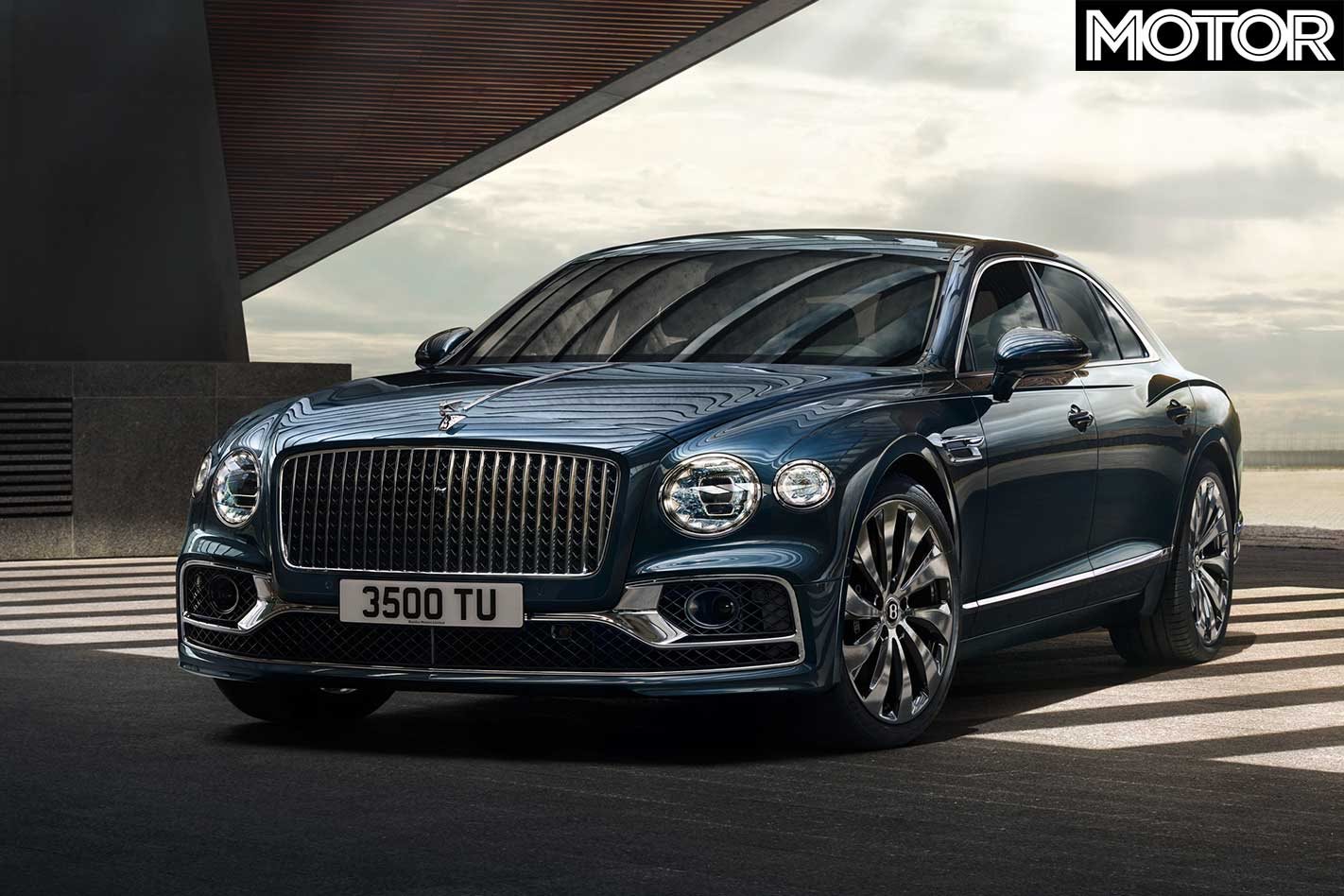
Even those who won’t find themselves the owner of a Flying Spur might get the chance to enjoy its styling, which now incorporates a retractable ‘Flying B’ hood ornament.
Inside, however, diamond-quilted leather abounds for only those who have the privilege of embarking upon a Bentley. Diamond knurling features on the dials and knobs laid out across the dash and console, while walnut veneer is now an option to add a little ‘old world’ warmth.
Australian details for the new Flying Spur are yet to be confirmed, but the outgoing model currently sits around $420,000 as a starting price. Stay tuned.
What to make of the new Toyota Supra? I’m not sure I’ve ever seen such a broadly negative reaction to a new sports car before but, after years of tormenting drip-feeding, I can somewhat understand why.
For starters, my own two cents – I’m glad the new, A90 fifth-generation Supra exists. Is anybody not? And I’m thanking the kind and benevolent car gods that over the next few years I will be able to go buy one from Toyota here in Australia. How lucky are we?
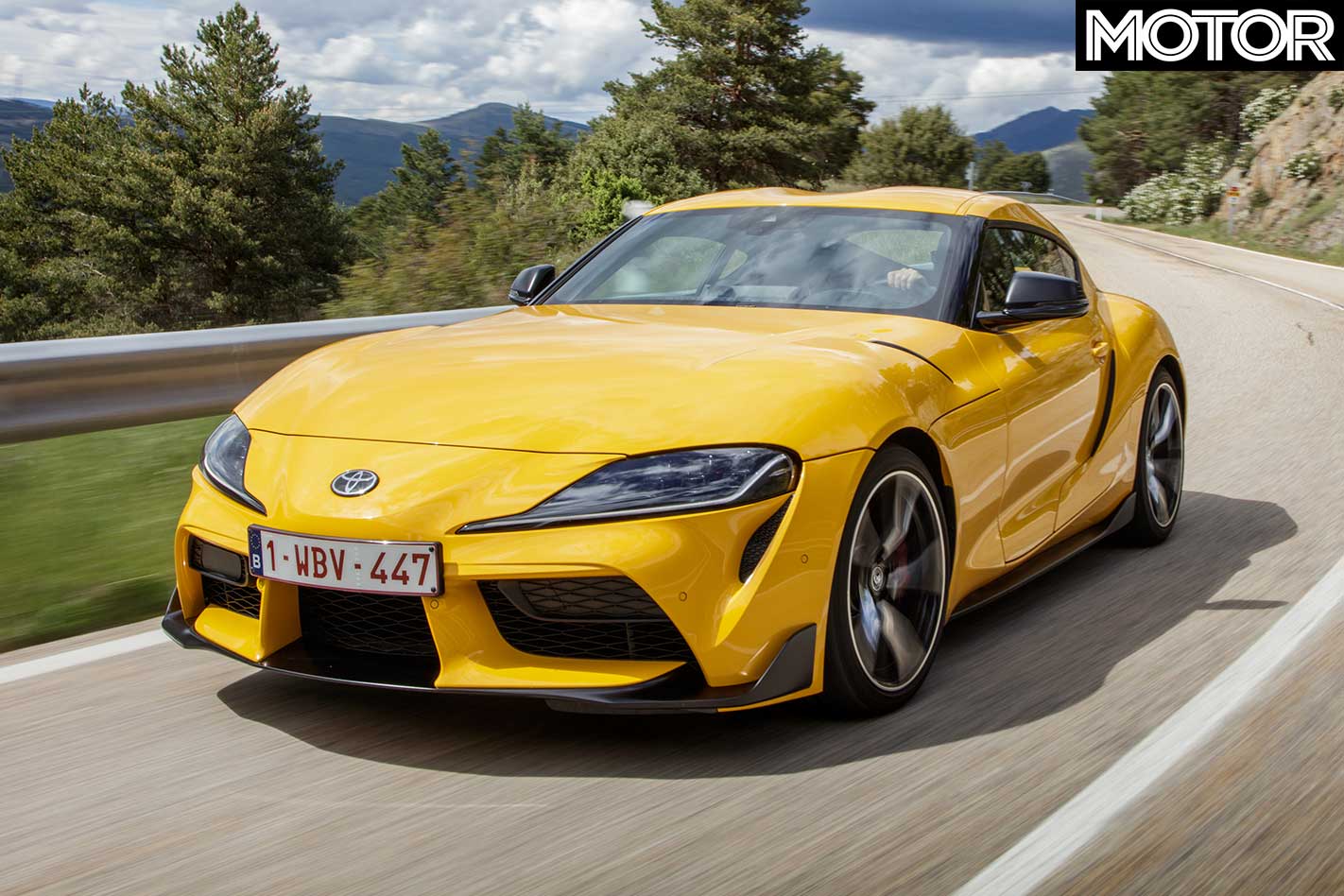
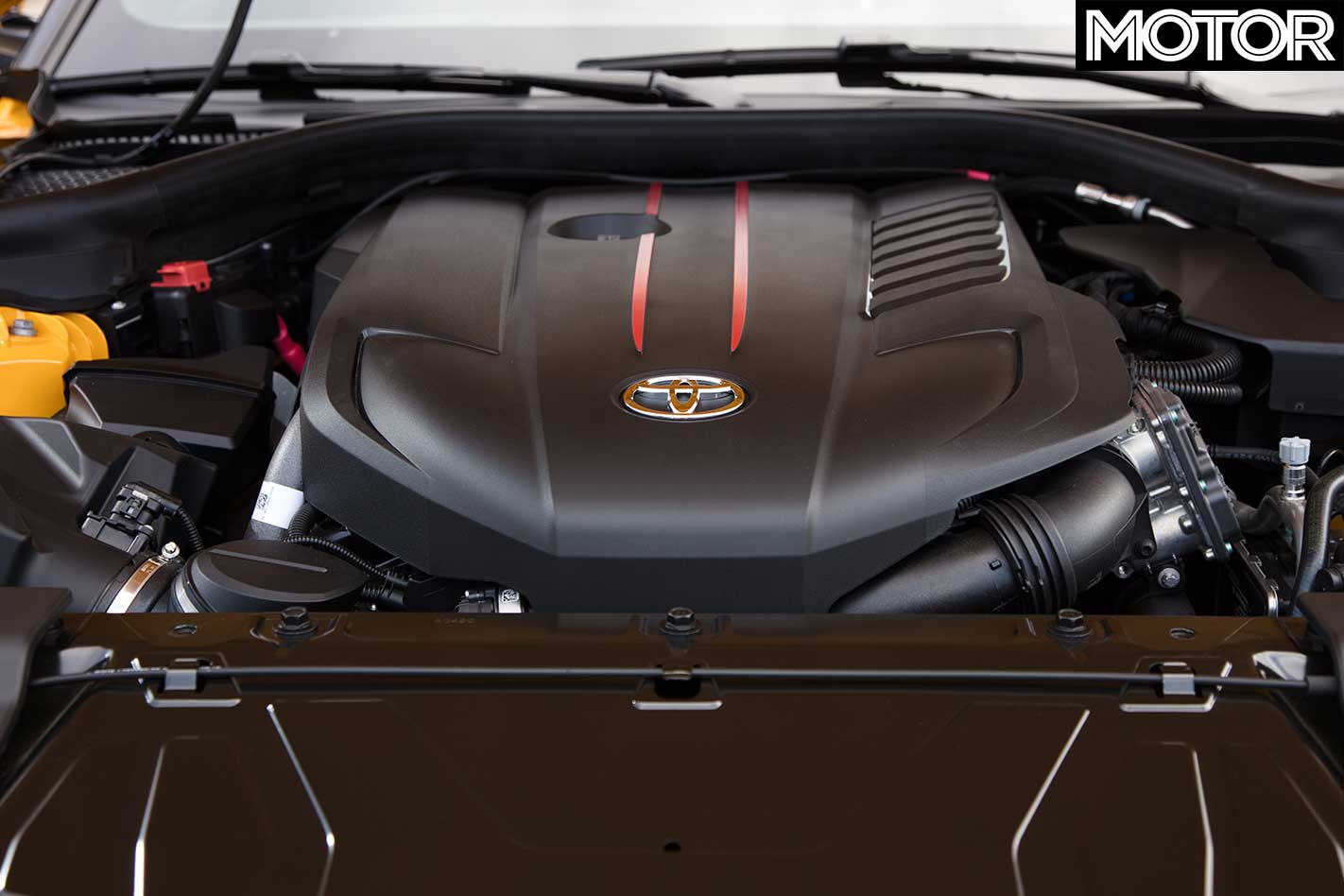
A cutting-edge, turbocharged 3.0-litre inline-six sending power (250 German kilowatts) to the rear wheels, in a swoopy, somewhat overstyled but inarguably dramatic coupe bodystyle. Ignore the Toyota badge and all the hullabaloo about the name, this car entering the market as another option for us is a very welcome thing. And not just because new, sub-$100K sports cars don’t come along anywhere near as often as $200K-plus sports cars these days, but there is that as well.
So why is everybody so butt-hurt about the fact it’s basically a restyled BMW? Is that even a fact? Having read all the press materials for Supra, I don’t think we know the full story, and I think Toyota should kick itself up the bum for not telling that story properly – a failure of its global PR apparatus.
I have a sneaking suspicion the Z4, you could say, is much more Japanese than we think. Sure, if you put a percentage on it, the new Supra in its physical form has gotta be over 50 per cent BMW, but they haven’t done a Lexcen either. We will endeavour to find out this full story as soon as we can.
My feelings towards the Supra do get a bit confused when I look at its interior. The interior of the fourth generation JZA80 Supra was one of its coolest features – inspired by a fighter jet cockpit, it was unabashedly driver-focused with myriad delightful details. A team of Japanese car nerds clearly had a great time designing it.
Acknowledging that I’ve not sat in one yet, from photos it appears the new A90 Supra’s interior makes almost zero effort to hide the fact it’s pure BMW. Should I be upset that someone’s put a BMW interior in my Toyota? I’d certainly be more upset if someone put a Toyota interior in my BMW.
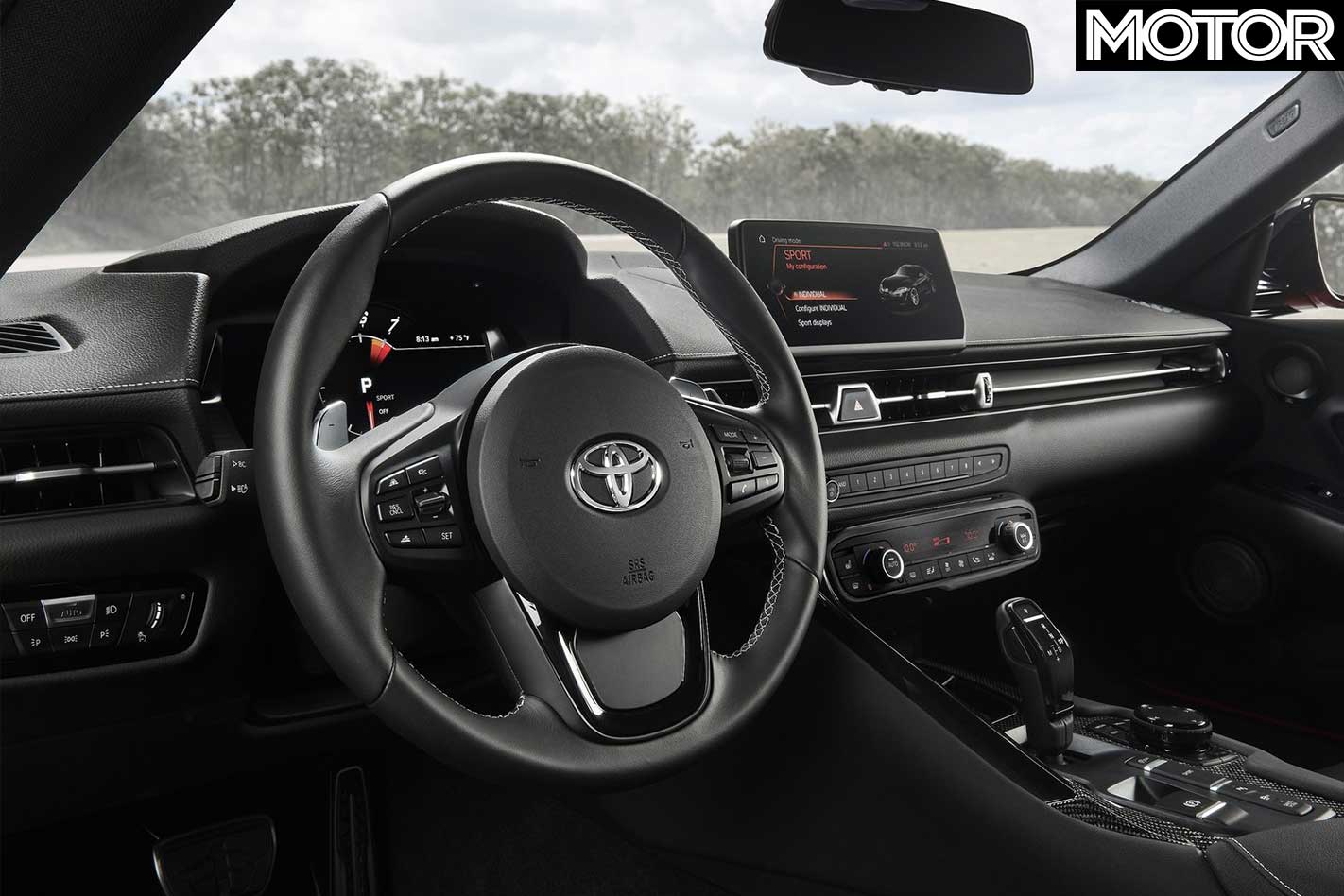
And it’s not as simple as saying I’d prefer to pay $70K for my Supra if it had a cheaper Toyota interior. If Toyota did indeed do its own cabin for Supra, and had to pay extra to have Austrian-based manufacturing contractor Magna Steyr install it for them (neither Z4 or Supra are made by BMW), it’s probable the end price of the car would be not unlike what it is now.
Is the Supra too expensive? It’s $85K for the GT and $95K for the GTS, before on-roads. That makes it either a very expensive Toyota or a very cheap BMW. The Z4 M40i – more or less a convertible Supra that looks like a BMW – is $125K.
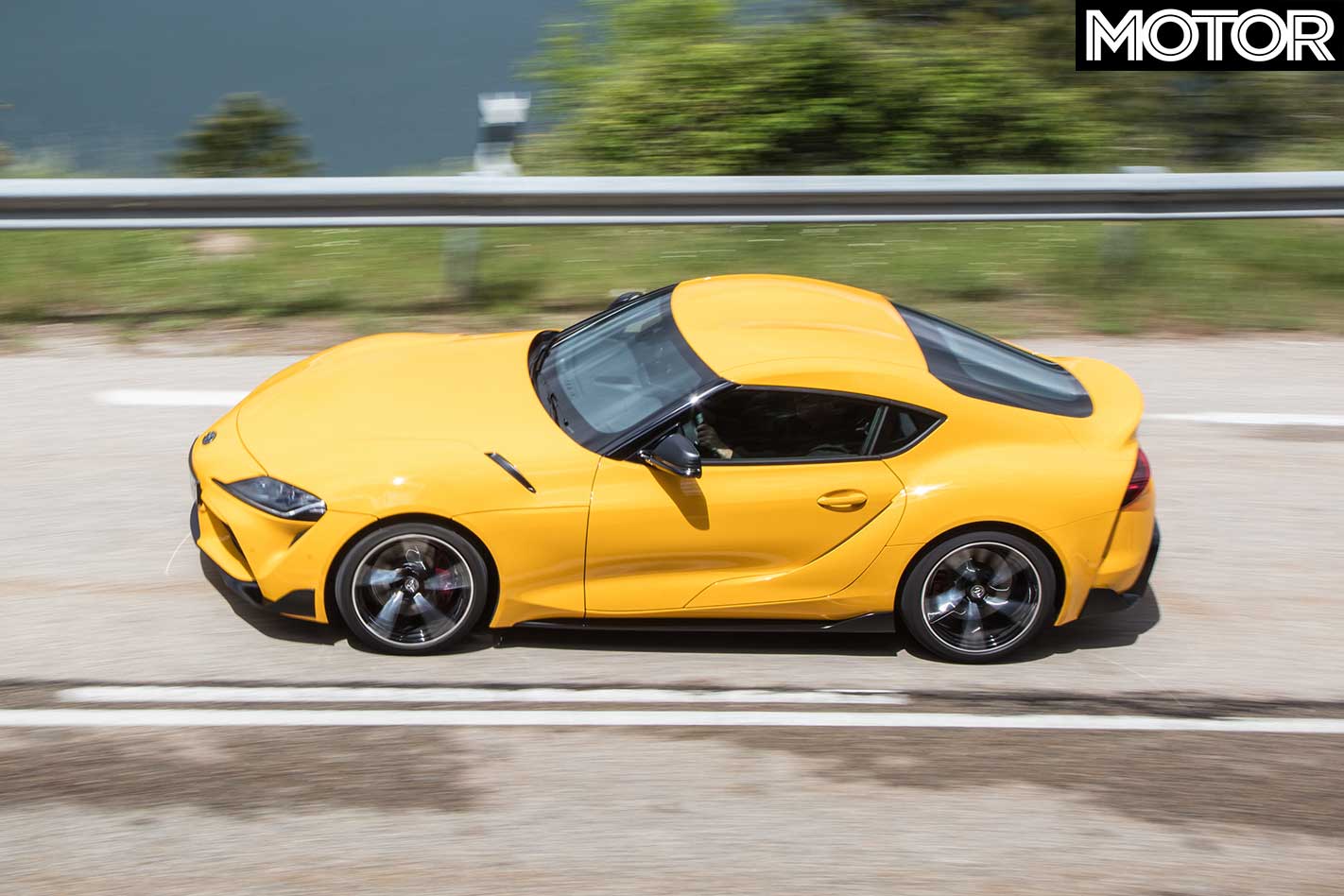
Like anyone, I was hoping Toyota would pull a rabbit from the pricing hat and announce a $60K price-tag or something similarly stunning. They kind of did that with 86. But $85K is still mighty sharp – and will look even sharper when the M2 and M240i no longer exist, which is sadly, as both models are in their twilight years, not too far away.
Should the Supra have been a Lexus model? Should it have been called Celica? Is it too soft, too much of a grand tourer, as you’ll read in the review later this issue? So many questions, and so many differing answers, but there is one question that, to my mind, there is an unequivocal single answer. And that is if it was right of Toyota to offer this car at all.
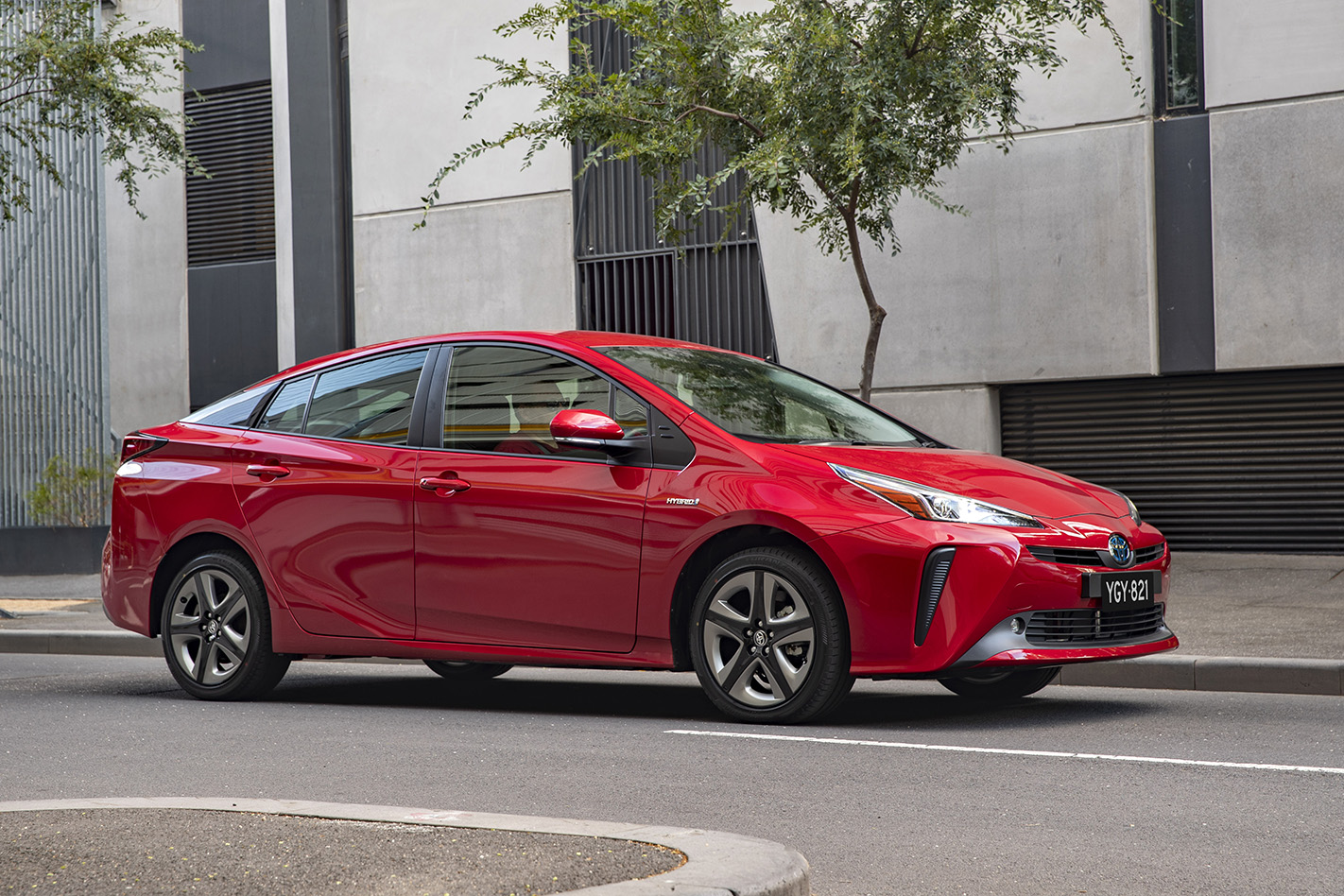
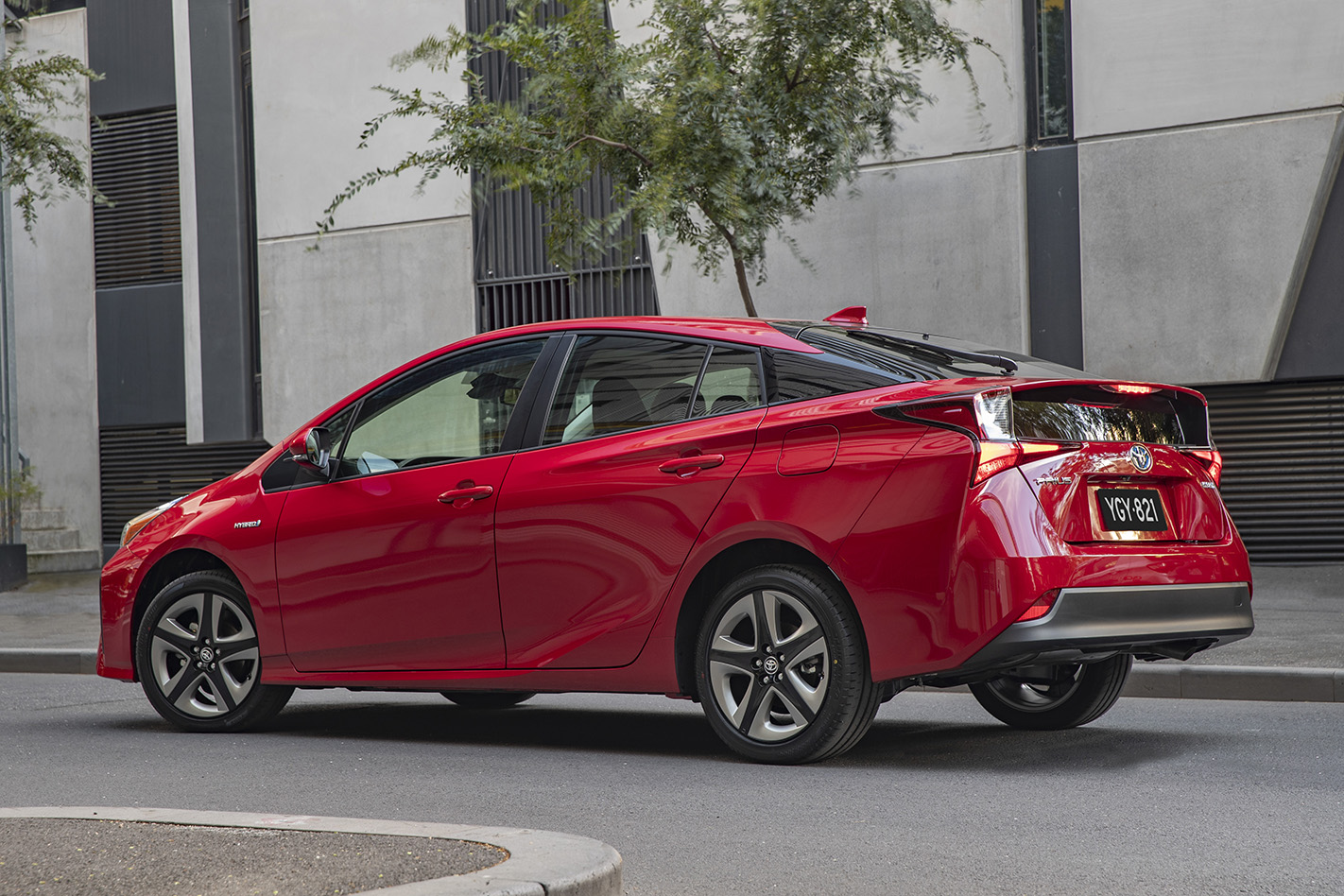
Toyota’s hybrid hatch gets a subtle makeover for 2019, though the core offering remains intact. How does the 2019 Toyota Prius fare now it’s halfway through its lifecycle?
What is it?
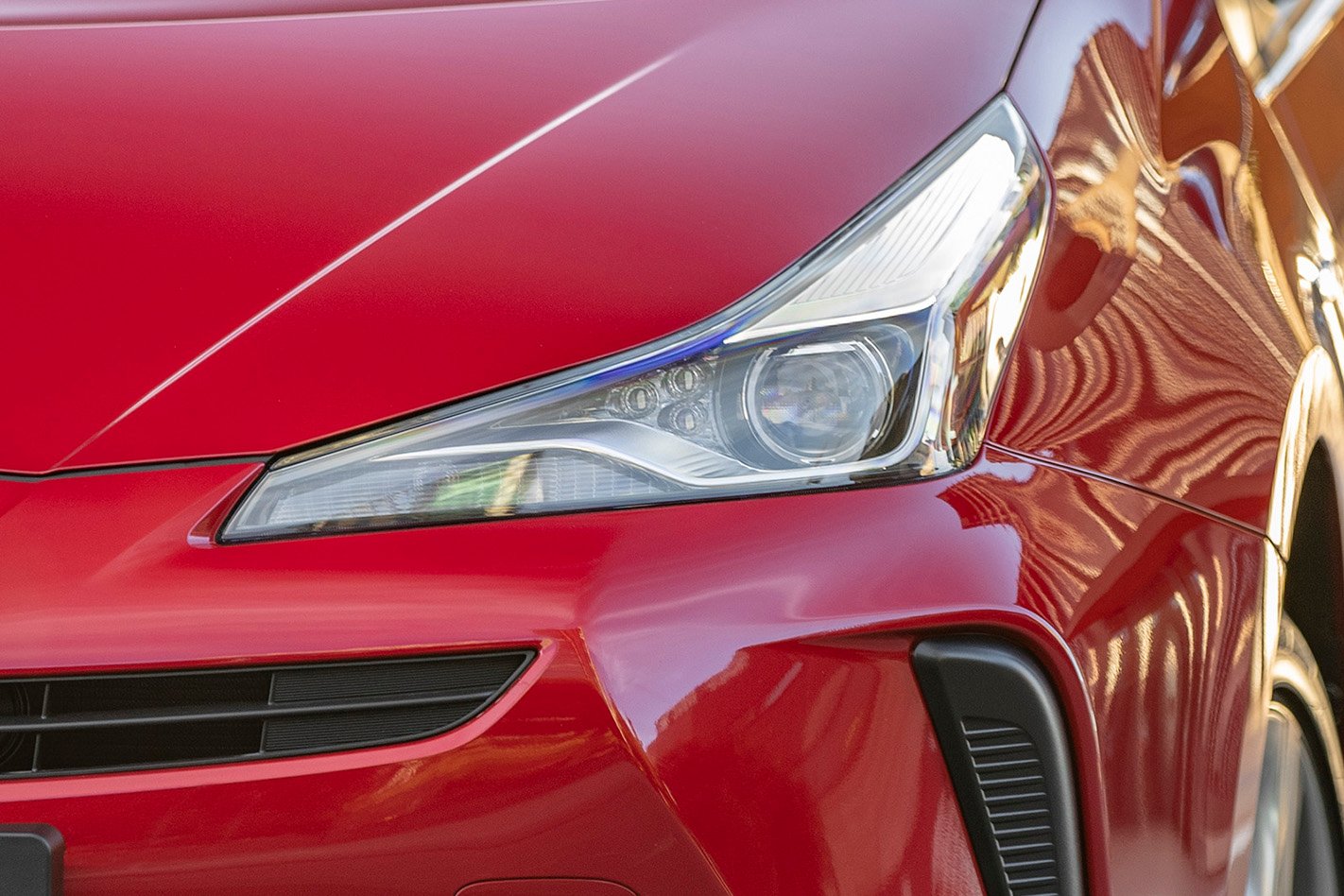
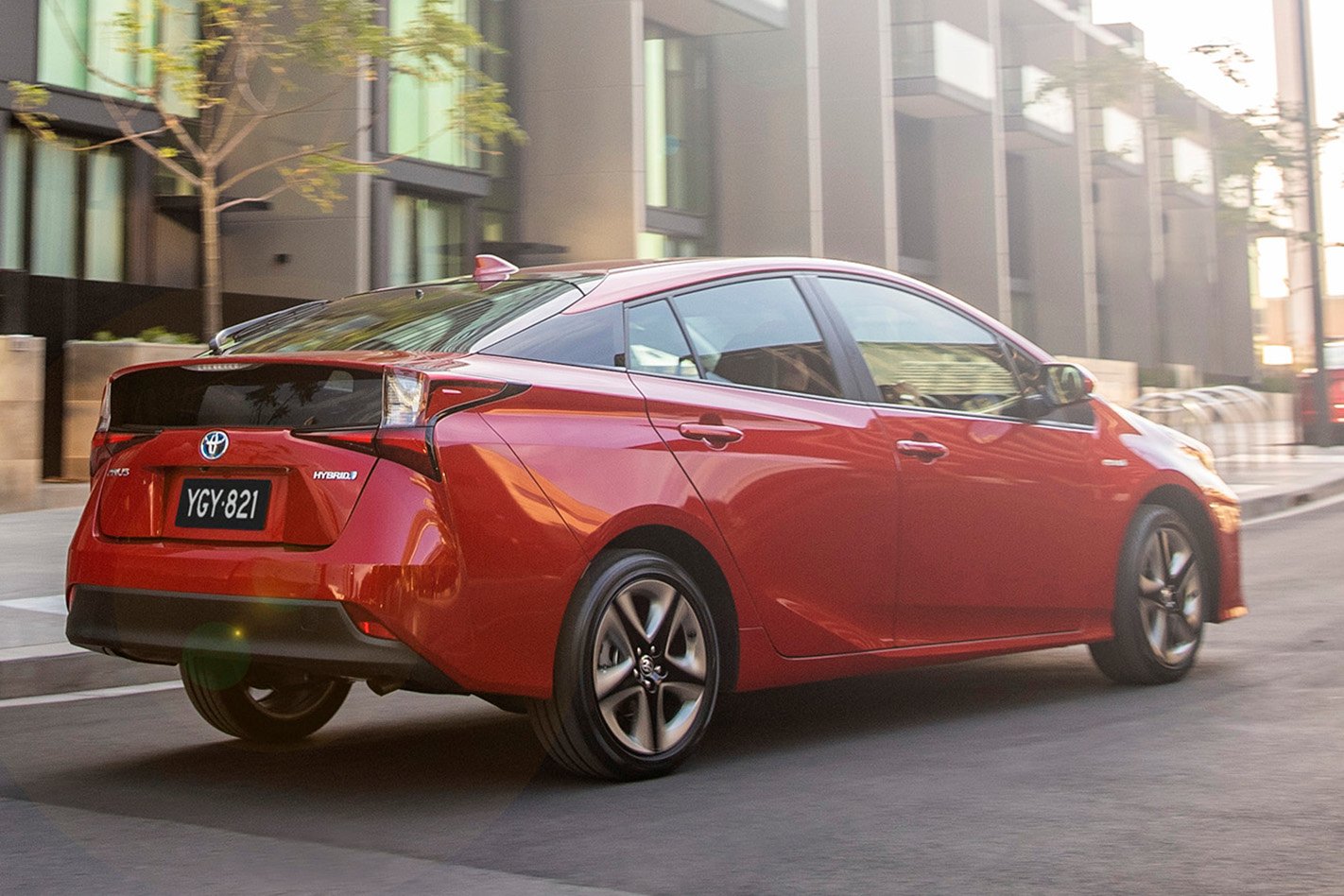
This is the first facelift for the fourth-generation Toyota Prius hybrid, with the most notable change being a cosmetic revision that ditches the divisive Dali-esque droopy headlight and tail light clusters. The result is a car that looks a little more ordinary from the outside, and for those who just want to drive something that doesn’t look like it’s been parked too close to a campfire, that’s a good thing.
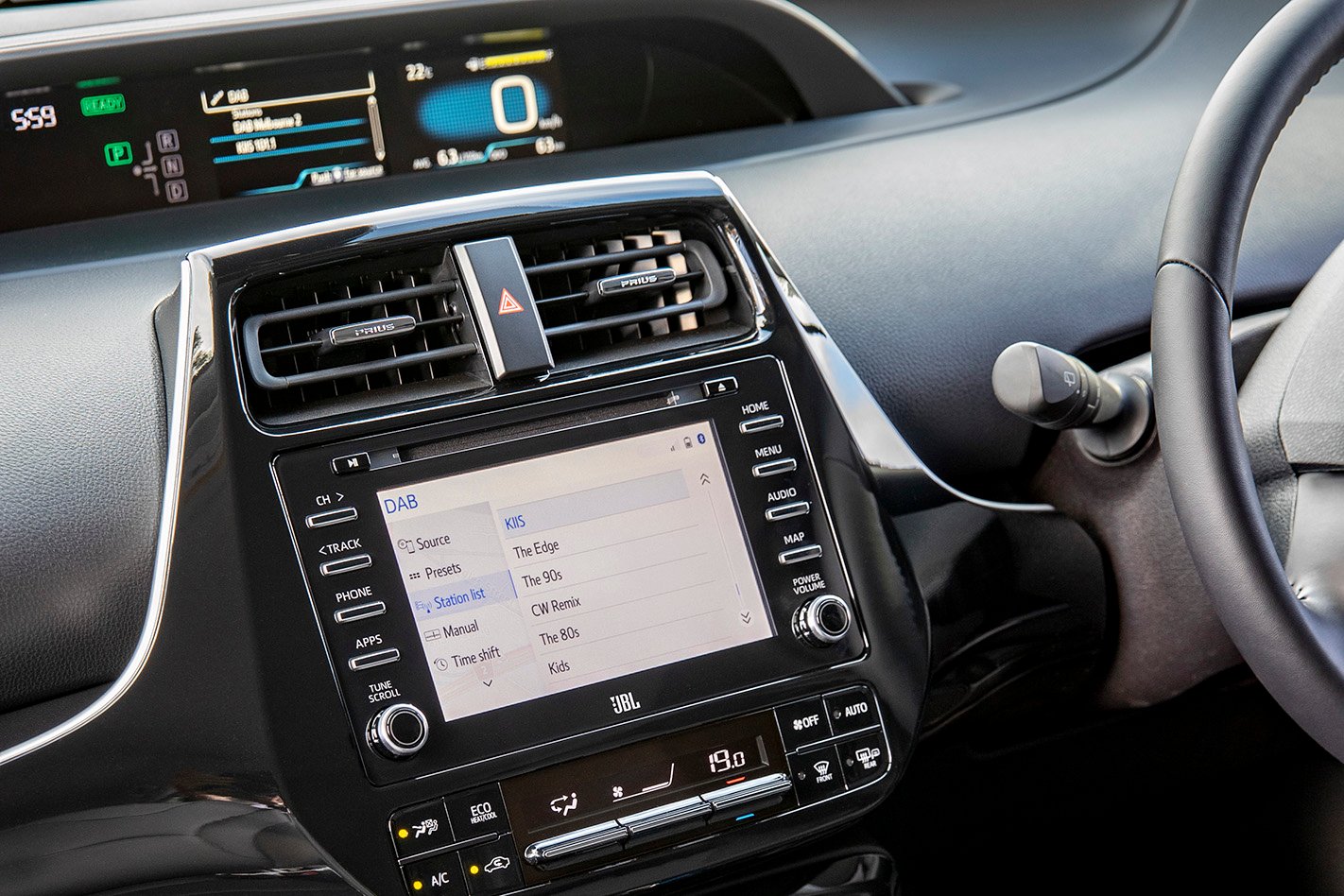
The other major change sees the Prius range’s infotainment system upgraded to a new seven-inch display with smartphone style multi-touch input, a 10-speaker JBL audio, an AM/FM/DAB+ digital radio tuner, live traffic data and satellite navigation, as standard.
Voice controls have also been expanded to allow driver’s to set navigation directions while driving, though smartphone mirroring via Apple CarPlay and Android Auto are not offered – just the less ubiquitous Siri Eyes Free and Miracast systems.
How much is the Toyota Prius?
The 2019 Toyota Prius range opens at $36,590 for the base model, lifting to $44,050 for the range-topping Prius i-Tech. Stepping up to the i-Tech isn’t necessarily vital to get a well-equipped car, mind you, with the base model already coming with plenty of high-grade equipment like, a head-up display, wireless charging pad, active cruise control, keyless entry and plenty of active safety equipment as standard.
Opting for the i-Tech variant only nets you 17-inch alloys instead of the base model’s 15-inchers, leather upholstery, a power-adjustable driver’s seat, heated front seats, blind spot monitoring and keyless entry on all doors, not just the driver’s door. Is that worth the $7460 price differential? In our opinion, it’s not really necessary.
Who is it for?
Anyone looking for a supremely fuel-efficient small car should consider the Prius. It’s been one of the most enduring eco-car nameplates, and one that’s become synonymous with treading lightly on the environment while also being dependable, comfortable and versatile.
Hatchback practicality and its small size makes it a good city car, while it’s more than capable of carrying four adults in reasonable comfort
Is the Toyota Prius easy to live with?
The fourth-gen Prius is deceptively spacious for such a small car. The cabin feels light-filled and roomy, with plenty of headroom for those up front and respectable legroom for those in the rear.
Furthermore, a 502-litre boot capacity puts it well above the small-hatch status quo when it comes to hauling cargo, and folding the 60:40 split rear seats expands that area even further.
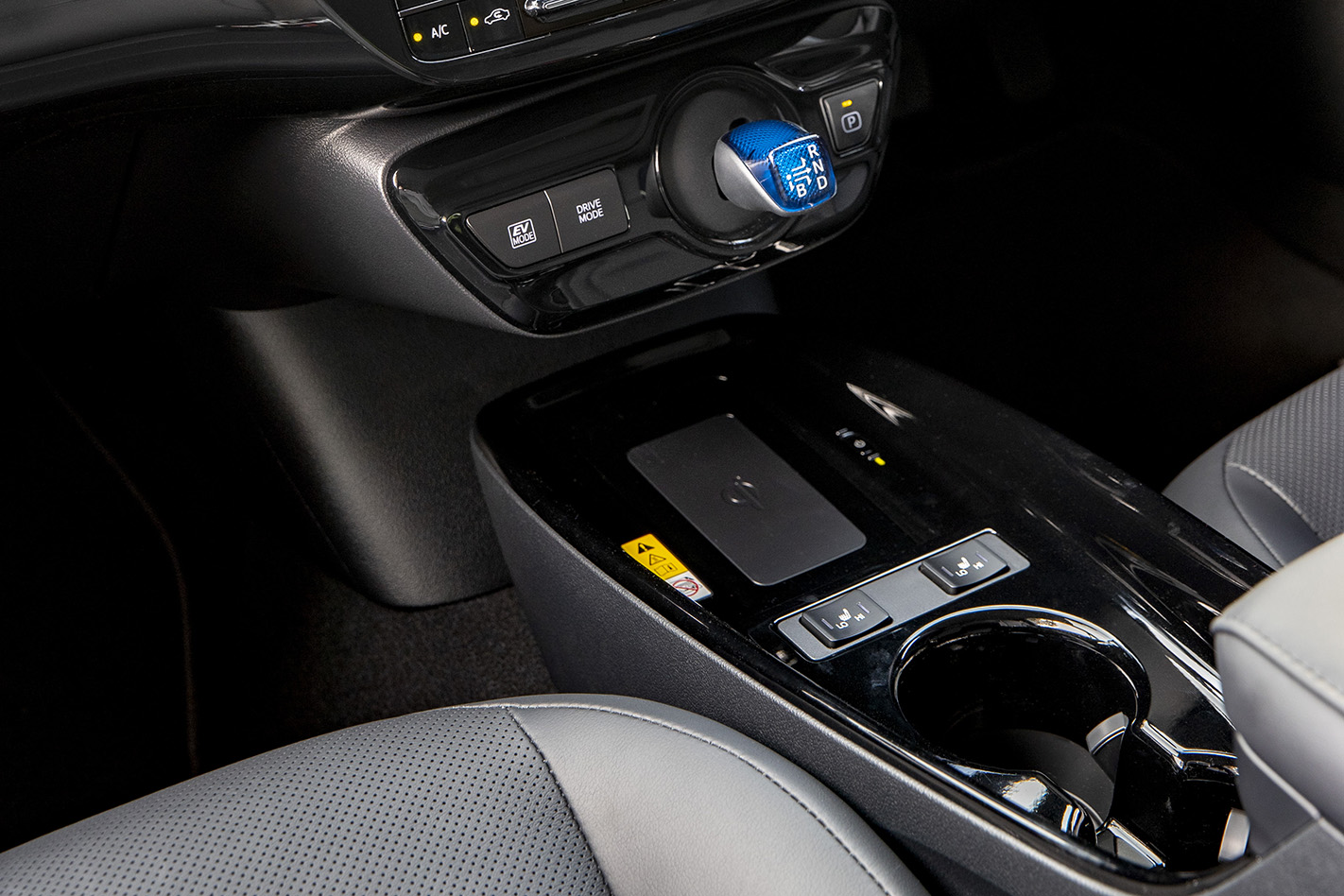
The wireless charging pad underneath the rather dainty transmission selector is incredibly handy if you’ve got a device that’s compatible with the cable-free tech, though the infotainment’s lack of full-feature smartphone mirroring means most will just endure the standard Toyota system.
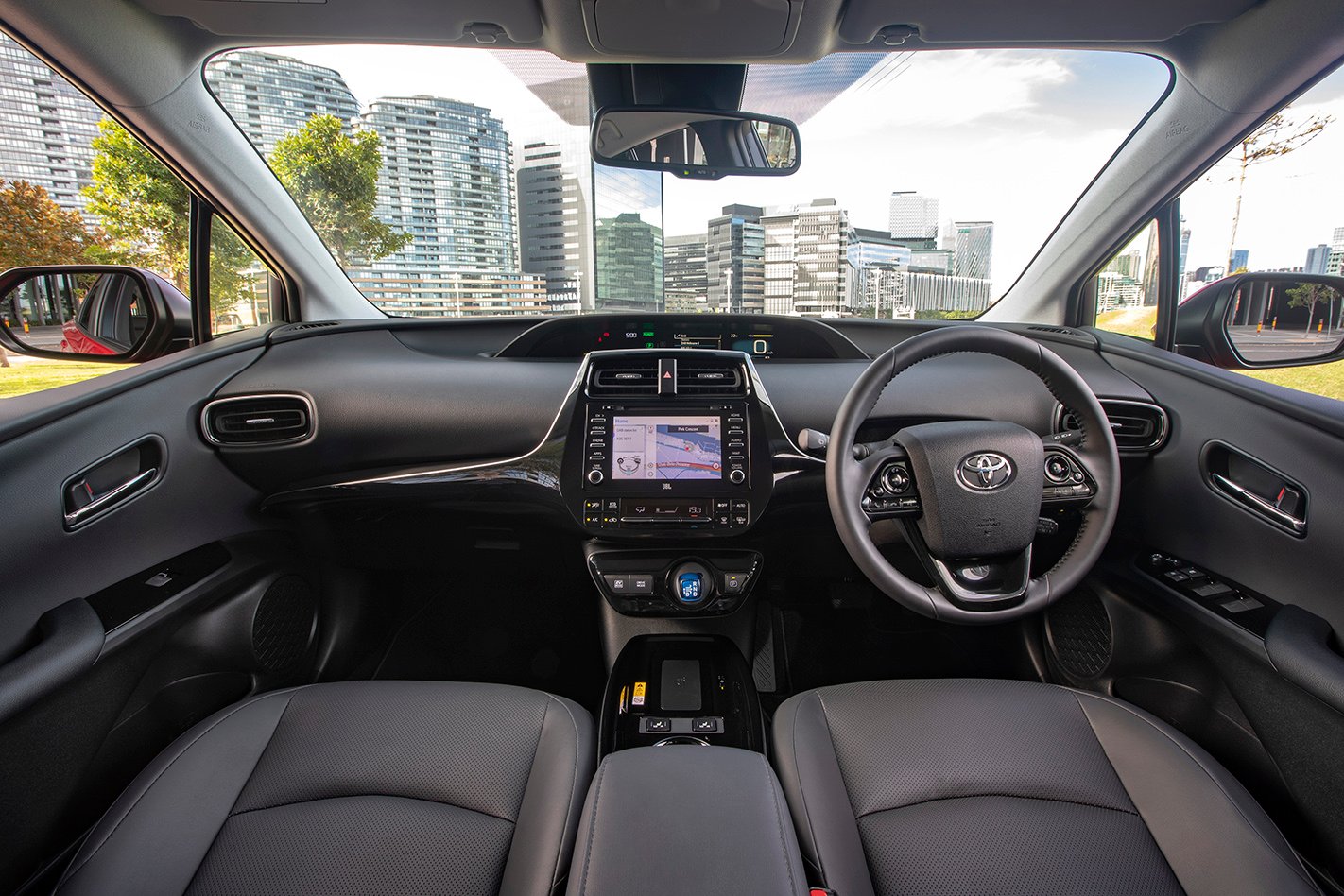
Despite being updated this year, it’s not at the sharp end of the segment for user-friendliness or responsiveness, though at least satellite navigation and Bluetooth media/phone streaming are standard.
And the addition of voice controls for sat-nav address entry is a solid improvement. Not only did the pre-update Prius not sport that capability, but it required you to bring the vehicle to a complete stop before it would allow you to type in the address by hand. The voice controls now allow you to complete that task while staying in motion.
New cloth trim for the base model’s upholstery looks and feels good, and the switch from glossy white plastics to black plastic trim around the centre console makes the Prius’ cabin look more dignified and hide dirt and dust better.
There are some minor ergonomic fails, like a surprisingly shallow centre console tray under the centre armrest and a rear-door aperture that requires taller passengers to stoop to enter. But mostly the Prius’ cabin feels quite well-considered in its design. We don’t necessarily like the centrally-mounted instrument cluster, but the head-up display does at least mean you don’t need to give your dashboard the side-eye in order to keep track of your speed.
Its foot-operated parking brake is a relic from a bygone era, and it’s irritating that Toyota still resists putting an electronic parking brake on its eco-tech standard-bearer. Not only would an electronic park brake be able to automatically set itself when the vehicle is put in park, and thus be safer, but it would make the driver’s footwell roomier as a result.
How well does the Toyota Prius drive?
For a serene driving experience, the Prius excels. Its well-muffled engine will often only send the most minor of vibrations when it’s working, and were it not for the status displays on the dashboard you’d be hard-pressed to tell when it’s idling – which isn’t often, once it’s all warmed up.
Request more forceful acceleration, and the engine gets a little vocal. Its constant-rpm buzz spoils the otherwise churchlike cabin ambience, but thankfully disappears once you back off at cruising speed, at which point the car will usually switch the engine off and just use the electric motor to maintain momentum. It’s slow, make no mistake, but it’s a peaceful experience.
The ride is compliant and pleasant on urban tarmac – especially so on the base model’s 15-inch alloys – but we really only have one major gripe about the Prius: in this age where fully-electric cars and plug-in hybrids are starting to become more common, the Prius’ inability to use 100 percent electric propulsion for more than a brief period (and even then, only if you have the gentlest pressure on the accelerator and don’t exceed 30-40km/h) makes it seem a little behind the times.
Feeling the petrol engine start up just because you needed to travel at 30km/h up a steep road seems like an unnecessary waste of fuel, given the electric motor feels strong enough to do so on its own.
It’s nevertheless efficient. Recording average fuel economy of less than 5.0L/100km over a week of mostly peak-hour commuting is definitely commendable, and the Prius’ official claim of 3.4 L/100km on the combined cycle doesn’t seem all that far-fetched. Good thing, then, as fuel efficiency is the Prius’ sole reason for being.
Verdict
We should probably address the obvious question, as we’ve avoided it up until now: why would you bother considering the Prius, given the new-generation Toyota Corolla Hybrid is now entrenched in Toyota showrooms and offers fuel economy that’s almost as thrifty, yet costs significantly less than the base Prius even when in top-dog Corolla ZR Hybrid form?
It boils down to a couple of things. Firstly, the Prius still has an efficiency edge despite not having a plug-in capability, with its 3.4 L/100km claimed average still 0.8 L/100km of the hybrid Corolla’s figure.
However the more meaningful difference comes in packaging. The Prius and Corolla may both sit in the ‘small car’ category and boast a hatch bodystyle, but the Prius provides far better accommodation to rear seat passengers and flaunts around double the boot capacity. It’s a more practical and versatile car as a result, so for those considering a top-shelf Corolla but who need to regularly tote a few passengers, the Prius may actually be the better choice.
And now that the Prius looks a lot more ‘normal’ thanks to the 2019 facelift, it’s a choice that won’t have people questioning your aesthetic tastes as a result.
