
What is it?
The latest generation of Lexus’ BMW 5 Series and Mercedes-Benz E-Class rival, that’s more spacious than its predecessor and has foregone its V6 engine in favour of the brand’s fourth-generation hybrid powertrain.
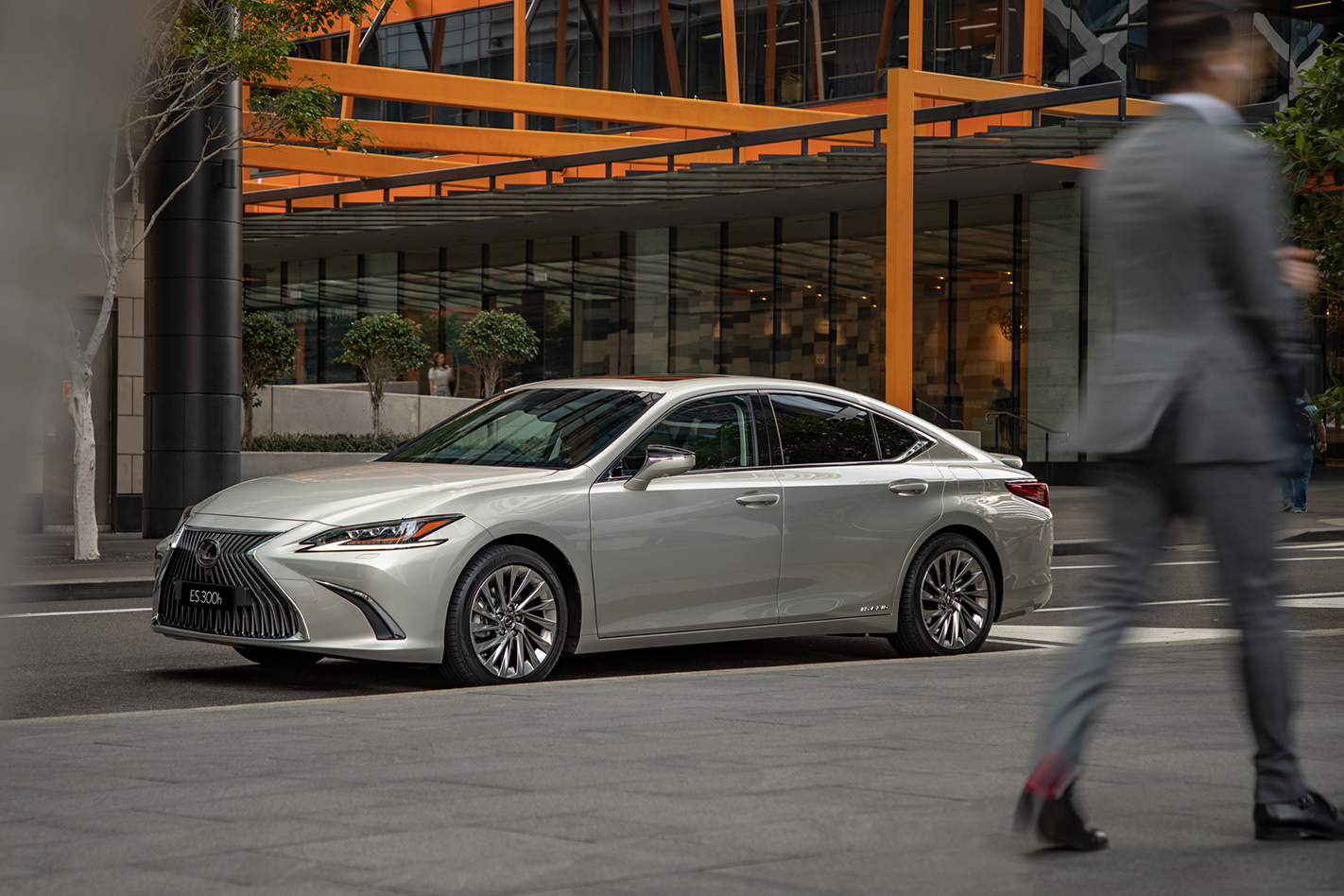
How much is the Lexus ES 300h Sports Luxury?
The Lexus ES 300h comes in two variants including the entry-level ES 300h Luxury that retails for $59,888, and the Sports Luxury that adds a heap of desirable equipment for $74,888.
Standard kit in both includes adaptive cruise control, traffic sign recognition, autonomous emergency braking, lane keeping assist, dual-zone climate control, 10 airbags, cornering lamps, LED headlights and tail-lights, 12.3-inch infotainment screen, satellite navigation, head-up display, 10-way power-adjustable heated front seats, keyless smart entry, wireless phone charging, and moonroof.
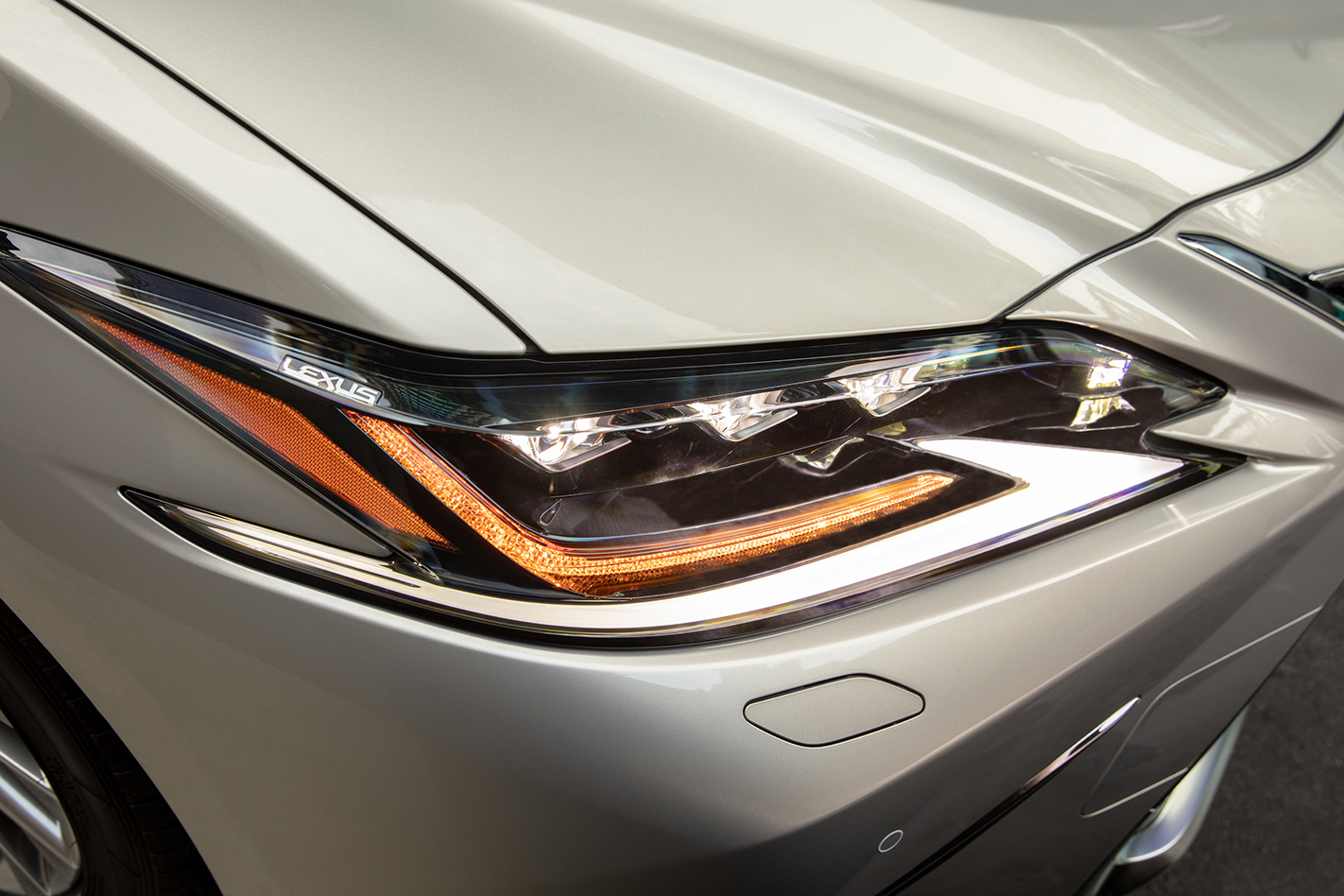
The additional $15k for the Sports Luxury spec brings bigger 18-inch alloy wheels compared to the Luxury’s 17s, advanced LED headlights, blind-spot monitor, rear-cross traffic alert, heated and ventilated front seats with additional power settings, heated steering wheel and a Mark Levinson 17-speaker premium audio in place of the standard 10-speaker Pioneer system.
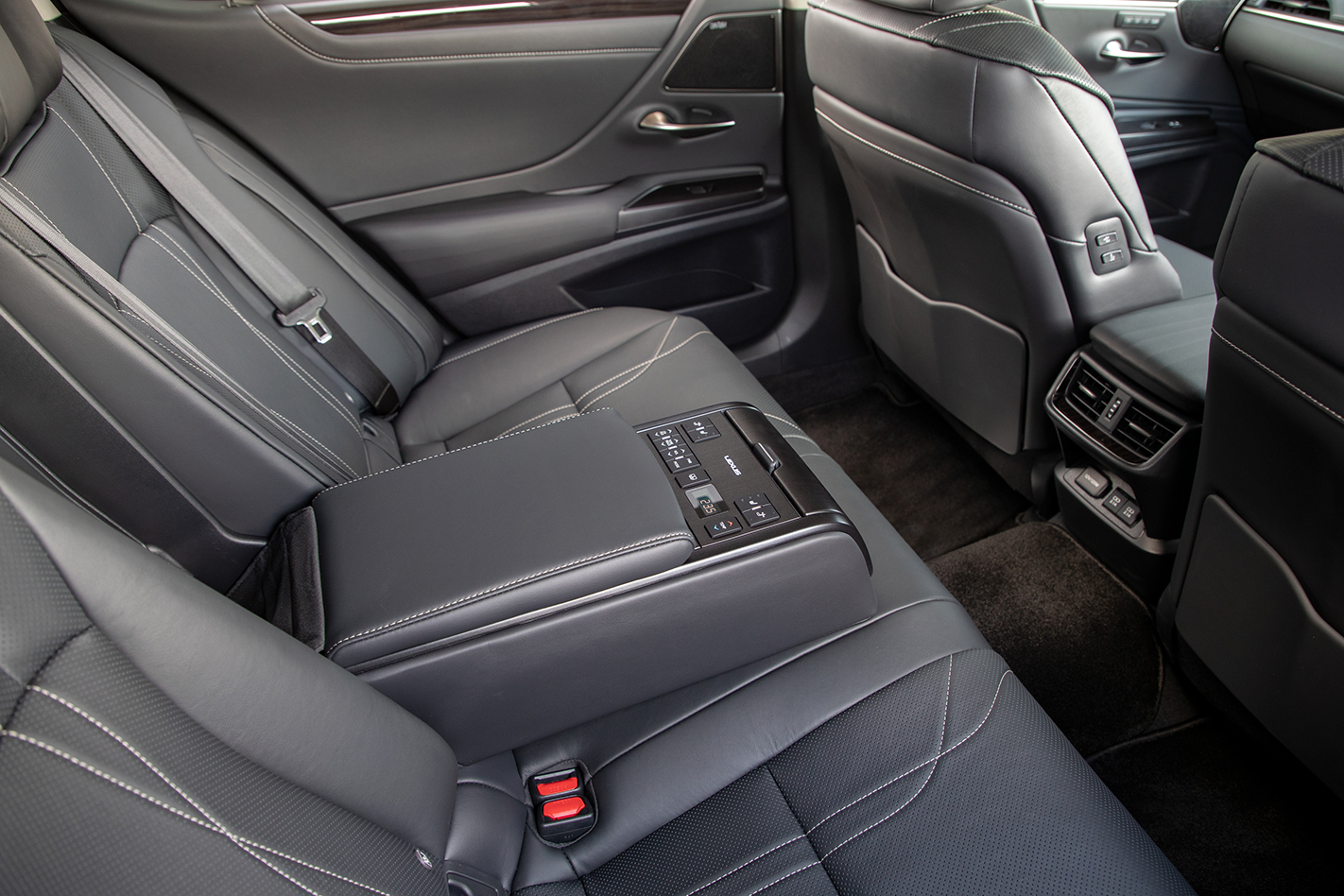
There’s more for rear-seat passengers too, including tri-zone climate control which allows them to set their own temperature, plus power-operated sunshade and seat recliners.
The Lexus ES 300h is covered by a four-year/100,000km warranty.
Who is it for?
The ES 300h Sports Luxury offers a traditional option of a comfortable upmarket sedan for those still not ready to embrace plush SUVs. It’s very much pitched at the more mature driver, but its advanced safety tech, hybrid powertrain and contemporary Japanese take on luxury gives it broad appeal, as does the price tag that brings decent change from similarly equipped European rivals.
Is the ES 300h Sports Luxury easy to live with?
Don’t let the mid-size-sedan tag fool you. The Lexus ES is very spacious, with a 2870mm wheelbase that’s 45mm longer than its Toyota Camry cousin on which it’s based, and 34mm longer than the Holden Commodore that’s considered a large sedan.
The black interior in our test car looked a little plain at first glance, but once seated it’s possible to appreciate its quality feel, and ergonomic design qualities that make the most of the available space.
There’s up to 1022mm of rear legroom and plenty of headroom even for taller bodies. Rear-seat comfort further is enhanced by high-quality leather upholstery, reclining backrests and controls for climate control, sunshade and even the sound system, however, as in most cars, the centre seat is best used for shorter journeys.
Compared with the second row, the front seats are even better. The driver’s seat in particular is a great place to be, with 14 power adjustments help achieve an optimal driving position, and the large centre console providing a snug cockpit feel.
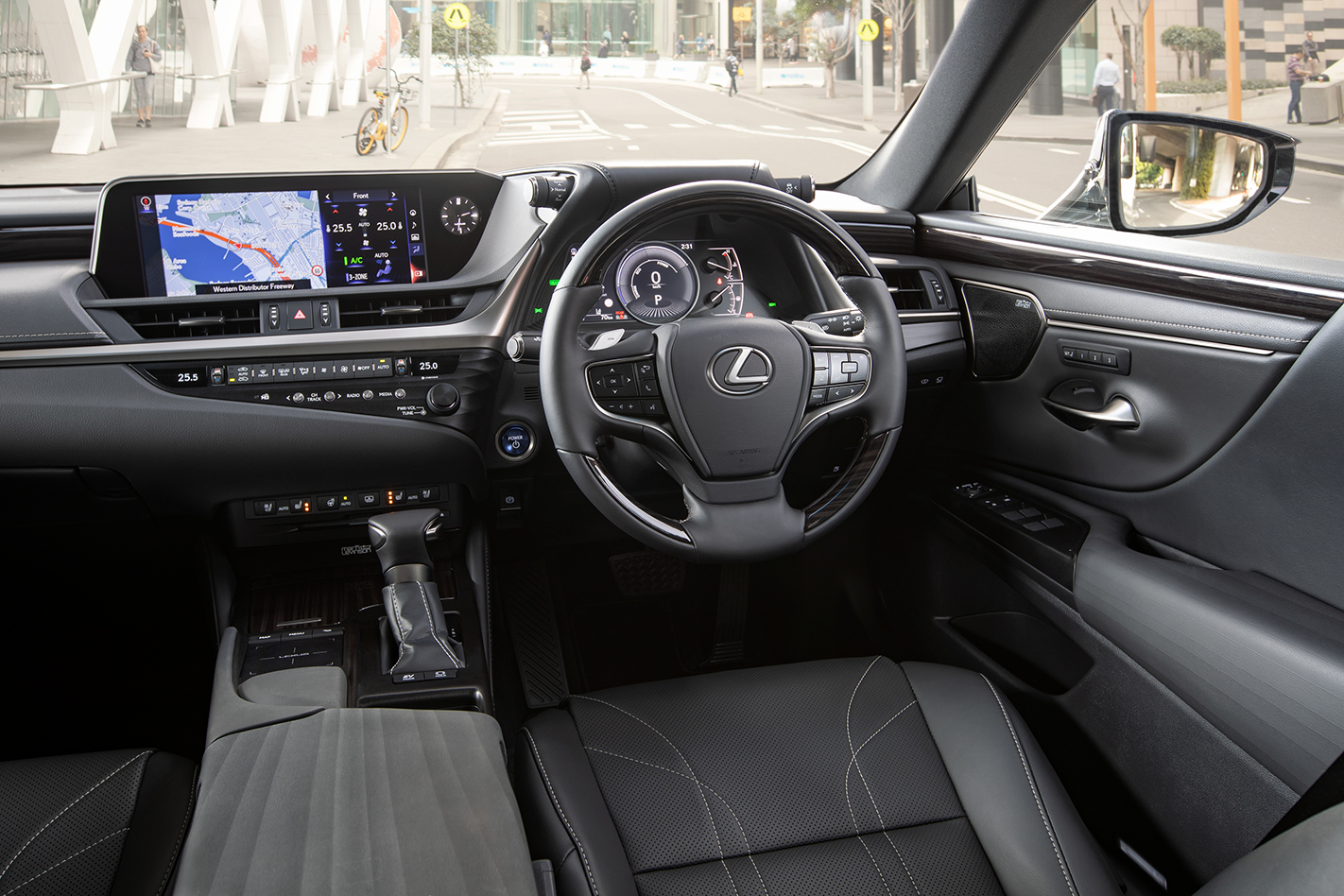
Most of the switches are well positioned. The one downside is Lexus’ persistence with the toggle controller for the multimedia screen – surely Lexus has seen the BMW’s excellent rotary iDrive controller by now!
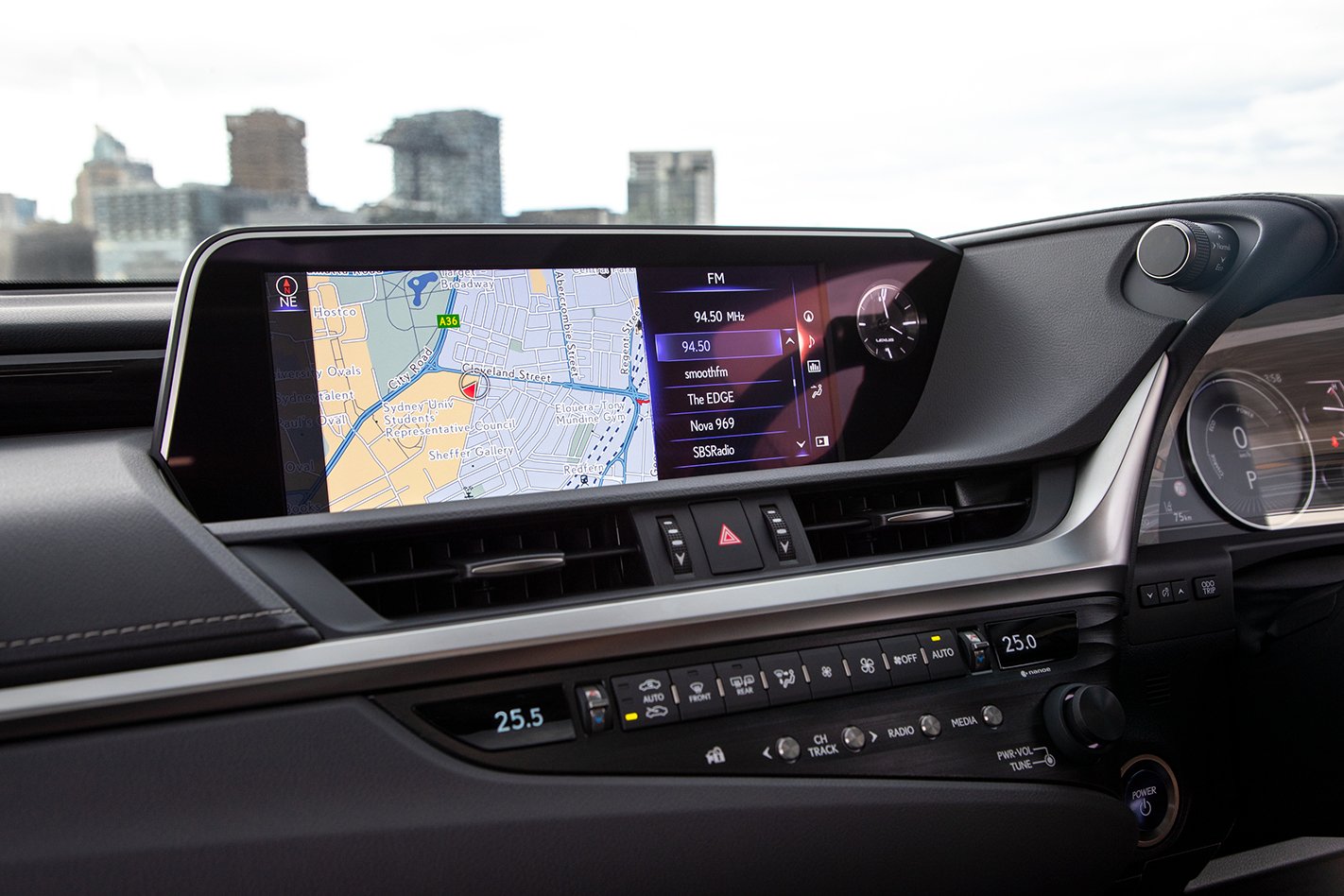
The big 12.3-inch multi-media screen is also let down by dated graphics and poor user experience particularly when it comes to choosing a navigation destination or syncing your phone via Bluetooth. On the plus side, the 17-speaker Mark Levinson is excellent, with the sound quality aided by minimal noise, vibration, and harshness (NVH) levels.
The boot space measures 454 litres, which is a little less than the Camry due to a more advanced multi-link suspension set up just aft of the rear seats, but the trade-off is a more composed ride on the road.
For all that space and comfort the ES 300h is a cheap to run, with an official combined fuel economy rating of just 4.5L/100km, which keeps the fuel budget down even with its preference for premium unleaded petrol.
How well does the ES 300h Sports Luxury drive?
Unlike some luxury hybrids that harness the electric motors’ instant torque to enhance performance, the front-wheel-drive’s ES 300h petrol-electric powertrain is all about efficiency resulting in a lazy 8.9-second 0-100km/h sprint time.
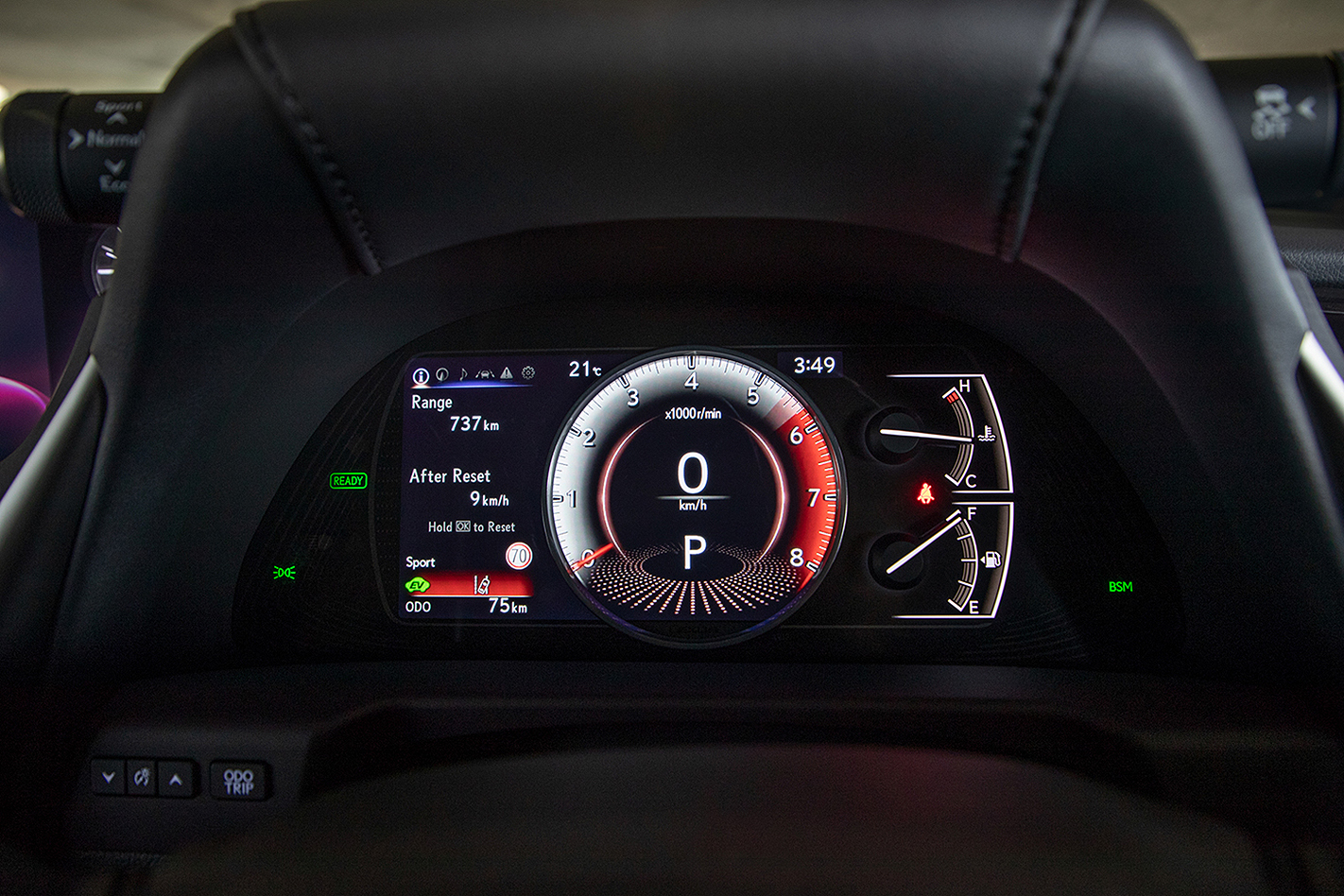
Does this matter? Not really. This Lexus ES is all about comfort and elegance. That said, it’s feels a lot more dynamic than its bland V6 predecessor and any lack of oomph is compensated by the smoothness of the hybrid powertrain, especially when driving off in all-electric mode at speeds up to 50km/h.
The engine can feel a little thrashy at higher revs in Sport and Sport+ modes, which is why this is one of the few cars I prefer to just leave in Comfort mode, which results in more gradual and smoother gear changes through the CVT automatic gearbox.
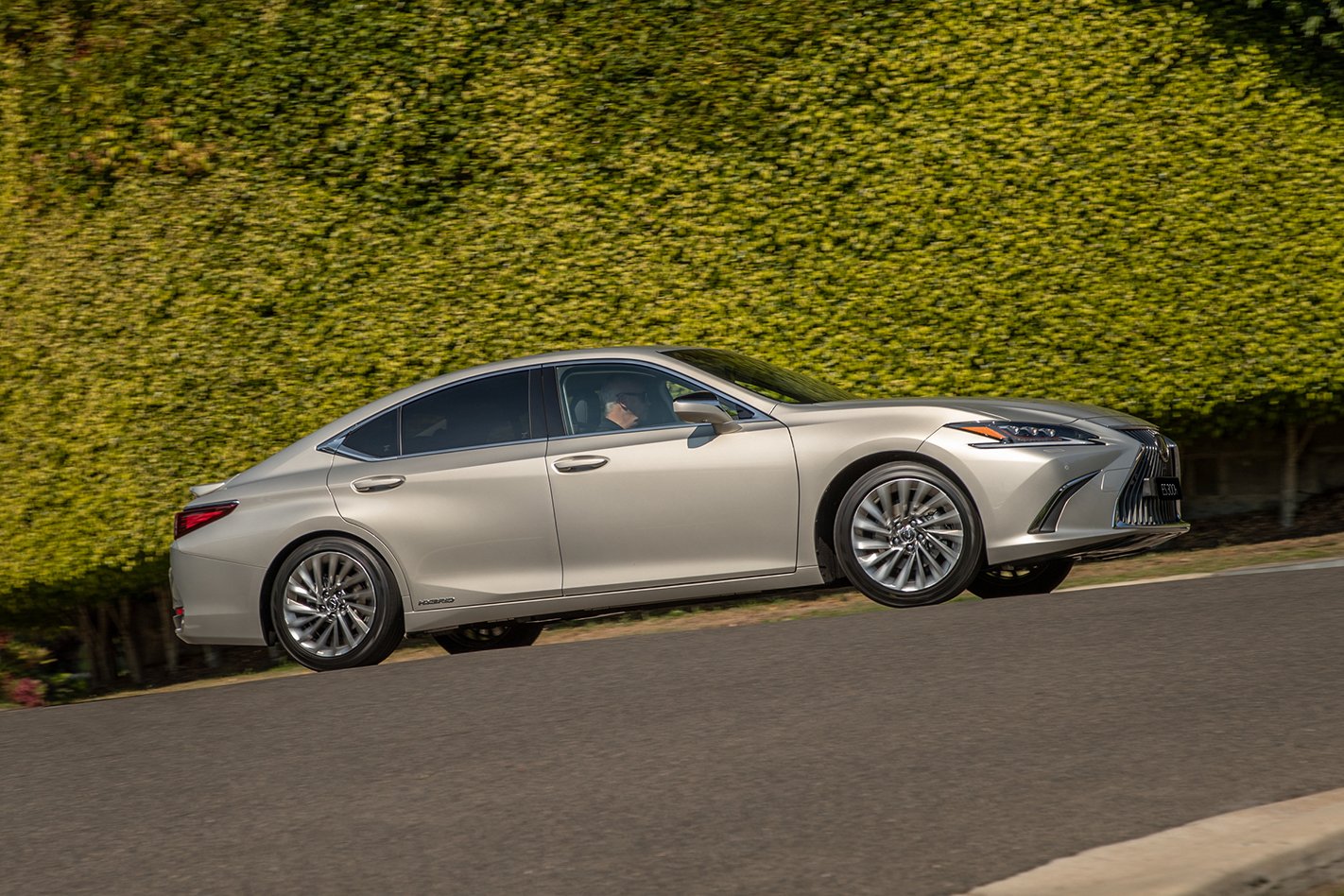
The light electric-power steering and supple ride are also designed for a relaxed cruise rather than attacking apexes on mountain passes. It does feel composed through bends, however, with its new GA-K platform 30 percent stiffer than the previous model’s.
The multilink rear suspension is all new too, with redesigned arms and shock absorbers that shrug off most road imperfections with minimal secondary bounce.
Drive the ES 300h as intended and you’ll be rewarded with a quiet and limousine-comfortable ride.
The Verdict
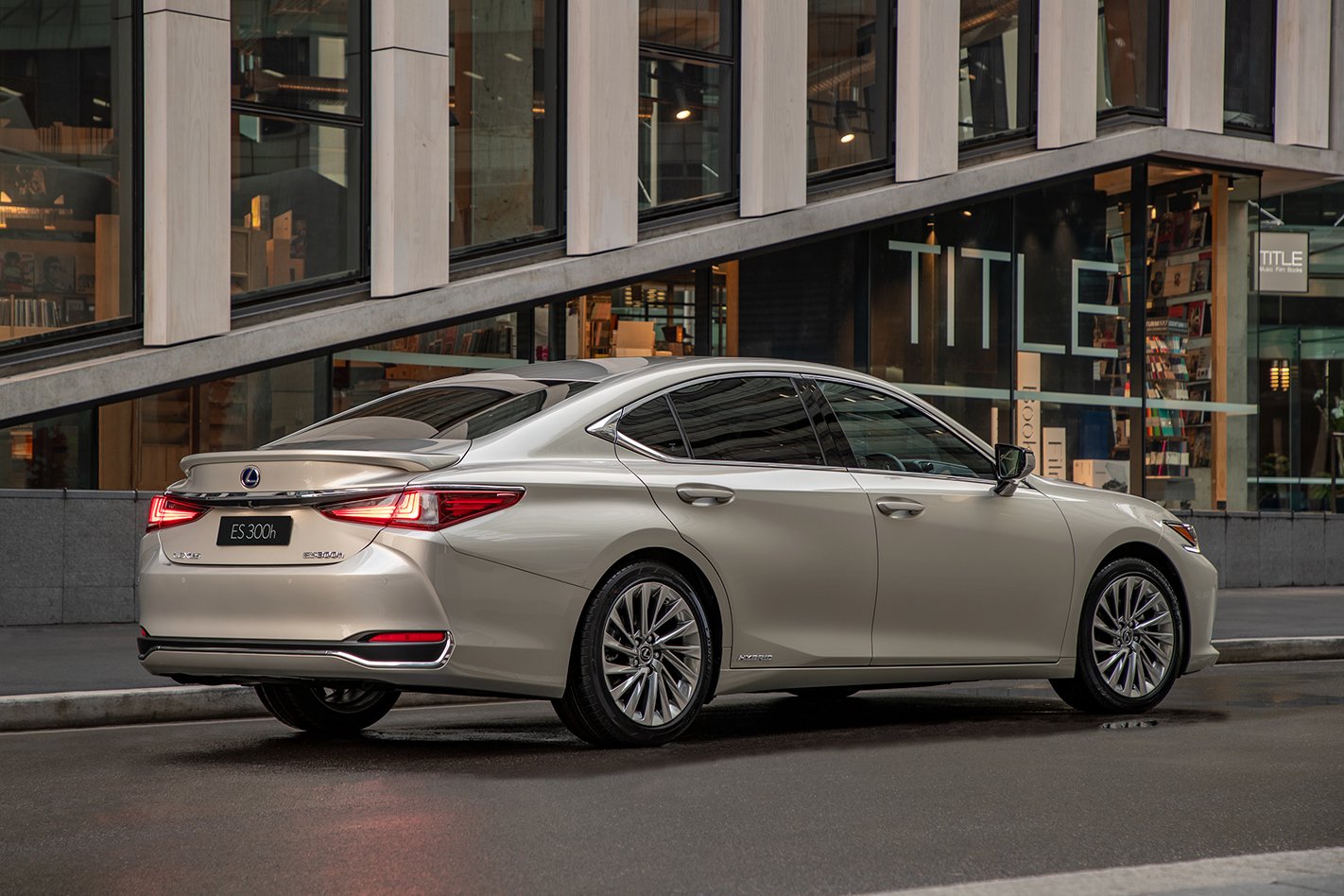
The Lexus ES 300h isn’t quite in the same league as the BMW 5-Series and Mercedes-Benz E Class in terms of overall refinement and performance mainly because it’s not really trying to be.
Where it does compete incredibly well is value, with this Sport Luxury range-topper costing $15,000 less than the entry-level Germans even with its longer standard features list.
This is a great gap-filler between top-spec mainstream and European luxury sedans that ticks all the safety and comfort boxes and brings its own unique take on what a luxury car should be.
The front-wheel-drive hybrid powertrain won’t take your breath away, but it feels sophisticated and rewards you with a polished drive and city-car fuel economy. And, unlike other hybrids (we’re looking at you, Prius), the ES isn’t defined by its petrol-electric powertrain, with Lexus doing very well to tone down any associated gimmickry.
If you were hoping to be the first owner of an Aussie-built V8 sedan, it seems you are too late, with every Holden VF Commodore now spoken for.
There is a slight caveat, though, with two V8-powered Aussie-built Commodores remaining in stock with Holden, but they are not being offered to the public.
In early April, Wheels revealed that just nine V8 Commodores remained in stock across the country. Unfortunately for driving purists, none of those had a manual transmission.
April’s VFACT’s report revealed that seven of the remaining nine were subsequently sold, leaving just two V8 heroes to be snapped up.
A Holden spokesperson told Wheels that while “there are still theoretically two [VF Commodores] in stock they aren’t actually for sale.”
It is believed that a dealership owner is keeping the cars in stock without the intention to sell.
In April, the nine remaining VF Commodores consisted of four SS-V Redline sedans (in Red Hot, Phantom Black, Slipstream Blue, and Heron White), two Motorsport Edition sedans (in Heron White and Red Hot), a single Magnum Edition ute (in Phantom Black), and a pair of Director Edition sedans in Heron White.
According to Holden, the nine V8 Commodores were restricted to just Victoria, New South Wales, and Western Australia. The sole Red Hot Motorsport Edition sedan was located in a Victorian dealer’s lot, while the pair of Director Edition sedans were sitting in Western Australian dealerships. All seven remaining Holden V8s were spread across NSW.
Wheels has asked Holden which two vehicles remain unsold and their location, but was unable to get information confirmed prior to publication.
With every publically-available V8 Commodore now accounted for, the curtain has well and truly dropped on Australia’s home-grown performance heroes.
Now, to start scouring the used car classifieds…
READ MORE: Holden Commodore News and Reviews
The Raging Bull has gone full-Mad Max, with the off-roading Lamborghini Huracán Sterrato concept.
While the Lamborghini Urus is where the brand says its ‘off-road expertise [is] exemplified’, this one-off is a more ‘unconventional exploration of new horizons’.
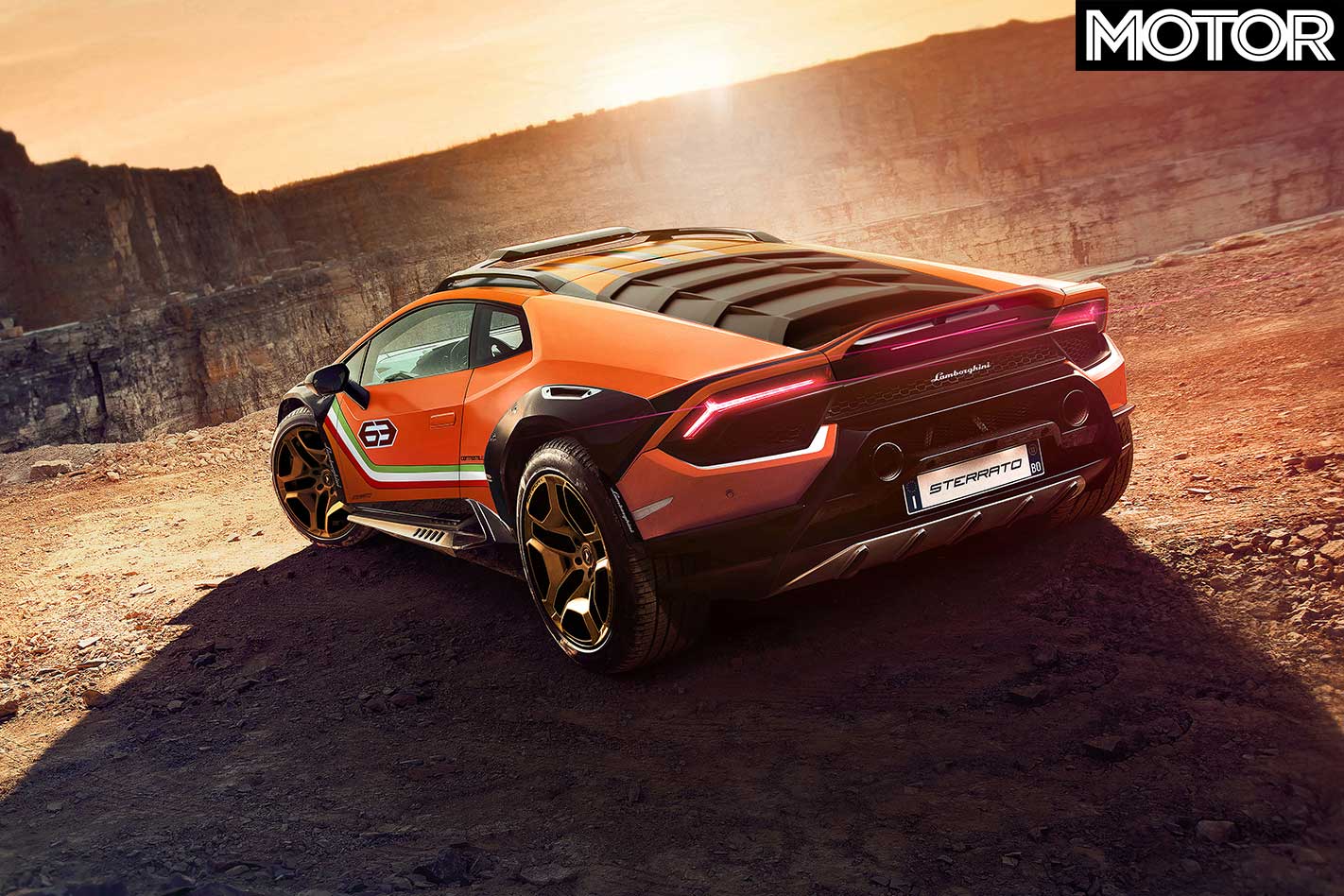
Nestled in the Sterrato’s body is the same naturally aspirated 5.2-litre V10 engine that powers the Huracán Evo, good for 470kW and 600Nm.
It’s also all-wheel drive, ideal for fighting loose surfaces, and Lamborghini’s trick ‘Dinamica Veicolo Integrata’ (LDVI) is retuned in the Sterrato for exactly that purpose.
“Calibrated for off-road driving including low-adherence surfaces, and tuned to maximize traction and acceleration, the LDVI system in the Sterrato provides enhanced rear-wheel drive behavior, producing more torque together with additional stabilization in oversteering maneuvers.”
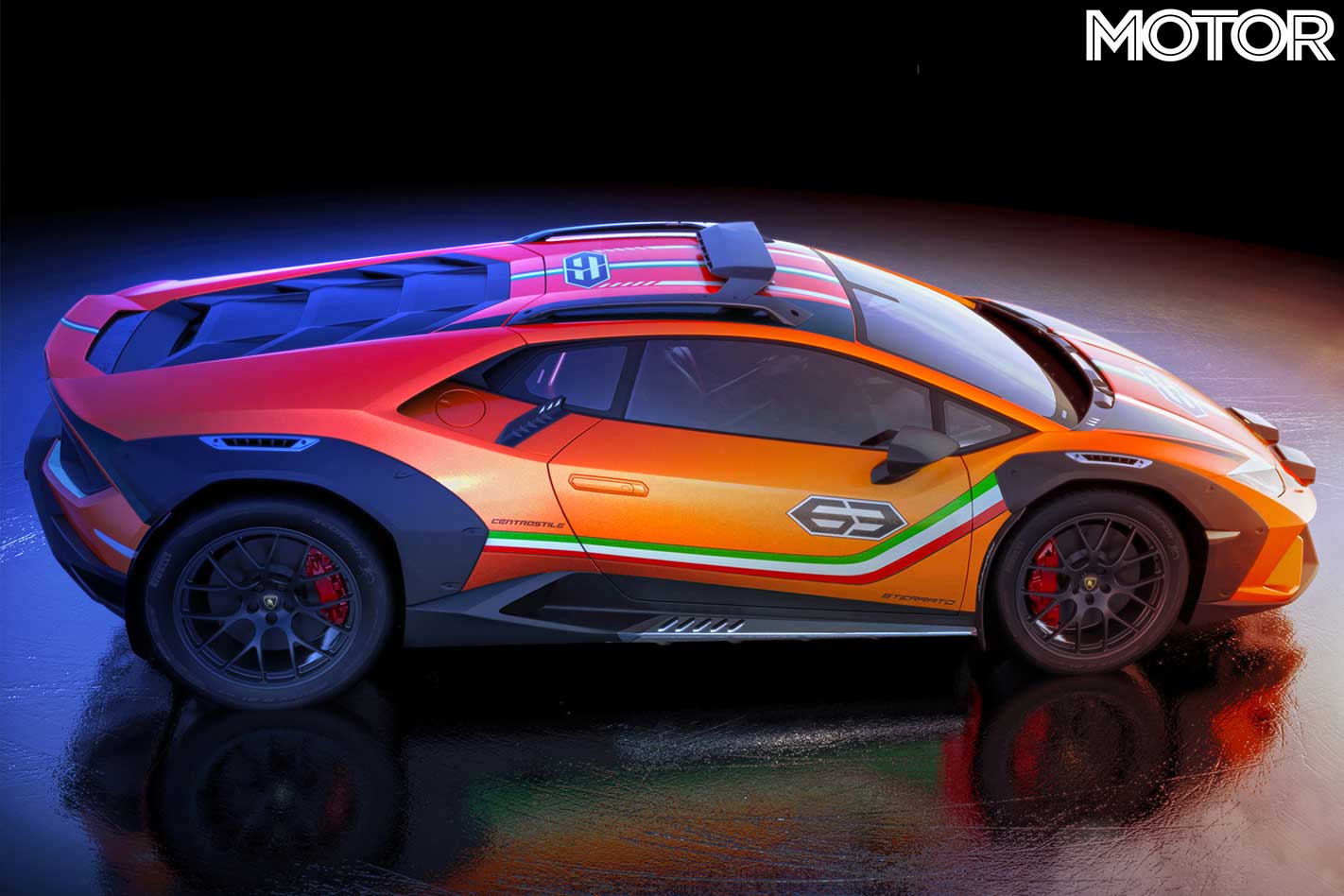
Its raised suspension and modified tracks are where the most obvious changes are found – a 47mm lift with 30mm wider tracks and large 20-inch wheels wrapped in ‘balloon tyres’ turn the Huracán into something that looks a little more like it belongs in a dystopian George Miller film than on Melbourne’s Chapel St.
Underneath, some of the protective elements like the rear skid plate are dual functional, with the aforementioned also acting as a diffuser. LED lights are even mounted to the roof and along the front bar.
Lamborghini chief technical officer Maurizio Reggiani says the Sterrato is a way for Lamborghini to explore what is possible in directions the company wouldn’t normally step.
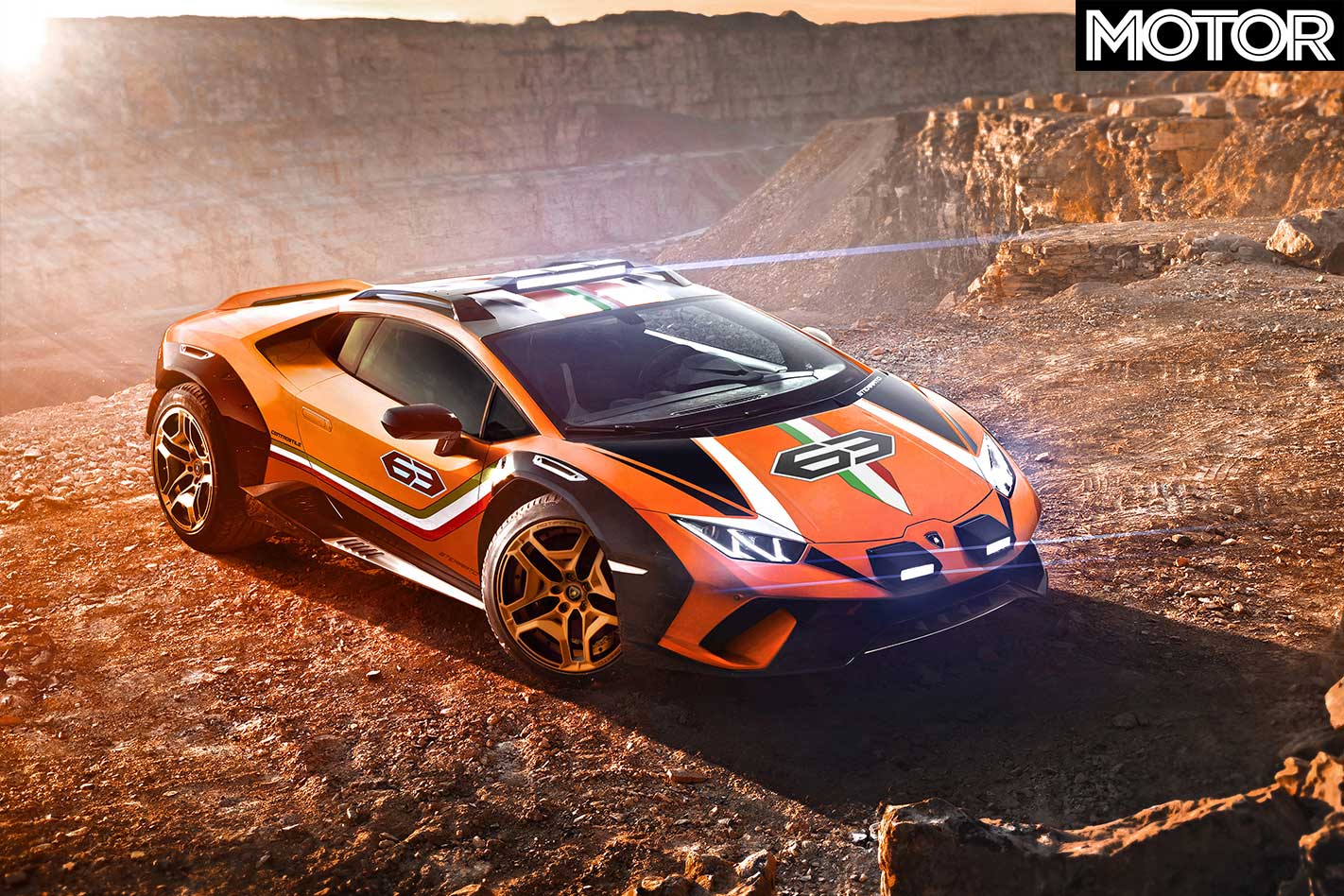
“The Huracán Sterrato illustrates Lamborghini’s commitment to being a future shaper: a super sports car with off-road capabilities, the Sterrato demonstrates the Huracán’s versatility and opens the door to yet another benchmark of driving emotion and performance,” Reggiani says.
“Lamborghini’s R&D and design teams are constantly exploring new opportunities and delivering the unexpected as a core characteristic of our DNA, challenging possibilities while inspired by Lamborghini brand heritage.”
Lamborghini links the Sterrato to two cars modified by the late Bob Wallace, who was a Lamborghini test driver and raced a desert-going Jarama and Urraco in the early-to-mid 1970s.
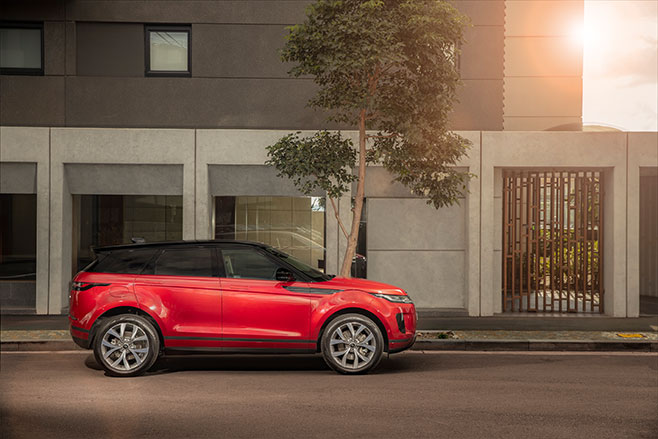
When the Evoque first came into being back in 2011, it arrived as more of a fashion statement. It was a petit and plush SUV that raised sartorial capital but also performed capably off-road was an untested market for all makers, not just JLR.
As the cliché goes, imitation is the sincerest form of flattery, and looking at the 2020 Range Rover Evoque, it appears Jaguar Land Rover have been indulging in a serious session of self-love.
So pleased was it with the near-800,000 sales of the game-changing first-gen compact luxury SUV that first arrived almost nine years ago, the long-awaited second generation appears uncannily similar to its predecessor.
But look beyond those familiar exterior curves and you’ll find a newfound maturity, updated architecture and wealth of innovation that’s ready to take the Evoque into the next decade.
VALUE
An entry-level Evoque back in 2011 was a light lunch short of $50k, but the 2020 Evoque starts at $62,670 and maxes out at $96,090. There are 26 variants on offer, including a series of diesel 48-volt mild hybrid (MHEV) and petrol engines, while a plug-in hybrid (PHEV) is on its way for 2020.
Keep in mind, though, that base price is what you get before you even take a glimpse at the extensive options list. $400 for a DAB radio? $180 for a 2-pack power socket? $480 for a powered tailgate? $1,300 for a head-up display? Or how about the $1,340 drive pack which includes adaptive cruise control, blind spot monitoring and high-speed emergency braking or a $2,040 panoramic sunroof? You can tick the box for them all.
JLR prides itself on giving its customers a choice in what they do and don’t need in a car. So what might be a confusing hindrance for some is power in curation and choice for others.
The size, versatility and price range of the Evoque puts it in an interesting space, especially when it comes down to options, intention and purpose – not every owner is going to be comfortable flexing their Evoque’s adventure capabilities.
With many would-be owners graduating from more affordable but less powerful small SUVs like the Audi Q3 (starting from $43,400) and Volvo XC40 (from $46,990), the main competition comes from Audi Q5 (from $66,700) and Volvo XC60 (from $61,990); the BMW X3 ($66,900) and the Porsche Macan (from $81,400).
In terms of economy, the official claimed combined fuel consumption figure for the P200S is 8.1L/100km. Our reading was 10.1L/100km after a day of highway, inner-city and light off-roading.
Servicing is capped at $1,500 for five years/130,000km and Land Rover’s warranty cover is three years/100,000km.
STANDARD FEATURES
As concepts, ‘luxury’ and ‘standard’ don’t share too much in common, but the Evoque must still live up to a wedge of its purported glamour at the affordable end of the range – the problem is, there’s a lot of gear here that the average person would expect, but that doesn’t come as standard.
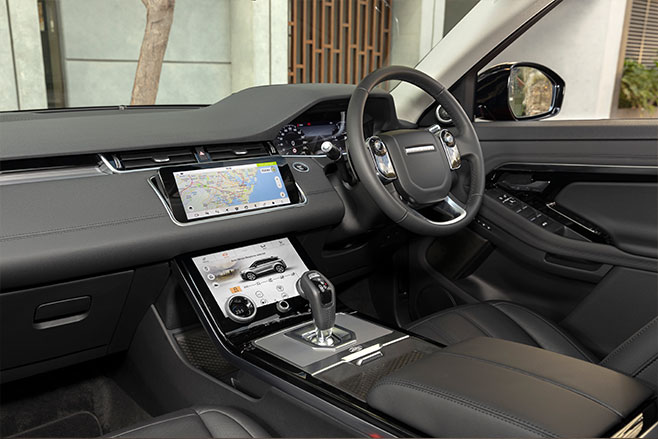
The base P200 S arrives with 18-inch rims, LED headlights, auto-dimming heated folding mirrors, 10-way electric front seats, leather seats, leather steering wheel, 10-inch Touch Pro infotainment system with Apple CarPlay or Android Auto and Range Rover’s InControl Apps and WiFi hotspot.
Sadly, entry-level owners will have to make-do with analogue dials unless you want to drop $650 on the very cool digital Interactive Driver Display.
Our P200 S had $15,000 worth of options boxes ticked, including the $1,340 Drive Pack which added adaptive cruise control, blind spot assist and high-speed emergency braking. We also had the Park Pack ticked ($1,010) which added on clear exit monitoring, reverse traffic detection,360-degree parking aid and park assist.).
Some of the other things worth pointing out in the Evoque is the high-level of tech. For one, it can learn habits and receive updates over the air. Then there is the revolutionary ClearSight Ground View, an under-bonnet camera that adds extra vision and recreates the front-axle of the car, projecting the road below and where you’re placing the wheels.
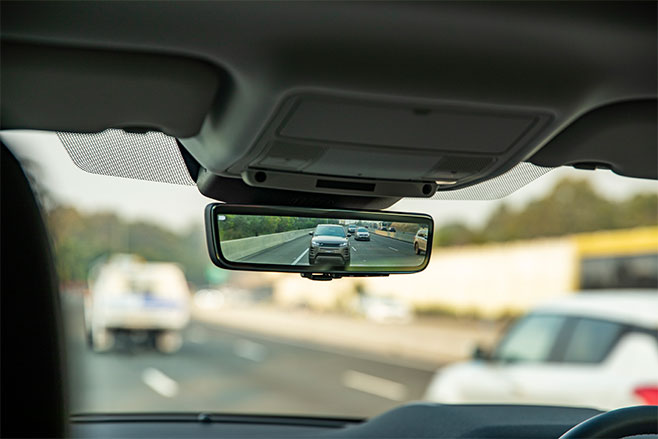
Also, taking on the common complaint of the Evoque’s tiny rear window is the new ClearSight mirror camera technology. This is a camera that is mounted on the rear of the roof that transforms the mirror itself into a wide-angle screen.
SIZE
The Evoque is underpinned by Land Rover’s brand new Premium Traverse Architecture, a platform developed for electrification (as seen in the MHEV diesel and incoming PHEV). This new platform adds 20mm of length to the wheelbase, which in turn gives 20mm of rear knee room in the rear – although leggy adults probably won’t feel much of a difference from the previous model.
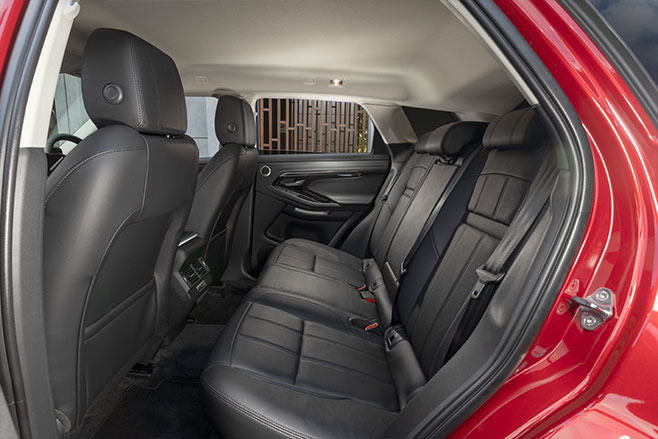
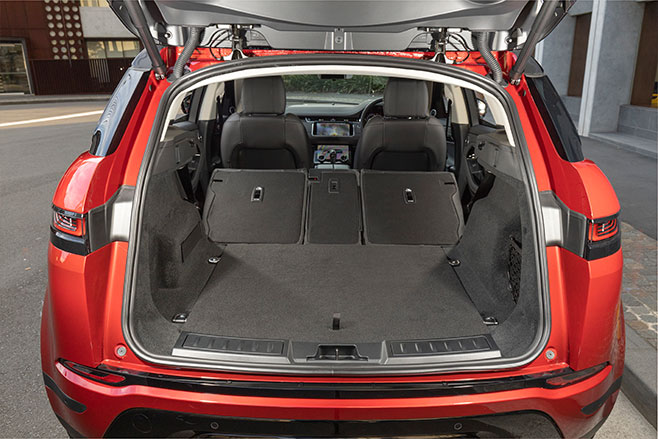
The door openings have been reprofiled to allow easier access for passengers, the interior architecture has been re-designed for increased headroom, and thanks to a new multi-link suspension, the Evoque’s boot capacity has increased from 575L to 591L, offers 20cm more width and reduces wheel arch intrusion.
SAFETY
The entry-level Evoque has six airbags, emergency braking, rear camera, driving condition monitor, traffic sign recognition, lane keep assist and an adaptive speed limiter as standard. There are more active safety and semi-autonomous options available in the Drive Assist pack ($2,840), which includes a 360-degree camera, blind spot assist, high-speed emergency braking and more.
The Range Rover Evoque has just been awarded a maximum five-star ANCAP rating.
COMFORT
Right off the bat, the Evoque is incredibly comfortable. The ride is supple and well-attenuated, with the cabin noise reduced to a bare minimum, even on windy highways and off-road.
Range Rover is also offering a number of non-animal, ethically sourced textiles made from soybeans, recycled plastics and eucalyptus for those seeking a more sustainably-minded interior.
This includes the Kvadrat cloth as seen in the Velar (a $4188 option) and Dinamica suede cloth, which is made from 53 recycled plastic bottles.
This mightn’t sound like a very luxurious option, but in fact, it’s the opposite, with both materials offering sufficient bolstering, comfort and durability.
ON THE ROAD
The P200 S is powered by a 2.0-litre four-cylinder petrol engine with a nine-speed transmission, producing 147kW of power and 320Nm of torque, and a 0-100km/h acceleration time of 8.5. All this proved to be more than sufficient for cruising around Sydney’s inner suburbs, on the open highway and into rural, twisting roads.
The steering is nicely weighted and very direct, and gear shifts through the nine-speed transmission are crisp with minimal lag.
Off-road, the Evoque proved just as fun. It has the ability to wade through water up to 600mm (100mm more than previous generations) and has 212mm of ground clearance, with approach and departure angles at 25 degrees in the front and 30.6 degrees in the rear. Even off-road, the cabin’s noise attenuation is spectacularly effective.
Our model rode on 20-inch wheels and used Range Rover’s standard passive suspension (adaptive suspension costs an extra $1,950).
VERDICT
The new Evoque is more mature than ever, but it still possesses the youthful attitude we came to love almost nine years ago.
This time around, it has tech and sustainability in front of mind, the ‘can do’ attitude of a Land Rover and an options list to make it your own.
SPECS
Model: P200 S Engine: 1,997cc, turbocharged 4-cyl petrol Max power: 147kW @ 5,500rpm Max torque: 320Nm @1,200-4,500rpm Transmission: Nine-speed automatic Weight: From 1,813kg 0-100km/h: 8.5 seconds Economy: 8.1/100km (claimed) Price: From $62,670 On sale: Now
After a long wait, the 2020 BMW M8 has been revealed. In fact, for some 8 Series fans the wait has been decades in the making, as the original 8 Series never had a full ‘M’ model, or at least not one that made it to production.
That makes this the first production M8 ever.
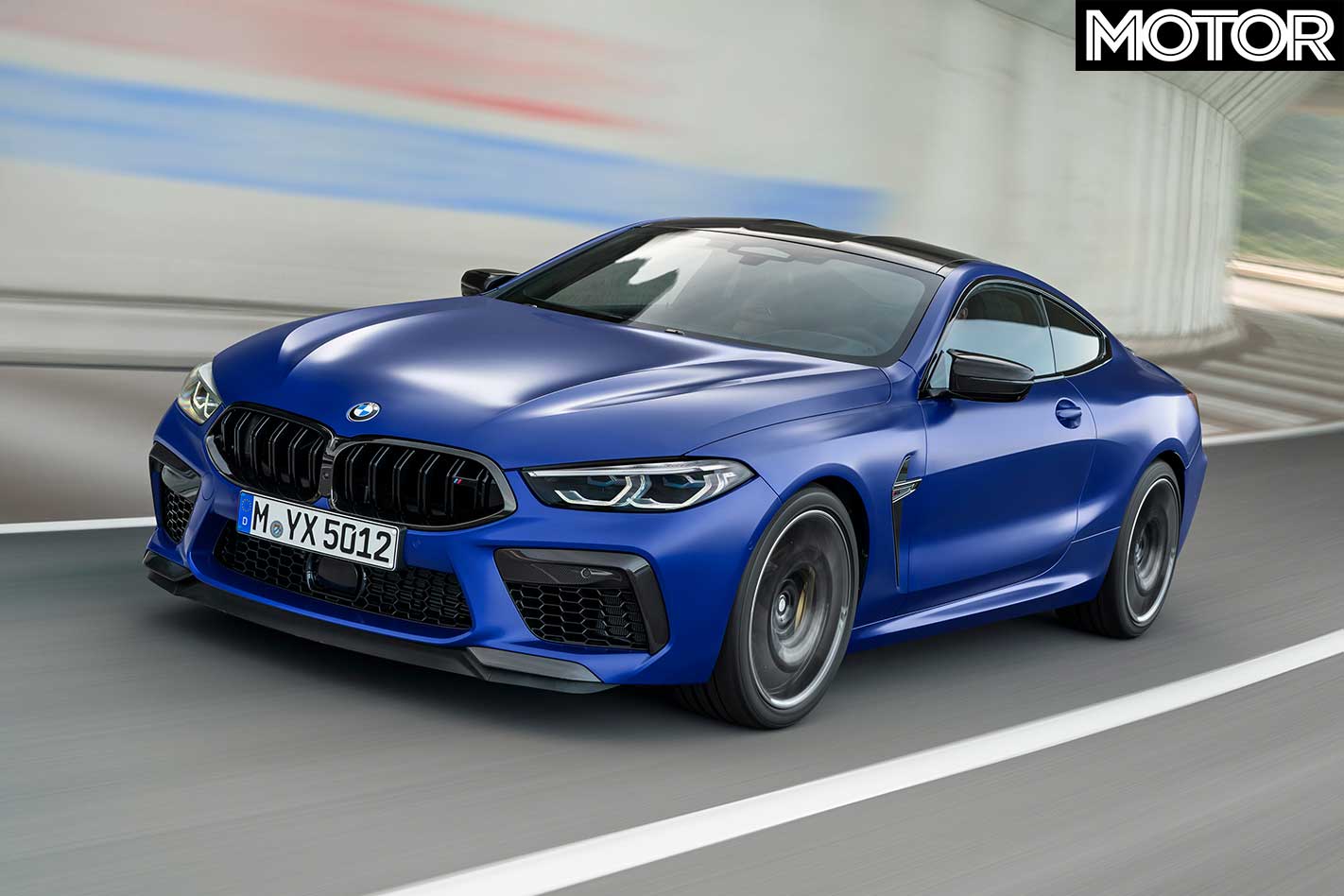
Available in both coupe and convertible body styles, the M8 will feature what BMW says is “the most powerful engine ever developed for a BMW M GmbH car.”
That engine, BMW’s twin-turbo 4.4-litre V8, makes 441kW in standard M8 spec, but is pumped up to a whopping 460kW when powering the BMW M8 Competition. Peak torque comes in at 750Nm for both, made in a wide band between 1800rpm and 5600rpm.
The standard M8 coupe takes just 3.3 seconds to hit 100km/h, or 3.2sec in Competition guise, while the convertible versions require an extra tenth.
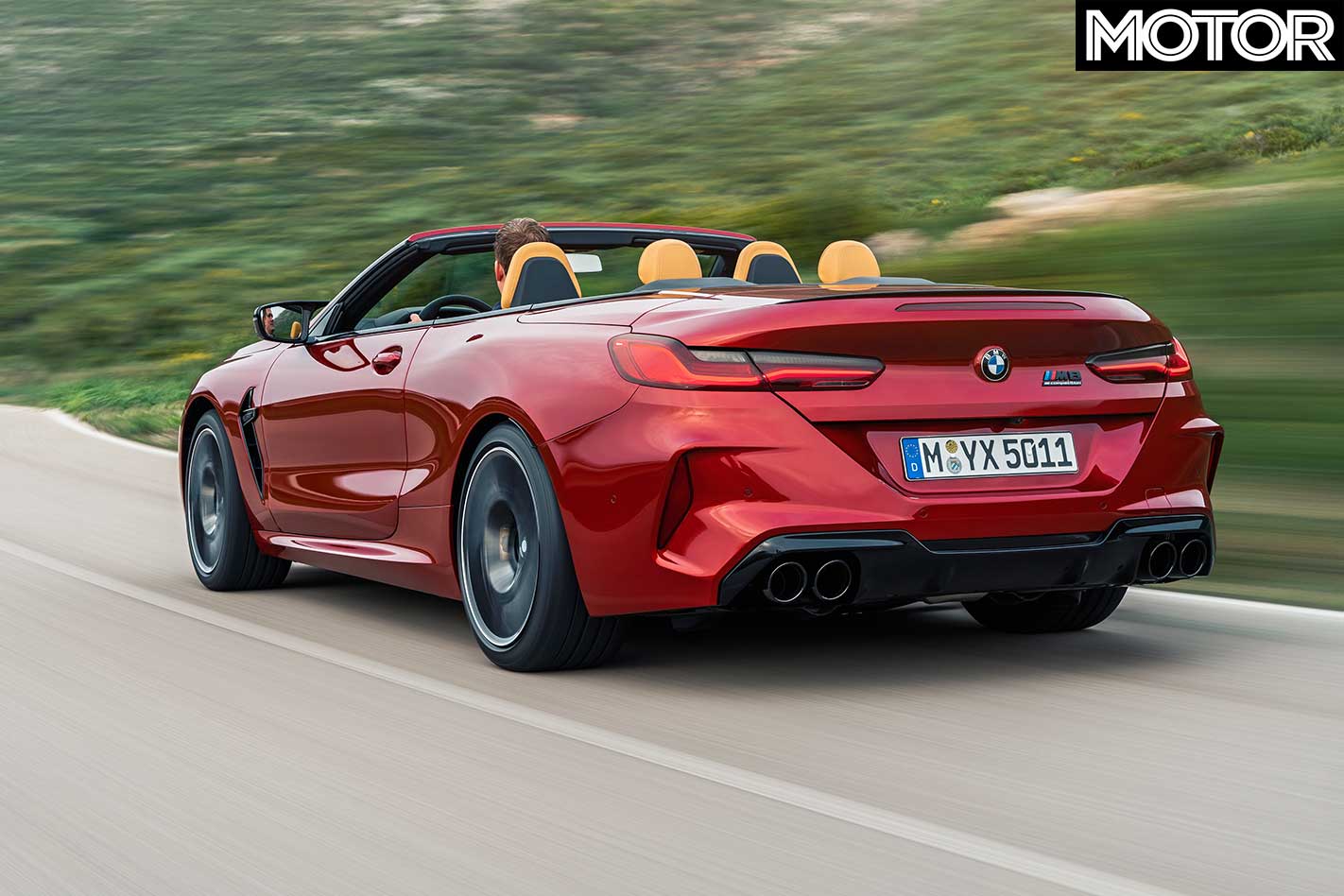
Power is put to the wheels – all four of them, usually – via an eight-speed M Steptronic transmission, though the xDrive AWD system that features in the M8 is one not unlike that of the current generation BMW M5.
This means the driver can switch between standard all-wheel, a sports setting which diverts more power to the rear, or a full rear-drive mode activated when stability control is switched off.
To keep the Bimmer beast in check, the chassis has been fettled by M division with aspects such as upgraded rear axle links, stiffer anti-roll bars, and a tower-to-bulkhead strut under the hood.
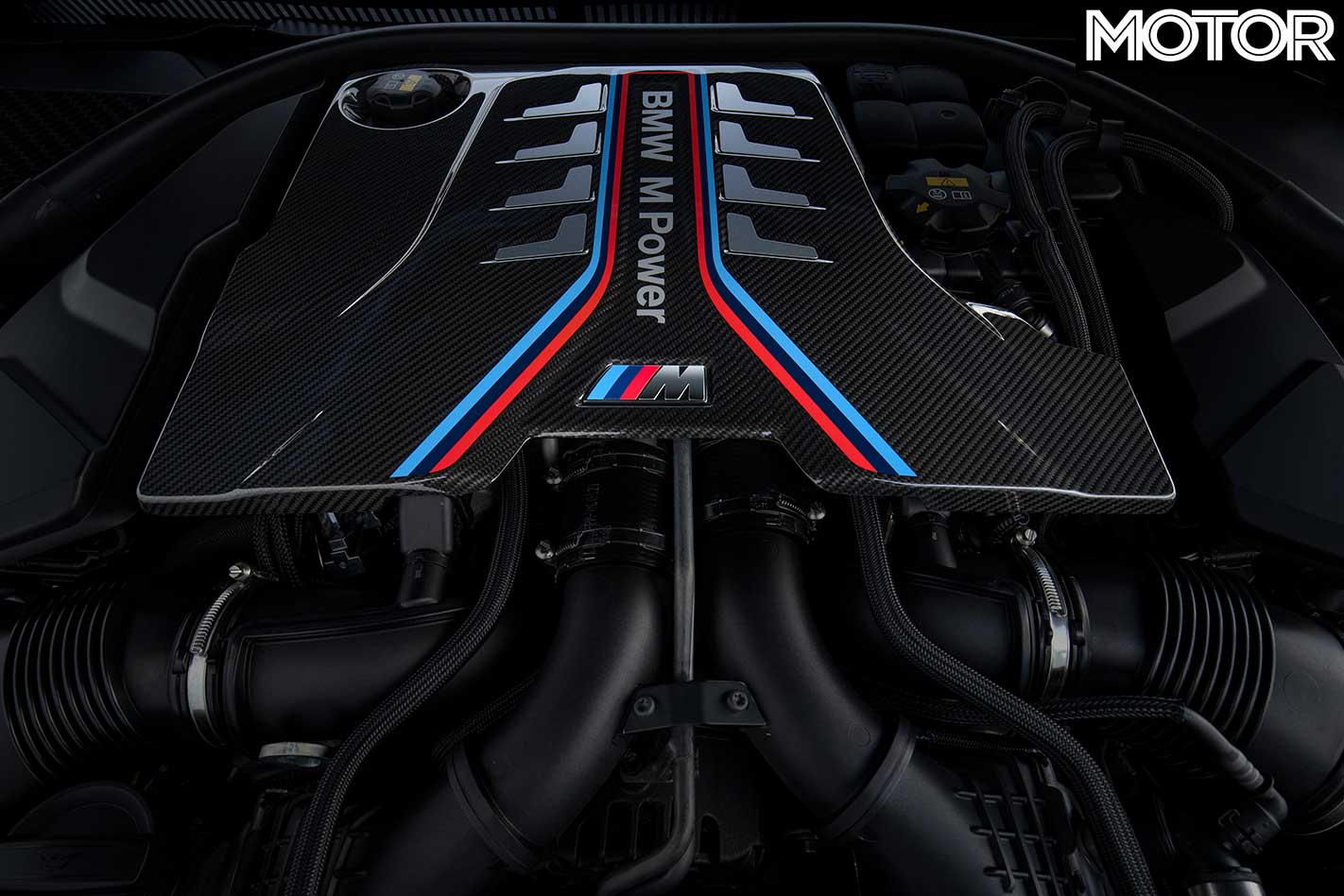
BMW intends for this car to hold up on track too, with a cooling system designed to keep the car at optimal temperature under high-intensity driving.
The central cooler is found between two high-temp water circuits, while BMW has added an extra engine oil cooler, and a separate transmission oil cooler.
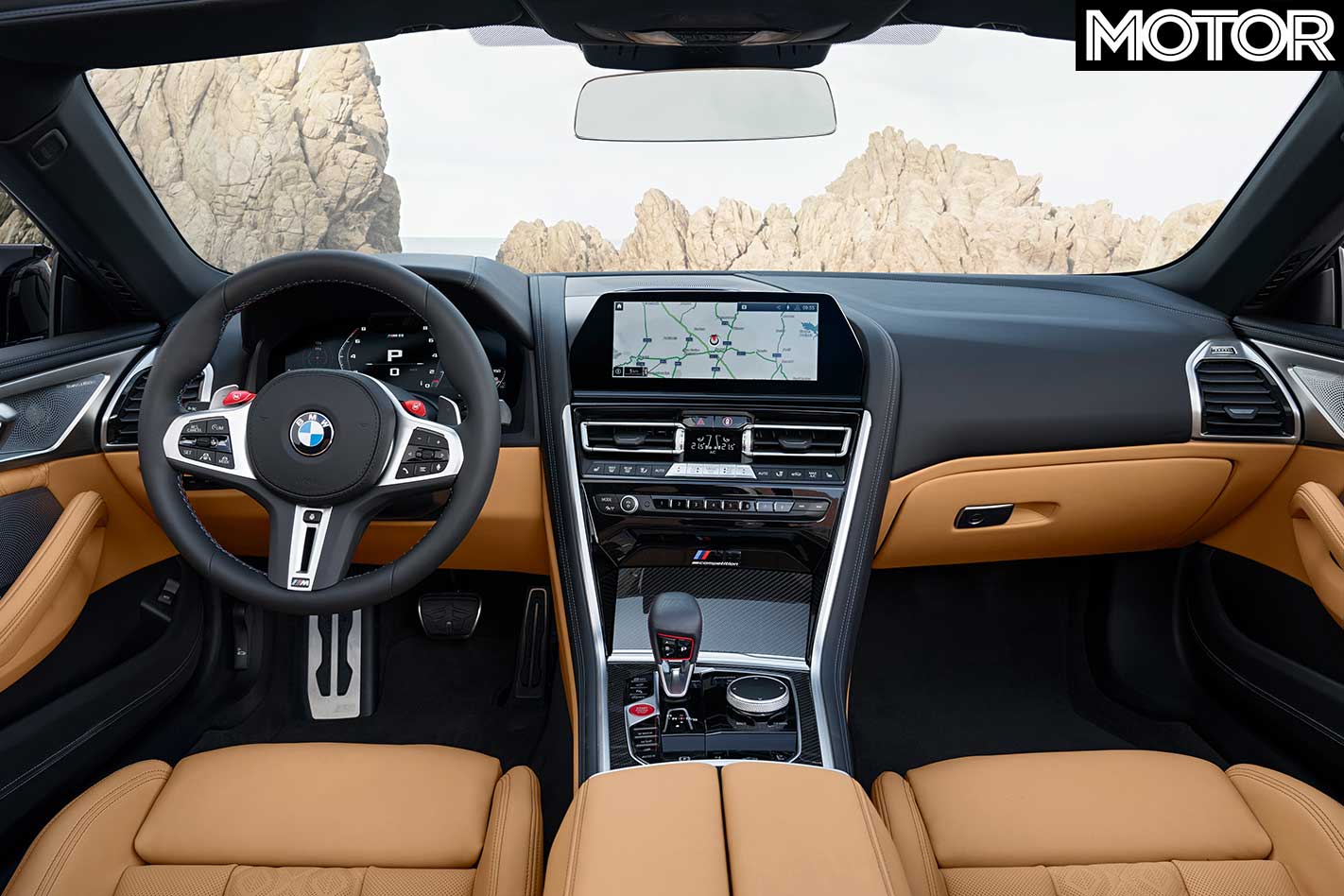
New to the M8 is the ability for the driver to adjust the feel of the brakes, with M’s ‘integrated braking system’ allowing the “brake activation, brake booster and braking control functions” to be controlled by one unit which can create a more aggressive braking setup for track driving, or soften up while on the road.
BMW Australia is yet to confirm with MOTOR any Australian details for the M8 range, but it’s expected the halo coupe will be available locally.
Hyundai has revealed a new electrified Kona variant, which could be sold in Australia in the near future.
Aptly called the Hyundai Kona Hybrid, the new variant mimics the Ioniq hybrid sedan, by joining the powers of a 1.6-litre four-cylinder petrol engine with a 1.56kWh lithium-ion polymer battery.
Petrol-only Konas have been in Australia for over a year now, while a fully-electric variant was added a couple of months ago. However, it remains uncertain when, or if, a Kona Hybrid will be offered in local showrooms.
A Hyundai Australia spokesperson told Wheels the Hyundai Konda Hybrid is “currently under review for our market”.
The Kona Hybrid has a combined output of 104kW and 264Nm, with the combustion engine accounting for 77kW/147Nm, and the battery-electric motor producing 32kW/170Nm.
Available in Europe, the Kona Hybrid is rated as having a claimed fuel efficiency of 3.9L/100km on the NEDC cycle riding on 16-inch wheels. This jumps to 4.2L/100km when using the optional 18-inch rims.
There has also been some minor styling updates, with new-look alloy wheels, and the introduction of an optional 10.25-inch touchscreen infotainment screen.
Kona Hybrids will be available in Europe from August, and while it remains under review for Australia, we wouldn’t be expecting any to land locally until at least 2020 if Hyundai Australia does bring the car Down Under.
MORE: Hyundai Kona Range Review MORE: Hyundai Kona Specs, Range & Price
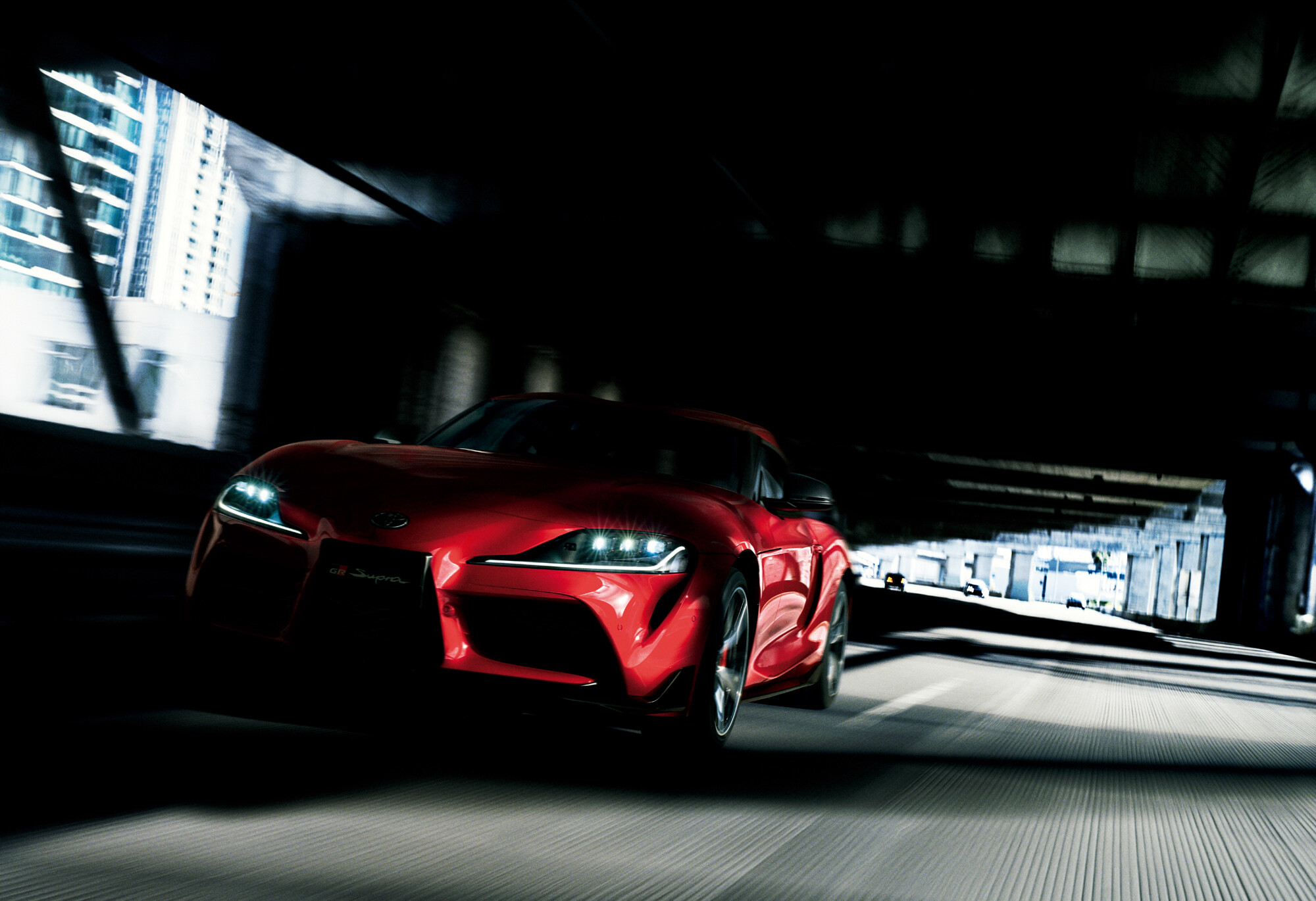
2020 Toyota Supra GTS
We finally have confirmation what the Toyota Supra costs Down Under and it’s caused quite a stir across the continent, not least of which with fanboys around the Wheels office.
We drove it last year and were thoroughly impressed, and with rumours of a near-$70k price tag the suggestion that this reborn Japanese cult classic could almost be within reach was tantalising. But actually, it’s not that cheap… and it’s not really Japanese.
Read all Supra reviews from WhichCar, Wheels & Motor Magazine
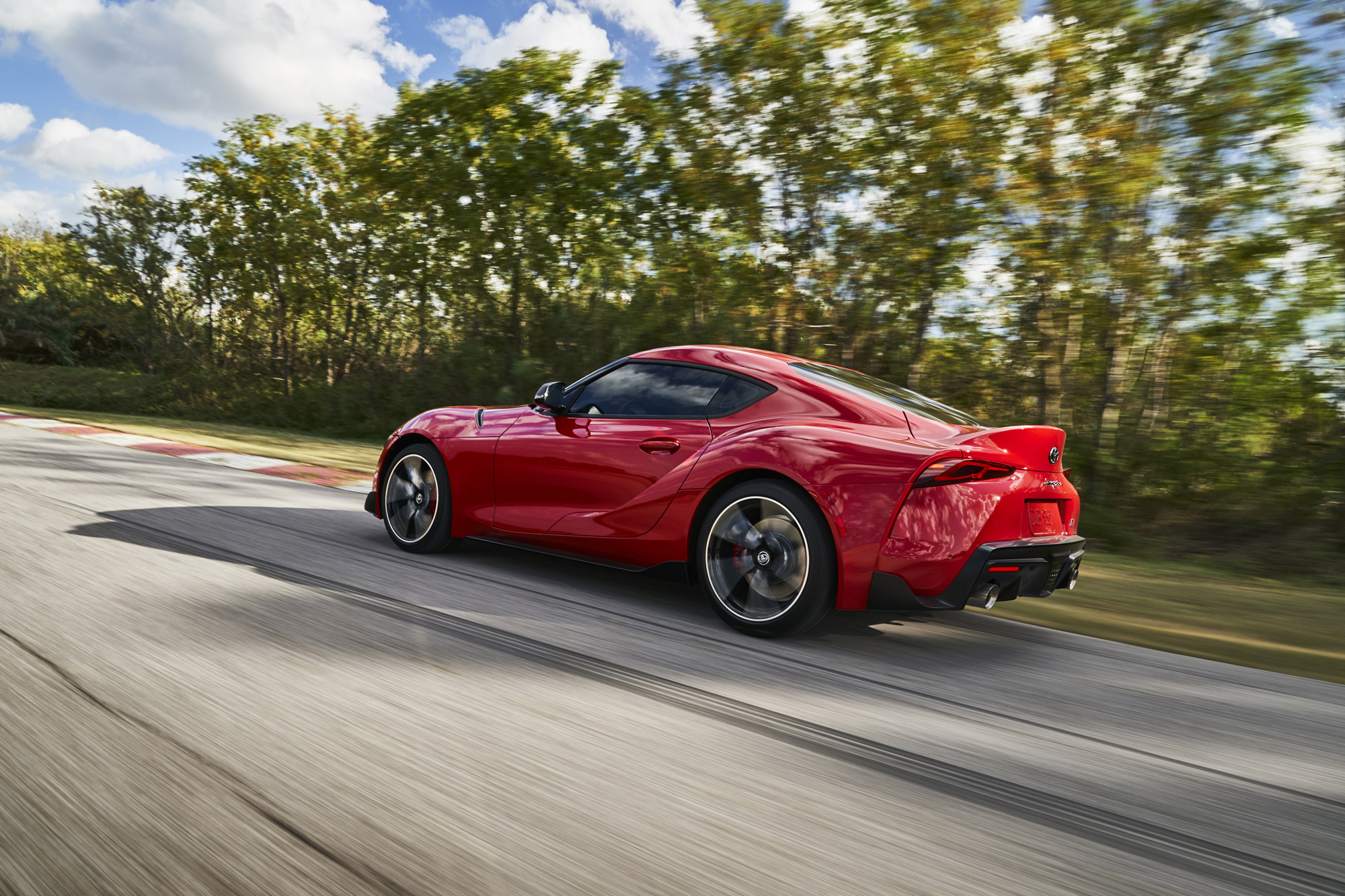
Pricing for the Toyota Supra in Australia starts from $84,900 plus ORCs for the entry-level grade and asks $94,900 for the top-spec GTS. For the money, you get most of the parts from the BMW Z4 – a straight-six turbo engine producing 250kW and 500Nm, fed through an eight-speed automatic to the rear-wheels – with a Bavarian-spec interior and Japanese-tinkered suspension. And a Toyota badge on the front.
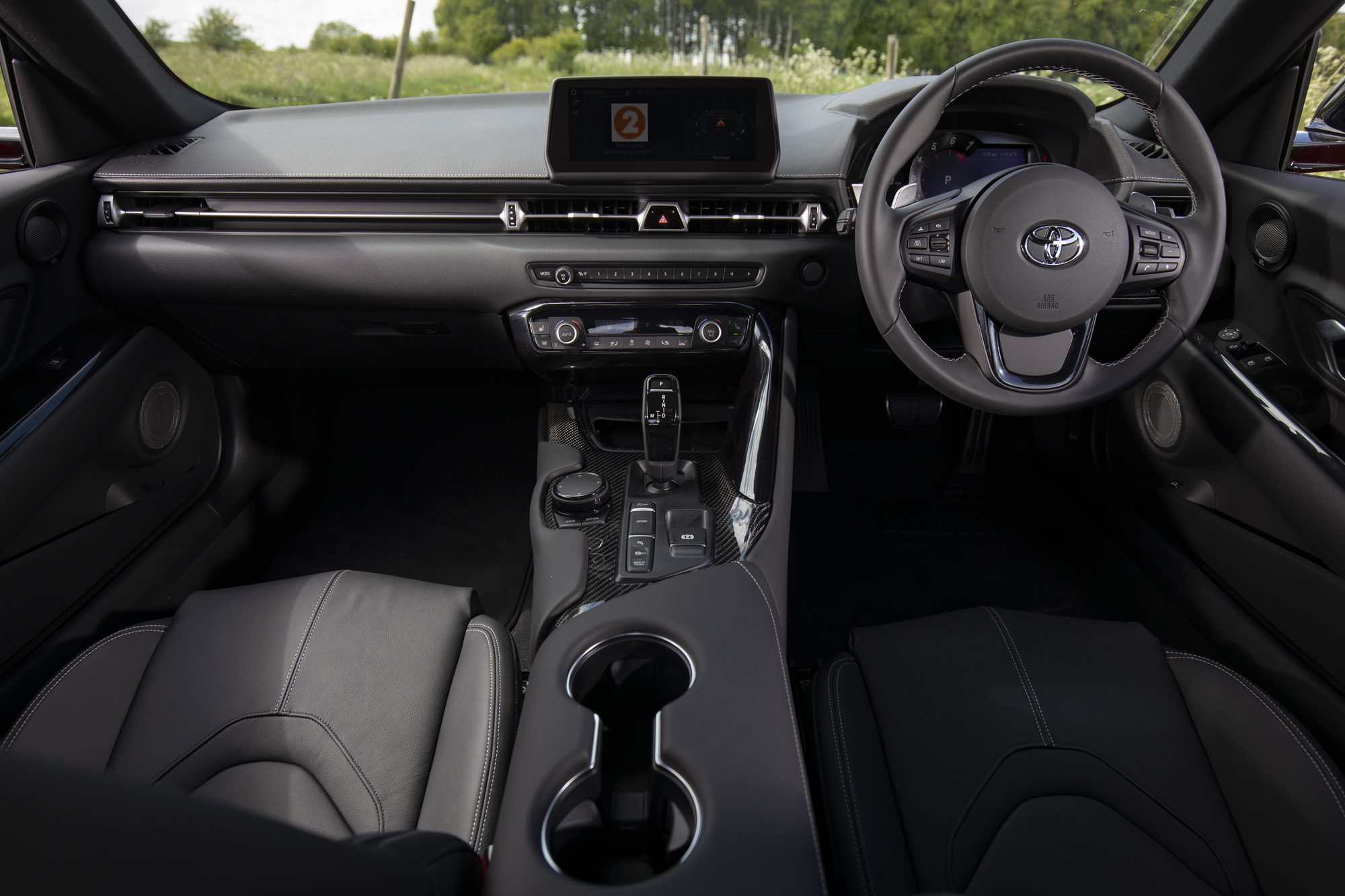
With our dreams smashed (pay rise, Ed?) and fingers tapping, we’ve already composed a list of the brand new alternatives you can buy for almost the same money – and there’s some top notch performance brass (and aluminium and carbon fibre) alternatives. However, not on that list is its hometown rival, the mighty Godzilla that dominates it in many facets; power, performance, and price.
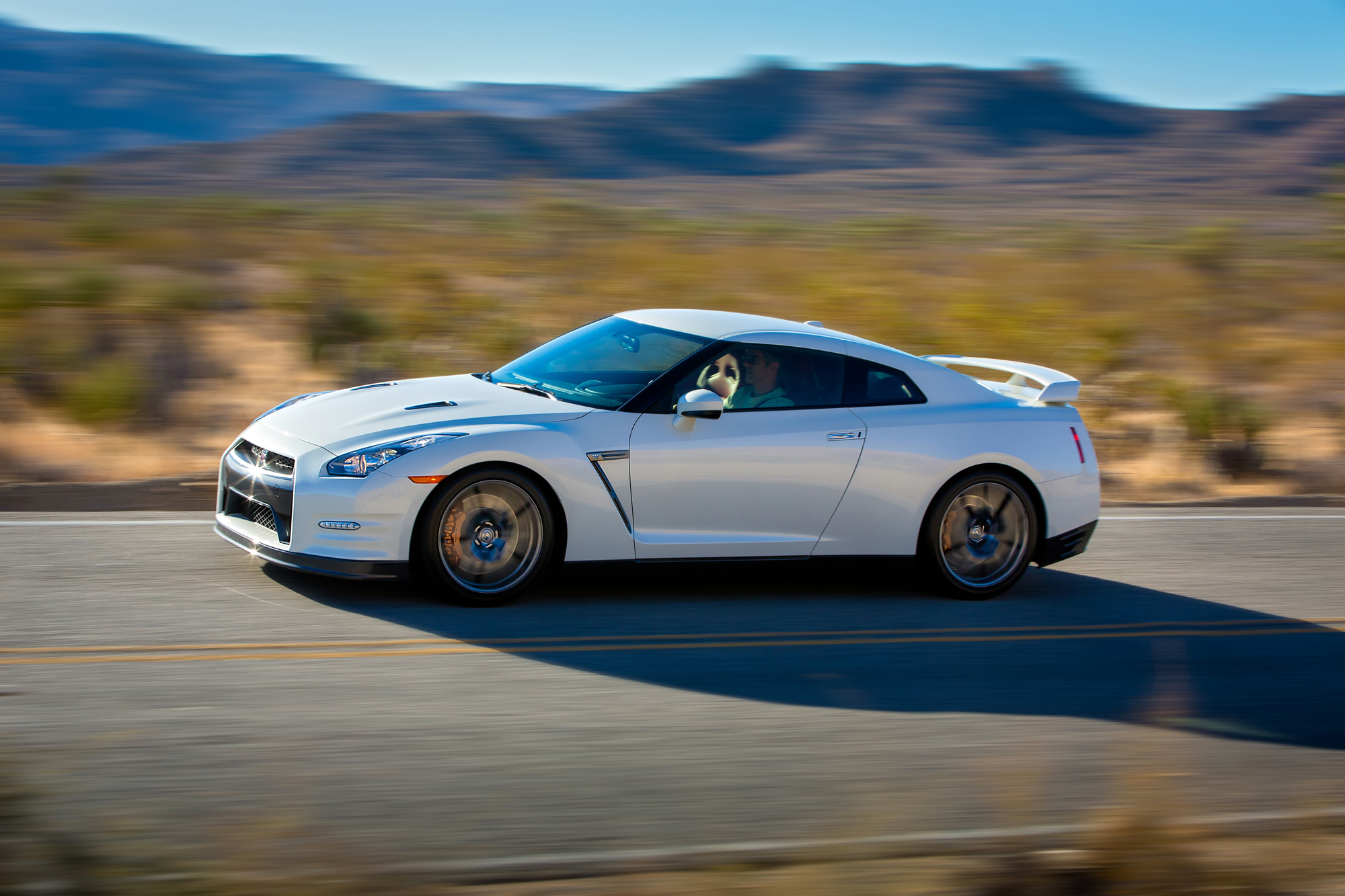
2011 Nissan GT-R
But at a decade old, used examples of the legendary Nissan GT-R can be had for the same money. It packs a whopping V6 twin-turbo mill, developing 357kW and 588Nm to all four wheels, giving it superlative grip and conquering the Supra in a straight-line drag – 0-100km/h is dispensed in just 3.5 seconds (we’re referencing the old girl here) compared to the newer Supra’s 4.4 second claim. It is a bit heavier, though, and won’t provide the same tail-happy fun as the Toyota.
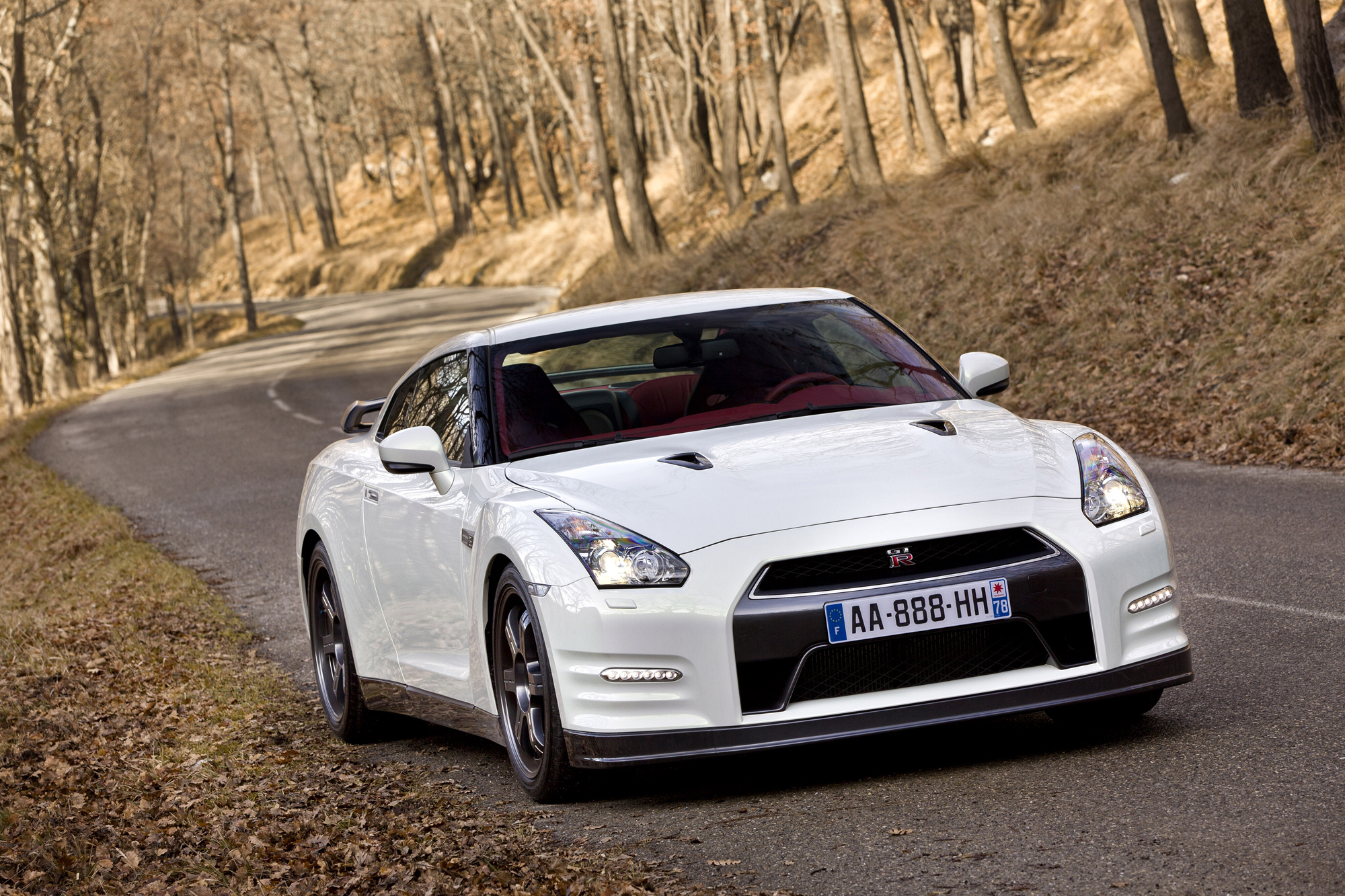
Known to be a bit temperamental when flogged (and quite frankly, who isn’t going to give it a boot?), GT-R ownership will surely take its toll on the wallet. But then again, it is a true born-and-raised Japanese supercar, and its performance credentials are indisputable.
Specs comparison
Wheels staff picks

Cameron Kirby
Staff Journalist
| Choosing between these two Japanese performance heroes is harder than I was expecting. For me though, it’s going to be the Supra that wins out. From our tantalisingly brief taste of a prototype, it seems Toyota’s engineers have developed one of the great rear-drive chassis of our times, and paired with a stout BMW straight-six, it’s a recipe that is hard to go past. Having said that, anyone putting Godzilla in their garage can do so with pride. |

Alex Rae
Online Editor
| It’s a bit like choosing your favourite kid, and I haven’t even met the Supra yet. But it’s a bit hard for my frugal mind to overlook the potentially cavernous pitfall of owning the GT-R. If it’s been poorly cared for, it’ll melt your credit card quicker than a candle waiting for a breath of fresh air on great-grandma Jennie’s birthday cake. So it’ll be the Supra for me… though I’d be looking longingly at the GT-Rs whizzing past. |

Trent Giunco
Staff Journalist
| For the price of the new Supra you could get your hands on a tidy used R35 – that’s where my money would go. It’s heavy, mechanical and raw, but it’s hard to ignore the outright performance the GT-R brings to the table. In both a straight line and through corners, Godzilla delivers on so many fronts. Yes, the interior isn’t that special, the ride quality is stiff at best and it lacks the polish of a new car, but it’d be an event every time you drive it. |
Reckon we’ve got it right? Or are we way off the money (literally)? Find your best and let us know in the comments what you’d buy.
The much-hyped Ford v Ferrari filmis inching closer to its mid-November release date, and the trailer for the film has just been released. It looks about as action-oriented we could have hoped.
Starring Matt Damon, Christian Bale, Jon Bernthal as Carroll Shelby, racer Ken Miles, and Ford executive Lee Iacocca respectively, the film follows the development of the legendary Ford GT40 racer, with which Ford ‘went to war’ against Ferrari.
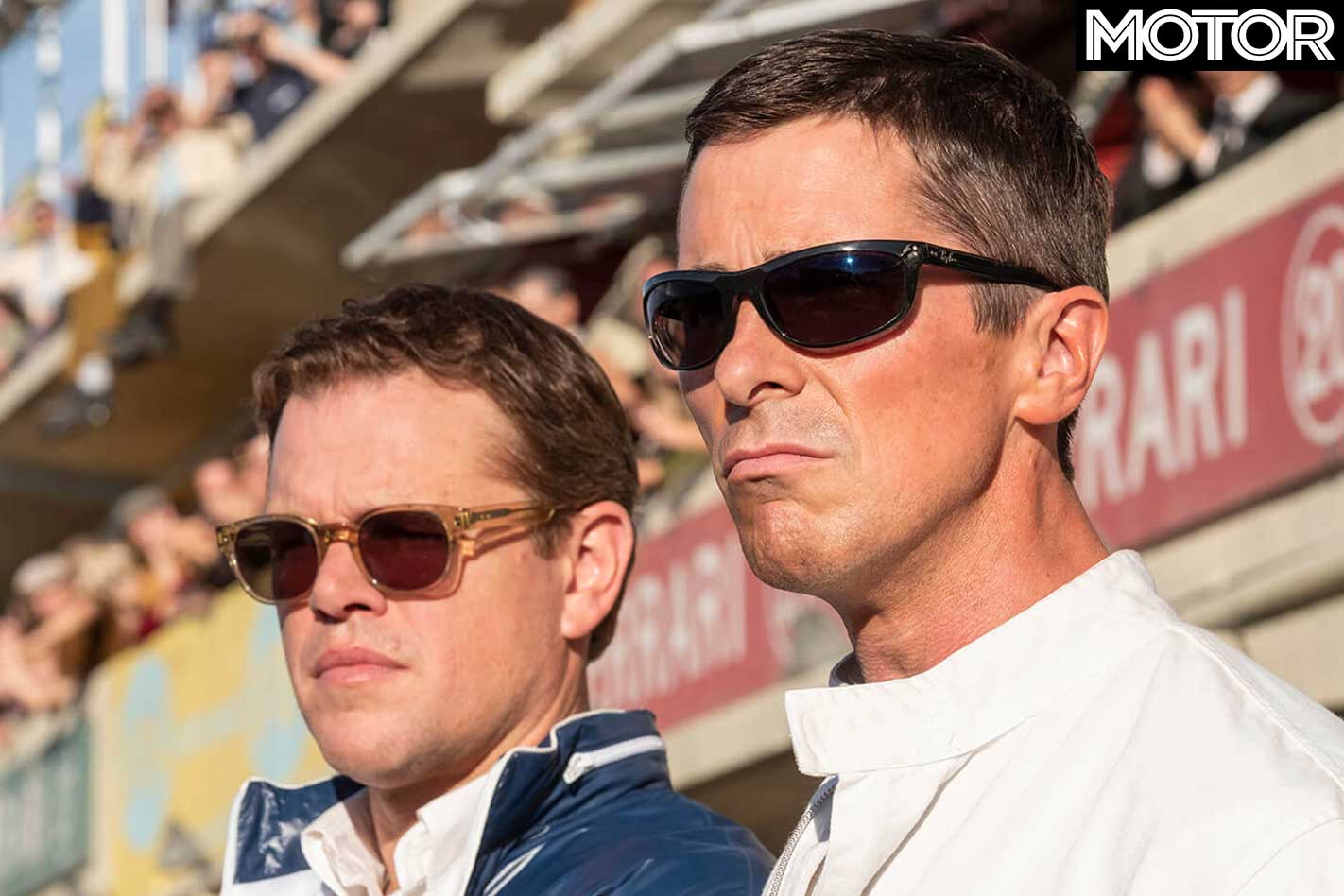
The battleground? Le Mans, 1966. Of course, gorgeous race cars, an excellent cast, and some seemingly stunning driving sequences should even draw in those who know nothing of Le Mans, or the infamous GT40 victory streak.
And what’s in it for Ferrari fans? The synopsis Fox released is a good indication of where the film’s narrative focuses:
“American car designer Carroll Shelby and driver Ken Miles battle corporate interference, the laws of physics and their own personal demons to build a revolutionary race car for Ford and challenge Ferrari at the 24 Hours of Le Mans in 1966.”
The IMDb cast listing includes Remo Girone as Enzo Ferrari, but the name is quite far down the list. We imagine there’s not going to be much Maranello here.
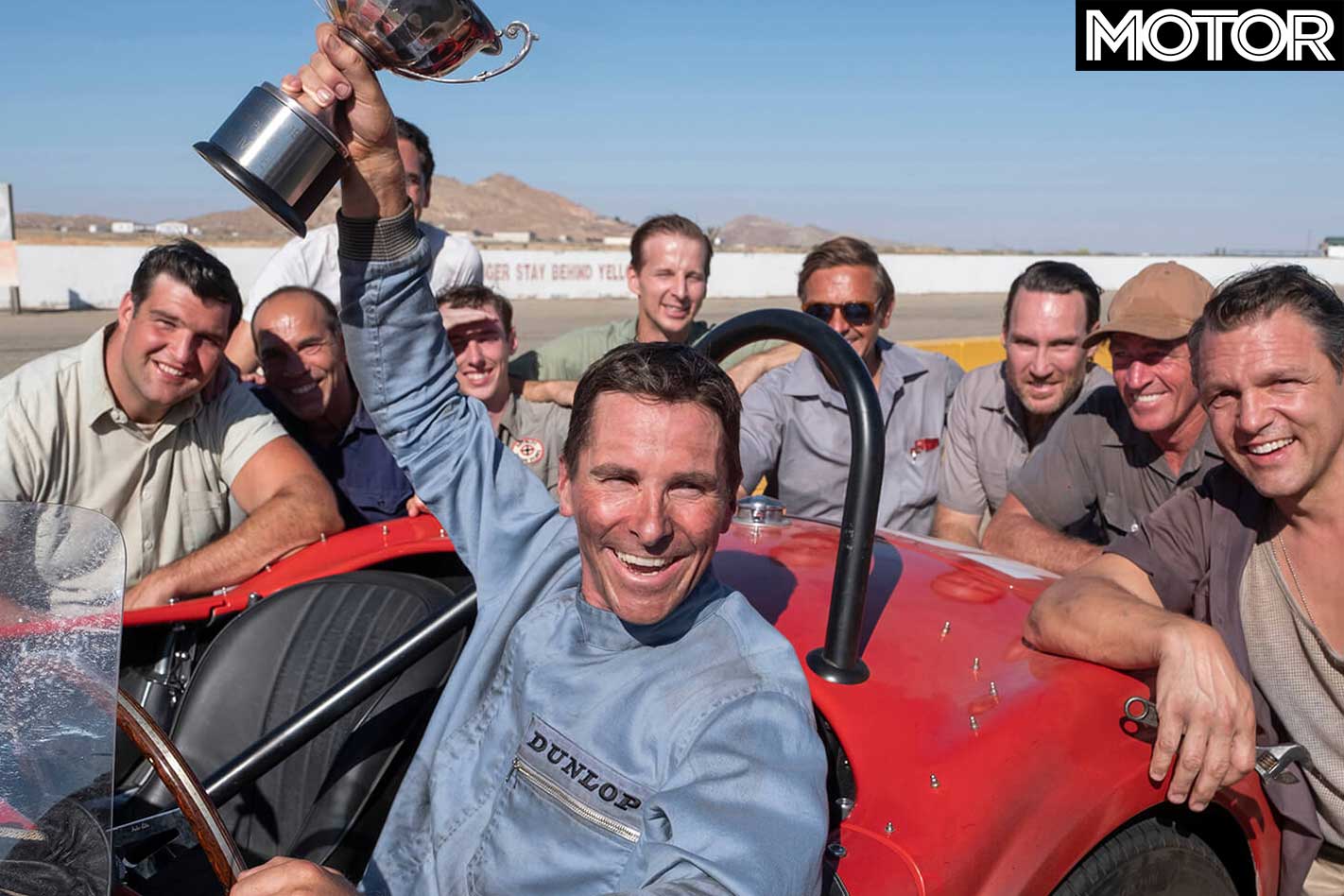
A few smaller details in the cast list caught our eye, however. Firstly, Ben Collins. Collins, formerly Top Gear’s Stig, is playing New Zealand racer Denny Hulme. Further down the list, we see that the late, great Dan Gurney is being portrayed by his own son, Alex Gurney.
How much of a role these two will play in the film’s narrative is yet to be seen.
We expect to see the film released in Australia at around the same time as it is in the US, on November 15.
Did you know that every 13 seconds, a BMW, Mini or Rolls Royce car is sold somewhere in the world? It’s true. And according to Hendrik von Kuenheim, BMW Group Senior Vice President for Asia Pacific, Middle East, Eastern Europe and Africa, Australia is punching well above its weight in helping that figure rise.
Last year, BMW sold 26,645 (23,055 BMWs and 3,590 MINIs) in Australia with 48 percent snagged by Sydney and Melbourne metropolitan areas. It is for this reason that BMW was never going to hold back when it came to renovating its company-owned Sydney dealership.
The impeccably designed and state-of-the-art Rushcutter’s Bay space is penned by the lauded SJB Architects and has been almost three years in the making.
As Australia’s most expensive dealership renovation, created to the tune of $65million, the bright, multi-level space not only highlights BMW’s future-luxe aesthetic but is an impressive flex of the German luxury brand’s stance in Australia.
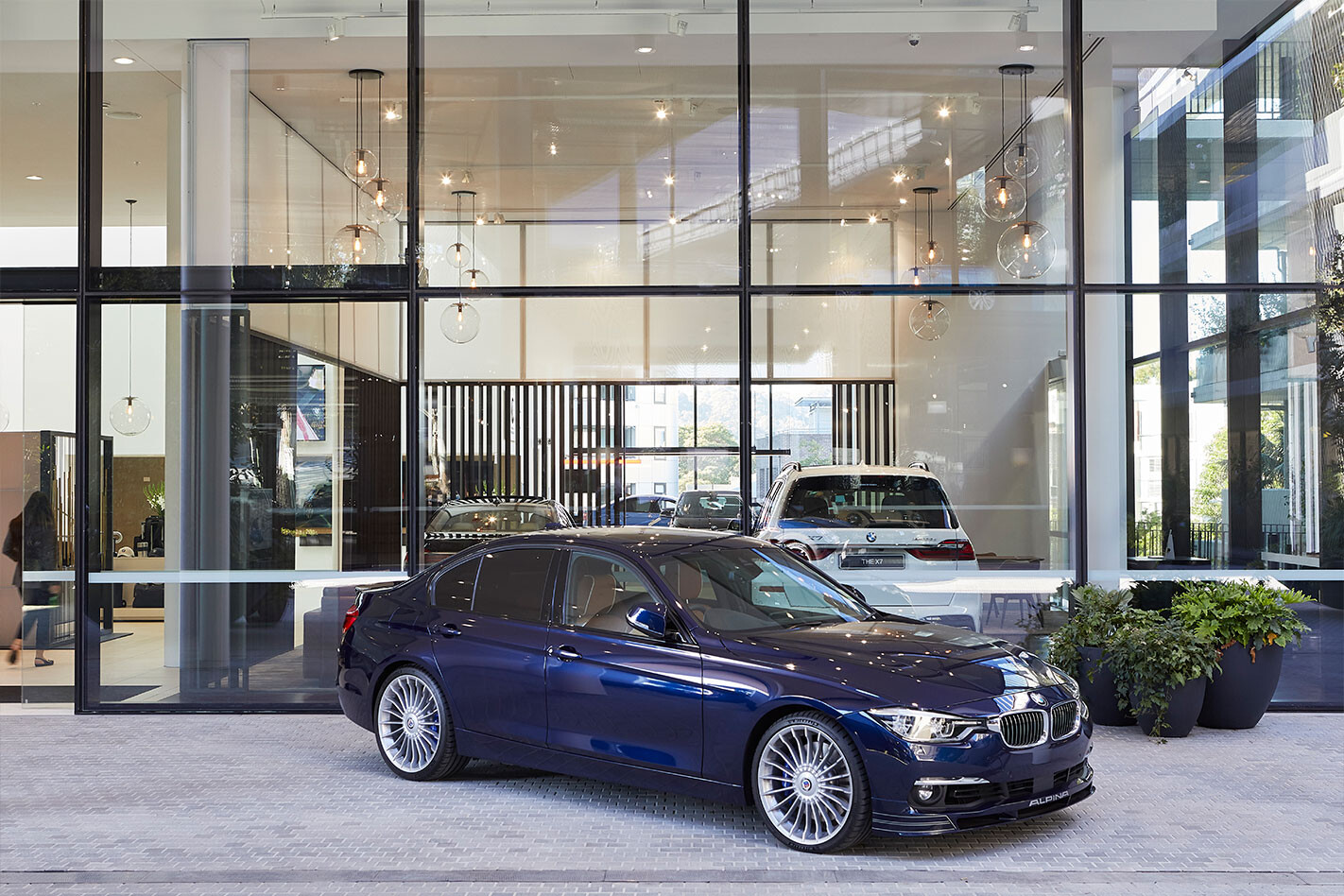
Think: the biggest display of M cars in the Southern Hemisphere (we have the second-highest share of total M-performance sales in the world, FYI); 13 EV charging stations and a dedicated area for BMW’s growing electrified sub-brand, BMW i; a separate Mini showroom with 26 models on display over two levels alongside pieces by Aboriginal artists Sarrita and Tarisse King; a café with world-class coffee; open atelier spaces for inspired curation of wheels, textiles, paint and more, and dedicated lifestyle and fashion spaces for both BMW and Mini brand lovers.
However, the pièce de résistance is the cool, clean and clinical-looking workshop that appears to have been airlifted straight out of Munich. As the largest BMW-specific workshop in Australia, the company has wasted no money here, building an innovative and highly efficient space, with water, oil and air systems integrated into each bay, 46 hoists and the technician’s name placed above every station.
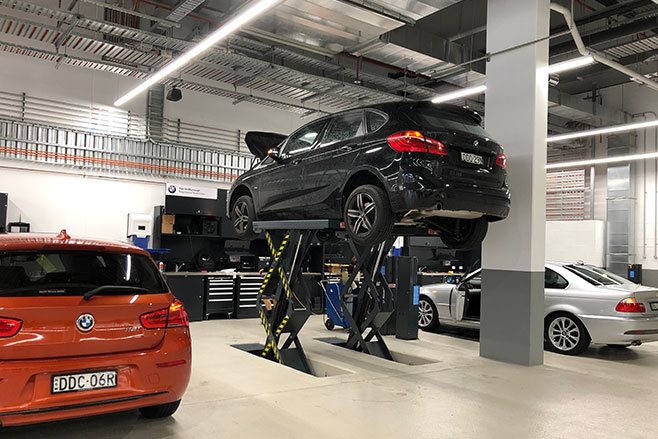
In addition, BMW is also offering a ‘fast lane service’ capable of servicing 60 cars a day, in just 90 minutes per car. While they wait, customers are invited to meet, work, hang or dine in the showroom’s café area, which feels less like a ‘car dealership’ and more like a luxury hotel restaurant or trendy co-working space.
While other brands are shuttering their dealerships or moving online, it seems BMW has other ideas of what the future of automotive retail and aftersales might be, and that bricks and mortar is not yet dead.
The line between mainstream and luxury seems to be getting blurrier by the day. While the likes of the Kia Stinger and Mazda’s new 3 are both signals of the upmarket aspirations of Japan and Korea, there’s one manufacturer that’s been playing the “middle-class fancy” game longer than most: Volkswagen.
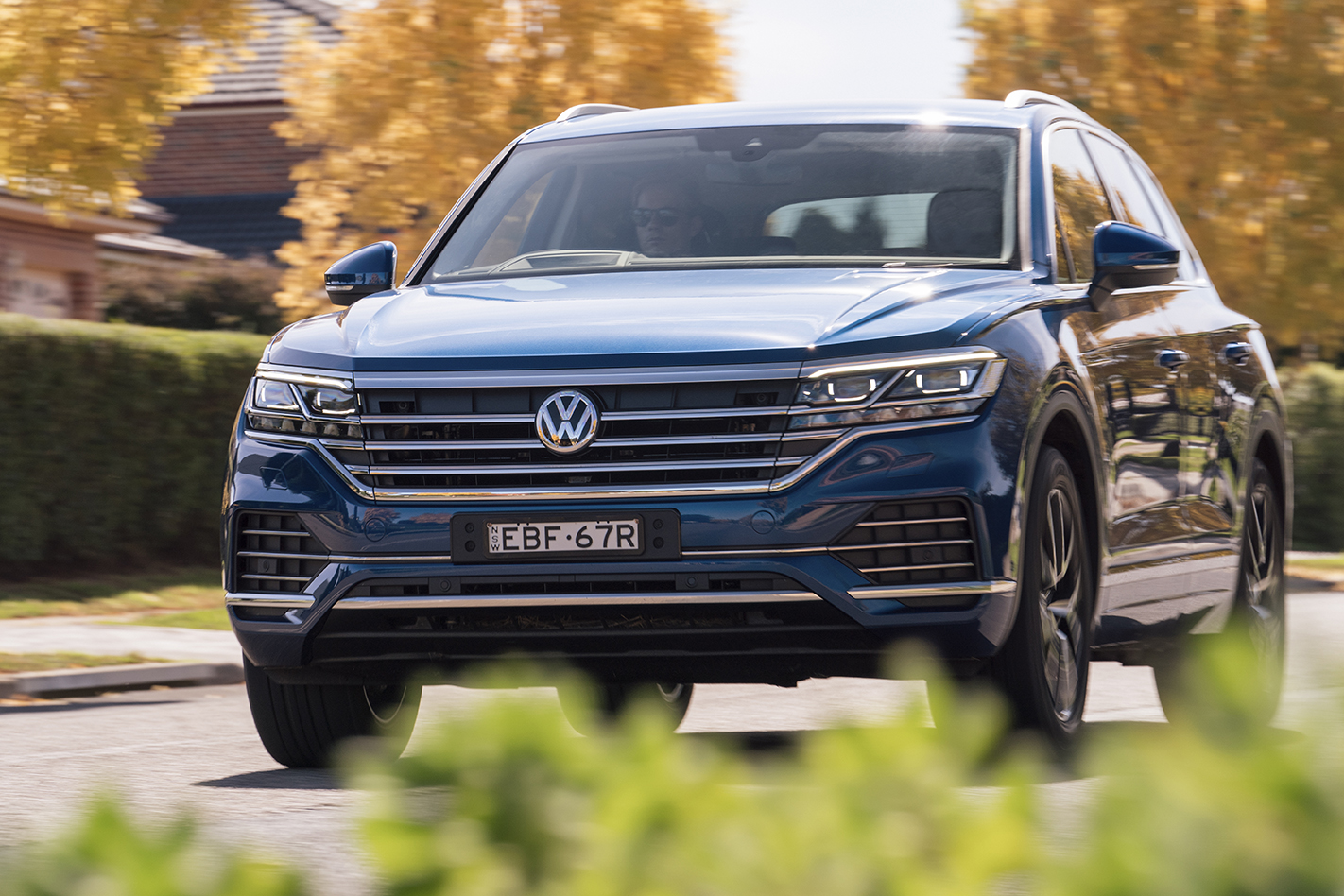
Exceptional driving characteristics, high cabin quality and, of course, European provenance have all helped elevate the likes of the Golf, Polo, Passat and Tiguan to a position on the automotive desirability ladder that’s much closer to entry-level luxe, and now it’s the Touareg’s turn.
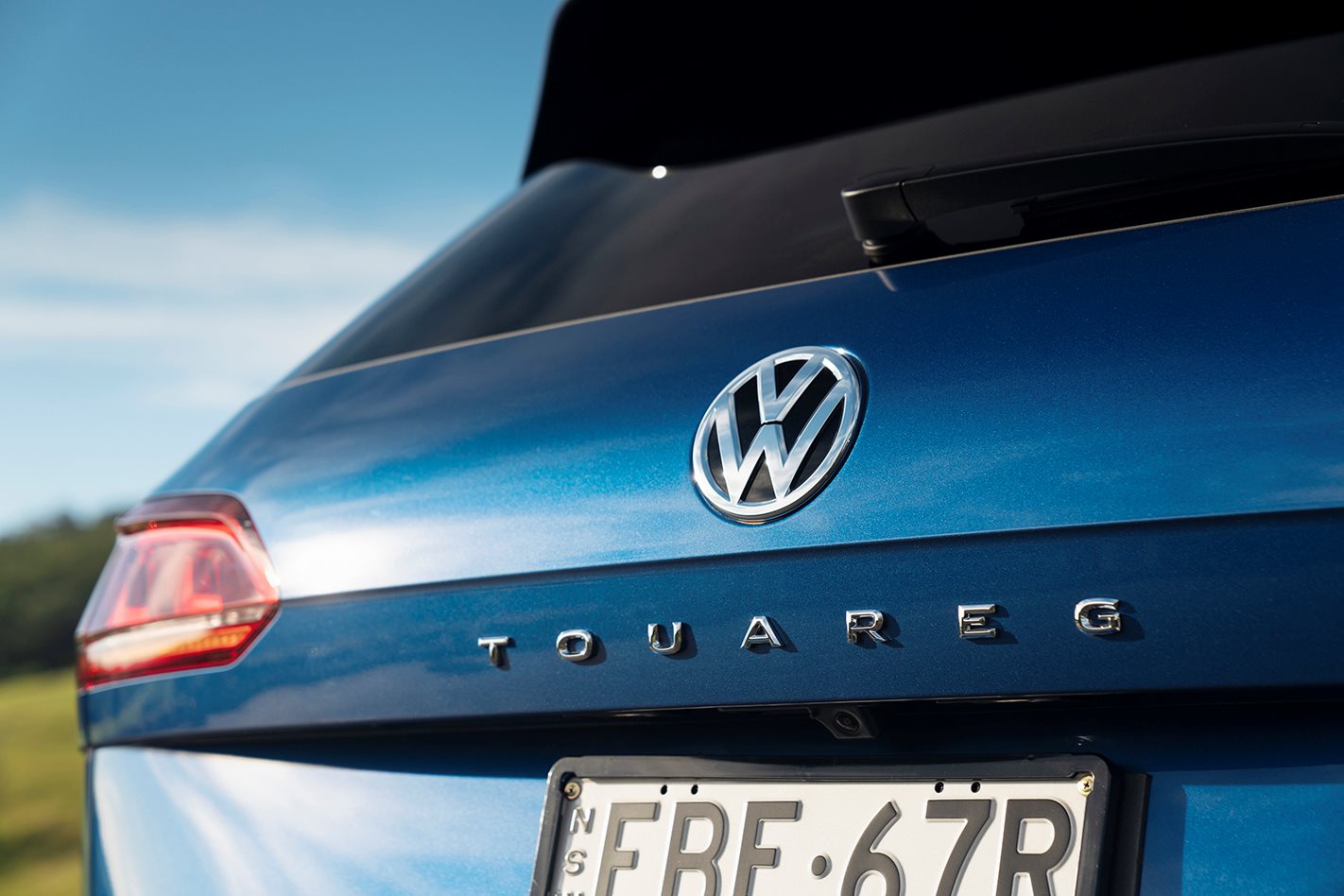
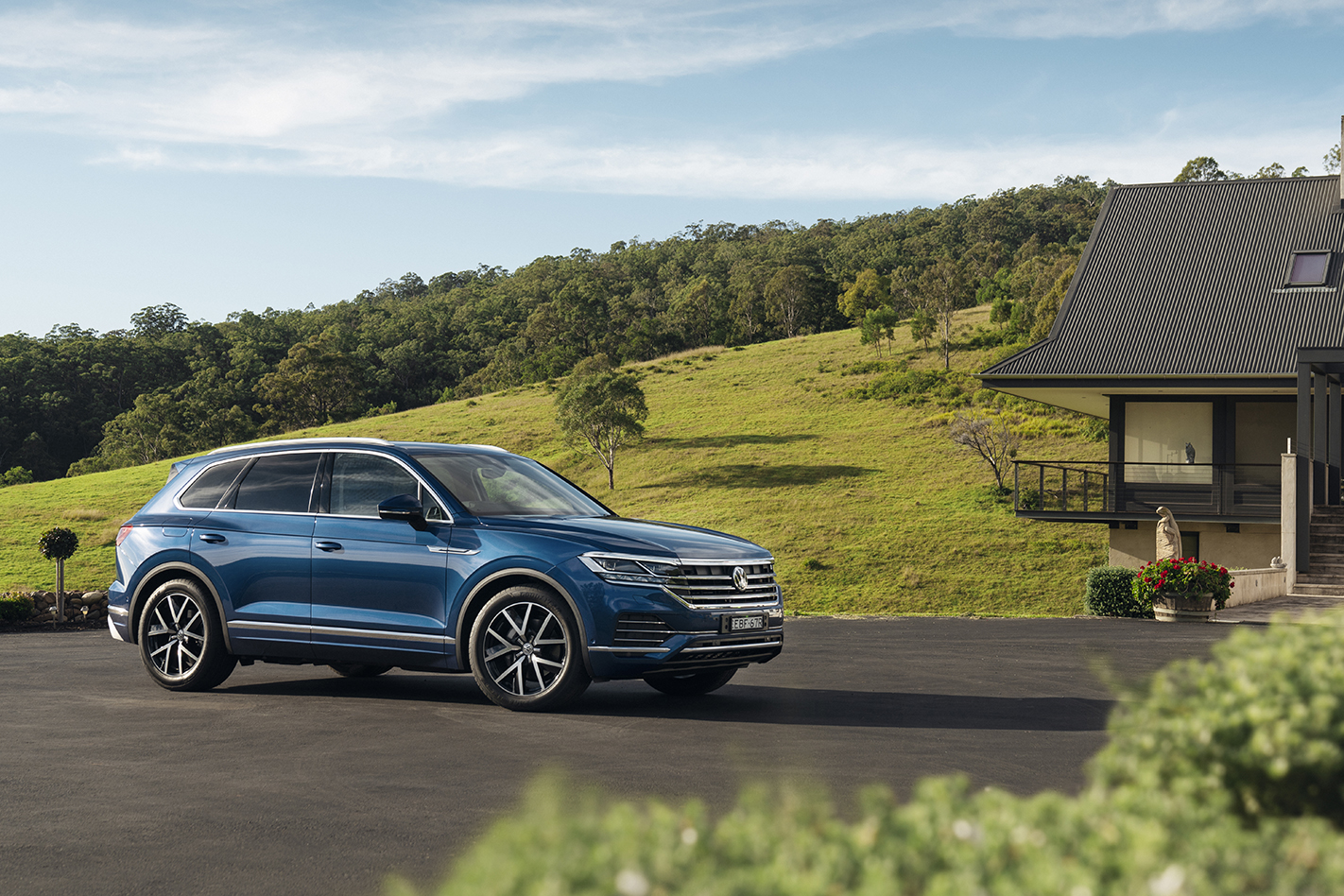
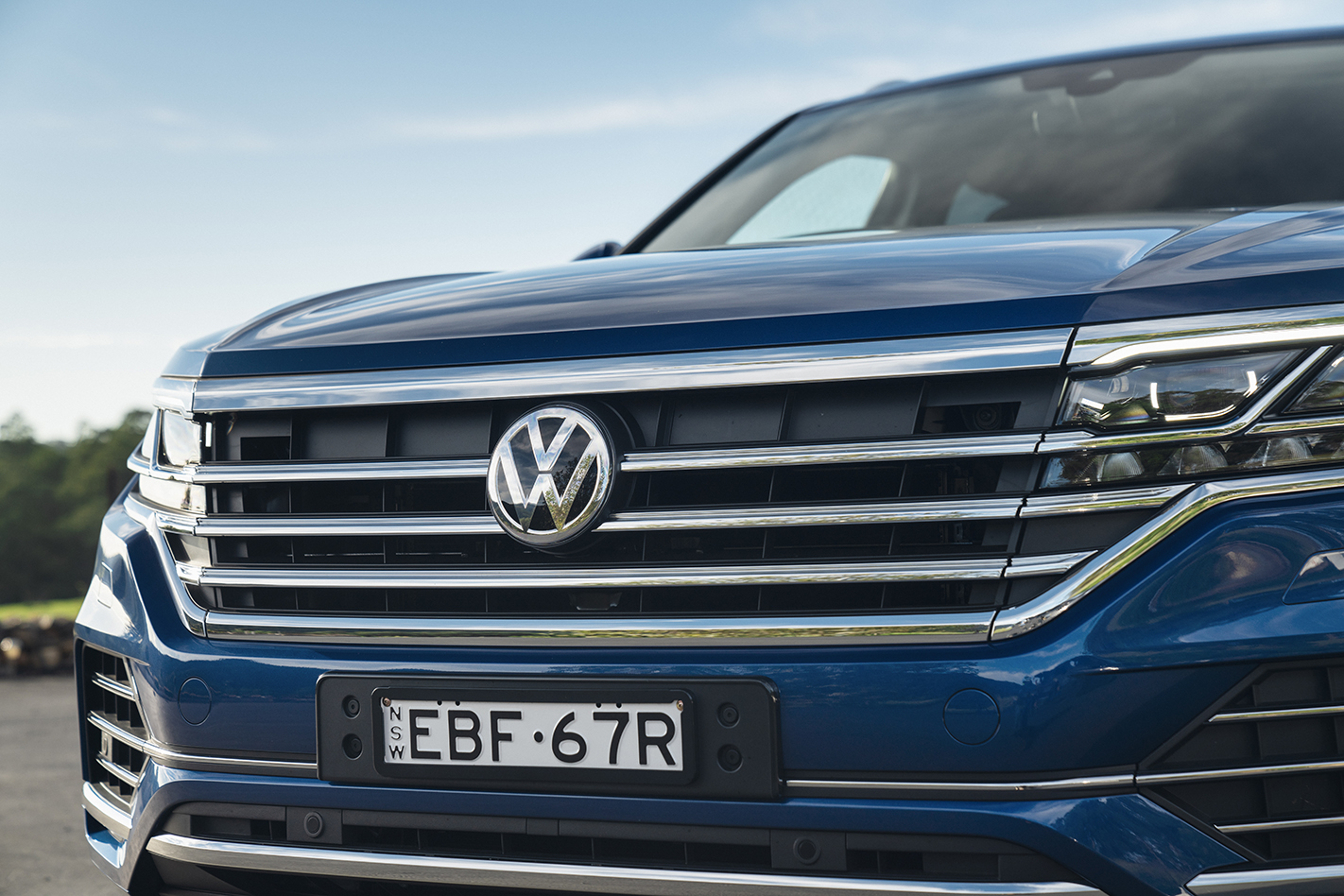
Launching in Australia in a single high-featured grade for now, the all-new third-generation Touareg Launch Edition definitely aims high. Built on a platform shared with the Porsche Cayenne, Bentley Bentayga, Lamborghini Urus and Audi Q7, it’s got blue blood running through its veins – and that’s reflected in its design both inside and out.
In fact Volkswagen confidently compares it with the likes of the Mercedes-Benz GLE-Class, BMW X5, Land Rover Discovery and Volvo XC90, rather than more prosaic rivals like the Toyota Landcruiser, Mitsubishi Pajero, Mazda CX-9 or Jeep Grand Cherokee.
Is that confidence justified?
VALUE
Retailing at $89,990, the Touareg Launch Edition is indeed a costly option in the world of large SUVs. However, keep in mind that Volkswagen Australia is launching its new Touareg with a top-down strategy: the Launch Edition is the range-topper, and more affordable variants will arrive later in 2019.
And that means that for the money asked, the Touareg Launch Edition is positively brimming with gear. We’ll dive deeper into the spec list in the next section, but on a spec-adjusted basis the Touareg flagship is $14,560 cheaper than the (much less powerful) Volvo XC90 D5 Momentum and $46,143 cheaper than the 200kW Audi Q7.
As for the segment stalwart, the BMW X5 xDrive30d, the Touareg is already $23K under the Bimmer’s retail price, and $36,700 more affordable when the X5 is specced up to the same level.
But is the Touareg quite on an even footing with those rivals? Not really – and we’ll get into some of the reasons why later on – but there’s no denying that it offers substantially more gear than practically all of its large SUV competitors in the mainstream segment.
STANDARD FEATURES
Where to start. Stuffed to the gunwales with equipment, the Touareg Launch Edition spoils the owner with a standard feature list that is easily one of the lengthiest in the segment. All of the expected features like power seats, front and rear parking sensors, dusk-sensing headlamps, rain-sensing wipers and keyless entry/ignition are all there, but the Launch Edition goes further. Much, much further.
Air suspension, for example, is standard-issue, as is active cruise control, four-zone climate control, lane-keep assist, four USB charge points throughout the cabin (the two front ones being wired for Apple device compatibility), and advanced ‘Matrix’ LED headlamps borrowed from corporate cousin Audi.
There’s plenty of luxo glitter too, in the form of partial leather upholstery, heated and ventilated front seats, plus an electrically-adjustable steering column.
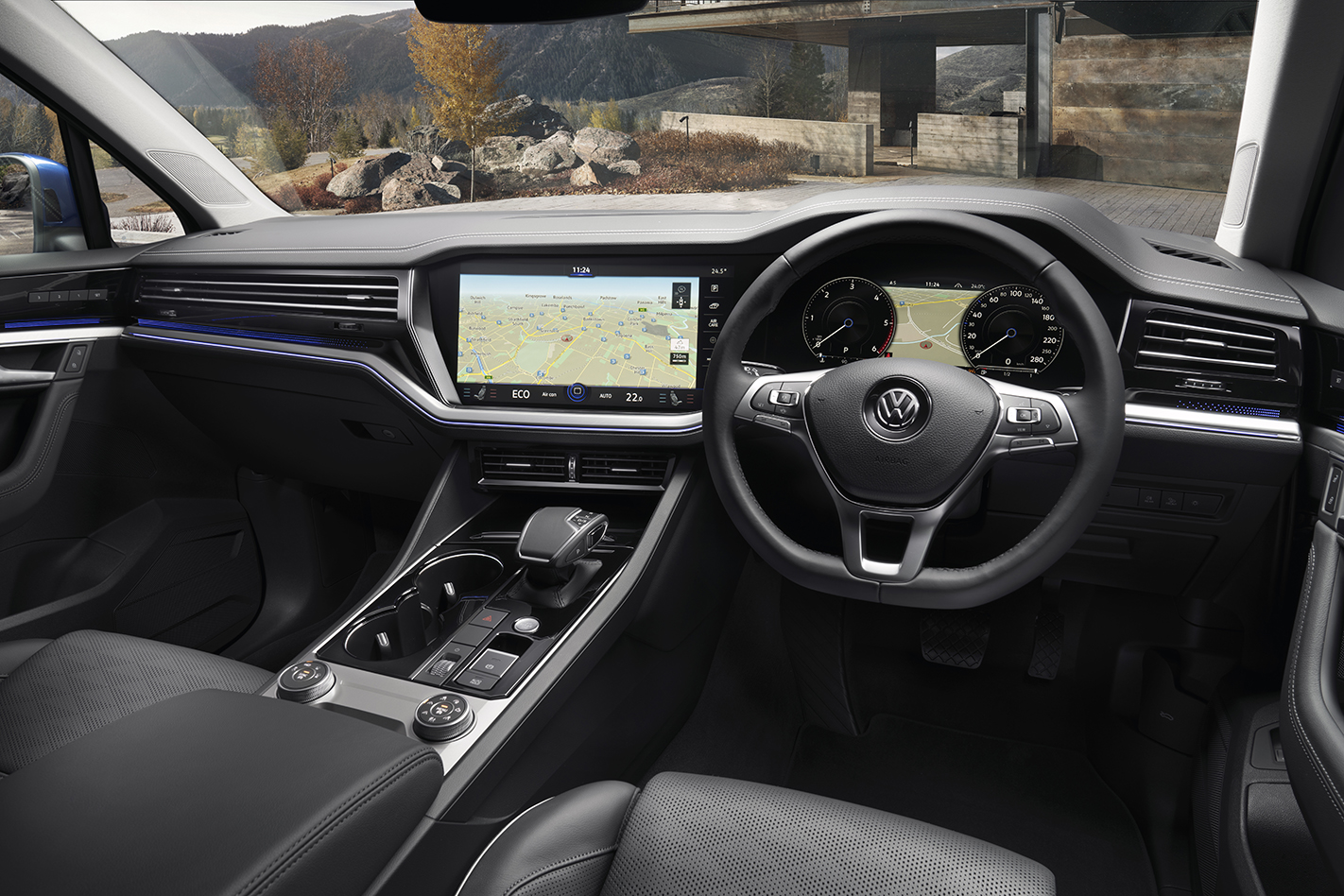
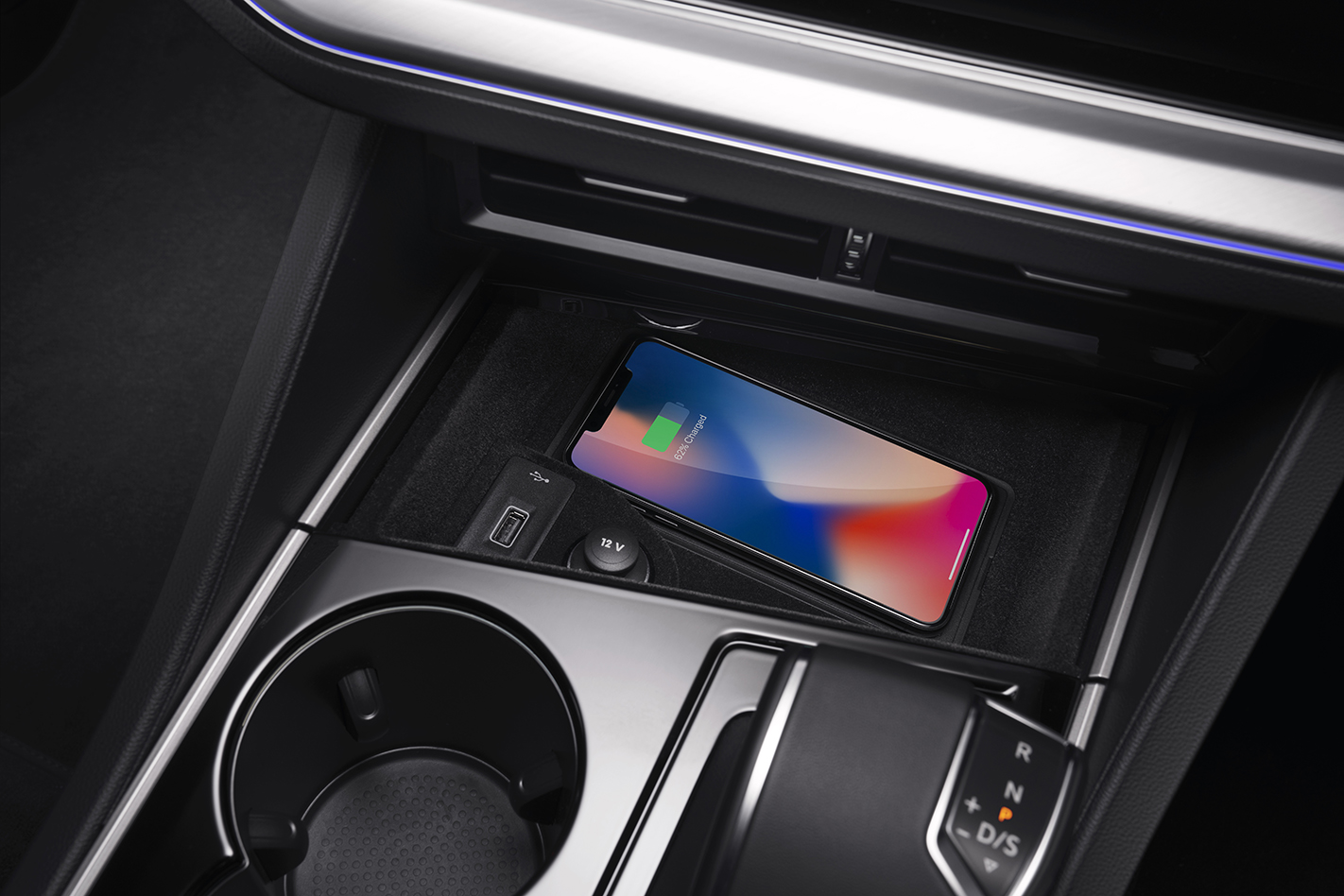
However, the real standout is the Touareg’s infotainment fit-out, which consists of a 9.2-inch colour touchscreen display with gesture control, voice controls, and Android Auto and Apple CarPlay integration – not that you’ll need that much, given the standard sat-nav and media/telephony functions are so good. A wireless phone charging pad is also standard on the Launch Edition.
If you can, it’s worth ticking the option box for the Innovision package. At $8000 it’s not cheap, but it brings an absolutely gigantic 15-inch infotainment screen (pictured) with an ultra-slick interface that is so large it replaces the physical climate control buttons and relocates them to the screen. You also gain an all-electronic instrument panel, a colour head-up display, some additional stainless trim, and customisable cabin ambient lighting.
It elevates the Touareg’s interior from “nice” to “is this a concept car?”, and the wow factor is off the scale.
SIZE
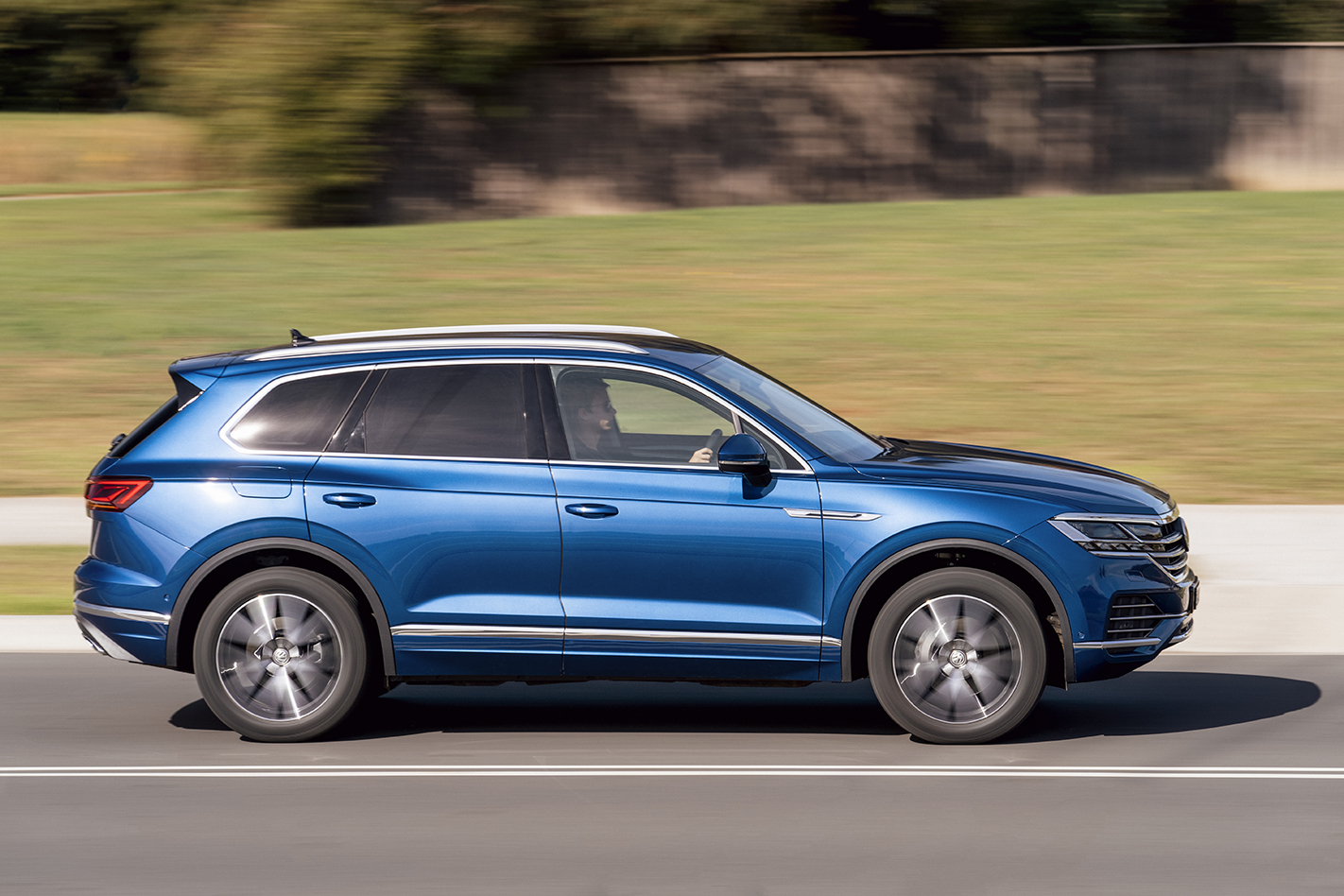
At 4878mm long and 1984mm wide, the Touareg slots into the large SUV category and sits just above the Jeep Grand Cherokee in terms of overall dimensions. However, with no capability for a third row of seats, it isn’t quite as suitable for family bus duties as the Volvo XC90 or BMW X5, let alone the Toyota Landcruiser 200 and Nissan Patrol that are price rivals for the Touareg Launch Edition.
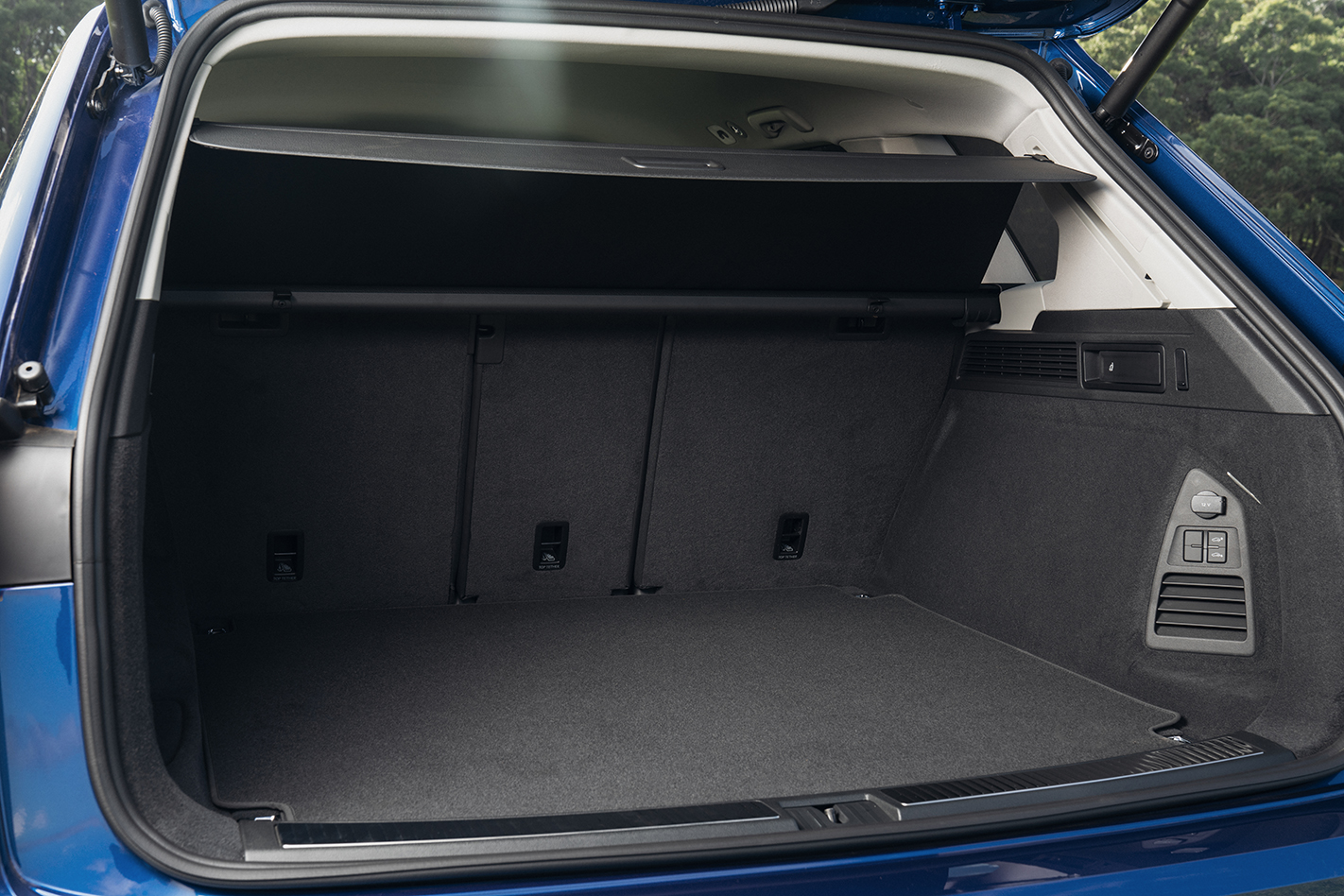
But for five people, it’s certainly got space to spare. And luggage room too, with a seats-up capacity of 810 litres that increases to 1800 when you fold the 40/20/40 split second row seatback flat.
A powered tailgate is standard on the Launch Edition, and the air suspension can ‘knee down’ via boot-accessible buttons to aid the loading of big and/or heavy items.
Downside? A space saver sits under that boot floor, rather than a full-size spare tyre.
SAFETY
The Touareg’s active and passive safety equipment list is strong. Standard features include the usual ABS, EBD, brake assist, traction control and stability control (with multiple terrain modes), along with autonomous emergency braking, pedestrian detection, lane keep assist, adaptive cruise control, blind spot monitoring, fatigue detection, plus front and rear cross traffic alert.
Eight airbags are standard – dual front, front side, rear side and full-length curtain.
COMFORT
The premium promise of the third-gen Touareg becomes apparent the moment you step through the door. It simply looks special – especially with our car being equipped with that gigantic 15-inch screen from the Innovision package – and soft-touch plastics, convincing pleather and genuine leather are everywhere.
And from the commanding height of the driver’s seat, the Touareg is a nice place to be. Not only is outward vision excellent, but virtually every control and button falls easily to hand… except for the left half of that jumbotron 15-inch screen.
Besides that, the ergonomics are hard to fault. The power seats and power steering column have more than enough adjustment to cater to all body types, are nicely trimmed and come standard with a built-in back massage function. Perfect for long, long stints behind the wheel – or just driving home from a stressful day at work.
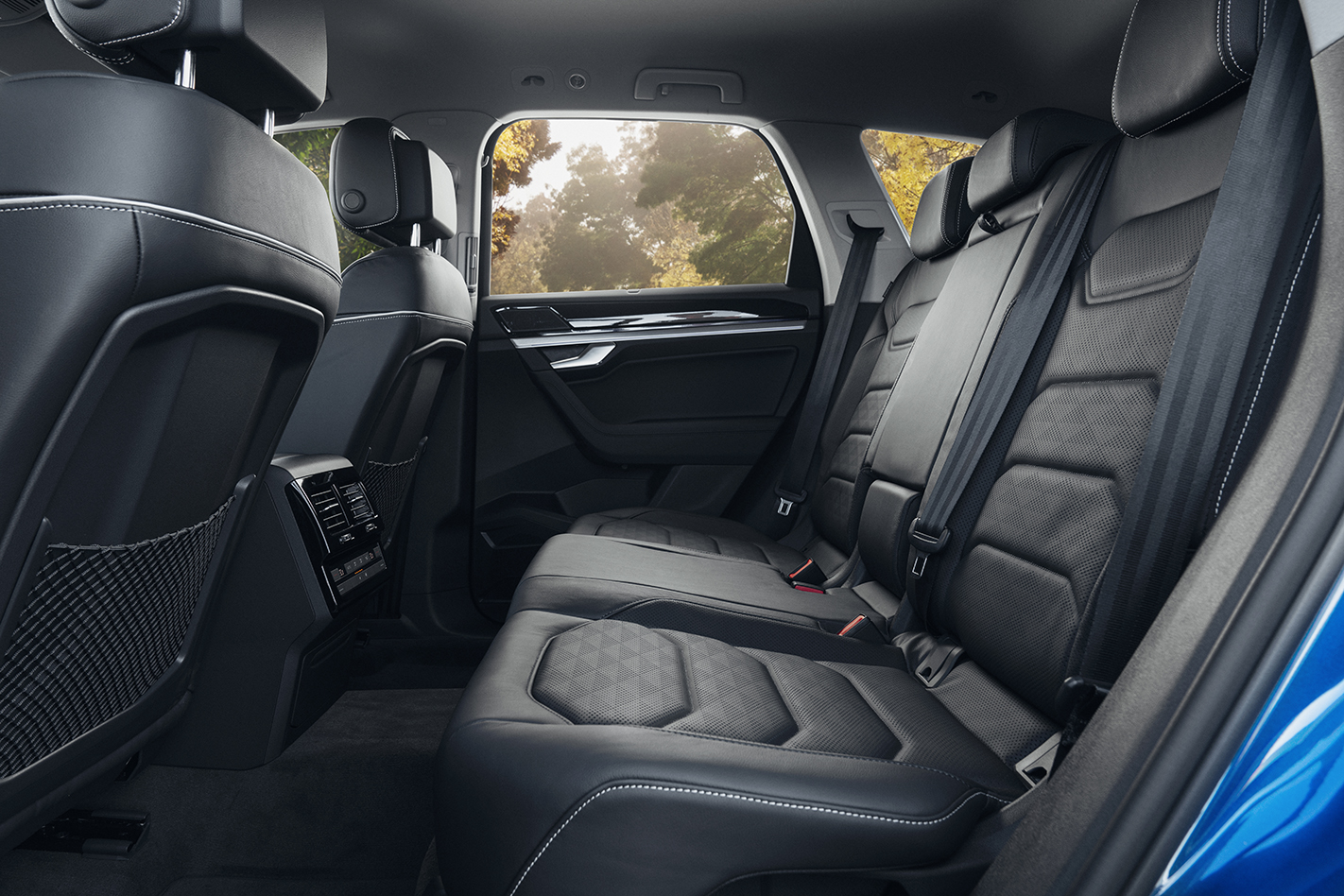
In the back, a sliding second row provides exceptional legroom when slid all the way back as well as commendable comfort from nicely sculpted seats and a reclinable backrest, while vents at the rear of the centre console and on the B-pillars ensure those in the back seats receive plenty of air. The provision of quad-zone climate control is another nice touch, meaning nearly everyone should be able to stay comfortable no matter the weather.
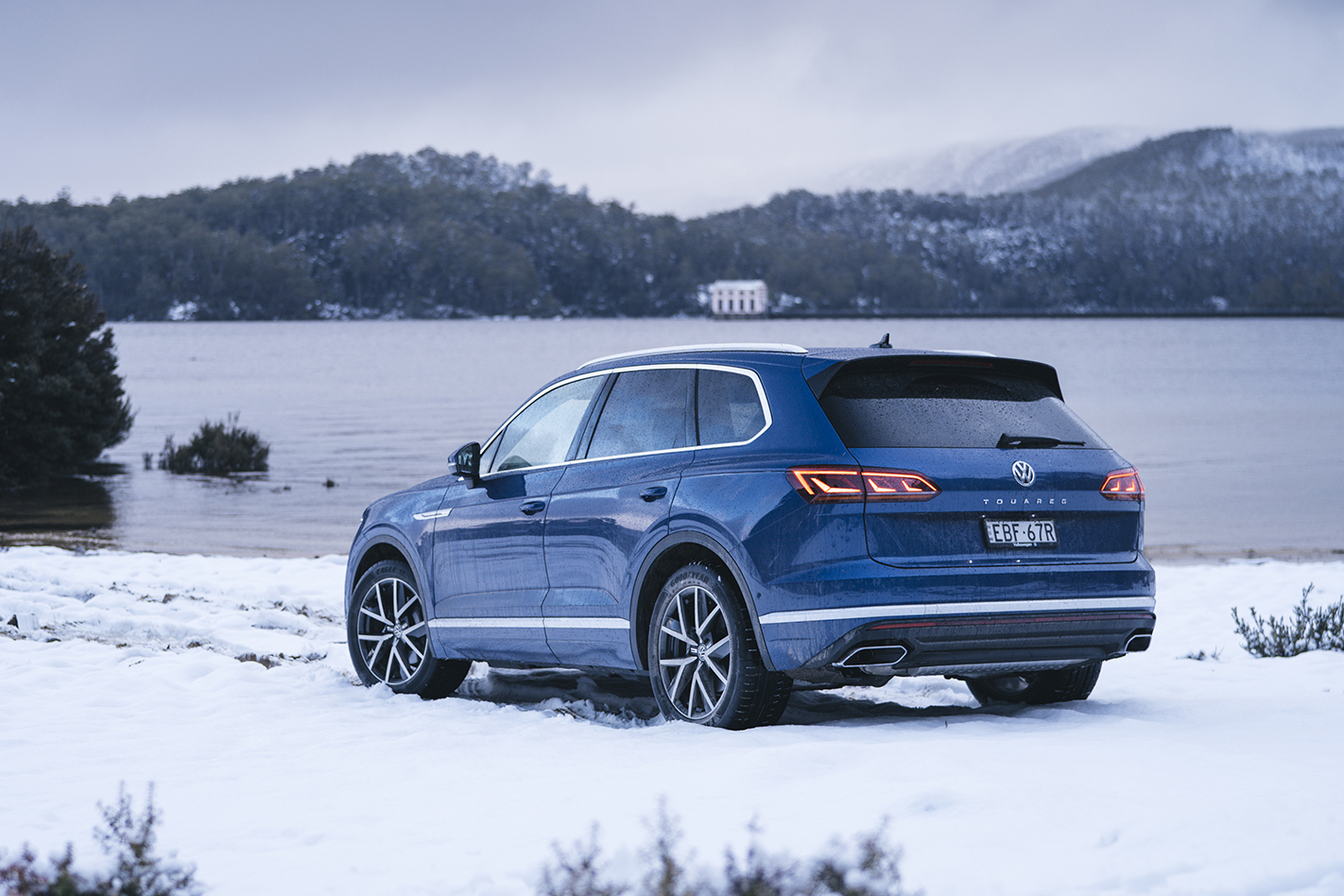
Speaking of which, the weather during the Touareg’s local launch in Tasmania certainly did its best to highlight the positive virtues of the car’s climate control. A massive dump of snow sent temperatures plummeting, yet the Touareg’s cabin quickly warmed up to defrost our semi-frozen limbs.
ON THE ROAD
It’s a polished offering, that’s for sure, but the Touareg’s talent extends well beyond simply looking like it belongs at the country club. The fact that it’s also an outstanding car to drive is even more laudable than its extensive equipment list and fancy furnishings.
All diesel Touaregs in Australia will come with the one engine – a 190kW, 600Nm 3.0-litre turbodiesel with a combined fuel consumption of 7.4 L/100km and a very respectable zero-to-100km/h sprint of 6.5 seconds.
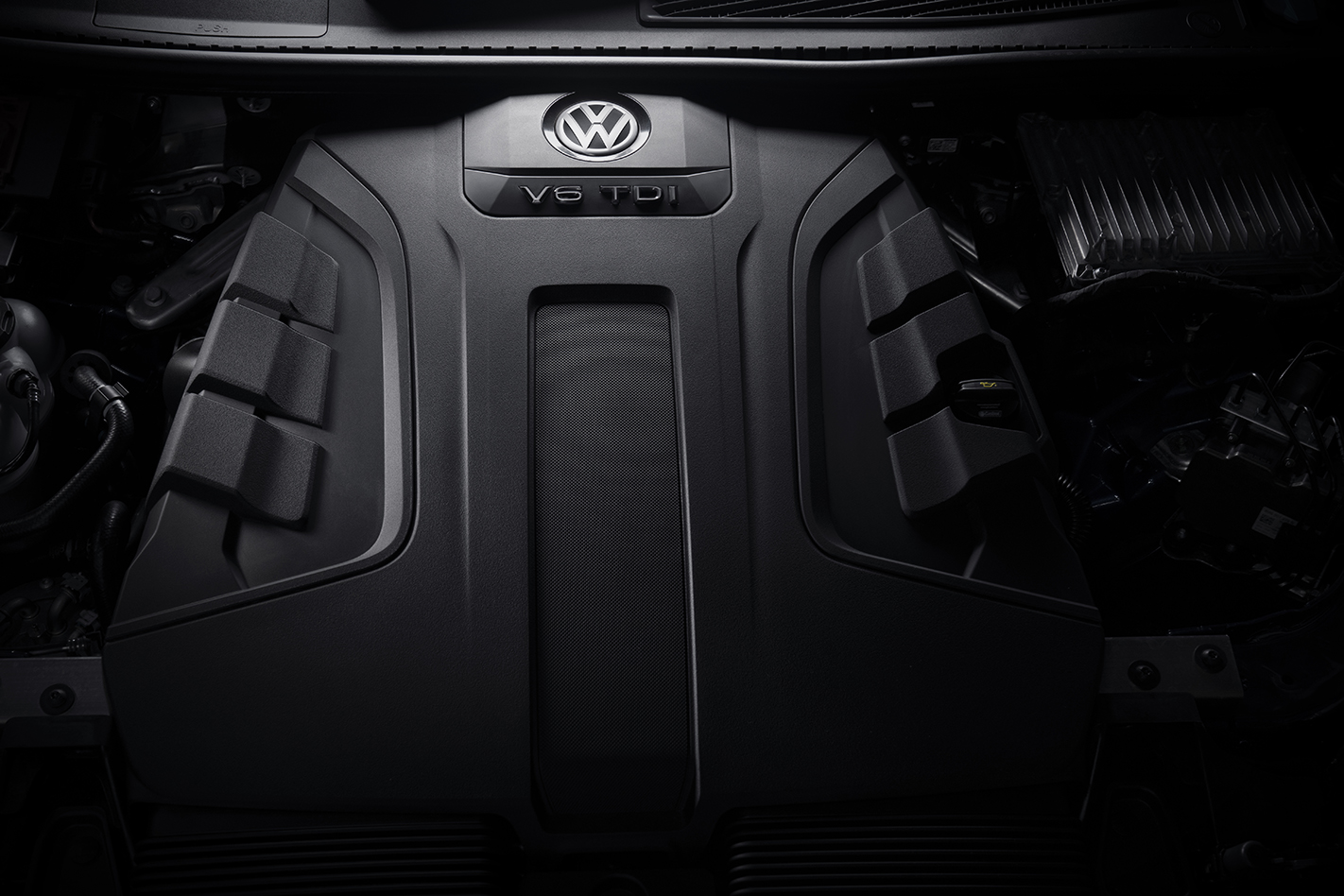
An eight-speed automatic takes power to all four wheels via a rear-biased all-wheel drive system (which can take up to 70 percent of torque to the front in slippery conditions), and air suspension is standard.
That mechanical ensemble comes together is a very satisfying way. The diesel six is commendably quiet and smooth – settling down to a barely-audible hum at highway speed – and the automatic does a fantastic job of smoothly and intelligently slotting between gears.
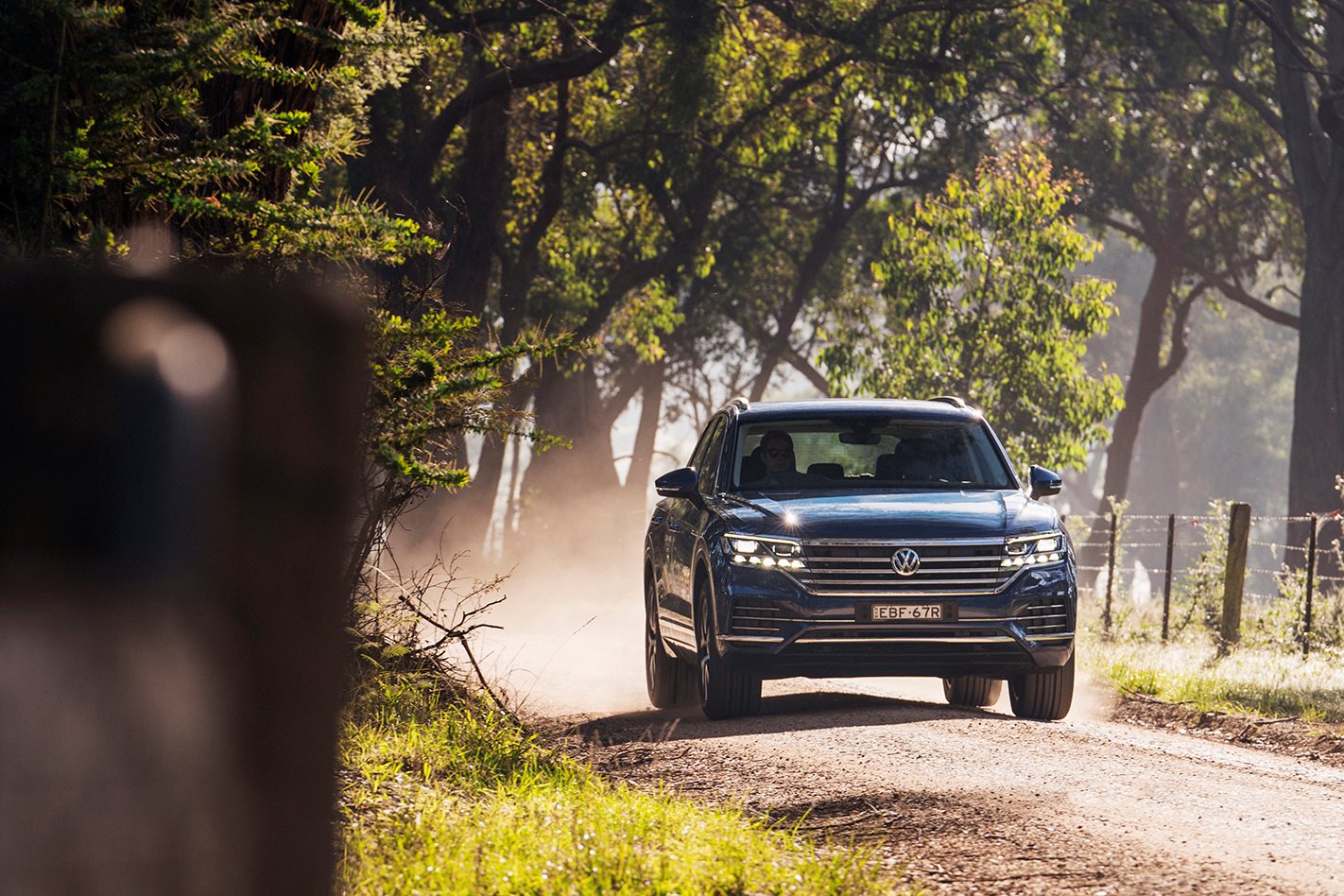
Low-down torque is huge, giving the Touareg a relaxed, effortless feel, and we’ve no doubt that this powertrain would easily cope with the car’s 3500kg maximum tow capacity.
And then there’s the way it rides. Long-travel suspension and air springs with adaptive dampers work miracles in both containing the Touareg’s 2.0-tonne kerb weight and dispatching bumps and potholes.
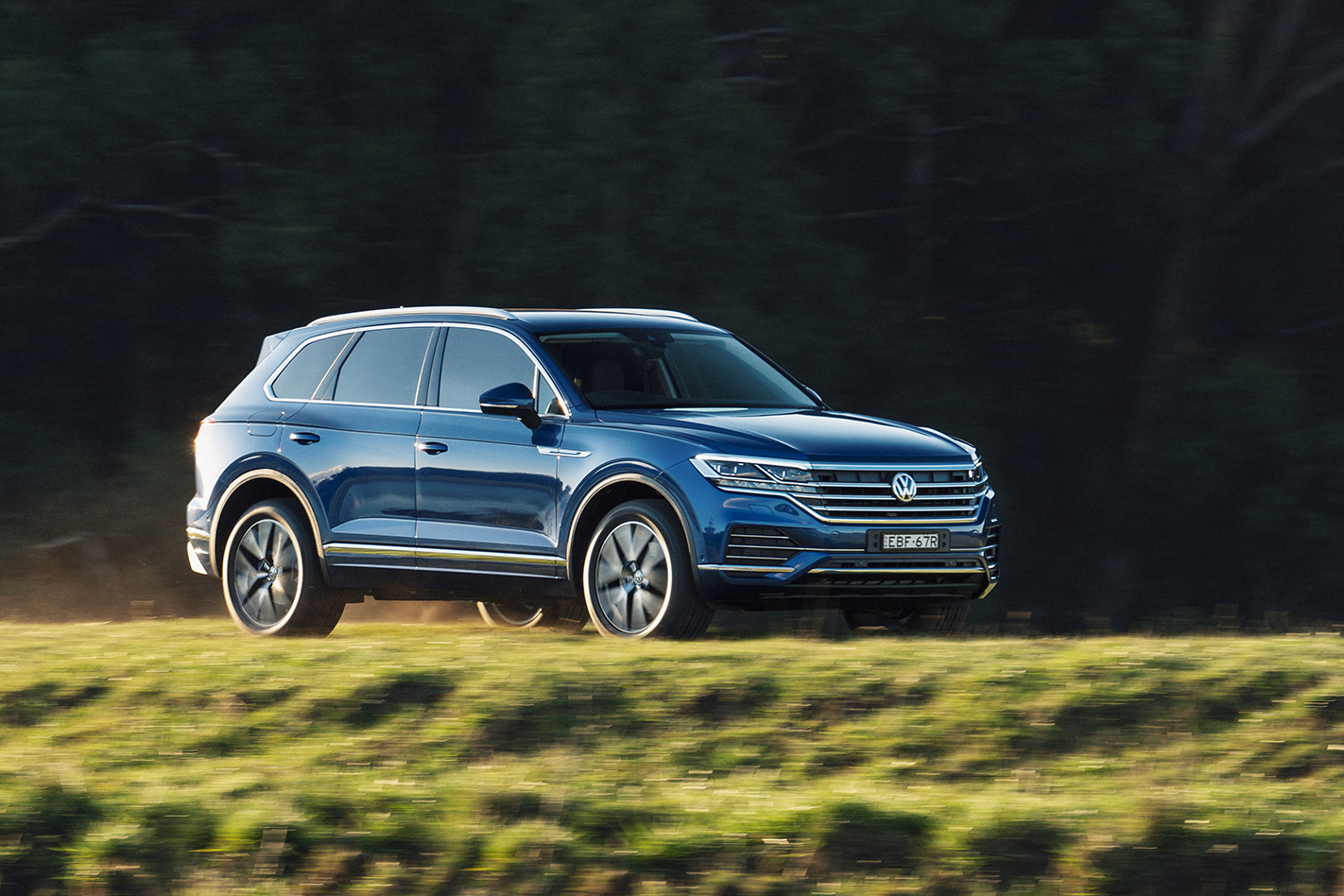
The way it cushions the cabin from big hits and then recovers with almost no secondary bounce on the rebound has to be experienced – it’s this quality of the Touareg that feels the most ‘premium’.
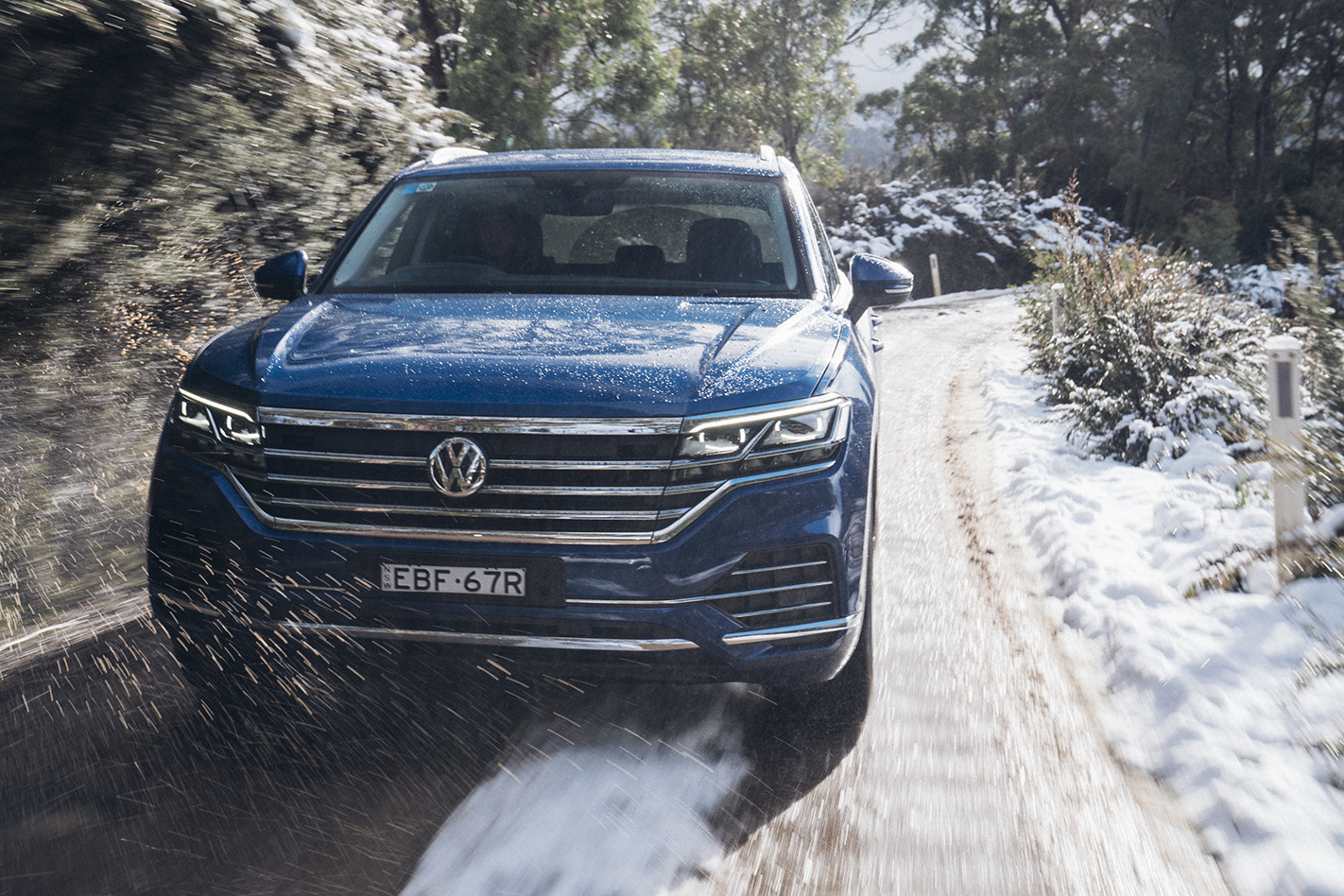
Again, the unexpectedly snowy weather of the launch worked very much in the Touareg’s favour, allowing us to actually sample its dedicated snow mode and drive in conditions that were generally slippery most of the time. The Touareg passed with flying colours, and never did it feel anything but stable and secure, either on icy tarmac or on sleety mud.
VERDICT
Is it fair to hold VW’s big wagon up against genuine luxury rivals? No. Volkswagen may point to the value equation being much sharper in the Touareg than it is in X5, GLE, XC90 et al, but so it should be. That’s the fundamental difference between mainstream and premium – good value is a core expectation in the former, not so much the latter.
Furthermore, while the Touareg’s interior is a standout of the mainstream segment, it’s still not quite the equal of better-finished luxury rivals like the BMW X5 and Volvo XC90, not to mention its corporate cousin the Audi Q7.
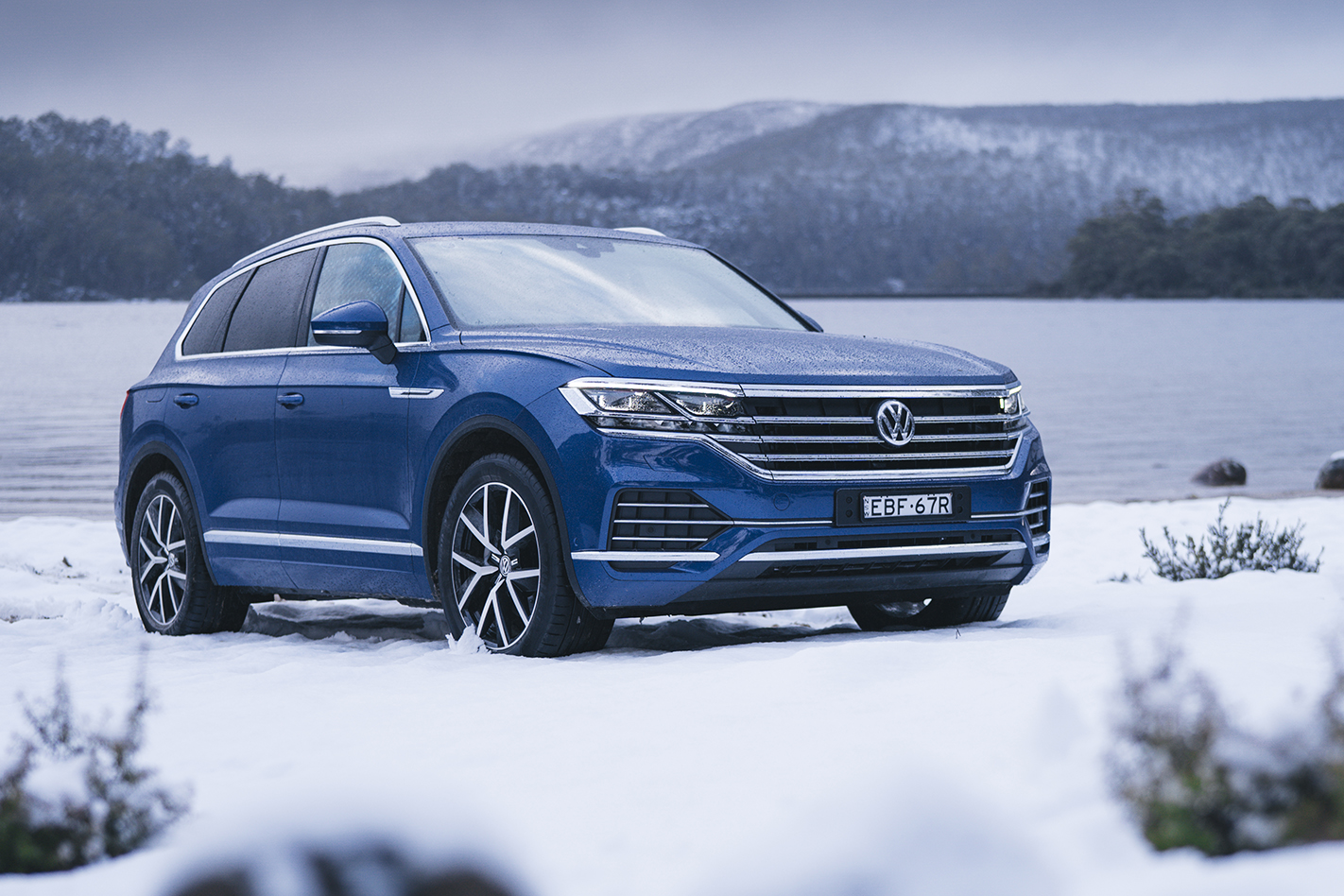
But of the mainstream large SUV pack, the Touareg Launch Edition is undoubtedly the king.
Few feel as rock-solid and comfortable on road and dirt, and few feel anywhere near as refined. What’s more, while the rest of the pack favour cabins that are at best ‘conservative’ and at worst ‘agricultural’, the Touareg Launch Edition’s tech-laden interior looks like it’s come from several years into the future.
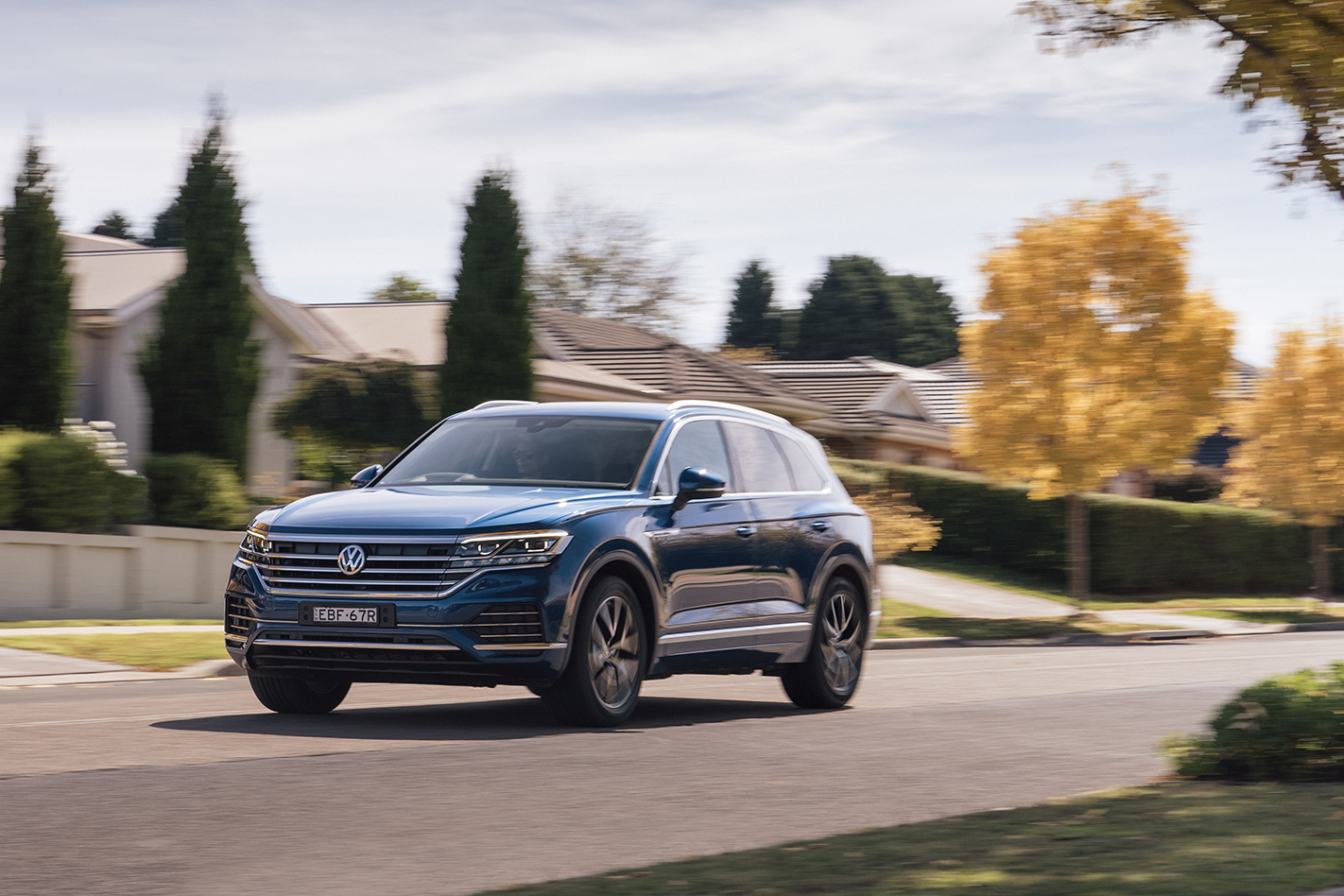
It straddles the divide between mainstream and premium quite adeptly, and though the badge cachet for proper luxury status isn’t there, the flashy new Touareg certainly skews toward that direction.
Cheaper variants will follow in its tyre tracks, but right now the Touareg Launch Edition is easily one of the best sub-$100K large SUVs around.
