
When the fourth-generation Nissan Pathfinder launched in Australian in 2013, it wasn’t exactly met with rapturous applause from previous owners.
Beloved for its rugged simplicity and off-road chops, the body-on-frame design of the third-gen car made way for a more car-like unibody build based on the same front-wheel-drive platform as Nissan’s Altima and Maxima sedans.
What’s more, the US-centric styling both inside and out polarised the buying public.
Some five years on, and the Nissan Pathfinder has been tweaked and prodded for the new year with additional safety equipment across the line-up. What better reason to get reacquainted?
Style
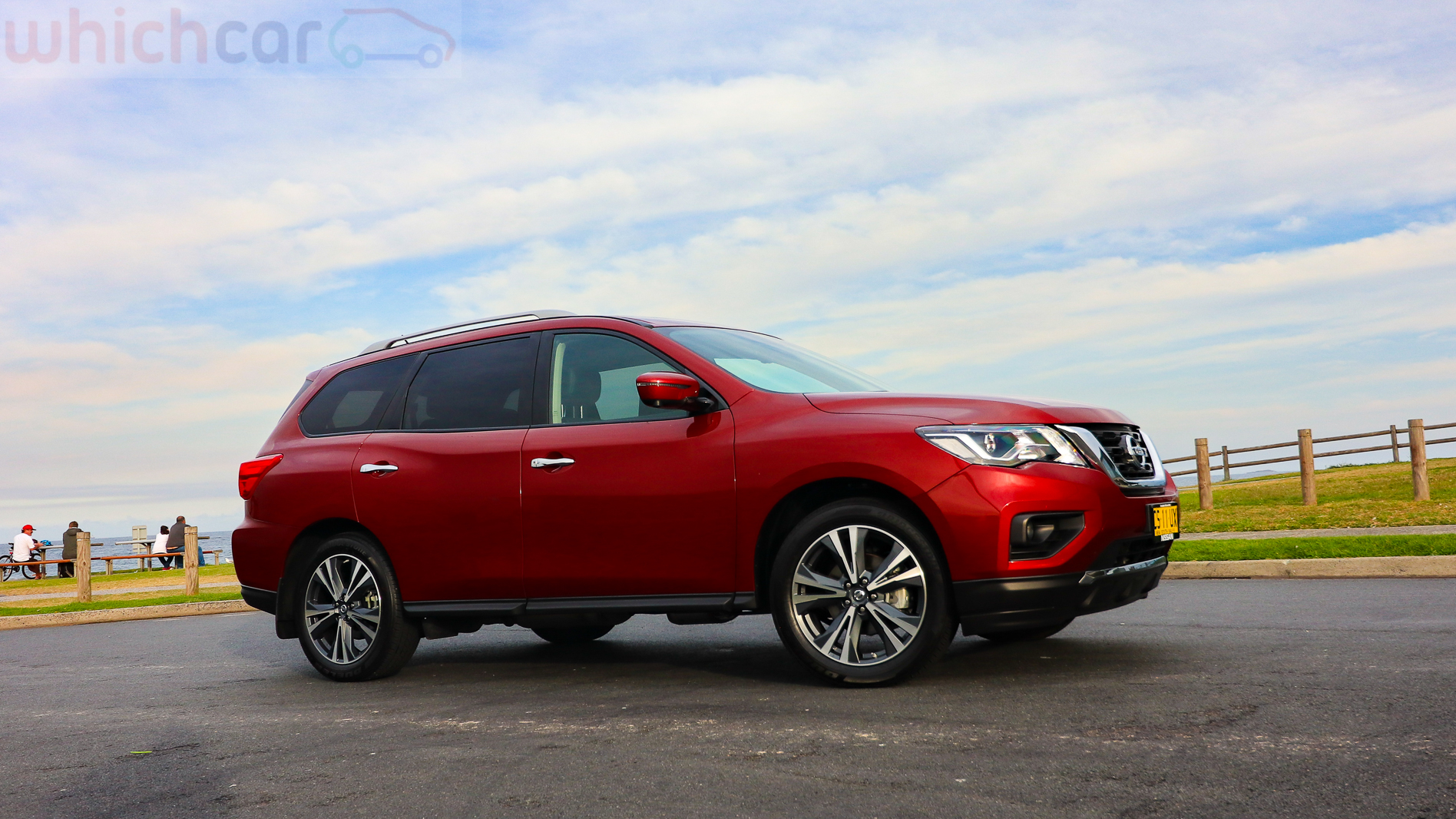
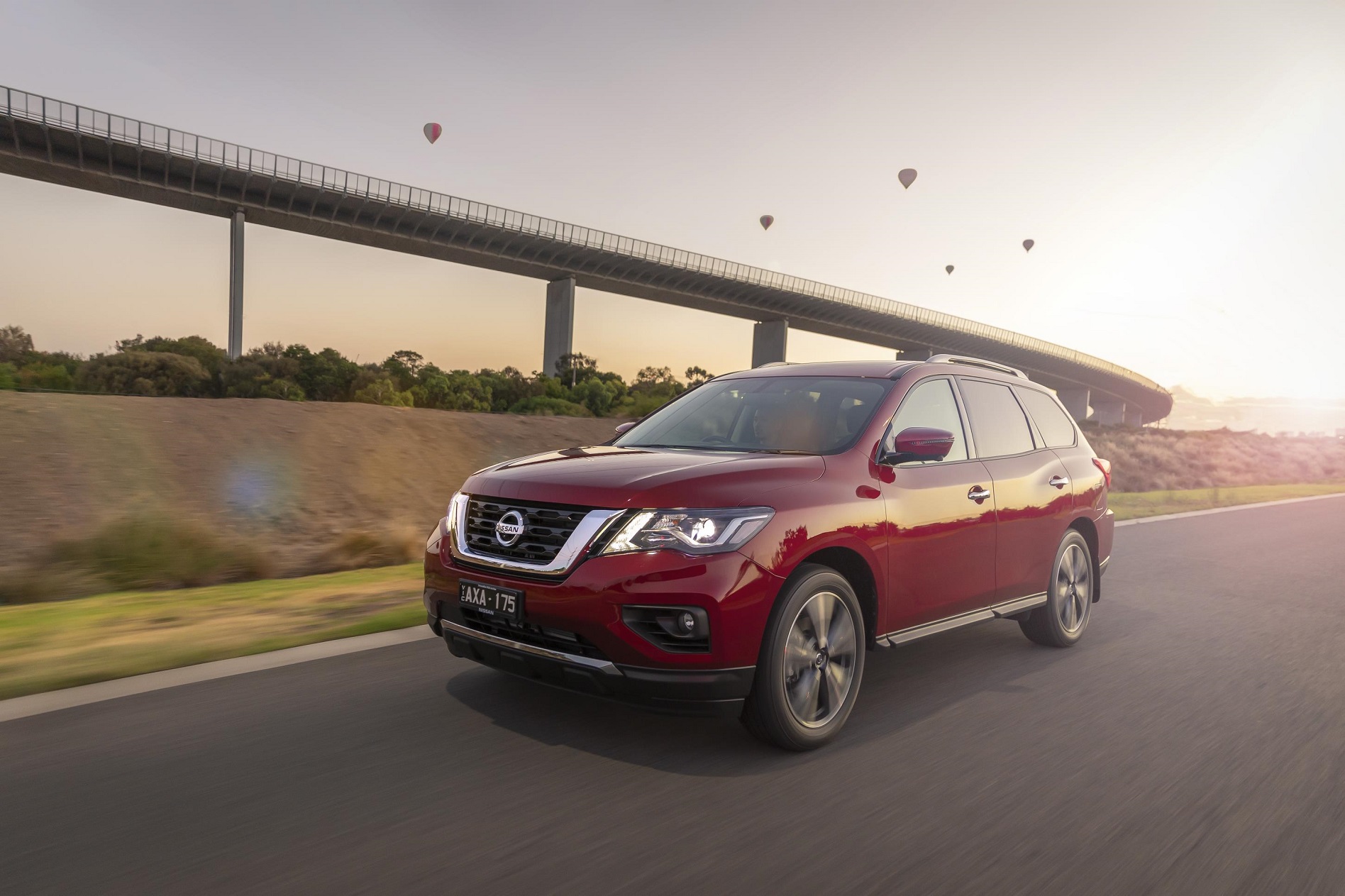
While the change between the boxy third-gen car and the curvaceous fourth-gen Pathfinder was marked, the passage of time has been reasonably kind to the car. Its biggest crime, really, is a sense of anonymity and sameness that sees it all but become invisible out in the general population.
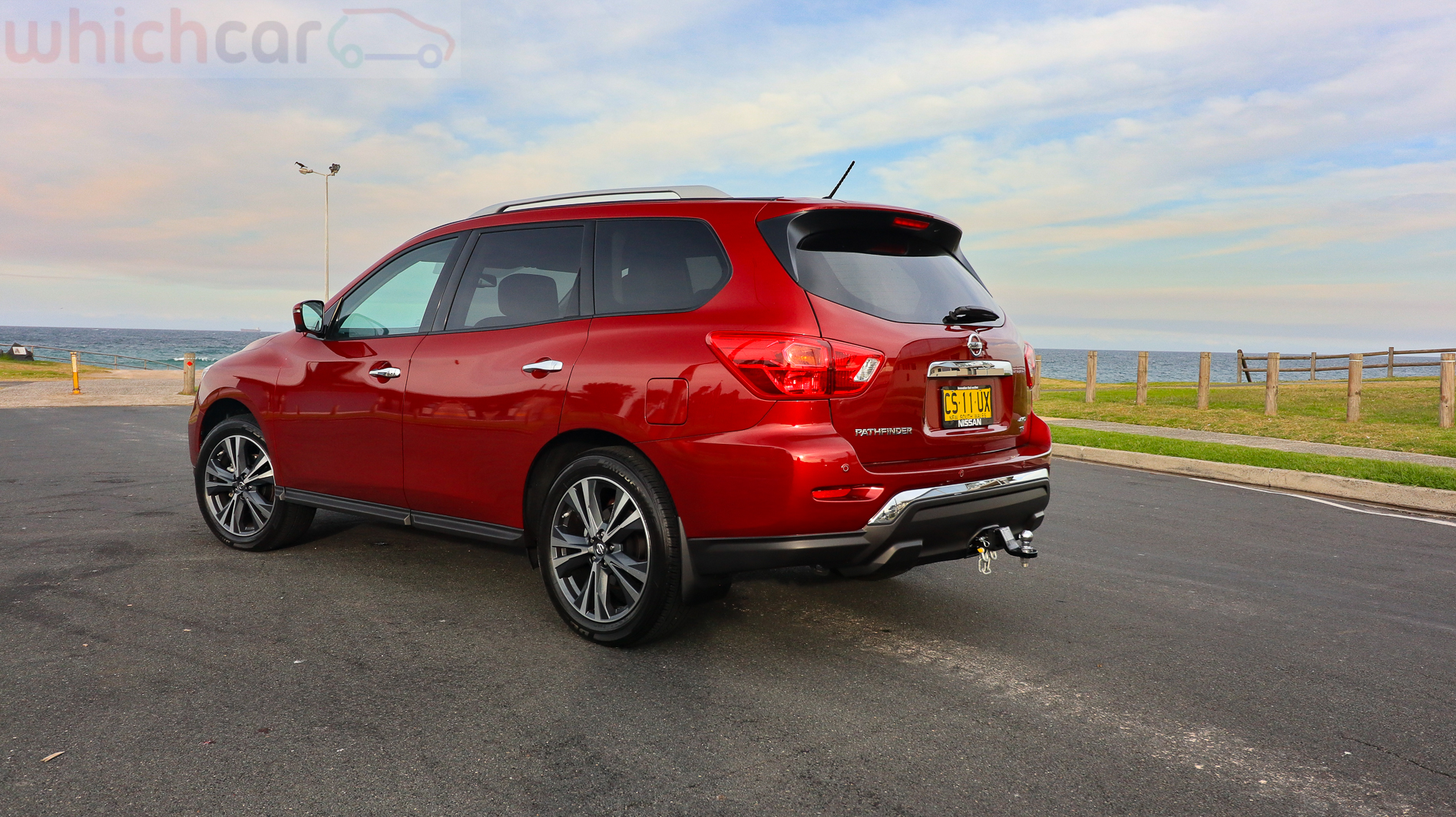
The front end errs on the right side of overstyled, but the rear’s exaggerated haunches do detract from the Pathfinder’s profile.
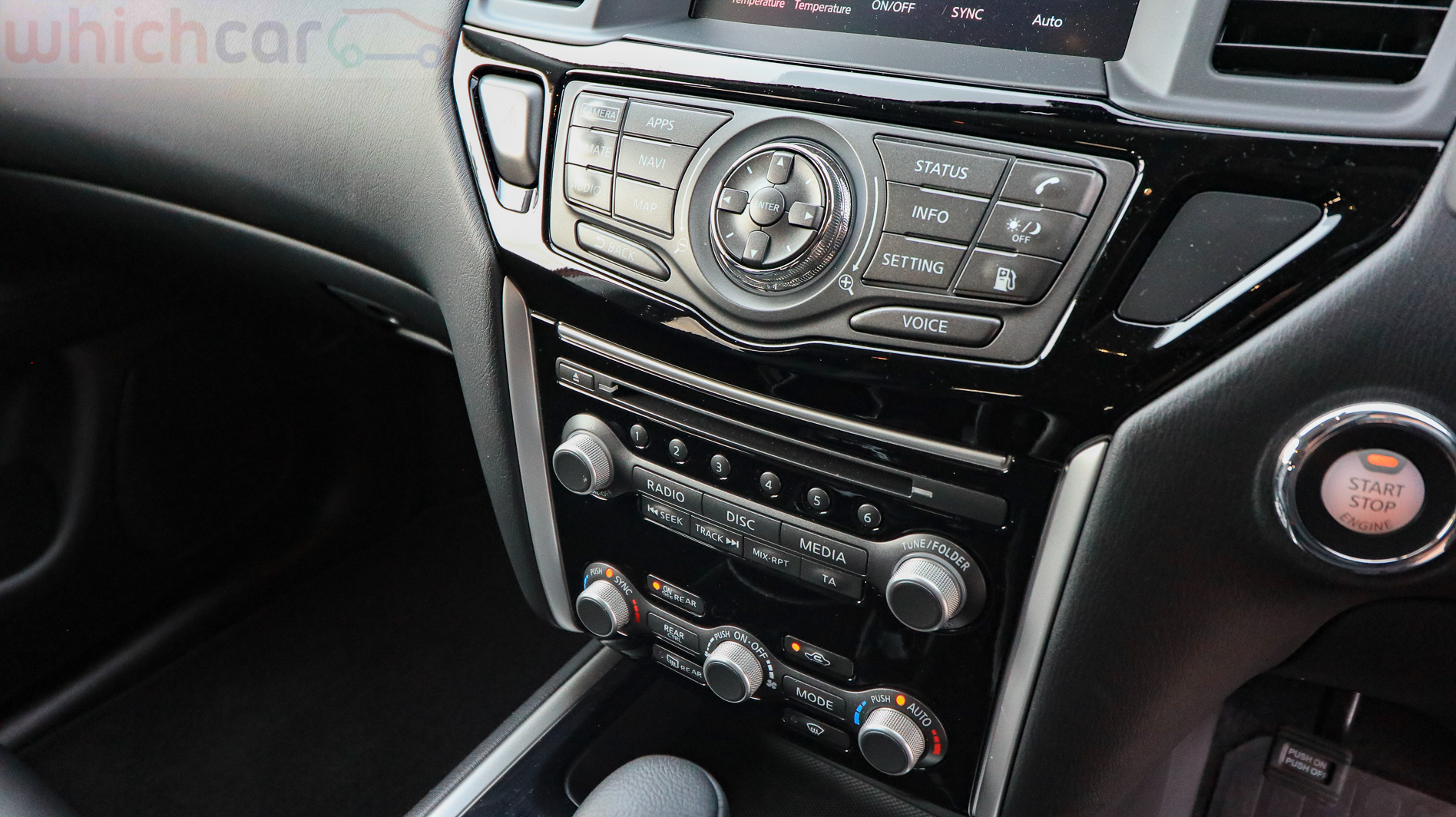
The interior design, meanwhile, is starting to show its age, with swathes of plain soft-touch vinyl interspersed with a scattergun approach to buttons and controls. Between the centre console and the steering wheel, there are more than 40 individual switches!
Specs and value
We’re testing the Ti 3.5L V6 4WD, which costs $66,390 plus on-roads. The same powertrain can be had in the base ST for $46,890, by way of comparison. The range has seen a slight price bump for 2019, but only by a few hundred dollars here and there.
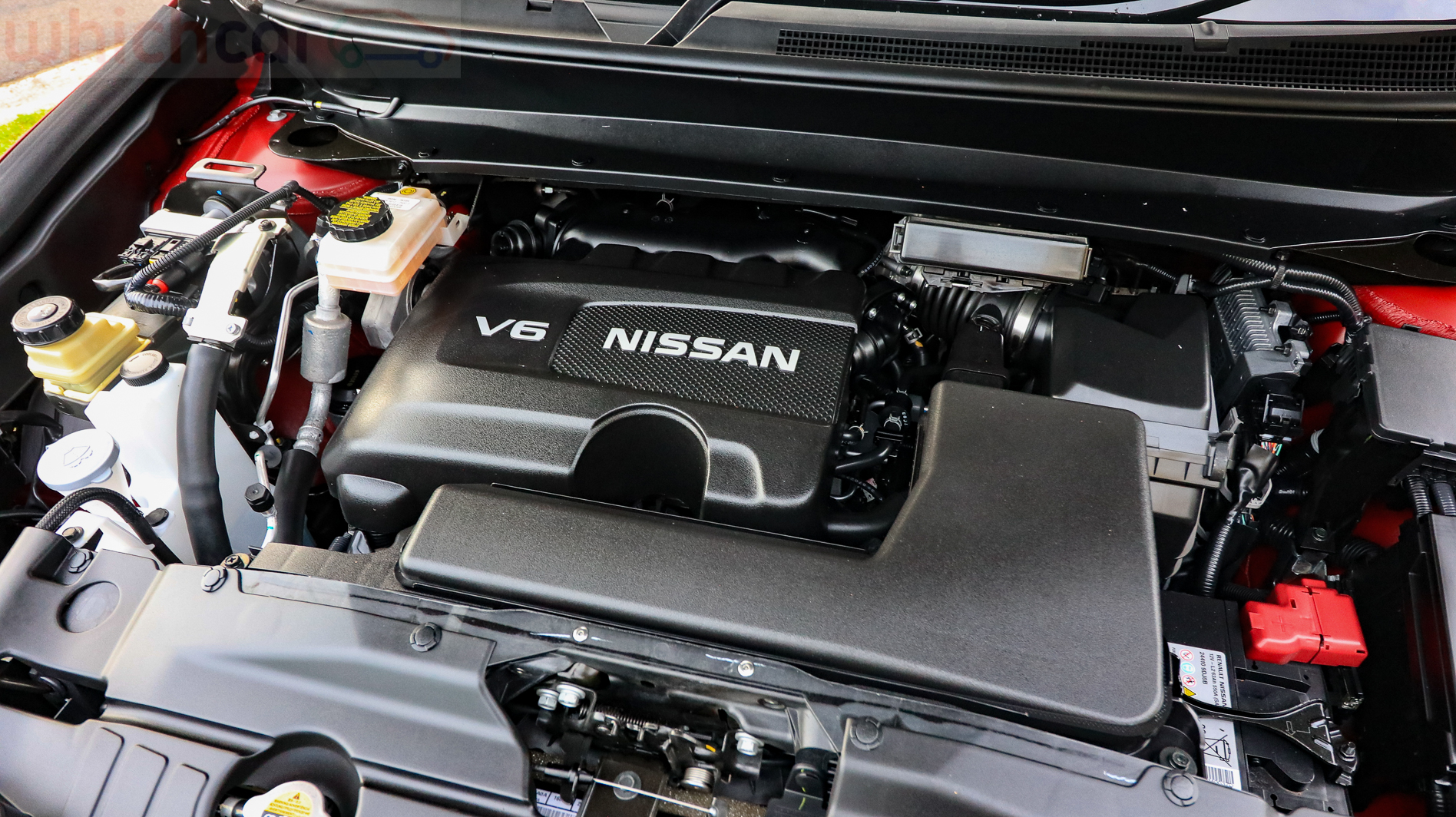
That powertrain is the 202kW/340Nm 3.5-litre V6 petrol engine as seen in cars like the 370Z. It’s teamed with a front-biased AWD system run through a CVT gearbox, and it offers full-time AWD, a front-wheel-drive option and a 50/50 front/rear locking mode for speeds under 40km/h.
The top-spec Ti comes with plenty of gear, including seven leather-accented seats, twin sunroofs, LED headlights and daytime running lamps, automatic lights and wipers, keyless entry with remote start, a powered steering column, heated front and rear seats, multiple USB and 12v charge points, powered hands-free tailgate and tri-zone Bose stereo with screens in the headrests and wireless headphones.
The multimedia screen is eight inches across and offers sat-nav, but there is no Apple CarPlay or Android Auto. There is, however, a single-slot CD/DVD player which may please some.
Outside, 20-inch rims are stock, along with folding rear-view mirrors, roof rails and fog lights.
Our tester had just a couple of options fitted, including a $1460 towing kit (it’ll lug 2700kg of braked trailer) and $550 worth of red paint, for a total of $68,445.
The Pathfinder butts up against stiff petrol-powered competition in the large SUV class, like the $69,246 Toyota Kluger Grande, the $67,490 Holden Acadia LTZ-V and the Mazda CX-9 Azami LE at $68,232.
Size
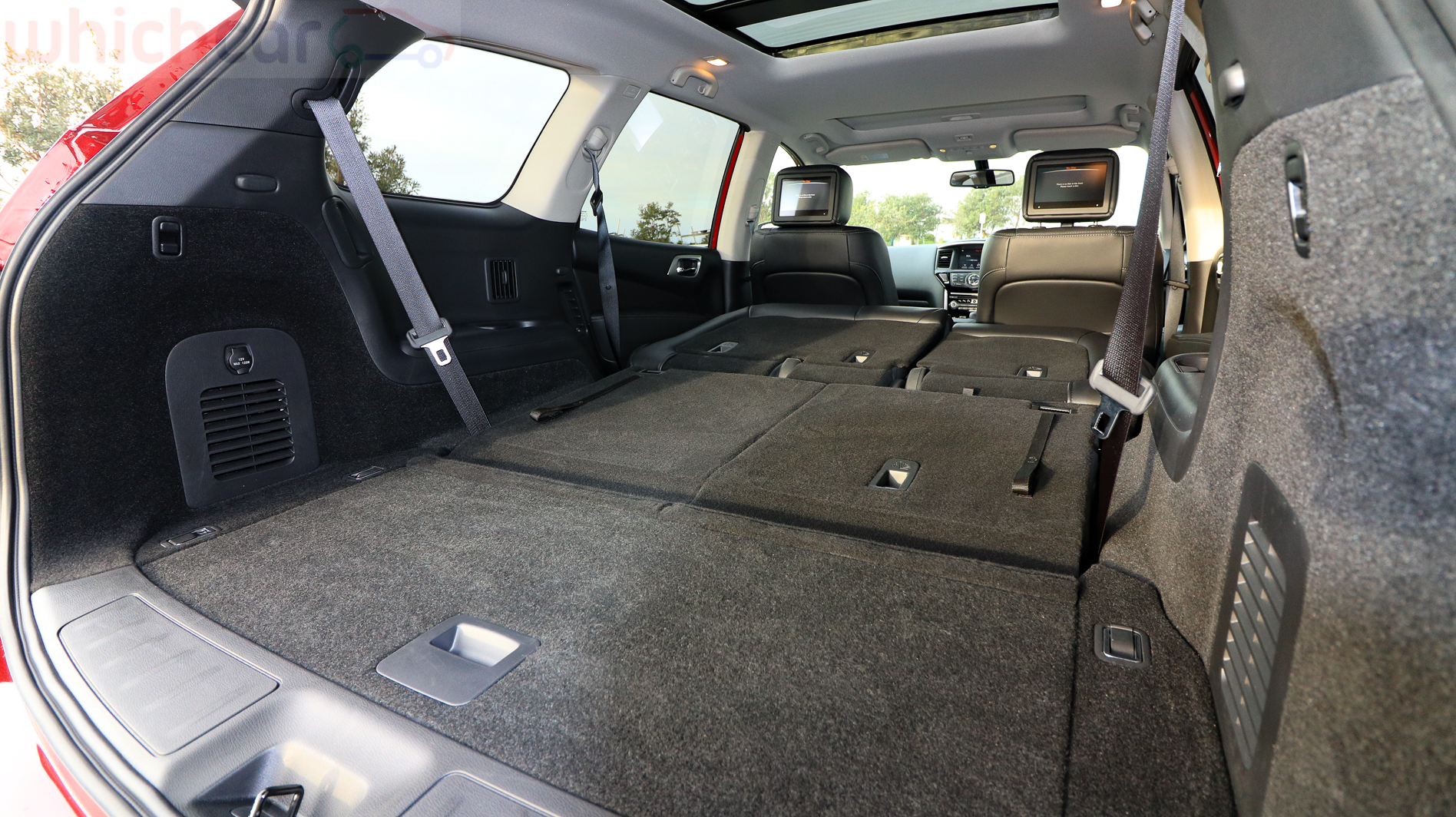
At first blush, the Pathfinder doesn’t look all that big but open the doors and the impression disappears into its cavernous interior. It sits five in luxury and seven in comfort, with clever split-function folding seats on the second row for relatively easy access.
The Pathfinder holds 453 litres of luggage with all three rows of seats up, which is damn impressive. It holds 1354 litres with the third row down, and a huge 2260 litres with the seats laid flat. Compare this to the 195/529/1872-litre figures of the Kluger, for example, and it’s easy to see the Pathy wins the space race.
Safety
Six airbags including full-length curtain bags to the third row are standard fitment on the Pathfinder, along with a 360-degree camera, rear-view camera and parking sensors front and rear.
In terms of driver aids, the Pathfinder Ti scores AEB, rear cross-traffic alert, adaptive cruise control, tyre pressure monitoring and blind-spot warning. It also features a rear-seat alert, which activates if the rear doors are opened and closed before the driver sets off.
A visual prompt urges the driver to check the rear seats if the doors are not opened, while the horn will sound three times if the driver exits the Pathfinder and locks it.
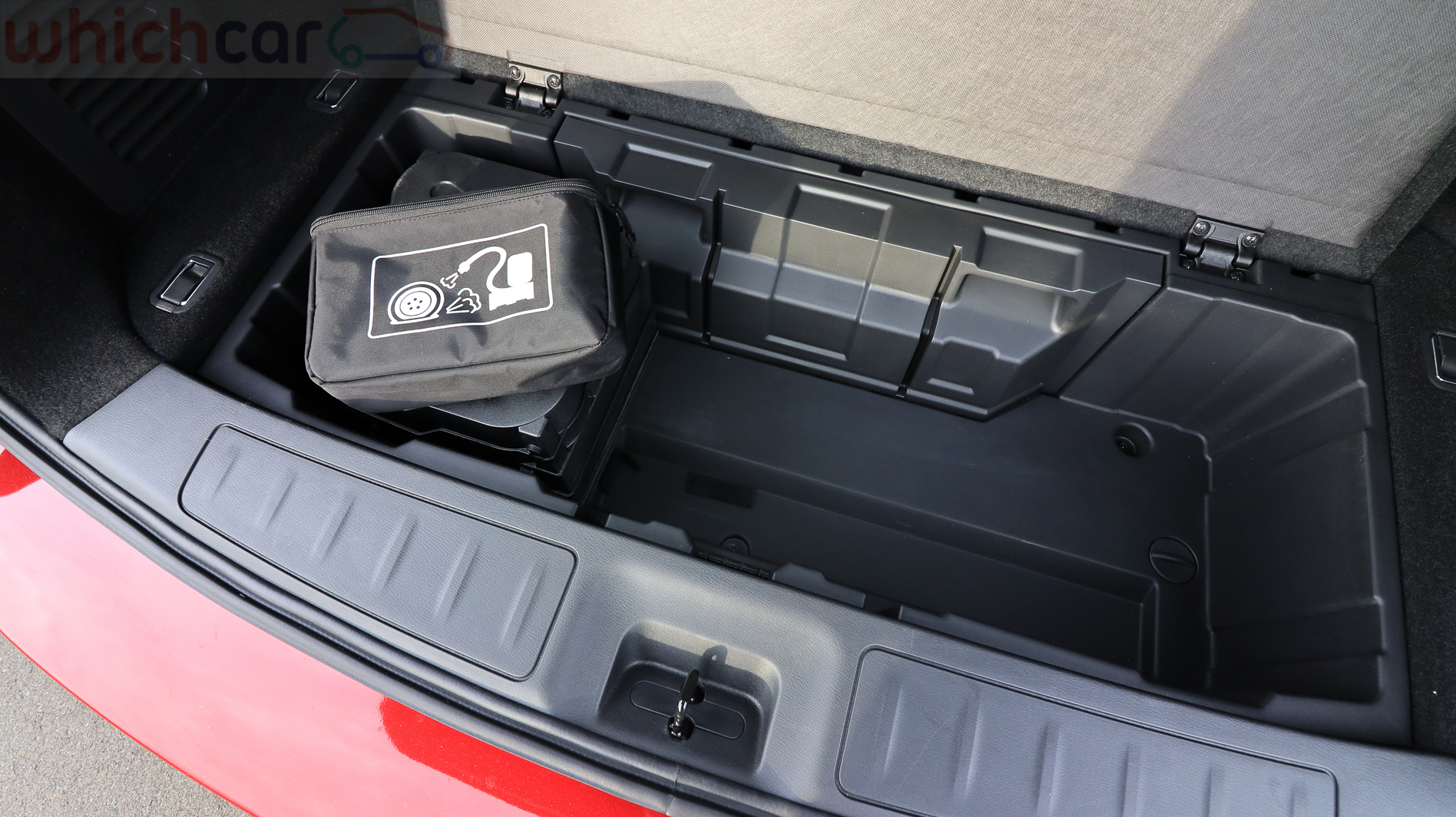
A big minus in our books, though, is a complete lack of any sort of spare wheel, with Nissan adding only an inflator kit (below left) to the boot of the Pathfinder.
ANCAP has awarded the Pathfinder the maximum rating of five stars.
Warranty and running costs
Nissan has finally joined the throng and is now offering a five-year, unlimited kilometre warranty on its cars, Pathfinder included.
Service intervals are a little shorter than the average at 10,000km or 12 months, while capped price services costs are very competitive. The first four services, for example, will cost $1333.
When it comes to fuel use, the 3.5-litre petrol engine is claimed to drink 10.1 litres per 100km on the combined fuel economy cycle. Our 320km of testing revealed a figure closer to 10.7L/100km for the 2089kg Ti. Its 73-litre tank is perfectly happy with 91 octane fuel, too.
Comfort
As mentioned, the Pathfinder is a big bus, and hence comfort levels are pretty high. The seats are broad and soft, touch points are padded and there are plenty of places to stash, stuff and charge things.
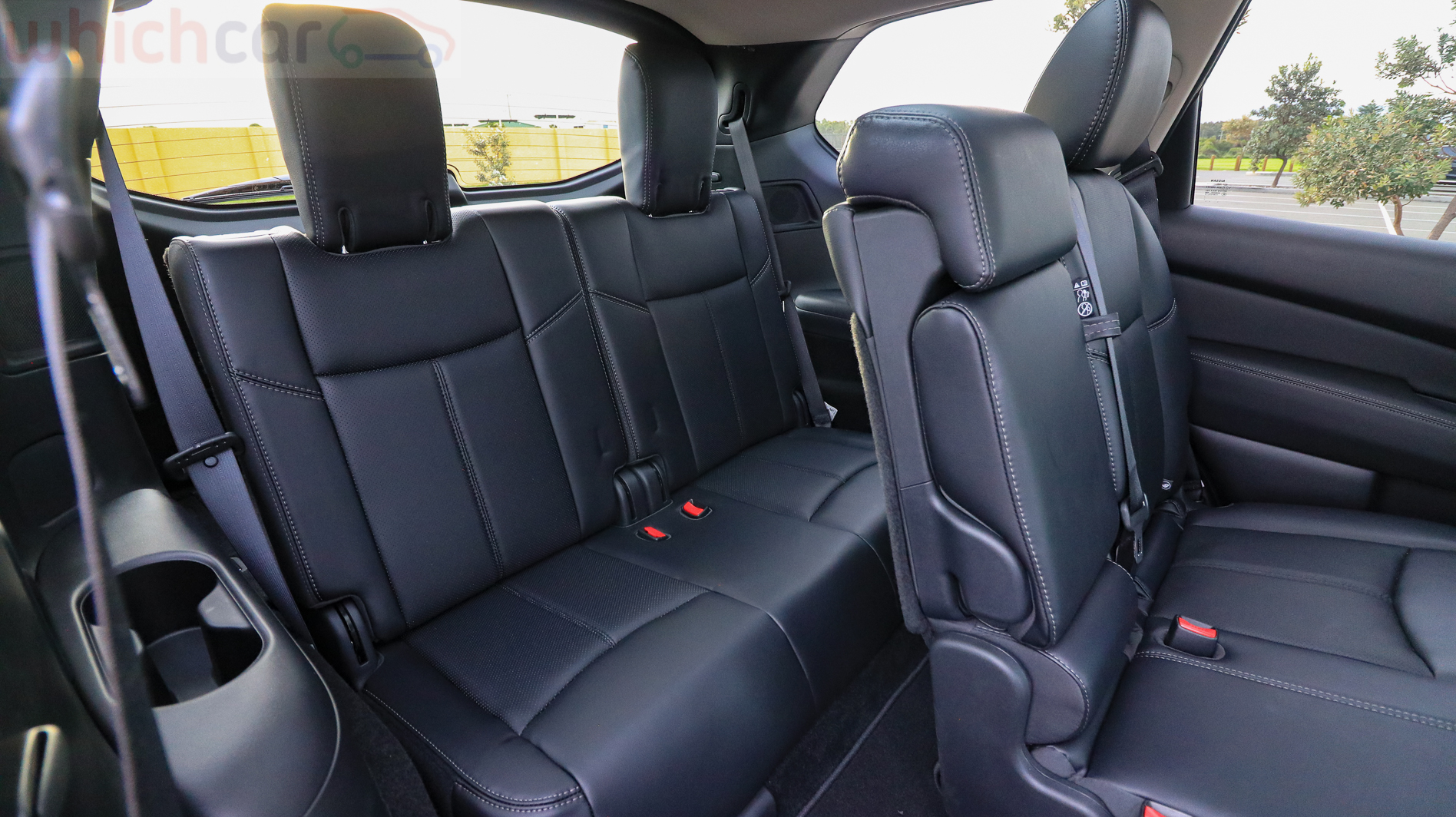
The third row seats are relatively easy to access, and the full-length bench style seating and large headrests make for a comfy, if ideally short-lived, experience. There are air vents and cupholders back there to make the journey more bearable.
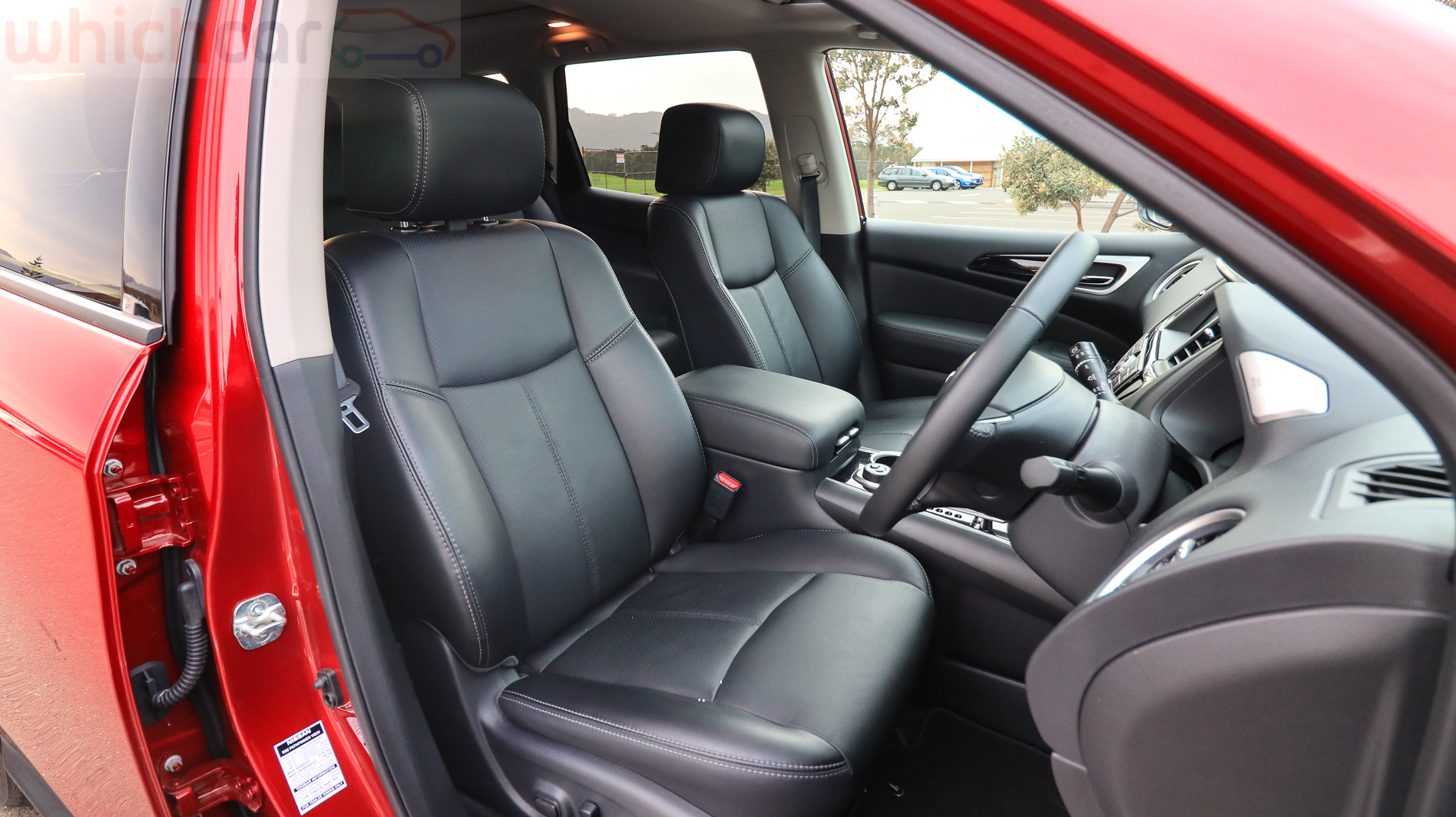
Up front, the seats verge on a little too soft in the base, but they still hold up over 100km-long stints quite well. The powered steering column and seat memory slots make short work of getting comfy behind the wheel, though the plethora of buttons is annoying and fiddly to negotiate.
Visibility throughout is more than fine, thanks to the Pathfinder’s airy glasshouse, though the big, steeply raked A-pillars can impede forward vision.
The ancient foot-operated park brake is an annoyance, as is the lack of Apple CarPlay.
It’s easy to load up the Pathfinder with all of a family’s gear, too, and the seats are easy to drop.
On the road
It’s easy to like the Pathfinder’s road manners, but it’s also easy to forget them. Nissan revised the suspension tune to make it a bit firmer for Aussie conditions, and while it’s still soft, it’s decently mannered for around-town work.
There’s an inherent suppleness to the first part of the MacPherson strut front/multilink rear suspension’s travel, but it resists body roll and pitch/dive admirably well at regular road speeds.
Steering effort is minimal, thanks to the electrically assisted set-up, and the brake feel is actually terrific, with lovely modulation and plenty of bite underfoot.
The V6 engine is smooth, eager and vice-free, while the CVT gearbox does a very good job of disguising its origins. We didn’t sample the 50/50 locking mode this time around, but the stock Bridgestone Dueler tyres and 20-inch rims mean that while you’ll get down to that gravel road to a secluded beach spot, clambering up to a remote lookout is a bit beyond the Pathfinder’s brief.
Country driving is made easier by the addition of the easy-to-use adaptive cruise control system, and the Pathfinder is impressively free of outside noise intrusion into the cabin.
Verdict
It’s getting on a bit, but the Pathfinder is an honest and simple rig that’s well suited to a larger family. Its nondescript design and dated interior treatment won’t suit everyone, and I think that the more affordable end of the Pathfinder model range provides better value than the premium-priced Ti.
Nissan Pathfinder Ti AWD
Engine: 3498cc V6, dohc, 24v Max power: 202kW @ 6400rpm Max torque: 340Nm @ 4800rpm Transmission: CVT automatic Weight: 2068kg 0-100km/h: 8.0sec (estimated) Economy: 10.1L/100km Price: $66,390 (4WD)
Google has unveiled a complete overhaul of its Android Auto in-car infotainment system, showing off a new ‘dark mode’ default colour scheme as well as a redesigned app launcher.
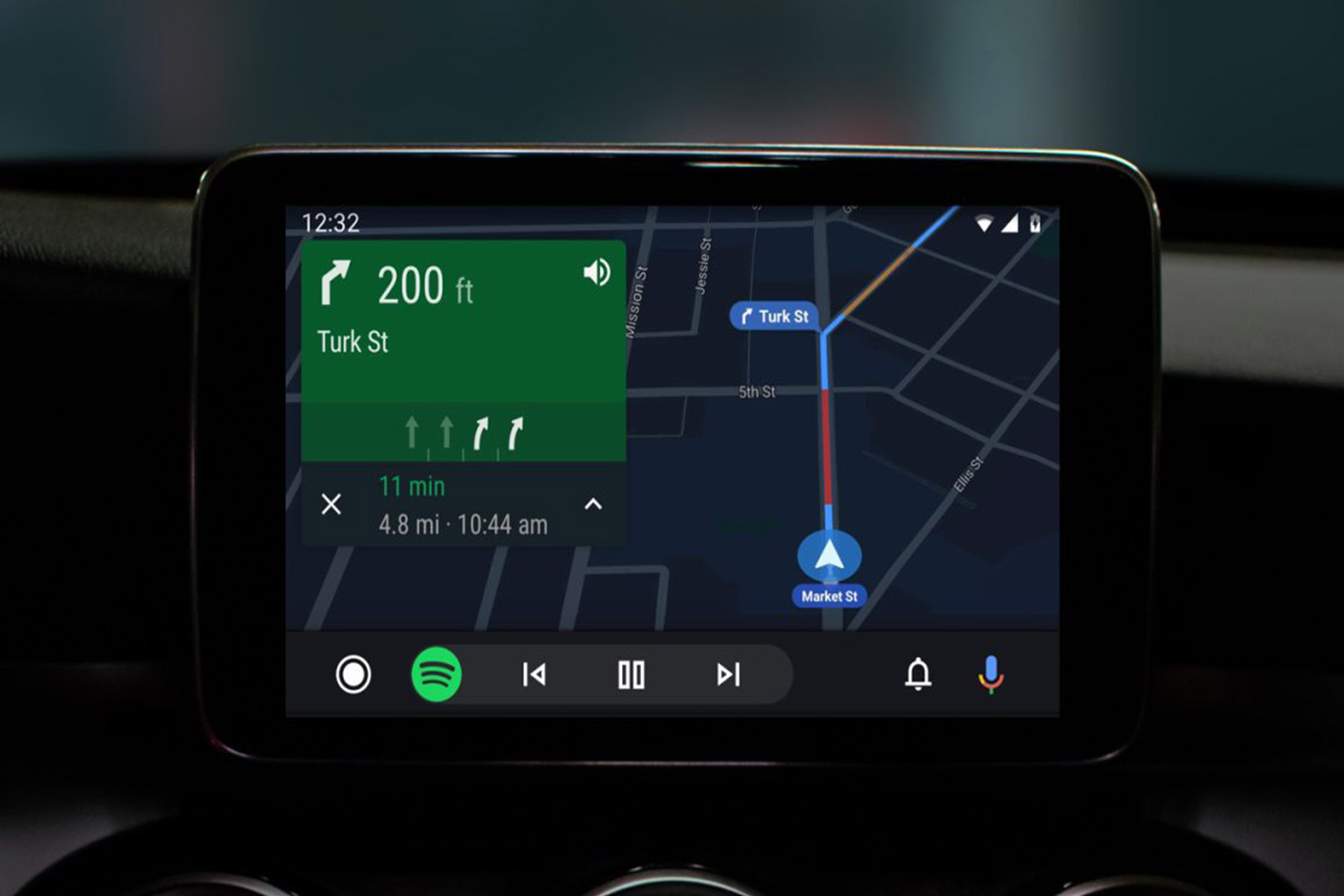
Coming to cars this winter, the refresh aims to make navigation between applications and menus a smoother experience by including a new ‘navigation bar’ at the bottom of the screen. The bar at the bottom will display different information to the main screen you’re currently on, which should mean switching from app to app will become more intuitive and less convoluted.
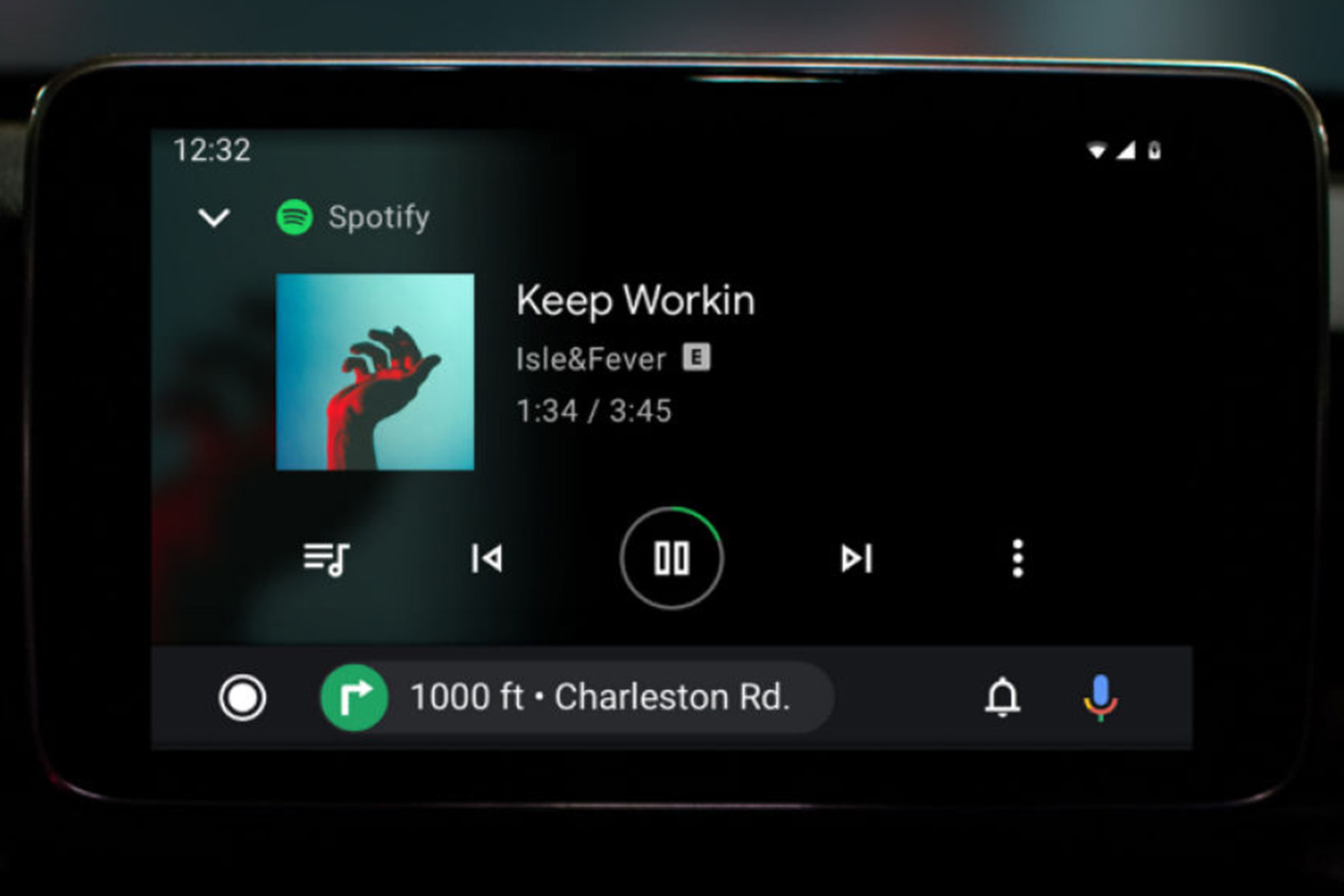
For example, if you’re using a sat-nav app but you want to change songs, you’ll be able to skip tracks using the bottom navigation bar without leaving the map screen. Conversely, if you’re showing music media information on the main screen you can have turn-by-turn navigation instructions show up on the bottom bar so you don’t have to constantly flick between screens.
“[The point is to] help you get on the road faster, show more useful information at a glance and simplify common tasks while driving,” said Android Auto product engineer Rod Lopez.
In all, it’s meant to make navigating different apps and switching between them a lot easier, which means more time spent with eyes on the road.
In addition to the changes with the launcher bar at the bottom, the redesign also includes a one-tap access to Google Assistant for voice activated commands and a tidier app menu that mimics what you see on an actual Android phone.
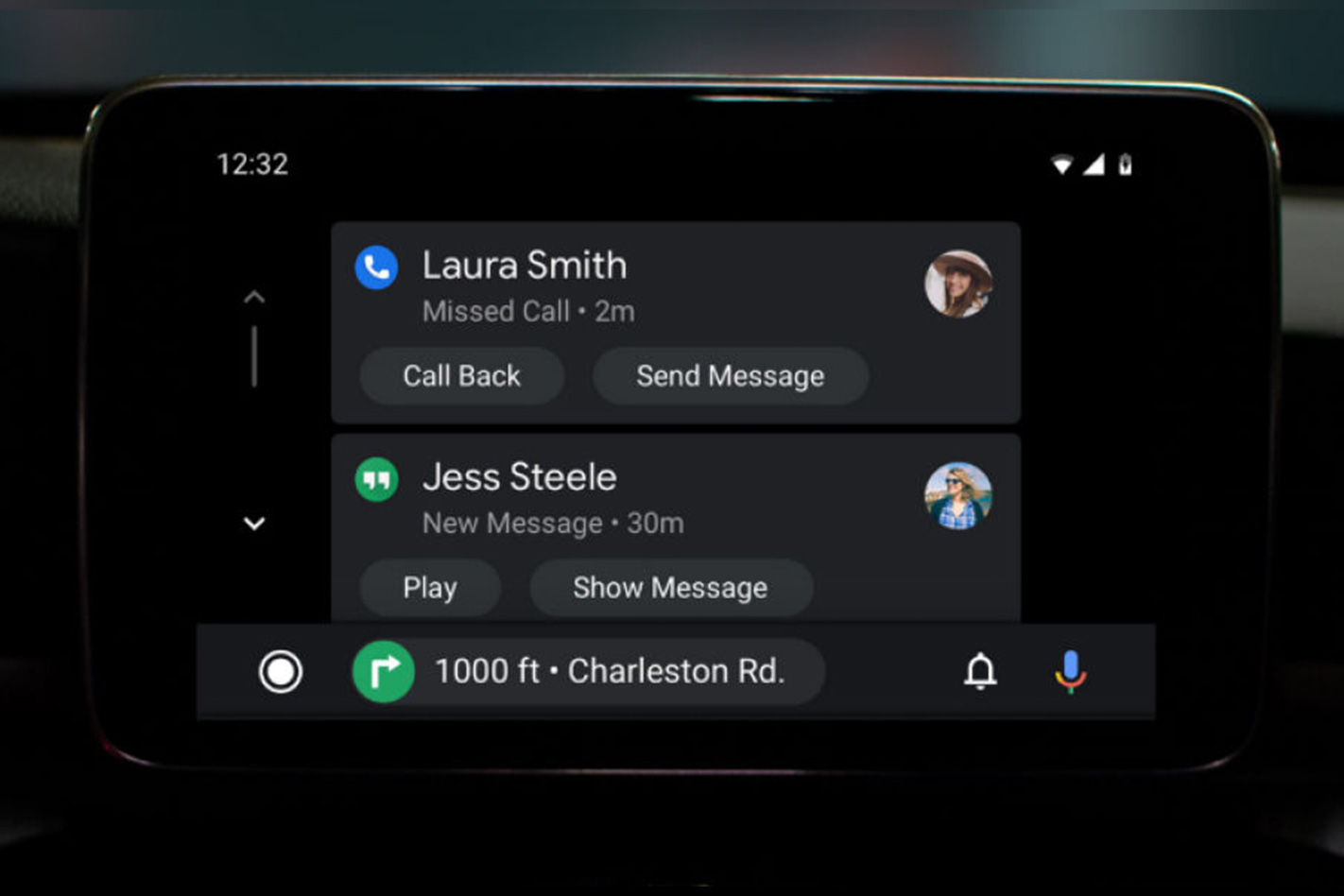
Less significant are the changes to the notification centre which will allow you to see recent calls, message playback and view alerts.
Google’s on an in-car technology roll at the moment after announcing it’ll open up its Android Auto systems to app developers as well as supplying manufacturers like Volvo, Fiat Chrysler and Audi with a native Google operating system (which will be wholly different to Android Auto) in their cars.
We can’t wait to give the well-needed redesign a test run within the next couple months to see if Google’s claim of increased user-friendliness checks out.
Eyeball-grabbing headlines won’t be in short supply when Mercedes-AMG unleashes its CLA45 junior super sedan in Europe later this year, but here’s one we’ll get in early: “Powered by the highest specific-power production engine on the planet.”
That’s right: in terms of power per litre of displacement, the CLA45 (and forthcoming, same-engined A45 hyper hatch) will produce around 310kW from a highly boosted 2.0-litre turbo four, making them the undisputed world leaders with 155kW/litre, and nudging aside the current specific-output champion, the 149kW-per-litre McLaren Senna.
We don’t know exactly how Mercedes-AMG has reengineered the A35’s 225kW/400Nm engine to achieve the mega outputs, but boss of the division, Tobias Moers, is on record as stating there are limited shared components, and the 45 engine features its own specific crankcase and cylinder head.
The next-gen CLA45 is set to adopt a new eight-speed dual-clutch transmission (replacing the seven-speed used in the A35) together with a faster-reacting all-wheel-drive system that offers greater variability in the drive split between the front and rear wheels, plus a torque vectoring function across the rears for added on-the-limit handling balance.
Moers has said the all-wheel-drive system that will underpin the CLA45 “doesn’t know what understeer means”, and Mercedes-AMG has already made it abundantly clear that the CLA45’s mechanical sibling, the forthcoming A45 hatch, has a drift mode. This was put into starkly sideways relief in an official AMG video released late last year titled “Not Another Christmas video” showing an A45 prototype laying huge drifts around a test track in northern Germany.
In terms of external changes that will instantly identify the CLA45 over the CLA45, well, we have a pretty clear idea of that thanks to what appears to be an internal balls-up on Mercedes’ own website. On the German configurator for the recently revealed CLA35, there’s an option for the AMG Night package, showing a yellow CLA35. But when you click to get more information on the package, there’s a second photo provided that shows the (officially unrevealed) CLA45 S. The gunmetal grey car is clearly badged as a CLA45, and the rear view shows four large exhaust outlets (the CLA35 has only two) nestled in an aggressive rear diffuser. There are also larger red front brake calipers visible, clamping what appear to be larger diameter brake discs.
Expect the CLA45’s official reveal to come in the third quarter of this year, with Australian sales not due until well into 2020.
Tesla’s Model S sedan and Model X SUV have both copped significant price changes for 2019, along with a new naming convention.
Badges have been changed from 75D, 100D, and P100D, to Standard Range, Long Range, and Performance, reflecting the convention being used for the Model 3.
Entry pricing for the most affordable ‘Standard Range’ models have been increased by $750 for the Model S and $600 for Model X.
The largest changes are reserved for the Model X though, with the Long Range and Performance variants dropping in price by $7900 and $59,400 respectively (see table below for full pricing). Meanwhile, Model S buyers save $11,300 and $58,500 on the equivalent models.
Along with the price changes, Tesla has tweaked its battery systems, providing increased claim range, and quicker 0-100km/h times.
On the NEDC cycle, Tesla claims the Standard Range will now traverse 490km on a single charge, while the Long Range can travel 660km. The 0-100km/h times for these variants has been shaved to 4.2 sec and 3.8 sec respectively.
Model S Performance buyers can expect 650km of range according to Tesla, with a 3.2 sec 0-100km/h sprint. However, for $9300 Ludicrous mode can be fitted, which doesn’t affect range, but decreases acceleration to triple digits down to just 2.6 sec.
With more weight, the Model X has a claimed NEDC range of 425km in Standard Range trim, with Long Range and Performance variants expected to travel 575km and 550km. The electric SUV’s 0-100km/h times have dropped to 4.8 sec, 4.6 sec, and 3.6 sec, while Ludicrous mode is a $8500 option, resulting in a claimed sprint of 2.9 sec.
A Tesla spokesperson confirmed to Wheels that there are no spec changes for the models beyond the Autopilot driver-assistance feature now being standard.
The addition of Autopilot as a standard feature makes way for what Tesla is referring to as ‘Full Self Driving’ to become an optional extra.
Model | Old Price | New Price | Difference | Claimed range (NEDC) | 0-100 |
Model S Standard Range | $112,050 | $112,800 | +$750 | 490km | 4.2sec |
Model S Long Range | $139,500 | $128,200 | -$11,300 | 660km | 3.8sec |
Model S Performance | $196,200 | $137,700 (+$9300 for Ludicrous) | -$58,500 | 650km | 3.2sec (2.6sec with Ludicrous) |
Model X Standard Range | $119,000 | $119,600 | +$600 | 425km | 4.8sec |
Model X Long Range | $142,900 | $135,000 | -$7900 | 575km | 4.6sec |
Model X Performance | $203,600 | $144,200 (+$8500 for Ludicrous) | -$59,400 | 550km | 3.6sec (2.9sec with Ludicrous) |
He may live in a sumptuous house in the NSW Southern Highlands and enjoy the trappings of a successful rock career, but veteran rocker Jimmy Barnes has never forgotten his blue-collar roots.
Born in Glasgow, the 63-year-old Barnes – the frontman of iconic 1970s blues rock band Cold Chisel – emigrated from Scotland with his family to Elizabeth in South Australia, the same suburb where – until October 2017 – Holden’s last production line stood as a shaky vanguard for car manufacturing in Australia.
“We grew up in a tight-knit Scottish community; all immigrants,” Barnes told radio station Hope1032. “Elizabeth in South Australia was built around the Holden factory, a flat, desolate horrible piece of land… and they decided to bring all the immigrants and stick them there so they’d have someone to work at Holden, basically.”
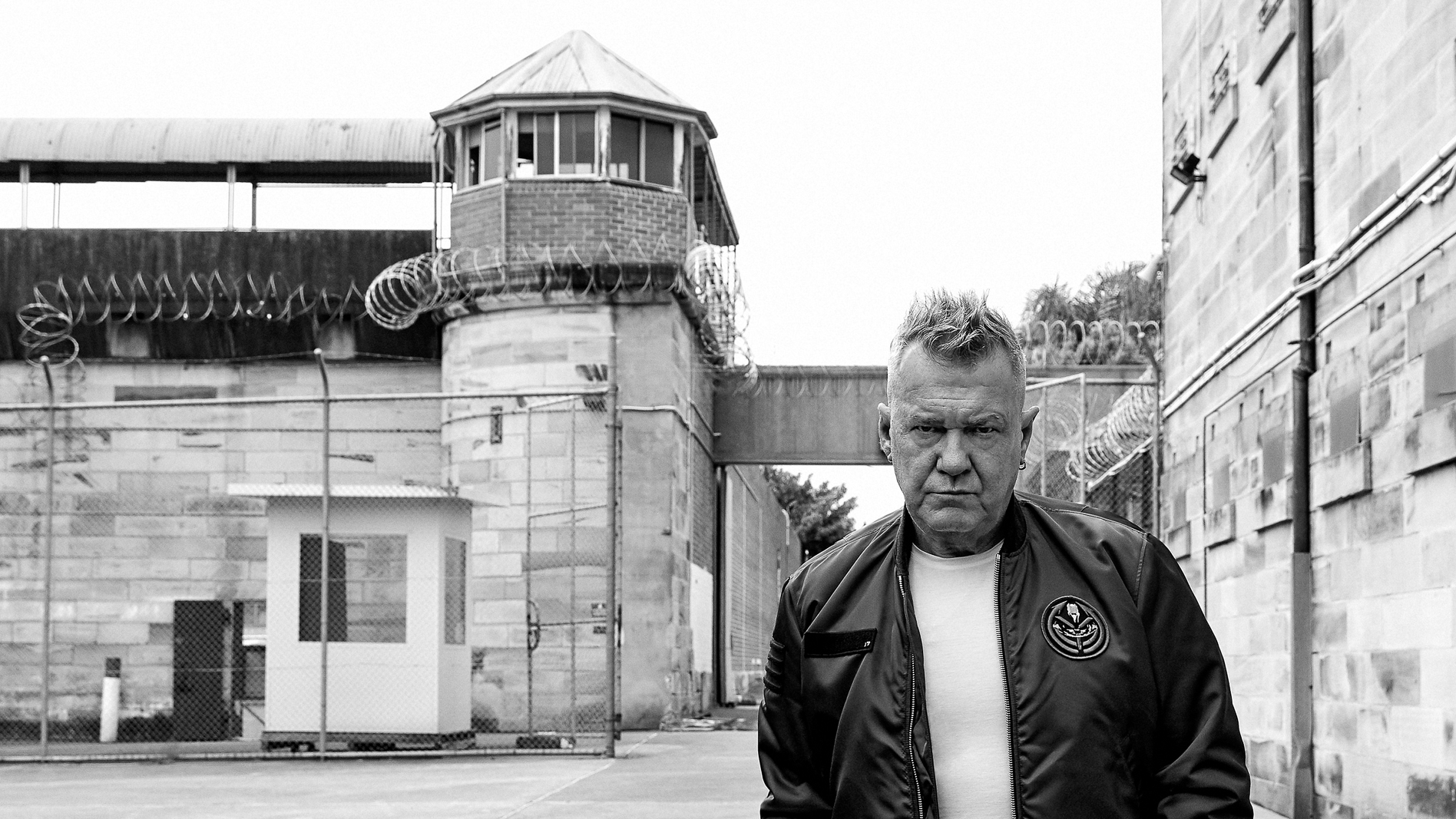
Barnes has long identified with the Holden brand, once claiming that even with all the money in the world, he’d just buy another Commodore. His latest single, ‘Shutting Down Our Town’, documents the closure of the Adelaide plant, while the accompanying not only documents the last day of operations at the plant, but it provides a fascinating look back at the company through the decades.
But why now? Why, as some observers have pointed out, go back to the corpse to pick at the bones? The answer, it seems, is in the timing.
It’s patently unfair, for a start, to ever accuse Barnes of exploiting a sordid moment of Australian working class history; after all, he’s responsible for ‘Working Class Man’, a genuine blue-collar anthem set amongst the backdrop of Wollongong’s steelworks in the mid-1980s.
Few would know, too, that Barnes played at the private party thrown by Holden on the afternoon of that fateful October day that would prove to be the catalyst for the end of large-scale vehicle manufacturing in this country.
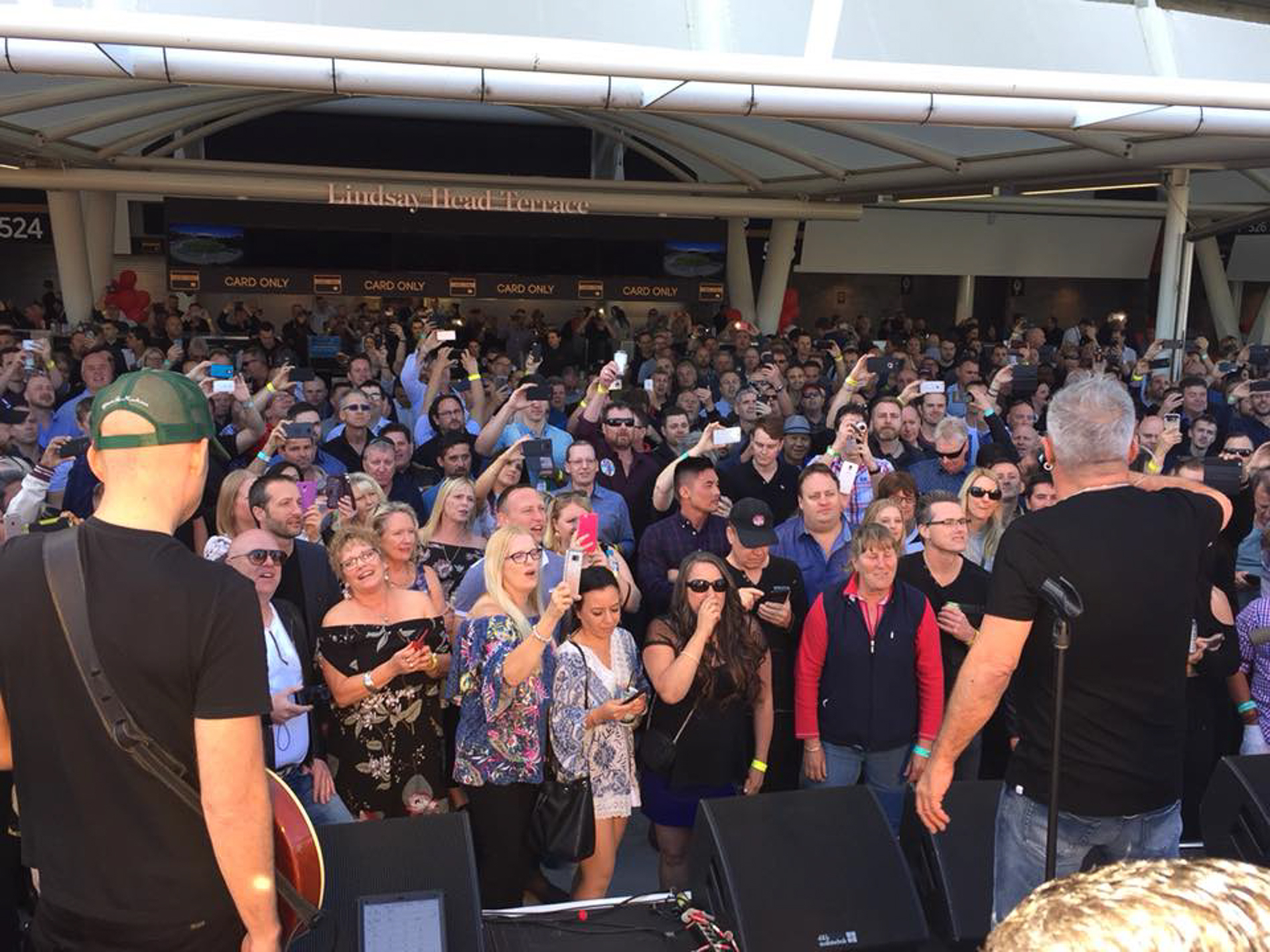
Barnsey plays for the Holden troops (credit: Jimmy Barnes)
The song, which has been released ahead of the May 31 release of Barnes’s nineteenth studio album My Criminal Record, was written for Barnes by his friend and renowned country music legend Troy Cassar-Daley, who penned the track after reading the first half of Barnes’s poignant and best-selling biography, Working Class Boy – itself set in the grimy streets of the industrialised North Adelaide suburb.
“This song has a lot of personal meaning,” said Barnes. “It’s about growing up in Elizabeth and the closing down of the Holden factory where I once worked as a young working-class boy in North Adelaide.
“I changed a couple of words just because of local knowledge, but it was 99.999 percent Troy’s song, and he played it to me and I immediately felt the connection. I drove through Elizabeth not long after I heard the song, and I felt a pain in my heart for the people there who are battling, trying to make a living when everything is stacked up against them.”
Barnes said that the key difference between ‘Working Class Man’ and ‘Shutting Down Our Town’ is the fact that the new track is written by an Australian.
“It’s sort of a heartland ‘Working Class Man’ anthem, but ‘Working Class Man’ was written by an American [Jonathan Cain],” he said. “This was written by somebody who feels the pain, and who’s writing about the darker side of Australia which I never wanted to face before. So it’s like the bookend to ‘Working Class Man’, but for me, it’s the real story.”
The tribute might be a couple of years late, but it doesn’t lessen its sincerity.
FOR A company that specialises in rugged utes, it seems a startling omission that RAM doesn’t offer a model in the mid-size category.
FCA’s chief executive, Mike Manley, would appear to agree and has stated that the company has prioritised the development of a ute to rival the Toyota Hilux and Ford Ranger.
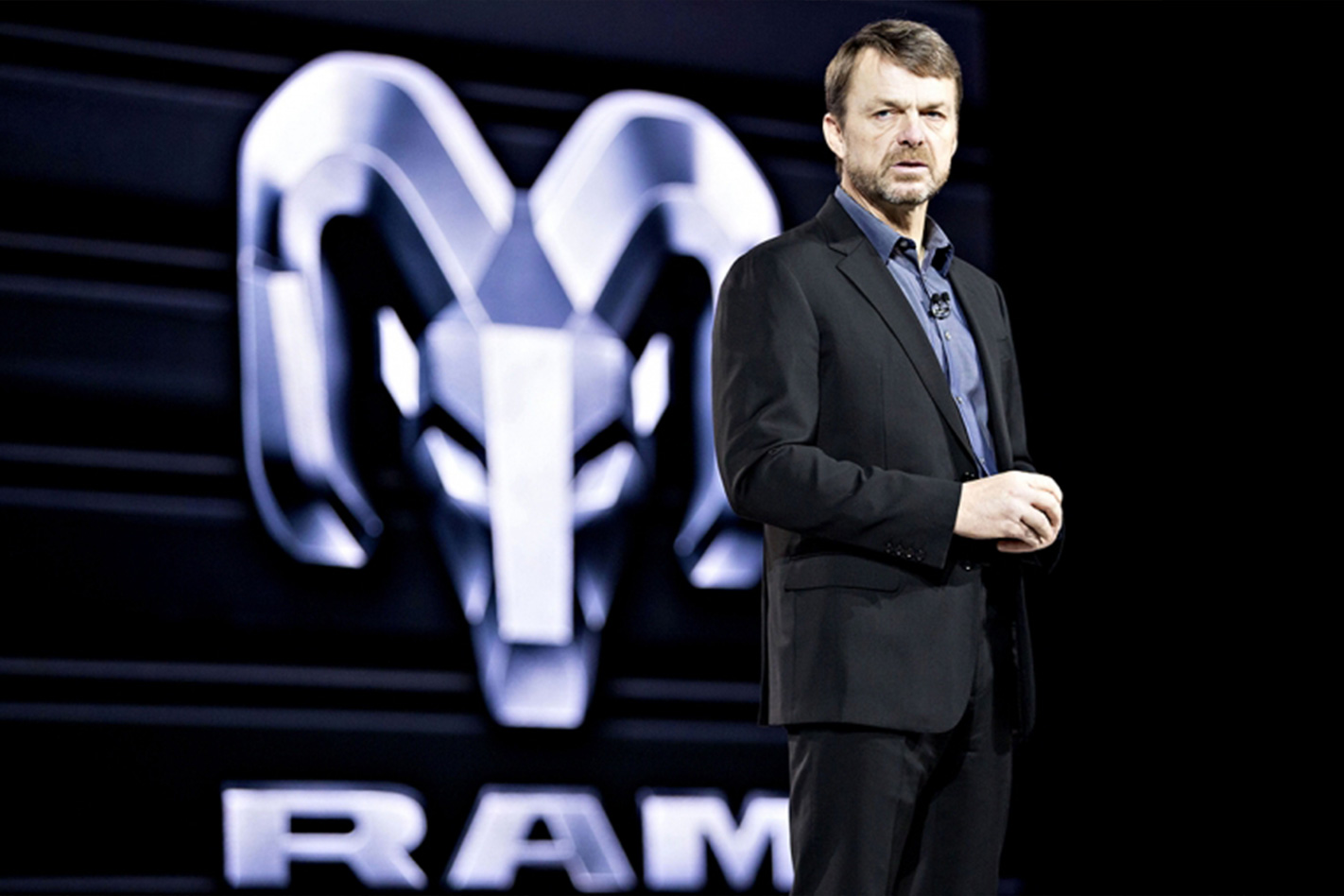
Sergio Marchionne’s appointed successor confirmed that a “metric-tonne mid-size truck solution” was a matter of urgency within the business, slotting in below the 1500, RAM’s current entry-level pickup.
That model is selling extremely well in the US at present, displacing the Chevrolet Silverado as the second most-purchased full-size pickup truck in the market, with FCA moving 120,026 Ram 1500s in April compared to 114,313 Silverado registrations.
Addressing investors at FCA’s quarterly earnings call, Manley confirmed that a new ute was being developed, and that it would be a more conventional one-tonne offering than the lifestyle-oriented Jeep Gladiator.

“I want that problem solved, frankly, because it’s a clear hole in our portfolio. It will not be filled by Gladiator because Gladiator is a very, very different mission. Trust me, they’re focused on it. We need to get it fixed soon,” Manley stated.
This echoes a sentiment from Manley at the Detroit show earlier this year.
“A gaping hole in our portfolio is a metric ton pickup,” said the FCA boss of a lower-cost vehicle aimed at work and commercial uses in markets outside the United States.
“Do you fill that individually or fill that in partnership? We are looking at what can we do individually and if we partner with someone what would that look like? The [Jeep] Gladiator is perfect for the U.S. market,” Manley said. “But because of its content it’s not perfect for Thailand.”

“Being able to find a cost-effective platform in a region where we can build it with low cost and it still being applicable in the market is what they’re struggling with at the moment,” Manley admitted.
Ram sells a one-tonne truck called the 1200 in Middle Eastern markets, launched in 2017 and based on the Mitsubishi Triton. It’s not the first time that this tie-up has borne fruit. The Dodge Ram 50 (called the Dodge D-50 in 1979 and 1980) was a badge-engineered version of the Mitsubishi Forte/L200 sold by the Chrysler Corporation from 1979 through to 1994. Likewise, the US-market Mitsubishi Raider of 2005 was a re-engineered Dodge Dakota.

The US chicken tax means that there is merit in building the vehicle alongside the Gladiator in Toledo, Ohio. Expanding the manufacturing scope to other world markets – including Australia – could be what’s keeping Manley busy.
New to Wheels Car of the Year?
Read the COTY 101.
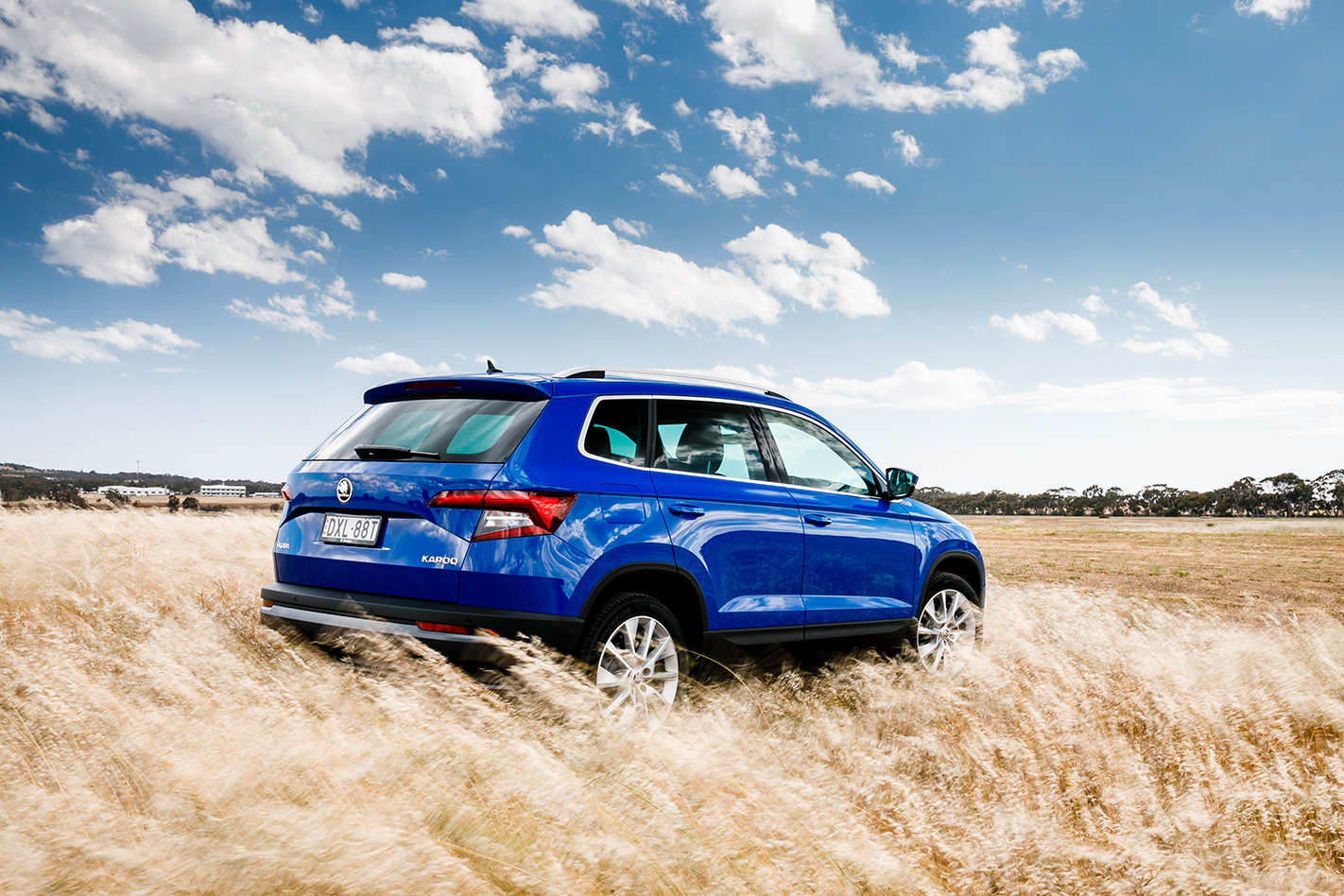
The New Karoq from the relentlessly practical Skoda came to COTY with a reputation to live up to. Last year the VW Group-owned Czech brand’s big seven-seat Kodiaq SUV was COTY’s quiet achiever. It made it to the final round of voting, where, with the Alfa Romeo Giulia, it was beaten by the capable and captivating Volvo XC60.
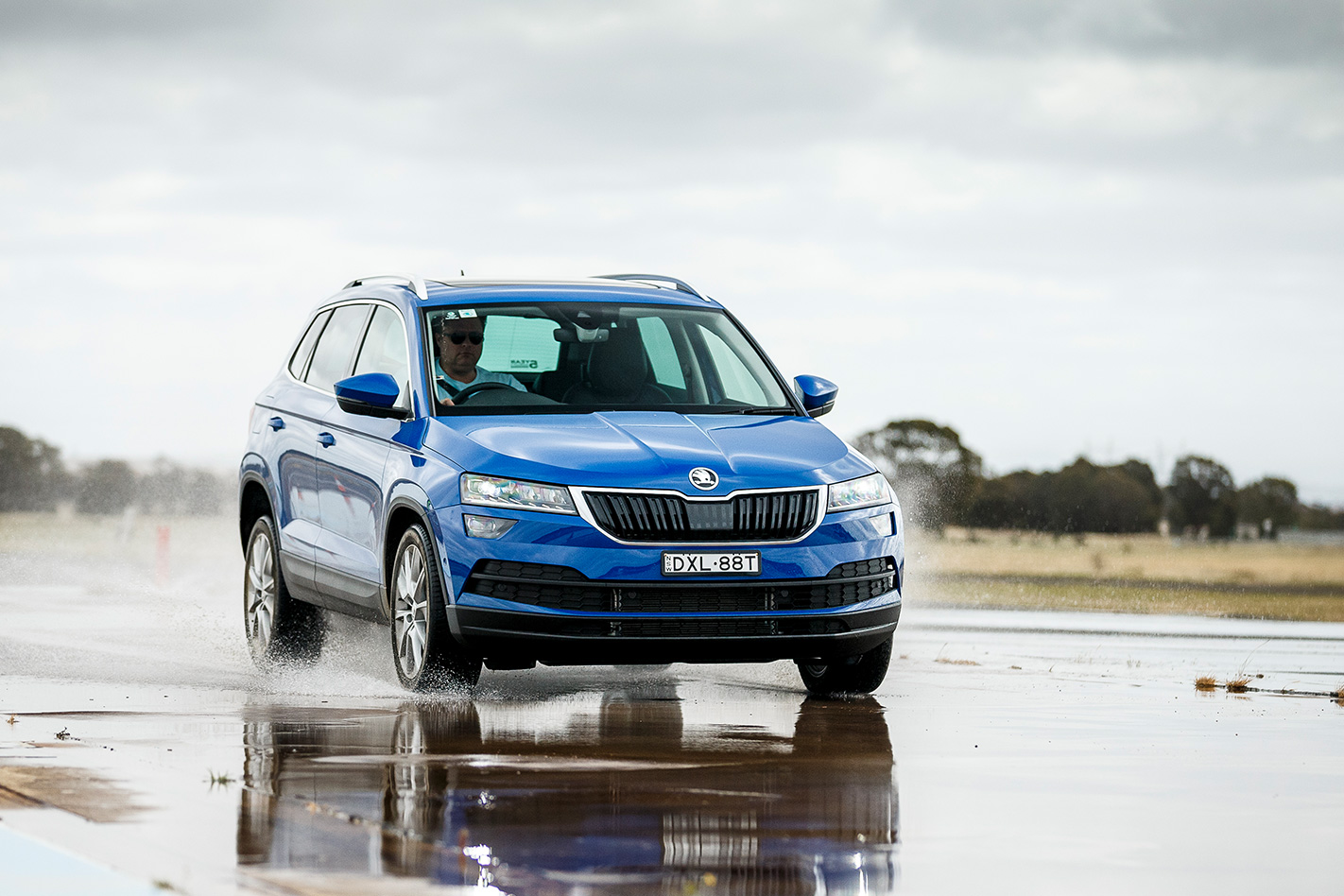
At first it seemed Skoda’s medium-size SUV might be able to repeat what its large SUV had done one year earlier. In COTY’s opening static-inspection phase, the judges found a lot to like inside the Karoq.
Interior practicality is truly outstanding. The Karoq’s rear seat features Skoda’s brilliant VarioFlex system, seen in earlier models like the Roomster, that allows each of the seat’s three sections to be slid forward and backwards. And each section can be folded, flipped, or completely removed.
Many smaller touches demonstrate the brand’s abiding commitment to usefulness. There are sliding ‘curry hooks’ on sturdy bars above and behind the rear wheel arches, a reversible cargo compartment floor cover, and the boot light doubles as a removeable torch.
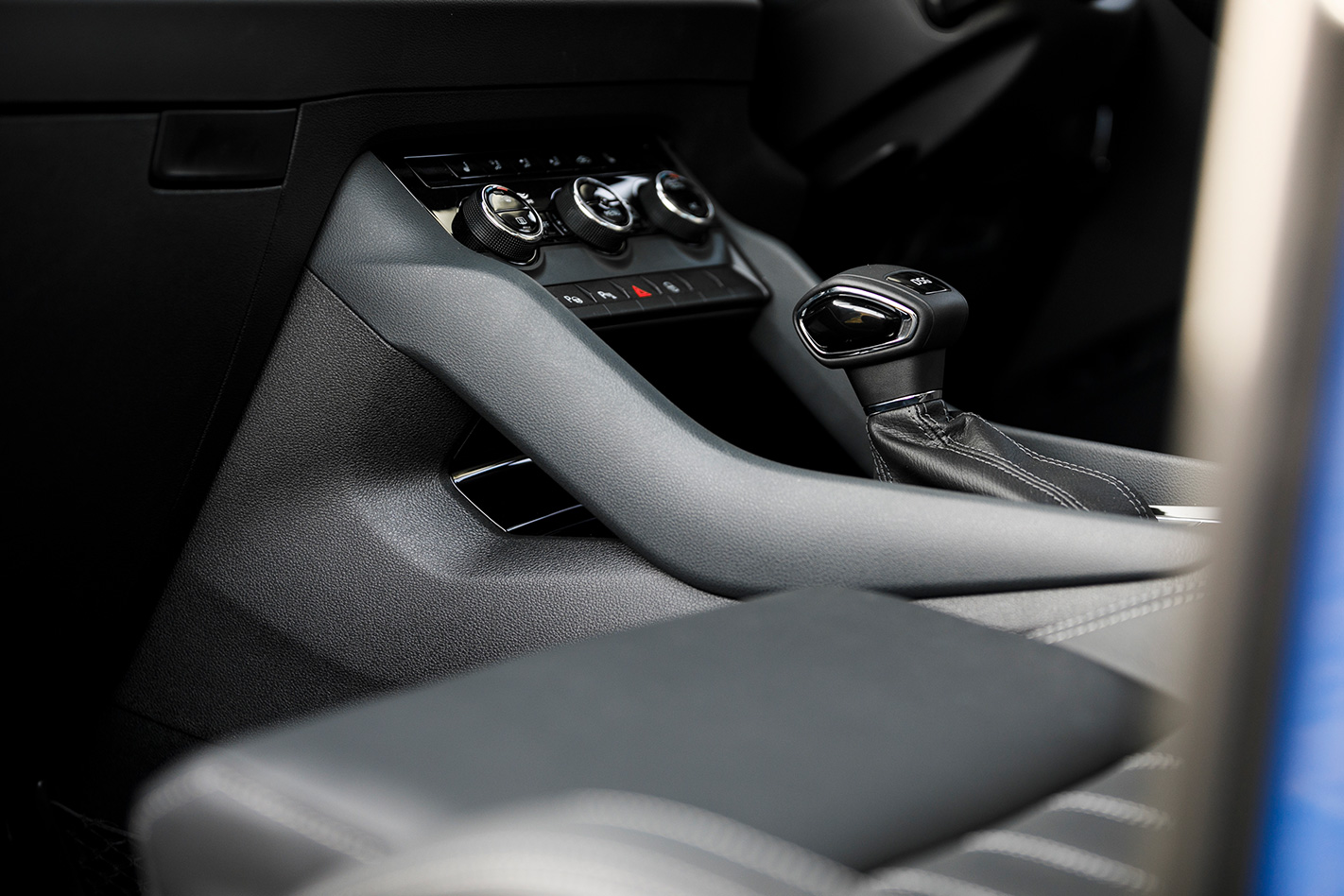
Karoq’s instrument panel is a fine piece of design. It doesn’t attempt to look expensive, aiming instead for modest elegance and quality. It’s user-friendly, too. The portrait-oriented centre touch screen is classy, and the infotainment system supports both Apple CarPlay and Android Auto.
The Skoda’s standard equipment list is fairly lavish, including AEB, adaptive cruise control, keyless entry and more. There are no glaring omissions in its safety or infotainment spec. Starting at $29,990 for the manual or $32,290 for the dual-clutch, it makes a solid value case.
Like many VW Group models launched in the last six years, the Karoq is based on the MQB component matrix. But the Skoda is powered by the German giant’s freshest small four. The front-drive Karoq 110 TSI, currently the only model on sale in Australia (a more powerful variant will join it some time in 2019), has exactly the same turbo 1.5-litre engine as the new Audi Q3 35 TFSI, which will reach Australia mid year. As in the Audi, it’s mated with a seven-speed dual-clutch auto. This is sure to be chosen by the vast majority of buyers and was the version selected for COTY.
The new 1.5 gains an aluminium engine block, long-stroke crank and new fuel-injection system, compared to VW Group’s old 1.4, but power and torque maximums remain unchanged. Better efficiency was the primary aim, and the Karoq has delivered low consumption in Wheels comparison testing through 2018.

The Skoda’s rolling acceleration is eager enough, but most judges noted the launch hesitation also evident in other VW Group products where a small-ish engine is teamed with a dual-clutch transmission.
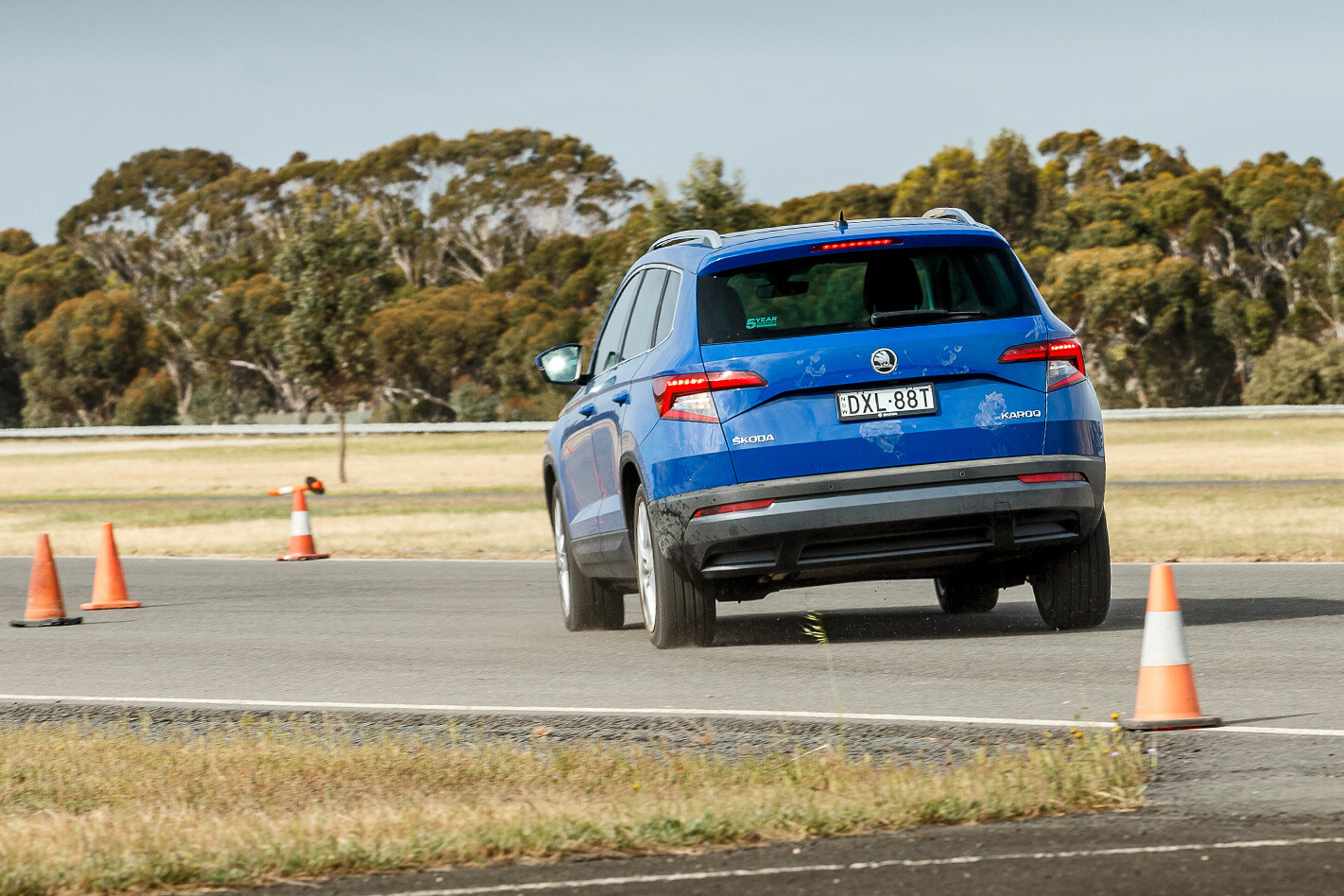
While the Karoq steers with rare neatness for an SUV, its inexpensive torsion-beam rear suspension impacts both handling finesse and ride comfort in a negative way.
Unlike the Kodiaq, the Karoq lacks dynamic polish. Inevitably, this meant an early exit from COTY.
The 2019 Porsche 911 Speedster’s local price has been confirmed and it’s shockingly high.
Porsche Oz has announced the limited edition Speedster will charge $604,800 when it lands in this year’s fourth quarter.
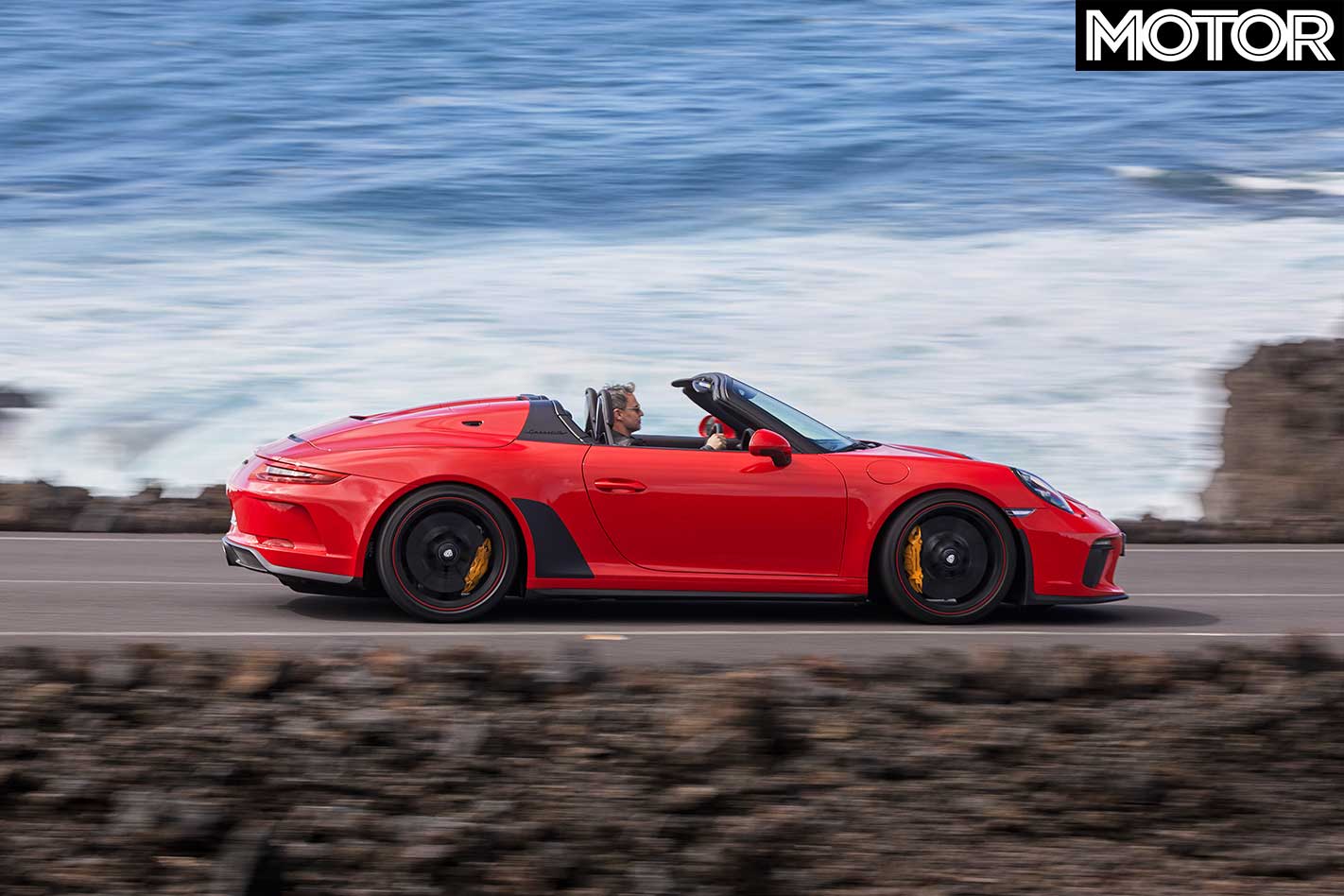
Limited to 1948 units worldwide, in a nod to the 356 Speedster’s roots and the brand’s 70th’s anniversary, Australia will get a small “double digits” allocation, further boosting the car’s local exclusivity.
It’s sure to be the brand’s most expensive car on sale, justified by the car’s mixture of 911 R, GT3 and cabriolet components to create this successor to the Speedster versions of its 1989 911 and original 356.
Defined by that rear carbon fibre ‘double-bubble’ shell, it’ll house the most recent GT3’s 4.0-litre flat six and some unique fuel, intake and exhaust tuning.
As a result, power increases from the donor car by 7kW and sits at a total of 375kW and 470Nm. A lighter six-speed manual transmission with a ‘shortened’ lever and a mechanical LSD handle the grunt before sending it to 20-inch wheels.
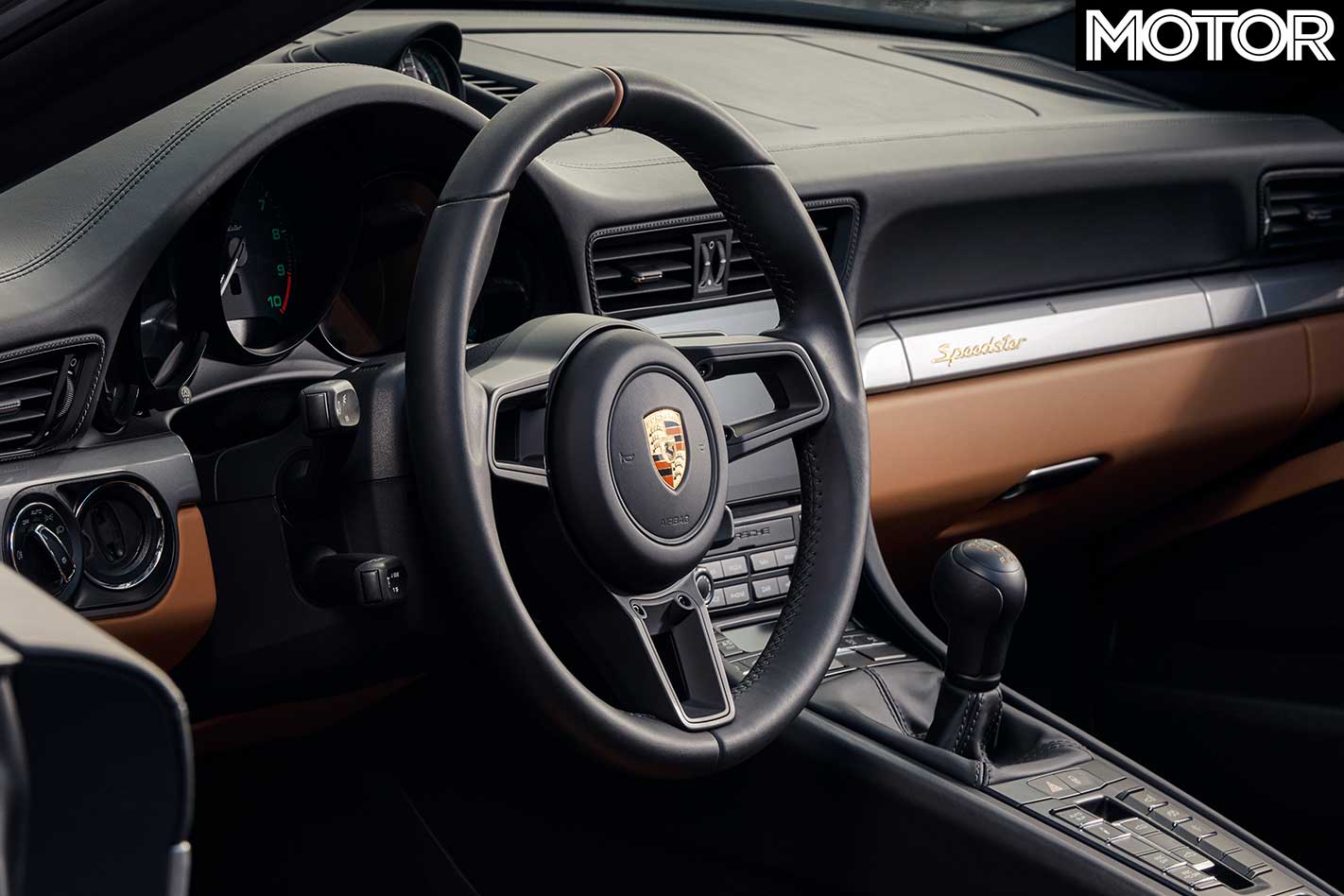
A 9000rpm redline, 310km/h top speed, and a 4.0sec sprint to 100km/h from rest headline its key specs.
Standard ceramic carbon brakes sharpen the focus on light weight, as do a stainless steel exhaust system, for example, that is 10kg lighter than a GT3’s.
Then there are its 911 R carbon fibre composite front bumper and guards that surround a GT3-spec front bumper. Oh, and carbon fibre bucket seats sit inside the cabin.
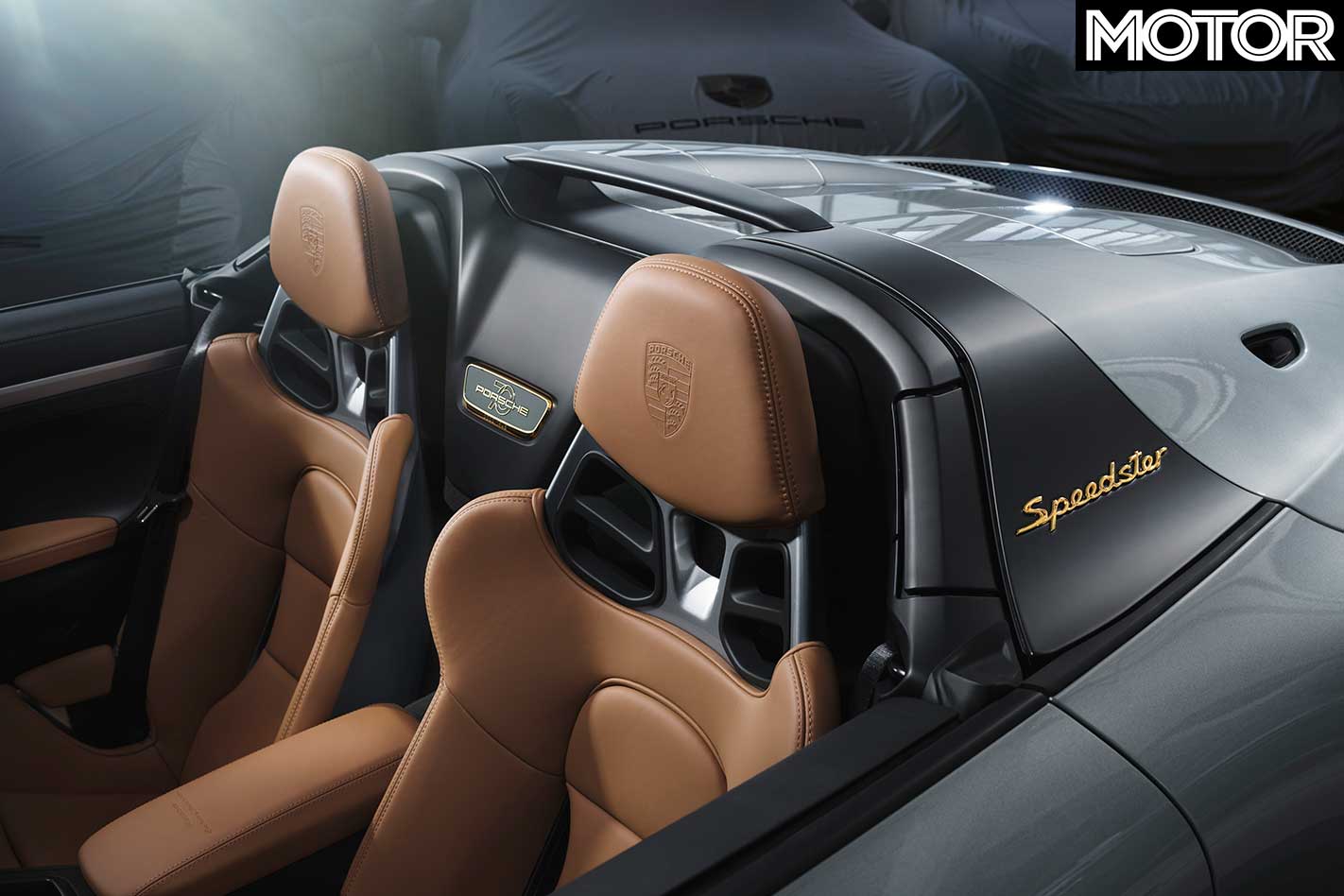
The front lip, apparently, is completely new, though disappointingly, its wing mirrors are not. Porsche has ditched the concept car’s bullet-style wing mirrors and centre fuel cap.
However, if you’re keen on a retro vibe, a Heritage Design package can add a Cognac/Black interior colour scheme, along with silver exterior paint and a special ‘spears’ white treatment to the front-end. We’re awaiting word on price.
Finally, cruise control and an axle-lift function is standard, while Apple Carplay can be added at no extra cost.
It’s been over 10 years since the release of the Audi R8 V10 and to celebrate the tenuous milestone it let Swiss photographer Fabian Oefner explode one for art.
He didn’t literally detonate the supercar, though, but had it carefully disassembled from the rear bulkhead back to photograph every single part. He then edited them all together to create this exploded diagram.
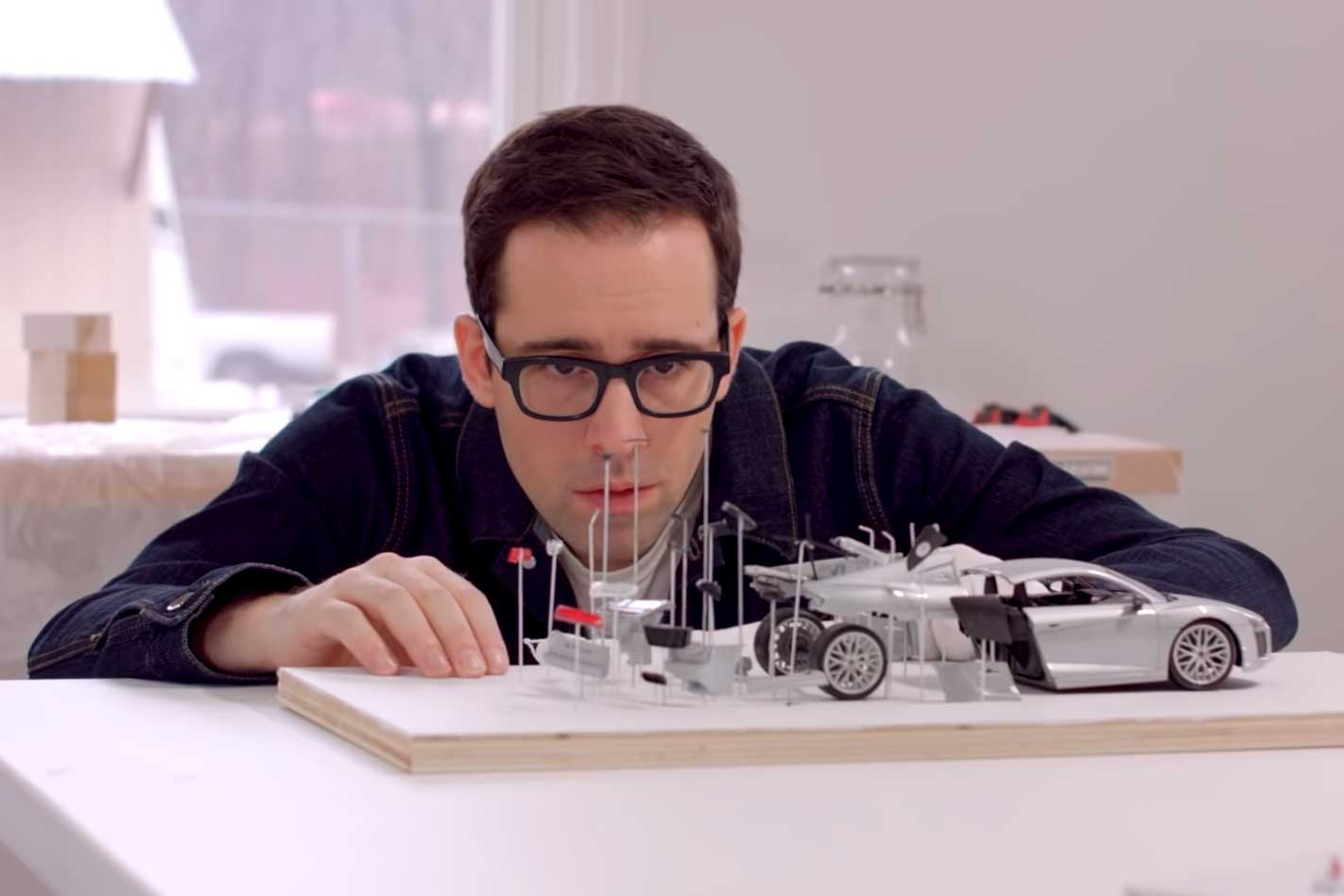
He’s best known for using high-speed photography to catch split second moments like when a bullet pierces a can or balloon, and his ‘disintegrating’ series aims this style at cars.
It all started a couple years ago when he used models for practice, and then transferred to Lamborghini Miura, Porsche 956 and Ford GT40. If anything, this is an honour for Audi.
“The beauty with real cars is that it’s an experience and you discover so much more about the car,” he says in the above video.
It’s a great look into his creative process and a mechanical breakdown of an R8 V10 that was so technical, even the factory mechanics who helped were surprised by what they saw.
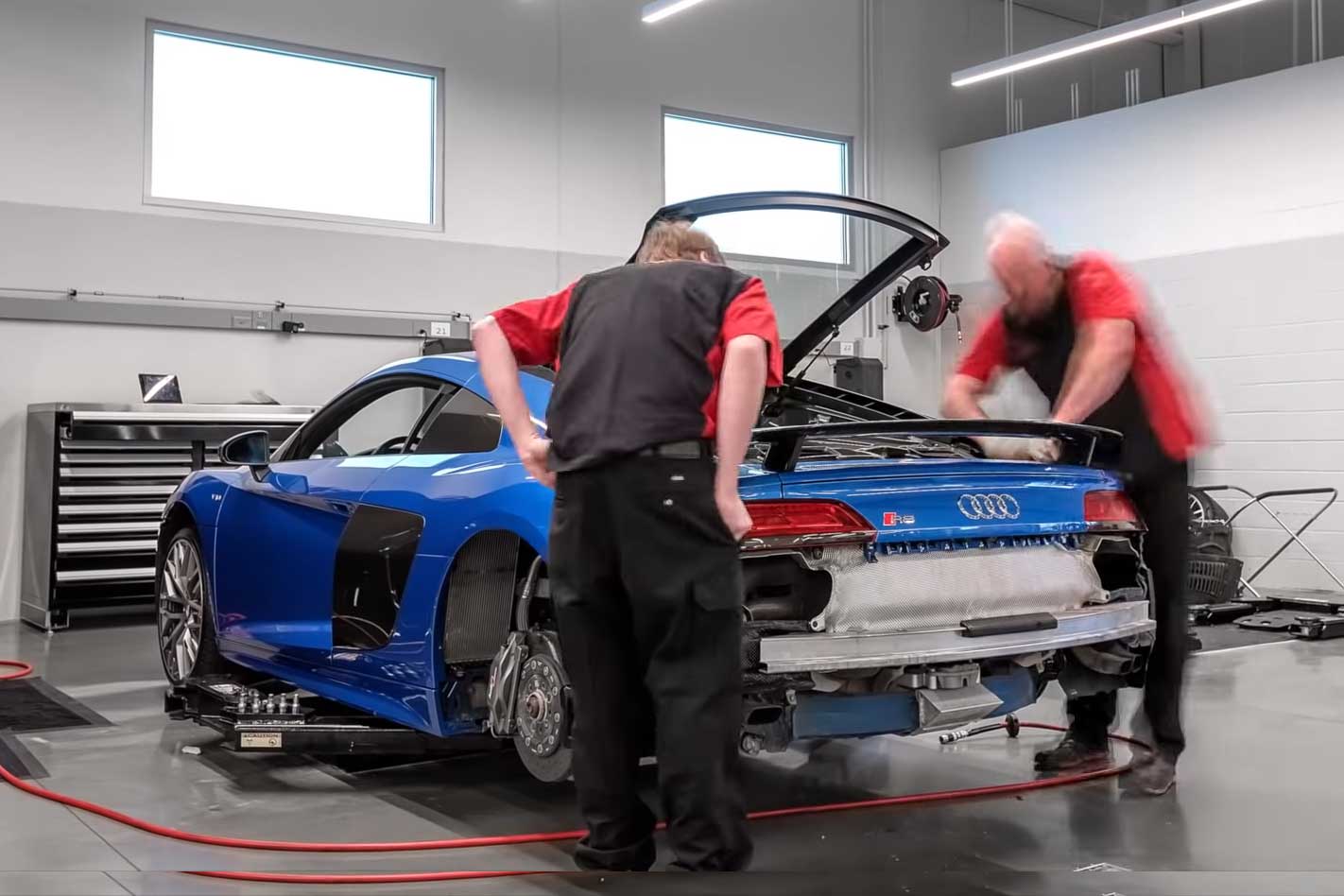
“Even the mechanics sometimes told me, ‘We’ve actually never seen inside a transmission, or we’ve never looked inside into the AC compressor unit. Because when something like that goes wrong with that part, we normally just exchange the whole part’.”
You can sigh relief, though, that Audi chose a used car. One from Las Vegas, Nevada. It even still wears the dust to prove it.
They failed to clean every part like new, but that’s part of the charm, he says. “There’s a bit history to all of those pieces that just adds to the credibility of the final piece, it’s something real that you can touch and feel.”
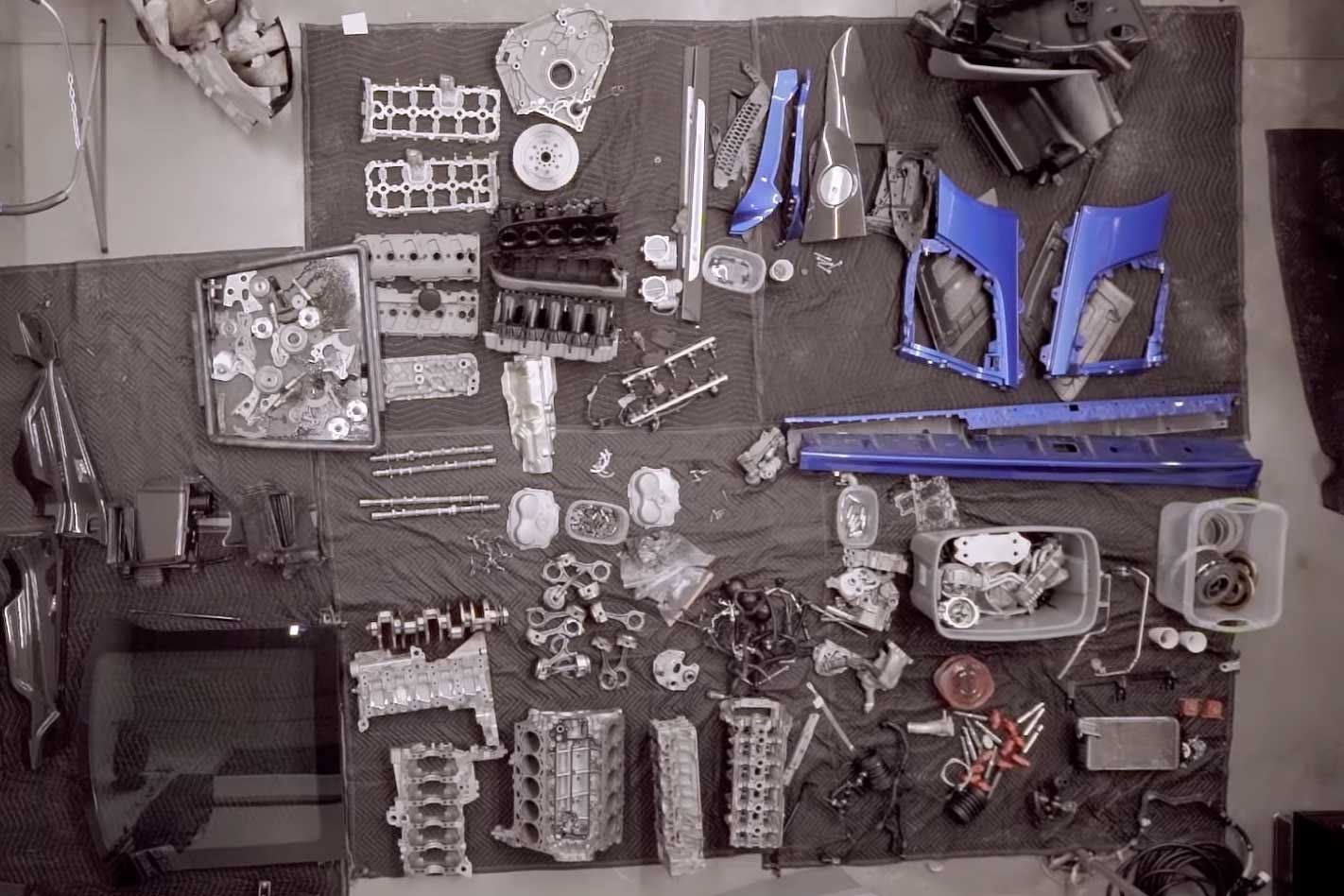
Of course, the closest you’ll come to ‘feeling’ this immortalised R8 V10 is buying the 12.75-inch x 30-inch poster Audi has released on its American website for US$24.95. Pretty cool, we think.
As always someone as artistic as him should have a way to express the “metaphysical” meaning behind it. “The series of Disintegrating is not really about cars, it’s really about the moment that never really existed.”
What stands out?
The Ford Focus became the most powerful mainstream small car in history in October 2015, when even the least costly models gained turbocharged engines. Every Focus also steers very well, and comes with a reversing camera and satellite navigation. The Focus ST and RS sports hatches are absorbing and very quick. Auto braking is available.
What might bug me?
Using the fiddly shift-buttons on automatic versions – although paddle shifters are available as an option.If you have chosen a Focus Sport, Titanium or ST, driving at 80km/h on the space-saver spare until you can fix your full-sized flat tyre.If you choose a Focus RS Limited, wishing you had a space-saver spare wheel. The RS has only a tyre repair kit, and so a puncture means making that work or walking.
What body styles are there?
Five-door hatch and four-door sedan.Every Focus but one drives its front wheels. The Focus RS Limited drives all four wheels.The Focus is classed as a small car, lower priced.
What features do all 2015-2018 Focuses have?
Cruise control, with a speed-limit function (which allows you to set an upper limit that avoids speeding fines). A reversing camera, and rear parking sensors.A leather-wrapped steering wheel that is adjustable for height and reach, which carries buttons for operating the cruise control, the sound system and your phone.An 8.0-inch colour central screen. Satellite-navigation, with voice activation (that actually works).A sound system with an AM/FM radio, CD player, USB and iPod inputs, Bluetooth connectivity and at least six speakers.Voice controlled phone calls and music selection, via Ford’s excellent SYNC3 infotainment system. Support for Apple CarPlay and Android Auto, which allow you to display some smartphone apps on the touchscreen and control them from there.Wheels made from aluminium alloy, which look nicer than steel wheels with plastic covers and usually are lighter (and hold the road better).Hill launch assist, which controls the brakes automatically to help you start from rest on a slope.Electronic stability control, which can help control a skid. All new cars must have this feature.On all but the Focus RS Limited, six airbags: two directly in front of the driver and front passenger; one alongside each front occupant to protect the upper body; and side-curtain airbags that protect heads front and rear from side impacts – the Focus RS has only four airbags: frontal, and full-length side-curtain.Autonomous emergency braking is available on every Focus except the very high performance Focus RS. Usually it comes in an extra-cost Technology Pack that adds other active safety aids also, and active cruise control. (For more on Focus safety systems, please open the Safety section below.)The Focus is covered by a three-year, 100,000km warranty.
Which engine uses least fuel, and why wouldn’t I choose it?
The turbocharged, 1.5-litre four-cylinder that powers the Focus Trend, Sport and Titanium models uses least petrol, consuming as little as 5.8 litres/100km on the official test (city and country combined).That’s with a manual gearbox – autos use slightly more.In the real world, you can expect it to use quite a bit more than that, depending on how hard you drive it. The 3000km average for a manual Focus Sport on the long-term test fleet of Wheels magazine was 8.0 litres/100km. However, the figure for an auto Focus Trend driven in Wheels comparison testing was 10.5 litres/100km – making it the most thirsty of the 12 hatchbacks reviewed for the January 2017 issue. (The Trend was also among the quickest of them.)This turbocharged engine arrived with the model update of October 2015. It’s smaller than the non-turbo engines it replaced, but it feels more powerful – and it is.Two other engines are available in a Focus, both bigger and much more powerful again. They are restricted to the very sporty Focus ST and RS hatchbacks.The 2.0-litre, four-cylinder turbo-petrol that drives the Focus ST produces about half again as much thrust as the 1.5 engine in the less costly cars, and uses about 25 per cent more fuel.The 2.3-litre, four-cylinder turbo-petrol in the all-wheel drive Focus RS supplies you with roughly twice as much go as the 1.5 engine, while using about 40 per cent more fuel on the official test – and you have to run it on premium petrol.All three Focus engines have stop-start systems that cut fuel use in the city. They switch off the engine when you come to a halt, and restart it when you press the accelerator to drive away.Focus Trend and Sport models come with six-speed manual or (optionally) six-speed automatic gearboxes. The auto is now a conventional design that moves off fluidly from rest, shifts smoothly and makes city driving easy. The Focus Titanium is available only as an auto.The Focus ST and RS Limited come only with six-speed manual gearboxes. Both are driver-focused performance models.
What key features do I get if I spend more?
The least expensive Focus is the Trend, which rolls on 16-inch wheels and has cloth seat trim.Spend more for the Focus Sport and you get bigger and arguably more stylish 17-inch wheels, and firmer suspension for more stable handling. The Sport also has dual-zone climate control (which allows the driver and front passenger to choose different cabin temperatures), and a better sound system that receives digital radio. Headlamps switch on automatically when it’s getting dark, and the windscreen wipers also operate without you thinking about them. A smart key allows you to unlock and start the car without removing the key from your pocket or bag.Spend more again on a Titanium and the wheels grow to 18 inches, and are fitted with significantly wider tyres of a lower profile, adding grip and sharpening steering response. The driver’s seat is power-adjustable, and all seats are trimmed partly in leather. You get front parking sensors, and a semi-automated parking system. And the Titanium comes with some of the active safety features that are optional on other cars: city-speed auto braking (Active City Stop), blind-spot warning, and rear cross-traffic alert.The sporty Focus ST loses some Titanium features – notably powered seat adjustment, leather, and auto braking – but comes with the more powerful 2.0-litre engine, still grippier tyres, and firmer suspension again for more stable handling. Its front seats are made by Recaro, a specialist known for body-hugging racing seats. Headlamps are brighter, using HID bulbs, and swivel to illuminate corners.The most expensive Focus is the very high performance Focus RS Limited, and the main things your money gets you over the Focus ST are all-wheel drive and even more grunt – from the 2.3-litre engine. On the chassis side there are also 19-inch wheels, driver-adjustable suspension and limited slip differential. Aside from distinguishing cosmetics, sweeteners include some leather on the Recaro front seats.
Does any upgrade have a down side?
Only Focus Trends have a full-size spare wheel. Upgrade to a Sport, Titanium or ST and you get a narrower space-saver spare, with a recommended speed limit when fitted of 80km/h. Go for the high-performance, all-wheel drive Focus RS and you get no spare at all.The lower profile tyres on cars with the bigger wheels ride more roughly than those on the smaller-wheeled variants, because there is less cushioning air between the wheel and the road. This is particularly noticeable on the 18-inch and 19-inch wheels.Further reducing comfort is the firmer suspension on Focus Sport and Titanium models, and firmer again on the ST and – more so – the RS Limited.The RS Limited is the most expensive Focus but it does not offer the auto braking that is standard on the Titanium, nor the active cruise control that is optional on every other Focus.
How comfortable is the Ford Focus?
The interior of the Focus is neat, with fewer buttons than its predecessor, an 8.0-inch high-resolution screen in all models, and SYNC3 connectivity. A great feature is the easy and effective voice control of the sat-nav.The driving position is comfortable, with height and reach wheel adjustment, and vision out is good all round. A range of functions can be controlled from the steering wheel.Two cupholders ahead of the covered centre console provide space for odds and ends in the Focus, as does a smaller binnacle alongside the driver’s left knee.Seats on the Trends are flat but comfortable. Sports and Titaniums get seats with better side support, which improves long-distance comfort.The Recaro seats on the ST and RS have large side bolsters, to hold you in place around corners. Such seats can be uncomfortable for some people, but these examples fit a broad spectrum of body sizes.Around town, the Trend, Sport and Titanium are easy cars to drive, with light but responsive steering, an agile feel, and quiet, powerful engines. At freeway speeds, there is some roaring from the tyres.Trend versions deliver the most supple ride. Among popular small cars, the ride in Sport and Titanium models is on the firm side of typical.The sporty ST feels very stiff, and can jar you over small bumps.The RS Limited is stiffer again. As reviewer David Morley observed of the original RS in the December 2016 issue of Motor magazine, over rough stuff the RS “feels like a prizefighter just before the bell for round one, bobbing up and down on the balls of its feet … And like a boxer, it seems pretty keen to beat you to a pulp if you don’t dodge the lumpy, knuckly bits.”
What about safety in a Ford Focus?
Six airbags, stability control, a reversing camera, and rear parking sensors, provide a solid safety platform for every Focus. And on all but the very high performance Focus RS, you can add crash-avoidance features via an optional Technology Pack.The Focus Titanium comes as standard with three driver aids from that pack, including arguably the chief of them: autonomous emergency braking, which Ford calls Active City Stop.Active City Stop is a laser-based system that works at speeds up to 50km/h. It seeks to detect obstacles in your path – such as a car ahead that has slowed suddenly – and will stop or dramatically slow you, automatically, if it concludes a collision is imminent. (Auto braking is favoured by road-safety authorities and insurance companies, as it reduces the cost of slow-speed collisions.)The Titanium also chimes and flashes a light to let you know when there is a vehicle alongside and behind, in a blind spot. And its rear cross-traffic alert helps you avoid driveway and carpark bingles, acting when you are reversing to warn of other vehicles crossing behind you.When ordered as an option for other Focuses, the Technology Pack brings these three features and four others: Adaptive cruise control (which will maintain a safe distance from a slower car ahead); lane keeping assistance (which vibrates the steering wheel and applies a gentle correction if you are drifting into an adjacent lane without indicating); a driver impairment monitor (which checks you for sleepiness); and auto-dipping headlights.On the Titanium, the Technology pack brings the remaining features. On the Focus ST, it does not bring Adaptive cruise control.The Australasian New Car Assessment Program (ANCAP) awarded the Focus its maximum five-star safety rating in June 2015. The rating applies to all versions except the Focus RS, which has not been rated.
I like driving – will I enjoy this car?
Very likely you will. The Focus has a well-deserved reputation as a car that delights in the corners. Steering is accurate and communicative, and the body settles confidently after bumps.Grip levels on the Sport, Titanium and ST models are high. That is helped by their suspension, which reduces leaning in bends compared with the softer Trend.The 1.5-litre turbo petrol engine feels a tad coarse when you give it a prod, with a subtle induction rasp contributing to a note that’s more gruff than buff. Teamed with the new automatic, which can’t quite keep up with throttle inputs, it is not a rousing drivetrain but it delivers the goods.A six-speed manual transmission is available, with a light, direct and smooth shift-action that makes a manual Focus more involving to drive than an auto.The Focus ST is a genuine hot hatch, and very rewarding. It feels quick in all situations, with a big spread of power and a silky willingness to rev. The ST is limited mainly by its ability to apply all its power to the road through its front tyres. Clever electronics – fitted to all Focuses – help here in corners by directing more power to the tyre with more load.The absence of an auto gearbox option on the ST is partially offset by the immense urge of its 2.0-litre turbo engine, which means that in highway use you rarely have to change gears.The Focus RS Limited is significantly quicker again, with an engine that feels slightly grainy as you rev it. Its all-wheel drive chassis is tuned to oversteer at the limit. While it is an unusually entertaining drive when you’re playing, the uncompromising ride sometimes takes the edge off your fun when you’re cruising.
How is life in the rear seats?
Rear seats in the Focus are quite flat but still comfortable, even if you want to squeeze three across the rear.For adults, the three adjustable head rests will need to be raised, to prevent them digging into upper backs.Head room is marginal for tall adults, and there are no rear air-conditioning vents.The rear wheel arch hinders entry slightly, but once inside leg room is good for the rear of a small car.
How is it for carrying stuff?
Rear seats that split-fold 60/40 help with loading bulky items, and they can create a completely flat floor – on both the sedan and the hatch – if you flip the seat bases up first.The hatch is the better suited body style for carrying bikes or large boxes with the seats folded.However, with all seats in place the sedan’s boot is bigger: 421 litres versus 316 for the hatch.
Where did Ford make this model Focus?
Ford makes the Focus ST and RS in Germany. All other Focuses are produced in Thailand.
What might I miss that similar cars have?
Seatbelt reminders for the rear seats (the Mazda3 and Subaru Impreza have these, for example).Perhaps the all-weather security of all-wheel drive – without having to cough up for a Focus RS to get it. The Subaru Impreza has this, for example.Auto braking that works at higher speeds. The system standard on a Mazda3 operates at up to 80km/h, for example.Other small cars you might consider include the Volkswagen Golf, Holden Astra, Peugeot 308, Honda Civic, Hyundai i30 and Elantra, and Kia Cerato.
I like this car, but I can’t choose which version. Can you help?
The Focus ST is a very entertaining car if you want something that sporty.Among the less costly cars it is the Focus Sport that makes the best case. It gets a sportier look and has arguably the best balance of ride and handling, making it both liveable and entertaining on a daily basis. Throw in features such as the smart key entry, push-button start and leather-wrapped steering wheel and it justifies the price premium.
Are there plans to update the Focus soon?
This generation Focus went on sale in 2011 and received a minor update in 2014. A bigger update began in May 2015 with the revised Focus ST. The remaining Focus models were refreshed in October 2015, gaining a restyled front end, a less cluttered interior, a conventional auto gearbox and the turbocharged engine among other enhancements.The Ford Focus RS went into runout phase toward the end of 2017, with the RS Limited Edition being the only model available. It gained extras including a new limited slip differential and Michelin tyres on 19-inch alloy wheels as standard and is only available in Nitrous Blue. It is limited to 500 units, which once sold will signal the end of RS sales for the current generation Focus.The new-generation Focus range is built in Germany and available in three spec grades; Trend, ST-Line and Titanium as well as an SUV-inspired Active wagon that is similarly equipped to the ST-Line.The ST-Line is an new variant to Australia, and will have the sporty appearance you’d expect from a Focus ST hot hatch without the additional performance. The ST-Line is also the only spec grade offering a wagon version alongside the hatchback.
