
These days the cars we drive are as much an accessory as any other wearable fashion, and it’s a fact that many manufacturers have caught onto. Collaborative special editions are becoming increasingly commonplace as manufacturers and clothing designers use these mash-ups as high-end branding exercises in addition to creating something unique in the name of fashion.
Colours, textiles, patterns, symmetry: these are the things that mould both the fashion and the automotive worlds. So it’s only natural that every now and then, these two industries fuse together in interesting ways. Here are 10 occasions when automotive and fashion have given birth to good, bad, and ugly cars.
1. Fiat 500 Gucci
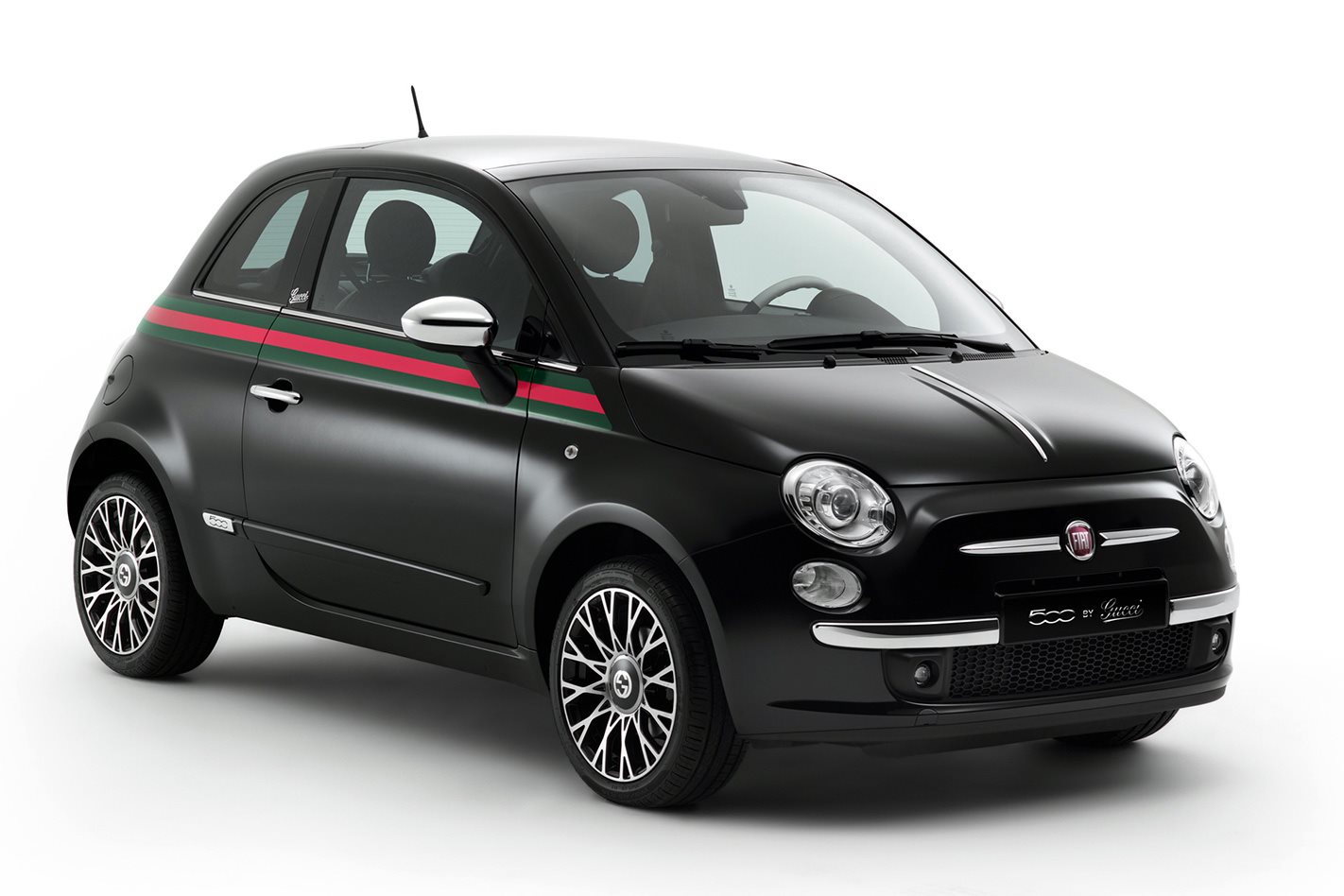
Cute as a button but still maintaining serious catwalk intent, the Fiat 500 Gucci edition was released in 2013 and featured the famous colour scheme of the Italian design house. A mere 101 examples were offered in Australia and the car featured Gucci badging, Gucci-inspired interior and a new set of GG inscribed wheels.
2. Jaguar XE by Stella McCartney

Debuting at the October 2014 Paris Motor Show, Jaguar hired Stella McCartney to garnish its XE sport sedan. The result was an average-looking black sedan covered in superhero heads – a design taken straight from McCartney’s Spring 2015 range. We’re pretty sure the brief probably used words like “fun” and “fashionable”, but we’re wondering if “nightwear” was also a requirement. Possibly not, but while it’s certainly entertaining, we think this is one occasion a car should remain behind closed garage doors.
3. Citroen C4 Cactus Rip Curl edition
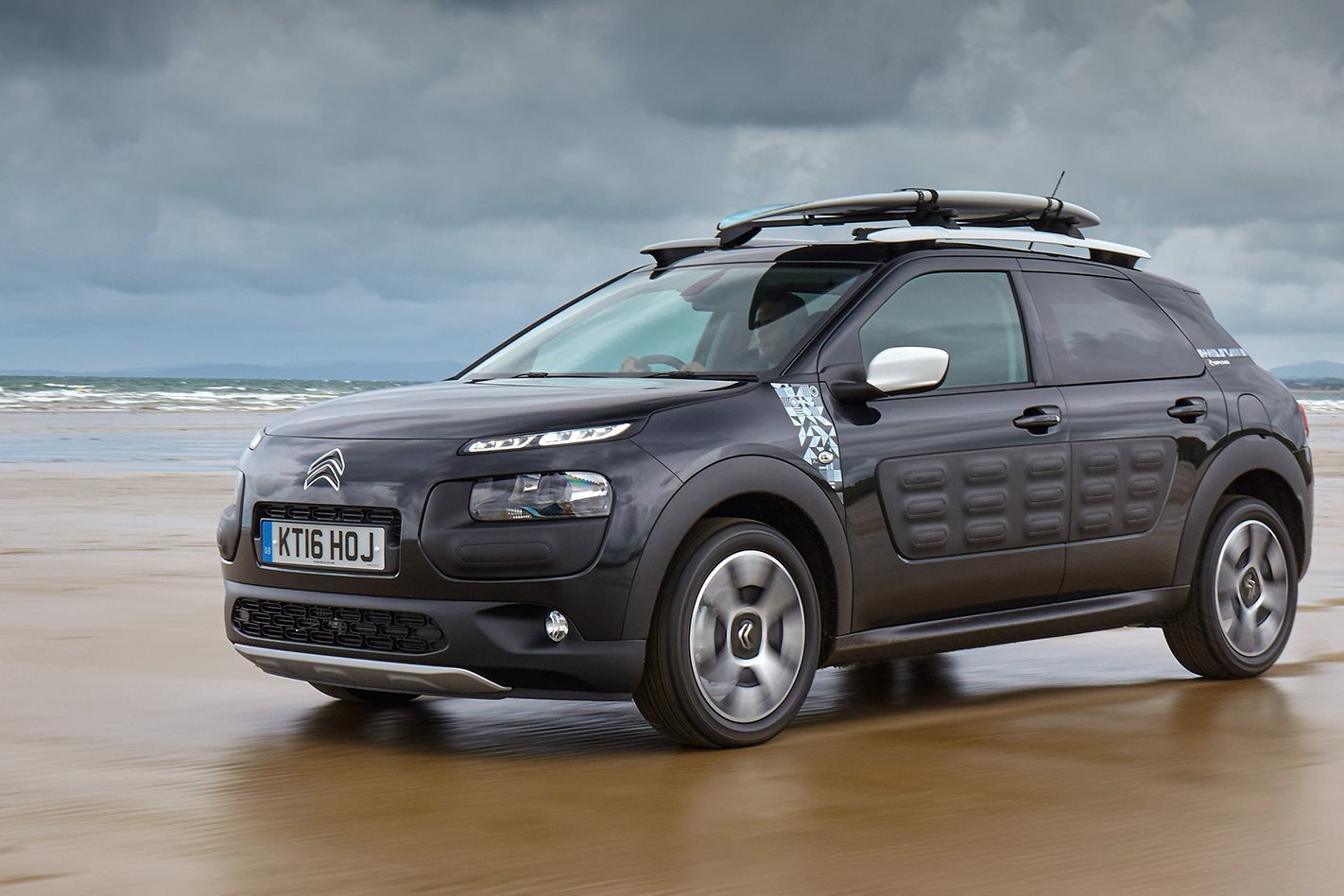
Surf’s up! Citroen debuted the Rip Curl special edition C4 Cactus in 2016 to promote its GromSearch initiative to find young surfers and 15 examples were on offer Down Under. The special edition differentiated itself by featuring a Rip Curl graphics pack on the exterior and while the interior was treated to new orange floor mats, seat belts and speaker surrounds.
4. Maserati Quattroporte Ermenegildo Zegna
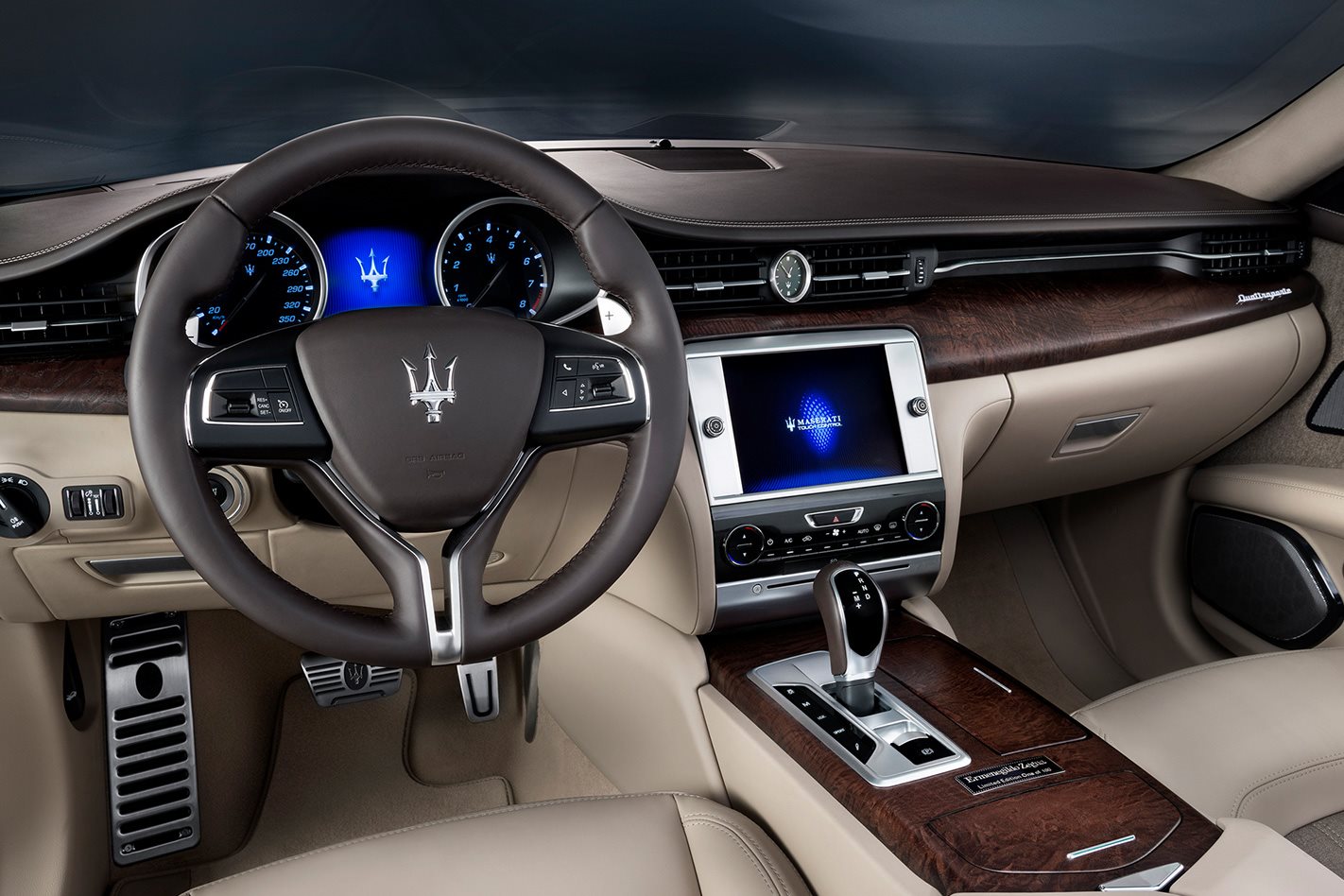
Featuring only the finest fabrics, the Zegna-inspired Maserati Quattroporte placed emphasis on quality additions rather than some of the sticker packs here. The high fashion brand’s silks were used as inserts for the seats, door cards and headliner.
5. Ford Laser Carla Zampatti
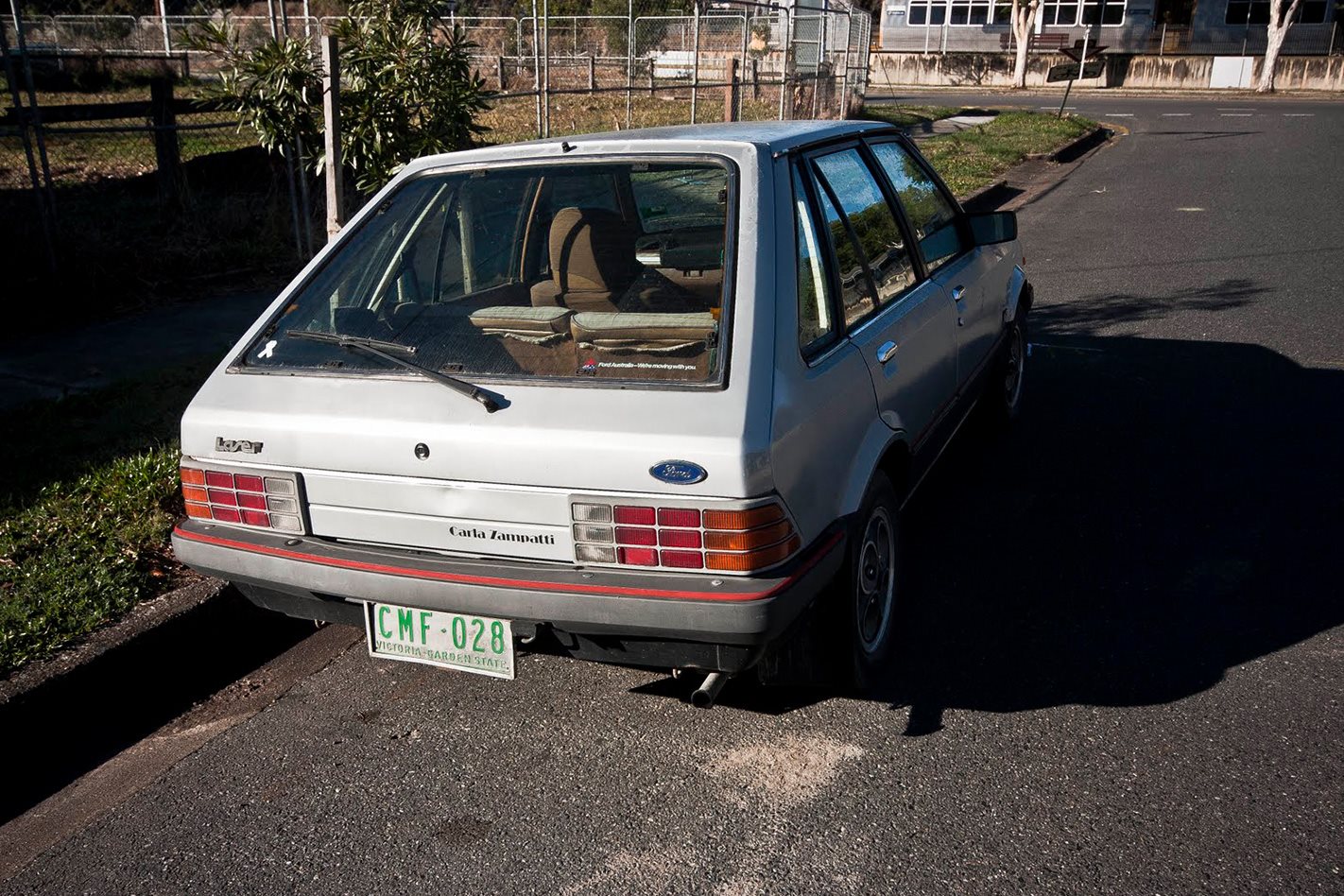
Rarer than a Lamborghini and one surely destined for the automotive hall of fame, the Carla Zampatti Ford Laser and Meteor featured female-inspired touches. Good luck finding one of these beauties on the second hand market.
6. Bugatti Veyron FBG par Hermès
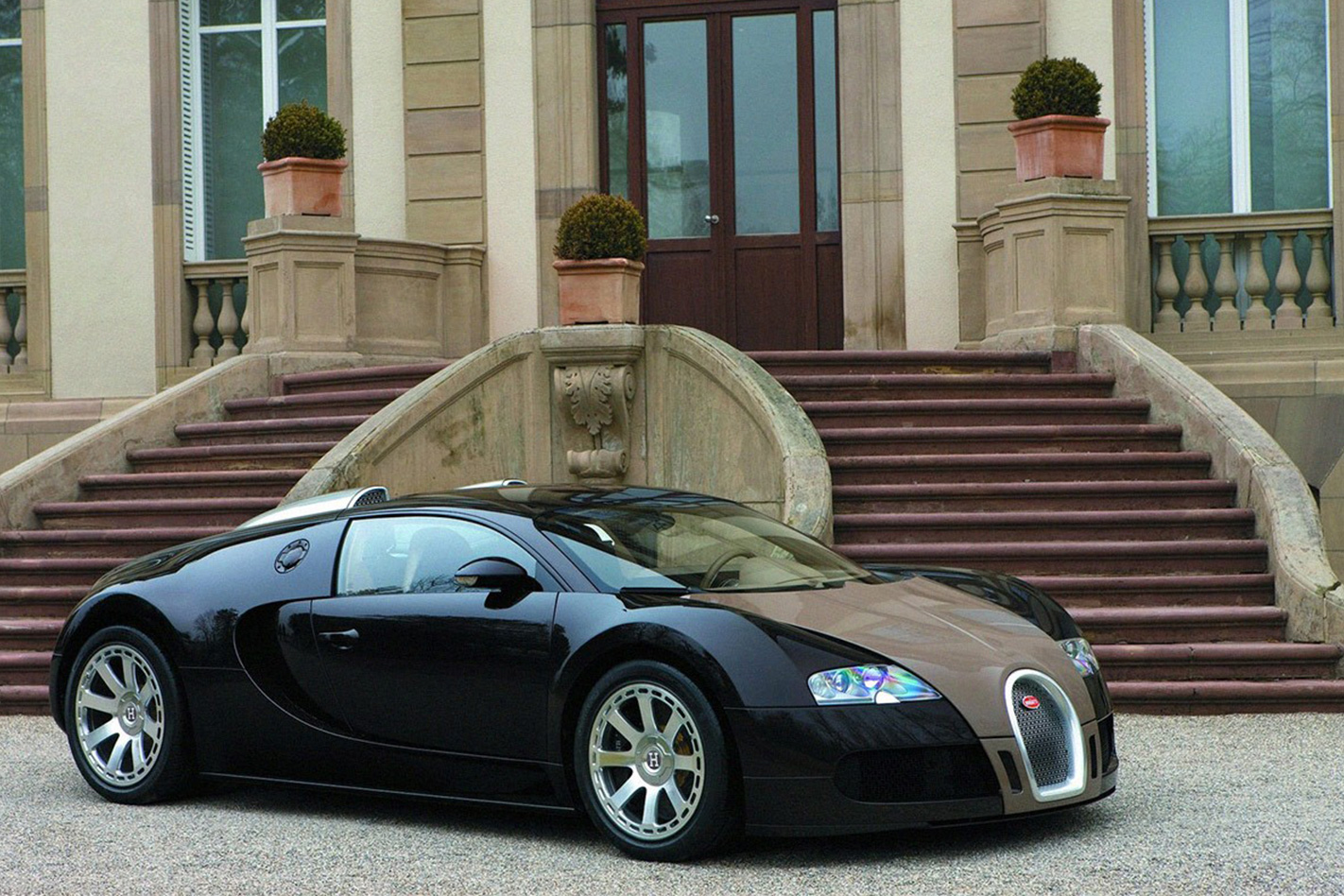
Not one to shy away from a special edition, the Bugatti Veyron featured many over its ten year lifespan. However, few came more exclusive than the four-example Veyron FBG par Hermès edition. The exterior featured many of the brand’s H logos while the bespoke interior was designed in house by the Paris Hermès team.
7. AMC Gremlin Levi’s
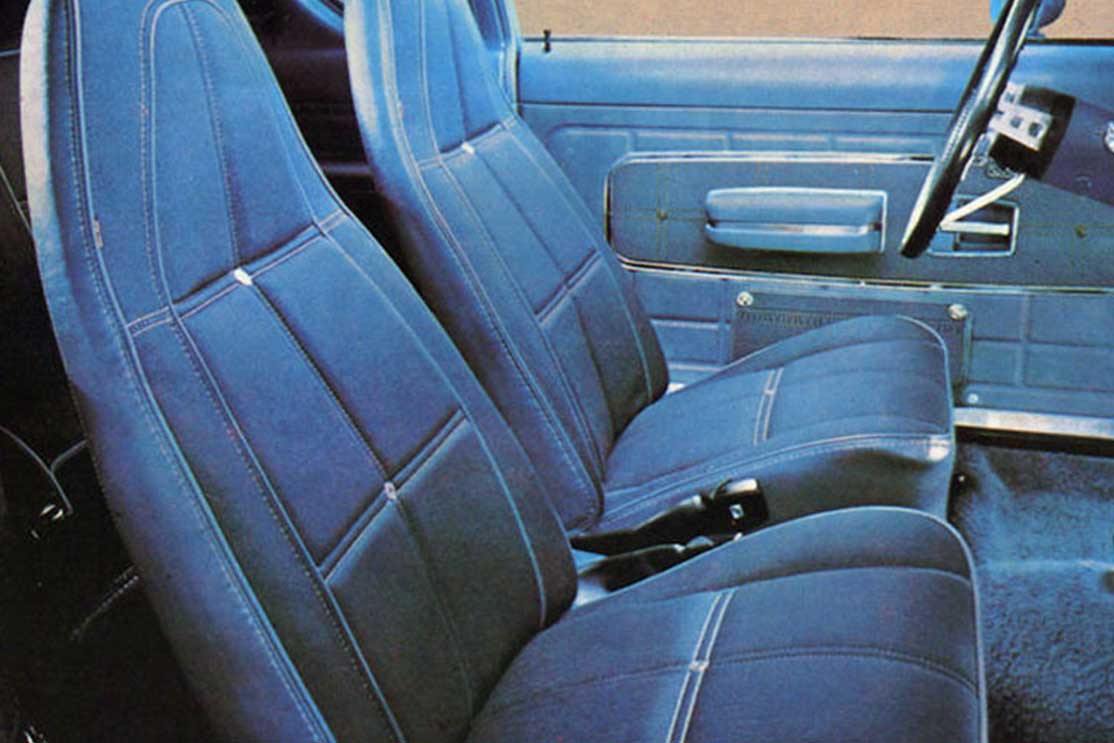
Top-stitched denim is a perennial fashion and vehicle fave. In 1973 the Levi’s Gremlin was “the economy car that wears the pants”, with orange stitching, rivets and faux-denim upholstery. Two years later, Levi’s created a top and interior denim option for Jeep that was so popular it ran until 1986.
8. Range Rover Evoque Victoria Beckham
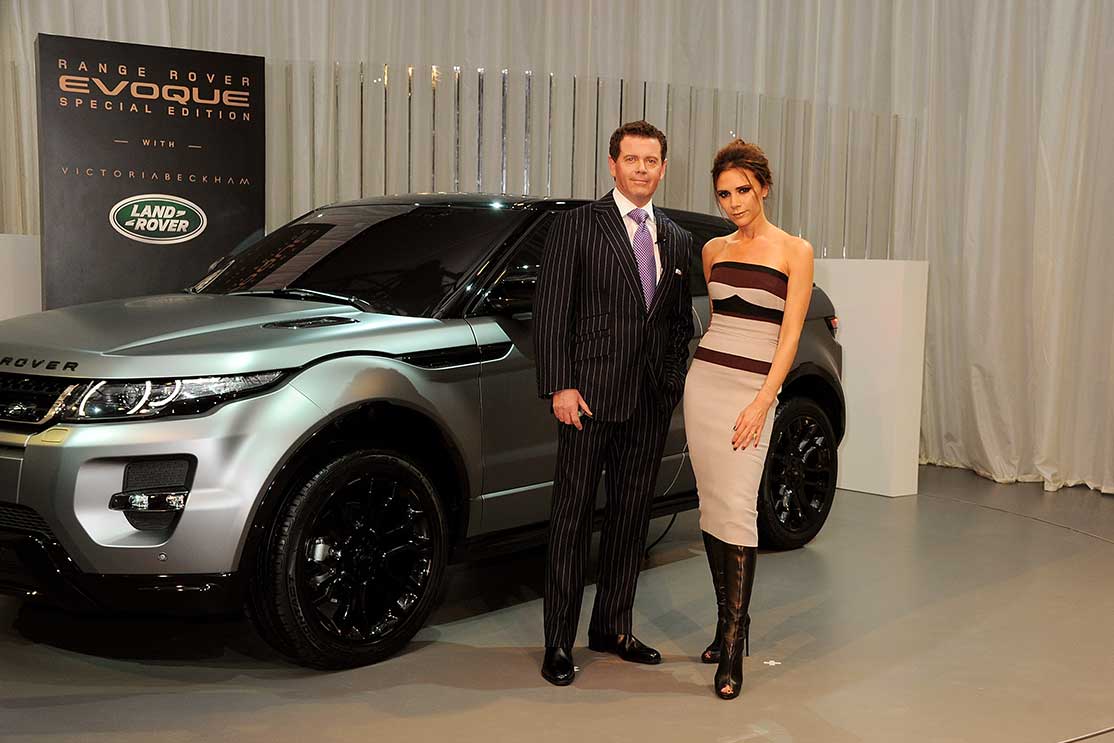
The Posh Evoque boasts a “masculine” matte-grey exterior with rose gold trim, extensive leather and a four-piece luggage set. All for twice the price of a regular Evoque. No word on whether the seats are sized for skinny-people only, but ironically Posh couldn’t fit her own family into this car.
9. Lamborghini Murcielago LP640 Versace edition
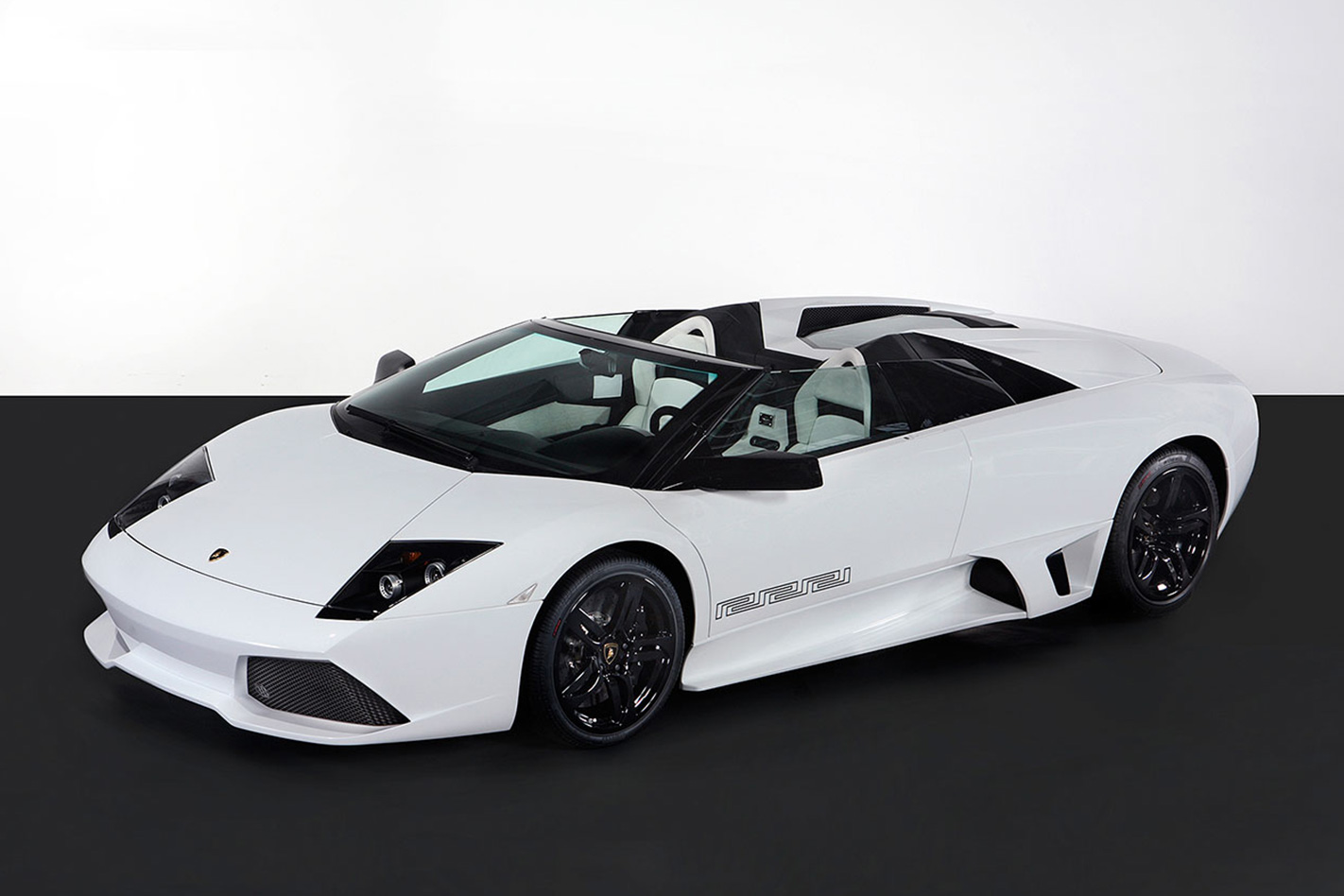
It’s hard to believe some people need a Lamborghini Murcielago to be more special than it already is, but here we are. The Versace collaboration with Lamborghini gave birth to a specially designed Murcielago LP640 that featured the designer’s distinct pattern on the door sill, and a two-tone Versace leather interior. A luggage set was also available for customers to option. One example of this 20-run series made its way to Australia.
10. Rover Mini by Paul Smith
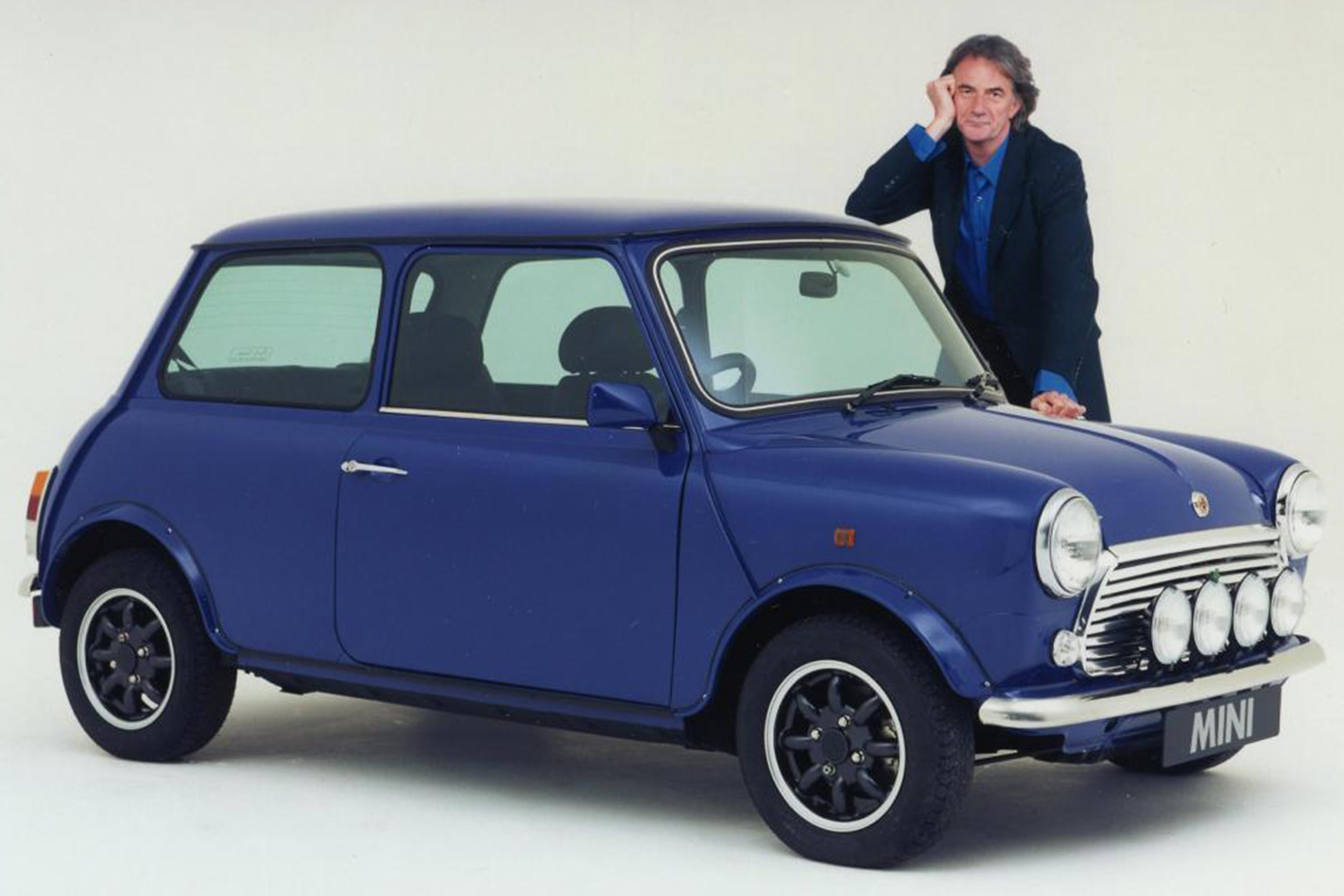
A 9 carat gold badge on the bonnet,a wild green accented engine bay and bright blue paintwork did the job for a distinctively-British Paul Smith inspired Rover Mini.
Maxxis and Wheels are teaming up to offer a new set of Maxxis tyres worth up to $2000 to one lucky punter.Whether you’re after some hardcore AT980 Bravos for your off-roader or a set of VS01 Victra Sports for your sports car, Maxxis Tyres has you covered, should you win.All you have to do is enter the draw and you’re in the running to win a set of tyres of your choice for your car!Plug in your details below before June 12 to go in the running and the winner will be drawn on June 25.Good luck!
Competition now closed
Congratulations to M. Flynn from Queensland!
YouTube Nürburgring ‘car spy’ CvdZijden has uploaded footage of a yellow 2020 Honda Civic Type R development prototype pounding around the famed German circuit.
Wrapped in minimal camouflage, the prototype appears to be sporting a restyled front end and rear end, though from the shapely impressions in the sun it seems that the styling tweaks won’t be doing much to change the Civic Type R’s already polarising looks.
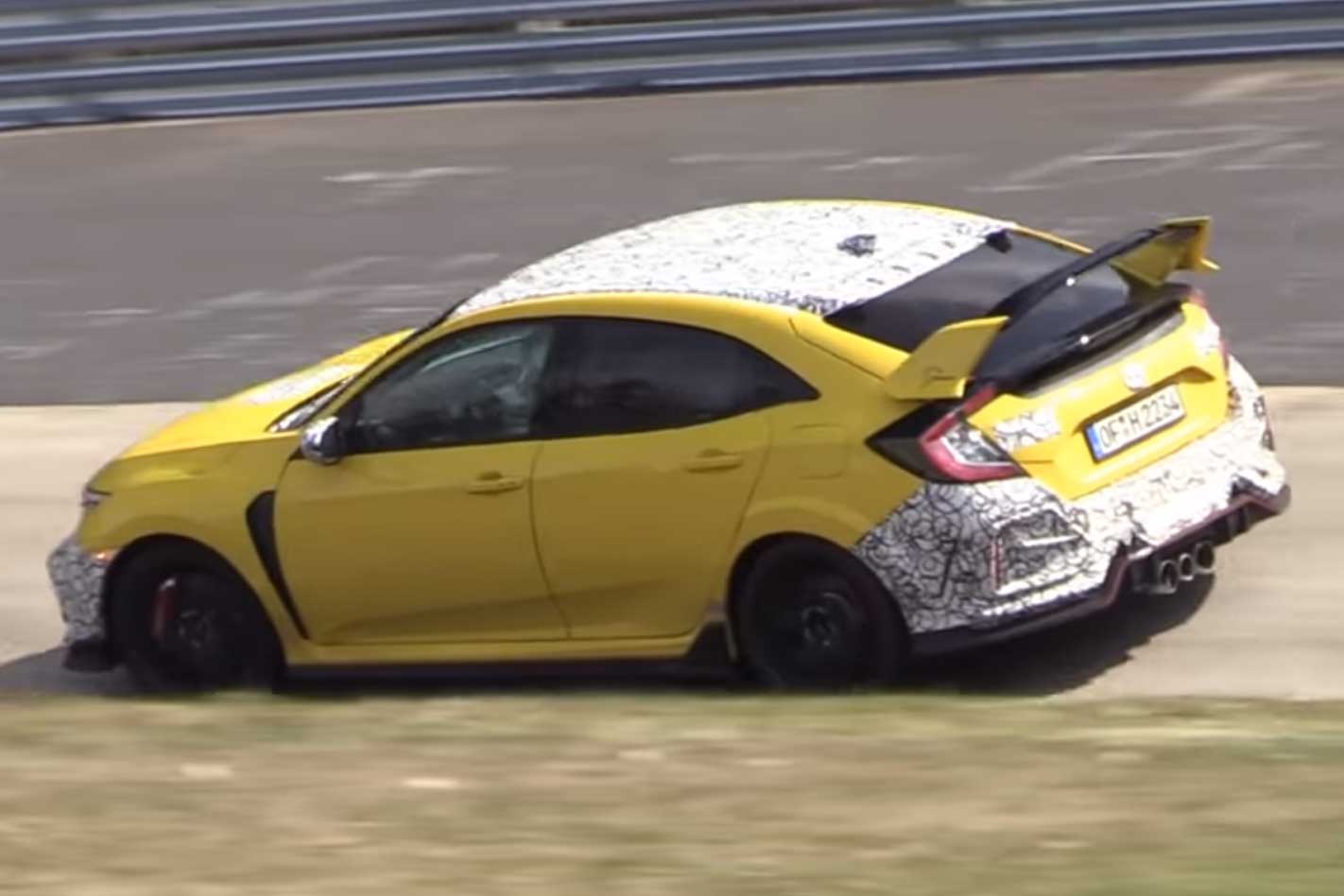
That being said, it seems that there might be more to the yellow car than what the camouflage is hiding, as it shares the track with a white Honda Civic Type R prototype with a lower rear wing.
While the white prototype has the flared front arches, roof top aero vanes, triple tailpipe arrangement, and front grille logo of the Civic Type R, the hatchback’s broad, flat rear wing is a strange addition to the package as Honda maintains that the aerodynamic bits of the Civic Type R serve a functional purpose of generating downforce and stability at speed.
The white prototype’s rear wing runs contrary to that narrative, unless Honda has plans to develop it as a new option – for the more discerning customer – or are in the midst of preparing a lower-spec variant, a Honda Civic Type-S perhaps?
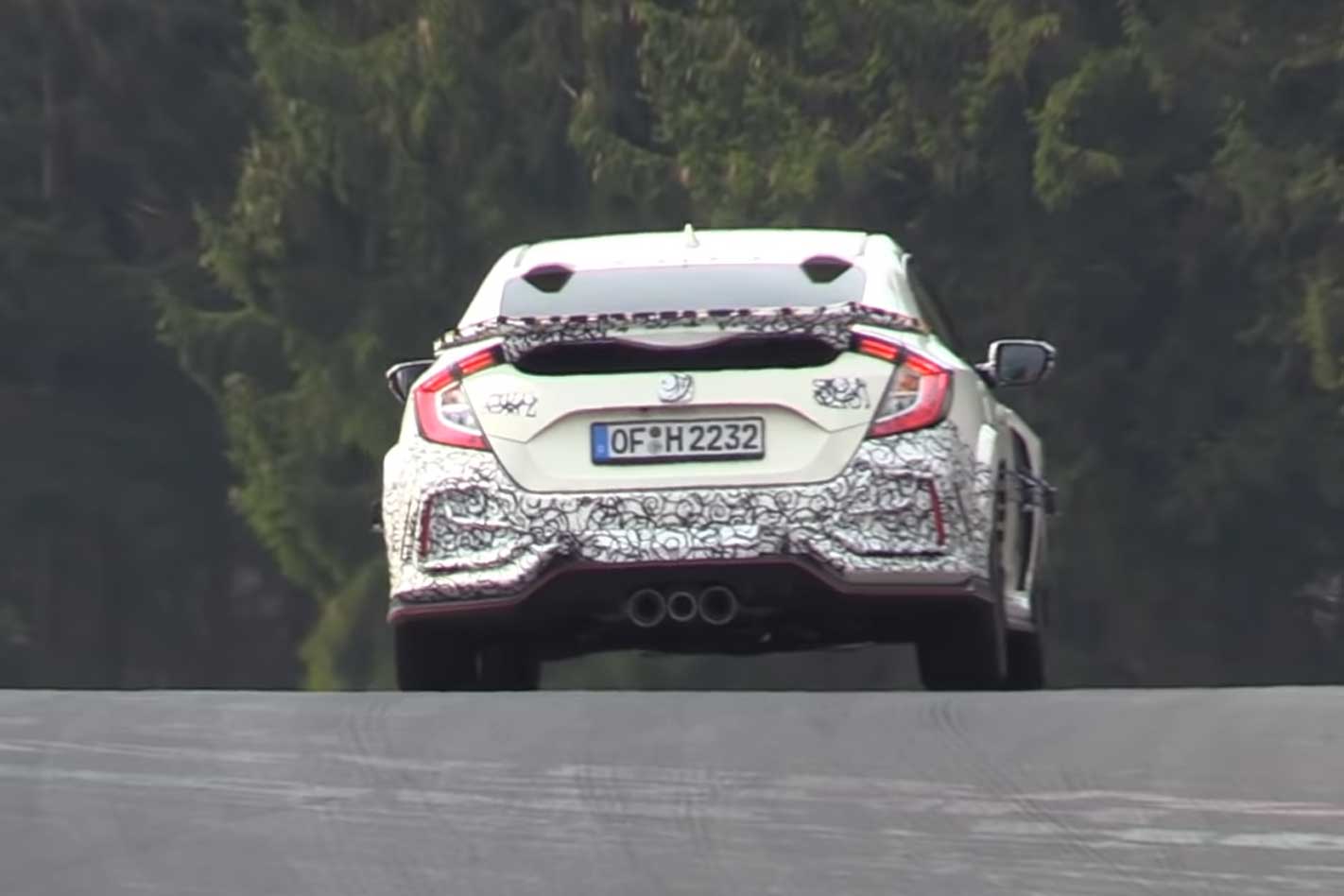
That being said, the yellow prototype might not even be a mere nip-and-tuck facelift of MOTOR’s 2018 double PCOTY and Bang for Your Bucks champ.
With the camouflage being applied sparingly to cover up key changes, it seems weird that the yellow prototype’s roof and bonnet vent is completely covered up, while the roof and vent of the white mule goes uncovered.
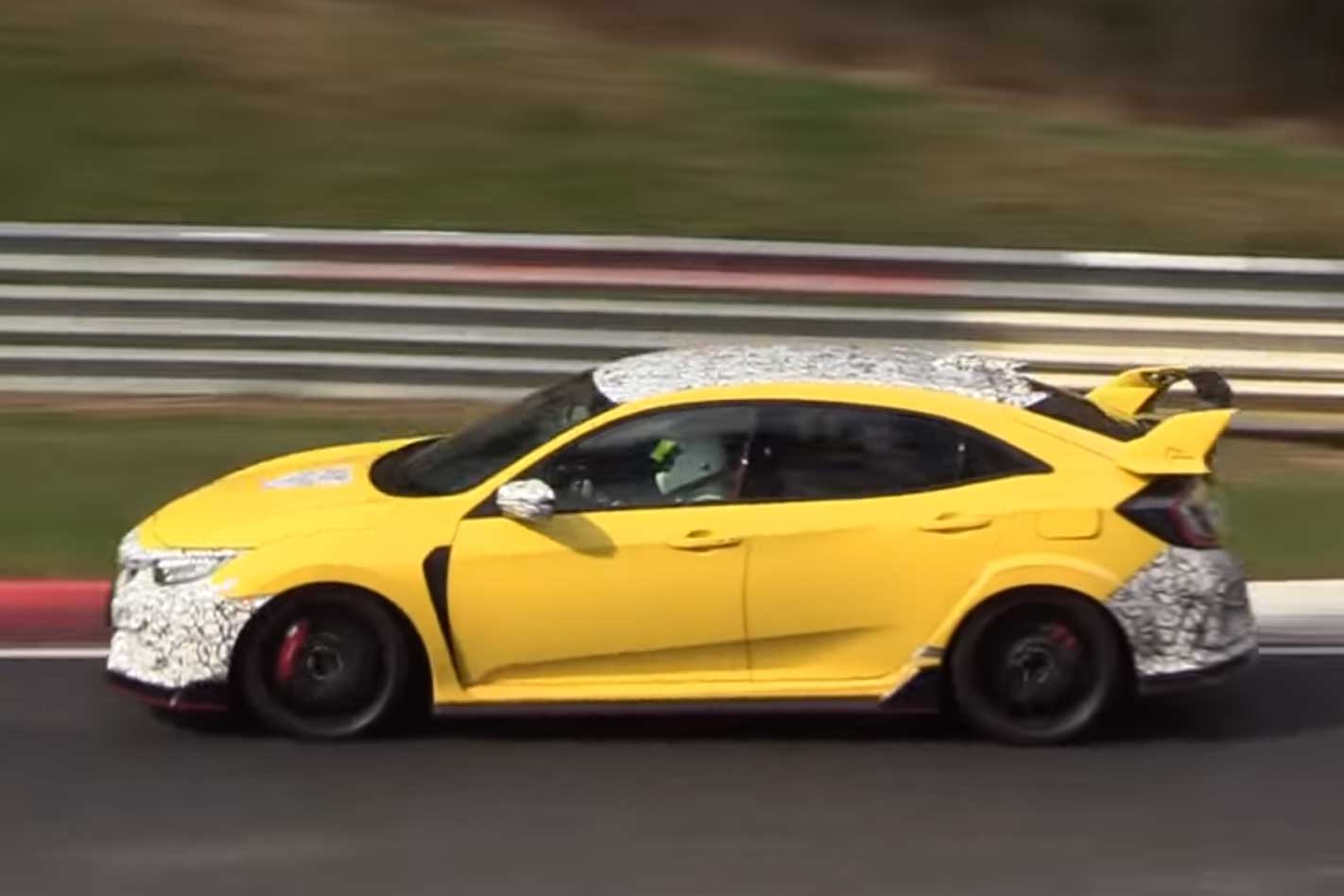
While both cars seem to sport the same roof vanes, this might hint at Honda developing a new roof, perhaps a lightweight item to add to their “carbon accessories” range or even a hardcore Civic Type-R. If it is a case of the latter, it might also explain the Nürburgring logo on the rear wing.
Either way, it will be interesting to see what the facelifted Honda Civic Type R is packing, and MOTOR will bring updates as they come.
Terry Selfe, has made a few little changes to his 2019 Ford Mustang GT, which he’s nicknamed ‘Stealth’.
But, contrary to the Mustang’s moniker, one of Terry’s changes to the car is fairly blatant – a healthy dose of carbon fibre.
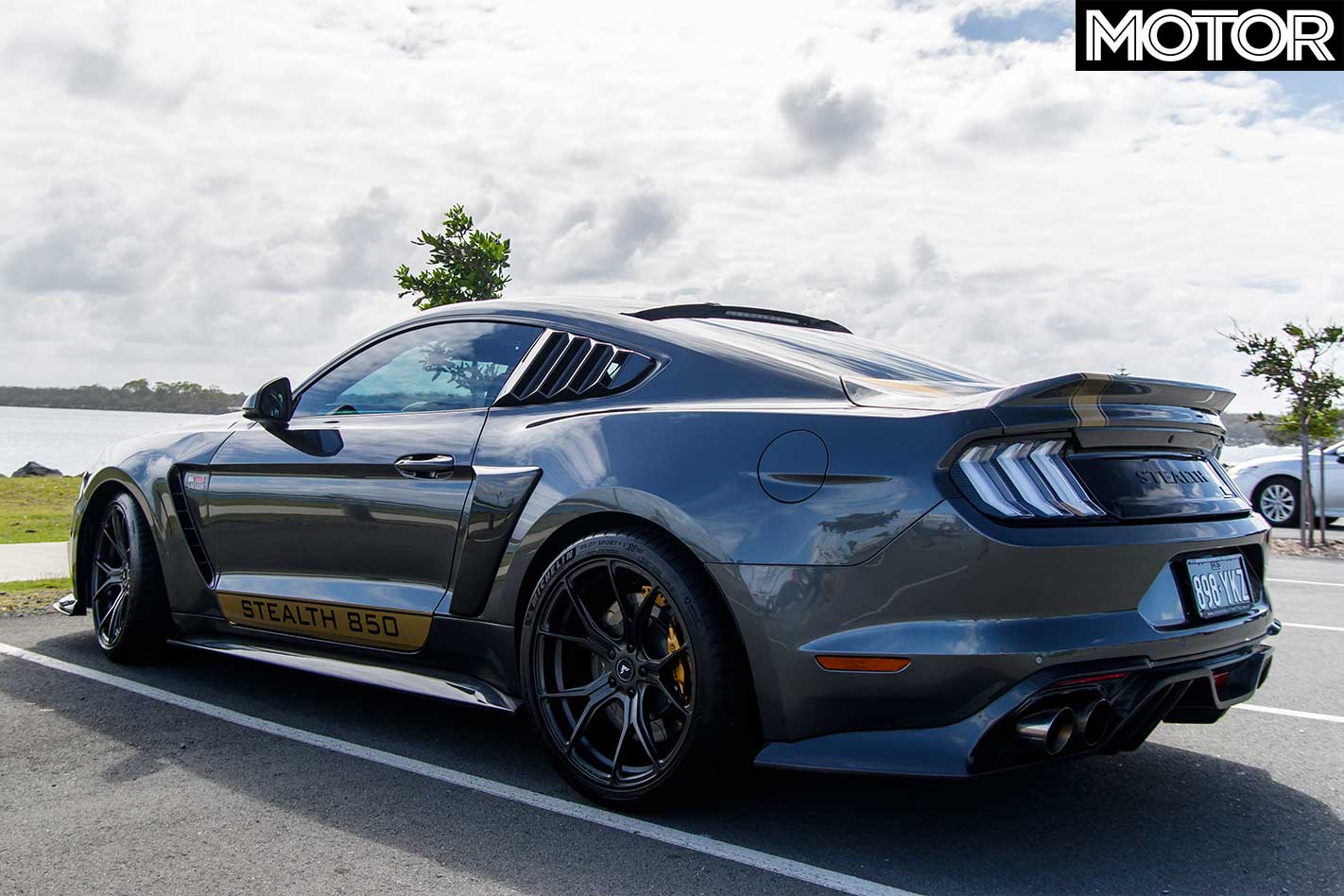
On top of that, with the help of, the ‘Stealth’ Mustang has copped a massive tune for 620kW.
“I built this mainly to show how much better you can get than a Shelby for the cost effectiveness. Everything on the car is top shelf, not Ford Performance like what you’d get on a Shelby,” says Selfe, a retiree living in South-East Queensland.
“No disrespect to Shelby, but I think they’re vastly overpriced for what they are quite frankly, and I’m just a bit of a perfectionist.”
In only a couple of months, Selfe had gone from owning a standard Mustang GT to having what you see in these photos – a pony with an extra 280kW-or-so.
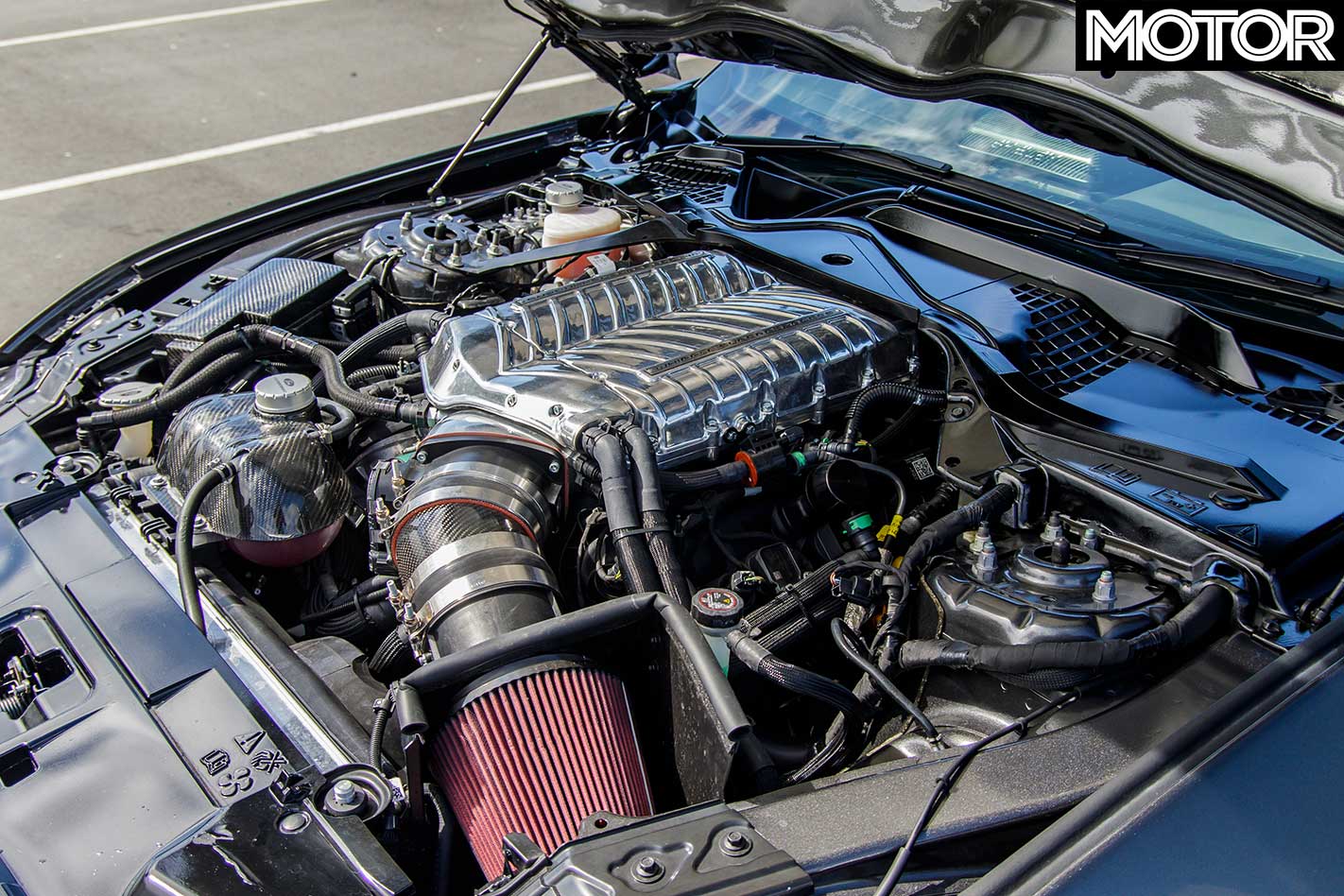
To achieve that, a 3.0-litre Whipple supercharger was installed as the centrepiece, with ceramic headers, a larger radiator, and two intercoolers to keep the engine running safe. Its carbon fibre driveshaft can handle up to (or just a little over) 1100kW.
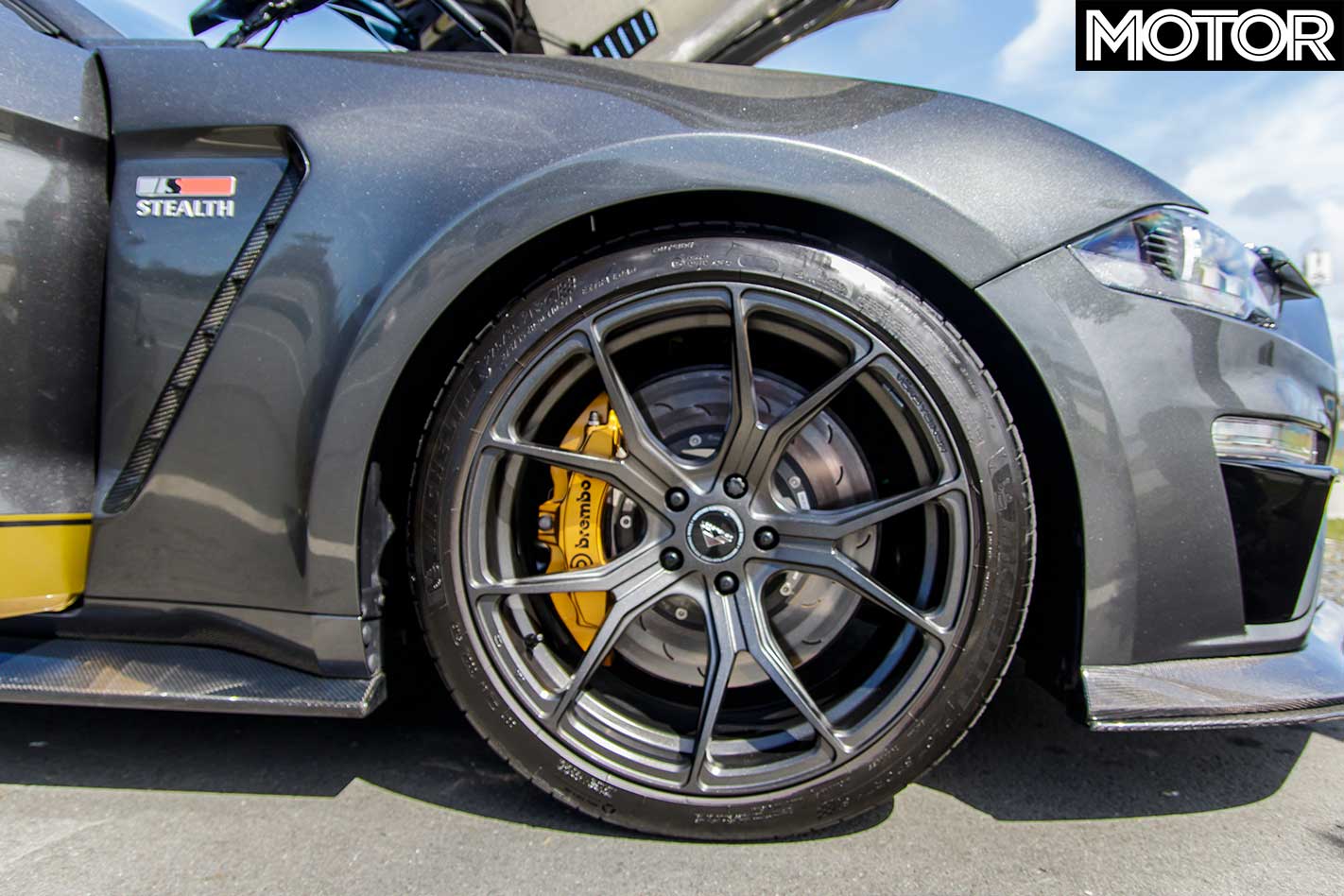
Large 380mm slotted two-piece rotors sit at the front, with six-piston Brembos at the ready, while 360mm rotors and four-pots are found at the rear.
Underneath, about $10,000 worth of suspension is found in the form of magnetic dampers and a completely re-bushed… well, everything. The subframe has also been replaced.
Despite the massive power, Selfe says the car was tuned by East Coast Customs to be easy to drive, with first and second gear being long enough to spread out the power and avoid getting loose.
“It’s got a genuine 837 horsepower, or 620 kilowatts, with 477kW at the rear wheels.
“It took about three months, and the reason for that is because of some holdups with parts.”
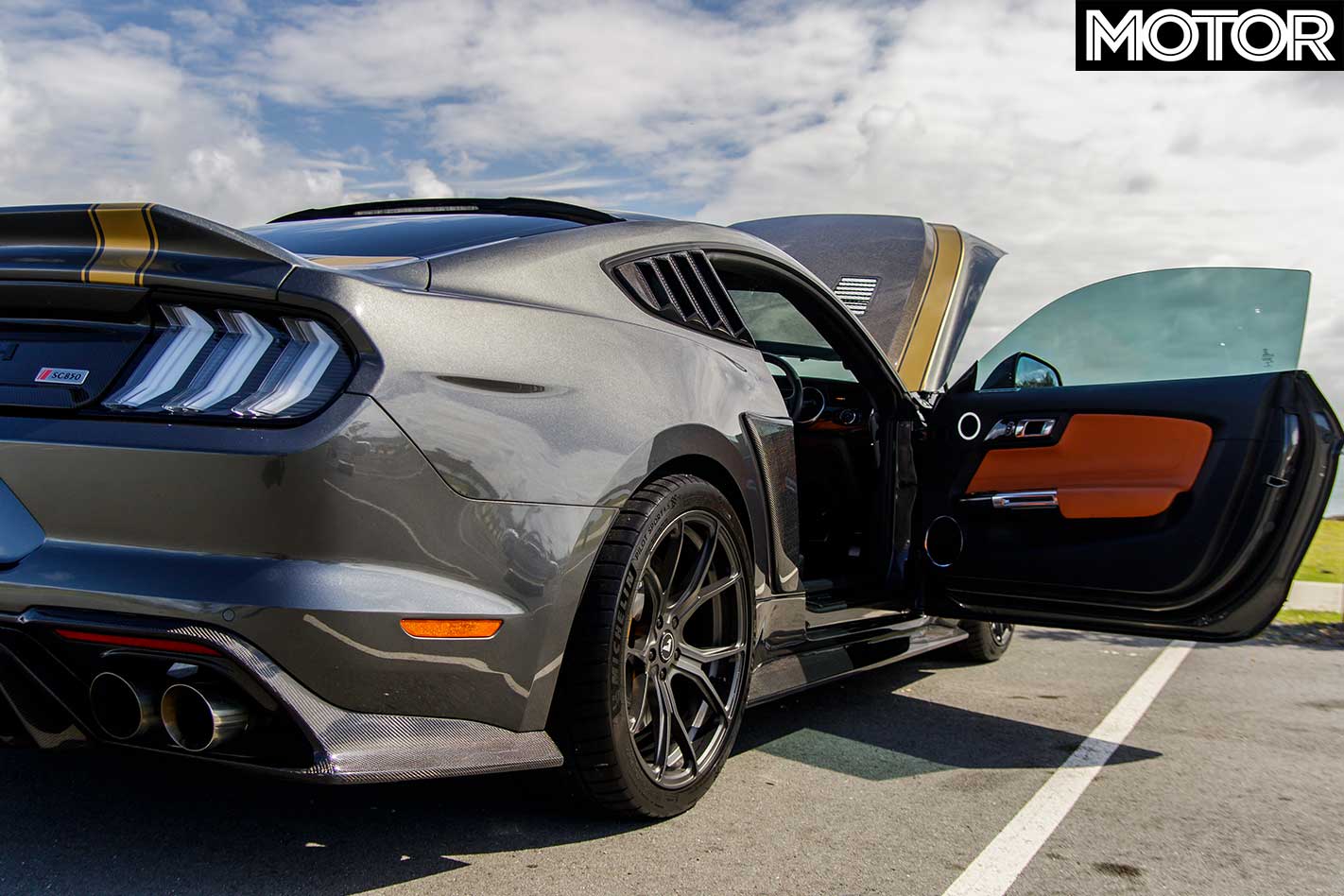
On the list of parts replaced with carbon fibre are the bonnet, front lip, lower grille, quarter panels, side skirts, the rear bar and diffuser, and the boot lid with a spoiler built into it.
There are more details, such as vents, plus the interior is also laden with the stuff – the dash and several trim accents in the cabin are carbon fibre too. Higher quality leather in Burnt Orange wraps the Recaro seats.
Selfe says he’s planning two build two more in the near future, though without quite as much of the carbon as this one. He says it’s still going to get the full performance treatment.
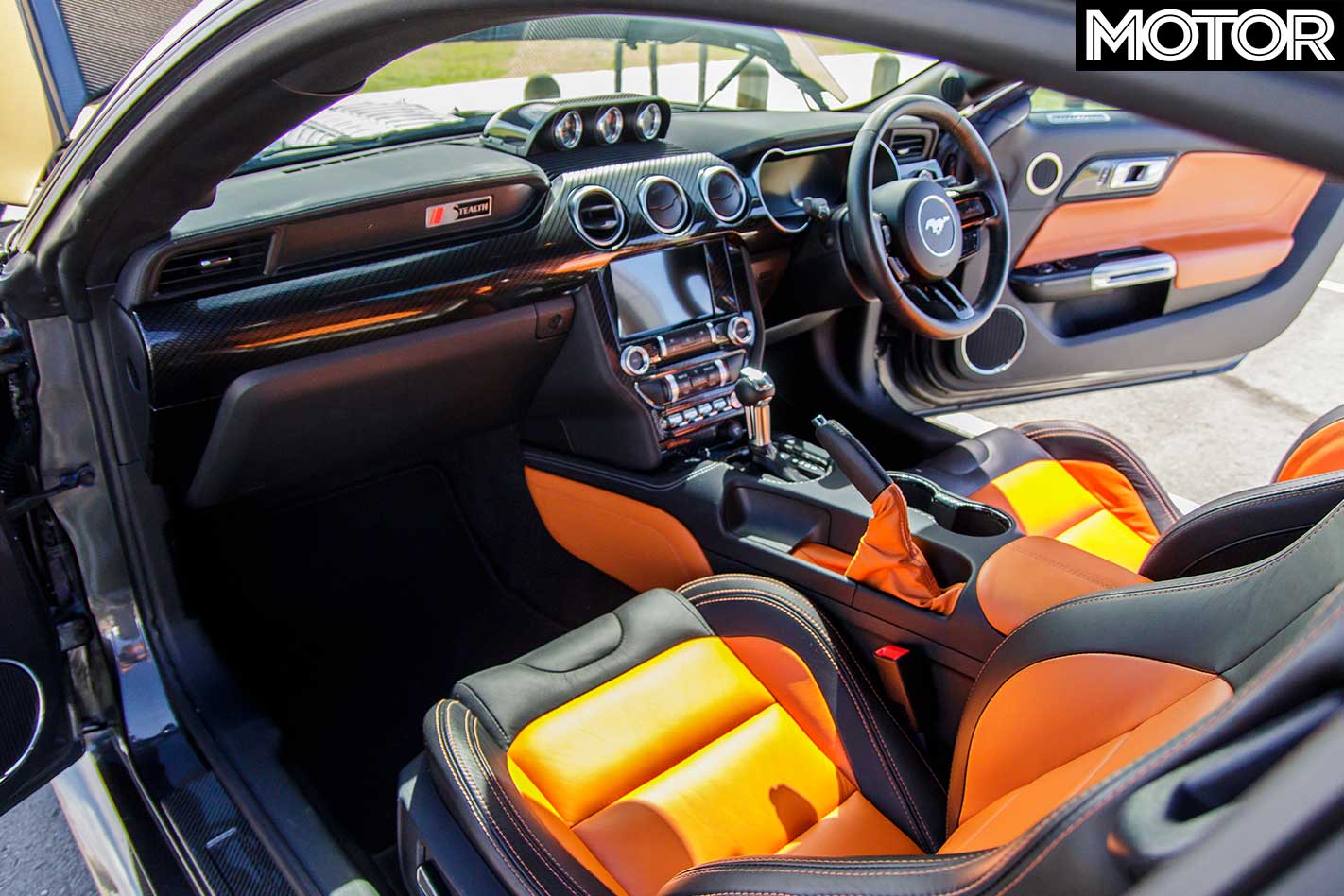
“I’ll finish the next one quicker, because I’ve ordered all the stuff from the States to be here before I start, before I’ve even bought the actual car.”
While he hopes the first one he built might be able to fetch back most of what he spent on it, Selfe says he’s aiming to put a much lower price on the next two cars.
“It’s cost me around $220K to build the first one, but if I can walk away with around $170K I’m happy.
“There’ll be two more. They’re cars that I hope to sell, and I’m definitely building them, but it won’t be all carbon fibre like this one.
“They’ll still have a lot of the leather, some carbon, and for those I’d be happy to get $130K.”
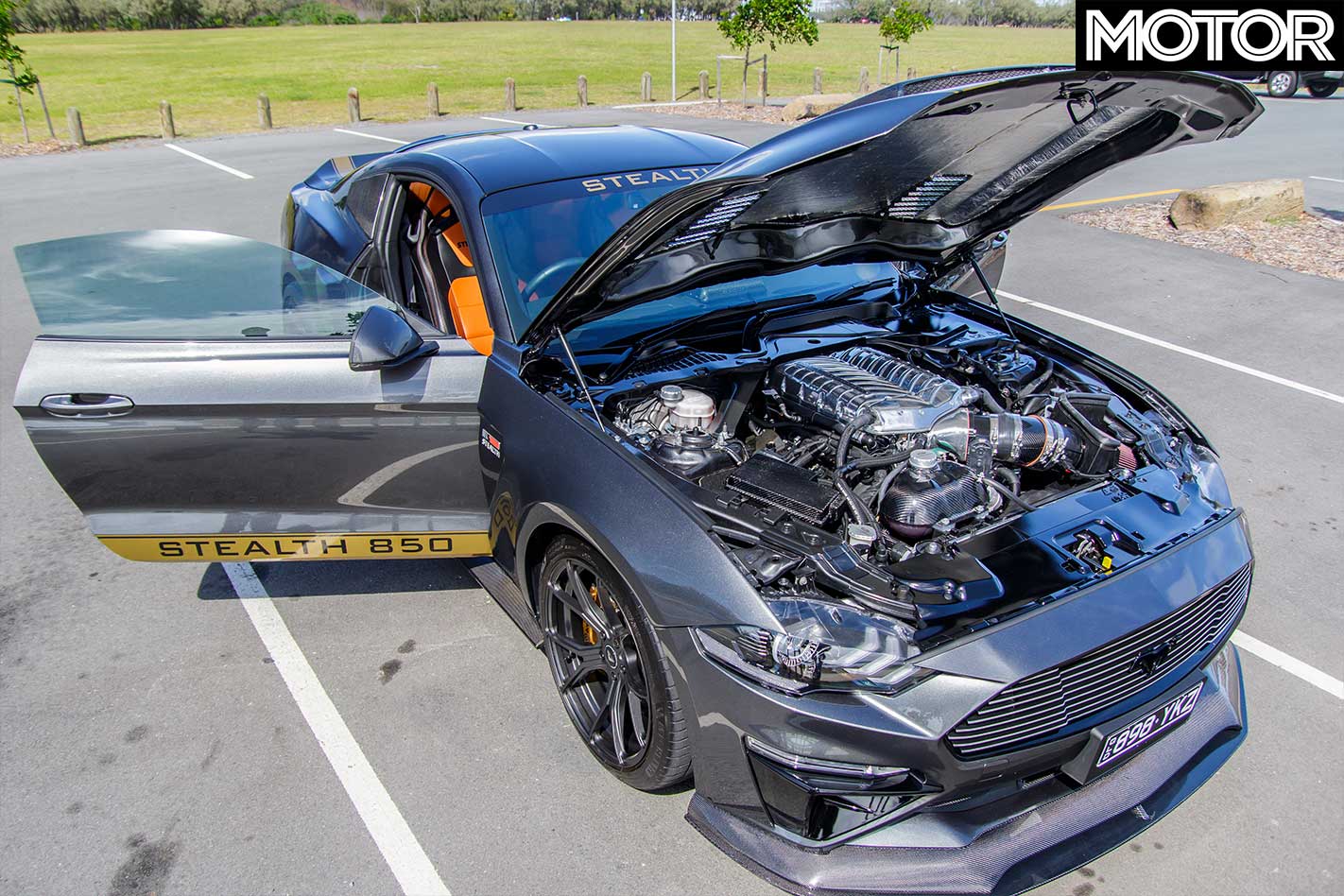
While Selfe says he’d be happy to break even, the financial outcome of the build isn’t really the goal.
“I’m not doing it for money, it’s just a labour of love.
“If the goal was to make money I wouldn’t be doing it. It just depends if people want me to build them.”
When Jaguar launched its facelifted XE sedan range earlier this month, there was an almost total absence of mechanical changes. Well, actually, there was one thing: you could no longer opt for a powertrain bigger than four cylinders in the regular XE road car.
The highly exclusive (and incredibly expensive) V8-toting Jaguar XE SV Project 8 doesn’t count.
Okay, so subtracting an engine may not technically count as a mechanical change per se, but the trimming down of the XE’s engine lineup means there’s now a sizable gulf between the new range-topping road car, the Jaguar XE P300 R-Dynamic HSE, and the $325K+ XE Project 8 (shown below) – which you can’t legally drive on the road in Australia anyway.
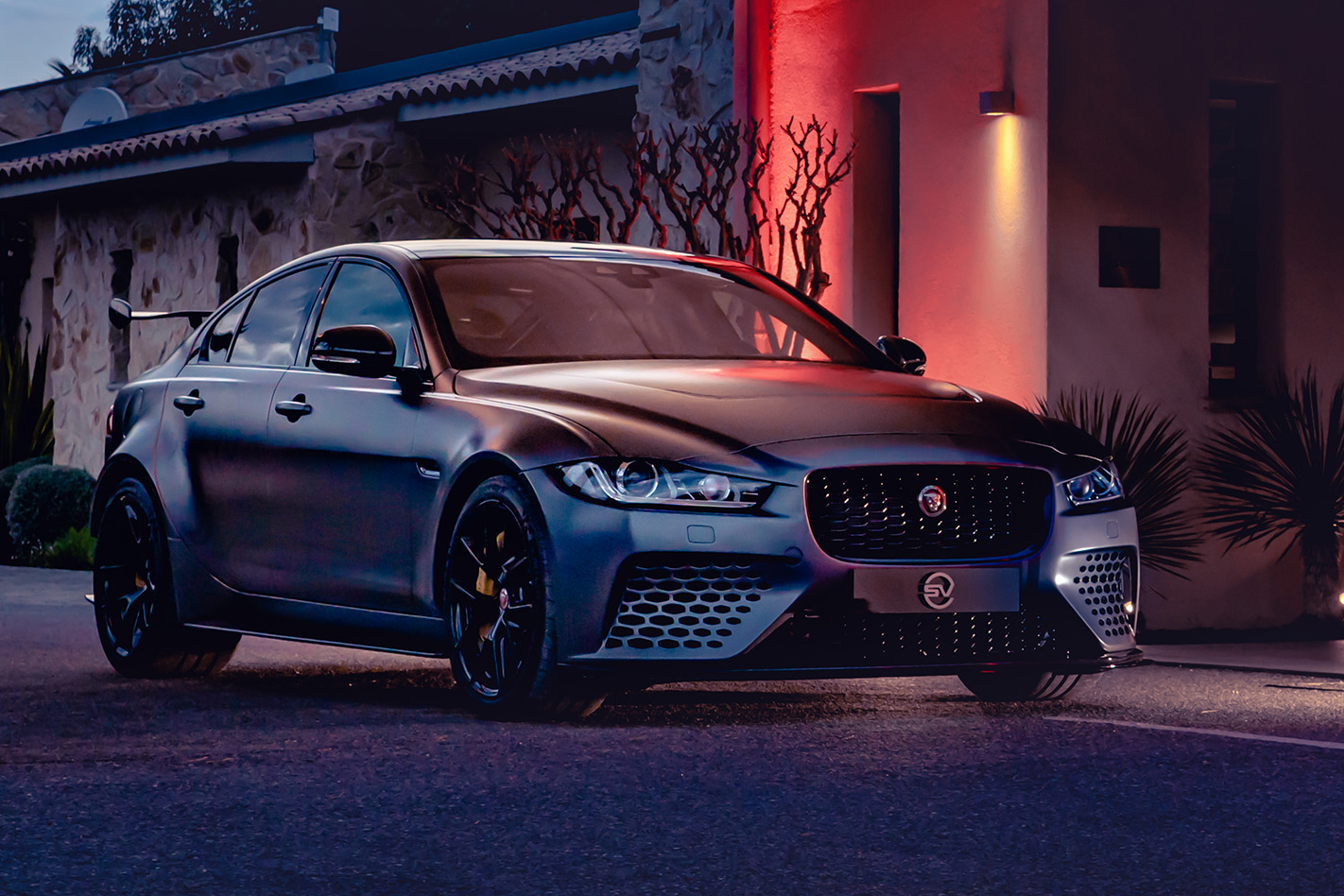
And it’s going to stay like that for the foreseeable. While German and Japanese rivals have either retained or expanded their six-cylinder options in the mid-size premium segment, Jaguar is content to leave that corner of the market alone for now.
An XE SVR, or even a more sensible mid-strength option using the newly-developed Ingenium inline-six, is not on the cards.
And according to Xuan-Zheng Goh, product manager for the XE, market forces have a lot to do with that. With the meatiest part of the midsize market being concentrated on four-cylinder models, Jaguar will aim to boost its volume where the buyers are first before it considers a foray into hotter, bigger-engined models.
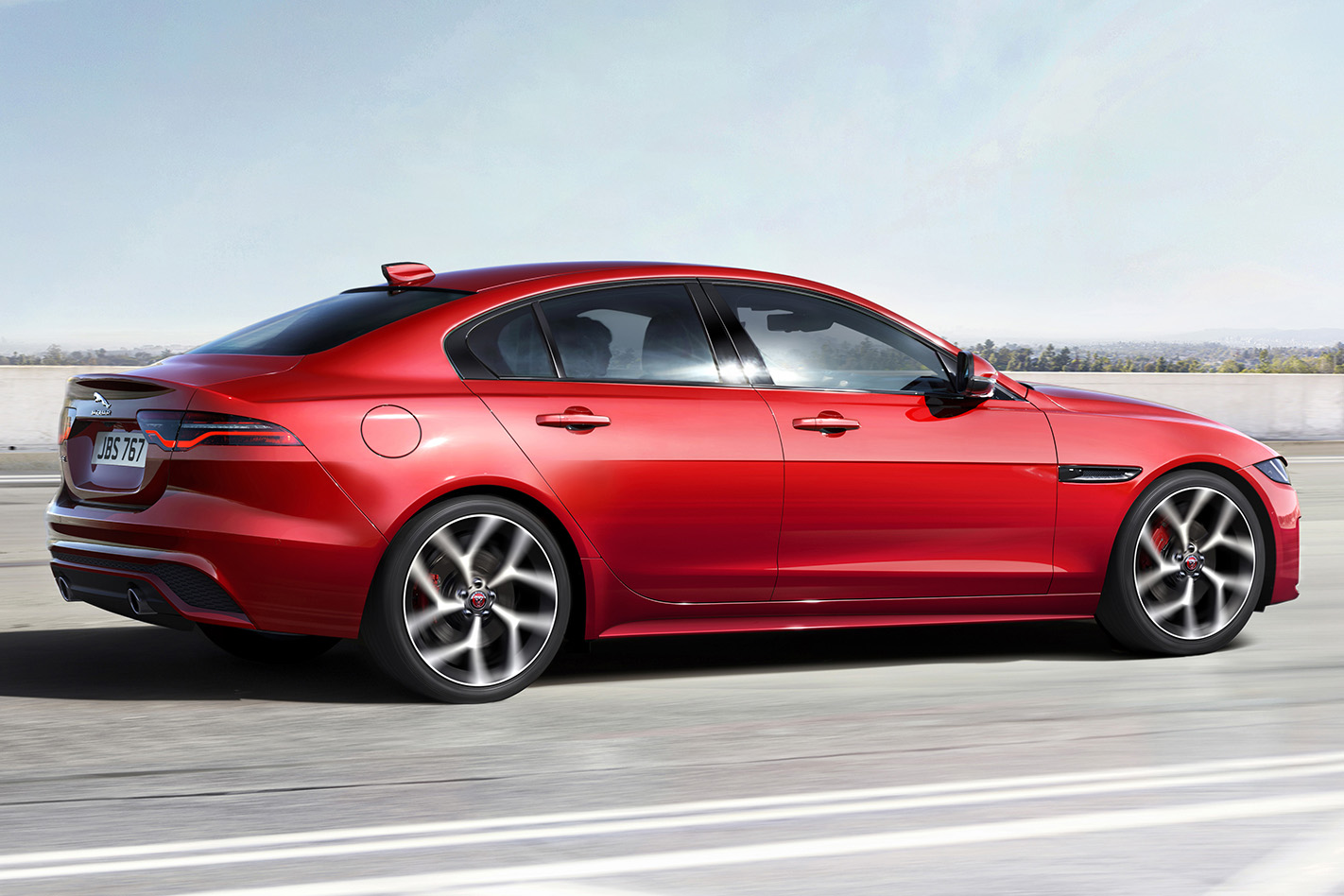
“We’ll look at opportunities in the future, but at the moment we’re focused on the majority of the market.” Goh said to WhichCar at the 2019 Jaguar XE’s international launch in France. “With the [four-cylinder] powertrain lineup that we’ve got we’re confident that we’ve covered that market.
“If there’s a particularly strong market request we’d examine these things and other opportunities, but so far we’ve found the overall mix of six cylinders globally is diminishing and we’re confident that the P300 powertrain is more than a match for some of the competitors.”
“Project 8 shows what this car is capable of and what the nameplate is capable of, but at this time there’s no plan for something that bridges that gap. We’re focused on trying to make sure the core vehicle is acceptable.”
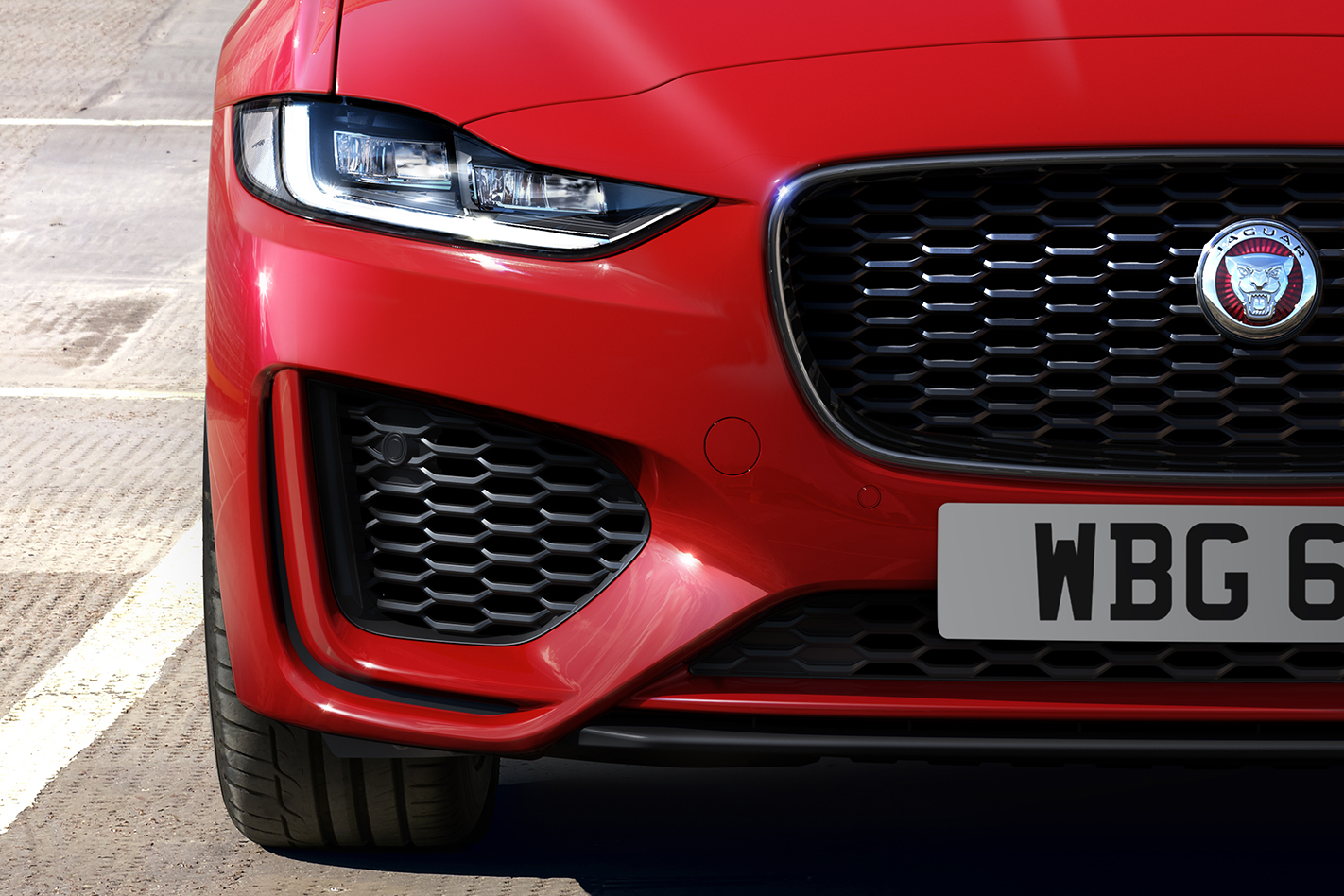
But if you were hoping that a hotter XE would follow once that core requirement was satisfied, the Project 8 holds a clue as to why that probably won’t be the case. The Project 8, as bewilderingly fast as it is, is a highly bespoke creation, hand-built around heavily modified XE underpinnings because there’s simply no way to jam that 5.0-litre supercharged V8 into a standard XE’s body-in-white.
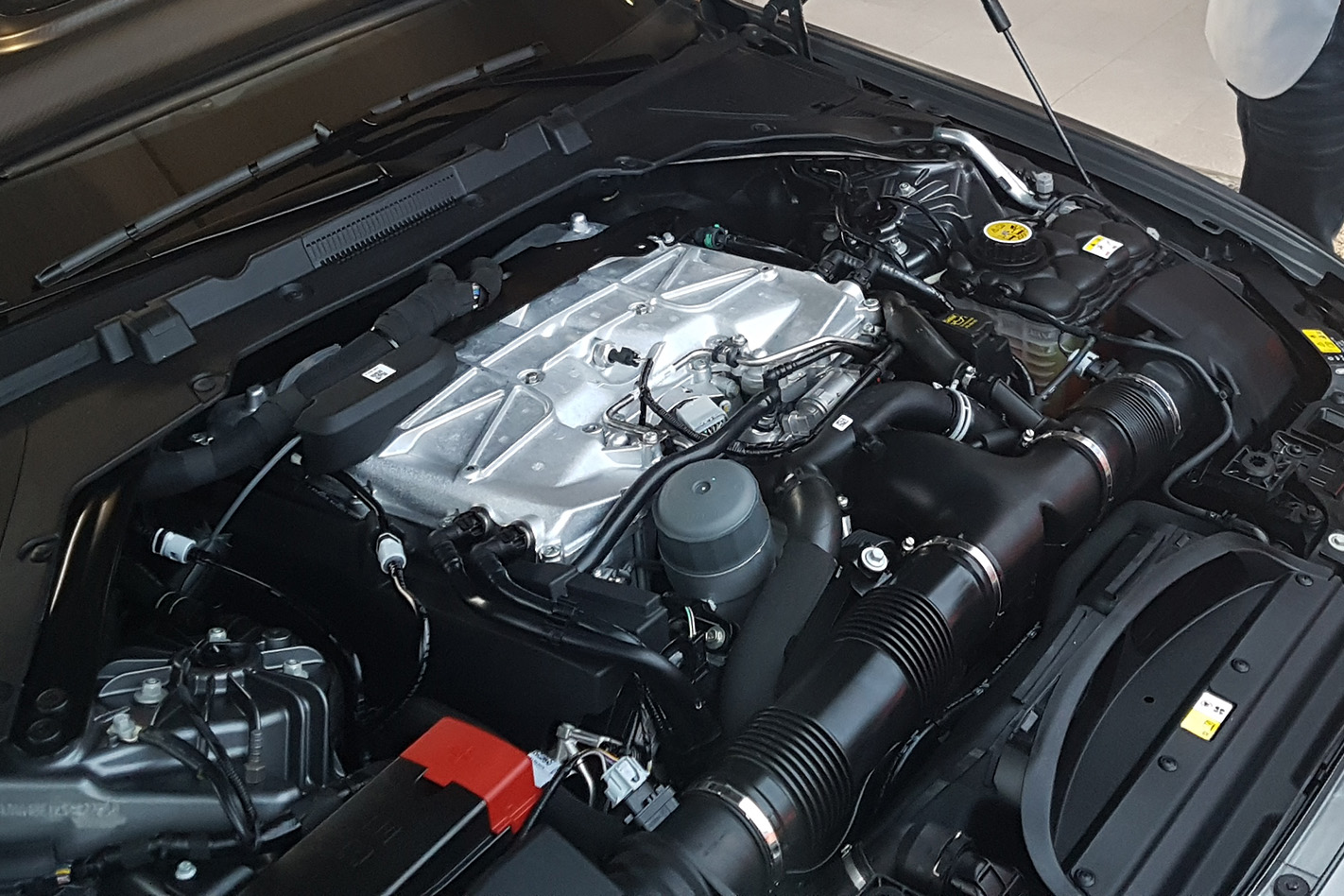
And it all comes down to the firewall. On the Project 8, it’s been modified to allow the engine, its exhaust manifolds and bellhousing to actually fit between the radiator and cabin. V8s are generally not all that much longer than the average four-cylinder, but the standard XE’s engine bay is surprisingly confined.
Below is what the Project 8’s engine looks like when installed – there’s really not a lot of wriggle room.
“So what?” you say. “Jaguar has already put a six-cylinder in the XE before, why not just turn up the wick on that one?”. A valid point, but like we said earlier that 3.0-litre supercharged V6 hasn’t made it into the facelifted XE, leaving the P300-spec 221kW 2.0-litre turbo four-cylinder as the most powerful engine in the range.
Why was it deleted from the lineup? We don’t know, but it might have something to do with Jaguar tooling up for its all-new Ingenium inline six (below), a more modern turbo engine that shares its basic architecture with the P300’s four-pot.
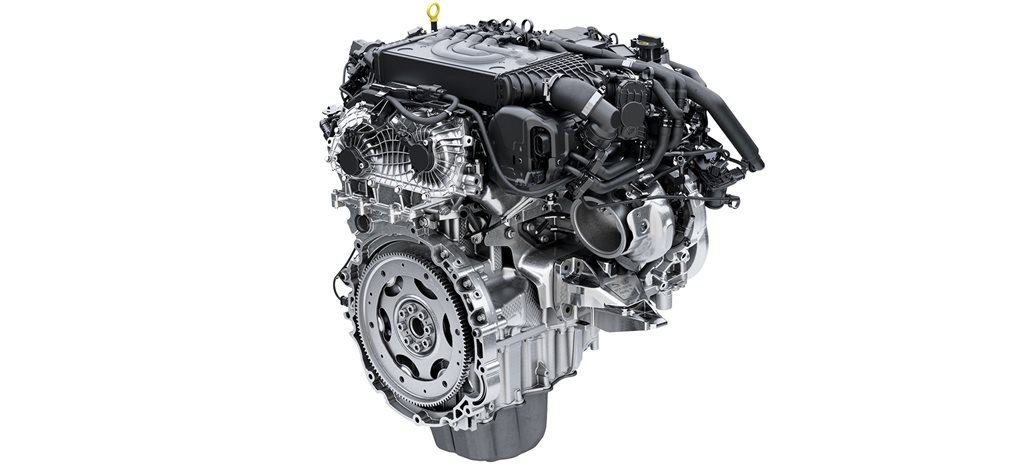
The only problem is it’s even longer than the Project 8’s V8 and it’s taller, too – shoehorning it into a regular XE engine bay while keeping adequate clearance to the firewall, radiator and bonnet seems like it’d be physically impossible.
And that’s a shame, because right now the 3.0-litre Ingenium inline six produces as much as 294kW and 550Nm in mild-hybrid form, a handy increase over the old supercharged V6’s 280kW and 450Nm.
Dropping that kind of mechanical muscle into a fine-handling sedan like the XE would no doubt create a potent rival for the likes of the Mercedes-AMG C43, BMW M340i and Audi S4.
Yet while it’s unlikely that the regular XE range will receive anything more potent than the P300-spec four-cylinder, with the XE now more than halfway through its lifecycle the door remains open for its successor to return to six-cylinder motivation.
Provided Jaguar builds it with a longer engine bay, that is.
An election is looming and the leaders of the two major parties, Scott Morrison and Bill Shorten, have clashed over electric cars during the first televised debate of the campaign.
Electric cars have become a core point of difference between the two parties, with the Australian Labor Party (ALP) announcing that they want 50 percent of all new car sales to be electric by 2030. It remains unclear whether the policy is lumping electrified vehicles (i.e. hybrids) in with electric cars.
The Coalition dubbed the policy a ‘car tax’ that would force Australian customers to pay more for vehicles.
It was also falsely claimed that Labor’s policy would result in the death of dual-cab utes, with Small Business Minister Michaelia Cash stating: “We are going to stand by our tradies and we are going to save their utes.”
Shorten was asked during the debate what the price of a new Nissan Leaf was, with the ALP leader responding,”I haven’t bought a new car in a while so I couldn’t tell you.”
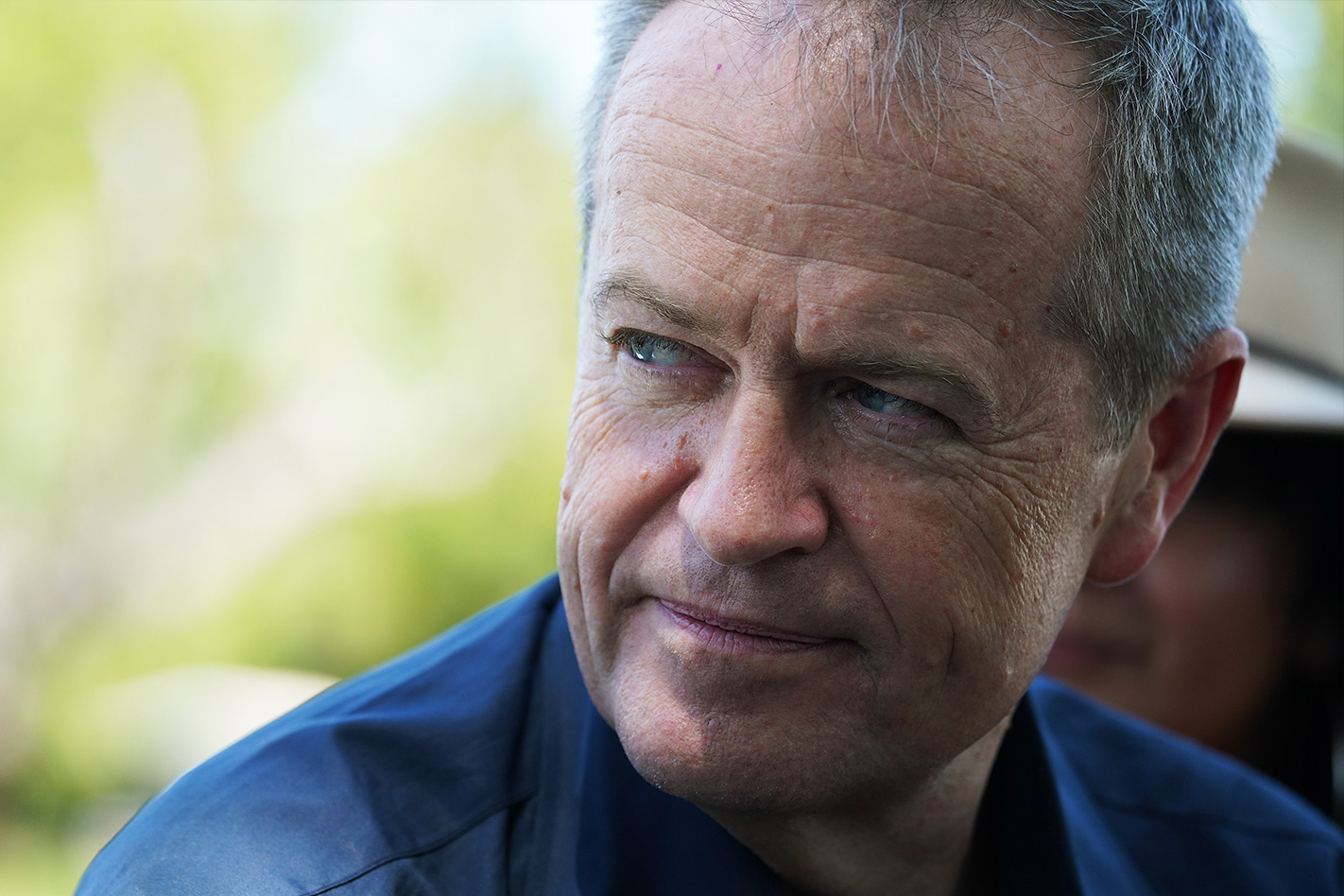
Morrison then interjected with: “I can tell you how much [more an] electric car costs than a standard car: it’s $28,000. It’s $28,000 [more] for the same type of car.”
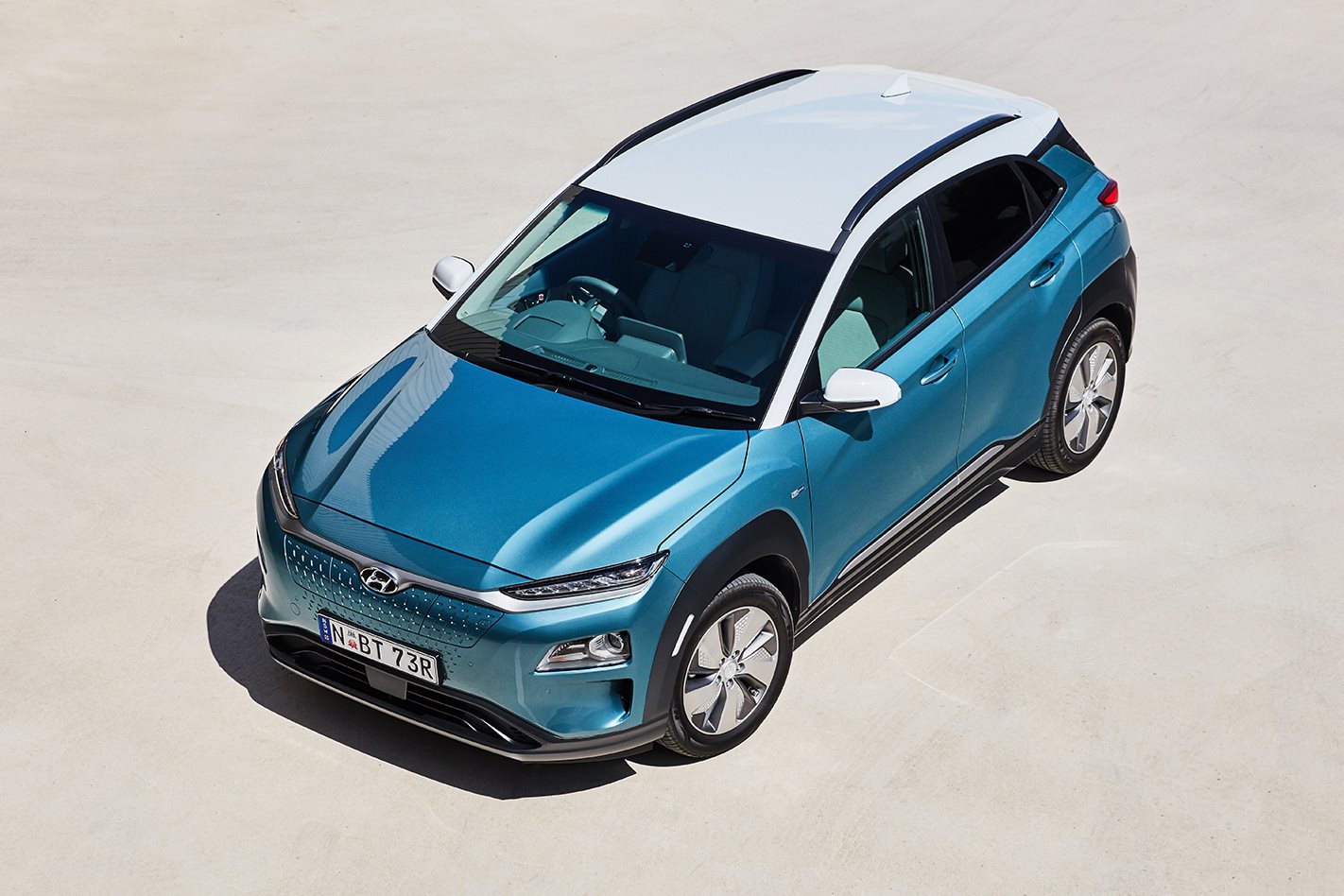
The only direct comparison between electric and combustion-powered models in Australia is the Hyundai Kona, which is sold in both purely petrol and battery-powered variants.
EV Konas are available in two specification grades, Elite and Highlander, costing $59,990 and $64,490 respectively.
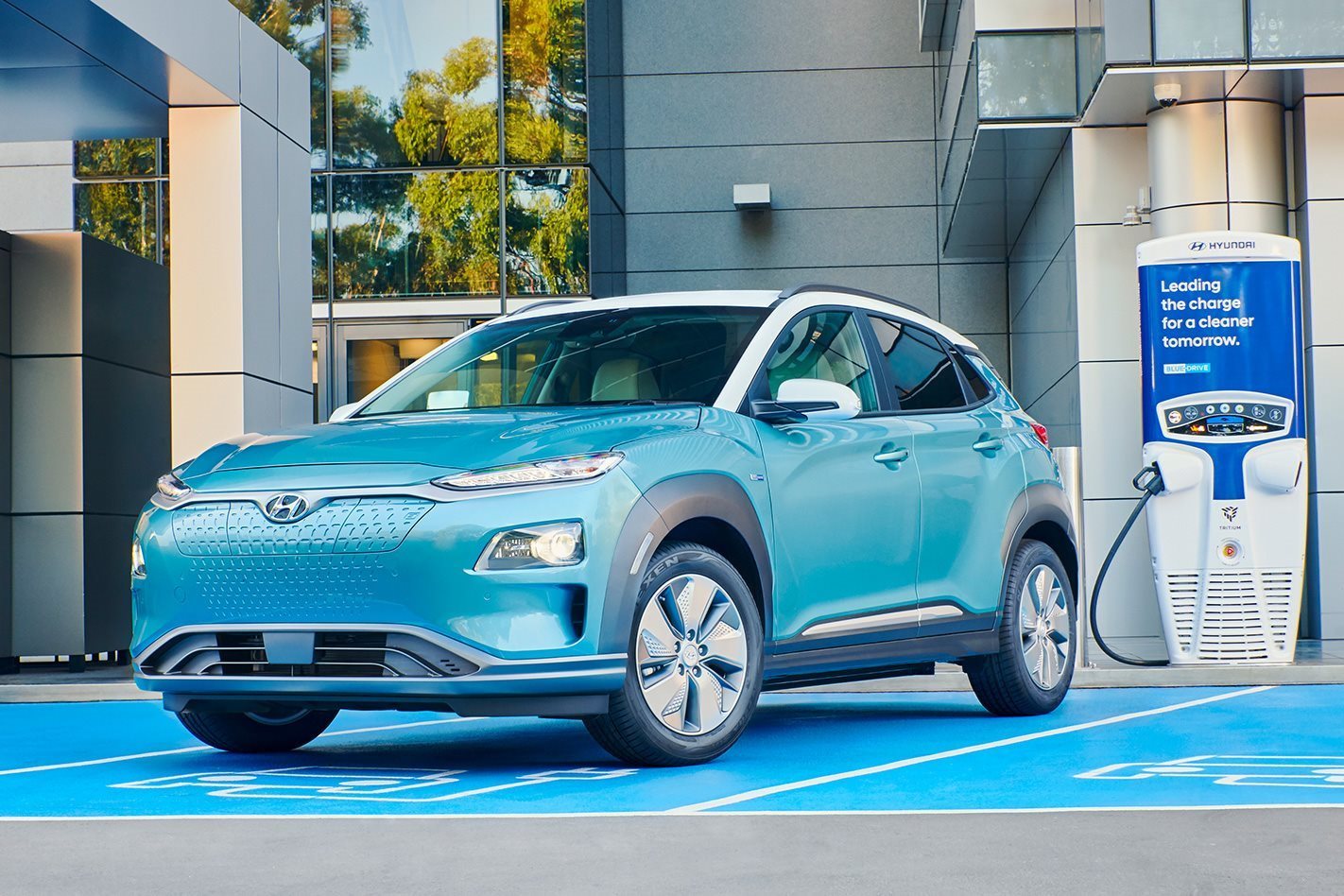
Petrol-powered Konas are available with a 2.0-litre naturally aspirated engine or a 1.6-litre turbo.
The cheapest of the two combustion-powered Kona Elites costs $29,500, while the turbo wears a $33,000 sticker.
The Highlander petrol starts at $35,500 for the 2.0-litre, and the 1.6 turbo version at $39,000.
Price variations between the petrol and electric Konas are $30,490 and $26,990 for the Elite, while a battery-powered Highlander is $28,990 and $25,490 more expensive.
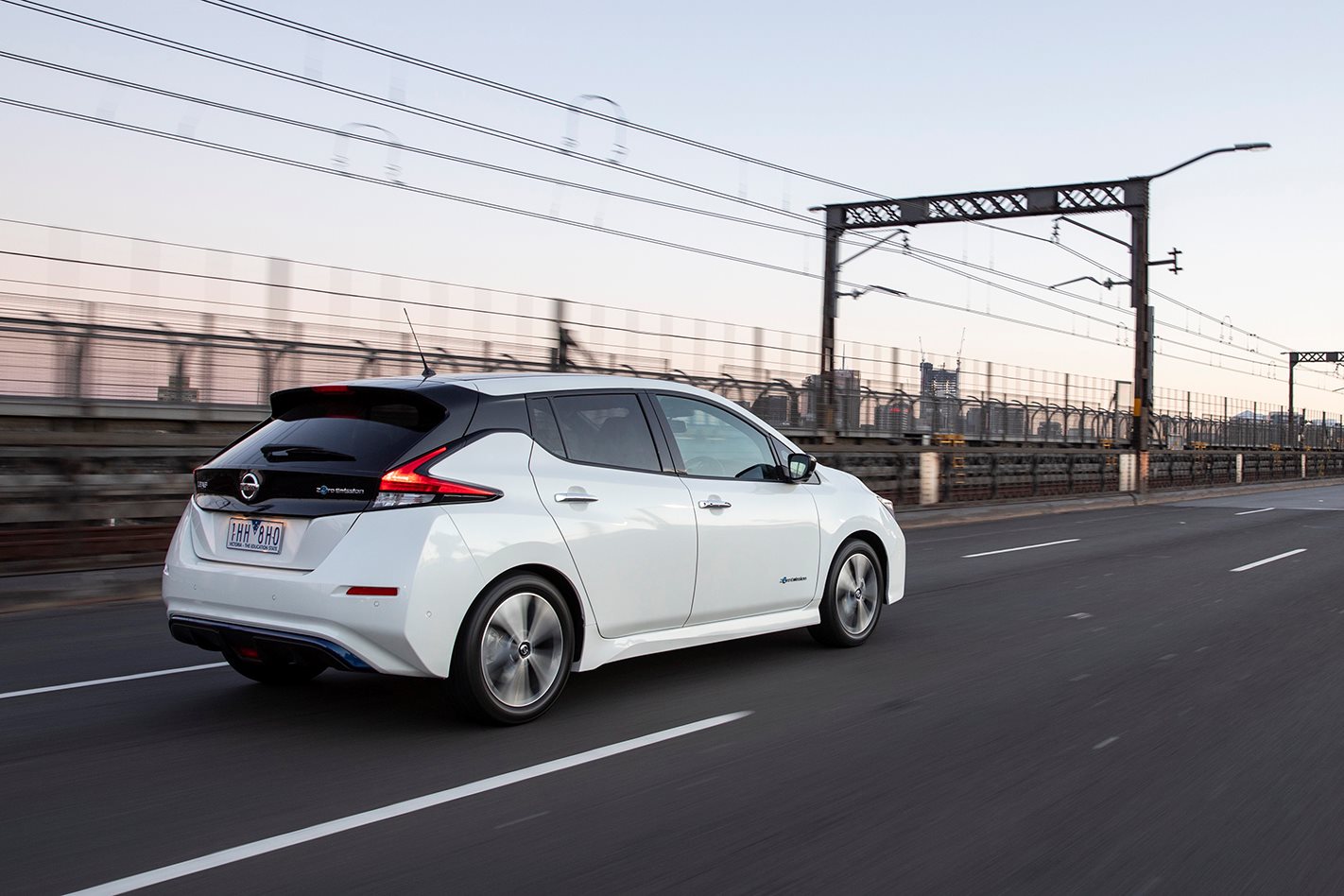
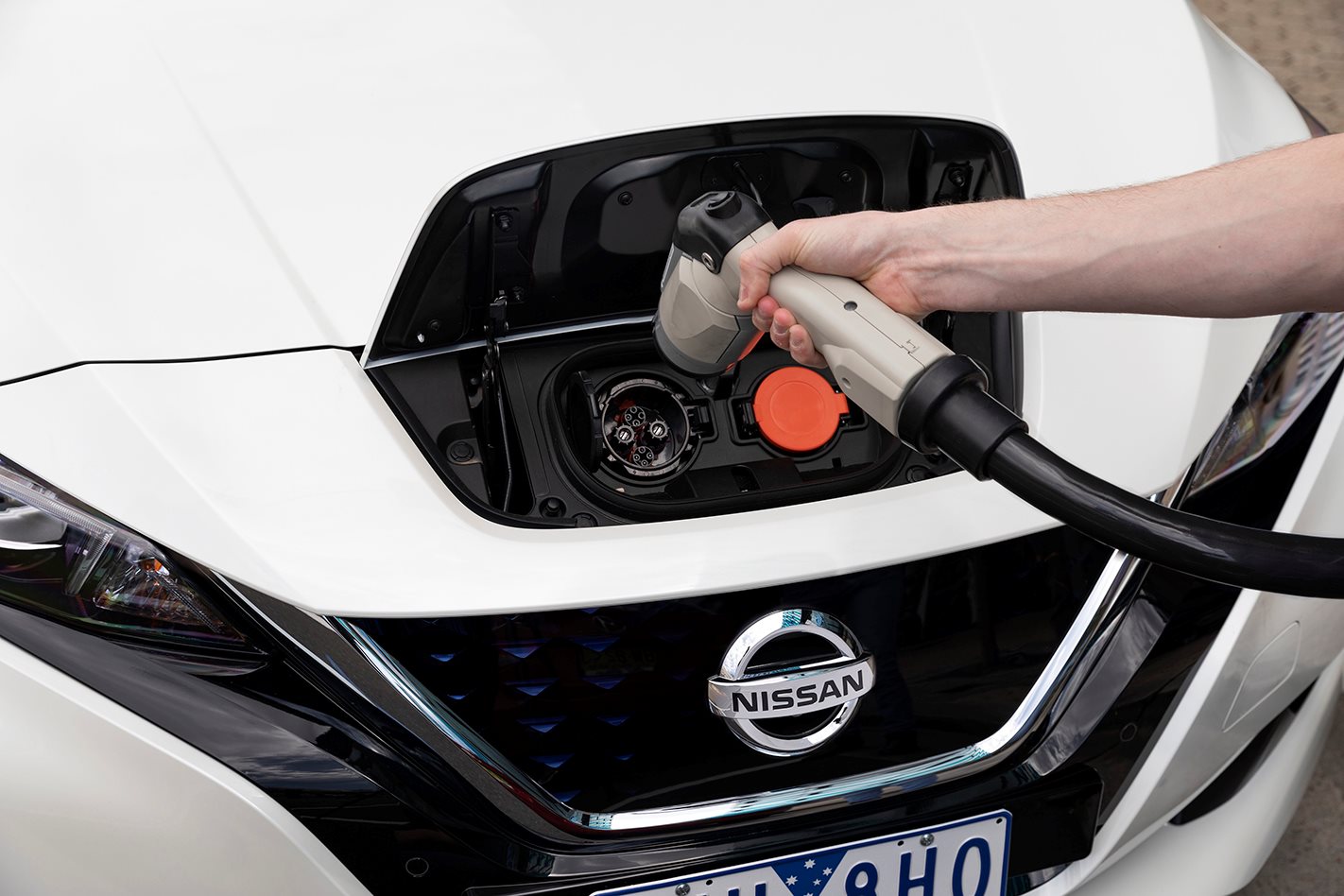
The new Nissan Leaf goes on sale in Australia later this year for $49,990. Nissan does not sell an equivalent combustion-powered hatchback in Australia.
However, the Leaf (which will be sold in a single high-level spec) is comparable in size and equipment to the Toyota Corolla ZR, Volkswagen Golf 110TSI Highline and Mazda3 G25 GT
The ZR is available with either a 2.0-litre naturally aspirated engine ($30,370) or as a hybrid ($31,870), meaning Australia’s second-best-selling small car is between $19,620 and $18,120 cheaper than the Leaf.
Leading the small car category in terms of sales is the Mazda3, with the G25 GT the Mazda spec closest to the Leaf costing $34,490, making it $15,500 cheaper. The Golf 110TSI Highline, at $35,990, is $14,000 cheaper than a Leaf.
The cheapest electric car you can buy in Australia is the Hyundai Ioniq, which starts at $44,990. The Ioniq is also available as both a conventional and a plug-in hybrid that uses a 1.6-litre petrol engine in conjunction with batteries. These variants are $11,000 and $4000 cheaper than the purely electric spec.
Hyundai’s similarly-sized Elantra sedan will set buyers back $30,490 for a similar level of equipment.
Moving away from the lower-priced models, the Jaguar I-Pace and Tesla Model X 75D are both fully electric luxury SUVs that cost $119,000. A combustion-powered rival such as the Mercedes-Benz GLE ranges from $92,000 to $193,500. While you can achieve similar levels of specification at the bottom end of the GLE range, it would require the more hardcore (and expensive) AMG variants to compete with the electric SUV on performance.
Combustion-powered cars become more expensive than electric equivalents at the very top of the range, with Tesla’s Model S P100D flagship costing $196,200, compared to its high-powered German rival the Mercedes-AMG E63 S, which costs $239,611. A non-S model is available for $30,000 but is less powerful.
Comparing prices of combustion and battery-powered cars is an imperfect science, with few direct comparisons. It requires a nuance not allowed by today’s political discourse, let alone a televised leadership debate.
What on-the-paper reading of price also omits is the resale value and ongoing costs associated with maintenance and insurance, which differ from model to model, along with the cost of fuelling or charging the vehicle throughout its life.
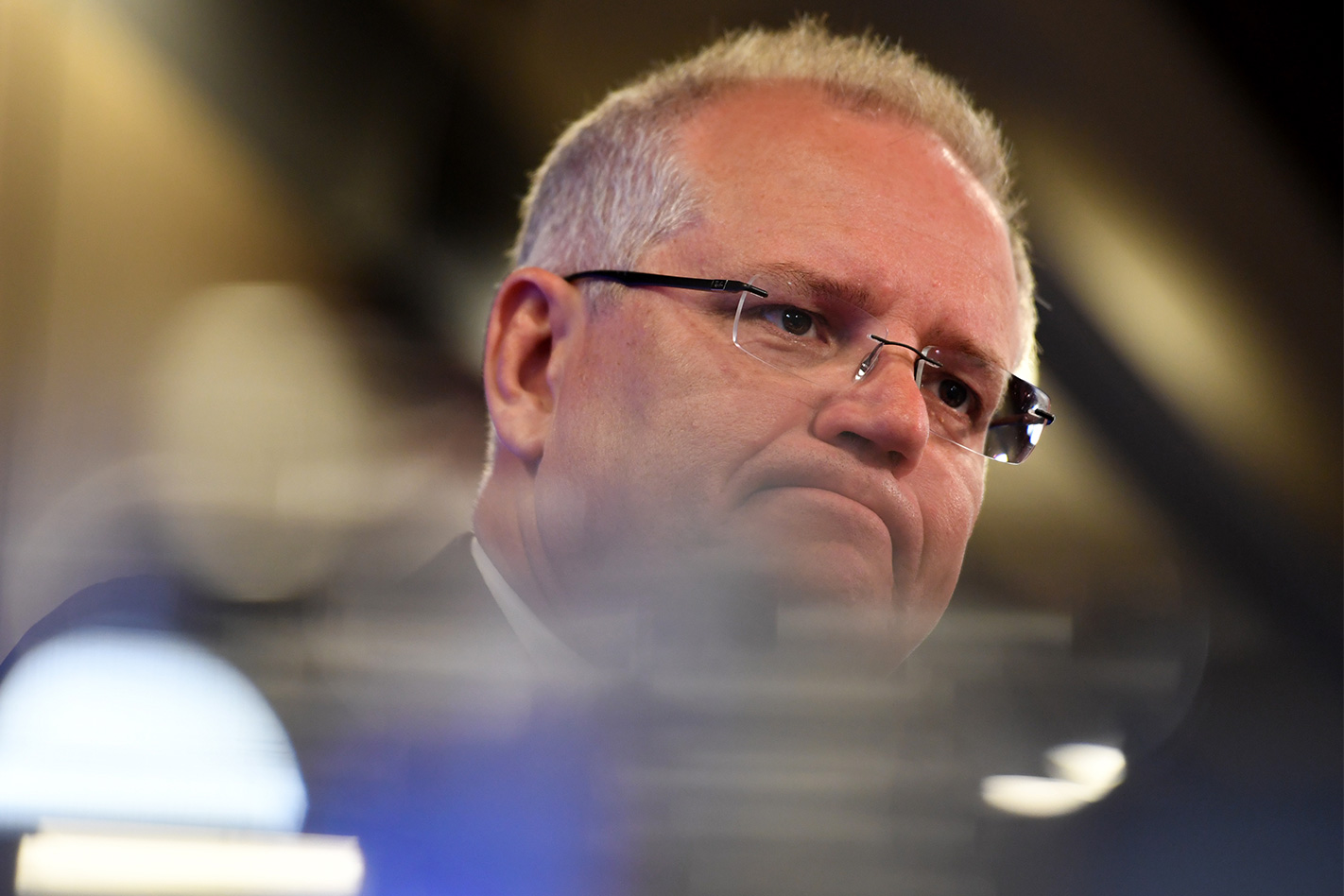
Following Morrison’s interjection, Shorten continued to explain the ALP’s policy.
“The problem is, it is very hard to buy cheap electric cars in Australia, because we don’t have a proper market for them; because we don’t have the charging stations, and because we have a government stuck in the past,” he said.
“Let me just clear up a couple of the nonsenses that we have already heard in the election, and in some parts of the media, I might add. What we would like is 50 percent of new cars [sold be electric]. It is a target, that if you want to buy an electric car that we have a proper market.
“We are not going to tell you to give in your ute, we don’t mind what car you buy. But the rest of the world is moving toward electric cars, they are getting cheaper. Why should we deny Australian customers cheaper petrol bills and cheaper cars?”
A new road conditions-reporting technology that will put money in your pocket as you drive is currently being trialed by Jaguar Land Rover. It’s known as ‘Smart Wallet’ and uses cryptocurrency technology to reward drivers who contribute live-time reports about traffic jams, potholes and other issues.
It’s all part of the “Internet Of Things” concept. The ability to report things like roadside hazards is nothing new; Google-backed map app Waze, for example, has already incurred the wrath of police forces in the US for allowing drivers to report the locations of radar-detected speed traps and the like.
But the Smart Wallet system which is currently on trial out of Jaguar Land Rover’s engineering base in Ireland takes the notion a step further and aims to actively reward drivers who contribute to a mapping network, the end goal being a reduction in traffic volumes in key areas through the sharing of road information between cars.
The data shared by participating cars will also provide real-time intelligence on road conditions and help to achieve JLR’s Destination Zero strategy. The strategy, which is also applied to the company’s factories and other facilities, aims to reduce congestion, emissions and accidents to zero over time.
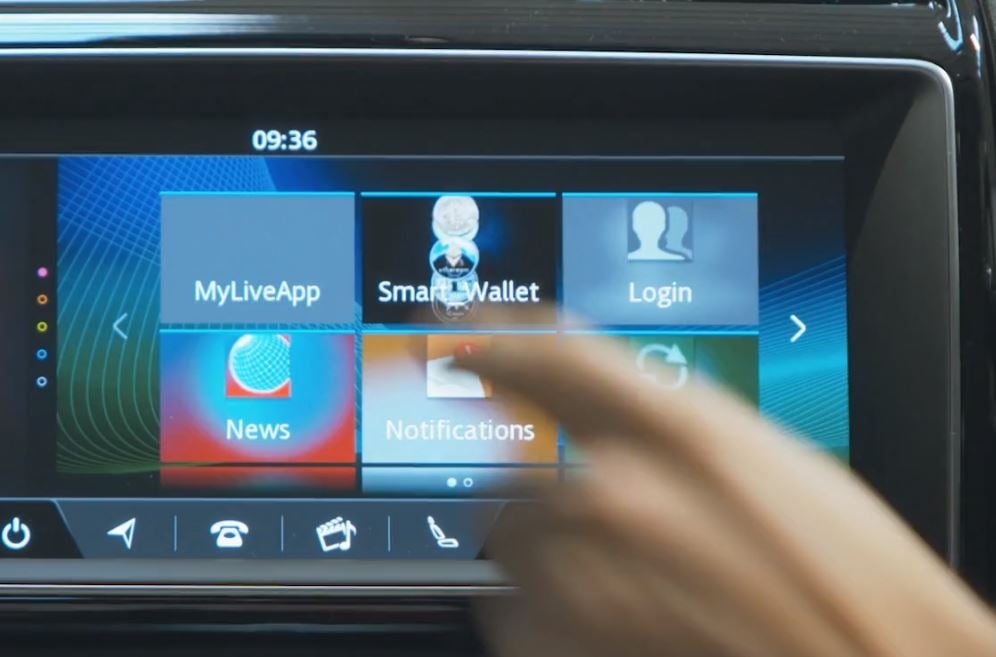
JLR says that the currency earned by reporting on-road hazards will be directed to the driver’s ‘virtual wallet’, which can then be used to pay for tolls or even for goods and services like coffee, all without transaction fees coming back to the driver. It could even be used to pay for the power used for vehicle charging.
“In the future, an autonomous car could drive itself to a charging station, recharge and pay, while its owner could choose to participate in the sharing economy – earning rewards from sharing useful data such as warning other cars of traffic jams,” said JLR software architect, Russell Vickers.
The system is currently installed on a number of test vehicles, including the Range Rover Velar and Jaguar F-Pace.
The Smart Wallet itself uses an emerging technology known as a ‘distributed ledger’, which essentially removes the need for a single database to reconcile transactions. Sound familiar? It’s the same ‘blockchain’ principle that many cryptocurrencies like Bitcoin are built upon, except instead of sharing information about the amount of currency transferred, it’s information about road and traffic conditions that’s shared.
The car company has teamed up with the IOTA Foundation, which says that the distributed ledger system is designed to process fee-free micro-transactions in a secure environment, and which could eventually extend to a projected 75 billion devices by 2023.
Do you reckon getting paid to drive will work in Australia? And how much do you think is fair? Tell us in the comment section below!
If you caught episode 14 of WhichCar TV, you would have seen Dan and Andy take an Alpine A110 and a BMW M2 to one of Australia’s most beautiful – but at times sketchy – ribbons of tarmac: the Great Alpine Road in Victoria.
While it is nothing compared to the below five passes and highways which are considered the most dangerous in the world, the 303-kilometre stretch of undulating hills, hairpins, blind curves and fast elevations from Wangaratta to the Gippsland region, via the Victorian Alps, is one of the most scenic in Australia – not to mention a favourite for car enthusiasts.
The Great Alpine Road, like Stelvio Pass, Highway 1 and Furka Pass are roads known to car lovers wanting a thrill. But for the adrenaline freaks who seek to skyrocket their heart rate and challenge their mortal fate (and driving skills), here are some of the wildest and lesser-known road trips in the world.
But be warned, you’ll need nerves of steel, a clean set of underwear and a decent set of tyres.
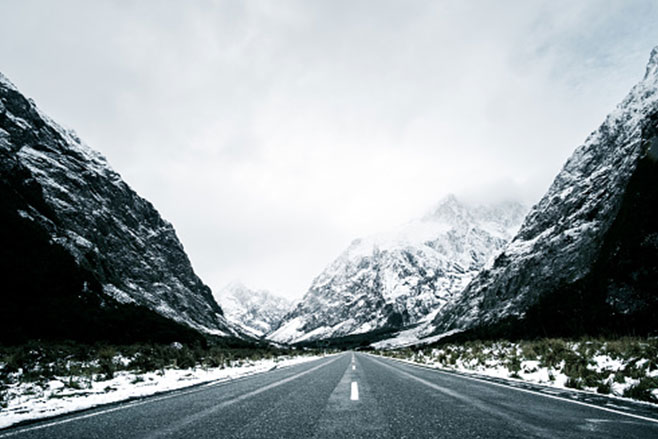
Milford Road, New Zealand Located deep in the beautiful Fiordland National Park in New Zealand’s south island, this snowy road is over 120kms long, stretching from Te Anau to Milford Sound, into the heart of the Te Wahipounamu World Heritage area.
The road passes through incredibly scenic sports like the Eglinton Valley, Mirror Lakes, Earl Mountain and the Avenue of the Disappearing Mountain. Milford Road has a peak elevation of 940 metres above sea level, with much of it having been carved out of solid granite in the 1920s and 40s.
Not only is it a dramatic drive of snowy summits, waterfalls, cliffs, tunnels and remote terrain straight out of a fantasy film, is it also one that should be treated with caution as Milford Road is prone to avalanches, ice and dark, narrow stretches with poor visibility and tour bus traffic in both directions.
Preparation including snow tyres and/or chains in winter (and a clear head all year round) is advised.
Read more: Blue Mountains Road Trip: 5 unmissable stops
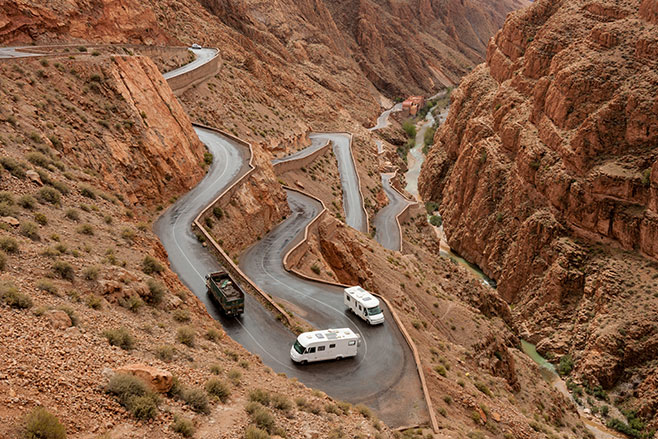
Tizi n’Tichka (or Tichka Pass), Morocco As we learned taking the new Volkswagen Touareg for its first drive across Morocco via this exact route, this high mountain pass with an elevation of 2260m is one of the most manic roads in the world.
This is especially true for those heading south in the late afternoon, where you’ll need a calm disposition in order to dodge frantic, speeding locals and truck drivers that appear to have a death wish.
Winding through the Atlas Mountains, from Marrakesh to Ouarzazat toward the Sahara, and passing the magnificent UNESCO World Heritage site of the ancient Kasbah Aït Benhaddou (where Lawrence of Arabia, The Sheltering Sky and Gladiator were all filmed), the Tichka Pass is a true mixed bag of stunning scenery – snow-capped mountains, ancient sandy towns, rocky cliff faces and close, twisting turns (more than 100 of them, to be exact).
Parts of the road have recently been updated, so it isn’t in as much ruin as it once was, however, due to the ongoing roadworks, it’s not uncommon to hit minor flooding and rocky patches.

Death Road, Bolivia As the name ominously suggests, this was once one of the world’s most dangerous roads. Before a new highway was constructed nearby, directing traffic towards a safer route, it had an annual death toll that surpassed 250 people a year.
Death Road, or La Carretera de los Yungas, links northern Bolivia to the Amazon, starting near La Paz and ending in Coroico, stretching 69 anxiety-fuelled kilometres. Barely wide enough for one car, and bereft of railings or paved surfaces with visibility best described as shocking, this jungle pass has an elevation of 4,650m above sea level and plenty of cliffs above, so it’s not uncommon to witness landslides either.
As if that’s not enough to get the heart racing, Death Road is so tight and terrifying, cars are forced to drive on the other side of the road (on the left, instead of the right) so that drivers may have the best view of the cliff edge, and ascending vehicles have right of way.
A much safer bypass was constructed in 2006 so it’s no longer necessary to take Death Road, and construction has helped to minimise traffic as well as help with some of the tighter stretches of the highway. However, that hasn’t stopped motorbike riders, cyclists and adventure seekers from rolling the dice.

Three Level Zigzag Road, India Located in Sikkim, India, which borders Tibet, Nepal, West Bengal and Bhutan, the Three Level Zigzag (or switchback) Road extends for 30 kilometres, but in that space has over 100 hairpin turns. Located in the Himalayan Mountains close to Dzuluk, this historic pass is close to the Old Silk Route between Tibet and India and climbs up to an altitude of 3,413 metres.
Rugged, remote and prone to ice, snow and heavy rainfall in monsoon season, it may not have the manic, beeping and bustling traffic of some of the country’s more famous roads boast, but the danger factor is still there.

James Dalton Highway, Alaska Imagine a road so isolated, primitive and dangerous that even hard-nosed truckers are scared of it. That is the 666-kilometre (yes, really) isolated dirt road in Northern Alaska known as the James Dalton Highway in a nutshell.
Also known as the Dalton Highway and Alaska Route 11, this lonely stretch of mostly unpaved highway is built on ice permafrost and makes its way through Arctic forests and lifeless tundras, traversing the Brooks Range and finishing at the mouth of the Sag River, where it meets the Arctic Ocean. It was built as a trade supply route for the Trans-Alaska Pipeline System, and is one of the world’s coldest and the longest serviceless road in North America.
So yes, if you intend to take on this stretch of unpaved highway, be aware that the only sign of life you’ll encounter, besides the enormous trucks that supply the oilfields in the area (and which have right of way by law) and the occasional wild animal (including polar bears), is a town at 281kms (Coldfoot, population 10), another at 302.5kms (Wiseman, population 22) and a final one at the end of the highway (Deadhorse, population 25), so you’ll need to come prepared for anything and make sure your car has off-road capability.
The road rises to an elevation of 1,444 metres with a 16 percent gradient at times, and only 175km of it is paved (in sections, too).
Notoriously sketchy already, this is one highway that will only get more and more dangerous in the coming years, as recent reports of nearby melting ice due to climate change has made it even more precarious.
New to Wheels Car of the Year?
Read the COTY 101.
Holden’s ZB came to Car of the Year hauling heavy historical baggage. Commodore, after all, is the winningest name in COTY history; five times it’s been etched on our trophy. But the new one isn’t the same kind of car as the VB, VN, VR, VT or VE. Big six-cylinder and V8 engines, rear-drive and Australian-made are no longer the defining Commodore characteristics.
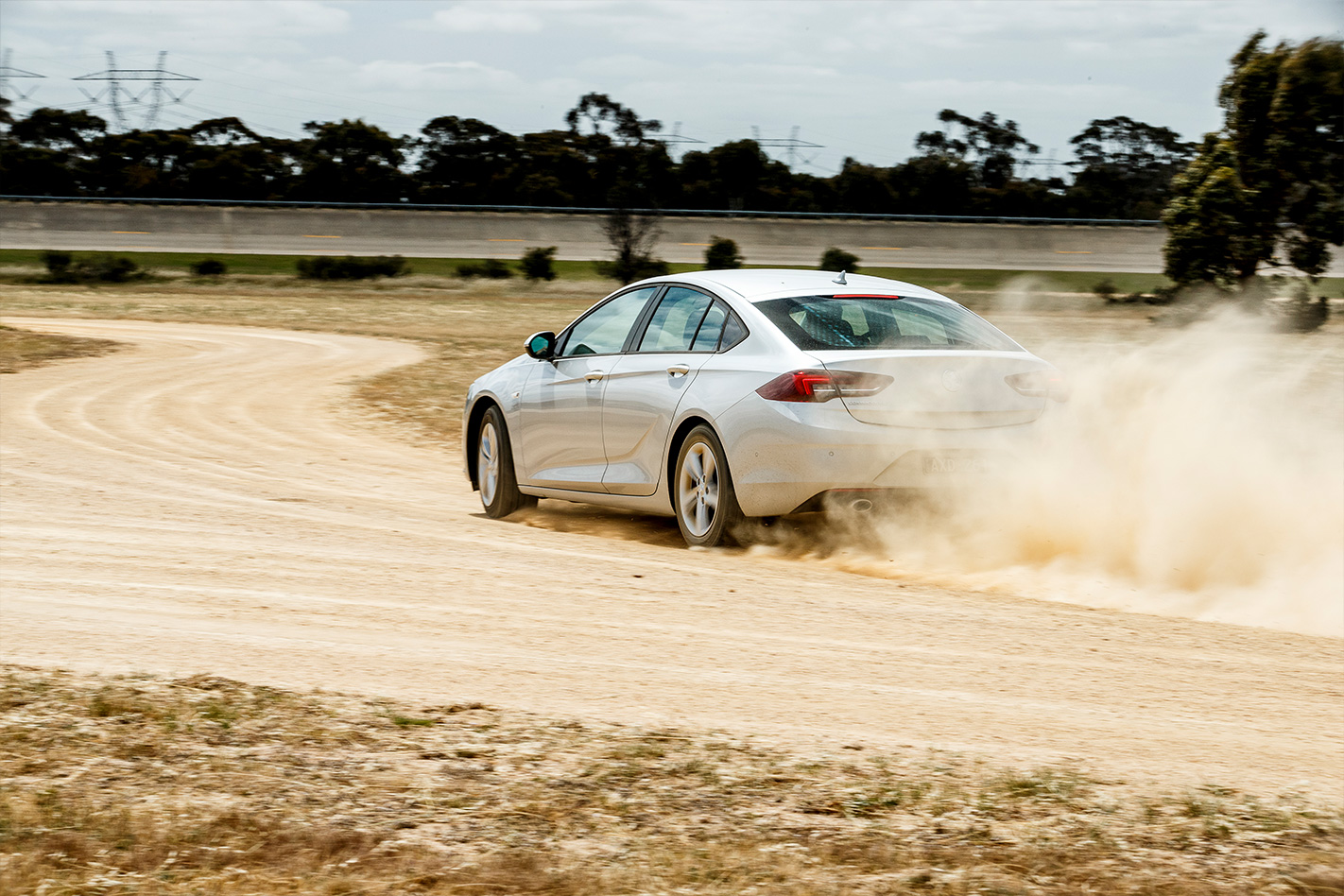
Designed, engineered and manufactured by Opel in Germany, the new Commodore is front- or all-wheel drive, with the most affordable and popular models powered by turbocharged four-cylinder engines, including diesels. But the ZB was judged on merit, not the back-story of the badge it wears. Or, for that matter, its slumping sales, shrinking niche and uncertain future.
Though smaller than the VF II Commodore, key ZB features are space-efficient transverse-mounted engines and, in the sedan, liftback versatility.
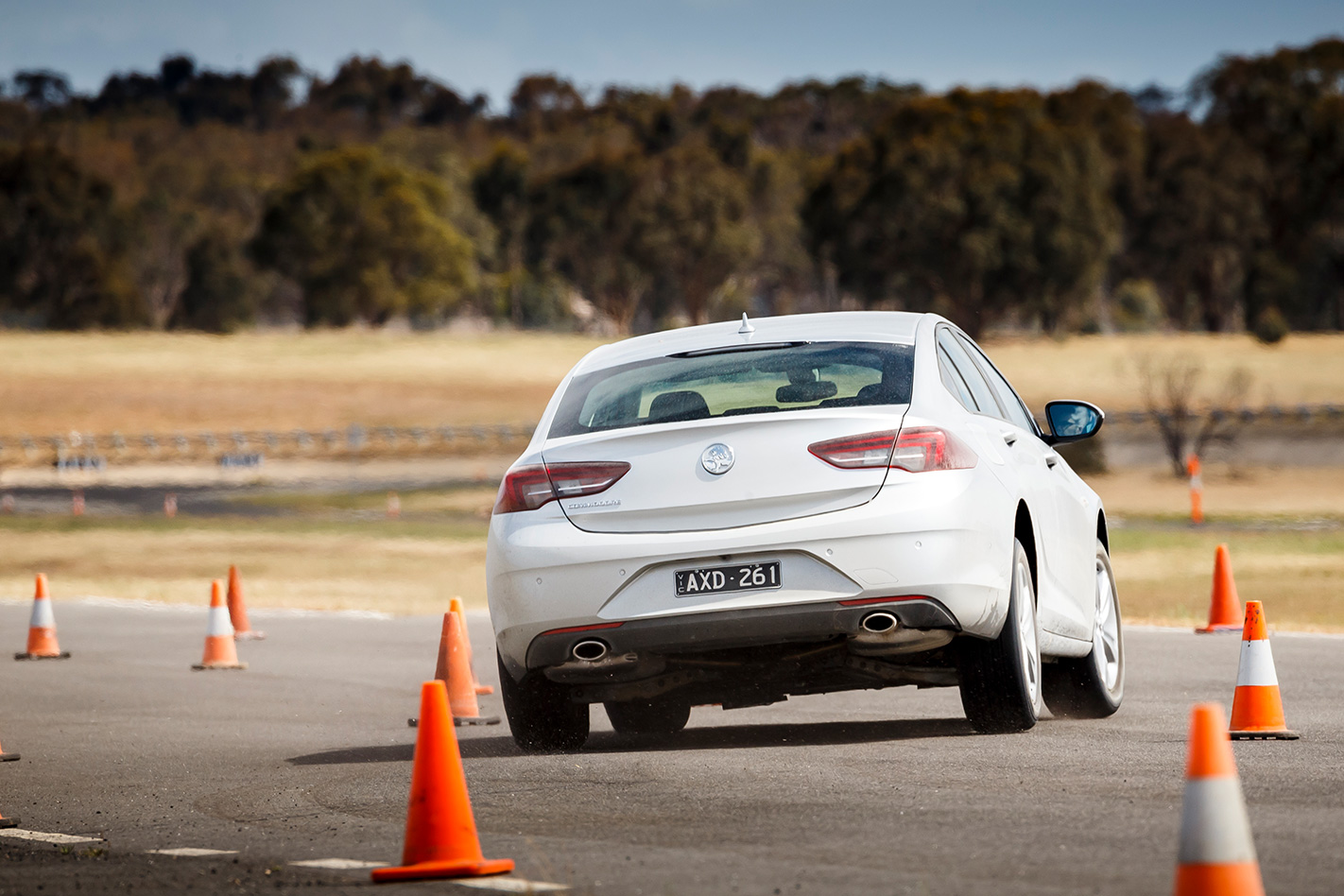
The range runs from base LT level, through RS and Calais to range-topping VXR. All except the V6-only VXR are offered in liftback and Sportwagon versions. While the LT comes only with turbocharged petrol and diesel 2.0-litre fours, the same 3.6-litre V6 used in the VXR is available in RS and Calais grades. In the latter spec, there’s also the choice of a high-riding Tourer wagon variant with V6 power.
Prices cover a broad range, from around $34,000 to $56,000, and there’s a massive seven-year warranty. But as a whole, the ZB Commodore isn’t compelling value.
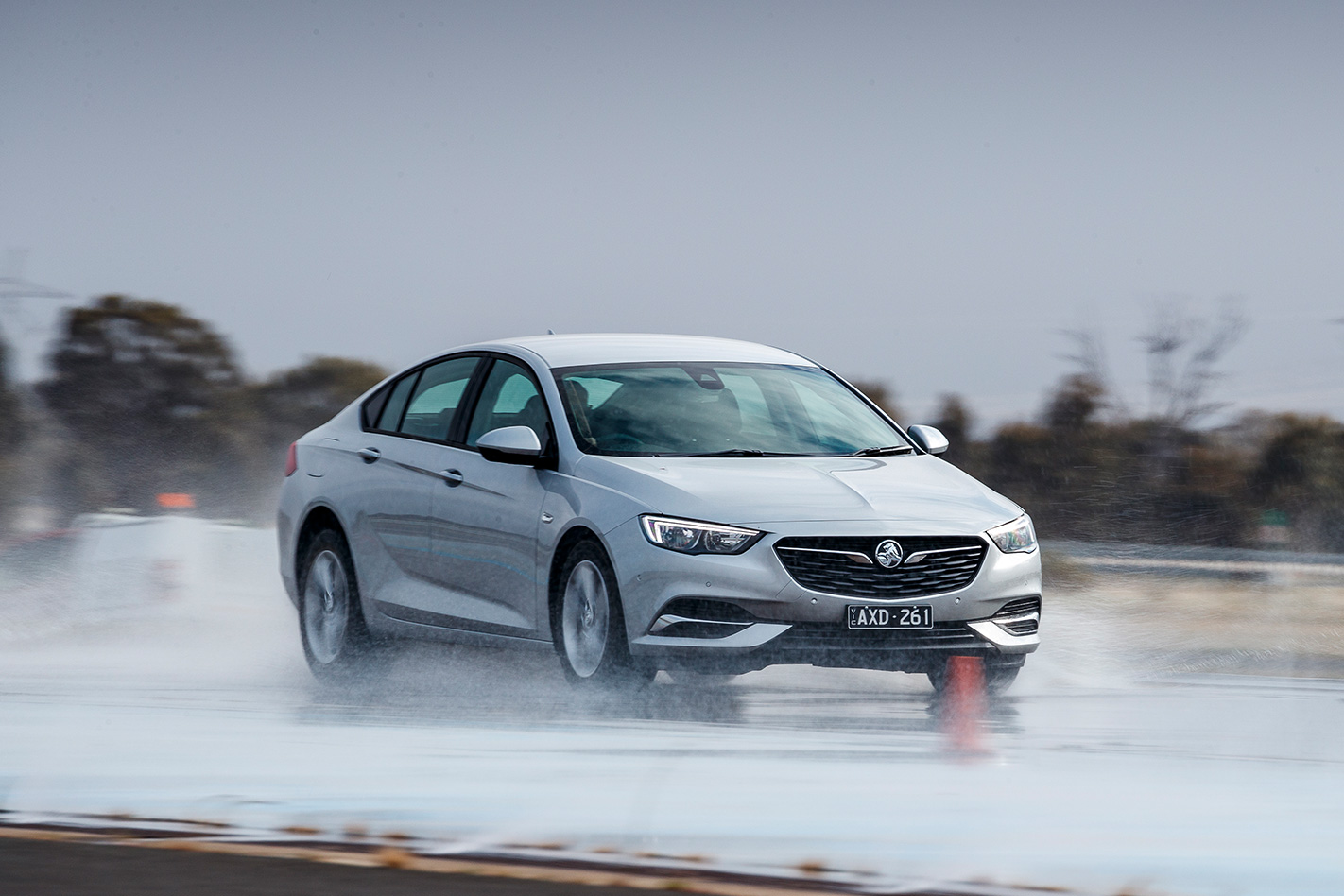
The Commodore also delivers mainstream meat-and-two-veg technology. Innovation? Look elsewhere. Fuel efficiency across the range is no better than mediocre, although it scores solidly for safety.
While the interior package in both liftback sedan and wagon is role-appropriate, cabin fit-out in the base LT is dreary. Its front seats came in for criticism from some of the bigger-bodied judges, too.
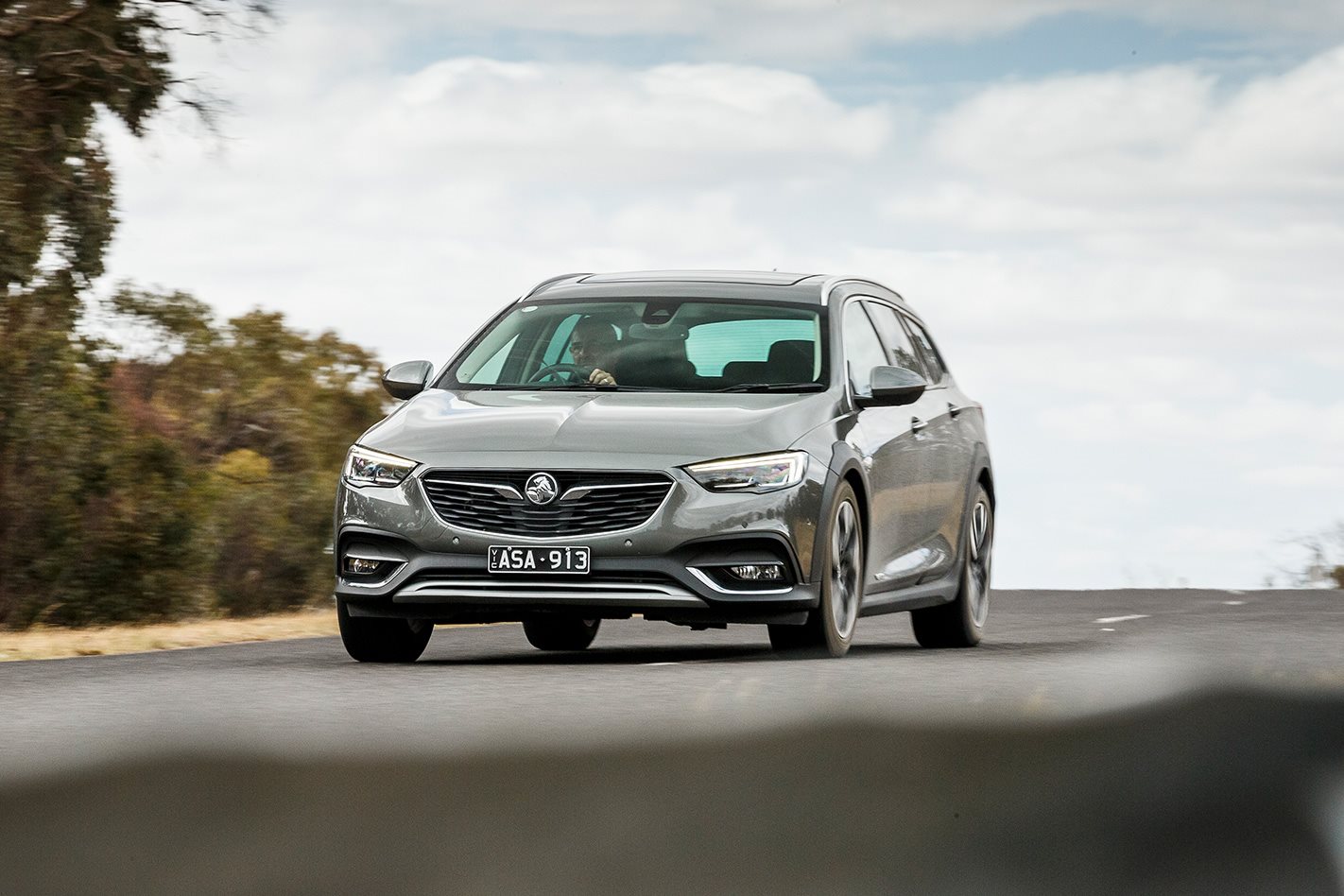
Despite this, the least costly Commodore is among the best in the range. Its agile handling, the zesty performance of its turbo-petrol engine and nine-speed auto drivetrain, and excellent ESC and ABS calibrations are evidence of Holden’s influence during the ZB’s development. “Rental drivers never had it so good,” was Byron Mathioudakis’s verdict.
The Calais Tourer also has a strong Australian flavour and is especially capable on dirt, but in other models it’s less evident. The turbo-diesel, teamed with an eight-speed auto, does a good job, but the VXR, with its too-light steering and no more power than the regular V6 models, is a limp-wristed range-topper.
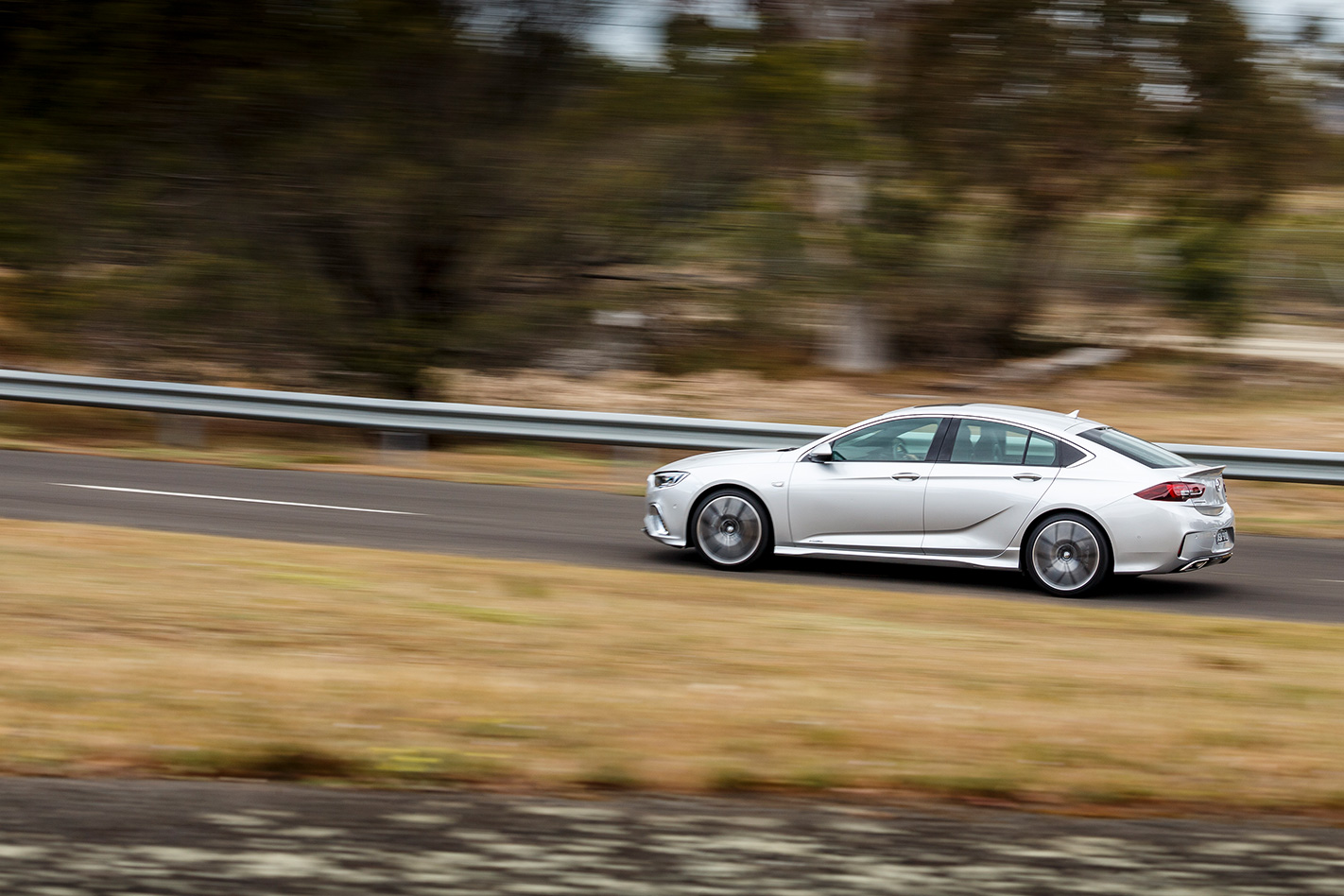
Although the ZB brings welcome tech like standard autonomous emergency braking, some of the additional driver aids lack polish. The active lane-keeping assistance system, for example, is jerky.
Good in places, not so great in others, the ZB range simply lacks the creativity and consistency COTY aims to reward.
If you’re going to produce a limited-edition track-focused beast, conventional wisdom suggests starting with a lightweight roadster or stiff two-door coupe. Jaguar has turned its nose up at this so-called wisdom and focused its effort on a four-door sedan with an automatic gearbox – fool’s errand with the 2019 Jaguar XE SV Project 8?
JLR’s Special Vehicle Operations certainly turned over every stone it could to make the XE SV Project 8 as potent as possible. It began by shoehorning its 5.0-litre supercharged V8 between the strut towers before concocting a new intake system and installing a titanium exhaust to lift outputs to 441kW at 6500rpm and 700Nm from 3500-5000rpm. This makes the Project 8 Jaguar’s most powerful ever production car.
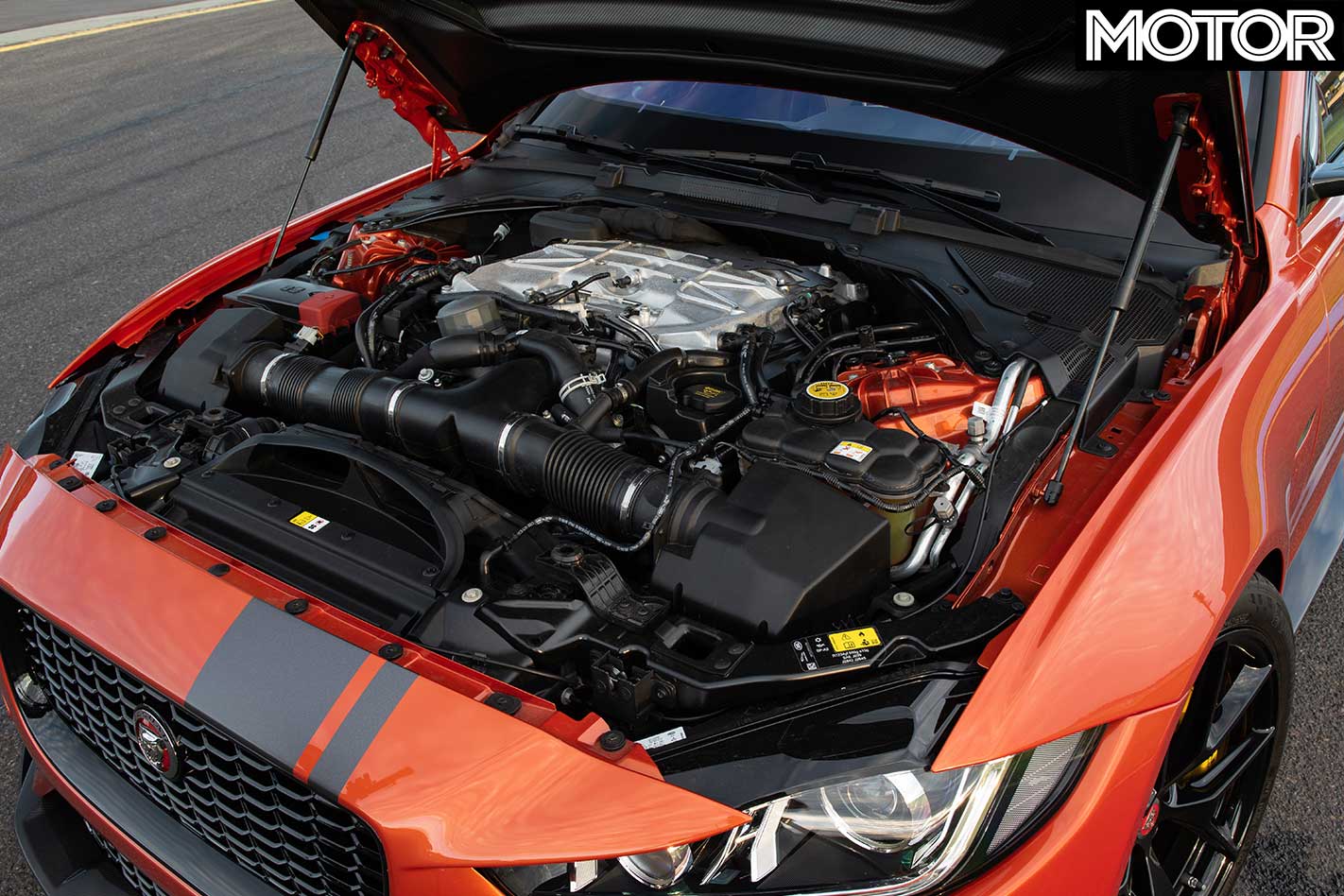
It’s quick, too. All-wheel drive and the aforementioned eight-speed auto make for fuss-free sprints from 0-100km/h in just 3.7sec while the top speed is a supercar-scaring 322km/h – a nice round 200mph in the old money.
To ensure the deceleration matches the acceleration, monster carbon-ceramic brakes – 400mm rotors with six-piston calipers up front supported by 396mm rotors and single-piston calipers at the rear – hide behind fattened 20-inch wheels (9.5 inches wide front; 11.0 inches rear) which wear huge Michelin Pilot Sport Cup 2 tyres.
The engorged rolling stock necessitated the flaring of the guards, the front swelling 19mm and the rear a whopping 55mm to give the Project 8 a stance unmatched by any other four-door production car.
Its presence is only enhanced by the various aero addenda, including a front splitter, running board-style side skirts, monster rear diffuser and adjustable wing, which along with the flat underbody creates 122kg of downforce at 300km/h. The added high-speed stability no doubt helped during the Project 8’s 7min21.23sec lap of the Nurburgring, the quickest ever by a four-door.
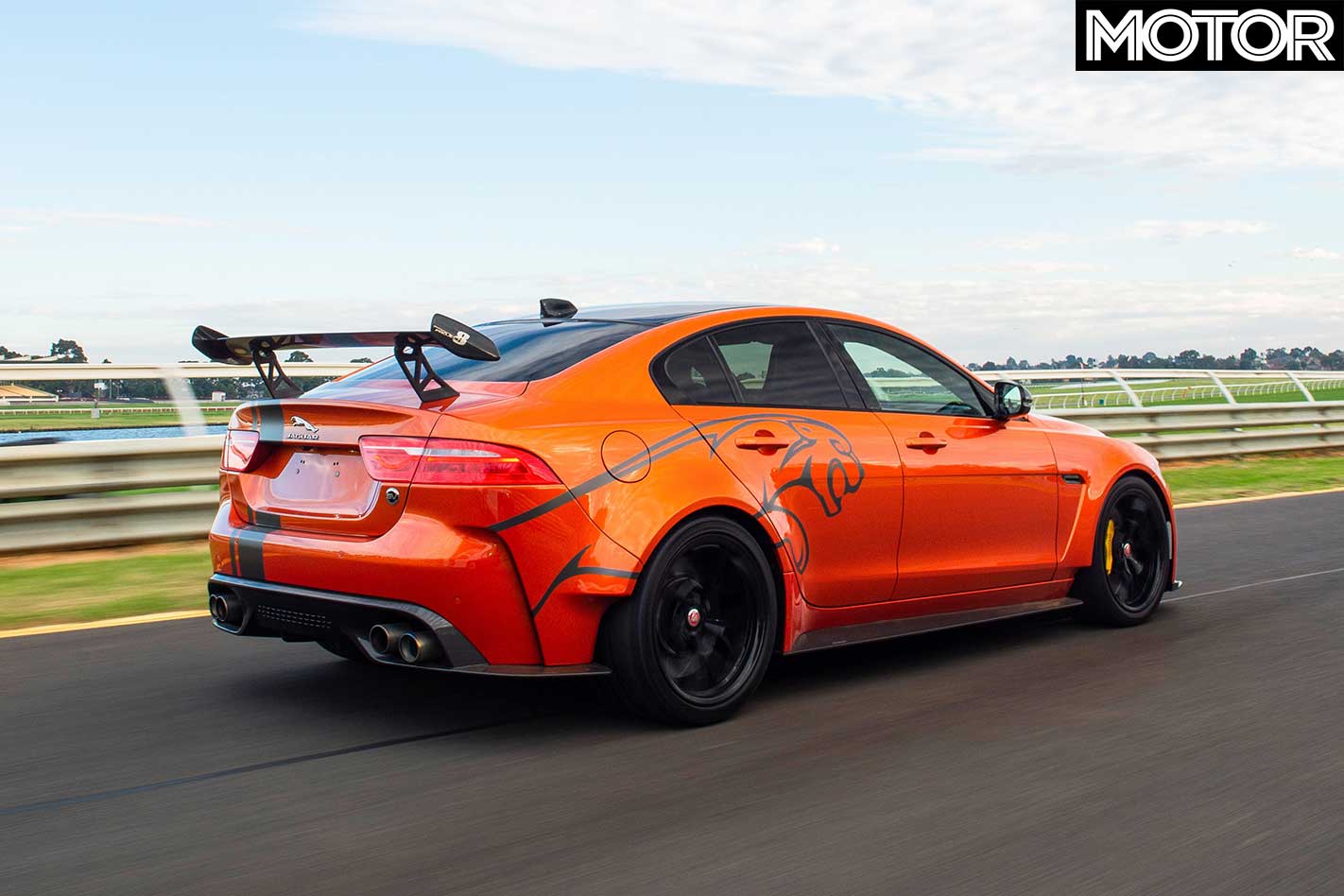
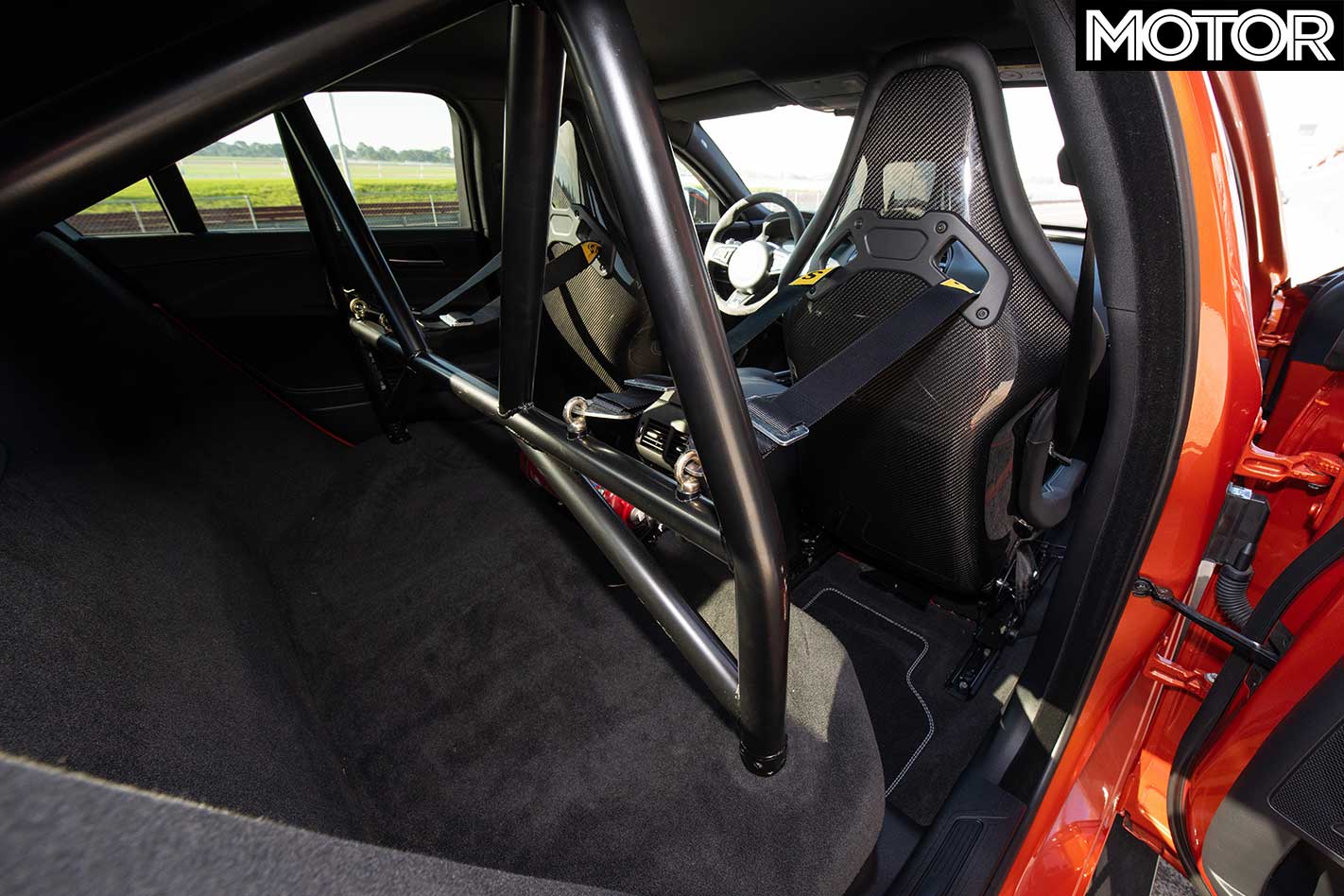
Carbon fibre is used for the bonnet, bumpers and diffuser but this ultimate XE still weighs a hefty 1745kg. An extra $24,000 will delete 12.2kg of that by installing the Track Pack, which replaces the rear seats with a composite panel and roll hoop and ditches the standard seats for lightweight carbon buckets with four-point harnesses. Forgo this option and the Project 8 will set you back $325,000, but given it can only be used on-track (or private roads) in Australia you might as well go the whole $349,000 hog.
Yes, the public highway is off limits to this kitty due to all 300 units being built in left-hand drive. Thankfully, Jaguar has laid on Sandown Raceway for a taste of what the Project 8 can do, racing driver Tony D’Alberto playing chaperone to ensure this rare beast, flown in to display at the Australian Grand Prix, remains in one piece.
New to the Project 8 is Track Mode which adjusts the all-wheel drive system, adaptive dampers, stability control, ABS, torque vectoring and steering weight to their sportiest settings, while the manually adjustable spring platforms allow for a 15mm ride height drop. Torque vectoring brakes inside wheels during cornering to reduce understeer, working in conjunction with the electronic rear diff to keep the nose pointed in the right direction.
It works. The mechanical specification suggests the Project 8 will be a four-door F-Type V8, but it’s an altogether different animal – quicker, sharper, more composed and yet more aggressive. It’s an unusual sensation to drive such a focused car with back doors, but clearly a lot of clever engineers have done their best to raise the bar for sedan performance.
As you’d hope given the price differential, the Project 8 feels much more at home around Sandown than a Mercedes-AMG C63 did a few weeks before.
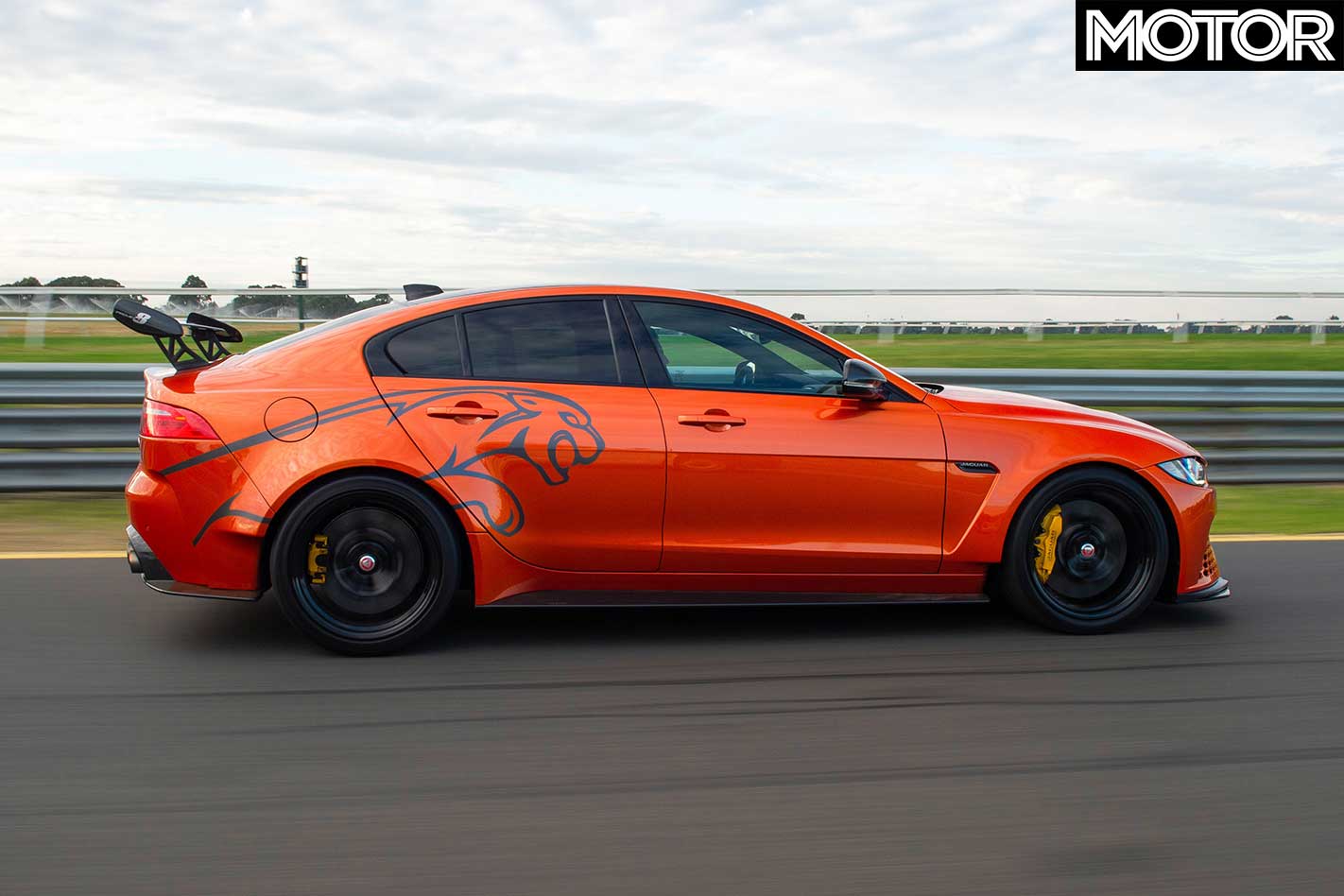
The snarling supercharged V8 provides awesome punch, all-wheel drive provides total traction, a hint of torque steer over the kerbs the only hint the front tyres are helping out, the carbon brakes offer great stopping power and the damping has that beautiful race car-like feel of marrying total body control with enough compliance to absorb kerbs and cambers.
It’s a weapon, but ultimately a tough sell. The lack of road certification limits the market to Jaguar nuts who want to rock up to track days in something other than a 911 GT3; for everyone else, the Porsche is cheaper, quicker and can be driven there and back. What’s most frustrating is that the Project 8’s key attributes – grunty engine, all-paw traction, sophisticated damping – would make it one hell of a road car.
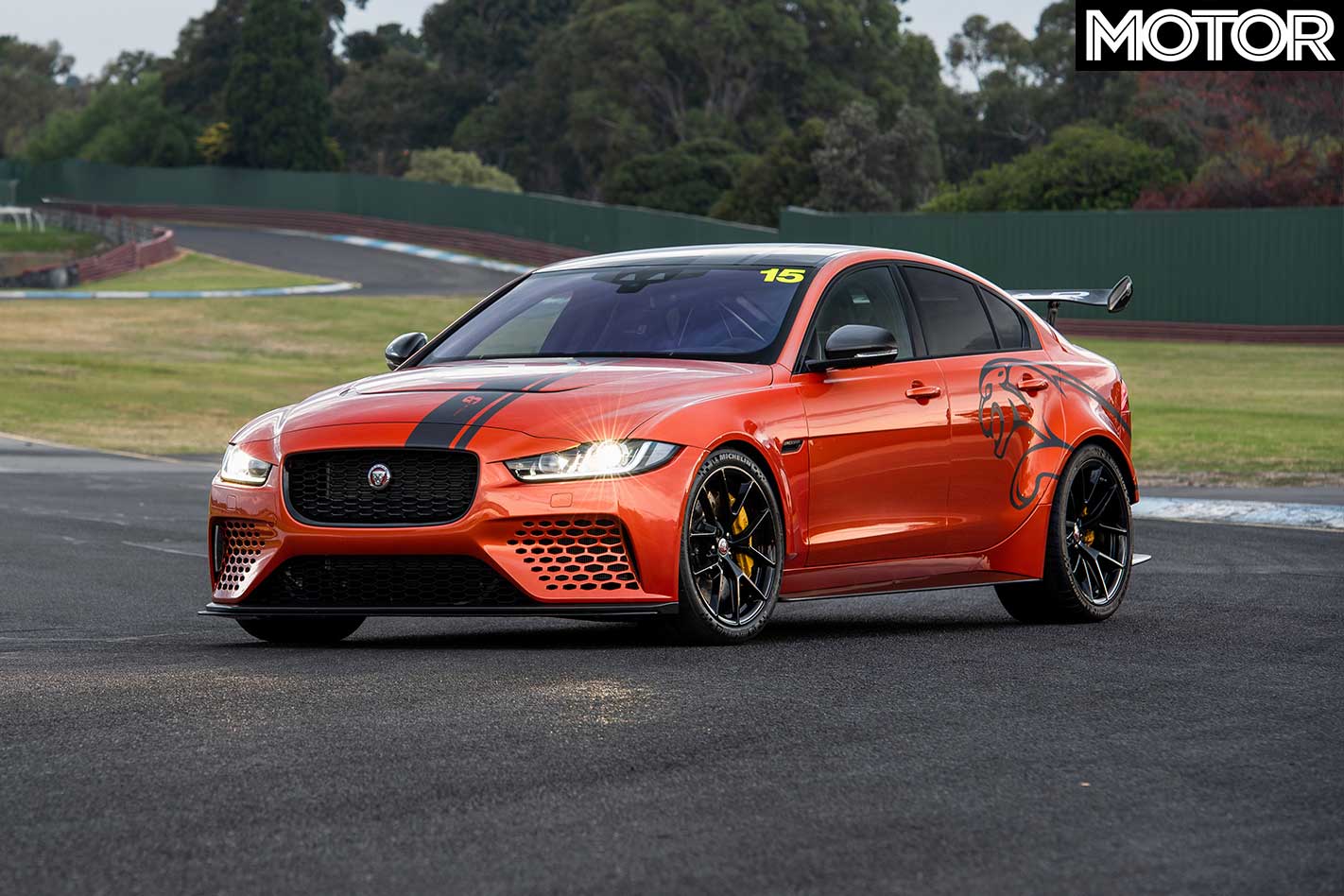
2019 JAGUAR XE SV PROJECT 8 SPECS Engine: 5000cc V8, DOHC, 32v, supercharger Power: 441kW @ 6500rpm Torque: 700Nm @ 3500-5000rpm Weight: 1745kg 0-100km/h: 3.7sec (claimed) Price: $325,000-$349,000
