
Dan opens the show with a blast around a premiere Formula 1 track in the dust of Bahrain’s desert with Lamborghini’s latest sports star. The 2019 Huracan Evo promises to be the most technologically advanced supercar in the company’s history, but time is tight and Dan has to pull out all the stops to find out if it’s the finest Lambo to date.
Back on home turf, Volkswagen has to once again defend the Golf GTI’s honour as a French contender arrives on the hot-hatch scene. The Renault Megane RS didn’t arrive in time for our affordable performance car mega test so we arrange a special one-on-one date with the iconic VW.
Then Dan jets to Japan to see how Mazda is celebrating 30 years of the MX-5 with a visit to the company’s restoration clinic. In the bowels of the Hiroshima headquarters, a team of techs is creating motoring magic and returning the original sportscar-for-the-people to incredible better-than-new condition.
Taking us out this week, Tony hops aboard one of 2019’s tiniest cars but one that’s making a big impression. The Suzuki Jimny is drawing quite a crowd with its charming looks but how does it go away from the beaten trail when there’s real work to be done?
On-air: Channel Ten, Apr 14 (AU) / Apr 21 (NZ)
Catch-up: Watch at tenplay.com.au (AU) or primetv.co.nz (NZ)
It was in 2002 that everything changed. AMG whacked an IHI supercharger on Merc’s 5.4-litre M113 V8 and blew the German power war wide open. Outputs soared to 350kW/700Nm, the new W211 E55 AMG producing 90kW/170Nm more than its W210 predecessor.
All of a sudden Audi was a lot less cocky about its 331kW/580Nm RS6 and BMW’s 294kW/500Nm E39 M5 looked almost malnourished.
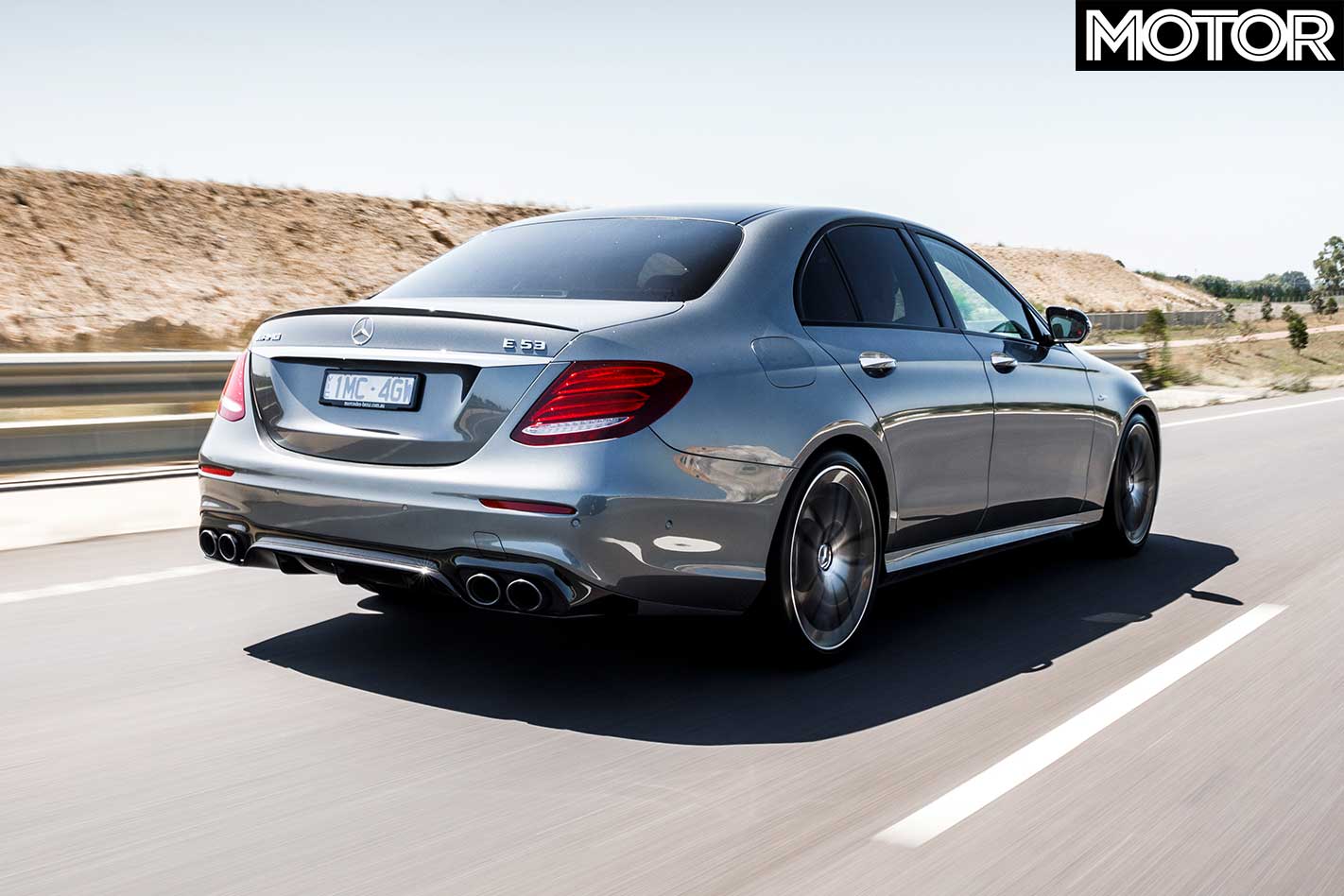
At a stroke, Merc’s super sedan went from a quick cruiser to a tyre-shredding maniac. It’s only become even more unhinged in the years since, culminating in today’s mad 450kW/850Nm E63 S four-door supercar. But what about that original E55 buyer? The man or woman who thinks drifting is something to do on the yacht of a weekend and doesn’t want to be terrified every time they accelerate out of a side road?
For these milder-mannered folk, AMG has created the E53. It replaces the E43 and is available in coupe, cabriolet or sedan forms, the latter being tested here. The E43 was nice enough, but it was arguable whether it had the pace and handling nous to really qualify as a ‘true’ AMG. There are no such qualms about the E53, which argues a much more convincing performance car case, largely thanks to the new engine.
There is still a 3.0-litre turbocharged six-cylinder under the bonnet, but the E43’s V6 has been turfed for an all-new generation of straight six. Once upon a time, Mercedes was famous for its straight sixes and it has returned to its roots in fine style. This new engine is high-tech, supplementing the regular turbocharger with an e-compressor, which allows for instant boost and plugs the gap until the regular exhaust-driven turbo takes over.
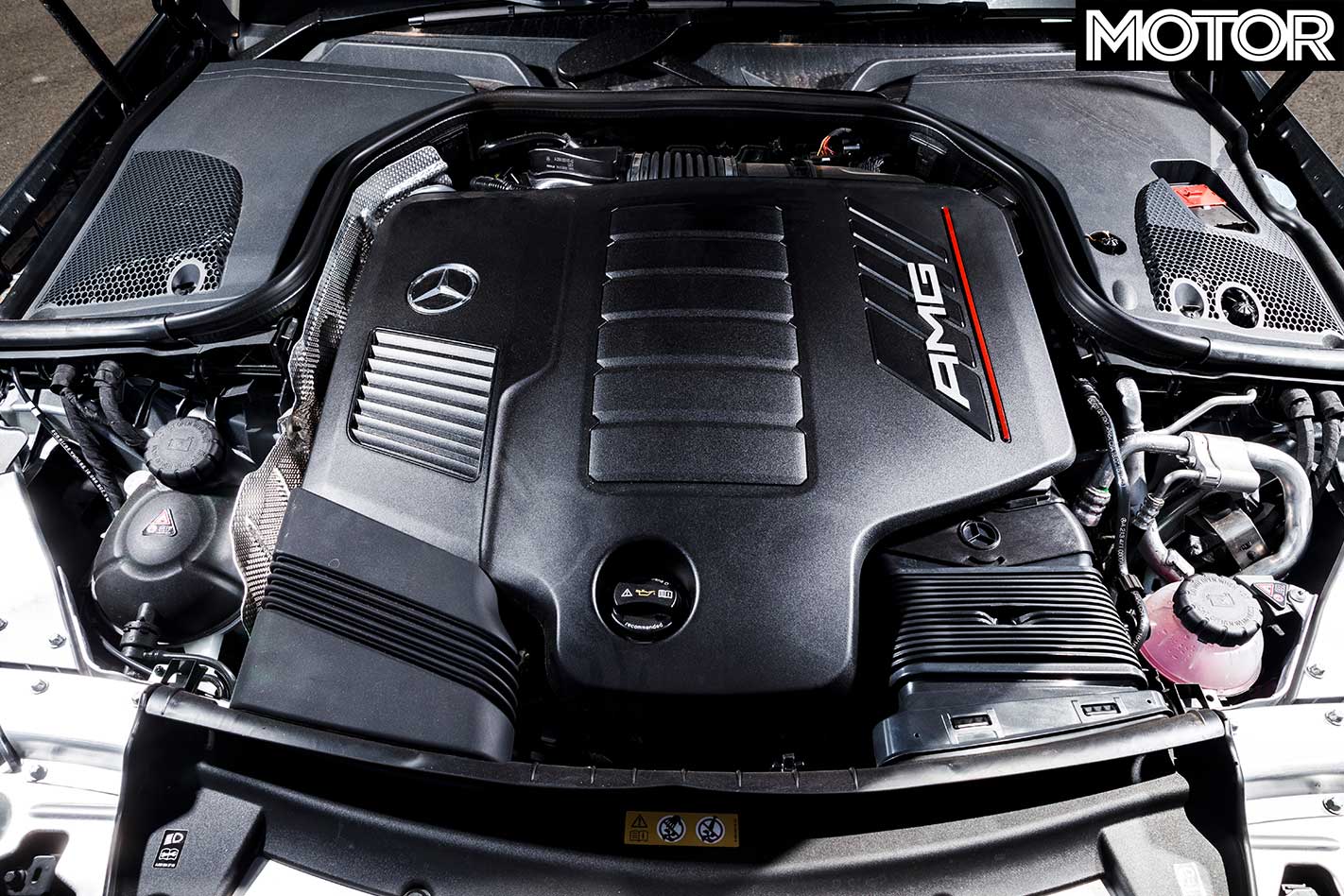
It works brilliantly. With 320kW, 520Nm and a claimed 0-100km/h time of 4.5sec the E53 is clearly quick, but it’s the quality of the experience that sets this engine apart. There’s terrific throttle response with the broad spread of power typical of modern turbo engines, but whereas most fade at higher rpm the E53 delivers a noticeable kick at 6000rpm, a satisfying reward for chasing the redline. In Sport Plus mode it sounds artificial, but pleasingly so, like a video game that’s nailed the audio capture.
Perhaps surprisingly, the E53 continues to impress in the corners. The brakes resist fade well thanks to 370mm discs and four-piston calipers up front, supported by 360mm discs and single-piston calipers at the rear.
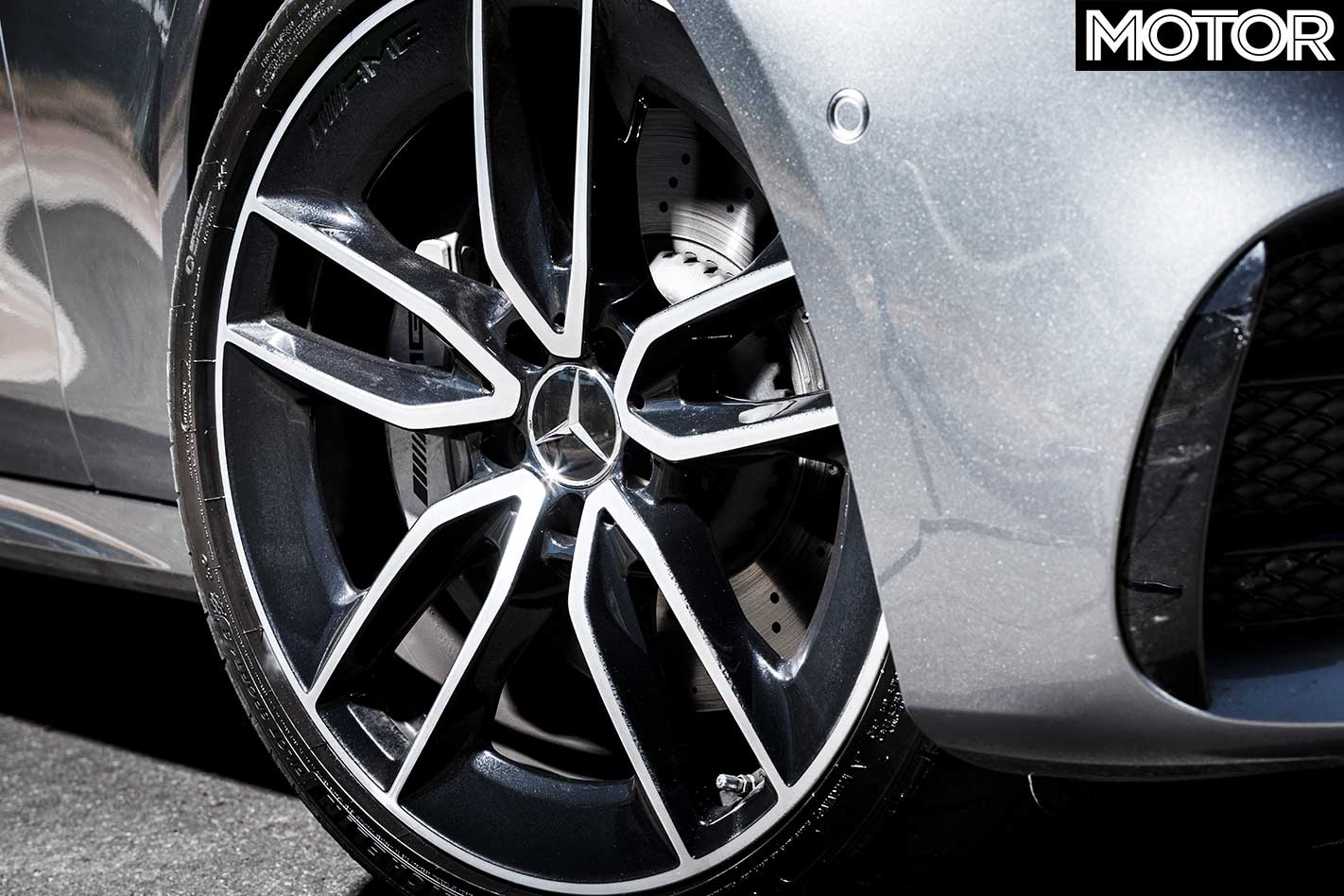
The steering doesn’t offer the last word in communication but allows you to place this relatively large car accurately and outright grip from the Michelin Pilot Sport 4S tyres (245/40 front; 275/35 rear) is very strong.
What sets the E53 apart, though, is its fully variable 4MATIC+ all-wheel drive system. Initial expectations of a grippy but ultimately prescriptive premium four-door are confounded when a quarter turn of opposite lock is needed exiting a tight, second-gear corner.
It’s not always consistent and it’s tricky to work out its triggers – sometimes there is total traction, at others it’s happier to play – but it transforms this otherwise sensible sedan into a car that encourages and rewards the enthusiastic driver.
You can feel the 1870kg with swift changes of direction but it’s remarkable how quickly you can cover a stretch of road thanks to its punchy engine, all-wheel drive purchase and compliant chassis. The latter is potentially the E53’s trump card in making it the fast E-Class of choice for daily use.
For all its berserk performance, the E63’s ride and refinement leave a bit to be desired, especially in S guise, and you could argue that its pace advantage over its little brother is inaccessible on the public road.
That said, there isn’t really any need to choose. For those who need the ultimate punch there’s the V8 E63, but it’s easy to see AMG buyers of yesteryear, someone who enjoyed an early E55 or later C55, being captivated by the E53’s less focused character.
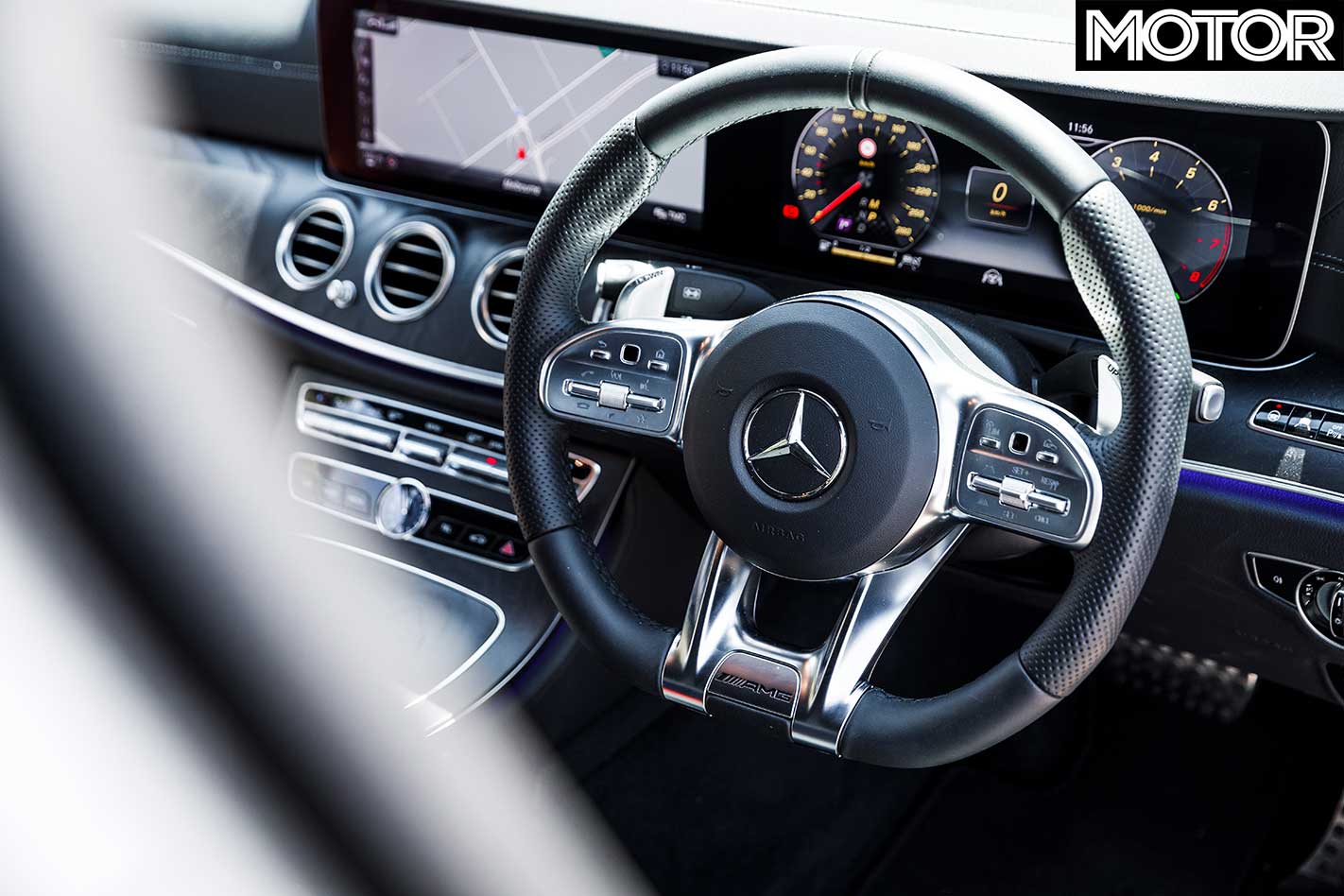
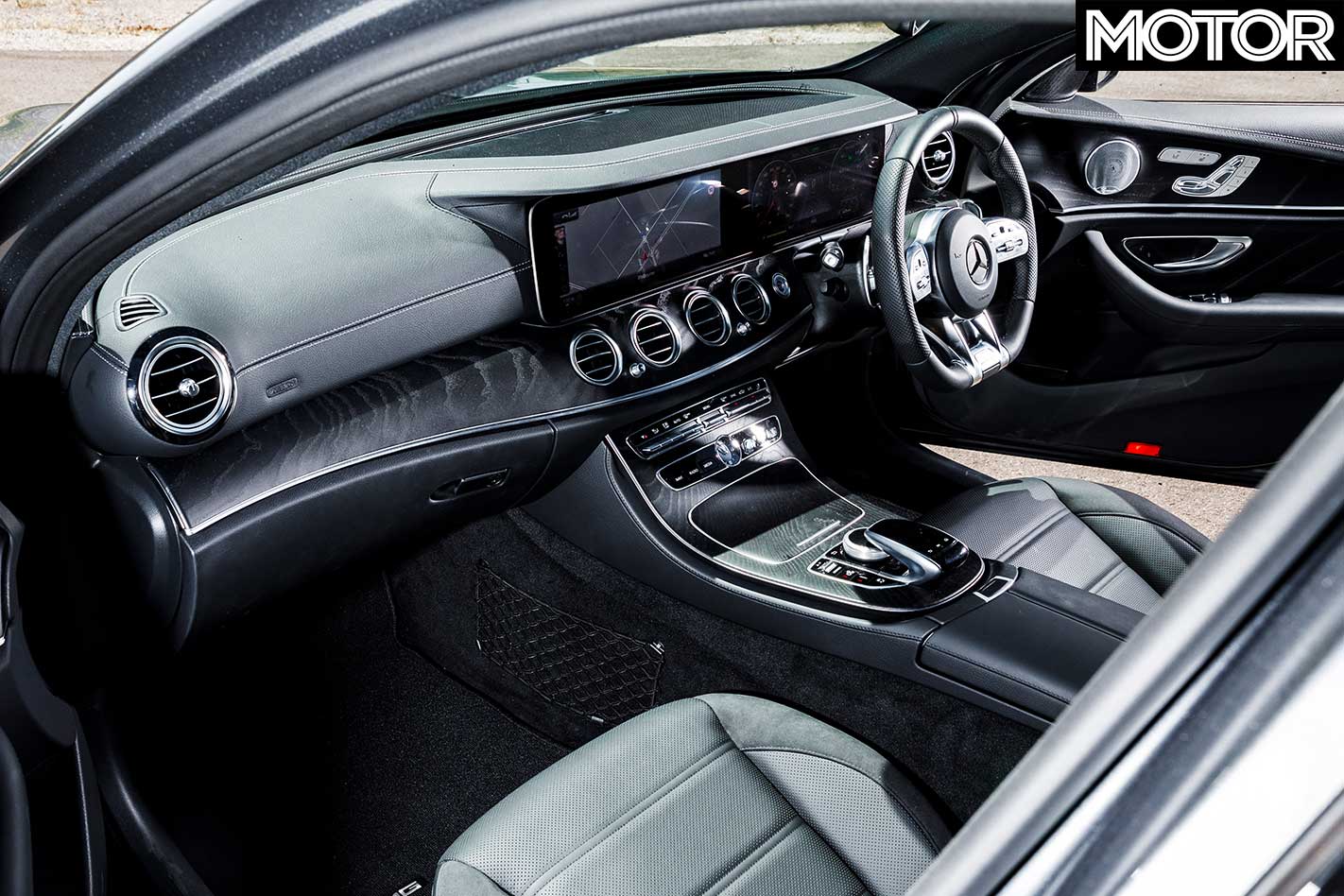
It combines a great engine, enjoyable handling, subtle looks and a top-class interior with the latest technology for around $170K. That’s a lot of money, but the E53 is a lot of car.
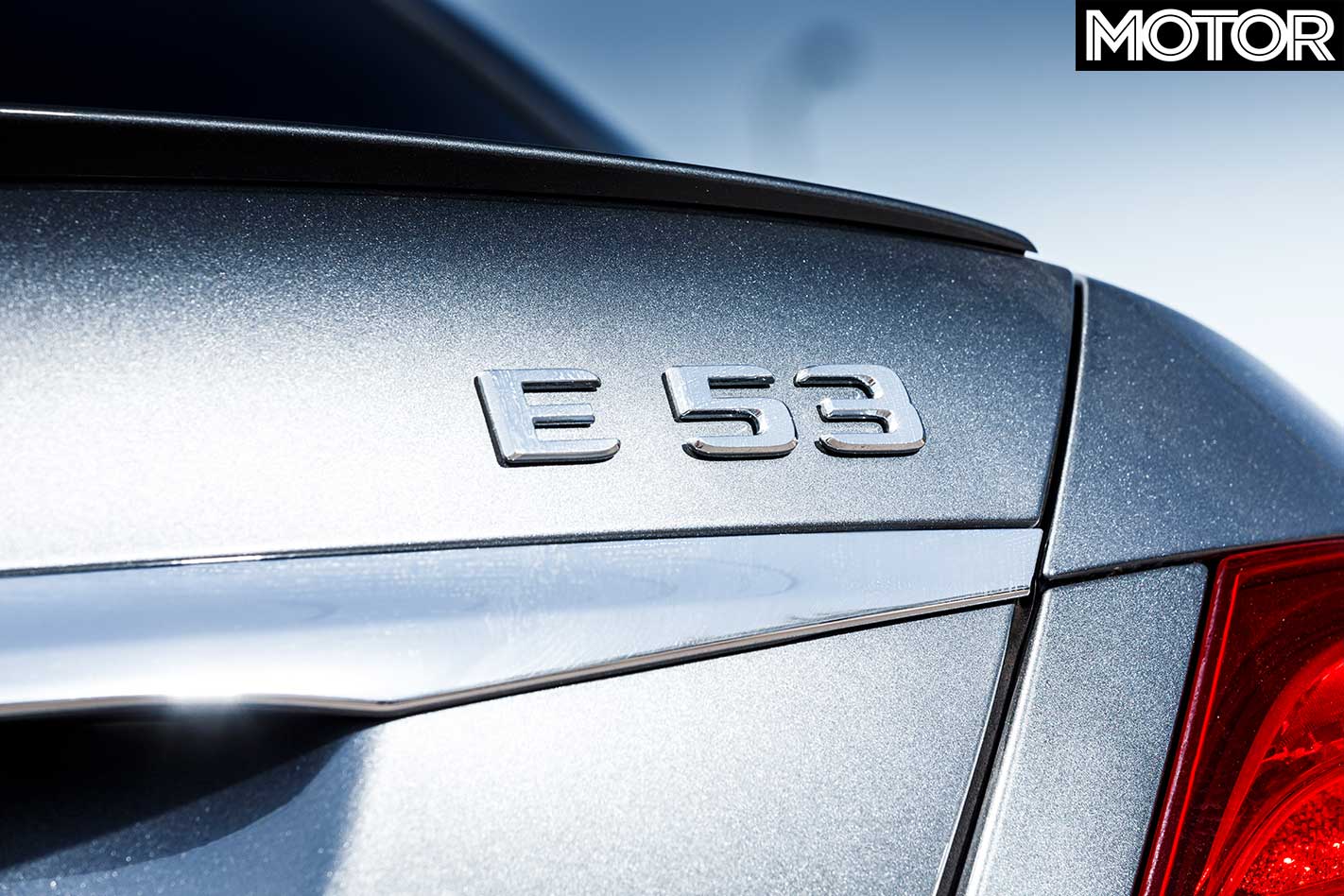
2019 MERCEDES-AMG E53 SPECS Engine: 2999cc inline-6cyl, DOHC, 32v, turbo, electric compressor Power: 320kW @ 6100rpm Torque: 520Nm @ 1800-5800rpm Weight: 1870kg 0-100km/h: 4.5sec (claimed) Price: $167,129
Like: Outstanding engine; involving dynamics; application of technology; ride quality Dislike: Occasional handling inconsistency; infotainment ergonomics; not much else
Rating: 4.5 out of 5 stars
Mercedes-Benz has ordered a recall of its A-Class vehicles, with owners unable to deactivate high beam lights after using the lever to switch them on.

The issue occurs when drivers turn on the high beam function using a manual stalk on the steering column, once activated; the high beams can no longer be turned off in the same manner with the stalk.
Mercedes-Benz has said that the high beams can only be switched off by turning the rotary light switch which controls all headlights on the car.
The concern is that drivers may not realise their high beams have stayed on, and could potentially dazzle the vision of other oncoming drivers.
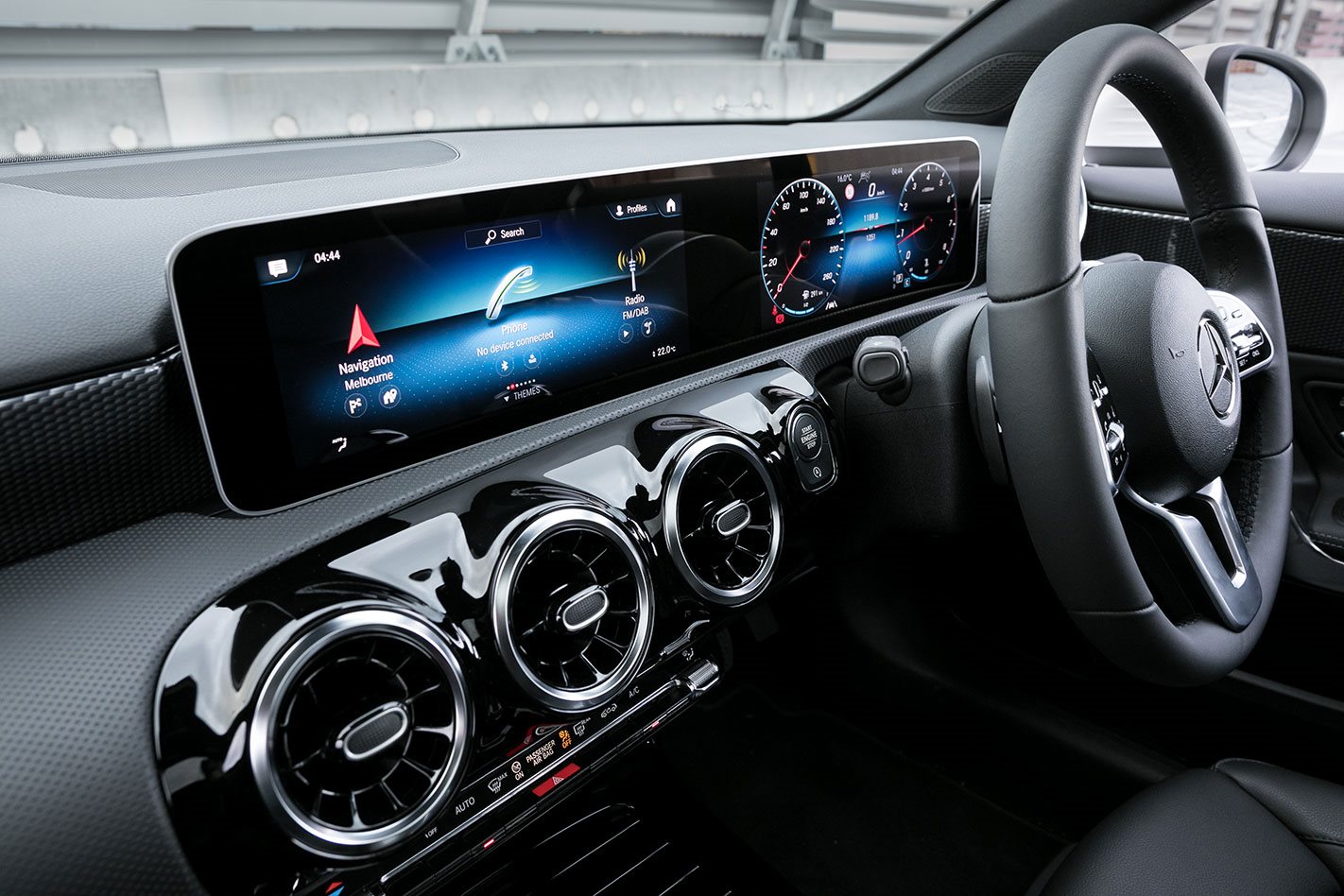
MY2019 A-Class vehicles are affected, with the German manufacturer calling out 597 vehicles to be repaired.
Affected owners are urged to contact their local Mercedes-Benz dealership for a free software update to rectify the issue.
Find a full list of affected VIN numbers here.
There’s a new dating site called Refrigerdating, which is like Tinder except it shows you inside someone’s fridge, and you swipe left or right based on what’s lined up in someone’s icebox.
I’m not making this up. This is a real thing.

“We’re all dating detectives,” says John Stonehill, the guy who came up with Refrigerdating. “Nothing says more about who we are than what we eat or drink.”
Balls. Almost everything says more about who you are than the contents of your fridge, unless you’re Jeffrey Dahmer, and no-one wants to date that guy, and not just because he’s dead.
On the other hand, a dating app based on what and how someone drives – now that could really give you an insight into a person. (A Honda Insight insight? That person will glare at you if you don’t properly separate your recycling.)
Someone who sticks exactly to the speed limit? He’s steady and reliable, but a little boring. Someone who hangs the tail a little through every roundabout? She’s fiery and passionate, but a little bit crazy. Someone in a Camry? Conservative, not a risk-taker. Someone in a Megane RS? Hard-charger with a penchant for uncomfortable seating. Someone with a Magic Happens bumper sticker? Will die alone and unloved even by their cats.

Cars are a much better match for dating apps than fridges – cars are sexy in a way that white goods are not, which is why no-one ever taped a poster of a bikini model straddling a chest freezer on their bedroom door. The cars we buy reflect who we’d like to be, and our driving reflects who we are, more accurately than whether there’s an old jar of mustard in the back of your fridge.
And if you could meet someone while stuck in traffic, and the first date went great, you could always consummate it in the machine that brought you together. Going home to get freaky in the vegetable crisper just isn’t the same, trust me. (And I swear, nurse, that’s how that zucchini ended up stuck in there…)
The only concern is how one would write a personal message to another driver – somehow, everything to do with driving ends up sounding like “unsolicited dick pic” levels of creepy: “I’ll let you in because you clearly need it, but I expect a friendly wave afterwards.” Ugh, swipe left. “I can fit seven people, but the last two had better be pretty short.” Ugh! Swipe left. “I go too fast and I always finish first.” Urgh! Swipe left! “I’m going up the inside whether you like it or not.” URGH! Swipe left and delete app!
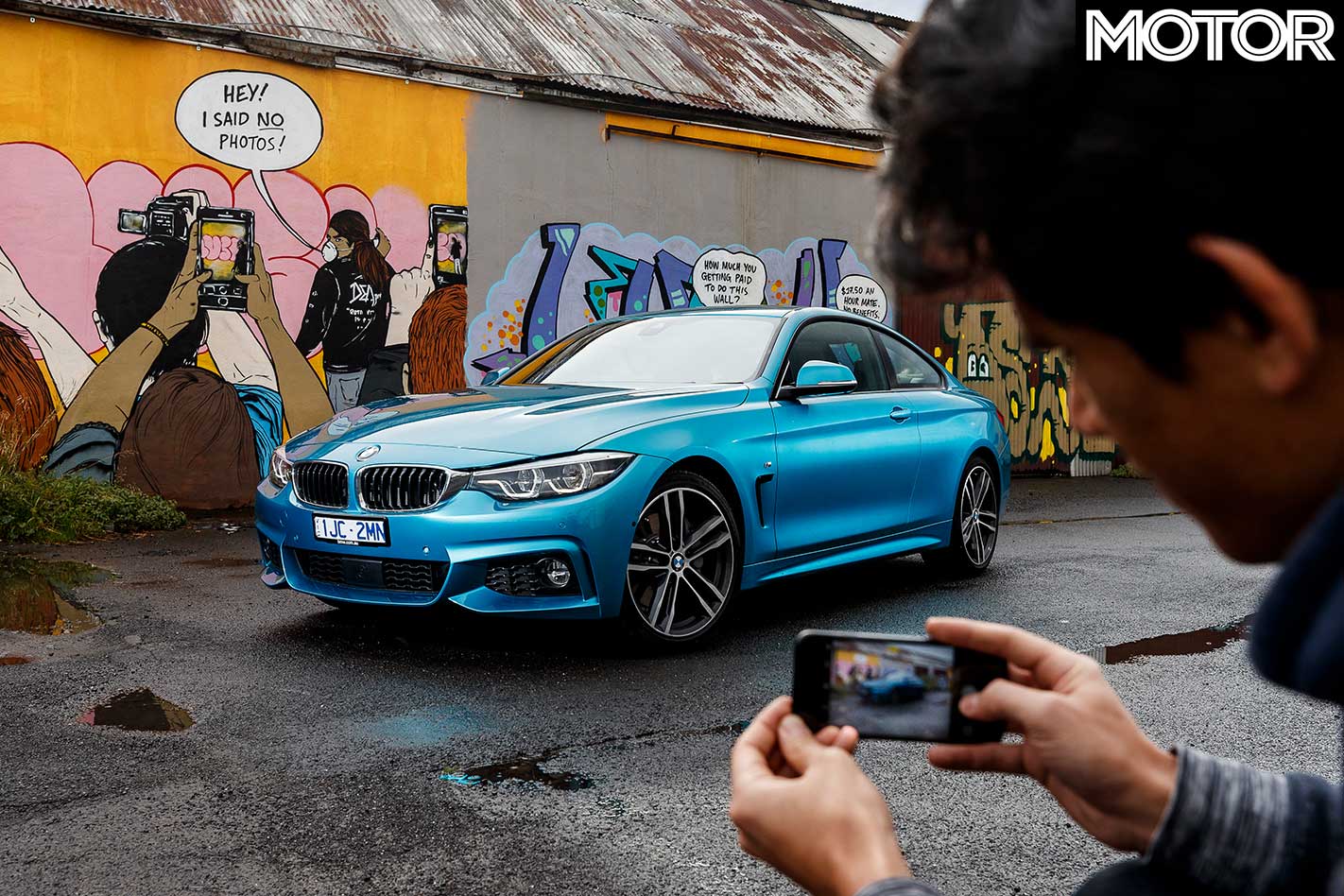
Now, some car-based dating sites do already exist, but they’re more tailored towards connecting young women with men who own Ferraris. Any woman who only wants to date men who can afford a six-figure stickerprice may be looking for more than affection. And if you own a Ferrari and still have to go online to pick up women, you may need to update your wig.
No, I’m thinking more of the general population than that. In fact, I think a dating app should be mandatory software programmed into every new car – maybe it’s a better solution to our traffic woes than any billion-dollar Hyperloop.
If simply asking people not to be asshats isn’t enough to make them better drivers, maybe the possibility of getting laid will. Imagine if every driver was on their best behaviour, as though every commute or trip to the shops was a first date. There’d be a widespread surge in thoughtful driving, and peak hour would turn into happy hour.
And nothing’s as sexy as watching a really neat and confident reverse park, am I right ladies? Ladies? Hello?
Now all I need is a snappy title like Refrigerdating. Sex Drive? Blinkr? CarPlay? Wait, I think that one’s taken.
The temperature gauge in the Audi flickers to a solitary degree. It’s cold and miserable. The type of melancholy that goes against the fact I’m about to spend 24 hours with one of the true hypercars, the 2019 Bugatti Chiron. Provisionally the home of Bugatti and McLaren in Munich is a ramshackle building awaiting its last rites.
Hidden away, it has all the charm of an asylum for stolen cars. Still, housed in a corner with the company of a damaged 570S and a 720S in need of some mechanical love, sits the big, black Bug. The irony of one of the world’s most expensive cars being stowed in a dilapidated shack isn’t lost on me.
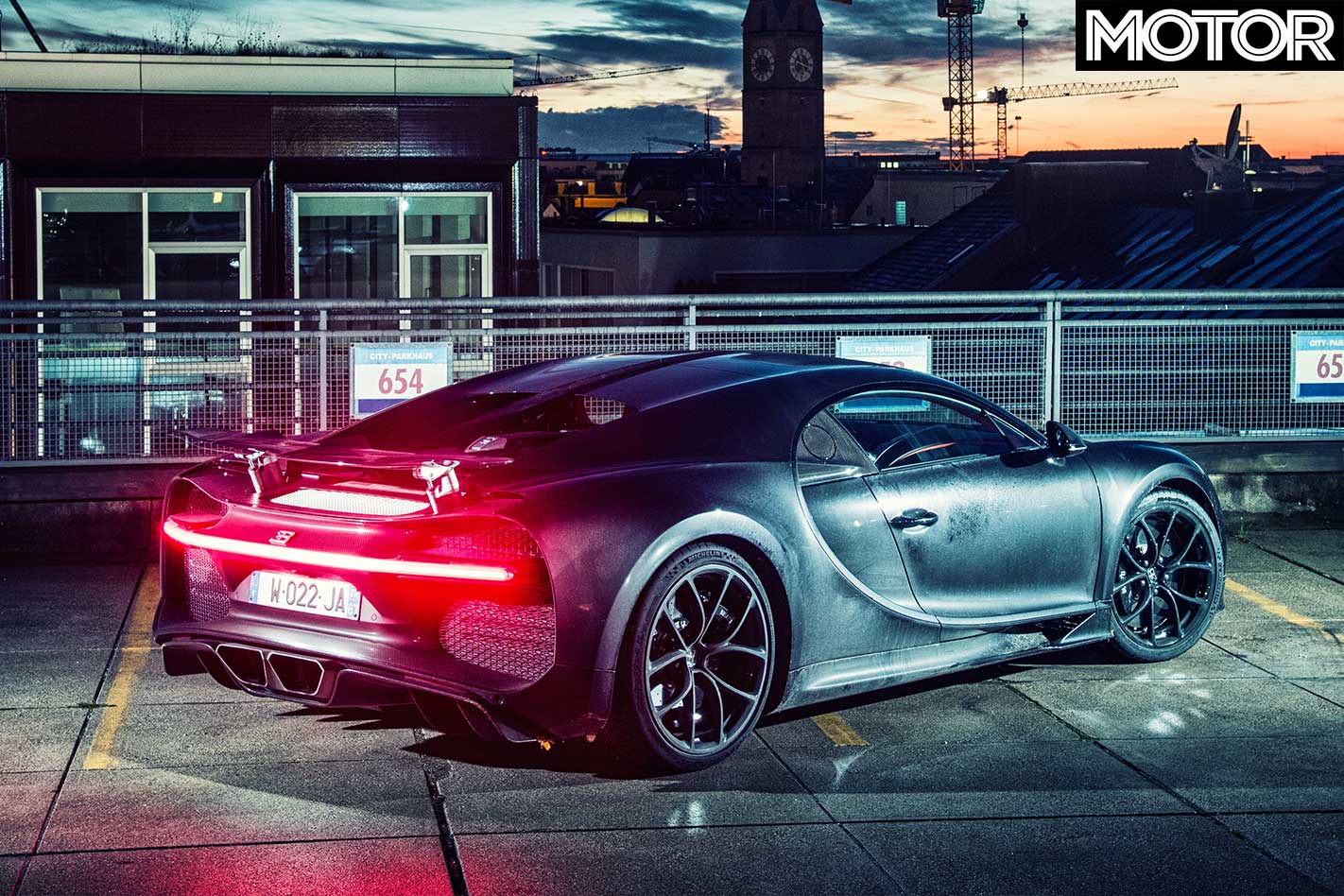
As if this experience couldn’t get any more surreal, Andy Wallace, Le Mans winner and now Bugatti brand ambassador, enters the vibrant orange cockpit; its effervescence is made even more apparent in the dim light. Wallace depresses the brake pedal and the red hue from the tail-light cuts through the darkness with a lightsabre-esque intensity.
Once fired, all 16 cylinders and quad turbos fill the dormant warehouse with an orchestra of sound. While the famed race driver will accompany us for the 24-hour date, three’s a crowd. Wallace is relegated to a rented Toyota C-HR, which provides valuable service as a camera car and luggage carrier.
Raw numbers aside, the Chiron is a sexy and stylish piece of automotive art. It’s dripping in presence, both inside and out. However, it’s surprisingly useful and bigger internally than the broad-shouldered, ground-hugging stance suggests. It’ll be interesting to see if those thoughts remain in 24 hours’ time, but then, it’s hard not to get caught up in the experience of living with a Chiron.
It’s mine. And that thought never gets old. As the day passes, different elements of this fascinating car start to unfurl.
11:15
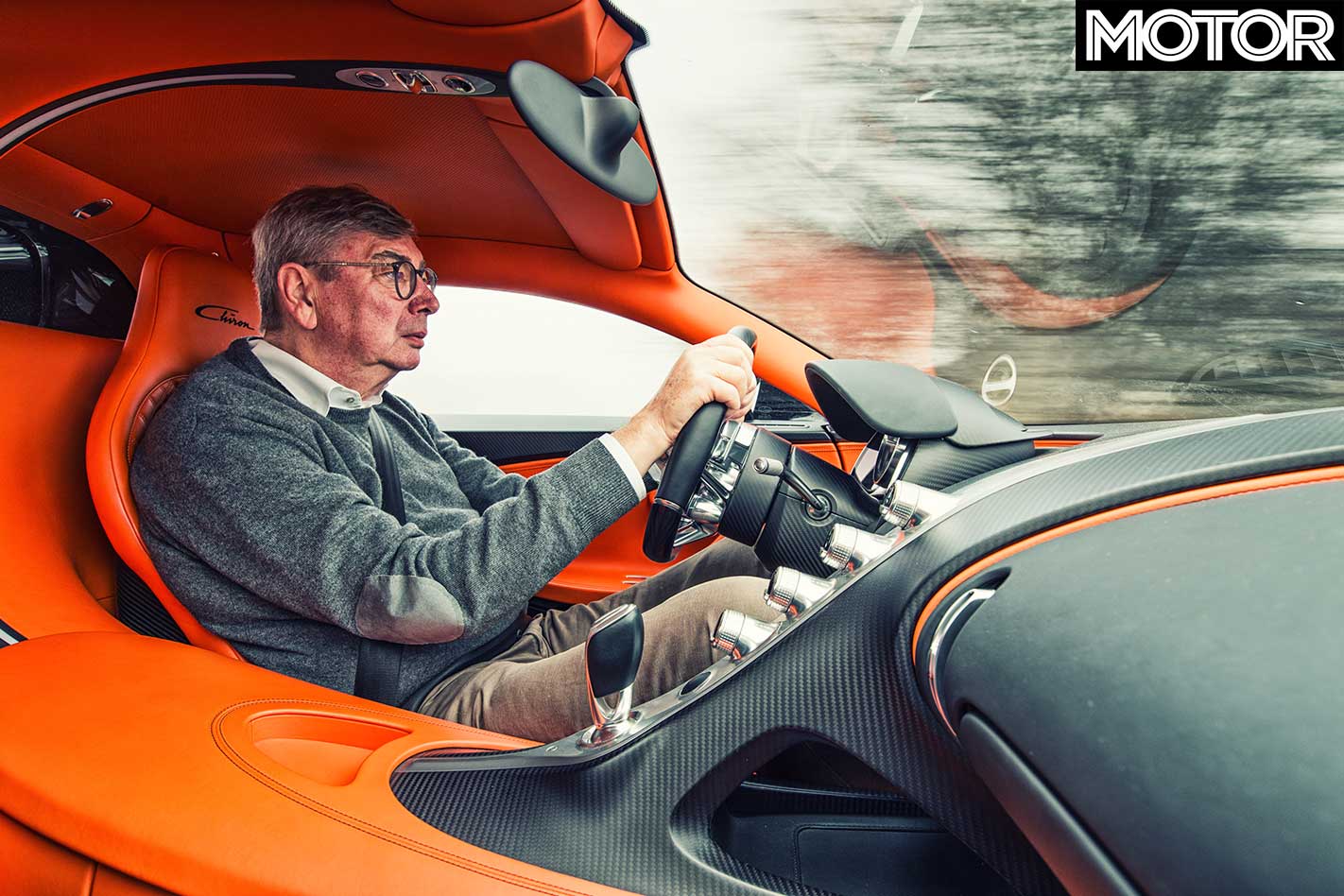
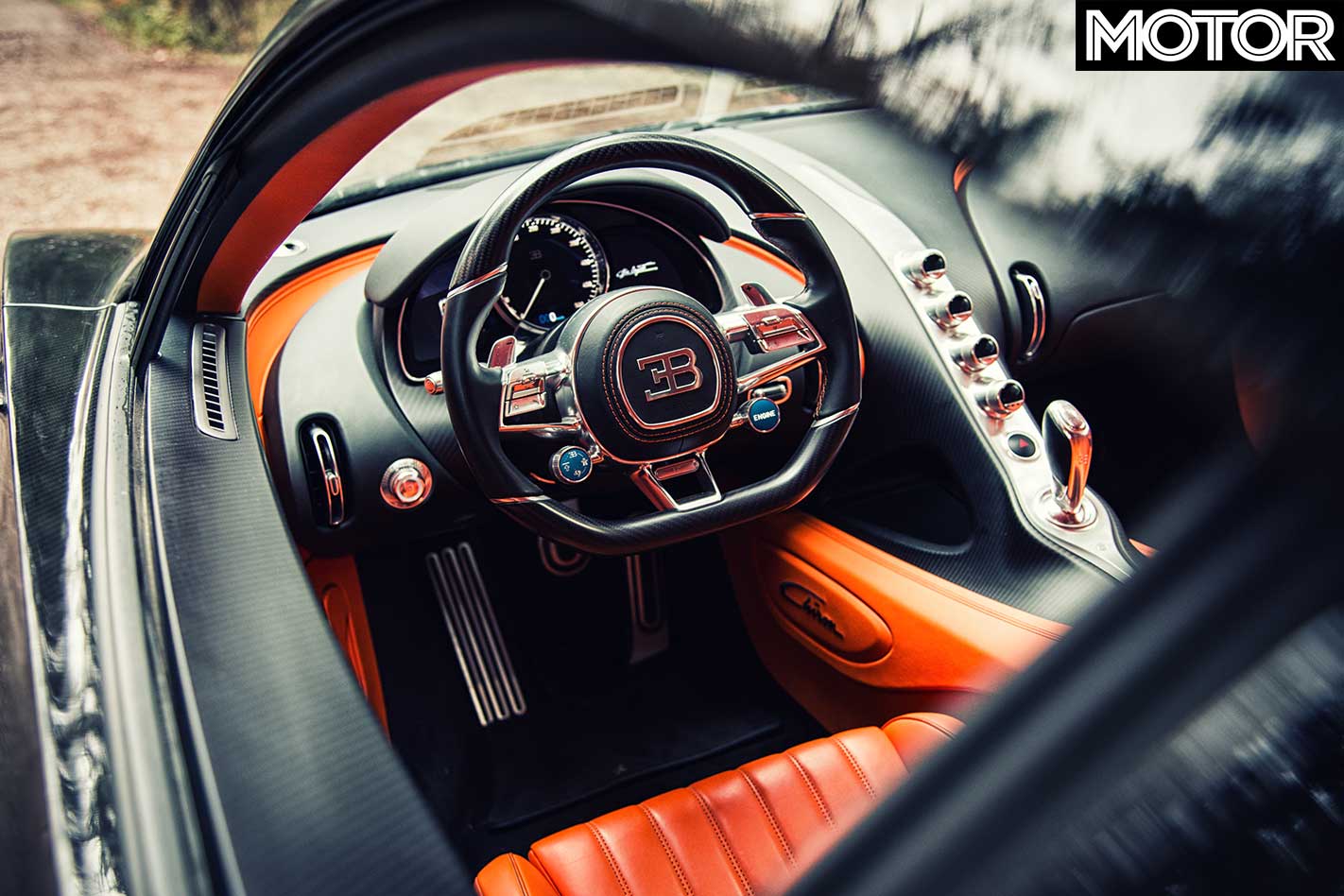
At first it seems there’s little to acclimatise to with the Chiron. The dash design is uncluttered and feels like a luxury supercar. The steering wheel accommodates two oversize blue buttons. One fires and cancels the 8.0-litre W16, while the other comprises various driving modes – manettino-style.
You start with EB before progressing to an Autobahn symbol, which lowers the ride height and firms the dampers while the aero kit assumes max downforce. A step further and you’re in Handling mode, complete with allowances enabling impressive yaw movements for the brave.
And of course, if you feel the need to go faster than 380km/h, the v-max setting and ‘the key’ come into play. Embedded in the door sill and held down by a magnet, it’s needed to activate the lowest drag position and the extra-firm damper setting that comes with it. However, this time around, the special key remains dormant – wrong terrain, wrong season.
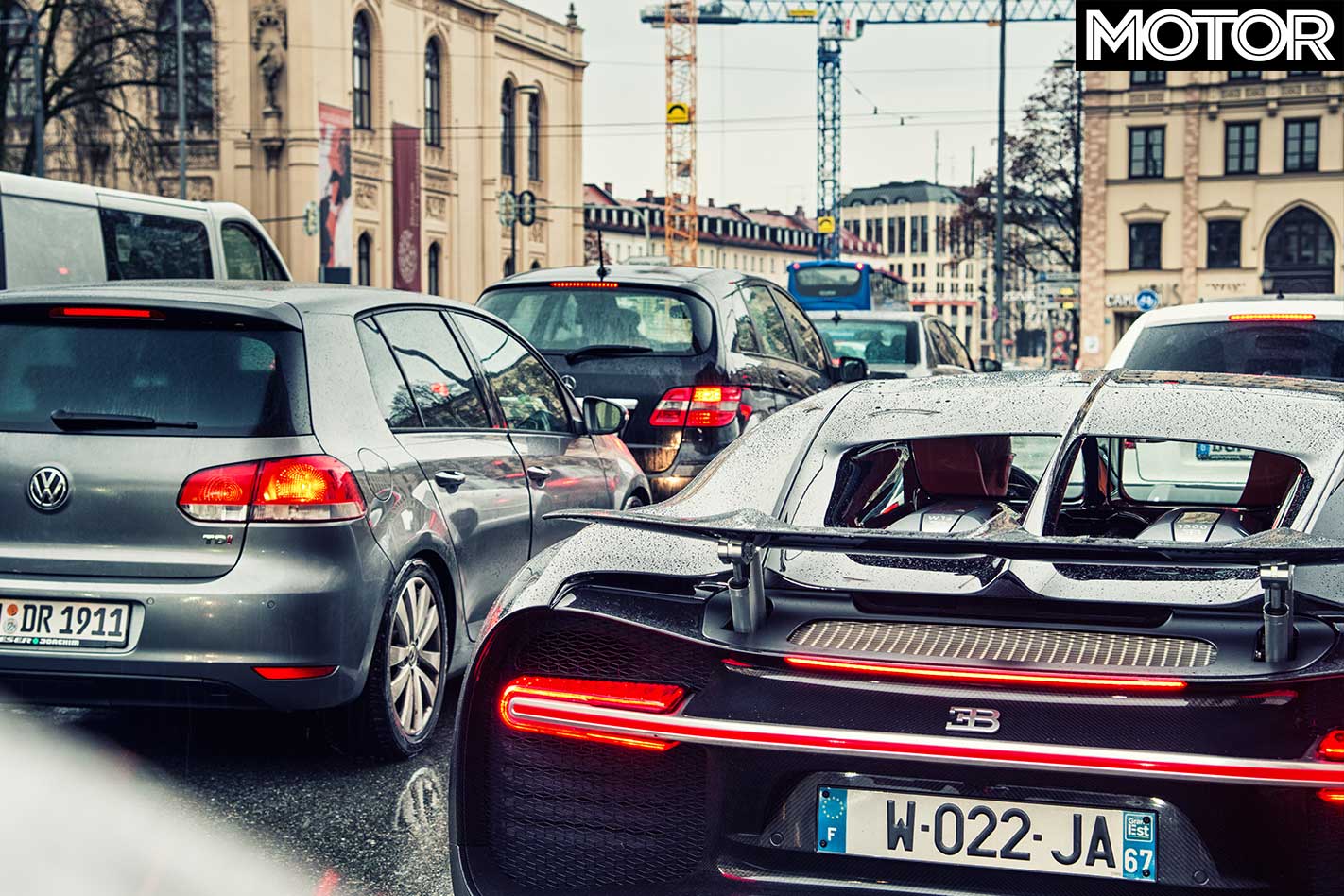
That’s because traffic in downtown Munich is a bitch any time of year despite decent public transport. Inching through the city’s inner sanctum is like sitting in a red-light district window – you’ll be ogled. While the Chiron is pleasantly quiet at low speeds, the ride is still firm and the vulnerable front spoiler endures an endangered existence. Hence the fast-acting lift mode is the most essential driver aid. I’m reminded it’s not the right setting to exploit the Bug’s performance wares.
12:05
It’s lunchtime and the Maccas drive-thru isn’t quite wide enough for this valuable and vulnerable icon. The ancient parking structure near the Dome is littered with potentially crippling ramp angles. Anxiety levels must be managed when driving $3.6m worth of hypercar.
The Chiron’s appetite is ravenous and, unlike me, requires something more highbrow than a Big Mac. While filling up, the petrol-station attendant refuses to believe that eleven minutes at maximum speed is all it takes to suck the 100-litre tank bone dry.
However, that’s always been the tale here – a series of facts and figures that are hard to fathom. And that’s because even more so than the ground-breaking Veyron, the Chiron seems to have been conceived in a parallel paradise where all roads are wide, straight and smooth.
In that environment the 1103kW/1600Nm Bugatti could hit its electronically limited 420km/h top speed, a figure that’s comical in itself, if not for the rumoured 465km/h it’s actually capable of.
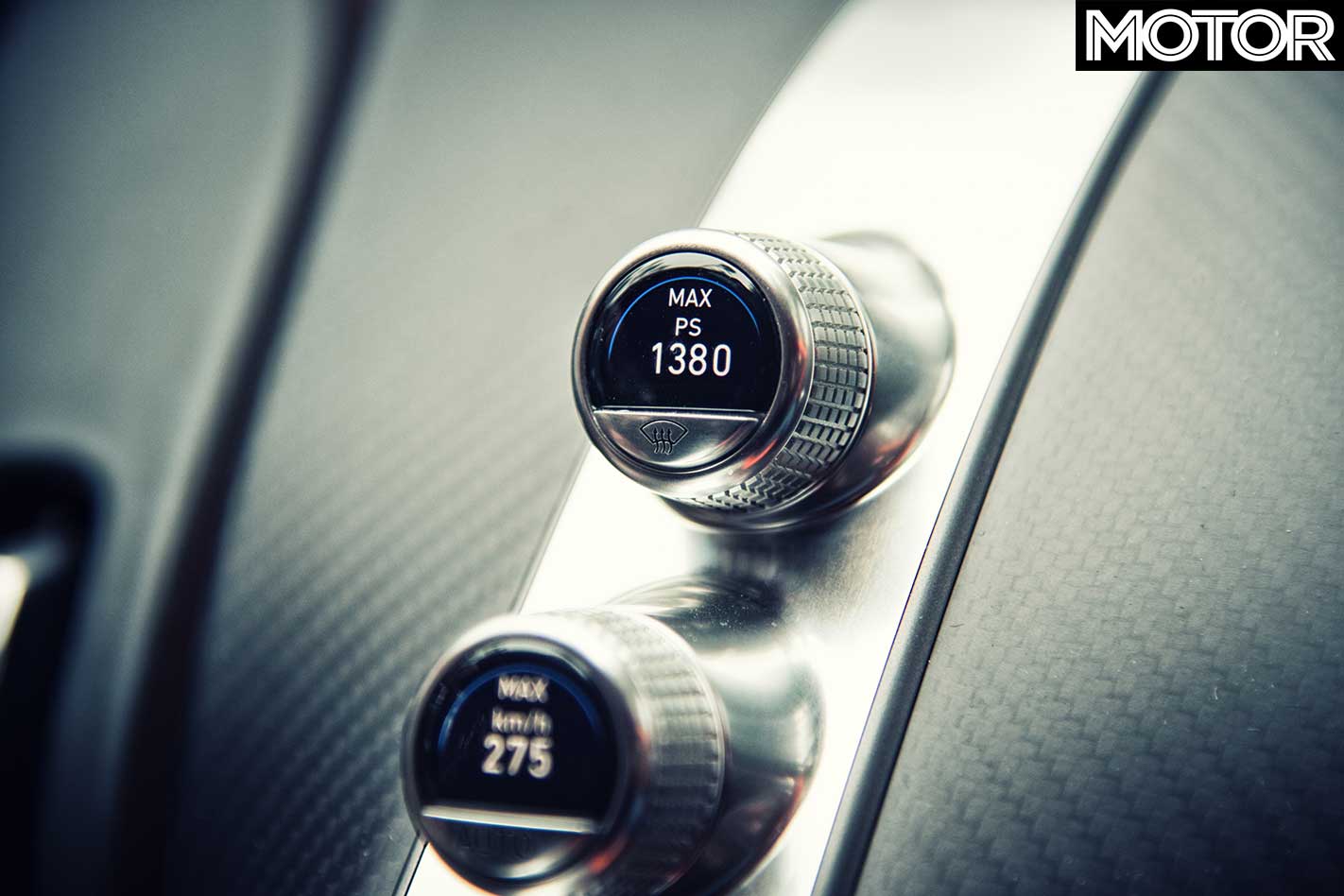
Still, in conjunction with fuel limitations, the Chiron can ‘only’ rocket along at maximum velocity for 20 seconds at a time due to the narrow safety window of the tyres, which must endure tonnes of centrifugal g-force per square inch.
For safety, it’s paramount to always keep an eye on the tyre-pressure monitor and temps when flexing your right foot, ensuring maximum grip for spirited stints. Anything outside the optimal operating window is asking for trouble.
There’s oddities, too, with the steering offering a hopeless 12.5m turning circle, yet flicks from lock to lock in an ultra-quick 1.25 turns. However, as you’d expect, there’s also much to marvel. Check out the massive AP Racing brakes boasting cooling apertures twice as large as the Veyron and a massive heat shield to prevent the Michelins from melting.
The five-position rear wing has increased in size by a third and fully extends above 180km/h (retracting at 130km/h). Hit top speed and it lies flat before assuming a near vertical 49-degree angle when acting as an air brake.
At full throttle, the turbos’ charged air pressure is a whopping 160bar as the engine takes in 1000 litres of air per second. Flat out, the flow rates for water (800L/min), petrol (880L/min) and oil (120L/min) are as extreme as the 1.3 tonnes of pressure that rests on every piston crown at bottom dead centre.
14:45
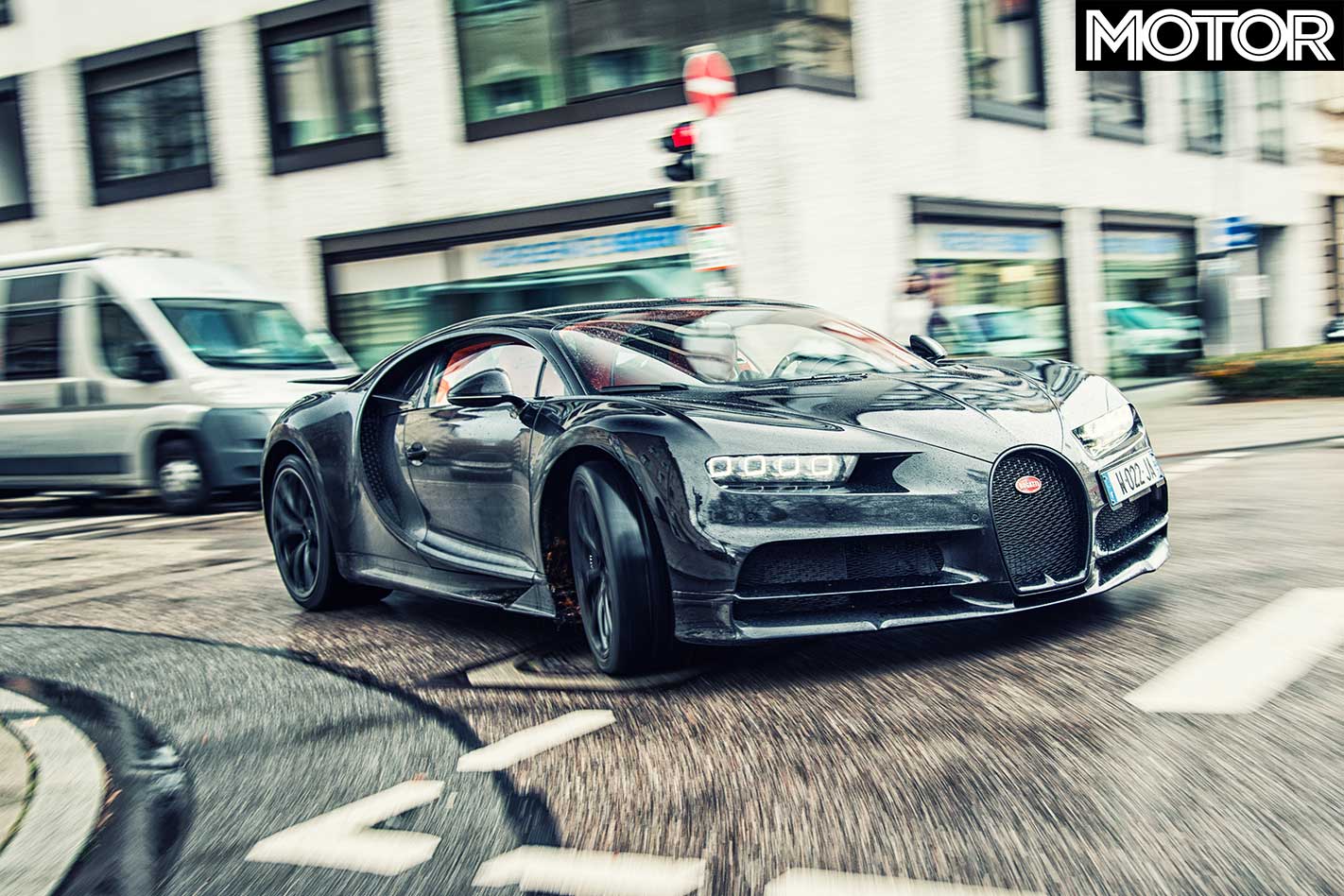
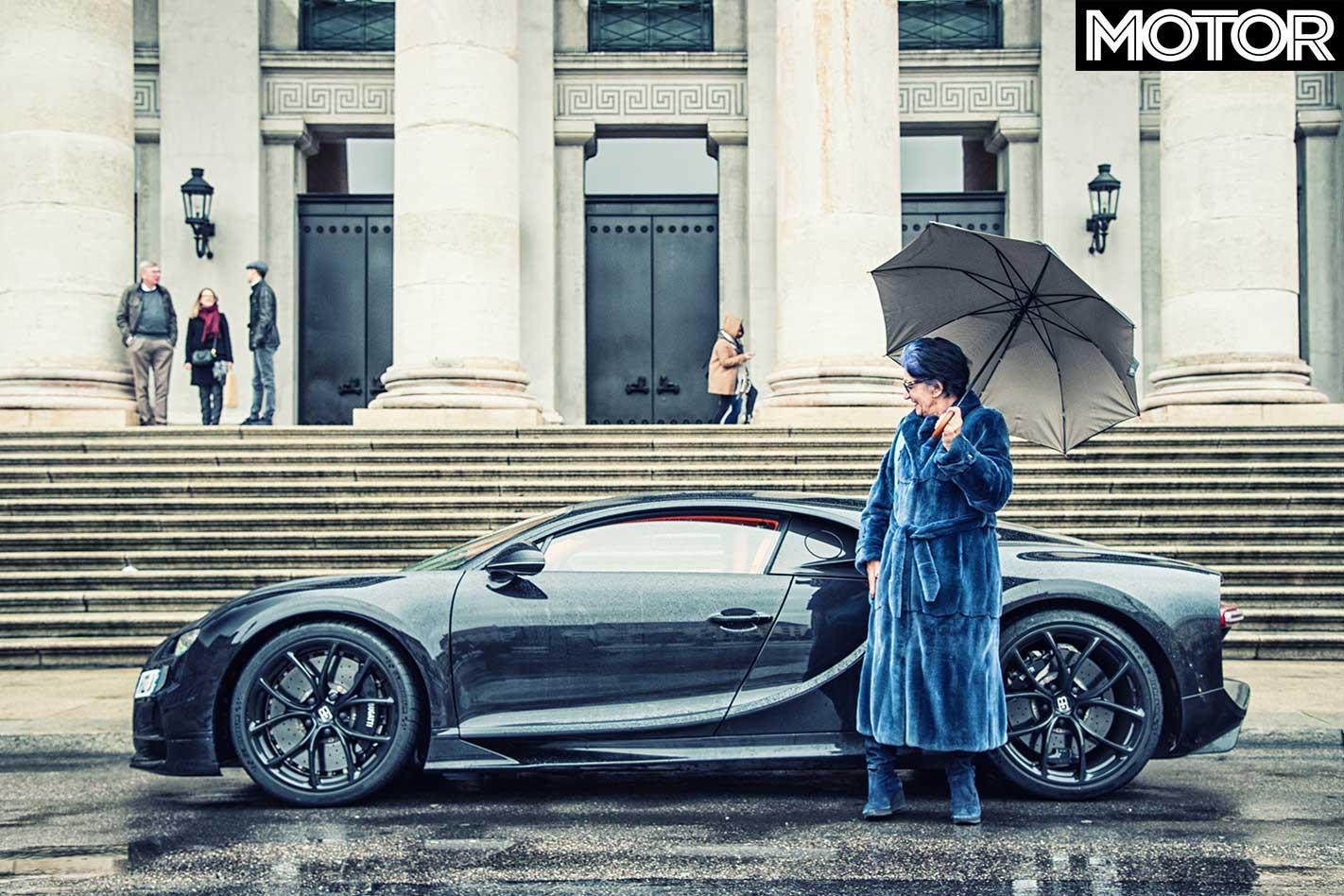
The driver of a red Ferrari casually relinquishes pole position at the traffic lights, before pausing and grinning broadly as he yells, “Hi five, mate”. It’s hard to skulk in dark corners in a Chiron. Every throttle blip garners an audience and its mere presence excites – it’s also a car spotter’s wet dream.
Crowds gather and zoom in on the W16 and 8.0 badges displayed on the cylinder banks and marvel at the massive rear air brake. The onlookers continue in the supermarket car park. Unlike most supercars, the Chiron is practical and accessible. Surprisingly, there’s enough cargo room for a weekend’s worth of groceries.
However, it goes further than that. Around town, two TFT displays provide a full set of information, while all key functions are available without taking your hands off the wheel. Even the launch control is a thumb’s length away. Although the infotainment system is hopelessly outdated – especially when put up against something like the new 992 Porsche 911.
15:10
Not unexpectedly, but you become popular quickly when you have the keys to a Bugatti Chiron. Everyone wants to experience what it feels like to be hurled to 100km/h in 2.5 seconds or feel the impact of 1600Nm being unleashed on their neck muscles. They all come out of the woodwork.
It’s visceral and physical as eyes widen and toenails dig into the soles of each passenger’s shoes. All who grace the passenger’s seat are utterly blown away by the experience. Inevitably, some ask for the tempo to be turned down, as if the occasion is too much to handle despite having eagerly entered the cabin of their own accord.
The weather could also be playing its part, eroding the confidence of those not behind the wheel. The tarmac is sodden in places and the temperature gauge has only nudged two degrees. Despite an armada of electronics to help me out and allay the fear of others, this much power can create havoc, if only for a tiny, deeply shocking fraction of a second.
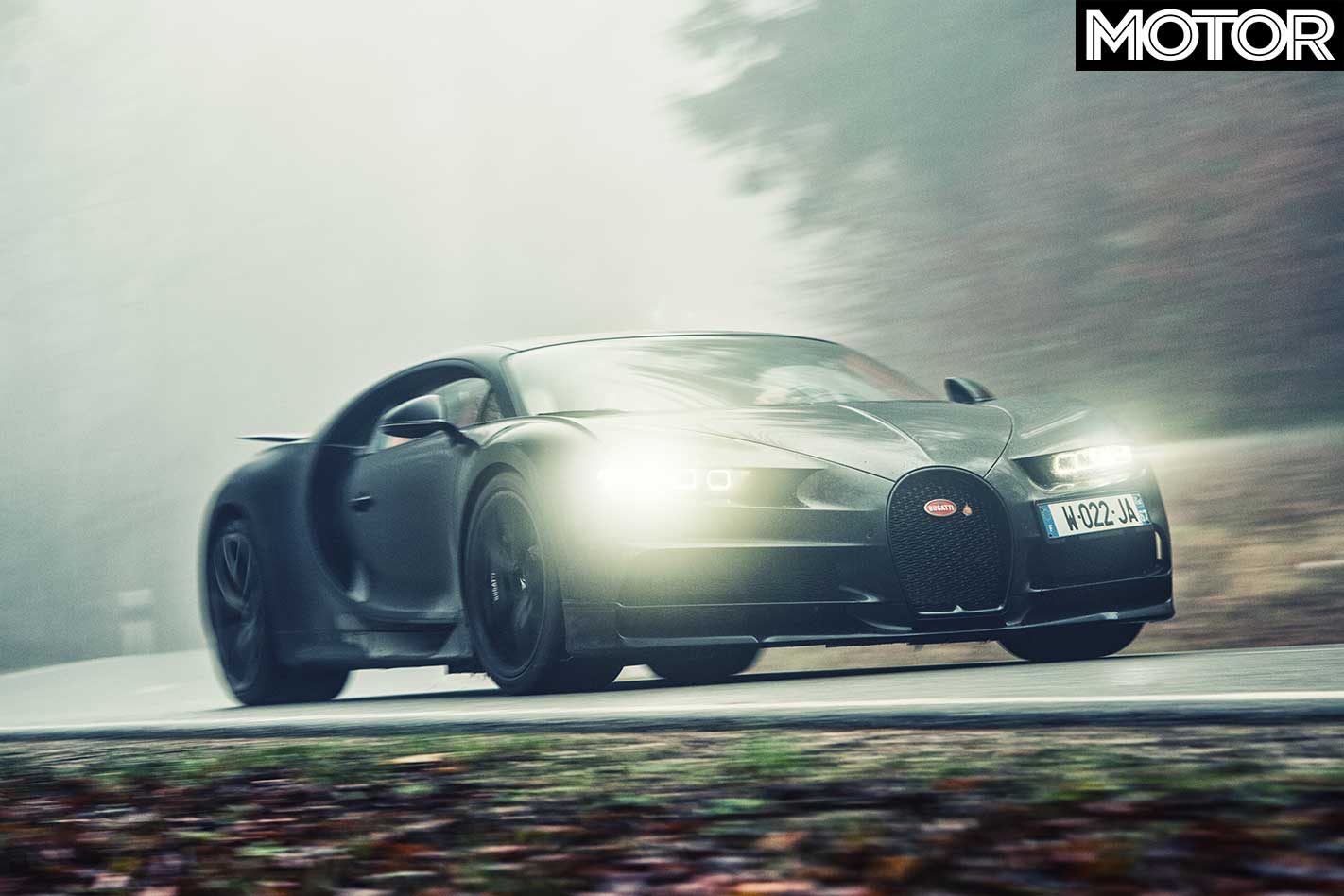
All other mega-maulers, like the Porsche 918 and LaFerrari, move over as soon as the Bugatti opens its floodgates – and in doing so, the fuel consumption rivals the Titanic. Even in seventh gear (dual-clutch), part-throttle wafts you to a lazy 240km/h, while climbing beyond 300km/h doesn’t induce a heart attack as long as too many liberties aren’t taken.
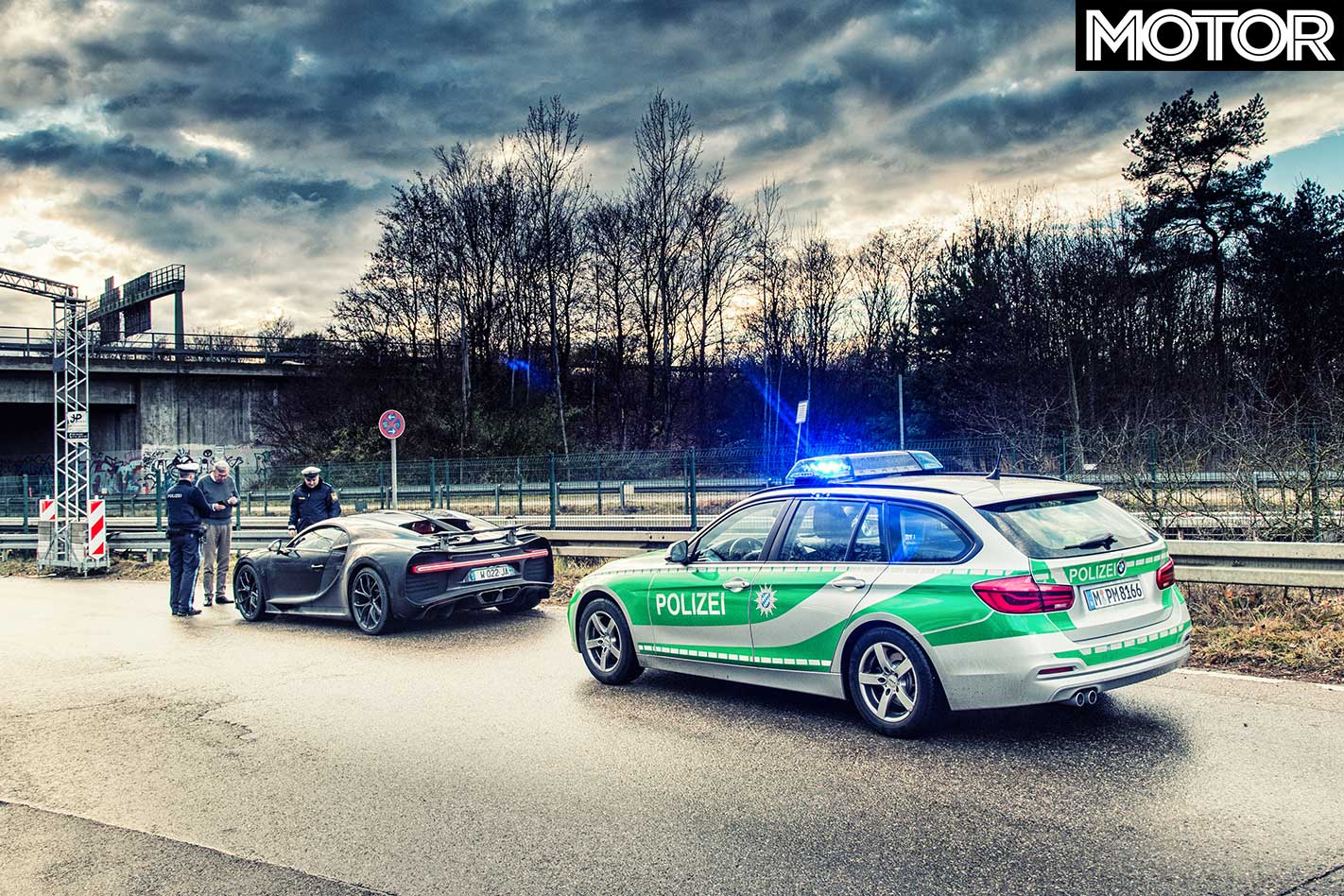
Cards on the table, the fastest I drove the Chiron (on an Autobahn, of course) was 365km/h. This kind of velocity calls on all seven senses and ultimate concentration. Beyond 320km/h even minute changes of direction become noticeable inputs and braking distances are calculated by the kilometre. You need to be so far ahead of the game that if you’re reacting to something in plain sight, it’s already too late. Thrills don’t get much bigger than this.
17:25
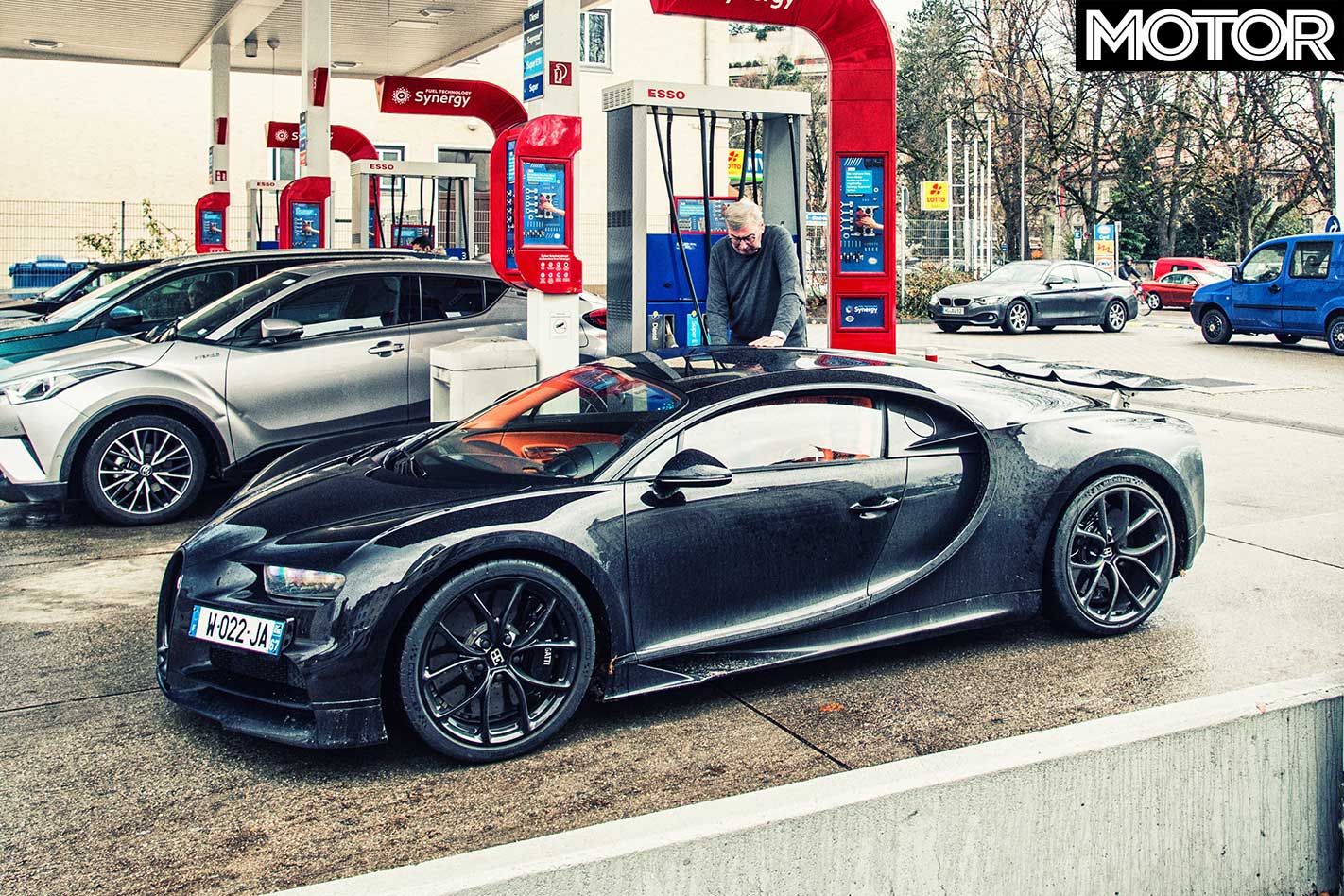
It’s of little surprise, then, to find out the second home of the Chiron is a petrol station. And as you can imagine, as soon as the fuel-filler cap opens, it’s seen as another opportunity for onlookers to approach. If you’re well-healed, a car lover and an introvert, the Bugatti might quickly become the bane of your existence.
Maybe that’s why we’ve heard that the limited run of 500 units is not yet sold out – or the fact it costs $3.6m. According to one dealer, a major service with parts can cost as much as a new Volkswagen Golf. Gulp.
Receipt in hand and $200 poorer, I hit the starter button with the windows down, but in the quieter modes, there’s no bark from the exhaust. If there’s a criticism of the Bug’s aural theatre it’s that there could be a louder, more memorable idle act. After all, the Chiron’s big band comprises 16 cylinders and four turbos, so it’s a surprise not to hear heavy metal.
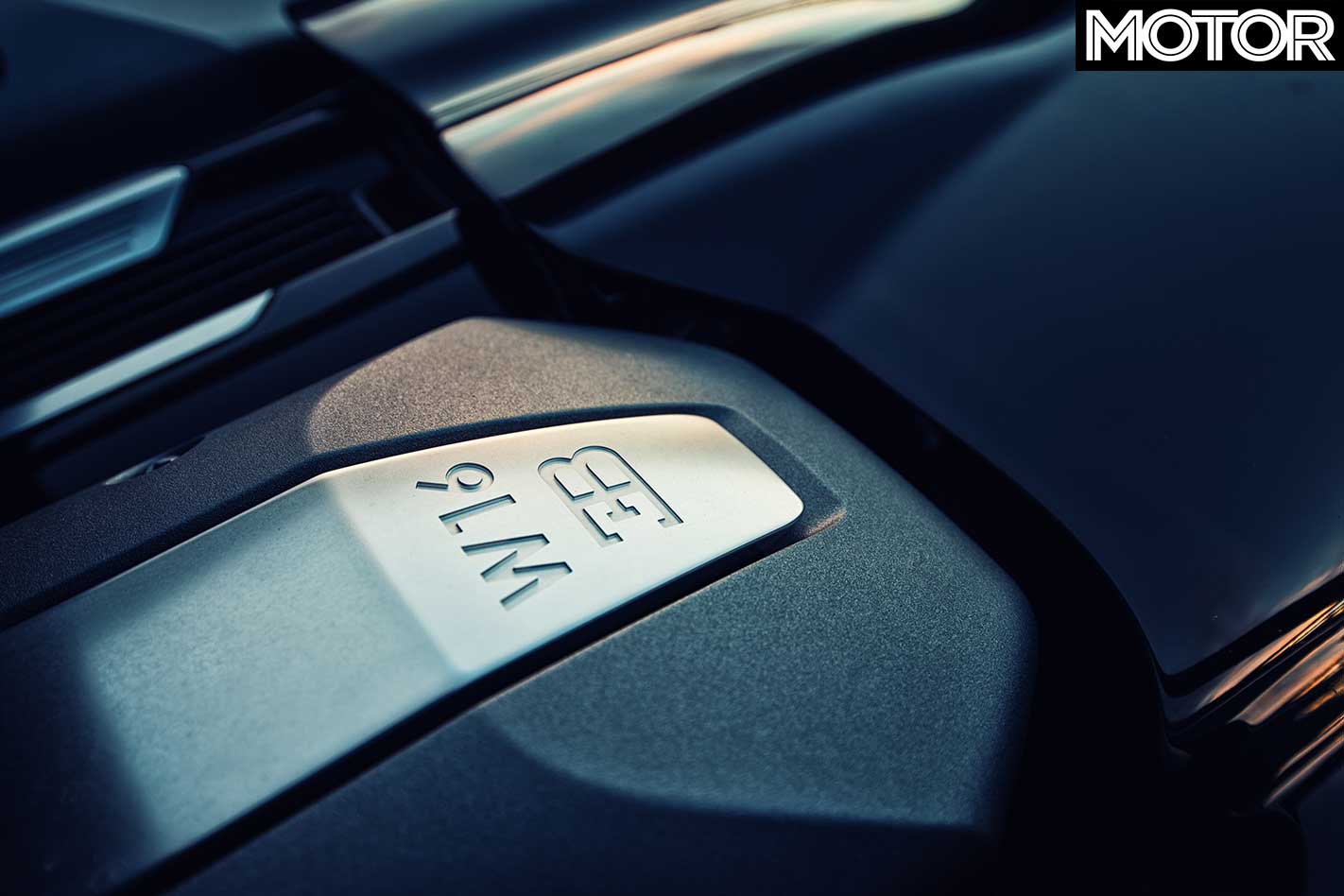
Beyond idle, two junior turbos start laying a punchy soundtrack at around 2000rpm, which deepens by 3800rpm when the manifesting duet becomes a growling quartet. The register of the W16 engine is a mix of part-throttle wail and high-rev whistle with dense low-rpm drums and lift-off histrionics.
Just like the varying timbres and intricacies of the acoustics, the Chiron is all about the bespoke details. It takes 500 man hours to complete a single monocoque – add in a few more days for the expensive optional paint on our test car.
It’s a treatment that adds a large sum to the overall bill, but most buyers won’t care. After all, the customer profile is described as a billionaire with countless cars already on the rostrum. One mega-rich client ordered six Chirons upon its launch at the Geneva motor show… that’s the buyer Bugatti is dealing with.
A fascinating part of Chiron ownership (to us mere mortals who’ll never afford one) is that Bugatti tracks every movement of every car sold – all is recorded by secured telemetry. The factory keeps a detailed journey log of its products, which includes an extensive high-speed profile. According to the Molsheim grapevine, so far only a handful of cars have exceeded 400km/h…
Even with one owner, apparently, using the Chiron as a daily driver, the average yearly mileage is little more than 2000km of the cars sold so far.
20:00
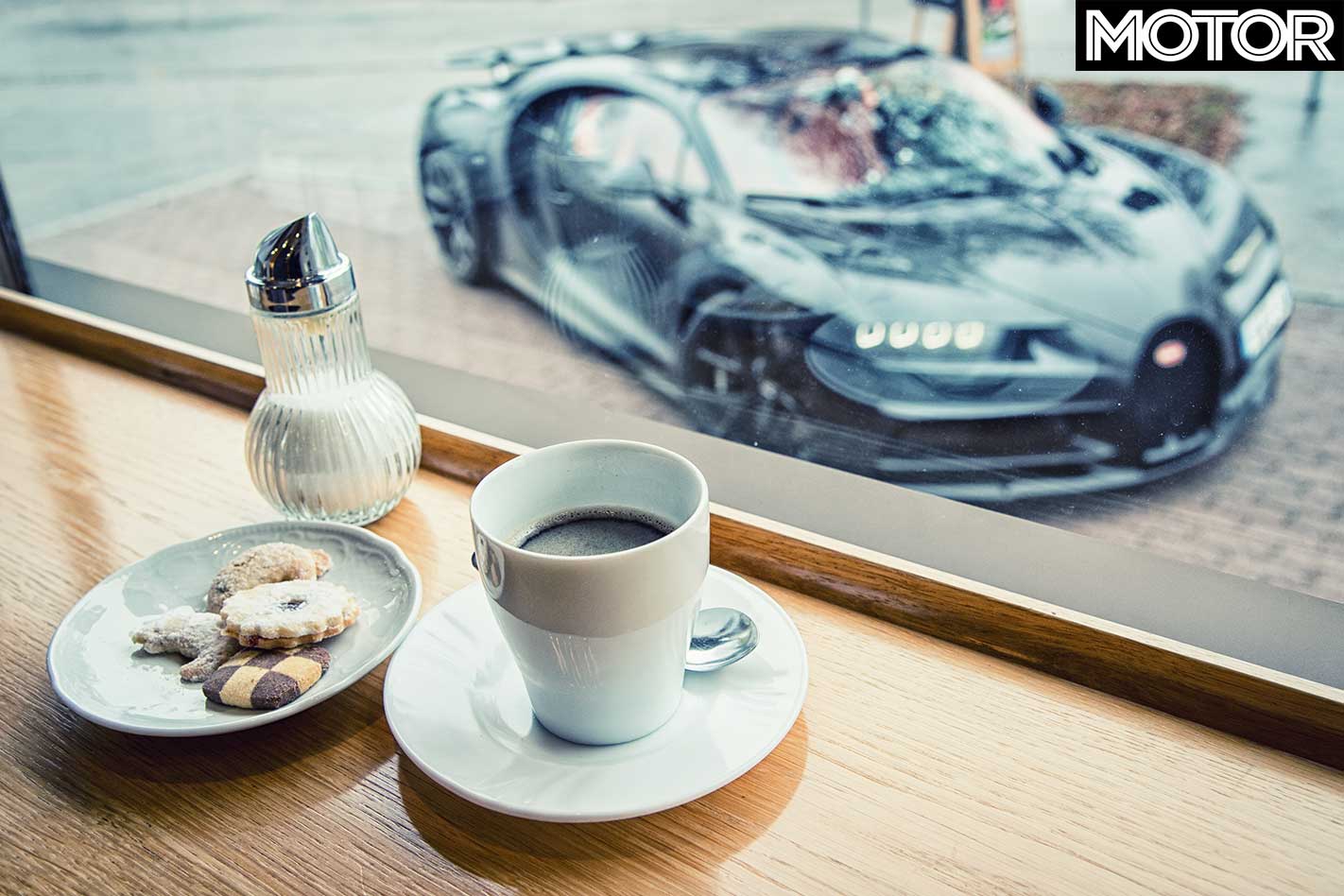
Every time you step back into the Chiron it takes a few moments to reacquaint yourself with the numerous superlatives the R&D team built into this epic machine. Yet, driving at night is a double-edged sword. Yes, lighter traffic makes going fast less risque, but the LED headlights aren’t as powerful as you’d hope. Hitting 300km/h in the depths of darkness is like playing Russian roulette when you can’t see far enough ahead.
Consolidating confidence is the immense aerodynamic stability. Designed for increased downforce and reduced drag, the ultra-fast two-seater also benefits from a highly sensitive, fully active front-to-rear aero balance which ties the car down, enhancing its handling prowess.
Although the Bugatti plots remarkable directional accuracy in foul weather, the super-direct steering and the Chiron’s incessant feud with longitudinal grooves can scare passengers with sudden uneasiness. Although, sadly, my time with the high-speed tech marvel is coming to a close. It’s going to be a hard goodbye.
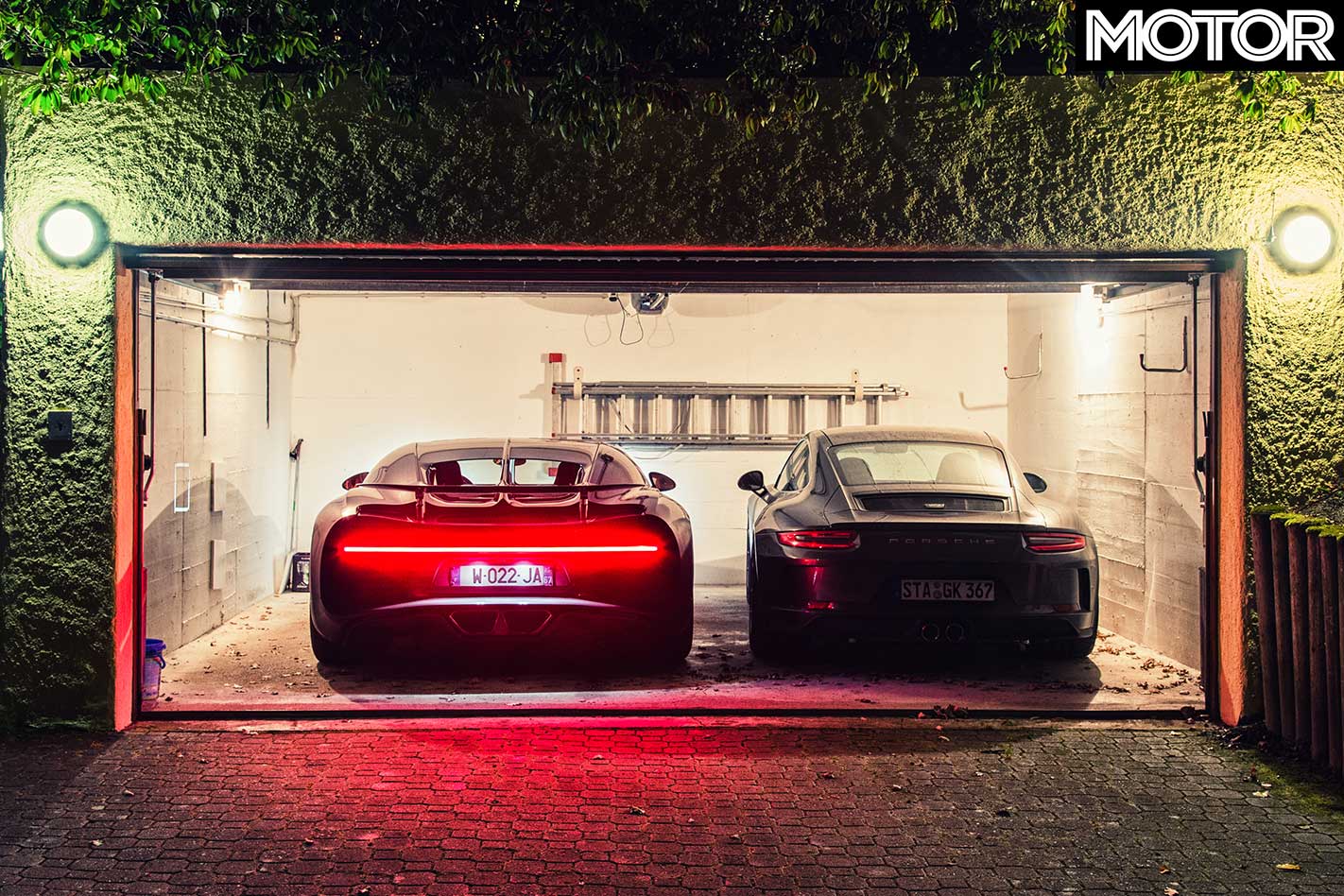
Summing up spending 24 hours living with one of the world’s ultimate hypercars is hard to pen. It’s breathtaking and distinctly indulgent. A favourable public perception is upheld by its aura, where surprise and curiosity overpower criticism. And you better believe that once the road ahead clears, the Chiron is the king of every square inch of blacktop it travels on.
Unlike the Veyron, which disliked corners and racetracks, its replacement scores points for dynamics, while remaining a wild beast few will ever have the opportunity to tame. Walking away from the Chiron manifests myriad thoughts and emotions; detachment is a difficult pill to swallow.
Ultimately it’s hard to ignore the fact that the Chiron is potentially too fast for its own good and shocking to the uninitiated – but my god, what a thing it is.
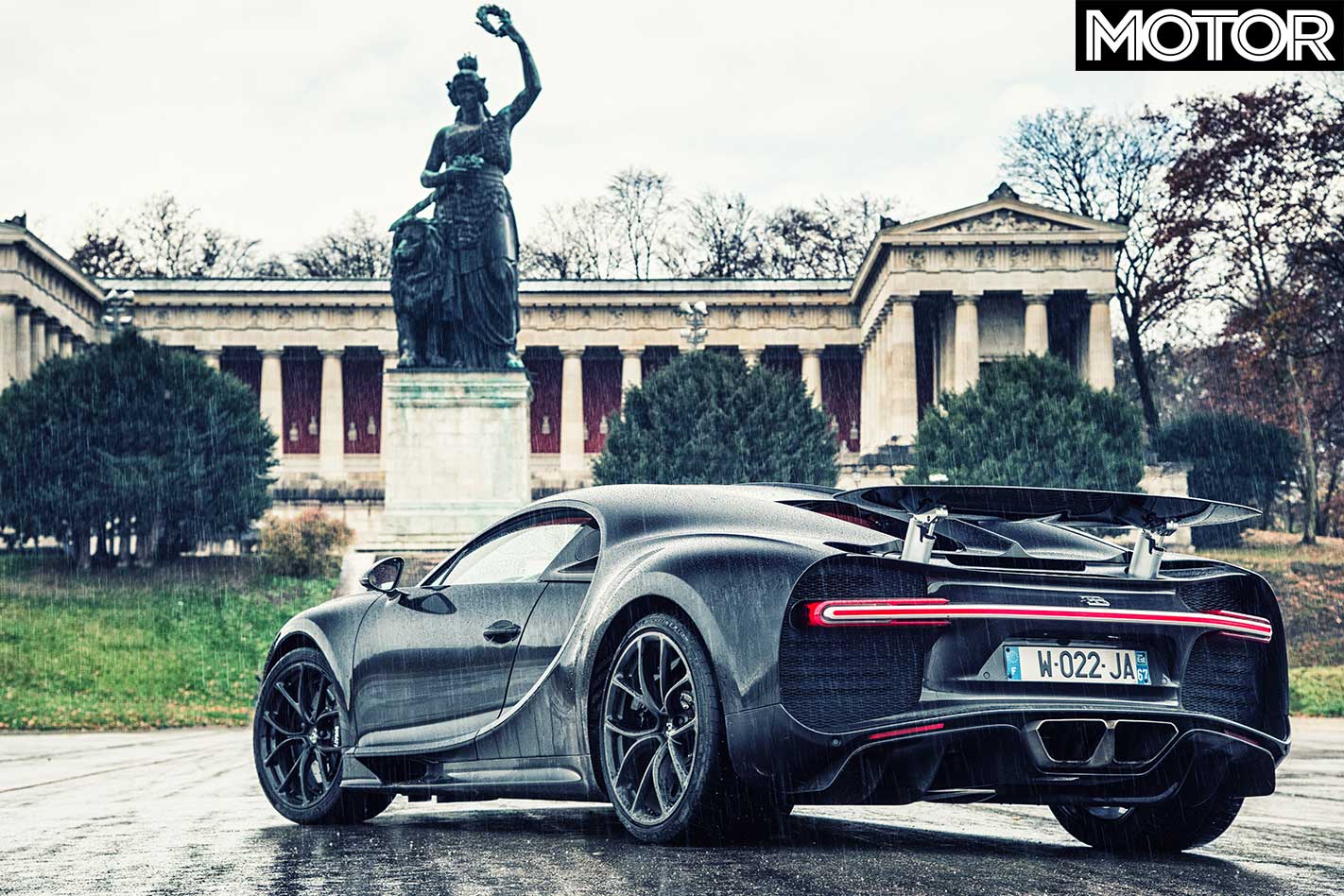
2019 Bugatti Chiron Specifications
- BODY: 2-door, 2-seat coupe
- DRIVE: all-wheel
- ENGINE: 7993cc W16, DOHC, 64v, quad-turbo
- BORE/STROKE: 86.0 x 86.0mm
- COMPRESSION: N/A
- POWER: 1103kW @ 6700rpm
- TORQUE: 1600Nm @ 2000-6000rpm
- WEIGHT: 1995kg
- POWER-TO-WEIGHT: 553kW/tonne
- TRANSMISSION: 7-speed dual-clutch
- SUSPENSION: double wishbone, adaptive dampers, anti-roll bar (f/r)
- L/W/h: 4544/2038/1212mm
- WHEELBASE: 2711mm
- STEERING: electrically assisted rack-and-pinion
- BRAKES: 420mm ventilated carbon-ceramic discs, 8-piston calipers (f); 400mm ventilated carbon-ceramic discs, 4-piston calipers (r)
- WHEELS: 20.0 x 8.5-inch (f); 21.0 x 11.0-inch (r)
- TYRES: Michelin Pilot Sport Cup 2; 285/30 R20 (f), 355/25 R21 (r)
- PRICE: AUD$3.6m (est)
FEW CARS changed the automotive landscape quite as decisively as the Nissan Skyline R32 GT-R. It’s a bona fide legend, but for all its cultural significance and retrospective appeal, it’s easy to forget that it bombed commercially in Australia. Just 63 of the 100-car production run initially found homes, buyers daunted by its $110,000 list price which, adjusted for inflation and taxes, would be around $250,000 today. The car that changed tin-top racing for good wears that as probably the only blot on an otherwise imperious copybook.
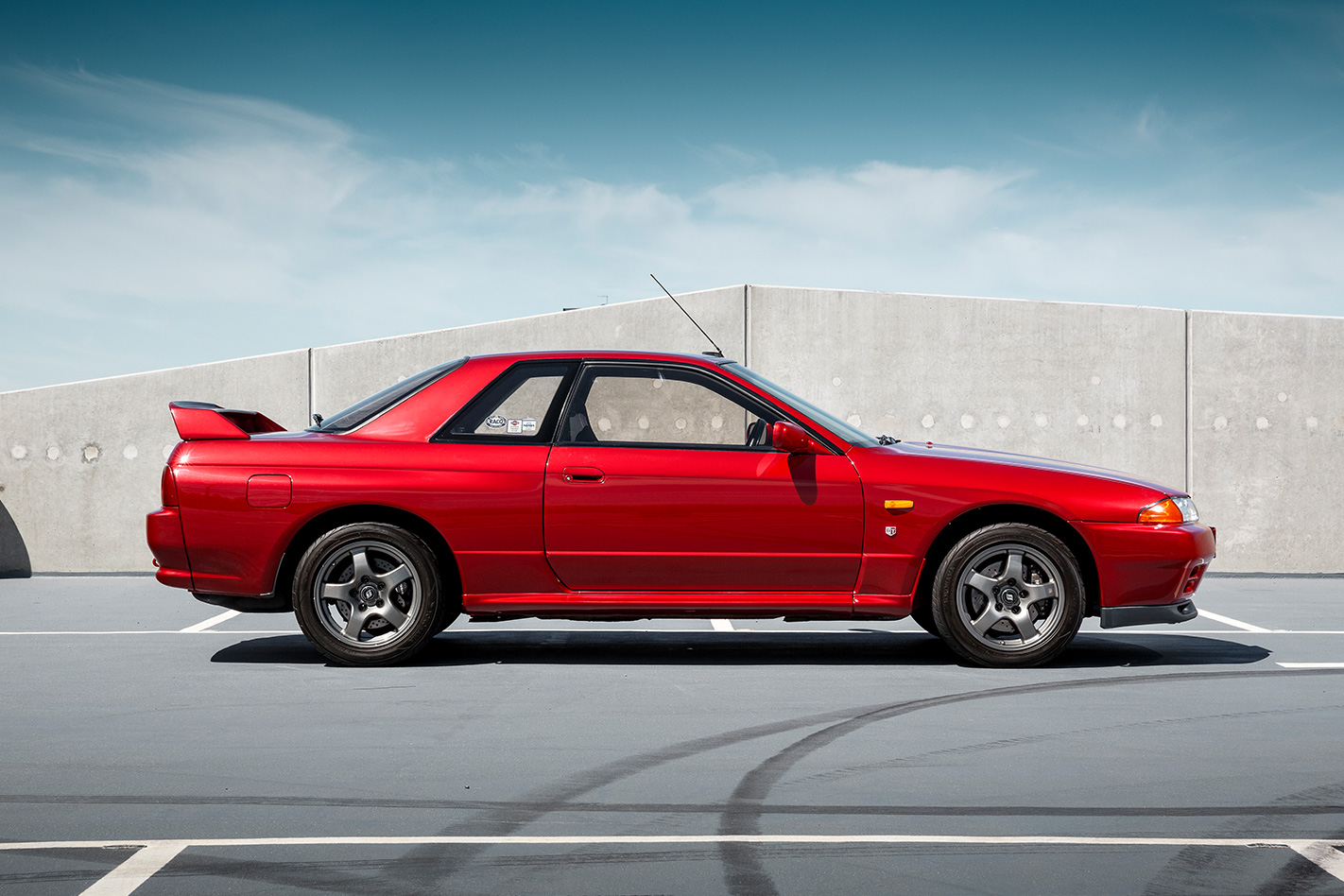
That copybook owes a lot to another 1980s legend that pushed technological boundaries: the Porsche 959. At this point, I’m making an assumption that we can dispense with all the usual preamble about Jim Richards, development of the RB26DETT engine for Group A racing, and tracing of the nameplate back to the Prince Skyline or the GT-R badge to the ‘Hakosuka’. We can? Good. Let’s look at some of the other more nerdy stuff, beginning with that 959.
Nissan engineers knew that the R32 GT-R needed all-wheel drive. As a 1984 proof of concept exercise, three engineering mules were created: one with a standard rear-drive layout, one with an Audi-style fixed torque split and one with a Ferguson viscous centre diff developed from the MID4 concept car. None were satisfactory.
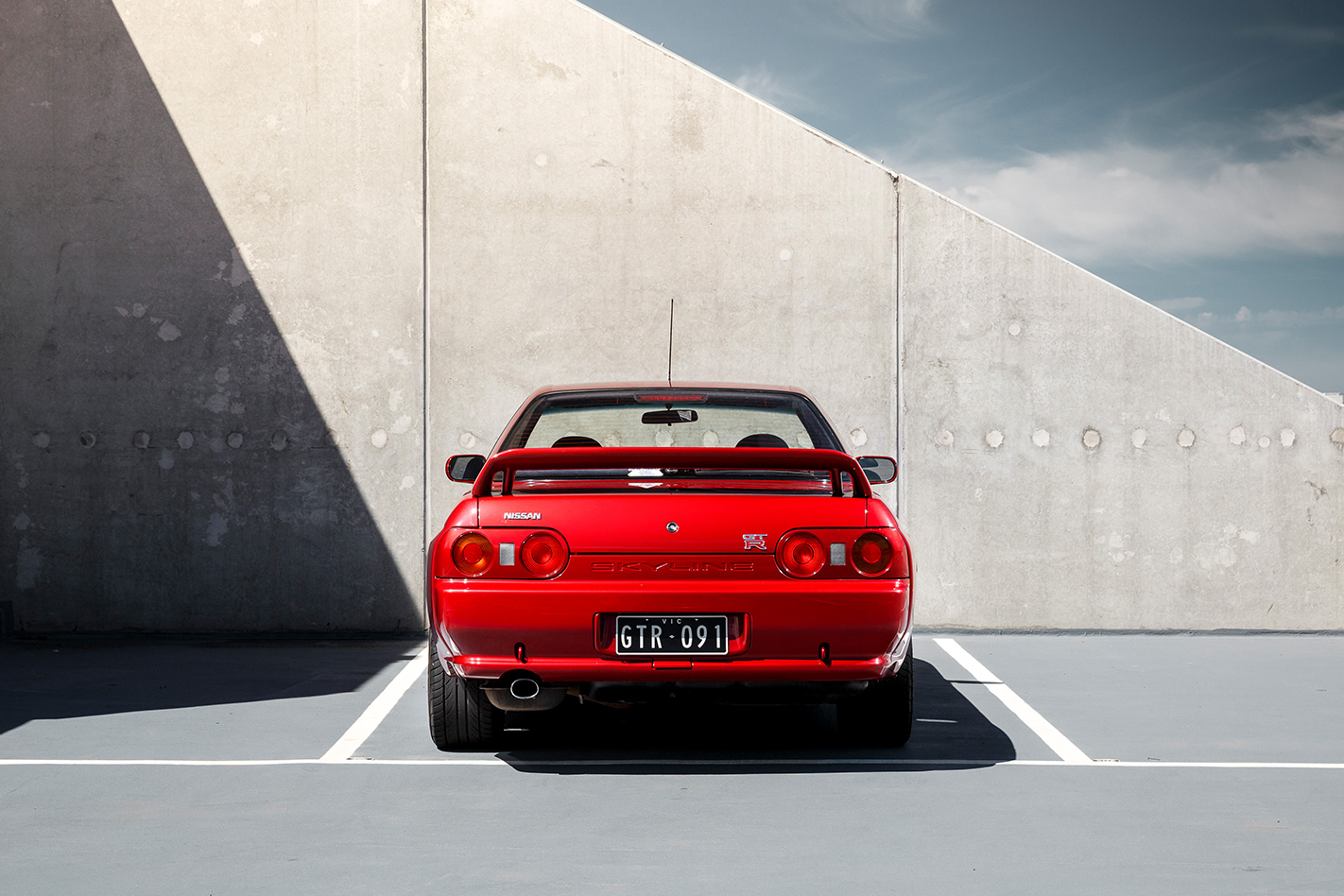
The rear-drive car exhibited too much early phase oversteer, while the others both understeered, although the Ferguson-equipped car was the best of the three.
Chief of the Vehicle Experimental Department, Kozo Watanabe, decreed that the viscous system was not sufficiently precise, and ordered engineers to work on a multiplate clutch system. If his team couldn’t come up with a workable design within a year, project GT-X would be a rear-drive car.
What the team came up with was Nissan’s remarkable ATTESA E-TS system. A tear-down of a Porsche 959 had convinced them that a variable electronic torque split with a wet multiplate clutch was the answer, but where the Porsche’s torque split replicated its 20 percent front, 80 percent rear weight bias under acceleration, Nissan came to the conclusion that the 959 got it wrong. During mid-phase cornering, 20 percent of drive going to the front tyres would always introduce understeer, a characteristic hard to engineer out of the R32 GT-R, thanks to its unfavourable 59.4 percent front, 40.6 percent rear, static weight distribution. The engine hanging over the front axle and the fuel tank mounted aft of the rear axle also contributed to a high polar moment of inertia, despite Nissan’s attempts to lighten the front of the GT-R with aluminium body parts.
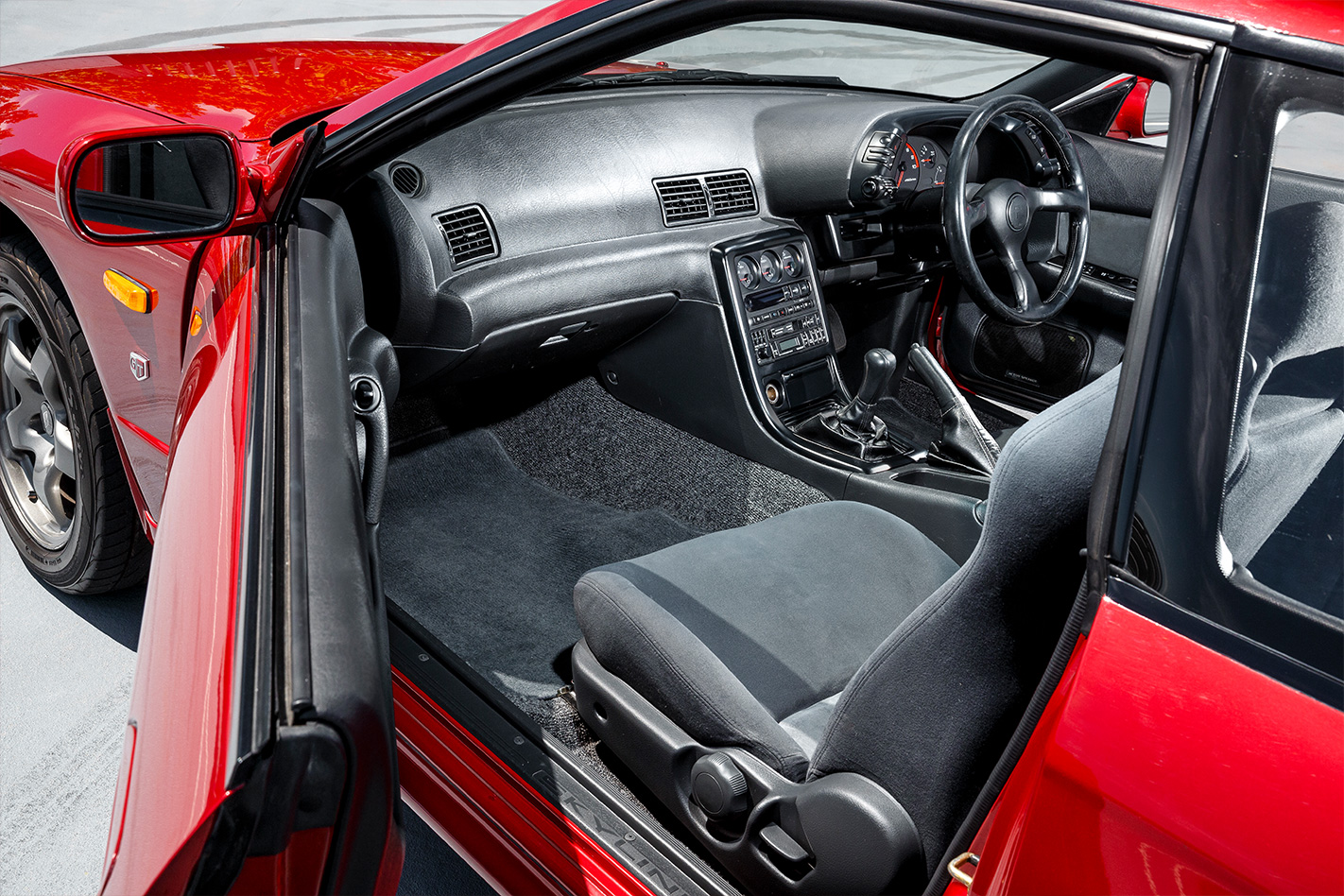
Chief test driver Hiroyoshi Kato’s first trip to the Nurburgring with the R32 saw it eclipse the Porsche 944’s production car record of a rather quaint-sounding 8m45s. The Nissan recorded 8m30s, but Kato was frustrated by the dull understeer the R32 still exhibited. Nissan altered the diameter of the anti-roll bars, giving the Skyline R32 GT-R an inherent oversteer bias on corner exit.
Whereas most manufacturers install a thicker anti-roll bar at the front to introduce a degree of safe understeer, Nissan’s engineers reversed that philosophy, fitting a 20mm diameter bar at the front and a chunky 25.4mm item at the rear. This took advantage of the all-wheel drive’s ‘accelerated power oversteer’, the process of flooring the throttle on corner exit to drag the car out of oversteer, radically improving corner exit speeds. The result was an 8m20s lap of the Nordschleife.
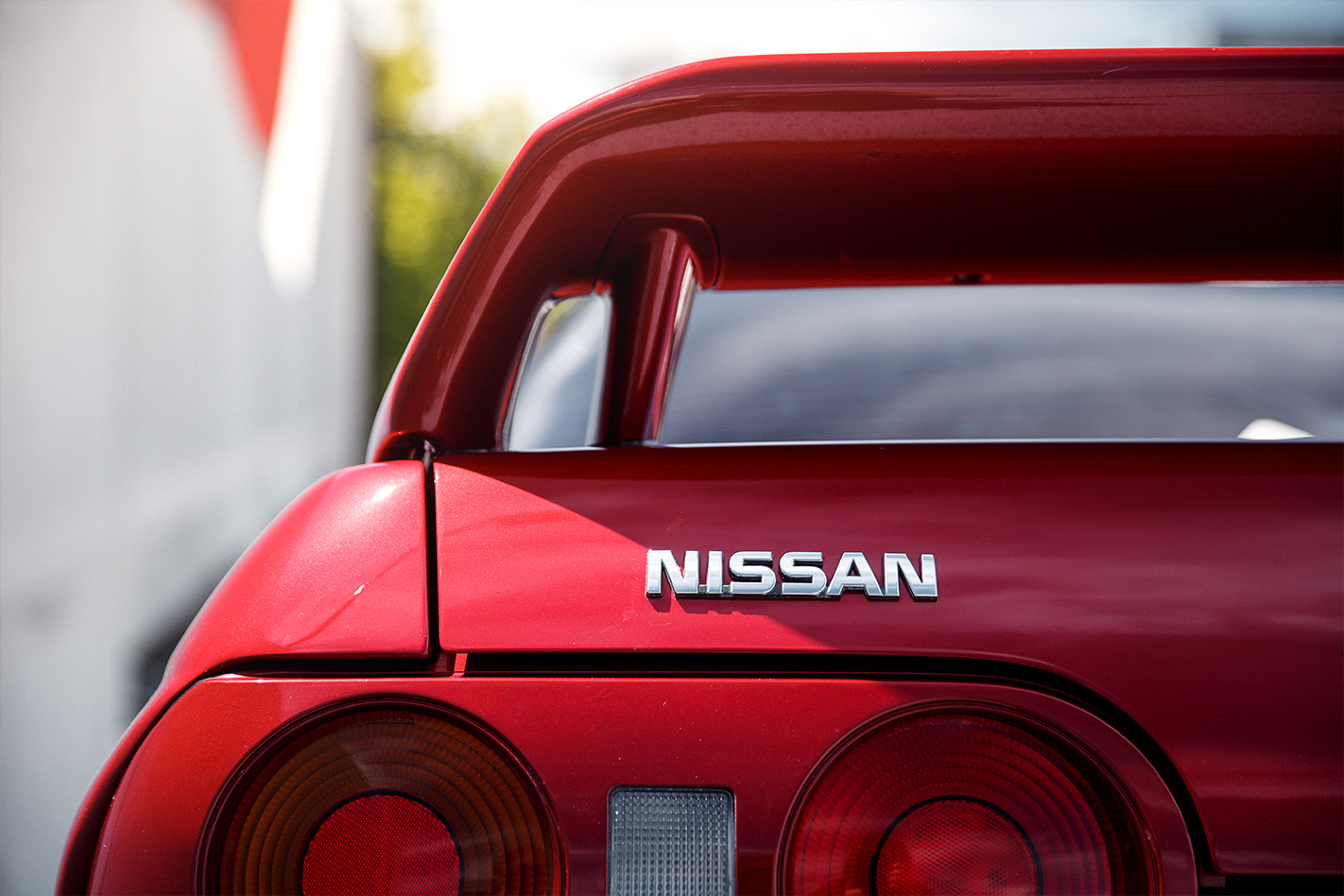
To help improve yaw damping and reduce unpredictability, Nissan’s Super HICAS four-wheel steering used a hydraulic actuator to steer the rear wheels by up to one percent either counter to the fronts in slow corners or in the same phase at higher speeds. It might all sound a little esoteric, but remember that this was 1988. Porsche was still working on the 964 and a BMW M3 was powered by a 143kW four-pot. It won’t have escaped your attention that these cars and the GT-R are not alike.
Understand the scale of Nissan’s engineering achievement and you’ll grasp why the GT-R team were on a different planet. Cue racing domination, packs of arseholes, the birth of the Playstation generation and a whole host of other stuff you can dredge up on the web. Nissan was doing incremental gains before the phrase ever entered the common vernacular. No longer could premium sports cars owe more to the engineering fundamentals of the 1970s. The R32 GT-R was a genuine game-changer and that’s why you should want one.
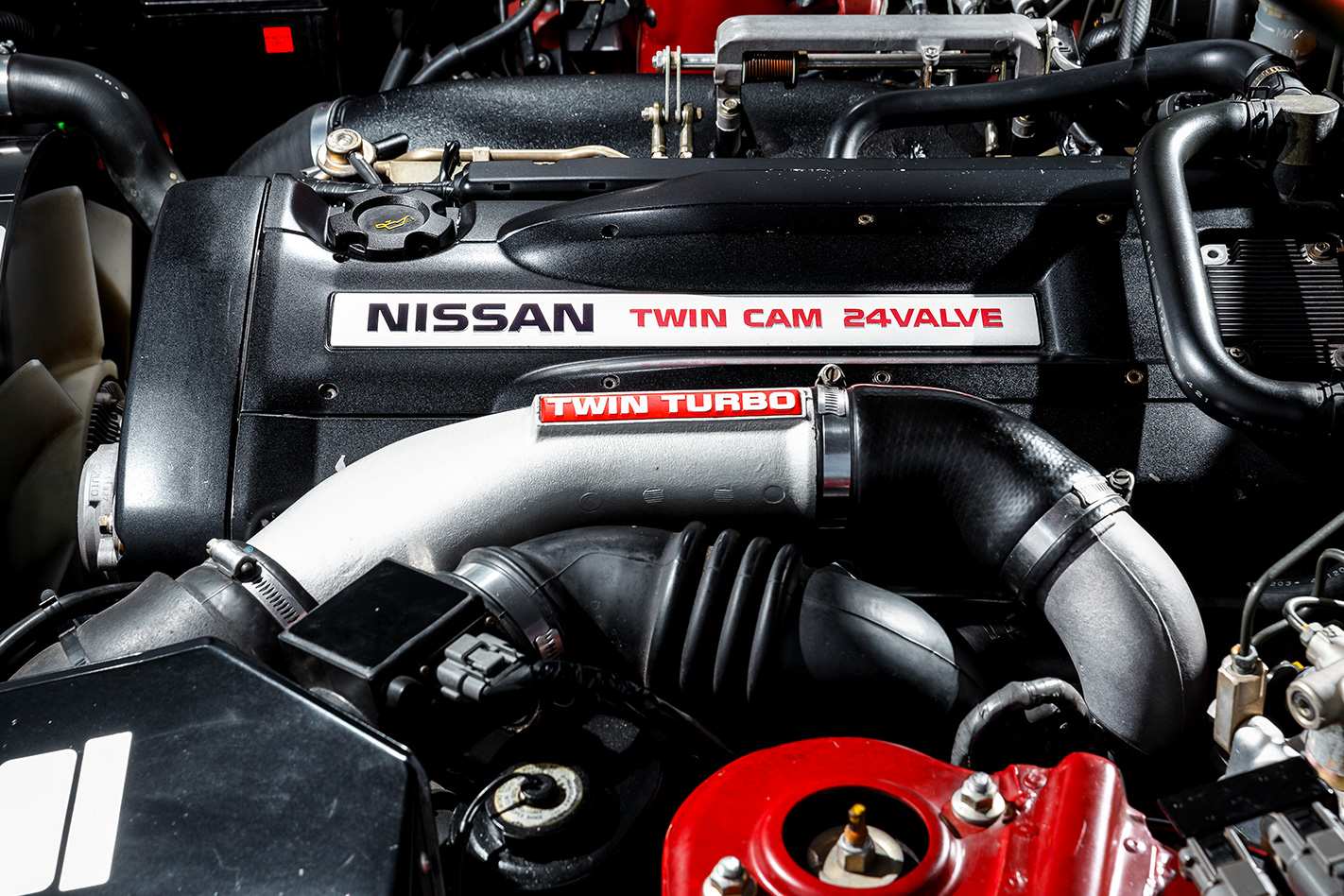
Prices start at around $38,000, but we’d recommend spending a good deal more. That’ll get you a fairly tired early Japanese import, and with almost 44,000 R32 GT-Rs built between 1989 and 1994, it’s not in and of itself a rare thing. Many at this lower end of the market will need significant work. Far more desirable is the middle tier in which the specials reside. The R32 GT-R V-Spec was sold in two editions totalling 2756 cars, while the Nismo and GT-R N1 homologation versions add 560 and 245 units respectively. The upper echelon of collectability is represented by Australian-delivered cars, of which there are just 100. Look for a Nissan Australia compliance plate and vehicle code 40ZKBNR32RX.
True gold dust? One of only four HKS Zero-R GT-Rs recently sold at the BH Auction sale during the 2019 Tokyo Auto Salon, and now in Australia. Melbourne-based workshop V-Spec Performance was the last paddle standing when the bidding stopped at A$212,000. The 2.8-litre, two-seat 441kW HKS car is so far removed from a standard GT-R that it wears no Nissan badges, and there was enough interest in the work HKS carried out that the Sultan of Brunei ordered one of the four.
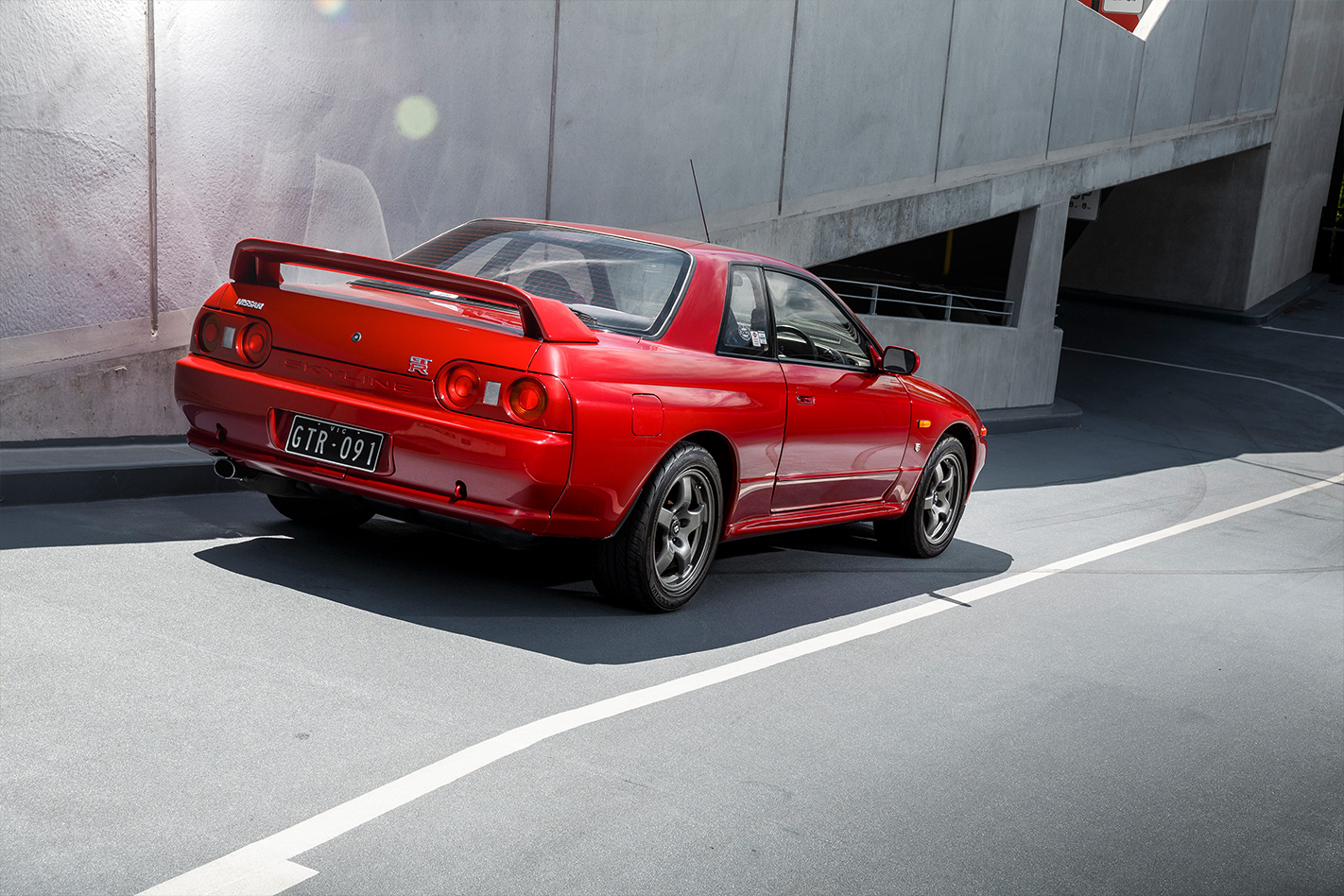
Aussie R32 GT-Rs were built at Nissan’s Murayama factory and shipped during May and June of 1991. A second tranche of 50 cars rolled from the same production line in August. The six-month ADR program had a modest $250K budget, and required Nissan to factory fit an uprated oil cooler, side intrusion bars, a different windscreen and a revised rear muffler amongst 250 changes. All vehicles were landed in Melbourne where local compliance items such as child-seat restraints, a fuel-filler restrictor and a high-mount stop-light soaked up 50 man hours per car. Australian-market cars also featured Blaupunkt stereos, a roof-mounted aerial and replacement speedometers that read to 260km/h. Colours? There were 37 each in Jet Silver and Red Pearl Metallic with the remaining 26 finished in Black Pearl Metallic. Prices for these cars start at around $75,000 and go up from there dependent on condition and odometer reading.
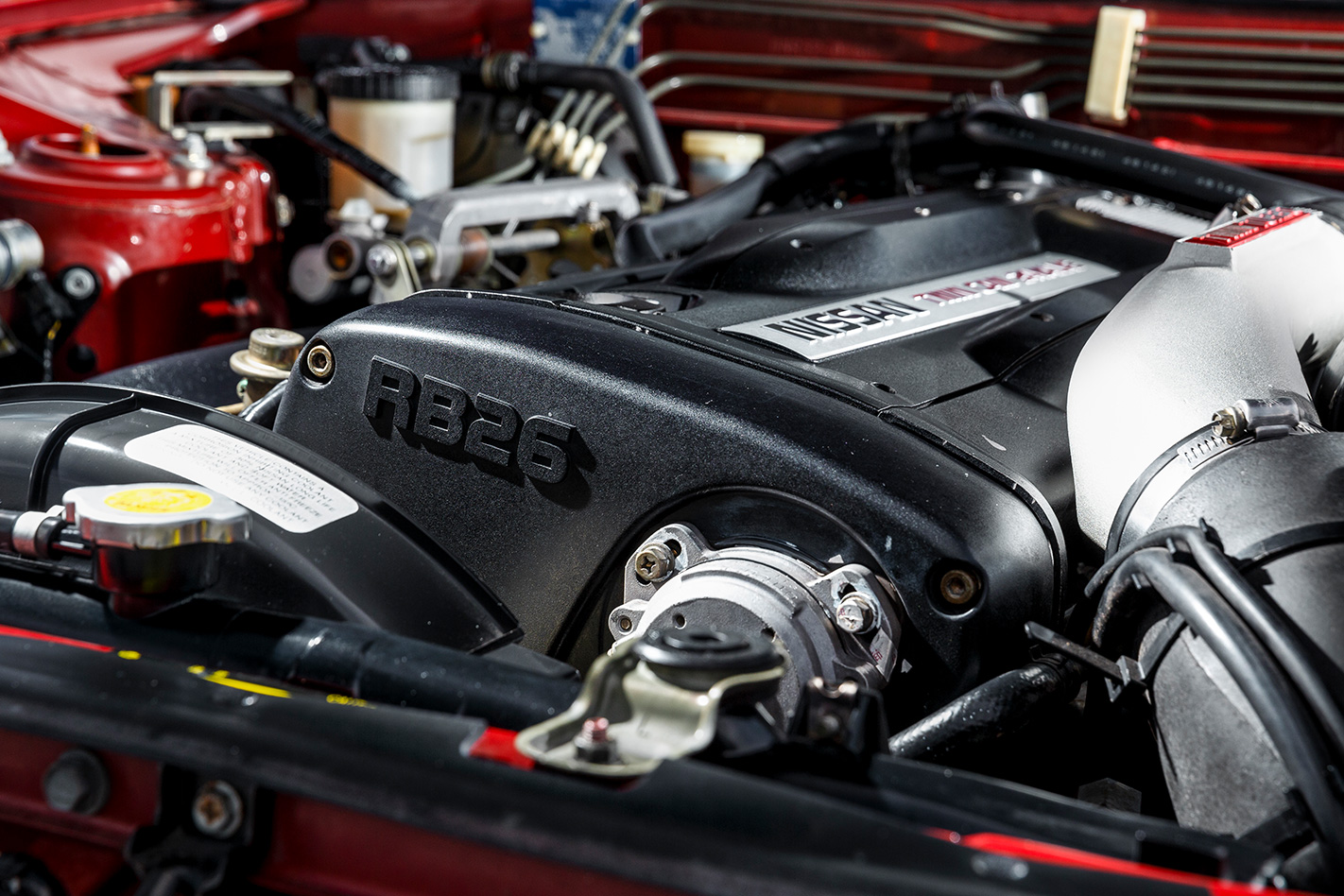
Contrary to popular opinion, which holds that the Skyline and its RB26DETT lump are in the Keith Richards/Nokia 3210 bracket of indestructibility, these cars do have some inherent issues and require 5000km servicing. Stock boost should be in the region of 0.8 bar and oil pressure 2.0 bar at idle. High boost and low oil pressure are both cause for concern. Most well looked after Skylines will have had a rebuild of engine and/or turbochargers at some point as neglect can lead to spun bearings, failing ceramic compressor vanes and failing oil pump drives. The latter issue was a niggle rectified from February 1993 onwards.
Body corrosion can be an issue on Japanese market cars, and look for crash damage on the front chassis rails. The bootlid supports are underspecified for the weight of the rear wing and water can leak into the boot. The brakes probably age the R32 more than any other component and many owners upgrade to larger discs with better warp resistance. Clutches are easily fried with repeated standing starts, and excess driveline shunt or clonking from the rear end under acceleration is often indicative of tired rear driveshafts or diff. Interiors tend to be hardwearing but seat bolsters can wear thin and most cars will have had gauges replaced.
The 25-year US import rules have made clean import R32 GT-Rs increasingly expensive and hard to find and the same will apply to R33s in a couple of years’ time. Tracking down a decent Aussie car will reward you one of the landmark cars from the turn of the Nineties and one which makes a rock-solid investment. As with anything that promised next-level tech a quarter of a century ago, the R32 GT-R can seem quaint when compared with something like a modern hot hatch, but perspective is everything. The respect the R32 is held in was earned the hard way.
With the promise of magnificent roads and breathtaking Australian native scenery, the Blue Mountains is one of the most spectacular day trips (or weekenders) one can do out of Sydney. Just two hours from the CBD, this destination is as well-known for its bushwalks as it is for indulgent getaway properties.
And like Ojai and Joshua Tree National Park in the United States, the windy Scottish coastal isle of Iona, Boudhanath in Nepal and Uluru in our very own Alice Springs, the Blue Mountains has a mystical reputation. Named so because of the blue vapour radiating off its mass eucalyptus forests, this peaceful destination’s ancient feel is amplified by enormous, prehistoric trees that tower over even older rock formations and many a treasured and sacred indigenous site. Blue Mountains towns are dotted with local art, classic colonial tea houses and antique shops en masse. A conversation with a local may spark the phrase “the veil [between heaven and earth] is thin here”… something often said in this area of NSW, alluding to its spiritual appeal. Whether you believe that or not, it still makes for a compelling thought while driving through the misty mountains and tall ghost gums, and even more as a place to escape to when the urban jungle gets too much.
In Episode 11 of the first season of Which Car TV, we took the new Jaguar I-Pace, in all its silent, environmentally thoughtful glory, into the wilderness. Aside from the fact our road trip highlighted many of the pitfalls that await performance EV owners in Australia wanting to take the road less travelled, we also found some of the best kept (and some not at all) secret stops.
Here’s five to consider next time you’re thinking of taking off into the mountains.
Bells Line of Road
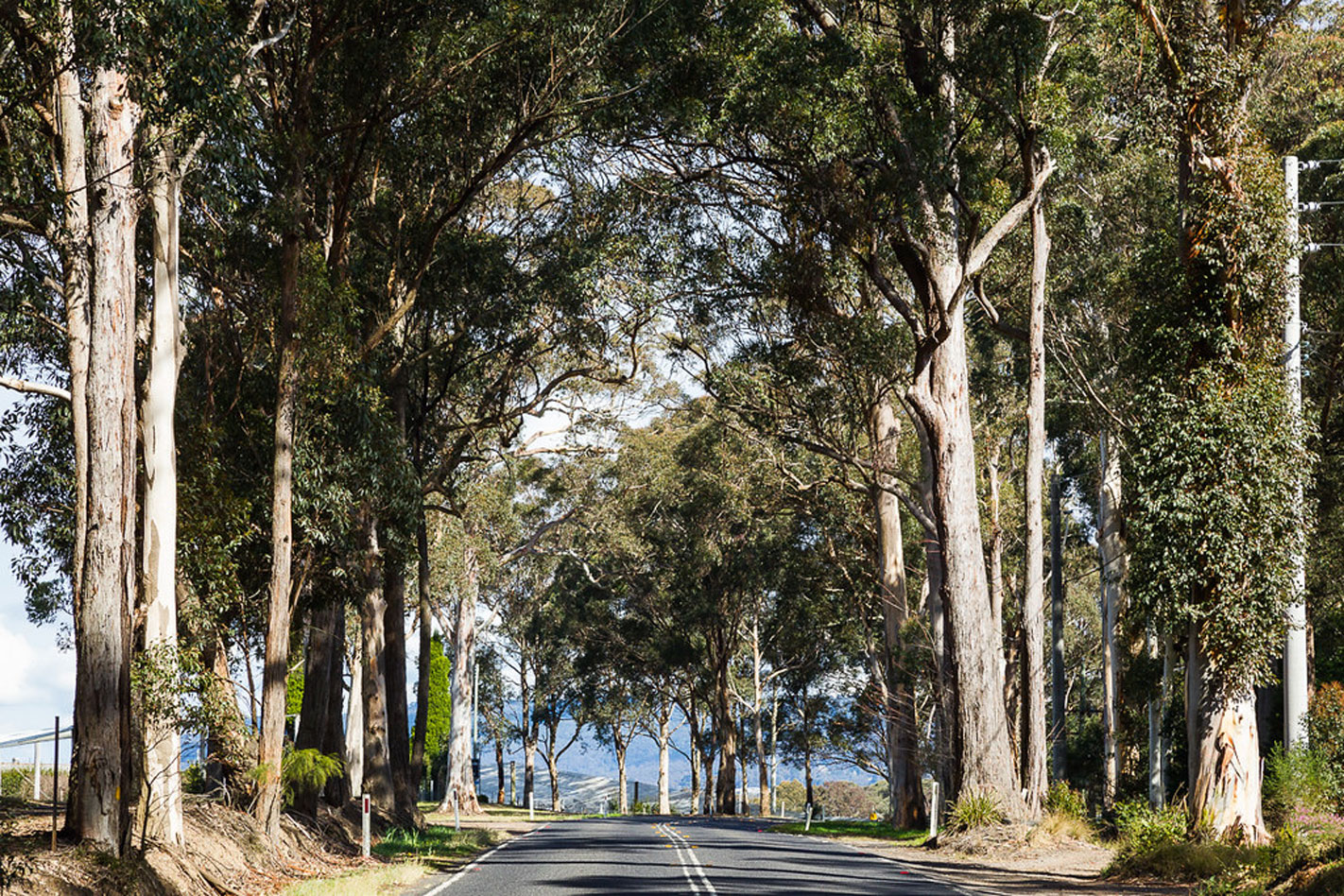
Coming out of Sydney, most drivers will opt to take the popular and more direct Great Western Highway; big mistake. Because what those drivers miss out on is a winding, undulant and idyllic stretch of road that passes tall paperbark trees, beautiful sandstone cliffs and rises above the canopy. The Bells Line of Road starts in Richmond and ends in Lithgow, and is one of the most historic roads in the Blue Mountains.

Bilpin Cider Co.
Situated on Bells Line of Road, this craft cider brewery is one of a handful in the area, which is rich in orchards and fruit farms thanks to the location’s microclimate and biodiversity. Pop into the cellar door to taste one of Bilpin’s six apple and pear ciders, learn about the history of the area or take a wander through the orchard.2369 Bells Line of Rd, Bilpin NSW 2758 http://www.bilpincider.com/home
Blue Mountains Botanic Garden Tomah
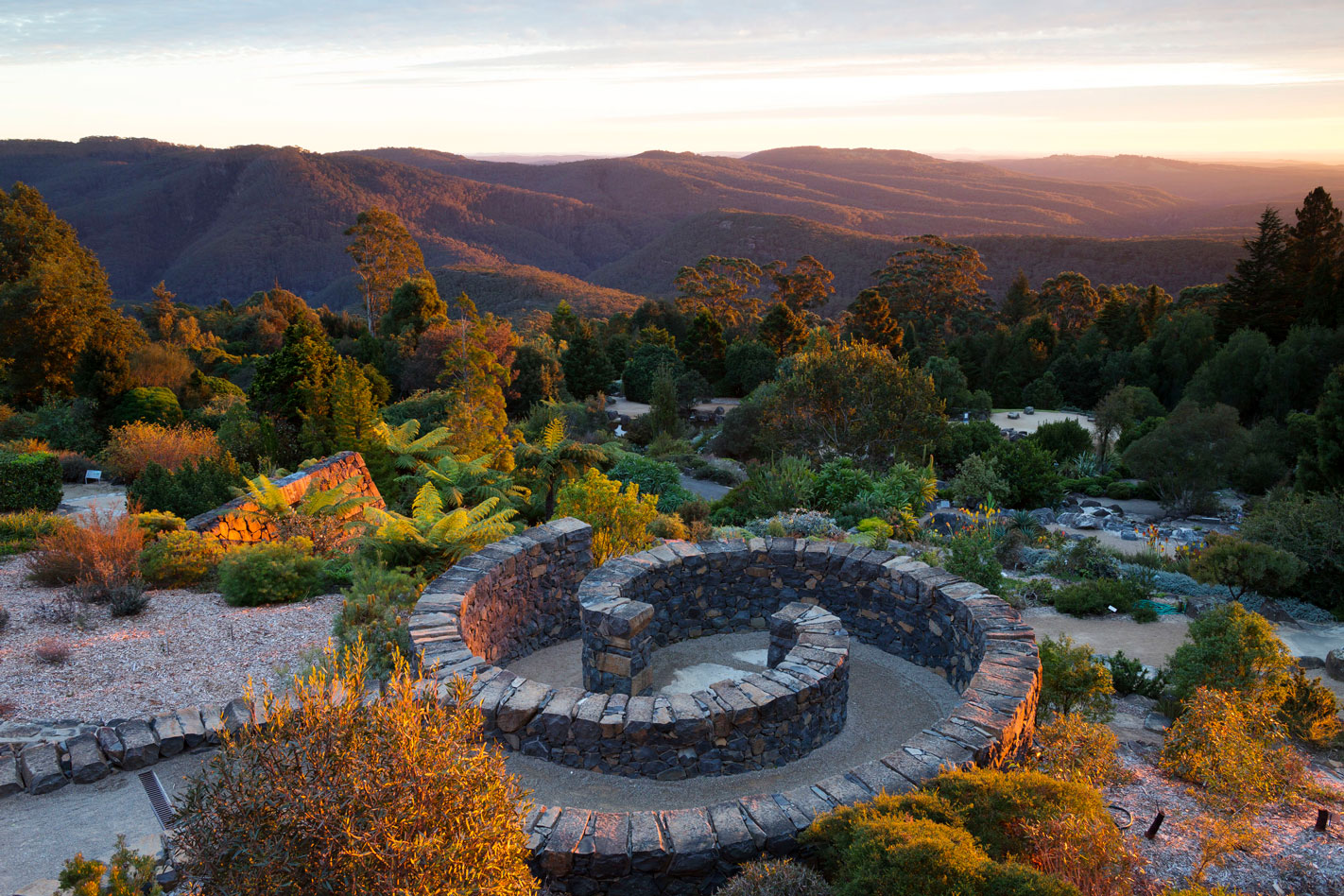
Featuring more than 21,000 species of cool climate plants, this huge garden of ferns and flowers sits 1,000 metres above sea level, making it Australia’s highest botanic garden. With walking tours, picnic areas, workshops and local flora for sale, the gardens make for a quick break or an elongated lunch stop and way to stretch the legs. Overlooking the garden is The Potager restaurant, which brags a delicious menu and fantastic coffee, best enjoyed while taking in the valley views.
Bells Line of Road, Mount Tomah, NSW, 2758
Grand Canyon Rainforest Walk
If you’ve not yet ventured into the forest, consider one of the lesser-known walks (compared to those around Katoomba and the Three Sisters). This rainforest walk is a meditative 2-2.5 hours of mossy, peaceful wandering through ancient paths and sunlit canopies.Grand Canyon Car Park, Blue Mountains National Park, Evans Lookout Road, Blackheath, NSW 2785
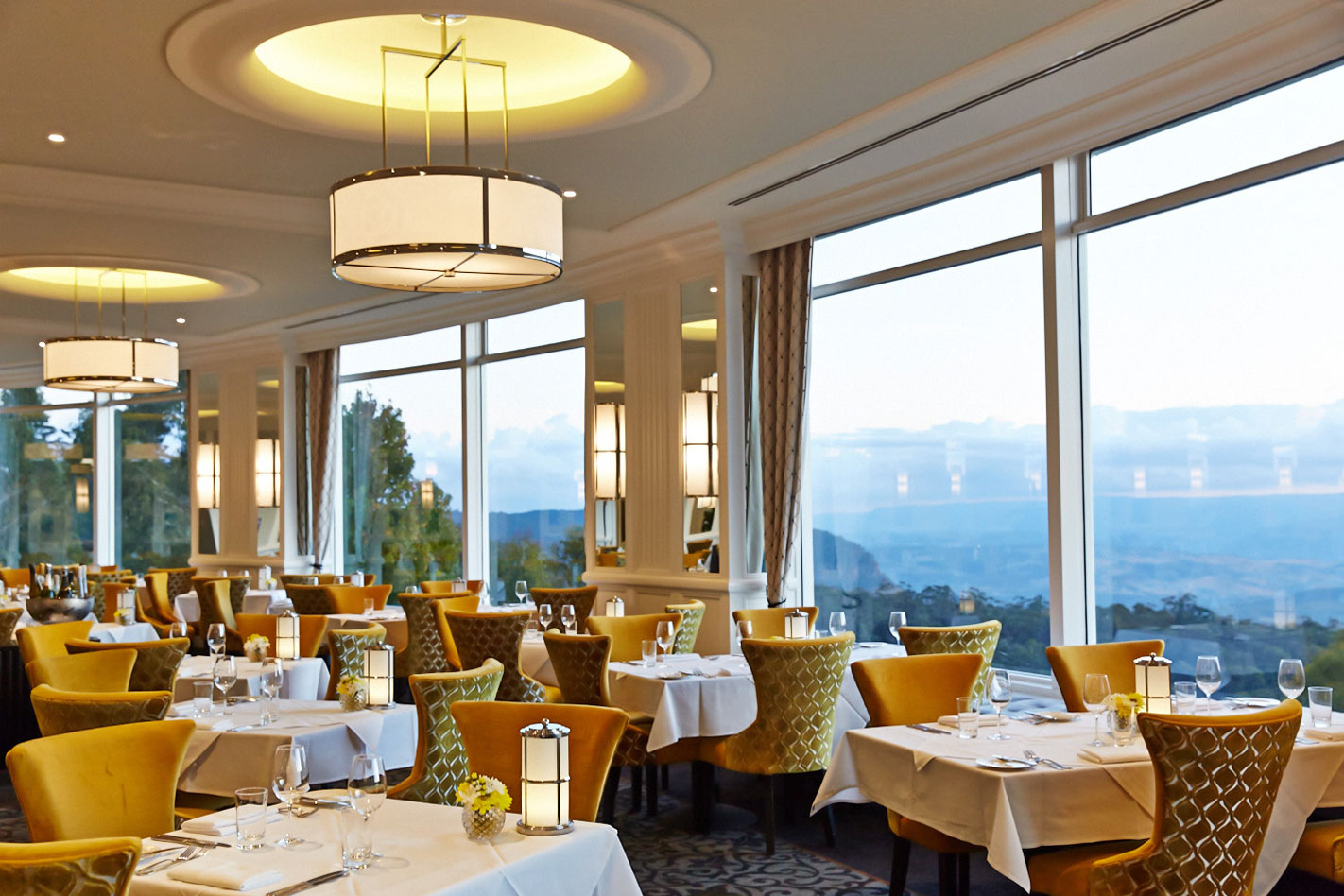
The Hydro Majestic Hotel
This historic hotel is known for its grand dining room (pictured here) and famous high tea services and sits atop a cliff overlooking the often foggy Megalong Valley. The heritage listed hotel is a mix of Edwardian and Art Deco architecture and boasts a beautiful garden and vintage design cues throughout. If you’re just passing through, consider stopping in here for lunch at the property’s Boiler House Restaurant or simply enjoy a refreshment on one of the hotel’s balconies at sunset.
52-88 Great Western Hwy, Medlow Bath, NSW 2780 http://www.hydromajestic.com.au
What is it?
Possibly one of the most controversial and polarising Mustang variants to date.
Since the inception of the pony car in the 1960s, the Mustang has been powered at the flagship end of the range by a V8 – as it is to this day.
But during its half-century lifetime, a number of other engine options have been offered for those looking for the quintessential Mustang aesthetics on a tighter budget.
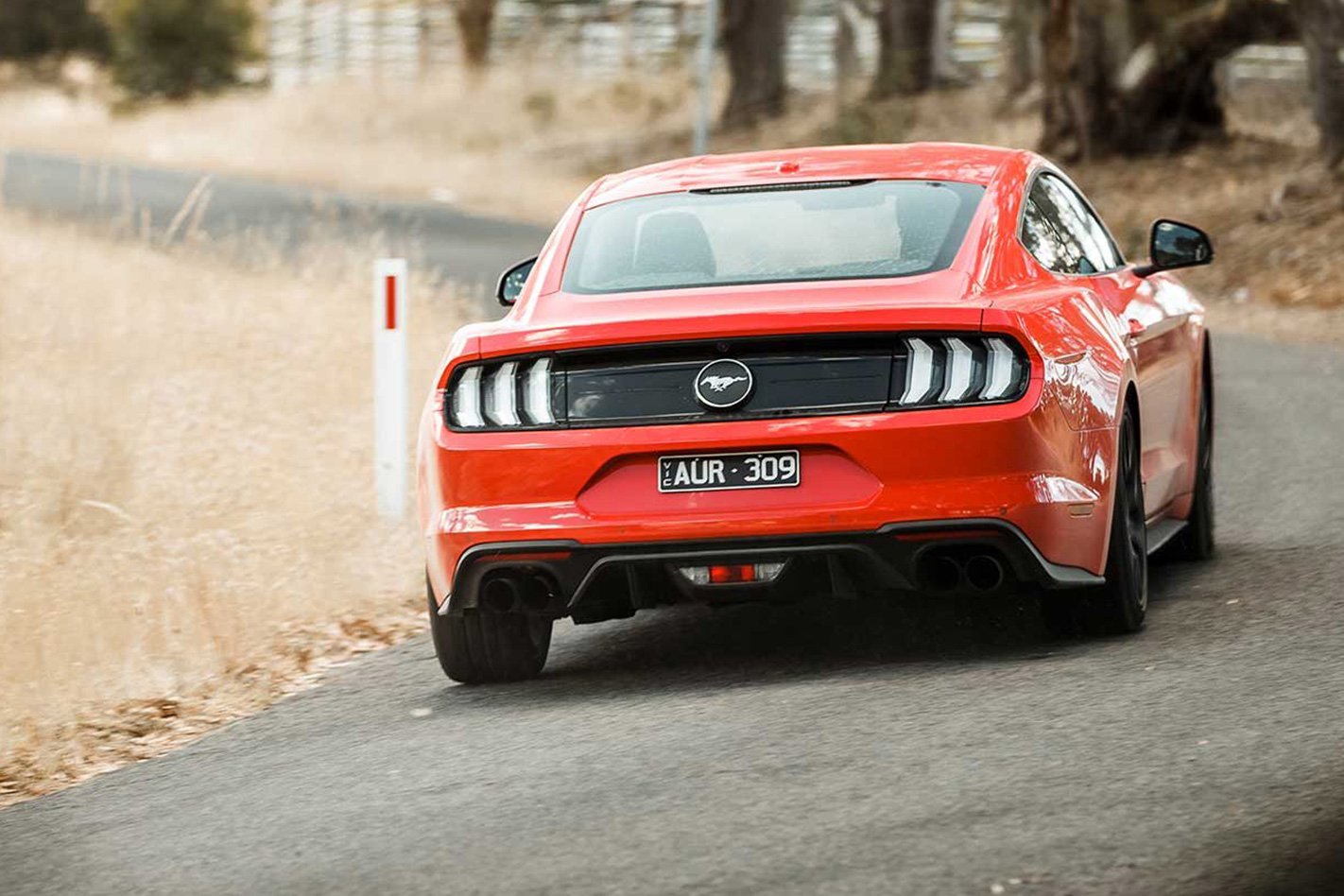
A bargain-basement V6 didn’t make it to Australia for the sixth-generation but the EcoBoost did and it was retained as part of a significant 2019 update. Purists will instantly dismiss a four-cylinder Mustang but should you?
How much is the Ford Mustang EcoBoost?
No matter which variant you pick from the line-up, the Mustang is priced very attractively, despite range-wide increases for the 2019 facelift.
For a start, the GT kicks off at $62,990 which is a steal. What other model offers rear-drive, manual fun with V8 power and those looks? But if you think that’s good then wait until we look at the most affordable version.
At $49,990, the EcoBoost manual is unrivalled even in Australia’s incredibly diverse new car market, and you’ll struggle (most likely fail) to find anything that does the job for the same cash.
Mazda will sell you its much smaller and less powerful 2.0-litre MX-5 for about $42,000 and the equally diminutive Subaru BRZ and Toyota 86 fraternal twins cost about $35,000 but they’re hard to compare to an American muscle car.
In fact, the only thing even close is the Mustang’s arch-rival Chevrolet Camaro, which is imported by HSV and converted to right-hand drive in Melbourne. It’s only available as a V8 auto only and the complex local engineering pumps the price to a whopping $85,990.
Who is the Ford Mustang EcoBoost for?
You won’t find a diehard Mustang enthusiast jumping into a four-cylinder EcoBoost any time soon and the vast majority of sales in Australia have been for the V8 GT, but there is still a place for the most affordable version.
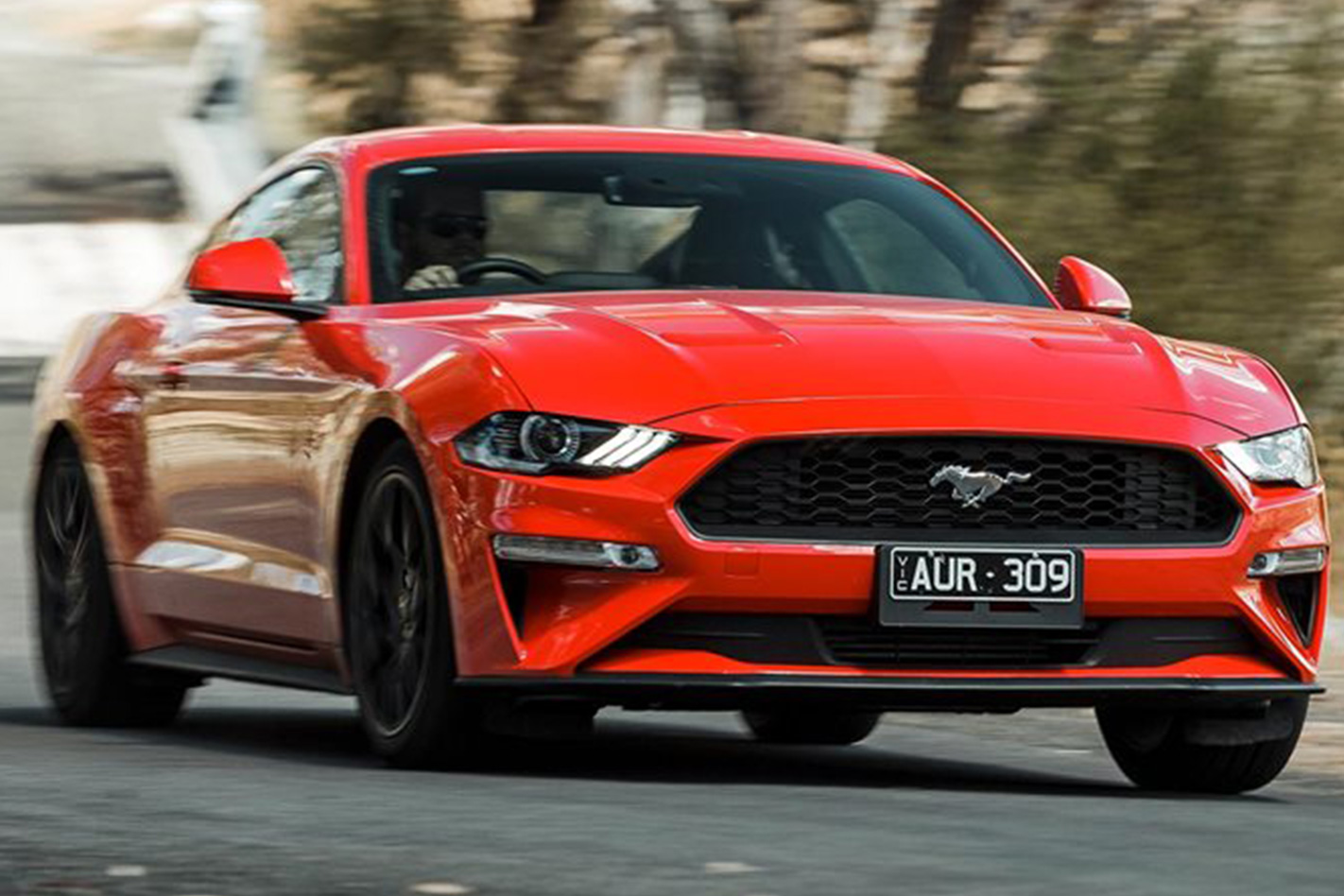
If you simply love the way the Mustang looks or have a budget that won’t stretch to a V8, and you don’t need outright tyre-destroying performance, then the EcoBoost is virtually indistinguishable from the GT. Only a close look at the boot and side badging reveals what’s under the bonnet.
But there is another type of customer that it should also appeal to as well. It might have half as many cylinders and a little less power, but the EcoBoost is certainly not slow and has a weight and handling advantage over the V8.
Don’t think that opting for the four-pot means you’re getting a boring car to drive. The EcoBoost is for driving enthusiasts too.
Is the Ford Mustang EcoBoost easy to live with?
Yes, very. The Mustang, regardless of the variant, is an aspirational sportscar but it’s a sports car built by Ford and that means all of the dependability and features you might expect to find in one of the many other Blue Oval passenger and SUV models.
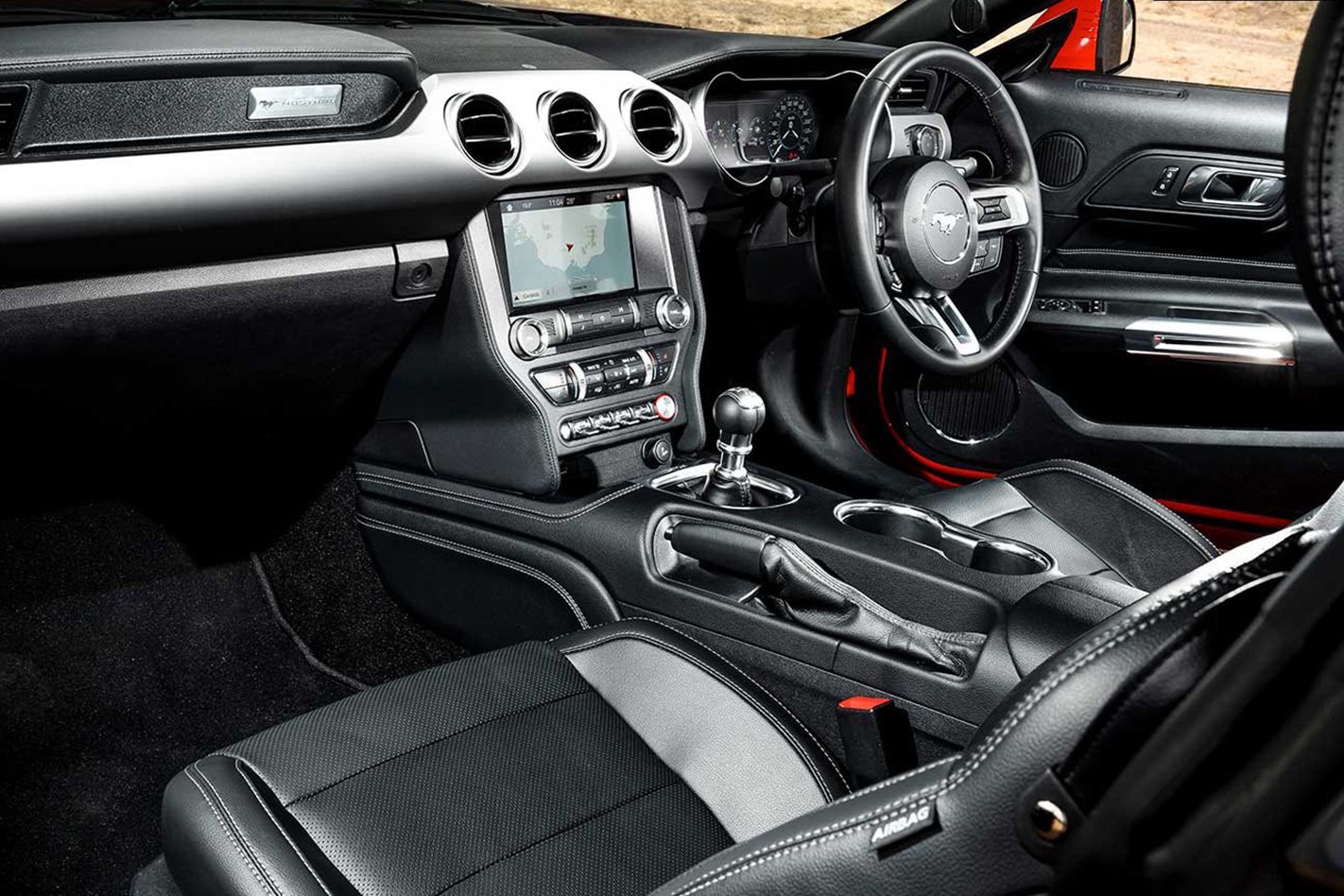
There’s the company’s Sync3 information and entertainment system that offers a beautifully intuitive 8.0-inch touchscreen system and up-to-the-minute technology including Android Auto/Apple CarPlay smartphone mirroring and navigation.
But, while the GT has eight cylinders to feed, the EcoBoost has just four and that will show at the bowser.
The Mustang received lots of unwanted publicity in 2017 when it scored a surprisingly low two-star safety rating in ANCAP testing. However, the company has added important safety features for the update including forward collision mitigation technology and lane departure monitoring, which has helped elevate that rating to three stars. Still not great, but the main contributor to that score – rear-occupant safety – is probably not of great concern to a vast majority of owners.
If you try to use the rear seats, you’ll probably understand why as well. Approaching the Mustang as a two-seater with the ‘rear seats’ providing even more storage in addition to the decent boot is probably the most sensible strategy.
How well does the Ford Mustang EcoBoost drive?
Before we look at all of the EcoBoost’s virtues – and there are many, let’s briefly acknowledge the elephant in the room then move on.
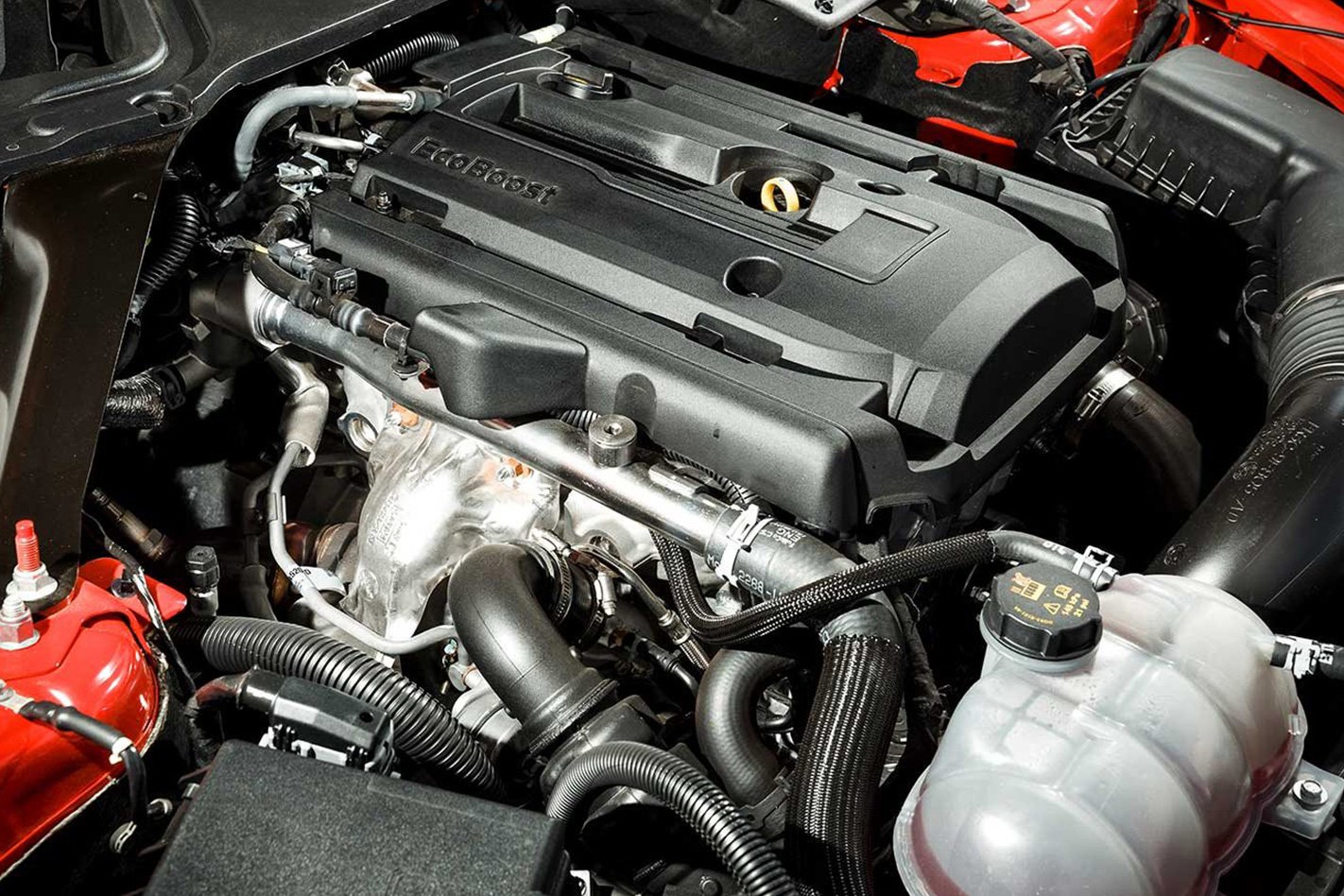
While there is certainly a performance shortfall – the 2.3-litre four-cylinder’s 224kW is some way behind the 339kW of the 5.0-litre GT – perhaps the greatest loss is its soundtrack.
We certainly can’t deny that the sound of the Coyote V8 is the perfect match for a Mustang and we can totally understand that, for many Australians, the noise is worth the extra investment alone.
But that’s not to say the four-cylinder sounds bad. On the contrary, a new bimodal sports exhaust is loud and wholesome and has a report not unlike the Ford Focus RS, which has an engine closely related to that in the Mustang.
Unlike the V8, the EcoBoost is turbocharged and that means a majority of low-rev pulling power comes in rapidly and without fuss. This makes the EcoBoost feel rapid off the mark and not far behind the GT.
But while the big 5.0-litre V8 loves to spin all the way to the redline, the four-cylinder is all done before 6000 rpm. There are some strange gaps in the power delivery throughout the rev range and piloting the four-cylinder requires a completely different approach to the V8, but get it right and the most affordable ‘Stang can be a seriously quick machine.
And for those concerned about traditions, don’t forget that the third-generation Mustang was also offered with a 2.3-litre turbocharged four-cylinder, so there’s heritage linearity there too.
The ten-speed automatic will cost you an extra $3000 and is frankly a little disappointing with lacklustre shift urgency and a constant hunt for higher gears, but the six-speed manual in our car is delightful. Mechanical and solid with short and precise shifts that adds to the rewarding and involved driving experience.
Look beyond the engine, however, and the news gets even better. With four fewer cylinders to cart around, the EcoBoost is not only lighter, but its weight is distributed more effectively too. Tip the nose into a fast corner and the EcoBoost is immediately more obedient and responsive, complemented by little body roll and an eagerness to change direction.
While a heavy hand can provoke understeer in the GT with so much weight up front, the four-pot is unapologetically about neutrality followed by oversteer at the limit.
The lower kerb weight comes across in all driving too with an ability to punish the brakes harder and deeper into corners, the ride feels more compliant over poor surfaces.
The whole car simply feels less stressed and less highly strung.
Verdict
From almost every angle, the EcoBoost appears to make more sense than the GT. It’s cheaper, more efficient, lighter, has sweeter handling and wears exactly the same handsome looks as the eight-cylinder.
But it lacks the full-fat 5.0-litre power of the GT and the gorgeous soundtrack that accompanies it and, for most Mustang intenders, that’s a deal breaker.
Set your traditionalist aspersions aside, though, and the Mustang EcoBoost is a performance car bargain that does not deserve mockery. The turbo four-pot sound is unconventionally satisfying, acceleration is strong, its road-holding is excellent and there’s simply nothing else to compare under $50,000.
If the GT is a flighty thoroughbred then the EcoBoost is a more approachable pack pony that can still gallop when it needs to but will never buck you off.
The game of automotive ‘what ifs?’ is a fascinating one. What if Old Man Enzo had gone through with the sale of Ferrari to Ford? What if the discovery of Texan crude oil hadn’t killed the electric car? What if Ayrton Senna had lifted slightly on that fateful lap at Imola? Such questions make for fascinating pub banter but rarely lead to any real conclusions.
Thanks to Victorian engineering specialists Premcar, one of the greatest Aussie automotive questions has now been answered: what if Ford had built a modern-day GT-HO? Who, I hear you ask? Premcar sprang into existence following a management buyout of Prodrive Engineering in 2012.
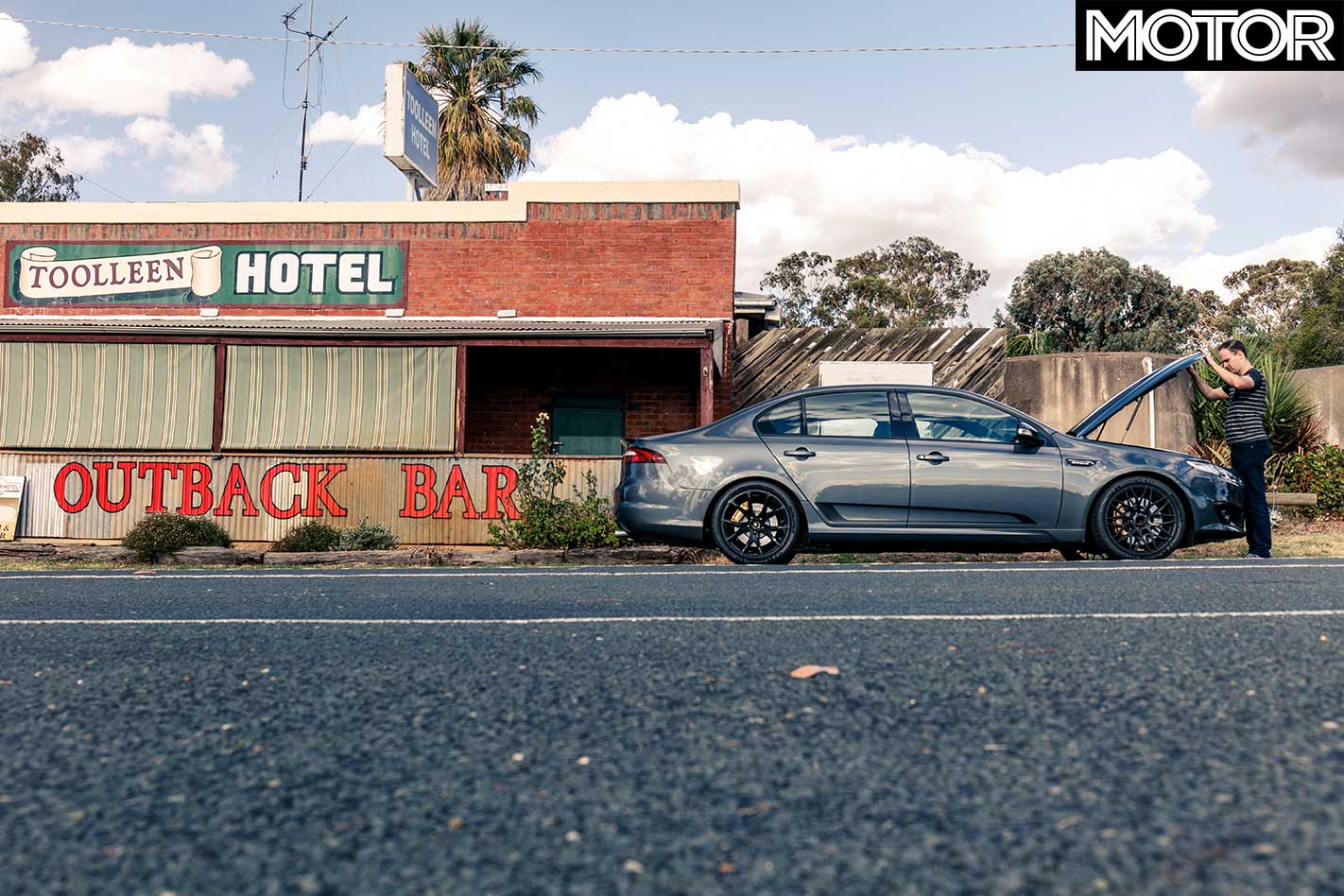
Prodrive, you may remember, was responsible for a lot of the engineering work on the Ford Performance Vehicles range and had a controlling 51 per cent stake until it sold up.
Simply put, many of the folks Ford tasked with making its fast Falcons have together developed their ultimate version, freed from corporate constraints but using many of the same suppliers. Meet the Falcon Holy Grail.
In essence, the Holy Grail package fulfils the potential of the 5.0-litre supercharged V8, dubbed Miami, developed by Prodrive for the FG Mk II FPV range and subsequently installed in the FG X XR8. It consists of a new cast aluminium intake manifold, a triple-pass water-to-air intercooler, new power steering and coolant pumps, front-mounted air-to-water heat exchanger and unique engine calibration to make it all work.
Intercooling is the key that unlocks the Miami’s power vault. While not exactly a wallflower in standard form, producing up to 345kW/575Nm or 400kW/650Nm on overboost, the ability to control combustion temperatures renders transient overboost redundant and allows the Holy Grail to pump out a whopping 483kW at 6800rpm and 753Nm from 4500-5200rpm.
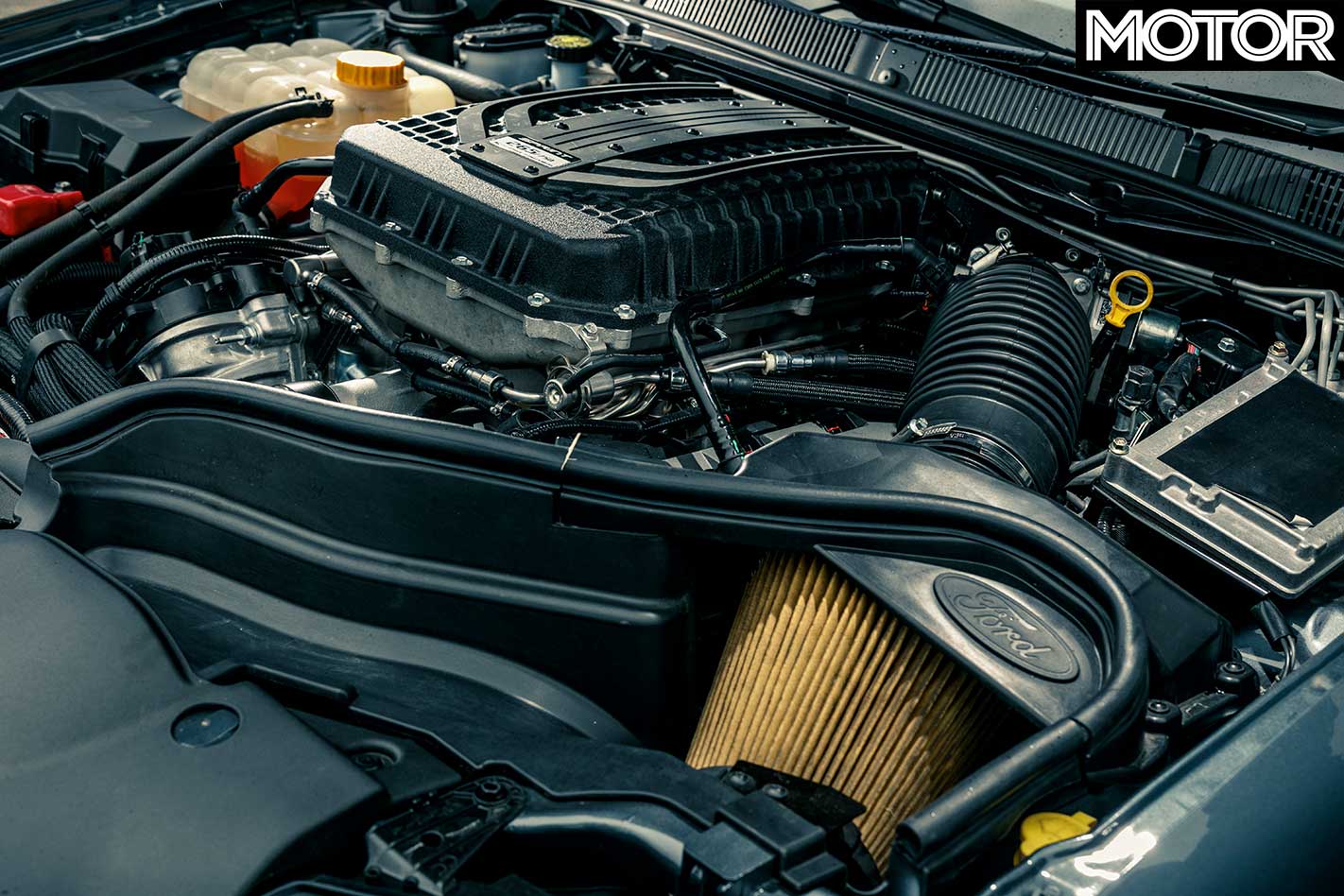
Where peak power is produced should raise the eyebrows of Falcon aficionados, for while the standard Miami is limited to 6250rpm, the Holy Grail revs to 7000rpm, hence the need for a new power steering pump.
All up the engine costs $24,885, or $24,388 if you pay upfront. On paper, it’s a lot of money for “a manifold, intercooler and tune” as one commenter put it. However, the cost isn’t in the parts themselves, but the development and certification. “There’s a significant investment in the car, in time, tooling and material costs to get to that specification,” explains Premcar’s Engineering Director, Bernie Quinn.
“We’ve done all the ADR approval, so it’s completely certified, every part of the car. We’ve remade manifolds. We haven’t drilled holes in manifolds, we’ve re-tooled that whole intake manifold; that means making new casting tools and then machining the manifold.” The package is subjected to OEM levels of durability testing, including hot and cold climate evaluation, full power dyno runs, deep thermal shock and shaker rig vibration testing.
Initial impressions from behind the wheel are a little underwhelming. It feels, well, pretty much identical to an XR8 Sprint, albeit with a much juicier note and burbles and gurgles on the overrun courtesy of the optional performance exhaust ($4500). But that’s also the point.
Peaks and troughs in the torque curve, coughs or hesitations in the power delivery, would not be acceptable in a product pertaining to be OEM standard. As such, the Holy Grail’s manners are impeccable.
Still, a quick squirt through first and second doesn’t reveal much, either. Because Premcar has retained the factory driveline protection, torque is limited in first gear and up to around 3000rpm or so the HG isn’t developing much more grunt than a standard Miami.
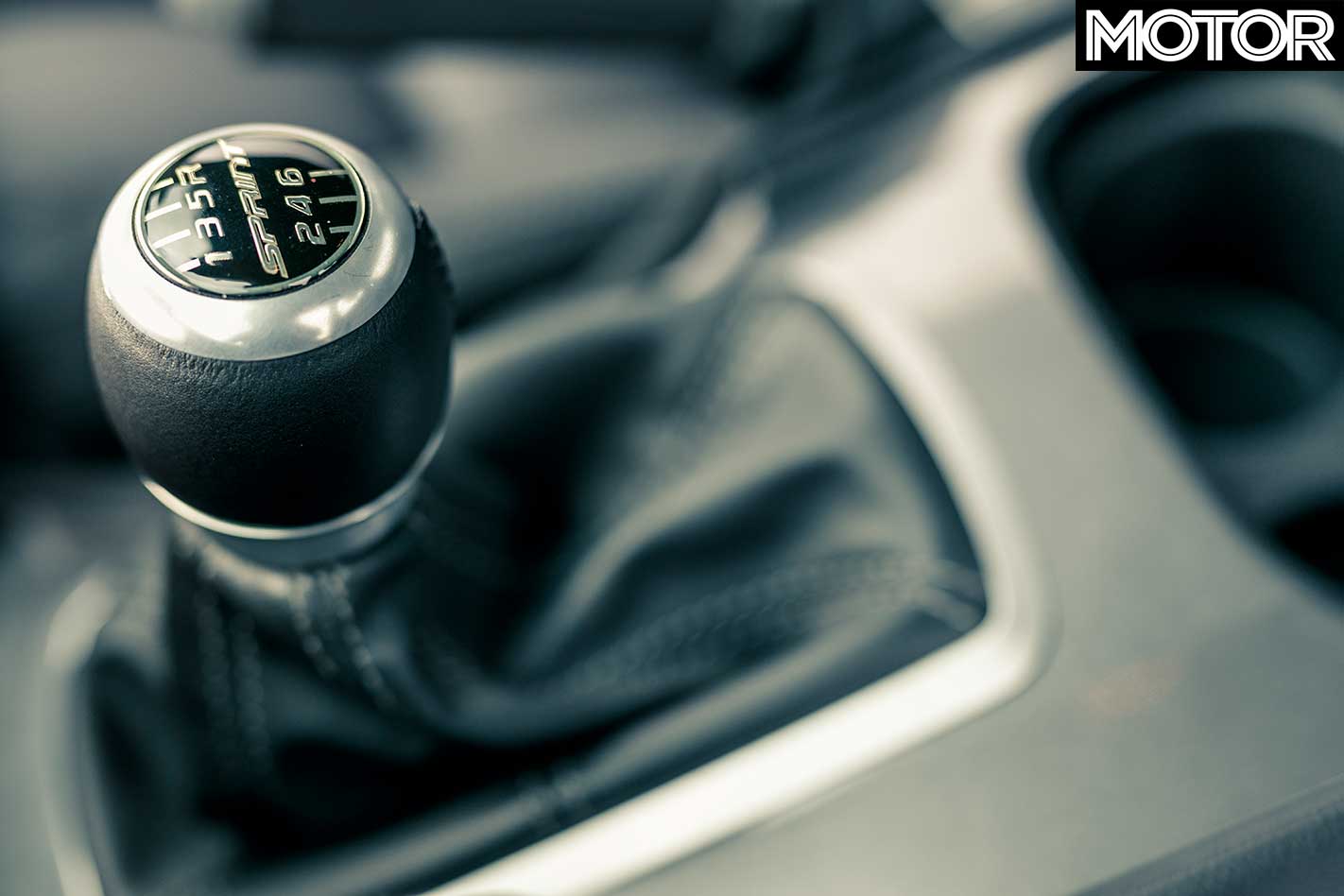
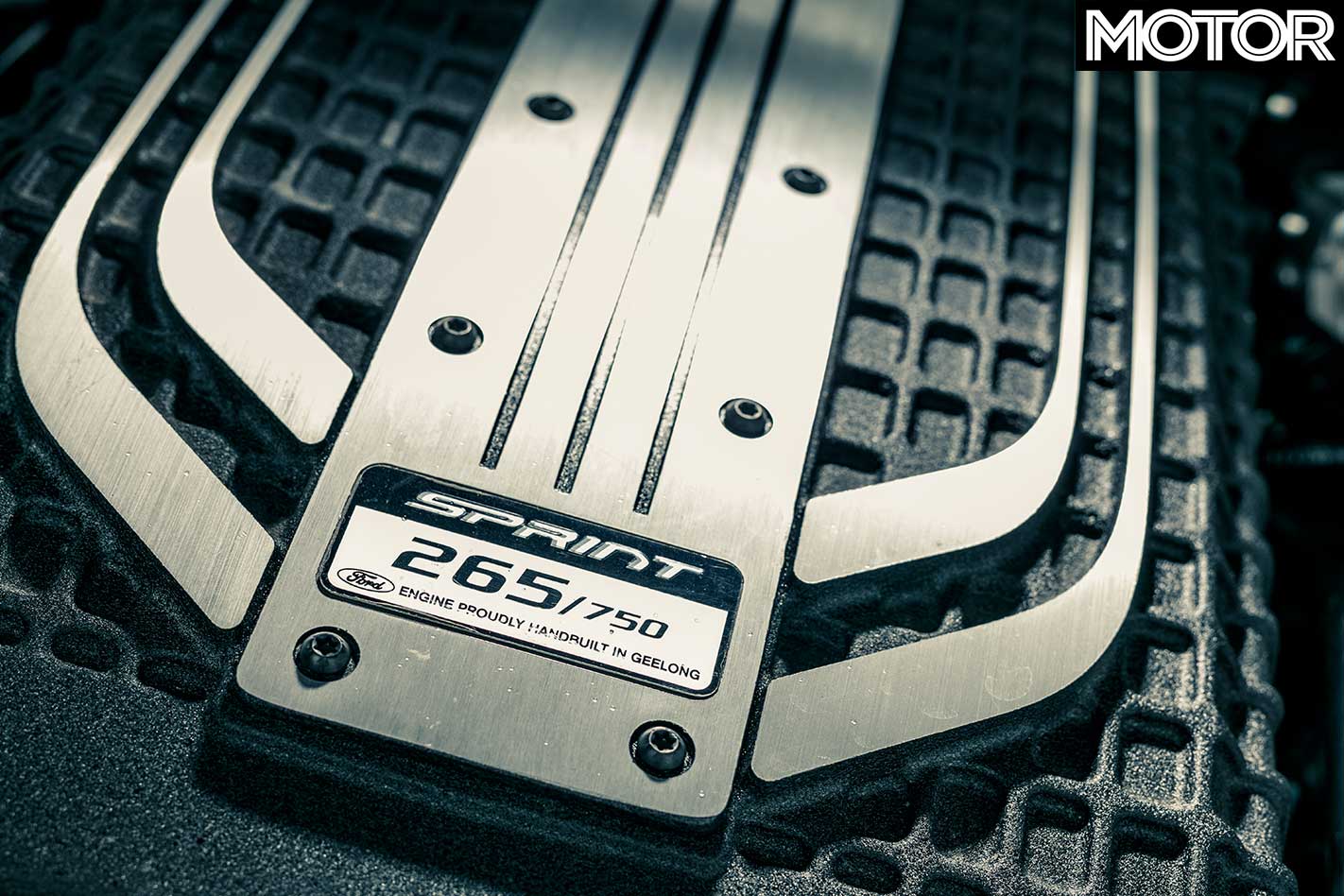
Venture beyond this and the beast gradually awakens. Look at the HG dyno graph (helpfully displayed under the bonnet of every example) and you’ll notice that power continues to build right to the 7000rpm cut-out. It thrives on revs, the acceleration increasing with every 500rpm increment. The factory shift buzzer chimes at 6000rpm, but ignore that – and the feeling of guilt that comes with sending an engine 1000rpm beyond redline – and the Holy Grail relentlessly piles on pace.
In our test car, Premcar’s hardworking prototype, the thrust is punctuated by gearshifts courtesy of the six-speed manual gearbox. Manual Falcons have always been some of the hardest cars to performance test and boosting one to almost 650hp certainly doesn’t make it any easier.
Thankfully, Premcar is also offering a comprehensive upgrade of the Falcon chassis, including unique Shockworks coilovers and new rear trailing blades, which allow the fitment of 19.0 by 10.5-inch wheels wearing 295/30 Michelin Pilot Sport Cup 2 tyres, the front-end supported by 19.0 by 8.5s and 255/35s.
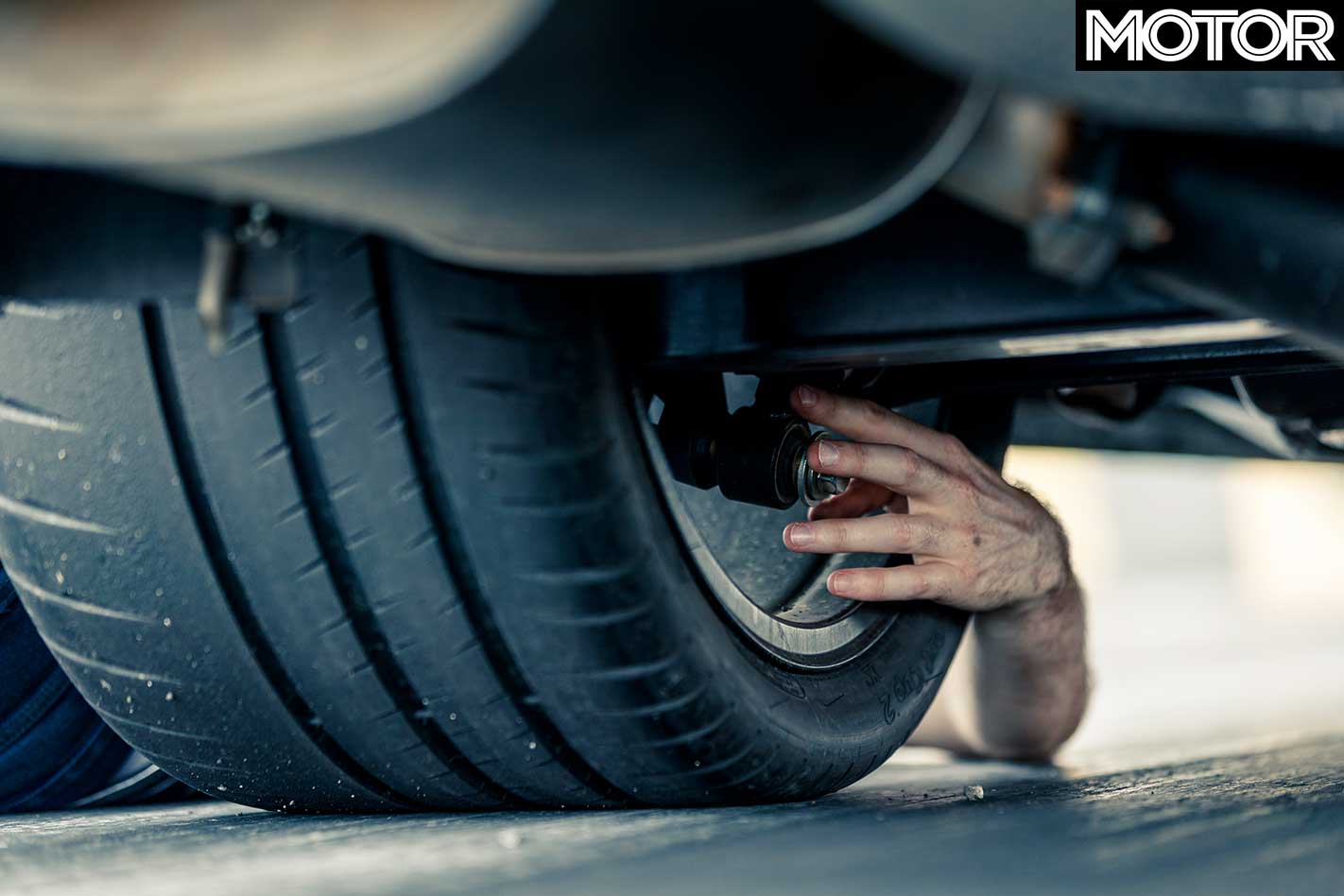
The combination of so much grunt and a freshly washed dragstrip (Heathcote was underwater when we first arrived) makes power-down a struggle, but the new suspension and grippy track-spec rubber at least gives the Holy Grail a prayer.
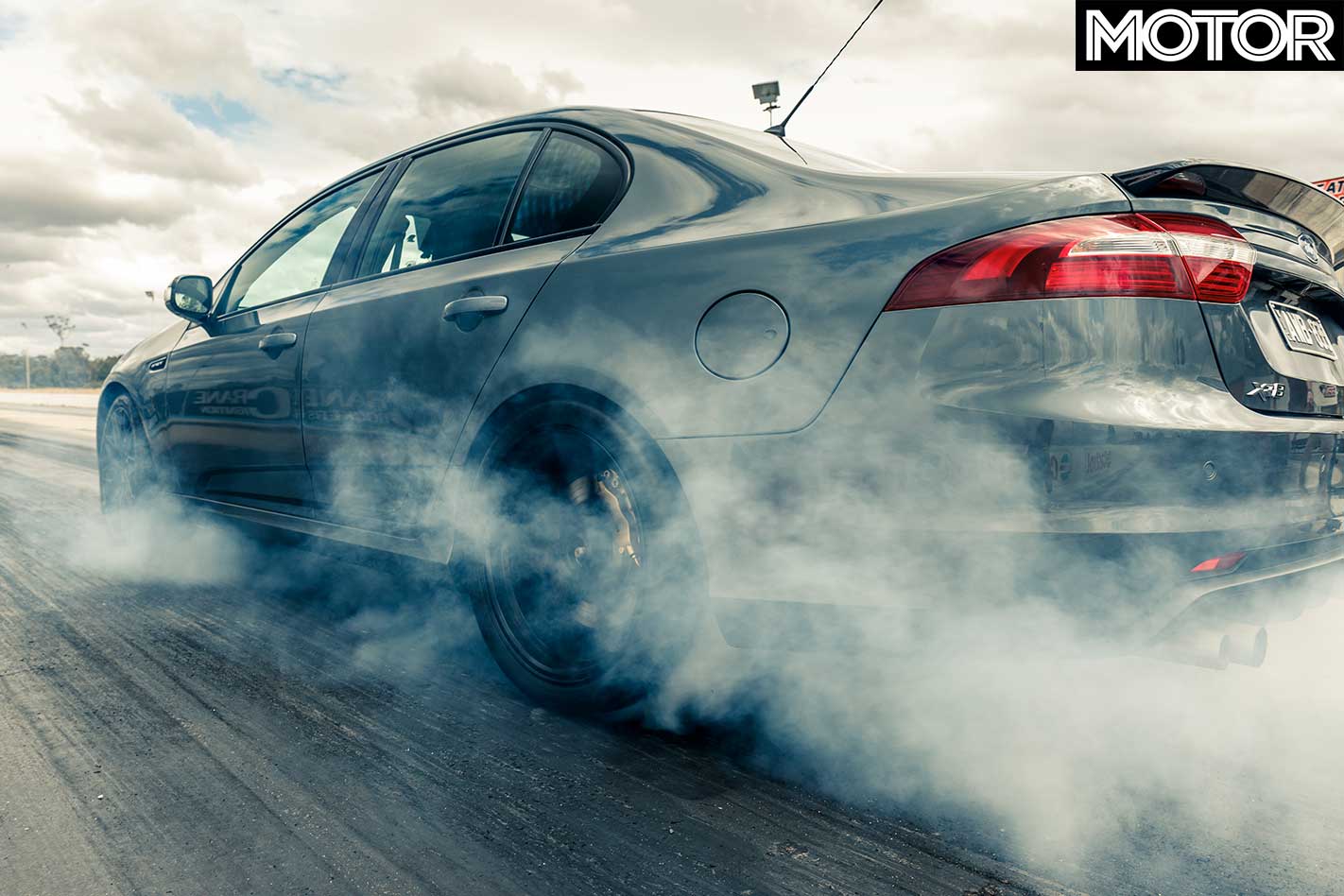
Run after run it comes agonisingly close to hooking up, but the traction difficulties are evident in our best 0-100km/h figure of 4.98sec. Wheelspin and axle tramp, though lessened compared to standard courtesy of uprated bushes, continues all the way through second. Even setting the adjustable coilovers to full soft can’t tame it, the HG requiring steering correction at 120km/h. Once into third, though, it hauls like it’s trying to outrun its own supercharger scream.
The best quarter mile we ever recorded in an XR8 Sprint was 13.05sec at 185.48km/h, whereas the Holy Grail manages 12.72sec at a storming 192.95km/h. Despite the compromised launch, this super Falcon is more than 0.3sec quicker to 200km/h than the quickest time we ever recorded in a HSV Gen-F GTS, while our best GTSR W1 figure of 12.18sec at 195.68km/h suggests there’s little between the two in outright acceleration.
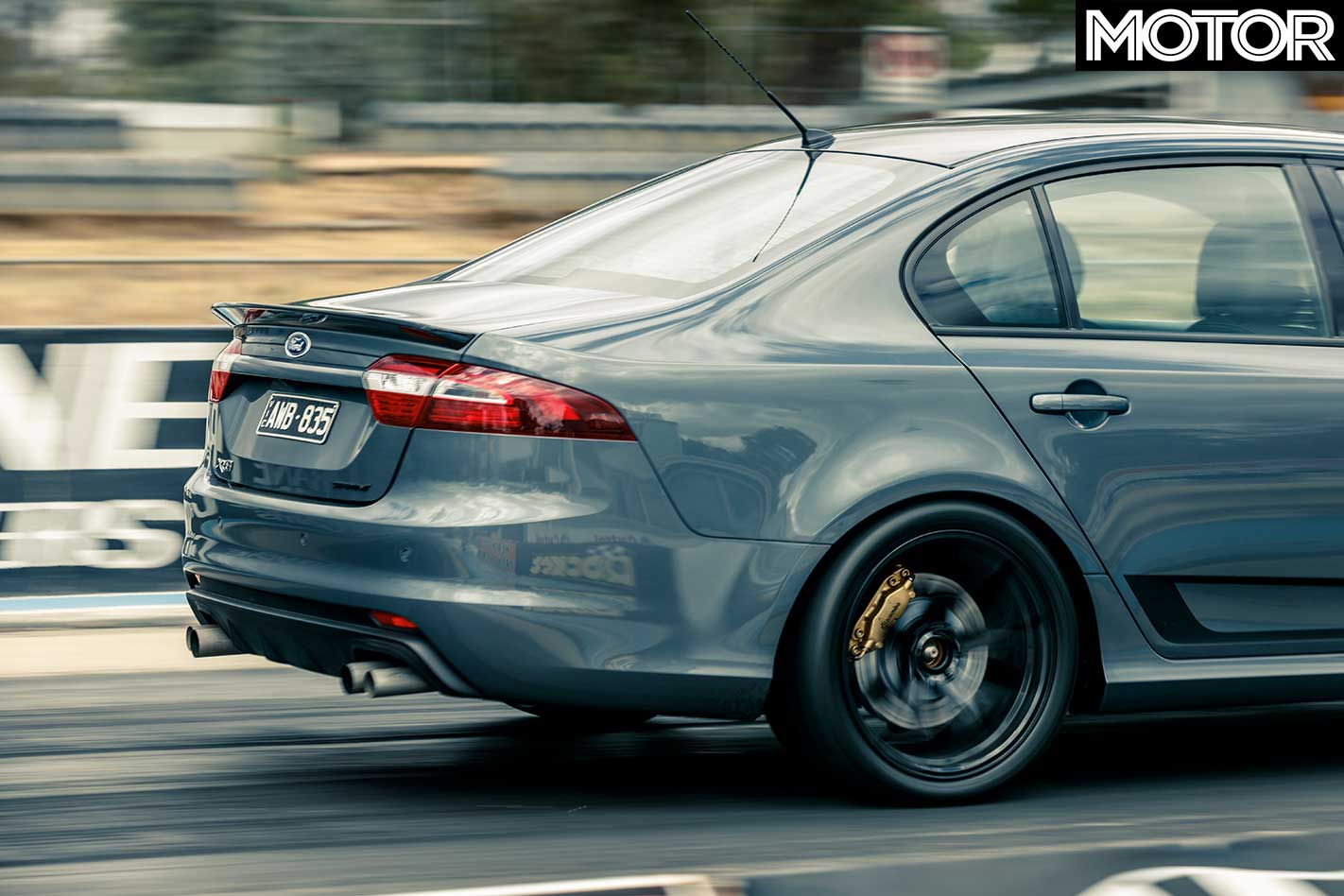
What’s most impressive is that the HG’s intercooling makes heat soak a thing of the past. Despite completing more runs down the strip than I’ll care to admit chasing elusive tenths, the trap speed remains utterly consistent.
On the road the HG’s party trick is the feeling of an elastic band being slowly pulled as you floor the throttle in a higher gear; the longer you stick with it the more energy builds up, though it’s a game that would’ve been a lot more fun with the open speed limits of 1971, when Mel Nichols completed his famous Phase III run down the Hume, covering 3.8km every minute.
It might surprise you to learn the Holy Grail is little faster, but only because it’s electronically limited to 235km/h; by the time the mighty HO has reached 150km/h, the HG is knocking on 200km/h.
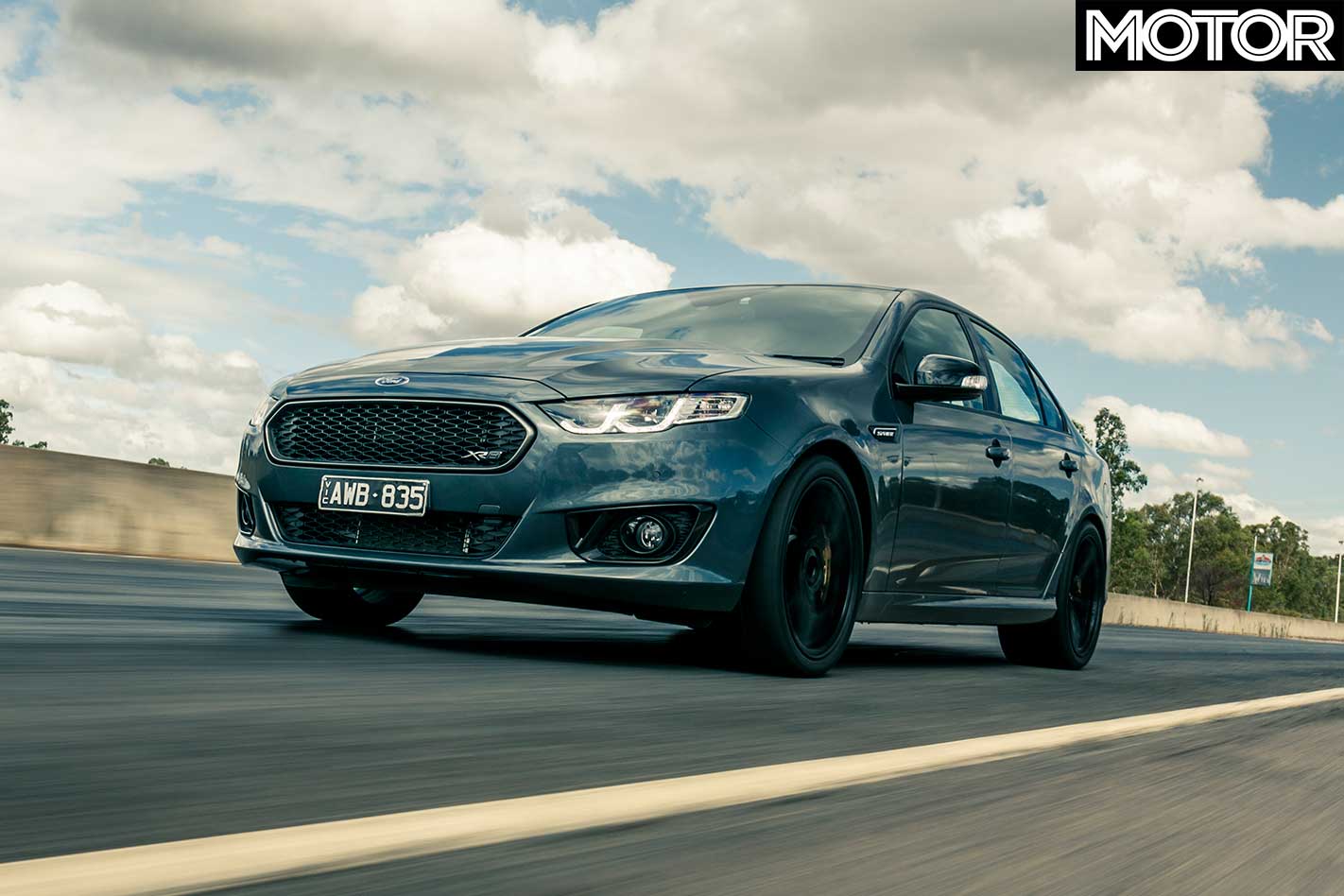
As mentioned, the Holy Grail package technically consists of just the engine upgrades, but Premcar has pushed the Falcon chassis forward just as far as the powertrain. The goal was to retain as much of the Falcon’s long-distance touring capability as possible while sharpening its responses and improving its dynamics.
“The main aim was to make the best touring Falcon that’s been produced,” explains Principal Chassis Engineer Andrew Lynch. “You can drive it every day, handle every corner on spirited driving roads with ease and make it still capable to take to the track.”
“We could put rose joints everywhere and make it into something approaching a sports car in terms of precision, but it would be so compromised,” adds Quinn. “GT-HO stands for Grand Tourer Handling Option, or High Output, depending on who you talk to. And that’s what it is. That’s why we’ve got such a range in the dampers, to make sure soft is really soft and hard is really hard.”
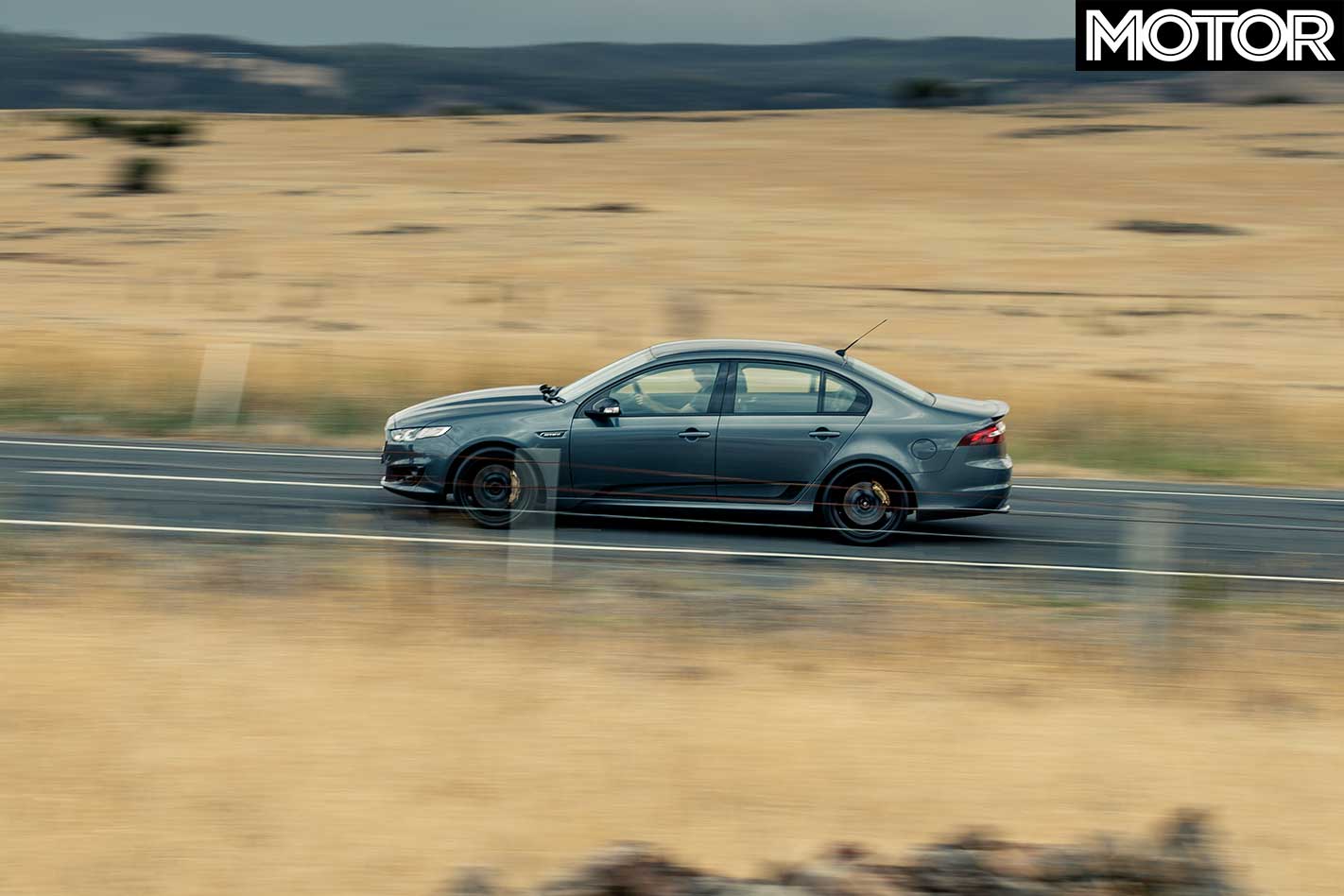
The dampers have 12 settings, adjusted by rotating a knob at the top (front) or base (rear) of the shock. Once you know which way to turn them (the rears have to be adjusted by feel not sight) it takes only a few moments to alter the ride and handling characteristics. Premcar recommends around four or five (one being soft and 12 hard) for everyday driving and, unsurprisingly, this feels correct, providing an impressive blend of comfort and cornering capacity.
On full soft the ride isn’t appreciably better, but the extra body movement is noticeable, the handling feeling closer to a regular XR8. Setting the dampers to eight introduces a GT R-Spec-like jitteriness to the ride; we’d save the stiffer settings for smooth road blasts or track work.
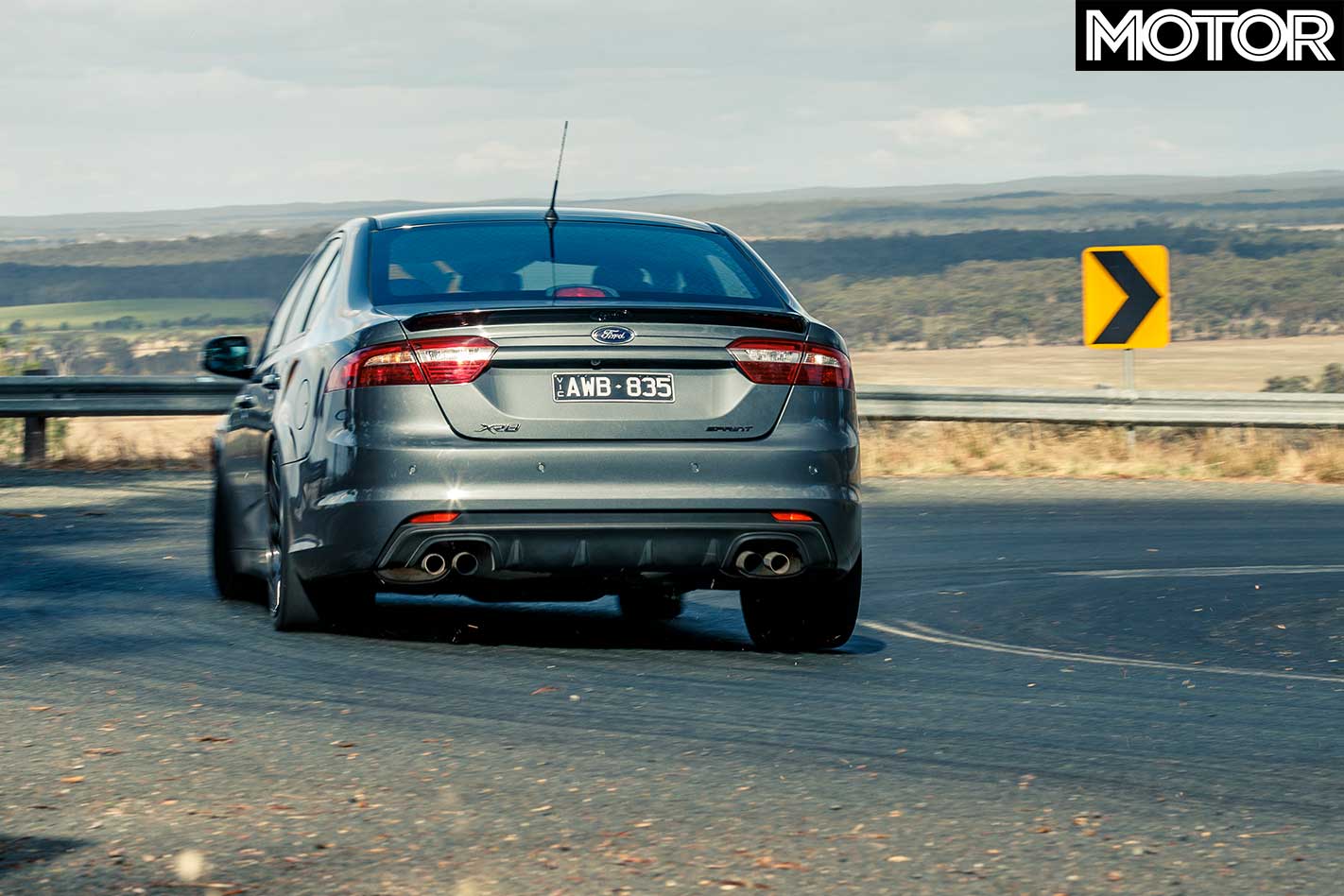
According to Lynch, his first port of call was installing the sexy billet aluminium curved trailing blades to accommodate the 10.5-inch wide rear wheels and selecting Michelin Pilot Sport Cup 2 tyres, measuring 10mm wider than an XR8 Sprint/GT F/R-Spec at the front and 20mm at the rear. More commonly found on the likes of the Porsche 911 GT3 RS or Ferrari 488 Pista, the trick rubber makes this the grippiest and most confidence-inspiring Falcon we’ve driven.
The steering remains the weak link, giving only a vague suggestion of what the front wheels are up to rather than intimate feedback, but commit to a corner and you can be sure the Holy Grail will stick to your intended line almost regardless of road imperfections.
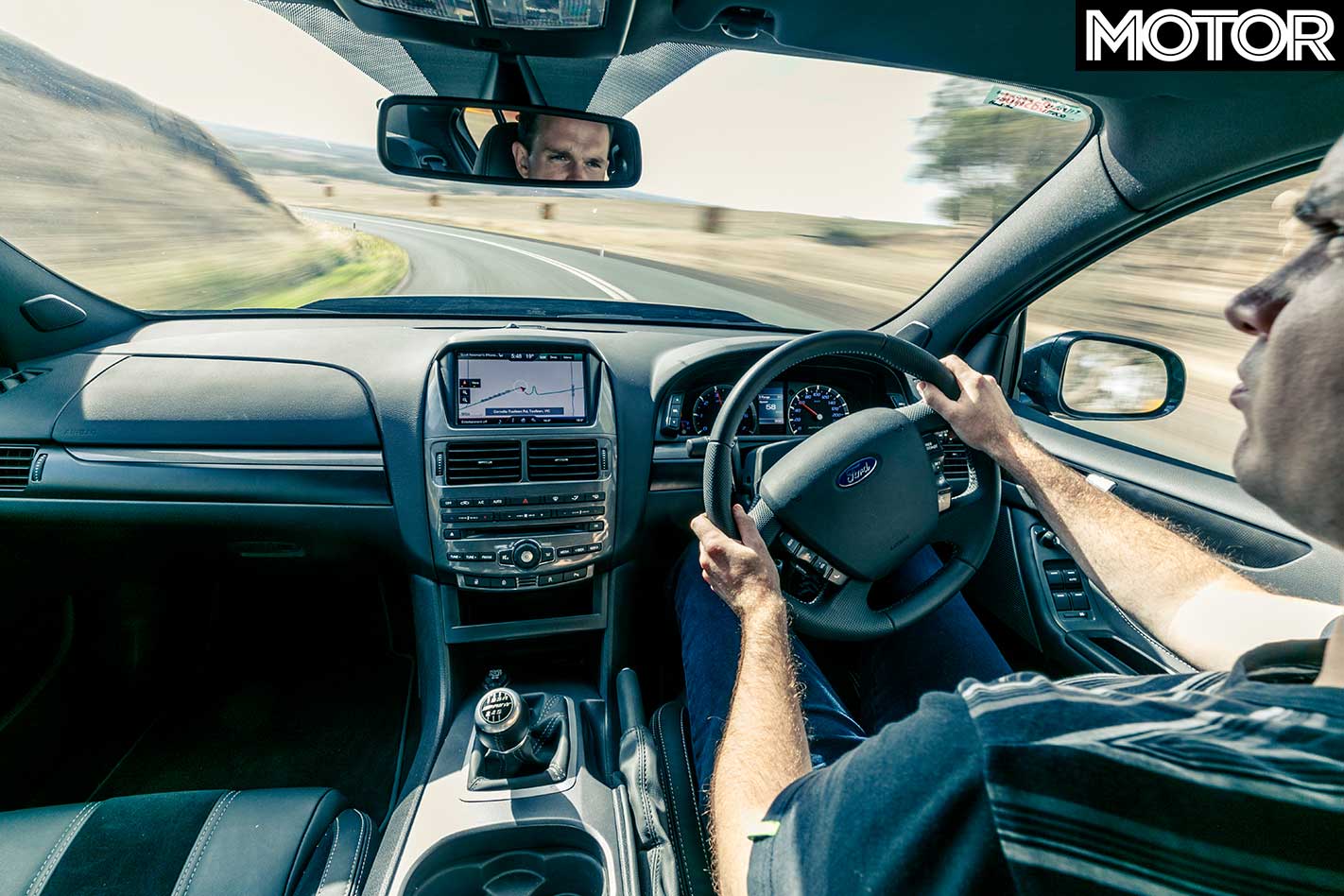
I want to set expectations. As a best-case scenario the FG X platform dates back to 2008 and regardless of how good the bits thrown at it are, it was never designed to handle almost 500kW. As Quinn himself says “it’s never going to be a 911 GT3”. But while you still need to probe rather than attack the limit, those familiar with traditional Falcon dynamics – the good and the bad – will surely be impressed by the Holy Grail’s added control and composure.
To answer the obvious question, on dry roads traction is excellent and it’s not a terror in the wet, either. Of course a car with this much power will oversteer, but you really have to want it to misbehave for it to do so.
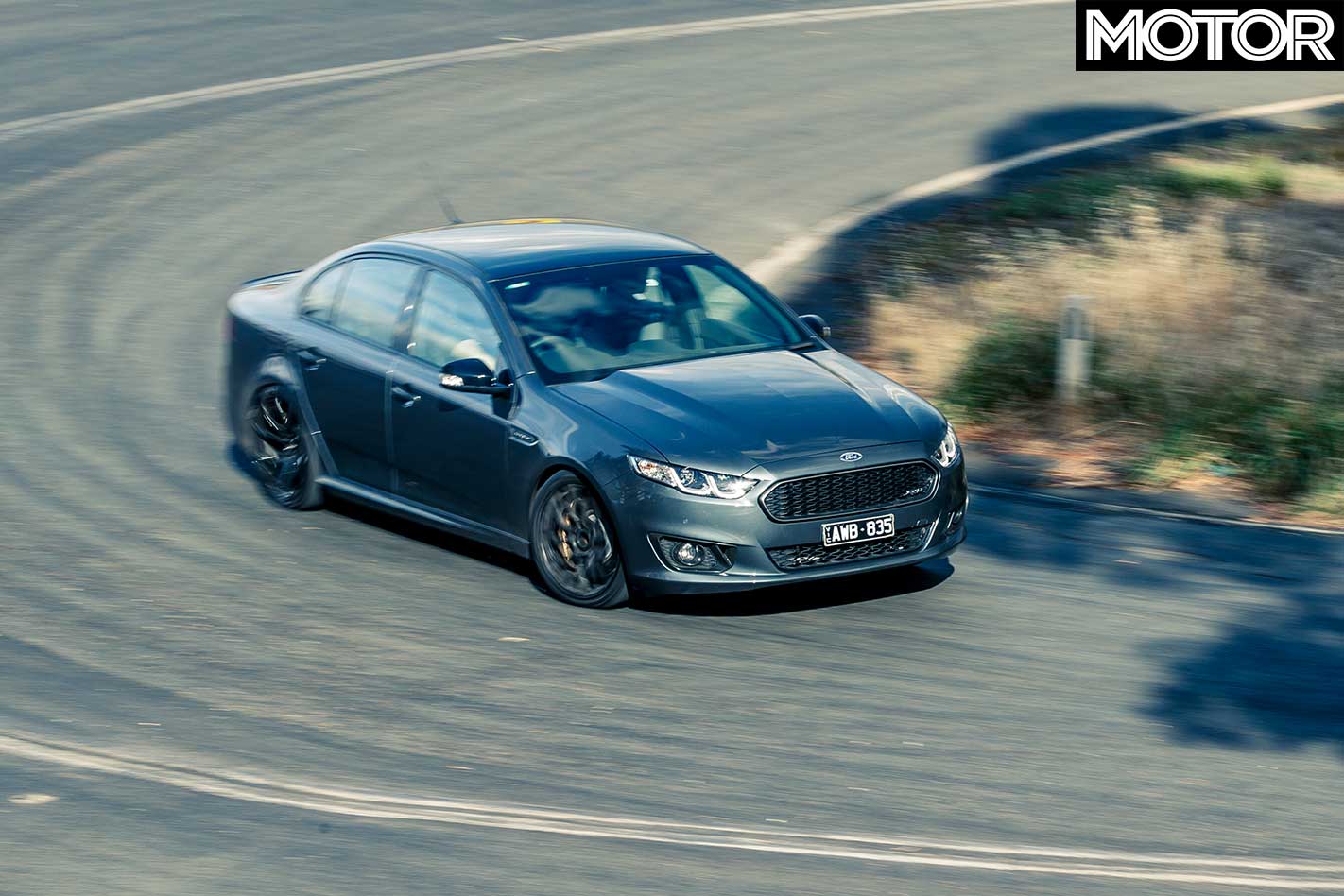
Not everyone will ‘get’ the Holy Grail. Premcar knows this, which is why it’s only intending to sell 100 kits. There are undoubtedly cheaper ways to extract this level of performance from a Falcon and those who want an intimidating, tyre-tearing missile will be nonplussed. However, the sort of people who rushed to a Ford dealer, deposit in hand, in response to any GT-HO rumour are unlikely to be disappointed.
The Holy Grail package is expensive – all up it’s $44,175 – but regulatory compliance costs a lot of money. Look at it another way: if Ford’s final official Falcon had been a 483kW/753Nm GT-HO for $100,000, would anyone have batted an eyelid? As the brains behind the project, Quinn sums it up best: “In the context of releasing the ultimate Falcon, we said ‘well, given everything we’ve learned over the years, what would we do?’ This is it.”
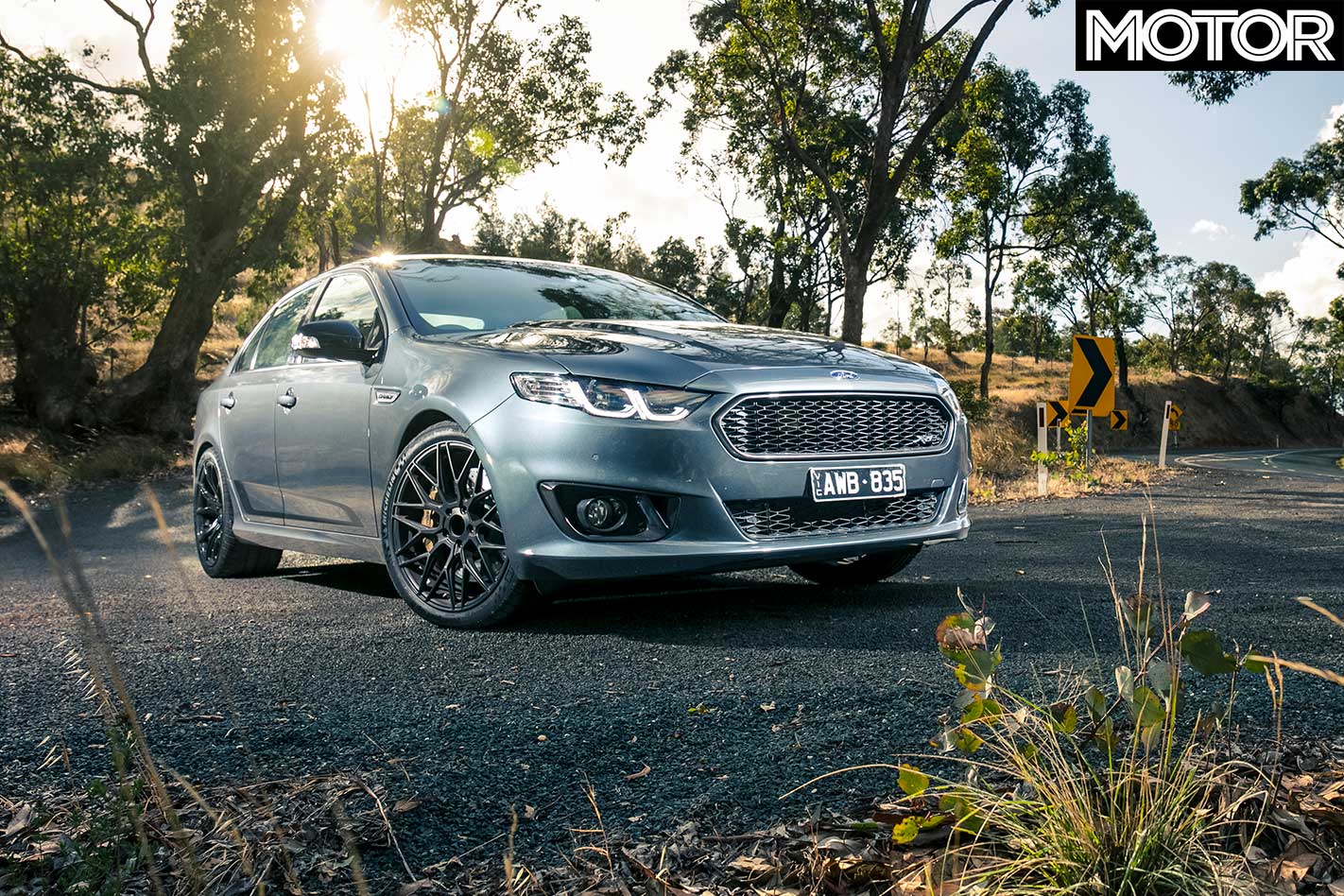
FAST FACTS 2019 Premcar Holy Grail BODY: 4-door, 5-seat sedan DRIVE: rear-wheel ENGINE: 4951cc V8, DOHC, 32v, supercharged BORE/STROKE: 92.2 x 92.7mm COMPRESSION: 9.3:1 POWER: 483kW @ 6800rpm TORQUE: 753Nm @ 4500-5200rpm WEIGHT: 1872kg POWER-TO-WEIGHT: 258kW/tonne TRANSMISSION: 6-speed manual SUSPENSION: A-arms, coil springs, anti-roll bar (f); multi-links, coil springs, anti-roll bar (r) L/W/h: 4950/1868/1493mm WHEELBASE: 2838mm STEERING: hydraulically assisted rack-and-pinion BRAKES: 355mm ventilated/drilled discs, 6-piston calipers (f); 330mm ventilated/drilled discs, 4-piston calipers (r) WHEELS: 19.0 x 8.5-inch (f); 19.0 x 10.5-inch (r) TYRES: Michelin Pilot Sport Cup 2, 255/35 R19 (f); 295/30 R19 (r) PRICE: $44,175 (complete package); $24,885 (engine)
PROS: Takes Falcon performance to a whole new level CONS: But can’t change the steering or interior RATING: 4 out of 5 stars
The Strip
| Premcar Holy Grail | |
| 0-10km/h | 0.44sec |
| 0-20km/h | 0.89sec |
| 0-30km/h | 1.30sec |
| 0-40km/h | 1.72sec |
| 0-50km/h | 2.14sec |
| 0-60km/h | 2.62sec |
| 0-70km/h | 3.42sec |
| 0-80km/h | 3.95sec |
| 0-90km/h | 4.49sec |
| 0-100km/h | 4.98sec |
| 0-110km/h | 5.49sec |
| 0-120km/h | 6.30sec |
| 0-130km/h | 6.99sec |
| 0-140km/h | 7.70sec |
| 0-150km/h | 8.45sec |
| 0-160km/h | 9.23sec |
| 0-170km/h | 10.30sec |
| 0-180km/h | 11.32sec |
| 0-190km/h | 12.38sec |
| 0-200km/h | 13.53sec |
| 0-400m | 12.72sec @ 192.95km/h |
| 80-120km/h (3rd-6th) | 3.0/4.1/7.1/11.2sec |
| 100-0km/h | 35.20m |
| Speed in gears | |
| 1st | 78km/h @ 7000rpm |
| 2nd | 131km/h @ 7000rpm |
| 3rd | 179km/h @ 7000rpm |
| 4th | 233km/h @ 7000rpm |
| 5th | 235km/h @ 5000rpm* |
| 6th | 235km/h @ 3870rpm* |
Heathcote Dragway, 19˚C, dry. Driver: Scott Newman *Manufacturer’s claim
Why no reborn HO?
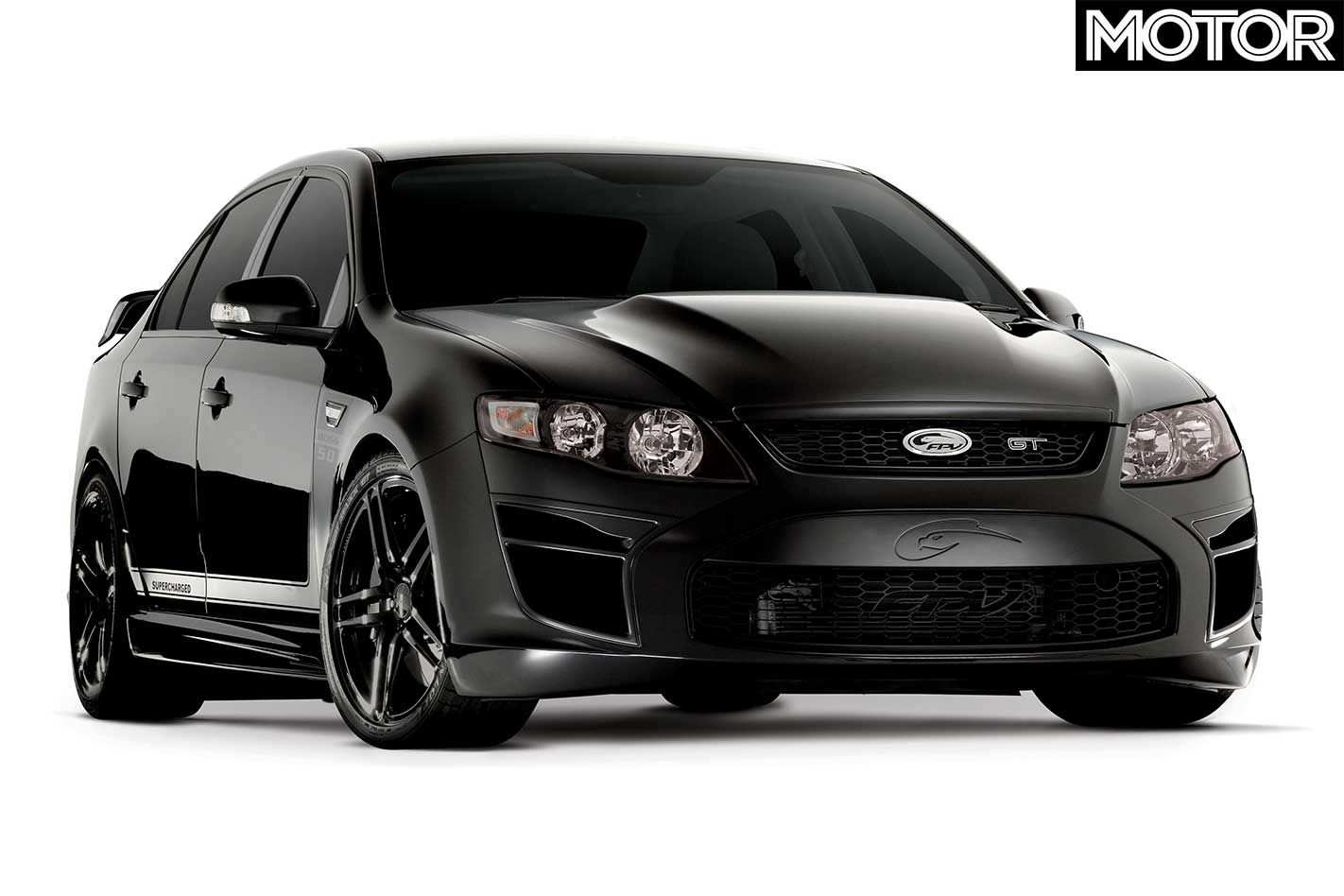
Given such enormous power potential was engineered into the Miami engine from the outset, why didn’t Ford ever build an FG GT-HO? The closest it got was the GT Black Concept of 2011, which featured wider rear rubber and intercooler ducts in the front bumper, but became nothing more than a styling exercise in production guise.
Essentially, following the $40m Miami development for FG Mk II, the outlook for Falcon didn’t support the chassis investment required for it to handle 500kW, as any changes would’ve been subject to Ford’s arduous durability testing regime.
In addition, tricks like the gear-specific boost maps installed in the final XR8 Sprint weren’t yet common, casting questions over drivetrain longevity.
For years after becoming Wheels editor in 1971, I scoured the magazine’s contributors and beyond to find an author for a down-to-earth column I planned to call Dirty Wheels. Effectively, the idea was to resurrect Diary of a Wheels Garage, one of the most popular columns in the magazine’s early years.
Assorted people tried, but quickly found they couldn’t sustain a monthly column. Only after discovering Noel Tuckey, younger brother of former editor Bill Tuckey, did the column prove feasible. Noel worked on cars for a living, owned a typewriter and, as the readers discovered, possessed a lovely, dry sense of humour. For reasons I don’t remember now, Noel decided the column should carry the byline of George Ambrose.
The first Dirty Wheels column appeared in June 1976, but being unfamiliar with the pressure of a monthly deadline, Noel missed the next issue. Then they arrived regularly until, he says, “the column paused for a while in 1979. The money wouldn’t cover the grog bill.”
From then until December 2001, Dirty Wheels became a must-read column. Through the telling of obviously genuine anecdotes – no one could make them up – Tuckey became a constructive reaction against the ever-increasing complexity of automotive technology. He fought against the often absurd cost of replacing multipart but throw-away components and the regular stupidity and absurdity of DIY repairs by owners with little or no mechanical knowledge.
For the June 1996 issue of Wheels, editor Angus Mackenzie persuaded Tuckey to celebrate 20 years of his column with a new story. It’s typical ‘George Ambrose’, railing against an engineer who was convinced he should be able to start his Commodore with a 12-volt torch battery, combined with stories of the various workshop dogs he had known and loved. Tuckey admitted that while he couldn’t remember anniversaries, he could tell you the tappet clearances for a 1949 side-valve Ford Ten.
The car makers didn’t quite know how to react to Dirty Wheels; sometimes they were embarrassed, occasionally they’d write to complain about a possible error, only to have George shoot them down with reality. The readers couldn’t get enough of his yarns. Even now, 17 years after the column was dropped, people still ask me why it went away.
Dirty Wheels ran until the Wheels December 2001 issue. In the words of Tuckey, it was a “messy ending.” Instead of being told he was sacked by a senior member of the editorial department, ideally the editor, it was left to the accounts department to deliver the unwelcome news. They demanded the return of money paid for columns already submitted. “I was a tad upset at the time, but it’s all past history now,” says Tuckey today. As a final note he was able to add the following last line to the ultimate column: “So, Nil Bastardo Carborundum. And goodbye.” (Don’t let the bastards grind you down).
Today, Tuckey lives on acreage in Queensland with his two 1938 DKW two-stroke cars – “they blow enough blue oil smoke to kill loads of my mosquitoes” – and a prototype 1958 Rochdale coupe, an obscure British sports car made in tiny numbers between 1952 and 1973.
I wouldn’t expect anything less of the great George Ambrose.
