
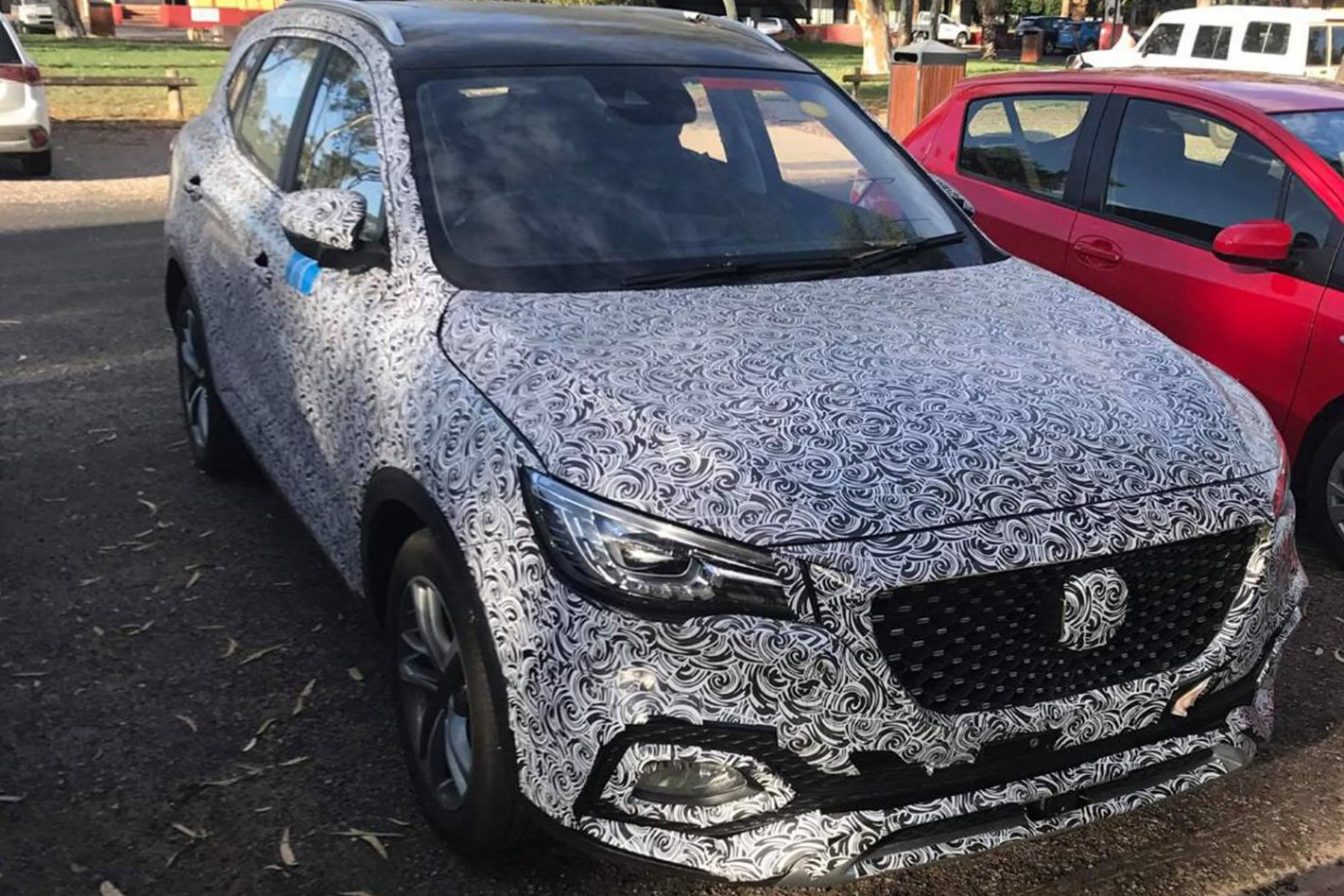
Lurking around the streets of Melbourne in simple black and white camouflage is China’s next big car, a mid-size family SUV from MG that will come to battle against the ever popular Mazda CX-5, Hyundai Tucson and Toyota RAV4. But unlike its previous attempt, MG looks to have a chance of becoming a genuine disruptor.
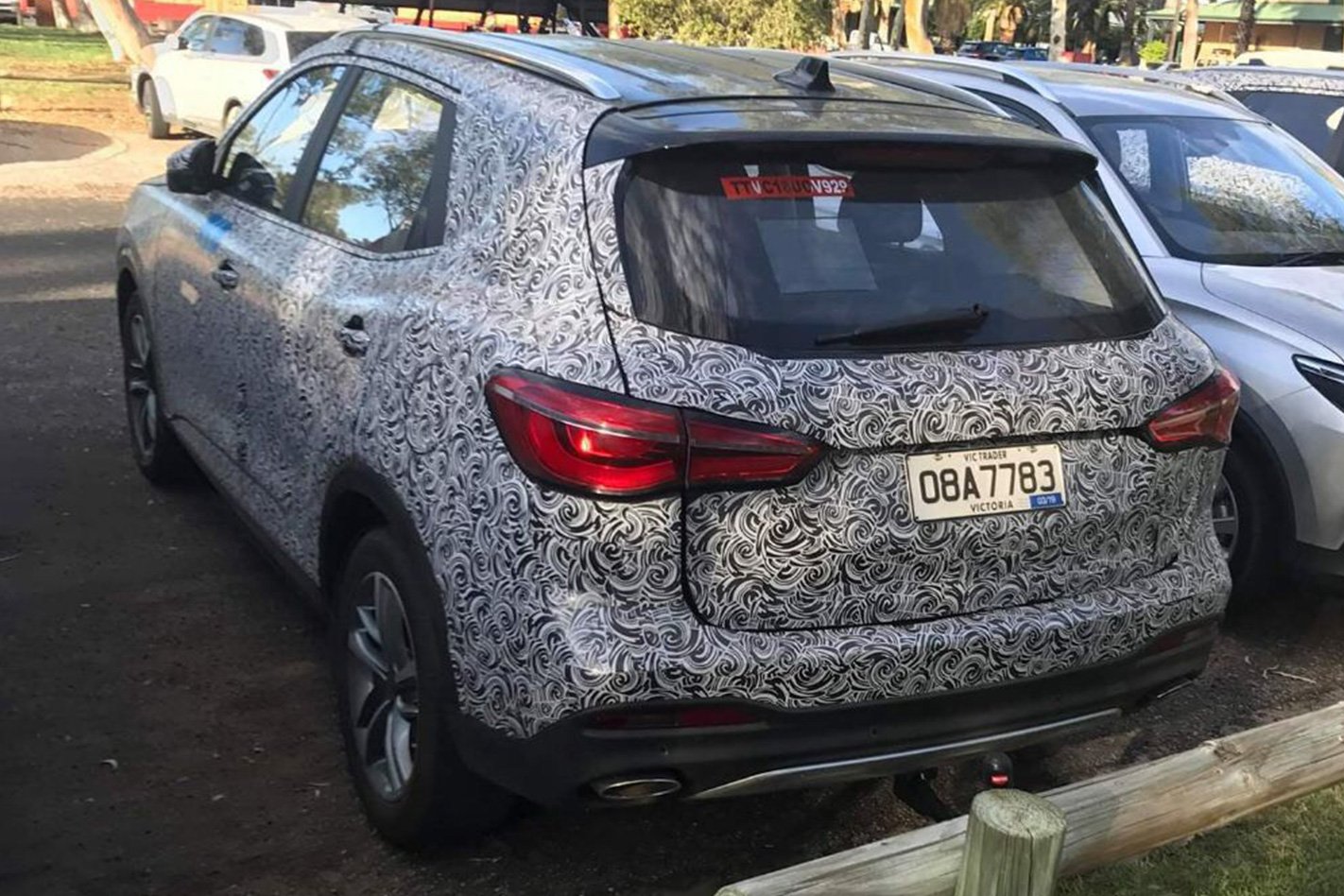
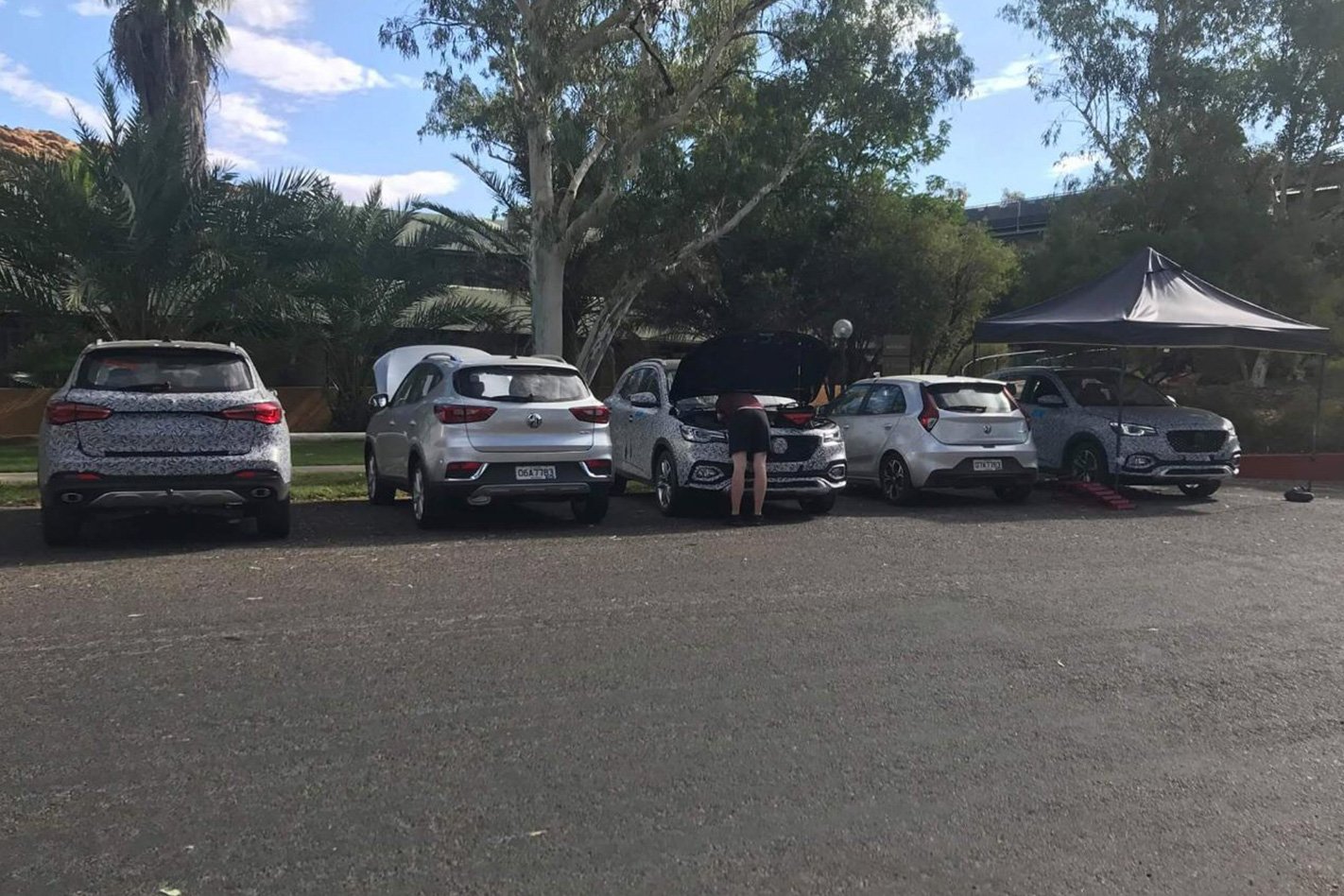
Photos sent in by a reader show the second-generation GS SUV in testing, confirmed to Wheels by MG Australia marketing director, Danny Lenartic.
If you’ve so far missed the news, once-British car maker MG was sold to China’s biggest automotive group SAIC. It still has a design team in London, but is overseen by the mothership based in Shanghai, where it leads design, development and production. Yes, MGs are now rolling off a production line in China.
Previously selling a half-baked product in Australia, the SAIC-owned brand relaunched in 2016 with a more purposeful lineup backed by a deep pocket full of funding. It culled and refreshed its models, and had a crack at the important mid-size SUV segment with its first-generation GS.
A bit rough around the edges, it never flourished, but the newer, smaller ZS and a strong seven-year warranty as standard has bolstered sales. Last month, it recorded an increase of almost 800 percent; the month before, it jumped by almost 850 percent.
Speaking to Wheels, Lenartic said that sales are “so far, so good” in March, with the importer on track to take over established brands such as Volvo, Renault (selling the mildly popular Koleos rival) and even Lexus on the sales ladder.
“We’re not focused on rival brands and what they do; we’re just making sure our 30-strong and growing dealer network is in the best possible place to continue with our success,” Lenartic said.
“I can confirm that [those photos] are of the new GS, SAIC is testing the vehicle here. And no, we will not bring in a [previously speculated] seven-seat version.”
Though unconfirmed, it appears from the photos that the testing regime includes local tuning, aiming to bring a more sophisticated ride that the current model lacks. As Wheels understands, further work involves upgrading technology, ensuring features like a widescreen infotainment system and potential fully digital drivers display are on par with (or above) rivals.
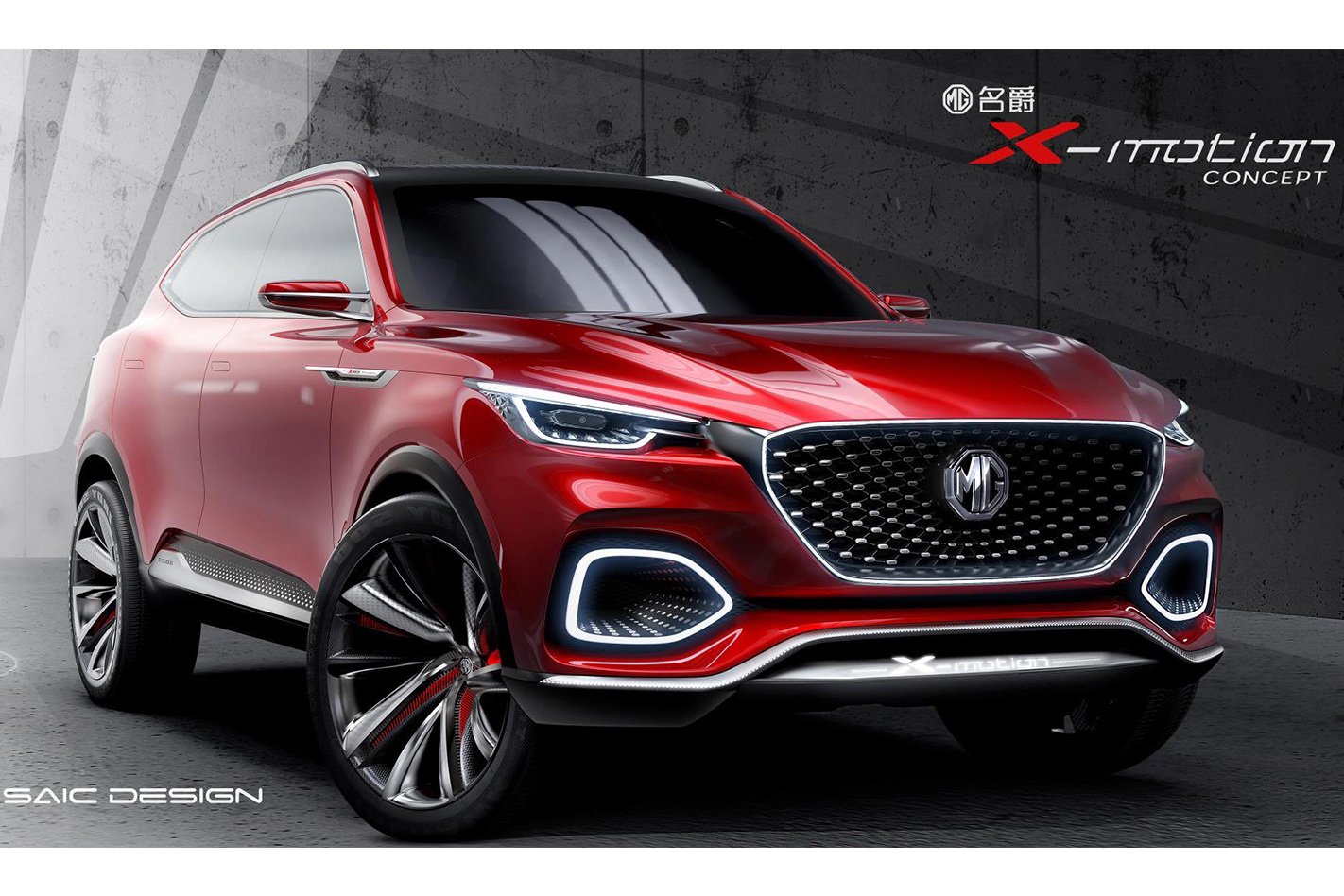
Outside, the model will mimic features found on the MG X-Motion concept unveiled last year at the Beijing motor show, using the brand’s new ‘sensual and emotional’ design language that’s undoubtedly inspired by European machinery. Engine options are yet to be detailed, but the company has previously said it is working on hybrid and plug-in electric powertrains.
While visiting Australia for testing purposes, local launch timing is yet to be confirmed.
Even though the car industry is spending untold billions of dollars on developing driverless technology, it looks as if people aren’t ready to accept the notion of robot drivers just yet.
A report issued over the weekend in the United States shows that more than 70 percent of Americans are actually scared of riding in a fully self-driving vehicle.
A similar study recently conducted by an Australian insurance company also shows that around 57 percent of those surveyed thought driverless cars were a ‘dangerous idea’.
Currently, a driverless car is considered a ‘level four’ autonomous vehicle on a scale of one to five. A car equipped with basic cruise control is considered at level one, while a vehicle with no steering wheel or means for human intervention is considered a level five.
The American Automobile Association (AAA) survey suggested that the poor result for fully autonomous cars is largely down to a number of recent and highly publicised incidents involving driverless cars, which operate in limited numbers in states like Arizona.
A driverless Uber vehicle, for example, struck and killed a woman crossing the road in darkness in that state in early 2018, despite the presence of an operator behind the wheel of the car.
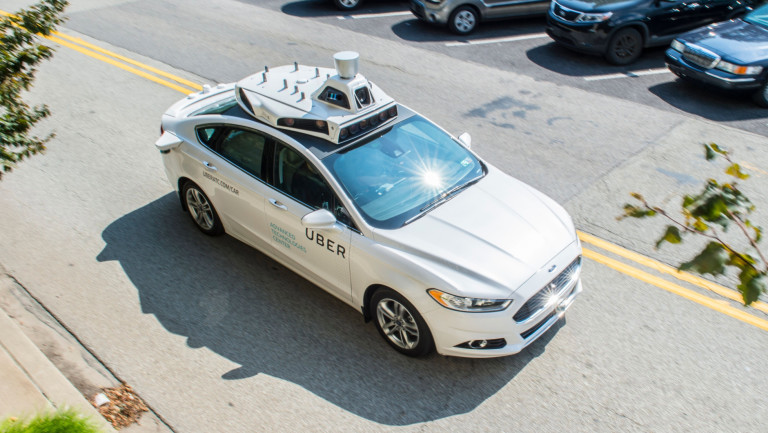
Uber suspended all driverless operations (above) pending an investigation, but limited services have resumed on a trial basis in Pittsburgh, Pennsylvania.
We want to know – what do you think about a driverless future? Are you all for it? Will it benefit our society? Will it be a danger to everyone? Let us know in the comments section below.
Oddly, only 44 percent of Americans surveyed expressed confidence in the notion of driverless delivery services, while only one in five were confident about allowing a driverless vehicle to transport a family member or loved one.
Companies like Ford – who has patented removable driver controls for cars – are trialling driverless delivery vehicles (below) that operate like mobile lockers; a notification is sent to the recipient to come and retrieve their package when the vehicle arrives at their location.
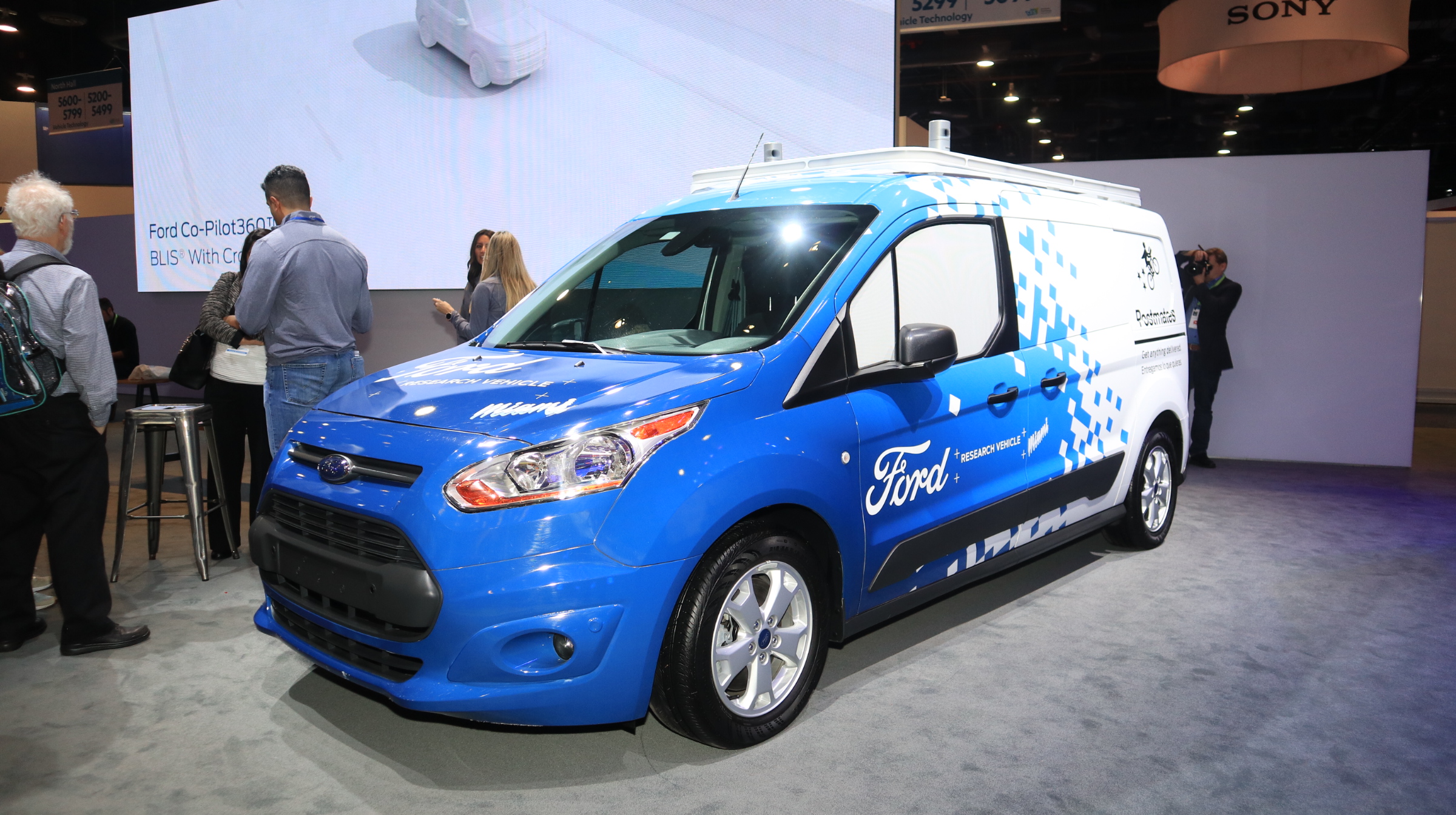
The Australian survey, meanwhile, showed that while there’s less concern here about the dangerousness of autonomous cars – 57 percent nationally – less than half of those surveyed would actually ride in one.
Drilling down a little further into the Australian study – conducted late in 2018 – shows that Canberrans (80 percent) were most averse to the notion of driverless cars, while 60 percent of people aged 18-24 said that autonomous cars aren’t dangerous.
South Australia, NSW and the ACT currently permit driverless vehicles on public roads under controlled conditions, while Adelaide is currently trialling a limited driverless shuttle service along the Glenelg beachfront.
WhichCar says
There’s a lot of chat and excitement around the notion of driverless cars, and the studies being undertaken in Adelaide, for example, are genuinely revolutionary.
However, the tech still has a long way to go. The world’s biggest companies are spending mind-bending sums on fast-forwarding the tech… but at the moment, the best that can be done is sending a monitored car on a mapped-out track over a short distance.
The issues stymying driverless tech are legion, but key amongst them is the vast amount of data needed to safely deploy an autonomous car.
BMW told us in 2017 that while it can develop a ‘regular car’ with five million kilometres of driving, it needs 150 million kilometres to develop a level 5 autonomous car.
But we want to know – what do you think about a driverless future? Are you all for it? Will it benefit our society? Will it be a danger to everyone? Let us know in the comments section below.
Audi has issued a recall notice on its popular A4 and A5 model lines, citing separate issues of possible spontaneous ignition combustion and rapid tyre degradation that could occur in certain circumstances.
Specifically, Product Safety Australia has notified that certain Audi A4s and Audi A5s manufactured between MY2015-16 could have leaky fuel rails.
Audi A4/A5 models (designated B8) fitted with a 3.0 TFSI six-cylinder engine could produce a low-pressure fuel rail leak where small amounts of fuel could escape, resulting in petrol fumes inside the cabin, or potentially fire if an ignition source is present.
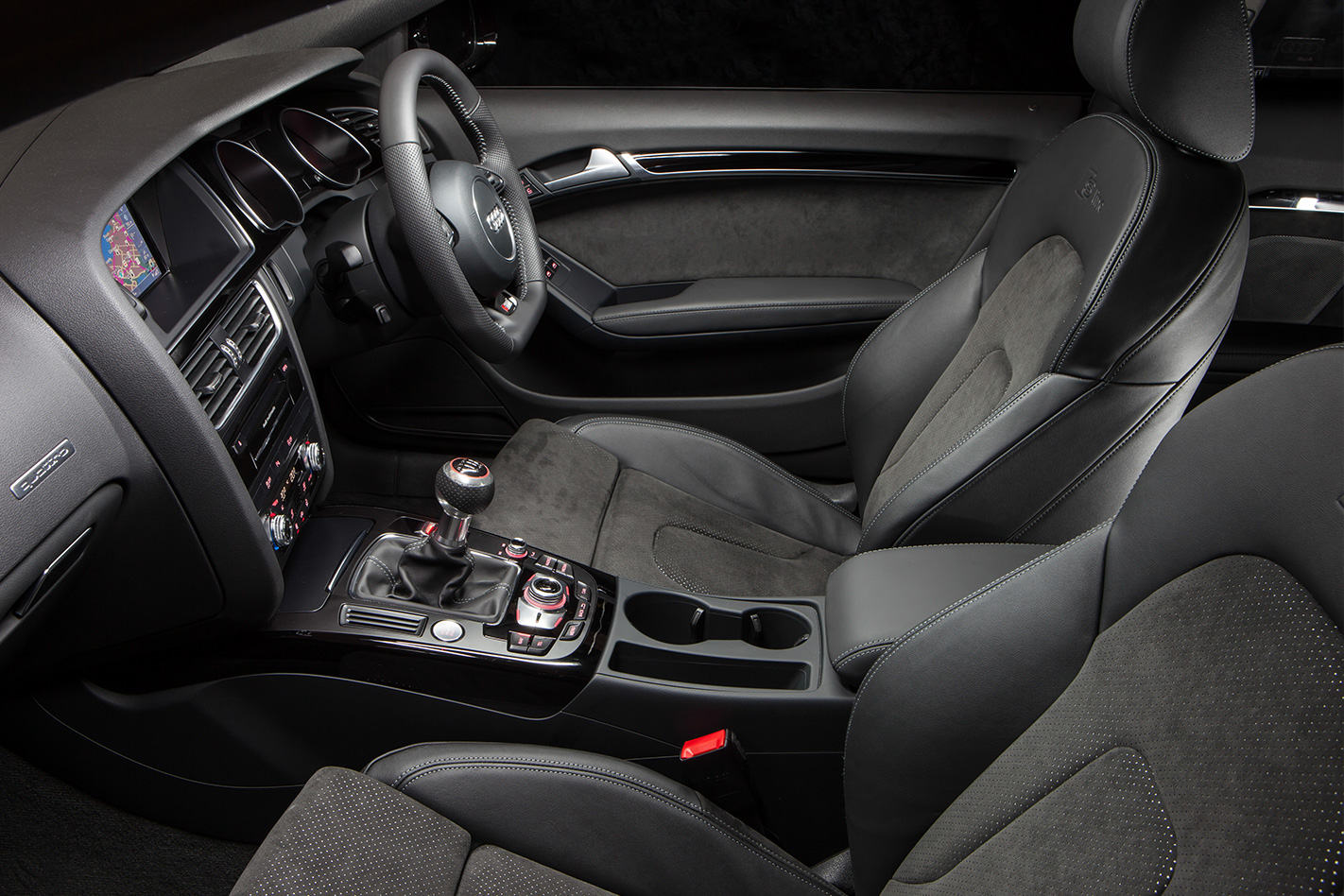
Audi Australia will contact owners of the 141 affected vehicles and request that an appointment be made for the vehicle to be assessed and subsequently replace the fuel rails for the low-pressure side of both cylinder banks.
Concerned Audi owners should contact Audi Australia for more information on the 24-hour toll free number 1800 50 2834.
2017-18 Audi A5 with 20-inch wheels recalled
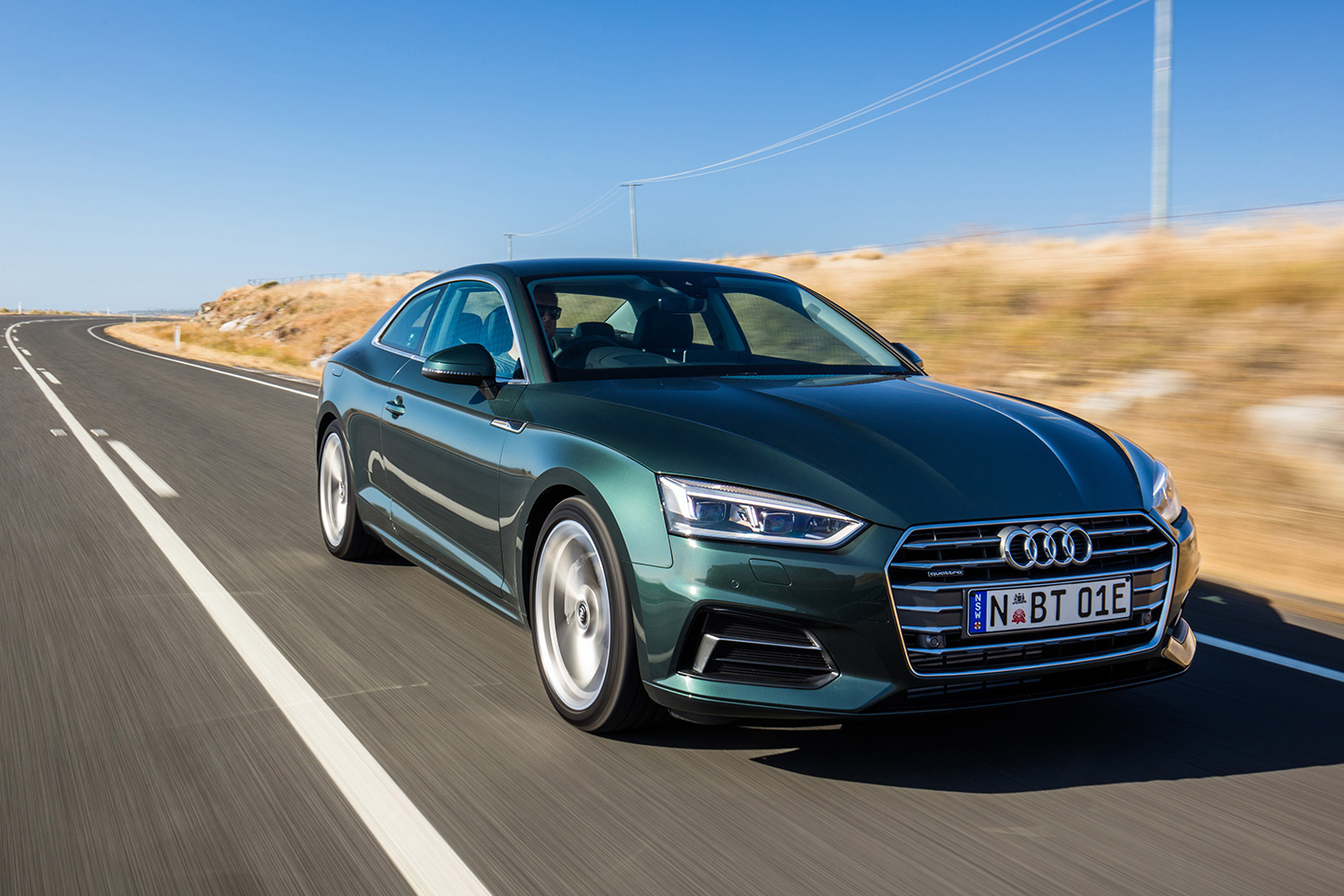
Audi A5s manufactured between September 2017 and June 2018 fitted with Dunlop Sport Maxx RT Noise Shield 265/30/20 have also been flagged as violating the Australian Design Rule 23/02.
Essentially, when travelling in the top speed range permissible by the tyre, tread chunking can occur.
The number of affected cars in Australia stands at 27.
Audi will contact affected customers and arrange for inspection and replacement, but again, owners can proactively contact Audi at 1800 50 2834 to find out more.
The Falcon-based Arrow coupe represents car customisation in the same way Pablo Escobar represents pharmacology. I mean, not even a Jesuit could withstand the very real urge to drive it like an obstreperous wasteoid.
This feature was originally published in MOTOR’s June 2002 issue
If you’ve a lazy $165 large stuffed under the Posturepedic, and you rue the day Ford’s bureaucrats decided ‘boring’ was hip, the Arrow’s 370kW, two doors and four seats can be yours.
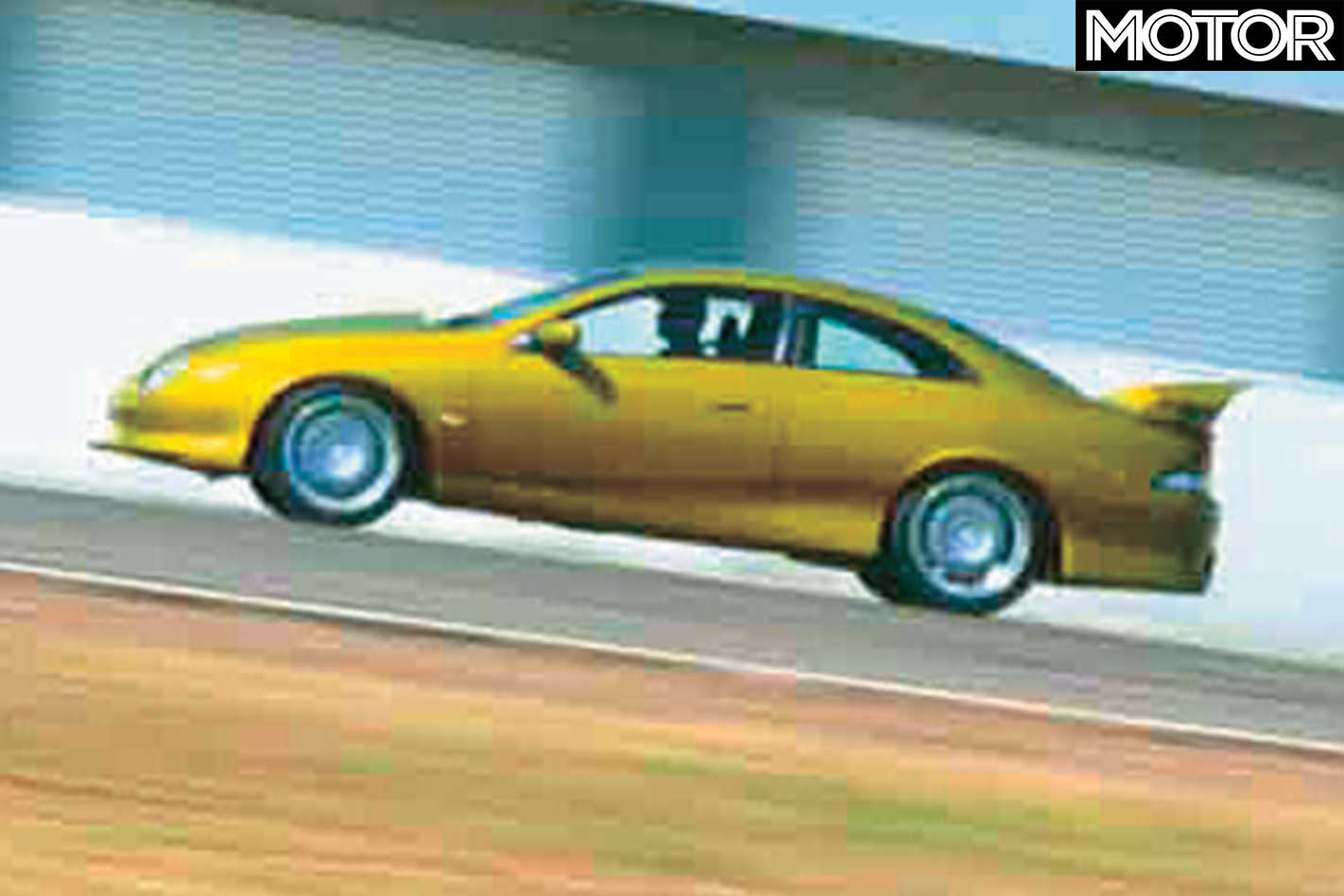
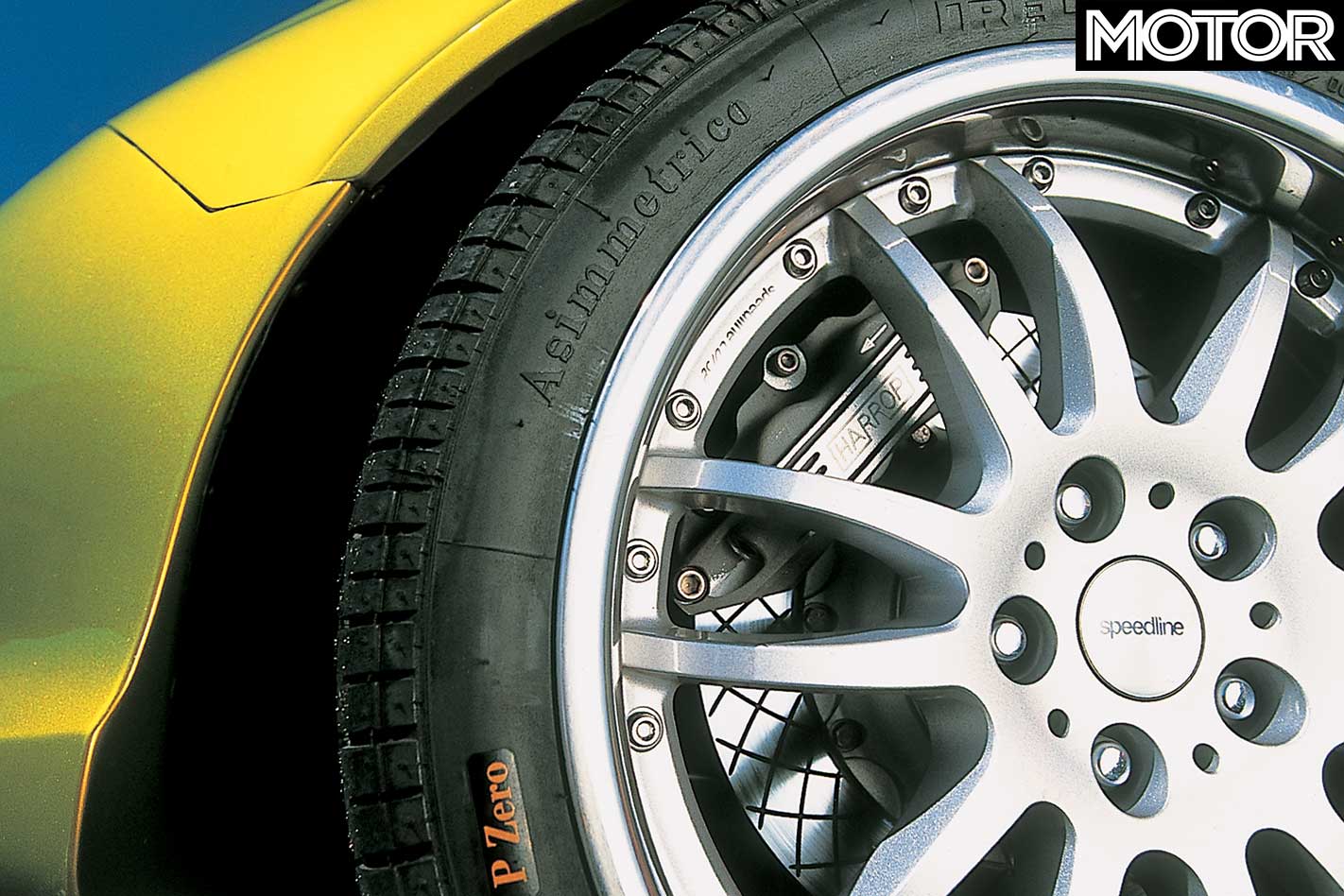
Does it go? You bet. The massive Pirelli P-Zero Asymetricos – 285/35 ZR19 down the pushing end and 245/40 ZR18 up the pointing end – are only just up to the job, frankly. You want sideways? Set that right Blunnie to ‘shred’ and watch those P-Zeros disappear, son.
If you drive the Arrow, just remember that there are two equally effective steering devices – the wheel and the throttle. Profligate application of the latter will see you back off the road when you least expect it.
Calling the Arrow a ‘production’ car would be stretching veracity further than Roseanne’s bike pants. It’s a hot rod whose saving grace is that much of the fundamentally sound Ford engineering remains unchanged. That means it’s spared the evil ergonomics and dynamic flaws that clean-sheet one-offs display if megabucks in R&D haven’t been part of the exercise.
Flaws are minor – the clutch pedal’s too heavy; the brake too soft. Strange noises issue from the power steering when she’s heeled over hard at 5000rpm in third and the shifter wants to be disobedient. The kind of things that used to be called ‘character’ before perfection became the golden fleece for auto designers.
The Arrow’s idle feels lumpier than Plastic Pammy from the waist up. Throttle response off idle is not on the pace – it’s easy to stall – but there’s a helluva lot to like about how the Arrow sounds (and goes) at 6000rpm, just before the rev limiter cuts in.
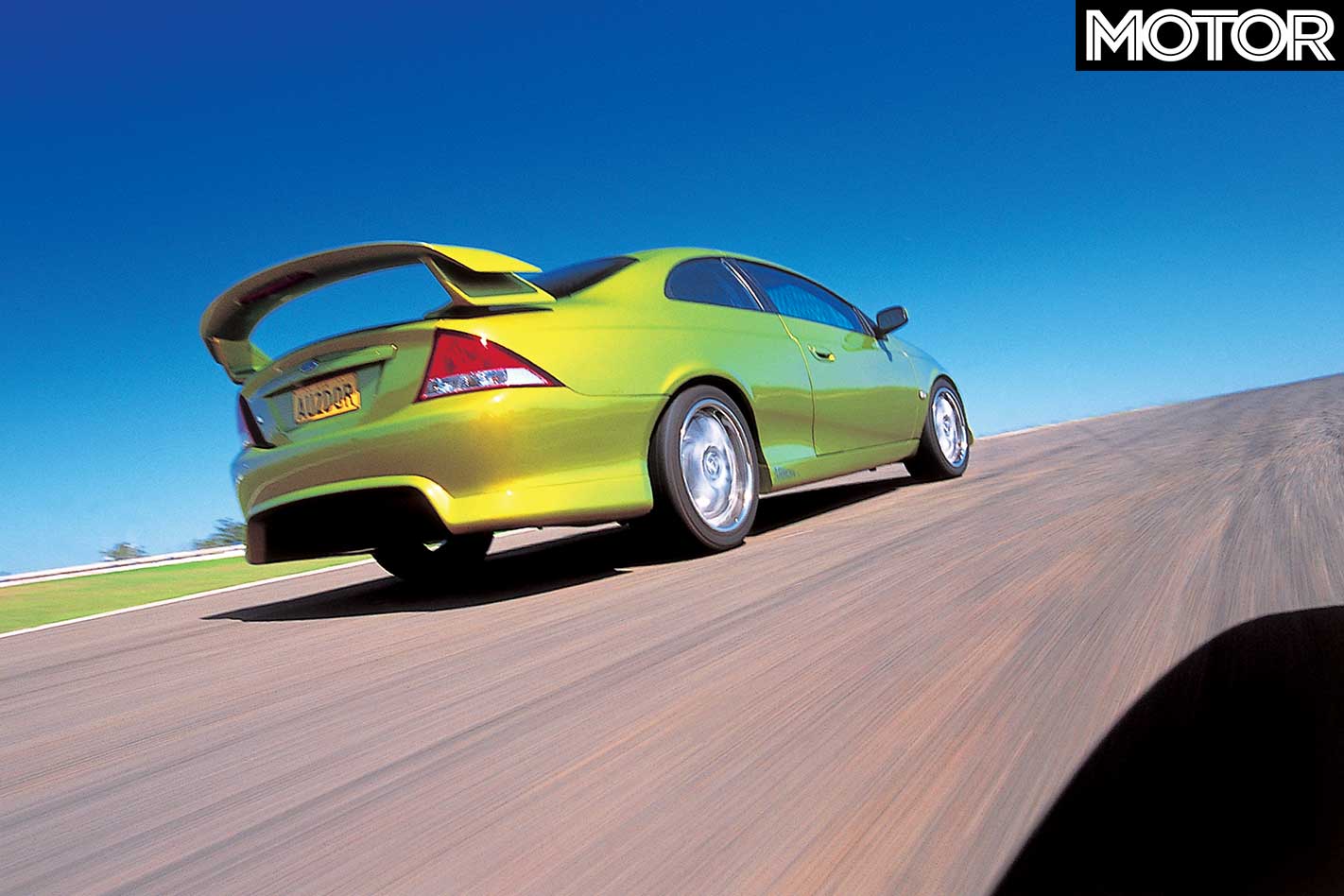
It’s all induction, bellowing exhaust and the kind of neck-snapping acceleration that comes only with the best part of 400kW abetted by more than half a Newton-kilometre of torque. That much old-fashioned grunt blurs the line between second and third-gear corners; both gears feel right.
The Arrow is what happens when two hearse builders from the bush, Troy and Clayton Hillier, from Tenterfield-based Hillier Conversions in northern NSW, join forces with Sydney-based MOMO, Recaro and Speedline distributor, Bob Roman of Autotek.
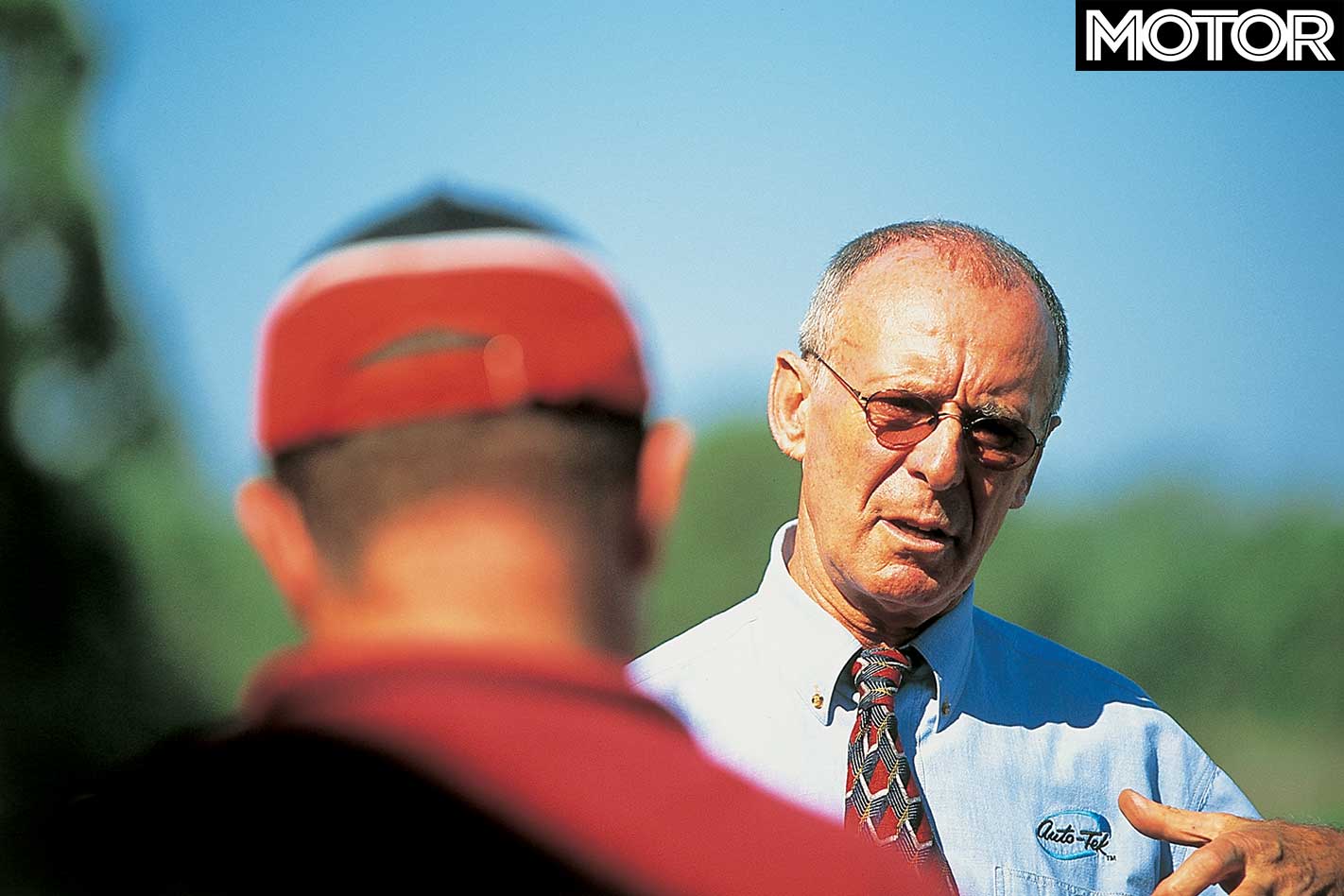
Hillier accepts used AU Falcons for conversion – anything from a bought-yesterday XR8 to a high-mileage taxi – while Roman waves his magic trim and fit out wand over the conversion, which can take up to 15 weeks all up.
Hillier and Autotek jointly promote the vehicle, but you buy it from Hillier. Because the converted cars are existing, registered AUs, Hillier gets an accredited engineer to report on each car to ensure ongoing registration compliance.
Hillier will do anything from convert a taxi to a coupe (and return it to the owner on taxi running gear) to build the equivalent of this vehicle. Price ranges from $35,000 to $165,000, depending on which of the dozens of boxes your bank manager lets you tick.
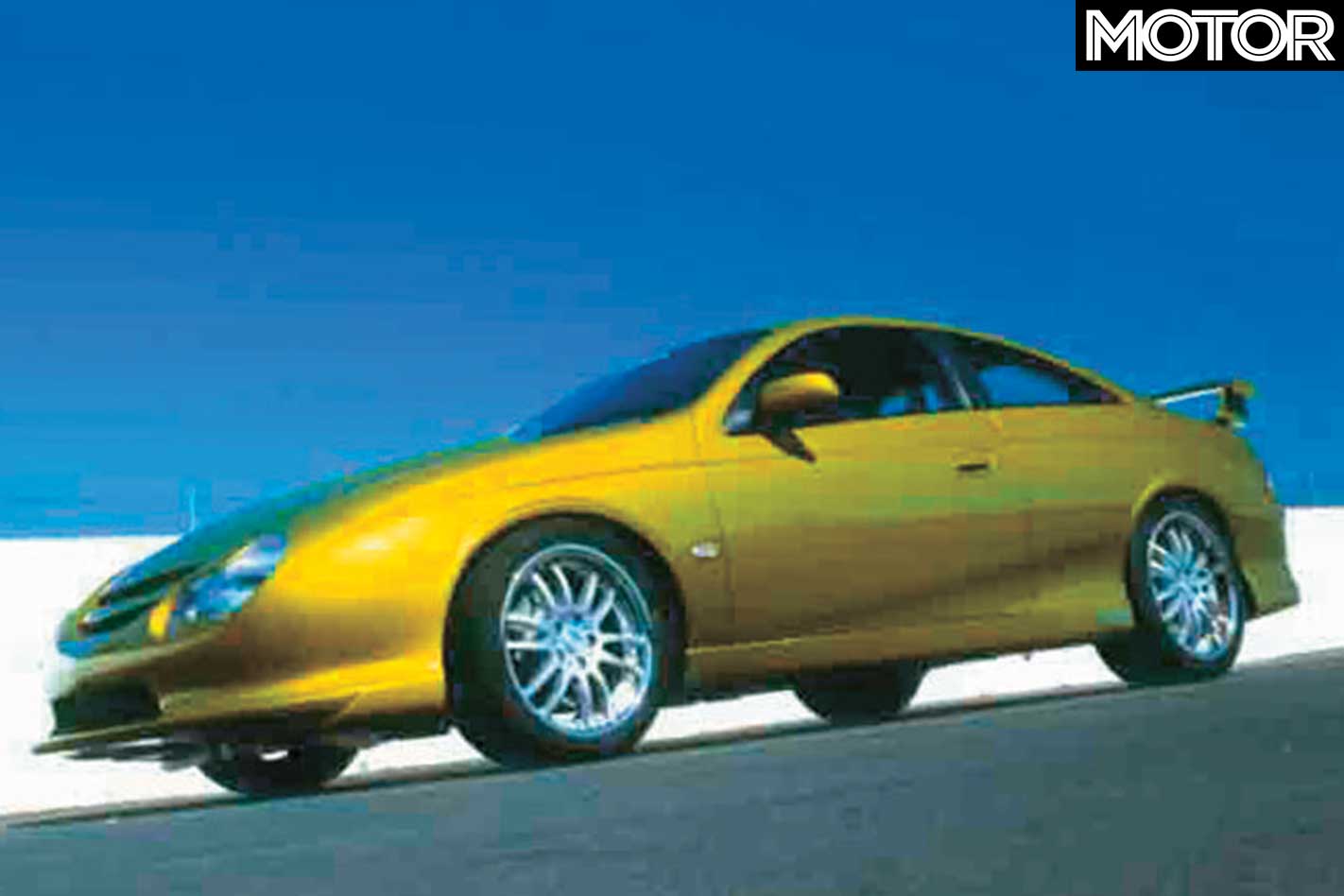
Troy Hillier says there’s actually more work in producing a hearse than the Arrow. Still, every panel except the boot lid gets up close and personal with the MIG welder. The roof is lowered at the rear, and all-new quarter panels are fabricated and welded in. The B-pillar goes back around 200mm, with a corresponding increase in front door length. Bigger intrusion beams are fitted for side-impact compliance.
A new, deeper sill is welded over the existing sill, while all wheel arches are unpicked and boosted. The distinctively angled up crease along the body side is added in. The only fibreglass components are the front and rear bumpers, as well as the rear deck spoiler.
The headlights? Yeah, Mercedes-Benz. Or, in Hillier-speak, “European Bosch”. Neither Hillier nor Roman will use the ‘M’ word.
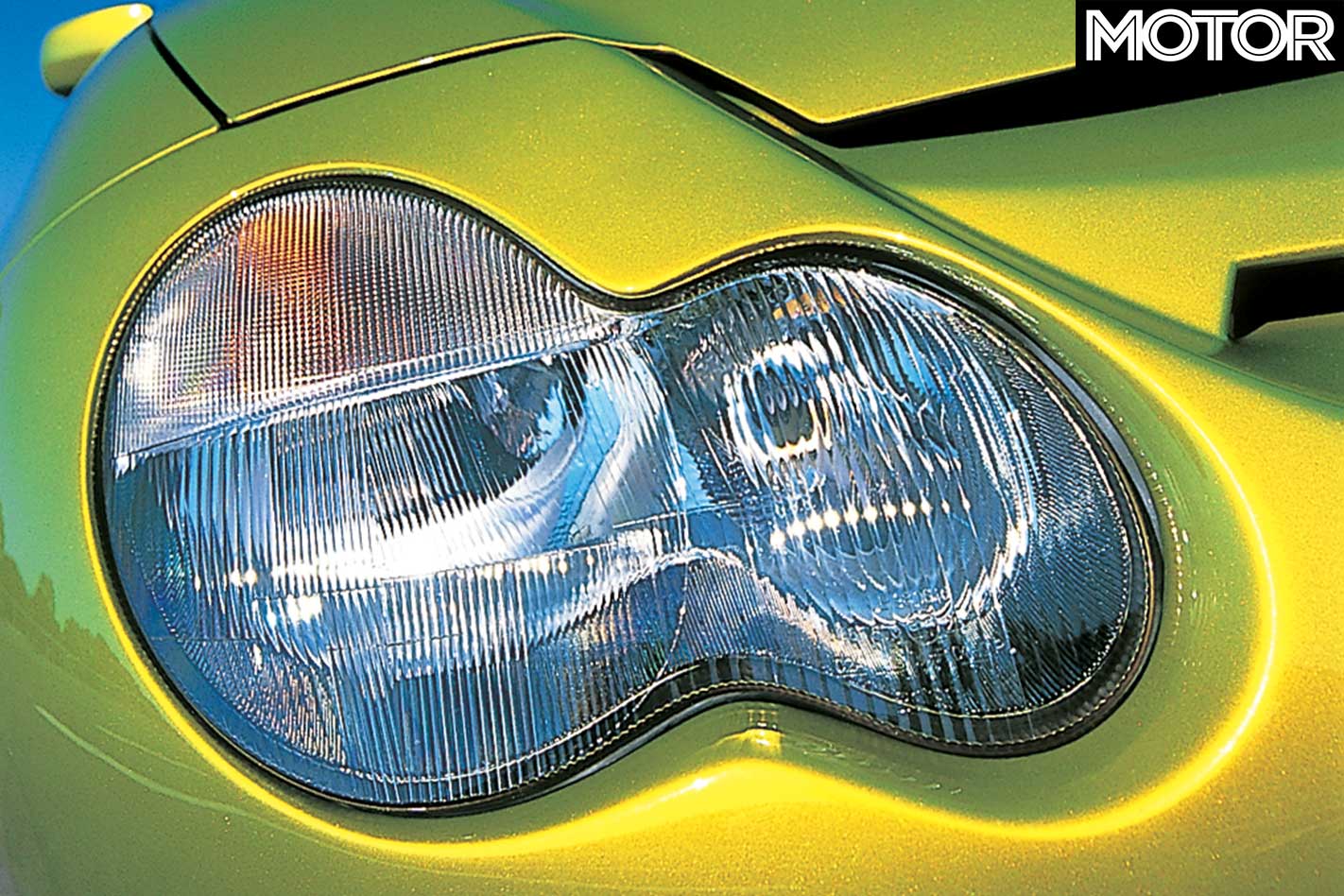
The distinctive arrow-shaped bonnet scoop (which inspired the name) is optional, though not with this engine, which won’t clear the bonnet any other way.
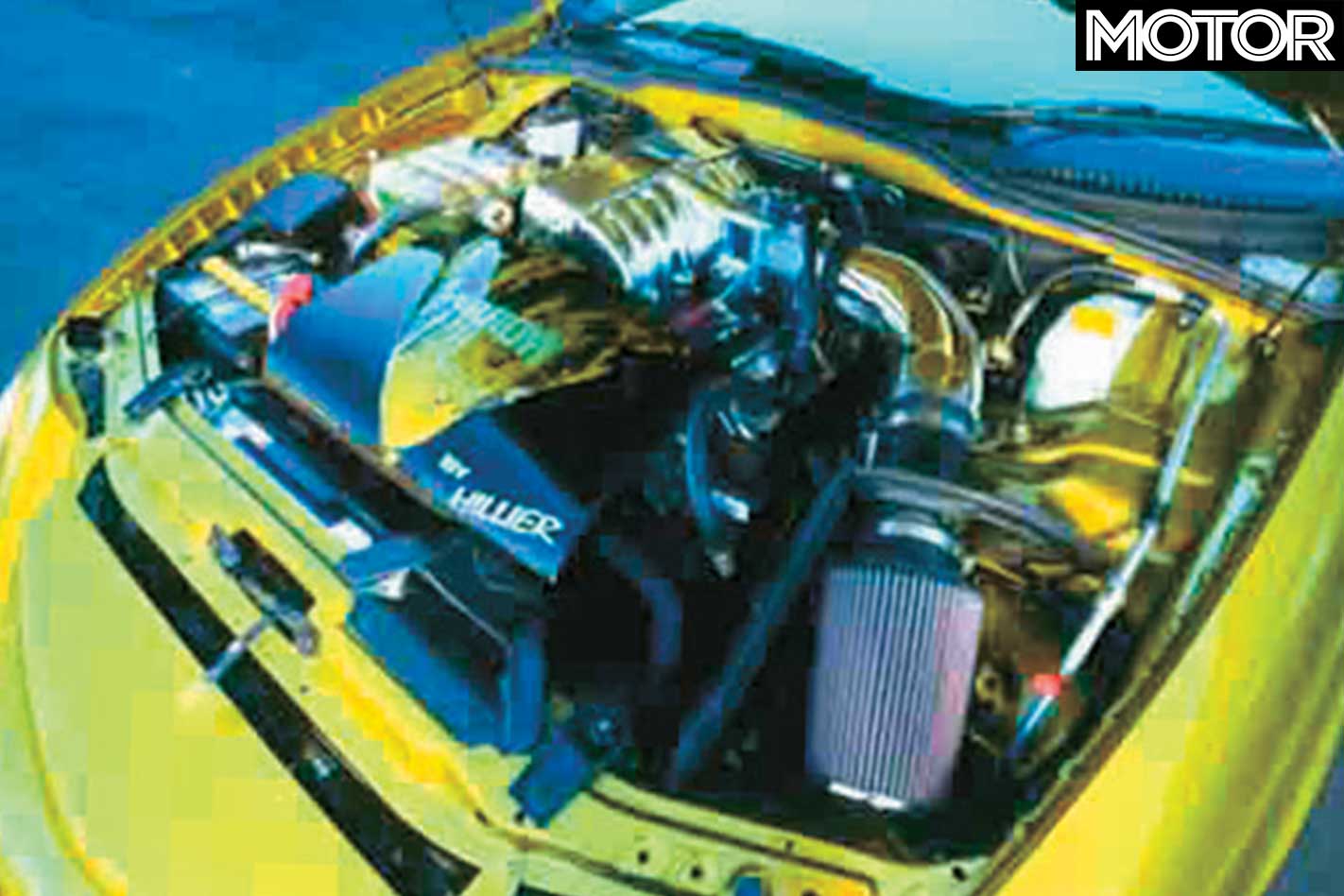
Starting up the front, the Brothers Hillier fit both engine oil and power steering coolers. Next is a twin-row 52mm Group A-style aluminium radiator in front of a standard-ish auxilliary drive belt arrangement.
The engine displaces 392 cubes in the old money (6.4-litres) and runs Edelbrock heads, a 3.85-inch crank, steel rods, forged pistons, a Ford Motorsport SVO cam and injectors, and Crane roller rockers. Inlet air enters through a K&N air filter, flows through a 75mm throttle body, past an 80 mm Mustang airflow meter and into a Victor EFI inlet manifold. The rotating and reciprocating bits, including the billet flywheel and 10.5-inch Centreforce clutch, are balanced.
Gearbox is a Tremec T56 six-speed feeding a Hardie-Spicer two-piece tailshaft and a Ford nine-inch diff with Moser billet axles and a Strange Engineering LSD centre. Brakes are 330 mm Harrop slotted rotors all round (alloy hats at the front, iron at the rear), with four-piston calipers. They’re the biggest Harrop assembly that would fit inside Autotek’s Speedline Corse modular wheels. While the pedal feels soft, stopping power is extreme.
Interior trim – Autotek’s department – is understated. Bob Roman wanted the OE look, with just a touch of custom showing through. ‘Race-proven, street-legal’ is the theme. The centre rear seat was axed, and replaced by two bucket-style fully bolstered bumrests. New all-up seating capacity: four.
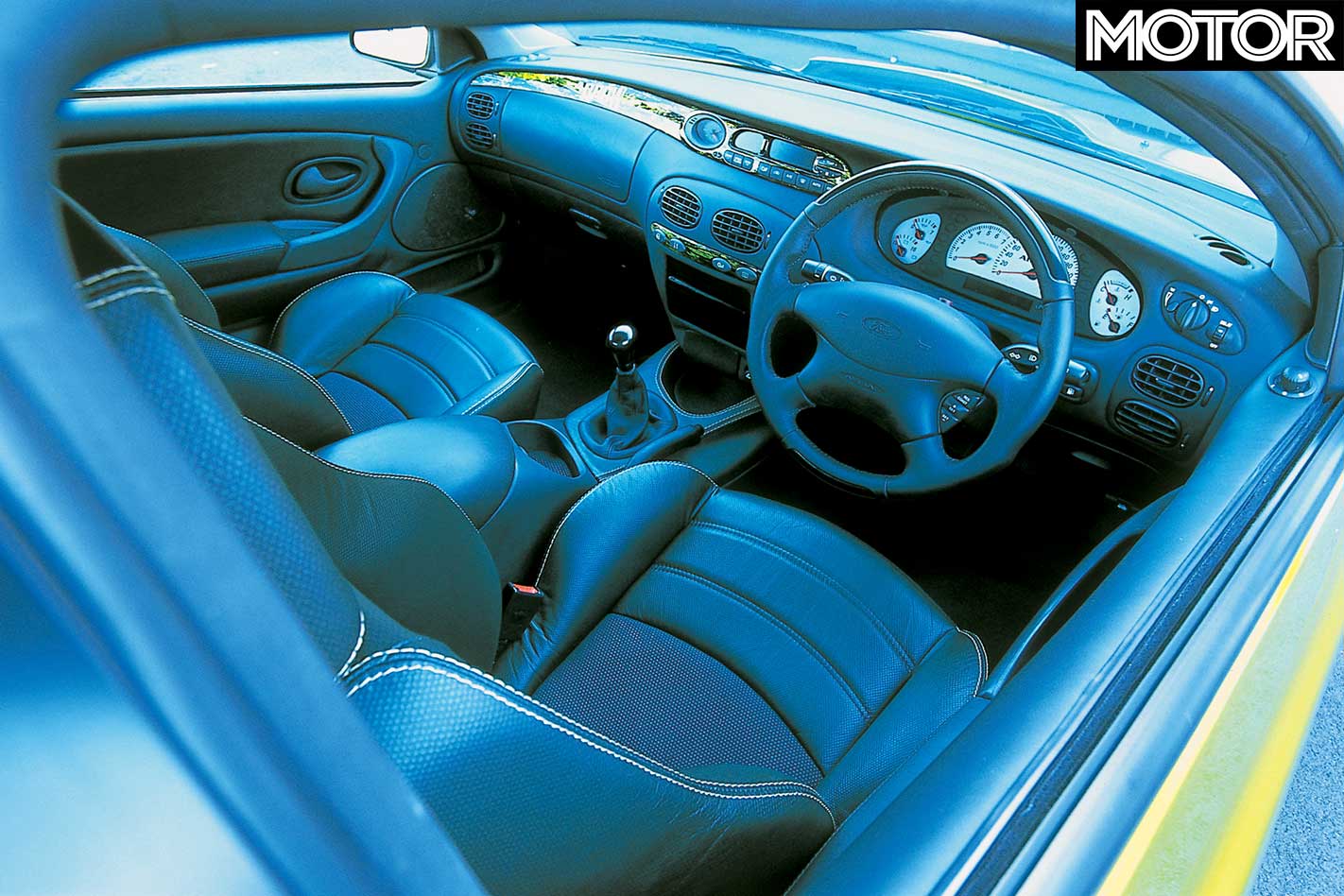
The whole rear seat was rebuilt from the metal frame up. Up front, race-style modular Recaro bits were integrated into the OE Ford seat sub-frame assembly; a complex job that meant key occupant restraint points were unaltered, ensuring ADR69 compliance. The seats are trimmed in upmarket rolled and textured Canadian leather, and the seat bases incorporate non-slip anti-submarining pads. There’s just enough contrasting trim to let you know it’s not a production-line job.
The Arrow: you want one, just a little bit. Admit it. Arrow production maxes out at around six units per annum. The first two slots are taken – one by a Ford dealer and this car by a well-heeled entrepreneur who probably has a blue oval plastered on his bedroom ceiling.
FAST FACTS 2002 Ford Arrow Coupe
BODY: 2-door coupe DRIVE: rear-wheel ENGINE: 6.4-litre 16-valve pushrod V8 POWER: 370kW @ 6000rpm TORQUE: 610 Nm @ 4000rpm (approx.) WEIGHT: 1700kg (approx.) POWER-TO-WEIGHT: 218kW/tonne TRANSMISSION: six-speed manual SUSPENSION: Double wishbone, coil springs, anti-roll bar (f & r) L/W/h: 4910/1892/1400mm WHEELBASE: 2793mm TRACK: 1566mm (f); 1547mm (r) BRAKES: 330 mm Harrop ventilated and slotted discs, four-piston Harrop calipers (f & r) WHEELS: 18 x 8.5-inch (f); 19 x 10-inch (r), Speedline alloy TYRES: Pirelli P-Zero Asymetrico 245/40 ZR18 (f), 285/35 ZR19 (r) FUEL: 68 litres, PULP PRICE: $165,000 (est)
Roof closed, rapid run up a hairpin-littered mountain road and already I’ve forgotten I’m driving the new 911 Carrera S Cabriolet. You know, the ‘soft’ one that purists swerve for a coupe? Last night, even productline director Andreas Pröbstle admitted the cabriolet is less than half as stiff as the coupe (15,000Nm plays 40,000Nm) and weighs 70kg more, but right now it feels pretty coupe-like to me: solid and sorted, it steers with a pacey accuracy, and totally absorbs you in its adjustable dynamics. Porsche has even seen fit to implement rear-wheel steering and 10mm lower sports suspension to our test car, the latter a first for a Cabriolet (bit niggly around town, eases with speed).
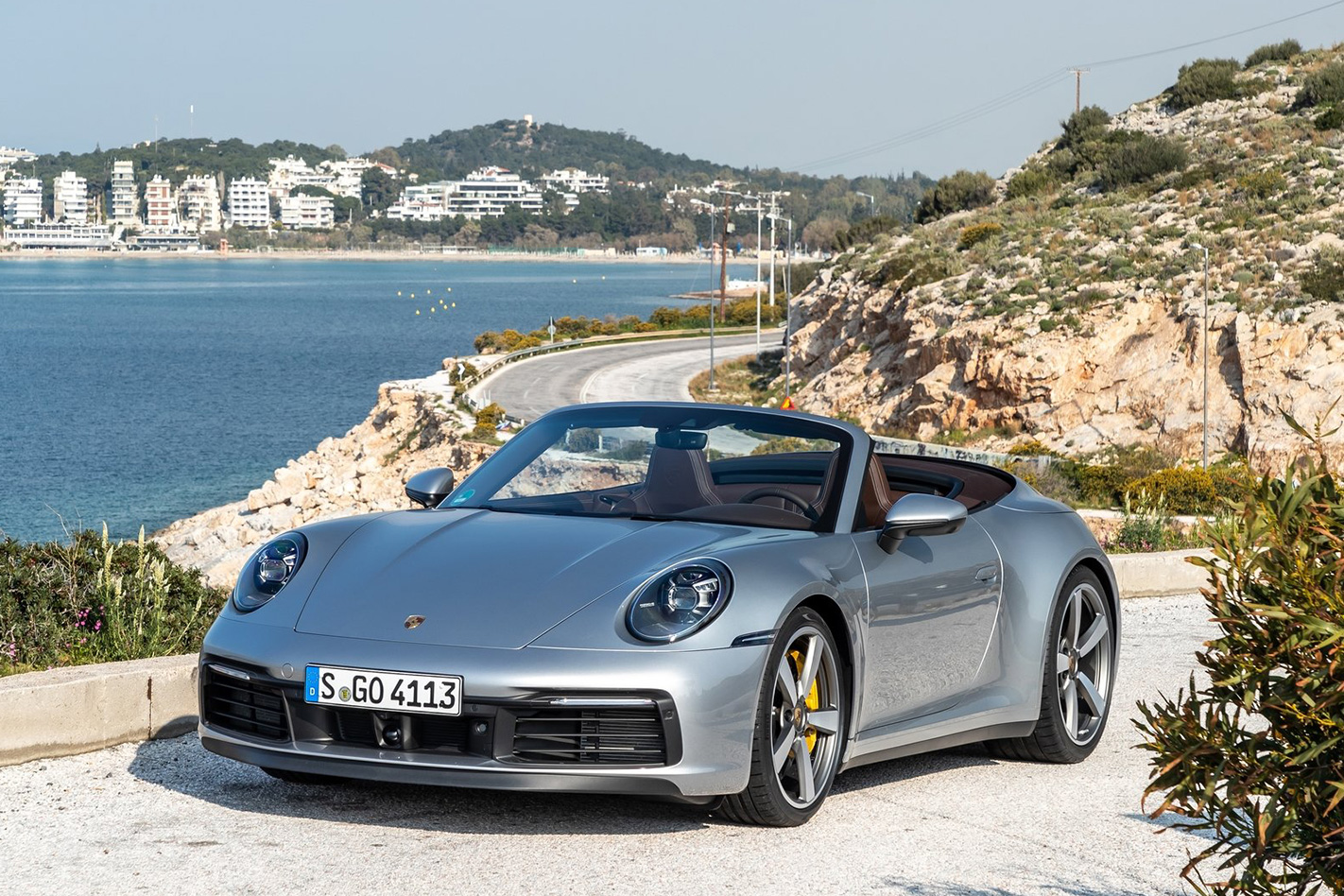
Then I remember the roof, slow to 50km/h, and press a button so that the taut fabric-top motors back down over my head. The 331kW flat six roaring, turbos whooshing like rocket launchers, sky rushing overhead – you don’t want to be stuck at a party with a petrolhead who can’t see the appeal in that. Or thinks a four-cylinder Boxster would do the job just as well.
Tech secrets of the 2020 Porsche 911 992 revealed
Best hit them with the 3.9sec 0-100km/h and 306km/h bragging rights first, before revealing this new roof opens or closes in just 12 seconds – a two-second improvement on the previous model. Actually, ‘new roof’ is pushing it. The Z-fold roof mechanism and the fabric continues from the last 911, but the electro-hydraulic mechanism gets a higher-performance pump. That’s the key to the extra speed, and it also hushes the mechanism’s operation – and it really is a pleasingly quiet roof.
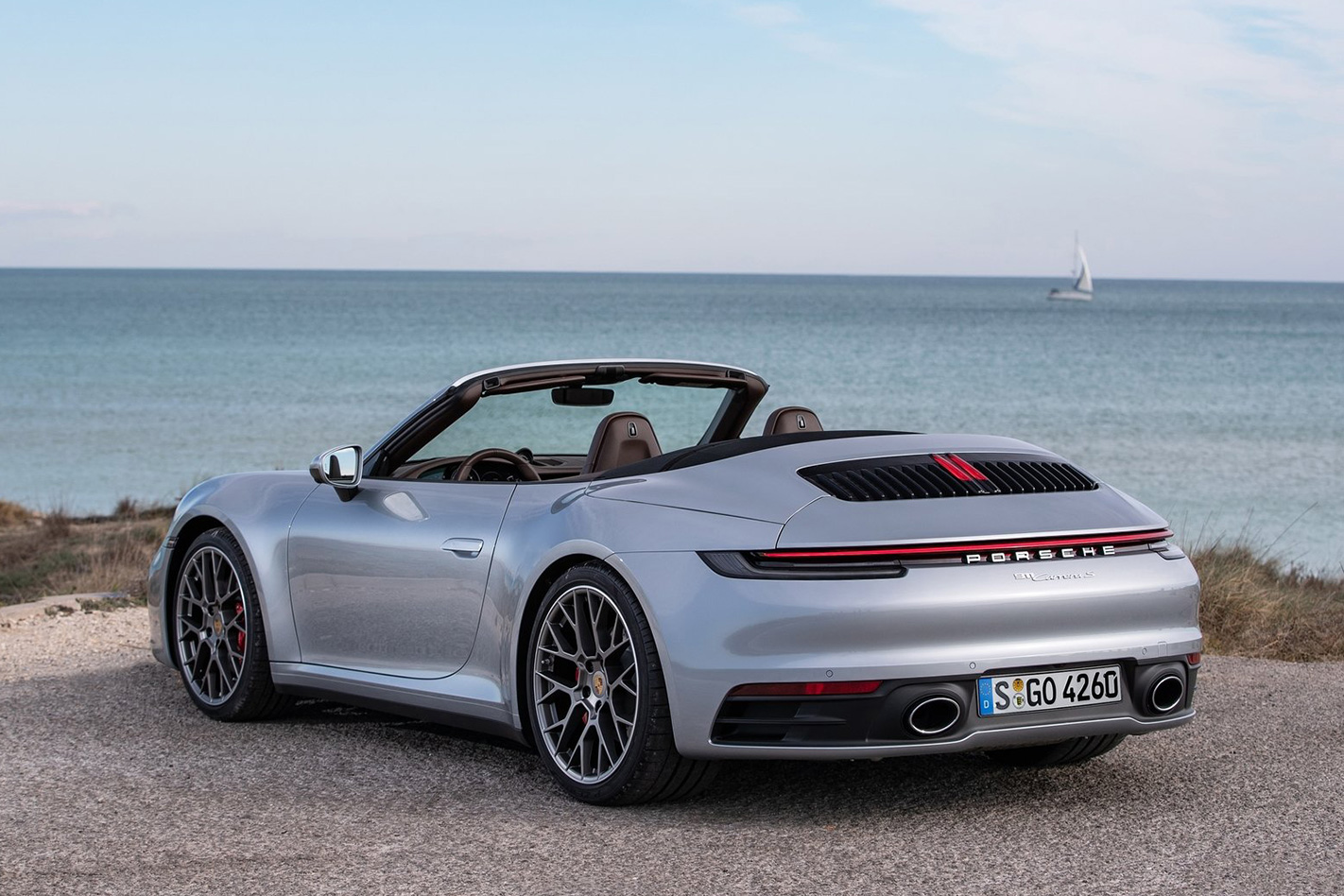
Quieter with the roof in place too (by around 10 percent, estimates Pröbstle) thanks to a new fleecy layer sandwiched between outer and inner layers. Truth be told, it’s interior noise that most obviously flags that you’re in a cabriolet, because there’s definitely more bluster than a coupe interior. It’s no deal-breaker, though, and slightly reduced rear visibility through the heated glass rear window shouldn’t be either – and at least the reversing camera is standard.
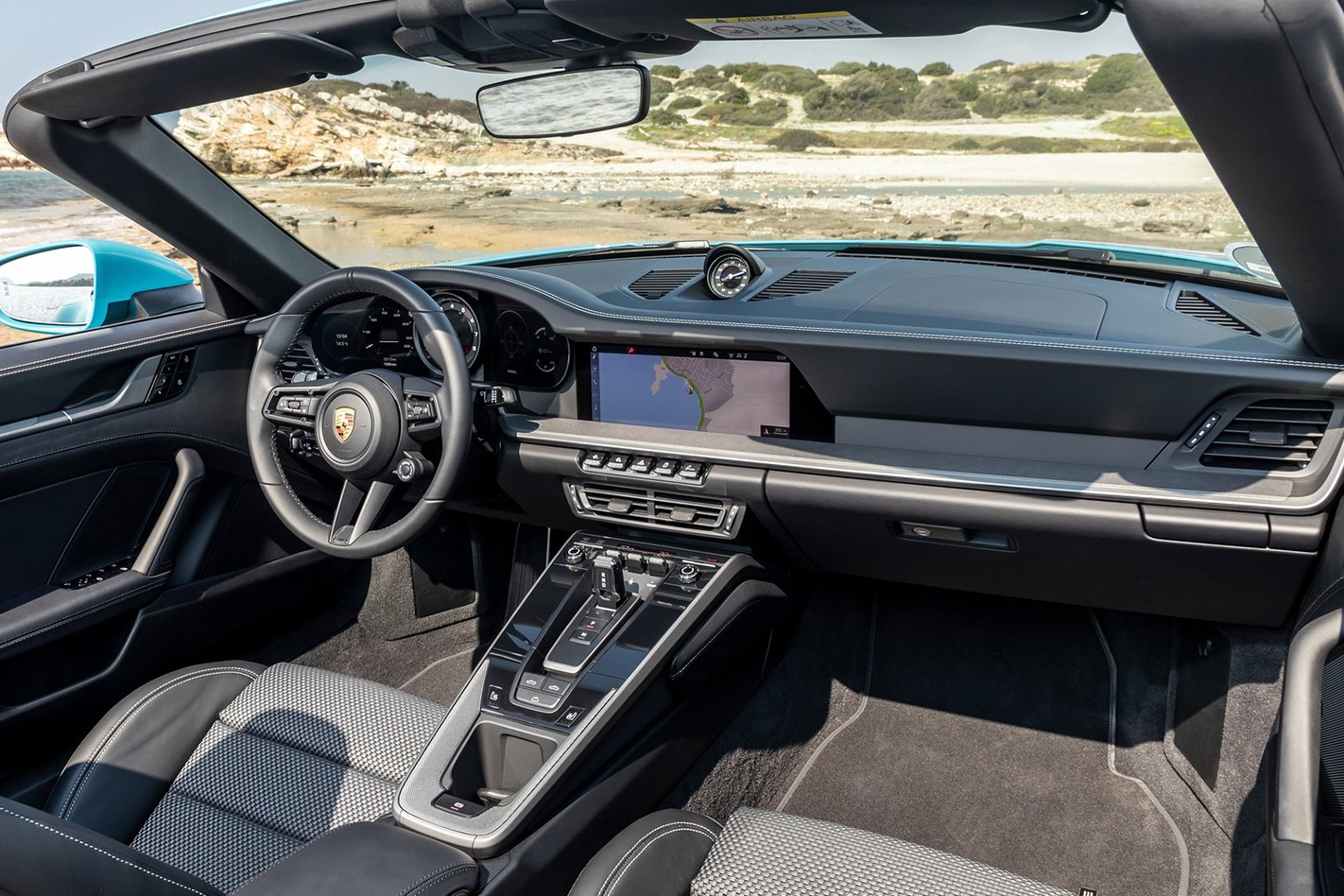
Crucially, the cabriolet doesn’t really compromise the 911’s usability or looks. True, folding a roof below a metal tonneau cover and above a flat six does lift the rear end 10mm or so – a tiny amount that gives it a slightly bulkier appearance, especially roof-down – but it still looks sharp, you’ve still got rear seats, of course the boot is the same size, and this soft-top continues to drive and entertain like a 911 should.
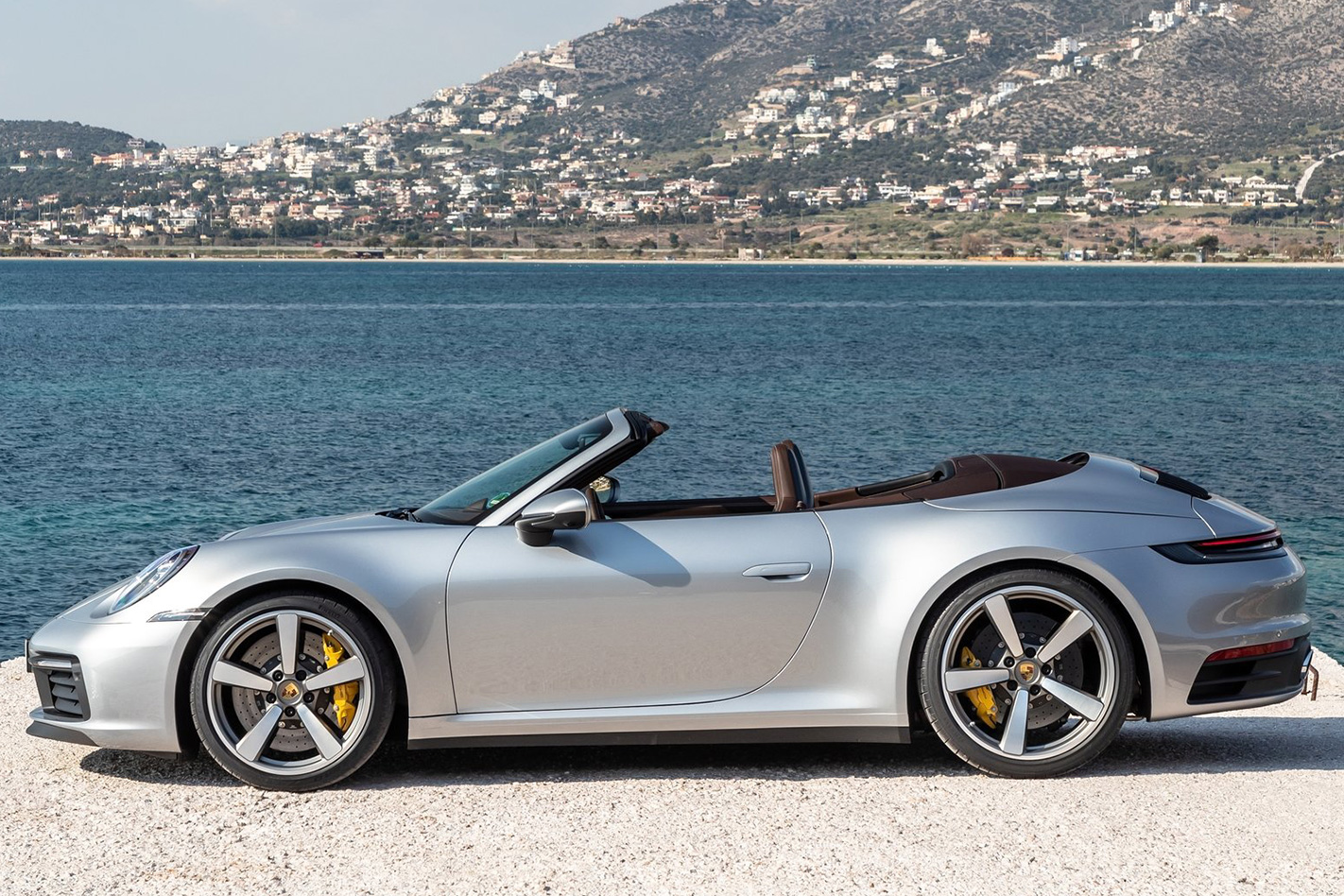
I’ll admit to being one of those bores who’d err towards the coupe, but ignore me at the party – it’s the Carrera S Cabriolet that’s arguably the more versatile 911.
SPECS
Model: Porsche 911 Carrera S Cabriolet Engine: 2981cc flat-six bi-turbo, dohc, 24v Max power: 331kW @ 6500rpm Max torque: 530Nm @ 2300-5000rpm Transmission: 8-speed dual-clutch auto, rear-wheel drive Weight: 1585kg 0-100km/h: 3.9 sec Economy: 9.1L/100km (combined) Price: $310,663 On sale: Now
There is rarely any middle ground when it comes to the opinion of car branded gear. It either lands on either end of the spectrum of being a proper homage or a cheap gimmick.
These cool car-inspired stuff on the other hand ticks all the right boxes, which lands it on the desirable end of the scale.
1 – FEATURED “PRODUCT OF THE MONTH”: Williams F1 watch ($6250 from oris.ch) Celebrating the Williams team’s time in F1, the FW41 watch is a limited edition chronograph. With only 410 made, all have 44mm cases made with carbon fibre and are powered by an automatic movement.

2 – Cold air intake ($901 from knfilters.com) Feed your Mustang GT’s 5.0-litre Coyote V8 some fresh air with this K&N Cold Air Intake. Designed to add power, sharpen throttle response and offer an install time of less than an hour and a half.

3 – Pagani shoes ($1198 from piloti.com) Developed in collaboration with Pagani, these high style driving boots are made in Italy, finished in leather and, of course, use flexible ‘soft’ carbon-fibre inserts. Limited to 250 pairs, available in sizes US7-13.

4 – Holden versus Ford ($50 from hardiegrantbooks.com) Relive Holden and Ford’s six-decade-long feud in this 294-page tome, authored by MOTOR’s own David Morley with fantastic accompanying images.

5 – Autodromo hat ($50 from autodromo.com) Autodromo’s flat brim is for fans of the watch brand. ‘Officine Autodromo’ is rope stitched on to the acrylic/wool blend face and it uses a snap back strap. Comes in one size.

Five fingers. Fist. Five fingers. Fist.
It seemed pretty clear to me, an improv hand-signal for the VW Caddy driver coming towards me, that he had his hazard lights on. It was the best I could come up with on short notice, and I maintain that it’s a pretty good imitation of a blinking blinker.
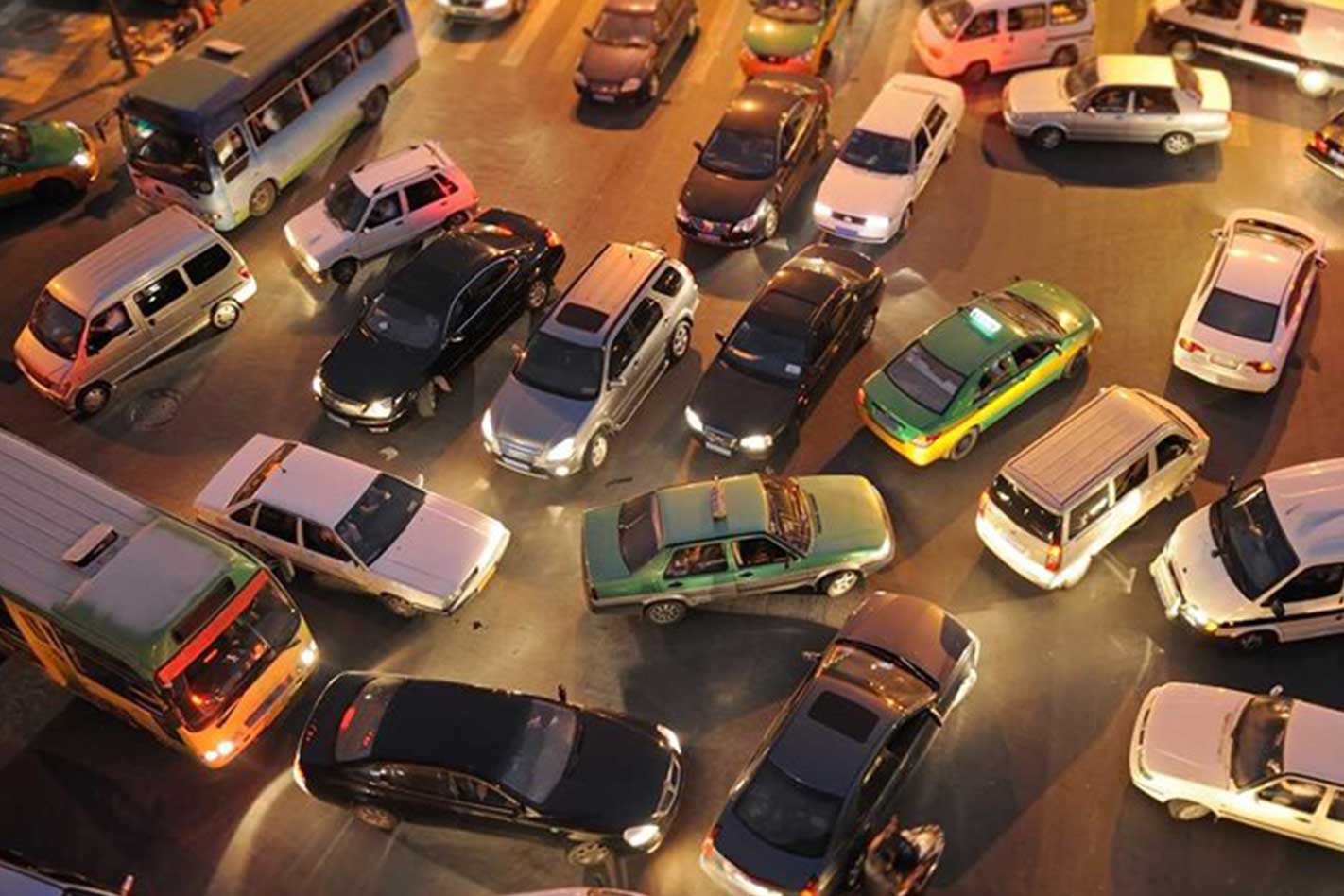
Although I suppose it could have looked like I was threatening to punch the guy five times, or just that I was flamboyantly listening to show tunes. (Jazz hand! And again!). Certainly the bloke gave me a peculiar look as he drove past. Not a jazz fan, probably.
There’s a surprisingly small number of widely accepted hand signals while driving. There’s the arm out the window for turning right, or the upright arm for stopping, but who uses those anymore? Anyone driving around in a heap without working brake lights is probably using their spare hand to hold a Winnie Blue and a can in a paper bag anyway.
Offhand (as it were) I can only think of two hand signals still in common use: the thank you wave (which is cruelly underused), and a less friendly single-digit one (which is usually used in conjunction with verbal communication anyway).
There’s a couple of car signals most people would recognise. Flashing your highbeams says “there’s a cop ahead”, and using your blinkers before you turn says “I’m not from Sydney”. Most car-to-car communication is done via the horn, which is not an instrument of subtlety – pretty much just a long honk for “You’re a dickhead”, and a short toot for “You’re a dickhead, but I can see you’re bigger than me.”
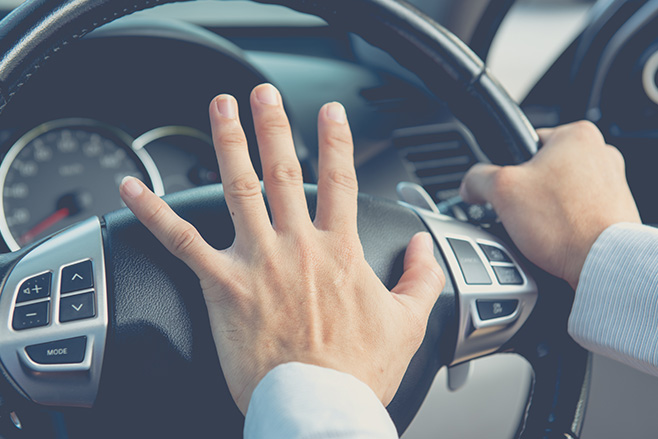
For a system that relies so heavily on cooperation between strangers, it’s sort of amazing that there’s not more signing in the driving ecosystem. A car sign language. Maybe it’s time we introduced one.
A few I’ve used in the past, to varying degrees of success are: a vertical rolling-hand motion for “Go, for God’s sake.” This is sometimes used in conjunction with a horizontal rolling-hand motion, meaning “It’s a roundabout, how come you don’t know how to use a roundabout”, followed by cradling-the-face-in-the-hand for “How do you even have a licence if you can’t use a roundabout, what is the world coming to, Jesus give me strength.”
On suburban streets, thickly layered with parked cars on both sides, a disappointed and long-suffering shake of the head tells the oncoming Volvo XC90 driver, “Just because you’re not confident keeping that thing on your side of the road doesn’t mean you get the whole road.”
And, closely related, a loose fist, gently oscillated up and down at the wrist, says “Just because you’re in a Mercedes doesn’t mean you get the whole road by default.”
On a road without a passing lane, you may need a quick blast of the horn to get the attention of the driver in front; then, an index finger, pointed urgently and repeatedly at one of their rear tyres, means “God you’re slow and I had to find some way to get you to pull over so I could escape your sad stinkcloud of mediocrity.”
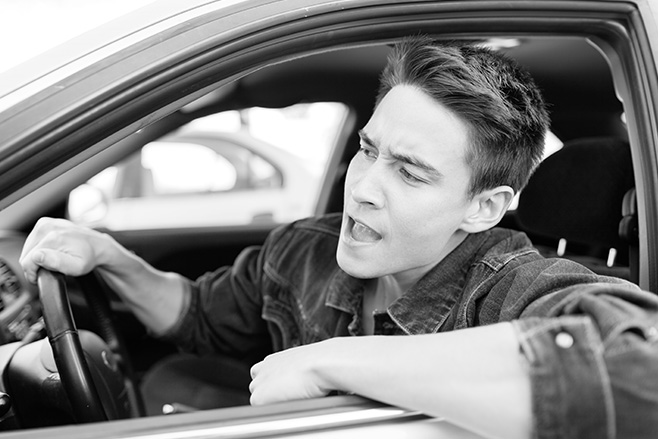
An open palm applied sharply to the forehead means, “How many times are you going to try this reverse park before you acknowledge the space is smaller than your car?”. Or, depending on context, it might mean, “Why did you put a spoiler like that on a Pulsar?”
Not all signs need to be seen to be understood. One sign you’ve probably used yourself involves a horizontal, waist-high dogleg motion with your left hand, and a left-then-right shimmy with your right hand, coupled with sharply pointing your right toe, and says clearly to all: “So long, losers, the overtaking lane is here at last.”
Okay, maybe most of my car sign language is a little passive-aggressive. (I’m-sorry wave.) Get in touch and let us know what car sign language the modern world needs instead. (Thank you wave!)
Oh, and the hazard light guy? I saw in my rear-view mirror that he turned his flashers off. Maybe it was just coincidence, but I like to think it was so he could hear over the clicking what show tunes I was listening to. Mission accomplished.
I’ll begin with the good news. It no longer looks like the end of the Elephant Man’s nose. While there’s no rule that dictates a racing car has to be beautiful (Nissan GT-R LM, or Tyrrell six-wheeler anyone?), there is an expectation that it will at least be striking. Sadly, Ford’s heavily hyped Mustang Supercar missed on both counts. Awkward, hump-backed and with a bulging glasshouse that protruded from bodywork that was too narrow and too tall, the first prototype looked like an unfortunate mash-up of a Mustang and the old FG X Falcon. Which, of course, is exactly what it was.
The fixed hard points dictated by Supercars’ control chassis meant that any hopes of retaining the production Mustang’s muscular stance, swooping roofline, and narrow glasshouse were doomed from the outset.
Mercifully, progress has been made and the Shell liveried DJR Penske Mustang that features on p86 appears to be a visual improvement. Bruce Newton’s exclusive deep dive into the Mustang’s compressed development is a cracker, yet even as we gear up for the start of a new racing season (our Formula 1 preview is on p18), neither Supercars nor F1 can lay claim to the biggest story in motorsport right now.
That honour goes to the Bathurst 12 Hour. From humble beginnings less than a decade ago (in its current guise), the 12 Hour is now jostling for the title of this country’s best motor race. And yes, that includes the one held in October every year.
Bursting with exotic and genuinely desirable cars, the 12 Hour doesn’t only attract the world’s best GT drivers and lucrative factory support from the likes of Porsche, Bentley, AMG and Audi, it deftly sidesteps the issues plaguing much of the motorsport world: namely a lack of relevance, uncompetitive racing and a shortage of overtaking.
In fact, depending on who you ask, you’d be forgiven for thinking traditional motorsport is facing something of a crisis. Compounding the aforementioned issues are a perceived increase in fan disillusionment and the radical rise of ‘disruptor’ categories like Formula E and Roborace, the latter being a category that hopes to ditch the driver all together.
Formula 1 isn’t helping matters. Tune into a telecast and much of the preamble is dedicated to worried-looking policy makers grappling with the seemingly unsolvable problems of soaring costs and dull racing. It only fuels the subtext that the pinnacle of motorsport is broken.
The problems extend closer to home too. Despite last year’s addition of the ZB Commodore, and this year’s arrival of the Mustang (which also brings solid support from Ford Motorsport), Australia’s top-flight category still has a relevance problem.
You can’t say the same of the 12 Hour. From BMWs to Bentleys, it’s the spread of widely different cars, and wildly different levels of performance, that make the racing so intriguing. Case in point was the final hour of this year’s race which was an all-out brawl between five different manufacturers with varying cylinder counts and powertrain layouts, and all piloted by five of the most exciting drivers in global motorsport right now. All up, the 12 Hour recorded 30 different lead changes. You’d be lucky to get that in a season of Formula 1.
And then there’s the spectacle itself. Standing at the edge of the circuit as 40 sets of headlights scythe through the pre-dawn gloom at the race start is an event that trumps anything the Bathurst 1000 can muster.
Have I mentioned the drivers? Such was the brutality and intensity of the race that even seasoned pros like Supercars champion Shane van Gisbergen couldn’t stand at the chequered flag; instead he lay slumped, broken, on the bitumen.
It delivered a timely reminder of what makes motorsport so special, which, if you boil it down, is remarkably simple. It’s about watching extraordinary people doing astonishing things in remarkable cars. Here’s hoping that other categories were paying attention.
THERE’S a lot to be said for rightsizing. The E46 generation of BMW’s M3, built between 2000 and 2006, is a case in point. It looks as good now as it did when it was unveiled at the 1999 Frankfurt Show, the hanky being whipped off a car that was all fast-twitch muscle, swollen wheelarches and shrink-wrapped overhangs.
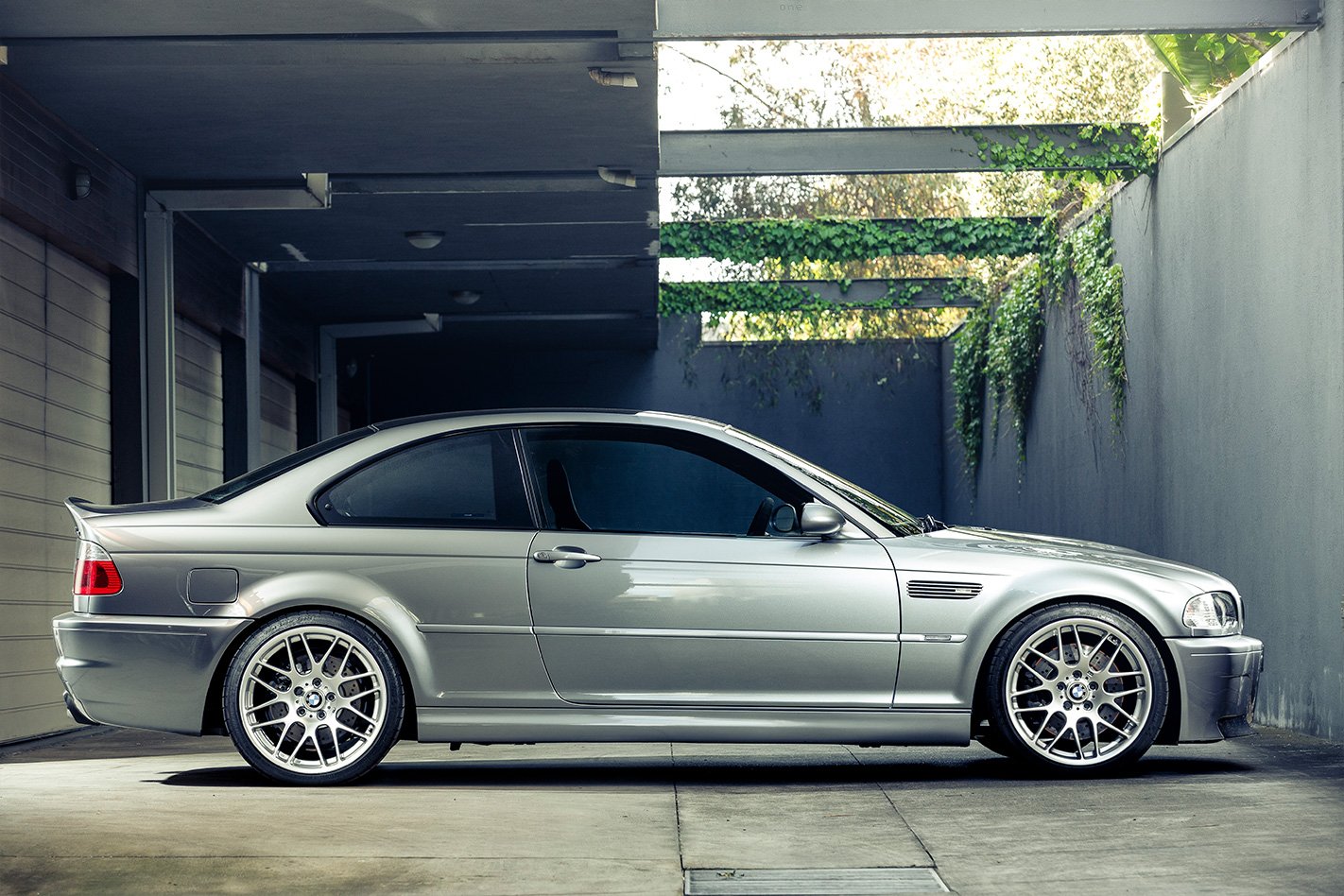
By contrast, the cars that bookended it, the E36 (1992-1999) and the E92 (2007-2013) look nothing like as tautly drawn. The E46 combined the aggression of the original E30 with the six-cylinder charisma of the E36 in the most perfectly proportioned package. Small wonder that the ultimate roadgoing incarnation of the E46 M3, the CSL pictured here, is possibly the most sought-after M3 in the b’s storied history. Only 1383 were ever made, with just 544 sold in right-hand-drive guise and a mere 23 officially made it to these shores.
The CSL was developed to meet a very specific objective. It had to get round the Nurburgring in eight minutes. Nowadays that’s within the aegis of most senior hot hatches but in 2004 this was junior supercar pace. To achieve this, head of body Hans-Bruno Starke and chassis development engineer Peter Schmidt had four key areas to work on: weight, aerodynamics, suspension and tyres. Power was a secondary concern, although changes to the engine management, cams, headers, intakes, valves and exhaust handily lifted peak power from the regulation M3’s 252 to a healthy 265kW.
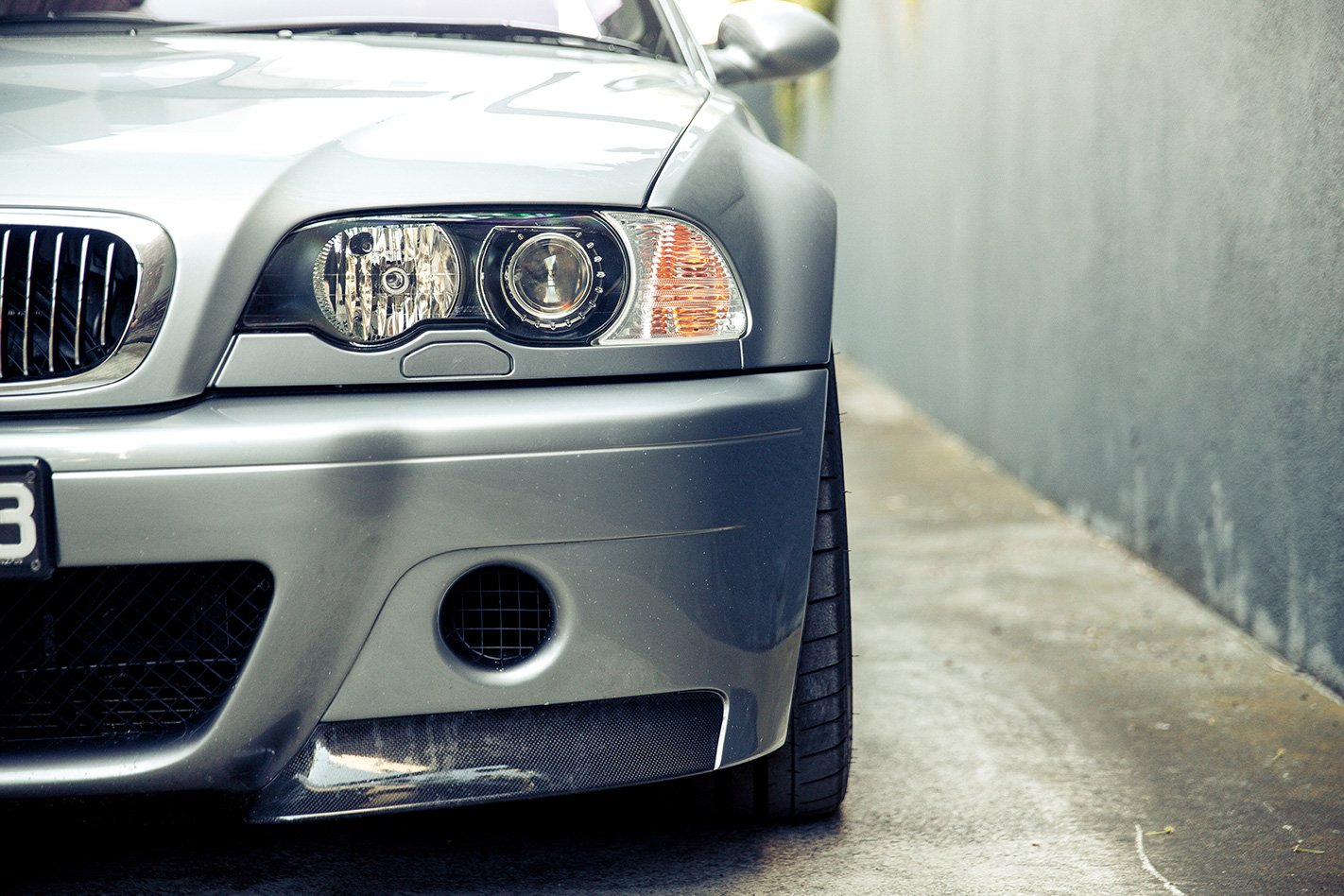
The virtuous circle afforded by weight reduction was the goal. This was the first M car to pioneer the carbonfibre roof, saving 7kg and lowering the centre gravity. Around 50kg came out of the interior, with lightweight seats, centre console, glass and door panels. A couple of kilos came off each wheel, with aluminium lower control arms further reducing unsprung weight. The carbonfibre front bumper shell is a pure racing part, helping to subtly shift weight distribution rearwards. Final distribution was 51:49 front to rear, still not quite Munich’s much-vaunted 50:50.
Based on a hoary old Clarksonism, many believe that the boot floor of the CSL is made of cardboard and can’t hold any weight. Not so. The underside of the boot is metal, the same as any M3 but it does have a lightweight cardboard boot liner. It’s CSL-specific BMW part number 51477895990; removable honeycomb-paper composite panel.
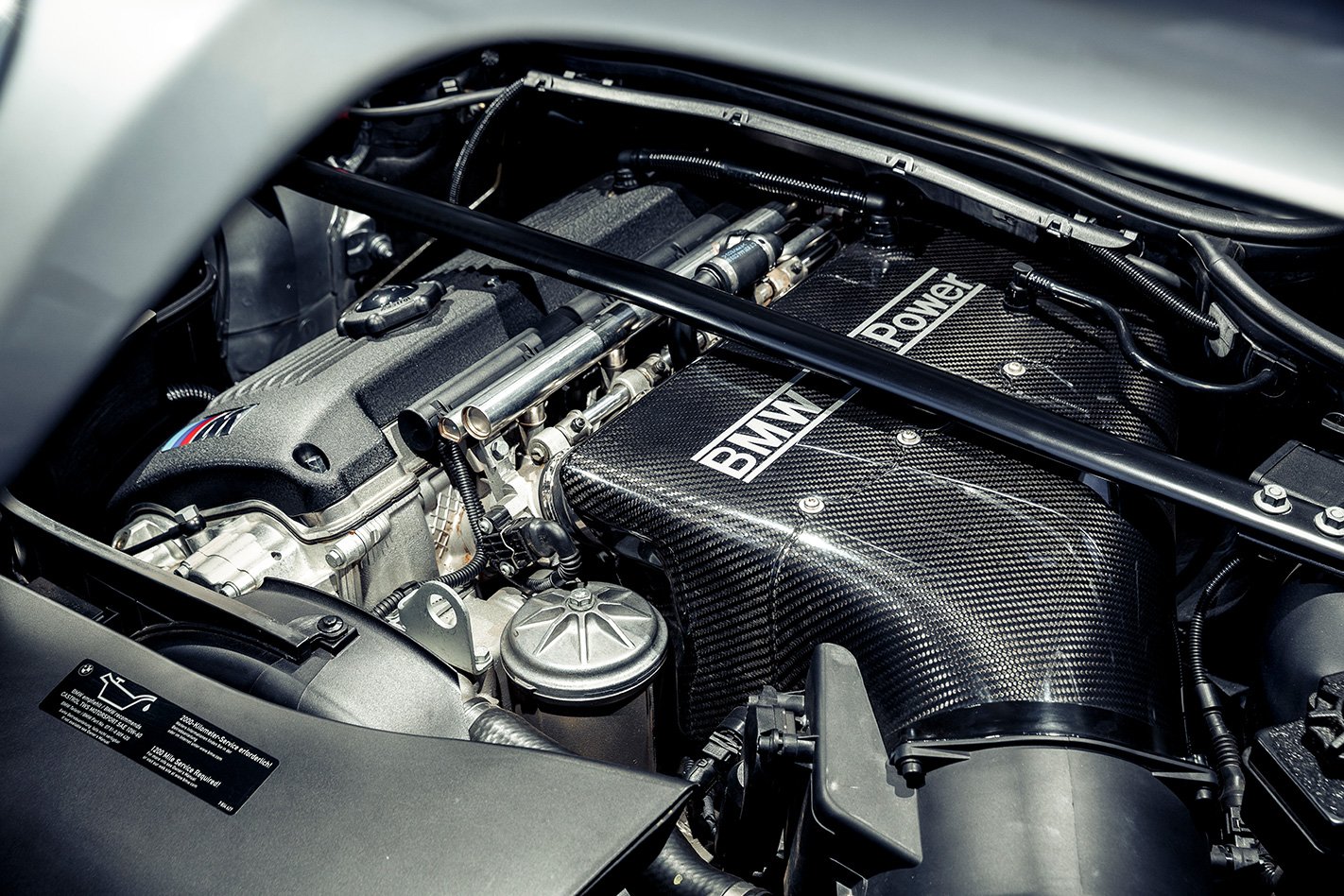
A plastic composite bootlid with built-in spoiler was developed as much for aerodynamic benefit as weight saving, but a huge gain came from the gumball semi-slick Michelin Pilot Sport Cup tyres. Later Cup+ tyres offered a little more wet weather versatility. The CSL rides 10mm lower than a stock E46 M3 and the suspension has been seriously gym-toned. Springs, dampers, anti-roll bars, bump stops, king pins; all were upspecced. A quicker steering rack and bigger front brake discs were also fitted. Somewhat controversially for the time, the CSL foresaw a trend: no clutch pedal for the flagship sports model. It took Porsche more than a decade to catch on to that particular trick. The SMG II ’box (in effect a robotised manual) seems a little quaint now, but it’s still a riot to crack up through the ratios.
Even if you can’t run to the $150,000 demanded of the vanishingly rare CSL, there are plenty of standard M3s from around the $25,000 mark, but you’ll need $35,000 before you start finding well looked-after manual coupes. Cabriolets sold well here in Australia, although keen drivers rightly prefer the considerably stiffer body and lighter weight of the coupe. The manual is a less troublesome partner than the SMG II transmission, which is a league on from the mechanical omnishambles that was the E36’s SMG I, but worn bushes in the diff back plate is an issue that is common to both, manifesting in clunky drive take-up.
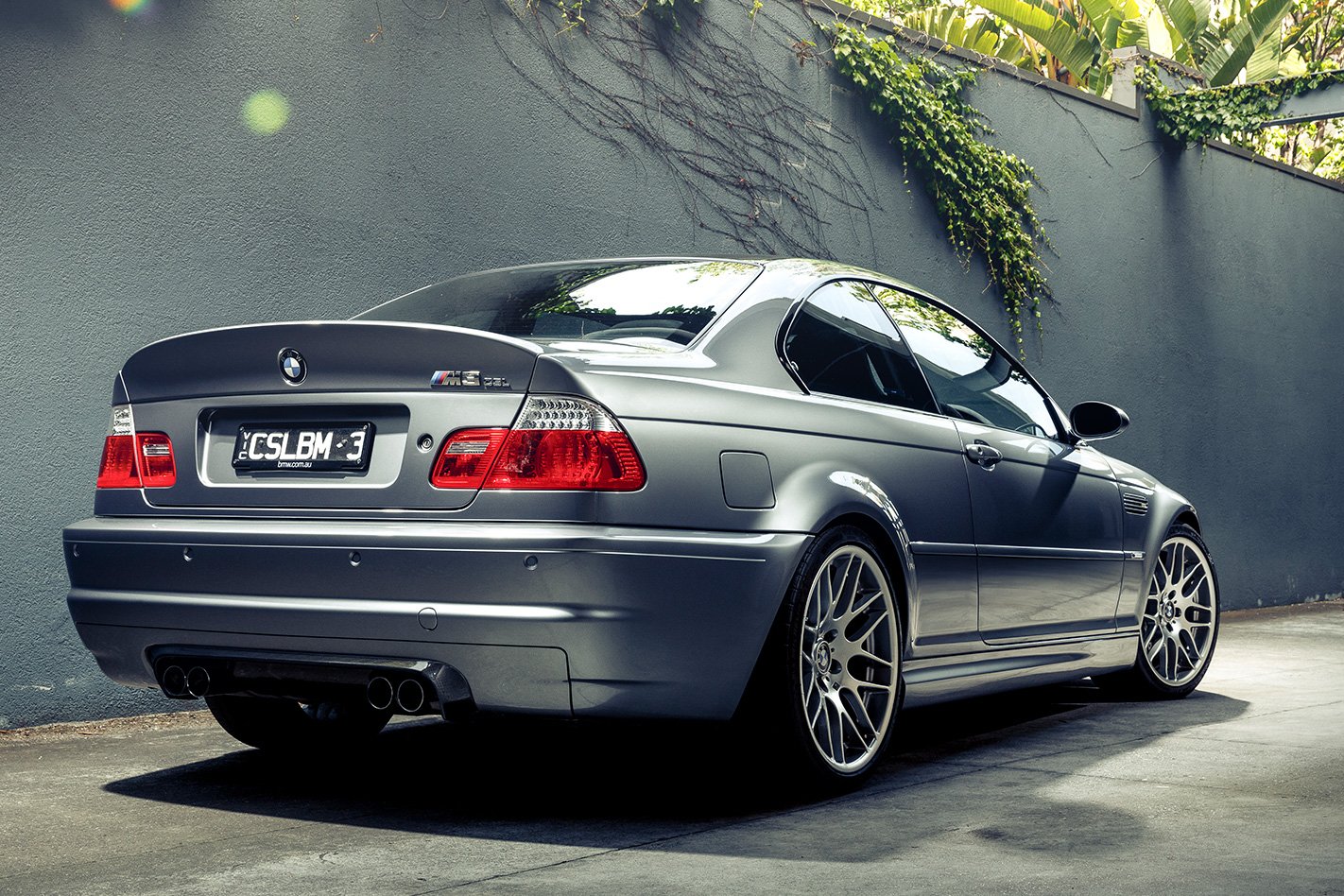
The most significant body issue to look for is cracking where the rear subframe meets the body. This will happen to all E46 M3s in time, and the BMW-sanctioned repair route was to replace the failed metal and inject strengthening foam. These days most independents will remove the rear subframe and weld in reinforcing plates. Listen for clicks from the rear end of the car when accelerating or braking. If the car you’re looking at sits higher on one side than another, it’s likely a broken spring.
The big-ticket issue to check for is a failed VANOS unit. This controls the variable valve timing and a failing unit sounds like a marble in a tin can upon start up. Another thing you will need to budget for is replacement of the retaining bolts for the cam gears. These can come loose over time and if the previous keeper doesn’t know if this work has been done, it’s a sensible thing to pencil in come service time.
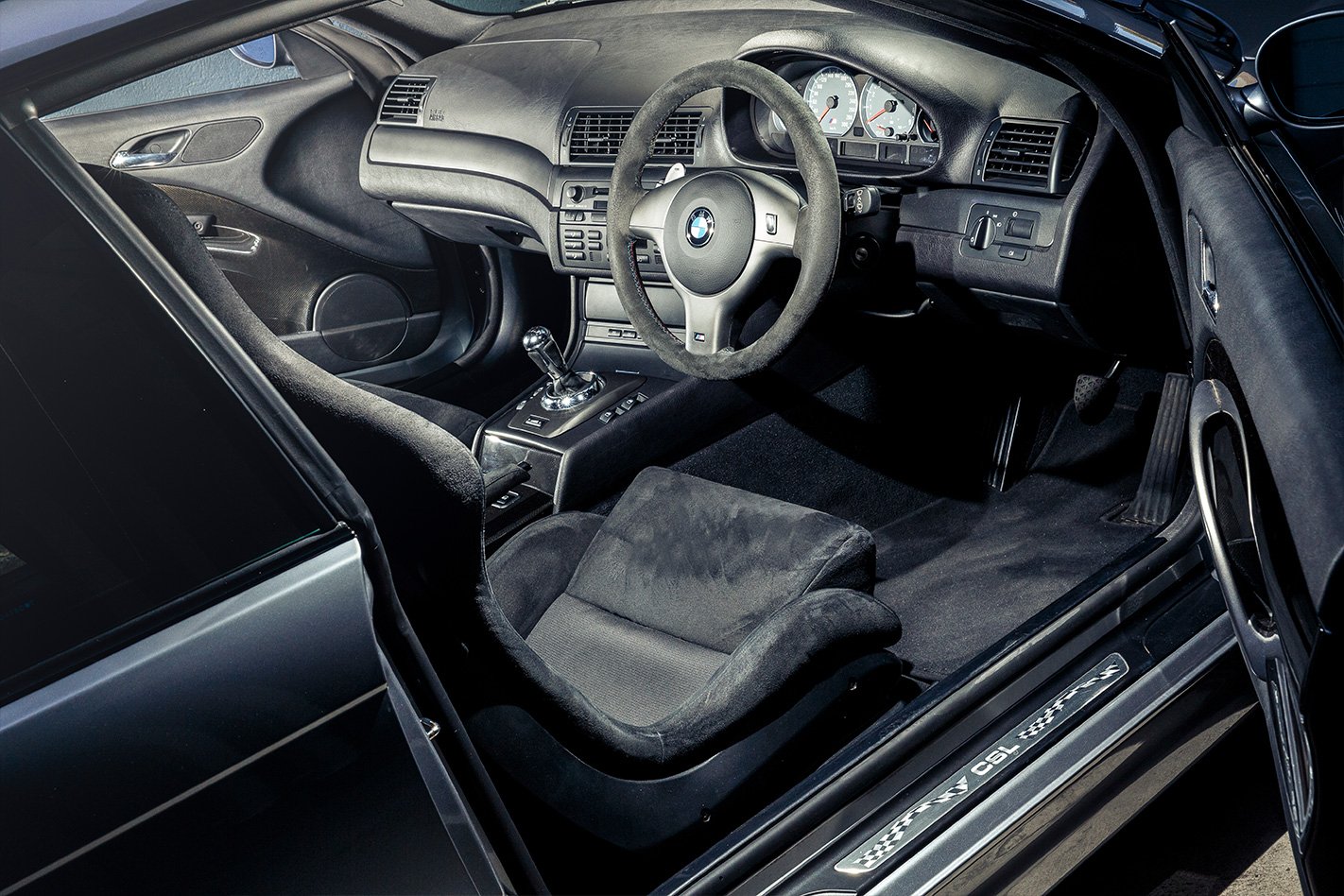
Pre-June ’03 engines were prone to crankshaft big-end bearing failure, but these problems will have been sorted by now. Alarms and the tyre-pressure monitoring system have also been known to throw up some rather odd intermittent glitches that can be tricky to diagnose.
The final M3 to feature an atmo six, the E46 still stands up well as a driver’s car. Obviously the SMG II dates it, as does the fairly rudimentary DSC stability control system but it could be specified with satellite navigation and xenon headlights, so it represents an intriguing transition between the sort of quaint classic you’d treat with kid gloves and the convenience and solidity of a modern. In terms of handling prowess, however, the E46 is probably the lairiest M car of the lot. It’s almost as if it’s been built with the sole intent of cremating tyres. Switch out the DSC and the variable-rate diff lock is your friend, encouraging power oversteer at every opportunity. That’s helped by what might be the best steering of any M3, the hydraulic system delivering the sort of communication that betters even the modern F80’s helm.
The brakes date the E46 somewhat, being relatively feeble twin-pot calipers up front, and if you’re planning on track days, AP Racing units are a popular upgrade. An M3 CS model (option S7MAA) was available in the UK and sold as the Competition Package (ZCP) in the US, which offered firmer suspension, bigger brakes and lookalike CSL wheels, but which was also offered with a manual transmission. For adherents of three pedals it’s the pick of the E46 M3 fold.
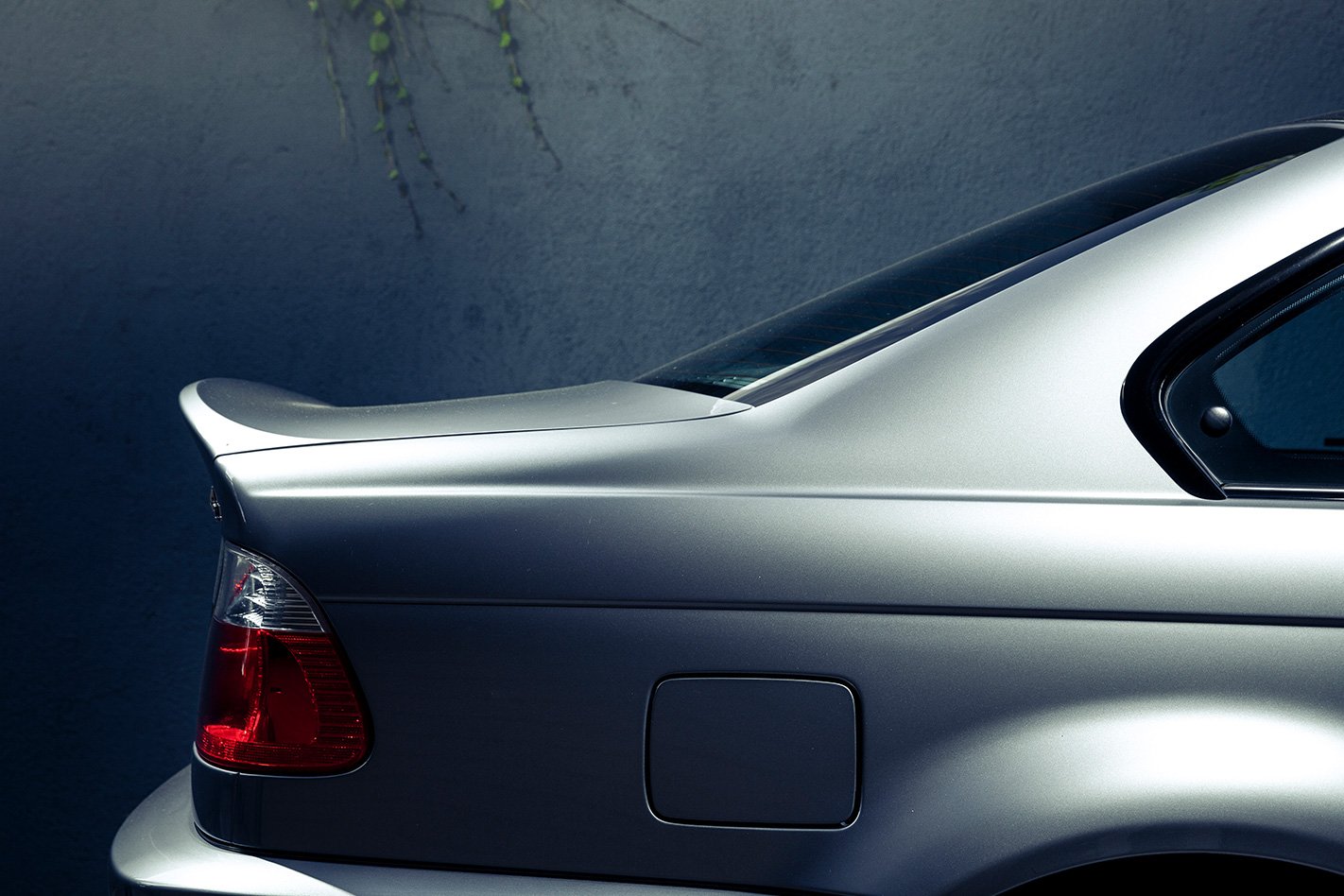
The 3246cc S54B32 straight six is old-fashioned in a good way. Yes, the peak torque figure of 365Nm arrives at a fairly heady 4900rpm, but 80 percent of that figure is yours at a mere 2000rpm. The fact that it makes peak power just 100rpm shy of its 8000rpm redline means you drive the E46 M3 like you’d drive a Porsche 911 GT3, wringing out every gearchange just for a six-pot soundtrack that sounds as if it’s trying to tear itself asunder. It’s the polar opposite to most modern turbo engines that lack inspiration in the upper registers. This engine, with its individual throttle bodies, will all but guarantee the E46 M3’s future collectability.
When Wheels threw the M3 into a comparo with the Mercedes-Benz C32 AMG back in January 2002, there was only ever going to be one winner. “Only when the going gets hairy in the bends does the C32 bow to pressure and acknowledge that its handling isn’t developed to the nth degree,” wrote Mike McCarthy. “No such admission can be wrung from the lower, lighter M3. Its highly disciplined suspension is to handling what its drivetrain is to performance. And where it’s good into and through the apex, the M3’s simply ecstatic on exit – gripping ground and transforming raw power into sheer squirt.” Almost two decades since it was first introduced, only Weissach’s best can equal the sense of connection and fidelity you’ll get from an E46 M3 exiting a corner all crossed up.
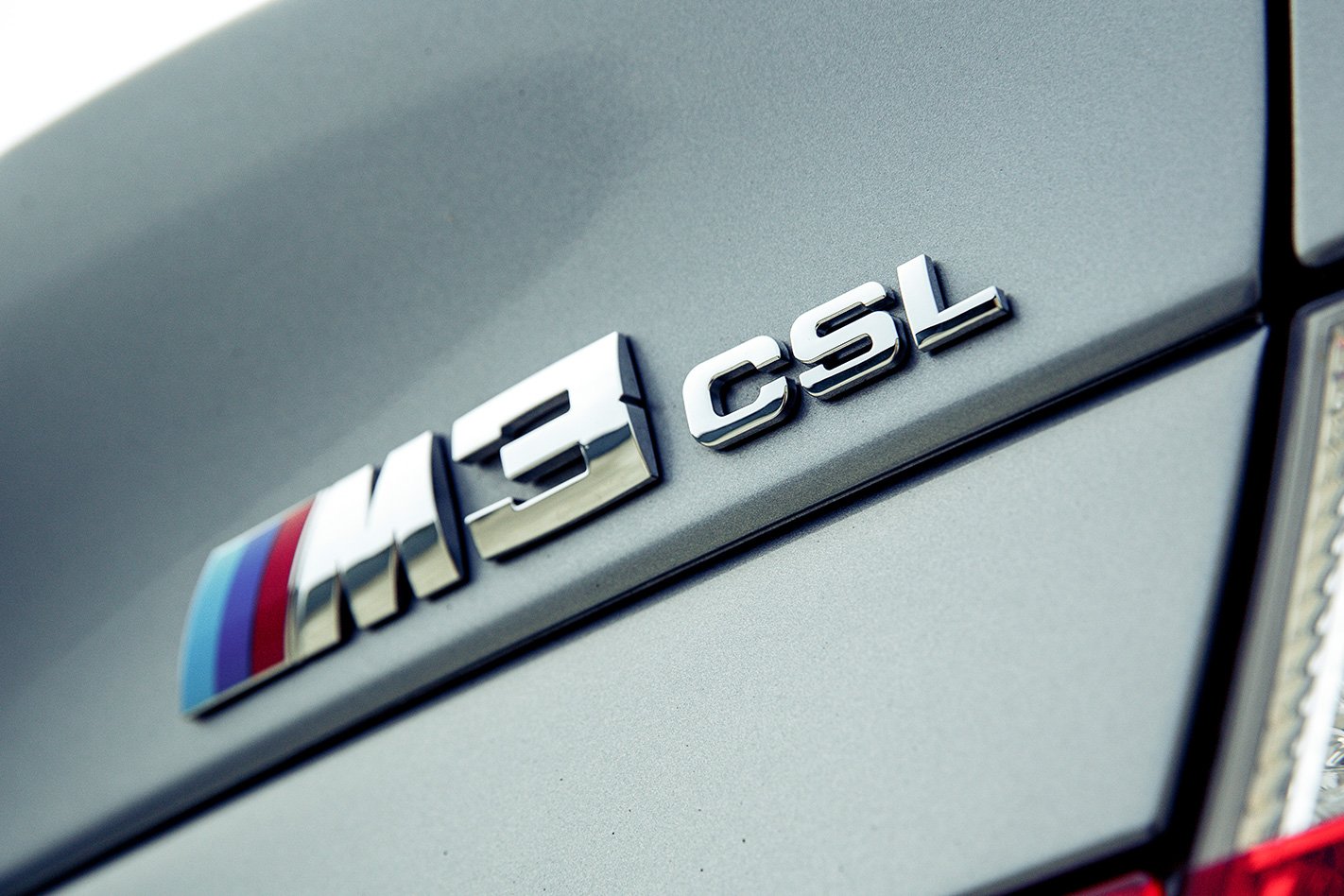
Tracking down honest cars can be a challenge, though. Prices of stock M3s have dipped to the extent that they’re affordable to many who haven’t factored in the not inconsequential cost of maintenance.
Low mileage manual coupes that have had the remedial subframe work done remain the gold standard for E46 M3 buyers, but cars that have yet to have the strengthening work performed represent a workable negotiation position. Expert inspection pays dividends when buying, but net a good one and you’ll appreciate why the M3’s junior exotic feel has endeared it so many enthusiasts. Its amalgam of aggression and accessibility is brought about by a blend of ingredients that never feel over-egged. Twenty years after we first saw it, the E46 M3 remains an object lesson in near-perfect balance.
Awww. Looks like the universe has spoiled my fun again. For a while now, I’ve been harbouring the idea of building an electric car. As in, taking something like a two-grand hatchback, tearing out the engine and stuffing what’s left of it full of electric motor and Lithium-ion batteries.
It just appeals to me as an interesting project. It’s not that I’ve gone all green or anything but I do have solar panels on the roof at 13 Struggle Street and I genuinely love the idea of (a) hitting the fast lane for free, and (b) jamming it up the people who think they can jack up the per-litre price at the start of a long weekend and not have me notice.
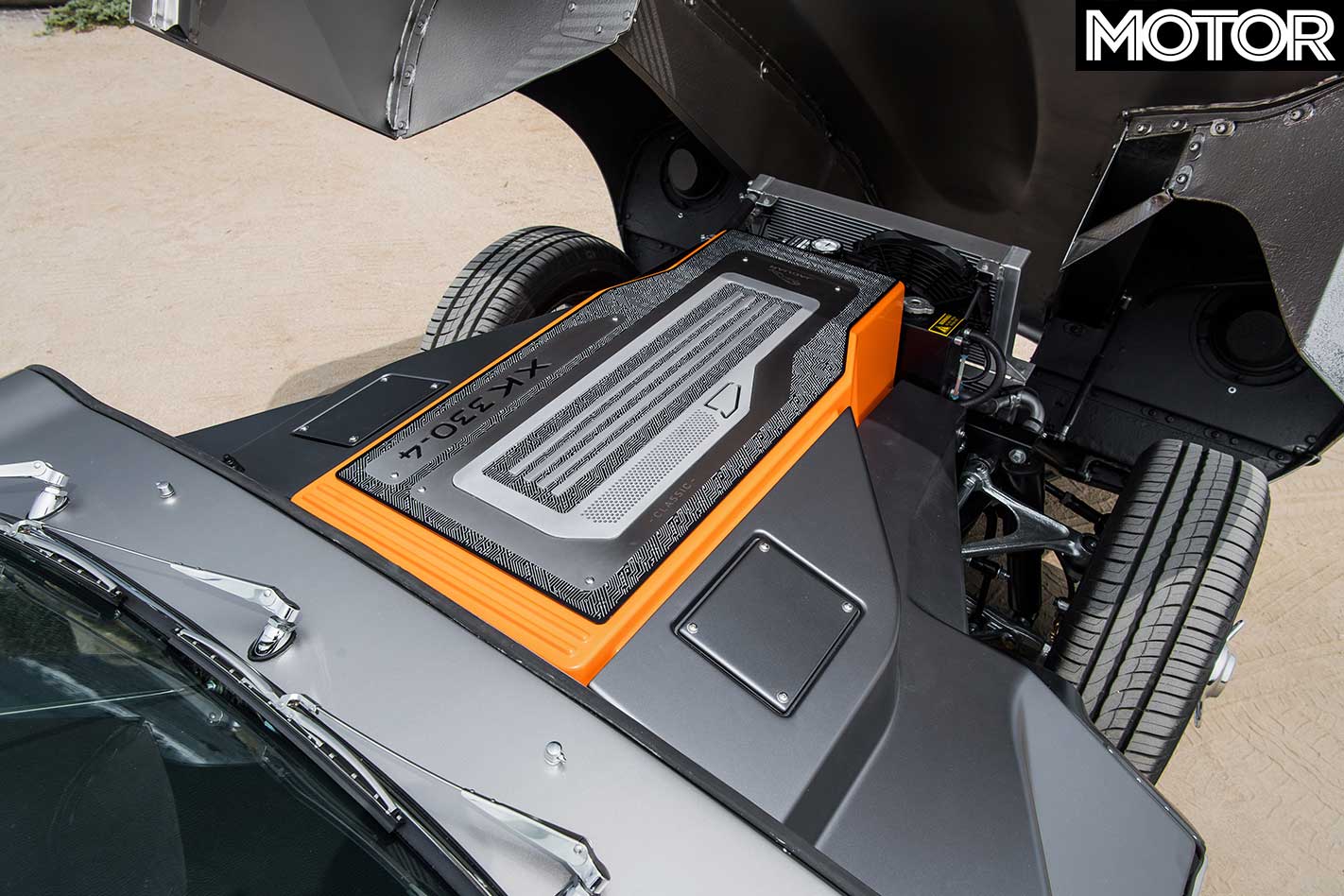
Having driven a dual-motor Tesla, I’m also kind of keen on the notion of giving the end product some serious blurt. But also, I think it’d be an interesting thing with which to be involved even if there would be the inevitable skun knuckles, thrown spanners and wicked language.
I even had the car picked out: a late ’70s RA40 Toyota Celica Liftback. Stay with me here. For a start, the Celica is a size bigger than a Hyundai Getz or Suzuki Swift (two of the cars on the radar of the home-garage EV builder). But thanks to all that ’70s tech (ie, nuthin’) the Celica with its one-size-up footprint still weighs just about a tonne which is, obviously, a big factor in any EV when it comes to ultimate acceleration and overall range.
I also happen to like these elderly Tojos, but that’s beside the point, because the relatively large, flat floor of the RA40’s luggage area would seem a natch spot to stash a bunch of batteries.
You could even remove the rear seat if necessary and then there’s still scope to build a false floor over the whole lot and have the space to fit enough soft luggage for a weekend at Comic-Con (or wherever it is EV nerds like to holiday and hang out).
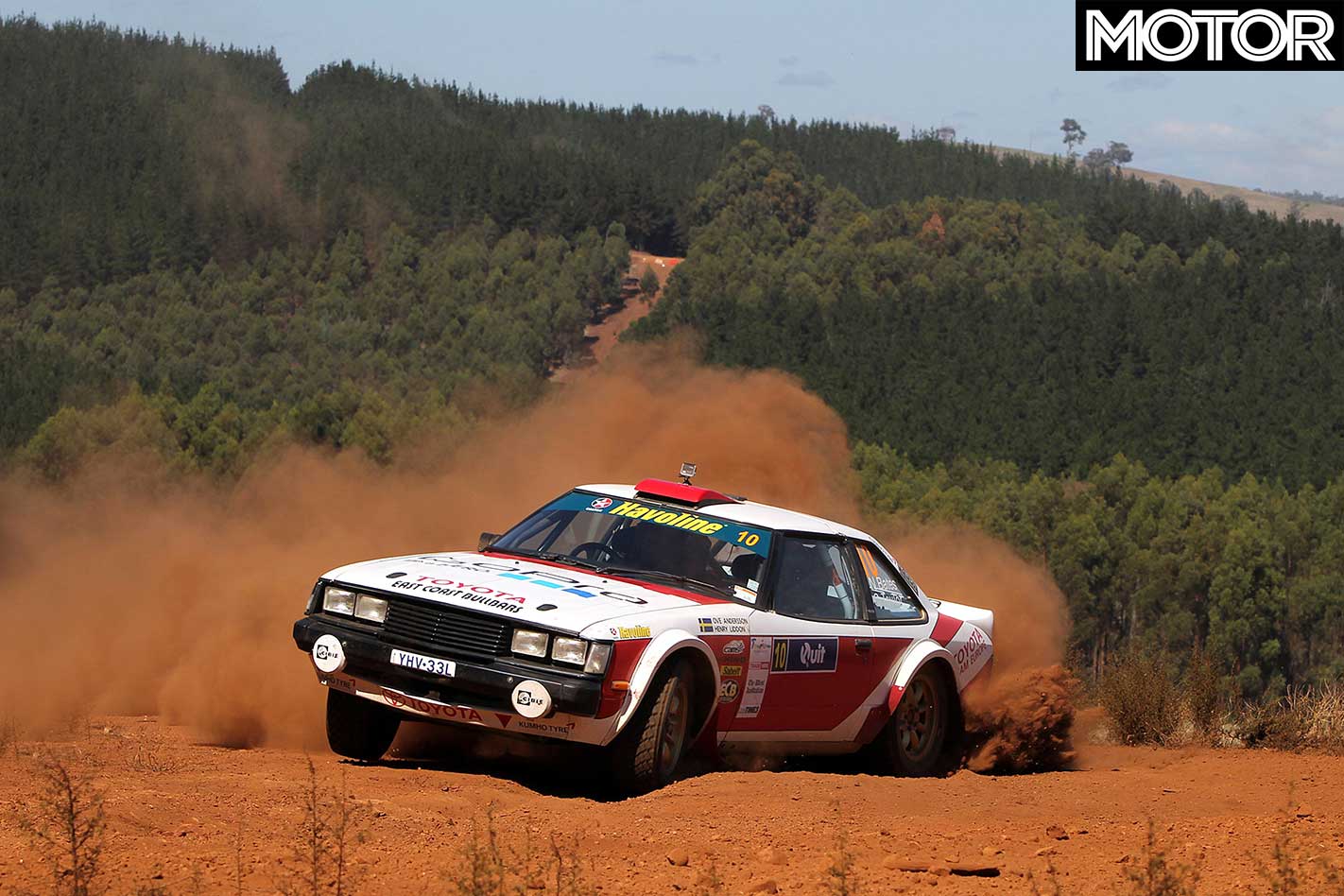
If you’ve ever seen Neal Bates hammering his RA40 historic rally car through the mulga at unlikely velocities, you’ll also appreciate that these Toyotas are tough old buggers, so the extra weight of a bank of Li-ions shouldn’t unduly tax the structure.
On top of that, the RA40 was one of the last rear-drive Celicas, so its layout is simpler than the operator’s manual for a hammer. The driveline is spaced out along the whole length of the car, meaning that finding space for all the gizmos, gadgets and the flux capacitor shouldn’t present too much of a head-scratch.
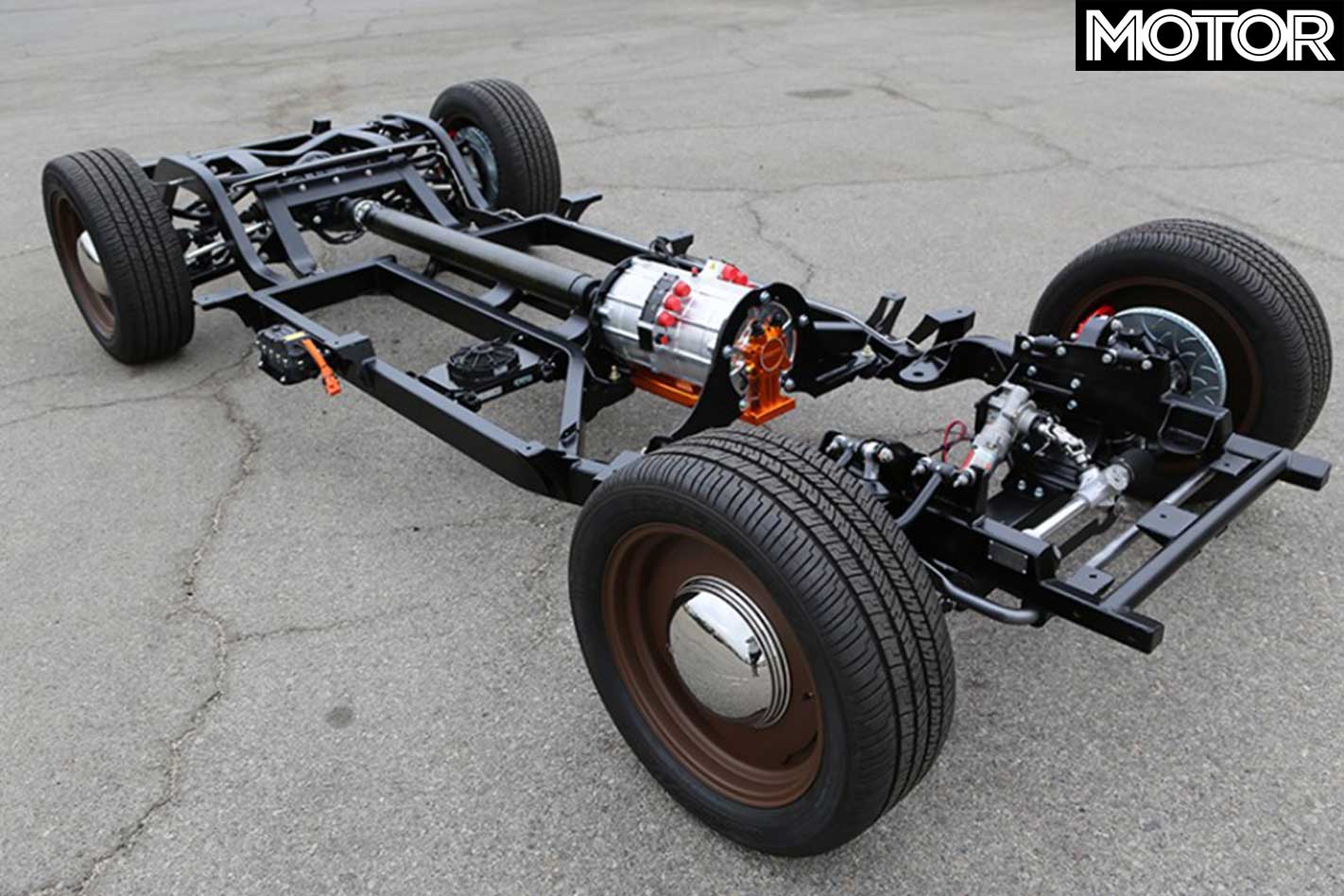
Finally, the styled-in-America (and let’s not forget who taught the Japanese to make coffee) Celica can be picked up for chump change and, if it goes wrong and blams through the back wall of the garage and into the swimming pool because you crossed the wrong wires, nobody much – apart from anybody enjoying a dip at the time – is going to care.
Apply the same attitude to an Aussie Holden Torana A9X Hatch and see how far you get before a horde of well-meaning, extensively tattooed middle-aged males descend, chain you to your welder and throw you in the same pool.
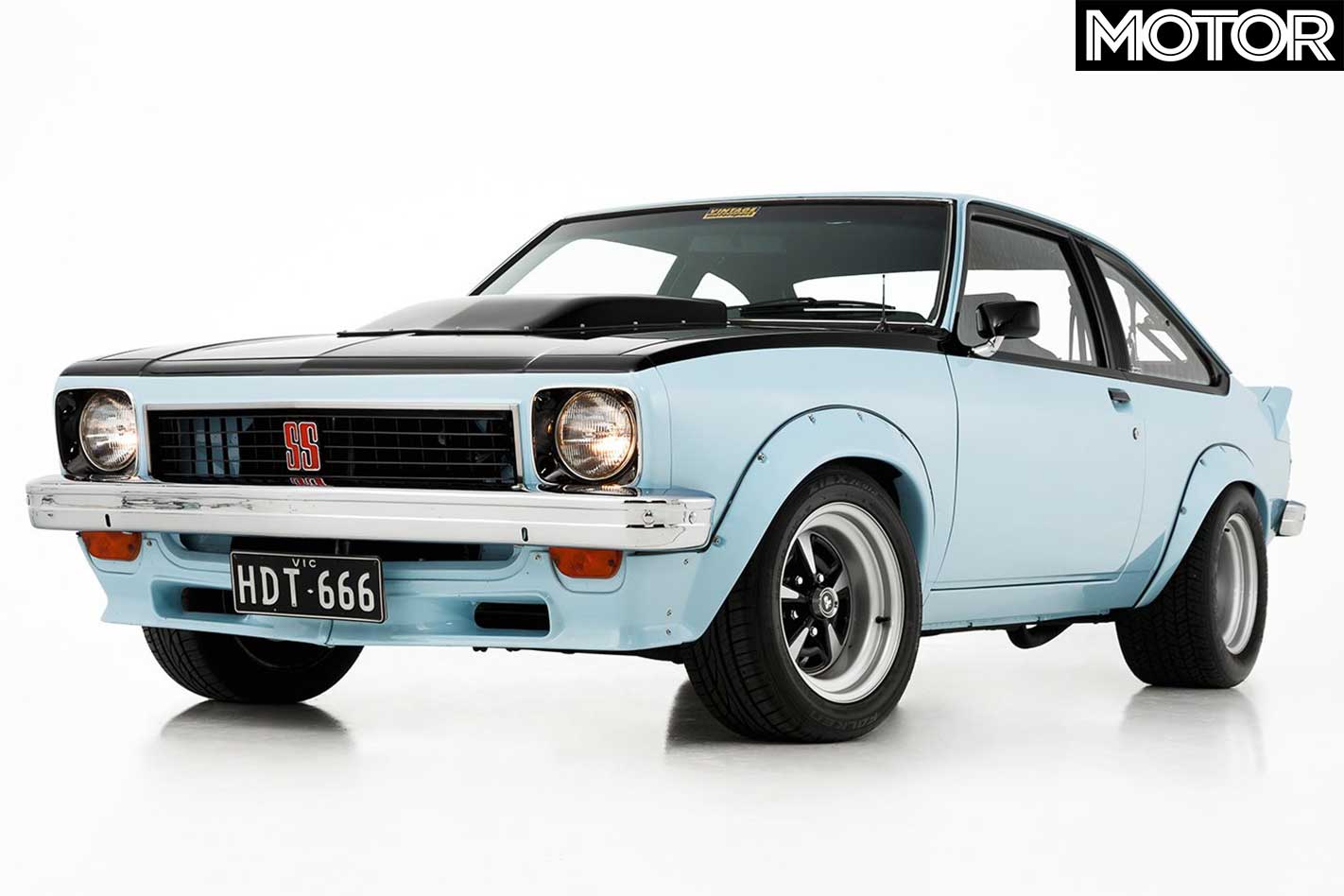
But here’s where the world has given my genius its latest concept-wedgie… the budget for this sort of messing about is not going to give me any change out of, say, $20K or $30K at an absolute minimum.
And right now – and you can check this for yourself – I can go out and buy a Nissan Leaf for less than that same 20-gorilla low-ball number. Suddenly, my one-off, can’t-buy-parts-for, insurance-company-scaring, zero-air-bags, god-knows-what-VicRoads-will-make-of-it Toyota is dead on the water. Bugger.
