
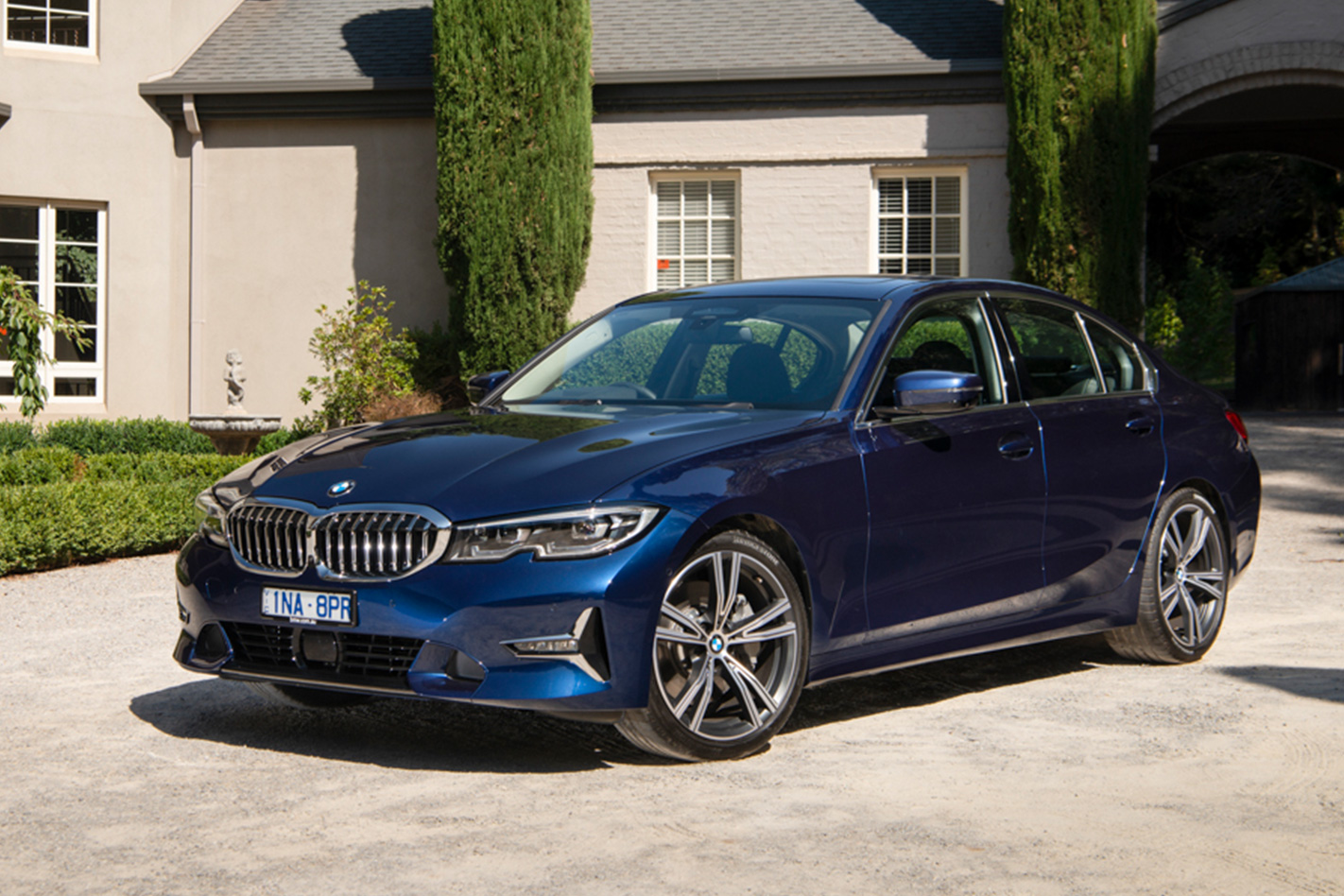
BMW’s initial two-variant 3 Series line-up, which launches this week, will blossom to five options within 12 months, as the company adds a high-performance M340i, a more affordable 320i entry point, and plug-in hybrid 330e.
With equivalent versions of the latter already featuring in the existing run-out F30 3 Series range, the big news is the confirmation of an M340i – the first of its M Performance kind to join the iconic sedan range.
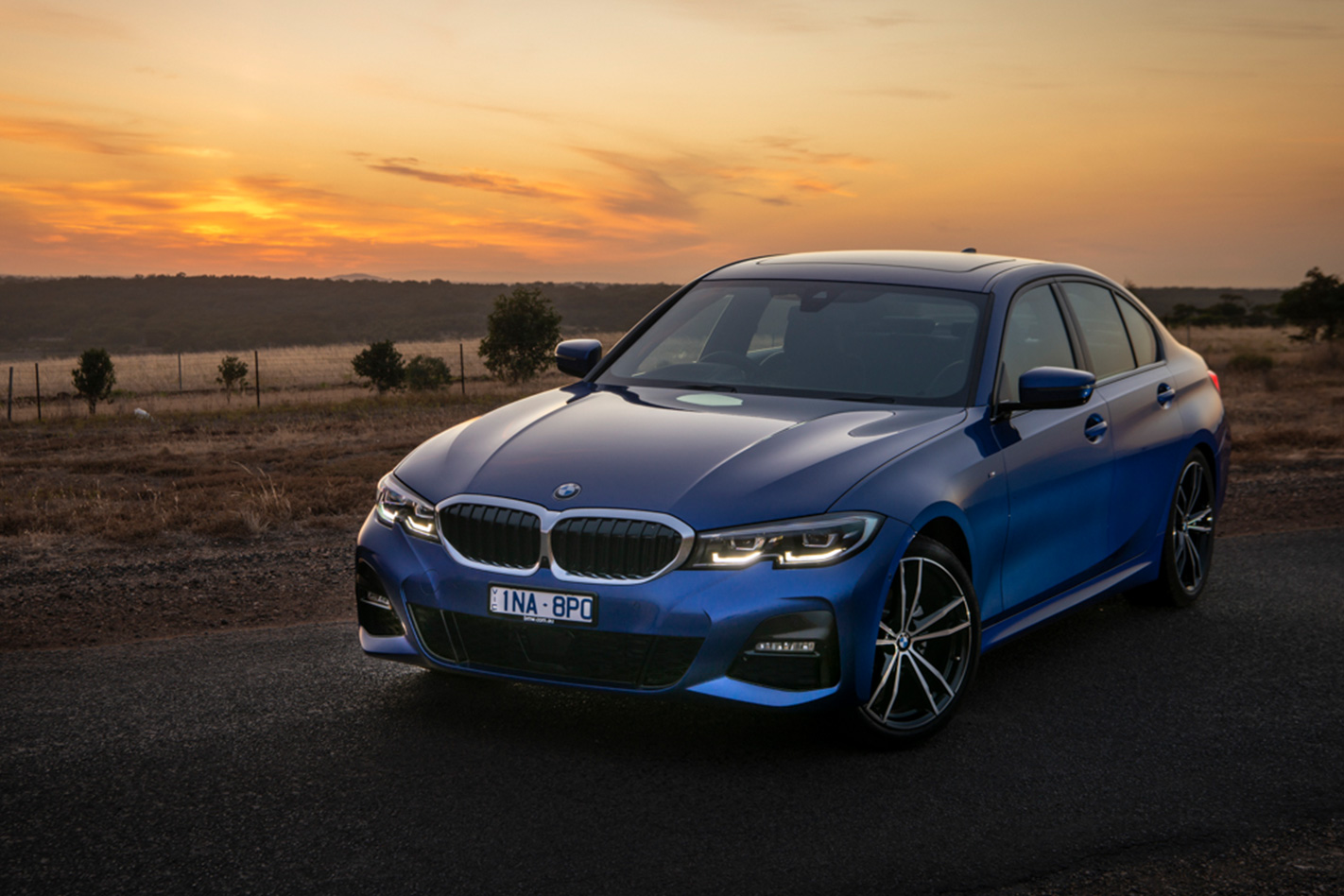
Not only that, it will pioneer the company’s proprietary all-paw xDrive for the first time in the Australian 3 Series portfolio.
Speaking at the local launch of the G20 3 Series, BMW Australia CEO Vikram Pawah confirmed the line-up that would follow the initial two-car first fleet.
“We are launching with the 320d and 330i,” he said. “Later on in the year we will also get the 330e which is the iPerformance model coming through and also for the first time we will get an M340i with xDrive in the market as well – the first xDrive 3 Series in our history.”
Exact local launch timing and pricing are yet to be confirmed in any greater detail than some point in 2019 and pricing is likely to exceed the current non-M Performance and rear-drive 340i which starts at $91,200.
What is confirmed however, is a 3.0-litre turbocharged straight six engine which produces 285kW and accelerates the M340i to 100km/h from standstill in 4.4 seconds – 45kW more powerful and eight tenths of a second faster than the current equivalent.
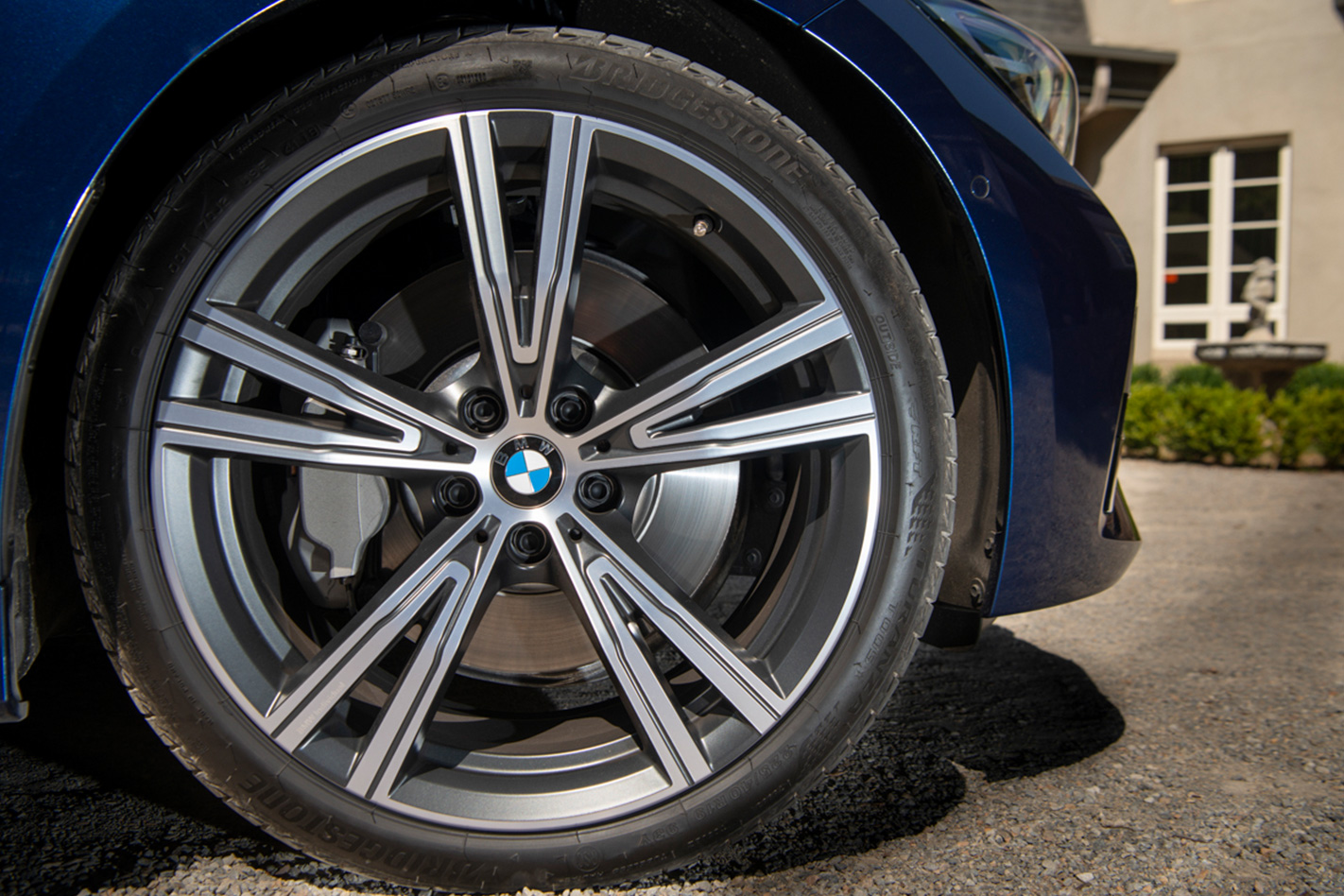
On the M340i’s standard equipment list is a locking differential, uprated brakes and 19-inch wheels from the M Sport catalogue – all options for the new 330i – while adaptive M suspension is also thrown in.

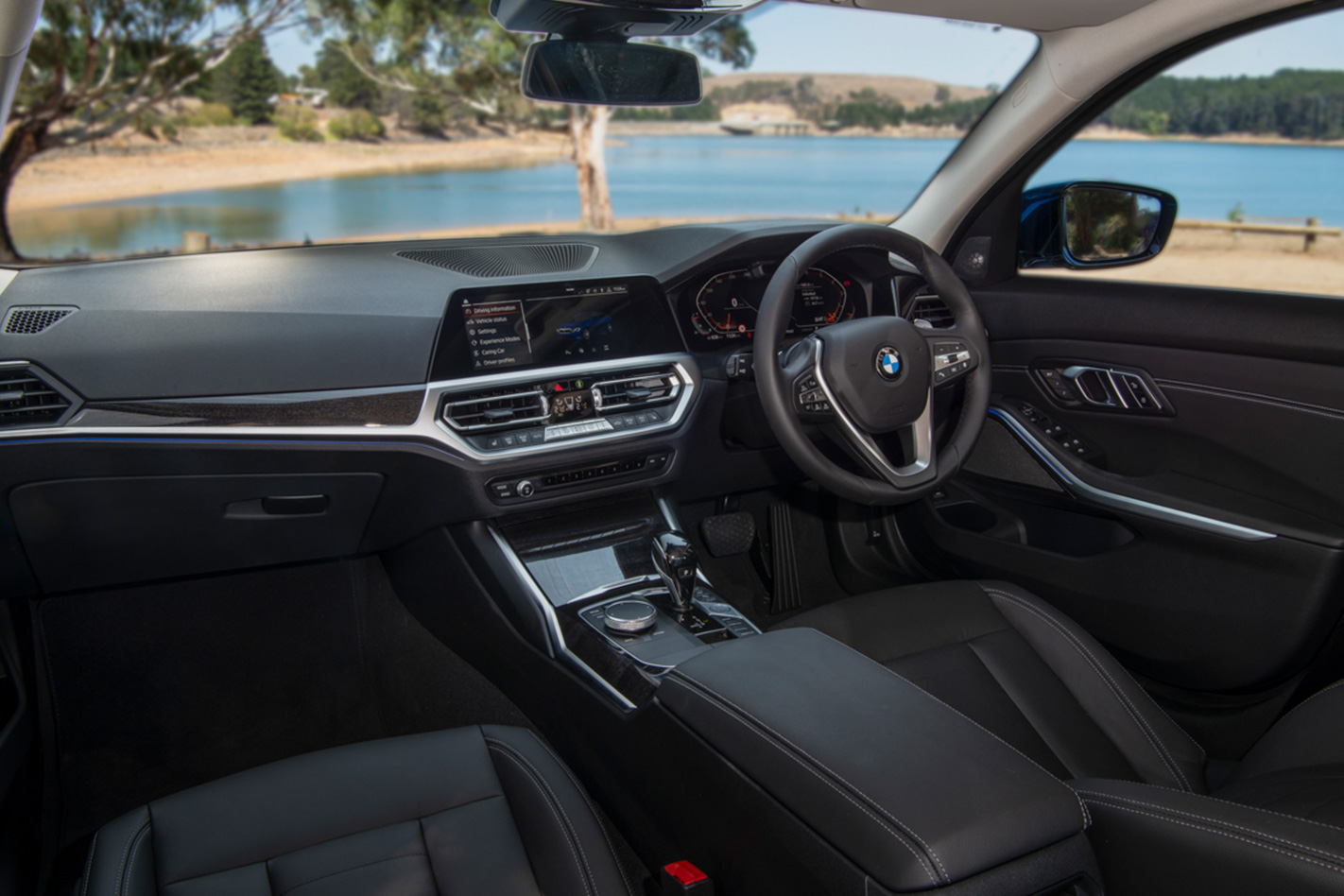
Inside, the new 3 Series flagship will get a synthetic suede dashboard, top-spec Harman Kardon sound system, BMW’s Laser Headlights and heated seats as standard.
While the 330i is predicted to be the volume seller of the 2019 3 Series range, Pawah said other less popular variants including more affordable options and diesel-engined alternatives were still important to cater for niche but still-relevant audiences.
“The sweet spot is the 330i to start off with, and then a bit later on the 320i comes out in the second half of the year,” he said.
Details for the 320i are less clear than its muscular sibling at this stage but if its 2019 330i and 320d stablemates are an indication, its engine will carry over to the new range largely unchanged. That means 135kW/280Nm from a 2.0-litre turbo four cylinder and a price that’s likely to hover about the $65,000 mark.
And the same goes for the 330e. A first glimpse at the Geneva motor show offered some clues at what to expect, with a 2.0-litre petrol engine paired to an electric motor for 185kW under normal operation, but with an overboost function adding 30kW to that total for a zero to 100km/h dash in 6.0 seconds.
Running on pure electric power, the 330e will cover 60km before it needs a charge or has to call on combustion. When it does, BMW says it can use as little as 1.7 litres of unleaded per 100km on average. CO2 emissions are rated at just 39g/km.
Yet to be confirmed in any shape, form or at any time is a successor to the F30-based M3, but if BMW decides to omit a new generation of the iconic high-performance sedan for the G20 3 Series we will eat our hats.
While an all-new replacement for the Honda Accord is set to finally enter Australian showrooms late this year, a steady slide in medium and large sedan sales has prompted Honda’s local office to adopt a new strategy for its iconic four-door.
The ninth-generation Honda Accord entered production in 2012, with the local range being pared back to a two-variant range over the intervening years – just the base four-cylinder VTi-L, and V6-engined V6L. As recently as 2016 the range encompassed five variants in total, spanning from $32,990 to $58,990 and including a hybrid option.
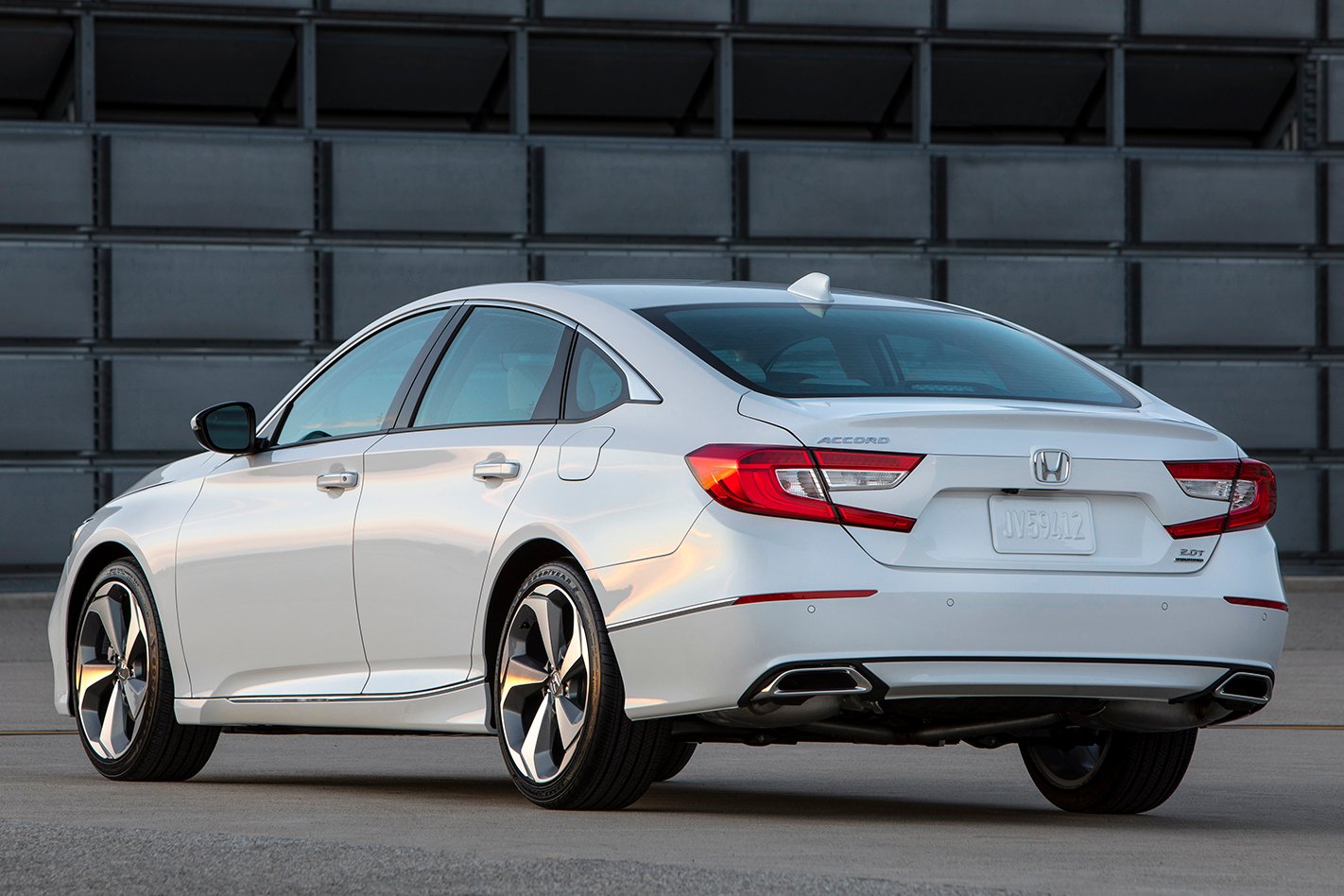
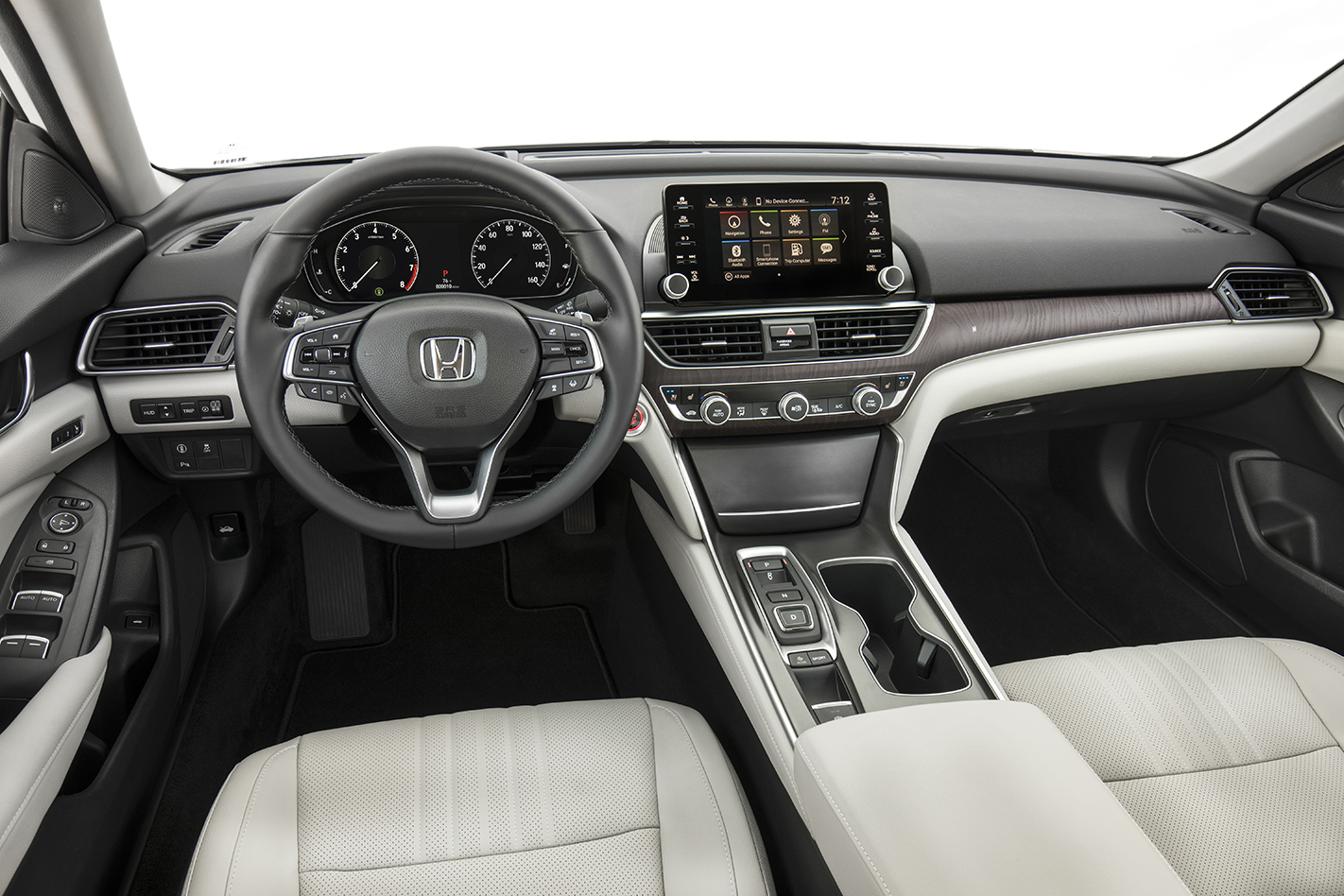
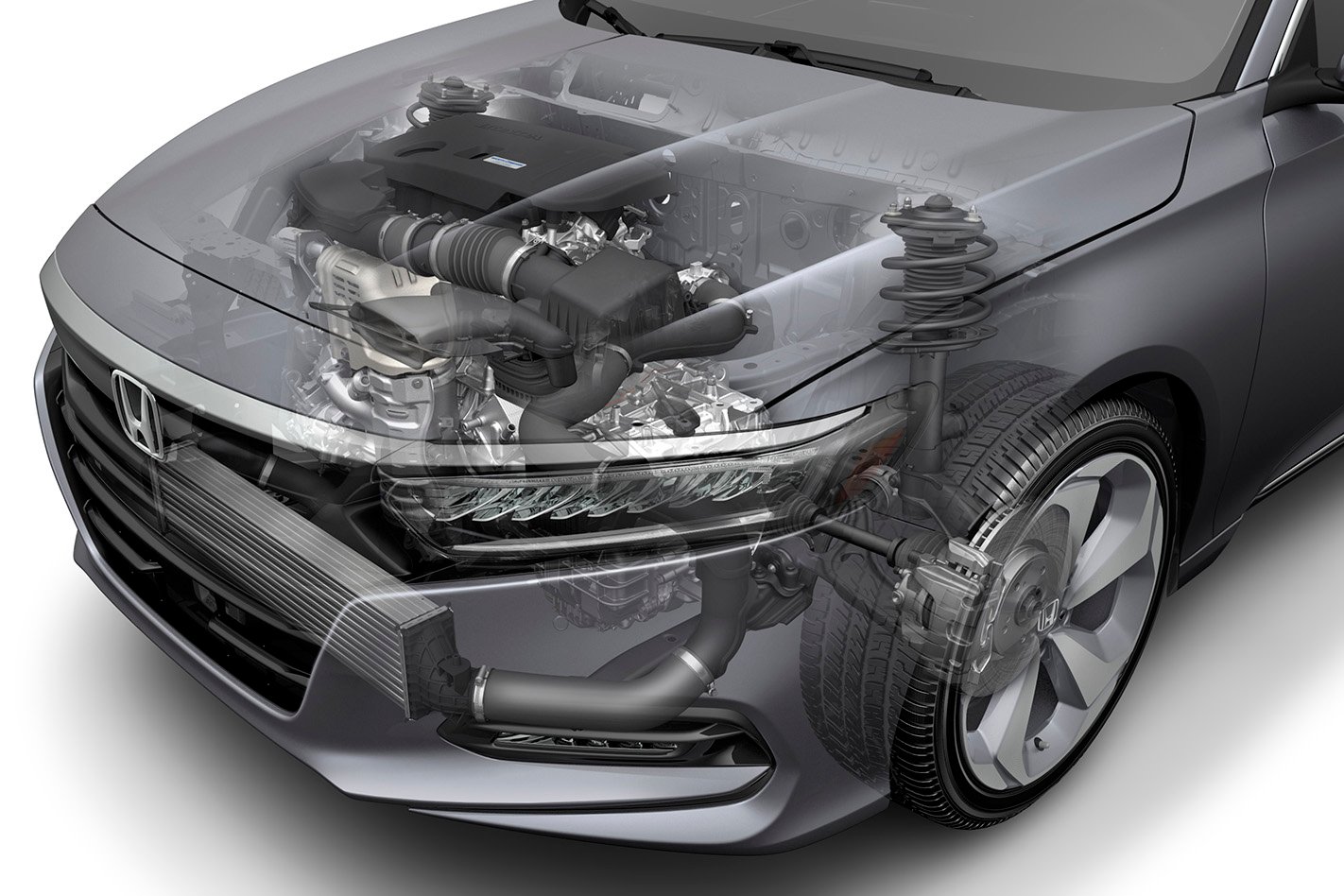
Its tenth-generation replacement (pictured) has been available overseas for more than a year, though a right-hand-drive version only entered existence in late 2018. That car is arriving in the fourth quarter of 2019, but the message from Honda is this: don’t expect it to be cheap.
“I don’t need to tell you that that segment is very challenging, so we won’t be chasing significant volume on that car,” he continued. “I haven’t got volumes to talk about today or pricing, but we’re going to position it as more of a premium product in that segment. We’re loyal to Accord, and it’ll be on sale toward the end of this year.”
But while rival brand Toyota manages to offer its Camry midsizer at a sub-$30,000 price point, Collins said the numbers simply didn’t stack up for Honda. Instead, chasing a higher-margin customer through a high-featured flagship appeared to be the better strategy, even if sales volumes would be lower.
“I think the reality is that from a business case perspective we can’t compete with the Accord at $29,990. If we could we would, but we just can’t. But as a flagship, niche-type product, we see that as the way to go.”
It’s a strategy no doubt led by Honda’s strong performance with private buyers (or, read a different way, its poor performance with fleets). While the Camry endears itself to taxi operators, government departments and other organisations needing a large fleet, Honda Australia has no interest in chasing that side of the automotive market. Instead, it intends to play to its strengths.
“We measure ourselves by private sales,” explained Collins. “Our brand is very much about private sales to mums and dads. Last year officially we were fourth in overall private sales in the total market – we missed third by 43 units. Our goal this year is to hold onto that ranking.”
“The hatch segment is holding up pretty well, but it’s the sedan segment that’s in decline. However it’d be a huge decision to walk away from a brand like [Accord] despite the market being tough.”
The 10th-generation Accord will launch here with just two powertrain options, a conventional petrol and a petrol-electric hybrid. There’s no word as yet on precise specifications however, we expect the petrol offering to be the 188kW/370Nm 2.0-litre turbo inline four (which replaces the V6 option and is a detuned version of the Honda Civic Type R’s turbo powerplant) and the hybrid to be similar to the US-market 158kW/314Nm 2.0-litre petrol-electric.
Pricing remains a mystery for now, but Collin’s hints are clear – don’t expect the new Accord to be the bargain it once was.
We’re all familiar with the wall of model cars for sale present in every games shop in the country. It’s probable you’ve got some if you’re anything like us.
But have you ever considered what would be possible if you could make paper car models?
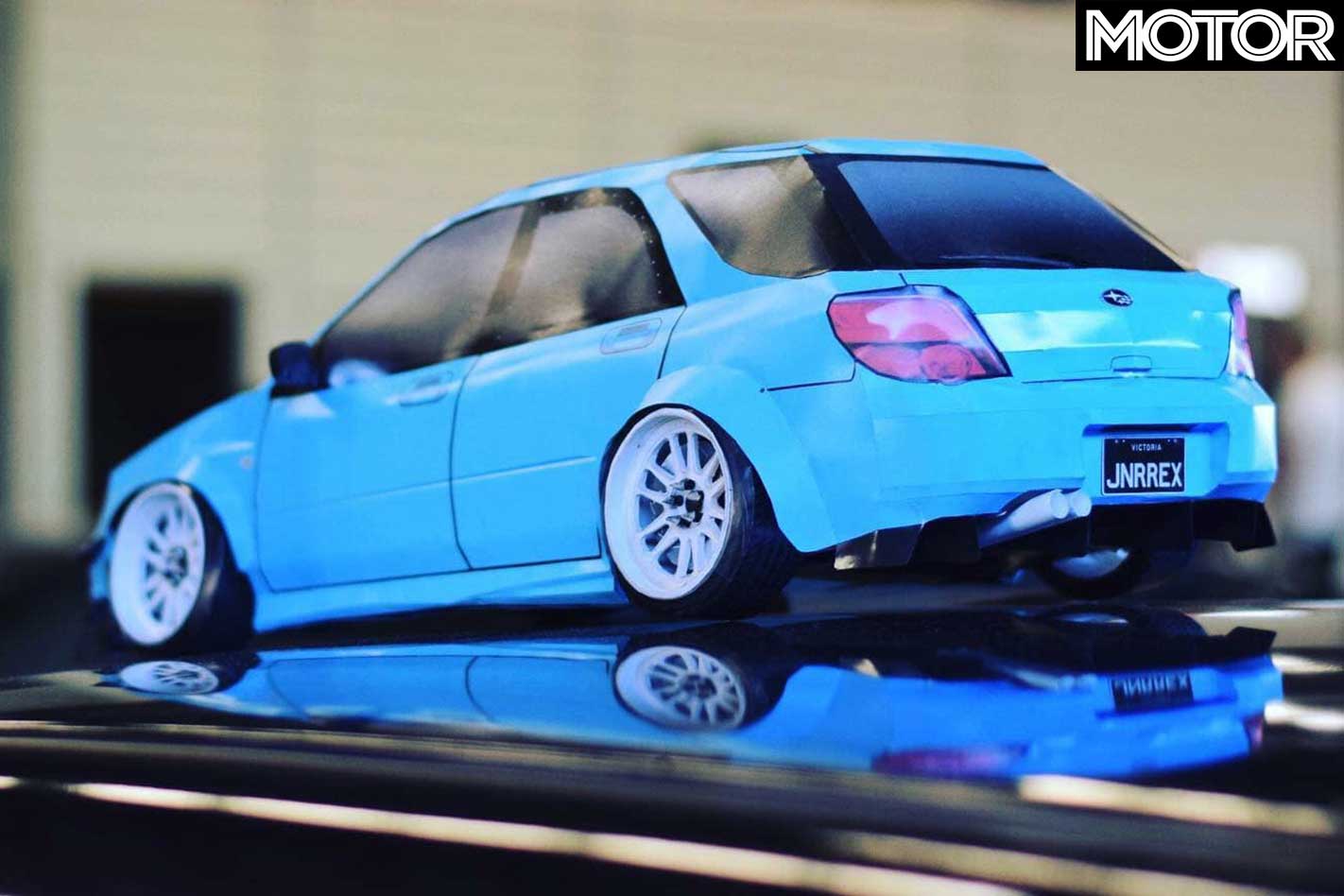
We’re not talking about those box-shaped, generic car models your kindergartener can make, we mean properly accurate, scale models of real cars.
If you’ve seen these, it’s possible you’ve seen Melbourne-based Hacaosuka Designs, a.k.a Thomas, getting around on Instagram.
“My name is Thomas Truong and I’m 19-years-old,” he says, “I got into cars probably the same way as everyone else.”
“Fast and Furious movies, Gran Turismo and Need for Speed games… I realised my Dad was also an influence, which I found out when I was about 10-years-old. One day, he brought home a 1965 Ford Mustang Fastback on a trailer.”
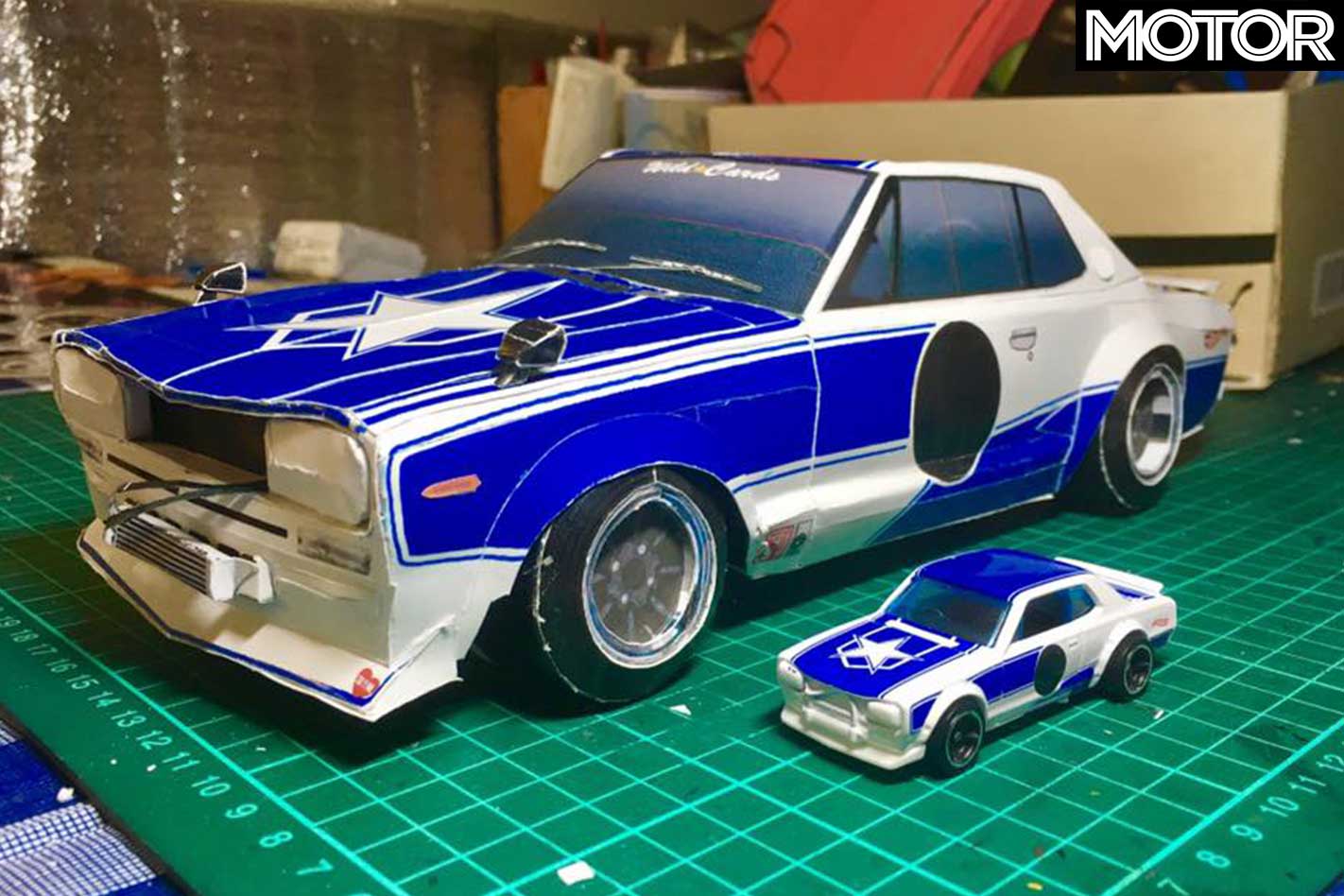
But where most of us were happy to build our own cars in videogames or, if money allowed, in the full-sized metal, Truong found a way to create car the way he wanted.
“How I got into paper cars is an interesting story. I always loved to build and make things like Lego kits and plastic models,” Truong says.
“These were expensive hobbies a few years down the track.
“I discovered paper models building characters, from a game called Minecraft, which were very blocked shaped and people had created templates which I could cut out and build.
“At some point though, I was curious and I searched up paper cars. From there my mind was blown away. The first paper car I built was in fact a Lexus LFA.”
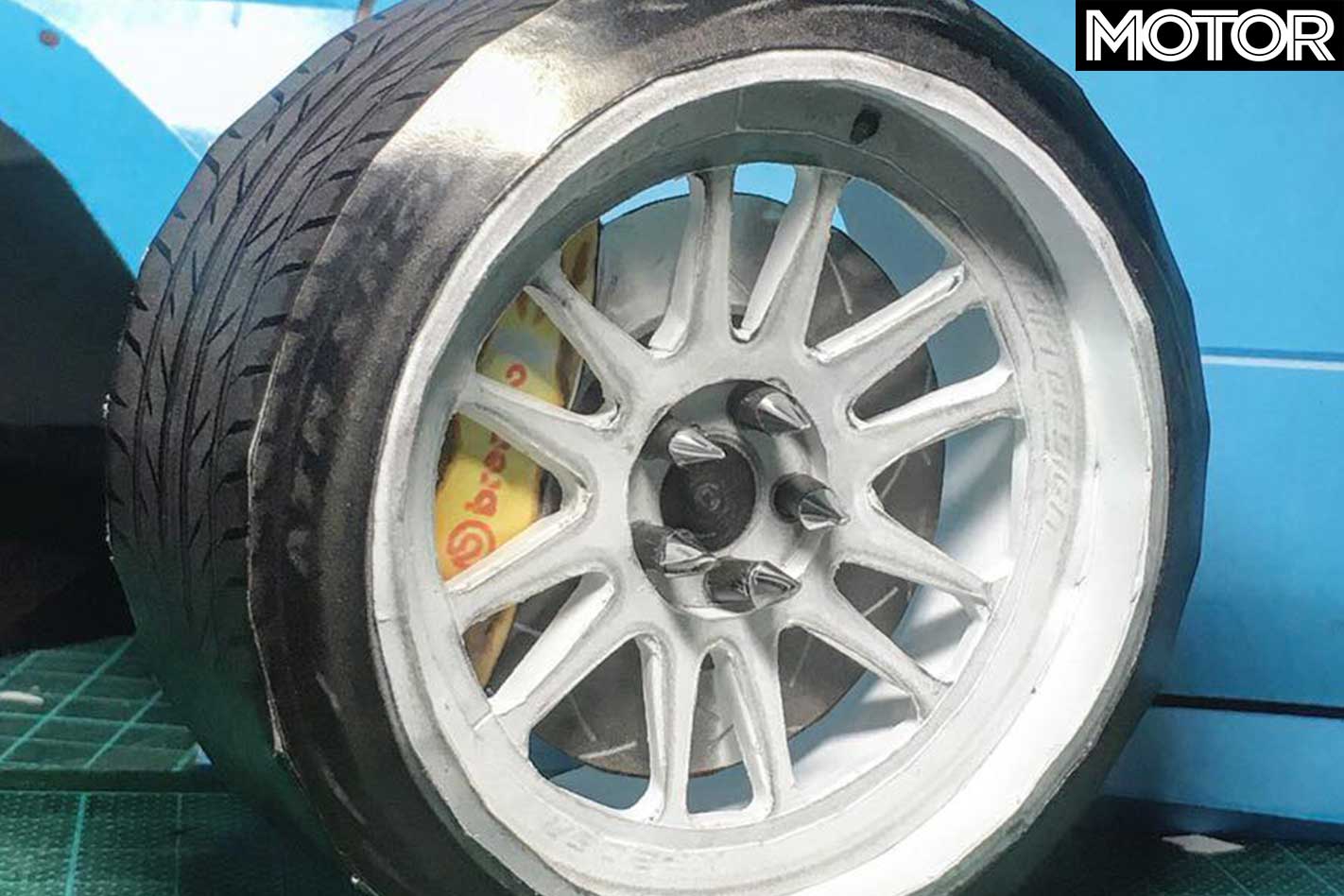
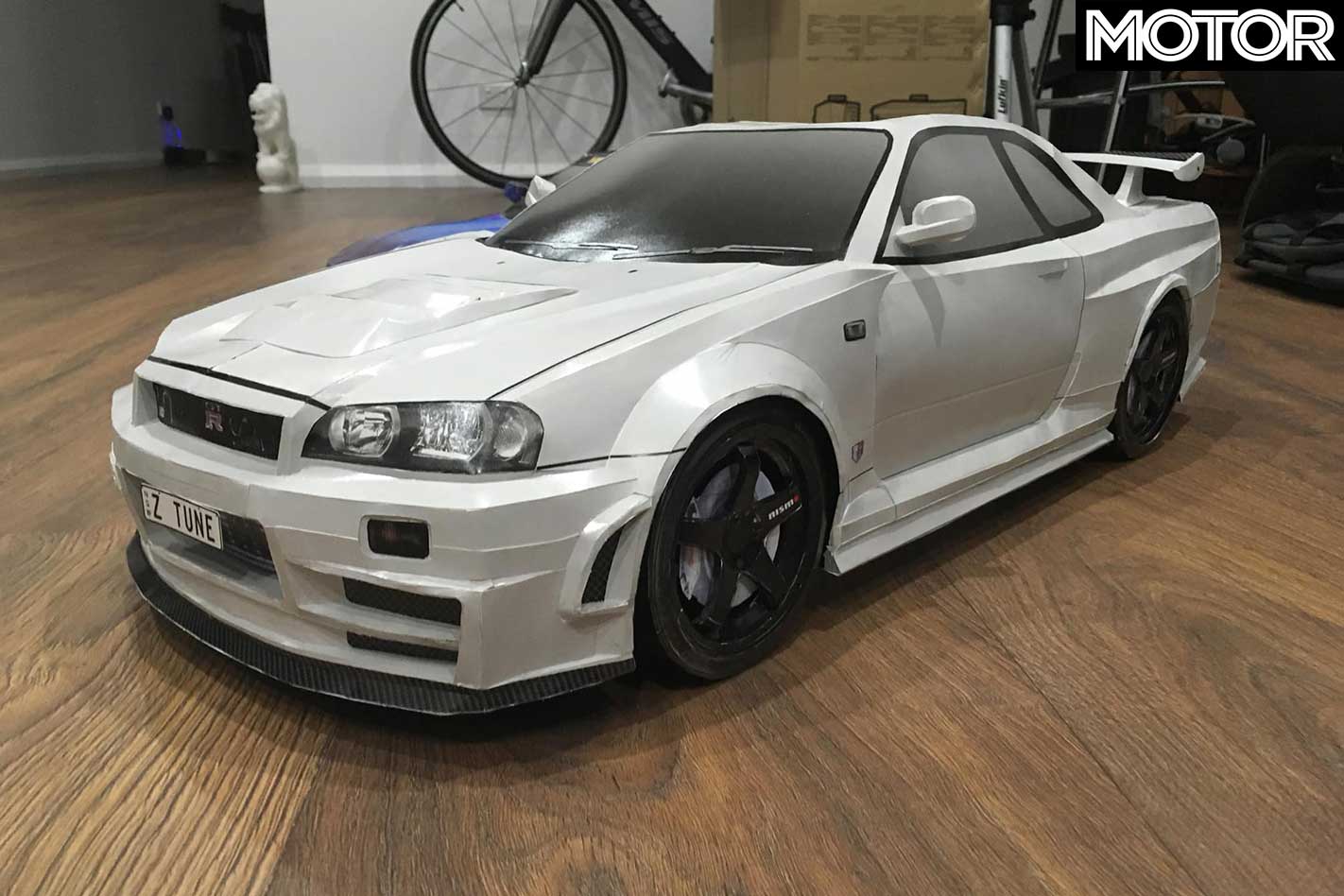
While a lot of the cars he models are relatively modern Japanese cars – we’ll get to why that is – Truong says his favourite cars to create are actually much older.
“The cars that gets me most excited are classic Japanese cars from the ‘70s to ‘90s. I haven’t had the chance to model many cars from that era yet but I believe I may do a few in the future.
“I enjoy modelling any car, as long as it’s not a car you see every day on the roads.
“Japanese cars are still my favourite to model as there are so many different makes and models out there, meaning different body styles and more challenges with every car.”
Truong’s love for classic Japanese cars is actually what inspired his Instagram handle, and the name by which most of his followers know him: ‘Hacaosuka Designs’.
“My favourite car of all time is no doubt the 1971 ‘Hakosuka’ Skyline GT-R. It would be a while to get to the stage of owning one (a non GT-R version), so I would love to have a Toyota MR2 SW20.”
Truong has also created a paper version of Datsun’s ute, known colloquially as ‘Hakotora’, which was the first model he was commissioned to create.
Truong says he had to send it to the owner in a Styrofoam box with a hole in the end, full of newspaper.
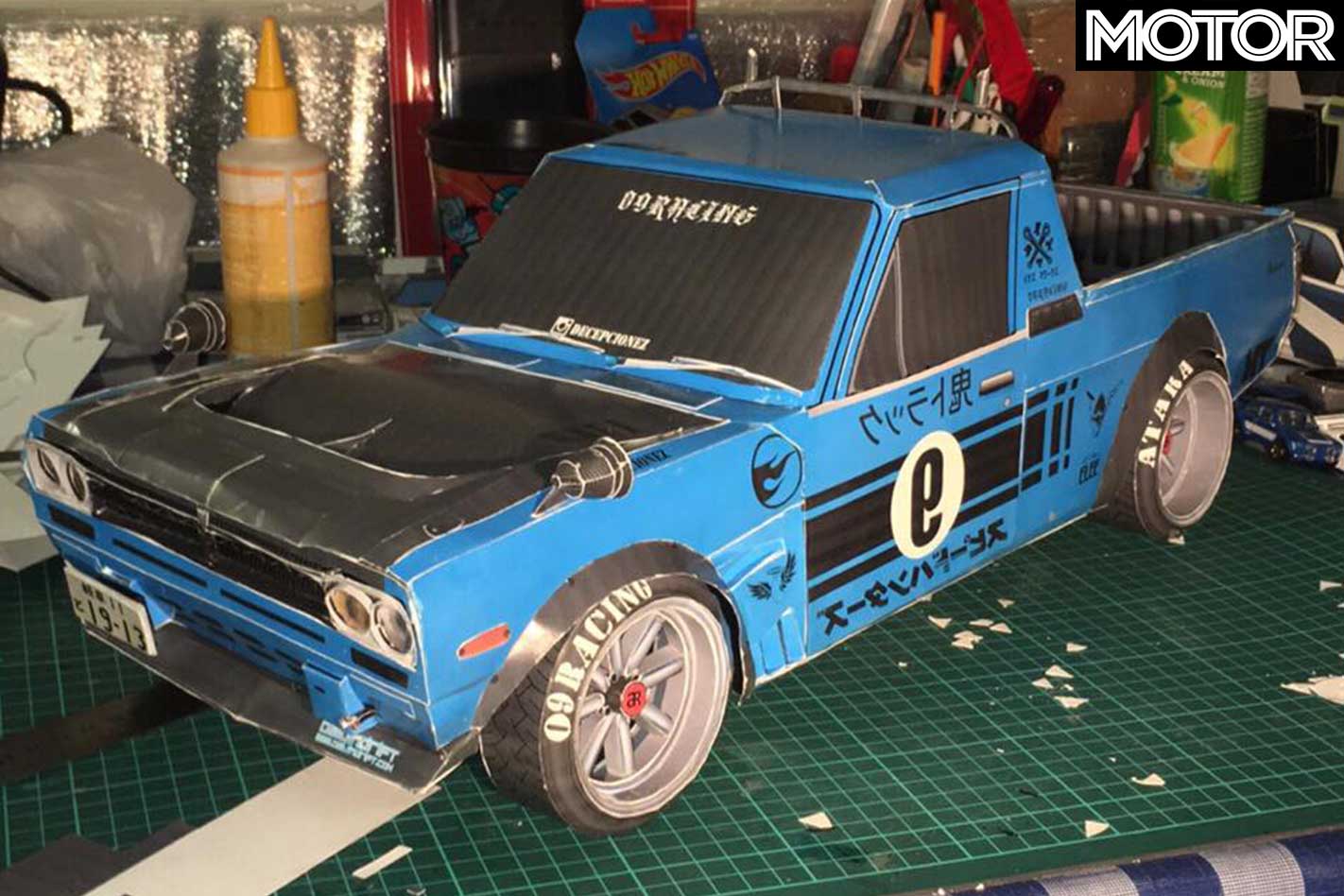
Since, he’s built a number of different models for owners of modified cars, with the rest of the year pretty much booked out with commissions.
One such commission came from the US, a Datsun 260Z owner wanting his car recreated in paper form.
“I was thinking of doing commissions before that, but I didn’t think it would be someone from the States that would have asked me!”
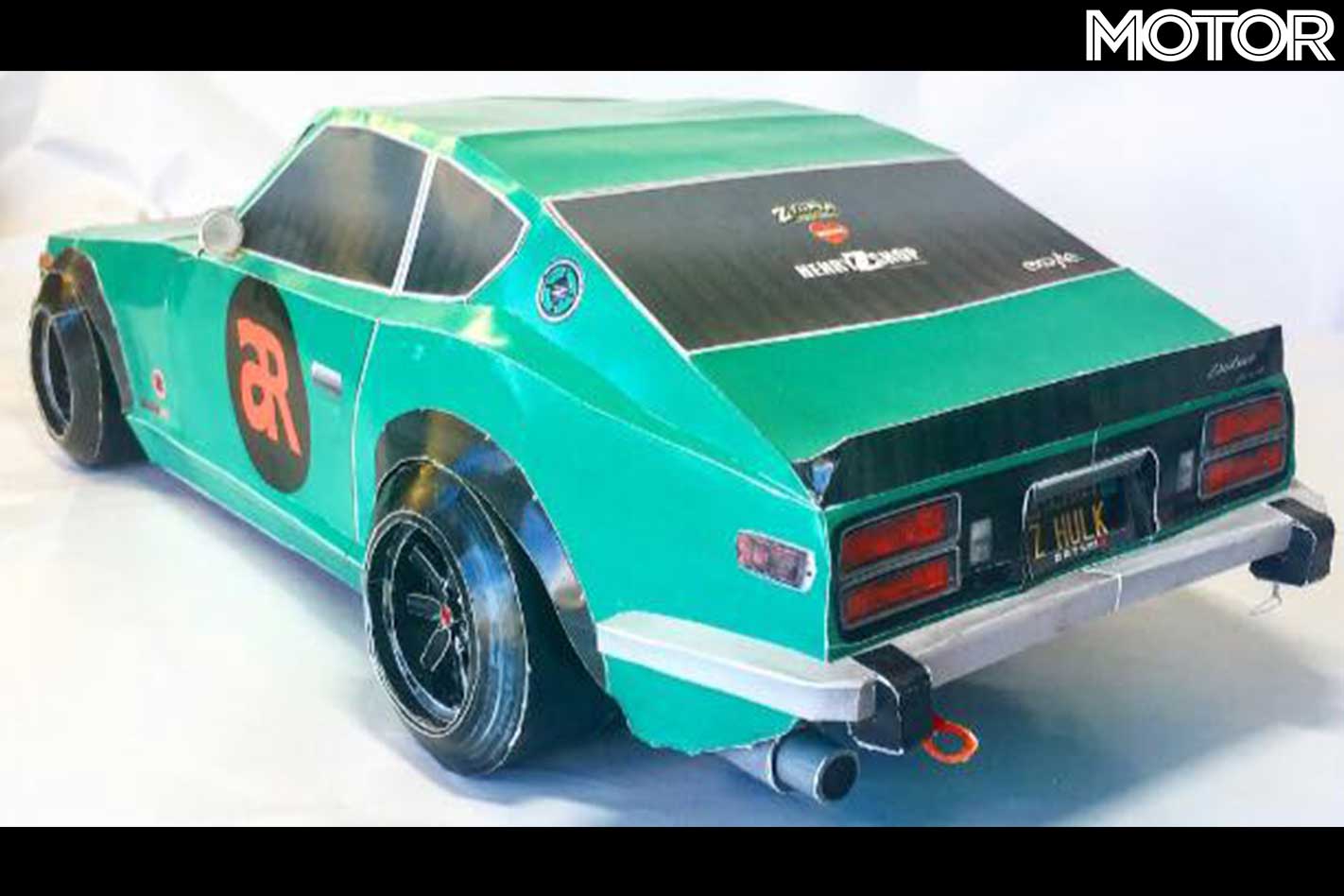
He says most of his builds take around a week and a half, from the design stage right through to the paper model, that’s when he can set aside several hours of work each day.
The process starts with a digital 3D model, which Truong creates himself in Sketchup Pro, then onwards to a template program called Pepakura Designer to create the printout. This program is essential to the process, Truong says.
https://www.instagram.com/p/BuqhdQflmx4/?utm_source=ig_embed&utm_medium=loading
The rest involves skill with paper and some coordination, as well as a layer of clear coat once it’s all together.
The result is a 60cm-long paper model, though Truong says he wants to start using a more accurate scale “so when you put [the models] in a row, they would be accurate as 1:1 [comparative] scale.”
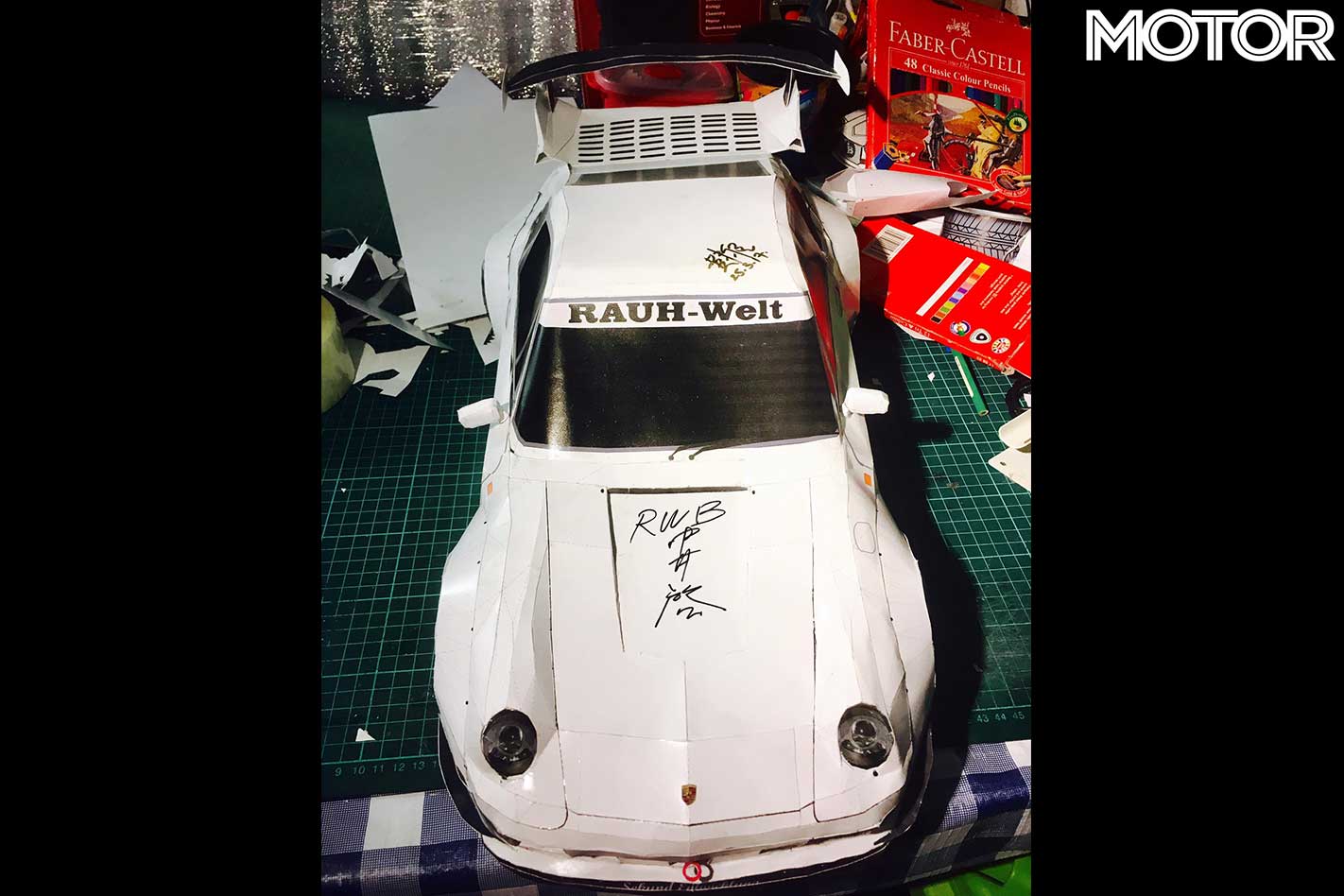
Currently, the list of commissions for Hacaosuka Designs sits at 20 models long, with each based on the buyer’s own car – Truong doesn’t do commissions for cars not owned by the buyer, though he does occasionally build cars for his own personal interest.
His current project is a Koenigsegg Jesko and, if he can pull that off accurately, it’s proof he’s got the skills to build anything.
What do dual-clutch gearboxes, rear-view mirrors, disc brakes, dual overhead cams, traction control, and active suspension have in common? All were first developed in motorsport, before being fitted to road cars sold to the public.
It’s well-known that technology that is developed on the world’s race tracks in categories like Formula 1 and the World Endurance Championship eventually trickles down to road cars.
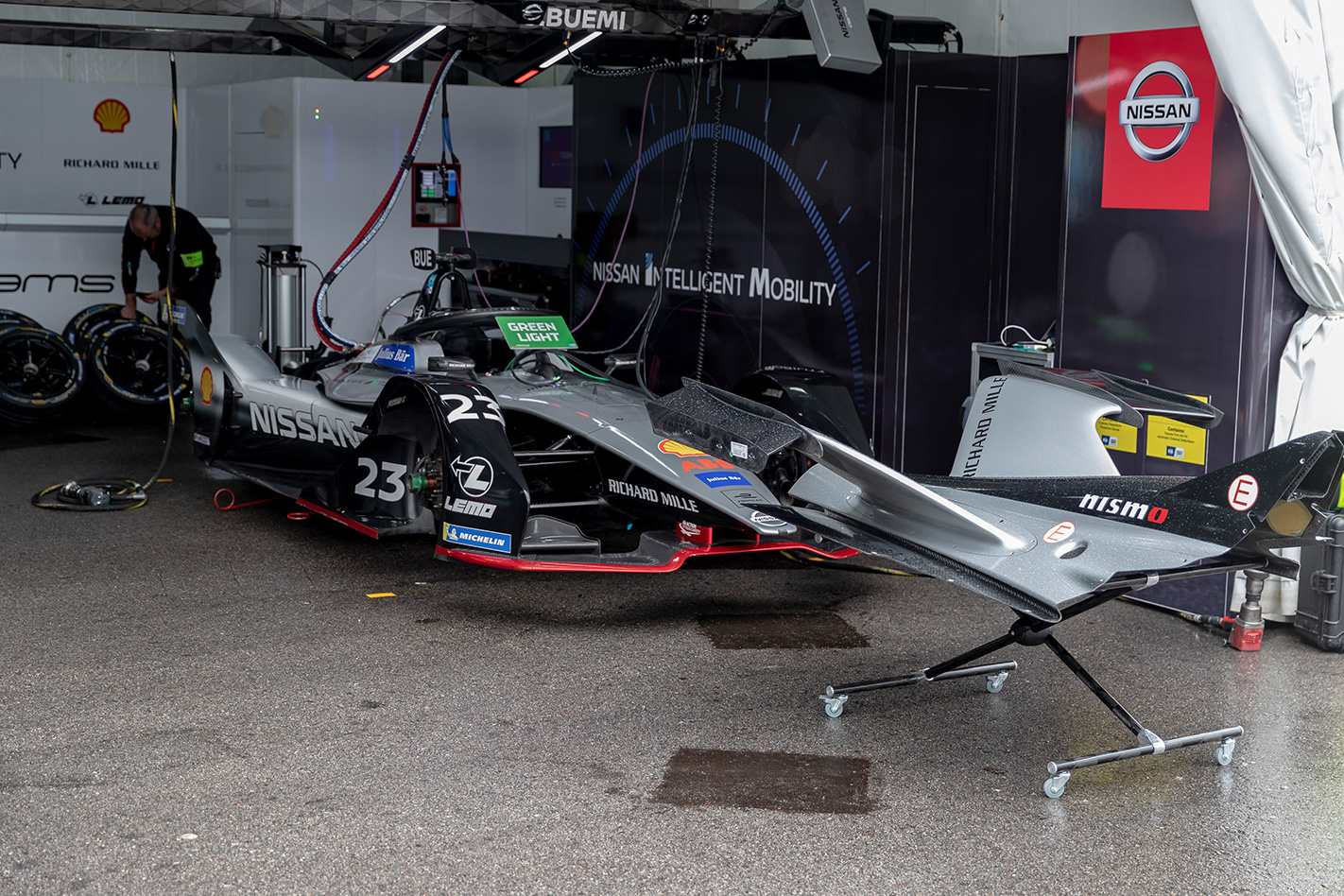
However, for Formula E, the world’s first fully-electric world championship, things are happening a little differently.
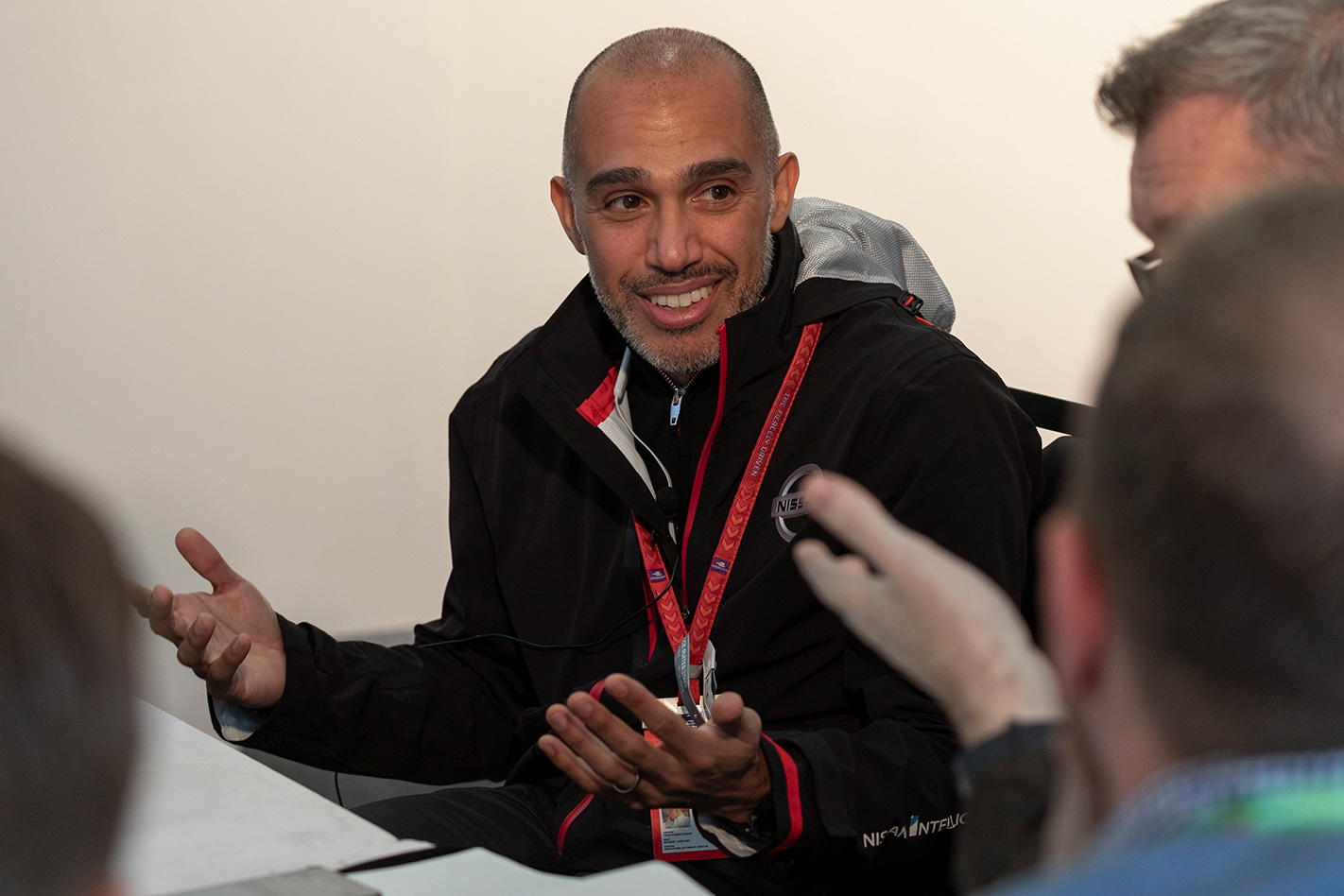
Mike Carcamo is the Global Motorsport Director for Nissan, and says instead of a one-way street that often takes years or decades to complete, tech development in Formula E is more of a continuous loop, with production cars leading the way.
“I see the tech relevance a bit differently,” he told Wheels. “The lead time from production car to race car is much faster. I can take something that has been fully validated from the production side, from a control system standpoint, and almost implement it in weeks in racing.
“What this allows is we can explore [that part], optimise it, and then feed it back into the road car.
“It’s not development [of new parts], but optimisation of software and simulations that can then be brought back [to road cars] with a simple calibration, which is quick.
“From a technical standpoint [for EVs] there is a lot to gain from motorsport, just like there is for internal combustion engines.
“You learn a lot from the rapid pace, and the intensity of the actual event, and that feeds back into the road side.
“To me, [Formula E] is very relevant to our road car business.”
The push to flip the development process on its head has resulted from Formula E’s tight technical regulations, which include a control chassis and battery pack that all teams share.
This limits the areas that can be developed. However, Carcamo says there is still plenty of Nissan DNA in its Formula E racers.
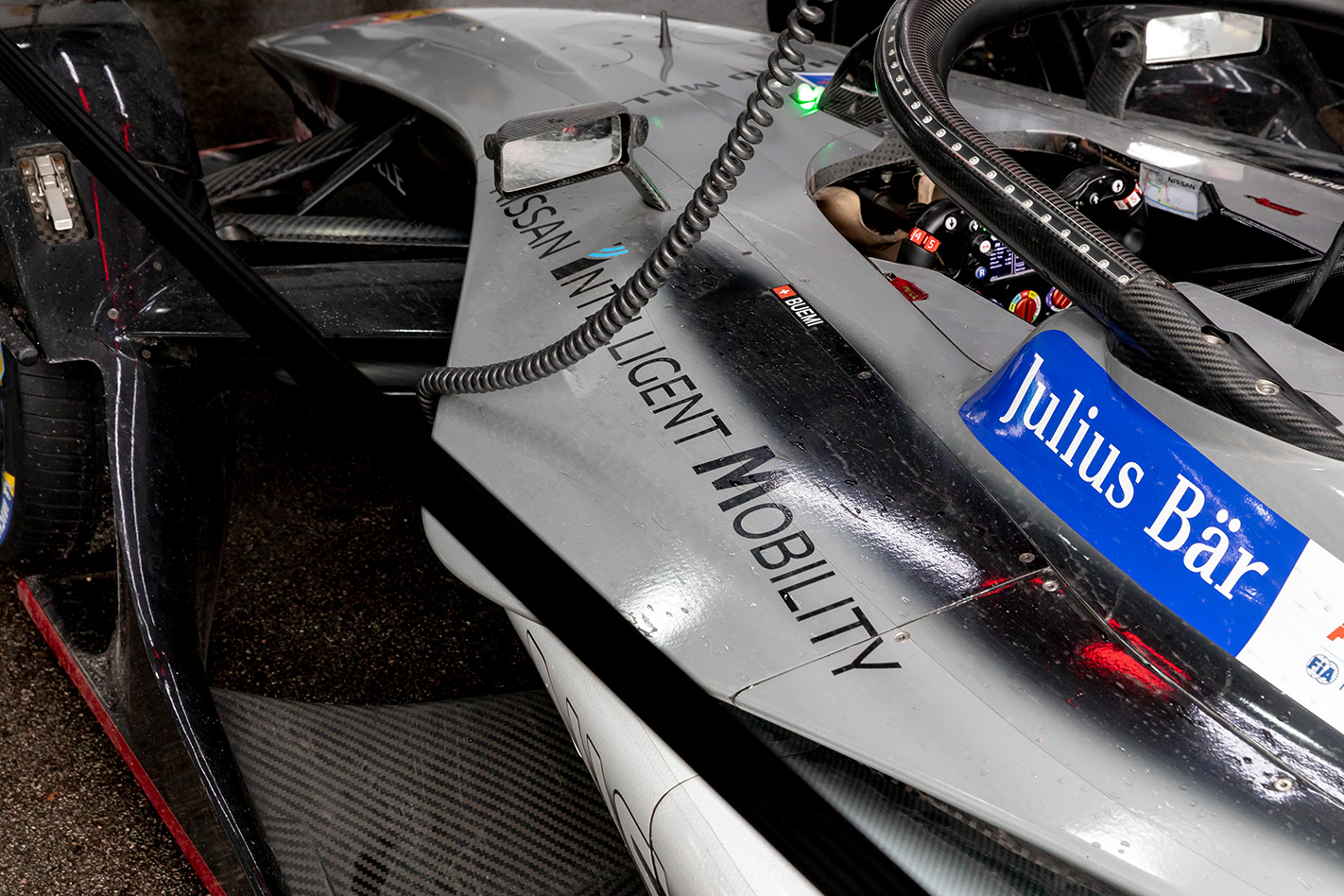
“One of the nice things about the series is they have helped focus the attention on the EV portion, which is the powertrain,” he explained.
“Obviously the batteries are part of an EV solution, but in a motorsport context it would just be us fighting each other in terms of battery development.
“In powertrain development it is about the motor, inverter, transmission, and control systems. That is where there is a lot of value to be added, and that is the most road-relevant from a development standpoint.”
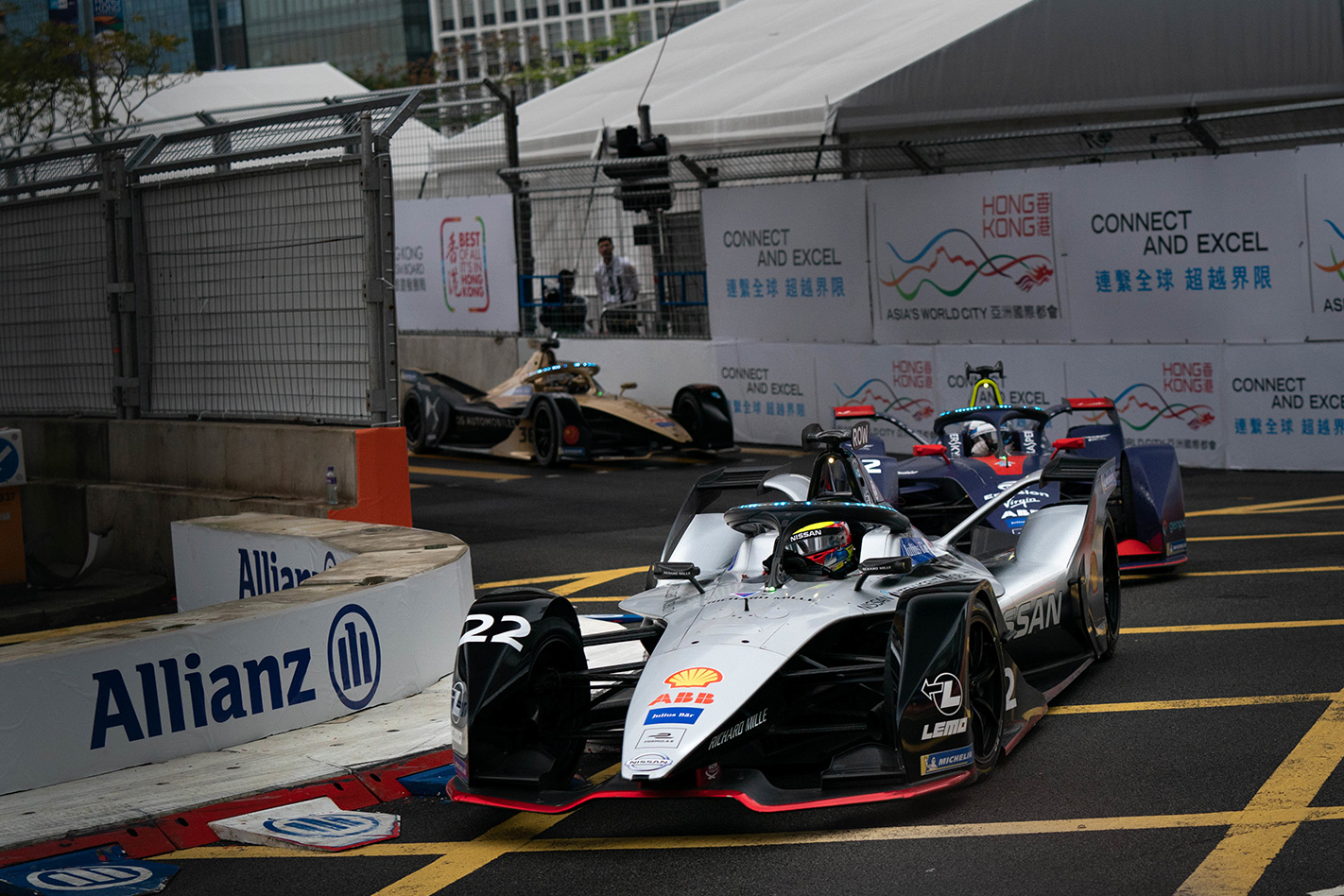
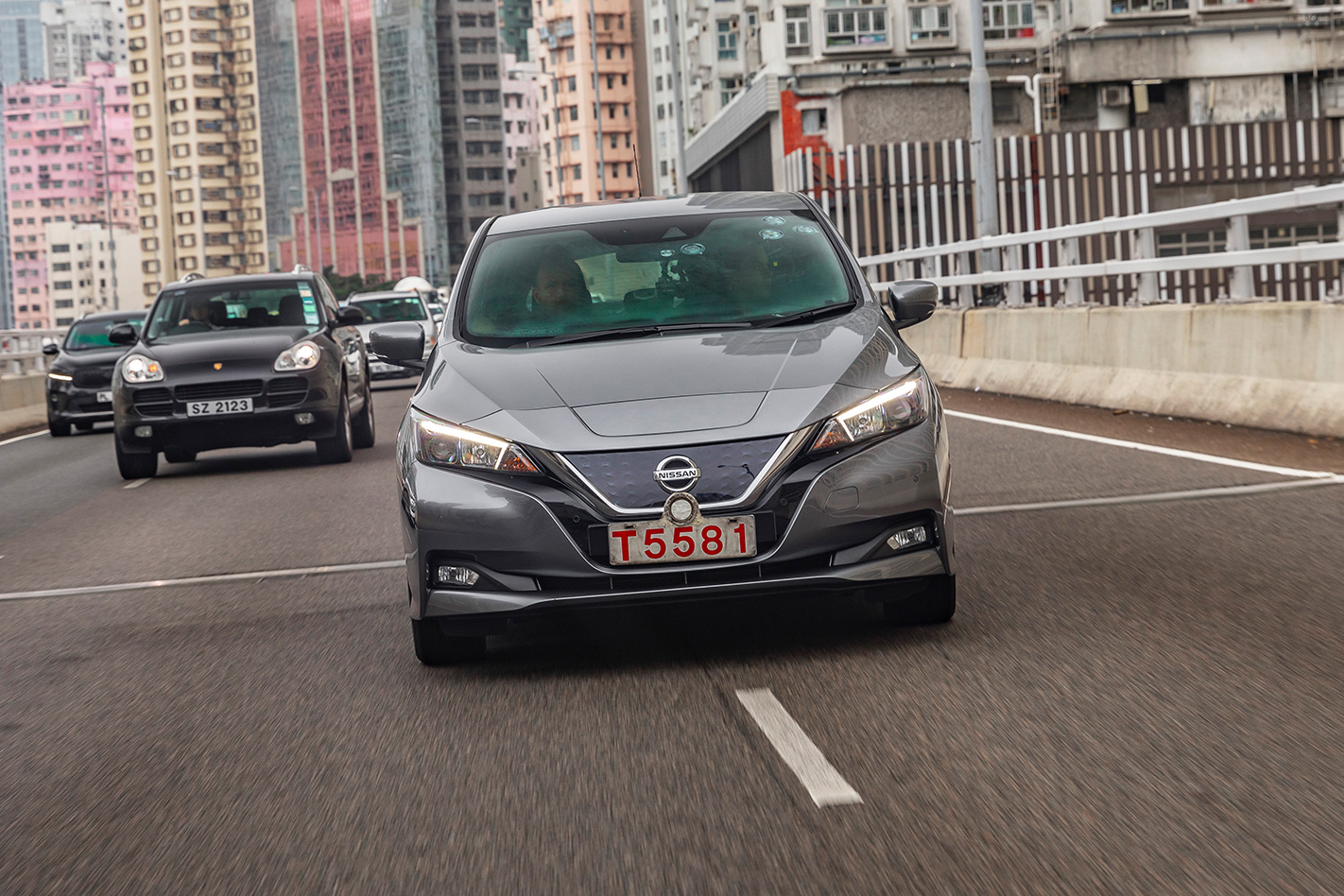
So next time you see a Nissan Leaf on the road, know that it might just have been crucial in the development of an elite race car.
I am a single woman wanting to replace my car. I currently own a 2006 Suzuki Swift which I have loved for its manoeuvrability, surprising space and fuel economy as I drive for 30mins every day to get to work and then the same to get back.
To complicate things I now have a dog that struggles on the front seat of my little nippy car. My sister has four children that I often look after and some extra space would help for that and I am a keen woodworker, DIYer and welder so having a vehicle with more space and capacity for a roof rack would be handy.
At the moment I am tossing up between an SUV (Hyundai Tucson possibly, though no idea which subtype or if other SUV would be better) or a dual-cab ute. Any suggestions to help me make my choice? Fuel economy is one of the more important features that I am looking for. I was hoping for no more than $35K and would prefer an ex-demo vehicle rather than brand new.
Thank you,
Tessa
Hi Tessa, an interesting set of circumstances you have there! There’s certainly a good range of options that fall within your desired price range, and while a dual-cab ute would definitely satisfy the DIY, woodwork and welding requirements (while still allowing space for four kids and/or a doggo), that definitely comes at the expense of everyday liveability and comfort, not to mention most decent dual-cabs are outside your price window.
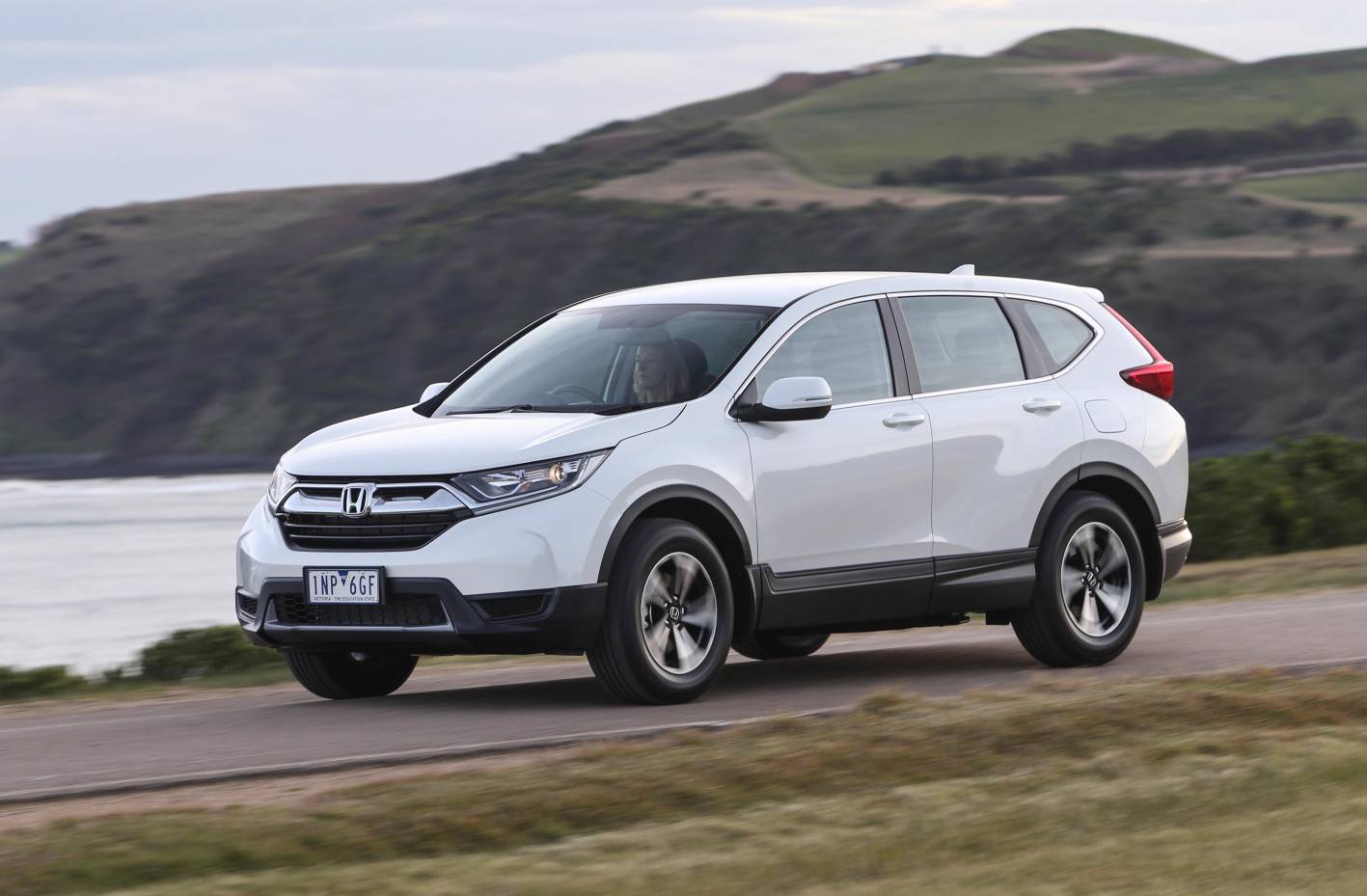
Our advice would be to look for something in the medium SUV class and spend a bit extra on a decent roofrack that can carry the metal/wood that you need to cart around. Keeping that hardware out of your cabin will also mean the interior stays nicer for longer.
Now comes the tricky part. How tall are you? A personal question, for sure, but if you’re on the short side then heaving metal above your head to the height of an SUV’s roof might see you visiting the physio sooner than you’d hoped. A traditional wagon may make more sense in that regard, and will also come with the neat bonus of being more fuel-efficient than the average SUV.
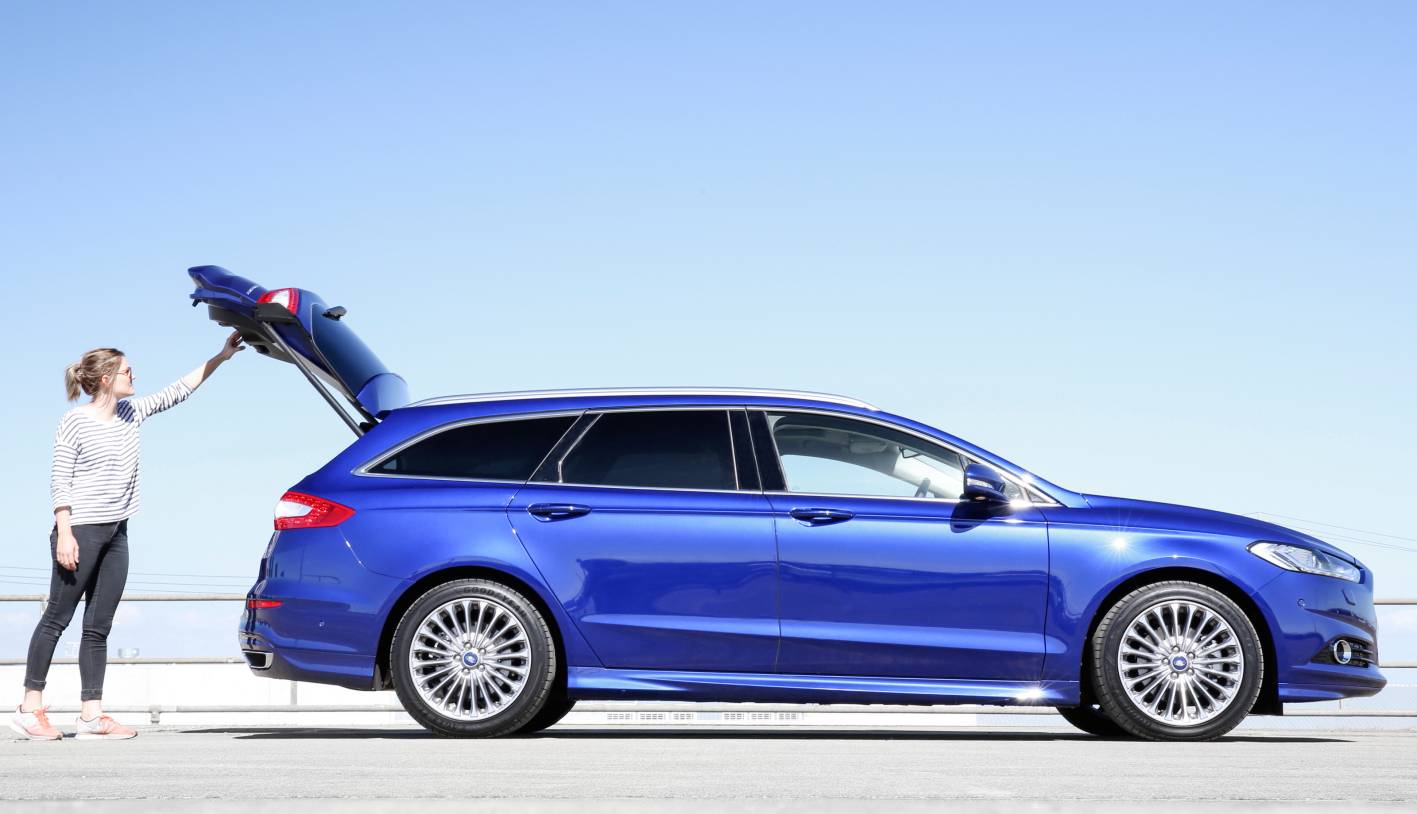
The only thing that might change our recommendation is if you expect to tow heavy loads on a semi-regular basis or want to carry quite heavy payloads (several hundred kilograms, for example), in which case a dual-cab ute may actually make more sense.
So what specific models do we recommend within your price range?
- SUV: Mazda CX-5 Maxx 2.5 ($34,770), Nissan X-Trail 7-seat ($32,490), Subaru Forester 2.5i ($33,490), Honda CR-V VTi-S ($33,290)
- Wagon: Ford Mondeo Ambiente wagon ($35,040), Mazda 6 Sport wagon ($33,790), Skoda Octavia 110 TSI Sport wagon ($31,890), Volkswagen Golf Alltrack ($35,250)
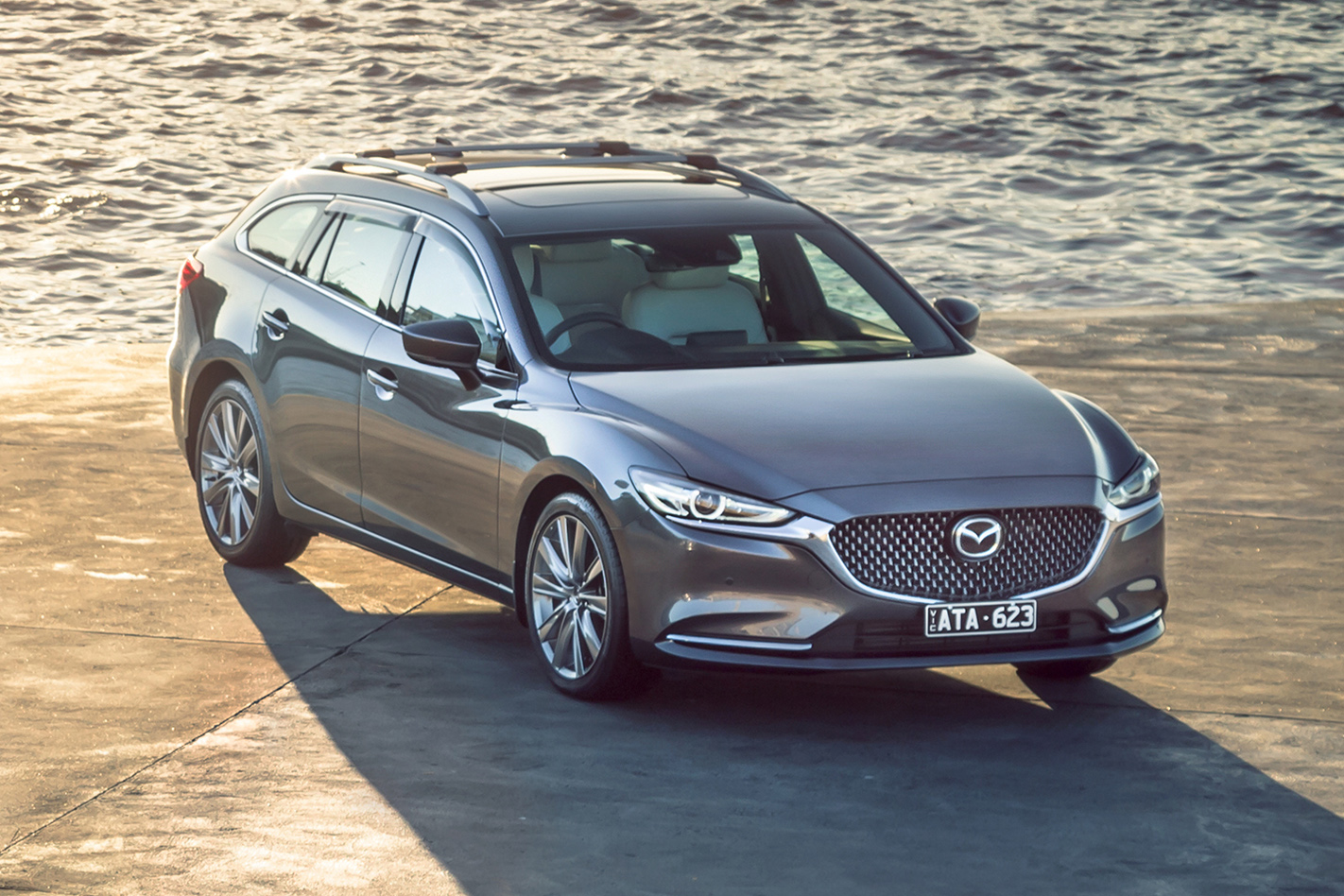
Unfortunately you’ll need to do some serious bargain-hunting to get a decent ex-demo dual-cab ute at your price target. Though there are a more than a few Chinese and Indian options that retail below the $35K mark, most of the utes we’d recommend for you start north of $40K. The only exception to that is Mitsubishi’s Triton, which is freshly facelifted and starts at $32,990 for the manual-equipped GLX.
Would we recommend it alongside the SUV and wagon options above? Given your 30km commute and requirement for fuel economy, we’d say ‘no’.
We hope this helps, Tessa!
Formula 1 race director Charlie Whiting has passed away this morning, on the eve of the opening round of the 2019 season.
Age 66, Whiting was in Melbourne ahead of the year’s first grand prix, but suffered a pulmonary embolism, which results from a blood clot being caught in an artery that goes between the heart and lungs.
The FIA released a press release, stating: “FIA Director of Formula One, Charlie Whiting, has sadly passed away this morning (14 March 2019), in Melbourne, aged 66, as the result of a pulmonary embolism, three days before the Australian Grand Prix.
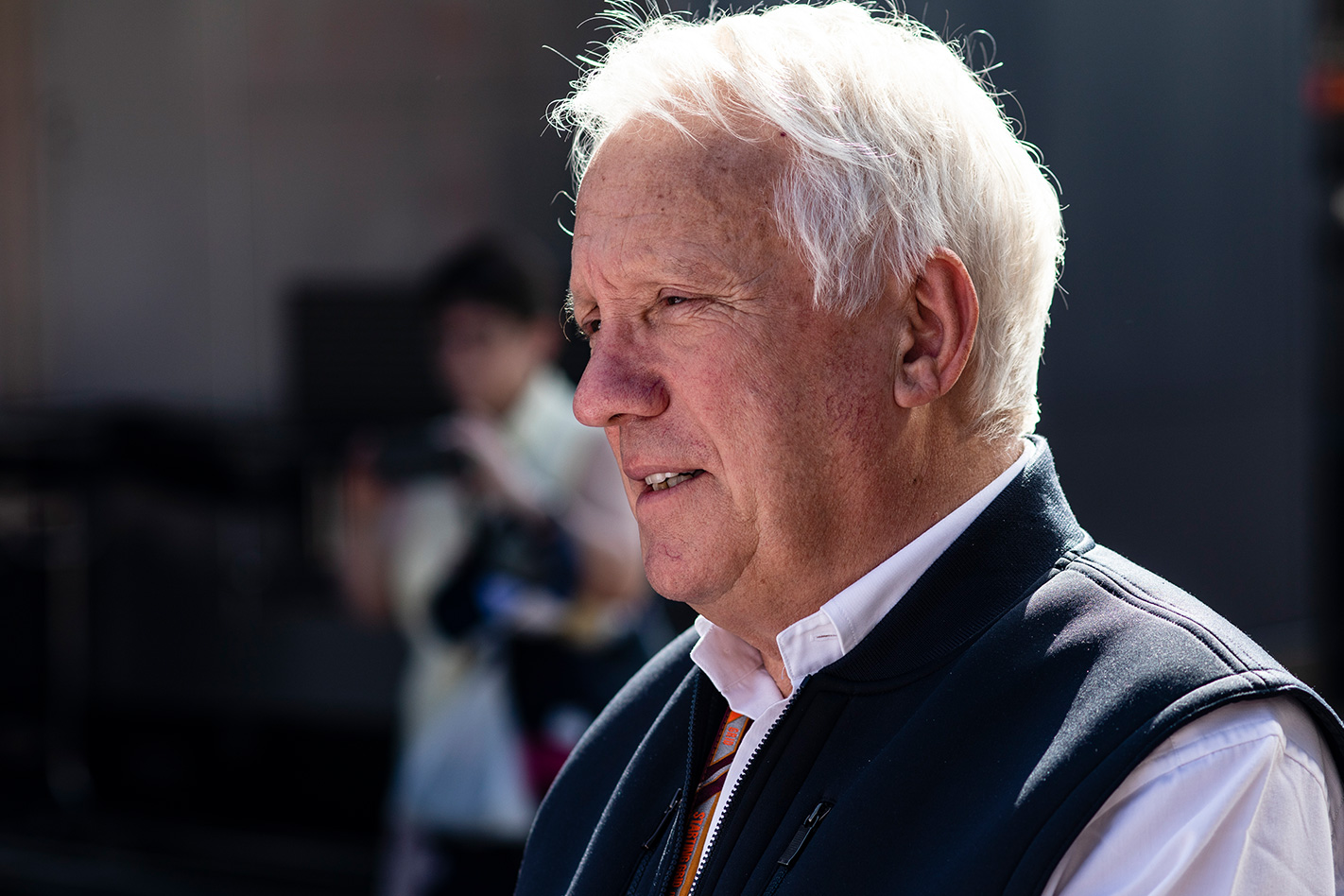
“He began his F1 career in 1977 working at the Hesketh team, then in the 1980s at Brabham. He has been an integral part of the organisation of the FIA Formula One World Championship since he joined the Federation in 1988, and has been the Race Director since 1997.”
FIA President Jean Todt added: “It is with immense sadness that I learned of Charlie’s sudden passing. I have known Charlie Whiting for many years and he has been a great Race Director, a central and inimitable figure in Formula One who embodied the ethics and spirit of this fantastic sport.
“Formula 1 has lost a faithful friend and a charismatic ambassador in Charlie. All my thoughts, those of the FIA and entire motor sport community go out to his family, friends, and all Formula One lovers.”
Not only was Whiting the race director for Formula 1, but also the safety delegate, permanent starter, and head of the F1 technical department.
His role involved managing the logistics of each grand prix, inspecting cars in parc ferme, and acting as the ‘referee’ during races.
It is unclear who will succeed Whiting as F1 race director; however Australian Michael Masi was expected to replace Whiting when he retired at the end of the year.
Masi was formerly the deputy race director of Supercars, and is working as a steward for Formula E.
Victoria Police is taking delivery of 15 specially adapted Volkswagen Passat wagons for highway patrol duties, joining an 80-strong BMW 530d patrol car army on the state’s arterial roads.
In high-performance guise, the Passat is the latest addition to the Aussie highway patrol landscape, which was previously dominated by V8 Holden Commodores and Ford Falcons.
The demise of Australian vehicle manufacturing resulted in much speculation about what will fill the void, with cars including the Ford Mustang and Kia Stinger GT widely touted.
VW’s Passat is employed extensively by European police services but seems a left-field choice here, despite less performance-focused variants already proving themselves on the beat wearing a VicPol uniform.
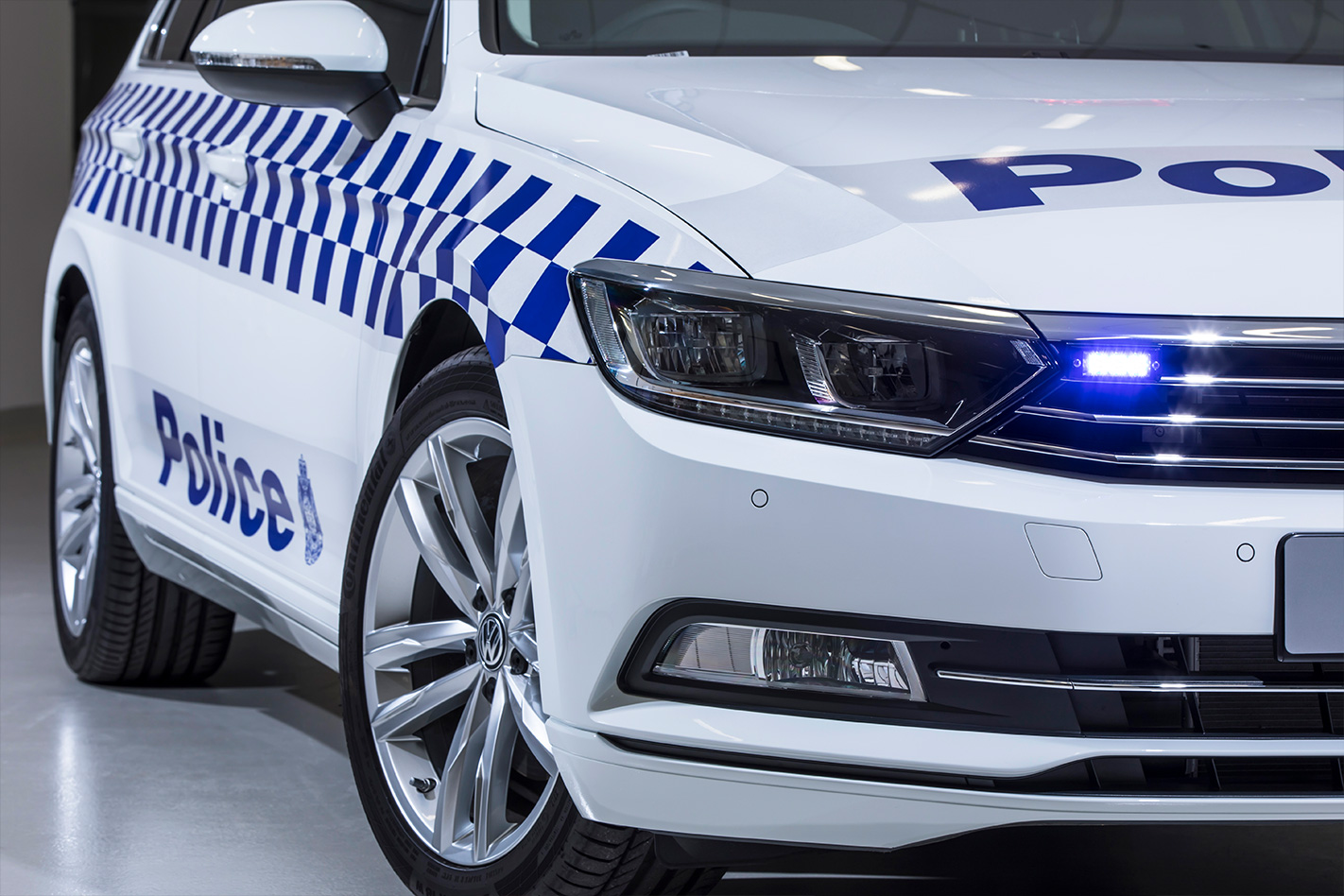
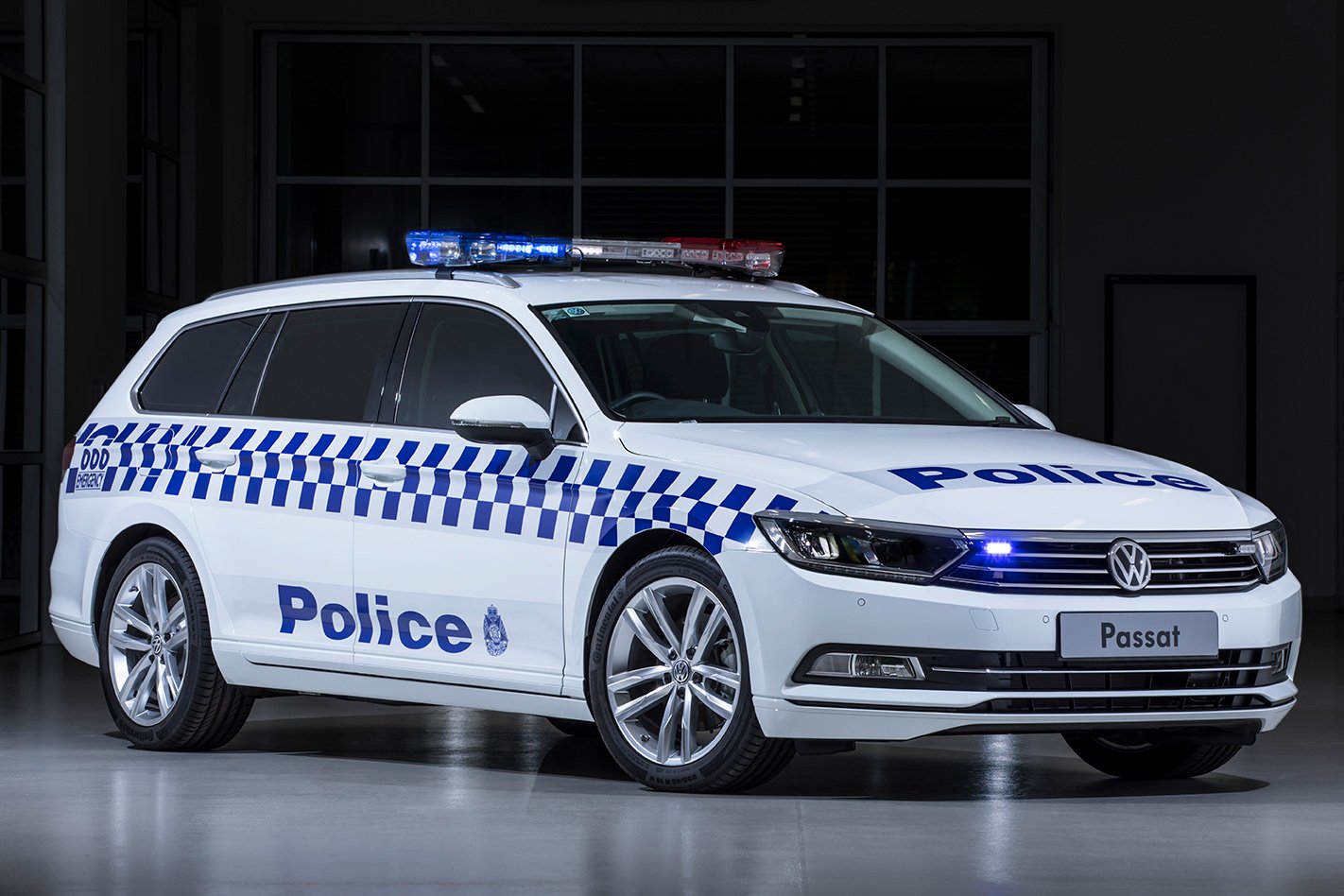
Highway patrol versions will be powerful Passat 206 TSI Proline wagons, which will also be used for special operations duties.
‘Proline’ is the designation given to the Passat and future emergency services models that Volkswagen Group Australia is developing, including the Tiguan Allspace 162 Proline.
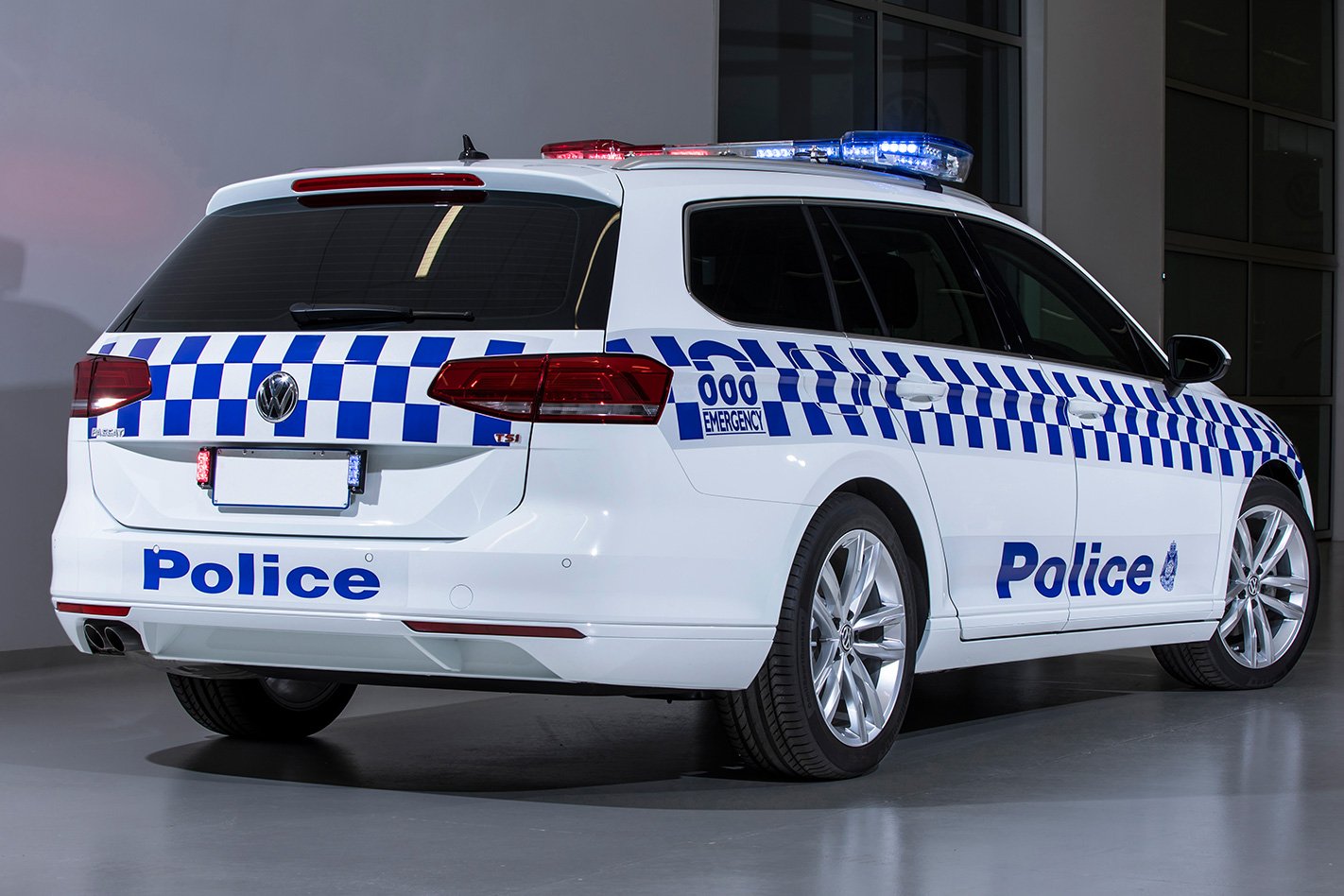
The highway patrol cars are adapted versions of the Passat 206 TSI R-Line powered by a 206kW/350Nm turbocharged petrol engine, with a claimed 0-100km/h time of 5.5 seconds that’s well within highway patrol requirements.
They’ve been stripped of leather and other creature comforts, with an upgraded 180-amp alternator installed in-factory to assist with the running on on-board equipment. Volkswagen Australia worked with the factory R&D team in Wolfsburg to create a ‘police pack’ that includes a second battery setup and a bespoke wiring loom to connect lights, sirens and other equipment.
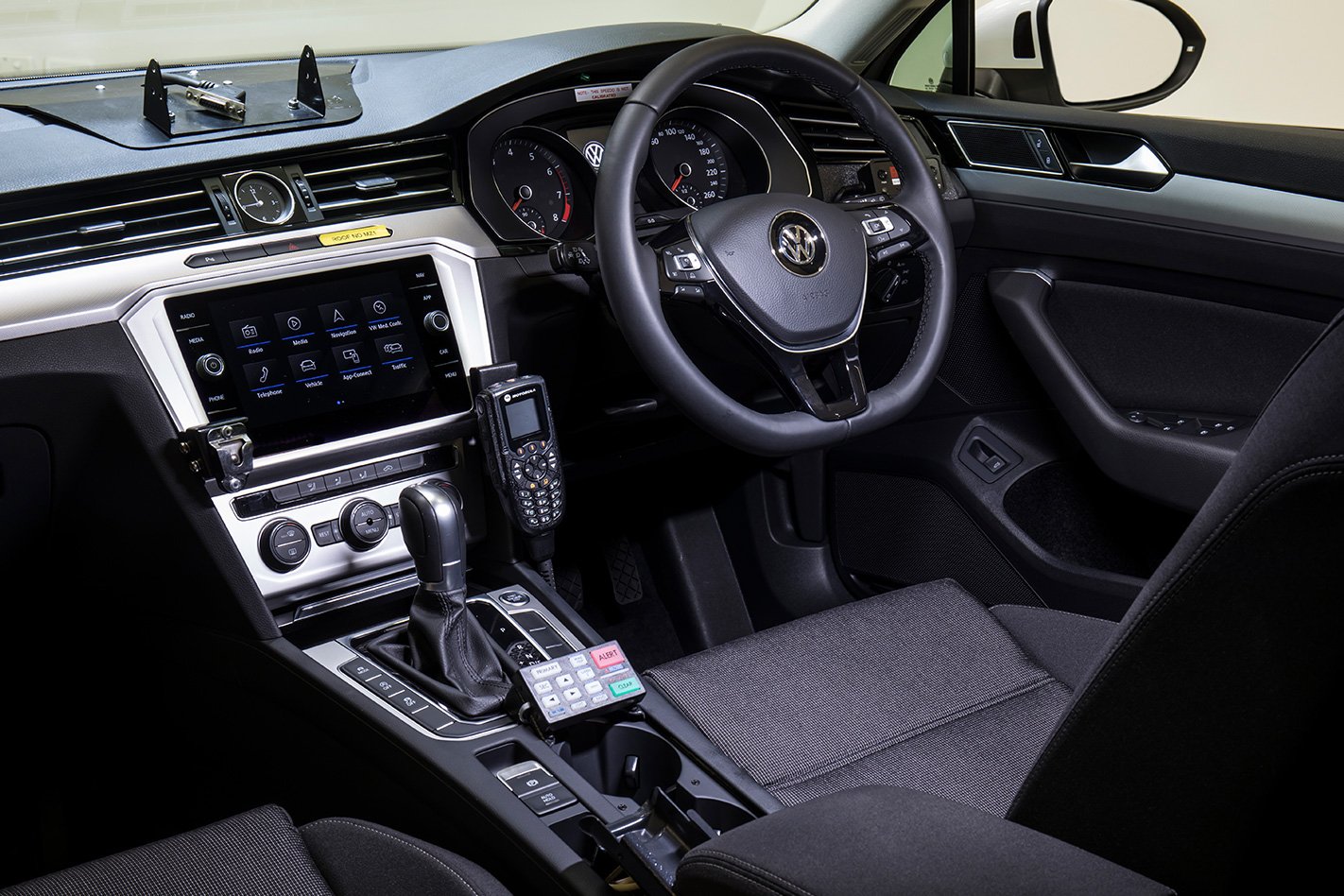
The fast four-wheel-drive version of the Passat will be part of a new 265-Volkswagen order from VicPol, which consists primarily of Passat 132 TSI Proline sedans and wagons.
When stickered-up for general duties, the Passat Proline 132 TSI wagon (pictured) will be the most conspicuous, while the sedans are drafted into in the unmarked fleet with covert lights.
These are expected to soon be joined by Holden ZB Commodore patrol cars, which will replace the Australian built V6 VF Commodore II.
Victoria Police also uses the Toyota Kluger and Hyundai Santa Fe, which are replacing the Ford Territory, while the Holden Commodore ute ‘divvy vans’ are being replaced by the Holden Colorado, which carries a similar retrofitted passenger pod at the rear.
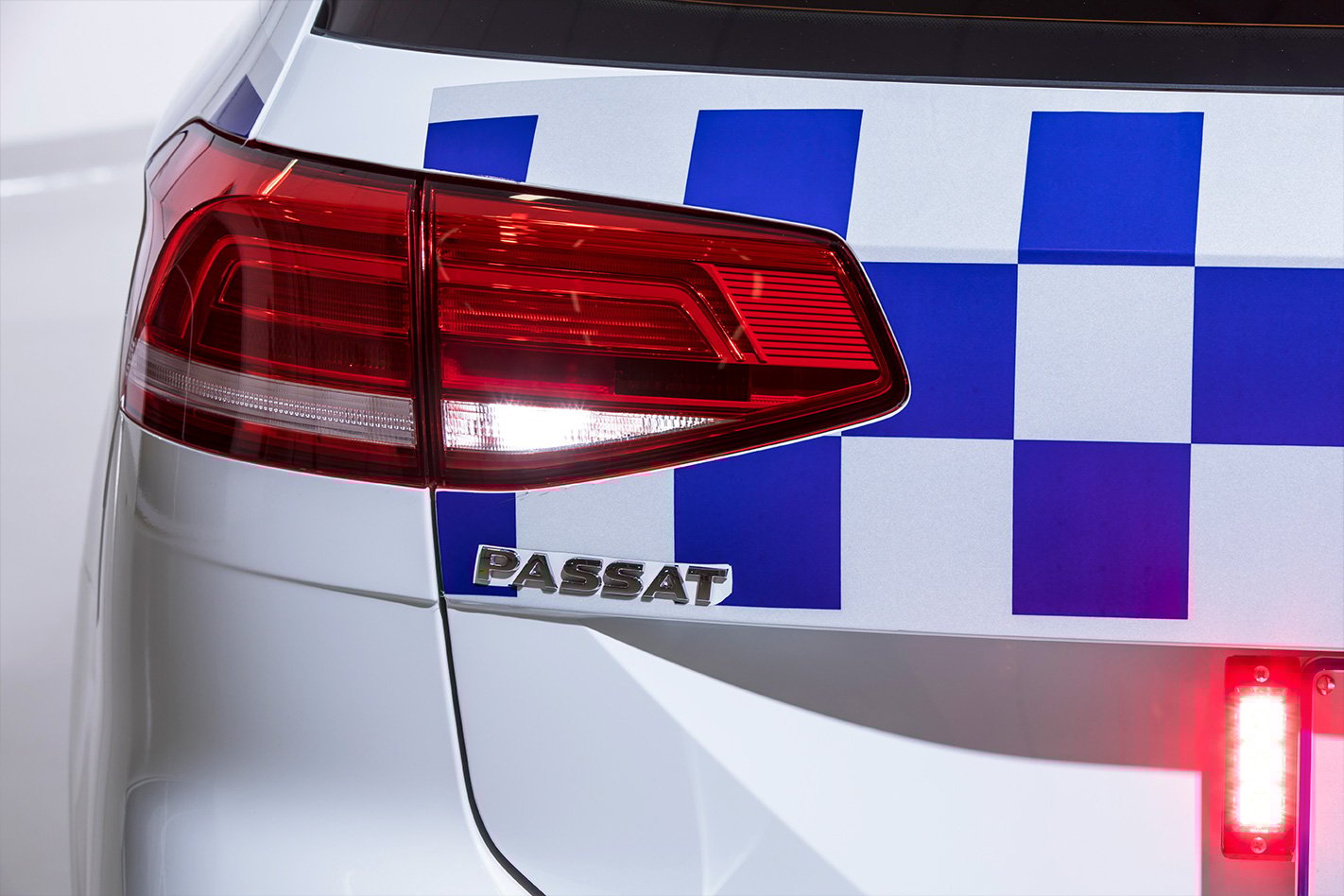
Other cars to join police forces around Australia in the past couple of years include the BMW 530d and Chrylser 300 SRT, Kia Stinger and Hyundai Sonata. Police forces have also used exotic cars for promotional duties, including a Honda Civic Type-R hot hatch which has just been seconded to the NSW Police.
When the oil has dried up and the combustion engine is nothing more than a holographic memoir at a museum where people touch a thing called the gear stick and are mesmerised by the mechanical workings of a six-stacker CD player, it will be Tesla that gets an exhibit all to itself.
A brilliant start-up that has revolutionised the automobile into the electric age, it is yet to be seen if it will be a brilliant car maker.
Its most important vehicle, the upcoming Model Y, is already beginning to feel like more than just the SUV equivalent of the Model 3. Not only will it be a lusted cut-price entry point to Tesla’s SUV range, it will be hard to get your hands on one.
Production timelines are slipping, and the vehicle that was scheduled to be fused together this year won’t go into production until at least 2020. According to documents leaked by Business Insider, it should be August, but as the Model 3 and its shanty tent production line showed, Tesla is still only half way through the book on how to build a car. To its credit, the US maker has increased production of that car dramatically, but at what cost?
On a recent trip to the States where the Model 3, that still eludes Australians, is running in the wild, yours truly had the displeasure of seeing the panel gaps and inconsistencies the rushed program has delivered.
It didn’t matter five years ago, just a short hop in automotive time, when fully-electric cars were more an environmentally friendly accessory than a viable alternative to the family car. But here we are just half a decade later and many of the big makers have delivered, or are at the cusp of, launching alternatives; the Jaguar i-Pace, Mercedes-Benz EQC, Audi e-tron, Hyundai Kona electric, Kia e-Niro and BMW iX3, built by established car makers with a reputation for being on time.
They’re also consistent. Tesla just last month announced it would close all of its dealerships and go to an online-only sales model with reduced pricing. It has now reneged and will keep its brick and mortar stores open, with the price of all its models except the Model 3 increasing by around 3 percent.
It smells a little of desperation from disorder, and comes at a key moment where rivals are about to enter the market. Even Tesla’s elusive ute, which was mentioned before the idea seemed practical, now has competition from another start-up Rivian, and the world’s best-selling pickup maker, Ford.
But when Tesla reveals its Model Y in full this Friday at a design studio in Los Angeles (more pictures to come) it will be to great fanfare. It is the automotive equivalent of the iPhone, and public pining seems nonsensical when there are solid alternatives coming thick and fast. Ones that you can actually buy.
Tune in to Wheels tomorrow to see the shiny new Model Y and what we can expect.
THE BMW E30 M3 was a state of the art sports coupe back in 1987. But then that was a time when a Commodore 64 was a pretty flash bit of kit.
Nowadays mobile phones have processors that are 2800 times quicker than the best-selling personal computer of all time. The quickest car you could buy in 1987 was a RUF CTR Yellowbird with 350kW. Nowadays you can buy 1400kW electric hypercars. It’s fair to say that things have moved on. So where does that leave the E30 M3?
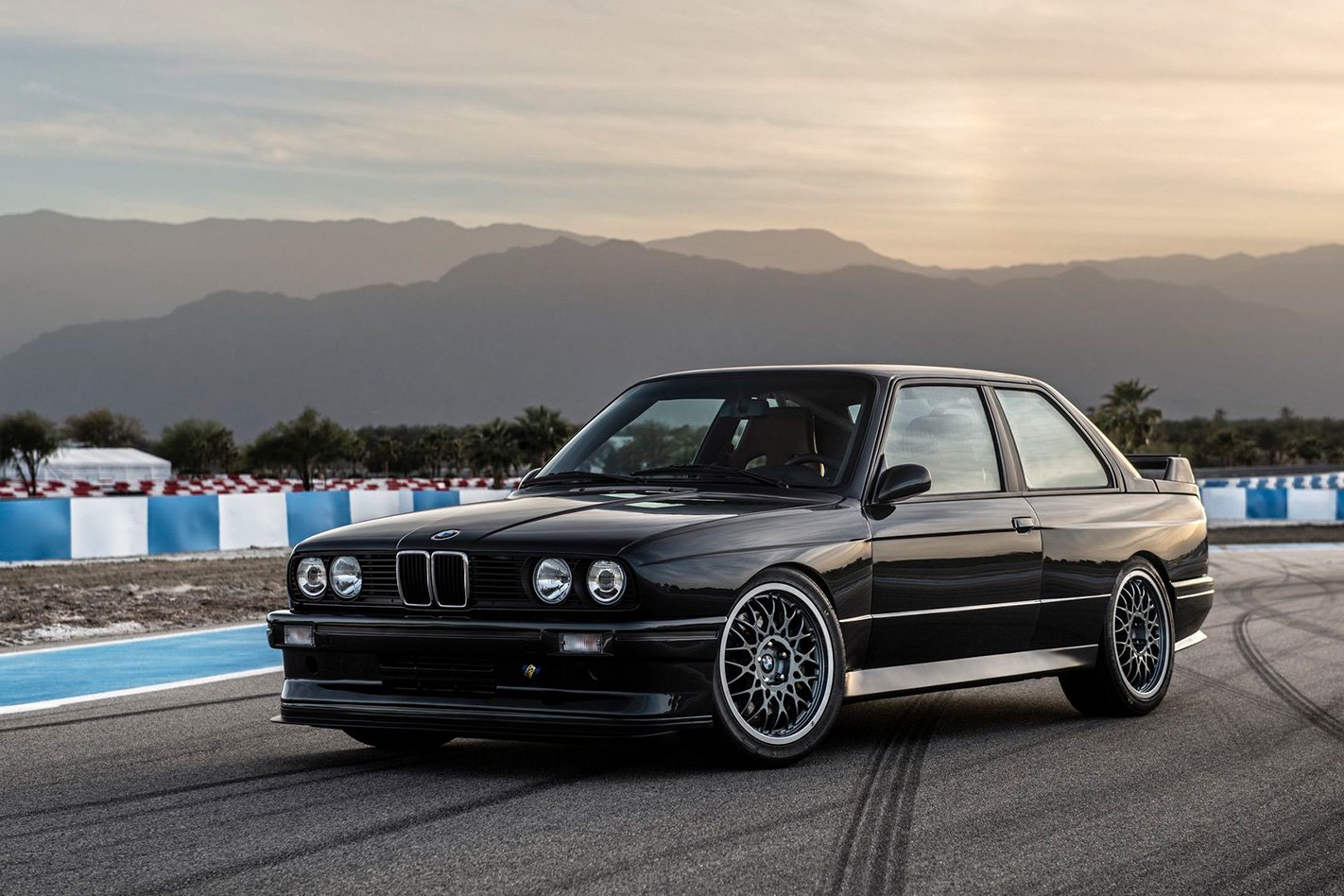
Predictably, left behind, if we’re brutally honest. Tiff Needell lapped the Anglesey circuit quicker in a Colt CZT, itself hardly the acme of cutting edge sports cars.
Sure, age has done little to wither the acuity of the M3’s steering, the great visibility from the airy glasshouse, the wristy gearshift or the pin-sharp throttle response. But, like any car now over three decades old, it can feel a little quaint.
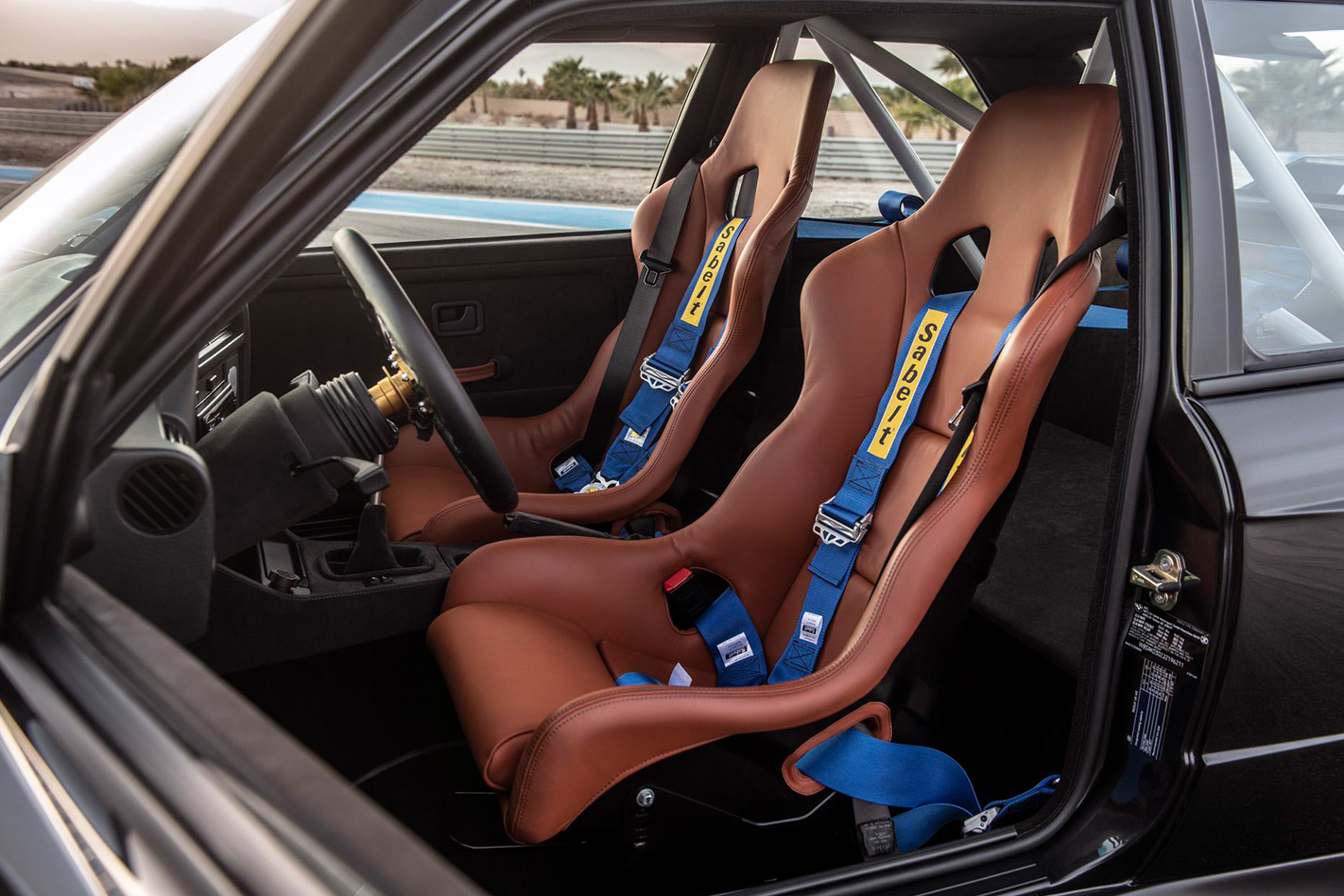
British engineering outfit Redux Leichtbau has the answer, and it involves a root-and-branch update of the bits that matter. We’d hesitate to call it a restomod, because people usually interpret that term to include styling that’s been brought up to date, but think of the Redux E30 M3 as the Singer 911 of its ilk and you’re not too far off the mark. In fact, Redux might even be a little more ambitious than Singer Vehicle Design.
Redux CEO Simon Lord originally hankered after the ultimate E30 M3 race car, and embarked upon a program of researching what needed to happen in terms of weight reduction, chassis stiffening, suspension redesign, as well as braking and engine improvements.
First stop was EXE-TC. Seven of Sebastien Loeb’s World Rally Championships were won on EXE-TC dampers, so it’s fair to say these guys know what they’re doing when it comes to three- or four-way dampers.
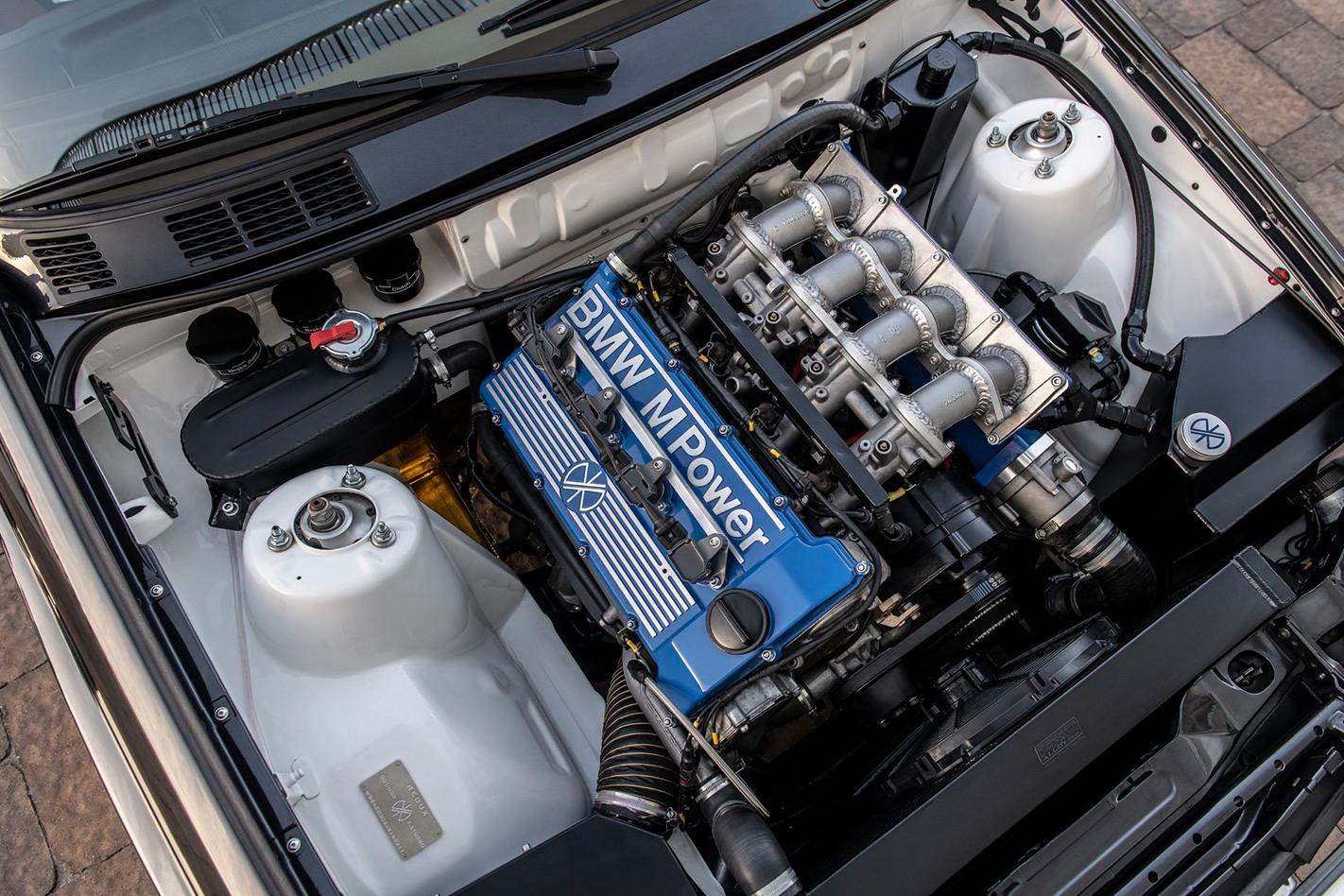
The fade-prone brakes get replaced by a monster AP Racing setup with six-piston fronts and four-pots for the rears. A 330mm/304mm disc setup is the most popular, although the company can go larger and fit carbon ceramics if required. The traditional E30 M3 issue of insufficient spacing between the disc faces and the wheel spokes (which tends to prevent meatier calipers being fitted) was fully addressed when redesigning wheels and suspension.
There are in-house front control arms, anti-roll bars, front and rear cross members, front uprights and rear trailing arms. That’s on top of beefier bushings and upgraded drive flanges and hubs. The forged aluminium monobloc wheels from Cinel (a centre-lock look is also offered) are shod with Michelin Pilot Super Sport Sport 4 rubber, and are designed to subtly play on a 1980s cross-spoke BBS vibe.
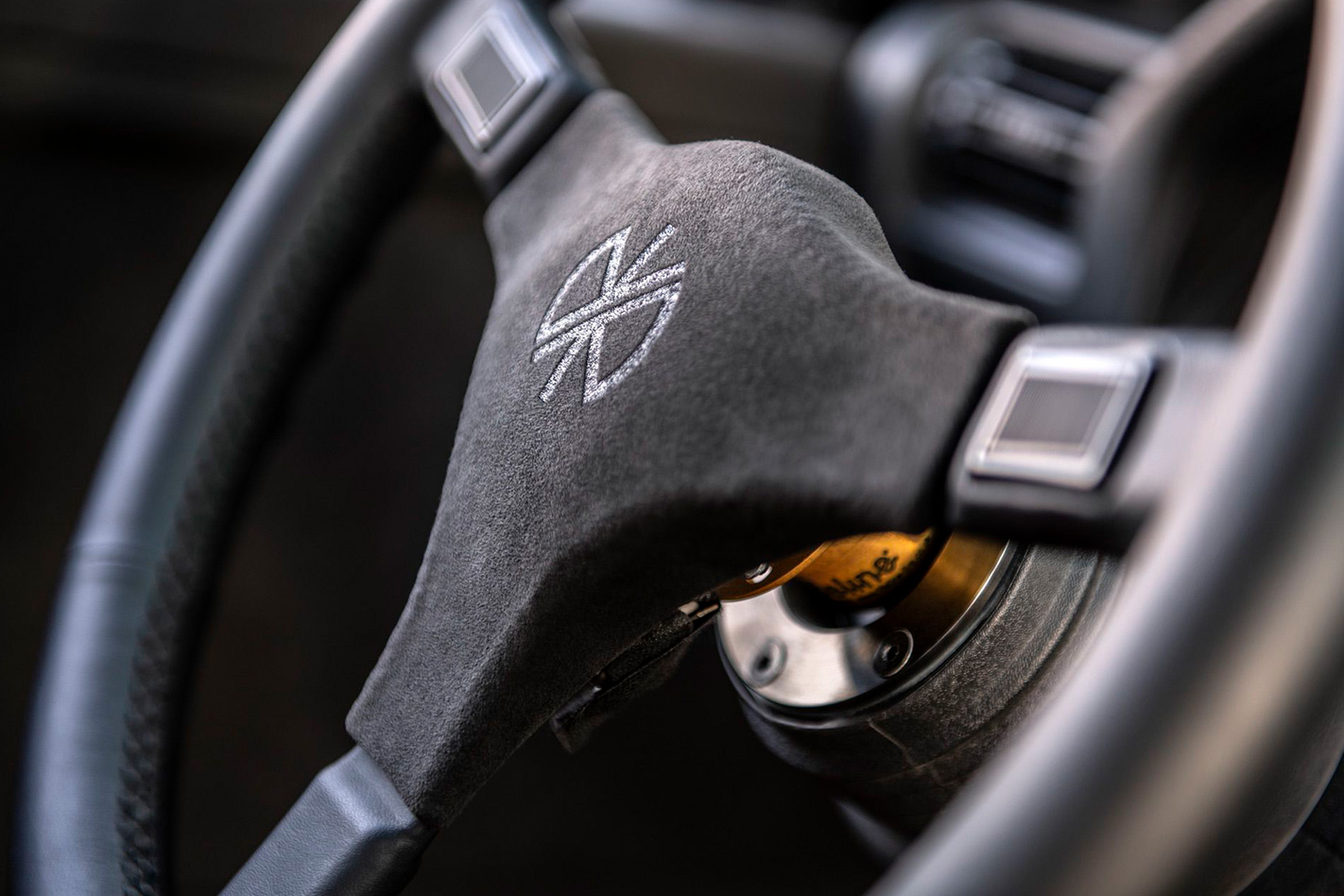
The engine also comes in for some love. The original E30 M3 had to make do with a mere 138kW from its four-cylinder 2.3-litre lump. This engine was enlarged to 2.5-litres for later Sport Evolution models and Redux replicate this work on the smaller capacity engine.
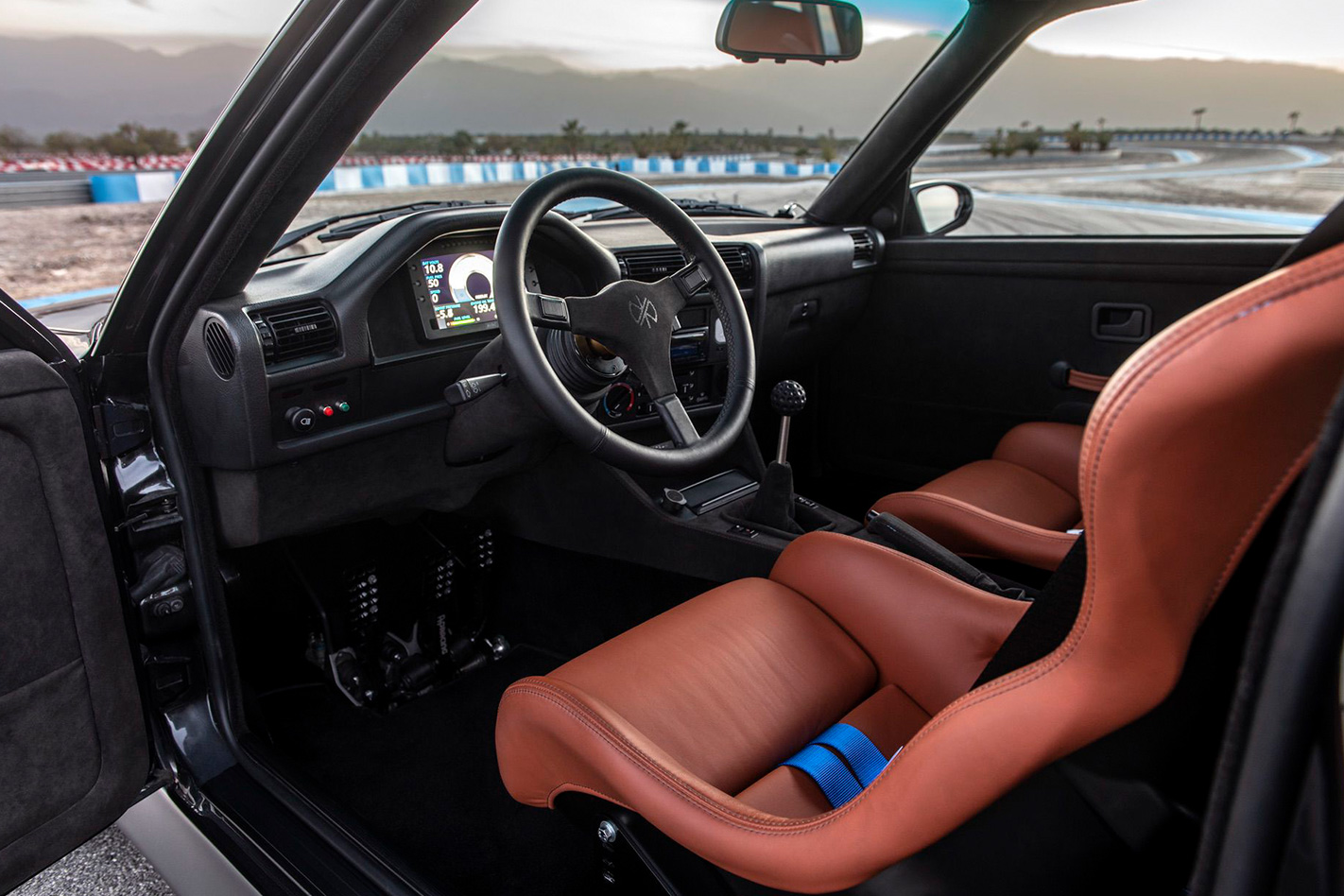
There’s also custom rods, pistons and a BMW Motorsport crankshaft. A Motec ECU, a freer-breathing radiator, and a bespoke engine loom. We appreciate that this may be sacrilegious to some – and bear in mind that an atmo 2.5-litre four has its limits – but you can also specify a turbocharged version that’s good for 289kW and 529Nm. That ought to deliver a power to weight ratio (when caged) of 207kW/tonne, which is about on par with a current Porsche 911 Carrera S. Power is delivered to the rear boots via heavy-duty half-shafts and a chunkier driveshaft mating with a rebuilt diff.
Inside the car, customers get the opportunity to go completely nuts with trim inserts, upholsteries and colour combinations. Most will choose a sympathetic update of the original look and feel and only 30 cars will be built, each taking between 18 and 24 months to complete. Pricing is naturally fluid, as Redux will either convert your existing E30 M3 to spec, or can source a car for you.
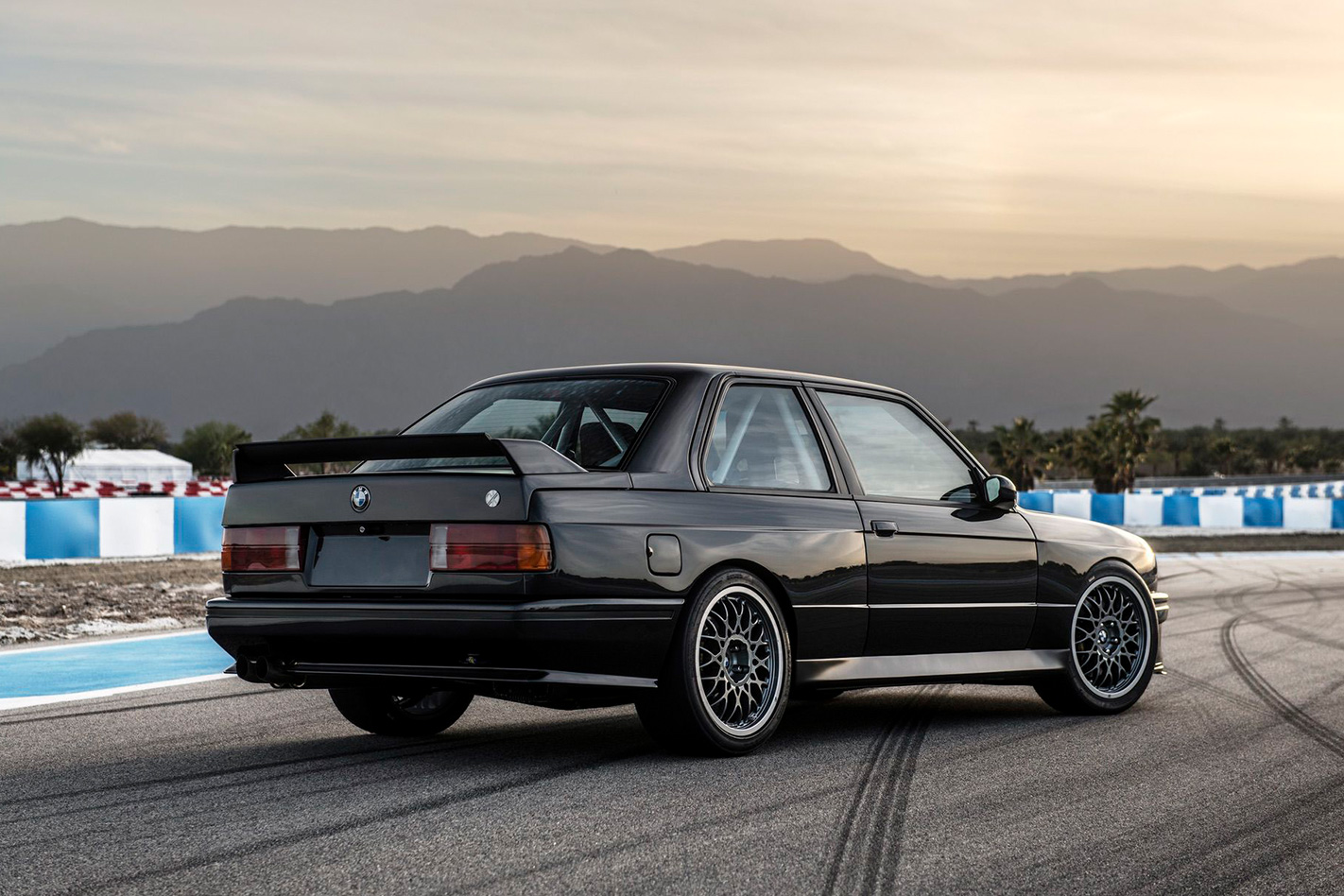
If you love old M3s but want to do more than polish them and reminisce, you know what to do.
1. Red Bull’s fireworks
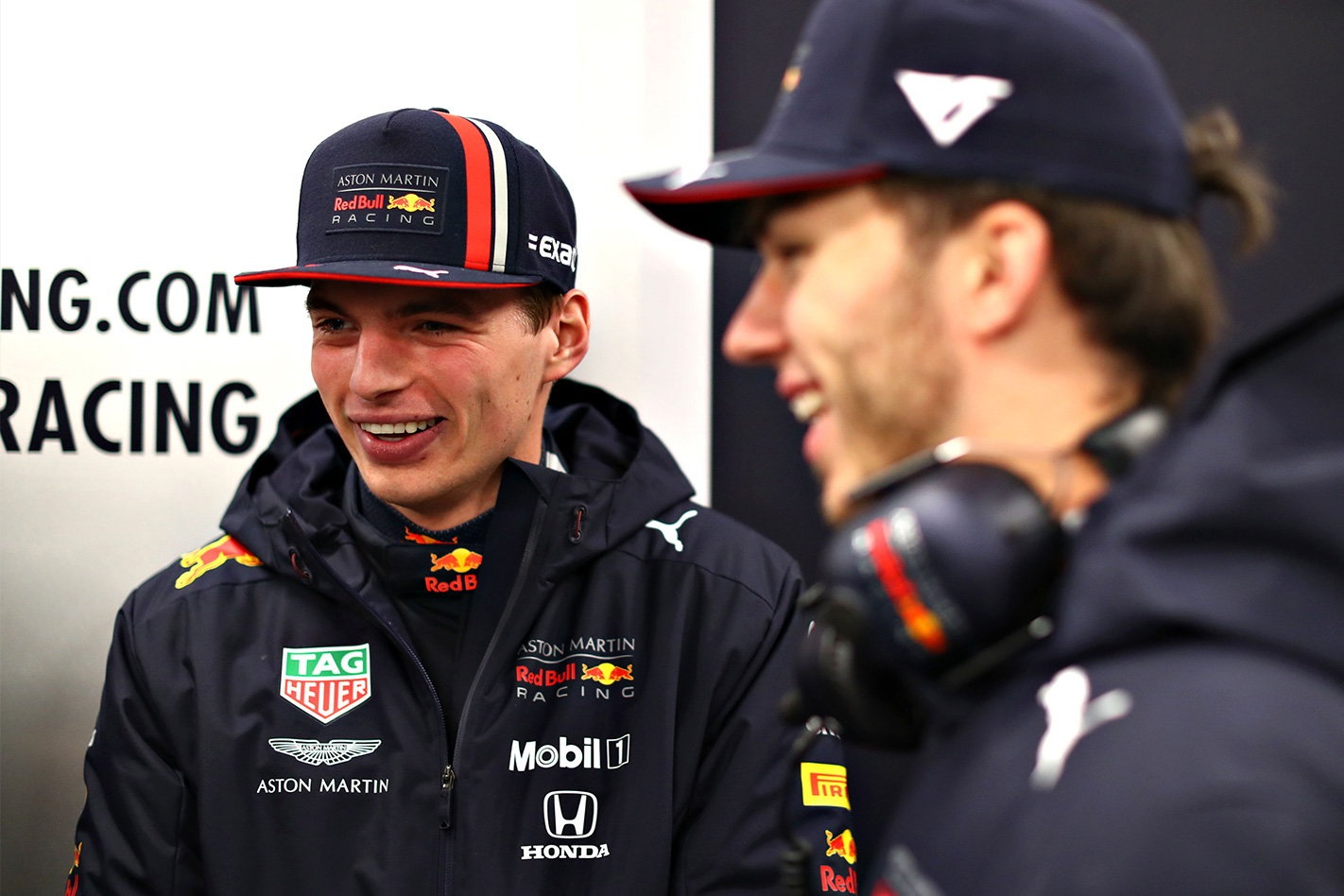
Young gun Pierre Gasly replaces Danny Ricciardo at Red Bull, joining the Dutch wunderkid Max Verstappen. The duo have traded verbal barbs in the media before the season has even begun, with newcomer Gasly refusing to be relegated to support-driver status, and Verstappen attempting to assert dominance within the team. While the two drivers may have a clash of egos, the team’s engineers will be working to ensure their engines don’t explode every third lap. Red Bull has switched from Renault to Honda power for 2019. The gamble could backfire, with uncertainty surrounding Honda’s reliability.
2. The grid reshuffle
Of the 10 teams on the 2019 F1 grid, just two will have the same driver pairings from last year (Mercedes-AMG and Haas F1) when they line up for the opening round. Fresh blood has been injected into the grid with rookies Lando Norris, Antonio Giovinazzi, Alexander Albon and George Russell making their debuts. Reshuffled line-ups at McLaren, which will pair rookie Norris with Spaniard Carlos Sainz Jr, and Williams, where Russell is partnered with returning veteran Robert Kubica, are unlikely to change fortunes. Both teams will hope to reignite the glory of days past, but are probably going to be squabbling over single-digit points.

3. Vettel’s worst nightmare
Sebastian Vettel’s major concern for 2019 won’t be someone draped in Mercedes colours, but the scarlet red of his own Ferrari team. Replacing Kimi Raikkonen at Ferrari for 2019 is Charles Leclerc, who was promoted at the wishes of the late Sergio Marchionne. It wouldn’t be the first time Vettel has been trounced by a younger teammate – Daniel Ricciardo embarrassed the four-time champ when he joined Red Bull in 2014.

4. It’s make or break for Daniel Riccardo
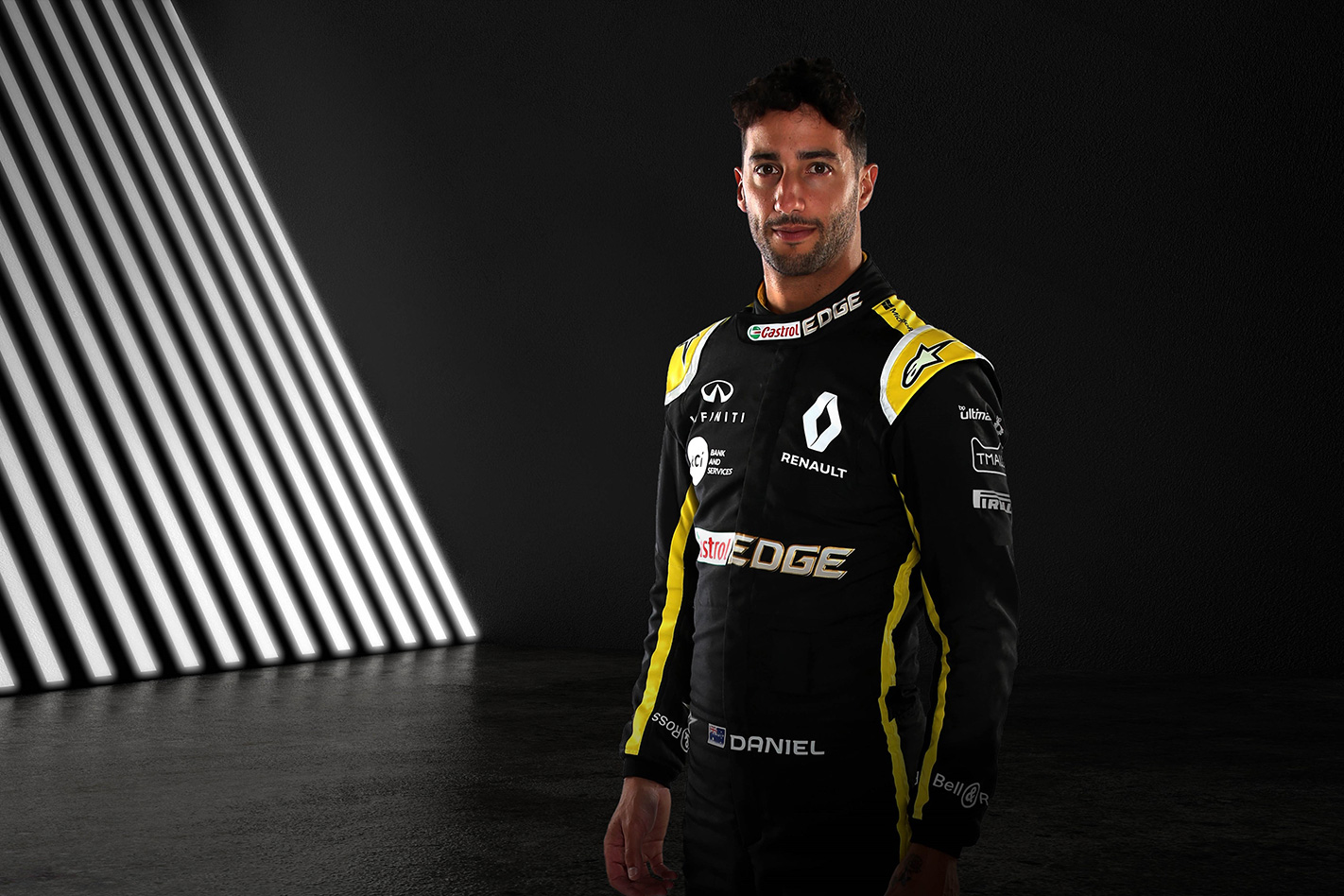
Daniel Ricciardo is in for a year that could either make his F1 career, or cripple his reputation. A shock move to the mid-field Renault team for 2019 has left many in pitlane scratching their heads. Two scenarios can play out. Ricciardo could help build Renault into a race-winning squad as a team leader, a la Hamilton at Mercedes, or the French team’s woes could continue, and the Aussie’s stock within the paddock could plummet.
5. New looks, but will they work?
F1’s new head honchos rushed through a bevy of regulation changes for the 2019 season in the hopes of improving racing. The most important are the aerodynamic changes, which mean ’19 cars will have larger, simpler front wings, and wider rear ones, in an effort to mitigate the effect of ‘dirty’ air. However, the regulations were hastily scripted, prompting some to cast doubts over their effectiveness. As per every year.
