
Alex meets a big new SUV wearing Holden badges but finds it is shamelessly American.
See the full episode: Watch at tenplay.com.au (AU) or primetv.co.nz (NZ)
We’re outback in a new ute from Mercedes-Benz to see if it can handle the toughest country on Earth. Matt finds out if the X-Class is a genuine off-roader that can take hard yakka or a ute more at home on the road?
See the full episode: Watch at tenplay.com.au (AU) or primetv.co.nz (NZ)
The Holden Acadia is thrown against its main rivals from Mazda and Toyota. It’s a claws-out Acadia, CX-9 and Kluger three-way battle to close the week.
See the full episode: Watch at tenplay.com.au (AU) or primetv.co.nz (NZ)
We take you behind the scenes of Wheels Car of the Year, the world’s longest running and most coveted automotive award. Meet the panel that decides which is the best new car to arrive in 2018 and how they find a winner.
See the full episode: Watch at tenplay.com.au (AU) or primetv.co.nz (NZ)
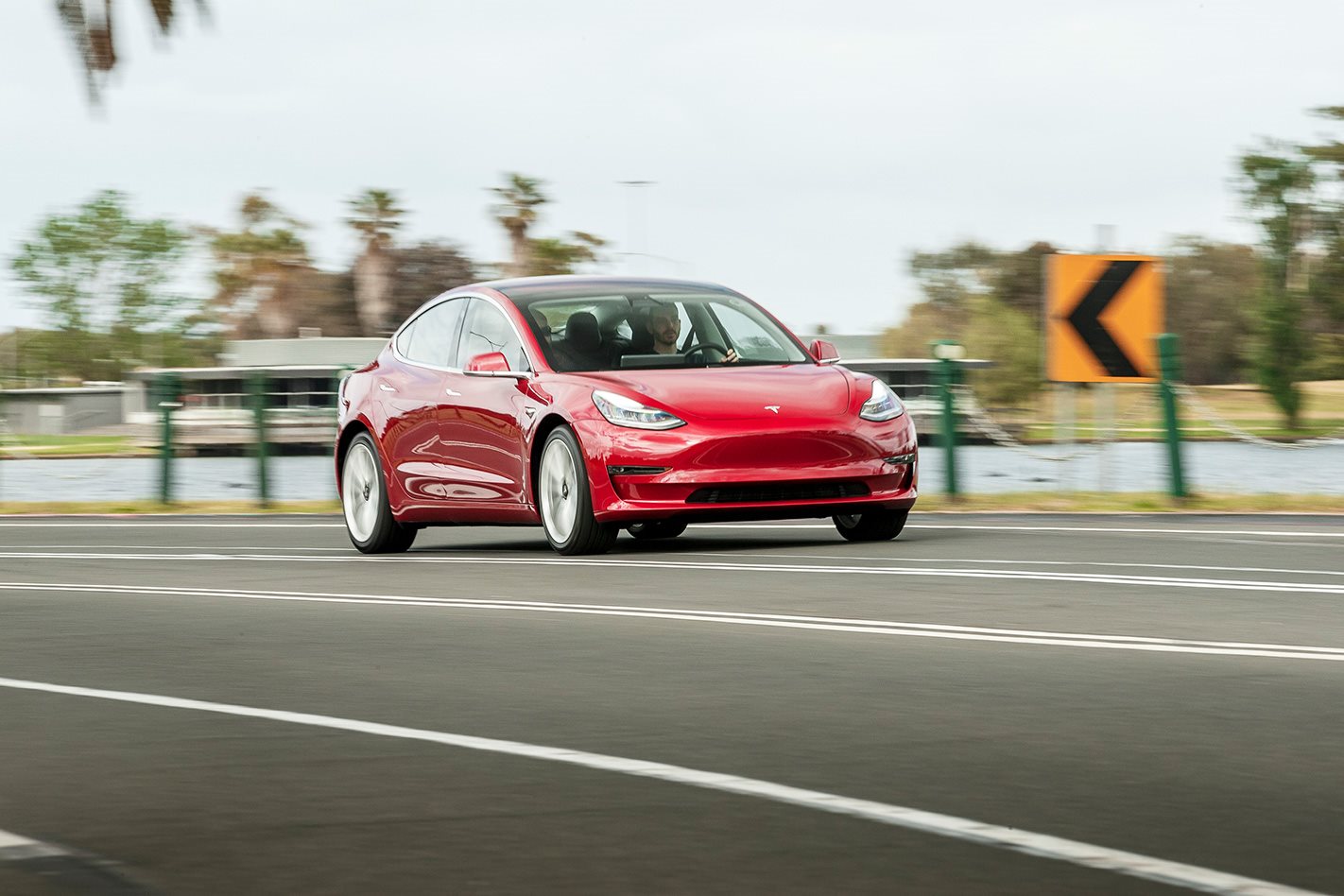
American electric car maker Tesla has announced it will add a fourth model – and its second SUV – to its range in 2020, when it launches the Model Y.
Tesla’s CEO Elon Musk revealed that tooling for the Model Y – which was previewed in 2016 – has been ordered, and that it will be the first Tesla built in the company’s so-called Gigafactory in Nevada.
In a first for a western car company, it will also be built in a new $800 million Tesla-owned plant currently being constructed in Shanghai, China. Previously, western car companies were obliged to partner with Chinese firms to build cars for that market.
By the time the Model Y drops, though, it’ll face increasingly tough competition from more traditional car industry players like Volkswagen, Mercedes-Benz, Jaguar and Audi. More tellingly, the Model Y will have to compete with a plethora of cheaper rivals like Hyundai’s Kona EV, the Kia Niro and others.
The Model Y will be a mid-sized crossover SUV, and it’ll be based on the same platform as the Model 3. The company says the Model Y will share up to 76 per cent of its parts with the Model 3, but it’s unlikely to have the gullwing doors of the company’s larger Model X. By contrast, the Model S and Model X only share an estimated 30 per cent of their parts.
Tesla Model Y specs
Details are scarce, but it’s fair to surmise that the Model Y will share the same five-seat arrangement as the Model 3, and will likely take the form of a five-door coupe-style crossover with greater ride height.
Its powertrains will likely be based on current Model 3 configurations as well, given the short timeline to get the Model Y into production. Expect a similar approach to its power pack rollout, with a Standard version offering around 350km of range from a single rear-mounted electric motor and 50kWh battery kicking off the range, while a Mid Range model with a larger 62kWh battery stretches that claimed range to 499km.
Long Range and Performance variants of the Model 3 currently offer 75kWh battery packs and motors on both axles, and the Model Y will likely follow suit. Loose terrain drive modes may be added to differentiate the Model Y from the 3, but no specs or details have been released.
Model 3 deliveries still unconfirmed beyond ‘2019’
Meanwhile, prospective Model 3 owners may still have some time to wait for their long-awaited cars – and it’s still not even possible to order a Model 3 through the Australian version of Tesla’s website.
A refundable $1500 ‘reservation fee’ can be paid to get onto the queue – but with original reservations dating back to 2016, Elon Musk’s vaguely worded tweet last year that right-hand-drive deliveries would begin “around mid 2019” contrasts with the information on the company’s own site that deliveries will occur ‘in 2019’.
Tesla’s Australian office has been contacted for comment.
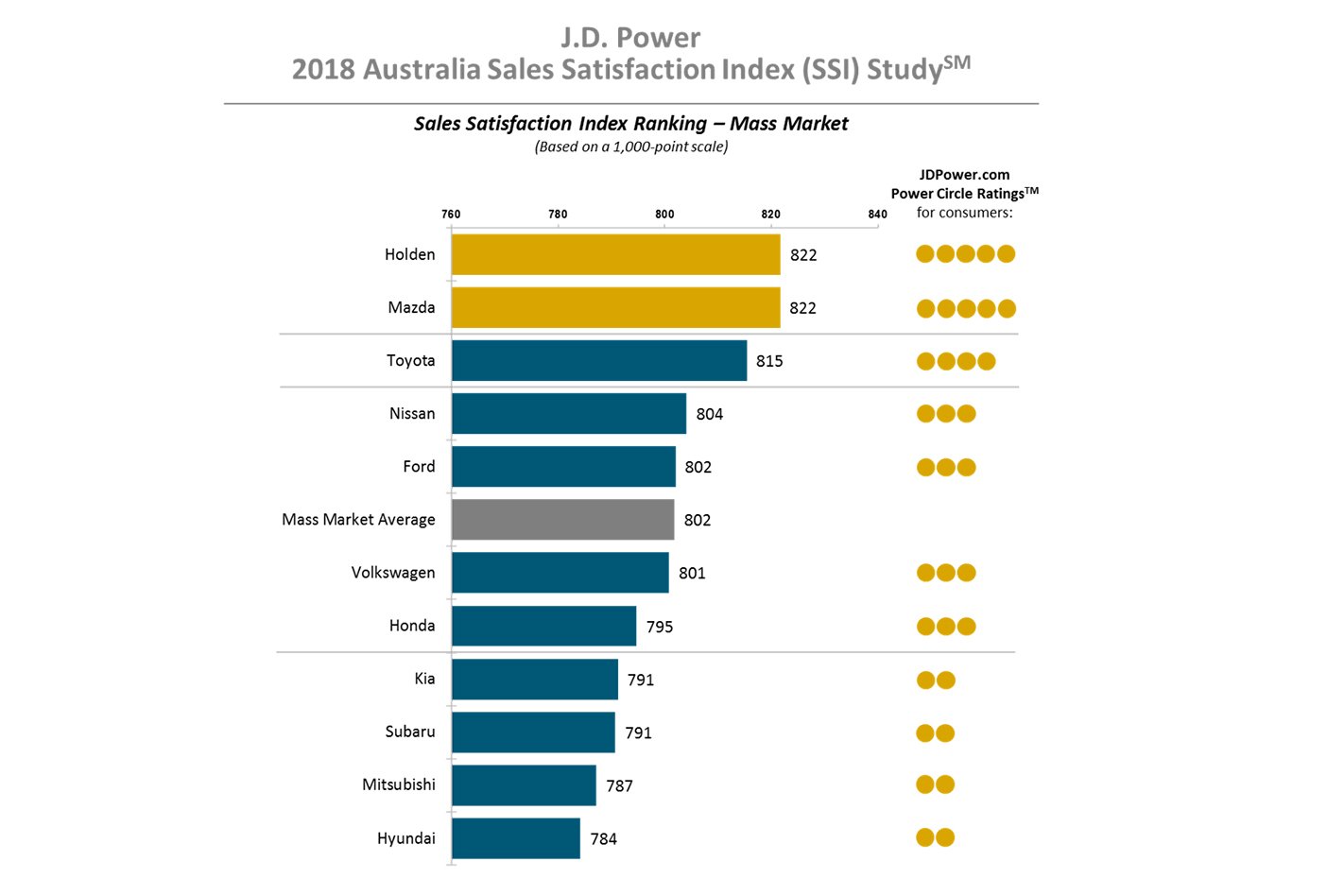
After a shocking 2018 that saw it slide down the national sales ladder, Holden has begun 2019 with the welcome news that it has ranked joint highest among the mass market brands for customer satisfaction.
The embattled Aussie brand tied with Mazda at the top of the prestigious JD Power 2018 Australia Sales Satisfaction Index (SSI) Study with a score of 822 from a 1000-point scale, beating Toyota which ranked third with a score of 815, followed by Nissan (804) and Ford (802).

BMW ranked highest in sales satisfaction in the separate luxury brands survey, with a score of 861, ahead of Audi (836) and Mercedes-Benz (814).
The SSI measures satisfaction with the sales experience among new-vehicle buyers. Buyer satisfaction is based on six measures: dealer sales consultant; delivery process; dealership facility; working out the deal; paperwork completion; and dealership website.
It is based on responses from 3075 buyers who purchased or leased their new vehicle between March 2018 through to January 2019 to provide a ‘comprehensive analysis of the new-vehicle purchase experience and measures customer satisfaction with the selling dealer.
JD Power Australia director Bruce Chellingworth said the sales experience is extremely important given the slowdown in car sales both globally and in Australia, something Holden seems to have heeded.
“It is essential that sales consultants spend the required time with each shopper to identify the best model and variant for their requirements.
“Simply ‘pushing metal’ won’t help the dealership gain positive referral, ensure customer loyalty or promote the brand. In an increasingly competitive market, it is imperative that dealers understand and build trust with their customers,” Chellingworth said.
There was speculation as to how the guilty party had managed to spoof Autopilot’s requirement to prove attention through steering wheel input – I’m imagining a finely balanced beer can – and the usual wave of outrage from the professionally offended. But I bet the first reaction of a significant number of those reading the story was similar to mine: this guy was clearly a pioneer, somebody determined to arrive at the future a bit early.
Although Autopilot is an enhanced cruise control system rather than one that offers true autonomy, it handled the situation coolly and calmly. It kept the Tesla within its lane and safely negotiated other highway users. When the chasing police interceptor realised the miscreant was sleeping too deeply to be woken by sirens or blue lights, another cruiser was sent ahead of the Model S to slow it down, bringing the chase to a drama-free conclusion. All in, it was undoubtedly much less risky than if the sloshed pilot had been doing things himself.
But here’s another thought: isn’t this what we’ve been promised? Carlos Ghosn committed Nissan to its own high-level autonomy project by claiming it would act to liberate those incapable of operating a car by themselves. “You’ll be able to drive no matter what your handicap, no matter what your impairment is,” he promised in 2016. It doesn’t get much more impaired than a 0.3 BAC. Ghosn has gone, in what seems to be a neatly orchestrated palace coup, but Nissan is still pushing ahead with his dream of truly self-driving cars.
The problem is the wait. Piloted driving might feel like autonomy, but it definitely isn’t. The insistence of carmakers that drivers still need to pay full attention as their cars operate themselves in no-stress situations seems deeply disingenuous. Here’s a labour-saving device that, apart from sparing the need to turn a steering wheel, doesn’t stop a driver from being fully responsible for everything the car is doing.
It’s like being a supervisor monitoring every move made by one worker. Small wonder users have been trying to spoof the attention monitoring sentinels with steering wheel weights and the like. While we will have to wait several more years for true hands-off and eyes-off autonomy, it seems that brain-off is already here.
But carmakers are also rushing to introduce ever more technology that is seemingly aimed at reassuring the timid and spatially unaware. BMW’s new auto-reverse assistant is a neat trick, the car backing down the exact same route it took to get out of tight spots, but it does question the assumption that anybody buying something as potent as an 8 Series or an X5 should be able to manoeuvre it safely at low speeds.
Ditto the battery of lane-keeping and traffic detection systems that top-end cars increasingly ship with, many offering far more widespread intervention than the last resort safety net of AEB and effectively extending the grey area between you being in charge and the car taking control.
Once you’ve experienced the cross-traffic alert’s refusal to let you pull into the path of anything else, are you really going to check as thoroughly next time?
CONTROLLING valve timing with a camshaft is like “playing a piano with a broom”, according to Christian von Koenigsegg – the man behind the bonkers Swedish hypercars that wear his name.
But, according to Jalopnik, Koenigsegg has created an engine that puts camshafts in the bin for a powertrain that is like “playing a piano with your fingers”. And it’s ready for production.
While von Koenigsegg has been grabbing headlines for his hyperbolic road cars, the company has quietly been building up a skunkworks operation called Freevalve, which has been working on the cutting-edge camless engine tech.
After years of gestation, it looks like the engine is about to be slotted under the composite bodywork of the next major Koenigsegg creation.
Pricing is far from confirmed, but, if you know anything about Koenigseggs, you’ll know that adding one to your garage won’t come cheap. Top Gear has thrown some light on the potential ticket price, reporting the camless unit is slated to go into a limited-run hybrid supercar with a price tag of roughly €1 million (A$1.5 million).
Agera RS breaks 0-400-0km/h record
Instead of using a traditional camshaft to open and close valves, the Freevalve engine uses pneumatic actuators, providing infinite valve timing and lift, and dramatically improved control over induction and exhaust flow.
Koenigsegg claims the Freevalve engine can run on diesel, petrol, or alcohol with no mechanical changes (but not at the same time), and can even switch from a two-stroke to a four-stroke cycle.
“Given the Freevalve technology, we can actually cold-start the car on pure alcohol, down to minus 30 degrees Celsius, so there’s no need for any fossil fuel mix then,”
“The idea is to prove to the world that even a combustion engine can be completely CO2 neutral.”
It’s likely the technology will be implemented in the upcoming replacement to the Agera RS.
For the full lowdown on camless engines, read our Explained piece.
It was the Australian automotive industry’s night of nights last Wednesday, with WhichCar, Wheels, Motor and 4×4 Australia hosting a blue carpet full of VIPs of the motoring industry in Melbourne’s Docklands precinct to present four of the country’s most important automotive awards.
Excitement levels stayed high through Ford’s wild Ranger Raptor leaping onto the stage as the winner of 4×4 Of The Year, MOTOR magazine’s 911 GT2 RS taking out Performance Car of the Year, Audi’s new A7 being awarded the coveted WhichCar Style Award, right up until the Volvo XC40 – the 2019 Wheels Car Of The Year.
Channel 10 were on hand to capture all the action for their Studio 10 morning show, interviewing Daniel Gardner of WhichCar, Terry King of Bauer Media and Alex Inwood of Wheels magazine.
Watch the video of Studio 10’s segment above
Sure, your W1 is the fastest, most powerful and last Commodore-based HSV to be built, but does it hold a world record?
Well, the 2006 VZ Maloo R8 does, sitting right under the title for the fastest production ‘pickup truck’ on the planet. And rightfully so.
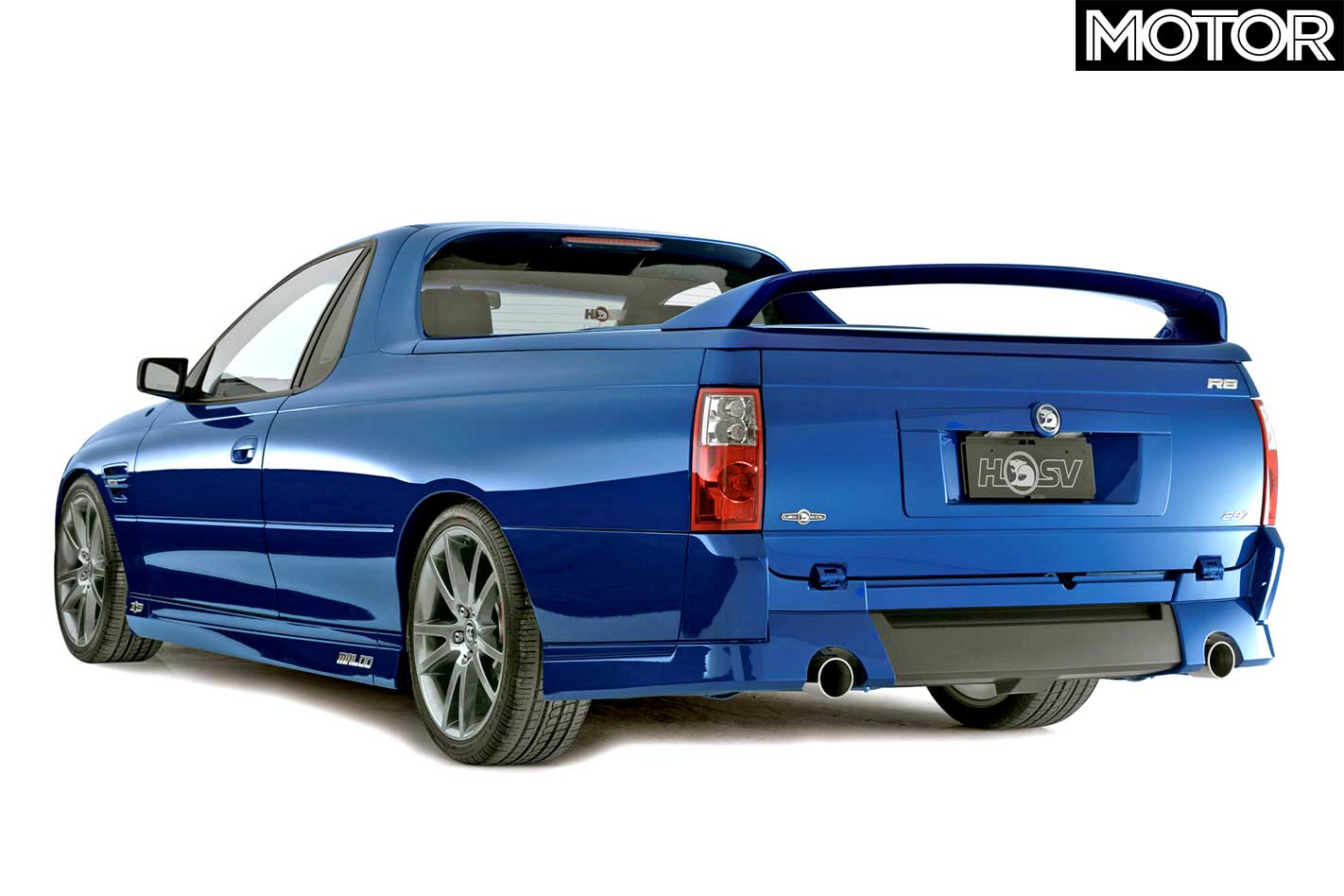
Of course, down here in Australia we’ve called ’em utes since Lewis Bandt helped Mrs Farmer get her pigs to market in the 1930s. And we’ve also been hotting them up for as long as we can remember. Only two years after HSV was founded, it based its first super-ute on the VG Commodore, with a 5.0-litre V8 and overhauled front suspension.
Fast forward 16 years to 2006 and the Maloo had an LS2 V8 with 6.0 litres of shunt and rode on the updated VZ platform. With 297kW, 530Nm and 6500rpm redline, the Maloo certainly could move.
Mark Skaife proved its speed on May 25, 2006, when he tore down a test range in Woomera, South Australia, at 277.16km/h in a four-speed automatic version (the manual version couldn’t pull top revs in sixth). But that’s not the speed you’ll find under its name in the Guinness World Record books.
Its average speed of 271.44km/h was taken from passes in both directions over a full 1000m. Either way, it smashed the previous record held by a Dodge Ram SRT-10 packing a Viper V10 – by more than 20km/h.
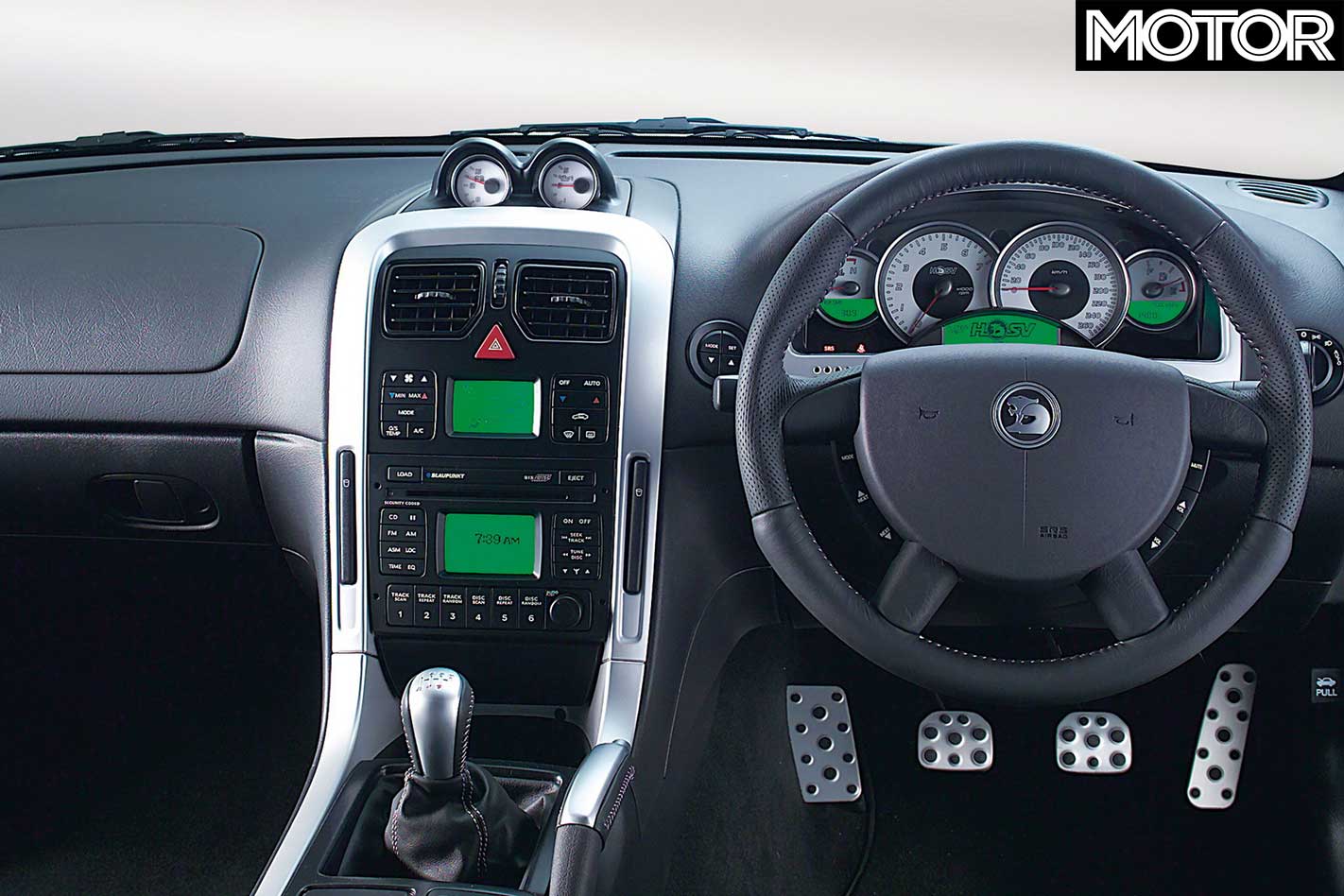
It was good for this kind of stuff, being on a longer wheelbase than its similarly powered coupe and sedan siblings. The independent rear-end was great for handling and gave it the edge on the rival FPV Pursuit ute too. And while that tonneau cover, with spoiler, would have made lobbing tools into the tray tricky, it certainly helped at such speeds, according to HSV at the time.
It might be a pointless record, but we still wonder how fast the more recent Gen F2 supercharged Maloo could have hauled a couple of lawn-mowers…
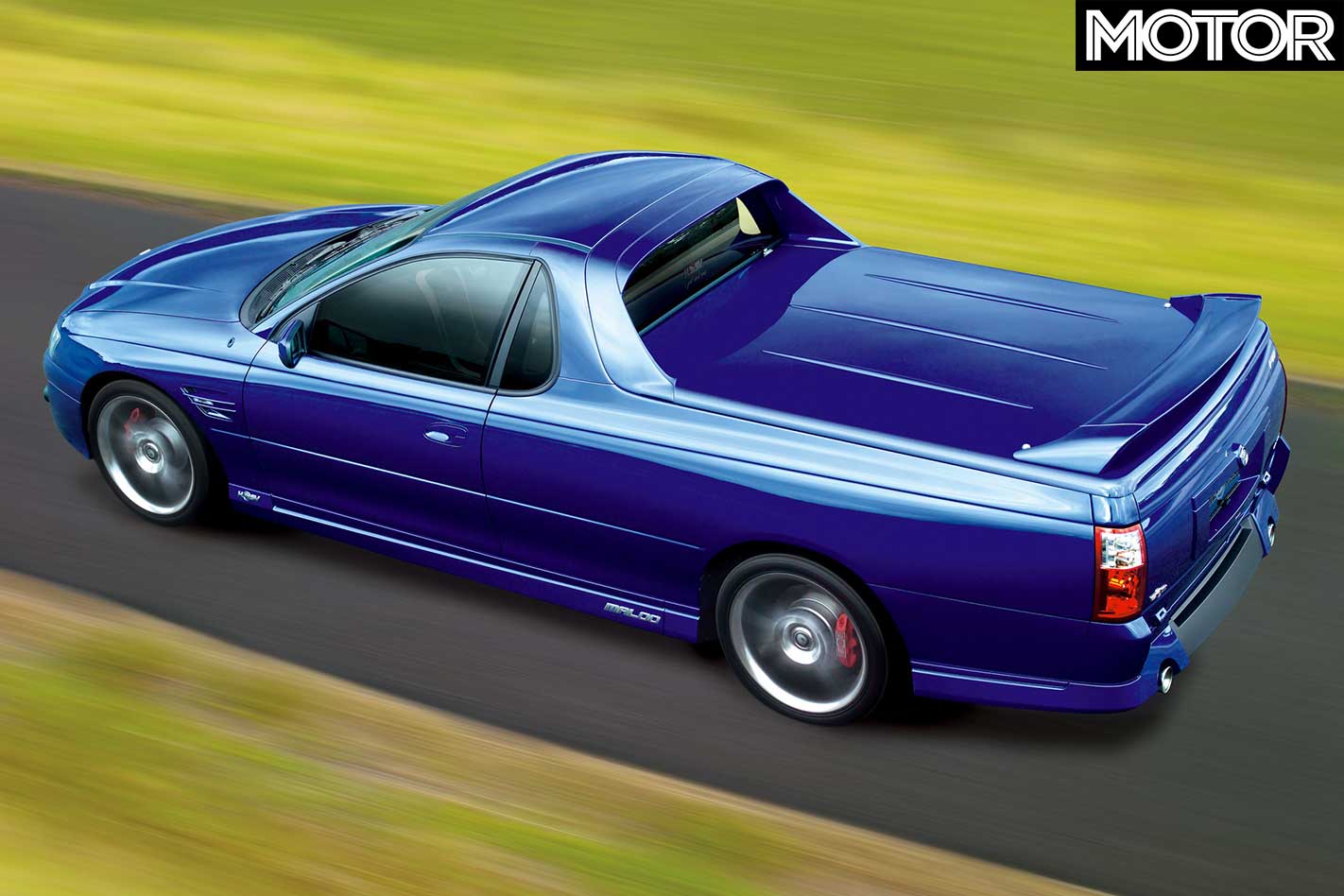
2006 HSV MALOO R8 SPECS Engine: 5967cc V8, OHV, 16v Power: 297kW @ 6000rpm Torque: 530Nm @ 4400rpm 0-100km/h: 6.02 seconds (tested) Price: $63,895 (new)
