
The MG Metro 6R4 was one of many Group B rally cars to take a sizeable departure from the model it was based on, but with a mid-mounted 300(ish)kW V6 and a 0-100km/h time that would give a Porsche 911 a run, it’s arguably the wildest of the bunch.
And now there’s one for sale in the UK.
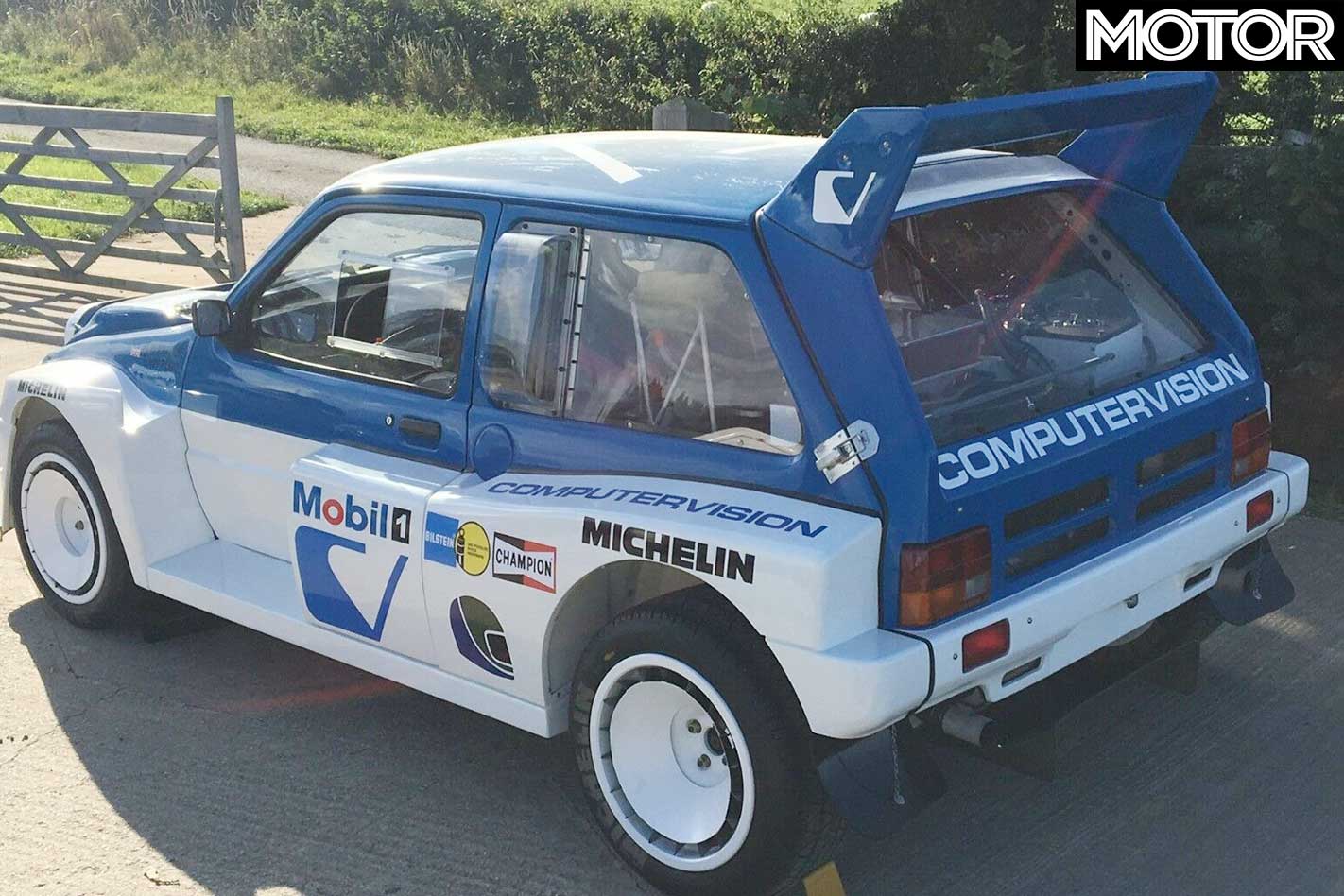
“Originally built to works factory specification by David Appleby Motorsport; this car is a comprehensive recreation of the original eleven Group B international specification competition cars,” says the listing on RA Classics.
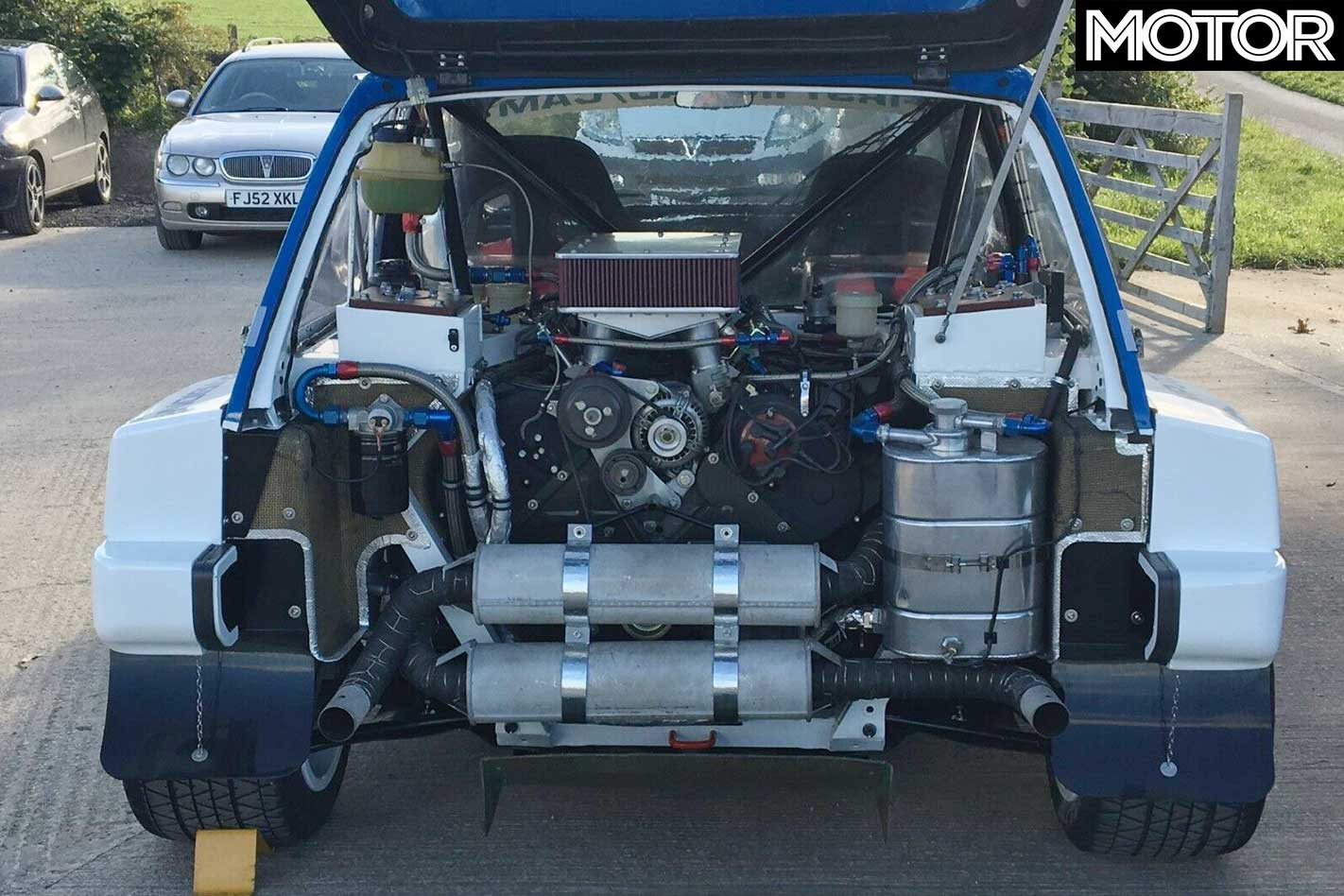
Sporting a “fully original V64V engine and 5-speed transmission,” the drivetrain has been recommissioned by MG Metro 6R4 specialist Pete Goodman.
“In addition to originally manufacturing V64V engines throughout the Group B era, it was Pete who built the V64V that powered Tony Pond’s 6R4 to 3rd place in the 1985 Lombard RAC rally, what would become the most successful result for any 6R4.
“The V64V remains even today the only engine to be designed and manufactured exclusively for rallying applications.”
If you need to see just how much of a weapon the 6R4 is, a video of WRC star Craig Breen driving one at full pelt surfaced in mid-2017, while Pond himself once said they were “difficult to set up, noisy and smelly, but great fun.”
Colin McRae also raced a 6R4 on occasion, with his car appearing for sale a few years ago at around AUD$500K.
The car offered by RA Classicswill set a buyer back an extra AUD$130K for a total of around $630,000. The listing asks for £350,000.
“The interior retains the original dashboard, gauges, clocks and switches, all of which have been restored using the original spec loom installed on site by one of the original 6R4 auto-electrical experts, John Bevan.
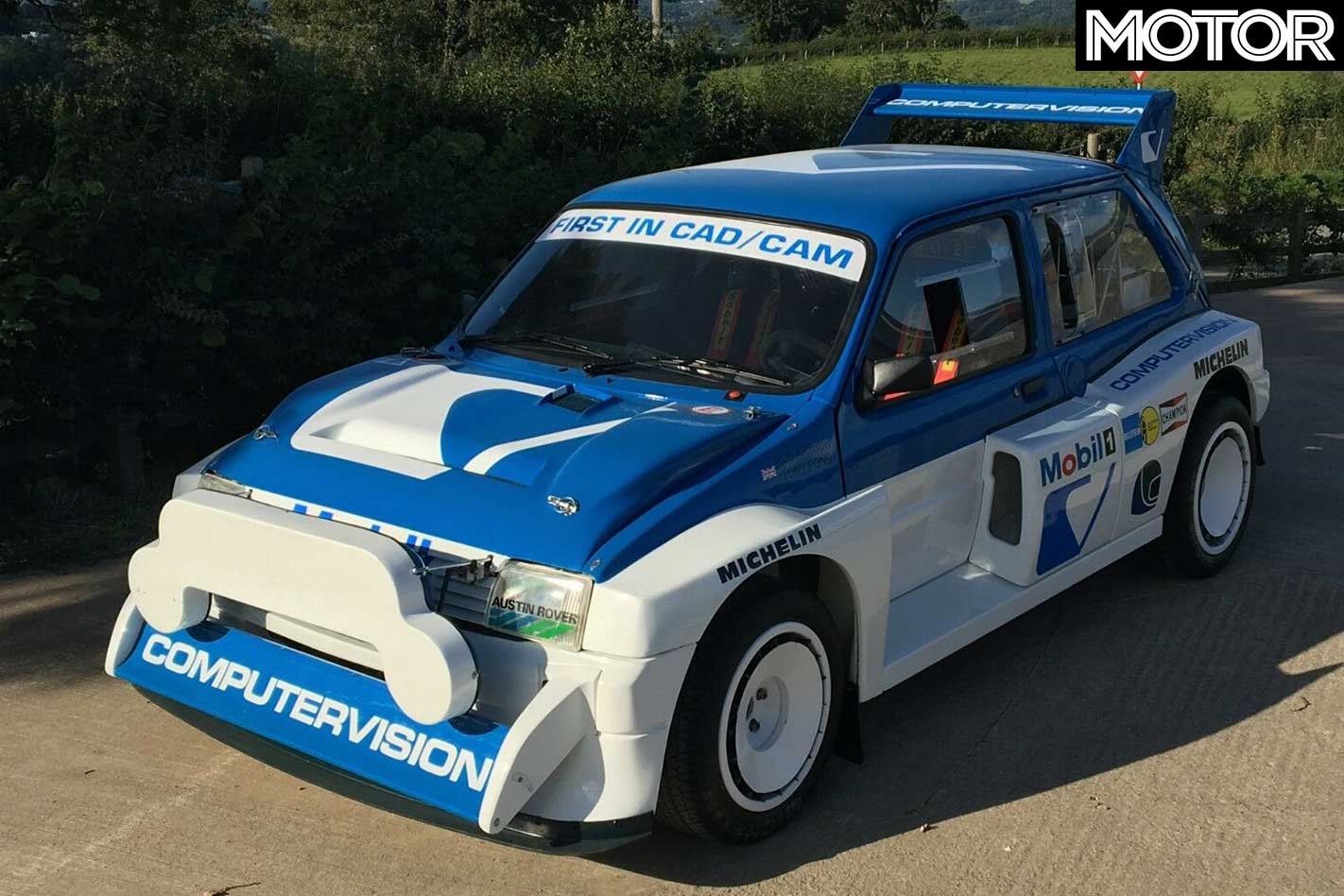
“Authentically finished in its original blue & white colour scheme and adorned with the iconic Computervision livery; this 6R4 represents a fundamental part of rallying, motorsport and automotive history.”
Less than two years after it wowed the world with a genuinely unexpected reveal of a cheeky retro all-electric hatchback concept, Honda will wheel out a near-production version of its first all-electric passenger car.
In September 2017 at the Frankfurt Motor Show, the Japanese automaker whipped the covers off a compact and cute concept dubbed the Honda Urban EV (below). Styled to honour early Honda passenger cars such as the N360 and first-generation Honda Civic, the 3.9-metre long Urban EV concept measured around 10cm shorter than a Honda Jazz and boasted a four-seat cabin, suicide doors and a three-door hatchback bodystyle.
Honda also made the unusual move of announcing that a production version would enter showrooms in Europe by the end of 2019 – the concept was no mere ‘design study’.
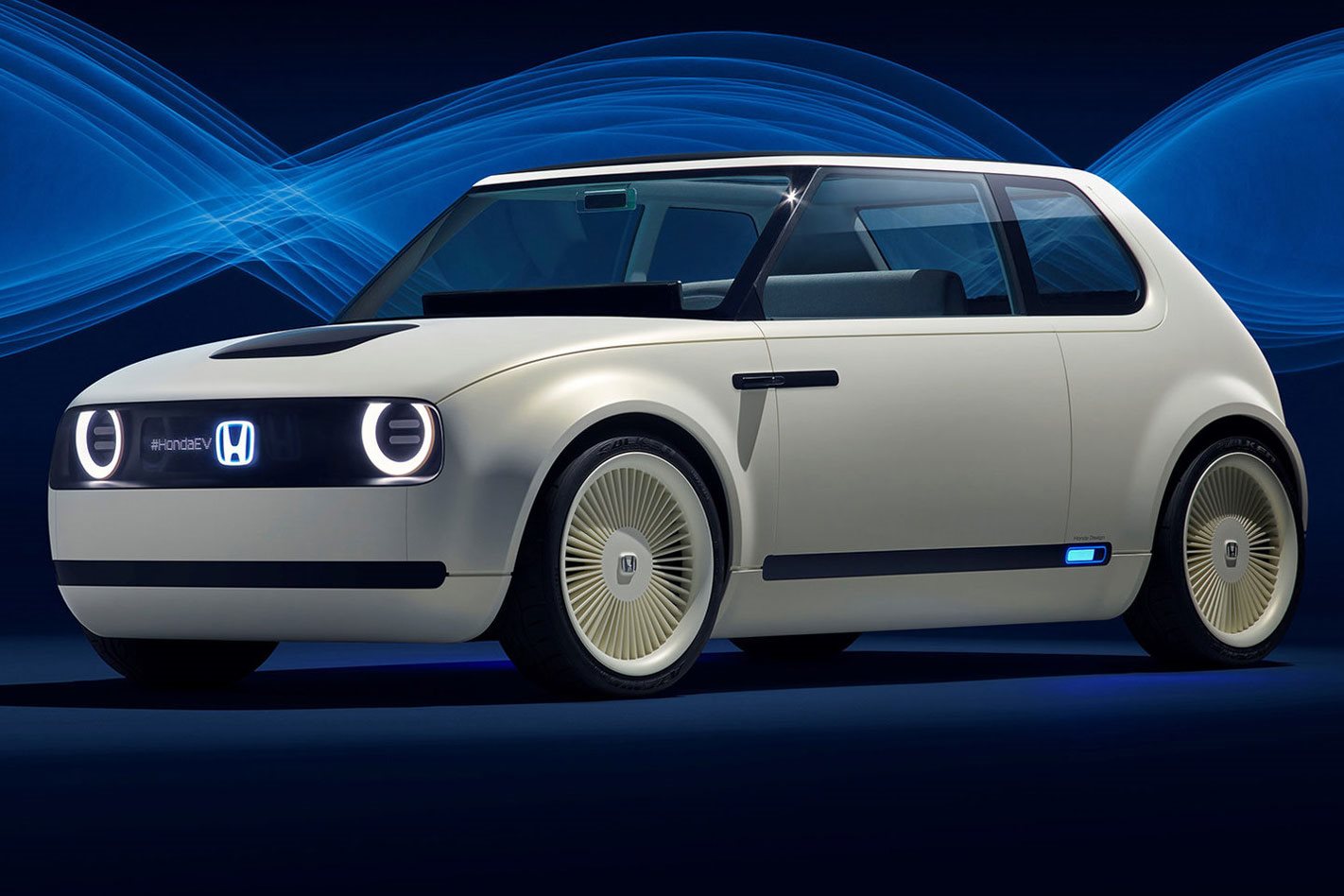
And we’ll get to see the final result at the Geneva Motor Show this March, where the European-market version of the as-yet unnamed electric Honda will be revealed. Precise details have yet to be revealed, including the car’s single-charge range, power output and performance figures, but pre-production prototypes spied testing indicate that the pair of suicide doors have made way for a more practical and conventional five-door arrangement.
A teaser sketch shown by Honda (at top) also indicates that much of the original concept’s design themes will remain, albeit softened somewhat for a more aerodynamic look. Interestingly, it appears the concept’s mirror-replacing rear view cameras will remain.
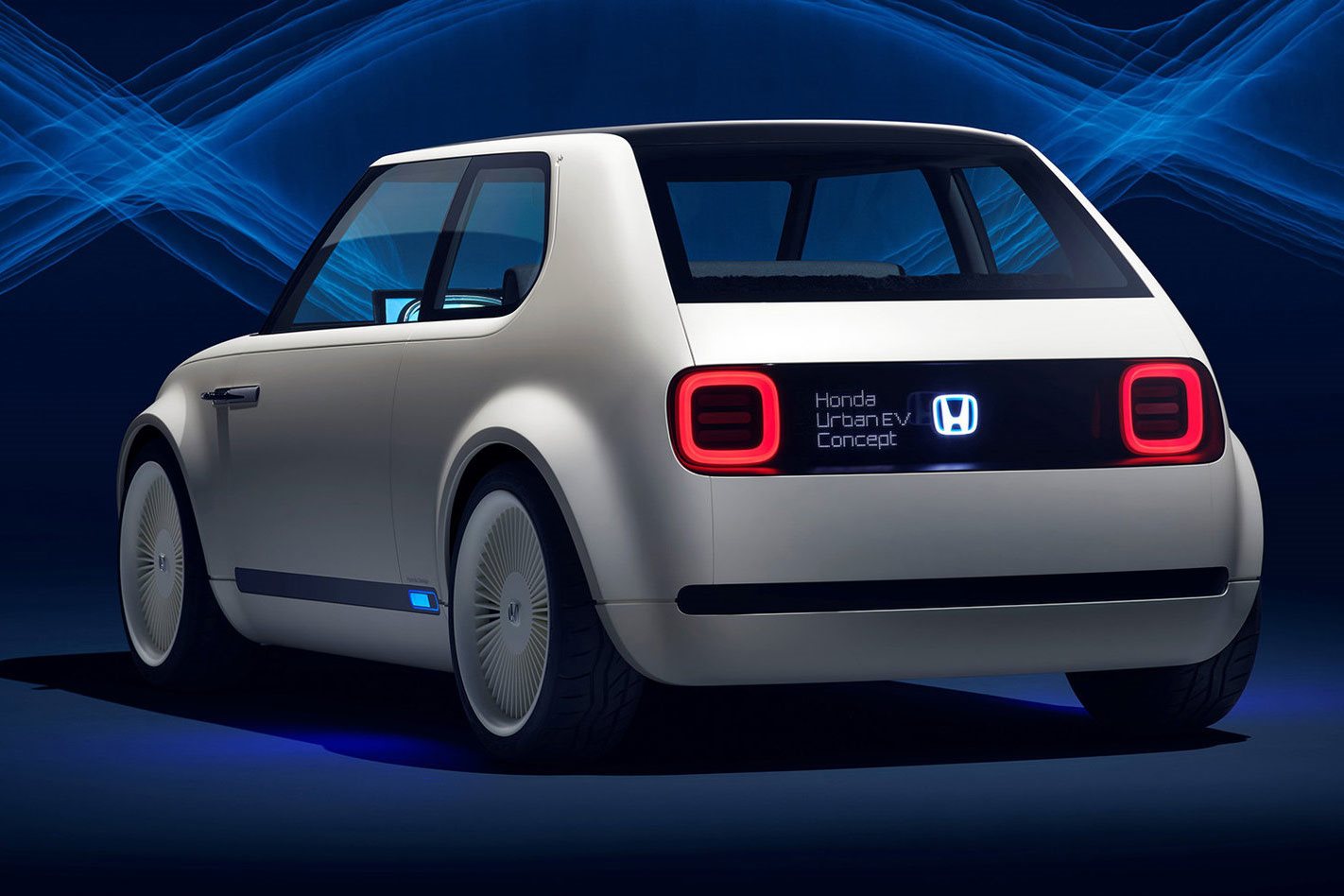
As yet, there’s no indication of price, however, don’t expect this one to be an affordable option for its size. Honda is staying quiet for now, but with the similarly-sized Renault Zoe – one of Europe’s most popular electric cars – selling in Australia for $47,490 and up, we expect the Honda to land in the same ballpark. That is, assuming it gets the green light for Australia as well as Europe and Japan.
Expect to see more of Honda’s intriguing micro-EV as we draw closer to the Geneva Motor Show, which opens on March 7.
So how did the Volvo XC40 really end up as last car standing at 2019’s Car of the Year award? As a member of the seven person judging panel, I get as good an insight as any into how the process works, and this year’s decision was far from a normal one.
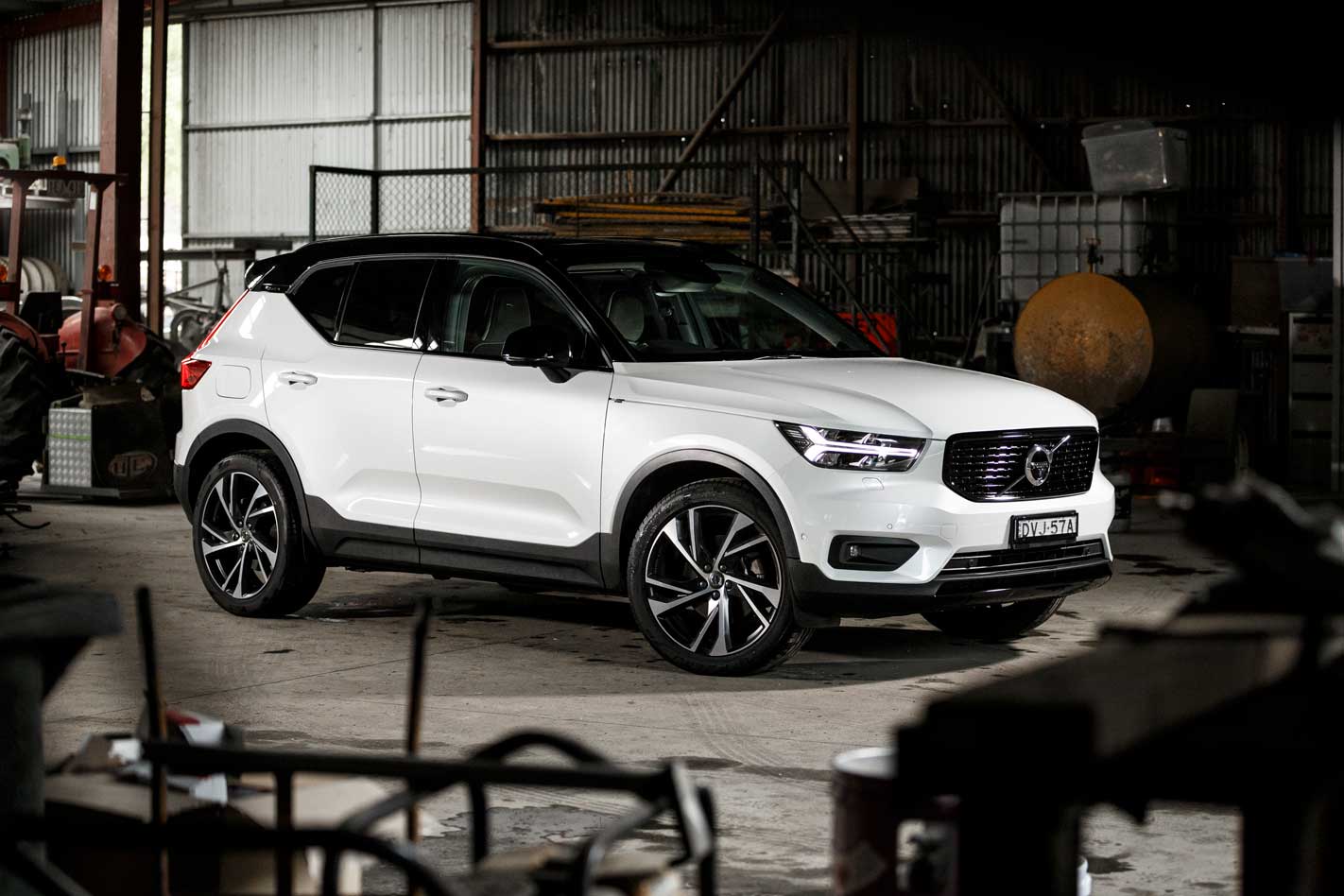
After two days at the proving ground, the general feeling amongst the judges was that COTY ’19 might be a bust. The Jaguar I-Pace seemed to be annihilating all comers and the rest of the week was looking like a scramble for the minor placings. But here’s the thing. The Wheels COTY process has been refined over 56 years and it works pretty well. I’m not saying that we never make mistakes – look back at the previous winners roll and you may feel there’s the odd omission or awards that now appear a little bold – but when applied properly, it’s a solid technique for arriving at a workable conclusion.
That conclusion comes down to the five judging criteria of function, safety, efficiency, technology and value. After the proving ground exercises came the road loops, and these proved the Jag’s Achilles heel, the test cars failing to achieve anything like the range promised. In addition to that, an intermittent battery fault didn’t further endear the British EV to judges.
These issues were brought to light by the process, which sees us spend a week with the cars on bitumen roads and loose dirt tracks, really putting them through the mill in proper Aussie conditions. And after a week of testing, the Volvo XC40’s blend of talents was vying with the Subaru Forester’s for the top spot. Both these cars did well against the judging criteria. Both had a range that was strong from top to bottom and delivered keen value against their immediate rival set.
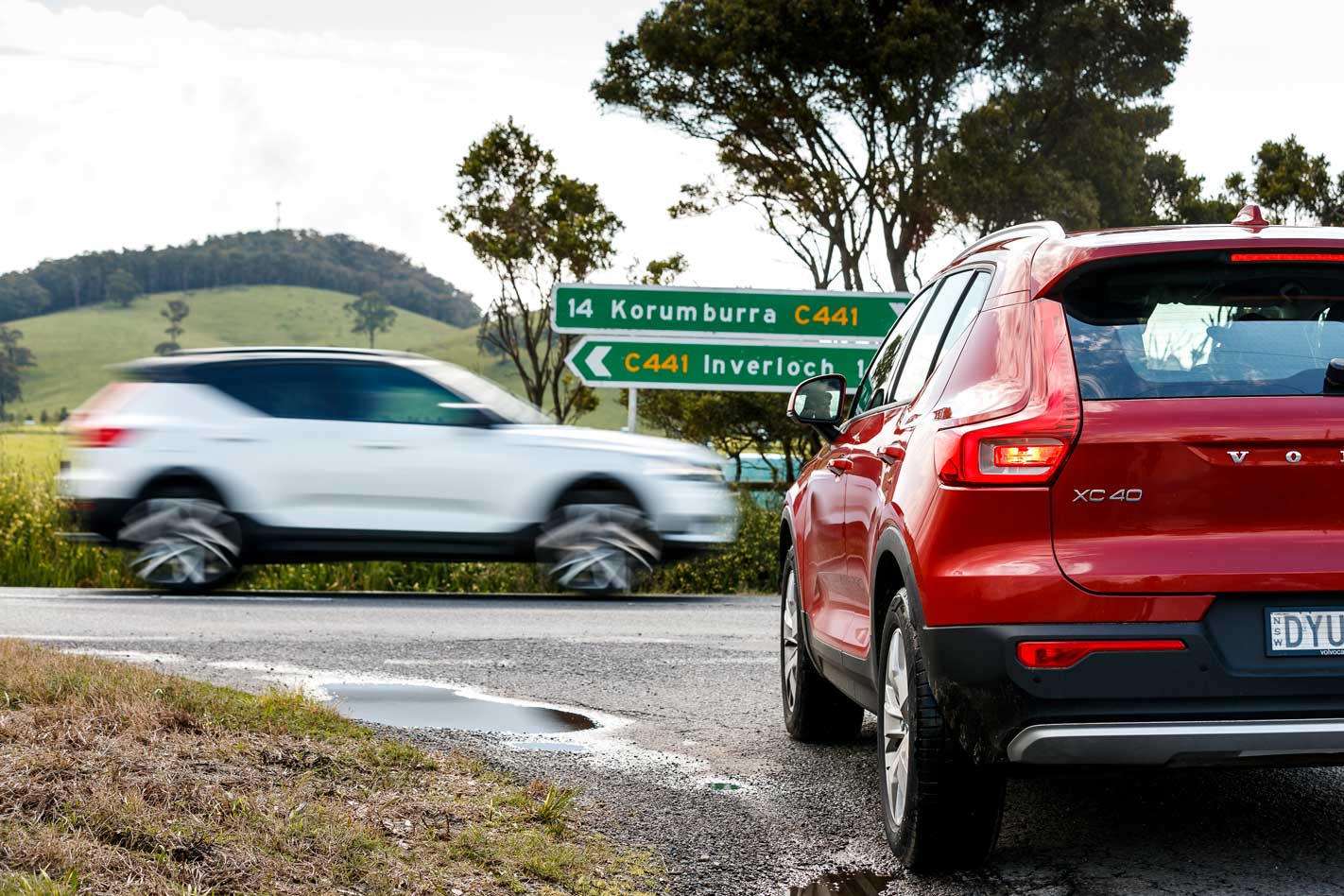
In the end, a number of factors swung the decision in Volvo’s favour. Its ride and handling balance on steel springs was, if anything, even better than last year’s champ, the XC60. It’s polished with a bold design ethos that runs throughout the vehicle. Then there’s the fact that it’s different. It feels half a size bigger than shorter wheelbase rivals like the BMW X2, Jaguar E-Pace and Audi Q2 yet is far cheaper when representative optioning is taken into account.
A 185kW all-wheel drive XC40 T5 R-Design will be far more affordable when specced than a front-drive 141kW BMW X2. The German car retails for much the same price, but bringing it up to the XC40’s equipment specs will add over $5000. The Swede has identical 57 percent three-year residual figures to the BMW, but when the option spend is taken into account, it’ll hold its value far better. And that’s before you’ve taken into account its lower insurance premiums.
At the base end of the range, the XC40 is particularly accessible. An XC40 T4 Momentum with 140kW retails at $44,990. Less powerful Kia Sportages and Hyundai Tucsons retail for more.
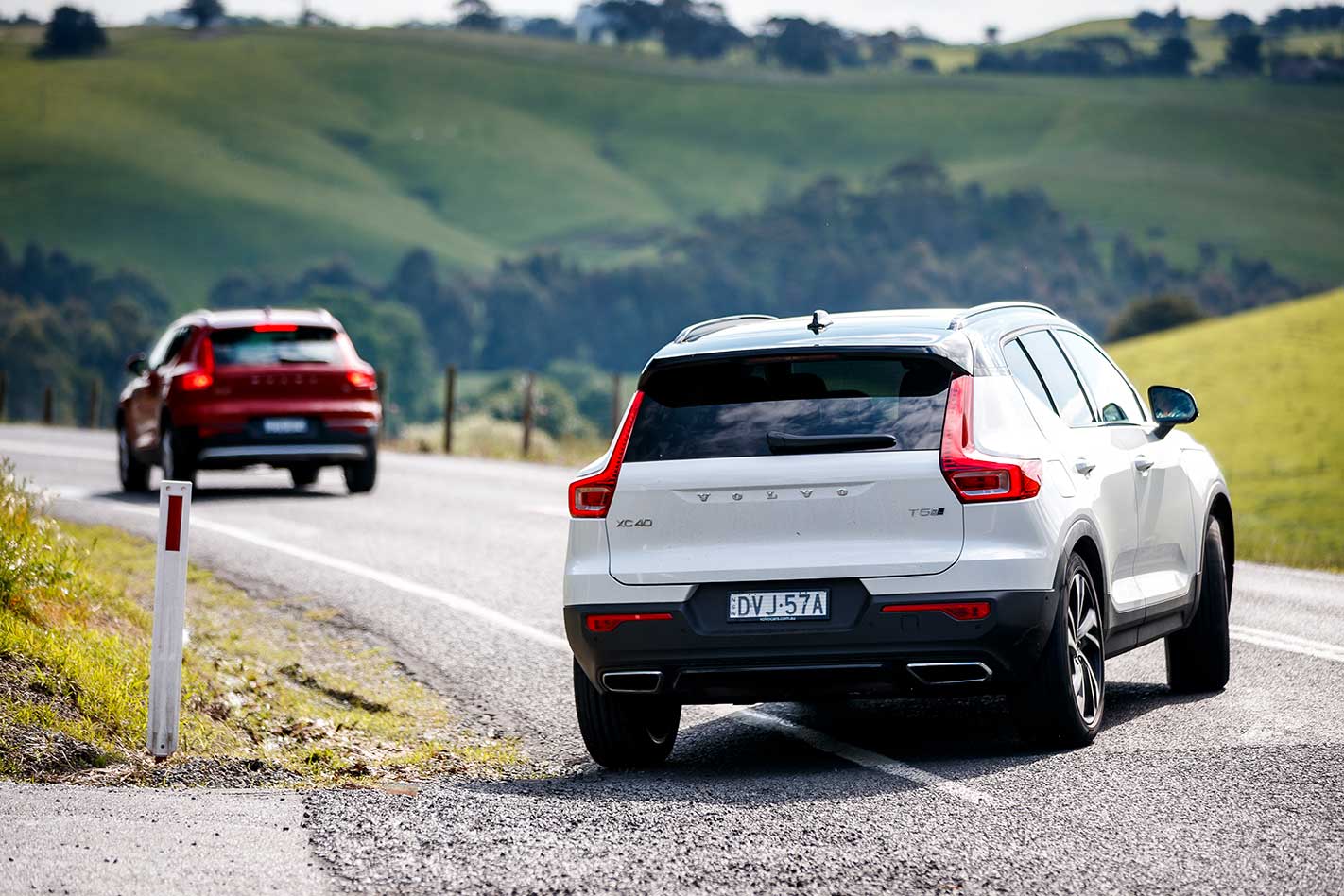
It delivers a broad range of engine choices, it records a brilliant safety score, it’s laden with standard tech and it has useable rear seats and a 460-litre boot. It recorded one of EuroNCAP’s top five occupant safety scores when it was tested, and is the only compact SUV to get a perfect score on that organisation’s four autonomous emergency braking tests.
That’s not to say it doesn’t put a foot wrong. The T5’s R-Design’s seats – usually such a Volvo strong point – feel short and overly firm. The idle-stop switch is buried in the infotainment system and sneakily switches itself back on after 45 minutes or so at the wheel. The steering isn’t ever going to rival a Lotus Elise for detailed feedback and servicing is typically pricier than its key rivals. We accept that no car has ever presented itself at COTY without some caveats and, taken in the round, the XC40 delivers a hugely impressive performance.
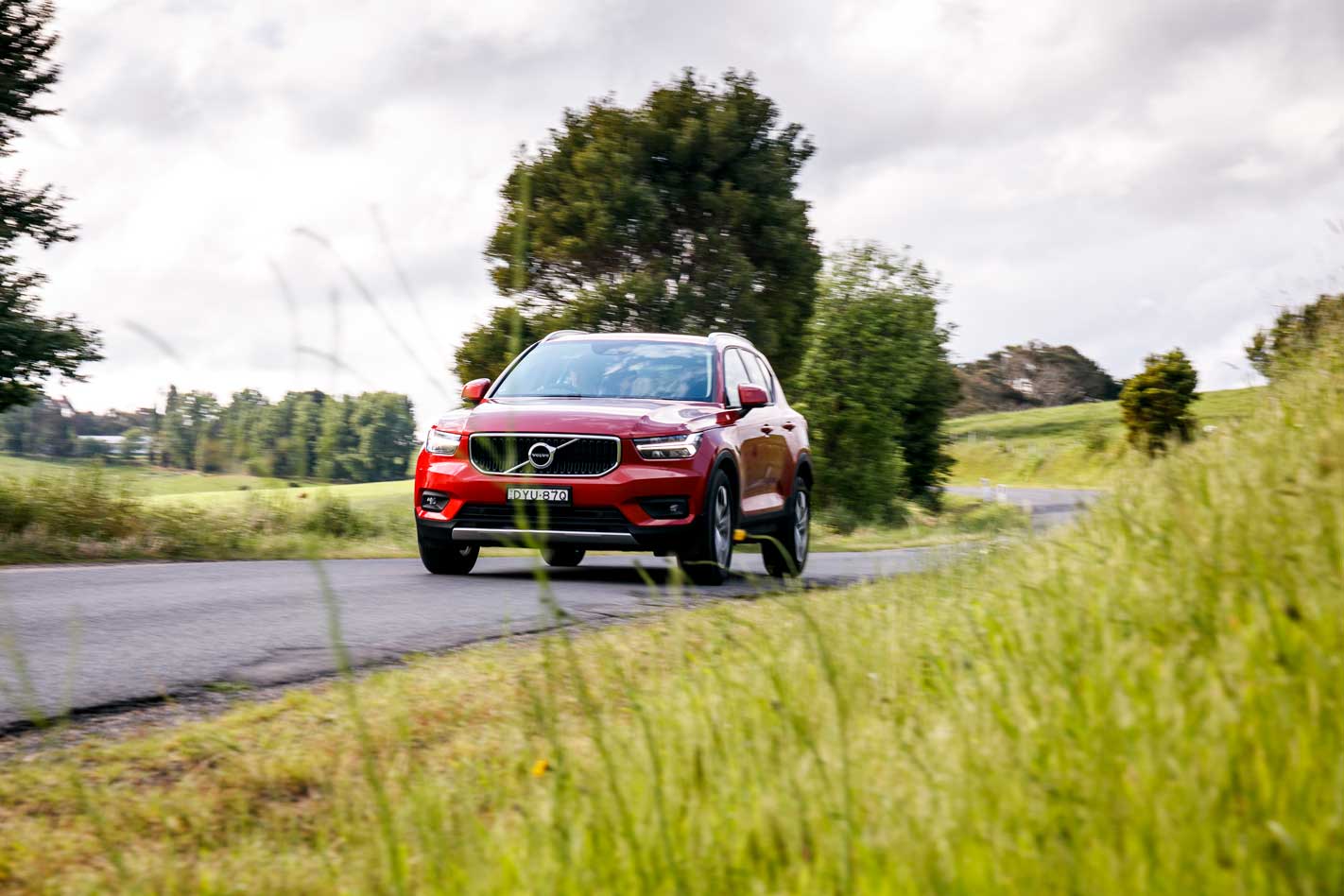
So, two on the bounce for Volvo. The company’s certainly on the up. In 2018, it broke 600,000 sales for the first time since the company was founded in 1927. We thought 2017 was a bumper year for the Swedish marque, but 2018 aced it by better than 12 percent. Much of that was down to last year’s COTY winner, the XC60, with 189,459 sales and the XC40 is expected to rapidly overtake that figure.
Geely’s management has been a case study in leveraging the strengths of the Volvo brand. There weren’t many of us who, when we saw ownership of Volvo transfer to Geely in 2010, didn’t harbour fears that it would turn the company into a high volume, low quality commodity brand. It has done the opposite. As one of Citroen’s chief designers noted tartly to me at last year’s Paris Show, “Volvo has never been more Swedish since the Chinese took over.”
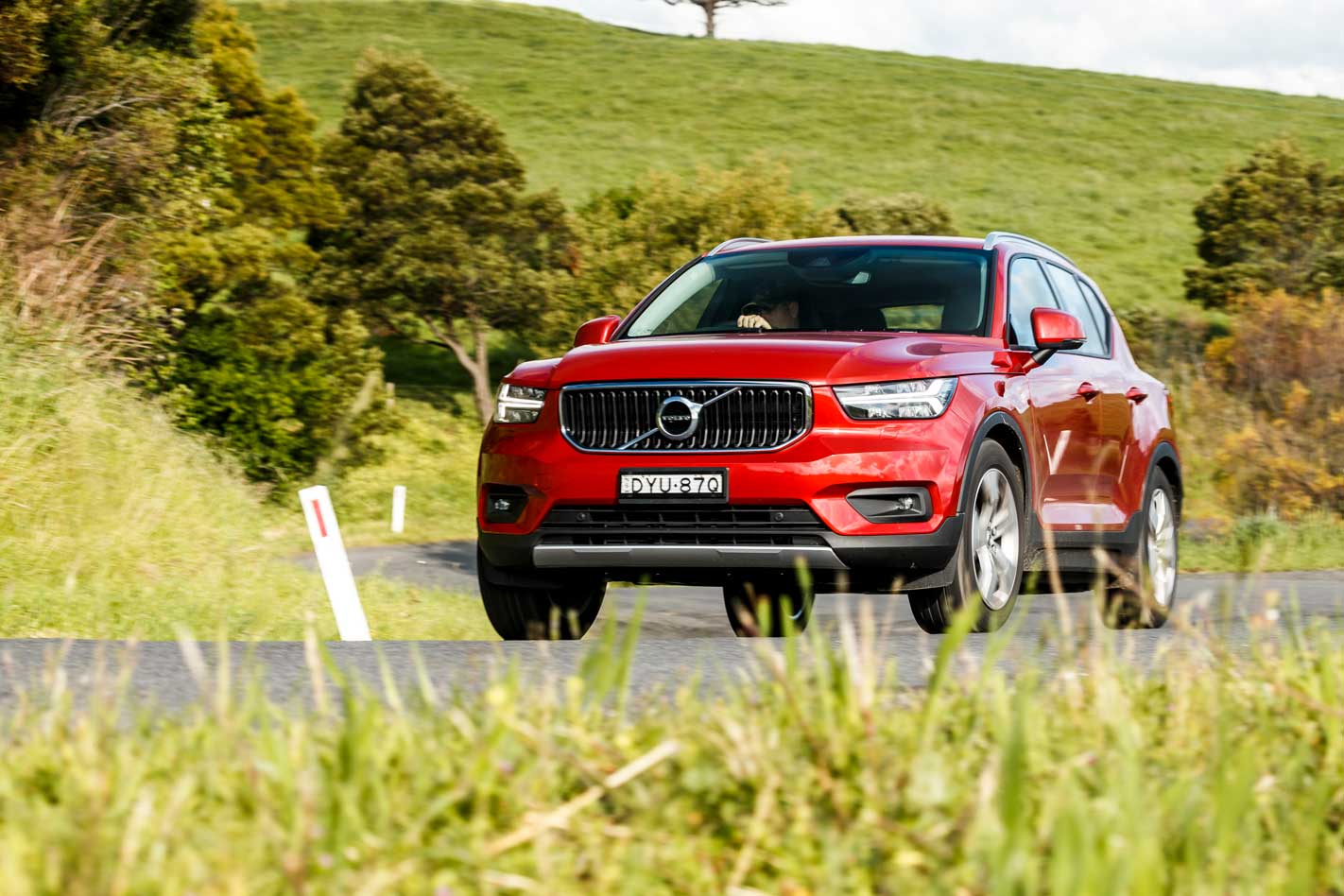
The hands-off approach from Geely has seen the XC40 remain a patently Scandinavian thing. It’s there in the quietness of the design, in the coolly understated materials and detailed execution inside the car. Stylist Ian Kettle from the Royal College of Art lived in Sweden, absorbing its cultural mores and values and has attempted to suffuse the XC40 with them. His design brief was to create Volvo’s ‘tough little robot’ – a futuristic yet purposeful small SUV. We think he’s succeeded admirably.
The CMA platform that underpins the XC40 is a smart piece of engineering too, and the car gets credit for that fact. An XC40 T5 Twin Engine plug-in hybrid is on the way, with a 115kW three-pot engine and a 55kW electric motor that’s capable of 31km commutes on pure battery power alone. Beyond that, the company has heavily hinted that the XC40 will be its first all-electric Volvo-badged car, its modular chassis capable of housing a full lithium-ion battery pack.
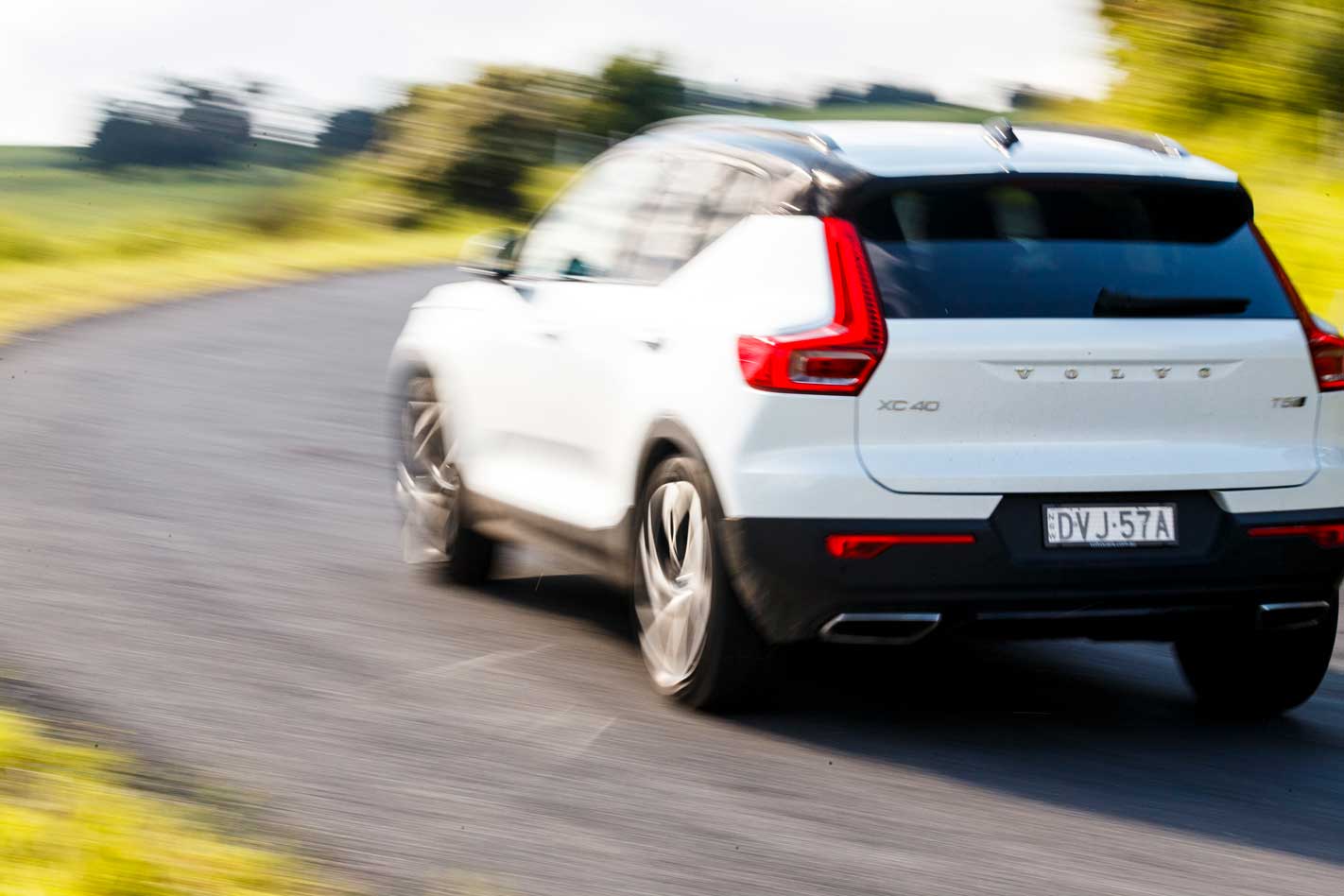
While most recognise the excellence of the both XC60 and XC40, some will grumble that we’ve awarded Wheels COTY to an SUV again. We’d counter that given what you now know, it would have been a travesty to direct the award to any other recipient. Respect the COTY process and it’ll spit out a winner at the end. Get that right and, as a judge, you feel as if you’re merely facilitating, overseeing a well-oiled machine if you like. We’re pretty confident the process delivered this year.
UNLESS you’ve been living under a rock for the last couple of months, you’ve probably heard that Wheels has been undergoing a major reinvention – our first in over 13 years.
Well, the wait is finally over, and our new-look magazine has hit shelves around the country. It’s also on its way to the mailboxes of our loyal subscribers.
Kicking off the issue is our new look news section which is now called ‘30 Days – the stories you need to know this month’. This time around that means a deep dive on the reborn Toyota Supra, and finding out what makes the Aston Martin Valkyrie’s Cosworth V12 one of the greatest naturally aspirated engines ever made.
A brand new section follows, dubbed ‘Overrun’, which includes a chat with the most successful man to race at Le Mans, and a look back at what made the BMW E46 M3 CSL a modern classic.
Car of the Year 2019 has been run and won, and we have over 67 pages of coverage from the biggest and most prestigious motoring award in the country.
We also sent our Deputy Editor, Andy Enright, to the French Alps in a Peugeot 508 to drive, and ride, a famous stage from the Tour de France. He may have slipped on some Lycra. Apologies.
If you’re a Wheels Subscriber, this next bit is important for you. To ensure the winner of COTY was kept a secret until our official announcement last night, your copy will be posted a few days later than normal.
Happily, we have a solution. To ensure that subscribers can access the magazine before anyone else, we are giving you a unique code to download a digital copy free of charge.
Your code can be redeemed on Apple and Android devices, which will ensure you still get your Wheels fix while you wait for your paper copy to arrive.
Make sure to check your email for the unique code, and we hope you enjoy the new-look Wheels.
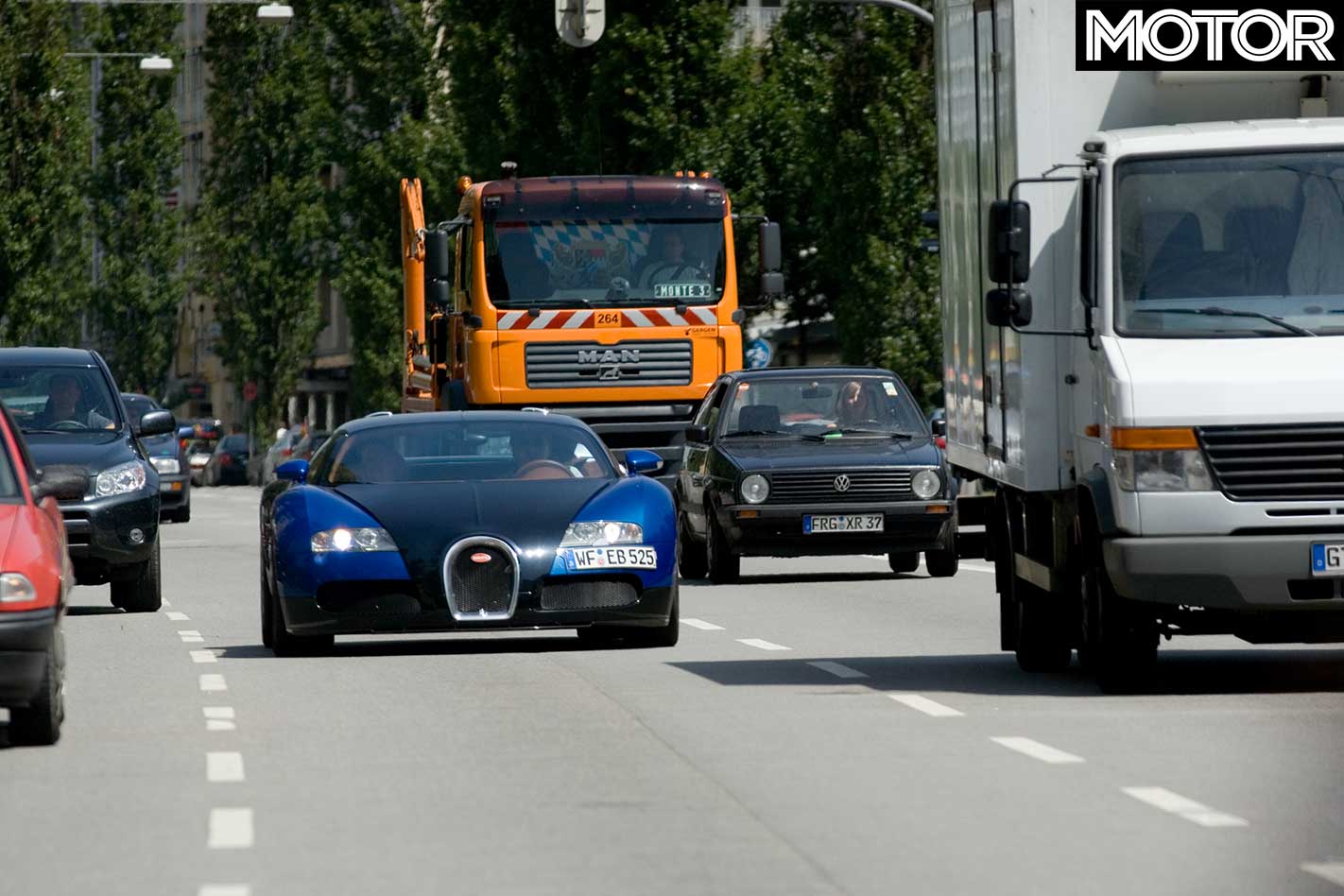
A recent report by Reuters revealed that speed limits are being considered for Germany’s Autobahns, but the nation’s transport minister has since said he strongly opposes the idea.
A follow-up report by Reuters quotes German transport minister Andreas Scheuer as saying he believes there are better ways to reduce the country’s emissions – something it needs to do to avoid fines from the EU.
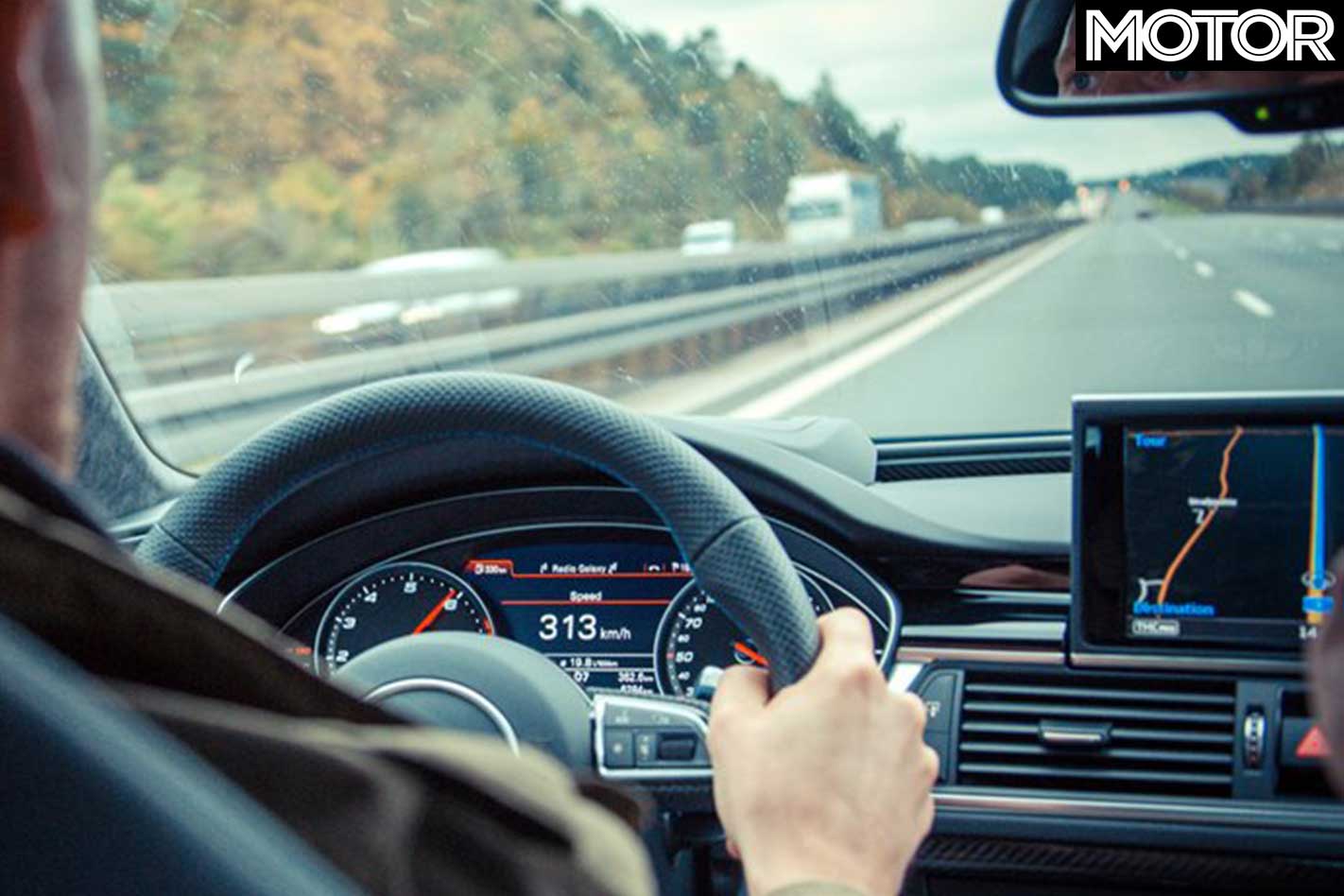
“Whoever wants to drive 120 can drive 120, and those who want to go faster can do that too. Why this constant micromanagement?”
The National Platform on the Future of Mobility (NPM) has created a yet-to-be-finalised list of recommendations for reducing Germany’s environmental impact, but acknowledges that the idea of introducing a speed limit on the Autobahn could be contentious.
A poll published by German newspaper Bild am Sonntag revealed 52 per cent of respondents were in favour of a limit between 120km/h and 140km/h, while 46 per cent were opposed to the idea.
The NPM says a limit, as well as “fuel tax hikes, quotas for electric and hybrid car sales, and ending tax breaks for diesel cars,” could help Germany meet half of the emissions reduction required.
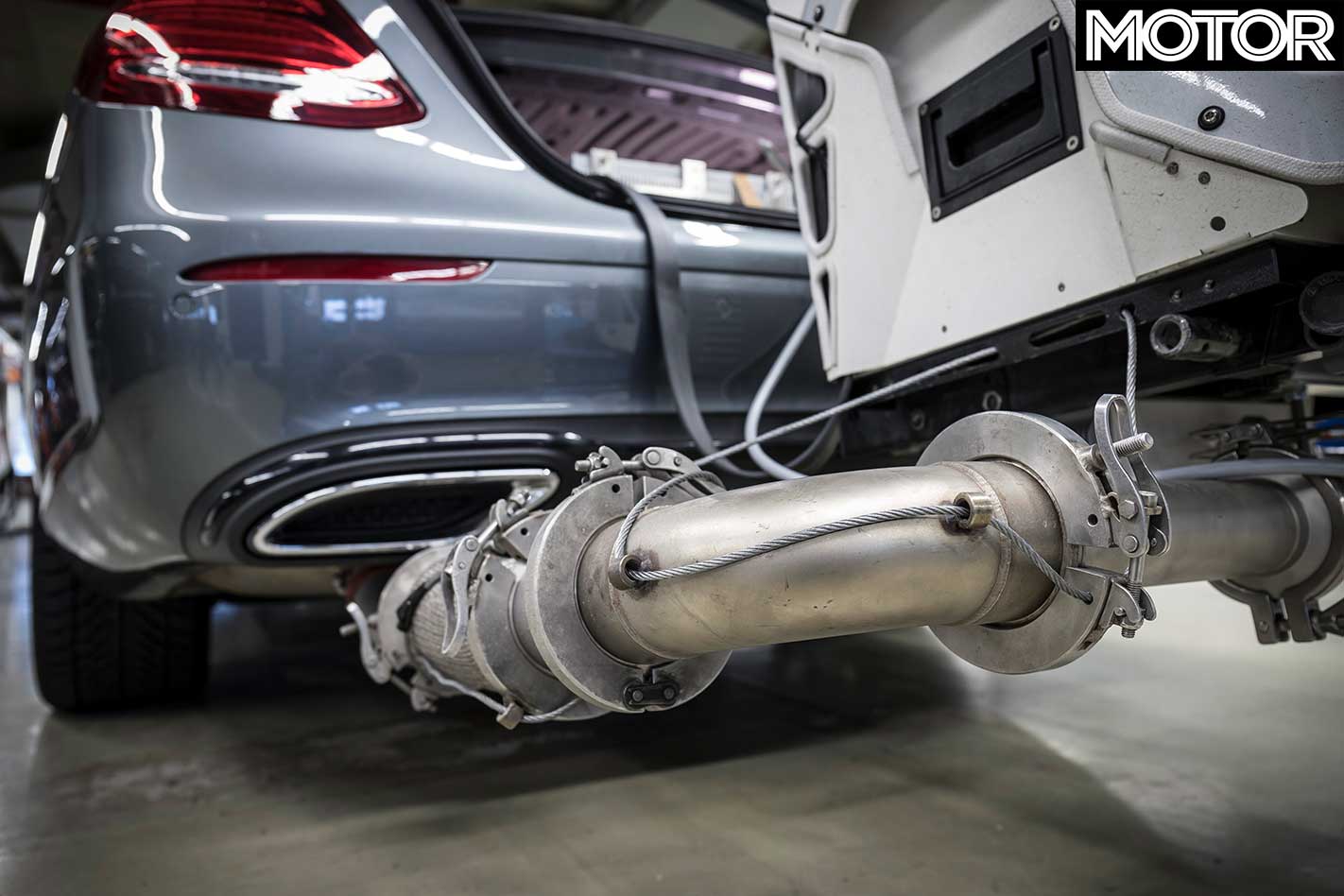
Andreas Scheuer, however, says a speed limit would only reduce the emission level by “less than 0.5 per cent.”
“The goal is to think about the work they’re doing and to generate results, instead of revisiting old, rejected and unrealistic demands like speed limits,” he said.
He added that almost a third of Germany’s highway network is speed-limited, and that he hopes to meet with the NPM committee to discuss its proposal.
Increasing pressure on the automotive industry to become more ‘green’ has put progressively more difficult standards up for car companies to meet, but reports in recent years have found that changes to industries such as shipping and cruise holidays could dramatically reduce environmental impact.
A report by The Guardian in 2016 quoted a German environment group’s transport officer and saying one cruise ship is polluting as much as millions of cars.
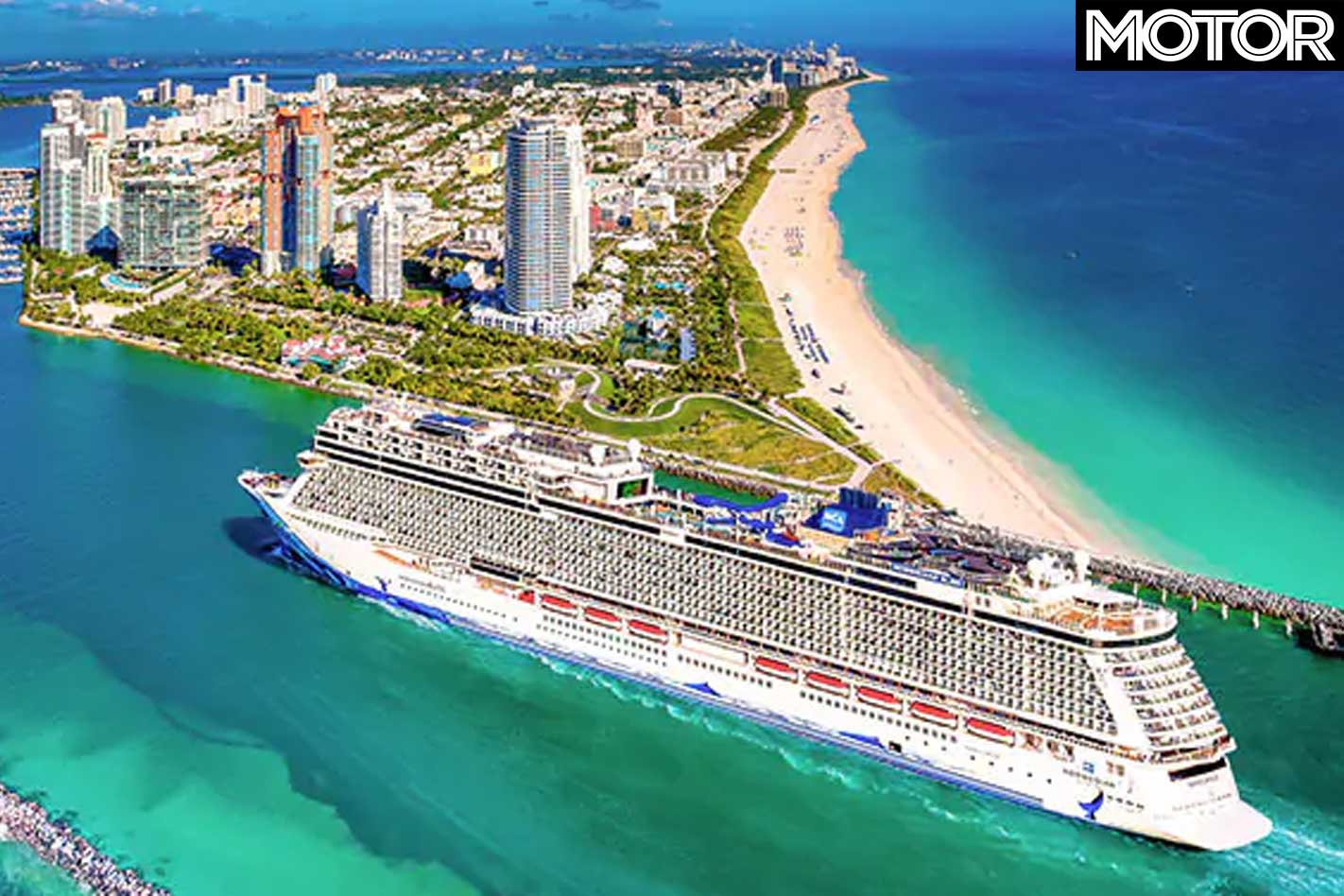
“One cruise ship emits as many air pollutants as five million cars going the same distance because these ships use heavy fuel that on land would have to be disposed of as hazardous waste,” Nabu environment group spokesperson Daniel Rieger told the outlet.
“Heavy fuel oil can contain 3,500 times more sulphur than diesel that is used for land traffic vehicles. Ships do not have exhaust abatement technologies like particulate filters that are standard on passenger cars and lorries,” said Rieger.
With hundreds of cruise ships in the ocean, some experts have pushed for cruise ships to convert to using cleaner fuels, the benefits of which they say will outweigh the costs involved.
“WARNING! Following their driving antics yesterday, several people have been banned from any future MOTOR tests because of irresponsible behaviour” the missive begins, and how anyone could have been inspired to mischief simply by watching the Mumbo Monsters leaping about on the dyno like injected bears before being editorially smoked round Eastern Creek is a mystery to me. But much of life is.
This feature was originally published in MOTOR’s May 2005 issue
So I read on right ’til the very novel conclusion, which involves, “…in a professional manner… road rules… respect for the cars” et cetera, check it for forgery and pack a large crossword puzzle to fill the days ahead.

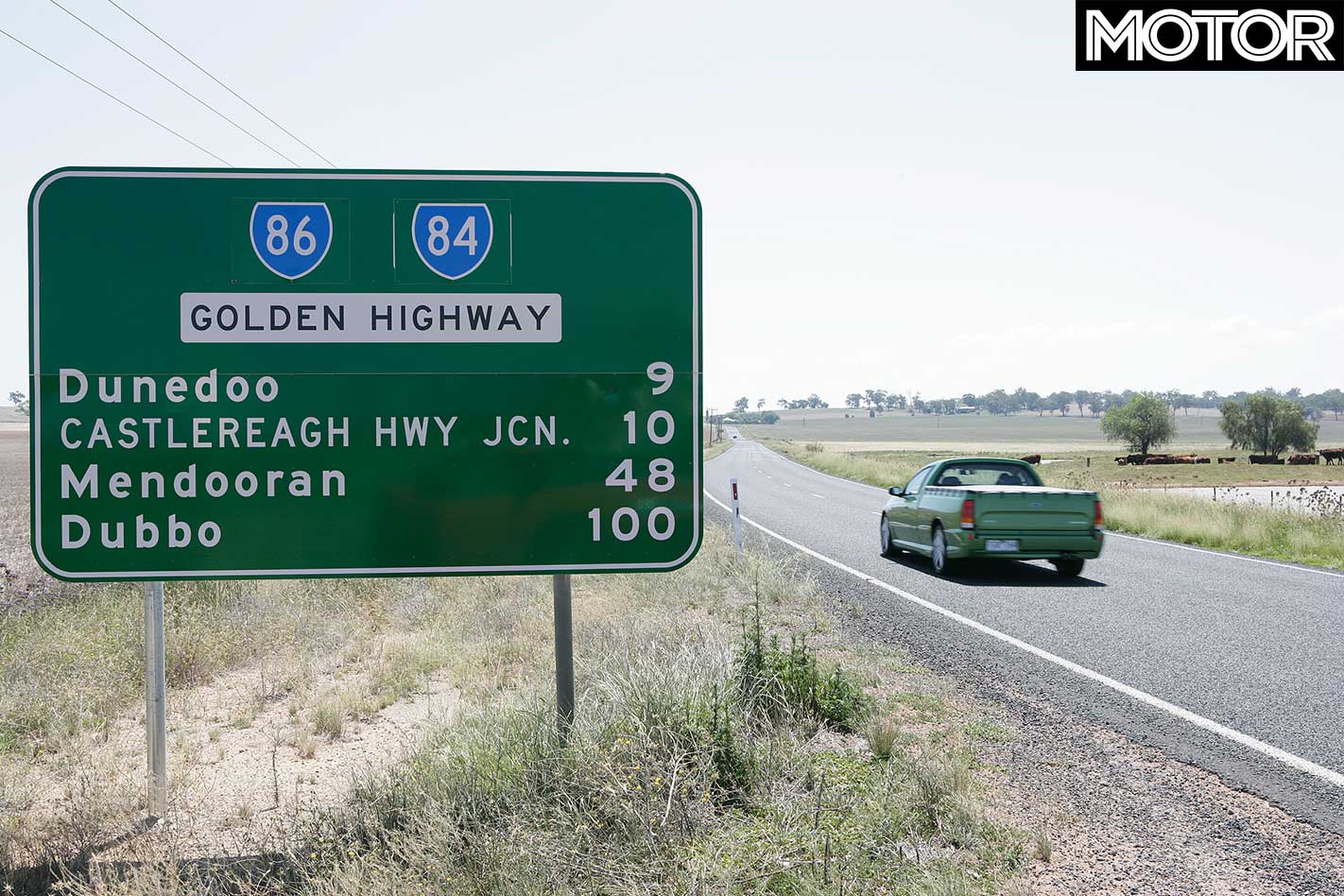
Naturally, this requires Editor Taylor’s ballistic governance to remain stilled throughout and, apart from a test-firing in Dunedoo; the first day outbound is largely untroubled apart from Morley’s insistence that the six-letter Waugh who wrote Brideshead Revisited is Maaark.
Dawn in Nyngan looks as if God’s welding the sky in place and before breakfast’s down the heat feels like flame on the skin. All hands accordingly set the air-con knobs to Export Seafood before heading off on another day of driving punctuated by car changes that promote both another round of guesswork ref. the switchgear and deep wonder ref. the primate that last sat in this seat.
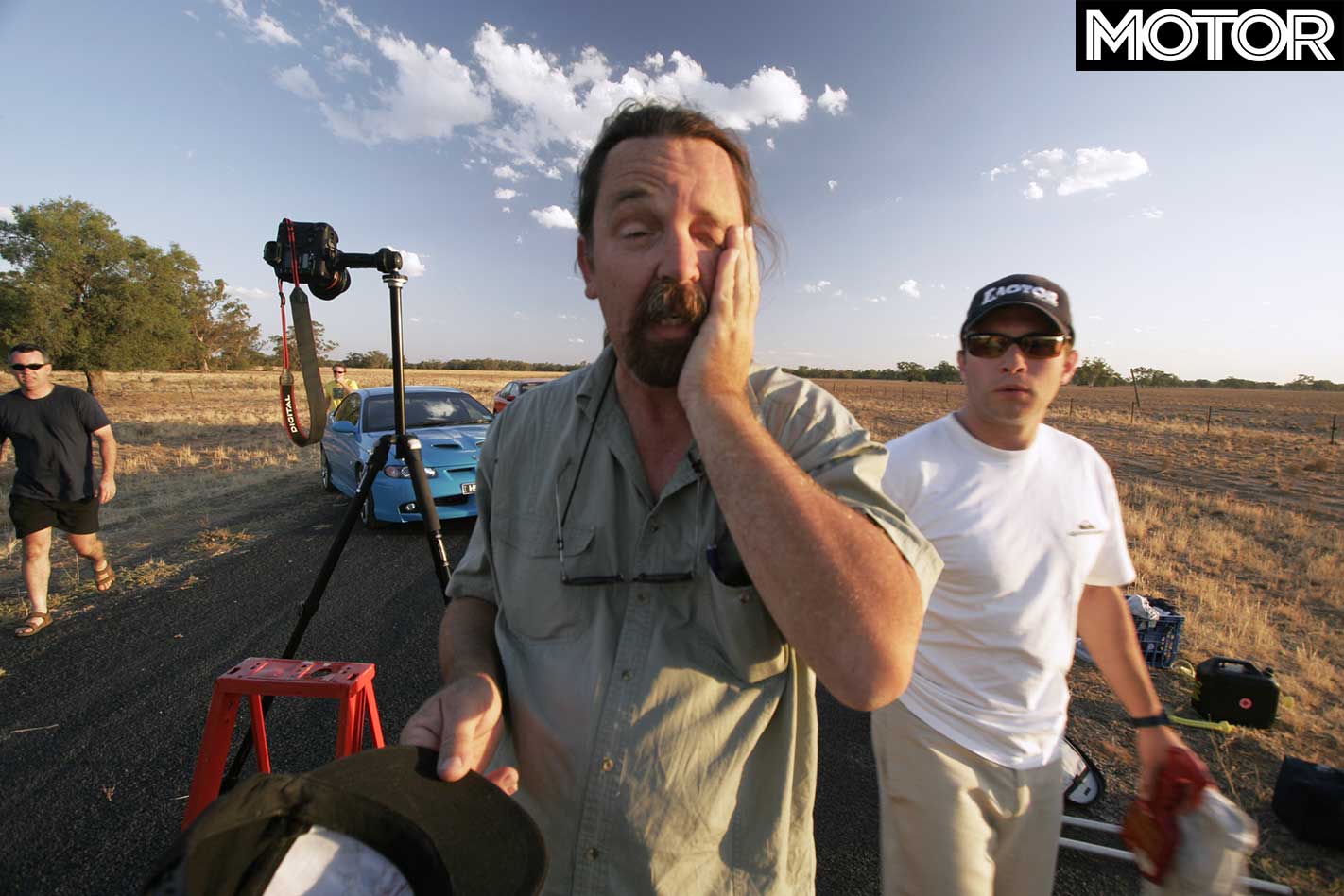
But it’s all for science and, if the empty, arrowing roads binding Nyngan, Bourke and Brewarrina are no handling loop, they surely allow other explorations of the envelope howbeit not always in literal accord with The Missive.
Apart from the bit about respect, of course. Because despite being sometimes dippy in the details our native cars’ combination of arm-stretching space, chesterfield comfort, stone-axe honesty and the all-day ability to cruise, composed, over any road and any limit in the land without breaking 2000rpm is remarkable.
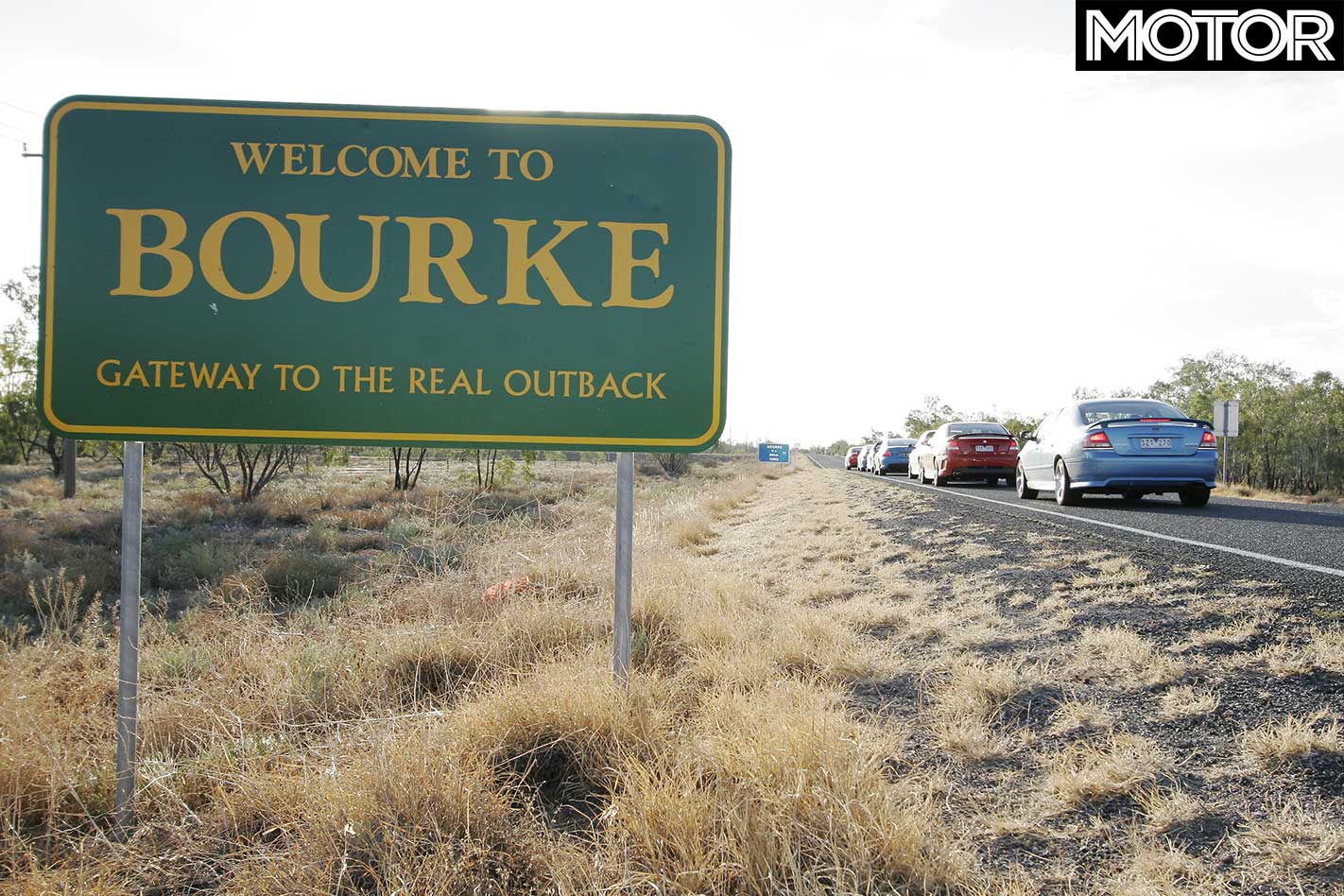
And they probably deserve better than to be left running for aeons in the blistering heat with the air-con pumping while Art debates Editorial about the virtues of circle work. But they don’t get it. And don’t complain either, bless ’em.
Thus we travel through the Great West, gathering images and experiences most of which are pleasant save the fuel-stop whereat Photographer Bateman excitedly produces a local who is, he swears, my living double… clearly embarrassing the poor bugger because he’s remarkably ugly and no offence meant if you can read.
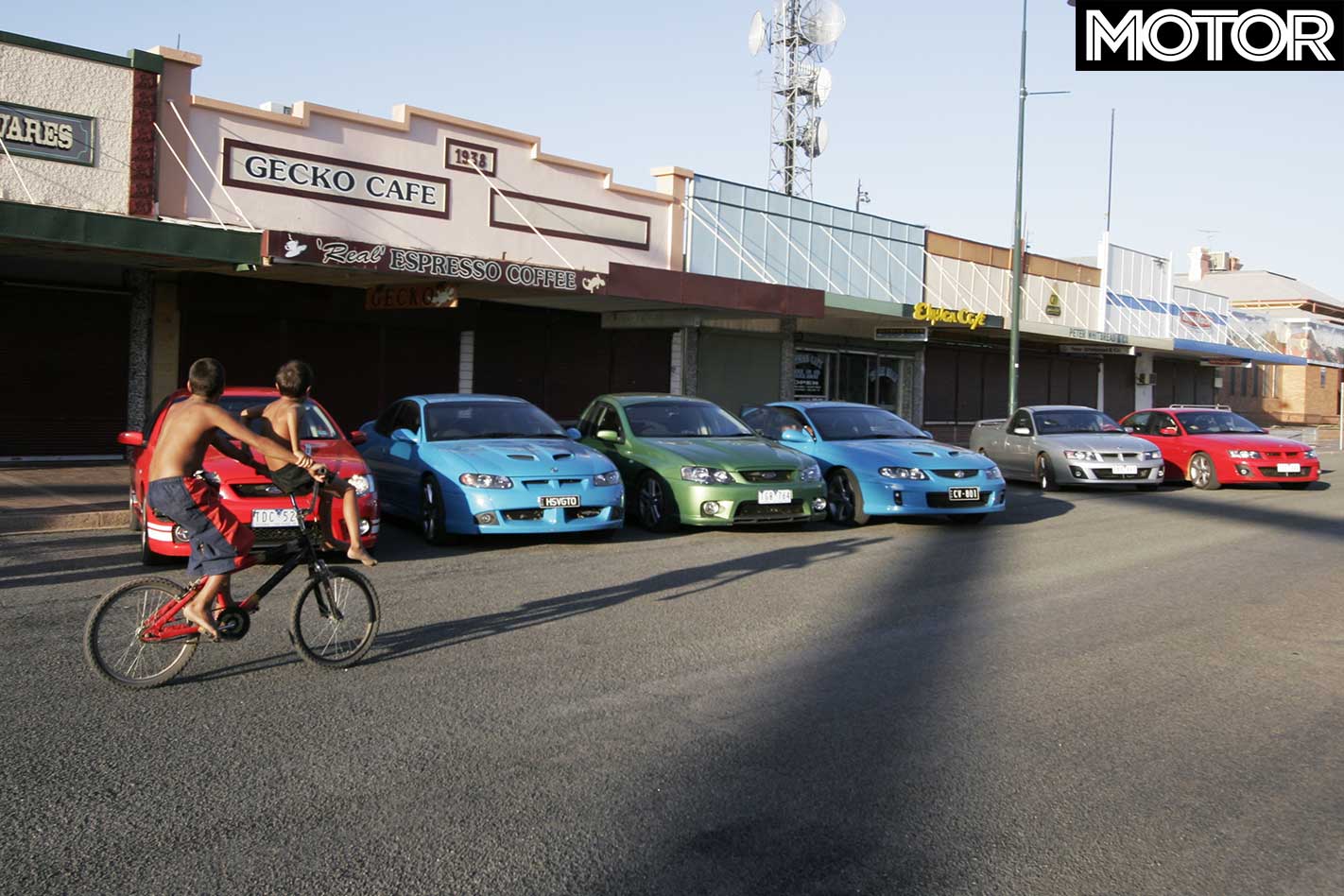
Leaving that faux pas where it fell, we finally assemble in late afternoon’s light at Bourke, where debate rages, as ever, between photography, philosophy and let’s-fang-’em-some-more. And the crowds gather. Again.
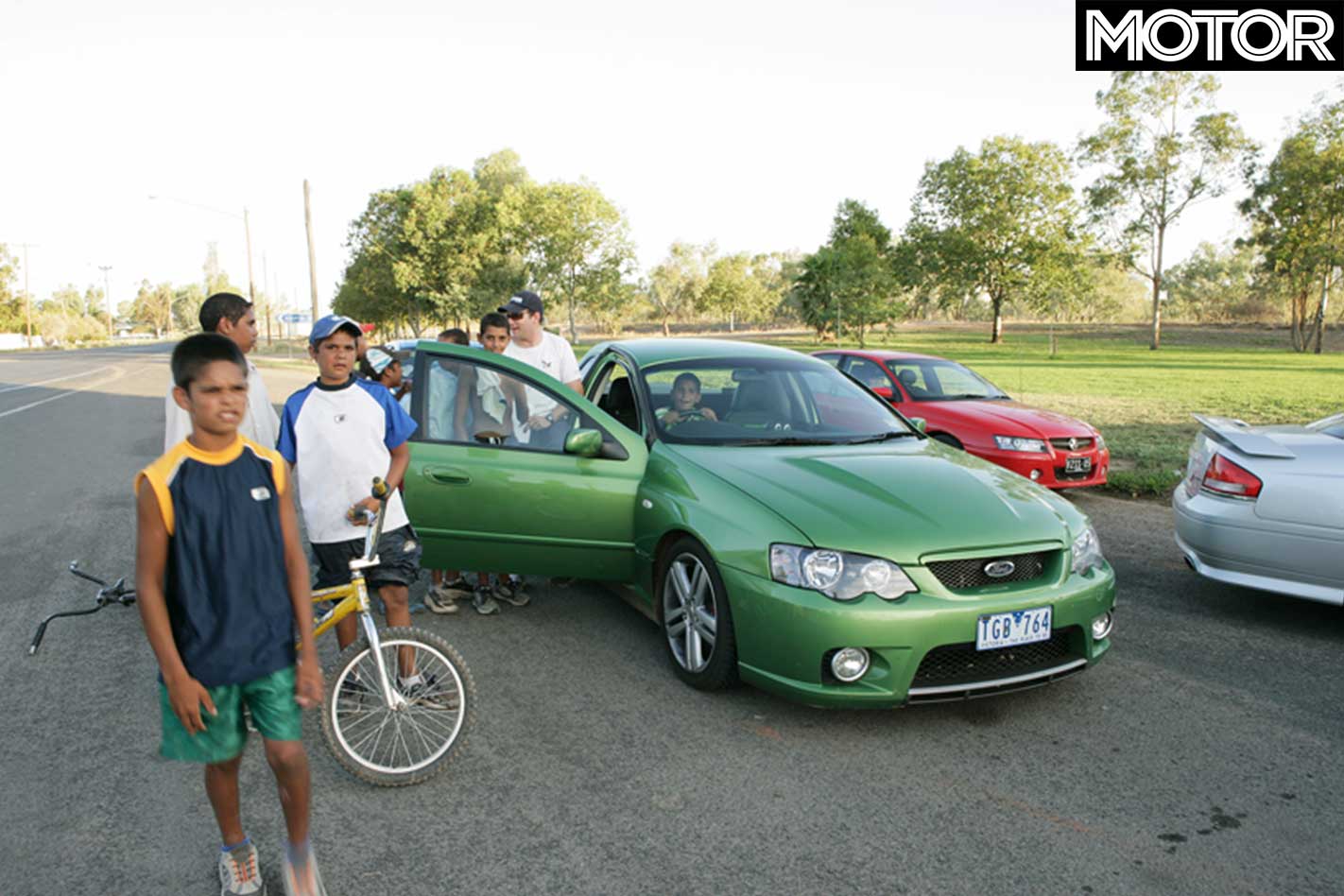
As they’ve done whenever we stop; to ask and talk and touch these cars with a proprietary interest. The same instinct that’s caused fence-riders, in unimaginable isolation, to stop and wave each car in the convoy past. And, whatever role each of us has in this gig, its message is now perfectly clear: A fleet of Ferraris would not gather more attention. Nor have more merit here.
Because these are the heartland cars. And, for all of us, that truth is just fine.
What Cockburn Hates
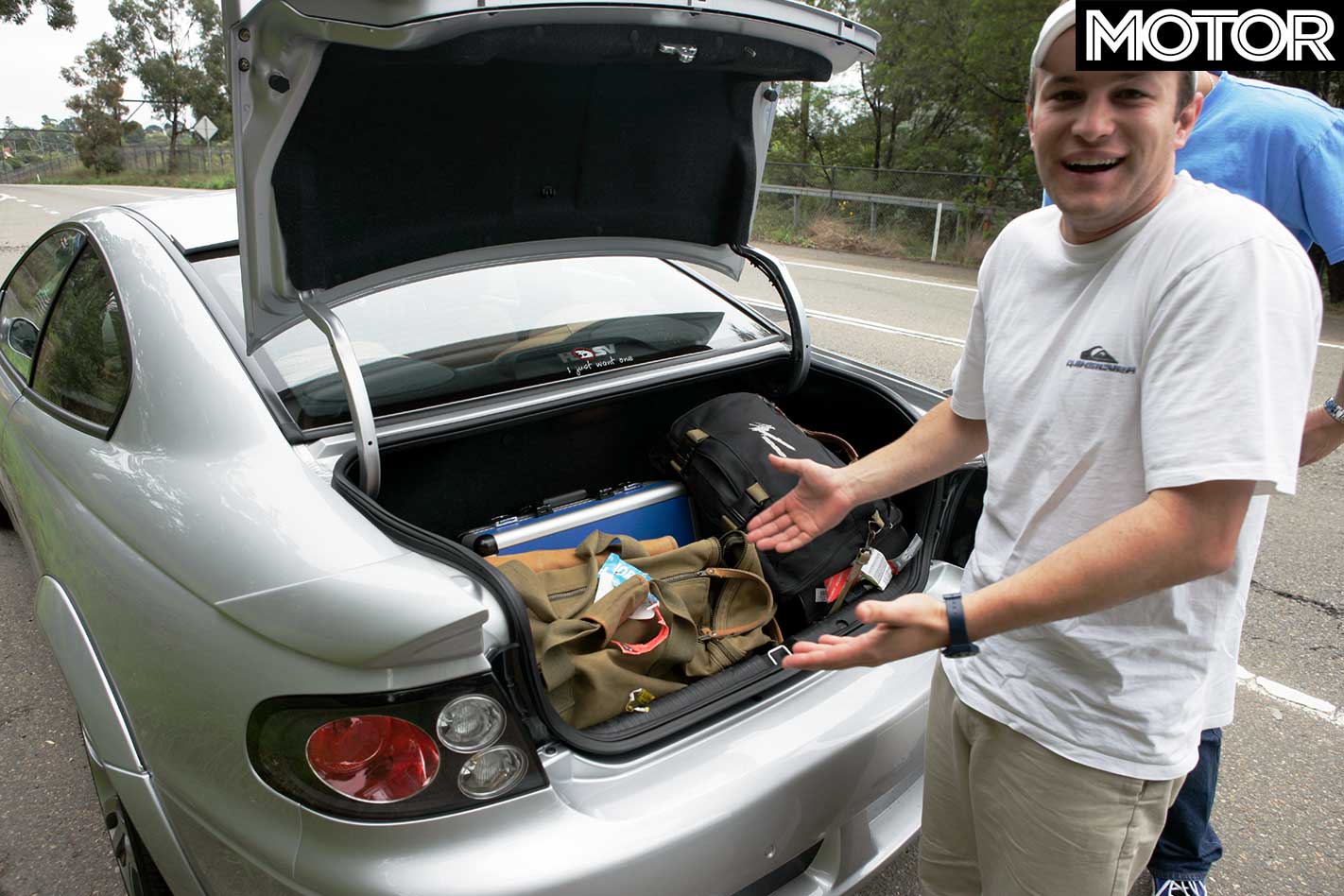
1 – The Coupe4 space-saver is bad enough, compromising speed, range and safety when used. But the real kicker is finding some way to stow the dirty, punctured, full-sized roadwheel among the luggage in an already limited bootspace.
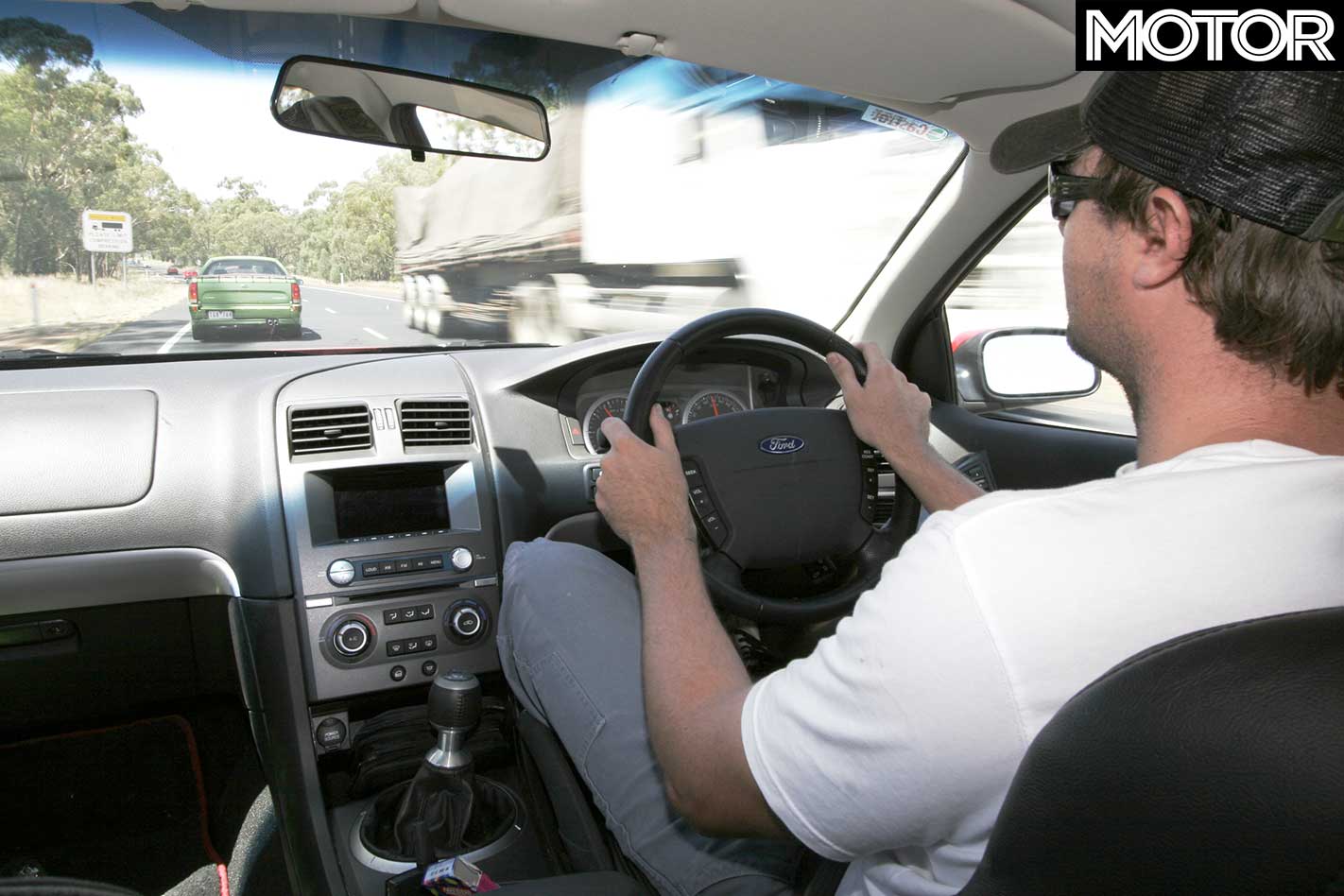
2 – Somewhere in this picture of Ford’s work station are the: Starter button (ugh!), headlamp switching, boot release, fuel flap release, cruise master-switch, mode selection, fog light switch, instrument lighting controls. Can’t see ’em? Neither could we.
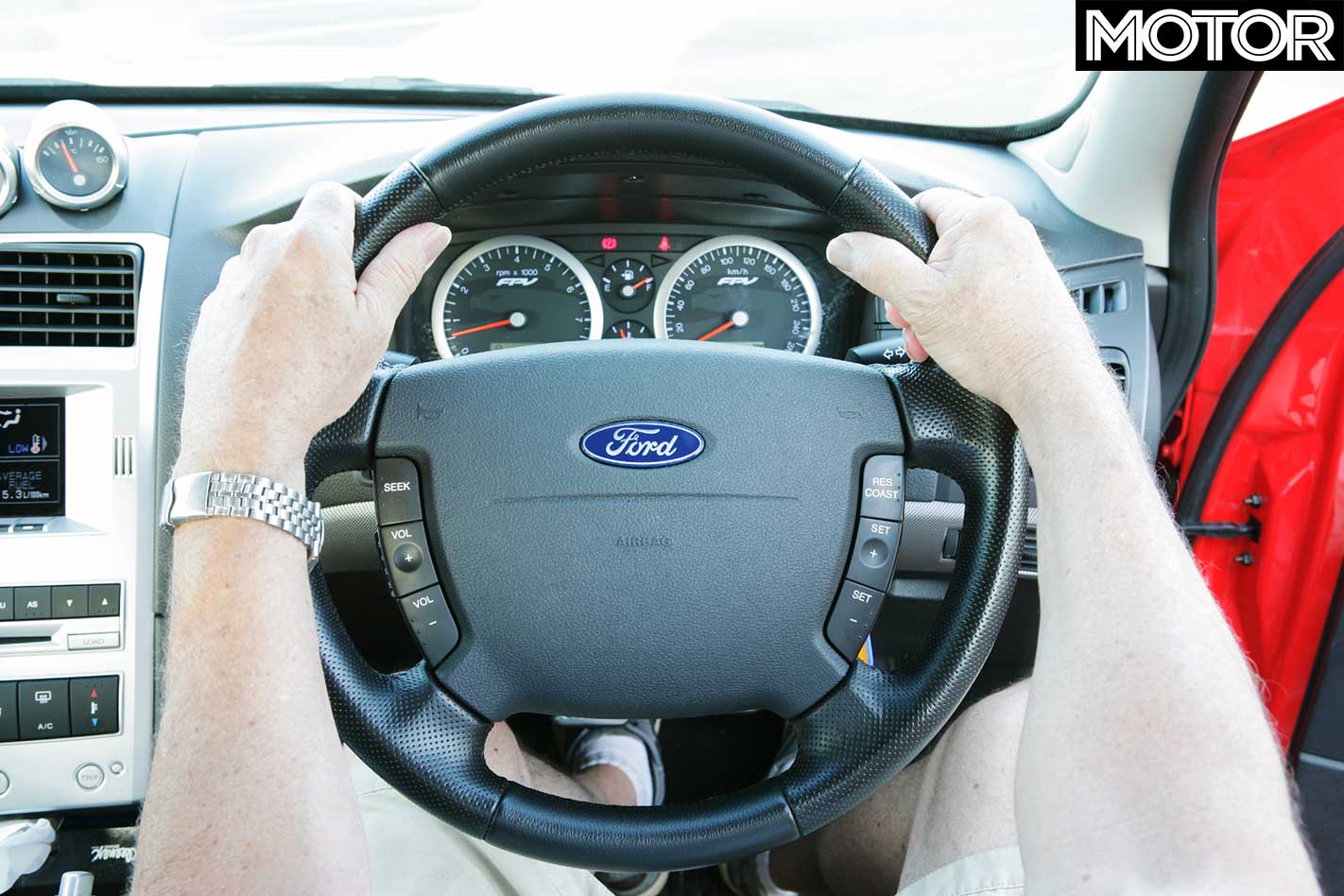
3 – Road-car wings are today’s tail-fins, and I’ll wager a case of good wine that the FPV GT high-mounted aerofoil makes no measurable contribution on any road or once-a-year track outing: But it’s an unsightly, vision-blocking nuisance everyday.
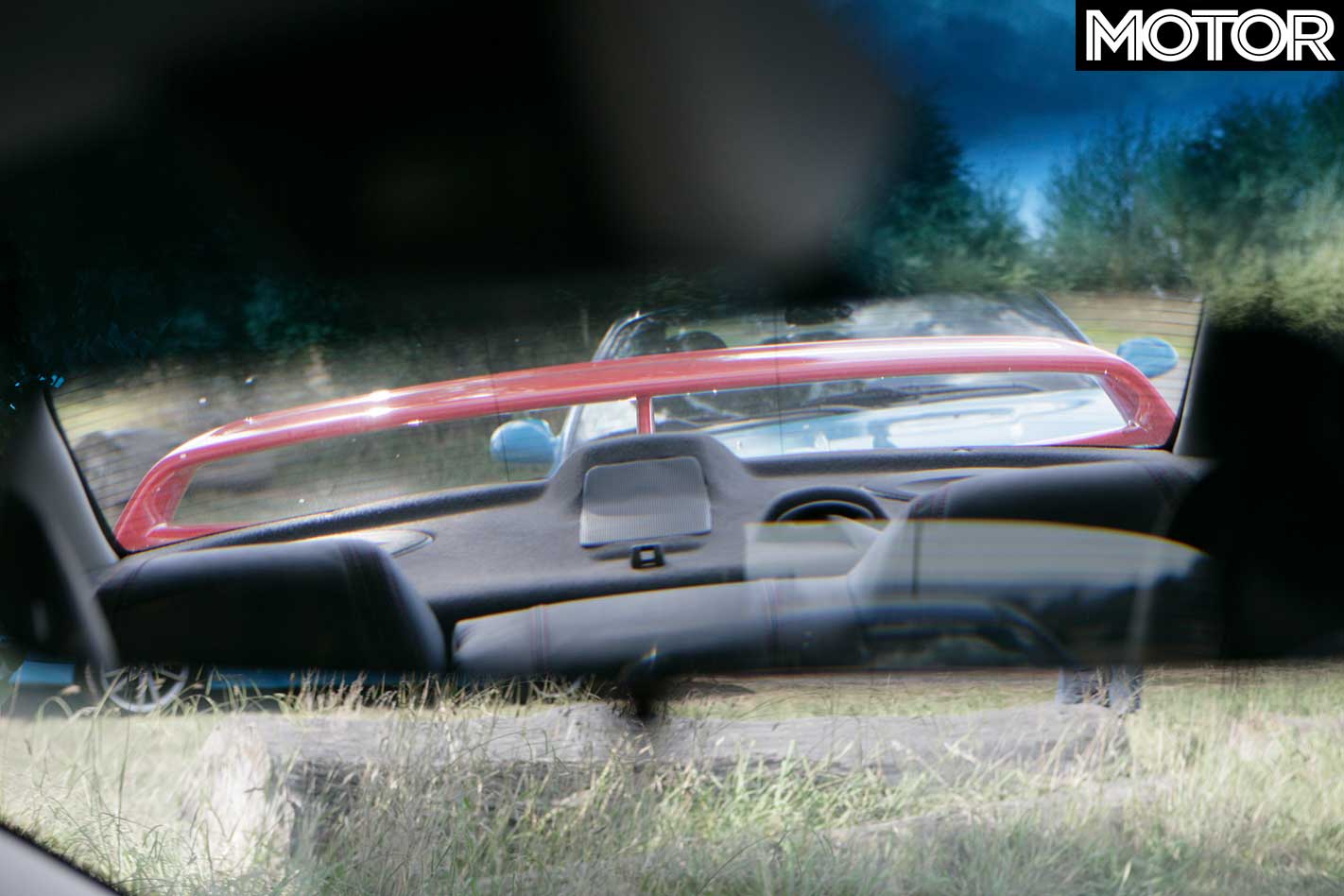
4 – If Ford’s wing is a cosmetic folly, the Speed-Spec Commodore wing is a case of style absolutely corrupting commonsense. Any pointless dingus that reduces a sedan’s reversing vision to 4WD-Wagon levels is simply unforgivable.
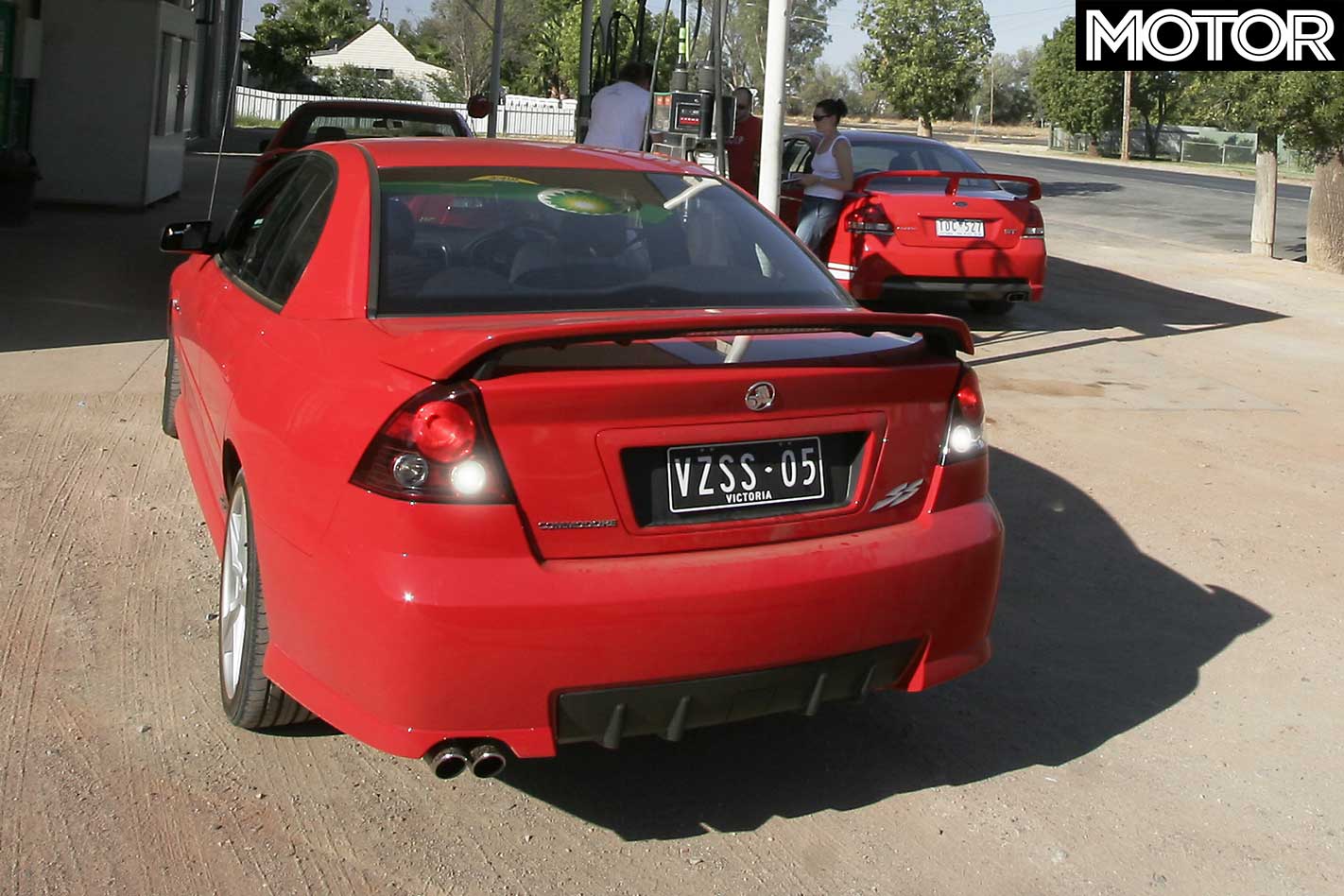
What Cockburn Rates
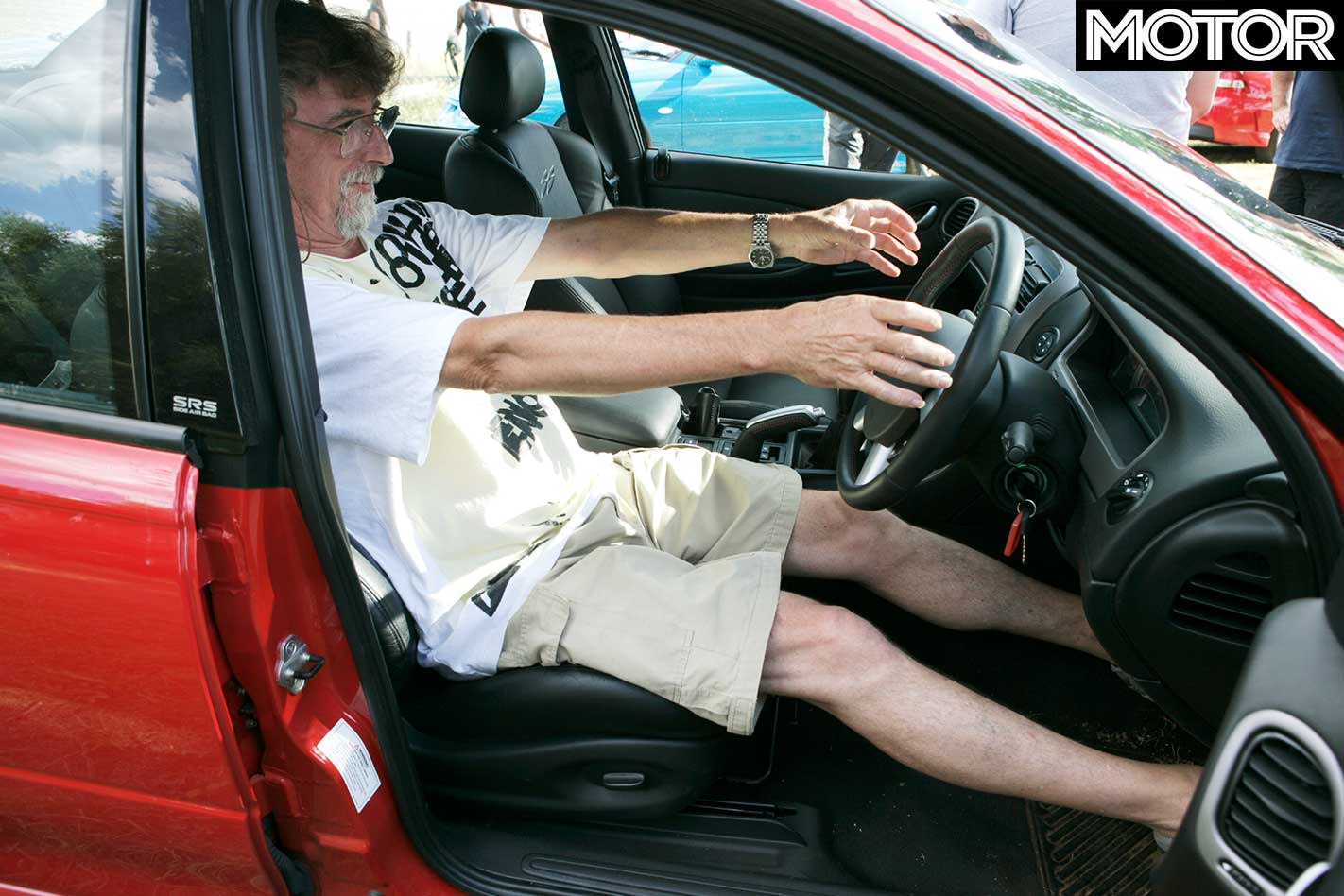
1 – Commodore SS seating is a fine balance of form and function. Six days solid without complaint in last year’s Around Australia record run proved them good; and a little more thought on the lumbar adjuster would make them very good indeed.
2 – Proving that embellishment doesn’t always lead to improvement, the Falcon XR6 dash was the pick of the litter. Well-made, well-marked and well-spaced controls in a simple, elegant surround beat flight-deck fussiness every time.
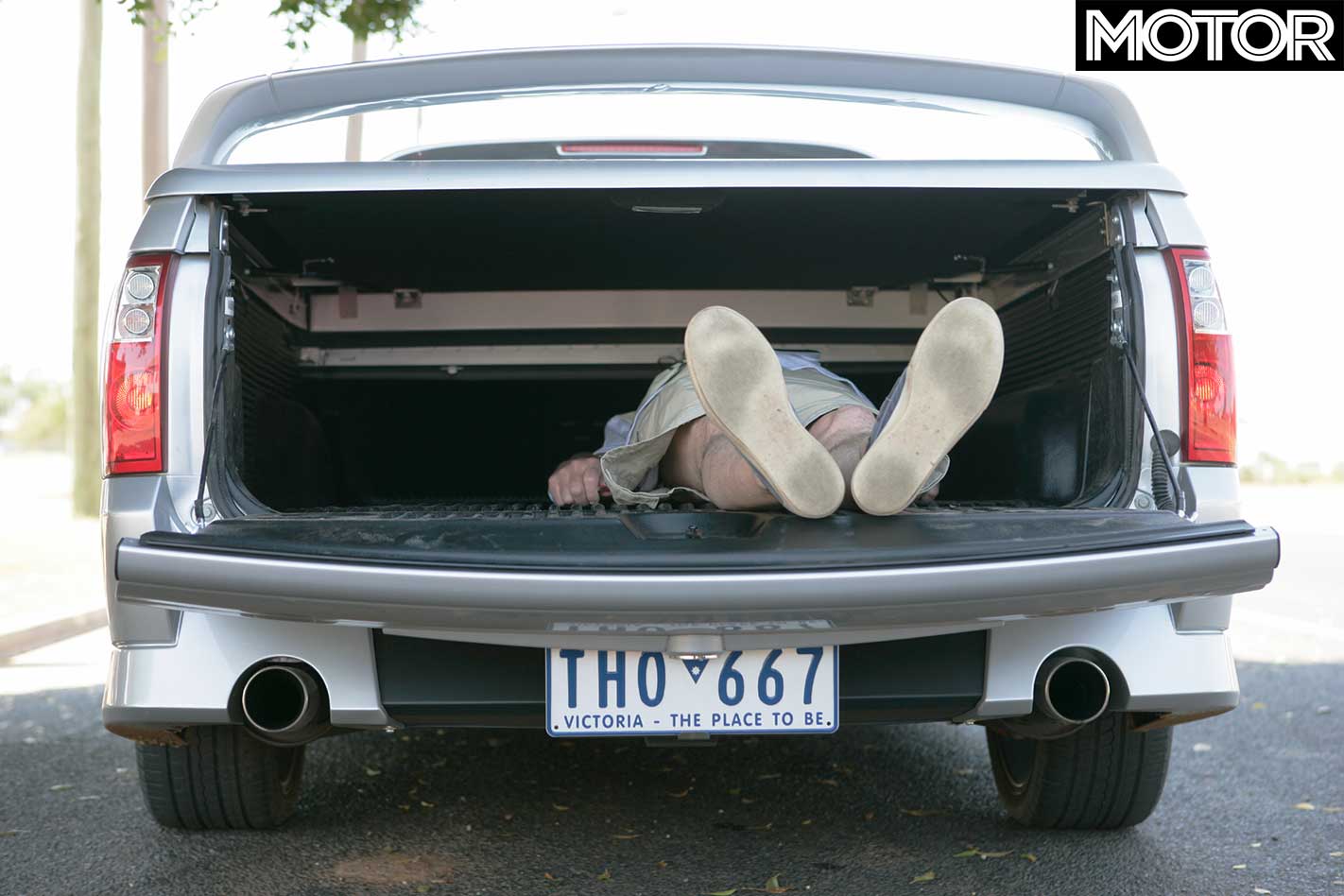
3 – Okay, it’s not an original idea (the first Mini had it) but the Maloo rear numberplate mount hinges to allow legal tail-down trucking. So there: the 5.1m, 1.7 tonne two-seater does make sense. Minimally.
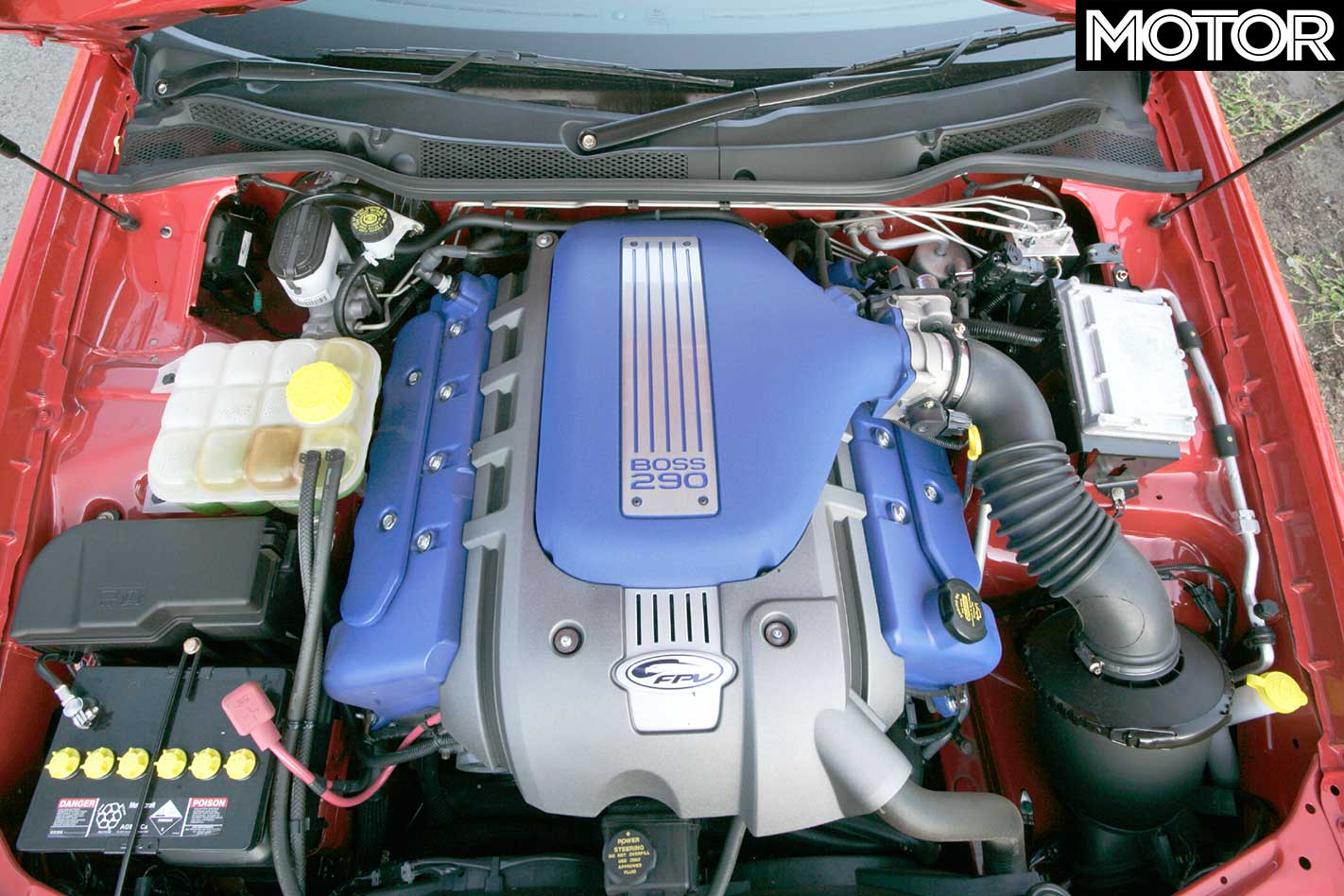
4 – And Hallelujah! Welcome the return, with the FPV GT boiler room, of an engine displayed, largely unadorned, with all its major ancillaries and reservoirs visible for inspection and ease of service. And it looks all the more impressive for it, too.
What a lucky bastard – George Lafrenais blasted the best of Aussie muscle cars
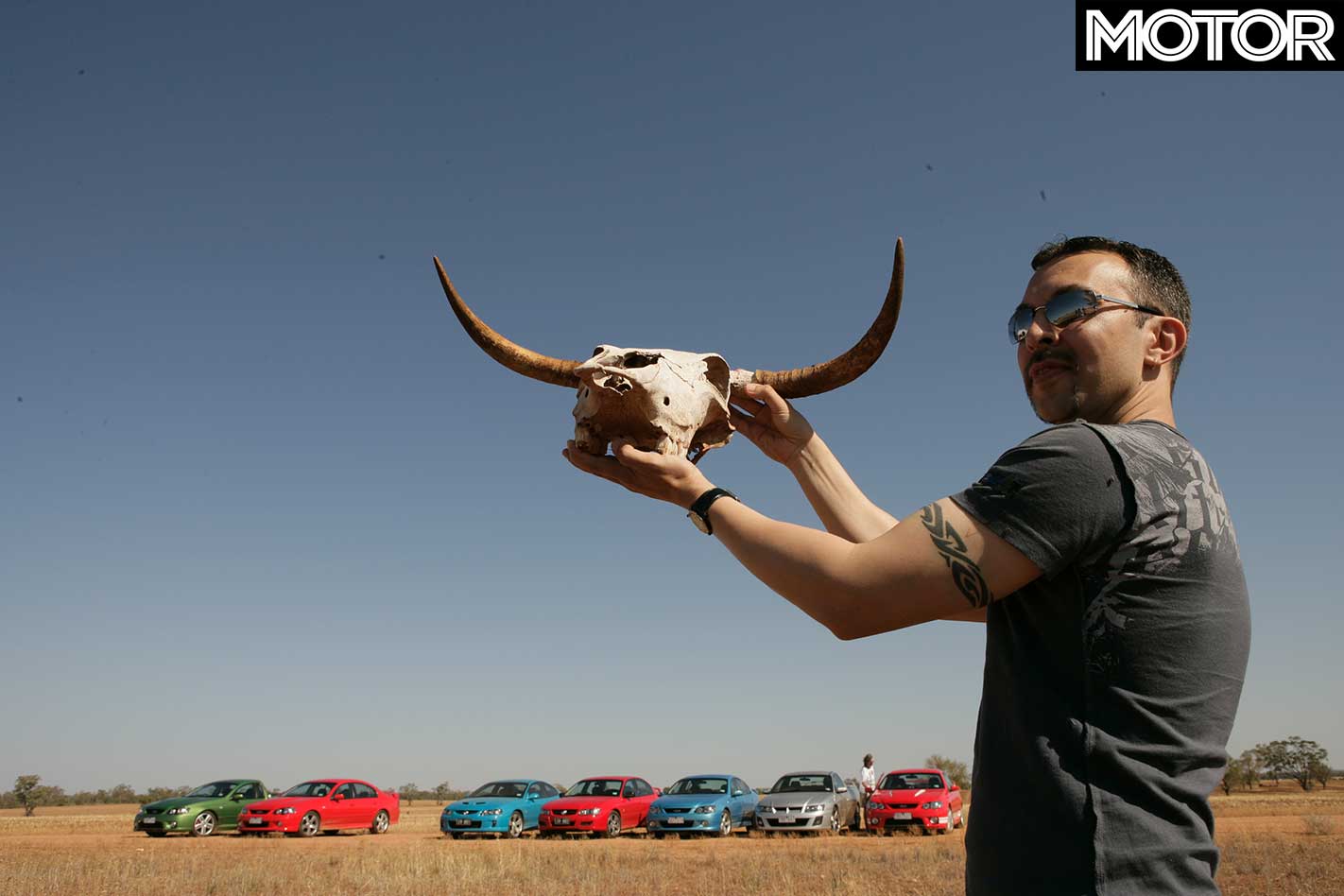
I guess you could describe me as the typical MOTOR reader. I haven’t done any advanced driving courses or track day work. But I do share a passion for performance hardware. So you can imagine when I got a call out of the blue from MOTOR asking if I would like to ‘participate’ in the upcoming all Aussie muscle car shootout.
‘Participating’ meant being a support driver, as there were 13 cars, and some cleaning and refuelling duties. Hmm, let me think. Then I got the second call, “How would you like to be the Lucky Bastard?” Hell, yes. Then I stopped, I’m about to make a total tool of myself, nationally. And to boot, with Australian performance cars… this will require a tetanus shot.
Spending an extended time with the big bangers showed me that each car had its own character. The GM products were better strapped down than the Fords. On the other hand the Fords had better-suited ratios for the way the engines produced power, and a more positive gear selection.
If any subscriber gets invited to an event like this, don’t think twice. Not only do you get to see these cars put through their paces, and drive them yourself, but you get to see parts of the country that are totally amazing. Yeah, being involved in a photoshoot that goes on for three hours in the same spot can bite but it’s all part of the experience. Perhaps I won’t need that tetanus shot after all…
Aaaah, karma, you syrupy sweet vixen, you… and this young fella has felt its warm, warm embrace after a fairly major brain snap last week.
About a week ago, young NSW local Thomas Harris – for whatever reason – thought he’d post a video of himself driving on a clearly marked bike line as he passed two cyclists riding (completely legally, it should be pointed out) on a country road near Jamberoo in NSW.
“What’s the point of us spending this money if you’re not going to use it [the shared path], you f—ing d—heads,” Harris shouted at the two bike riders.
One of the cyclists invited him to stop for a chat, but Harris declined, instead offering more abuse and continuing to careen down the bike path.
This is where it all gets a bit delicious. It turns out that the two riders are actually police officers.
Oh, snap.
The youngster handed himself into the local police command, where he was issued with a court attendance notice for using his phone while driving, offensive language, and for driving on the path.
And for those of you who think the cyclists were in the wrong? Think again.
NSW road rules stipulate cyclists can ride two abreast on a road, but no more than 1.5 metres apart.
Cyclists are required to use a marked bicycle lane, unless impracticable to do so.
However, the Jamberoo path in question was a shared path, not a marked bicycle lane.
READ MORE Best cars for mountain bikes
Cyclists do not have to use a shared path, but “must keep to the left of any oncoming bicycle rider or pedestrian” while on it. Funnily enough, there’s nothing in the legislation about giving way to a foul-mouthed dingbat using a mobile phone while driving on the path…
Of course, people being people, the incident has kicked off a massive furore on social media, with a fund being set up to pay Harris’s fines.
My two cents? Cyclists are humans – sons, dads, mums, mates – and while their behaviour can irritate, NO ONE deserves to be abused, injured or killed while legally using a roadway.
Traditionally, one of us at MOTOR would only review a Toyota Corolla as punishment for too many spelling mistakes. But we’ll admit the new 12th-generation model roused our curiosity, and a pinch of excitement, when we read its press kit.
It’s as if its engineers had spent one too many lunches around those who worked on the 86. Its new TNGA platform extends its wheelbase by 60mm, widens its tracks, drops its centre of gravity 10mm and stiffens torsional rigidity by 60 per cent. The top-spec ZR on 18s looks like it’s out to hunt competition, but it’s restricted to an automatic transmission.
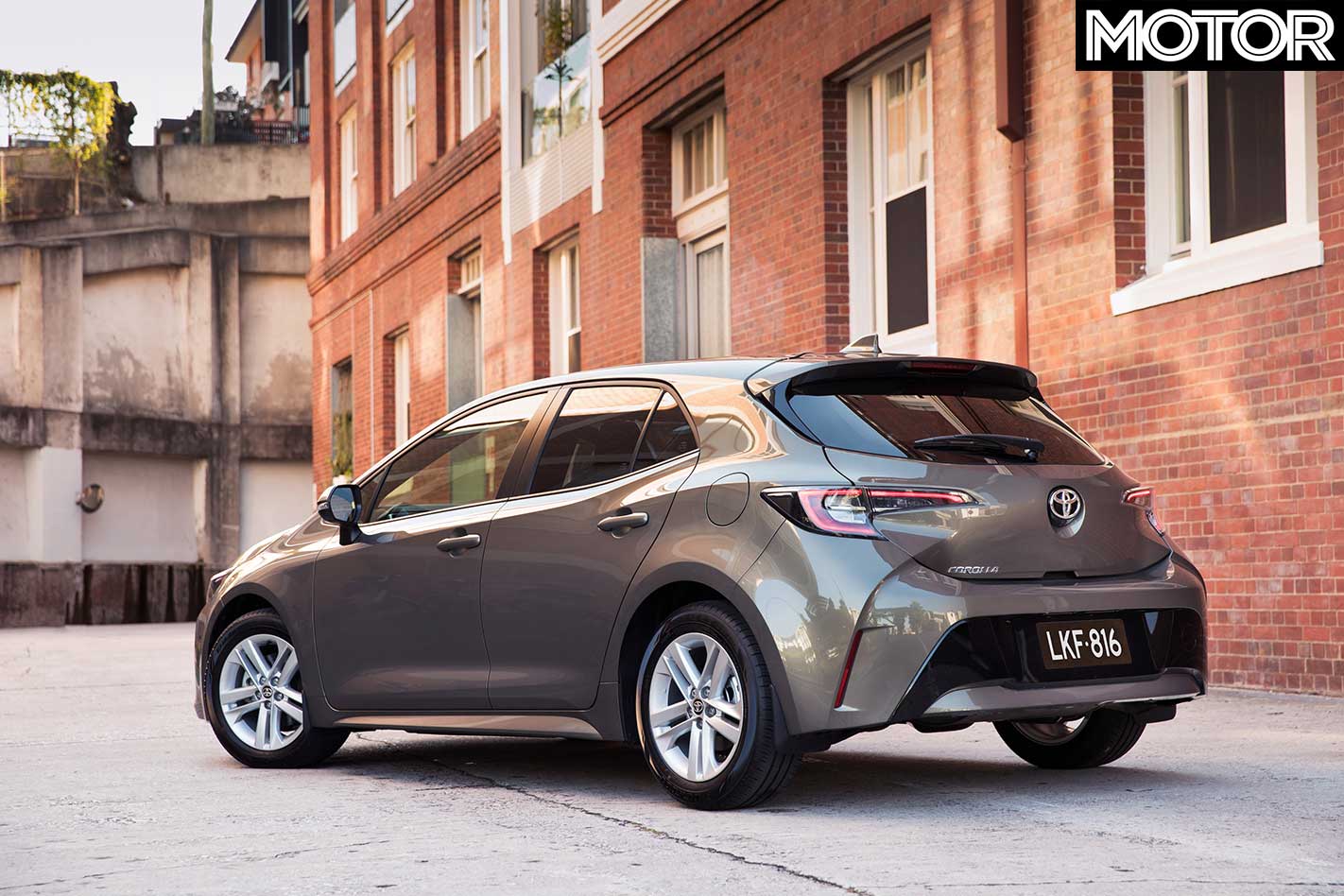
We’re in the base Ascent Sport, that costs $22,870, because it’s the only variant that offers the six-speed manual transmission. Boot capacity falls 69 litres since the fitment of new multi-link rear suspension, that might kamikaze its appeal to hire car companies, but the upside is a plush, cushioned ride on its 205/50 R16-profile tyres that still feels controlled.
Inside, its seats are well bolstered, the manual shifter is placed exactly where you want and there’s even a decent rev-match function that helps mask its annoyingly high-clutch bite point on downshifts.
Its new 2.0-litre atmo four has had a fair bit of work as well. It’s lighter than the old 1.8, employs direct injection and variable valve timing on the intake side, and produces 125kW/200Nm. It revs to a 6850rpm redline with enthusiasm, and would feel potent in a Mazda MX-5, but it’s nothing but pragmatic in the Corolla.

Instead, its chassis balance is the talking point. The steering is direct and linear. Yes, the base Ascent Sport squirms on big tyres (the ZR upgrades to 225/40 18s) at turn-in, but it doesn’t immediately fall into horrible understeer. Its chassis feels dynamic and perhaps capable of brake-activated oversteer if the seemingly undefeatable ESP didn’t squash the fun so early on.
Overall, it’s no hire-car hottie. But we want Toyota to prove us wrong. The new Corolla makes it easy to imagine a GRMN version if it ever finds the courage to build one. A set of springs, swaybars and 25kW/50Nm could unlock a true, almost exciting, warm hatch.
2019 TOYOTA COROLLA ASCENT SPORT SPECS: Engine: 2.0-litre DOHC inline-4 Power: 125kW @ 6600rpm Torque: 200Nm @ 4400rpm Drive: FWD Weight: 1320kg Price: $22,870
I love my Blunstones, I love the Wallabies, I love Banjo Patterson’s work. And, man, I gotta tell you, I love utes. But as a consumer of utes (I’m on my third in eight years or so) I’ve got to wonder about the HSV Maloo R8 and FPV Pursuit.
This feature was originally published in MOTOR’s May 2005 issue
Based on the fact that I use my own trayback for everything from dragging a fishing boat around to hauling half a yard of topsoil, certain elements of either vehicle, particularly the Maloo, give me cause to question whether maybe the whole thing is getting too weird.
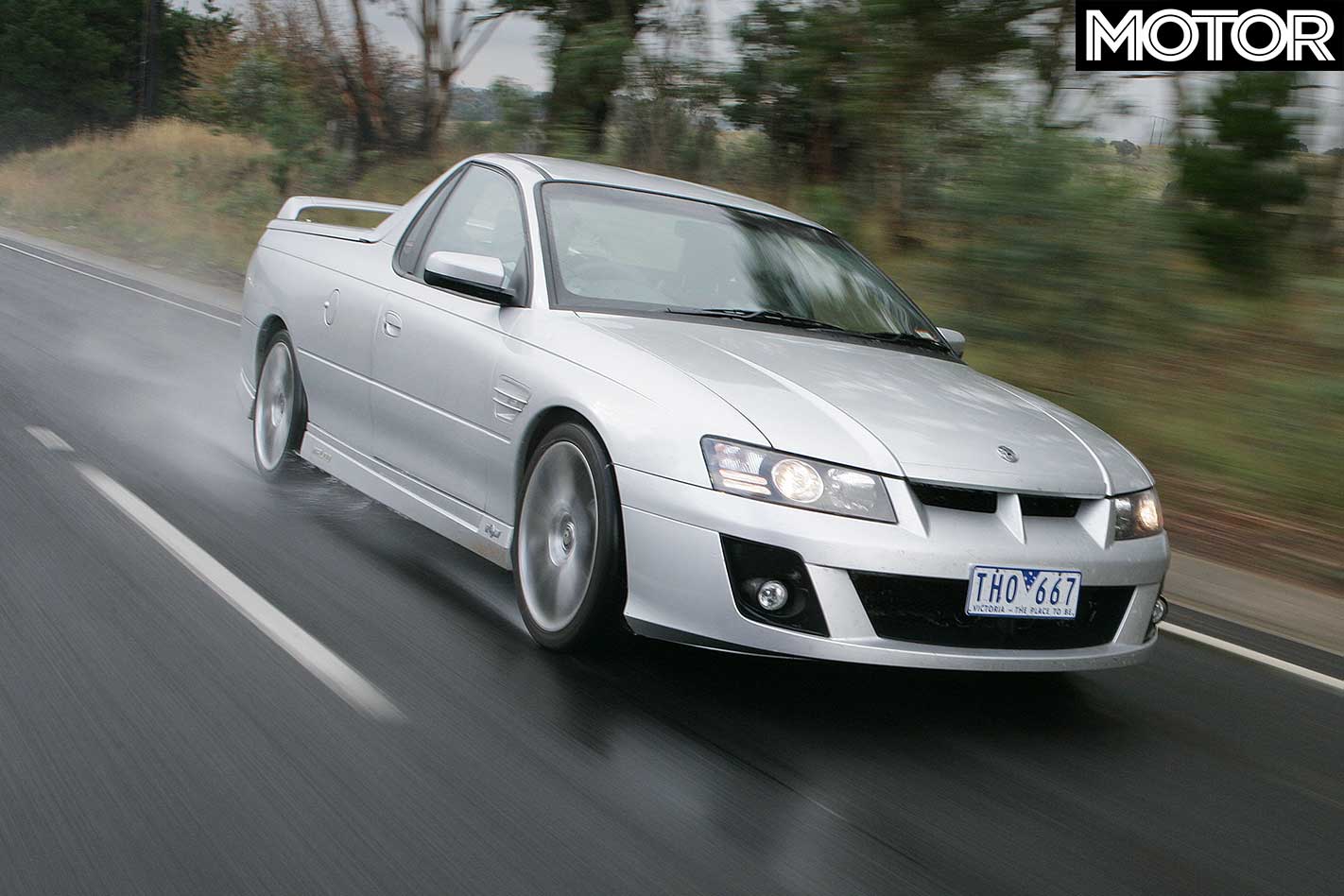
But then you look at the performance numbers, and you pull your head in, because two-seats-and-a-tray notwithstanding, these are potent sonsofbitches. The Pursuit’s 290kW is a pretty honest number and puts it closer to the HSV ute’s output than HSV itself might be comfortable with. On the dyno the FPV and HSV were within a fraction of a kilowatt of each other (226.6kW plays 226.4kW respectively).
On the other hand, on the dragstrip, the Henry just couldn’t keep up, and its 6.2secs 0-100 and 14.2 for the quarter-mile are both about two tenths behind the Maloo’s numbers. Not a bad effort, though, since it gives away more than half a litre.
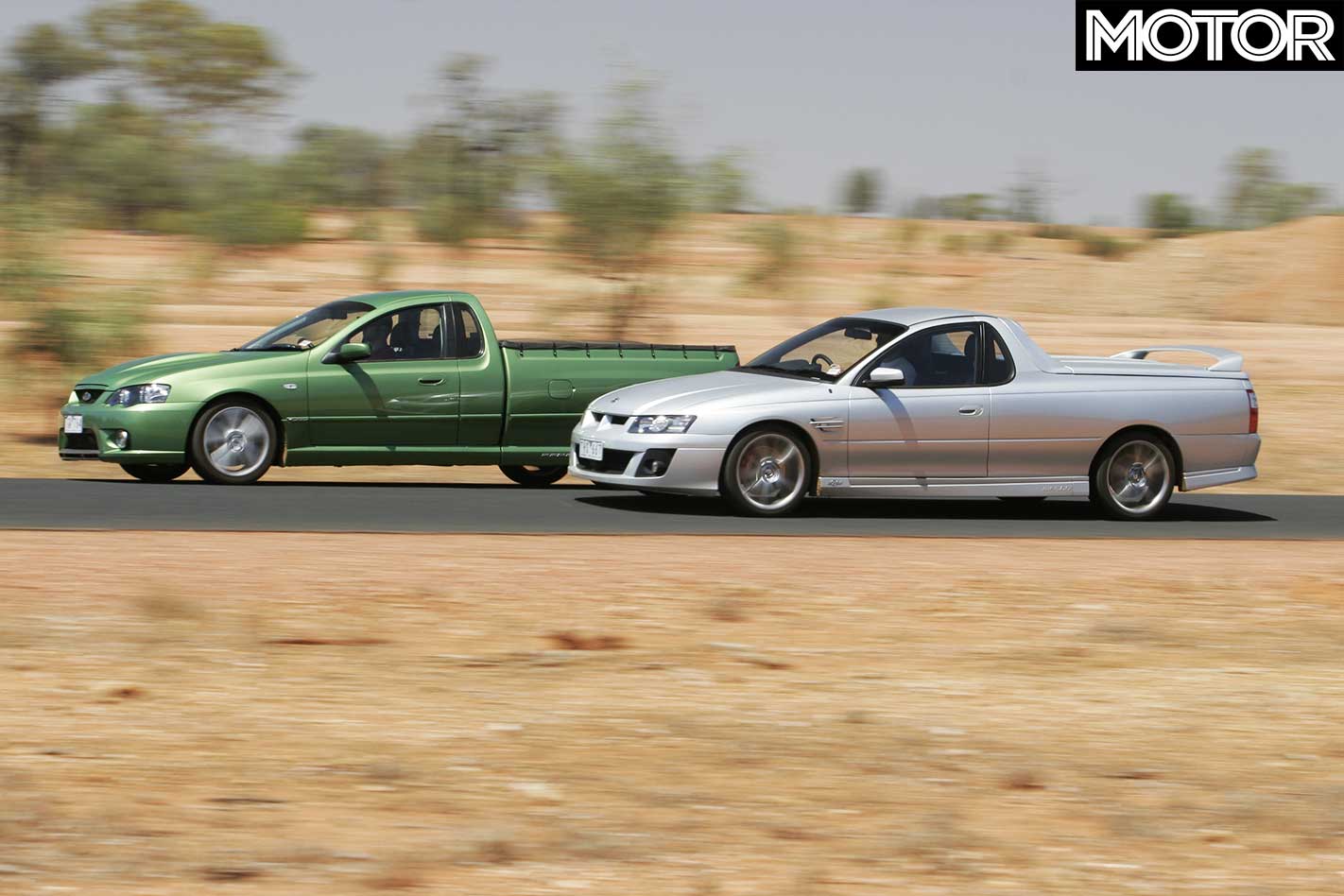
For the Maloo’s part, it’s a bit hard to see why it can’t get closer to the ClubSport’s 13.6 second quarter. I mean, they run the same boofy six-litre mill and six-speed ’box, yet the Maloo was nowhere near as quick as the Clubbie. Still, ute against ute, the HSV clearly gets away from the FPV in a straight line, in any gear. And that will count for a lot with many folks.
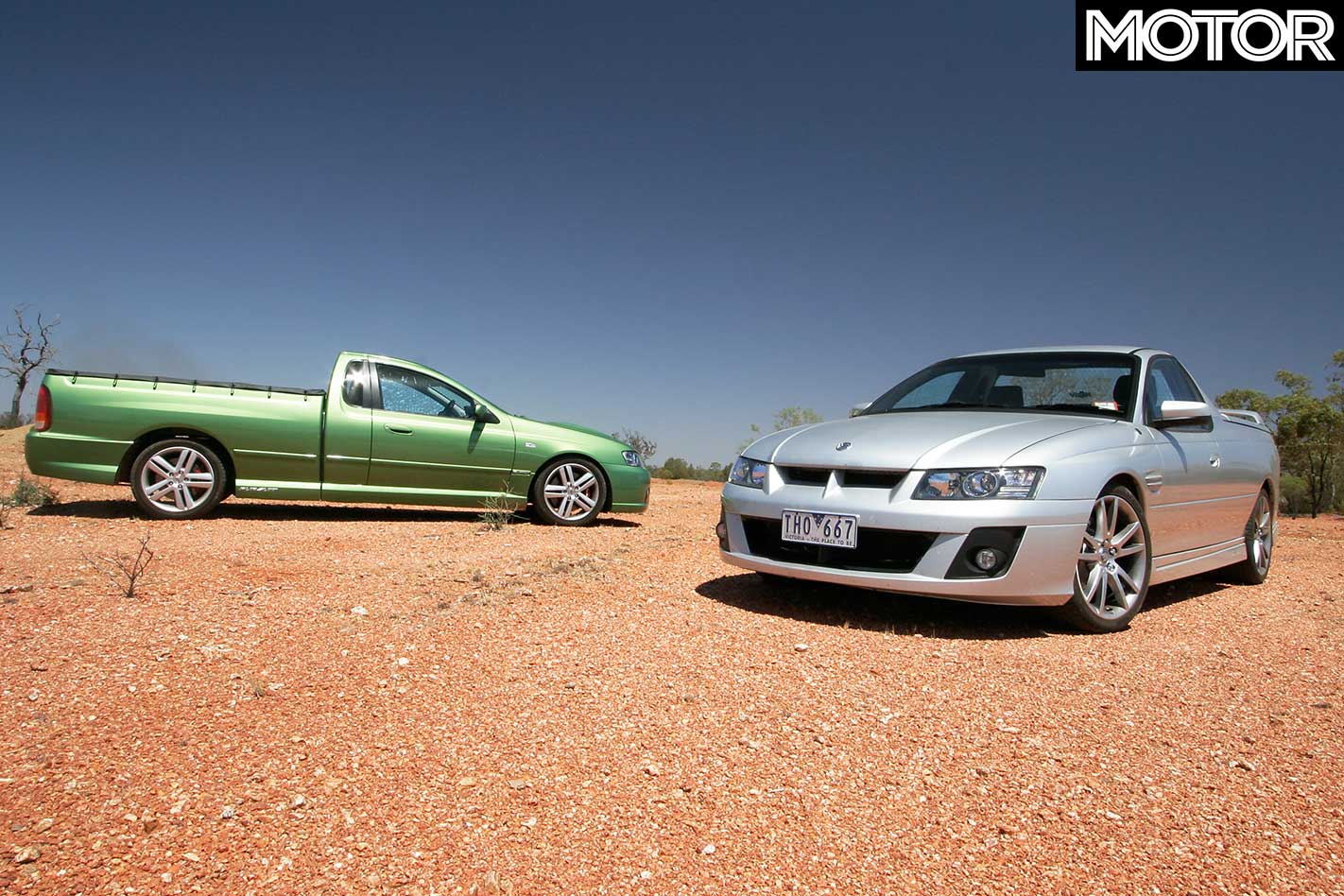
Away from the smooth hotmix of race-tracks and drag-strips, the Maloo pulls out an even bigger lead. While the Pursuit’s live, leaf-sprung rear axle feels pretty stone age when you start jumping it over lumps and craters in the backwoods bitumen, the Maloo’s independent set-up is far more likely to keep both rear treads firmly on the ground.
This is not something that takes any time to discover, either; it’s apparent from the moment you leave the town limits and crank things up to cruising altitude. The HSV’s advantage gets even bigger if you throw a few corners into the mix and that’s when the Pursuit’s front and rear ends stop talking to each other.
There’s a bit more to like about the Maloo’s engine-room, too, and while the Pursuit thrives on the sort of revs you don’t always feel like bothering with, the Gen IV stokes up early and just keeps on keeping on with a ripping top-end that seems like it’ll never stop.
The gear-shift is less happy, though, and the Henry claws a couple of points back in that department. In the final wash-up, not a single judge was moved to plump for the FPV, giving the Maloo five votes and daylight second, lack of track time notwithstanding (Maloo didn’t arrive in time).
The rider here is that things could be different if you actually use your 300kW utility for work as well as blatting around like a good ’un. See, as a work truck, the Ford has quite a bit more with which to recommend itself.
The cabin is a good place to start and as well as a cleaner presentation, it’s also got the unqualified benefit of that stash-space behind the seats. The HSV can’t match that, nor can it compete with the clever, poly-urethane tray (it’s not a simple liner) that doesn’t scratch, can’t rust and even seems to heal itself if you slice it with something big and sharp.
The leaf-sprung bum will also be worth its weight in gold should you ever want to tow big, heavy stuff or cart a tray-load of gold bars. Of course, all those comments apply in a non-performance car sense. And this is MOTOR, so they don’t count quite so much as they might in Blue Singlet Monthly. Like we said, daylight second.
Fast Facts
| u00a0 | Pursuit | Maloo R8 |
| Engine | 5.4L V8, DOHC | 6.0L V8, OHV |
| Power | 290kW @ 5500rpm | 297kW @ 6000rpm |
| Torque | 520Nm @ 4500rpm | 530Nm @ 4400rpm |
| Weight | 1870kg | 1696kg |
| Fuel consumption | 15.55L/100km | 15.67L/100km |
| Price | $60,285 (w/ $6000 optional Brembo) | $63,895 |
Dyno Results
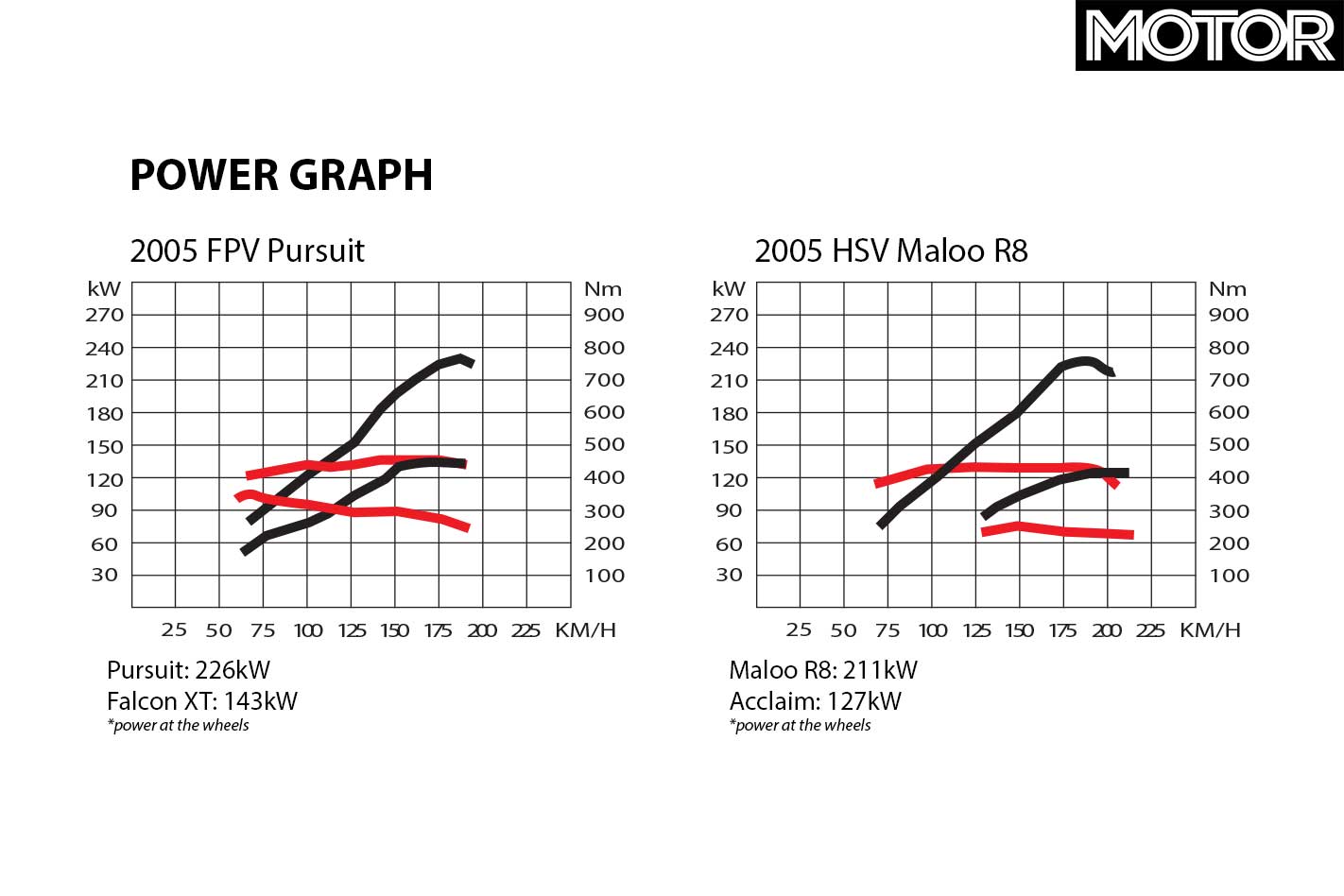
Both spot-on 226kW. Surprising given HSV claims 305kW DIN to FPV’s 290kW DIN. More strange is how Pursuit produces more power and torque across the range.
Drag Run
| u00a0 | Pursuit | Maloo R8 |
| 0-10km/h | 0.54sec | 0.50sec |
| 0-20km/h | 1.00sec | 0.92sec |
| 0-30km/h | 1.53sec | 1.53sec |
| 0-40km/h | 2.09sec | 1.98sec |
| 0-50km/h | 2.61sec | 2.56sec |
| 0-60km/h | 3.07sec | 3.03sec |
| 0-70km/h | 3.88sec | 3.87sec |
| 0-80km/h | 4.58sec | 4.62sec |
| 0-90km/h | 5.31sec | 5.21sec |
| 0-100km/h | 6.22sec | 6.02sec |
| 0-110km/h | 6.58sec | 7.12sec |
| 0-120km/h | 7.99sec | 8.43sec |
| 0-400m | 14.23sec @ 163.2km/h | 14.08sec @ 166.8km/h |
The Pursuit carries on with axle tramp if you try and launch with more than 2500rpm, still 6.22-seconds to 100km/h is sharp for a hay hauler. Maloo faster everywhere.
Track Results
| u00a0 | Falcon GT | Clubsport |
| Lap Time | 1min 57.59sec | N/A |
| Top Speed | 202km/h | N/A |
A 1:57.59 is sharp for a sedan let alone a ute, the Pursuit was surprisingly stuck-down and lots of fun.
Judges’ Scores
2005 FPV Pursuit
| Judges | JT | DE | DM | PC | LB |
| Performance/10 | 7 | 6 | 7 | 7 | N/A |
| Dynamics/10 | 6 | 7 | 4 | 5 | N/A |
| Driveability/10 | 6 | 6 | 6 | 4 | N/A |
| Value/10 | 6 | 6 | 5 | 4 | N/A |
| Total/40 | 25 | 25 | 22 | 20 | N/A |
| GRAND TOTAL | 92/160* | ||||
2005 HSV Maloo R8 – WINNER
| Judges | JT | DE | DM | PC | LB |
| Performance/10 | 9 | 6 | 8 | 9 | N/A |
| Dynamics/10 | 7 | 8 | 6 | 6 | N/A |
| Driveability/10 | 8 | 7 | 6 | 7 | N/A |
| Value/10 | 7 | 7 | 5 | 5 | N/A |
| Total/40 | 31 | 28 | 25 | 27 | N/A |
| GRAND TOTAL | 111/160* | ||||
* Lucky Bastard never drove the utes and therefore didn’t vote. Scores for utes are out of 160, not 200
To help celebrate our relaunch, Audi is giving one lucky Wheels reader the chance to win an unforgettable, two-part Audi driving experience valued at $5500.
Part one is a voucher for you and a friend to attend Audi’s Dynamic Driving Experience program where the two of you will raise and hone your car-control skills driving the Audi Sport fleet under the expert tuition of Audi’s gun instructors. You’ll then progress on your own to part two, Audi Sport Pro, where you’ll get to experience, at full noise, the V10-powered R8 supercar.
It’s a brilliant (and safe) way to push yourself and the car to the limit, so for your chance to win enter your details below.
Competition now closed
Congratulations to J. Wong from VIC!
