
Lamborghini’s Huracan Evo will touch down in Australia in the third quarter of this year, wearing a starting price of $459,441 and bringing performance potential that puts the current high-achieving hero Performante on notice.
The Evo slots into the middle of the current Huracan range, above the entry $378,900 LP 580-2 Coupe and under the Performante Spyder which costs $532,635. The Performante Coupe version costs $483,866 and Lamborghini has not yet confirmed an Evo Spyder.
Headlining a long list of technical enhancements are a number of features lifted from the Performante. Donated kit includes its 470kW 5.2-litre V10 engine coupled to all-wheel drive, enabling the Evo to match the Performante’s zero to 100km/h dash of 2.9 seconds.
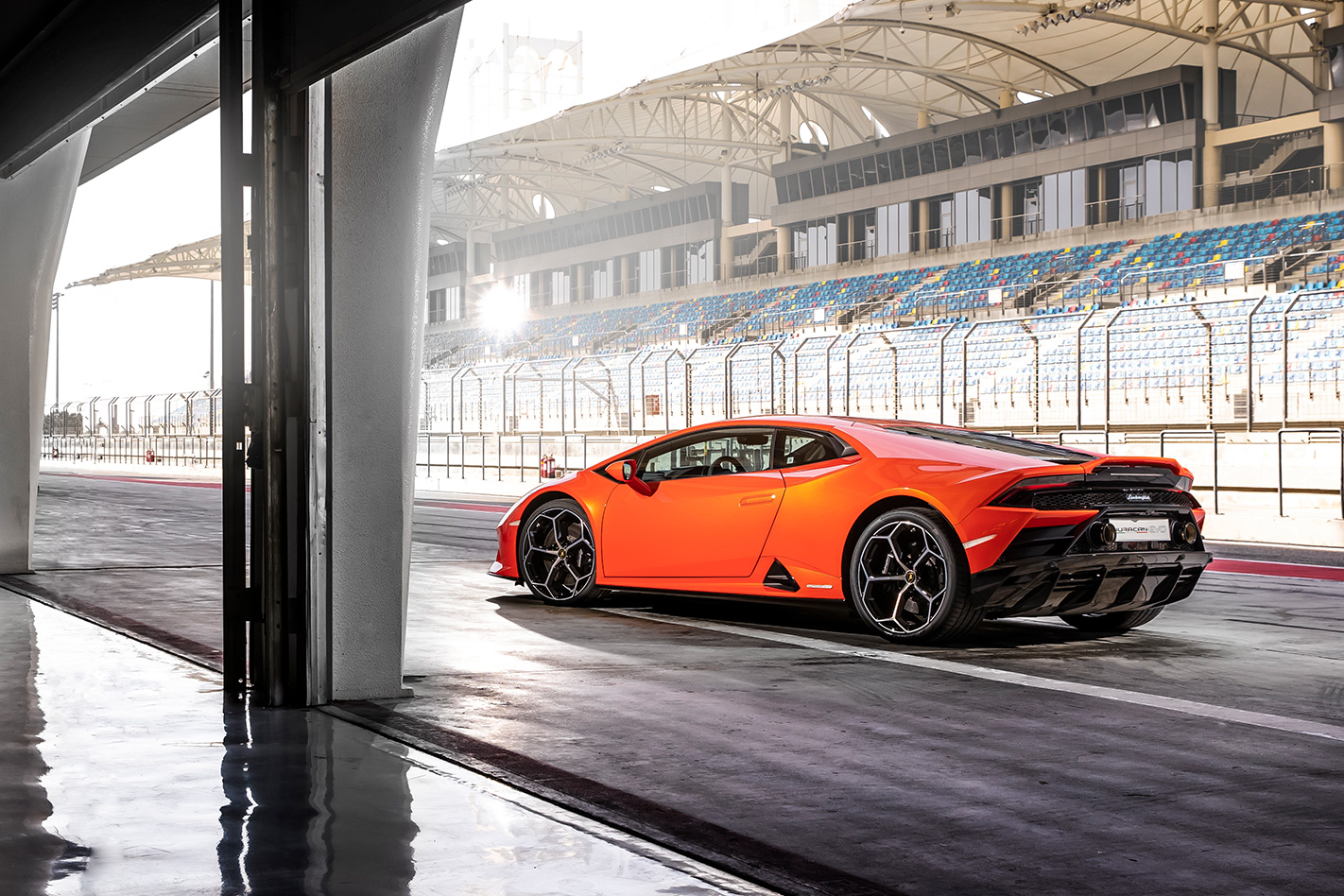
It also gains rear wheel steering, borrowed from the Aventador SVJ, to boost high-speed stability and agility at lower speeds. But while the Performante wears ostentatious forged carbonfibre aero parts for maximum grip at speed, the Evo has redesigned bodywork that does away with big spoilers in favour of more subtle, streamlined looks.
It can’t quite counter the big downforce figures of the Performante as a result, but the Evo’s relatively understated aesthetic is far more efficient with significantly less drag than its headline-stealing sibling.
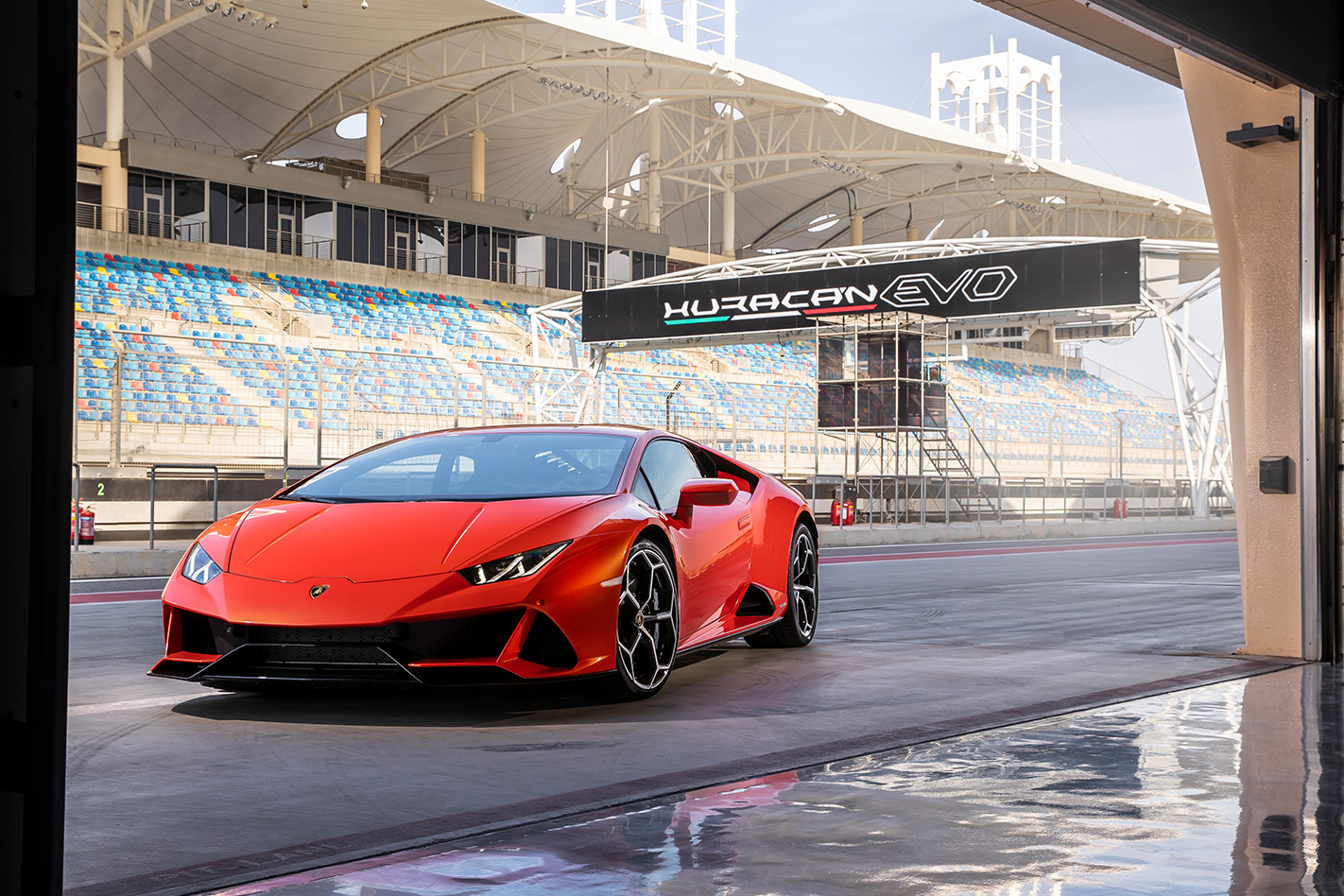
And compared with the hyperbolic Performante, the Huracan Evo has six times better aerodynamic efficiency and seven times more downforce efficiency – the ratio of drag relative to downforce. There’s also a 16 percent improvement to cooling air flow.
As you might expect, the Evo knocks the rear-drive LP 580-2 and LP 610-4 into a cocked hat when it comes to lap times but, speaking at the global launch of the Evo, Chief technical officer Maurizio Reggiani let slip that, at certain circuits (including Lamborghini’s own test track), the Evo is fastest.
“My colleagues in chassis don’t want me to mention the Huracan Evo, in the Nardo track, is also faster than Performante,” he said.
While the big wing allows the Performante maximum potency at fast circuits such as the Nurburgring, where it once held the production car lap record, on tracks with tighter turns and lower average speeds, the rear-wheel steering system is a greater advantage.
It’s unlikely the Evo will be bettering the final lap time of its big-winged sibling at the Green Hell, but it’s certainly something Huracan fans should consider when weighing up the range – especially if they don’t intend to spend a lot of time on high-speed circuits.
Indeed, the Italian manufacturer says the Evo is the true all-rounder of the range and a pleasure to live with day-to-day.
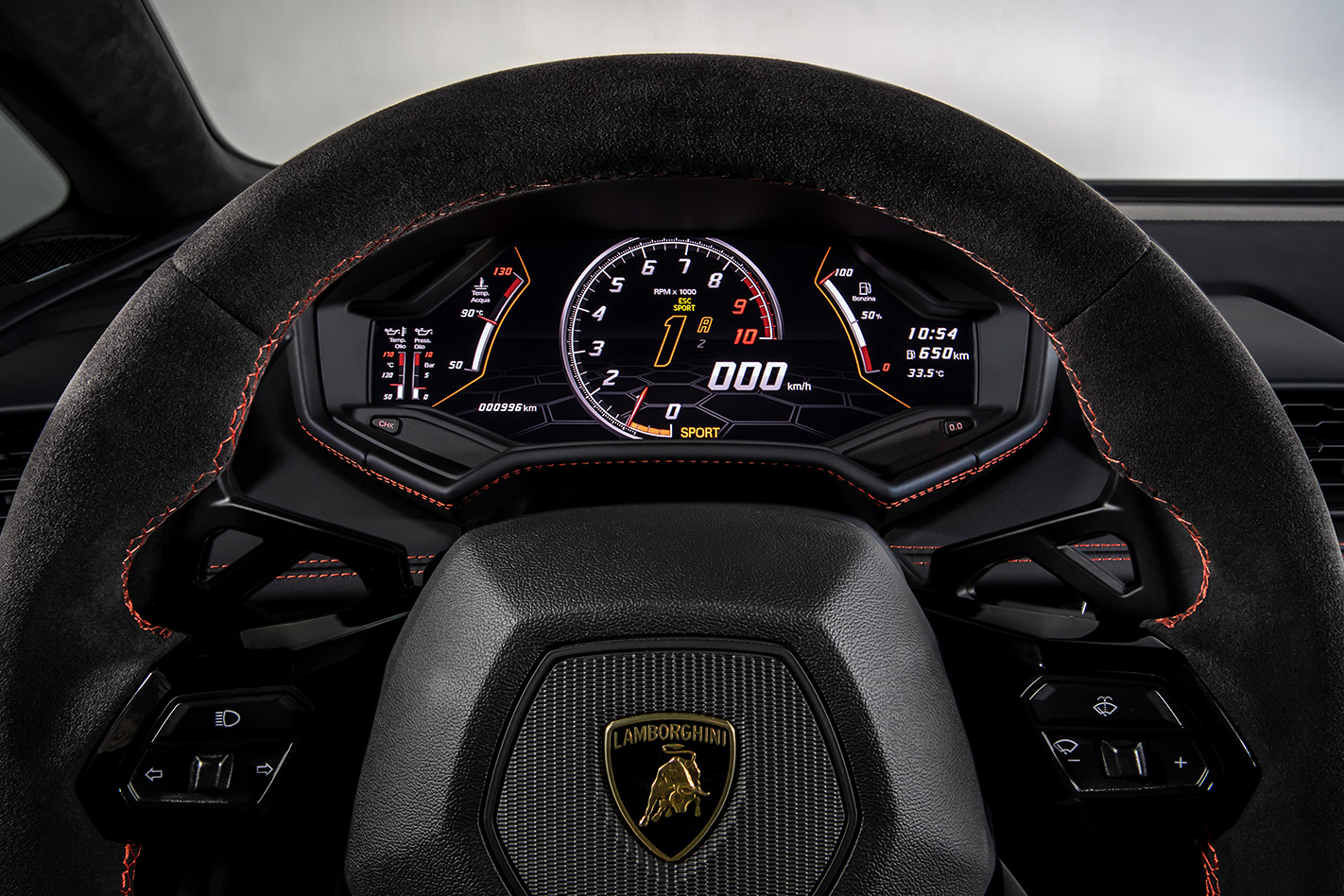
In addition to the major oily bits, the Evo introduces a new electronic management system entitled Lamborghini Dinamica Veicolo Integrata or LDVI, which uses a single central processor to rule over the various dynamic systems including the steering, power transmission and new torque vectoring.
According to Lamborghini, the system is predictive and can anticipate the driver’s actions, allowing a greater level of car control yet providing seamless intervention. From the driver’s seat, the car’s handling should feel natural rather than synthetic.
“With this you can really try to see what is the limit of the driver because normally, the limits of the driver will arrive before the limits of the car,” said Reggiani.
Visual exterior changes are extensive and include a more aggressive front air dam with trademark epsilon vents, at the back end, a subtle spoiler incorporates a slot that draws air, venturi style, from the rear window to improve downforce while also removing heat from the enginebay.
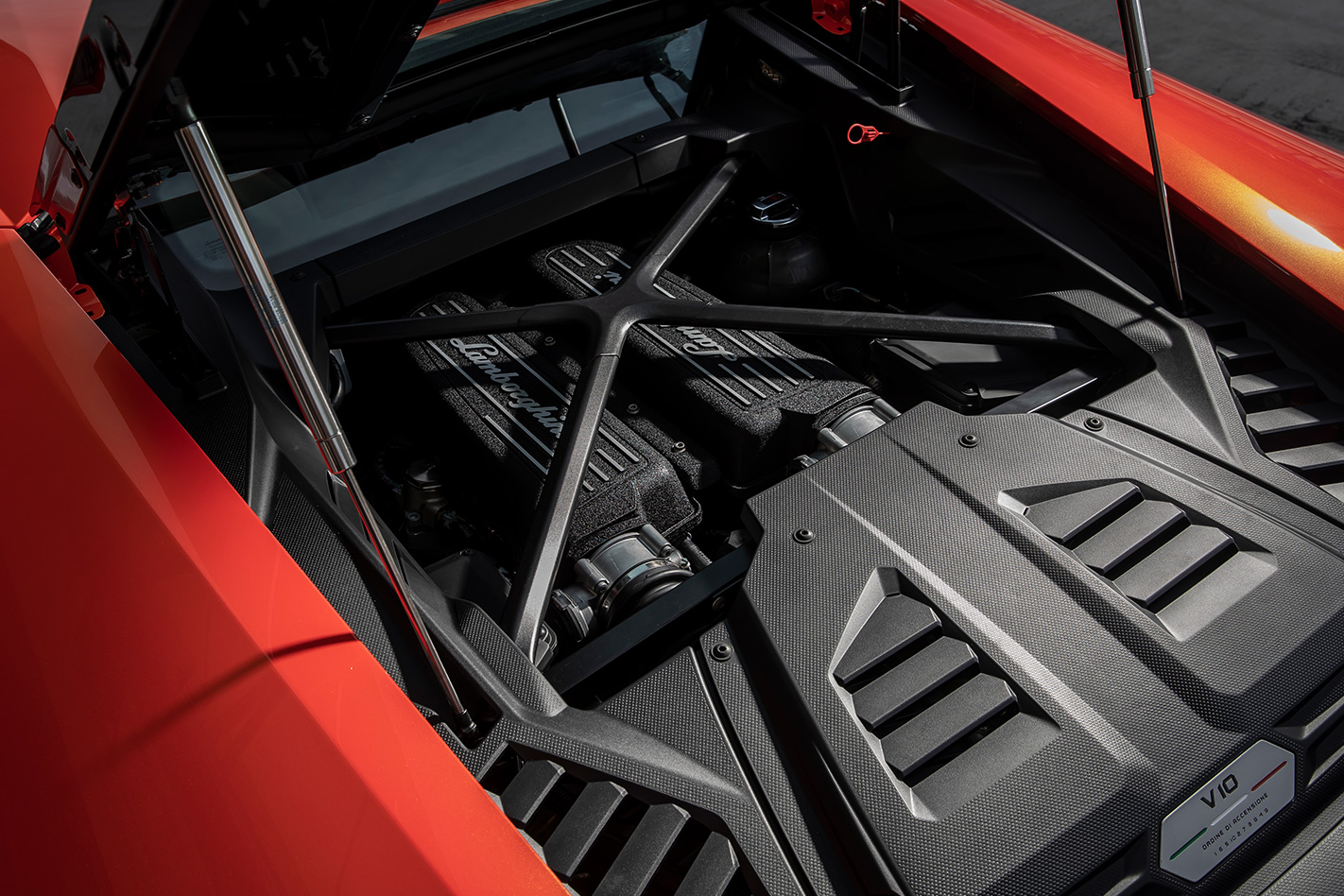
A massive rear diffuser compliments underbody deflectors and side air curtains for yet more aerodynamic benefit, while a new high-exit twin exhaust is another Performante trait – and one that turns up the volume on that raucous V10.
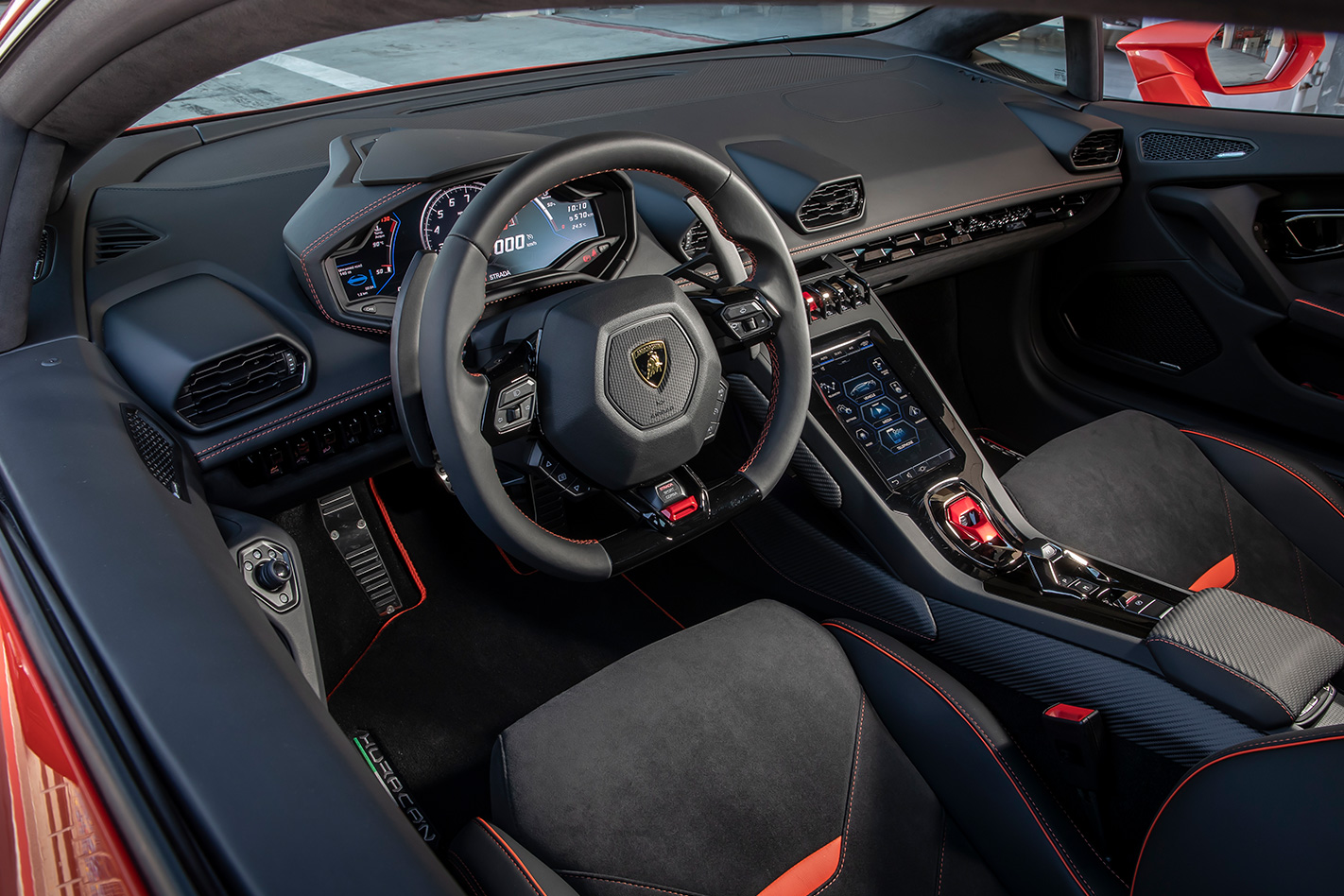
Inside, a portrait-oriented central screen measures 8.4-inches across and boasts smartphone-esque swipe and pinch controls. Spend a little more and you can have on-board telemetry, which includes a pair of integrated cameras to monitor both the way ahead and the cabin when recording hard laps.
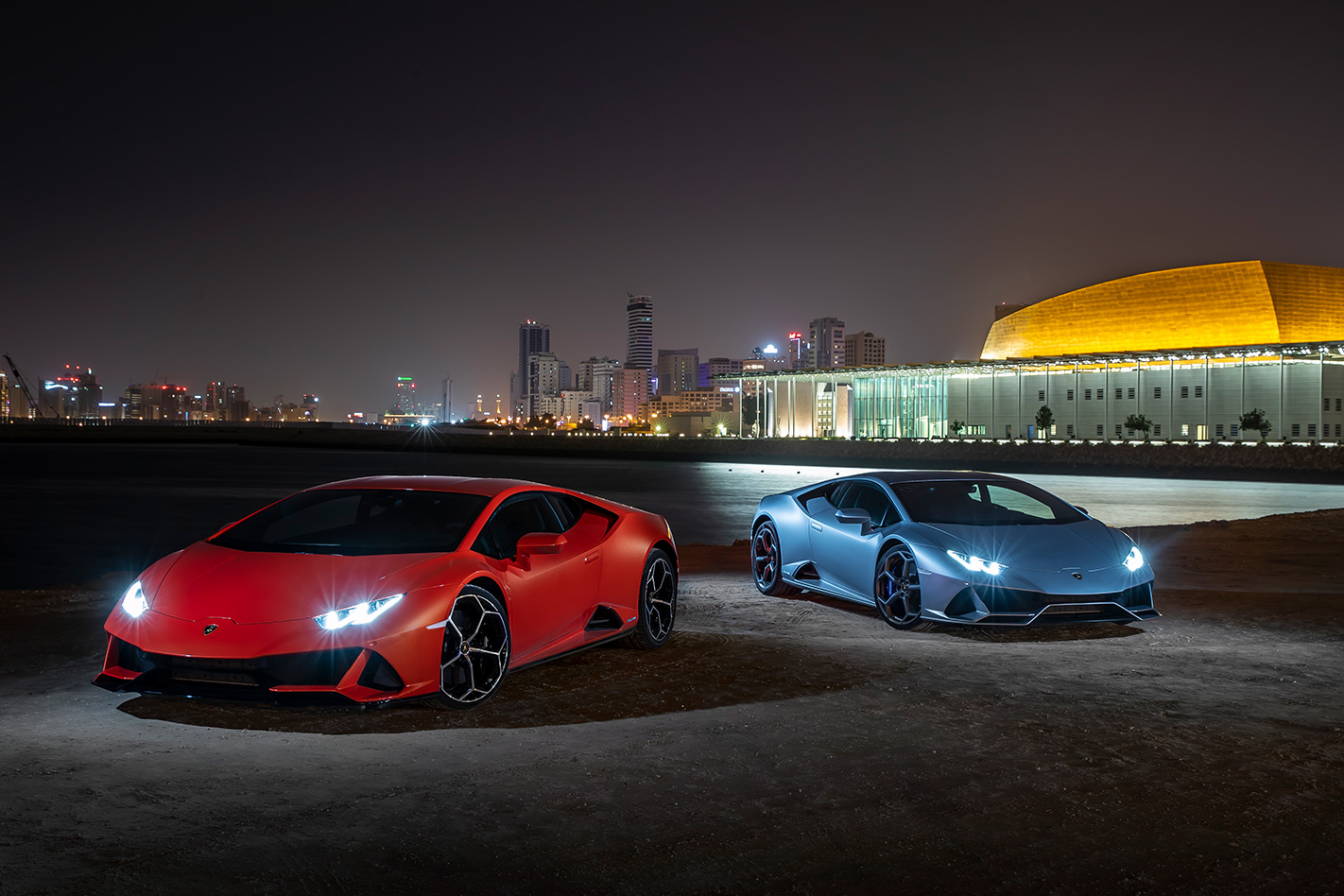
With the introduction of the new model, a special Arancio Xanto four-layer orange paint is on offer to complement the new-look 20-inch wheels. The standard Pirelli P Zero tyres that they wear can be also be optionally upgraded to strictly-dry-weather-only P Zero Corsa rubber for those seeking a little more track-day grip.
View the entire Lamborghini Range
What is it?
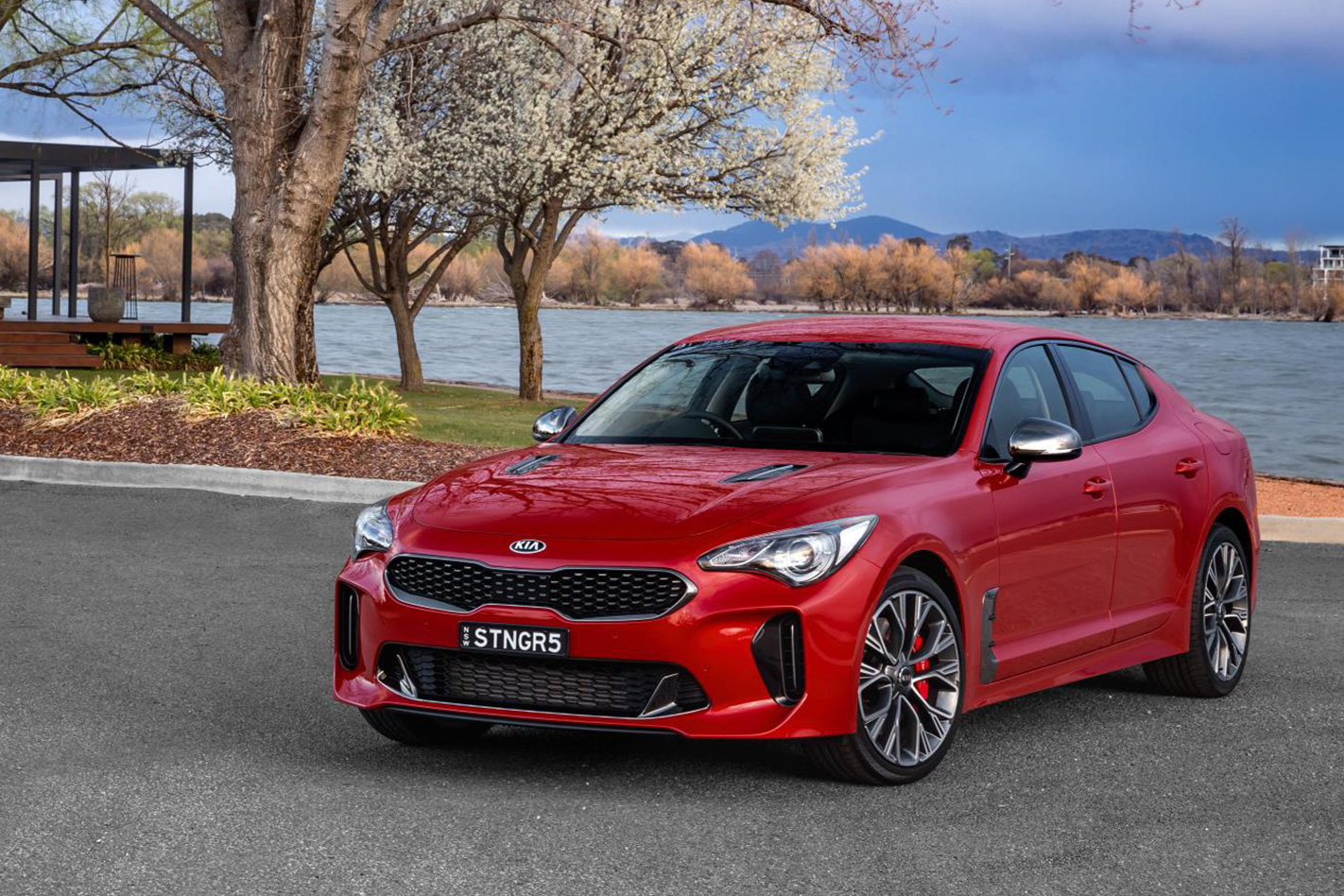
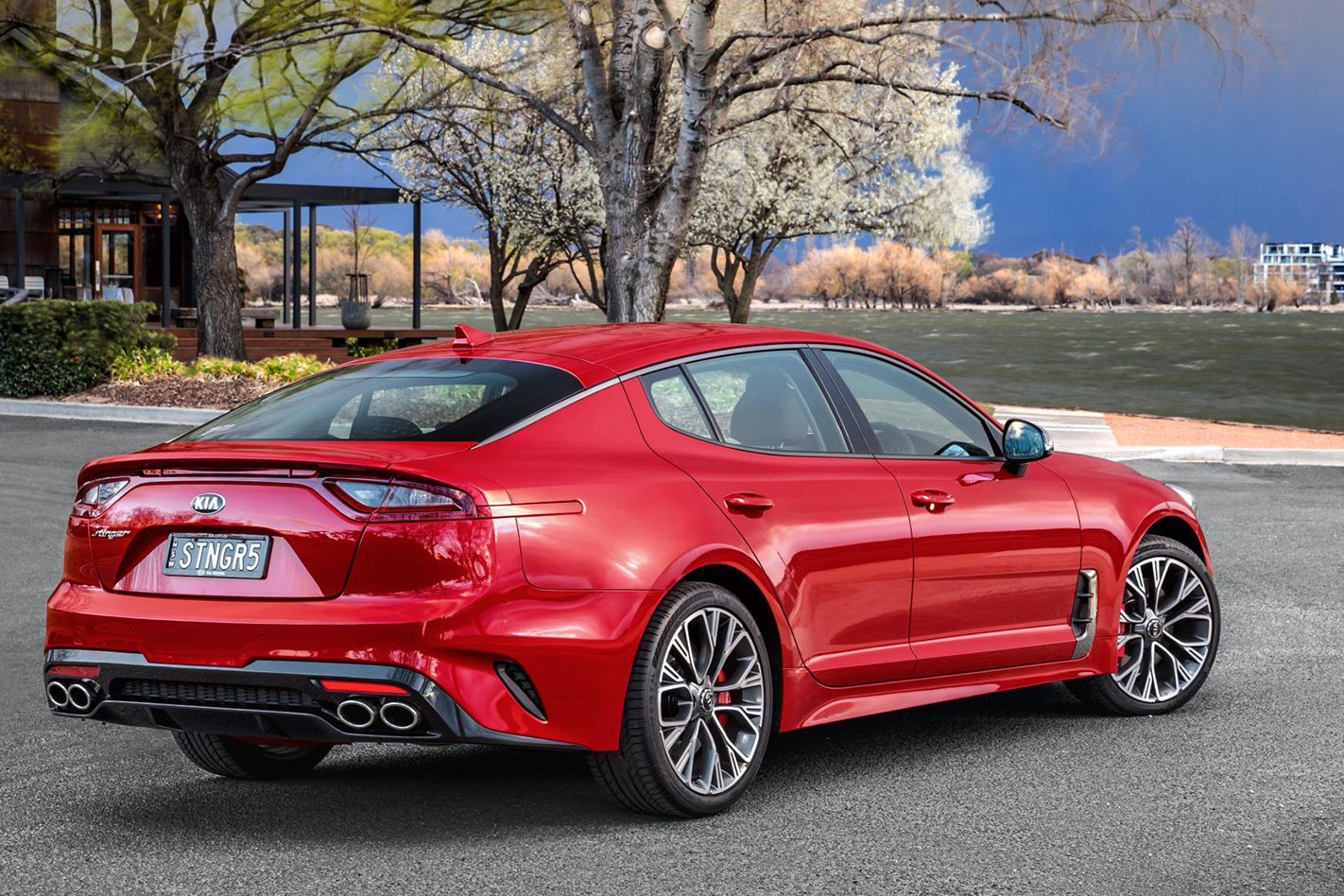
The mid-spec Kia Stinger 330Si has been starved of attention by the range-topping Stinger GT. It lacks some of the GT’s kit, such as adaptive suspension and premium Nappa leather upholstery, but still has the same 3.3-litre twin-turbo V6 and sharp looks while offering more than enough creature comforts to keep driver and passengers comfortable and entertained.
How much is the Kia Stinger 330Si?
The Stinger 330Si is the mid-priced V6 version of Kia’s big sedan and retails for $55,990. It’s book-ended by the Stinger 330S and Stinger GT, which are priced at $53,990 and $59,990 respectively.
Each of the three specs is available with a 2.0-litre four-cylinder turbocharged petrol engine – the Stinger 200S ($46,990), Stinger 200Si ($49,990), and the Stinger GT-Line ($55,990) that shares the same equipment and trim levels as the GT, but with the less powerful engine.

The Stinger 330Si comes equipped with forward and reverse autonomous emergency braking, adaptive cruise control, Apple CarPlay Android Auto, 8.0-inch infotainment screen, LED daytime running lights, leather trimmed seats. It’s also covered by Kia’s seven-year, unlimited kilometre warranty.
Is the Kia Stinger 330Si easy to live with?
The Stinger’s sporty looks and punchy twin-turbo V6 engine belie the fact that this is a big, comfortable and practical family car.
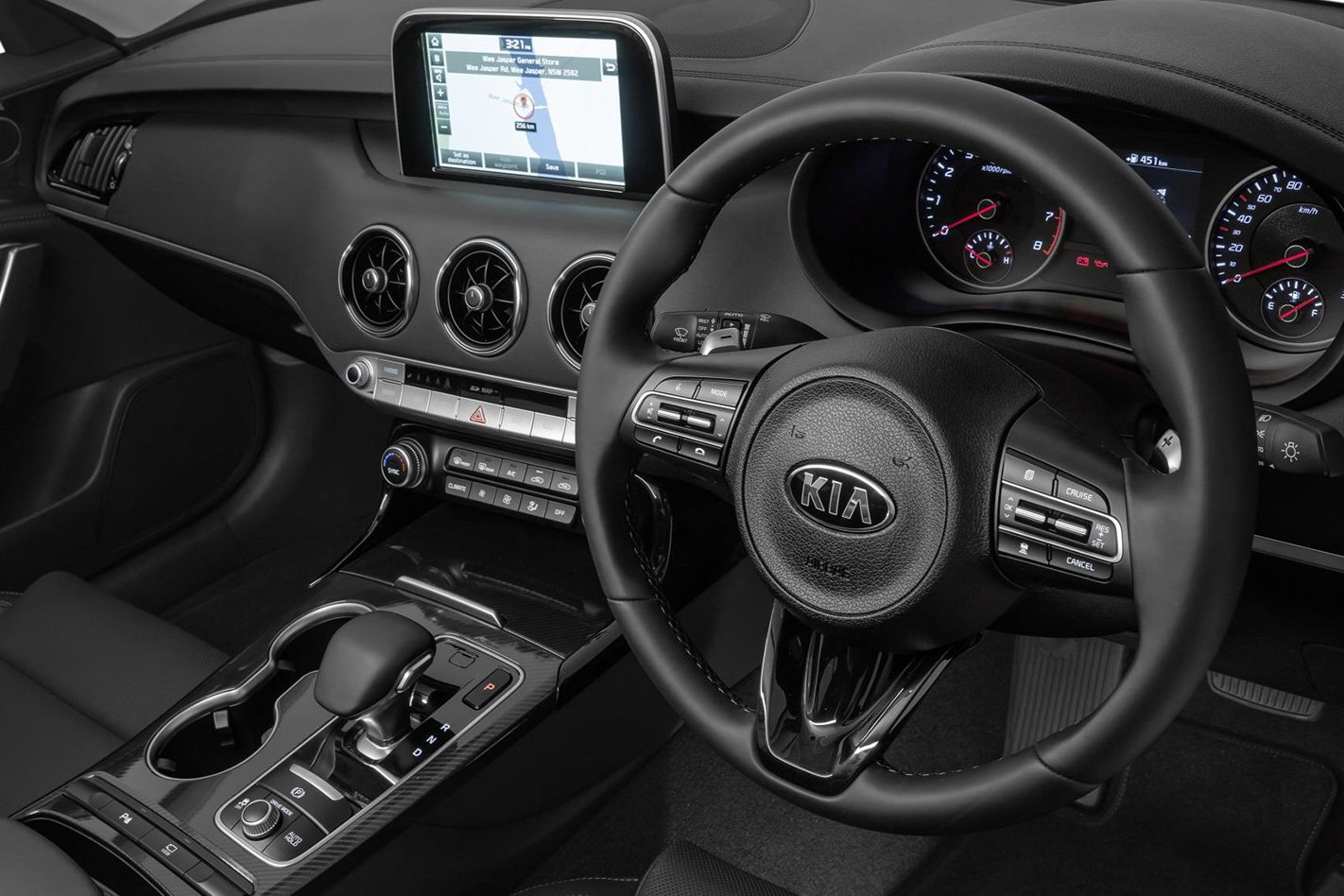
The interior is well put together with plenty of soft surfaces and touchpoints, and the front and rear leather-trimmed seats feel snug and provide comfort over long distances. The driving position is excellent.
Rear headroom is a little tight because of the swept roofline, though that’s not really an issue with three kids in the back. However, you’ll probably have to bend down more than usual in order to strap them in.
That roofline also eats into the boot volume, which at 406 litres is tight for a large car. There is plenty of space between the boot lip and rear seats, though, and folding the seats down extends the load area to 1114 litres.
The infotainment system, which you’ll find in all newer Kia and Hyundai models, is simple to use and pairs easily to your smartphone via Bluetooth or Apple CarPlay/Android Auto. The controls on the steering wheel and the dashboard buttons are also intuitively laid out.
The twin-turbo V6 drinks premium unleaded petrol at a rate of 10.2L/100km on the combined fuel economy cycle, according to official figures. On our highway-centric trip, we saw 11.3L/100km.
Does the Kia Stinger 330Si drive well?
The Kia Stinger 330Si performs the sports sedan/comfortable family car double act with aplomb.
Kia Stinger gets a second exhaust option, tyre upgrade
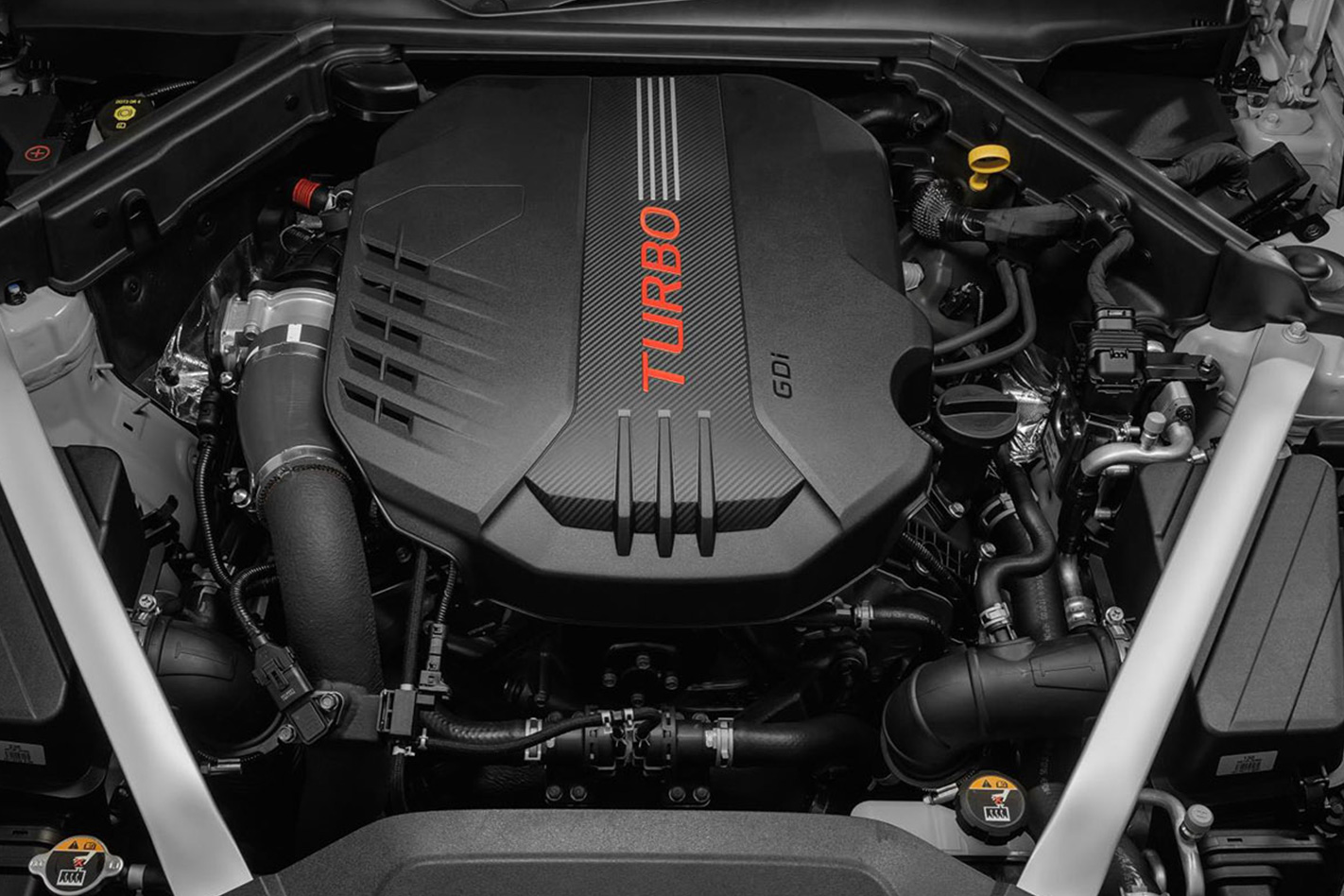
The twin-turbo V6 is still surprisingly quick, thanks in part to its launch control system and ability to sprint from 0-100km/h in just 4.9 seconds. The sedate engine noise doesn’t quite match the performance, though that’s probably more of an issue for GT buyers.
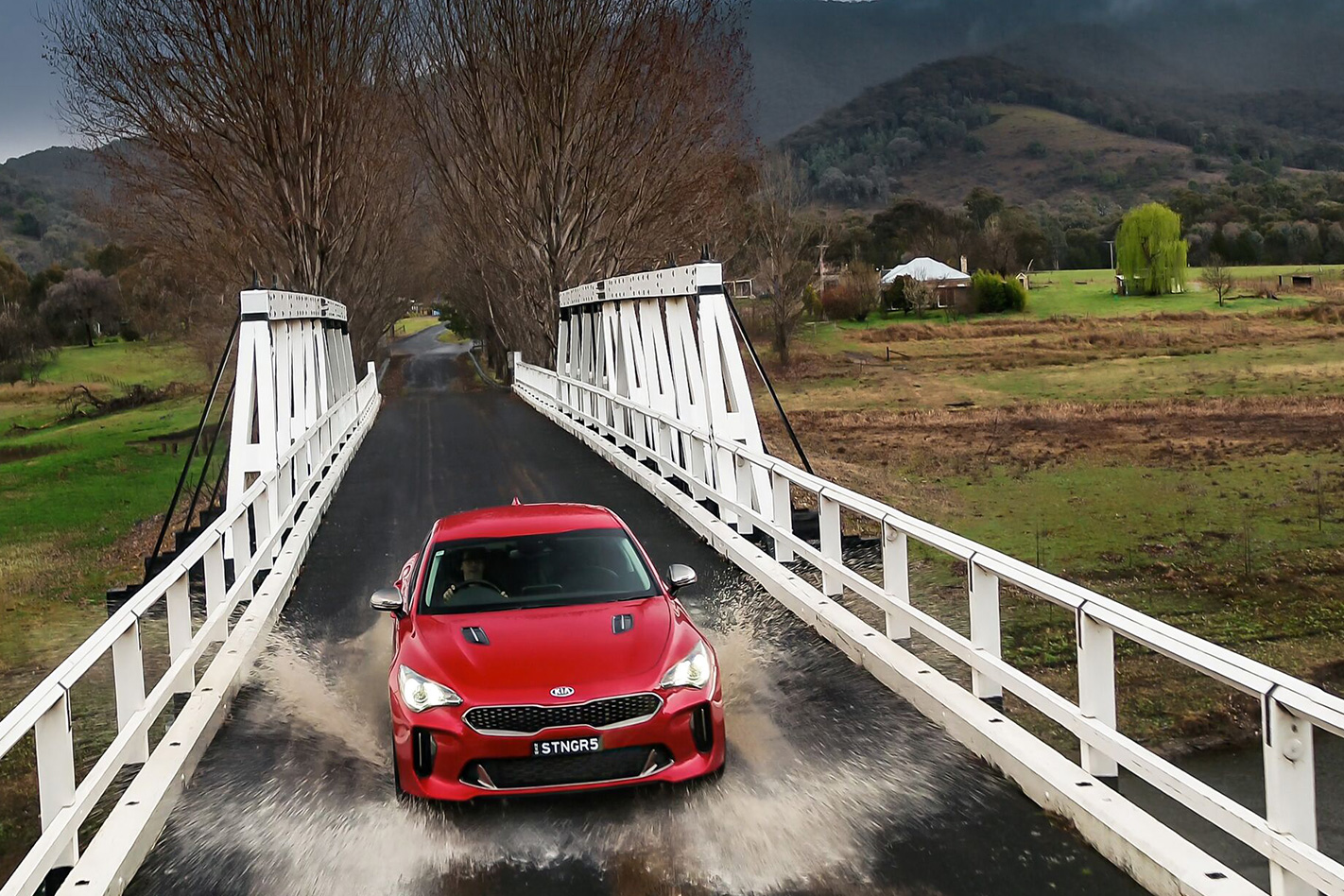
It’s also an excellent tourer, handling highway speeds with little effort.
The eight-speed automatic transmission does its job well, but does tend to shift up a gear and reduce revs a little soon when you put the foot down, even in Sport mode. There are paddle shifters to take over manually, should you prefer revs to get closer to redline.
The electrically-assisted steering feels direct. It stiffens up in Sport mode while feeling slick at low speeds in Comfort.
Despite lacking the GT’s adaptive dampers, the 300Si’s ride is actually better, thanks to the smaller 18-inch wheels (the GT has 19s) and Aussie-tuned steel-sprung suspension that’s not as busy and offers an excellent compromise between ride comfort and cornering.
The active cruise control changes speed seamlessly but could do with the company of lane keeping assist, which is included in the Stinger GT.
Verdict
The 330Si arguably offers the best value in the Stinger line-up in terms of price, features and performance. The $4000 premium to upgrade to the GT is low enough to lure buyers to the top of the range, but pocketing the change and leaving the showroom with the Stinger 330Si shouldn’t lead to any regrets.
Each year, countless awards are presented to the various car manufacturers, recognising excellence in a wide range of fields.
Some, such as Motor Magazine’s Performance Car of the Year, single out the finest driver’s car, 4×4 Australia’s gong identifies the very best off-roader to roll out in the last 12 months, while Wheels Car of the Year crowns the best all-rounder, bar none.
But, while all of these automotive awards and others rely on a rigorous assessment of objective factors, none tackles the trickier subjective realm of design – except one.
Now in its fourth year, the WhichCar Style Award is presented to the vehicle that demonstrated the most exceptional design and visual innovation in the previous 12 months, and gives those models that place a heavy emphasis on aesthetics a chance to shine.
For this year’s contest, we assembled seven finalists shortlisted by the WhichCar team and presented them before a panel of nine judges. A diversity of opinion and experience is vital to arrive at the most deserving victor, which is why our panel is always recruited from an eclectic range of backgrounds and industries.
Check out our in-depth look at the panel for a detailed biography of each judge but, this year, our experts included a car design veteran, fashion authorities, lifestyle publication editors and high-end consumer product critics.
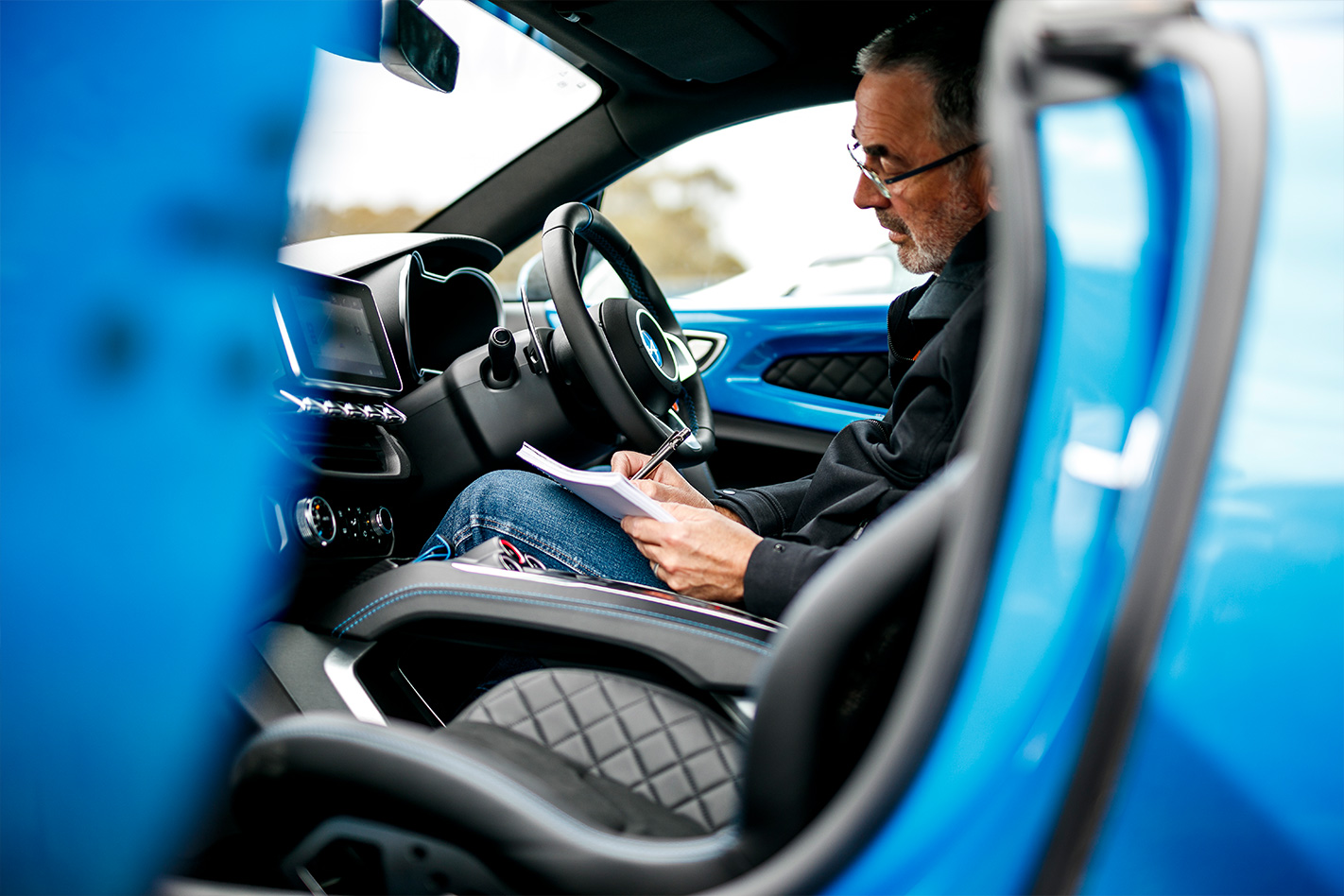
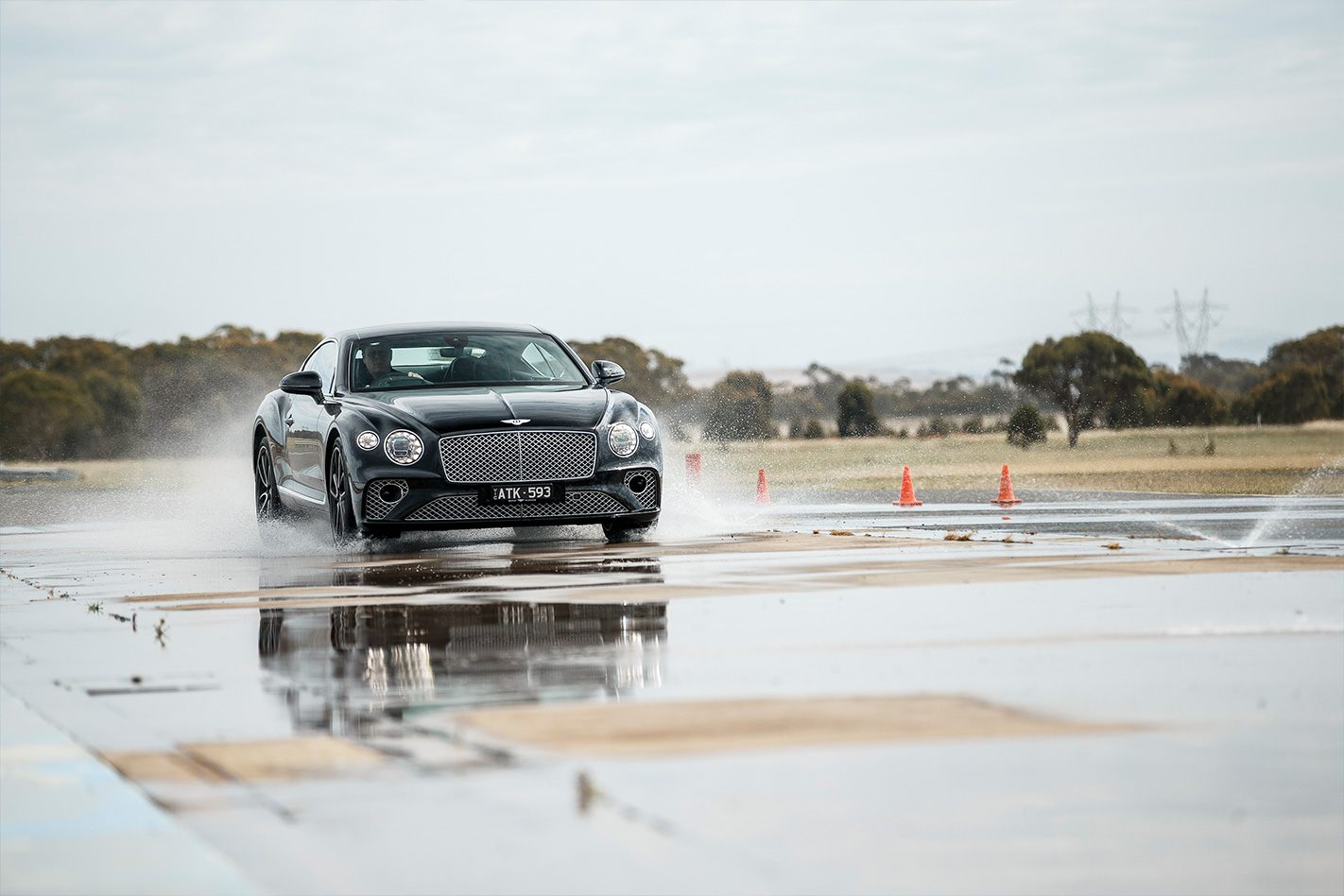
In previous years, the thorough appraisal process was conducted by a methodical static viewing of each vehicle, but this year the judges were given a second dynamic element to fully appreciate every element.
For the static stage, each car was presented with a brief introduction by WhichCar channel director Glenn Butler, outlining the model’s history, market relevance and the reasons it made the cut for 2019.
After that, Toyota Australia Design Centre founder Paul Beranger highlighted the key design signatures – both bold and subtle. Then the panel was free to explore the vehicle inside and out, and find their own highs and lows.
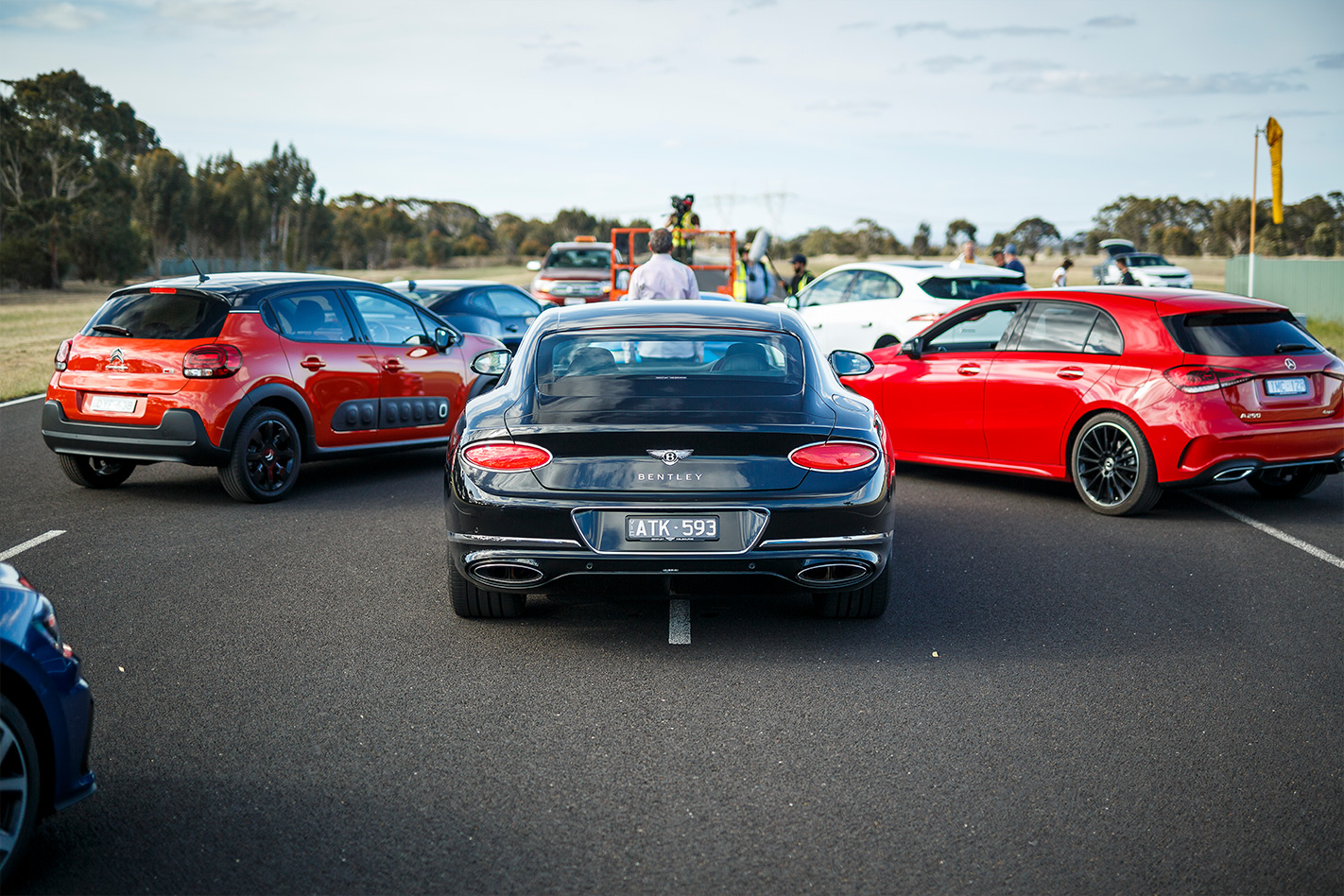
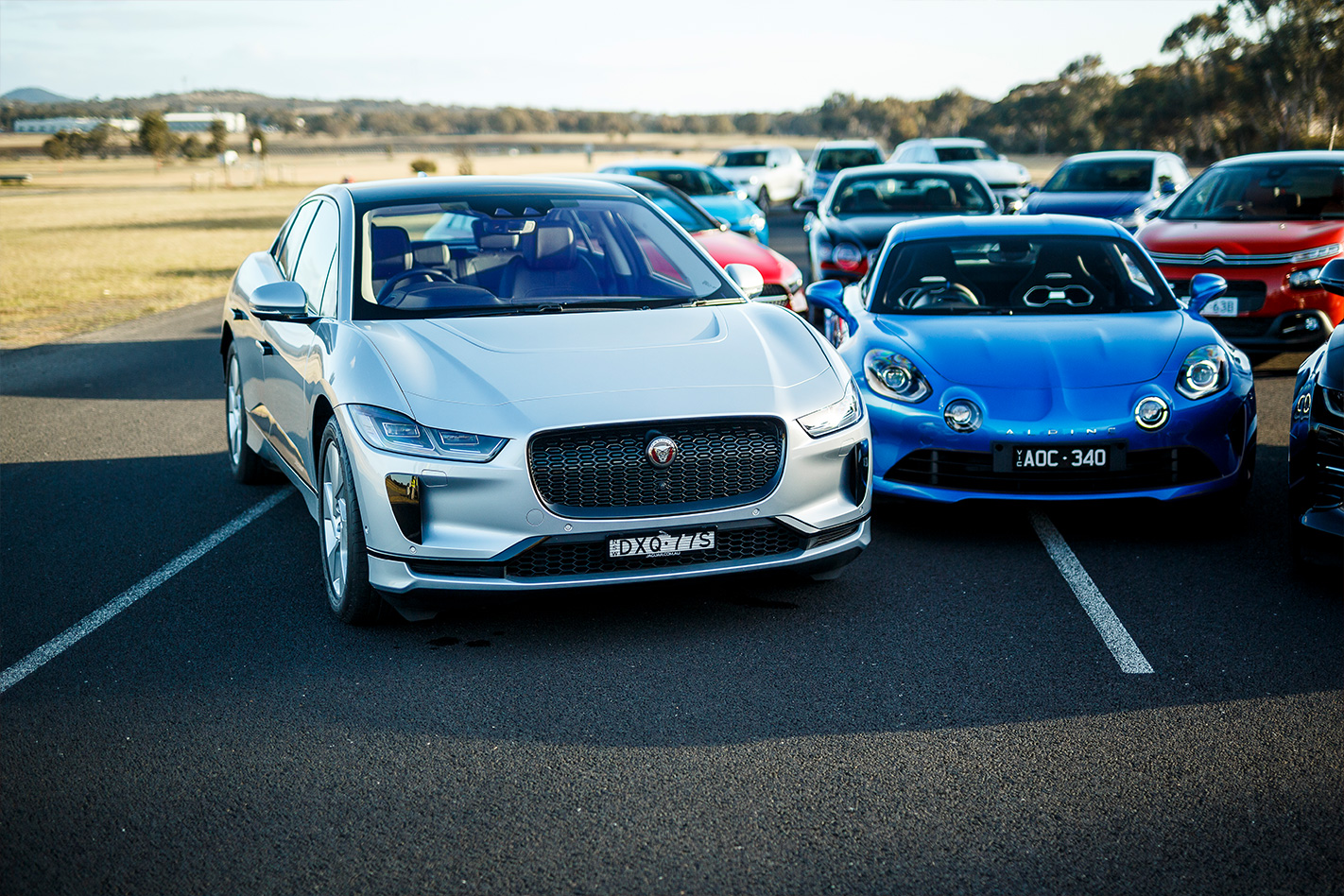
In the name of consistency and equality, the cars were presented individually, allowing the panel to assess each contender without distraction and in isolation, but for the new dynamic assessment element, all seven were brought together.
While a driving element of the judging process might seem more relevant to the evaluation of performance and ergonomics, our panel agreed that actually using the vehicles allowed a better appreciation of their various design elements.
It might surprise you that, among this year’s representatives from luxury European brands, there was an affordable Japanese hatchback and a one-tonne ute, but all of the seven deserved their place in the 2019 contest with notable design merit. You can view the full line-up here.
As for the winner? You’ll just have to wait until January 30, when all the year’s top performers are announced at the 2019 Australian Motoring Awards, and you’ll see all the results here first.
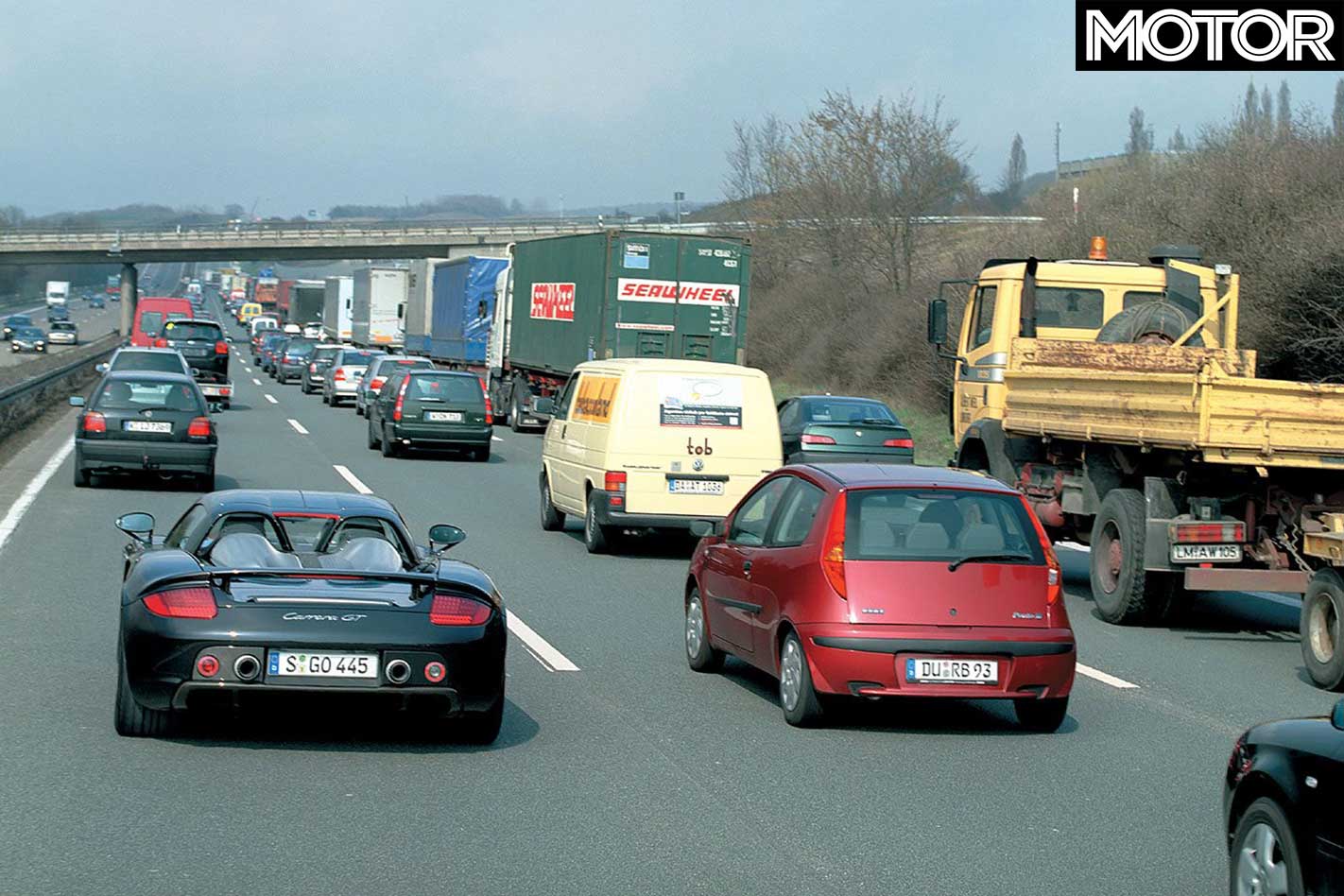
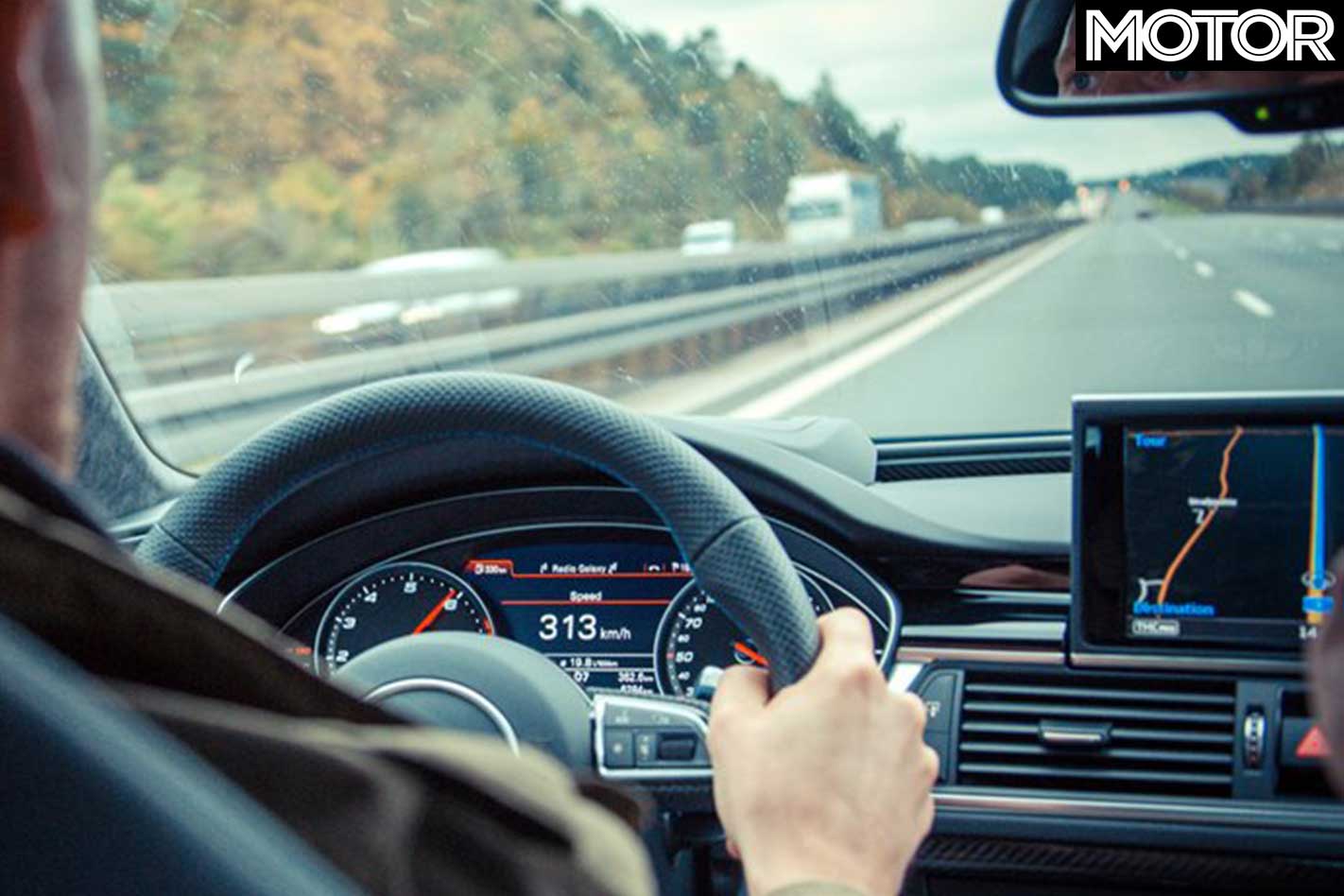
Unlimited speeds on German Autobahns could be coming to an end as a German government committee finalises its report of recommendations for lowering emission levels.
A report by Reuters, which has seen a draft of the documents, says a speed limit of 130km/h is on the cards for the currently limit-free sections of ‘Bahn.
According to environmental reports, greenhouse emissions stemming from transportation in Germany haven’t dropped since 1990, and the nation’s total emissions have risen in recent years.
In an effort to meet European Union targets for greenhouse and other gas emission reduction, the German Government called on the National Platform on the Future of Mobility (NPM) to create recommendations for reducing environmental impact.
If it fails to meet these goals, Reuters says Germany is at risk of copping heft EU fines.
The report also states the German government is weighing up its environmental responsibility with the wellbeing of its massive automotive industry.
The NPM says it understands its recommendations might be contentious.
“Not every instrument and every measure will be accepted,” reads the draft seen by Reuters. “It will take political deftness, diplomatic skill and a willingness to compromise to achieve the climate change goals.”
If speed limits do begin popping up on Autobahns, it’ll mark the end of one of the last bastions of limit-free road on the planet, with the highways in our own Northern Territory backyard having been slapped with 110km/h limits over a decade ago, and since then having changed to 130km/h back to de-restricted, and to 130km/h again.
Speaking to Wheels at the launch of the 992 Carrera S – the car that will provide the basic architecture for the next track-focused GT3 and RS – soon-to-retire 911 product line chief August Achleitner confirmed one of the most desirable Porsches ever created would not mess with a successful formula: rear-wheel drive, lightweight body and a naturally-aspirated engine revving to 9000rpm or beyond.
As Wheels reported in the June 2018 issue, the next-gen RS will see a development of its Mader atmo masterpiece. Now more details are emerging.
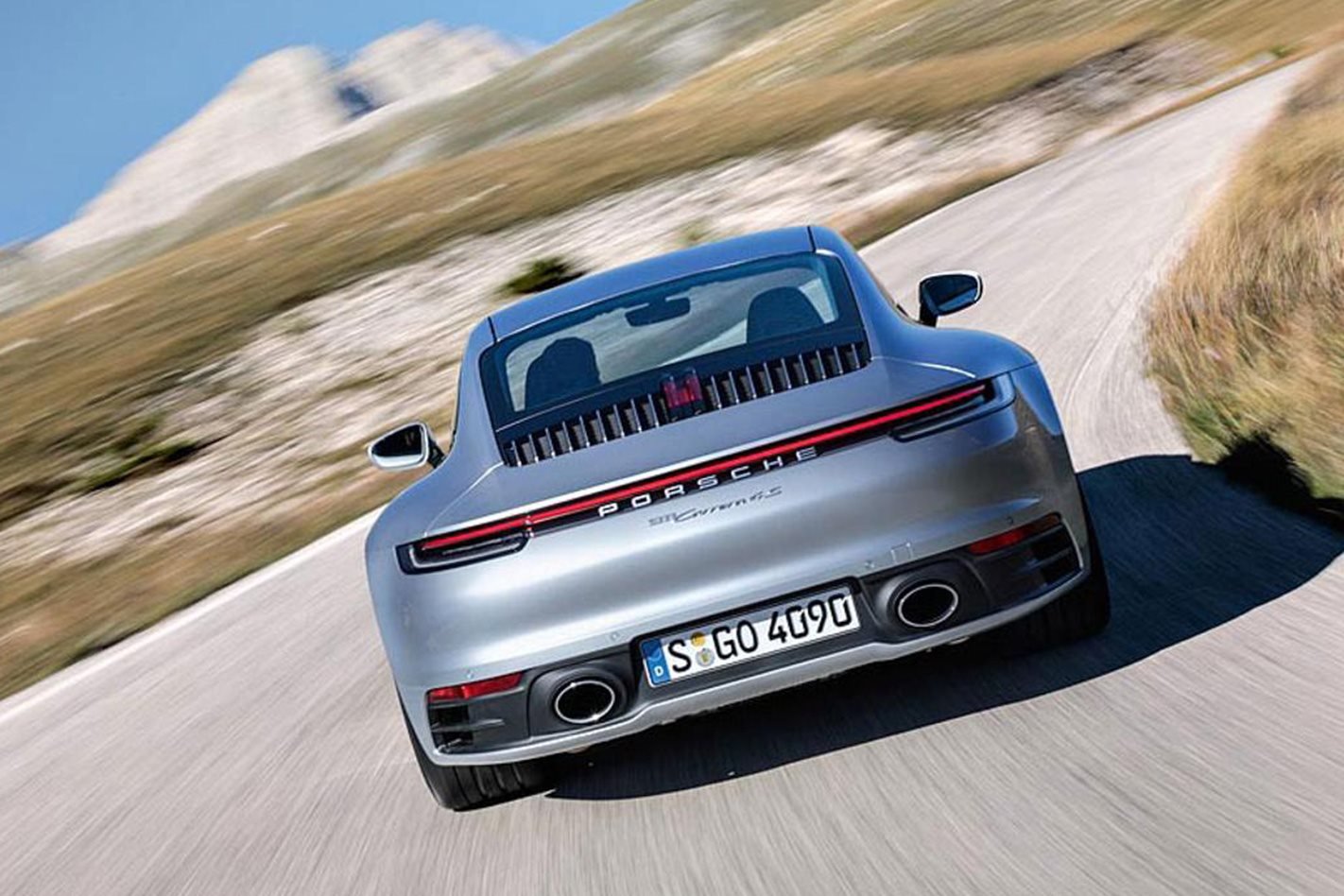
Achleitner said the GT3 will stick with an evolution of the 3996cc engine in the current car expected to yield around 385kW, a minor increase on the 383kW of today’s RS.
But he said the RS will utilise a slightly larger version of that same legendary naturally aspirated six-cylinder.
“It could get a small increase,” he said.
He stressed any capacity increases would be minor and hinted they were unlikely to change the 4.0-litre capacity that is rounded to the nearest 0.1 litre. One option is the 404kW 4000cc engine from the GT3 R racer revealed in 2019; Achleitner confirmed the RS engine development will be closely linked to that of the race car.
Rather than shift to the new (and weighty) eight-speed auto developed for the 911, the GT3 and RS will stick to the latest iteration of the original seven-speed PDK (a manual will again be offered for the GT3).
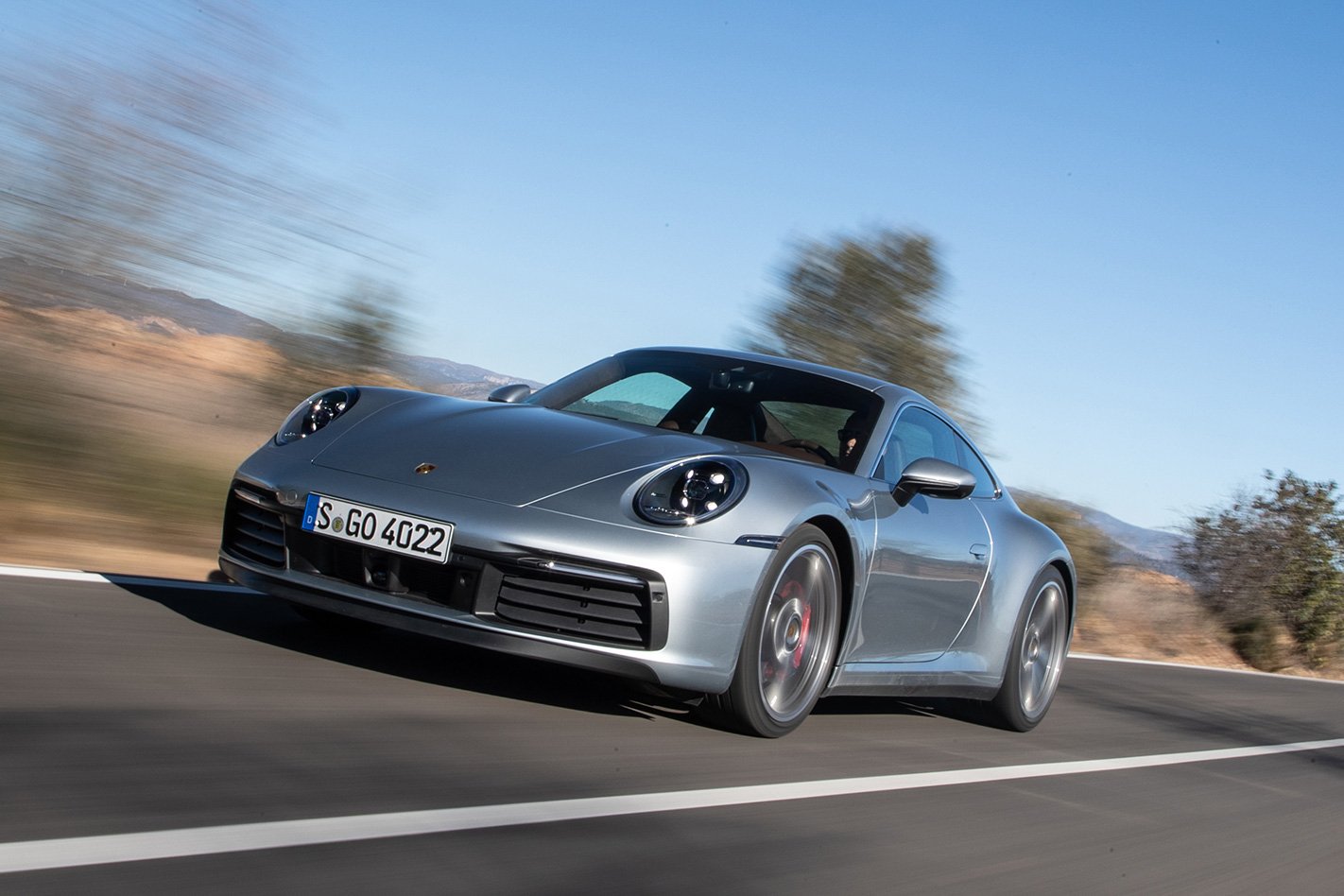
The GT3 will continue to push the Porsche development boundaries with materials, employing carbon fibre components and a magnesium roof. Expect GT3 models to at least hold station on the current 1430kg kerb weight, although minor weight reductions could be possible.
Aerodynamics will also be a key focus, with Porsche working on better pinning the car to the road to increase high speed stability and cornering speeds.
Engineers are also planning to unleash more electronic smarts. They’ll tap into the extra functionality of the broad digital dashboard that incorporates two 7.0-inch screens flanking a central analogue tacho.
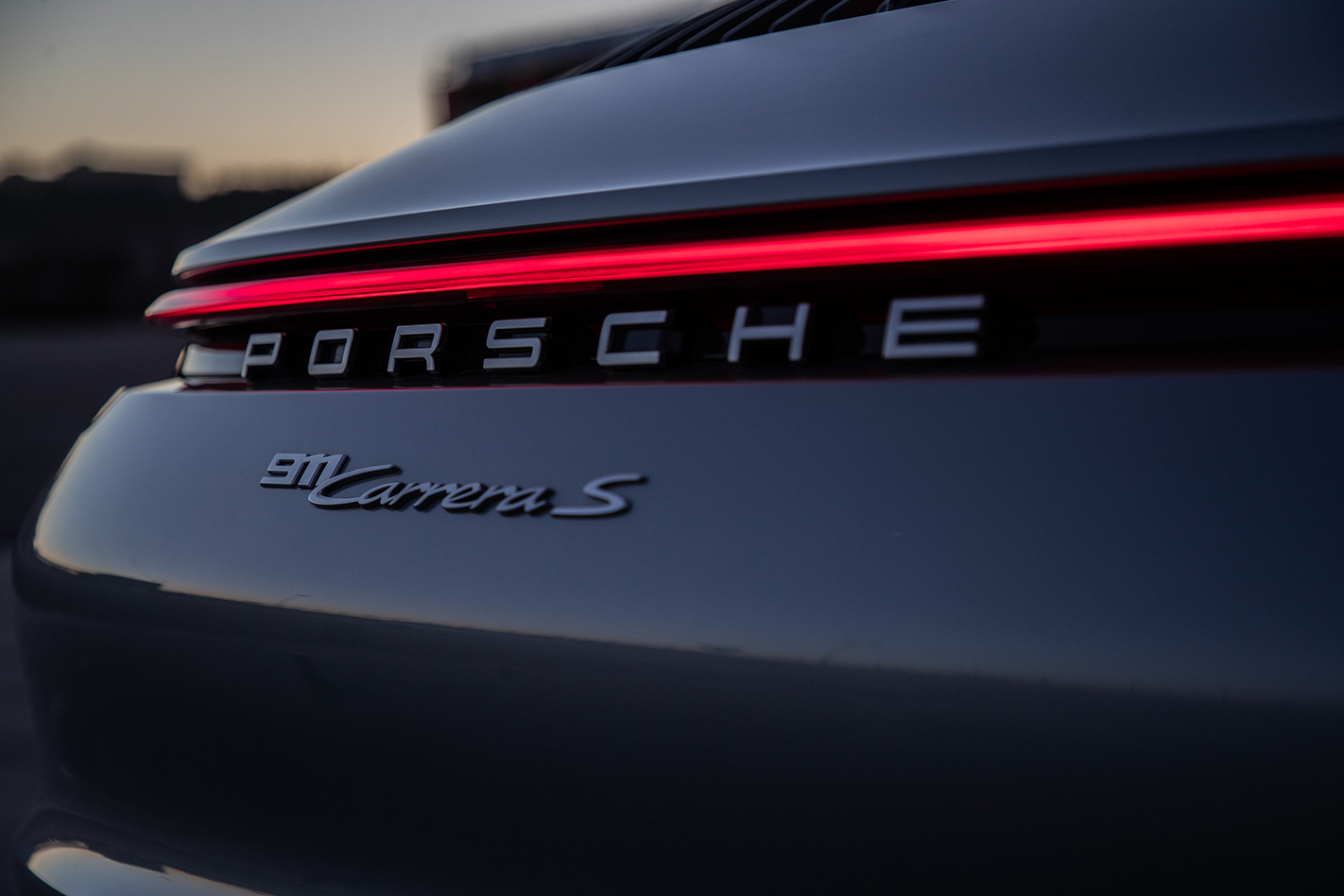
Achleitner said information would be tailored to track use and could be inspired by tech created for some of the fastest motorbikes on the planet.
“Now we have the possibility with the software … especially in the dashboard,” he said. “One can imagine we could start something special for race tracks … like you already can see on motorbikes.”
Possibilities include prioritising readouts useful on a track, such as tyre pressures, oil temperatures and track handling aids.
As a part of our relaunch, we are adding new sections to the magazine, one of these is Modern Classic. Each month we will celebrate hero cars from the 1980s, 90s and 00s that either already have a cult following or are diamonds in the rough.
Cars from this era can be overlooked, but if, like us, you’re a fan of a more analogue driving experience, then there’s plenty here to love. We’ll be taking a sideways look at the icons because, well, we’re crediting you with knowing the basics of ‘em already. In addition to these cars, we’re also going to cover those cars that may not have hogged the limelight at the time, but which now represent amazing used buys.
We’re kicking off the series with a bona fide gem, BMW’s E46 M3. We managed to secure an immaculate CSL for the photoshoot and we can’t wait to show you Alastair Brook’s killer shots.
Next month we have a Japanese hero that enjoys a unique link to the magazine.
Not all of the cars will be ball-tearing performance models. We’re widening the scope to include cars that are just inherently interesting and desirable to the more curious amongst you and the wishlist for this contains some real left-fielders.
We’re going to need your help with this one too. If you’ve got a car that’s pretty much bone-stock and you reckon it qualifies, let us know. You’ll see your car featured in the magazine and get some breathtakingly beautiful photography of it. Don’t worry – we’re not going to unleash our road test team on your pride and joy. The photography will all be static beauty shots, in our studio if required.
So over to you. If you know someone with a car from the 80s, 90s or Noughties that deserves its moment in the sun, you know what to do.
In case you hadn’t heard, Suzuki Australia is pushing hard for its Japanese masters to develop a ute-style derivative of the Jimny, a vehicle it reckons would sell up a storm Down Under.
It’s not something that would compete with the Toyota Hiluxes and Ford Rangers of the world, but a Jimny ute would certainly be a more versatile alternative to a side-by-side ATV. We’re hoping Suzuki builds it, but until then let’s take a look back at some other teeny-tiny utes from automotive history. Scroll through our gallery above to learn more.
Suzuki Jimny 1000/Stockman
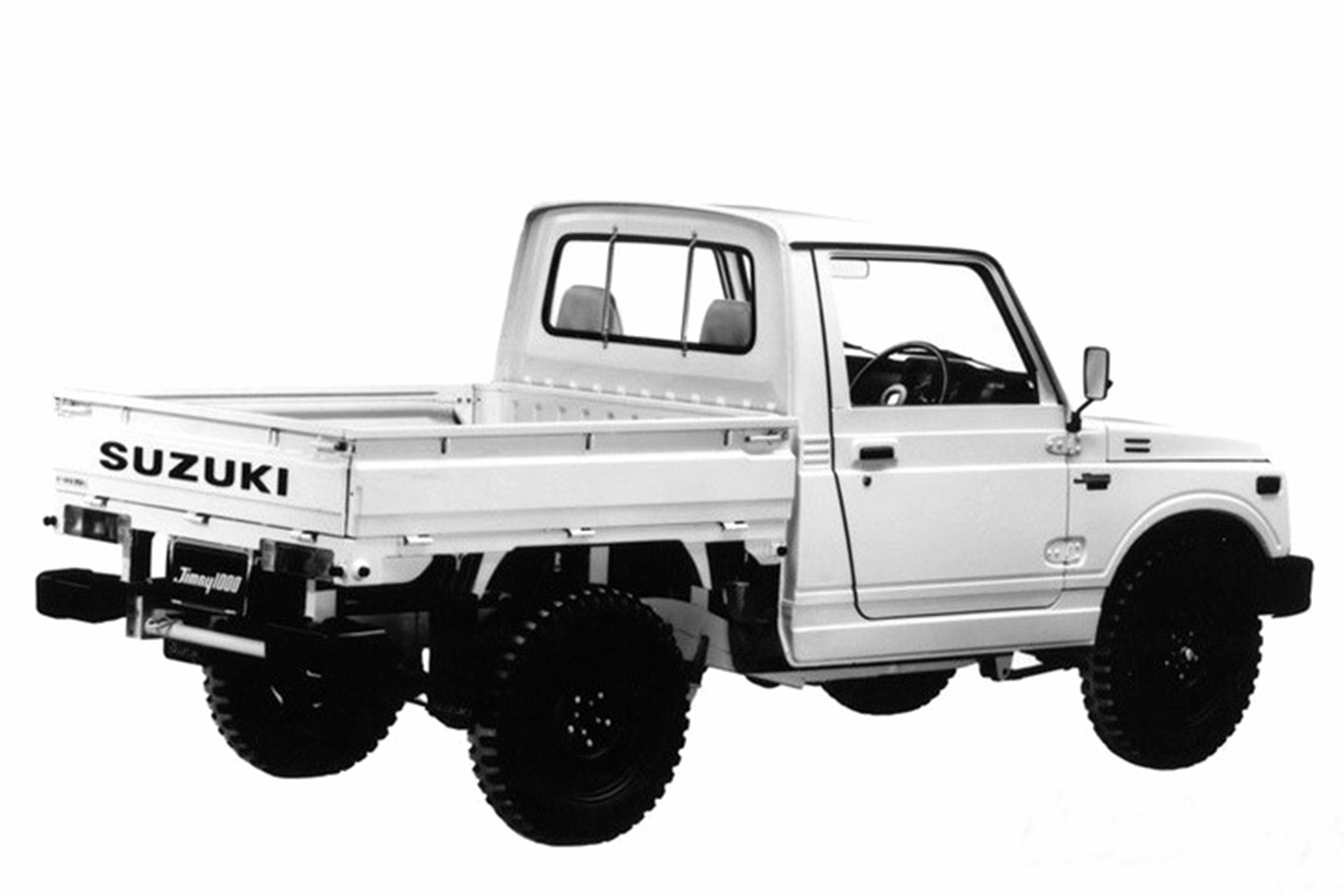
If Suzuki wheels out a ute-backed version of the all-new model, it certainly won’t be for the first time. A couple of generations ago, the company made a 1.0-litre Jimny utility, which also came to Australia with a slightly stretched cabin, an alloy tray and a ‘Stockman’ suffix at the end of its name. You’ll still find them working hard on Aussie farms.
Suzuki Mighty Boy
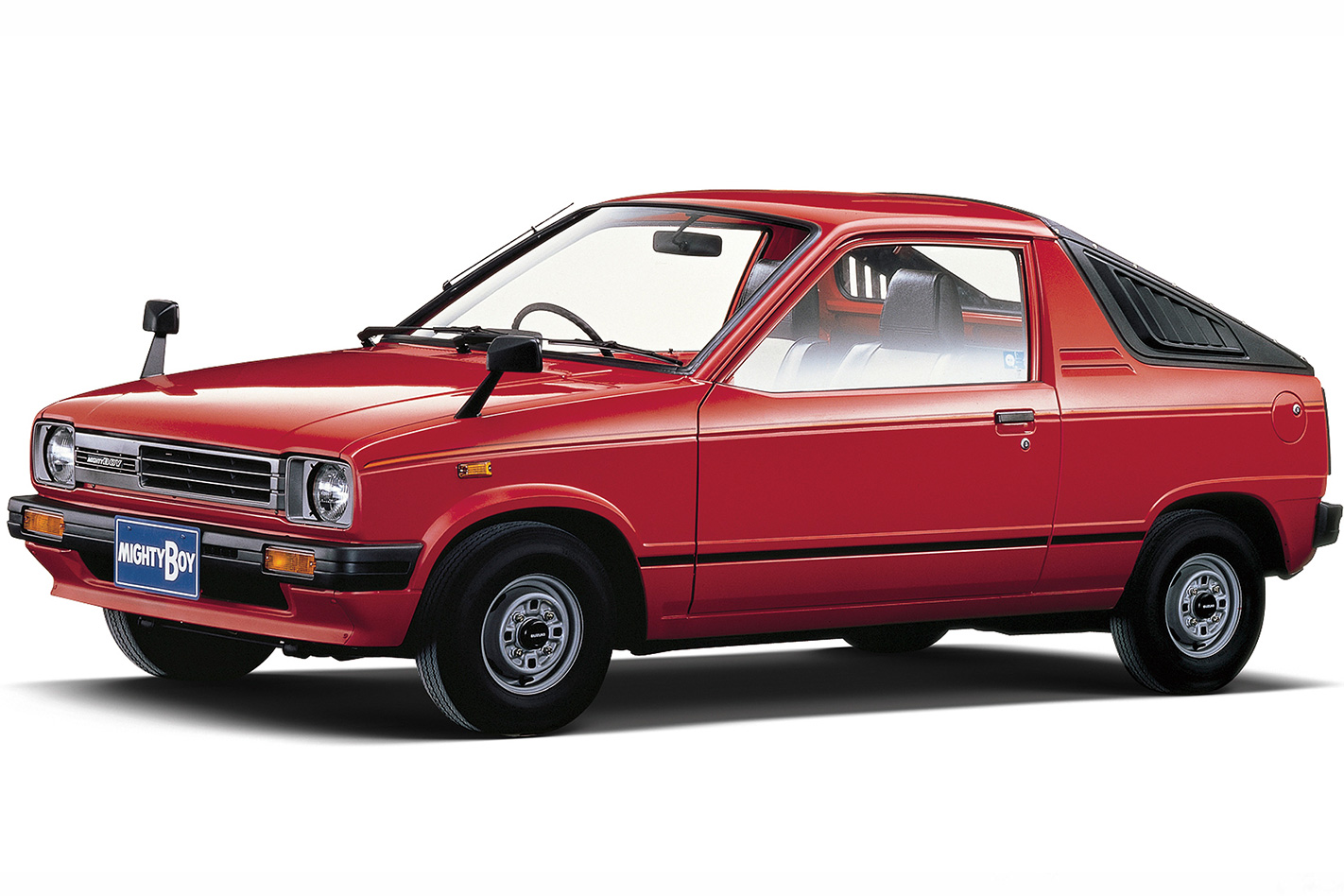
Suzuki is certainly no stranger to micro-utes, and the wonderfully-named Mighty Boy is one of its most loved compact cargo carriers. A cult classic nowadays, the Mighty Boy is one of the smallest examples of a car-like pickup to ever be put into production.
Subaru Sambar Open Deck
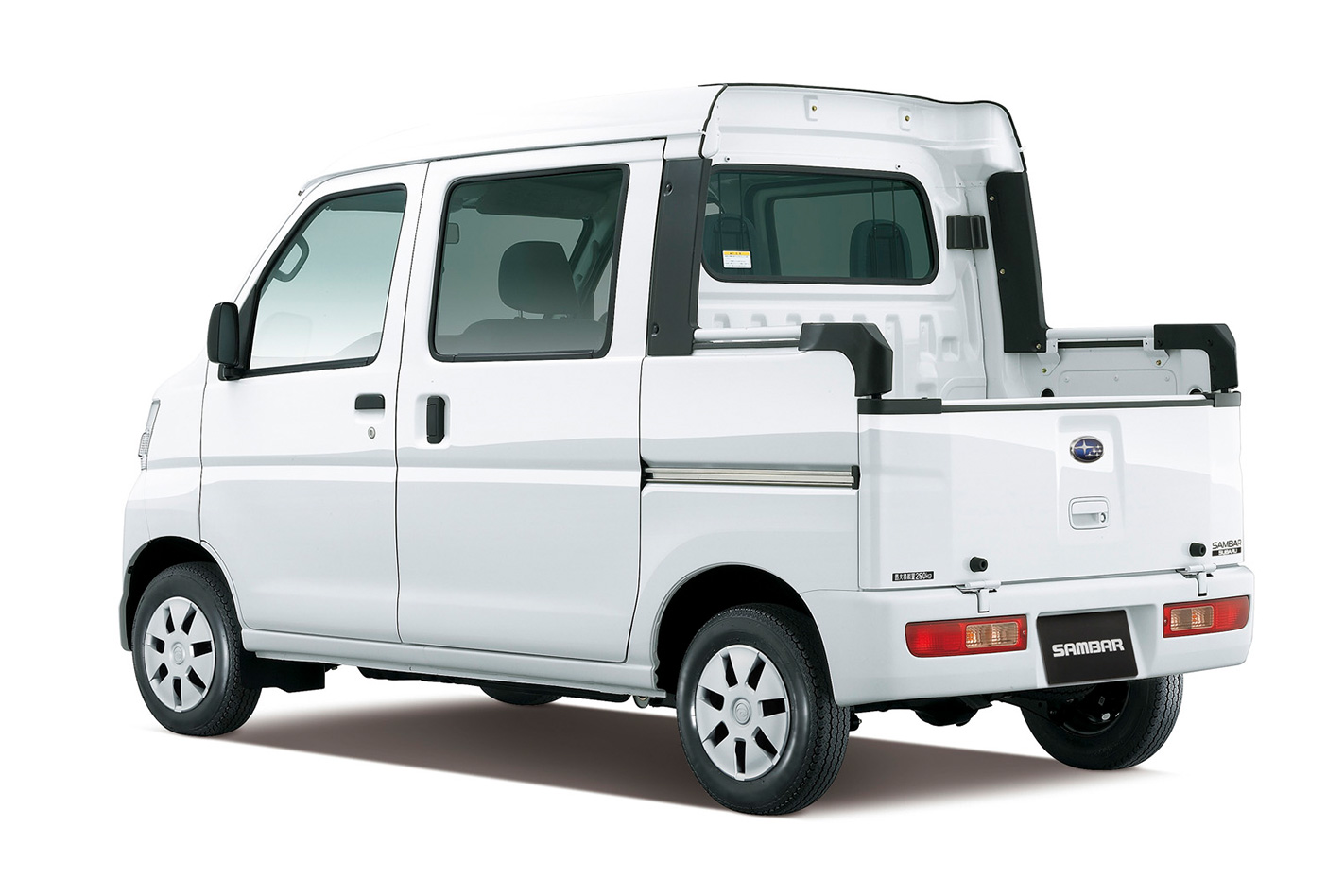
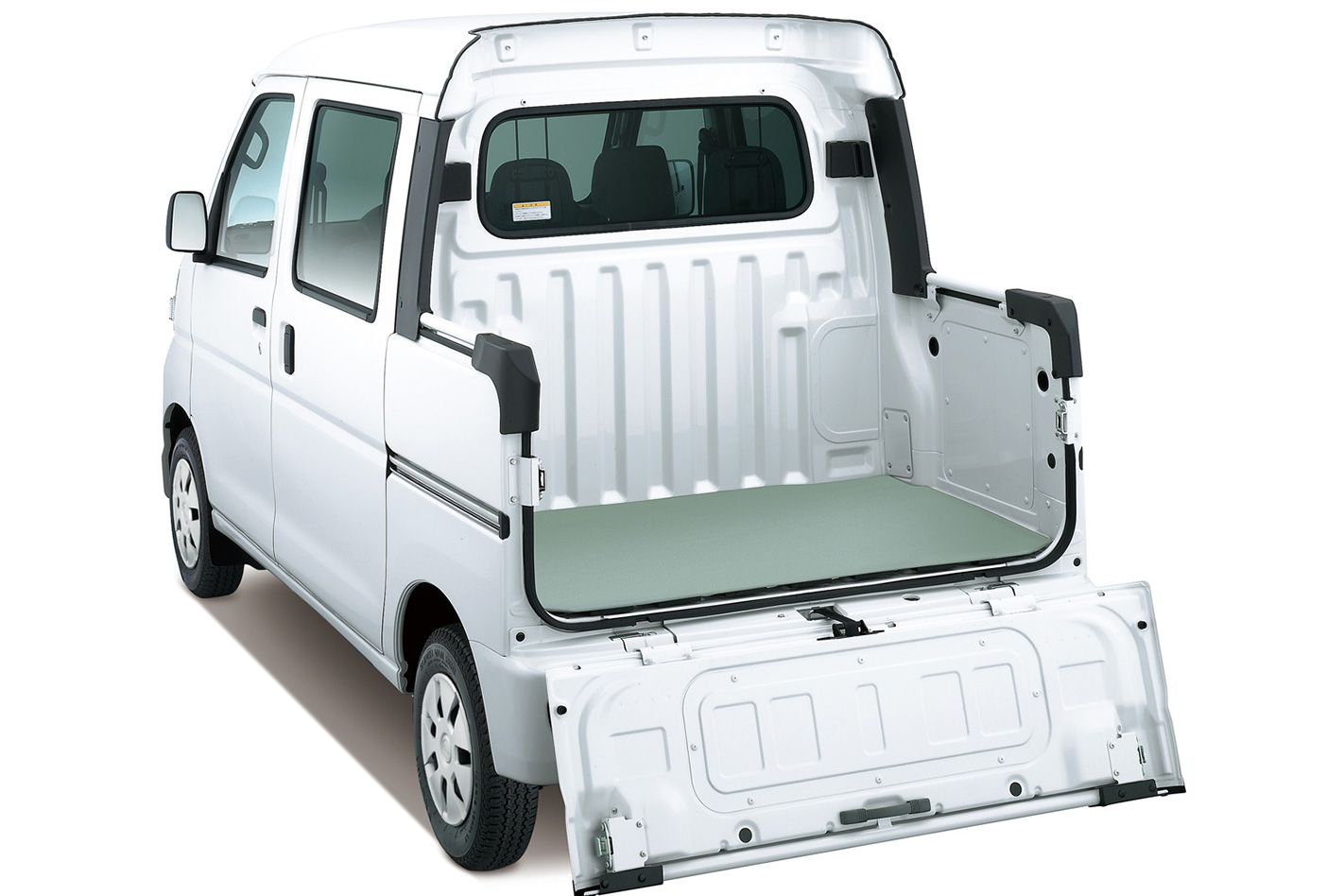
A rebadged version of the Daihatsu HiJet Deck Van, the Subaru Sambar Open Deck is quite likely the smallest dual-cab utility to ever go on sale. Essentially a Japanese kei-class (the smallest vehicle category) delivery van with half of its bum cleaved off, the Sambar Open Deck is useful for carrying two, maybe three bags of cement at a time.
Proton Jumbuck
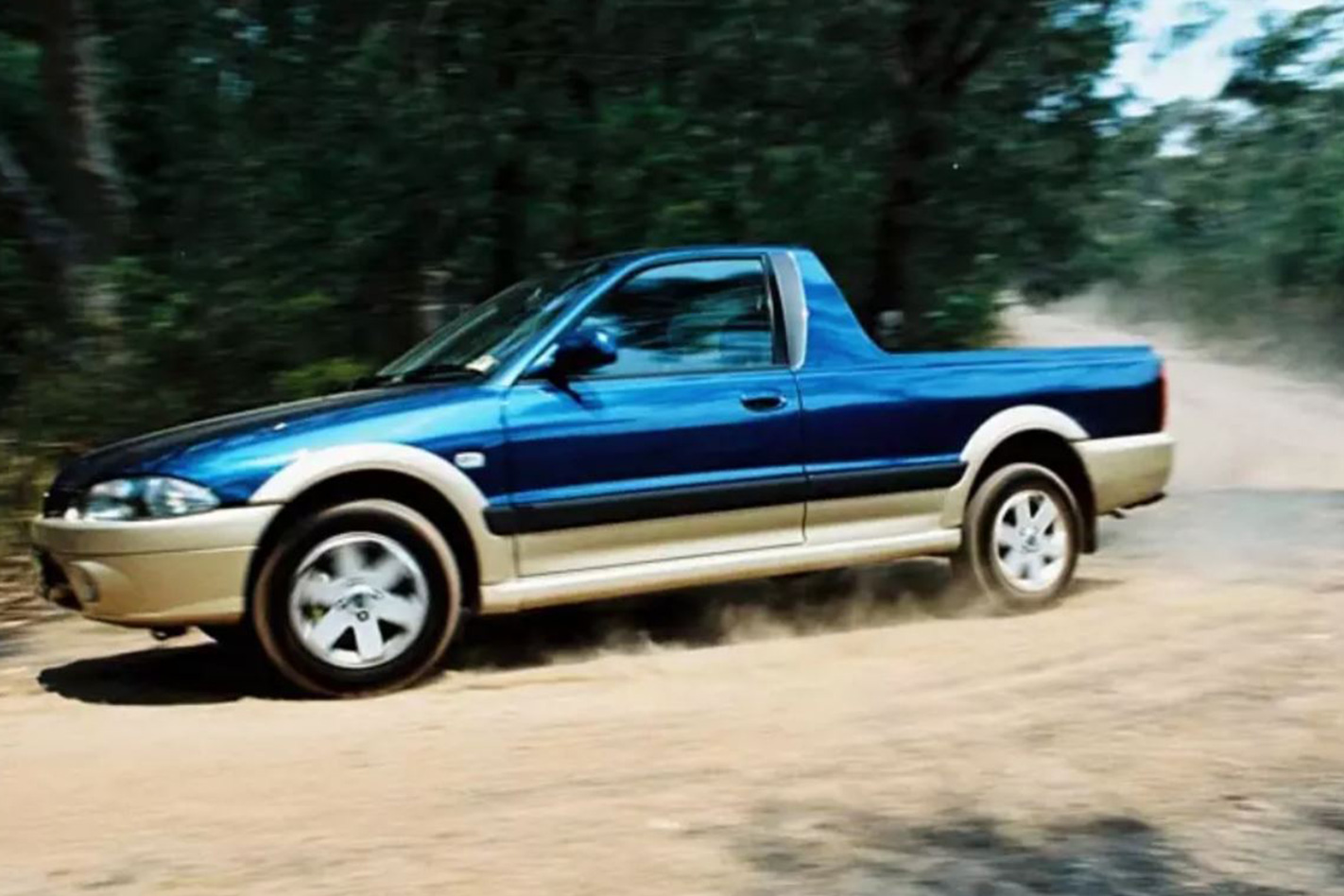
Famous for earning a one-star ANCAP result back in 2009, we suspect Malaysia’s car-based utility would return a crash test score in the negatives if tested under present-day ANCAP rules. Even so, there are still more than a few circulating around Australia with passionate owners behind the wheel.
Volkswagen Saveiro
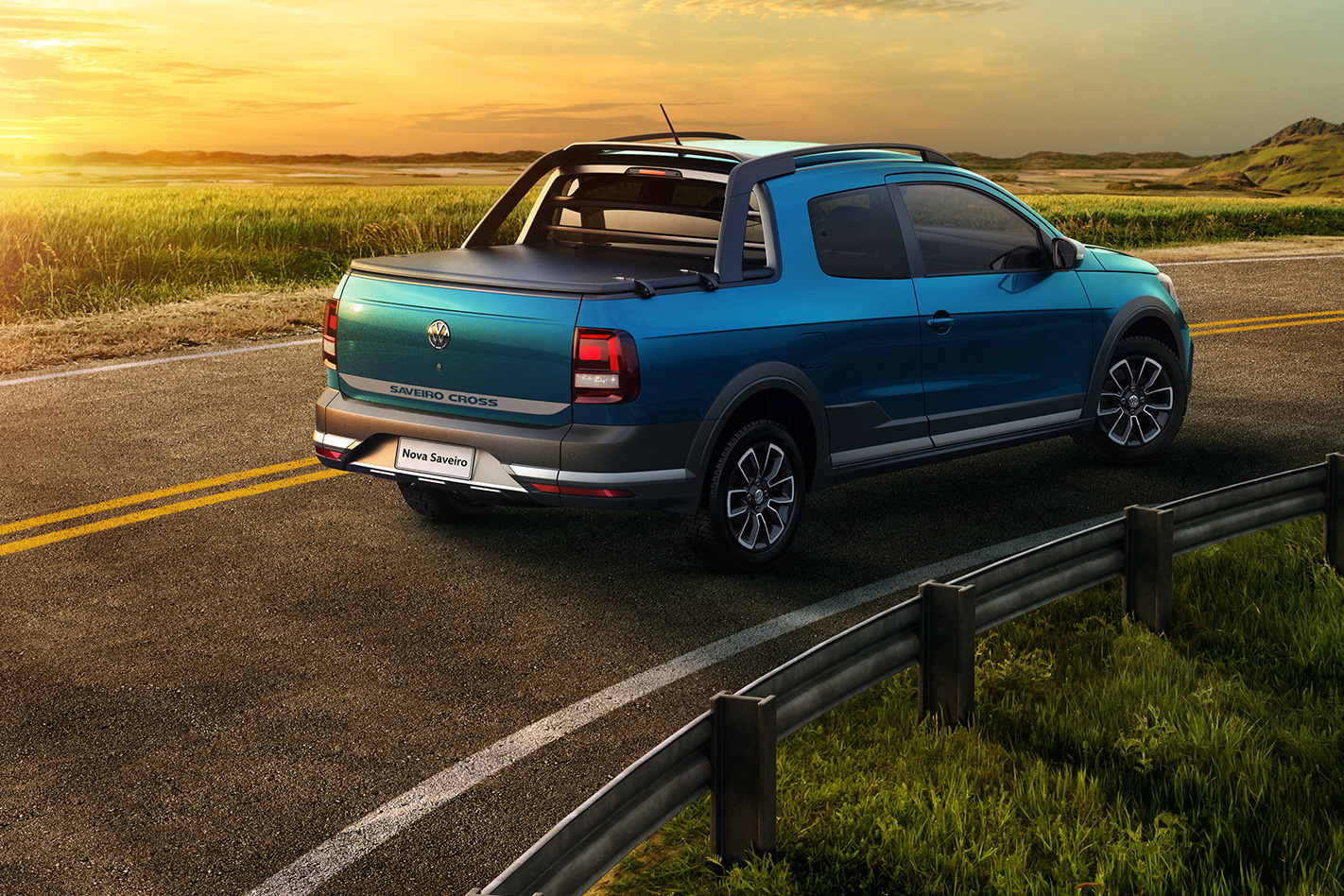
Not one to be outdone by Proton, Volkswagen also has a car-based ute with a one-star safety score of its own. Known as the Saveiro and sold only in the South American market, VW’s ute comes in single and extended-cab flavours, with a jacked-up ride height also available.
Lightburn Zeta Utility

Is a Mighty Boy not microscopic enough for you? The Lightburn Zeta ute might be more your thing – if you can find one. Built for just two years in South Australia and measuring just over three metres long, the Zeta ute boasted a mighty 12kW from its 324cc two-cylinder engine. Wait what?
Honda Vamos
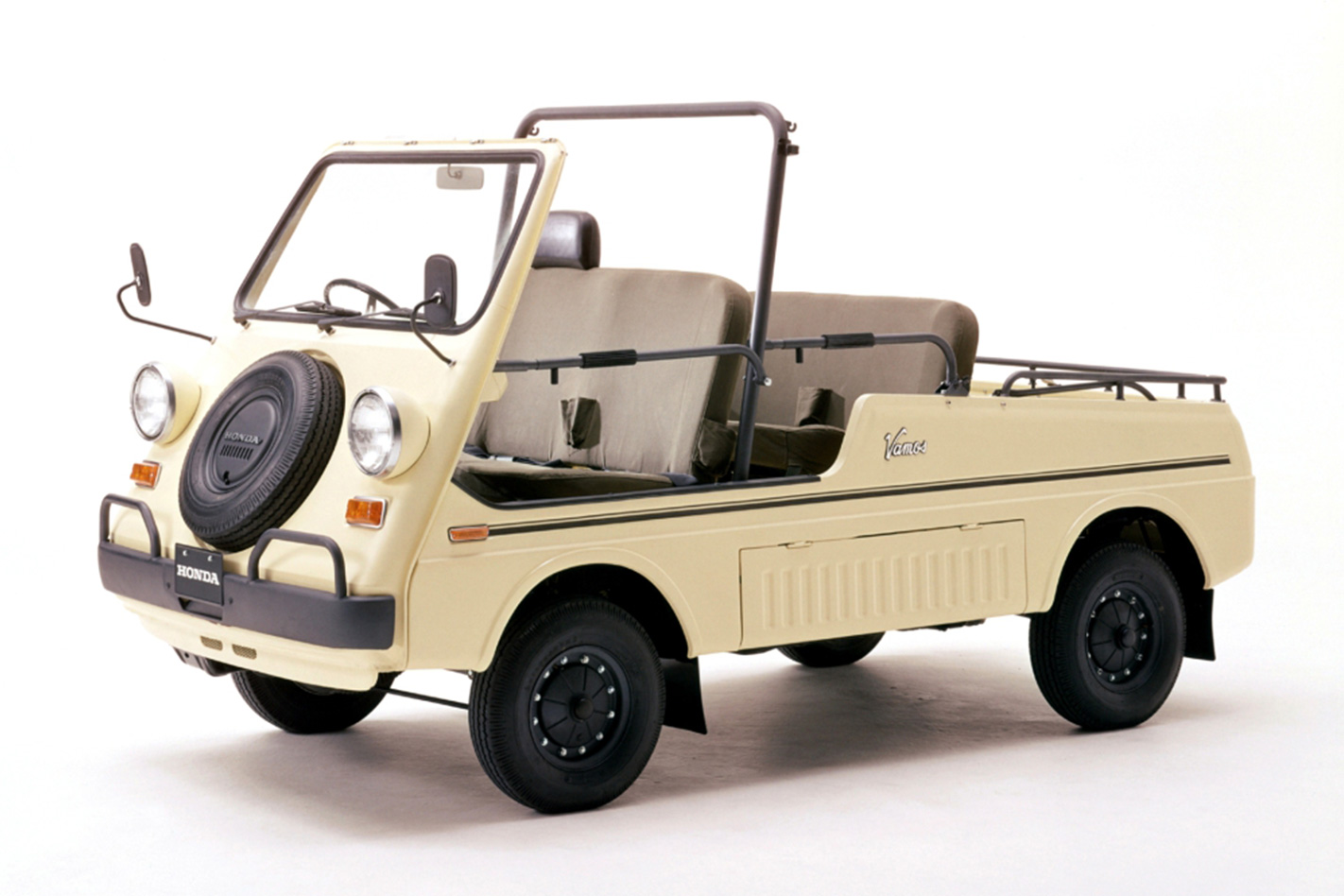
We’re not sure if Honda’s Vamos really belongs here. In fact, we’re not even sure if the Vamos really qualifies as a car in the first place, given it looks like it’d be more at home trundling around a theme park than on an open highway. Still, open-air thrills mixed in with pragmatic design earn the Vamos our respect.
Subaru Brumby
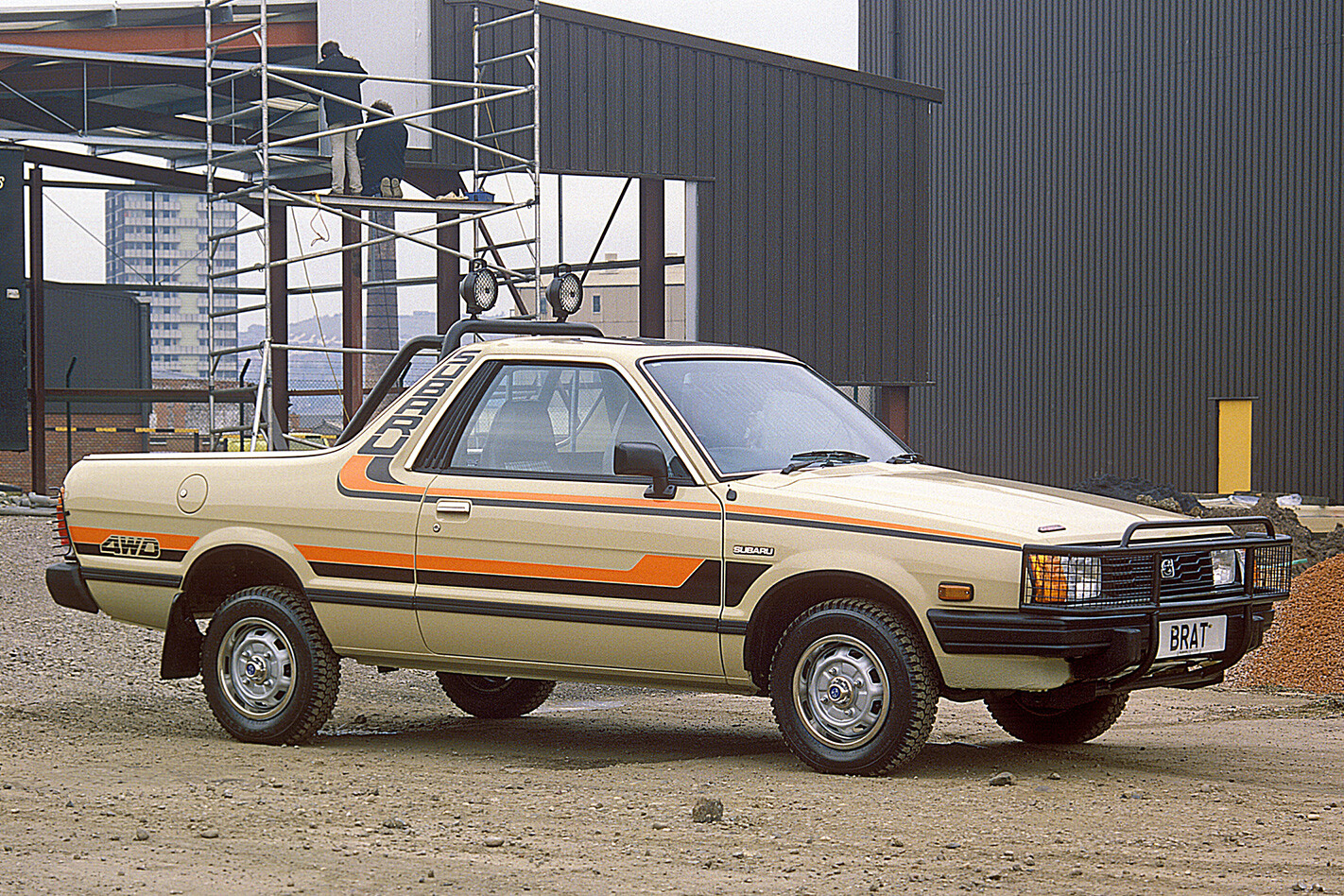
This list certainly wouldn’t be complete without the Brumby. With a boxer engine and AWD driveline pinched from the Subaru Leone, the rather carlike Brumby earned itself a reputation for combining carlike handling with dependability and off-road nous, and remain a darling among country and city folk alike.
Toyota bB Open Deck
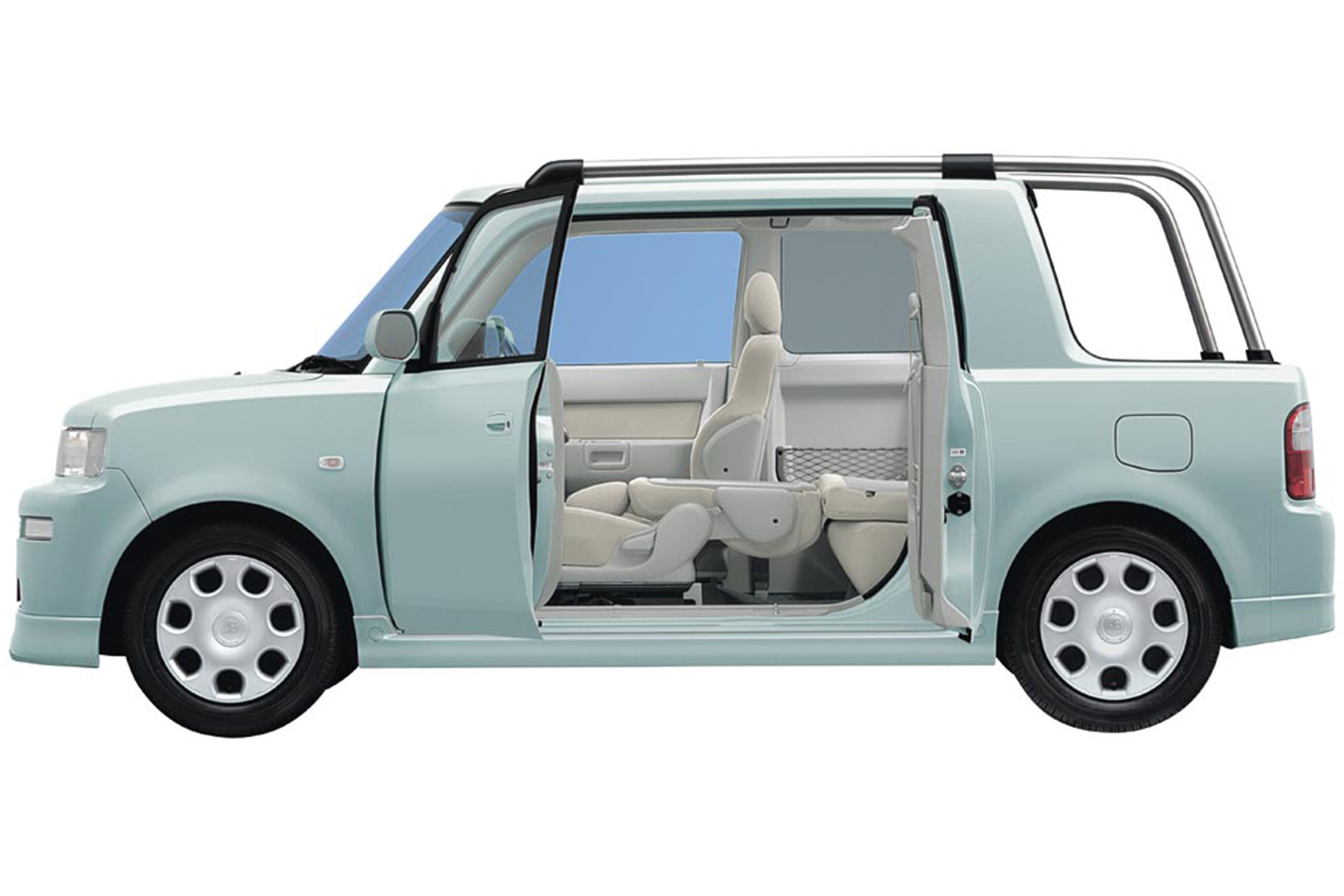
Toyota’s bB Open Deck borrows from the Sambar Open Deck/HiJet Deck Van playbook, but scales the concept up to something the size of a Corolla. Still pretty impractical as far as a dual cab ute goes, but hey, it’s got suicide doors and that’s kinda cool.
Daihatsu Midget II
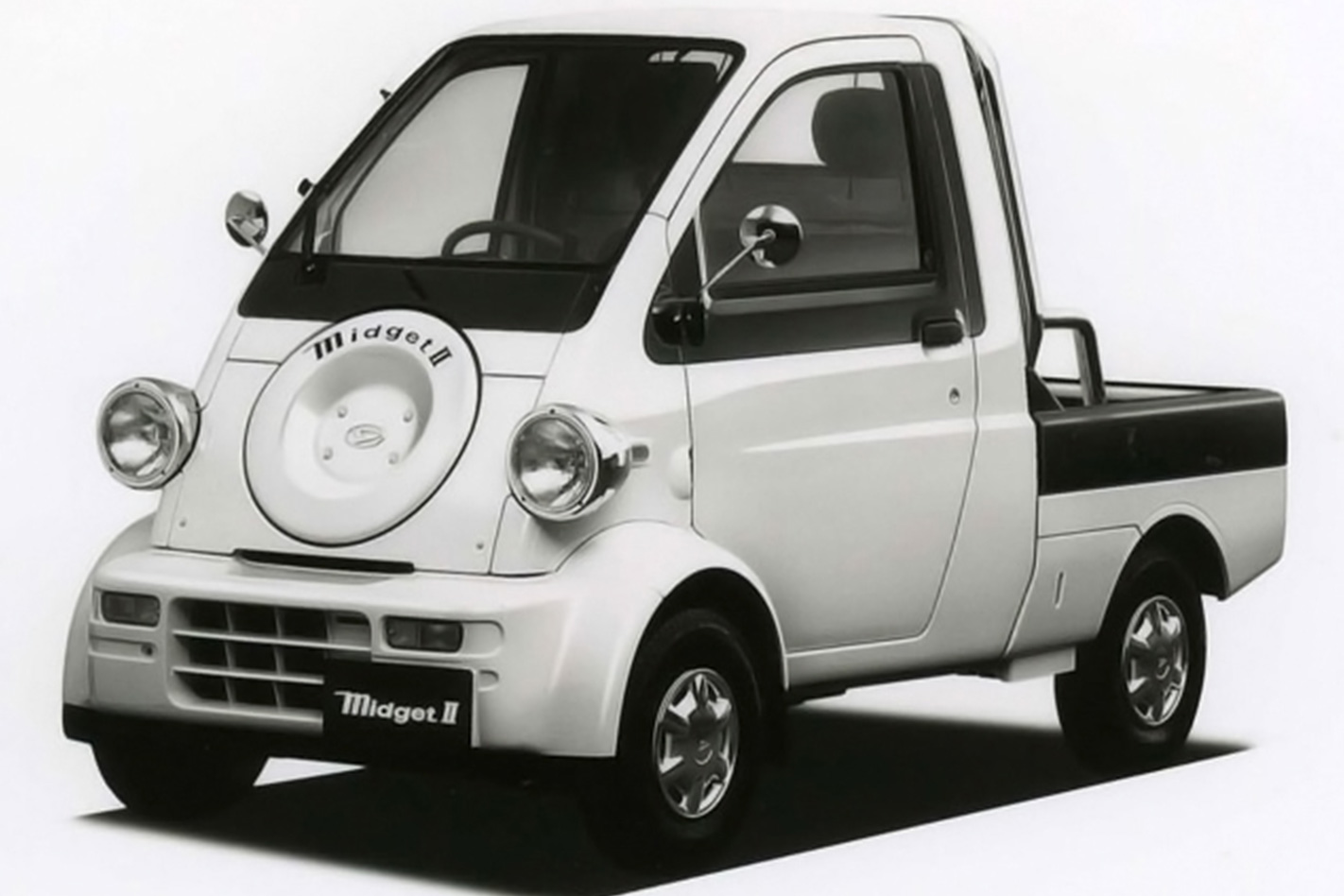
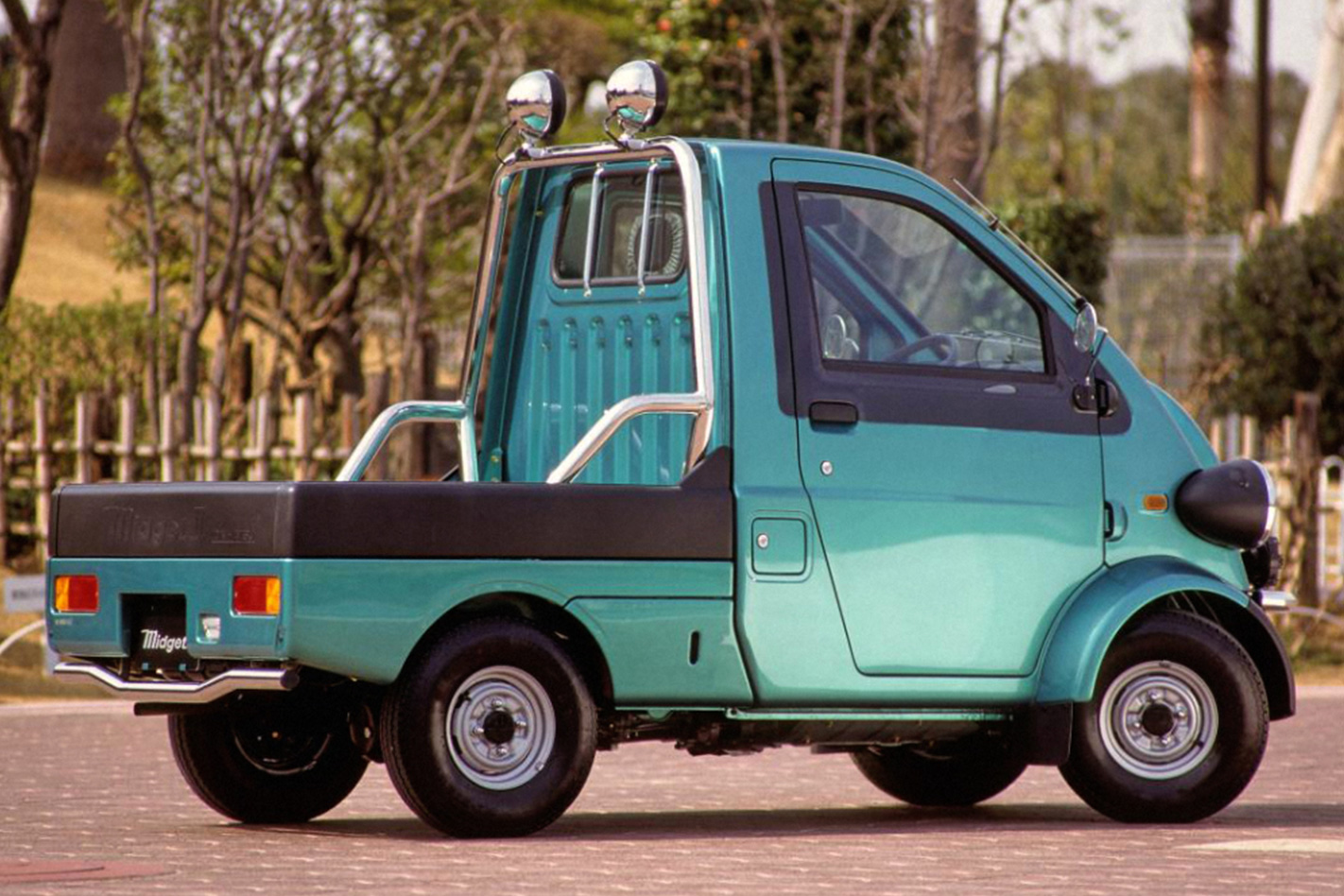
Never has a name been more apt. Ridiculously narrow – so much so that the manual version only has enough room for a single occupant in its tiny cabin – the midget makes sense in the tight back-streets of Japanese megacities like Tokyo and Osaka. Makes zero sense everywhere else, however.
The whole ‘Barra the world’ phenomenon has seemed to calm down a little lately, though we’ve still seen a steady flow of Ford’s 4.0-litre inline six being dropped into the engine bay of this and that.
However it’s not often you see a Barra wedged into a car so small that it impacts the amount of space left in the cabin.
Enter the Barra-powered Ford Ka (apparently pronounced like ‘cat’ without the ‘t’).
Another video, which was published on Facebook by one of a few Barra the World pages, shows a mostly standard Ford Ka with a Barra ‘in’ the engine bay connected up to a diff at the rear.
We use the word ‘in’ loosely, as the Barra sits so far back in the Ka that its builders have needed to manufacture a new housing for it in the form of a cover that shields anyone in the cabin from the engine itself.
It’s probably not road-legal.
In the videos posted to YouTube by the Burnouts Unlimited channel, the BARRAKA is seen creating clouds at the TGI Fryday burnouts event, held January 18 at the Stawell Motorsport Club in Victoria.
The Barra-swap would have increased the Ka’s output dramatically, even in a relaxed tune, given the Ka was originally available with power figures ranging from 44kW to around 70kW. Even on gas, a Barra is good for 150kW+.
We wonder if our friends over at Street Machine have thought about downsizing the Barra-powered Turbo Taxi…
If burnouts are your thing, check out SM for plenty of action from Summernats 2019.
WITH the announcement of Wheels’ Car of the Year just around the corner, its time to look at what each car needs to achieve to be deemed worthy.
We’ll go over the actual judging processes in another story, but here we’ll focus on the judging criteria, or what each car needs to do to progress at COTY.
Naturally, with the size of the field and diversity within, it would be counterproductive to directly compare each contender.
Instead, the hopeful COTY entrants are measured against the five criteria which form the backbone of the most rigorous testing process in the country.
To be eligible for Car of the Year the vehicle must be substantially new, meaning it has been introduced in the 12 months prior to our cut-off date, and is more than a new engine or trim variant. That can rule out new performance variants like Hyundai’s i30N or Honda’s Civic Type-R, performance hero cars often being launched some time into a model’s life cycle.
Another important distinction is that we judge on a vehicle range. So, for example, we take the Mercedes-Benz A-Class line up in its entirety, assessing talents across the board and not just cherrypicking a specific version of the A-Class. This places a greater emphasis on talent throughout the range and puts under the microscope those manufacturers who include minimal-appeal base strippers just to gerrymander an eye-catching entry price.
Our seven judges measure the cars against the following categories:
FUNCTION

Complex and subjective, this is the toughest COTY criterion to judge. The objective is to assess every aspect of a car’s function, taking into account its intended role. Put simply, we’re seeking complete satisfaction. Every aspect of design is considered, always in relation to purpose and price: vehicle packaging efficiency; all-round user-friendliness, especially interior layout, flexibility and ergonomics; quality of materials and assembly; visual and tactile pleasure.
Driving dynamics take into account all handling characteristics and their fitness for the car’s role. We’re looking for sweet harmony in the interaction between tyres, suspension, steering and brakes. Comfort must also be considered. Quality of ride on varied surfaces is a major factor, but seating and spaciousness, plus overall smoothness, quietness and quality of noise are also important.
The assessment of drivetrain encompasses every aspect of engine performance and transmission behaviour. In the case of models with multiple drivetrains, special attention is paid to those offered in the most popular variants.
TECHNOLOGY
Remember that today’s state of the art is tomorrow’s ordinary. Important innovations are not common, but are recognised when a car maker does deliver. Incremental improvements rate only incremental adjustments to a vehicle’s score against this criterion. Technical advances in all spheres are assessed: innovative materials and engineering; core vehicle system enhancements; all-new features. Ignore the hype and excitement that often comes with novelty; the question here is whether a new technology can deliver genuine improvement in the driving or ownership experience.
In cases where a manufacturer fails to equip a car with a widely adopted and worthwhile technology – something that’s state of the art, in other words – its score against this criterion reflects the omission.
EFFICIENCY
Our primary concern here is fuel efficiency. The real-world results gathered over the course of the COTY program and earlier road tests are given greater weight than the results of official, government-mandated tests.
Fuel is a significant portion of the running cost of any conventional car and any hybrid. But for all kinds of car, including battery electric vehicles and plug-in hybrids, the energy consumed while driving makes up most of its lifetime energy consumption. In the case of conventional cars, according to reputable studies, between 75 and 90 percent of a car’s total energy consumption is the fuel burned during use.
For any type of fossil fuel there’s a directly proportional relationship between the amount burned and the carbon dioxide emitted. So there is a very strong link between a car’s fuel use and its output of the gas that’s the main cause of climate change. The exception here is electric cars, which offer at least the opportunity to utilise zero- or low-emission energy sources. Their efficiency also translates to low running costs.
Energy consumption is the bedrock of the scores given a car for this criterion. But the number is fine-tuned upwards in recognition of outstanding and credible efforts to reduce energy consumption and emissions in manufacturing. This also includes measures to boost the use of recycled materials, where significant.
SAFETY
Passive and active safety are assessed separately before an overall score is given against this criterion. In both categories the fitment of advanced and effective safety technology is rewarded. The efficacy of some active safety systems, notably ABS and ESP, is assessed by judges during the Wheels COTY test program. Passive safety scores are based, where possible, on published data from independent testing. In cases where none is available, judges take into account a vehicle’s array of standard and optional passive safety equipment and the manufacturer’s past achievements in this field.
For both passive and active safety, the focus must above all remain on vehicle occupant protection technologies that work.
VALUE
Affordability is the big thing here. But we’re seeking excellence, even at the lowest prices, and above average engineering and design at any price. A bad car may be very cheap, but never cheap enough to be good value. And an expensive car that’s not extremely good is even worse.
Wheels COTY judges assess how the car compares with its marketplace peers for space, quality, equipment, refinement, comfort and competence. They must also take into account running costs, including predicted depreciation and maintenance. The price of any special efficiency tech is weighed against the degree of cost reduction it brings, and scores adjusted accordingly.
What is it?
Lamborghini’s ‘baby’ of the high-performance line-up is now five years old and due for an update. Rather than a light refresh, the Huracan has been treated to a significant injection of technology and a major front and rear re-sculpting.
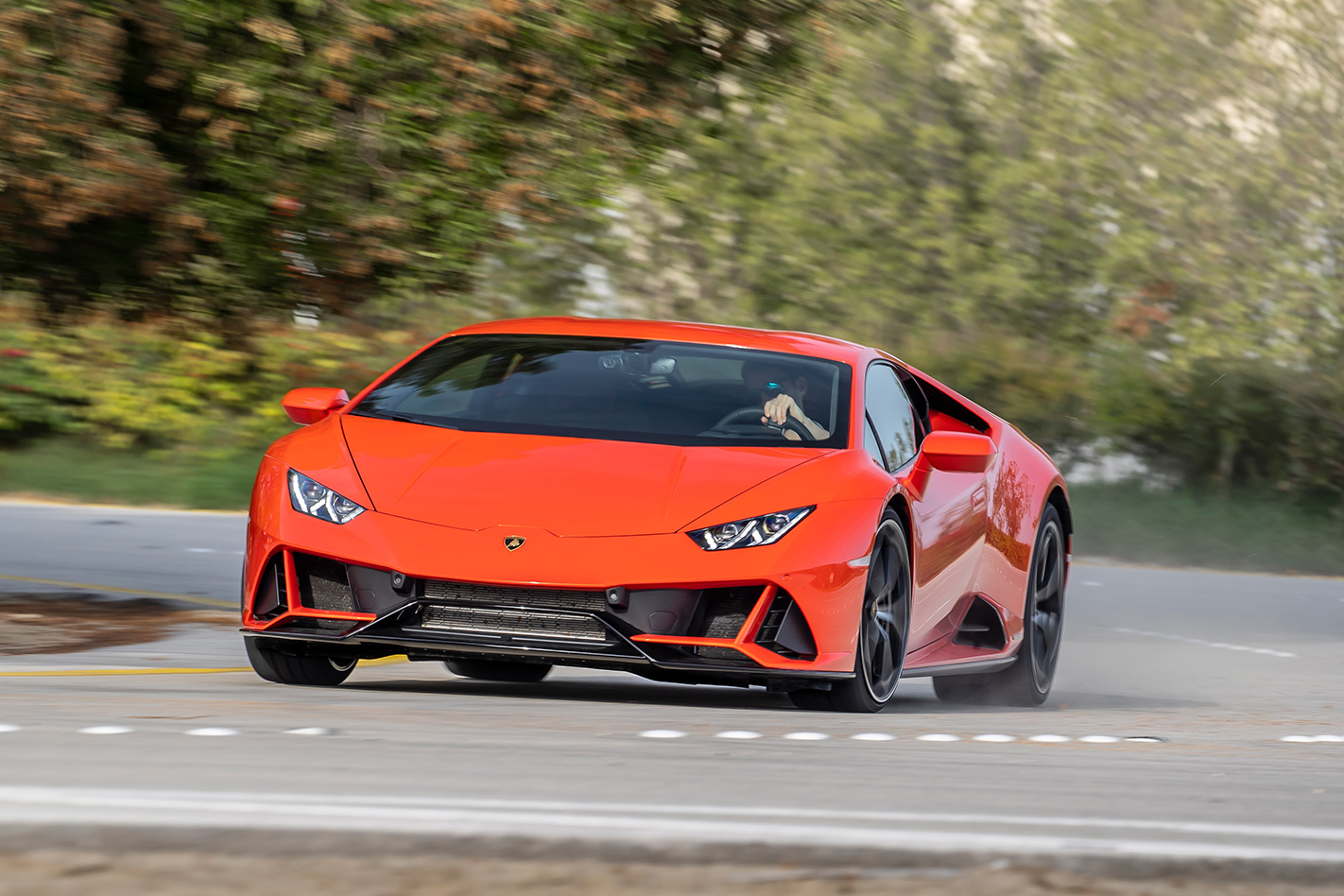
For now, the earlier LP 580-2 and LP 610-4 versions will continue to be on sale in both coupe and convertible (Spyder) forms, but the new Evo sits above them alongside the mighty Performante. But who is the Huracan hero? Our first overseas drive begins to answer the question.
How much is the Lamborghini Huracan Evo?
Australian customers will be asked $459,441 for the Huracan Evo Coupe and the first examples will arrive in the third quarter of the year. For a similar budget you could also have a Ferrari 488 ($469,888), a top of the range Audi R8 V10 Plus (leaving plenty of change at $389,325), while $461,200 will get you into the flagship Porsche 911 Turbo S.
The Huracan coupe range kicks off locally at $378,900 for the LP 580-2 and tops out at $483,866 for the Performante. Spyder versions cost more but Lamborghini has not yet confirmed a topless version of the Huracan Evo.
Who is this car for?
Put simply, a very select few. A Huracan Evo buyer will be after something more sophisticated than the original LP variants, with as much potency as the Performante, but without its ostentatious wings and spoilers.
All Huracan variants offer a high-performance car that is at the very cutting edge of technology and performance for a street-legal car, packaged up in Italian styling that’s impossible to mistake for anything else on the road.
Is the Huracan Evo easy to live with?
Not if you want a big boot, room for more than one passenger, don’t have off-street parking, care about fuel economy or want a vehicle that is easy and elegant to get in and out of.
But if you’re in the market for something with the athletic ability of a mid-engined, two-seater super coupe then it’s likely you are willing to make compromises for one of the most electrifying vehicles available.
That said, as far as supercars go, the Huracan is surprisingly well behaved when you aren’t hunting down the perfect driving road or blasting around a race track. Thanks to some refinement in the form of DNA shared with Audi, the Evo can be comfortably driven in traffic, or parked relatively easily. In fact, with a new rear-wheel steering system and revised suspension, the Evo is possibly the most pleasant variant to use day-to-day since it launched in 2014.
The update has brought a new portrait-oriented central touchscreen measuring 8.4 inches, which might not sound like the largest display, but it is proportionally correct to the cosy cabin and packs a lot of technology and features for its size.
There’s internet radio, more connectivity features, and an optional telemetry package which allows owners to record drives and review data – which includes g-force readings and video footage from a forward-facing camera – once the day’s driving is done. Now you’ll have the evidence to back up your post-trackday brags.
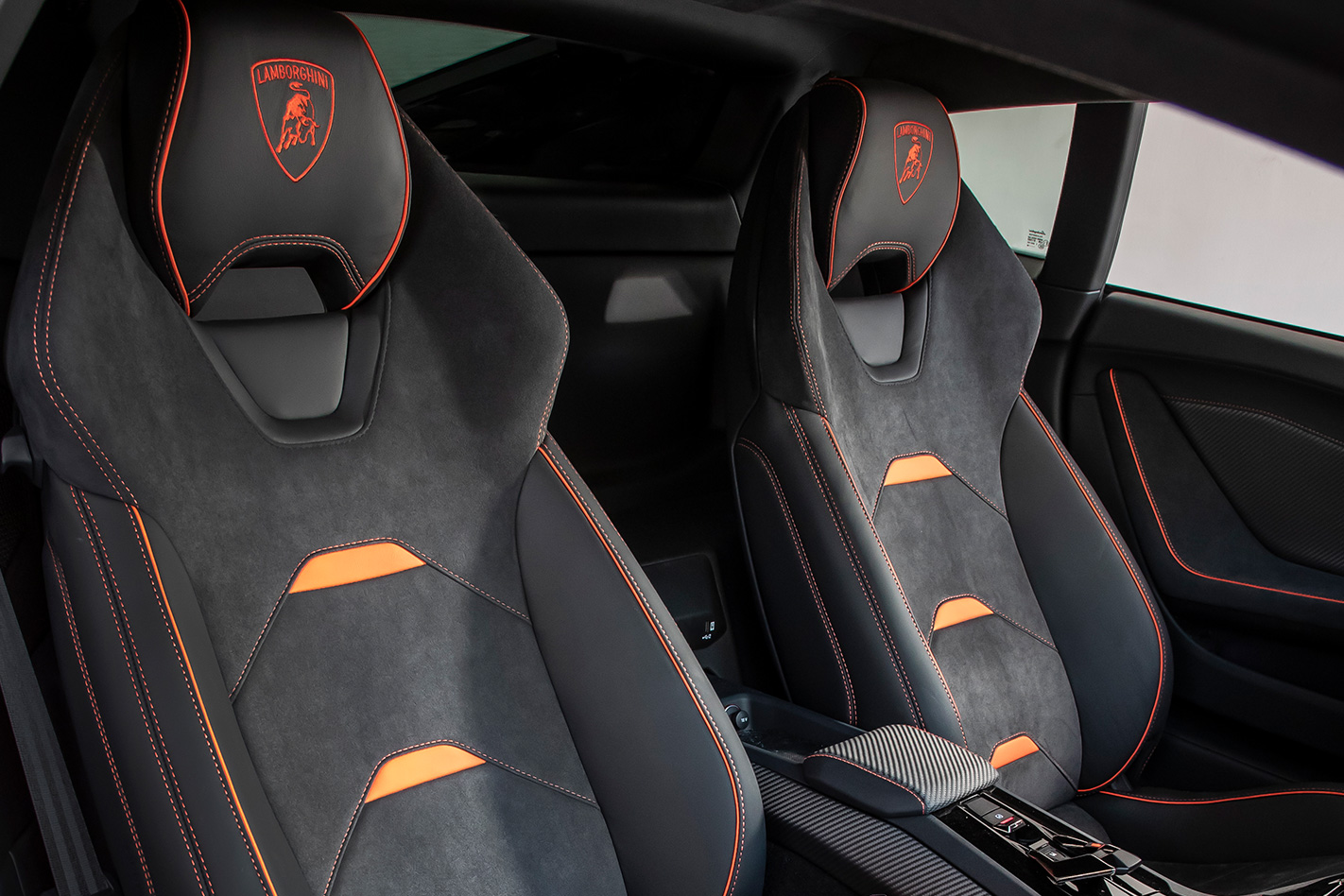
When the three-mode drive selector is switched to ‘Strada’ (or ‘street’), the exhaust note is muted, the suspension becomes pliable, the seven-speed transmission swaps gears smoothly and you might not ever know of the giant-slaying ability that the Evo possesses. Extracting that raw performance can be done by flipping the switch to either Sport or ‘Corsa’ mode, but to experience the best the Evo has to offer you really need a race track. Read on.
Does the Huracan Evo drive well?
Of course it does: it’s a modern Lamborghini. At least it does on a race track, which is where we sampled Lamborghini’s latest model.
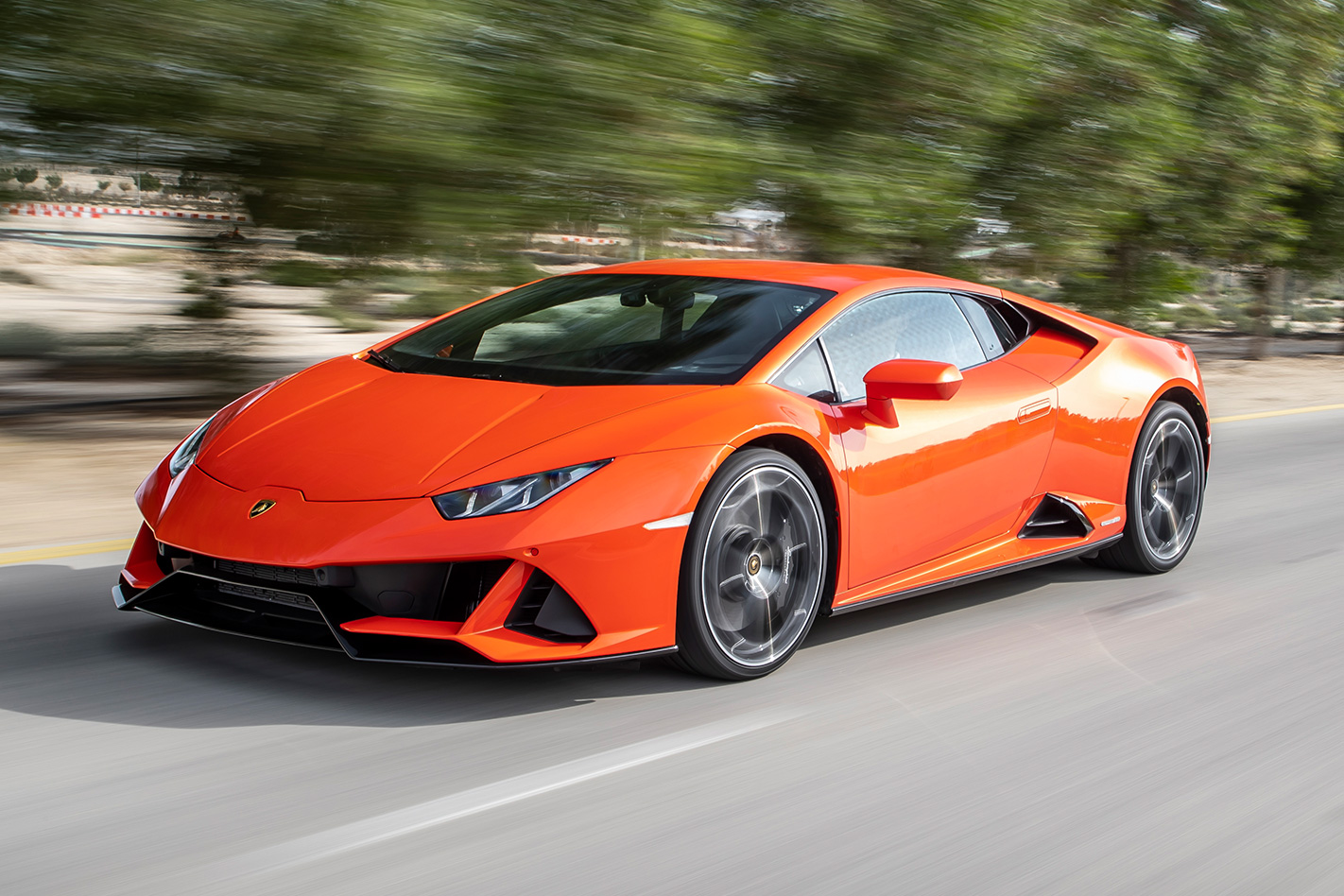
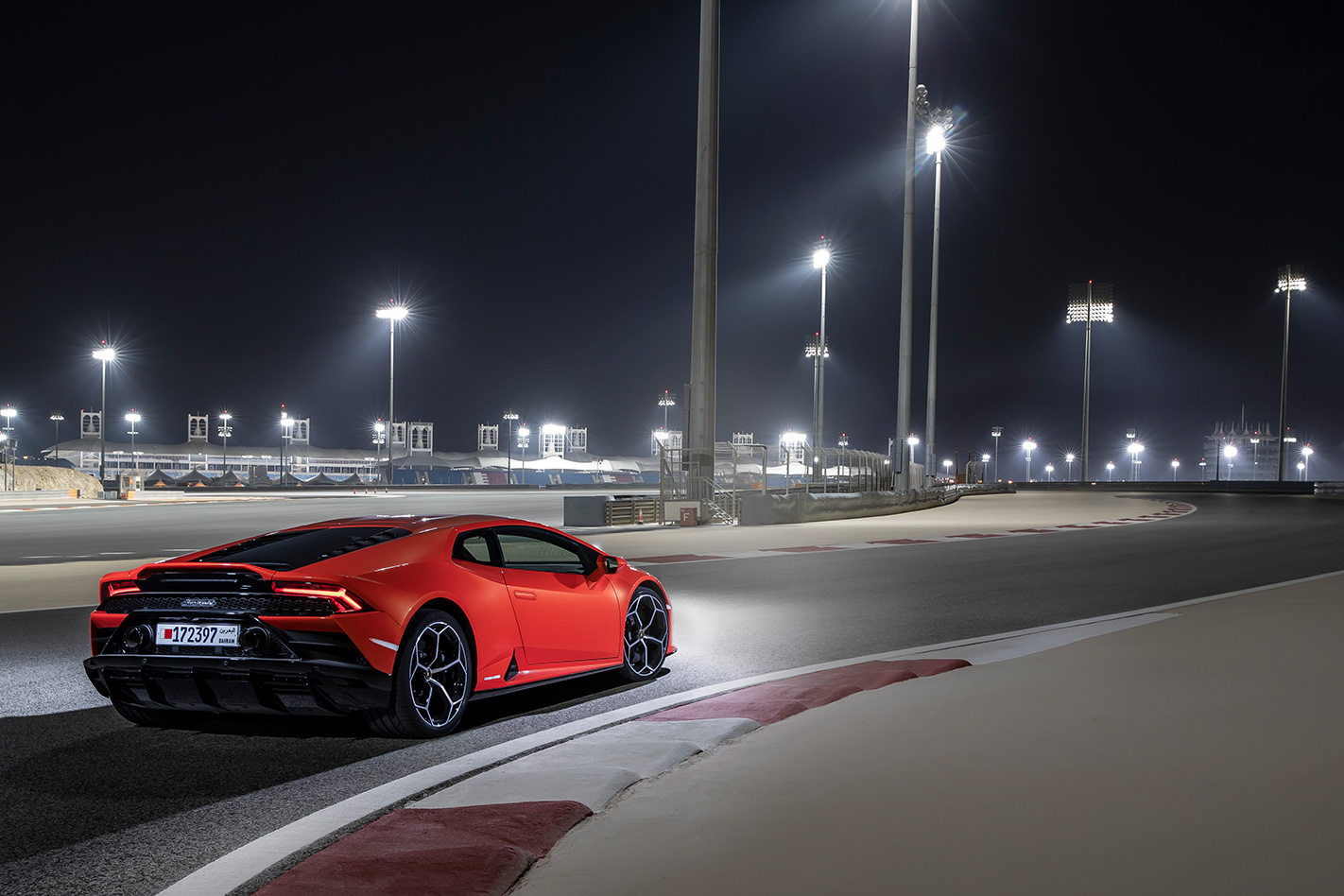
The venue here was the Bahrain International Circuit, which hosts a race in the Formula One Grand Prix each year. Here, the Huracan Evo is initially somewhat intimidating. It needs very little encouragement to become viciously fast, and the steering is surprisingly responsive. For the first few laps the Evo feels as though it is very easy to upset and likely to punish you for brash instructions, including too much throttle or a little too much angle on the steering.
However, just like the stunning desert track, it doesn’t take long to get acquainted to the newest Huracan.
As the speed and confidence levels increase, the Evo just gets better and better. With all-wheel drive and a perfectly smooth surface traction is never a problem, although some parts of the track can get slippery with a fine dusting of desert sand.
It might not have the raw downforce of the Performante, but cornering grip is monstrous and is matched by the savage acceleration and the ability of the standard carbon ceramic brakes to scrub speed.
Performance does not excel in one particular field, however. Instead the Huracan offers a brilliantly balanced recipe. It’s a car that simply gets better the harder you push it, which initially seems like a bad idea, but its combination of clever steering, subtle electronic stability systems and four wheel drive results in a car that is brutally fast on the track, yet one that is approachable for drivers of all confidence levels once some familiarity is gained.
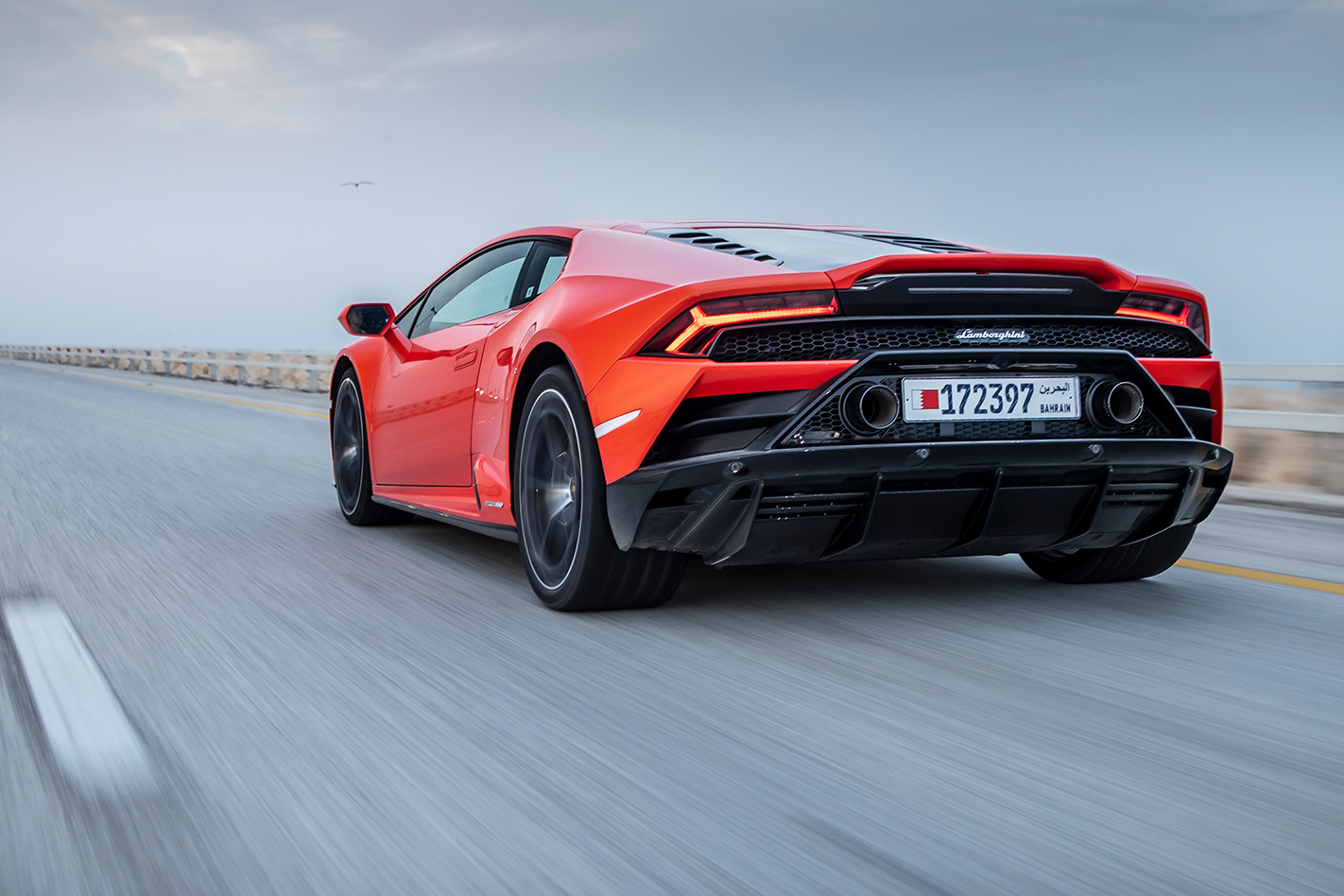
Those impeccable manners are partly thanks to a new LDVI system, which stands for Lamborghini Dinamica Veicolo Integrata, which uses a single central processor to oversee all the vehicle stability systems. The effect allows every element of the Evo’s performance to be maximised without compromising safety, and its effect is obvious from the driver’s seat.
And that’s the genius of the Evo. Its most impressive party trick is not the bellowing V10 soundtrack, outlandish styling or clever steering. It’s the fact it makes you feel like a hero, and never reveals just how much electronic wizardry is going on behind the scenes to prevent you from embarrassing yourself.
Verdict
If you are lucky enough to have regular access to a race track then the Huracan Evo is easily one of the most capable and foolproof vehicles money can buy. But not only is the Evo savagely efficient at carving circuit corners, its new technology also promises to make it the easiest to live with on the road. Whether it successfully pulls off the most difficult balancing act will have to wait until our first on-road assessment.
