
Not everyone understands the appeal of World Time Attack. One of the operative words in motor racing is ‘racing’, but time attack pits drivers purely against the clock. As such, it solves many of the problems associated with modern racing.
The nature of the event – essentially one big qualifying session – prevents any need for tyre or fuel conservation, while the open nature of the regulations allows the sort of engineering freedom lacking in most modern race series.
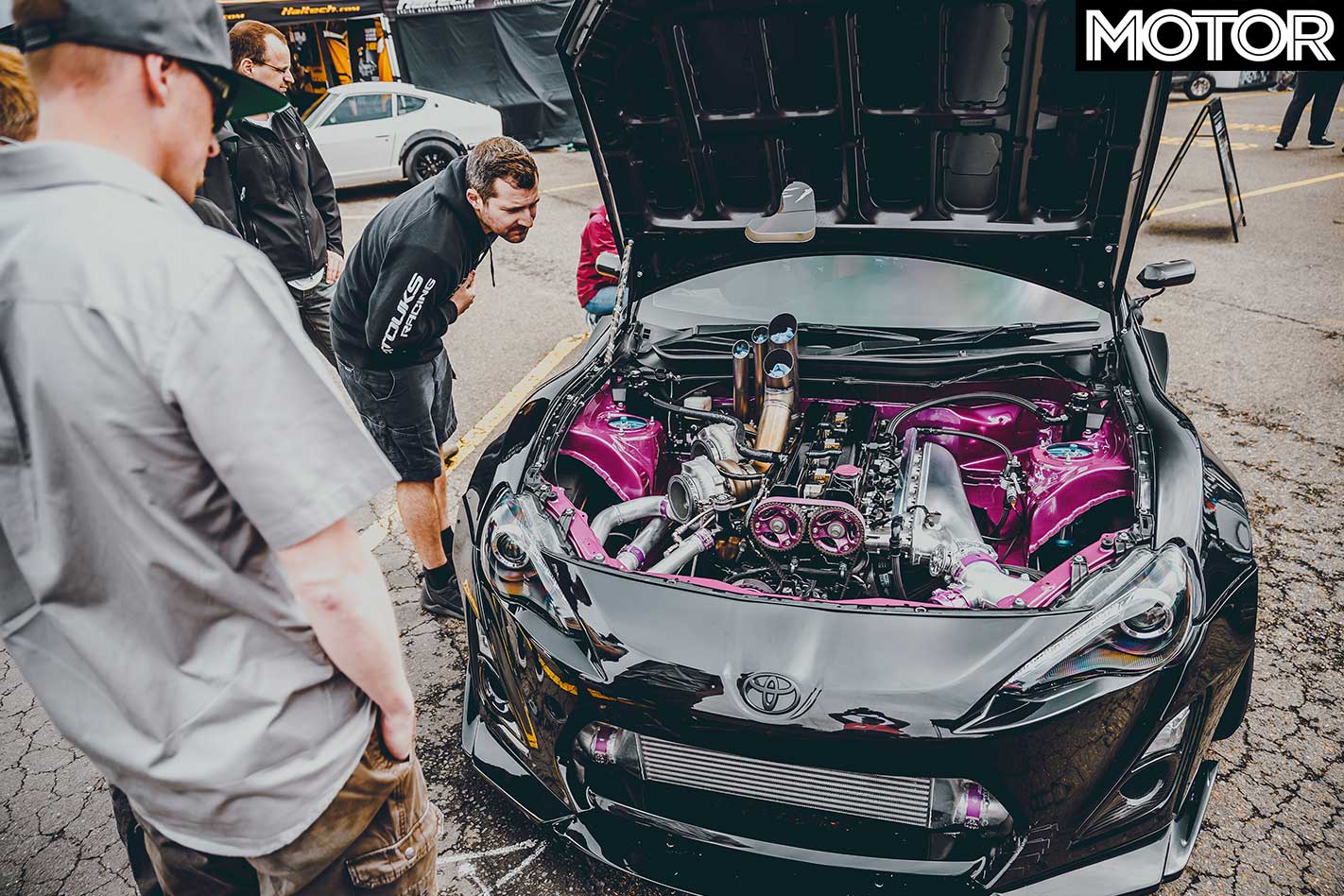
There are four classes: Pro, Pro-Am, Open and Clubsprint, each with its own set of technical regulations allowing varying levels of modification. The one constant is the abolition of slick tyres, with even the wildest machines forced to use Yokohama R-spec tyres.
Almost 70 cars were entered with teams from Australia, Japan, Singapore and Canada. Wet weather was a constant threat in 2018, but mercifully the clouds stayed away long enough for most cars to log representative laps.
Despite the less than perfect conditions, records tumbled. The headline act was Barton Mawer in the crazy Porsche RP968 clocking an incredible 1:19.825, a mere seven-tenths slower than the outright lap record, set by Nico Hulkenberg in an A1GP single-seater. Kosta Pohorukov won Pro-Am in the Tilton Racing Lancer Evo, while Adam Casmiri headed the extremely competitive Open class in a Honda Civic.
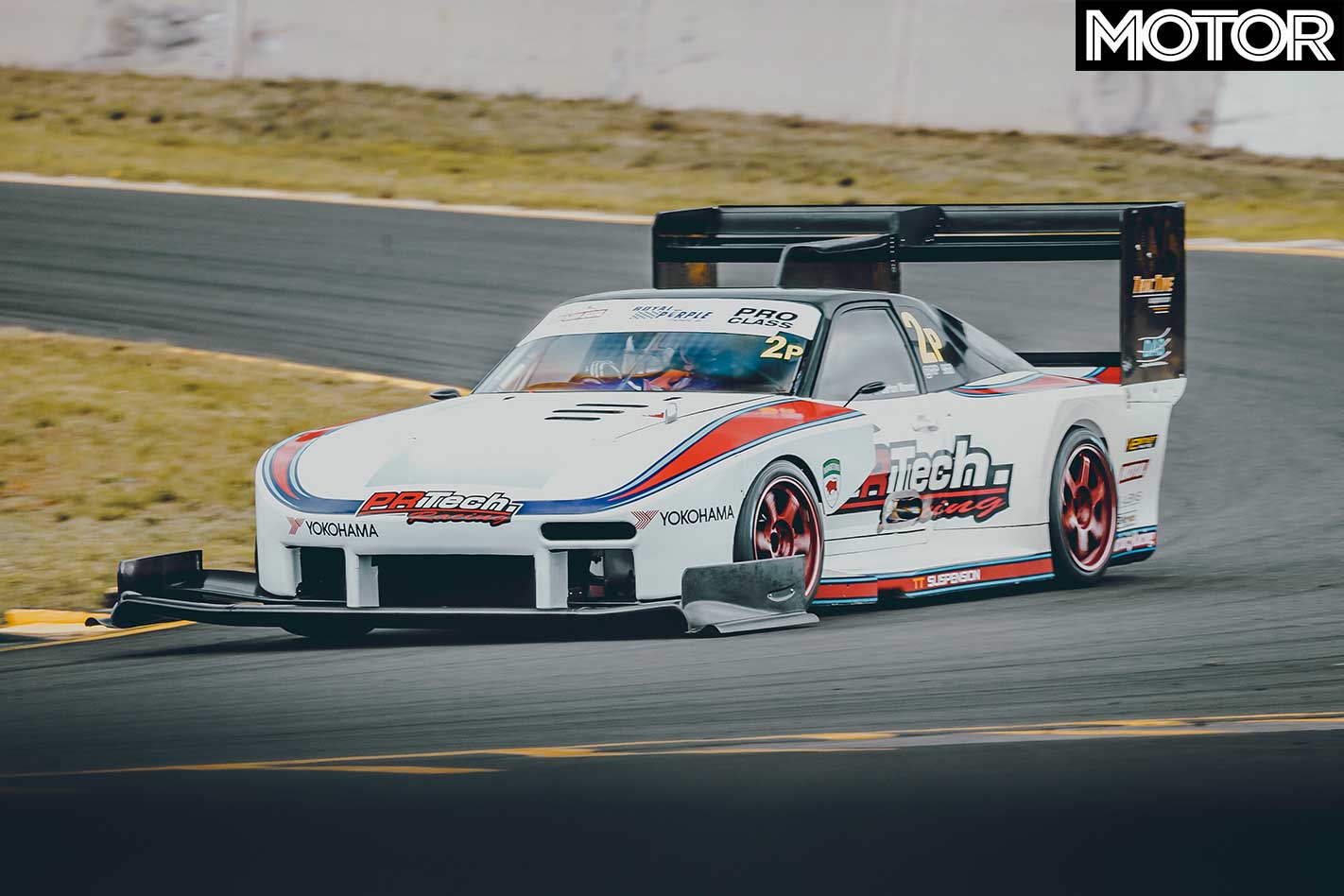
Remarkably, this front-drive hatch recorded a 1:27.75, more than two seconds faster than Jamie Whincup’s best effort at the 2018 Supercar round. Hondas also dominated the Clubsprint class; Brett Dickie’s Integra managed a 1:38.756, just over a second quicker than the Civic of Stephen Wan.
Once the sun went down each day the drifters took over. Insane power outputs ensured plenty of speed and smoke during the qualification battles, but constant rain on the second night made finesse as important as brute force in deciding the win.
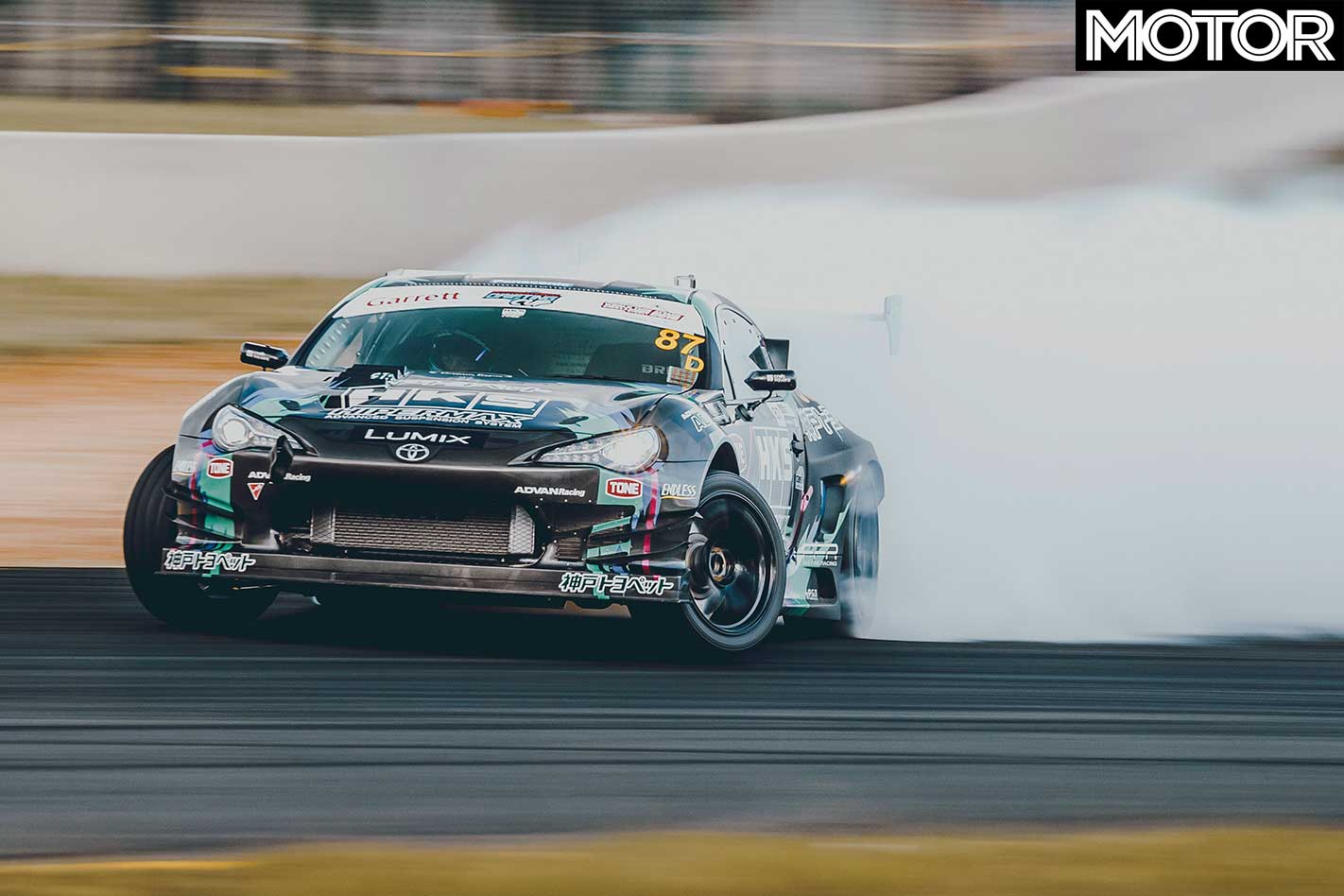
In the end, Japanese superstar Naoki Nakamura lifted the trophy, beating Aussie drifting veteran Luke Fink. The dates for World Time Attack 2019 have yet to be announced, but you can be sure that the cars will be faster than ever before.
Tsuchiya, the King of Drift, returns

Did Keiichi Tsuchiya invent drifting? Maybe, maybe not, but he certainly made it popular. ‘Dori Dori’, as he is known in his homeland, made his first trip to WTAC in 2017 to judge the International Drifting Cup and complete demonstration drift laps in Beau Yates’s AE86, the car that made Tsuchiya famous (and vice versa).
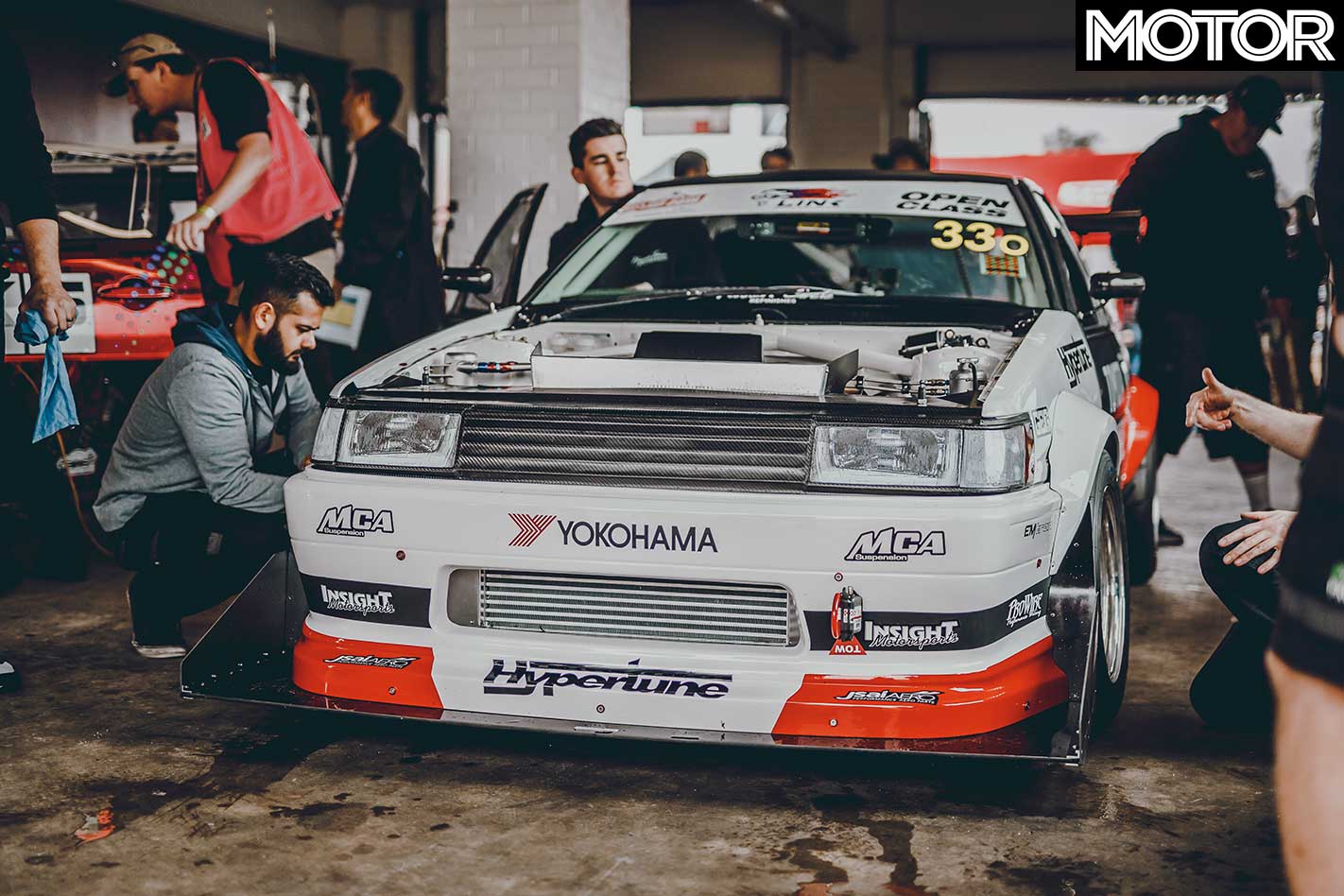
This year the Drift King reprised his role as IDC judge, but also had his ‘grip racing’ hat on, steering Yates’s rebuilt AE86 in the Open Class. Tsuchiya’s racing resume is impressive, with a decade in Japan’s top tier GT500 race series and seven appearances at the Le Mans 24 Hour, his best results being first in class in 1995 with the Honda NSX GT2 and second outright in 1998 behind the wheel of the Toyota GT-One. Tsuchiya has also long been the face of Japan’s Best Motoring series.
Imagining an EV in my future gets easier each time I visit Norway. Recharging options are plentiful in this long, skinny, thinly populated and ironically oil-rich country. They need to be, because more than 25 percent of the new passenger cars sold there so far this year are battery powered.
This is largely due to policies that encourage people to make the switch which are broadly supported by all of the country’s political parties.
Though EV sales are now booming in Norway, their share back in 2011 was between one and two percent. The government’s decision to use its system of car taxes to make EVs more or less cost-competitive with fossil fuel-burners has been so successful that car makers are now fretting about their ability to keep up with demand.
The reason for my latest visit was to spend time in what is currently Norway’s best-selling car, the second-generation Nissan Leaf, which went on sale there in February. It will eventually reach Australia, where there’s no chance of it topping the charts.
EV owners in Norway do most of their recharging using AC wallboxes at home or work and drive mostly between those two places. DC fast chargers expand their horizons far beyond the ’burbs. Norway now has a basic national network of almost 1500 50kW DC fast chargers, plus almost 500 even more powerful Tesla Superchargers.
So Norway is the closest thing to plug-in paradise on the planet, and, at the same time, a model for other nations to imitate. While the example of Norway made it easy to imagine becoming an EV owner, I also have to imagine the EV I would actually buy.
No-one yet makes one that costs $30,000 to $35,000, has a 50kWh battery pack for an all-year real-world driving range of 300km-plus, rear-drive (call me old-fashioned) and a neatly designed and quite compact hatchback body around an attractive interior. I’d also like it to be future-proofed with high-power DC fast-charging capability. Already 150kW rechargers are being installed in Norway, and the next step will be to 350kW.
Price counts out premium models, like the brilliant Jaguar I-Pace and its coming competitors from Mercedes-Benz, Audi and BMW. And having driven Teslas, I know I don’t want one of those.
The new Nissan Leaf was surprisingly enjoyable to drive and there’s a version with a big 60kWh battery pack in the works, but the interior isn’t to my taste and it’s front-drive. The Renault Zoe is about the right size, but it’s also front-drive. And it cannot be DC fast-charged. Hyundai Ioniq EV? Battery not big enough. Kona EV? No SUVs for me.
The just-announced 40kWh version of the BMW i3, due into production in November, comes closest to my ideal, but even its efficiency isn’t likely to deliver the driving range I’d like. And that exterior has always been hard to love.
Electric cars on the rise in a changing new car market
So I’m pinning my hopes on Volkswagen. If the rear-drive ID five-door hatch, due on sale in Europe late next year, has the looks, price and driving range that have been promised by VW execs, it could be the car that makes me an EV owner.
And if it doesn’t, there will be plenty more to choose from. Norway will see to that.
Seven hundred and thirty thousand dollars. Just roll that figure around in your head for a bit. It’s the kind of money that can eliminate mortgages (unless you’re in Sydney), set up a business or have a lot of great holidays with.
What about buying a single copy of a two-seat performance car that’s obscenely loud, unashamedly lairy and possibly the best thing you could ever hope to punt down a public road? That’s the Porsche 911 GT2 RS. Big money for big performance.
Its 520kW humbles almost everything on sale today, save for the Ferrari 488 Pista, the Lamborghini Aventador SV… and weirdly, the Jeep Grand Cherokee Trackhawk. All from six cylinders, two turbos and a bunch of ones and zeros…
It’s two-wheel-drive, as well. Ulp.
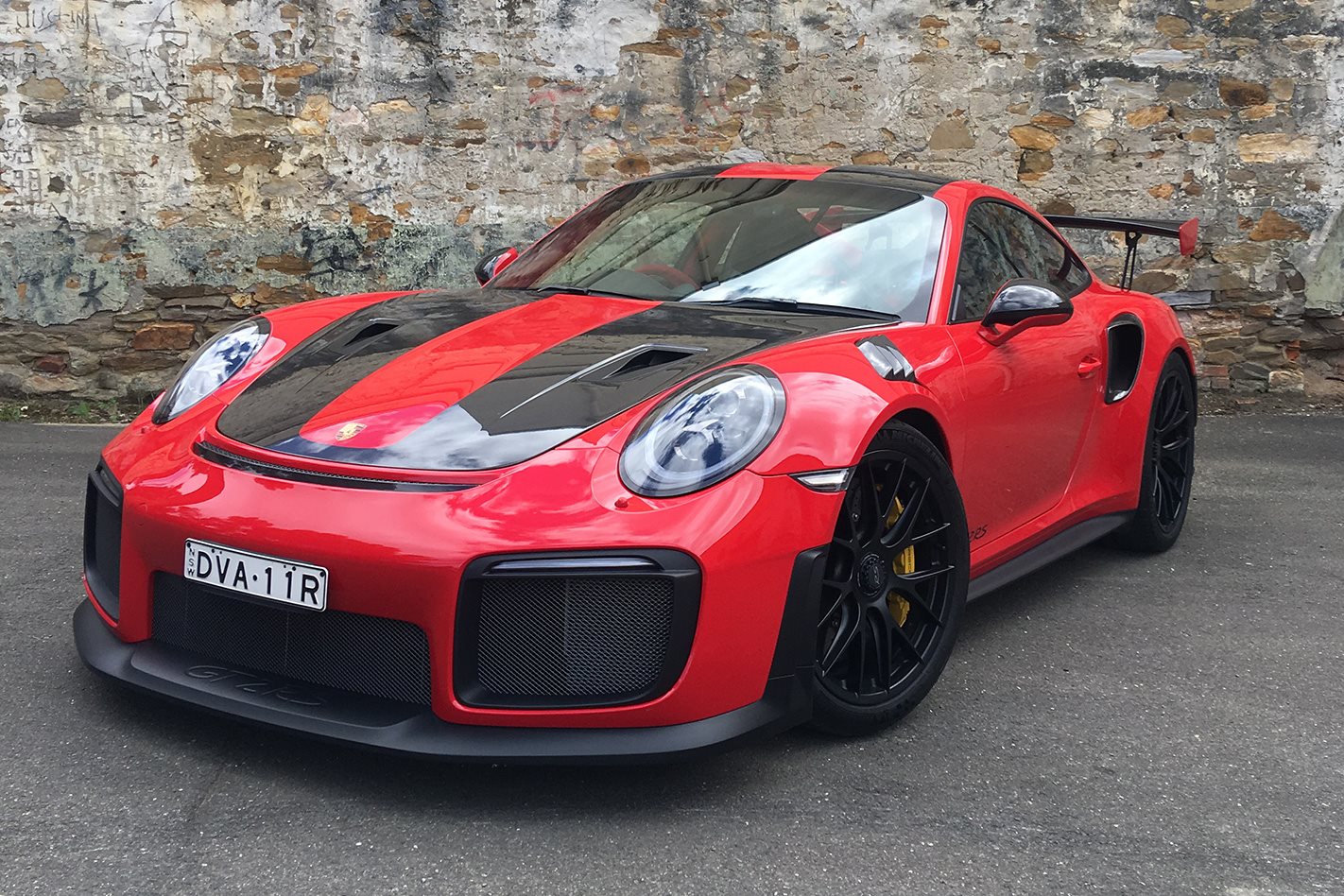
WhichCar recently joined our sister title Motor for a test that featured a fully-specced Guards Red 911 GT2 RS that tipped the invoice at a cool $730k. How was it to drive? Absolutely otherworldly in so many ways… While it looks as if it’ll rattle the change from your pocket, I’ve never driven a performance car with such a deftness of damper control and an ability to put power to the ground – without putting you in a tree in the process.
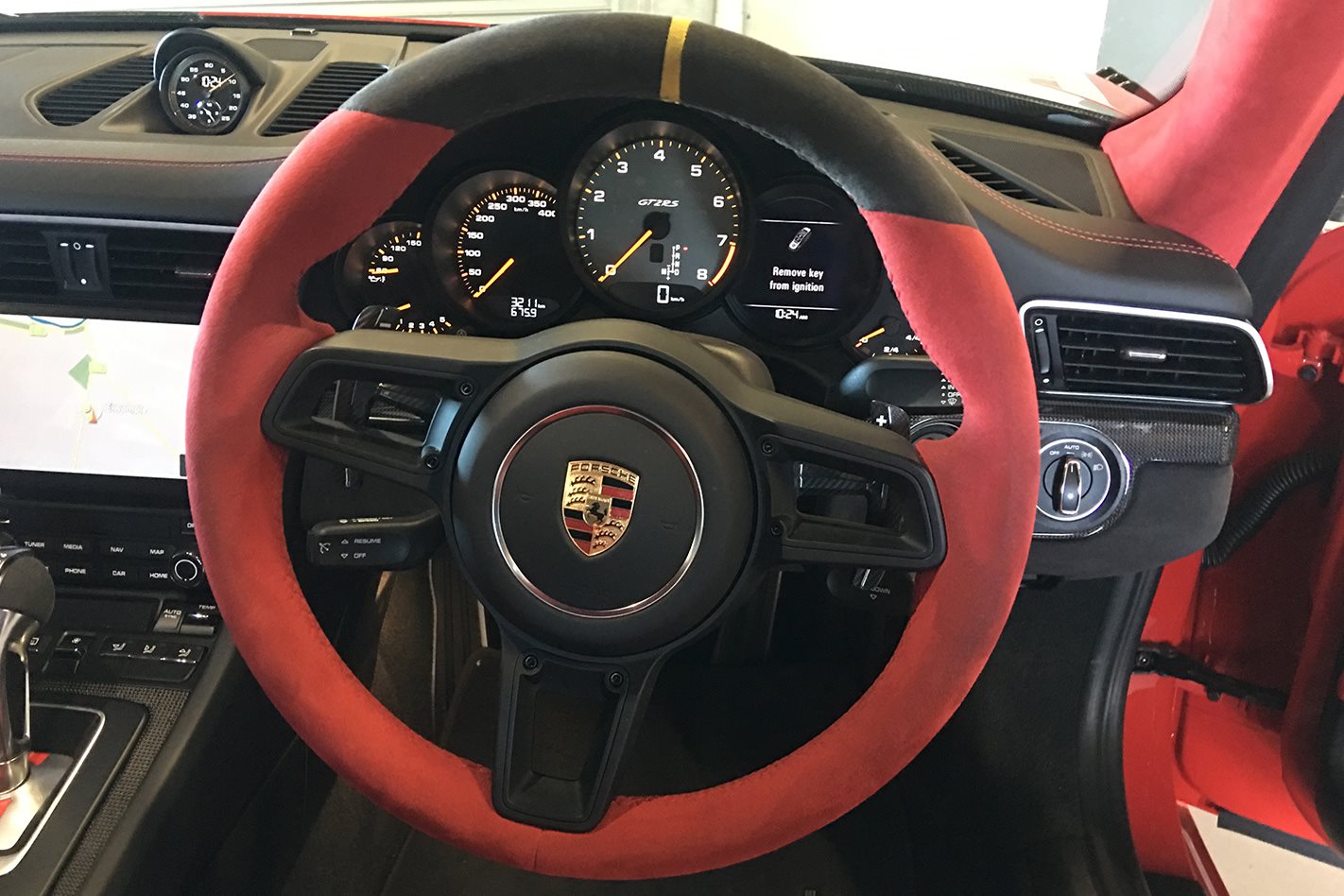
And the speed? Fwoah… it’ll crack the 100km/h from rest in 2.6 seconds. That’s enough to put your lunch where it ought not to be.
But what makes it so ridiculously expensive? You could buy 14 Honda Civic Type Rs for the same price, and you’d be pretty happy. But if having the best of the best appeals, let’s go through some of the parts that our test rig was adorned with to make some sense of it – and make sure you click on the top image to see it in all of its magnificent… expensive, but magnificent… glory.

Weissach Package $41,990
Only Porsche can get away with the notion of removing stuff and charging more for it. In this case, the Weissach Package drops a startling 30kg of weight from the car, via a carbon fibre roof and bonnet, and carbon anti-roll bars under the car.
You could have: Mazda MX-5 GT
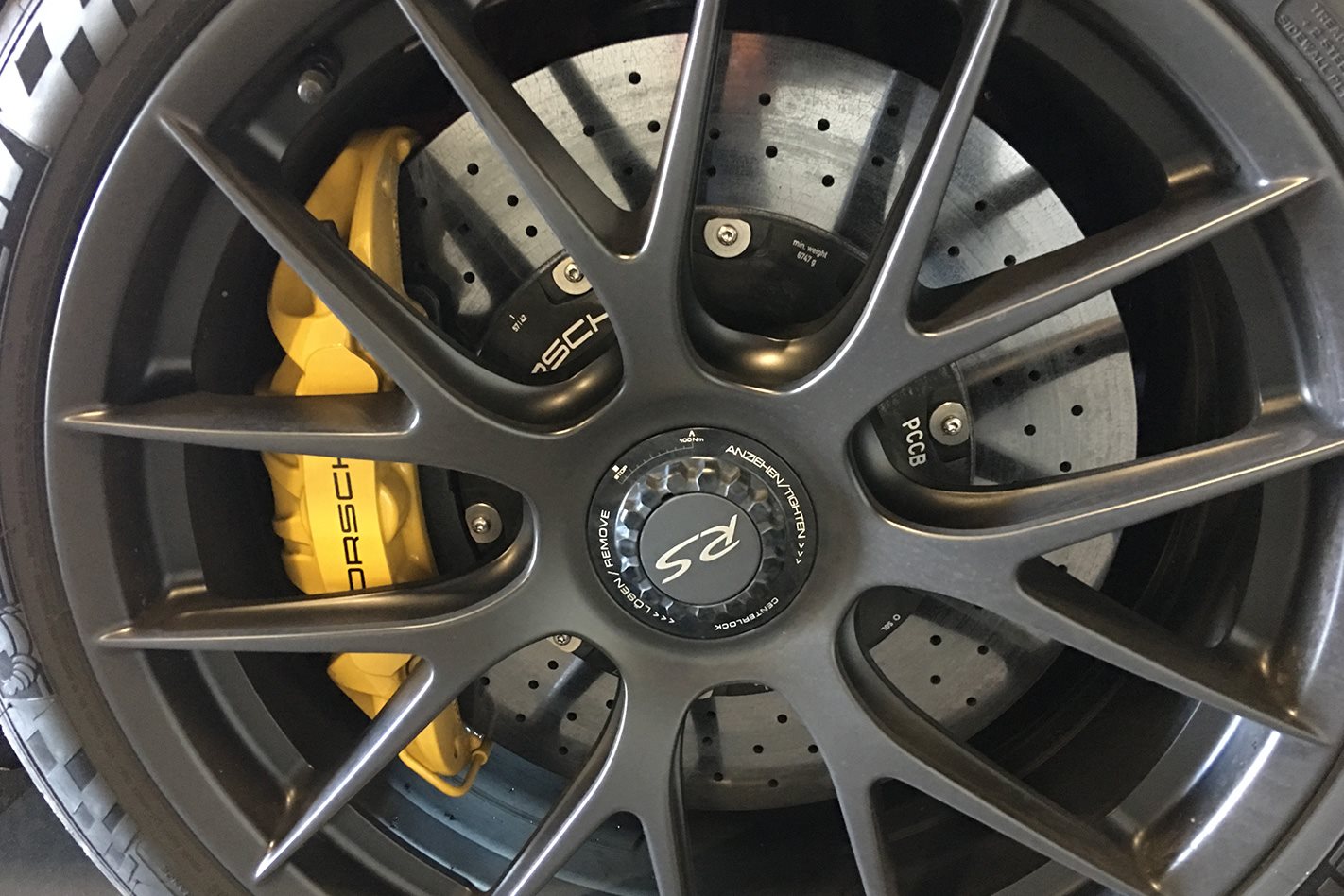
Staggered magnesium wheelset $26,600
Measuring 21 inches in diameter in the rear and 20 inches up front, these magnesium wheels feature a single large central nut to remove them, so forget using a cross brace.
You could buy: Audi A1
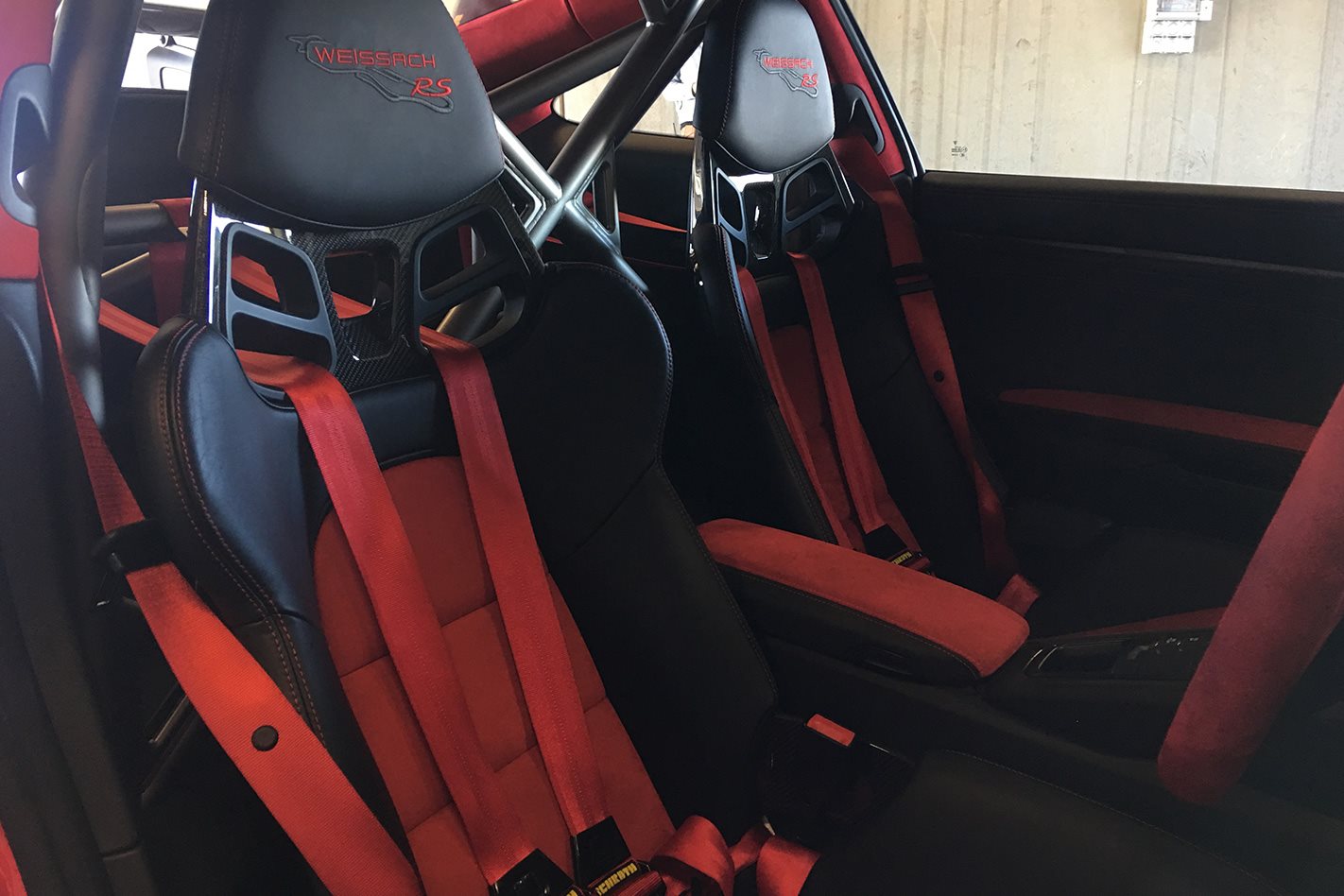
Leather package, BOSE stereo, reversing camera $12,570
Despite the race seats being covered in racy suede, the dash, wheel and gearshifter can be wrapped in leather, while the optional stereo is completely pointless, given the sheer ear-splitting volume of the exhaust system on this rear-drive monster.
You could buy: Mitsubishi Mirage
Black painted wheels, Chrono package, auto dimming mirrors $3770
Since you’re spending so much anyway…
You could buy: gold annual membership at The Bend motorsport track
The badge on the steering wheel suggests that navigating the familiar right-hander ahead shouldn’t be a problem. A heavy dab of the brake pedal shifts the weight forward while the trick suspension sorts out the mid-corner bump. Once settled, steering lock is released and the throttle percentage increases, but the nose doesn’t lift. The front stays planted and the back-end undergoes a gentle, manageable yaw movement, subtly stepping out before hunkering down as the 315-section rear boots bite into the tarmac for ultimate traction.
It’s moments like these, caught in slow motion when reality is in fast forward, that mean you have to constantly remind yourself you’re in an SUV – the all-new, $239,400 third-gen Porsche Cayenne Turbo, to be exact.
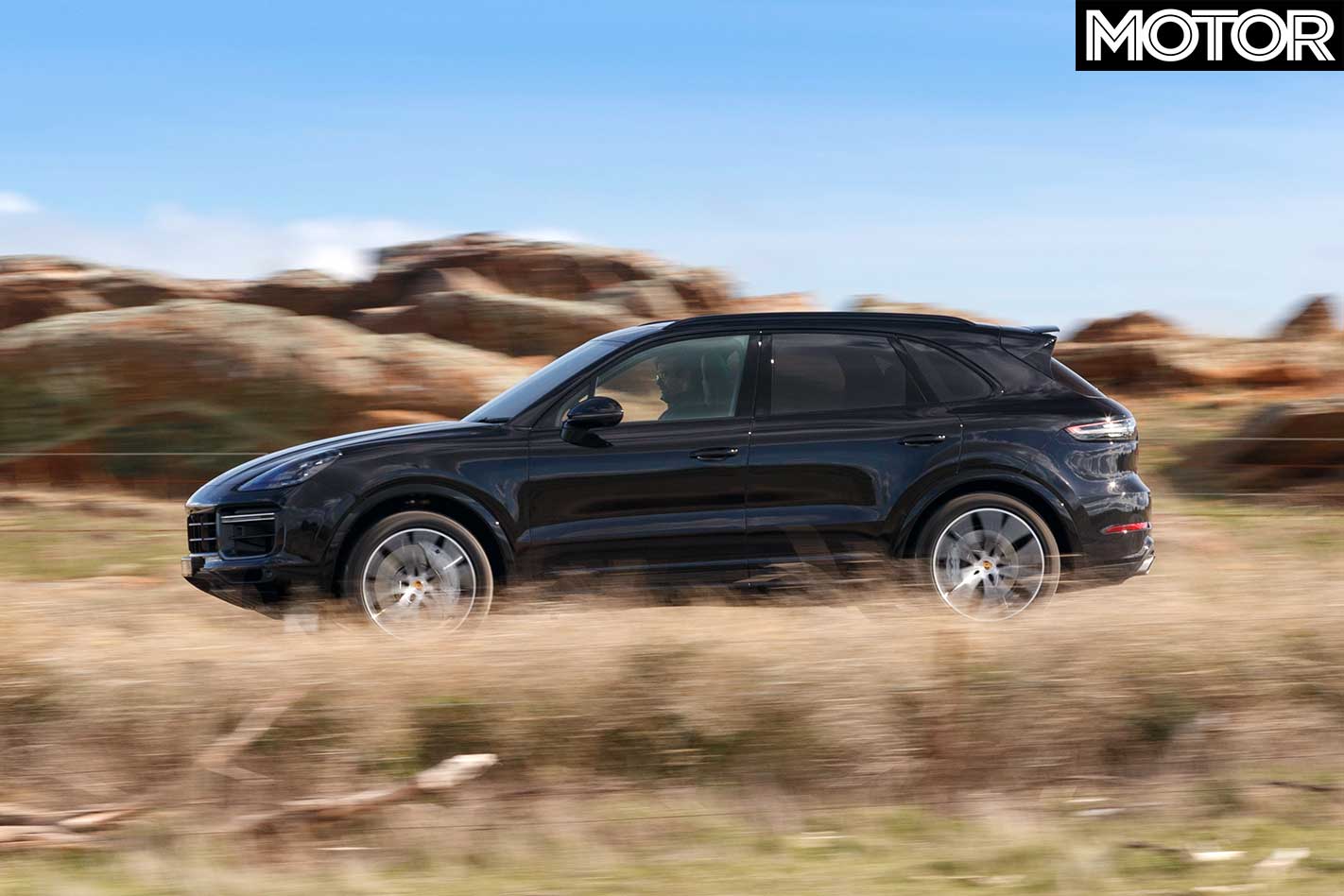
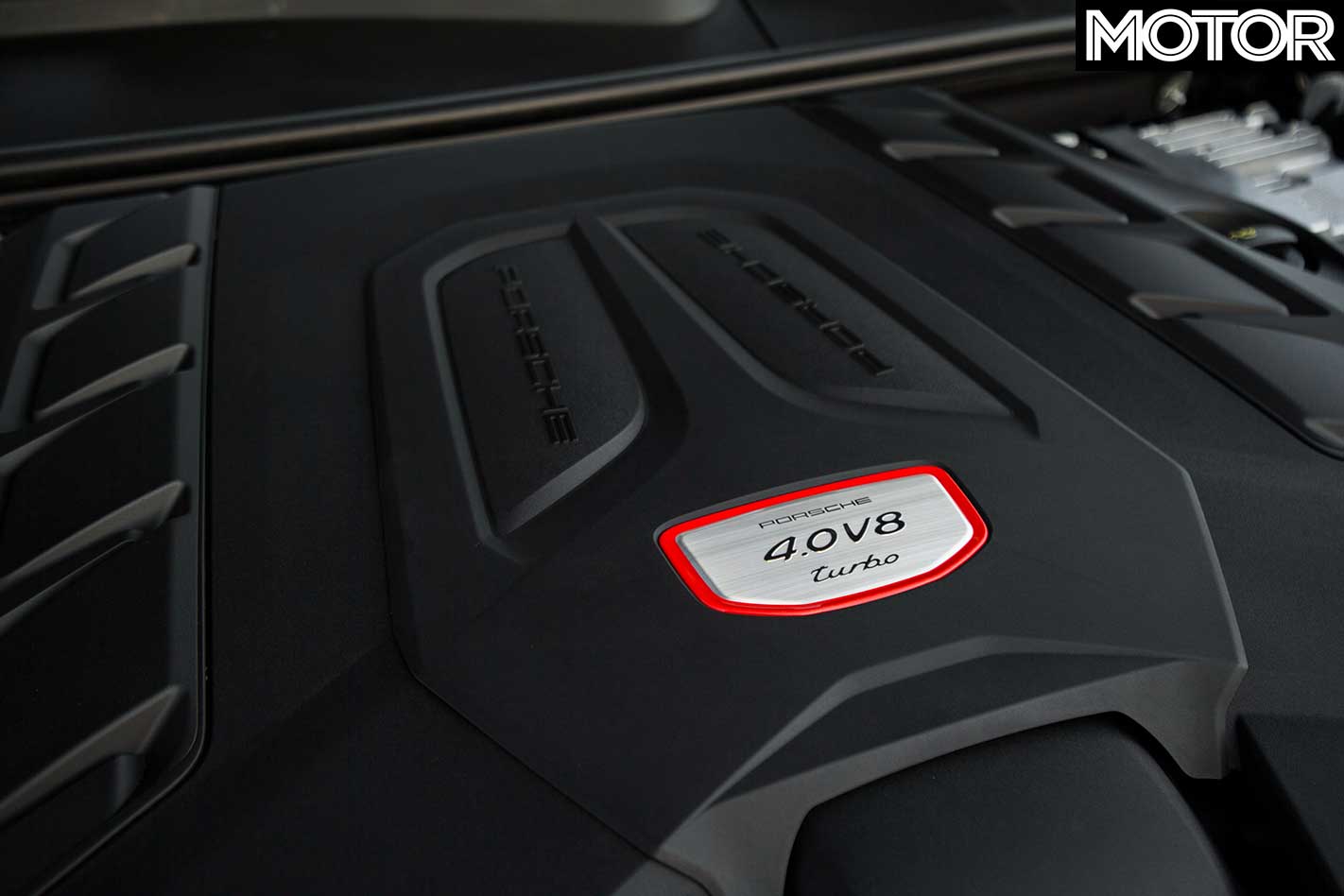
Just how this 2175kg behemoth has as much sporting talent as it does is mind boggling. A 404kW/770Nm twin-turbo 4.0-litre V8 (shared with the Panamera Turbo) somewhat explains how the Cayenne nullifies its overt obstacles, while the MLB Evo modular platform’s hybrid mix of alloy and steel makes it lighter than before. Three-chamber air suspension, a new electromechanical 48-volt roll stabilisation system, all-wheel drive and huge brakes further affirm the performance brief.
The Turbo befits its status as ‘the really fast one’. With Sport Chrono optioned, a 0-100km/h time of 3.9sec is achievable. And it feels every bit as fast as that. With both twin-scroll turbos located in the valley to create a ‘hot vee’ V8, the unit produces a relentless amount of lag-free grunt throughout the rev range and ties in well with the torque-converter eight speed automatic.
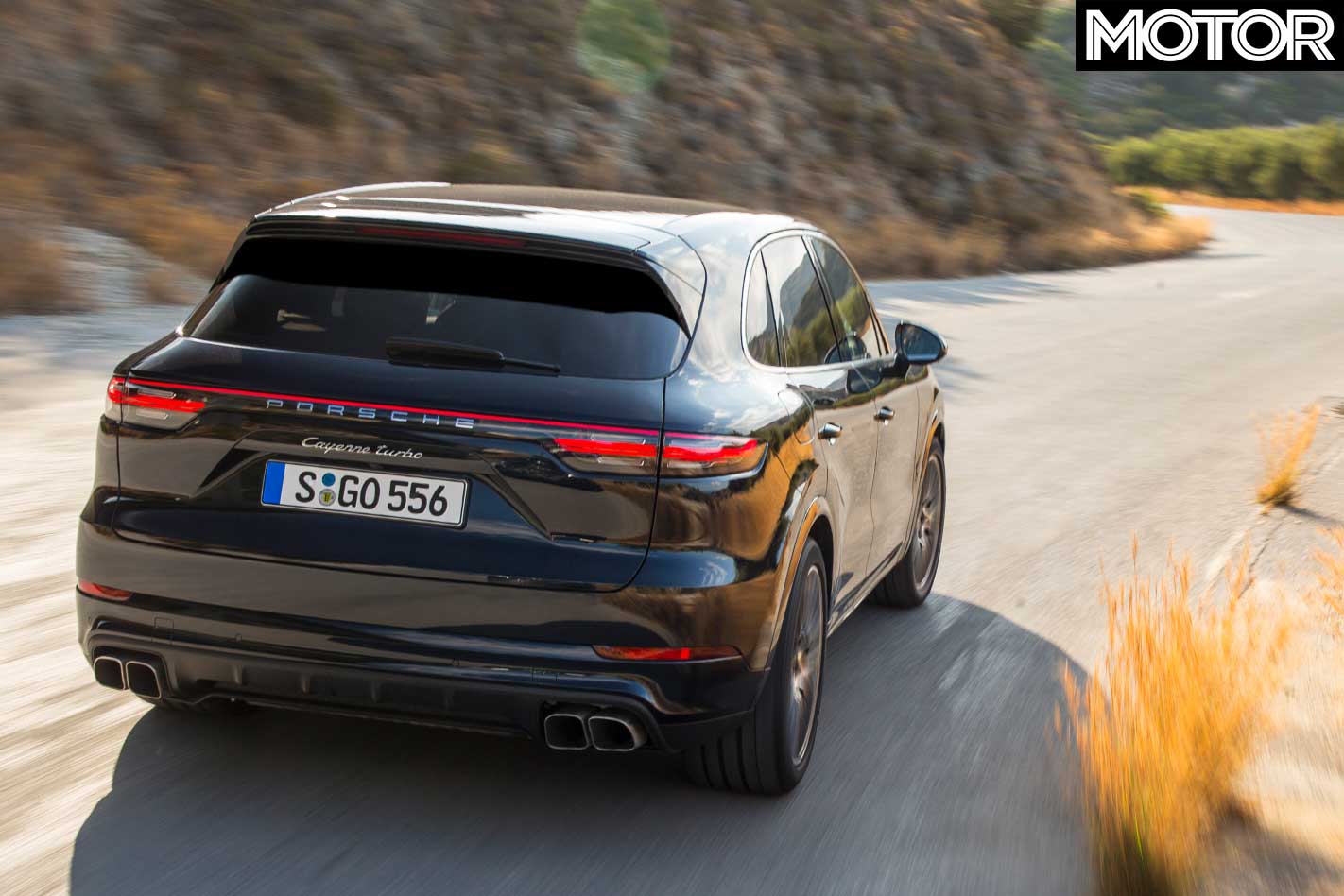
The only caveat is that the orchestral act doesn’t quite match the linear, torque-filled theatre of the powertain. The quad tailpipes are slightly muted; the thunderous baritones of the old 4.8 are gone.
While overall length has grown 63mm, the wheelbase has remained at 2895mm. Hence, even without the optional rear-wheel steering fitted, the way in which the Turbo can stop, clip the apex, rotate and fire out the other side of a hairpin is addictive. That’s also thanks to the torque vectoring AWD system and road-biased P Zero rubber.
As a result of the stabilisation technology, the body stays remarkably flat. And, given the air suspension doesn’t have to be super stiff to control body movements, the ride quality, on 21-inch wheels, is exemplary. Even with the suspension lowered in Sport Plus and the dampers firmed, it has an incredible level of comfort and control with confidence-inspiring stability.
The point-to-point pace is incredible. You could frighten many hot hatches through twisty terrain. There’s something naughty and thrilling about driving the portly, rear-biased Cayenne this quickly. It’s as if you’ve snuck out of bed late at night as a youngster to watch SBS while the household is asleep. The Turbo seems to embrace its heft like a politically correct plus-size model and runs with it.
However, despite the Cayenne’s brilliance and hot-hatch-esque persona, it can, on certain roads, feel like the Titanic in a bathtub. Although direct and easy to place, the steering, too, can freeze you out from feel, meaning you’re not always privy to what’s occurring beneath you. It’s not in any way a sinking ship, but the physics-defying tech can’t mask the icebergs all of the time.
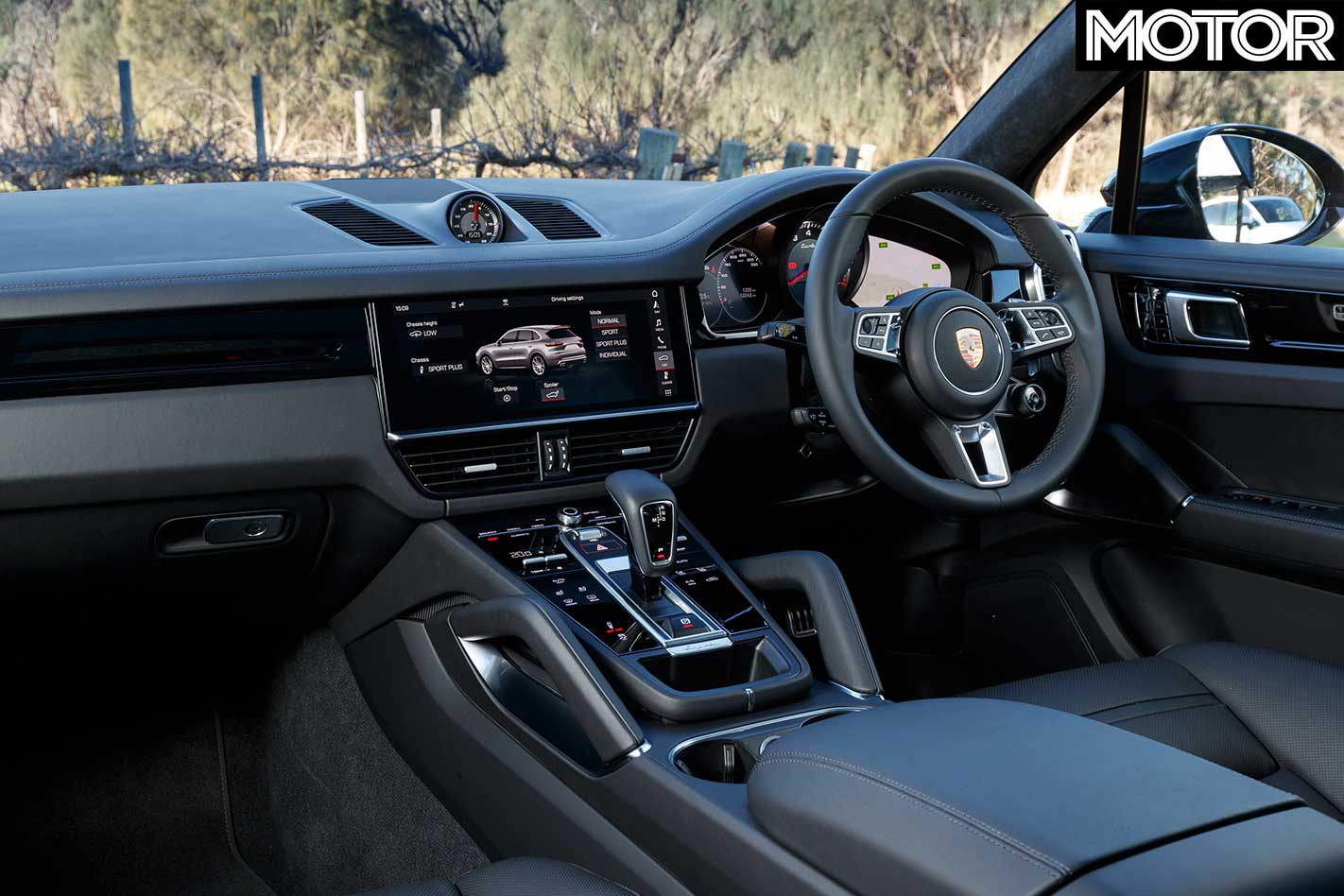
Although, like the infamous ocean liner, the Turbo’s interior is lavishly appointed and undoubtedly a first-class cabin. Supple materials abound, NVH levels are top notch, the infotainment system is ergonomically sound, the technology is up to date and the seating position is just right for an SUV.
There’s even a 745-litre boot, five off-road modes, diff locks and up to 245mm of ground clearance (525mm fording depth). As a ‘car’ that can do just about everything, the Cayenne Turbo is a hell of a proposition.
Okay, romanticising the dynamic capabilities of an expensive, heavy SUV seems facetious. Let’s be clear, this isn’t a 911. However, the Cayenne is still a Porsche, so expectations are automatically placed on its ability.
Luckily the moments of true performance aren’t ephemeral. The Turbo is much more than a culmination of impressive figures and weight-evading tech wrapped in a luxurious off-roading body. It’s the fact the SUV platform is so easily forgotten in the Cayenne Turbo narrative that makes it such a master stroke.
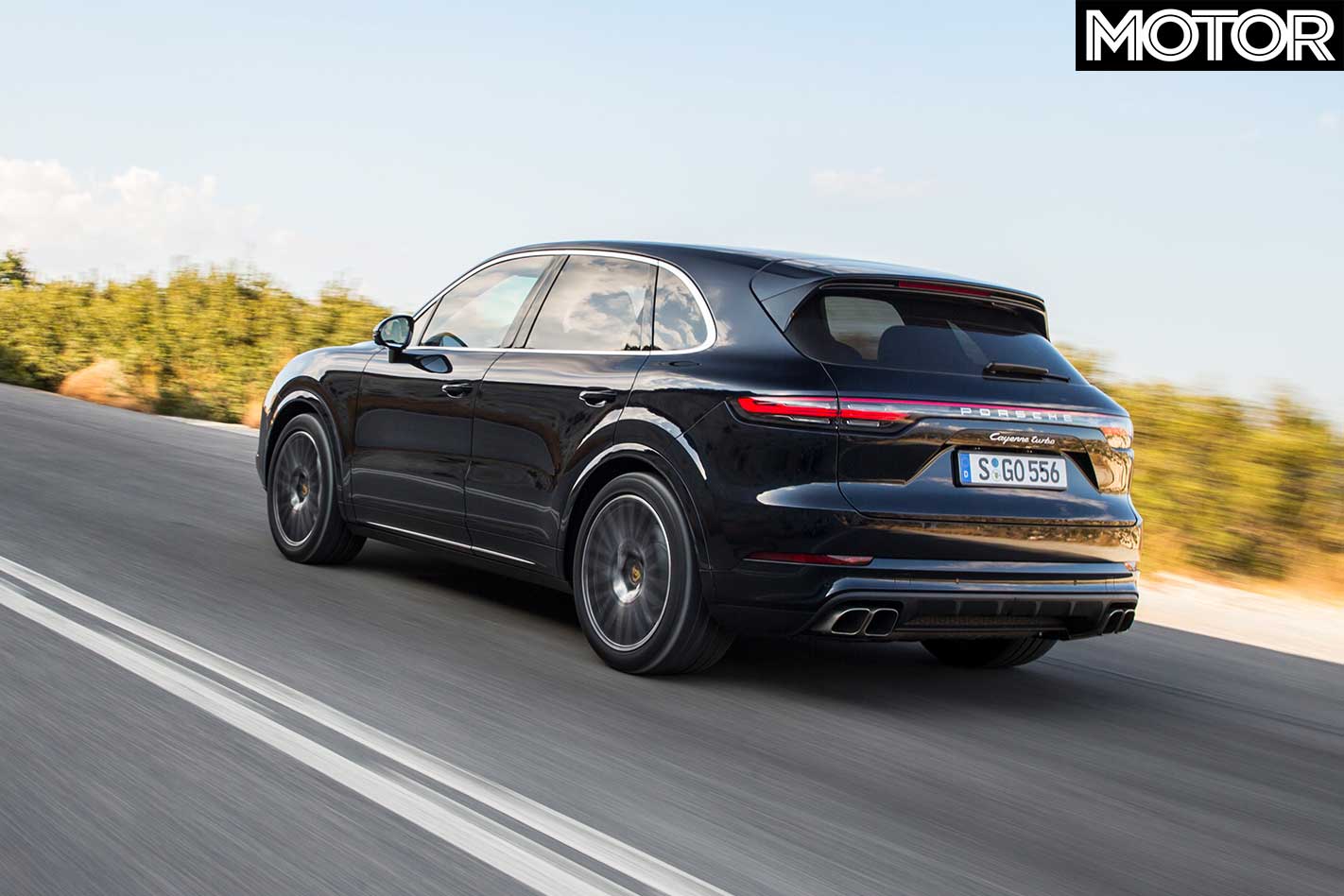
2018 PORSCHE CAYENNE TURBO SPECS: Engine: 3996cc V8, DOHC, 32v, twin-turbo Power: 404kW @ 6000rpm Torque: 770Nm @ 1960-4500rpm Weight: 2175kg 0-100km/h: 3.9sec (claimed) Price: $255,600 (as tested)
Like: Unbelievable straight-line stonk; largely defies the laws of physics; premium cabin Dislike: It’s still hefty; remote steering feel; soundtrack could be angrier; getting pricey
Rating: 4 out of 5 stars
In the grooves of every tyre you’ll find little bumps called treadwear indicators, which tell you when the tread is no longer deep enough to provide sufficient grip and braking distance, particularly in the wet.
Watch this short video to find out more about treadwear indicators and other signs your tyres are becoming unsafe.
At first I thought I must have gone to sleep and woken up on April 1. There just couldn’t have been any other explanation for what I was seeing on the TV.
A group of young blokes who should have been out making nervous small talk with the girls in the front office and bolting cold-air intakes to their V8s were sitting in rows of four, each row back-to-back and each bloke sitting in front of a monitor. Instead they were sitting in high-backed bucket seats and holding a steering wheel.
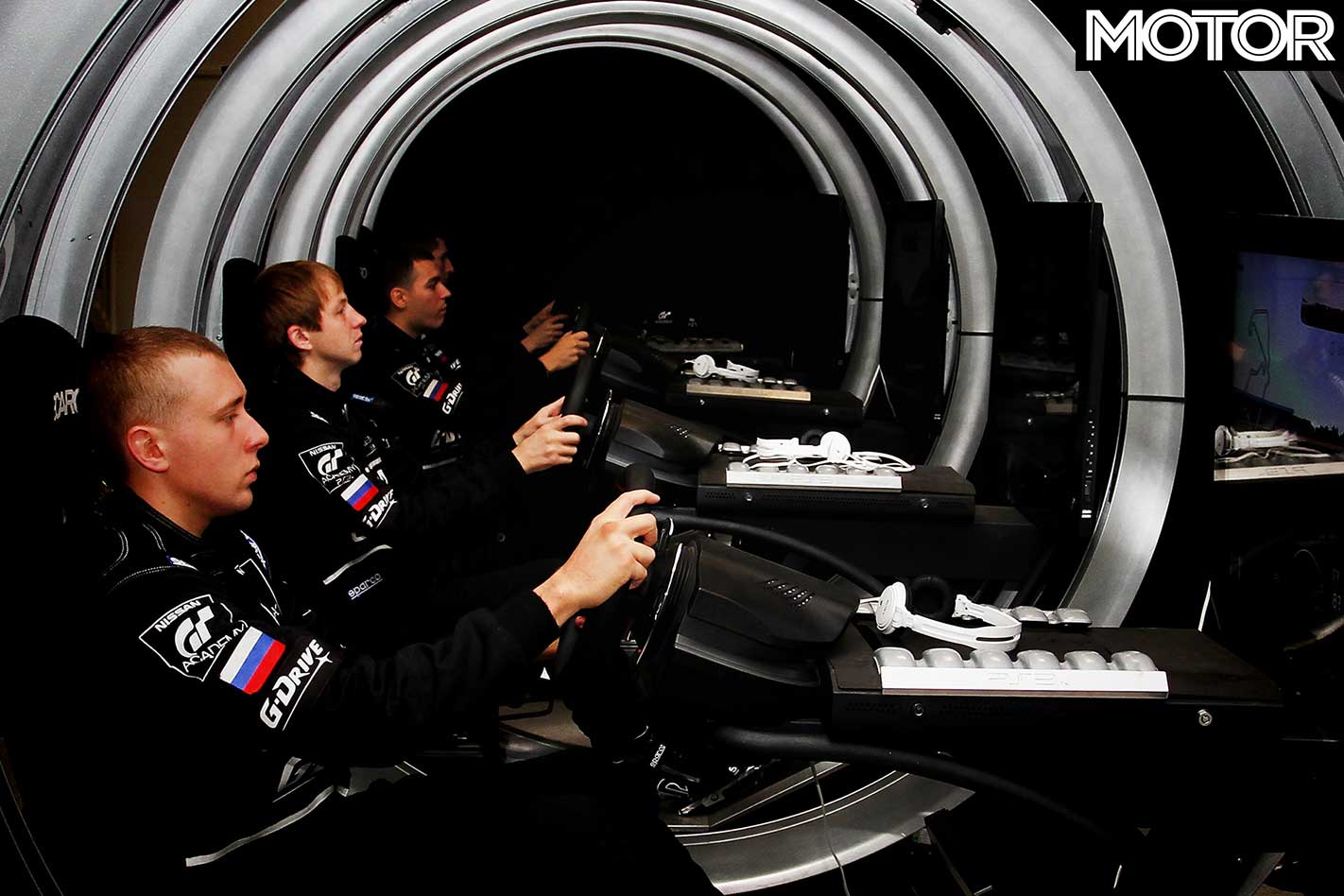
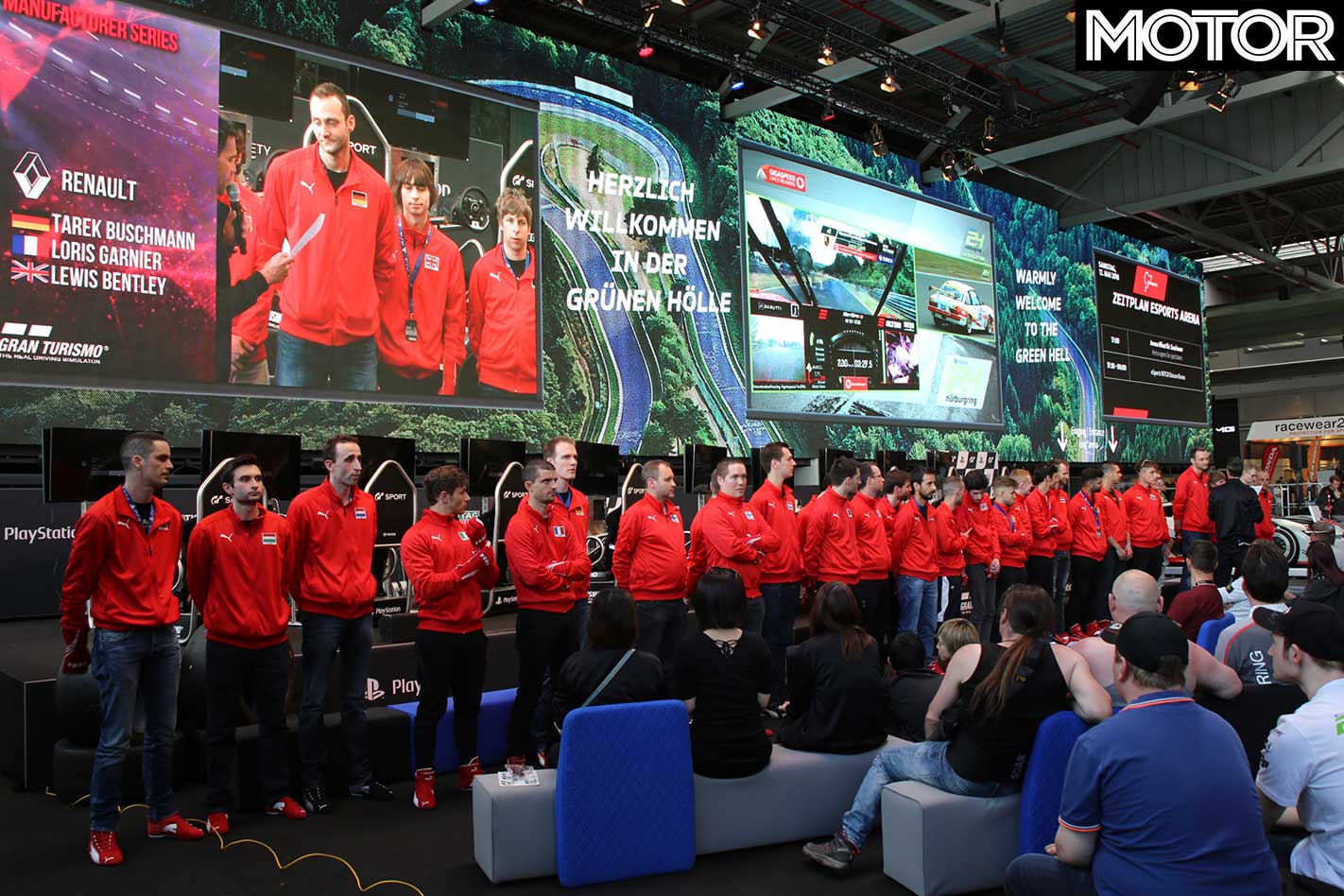
Sounds like a fun half hour in the local arcade, in between chat-up sessions, doesn’t it? Yep, but guess what? This was being taken very, very seriously by the commentators. Commentators? Yep, this was a televised round of some godawful driving-sim championship. Or something like that. By now I was laughing so hard I was crying. And, no, you couldn’t make it up.
Now, there are a couple of things wrong with this. The idea of taking a video game seriously is whacko, just for starters. But then, to formalise a championship where there are winners (not easy when the room appeared to be full of capital-L losers) is seriously taking the piss.
Then there’s the concept of televising it complete with commentators. And finally, there’s the horrible mistake of presuming that I might be even remotely interested in watching what amounts to a 21st century version of Dungeons & Dragons.
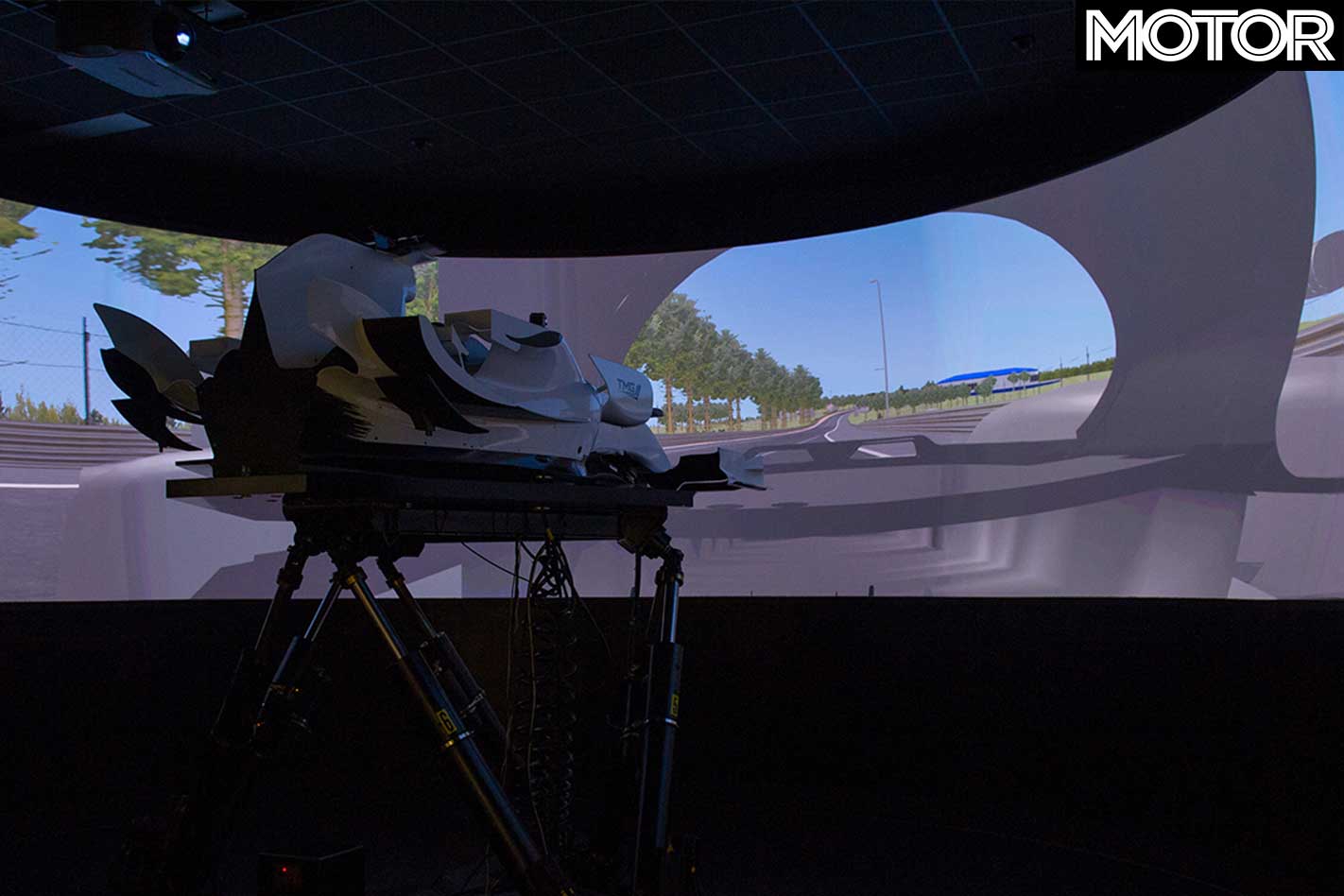
Let’s get something straight right from the off here. A driving simulator is not actually anything like driving. Unless you’ve got the NASA-spec one with the 360-degree view and full gimbal movement that can reproduce acceleration, deceleration and yaw forces, you might as well be sat at the kitchen table with your laptop.
Yes, yes, I know pro drivers use sim programs to ‘learn’ tracks, but that’s more to do with memorising a mind’s-eye map than trying to predict a lap time or calculate fuel burn.
And yet, here we were, with the commentators breathlessly reporting on overtaking moves and wheeling out the old faithfuls about the high-horsepower cars stretching their legs on the main straight.
Memo to microphone guys, there were no cars involved in this. There was no horsepower. The only acceleration was common old gravity and that was only there to stop these dweebs floating out of their seats and closer to me. The only movement was a bunch of electrons lapping a silicon chip. That’s all. Over.
It’s about time the millennials got real. A mate of mine was telling me the other day that a colleague (in name only) of ours had told him all about the Nordschleife and where speed could be gained and lost. Interesting, replied my man, I’ve never been there myself. Thing is, I didn’t know you’d been to the Nürburgring. Oh, says Old Mate, I’ve done over a thousand laps of the joint. On my PlayStation. Again, true story.
And this is how this lunacy gets a foothold. One minute, you have a gronk confusing a trip to Germany with sitting in his loungeroom in his jim-jams and a joystick, and the next thing you know, there’s a TV show where such delusional behaviour is actually being rewarded. Like I said, time to get real kids.
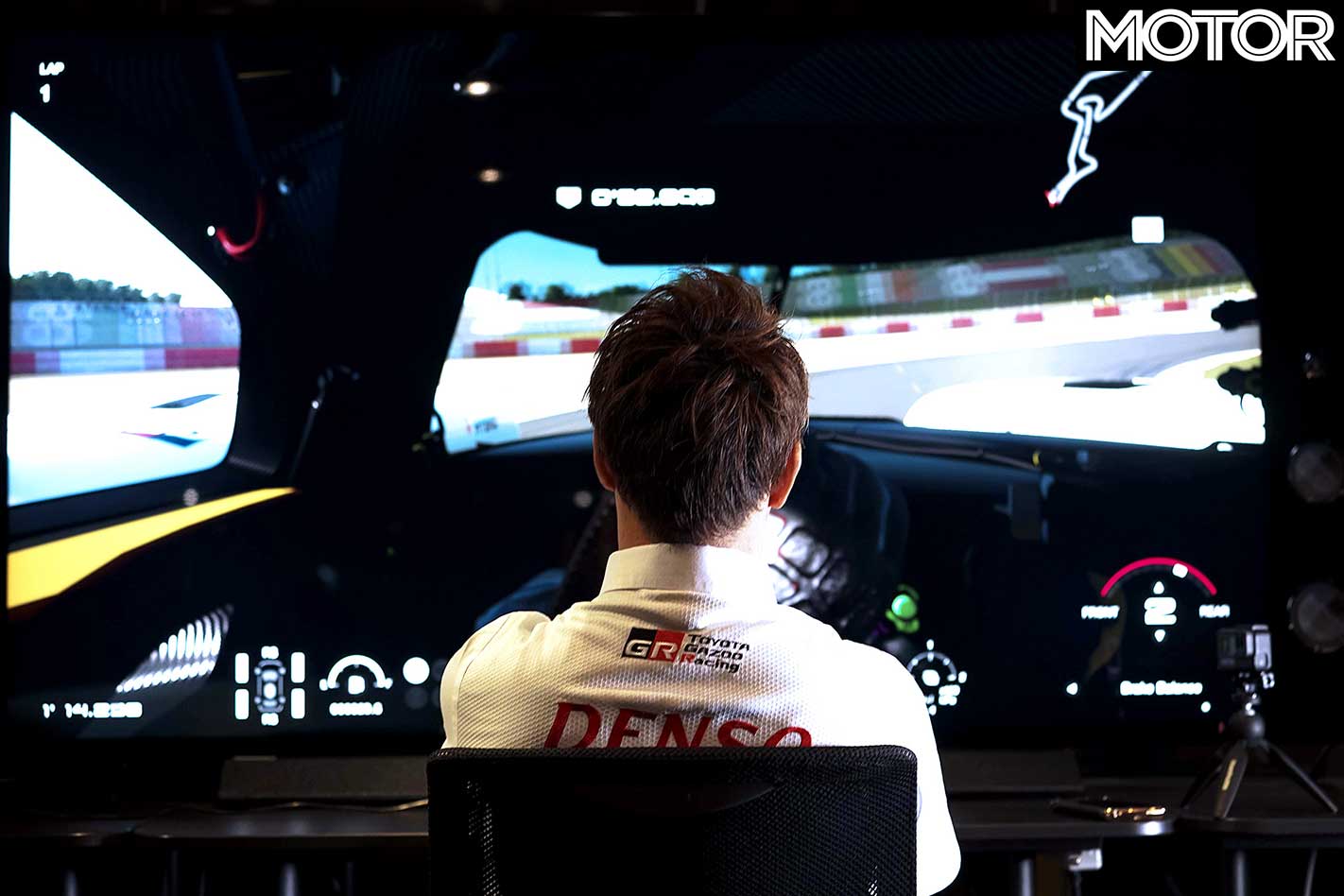
Now, I know that Nissan has dipped into the gamer well and pulled out a few proper race drivers in recent years, so, obviously, there’s some crossover in the two skill sets. Reflexes, judgment and hazard perception most probably. But actual car feel is not one of them. Car feel is reserved for cars. Hence the name.
And here’s how I knew this must have been some glorious piss-take. Despite the fact that the only way to get burnt driving a sim is if you’re watching it on a Samsung Note 7, at least one of these palookas was wearing – wait for it – Nomex gloves. I was laughing so hard I almost had to be resuscitated.
What is it?
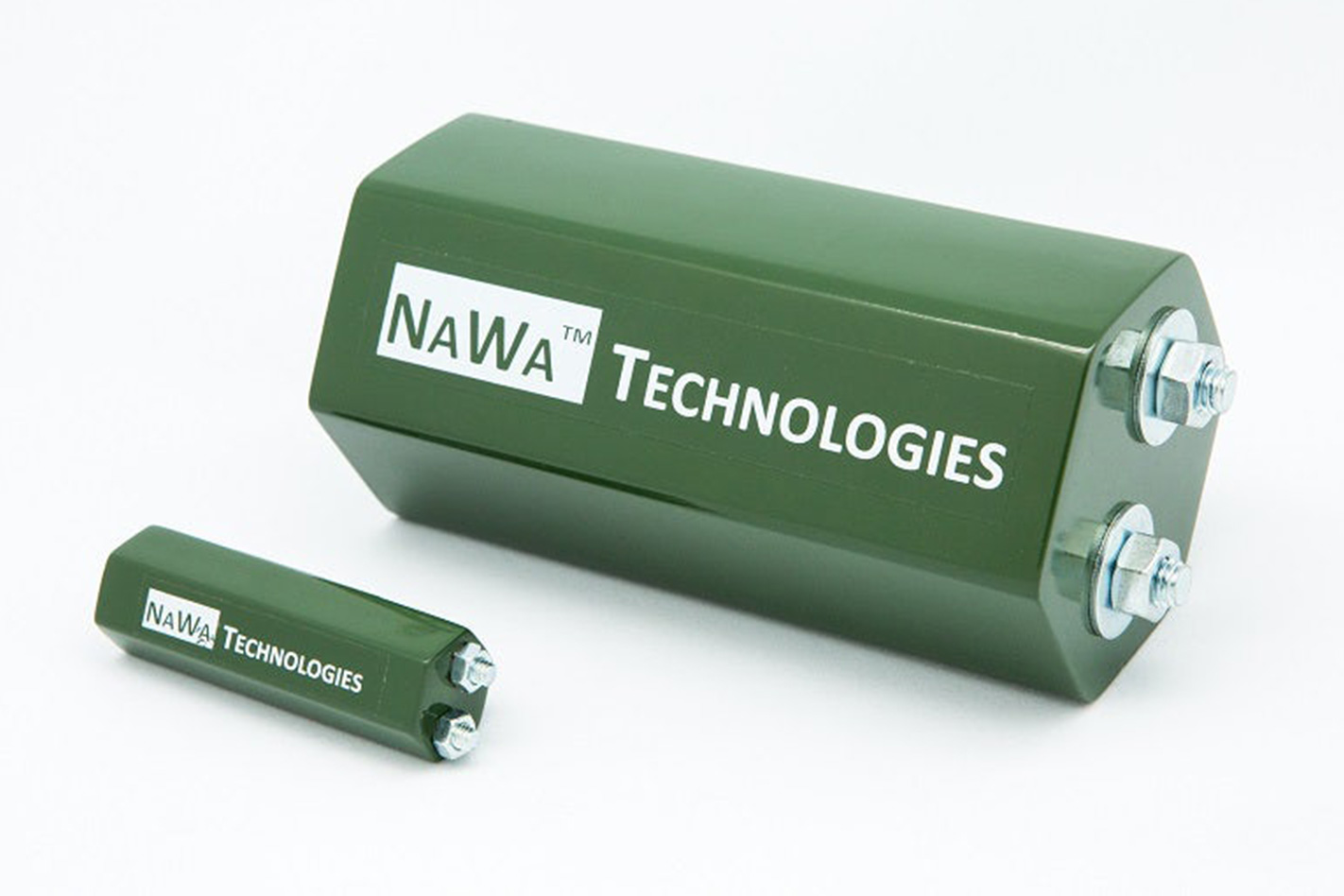
A revolutionary new electricity storage system by French technology startup NaWa which uses nano carbon engineering to far exceed conventional capacitor performance.
By coupling the high-efficiency units with more conventional lithium-ion batteries, the company has created a hybrid energy storage device with enormous potential for electric vehicles.
How does it work?
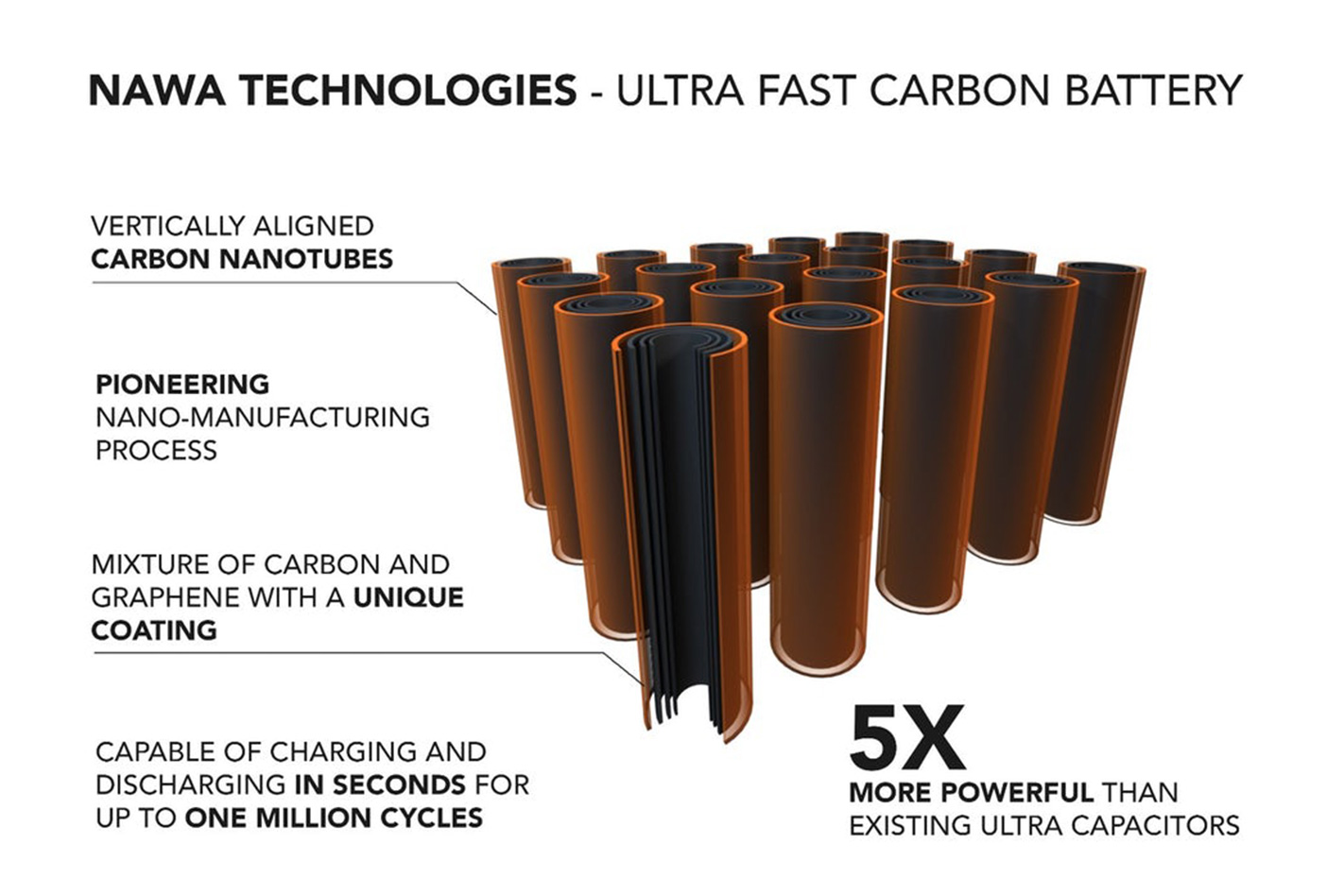
Conventional capacitors offer a superior charge and discharge rate compared with existing battery technology, but NaWa’s innovation uses pioneering carbon nano-tube technology to offer charging and discharging five times faster than the best conventional capacitors.
While batteries rely on a relatively slow chemical reaction to store and then recover electrical energy, the ultra-capacitors use vertically aligned carbon nano-tubes with a secret coating to physically separate protons and electrons without chemistry.
When required, the capacitors can release a surge of electricity up to 1000 times faster than a battery. Completing the system, a lithium-ion battery is paired with the capacitors to provide a high-density energy source albeit with a slower delivery rate.
Why does it matter?
The potential EV benefits are extensive, starting with an extremely fast charge rate. Battery-powered EV manufacturers battle to compete with the three minutes it takes to fill an internal combustion vehicle’s fuel tank, but a capacitor bank can be fully charged in as little as 10 seconds. Similarly rapid discharging allows the capacitors to deliver huge power to electric motors for potent performance.
The discharging process does not create heat, which EV engineers struggle to dissipate from battery systems, resulting in a more efficient and lighter system, and the process can be cycled a million times, says NaWa.
There are efficiency advantages for regenerative braking too. Lithium batteries can only capture about 20 percent of the electricity generated by a motor under braking, but the carbon capacitors allow 450 percent better recuperation of the vehicle’s kinetic energy. That means less waste and greater range.
There are disadvantages to capacitors however. Firstly, their energy density is only about 25 percent that of lithium batteries and they are poor at storing energy for long periods of time. Park your fully charged car and it will be flat in less than a week.
That’s where the hybrid battery comes in. The more conventional battery would provide a high density, low release rate energy supply for long range driving, but it could also gradually top up the massive power of the capacitors for peak performance in short bursts.
Think of the battery as a conventional petrol tank while the capacitor is a nitrous oxide bottle that can be topped up on the move.
Treading Lightly
Carbon capacitor manufacture is not dependent on the earth’s finite supply of lithium cobalt. No mining is required to acquire the carbon, the resulting cutting-edge construction is very light, and by splitting the power supply into two components, about 100kg can be spared compared with a battery-only system.
Range Rover has pulled the covers from its second-generation Evoque SUV, revealing a more grown up model that is larger inside and out, shares the styling of its bigger siblings and adopts hybrid power for the first time.
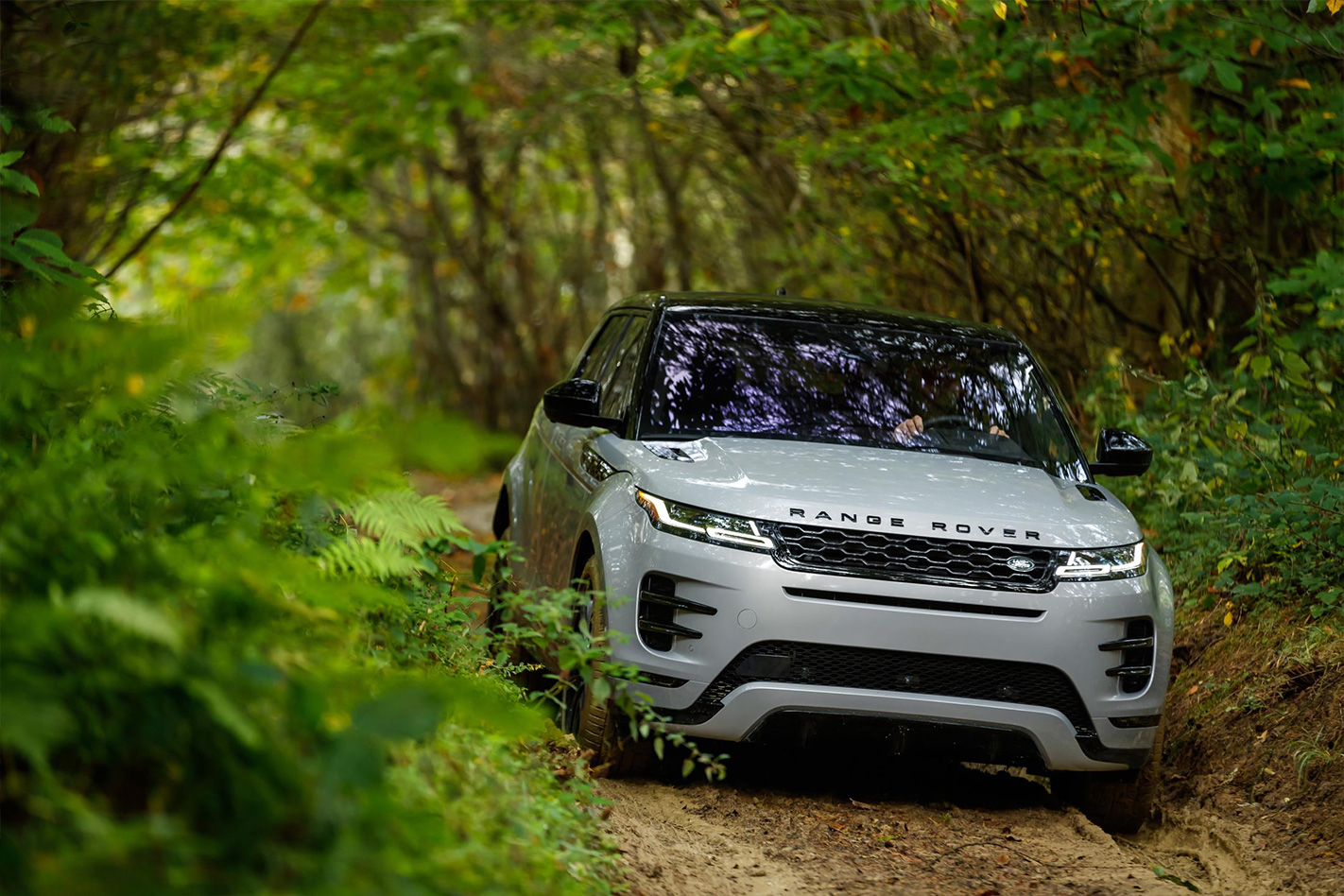
Initial variants will use 48-volt mild hybrid technology, but a more serious plug-in hybrid electric vehicle (PHEV) is on the way within a year and at least two versions are on offer with more conventional petrol-only power. When it arrives, the PHEV will debut three-cylinder engines for the JLR family.
Land Rover Australia is yet to detail the full line-up, which, if the current Evoque’s 16-strong variant offering is any indication, will be extensive, but the company has confirmed that three diesel four-cylinder engines and three turbo petrols will be available. Prices will start at $64,640 for the entry TD4 150, and the order books are open now with the first deliveries expected in the second quarter of 2019.
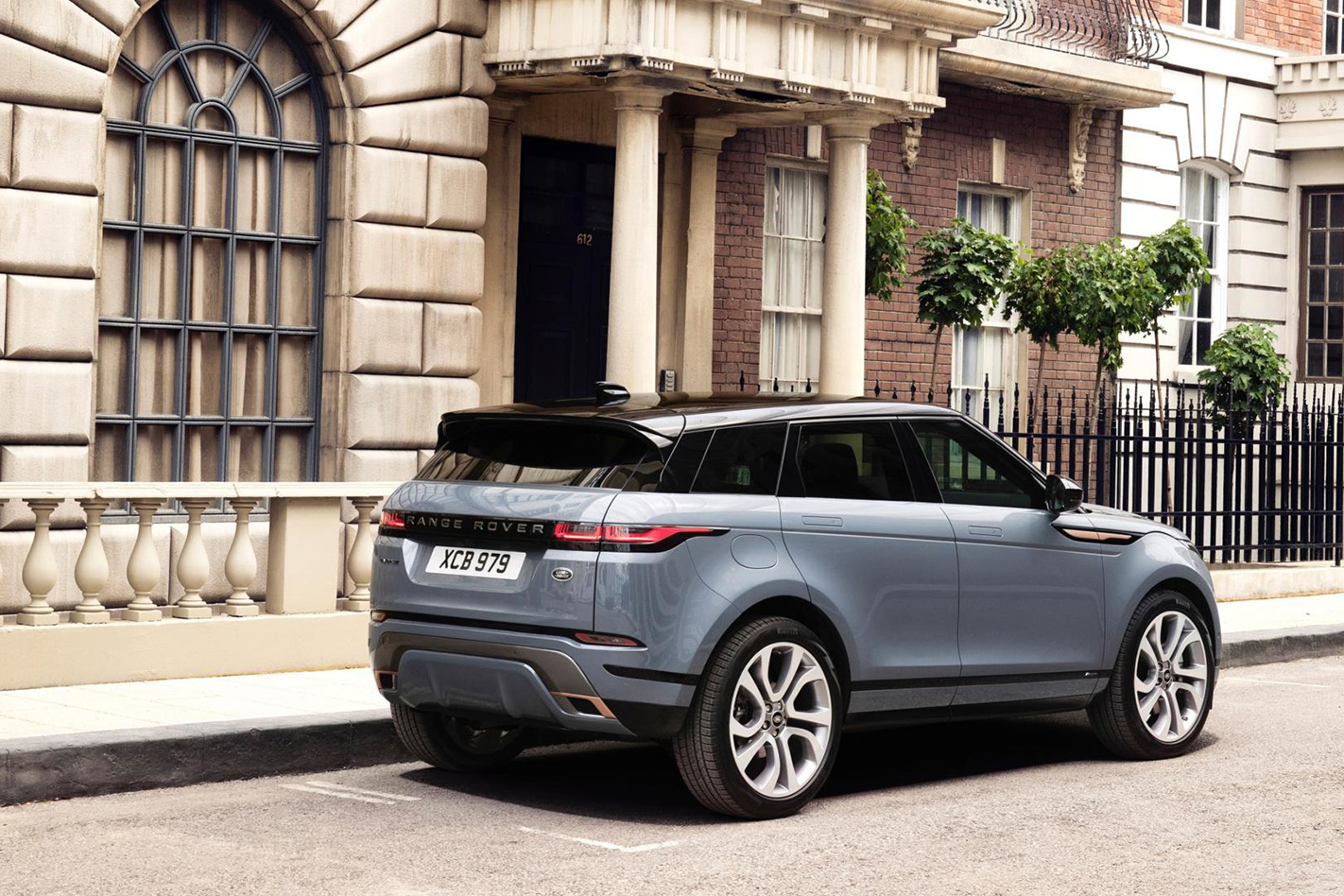
That price represents an $8590 increase over the previous most-affordable Evoque, but its maker says all versions now offer improved value in the form of sophisticated architecture and up-to-the-minute technology, as well as the new hybrid drivetrains.
Under normal driving conditions, the mild hybrid engines shut down when coasting at speeds below 17km/h to save fuel, but the belt-driven starter/generator can also lend a hand boosting power and torque when needed.
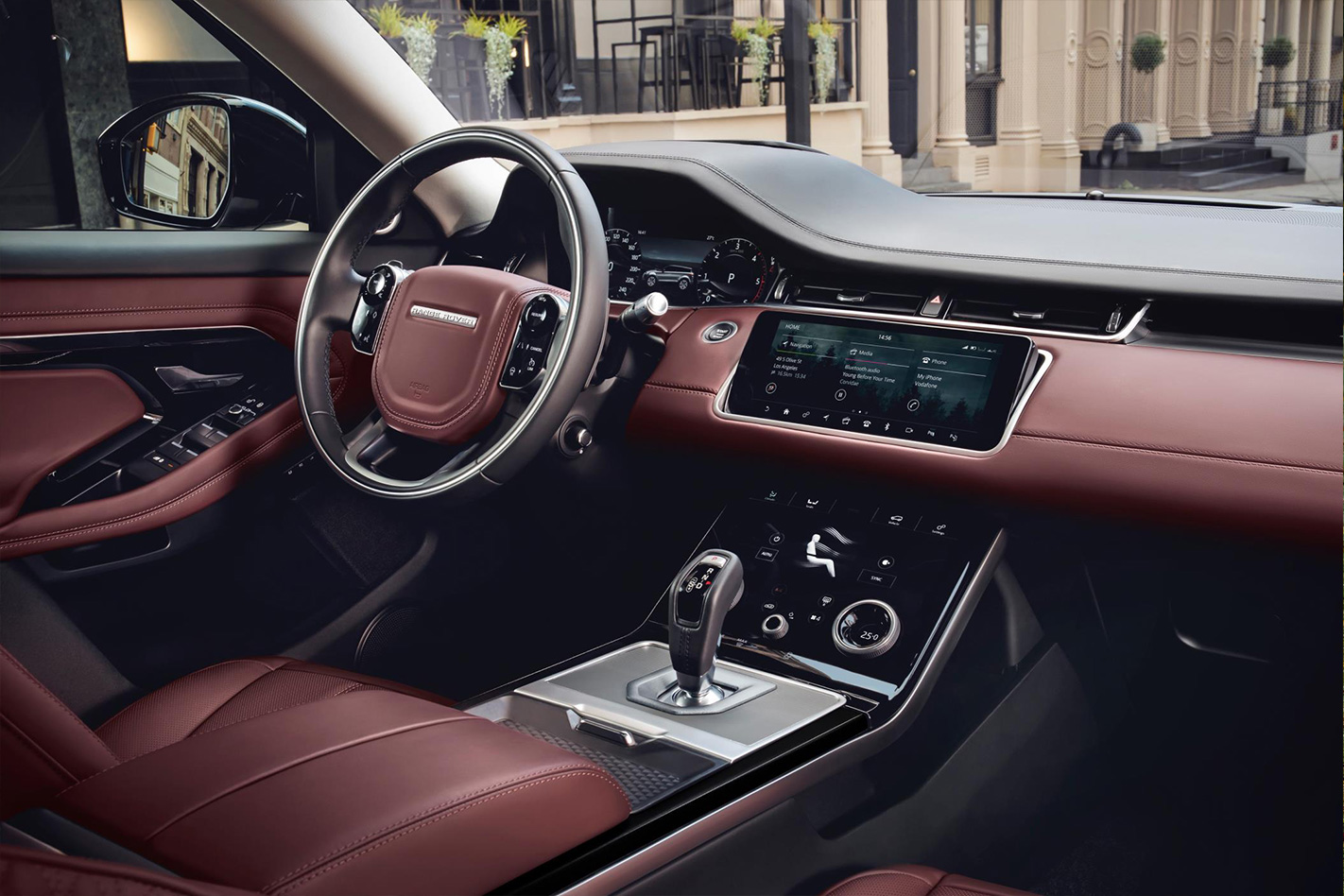
More frugal drivetrains are not the only way the new Evoque is sparing the planet. Up to 33kg of its kerb weight is made up of renewable or recycled materials, while the UK factory that builds them is also reducing its environmental impact with CO2 emissions from production almost halved since 2007.
Overall, the new Evoque is larger measuring 10mm wider at 2100mm from mirror-to-mirror. Length has increased by 1mm to 4371mm, while the wheelbase has been stretched 20mm to 2680mm. The latter serves to liberate more cabin space for all occupants, meaning the next Evoque should make a far better people carrier than before.
There’s also a 10 percent larger boot with 591 litres of seats-up cargo space, which can expand to 1383 litres with the 40:20:40 split folding rear seats flipped down.
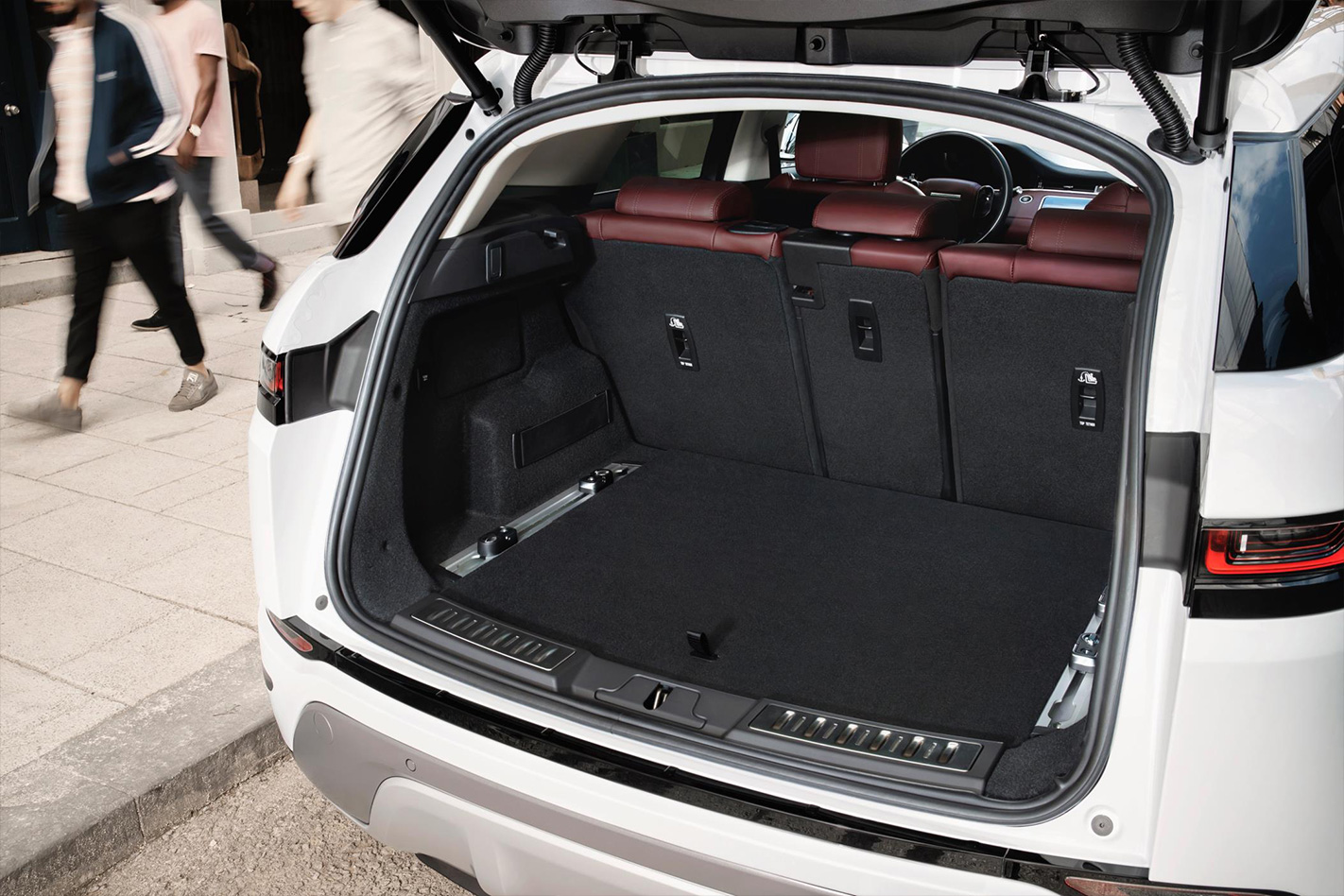
Its footprint may be bigger, but the new Evoque has been given a haircut. The roof height has been lowered by 11mm to further enhance the Evoque’s low and wide stance, an attribute that was instrumental in establishing the first-generation model’s status as an aspirational auto.
Aesthetically, the 2019 Evoque carries over a strikingly similar theme from the previous version. However the polarising three-door version isn’t returning – for now at least – which also means the even more divisive Evoque Convertible isn’t likely to make a comeback either.
It’s not just a simple re-hash though. There’s a stronger familial resemblance to other Range Rover products, most notably the Velar, and gone are the mock-roader plastic wheel arch protectors. The latter is perhaps acknowledgment that most Evoques spend the majority of their lives in the metropolis.
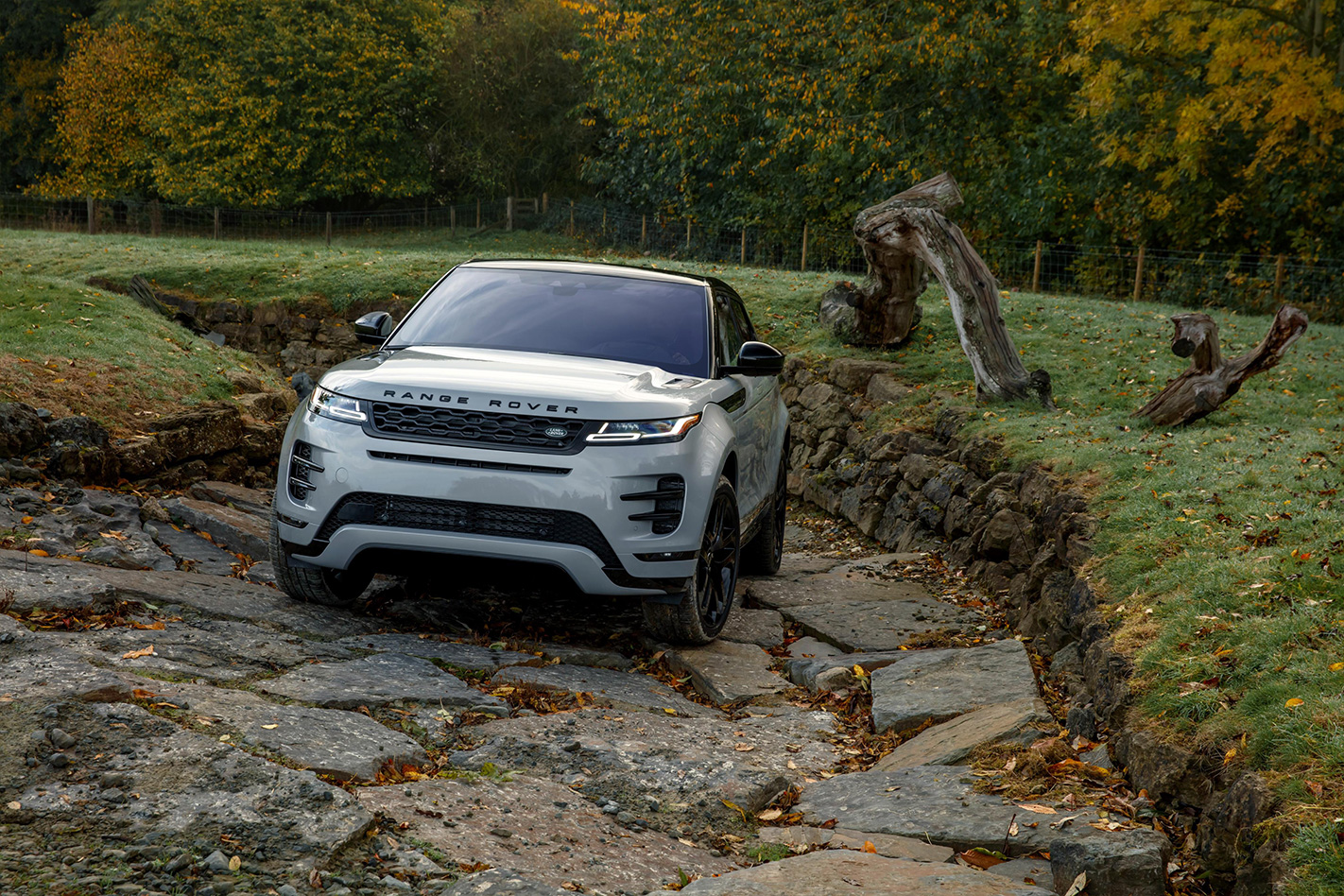
Following the monster wheel trend, the Evoque is shod with up to 21-inch wheels while other exterior elements borrow the latest in tech trends such as matrix LED headlights and sequential indicators, a-la Audi.
For the handful of owners that do choose to take their Evoque away from the suburban grind, the new model packs a number ofsystems geared for all-terrain adventures, including a new Ground View feature.
The system uses a series of cameras to display the view immediately in front and to the side of the front wheels on the new 10-inch central digital display, giving the effect of an ‘invisible bonnet’. There’s also a ‘smart rear view’ mirror for easier manoeuvring on and off road.
A second 10-inch screen enables access to all other information and entertainment systems including the climate panel and smartphone mirroring, and also supports Android Auto and Apple CarPlay. The latest version of Jaguar Land Rovers Touch Pro Duo system also rolls in a third digital screen, with a 12.3-inch unit taking care of the driver’s instrument cluster.
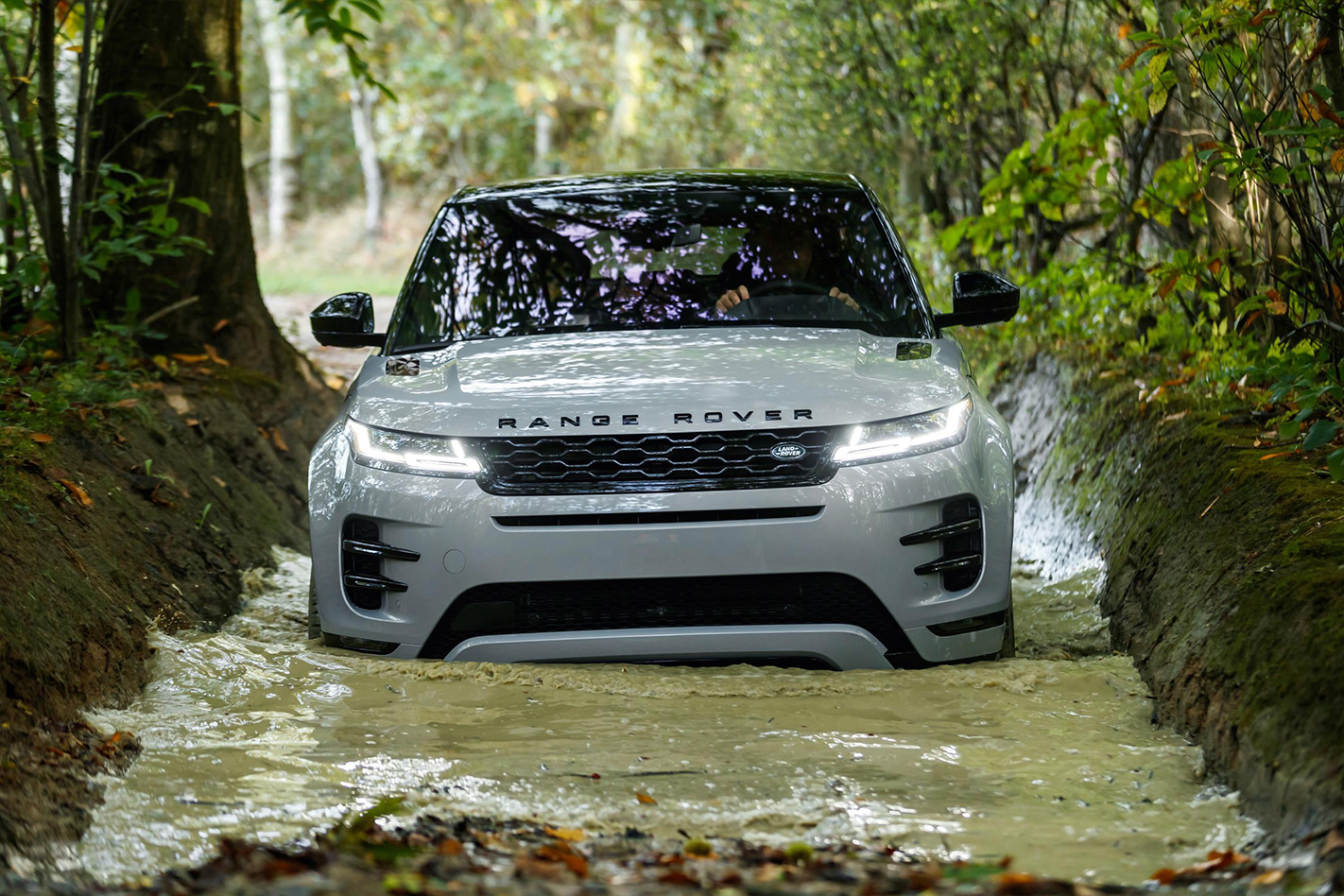
Wading depth has been increased by 100mm to 600mm and the new Evoque offers a suite of Terrain Response 2 electronics which allow the Evoque to either go further off the beaten trail or boost confidence on the blacktop.
The range of engines, all from Jaguar Land Rover’s cutting-edge Ingenium powertrain range, send power to all four wheels via a nine-speed ZF automatic transmission as standard. There’s no mention of the manual gearbox that was offered in the first generation Evoque making a comeback in the second-gen successor.
Front suspension is looked after by commonplace MacPherson struts which have fluid-filled bushings for reduced levels of noise and vibration transmitted through to the cabin and steering, while a multilink set up takes care of the tail end. Customers are offered adaptive dampers as an option.
Full local pricing and specifications will be announced closer to the new Evoque’s local arrival in the second quarter of 2019.
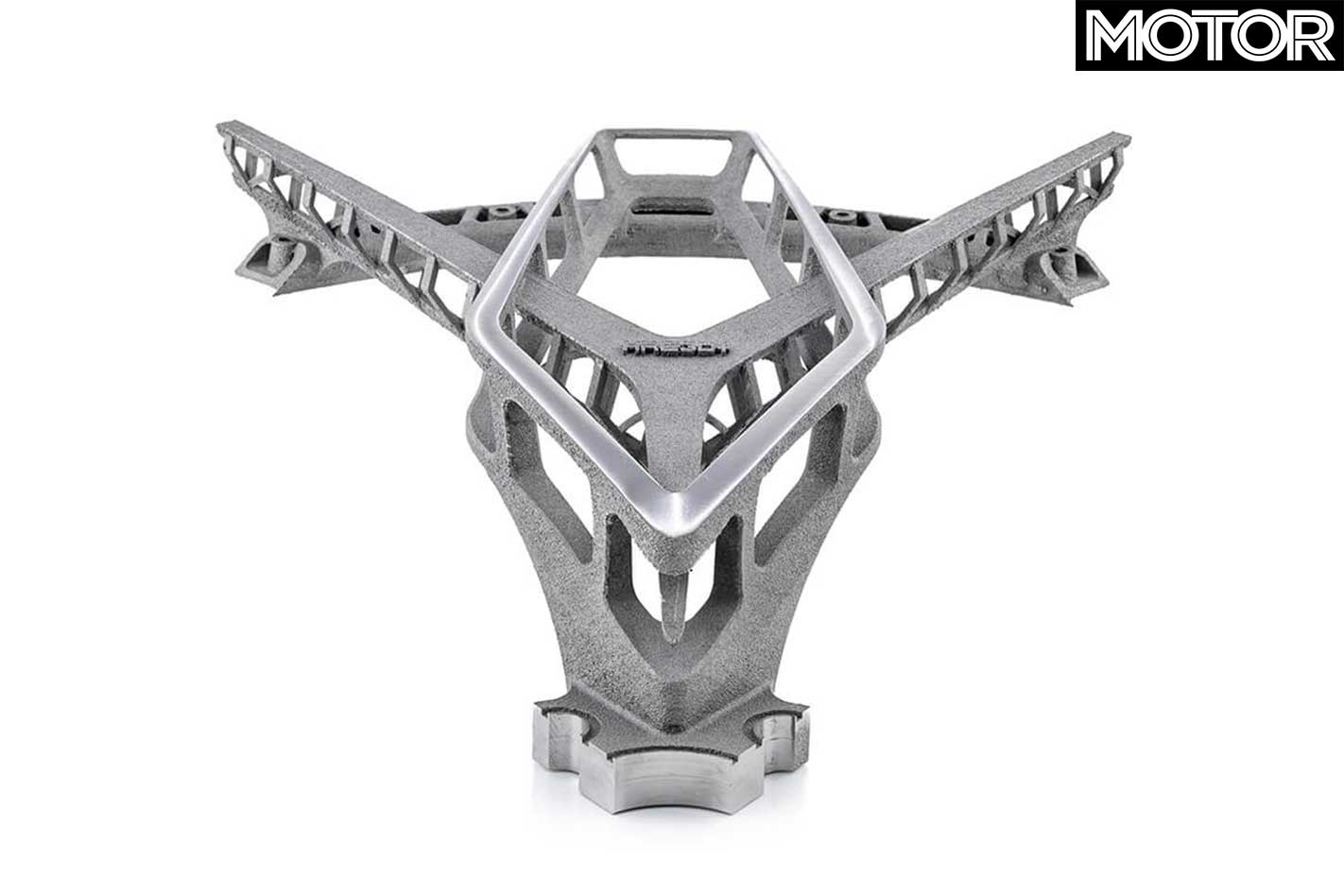
US-based HRE Wheels has teamed up with AddWorks, a department of GE’s material additive company, to create the world’s first 3D-printed aluminium wheel.
The companies hope this specific process, known as Electron Beam Melting (EBM), will change the way wheels are manufactured.
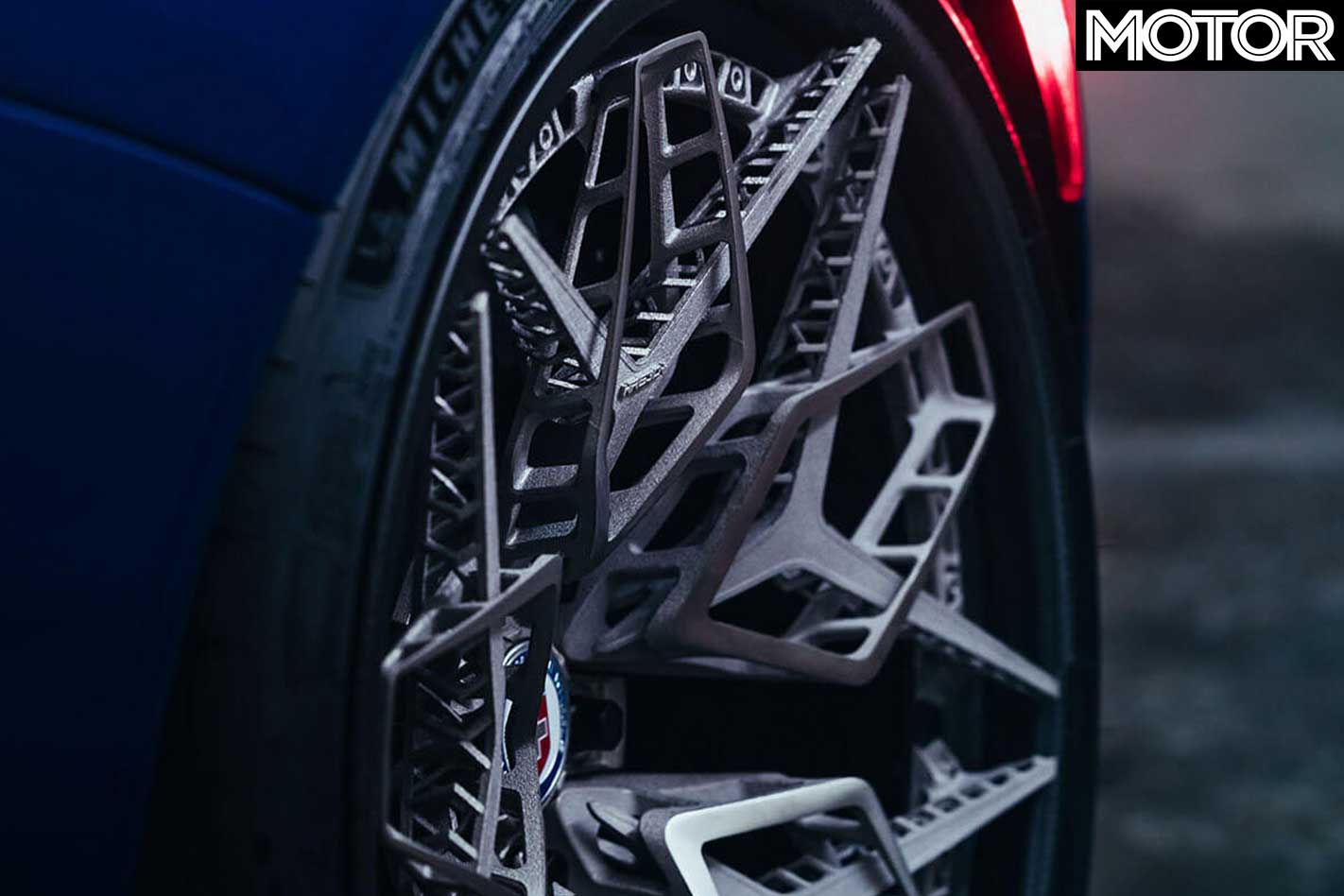
HRE says a traditional aluminium ‘HRE Monoblok’ wheel, around 80 per cent of a 100-pound forged block is removed leaving a 20-pound wheel, around 9kg to us. But with additive manufacturing, or 3D printing, only 5 per cent is removed and can be recycled.
Titanium has a higher specific strength, HRE adds, meaning the wheel can use less material and be lighter.
HRE President Alan Peltier also says it allows the designers more freedom with the design of the wheel itself, now that the process of manufacturing is changed.
“This is an incredibly exciting and important project for us as we get a glimpse into what the future of wheel design holds,” says Peltier.
“Working with GE Additive’s AddWorks team gave us access to the latest additive technology and an amazing team of engineers, allowing us to push the boundaries of wheel design beyond anything possible with current methods.
“To HRE, this partnership with GE Additive moves us into the future.”
GE Additive AddWorks senior design engineer Robert Hanet says AddWorks worked with HRE due to the wheel manufacturer’s stringent quality standards.
“HRE prides itself on its commitment to excellence and superior quality in the marketplace.
“It was a natural fit for AddWorks to work on this project with them and really revolutionize the way wheels can be designed and manufactured.”
Alfa Romeo’s highly anticipated hero SUV, the Stelvio Quadrifoglio – known as the Q in Australia – will go on sale in Australia in the New Year, priced from $149,000.
Claimed to be the fastest SUV in the medium-sized class, the 375kW/600Nm twin-turbo V6-powered Stelvio Q has a claimed top speed of 283 km/h and a 0-100km/h time of just 3.8 seconds – that’s a solid second quicker than the BMW X3 M40i and Mercedes-AMG’s GLC43.
It’s also a lot cheaper than its main rival in the speed and power stakes, the $171,530 Mercedes-AMG GLC 63 S, while the Audi SQ5 is also in the same subset of sporty SUVs.
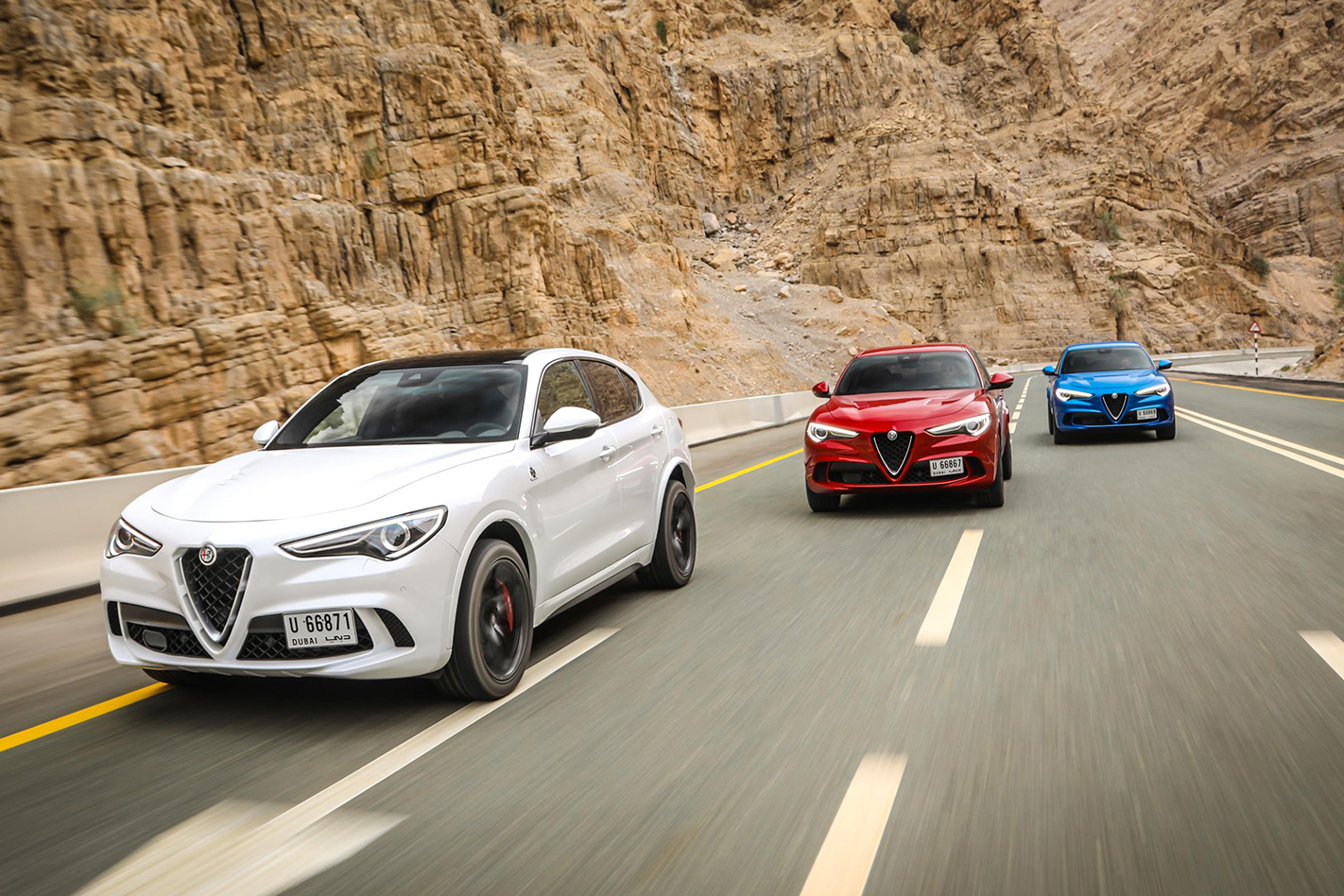
The Q uses the same all-wheel-drive underpinnings and eight-speed automatic transmission as the Giulia Q; in fact, the Stelvio is built on the same Giorgio platform as the sedan.
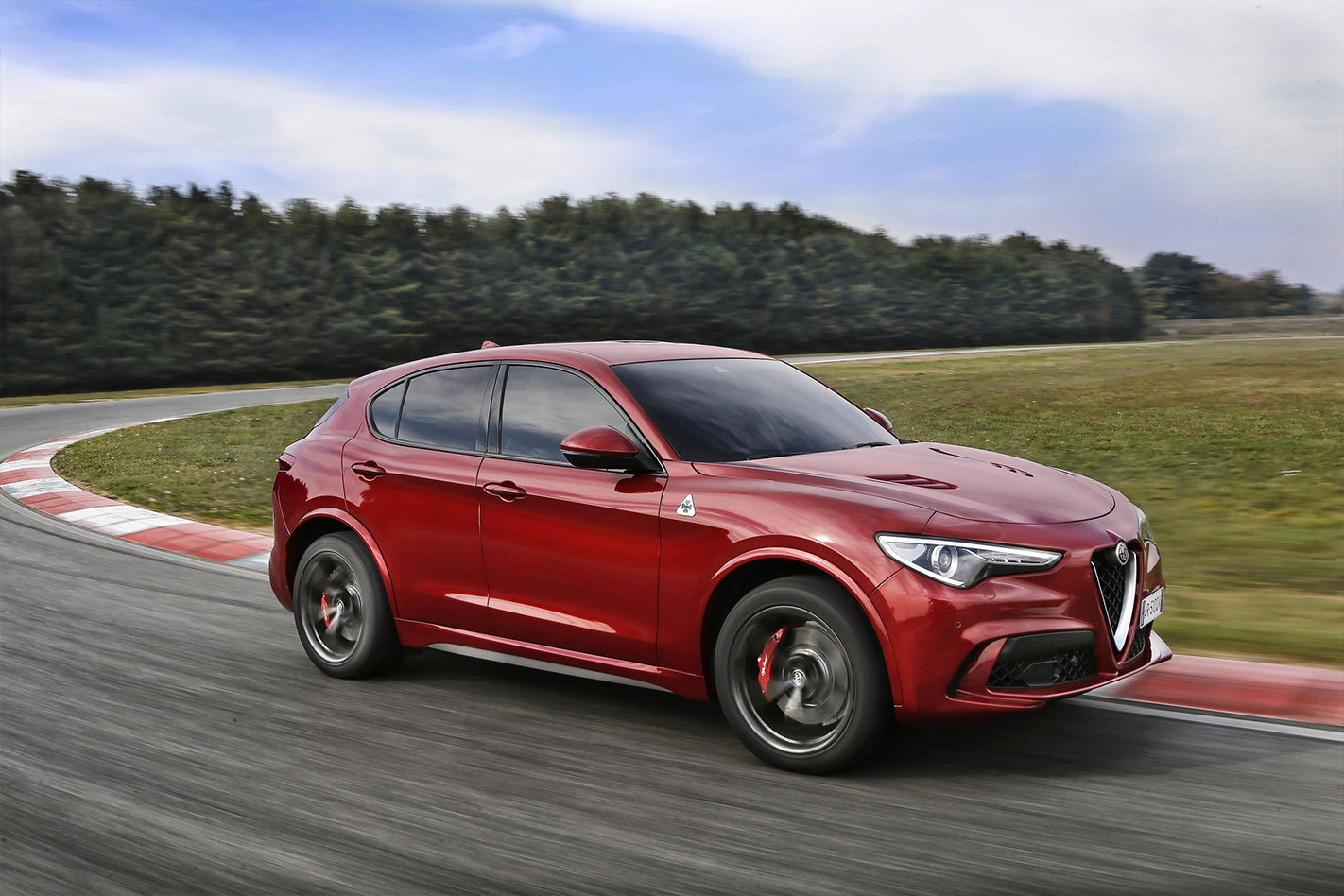
The new Stelvio range-topper differs from the rest of the line-up via tweaks to improve aerodynamics, performance and handling, including bonnet vents to allow air to pass through the engine compartment and additional intercooler vents.
It also stands out visually thanks to aluminium doors, bonnet and guards, sporty side-skirts, huge body-coloured wheel arches, large exhaust tips for the dual-mode system, that distinctive Kamm tail and 20-inch alloy wheels.
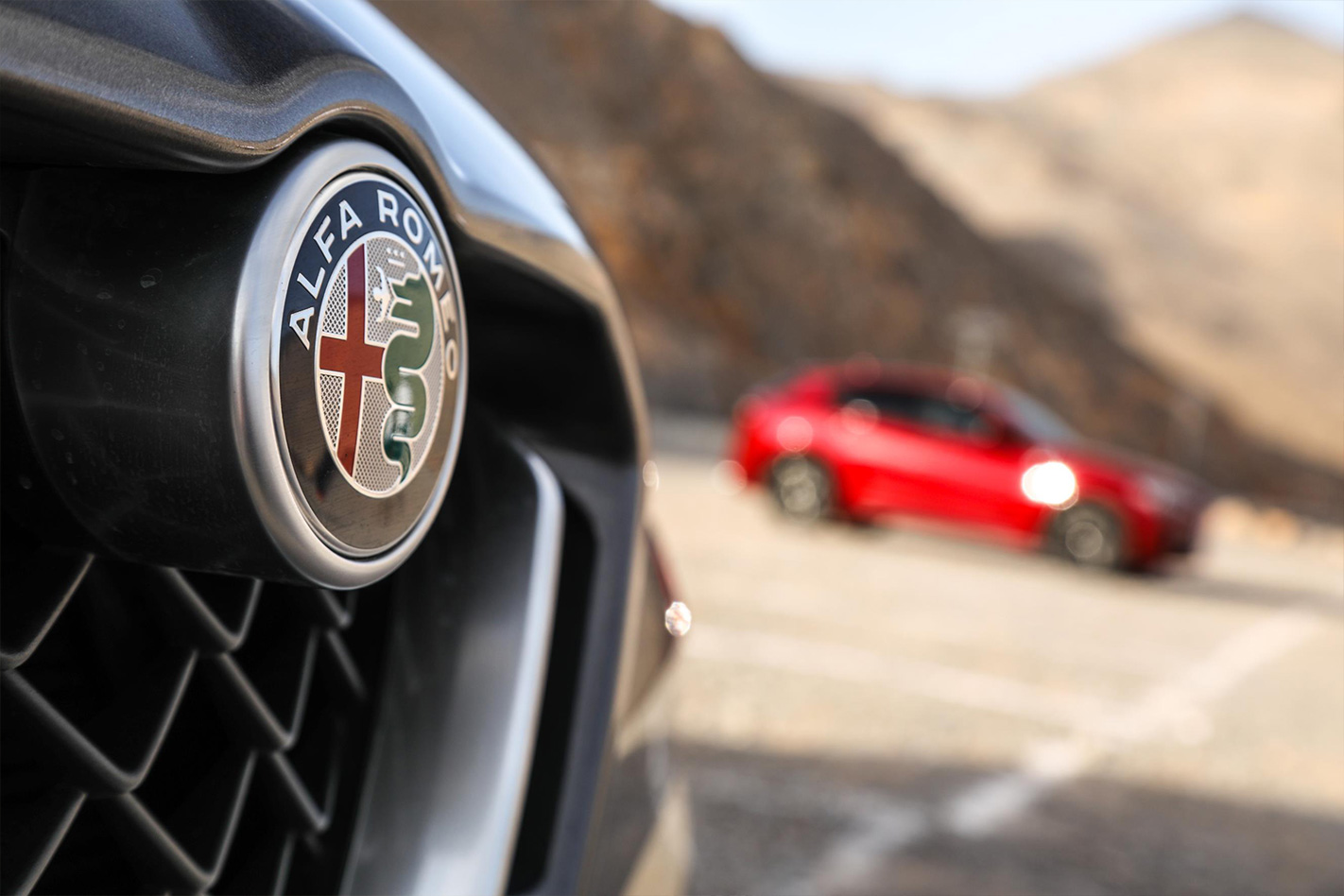
The Stelvio Q’s interior features Alfa’s premium eight-way powered seats covered in leather and Alcantara, a leather-wrapped steering wheel, Harman/Kardon stereo, door panels and dash, carbon fibre interior trim pieces and an 8.8-inch multimedia touchscreen with sat nav, Apple Carplay and Android Auto.
There’s also a carbon-fibre propshaft and adaptive suspension that teams up with a torque vectoring system on all four wheels. The Q can be adjusted via a multi-drive mode system that can quiet it down or rev it right up, depending on your mood.
The options list is long, and includes items like Sparco caron fibre-backed bucket seats ($5000), ceramic front brake rotors and suitable pads ($12,000) and a panoramic sunroof ($2400).
The Stelvio is off to a quiet start in the sales charts, sitting at the bottom of the premium medium SUV ranks with just 281 sales for the year, behind cars like the Jaguar F-Pace (601), Porsche Macan (1714) and Range Rover Velar (1183).
The Alfa Romeo Stelvio Quadrifoglio arrives in Australia in January 2019, and you can register you interest now via Alfa Romeo Australia’s website.
2019 Alfa Romeo Stelvio range pricing
- Stelvio 2.0-litre turbo petrol – $65,900
- Stelvio 2.1-litre turbo diesel – $67,900
- Stelvio First Edition petrol – $71,900
- Stelvio First Edition diesel – $73,900
- Stelvio Ti 2.0-litre Diesel – $78,900
- Stelvio Quadrofoglio – $149,000
