
Aussie Holden fanatics have been left awestruck by a new clip of a VF Commodore being put through its paces around the Nürburgring Nordschleife as it hit speeds of up to 230km/h on the famously taxing circuit.
The vision comes from former racing driver turned Nürburgring instructor and automotive content creator Misha Charoudin, who has attracted more than two million followers to his YouTube channel as he throws cars of all types around the 20km stretch of tarmac known as the ‘Green Hell’.
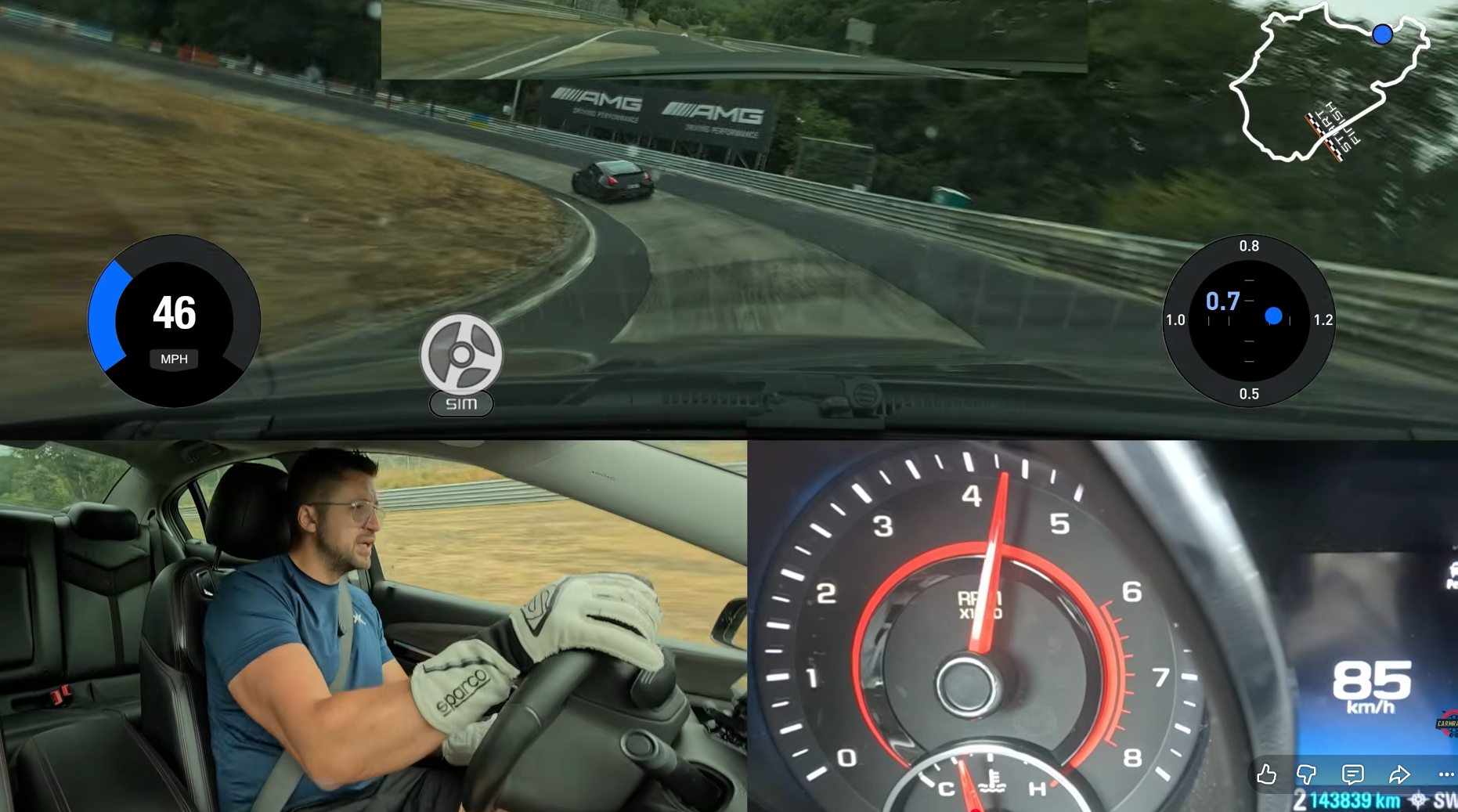
“In a world of 7-Series and E36s, this is freaking awesome,” he tells viewers at the start of the clip as he examines the US-spec, left-hand-drive, Chevy-badged sedan. It’s a 2014 model running the LS3 V8 with slight modifications to the air intake and exhaust, but with stock mufflers. New sway bars had also been added front and rear.
After revealing that he “always had a soft spot for Commodores” and has driven a Holden V8 Supercar on a previous trip to Australia, Charoudin praises the VF’s rear end for being “nice and twitchy but really controllable”. He wasn’t as pleased with the “really understeery” front, however.
Conditions were a little wet when Charoudin began his lap by announcing that he loves the engine’s “amazing” growl. The all-season tyres fitted to the VF are soon being worked to their limit as he jokes, “We’re doing Bathurst! We need to escape the roos, the skippies – and the black widows and stuff.”
The Russian-Dutch ‘Ring expert quickly finds the limits of the stock brakes – “there’s not a lot happening there” – and at one stage passes a new Mustang like the Ford is standing still. The Commodore easily powers to 230km/h on the straights but the understeer rears its head frequently, as does power oversteer, which Charoudin absolutely laps up.
Speed, g-forces and the tachometer are all there to see in the clip, but viewers can’t get a clear idea of Charoudin’s lap time, which isn’t displayed and would have been harmed when he had to slow down for marshals and yellow flags during the lap. For what it’s worth, a VF Commodore SS ute steered by test driver Rob Trubiani recorded a lap of 8m 19.47 seconds in 2013.
Charoudin throws the VF into the famous banked Carousel corner instead of taking the outside line around the bend, and he frequently eats Audis, Mercedes-Benzs and BMWs for breakfast thanks to that thumping bent eight.
“I really loved it,” he says at the end of the lap. “Honestly, even though it’s on all-season tyres and you have no grip, it was nice to play a bit … it’s a great daily [driver]. Like, I still have a silly dream, I really want to buy a ute, a Holden Commodore ute with an LS7. Frigging good car.”
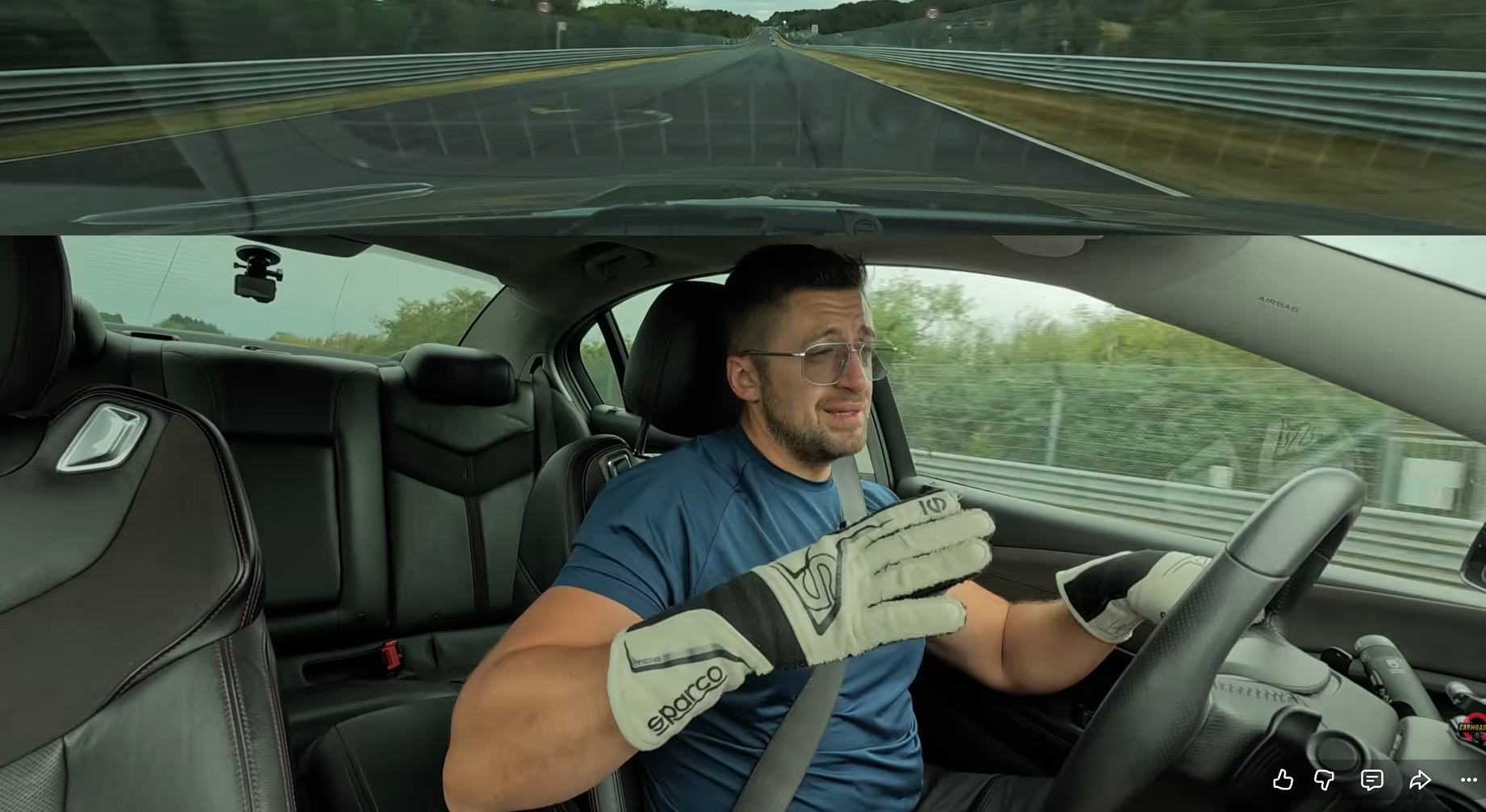
“I freaking love Australia. And hate it for killing Holden. What a fun car,” he added when he posted an abridged version of the lap to Instagram.
Aussie petrolheads were just as happy and nostalgic after watching the clip, which has clocked up close to 600,000 views on YouTube.
“Still can’t believe we don’t build cars here anymore,” one commenter said on YouTube. Another wrote, “Proud Aussie bogan here, so good to see you in one of these even if I’m struggling seeing it in left-hand drive.”
But not all the applause came from Down Under. One American fan wrote, “I wish I never got rid of my [Pontiac] GTO. Aussies know how to build a car. I want this car.”
Victoria will double the number of potholes it plans to repair this year under a $352 million funding boost aimed at improving some of the state’s most heavily damaged roads.
The State Government says the additional spending will increase its repair target from 250,000 to 500,000 potholes, with much of the work scheduled for the second half of the year and into January when warmer, drier conditions are more suitable for road repairs.
Major routes including the Princes Highway, Western Highway, Calder Highway and Geelong Ring Road will be among those targeted, alongside regional roads suffering from deteriorating surfaces.

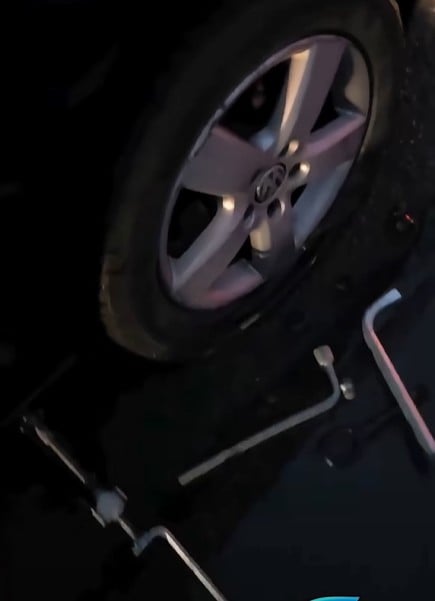
The announcement follows several incidents involving potholes damaging vehicles, including one on the Princes Highway near Bunyip, about 75km southeast of Melbourne.
At least 23 vehicles reportedly struck the Bunyip pothole during wet conditions, according to 3AW, leaving motorists stopped beside the highway with damaged wheels and tyres.
Another Princes Highway pothole near Nar Nar Goon reportedly damaged more than 20 vehicles in November 2025, while motorists around Warrnambool have also reported significant repair bills after encountering damaged roads.
Premier Ben Carroll acknowledged the condition of parts of Victoria’s road network was “not good enough”, describing road repairs as a spending priority for his government.
Part of the additional funding will come from delaying the completion of three Melbourne level crossing removals by a year. Projects at Highett Road and Wickham Road in Highett and Latrobe Street in Mentone will be pushed back, a move the government says will save $112 million across the forward estimates.
The government has also identified $2 billion in savings associated with the Suburban Rail Loop and $70 million from reduced spending on consultants.
Labor has also announced plans for a new online system allowing motorists to report potholes and track their repair. Under the proposal, drivers would be able to upload photographs of damaged roads and monitor when repairs are scheduled, giving motorists greater visibility over how quickly reported problems are addressed.
In another element of the plan, minimum-security prisoners could be used for roadside maintenance if Labor is returned at the November state election. Supervised inmates would undertake basic jobs including mowing, weed control, graffiti removal and rubbish collection, freeing qualified road crews to concentrate on potholes and other skilled repair work. The government says the program would supplement rather than replace paid workers and would be developed with Corrections Victoria.
The $352 million package comes on top of $1.04 billion in road funding announced in June, with 70 per cent of that investment earmarked for regional Victoria.
Road conditions have become a growing safety issue as well as a financial concern for motorists. RACV has previously warned that badly deteriorated surfaces can create additional hazards when drivers brake suddenly or swerve to avoid potholes.
The CEO of Eagers Automotive has revealed that electric vehicle ownership is a “one-way street” for drivers down under as hardly any of them switch back to internal combustion once they’ve had a taste of what EVs bring to the table.
Keith Thornton, the head of the nation’s biggest car dealership network, made the comments at the company’s results briefing last week, during which it was announced that plug-in EVs have accounted for 25 per cent of the group’s sales over the last six months.
The spike can be at least partly put down to Aussies making the switch amid a sharp rise in petrol and diesel prices caused by the Iran war, and Thornton said the remarkable leap makes it difficult to predict future demand.
“It’s a little bit hard to use what happened over March and April and the fuel crisis period when the Iran conflict first occurred as any sort of extrapolated demand, because it was so extraordinary. We’ve never seen anything like it,” he said.
“The one thing we have observed, though, is that the transition from a fully combustion-engine car to a full electric vehicle – and that transition might include a hybrid vehicle, a plug-in hybrid vehicle, and ultimately, a full battery-electric vehicle – is a one-way street.
“Once you take a big step change, like [what] has occurred in 2026, along that path towards a more plugged-in or lower-emission powertrain, people have sort of started the journey and it will only be a small fraction that come back the other way.”
Thornton said Eagers is well placed to keep riding the EV uptake wave down under thanks to its efforts to form bonds with Chinese manufacturers. However, he did point out one facet of the rapidly growing market that could act as something of a handbrake.
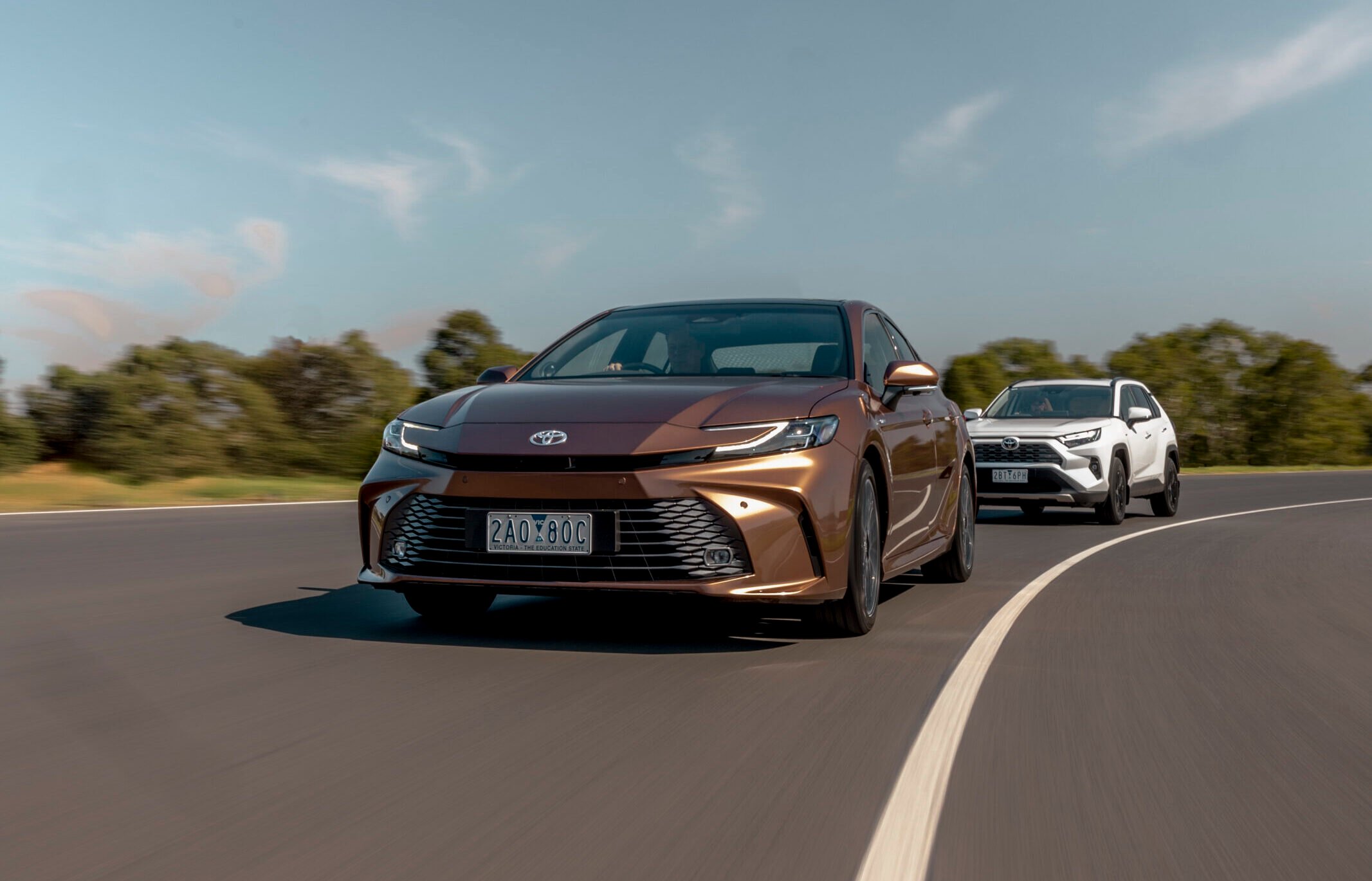
“One of the drags on the opportunity – not on our performance, but on the opportunity – is at the moment, NEV [new energy vehicles] still has had an overweight percentage of sales through the Novated channels, and the Novated channels are less conducive to allowing trade-ins to be captured,” he said.
VFACTS figures showed a total of 108,577 new vehicles were delivered during July (including FCAI and Electric Vehicle Council figures), edging past the previous July record of 104,244 set in 2025 and following an all-time monthly sales record in June. It also marked the second consecutive month in which battery-electric vehicles (BEVs) accounted for more than one in every five new vehicles sold.
Cole Trickle is returning from retirement to star in another big-screen blockbuster.
The fictitious NASCAR racer created by Tom Cruise in the 1990s will be the headliner again in a second edition of Days of Thunder in 2028.
The project has just been announced with the news that Anne Hathaway will be the female lead.
Cruise confirmed the project at Daytona, home of the legendary 500-mile centrepiece of the NASCAR championship, with a social media post alongside Hathaway.
Early information on the upcoming film includes filming in IMAX and a release date of June 2, 2028 in the USA, according to Variety.
Cruise will be one of the producers, alongside his action collaborator Jerry Bruckheimer – from Top Gun and the original Thunder project – with Jonathan Levine as the director. The plot is believed to put Trickle back in the driving seat with Hathaway as a team owner.
The original Days of Thunder was made on a budget of $83 million and grossed $220 million from its release in 1990.
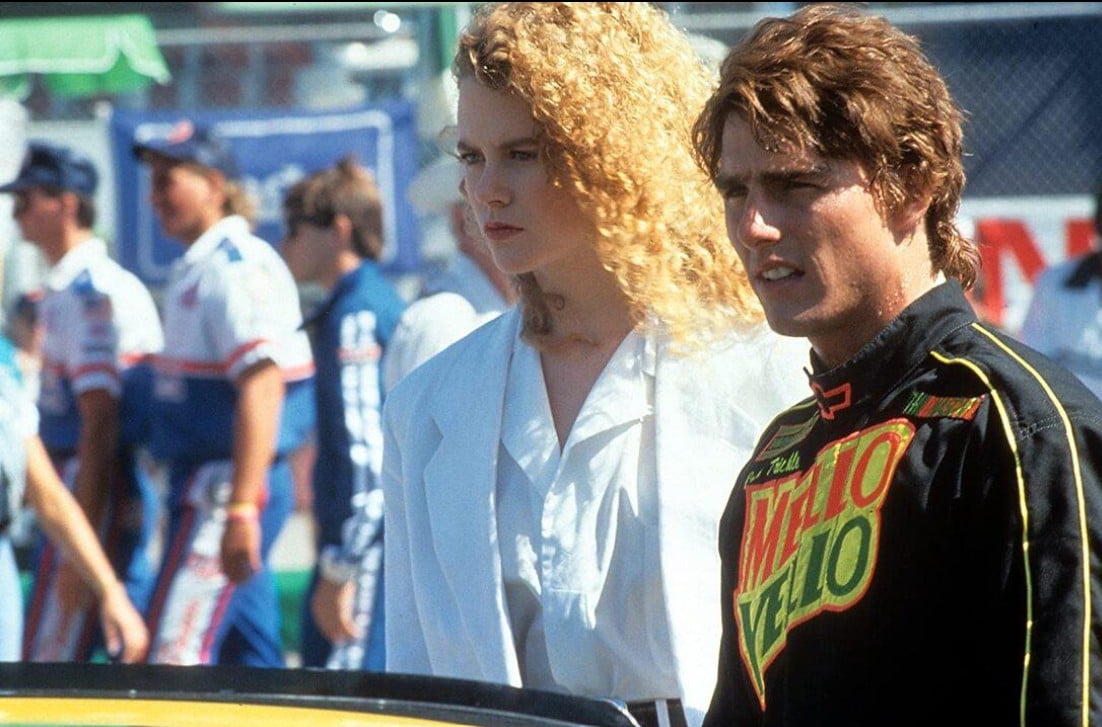
It also led to the marriage of Cruise and Nicole Kidman (above), who was hand-picked by Cruise as a (unlikely) brain surgeon.
There will need to be extensive cast changes for the re-boot as Robert Duval, the crusty mentor for Trickle, died in 1995.
Plans for the new movie come as Hollywood shows growing interest in motorsport in the Drive to Survive era, where new motorsport fans are eager for big screen entertainment.
The F1 movie, headlined by Brad Pitt, cost an estimated $350 million to make but grossed more than $800 million at the box office.
GWM has become one of Australia’s fastest-growing car makers, but don’t assume that it’s taking its foot off the accelerator. It already makes a range of products from small SUVs and electric cars to plug-in hybrid off-roaders and dual-cab utes, but GWM Australia will expand its range even further over the next 12 or so months.
There are new engines, new-generation models and even an entirely new premium sub-brand on the way. Here’s what Australian buyers can expect from GWM in the months ahead…
Tank 500 3.0-litre diesel: Next month
Diesel power is coming to the GWM Tank 500 large SUV for the first time, with Australia set to become one of the first markets to receive the brand’s new 3.0-litre four-cylinder turbo-diesel engine making keen outputs of 170kW and 620Nm.
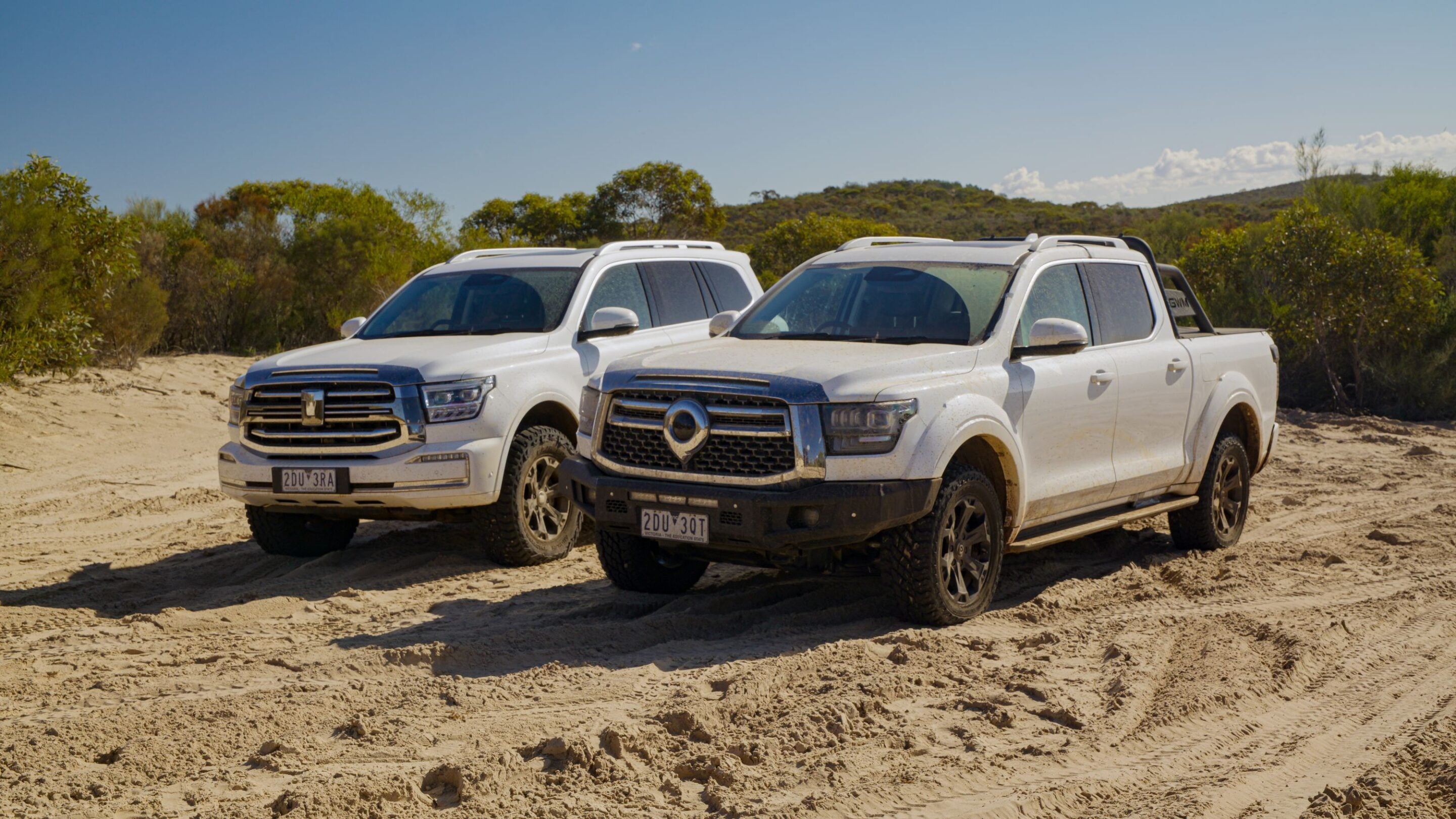
Previously available with both hybrid and plug-in hybrid powertrains, the new diesel variant will open up the Tank 500 to a larger range of buyers and promises to make the workhorse even more capable, particularly for drivers who want to tow or travel long distances.
Cannon Alpha 3.0-litre diesel: Next month
The same new 3.0-litre turbo-diesel will also find a home beneath the bonnet of the Cannon Alpha ute. It’s not the first time diesel power has graced the model, which is currently available with a smaller 2.4-litre unit, but the new engine now gives it Ford Ranger-rivalling grunt.
Diesel is still the dominant fuel choice for dual-cab utes in Australia, particularly for those wanting to tow. In that regard, the Cannon Alpha 3.0L is impressive with its ability to haul a 3500kg braked trailer. Even better, when unladen its combined fuel consumption is just 7.3L/100km.
Cannon Plug-in Hybrid: Third quarter
GWM already offers plug-in hybrid variants of many of its products, and the latest to receive one is the Cannon ute. Using the same ‘Hi4-T’ drivetrain that’s found in other GWM products like the Tank 300, the Cannon plug-in hybrid will offer an electric driving range of 84km (WLTP).
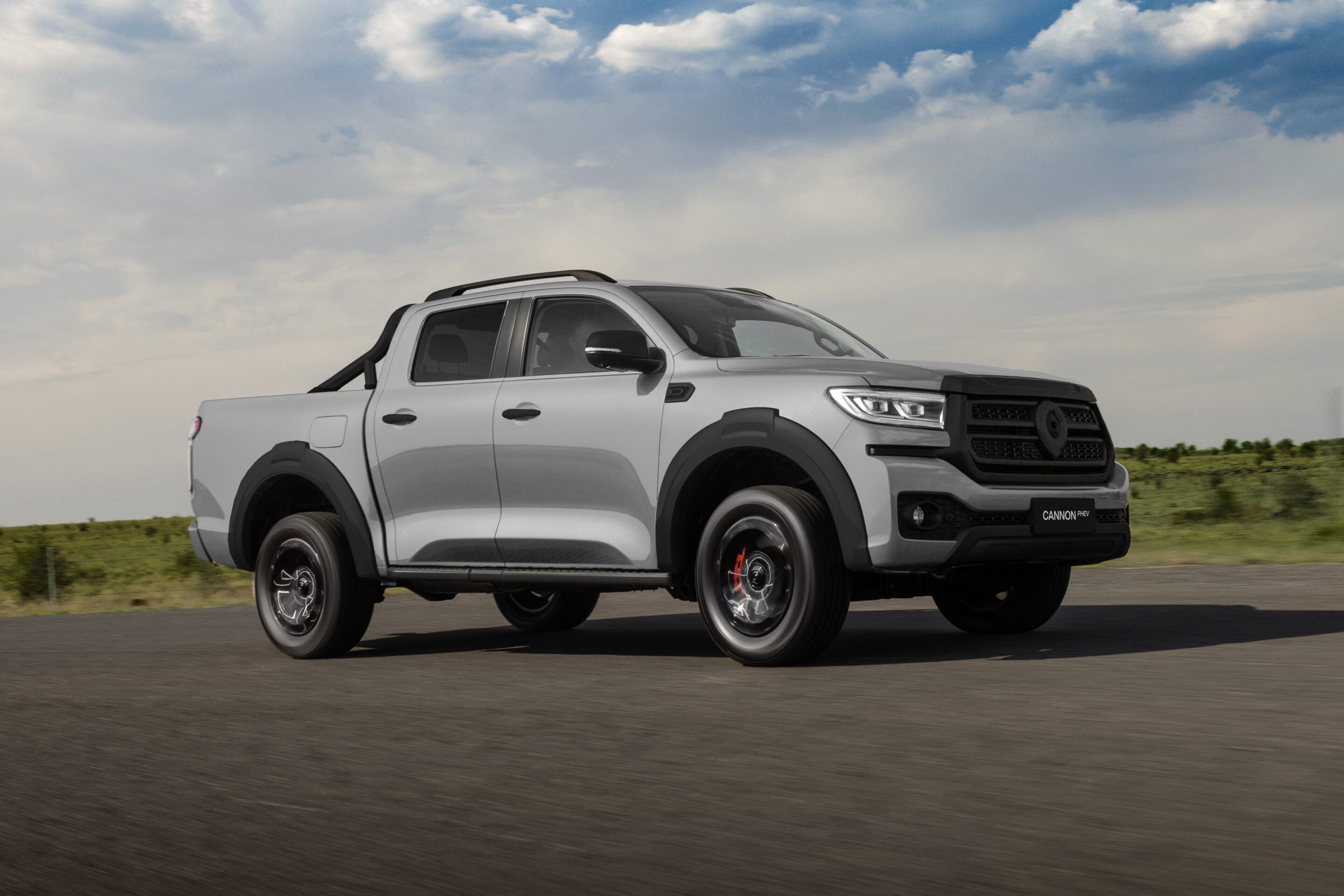
Because it’s a plug-in hybrid combining a turbocharged 2.0-litre petrol engine and an electric motor, the Cannon PHEV delivers a strong 310kW of power and 750Nm of torque, making it the gruntiest Cannon by far. More details about the Cannon PHEV are due to be shared soon ahead of its on-sale date in just a few weeks.
Wey G9: Late 2026
Perhaps the biggest change to GWM’s Australian operation will be the introduction of Wey, which will become the company’s fifth local sub-brand alongside Haval, Tank, Ora and Cannon. Already offered in many global markets, Wey will first sell the G9 luxury plug-in hybrid people mover, which will be aimed at rivals like the Denza D9 and Zeekr 009.
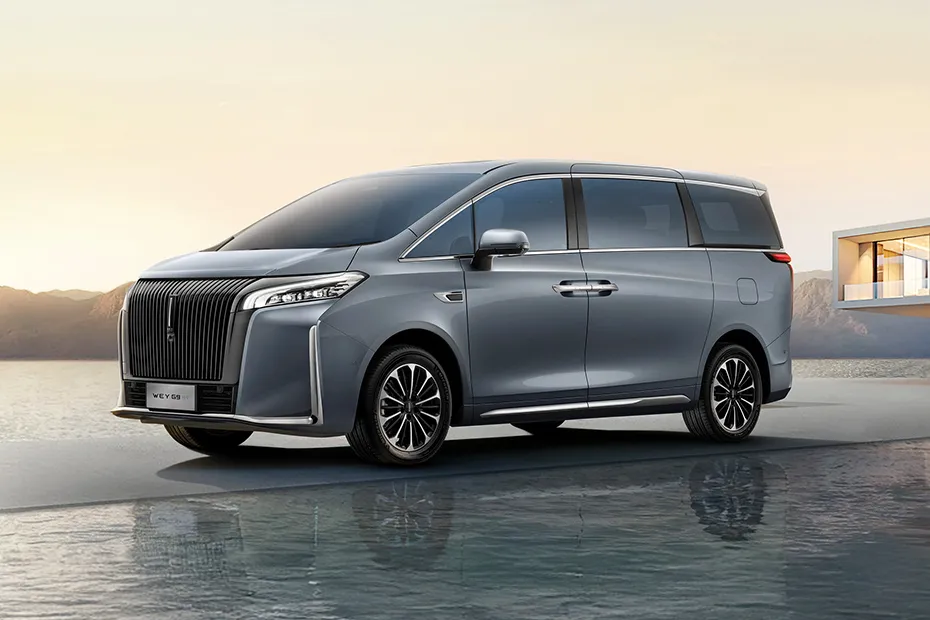
Not much is yet known about its Australian pricing or positioning, but we’re expecting a lavish interior, with seven seats, second-row captain’s chairs and a very long equipment list, which will do a good hob of showcasing GWM’s increasingly ambitious premium sub-brand.
Ora 5 Touring: Late 2026
GWM Australia will move beyond selling just SUVs and utes with the arrival of the Ora 5 Touring wagon. Expected to arrive around the end of 2026, the Touring stretches the Ora 5 formula into a considerably larger and more practical package. At 4758mm in length, it’s almost 300mm longer than the Ora 5 SUV, while a larger 71.1kWh battery will also feature in the electric version.
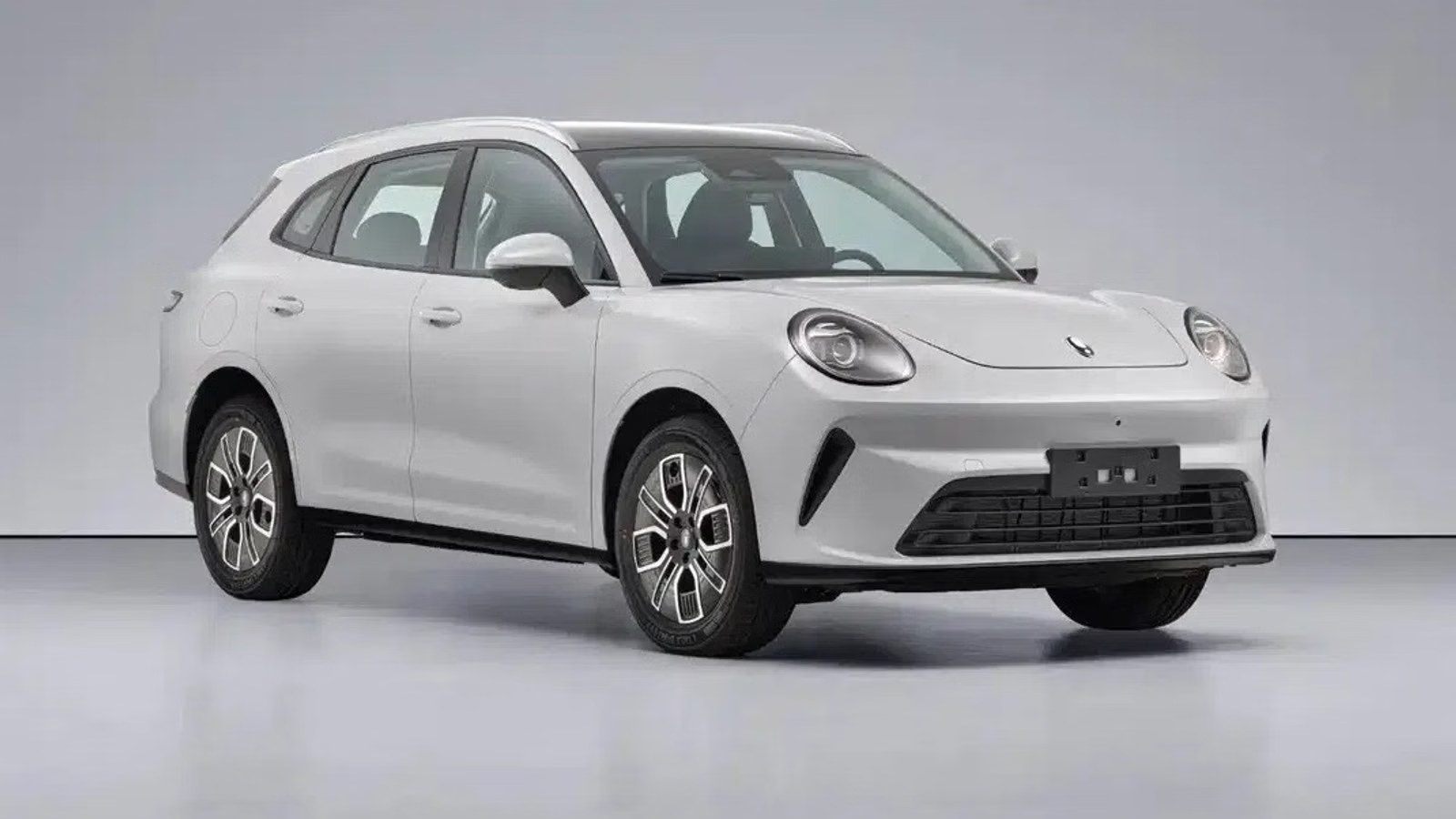
Full specifications, pricing and driving range are yet to be announced, but GWM has confirmed that the battery-electric model is definitely headed our way. It’ll also be a rare beast in the local market as affordable wagons remain thin on the ground, potentially giving the Ora 5 Touring an interesting niche when it arrives.
Wey SUVs: Early 2027
The Wey G9 won’t be alone for long. GWM has confirmed another two Wey products are due to reach Australia in early 2027, broadening the premium brand beyond the people-mover segment. SUVs will play a key role in Wey’s Australian expansion, with models including the large V9X giving an indication of where the brand could head next. More Australian details are expected soon.
Haval Jolion Max: Early 2027
GWM’s hugely popular Haval Jolion is also set to grow with the new, larger Jolion Max. As its name suggests, the Jolion Max will provide a larger alternative to the existing Jolion and help bridge the gap to the H6, giving GWM yet another entrant in Australia’s booming SUV market.
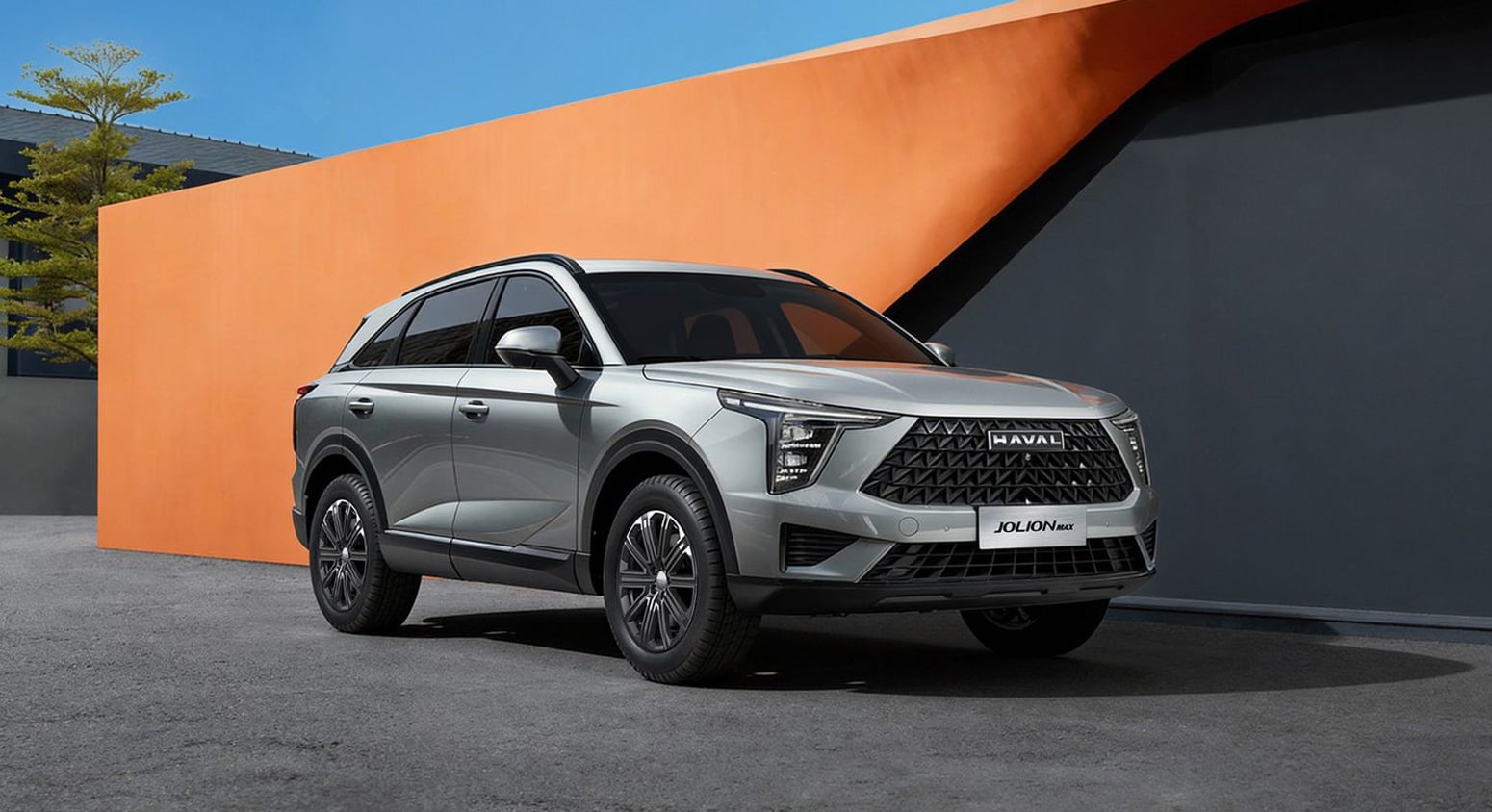
We expect electrification to feature prominently for the Jolion Max, in keeping with GWM’s increasingly hybrid-heavy Australian line-up to meet NVES compliance.
Next-generation Haval H6: First half of 2027
One of GWM’s most important Australian models is also heading for a major overhaul, with the next-generation Haval H6 due in the first half of 2027. It’s already been revealed in China, with a larger body, fresher styling and more in-car tech that will no doubt prove popular with buyers as the current model also does.
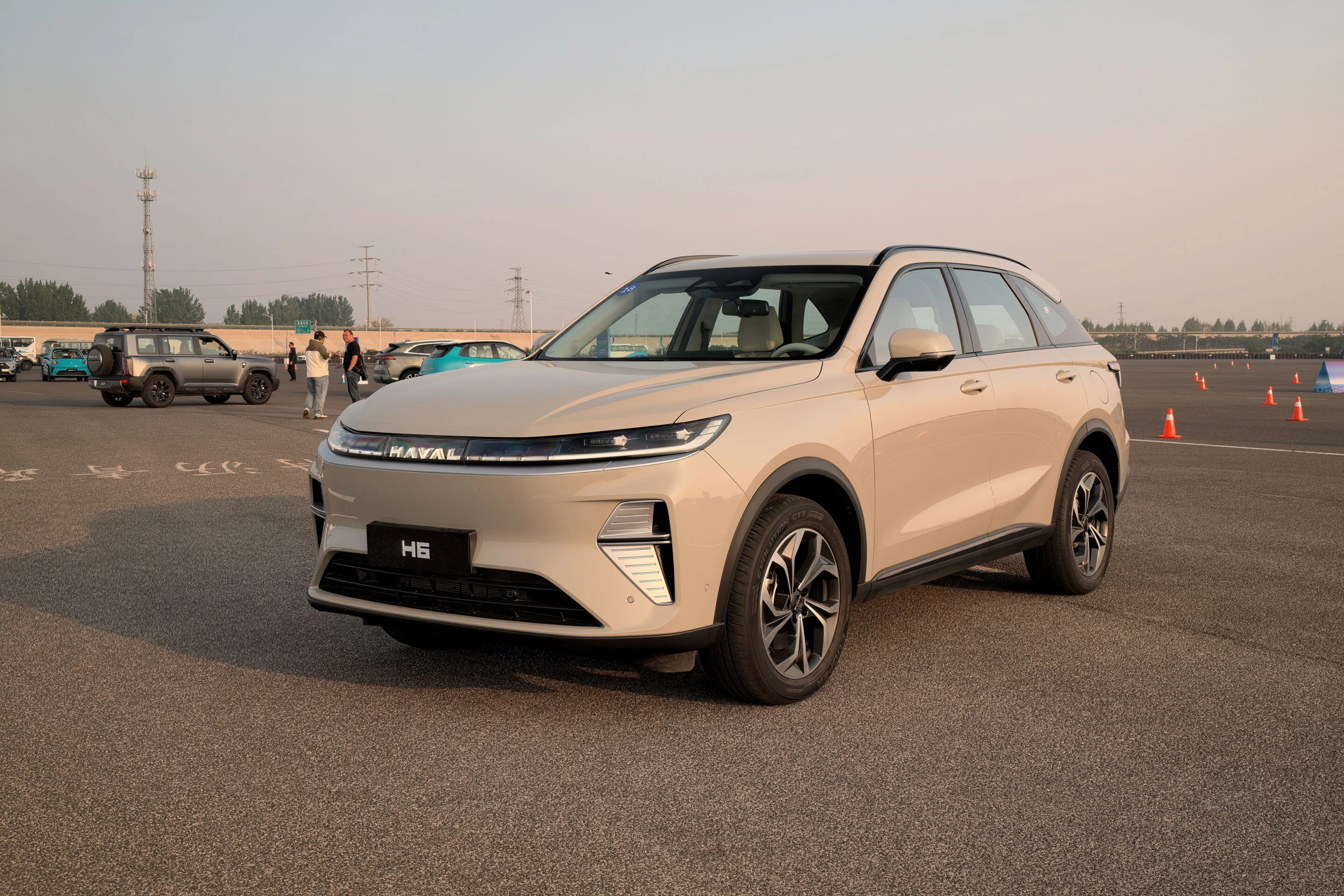
Both hybrid and plug-in hybrid powertrains are planned for Australia, with the new-generation model set to build on the strong value and extensive equipment that have helped make the current H6 one of GWM’s biggest sellers.
Given the speed with which GWM is expanding in Australia, we’re expecting far more models to be introduced locally in the next 12 months. More models – including the flagship Tank 700, as well as the brand’s first V8 drivetrain – remain under consideration as GWM continues its push in growing Australian sales even further.
In February 2024, Ford CEO Jim Farley said he had “humbling” regrets about how he’d handled the brand’s quality control nightmare and confessed that he should have addressed the problem much sooner. You’d think a raw statement like that would have resulted in a marked improvement by now. You’d be wrong.
When Farley made his admission, the Blue Oval had just been hit by a tsunami of 109 recalls in 2023, affecting 7.8 million passenger vehicles globally, according to the company’s own reports. Ten of those recalls went into effect in Australia.
Fast-forward to today and Ford has had 19 recalls in Australia so far this year. At that rate, the brand will break the mark of 26 recalls it set in 2025. In 2024, there were 17 of them. So despite Farley’s efforts, at least from an Aussie perspective, the problem has been getting worse.
In case you think we’re unfairly singling Ford out when recalls for increasingly complex vehicles are actually an industry-wide problem, we’ve also looked into what’s been going on with its competitors down under.
Yes, Toyota has had 11 recalls this year, but the brand offers a significantly more extensive range of models for Aussie customers than Ford does. Kia and Mazda have had five, Nissan three, Subaru one, GWM has had zero, and you have to go back to 2022 to find the solitary recall for BYD.
The poor quality control Aussie customers have been dealing with has been mirrored around the world. Ford recorded an industry-record 153 recalls globally in 2025 with almost 13 million vehicles affected. Stellantis, which owns 16 brands including Jeep, Ram, Dodge, Fiat, Alfa Romeo, Chrysler and Opel, had just 53 recalls affecting 2.7 million vehicles in the same period.
By June this year, the marque had issued 50 recall notices involving 11.2 million vehicles, meaning there’s a chance 2025’s record could be broken in terms of the number of cars affected. Ford also had the highest number of recalls in the industry in 2022 and 2023. The warranty costs have been astonishing. They ran to US$2.3 billion in the three months to July 2024 alone.
Ford had put new quality control measures in place before Farley’s “humbling” confession. In early 2024, the company said the results were showing up in its data, with 30 per cent fewer customers hit by recalls in 2023 compared with 2022. Those shocking 2025 numbers put paid to the Blue Oval’s optimism.
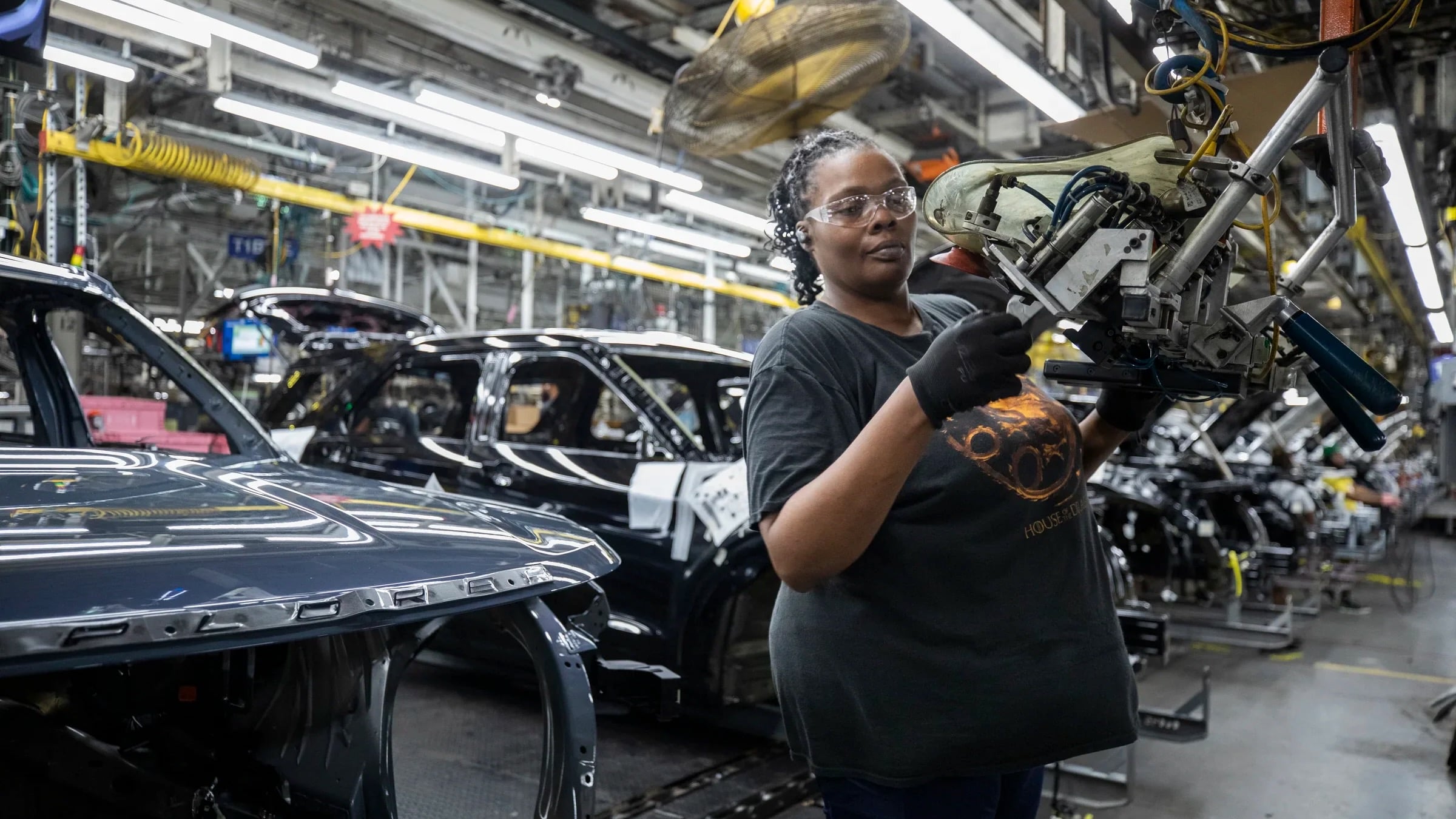
This June, it was reported that Ford had dramatically increased the scrutiny of engines produced at its Essex plant in Canada, which cranks out the V8 in the Mustang and F-150, as well as the larger bent eights found in Super Duty trucks. The thorough tear-down inspections that were performed every few months were being carried out every day.
Ford also turned to artificial intelligence for help and it appeared to be on the right track. The AI monitoring systems analysed production data for patterns that warned of potential faults, even when the components concerned were within tolerances. A system called AiTriz scanned vehicles for defects using high-resolution cameras.
In May 2024, Automotive News reported that AI quality controls at the Van Dyke facility in Michigan were weeding out problems in fine style. The installation of faulty rubber seals for oil pumps at the plant fell from 40 per month in May 2023 to zero slightly less than a year later. However, by June this year Ford made headlines for rehiring more than 300 human quality inspectors because the automated systems weren’t delivering the desired results.
In Ford’s defence, it took top spot in the USA’s JD Power Initial Quality Study in June. It was the first time it had done so since 2010, and the turnaround was huge after the automaker came 15th in 2023. The company called itself “the new gold standard for mass market new vehicle quality” when it trumpeted the win.
So it can be argued that the ongoing wave of recalls isn’t a completely accurate picture of what’s been going on in Ford factories for the past couple of years, because those seemingly never-ending announcements have more to do with vehicles manufactured before the new quality controls took effect.
However, you don’t have to look too closely at the Aussie recall information at www.vehiclerecalls.gov.au to see that’s not really the case. We’ll stick to what this year’s figures show us.
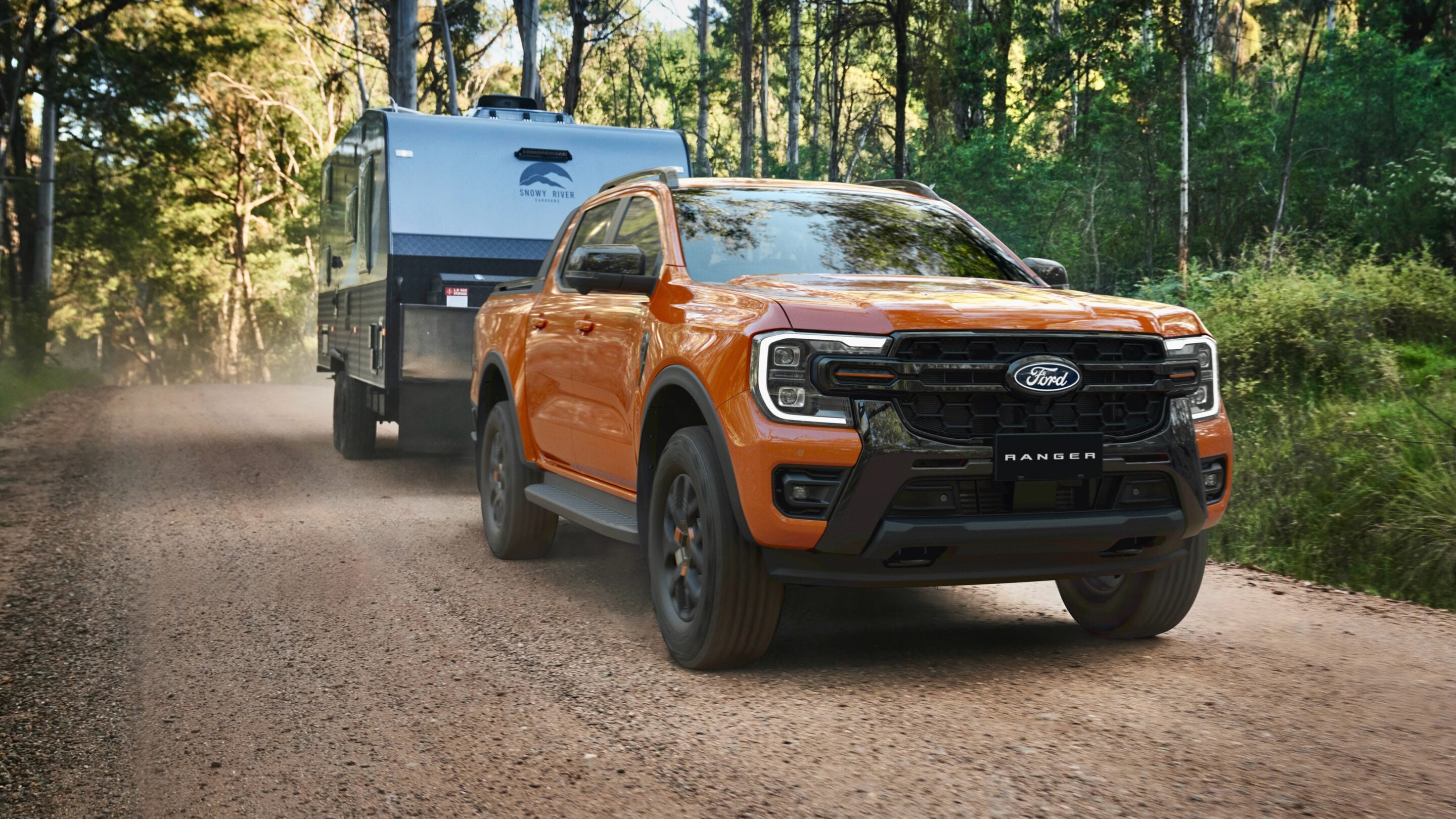
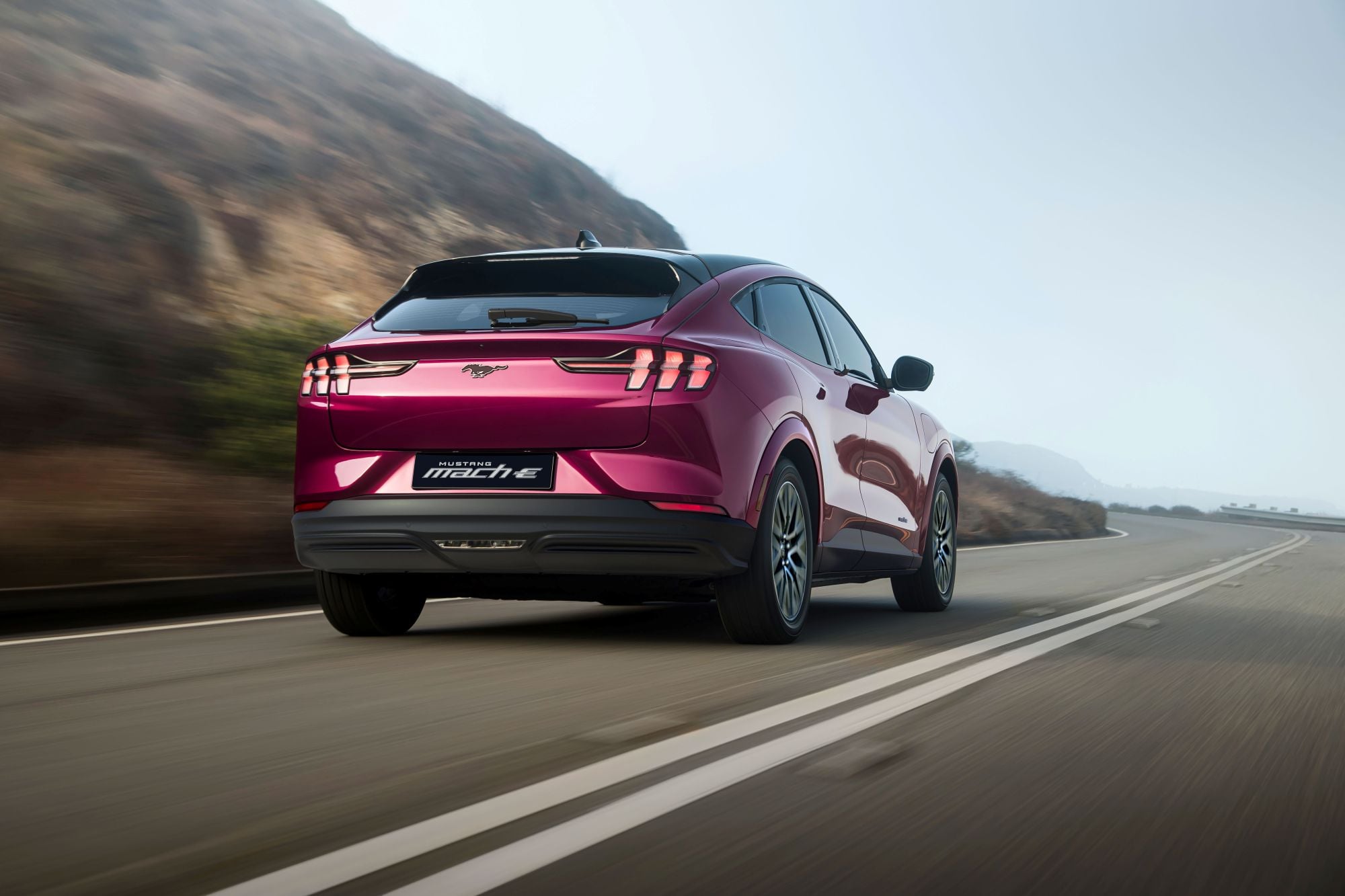
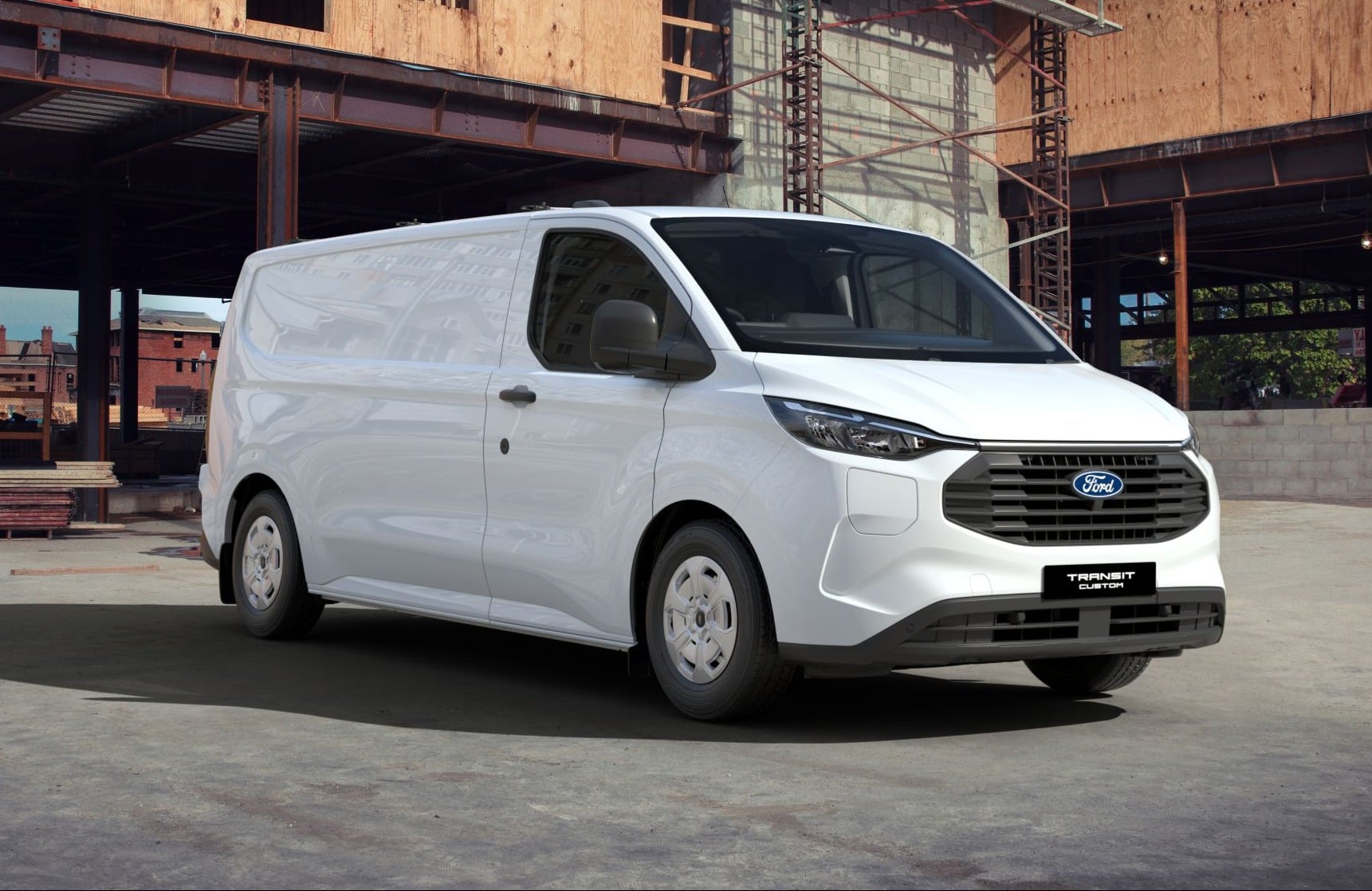
On August 18, almost 14,000 Rangers made in 2025 and 2026 were recalled due to a side airbag problem. On July 13, Transits and Tourneo Customs made from 2025-2026 were the subject of three recalls involving a total of 3610 units. On July 1 it was the turn of Mach-Es, Transits and Transit Customs made in the last two years. Transit Customs made in 2024-25 cropped up in an April 22 recall announcement.
By our count, in this year alone, models made as recently as 2024 were the subject of a further four recalls in Australia.
The Blue Oval remains immensely popular down under. The Ranger racked up a 37-year first in January by taking out top spot on our sales charts for the third year in a row. But who knows how many more vehicles Henry’s company could have shifted if it weren’t for potential customers being scared off?
“Recalls reflect our intensive strategy to proactively find and fix hardware and software issues to help protect our customers,” Ford said in a statement to WhichCar by Wheels.
“Ford is making meaningful and measurable progress to improve the quality of newly produced vehicles. However, we are always going to see isolated issues come up and when we do we will take immediate action to fix them and look after our customers.”
The company went on to point out its Aussie portfolio covers more than a dozen nameplates, each with several model variants and powertrain options, increasing the chance of a recall – or as Ford puts it, “creating more opportunities for issues to be identified and proactively addressed”.
Ford also raised the same point we’ve discussed: that recalls can involve vehicles made several years ago and therefore not subject to the improvements made to testing and quality processes.
They’re logical points, but it’s hard to see them providing much comfort to the long list of Aussie motorists whose vehicles have been caught up in the recall tidal wave.
As far as automotive risks go, Mercedes-AMG took a pretty big one when it replaced the V8-engined C 63 S and GLC 63 S with a plug-in hybrid turbocharged four-cylinder
Stricter European emissions regulations are resulting in increasingly smaller and hybridised engines, and while those models are quicker than ever, many AMG fans – and buyers – instantly turned off at the thought of a four-cylinder GLC in the lineup. Affalterbach clearly listened, however, and recently replaced both the mild-hybrid 43 and plug-in hybrid 63 S four-pot models with a new inline six-cylinder 53.
So is the new GLC 53 enough to erase the memory of the four-cylinder GLC 63 S?
Our first taste of the new GLC 53 comes in North America, driving from Detroit through Michigan and up to St Joseph Island in Canada.
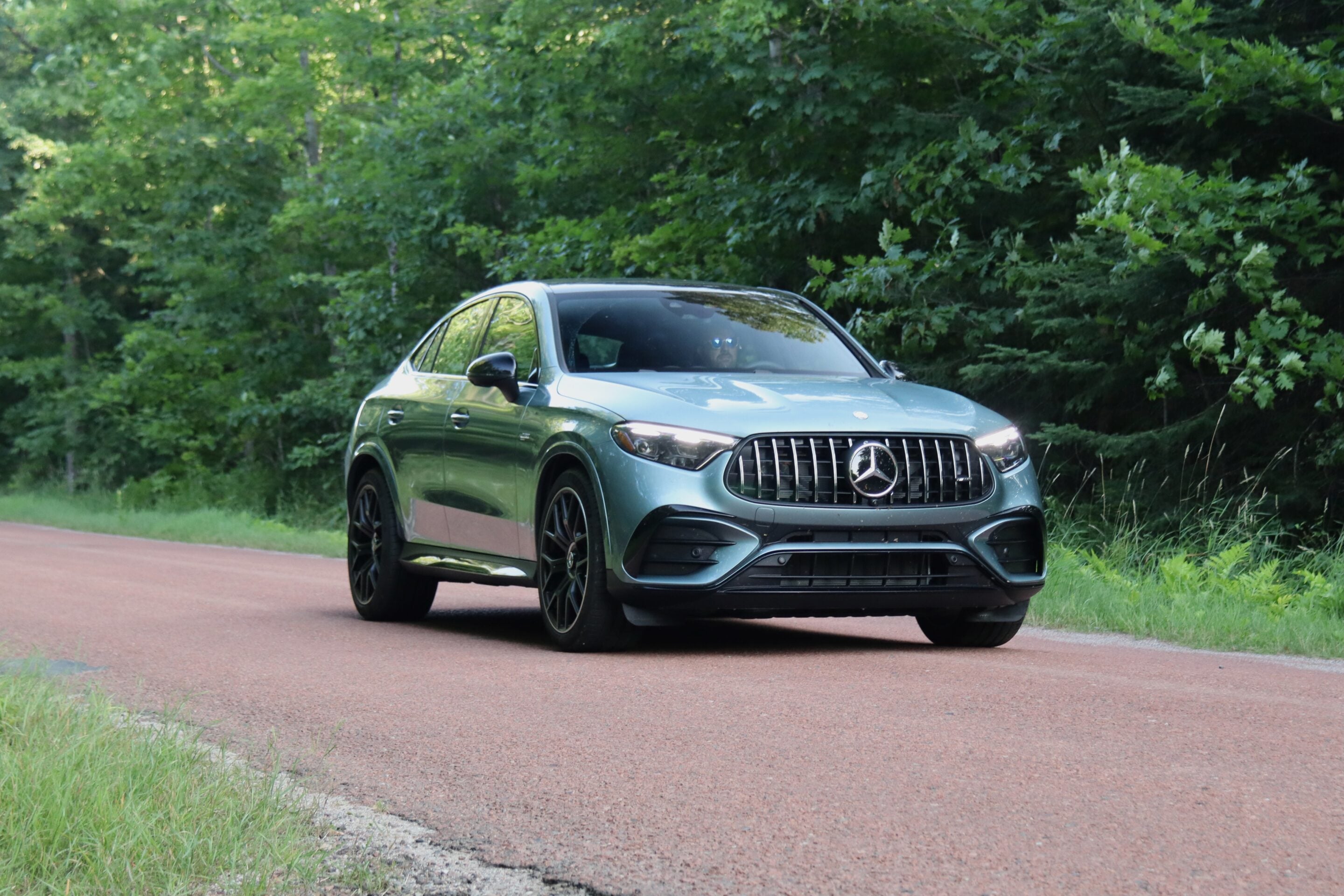
Like the GLC 43 and 63 S models it replaces, the GLC 53 is available in both SUV and coupe bodystyles. It’s the coupe we’re testing here but other than rooflines, there’s nothing to split the two body styles, the choice coming down to personal preference.
Australian pricing for the Mercedes-AMG GLC 53 starts at $140,600 plus on-road costs for the SUV and $151,300 +ORC for the coupe. That’s a $2000 premium over the outgoing GLC 43 but a full $51,700 more affordable than the old GLC 63 S. In SUV form, it’s $9200 more expensive than the BMW X3 M50, its nearest rival.
Making 330kW and 600Nm with a brief 17kW/40Nm overboost function available under hard acceleration, the new 3.0-litre inline six in the GLC 53 is 20kW/100Nm gruntier than the former 43, but 170kW and up to 420Nm less potent than the 63 S. As for the 0-100km/h sprint, its 4.2 second time is 0.7 seconds slower than the 63 S but 0.3 seconds quicker than the 43.
In that sense, the GLC 53 is more a replacement for the GLC 43 and not the 63 S, but it’s still fast enough to satisfy. It’s less highly strung than the four-cylinder units it replaces, but it’s effectively punchy throughout the rev range. It also sounds great, with a real deep bark, especially at higher revs.
Switching to the inline-six has also improved fuel consumption, the GLC 53’s 9.6L/100km combined rating officially 0.4L/100km less than the 43. In the real world, we saw 8.5L/100km on our road trip, mostly travelling at speeds of around 120km/h on the freeway.
No longer encumbered by the plug-in hybrid system of the old GLC 63 S has p[aid dividends in the new 53’s ride and handling, though there’s still some work to be done.
At 2092kg (tare), the GLC 53 weighs 241kg less than the 63 S, making it feel lighter from behind the wheel, but there’s still a tech tour de force behind the scenes to make sure it handles like an AMG should.
Highlights include active anti-roll bars, active four-wheel steering and adaptive dampers that work well in masking the GLC’s mass in the corners. AMG has also retuned the suspension and added a mechanical torque-vectoring rear differential that can allow for drifting thanks to the new rear-drive drift mode. We didn’t try the latter, of course, but it’s there if you want it.
What this all means is that the GLC 53 has the goods to deliver a properly decent driving experience. It is, in short, a great-handling sports SUV. It’s quick to turn in, grips very well thanks to AMG’s 4Matic+ all-wheel drive system and even offers a bit of tail happiness. On a good, smooth stretch of road, it’s a riot.
We highlight the use of ‘smooth’ here because on anything but the smoothest of road surfaces, the GLC 53 is just too firm. Even the pavement cracks of the I-75 freeway in Michigan made their presence felt in the cabin more than we’d liked, and that was using the softest damper mode. On the Canadian side of the border with even worse road quality, the GLC’s ride became somewhat tiring. Its body control is sharp, but a bit more forgiveness through the suspension would be appreciated.
In North America, 20-inch wheels are standard. Our test car sat on optional 21s which are fitted as standard on Australian-delivered cars.
There’s nothing wrong with the braking prowess as the four-piston front/single-piston rear fixed calipers are quite strong with progressive and reassuring feel through the pedal. The steering feels fine, though it’s not particularly communicative.
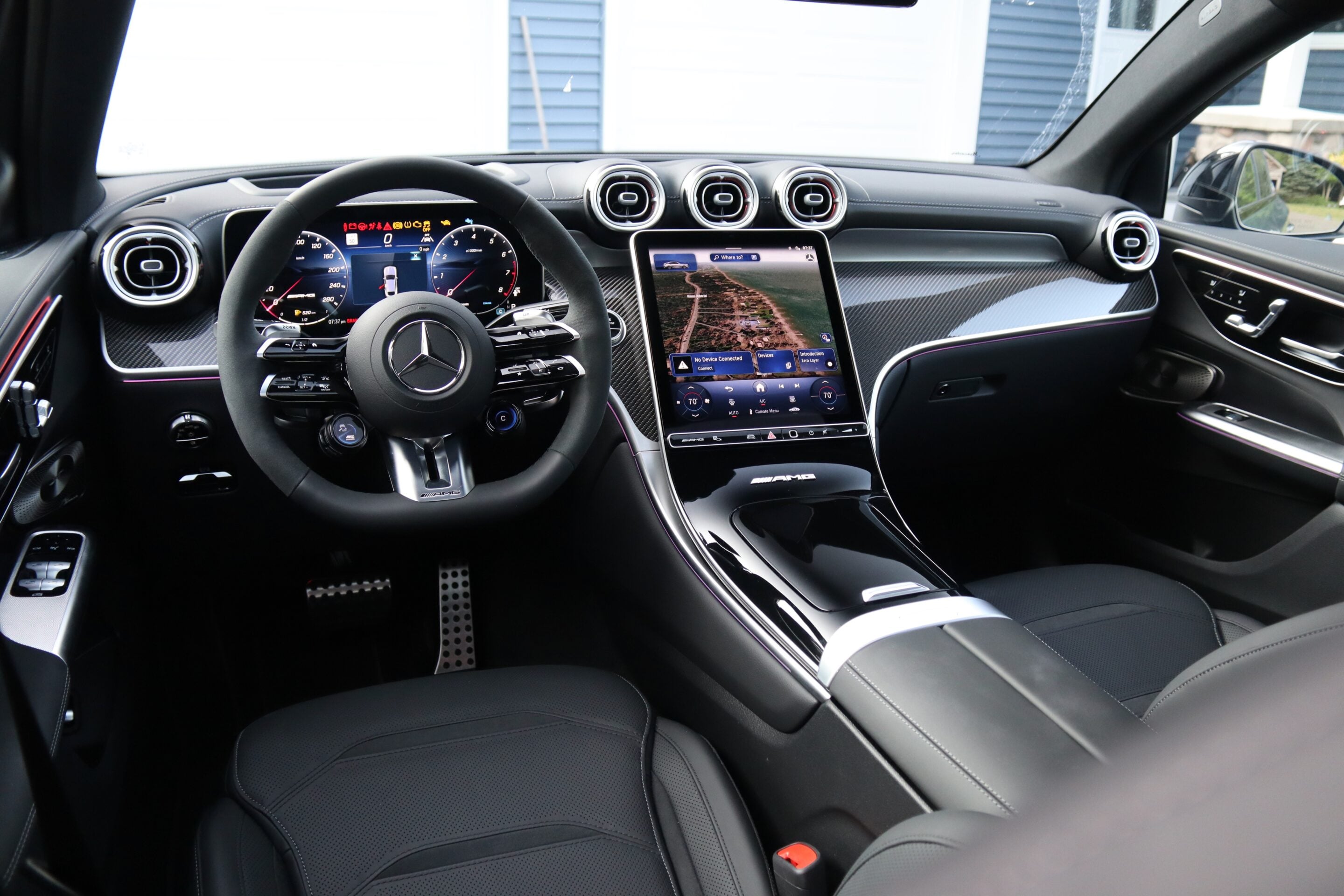
Elsewhere, the GLC 53 is, well, a GLC and that means it’s one of the best luxury mid-size SUVs you can buy. Cabin quality, as you would expect of a Mercedes-Benz, is top notch with high quality materials throughout.
Despite the lack of physical buttons, in-car tech is easy to get used to. The touch capacitive buttons on the steering wheel are a touch frustrating, however, and are easy to accidentally brush when turning the wheel. There’s also a plethora of piano black trim, so best to keep a cloth handy.
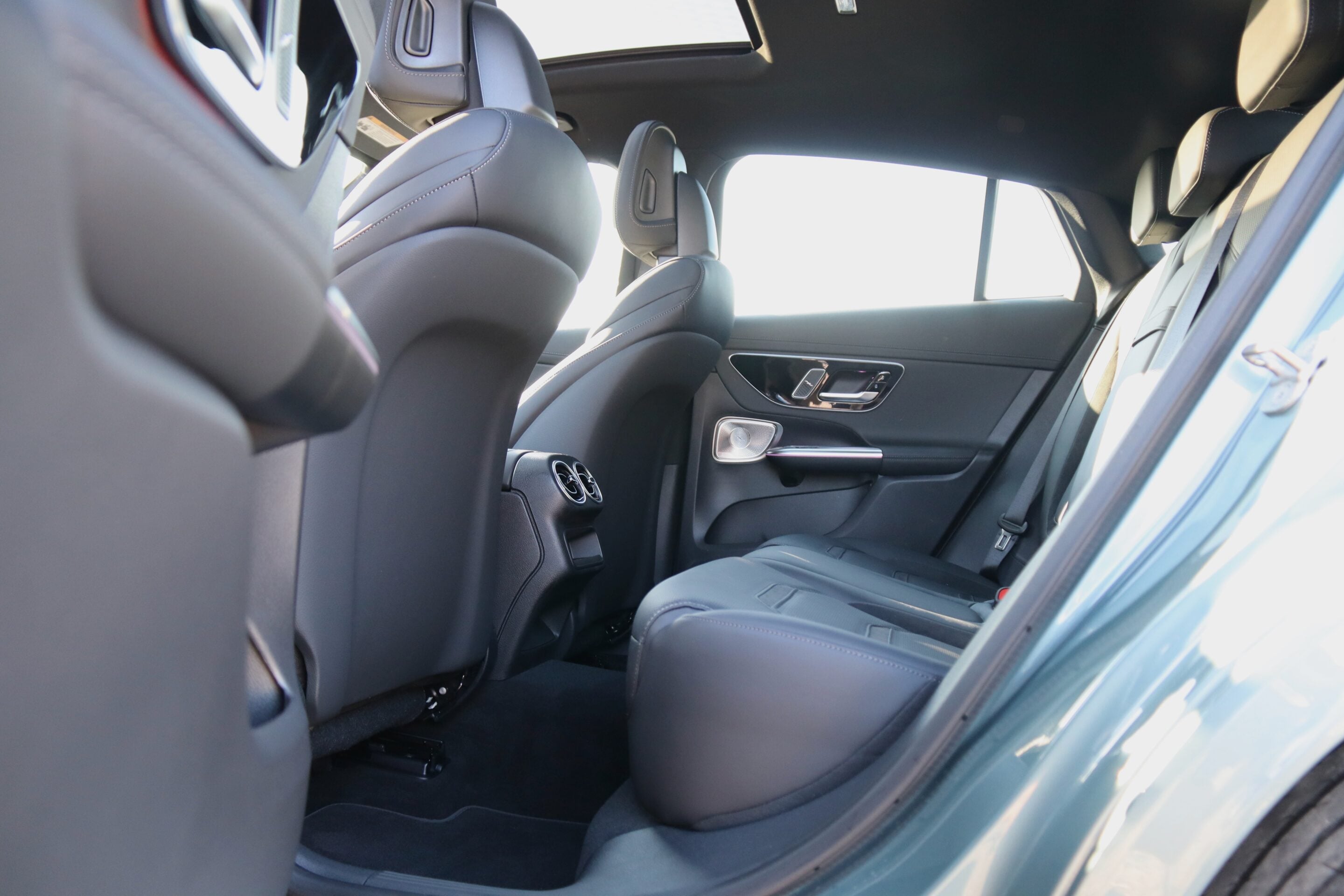
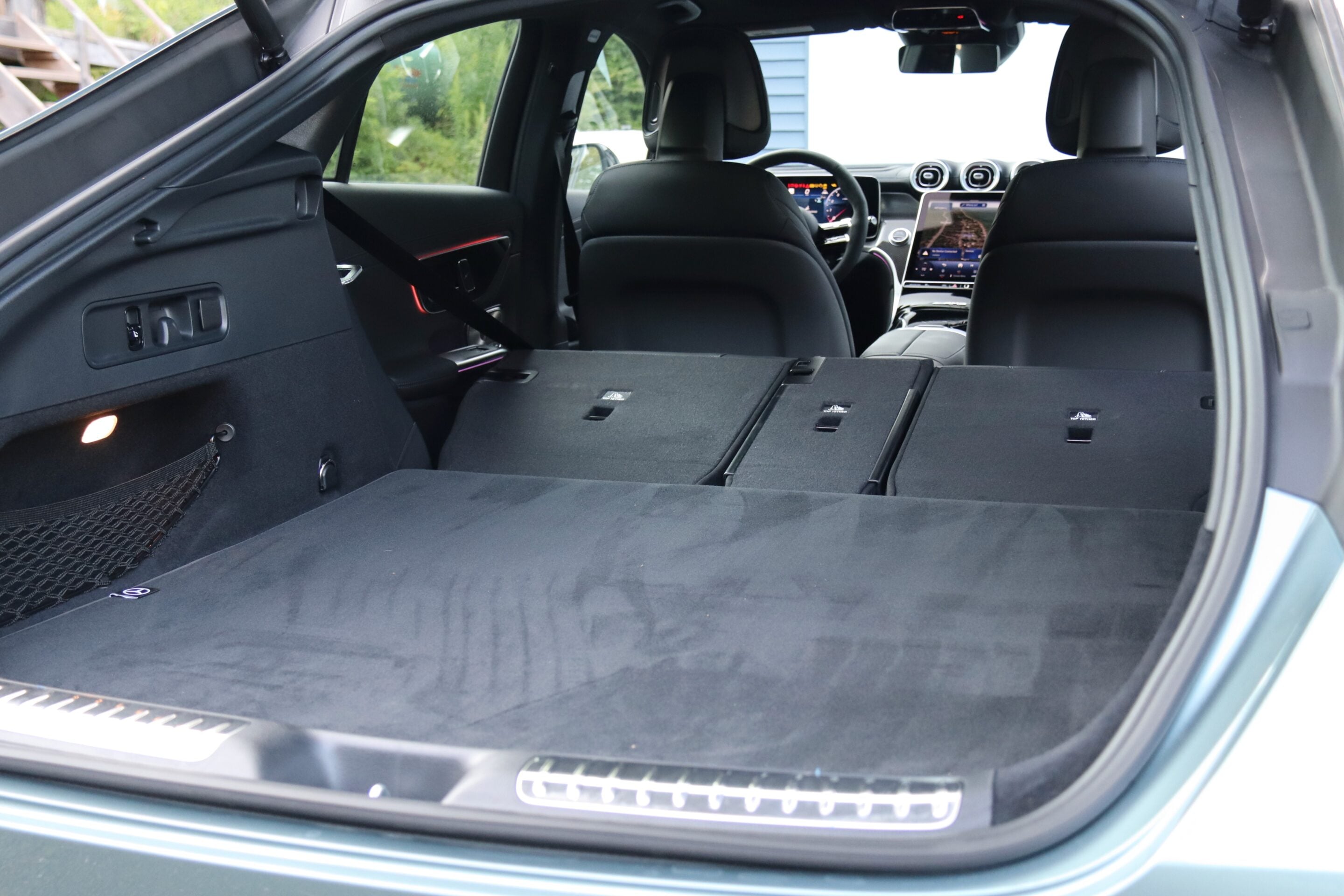
As for practicality, the GLC 53 – even in coupe form – offers up the goods. Its 545-litre boot capacity is decent and although the boot floor is actually surprisingly high, there’s a massive under-floor storage area that literally doubles its capacity. The boot also features handy tricks like remote releases for the rear seats, hooks, side storage and tie-down points. Rear seat headroom is not great for this six-foot writer – we’d definitely recommend the SUV – but rear legroom is fine.
The Mercedes-AMG GLC 53 isn’t as noteworthy as the 63 S it replaces, and that’s a good thing. The old GLC 63 S’s four-cylinder hybrid system, as good as it was, strayed too far from AMG’s philosophies.
The 53’s new inline six is much better suited to the AMG badge. While it’s not as fast, it feels more relaxed, and shaves 241kg of weight aiding the handling. It sounds better too.
We still mourn the loss of the V8 of the previous-generation GLC, but it’s clear that AMG’s return to the drawing board has paid dividends, the Mercedes-AMG GLC 53 an excellent performance SUV.
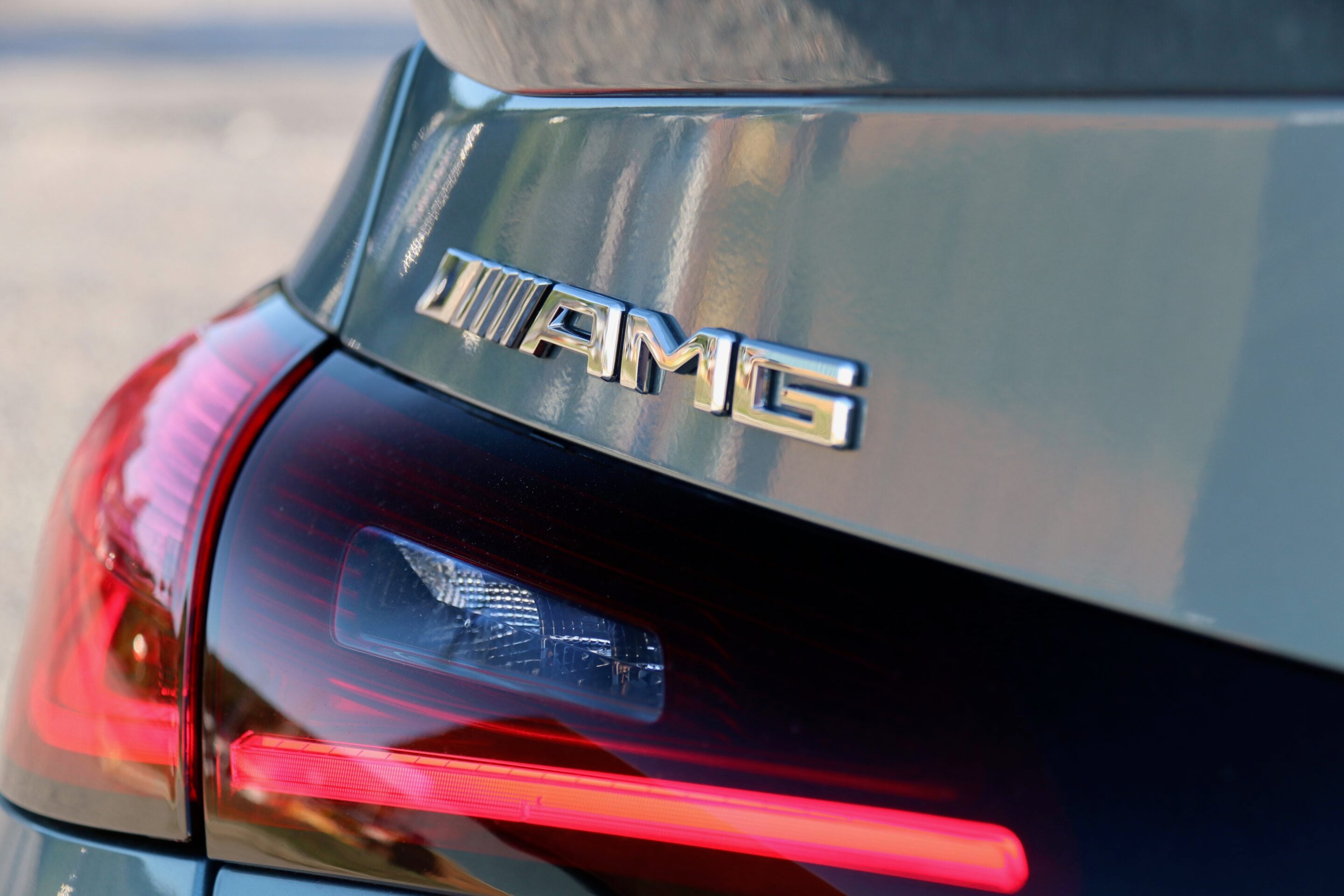
Specs
| Price | $151,300 plus on-road costs |
|---|---|
| Bodystyle | Five-door coupe SUV |
| Engine | 2998cc turbocharged inline six + 48V mild-hybrid tech |
| Power | 330kW (@ 6100rpm) |
| Torque | 600Nm (@ 2200-5000rpm) |
| Transmission | Nine-speed automatic, all-wheel drive |
| 0-100km/h | 4.2 seconds (claimed) |
| Top speed | 250km/h (electronically limited) |
| Combined fuel consumption | 9.6L/100km (claim) |
| Combined CO2 emissions | 221g/km |
| Fuel Type/tank size | 98 RON premium unleaded, 62 litres |
| Dimensions (l/w/h/wb) | 4794/1938/1601/2888mm |
| Boot capacity | 545 litres (rear seats up) |
| Tare mass | 2092kg |
| Warranty | Five-year/unlimited km |
| Five-year service cost | $8420 ($1684 per year) |
| On sale | Now |
Wheels marked its 60th anniversary with an immense 212-page souvenir edition that celebrated the 10 best cars ever made in Australia. The Ford Coupe Utility came in 10th, and working up from there we named the Holden HQ, Ford Falcon FG, Holden 48-215, Valiant Charger E38/E49, Ford XR Falcon GT, Holden V2 Monaro, Ford BA Falcon XR6 Turbo and the Ford Territory in second place. And the winner? Read on…
First published in the May 2013 issue of Wheels magazine, Australia’s best car mag since 1953. Subscribe here and gain access to 12 issues for $109 plus online access to every Wheels issue ever printed.
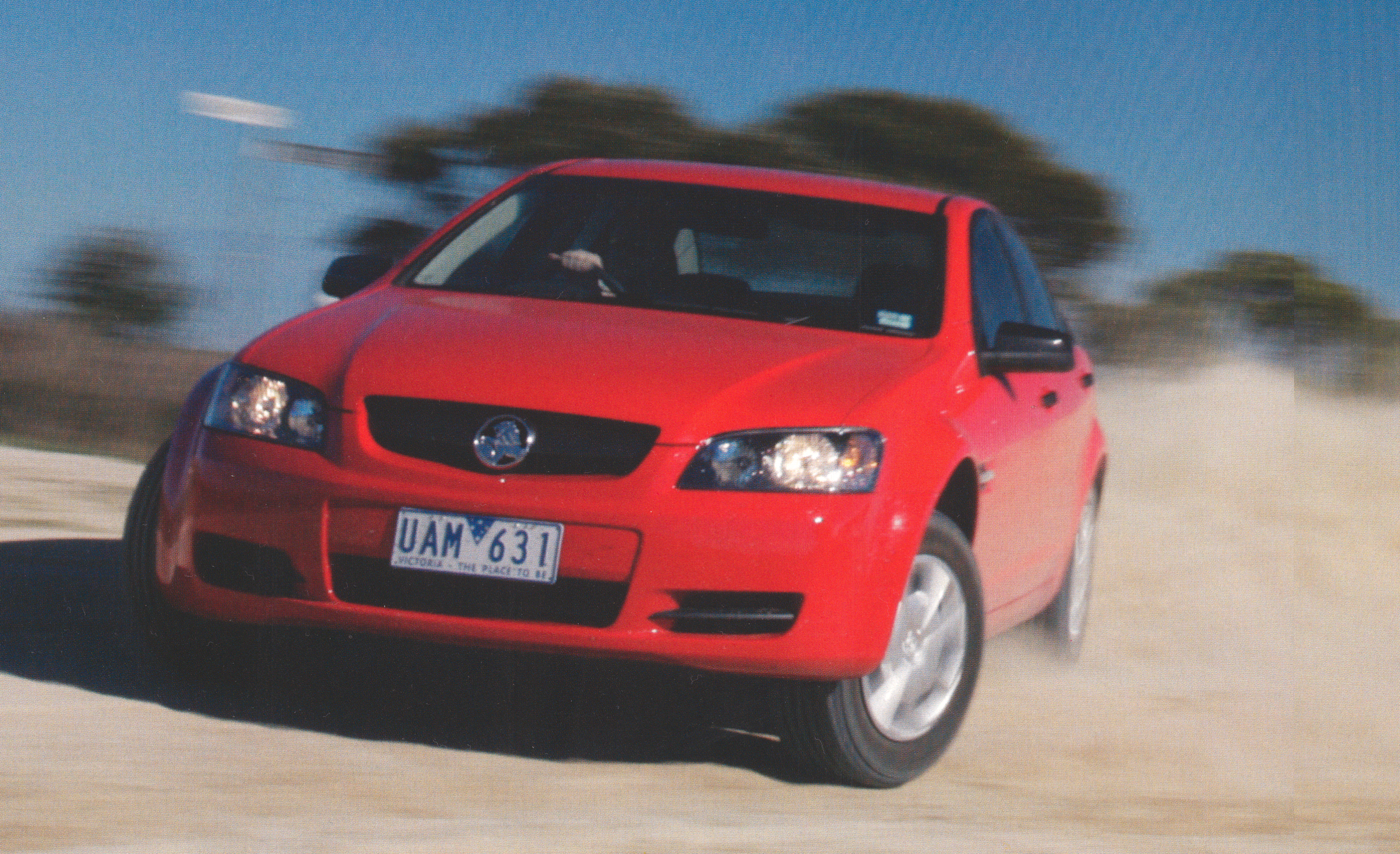
IN many ways the VE Commodore is the best car Australia has ever created. At its core are virtues of strength, spaciousness, and sophistication, which serve equally well in everything from a humble V6 Omega Sportwagon fleet car to a growling V8 E Series sports sedan costing twice as much. While it’s the kind of large car that’s become this nation’s speciality, the 2006 VE is different from any earlier Commodore. At last given the chance to design, engineer and develop a car from a clean-sheet starting point, Holden grabbed the opportunity with both hands.
Boneheads blinded by the expensively burnished images of premium brands simply will not believe Australian engineering can equal or best that of, say, Germany. But it’s true. The wholly Holden chassis of the VE invited comparisons with similar-size cars from Munich and Stuttgart. When the VE was launched, seven years ago, there certainly wasn’t a contemporary BMW that steered with the beautifully fluid accuracy and consistency of the Holden. And its suspension set-ups, perfectly calibrated for comfort and control on our roads, were probably superior to most Mercedes.
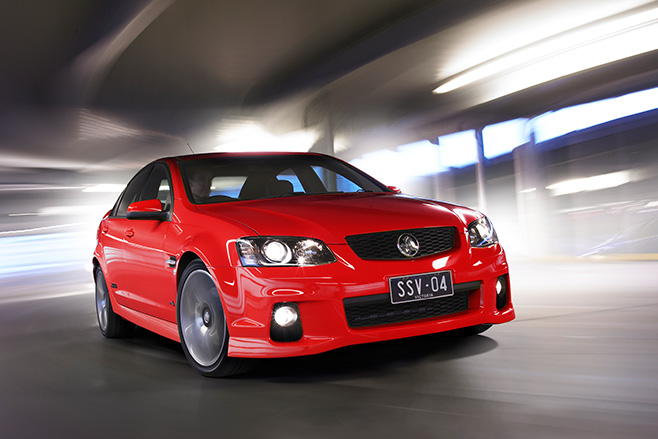
Equally outstanding was the VE’s shape. Every previous Commodore was basically Opel’s work. Turning a European Omega into a car for Australia meant strengthening, stretching and different interiors. But the exterior was always designed to please those living in the Heidelberg that’s not in Melbourne. The internal competition among Holden’s designers for the right to design VE Commodore’s skin was won by Peter Hughes. Way back in 1999 he’d made the sketch that remained a touchstone for the exterior design team throughout the program. It was the starting point for the fullsize clay model of his design that was eventually selected ahead of a competing proposal from another Holden designer.
It’s a great shape; a perfectly proportioned combination of dynamic drama and easy elegance, precisely and simply detailed. It was admired from afar by eminent designers. Jaguar’s Ian Callum was one of them. He found out who had designed the VE’s exterior from Hughes’ former boss, Mike Simcoe, who was working for General Motors in Detroit by the time the car launched. The generous Scot made a point of sending Hughes an email saying how much he admired the VE’s exterior.
But good looks and fine dynamics aren’t the only reasons the Holden heads our 10 Greatest. It’s no accident that the first three cars on our list are products of the naughties. This was an era when Australia’s car makers were facing, for the first time ever, an operating environment not rigged heavily in their favour.
The Australian car industry spent its youth wearing a protective tariff burka. At the time of the VE, it was down to a G-string and tassels pasted to its nipples. Back in 1971, for example, the year of the HQ launch, non-British built imports had 45 percent added to their prices between dock and driveway. By the end of the decade the rate had risen to 57.5 percent, regardless of country of origin. But from the late 1980s the Button Plan of Bob Hawke’s Labor Government began to strip away 2.5 percent a year, gradually exposing both the Australian car market and car makers to the lustful gaze of overseas competitors. By the time the VE was ready for market in 2006, tariff protection was down to 10 percent. Today the twirling tassels are gone, and it’s just five percent.
There were additional challenges the VE faced. The market share of large cars was in obvious decline, a consequence not only of the creeping withdrawal of tariff protection but also changes in customer preference and Australia’s shift to a more city-centric demographic. Hoden needed to look beyond Australia’s borders if it was to have a future.
It’s fortunate that the company was being led by Peter Hanenberger as the VE program took shape. The charismatic, crafty and persuasive German was a General Motors lifer who knew the outfit inside out. He also knew Australia well, having spent time here in the late 1970s as a chassis engineer, tasked with making the HZ Holden handle with his ‘Radial Tuned Suspension’.
Hanenberger engineered, with the support of GM global product boss Bob Lutz, an international role for the Australian-developed architecture. The platform, codenamed Zeta, would be an export-ready design, and capable of adaptation for other models made in other countries – if it hit targets for cost, performance, safety and production flexibility. This was a new kind of pressure for Holden.
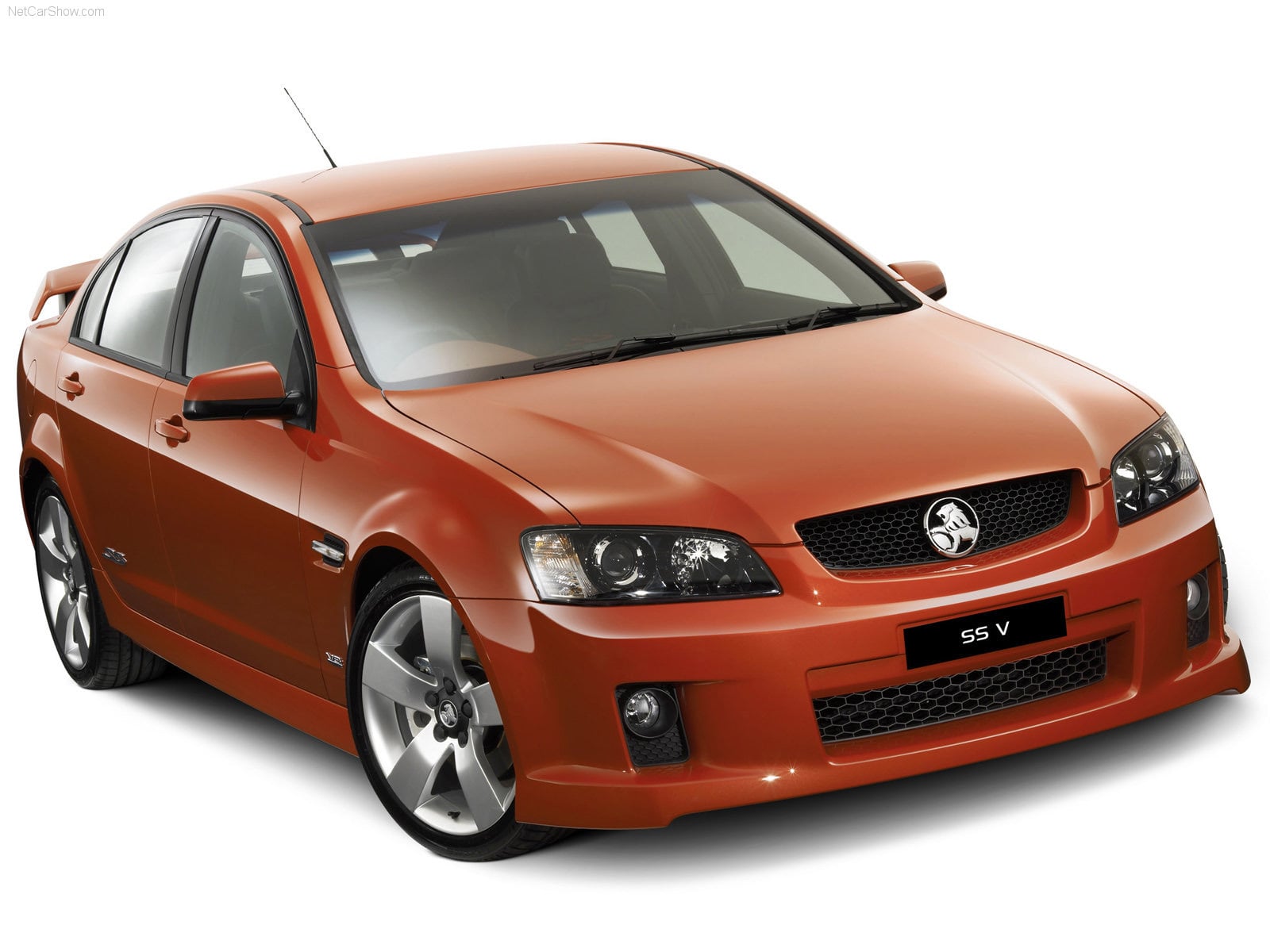
Things didn’t go quite as well as planned. Exports to the US of the Pontiac GB version of the VE began in 2008, but lasted little more than a year as GM’s mounting troubles led to the American brand being axed. But since 2009 the current Chevrolet Camaro has been built in Canada on a shortened version of Zeta. Now exports to the US of the VE’s direct descendant, the Zeta-based VF, are under way once more. This time badged as a Chevrolet, as it always should have been.
The VE, of course, has its flaws. Heating and air-con system problems afflicted early production. The base V6 engines, both 3.6-litre at launch and the 3.0-litre direct-injection introduced for the 2010 model year, aren’t as smooth or satisfying as they should be. And a four-speed auto was out of place in 2006, even in fleet models like Omega and Berlina.
Even with its acknowledged imperfections, the VE Commodore still deserves its place at the top of our list. For its design, engineering, value and versatility, but also because it’s a greater and much more significant achievement than any other car Australia has ever made. Holden began in 1948 with a basic design imported from America. With VE, the voyage was in the opposite direction. More than just a good honest car, this was the Commodore that proved, beyond doubt, that Australia’s got talent.
For many of us, watching the so-called cheap classic Fords and Holdens that we parted with for a couple of grand many years ago now changing hands for six-figure sums can be triggering. If you’ve ever scrolled through online classified listings and seen models that you once couldn’t give away now commanding premium prices, you’re not alone.
So what’s coming next? Which cars are going to reverse their resale dive? While the list below may not look like it holds a lot of appeal right now, the buy-in price is right, and in another 10 years the demand for these models could be very different.
Of course, it pays to keep in mind that time and trends could result in very different future outcomes, and automobiles as an investment, with the need to be kept maintained and out of the weather, aren’t always a reliable way to build a retirement fund.
Ford Falcon BA XR6 Turbo
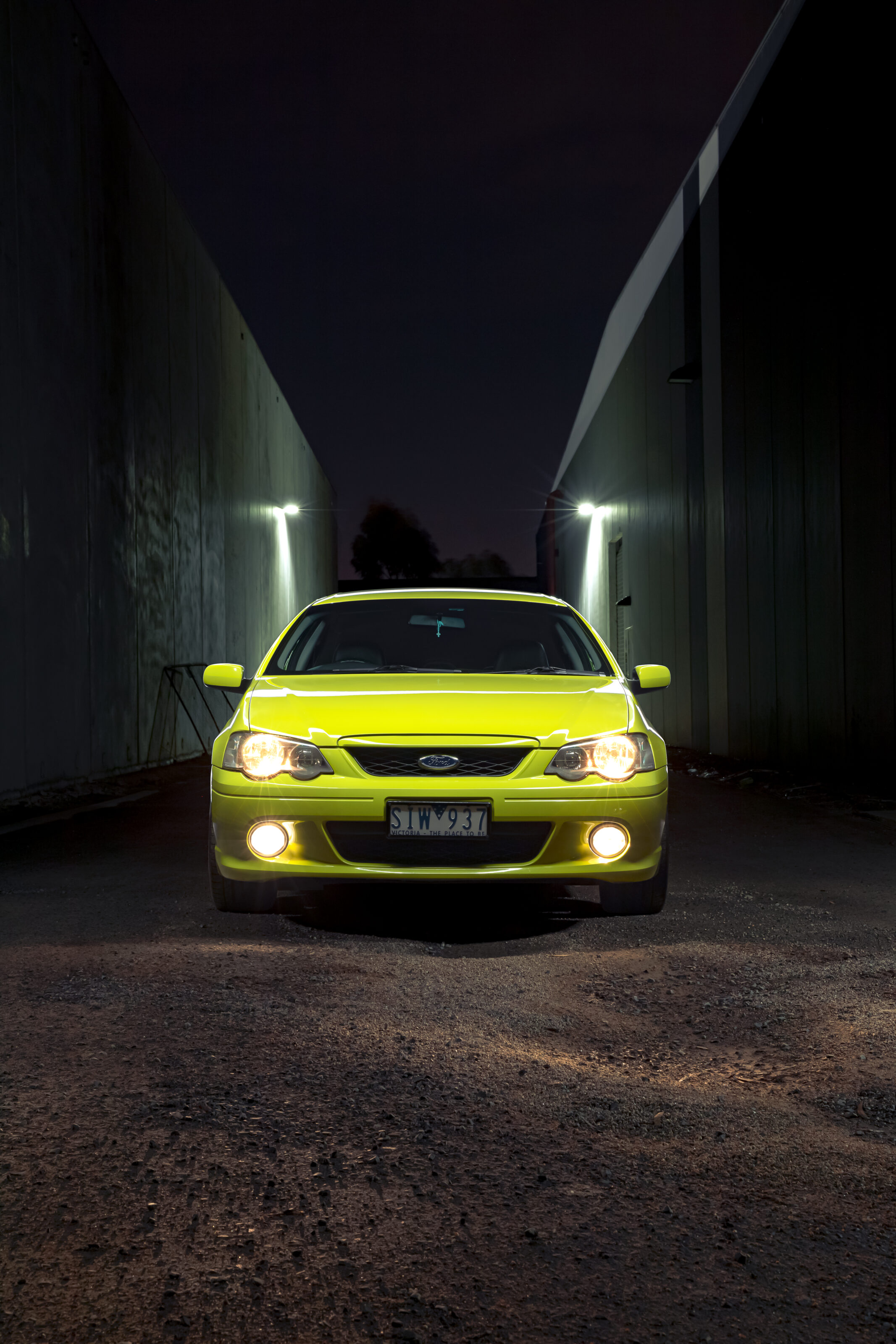
The moment has passed for the AU Falcon, and values are headed north already. The BA is already trending upwards too, but there’s still time to grab a bargain.
As the first in a new performance era for the Falcon, the turbocharged XR6 is going to follow in the footsteps of just about every performance Falc and Commodore before it. Better (or perhaps, worse) still, being common, cheap and favoured by some less-than-highly skilled drivers means numbers will decline steadily.
A tidy car in one of the Falcon’s more exciting colours with an engine number that matches what it left the factory with won’t be an easy thing to come across years from now.
Toyota 86/Subaru BRZ
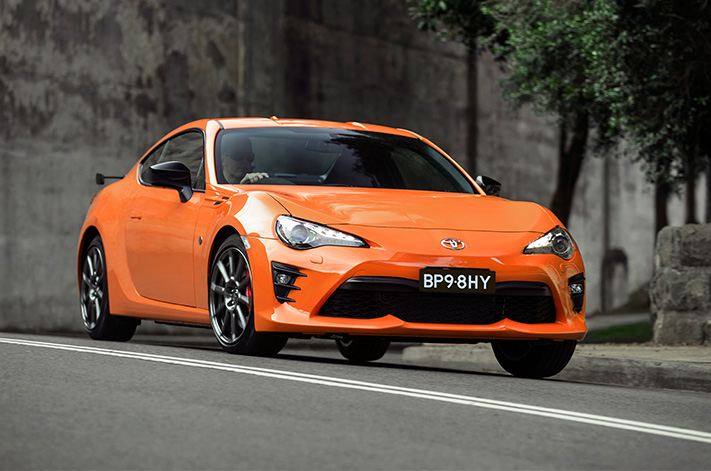
As a cheap track toy, the 86 and BRZ will follow the path of models like the Nissan Silvia: too good not to race or drift, but not good enough to keep pristine and factory fresh.
Numbers are plentiful right now, but modified examples vary from tastefully tweaked (and reversible) to outlandish and potentially unsalvageable. If you can find a rare example owned by a little old lady – and they are out there – perhaps with a genuine accessory or two, you’re on the right path to a cheap winner.
Nissan Y62 Patrol
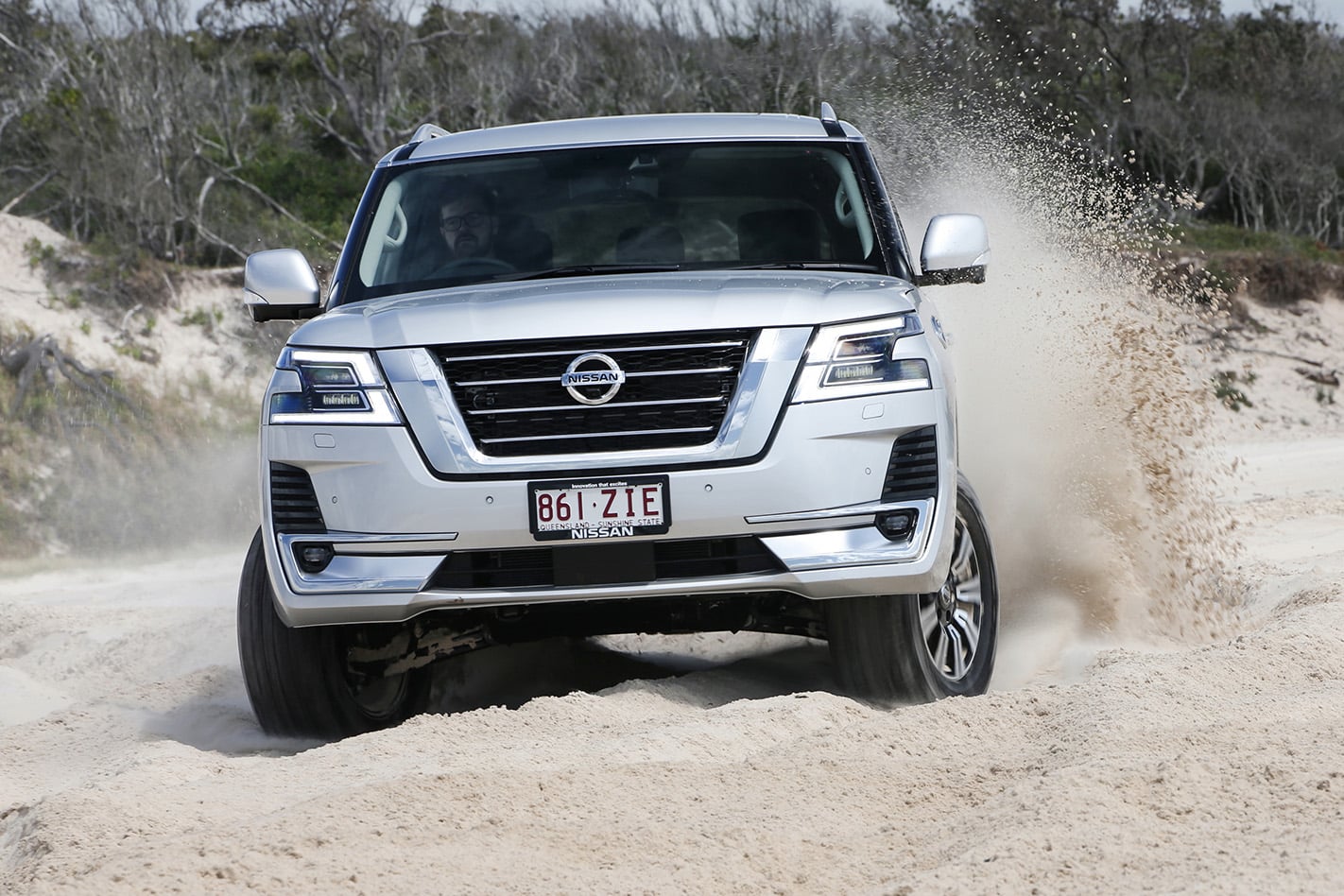
Being the last of something, just like the first of something, always tends to impact collectability. The Y62-generation Patrol, which is both the first and last model to feature a V8 engine, ticks both boxes.
Just like the V8-powered 200 Series LandCruiser, which enjoyed buoyant values after it was replaced with the V6 300 Series, Nissan’s switch to a turbocharged V6 for the Y63 Patrol stands the current generation in good stead. They are a little more than pocket change right now, but there are some fantastically underworked, suburban-owned cars that would make for a smart starting point.
Mercedes-AMG C63
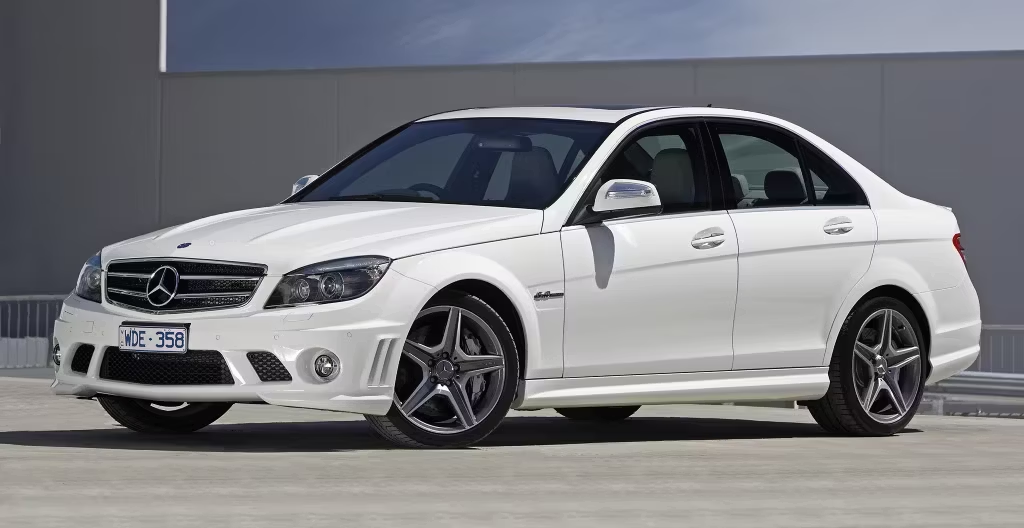
The character of the C63 fundamentally shifted when Mercedes switched to turbocharged engines, so the last naturally aspirated example is sure to become a thing of legend. Nothing sounds quite like that 6.2-litre V8 at full noise, and the free-revving authenticity it offers is only going to become more sought after.
If you’re new to European cars, the world of Mercedes-Benz maintenance isn’t always cost-effective, so rather than looking for the outright cheapest car now, shop for something with a solid service history. As something of a pro tip, if you can find a wagon instead of a sedan or coupe, it’ll be the smarter buy down the track.
Subaru Impreza WRX

As the first-generation Subaru Impreza WRX moves into untouchable territory, its successors start climbing the range of collectability. The ship may have already sailed for the early second-gen ‘bug eye’ cars, but the third-gen Impreza is a fantastic purchase at the moment.
Third-generation cars rectified the styling woes of their predecessors and offered a hatchback body style that has since disappeared from the WRX line-up, making these the ones to hone in on.
Nissan 370Z
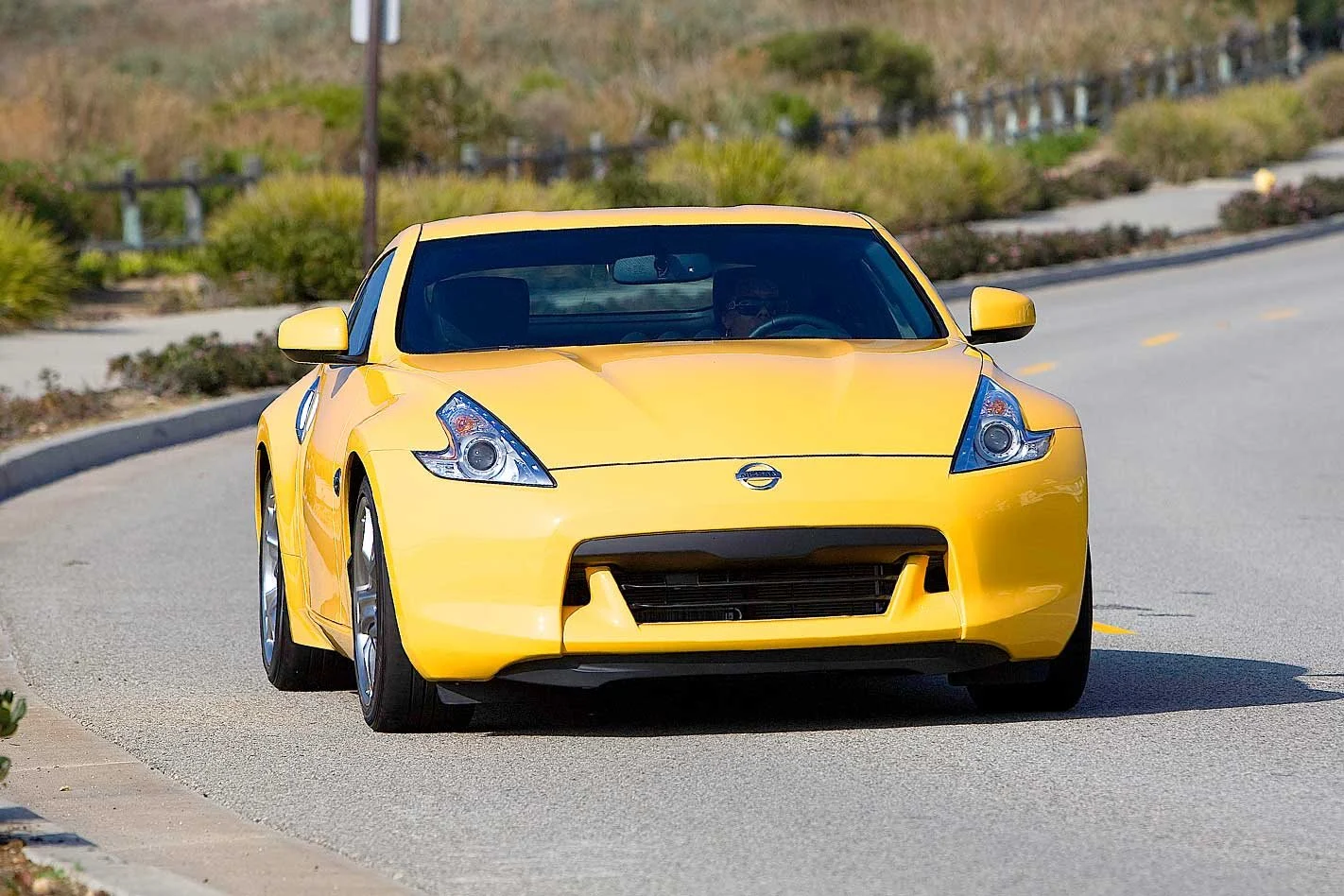
Nissan’s Z-car renaissance started with the 350Z in 2002, but its replacement in 2009, the 370Z, could be the one to watch. The 370Z’s relative simplicity compared to the eponymous Z that replaced it makes it the pick for purists.
An example of the ‘last of the line’ theory, Nissan’s last naturally aspirated sports car offers an accessible entry point right now, and like other enthusiast-focused models, won’t survive unscathed, with over-eager novice drivers thinning the herd over the years.
Honda Civic Type R
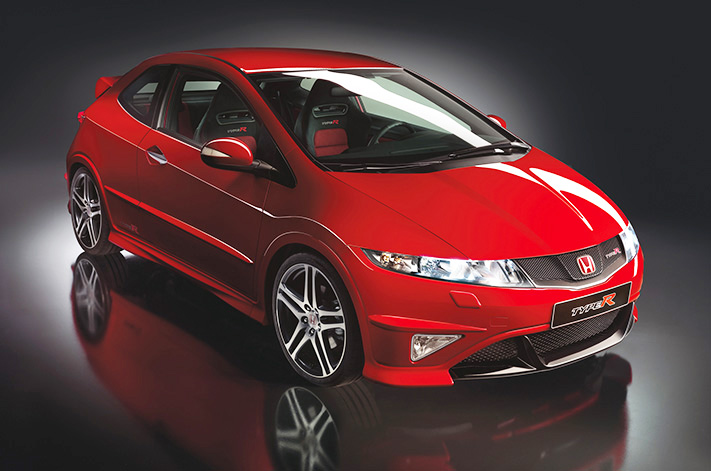
The eighth-generation Type R isn’t the most sought-after among Honda fans, with a switch to ‘simpler’ torsion beam rear suspension seen as a backwards step compared to its double-wishbone predecessor.
That ignores the fact that Honda tuned the eighth-gen to be a Type R, and it joined notable cars like the Renault Megane RS in having absolutely excellent driving dynamics. It was also the last naturally aspirated Type R, cementing its place in history.
Lexus IS F
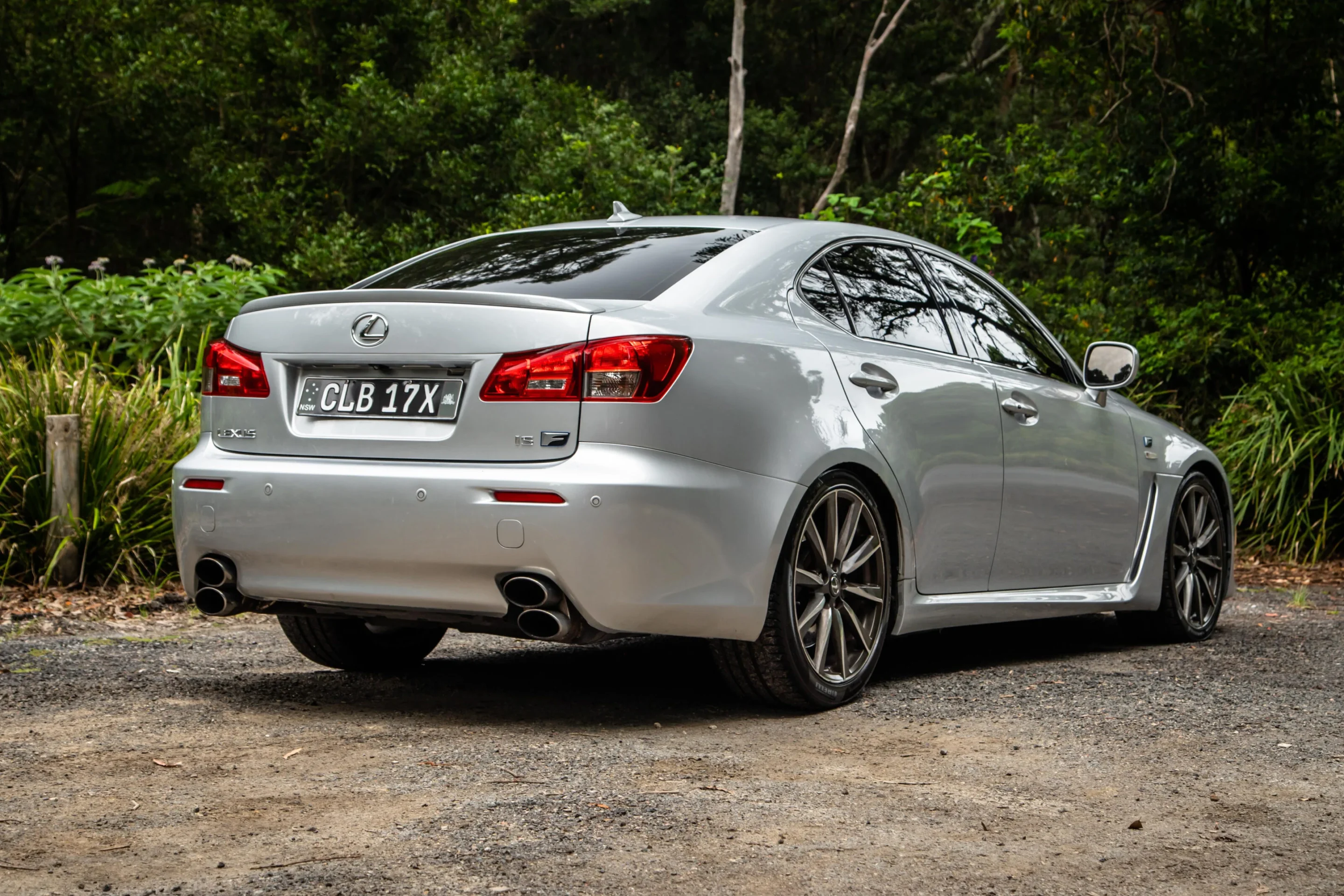
The Lexus IS F flew under the radar when it arrived. It wasn’t considered as evocative or capable compared to the might of AMG and BMW’s M range. Of course, the no-compromise approach to Lexus development meant that the 5.0-litre engine was one of the most praiseworthy in its class.
Appreciation for this model is already taking hold. They’re not as common as their rivals, and not as cheap as some of the other cars on this list, but they offer a gateway into a solid vehicle you could potentially enjoy today without breaking the bank on upkeep as values head north.
Mazda NC MX-5
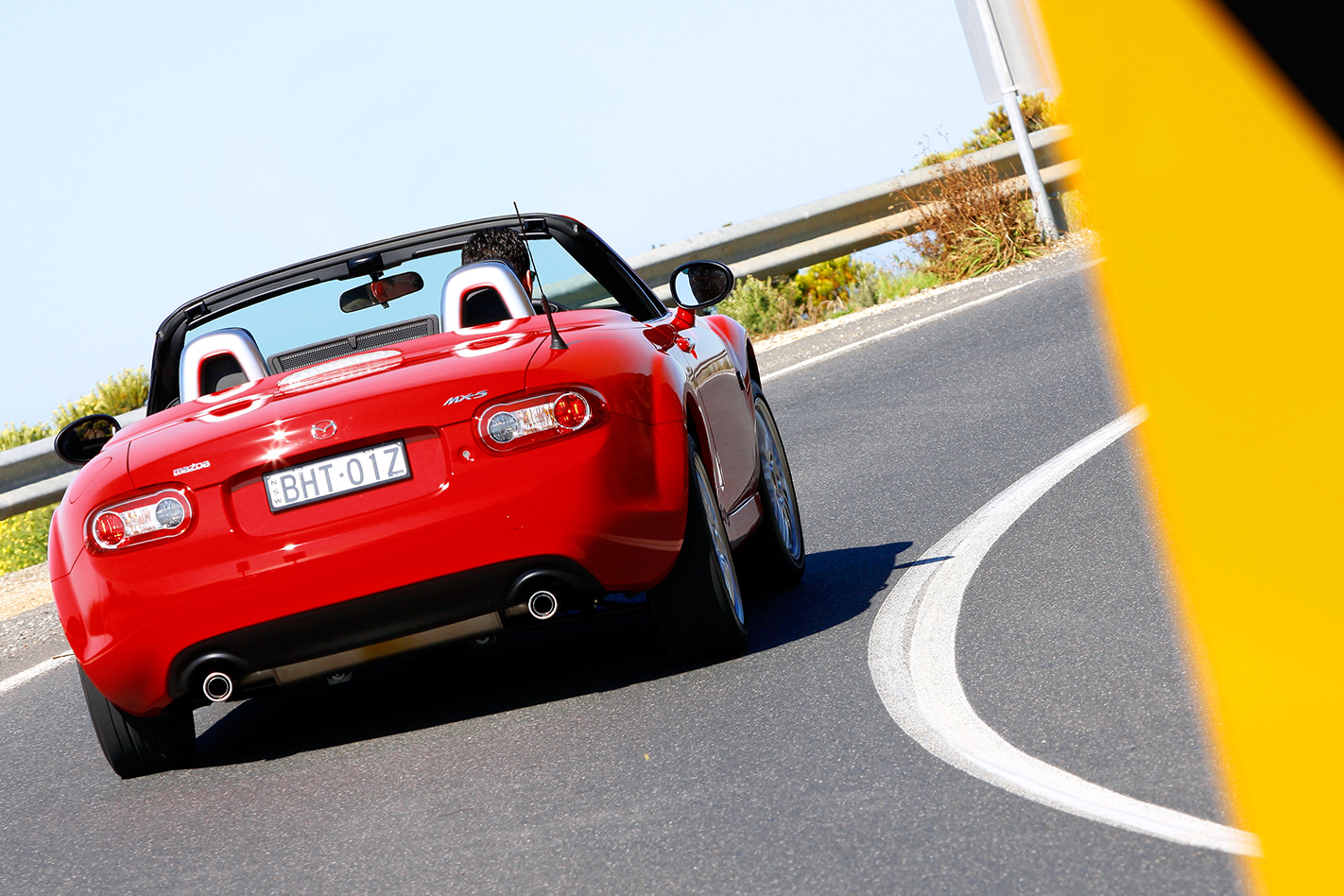
The best thing about the Mazda MX-5 is that no MX-5 is a bad MX-5. On the enthusiast scale, the NC is often seen as a low spot, but even then, it hardly disappoints. Right now the market is hungry for the NA and NB generations, making the NC a great buy-in model.
Look out for special editions over the model’s lifespan, and a couple of interesting specification choices in terms of colour and trim. A car with two-tone trim or a tan roof will be sure to spark interest years from now.
Volkswagen Golf GTI manual
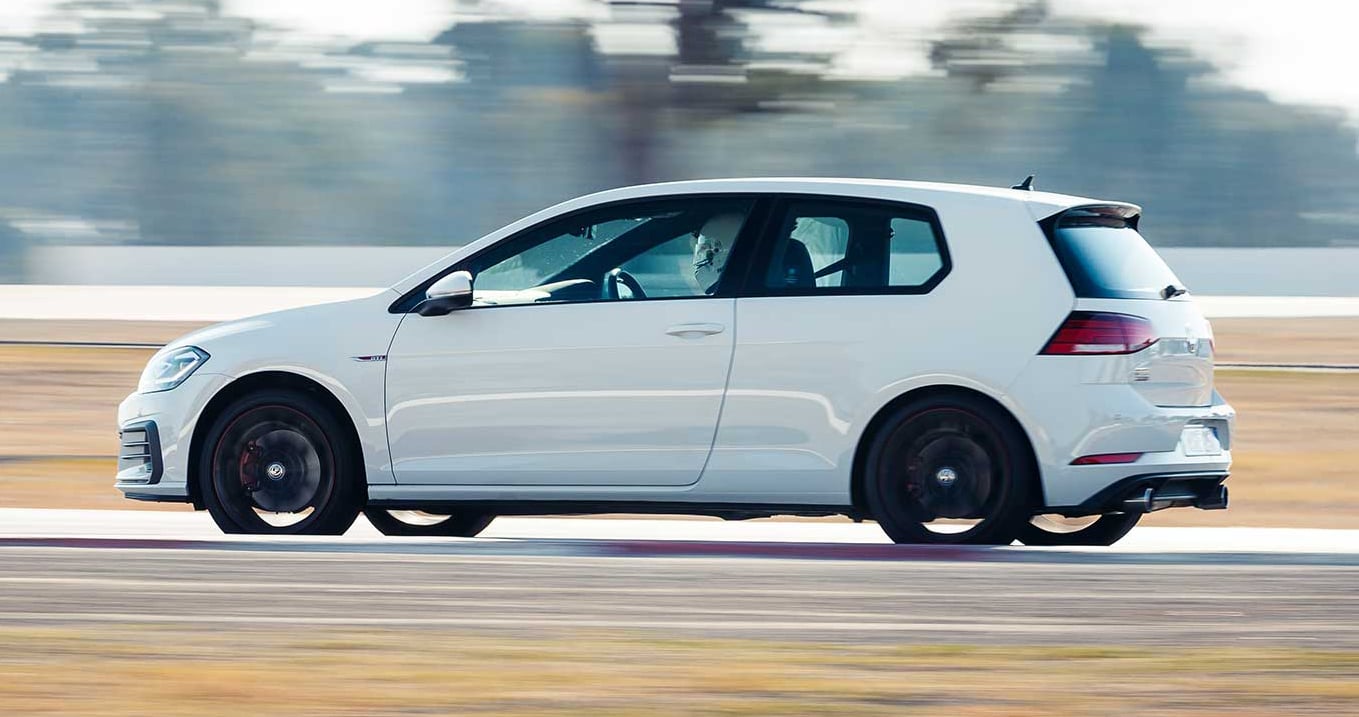
They really don’t make them like they used to. In the case of the Volkswagen Golf, that means a three-door body and a manual transmission. The Mk6 and Mk7 generations offered both features, which VW has since abandoned, so chase them. In a positive sign, manual Golfs are already starting to command a premium over their auto equivalents.
A five-door wouldn’t be a bad buy either, but the holy grail could be the Mk7.5 GTI Original – three-door, manual and with less equipment but a closer link to the GTI’s hot hatch past.
THE BMW E36 M3 was a better car than its legendary E30 predecessor. The reason for this is the very reason why it was slated at the time. Unlike the box-arched E30, which launched in 1986, the 1992 E36 wasn’t a car homologated to go racing. It was instead the M3 that BMW wanted, rather than what an arcane set of racing regulations dictated, and it was absolutely and unquestionably a better road car for it.
This proposal might sound sacrilegious to many M fans, who will launch into a spittle-flecked tirade about M standing for Motorsport, conveniently ignoring the fact that the car that arrived before the E30 M3, the E28 M5 of 1984, never turned a wheel in anger in competition.
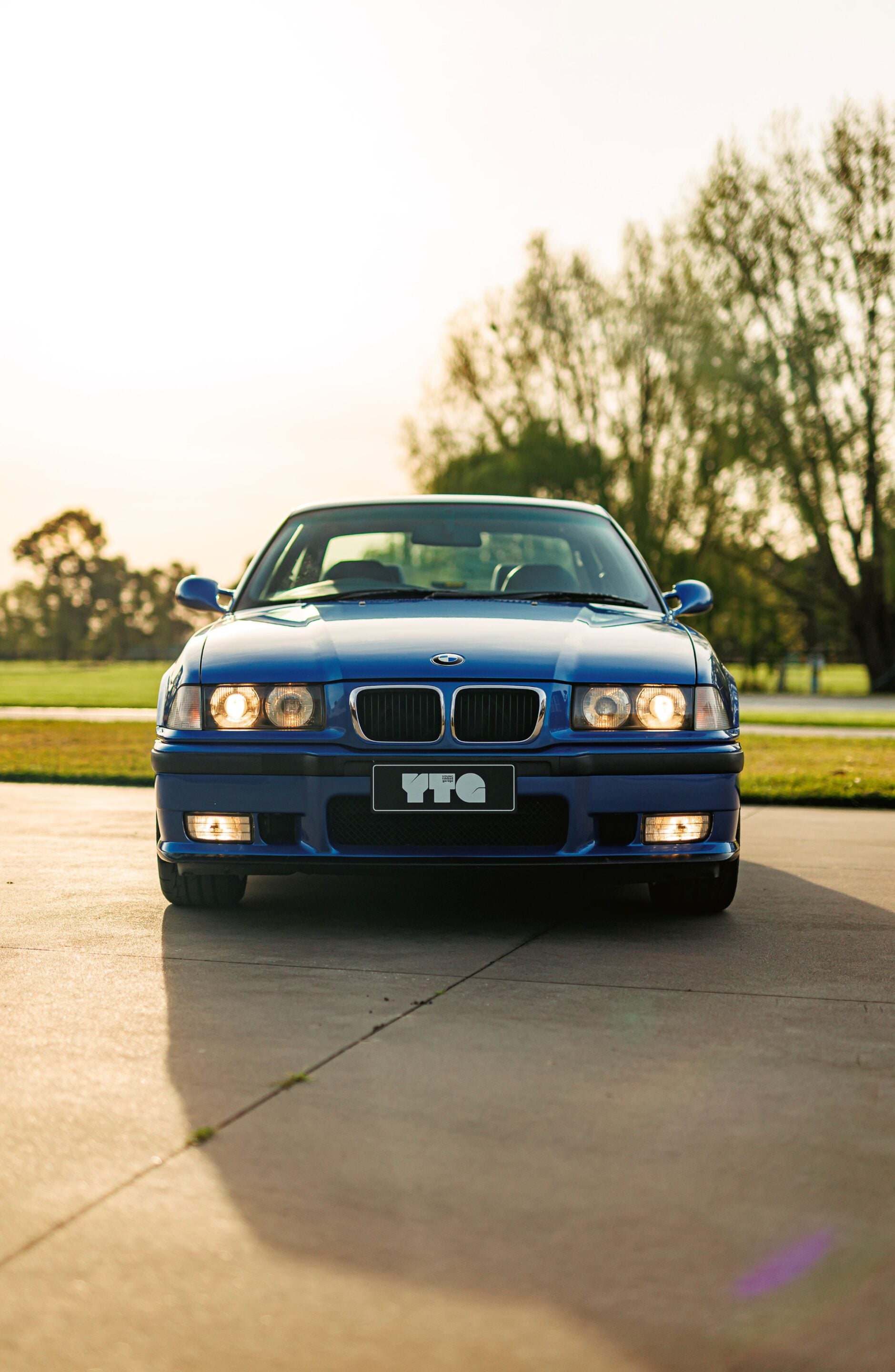
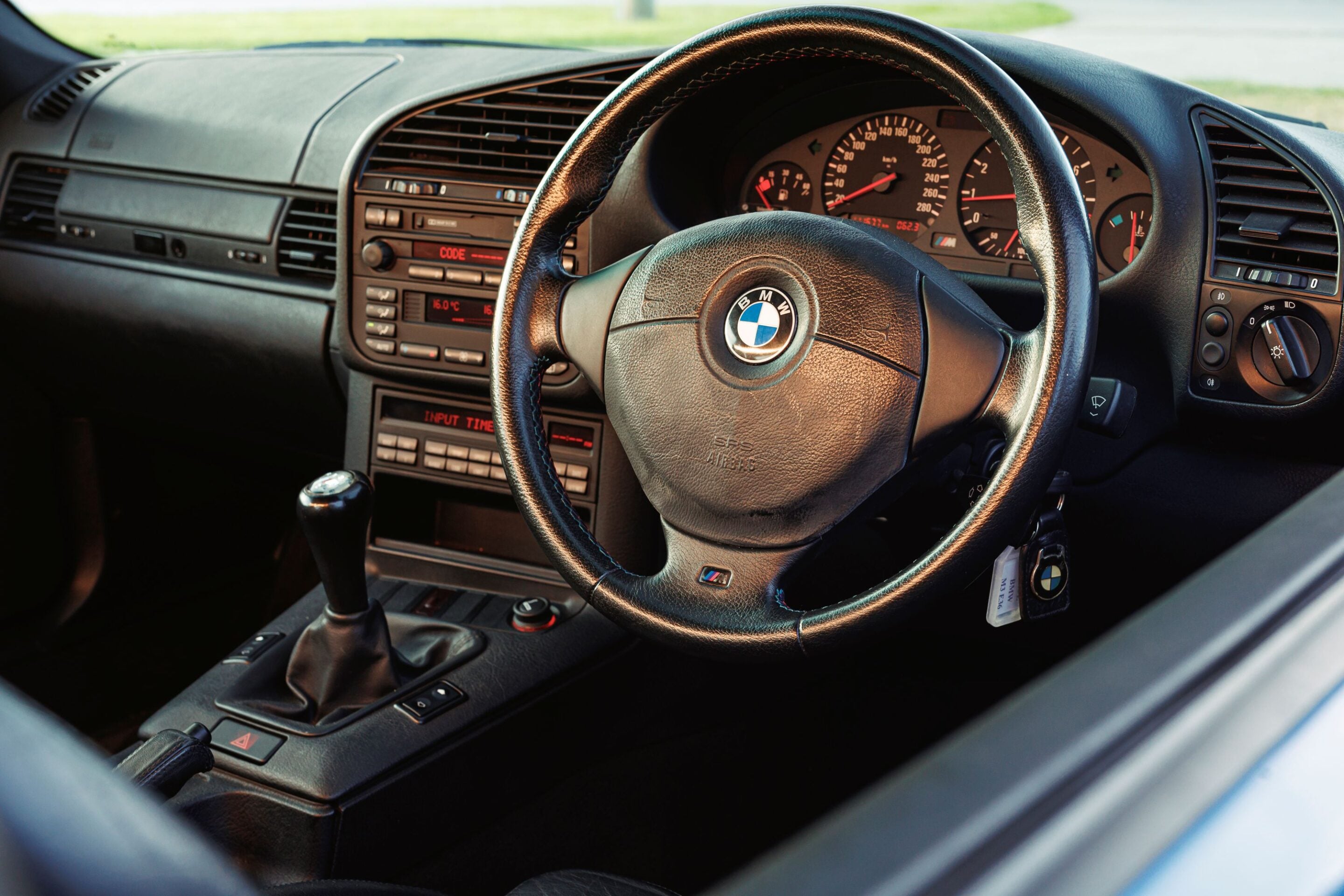
Boiled down, the E36 M3 coupe was a sublime selection of ingredients. The launch car weighed 1457kg or, if you prefer, less than a modern Hyundai i30 N hatch. It featured a naturally aspirated 3.0-litre straight-six engine that was a pure piece of exotica and, before that trope rears its head, no, it absolutely was not half of a McLaren F1’s V12. It was independently suspended all round, drive went to the rear treads only, it was offered solely with a five-speed manual transmission and, at the time, it was one of the fastest point-to-point production cars money could buy.
That sounds like hyperbole, given that power output was 210kW, modest by today’s standards, and required you to wind the tacho needle right round to 7000rpm to plunder said power. Still, 20 percent more displacement than the final E30 thanks to 50 percent more cylinders, saw power increase by 20 percent. Law of diminishing returns and all that.
As with most rapid product pivots, reviewers initially came away a little confused. BMW had spent years looking forward to where it wanted the M3 to be, and we all got into the car and looked back at the E30. Some commented that this new, more civilised thing didn’t merit the M badge at all, that it was more of an executive express, again choosing to overlook the fact that, even on the final E30 Sport Evo III, the take rate of options like air-conditioning, electric windows, on-board computer, cruise control and uprated stereo was significant.
Once the concept of this more sophisticated and liveable car was cemented a little more clearly, it became apparent just how much of a leap ahead of its rivals the M3 was. Wheels first took delivery of one locally back in 1994, and we put it up against the Audi S2. It was a mismatch, the BMW beating the Audi on just about every measure. It ran through the 400m sprint in 14.1 seconds versus the Audi’s 15.8 and was even quicker than the box-fresh 993 generation of the Porsche 911 that we tested in the same edition of the magazine (14.4sec).
This was something we certainly weren’t accustomed to seeing. A BMW 3 Series taking down the trousers of the world’s greatest sports car? And for $55,000 less? Still, $124,650 wasn’t exactly loose change but it did buy you a car that was faster over the 400m sprint than any other car that we’d independently tested in the databank section of that March 1994 issue. Well, all bar the $235,900 Porsche 928 GTS.
“The people at BMW Motorsport want The Common Horde to know that they’ve been at work,” wrote Bob Hall at the time. “From the time the car comes to idle, it lets you know that it is capable of performing as marvellous a six-cylinder concerto as you are likely to hear in these highly regulated times.”
In contrast to the somewhat prescriptive handling of the Audi S2, the E36 M3 was a revelation. “The M3 was a lot more dramatic around DECA with throttle position allowing the driver to select just about any cornering attitude imaginable, although it was not that much quicker around the road course than the Audi,” he noted. Low-end turbo torque and all-wheel drive will always offer an advantage on a tight, point-and-squirt track like DECA.
BMW was pretty happy with what it had created. Gerhard Richter, the head of chassis engineering for the E36 line said: “Obviously the complete package was perfect. It had the power, the understatement, the comfort and potential for everyday use.” Humility maybe wasn’t Gerhard’s forte.
The key technical development with the E36 M3’s engine was the VANOS system (Variable Nockenwellen Steurung), a combined hydraulic and mechanical variable valve-timing system that operated on the intake camshaft. The M3 wasn’t the first BMW to use this system, as it was introduced to the public in 1992 on the 2.0-litre and 2.5-litre petrol versions of the M50 engine. This found its way into cars like the BMW 320i, 325i, 520i and 525i. Nevertheless, it was the first time variable valve timing had featured on an M car.
By today’s standards of continuously variable valve timing and lift, VANOS seems a bit rudimentary, but it was undeniably effective. In short, VANOS operates on the intake camshaft using cues from engine speed and accelerator-pedal position. At low revs, the intake valves are opened later, which improves idling refinement. At mid-range engine speeds, the intake valves open earlier, boosting torque and permitting exhaust gas re-circulation inside the combustion chambers, benefiting fuel consumption and exhaust emissions. At the top end, the intake valve opening is again delayed, so that full power can be realised.
When idling, the cam timing is retarded. As the throttle moves off idle, the engine computer activates a solenoid that allows oil pressure to move a little cup gear that advance the cam by 12.5 degrees at mid-range, and then at around 5000rpm, it reverts back to the original position. The slight rattle of a healthy VANOS system is the result of manufacturing tolerances that allow a sprocket to move slightly as the cup gear engages and disengages.
As owners later found out, lots of rattling is undoubtedly a bad thing. If the VANOS system sounds like marbles in a can, it’s usually the result of water in the helical gears. Solenoid seals can also leak. A new VANOS system is extremely expensive from BMW, but independent BMW specialists will be able to replace the solenoid seals for around $800.
By today’s standards, those early E36 M3s are intriguing cars to drive. The VANOS system worked well in broadening the spread of torque, and there’s not that binary feel you got with early iterations of Honda VTEC or Toyota VVT. The car feels light and small, although it’s hampered by slow steering, an issue that many owners rectify by fitting the quicker steering rack from the Z3. The suspension can feel baggy if not maintained properly. Bushings and ball joints are not non-service items. Rear damper mounts can deform and reinforcing plates to beef these up are a common retrofit.
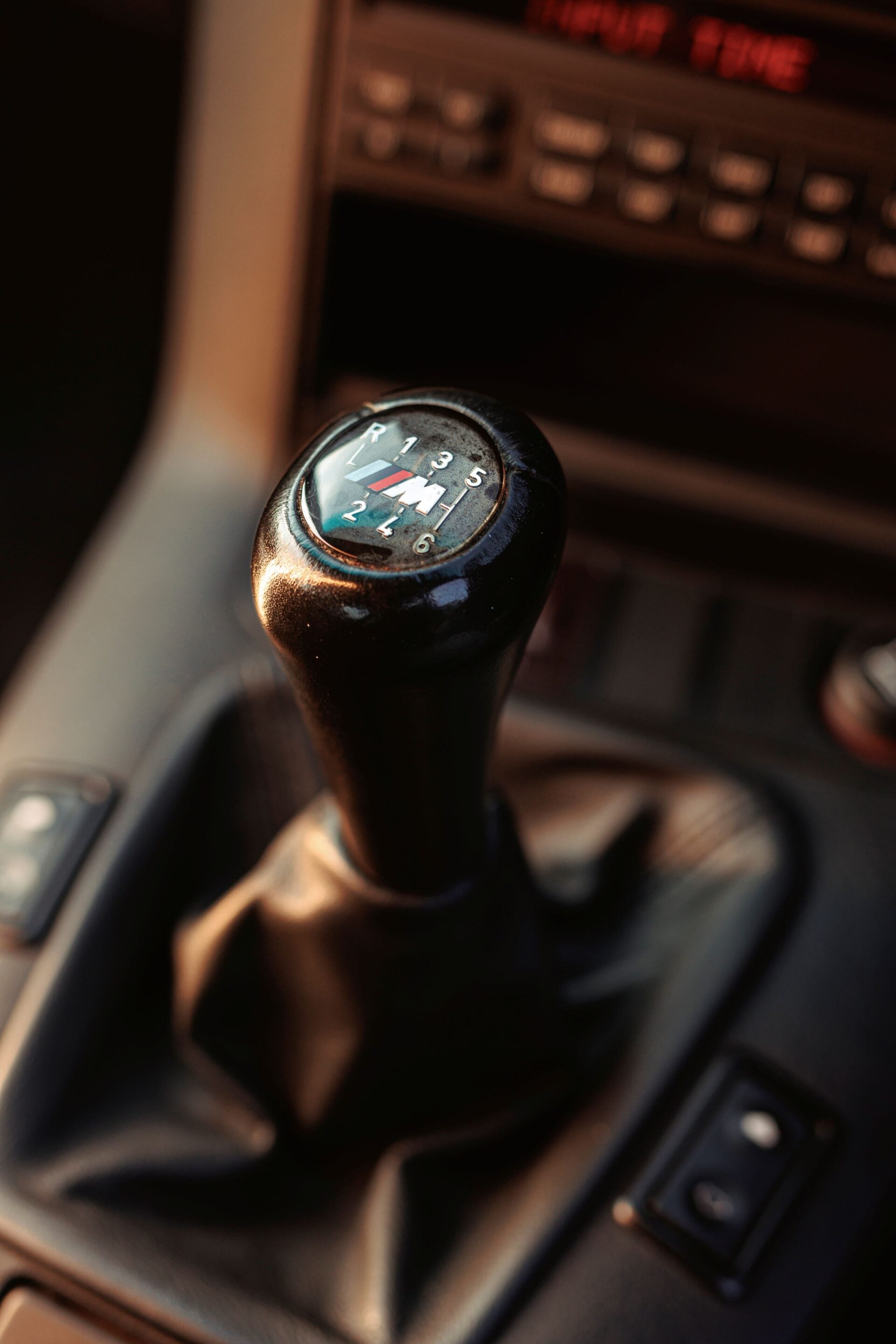
A well-sorted early E36 M3 is still an absolute blast to drive. Transition from grip to slip is a little more abrupt than in many modern cars, but visibility out is better and there’s a beautiful linearity to the controls. The five-speed ’box is a delight and the brakes are perfectly adequate for road duties, although can wilt under prolonged track use. BMW added a convertible M3 in mid-1994 and then a sedan version in December ’94 to fill the gap between the end of the E34 M5 in 1995 and the introduction of the E39 M5 in 1998. With leather seats and wood dash finishes, the sedan was a bit of a sleeper and enjoys a minor cult following today.
Better was to come though. In 1995, BMW updated the E36 M3 to the Evo version, upgrading the engine from the single-VANOS 3.0-litre S50 to the 3.2-litre double-VANOS S52. This now featured variable valve timing on both intake and exhaust valves, allowing for continuously variable timing. BMW claimed that an engine equipped with a double-VANOS system reaches peak torque 450rpm earlier, while the power peak is 200rpm higher than an equivalent engine with a single-VANOS implementation. What’s more, the torque curve is beefier between 1500 and 3800 rpm, holding stronger for longer beyond that point.
While it was a more complex engine, the S52 was more driveable. You may well have heard that despite boasting a claimed 236kW to the earlier car’s 210kW, many S52s dyno at not dissimilar power outputs to S50s, and that is indeed often the case. However, the combination of that broader and deeper well of torque and the fitment of a six-speed manual transmission rather than a five-speed means that going faster is just easier with one of the later cars.
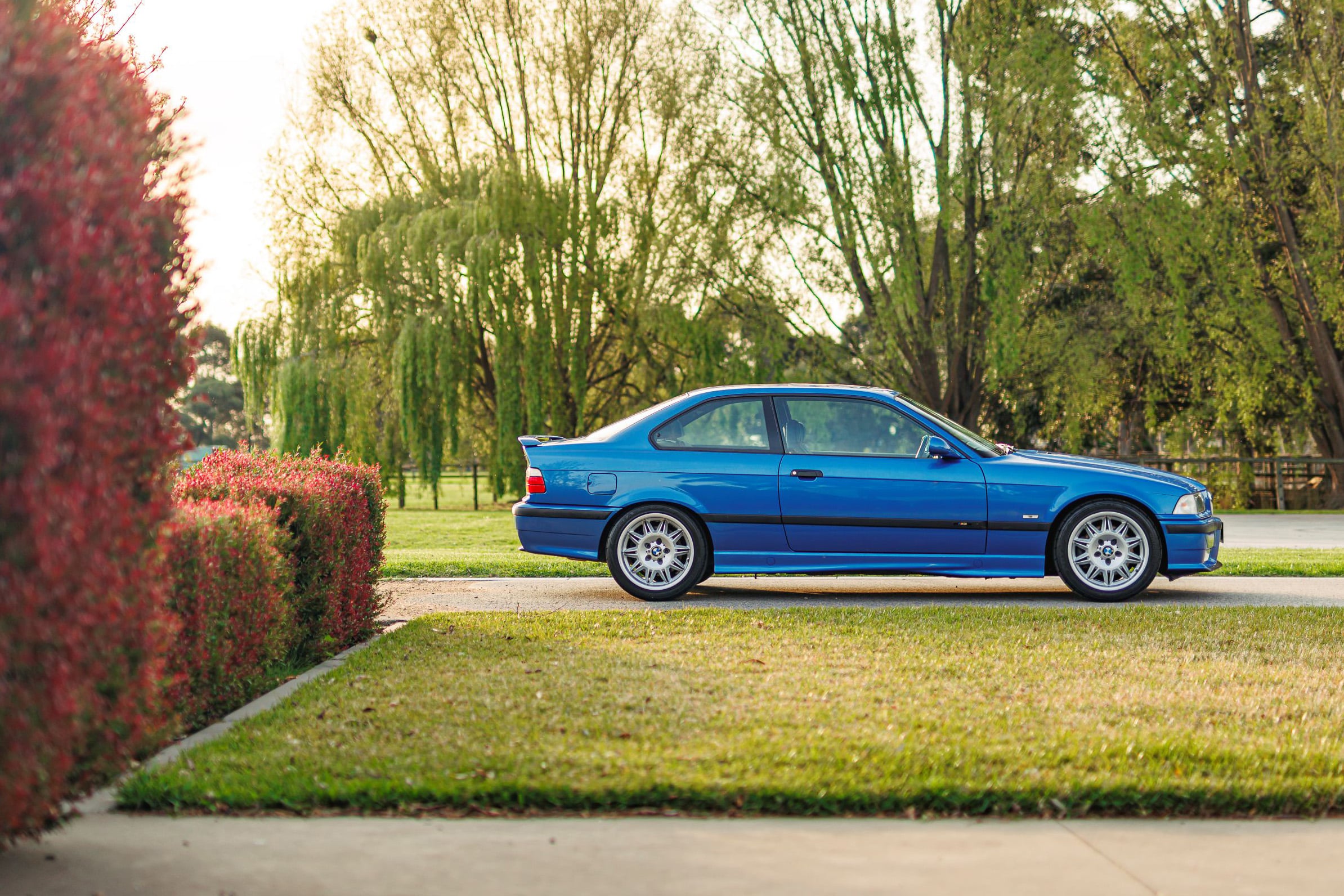
As well as the mechanical upgrades, the E36 M3 was treated to a mild facelift, with clear indicator lenses appearing as well as updated alloy wheel designs. My favourite was the Style 24 which also found its way onto the US-market E36 LWT, a 1340kg limited edition.
Ah, yes, the US. For a long time the US was denied the E36 M3, and could only read the road tests and sigh, because it wasn’t earmarked for import. Put simply, it was too expensive, and BMW projected meagre annual sales of around 50-100 units per year if it arrived wearing its expected $55K sticker price.
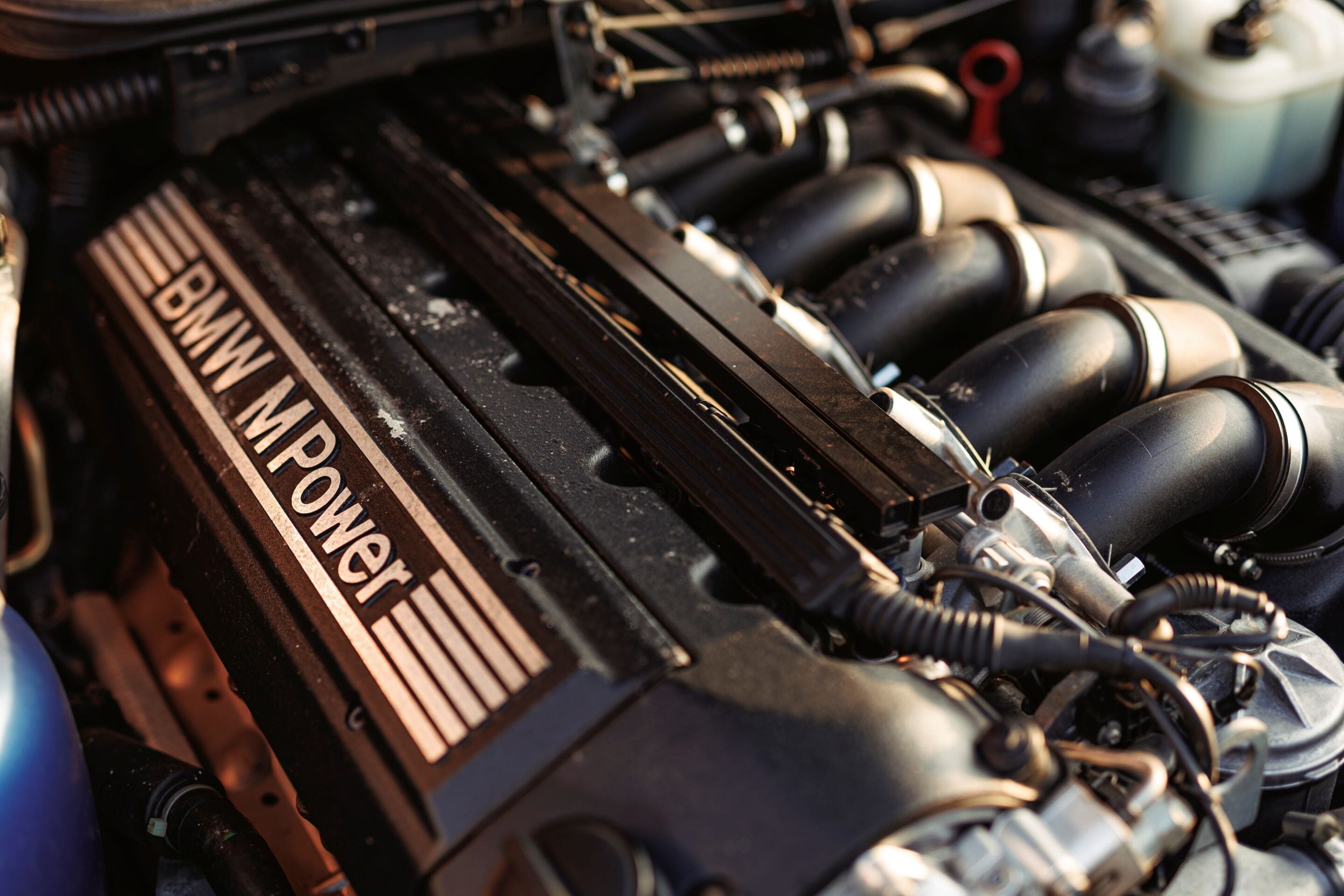
BMW had been burnt by slow sales and lingering unsold stock of the E30 M3, an expensive car that never gained significant traction with American buyers who didn’t see the value proposition in a four-cylinder car that delivered less power than a C4 Corvette at much the same price. So, in a move of admirable pragmatism, Eric Wensberg, BMW North America’s first M brand manager, came up with a proposal. How about junking the expensive engine and instead fitting a 3.0-litre evolution of the 325i’s straight six?
If the car could be sold at around $35,000, Wensberg knew he’d have a winner on his hands. And so it proved. BMW M did the work on the M50 engine, increasing capacity and fitting more aggressive cams to net 179kW. With lower costs, easier maintenance and a smaller performance gap than is generally appreciated, Wensberg’s prediction proved correct. Canada worked out a loophole to get the full-strength Norwegian-spec M3. At $45,000 USD equivalent, they sold 42 of these stripped-out specials. By contrast, in the first full year on sale in the States, BMW shifted 5800 of the lower-powered M50-engined cars at $35K.
It featured on Car and Driver’s Ten Best list every year it was produced and also won every single comparison it was ever pitched into by that title. Won ‘em all here at Wheels too. After the 3.0-litre car dusted down the Audi S2, in June 1996 we put the 3.2 Evo up against the Nissan R33 GT-R and the HSV GTS-R. Paul Cockburn declared the BMW the finest car he had ever driven and that it won his vote by a country mile, while Michael Stahl concluded the piece by praising the M3’s well-rounded skillset. “And the BMW you could live with all the time,” he said. “Competent on the racetrack, and complete on the road, in the brilliant M3 you’re never merely wingin’ it.” And before you ask, yes, this 3.2-litre car tested slower than the old 3.0-litre across 400m (14.3sec versus 14.1).
The final, and perhaps toughest, face-off for the E36 M3 in Wheels came in June 1998. Fresher opposition had appeared in the form of Audi’s all-wheel-drive S4 and Mercedes-Benz’s formidable V8-powered C43 AMG. Peter Robinson noted that: “If you demand supercar performance, a car to make your heart skip a beat, combined with a sharply focused sporting character, then the M3 is still the obvious and hugely enjoyable choice.” Some six years after its introduction, it retired unbeaten in these pages.
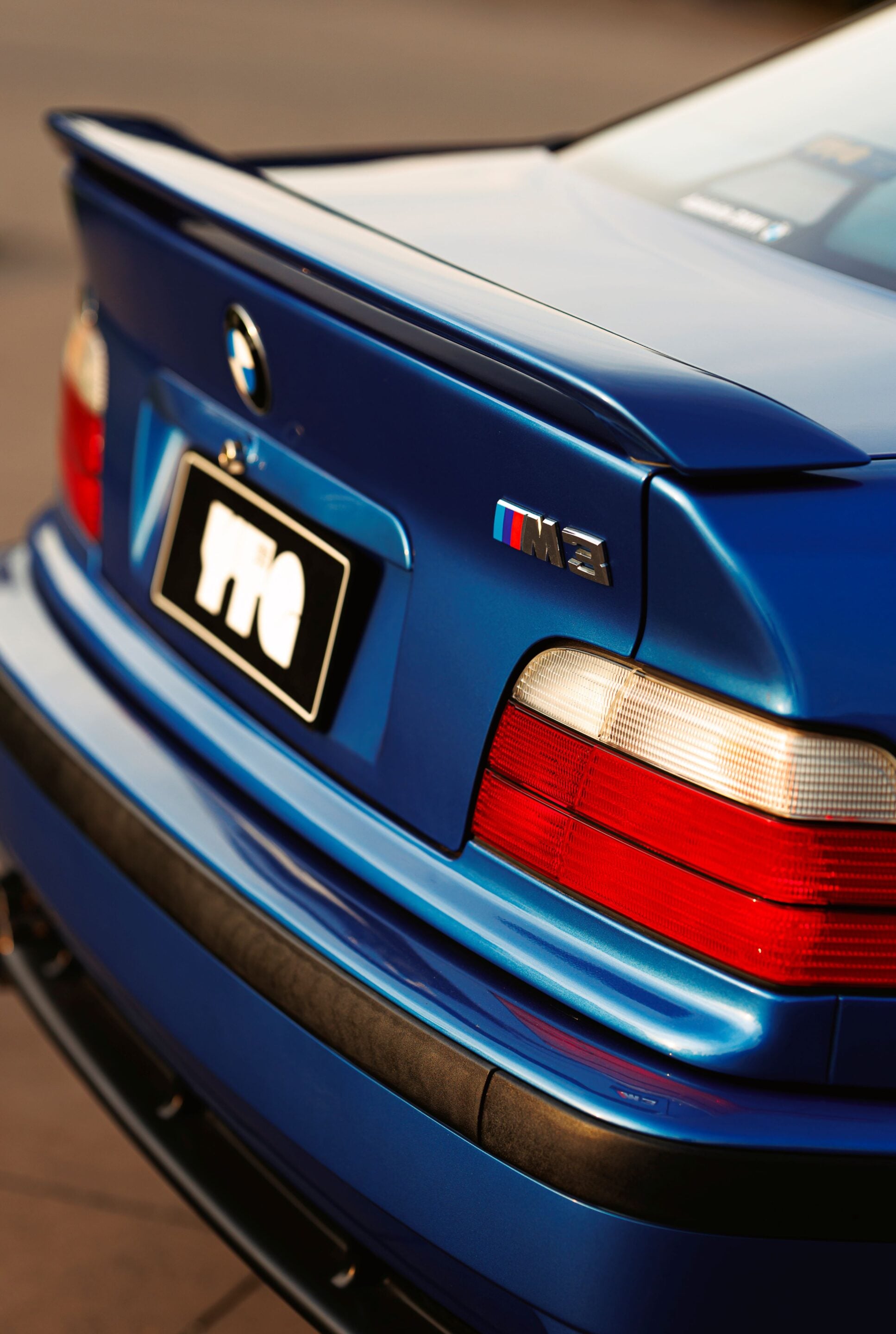
So why did the E36 come to have such an initially patchy reputation? It wasn’t so long ago that you could buy these cars for $15K but values have firmed and fast. Yes, everybody loved the E46 M3 that came next and, for a while, the E36 seemed the poor relation. It didn’t help that the interiors were fairly cheaply assembled and showed their age fairly quickly. Many cars fell into the wrong hands and were badly modified or thrashed.
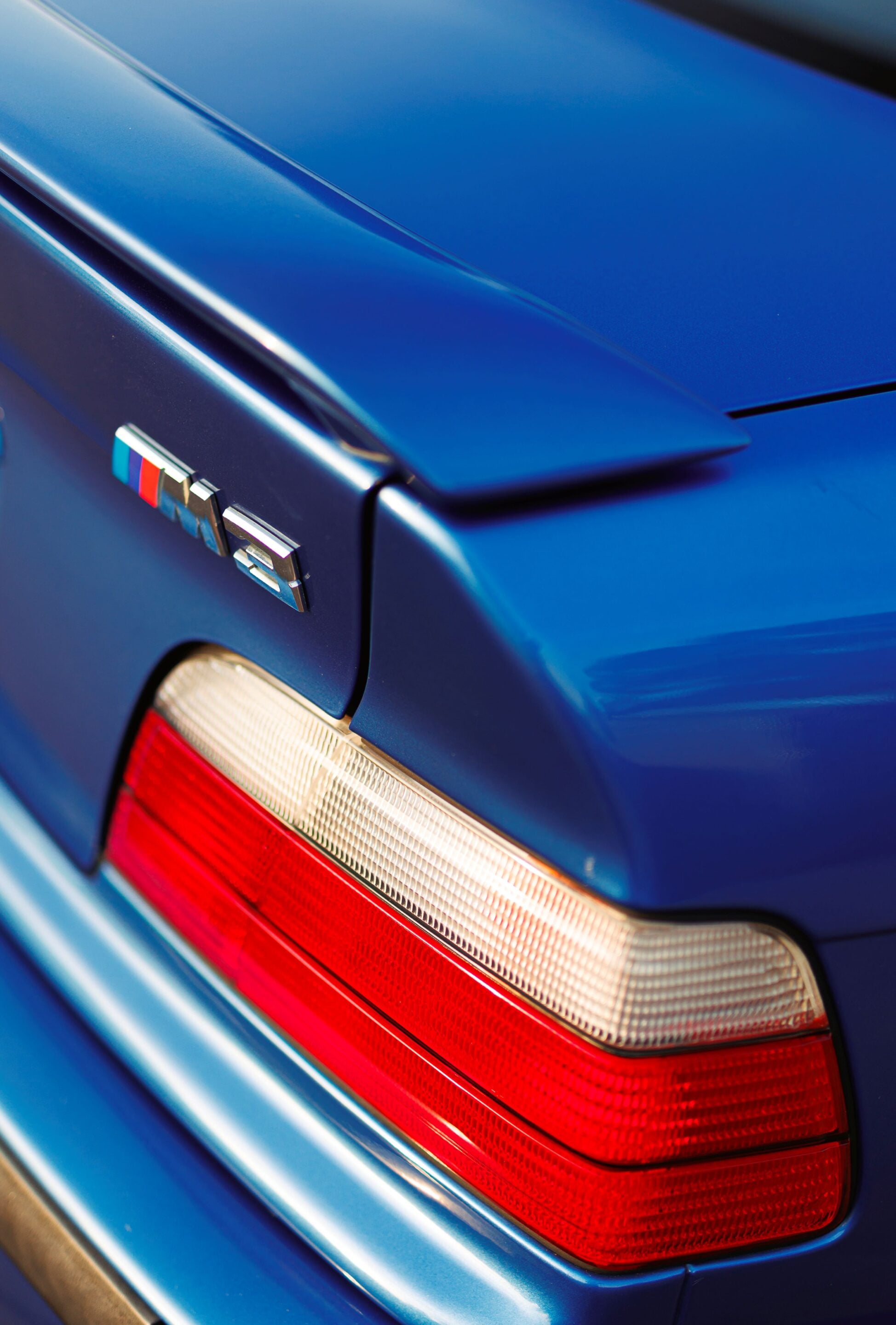
Of course, all that this serves to do is eventually drive up the value of cars that are genuinely well looked after, like the beautiful Estoril Blue 3.2-litre example seen here, supplied by Young Timers Garage.
Now, more than ever, we can appreciate Pinky Lai’s lightness of touch with the exterior design, or that this embodies so many of the elements that we pine for on a wish list from modern sports car manufacturers – light weight, a slick manual gearbox, great visibility, a characterful engine, a supple ride and no constant electronic intervention.
It’s taken us a quarter of a century to first forget and then fall in love once again with the BMW E36 M3. In truth, it probably deserved better, but we suspect that, finally, its legacy is secure.
Specs
| Model | BMW E36 M3 Evo coupe |
|---|---|
| Engine | 3201cc 6cyl, dohc, 24v |
| Max Power | 236kW @ 7400rpm |
| Max Torque | 350Nm @ 3250rpm |
| Transmission | 6-speed manual |
| Weight | 1460kg |
| 0-100km/h | 5.1sec (tested) |
| Price | from $55,000 |
This story first appeared in the November 2024 issue of Wheels magazine, now on sale. Subscribe here and gain access to 12 issues for $109 plus online access to every Wheels issue since 1953.
