
A female racing driver with the name Dominique Chaleyer (pronounced ‘shallay-yeah) sounds like someone who raced, say, at Le Mans in the 1930s in an Alfa Romeo 6C 1750. In fact, Dominique Chaleyer is racing in Australia today, albeit in a suitably romantic 1965 Alfa Romeo Giulia Sprint GT in the popular historic Group S series.
“One of my heroes is Hellé Nice,” says Dominique, 33. “She was a very prominent racer in the early 1930s; there’s a terrific book about her called The Bugatti Queen. In fact, I’ve got a tattoo of her.”
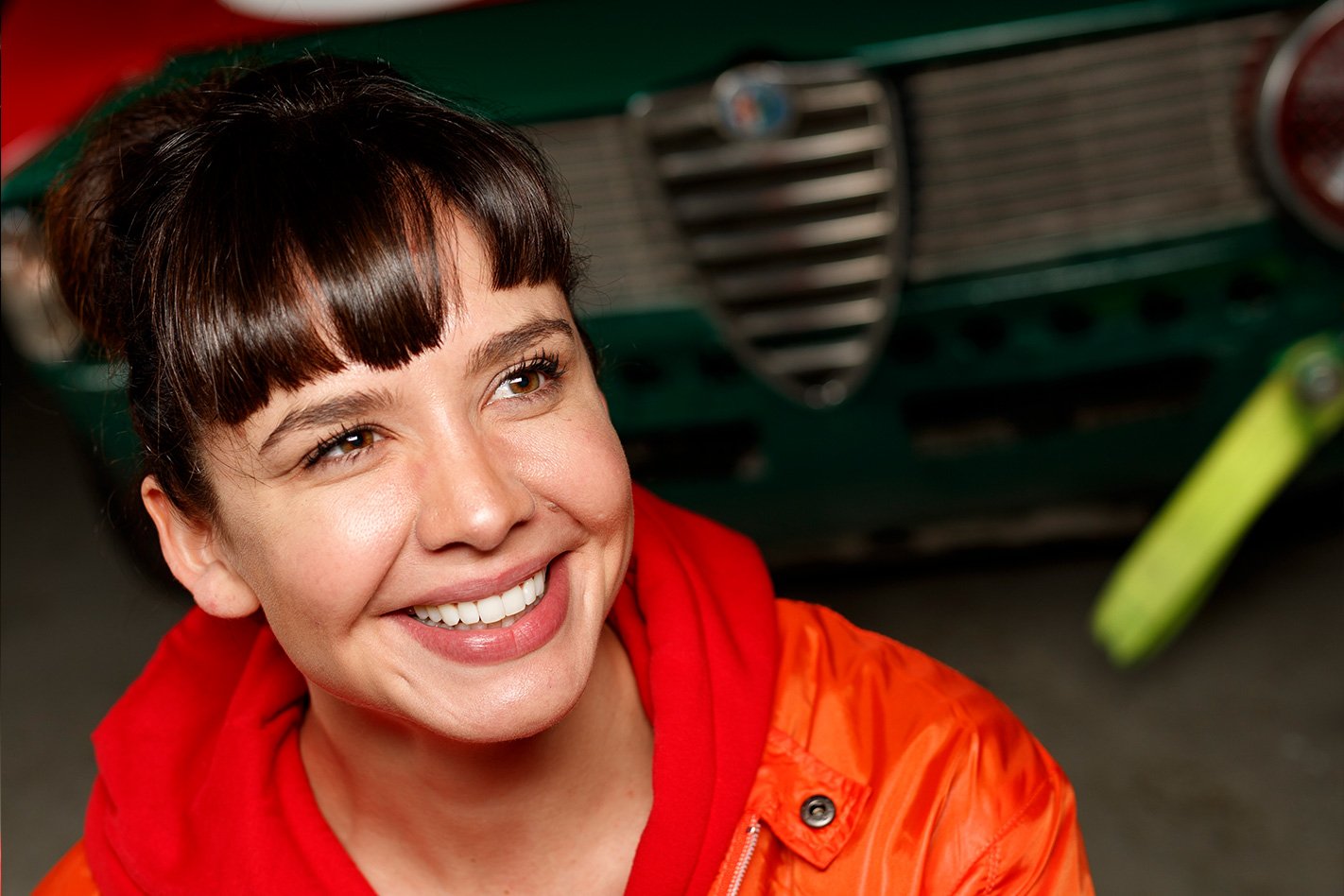
Dominique’s steeped in exotic high-performance and collectible cars too, as former media and digital marketing manager for the world-renowned Dutton Garage emporium in Melbourne.
Chaleyer was to the spanner born. Her father, Paul, is a long-time classic car racer and well-known proprietor of classic-car workshop, Historic and Vintage Restorations. “[HVR] was intended to be a kind of retirement hobby-career for dad,” says Dominique. “He’s been doing it for more than 15 years and it’s probably the most full-blown job he’s ever had.”
For Paul, those jobs included co-founding (in 1975) Melbourne bicycle shop The Freedom Machine, then becoming a publican, then telecommunications. The latter took the young family for six years to Pakistan, India, then Saudia Arabia, where Dominique completed primary school.
“In 1991, after the Gulf War, we came back,” she says. “My brother, my sister and I had strange accents. Some of the school kids I’d grown up with said, ‘Oh, our mums told us that you were dead!’”
The car bug had clearly bitten Dominique by age 14, when she took a part-time job at a bakery to start saving for her first car a couple of years later. “I was desperate to buy a Datsun 240Z, and I’d found one, and I had the money for it. Dad said: ‘There’s no way you’re buying that, it’s a hoon car.’ Today, knowing the value of 240Zs, he says to me, ‘You should have told me to eff-off and bought it anyway.’”
Instead, she bought a 1985 Alfa Romeo Giulietta 1.8. “It was silver, with a tweed interior, the wood-rim wheel. I got it for $500. I bashed around in it for two or three years, then sold it to a guy for $500. I thought I was the best businesswoman ever.”
Her career actually started with media studies. “I’ve worked in TV, film and special events in Melbourne, Sydney and Dubai … I spent about a year and a half in Dubai, which is a year and a half I wish I had back.”
At 25, Dominique took over her brother’s former “university ride”, the ’65 Giulia Sprint GT. “It had kept breaking down, so it got parked … Until I decided I wanted to be really responsible, and put my life’s savings into racing a car. I was hell-bent on doing it.”
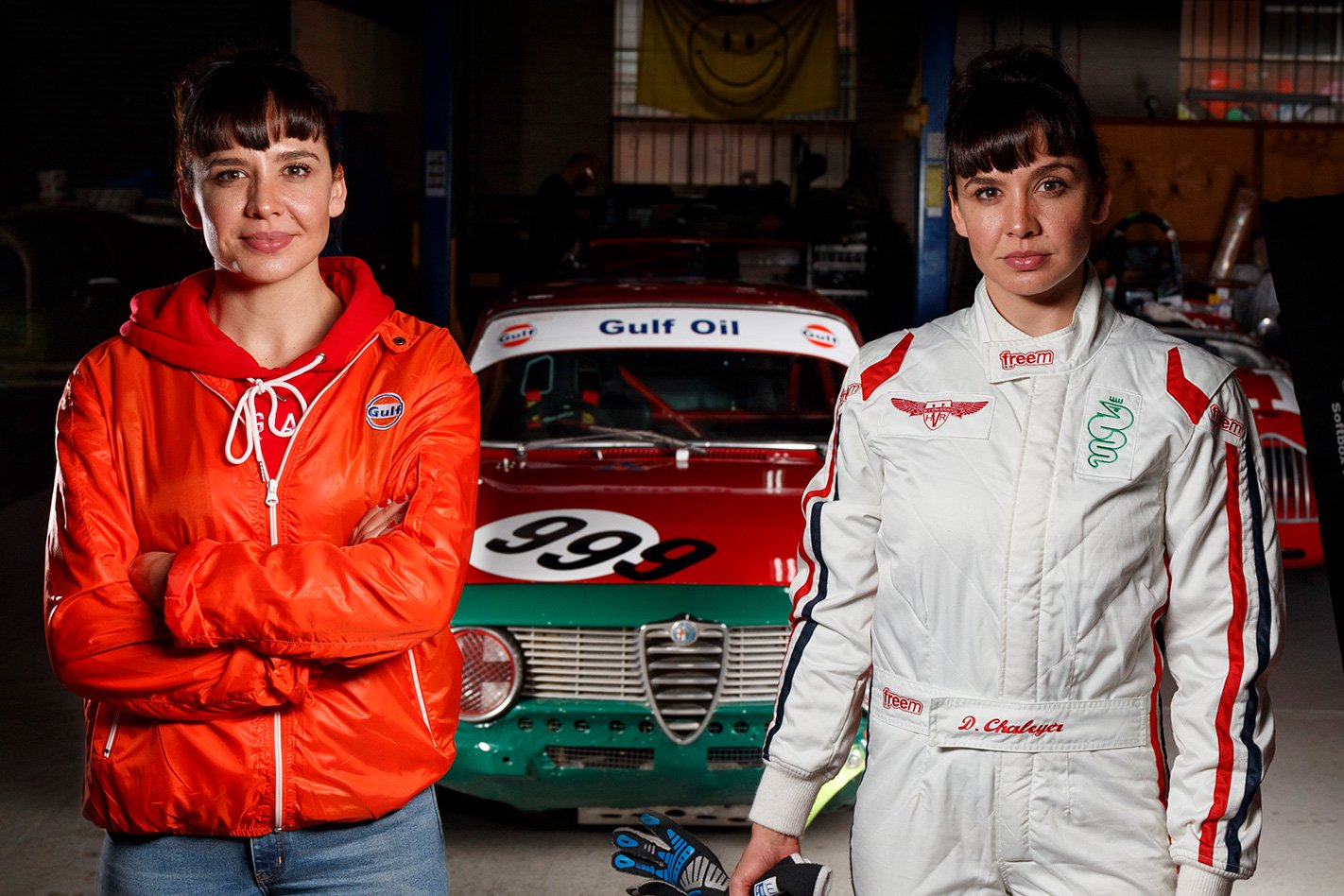
Dominique’s career then detoured into HVR, looking after media and marketing and running the workshop. “At that time, I put a lot of hours into building the race car with dad, and that’s where I learned about the mechanics of my car. I learned about racecraft as well.”
Some early competitors’ ideas of racecraft seemed rooted in the 18th century. “One guy said to me, ‘I can’t wait to watch you roll your car because you’re too busy painting your nails’. To which, I probably raised a middle finger – perfectly painted.
“I had a lady ask me just over the weekend, ‘Oh, will you be competing against other females?’ There were two other females on the track, but motorsport isn’t gender-based – and it doesn’t need to be. I’m kind-of squirmy about things like ‘Ladies Trophies’ and things like that. I want to be considered for all the trophies, not just one.”
’Til defender do we part
Dominique Chaleyer has a host of classics lined up for her online video series What’s Driving Dominique. Her own garage of just two cars is barely less eclectic: her 1965 Alfa Romeo Giulia racer, and a 2010 Land Rover Defender 90. “The Landy’s not the greatest car in traffic, but I love it. I was watching a James Bond movie and in one of the opening scenes, the chick is wrestling this Defender through some precarious location. I said to myself, ‘Oh my God, one day I have to have that car.’”
TELL ME ABOUT THIS CAR
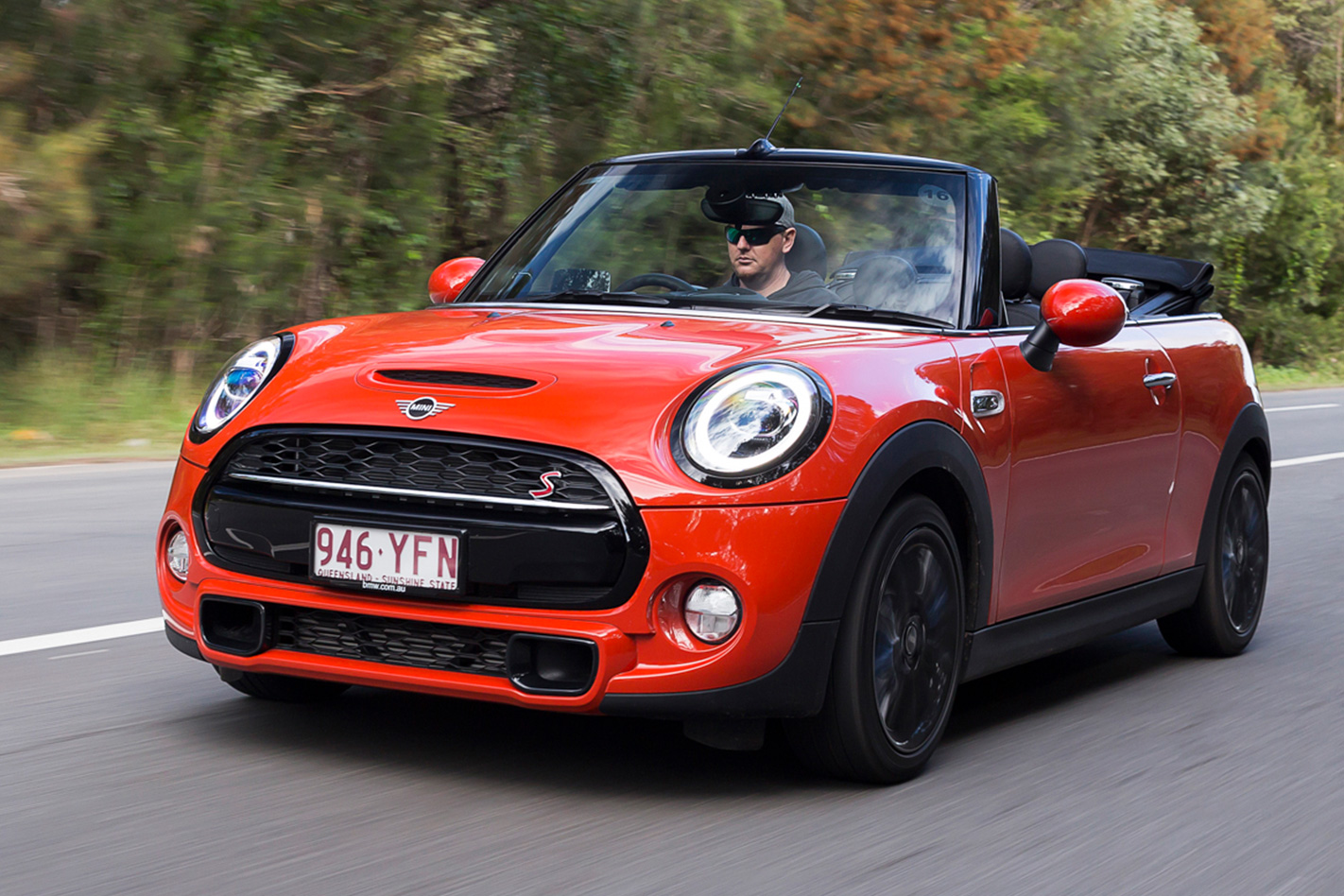
The “S” badge following the Mini’s name has traditionally meant the car that wears it belongs to a family of more exciting, driver-focussed versions of the iconic hatch and convertible range. Attaching it to the rag-topped Cooper Convertible hints that sun-seeking drivers can also relish in the heat of a warmed-over version of the lifestyle-focused four-seater.

STRENGTHS
- This is definitely the driver’s version of the Convertible. The entry-level version of the cloth folding roofed Cooper uses the same 100kW/220Nm turbocharged 1.5-litre three-cylinder engine as the 110kg lighter three-door hardtopped version, which already feels slow. The Cooper S Cabriolet’s more meaty 141kW/280Nm does a better job of backing up the emotion of the design with performance to suit.
- It looks the same as before. Designers will often tweak the looks of a model as part of a facelift, but Mini has left this one pretty much alone, apart from some redesigned headlights and tail-lamps that feature on this car.
- It gets a better fuel gauge. One of the criticisms levelled at the model that precedes this version of the Cooper was that the LED fuel gauge inside the instrument cluster was too difficult to read. It’s now been lifted out of the cluster and given its own separate space outside, where it is much more visible.

- It drives like a Mini. Despite all the extra weight from the under-body strengthening to make the car flex less, the Mini Cabriolet shucks off many of the drop-top foibles such as excessive body shake over rougher sections of road, or body twist while cornering. Yes, there are signs of both, but they’re very well controlled. It is also heaps of fun to chuck into a corner.
- The exhausts pop and crackle in Sport mode. Back off the accelerator pedal a bit to slow down and the Mini will turn up the aural theatre. Roof down, it sounds amazing.
- The Mini Cooper range now comes standard with wireless Apple CarPlay support, with no more to pay. Mini’s German owner, BMW, still charges most customers to add it to their cars.
- If you like your technology, Mini is right into it. There’s smartphone connectivity available that will let you do things such as heat the interior before you leave the office or check fuel levels, as well as optional extras such as RFID tags that will alert you that you’ve left the bag it is attached to in the car.

WEAKNESSES
- The roof takes 18 seconds to go up and down, which is a long time in traffic. It’s fine if you start your trip in the driveway, but if you’re going to drop or reinstate the cloth roof on the fly, plan ahead. It will work at speeds of up to 30km/h, so you can crawl along in traffic if the lights go green halfway through the process.
- The Mini’s interior isn’t quite as good as the exterior. The trim is flush with hard plastics that don’t quite give the premium feel to back up the sharp-looking outer skin.
- Ergonomics are poor in the front seats. There’s little small-item storage, the long doors make opening one in a shopping centre car park a chore, and the cup holders render what little space is available to stash gear inaccessible if both are in use.

- Space is very limited in the rear seats. This generation of Mini added more rear-seat legroom as part of its generational leap, but it’s still very tight in the back, especially for knee room.
- Fuel use has improved by 0.1L/100km, which isn’t much considering the Cooper S Convertible has gone up in price. Some of the changes we see here are in response to more strict European emissions standards that kick in later this year, so there’s a little bit of box-ticking going on.
- As well as a “Sport” mode, the Cooper S also has an “Eco” mode. All it does is dull the throttle and hold gears for longer, turning a super-fun drop-top into a drowsy drop-kick.
ANY RIVALS I SHOULD CONSIDER?
The Audi A3 Cabriolet and the Fiat 500C spring to mind, although one is quite expensive and the other … well, if you thought the Mini Cooper was challenged for space.
The hottest Hyundai ever is a total bargain on paper.
This track review was carried out in conjunction with MOTOR’s Bang For Your Bucks 2018
For $39,990 you get 202kW and 378Nm from a 2.0-litre turbocharged inline-four, 19-inch wheels, adaptive dampers, a tricky electronically locking front differential and all the exhaust pops and bangs you could ever ask for.
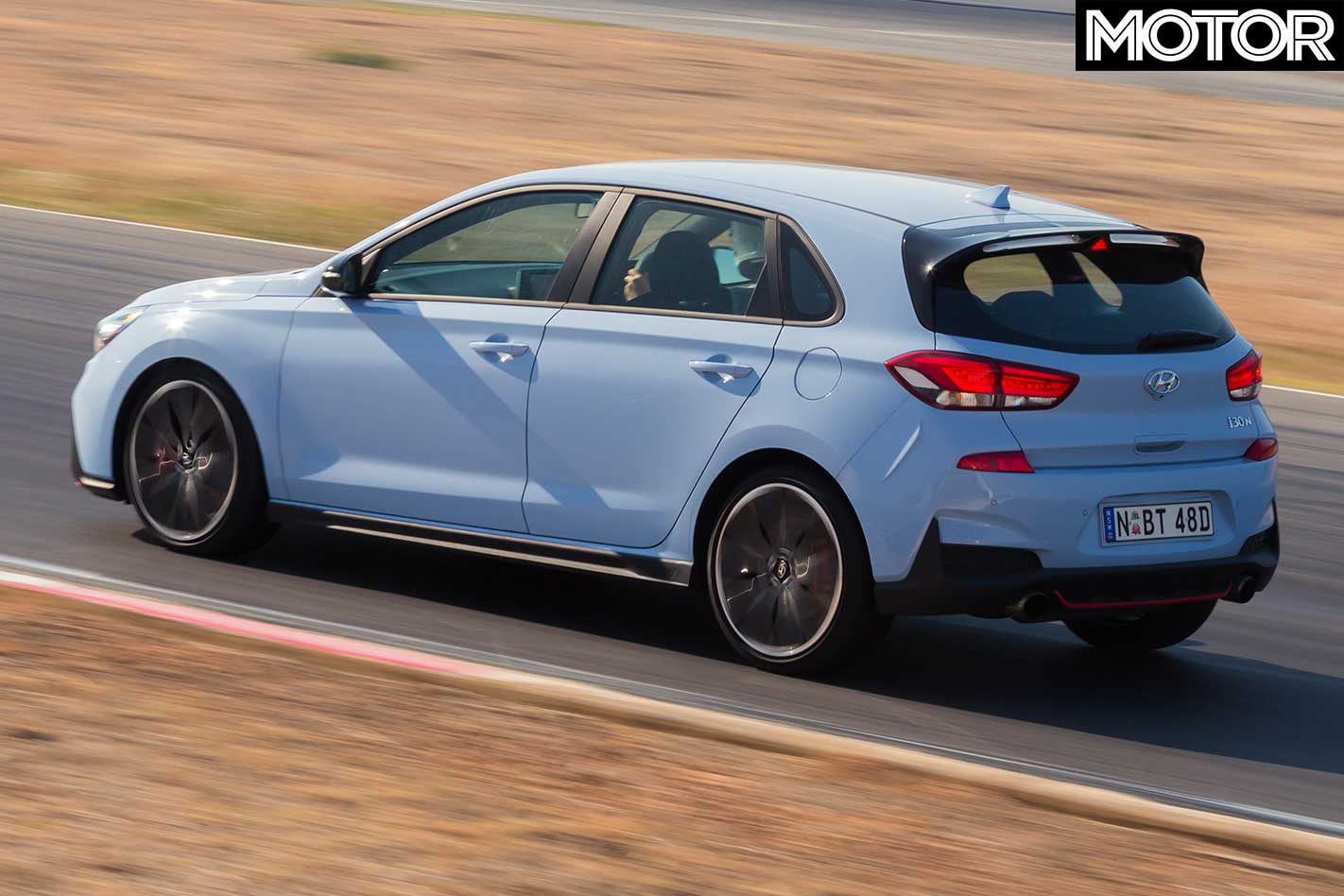
In fairness, by the time you mix Bang and Buck together, there was very little separating sixth to third. A bit of extra speed, or a few less grand, could have been the difference between fifth and a podium for the i30 N.
In a sense, as well, it’s done its job to finish ahead of the VW Golf GTI Original and Peugeot 308 GTI 270. Technically, as you’ve read, it’s tied with the GTI Original on the BFYB index, but comes out a spot ahead as it was much more popular with the judges.

What the numbers don’t tell you is that the i30 N was one of the few cars that felt great on the track, a car that you wanted to keep going around in (when there were other cars here in which you did the bare minimum laps, and then jumped into something else).
The seats hold you in, there’s a strong connection through the steering to the front wheels, the tyres feel tenacious and the brakes solid, challenging you to give all you’ve got. Forgetting all the hype and just focusing on the i30 N on merit, this is a fun car on track, up for a bit of lift-off oversteer fun as well, if you dare.
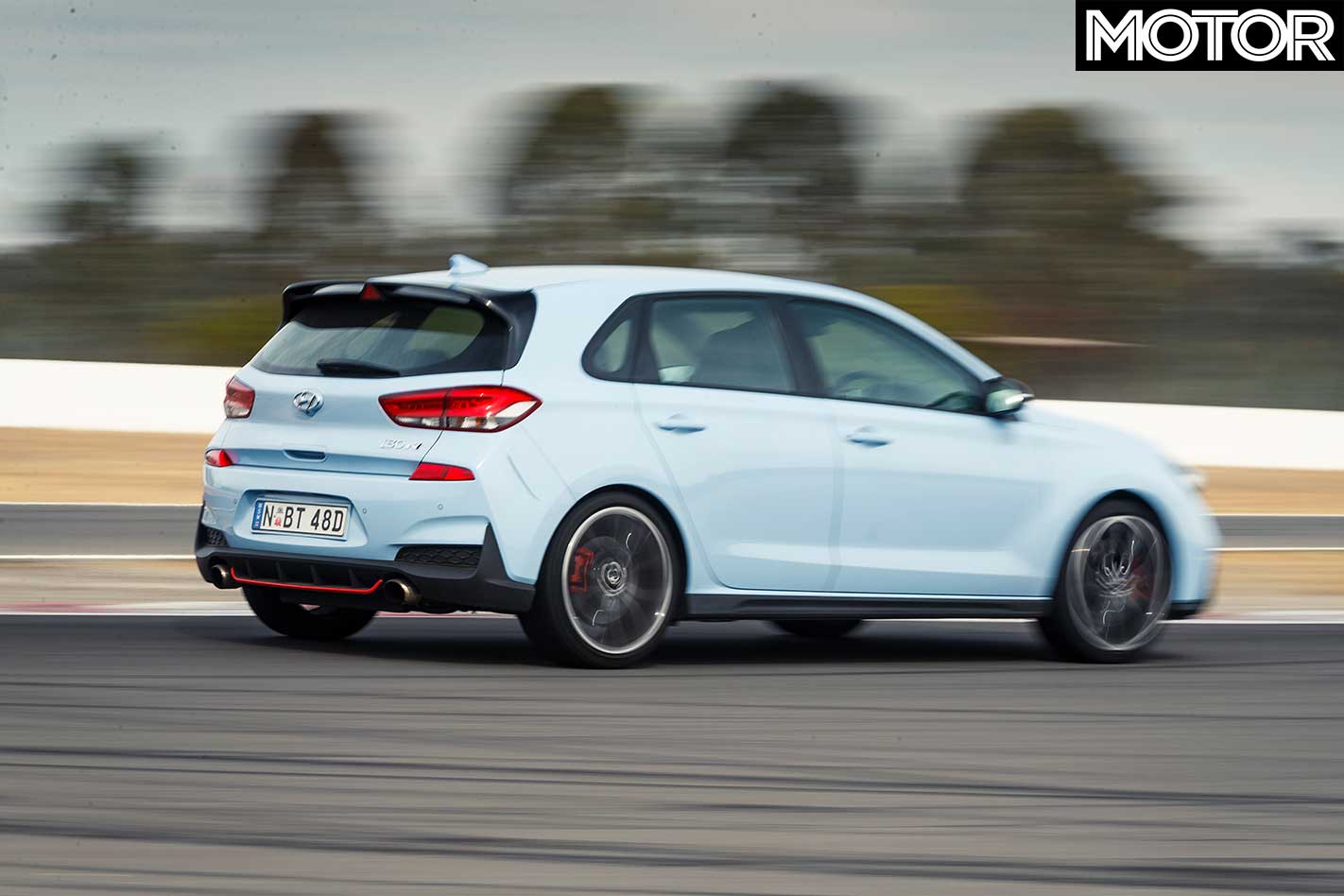
Would we buy an i30 N if we intended on taking it to track days? Absolutely – and we can’t quite stress how big a call this is, as so many supposed track-able performance cars – some of which are in this very company – we wouldn’t dream about taking to regular track days. The i30 N felt great at Winton, the tyres and brakes more than holding up.
30 N covered with track warranty
If we had to level some criticism at the hottest Hyundai ever, it would be that while the interior styling and ergonomics are quite good, you can see where some cost is saved with material quality, particularly compared to its European rivals. It’s also just not as fast to 100km/h as we thought it would be – 6.82sec was more than half a second slower than the GTI Original, a car with supposedly 30 less kilowatts.
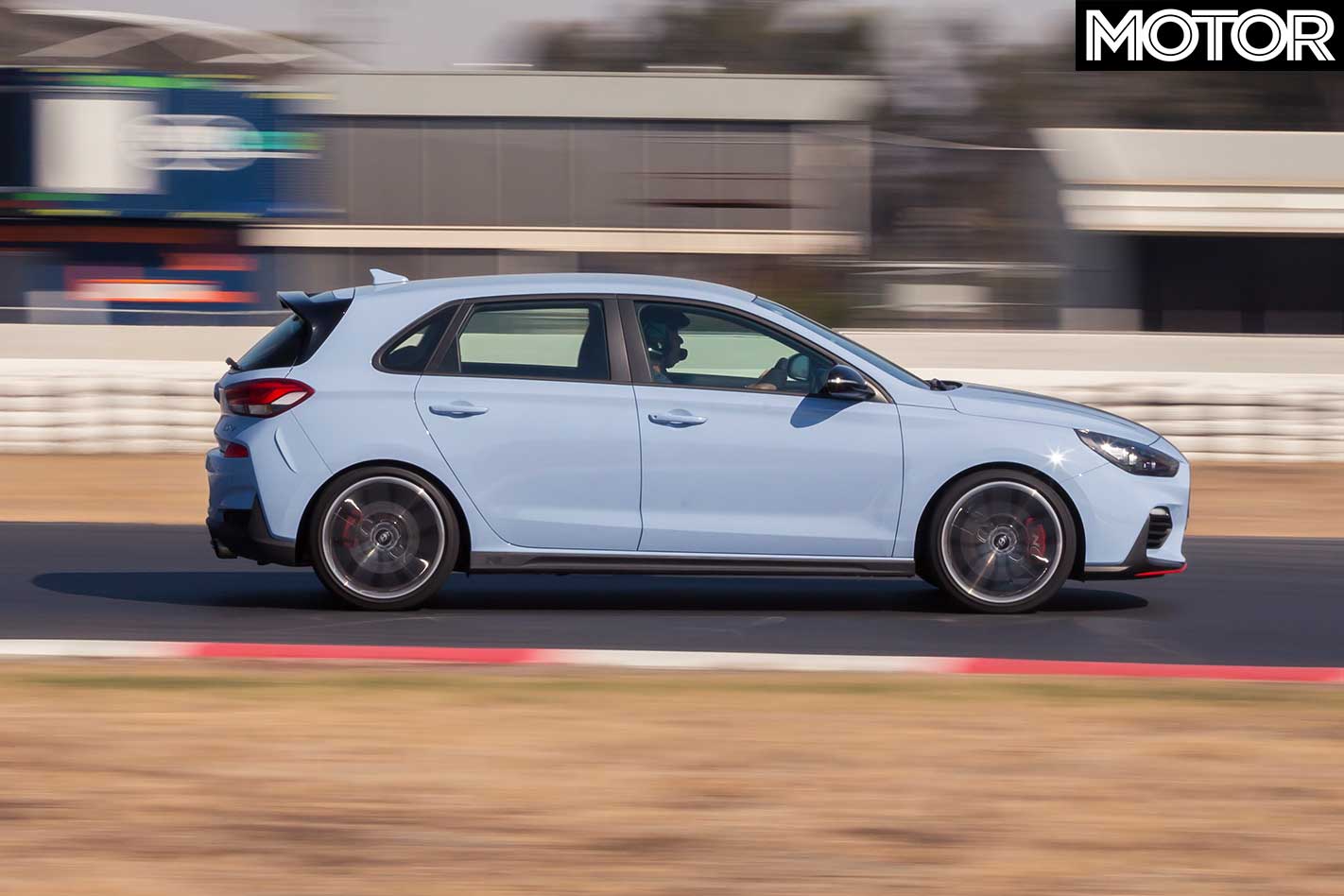
But a solid performance it was for the i30 N, popular with the judges for fun factor and plenty fast for its price. It’s just that there were cars on the day that were more expensive, but also with more than enough pace to counterbalance their extra cost.
Hyundai i30 N BFYB 2018 Results – 5th place
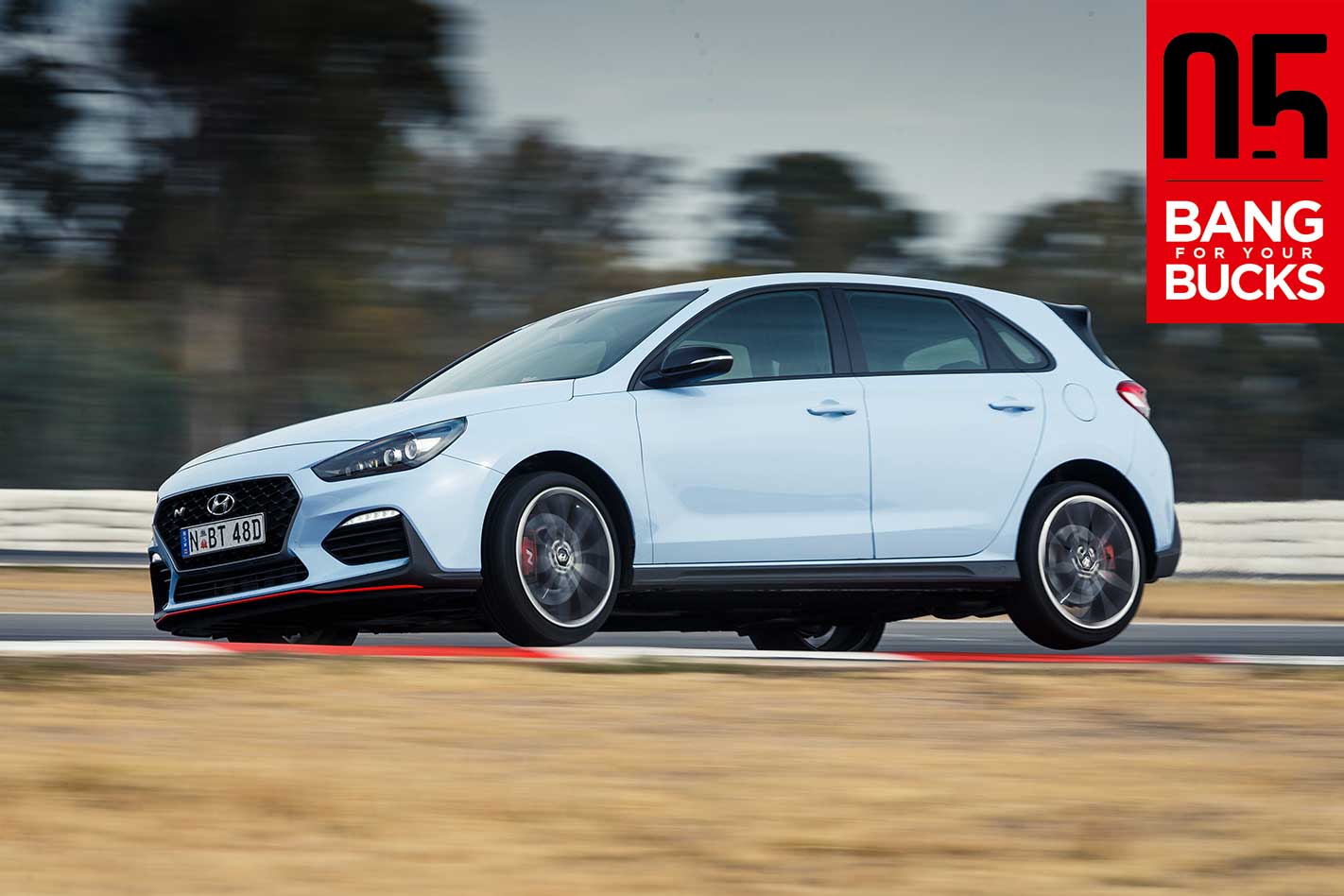
0-100km/h: 6.82sec (11th) 0-400m: 14.63sec @ 162.33km/h (11th) Lap Time: 1:39.60sec (6th) Price: $39,990 Bang Index: 131.1 Bucks Index: 125.6 BFYB Index: 128.6
Judges’ Comments
Warren Luff – 3rd “The i30 N was pleasantly surprising out on track – this thing’s really punching above its weight. Its only downfall is that it misses out on a bit of straight-line speed. But through some of the fast-flowing and also tight and twisty stuff it’s very positive at the front-end. The overall balance, confidence and feedback that it relays makes you want to do more laps. It doesn’t do all the work for you and that’s what makes it a good driver’s car.”
David Morley – 4th “A proper fist of a hot-hatch first time out”
Dylan Campbell – 6th “Must. Forget. Hype. If you can do that, it’s terrific on track”
Scott Newman – 5th “Poised and predictable, but not as potent as expected”
Louis Cordony – 6th “Great, involving package can’t shine bright as more expensive hot-hatch giants”
FAST FACTS 2018 HYUNDAI i30 N
BODY: 5-door, 5-seat hatch DRIVE: front-wheel ENGINE: 1998cc inline-4, DOHC, 16v, turbo BORE/STROKE: 86.0mm x 86.0mm COMPRESSION RATIO: 9.5:1 POWER: 202kW @ 6000rpm TORQUE: 353Nm @ 1450-4700rpm WEIGHT: 1509kg POWER-TO-WEIGHT: 134kW/tonne TRANSMISSION: 6-speed manual SUSPENSION: struts, coil springs, adaptive dampers (f); multi-links, coil springs, adaptive dampers, anti-roll bar (r) BRAKES: 345mm ventilated discs, single-piston calipers (f); 314mm ventilated discs, single-piston calipers (r) WHEELS: 19.0 x 8.0-inch (f/r) TYRES: Pirelli P Zero (HN); 235/35 R19 (f/r) PRICE: $39,990
Bang For Your Bucks 2018
 The Contenders, Judges & Criteria
15 of the hottest new fast cars under $100K roll up to take on our famous formula. Which will be number 1?
The VW Golf GTI Original is a cliche on four wheels. “It’s not what you’ve got, but what you do with it”, “jack of all trades, master of none”, etc, etc.
This track review was carried out in conjunction with MOTOR’s Bang For Your Bucks 2018
Put simply, the GTI Original doesn’t do headline stats or eye-popping numbers, it merely over achieves in every area and ends up well inside the top half once the results are tallied.
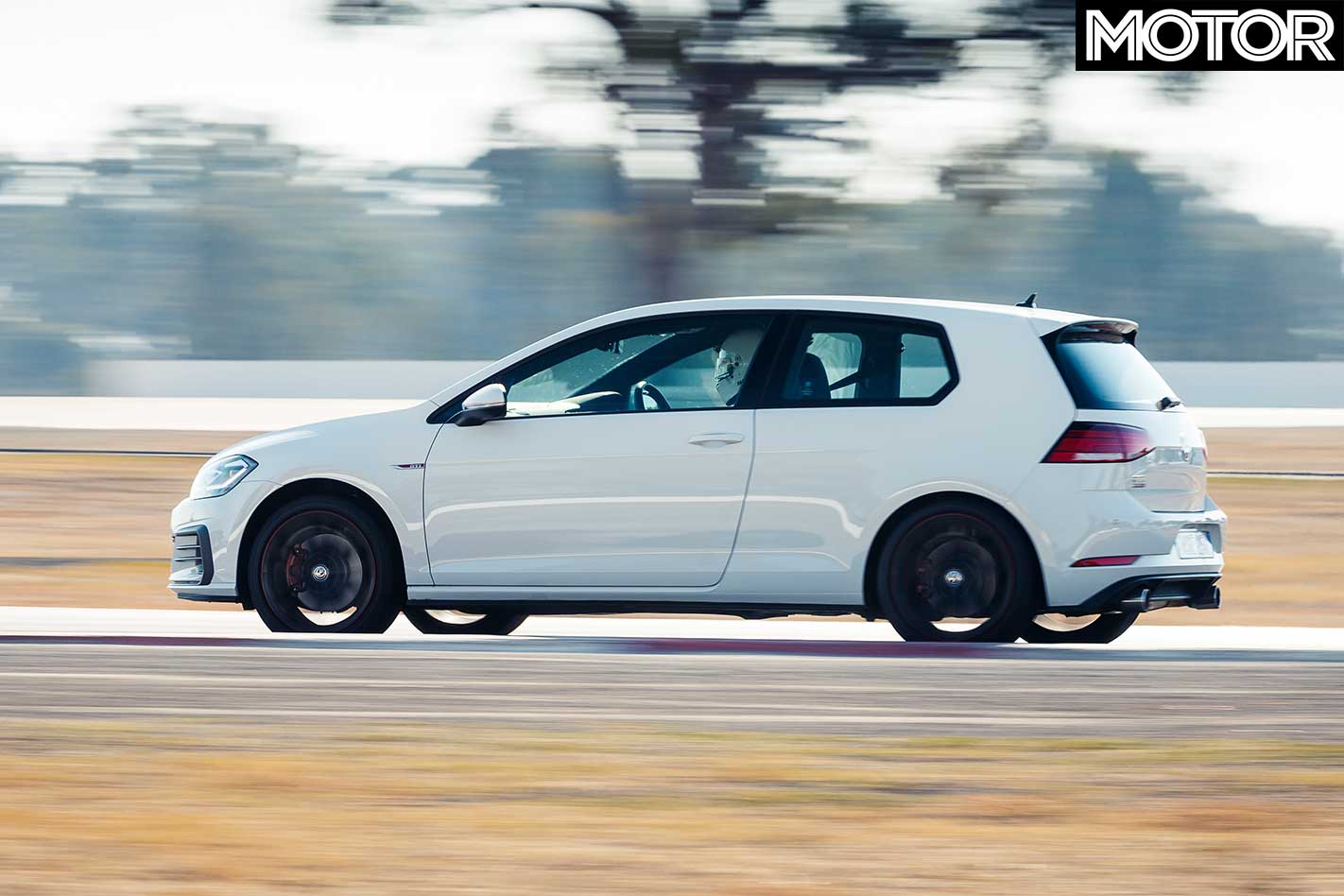
It ticks boxes subjectively, too. It feels agile, light on its feet and more powerful than its 169kW would suggest. It brakes strongly, turns in eagerly, responds quickly to mid-corner throttle changes and has an absolutely beautiful gearchange. Every facet feels finely engineered and complements every other beautifully.
Except the ESP system. Unlike the Golf R, the GTI Original doesn’t allow drivers to completely disable the electronics and in a performance setting this really hurts it. Even in a straight line the traction control is constantly intervening in first and second, robbing it of crucial tenths, and the same is true on the exit of every tight corner on a hot lap.
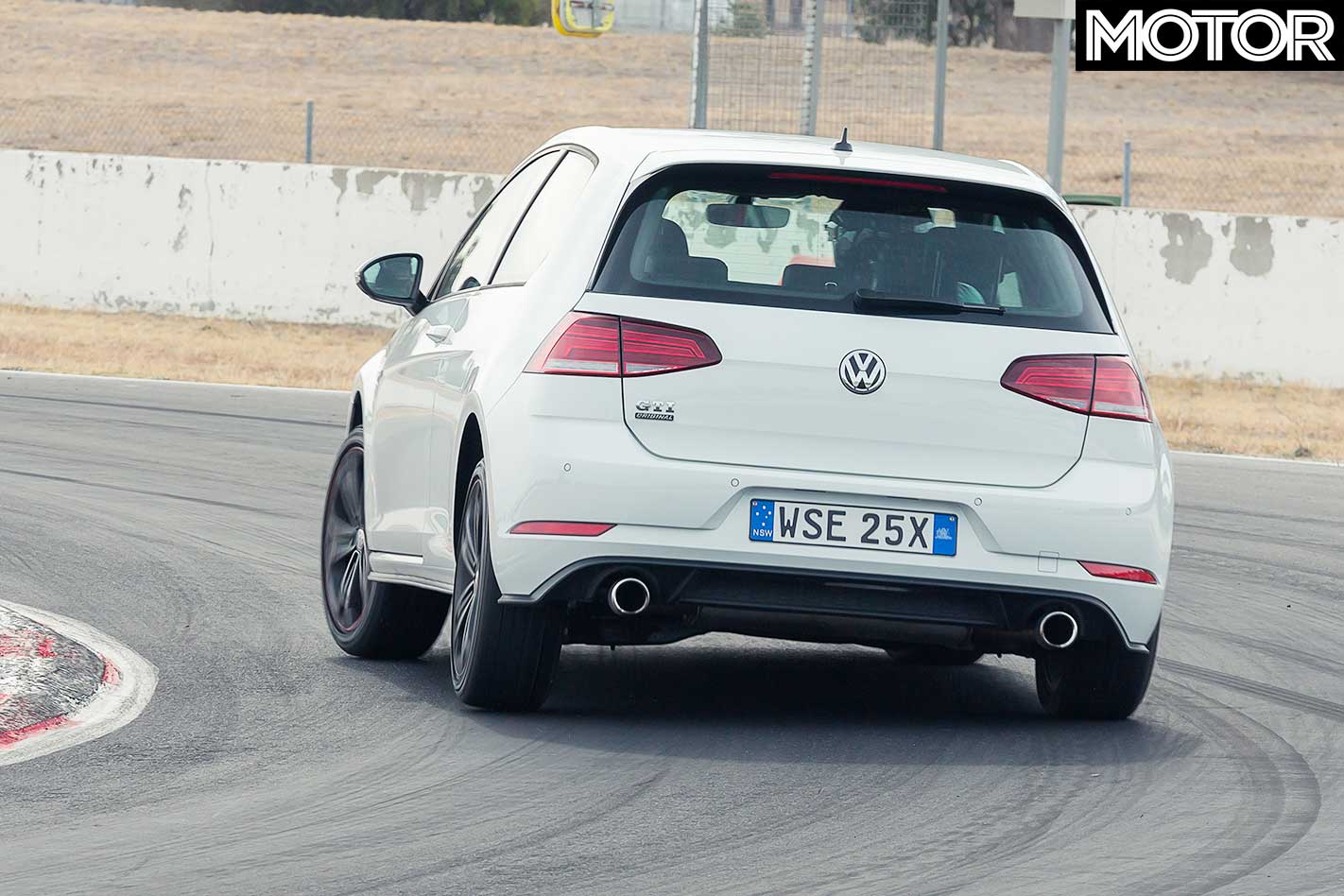
To be fair, the intervention is relatively subtle, especially if you attempt to be silky smooth to avoid upsetting the electronic nannies, but nonetheless it prevents the GTI putting its best foot, ahem, wheel forward.
Imagine if Usain Bolt was forced to wear terrible shoes that held him back from running as quickly as he could? He could very well be the fastest man alive, but we’d never know as he could never perform at his best – that’s the GTI Original on a racetrack.
There’s a supremely playful hot hatch lurking within the GTI, but every time you get close to the limit and feel that rear end start to move around the health and safety brigade come in to start grabbing brakes to straighten the ship. It’s a shame, and frustrating.
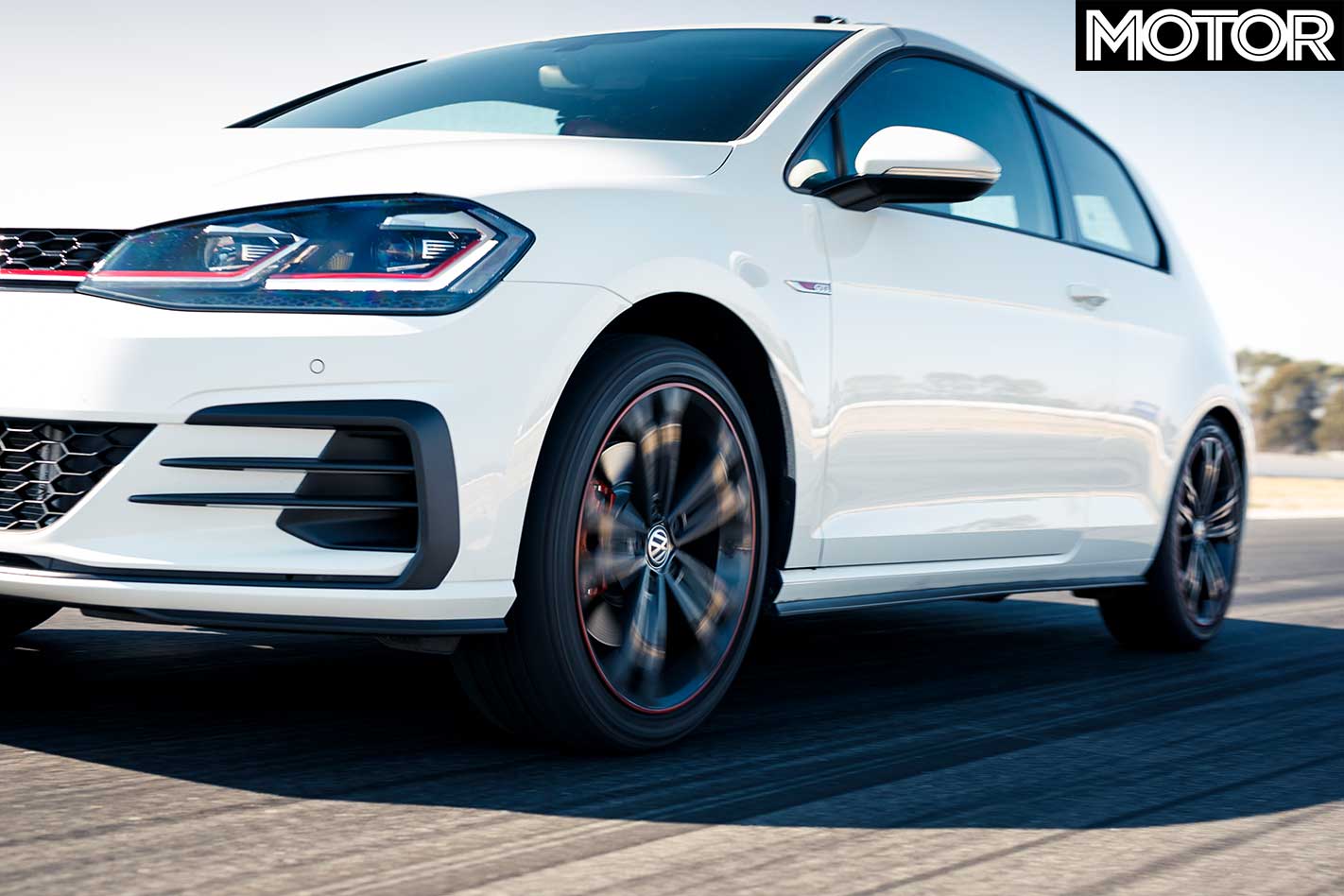
As a result, the judges’ scores align with its objective numbers – average, rather than troubling the podium like it would if it was truly allowed to express itself.
In the final reckoning, the Golf GTI Original actually tied with the Hyundai i30N in fifth place, however, due to the Hyundai’s higher judges’ ranking – fifth versus eighth – the Korean received the nod in the overall standings. Still, the fact remains that the GTI punches above its weight, successfully keeping more powerful, better equipped rivals honest.
Volkswagen Golf GTI Original BFYB 2018 Results – 6th place
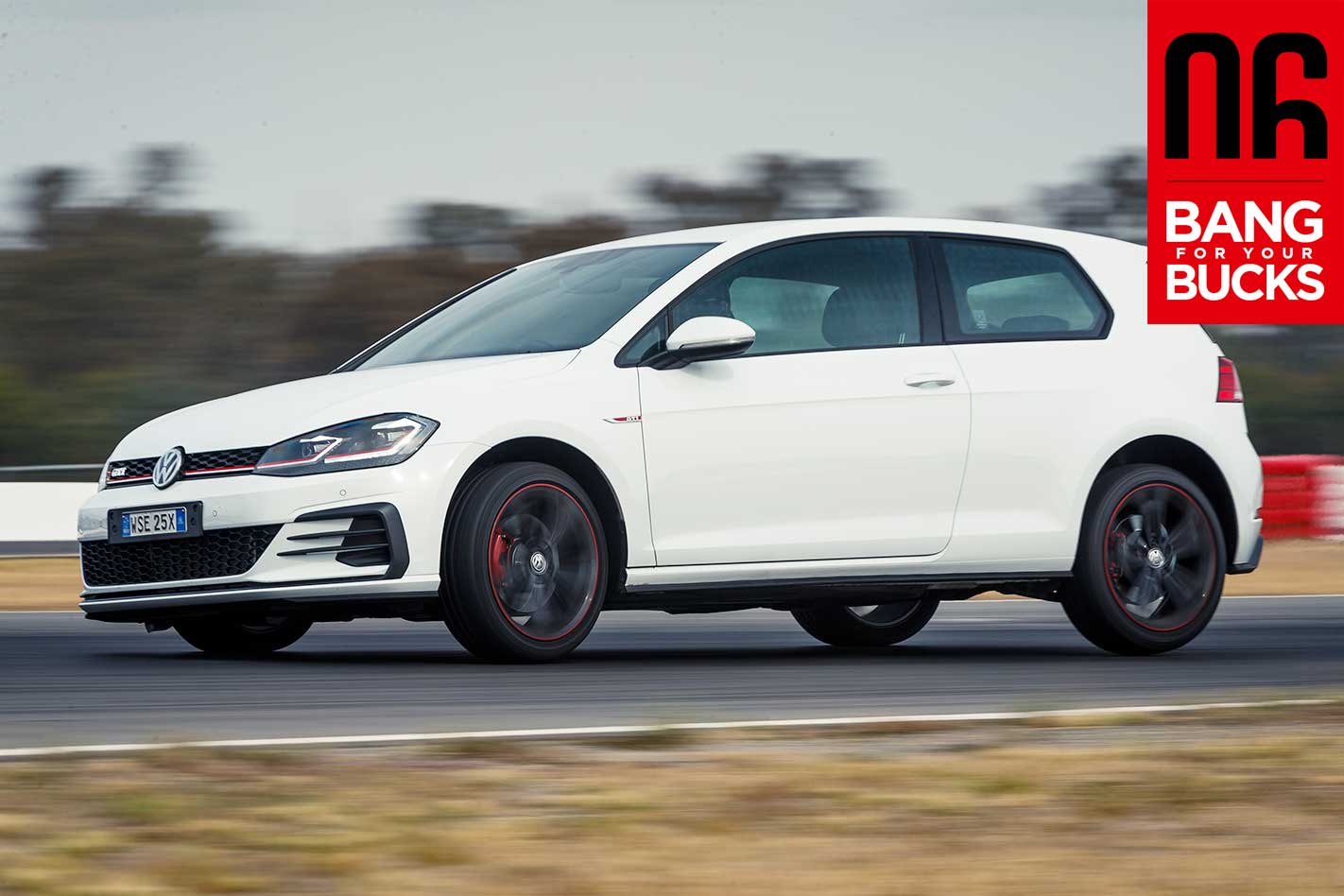
0-100km/h: 6.38sec (9th) 0-400m: 14.54sec @ 162.51km/h (10th) Lap Time: 1:40.20sec (8th) Price: $37,490 Bang Index: 124.3 Bucks Index: 134.0 BFYB Index: 128.6
Judges’ Comments
Warren Luff – 9th “Such a fun car on the limit. It does everything you want, with the benefit of power levels that some of the smaller hot hatches don’t have. It’s not one of those cars that you kind of go ‘yeah, I’ve got the best out of it’ – you want to keep going. It doesn’t really have any faults on track. It handles well, it’s got good front-end grip and stability, great change of direction and most importantly from a driver’s perspective, it gives you confidence.”
David Morley – 8th “Purity in tartan”
Dylan Campbell – 10th “Just lovely. Sweet controls, even a bit playful. Boo ESP”
Scott Newman – 8th “ESP prevents its true excellence being expressed”
Louis Cordony – 8th “Unlike milk, I find the Golf GTI better when it’s of the light, reduced kind”
FAST FACTS 2018 VOLKSWAGEN GOLF GTI ORIGINAL
BODY: 3-door, 5-seat hatch DRIVE: front-wheel ENGINE: 1984cc inline-4, DOHC, 16v, turbo BORE/STROKE: 82.5mm x 92.8mm COMPRESSION RATIO: 9.6:1 POWER: 169kW @ 4700-6200rpm TORQUE: 350Nm @ 1500-4600rpm WEIGHT: 1304kg POWER-TO-WEIGHT: 130kW/tonne TRANSMISSION: 6-speed manual SUSPENSION: struts, coil springs, dampers (f); multi-links, coil springs, dampers, anti-roll bar (r) BRAKES: 312mm ventilated discs, single-piston calipers (f); 272mm ventilated discs, single-piston calipers (r) WHEELS: 18.0 x 7.5-inch (f/r) TYRES: Bridgestone Potenza S001; 225/40 R18 92Y XL (f/r) PRICE: $37,490
Bang For Your Bucks 2018
The Contenders, Judges & Criteria
15 of the hottest new fast cars under $100K roll up to take on our famous formula. Which will be number 1?
Family cars are measured by their own unique set of rules and requirements, and not all are created equal. The good news for those shopping for a new way to move their clan is that WhichCar has done the hard work for you. Below is a quick shortlist of three family cars that covers most people’s needs. For more comprehensive evaluations, check out their range reviews.
Mazda CX-5 and CX-9
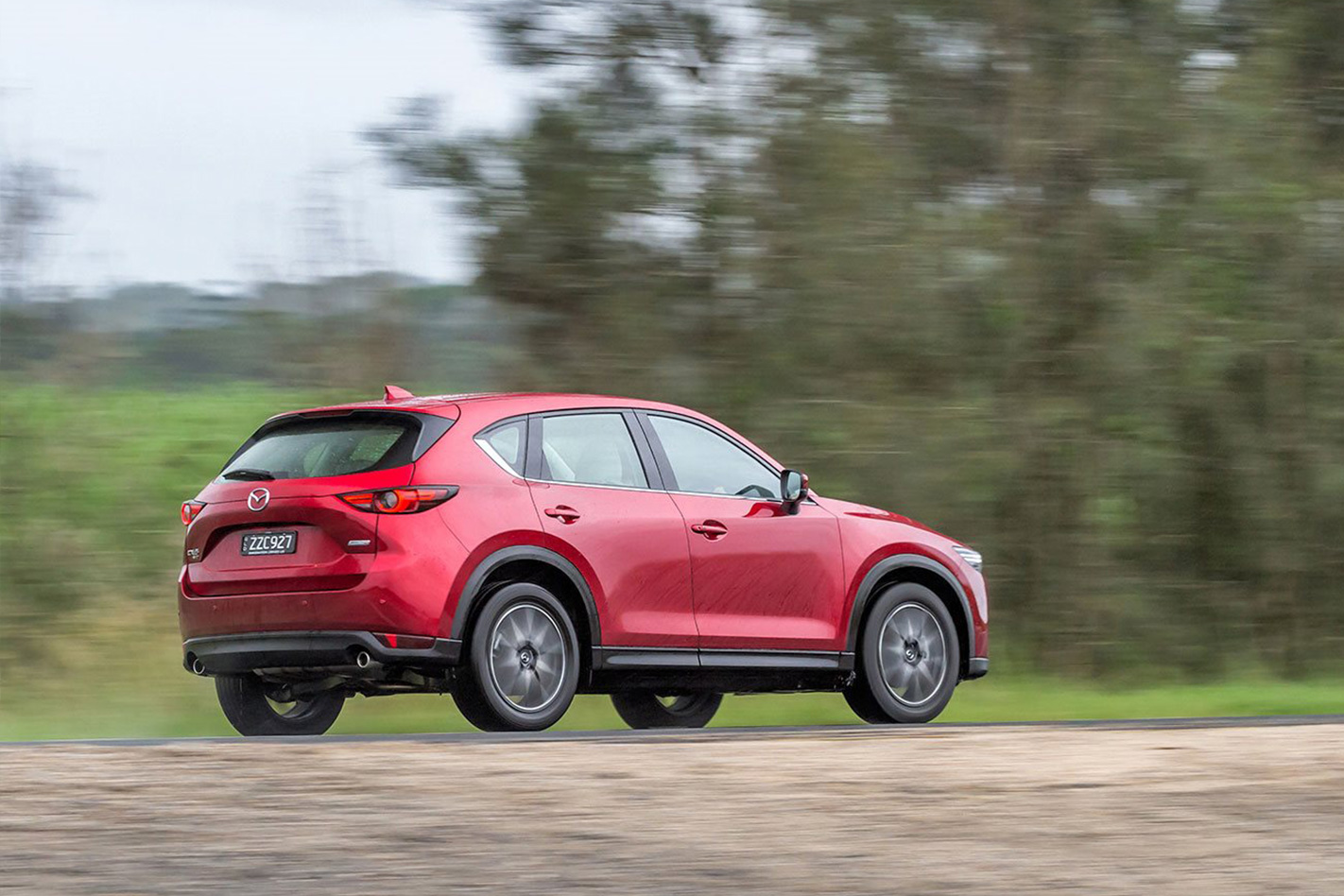
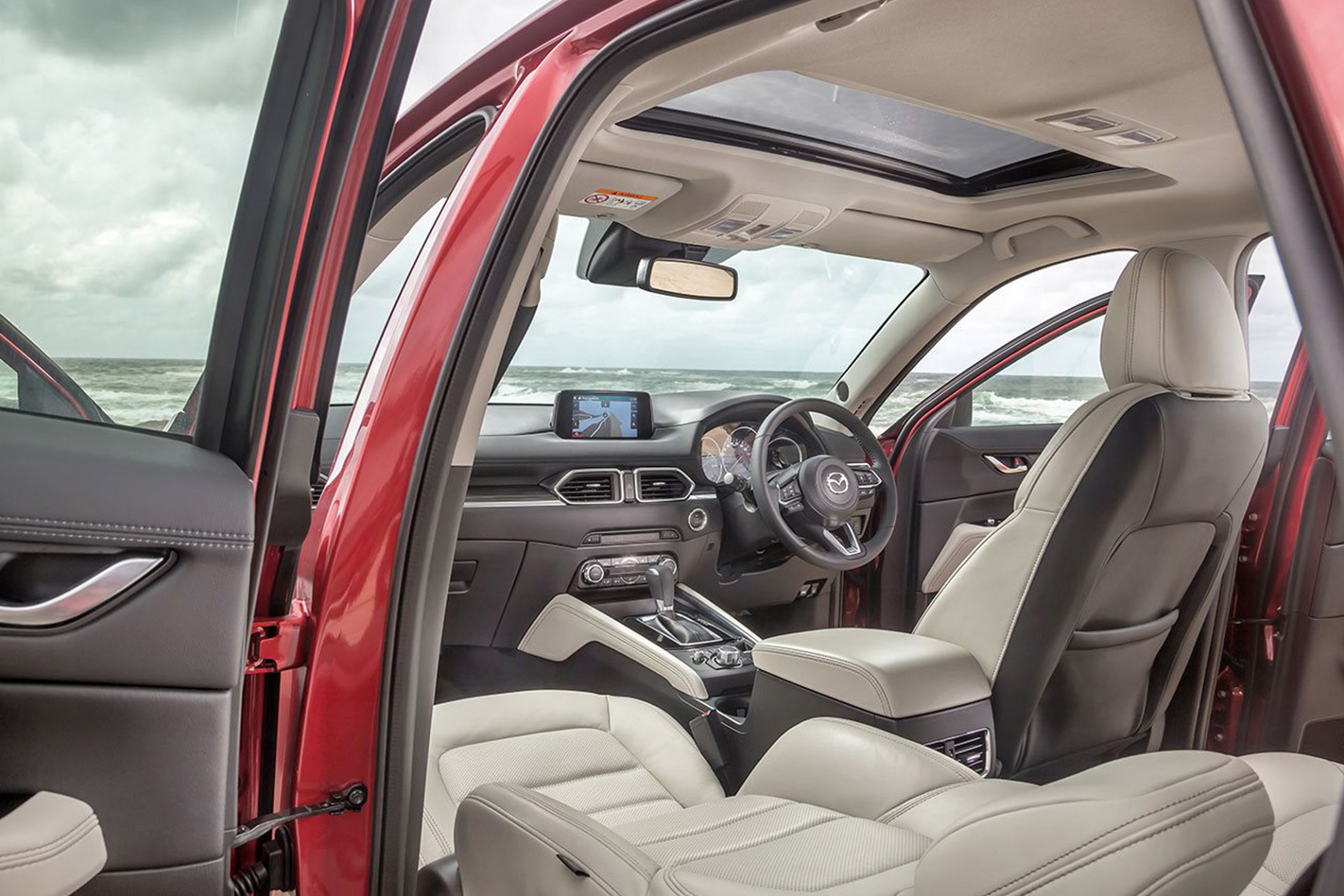
The Mazda CX-5 is the best-selling vehicle in the mid-size SUV class, and for good reason. It’s extremely thoughtful and well-equipped in terms of safety and practicality. It’s also the most affordable vehicle on this list with an entry price of $28,690. A healthy range of variants stretches up to a premium $49,190 flagship. If you need a third row of seats, the larger CX-9 is also brilliant, priced from $43,890 to $64,790.
Kia Carnival
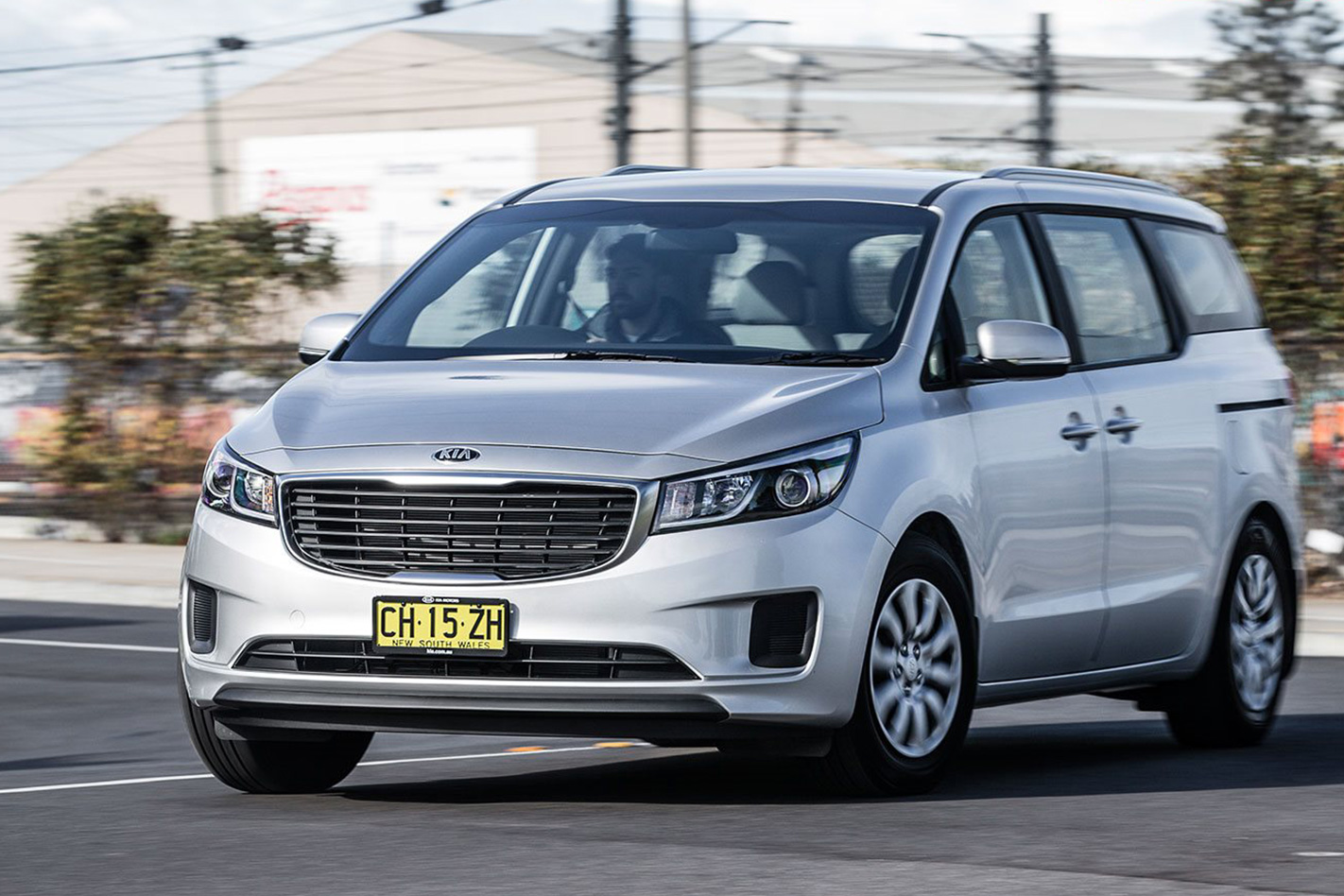
Should you have a larger than average family, this Korean people mover is one of the most competent when it comes to hauling up to eight people in comfort. Priced between $42,490 and $62,790, the has a jam-packed equipment list, and a lower loading height than any SUV, which makes boot access much easier to manage.
Audi Q7
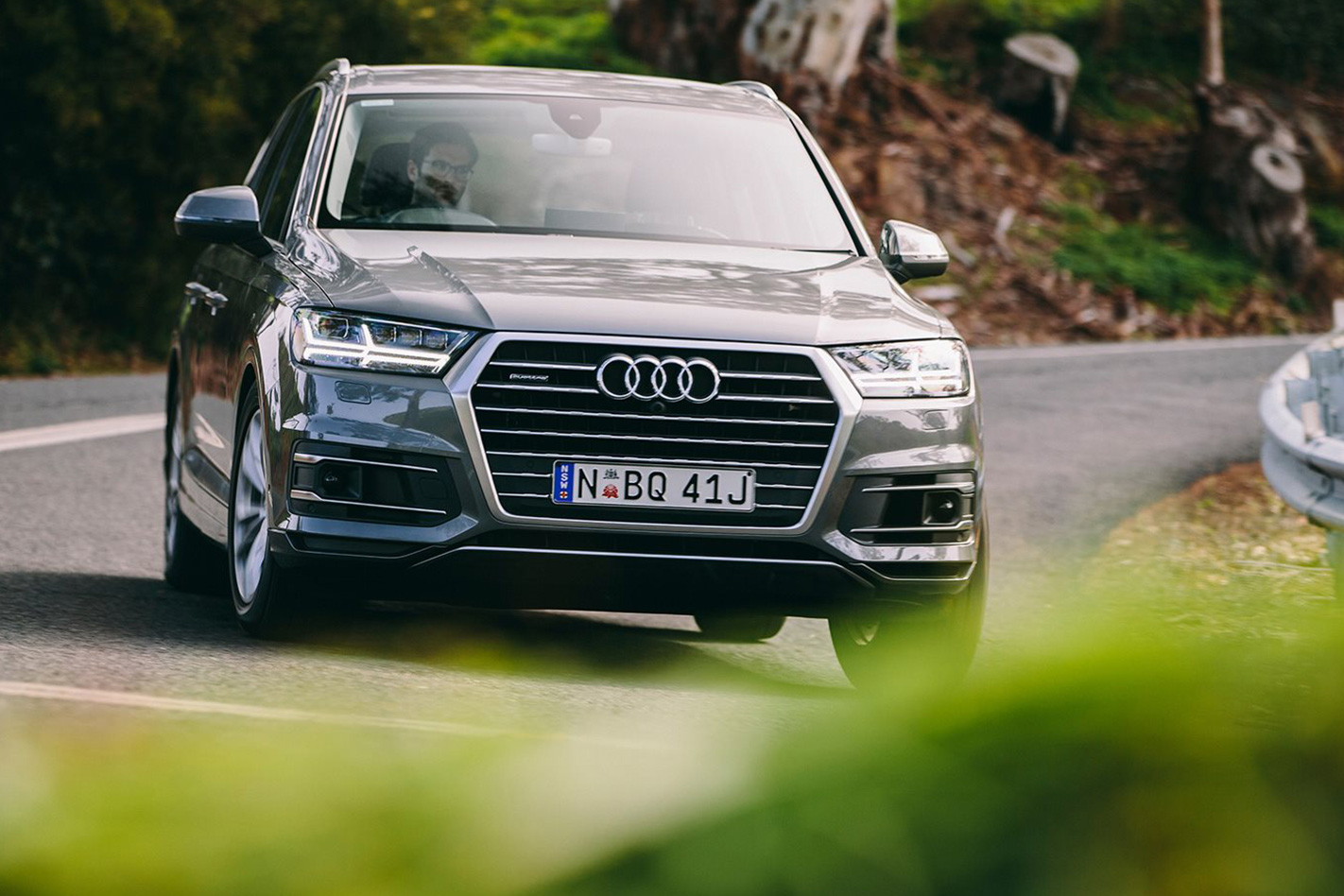
If you’ve got the means for an upmarket European ride, the Audi Q7 is the pick for family-hauling duties. It’s more refined than a BMW X5 and more up-to-date than the Mercedes-Benz GLS-Class. The Q7 starts from $96,855, up to a top-of-the-line SQ7 at $153,327. The latter is a more performance-focused offering, catering to the family that likes to handle the school run with equal amounts style and speed.
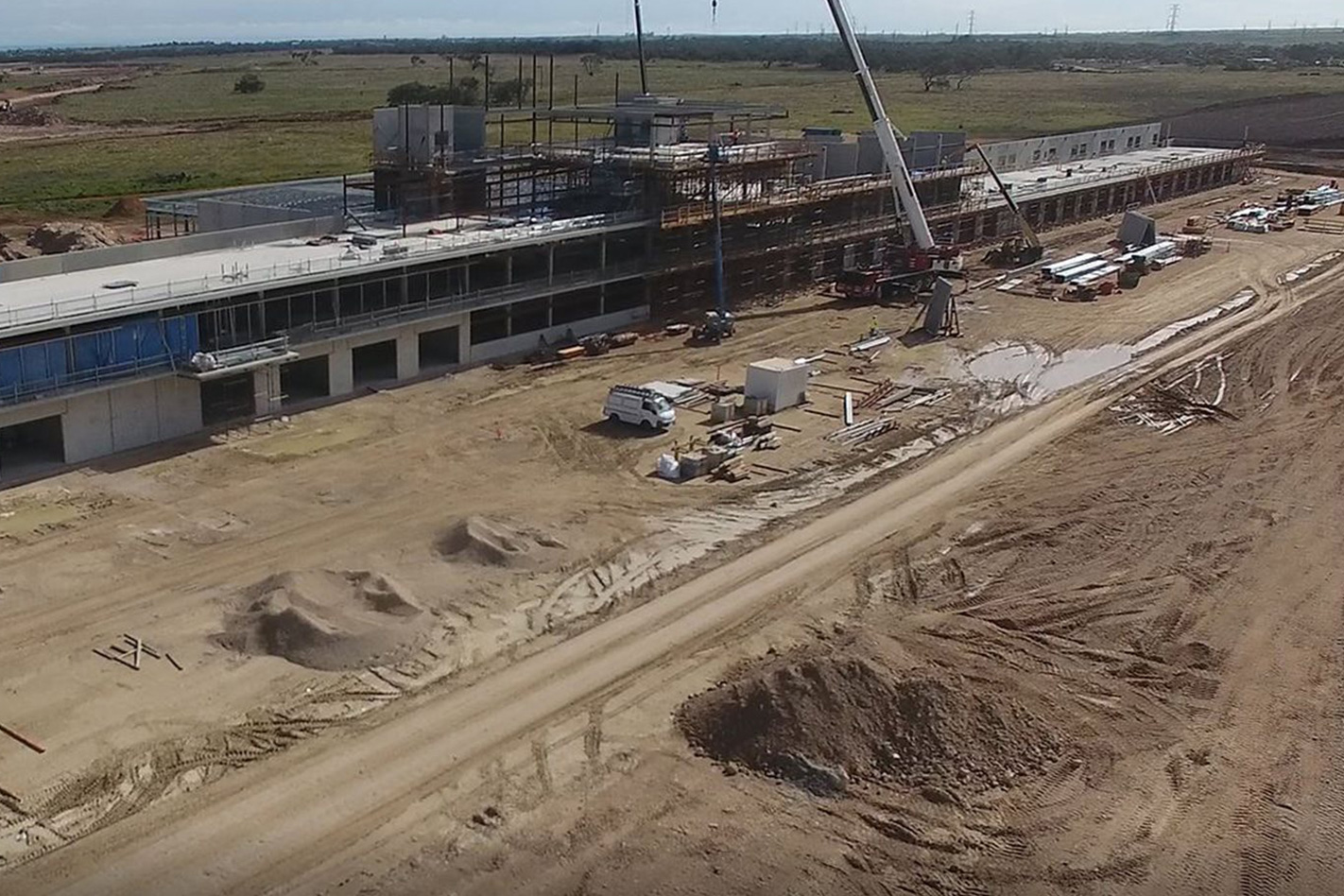
Seemingly overnight, the best motorsport facility in the southern hemisphere has appeared in a featureless corner of South Australia, like a crop circle. Not only that, but it’s the second longest permanent racetrack in the world behind only the Nurburgring Nordschleife.
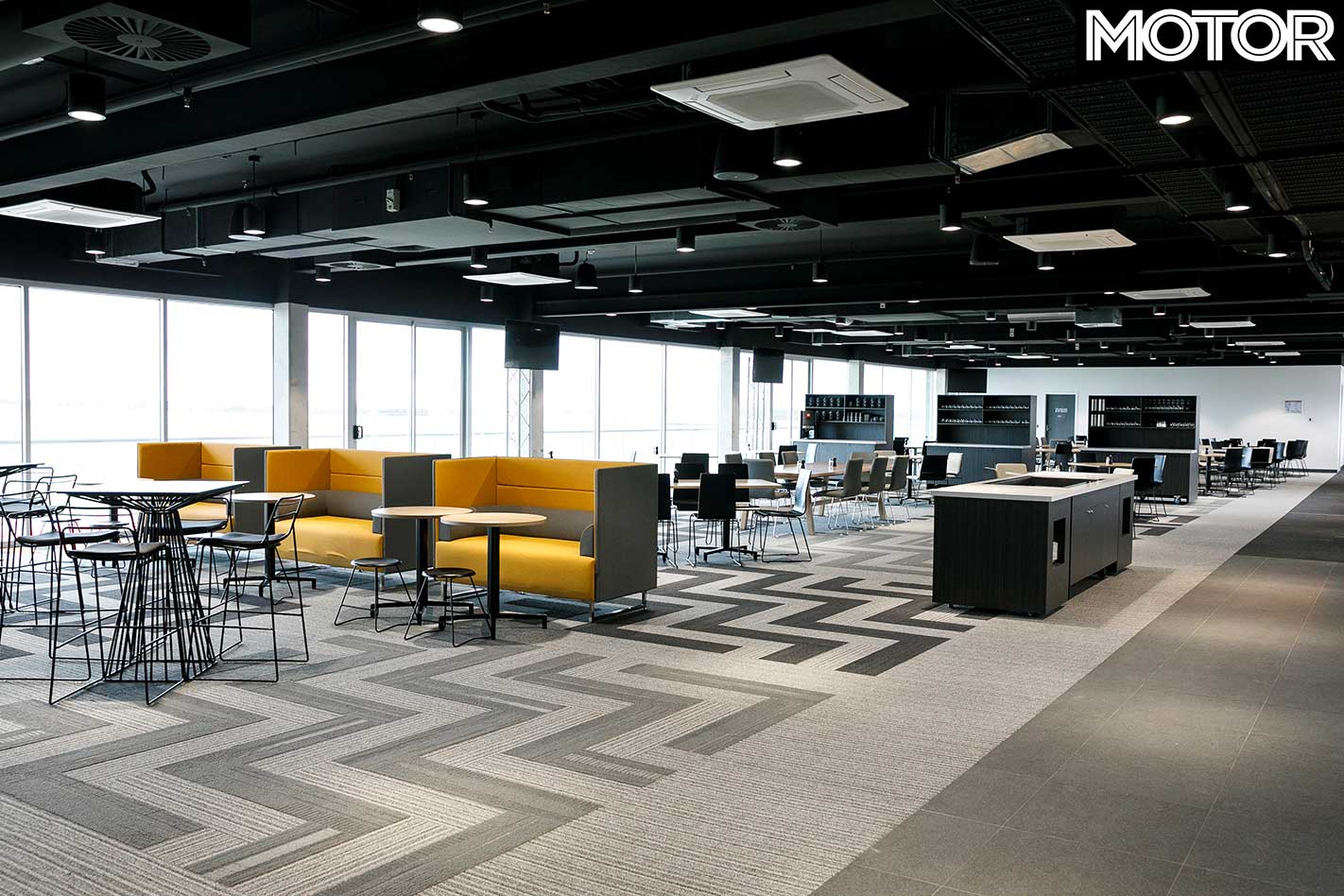
The brand new Bend Motorsport Park, one hour south-east of Adelaide, will bend your mind with its scale and scope. Not just its 7.77km longest possible configuration, but also the 100-room Rydges Hotel built into the imposing pit building.
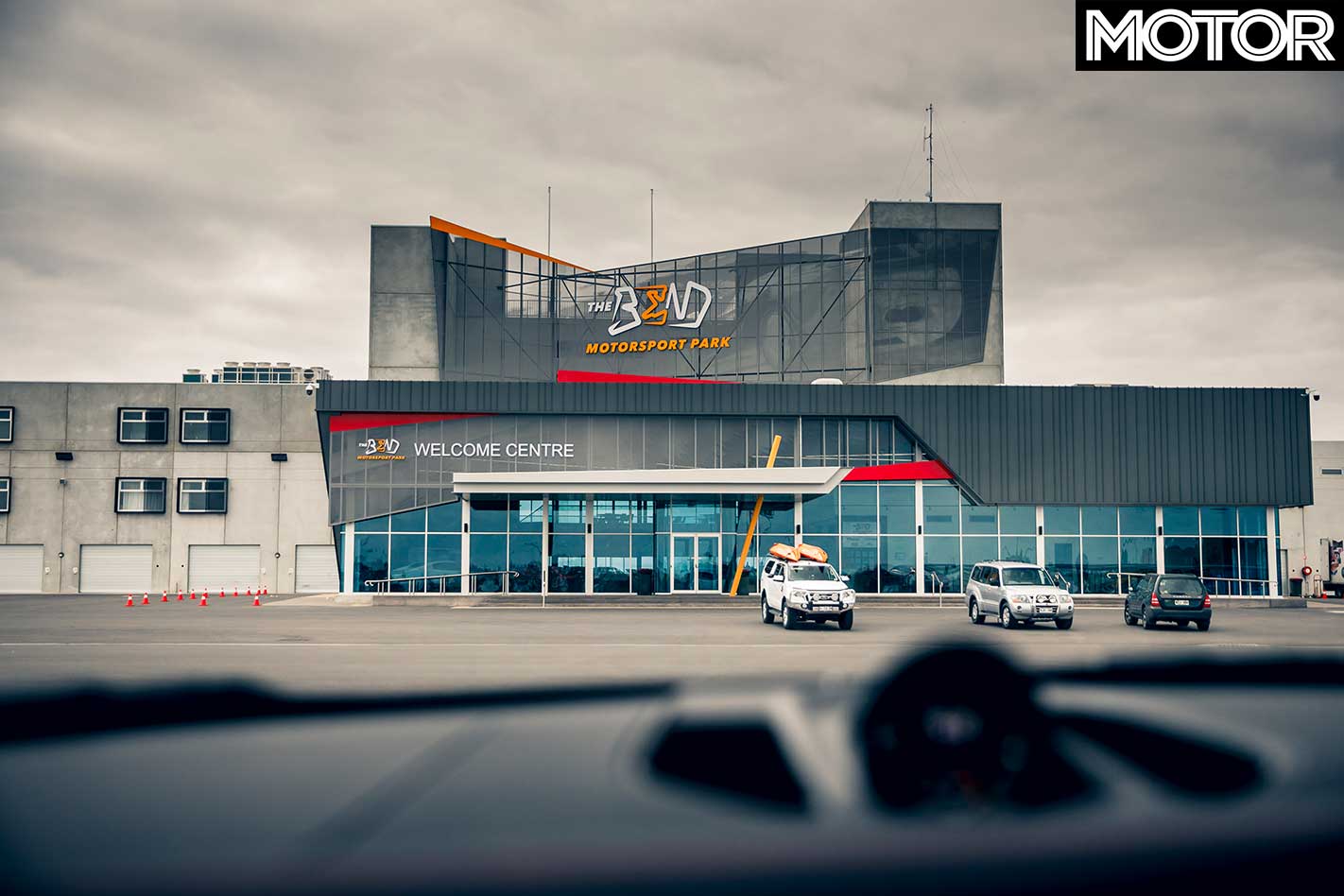
Naturally, having heard about The Bend, MOTOR was salivating, keen to get there as soon as possible. And we weren’t going to show up in the latest Camry.
In this alien part of Australia, we’ve arrived in something equivalently out of this world, dripping with intimidation, its bitumen-scraping front chin spoiler protruding, its towering rear wing intending to squash 325mm sticky rear tyres into any track on which it’s unleashed – it’s the twin-turbo, 515kW, rear-drive Porsche 911 GT2 RS, the fastest production car around the Nordschleife itself. Perhaps you can see what we’re thinking here.
Upon arrival at The Bend, a bit weirded out having passed an inexplicable rhinoceros statue in the nearby Tailem Bend town, and having spotted foreign-sounding nearby place-names like Naturi and Elwomple, it becomes apparent upon turning into The Bend precinct that we’ve taken a wrong turn, through a wormhole, to Bahrain.
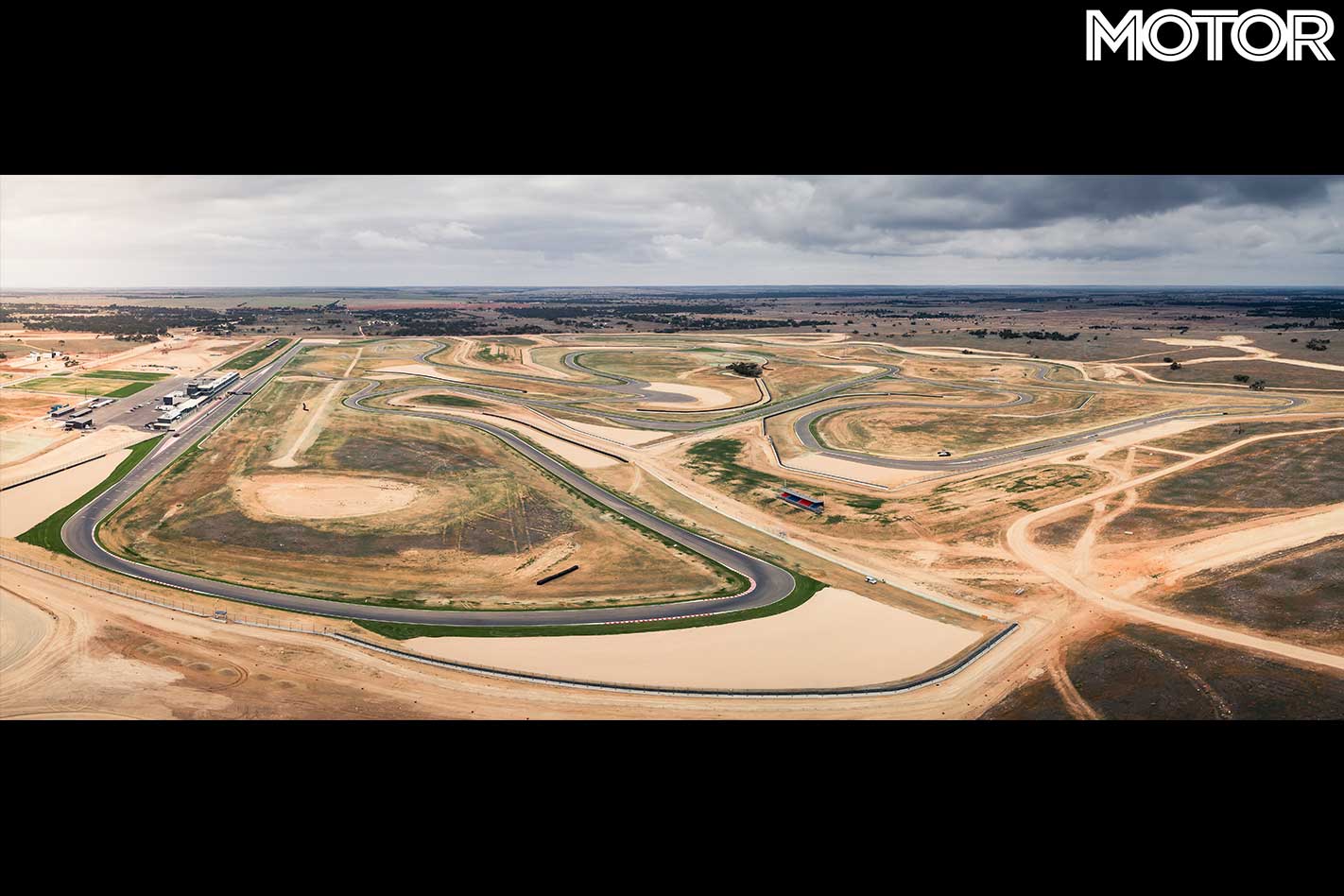
Everything feels like it was built yesterday and is surrounded by tan-coloured limestone topsoil, not yet overgrown with grass, giving The Bend an eerie Middle Eastern desert feeling. Where on earth are we? “Welcome to The Bend,” smile the men tasked with giving us the tour.
We are ushered through the front doors of the main building and into what feels like a cavernous, high-ceilinged, modern hotel reception – filled with cars, like a museum. Craig Lowndes’ and Jamie Whincup’s 2006 Bathurst-winning Betta Electrical BF Falcon sits beside Whincup’s 2012 TeamVodafone VE Commodore “Kate”, one of the most successful V8 Supercars ever built, both those cars beside Peter Brock’s monster 7.0-litre Bathurst 24 Hour Monaro.
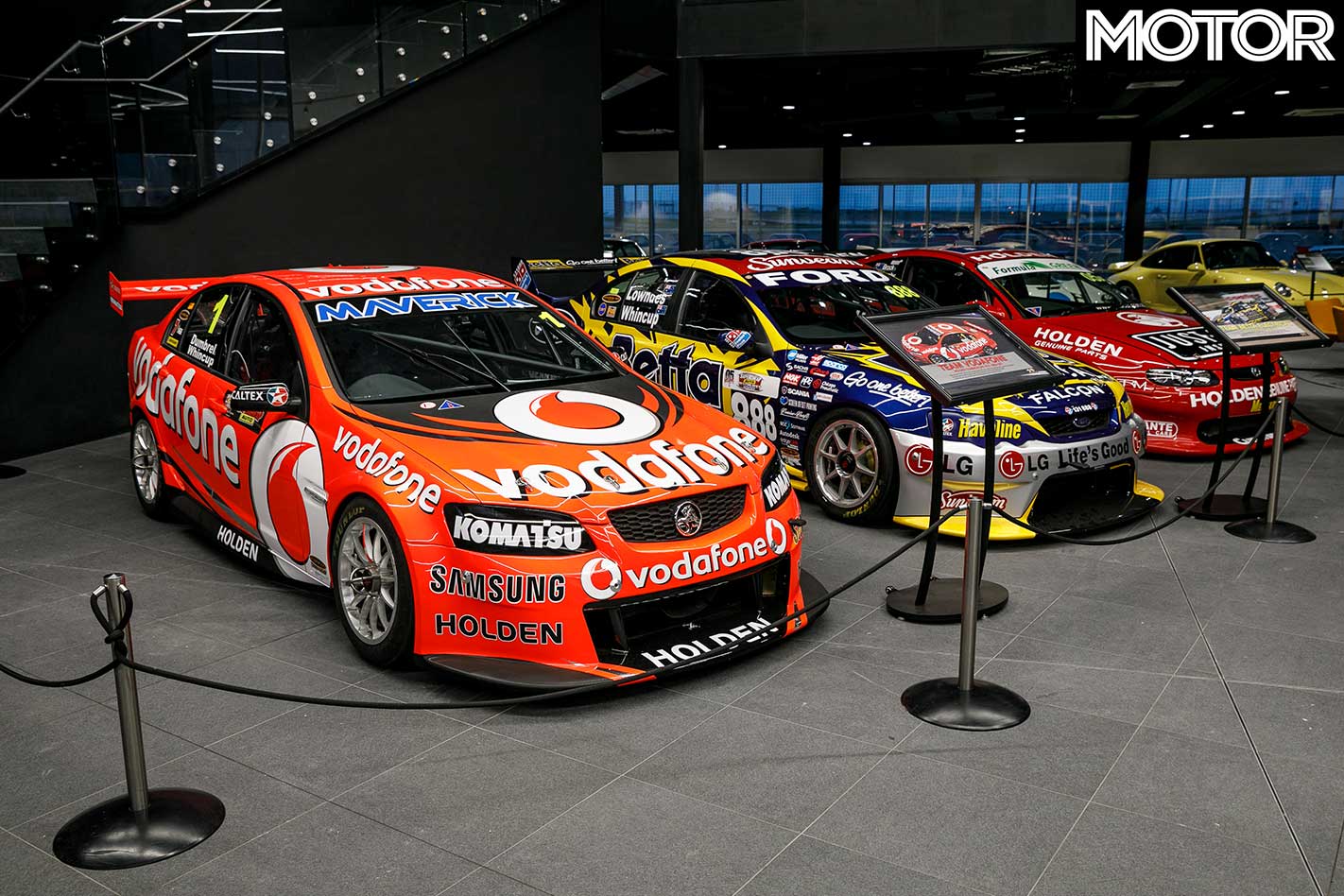
There’s a row of Porsche road cars including a 930 Turbo and 997 GT3 RS, with a 962 racecar nestled between them. A GT3 Huracan sits in the corner, past the two E-Types, barely attracting a second glance.
The hotel reception staff, smartly dressed and spoken, greet us as if we’ve stepped through yet another wormhole into a hotel in central Sydney or Melbourne CBD. Yet we’re in the middle of nowhere – if you want the same vibe you get an hour in a regional direction from Adelaide, you need to drive at least five from Sydney or Melbourne.
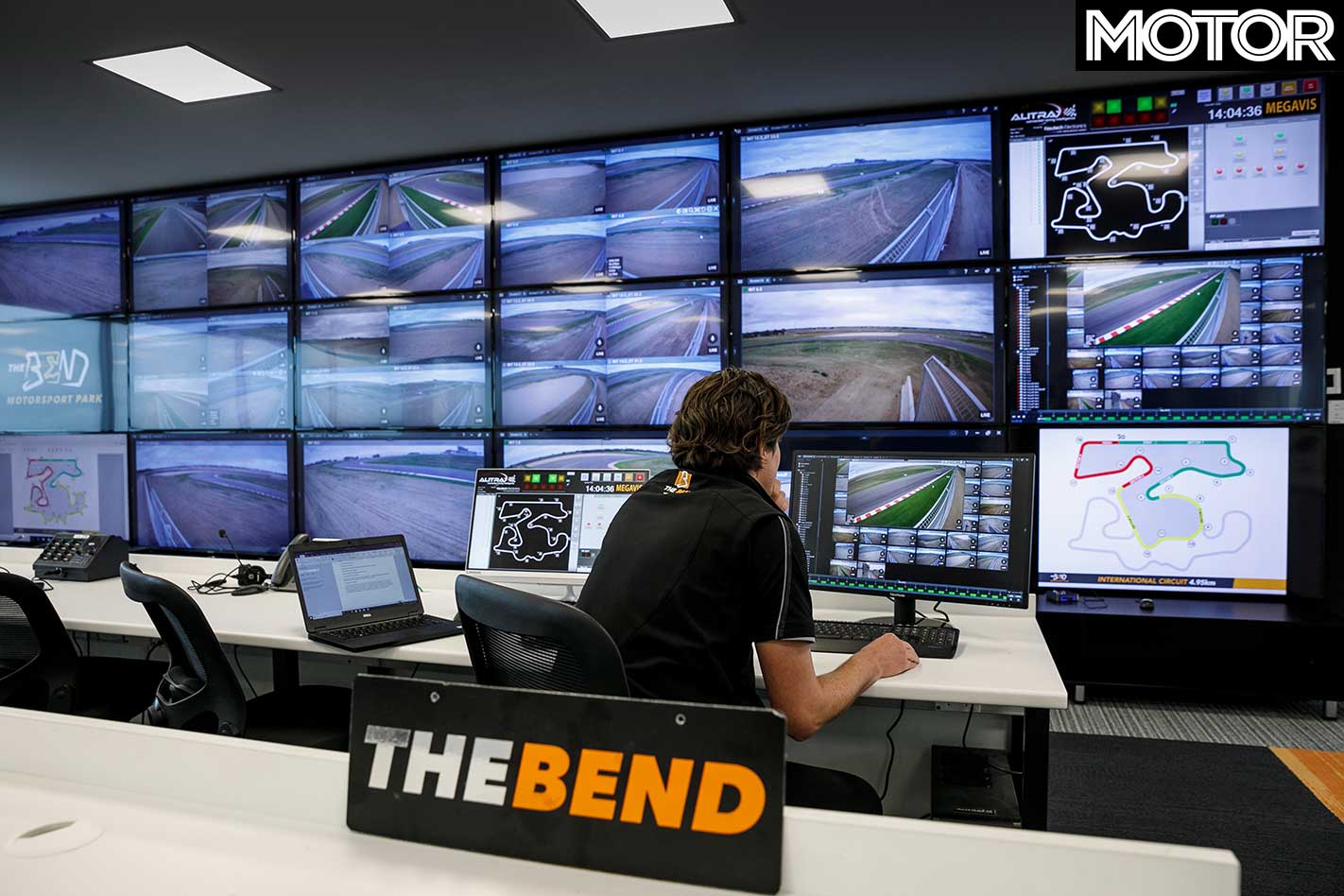
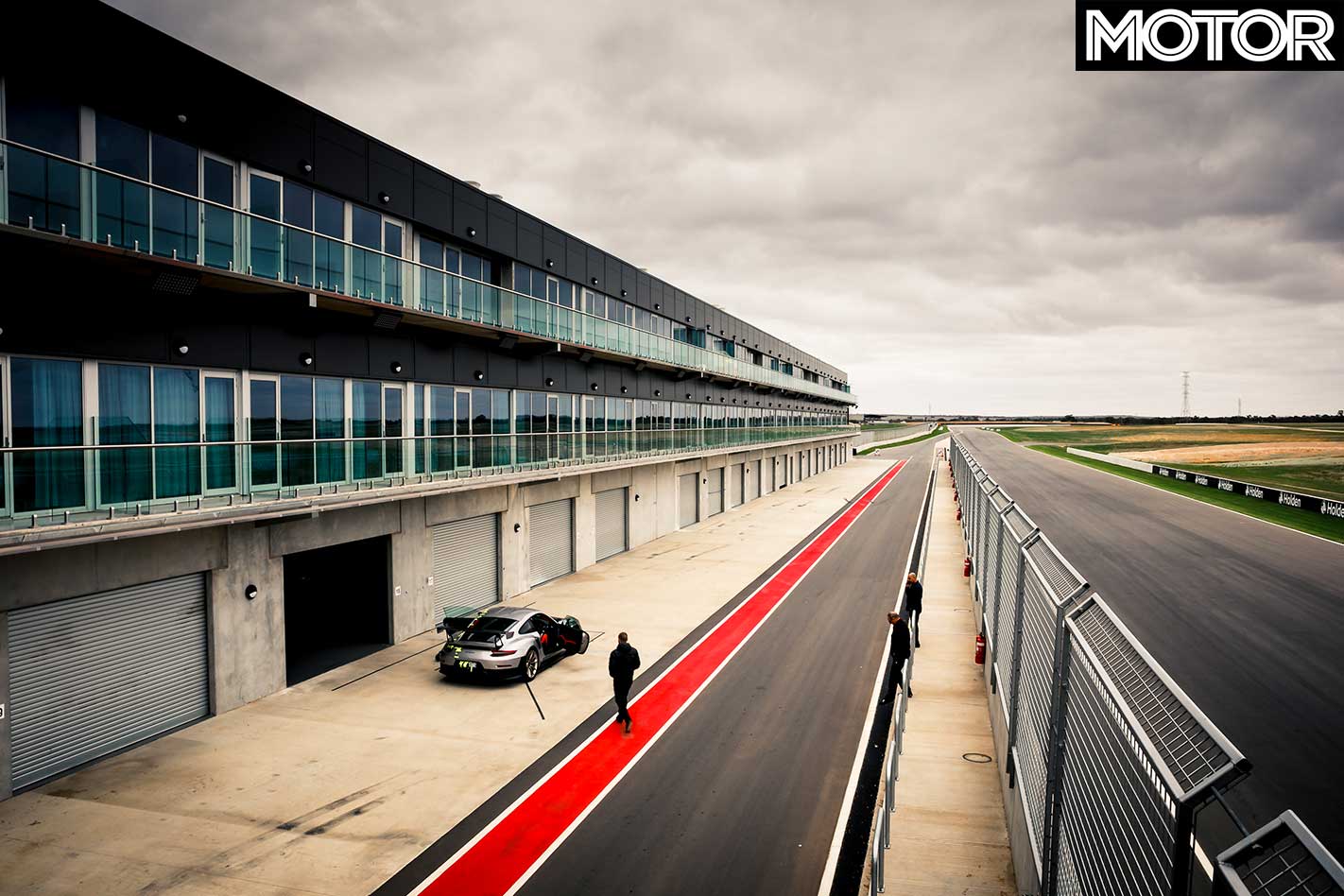
We are shown the hotel, the function rooms with stairs directly down into the pit garages, the F1-spec race control with a wall of brand new TVs, and we are taken to the roof to view the expansive circuit. It’s overwhelming.
The track is entirely visible from the fourth storey balcony, yet descend to pit level and the back of the circuit disappears behind various rises and hills, giving an idea of the elevation change. The Bend circuit is enormous in the size of land it occupies, how it stretches out away from you, and its width.
It is here we must depart the story and cover off some critical things about The Bend. It starts when you fill your car up at the brand new BP service station out the front of the circuit, and then grab a refreshment at the On The Run (OTR) convenience store inside. You are purchasing from the people who own, and who built, The Bend.
They are the brothers Sam, Yasser and Charlie, active racers and members of the Shahin family, one of the wealthiest and most influential in South Australia, presiding over a vast empire of BPs and OTRs across the state.
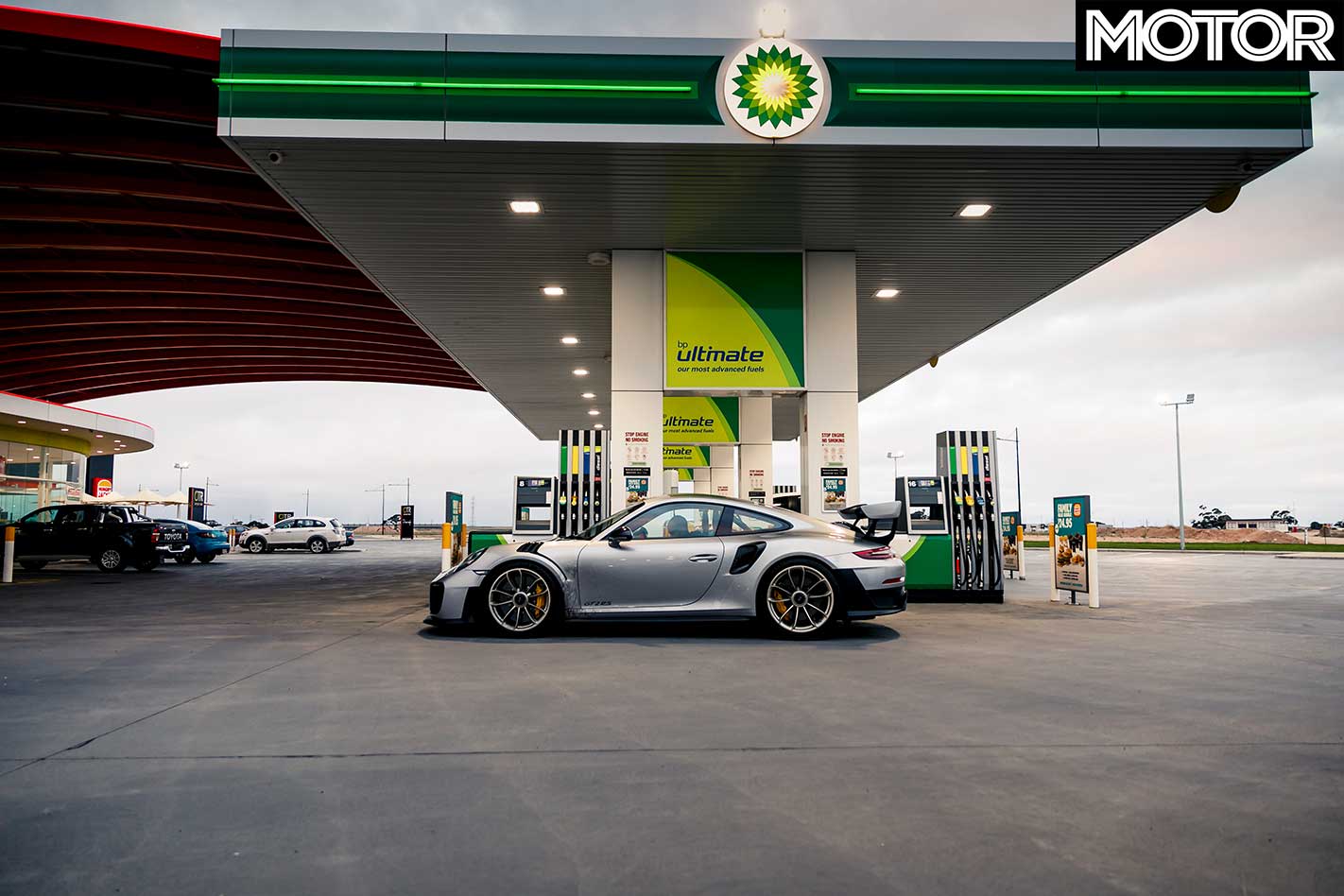
It was their parent company, Peregrine Corporation – founded from humble beginnings by their late father Fathi, a Palestinian migrant – that built and is building the circuit. And which owns the on-site hotel, and of course the track itself.
The Shahins love their cars, motorsport and South Australia, helping explain why The Bend is where it is. Located on the former proving ground of Mitsubishi Australia – and as such, already zoned in a way that was conducive to having a huge racetrack built on it – The Bend was first imagined by the Shahins more than 10 years ago. Construction began January 2017 and when finished in whole toward the end of next year, the facility will have cost more than $110m.
Speaking to owner and managing director Sam Shahin about his family’s motivation for building The Bend, it almost sounds like their gift to South Australia, a state that has given them so much.
“The Bend was borne out of a desire to build something that is of a world standard,” Shahin tells MOTOR. “Something that every Australian can say, ‘we have got a facility that is, if not better, as good as anything there is anywhere in the world’.”
“I just have to pinch myself, every time I look at how this has materialised from an idea to a concept, to the years of planning, to now the implementation stage … 16 months ago, this was a paddock. It makes me incredibly proud. It’s almost surreal.”
It’s easiest to imagine The Bend as a full-size, world-class 4.95km race circuit – with a 2.8km extra loop that can extend the track to the full 7.77km. They can be split again into two other configurations of 3.41km and 3.93km, each with their own pit lanes and pit buildings, starting grids and able to operate completely independent of each other.
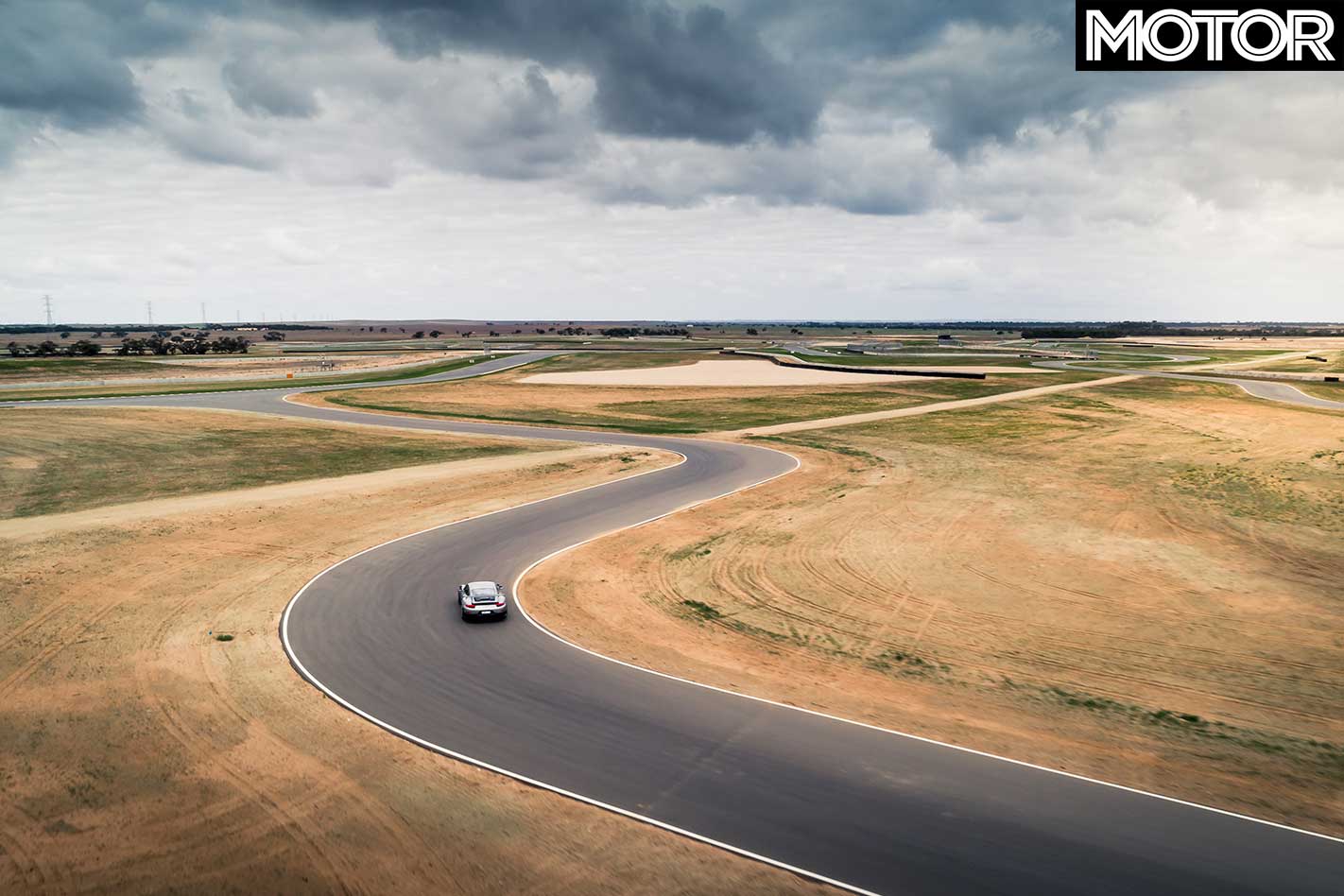
Access roads criss-cross the circuit; there are so many possible configurations that those who were involved in its design, have to stop and think to count them all up. But in the main, there are five.
It’s impressive how properly everything has been done. The 4.95km race circuit meets FIA Grade 2 requirements, meaning The Bend can host any international four-wheeled motorsport up to, but excluding, Formula One (which is also true of Sydney Motorsport Park).
The International Circuit, this configuration is called, also complies with FIM regulations to accommodate any two-wheeled sporting code, MotoGP and WSBK included.
Meanwhile the karting track will be CIK approved, and the drag-racing facility ANDRA approved. A consultative process along the way has seen Mark Webber, Mark Skaife and Mick Doohan among those invited to give input as the circuit design went through its iterations. It’s been done very ‘right’.
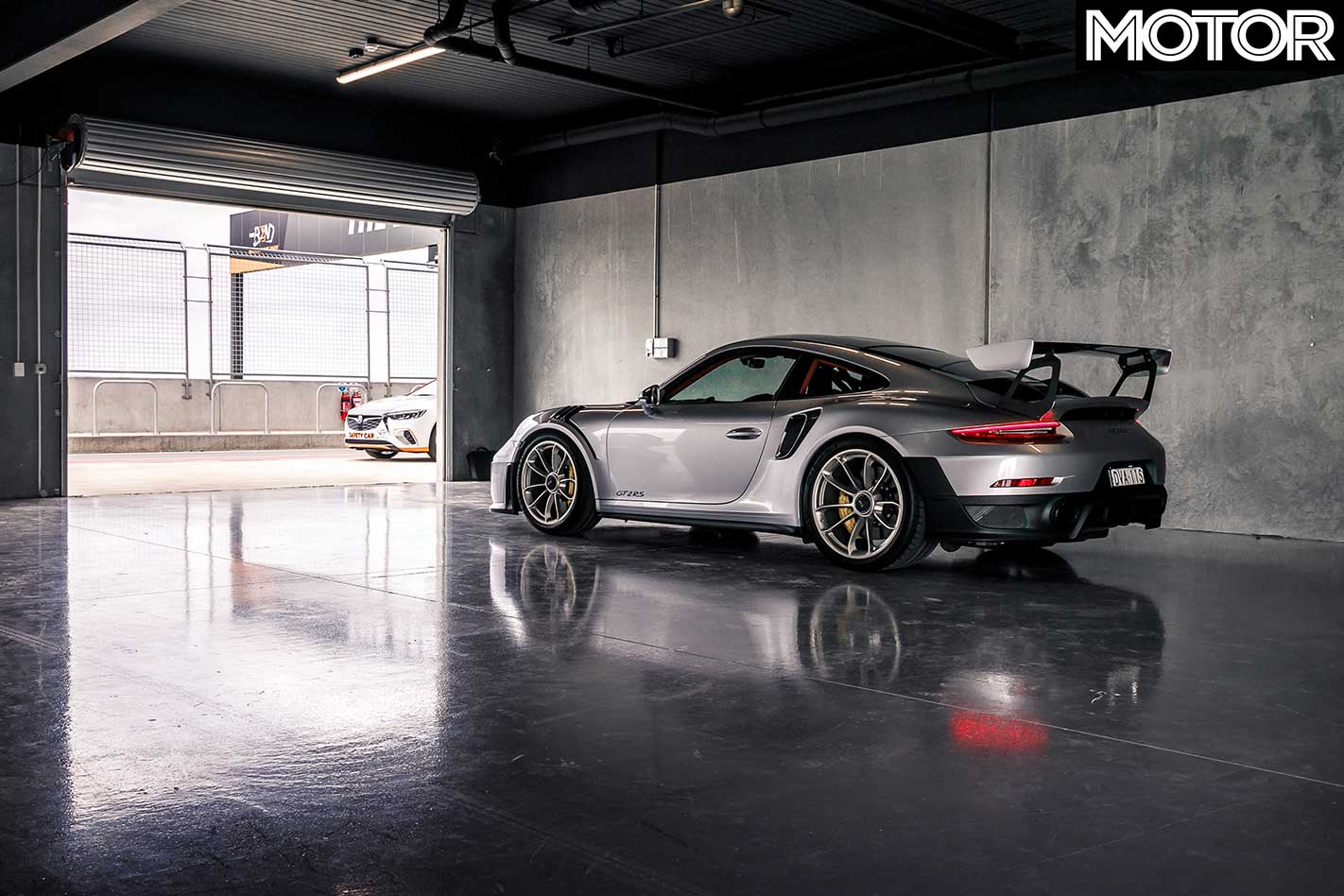
As we stand on the top floor balcony beholding the enormous racetrack, the GT2 RS whirrs up and down the track below us, the videographers and photographers having their way with it while yours truly gets his brain minced by The Bend.
It’s time to head back downstairs, to the generously sized pit lane and pit garages, as good as any Tilke-spec grand prix circuit on the earth. (Hermann Tilke’s company actually responded to the initial Bend circuit design tender.)
It’s time to unleash Luffy in the fastest production Porsche ever – to set the very first production vehicle lap record around The Bend’s 7.77km circuit.
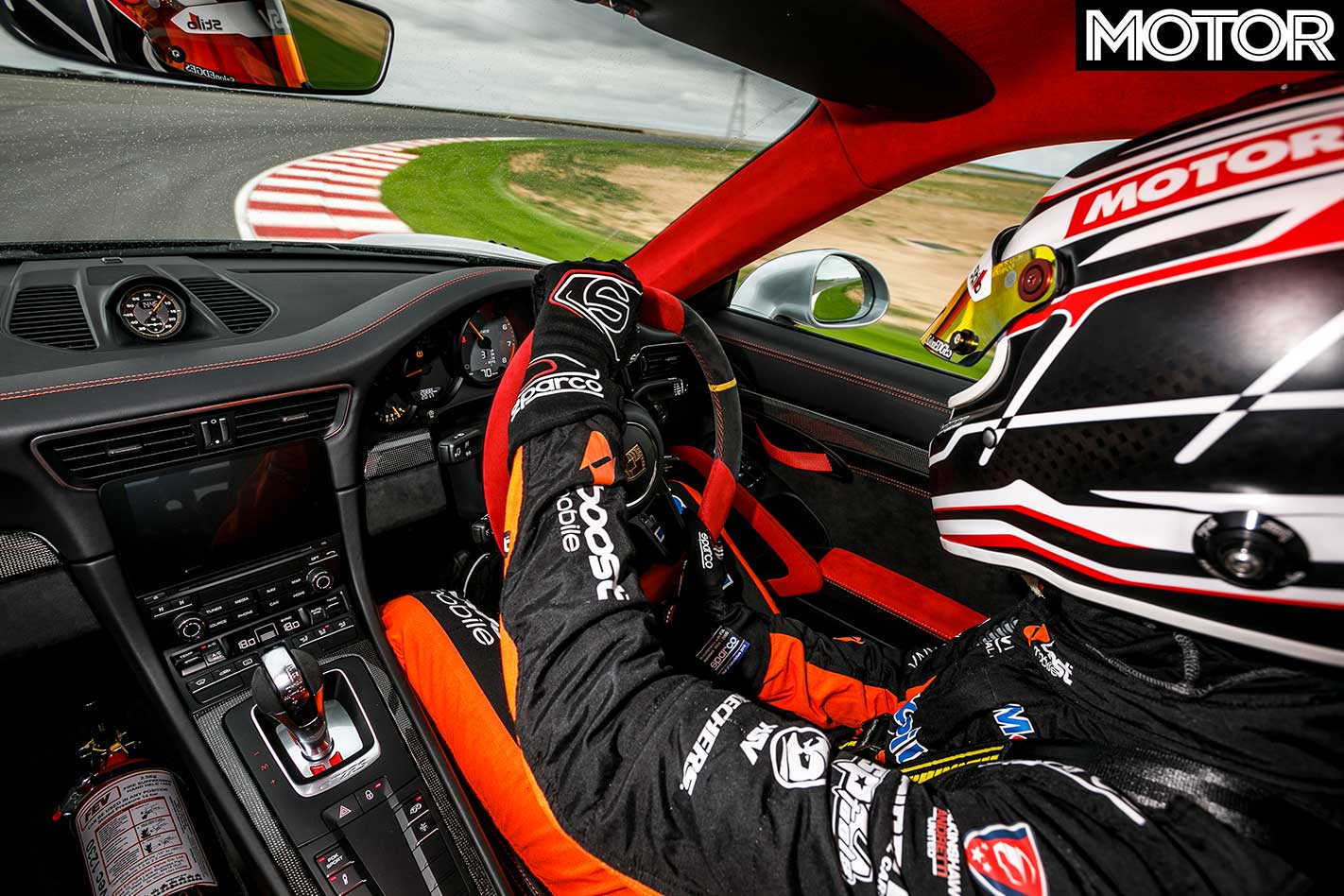
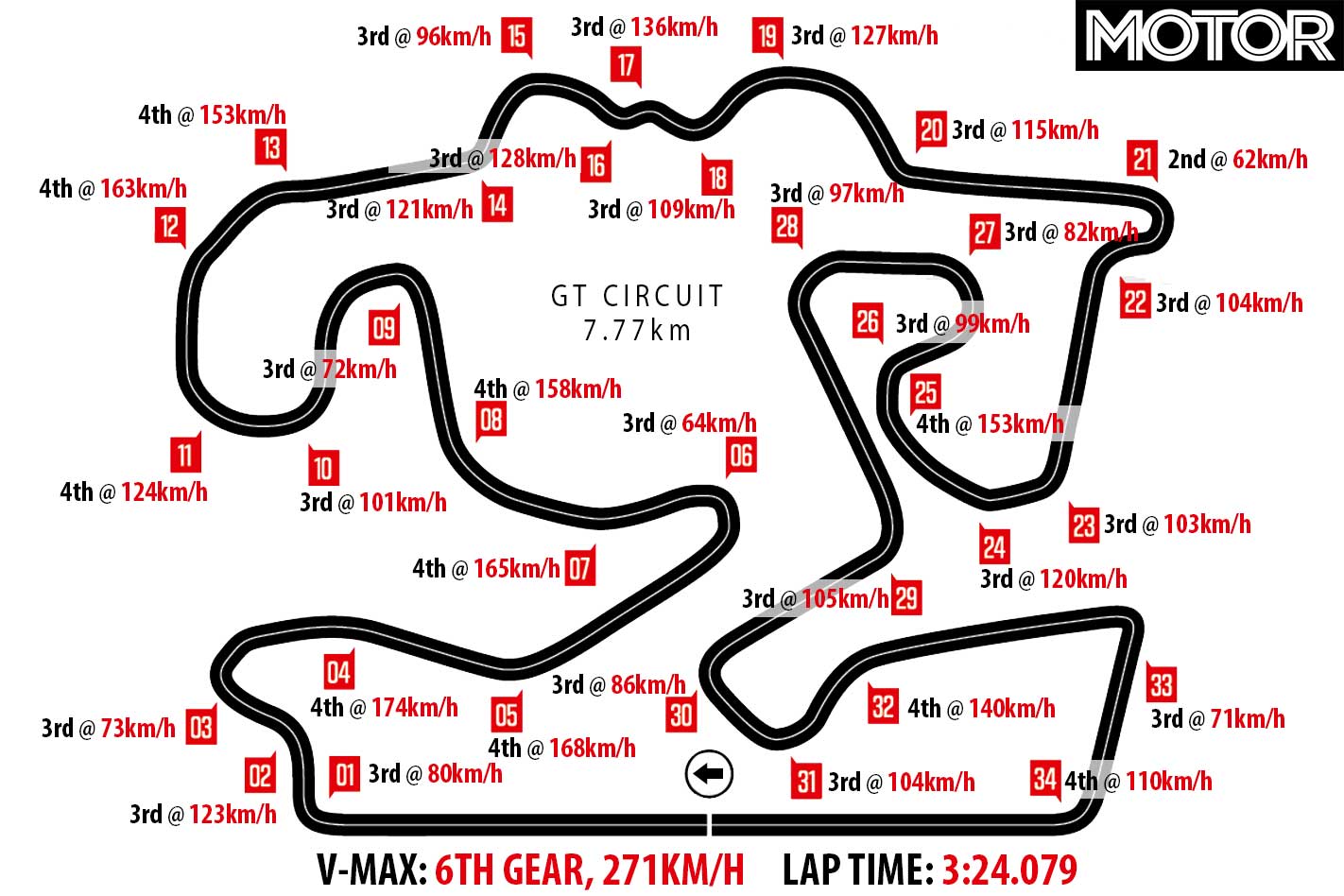
Foolishly, when booking him in for this shoot, I hadn’t realised Luffy had driven the track, extensively, at the Australian GT Championship round only a month before. Presuming otherwise, it occurred to me that I was asking this man to set a lap record around a track with 34 corners, with only two attempts to do so.
Do I send him a track map? Find some onboard footage from YouTube? Fortunately, neither was necessary.
As the GT2 RS idles loudly and busily, Luffy straps in, while our video team attach all manner of mysterious addenda, what looks like a severed possum’s tail to the rear bar near the exhaust, and of course, the GoPro – and you should go to our YouTube page to see The Lap. Luffy is unleashed, and then we stand around in pit lane and wait.
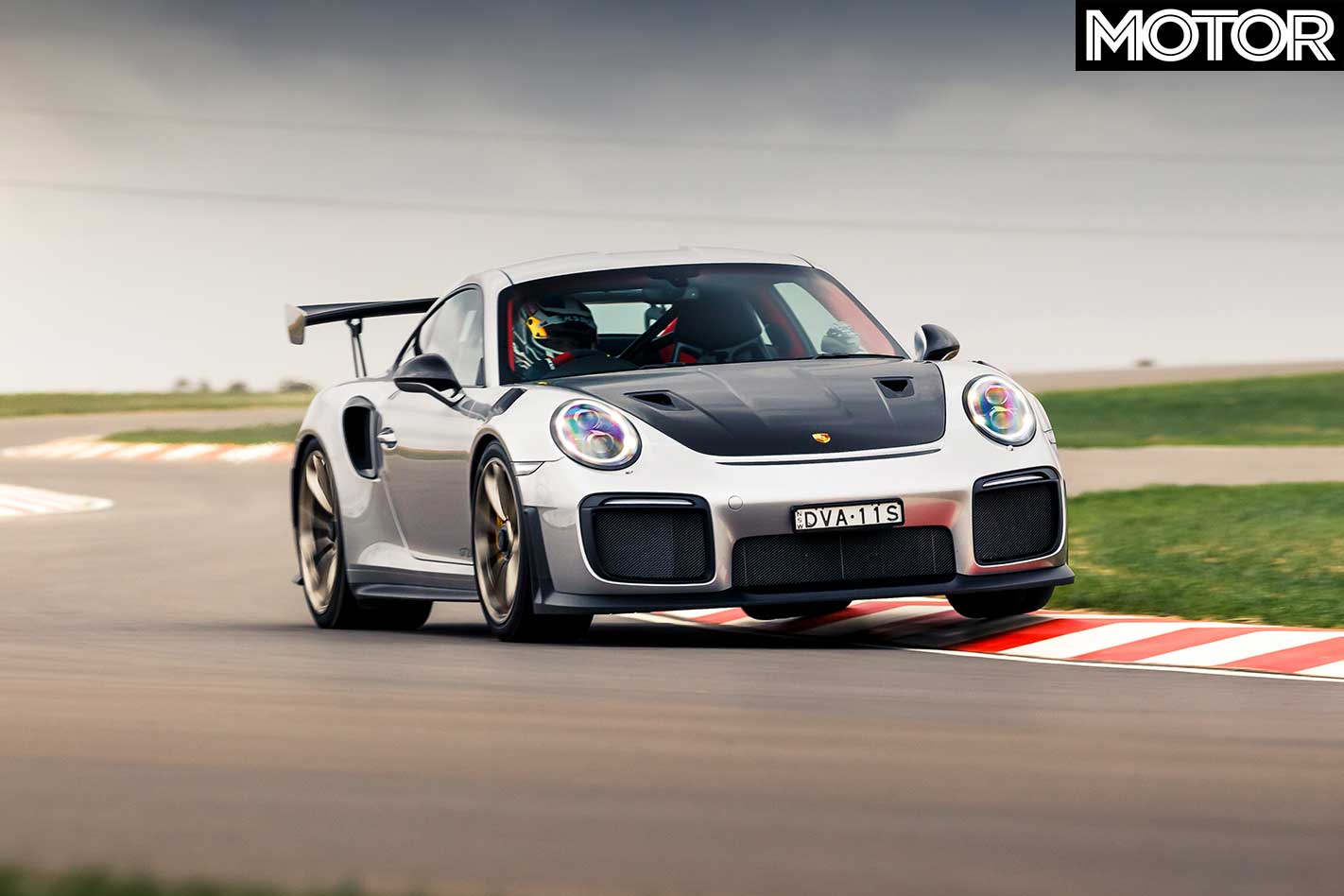
Luffy comes in. “Three minutes, twenty eight point one.” I find my eyebrows raising automatically and myself nodding knowingly, but then I realise I haven’t the slightest idea if that time is any good or not – I’ve no reference point.
“The GT3 cars were doing 3:03s when we were here a few weeks ago,” says Luffy. “The GT2 RS just feels so much more powerful, I think I got to 260km/h on the front straight before I stopped looking down. It’s a mega, mega thing. It doesn’t have the aero or grip of the GT3 cars, of course.” But that he’s thinking to compare the GT2 RS to them, says something alone.
It’s time for round two. Luffy goes back out, the GT2 RS’s menacingly loud turbocharged exhaust ricocheting off the large pit building beside us as he rockets out of pit lane. Using the 7.77km GT Circuit, entire minutes pass where he is just not visible at pit lane level, only a murmur somewhat at the back of the circuit.
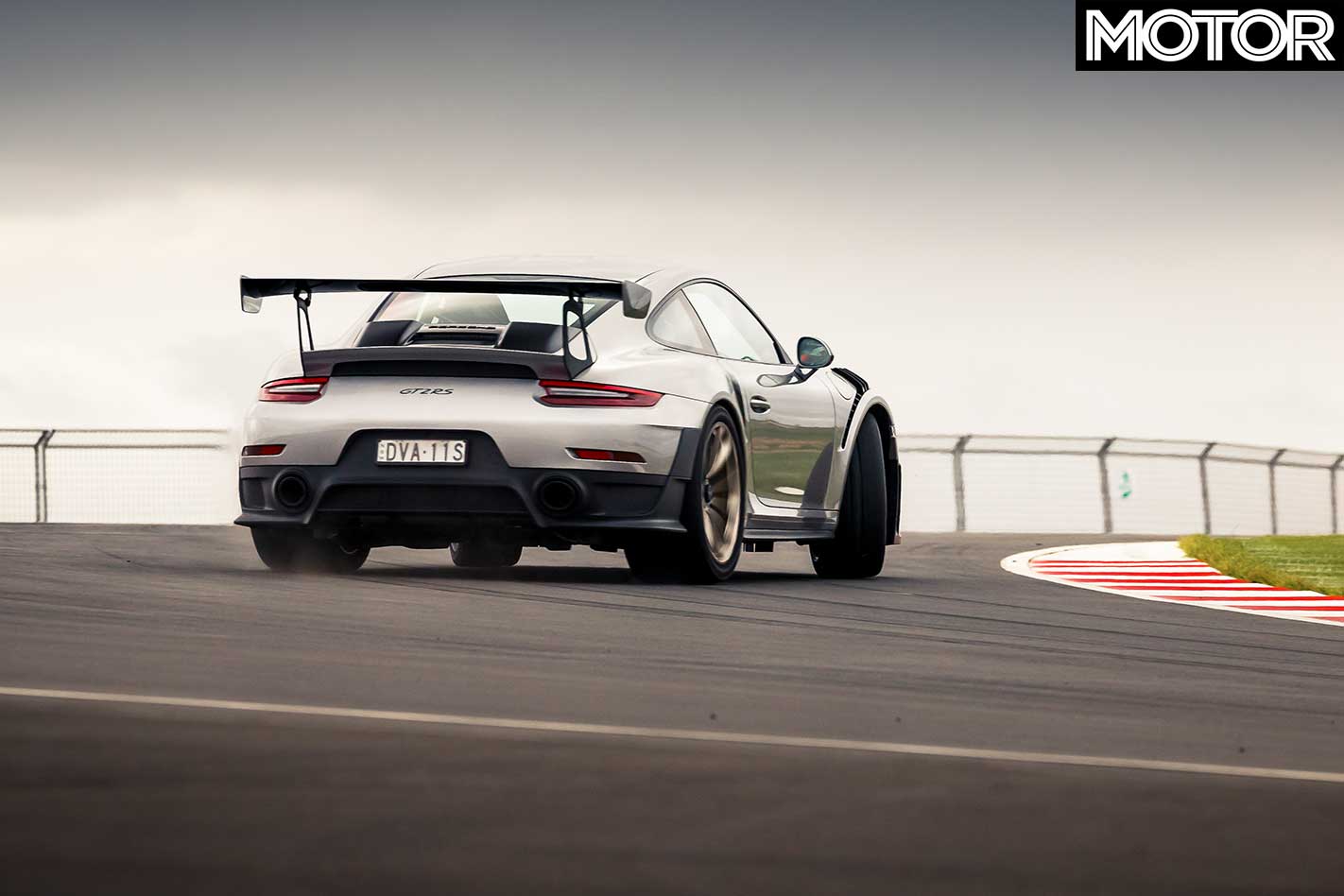
After just two or three laps – that’s nearly 10 minutes flat out, mind you – he’s back. You can tell he, and the car, have been working hard, a flurry of energy entering the previously peaceful pit lane as Luffy returns, his face flushed and hair matted as he removes his helmet, huge amounts of heat radiating from the GT2 RS’s wheel arches, the occasional tick as the colossal carbon ceramic discs cool.
“Three twenty four, point one,” he smiles. Luffy is talking busily and quickly, like a man who’s just had a go. There can’t be much more in it than that.
With “the lap” done, MOTOR has set the first production car lap record around The Bend’s 7.77km GT Circuit. And now it’s my time to experience the track – in the Kia Carnival hire car, as Luffy is still required to satisfy the photographer’s and videographer’s exhaustive wants and desires.
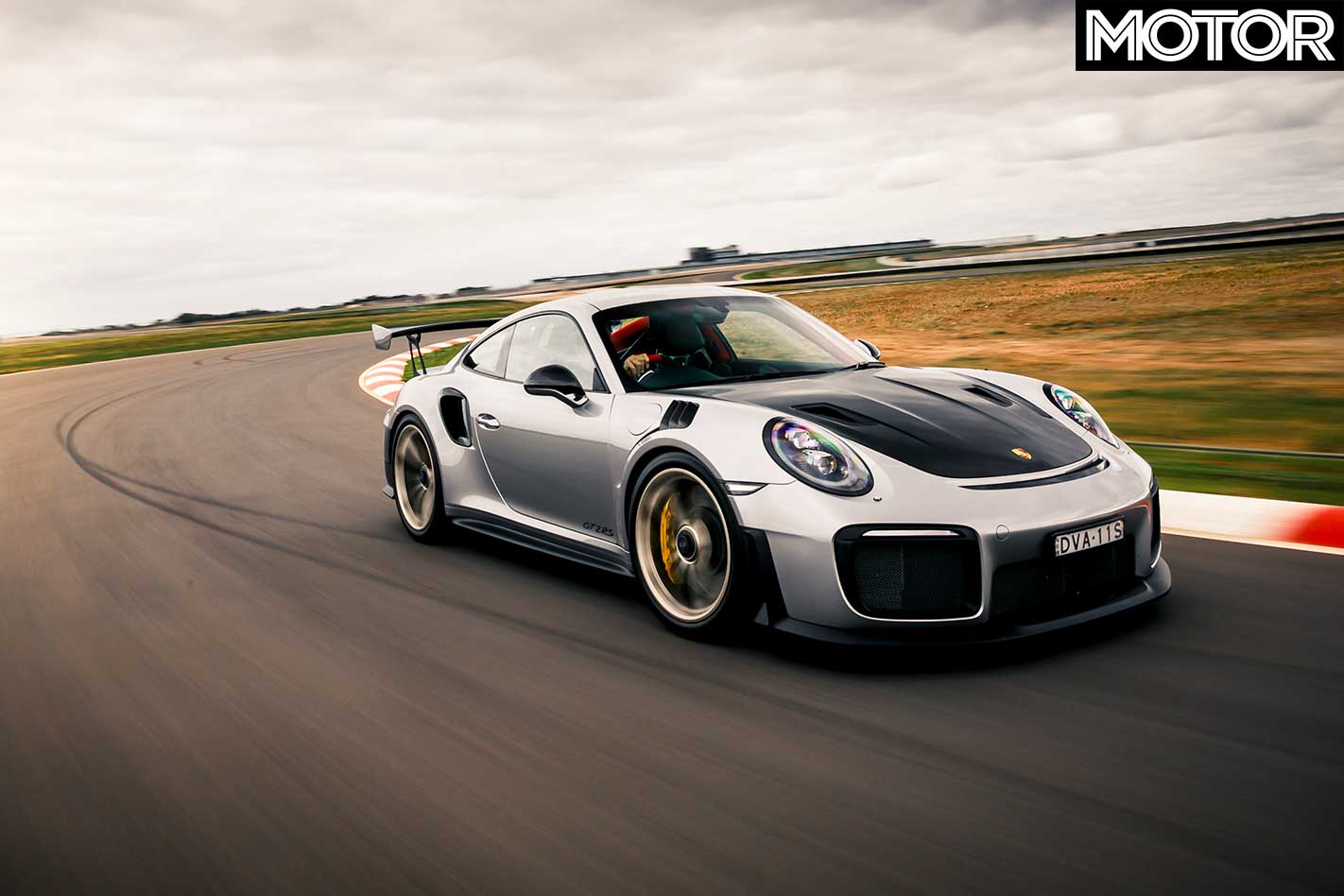
Sadly for me – and trust me, literally for a week afterwards I was quietly bummed I did not get to drive The Bend in a 911 GT2 RS – I didn’t get to drive The Bend in a 911 GT2 RS. As such, having spoken to Luffy, and watched extensive onboard laps – and, if I’m really honest, having luckily driven a portion of the track at the new Ford Mustang launch before sitting down to write this story – I can tell you what The Bend is like to drive.
In one word – stolen off a racing car driver – it’s epic. There are two distinct characters within the one track, if you are driving the full 7.77km configuration.
You initially start on the International circuit, having unusually entered the track, from the pit lane, from the outside; entering from the inside of the track is the main reason most pit buildings are built on the infield, despite the tricky access and the fact a gigantic building is blocking the view of spectators.
The International Circuit is wide – and incredibly smooth, owing to its brand new surface. There’s more elevation change than you might first expect – in fact, excitingly, there are more than a few corners where the entry and apex is visible, but the corner exit is hidden over a brow.
The Bend is also highly technical and a thinking man’s, or woman’s, track, many corners necessitating compromise in order to find the quickest overall way around the track. This part of the track, the International circuit, is fast, flowing, thrilling and challenging.
To form the 7.77km layout, you take a left turn off the International Circuit on to the East Circuit, where the track subtly changes in personality to something, dare we say, more Nordschleife-like.
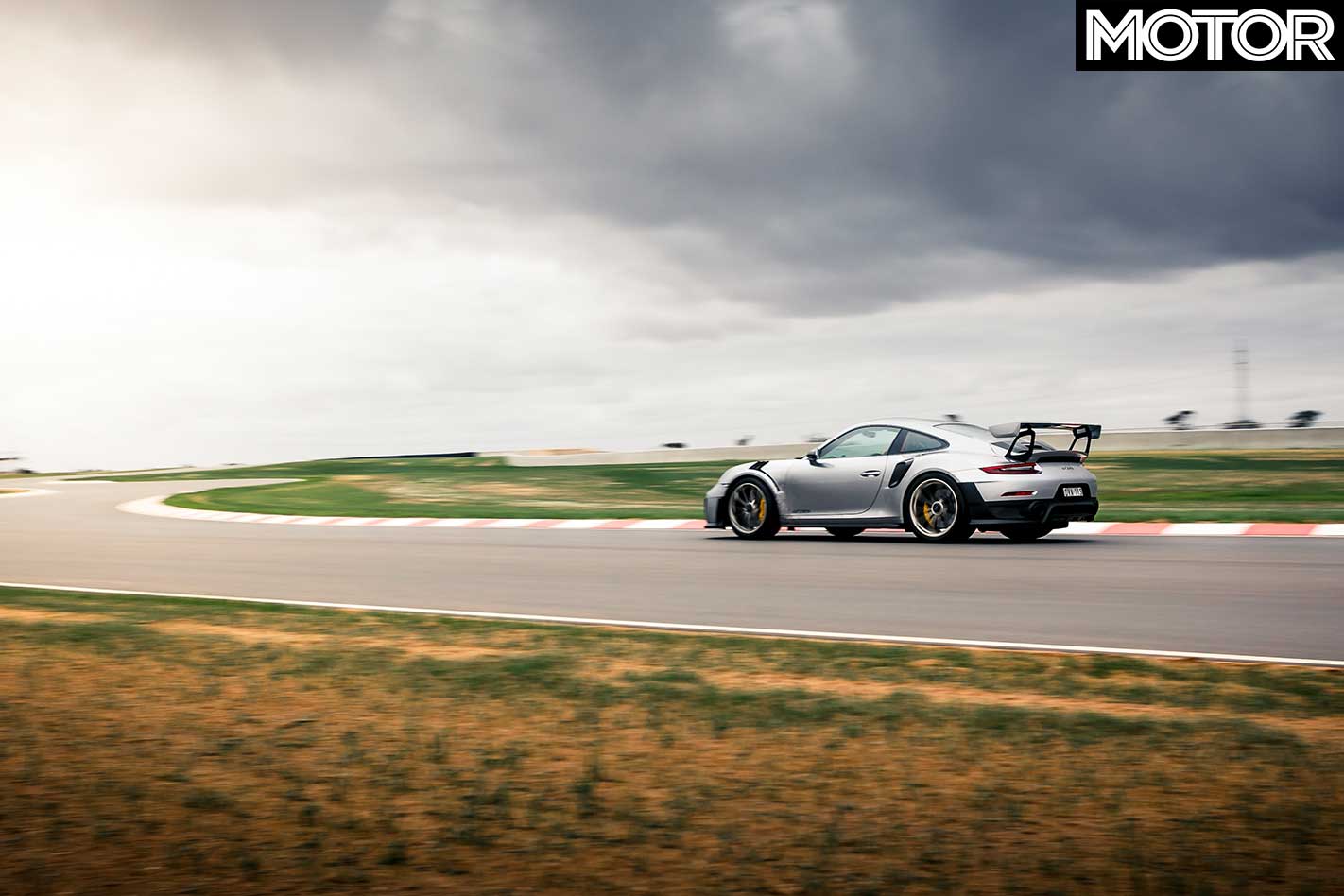
Cambers are more aggressive, the curbs bigger, and the track seemingly narrower, restricting overtaking to only wannabe Ricciardos and forcing all others to patiently await the return of the International Circuit where overtaking is again a little easier. The International Circuit is the better racetrack, whereas the GT and East Circuits will keep track day addicts endlessly entertained.
It goes without saying, too, that the track is long. “If you lose just one tenth a corner on the 7.77km circuit, that’s 3.4 seconds a lap,” smiles Luffy, explaining that a longer track exaggerates the difference between a good driver and an excellent one.
Trickily, The Bend is short on features as you’re driving the track itself, bereft of grates and trees and other markers that you can use as references as you try to best guide your car around the circuit. And visually there’s little to identify The Bend as well, with its traditional red and white ripple strips not exactly giving the place its own DNA.
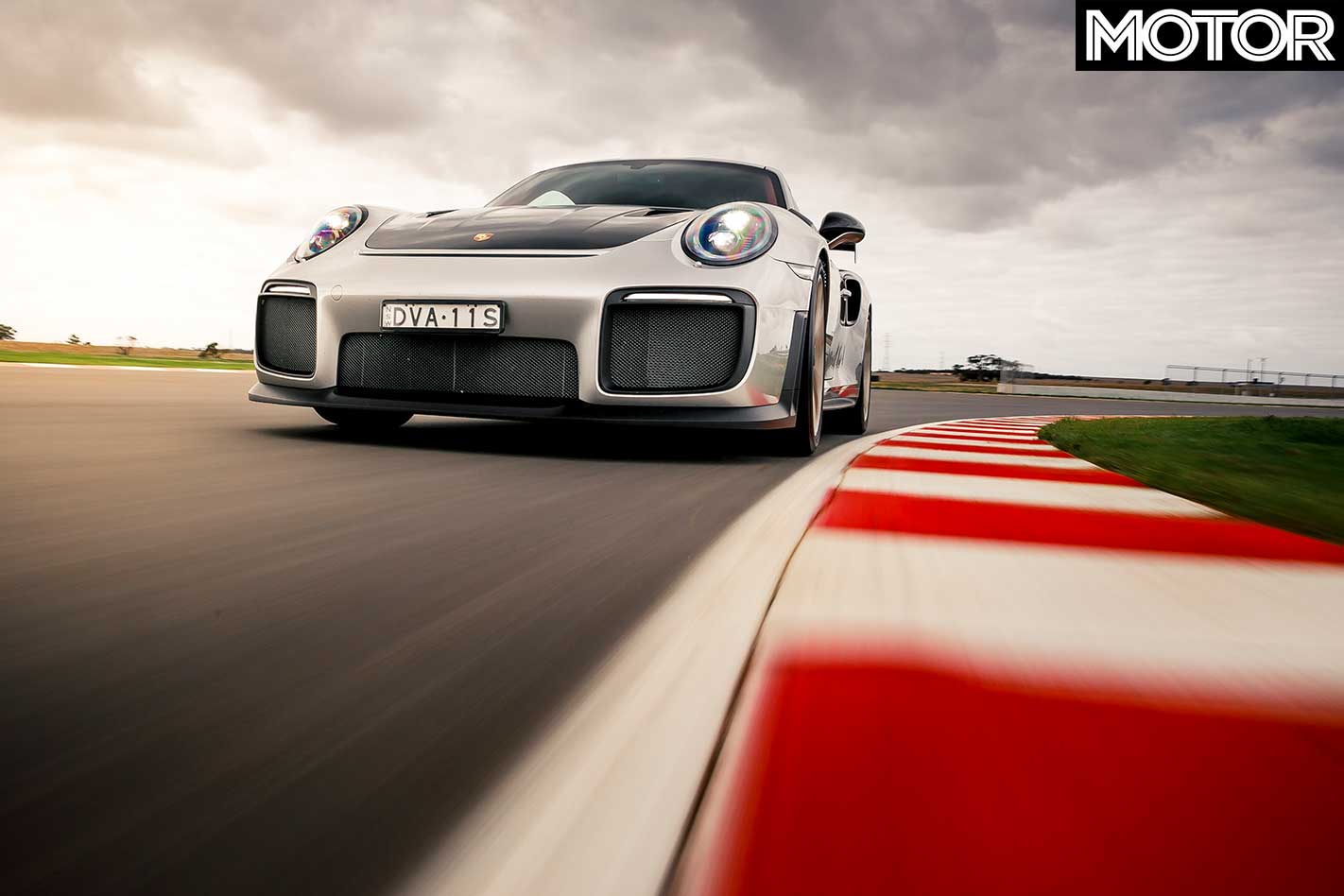
The classic Bend photograph, it seems, will be of a car going over a brow, like the one at Sydney Motorsport Park, or Lukey Heights, with some very high powerlines in the background. Adelaide’s power supply, courtesy of Melbourne, and the brunt of oh so many jokes, goes right over the top of The Bend circuit.
Our day at The Bend concludes in the Rydges Hotel above the pit lane building. The rooms are nice and large, and we’re not sure, but myself and photographer Jacobs feel like we’re the only guests in the whole place. Our hotel room balconies overlook the pit lane and the circuit, like a hospitality suite at any other circuit. You can lie in bed and your view is a vast racetrack – odd, but somehow exceptionally cool.
Like the pyramids, Hadrian’s Wall or the SBS building in Federation Square, it’s as if The Bend was built by aliens overnight. All we know is, it’s out of this world.
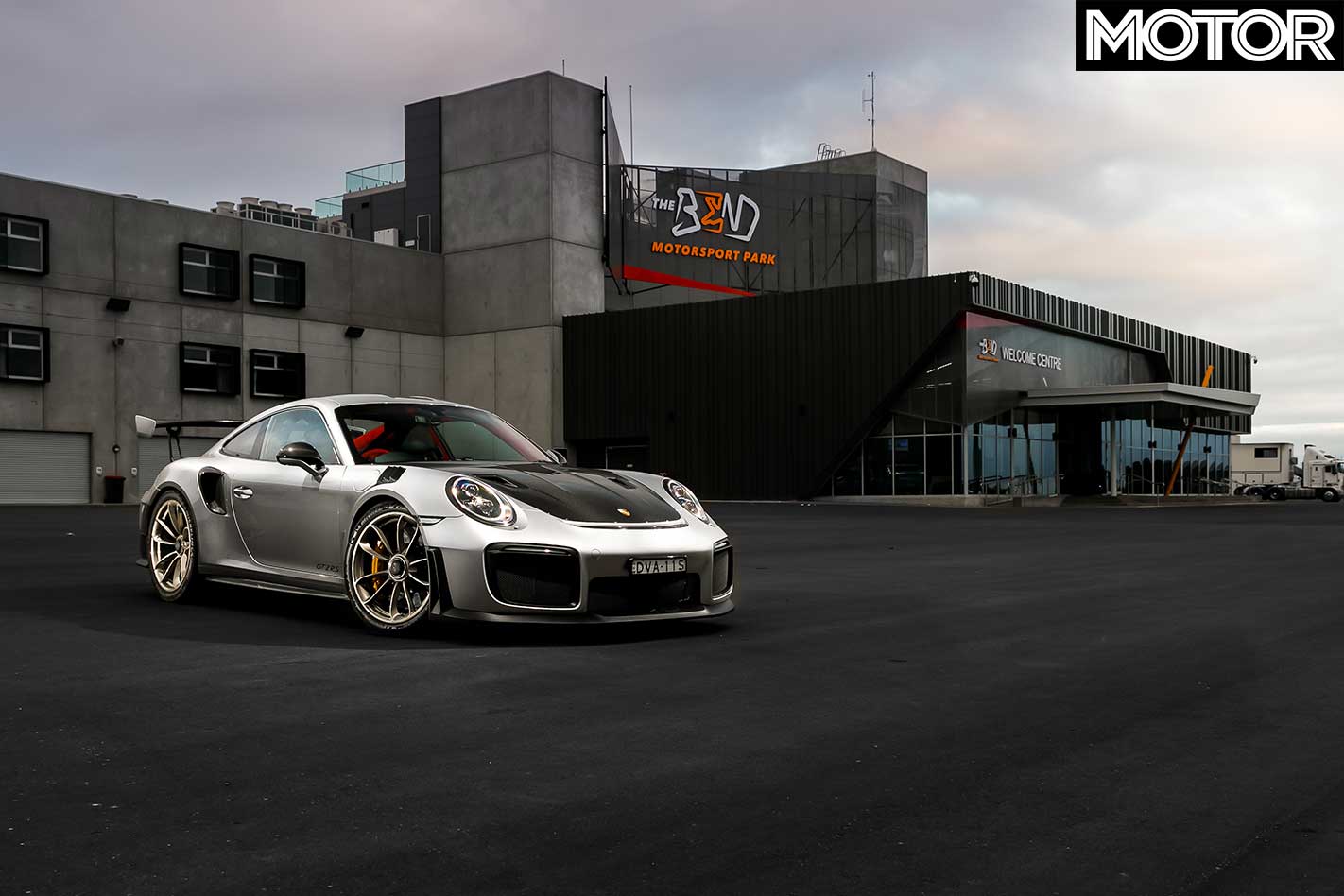
Five Things that make the 911 Gt2 RS epic
01 – With its 6:47.3 lap, it’s the fastest production Porsche ever to lap the 20.6km Nurburgring Nordschleife, quicker than even the 918 Spyder’s 6:57.
02 – Exotic materials keep weight to 1470kg.
03 – Despite its rear-drive configuration, the 515kW/750Nm twin-turbo 3.8-litre flat-six GT2 RS is capable of 0-100km/h in a claimed 2.8sec and 0-200km/h in 8.3sec. Its top speed is 340km/h.
04 – The GT2 RS is as expensive as it is fast – $645,400 before options.
05 – Up to 450kg of downforce is available at 340km/h.
The Bend’s 34 turns in the 911 GT2 RS’ Gears and Apex Speeds
THE BEND is open for business. Australia’s longest race track, and the world’s second-longest purpose-built track after the Nordschleife, has opened its doors to the public, offering what proprietor Sam Shahin describes as a ‘motorsport theme park’.
The scale of the ambition at what was Mitsubishi’s test facility, some 100km south-east of Adelaide, is dizzying. As well as the main FIA Grade 2/FIM Grade A-standard 7.7km circuit, there are also eight shorter track configurations, two skid pans, off-road adventure courses, gravel rally stages, a 34-garage pit facility, a 100-room Rydges pit-lane hotel, plus press facilities and function centres.
Work is also being undertaken on an ANDRA-approved Group 1 drag strip, a proposed 2km Vmax straight, kart track, drift facility and a rallycross circuit with water splashes and multiple jumps.
“To drive through a gate and see all those disciplines of motorsport represented in the one place is a very unique proposition,” Shahin says. “Some of the cynics will say there’s a very good reason why this has not been done anywhere in the world and I get it, but we’re having a crack. At the end of the day it’s the motorsport public – spectators, participants, drivers, owners – who will vote with their feet, that will tell us we’ve made a big mistake or whether we’ve got something very unique right here in Australia now.”
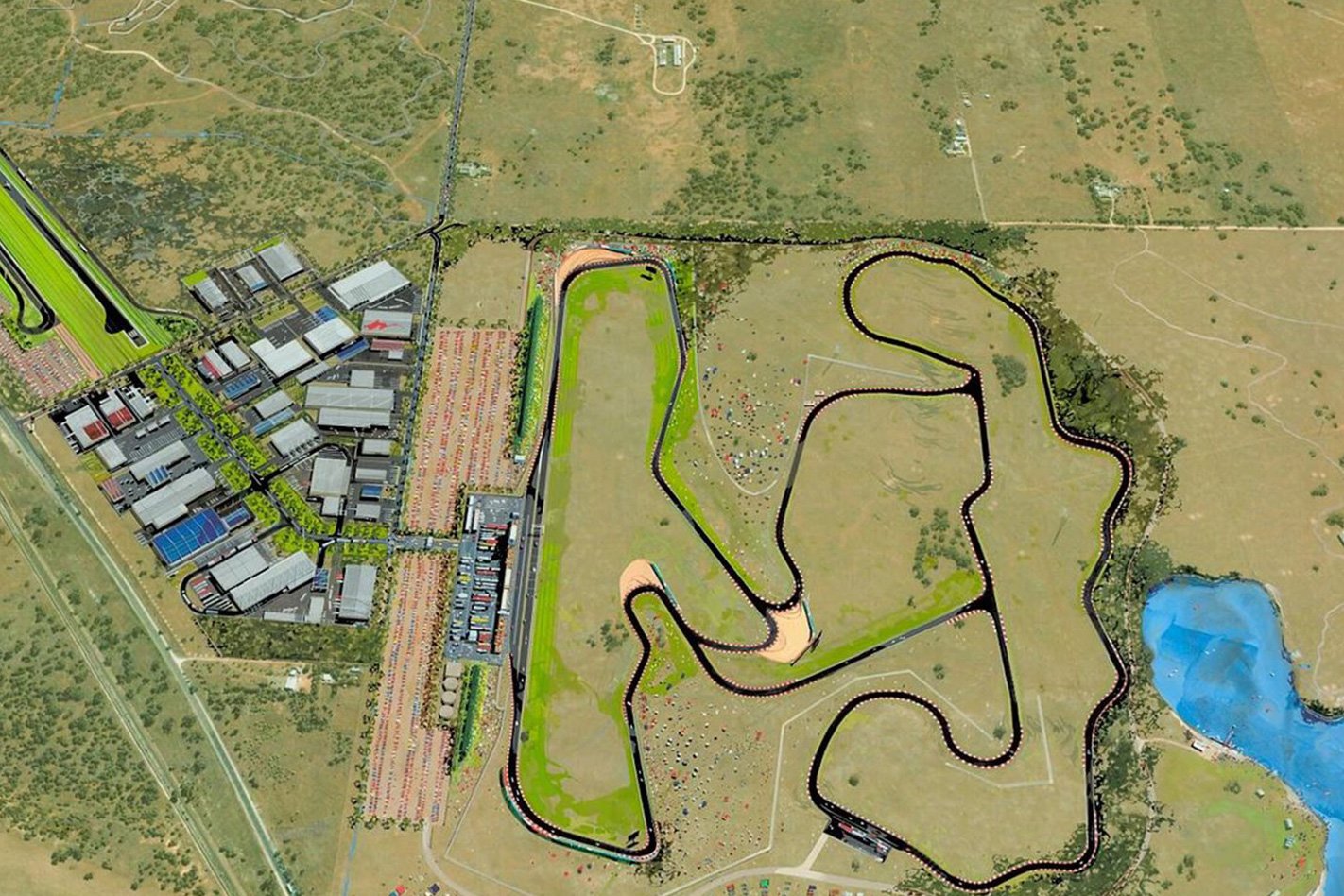
It’s hard to argue with that appraisal and the track design has been absolutely exhaustive.
Originally designed to be positioned on the near side of the available parcel of land, it was apparent that the far side offered more elevation change so Shahin flipped it over and devised plans to increase the peaks and troughs further still, only to be informed by the FIA that there was a limit to the amount of relief that they’d certify.
Watch now: MOTOR sets production car lap record at The Bend in Porsche 911 GT2 RS
From this process we learn that were Spa-Francorchamps to make a fresh application for FIA Grade 1 certification it would never achieve it for exactly this reason.
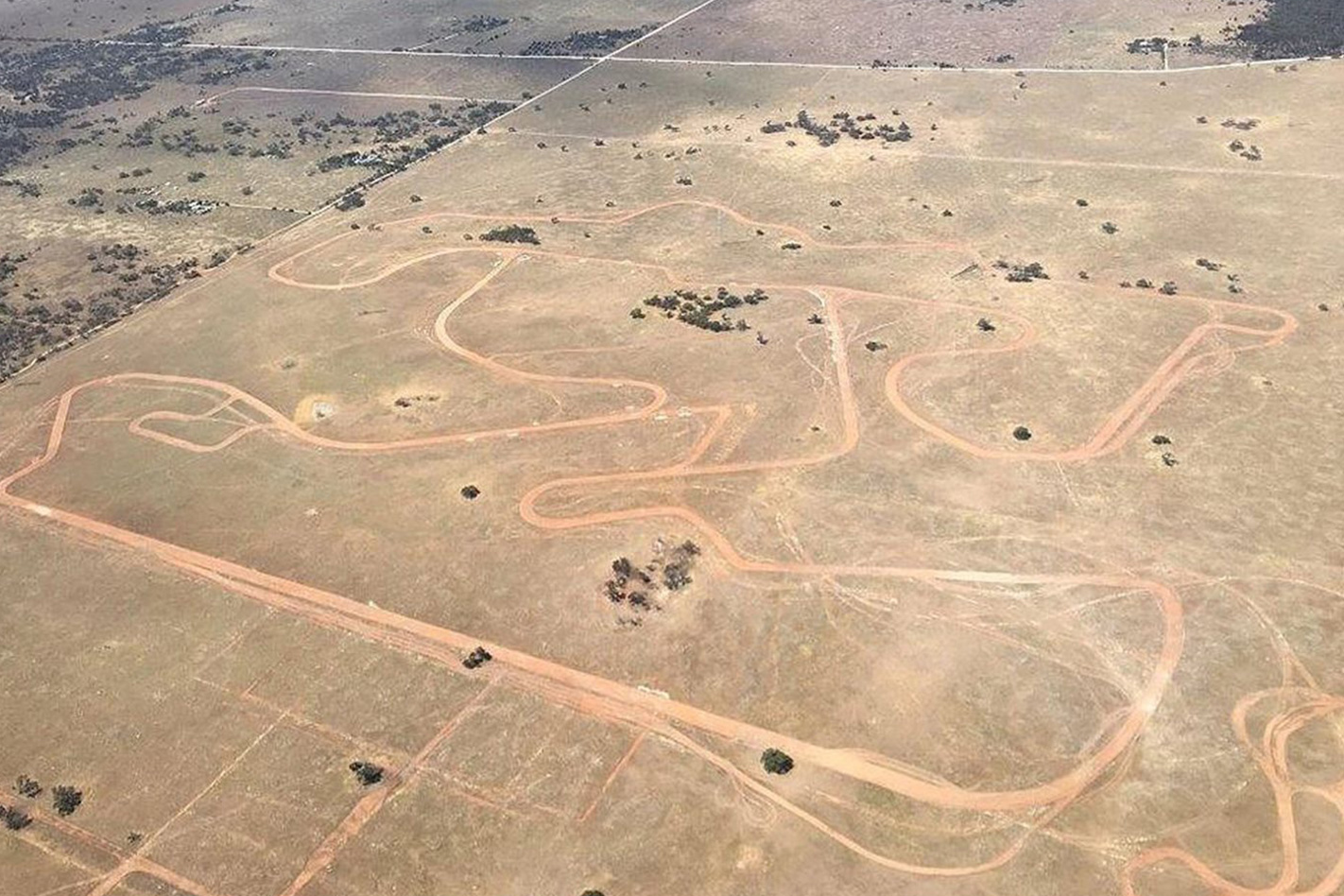
Certain FIA stipulations informed track width, sightlines and so on, the design team having finessed these details on a simulator before ground was broken. Domestic motorsports luminaries such as Mark Webber, Mick Doohan, Mark Skaife, Jamie Whincup, Garth Tander and Nick Percat all had a hand in consultation, with Shahin also seeking the advice of former F1 driver Jonathan Palmer, who masterminded the creation of a clean-sheet motorsports park in the UK, the Bedford Autodrome.
“We didn’t want anything that feels or looks or replicates any other racetrack in the world; any other corner anywhere in Australia or anywhere in the world,” explains Shahin. “We wanted a fast, flowing, technical circuit that is going to reward great drivers.”
Doctor who?
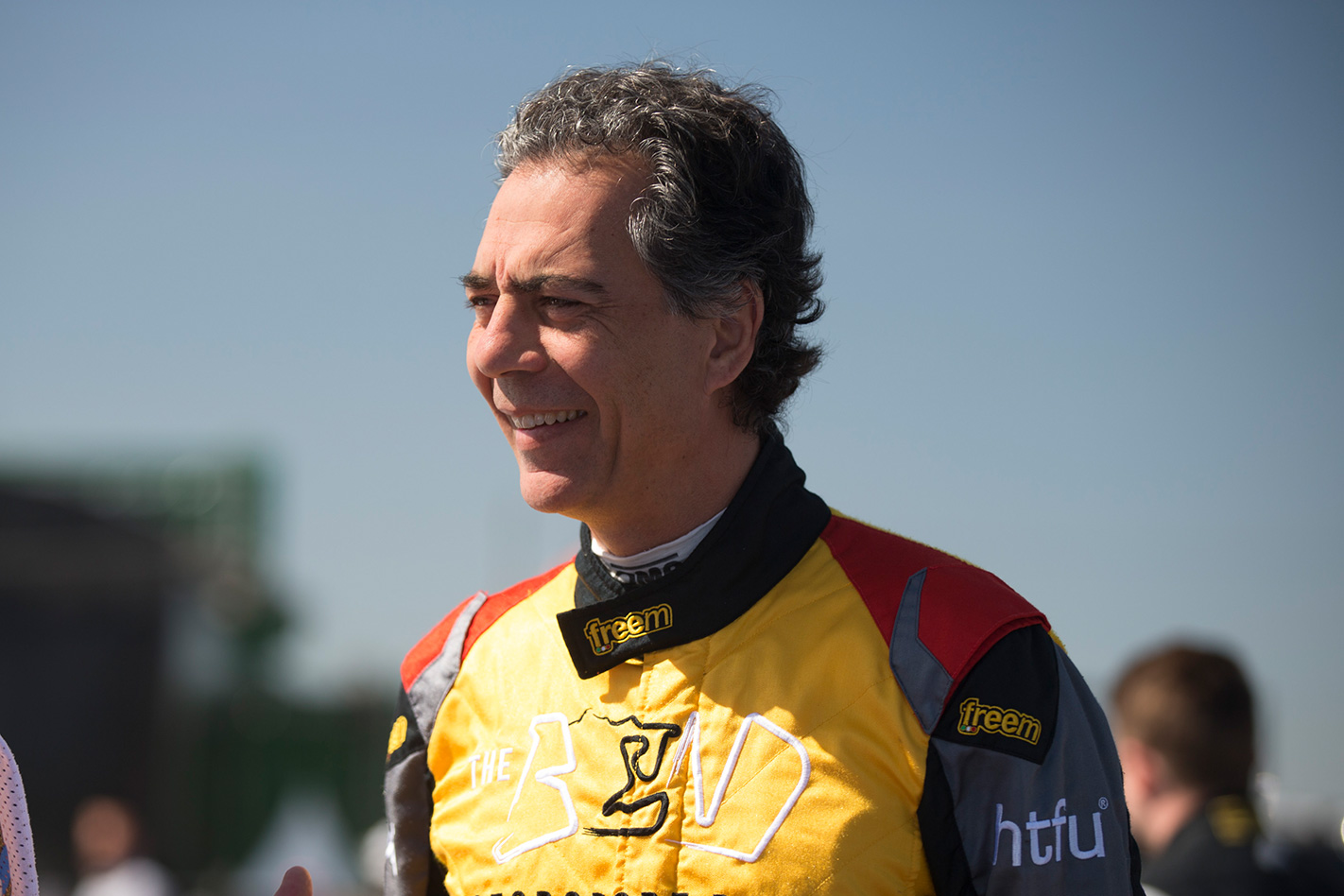
Pay attention at the back. Dr. Sam Shahin, along with his brother Charlie, own the Peregrine Corporation. A family business, they took up the reins after dad Fred, a former UN refugee worker who grew the business from one service station bought in 1984, passed away in 2009.
Operating the South Australian ‘On The Run’ fuel stations, the business acquired 29 Mobil fuel outlets in SA back in 2010 and 25 additional BP outlets in 2014. These sites were rebranded and upgraded to 24-hour On The Run servos. Now numbering over 160 sites across the state, the business model of On The Run has involved working its retail space hard, introducing brands such as Subway, Brumby’s Bakeries, Oporto, Krispy Kreme and Wendy’s.
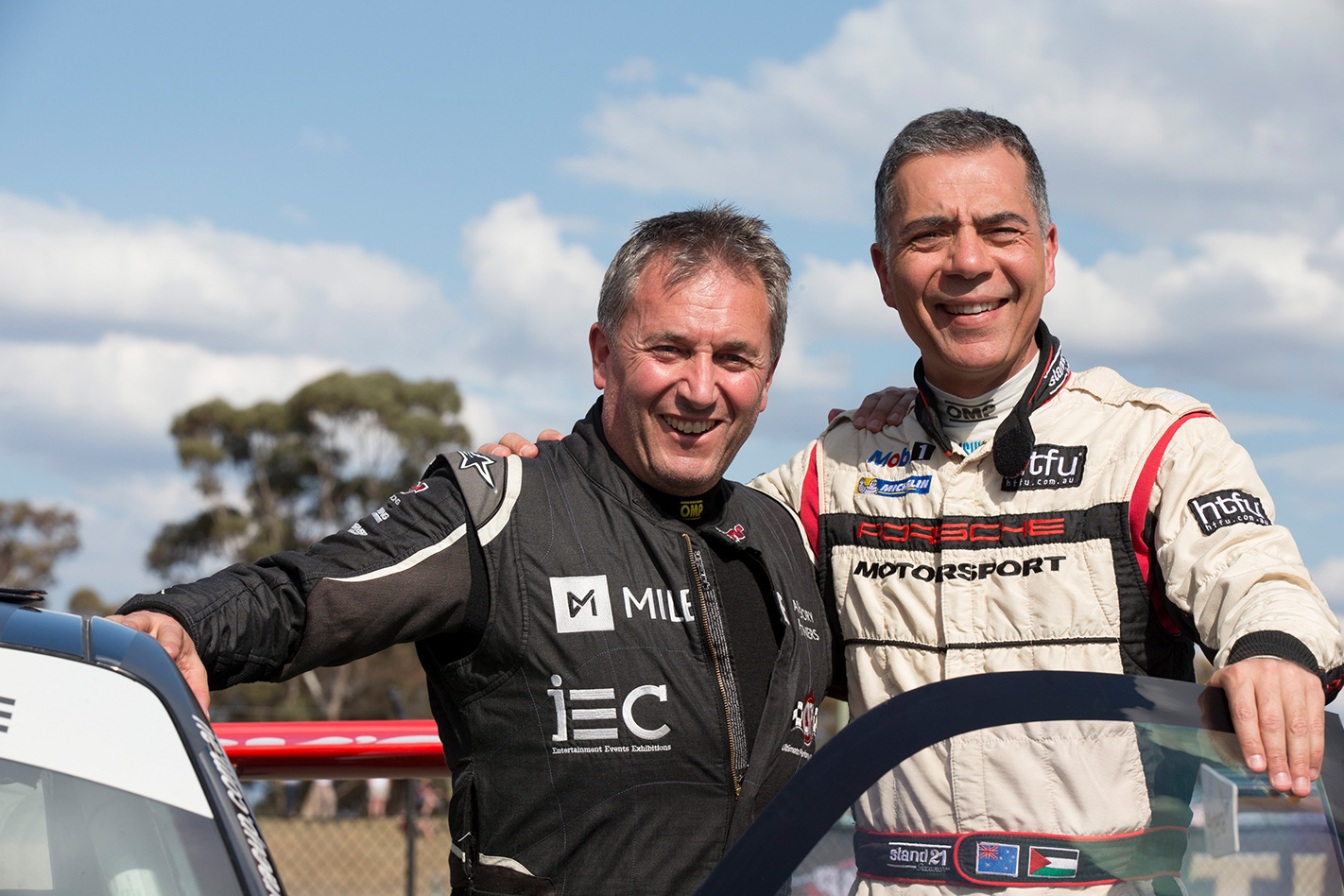
Shahin’s a respectable pedaller, finishing fourth in the 2017 Michelin GT3 Cup Challenge Australia. Last year he also oversaw the purchase of the 2.6km Mallala Motorsport Park, with plans afoot to renovate the facility in order to provide a boost to grassroots motorsport in South Australia.
WHAT IS IT?
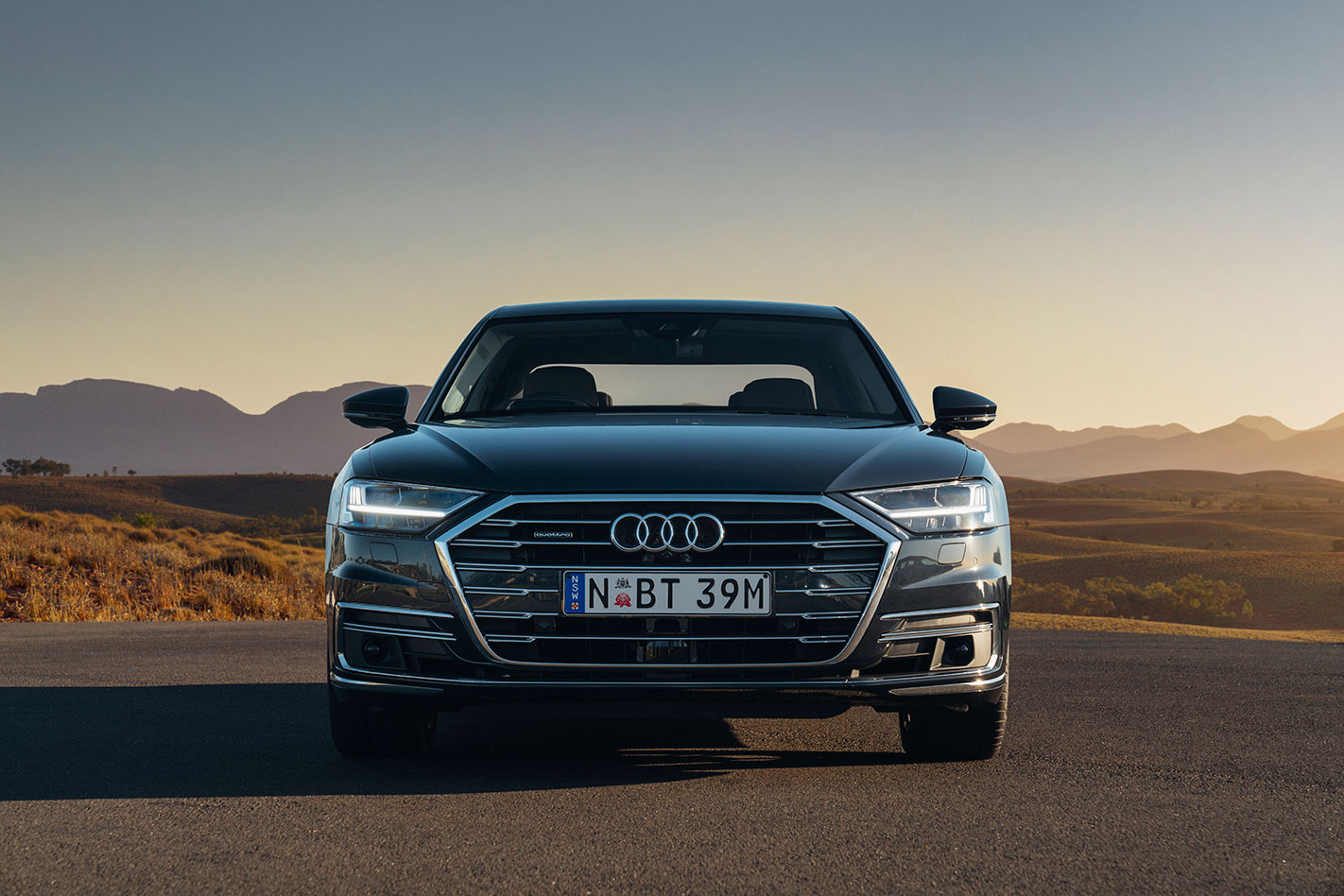
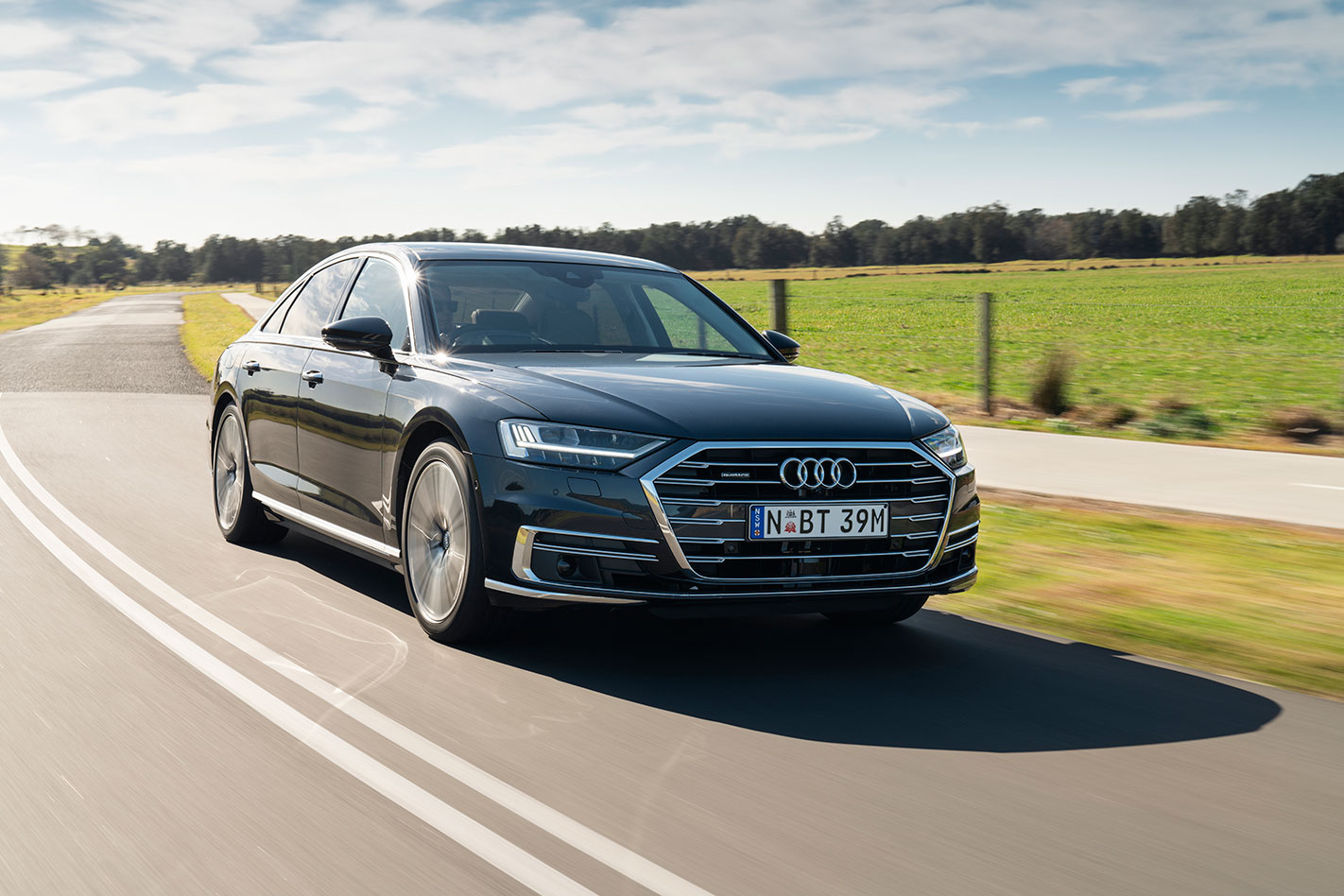
This is the fifth generation of big, plush Audi sedan; a lineage that began 30 years ago with the Audi V8 of 1988. It arrives in Australia laden with technology that buyers of more accessible Audis will get in future generations. For those with the means right now, this advanced limo promises to pose its strongest challenge yet to the Mercedes-Benz S-Class and BMW 7 Series.
WHY WE’RE TESTING IT
At its unveiling, this generation of A8 was billed as the first production car capable of Level 3 autonomy. We already know that for locally delivered cars that’s not quite the case, but some production-first tech means this car is a big deal physically and figuratively.
MAIN RIVALS
Mercedes-Benz S450 L, BMW 740i, Lexus LS500 Sport Luxury, Jaguar XJ, Maserati Quattroporte, Porsche Panamera
THE WHEELS VERDICT
Audi’s best full-size limousine yet. Though some of the A8’s most advanced safety and assistance features are either not yet available or not yet legal in Australia, this car is already an intriguing display of what Audi can do. It’s the highway crushing long-distance weapon one would expect, with a bonus appetite for back roads.
PLUS: Ride quality, interior elegance, long haul effortlessness, agility MINUS: Falls short of Level 3 billing, relatively conservative styling
THE WHEELS REVIEW
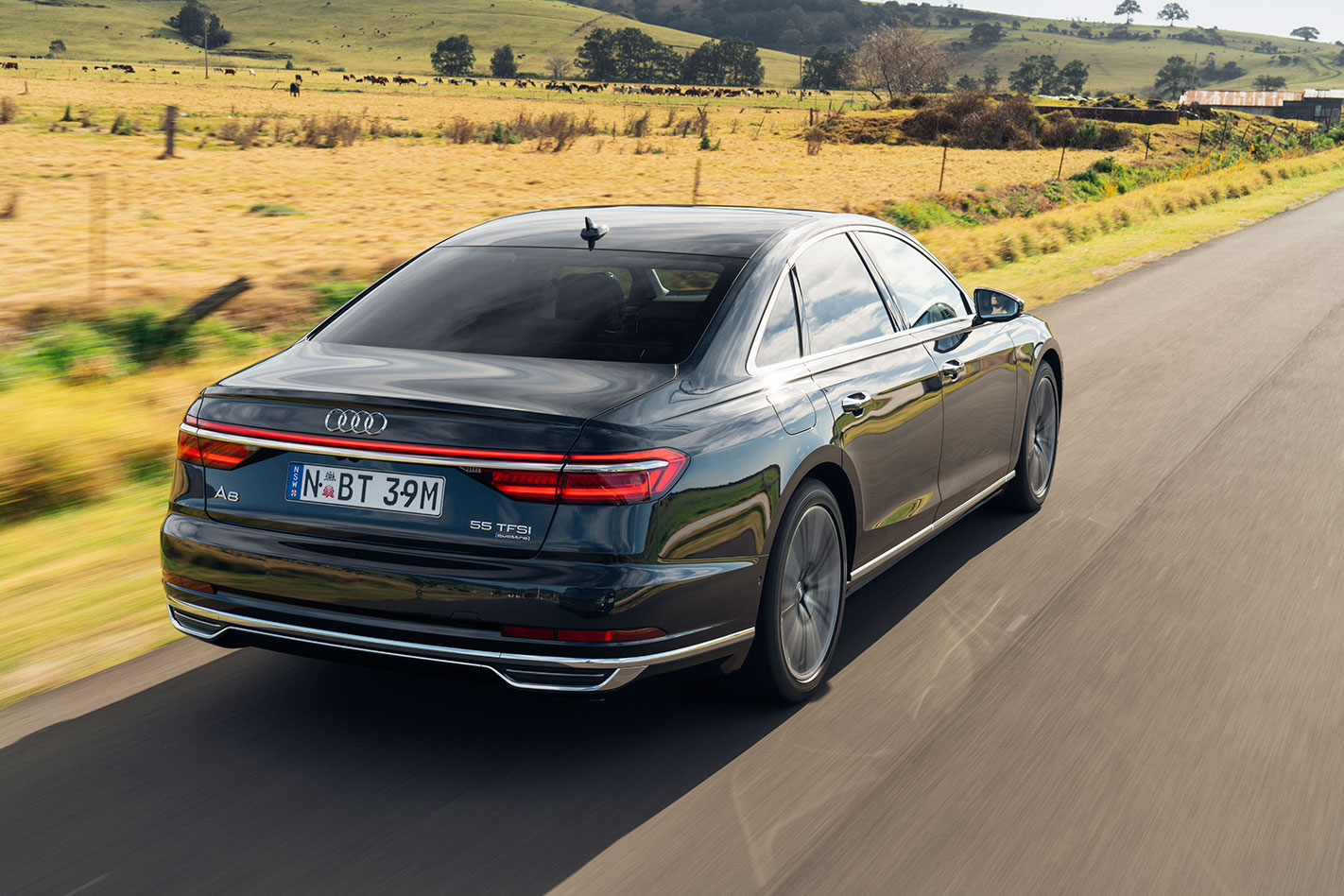
AUDI’S all-new flagship has arrived in Australia. Two groups of people will be interested in that news; the lucky few who actually have $200,000 to blow on a full-size limo, and the rest of us with a curious bent who appreciate the crystal ball quality of the A8. Like those before it, the fourth-gen (fifth if you include its predecessor, the Audi V8) previews the future of Audi’s more accessible models, and the technological leap is a big one.
Here are the basics first up. Local showrooms will offer a two-tier A8 line-up, offering a choice of turbocharged 3.0-litre V6 engines; a 210kW/600Nm diesel and a 250kW/500Nm petrol. Both are coupled to an eight-speed auto, and both benefit from a 48v mild hybrid system with a belt-driven starter/generator that assists low-end performance and fuel economy. Pricing starts at $192,000 for the oiler and $195,000 for the petrol.
The two engines are distinguished by Audi’s new nomenclature, in this case 50 TDI and 55 TFSI, which now denotes performance rather than displacement. Both are available in regular or long wheelbase formats, the latter adding 130mm between the axles and $15,000 to the price. That fleshes the range out to four until the inevitable short-wheelbase-only S8 makes it five.
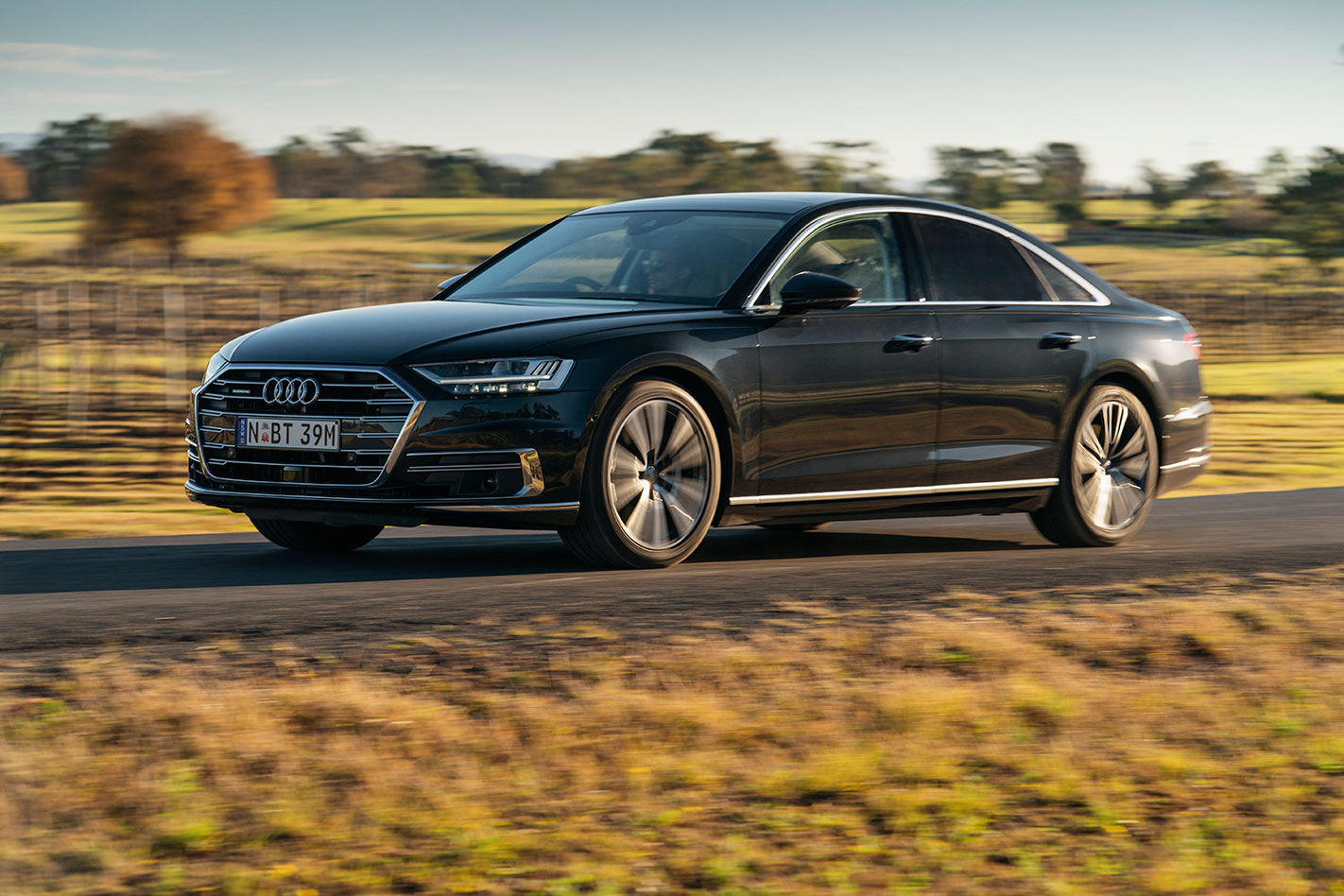
Elsewhere the car is longer, taller and narrower than the old one. It’s also significantly stiffer, with torsional rigidity increased by up to 24 percent. Most of that is down to 19 layers of carbonfibre that are sandwiched into one big board behind the rear seatback. Audi’s Space Frame is now a multi-material meld of hot-shaped and cast steels, aluminium and composite ingredients. Weight varies from 1920kg to 2000kg depending on spec.
Externally, the A8’s sheet metal is detailed, and in the grille’s case exaggerated, if not especially stirring. Subtly blistered guards and bonnet shut-lines that become the body’s upper shoulder are two understated highlights. It compensates for its conservatism with distinctive lighting signatures including animated OLED taillights and incredible laser headlights, both of which are bundled into an option pack ($13,200). The HD Matrix LED headlights with laser projectors radiate light up to 600m ahead, double the range of conventional high beams.
The A8 has often been ground zero for Audi’s technological invention and, in this case, reinvention. The brand’s familiar MMI rotary controller that was introduced by the second-gen A8 in 2002 is no more, replaced by a secondary touchscreen mounted low on the centre console within easy reach of the driver’s hand. In total the A8 boasts four separate screens; a pair mounted centrally, a large head-up display and a gorgeous high-resolution Virtual Cockpit instrument cluster now with detailed satellite maps.
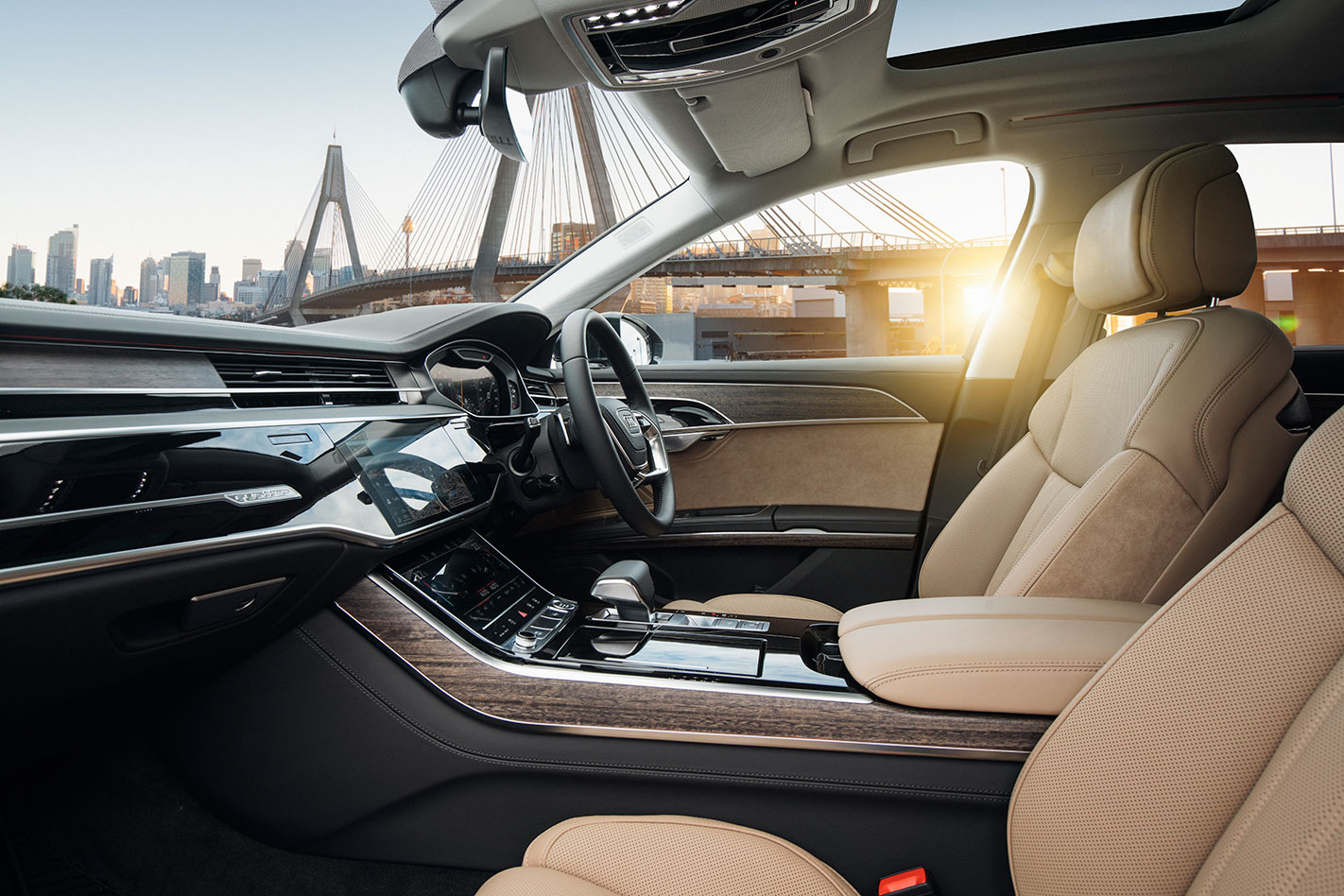
Ditching the old interface is bold. The average age of an A8 buyer is between 45 and 60, and while their tech proficiency is likely to be high, asking serial buyers to adapt to a totally new user protocol is a relatively big deal. The old way of doing things has become intuitive and easy to control without looking away from the road, whereas the new system needs more attention given to it at first, even with its haptic feedback and audible clicks. Improved voice control and handwriting recognition should make the transition easier.
The major new frontier here is autonomy. According to the headlines at its reveal this A8 was to be the world’s first Level 3 capable production car. The reality isn’t quite as billed. The D5 A8 has been developed with future Level 3 capability factored in, but the models coming to Australia now are not ready. Local legislation isn’t ready either. There’s some time before we get there, but there are short-term benefits from the advanced hardware that’s already fitted. This A8 has 40 separate safety and driver assistance systems, and includes a first-of-its-kind laser scanner that can ‘see’ the contours of objects further ahead than radar and trigger less abrupt interventions.
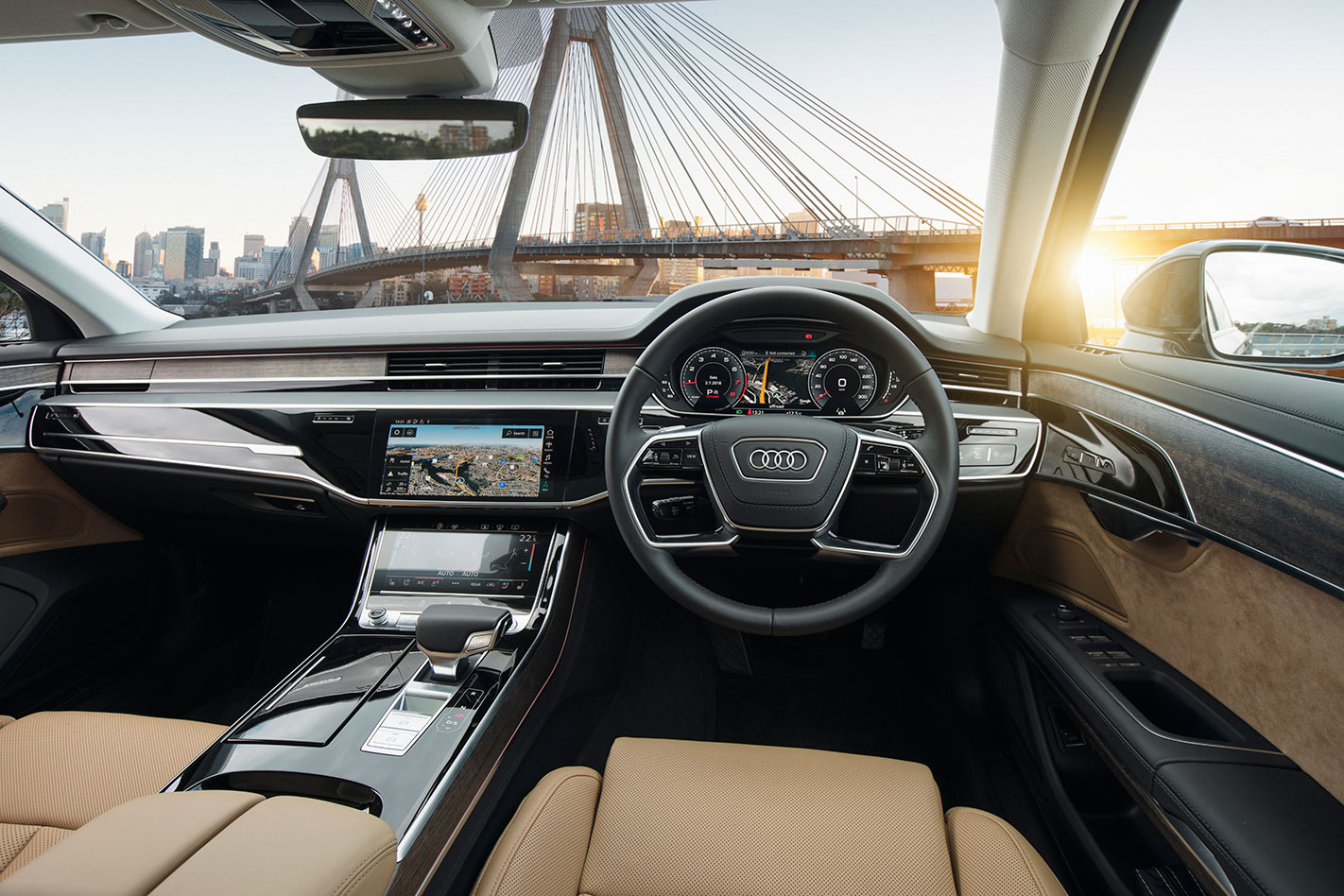
On spec alone the A8 should compel potential 7 Series and S-Class buyers to take a closer look. It undercuts its immediate rivals by around $20K, even with the requisite Premium Plus option package ($11,000) factored in, which brings 20-inch wheels, extended leather, privacy glass, digital TV, seat ventilation and massage functions, and more.
The A8’s beautiful, minimalist interior is finished with Ingolstadt’s utmost level of care. Central air vents flip behind a timber insert when not in use, and there’s a flush-mounted, smartphone-inspired seamlessness to the form and function of everything else. Storage space is limited, but spaciousness and comfort for passengers both front and back is no issue, even in regular wheelbase variants. The extended L-badged versions are practically unnecessary unless you happen to have a driver on staff.
Even if that’s the case, it would be a shame to hand the reins over as this A8 is genuinely pleasing to drive. The strong petrol V6 – closely related to that in the S4 – is the pick. It’s able to reach 100km/h from rest in 5.6 seconds, but is also well isolated and tuned to cruise with enough torque below 3000rpm that calling upon its more vocal (albeit velvety) band of revs is rare. Claimed fuel consumption is 8.3L/100km.
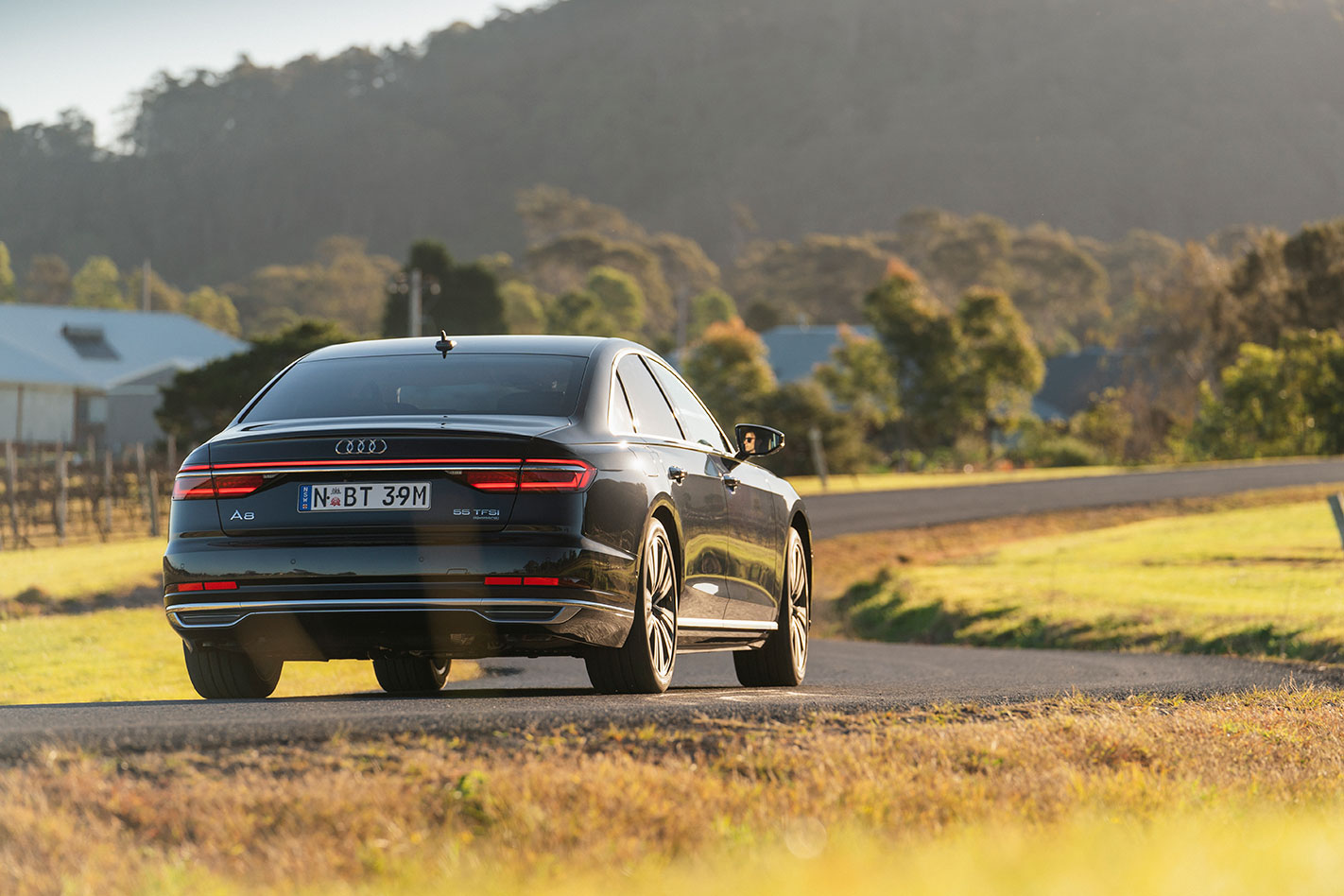
The ride on standard adaptive air suspension is effortless, and nails the A8’s mile-munching brief, while Dynamic brings an expertly judged balance between tautness and compliance. No A8 before could boast the same. The gearbox calibration draws only a minor complaint from its reluctance to kick down, but a nudge from the wheel-mounted paddle shifter helps with overtaking.
Highway performance is an obvious A8 strong suit, but that’s not all it has going for it. There’s an unexpected agility that few cars with a three metre wheelbase can deliver. Optional rear-wheel steering ($4500) brings further stability at speed and manoeuvrability around town, effectively shortening the distance between the axles and shrinking the turning circle by more than a metre. That functionality is bundled with a variable ratio rack and, though the four-spoke wheel isn’t especially communicative, its variable assistance is well-weighted.
What we don’t yet have available is the A8’s pothole detecting AI Active Suspension, which can pre-emptively react to road surface defects to lessen their impact on the cabin. That’s still up to a year away, but it has the potential to be enough of a game-changer that potential A8 buyers might want to wait. There’s also a V8 available in other markets that’s missing from the local launch line-up, and which some Aussies might miss.
But even knowing what’s to come, not least of which is that Level 3 capability, this car is a significant advance for the A8’s stock. It’s the most impressive big Audi ever, and finally stands toe-to-toe with its core rivals.
SPECS
Model: Audi A8 55 TFSI Engine: 2995cc V6 (90⁰), dohc, 24v, turbo Max power: 250kW @ 5000-6000rpm Max torque: 500Nm @ 1370-4500rpm Transmission: 8-speed automatic 0-100km/h: 5.6sec (claimed) Weight: 1920kg Fuel economy: 8.3L/100km (claimed) Price: $195,000 On sale: Now
A BMW executive has said the brand will inject hybrid technology into its M cars at a press conference this week, echoing the news that sent shockwaves through the performance car world late last year.
Andreas Klugescheid, BMW’s Vice President of Governmental Affairs was in Melbourne to talk all things electrification with local stake holders as the brand ramps up sales of zero-emissions vehicles by the year 2025.
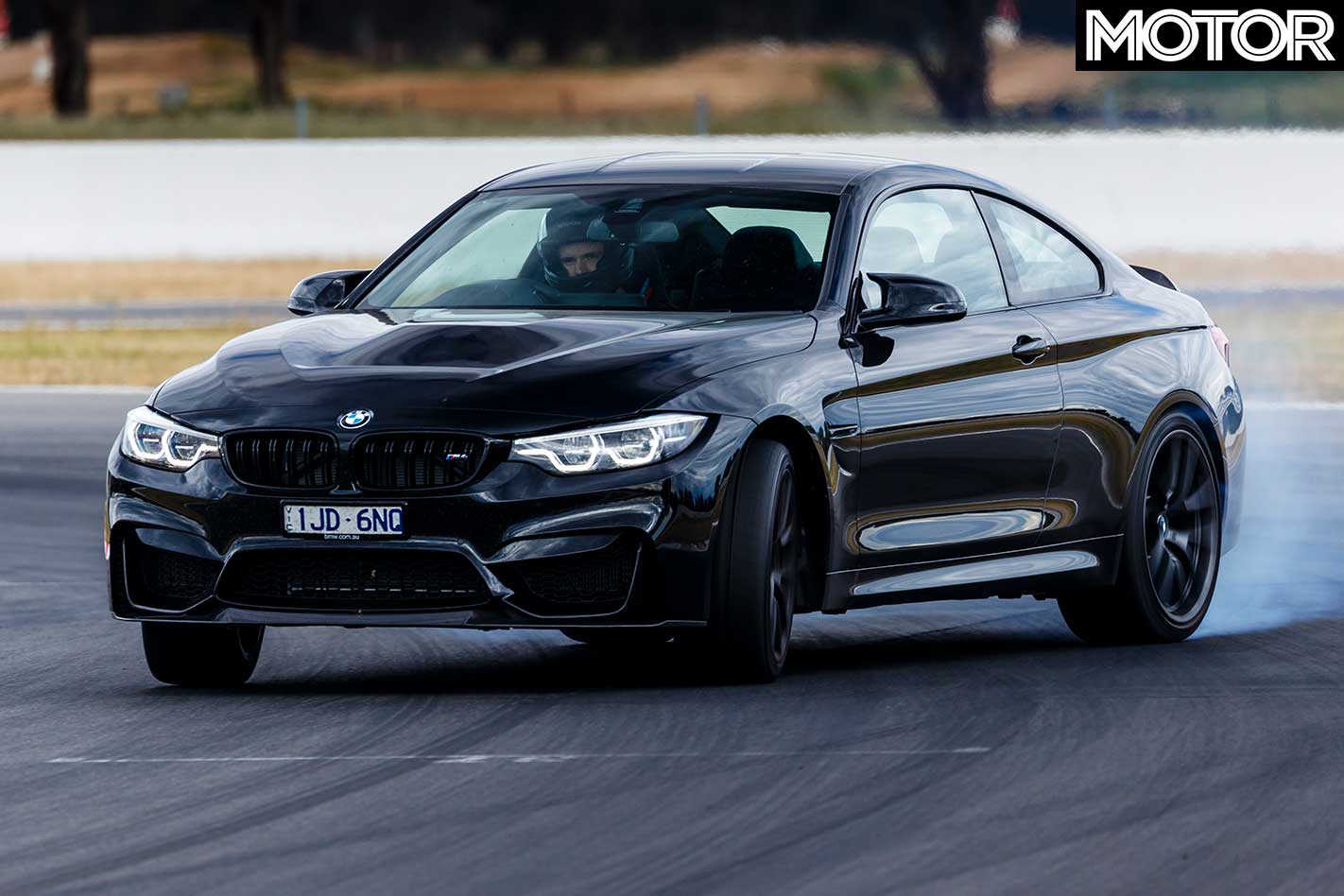
But during his speech were a few key comments that touched on the future of BMW M and electrification. “With i, is BMW losing its DNA? I think no, we haven’t,” he said, “people are still enthusiastic about an i3 and still drive an M550i.”
He then went further to hint the two philosophies might not strictly exist in parallel.
“So is BMW going to move away from high-performance sports cars,” he continued, “into something that is different? Whichever way we move we are adding, that is the important message, to the formula that we all know.”
Klugescheid clarified the statement to MOTOR following the presentation, saying that while the brands will remain in silos in public, there will be interaction between the two behind the scenes.
We understand that because I and M’s engineering departments work in close quarters, under the larger push for further hybridisation there will be collaboration between the two.
When asked whether that will see M technology woven into specialised eco-cars like the newly revealed i8, or the other way around, he confirmed it would be latter, with M cars set to welcome batteries and electric motors.
The comments come less eight months since Dirk Hacker, M’s second-in-command, revealed to Autocar that BMW are working on a “very precise technical solution” to weaving electrification into its M cars.
Mercedes-AMG and Porsche are currently the only German mainstream high-performance brands that have revealed performance hybrids. AMG will launch its Project One this year while Porsche currently sells the Panamera Turbo S E-Hybrid.
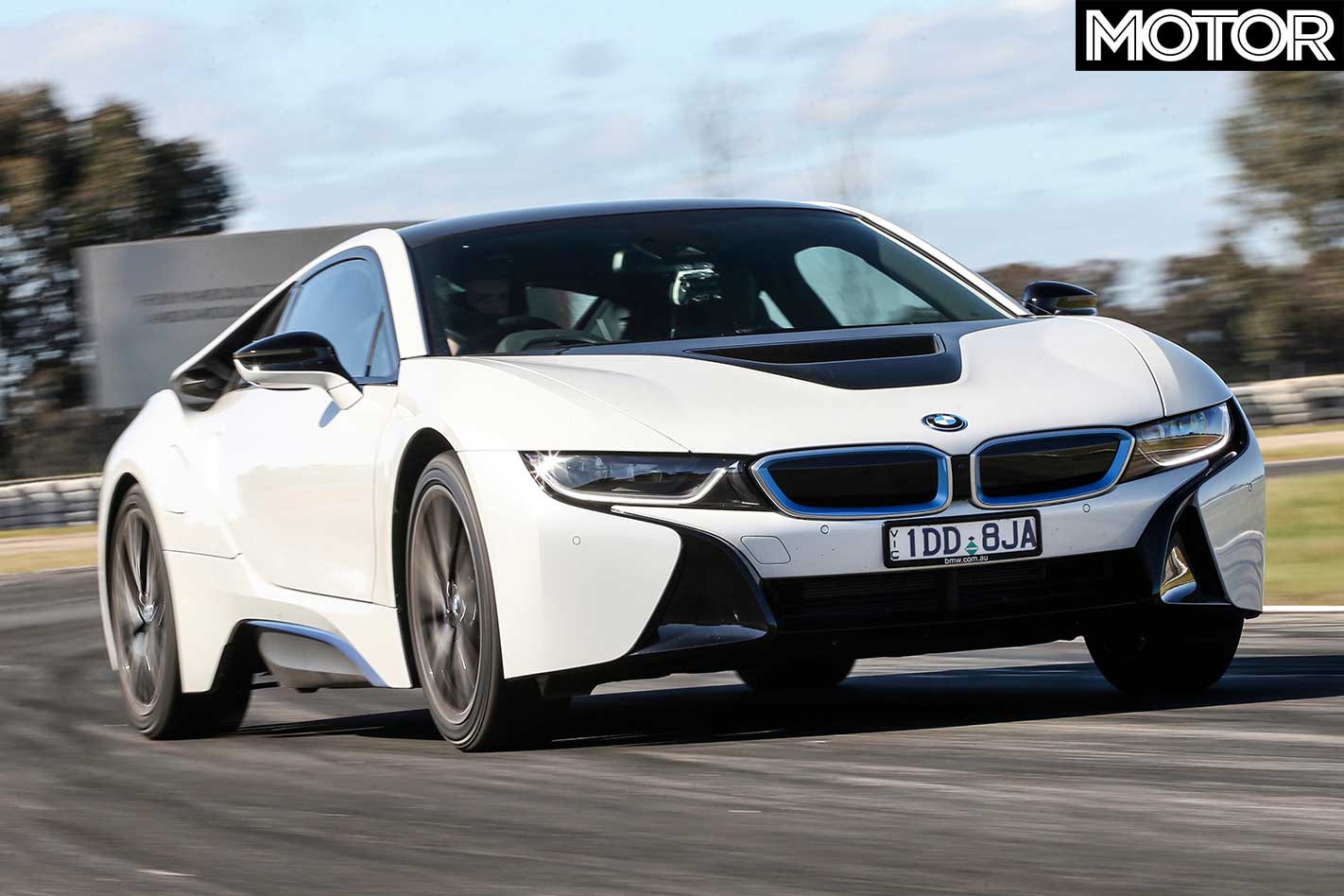
BMW launched its i range in 2013, beginning with the hatch i3 and then expanded its appeal with the hybrid sportscar, the i8, a year later.
This week BMW revealed its updated i8 coupe and new i8 Roadster, the latter of which comes available in Donnington Grey. The first non-M car to ever be offered in the hue.
TELL ME ABOUT THIS CAR
Mini introduced the F56 generation of its iconic, sporty hatch in 2015, and this year introduces a tech-heavy update that makes an even closer connection between car and smartphone. It also gains a new gearbox that better suits the long-held Mini ethos of being a fun-to-drive hatchback.
Here, we’re driving the cheapest Mini that money can buy, the $29,900 Mini Cooper three-door hatch powered by a turbocharged 1.5-litre three-cylinder engine. This car is the new entry point for the range after an even cheaper version called the Mini Cooper Ray was dropped from the line-up ahead of this “life cycle impulse” – that’s Mini-speak for a mid-life refresh.

STRENGTHS
- The entire Mini Cooper range now comes with a standard reversing camera. This is a big help, because visibility out of the hatch’s rear window is limited.
- The centre screen that controls the multimedia unit and some of the Mini’s settings is now a touchscreen. It’s a big improvement over the twist-and-click rotary controller that the previous car used.
- The Mini Cooper now comes with an improved digital interface. The British brand is owned by German behemoth BMW, and borrows its software to enhance the user experience. It’s not quite the cutting edge tech that has rolled out in some more modern BMWs, but it’s proven and good. It even has real-time traffic information for the sat-nav system
- It still drives like a Mini. You’ve probably heard of the brand’s go-kart-like handling? It’s still there, even in this base car. If you like driving, you’ll like the way this Mini handles.
- The newly added seven-speed dual-clutch automatic gearbox is a pearler. Dual-clutch autos have the benefit of being fast and smooth to change gears at speed, and that only improves the sense of fun you can extract from the Cooper. It’s much better than the gearbox it replaces.
- The thrummy, characterful three-cylinder engine is slightly more fuel efficient, but hasn’t sacrificed any performance, producing 100kW and 220Nm.
- It’s still very much a Mini. Updates tend to include tweaks to the body plastics as designers try to improve stance or visual aggression in the eyes of buyers. Little has changed on the exterior of this Mini, and that’s the way customers seem to like it.
- Apple CarPlay is free. BMW generally charges for it, but Mini has decided to chuck it in to every version of the Cooper for nix. And you don’t need a cord to connect to it.
- Every Mini now comes with an inbuilt SIM card that can alert the car maker if you have a crash. It can then feed information back to a call centre letting an operator know how severe the crash was using information such as how many airbags have fired. That information is then passed on to emergency services.
WEAKNESSES
- Straight-line performance is adequate rather than great. Speed builds slowly, and you won’t be winning many traffic light sprints – you’ll have to look good going slow.
- The dual-clutch auto is brilliant when you’re moving, but less so if you’re trying to finesse entering a tight car park. Low-speed manoeuvres are beset with some clutch grabiness, so the car will lurch slightly in response to throttle inputs.
- In-cabin storage space is limited. There’s a small tray in front of cupholders that render the storage space unusable if coffee cups are placed in them. The central armrest can swallow a mobile phone and not much more.
- You don’t get paddle shifters mounted on the steering wheel to control the gearbox. They’re standard on the $7000 more expensive, and more powerful, Cooper S.
- Mini sells a five-door hatchback version of the Cooper that may be more practical as a family car.
- The interior is not the best in the game. Mini still uses a lot of hard plastics that don’t quite fit the premium feel the brand presents with the exterior.
- The rear seats are very cramped.
- There’s no Android Auto support. Mini says most buyers who visit its website to shop for a car browse using an Apple smartphone, so that’s the direction they’ve taken.
- Prices have gone up slightly. One of the boasts of the Mini Cooper introduced in 2016 was that it was significantly cheaper than the model it replaced. This facelift erodes some of that price advantage. But you do get more for it.
ANY RIVALS I SHOULD CONSIDER?
Audi A1, Citroen DS3, Fiat 500, Volkswagen Polo
