
Keen students will know the new Subaru BRZ tS wears the same mechanical modifications as the Toyota 86 Performance Pack, namely larger Brembo brakes and retuned Sachs dampers.
This track review was carried out in conjunction with MOTOR’s Bang For Your Bucks 2018
Why bring two of essentially the same car? Apart from giving each manufacturer a chance, the Subaru has one extra mod, the fitment of Michelin Pilot Sport 4 tyres.
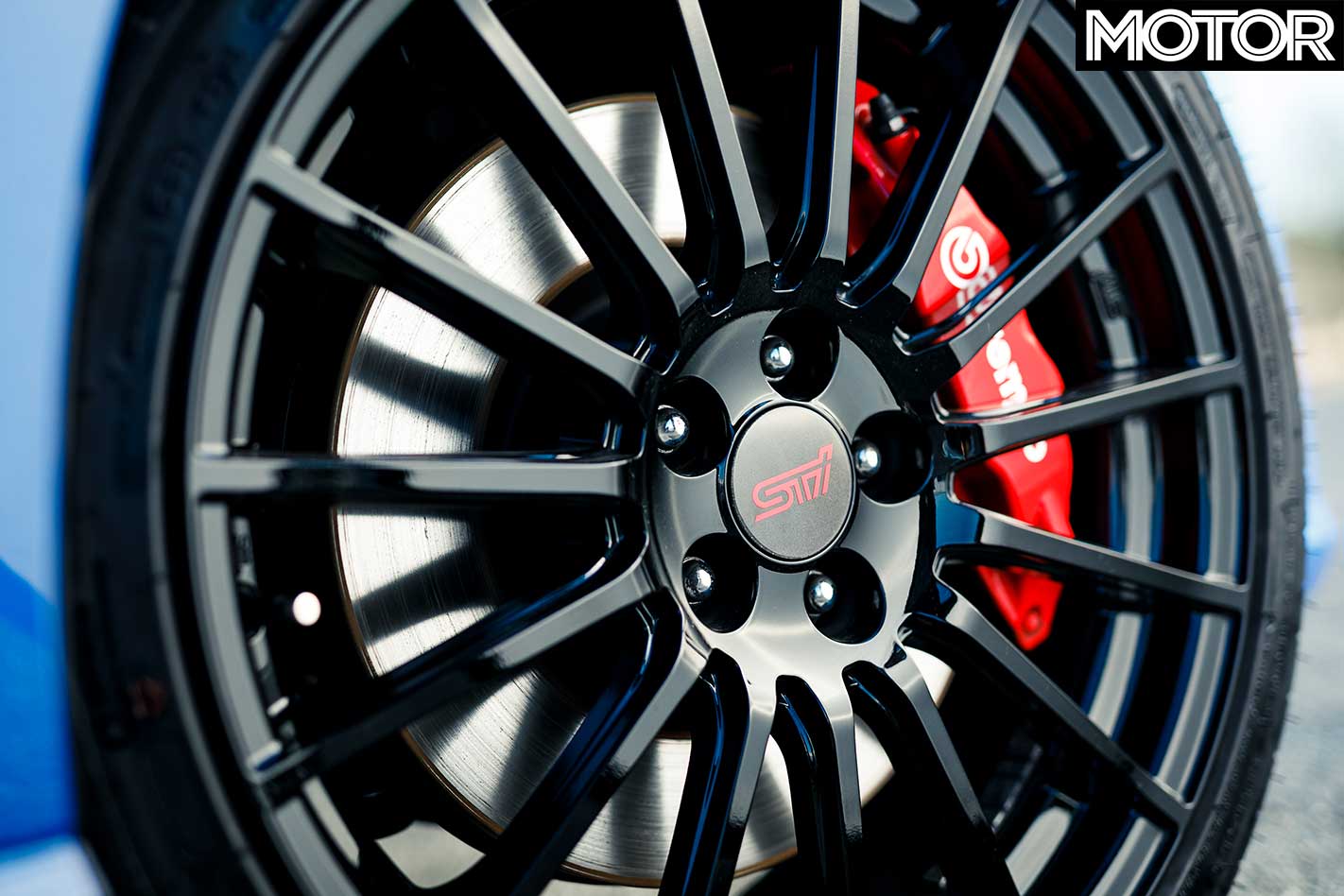
It could be difficult to predict just how far the Toyota would slide, its tyres checking out once their lateral grip limits had been exceeded, whereas the Subaru’s Michelins refused to give up completely, always allowing the driver some control, even when looking out the side windows.
For track work, the grip-to-grunt ratio of the BRZ tS is spot-on in terms of driving enjoyment, as evidenced by its third-placed judges’ ranking.
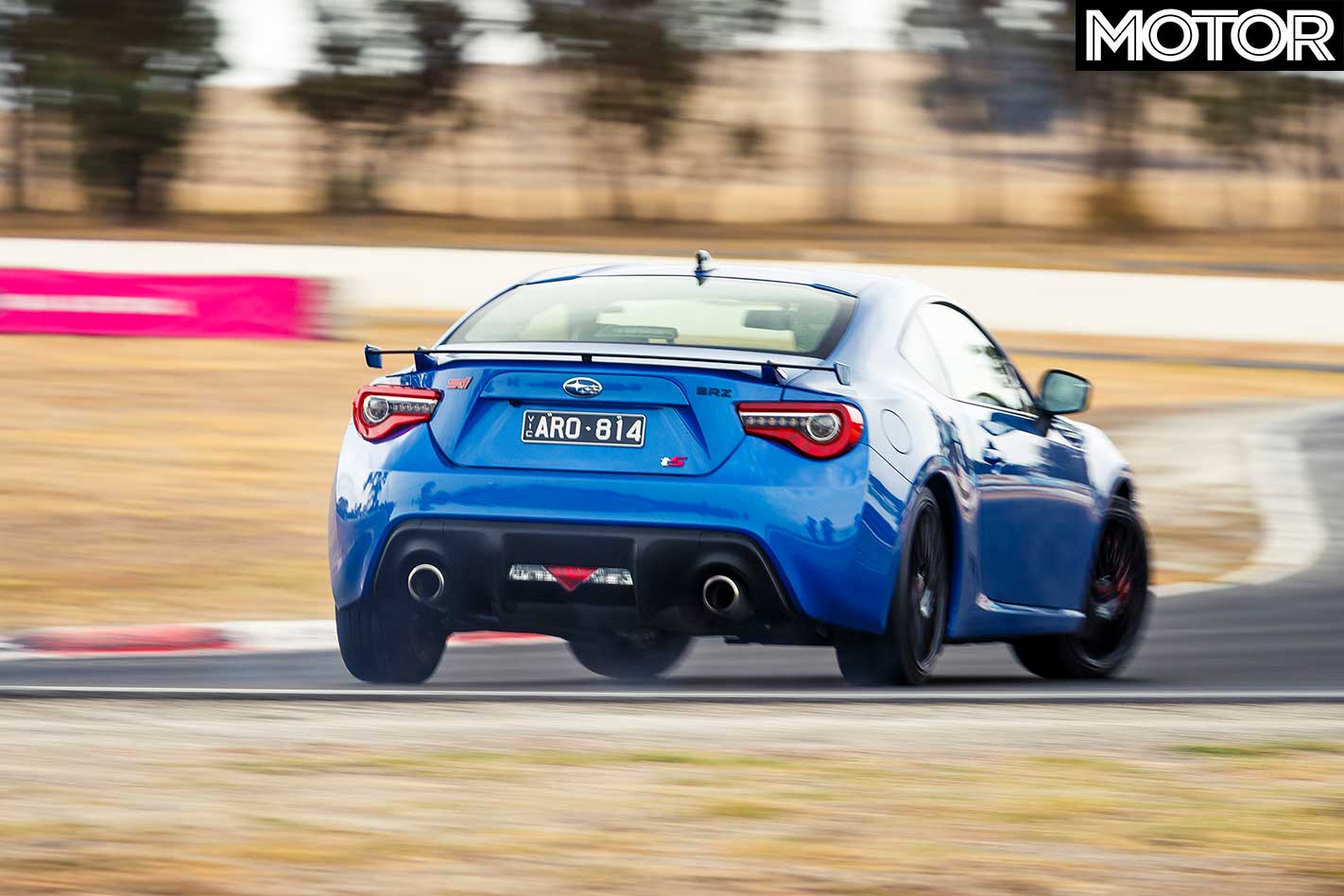
Against the clock, however, it was a different story. The benefit of those tyres is evident by the fact that the Subaru was 1.6sec quicker around Winton than the otherwise identical Toyota and it stopped more than six metres shorter, too. Nonetheless, a 1:41.20sec lap isn’t anything to get excited about when the event’s fastest machines were more than five seconds up the road.
Unfortunately, the extra traction wasn’t welcome either, as the 86 and BRZ often need a fair bit of wheelspin to keep their torque-lite boxer fours singing off the line. According to Luffy, the Subaru’s engine also felt tight, which meant the best it could manage was a lackadaisical 7.48sec to 100km/h and a 15.37sec quarter mile at 151.24km/h. Only the Suzuki was slower in a straight line.
Tie these figures to a relatively high $39,894 price tag and the BRZ tS was always going to struggle to make an impact on the BFYB formula. The similarly priced Hyundai i30 N and VW Golf GTI Original simply operated on a different performance plane thanks to their turbocharged engines.
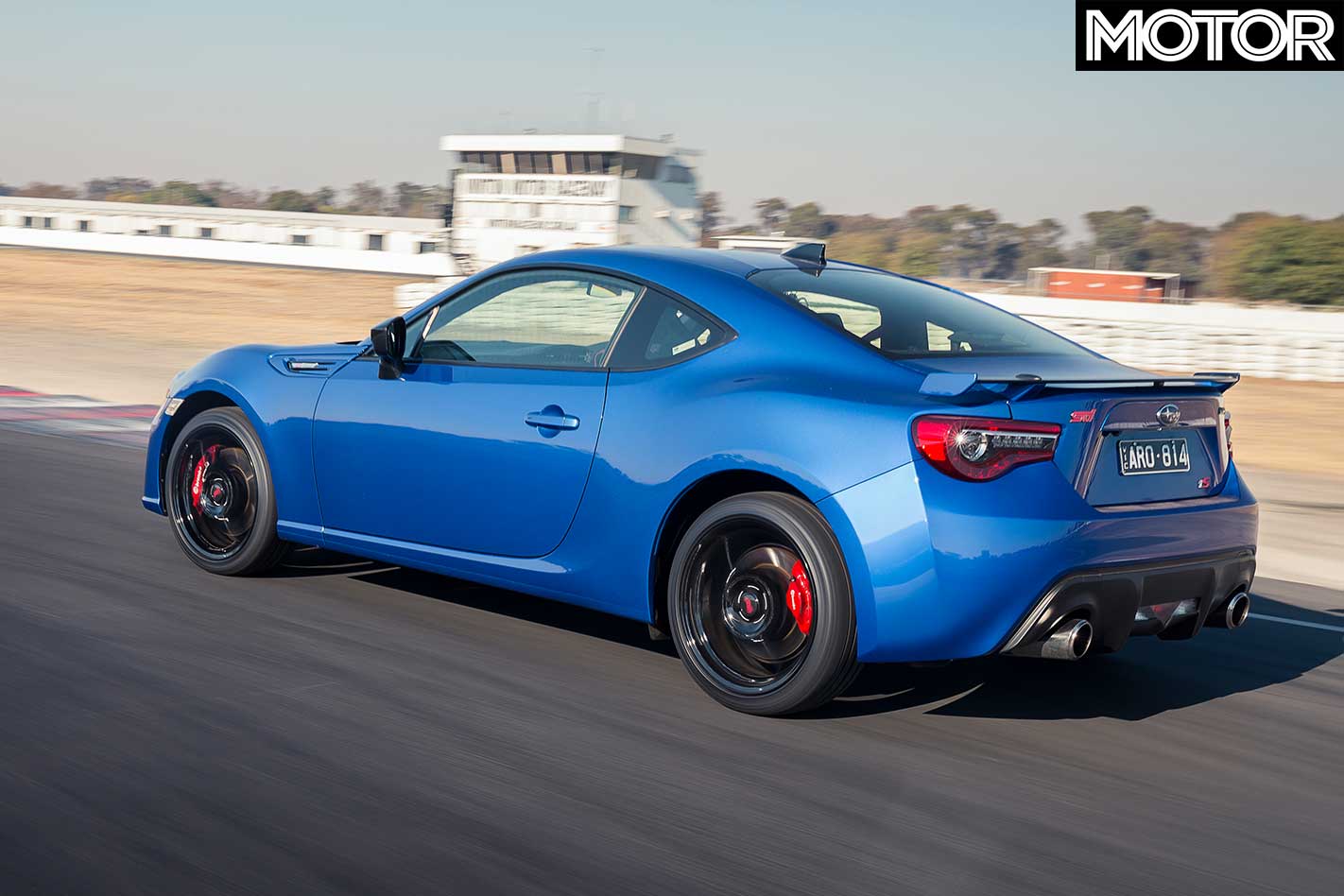
However, while the Toybaru recipe isn’t one that’s going to be met with BFYB success, they’re never going to struggle to secure an invite, as there are few more enjoyable cars to fang around a racetrack. The BRZ and 86 can literally be thrashed all day without a hint of engine exertion or brake fade – they don’t even wear their tyres out!
That said, the BRZ tS is so composed a few pounds of boost wouldn’t hurt and might just vault it a few places higher up the order.
Subaru BRZ tS BFYB 2018 Results – 12th place

0-100km/h: 7.48sec (14th) 0-400m: 15.37sec @ 151.24km/h (14th) Lap Time: 1:41.20sec (11th) Price: $39,894 Bang Index: 103.1 Bucks Index: 125.9 BFYB Index: 113.3
Judges’ Comments
Warren Luff – 4th “It’s interesting when you compare it to the 86, the primary difference being the tyres, as you’re talking nearly two seconds worth of lap time. The tS takes the great platform and improves the grip level by 20 per cent so it doesn’t numb too many of the playful chassis’ characteristics. You can carry more rolling speed into a corner and know that mid-to-exit understeer that you potentially would normally get isn’t going to be there.”
David Morley – 6th “Works even better than 86 thanks to grippier hoops”
Dylan Campbell – 3rd “Better tyres make these cars better. The most fun car here”
Scott Newman – 4th “Turns out giving a Toybaru grip doesn’t kill the fun”
Louis Cordony – 3rd “Extra grip enhances Subaru’s driving deity and doesn’t smother its playful nature”
FAST FACTS 2018 Subaru BRZ tS
BODY: 2-door, 4-seat coupe DRIVE: rear-wheel ENGINE: 1998cc boxer-4, DOHC, 16v BORE/STROKE: 86.0mm x 86.0mm COMPRESSION RATIO: 12.5:1 POWER: 152kW @ 7000rpm TORQUE: 212Nm @ 6400-6800rpm WEIGHT: 1295kg POWER-TO-WEIGHT: 117kW/tonne TRANSMISSION: 6-speed manual SUSPENSION: struts, coil springs, dampers, anti-roll bar (f); A-arms, coil springs, dampers, anti-roll bar (r) BRAKES: 326mm ventilated discs, 4-piston calipers (f); 316mm ventilated discs, 2-piston calipers (r) WHEELS: 18.0 x 7.5-inch (f/r) TYRES: Michelin Pilot Sport 4 215/40 R18 85Y (f/r) PRICE: $39,894
Bang For Your Bucks 2018
 The Contenders, Judges & Criteria
15 of the hottest new fast cars under $100K roll up to take on our famous formula. Which will be number 1?
What stands out?
The third-generation Hyundai Santa Fe is a seven-seat, road-focused SUV with sharp handling and strong engines – among them a fuel-efficient diesel. It is well suited to long journeys, and comfortable for families who like to get out of town. Most Santa Fes drive all four wheels. All have auto emergency braking and are great with your phone. This model was replaced by the fourth-generation Santa Fe in June 2018.
What might bug me?
That the Santa Fe’s head-protecting, side-curtain airbags do not extend to passengers in the third row of seats. Vision out and headroom are in short supply back there too.Listening to the diesel engine. While its performance is great, its dull drone is not.That you can’t listen to music directly from your CD collection – there’s no player.
What body styles are there?
The Santa Fe drives either its front wheels (the Santa Fe Active X) or all four wheels. (A limited-run Santa Fe 30 Special Edition offered in September 2016 also drove the front wheels only.)All-wheel drive Santa Fes use an on-demand AWD system, which optimises fuel consumption. They drive the front wheels all the time, and distribute power to the rear wheels when that’s helpful. To improve performance at slow speeds in slippery going, you can lock-in 50-50 power distribution to the front and rear wheels by pressing a button on the dash.The Santa Fe is classed as a large SUV, lower priced.
What features does every Santa Fe have?
Active cruise control, which can match automatically the speed of a slower car ahead on the highway, resuming your preferred speed when the way is clear. (It can also hold your place in stop-start traffic, halting and restarting the car as required.)A reversing camera, and rear parking sensors. Automatic transmission.A sound system with an AM/FM radio, Aux and USB inputs, Bluetooth phone connectivity and audio streaming, and at least six speakers, controllable from a colour central touchscreen.Support for Apple CarPlay and Android Auto, which lets you display mapping and other apps from a compatible smartphone on the car’s touchscreen, and control them from there.A leather-clad steering wheel, from which you can operate the cruise control and audio system. (If you have a compatible smartphone plugged in, you can also switch on voice control from the wheel.)Headlamps that come on automatically at night or in a tunnel, and windscreen wipers that work automatically when it rains. A digital auxiliary speedo.Aluminium alloy wheels, which are lighter than steel wheels and don’t need plastic trim, and a matching full-sized spare wheel.Broadly effective autonomous emergency braking, as part of Hyundai’s SmartSense active safety suite – which also brings you a lane departure warning, blind-spot detection, and a rear cross-traffic alert.Seven airbags. Anti-lock brakes, and electronic stability control – which can help control a slide or skid. (For the placement of airbags, and more on Santa Fe safety features, please open the Safety section below.)The Santa Fe is covered by a five-year warranty that is not limited by distance.
Which engine uses least fuel, and why wouldn’t I choose it?
Three engines are offered in a Santa Fe. The most broadly available is the diesel, which is optional in the least costly all-wheel drive Santa Fe, the Active, and is the only engine supplied with the more expensive Elite and Highlander. A less powerful petrol engine is standard in the Active. And a more powerful petrol comes with the Santa Fe Active X (which is the only Santa Fe that drives only the front wheels).Of the three engines, the diesel is the most fuel-efficient. This turbocharged 2.2-litre uses 7.8 litres/100km in the official test (city and country combined). In real world driving you might not match this figure, but you could get close if you drove gently and did plenty of country trips.A Santa Fe Highlander with this engine averaged 9.4 litres/100km in comparison testing of large SUVs for the September 2015 issue of Wheels magazine, ranking second for fuel efficiency of five cars reviewed – and only marginally behind a diesel Kia Sorento.As the diesel also feels much more powerful in most driving conditions than the petrol alternative in the Santa Fe Active, the main reason you would not order it is that it commands a price premium.The petrol engine in the Active is a 2.4-litre four-cylinder that uses about 20 per cent more fuel than the diesel.A second important reason why you would not order the diesel could be that you don’t need AWD, and would be happy with front-wheel drive. In which case you could choose a Santa Fe Active X and get the more powerful petrol engine – a 3.3-litre V6. (This engine was also available briefly, from September 2016, in the limited-run Santa Fe 30 Special Edition).Santa Fes with the petrol V6 are quicker than other Santa Fes, but they are also thirstier. On the official test, the V6 consumes 10.5 litres/100km. In the real world, expect to average 13-14 litres/100km over a mix of city and country driving.All Santa Fes come only with a six-speed automatic gearbox.Power outputs and all other specifications for each Santa Fe can be reached from the Cars covered carousel near the top of this review.
What key features do I get if I spend more?
The least costly Santa Fe is the Active X, which comes with the powerful V6 petrol engine, 19-inch wheels, and drives only the front wheels. It also has part-leather seat trim, heating for the front seats, and dual-zone climate control (which lets the driver and front passenger set their own ventilation temperatures). There is a 7.0-inch touchscreen, and the features that come with all Santa Fes.For not much more than you would pay for an Active X, you could have a Santa Fe Active. This would bring you all-wheel drive, but you would have to make do with the less powerful, four-cylinder, petrol engine – or pay about $3000 more again for the diesel. And you lose some of the luxury: seats are trimmed in cloth, and air-con is single-zone with manual control. An Active has 17-inch wheels, and the other equipment in all Santa Fes.To restore Active X comfort (and more) in an all-wheel drive Santa Fe, you need to shell out for a Santa Fe Elite. That gets you the diesel engine as standard, and 18-inch wheels (with a tyre profile slightly lower than on the Active, for marginally sharper steering and a more sporty look).The Elite restores dual-zone air-con and leather seats, and adds power adjustment for the heated front seats. The touchscreen is bigger at 8.0 inches, and it supplies satellite navigation that does not depend on your phone. Smart key entry allows you to unlock the front doors, and start the engine, while the key remains safe in your pocket or bag. The tailgate unlocks and rises automatically if the key is nearby for three seconds. The sound system in an Elite has 10 speakers, an external amplifier and a bass-boosting sub-woofer. And there are blinds for those in the middle row seats.The most luxurious Santa Fe is the Highlander, which has the diesel engine, AWD, 19-inch wheels, and tyres with a still lower profile (matching those on the Active X). The Highlander has a sunroof that covers the front and rear seats. Front and middle-row seats can be heated, and the front seats also have perforations and a fan, for ventilation. Headlamps are extremely bright HID units. And a self-parking system can automatically steer the car into or out of a space while the driver controls the throttle and brake.
Does any upgrade have a down side?
The steps up in wheel size – from 17-inch on the Active to 18-inch on the Elite and 19-inch on the Active X and Highlander – reduce ride quality slightly, because the lower profiles of the bigger tyres leave less air between the wheel and the road.Moving from the front-wheel drive Active X to the more expensive all-wheel drive Active removes some luxury features, such as leather on the seats, and downsizes the petrol engine.White is the only standard colour, with the other eight costing extra.
How comfortable is the Santa Fe?
Any Santa Fe looks elegant inside, thanks to carefully placed silver finishes and a user-friendly layout.The front seats provide good comfort, with long bases under your thighs. The driver’s seat adjusts for height, and has power-adjustable lumbar (lower back) support in all versions. The steering wheel adjusts for height and reach, but you might wish the reach adjustment were greater.A deep storage compartment in the centre console has a removable shelf, and there is a big binnacle ahead of the gear lever with dual power outlets and a USB plug.On any Santa Fe you can plug in a compatible smartphone and operate several apps – from maps to music and text messages – via the touchscreen or (if you’re driving) by voice. A button on the steering wheel lets you toggle the voice control system built into your phone.Visibility is good out the front and the side, with the reversing camera completing the picture out back.The Santa Fe’s Australian-tuned suspension is compliant, and the car does a good job of supressing unwanted noises, with the exception of the drone from the diesel engine when it is under load.Nevertheless the ride is less settled than in many cars of this sort, and that gets more difficult to ignore as the wheel size rises. “Its suspension is constantly busy, jostling away underneath like a massage function,” senior reviewer Nathan Ponchard wrote of a Santa Fe 30 Special Edition, which like the Active S and Highlander had big 19-inch wheels, in a Wheels magazine review of October 2016.The 2.4-litre petrol engine often leaves you wanting more power. The diesel engine is more enjoyable, and climbs hills more easily with the family on board. The 3.3-litre V6 petrol is very strong, placing the Santa Fe Active X among the quickest of popular seven-seaters.
What about safety in a Santa Fe?
Every Santa Fe has anti-lock brakes, stability control, seven airbags, LED daytime running lights, auto- headlights and wipers, a reversing camera, and rear parking sensors.In addition, all Santa Fes have Hyundai’s SmartSense active safety suite, which brings auto emergency braking and other sensory safety aids. (SmartSense was extended to all Santa Fes for the 2018 model year, on cars arriving from late August 2017. Previously, it had come only with the Santa Fe Highlander and SR.)There are two airbags at the front for frontal impacts; an airbag in front of the driver’s knee; one outside each front-seat occupant to protect the body in side crashes; and a curtain airbag down each side to protect heads in a side impact.The side-curtain airbags cover only passengers in the front and second-row seats, however. No one riding in the third row has airbag protection.The auto-braking on Santa Fes is a broadly effective system that draws on radar and camera sensors and (Hyundai says) can detect pedestrians. If it predicts a collision with an obstacle in front (typically a sharply slowing car), it sounds and flashes a warning. If you ignore that, it will brake the car automatically. At speeds under 80km/h it will brake very sharply; at speeds in the range 80-180km/h, less sharply – but you can of course apply maximum braking yourself.The Santa Fe’s Lane departure warning uses a frontal camera to monitor your position in relation to highway road markings. Should you veer towards an adjacent lane without indicating (perhaps from distraction), it will sound and flash an alert.Blind-spot detection uses rear-facing radars to check for vehicles hidden near your rear corners, registering them with a light in the relevant mirror. The related Lane change assist operates when you indicate to change lanes, warning you of cars approaching fast from behind.Rear cross-traffic alert helps you reverse safely from blind parking spaces, looking to either side for approaching vehicles as the car’s tail protrudes.The Australasian New Car Assessment Program (ANCAP) awarded the Santa Fe its maximum of five stars for safety, in December 2012.
I like driving – will I enjoy this car?
There is a good chance you will. Among seven-seat SUVs of this size, Santa Fe is at the sharp end for driver-appeal – sacrificing some cossetting for a responsive chassis.The Santa Fe is very good through bends, with accurate steering and a planted feel. Cornering grip from the standard tyres isn’t particularly high – even from the 19s on the Active X and Highlander – but for a big car of this kind it is easy to place on the road, and fun to drive, in both front-drive and all-wheel-drive trim.The locally tuned suspension recovers beautifully from the big hits you’ll find from time to time on many rural roads.The diesel engine has great punch, which makes overtaking easy. The Active X with its petrol V6 also overtakes breezily, ultimately supplying considerably more go than even the diesel.The Santa Fe has adjustable steering weight, which can alter the effort required to turn the wheel, and (inversely) the feedback coming through the wheel from the tyres. The Comfort setting is very light and with little feedback. The Sport setting is arguably too heavy around town, but on the open road it’s still short on feedback. The Normal setting is a good compromise.All Santa Fes but one drive all four wheels but it’s more about better traction on slippery surfaces (such as snow or gravel) than tackling rugged trails. If you do get off the beaten track, you have the security of a full-sized spare tyre, however.
How is life in the rear seats?
In the middle row it’s really good. A wide seat easily allows for three across it (that middle person will be perched higher, due to the shape of the outer seat cushions). There’s great head room, and plenty of room for big feet under the front seats. Little touches, such as the mild scalloping in the backs of the front seats, ensure good leg room too, and if you want even more you can slide the middle seats rearwards.The Santa Fe Highlander also has heating for the middle-row seats, and mesh window blinds that will keep sunlight off a sleeping child.Ventilation around the cabin is good, too. There are air-conditioning vents in the pillars between the front and rear doors, and outlets for rear passengers in both the second and third seat rows.That third-row seat is much tighter for room than the second, however. Headroom is best suited to children, and there is very little space for feet under the seats in front. And those riding right down the back don’t get much of a view.As with most seven-seat SUVs, the child-seat anchor points are on the middle row of seats. So when child seats are in use, it is harder for people to get into the third row of seats.
How is it for carrying stuff?
With all seven seats in use there is not much boot space. However, the retractable luggage cover slots neatly into a compartment under the floor when not in use, maximising what little space you have – about enough for a couple of soft bags. There’s also space under the floor for small items.Boot space is far more useful if only five seats are in play. The 50-50 split-fold third row retracts into the floor, to create a broad, flat luggage space.The middle row seats split-fold in a 40-20-40 configuration, which is great for flexibility. You can flip just the centre section, for example, to accommodate a long item, and still have two comfy outer seats.The tailgate rises very high, so there’s no stooping to load stuff in the back. The Elite and Highlander have hands-free tailgates that add convenience when your arms are full of cargo.The Santa Fe can tow up to 2000kg.
Where does Hyundai make the Santa Fe?
All Santa Fes are produced in South Korea.
What might I miss that similar cars have?
Curtain airbags that protect passengers in the third row of seats against side impacts – such as fitted to the Toyota Kluger, Mazda CX-9, and Nissan Pathfinder.Among other seven-seat SUVs you might consider is the Kia Sorento, which uses the same diesel engine as the Santa Fe and also offers a similar 2WD petrol V6.If carrying seven people in comfort is a high priority, and use off-tarmac is not, it could be worth taking a look at the Kia Carnival.In contrast, if you would contemplate trading some on-road comfort and precision for the ability to tackle rough tracks off-road, you might want to look at the Ford Everest and the Toyota Prado or Fortuner, all of which offer seven seats.
When did Hyundai update the Sante Fe?
The third-generation Santa Fe went on sale in 2012 and received a minor update late in 2014, which brought more equipment. An SR model based on the luxurious Highlander, but with a sportier look and firmer suspension, was added in 2015.A Series II update In November 2015 brought bigger touchscreens and, on the Highlander, an active safety suite with auto braking. A Series II Santa Fe SR, again based on the Highlander, arrived about July 2016.A Santa Fe 30 Special Edition, with front-wheel drive and a V6 petrol engine, went on sale about September 2016 (in a limited run of 300 vehicles). The very similar Santa Fe Active X went on sale about April 2017.Late in August 2017 Hyundai extended its SmartSense active safety suite (with auto braking) to all Santa Fes, for the 2018 model year. It also added support for Apple CarPlay and Android Auto, previously only on the Active and Active X, to the Elite and Highlander. The manual-gearbox Active variant was dropped for MY18, along with the Santa Fe SR.This model was replaced by the fourth-generation Santa Fe in June 2018, which brought a fresh design, roomier cabin and additional equipment including autonomous emergency braking across the range.The new model features the same four-cylinder petrol and diesel engines, though the diesel is now paired with a more efficient eight-speed automatic gearbox. The V6 petrol engine has been dropped.We will publish a fourth-gen Santa Fe range review soon.
I like this car, but I can’t choose which version. Can you help?
It is hard to go wrong with a Santa Fe diesel. All have the same engine, all-wheel drive, and SmartSense active safety with auto braking.If you don’t need AWD, then very arguably the Active X is the pick. You get a lot of style, luxury, power, and driver assistance, for less than you are likely to pay up front for any diesel. Consider whether what you save balances the V6 engine’s greater thirst.
Given the road-car bias of this thing, Skoda (or, at least, Volkswagen) has done an impressive job of engineering a decent performance wagon into the bargain here.
This track review was carried out in conjunction with MOTOR’s Bang For Your Bucks 2018
True, the Octavia RS was more or less handed its own backside by some of the other stuff here, but as a car to get to and from a racetrack rather than to drive on it exclusively, the RS would take a bit of beating in this company.
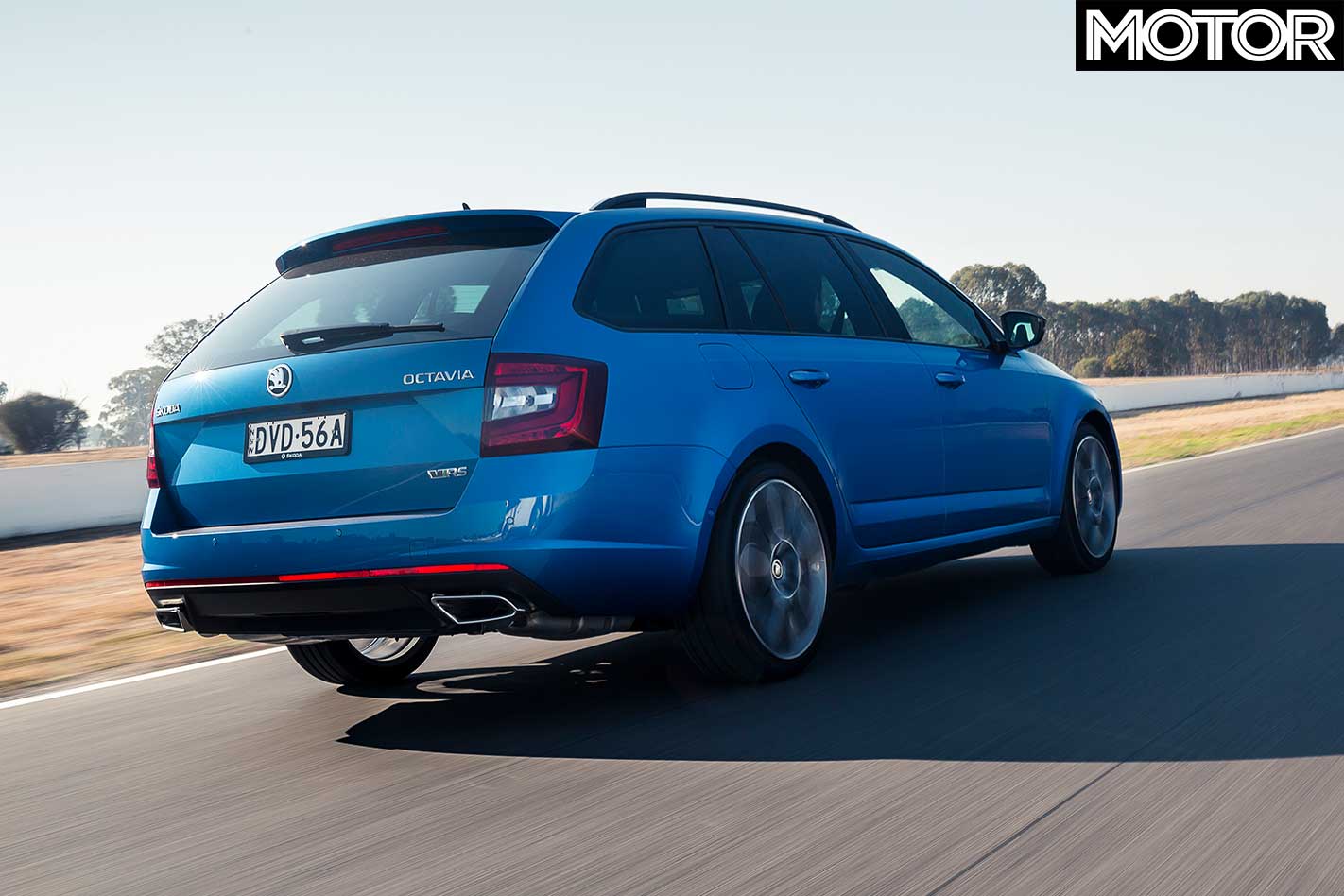
Throw in power seats and you’ve got yourself a real comfy wagon that is anything but slow in the real world. In fact, the booted Octavia RS steers truly and rides better than you might have been expecting.
So where’d it go wrong for the RS? Well, those same beautifully quilted, electric chairs lack a bit of side support when you’re having a big go on the track. And there’s more that stamps the Octavia as a non-track car. (Although, if we’re honest, that’s not really a surprise.)
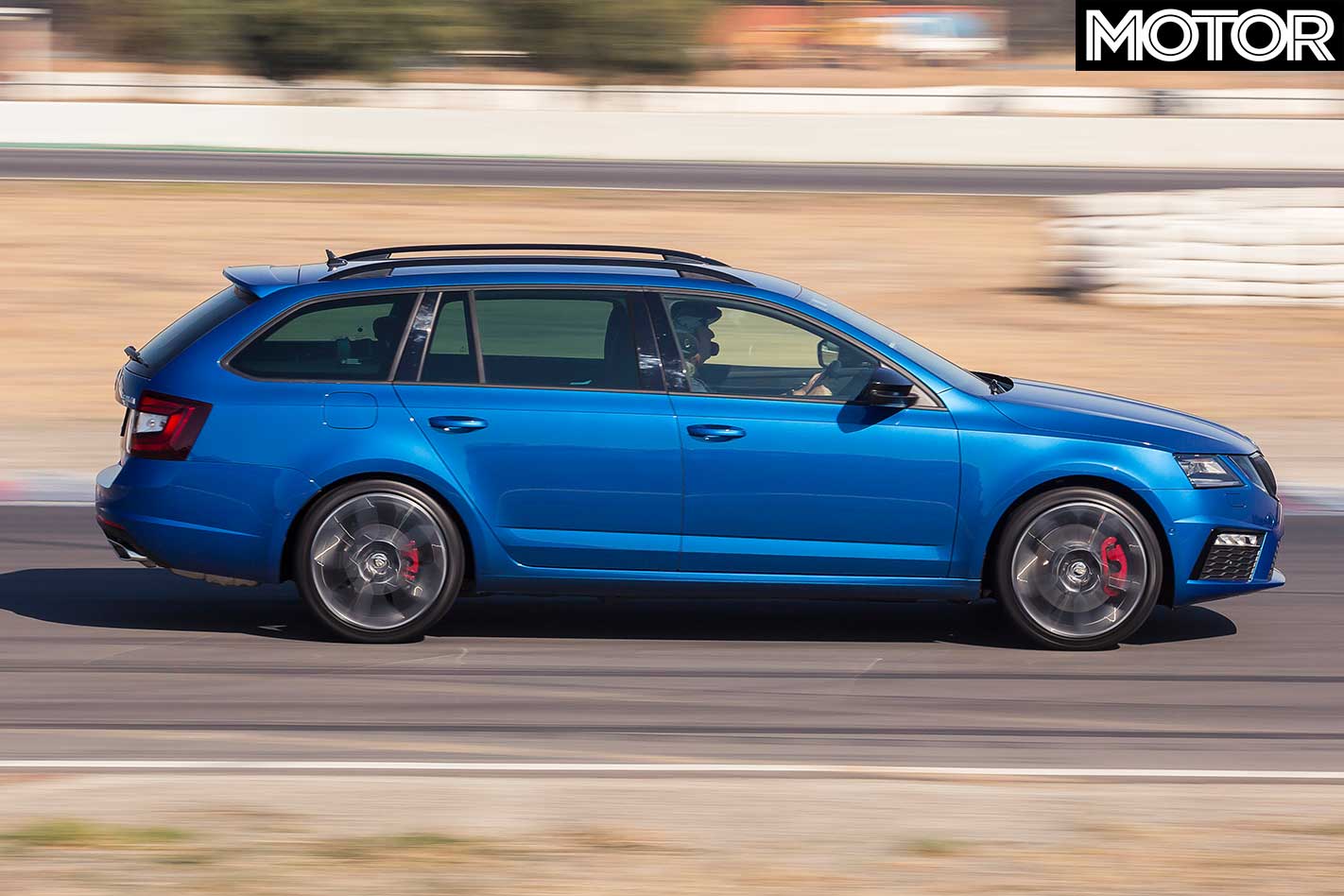
That starts with the lack of power-down through not having a serious front diff in the thing. You can see the result of that in the lap times and corner speeds where the RS was off the pace of the rest of the pack. Throw a decent limited-slip diff at it and it’d almost have to improve, but then the rather tasty $42K price tag might go down the gurgler at the same time.
Another part of that puzzle is the lack of a proper over-ride for the transmission, which seems a bit headstrong. Thing is, we know that the VAG DSG can be sharper than a New York stand-up when it needs to be, so who knows why this one doesn’t want to play ball to the same extent. As it is, you can prod the tranny all you like and it’ll still change gears (up or down) when it damn well feels like it.
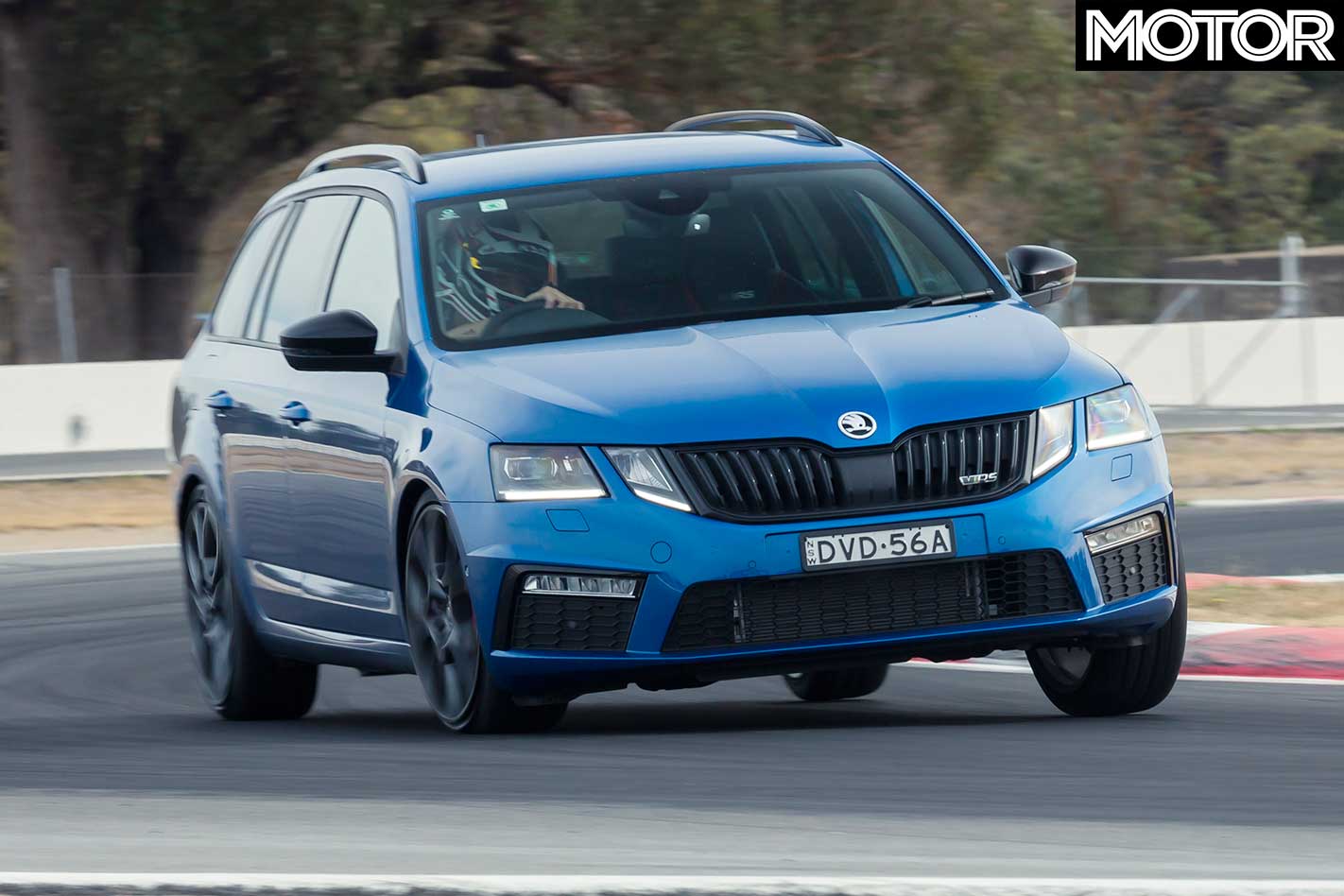
There’s one other factor playing against the Octavia RS as a track tool, and that’s the damn stability-control program. It seems really clumsy with both traction and stability control intervening early and without a whisker of finesse.
You’re left with the impression that the mapping is pretty two-dimensional and slip or yaw in any amount equals intervention. Instantly. Maybe if you could turn the program off, we’d all get along, but unless there’s a switch I missed, that isn’t possible. Hell, even for road duties, the RS’s ESP is over the top.
Skoda Octavia RS BFYB 2018 Results – 13th place
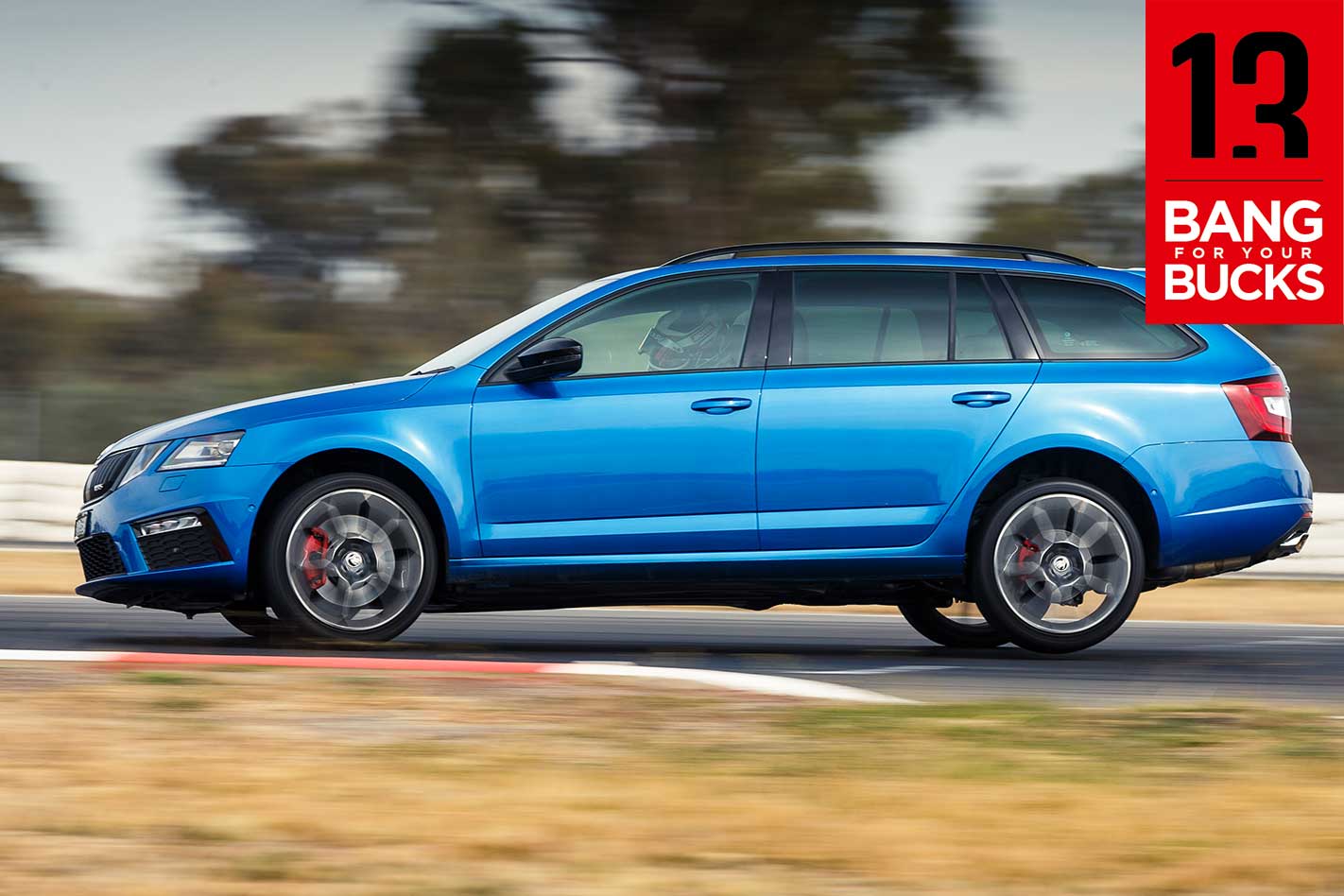
0-100km/h: 6.84sec (12th) 0-400m: 14.82sec @ 159.18km/h (12th) Lap Time: 1:43.40sec (14th) Price: $42,890 Bang Index: 83.1 Bucks Index: 117.1 BFYB Index: 98.4
Judges’ Comments
Warren Luff – 11th “Not one of the cars you’d expect to be a standout performer in track performance, but it really does deliver some surprising results. Probably its biggest downfall is a lack of a diff through some of the tighter sections because you’re really struggling with wheel spin on corner exit, which hurts the lap time. But it’s a good, fun car and it’s got really good driver input and feel. You’d just love it to have a proper LSD, it would improve the driving experience.”
David Morley – 10th “Simply clever? Yeah, in so many ways”
Dylan Campbell – 8th “An honest, sensible all-round performer that lives to please”
Scott Newman – 11th “Love it as a car but on-limit handling ain’t its thing”
Louis Cordony – 11th “Great package, although it’s a bit allergic to the ten-tenths stuff”
FAST FACTS 2018 Skoda Octavia RS
BODY: 5-door, 5-seat wagon DRIVE: front-wheel ENGINE: 1984cc inline-4, DOHC, 16v, turbo BORE/STROKE: 82.5mm x 92.8mm COMPRESSION RATIO: 9.6:1 POWER: 180kW @ 6700rpm TORQUE: 370Nm @ 1600rpm WEIGHT: 1467kg POWER-TO-WEIGHT: 123kW/tonne TRANSMISSION: 7-speed dual-clutch SUSPENSION: struts, A-arms, coil springs, anti-roll bar (f); multi-links, coil springs, anti-roll bar (r) BRAKES: 340mm ventilated discs, single-piston calipers (f); 272mm solid discs, single-piston calipers (r) WHEELS: 19.0 x 7.5-inch (f/r) TYRES: Pirelli P Zero 225/35 R19 (f/r) PRICE: $42,890
Bang For Your Bucks 2018
The Contenders, Judges & Criteria
15 of the hottest new fast cars under $100K roll up to take on our famous formula. Which will be number 1?
A BMW X3 M prototype has been seen thundering around the Nurburgring Nordschleife, clipping apexes, kissing kerbs and generally looking like it’s being hustled impossibly hard. BMW is clearly aiming to inject some bona-fide M car capabilities into its first-ever high-performance midsize SUV.
Through the howling of its front tyres you can hear a distinct straight-six note that suggests there will be significant under-bonnet commonality with its M3 and M4 stablemates, while the front and rear camo can’t hide the enlarged air dams and quad exhausts that are M car hallmarks. It’s unclear what performance metrics are in store for the X3 M, but if it indeed borrows the M3/M4 duo’s S55 twin-turbo 3.0-litre inline six then expect somewhere in the region of 331kW and 550 Nm at the very least.
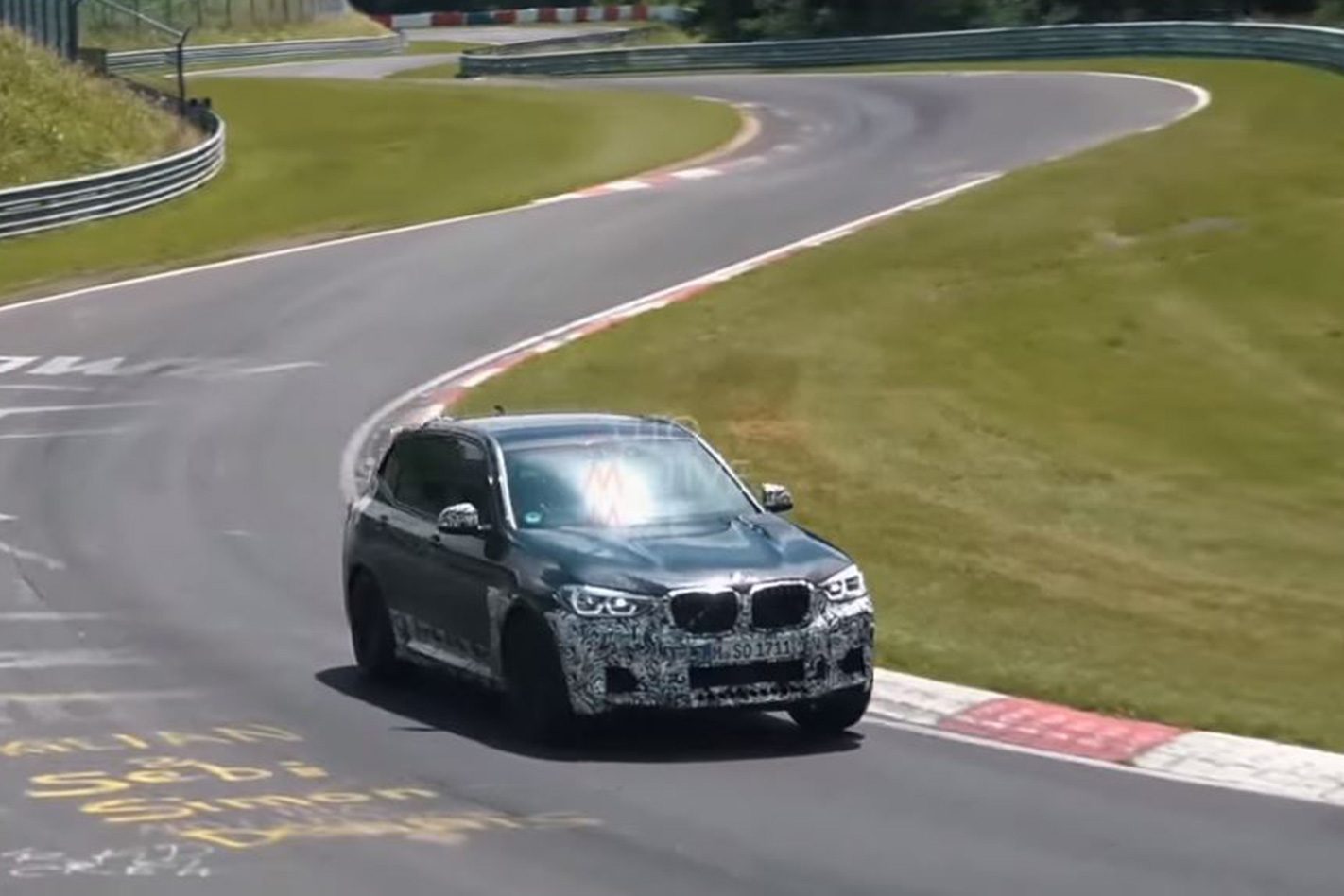
Don’t, however, expect the seven-speed dual-clutch transmission of those cars to make its way into the first-ever X3 M – it’s understood that BMW’s automated dual-clutch manual isn’t compatible with an AWD transfer case, meaning it’ll likely take power to all four wheels via an eight-speed auto instead.
That’s not necessarily a bad thing considering the driveability advantage a conventional auto holds over a dual-clutch, and the traction provided by AWD could see the X3 M out-sprinting its rear-drive cousins. Case in point: the GLC63 hits triple-digit speeds in just 3.8 seconds, despite weighing over 300kg more than the C63 Estate that does the same feat in 4.1 seconds.
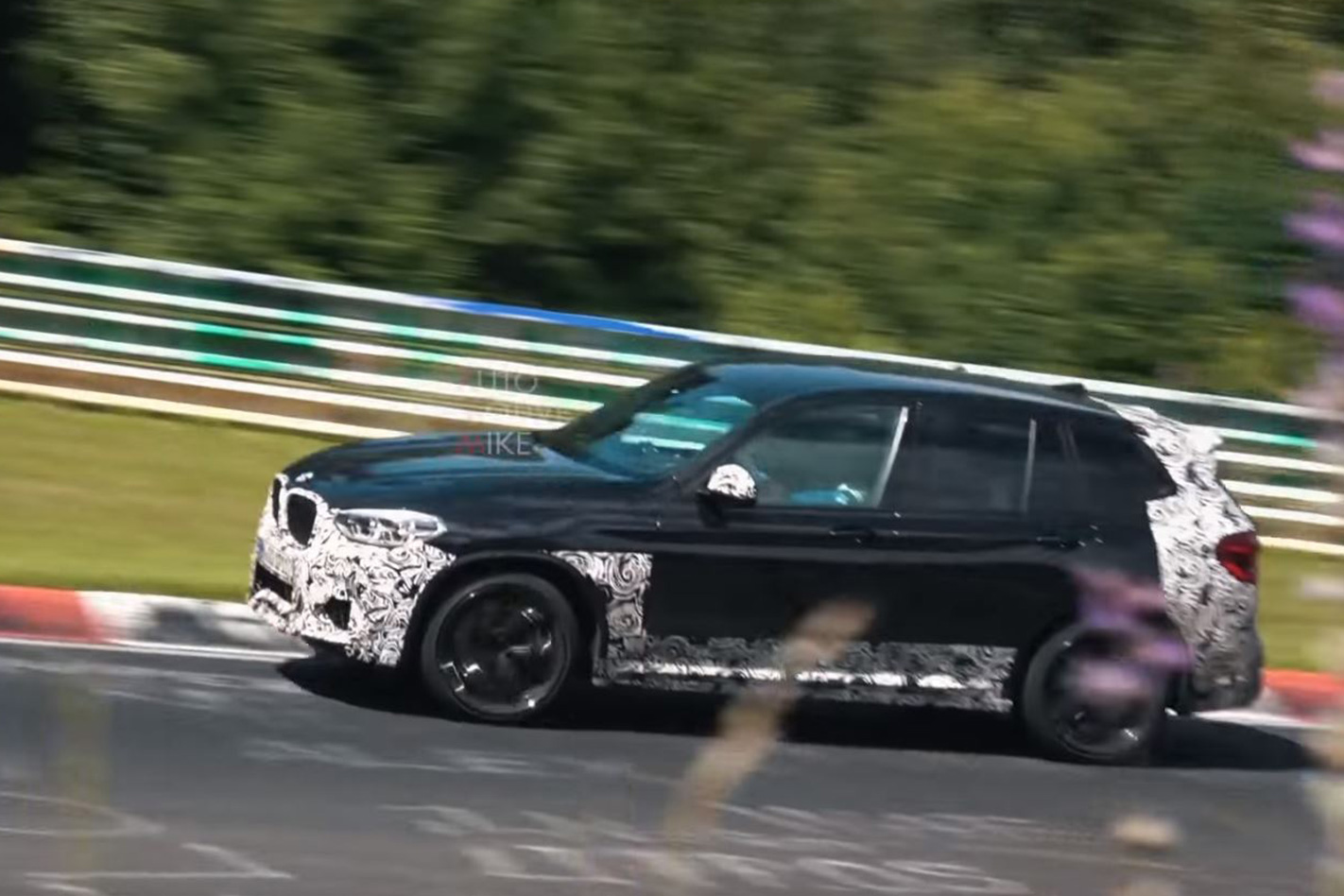
Right now the most potent X3 on sale is the recently-arrived X3 M40i, which packs 3.0-litre straight-six power to the tune of 265kW and 500Nm. It will run to 100km/h in a claimed 4.8 seconds, which leaves plenty of room for a full-fledged M variant above it. When the X3 M will arrive, however, has yet to be communicated, though a global unveiling could occur before year’s end.
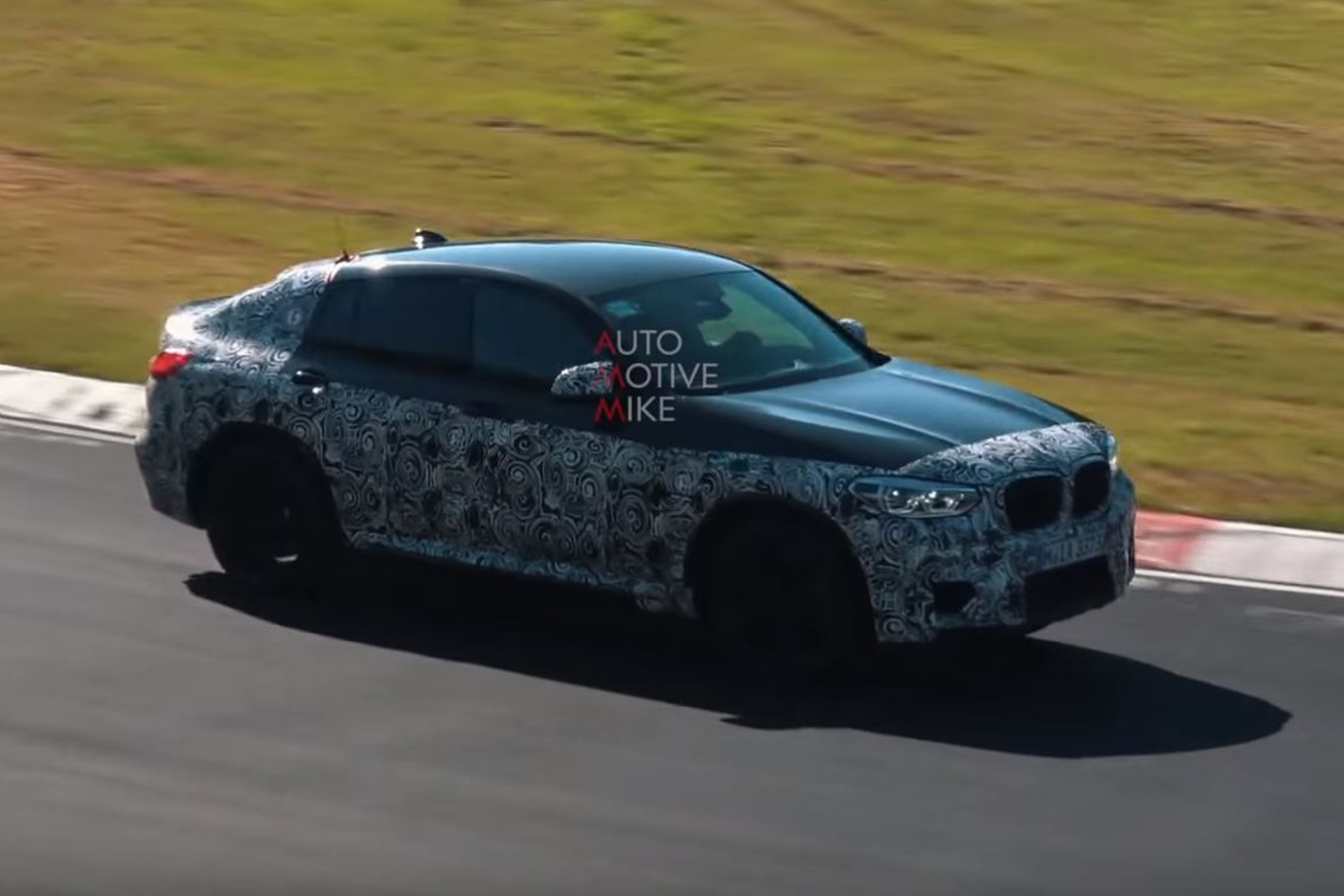
Accompanying the hotted-up X3 into BMW showrooms will be an X4 M twin, applying the same mechanical formula in a fastback SUV form factor. Performance numbers should be line-ball between them – as with the rest of the X3 and X4 range, the differences will be largely confined to bodystyle.
To get a better understanding of why enthusiasts should be excited about the prospect of an X3 M, flick to page 106 of the July issue of Wheels and you’ll find an extensive test of the Mercedes-AMG GLC63 on some of Tasmania’s most challenging (and visually spectacular) roads. Our man Ryan Lewis was blown away by the sheer breadth of the GLC63’s capability, and it looks like BMW’s offering in the same segment will be a ball-tearer.
There was a small part of us that believed this year would be different. That the Toyota 86, a car which thrills without especially thrilling numbers, might finish somewhere decent at an event decided almost solely by them.
This track review was carried out in conjunction with MOTOR’s Bang For Your Bucks 2018
See those red things peering from behind those new design 17-inch wheels? They’re four-piston Brembos that chomp at decent-sized discs, accompanied by dampers from German suspension gurus, Sachs. After furiously tweaking the 86 and BRZ for 2017, we hoped these additions would fit as the final piece in the puzzle for Toyota, and quantify the smiles an 86 convincingly delivers behind the wheel.
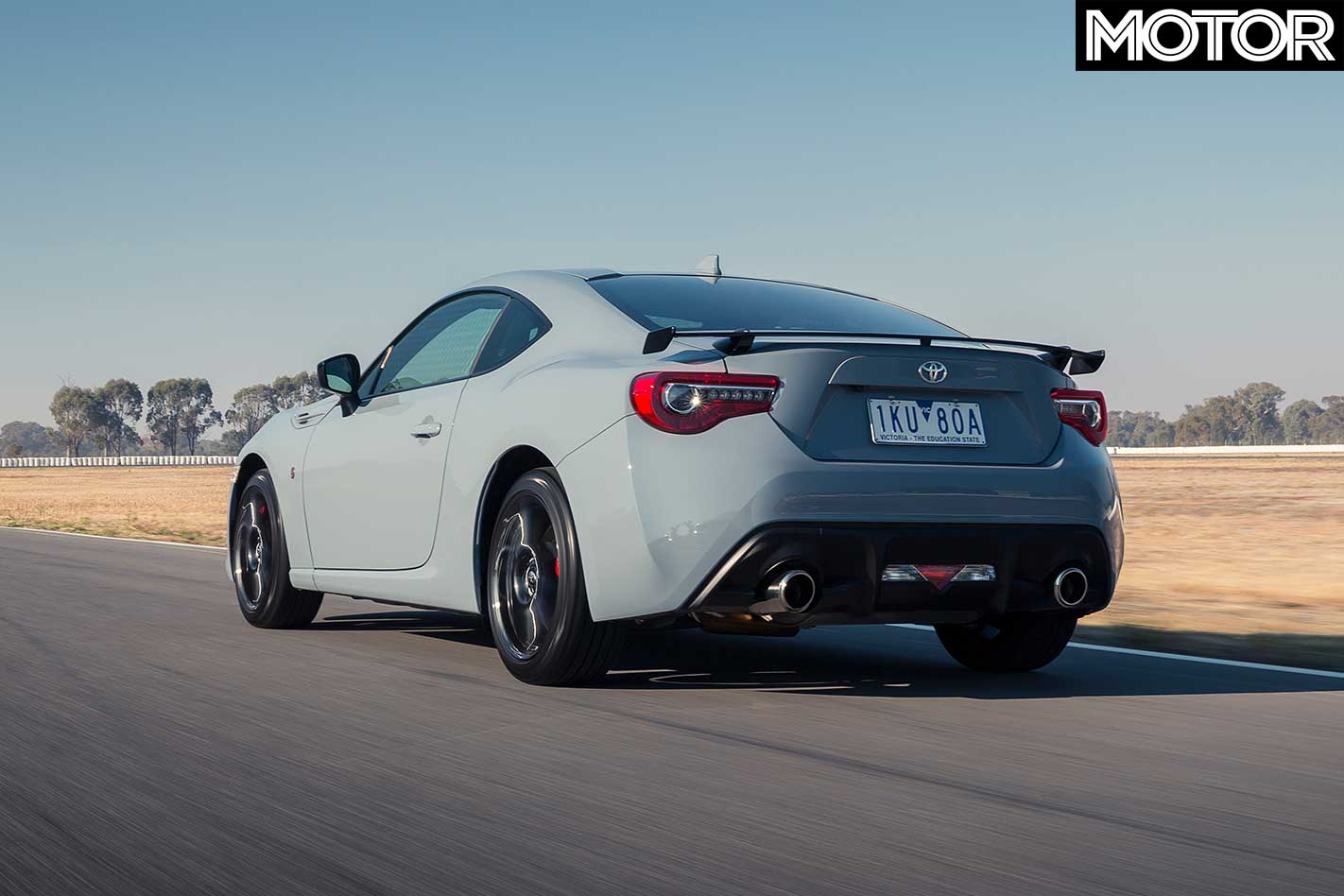
Okay, so they bode an advantage when you’re trying to launch a peaky 152kW 2.0-litre boxer on a sticky strip, giving the 86 just enough wheelspin to arrive at both 100km/h and 400m sooner than its sticky-footed BRZ twin. But everywhere else, they seemed to be the denominator of slow times.
The 86 overtook only the Suzuki Swift Sport and Skoda Octavia on track, while its braking distances would ward people away from eco-orientated rubber – there was 6.62m separating the 86 and the Subaru BRZ tS. You could broadside drift a Kia Stinger through that distance.
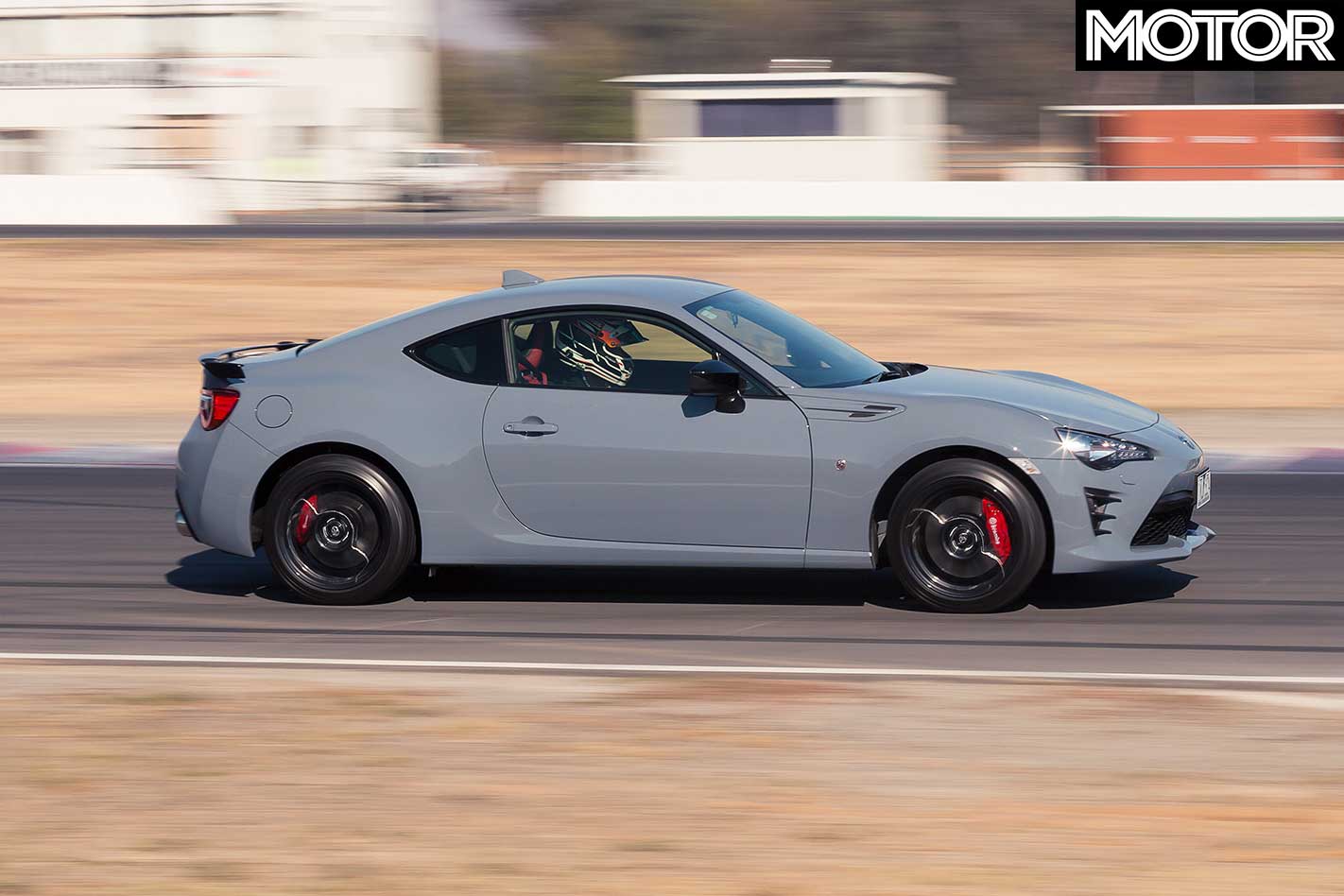
The 86’s average cornering speed is more telling of the car’s true talents, moving up from 13th in lap times to 10th here. It’ll be fairly annoying having to move aside so regularly at track days, but you won’t care once you hit a bit of clear track. The tyres actually enrich the experience, moving the 86 around like its rear wheels are coated in WD-40.
When ABS is called into action, the 86 shimmies in braking zones like a seal with an itchy belly. Yet, it never feels intimidating. And while those Brembos don’t help pull you up shorter, they’re undefeatable under a car weighing only 1258kg.

Its balance, point, control weightings, and seats remain untouched and brilliant. You will be pleased to know that the Sachs dampers have improved the car’s ride considerably, too. But the improvements weren’t enough to enamour the majority of judges, who found the package was overshadowed by our other standouts.
Most tellingly for this 86 is the new wheels, brakes, and dampers add $2200 (or $2900 to a GT), meaning the only number significantly changed is its price. And that’s no way to win at this game.
Toyota 86 GTS Performance Pack BFYB 2018 Results – 14th place
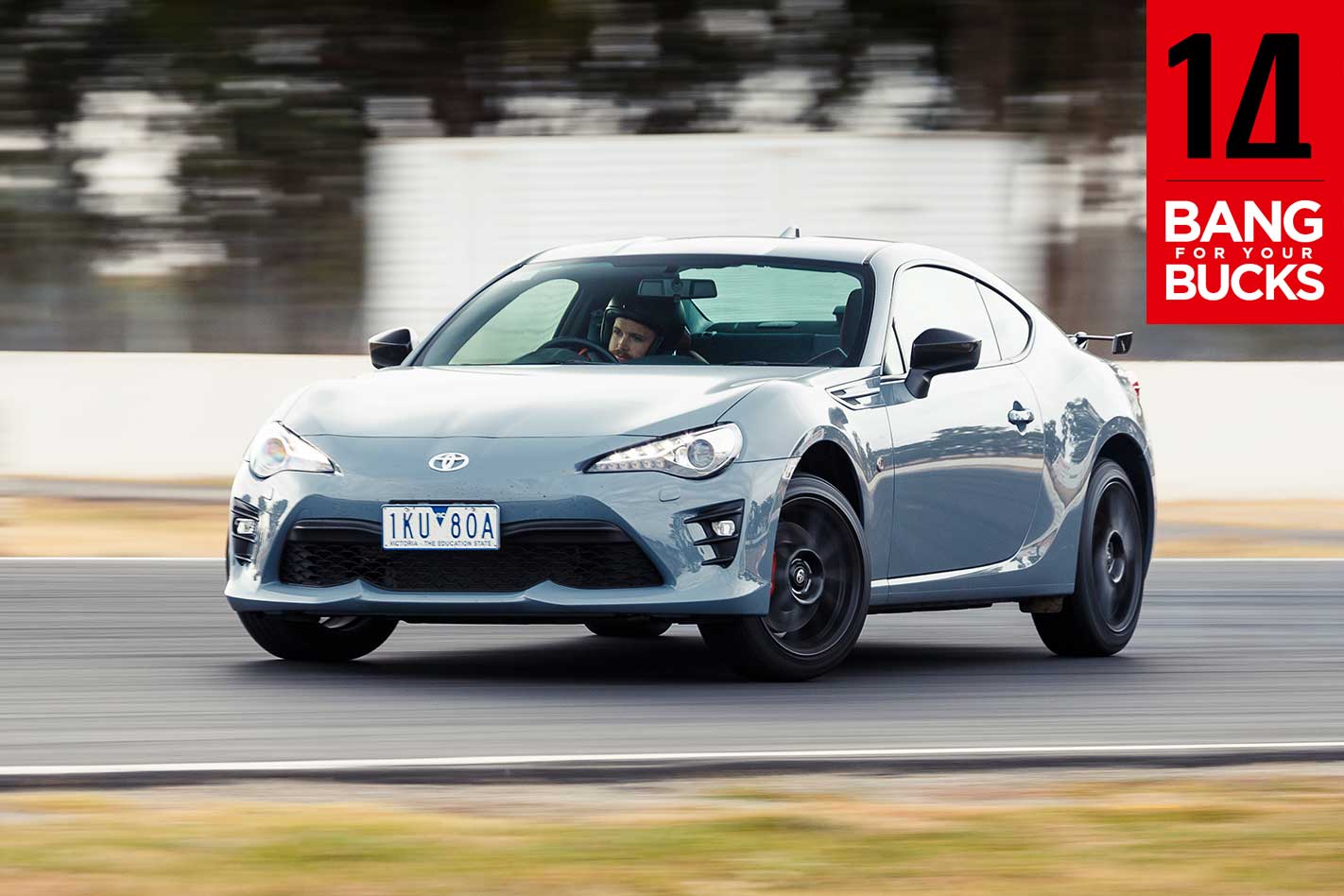
0-100km/h: 7.25sec (13th) 0-400m: 15.19sec @ 152.79km/h (13th) Lap Time: 1:42.80sec (13th) Price: $39,400 Bang Index: 71.6 Bucks Index: 127.5 BFYB Index: 96.7
Judges’ Comments
Warren Luff – 7th “It’s an MX-5 with a roof. With this particular 86 you can use the back of the car to help point the nose in to try and eliminate some of the understeer. So it’s a very playful thing to drive and you know that it’s not going to bite you. It gives a lot of feedback and it’s very progressive in everything that it does. Yes, it doesn’t have the grip that a lot of the other cars here do, but it doesn’t pretend to be anything other than a fun and playful package.”
David Morley – 7th “Still works for me in every way”
Dylan Campbell – 4th “How fun are these cars! Tyres unpredictable – exciting”
Scott Newman – 6th “Hilarious fun and the driver will wear out before the car does”
Louis Cordony – 2nd “Gutless, but who cares. I could drive this thing all day long”
FAST FACTS 2018 Toyota 86 GTS Performance Pack
BODY: 2-door, 4-seat coupe DRIVE: rear-wheel ENGINE: 1998cc boxer-4, DOHC, 16v BORE/STROKE: 86.0mm x 86.0mm COMPRESSION RATIO: 12.5:1 POWER: 152kW @ 7000rpm TORQUE: 212Nm @ 6400-6800rpm WEIGHT: 1258kg POWER-TO-WEIGHT: 121kW/tonne TRANSMISSION: 6-speed manual SUSPENSION: struts, coil springs, dampers, anti-roll bar (f); A-arms, coil springs, dampers, anti-roll bar (r) BRAKES: 326mm ventilated discs, 4-piston calipers (f); 316mm ventilated discs, 2-piston calipers (r) WHEELS: 17.0 x 8.0-inch (f/r) TYRES: Michelin Primacy HP 215/45 R17 87W (f/r) PRICE: $39,400
Bang For Your Bucks 2018
The Contenders, Judges & Criteria
15 of the hottest new fast cars under $100K roll up to take on our famous formula. Which will be number 1?
Australian’s have struggled with low wage growth in recent years, which has seen entrepreneurial types take on secondary work to top up their earnings. One of the most established ways to pocket some extra cash is to register with one of these web-based services and jump in your car.
UBER

Perhaps the most well-known option for car owners looking to earn money is with ride sharing apps such as Uber. At its core, ride sharing works much like a taxi service where you are the driver using your own car to ferry passengers to their destinations.
Finder.com.au claims Australian Uber drivers take home 75 percent of their weekly fare total, and drivers generally make on average $35 to $40 per hour before the parent company takes its 25 percent cut. You can work as little or much as you like with Uber by simply signing on to drive when it is convenient.
To be eligible you must be at least 21 years of age, insured to drive the vehicle, hold a current unrestricted driver’s licence in your state or territory and have held one previously for at least 12 months. Your vehicle must be no more than 10 years old and in excellent working condition with four doors for access.
Uber also has a food delivery offshoot called Uber Eats, where your passengers are meals rather than people. This is a good option for those looking to stay in one local area rather than travel across town.
CAR NEXT DOOR
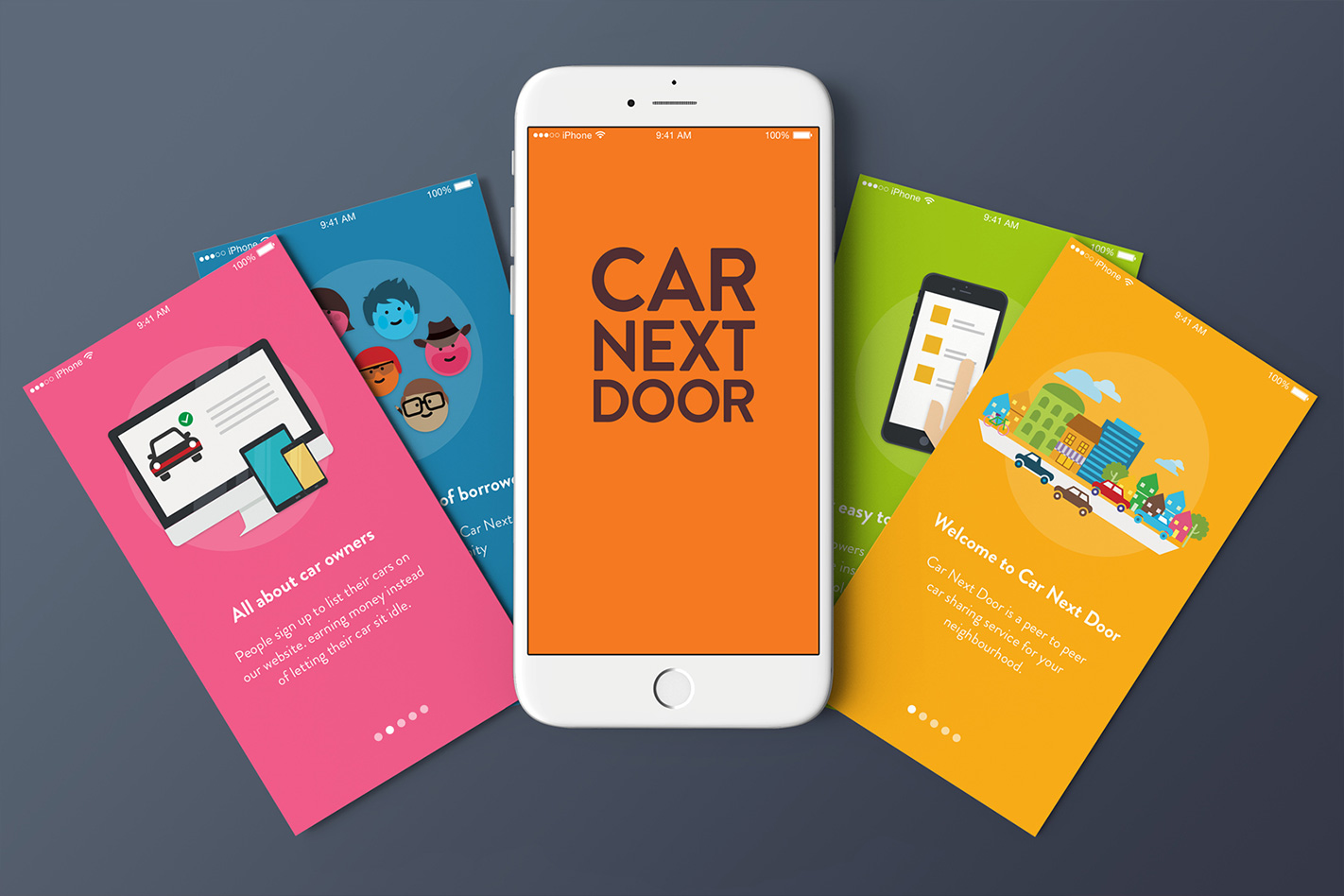
If driving others sounds like too much work and your vehicle is frequently left unused, you could be earning money for doing nothing. Vehicle-sharing platforms such as Car Next Door make this possible by allowing you to rent your vehicle to members of the public for short periods.
Renting a vehicle with Car Next Door costs users $5 an hour, or $25 a day, with a distance fee of 33 cents per kilometre on top of that. Vehicle owners take home 50 percent of the timed rate up until $240 dollars, and then 75 percent after that, while also earning 25 cents per kilometre.
Car owners must pay a $60 monthly fee to use the service, but users in popular areas are virtually guaranteed to earn at least $2000 a year. The fee covers comprehensive insurance for borrowers plus yourself and five other drivers, with 24/7 roadside assistance.
FUTURE Minis are likely to add elements such as winglets and gurney flap-style edges as the push to make the iconic hatch range more fuel efficient steps up.
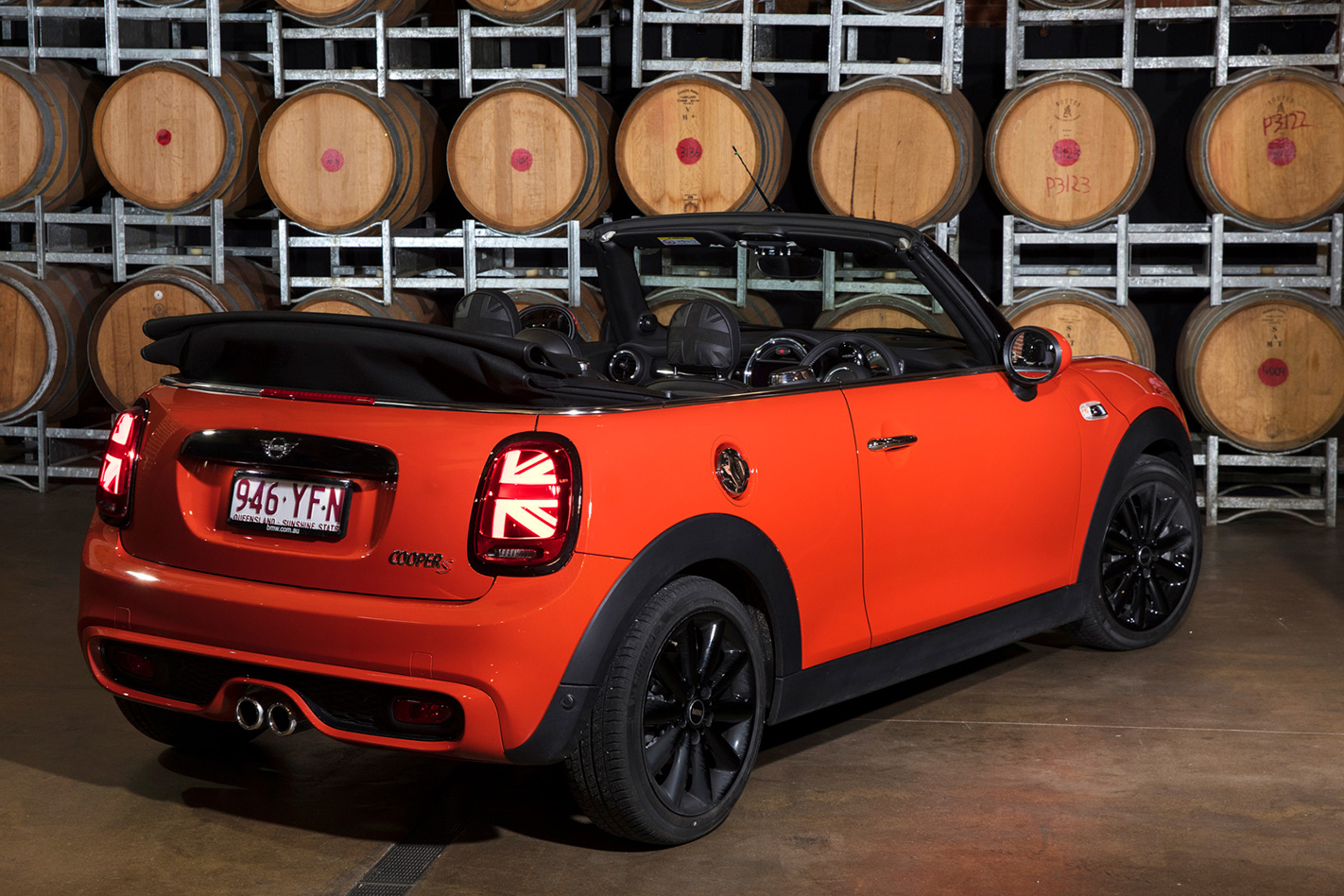
Mini exterior design project leader Florian Nissl told Wheels the need to make the Mini’s very individual design more fuel-efficient would have to focus on making the traditional two-box shape more aerodynamic. He said tightening global emissions standards were eventually likely to force the brand’s hand.
“The company is really into all different ways of how to fulfill those [future emissions standards] and definitely we are very much into aerodynamic efficiency,” Nissl said. “So we are in a lot of direct exchange with aerodynamic engineers from the company how to come up with clever solutions, how to make the cars more efficient with the drag coefficient. And that is quite possibly going to influence details of the car.
“We are up to a standard with our aerodynamic efficiency that we really need to look into other areas of the car … there’ll be winglets or edges to influence the airflow in a way that the car gets more efficient.”
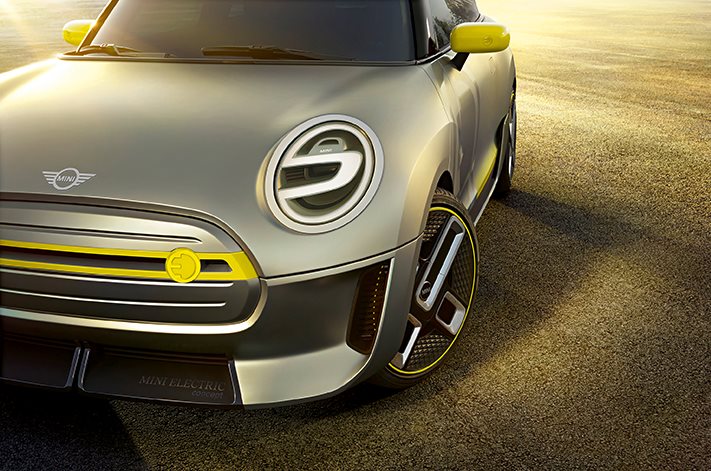
Speaking at this month’s launch of the facelifted Mini Cooper range, Nissl said the small winglets that appeared on the Mini electric concept unveiled in Europe last year showed one direction the range’s design could one day need to steer towards.
“It doesn’t necessarily mean that this design solution is applicable to other cars as well, but the Mini electric concept does show a couple of those features that will have an aerodynamic impact,” he said.
“It’s [aerodynamic enhancements] really in development and I’m sure you are aware how the car industry goes down to nuts and bolts and tests everything, so yeah, we might see some of this stuff coming, but not necessarily everywhere.”
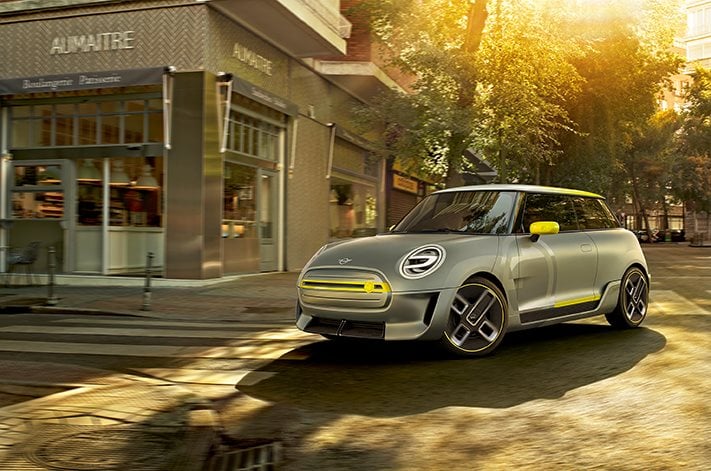
Nissl said despite the need to make the Mini’s iconic shape more aerodynamic, there was no pressure yet on the brand to bring in wholesale change.
“We look very closely at what we can do with the design language of the car,” he said. “I think for one thing is that we have some design icons and design DNA that’s very important to us that we want to evolve and modernise, but then again stay true to the brand.
“I think a good example of that is the Vision Next 100 concept show car where we really tried to take everything away from the car that we can, and reassemble it, reshape it and still keep the feeling that this is a Mini. And from my point of view that is very successful in that respect; we still had the feeling that it’s still a Mini even though we didn’t have the round headlights in the corners in the front, and had some other key features that we wouldn’t have normally.
“So even though this is a concept for the 2030 maybe or beyond, I think it shows what we can do with the design. So it doesn’t necessarily mean you have to go too extreme on other parts of the car for the near future, but it shows a possible direction of what we can do.”
New materials that designers are yet to work with would help the process, Nissl said. “I think they [aluminium and composite materials] will change things in a positive way in the sense it offers some other interesting textures, for example.

“It might also mean that we offer some materials or fabrics that maybe don’t look like what you used to have in cars for the last 20 or 30 years, but I think as a designer it is a positive thing, we can really offer new stuff here.”
One thing that is unlikely to change, though, is the one body shape that has defined the Mini name since its inception in 1959 – the three-door hatch.
“I think for me the core Mini, the core three-door hatch, is still the very icon of Mini,” Nissl said. “That should be in a way preserved. I don’t think that doesn’t mean we can’t do a modern design on it, but I think the core three-door hatch is really the brand, the core of the brand.”
AUSTRALIA’S crash safety watchdog will announce the first set of results under its new, tougher assessment protocol that will potentially rob more cars of the ability to achieve a top five-star rating.
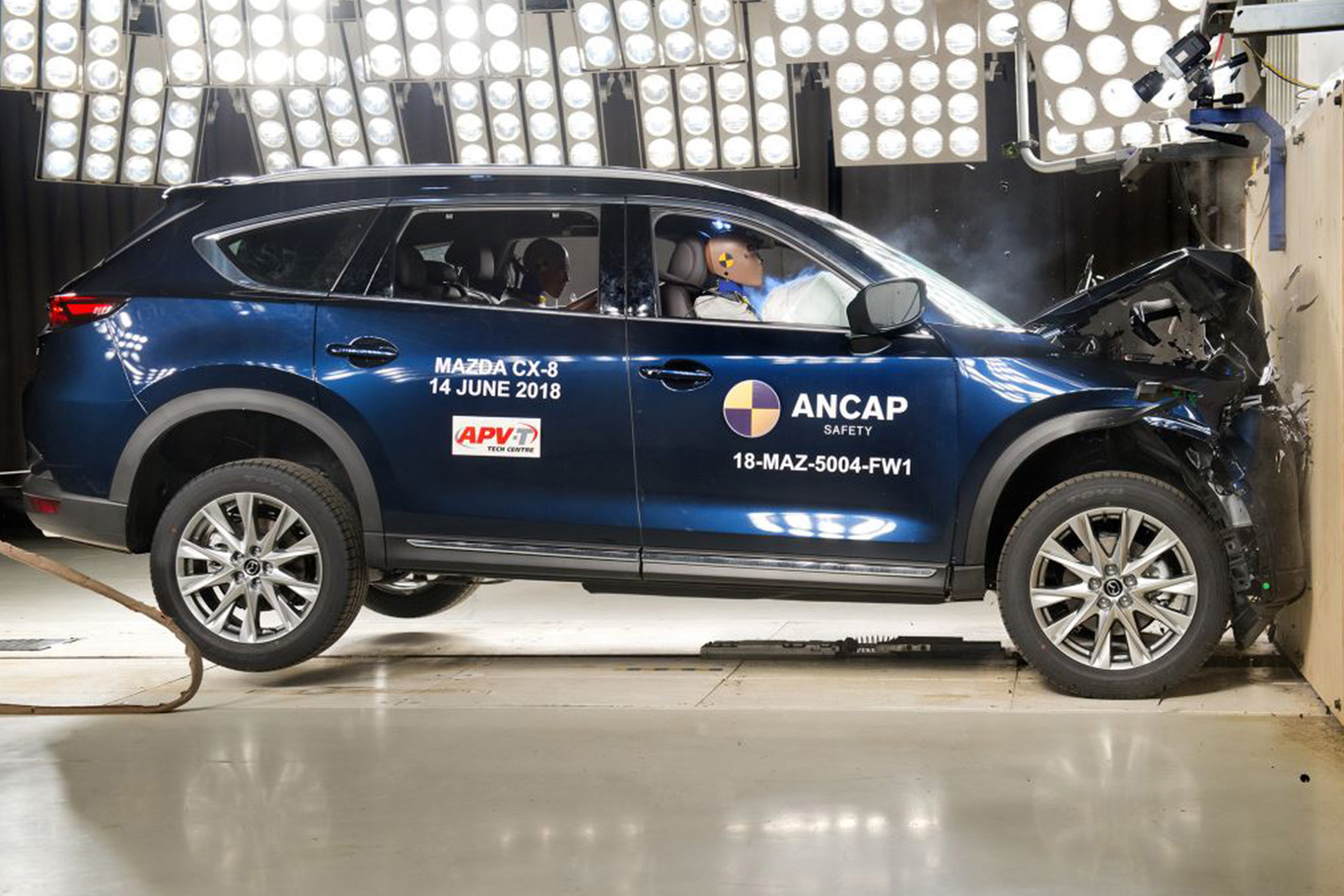
The Australasian New Car Assessment Program (ANCAP) is expected to announce tomorrow the results for the freshly launched Volvo XC40 compact SUV and the mid-sized Mazda CX-8 SUV under tougher technology-heavy benchmarks that make it harder to achieve a top result.
Under changes that will take an extra step towards aligning Australia’s crash test regime with that of the EuroNCAP test, the hurdles that car makers now need to step over include driver assist systems such as automatic emergency braking that works at night, and can also detect vulnerable road users such as cyclists.
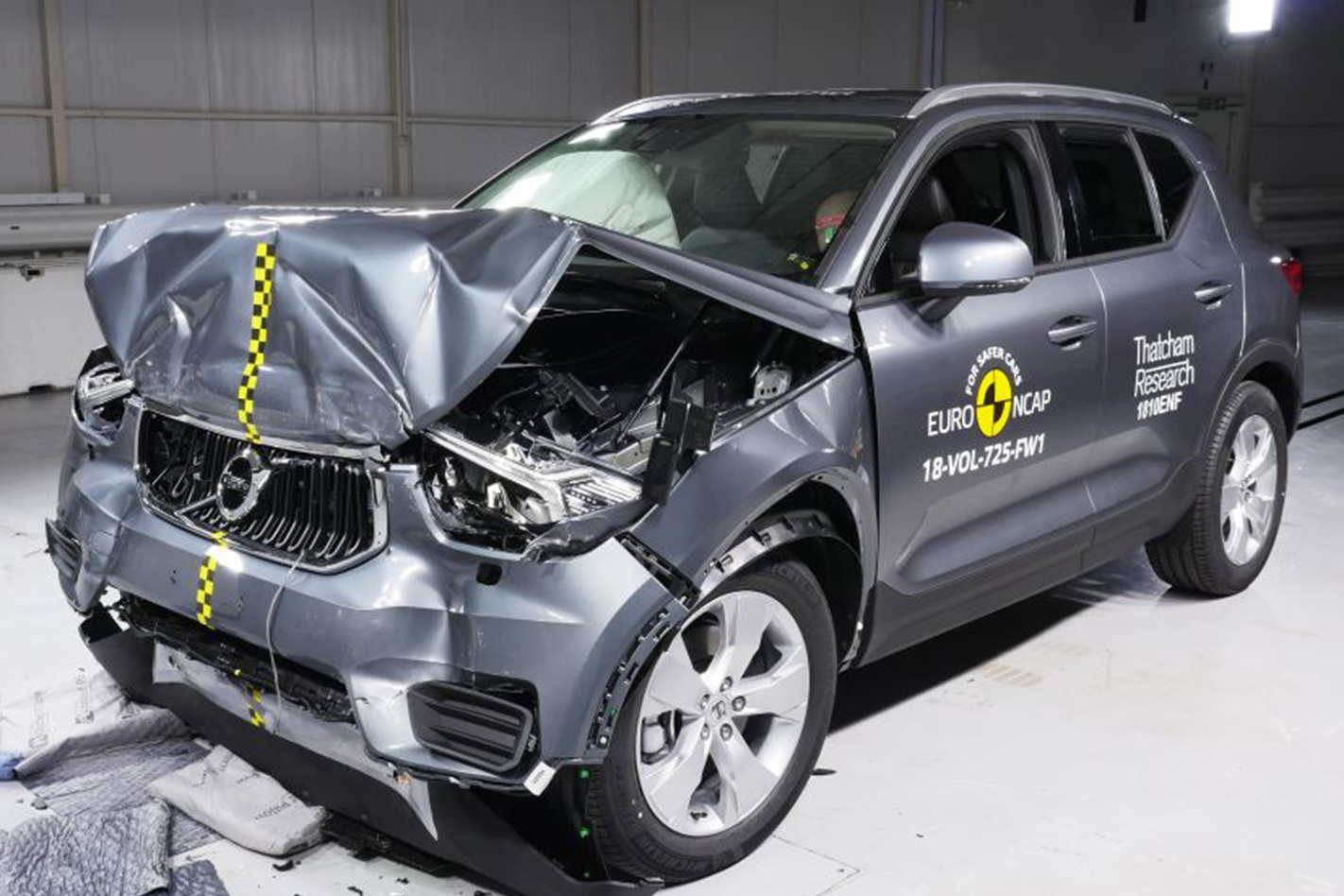
The moves also increase the marks that car makers need to achieve for protecting children in a crash, and will be scored on how well a vehicle’s lane-keeping technology keeps it from straying into other traffic.
In other big changes, the cars will be assessed for how well the cars safely accommodate a mix of child restraints, and the crash test “family” will expand to include a shorter female dummy that will be used in both the front and rear seats.
ANCAP is believed to be finalising the crash test results for both the Volvo XC40 and the Mazda CX-8 ahead of an official announcement tomorrow.
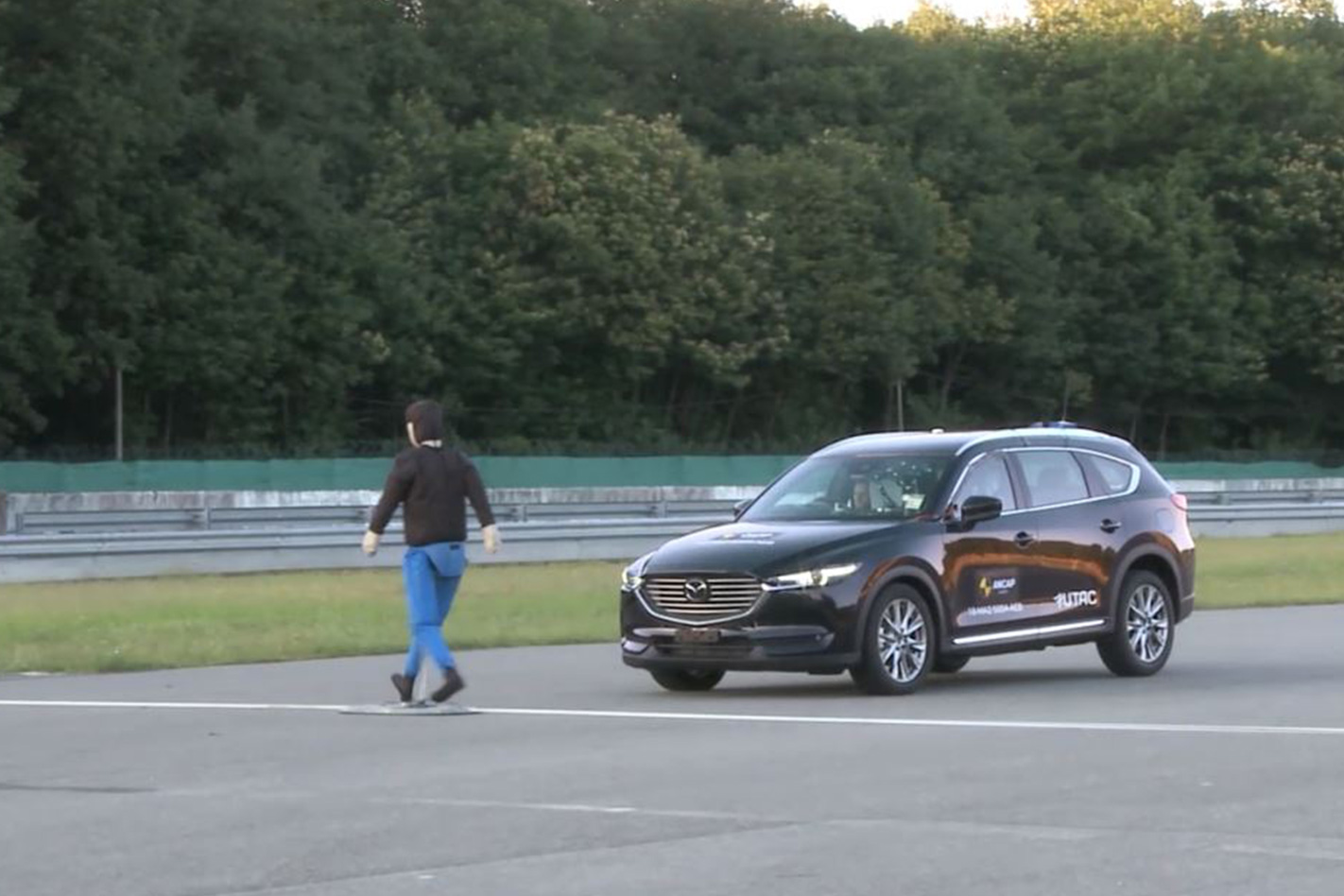
While it is too early to speculate how each car will perform in the Australian tests, Volvo’s BMW X3 fighter has performed strongly in the Swedish brand’s internal crashworthiness tests. The Mazda CX-8 will be an interesting one, as Australia is the only market outside of Japan to sell the jacked-up, diesel-engined seven-seat family wagon – the turbo petrol-engined Mazda CX-9 that’s sold here isn’t on sale in Japan.
ANCAP’s current test regime was introduced on January 1 this year. This update comes at the end of a four-year process to align testing done here with the standards set in European testing – a step which encouraged some manufacturers to launch cars here before tougher standards would downgrade their star ratings if they were assessed after the changes were brought in.
Crash test ratings expire six years after the vehicles were first tested.
MINI buyers could one day be able to completely customise the interiors and exteriors of their cars with the materials and features that they want, the iconic British car maker has revealed.
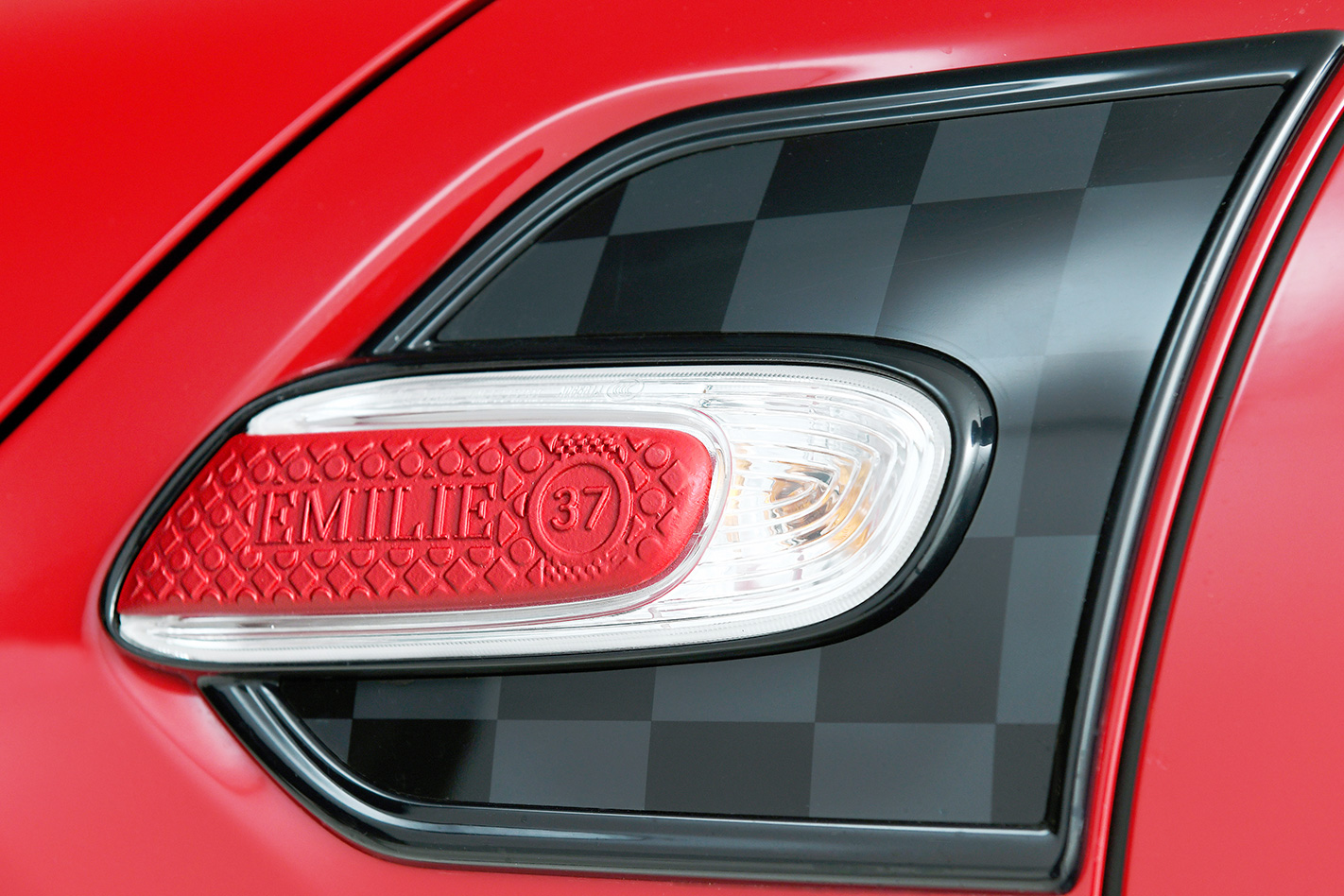
Key to this is the company’s move into 3D printing, which could one day evolve into customers designing their own wheels and even the knitted fabric that covers the seats.
Wheels sat down with Mini exterior design project leader, Florian Nissl, in Australia recently for the launch of the facelifted 2018 Mini Cooper hatch and cabriolet range. He revealed that car designers would need to prepare themselves for the day that owners would steer how a car looks, and not them.

“For us it’s also a little bit of a change in mindset, because for the very first time with this 3D printing we offer the customer a possibility to create a piece of the car that we didn’t design,” Nissl said. “So until now we sort of created a car for the customer, and now, even though the technology we have is limited so far, the customer can do stuff that maybe me as a designer would not do.
“Maybe I don’t like that. But is my opinion really important in that case? I don’t think so, because my tastes are not necessarily better than anyone else’s, so I think it is a good possibility.
“And I can’t give you a precise forecast [of when this is likely to happen], but it would be good to have things like that happen more. Wheels are a good example, I think,” he said.
“There may also be some 3D knitting for interior fabrics. That’s stuff that we very much look into and there’s a lot of things like that going on, with modern technologies creating new fabrics and so on.”
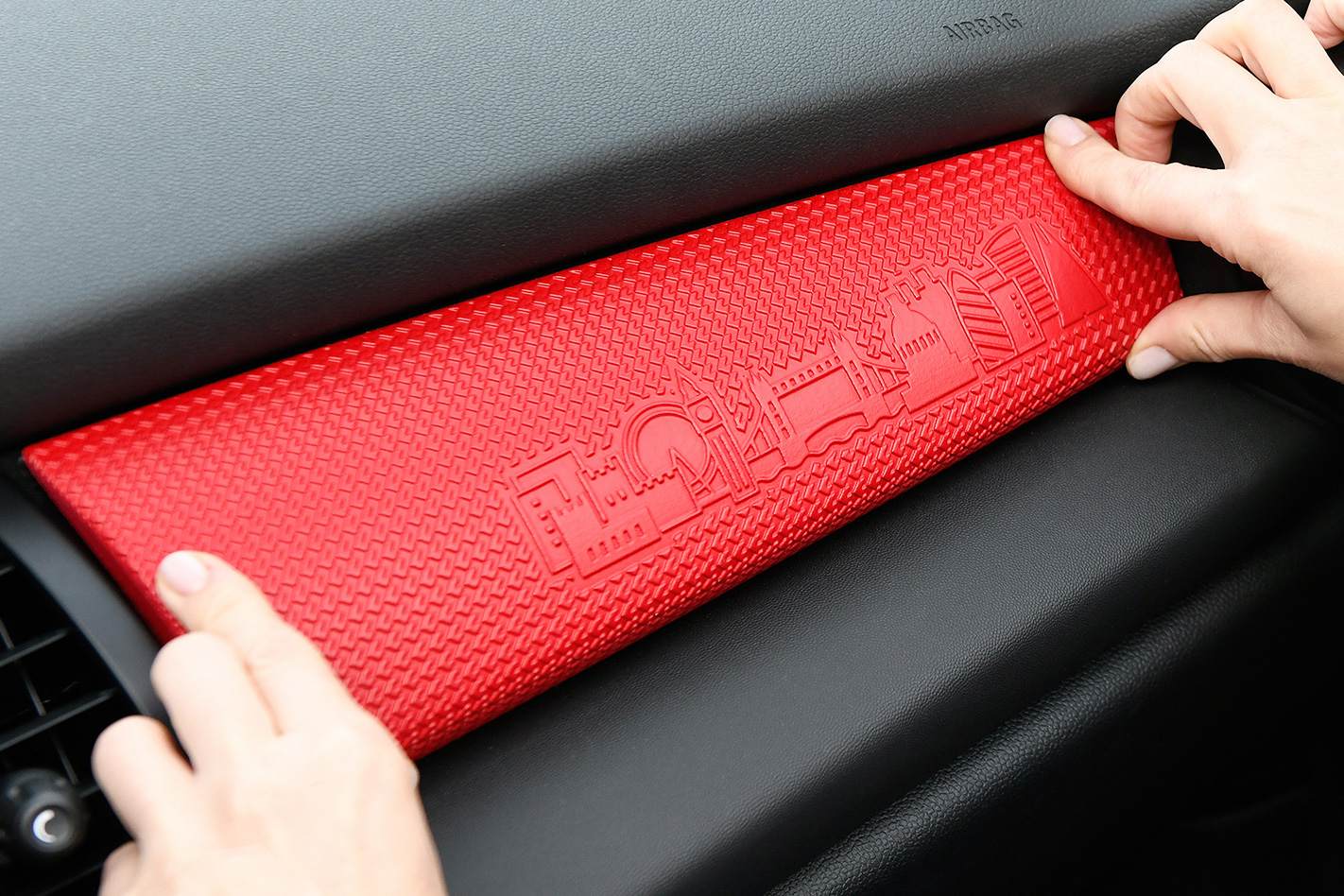
Mini is already testing the Australian market with 3D-printed highlights for the new Cooper range, such as a stylised, backlit cityscape that can replace the fascia of the passenger-side dash, and names etched on door sills or built into puddle lamp lenses. The customisable design features were introduced to Europe last year.
However, Nissl hinted that the range of personal touches available to customers could soon extend to more than just jewellery – it could also push into the software that is built into the cars.
“I think it’s not only a question of materials and physical product, it’s also a question of user interface and digital contents, so it doesn’t necessarily mean somebody has to invest a lot of money in it [customising a Mini], either the company or the customer,” he said.
“I think it is totally imaginable that today you can change the background wallpaper on your phone, and the phone contents a little bit to your liking. Why not have this in a car in the future?”
What’s not to like about excess? You know the drum; more is more and the bigger the better.
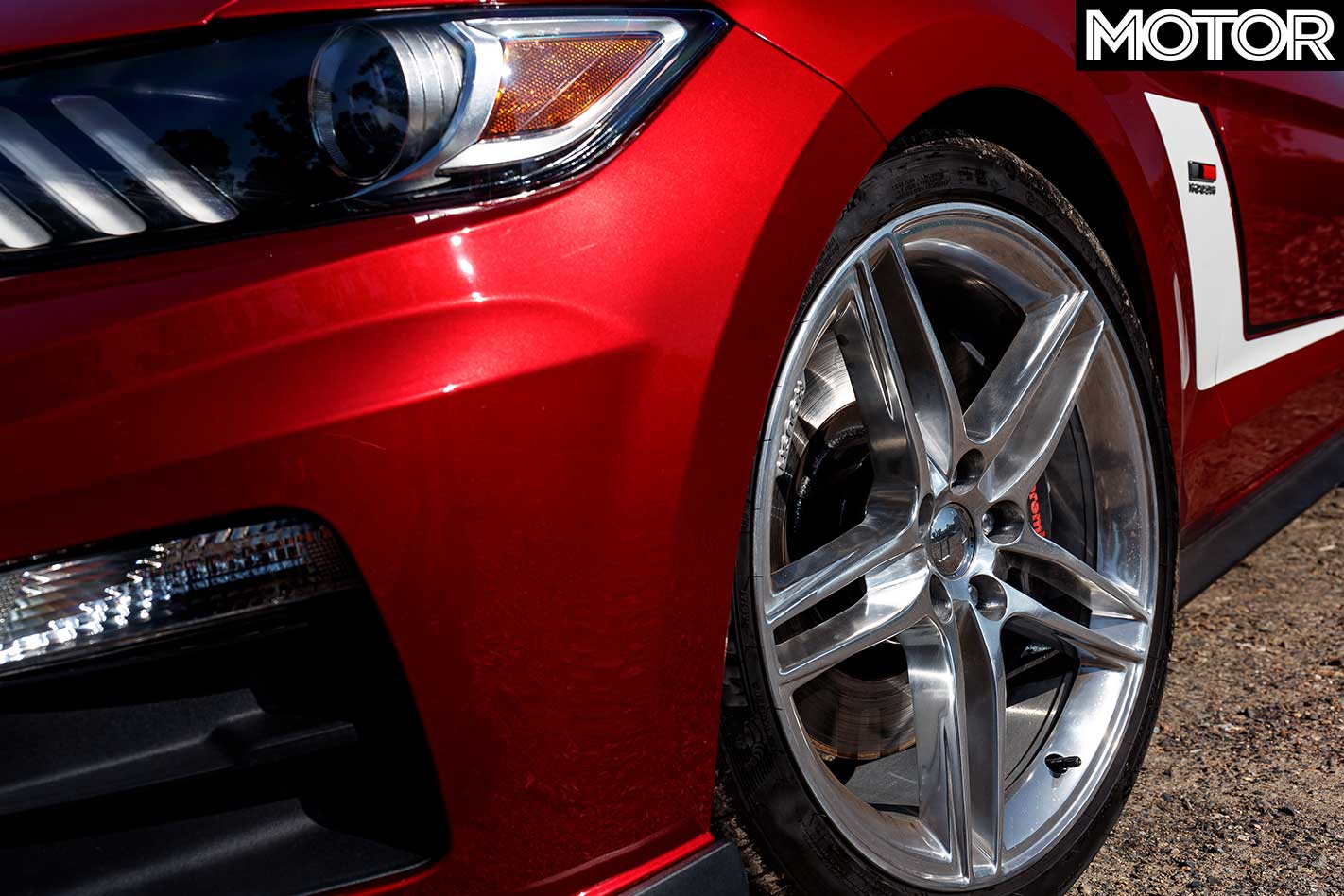
That’s certainly the vibe Mustang Motorsport (MM) was going for when selecting the Roush parts to be fitted to this tuned, but grand-touring-focused Mustang. And with a deep-red hue, polished, cast-aluminium wheels and a baritone-esque soundtrack, this version of Roush’s RS3 seems to hit the spot.
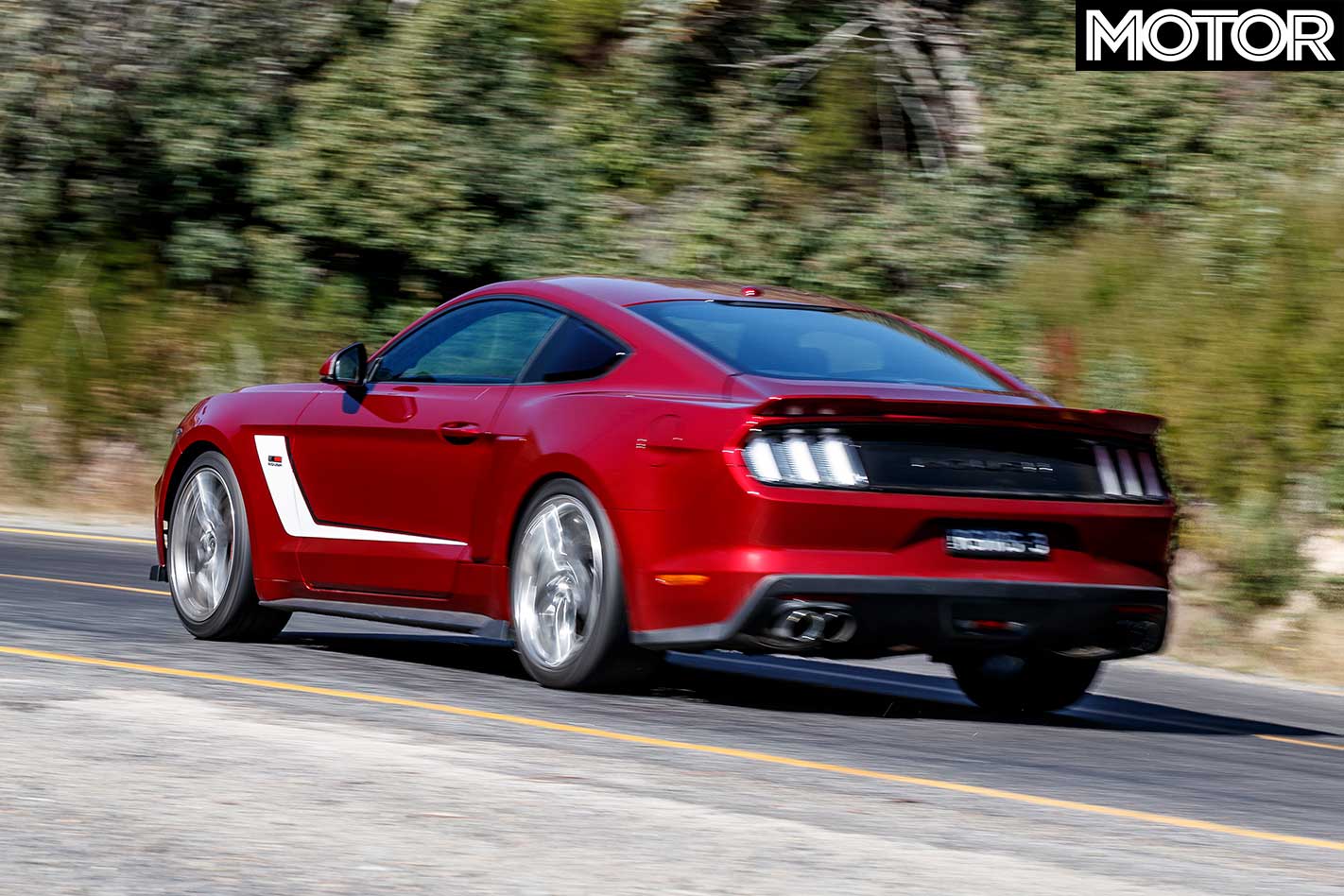
So much so that a curious onlooker wound down the window of his Range Rover at a set of lights to ask; “what’s that?”.
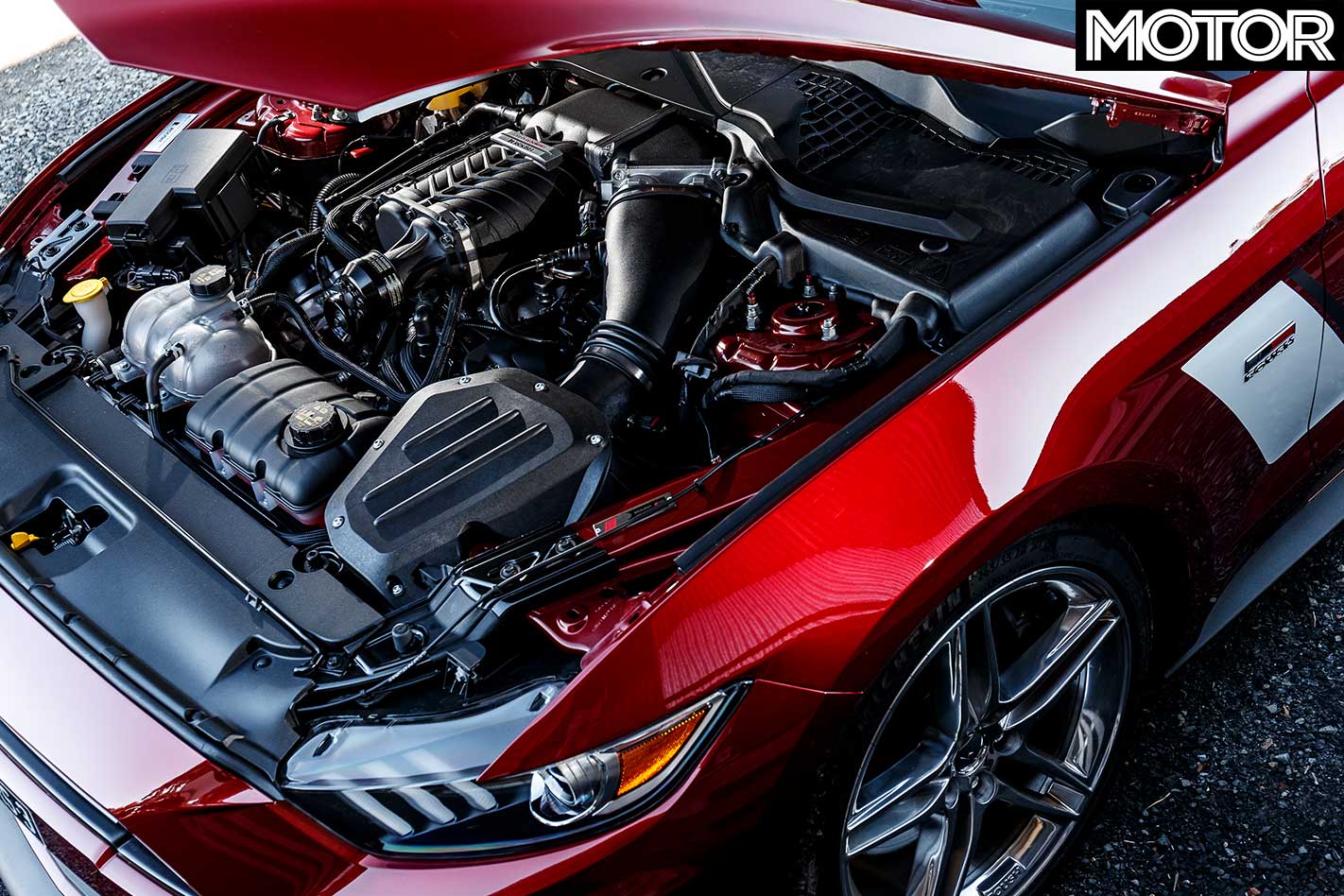
Well, your $107,009 (including the price of a six-speed auto Mustang GT, but excluding on-roads) gets you the Stage 3 supercharger kit in Phase 1 guise for your 5.0-litre V8. Which means the 2.3-litre R2300 TVS unit endows the RS3 with 500kW and 739Nm, which is sent to the rear wheels via the auto ’box and heavy-duty half shafts.
The package also includes one-way adjustable (height) coilovers, a passive performance exhaust and grippy Michelin Pilot Sport 4 S tyres. It’s all ADR compliant (and complied) country-wide and even comes with a three-year/60,000km driveline warranty from MM.
What endears most about this package is the prodigiously powered bent eight and the deeply impressive acoustics. While it might always be ‘on’, the soundtrack mellows at lower revs before becoming animalistic in the higher reaches.
It’s a sound that befits the performance, because when you wind up the supercharger, this ‘lesser’ kit on paper covers ground at an astonishing rate – and drinks fuel equally as fast.
What doesn’t work as well is the auto ’box, which never seems to find the right ratio to handle the 670 wild horses. Switch into manual mode (there’s steering wheel-mounted paddles) and it is better, but maybe wait for the upcoming 10-speed version found in the just-released Mustang if a clutch pedal isn’t to your liking.
Back-road blasts do suit the RS3 and the Michelin Pilot Sport 4 S tyres offer plenty of instant bite. Dynamically the long-bonnet pony continues to surprise with its increased agility, but not its overt lack of steering feel.
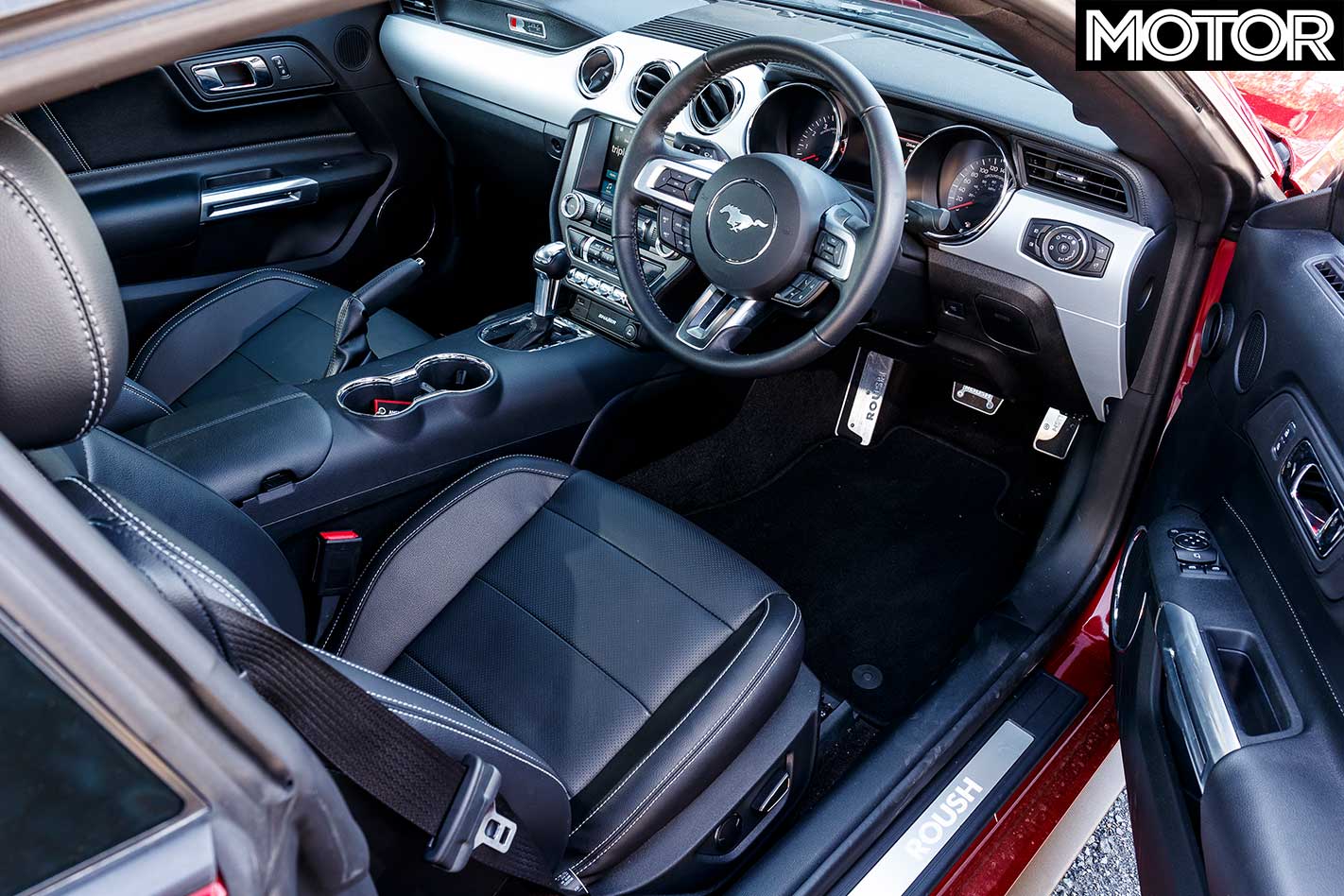
The irony of it all is that the road-centric offering is actually harsher to ride in than the balls-out track warrior, with mid-corner bumps unsettling the ‘GT’ package far more.
Still, it’s certainly no back-breaker and, for the hit to the wallet, presents impressive touring ability and outright pace. It’s American muscle that feels altogether factory. If you like your burgers with the lot, this RS3 is a Mustang that panders to excess.
2018 MUSTANG MOTORSPORT ROUSH RS3 AUTO SPECS: Engine: 4951cc V8, DOHC, 32v, supercharger Power: 500kW @ 6850rpm Torque: 739Nm @ 5000rpm 0-100km/h: 4.3sec (estimated) Weight: 1747kg Price: $107,009 (excluding on-road costs)
Rating: 4.0 out of 5 stars
