
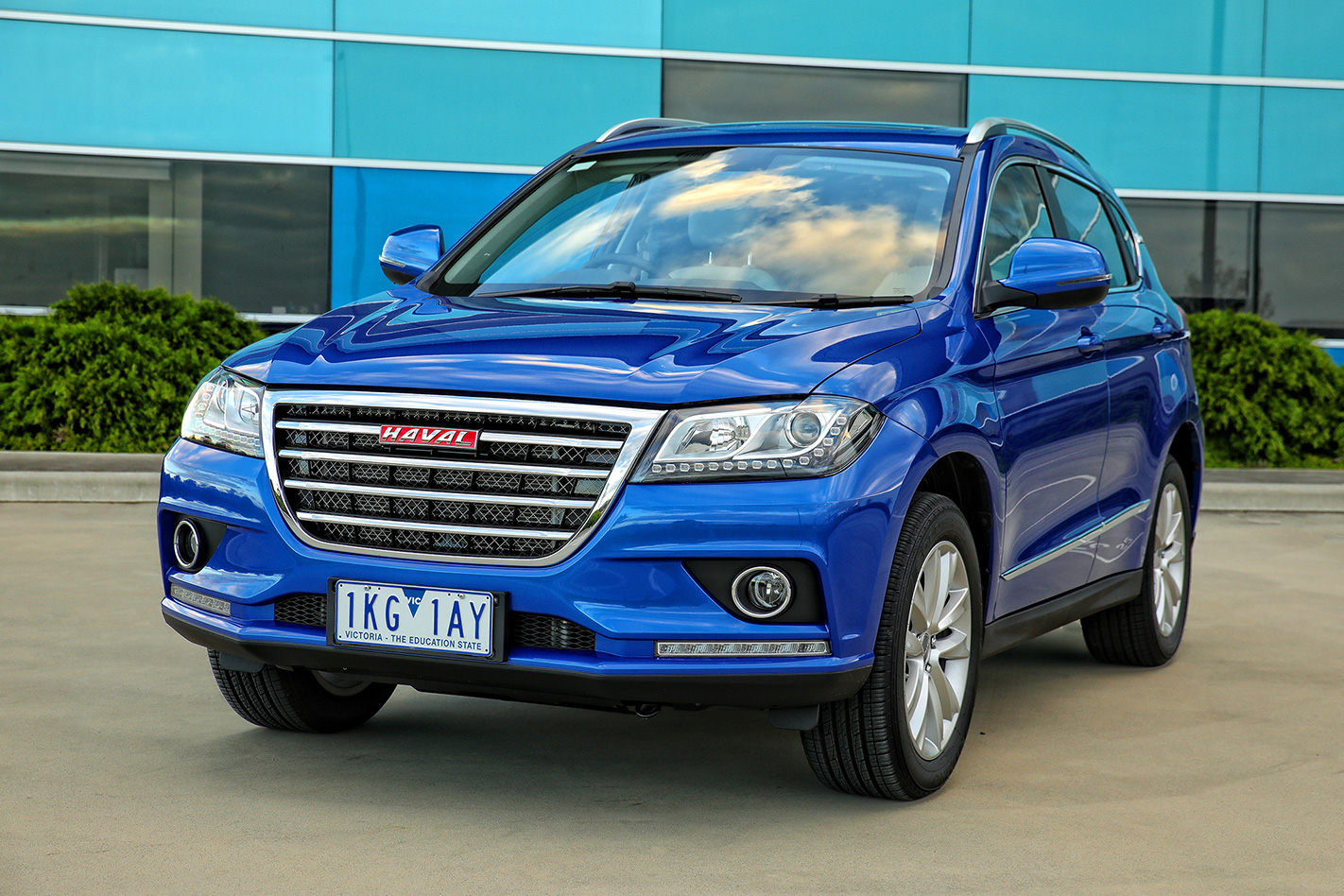
Haval has reduced the prices of both entry-level H2 compact and H6 mid-sized SUVs by $1000, taking the driveaway price to $22,990 and $28,990 respectively.
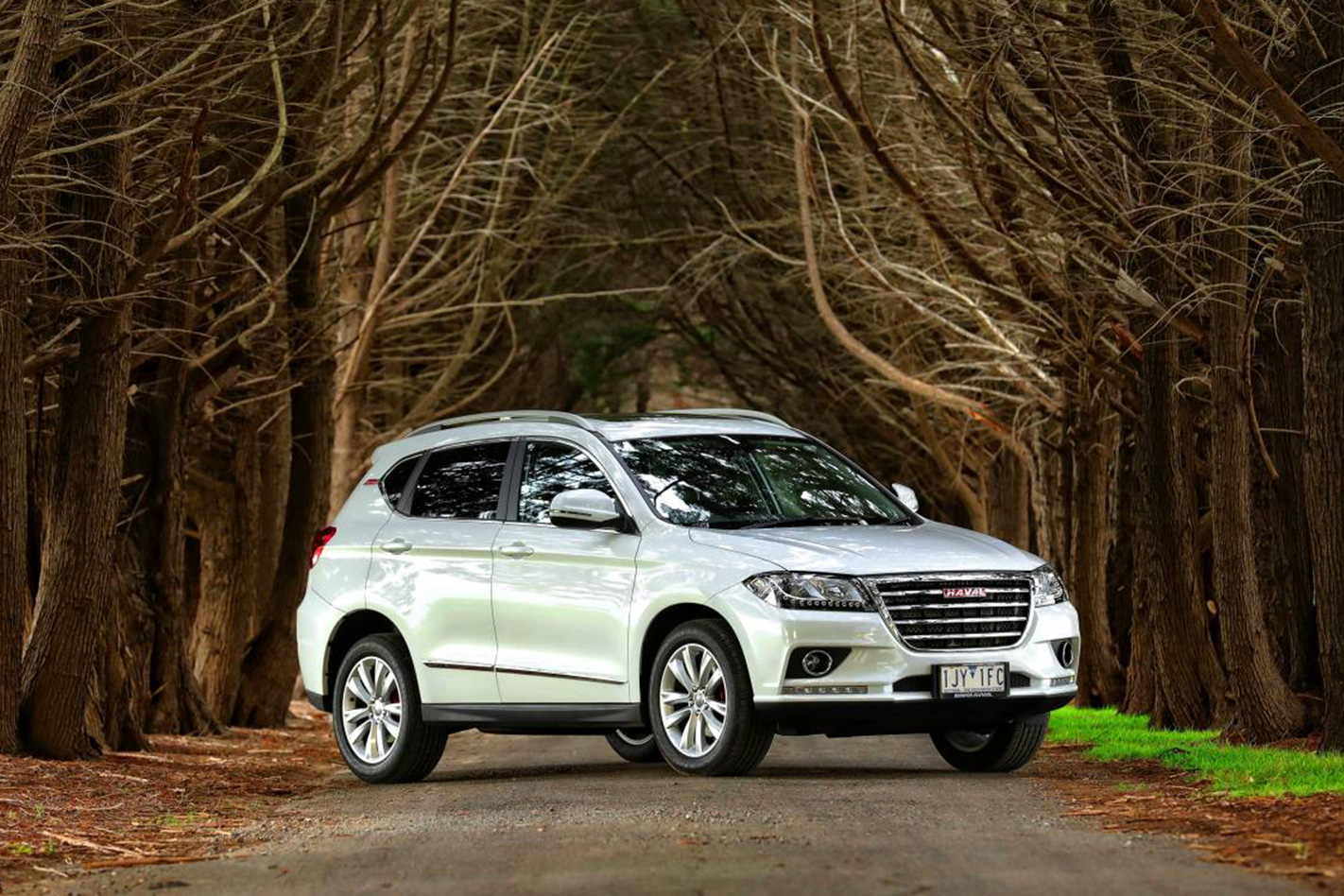
The pricing adjustment has allowed the pair of Chinese high-riders to undercut popular players in their respective segments including the $23,990 Holden Trax and the $29,450 RAV4 from Toyota before on-road costs.
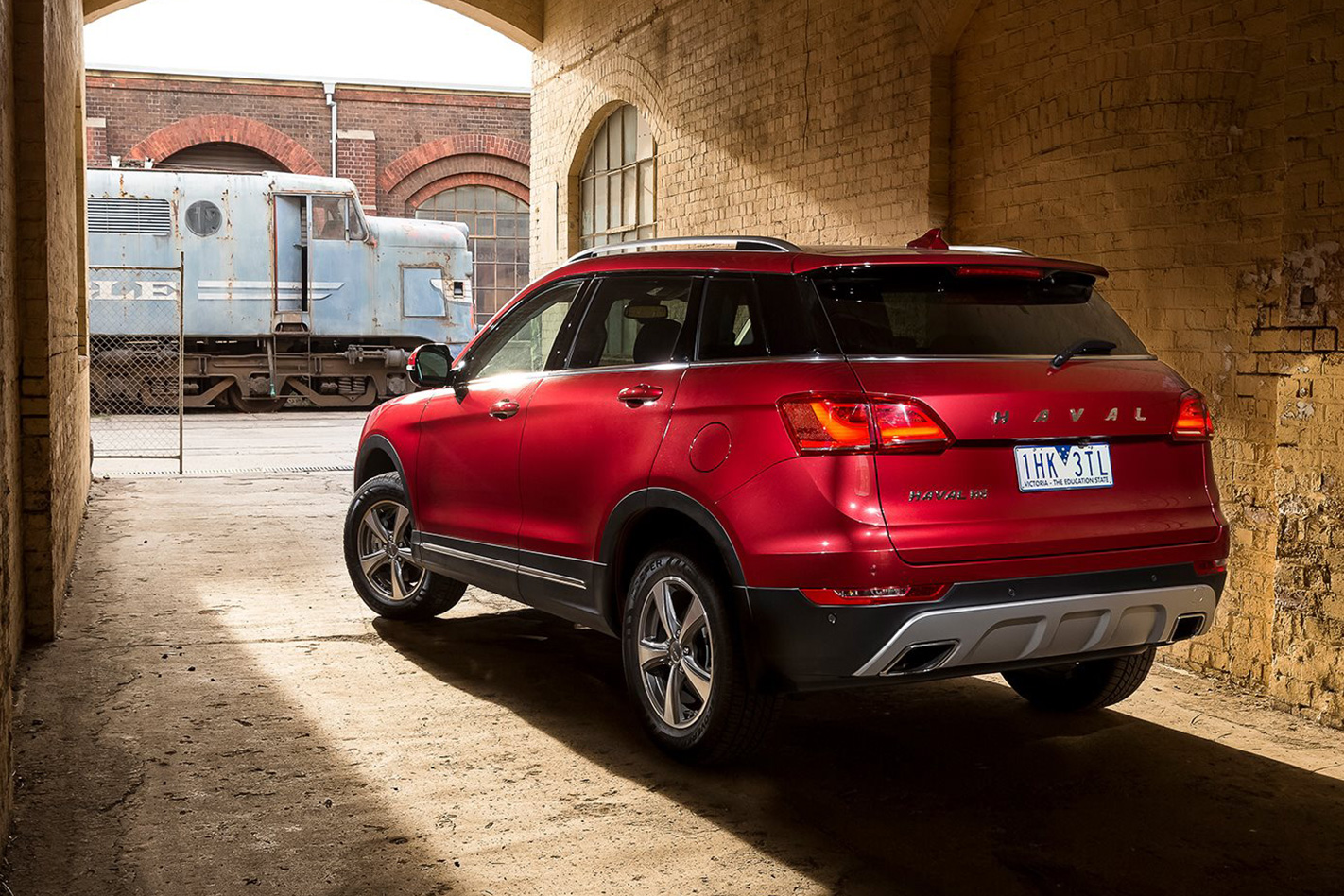
Implemented at the start of the month, Haval says the repositioning will “reinforce its value for money position in Australia” alongside the larger H8 and H9 models with pricing of the bigger siblings unchanged at $38,990 and $41,990.
The now more affordable pair represent the most popular models for the brand in Australia with the smallest H2 finding 95 homes to the end of June this year and 84 registrations for the H6. Overall the company has sold 254 vehicles this year.
Those are meagre pickings in a small SUV market that has moved 72,269 vehicles to the end of last month this year and 109,034 in the mid-sized segment, but Haval is building a new assault on the local market and the pricing restructure is likely a preview to that.
From 2019, the company will be introducing next-generation models rolling on a new platform, packed with modern technology for a demanding Australian audience, and pricing is just one element that Haval will need to get right.
As it stands, the H2 is powered by a 1.5-litre turbo four-cylinder petrol coupled to a six-speed automatic, although an update is expected soon bringing more power (124kW) and an in-house developed seven-speed dual-clutch transmission.
The next-generation H6 (dubbed the H6 Coupe in its native China) is expected to also adopt the 1.5-litre/seven-speed combination, replacing the current 2.0-litre six-speed offering, for greater efficiency.
“With this price repositioning, Haval is confirming our desire to become a serious player in the Australian auto market by delivering incredible value for money to hard working Australians,” said Haval Motors Australia chief operating officer Hidesuke Takesue.
THE prospect of never having to repair or replace a punctured tyre on your car could be less than a year away.
French tyre giant Michelin is close to perfecting a car-friendly version of its Tweel airless radial tyre, with its worldwide head of science and innovation communication, Cyrille Roget, telling Wheels “we may have news next year”.
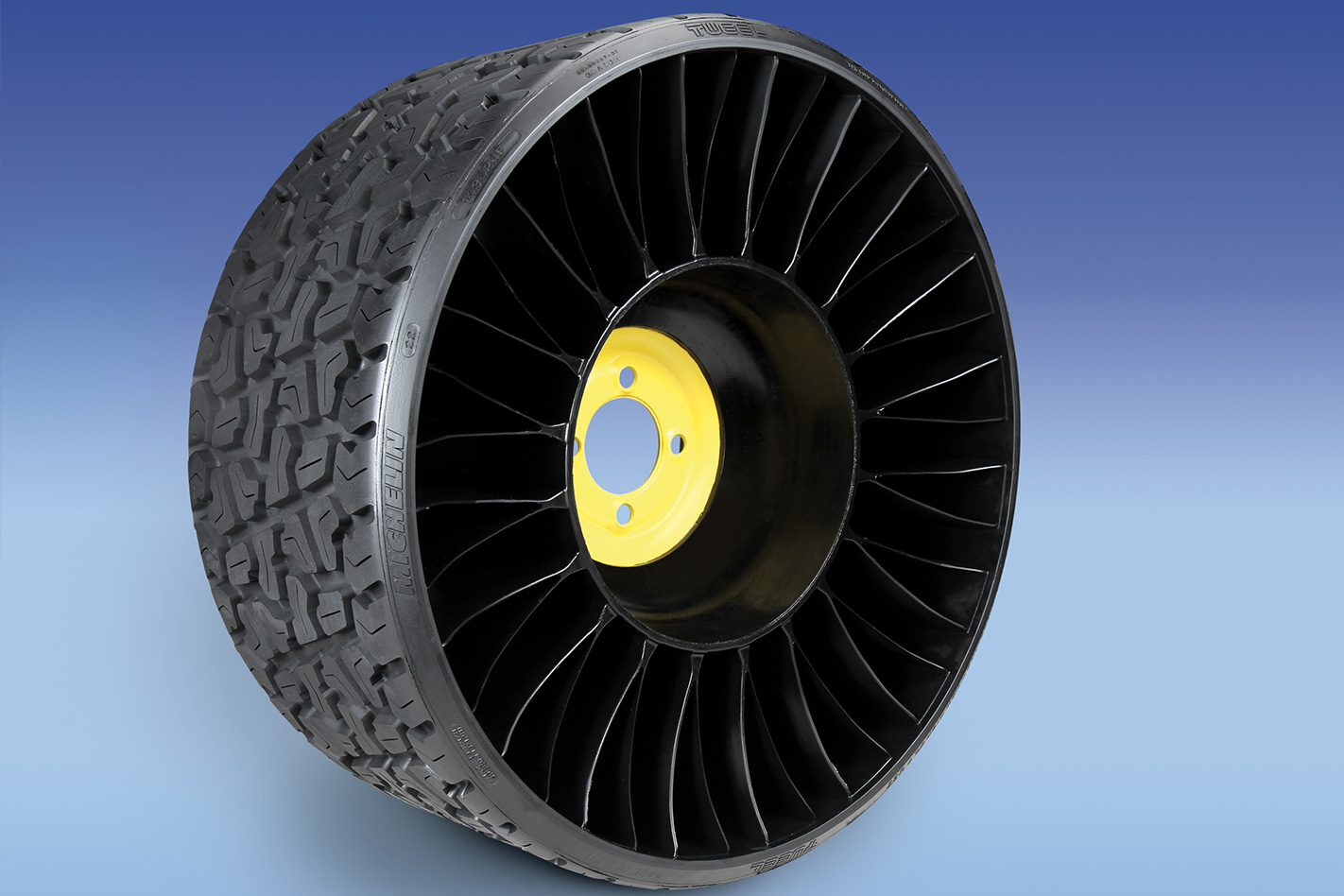
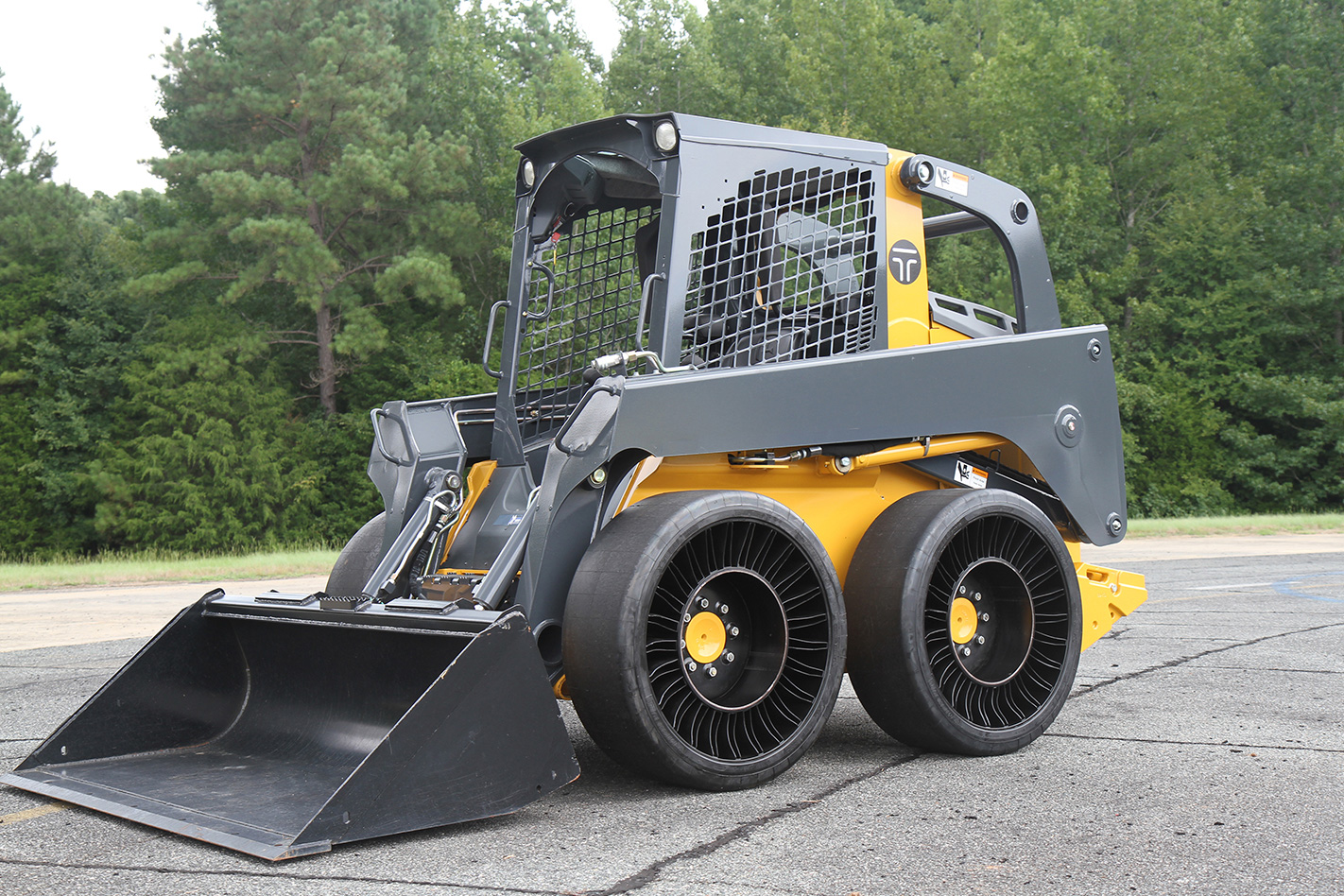
First revealed in 2005, the Tweel has a tread surface connected to a central hub via high-strength, flexible, poly-resin spokes that absorb bumps much like the air in a pneumatic tyre.
Produced in South Carolina, USA, the Tweel’s applications have been limited to low-speed, non-road-going vehicles such as golf carts, ride-on lawn mowers, ATVs and skid-steer loaders.
But, according to Roget, the technology now exists for faster, road-going versions of the Tweel, though other concerns have to be overcome in order for cars to start rolling them, such as ride comfort, noise, size, and excessive rolling resistance.
“We went back to the drawing board and from what we learned we are going to improve the system. This is what we are working on.”
While it’s unclear if the car-friendly Tweel will fit around traditional rims, Roget did say it will look more like a conventional tyre, with a fake tyre wall used to cover the spokes.
Other manufacturers, including Bridgestone, Hankook and even Toyota are also working on airless tyres, with the Japanese carmaker being the only one to offer an ETA for passenger cars, which it says will be 2020.
Like Michelin, the Toyota tyre, which is being developed in conjunction with Sumitomo Rubber and was revealed on the hydrogen-powered Fine Riding Concept at the 2017 Tokyo Motor Show, has also had to overcome issues, including weight and high rolling resistance.
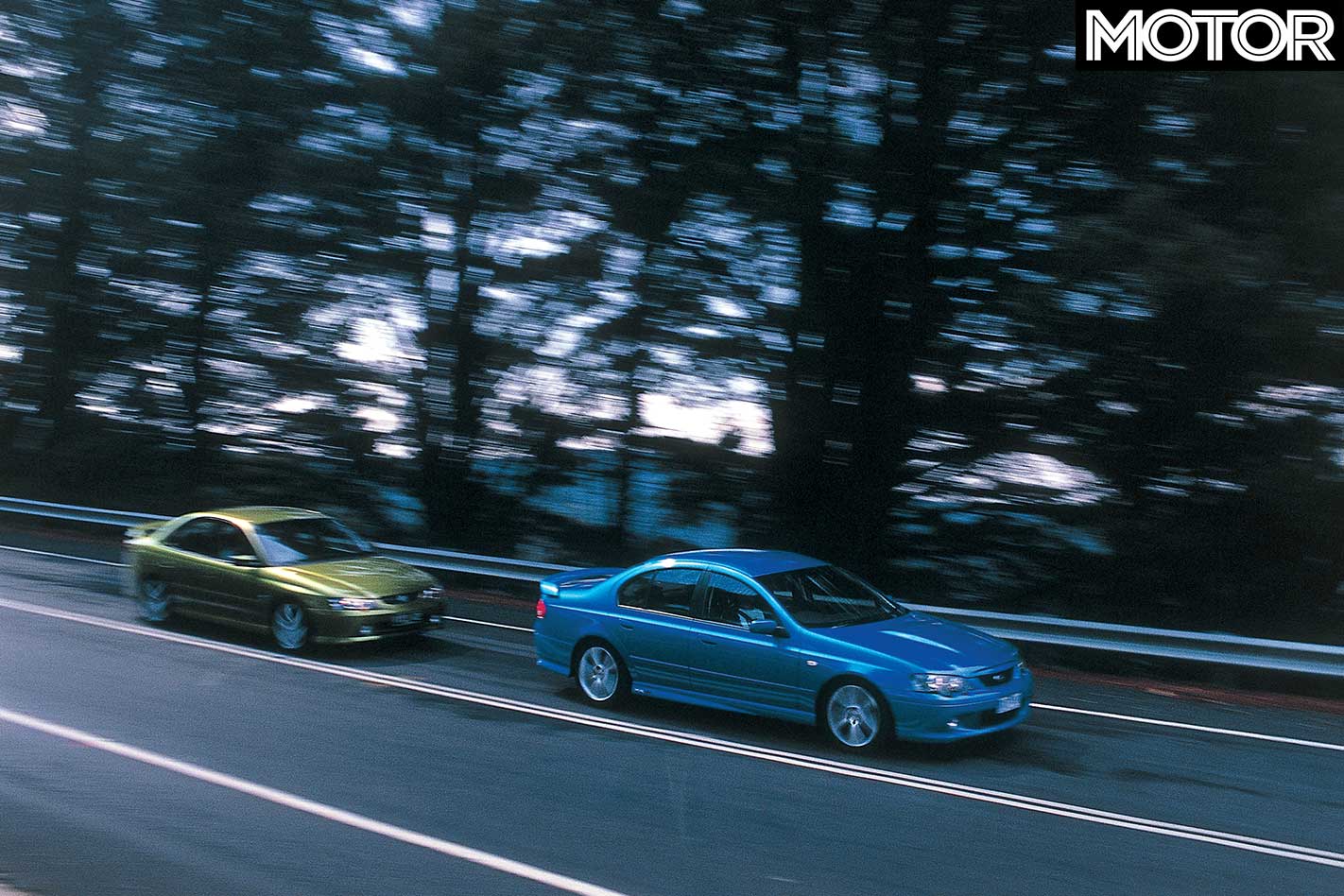
This should be about whirlwinds sown and whirlwinds reaped. Of holistic engineering versus a thumping engine and blistering straight-line sprinting ability. Of the burrs that chewed at Ford’s flesh with every SS Commodore that handed out a traffic light pasting.
This feature was originally published in MOTOR’s May 2003 issue
The numbers tell the story of a 260kW Ford V8 beating up a 235kW Commodore. Of it venting years of Ford angst in a public deconstruction of everything the hottest Holden stands for. But it isn’t. It isn’t because the XR8 doesn’t. It can’t. Not in a straight line, anyway, and, for too many people, that’s the only important bit.
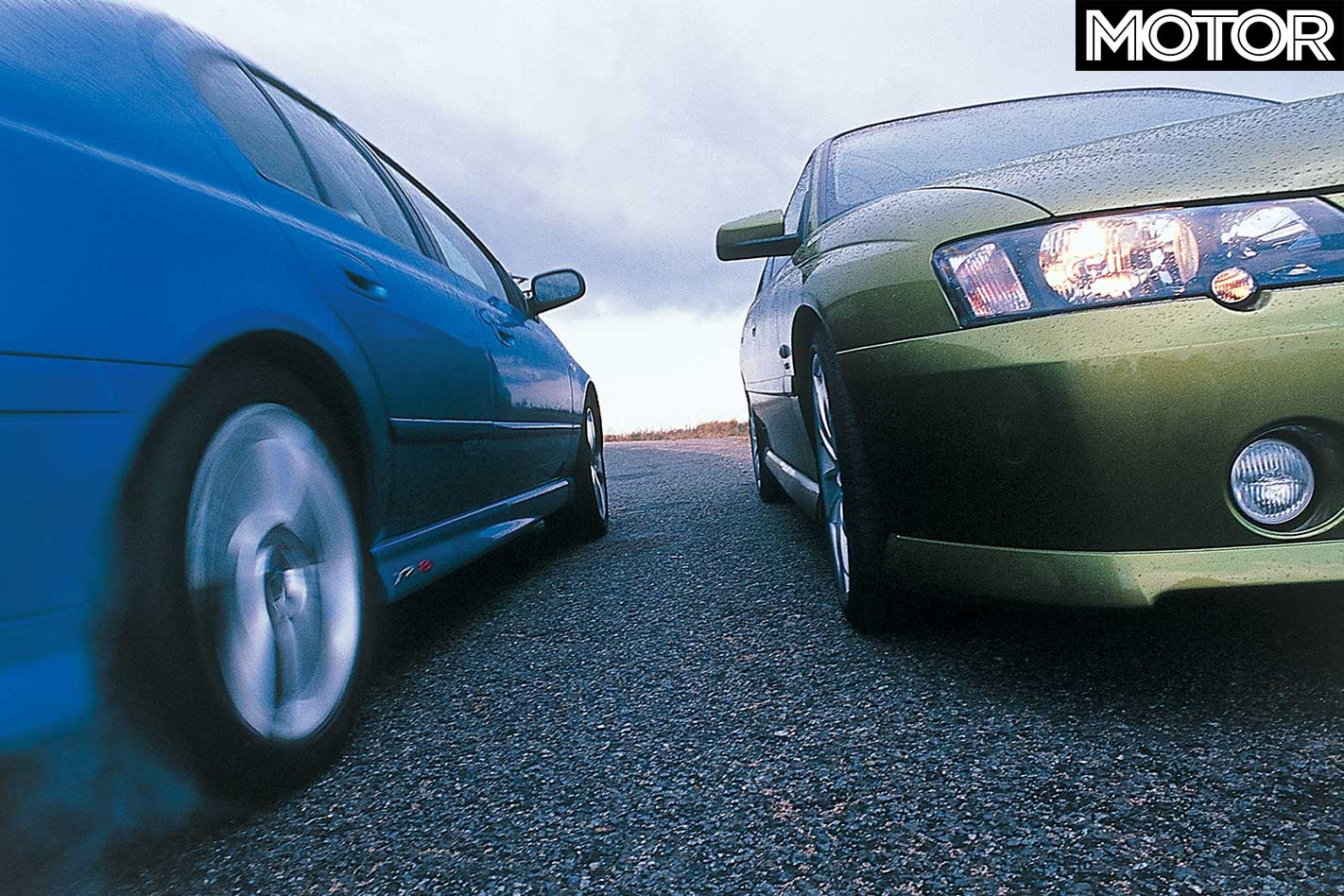
It is, though, the whole story. And that’s the way it needs to be told. Without the whole story, the raw acceleration numbers on the XR8 are a staggering disappointment. After all the development, after all the promise and after all the years of suffering, it’s just not fast enough. It gets, quite simply, belted by its force-fed little brother, and that’s before the bully boy Holden V8 starts getting stroppy.
Fourteen-four doesn’t ring anybody’s bell these days. Sad, isn’t it? Wasn’t that long ago it would have been regarded as a pretty grown-up number from a four door sedan. But in a world where the established competition is capable of high thirteens, it doesn’t have the edge the pre-event hype promised.
Still, we’ll wait until we can get a properly run-in and freed-up XR8 before we put the official nail into its acceleration coffin. That’s not to say the long-stroke 5.4-litre motor is an utter failure. It’d be a bloody hard marker who speared it just because it failed to set new straight-line benchmarks.
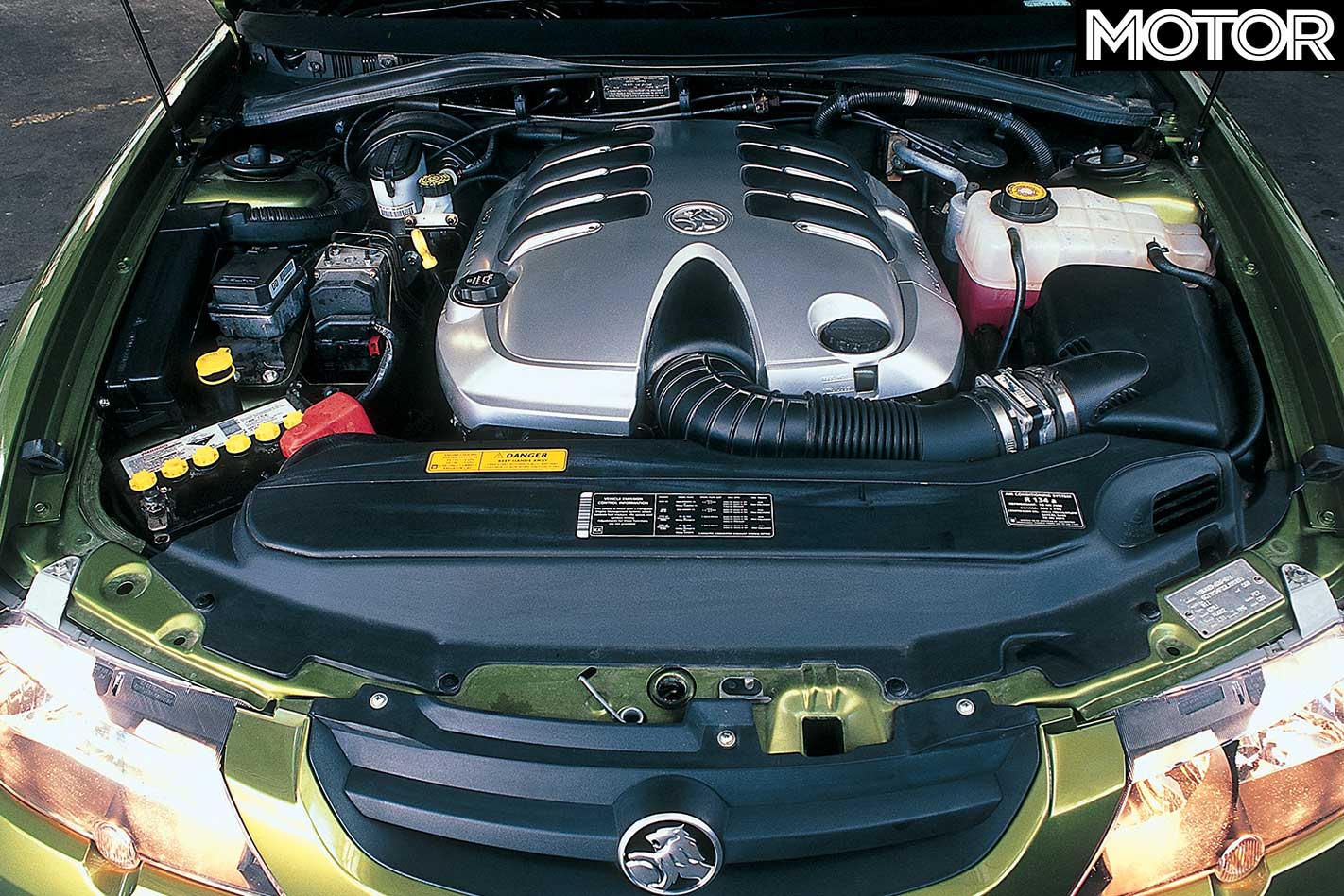
The flipside is that the XR8 has, without doubt, the most sophisticated manner of any V8 engine you can buy in a locally-built car. The noise it produces is shamelessly fabulous all the way from idle – and it’s this noise that goes a long way towards making up for its relative lack of punch.
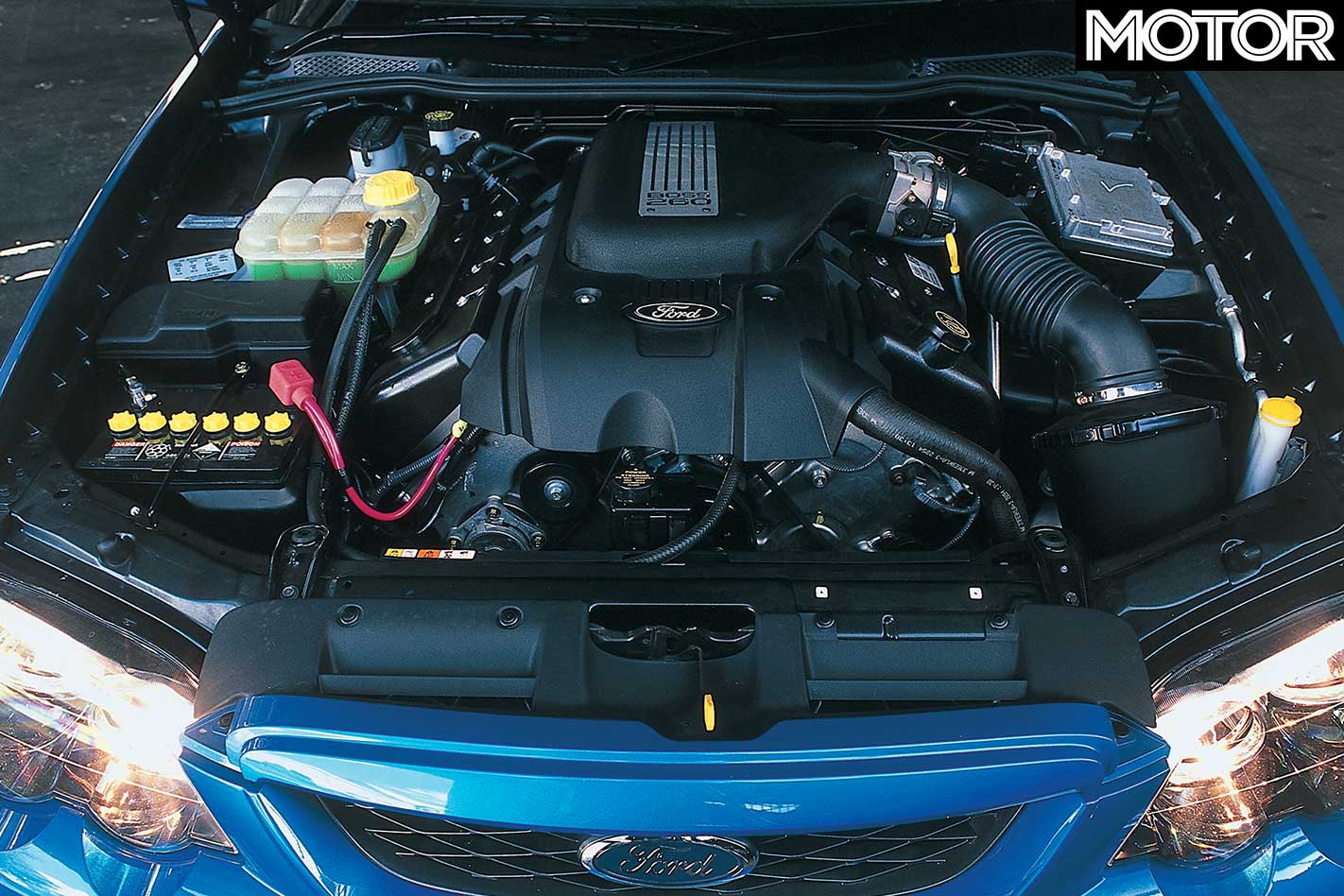
It doesn’t just sound good, it feels good. To prove its smoothness, the XR8 carries not a skerrick of under-bonnet vibration damping. Because it doesn’t need under-bonnet damping. Damping kills unwanted tremors, and the XR8 doesn’t have any to kill. So seamless and sophisticated is the V8’s battle song that it doesn’t deliver coarseness, not at any revs, nor at any throttle openings.
A lack of punch is not a millstone the Commodore SS has hanging around its neck – certainly not when it’s proven capable of hurling itself across the quarter mile in 13.9 seconds. Holden denies we’ve ever been given, ahem, warmer jobbies, but we’ve been witness to Gen III V8 performances that made us wonder. And 13.9 is one of those.
Of itself, that isn’t such the huge concern (after all, if Holden can make it happen, so can you). What’s really curious is our inability to make any 260kW HSV sedan (which are shorter geared, remember) run that hard.
Like force-fed Subaru flat fours, the Gen III has a reputation for being very sensitive to run-in discipline, (not to mention oil consumption) and we’ve yet to drive enough 5.4 Fords to pick a trend there. The Holdens don’t have a particular reputation for any aural culture, nor is there anything much to report below about 4000 revs.
Truth is, though, that the numbers it pulls mean most people don’t care about the downside. Holden (and HSV) has been killing itself trying to address the noise issue, freely admitting the Blue Oval boys have it way better sussed than they do.
While the theoretically less powerful motor here is the drag strip killer, that’s not true in daily life.
The Ford still doesn’t punch from low revs like anybody around here had been expecting (especially looking at its stroke length), but that’s not exactly an SS forte either. Unlike the Holden, though, the XR8 lacks any significant arrival point in the rev range. It just does the compound interest caper, silkily gathering and gathering its pace until the unexpected arrival of the electronic cutout.
The engine sings beautifully, richly and deeply, stronger and louder, gradually lifting everything, everywhere with each single digit rise in speed until it just softly stops. But it engages you in no histrionics, nor startling “I’m here, let’s play” conversations.
Not so the SS. Under 4000 rpm there might not be a lot going on – a perception made all the more confronting by a foolishly long final drive ratio – but once it passes into the tacho’s angry country, it starts to seriously crank.
And it lets you know about it. An SS Commodore hitting its straps isn’t quite in STi turbo rush territory, but it isn’t far off. It starts to snarl in a metallic, edgy and slightly coarse bellow. It starts to push, right between the shoulder blades. It starts to strain the tractive potential of the rear rubber. Crack it up to its hard cut-out and it’ll be happy to give you everything its got and it’ll beg you to do it again.
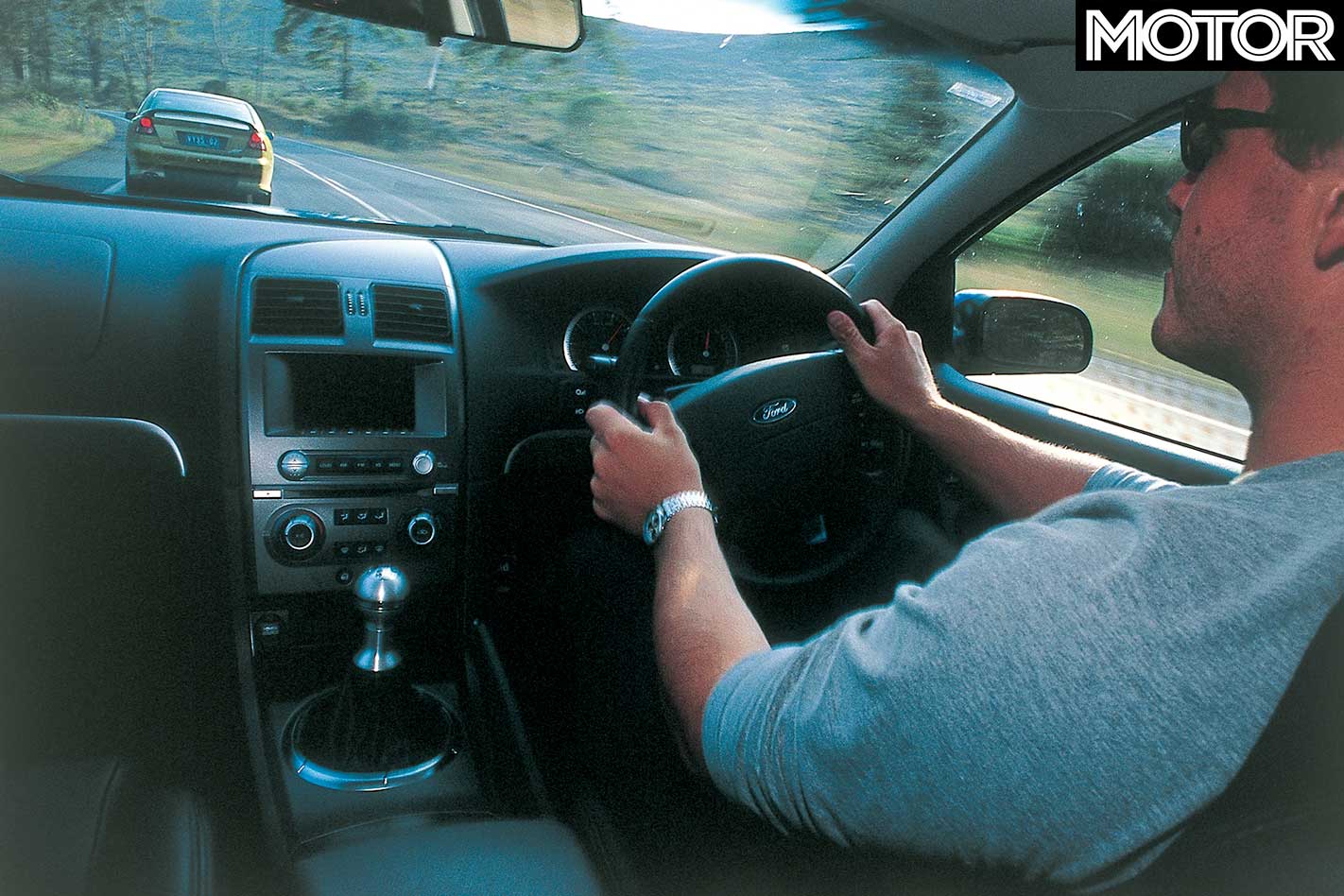
The XR8 isn’t without its driveline victories, though, and its gearbox is a delight by comparison. The Tremec is the gearbox the XR6 Turbo should have had – may have won PCOTY with – though its inclusion in the lighter, faster six-pot might well have rendered the XR8 redundant, cramped between the baby brother and the brawnier GT.
Light, direct, clinically accurate and carrying a satisfyingly mechanical feel, the ’box is a clear winner over Holden’s five-speed six speeder.
We’ve said it before and we’ll say it again: if the shorter HSV final drive ratios are too tall, why does Holden persist with a set of nonsense cogs that has a 5.7-litre V8 unable to pull top gear? It’s a bloody insult to bang back a cog to climb slight rises at highway speeds while you’re nursing an engine of this capacity.
We’d pillory a four-pot for the same thing, except none of ’em do it much any more. Just big V8s.
Even at 140 km/h, it’s only pulling 3000rpm in fifth and 4000 in fourth. At the same speed, the XR8’s at 2500 in fifth and 3750 in fourth, yet it’s not as demonstrably off the boil at low revs. Still, neither car is poetic about top gear.
In terms of outright speed, it isn’t just on point-and-squirt that the Holden has an advantage. For all its talk of overwhelming chassis development, of new rear suspension and revised, sharper steering, what we’ve got on our hands is yet another example of a fast Falcon failing to deliver point-to-point speed – and it almost seems to be a philosophical approach rather than a mechanical one.
Whatever, though, the point is: the thing simply cannot carry SS levels of pace across the face of a corner.
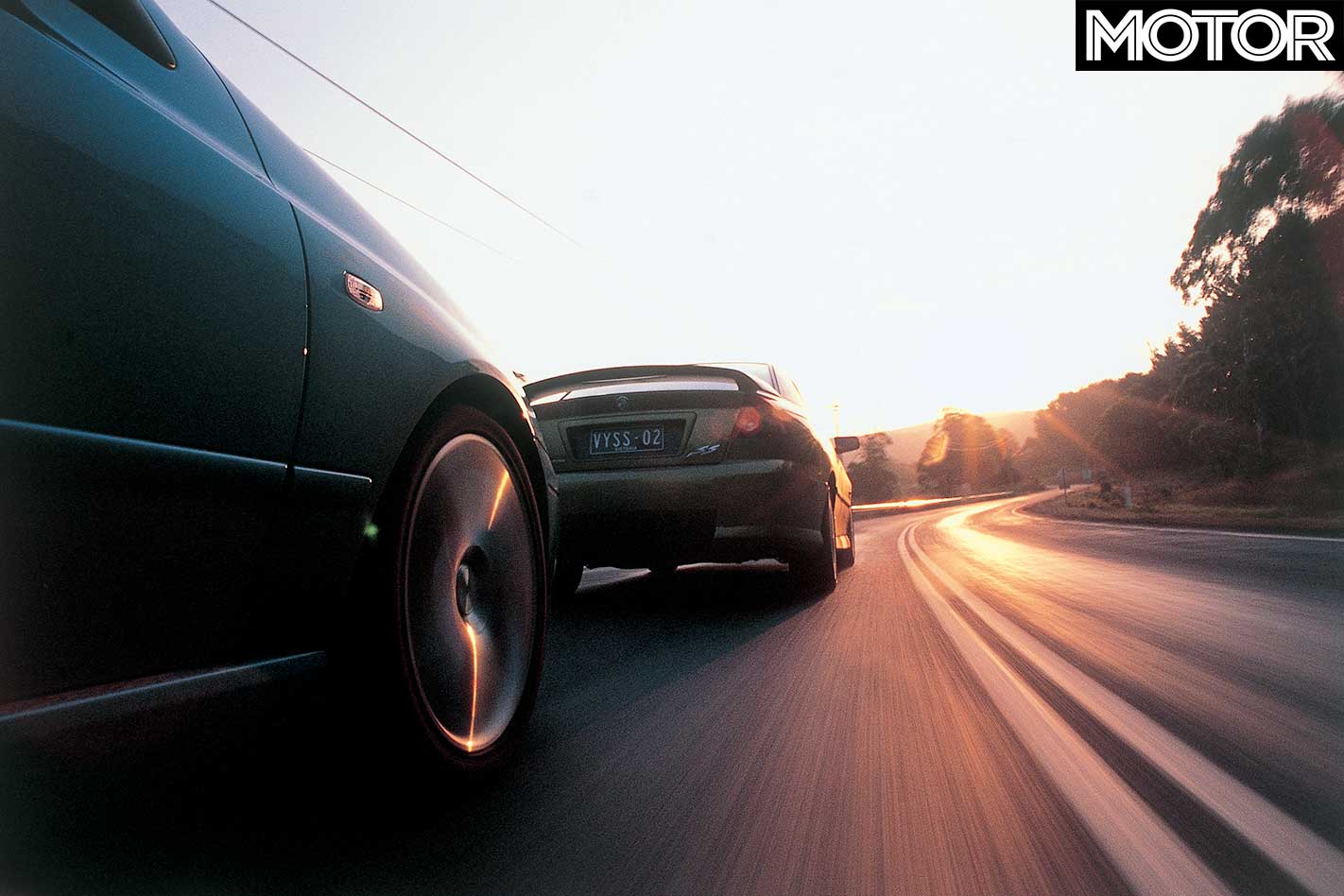
The Commodore sits flatter, rolls less and fires out of corners using more of its herbs in the preferred manner. Yes, it’s uninspiring and a bit uncouth in the way it leans heavily and annoyingly on its outside front rubber, but it still hustles through second and third gear corners with demonstrably more pace than the big Ford.
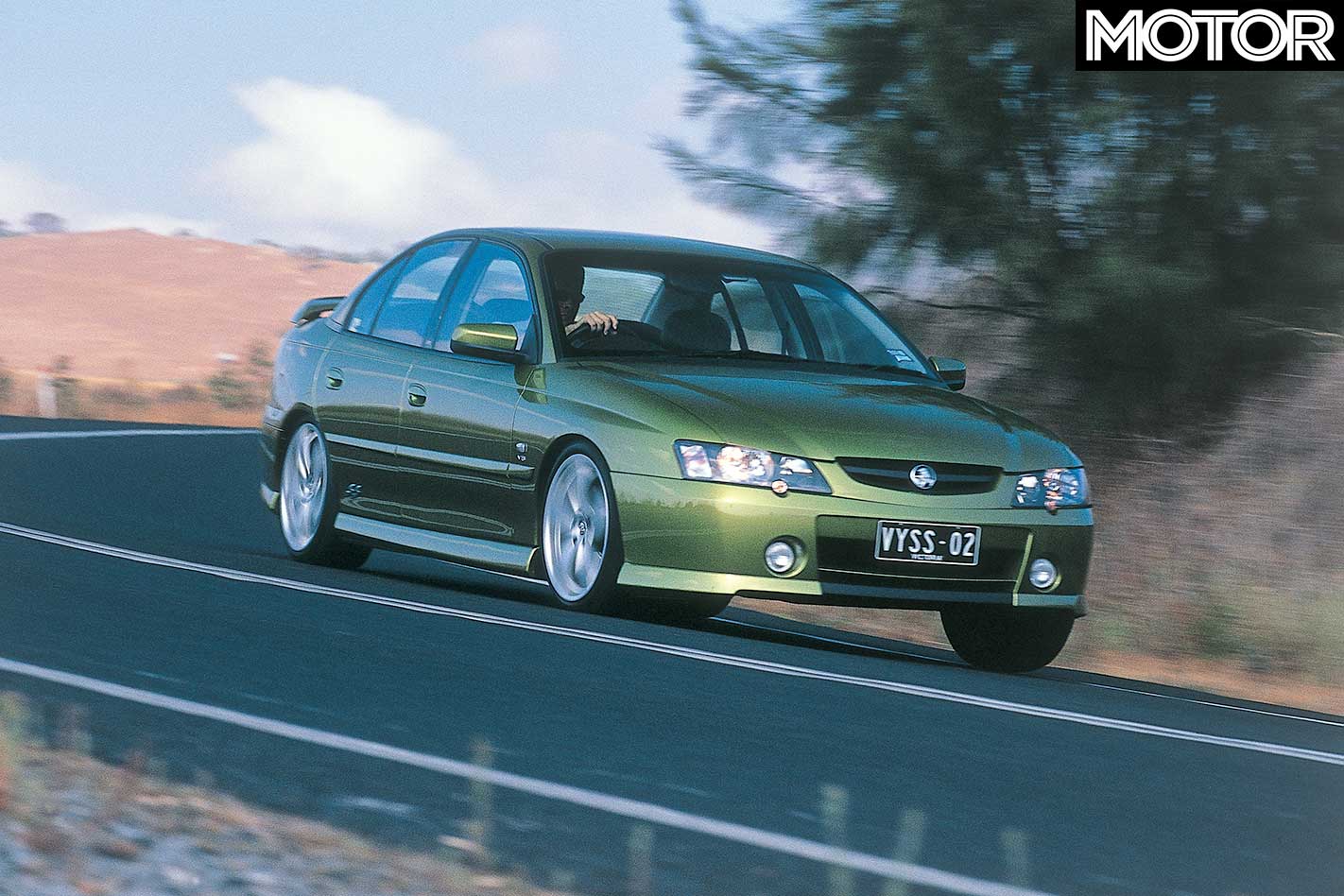
While we have a track record of criticising the Holden steering feel (and slow rack), its meatier weighting is far preferable to the Falcon’s lightness when you’re getting stuck into it. The prospect of Holden weighting and Ford rack speed is an appealing one…
Still, while you’ll outrun the XR8 in an SS, that doesn’t mean the Holden’s a better gadget. It generates its mid-corner speed through a combination of stiff suspension and tyre grip, and you can read how hard somebody’s been going by the erosion levels on the shoulders of the front boots.
The chassis feels quite low-rent and its balance is inherently far less precise as well. Rip it hard and it feels like it’s got open-wheeler levels of suspension travel. You can provoke the back end into trickery, but its base stance is one of understeer until maybe the last 20 per cent of a corner.
The first thing you notice after jumping out of the Ford is the Holden’s appalling ride quality over broken ground. It might generate greater grip on the 18-inchers, but you have to wonder whether it’s really worth the pain because, over any imperfect surface, it feels less sophisticated than Jethro Clampett.
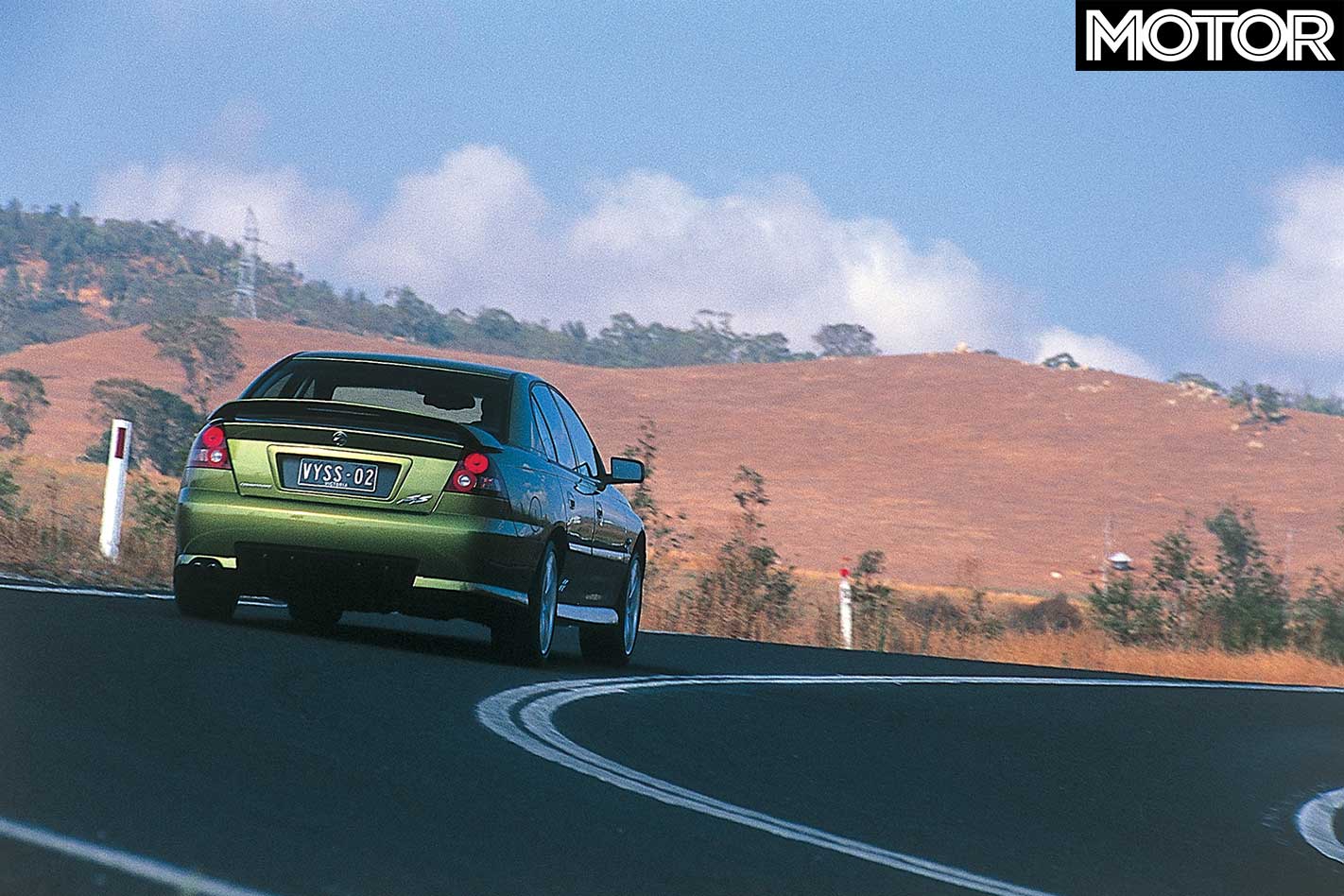
The payoff for its speed is the way it crashes through sharp-edged hits and its minimal bump absorption on even low amplitude, square-edged hits. It also transfers buckets of suspension noise back into the cabin, especially from the rear. Broken ground is a significant SS weakness and, hey, this is an Australian performance car for chrissakes!
For all of their faults, the AU XRs and T-Series cars all had far better power-down out of corners than the rival Holdens and HSVs. It’s clear that the arrival of Ford’s much-vaunted Control Blade rear set up (in place of the intricate, more expensive and heavier AU IRS) has seen the dilution of its ability to get drive to the bitumen under the pressure of pace.
The XR8 may not be as quick, but it’s more fun. It’s an enjoyable exercise in throttle control. Push it quickly and it’ll flick to gentle oversteer on the exit of third and even fourth gear corners.
It rolls more than the SS (a perception added to by Ford planting the seat above the car’s roll centre) and it’s steering is very direct, but it’s so light it’s not funny. You’ll probably never drive anything where you’ll have to concentrate so hard on taking the weight out of our hands as you tip it into corners.
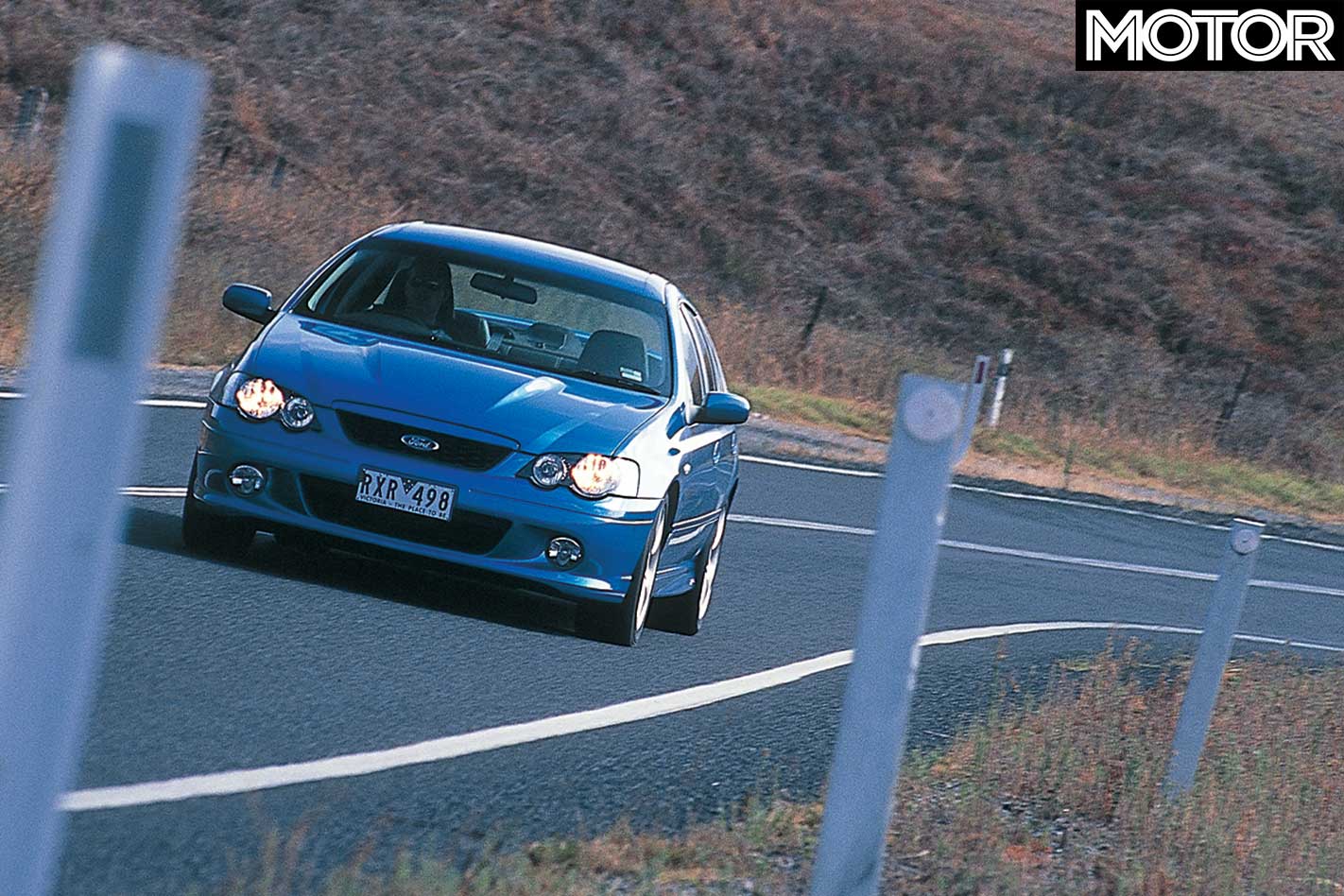
Tense up to cope with the additional pace and you can unwittingly dial in more turn-in bite (or correction) than you’re looking for, and that can upset the doings. It’s like an XR6T, but it doesn’t quite have the turbo’s chassis balance.
Still, while it’s ultimate grip levels are lower than the SS, it’s easier to drive at its limits once you’ve accounted for its steering idiosyncrasies – and as a bonus it’s more entertaining to adjust its stance mid-corner, especially in second and third gear corners.
If it’s pushing, it loves to tuck the snout back to the apex on an ease of the throttle. It likes to gently flick to oversteer at the end of every hard cornering performance, like an artist signing off with a flourish.
It can cheerily be throttle-steered with a full turn of oppy lock. It’ll let you flick it from under to oversteer or back the other way, and it’s equally happy if you want to take the fast, straight line.
It’s chassis keeps its rear tyres working at all times and wears the four boots more evenly than Holden. Run the Commodore hard for a half hour burst and you’ll have ground the shoulders off the front tyres to the point of laugh-or-cry. The Ford, meanwhile, will have nary a scuff as evidence of playtime.
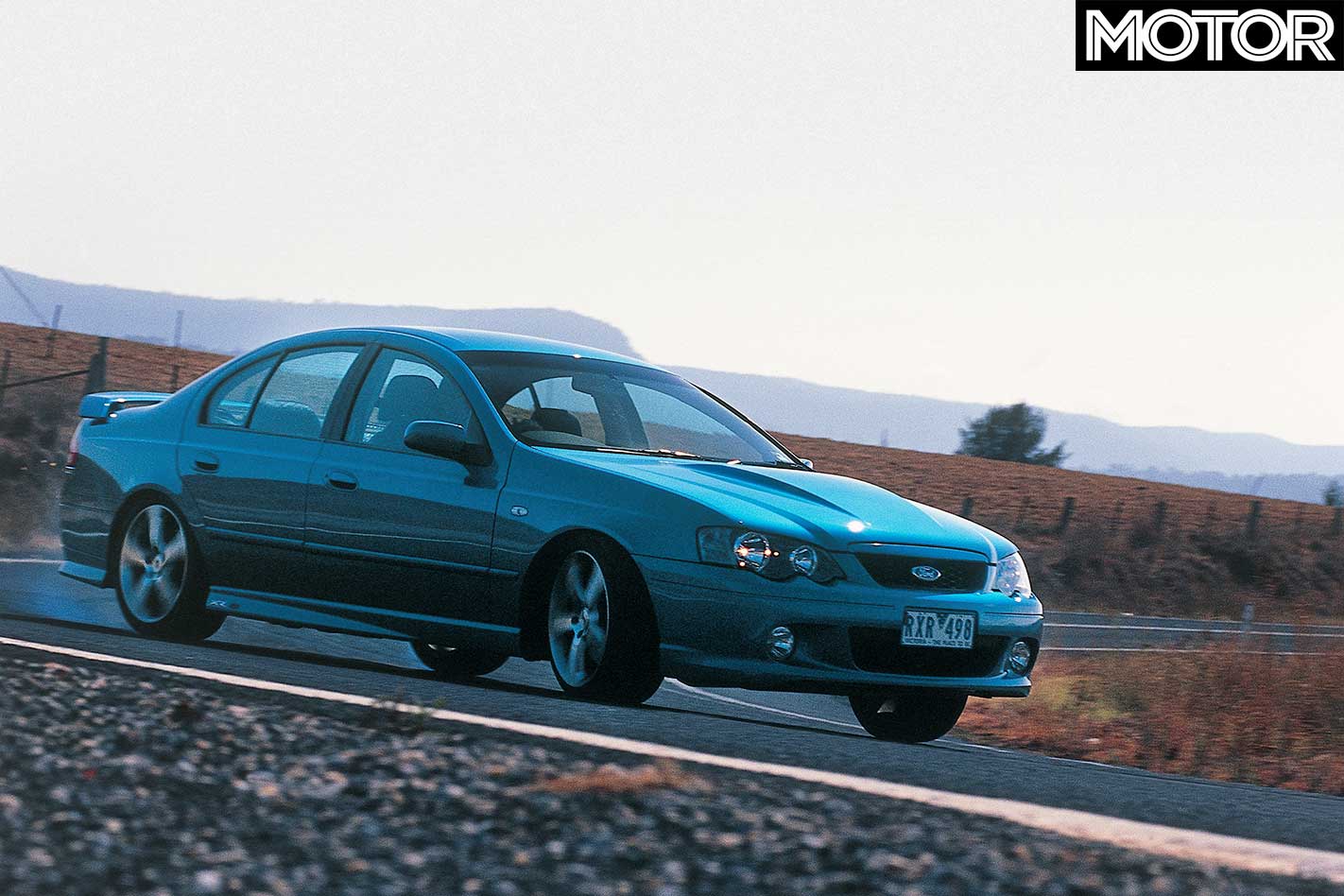
While lacking SS ultimate corner speed, the XR8 actually brings its rear suspension into play from the moment of turn-in. Its ride is far better on its 18s than the SS and it’s quiet in the suspension area as well. It lives happily in broken country where the Holden feels like it just wants to go home and rest its footsore underpinnings.
The Commodore’s brakes are far better than they’ve been in the past, as well. It’s a good thing, too, given the kind of momentum the SS is capable of generating these days. Still, they don’t have the awesome power of the XR8’s optional premium package, nor the Ford’s ability to adjust the car’s line mid-corner by a simple tap now and again.
We’ve never been delirious about the Holden’s pedal layout, but it’s better than the Ford’s, which now sees everything offset about one pedal further right than the steering wheel would indicate.
The Falcon interior can irritate and impress in equal measure. It’s a clean, classy package, but why significant buttons are so thoroughly hidden by the steering wheel spokes is anybody’s guess.
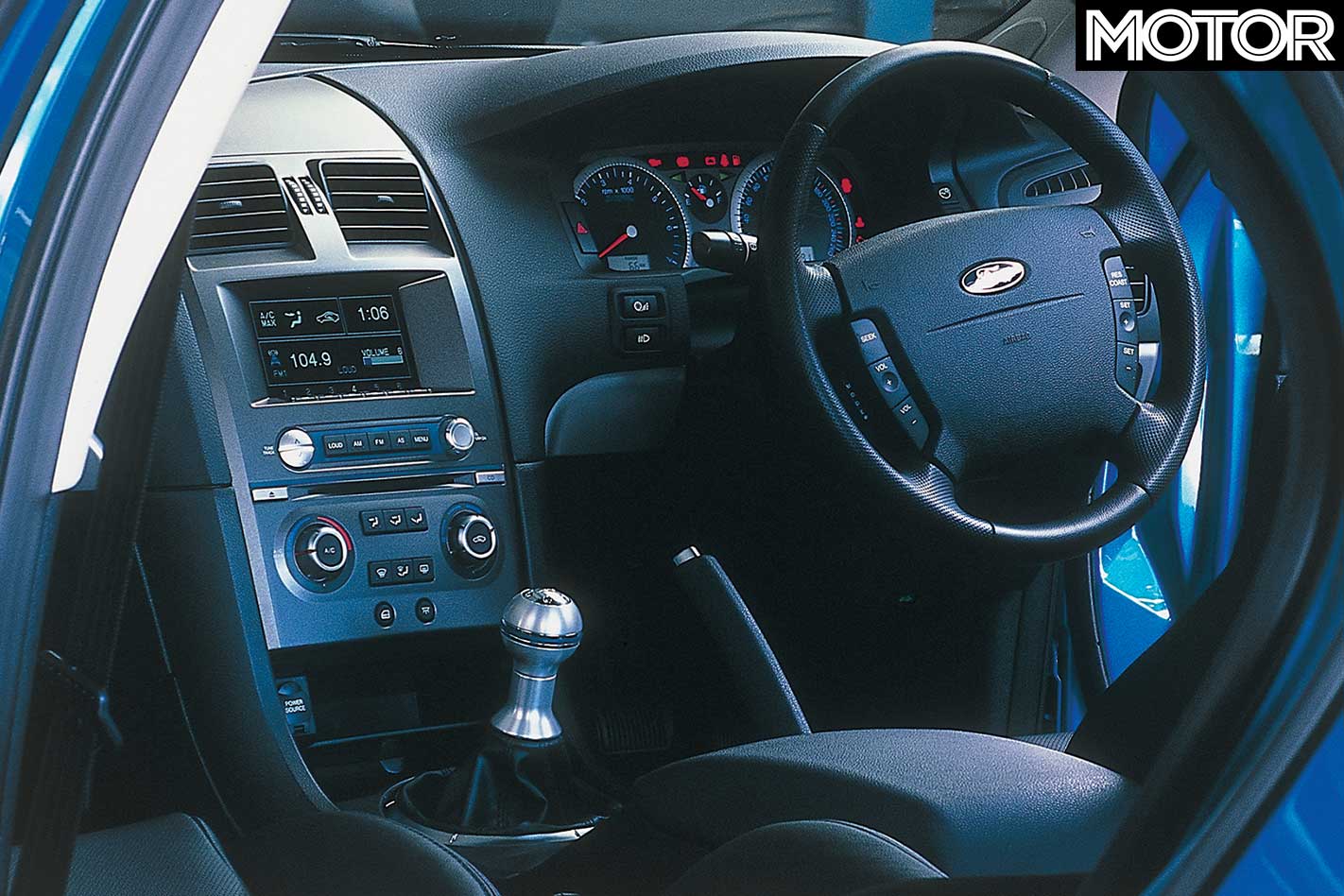
The seats, as well, give away the XR8’s newer, calmer outlook on life. They’re nicely cushioned and stylishly crafted, but for the heavy work (especially with its ultra-light steering and no footrest to brace yourself on) it could give you more lateral support.
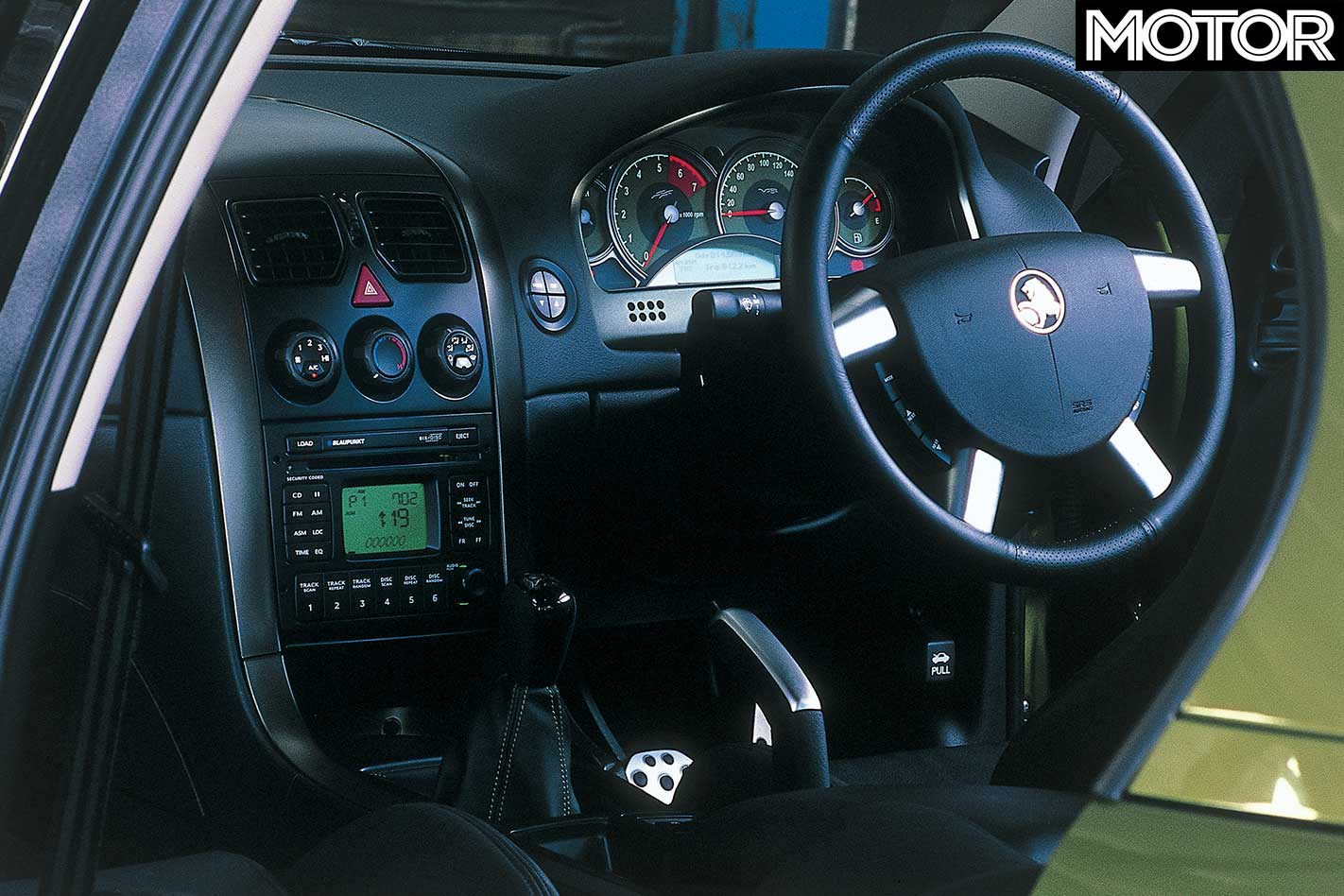
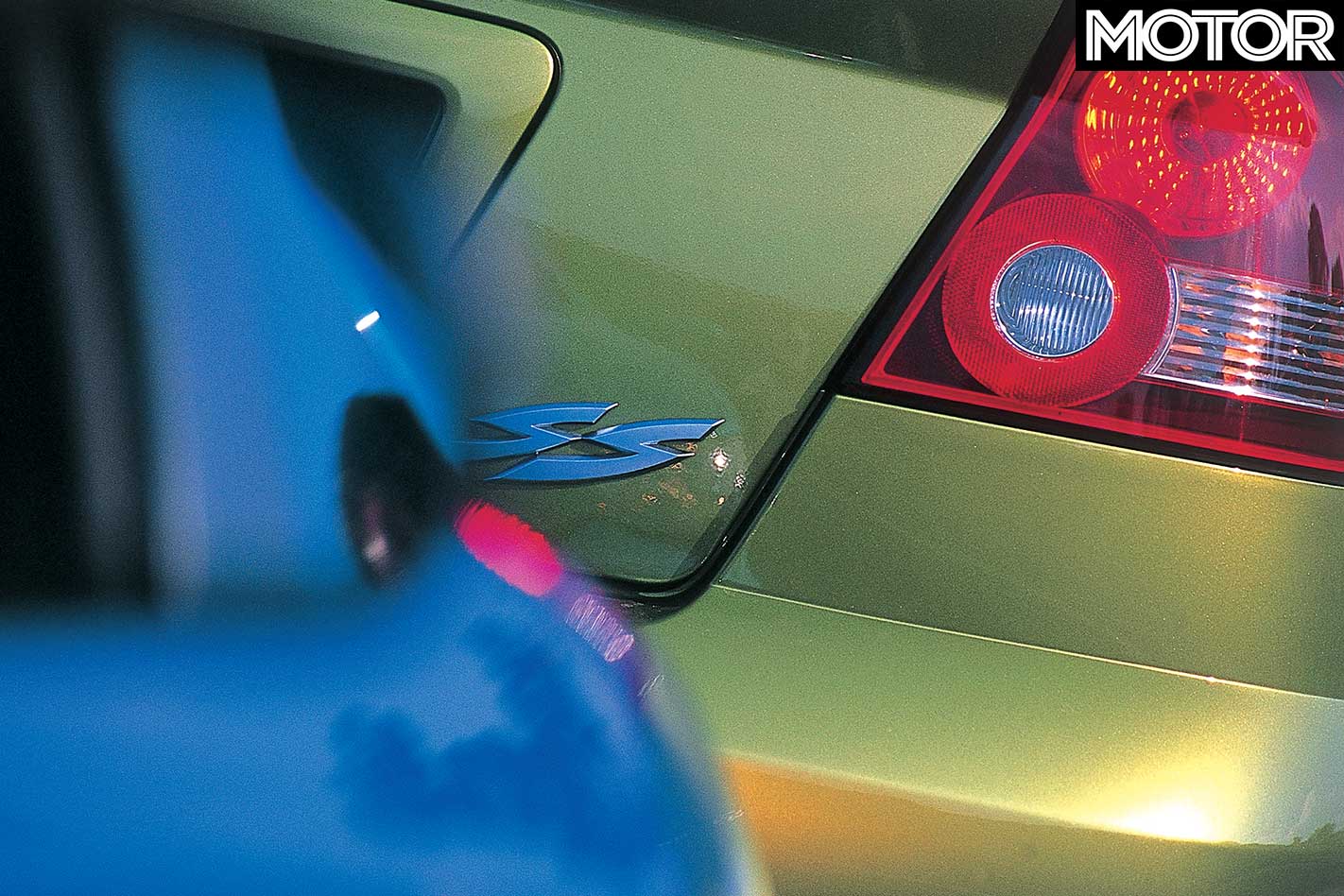
The Holden has the pick of the chairs, with greater lateral support they are, for their target market, even more stylish, with the SS logo embroidered in the body colour, as opposed the XR8’s more garish red.
Even if its steering spokes are irritatingly hard on thumbs, the Commodores’ is an impressive interior upgrade. Green layoffs in the leather stitching and the similar tinges in the plastics and dials show thorough design detail and everything works pretty well, even if it makes the Falcon’s panel gaps look vacuum-sealed by comparison.
Which may highlight why these two cars don’t seem like head-to-head contenders any more. The SS has become, if anything, more focused on grabbing all the speed it can and to hell with comfort, while the XR8 is now a grown-up’s idea of a hot bent eight.
That’s why it’s difficult to pick a winner. Clearly, if it’s speed you’re after, the SS is your man. It’s simply faster. Faster in a straight line, faster through corners, faster to shred the tyres.
The XR8 is more sophisticated. It rides eerily well, even when you’re belting the pickhandles out of it. It sounds fantastic. It’s smooth. It’s balanced. It is, in all probability, fast enough. But a lot of people will be left disappointed by it. They’ve been waiting for something with more raw meat and with less emphasis on the genteel rules of comportment.
For all that, it remains that the XR8 is clearly the better car. It’s just not the fastest car.
Bumsteer Is it just us, or do Holden/HSV need to pump it up?
Holden doesn’t have a problem with its power steering systems. In fact, neither Holden nor the harder, faster products from across town at HSV have any steering issues. We get told this every time we ask – and we’ve been forced to ask a lot.
We won’t go right back, but in the last three years alone, we had to ask after the 2001 Bang For Your Bucks when an HSV GTS power steering pump detonated after two flying laps at Phillip Island.
At Performance Car Of The Year last year, we had our first Holden failure. At Winton, a CV8 Monaro simultaneously popped the power steering cap off and spat its fluid out through its hubs.
At BFYB half a year ago, an HSV GTO popped its pump at Wakefield Park. Fortunately, the Goulburn Holden dealer pinched a Senator’s pump and bunged it into our sick GTO. Beauty, repaired HSV. Except it didn’t stay that way and, after half a day on a very mild road course, the second pump was dying, too.
Fast forward to PCOTY ’03 and, surprise, surprise, the HSV GTS cancelled out its strong early showing by dropping its pump at Winton, pouring fluid all over the headers and smoking like a barby. An HSV man came up from Melbourne to fix it.
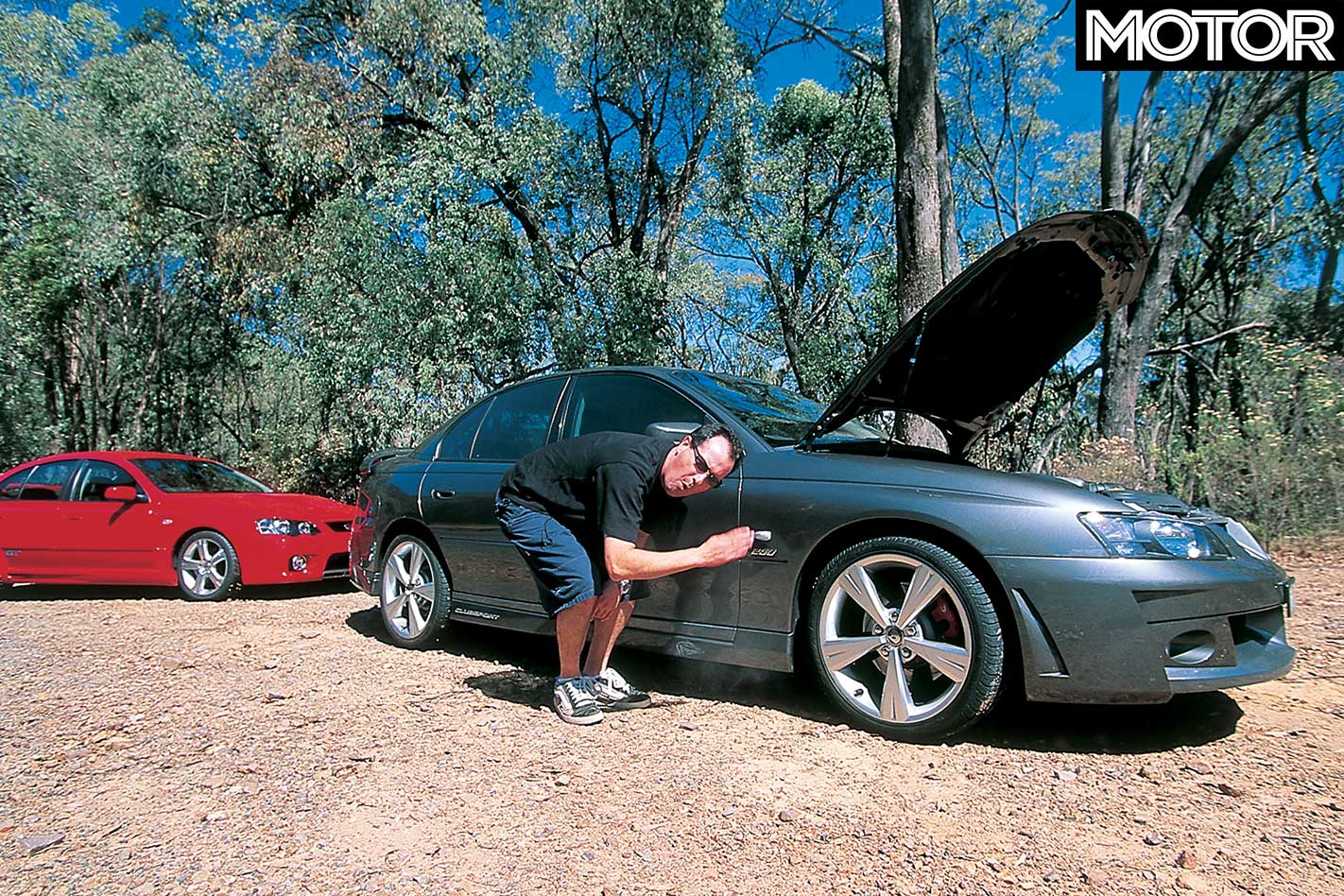
Then we found something new. Two fast Holdens, two different cities, same problem. First, near Lithgow, the SS went bang, splitting the small hose that runs out of the steering rack and into the cooler at the right-hand side of the engine bay.
Then, a week later, Hawley had the HSV ClubSport let go in identical fashion. Fortunately, the dealers in Lithgow and Mansfield got them going again, but fair dinkum, if they can’t be driven on a track, stop calling them ClubSports or SSs. And if you’ve got a track record like ours, let us know. Maybe we’re just very, very unlucky…
Fast Facts
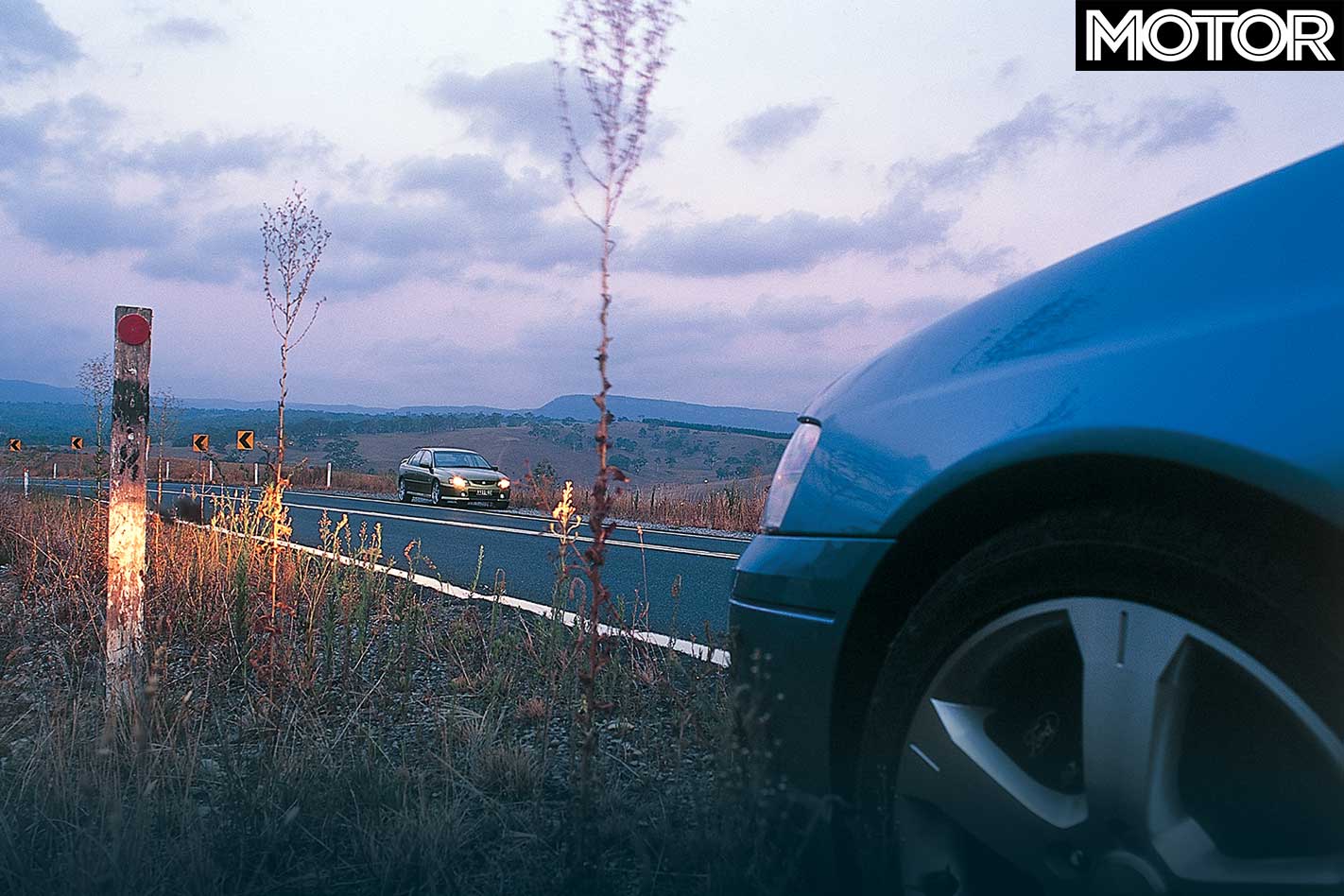
| u00a0 | 2003 Ford Falcon XR8 | 2003 Holden Commodore SS |
| BODY | four-door sedan | four-door sedan |
| DRIVE | rear-wheel | rear-wheel |
| ENGINE | 5.4-litre, 32-valve DOHC V8 | 5.7-litre, 16-valve pushrod V8 |
| BORE/STROKE | 90.2mm x 105.8mm | 99.0mm x 92.0mm |
| COMPRESSION | 9.5:1 | 10.0:1 |
| POWER | 260kW @ 5250rpm | 235kW @ 5200rpm |
| TORQUE | 500Nm @ 4250rpm | 465Nm @ 4400rpm |
| WEIGHT | 1795kg | 1617kg |
| POWER/WEIGHT | 145kW/tonne | 145kW/tonne |
| TRANSMISSION | 5-speed manual | 6-speed manual |
| SUSPENSION (f) | double wishbones, coil springs, anti-roll bar | MacPherson struts, coil springs, anti-roll bar |
| SUSPENSION (r) | Control Blade IRS, coil springs, anti-roll bar | semi-trailing arms, coil springs, anti-roll bar |
| L/W/H | 4920/1864/1435mm | 4965/1842/1450mm |
| WHEELBASE | 2829mm | 2788mm |
| TRACKS | 1560mm (f); 1575mm (r) | 1569mm (f); 1587mm (r) |
| BRAKES (f) | 325mm grooved, ventilated discs, twin-piston calipers | 296mm ventilated discs, two-piston calipers |
| BRAKES (r) | 303mm solid discs, single-piston calipers | 315mm solid discs, single-piston calipers |
| FUEL | 68 litres, ULP | 75 litres, ULP |
| WHEELS | 18 x 8.0-inch (f & r), alloy | 18 x 8.0-inch (f & r), alloy |
| TYRE SIZES | 235/40 ZR18 (f & r) | 235/40 ZR18 (f & r) |
| TYRE | Dunlop SP Sport 9000 | Bridgestone Potenza |
| PRICE | $50,130 | $49,490 |
Fast Figures
| u00a0 | 2003 Ford Falcon XR8 | 2003 Holden Commodore SS |
| 0-50km/h | 2.53sec | 2.45sec |
| 0-100km/h | 6.16sec | 5.82sec |
| 0-150km/h | 12.49sec | 11.37sec |
| 0-400m | 14.40sec @ 160.4km/h | 13.97sec @ 168.1km/h |
Our 5 Likes & Gripes
Ford Falcon XR8
1 – Got an 18 carat wedding ring? The gearknob will dent it 2 – Got no wedding ring? An XR8 might help fix that… 3 – The adjustable pedal deal is actually fairly useful 4 – Dash facia has unusual clarity and simplicity 5 – Quiet dignity and class next to bovver boy SS
Holden Commodore SS
1 – Fantastic high beam could find cellulite on Kylie’s butt 2 – Rear seat porthole is very useful if you’ve got kids 3 – Cruise control switchgear works better than Falcon’s 4 – Start with your fingers on “mode” and “up” and watch what happens to the readout 5 – If you cut the rear doors off you get a Monaro
THE fact the next-generation Toyota Supra will enter professional motorsport is no surprise, but the first confirmed category that the reborn icon will compete in has raised some eyebrows.
Toyota has chosen NASCAR’s feeder-category, the Xfinity Series, to debut the racing iteration of the new Supra, which aside from the name will share little with the Supra road car – NASCAR regulations dictate much of the body design (the headlights are simply painted on) that’s underpinned by a spaceframe chassis.
Toyota’s racing Supra will be powered by a 5.8-litre pushrod V8 with will send 521kW to the rear wheels, via a four-speed manual gearbox.
It is a radical departure from what will thrust the road-faring Supra forward, with Wheels understanding the BMW Z4’s twin-brother will be powered by a 3.0-litre turbocharged dual overhead cam six-cylinder engine.
The Supra’s racing debut, against local metal such as Mustangs and Camaros, will take place before the road car is launched, with the first round of the year pencilled in for February 2019 at Daytona.
Xfinity isn’t the main NASCAR championship, with that privilege going to the Cup Series, where the Toyota badge is represented by Camry racers.
Supra fans hoping for a return to Super GT need not give up hope, as it’s highly likely the sports coupe will also spawn a GT3-spec racer which will compete in its native country, and around the globe.
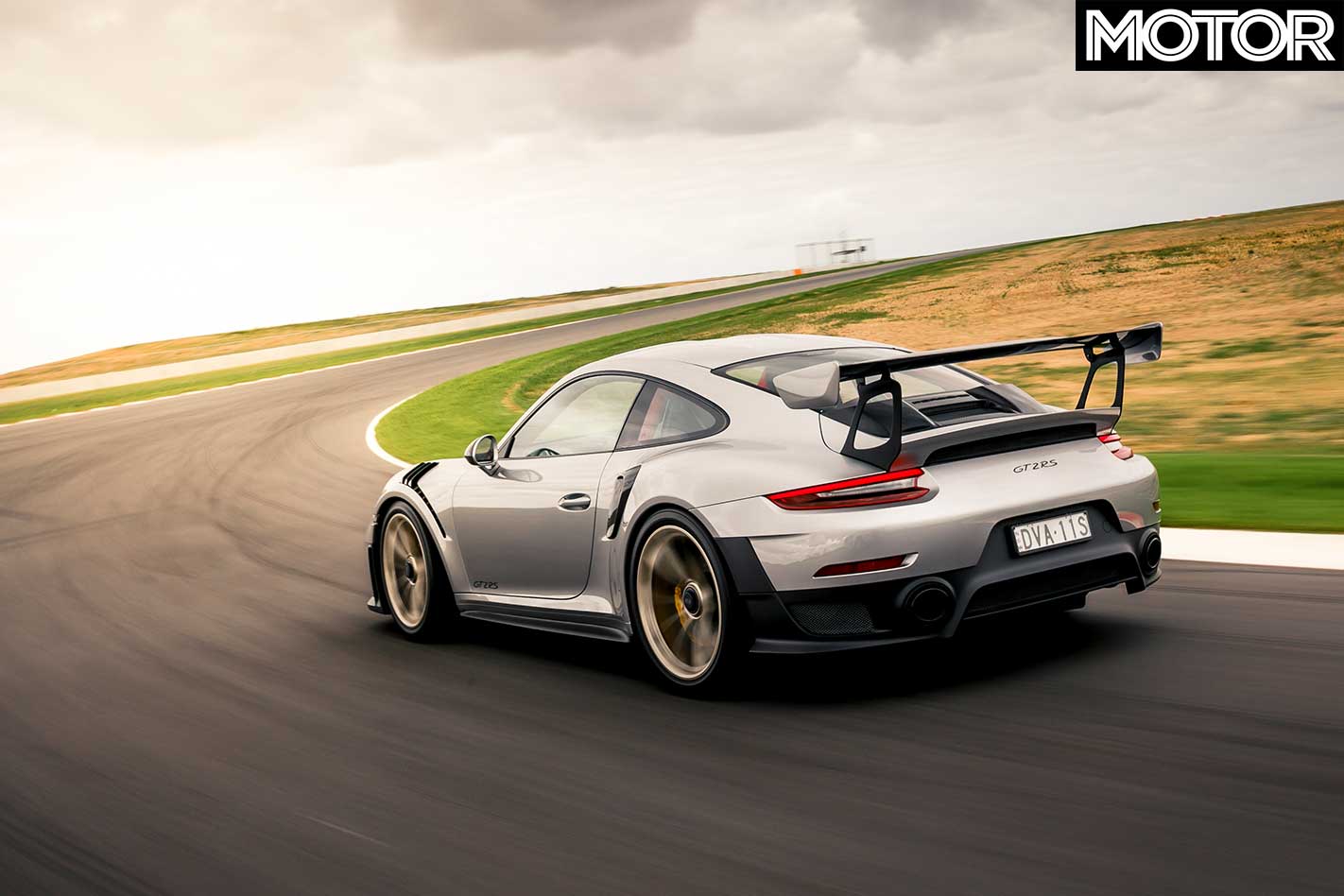
MOTOR Magazine has put Warren Luff behind the wheel of a Porsche 911 GT2 RS with the goal of setting a searing lap time at The Bend Motorsport Park in South Australia.
With Luffy (our long-time Gun Driver) and the GT2 RS at our disposal, MOTOR was confident any lap time set on the outing would stand for quite some time.
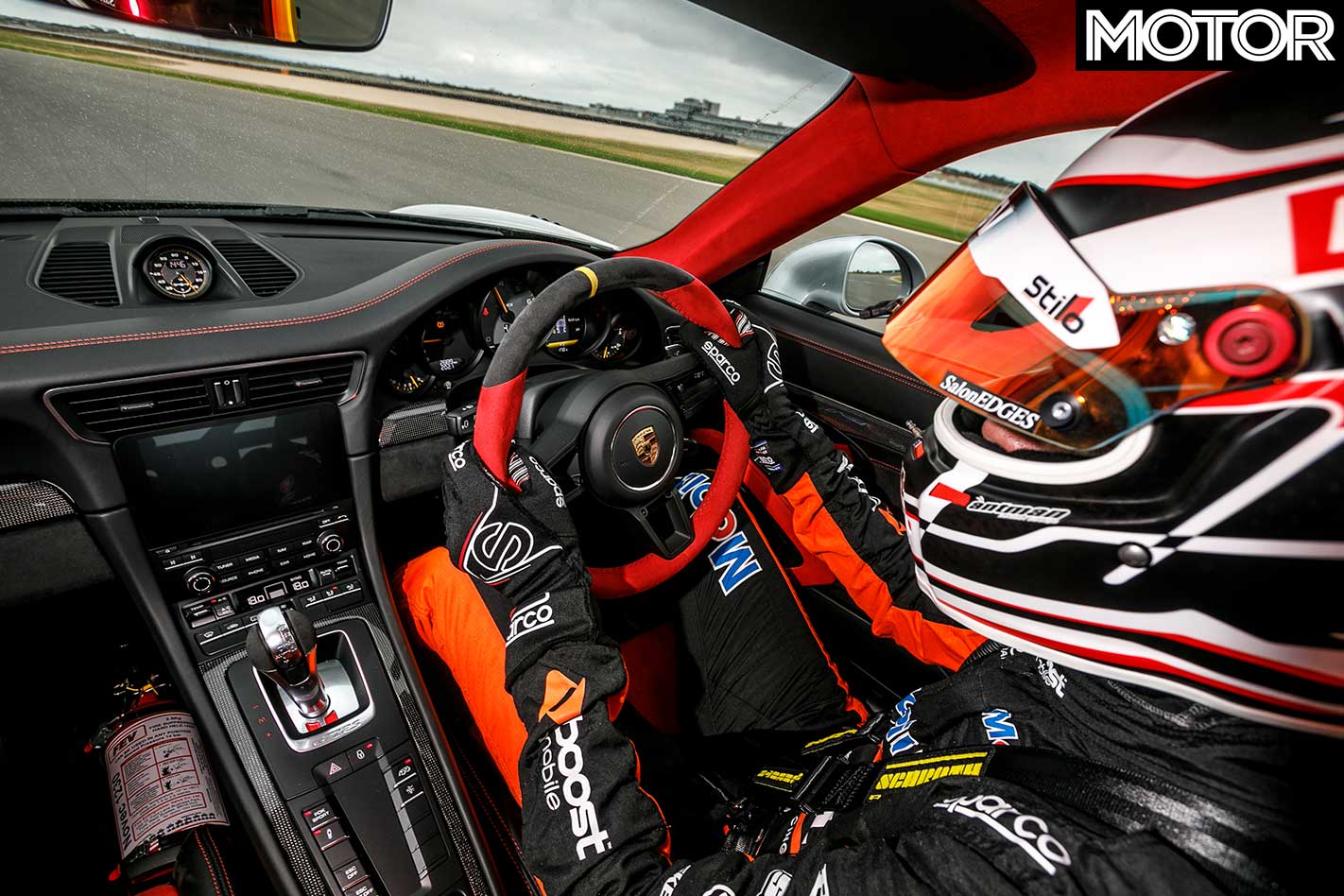
Luff managed to produce a 3:28.1 after his first outing in the 515kW GT2 RS, having had more experience with the track prior to our expedition when he competed in the Australian GT Championship round held there.
He told us the GT3 cars were running around 3:03 on the circuit.
“The GT2 RS just feels so much more powerful,” he said.
“I think I got to 260km/h on the straight before I stopped looking down. It’s a mega, mega thing.”
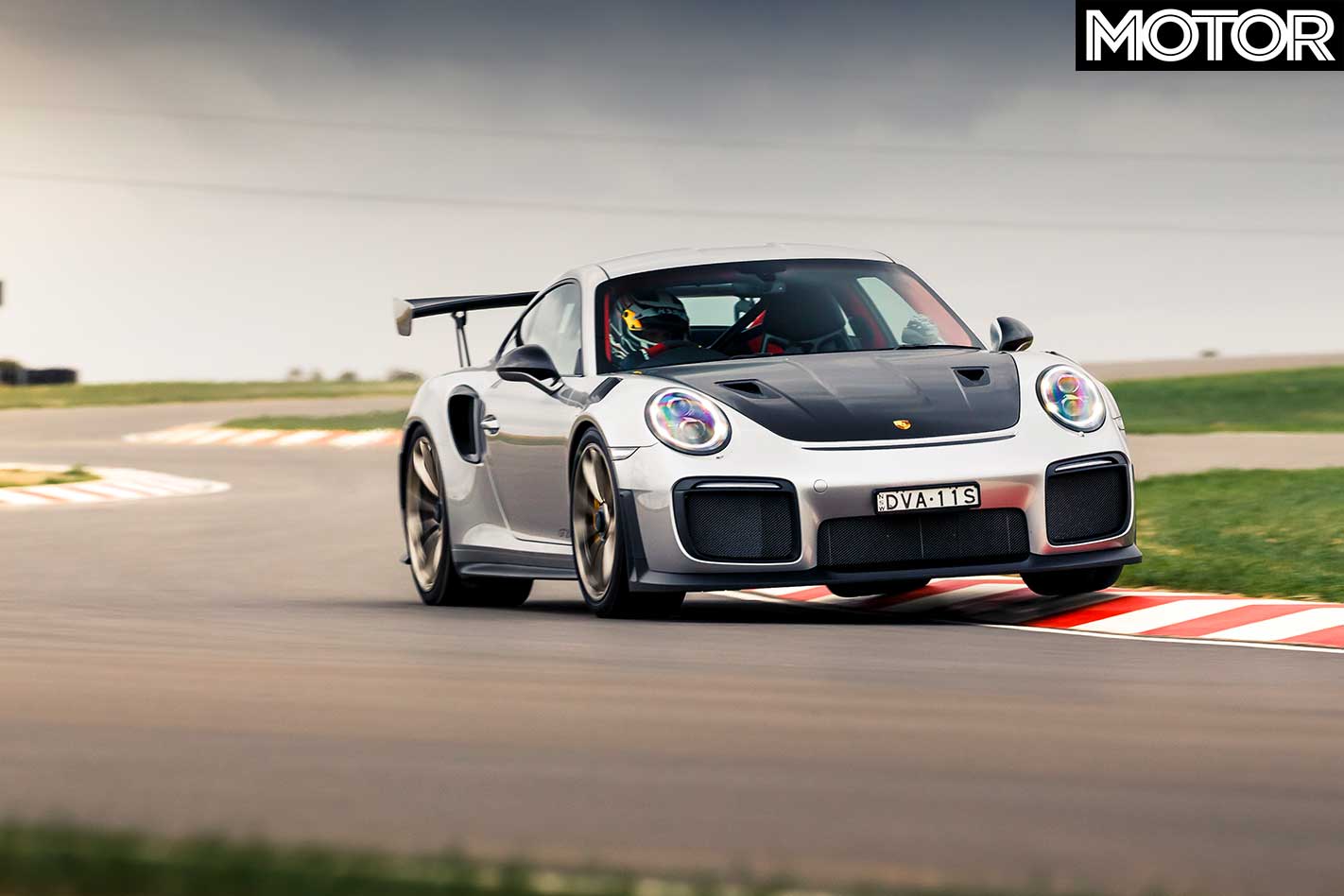
Luffy actually managed to V-Max at 271km/h on his next run, which produced the record lap.
After the next outing on track, Luffy came back in to tell us the good news: “Three twenty-four one.”
The first production car lap record for the 7.77km GT Circuit at The Bend Motorsport Park stands at 3:24.079.
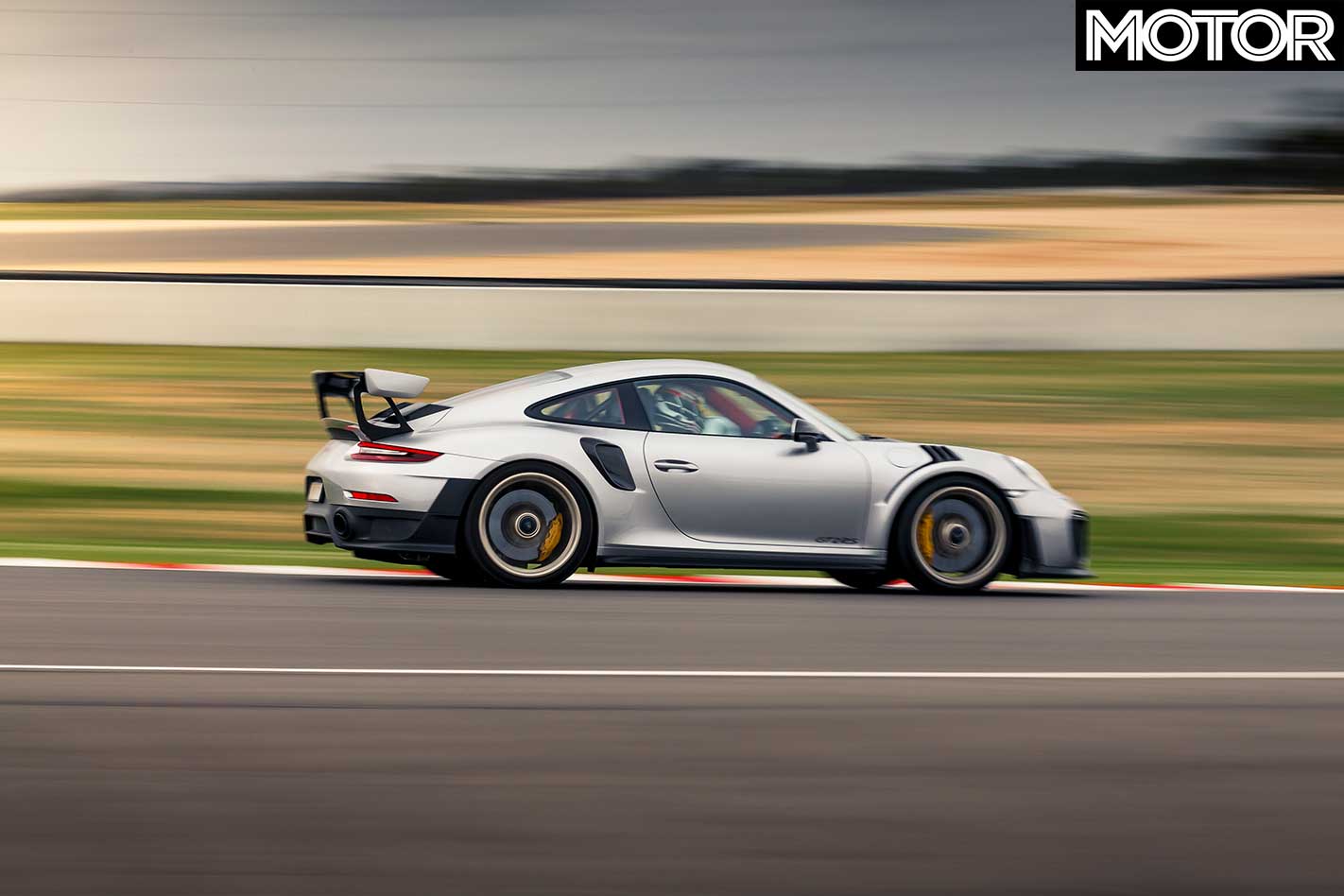
The GT2 RS already holds the Nürburgring lap record for a production car at just 6:47.3, and as the Bend is approximately one-third the length of the Green Hell, Porsche’s Widowmaker now holds records for the two longest permanent racetracks in the world.
You can read the full story of our record lap at The Bend in the July issue of MOTOR, on sale until July 26.
THE LAPD has an off-the-books punishment for officers who irritate the brass or get out of line: it’s called “freeway therapy”, and it’s simply being transferred to a police station that’s a couple hours’ drive from your home.
All those hours trudging through LA traffic getting to and from work gives you plenty of time to think about how you’ll just cough politely and leave the room the next time you see the chief of detectives snorting evidence-locker blow off a hooker’s ass.
But the sarcasm in the name is too cruel. Freeway time really can be therapy, if you can embrace the Zen art of bad driving.
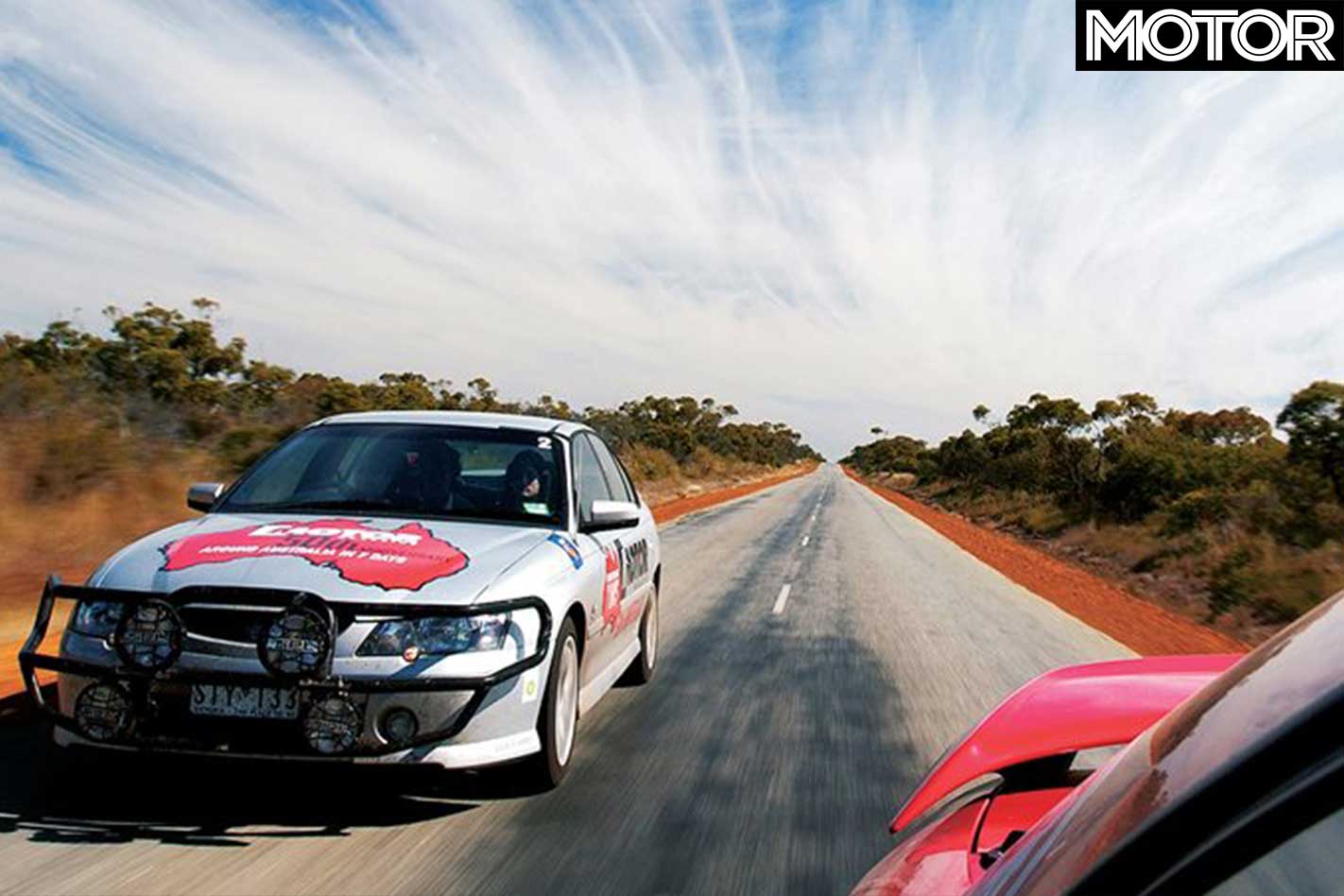
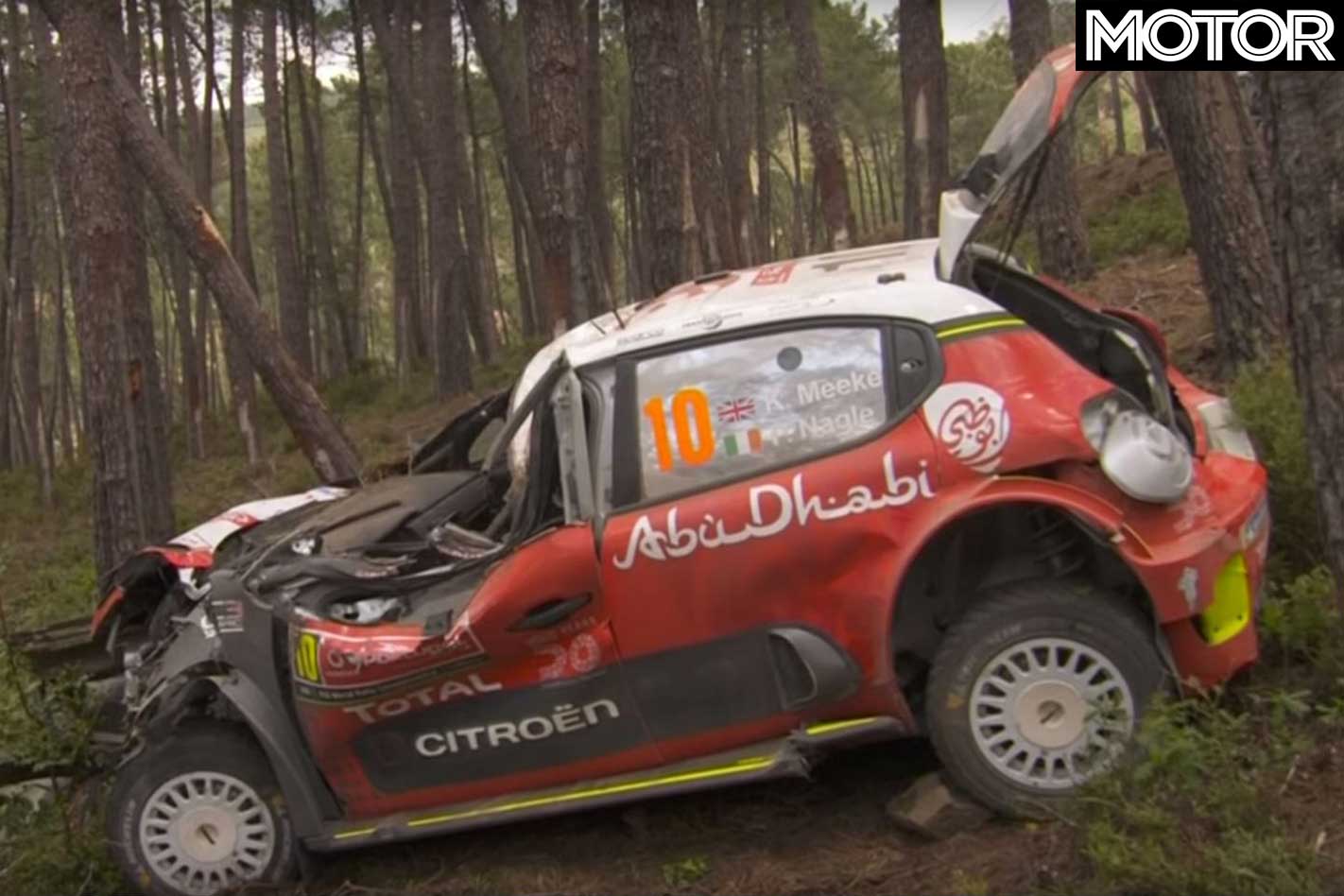
Surely you were driving – the car is still in your lane and not skidding along on its roof in a shower of sparks, or embedded in some trees like Kris Meeke.
But even though there’s good evidence you were doing it, you have no memory of doing it at all. It sounds like a lot of testimony to the Mueller investigation.
It’s bad driving, no doubt. And it’s not something I’m proud of – although I assume that in those minutes of high-speed meditation that I at least achieved the minimum legal driving standard, which seems these days to be set at “not currently air-borne or on fire”.
But if Buddhist monks truly want to seek Sunyata and the state of voidness, they should stop divesting themselves of all earthly possessions, and instead stack up 12 hours on the Stuart Highway in an old Nissan with no working radio.
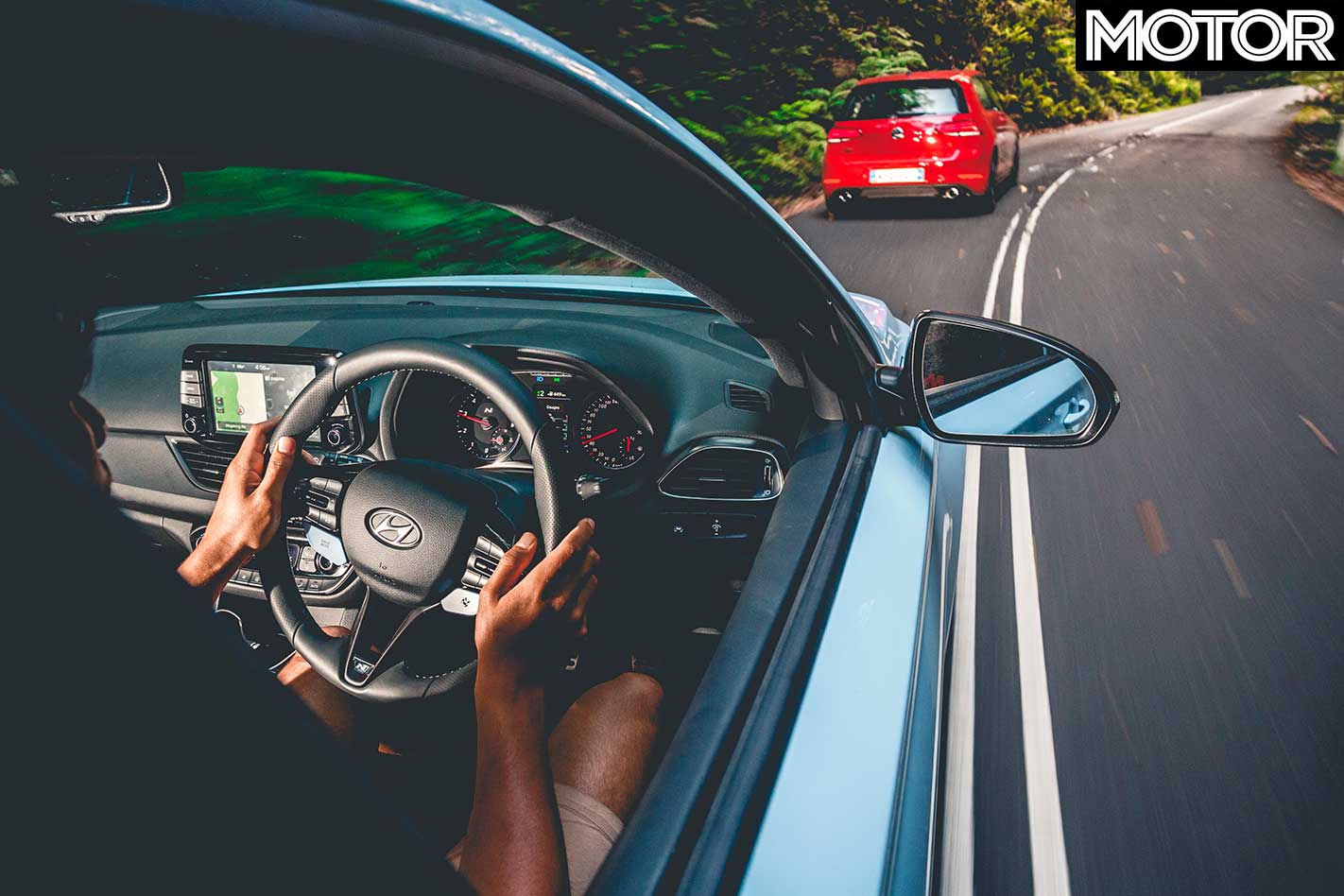
Driving can be the most absorbing, demanding task on the planet. One of the joys of pushing a car hard around a track is that everything else falls away – you have no spare RAM left to worry about relationships or jobs or mortgage payments. (Ironically, if you become too devoted to racing or track days, those things will definitely require some worrying.)
But it can also be one of the most mindless tasks: those long, looooooong freeway journeys where you go into a state of utter blankness, until you drive right past your exit, and just keep going until you either run out of fuel or sink into the Gulf Of Carpentaria.
No wonder some long-haul truckers have to resort to doing hard drugs and withered hookers to keep themselves tethered to the planet – otherwise they risk getting so Sunyata-ed that they simply vanish in a burst of pure enlightenment.
At the risk of pissing off the stop-revive-survive crowd, sometimes what the overburdened mind needs isn’t more laser-focus, but the soft Vaseline’d lens of letting your lizard brain take the wheel. Unless there’s rain or heavy traffic. In which case, forget the freeway therapy and ease that overburdened mind with some evidence-locker blow. The key’s in the sarge’s bottom drawer.
WE REALLY shouldn’t take it personally. Sliding sales of medium to large cars may have pulled the manufacturing rug out from under the Aussie-made Mitsubishi 380, Ford Falcon, Toyota Camry and Holden Commodore over the last decade, but it’s a global phenomenon affecting every developed market in the world.
Facing a juggernaut of SUV aspiration, car sales are faltering – especially mainstream medium types – in a dramatic fashion. Ford sold 56,172 Mondeos across Europe last year, supported by more than 200,000 sales of the identical Fusion in the US, yet even that combined total isn’t a patch on its 322,716 European sales from 20 years earlier. Or enough to prevent the Blue Oval from gradually phasing out much of its passenger-car line, in lieu of expansion with EVs, SUVs, and trucks.
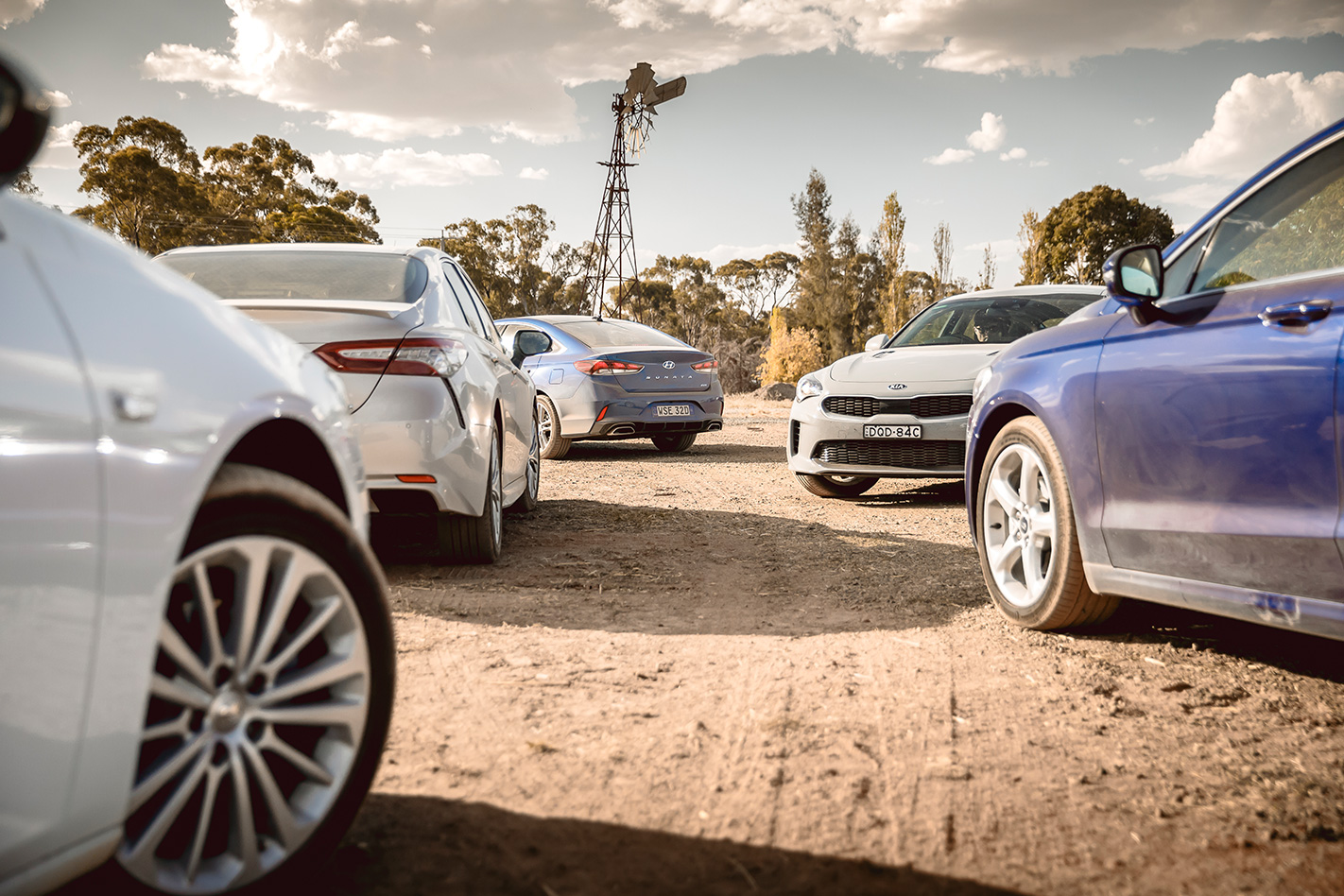
The new-gen Opel/Vauxhall Insignia (nee Holden ZB Commodore/Calais) snagged 72,347 sales in Europe last year – slightly less than the old model a year earlier, and a world away from the 384,885 Vectras flogged by GM in 1997 – while Toyota’s impressive new-generation Camry was beaten by the RAV4 in the US for the first time in 2017, which cracked 407,594 sales.
Hyundai’s once-strong Sonata is suffering a similar fate in the face of booming Tucson and Santa Fe popularity, while even Kia’s striking, left-field Stinger is yet to make the impact its passionate design team were quietly hoping for. Six months in, just over 6000 have been sold in the US, while its Australian tally sits at 1185, or just over half its European total. That’s chicken feed in mainstream circles.
It’s entirely possible, then, that the mid-size crew of the future will become the new niche – one that mixes the agility, weight, and efficiency advantages of a proper car with newfound sparkle and style (think Peugeot’s imminent frameless-doored 508 coupe-sedan). But where does that leave the current crop? Trading on former glories or deserving of a rosier future?
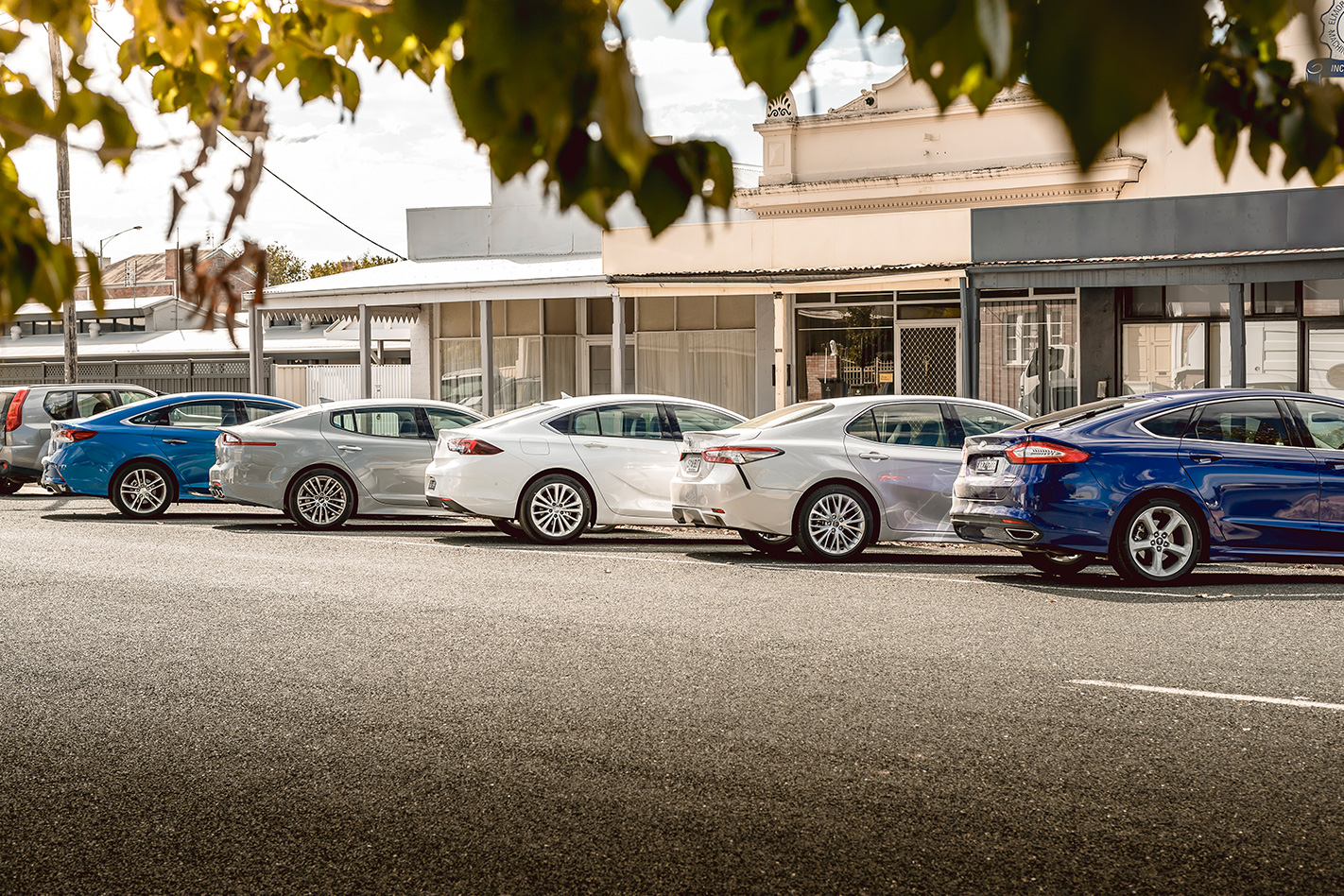
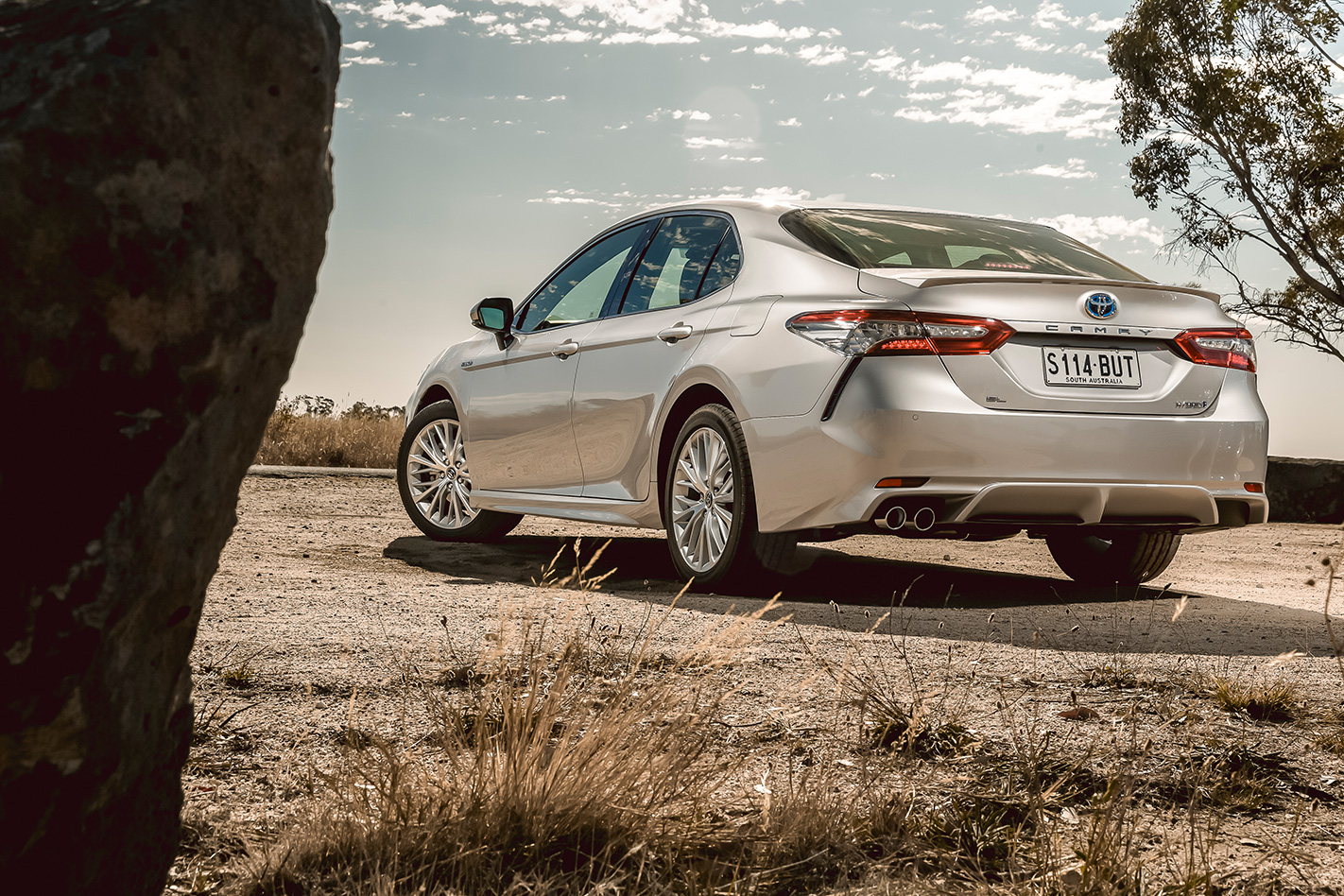
You know there’s something in the water when even Toyota pulls out all stops creating its next Camry generation. Model cycle eight inherits Toyota’s promising new TNGA platform and brings with it a level of Lexus-style craftsmanship and refinement that has been alien to Camry for at least 20 years. Lowest-common-denominator engineering is out; benchmark-challenging ability is in, even though the gen-eight Camry was designed and engineered for Americans.
Miraculously, it feels high-end Japanese and that’s an achievement. Especially our $40,990 SL Hybrid test car, with its ventilated perforated-leather seats, organically formed soft-touch dashboard, and even the intriguing depth of its multi-hued Steel Blonde paint colour. In some lights, it could be mushroom. In others, almost mauve.
That may sound about as hip as denture repair but it really enhances the Camry’s handsome shape. For once, a multitude of creases and swage lines genuinely contribute to the greater good, styling-wise, though that doesn’t apply to Camry’s mouthguard-like grille insert, or its bizarre Alice Cooper-esque rear bumper slits.
The identically priced Holden Calais, in comparison, feels deeply Germanic. Unlike the almost sumptuous Camry SL, the Calais nameplate is no longer reflective of a plush, cosseting trim level. Instead, we’re talking soberly monochromatic colours, firmly padded charcoal leather seats, minimal embellishment and a relatively austere feel. This is Calais motoring 2018-style, with nary a hint of stripy velour or chromy sparkle, though what you lose in visual glitz you definitely gain in engineering depth. There’s a stallion hiding beneath the Calais’ dowdy dress sense.
At a razor-sharp $37,790, the Ford Mondeo Trend is almost the Calais you have when you aren’t having a Calais. Its leather-edged sports seats with tactile microfibre centres allow you to sink into them (unlike the all-leather chairs in the $44,790 Titanium) while from the outside, you’d never know this 18-inch-wheeled Trend costs more than three grand less than the Holden.
Stretch to Titanium spec and you cop a faceful of visual va-va-voom (sequential indicators, LED headlights, bad-arse 19s, all-glass roof, the lot), but it’s the Mondeo Trend that best aligns with Calais. Even Mondeo’s circa-2012 fastback shape was clearly the inspiration for Opel’s take on the same style.
Hyundai’s facelifted Sonata can’t compete with the level of choice offered by Toyota, Holden and Ford, or even its distantly related Kia Stinger cousin. Just two variants remain on the grid in 2018 – base $30,990 Active and loaded $45,490 Premium, running the same 2.0-litre turbo-petrol four and eight-speed automatic as the $46,990 Stinger 200S – which means if you want a Sonata with grunt, it’s Premium or nothing.
Hyundai has left almost nothing untouched in its quest for garnering the Sonata some attention, at least visually. The Korean brand’s Californian styling studio went wild in transforming the old model’s quietly handsome shape into something that looks virtually unrelated, and the result is questionable.
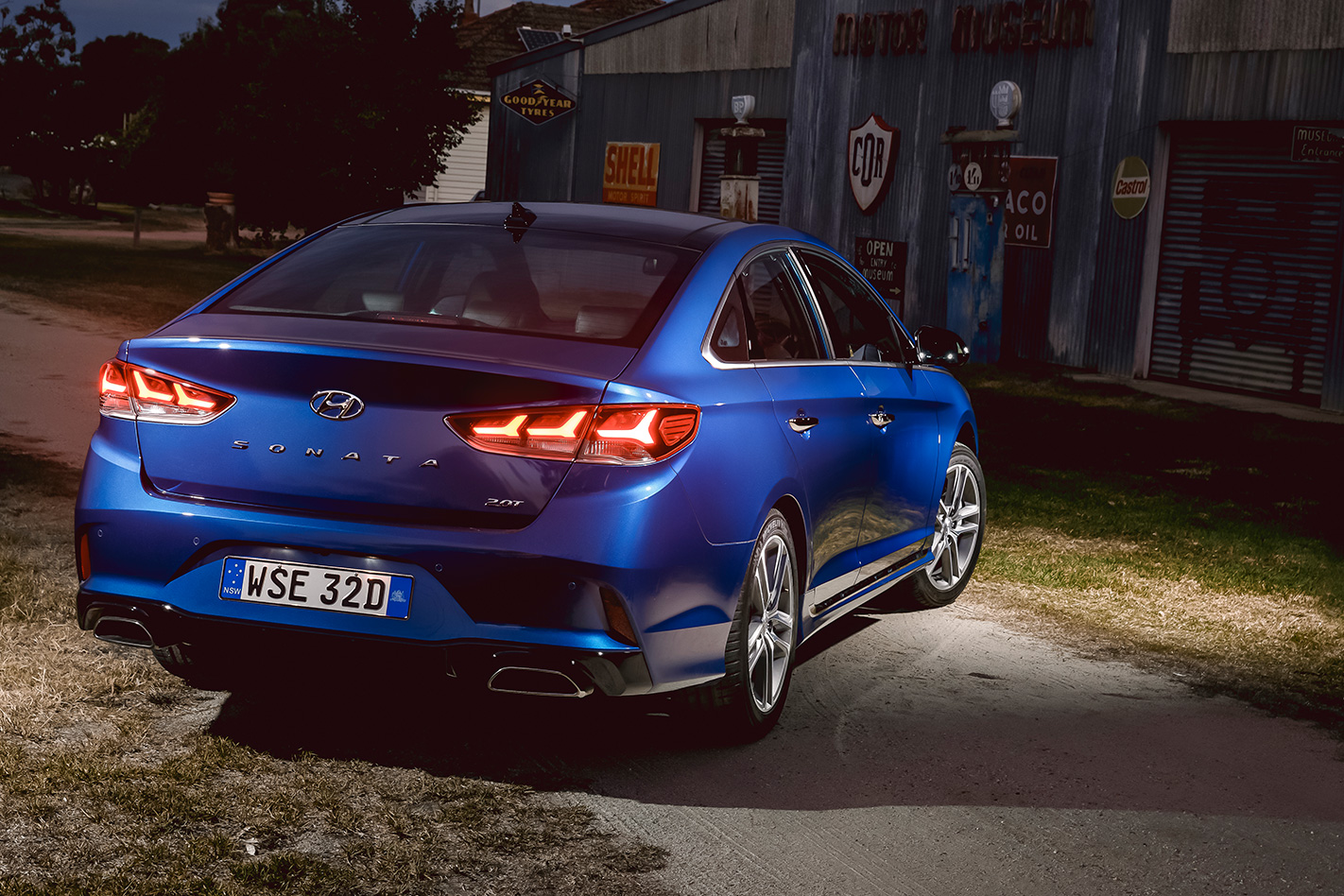
The facelifted Sonata’s combination of pinched grille, fussy details, and flat-panelled rear, with italicised bootlid lettering, don’t add up to the kind of sophisticated touches we’ve come to expect from one of the world’s burgeoning automotive superpowers. Weirdly, it looks smaller than before, and lacks the on-road presence of its predecessor.
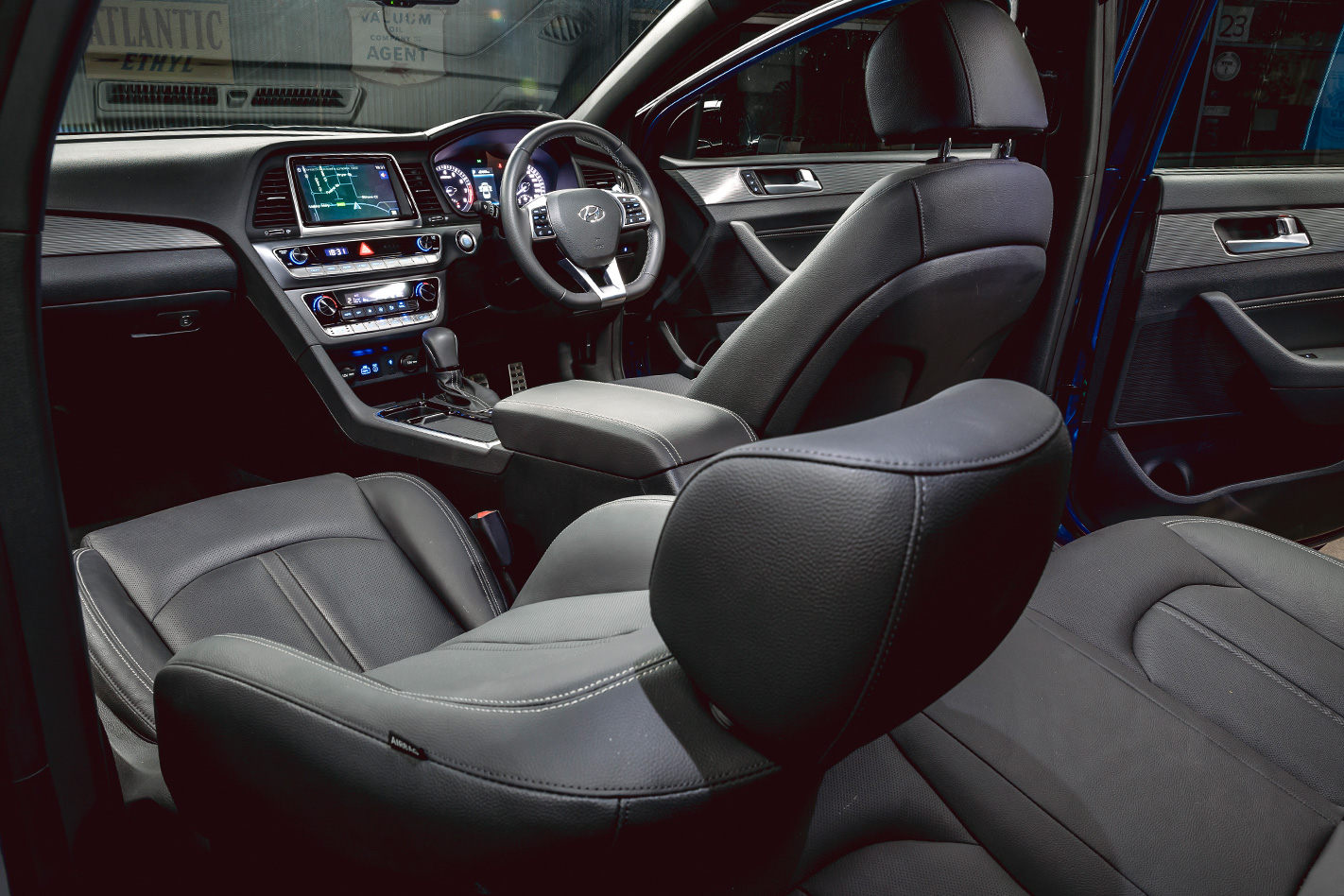
A similar tale applies inside. Unlike the previous-gen Sonata (badged i45 in Australia), which blended quite a radical exterior with a similarly rakish interior, the current car’s geometrically simple dashboard – in itself no major crime – now simply looks chintzy. It’s the equivalent of adding extra ingredients to a recipe in order to fix it, at which point you realise it’s beyond the point of no return.
There’s bucketloads of equipment inside the Sonata Premium: full glass roof with opening sunroof, heated and cooled front seats with two-position memory for the driver, rear door blinds, wireless phone charging. But the mis-matching materials, faux Paul Smith striped trim inserts, excess of plasti-chrome and curious utility/ergonomic flaws (why do the doors only take 600ml bottles? And why does the flat rear seat squander all that legroom?) convey expedience rather than expense.
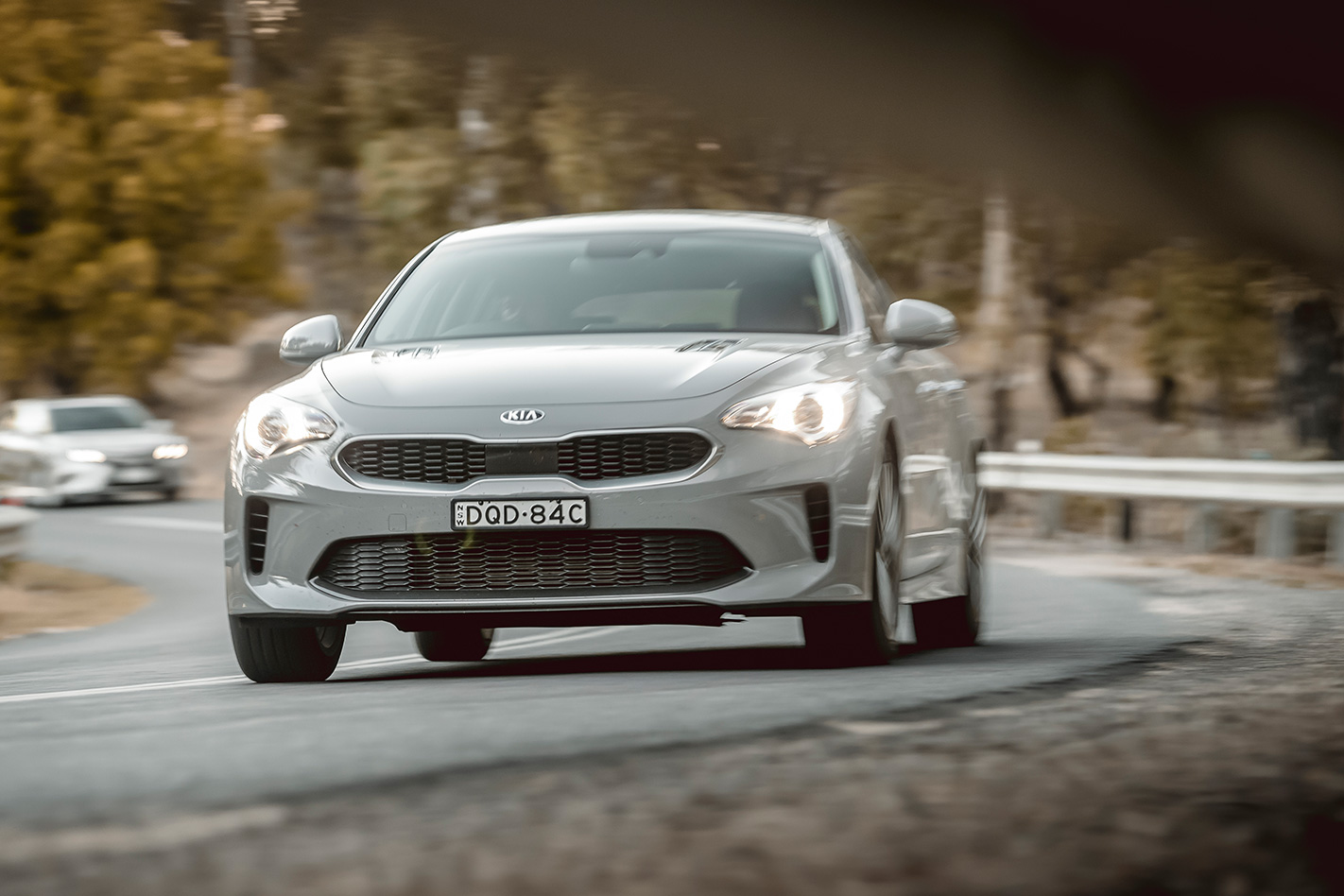
Contrast all that with Kia’s holistically designed Stinger. It’s this group’s wildcard in that it’s a rear-wheel drive liftback-sedan, supposedly competing in a larger car category. Yet if you read the fine print, the Stinger is actually the shortest and lowest car here, riding on by far the longest wheelbase. It’s all about proportion – that crucial determining factor the Sonata so desperately lacks – and the Stinger exudes copious amounts of it.
We wanted a base $46,990 Stinger 200S (now with standard AEB and collision warning) for this test but could only get our hands on a $53K 200Si. So if you can imagine the same Stinger without front parking sensors or lane-keep assist, adaptive cruise, auto wipers, a luggage net, a pair of subwoofers, and with a smaller touchscreen and non-leather trim, then here’s your 200S – still the dearest car here but arguably the richest.
You can tell that the team responsible for the interior architecture were on the same page as the aesthetes who created the Stinger’s coke-bottle hips and broad, planted stance. Internally, it’s definitely a case of less is more, where simple, elegant design and flowing forms rule, yet the packaging of the Stinger neatly supports its GT-like form. It may not offer the room of the Sonata, but you’re stepping into a cosseting, comfortable four-seater, with its steering column much closer to hortizontal and your legs stretched out in front, sports-car style, not into a vast area that fails to truly welcome you.
With four bodies on board, that’s exactly how the Stinger behaves. Even riding on relatively modest 225/45R18s, it feels taut when driving on your own, to the point where you always know what’s going on underneath, but when punished on challenging turf, you can keep adding speed and the Stinger simply demolishes the road surface. It has an underlying pliancy and levelness to its suspension behaviour that, in conjunction with its handling immediacy and rear-drive purity, helps it transcend the medium-size class in which it so obviously competes.
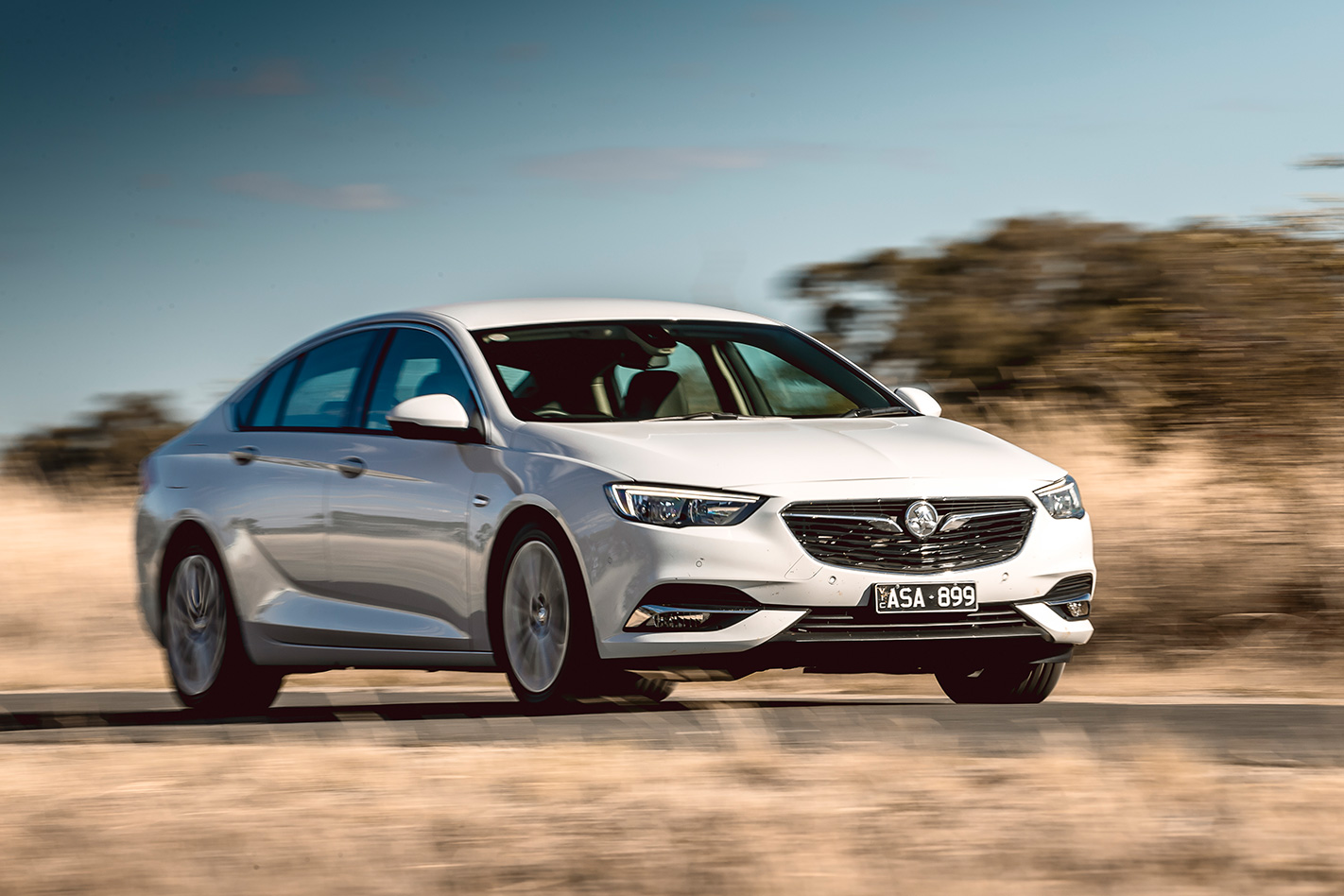
The same used to apply to the loping, luxurious VF Calais, so it’s a hugely interesting exercise examining the differences between its former self and the front-drive turbo-petrol ZB version. For starters, the new Calais’ packaging is terrific, with loads of rear-seat legroom and an amphitheatre-style view in all directions, combined with vast amounts of front-seat height adjustment.
If you’re mega-tall (like some Germans), you can dump the Holden’s supportive front chairs on their runners – to the detriment of rear toe room – and still have headroom beneath its skimpy little sunroof. But the Calais’ sloping rear roofline does impede on rear headroom. If you demand vertical space, buy the more handsome and useful Commodore Sportwagon.
What can’t be discounted, though, is the Calais’ unbreakable ride. You can hammer over rough surfaces and it refuses to be shaken, even though it isn’t as quiet as the Camry in doing so, and there’s a bombproof feel to the ZB that makes spending many hours bonding with its superb driving position utterly effortless.
The flipside of this bombproof nature, however, is that the Holden is also furnished a little like a bomb shelter. It’s a Calais in name only. In lieu of the nameplate’s former plushness, warmth and texture, the new car feels German-style fleet hack, with a distinct Aldi flavour. Its seemingly hard-wearing interior should do a decent job of rolling with life’s punches, yet it’s about as colourful as a coal mine. Unlike the Stinger and new Camry – not to mention a three-year-old Volkswagen Passat – the ZB Calais isn’t the flavoursome premium alternative it needed to be.
Neither is the Mondeo, though at least it has age in its defence. Daggy home hi-fi silver console trim and the lack of a digital speedo expose the Ford’s 2012 vintage, yet there’s an inherent rightness – and suppleness – to the Mondeo that keeps it at the pointy end for driving panache. In fact, its overly familiar shape and dated dashboard design completely undersell the finesse and depth of engineering that are in the chassis and drivetrain of this car, not to mention the overall quietness and ride comfort.
The Mondeo treads a fine middle ground between the controlled tautness of the Stinger and Calais, and the refined suppleness of the Camry, rounding off edges of bumps while maintaining excellent body control and handling poise, right up to the point where the Holden’s handling focus and steering precision ultimately nudge it ahead of the heavier, softer Ford.
But it’s the Camry that takes the lead for ride. While its rear seat leaves passengers sitting a little splay-legged, without the foot and toe room of the Ford and Holden, the softly-sprung Toyota is sweetly damped and glides along with a quiet, Lexus-like sheen. Even its windscreen wipers have a silky movement emblematic of the advance in this car’s dynamic qualities.
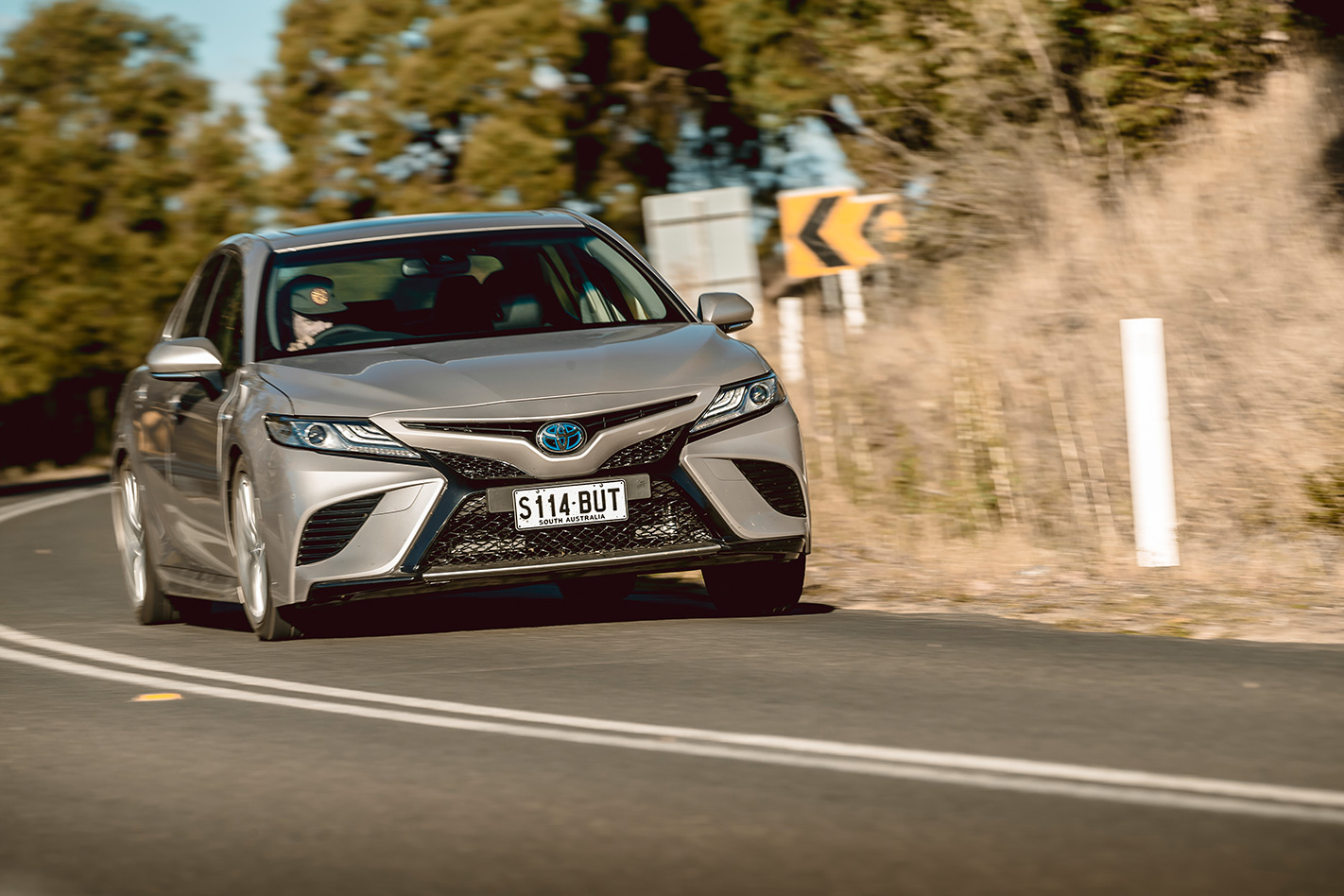
In combination with a re-engineered hybrid layout that combines an all-new Atkinson cycle direct-injection four with battery placement now below the rear seat rather than in the boot, the Camry has been transformed. It possesses a supple fluency, yet it responds beautifully to trail-braking into corners, involving its sophisticated double-wishbone rear end in proceedings while providing far more handling verve than anyone could expect. And its sweet drivetrain now gets an effective Sport mode, adding stepped gears for engine braking and even shift paddles on its lovely new wheel.
At 16-dead down the standing 400m and 80-120km/h in 5.3sec, the Camry might be the slowest of all the cars here but it never feels gutless. Its overall efficiency is outstanding, however, even without taking advantage of the benefits of its battery-only mode in city driving. Driven hard, the Camry averaged 7.5L/100km on test, smashing the Sonata and Stinger drivetrain cousins on 9.7 and 10.3L/100km respectively, not to mention the far thirstier Mondeo (11.3) and Calais (11.6L/100km).
The restyled Sonata demonstrates just how far Camry has come in its generational leap. The Aussie-tuned Hyundai has handling balance on its side, and the purchase of its pricey Michelins, but it feels like a patchwork of elements forced to cooperate. Its front seats don’t quite go low enough, yet there’s a lack of toe room underneath them, and anyone seated in the rear will feel lateral shifting, vertical movement and suspension drumming on rough roads. Its steering will also occasionally snatch at the driver’s hands when pushing through lumpy corners, though compared to where it once was, Sonata has come a long way.
But not far enough. Not after driving the Stinger, Mondeo or Calais. And despite its new eight-speed automatic, the test Sonata’s engine proved weirdly off-colour, posting significantly inferior performance to the gutsy Stinger, though without any detriment to its sweet refinement. Indeed, the strength of the Kia’s acceleration (0-400m in 15-dead, and 80-120km/h in 4.6sec) ably supports the immediacy of its turn-in, the instant involvement of its rear suspension and the multi-layered talent of its handling. The steering’s slight numbness at dead straight-on and the engine’s rather vocal synthesised induction note are minor blemishes on a dynamic repertoire that extends far and wide.
Only the Calais can truly challenge the Stinger for handling. Beautifully crisp and accurate steering, a perfectly sized three-spoke wheel, and genuinely amusing handling lift the Holden well beyond its underwhelming appearance. And then there’s its excellent 191kW/350Nm turbo-petrol four, which lags behind the AWD V6 version by just 0.3sec to 100km/h (6.5sec) and can nail a 14.7sec standing quarter. In rolling acceleration, the Calais belts the rest of this group. In fact, it’s strong enough to challenge any hot hatch near its price point.
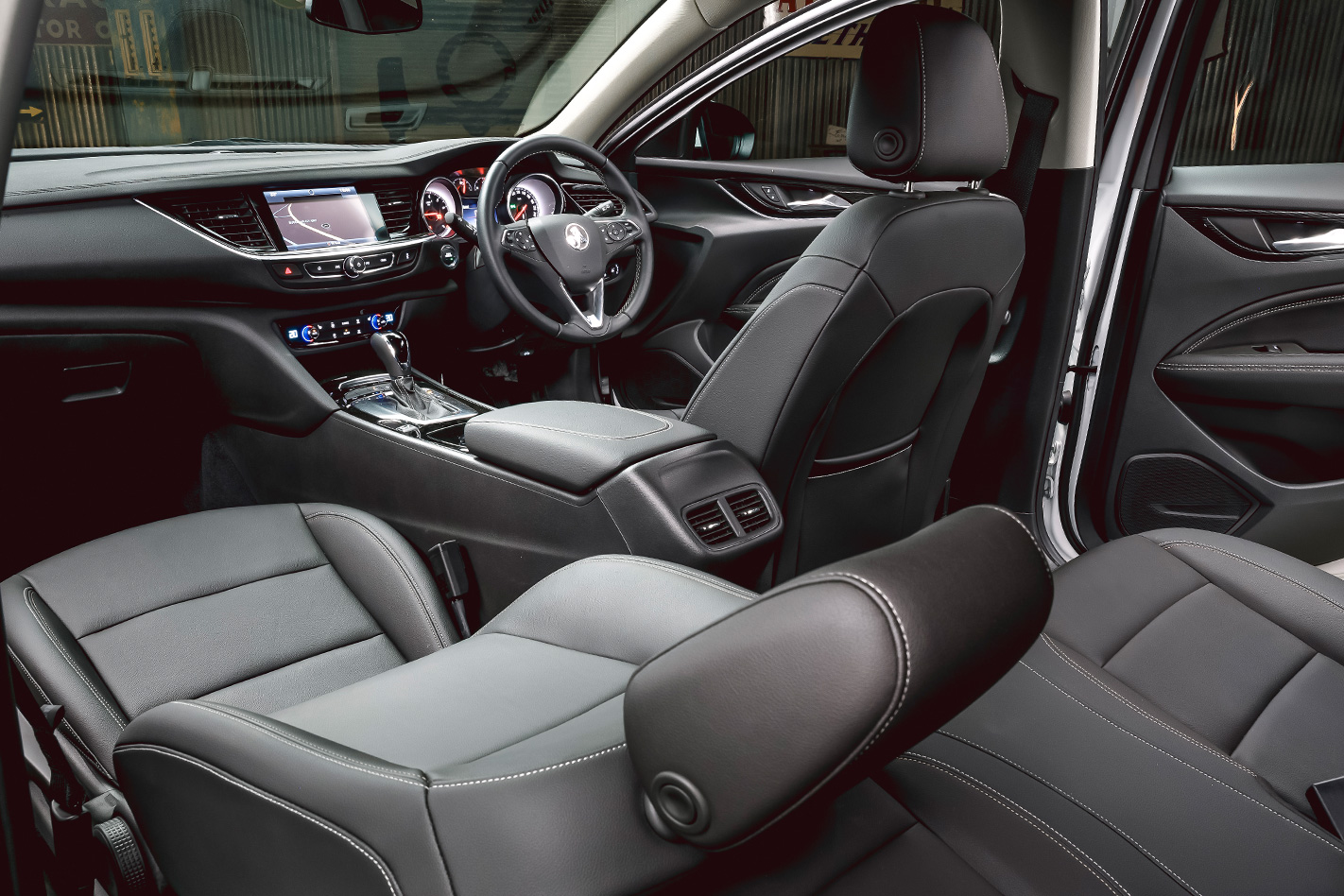
If only GM’s nine-speed automatic would hold onto gears with some level of sport-mode logic (it’s a one-setting-fits-all ’box). Perhaps our attempts at trying to provoke it to do so might explain some of its thirst for fuel, though we can’t understand why a car as quick and as sporting as this lacks steering-wheel paddles.
At the outer limit, the ageing Mondeo cedes dynamic talent to the Calais, but approaching that point it remains an absolute delight. A Sport mode that genuinely works, a pair of cooperative wheel paddles, and a still-strong and spirited engine make the Mondeo arguably the sweetest dynamic compromise here the majority of the time. It may be old, but age is proving no barrier to its ability … providing people can get over the fact that the Ford Mondeo is never going to be an SUV. It’s just a bloody good car.
Unfortunately, however, therein lies the problem. If the secret to salvation for the mid-size class is freshness, dynamism and flair, then a sedan like the Hyundai Sonata is flying dangerously close to extinction. Not only is the MY18 model a flawed example of how to facelift a car, it’s a below-average product in a shrinking market sector. And if that doesn’t scream ‘dead duck’, then its tanking US sales performance should be sending messages to Namyang in bold red capitals.
Exactly the opposite is true of its spiritual blood brother, the Kia Stinger. Developed at the same proving ground in South Korea, with a big dose of European aesthetic, Nurburgring dynamic flavour and good old instinct for good measure, the Stinger is the only car here that is truly ‘cool’.
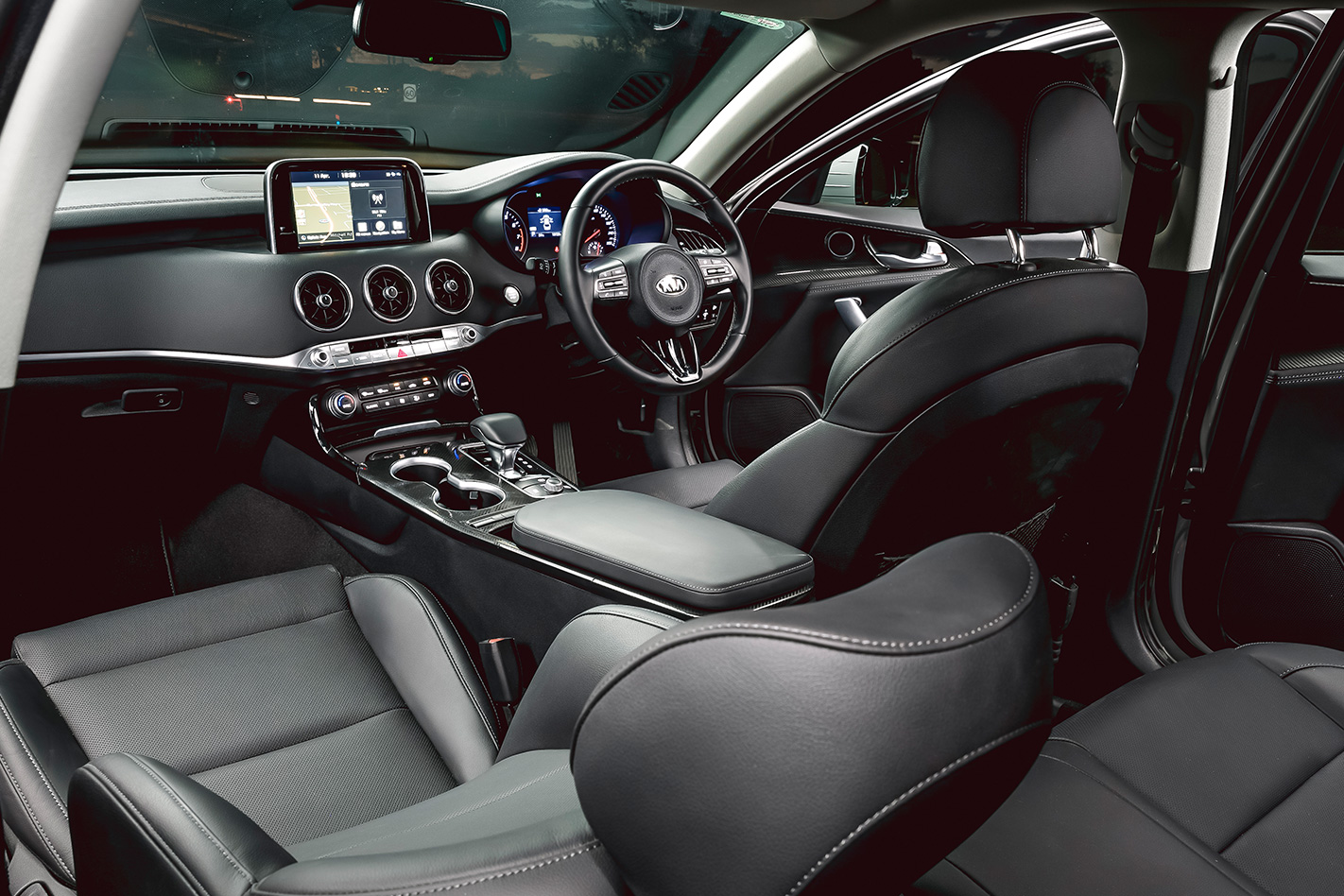
Even in base four-cylinder form, the Stinger is a super-sweet driver’s car that invigorates every journey, without forgetting about the practical aspects of seating four adults and packing a vast liftback tail for their luggage. It’s only a decent set of rims away from looking like $60-80K worth, and there’s a boutique-ness to it that makes it feel the most expensive car here. Yet there’s also real value in this unashamedly anti-SUV, gran-turismo-esque, coupe-liftback-sedan concoction.
The new-gen Camry approaches a similar level of ‘special’ from a different perspective. On paper, it’s just another front-drive Toyota with a familiar (albeit extensively modified) hybrid drivetrain and an efficiency bent. But what efficiency! Beautifully built and impressively refined, it does everything Toyota buyers want, yet has finally discovered sophistication, luxury and nuance. You could even go as far as saying it’s the best American car currently sold in Australia.
Which leaves the European Ford and Holden fighting it out for the middle ground. Despite their difference in age, they’re surprisingly similar in ability – especially their outstanding braking performance, as you’d expect from two cars designed to spend many hours plying German autobahns. Yet the Mondeo actually wins out in terms of refinement, mechanical sweetness and all-round finesse.
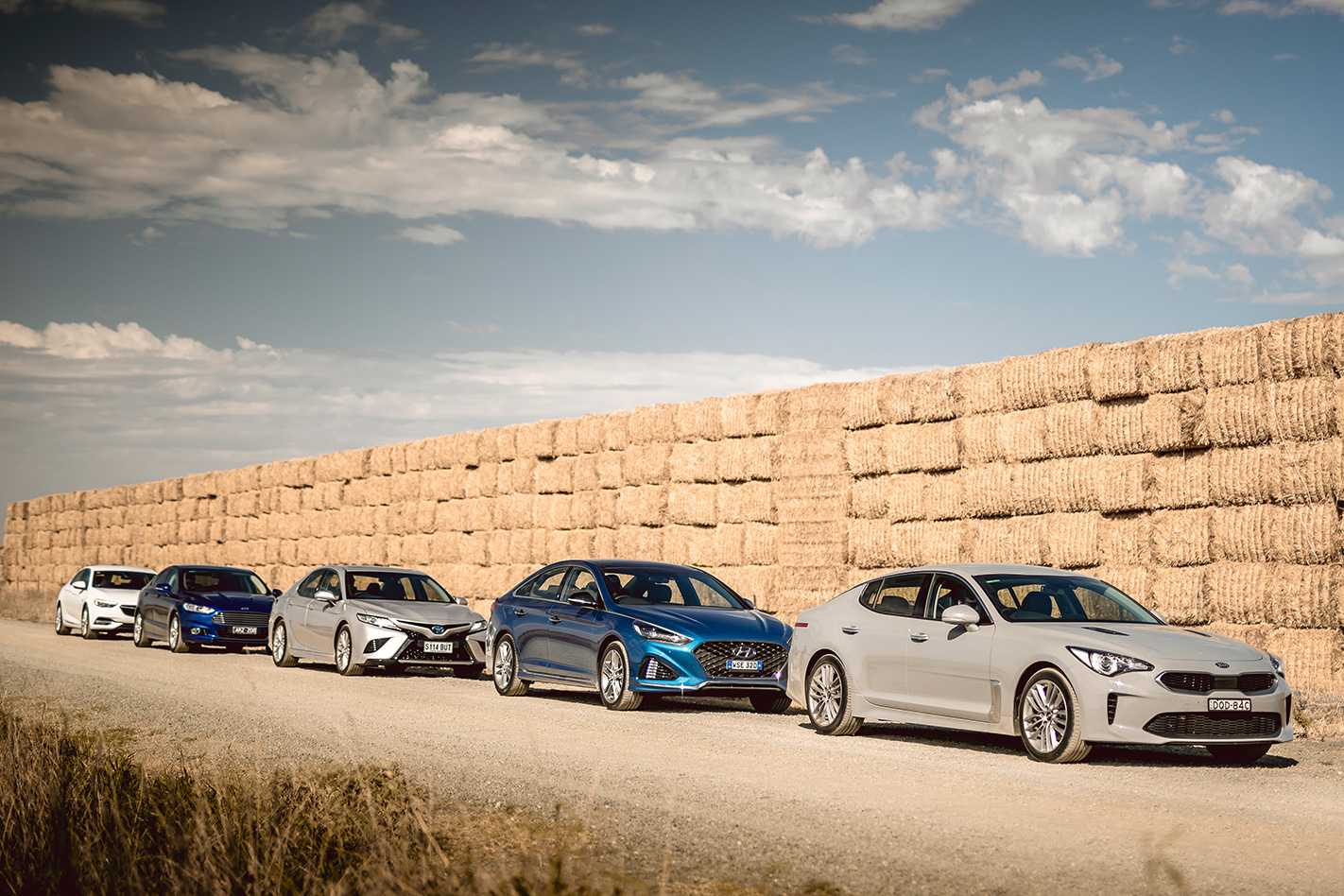
Confident and capable as the Calais is, it doesn’t join all the dots together quite as effectively as its Kia, Toyota and Ford rivals. In fact, the only areas where the Calais beats the Mondeo is for acceleration, 10-tenths handling, overall cabin space and its number of gear ratios. Otherwise, it’s just another German company car – very good at what it does, but also rather charmless in some ways, aside from the dynamic flavour imbued in it by Holden’s chassis engineers.
Going forward, that may not be enough to save the medium-car category. For now, though, if you’re averse to joining the SUV brigade, some fine alternatives await.
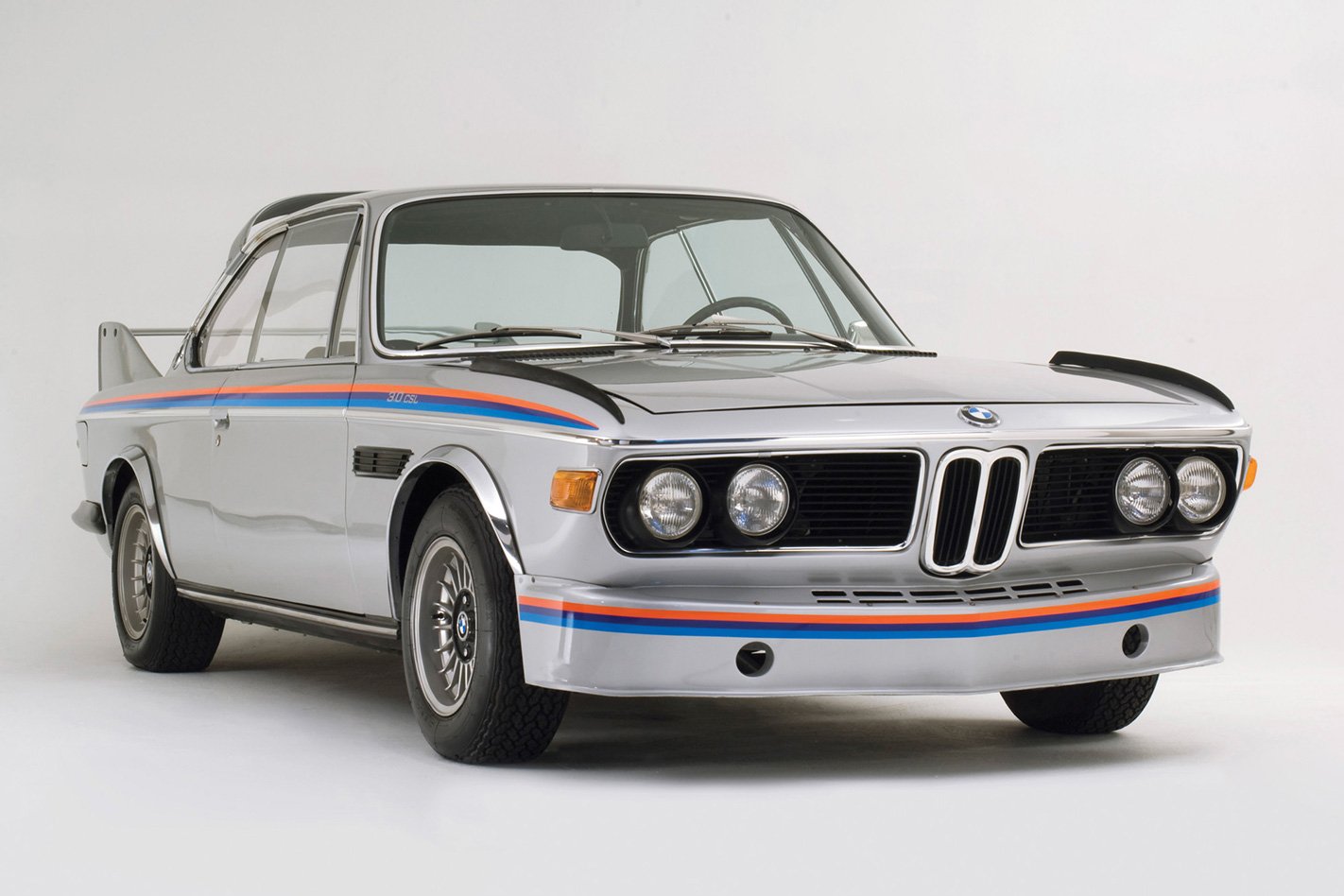
BMW in the 1960s was a company getting back onto its feet. From a brush with bankruptcy in 1959 and rescue by the Quandt family (which still controls around 46 percent), the product fightback began with the two-cylinder ‘700’ in 1959, upshifted with the four-cylinder ‘1500’ in 1962 and – well, you can see the pattern.
The six-cylinder ‘E3’ 2500 and 2800 sedans came in 1968, featuring a new, in-line M06 engine (later renamed M30) loosely derived from the M10 ohc four. That same year BMW was still smarting from the market failure of the 1966 2000 CS coupe, so it also launched a six-cylinder version of it, the E9 – effectively the same pillarless body from A-pillar back.
In early 1971 it gained a 3.0-litre capacity – and six months later, injection and the ‘CSi’ badge – plus rear disc brakes and a big dose of development of the old four-cylinder’s platform. It was by now very BMW-like: with 150kW and weighing 1400kg, a stock 3.0 CSi did 0-100km/h in eight seconds and had a top speed of 220km/h.
And oh, did BMW have plans for this leggy beauty. With the 2002 Turbo out of contention for the European Touring Car Challenge, and Ford’s Capri V6 dominating, in September 1972 BMW announced the 3.0 CSL (leicht, or lightweight), of which a minimum of 1000 would be built.
The initial 598 left-hand-drive examples (the first 169 carburetted) shaved 130kg via a bonnet, bootlid and doors in aluminium, plastic side windows, fibreglass bumper (rear only) and a minimum of soundproofing and interior comforts. A further 500 right-hand-drive cars had steel bumpers, power windows and standard interior, sacrificing around half the weight savings.
A third batch of 167 left-hand-drive cars had 3.2-litre engines.
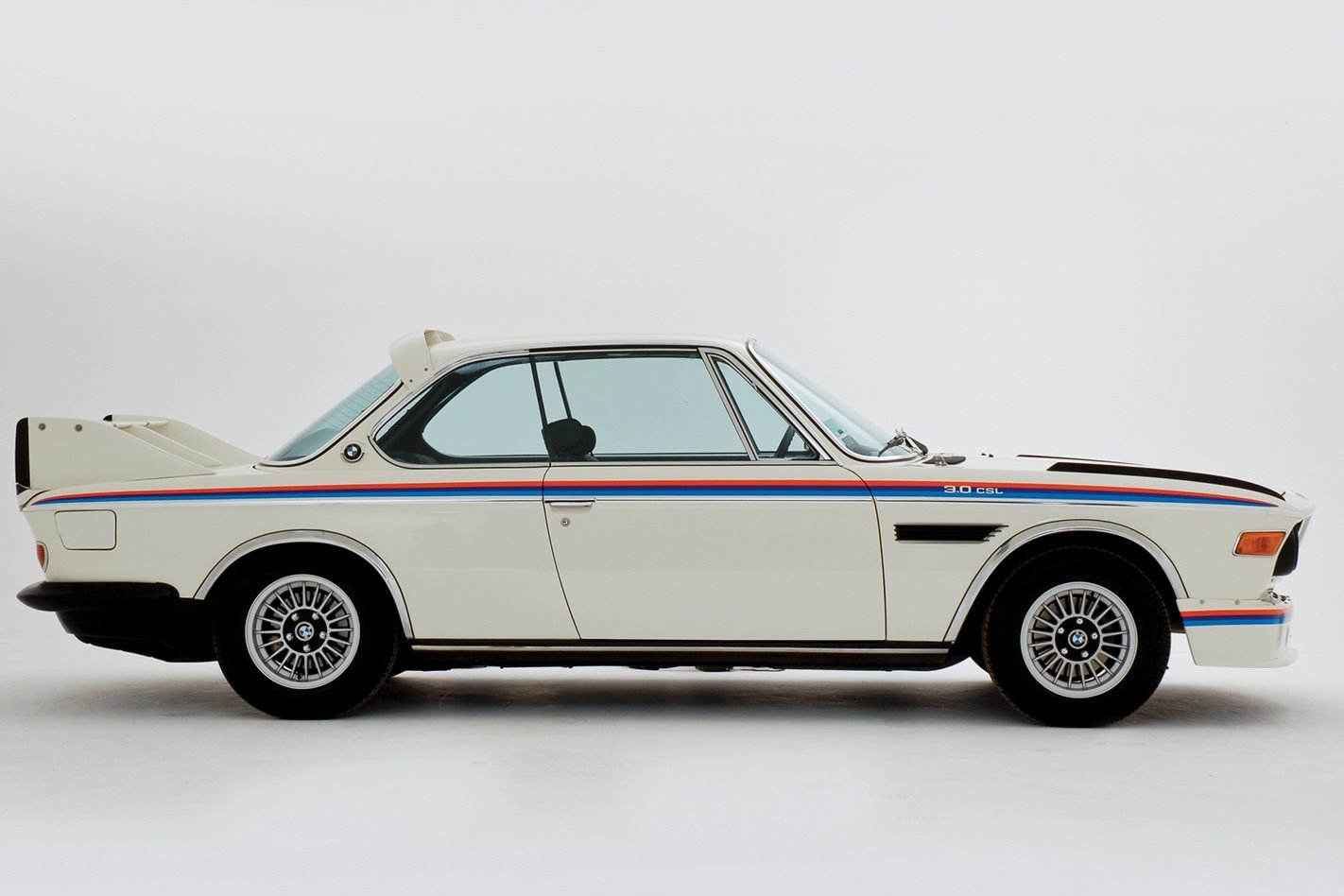
More notable was what came in the boot: the spectacular aero kit, comprising front air dam, fender splitters, raised roof spoiler and towering rear wing, which had so upset the German road authorities that BMW let dealers or owners install it.
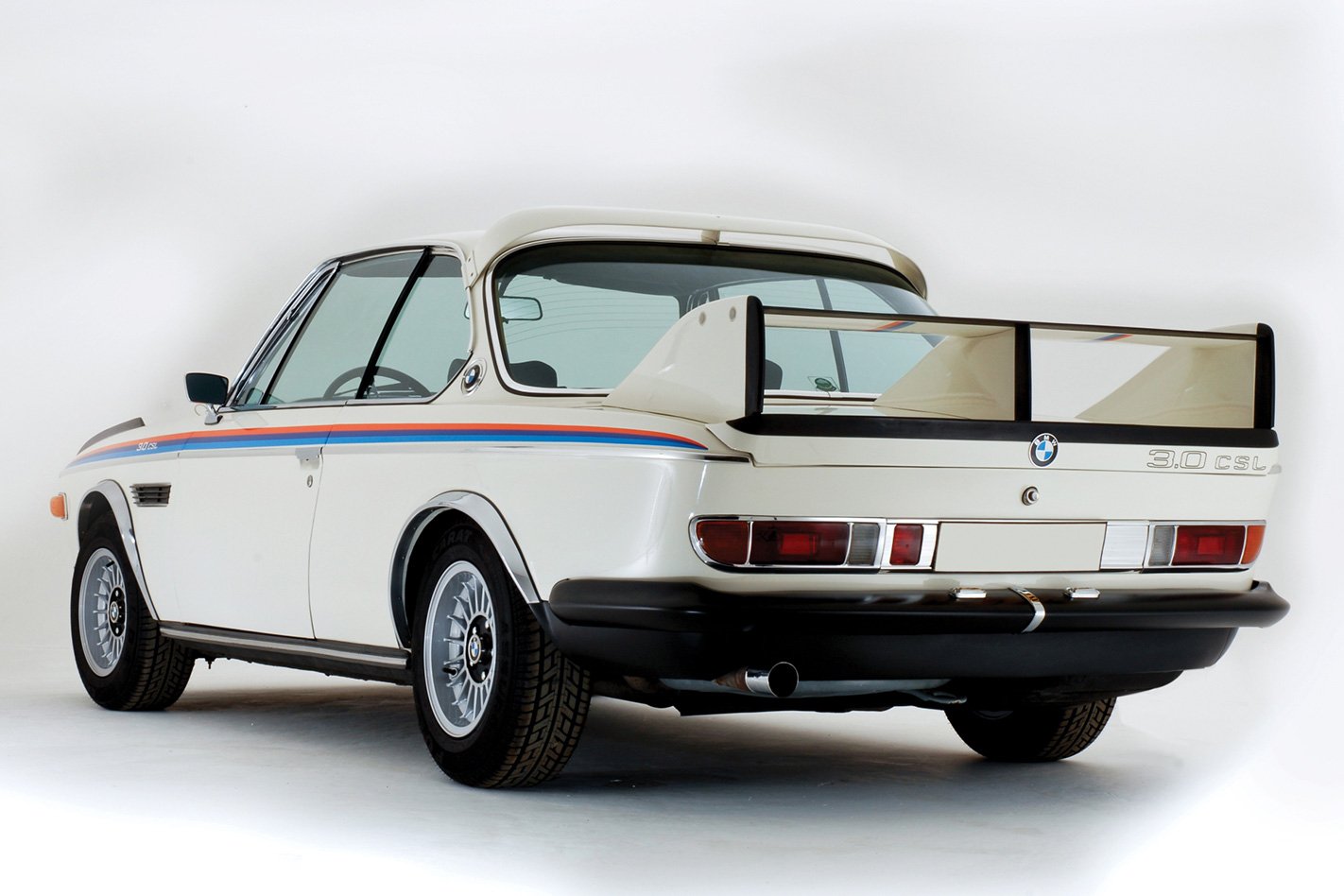
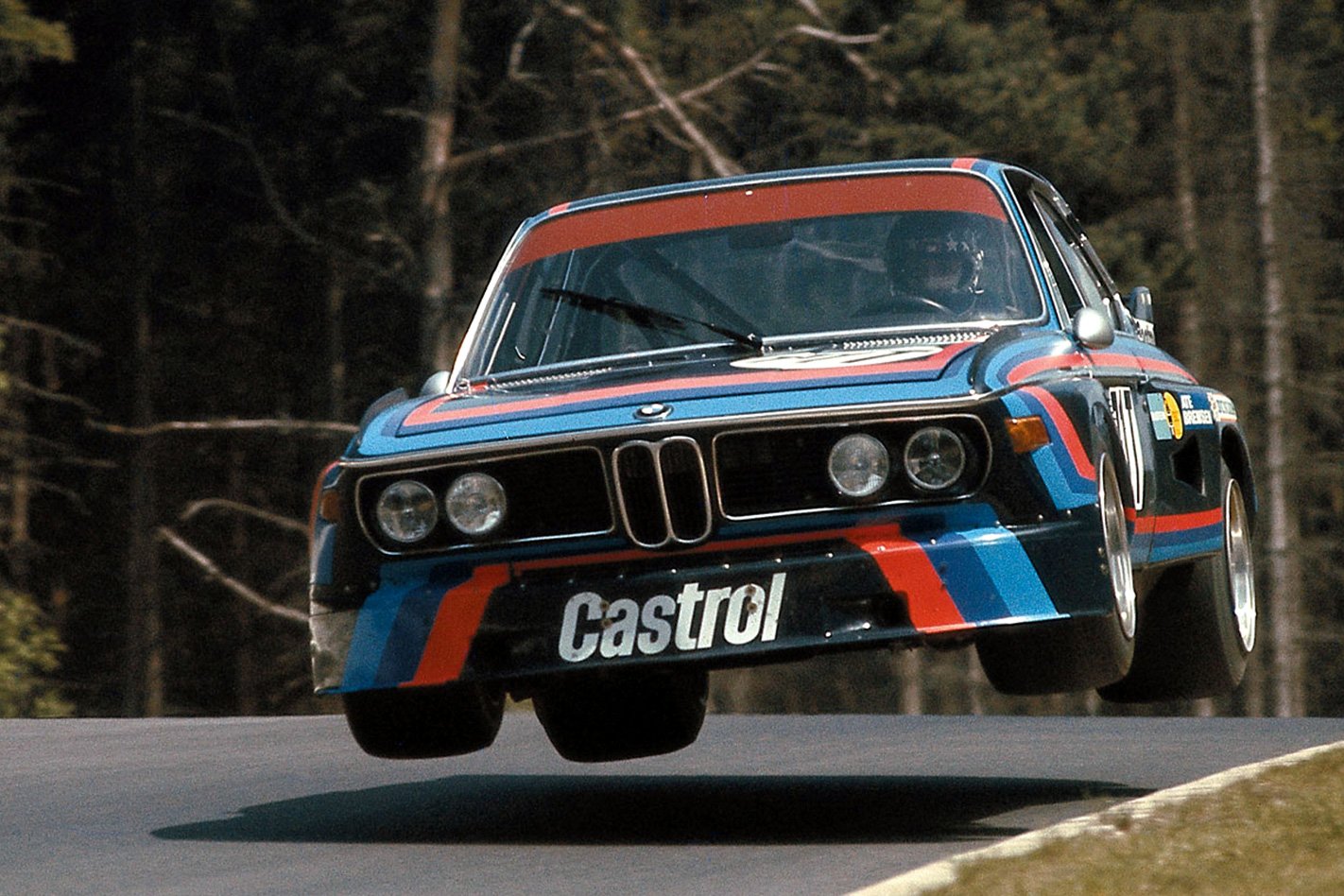
Homologation for the ‘Batmobile’ was granted in July 1973, and the ETCC became a case of ‘same Bat channel’: 3.0 CSLs won the drivers’ title in 1973 and from ’75-79, surrendering it in 1980 to the E30 320i.
From 1975, CSLs enjoyed lucrative careers in US IMSA racing.
Production of BMW’s E9 coupe ceased in 1975, the last of the 3.2-litre CSLs bringing the remarkable, lightweight coupe’s total to 1265 units.
Bat outta hell
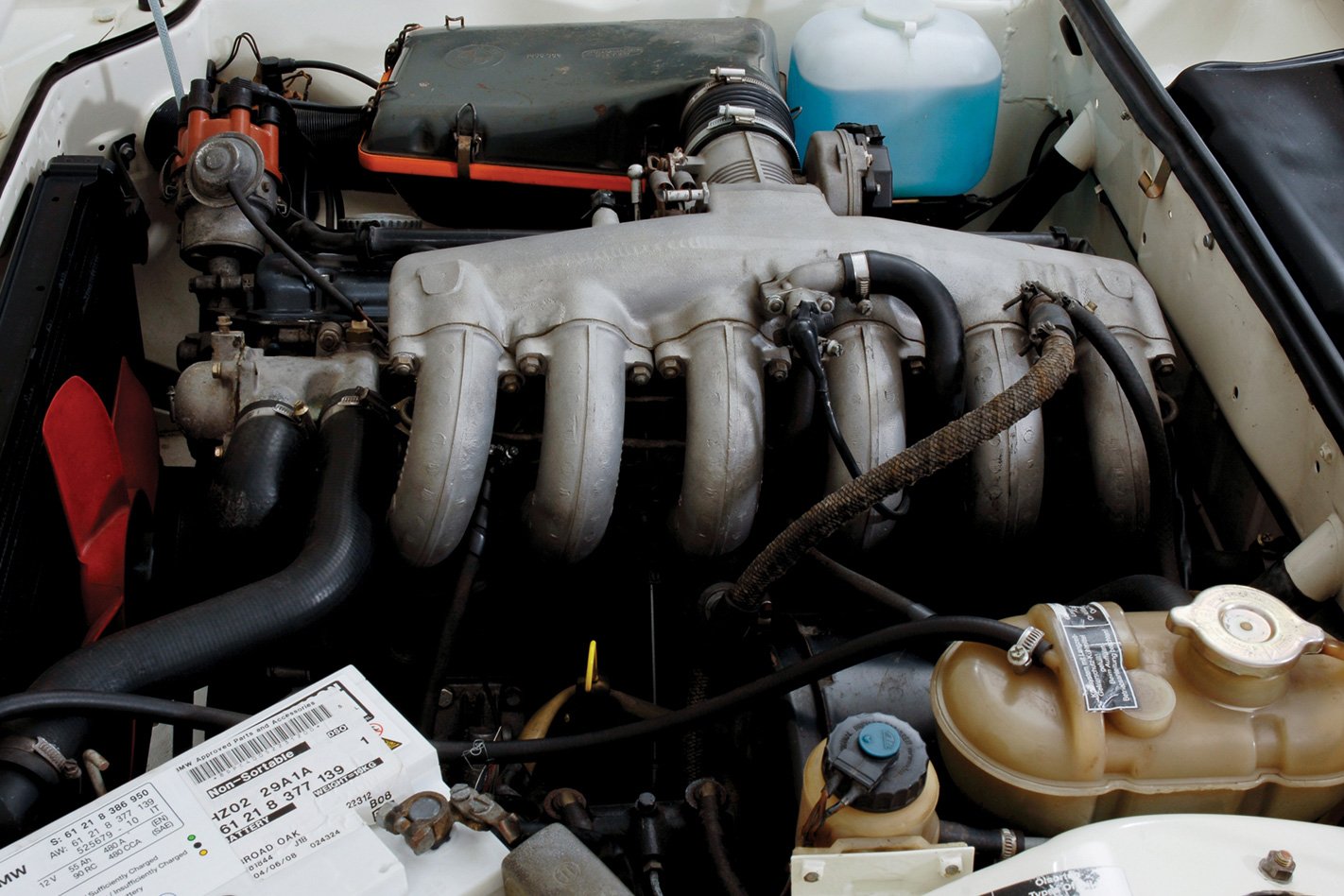
BMW’s M06 (later M30) 12-valve straight-six was destined for a long life in road and competition. Its cast-iron block with alloy head was canted at 30 degrees; early CSLs were 2985cc with twin Zenith carbs, soon superseded by injected 3003cc (149kW/271Nm) to homologate over-3.0-litres. Final ‘Batmobile’ build had 3153cc, 152kW and 286Nm, did 0-100km/h in 7.0sec via four-speed Getrag.
Karmann get it
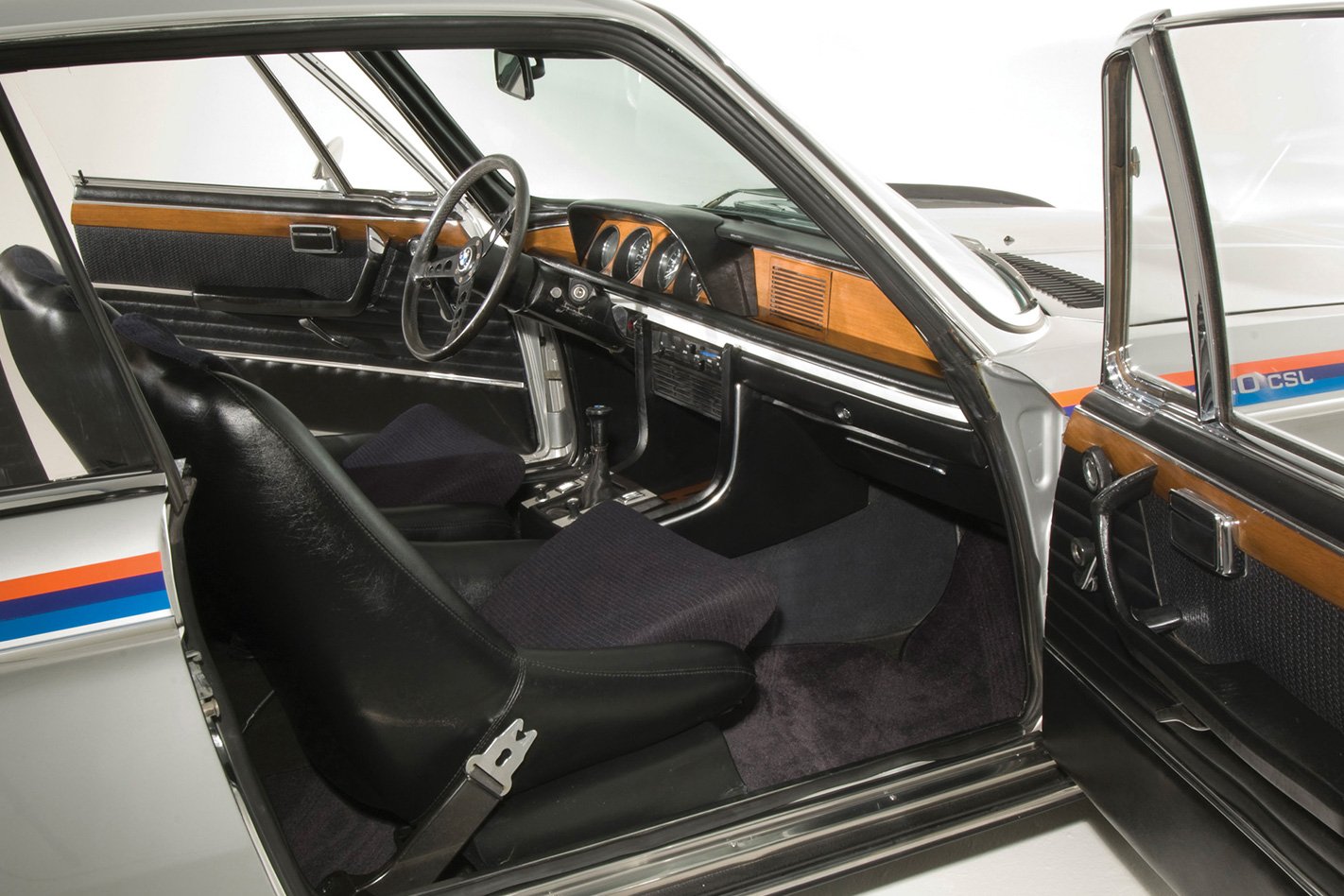
CSLs were built by Karmann coachworks. Airy, light-filled cabins varied between LHD and cushy RHD specs, though Scheel bucket seats, three-spoke wheel and black roof lining were common. German lightweight (pictured) has manual windows, thinner glass, plastic fixed rear side windows. ‘City Package’ was fitted to most UK RHD cars and offered on LHD; included steel bumpers, standard glass, power front and rear windows and a tool kit.
Speed of light
The E9 coupe body was developed from the 1965 2000 CS, with a nose interpreted from the new E3 six-cylinder sedans. CSL had alloy panels and chrome arch extensions to cover Alpina 14×7 alloys. Suspension was 20mm lower; front was by struts with coils, rear by semi-trailing arms with coils, brakes 272mm discs. Car pictured is proper left-hook, lightweight Batmobile.
If you’re after rear-wheel drive, V8 fun in a four-door sedan package that can also carry the family, you’re left with few options when buying new.
Yes, the Chrysler 300 SRT Core still offers American Hemi muscle, however, if you look outside the box to the used market, the Lexus IS F is a prime piece of Japanese wagyu.
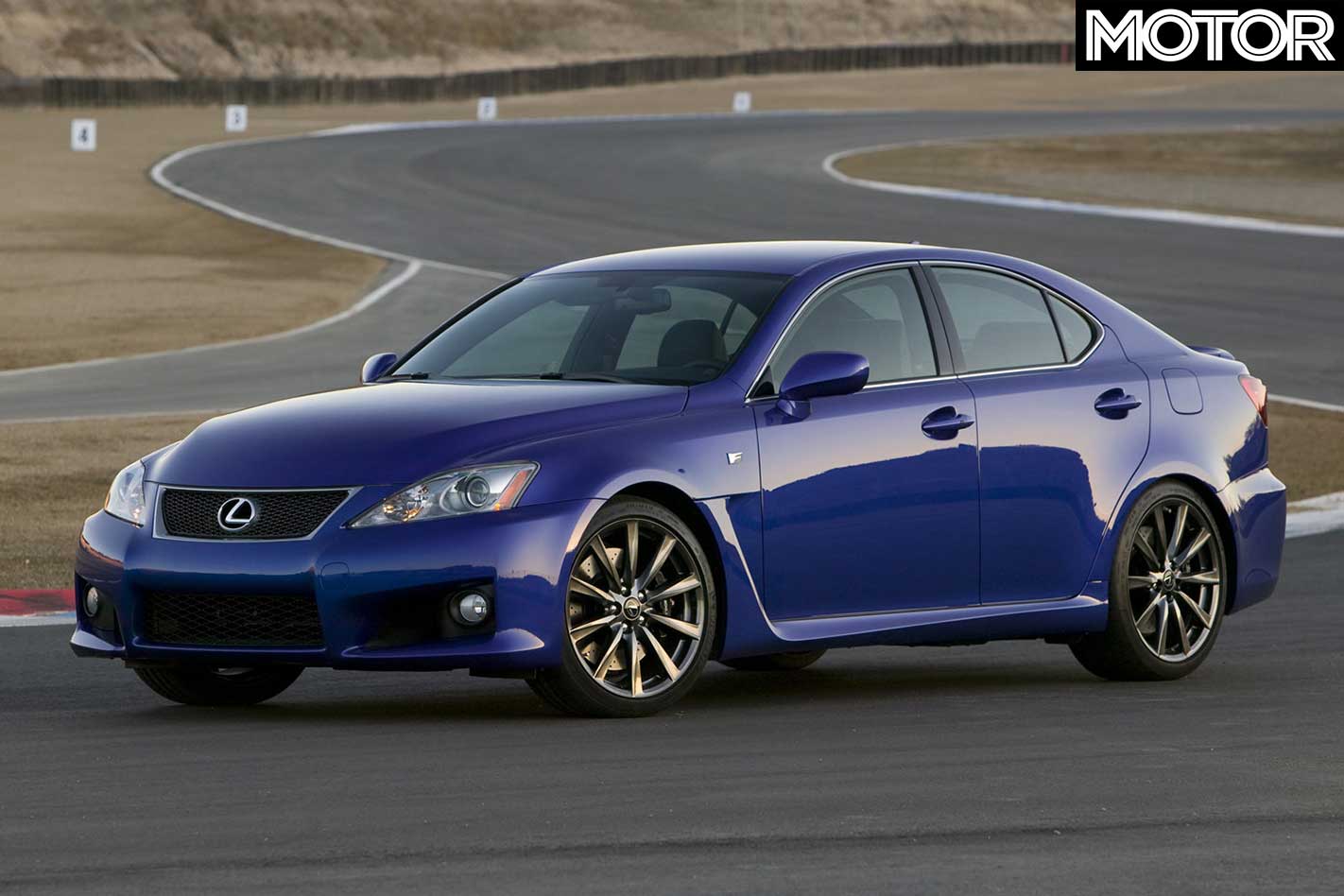
The IS F is somewhat of a forgotten hero, one whose brief was to take on the mighty Germans when it was released in 2007.
With the Yamaha-developed, naturally aspirated 2ur-gse V8 sending 311kW and 505Nm to the rear wheels, it has the meat-and-two-veg ratio in its favour. Using an eight-speed auto, it can land you in licence-losing territory in about 5.0sec, while also being handy through some bends.
In terms of tonal talent the IS F is hard to beat, but the hulking Hemi notches the win. It sounds mega. And it matches the ‘music-video’ vibe of the exterior. Some will love that fact, others won’t.
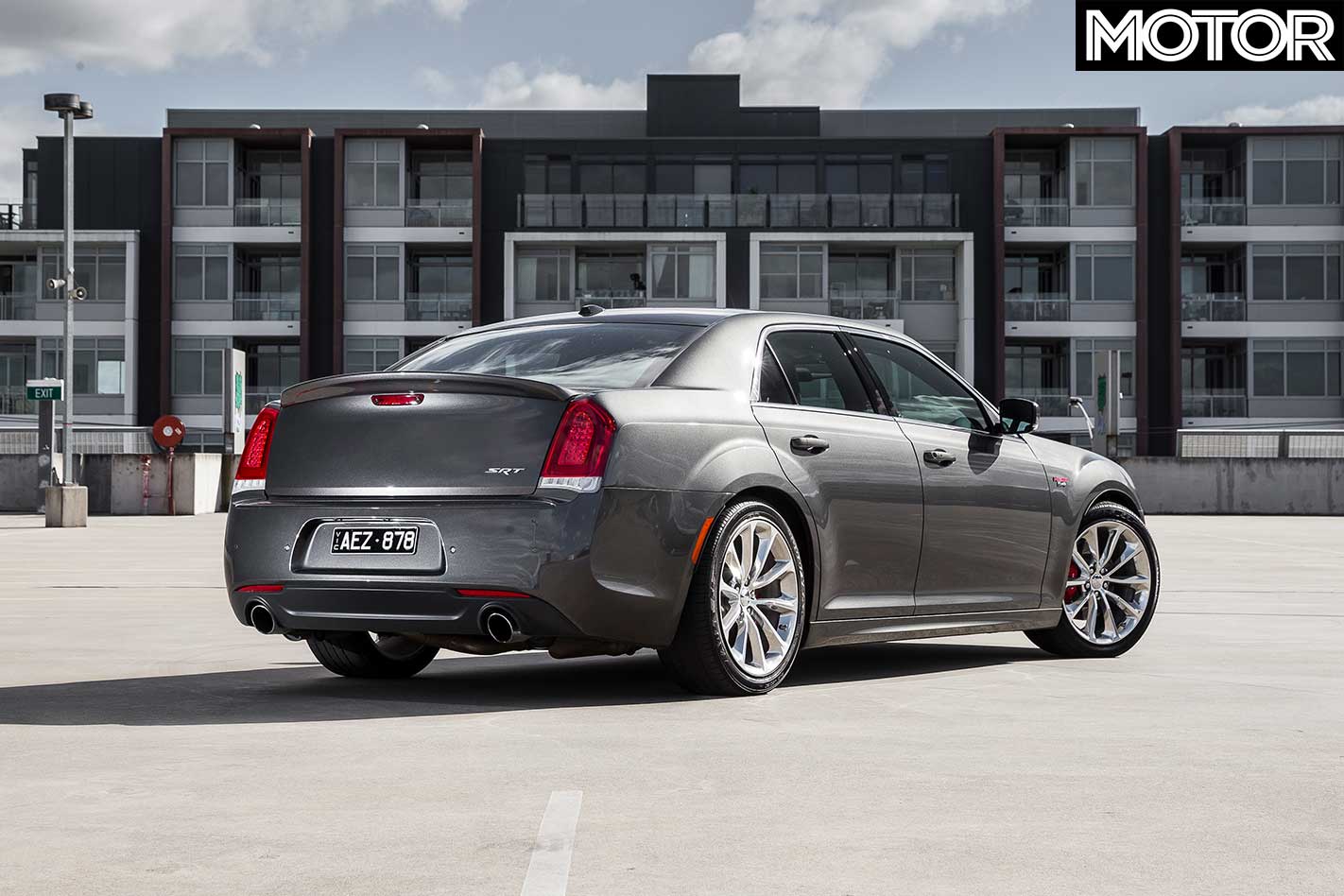
Conversely, it takes a keen spotter to notice exactly what the IS F is – sans unique, double-stacked quad exhaust (functional) and bulging guards, of course.
The 300 SRT Core is about as subtle as a 350kW/637Nm hit to the face. At almost two tonnes it’s never going to win a handling Olympics, but the pure straight-line grunt for the cash is hard to ignore. While the American charms you into wanting it, the added dynamic talent and ‘what’s that’ nature of the Japanese contender pulls rank here at MOTOR. The Lexus IS F certainly shouldn’t be forgotten.
| 2018u00a0Chrysler 300 SRT Core | vs | 2007 Lexus IS F |
| 6410cc V8, OHV, 16v | ENGINE | 4968cc V8, DOHC, 32v |
| 350kW @ 6150rpm | POWER | 311kW @ 6600rpm |
| 637Nm @ 4250rpm | TORQUE | 505Nm @ 5200rpm |
| 1946kg | WEIGHT | 1690kg |
| 4.68sec (as tested) | 0-100KM/H | 4.9sec (claimed) |
| $65,000 (new) | PRICE | $40,000-$75,000 (used) |
Classies Watch
Modern classic tempters we found on tradeuniquecars.com.au
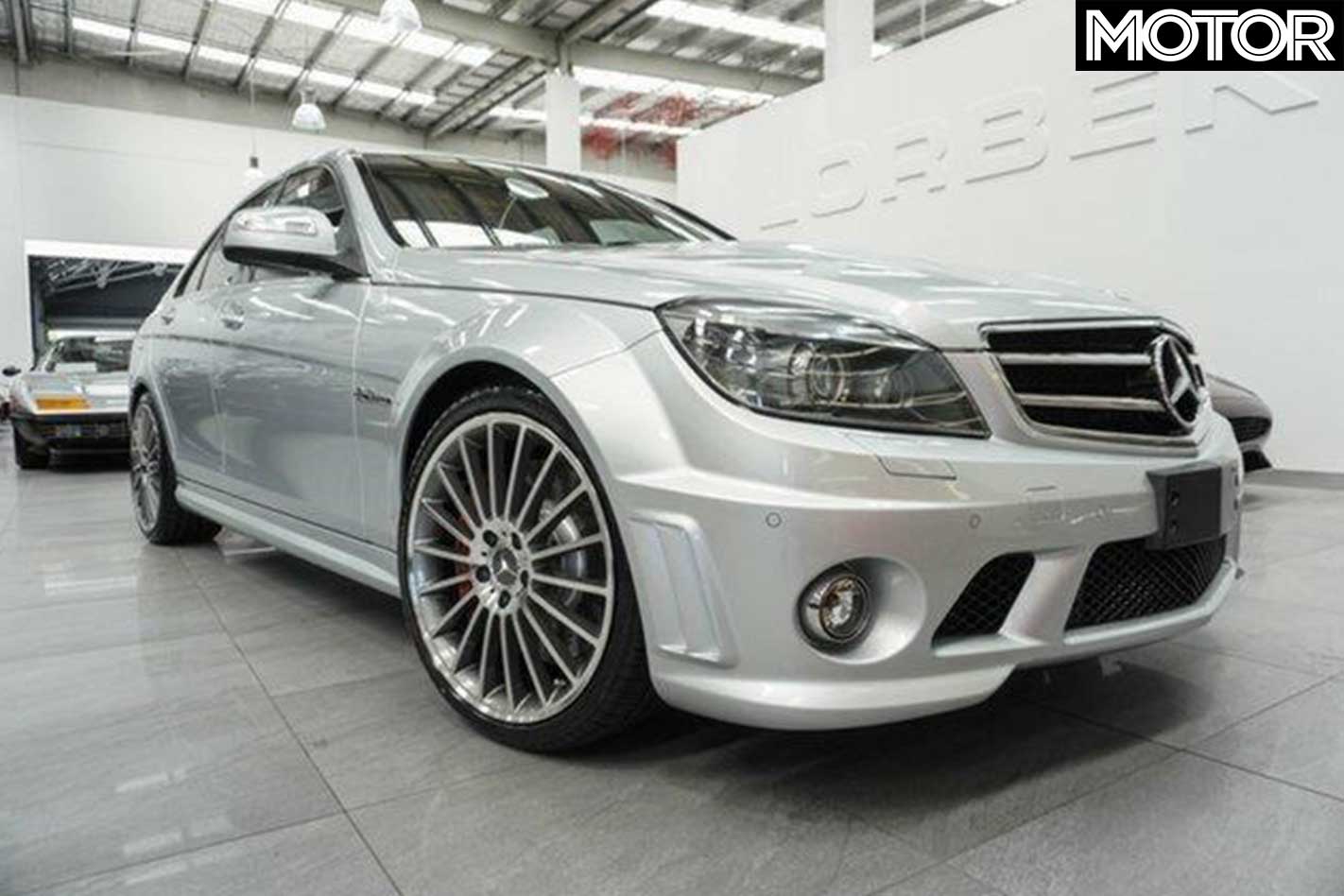
2008 Mercedes-Benz C63 AMG – $54,000 6.2L V8, 336kW/600Nm, 63,700km, Melbourne, VIC Big V8 with plenty of grunt paired with an addictive sound. Rear likes to slide.
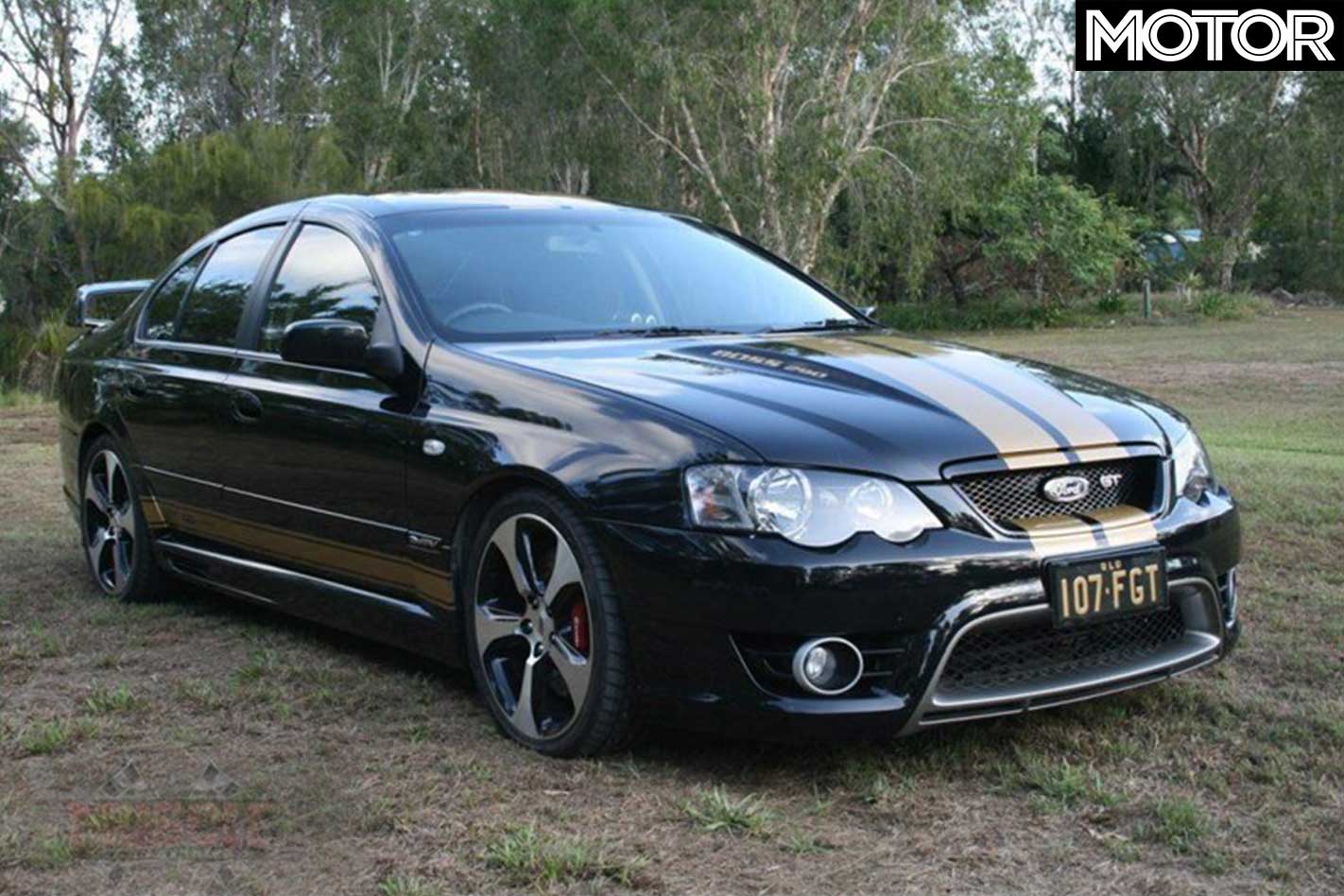
2007 FPV GT 40th Anniversary – $66,000 5.4L V8, 290kW/520Nm, 13,000km, Castle Hill, NSW Celebrated 40 years of GT, launched R-Spec handling package, only 200 built.
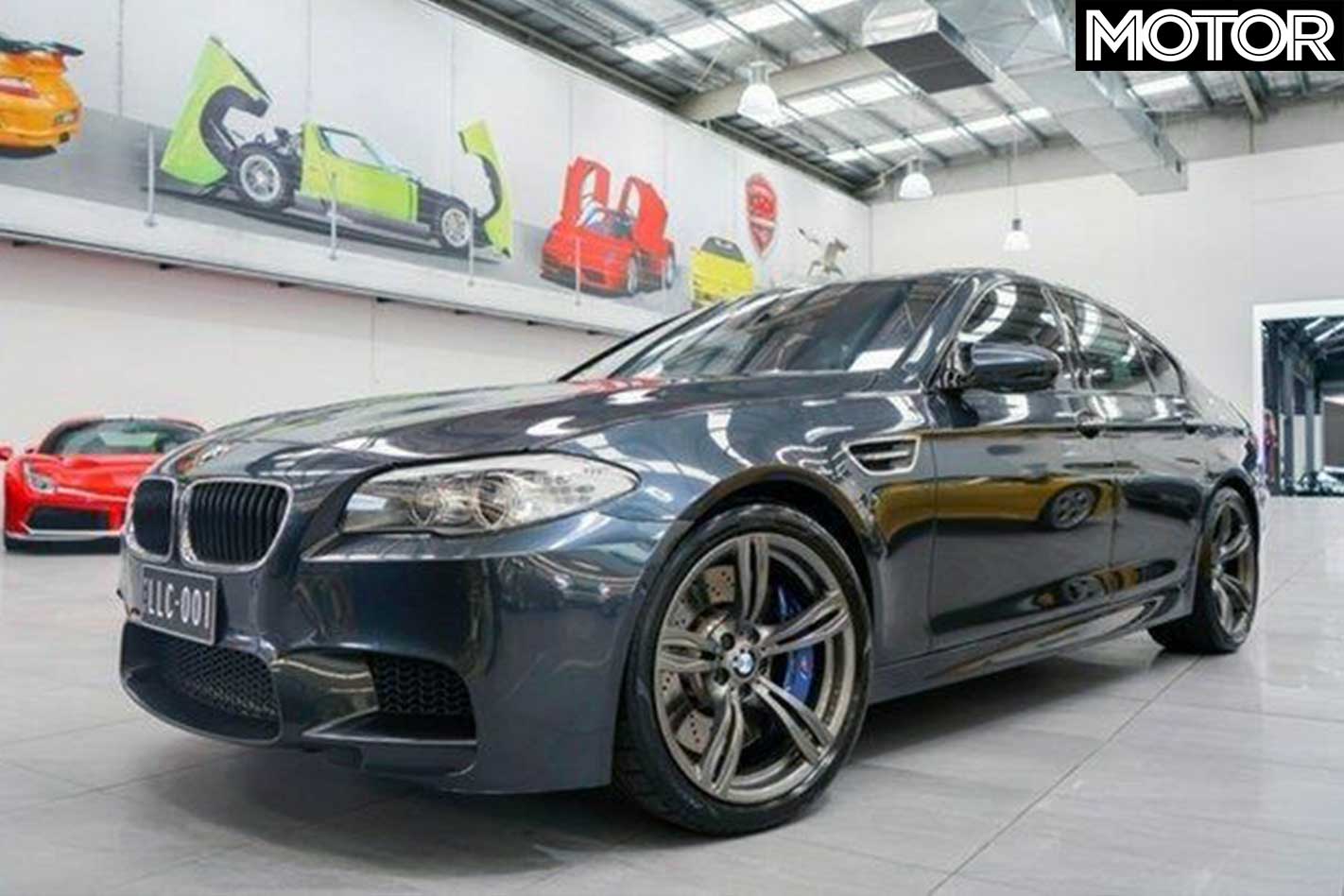
2013 BMW M5 – $73,980 4.4L V8, 412kW/680Nm, 10,500km, Melbourne, VIC Twin-turbo, rear-drive sedan. Hard to tame, but brilliant when you do.
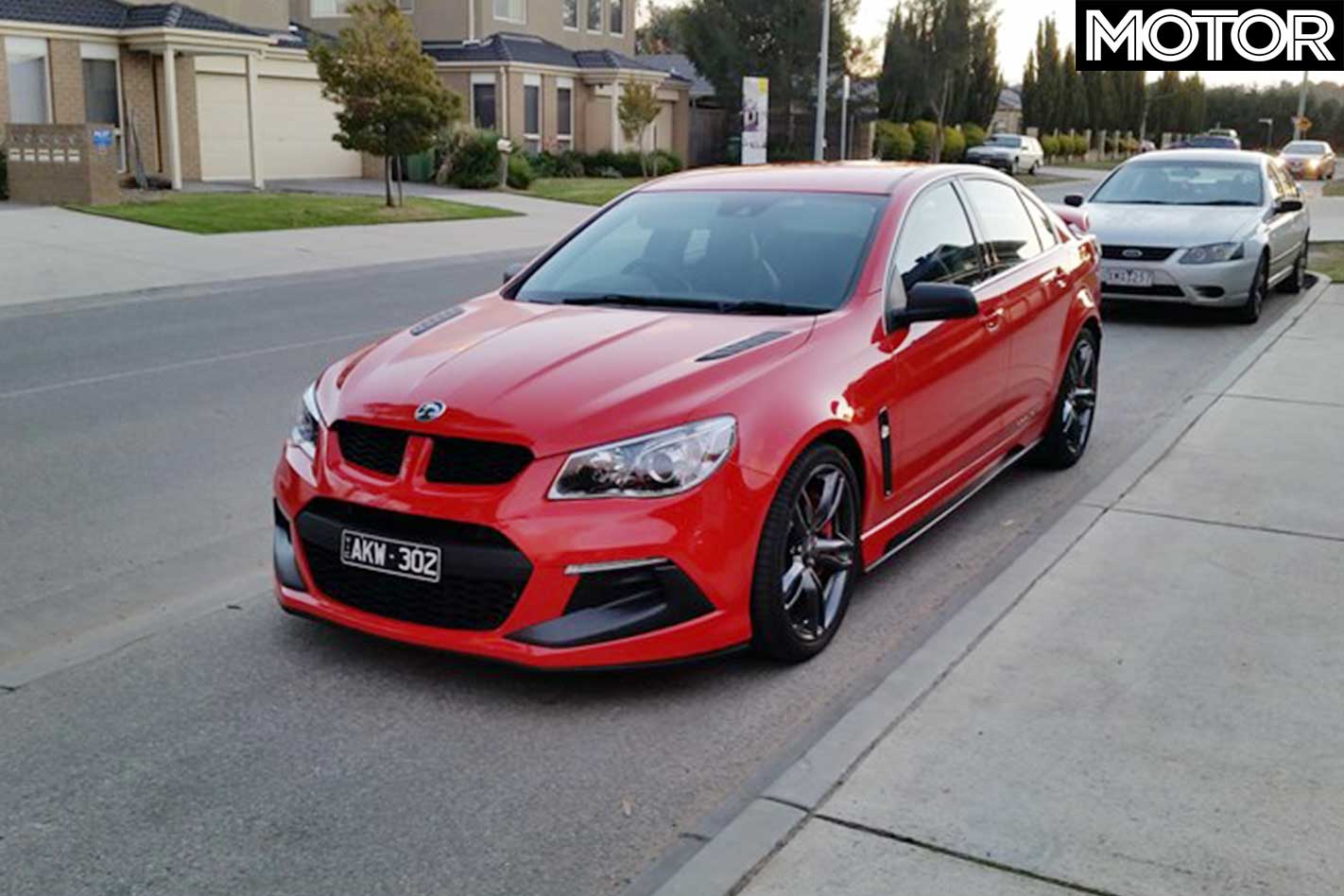
2016 HSV Clubsport R8 – $72,500 6.2L V8, 410kW/691Nm, 14,500km, Bittern, VIC HSV sent the Clubsport out on a supercharged bang. One of the greats.
Listen up, Australia. Your car could have a lethal explosive inside it, and car manufacturers are making it increasingly easy to replace these potentially life-threatening Takata airbags – free of charge – in recall-affected cars. So, why haven’t you had yours fixed yet?
The Australian government set a deadline of July 1 – which has just passed – for every manufacturer to display a complete list of identification numbers for their Takata-affected models. That means you should know by now whether your car is in need of a replacement airbag.

Unfortunately, despite the seriousness of the situation, many manufacturers are still finding themselves pleading with car owners to go in and get their faulty airbags swapped out.
As a matter that could literally translate to life or death (more than 20 people have been killed globally, one in Australia) it’s fair to assume more owners would be proactive about discovering whether or not their vehicle is fitted with a recall-affected Takata airbag. Faulty units could send shards of metal and plastic into the cabin in the event of a crash.

In an effort to show how simple the recall process is, we’ve taken it upon ourselves to document the procedure from start to finish using a 2009 BMW 3 Series wagon as an example.
Our vehicle’s registration number (tied to the VIN) was entered into BMW Australia’s recall website and we immediately found out the car was due for not only the replacement of a faulty Takata driver-side airbag, but also a faulty positive battery terminal.

From there, we entered our contact details and submitted a request for a call back regarding the recall. Within a few hours, we received a call from our nominated dealership (Brighton BMW) offering a repair slot the following week, along with the option of a loan car for the day.
The government insists you must be offered a loan car or reimbursed for replacement transport in the event that your repair takes longer than a day; however the reality is that most repairs will take a few hours.
That said, our car’s repairs took less than a day and a loan car was offered for the duration – so there will be variance between manufacturers dependant on availability, location and policy.
Upon arriving at the dealership for the repair, a valet took the car and offered a coffee while waiting for a service advisor. A short wait later, we were sat with the service advisor who explained the recall and flicked us the keys to a loaner 1 Series. They even asked if they should wash the car – we obligingly accepted.
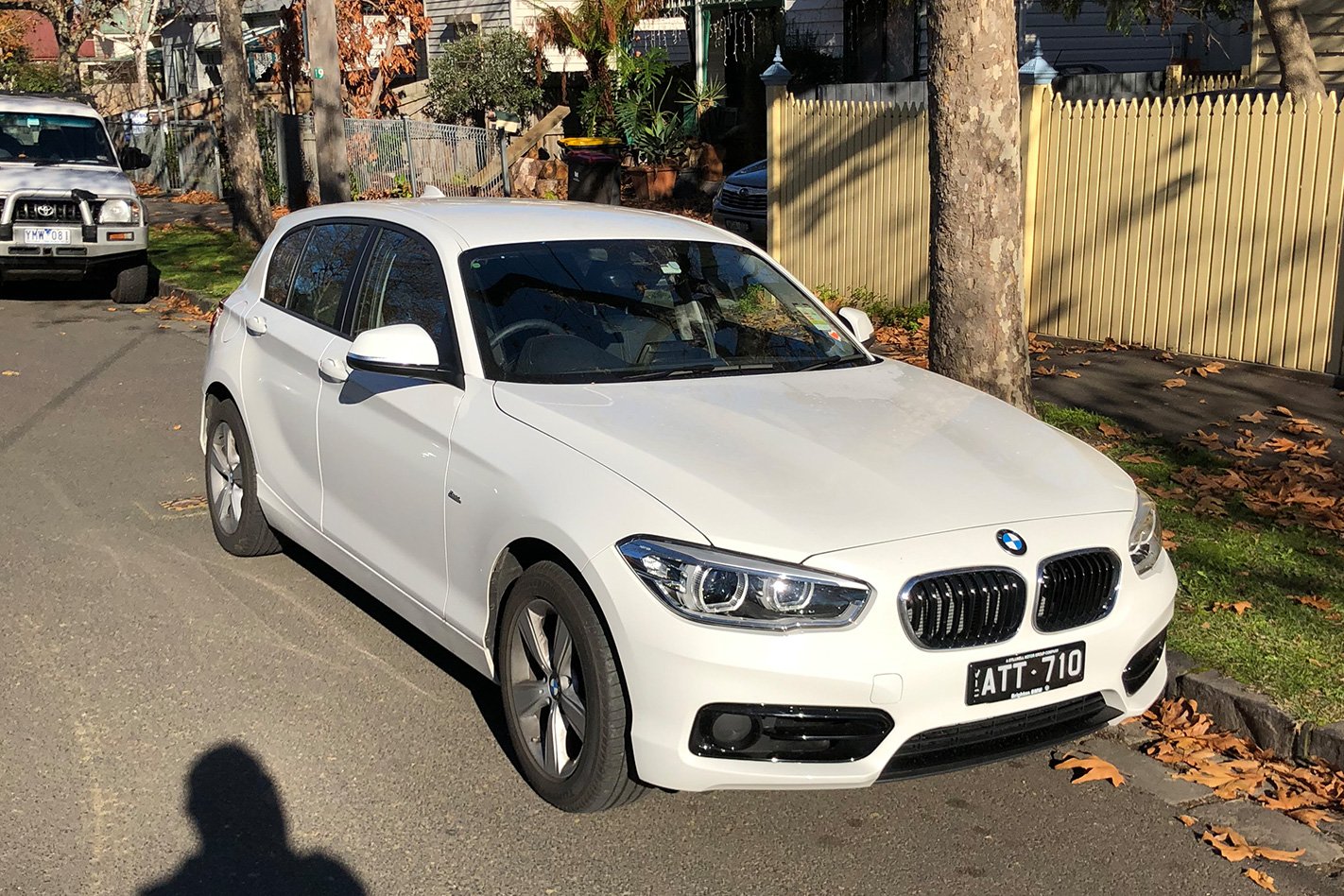
Toward the end of the day the dealership rang and explained that everything had been taken care of and the car was available to pick up any time before their 6:00PM close.
At the return handover, we received a written rundown of what repairs were performed and were quickly back on our way with the fixed 3 Series. Simple as that.
Of course, every manufacturer and dealership is different so your experience may vary, but the handling seems to be relatively efficient as it is in the interest of all OEMs – and you – to get the affected cars fixed.

Car companies can’t track down every vehicle owner from their end, and some have been impossible to locate and contact. In those instances the prevention of further loss of life relies on car owners doing their bit. You owe it to yourself and your passengers to get your car fixed. It’s easy, we promise.
Check here to see if your airbags need replacing.
