The new Mercedes-AMG G63 has been announced for Australia, with pricing starting slightly higher than where the previous model left off.
Deliveries are expected to kick-off in Q3 2018, with prices before on-roads and dealer delivery starting at $247,700.
This makes the G63 almost $15,000 more expensive than it was previously, not that most customers will miss an extra little wad of cash.
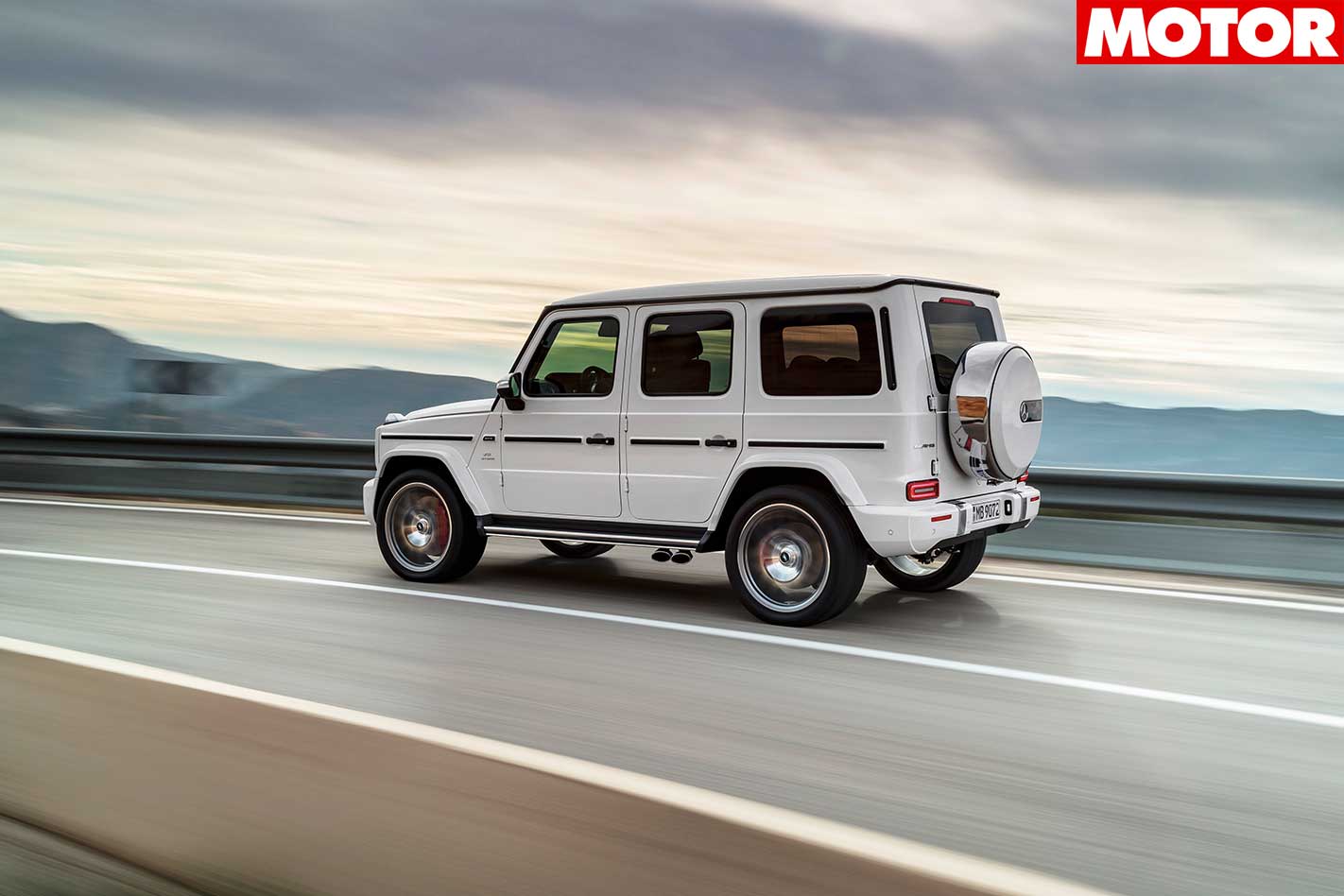
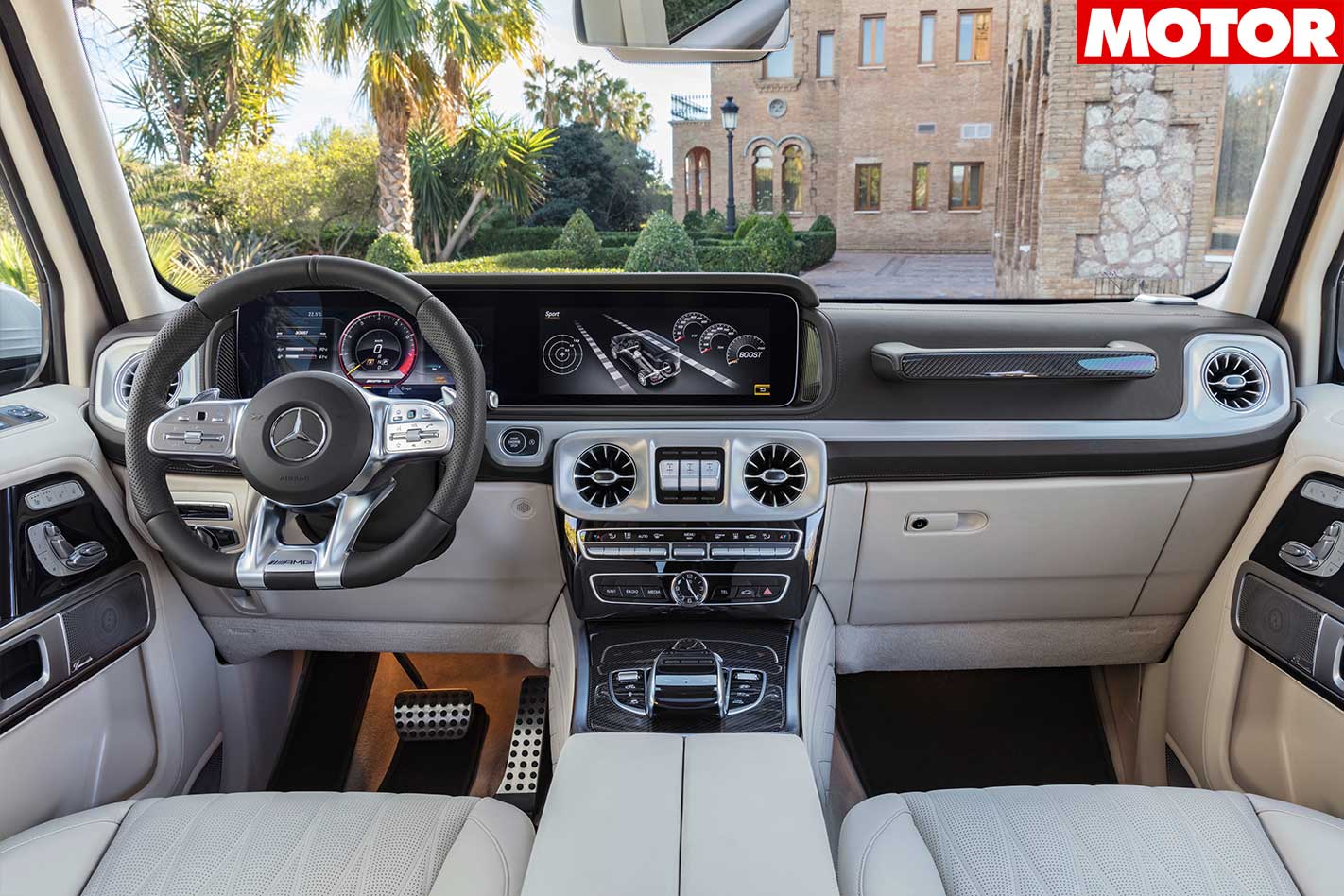
As standard, the G63 scores improvements such as two new 12.3-inch widescreens, a new infotainment system, ‘Multibeam’ LED headlights, AMG Ride Control adaptive damping, as well as updated styling inside and out.
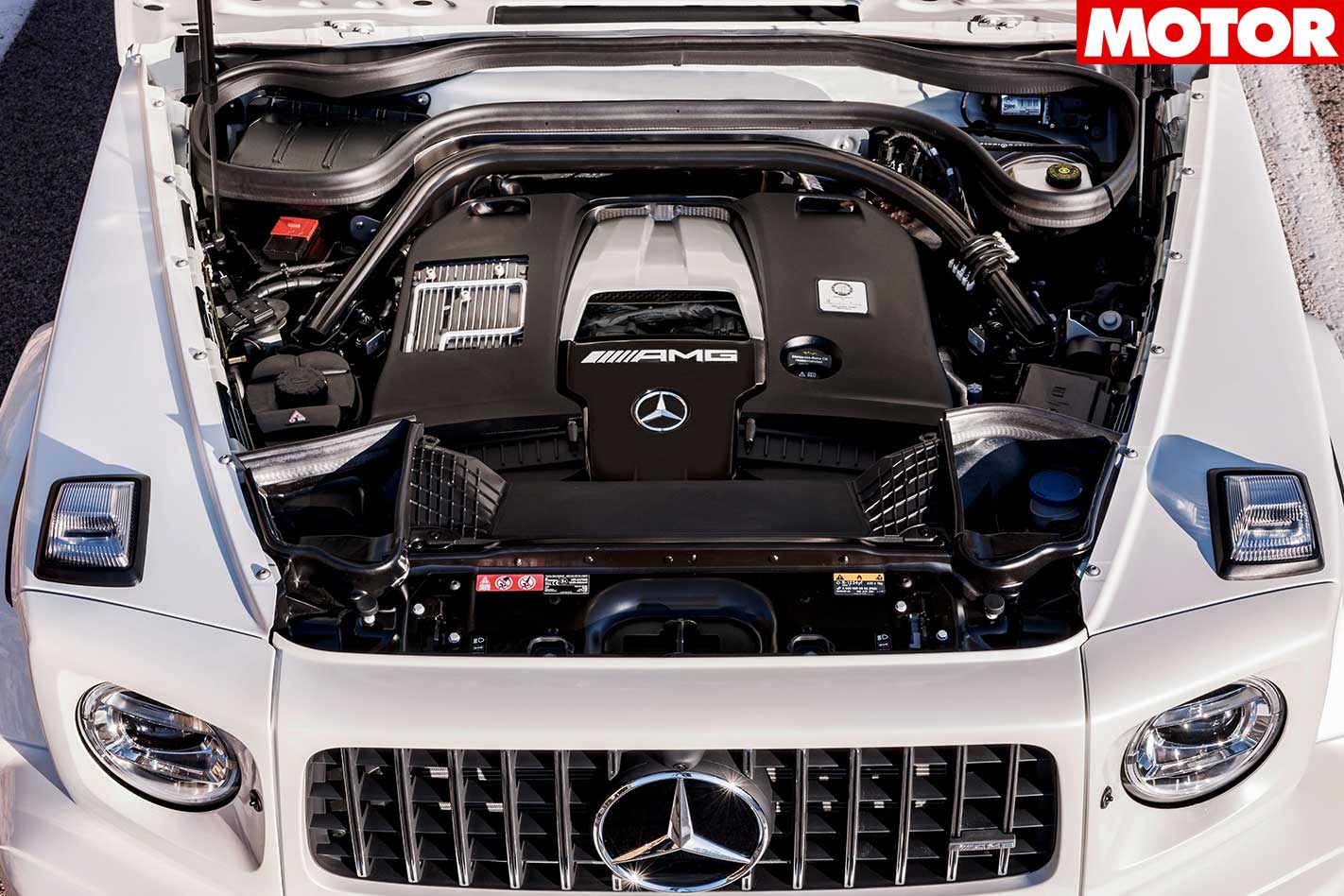
The G63 is also now powered by a 430kW/850Nm version of AMG’s prolific 4.0-litre twin-turbo V8, rather than the old 400kW/760Nm 5.5-litre twin-turbo unit.
A night pack is also available for $5900, which includes dark tinted lights and mirror housings, as well as black trim and black 22-inch AMG alloy wheels.
Also available is the AMG G63 Edition 1, which includes the night pack, but adds Nappa leather seats, an AMG Performance steering wheel, and red-pepper carbon fibre interior trim. The Edition 1 costs an extra $19,500 over the standard G63.
“It was important for us to tie in with the original character on account of the cult status the G63 enjoys with our customers and fans.”
TELL ME ABOUT THIS CAR
The Holden Calais V is the non-performance flagship of the new Holden ZB Commodore range, second only to the VXR grade in the Commodore hierarchy.
Priced from $51,990, the ‘V’ variant comes standard with a V6 engine and all-wheel drive to help separate it from the front-drive 2.0-litre regular Calais that sits beneath it. Holden’s new large car offering has changed significantly from the rear-drive, Australian built car that preceded it, but the 2018 ZB Calais V still has lots of things in its favour.
STRENGTHS
- Driving position – With seat rails mounted low in the chassis and with your feet stretching out ahead of you, the Calais offers a relaxed driving posture and decent vision ahead. A head-up display also helps keep your eyes from being buried in the instrument cluster, with bright and clear graphics that also display navigation info. There’s plenty of adjustment to both seat and steering column as well.
- Rear seat vision – While the front seats are mounted low, the rear bench is mounted higher to give back seat passengers a better view to the front and through the side glass. Even though the Calais has a high beltline, even kids should be able to look at the surrounding scenery from the back seat.
- Cabin size – Rear seat space in most dimensions is exceptional, with loads of legroom, knee room and elbow room for a pair of adults. While the cabin isn’t quite as wide as the last-gen VF Commodore, you can still fit three full-growns across the rear bench provided they’re reasonably slim-hipped.
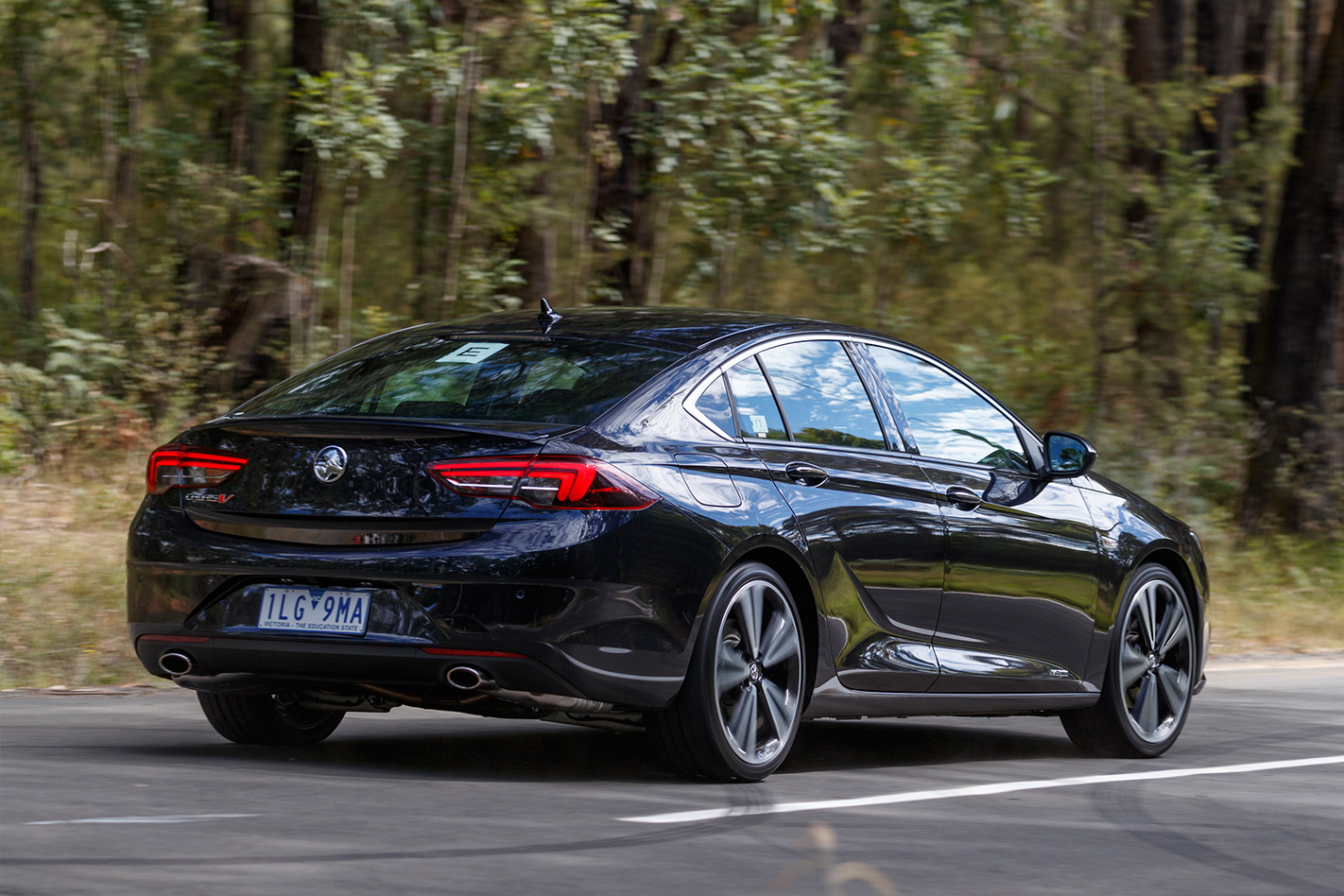
- Power – There’s no more V8 option for the Calais, but the 235kW/381Nm 3.6 litre that’s for now the most powerful engine in the new Commodore range is no shrinking violet. It needs plenty of revs to feel its best, but you’re rewarded with a pleasantly sporty V6 note whenever you ask it to work hard.
- Power – The other kind of power, we mean. Electrons are abundant in the Calais V’s cabin, with a traditional 12-volt outlet at the base of the centre stack being augmented by a wireless phone charging pocket and a single USB port in the centre box (which also enables smartphone mirroring), and two more USB charge ports at the rear of the centre console for back seat passengers.
- Surprising agility – The Calais V can really be thrown around with a significant amount of vigour without getting out of shape, something that’s not exactly expected of a mid-size or large sedan – especially one that’s not pitched as a performance option. The front end is grippy, the rear end is augmented by a clever active differential, and the suspension tune has been fettled locally by Holden to improve handling. With stability and a high resistance to understeer, the Calais V inspires confidence behind the wheel.
WEAKNESSES
- Rear seat headroom – Remember how we said rear seat space was generous in “most dimensions”? Unfortunately, headroom isn’t one of them. While the elevated seat base is great for promoting outward vision for those in the back seat, it – combined with the sloping fastback-esque roofline – compromises head space for those above average height.
- Gearbox isn’t entirely cooperative in manual mode – Sluggish response to manually-commanded upshifts often see the engine hit redline before the shifts occur, which further confuses the computer and delays gear changes even longer. Furthermore, the manual gate on the shifter is around the wrong way, with an unnatural pull-to-downshift and push-to-upshift action. One more reason to use the steering wheel mounted paddles.
- Performance – While that naturally-aspirated V6 definitely sounds great, it doesn’t exactly leap off the line like some other V6-engined rivals do – Stinger being one. Not a huge drawback considering the Calais V isn’t a marketed as a sporty model, but it doesn’t feel like there’s enough of a performance advantage over the turbo 2.0-litre four of the regular Calais.
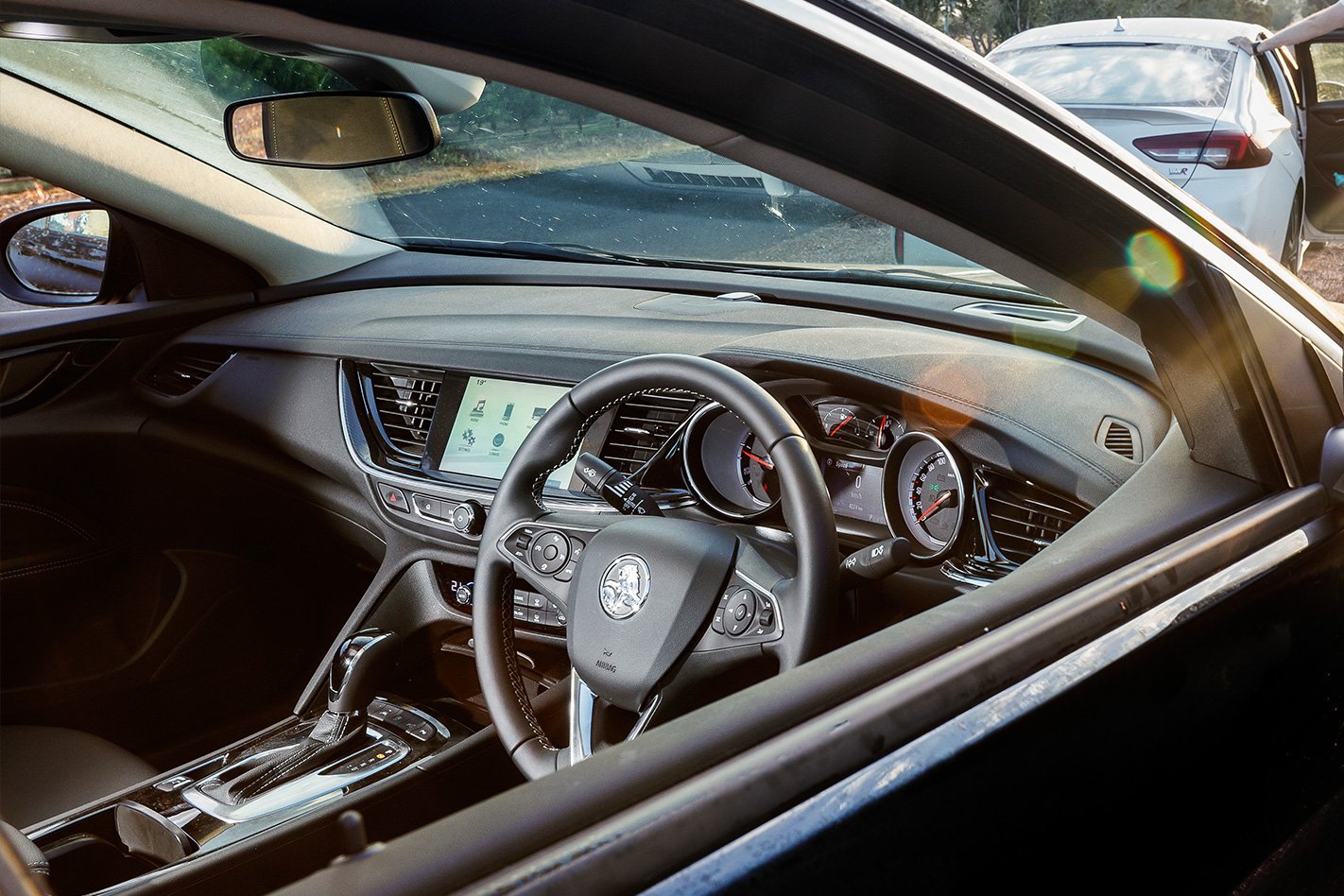
- Cabin quality – Sadly, the Calais V simply isn’t quite up to the same standard as the old VF with it comes to trim fit and finish. There’s an overabundance of black plastics, with some questionable alignment between door card and dashboard taking attention away from what is otherwise a fairly handsome design. The finish might be fine for a lower-grade Commodore, but those buying a Calais V would rightly expect a higher standard of trim.
- Ride quality – The Calais V comes with 20-inch alloys and conventional dampers, which introduces a stiffer ride than both the 18-inch wheels of the regular Calais and the 20-inch wheels and adaptive dampers of the top-grade Commodore VXR. It’s actually quite agreeable on long highway stints, but choppier tarmac shows up its shortcomings.
ARE THERE ANY RIVALS I SHOULD CONSIDER?
Skoda Superb 206TSI 4×4, Toyota Camry SL V6, Ford Mondeo Titanium
Buying a new car often results in conflict between your heart and mind.
There’s often a big difference between what you want and what you need or can afford. That doesn’t mean you shouldn’t buy an enjoyable car, just make sure it suits your needs and budget so there are no regrets later on.
| How to choose your first car
Once you’ve settled on the type of car it’s time to compare brands and models. Even if you’re rusted on to a certain brand, checking out other carmaker’s products could surprise.
The best thing you can arm yourself with throughout the whole choosing and buying process is knowledge. Get your choices down to a short list and compare them by reading motoring reviews, value reports, ANCAP safety ratings, and customer satisfaction reports. Word of mouth is good, though some owners are quite biased toward their chosen ride.
Once you’ve narrowed down your choices, head to a showroom and spend some time getting in and out of the car, ask the salesperson about how things work and go for a test drive making it clear you’re still shopping around.
CHOOSING THE RIGHT CAR
- Work out your budget and stick to it – include finance repayments, insurance, maintenance, and running costs
- Determine the mission your new car will mostly carry out?
- Think about the size you’ll regularly need?
- Combine your needs with the preferred style of vehicle
- Find out what equipment and safety features come as standard and what you’d need to pay more for
- Research is your friend and will help avoid disappointment and potentially save a lot of money
- You’ve used your head, now that you’ve narrowed things down to two or three comparable models give let your heart help you decide.
AT THE SHOWROOM
- Remember pros and cons you’ve read about in reviews during your research and see how they’ll affect you.
- Interior features – look for what you like, what might bug you and don’t forget to consider backseat passengers. If you have kids brig them along, you’ll be amazed what they notice back there.
- Check seating comfort, position and adjustment – check lower back and under thigh support, and make sure the driver’s seat can go low or high enough

- Entry and exit – do doors open wide enough? Is it easy to climb in and out, do you hit your head? Such considerations are particularly important with for tall folk, or children and older people.
- Check boot space and cabin storage
- Upholstery and other materials – will they go the distance with kids or if you use the car for work?
- Infotainment features and usability (ask the salesperson to demonstrate and sync your phone).
THE TEST DRIVE
The good thing testing new cars is you’re not really looking out for mechanical issues meaning it’s all about how you feel about the car itself.
- Again, Remember pros and cons you’ve read about in reviews during your research and see how they’ll affect you.
- Before you get to the caryard, check out a map and identify different kinds of roads in the area. Don’t just drive around the block. Find some bends and try and get on a freeway.
- Try bringing someone with you to sit in the back seats. Is there adequate ventilation, is it easy to see out the side and front, is there adequate under thigh support, does it feel stable back there through bends?
- If driving quicker than 80km/h listen out for wind, road or tyre noise.
- Crank up the sound system to see how it stacks up amidst the driving din
- If it’s a manual check if gears feel smooth and fun to use – if they don’t you might not necessarily get used to it.
- If it’s an auto, make sure you know what kind of transmission it is as they have different characteristics. Detailed car reviews should provide an idea of what to expect.
- Feel how the car rides over bumps. Is it too harsh, or is it too soft meaning you get secondary bounce?
- Most importantly, do you feel happy driving this car, and do you think you’ll feel happy driving it in 12-months’ time?
SEALING THE DEAL
- Research is particularly important here. If you know the car’s price and features you’ll avoid the long sales pitch and be on the front foot when it comes to securing a deal.
- Know your budget and don’t try and be swayed into options or after-market products you don’t need.
- Decide what you want to spend and declare that. Don’t ask the salesperson how low they’re prepared to go because they won’t go there.
- Be realistic about the price you’re asking and the deal is more likely stress free – five to 10 percent off the on-road cost is a reasonable start.
- If you’re not comfortable with negotiating wait for sales events where you’ll often avoid on-road costs and score extra equipment.
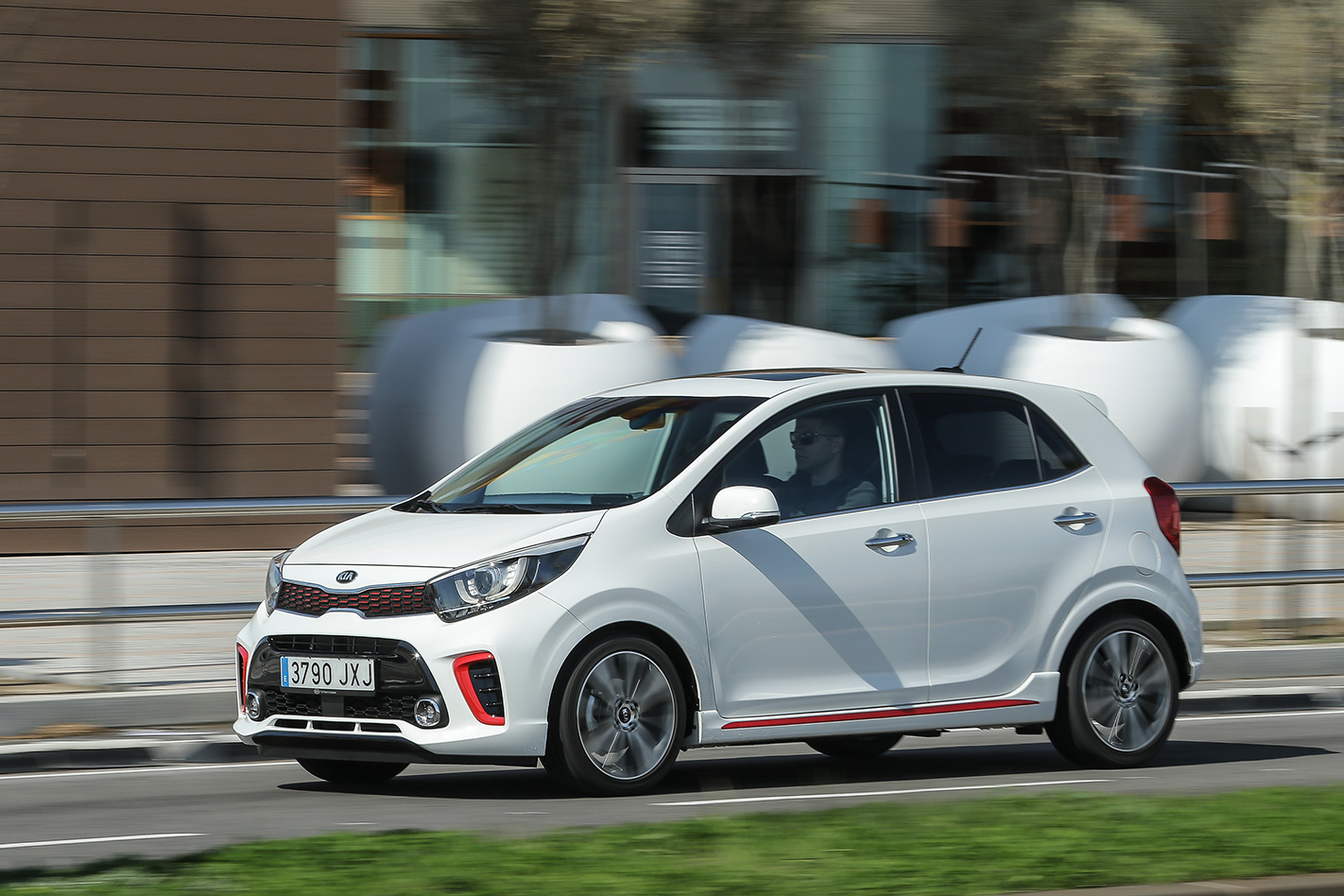
Kia Australia has confirmed it is adding a sporty-looking GT-Line spec to its Picanto micro-hatch range, to sit atop the sole ‘S’ variant that’s currently on offer.
The GT-Line was revealed last year in Europe alongside the 1.0-litre turbocharged GT variant. But while it shares the GTs looks, it retains the naturally-aspirated 1.2-litre four-cylinder 62kW/122Nm engine currently offered in the S.
Visually, the GT-Line adds a sporty body kit, dual exhaust tips, 16-inch alloy wheels, projector headlights with LED daytime-running lights, LED tail-lights, ‘premium’ leather-look/cloth seats with red accents, and alloy sports pedals.
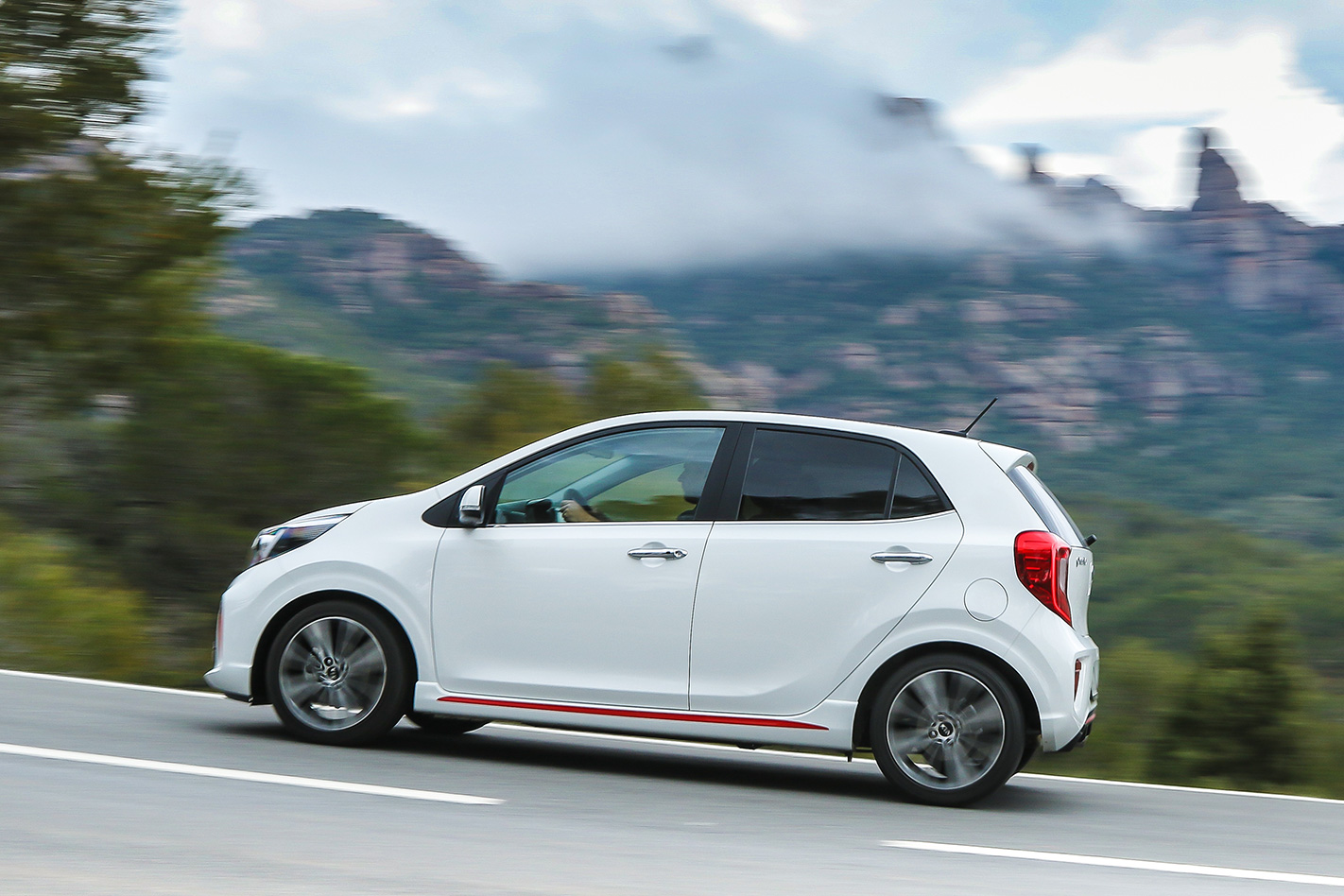
The extra features are identical those included with the special AO Edition Picanto earlier this year as part of the Korean carmaker’s sponsorship deal with the Australian Open tennis. While the AO Edition was a limited affair, the GT Line will be a permanent fixture in the Picanto range from June this year.
As well as the athletic trim, it will come with everything in the Picanto S including autonomous emergency braking with forward collision warning as standard, reversing camera with rear parking sensors, automatic headlights, and a 7.0-inch touchscreen infotainment unit with Apple CarPlay and Android Auto connectivity.
| Read next: Kia Picanto GT set to become most affordable performance car in Australia
WhichCar understands Kia is still evaluating the boosted Picanto GT for Australia, and it’s hoped the addition of the GT-Line to the local mix is a foot in the door for the hot micro hatch.
With a boosted three-cylinder engine, the Picanto GT jumps in power to 74kW and 172Nm.
It remains unclear whether the GT-Line will be offered in both four-speed automatic and five-speed manual guise, however the AO Edition was only sold with a self-shifting gearbox.
Kia Australia chief operating officer Damien Meredith told WhichCar late last year the Picanto GT will only be sold with a manual when it eventually comes to Australia.
Pricing and official confirmation for the GT-Line will be announced closer to its local launch.
It always went that if you wanted a Commodore, but needed something just a bit more comfortable, you’d buy a Calais.
Now, it’s much the same, except the Commodores are coming from Germany, and you can’t get one with a V8.
But it’s not all bad, because the new Calais-V is a pleasant surprise.
Starting with the basics, it’s powered by a 3.6-litre atmo V6, putting power to all four wheels. A maximum of 50 per cent of that will head rearward.
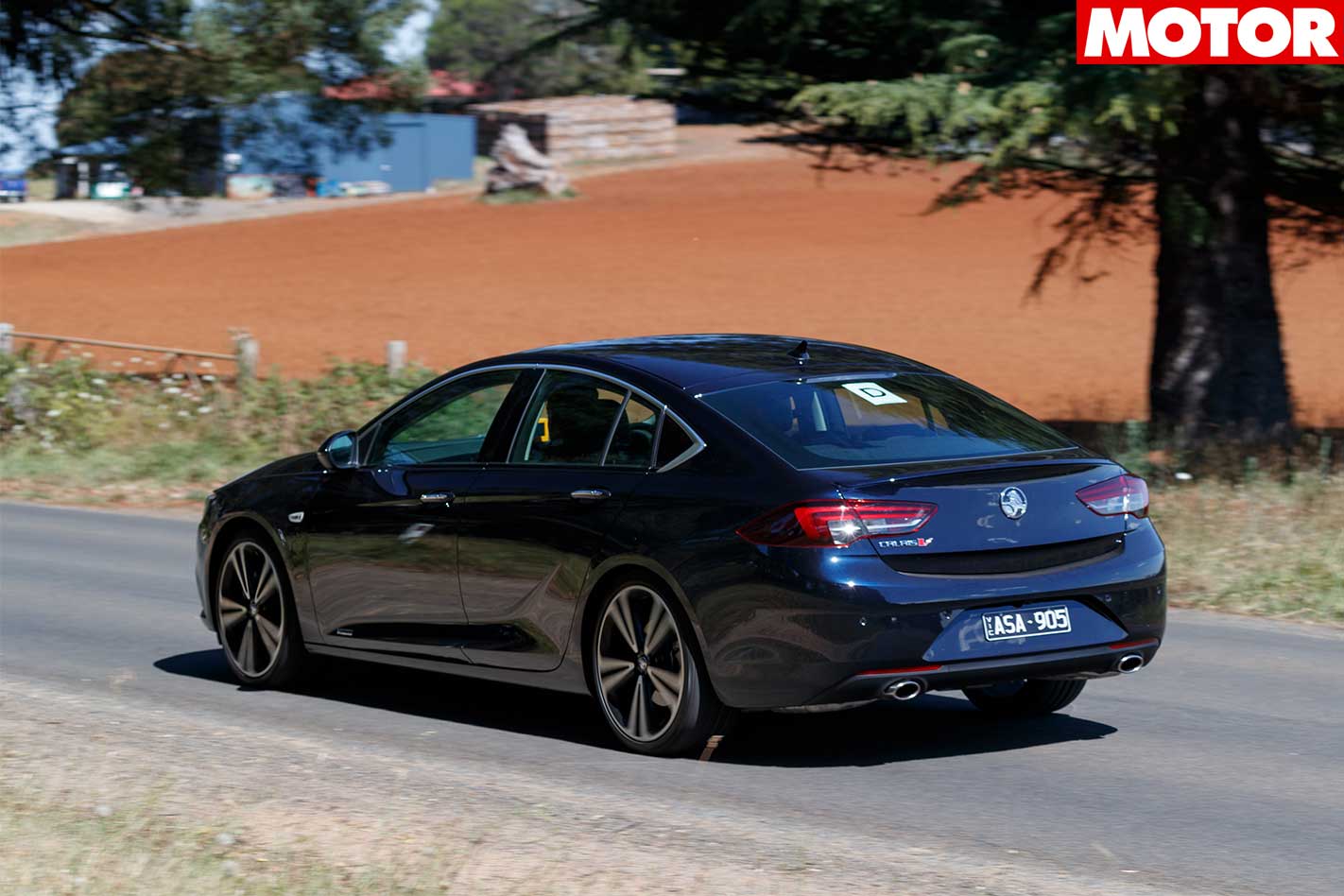
Compared with the old V6, it’s also a more powerful engine, making 25kW/31Nm more than its predecessor. It does, however, need to be revved a bit harder to hit peak potential.
But match that extra grunt with all-paw grip, and it makes for a surprisingly capable motor. The gearbox is smooth, too, but a few little oddities spring up here and there.
Nine close gears make for a lot of paddling if you’re in manual mode, and second and third are almost indistinguishable when accelerating.
The closeness of its gearing does make it quite smooth if you leave it be, even if the ‘box sometimes picks a higher gear than you’d like.
So, it’s not particularly sharp or fast, but once you’re approaching 100km/h it can still be enjoyable down a winding road.
Or, as we found during testing, a gravel road. Our intended route was blocked by a force of nature (we think a branch fell off a tree), so we took the detour suggested by an officer in a VF wagon.
It became clear that the suspension had indeed been tuned to suit Australian conditions, as the only noticeable detriment to its ride along a somewhat smooth gravel track was the fact it rides on 20-inch wheels.
The AWD also made getting along with the loose surface quite easy in Sport mode, which adjusts the system and engine response for more spirited driving. So that’s a tick for dealing with Aussie conditions.
Back on a proper road, and the chassis and suspension were again impressive, the ride and steering being firm enough to read the road, but not so stiff that the car feels built to tackle said road.
It’s also wearing excellent Continental SportContact 6s, the same rubber found on the Civic Type R, our Performance Car of the Year, and just over 9.5-inches wide in this case.
The downside to all this grip is that it’s not as fun to drive as a VFII, even if the interior is a little easier on the eyes.
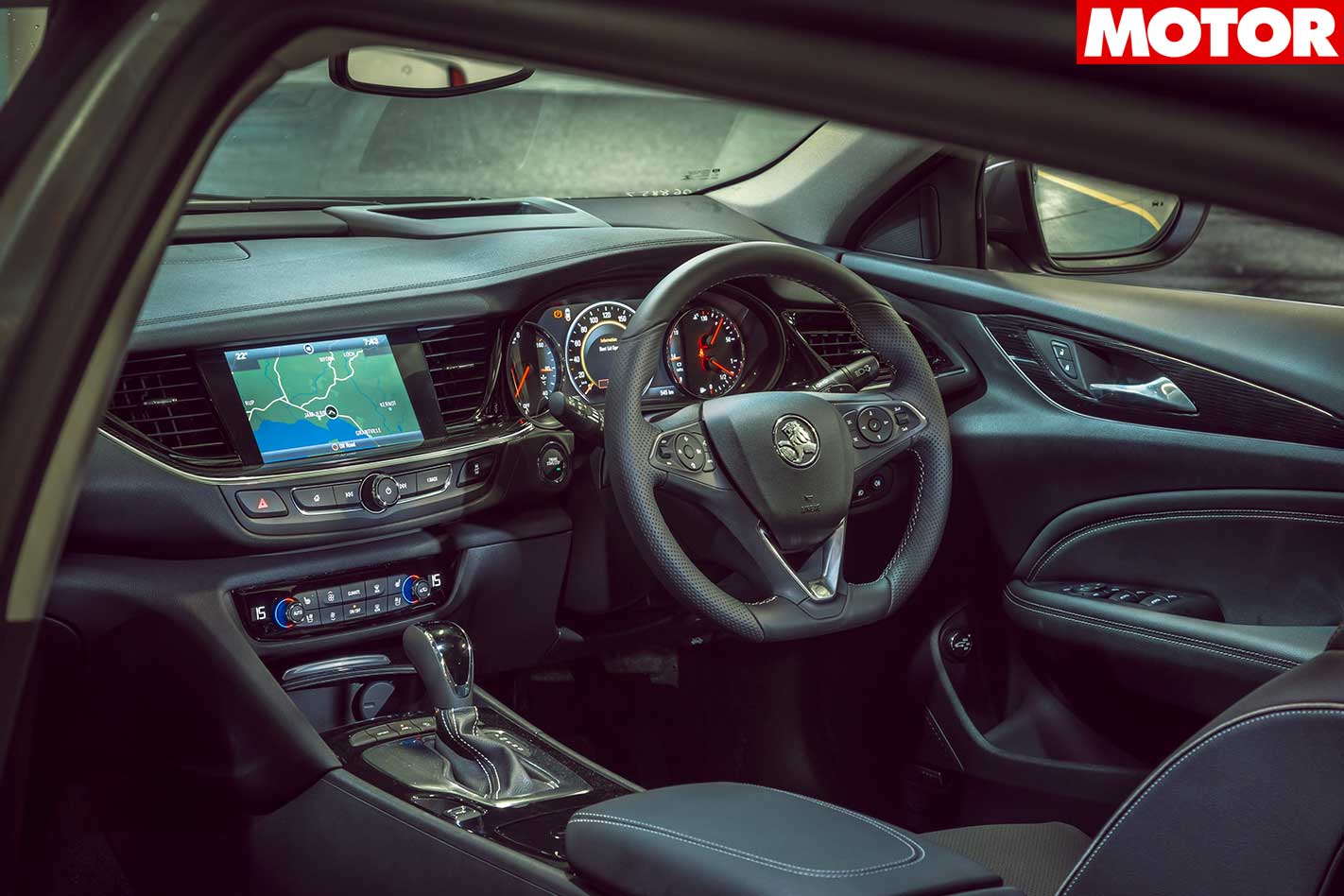
It’s still got the hard plastics and inexpensive materials as you’d expect, but it’s well styed and has features such as heated seats all around, while the fronts are also ventilated.
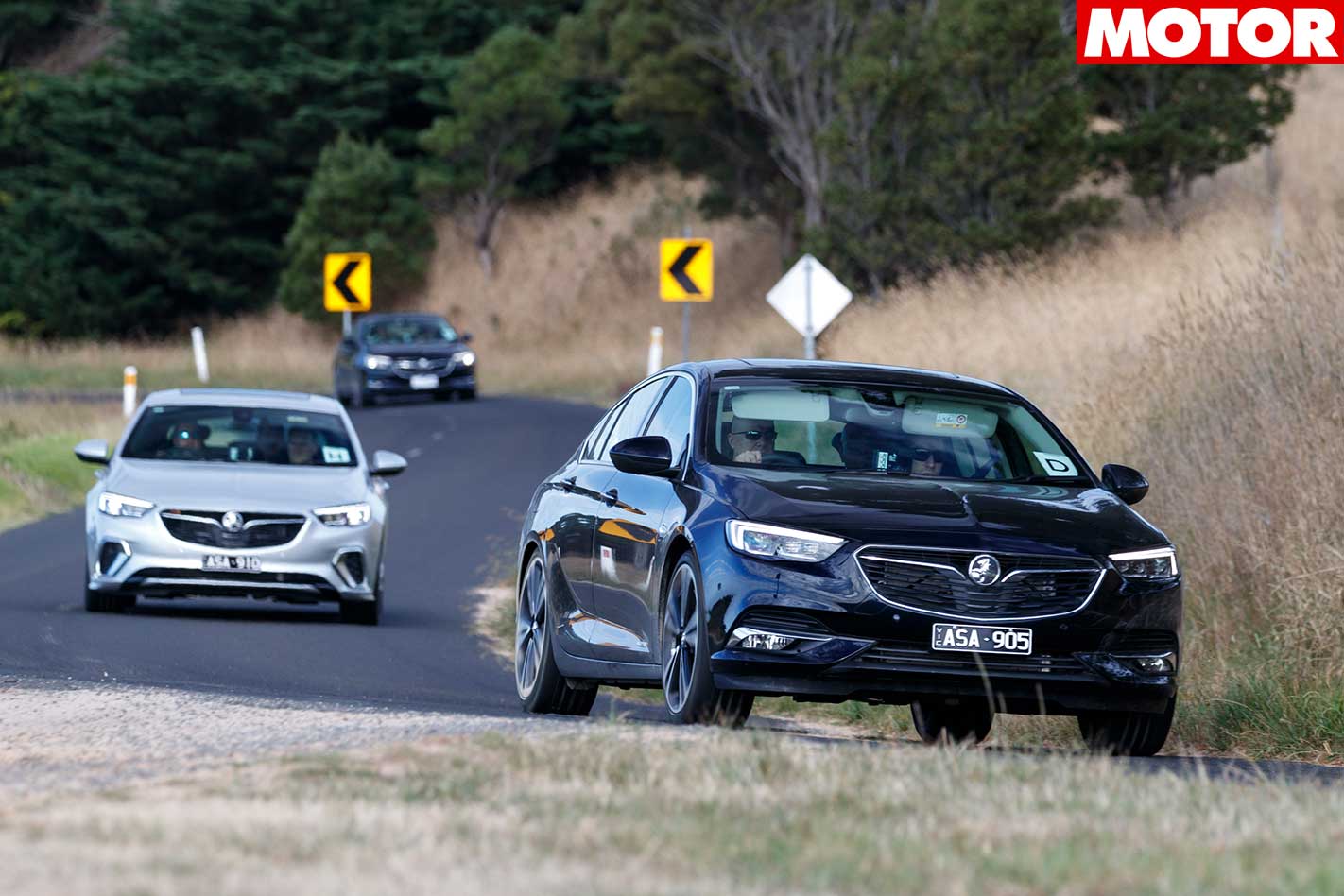
The infotainment system is also a little more polished, wireless phone charging is now a feature, and the Bose audio is excellent for drowning out what little road noise makes it into the cabin.
In the end, it comes down to the question of whether the Calais fills its brief. Is it a comfortable and relatively quick sedan? Yeah, we think so.
But while the Calais has a more polished chassis (and is cheaper) than a Stinger GT, we feel that’s still where the fun-seekers will be headed for a comfortable-but-fast family hauler.
2018 HOLDEN COMMODORE CALAIS-V SPECS Engine: 3649cc V6, DOHC, naturally aspirated Transmission: 9-speed automatic Drive: Front engine, all-wheel drive Power: 235kW @ 6800rpm Torque: 381Nm @ 5200rpm Weight: 1726kg Brakes: 321mm Ventilated disc (f); 315mm Solid disc (r) Wheels: 20-inch Alloy Tyres: 245/35 ZR20 Continental SportContact 6 Price: $51,990
Launched this week ahead of the 2018 F1 Australian Grand Prix, the Aston Martin Vantage has big expectations to live up to.
With pricing starting from $299,950 plus on-roads, it lines up with a few rivals in its segment.
Aston Martin Lagonda Asia Pacific president Patrik Nilsson said the new Vantage has already raised significant interest in the region.
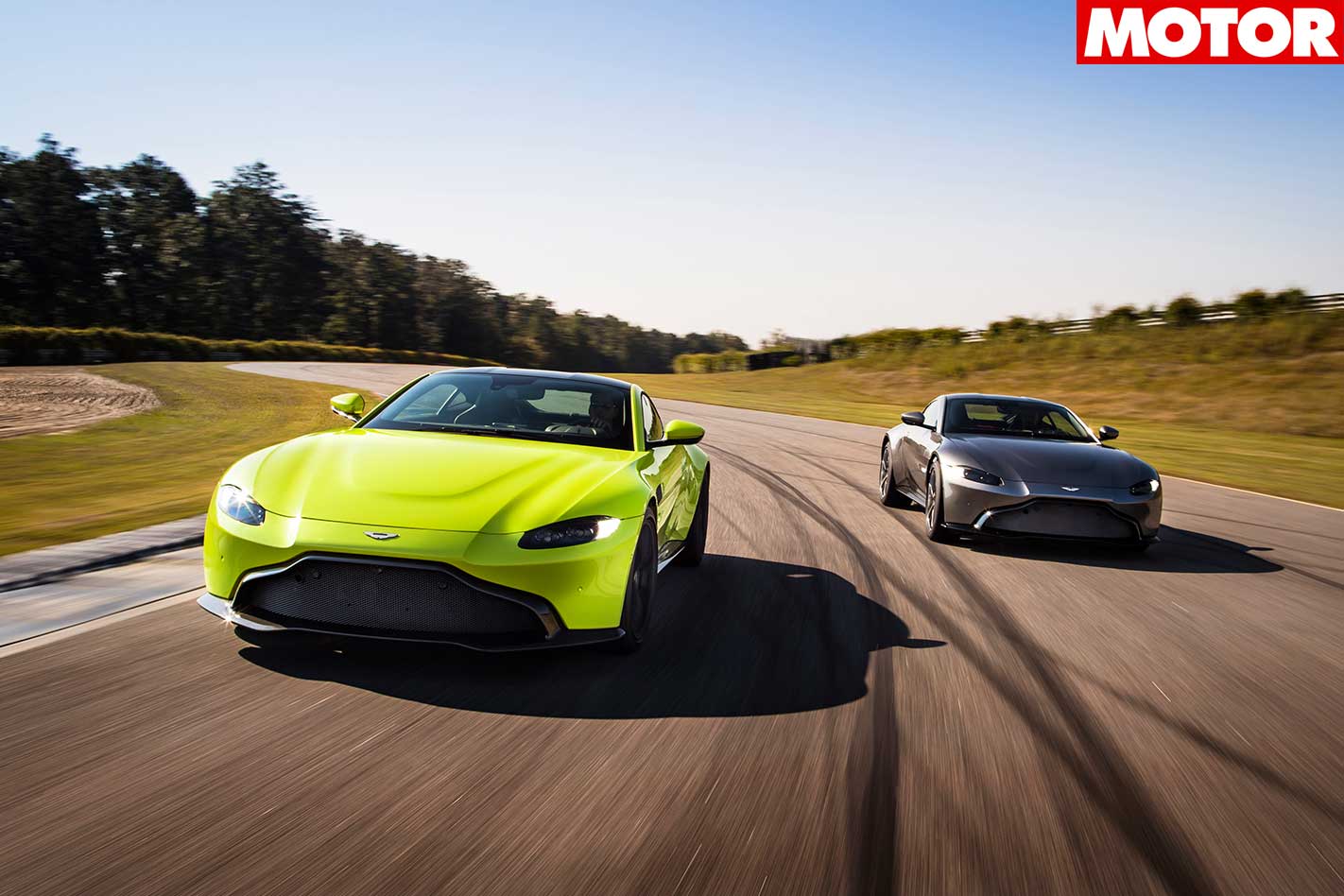
“It’s defined by a very bold new way of designing the car, and the performance of course is exceptional.
“I’ll come out and say that this is the new 911 hunter. And that’s me sticking my neck out.”
The Porsche 911 Carrera GTS costs a little less at $289,790, but lines up in terms of acceleration to 100km/h with the Vantage at 3.7s.
The German twin-turbo flat-six produces less power and torque, too. 331kW/550Nm to the Vantage’s 375kW/685Nm twin-turbo V8.
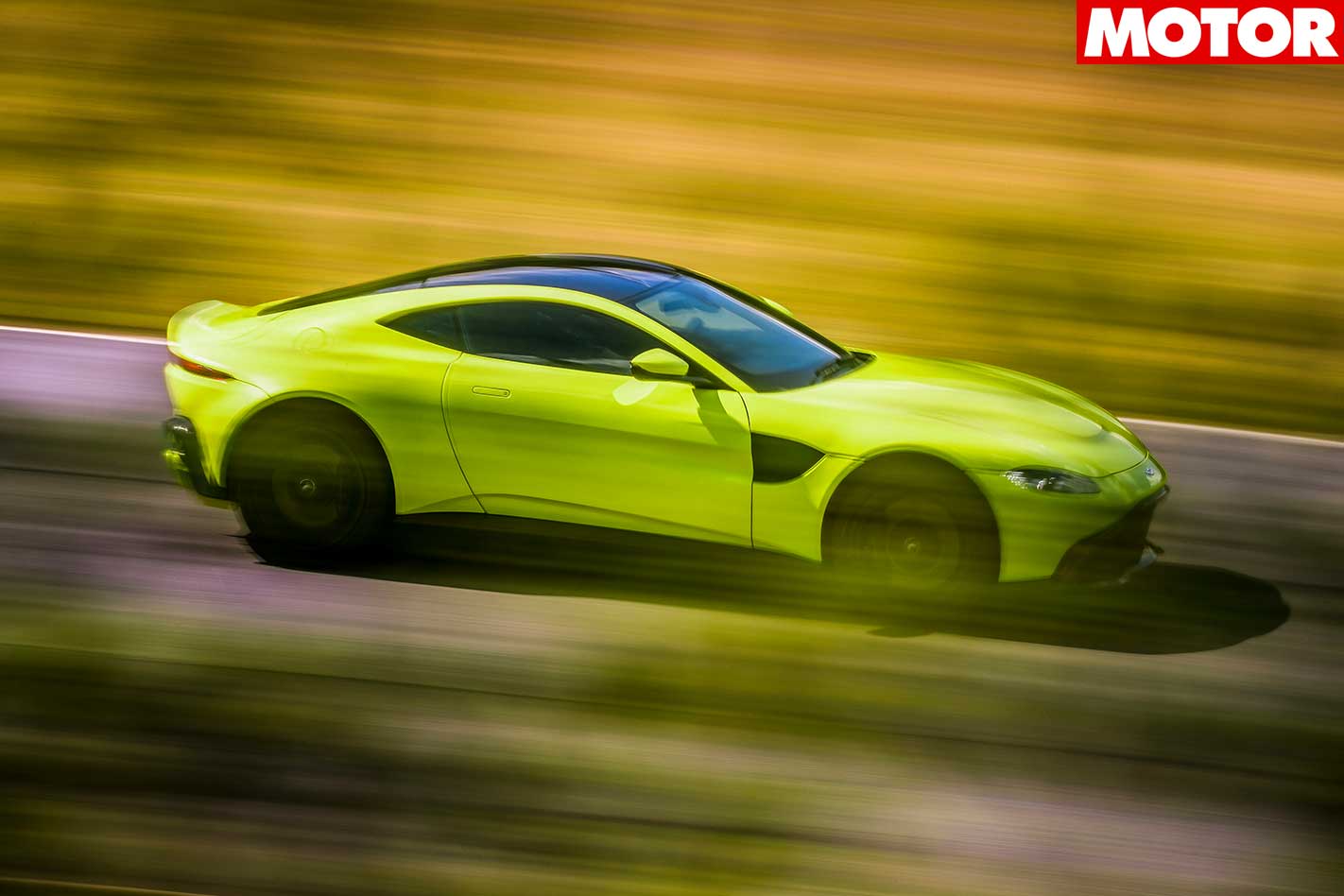
But Nilsson wasn’t the only one ‘sticking his neck out’, Aston Martin’s design boss Marek Reichman said at the launch that the Vantage is “a hunter,” and also suggested the same prey for it.
“It has a very low nose, not just because it’s hunting that 911, but also because of aero,” he said, running us though his design reasoning.
At the back of the Vantage, it was much the same.
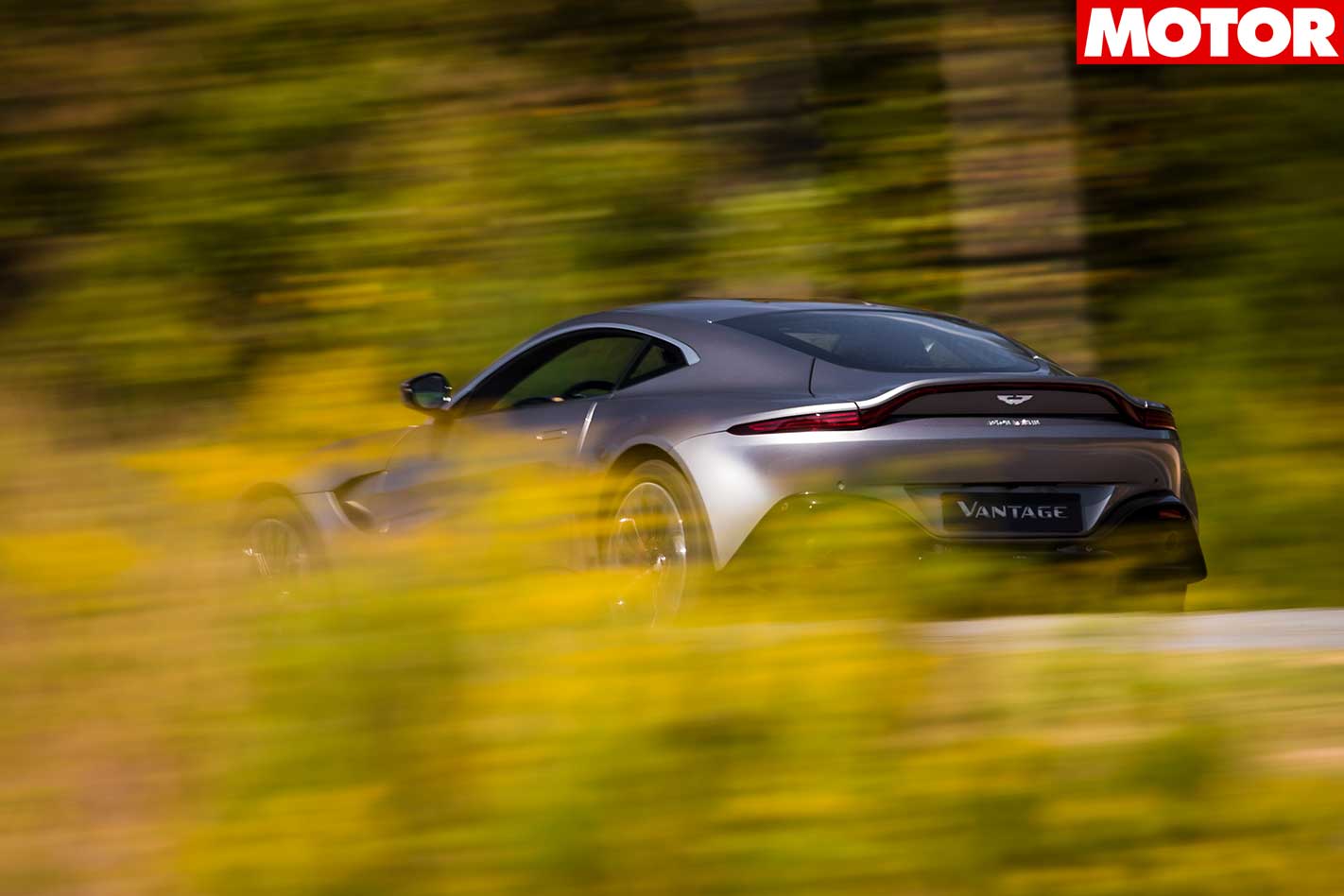
“Like the front of the car, we’re repeating the ‘S-curvature’ so when you’re half a kilometre to the rear of this car, when the lights come on you’ll know it’s an Aston Martin.”
The Vantage is due for Australian deliveries in Q3 2018, but is available to order now.
Aston Martin has officially launched the DB11 Volante in Australia ahead of the 2018 F1 Australian Grand Prix.
Available from $398,495 locally, before on-roads, the Volante joins the DB11 couple (which arrived earlier priced at $368K with V8) and the new Vantage as part of Aston’s plan to bring plenty of tasty new metal to us.
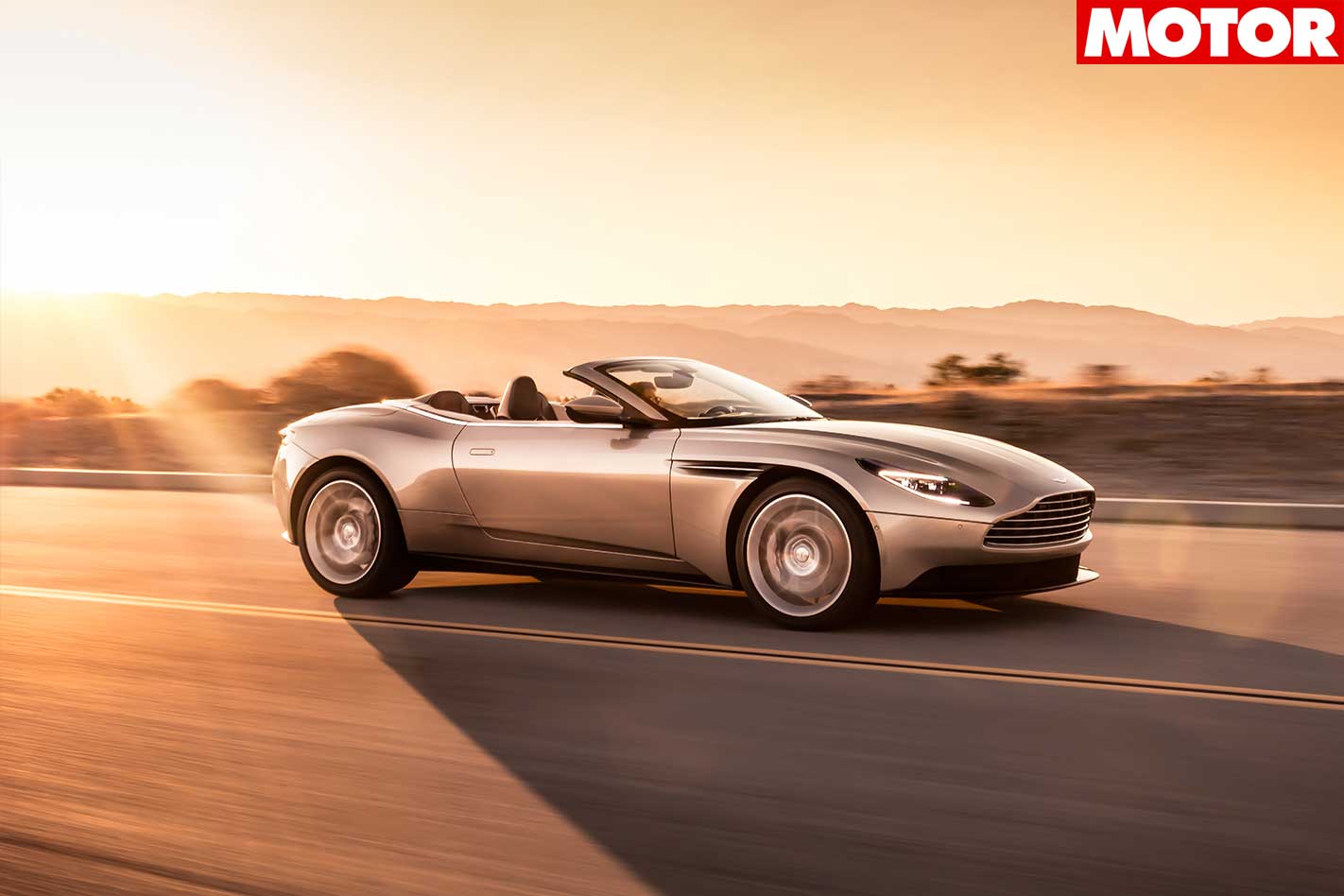
But Aston Martin vice president and chief creative officer Reichman says the DB11 is meant to represent the more fashionable side of Aston.
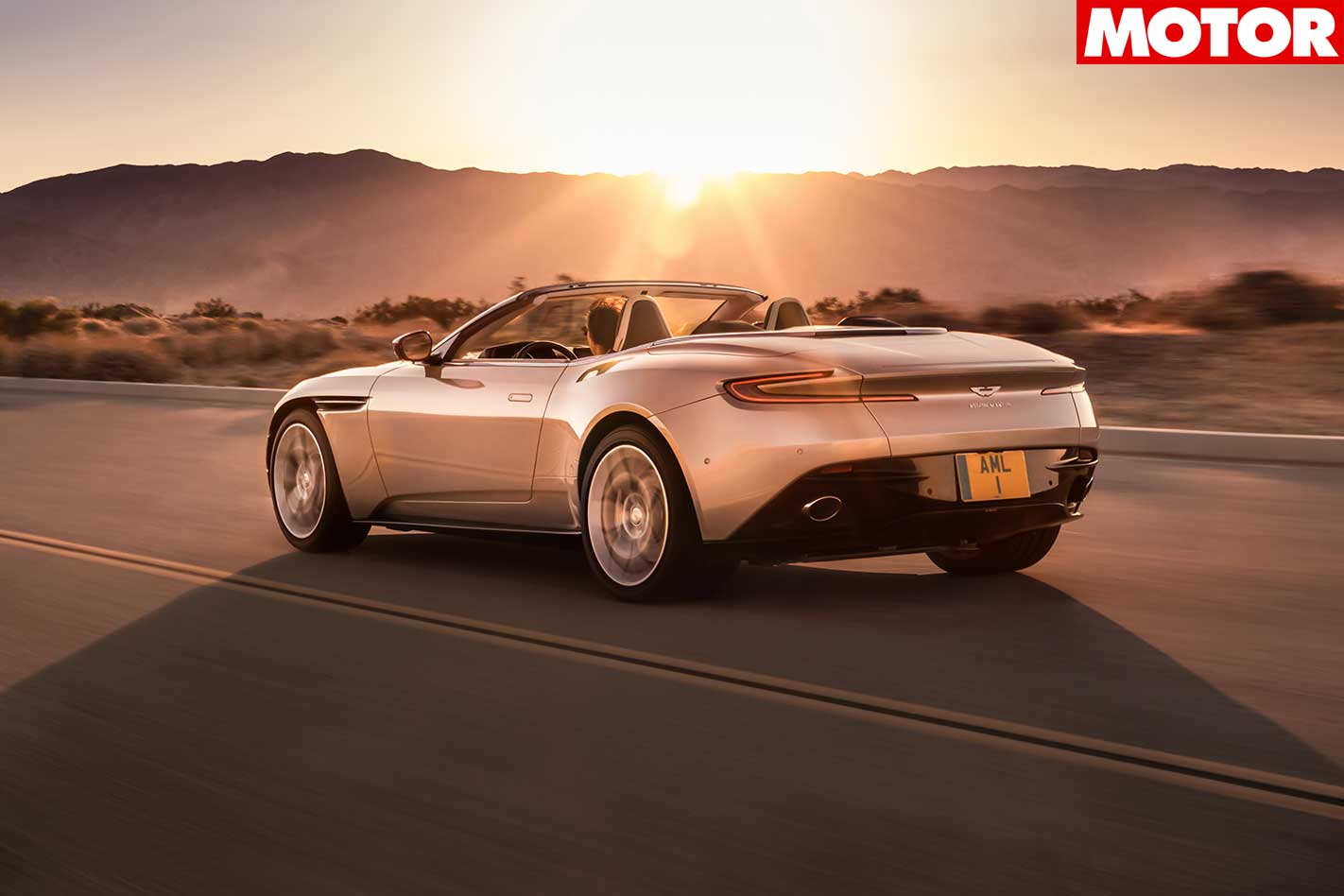
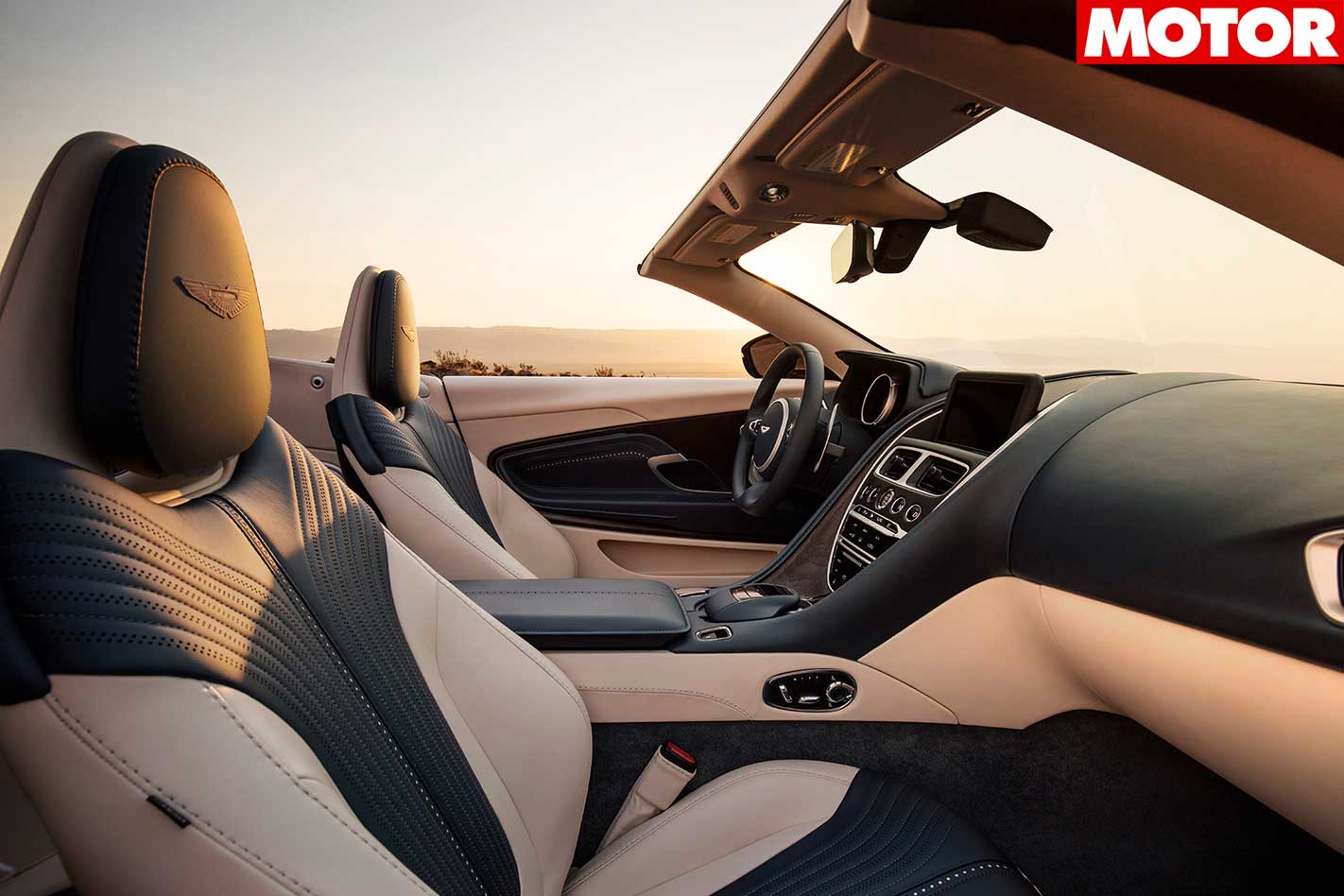
Its magnificent beauty is complimented by its innate sporting ability and sensory engagement, to deliver a new dimension of open-top driving pleasure.”
He added that the Volante was designed alongside the Coupe to avoid creating a roofless coupe-clone.
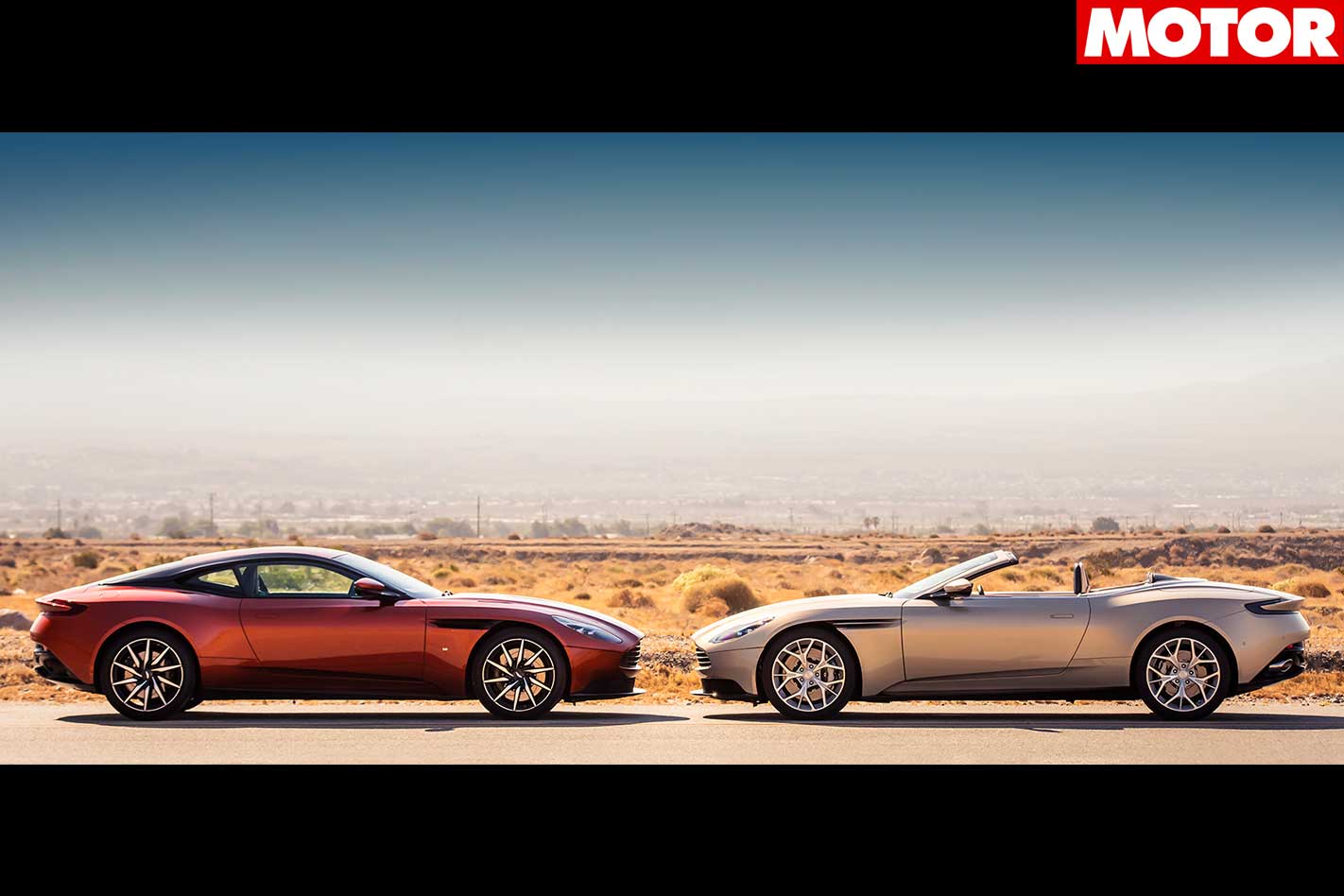
“You can see the common parts, but you’ll also notice how low the rear of the car is, because we want to maintain that elegant feeling.
“So it’s still Savile Row [like the DB11 coupe], but now you’ve taken Savile Row to the Côte d’Azur.”
The Volante is available to order from $398,495 before on-road costs, with local deliveries expected to commence from May 2018.
MERCEDES-AMG has revealed pricing for its all-new G63, with a sticker price of almost a quarter of a million dollars.
Australians will be able to purchase the G63 from August next year, which is priced at $247,700
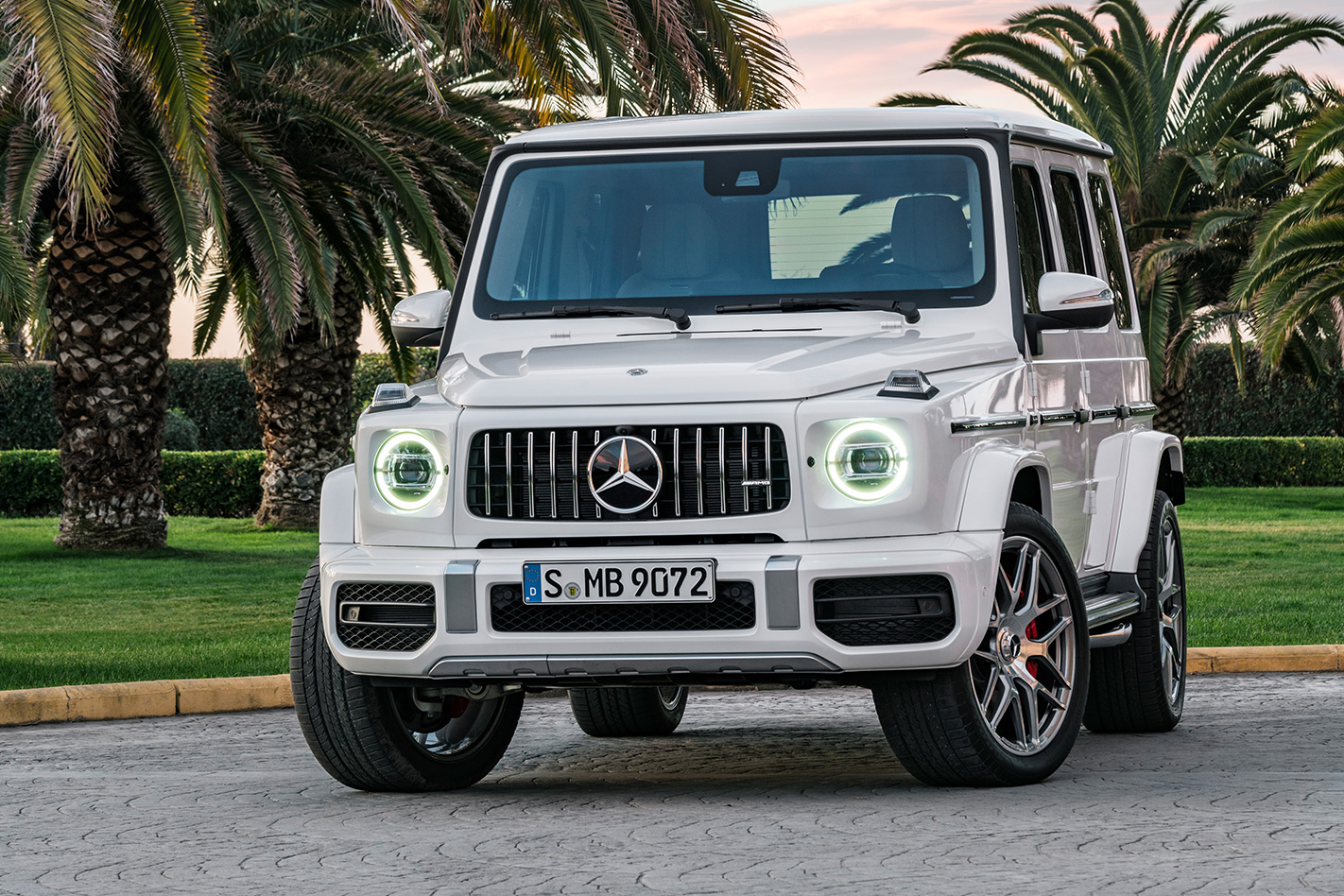
To the untrained eye, the ‘new’ Mercedes-Benz AMG G63, might look just like the last. It retains the distinctive profile of the previous generation; a 5-seat, off-road dominating wagon with an interior like a penthouse suite, and soundtrack courtesy of AMG.
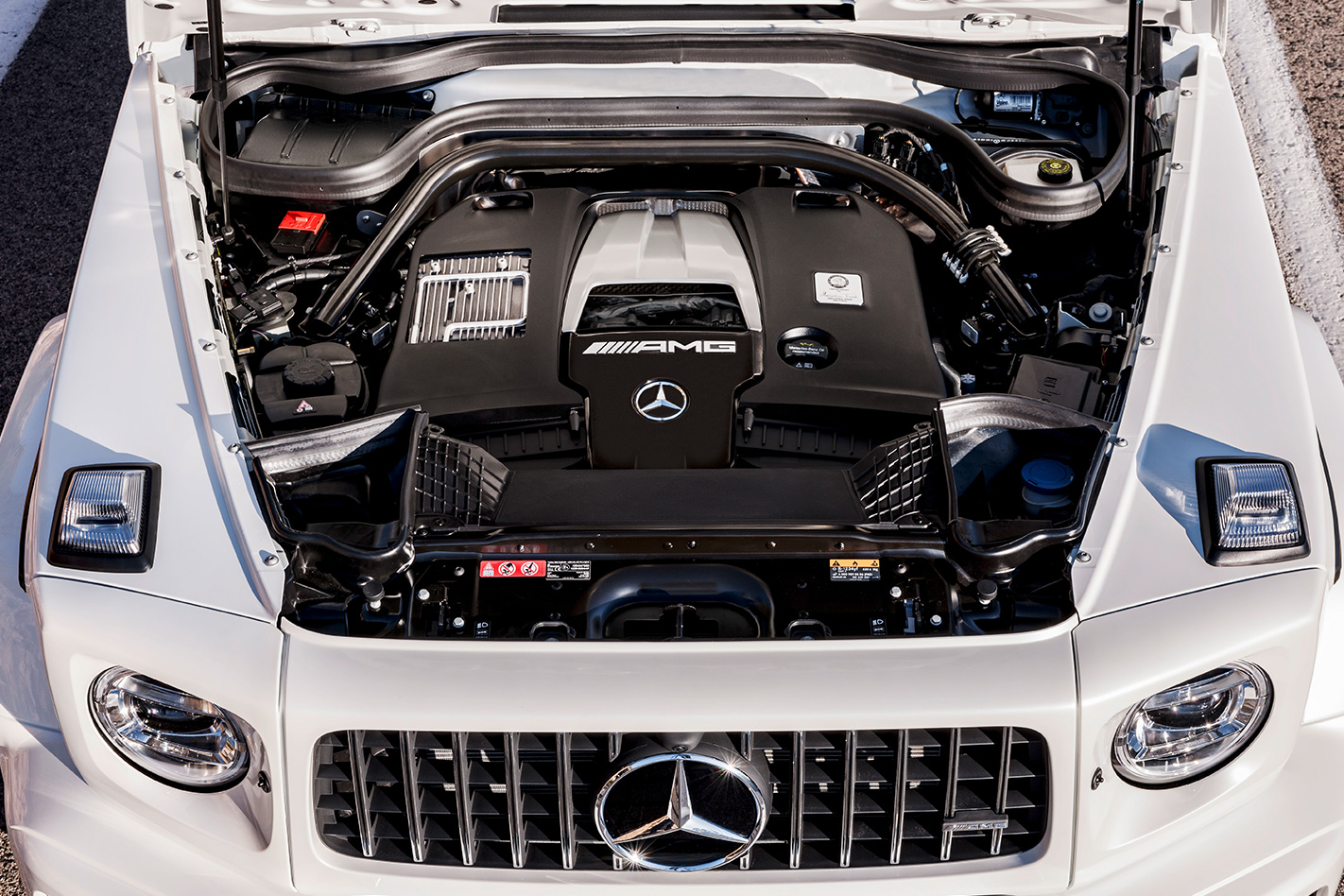
The new G63 hosts a smaller, 4.0-litre twin-turbo V8, with 430kW and 850Nm, an increase in power from the old 5.5-litre unit’s 400kW and 760Nm.
Fuel consumption is also improved, down from 13.8L/100km to 13.2L/100km, and the old seven-speed automatic gearbox is also out – a new 9-speed unit replacing it, sending power through the rear-biased AWD system that hosts three locking-differentials.
The front- and rear-end receive a new grill and bumper style, while 21-inch alloy-wheels from AMG come as standard.
The headlights are also upgraded to LED units with Mercedes’ multibeam technology that’ll shut off isolated sections of the headlight, so as not to blind oncoming motorists.
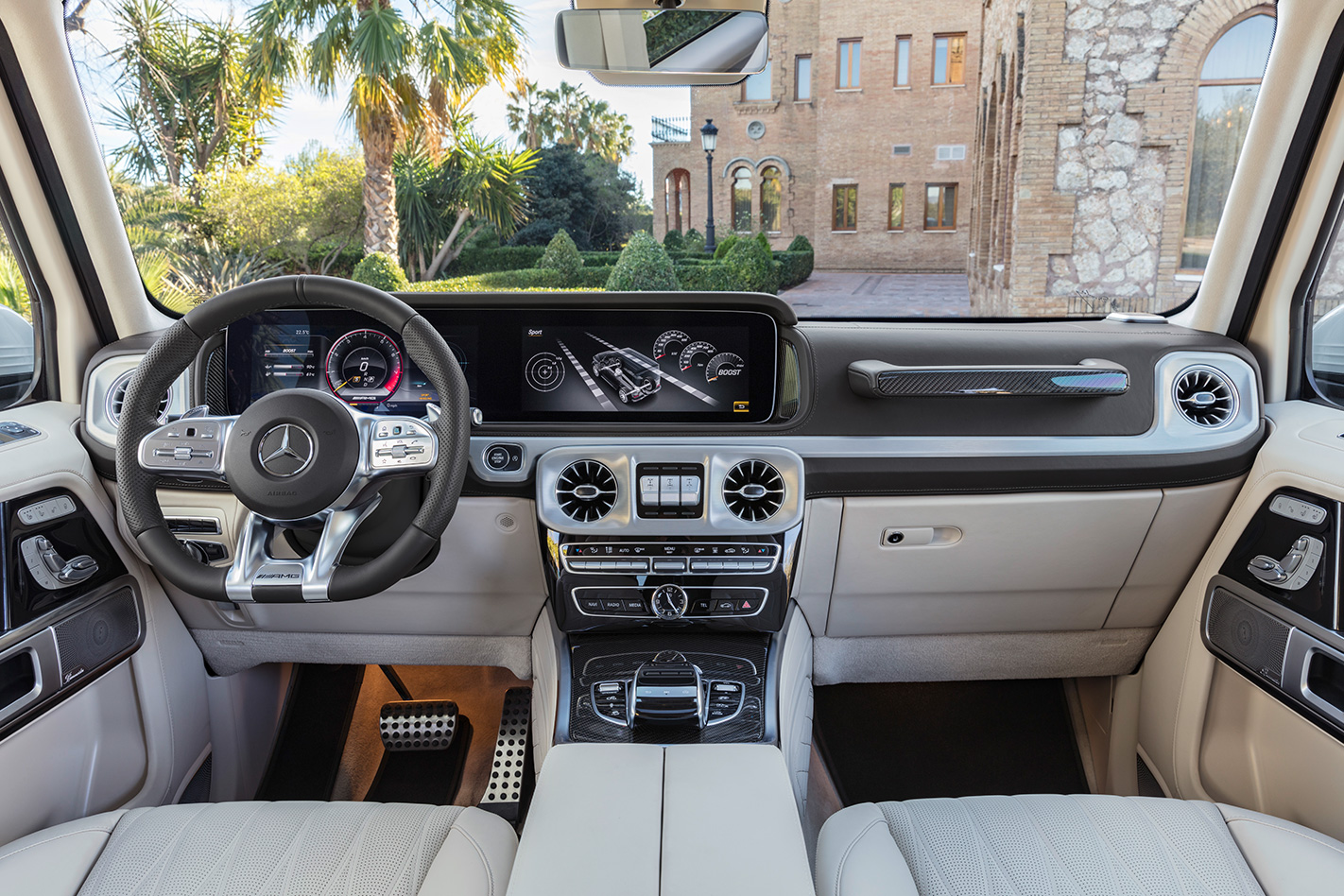
Tech upgrades include active parking assist, and a 360 degree camera.
Hyundai’s i30 N will give track addicts more ways than ever to scratch their itch.
The brand has announced it will release track-ready upgrades, extend warranty coverage to circuit use, and offer possible factory trackside support to i30 N customers.
Senior product planner Andrew Tuitahi confirmed the circuit-focused modifications at the car’s launch in Albury this week.
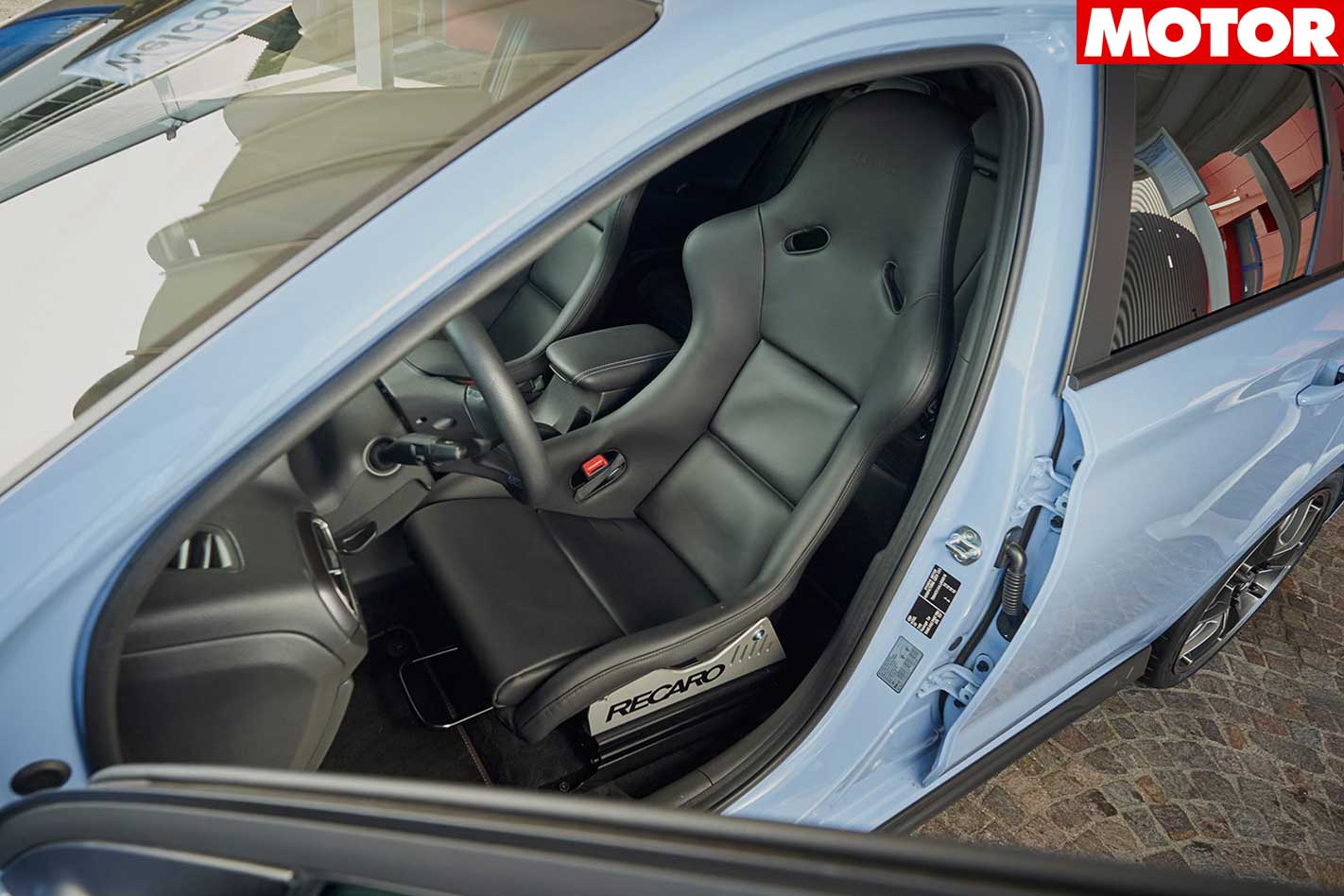
Those pads, wheels, and tyres are the same spec as the items we saw in Germany last year at the vehicle’s international launch.
The upgrades are designed to give the car more grip and braking performance.
Tuitahi has also confirmed to MOTOR that Hyundai will offer a fire extinguisher kit and sticker pack which marks turbo and battery locations.
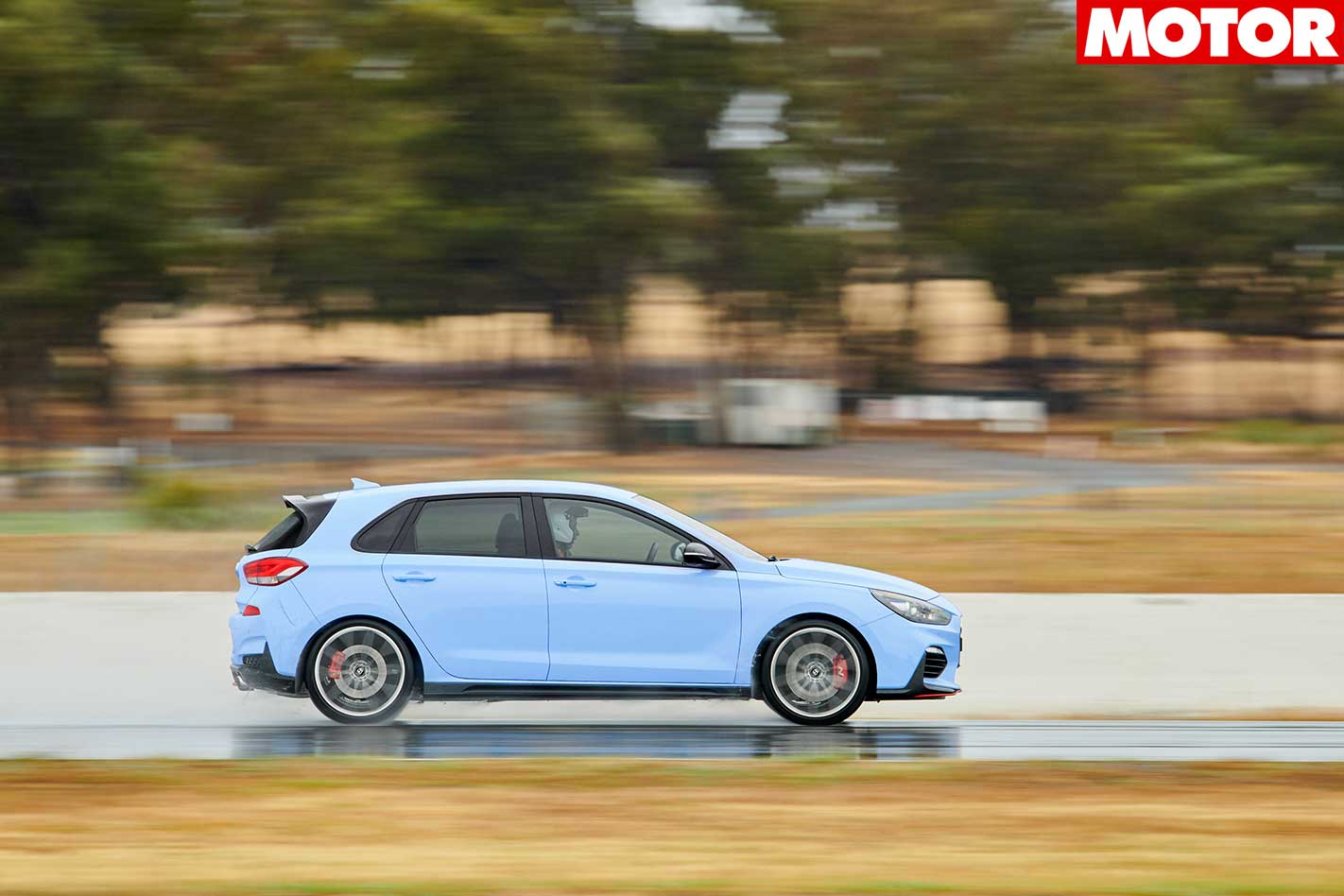
One of the i30 N’s critiques is its neutral-to-understeer handling balance and we understand the suspension modification has been designed to induce more oversteer.
The wheels are 19 x 8.0-inch O.Z Hyper GT items while the tyres are Pirelli P Zero Trofeo Rs – the same seen on HSV’s GTSR W1.
German company PAGID make the new pads which partner with extra brake ducting to aid higher running temperatures.
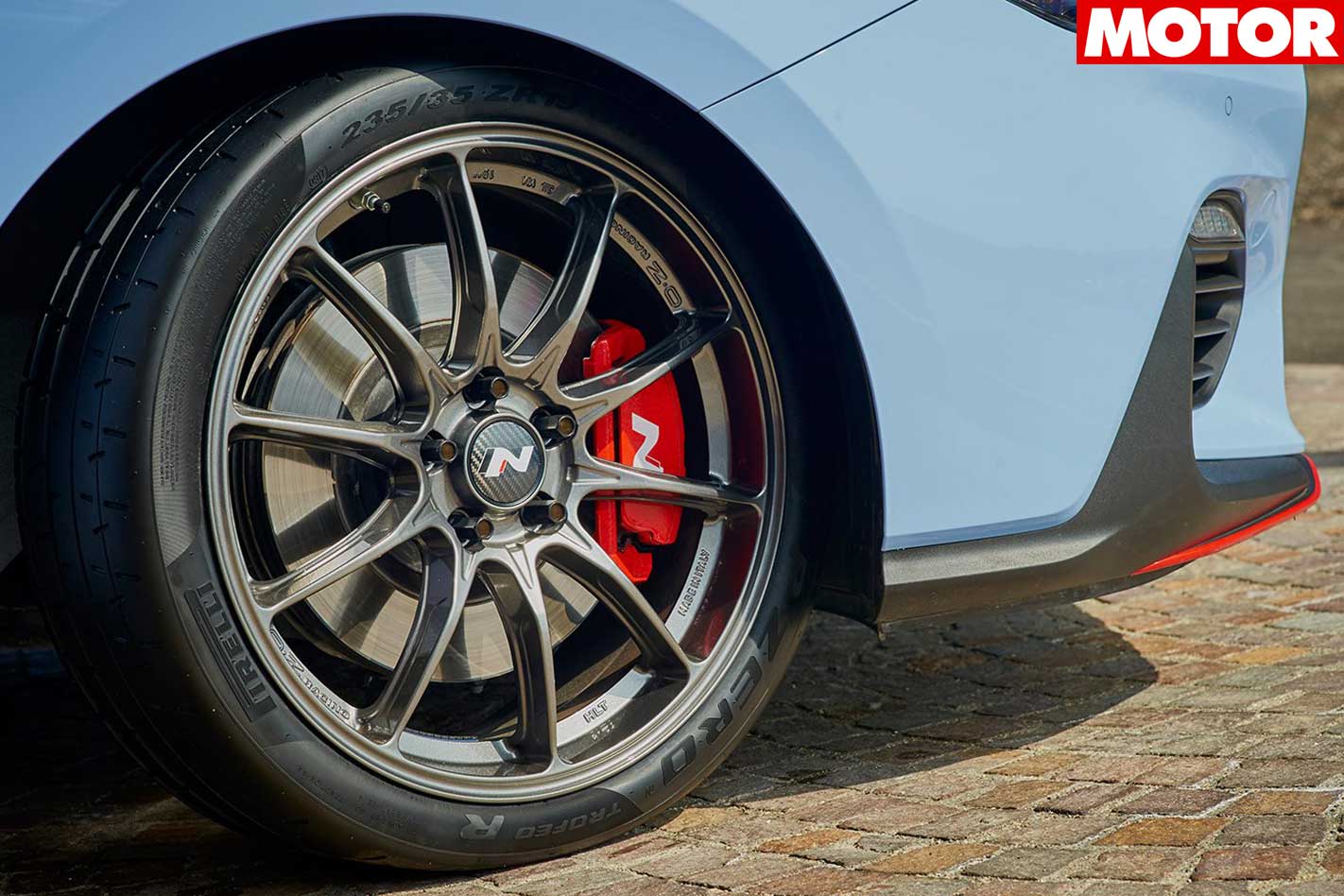
Hyundai won’t comment on price, but the lightweight O.Z wheels are publicly available at around the $3500 mark while the tyres retail around $2000. Each respective price is for a set.
For reference, Ford offered a track wheel-and-tyre combo on its Focus RS including a 19-inch Michelin Pilot Sport Cup 2 tyre as a $1500 option.
Hyundai’s track ethos goes further as the company has revealed circuit use will not void the car’s standard unlimited kilometre five-year warranty.
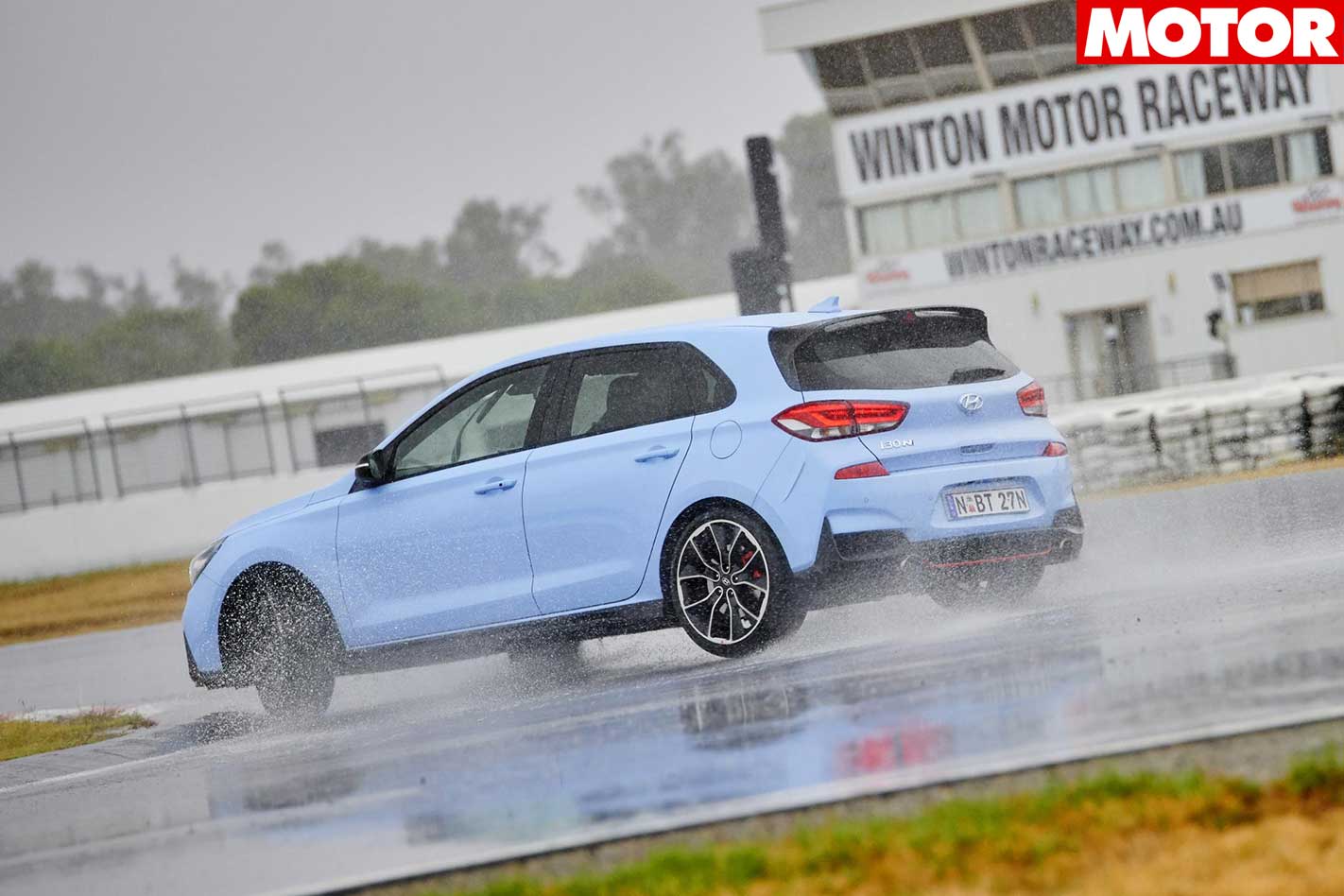
“We’re very interested in the lower level club motorsport track days,” Hyundai’s PR director Bill Thomas says, “and supporting customers directly is something we’re very keen to do.”
Mr Thomas says the current idea is to have its “N performance hub” as a website where customers can check for upcoming events, but counters it’s still a fledgeling concept.
“We’d like to have the chance to support customers at these days, and how that plays out is actually to still be decided.”
The Formula 1 pre-season launch schedule is often met with yawns as the only news is what colour this year’s cars will be painted (shock! A red Ferrari!), but this year is different.
Visually, the sport has branched into a radical new direction with the implementation of the unmistakable halo safety device. And while the thong-like addition has purists clawing at their eyes, it’s not the only change for the 2018 F1 rulebook as the men in white coats close sneaky loopholes to simplify rear aerodynamics. You can be assured each team will already be working on finding fresh loopholes to exploit as you read this.
The battle at the front is set to be interesting too, as Mercedes debuts an all-new power unit to fend off Ferrari’s evolved SF71H. Dani Ricciardo’s Red Bull, meanwhile, is hoping its TAG-Heuer-branded Renault engine will finally deliver a much-needed power boost.
Alfa Romeo returns to the F1 grid for the first time in more than three decades, as the naming-rights sponsor of the Sauber-squad, bringing an influx of cash and current-spec Ferrari engines. Meanwhile, McLaren has been able to offload unreliable Honda power, swapping to Renault, with the Toro Rosso squad instead lumbered with the Japanese engines.
T-Wings teed off
F1 teams jumped at vaguely worded regulations surrounding rear bodwork in 2017, with ungainly looking T-Wings quickly followed by the exhaust-blown ‘Monkey Seat’ device. Both are outlawed for 2018, along with the shark-fin style engine cowl. However it appears Mercedes has developed a merger of the two for 2018, with a miniature T-wing sitting atop the exhaust tip for the W09 challenger.

Teams are limited to just three engines per car for the entire 21-race season in 2018 – one less than last year. Say a prayer for Kiwi Brendon Hartley and his Toro Rosso teammate Pierre Gasly, who must suffer the notoriously unreliable Honda power unit this season. Grid penalties for using more than three engines have also been simplified.

Valteri Bottas’ lightning start at the Austrian Grand Prix last season (with a measured reaction time of 0.201 seconds) caused uproar in the paddock, as the Finnish driver’s Mercedes was caught rolling before the lights turned green. However, the FIA determined it was within the allowed tolerances. The same tactic of anticipating the start will not be permitted in 2018, with the FIA giving race stewards the ability to penalise drivers whose car moves before the green light is shown.

Two new compounds have been introduced, at opposite ends of the spectrum. The pink hypersoft and orange superhard compounds mean teams will have seven slick compounds to choose from, along with intermediates and full-wets. It’s hoped the extra choice will promote more variation in race strategies, and therefore extra or reduced pit stops.

The FIA began picking up on tricky suspension mid-way through 2017 which altered the ride height mid-corner and allowed cars to gain a brief aerodynamic advantage. The 2018 regs outlaw suspension which alters the car’s ride height by more than 5mm when the wheel is turned lock-to-lock.
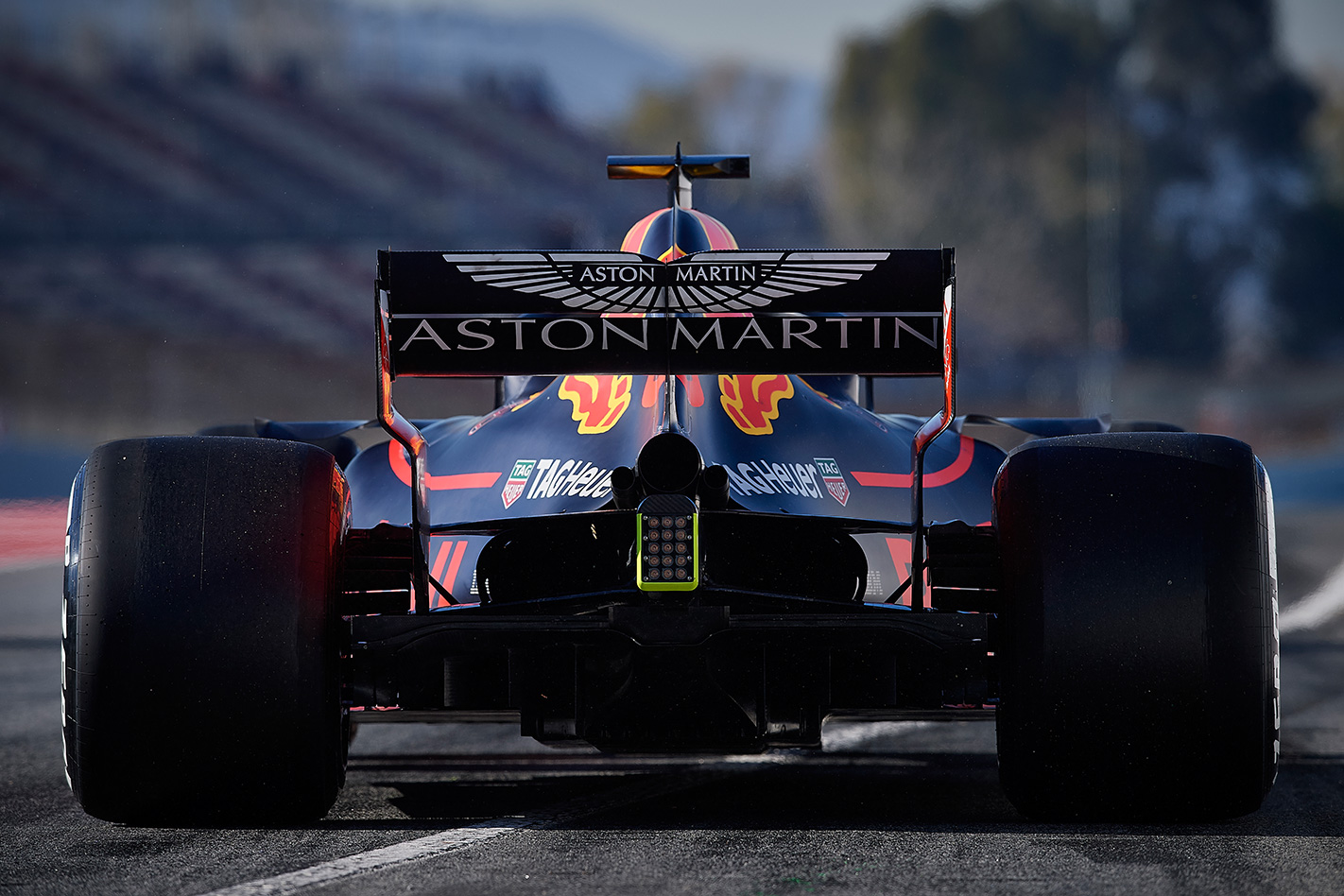
The rules around sidepods have not changed for 2018, but F1 teams are now really pushing the boundaries, with aggressive bargeboards, and intricate internal aerodynamic devices. Ferrari appears to be a leader here. “Sidepods and bargeboards [are] the biggest area of opportunity still not fully exploited with these regulations that came in last year,” says Williams Chief Technical Officer, Paddy Lowe.

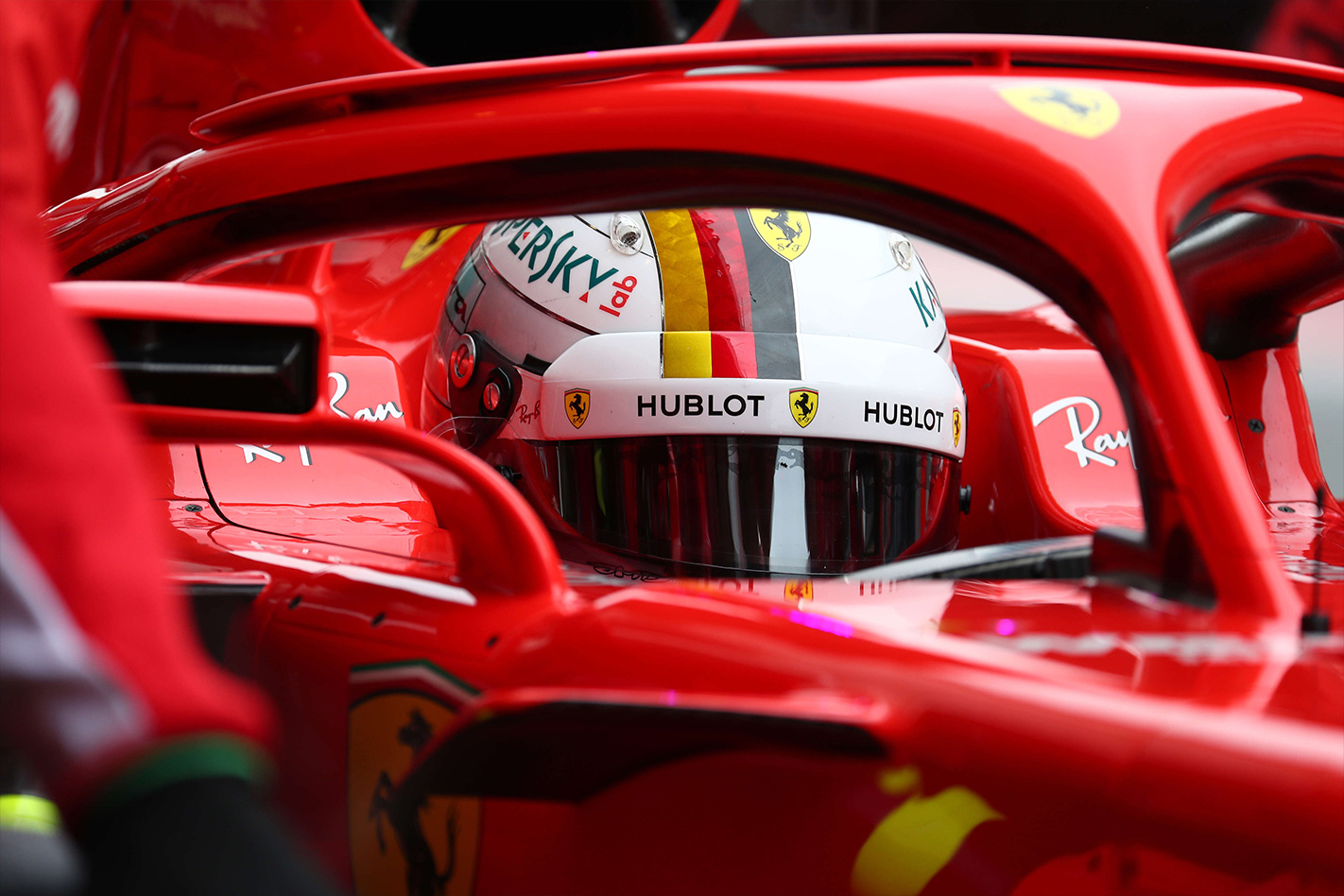
Purists the world over howled when the FIA mandated the divisive ‘halo’ safety device for 2018. The titanium structure, which weighs 7kg, is designed to withstand 12 tonnes of force. Implementation has been a headache for teams, with final technical regulations of the halo arriving late in development. Teams are permitted to modify the halo with aerodynamic additions, but the core structure must remain unchanged.