
FEW CARS as vast as the Land Rover Discovery have been measured against the COTY criteria. But, hey, we love a (big) challenge.
And a challenge is exactly what the curvaceous new Disco provided.
Size generally means mass – in this case around 2.2 tonnes of the stuff. Yet despite the weighty issue, judges were impressed that hundreds of kilos have been stripped from the new-generation Discovery’s aluminium-intensive body.

Off-roading isn’t part of the COTY test regime, however experience on previous adventures earned the Land Rover credit points for functionality. But it comes at a cost.
Pitch the Disco at a corner and its relatively high centre of gravity teams with the ever-present laws of physics to challenge its monocoque construction and all-independent suspension.
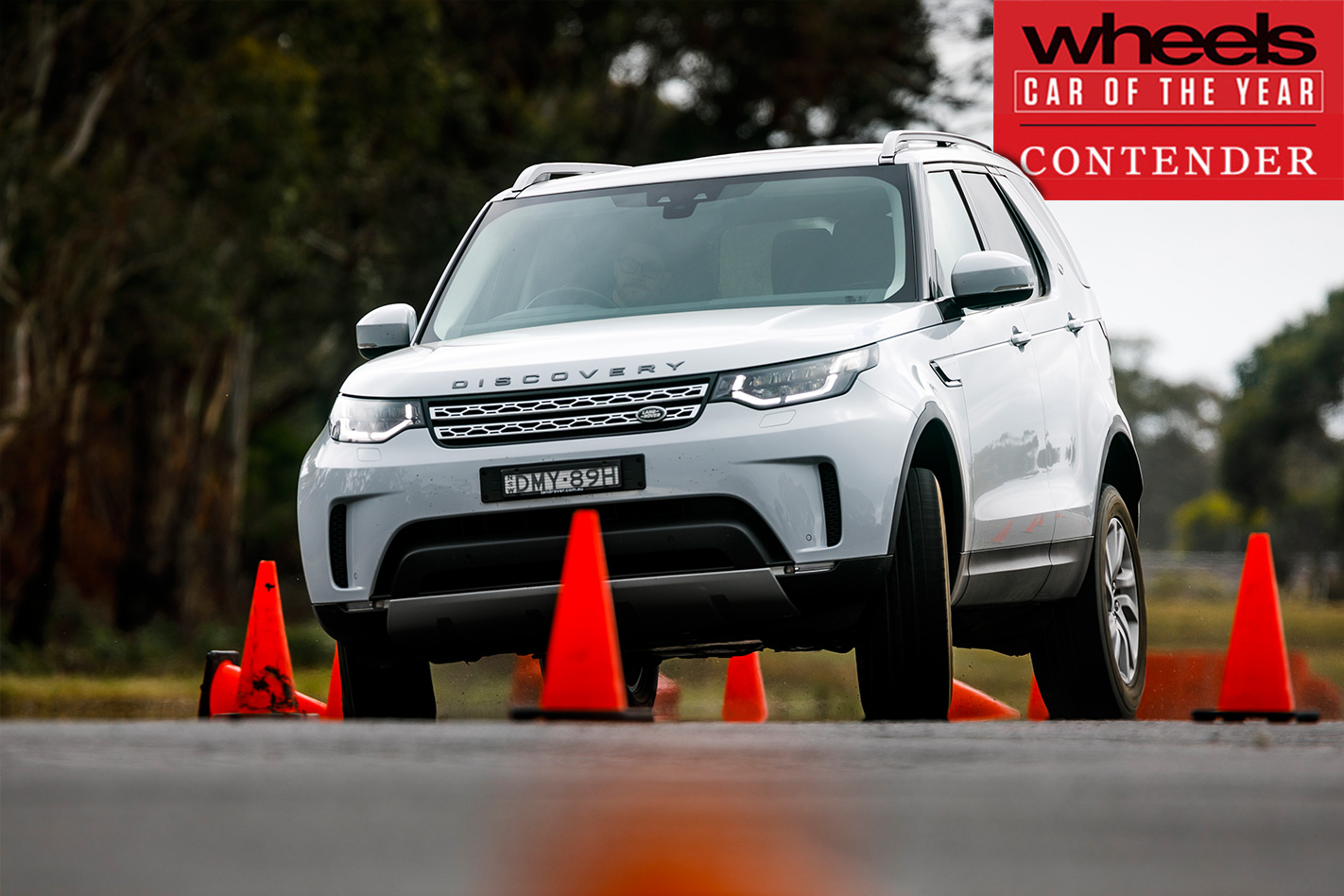
The stability control interjects frequently, slowing things quickly yet calmly, though some found it excessive, the electronics killing the fun before the otherwise capable chassis had time to do its thing. Yet in other instances, such as an aggressive swerve-and-avoid, judges noticed the electronic intervention arrived too late. Still, the air suspension at least delivers long-travel comfort for lashings of relaxed touring capability.
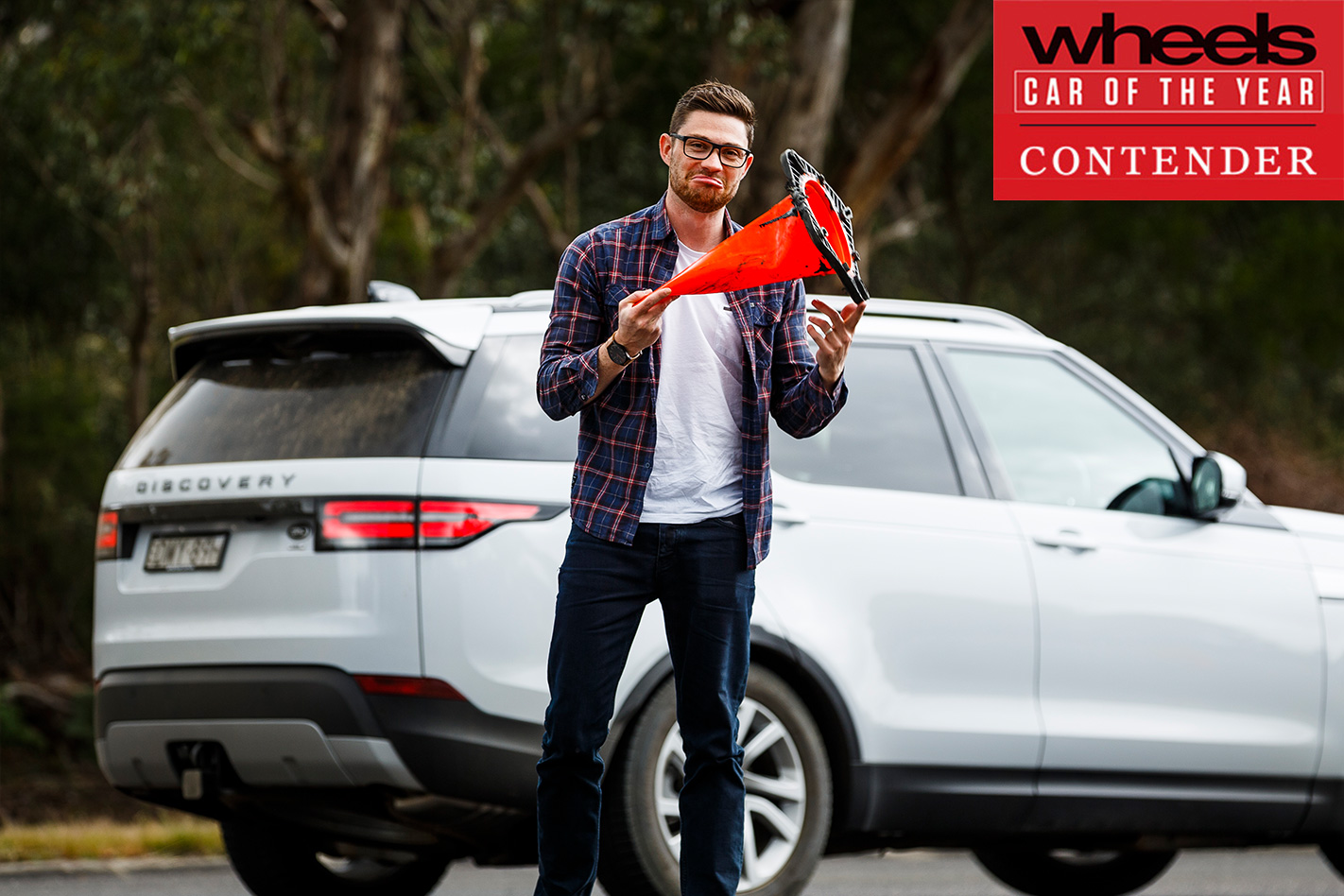
Which leaves the Discovery Sd4 as the variant that nails this SUV’s sweet spot. That it manages fuel numbers in the low sixes also gives it a massive tick for efficiency.
Back to that size, which is ultimately a huge part of the Disco’s appeal. It easily accommodates seven and that sizeable rump provides adult-friendly dimensions out back. It’s just a shame third-row occupants aren’t treated to their own ventilation outlets – a rare oversight in what is a beautifully trimmed and well-packaged cabin.
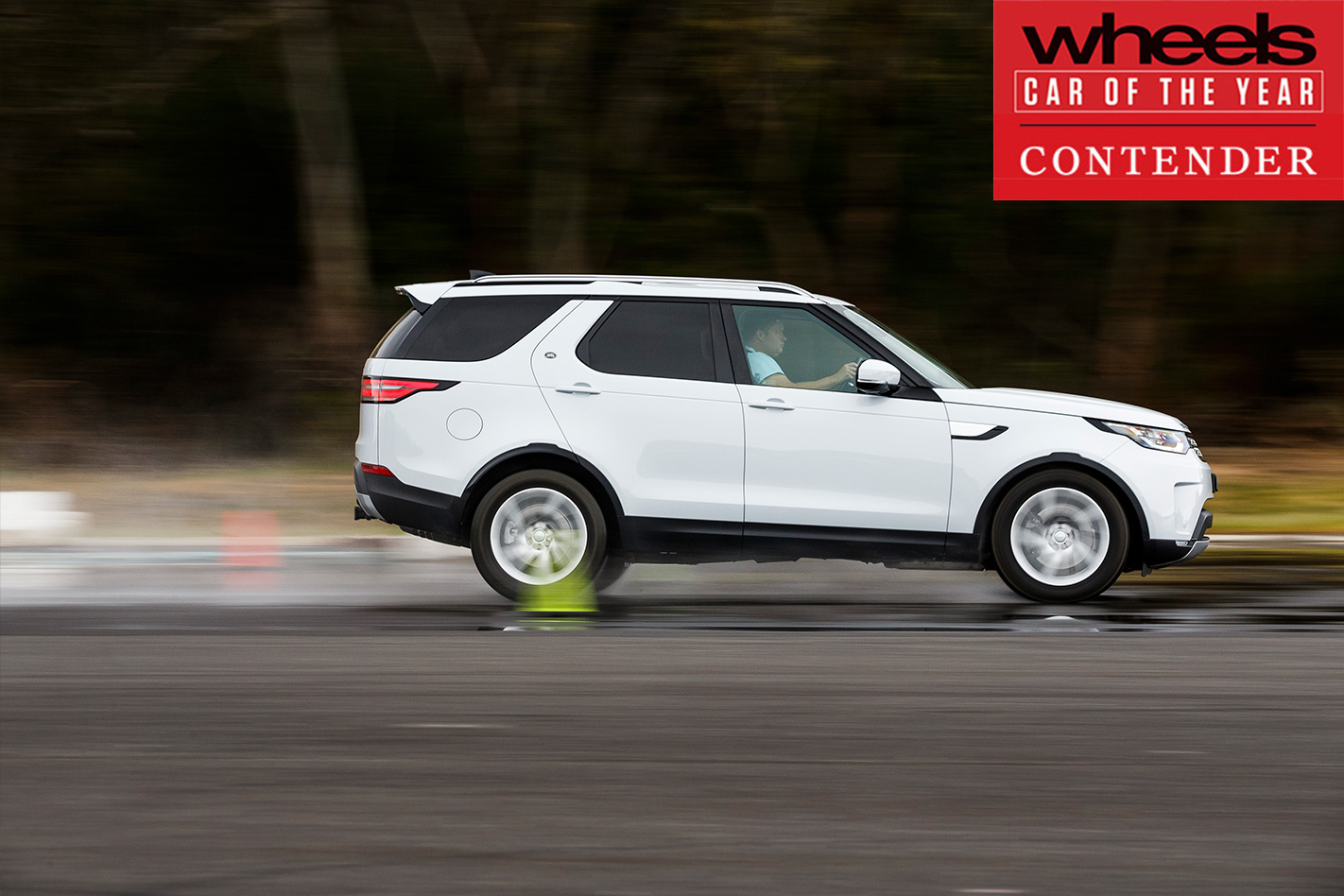
This hurt its chances against the value criterion, just as the compromises made in engineering such serious off-road ability hurt the Disco’s composure on the road.
It’s arguable that more buyers will experience these downsides than exploit the rough-track aptitude, and this contributed to a dignified round-one exit for the most Range Rover of Land Rover Discoverys to date.
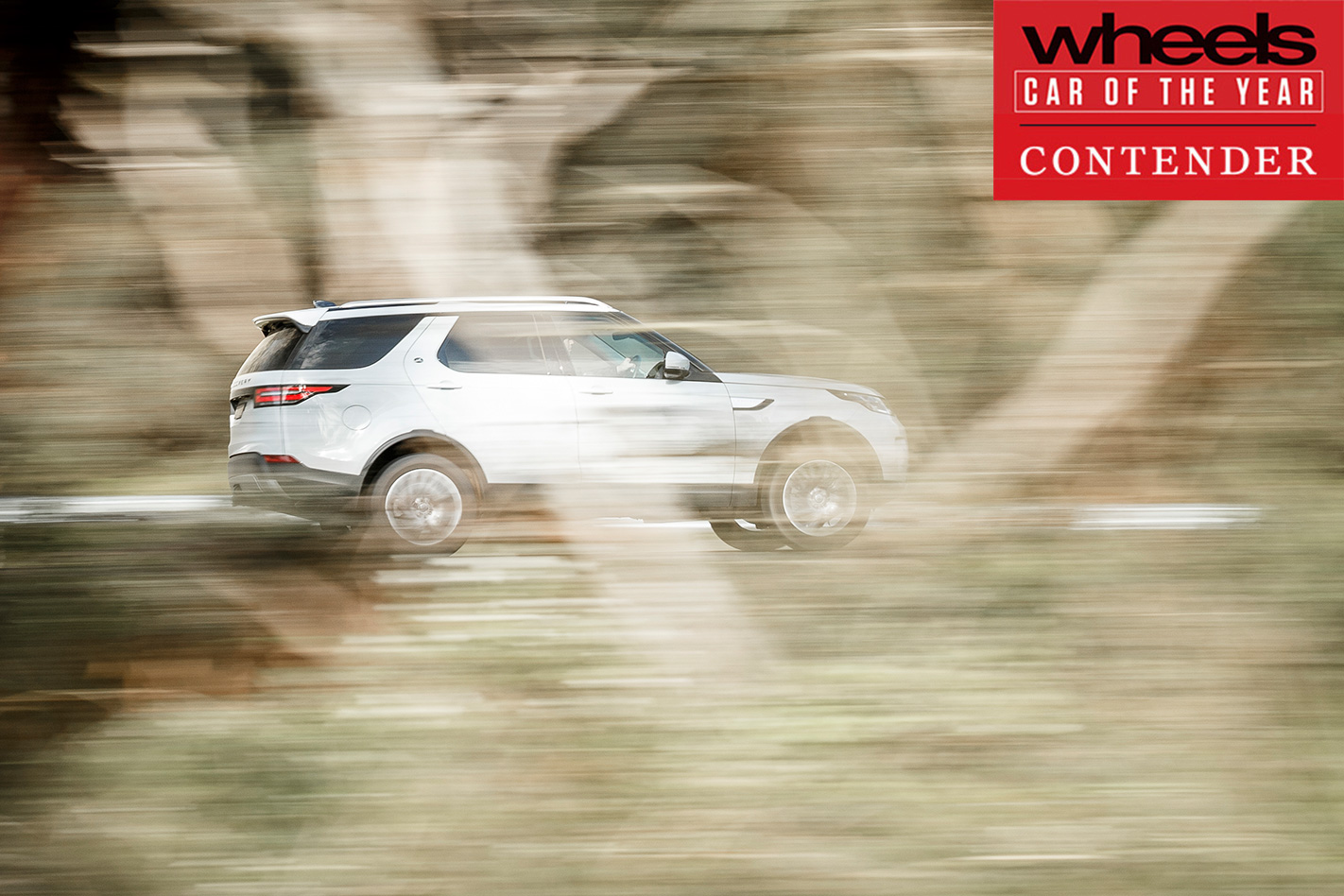
The rejection of the old model’s combination of both a ladder-frame chassis and a monocoque body initially had some off-road enthusiasts muttering into their beards. Yet the reality is this pure-monocoque Disco has shed kilos, not ability, even if items like a low-range transfer case and locking rear diff have moved to the options list. There’s still ample ground clearance and a terrain response system ready to help you navigate whatever the great outdoors throws at you.
I bruised my tailbone recently, from trying to leap-frog a bike stand while I was drunk.
Some might say it was my own stupid fault, but I blame all the people who ride bikes. You don’t need a tailbone. Neither did the ape-men we evolved from. It’s a remnant from our monkey grandfathers on the evolutionary tree, from when we lived in actual trees. It’s outmoded equipment, like your appendix. Which leads me to fog lights.
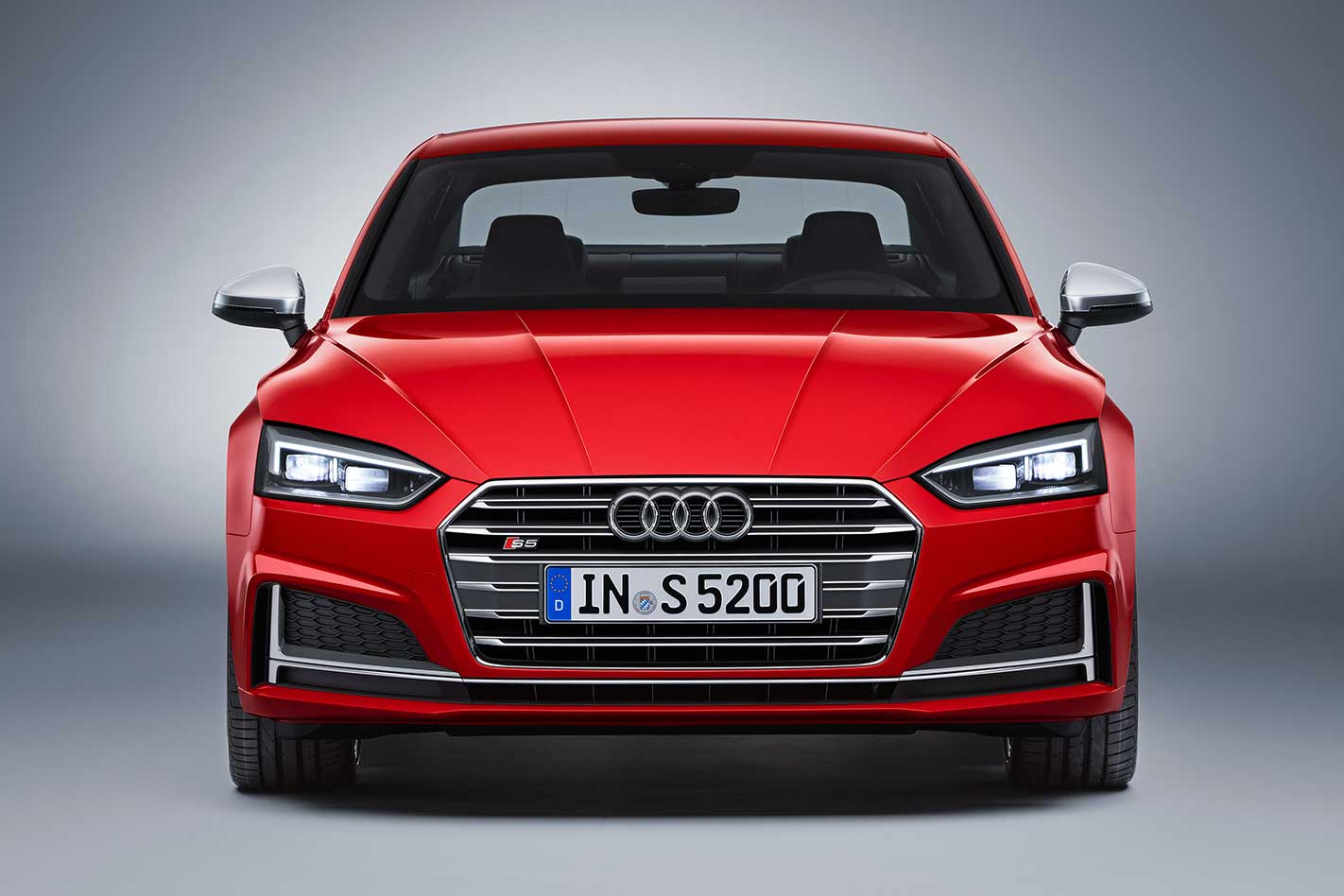
Top-shelf car makers like Audi and Mercedes have decided that we don’t need fog lights any more, because modern adaptive xenon super-lights are like a cross between KITT and the Terminator, scouring the darkened landscape ahead for danger, just waiting for the go-signal from David Hasselhoff to shoot a biker and steal his clothes.
And once the top-shelf guys go fog-light-free, it’s only a matter of time before the rest of the motor industry follows suit, as the entire industry slowly and inexorably turns into a single OEM based somewhere in China.
Look, I can live without fog lights. It’s not like I deal with a lot of fog. Maybe if I lived on a moor, I would write an angry letter to Audi about my increased danger of crashing into the hound of the Baskervilles during a real pea-souper.
Same with the cigarette lighter. I had no problem with them turning into power outlets instead. It’s all supplemental equipment, said the car makers, and almost everyone shrugged and said okay – everyone except for the two-pack-a-day die-hards, who wheezed angrily into their oxygen masks until the nurse made them lie down, and loansharks who liked pressing the hot coils on the hands of delinquent borrowers.
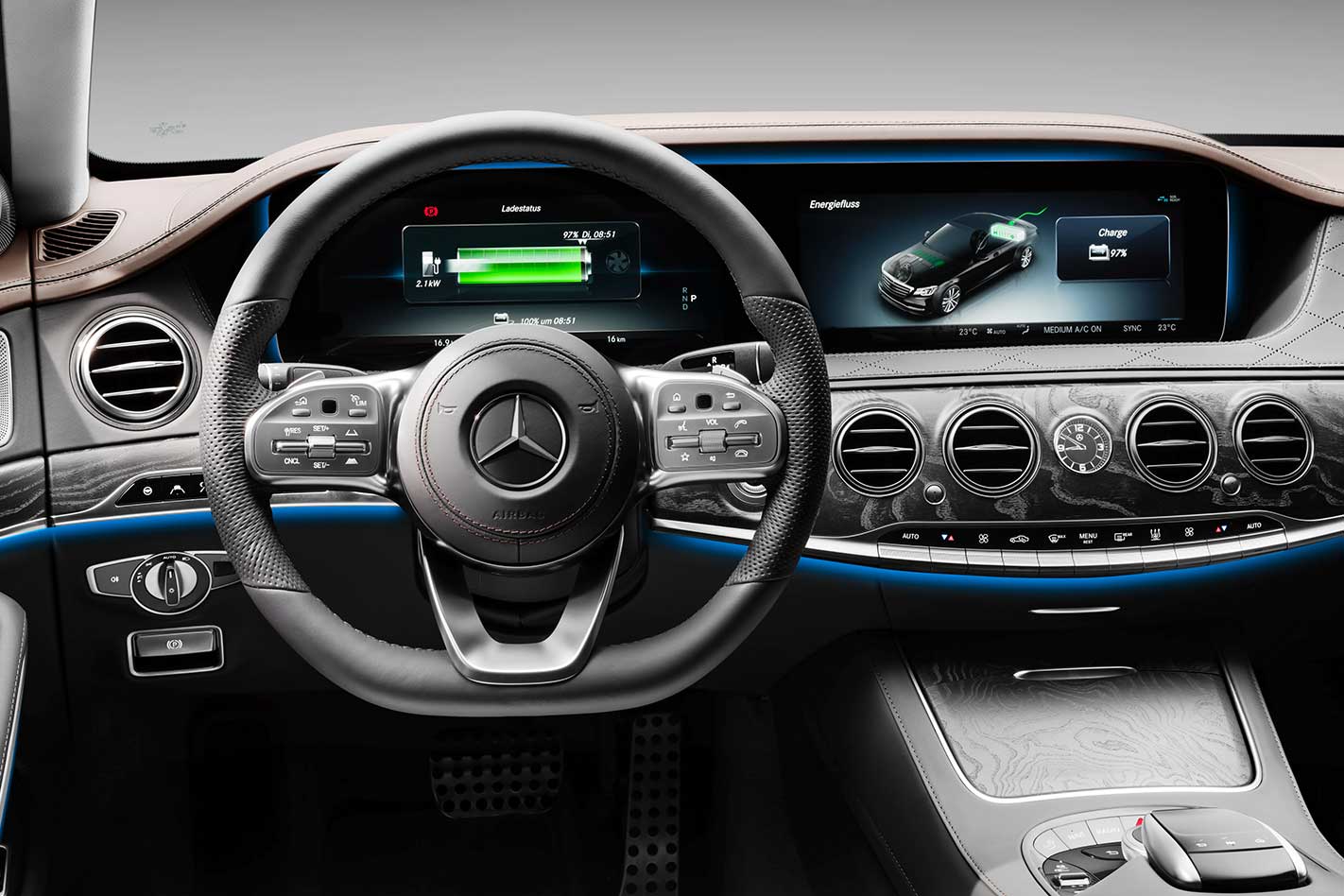
However, then came the handbrake. Replaced with the electric handbrake – the little one-finger switch. The first time I drove a car with one of those – some years ago now; I seem to recall it was an S-Class, and my mind was distracted with the gently circulating rainbow lights in the cabin, like a disco for sloths – it took me 10 minutes to find the bastard handbrake and actually get out of the garage.
And the handbrake was a real loss. Not that I was about to do some handbrake turns in an S-Class anyway, but it’s always nice to know the option is there.
Alas, no more. It’s all part of a trend, of taking stuff away in the name of progress. It’s evolution by subtraction. But just like evolution took away our tails and left us with a useless tailbone, good only for slamming painfully on bike stands, so car makers are taking away our primitive fog lights (with their $2 replacement bulbs) in favour of hyper-evolved xenon smart-lights (which require re-mortgaging the house to replace when something goes wrong).
Last one out the door, please turn out the fog lights.
A McLaren Senna takes 300 hours to build. But its performance is nowhere near as time-consuming.
Each 588kW/800Nm 4.0-litre twin-turbo V8 is capable of rocketing the hypercar to 100km/h from a stand-still in just 2.8 seconds.
Getting to 200 takes just 6.8. Also from a stand-still. It can then carry on to reach 340km/h.
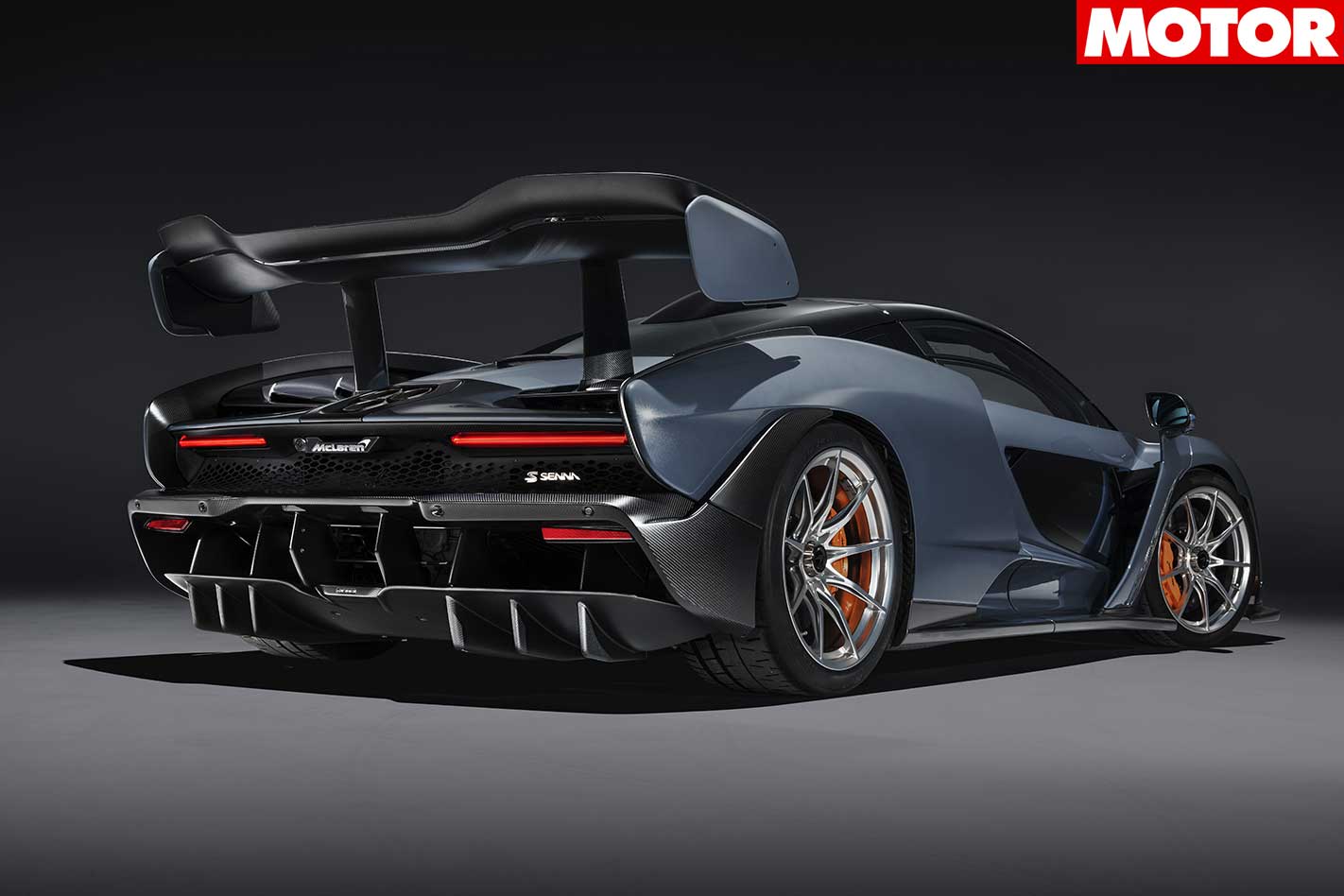
Its carbon fibre ‘Monocage III’ chassis makes it the lightest road car from McLaren since the F1. The Senna weighs just 1,198kg dry.
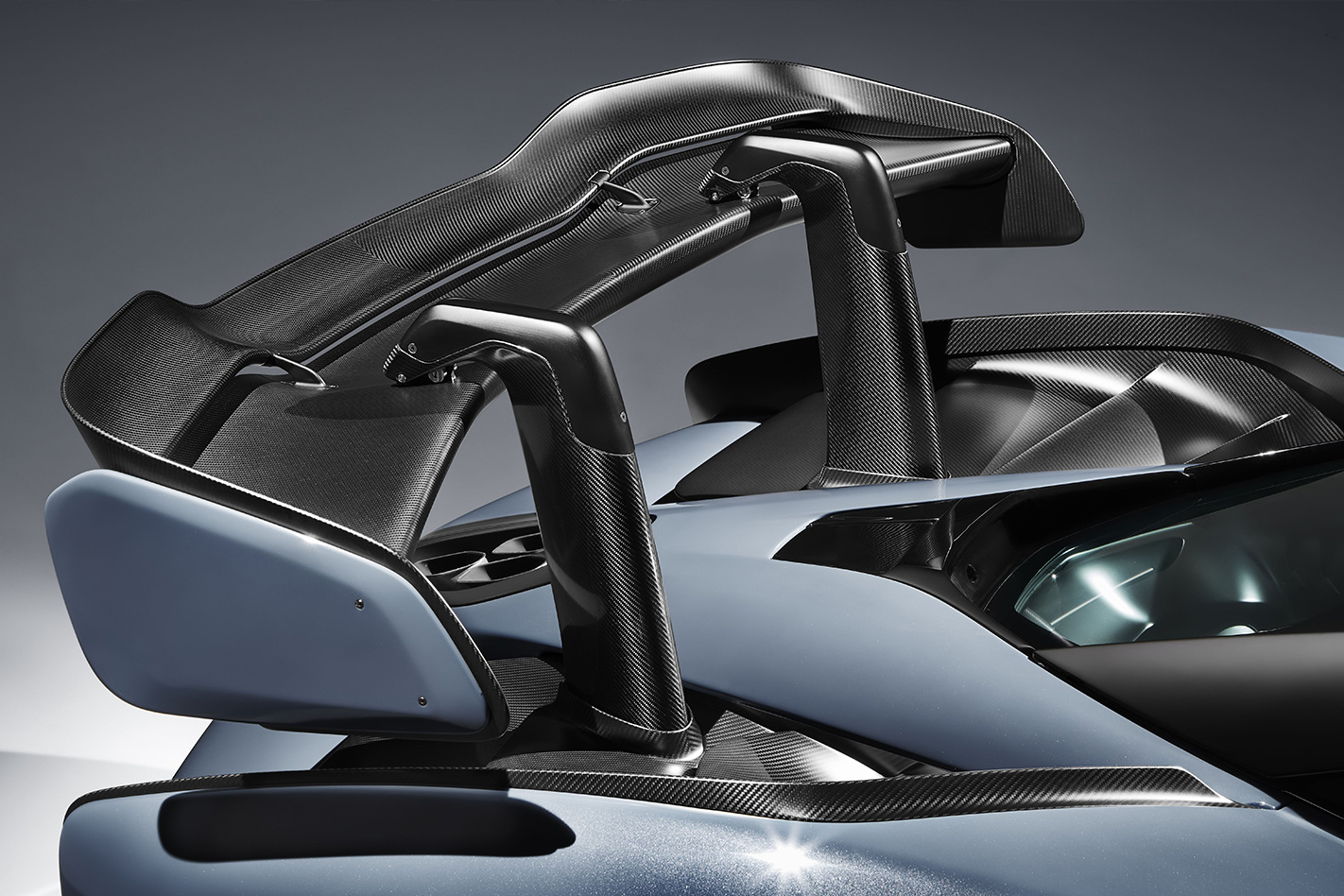
In 9.9 seconds, it can cover a quarter mile. This is thanks to its ‘organic’ aerodynamics, which is most clearly visible in its huge rear wing. Despite its size it only weighs 4.87kg, but can handle more than 100 times that in downforce.

Stopping is covere by carbon ceramic brakes, which McLaren says are the most advanced ever fitted to a McLaren road car. Each one takes seven months to create “and has cooling vanes machined into the disc.”

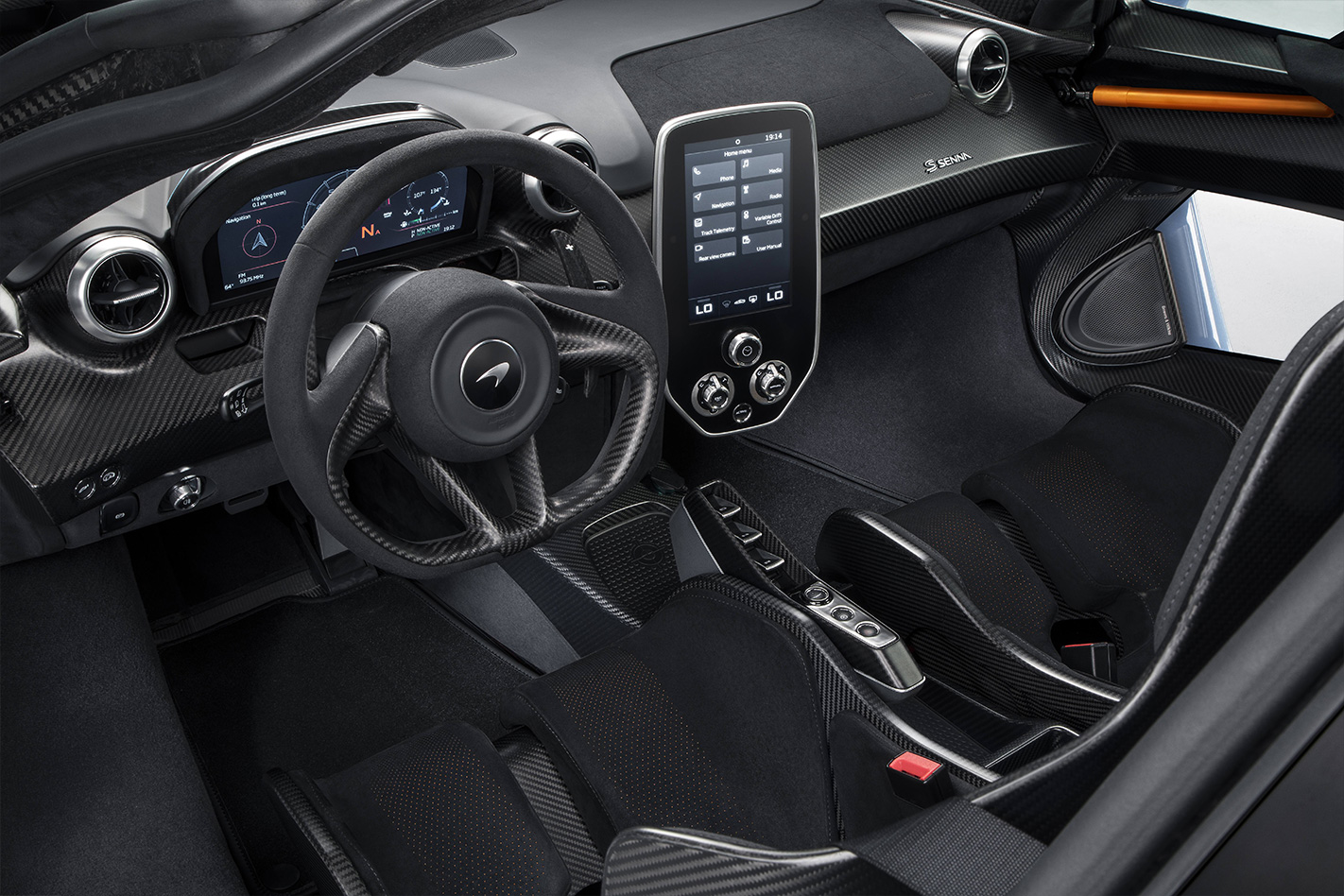
Extended gear shift paddles are fixed in place behind the steering wheel, allowing drivers to bump through all cogs in the dual-clutch seven-speed gearbox.
McLaren Automotive CEO Mike Flewitt says the intention for the Senna was to create a wild track car with McLaren’s racing history at its core.
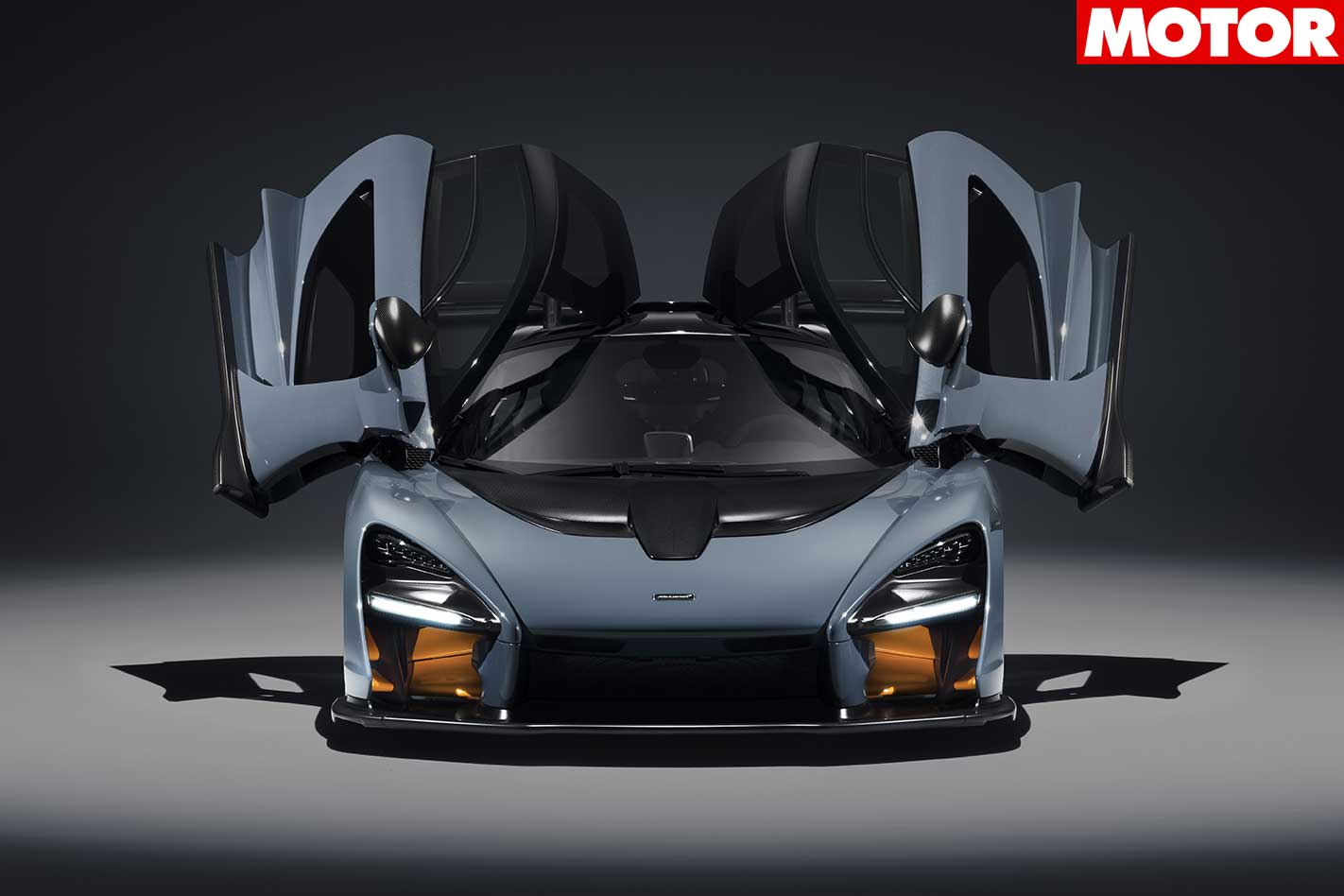
“Every element of this new Ultimate Series McLaren has an uncompromised performance focus, honed to ensure the purest possible connection between driver and machine and deliver the ultimate track driving experience in the way that only a McLaren can.”
All 500 units of the Senna have been spoken for, with pricing announced at £750,000 for the UK.
Citroën and Peugeot passenger vehicles will now come with a five-year, unlimited kilometre warranty – less than a year after the Citroën’s period was slashed from six years to three.
Peugeot and Citroën Australia (PCA) have introduced a five-year, unlimited kilometre* warranty with five-year roadside assist, which will be retrospectively applied to any 2018 model-year vehicles already sold.
The initiative partly reverses a decision by PCA’s new owners, UK-owned Inchcape, to cut the longer Citroen warranties previously introduced by the brands’ former distributor, Malaysia-owned Sime Darby.
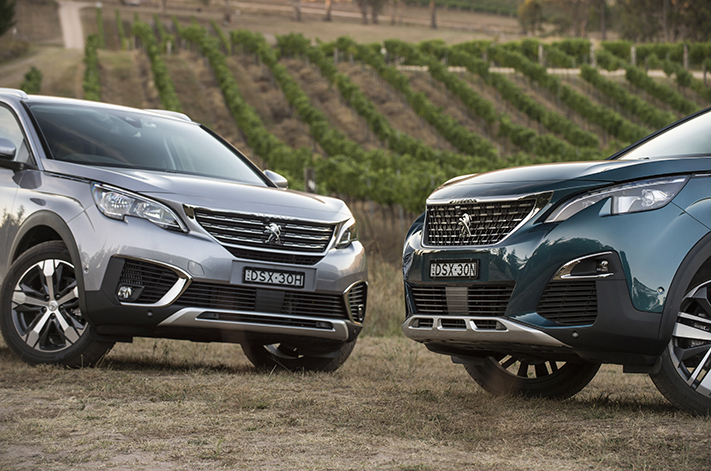
Introducing a five-year warranty, which comes second only to Kia’s seven years, is good news for each brand though, especially Peugeot, which always had three-year coverage. The move will provide further incentive to purchase a ‘Pug’, following Inchcape’s recent decision to roll out autonomous emergency braking as standard across the entire range for no extra cost.
Managing Director of Peugeot and Citroën Australia, Anouk Poelmann said that the new warranty gives Australian’s confidence in purchasing a Peugeot or Citroën and reinforces the commitment both PCA and Groupe PSA in France have for the Australian market.
“When Peugeot and Citroën arrived in Australia – almost 80 and 100 years ago respectively, reliability and durability was the key to the brand’s early success and today that focus has not changed.”
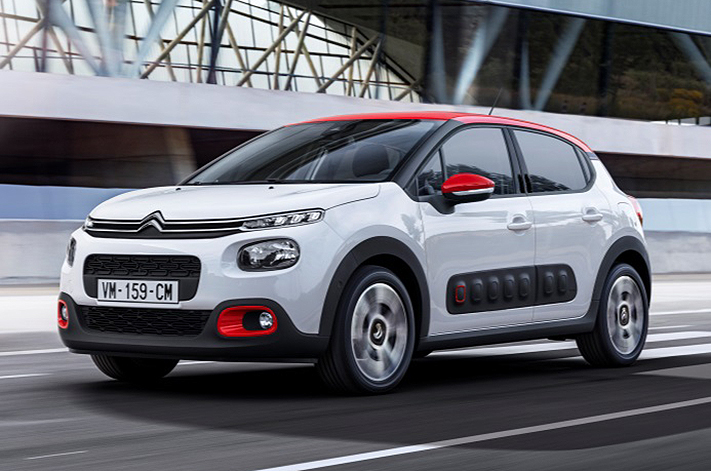
The five cars for this week are all poster-worthy, and all likely to become collector fodder, if they aren’t already…
2002 Nissan Skyline R34 GT-R V-Spec II Nür – $145,000
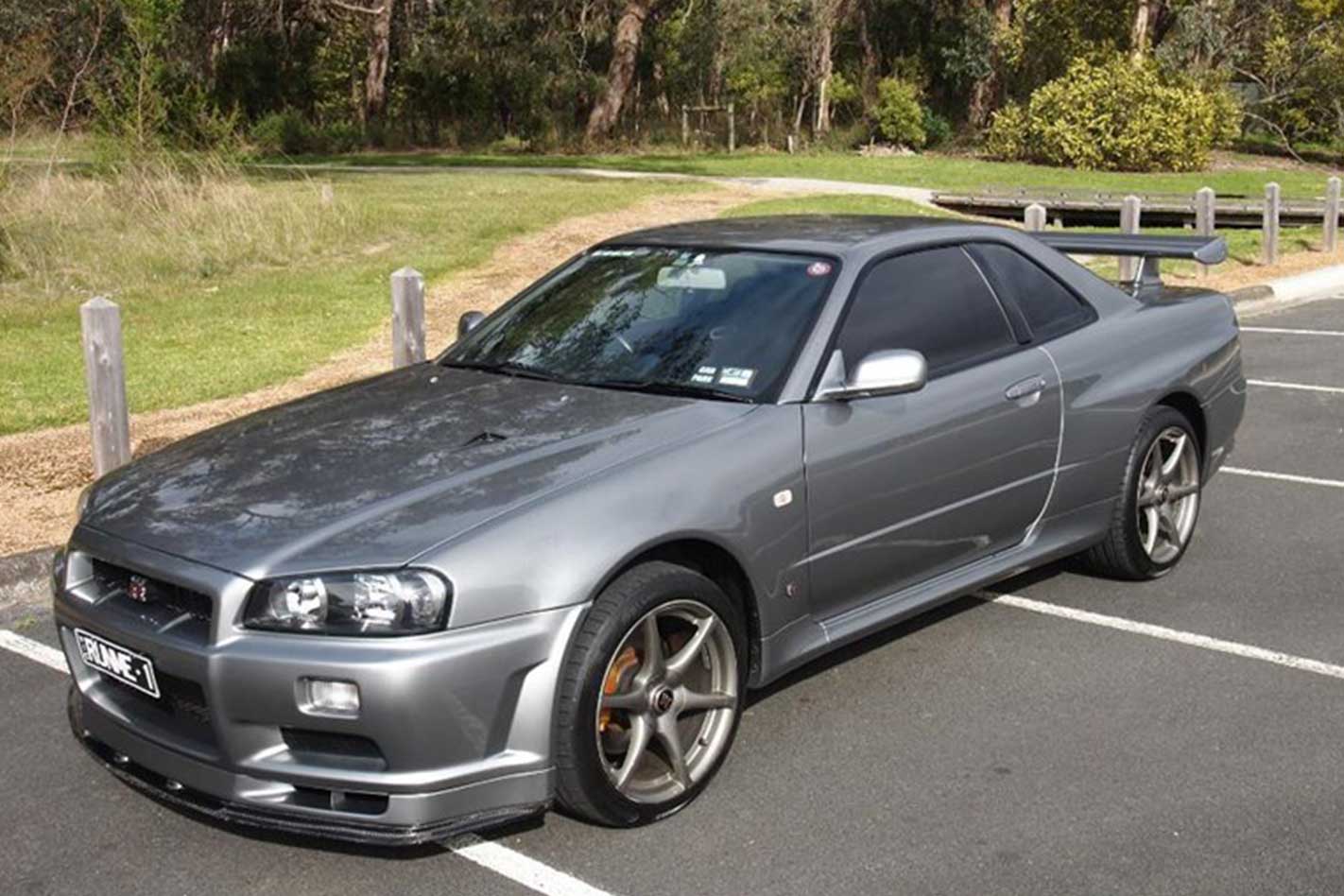
About $145,000 will get you this example from the Healy Factory in Melbourne, but don’t think you’re being ripped off here. Only 718 V-Spec II Nürs were built, and finding a tidy Skyline is a challenge at the best of times.
1996 Holden HDT VS Aero – $55,000
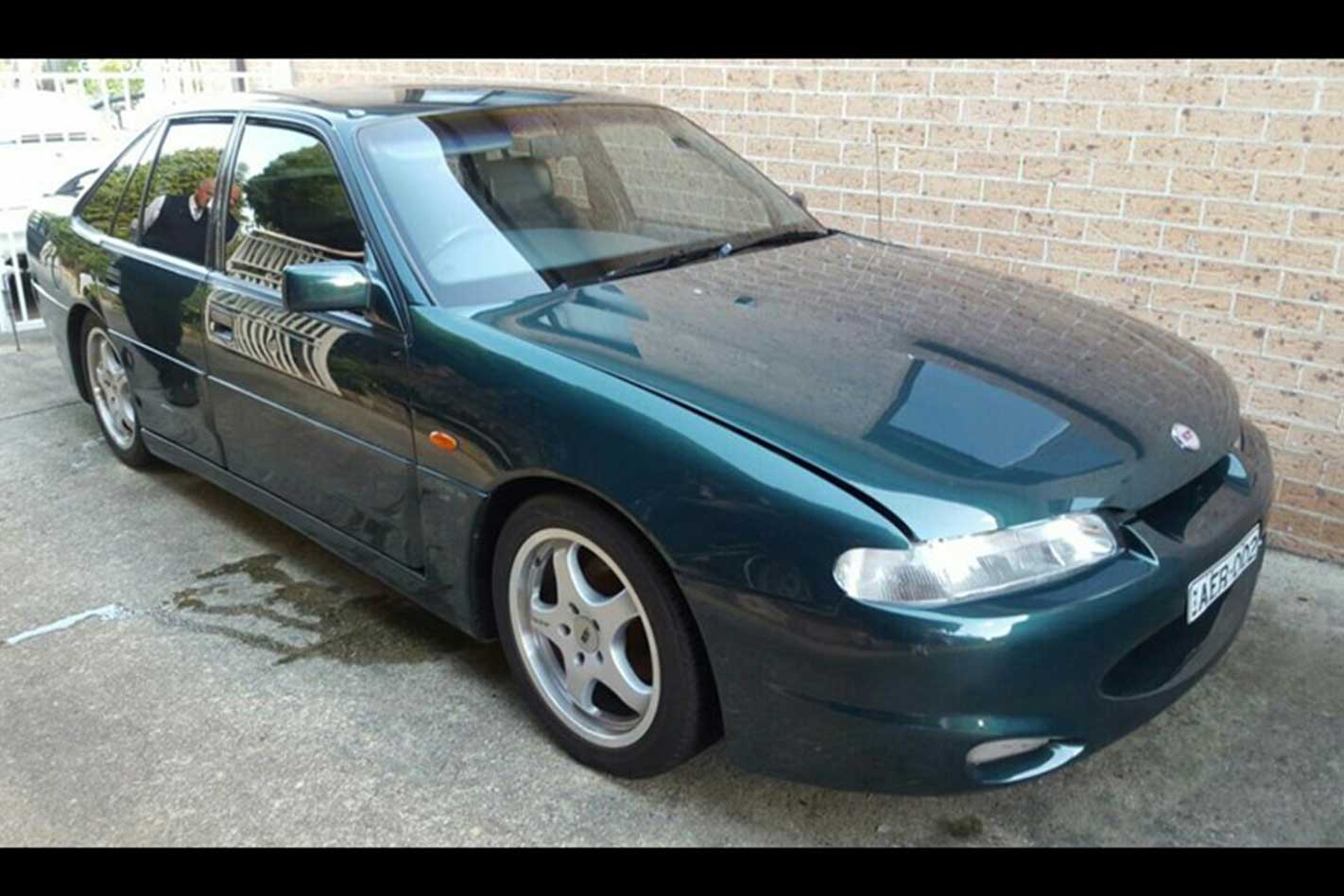
More importantly, though, owning one of these meant it was only you and 99other who had the privilege.
This Aero’s going for $55,000, but it’s only sporting kays in the low-90,000s, and was apparently the promo car used by HDT for media.
1991 Lamborghini Diablo – $305,000
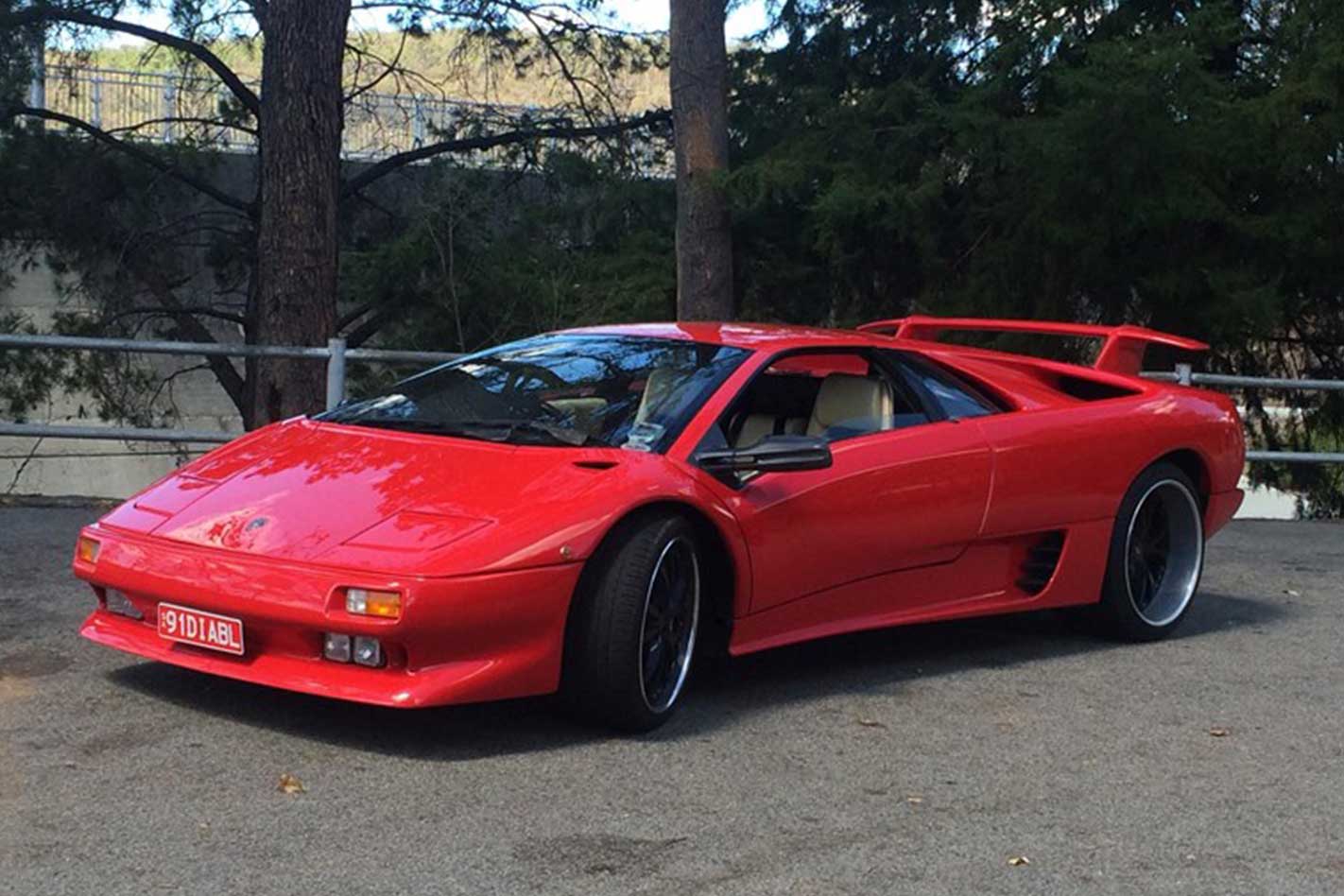
But who cares when you can say you own what could be the ultimate poster car, with scissor doors, a glorious V12 and that ridiculous wing.
$305,000 will get you this 34,398km example from WA.
1987 Ford Escort RS Turbo – $25,000
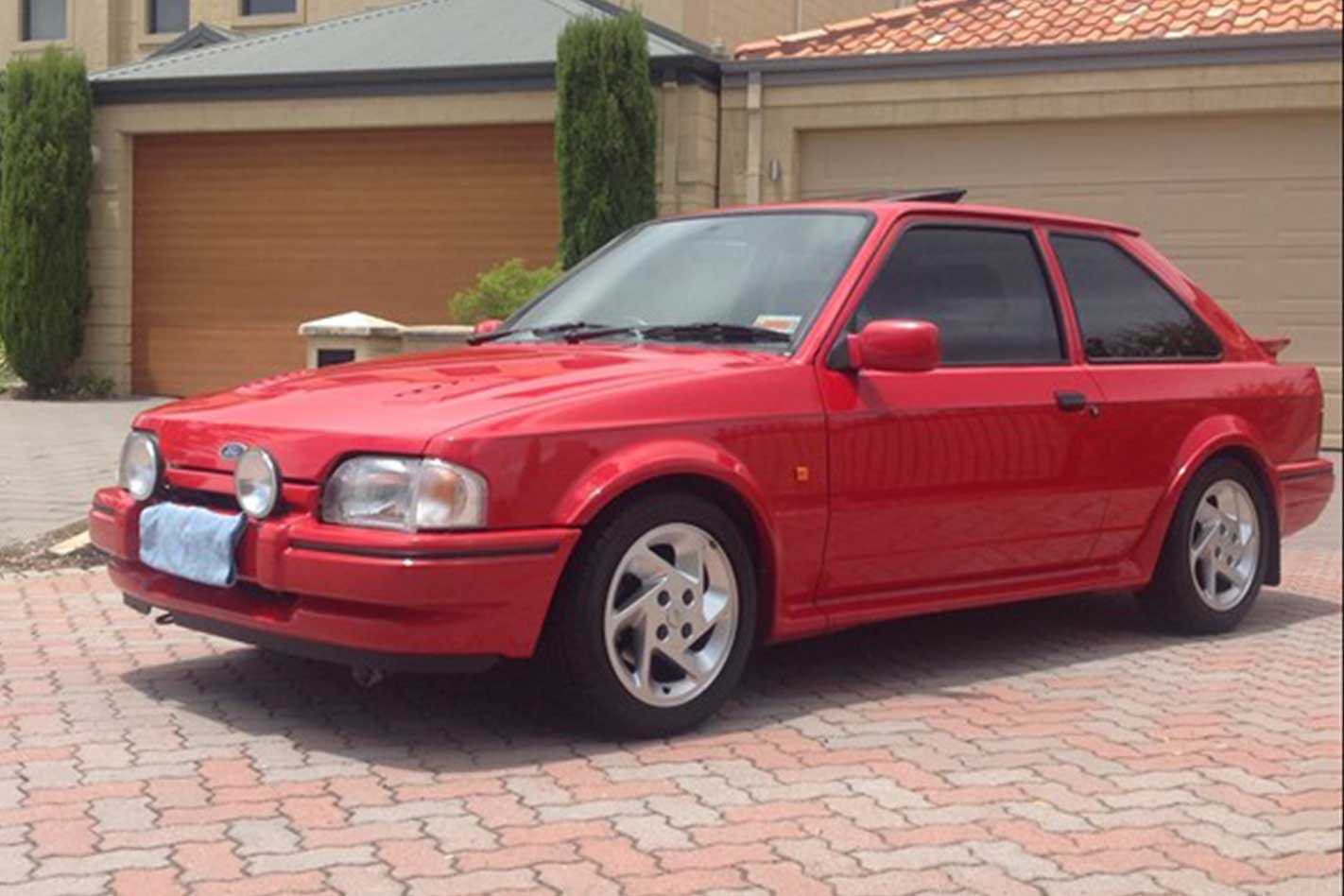
This one’s done 76,000km worth of smiling, in fact, and has a RWC and some spares ready at $25,000.
1991 BMW M5 E34 – $45,000
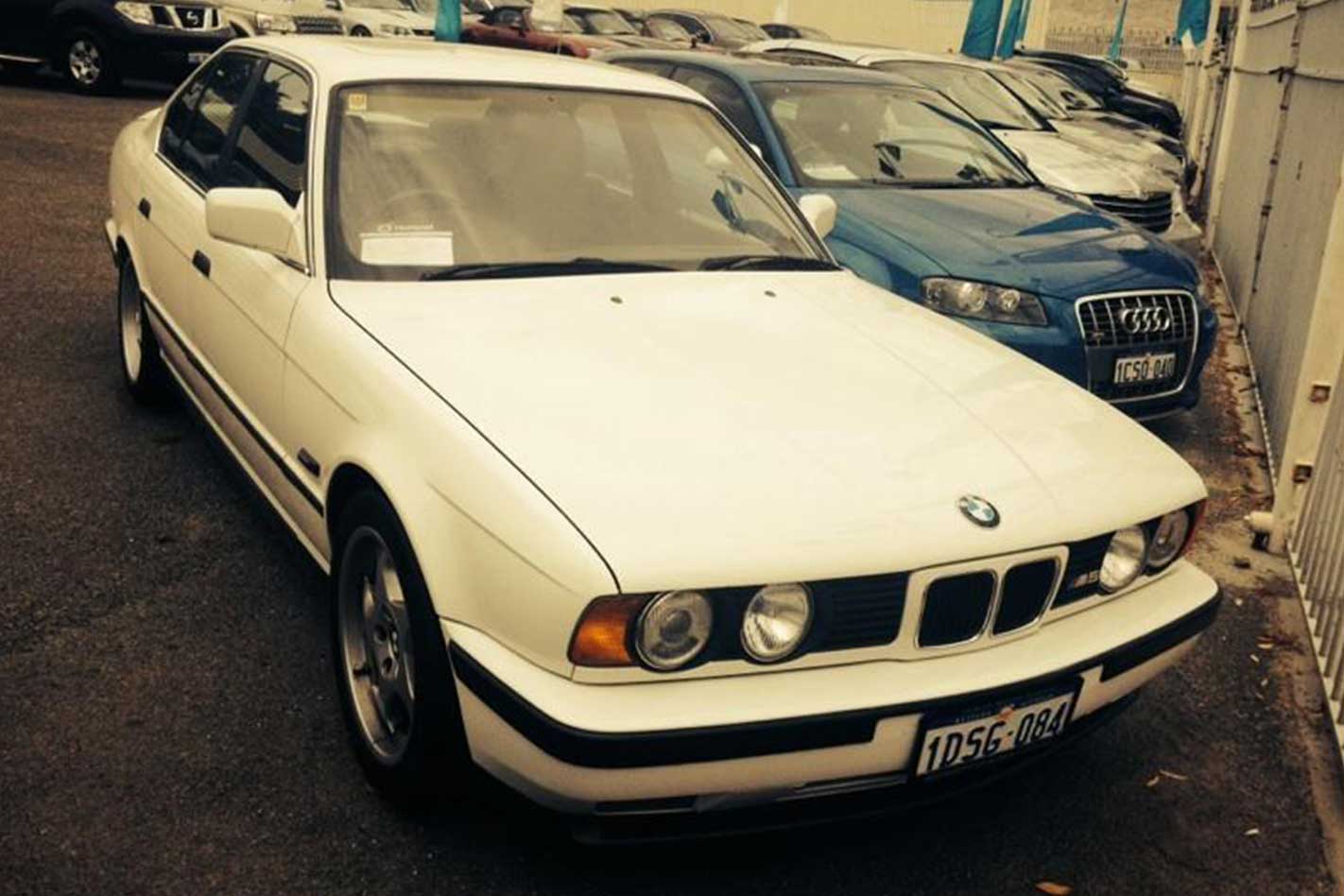
The last of the hand-built M cars sports a straight-six derived from the wild BMW M1’s own engine, good for 232kW and a 0-100km/h run of 6.3 seconds.
BMW Australia says only 14 showed up Down Under wearing Alpine White, so $45,000 for this 190,000km example isn’t crazy by any means.
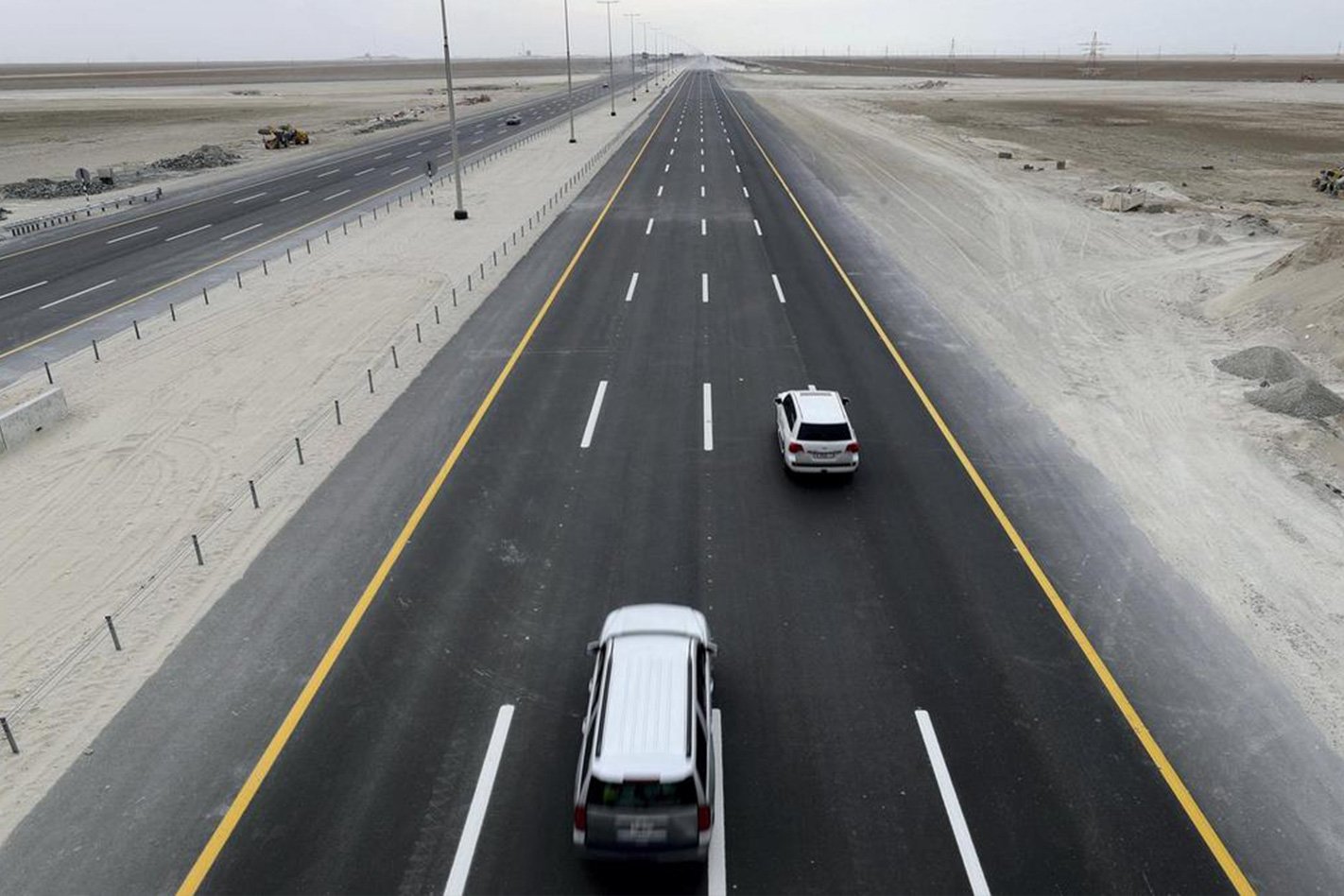
MORE than 250-kilometres of fresh motorway in Abu Dhabi will allow drivers to legally travel at 160km/h.
The lofty new speed limit makes it the fastest stretch of bitumen in the country in a move the government claims will help ease congestion.
While the road’s 160km/h restriction is more generous than any other, the Sheikh Khalifa bin Zayed Highway will also have the strictest enforcement.
- Strict speed limits ‘can be detrimental to road safety’
- Melbourne council backs 30km/h speed limit trial
Three lanes of blacktop span the 64-kilometre distance between Barakah and Ghuwaifat, while the 182-kilometre stretch between Mafraq and Baynounah Forests blossoms to four lanes.
It would take just over an hour and a half to travel the entire length of the highway at the posted speed limit.
However, the generous speed limit has been criticised by road safety advocates in the country.
“The UAE has launched initiatives to reduce the speed limit on several roads. So increasing the speed limit on Sheikh Khalifa bin Zayed Road is unexpected,” said Thomas Edelmann, director of Road Safety UAE.
“Of the 525 deaths in road accidents recorded in the UAE in 2017, 230 occurred as a result of speeding, according to the Ministry of Interior.
“Speeding remains one of the major causes of deaths on our roads and a major cause of accidents.”
Mr Edelmann believes the road’s speed limit should be set at 120km/h instead.
The highway also features special underpasses for camels, and was opened earlier this year with a fleet of open-wheel race cars and high-performance police vehicles.
While the 160km/h limit sets a new high for the country, other highways in Abu Dhabi have had maximum speeds reduced to 110km/h, including Sheikh Mohammed bin Zayed Road and Emirates Road.
The facelifted Subaru Outback has arrived in Australia with a fresh look, updated cabin, additional active safety tech and improvements to its 2.5-litre petrol/CVT powertrain.
The changes, which arrive a year out before an all-new model is due, also see the deletion of the six-speed manual gearbox, which was previously available with the 2.0-litre diesel engine, making the CVT automatic the only shifter across the range.
This means it now costs a little extra to buy into the Subaru Outback range, however the pricing for the entry-level 2.5i and 2.0d CVT variants remain unchanged at $36,240 and $38,740, despite some considerable extras.
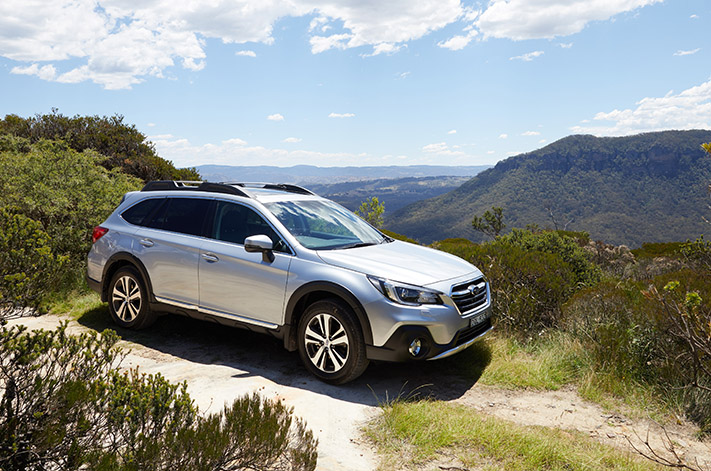
These include external tweaks including a newly designed front bumper, grille, headlights, alloy wheels, and wing mirrors, with the more expensive Premium and 3.6R variants also gaining LED headlights with integrated daytime running lights.
Stepping inside the 2018 Outback reveals a redesigned centre dashboard panel with a 7.0-inch touch screen, which grows to 8.0-inches in the Premium and 3.6R versions, and displays Apple CarPlay/Android Auto smartphone mirroring.
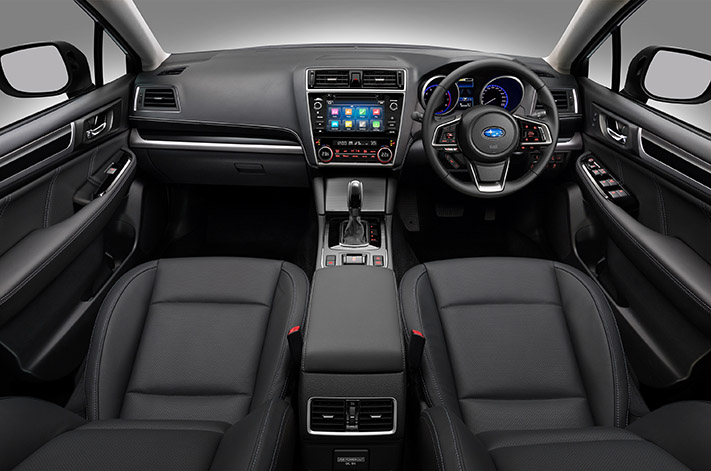
The cabin has a more premium look about it with high-gloss black surfaces and stitching along the soft-touch dashboard leading to a newly designed steering wheel.
Safety has also been boosted with all Outback variants, now equipped with the third-generation EyeSight driver assist system which adds lane keeping assist along with enhanced pedestrian avoidance and pre-collision braking assist. The adaptive cruise control now recognise brakes lights and sees vehicles from longer distances and wider angles, making it even safer on multi-lane roads or when vehicles cut across lanes, and also brings autonomous emergency braking (AEB).
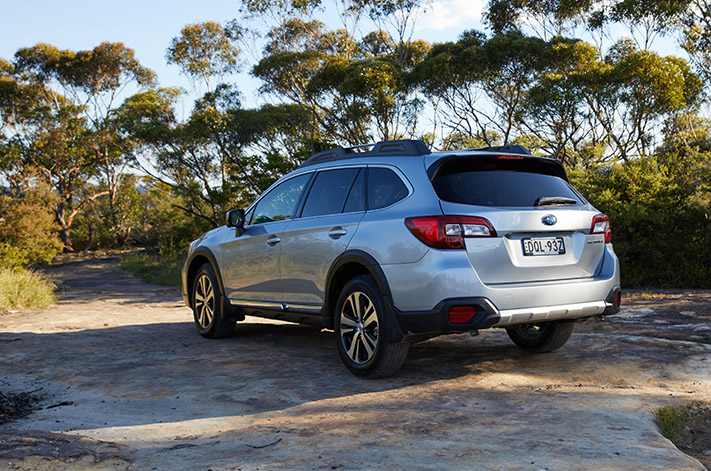
Premium and R3.6 variants are also equipped with a new side-view parking monitor and adaptive anti-glare high beam.
Subaru’s engineers have tinkered with the Outback’s 2.5-litre petrol variants’ suspension and CVT auto for greater handling, throttle response and efficiency.
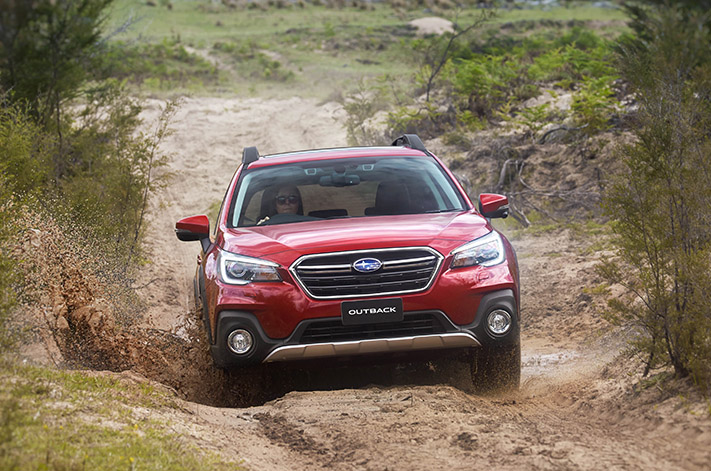
While entry-level pricing remains the same as the superseded CVT models, the Premium and 3.6R variants are up by about $400 due to their additional extras.
The 2018 Subaru Outback is now available at dealers across Australia.
2018 Subaru Outback pricing
- Outback 2.5i – $36,240
- Outback 2.0D – $38,740
- Outback 2.5i Premium – $42,640
- Outback 2.0D Premium – $45,640
- Outback 3.6R – $49,140
JAGUAR is bringing the iconic D-Type race car back to life, 62 years after the last example was built in 1956.
A special continuation production has been announced, with the company going to extreme lengths to ensure the modern-day creations are identical to their retro siblings.
Jaguar had planned to build 100 D-Types back in 1955, however only 75 rolled off the production line. The final 25 will now be built thanks to Jaguar Land Rover Classic Works in Warwickshire in England.
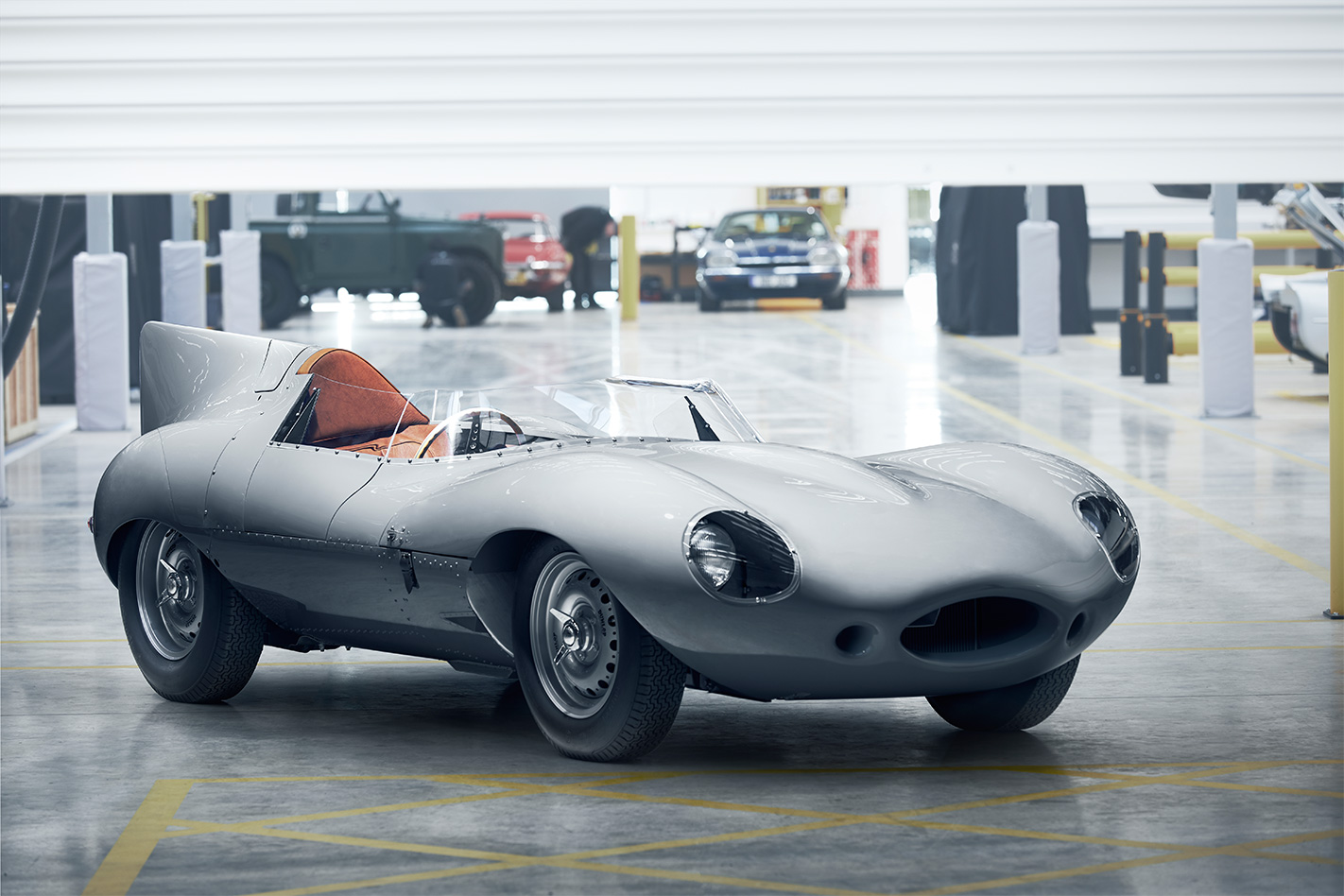
The D-Type has a hat-trick of Le Mans 24 Hour victories to its name, winning the ’55, ’56, and ’57 editions of the world’s most famous endurance race.
Under the bonnet is a six-cylinder XK engine, which will also be recreated to period specifications without any fancy fuel injectors or turbos.
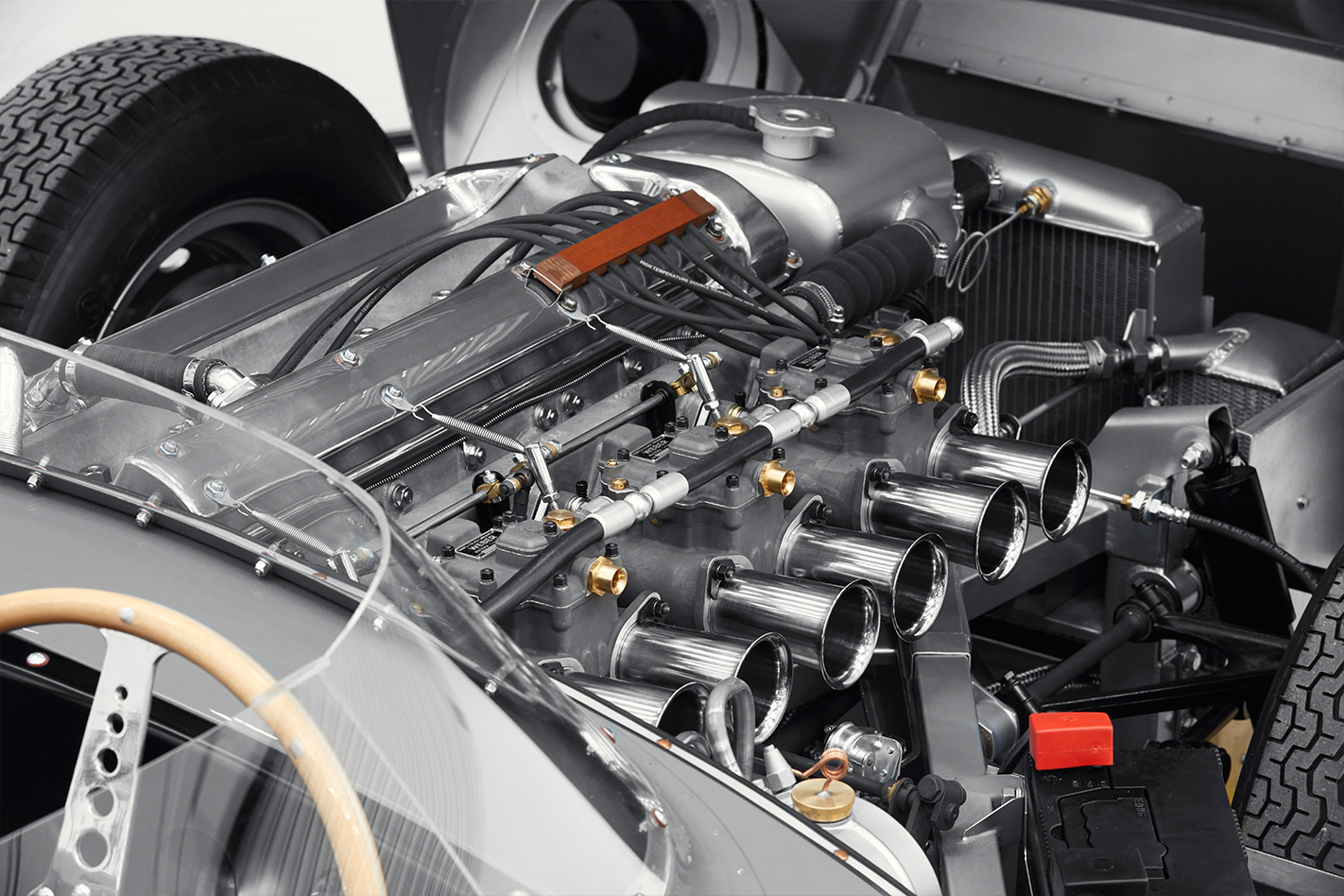
Jaguar has already built the first car of the new run (in the ’56 longnose spec), which will be publically revealed at Salon Retromobile in France
“The opportunity to continue the D-type’s success story, by completing its planned production run in Coventry, is one of those once-in-a-lifetime projects that our world-class experts at Jaguar Land Rover Classic are proud to fulfil,” said Jaguar Land Rover Classic Director Tim Hanning.
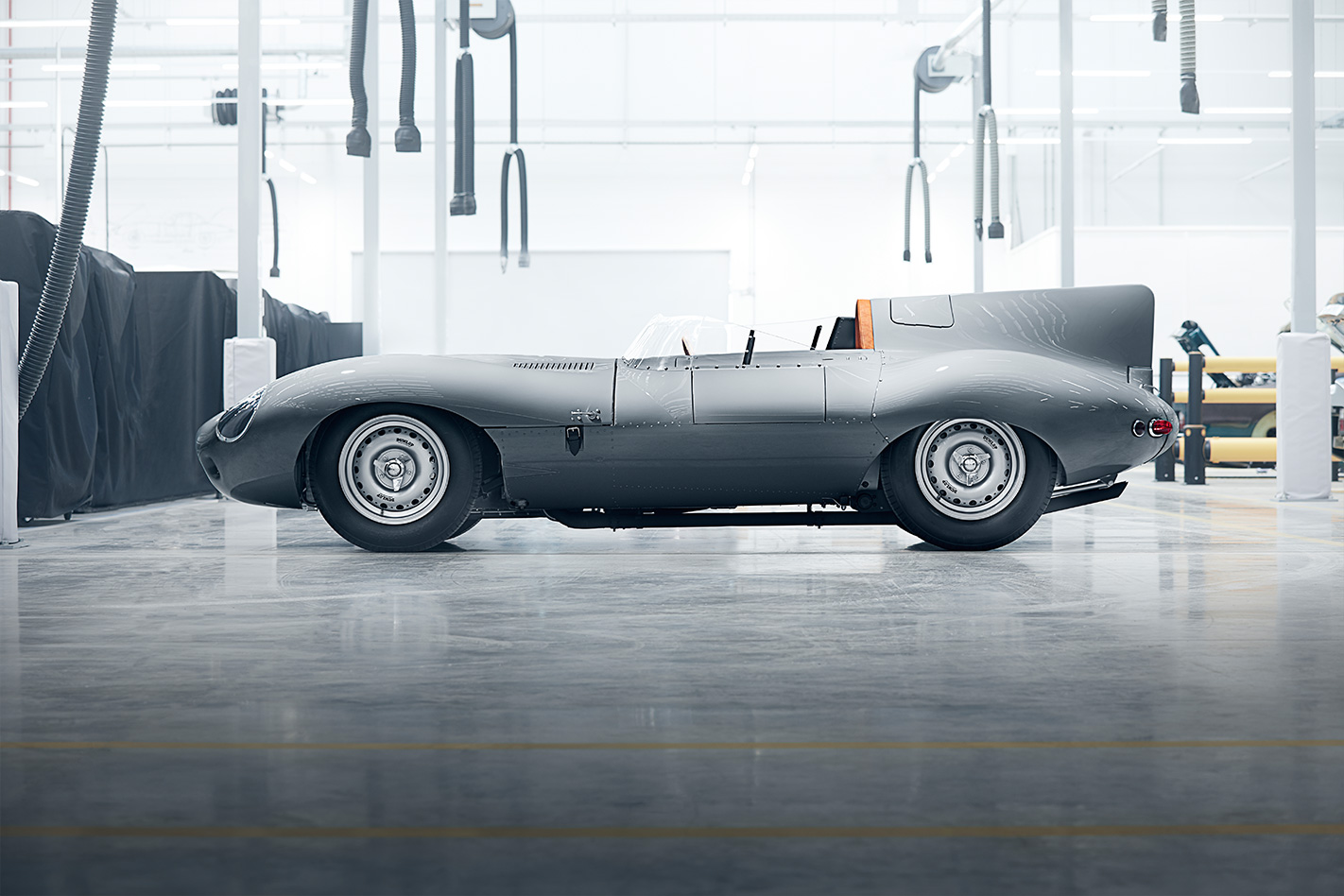
“Recreating the nine D-type-derived XKSSs was hugely satisfying, and an even bigger technical challenge than the six missing Lightweight E-types, but lessons learned from the XKSS project have given us a head start on the final 25 D-types,” Kev Riches, Jaguar Classic Engineering Manager, said
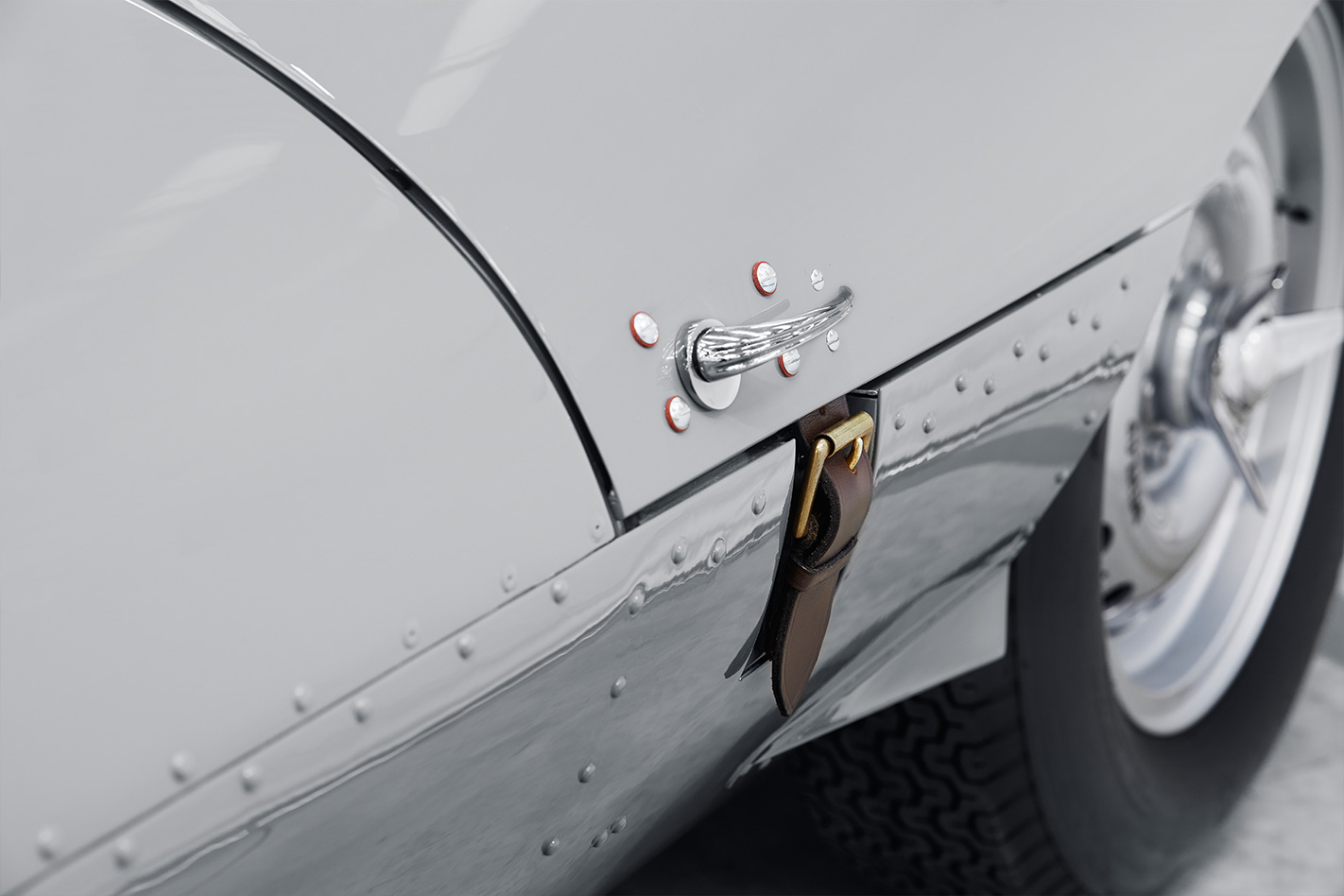
Aston Martin recently completed a continuation run of the DB4 GT, with two of those being sold to Australian buyers. Here’s hoping a ‘new’ D-Type makes its way Down Under as well.
DESCRIBED as the ultimate road-legal McLaren, the numbers on the British supercar specialists’ Senna are simply mega.
With its 4.0-litre twin-turbocharged V8 cranking out 588kW and 800Nm, the McLAren Senna is driven by the most powerful combustion engine ever developed by McLaren’s road car operation. Granted, those figures are put in the shade by the McLaren P1’s total system output of 673kW/980Nm, but that car had an electric motor to help it out. Even so, the Senna accelerates just as quick – and is almost as fast – as the mighty P1.
The Senna’s 0-100km/h and 0-200km/h sprint times are identical to the P1, coming in at 2.8 seconds and 6.8 seconds respectively. Launch it down a dragstrip and it’ll trip the beam in a mere 9.9 seconds, just a tenth of a second behind the P1.
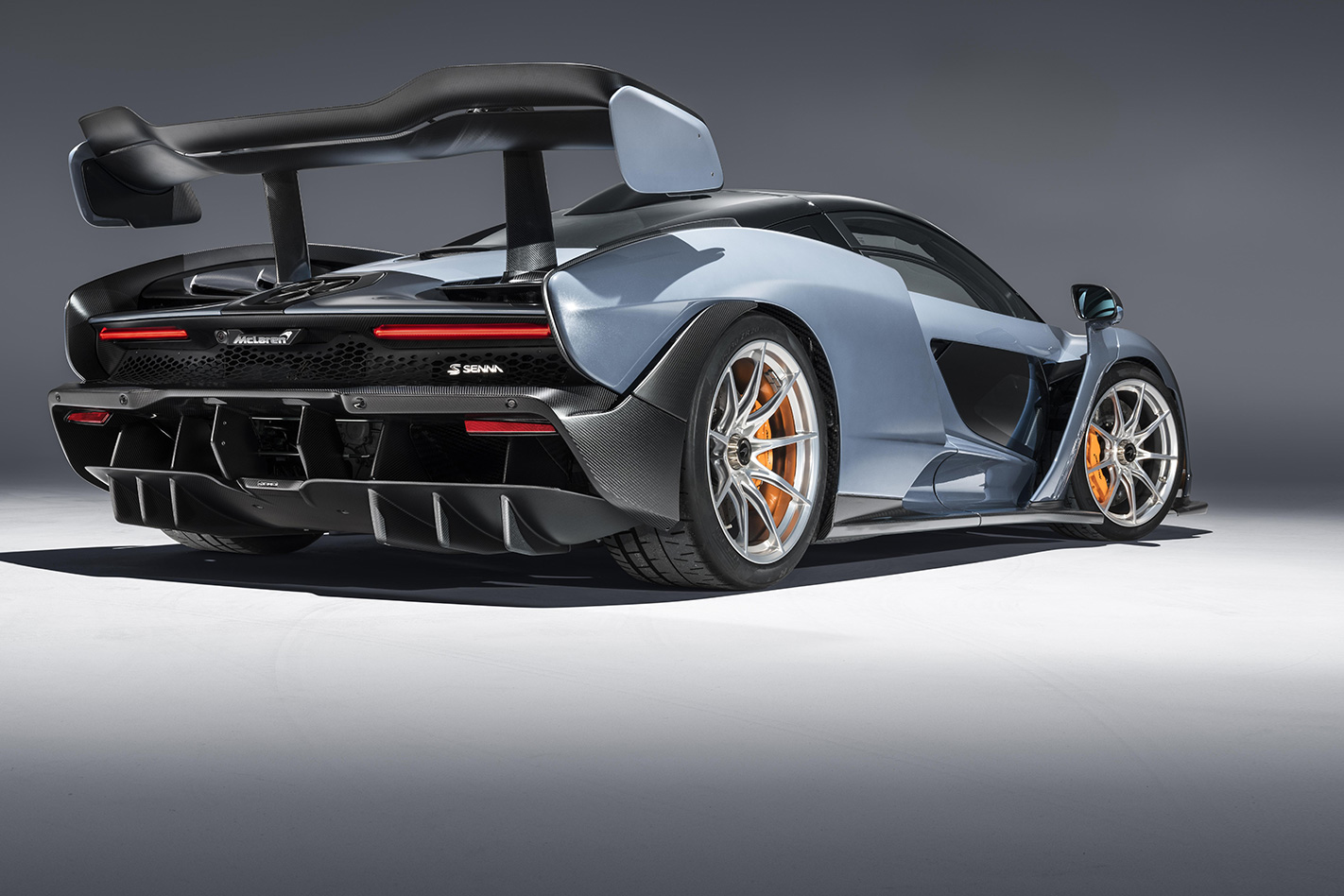
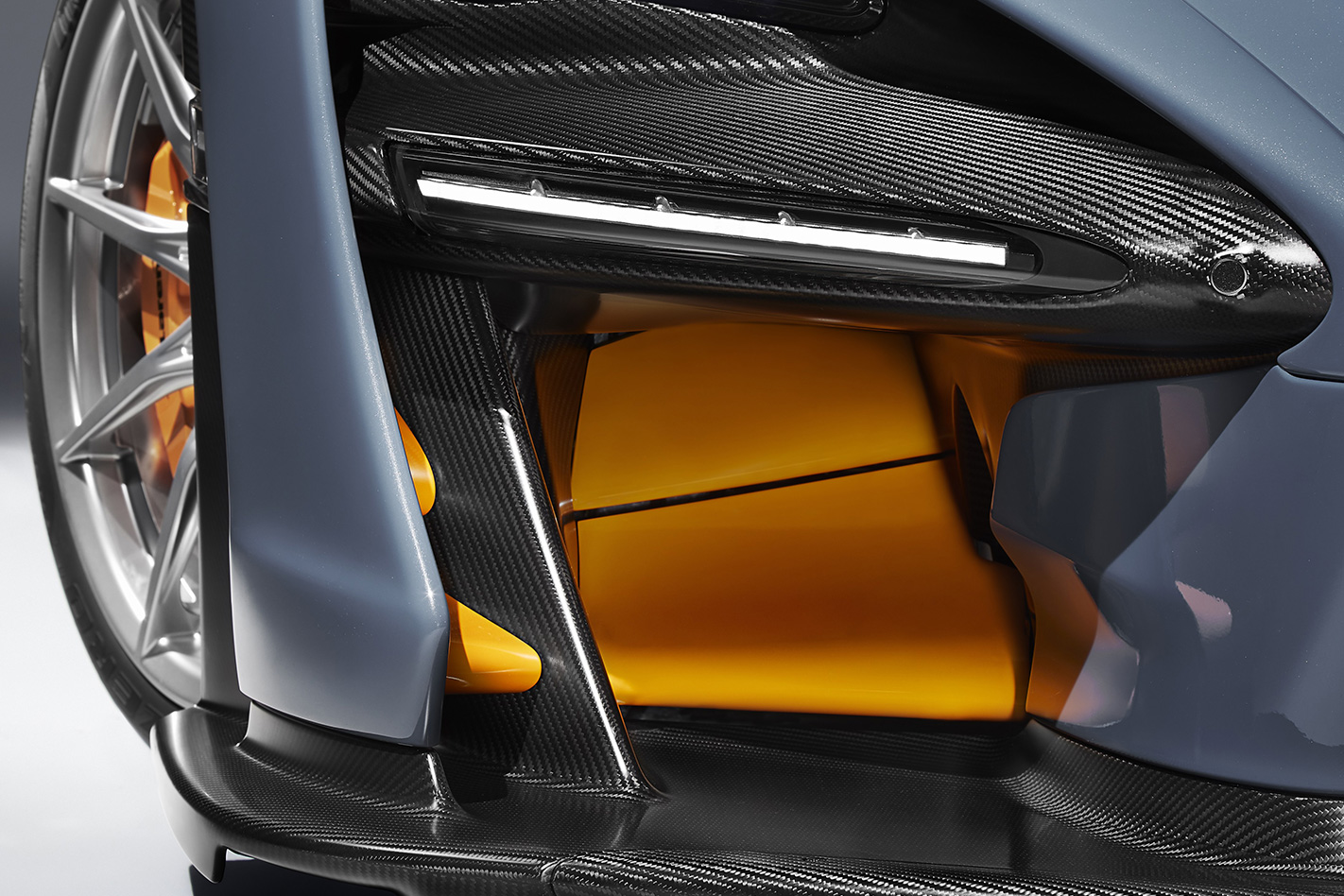
The flipside is the Senna’s bodywork generates a whopping 800kg of downforce at 250km/h to help glue it to the road (or track), and while its styling may not have the simple elegance of other cars in the McLaren range, the huge vents and intakes all serve to make the car grip harder and go faster.
See those shovel-like scoops behind the front cheek vents? They’re electronically controlled winglets mounted inside ducts, and they can be trimmed at high speed to reduce downforce and keep the suspension from bottoming out. The aero gets even wilder at the rear, with another adjustable wing taking care of the bulk of downforce generation and working in concert with a sizable diffuser. Dramatic slashes in the Senna’s carbon-fibre engine cover help evacuate heat from the engine bay.
The exhaust has also been crafted with aerodynamics in mind, with the trio of hexagonal tips being cut on a slant to be flush with the rear deck and direct exhaust gasses away from the rear wing. The Senna may not have conventional beauty, but the company says it’s the “strongest expression yet of McLaren’s form follows function philosophy”.
Downforce, aero and prodigious power are key to the Senna’s performance, but it’s light weight that’s the real secret sauce to making the non-hybrid Senna as quick as a P1. Tipping the scales at just 1198kg, the Senna weighs less than a Toyota 86.
And speaking of rolling stock, though it might say “Pirelli P Zero Trofeo R” on the sidewalls of the Senna’s 19-inch (front) and 20-inch (rear) tyres, they’re a custom compound and construction that’s designed to resist squirm during hard cornering and perform best on dry race tracks. They’re far from off-the-shelf rubber.
Too bad there’s only ever going to be 500 Sennas made, and too bad they’re all spoken for.
NOSTALGIA often dictates that comparisons between the fabled Peter Brock and Jamie Whincup are off-limits.
However, facts care not for misty-eyed memories, and the truth of the matter is Jamie Whincup is the most accomplished Australian Touring Car driver in history, period.
We caught up with the man himself ahead of his second crack at the Bathurst 12 Hour, where he backed up a victory on debut with a second-place finish.

“The 2017 championship was a tough one,” he starts. “We’ve had some big grinds over the years but last year was something else.
“For us, to grind out those last three months in particular, to give ourselves an opportunity and then to get it on the last lap on the last day was something else.
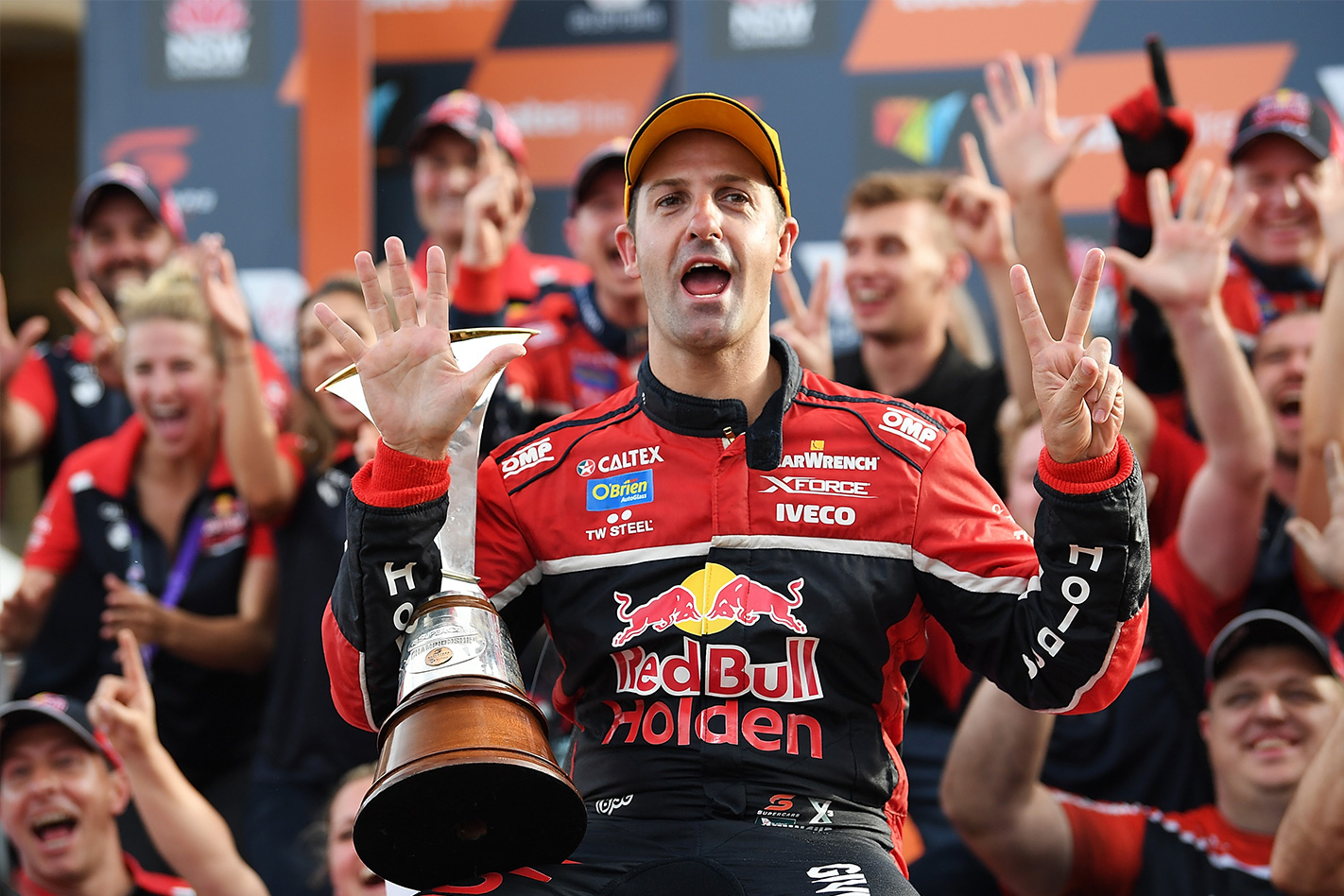
“Inside the car during that last race, I knew that I just had my job to do and was focussed on doing that. I had to cross that line first, at all costs – and I did that. But then it was a matter of what was going on behind me.
“The team didn’t really know what was happening either, because of the penalty and incident with Craig Lowndes. I was on the radio, saying ‘What is going on?! Give me an update! I don’t know what is happening!’
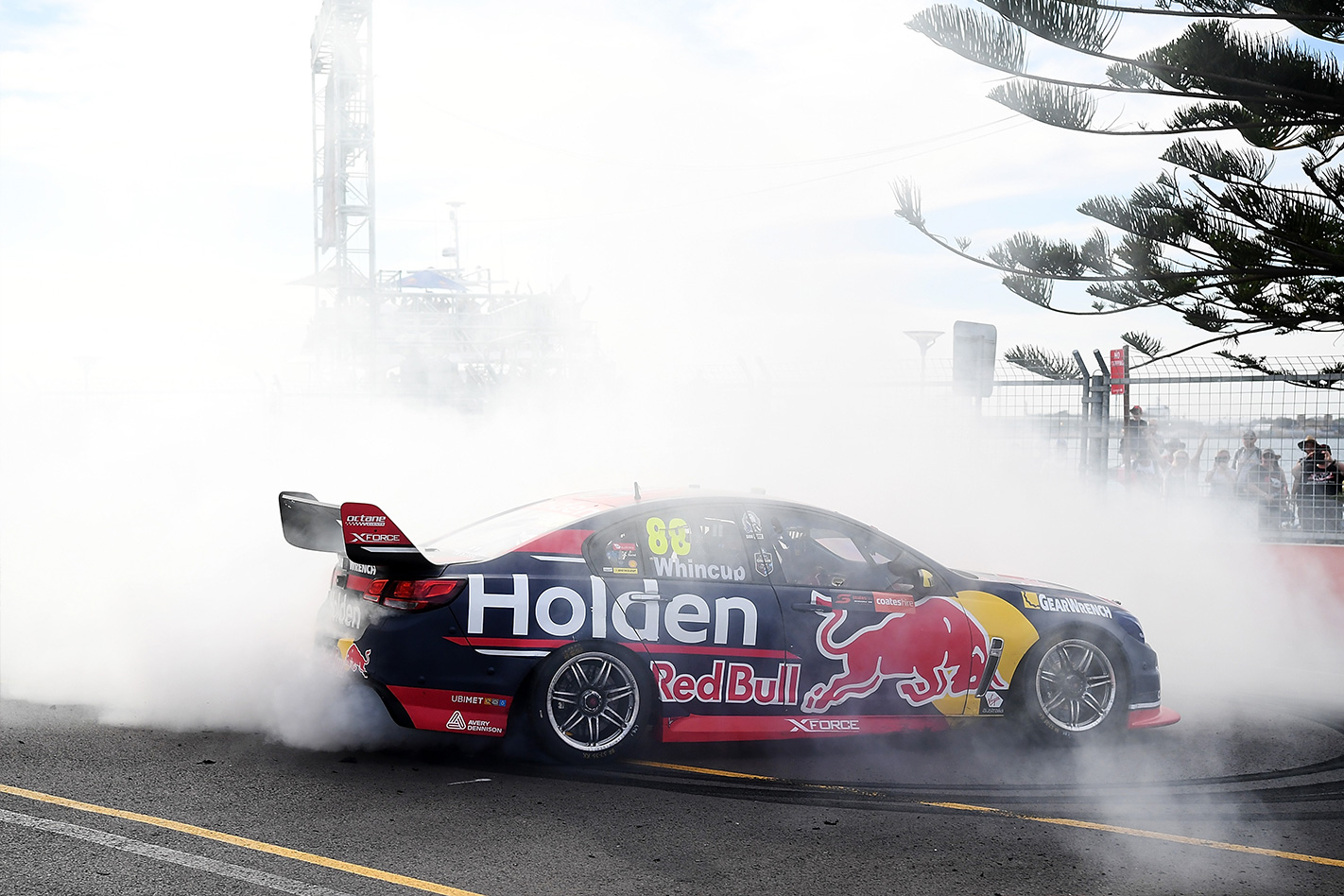
“But I wanted confirmation of what was going on, then finally the message came through – ‘Mate, we’ve done it, we’ve done it’. It was an absolutely unbelievable feeling, and that is what this is all about.
“It was a huge relief in that moment. It had been a long year so we were certainly worn out and hoping for good things.
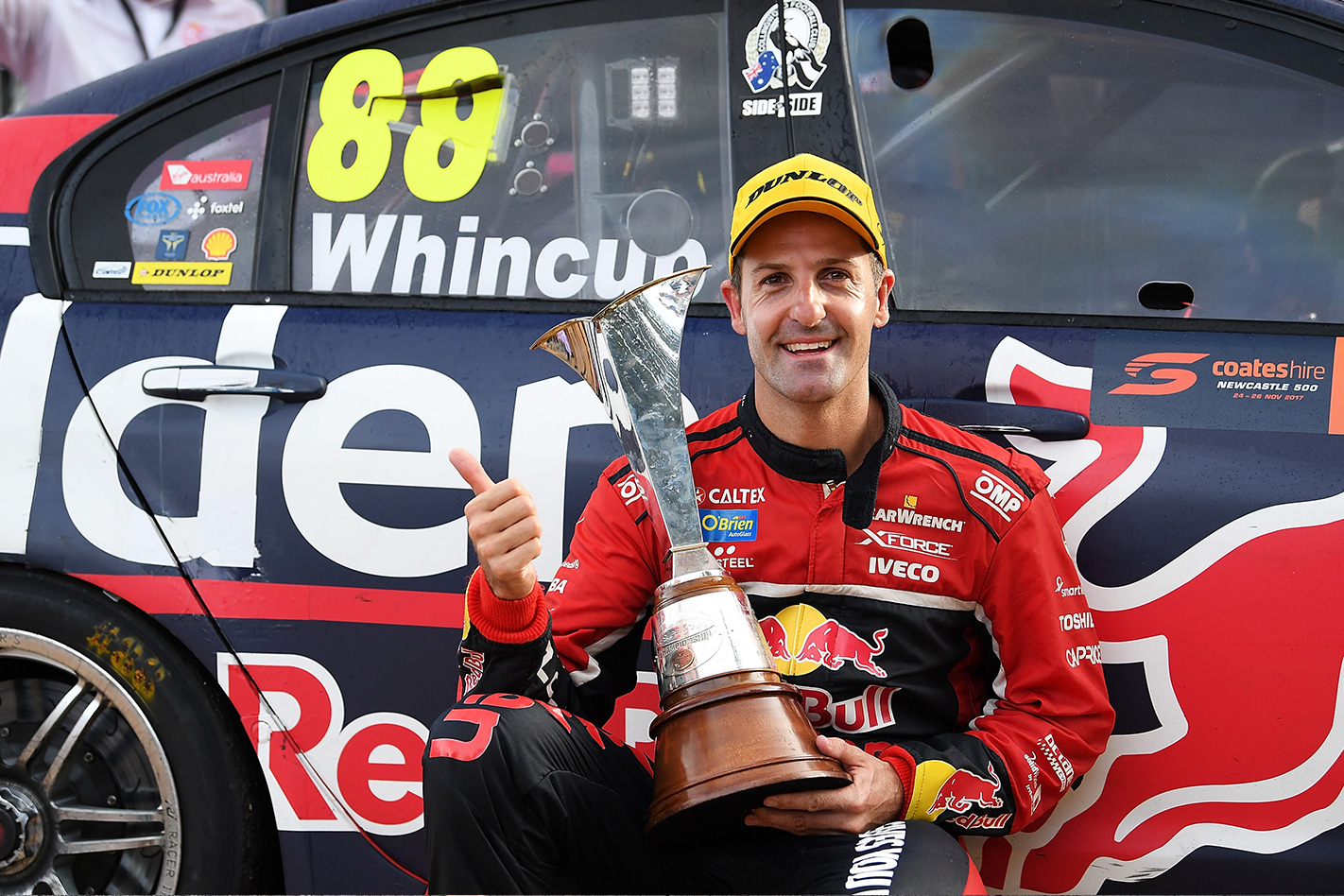
Whincup will be behind the wheel of a new Holden Commodore this year, with ZB looks and a 5.0-litre V8 heart.
The first round of the Supercars’ championship will be at the Adelaide Street Circuit on March 1-4.
