
THE Volvo XC60 took out Australian motoring’s biggest award last night – the coveted Wheels Car of the Year – but it is the Alfa Romeo Giulia who wins today.
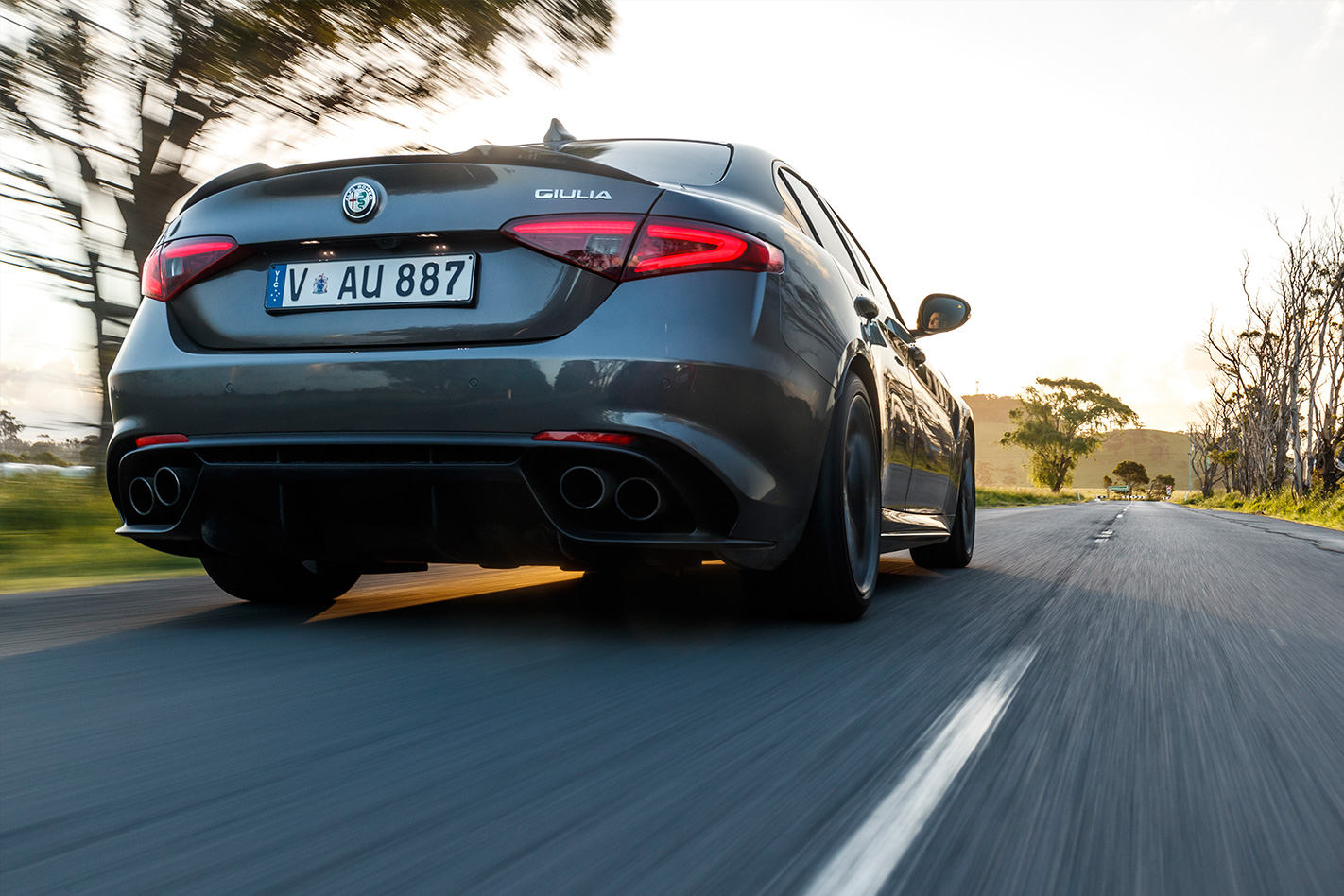
The Italian sports sedan made it to the last round of COTY judging to finish in the top three, and now it has claimed top spot in the reader’s choice poll, cementing itself as the crowd favourite against the entire COTY field.

If there was any doubt we as a nation adore rear-driven performance sedans, then the third place readers’ choice finisher should quell that. The Kia Stinger took that step on the podium in our poll, proving the Korean manufacturer has well and truly captured the imaginations of the local market.
Next up was the all-electric Tesla Model X, which pipped the Mazda CX-5 by just a few votes.
The Wheels judges’ pick for winner – the Volvo XC60 – was 11th overall. If that’s a surprise, consider a test drive to sample it for yourself. It was followed by the Suzuki Swift, Lexus LC, Range Rover Velar, Toyota C-HR, Land Rover Discovery, BMW X3, Holden Equinox, Hyundai Kona, Porsche Panamera, Volkswagen Arteon, and in last was the Peugeot 3008.
The cars selected to take part in COTY testing at the end of each year must have impressed the Wheels team at some point during the prior twelve months, meaning every contender is in with a shot and is deserving of kudos. The readers’ choice poll is an interesting way to see where your allegiances lie.

“YOU LOOK like a divorcee trying to win favour with his ex by pretending he’s responsible.” Ouch.
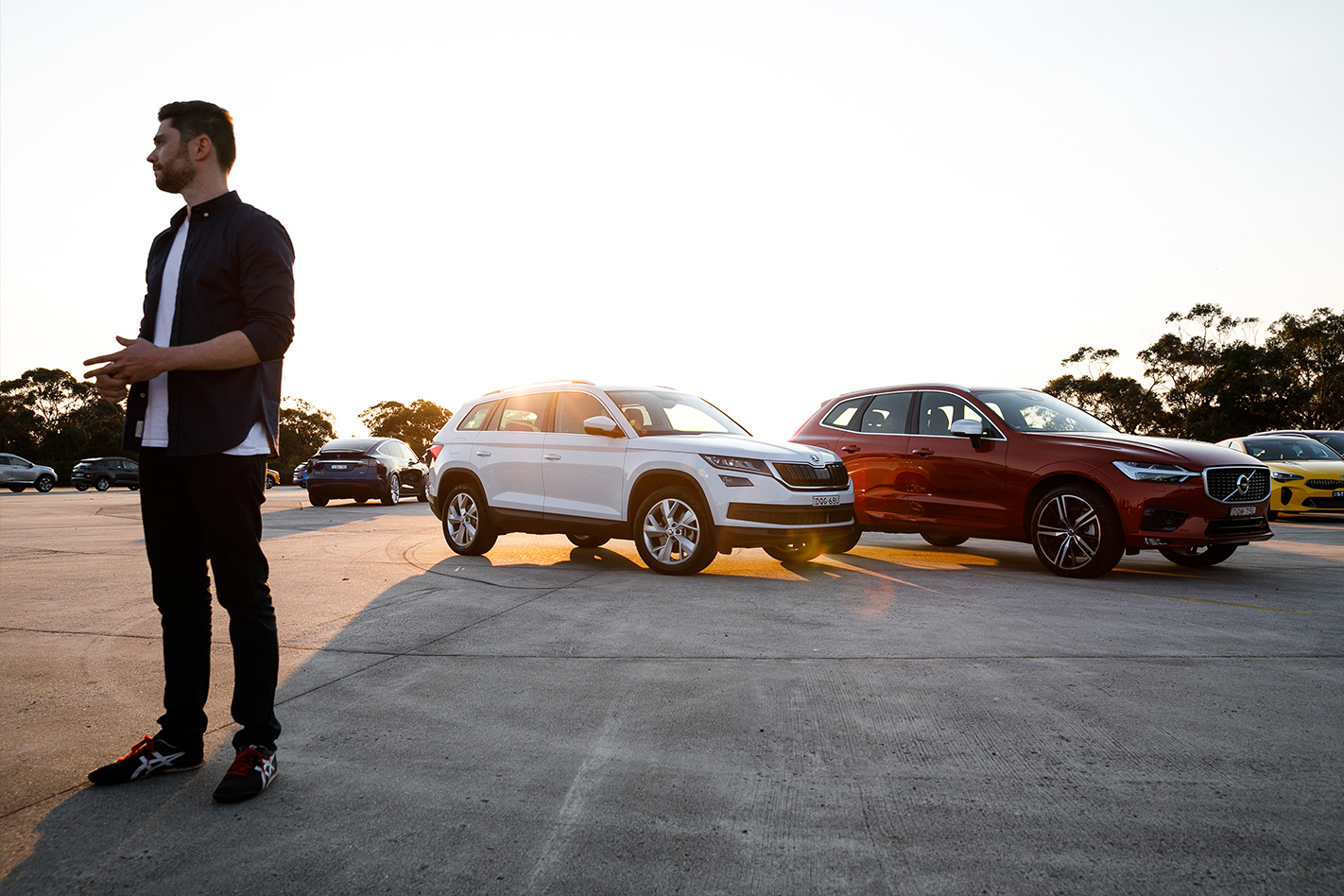
And I thought I looked like an architect or a photographer behind the wheel of the Skoda Kodiaq, someone making a cerebral and left-field choice, someone who might have once bought a Saab.
Wheels Car of the Year judges have a way of cutting you down to size and this was just the first of many withering assessments that I came to realise are the lifeblood of COTY judging. You need a thick skin and an arsenal of ammo to back up your opinions.
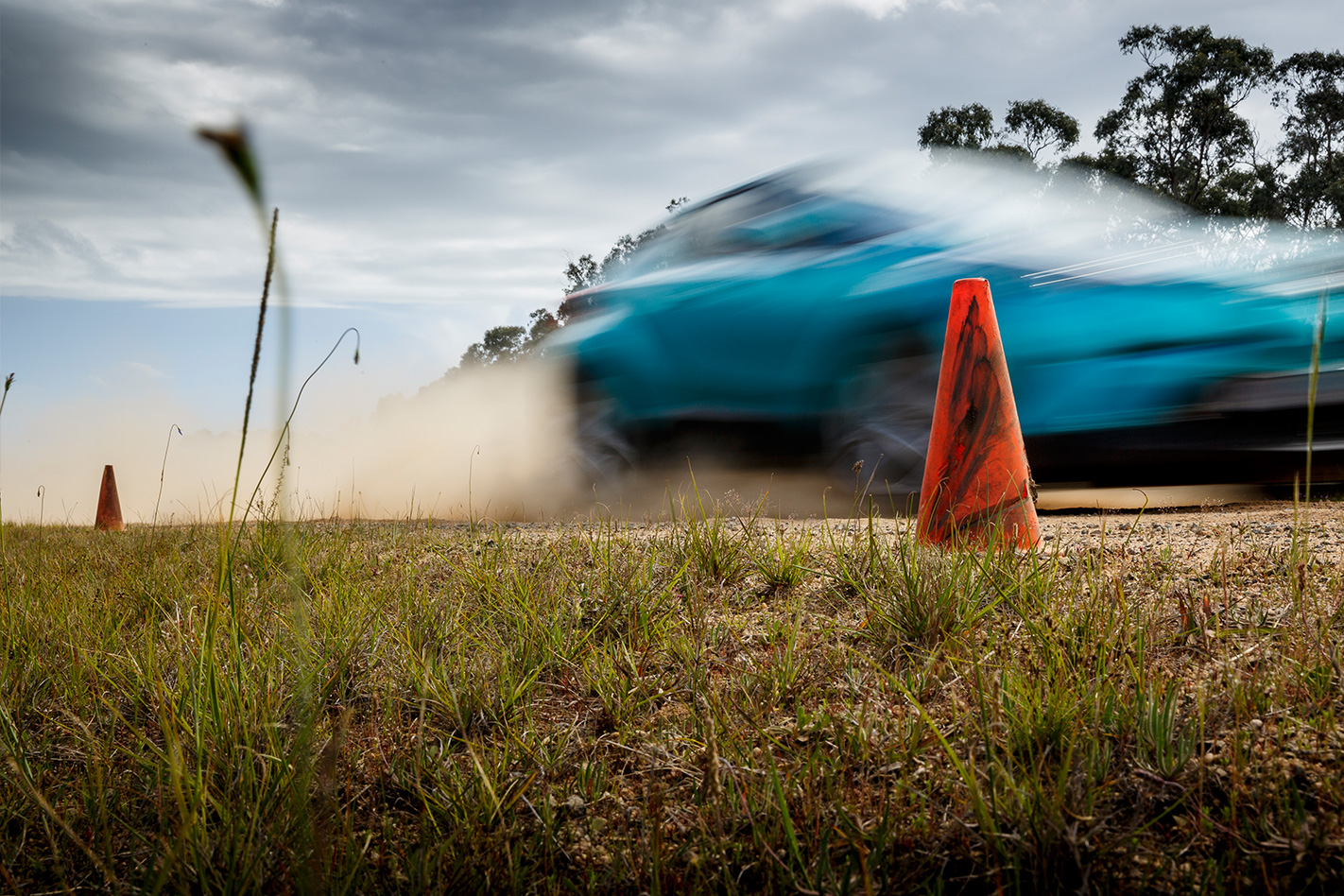
Even to somebody who’s been a motoring writer for nearly twenty years, the scale, pace, thoroughness and sheer weight of tradition of Car of the Year is an eye-opener. This year’s event saw 55 individual cars across 22 makes and models exercised on the dirt roads and unforgiving bitumen of Holden’s Lang Lang proving ground. From there, the field is whittled down to six models for the road section, with a second sift leaving just three standing. From those three finalists, and after another round of testing, the judges write a single name on a piece of paper and, for some while, editor Inwood’s the only person who knows what’s won.
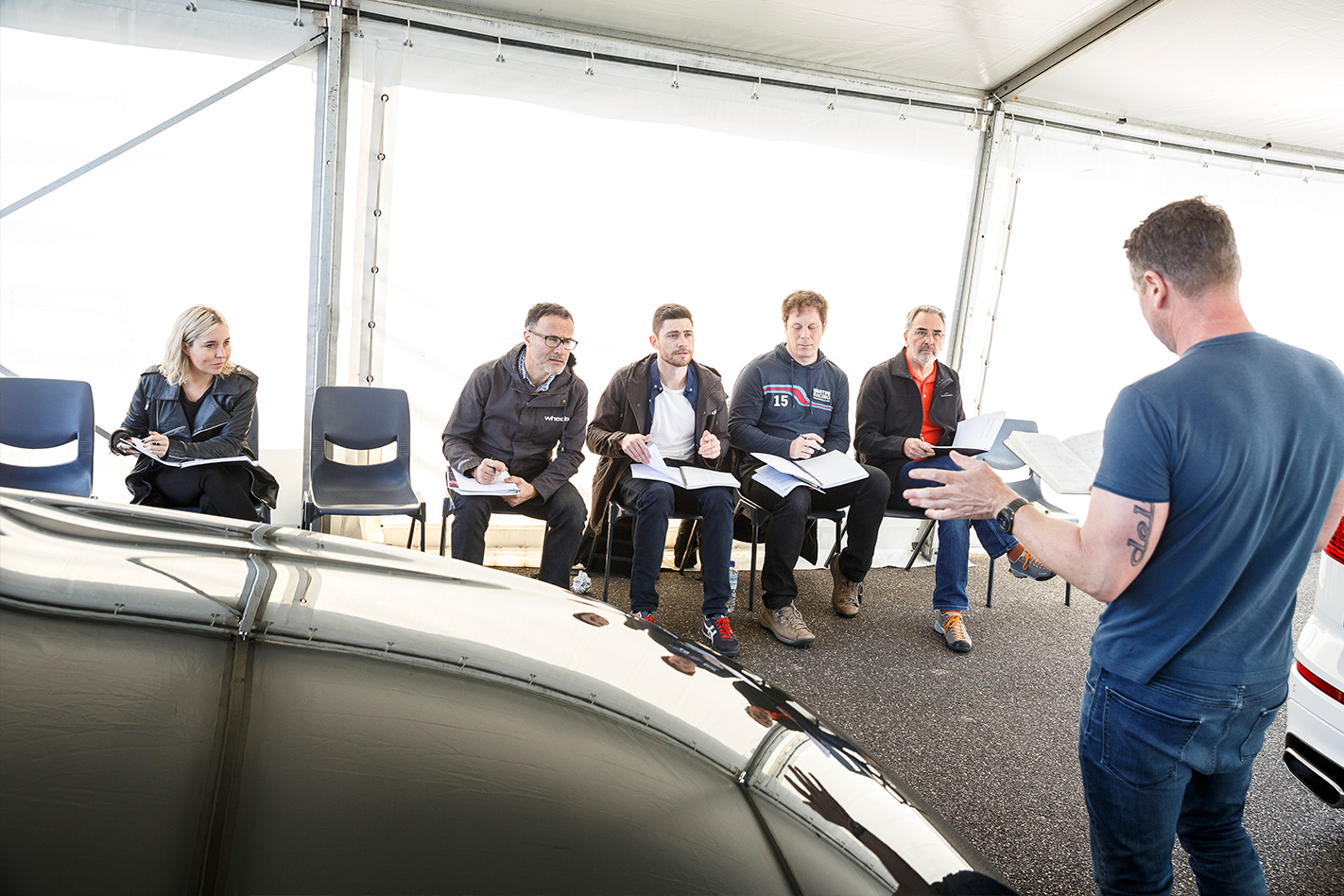
The schedule is brutal. Every car is driven by every judge on every surface. A quick back of the hand calculation of 20 minutes per vehicle assessment puts the second day’s workload at 600 minutes. Ten hours testing would have to be squared away before dusk, when the snappers needed all of the contenders together for the group photo. No pressure then.
Another lesson picked up here is that it’s next to useless coming into the event with preconceptions as to what will do well. The process is such that it finds things out that a carefully-curated manufacturer press launch sometimes does its best to conceal.
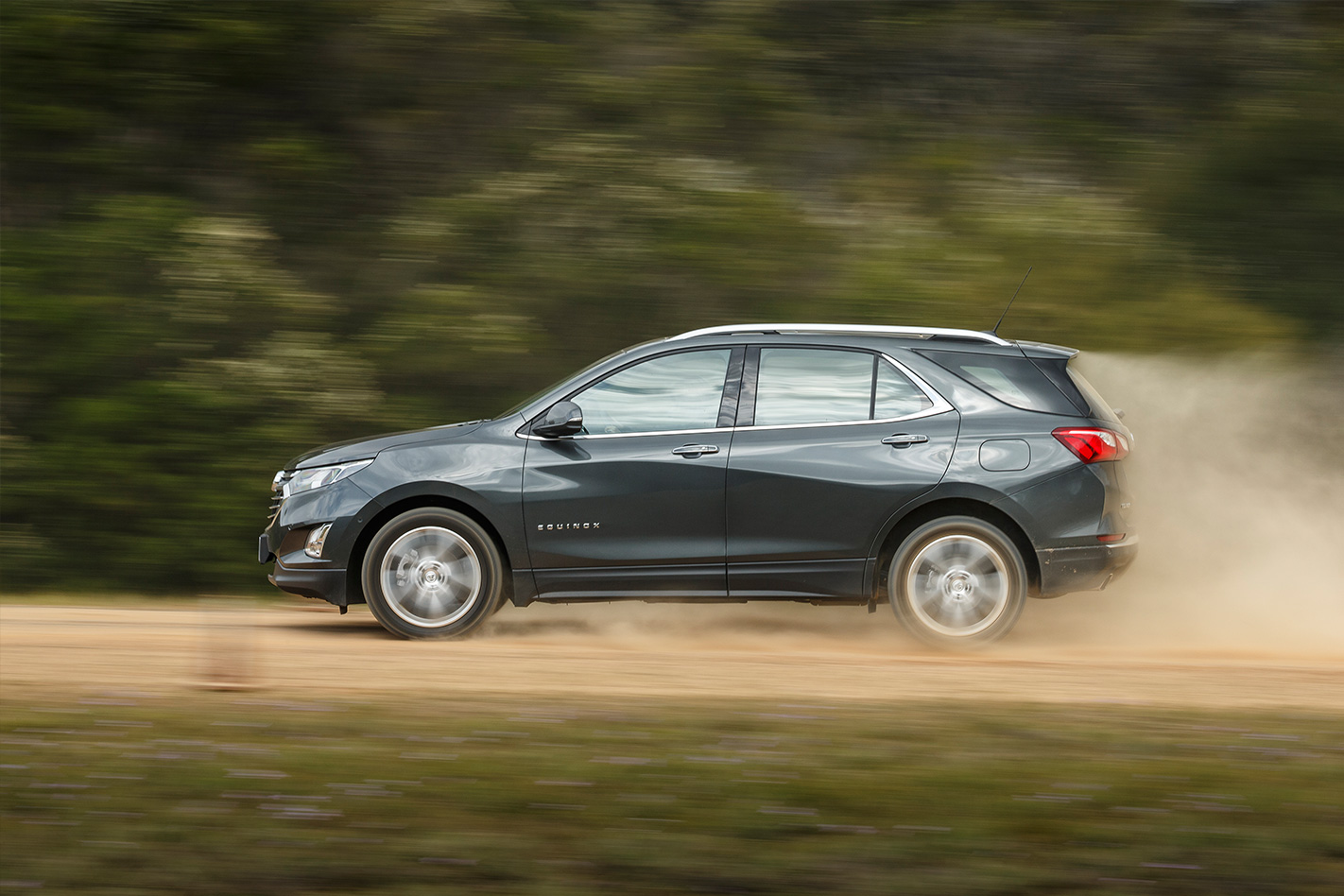
Several things keep you on your toes. I remain to be convinced that there’s a spot on the earth’s surface with a greater density of echidnas than Lang Lang, or that any other creature has such a blithely suicidal tendency. Fortunately we left the populace intact but only after getting a few radio heads-ups that one had ambled onto an apex. Then there are the rough ride sections, double lane changes and both wet bitumen and dirt braking tests.
The lane change is an eye-opener and the bellwether here is the photography and video corps. When they assemble at the cones, you can be sure something borderline inept is barrelling its way down.
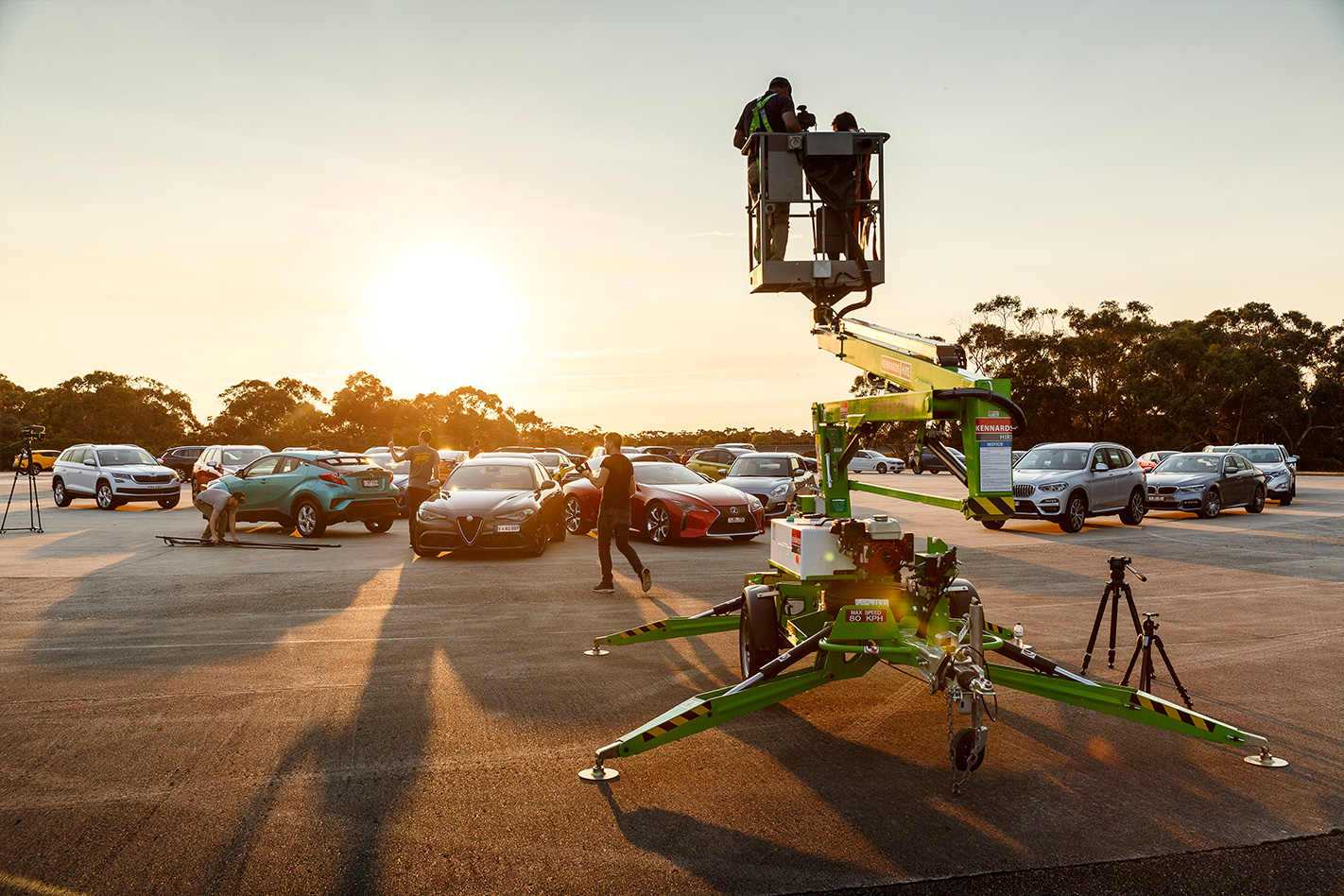
It’s best to approach the curmudgeonly Carey only when he’s up to his caffeine quota. Asked by a videographer (who couldn’t have been more cardboard cut-out millennial) to look as if he was having fun, Carey fixed him with a deathless stare before cutting him dead with, “It’s Monday morning, it’s raining, I’m driving an SUV and I’m at work. This is not fun.” It entertained me though.
We whittle the contenders down to a final three, then perform Wheels’ traditional four-ups around the drive route to further assess rear-seat ride and comfort. The arguments have been lengthy and I’ve seen allegiances shift as the testing becomes more intense and the dissection of each contender ever more forensic. It’s been both exhilarating and exhausting, but finally we arrive at that moment where we get to write one car’s name on a piece of paper and hand it to editor Inwood, who then slopes off to the khazi and emerges with the announcement that we have a winner.
Recently we sampled the new Audi RS5 Coupe, a storming all-wheel drive two-plus-two powered by a torque-rich, but rev-happy small-capacity twin-turbo V6 engine.
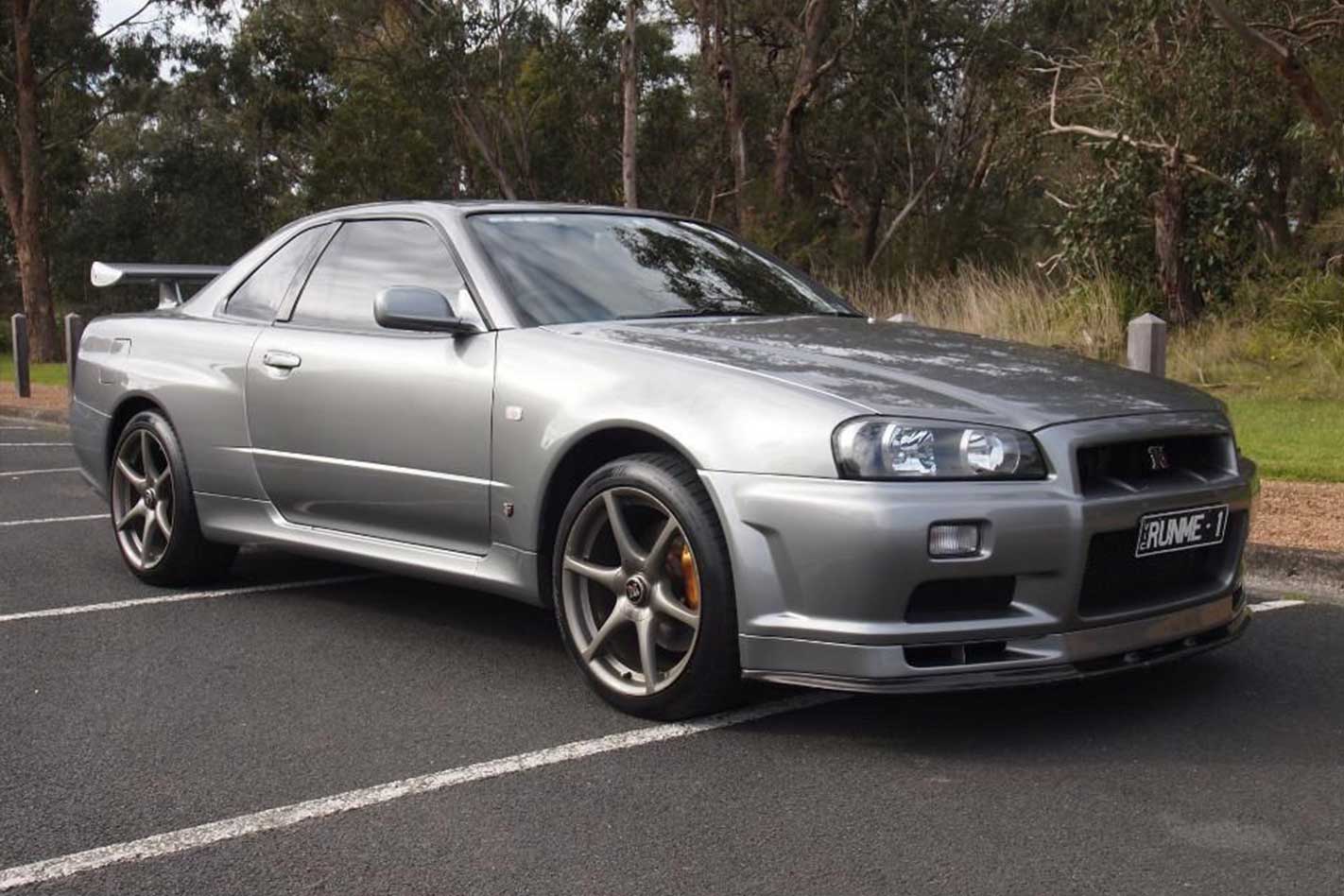
Hmm, sounds familiar. For those of you who like the sound of that recipe but would prefer it nicely aged with a hefty dash of wasabi, let us point you towards the Nissan R34 Skyline GT-R.
The ultimate iteration of Godzilla, the R34 was the daddy, packed with the final developments of the venerable RB26DETT engine and ATTESA driveline, which provided the traction benefits of all-wheel drive with the oversteer-on-demand tendencies of rear-wheel drive and needed an experienced hand to extract the best from it.
You can find clean R34 GT-Rs for around $80,000, so why would you spend almost $100,000 on top of that (RS5 money)? One word, three letters – Nür. The Nür was the very final factory R34 GT-R and those three letters stand, unsurprisingly, for Nürburgring.
Nissan was on the Green Hell bandwagon earlier than just about everyone. A sub-8min lap might now be the preserve of SUVs, but in 1996, when Dirk Schoysman wrestled an R33 GT-R around in 7min59sec, it was the stuff of legends. Of course, there was plenty of conjecture about just how stock that R33 was, just in case you thought ’Ring arguments were something new.
The R34 Nür scored all the V-Spec II enhancements, including stiffer suspension, a carbon bonnet, larger brakes and weight reduction along with the ‘N1’ engine built for endurance racing, which featured larger, steel-wheeled turbos. However, despite this, Nissan continued to claim just 206kW. Only 718 V-Spec II Nürs were built.
| u00a0 | 2018 Audi RS5 | 2002 Nissan R34 GT-R V-Spec II Nu00fcr |
| ENGINE | 2894cc V6, DOHC, 24v, twin-turbo | 2568cc inline-6, DOHC, 24v, twin-turbo |
| POWER | 331kW @ 5700-6700rpm | 206kW @ 6800rpm |
| TORQUE | 600Nm @ 1900-5000rpm | 397Nm @ 4400rpm |
| WEIGHT | 1655kg | 1560kg |
| 0-100KM/H | 3.9sec (claimed) | 5.2sec (claimed) |
| PRICE | $156,000 | $175,000 (used) |
Here’s one we found on Trade Unique Cars
2002 Nissan Skyline R34 GT-R Nür – 53,632km, stock, one of 718, $165,000
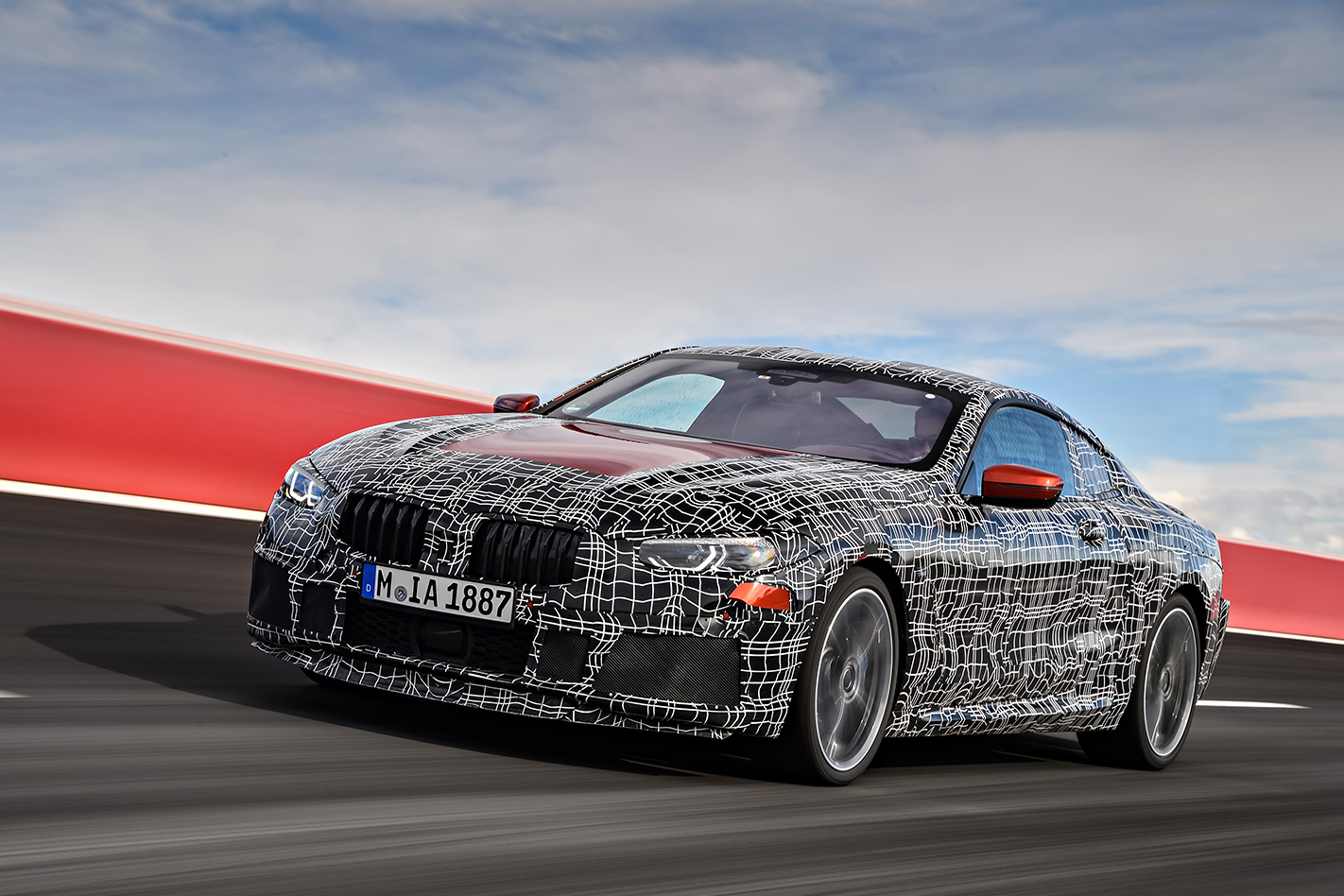
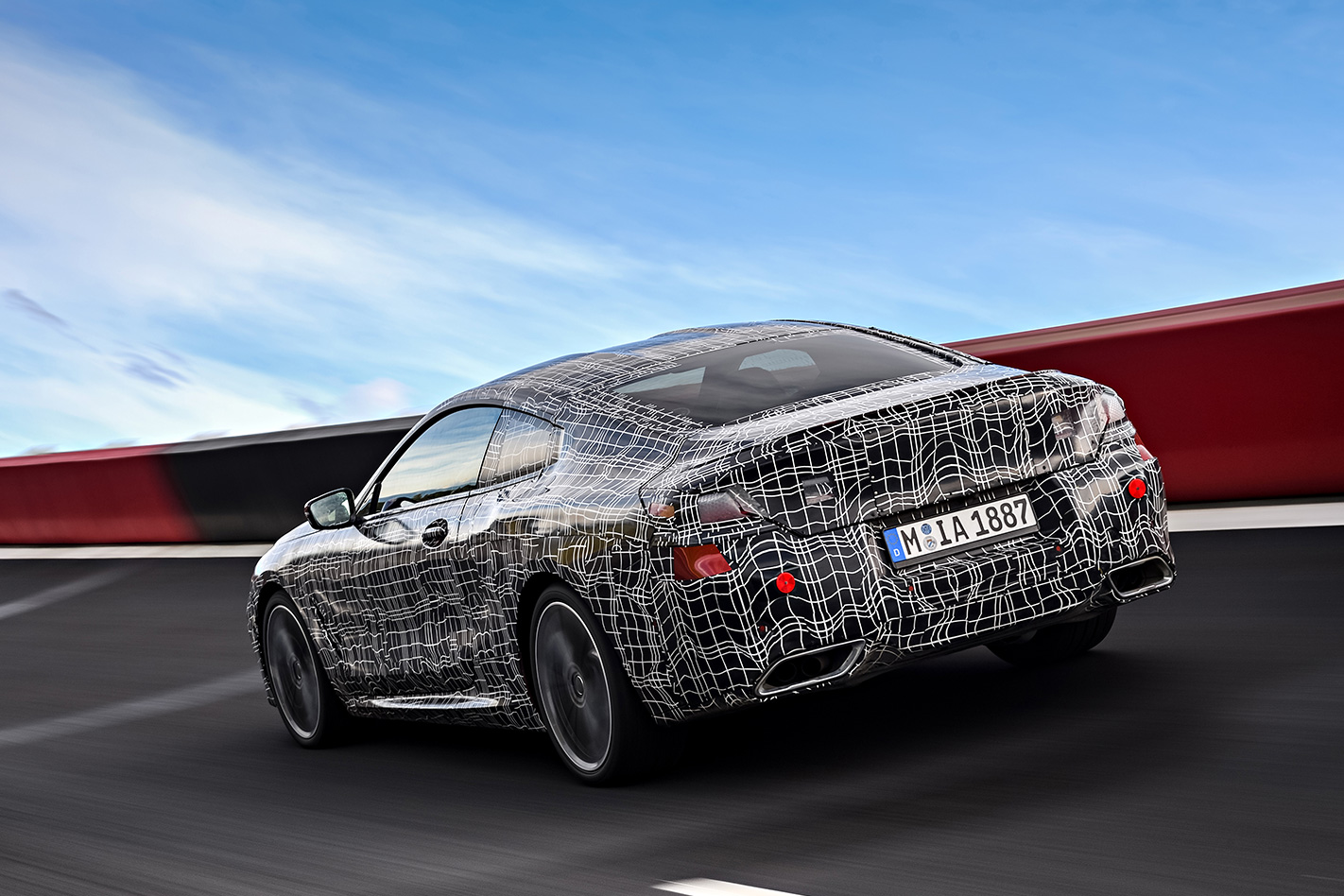
BMW has released a short teaser of the upcoming 8 Series being tested in Italy.
Still heavily camouflaged – despite the GTE-spec car having already been unveiled – the car is being put through its paces to fine-tune its dynamics for road and track use.
The high-speed proving ground in Aprilia, Italy was also wet during testing, providing opportunities for some oversteer experimentation.
Though not yet confirmed, the video also gives a taste of what sounds like an angry turbocharged V8 under the bonnet.
BMW says the location was perfect to test a variety of tests.
“Moreover, the acceleration, braking and steering behaviour of the new sports car are analysed on circuits, slalom courses and different road surfaces.
“The highly demanding test programme facilitates the targeted harmonisation of all drive and suspension systems.”
Development and Research board member overseeing the 8 Series testing Klaus Fröhlich says the testing the 8 Series has undergone is meant to ensure it will be able to handle the worst of the worst.
“The test drives under the most severe conditions show that we are right on target with our concept for the new BMW 8 Series Coupe,” says Fröhlich.
The 8 Series has already undergone a lot of testing in race form too, with the BMW M8 GTE having completed endurance testing at Germany’s Lausitzring.
The M8 GTE is set to make its debut in a couple of days at the Daytona 24-hour between January 27th and 28th.
Some cars fly under the radar.
Not in a B52 bomber-style fashion (though someone should work on that) but rather they’re launched with little fanfare then live on in anonymity among virtually everyone other than those people who actually buy one.
The Volkswagen CC was just such a car. Essentially a Passat that had been to fashion school, it offered a taste of the four-door coupe lifestyle popularised by the likes of the Mercedes-Benz CLS and Audi A7, along with a lusty 220kW V6 and plenty of kit, for a fraction of the price of its more premium German competitors.
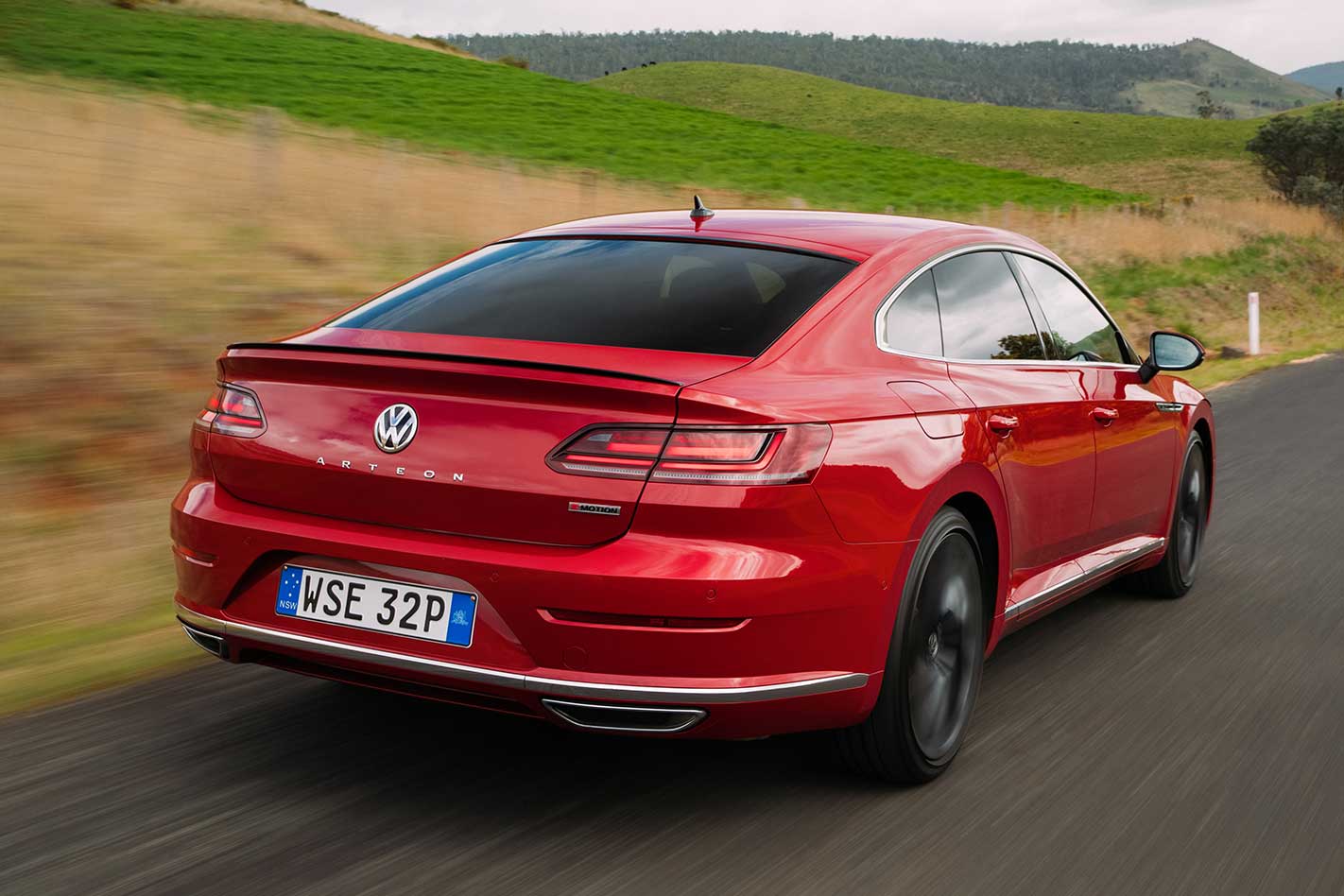
Looks, of course, are subjective, but myriad comments received throughout our week-long test suggest MOTOR’s verdict that this is one stunning car will find support. It helps that the new Passat is a decent-looker itself, unlike the previous model which made watching grass grow seem like a spectator sport by comparison.
The CC had this market largely to itself previously, but the arrival of the Kia Stinger and the new Holden Commodore means the Arteon will have to be more than just a pretty face to assert itself this time around.
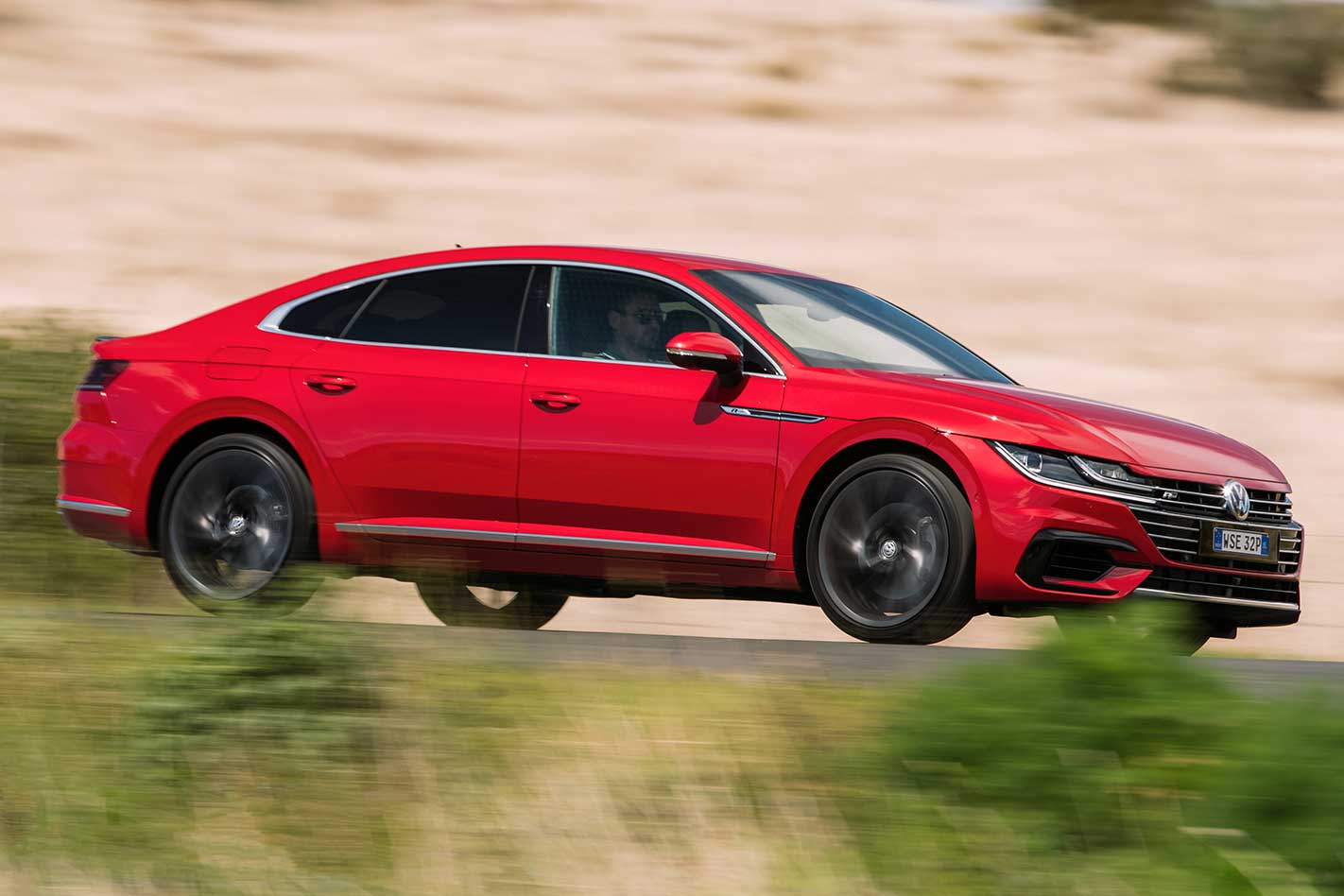
Nevertheless , it uses every one of those very effectively with a 0-100km/h claim in the mid-5s and a broad spread of power from virtually idle – peak torque is generated from just 1800rpm – all the way to its automatic change-up point of 6700rpm.
There isn’t much to get excited about aurally, though turning the sound generator on helps, but it’s an effective engine and by and large the seven-speed DSG is a good match, though its shifts aren’t as whip-crack fast as the best and the hesitation from rest can be irritating if you’re in a hurry.

Crucially, it feels to distribute cornering forces more or less equally between all four tyres, only falling into understeer if you carry too much speed in a tight corner.
The steering is accurate and nicely weighted, only flustered by very severe mid-corner bumps, the chassis is poised and the dampers in Sport tie the body down well while retaining enough compliance to deal with lumps in the road. It’s impressive and, driven within its parameters, fun.
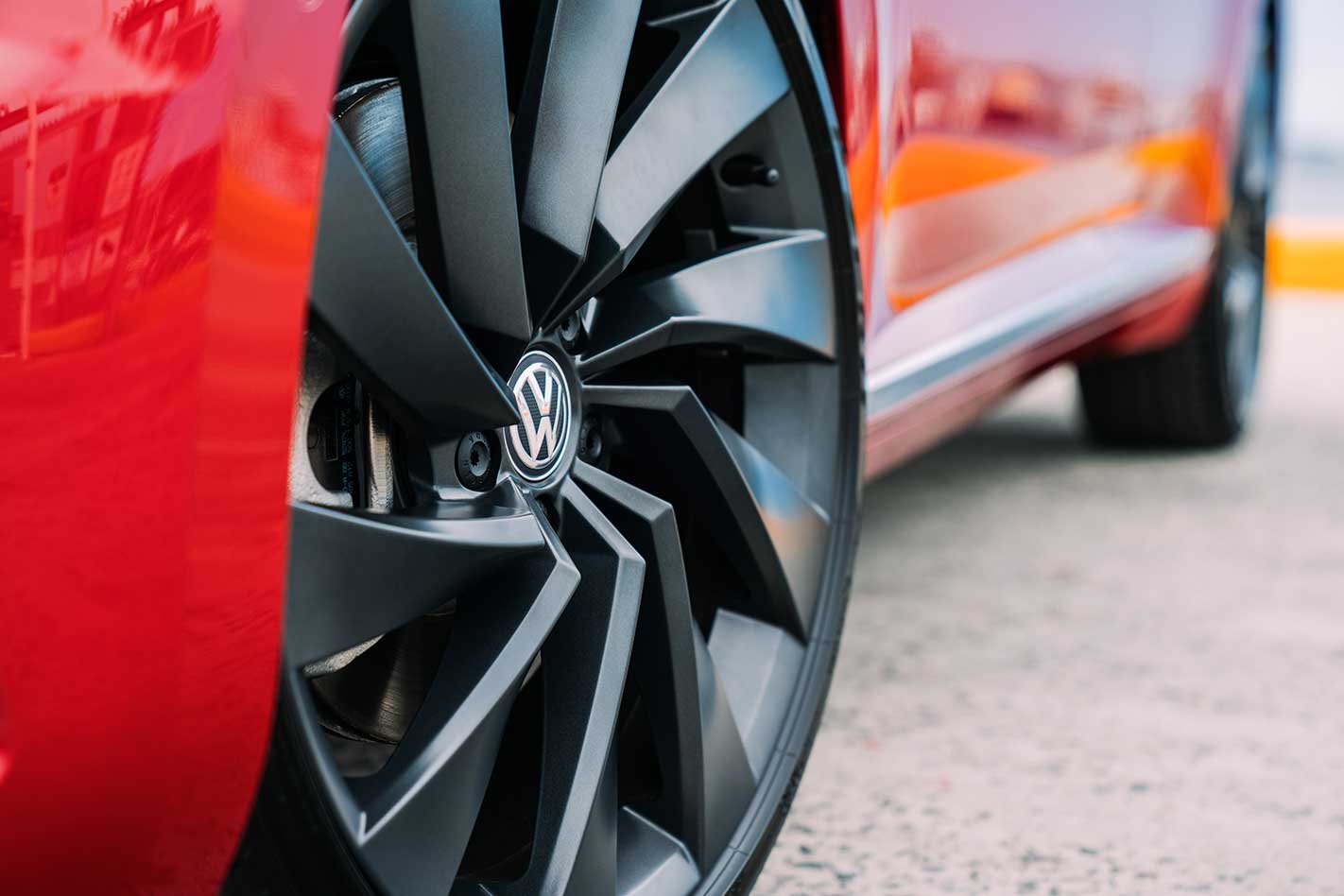
The dampers can actually be adjusted through 14 different levels in the Individual mode but you’d need ‘Princess and the Pea’ levels of bum sensitivity to detect the individual steps, so it seems redundant when the regular modes are well judged.
Rear accommodation is spacious, though a little tight on headroom for anyone 180cm or over but the Arteon is extremely practical; its arrival coincided with a house move and the amount of gear (including furniture) that can be jammed under that hatch with the rear seats folded flat is remarkable.
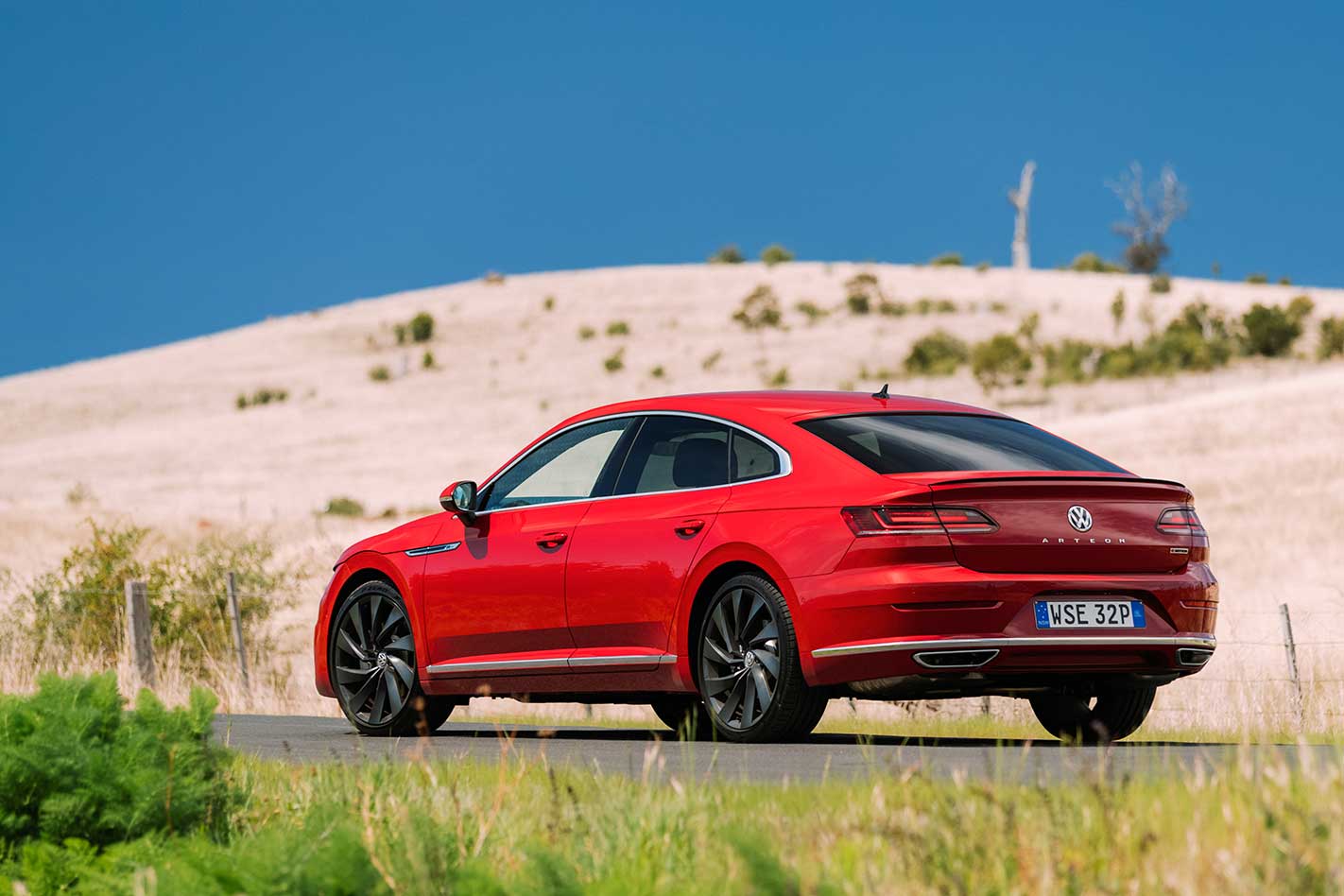
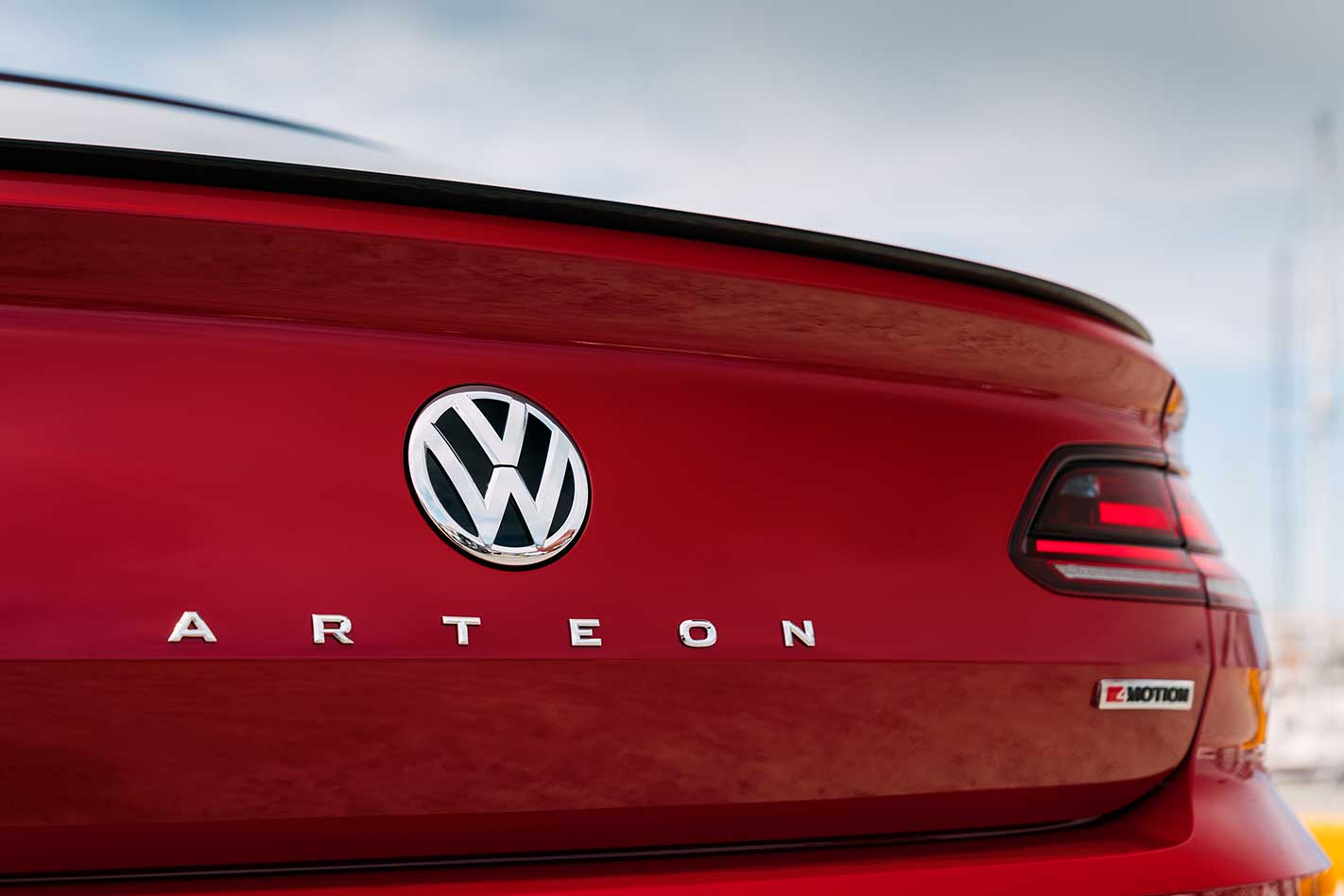
Otherwise there’s plenty to like about the Arteon. Looks great, it’s quick, refined, economical and practical for under $70K as-tested. Will this be enough to put it on more people’s radars?
Star Rating: 4 out of 5 stars
What stands out?
The Volvo XC60 is an exceptionally comfortable luxury medium SUV, featuring a choice of turbocharged petrol and diesel powertrains including a plug-in hybrid. All-wheel drive adds security on slippery surfaces and it is one of the safest cars on sale.It was named 2018 Wheels Car of the Year – the first premium SUV to win the title.
What might bug me?
The time it takes to select some infotainment settings, which often requires having to go negotiate multiple layers and modes of the swipe-and-push touchscreen. This gets particularly complicated while driving.Feeling like you’re driving a bit too far to the left in any XC60 with a head-up display, which sits toward the centre of the windscreen.Looking like goose when coming to a very sudden stop because you’re not used to the T8 Hybrid’s regenerative braking system. This system cleverly harnesses the forces when coming to a stop to charge the batteries, but makes the brakes feel over-sensitive.Wanting to add the superior air-suspension, but finding the only way to get it is in a costly package that includes a $4500 stereo system you may not want.Driving at 80km/h on the space-saver spare, until you can fix your full-sized flat tyre.
What body styles are there?
Five-door, five-seat SUV only.Every XC60 drives all four wheels and is classed as a medium SUV, higher priced.
What features do all XC60 versions have?
Automatic emergency braking that works at city speeds, which Volvo calls City Safety.Cruise control, and lane departure warning, which alerts you if you begin to drift out of your lane (a sign of fatigue or distraction).A 12.3-inch central infotainment screen with inbuilt satellite navigation with voice control. Entertainment functions include Digital Radio (DAB+), Apple CarPlay/Android smartphone pairing, Aux and USB inputs and Bluetooth connectivity for audio streaming.360-degree surround view parking camera, which provides a simulated bird’s eye view to help you spot hidden obstacles. Front and rear parking sensors provide an audible warning.Blind spot warning, which senses if a car is coming up your side, and rear cross traffic alert, which senses if a car is coming from either direction when reversing out of the driveway from a parking space.Leather upholstery and power adjustable front seats, with driver’s seat memory functions and dual zone climate control, which allows the driver and front passenger to set their own temperatures.Roof rails, which make it easier to fit roof-mounted luggage systems.Keyless start and entry with hands free tailgate opening and closingAuto dimming rear-view and exterior mirrors, and windscreen wipers that operate automatically when it rains.Aluminium alloy wheels, which are lighter and more stylish than steel wheels (with a space-saver spare wheel).Long-lasting LED headlamps that shine into corners when you turn the wheel, and dip automatically for oncoming drivers, fog lights and LED daytime running lights, with unique ‘Thor’s Hammer’ signature. Power steering drive modes,Hill descent control and hill start assistElectronic stability control, which is mandatory on new cars and can help you recover from a skid.Seven airbags. (To find out where they are placed, please open the review section “What about safety?”).The XC60 is covered by a three-year, 100,000km warranty.
Which engine uses least fuel, and why wouldn’t I choose it?
The T8 R-Design PHEV (plug-in hybrid electric vehicle) features a powerful 2.0-litre four-cylinder supercharged and turbocharged petrol engine that runs with a battery-powered electric motor.The batteries are charged by the engine, energy generated by braking, or by plugging the car in to a normal 240-volt electrical socket. When fully charged they can run the XC60 on electric power alone, for around 40kms at speeds up to 80km/h, without producing any emissions.Its official test cycle rating (city and country combined) is just 2.1 litres/100km, which assumes that much of your driving is on batteries alone. In real world conditions, with the engine engaged more often, we were seeing figures of around 8.0 litres/100km.One reason you might not choose this engine is that it’s only available in the most expensive XC60, the T8 R-Design PHEV. And if you like driving in a way that makes the most of the T8’s considerable performance, you won’t see the fuel saving benefits.The 2.0-litre four-cylinder turbocharged diesel engine that powers D4 models is the most fuel efficient of the three conventional powertrains available in an XC60, consuming 5.4 litres/100km on the official test cycle.If you prefer petrol power, the 2.0-litre turbocharged engine in the T5 models are still a reasonably efficient with an official test cycle rating of 7.8litres/100km.Meanwhile the T6, which has the same engine with the addition of a supercharger for more power and torque, drinks 8.0 litres/100km.All the Volvo petrol and diesel engines are very good, with much more pull than you’d expect from their size. They are smooth and quiet, but come to life when you’re driving them fast.Expect real-world fuel consumption to be 30-50 percent higher on average, if you use the performance available.Every XC60 comes with an eight-speed automatic transmission.
What key features do I get if I spend more?
The Volvo XC60 comes with three model specifications, Momentum, Inscription and R-Design, which have varying equipment levels and a choice of engines.The Momentum is the least costly XC60 and has all the above mentioned standard features plus 19-inch alloy wheels (smaller, 18-inch wheels, on tyres with deeper sidewalls, are a no-cost option: these will ride more comfortably).Spend more for an XC60 Inscription and you get adaptive cruise control and lane-keeping assist.You also get a head-up display which shows speed, navigation, and cruise control information on the windscreen, and four zone climate control which allows rear seat passengers to set their own temperaturesThe wheel diameter increases to 20 inches, while the tyres get significantly wider and lower in profile – mainly for a sportier look, but also adding grip on dry surfaces.Pay marginally more again for an XC60 R-Design and you get a package adapted slightly for more spirited driving, including a sports steering wheel with paddle shifters and contoured leather seats, which provide progressively deeper bolsters each side of you, to help hold you in place around corners.The wheel diameter increases to 21 inches.The most expensive XC60, the T8 R-Design Hybrid also gets a panoramic sunroof and sound system enhancements including an air-ventilated subwoofer and CD player.Optional extrasMost XC60 features can be ordered on any version, either at no cost or for an additional sum. For example, the contoured seats in the R-Design models can be included in the Momentum and Inscription models for around $800.Other extra-cost options include a very expensive but brilliant sound system from Bowers & Wilkins, heated seats and plush Nappa leather upholstery.A further option on all models is air-suspension, which replaces the standard steel springs with air cushions for a more comfortable ride.You can choose from several interior colour combinations. There’s also an array of alloy wheel designs, and on R-Design you can order wheels of up to 22-inch diameter.There are also option packages, which brings a group of extra features, including the Lifestyle Pack for all models but the T8 Hybrid, which adds heated front seats, panoramic sunroof and tinted rear glass for around $2500.The Sport Pack (around $6500) for the Momentum and Inscription models adds heated front seats, tinted rear windows, sport steering wheel with paddle shifters, the Bowers & Wilkins audio system, 20-inch alloys wheels, contoured leather seats and charcoal interior trim.Buyers of the Momentum and T6 R-Design models can add the Premium Pack, which costs around $75000) and adds heated front seats, panoramic sunroof, tinted rear glass, power folding headrests, power adjusted second-row seats, the Bowers and Wilkins audio system and air suspension.The T8 Premium Pack (around $6500) adds the same features as the Premium Pack to the most expensive XC60 except for the panoramic sunroof, which is already included.
Does any upgrade have a down side?
The R-Design’s 21-inch wheels use lower-profile tyres that not only will be more expensive to replace than those on the smaller wheels, but are not likely to last as long. As well, they bring a less comfortable ride (because there is less cushioning air between the wheel and the road).The T8 R-Design Hybrid towing capacity is reduced from 2400kg to 2100kg.Solid Black and Ice White are the only standard colours on Momentum and Inscription: all others cost extra. The R-Design also offers Passion Red as standard, and a greater number of extra-cost colours.
How comfortable is the XC60?
The XC60 is very comfortable, with a quiet, roomy and uncluttered cabin. Front seats provide excellent support on long trips. The driver sits quite high, and controls are easy to reach and use.Second-row seating is also excellent. The good glasshouse brings everyone a fine view of what’s passing by, leaving little chance you’ll feel hemmed in. The cabin is quiet, isolating you well from unwelcome external noises.The optional premium audio system costs a lot, but provides a rich, all-encompassing musical experience that is almost unmatched in a car.
What about safety?
Volvo’s are renowned for their safety, but the second-generation XC60 took this reputation a step further when the European New Car Assessment Program (EuroNCAP) awarded it the highest crash rating in 2017.The Australasian New Car Assessment Program (ANCAP) also gave the Volvo XC60 the maximum possible five-star safety rating in October 2017.The XC60 has seven airbags: two in front of the driver and front passenger; side airbags to protect front occupants from side impacts; a driver’s knee airbag; and head-protecting curtain airbags down each side that protect even the third-row passengers.Among the active safety aids on every XC60 are city-speed auto braking, a driver fatigue alert, and an alert that prods you if you are drifting out of your lane.All XC60s feature Intellisafe Surround:, which brings Blind Spot Information (a light in the side mirrors warns you of vehicles alongside out of view), and Cross Traffic Alert (which alerts you, when reversing, to cars crossing behind).Intellisafe Surround also gives you Rear Collision Warning when at a standstill. This looks for cars approaching too fast from the rear, and flashes the indicators should it find one. If it thinks you are about to be rear-ended, it tensions your seatbelts and applies the brakes, to reduce your potential for injury.
I like driving – will I enjoy the XC60?
You will enjoy driving the XC60, which stands out for driving pleasure among other medium SUVs.Apart from the raised driving position this doesn’t feel like you’re behind the wheel of an SUV. The steering is direct and the chassis feels well planted around bends, with minimal body roll.You do feel every pothole with the standard steel suspension, but the ride on the optional adaptive air dampers is far more comfortable and composed. Unfortunately you can’t add the air suspension as an individual option as it only comes as part of the Premium Package.The T8’s 2.0-litre supercharged and turbocharged petrol hybrid is the star, with its punchy, responsive character and almost instant acceleration from a standing start.The standard Turbo-petrol and diesel versions also feel very driveable and strong. The diesel is an excellent engine, but the petrol is more entertaining.The all-wheel drive system on the XC60 helps it maintain drive on snowy or otherwise slippery sealed roads, on gravel roads and on smooth tracks. The car does not have the ground clearance, underbody protection or low range gearing it would need for rough off-roading. And if you were to get a flat tyre while off the beaten track, you would have to struggle home on the skinny space-saver spare.
How is life in the rear seats?
The second row seats are just as good as those at the front, and they too slide and tilt. There is amble room for two adults and a smaller person in the middle.The sloping roofline, and panoramic sunroof can make headroom a little tight for taller people, but they should have no issues with legroom.Rear passengers on either side can set different climate control temperatures (an option in the cheapest XC60, the Momentum).The centre seat backrest converts to a fold down armrest with storage trays and fold out cupholders, and the door bins provide ample space to for storing stuff.
How is it the XC60 for carrying stuff?
The XC90 has a practical cargo area. Boot space is 505 litres, which is about average for a medium SUV. The wide and low opening helps with fitting bulky loads.The 60:40 rear seats easily fold down flat to extend cargo space should you need to fit a bigger load.A foot-triggered, hands-free opener for the powered tailgate is standard in all versions.Legal towing capacity is 2400kg for the diesel and petrol models and 2100kg for the T8 Hybrid – which is good for road-oriented medium SUV. The XC60 could easily tow a jet-ski, a single horse float or weekend trailer, for example.
Where is the XC60 made?
The Volvo XC60 is made in Sweden.
Are there any rivals I should consider?
The XC60 has a host of luxury rivals including the usual German and British suspects such as the Audi A5, BMW X3, Mercedes-Benz GLC, Jaguar F-Pace, Porsche Macan and Range Rover Velar. This latest model of the XC60 no longer aspires to be like these cars, and actually sets new benchmarks.
The list shortens significantly when confining it to luxury SUVs with electrified drivetrains, such as the hybrid Lexus NX300h Sports Luxury or the all-electric Tesla Model X 75D.
I like this car, but I can’t choose which version. Can you help?
The petrol-fuelled T5 Inscription provides the most compelling mix of driving enjoyment, fuel efficiency and features for the price.If money isn’t an issue, the T8 Hybrid with air suspension affords a wonderful mix of SUV practicality and sports car thrills. It’s easily one of the best performance orientated luxury SUVs on the market.
Are there plans to update the XC60 soon?
The current XC60 was introduced in August 2017 as an all-new model. No updates are expected before 2020.
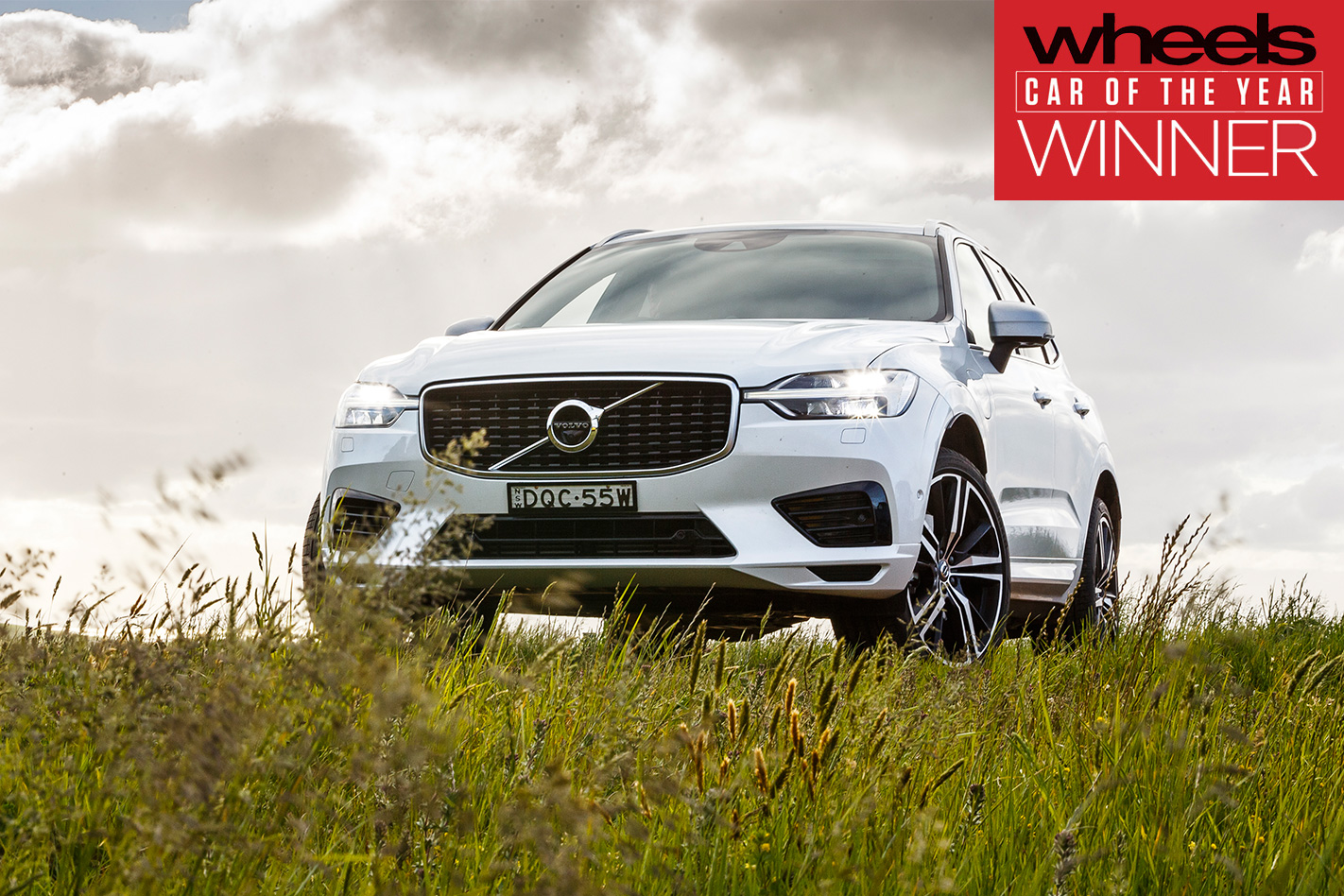
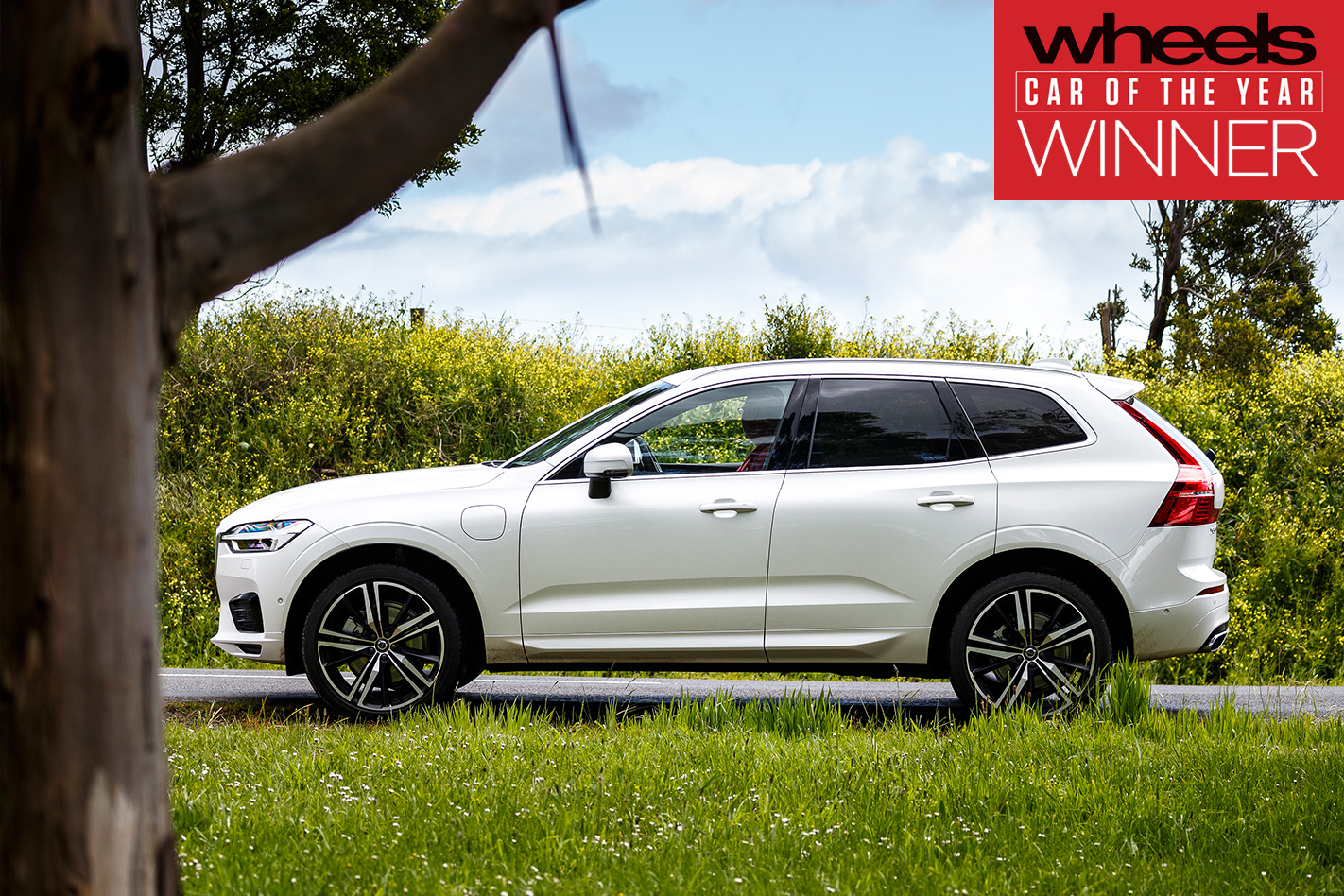
FOR THE first time in Wheels Car of the Year history, an SUV has claimed the award two years on the trot – this time a premium-medium contender from Volvo, with the wonderfully well-rounded XC60.
This 2018 victory for the Volvo XC60 marks a turning point in the fortunes of the Swedish brand. Volvo has managed to secure a final-stage berth three times during this century’s Car of the Year testing – the V70 wagon in 2000, the S40/V40 in 2004, and the current XC90 in 2014 – but the class-leading XC60 represents the first time a Volvo has achieved total cohesion in design and execution.
VIDEO: Behind the scenes at Car of the Year 2018
“No matter where you look, the Volvo XC60 feels like a premium product”, said Editor Alex Inwood. “In an era defined by superficiality, the XC60 is exactly the product we expect from an engineering-led brand like Volvo. It sets a new global benchmark for medium SUVs and is a deserving winner of the Wheels Car of the Year award.”

The XC60’s podium-topping victory marks the first time a Swedish brand has claimed a COTY title. In fact, none of the three 2018 finalists (Alfa Romeo, Skoda and Volvo) had ever won the award, making it an exciting race to the finish. But it was the XC60’s sophistication and its unwavering consistency that thrust it clear of the competition.
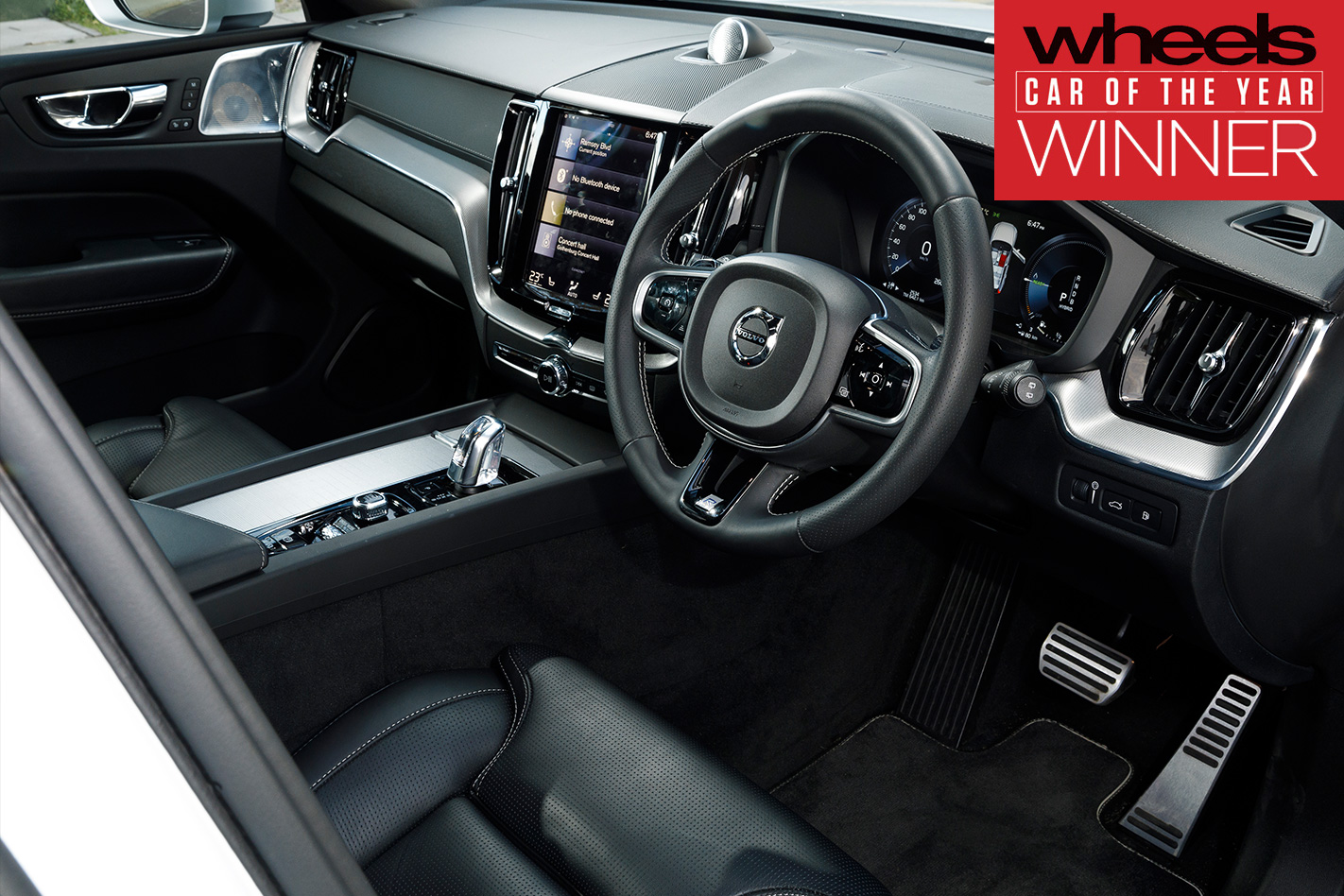
“And the result is a terrific family SUV – at once both safe, stylish, good value and fun to drive – as well as a deserving Car of the Year winner. Finally, the billions of dollars the Chinese have invested in Sweden’s proud and often-pioneering 90-year-old marque have come to fruition.”
View more of our Wheels Car of the Year coverage
Performance Car of the Year is done and dusted, and the PCOTY issue of MOTOR is due on shelves soon.
If you want to find out which car won via the mag, turn back now, but if you don’t mind spoilers, read on.
After almost a week of testing ten cars on track at Winton and in Victoria’s alpine north, MOTOR came to the conclusion that there was one clear PCOTY winner for 2018
And that winner is the Honda Civic Type R.
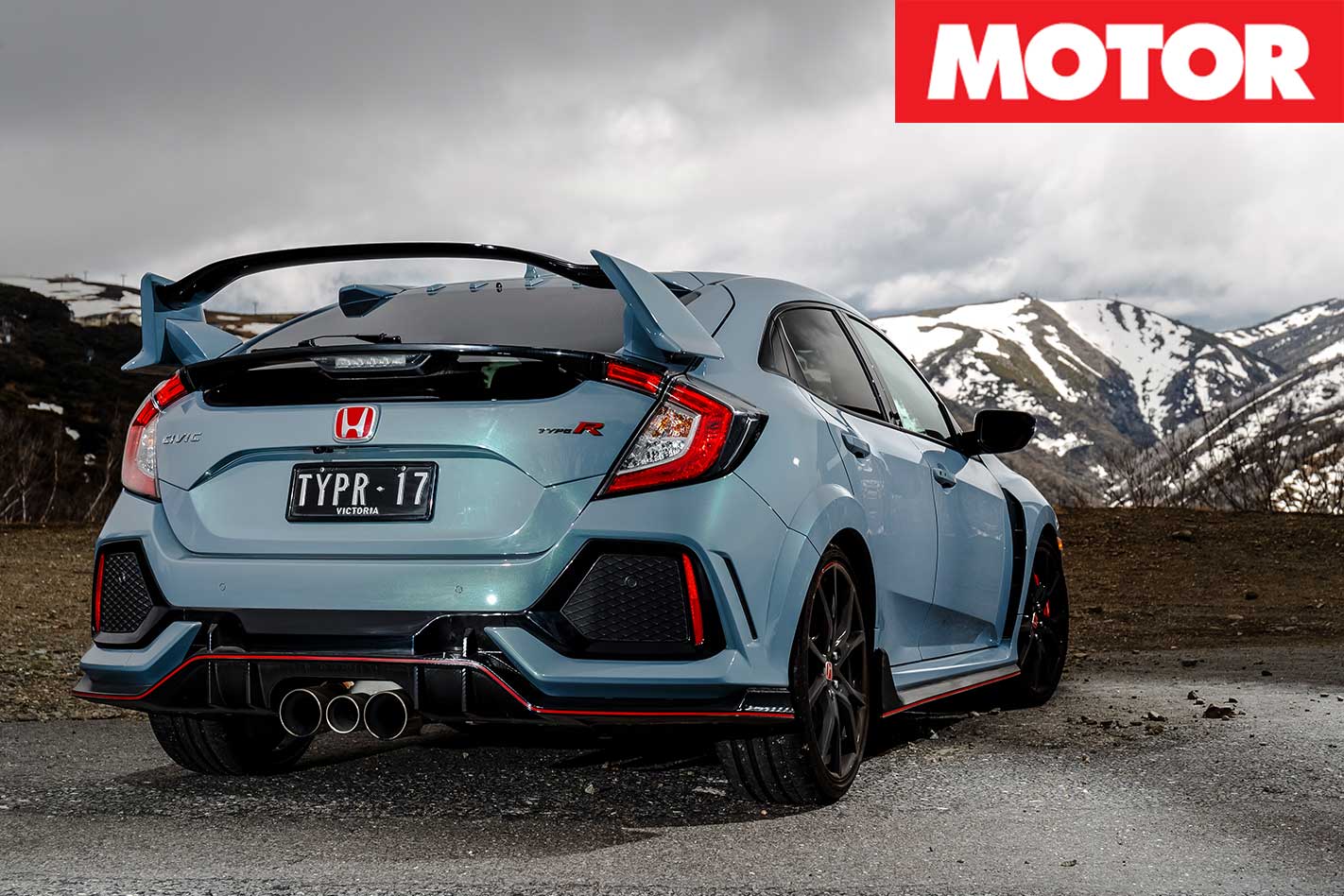
It came as a surprise to judges and everyone present that despite the far more powerful and expensive competition being staggeringly fun to drive, the Civic provided some of the biggest smiles of the event.
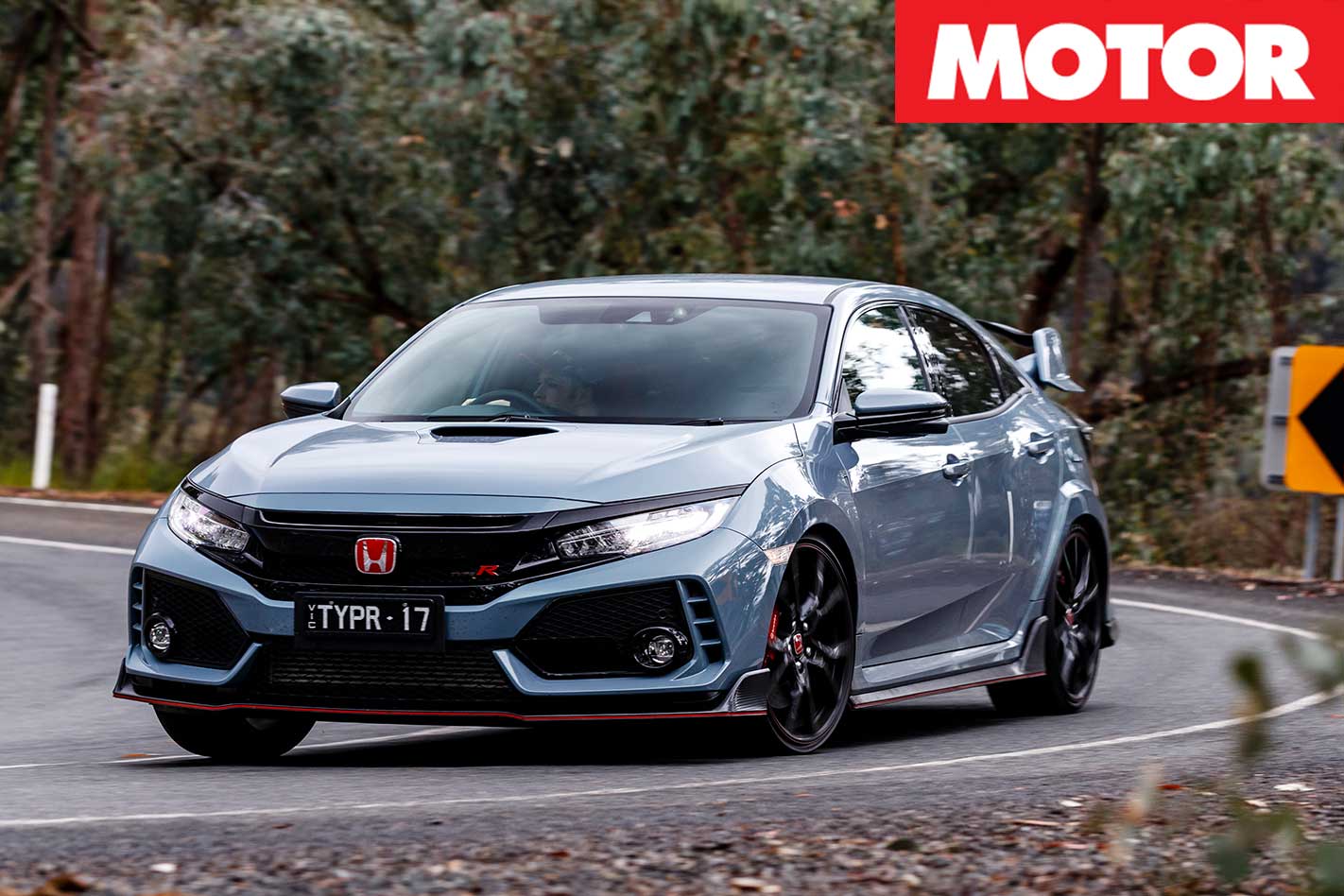
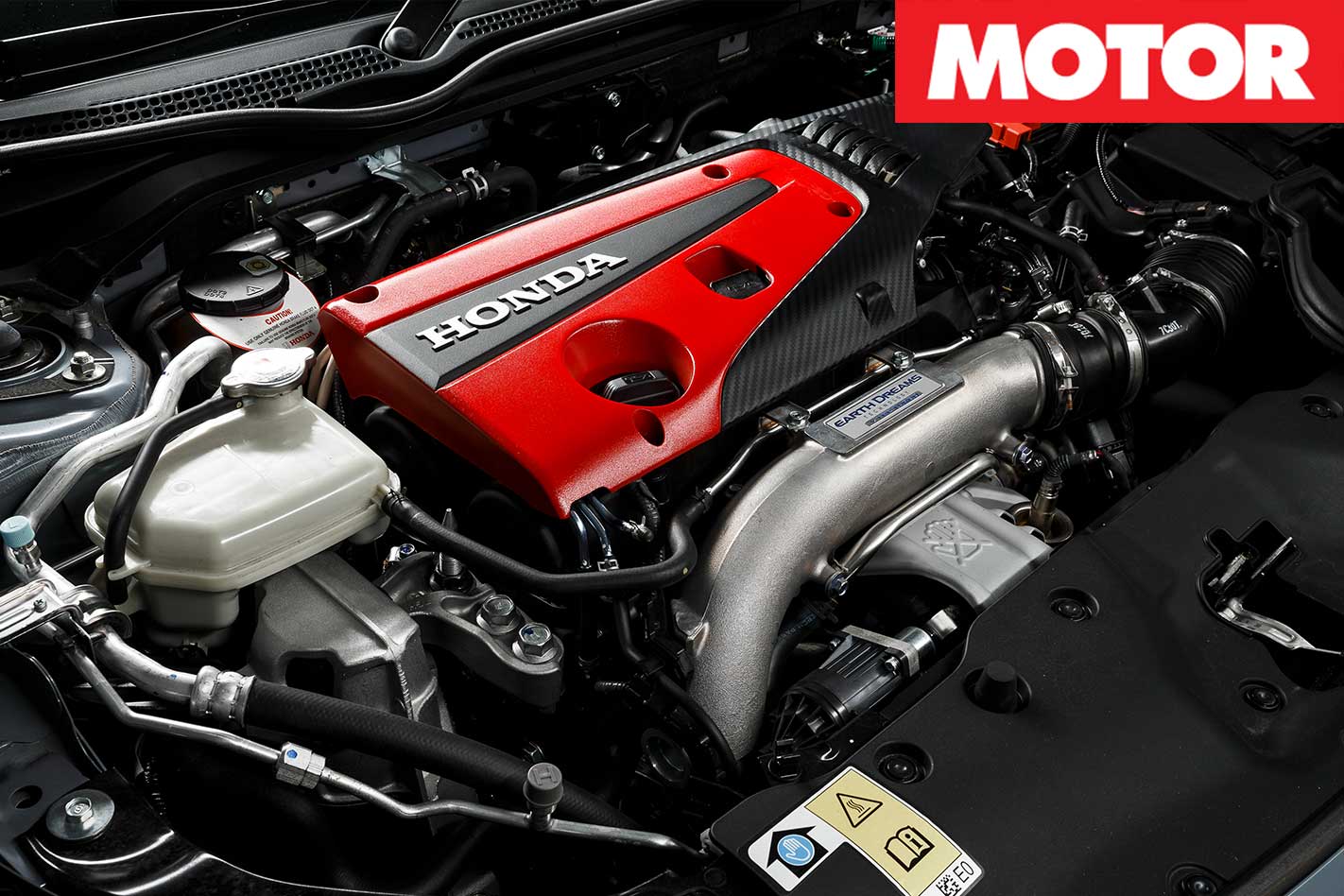
You can read just how that climb took place in the next issue of MOTOR Magazine, on sale February 1, as well as getting a look at how its competition fared.
THE Mercedes-Benz E-Class Coupe has been crowned the most stylish car on sale, as the winner of the 2018 WhichCar Style Award.
Mercedes-Benz was presented with the accolade at tonight’s Australian Motoring Awards, hosted by the Bauer Motoring Network at The Forum in Melbourne, Australia.
The verdict was handed down by a panel of judges made up of renowned Australian automotive designer, Paul Beranger, motoring expert Ryan Lewis from WhichCar, and leading voices on fashion and lifestyle from the wider Bauer Media family of publications, including Belle editor Tanya Buchanan, Real Living editor Emma Vidgen, and Elle beauty & lifestyle associate Amy Starr.
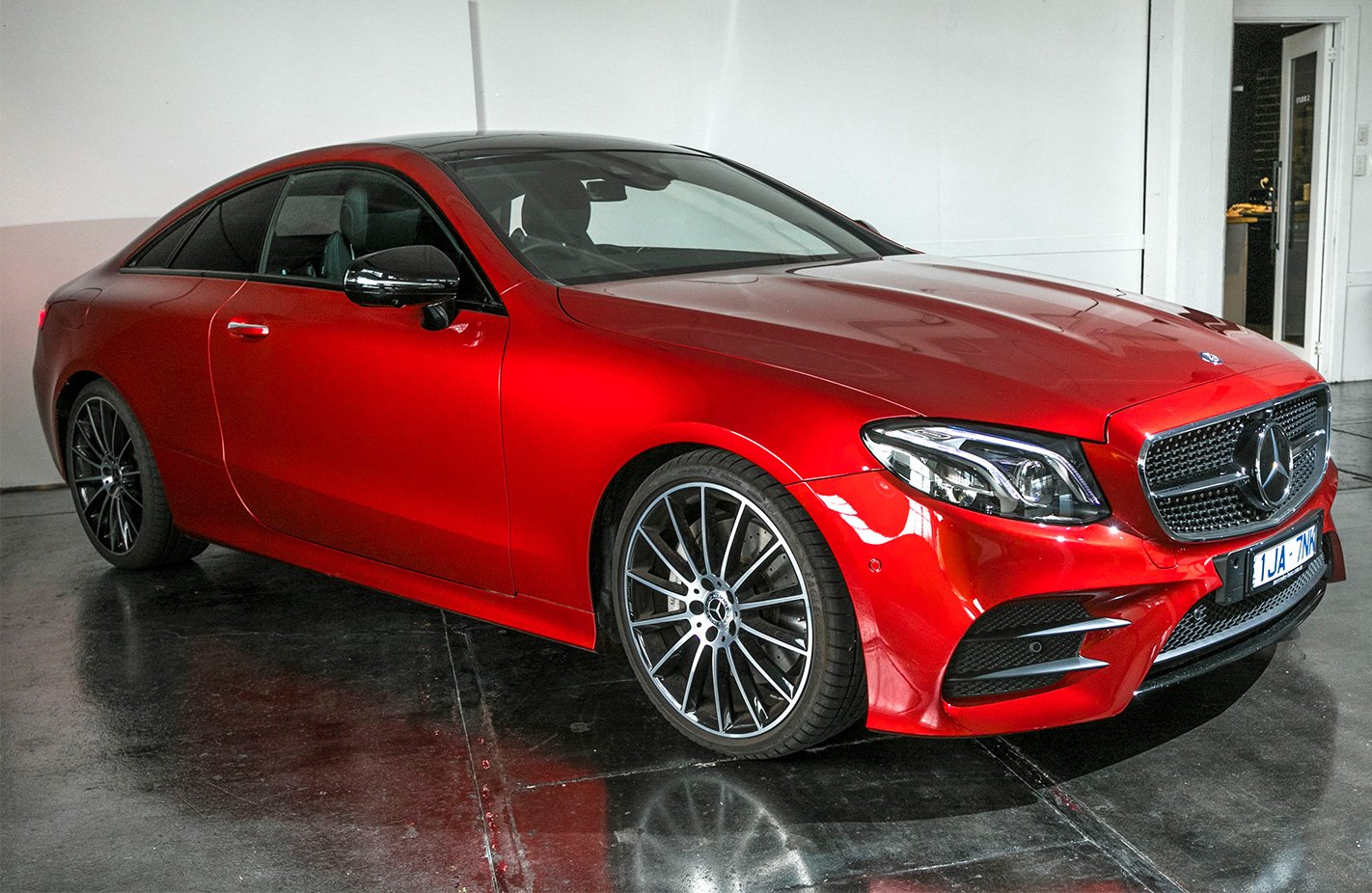
In its third year, the WhichCar Style Award again aimed to identify the most aesthetically desirable new car on the market, based on a comprehensive criteria that considers vehicle design in terms of X factor; technology; innovation; exterior and interior cohesiveness; colour, texture and quality; value and fulfilment of purpose.
A shortlist of 12 eligible cars was selected by the Wheels and WhichCar teams and put to the readers for a popular vote, narrowing the field to a final four. It was the E-Class Coupe that eventually stood tallest above the Alfa Romeo Giulia, Audi Q2 and Hyundai Kona.
Judges agreed that the well-dressed E-Class Coupe’s form is perfectly suggestive of its sought-after blend of luxury appeal and on-road athleticism. Its elegant proportions are innately pleasing to the eye, and its relatively unembellished side profile is a fine example of minimalist design finesse.
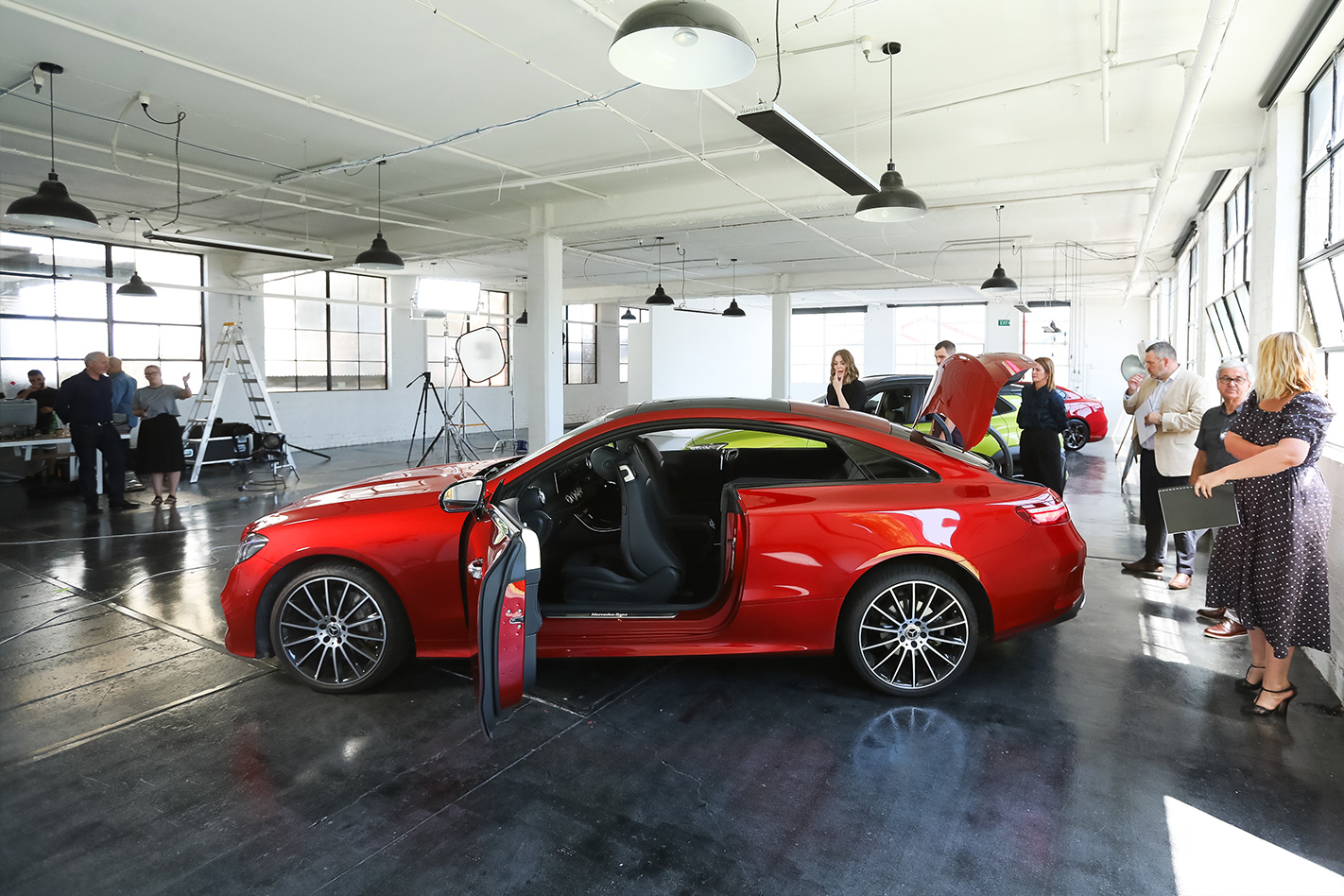
Pillar-less window openings on either side – a signature element of Mercedes-Benz coupes over the decades – have made their way to the E-Class Coupe, offering an uninterrupted open-air feeling from front to back.
Every model grade of the E-Class Coupe addresses the Style Award values from inside out. Its cabin brims with tech innovations incorporated in a manner both attractive and easy to use, and though its ultra-modern cockpit breaks new ground, its high quality and impeccable attention to detail complements the exterior look and feel for an overall sensation of style with substance.
“It embodies quality craftsmanship and engineering, yet is beautiful and elegant. When sitting in it you can adjust everything to make it feel like it was built just for you. It feels like you’re inside an amazing, luxurious cocoon, and you just want to drive off in it,” said Tanya Buchanan, Editor for Belle.
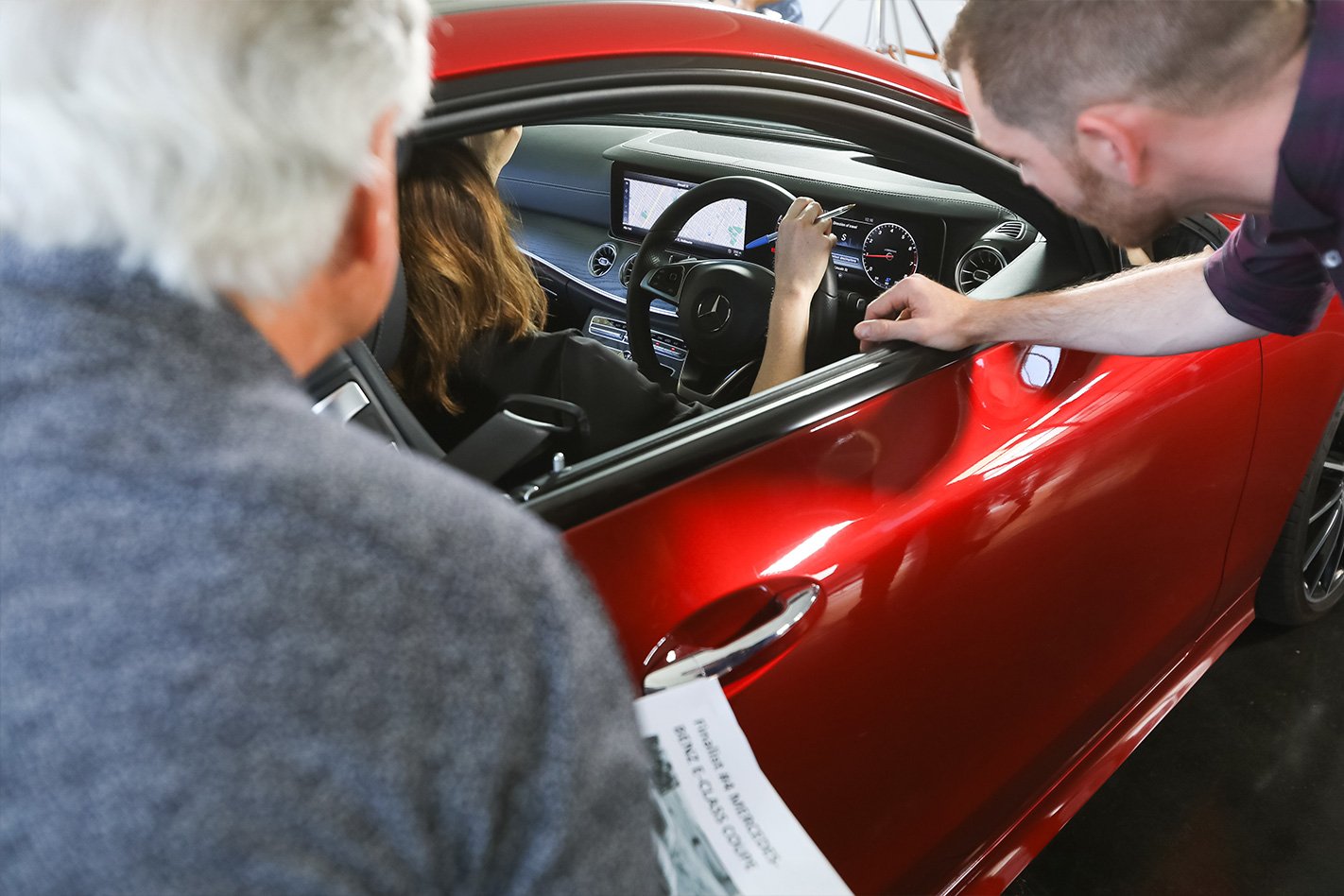
“The stretching of the upper part of this coupe is sublime in terms of proportion. The pillar-less glass and the lack of sculpting on the body side, it really reflects a maturity and self-confidence. It’s a beautifully executed car,” said automotive Design Consultant Paul Beranger, former Head of Toyota Style Australia.
“This car is for a person who is very discerning, who thinks a lot about quality and wants something that is classic, but still very modern. Inside, everything felt intuitive and the finishes are world class. I love that you can customise the LED lighting. It has so much detail without feeling overworked,” said Emma Vidgen, Editor for Real Living.
“The E-Class Coupe is a really successful marriage of classically beautiful design principles and up-to-the-minute technology. It’s for people who have a sense of style, who want prestige, and a car that feels special to walk up to, even before getting inside. The presence of this car has an effect on people,” said Ryan Lewis, Online Editor for WhichCar.
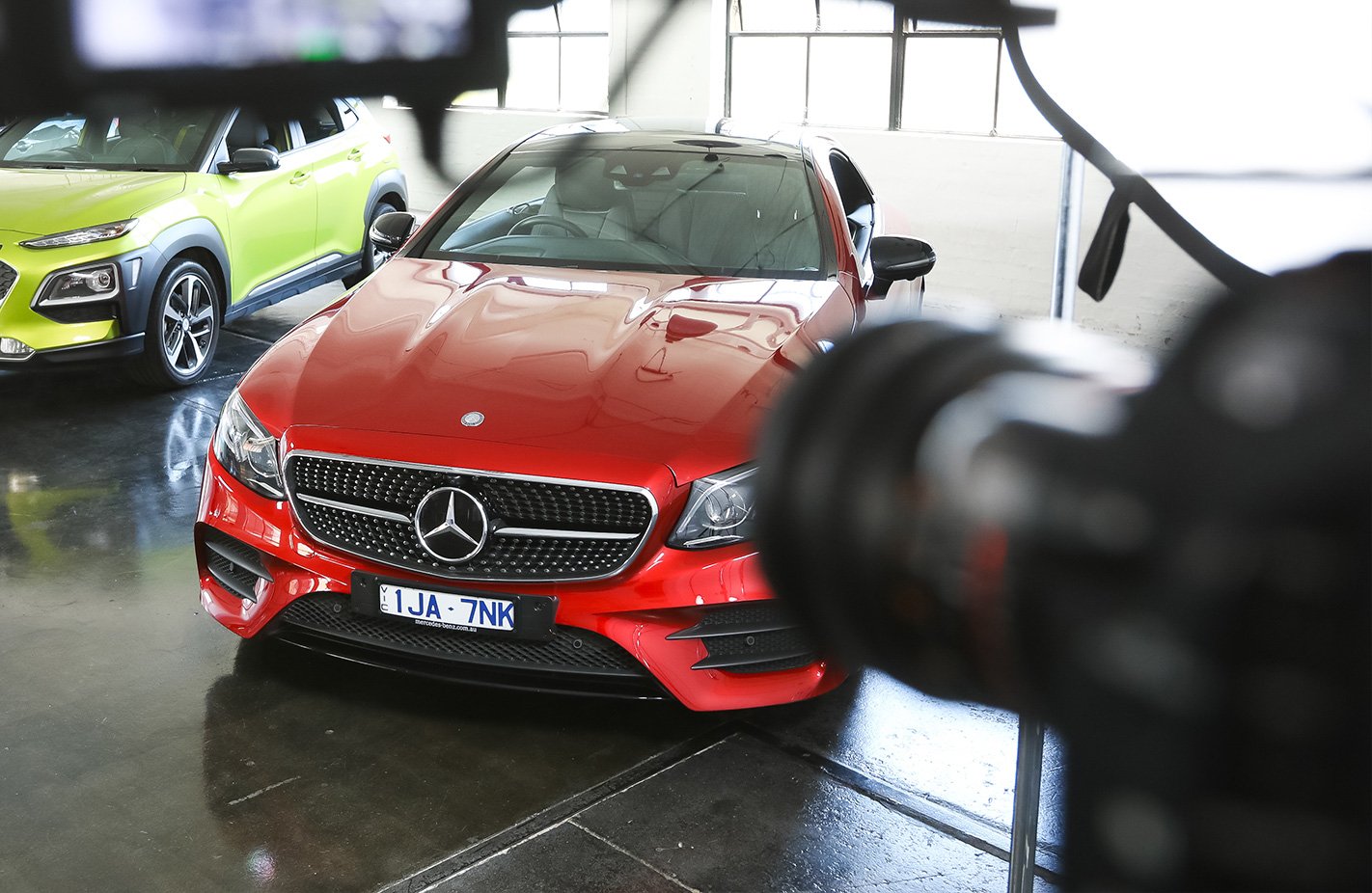
“It belies the technology that’s underneath. There’s a lot going on inside the vehicle and you would never know that from how simple and sophisticated the exterior is,” said Amy Starr, Beauty & Lifestyle Associate for Elle.
The Mercedes-Benz E-Class Coupe is available in three model grades, starting from $96,000.
Fast wagons are cool. That’s a fact.
But what is arguable is the question of which fast wagon is the best. Audi has spent the last couple of decades putting forward a pretty good argument in the form of the Audi RS2 and RS4 Avants.
The Volkswagen-chassis based wagons are 5, 6, or 8-cylinder heroes of the fast-and-convenient, with blistering speeds coming from cars that look set to pick up the kids and grab some groceries.
So, we’re looking back to see where the fast Avant started, and how it got where it is today.
Audi RS2 Avant: 1994-1995
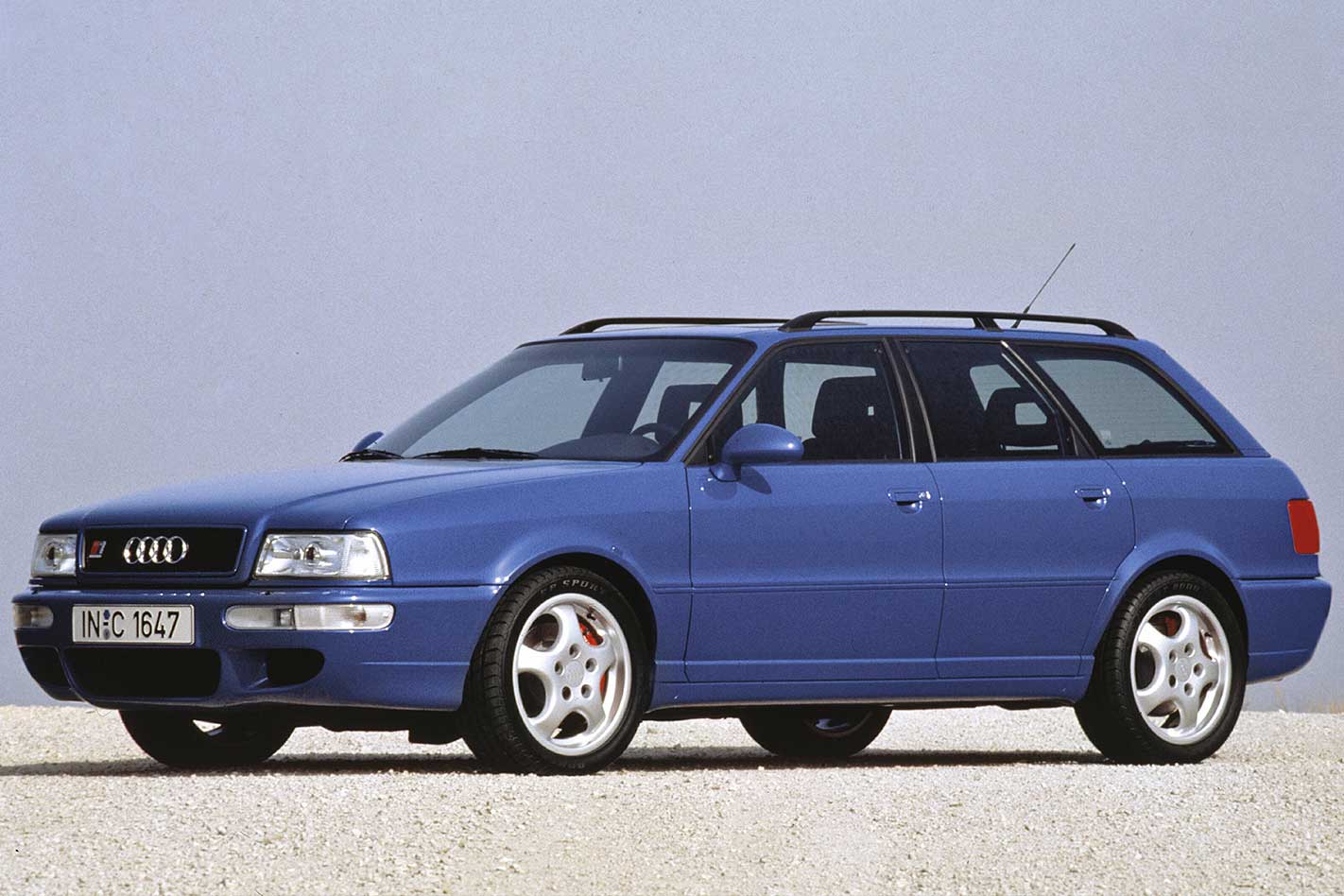
Powered by the iconic turbocharged Audi inline five-cylinder, in 2.2-litre form, the RS2 Avant was capable of a 0-100km/h sprint in just 4.8 seconds, thanks to all-wheel quattro grip and an output of 232kW.
Notably, the RS2 is quicker to 50km/h than a McLaren F1. Additionally, due to developmental assistance from Porsche, some parts of the RS2 (Mirrors, front indicators and foglights) were pinched from a 993 911.
Porsche also donated its 322mm Brembo brakes.
Even though 2881 were built, they were primarily sold in Europe, and seeing one in Australia is as rare as hen’s teeth.
The RS2 was also the car that kicked off the ‘RS’ line, with the wagon being the first to wear the ‘RennSport’ (or Racing Sport) RS badge.
Audi B5 RS4: 1999
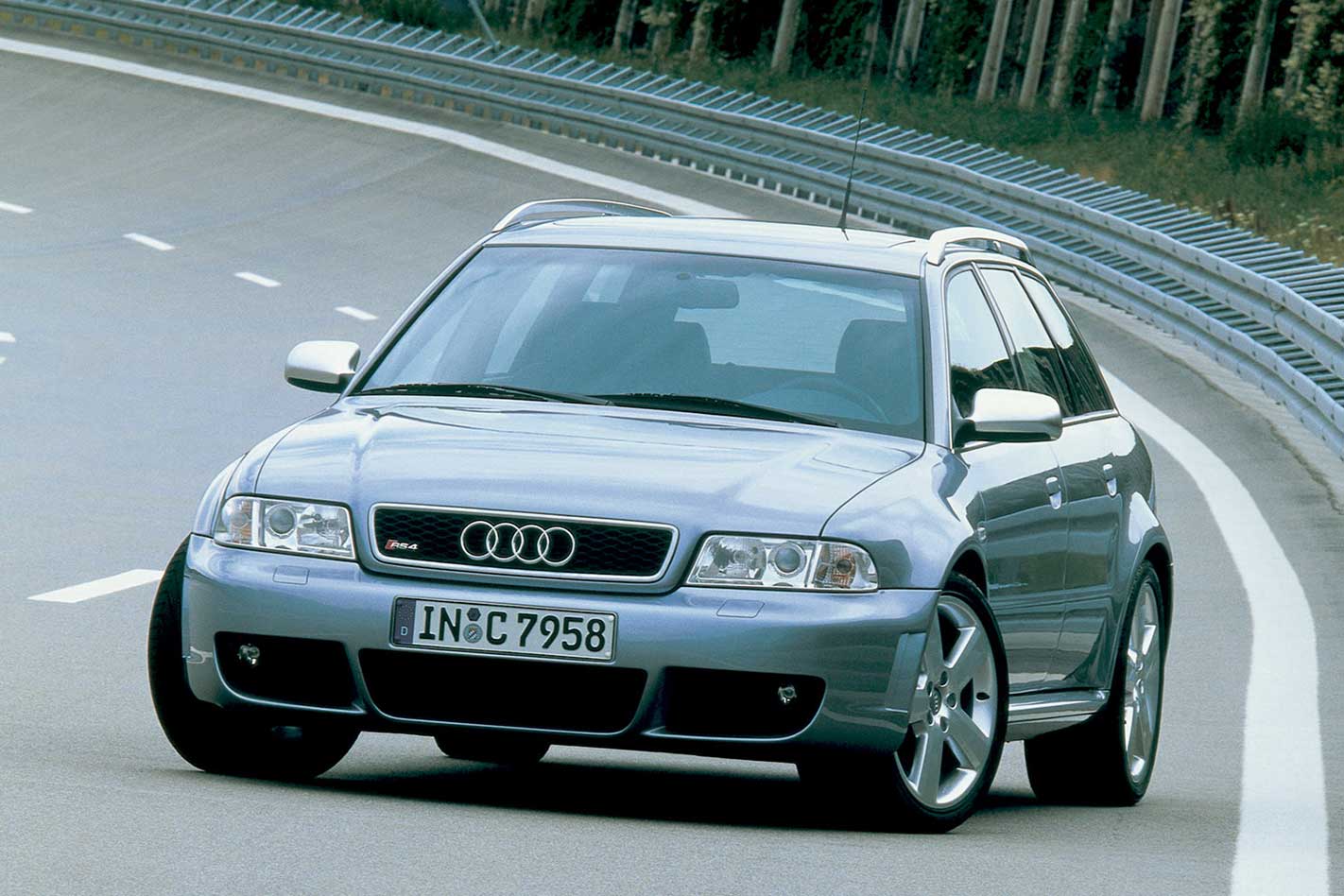
With the help of renowned engine experts Cosworth, the first RS4 pumped out 279kW, which allowed it to hit 100km/h in 4.9 seconds.
A little more than 6000 units of this RS4 were produced until 2001, by which point Audi had doubled its originally planned production count.
Audi B7 RS4: 2005
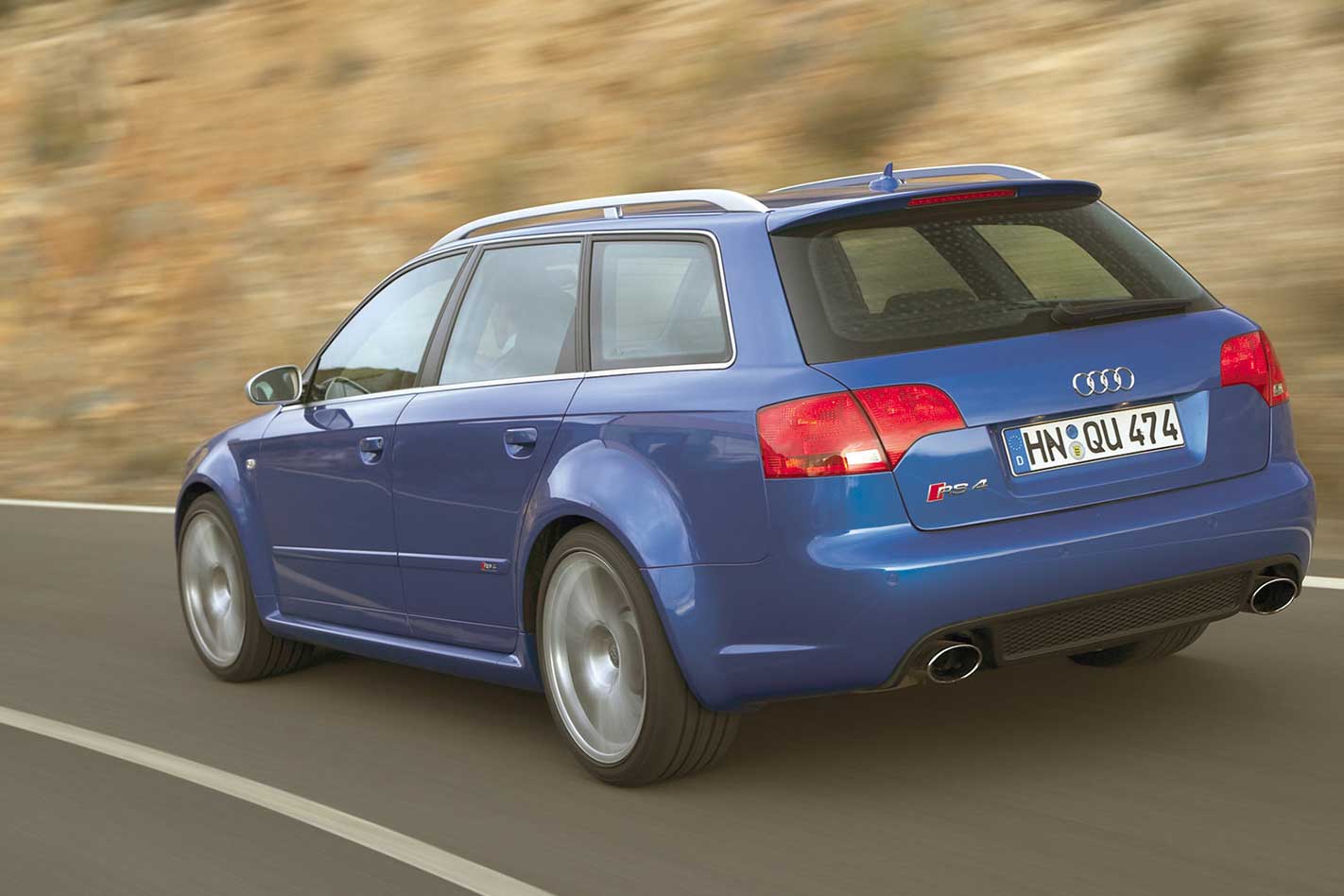
The more powerful V8 shaved a tenth off the RS4’s 100km/h sprint, and sounded better than the V6, but its other body styles were short lived. This was the only generation of RS4 which came as anything other than the iconic Avant.
This RS4 did, however, boast dynamic torque distribution which was able to direct twist to the wheel where it was most needed, and there was also an option for carbon ceramic brakes.
Audi B8 RS4: 2012
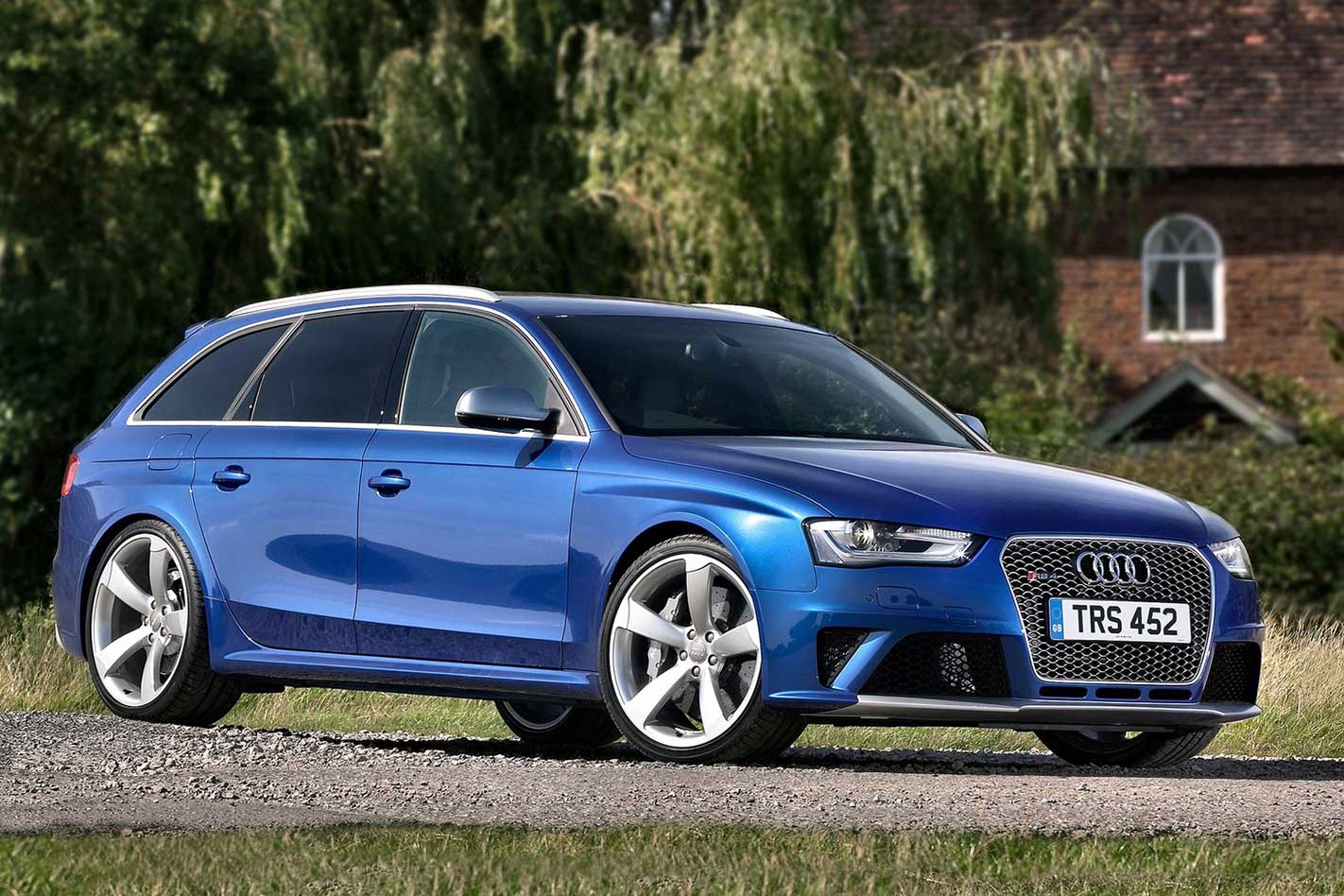
Audi claimed it’ll run a 100km/h sprint in just 4.7 seconds, which seems on the money – MOTOR once tested it in baking 35-degree plus Aussie heat and even then managed a 4.93.
Its top speed was 250km/h by limiter, though customers could request the limit to be raised to 280km/h.
An optional sports diff was also available to help tidy up understeer, with the weighty beast (a touch under 1800kg) needing a little help to sharpen its turning.
About 7000 units of the B8-based RS4 are said to have been produced.
Audi B9 RS4: 2018
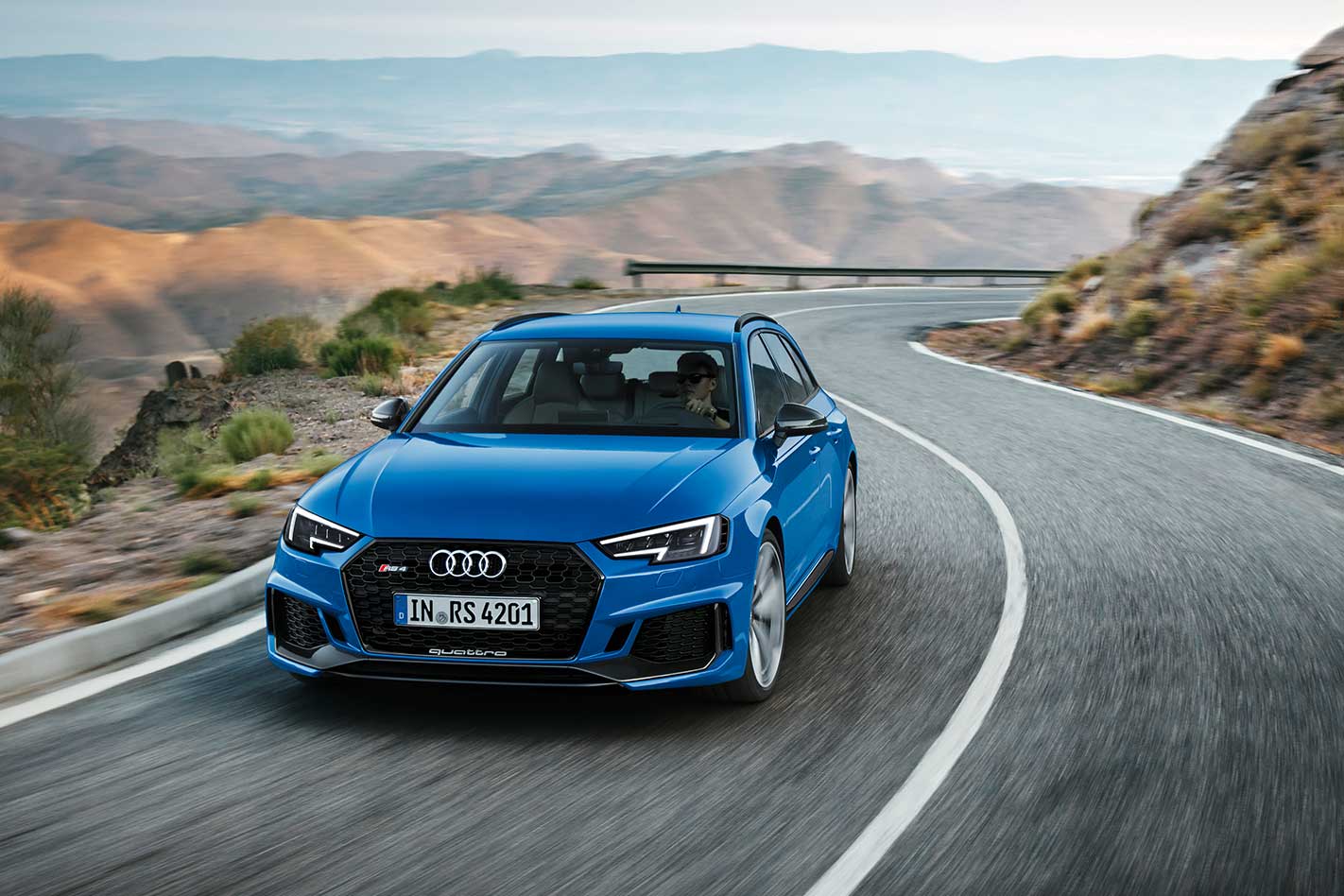
Now faster and with a heap more torque, the 2018 Audi RS4 Avant should manage a sprint to 100km/h in just 4.1 seconds.
This comes thanks to its 2.9-litre twin-turbo V6 developing 331kW/600Nm, and the fact it’s not any heavier than its predecessor.
Its eight-speed auto helps that power to, of course, all four wheels, and along to a top speed of 250km/h – or 280km/h when optioned with the RS dynamic package.
Though we haven’t yet seen one locally, pricing is expected to sit in the $150,000-or-so ballpark.
