
IF YOU’VE taken the time to think about the future of motoring, and we mean properly think about it, you’ll no doubt be feeling a little confused – apprehensive, even.
For petrolheads, pondering what our cars and roads might look like in 10, 20 or even 30 years’ time throws up many question marks, and one certainty: whether you realise it or not, we’re in the midst of a transport revolution.
Electrification and autonomy are other certainties, but what comes next? And what does it mean for enthusiasts? People who actually care about driving?
These are the questions at the centre of our new issue, out today. It’s the first Wheels Future Issue; a magazine that cuts through all of the noise and marketing hype to clarify exactly what’s coming our way.
Some of it will be challenging, but there’s good news embedded within too. Flick through the above gallery for a taste.
This issue also sees our second subscriber cover, that rewards our loyal subscriber base with a pared-back look.
Also in the issue:
- Electric F-Type: We reveal Jaguar’s plans to ditch petrol power for its all-new sportscar
- Tested: Audi RS5 v BMW M4 Pure v Mercedes-Benz C63 S
- Taming the Widow Maker: Porsche’s 911 GT2 RS driven
- We drive the future of motorsport: Formula E
- SUV Megatest: Peugeot 3008 v Holden Equinox v Honda CR-V v Mazda CX-5 v VW Tiguan v Nissan X-Trail
- Our garage: Honda CR-V, Renault Megane, Lexus LC, Kia Picanto, Hyundai i30 SR, Volvo V90, Mini Countryman
- Explained: Tungsten-coated brake discs
- Plus … Columnists, Marketplace, Showroom and this month’s motoring news
TELL ME ABOUT THIS CAR
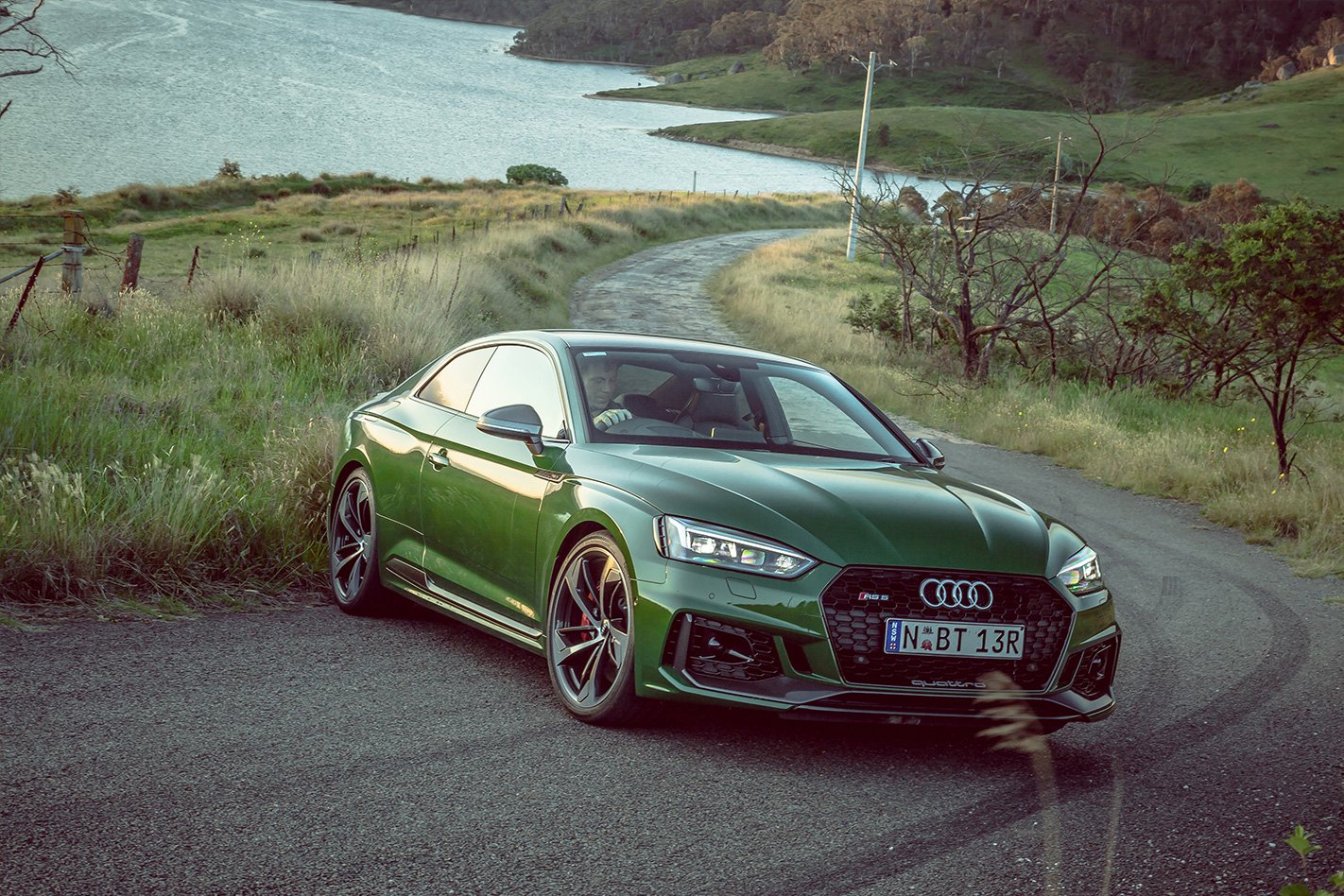
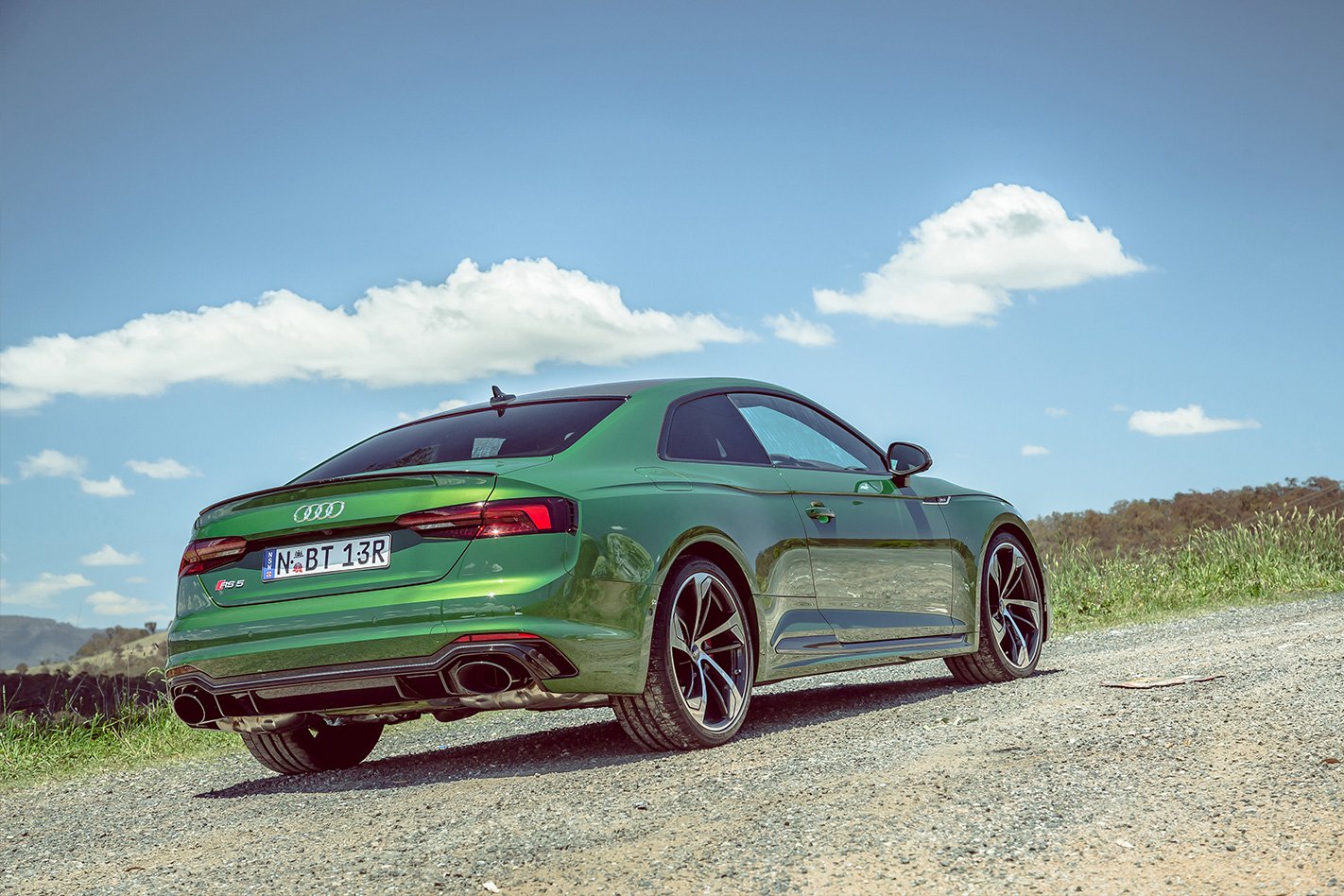
If you’re simply after an elegant coupe that wears the four-ringed badge, one of the 2.0-litre four-cylinder A5 models will probably suffice. The new range that arrived earlier this year brought significant updates to technology, efficiency and performance, while maintaining the head-turning two-door looks.
For those looking for a bigger punch, the Audi S5 offers a turbocharged 3.0-litre V6 with mountains of Quattro all-wheel drive grip and more muscle. But if that’s still not enough, the new Audi RS5 takes performance to an entirely different level.
Its engine is downsized to 2.9-litres but a pair of turbos boost power to a fizzy 331kW, while torque is up to 600Nm.
Pricing starts at $156,600 and it’s no coincidence that figure is within striking distance of the RS5’s arch rivals – the BMW M4 and Mercedes-AMG C63 Coupe.
STRENGTHS
- A downsized engine has not robbed the RS5 of performance. The previous-generation packed a 4.2-litre V8 with 331kW and 430Nm of torque, but despite dropping to a 2.9-litre V6 the new version maintains the same power but gained 170Nm of torque.
- Fuel efficiency has also benefitted. While the previous version would use 10.5 litres of fuel on a good day, the 2018 RS5 asks for 8.8L for the same range. With more usable torque, it is also easier to drive in a more economical fashion.
- Acceleration is visceral. Audi claims an official zero to 100km/h dash of 3.9 seconds and the grippy Quattro all-wheel drive system makes that milestone possible with ease and not just on a bone-dry perfect asphalt surface.
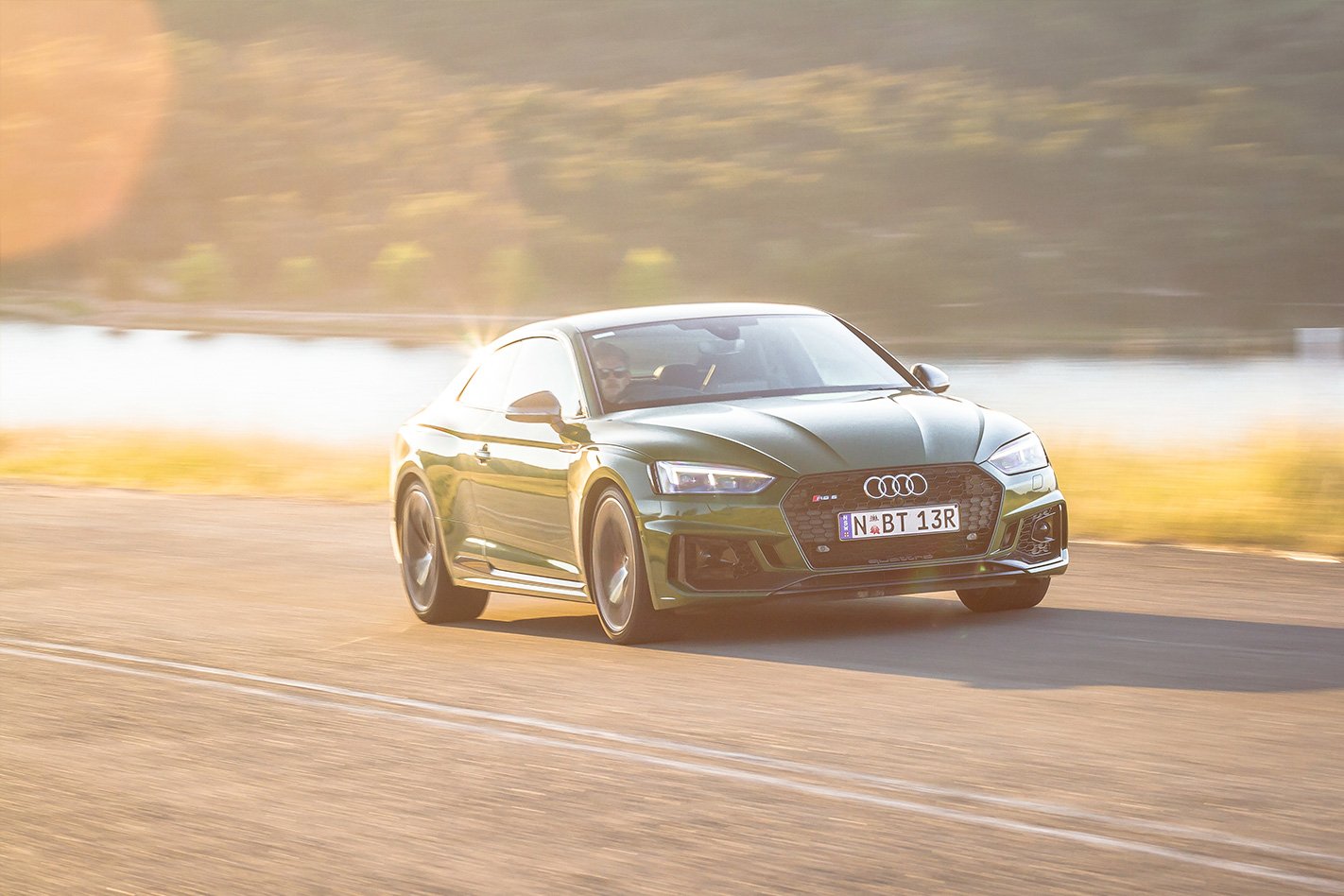
- The athletic performance doesn’t relent at the benchmark acceleration speed and the RS5 has enormous pace beyond 100km/h.
- The excellent Quattro system also translates into unstoppable pace in corners too. Even in unpredictable and changing conditions, the RS5 allows a rapid pace to be maintained through winding roads with confidence.
- Handling defies the 1730kg kerb weight for a majority of driving. Steering feel is light but lively and the RS5 turns into corners with willingness and near perfect front-to-rear balance. When the limit is found either through changing conditions or overzealous driving, the chassis favours controllable oversteer rather than frightening understeer.
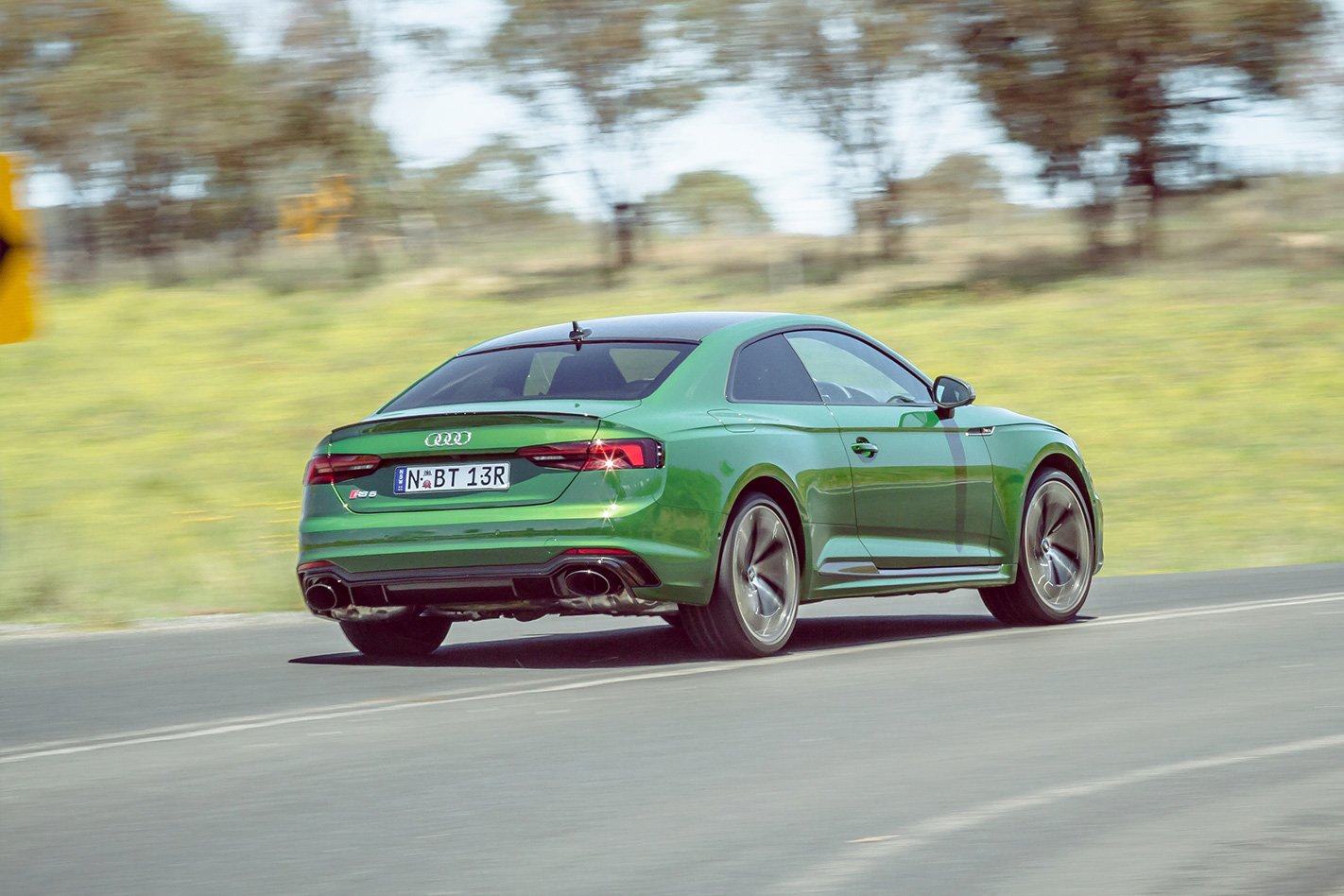
- A move to an eight-speed torque converter automatic can’t match the speed of the outgoing dual-clutch box, but the smoother cog-swaps and tighter ratios are a net benefit for the RS5.
- Drive mode revisions have softened the most comfortable setting and the new RS5 offers a far more liveable nature for day-to-day driving without compromising the sharper end of the spectrum when on more involving roads.
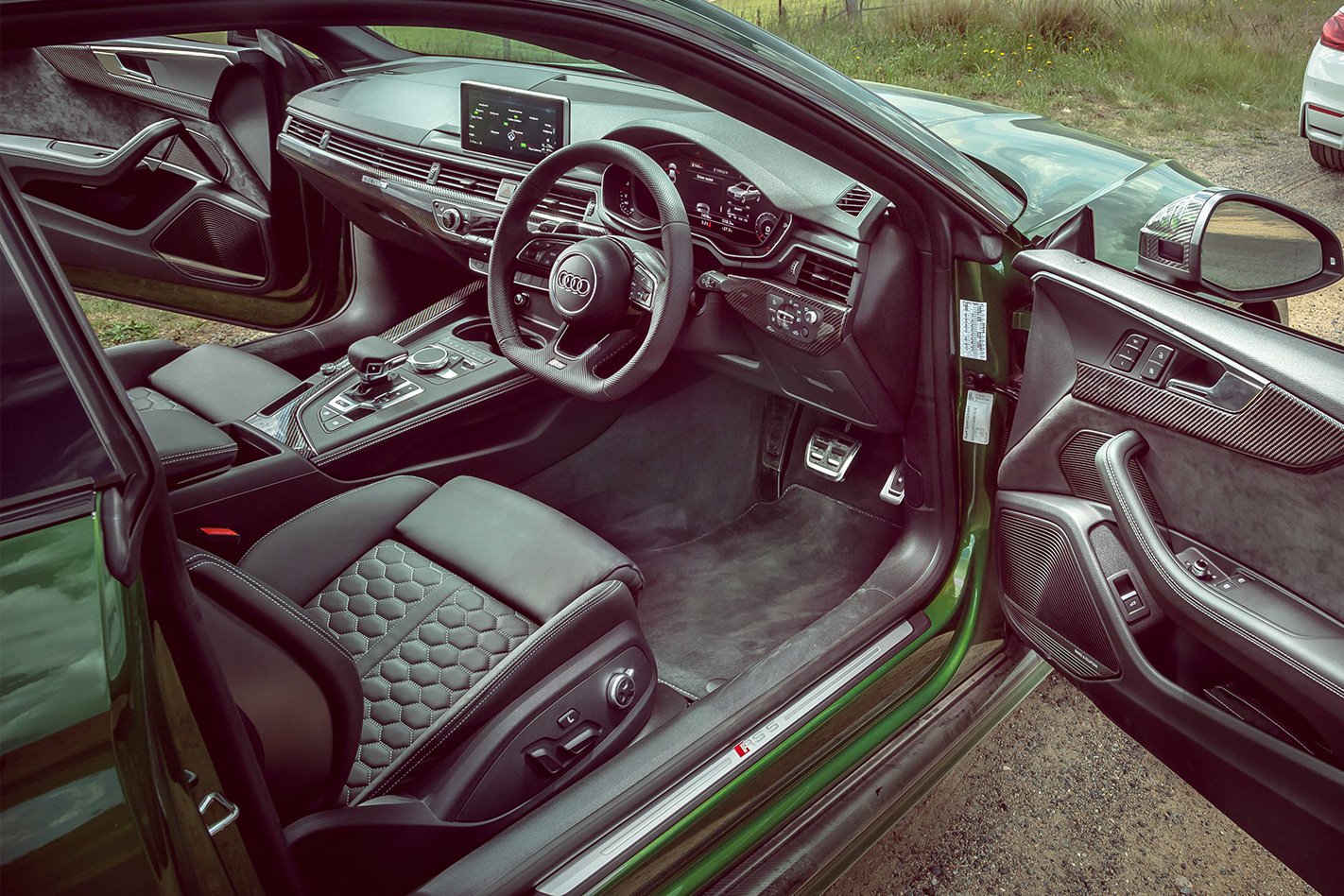
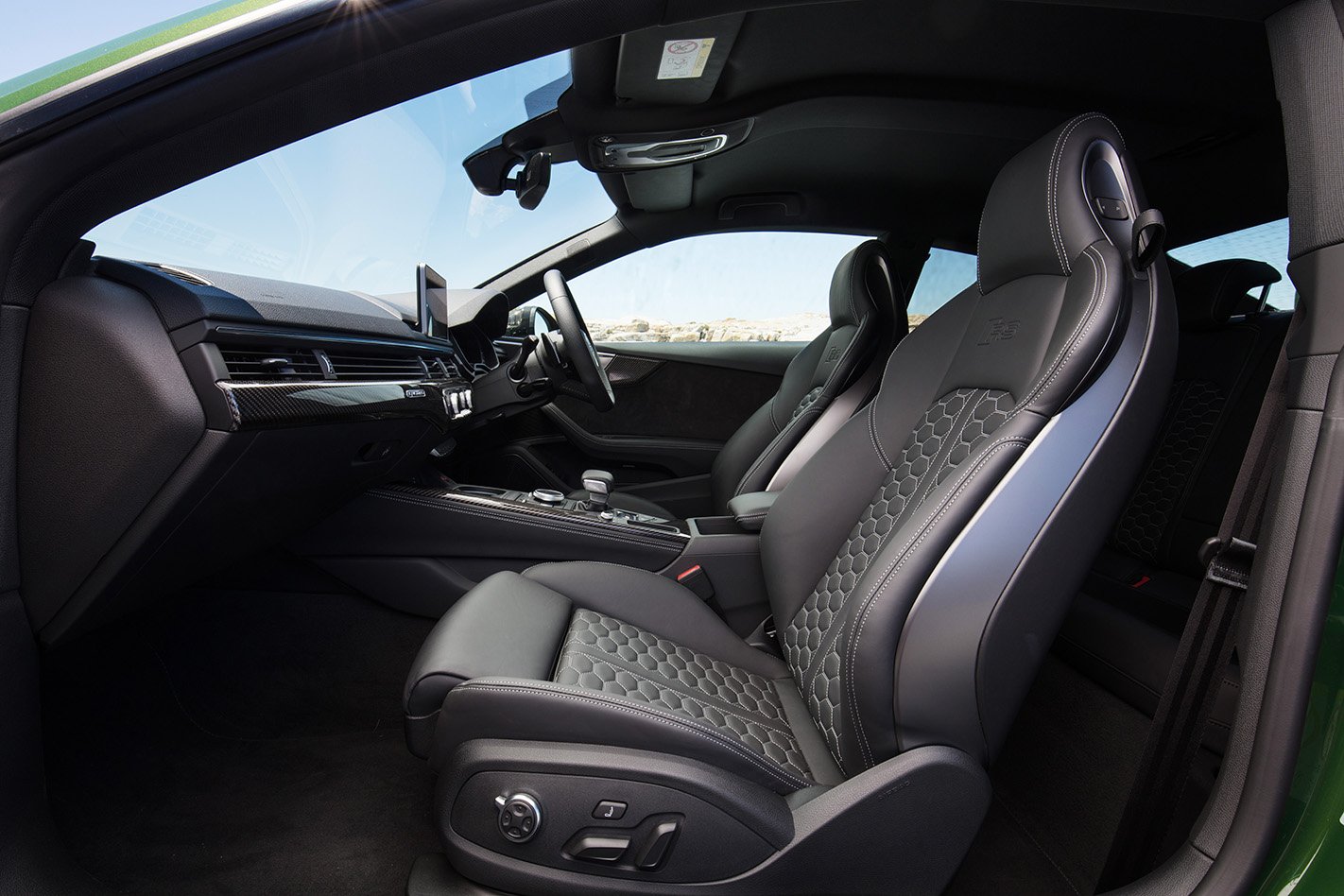
- Interior quality and design picks up from Audi’s usual very high standard and adds a dose of RS magic. Plush quilted seats are supportive and comfortable. Adjusting the correct seating position requires a few goes and second-row occupants are kept just as happy with genuinely usable accommodation.
WEAKNESSES
- Standard iron brakes have a little too much pedal travel and feel as though they will take only so much punishment. For serious track use or hot days on your favourite roads, the optional $11,900 carbon-ceramic front brakes would be a good addition to the extras list if you can stretch to it.
- The RS5’s V6 certainly has a report that will get you noticed and is a satisfying soundtrack you’re unlikely to get bored of, but it can’t compare to the banshee high-revving V8 noise that ended in the previous generation.
- The RS5 Coupe styling will make people stop for an extended look, especially in the new Sonoma Green paint option, but there is something slightly more respectable about the mechanically-identical Audi RS4 Avant, which will offer almost all of the performance but wrapped up in a more practical wagon body. The choice is yours.
ANY RIVALS I SHOULD CONSIDER
BMW’s M4 starts at $139,900 for the more Spartan Pure. It has the same amount of power, fuel economy and is only a 10th of a second slower to 100km/h, but sacrifices some creature comforts and is rear-drive. The more comparably equipped M4 Competition has almost the same price at $156,710.
Mercedes-AMG weighs into the hyper-coupe market with its C63 S Coupe with a turbocharged V8 and 375kW/700Nm. Despite the extra power over the Audi, it has 1800kg to haul around and rear-drive so can only match the Audi’s acceleration to 100km/h.
A ROGUE German tractor driver has created a path of destruction through a village this week, with a sole purpose of destroying speed cameras.
Wheels Investigation: The war on speed – Towards Zero Sense
The 63-year-old man is reported to have intentionally aimed his tractor at the cameras on Monday night and Tuesday morning, knocking several of the devices over.
In total six cameras were destroyed, with police claiming hundreds of thousands of euros worth of damage caused.
The destruction occurred in a small town 50 kilometres from Frankfurt, with each of the cameras several kilometres apart.
Police say the man’s motive is not yet clear, but we suspect he may have had a slight personal vendetta against the cameras… just a hunch. However, it’s unlikely he would have been issued with a speeding ticket while driving the tractor, which has a top speed of 6km/h.
BBC reported a police spokesman as saying the tractor driver had no alcohol in his system, and would be charged with criminal damage.
We’re sure there are more than a few Aussie motorists who have fantasised about delivering a similar blow to the cash-generating cameras, by following in the German rogue’s footsteps.
In the United Kingdom, vandals have previously attacked speed cameras by forcing a tyre over the device, filling it with a flammable liquid and setting it alight, while in Slovakia, the cameras have been repeatedly attacked with pick-axes, a far more Eastern European approach.
It seems we are not the only country to have mixed opinions about the equipment.
The Victorian Department of Justice and Regulation is responsible for the maintenance of speed and traffic cameras in the state, but told Wheels that vandalisation was uncommon.
“While incidents do occur from time to time, they are infrequent and Victoria Police is called in to investigate,” a spokesperson said.“The Department of Justice and Regulation is committed to ensuring that critical infrastructure is maintained.”
Let’s get the bad news out of the way.
When Skoda’s all-new generation Fabia arrives next year it won’t offer an RS variant.
However, this comes with a positive twist. We’re hearing Skoda might later jolt the little pocket rocket back to life with its future electric-vehicle range.
At least that’s what product manager Peter Kincer put to MOTOR recently at the Octavia RS245 launch.
“Unfortunately there are no plans [for a Fabia RS] at the moment. It just can’t sell in Europe,” he says.
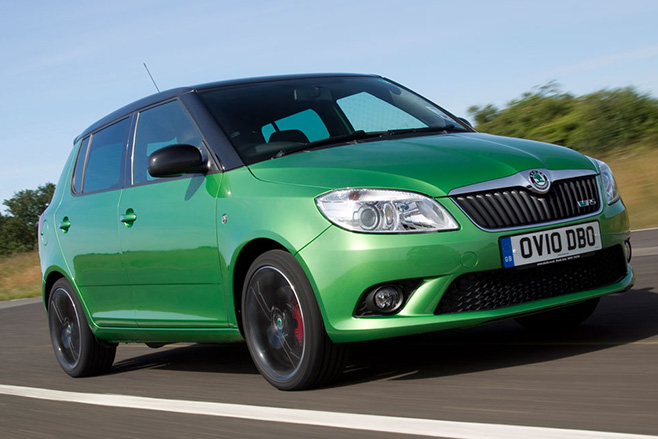
Volkswagen’s Czech subsidiary created its second fast Fabia in 2010 after deriving it from the fifth generation Polo GTI.
However, while the Skoda Fabia RS was successful Down Under, even with a wagon version it couldn’t sell in Europe and was discontinued in 2014.
“When you get a small car usually you don’t want to pay a lot of registration fees because everything is based on kilowatts in Europe.
“So when you have a small car and you get strong engine, you’d rather get a bigger car because it’s the cost and everything.”
But electric power would help Skoda side step this problem, Peter continues.
“Maybe you know with the electric cars when it comes, [Fabia RS] might be an option.”
“It would be just electric. I don’t think the hybrid, personally, has a big future.”
“There will be a choice [of motor], but not a great choice, and of course the battery range isn’t such a [priority], but it’s still a little bit far.”
Given his speculative tone, this information should be taken with a grain of salt. However, there’s been a buzz about the brand regarding its green-focused future.
Skoda’s CEO Bernd Maier recently announced it will begin manufacturing electric and hybrid vehicles from 2019 for the Volkswagen group, with the first model to be produced at its Czech-based Mlada Boleslav site.
It will then charge towards a five-strong full-electric vehicle range by 2025, which should be just about when the Polo, and thus Fabia, are due for an all-new update.
It seems like whenever Aussies get their hands on a vehicle, they want to try to make it better.
That’s why the likes of FPV and HSV have thrived over the years, but there have always been smaller workshops putting in the hard yards too.
One such shop is Queensland-based Killa Kustom Kables & Conversions, which has recently started building LSA-powered Holden Colorados.
And it even has a cool name – Killarado.
The company’s owner and manager Steve Kildey says it all began with a customer request.
“This started when a customer came to us wanted us to build something for them,” Kildey told MOTOR.
“We thought about Hiluxes and Rangers, but we ended up deciding to build an LS Colorado.”
He says it struck them as a good idea when they considered that Holden was no longer building a V8 car, but accessing LS engines was still quite easy.
“So far we’ve done six Killarados, including one that we’re about to finish up.
“I’ve got one too, it’s the blue one in the pictures. It’s an LSA swap, and so far it’s getting about 15 to 16 litres per 100km. Another one is getting about 14.”
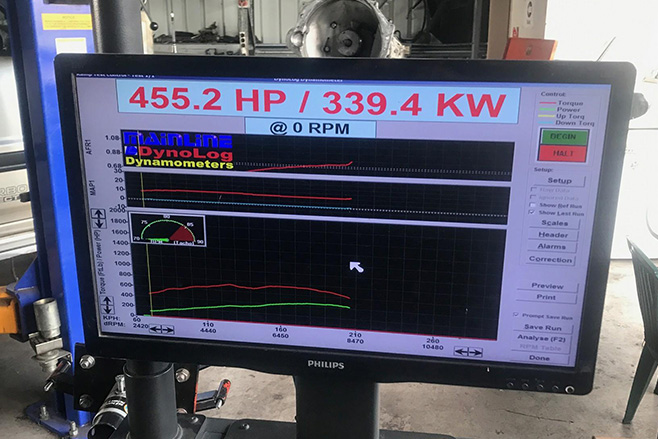
His Killarado is putting out 339kW at the rear wheels, while retaining the ability to go four-wheel drive.
Kildey says the swap isn’t actually as difficult as you might think, and only takes around four weeks from start to finish.
“The LSA isn’t actually much bigger than the stock motor when you take into account the turbo hanging off it, so it’s a little more spacious if anything.
“We don’t modify the chassis at all when we do a swap, so we can leave the car completely stock aside from the engine and gearbox.”
Kildey says they do send the cars off to Wildcat Performance Headers for a new exhaust, as well as doing a calibration tune to make sure the new engine and Holden 6-speed auto gearbox are comfortably at home in the Colorado.
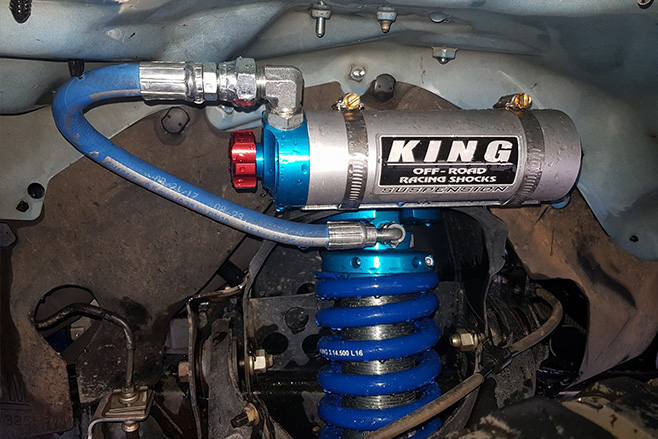
They can also customise suspension and other aspects of the Killarado to a customer’s needs.
But for a basic LS-swap, Kildey says pricing starts at $26,000 for a second-hand LS3.
“We can also do a brand new LS3 engine for $33K, or the supercharged LSA for around $40K.”
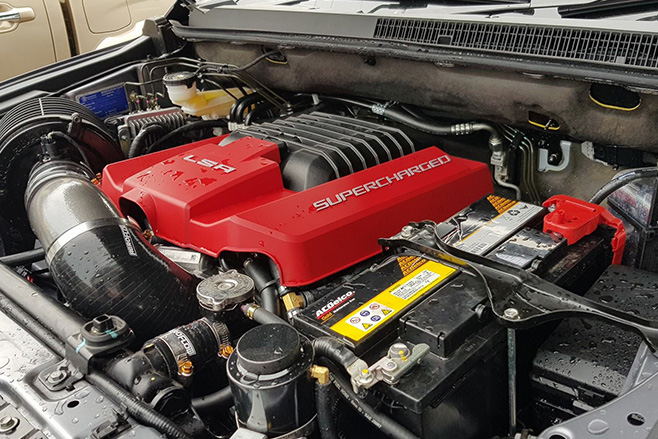
“Our customers haven’t had their cars for long, the earliest one went out a couple of months ago, but so far I’ve had nothing but good feedback.
“They say the more they drive them, the more they love them.”
THE Kia Stinger will wear two different crash test ratings after the independent crash safety watchdog penalised the entry-level sedans for missing vital active driver assist technology – not because it performed poorly in a crash.
The Australasian New Car Assessment Program overnight slugged the Kia Stinger 200S and 330S – one wearing a turbocharged 182kW 2.0-litre four-cylinder engine under its bonnet, and the other a 272kW twin-turbo 3.3-litre V6 – with a three-star safety rating “are supplied without the active safety aids provided in other variants”.
The other four models in the Stinger line-up include autonomous emergency braking and a lane-keeping assist system and gain a top five-star rating.
“Autonomous emergency braking and lane keep assist have been omitted from these grades, reducing their [ANCAP] safety assist score to 25 per cent,” ANCAP chief executive James Goodwin said.
“Australasian variants also lack rear seat belt pretensioners and load limiters which help manage the forces of a crash, and a penalty has been applied to the full width test score,” he said.
Australasian customers should feel let down that important safety features are being left out of the vehicles we’re being supplied.
“We would urge Kia to offer the same safety specification across all variants and all markets to ensure the best safety outcomes,” Goodwin said.
Kia Australia said it had no comment on the crash test result.
The poor score for the entry-level Stingers, adapted from a European crash test of the vehicle, comes despite the crash safety watchdog scoring the Stinger highly – 84 percent – in occupant protection and 81 percent in child protection in a simulated crash. In contrast, a two-star crash test rating applied to the Ford Mustang coupe was based on a score of just 71 percent for adult protection and 32 percent for child protection.
It also comes in the wake of other cars from Ford and Holden receiving no rating rather than having a lower crash test score applied.
The Korean car maker has responded to ANCAP criticism of the safety of its vehicles in the past. In 2015, after receiving a four-star rating for its strong-selling Carnival, Kia made a number of structural changes to the people-mover to bring it up to a five-star crash rating when it was retested in 2016.
Audi hasn’t so much performed a u-turn with the new RS5 as an abrupt handbrake-induced 180. It’s goodbye screaming naturally-aspirated V8, dual-clutch gearbox and hello twin-turbo V6, eight-speed torque converter automatic with a more relaxed suspension setup to match.
So the RS5’s gone soft? To a degree, yes, but that’s not necessarily a criticism.
It’s easy to bemoan the loss of the awesome 8000rpm-plus V8, but switching to a boosted bent-six actually takes the RS badge back to its roots – remember, the first RS4 Avant was powered by a 2.7-litre twin-turbo V6. Using the S4’s 3.0-litre turbo V6 as a starting point Audi Sport reduced the stroke by 3mm and wedged another turbo into the ‘hot vee’ between the cylinder banks.
Power remains the same 331kW as the V8, albeit produced at 5700-6700rpm rather than a dizzying 8250rpm, but torque spikes to a whopping 600Nm from just 1900rpm, a 170Nm lift. Combine this is all-wheel drive, eight closely-stacked ratios and a 60kg weight cut (31kg of which is thanks to the engine) and it’s little wonder the 0-100km/h sprint has been slashed from 4.5sec to 3.9sec.
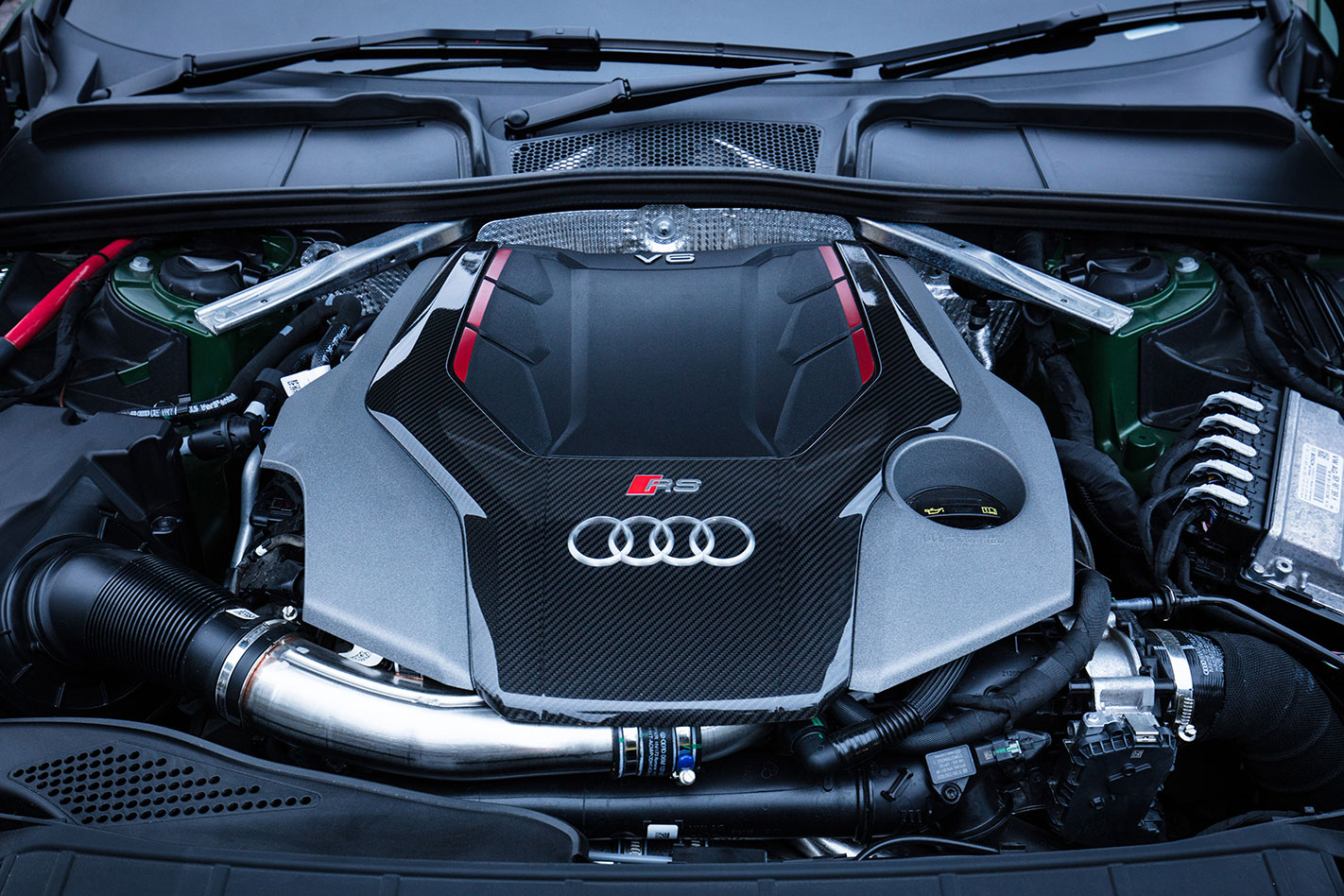
The engine emits a nice enough whirr as revs build with the odd supercharger-like whine under heavy load and the token blurts on full-throttle upshifts. It won’t make the hairs on your arms stand up but nor is it a bad noise by any means. Try as it might, the torque converter auto can’t deliver the instant shifts of a dual-clutch but it’s more than quick enough and allows plenty of revs on downshifts – if slightly slower changes are the price to be paid for seamless everyday operation then we’ll pay it.
Under the skin, however, the new MLBevo platform (used on everything from the Audi A4 to the Lamborghini Urus) helps shave weight and increase stiffness despite an increase in every exterior dimension bar height, while an optional carbon fibre roof loses another 3kg (at $4900 we wouldn’t bother) and milled aluminium wheels drop a further 2kg each.
Regardless of the spec or technical minutiae, it works. This isn’t a car that’s going to leave you a heart-pounding, sweaty-palmed mess at the end of a long drive, but as a sports tourer it excels in being a ruthlessly efficient way to cover a lot of ground very quickly. This has long been an Audi strong suit, but the RS5’s appeal lies in its increased comfort levels when you want to do the touring bit yet heightened adjustability when it comes time for the sports bit.
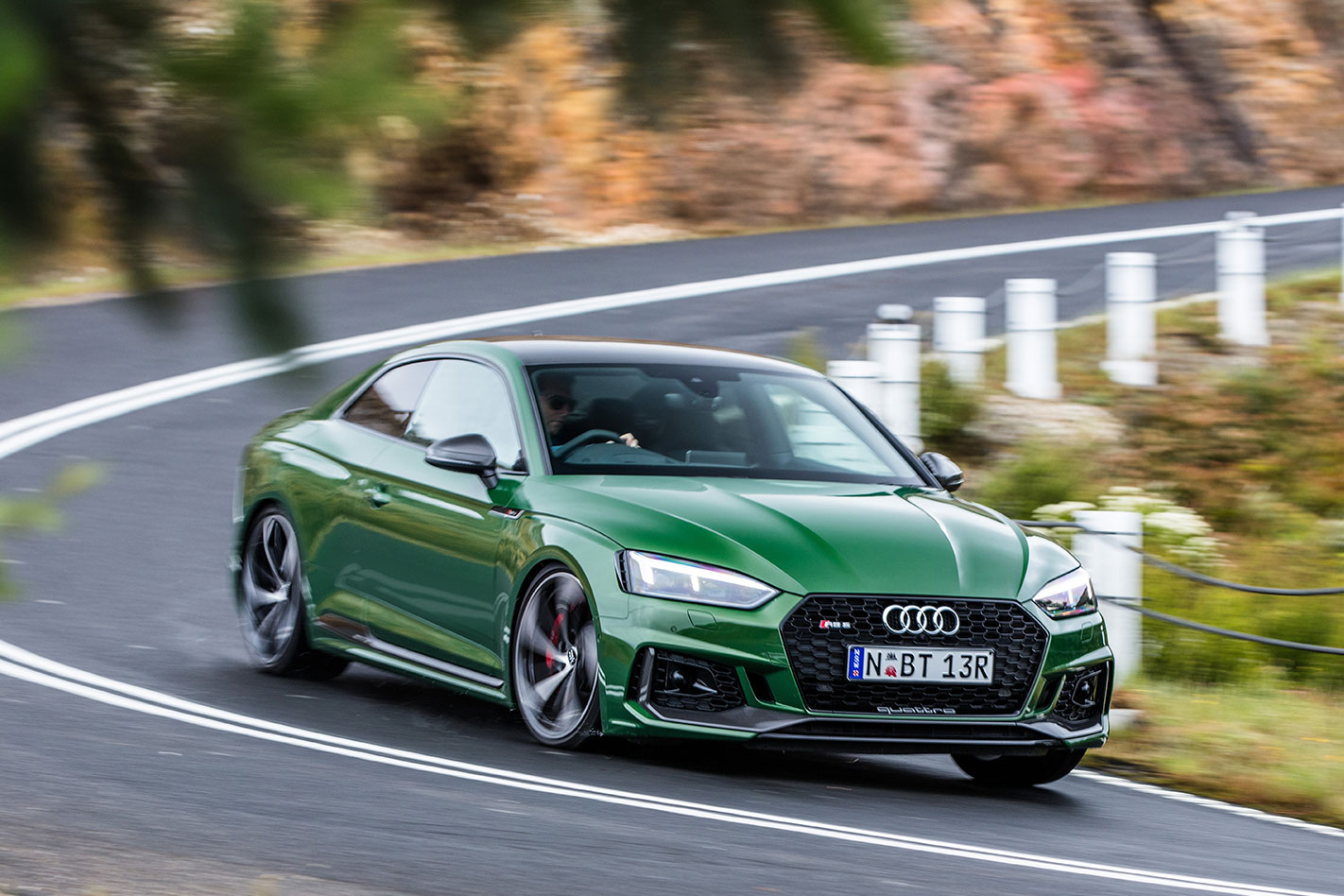
And you can have a massive crack, wet or dry, the potency of the engine and security of the chassis combining to make mincemeat of the tricky Targa Tasmania stages that constitute the launch route. There’s lots of grip, but it feels up on its tip-toes rather than super tied down. Carry the brakes – 375mm rotors and four-piston calipers up front, a 330mm/two-piston combo at the rear – into a corner and the rear will slide gently and getting on the throttle early lets the sports diff do its thing and point the nose further towards corner exit. With space to play on a track there’s reason to believe the RS5 may entertain like few non-R8 Audis before it.
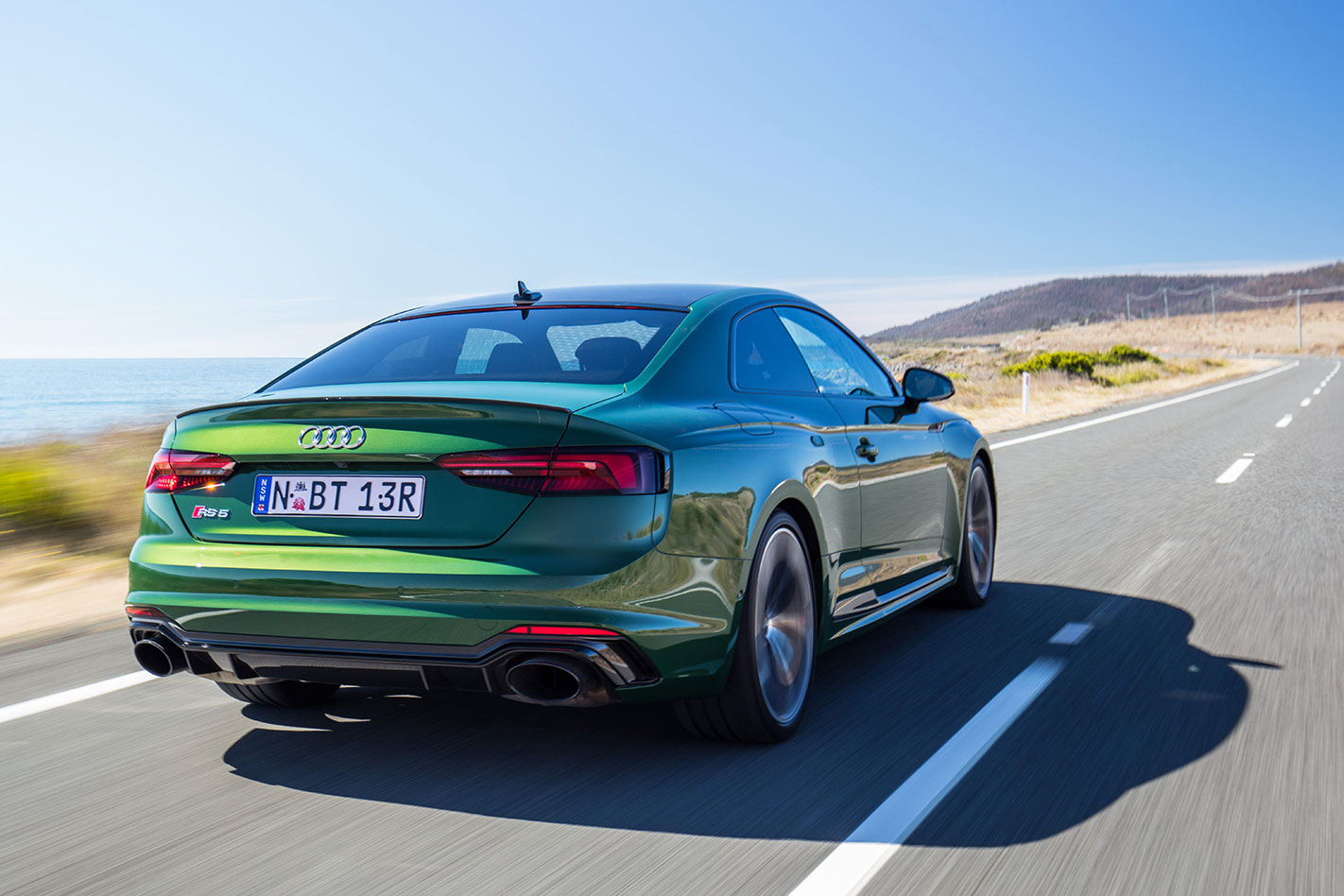
All in all, it’s an impressive machine. Whether or not it’s better than its traditional rivals (M4, C63 Coupe) is almost the wrong question to ask, as it feels far more biased towards road use than racetrack abuse. Perhaps some will find that a disappointing verdict for an RS model, and like those switching from 981 to 718 Boxsters and Caymans, current V8 owners are advised to test drive the V6 to ensure it still presses the right buttons, but the RS5’s beautiful interior, searing pace and involving (enough) handling make it an attractive proposition.
Honestly, at the moment the fairest score feels to sit right in the middle of four and four-and-a-half stars, with an equal chance to go either way. A longer drive in months to come will dictate which side the hammer falls.
Rating: 4 stars out of 5
2018 Audi RS5 Coupe Specs Engine: 2894cc V6, DOHC, 24v, twin-turbo Power: 331kW @ 5700-6700rpm Torque: 600Nm @ 1900-5000rpm Weight: 1655kg 0-100km/h: 3.9sec (claimed) Price: $156,600
AUDI chamfers the previous-generation RS5’s hard edges with the far more liveable – yet still blazingly fast – 2018 RS5 sports coupe
WHAT IS IT? The second-generation of Audi’s hottest A5 coupe. While the outgoing version packed a high-revving 4.2-litre naturally aspirated V8, the 2018 Audi RS5 has dropped two cylinders but gained a brace of turbos to compensate.Power is unchanged at 331kW but torque is up from 450Nm to 600Nm, while a reduction in fuel consumption is a byproduct of boost, and all at a cost that has increased by about $1000.
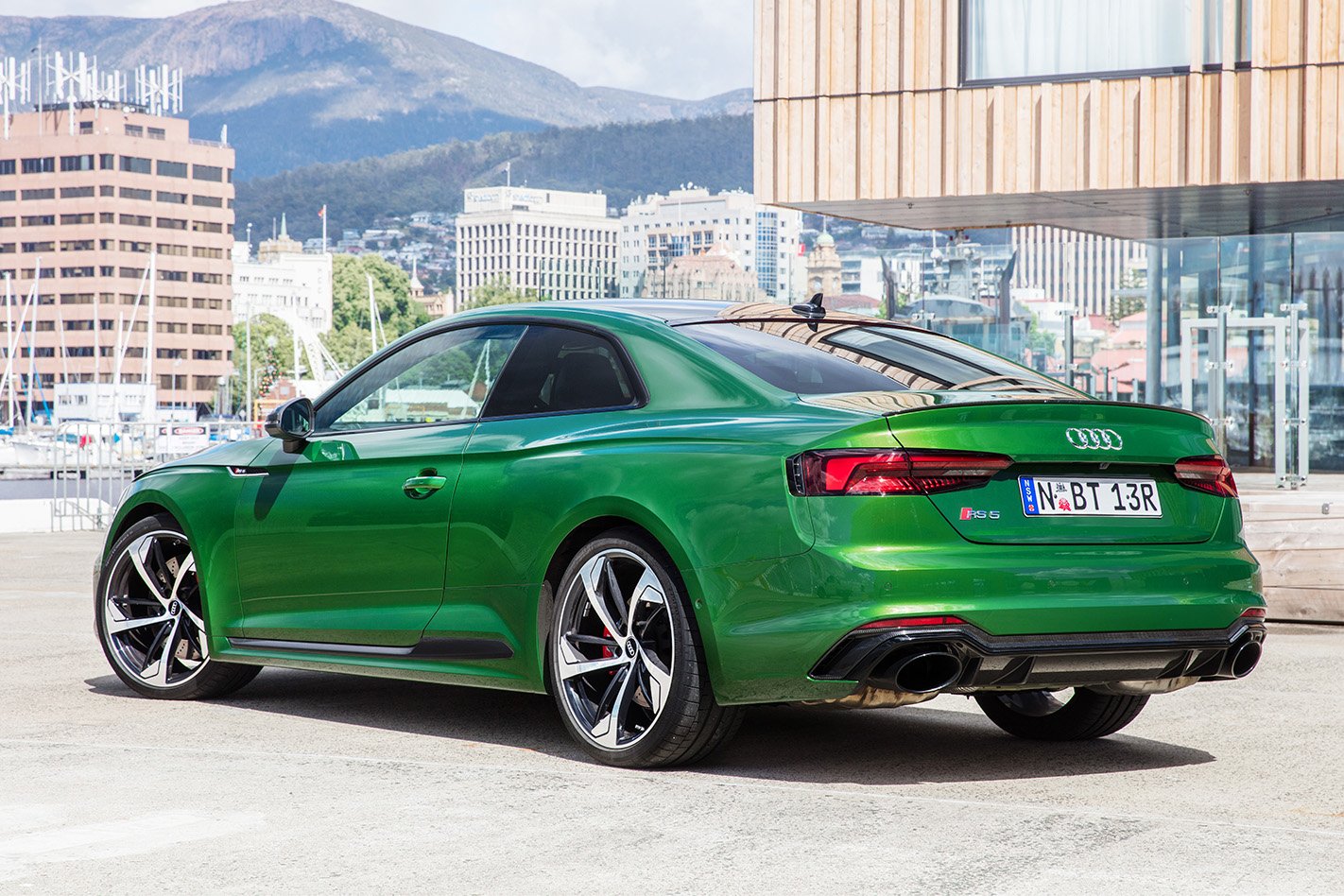
WHY WE’RE TESTING IT Mid-sized hyper-performance coupes are never going to constitute a majority volume for a car maker, but Australia has a surprising appetite for two-door sports cars that pack a heavyweight punch and look great. You need look no further than the popularity of Ford’s Mustang, the Mercedes-AMG C63 Coupe or BMW’s M4 for that proof.
But Audi’s offering weighs into the competitive segment with its Quattro four-wheel drive system as a unique selling proposition while its closest rivals stick to rear-wheel drive.
A blast across Tasmania’s amazing network of driving enthusiast roads is the perfect test to gauge how the new version stacks up against some serious competition from Mercedes and BMW, as well as the previous-gen version that divided critics.
RIVALS BMW M4, Mercedes-AMG C63 coupe
THE WHEELS VERDICT For the return of the RS5 Coupe, Audi has addressed two of the most commonly cited criticisms of the first version. A boost to torque has resulted in a far more tractable car without sacrificing pace and, while the switch to V6 power has forfeited the scream of an atmo V8 at 8000rpm, the replacement sound still sings the RS anthem. RS5 owners will also appreciate the effect downsizing has had on the fuel bill.
Secondly, the new suspension set up now offers a genuinely comfortable setting as well as harder, sportier modes and that imparts a balance that will stand the RS5 strongly on the track or when wearing a GT cruiser hat.
The BMW M4 might have the edge for ultimate fair-weather driver engagement, but for battling changeable and unpredictable roads, the Audi offers a blindingly fast form of transport that won’t punish you when cruising more sedate roads.
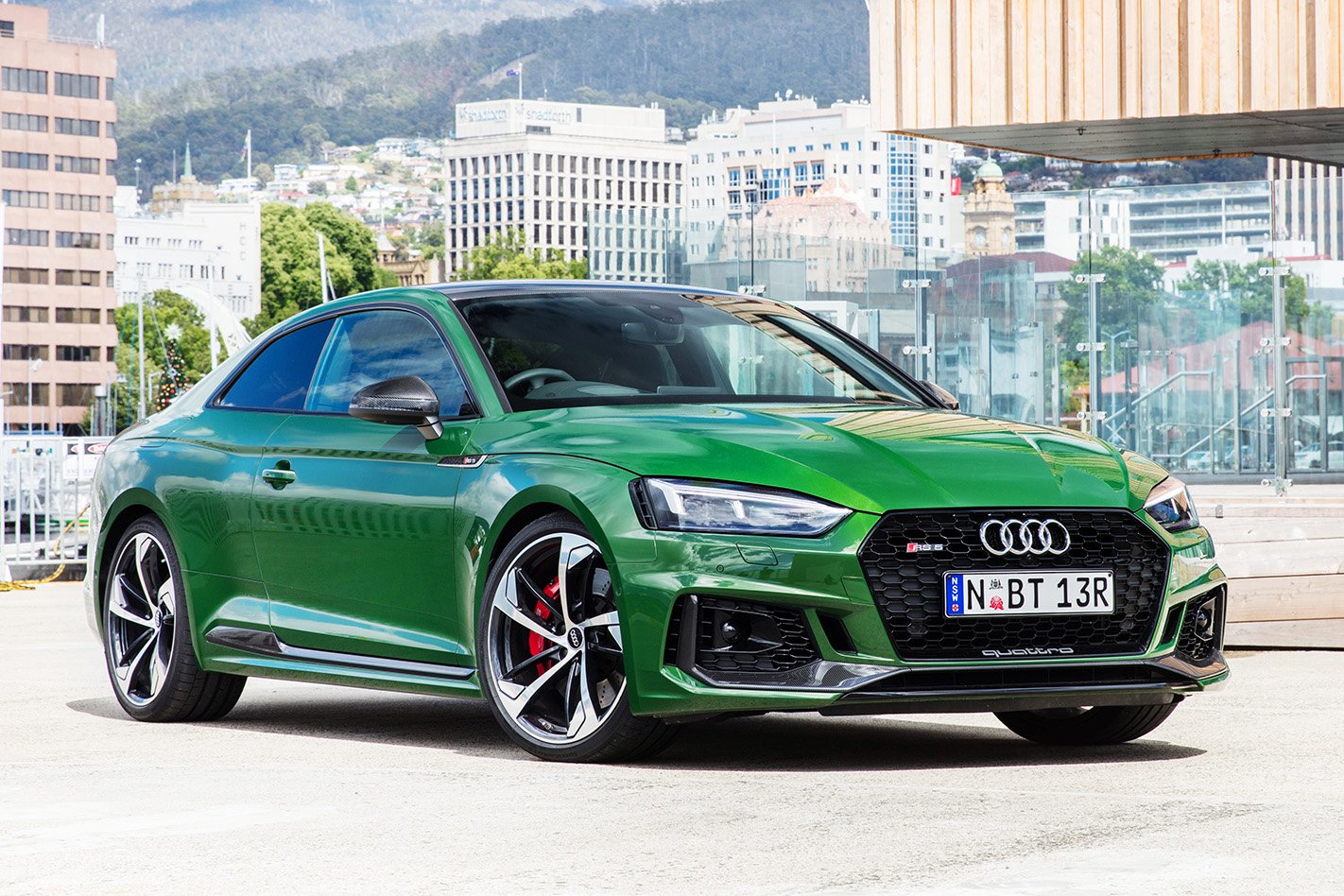
THE WHEELS REVIEW When you’re weighing into a battle as fierce as the war between the big three German brands and the halo high-performance coupe segment, you need every conceivable weapon in your arsenal to stay relevant and competitive.
Performance is the most obvious necessity which, for Audi’s second generation RS5 Coupe, comes in the form of a 331kW twin-turbo V6. The new unit is closely related to the 3.0-litre single-turbo engine that powers the new Audi S4 and S5 siblings, but its downsize (a 3mm shorter stroke) to 2.9 litres reveals a closer relation in the Porsche family.
Under the bonnet of the Cayenne S, the same V6 produces a little more power at 324kW but less torque, and torque is one of the key attributes of the new RS5.
With a hearty 600Nm on tap the new RS5 has found an extra 170Nm despite having two cylinders amputated and a capacity reduction of 1.3 litres. The immense grunt in a car that has also lost weight over the outgoing model, addresses one of its predecessor’s most frequent criticisms.
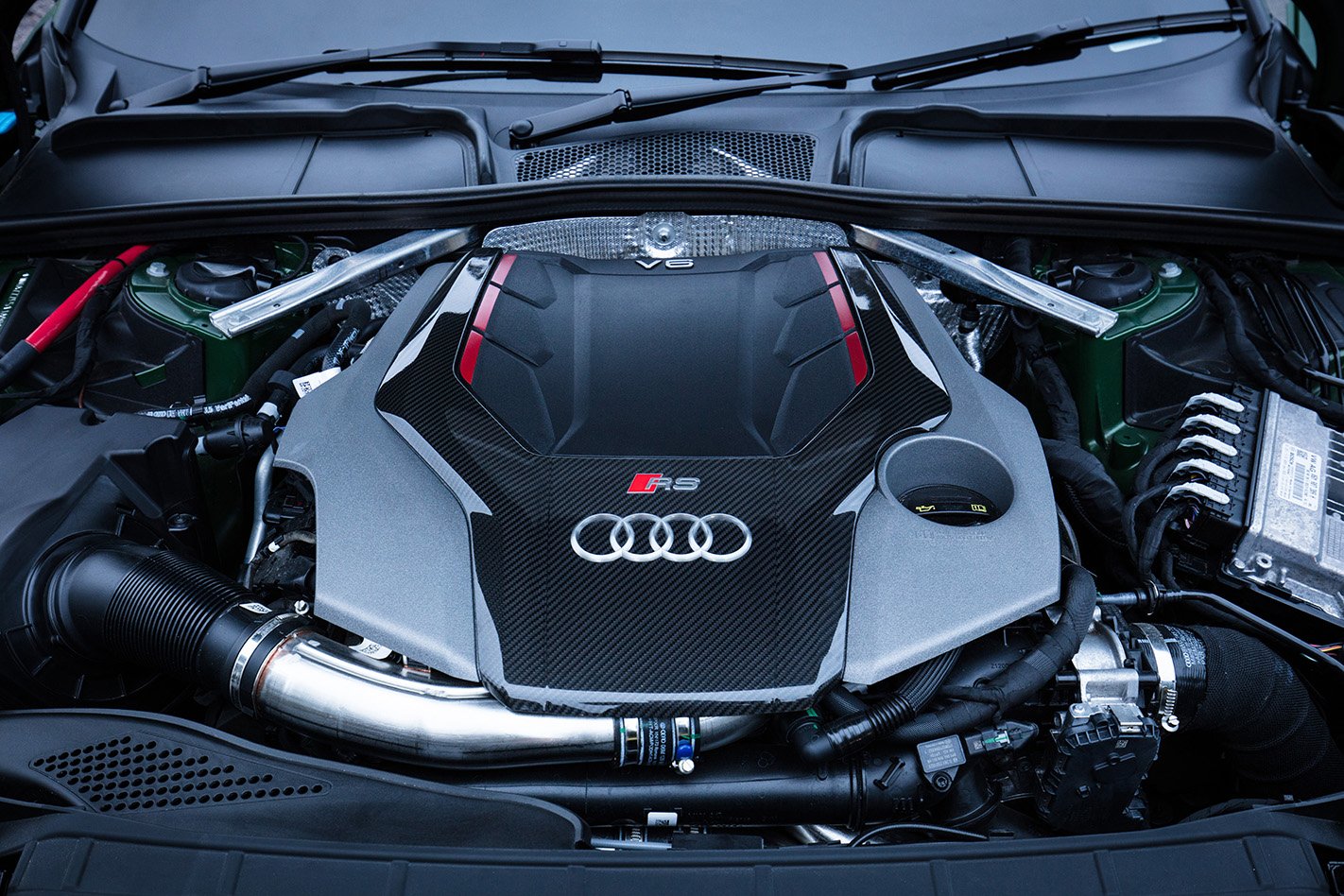
Its glorious naturally aspirated V8 revved to a dizzying redline with a fantastic accompanying soundtrack, but when trying to coax the gen-one RS5 without drawing attention, its performance fell into a lake.
Not so for the new RS5 however with bountiful torque available from idle and peak grunt in at a low 1900 rpm thanks to the willingness of two small turbos to get spinning with little or no lag. Where the previous model encouraged you to wring the engine out to a seemingly non-existent limiter, the V6 is the opposite and rewards short-shifting to stay in the fattest torque zone below 5000 rpm.
Acceleration from standstill is eager and once the six-pot has taken a deep breath from its turbos, launches from the line with pace that is concurrent with an official 0-100km/h time of 3.9 seconds, but the milestone speed is when the Audi is just getting into its stride and continues to build pace enormously fast.
Beefy brakes are efficient at scrubbing speed but prolonged punishing starts to reveal their limitations. There’s no hiding 1730kg of heft when it comes to stopping repeatedly and the $11,900 optional front carbon ceramic brakes would be a wise investment for track use.
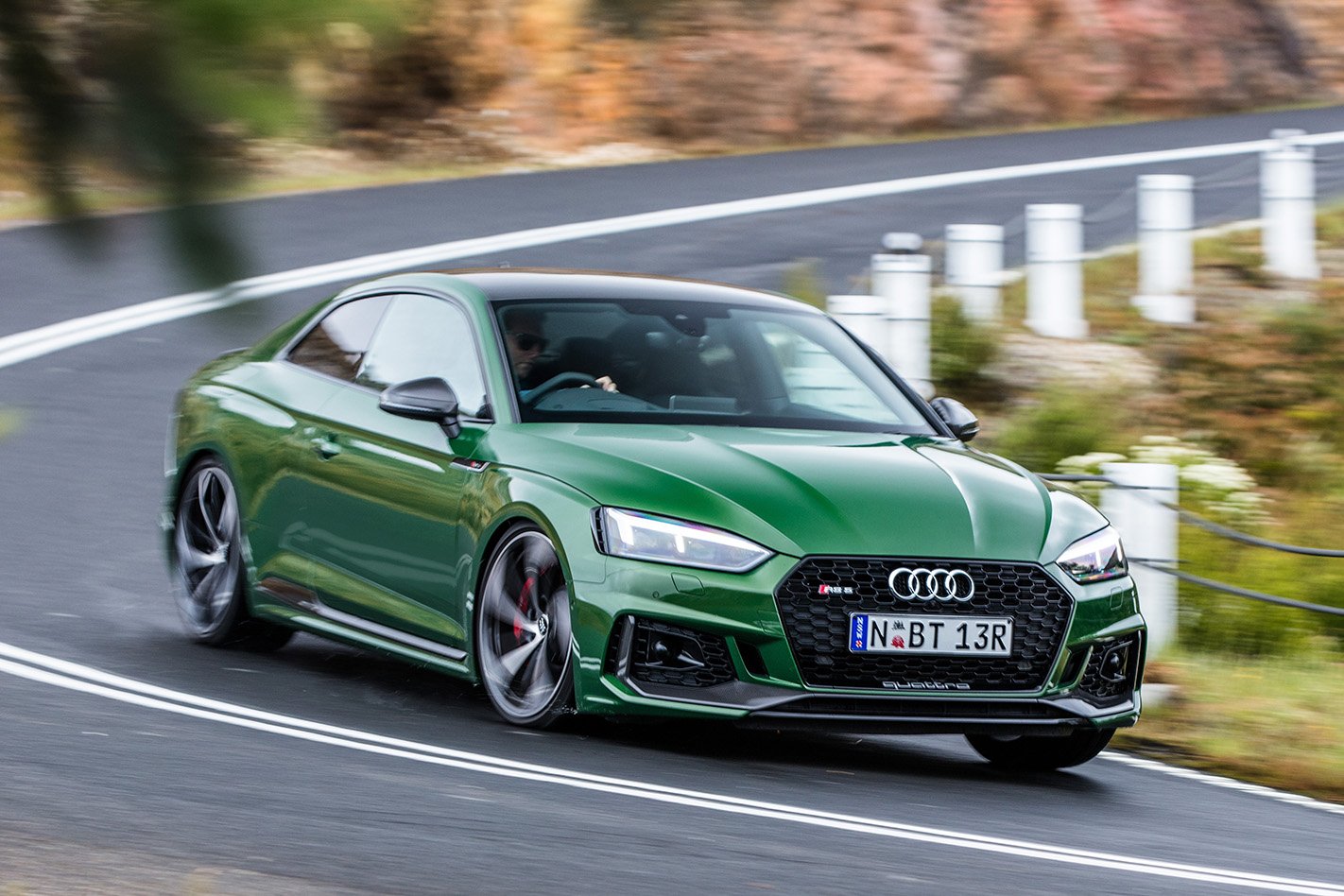
While it was undoubtedly satisfying whipping a 4.2-litre V8 up to 8000 rpm, having to repeat the process every time gusto was required could get tiresome, but owners of the new RS5 will love the effortlessness of the V6 and the corresponding effect on fuel consumption.
The official figure for the B8-based model was 10.5L/100km versus the 8.8L/100km of the new B9 car, but given the dramatically different power delivery, those two figures will certainly be driven further apart during real-world driving.
The bark of a high-revving atmo V8 will be missed by all who had the pleasure of sending eight cylinders into motorbike territory, but the good news is that the RS5 V6 anthem is still addictively moreish, especially under load at low rpm and with the twin oval tailpipes switched to their shoutiest setting. Australian spec cars get the noisier sport exhaust option as standard.
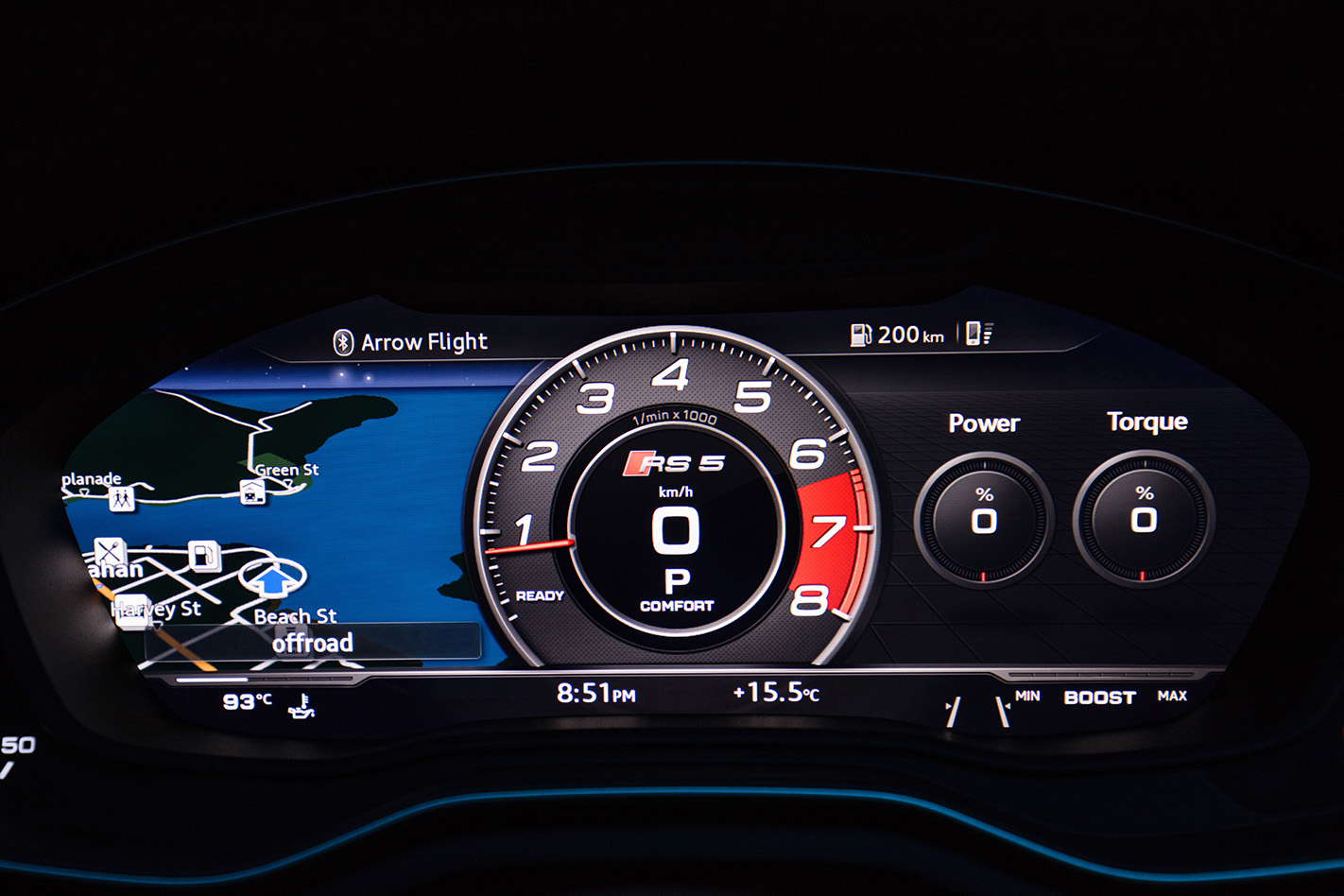
There’s grip to match the power too and on Tasmania’s changeable roads the unfaltering Quattro traction is welcome. Unlike the Haldex-based systems, the RS5 all-paw system feels more rear biased and when pushed hard in corners the tail tries to shake loose before the nose.
Not that you’re ever likely to find that limit with huge grip that allows full power to be applied mid corner rather than the ginger approach normally required for something similarly powerful but with just two driven wheels.
Despite its heft, the Audi has an agility that defies its mass and the turn into corners feels almost as if the RS5 has rear axle steering. Feeling the standard Sport differential manage torque nearing the tractive limit only boosts your confidence in the car further.
Unlike the first RS5, which made its manic performance potential apparent from the first turn of the key, the 2018 interpretation initially feels comparatively mild with a long accelerator range of movement, muted exhaust note and light steering.
Even with the drive setting set to its most placid, the previous RS5 felt like it was looking for a fight and often got one, but for the new version, the ‘comfort’ mode genuinely is comfortable.
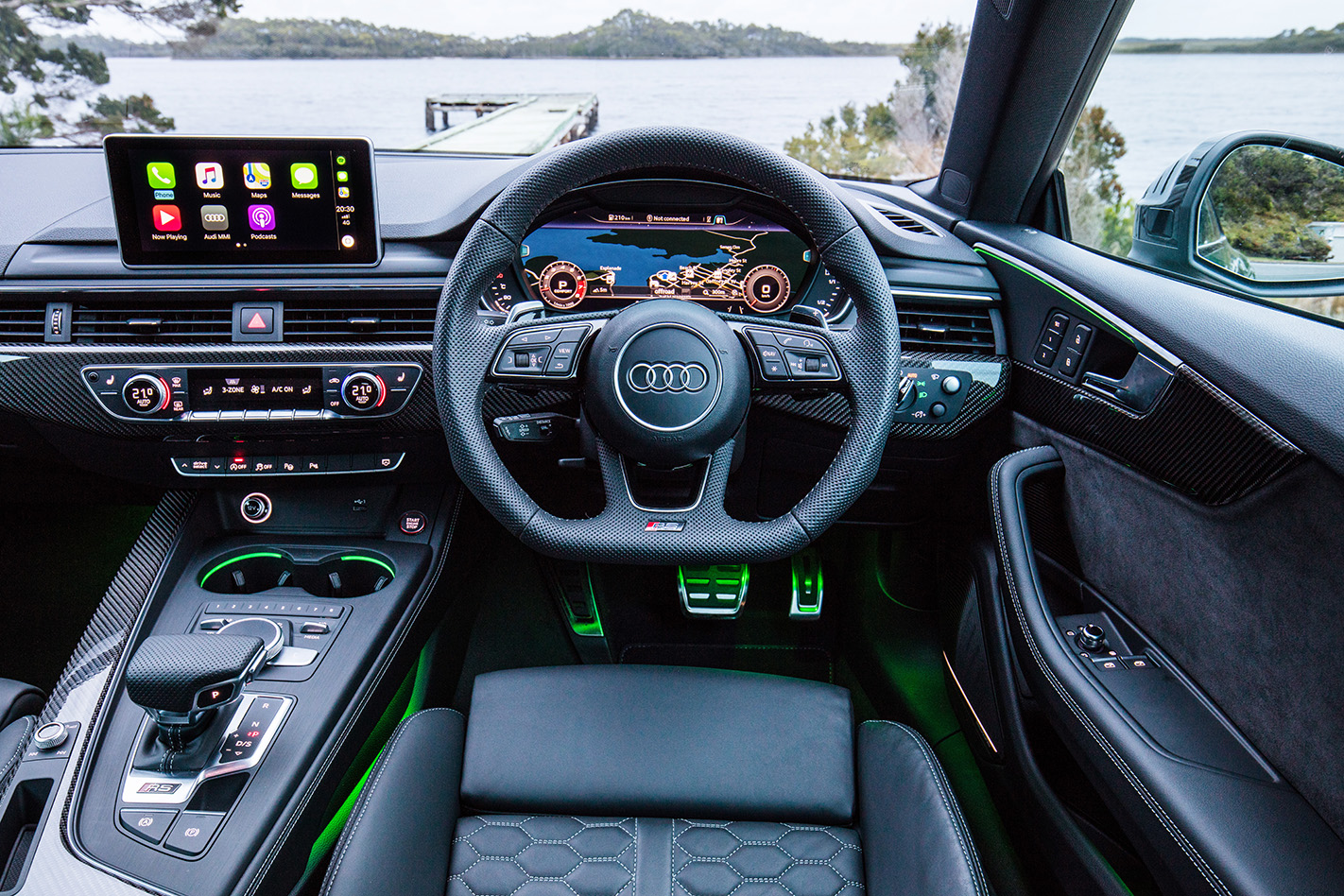
The fact that you can tear up your favourite remote back road but also enjoy the road trip to get there is a big improvement for the new RS5. That’s not to say the most comfortable setting is soft. Far from it. If the button fell off and you were left stuck in just the one mode, comfort would serve all driving styles admirably – even the track.
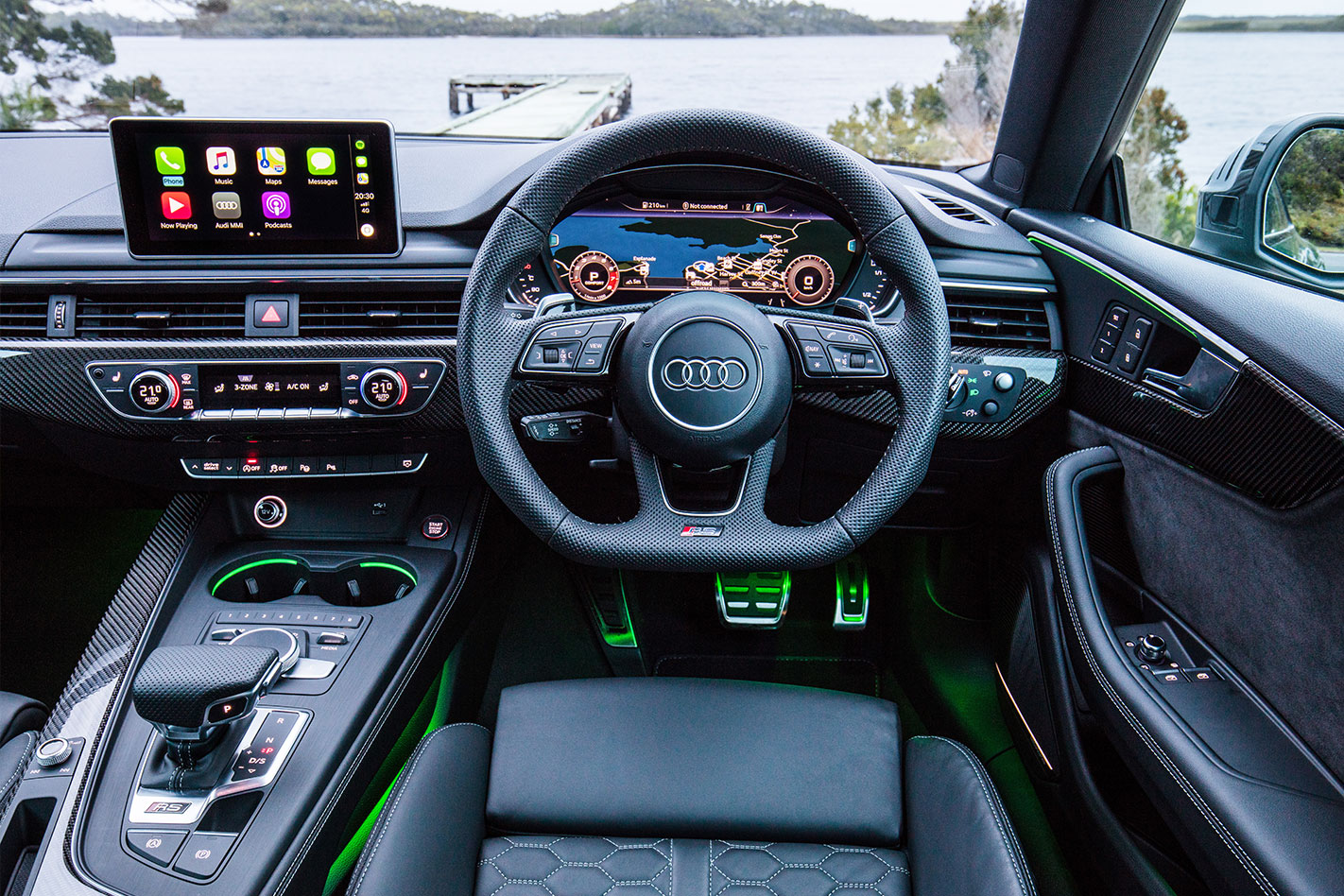
The RS5’s cabin also deserves an honourable mention and strikes a good balance of comfort and luxury but with the clear sporty connection from supportive and highly adjustable seats, top-notch upholstery and sharp design. If it was our money we would find it hard not to splash $3300 on the RS Design package for the Alcantara-wrapped steering wheel and gear selector as well as a number of red stitching and Alcantara throughout.
Tradition and heritage are also handy attributes to fall back on when fighting over discerning sportscar customers and Audi has pulled out the stops here too.
For previous high-performance Quattro models, Audi has been quick to draw a line between the 1980s rally dominating Ur Quattro and why not? Given the success of the car and its cascading effect on the automotive landscape that can still be felt to this day, it makes a lot of sense to talk about heritage.
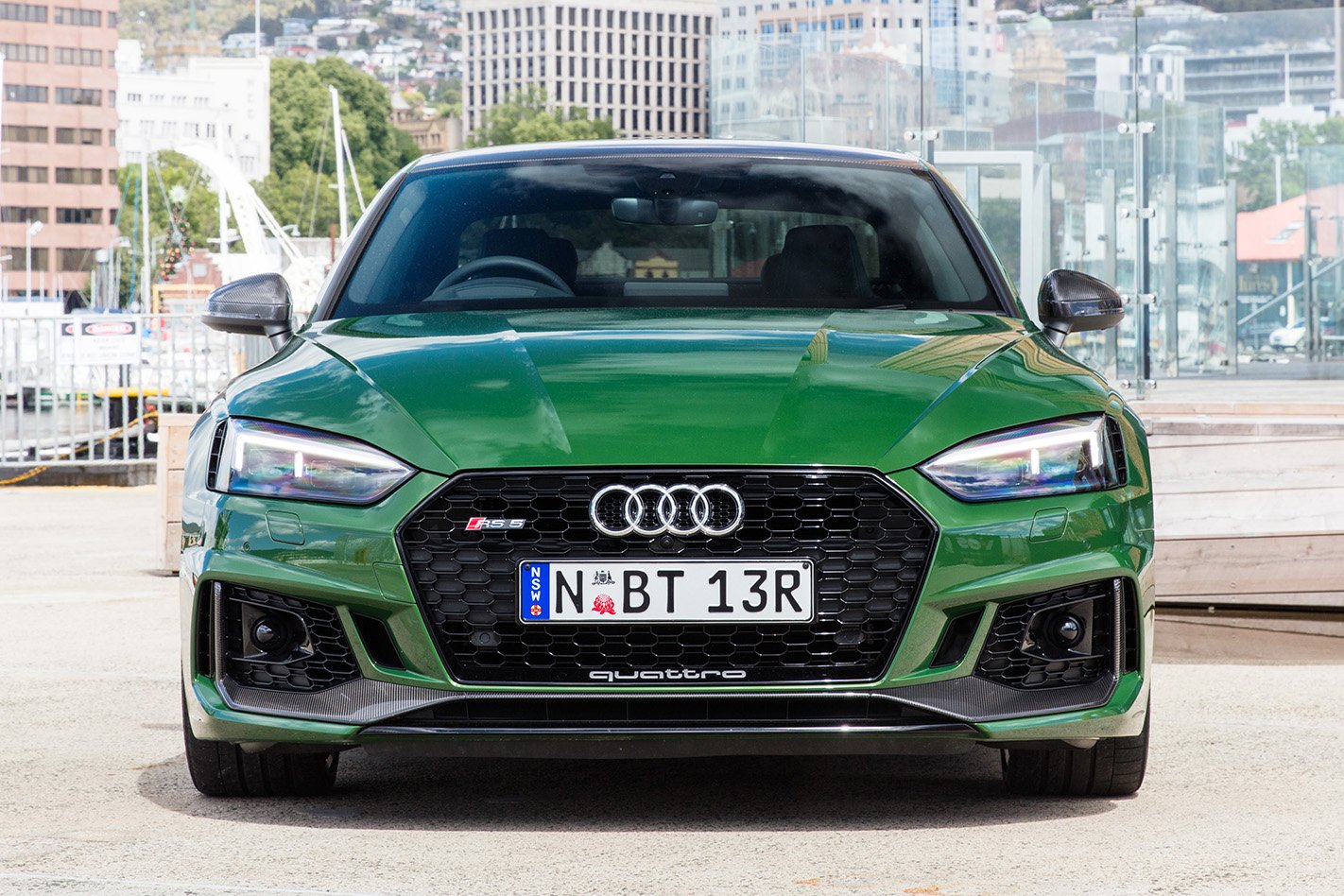
For the RS5, however, the car maker is making extra links to a lesser known racer and the 1990s 90 Quattro IMSA GTO. Look closely at the front and rear lights and you’ll see a small vent on each side that harks back to the jaw-dropping racer, says Audi. At the front of the car, the little vertical slot is actually functional.
It might not have quite the presence of an IMSA GTO American track hero, but the new RS5 undoubtedly carries the stance of a true RS Audi and backs that look of intent up with the credentials to match.
A genuinely liveable and comfortable ride in comfort mode does not emasculate the RS5 any more than dropping a pair of cylinders has robbed performance. It might not sound quite as spine-tingling as the previous version, but Audi has listened to the original RS5’s critics and the result is simply better.
SPECS
Model: Audi RS5 Coupe Engine: 2894cc V6, dohc, twin turbo Max Power: 331kW @ 5700-6700rpm Max Torque: 600Nm @ 1900-5000rpm Transmission: Eight-speed automatic Weight: 1730kg 0-100k/h: 3.9s Fuel economy: 8.8L/100km Price: $156,600 On sale: Now
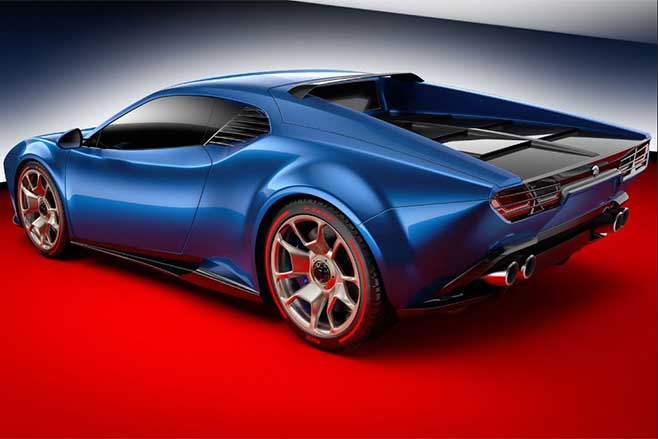
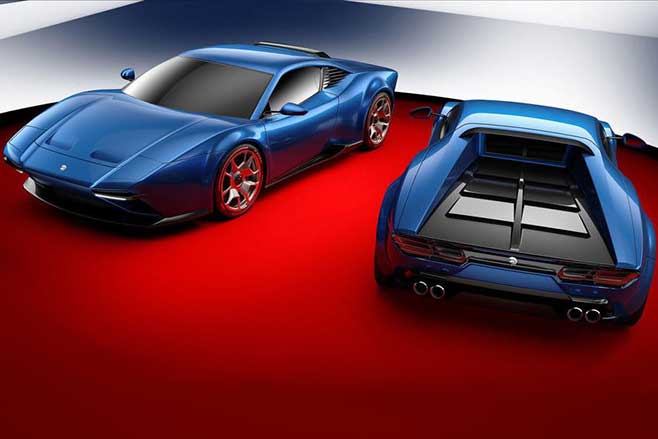
Automotive design firm Ares has announced it will take on the task of producing its new Project Panther in 2018.
The Panther is based on the Lamborghini Huracán, but its design is inspired by the De Tomaso Pantera.
We have very little details on the Panther, as we don’t even know if I will use the engine from its Lambo chassis base.
But we do know one thing about the Pather – it’s going to have pop-up headlights. Retro fans, rejoice!
“We started Ares three years ago with unprecedented demand to work on the personalisation of clients’ cars, and have satisfied well over 200 customers with unique interiors, exterior design elements, bodywork engineering and performance upgrades.
“Our new Modena facility allows us to move above and beyond this normal personalisation service, bringing together new design and engineering technologies, teams of skilled craftsmen, and passionate experts who have joined us from local supercar businesses.
“We’re not restricted by corporate processes or fixed views on how ‘our’ cars should be seen, nor are we limited by technology and facilities that restrict what we can do for customers.
“Our strategy is unique in the automotive world: no other business – whether OEM, styling house, or personalisation specialists – offers the full range of services from personalization to full coach-building under one roof with a growing global network of market specialists that we believe satisfies every possible customer desire.
“Project Panther feels right now like our ‘halo car’, but I can guarantee there is much more to come in 2018!”
What is it?
The Giulia Veloce is Alfa Romeo’s luxury mid-spec, mid-size sedan, which sits below the raucous twin-turbo V6-powered Quadrifoglio. Packing the most powerful iteration of the Giulia’s four-cylinder engine, the Veloce is a disruptor in what has become a somewhat stale luxury sedan segment. With a sticker price of $71,985, can it stick it to the established German and Japanese players, as well as leverage the hype of its more hardcore sibling?
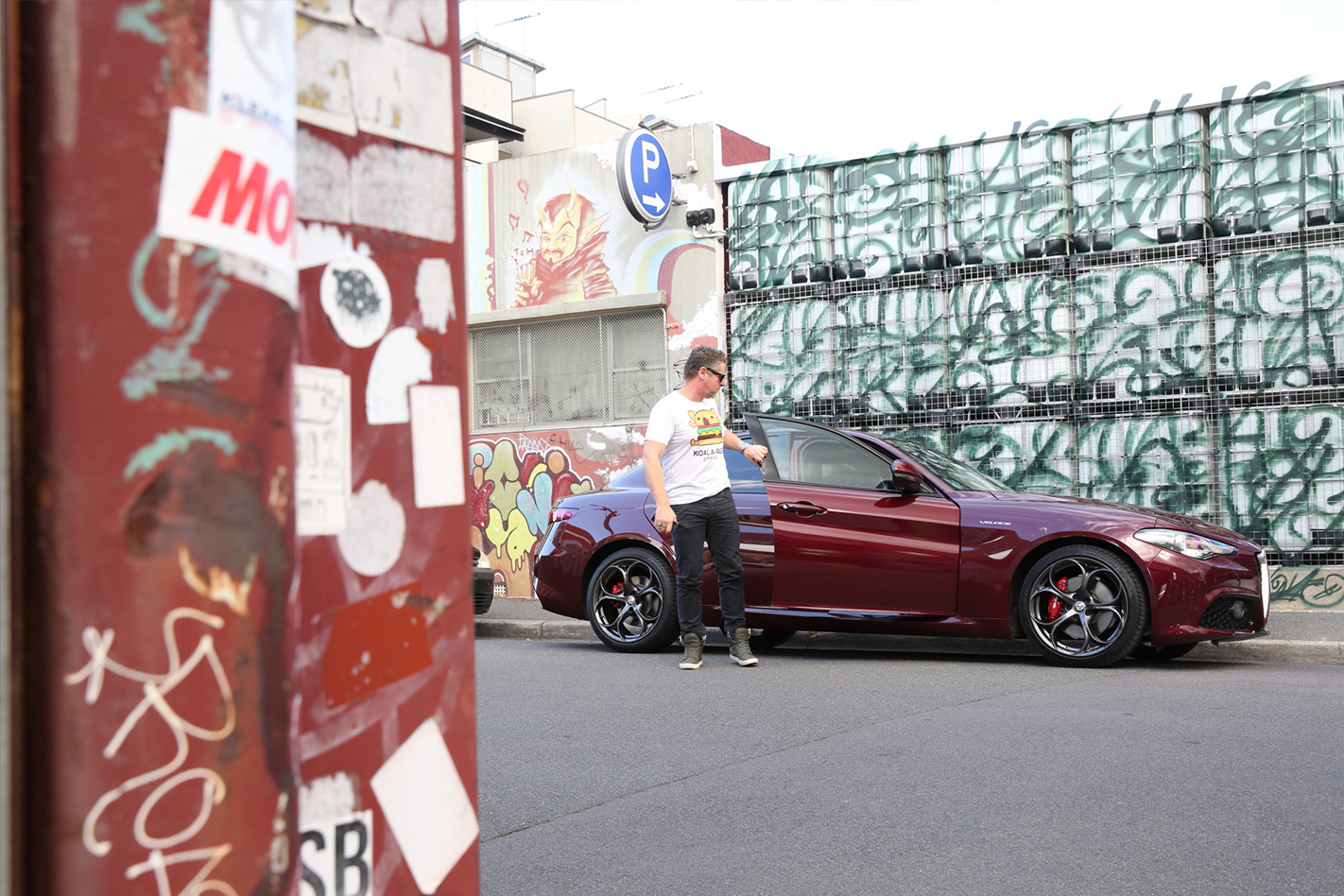
Strengths
- Engine – The 2.0-litre four-cylinder turbo engine is punchy and tractable, with a rorty exhaust note that encourages the use of higher revs. With 206kW and 400Nm, its outputs are more than sufficient for sporty driving, while also remaining civilised and flexible enough to deal with city traffic.
- Gearbox – The Giulia Veloce’s only transmission choice is a ZF eight-speed automatic. While occasionally stumbling at low speeds, it is otherwise smooth when shifting gears and delightfully sharp and decisive when you twist the drive mode selector to ‘Dynamic’. Column mounted paddle shifters are there for when you want to change gears on your own, and their large metal ‘ears’ are a tactile highlight of the interior.
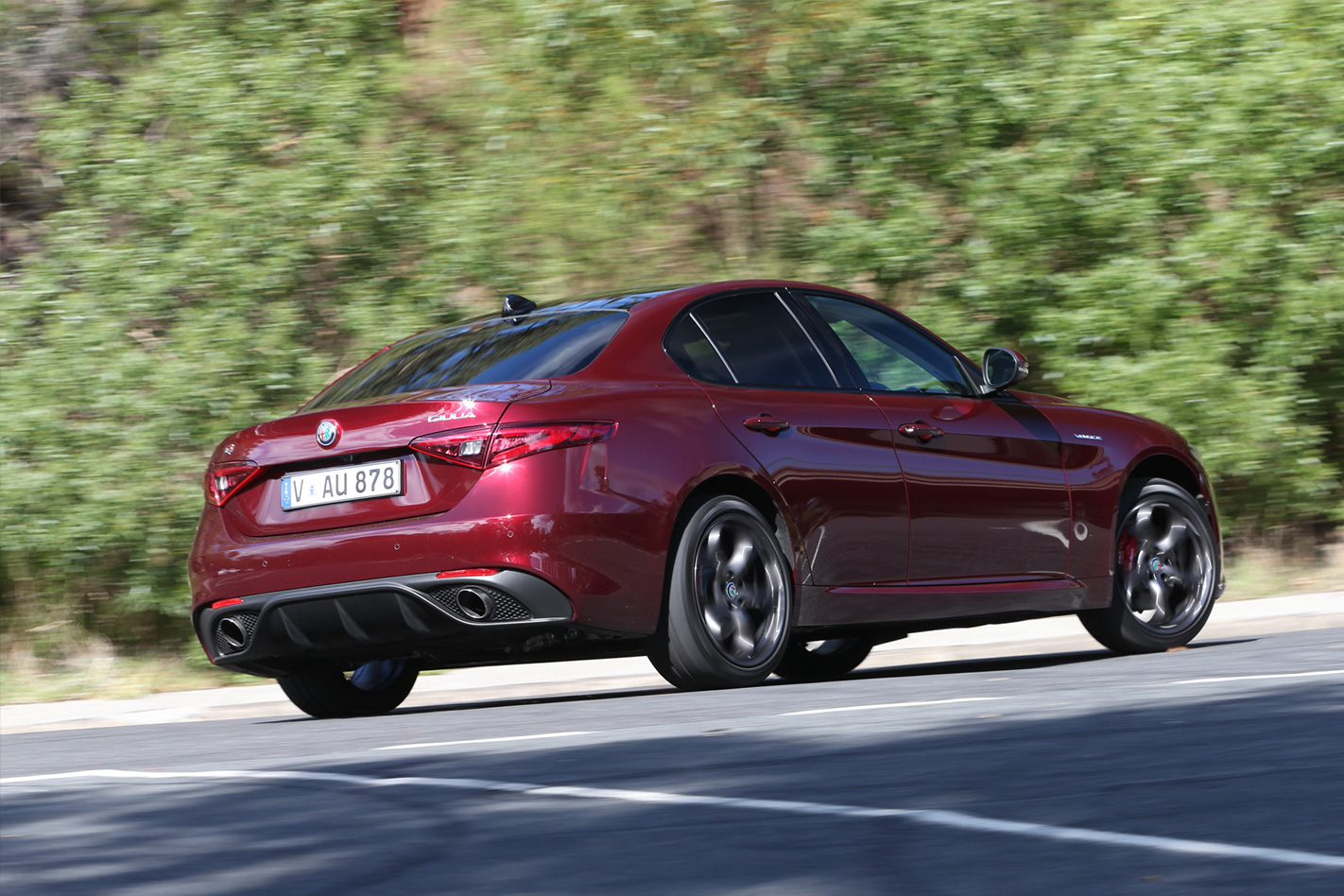
- Steering – The dynamic masterstroke of the Giulia range is its steering, and it’s no different with the Veloce. The wheel is light in your hand, yet the quick steering rack (2.3 turns lock to lock) and its alertness around dead-centre makes the Veloce feel exceptionally nimble. Turning into corners, whether it be on urban streets or winding back roads, feels almost telepathic – and virtually effortless.
- Ride – Despite rolling on 19-inch rims (which look stunning), the ride in the Veloce is impressively supple. Even with the adaptive dampers in their sportiest setting, the ride is refined and controlled over bumpy roads.
Weaknesses
- Brakes – The one major letdown of the Veloce is its unpredictable and wooden brake feel. The stopping power of the Giulia is below average, taking just 38.5-metres to come to a standstill from 100km/h, while the pedal feel doesn’t instil confidence. The brake-by-wire system is wooden in feel, and requires some brain recalibration to use smoothly. Owners will adapt, but it’s not up to par with the rest of the vehicle.
- Infotainment screen – While neatly integration into the dash, the 8.8-inch screen for the infotainment fails to fill entire unit, leaving large black spaces around its edges. Leaving room for a mid-cycle infotainment upgrade? Maybe, but for now Apple CarPlay and Android Auto smartphone mirroring aren’t available, while the reversing camera image is on the smaller side. While it isn’t touchscreen, the menus are reasonably easy to navigate – though the its centrally mounted dial interface isn’t as intuitive to operate as BMW’s iDrive system.
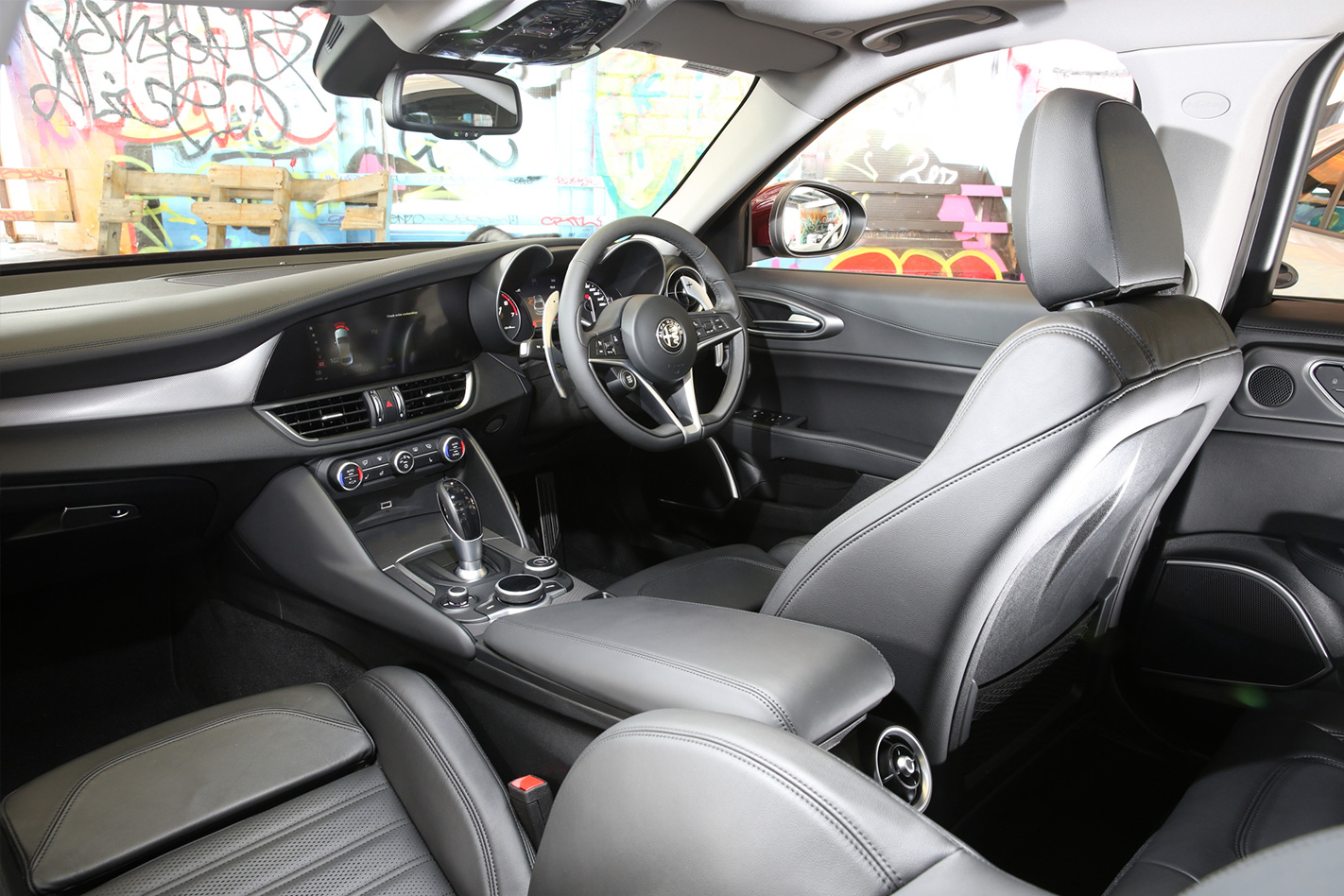
- Headrest – This is extremely nit-picky, but the cushioning in the headrests for front passengers is very firm. It’s far from a deal breaker for an otherwise well-sorted and comfortable car, but worth noting.
- Rear seats – Room in the back seats is slightly cramped compared to rivals, however a pair of sub-six foot adults would comfortably fit.
Any rivals I should consider?
Audi A4 2.0 TFSI quattro, Jaguar XE 25t, BMW 330i, Lexus IS 350 F-Sport, Mercedes-Benz C300
