
Peugeot’s all-new 3008 medium SUV arrives in showrooms with relatively high entry-level pricing that’s offset by a broad list of standard features.
Priced from $36,990, the entry-level 3008 Active costs around $8000 more than its entry-level Mazda CX-5 rival and $5000 more than the cheapest Volkswagen Tiguan variant.
However the standard equipment list in the base-model 3008 Active is more in keeping with a similarly priced mid-spec CX-5 Maxx Sport FWD [$34,390] and Tiguan 110TSI Comfortline [$36,990].
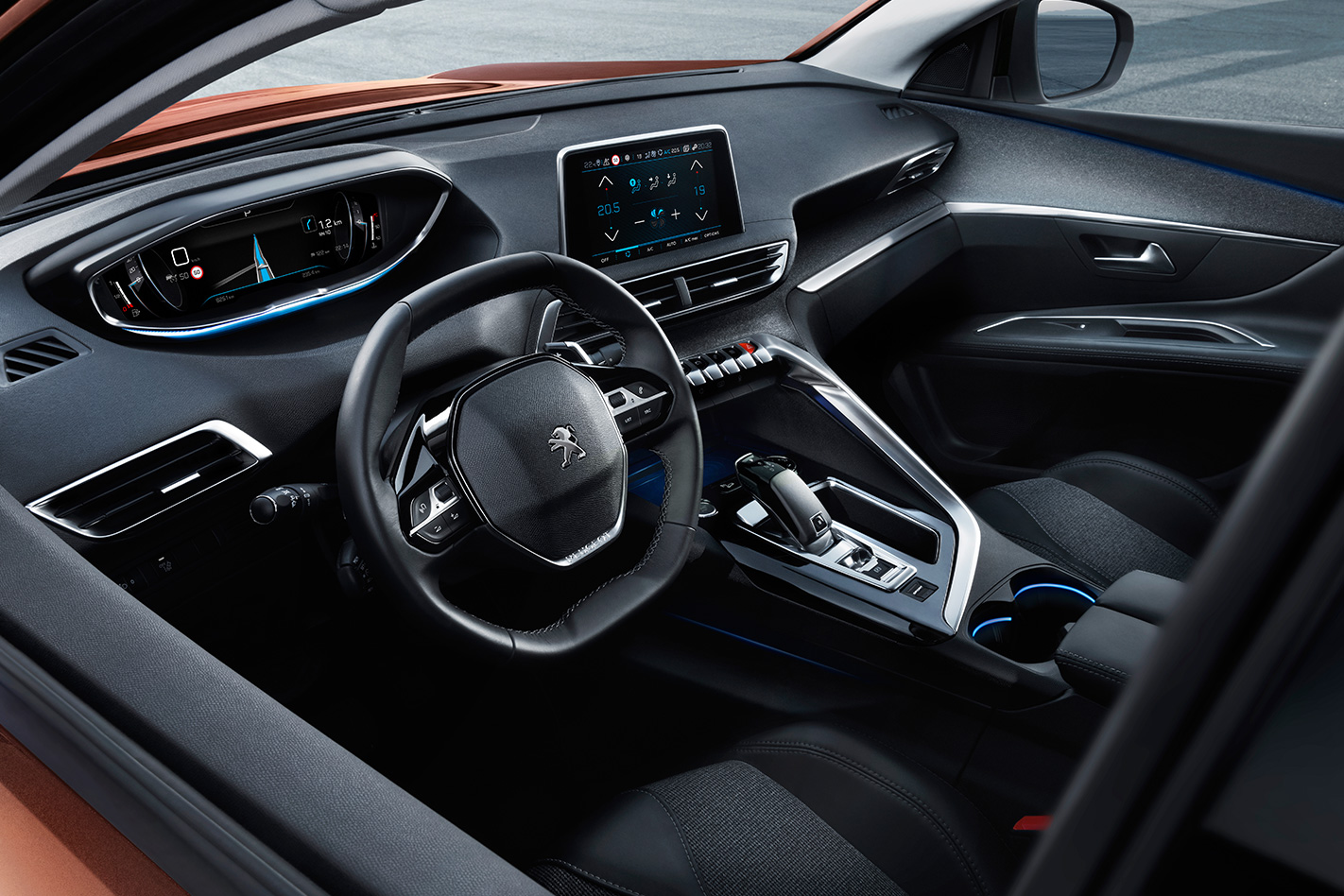
This includes the latest version of Peugeot’s i-Cockpit virtual dashboard, which features a 12.3-inch digital instrument panel and an 8.0-inch central touch-screen.
Other standard features in the Peugeot 3008 Active include:
- Speed limit recognition and recommendation
- Distance alert
- Driver attention alert
- Lane departure warning
- Front and rear parking sensors
- Reversing camera
- Leather sports steering wheel
- Cruise control with speed limiter
- Dual zone climate control
- Rear air vents
- Auto dimming rear-view mirror
- Driver Sport Pack – which provides more responsive electric power steering, throttle mapping, gearbox response, engine sound, and instrument display
- Digital radio
- Apple Carplay and Android Auto
- Smartphone charging plate
- Voice recognition for phone and radio
- Satellite navigation
- Aluminium roof bars
- 17-inch alloy wheels
- LED daytime running lights
- Automatic windscreen wipers
Both engines meet Euro 6 emissions standards, with the turbo petrol having a frugal combined fuel economy rating of 7.0L/100km and the diesel managing an even thriftier 4.8L/100km.
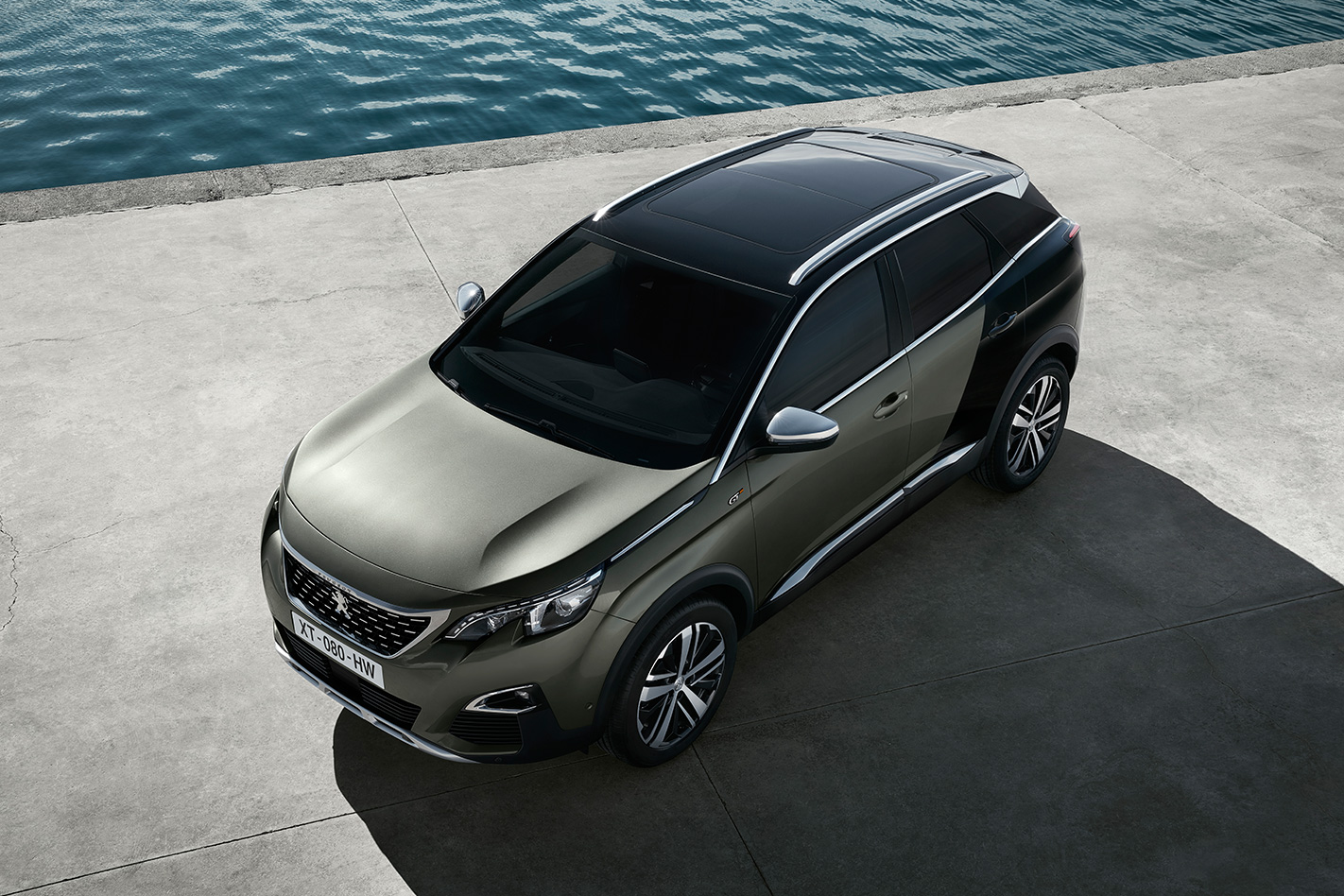
There’s just one transmission option in the range, a six-speed auto, which pushes power to the front wheels. While there is no AWD option, a Grip Control traction system is available as a $200 option.
An Advanced Safety Pack, which includes emergency braking, active cruise control and lane keeping assist is standard in the GT-Line ($43,490) and GT ($49,490) variants, and a $1500 option in the second-up Allure ($39,490).
Other standard features found in the higher spec models include:
- 360-degree reversing camera
- Reverse and parallel parking assist
- LED headlights and foglights [GT-Line and GT]
- Driver seat lumbar adjustment
- Powered heated front seats with massage function [GT]
- 18-inch alloy wheels [Allure and GT-Line]
- 19-inch alloy wheels [GT]
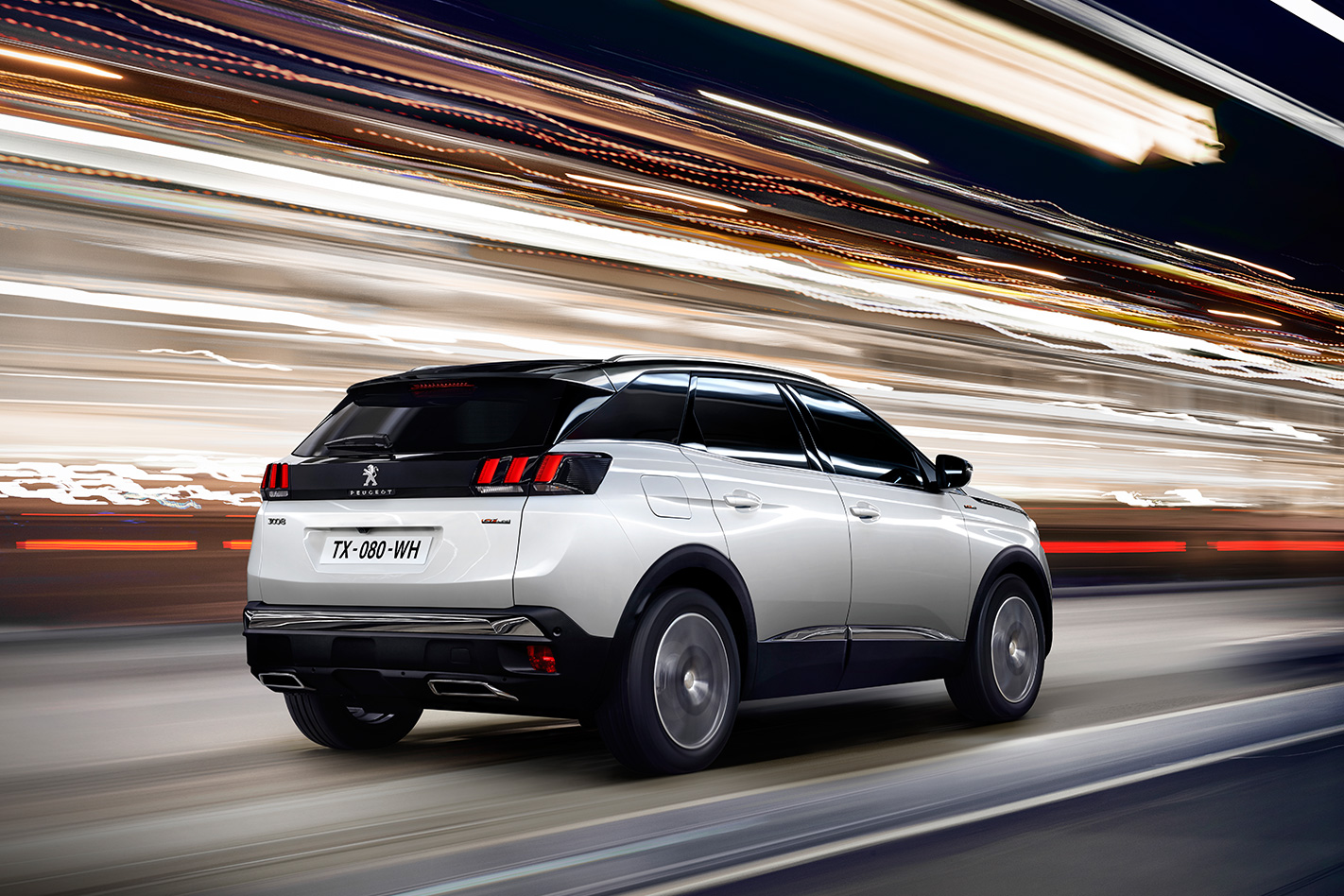
Its dimensions are a slightly smaller than the Mazda CX-5. The 3008’s 4450mm length and 2675mm wheelbase is 10mm and 23mm shorter than the Mazda’s respectively, though its boot boasts 78-litres more space than the CX-5’s.
The all-new Peugeot 3008 will arrive in Australian showrooms this month.
2018 Peugeot 3008 pricing*
- 3008 Active – $36,990
- 3008 Allure – $39,490
- 3008 GT-Line – $43,490
- 3008 GT – $49,990
- Panoramic sunroof with ambient lighting blind – $2000]
- Hands-free tailgate with foot control – $500
- Two-tone paint – $1000
- Premium paint – $790/$990
- Nappa black leather interior trim – $2000
YOU can buy some fairly fun cars for $25,000. That amount of cash puts a Mazda 3 SP25 in your garage, or gets you within $500 of a Ford Fiesta ST…
Or, you could have a single, crumpled, mostly green door off a 34-year old Ford Falcon.
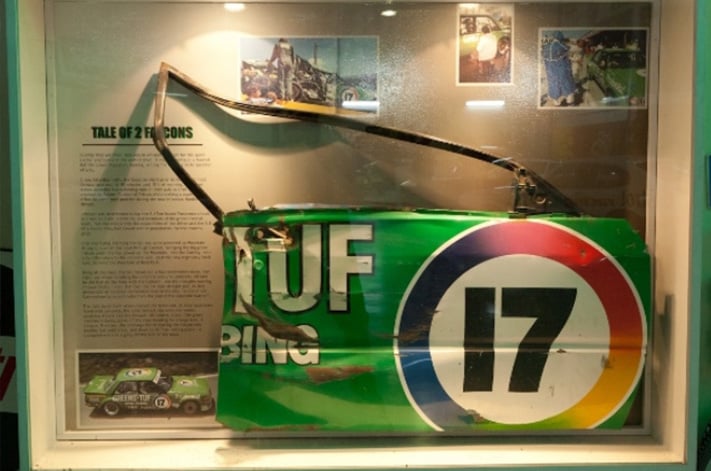
More than three decades on, the mounted and framed collector’s item went under the hammer at auction, achieving a final sales price of $25,500.
Dick’s door wasn’t the most expensive piece of memorabilia to sell at the event, which also included a selection of Ford Falcon Group C race cars from the collection of John and Craig Harris.
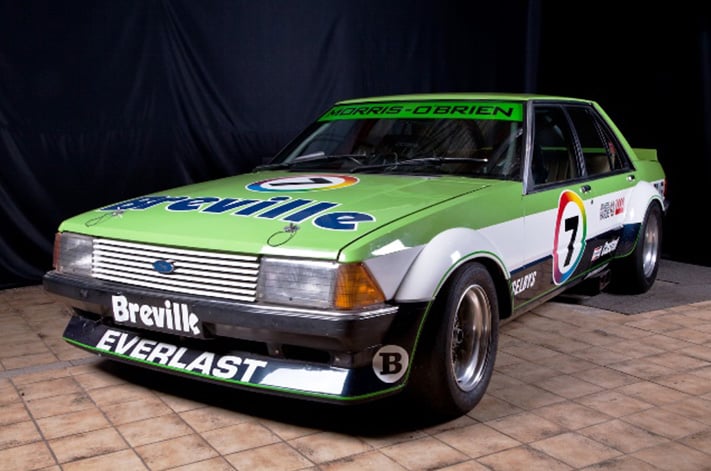
Former race driver Neil Schembri spent more than $800,000 on a pair of XC Falcons.
The boss of Bettergrow, a fertiliser company, had a winning bid of $400,000 for an ex-Bill O’Brien Ford XC Falcon Coupe, and $430,000 for the XC Falcon Hardtop raced by John French and Warwick Brown at the 1978 Bathurst 1000.
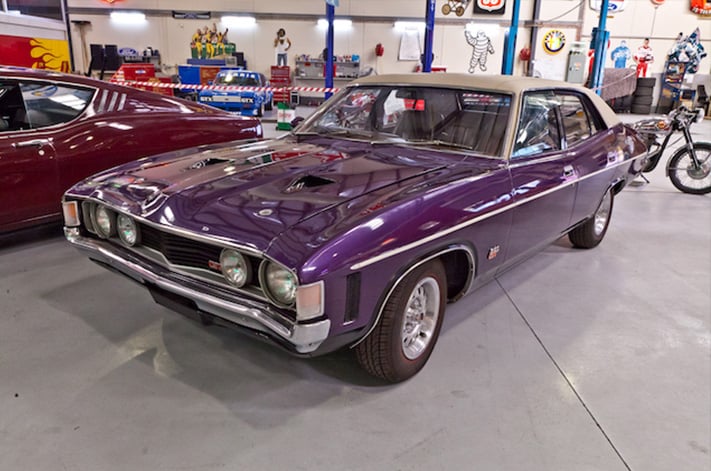
Other highlights included a 1968 Ford Mustang Fastback styled in homage to ‘Eleanor’ from Gone in 60 seconds, which sold for $101,000, and a 1973 Ford XA GT RPO83 attracting a final bid of $131,500.
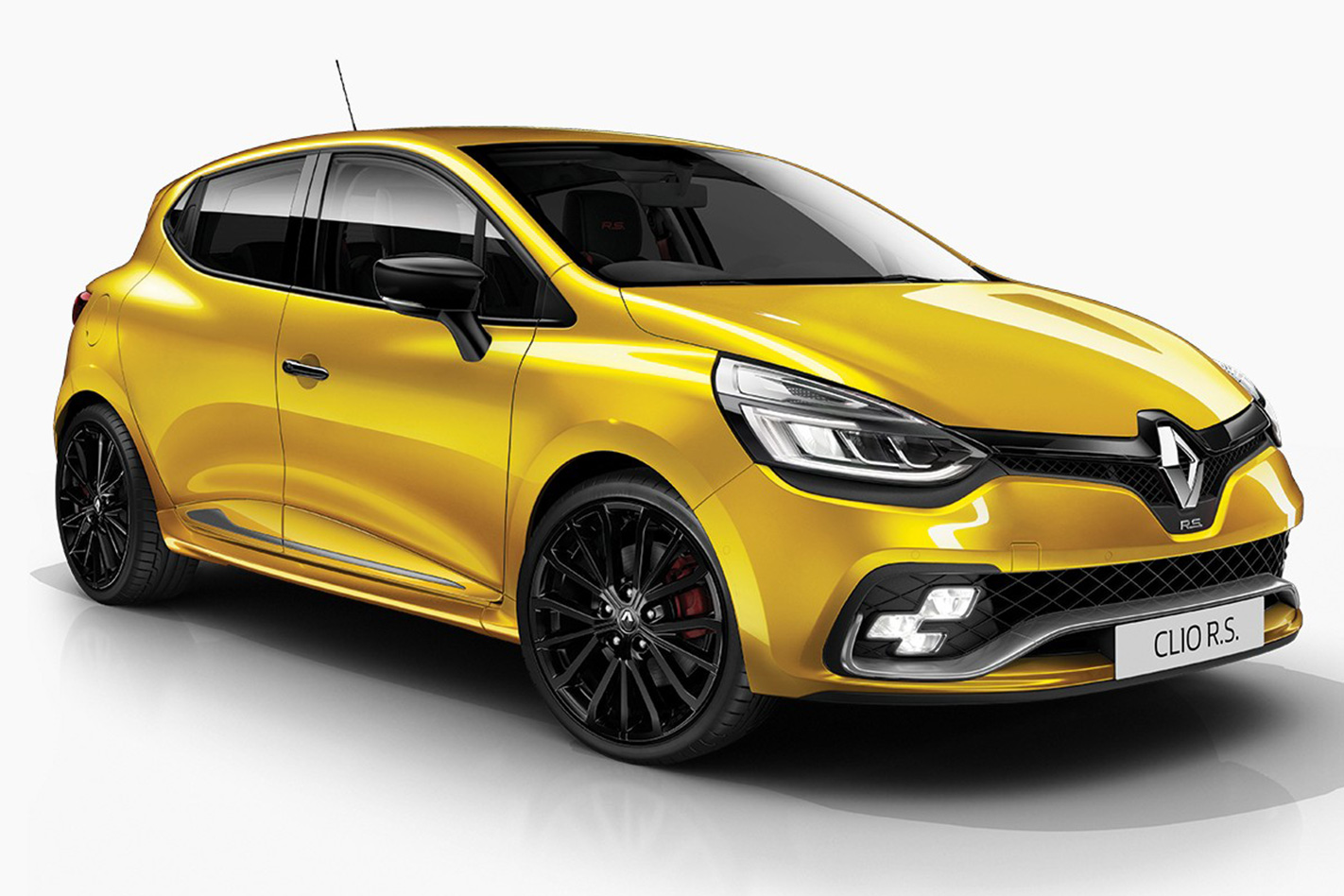
Australian pricing for the 2018 Renault Clio R.S has been announced, with the facelifted hot-hatch getting a price increase or drop depending on the variant.
The more performance-focused of the two, the Clio R.S Cup, will command a $32,490 price tag, while the more ‘every day’ R.S Sport will cost $30,990.
Both feature the same 1.6 litre turbocharged four-pot, with both putting out 147kW and 260Nm, but the chassis tune on each is different.
Both get a six-speed dual-clutch auto transmission with column-mounted paddle shifts but there’s no manual option in sight.
In terms of the facelift, the most obvious design change is the addition of Renault chequered flag-shaped lights, which Renault is calling ‘R.S Vision’.
Renault Australia boss Justin Hocevar says the lights are exclusive to Renault Sport vehicles.
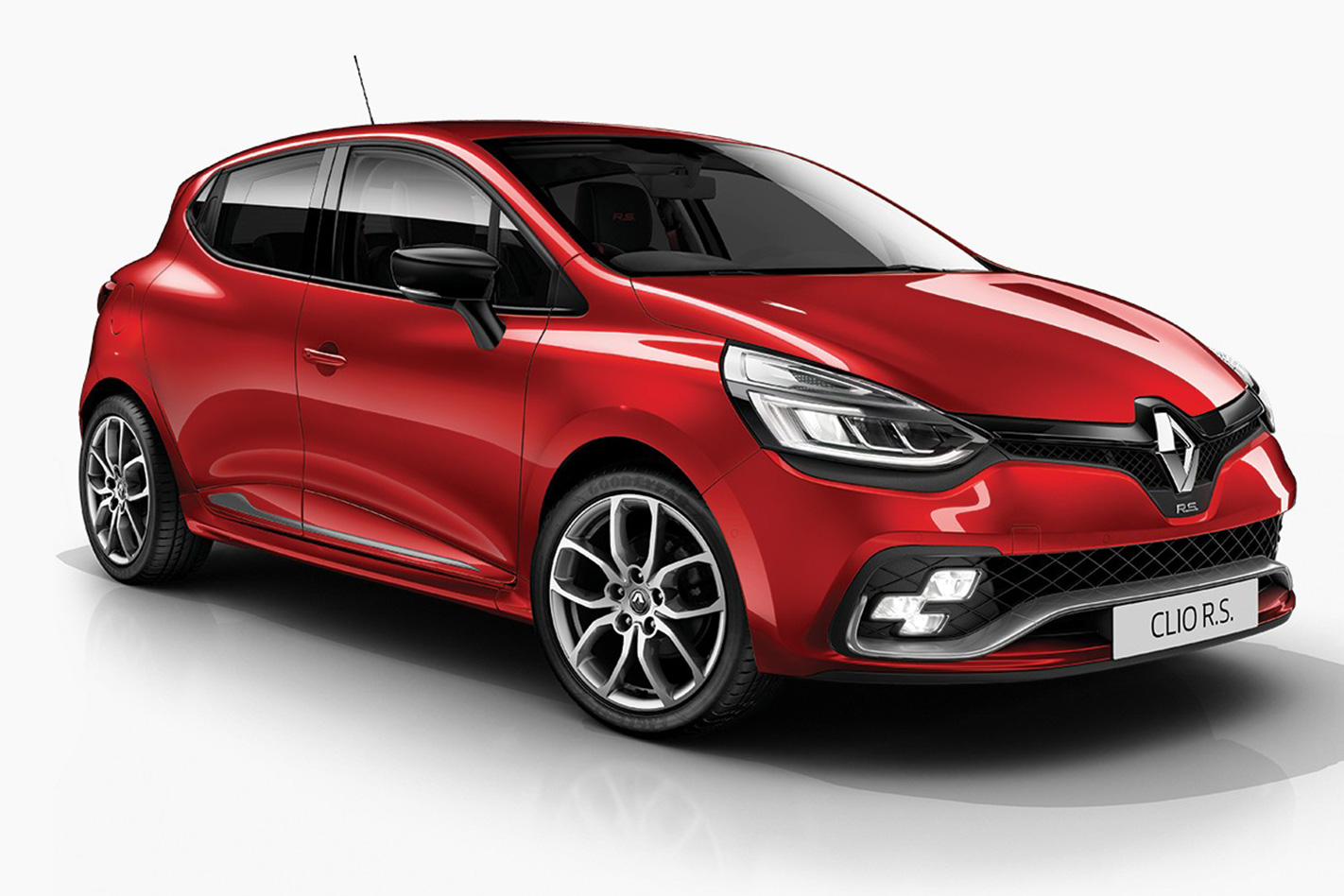
Renault adds that the following three packs are available on both variants as factory-fitted options:
- Black Pack: F1-inspired black blade on front bumper, black boot lid and black Renault Sport badge, black rear diffuser, black trim inserts on side door protection and black 17 inch alloy wheels (Sport only, Cup has black alloys)
- Leather Pack: dark leather upholstery with red highlights and R.S. badge on front headrest, heated front seats and height adjustable passenger seat
- Entertainment Pack: R-LINK navigation and multimedia system with voice control, Android Auto phone mirroring, R.S. Monitor, BOSE® premium sound system (four speakers, two dashboard tweeters, bass box and amplifier) and R-Sound
“The Renault Sport badge has a long and successful history here in Australia,” Hocevar adds.
“Australia consistently appears in the top five for global Renault Sport sales and we expect this to continue with this new-look model.”
Volkswagen Australia has launched two new Polo variants, the Urban and Urban+.
The two variants replace the existing Trendline and Comfortline variants within the existing Polo range.
The new variants are intended to be a run-out model to bridge the gap between the current gen Polo and the arrival of the sixth-generation model in March next year.
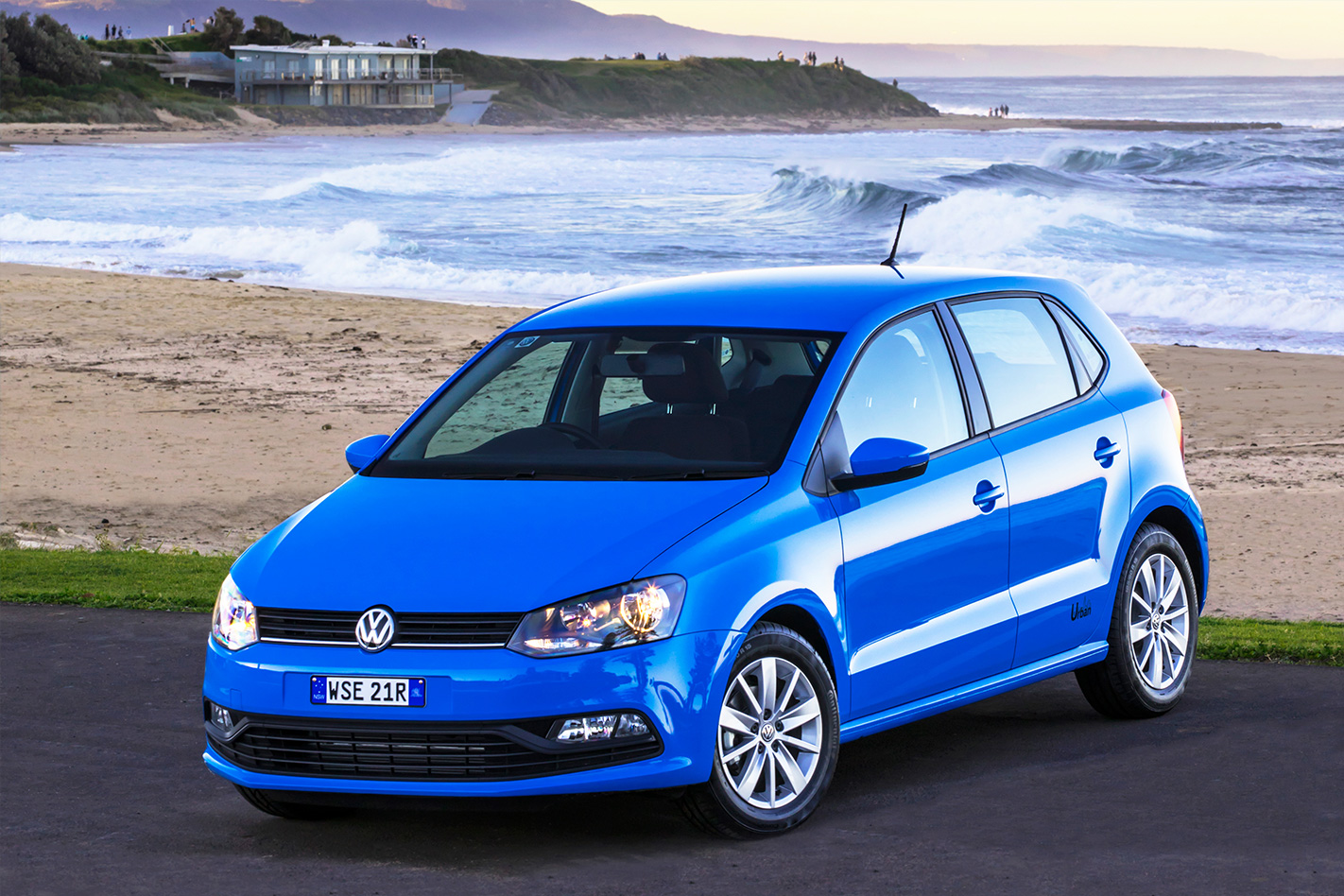
The Polo Urban will wear the same sticker price as the outgoing Trendline ($16,990 for manual and $19,490 for the automatic).
However, according to VW, the Urban adds $1500 of extra equipment. The new additions are a leather steering wheel, parking brake and gear shift knob, 15-inch alloy wheels, multi-function display (MFD), illuminated vanity mirrors, and Urban badges.
For an extra $3000 over the Polo Urban’s price, VW will offer the Polo Urban+, which replaces the Comfortline.
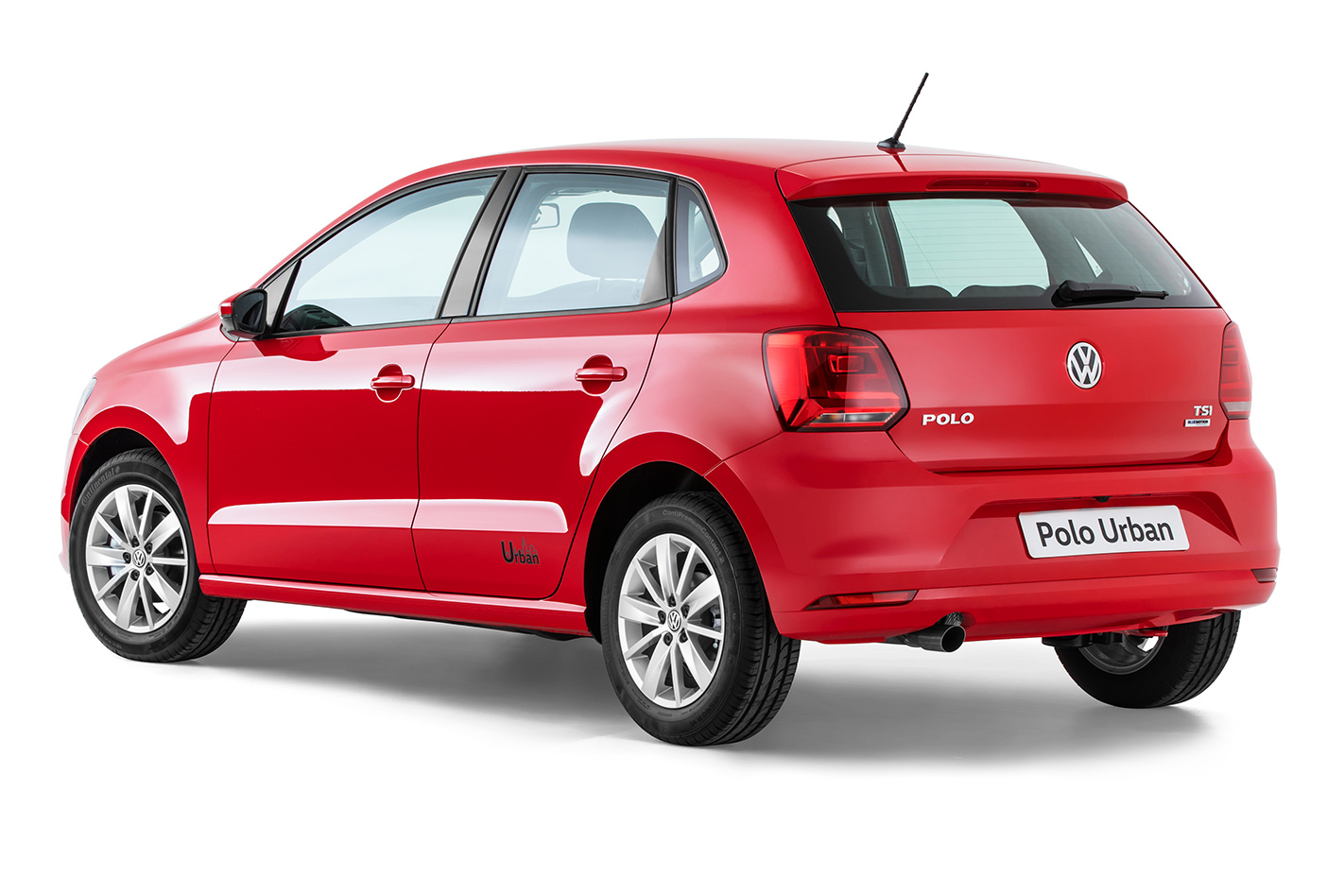
The Urban+ claims to have an extra $3000 worth of equipment over the model it replaces, these additions include 16-inch alloy wheels, front fog lights, dark tinted windows, automatic headlights, driver fatigue detection, rain sensing wipers, and Urban+ badges.
The Urban+ packs more cabin comforts in the form of heated front comfort sports seats with Alcantara trim, climate control air conditioning, auto dimming rear view mirror, front foot well lighting, and chrome and silver decorative trim highlights.

Both the Urban and Urban+ are powered by a 1.2-litre petrol four-cylinder turbo engine. In the Urban, it produces 66kW and 160Nm, while those stats jump to 81kW and 175Nm in Urban+ trim.
For the safety conscious, a Drive Assistance Package is available as an $1800 option for the Urban+, which adds city emergency braking, adaptive cruise control, upgraded sat-nav, and front and rear parking sensors.
PEUGEOT’S all-new 3008 SUV has landed in Australia with plenty of standard equipment that pushes its entry-level price well above its main rivals.
The French carmaker has decided on an almost all-or-nothing approach when it comes to kit, resulting in a $36,990 base price – $5000 more than the cheapest Volkswagen Tiguan and around $8000 more than the bog-standard Mazda CX-5.
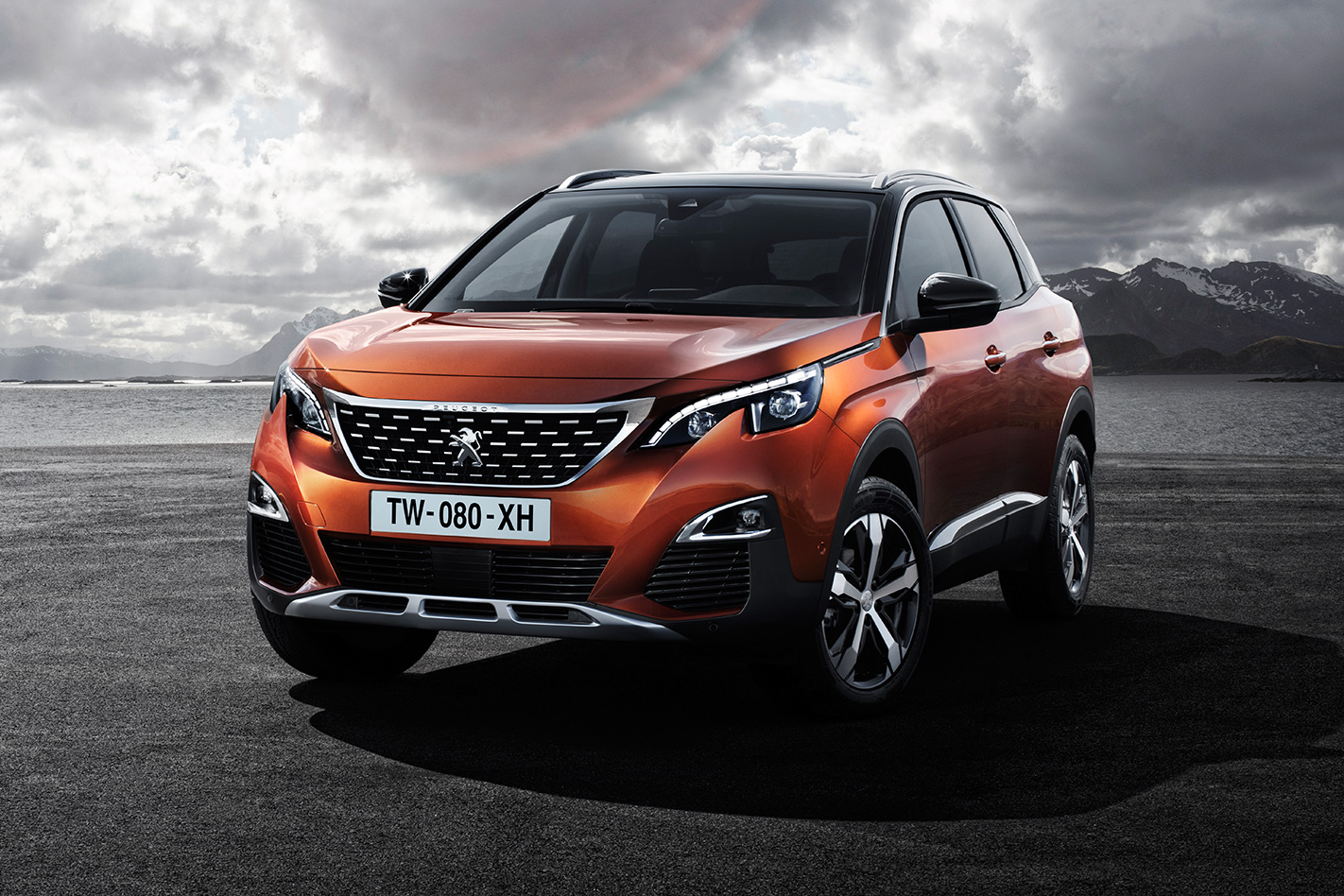
The Pug is also more powerful than the VW and Mazda, with a 121kW/240Nm 1.6-litre turbo petrol engine, compared to the Tiguan’s 100kW 1.4-litre turbo and CX-5’s 114kW 2.0-litre atmo.
That 121kW THP also powers the Allure and GT Line variants, with the range-topping GT packing a 133kW/400Nm 2.0-litre turbo diesel under its bonnet.
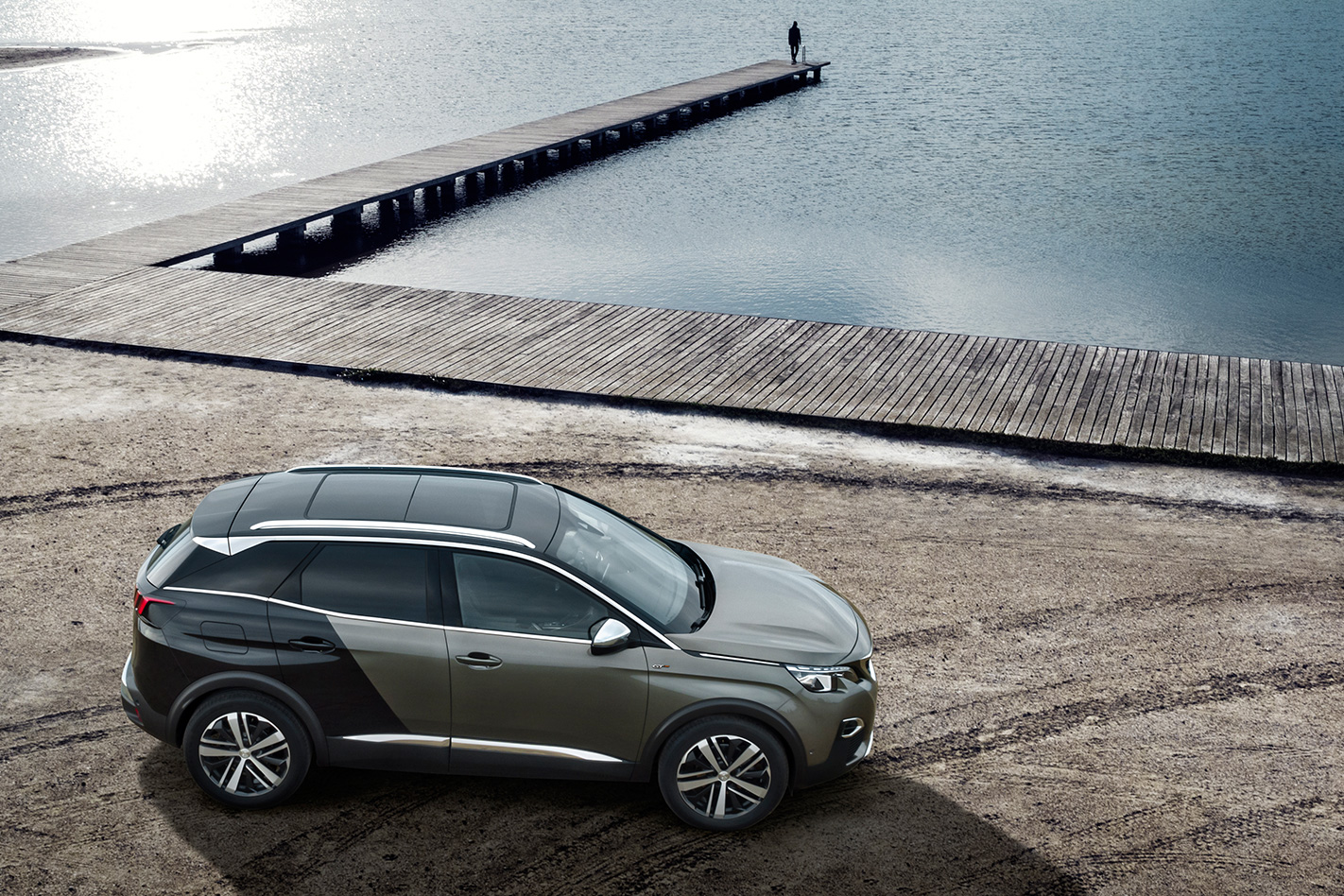
An Advanced Safety Pack, which includes emergency braking, active cruise control, and lane keeping assist is standard in the GT-Line ($43,490) and GT ($49,490) variants, and a $1500 option in the second-up Allure ($39,490).
Peugeot’s strategy to offer more entry-level equipment, rather than an initial low sticker price to bring potential buyers to showrooms, echoes the tactics used by Skoda, and Toyota with its CH-R crossover, which recognises that most buyers tend to want more features.
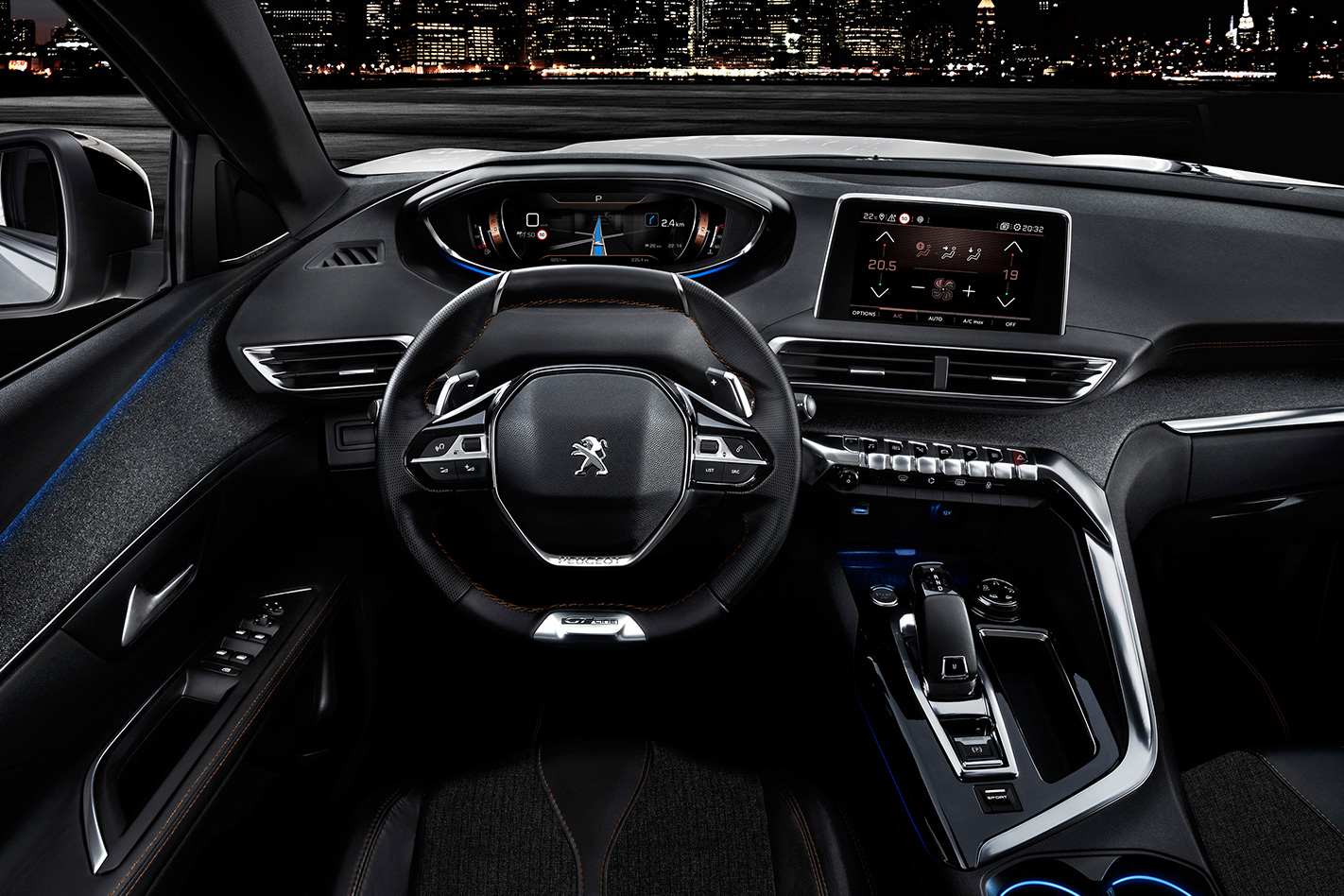
The all-new Peugeot 3008 will arrive in Australian showrooms this month.
IS THE 2017 Volkswagen Golf R, due to arrive in Australia in less than two weeks’ time, about to gain a performance pack?
Prospective European Golf R buyers are waking up this morning to news that the German premium car maker has launched a performance pack for the hi-po hatch and wagon, tapping its motorsport experience to equip the 213kW, all-wheel-drive R with an Akrapovic titanium sports exhaust system, beefier disc brakes offering even more stability, and semi-slick tyres optimised for track days.
The exhaust system alone sheds seven kilograms from the R’s circa-1400kg heft, and provides “completely new acoustics, which extend, depending on driving mode, all the way to that of motorsport”, VW said.
“Especially at high revs and when shifting gears, a sound is generated that is typical of Akrapovič systems – tight, finely tuned and yet not too loud.”
The expanded stoppers, meanwhile, shed another two kilograms in unsprung weight by incorporating aluminium pots, race-spec front pads and a floating disc.
“Even on the racetrack the system is extremely stable,” VW said. “The front brake discs are what are known as ‘built pin discs’. In this construction, the brake pot is made of aluminium, while the friction ring (the classic ‘disc’) is cast steel and is joined to this aluminium brake pot by cast pins. This allows it to expand radially when heated.”
According to Volkswagen, another benefit of the performance-honed braking system is “its very precise metering”. The beefier calipers will stand out from the standard red ones via a silver “R” insignia stamped on them.
The performance pack was offered on the previous generation 7.0 of the Golf, with VW Australia keen to see if it will be a part of the heavily revised generation 7.5 Golf R due on sale in mid-August.
Also up for consideration is the Oettinger kit offered on the previous-generation Golf GTI and R range that added performance parts and more visual bling to the range.
The Oettinger aero kits for both the Golf GTI and R comprised splitter and spoiler up front, side skirts for the flanks, and a motorsport-inspired diffuser lower bumper with quad exhaust system – doubling the number of pipes traditionally seen on the GTI.
Volkswagen’s Golf GTI has traditionally accounted for about one in four sales for the small hatch and wagon range. VW hopes to capitalise on this strength by expanding its Golf-based performance range to appeal to a wider range of buyers.
Limited-edition Wolfsburg-badged versions of the Golf R hatch and wagon – about 300 in total – start to arrive from September, while from January, the R wagon will become a permanent member of VW’s showroom for the first time.
As well, a Golf GTE with up to 50km of all-electric range – expected to be marketed as a clean and green performance alternative to the GTI – will join the Australian range in 2018. More details on its timing are expected to emerge from September’s Frankfurt motor show.
The 169kW/350Nm Golf GTI will be priced from $41,490 for the six-speed manual version, with a six-speed dual-clutch gearbox adding $2500. A GTI Performance Edition 1, celebrating the much improved model’s arrival, will cost from $47,990 but will step performance up to 180kW/370Nm sent to the front wheels via a seven-speed dual-clutch gearbox and a diff lock, among other things.The Golf R, meanwhile, will start from $52,990 for the hatch version, while the limited-run Golf R Wolfsburg Edition will start form $57,990 for the hatch, with the wagon adding $2000.
What stands out?
The Land Rover Discovery is unusual among 4WD vehicles because its formidable ability on rough tracks does not compromise its comfort and handling on smooth roads. You can choose from two powerful but frugal diesel engines. A roomy and versatile seven-seat cabin tops off a very impressive package.This review covers Discoveries on sale prior to August 2017, when this car was replaced with a new-generation Discovery.
What might bug me?
Travelling for service and spare parts: Land Rover’s dealer network is sparse outside the major cities.Packing spare fuel when touring remote areas. Some alternative vehicles have much bigger fuel tanks.Your narrow choice of off-road oriented replacement tyres. Not many fit the 19-inch wheels that come standard on a Discovery.
What body styles are there?
Only one, a four-door wagon with a two-piece, horizontally split tailgate. All models are available with up to seven seats.All Discoveries drive all four wheels at all times, and have low-range gearing, which makes it easier to drive very slowly in difficult off-road conditions.The Discovery is classed as a large SUV, higher priced.
What features do all versions have?
Bluetooth phone connectivity, USB and auxiliary audio input jacks, cruise control, and foglights.Push-button start, which works whenever the key is inside the car, perhaps in a pocket or bag.Dual-zone climate control, where the driver and front-seat passenger can individually set their desired cabin temperatures.Rear-parking sensors, which tell you how close you are to obstacles behind the car.Windscreen wipers that come on automatically when it rains.Daytime running lamps, which help make the car more visible (especially on overcast days).Height-adjustable air suspension, which lets you raise the car for off-road use and then lower it again for on-road use. (You can also lock it in an extra-low position, which helps when negotiating low-roofed car parks.)Eight airbags: two in front of the driver and front passenger; side airbags to protect the upper body of the driver and front passenger; front curtain airbags to protect the heads of the driver and front passenger; and rear curtain airbags to protect the heads of the outside passengers in the second-row seat.Electronic Traction Control, which helps you go further in difficult off-road conditions.Electronic Stability Control, which helps control the vehicle in a skid. All new cars must have this feature.Active Roll Mitigation, which helps prevent the vehicle from rolling over.Hill-descent control, which stops the car from running away on steep downhills off-road. Hill-Start Assist, which prevents the car from rolling back when you start from rest on steep hills.Trailer-Sway Control, which helps settle the vehicle if the trailer you are towing is swaying from side to side. A tow-bar hitch receiver, and a connection for the trailer electrics. (A towbar tongue is a dealer-fit accessory.)Terrain Response, which lets you select the off-road surface you want to drive on (sand, for example), and automatically adjusts the traction control, stability control and other systems to suit that surface.Wheels (of 19-inch diameter) made from aluminium alloy, which look nicer than steel wheels. A full-size spare wheel and tyre.All Discoveries come with a three-year, 100,000km warranty. The warranty includes 24-hour roadside assistance, even on roads that only a 4WD vehicle can travel. Additionally, the bodywork is covered for corrosion for six years.
Which engine uses least fuel, and why wouldn’t I choose it?
Two engines are available in a Discovery, both of them turbocharged diesels. Each consumes 8.8 litres/100km on the official test (city and country combined).In the real world, the less powerful of these diesels, the TDV6, uses less fuel than the other, and it averages about 11 litres/100km.This is the only engine available with the least costly Discovery, also named the TDV6. And it comes in no other model.It is an excellent engine, with more than enough power in most driving conditions. The main reason you would not choose it is that you want more equipment in a Discovery.The more powerful diesel, the SDV6, comes in both of the more expensive Discoveries, the SE and HSE models. It averages about 12 litres/100km in real-world driving. (Your consumption will depend on your driving style and driving conditions.)The two engines are the same mechanically, both 3.0-litre V6 bi-turbo diesels. They perform differently because they have been tuned differently.All Discoveries come with a sophisticated eight-speed automatic gearbox.
What key features do I get if I spend more?
Stepping past the TDV6 and spending more for a Discovery SE gets you leather seat trim, power-adjustable front seats, and a standard third row of seats (bringing the number of seats up to seven). You also get a reversing camera, a better sounding audio system with more speakers, and LED-strip daytime running lamps.With the exception of powered seat-adjustment, these features are also available on the TDV6 as extra-cost options.Spending more again on an HSE brings you front parking sensors, which help you judge the distance to obstacles immediately in front. The driver’s seat and external mirrors remember your adjustments, so that you can restore your settings after a companion has driven the car. And there is satellite navigation, which has hard-disk memory that can be updated with new maps.The front parking sensors and satellite navigation are available as options on the other models.Many other options are available for all or most models.You can order a sunroof and sportier-looking 20-inch wheels for any Discovery.Safety options for all Discoveries include Blind-Spot Monitoring (which alerts you when changing lanes if another vehicle is alongside out of view), and rear cross-path detection (which warns, when you are reversing, of vehicles approaching from either side).Off-road options for all Discoveries include an automatic locking rear differential, which helps the car go further in difficult conditions.You can also option Wade Sensing, which tells you if water you are entering is too deep. And any Discovery can be ordered with exterior cameras that give you a ‘wheels-eye’ view around the car – these can help in off-road driving.The Discovery SE and HSE can be optioned with rear-seat DVD screens, digital TV and a high-end 17-speaker audio system.On these vehicles you can also add Adaptive Cruise Control, which automatically matches your speed to a slower car in front. As well, it warns you if you are closing too fast on another vehicle.And you can have headlamps that switch on automatically when it gets dark, and dip the high beam automatically for oncoming traffic.
Does any upgrade have a down side?
Tyres fitted to the optional 20-inch wheels don’t perform as well off-road and are generally more susceptible to damage, especially off road. Also, the ride on rough roads is not as comfortable with the 20-inch wheels as it is with the standard 19s.Only white paint is available without paying extra.
How comfortable is it?
The Discovery has a very spacious and particularly comfortable cabin. Highlights are superb seats and great vision.All the major controls are easy to use. Minor controls are many, given the extra 4WD functions, but they are arranged logically. This is a vehicle in which you quickly feel at home.On the road the Discovery is easy to drive, quiet and comfortable. It has the refined and polished feel of a luxury car.For general driving, both the diesels are equally effortless and will do what you want with only light pressure on the accelerator. The automatic gearbox always finds exactly the right gear at the right time.The Discovery does not feel as big or as cumbersome as most other big 4WDs.
What about safety?
The Discovery TDV6 rates as Very Good for safety. The SE and HSE, which come with a reversing camera as standard, rate as Excellent.The Australasian New Car Assessment Program has not rated the Discovery. The previous Discovery 3 was rated at four stars for safety, from a maximum of five, in December 2006.
I like driving – will I enjoy this car?
A large 4WD family wagon has no right to steer and handle as well as the Discovery. Yes, it’s still a very big and heavy car. But on the road it feels sporty and nimble compared with alternatives that have similar off-road ability, such as the Toyota LandCruiser Prado and LandCruiser 200.The height-adjustable suspension works well here. The low on-road ride height helps stability, and yet you can still jack up the car for off-road use.The Discovery is also formidably capable off road. If you want to maximise its off-road potential, however, you should order the optional self-locking rear differential.The more powerful of the two diesel engines, the SDV6, comes into its own on the open road, where it will overtake more quickly and climb very steep hills faster than the TDV6 diesel. It also handles heavy towing loads more easily.That said, the less powerful TDV6 is also an effortless performer and for most driving it doesn’t give up anything to the more powerful diesel.
How is life in the rear seats?
The second row seat is broad and comfortable, and will accommodate three adults with ease. The third seat row betters all similar vehicles in as much as it can accommodate big adults, and not only children or small adults.The ability to lower the vehicle, on the adjustable suspension, is also handy for helping people get in and out.
How is it for carrying stuff?
The Discovery is excellent for carrying stuff, thanks to its space-efficient box-like body. It has a cavernous load space, and the middle and third-row seats fold to provide a completely flat floor. The second and third row seats also fold individually, so that the load space can be tailored to what you are carrying.The Discovery also has a class-leading 3500kg tow rating, which means you can tow a two-horse float, a large boat, or a large dual-axle caravan with capacity to spare. The Discovery tows heavy weights well, thanks to its stable chassis and powerful engines, and is one of the best tow vehicles around.
Where is it made?
All Discoveries are made in the United Kingdom.
What might I miss that similar cars have?
More practical wheel and tyre combinations for off-road use. The Toyota LandCruiser Prado, Toyota LandCruiser 200 Series, Ford Everest and Jeep Grand Cherokee all offer these.A bigger fuel tank, for a longer range, would be helpful when touring remote areas. A diesel Discovery will travel about 700km on a tank. The LandCruiser Prado and 200 Series have considerably bigger fuel tanks: diesel 200s will do about 1000km on a tank, and diesel Prados 1400km.Head-protecting curtain airbags for passengers in the third-row seats. LandCruiser 200s and Ford Everests have these, for example.The ability to display apps from your smartphone on the touchscreen and control them from there, via Apple CarPlay or Android Auto. Most Everests offer this, for example.Automatic emergency braking. The best equipped LandCruiser 200, Prado and Jeep Grand Cherokee models offer this.The lighter and smaller Grand Cherokee also handles more like a car, when you are driving on normal roads.Other cars you might consider include the Mitsubishi Pajero and the Nissan Patrol.
I like this car, but I can’t choose which version. Can you help?
The Discovery TDV6 offers the best value, and can be upgraded selectively with just about all of the features that come standard on the more expensive models. This allows you to tailor your Discovery to your needs, without paying for features you don’t want.
When did Land Rover update this Discovery?
The Discovery reviewed here is the vehicle previously called the Discovery 4, which in turn was based heavily on the Discovery 3 that arrived in Australia in 2005. A supercharged V6 petrol version was dropped in 2016.Production ceased about November 2016, and by April 2017 few remained on sale new.An all-new Discovery arrived in August 2017. It was considerably lighter, with monocoque construction, fresh styling, four and six-cylinder diesel engines, and auto emergency braking.
This could be just another reason to get excited about the Kia Stinger GT.
It’s going to arrive at the same time we lose our last Aussie rear-drive sedan, and a lot of people are of the opinion it will provide an affordable and fun alternative.
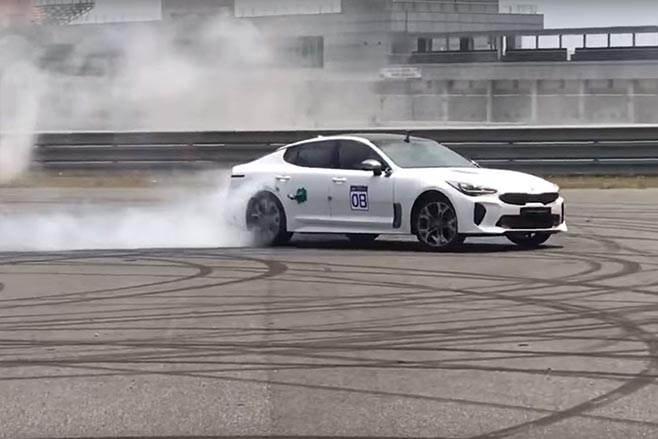
Well, maybe you already have with a rattly Rio in a sketchy Maccas carpark, trays under rears and all.
The 276kW/510Nm sedan, powered by a twin-turbocharged 3.3-litre V6, has plenty of grunt to get the rears lit up.
Need more convincing that it’ll be a proper performance car? We drove it around the Nürburgring and gave it a score of 4 out of 5 stars.
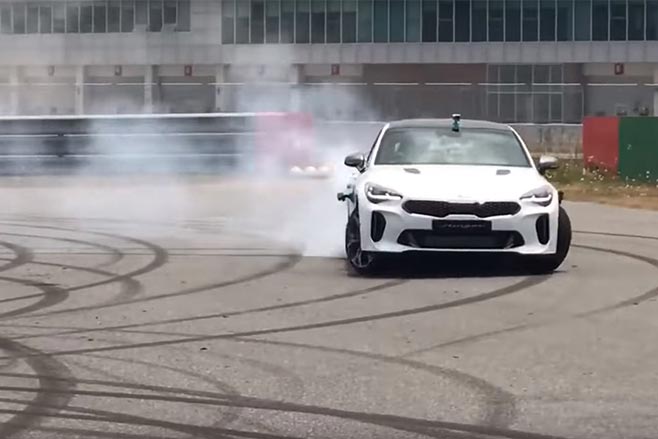
The sentiment from the YouTube comments for this video will likely echo across the land when the Stinger GT finally arrives in Oz:
“That thing could definitely use a V8,” and of course, “but it’s still a Kia.”
Still, when Australia gets its special exhaust-fitted Stingers, you can bet there will be plenty more videos like this.
Especially if a few brave souls start trying to find ways to get V8s into them.
BMW has slashed the price of its potent M140i range-topper as part of a wider upgrade to the baby Beemer range.
The 2018 M140i will wear a new $59,990 price tag – $4910 less than the pre-facelift model – when it arrives in showrooms this September.
BMW’s repositioning of its hot hatch puts it closer to the updated Volkswagen Golf R, which will be priced at $55,490 when it lands in August. That said, the M140i is the only rear-wheel drive six-cylinder in the segment and is virtually without a direct competitor. It boasts significantly more grunt than the R, with 250kW/500Nm on board compared to the Golf’s 213kW/380Nm.
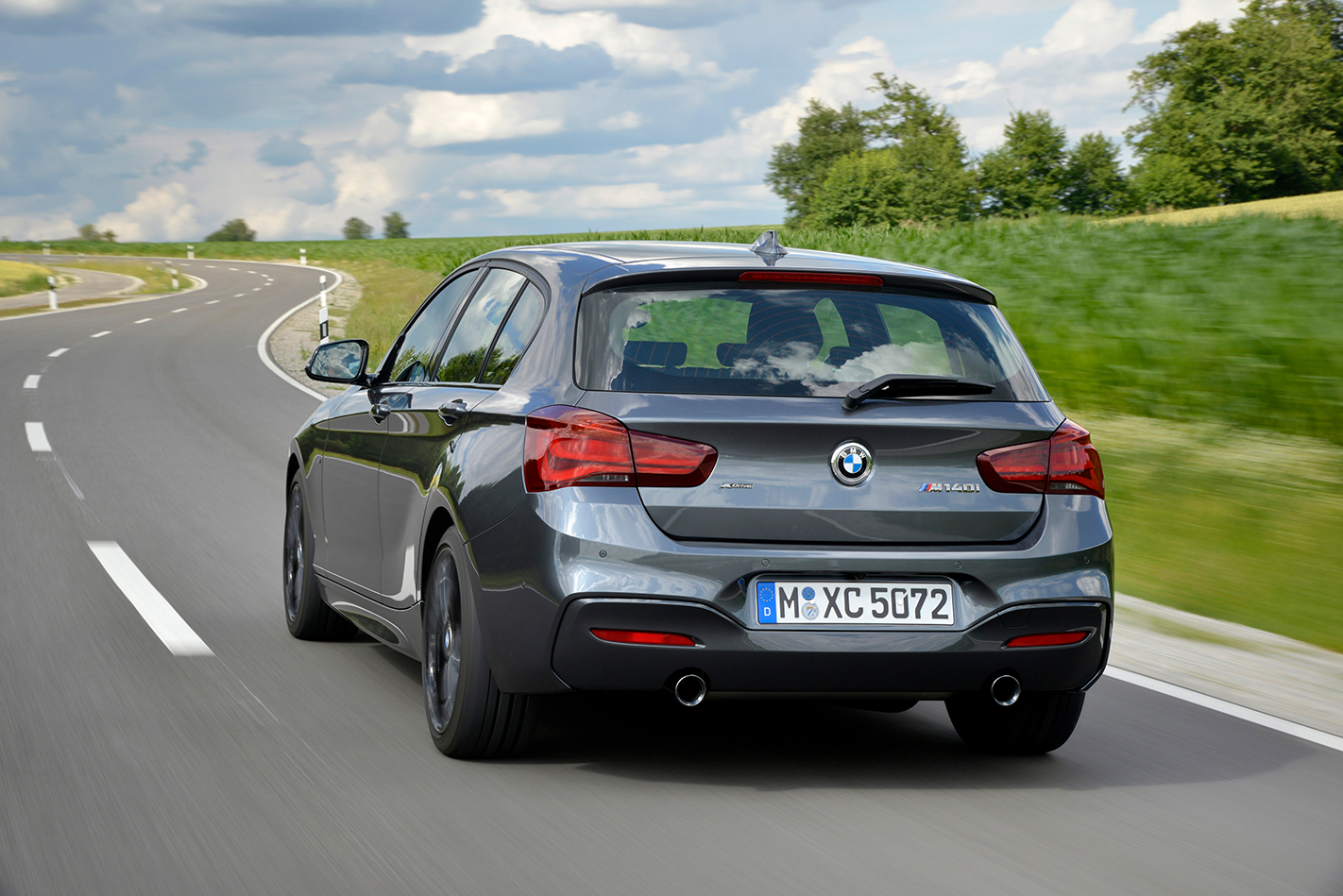
Both variants gain little beyond new wheel and paint options and interior tweaks, with the headline addition being the iDrive6 infotainment system with an 8.8-inch touchscreen as found in the BMW 5 Series.
Performance and handling is untouched in both cars, with the M140i’s outputs remaining the same, from its 3.0-litre turbocharged inline-six. Also carried over is the eight-speed automatic transmission and a 0-100km/h sprint time of 4.6secs.
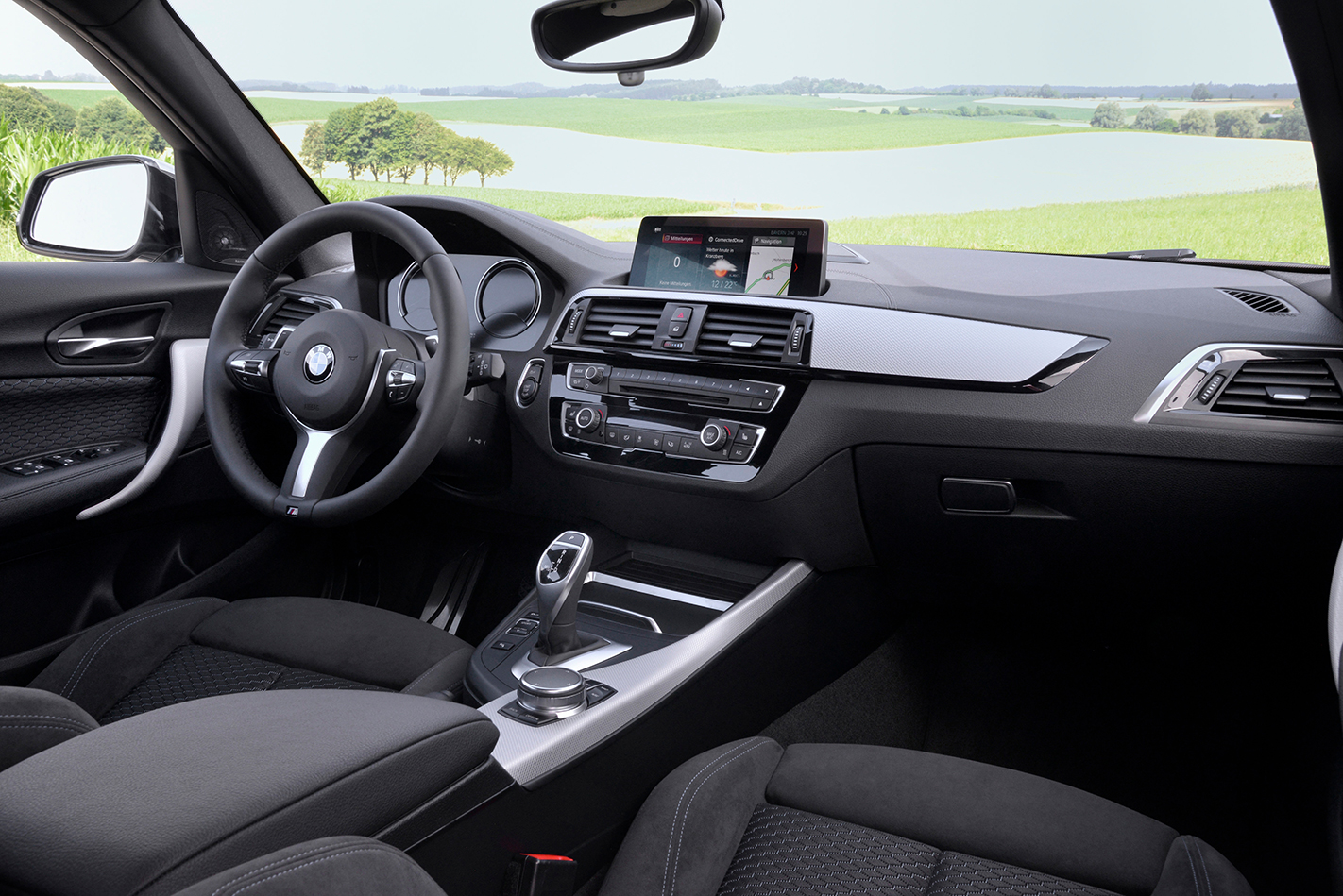
The upgrade resulted in more changes at the bottom end of the range where prices have increased by around $2000 for the entry level 118i and its 118d diesel counterpart, now priced at $39,990 and $43,990 respectively. The mid-spec 120i also goes up, by $3000, to $45,990.
These three models gain the iDrive6 infotainment but with a smaller screen. The 120i gets LED headlights and 17-inch alloy wheels.
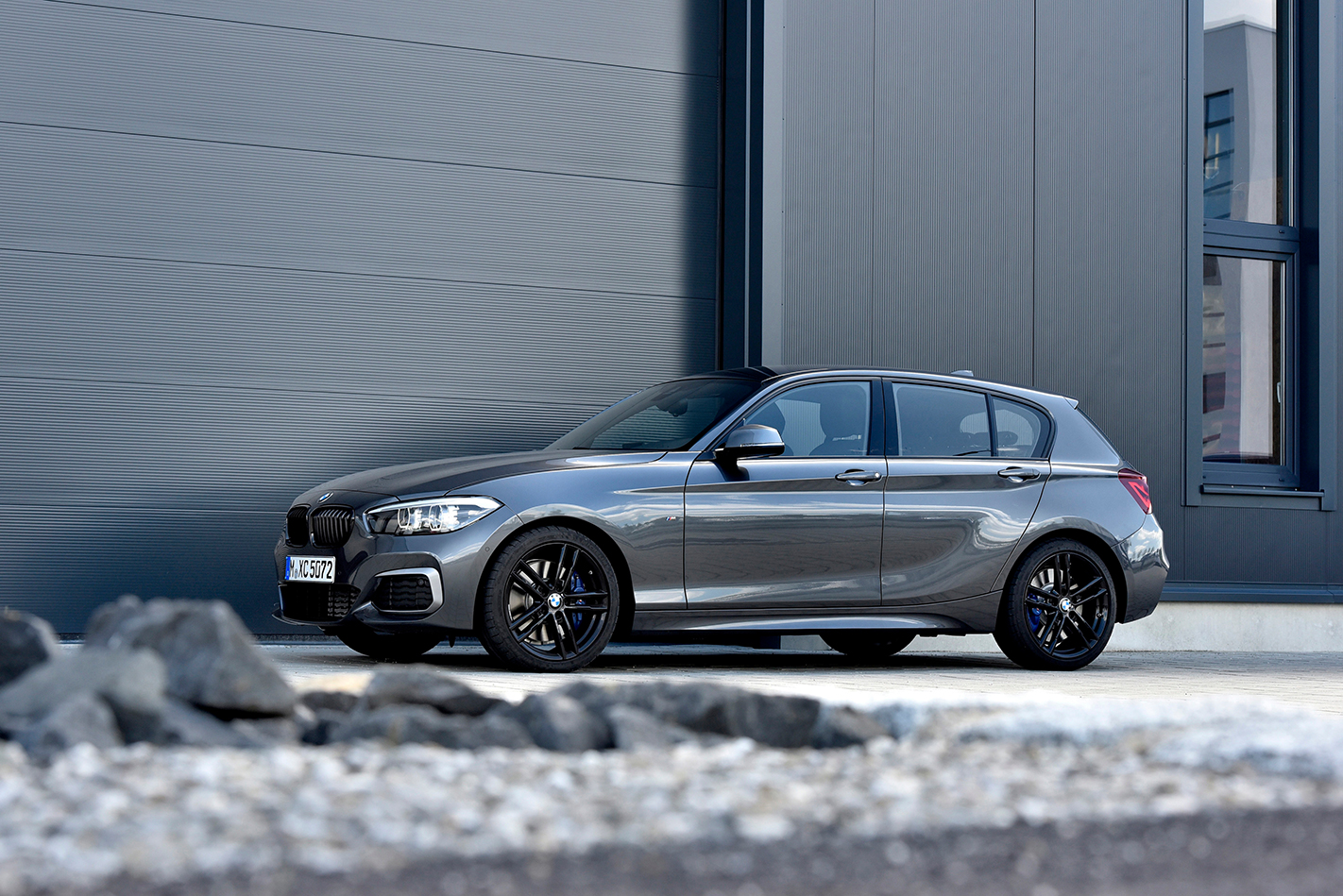
There is also a wider range of interior trim finishes including Pearl Chrome, while the Dakota leather upholstery, which is standard in the M140i, can now be ordered in a fine Cognac finish.
Two new premium exterior colours have been added to palette including Sunset Orange metallic and Seaside Blue for the non M Sport-equipped variants.
We grab a first drive in Porsche’s most potent Panamera to see if its new performance focus is as electrifying as its drivetrain.
TELL ME ABOUT THIS CAR
Porsche introduced the second-generation Panamera earlier this year with the six-variant range capped off by the $384,500 Turbo, but a new Turbo S E-Hybrid has joined the line-up blowing the price up to $460,100.
The new version uses the same 4.0-litre turbocharged V8 which sends power to all four wheels, but slots a 100kW motor into the eight-speed automatic transmission for a combination of more performance and better fuel efficiency.
In addition to the added performance and economy, the Turbo S also gains a healthy dose of extra equipment including carbon ceramic brakes, torque vectoring and Sport Chrono pack included.
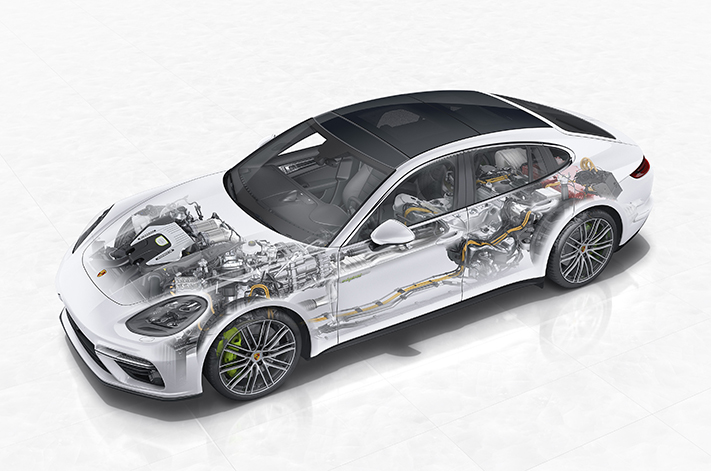
As part of a broader Porsche perspective, the new Panamera flagship represents a new hybrid direction for the car maker and is the first time the most potent performer in any range has used electrification to beat combustion power alone.
STRENGTHS
- With V8 turbo and electric motor working in unison, the Panamera’s acceleration is blistering. All paw traction and a combined 850Nm allows the big limo to hit 100km/h in just 3.4 seconds.
- Despite the massive performance potential, up to 50km can be driven on electric-only power and plug-in recharging offers the possibility of petrol-free commuting. With 400Nm of electric motor torque, driving the Panamera as an electric car is effortless for most driving conditions and allows up to 140km/h cruising.
- The transition from electric only driving to petrol/electric is almost undetectable thanks to a silky V8 and sophisticated engine restart electronics.
- Dynamic performance is just as impressive as straight line speed and on twisty roads the big Porsche defies its 2.3-tonne kerb weight. Grip levels are high even in the tightest turns and, when fitted, the optional rear-wheel steering is very effective at disguising a 2950mm wheelbase. Sensitive steering allows precise positioning in the road and the small steering wheel offers plenty of feedback.
- Immense braking power completes the performance trifecta and 420mm carbon ceramic front discs resist fade even under track conditions, while the monstrous 10-piston calipers that grab them are among the biggest in the business.
- Away from dynamic roads, the softer ride settings turn the Panamera into an accomplished and comfortable limousine with a cosseting ride despite its 21-inch wheels. Minimal wind and road noise adds to the serene cabin environment.
- Interior quality and design is hard to beat and combines razor-sharp styling with beautiful materials for a first-class travel experience. Its massive central information and entertainment screen serves as an impressive but understated centrepiece, surrounded by a simplified centre console and switchgear.
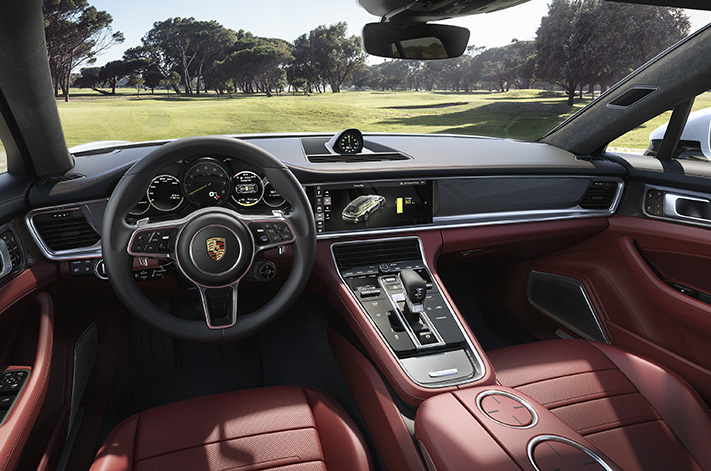
- Acid Green highlights to exterior badging, brake calipers and gauge needles are a subtle but likeable reminder of the hybrid powertrain.
- Rear seat comfort equals the front row when optioned with eight-way power adjustable seats for two occupants, but standard three person row offers excellent comfort too with 60:40:60 split folding that boosts boot capacity from 405 litres to 1245L.
- Clever driving modes allow the hybrid system to work in different ways according to driving preference or journey requirements. In E mode, only battery power is called on unless fully discharged or the engine is restarted with a full-throttle prod. In H mode the engine and motor work together for maximum fuel efficiency and offers an option that will preserve the battery power for a later stage of the journey where zero emission driving will be required. S and S+ modes use the electric motor purely for a performance gain.
- Unlike some EVs and hybrids, the Porsche has no regenerative braking effect on overrun and the brake pedal has to be touched to initiate the regeneration of electricity from deceleration. Brake pedal feel is relatively sensitive for a hybrid but could be improved by allowing regen on overrun.
- The hybrid system adds approximately 300kg to the weight of the petrol-only Turbo.
- Bespoke Michelin 21-inch rubber will hit the wallet hard when it comes to trips to the tyre shop.
- Hybrid system defaults to E mode each time the car is restarted and the drive mode selector must be turned to another mode if anything other than pure EV driving is required on each journey.
There are very few options that can compete with both the Porsche’s electrified drivetrain and performance wrapped up in a four/five seat package but the Tesla Model S offers a pure EV option with the closest credentials.
With less of a performance focus, Mercedes offers the S500e and BMW has the 740e, while a pure performance focus without hybrid tech brings the Audi RS7 and Mercedes-AMG CLS 63 into the competition.
