
ADAPTIVE DAMPERS have made Lexus’s hairy-chested super sedan an even better gadget and super-heated the fight for its keys whenever it visits the MOTOR office.
Big and spacious, four doors, a screaming 5.0-litre atmo V8, smooth eight-speed auto, rear-drive and a ‘limited slip’ differential – the GS F might have a ‘351’ in its power figure but it doesn’t need it to endear to Aussies. It remains a peculiar car; there’s its striking exterior styling with eccentric touches.
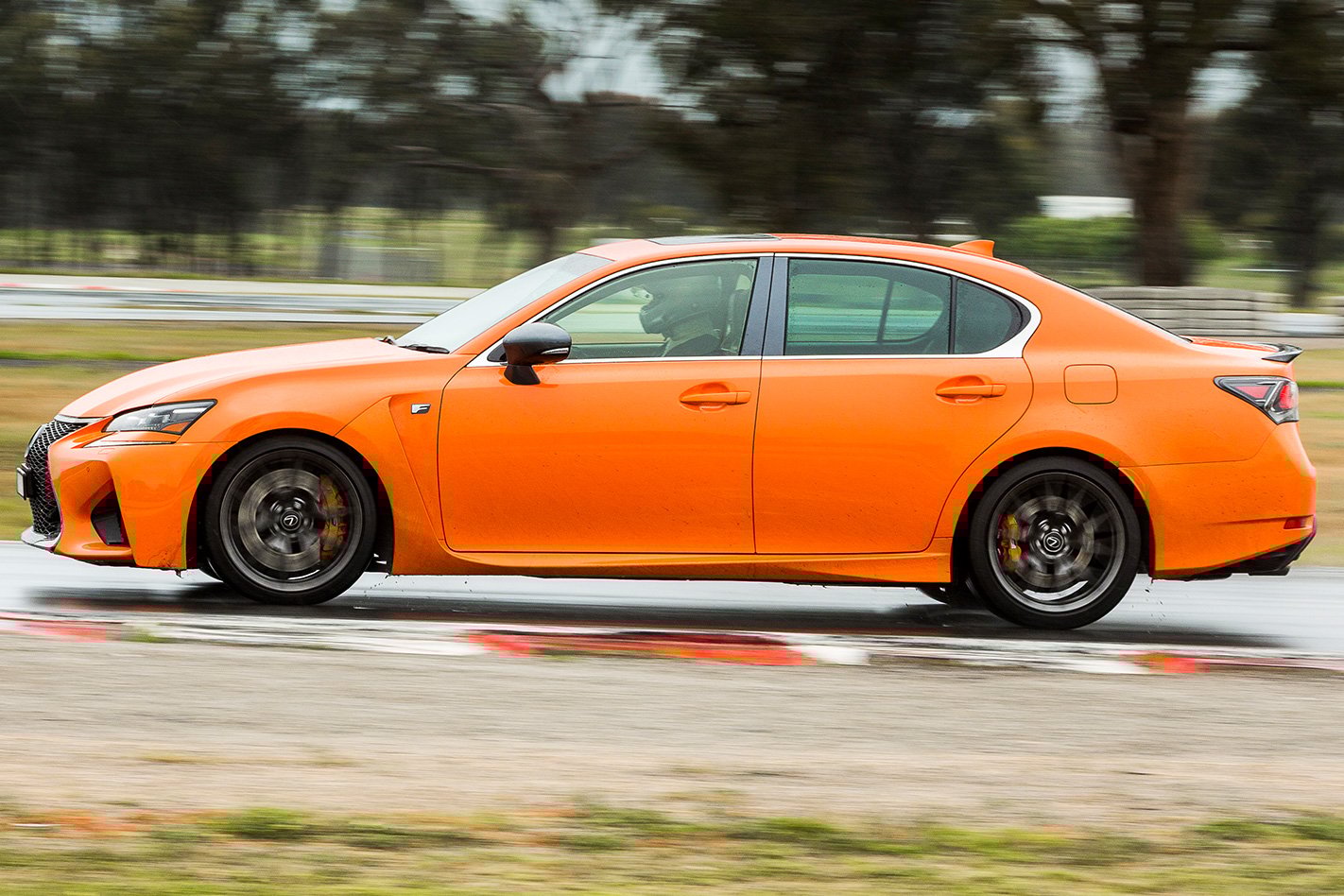
Forget about all that and boot it, and you’ll find an engine that feels highly-strung and likes to be revved to give its best, which is fine with us as the atmo 5.0-litre sounds great in a technical, nerdy Japanese kind of way (rather than a bassy, burbly American V8).
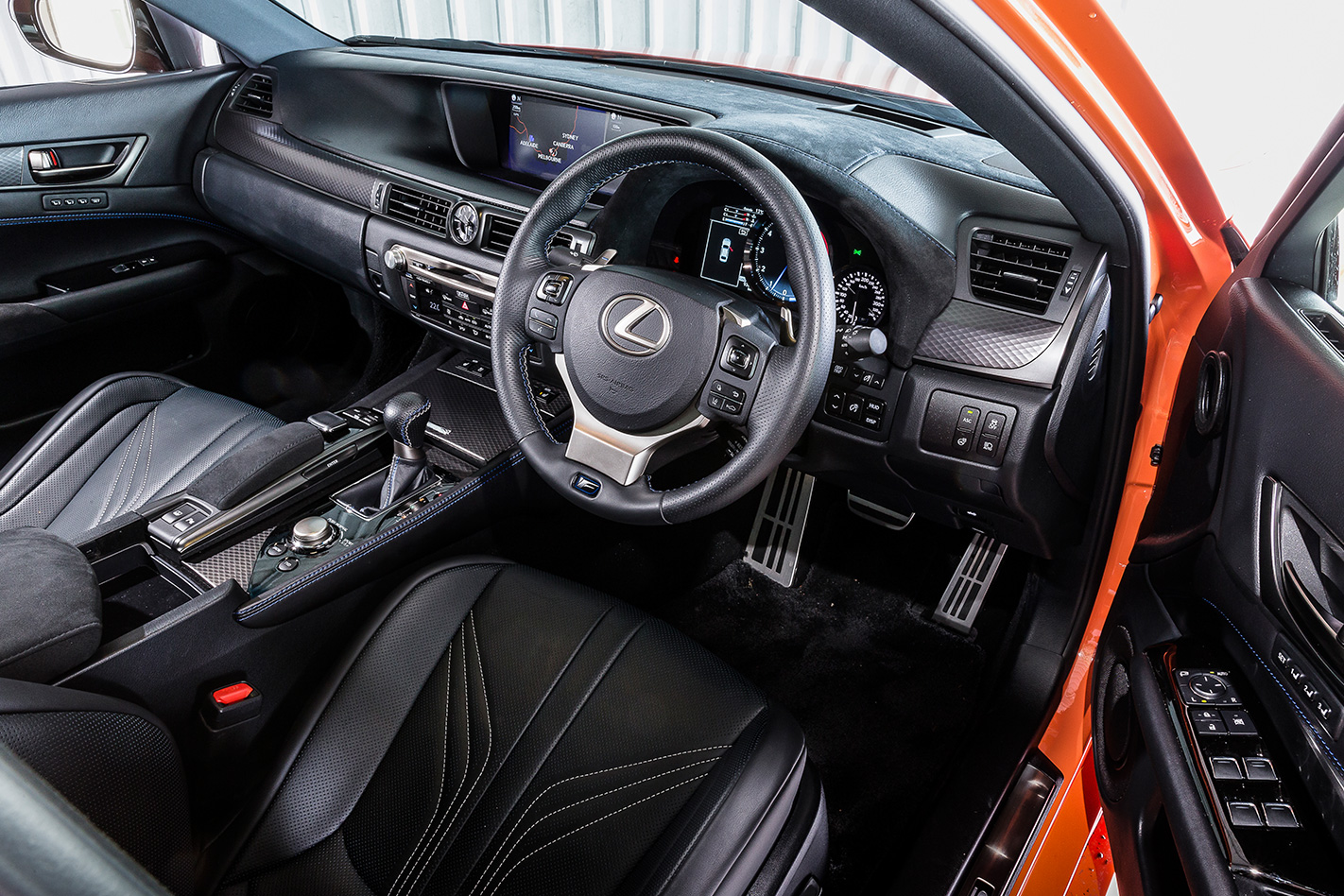
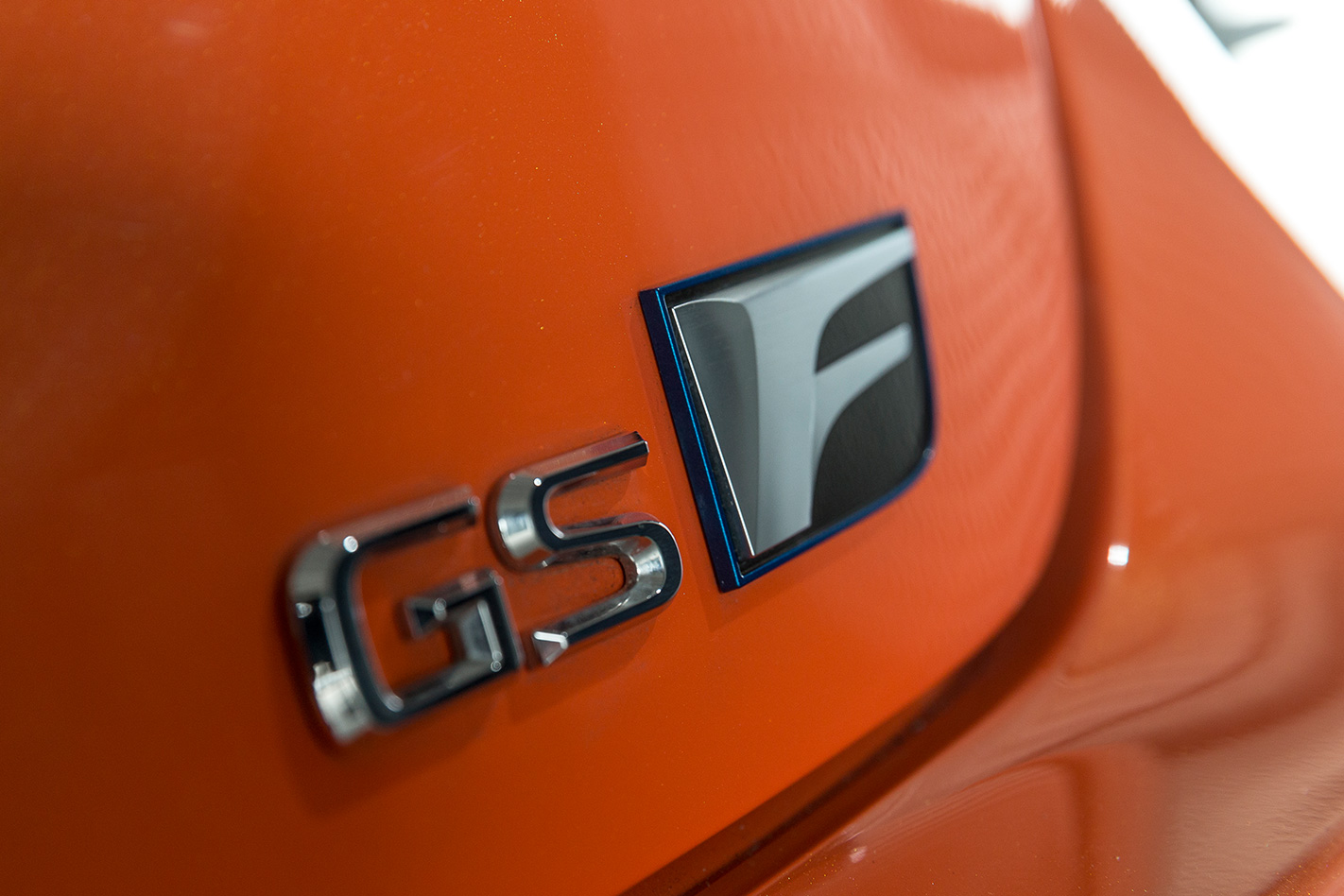
2017 Lexus GS F Specifications
- Engine: 4969cc V8, DOHC, 32v, 351kw/530Nm
- Weight: 1865kg
- 0-100km/h: 4.6sec
- Price: $153,540
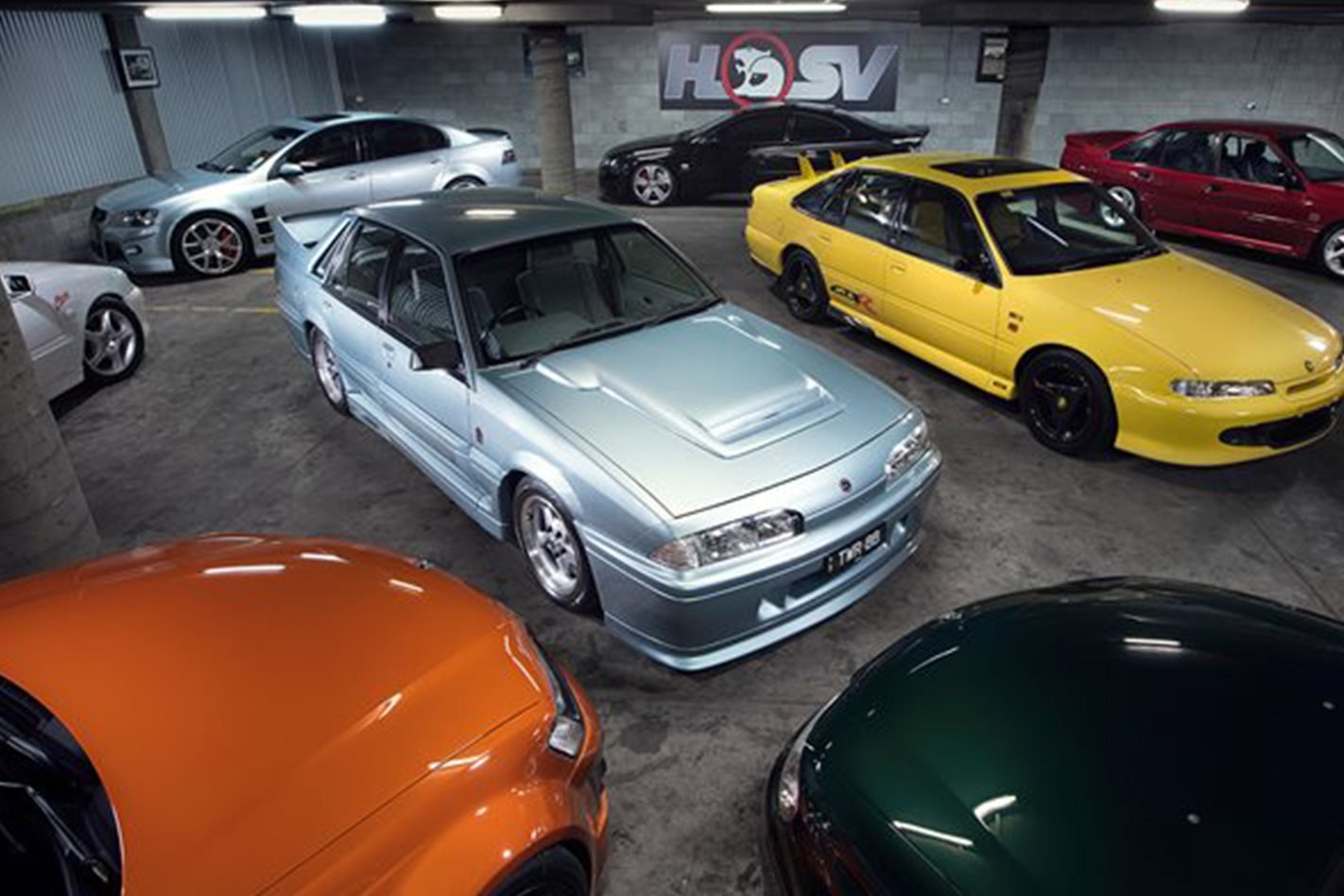
What’s the future of HSV? Schmick Colorados, say some pundits. Hot-hatch Astras, predict others.
But on the HSV website, you can see they’ve already branched out into a new field of vehicles no-one predicted – the HSV billy cart. Or “billykart” as HSV spells it – the k makes it faster, like in Superkart or Mario Kart.
It’s hand on heart, honestly for sale right now. And I don’t know how to feel about it. On the one hand, obviously, I want one. Of course, there’s no chance of me ever riding one, since the “maximum rider weight” is 50 kilos, and I’ll never be 50 kilos again – one of my legs probably weighs more than that.
But the point remains that buying a billy cart (or, indeed, a billykart) by definition leaves you with only 20 per cent of the fun. Because billy carts are almost always better when you’re imagining what they will be like (low-flying down a steep hill, perhaps with a pair of aviator goggles on, Little Rascals-style) than what they actually are like (speeding helplessly into a tree, crying).
Steering a billy cart (or, yes, a billykart) with that push-pull feet-and-rope system is terrible. It’s a design born of frugal necessity, not design excellence, and maintained over the decades by a secret cabal of paediatricians who get paid for every broken arm they set.
And I used to think it was terrible because it translates every nervous leg twitch into a wildly swinging rear end, like a back-up dancer in a Snoop Dogg video. But apparently it was because I was using sub-spec rope. This is straight from the HSV website: “Strong rope allows easy steering.”

Like, mounting the squeeze mechanism from a self-wringing mop on the rear wheel seems like a genius handbrake, but only when you’re hooking down the driveway of Ryde TAFE will you discover that it actually does nothing.
Nothing except lure you to take one hand off your steering rope, which (because the rope wasn’t strong enough, argues HSV) causes you to hit the gutter. At which point you discover the only good thing about rope-foot-swivel controls is that there’s no steering column to impale your bony eight-year-old chest.
Instead, that privilege goes to an ornamental shrub or a rose bush. We learn about carts and cars from youthful experimentation. Peter Brock customised his first car, a five-pound Austin 7 paddock-basher, by chopping all the bodywork off with his father’s axe.

And I’m not sure if being given a ready-made billy cart (or even a billykart) from HSV would have the same effect. And it would have to be a gift – at 200 smackers, it’s not only out of the range of even the most ardent Junior Holden Fanatic’s pocket money, it probably carries about the same margin as a new Corolla.
Although it’s still better than the stuff on Porsche’s online store, like a set of cookie stamps for $32. Cookie stamps! Give that to a kid and soon enough they’ll be too heavy for their billykart.
‘Florida man’ is usually what you read at the beginning of a news story about something bizarre happening.
Here, however, it’s the beginning of a brilliant feat of motoring enthusiasm, passion, and know-how.
One Porsche GT3 RS owner in the states wanted his car in manual, but Porsche wouldn’t do it. So, he found a workshop in Florida that would.
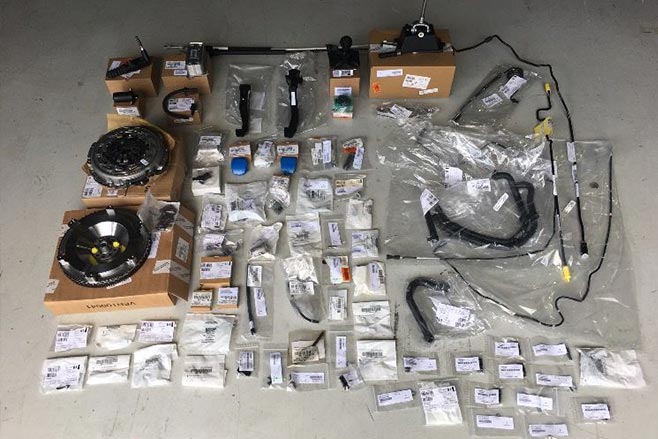
BGB Motorsport has become the creator of the only manual Porsche 991.1 911 GT3 RS.
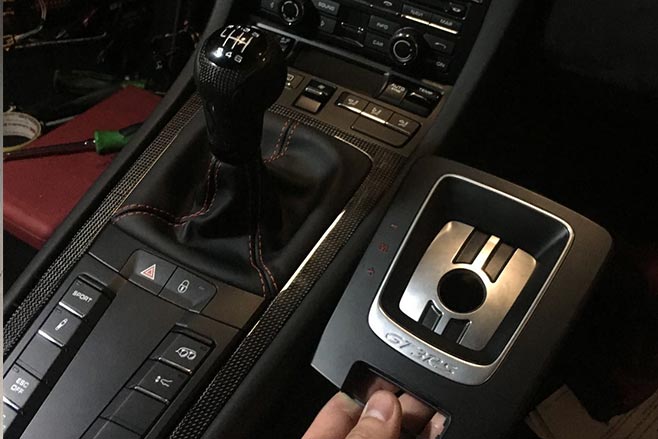
To make room for a six-speed manual ‘box from the 911 R, the PDK and all peripheral gear (paddles, etc) found themselves being pulled from the Lava Orange porker.
The owner of the car, Robert Janev, posted about it on a Porsche owners’ forum under the title ‘The car Porsche didn’t build, but I did!’, and it went ballistic.
It was so widely picked up that someone even changed the Wikipedia entry for the Porsche 911 GT3 RS to read:
“The transmission is PDK only (with the exception of the rare 1 of 1 worldwide manual owned by Robert Janev and assembled by BGB Motorsports).”
In a report from US outlet Road and Track, BGB says the total cost for the swap was US $45,000 (AUD $56,850).
Among the forum posts are a few comments from Janev on why he underwent this, aside from just to have the car in manual.
“I hope the outcome out of all this is for Porsche to stop playing games with its customer base,” he writes.
“A lot of the guys on these forums have been loyal Porsche customers and enthusiasts long before Caymans, Cayennes and Macans etc.
“I am a fan [of PDK], seriously. I get technological progression and performance figures. But if I’m spending $$$ on a GT3, I would like the option.
“I grew up dreaming of owning and driving manual 911s, not automatics! Don’t tell me what’s better for me, give me the option to choose.
“Three pedals all day!”
TRADIES have never had it better in Australia. Property is booming, contracts are plentiful and now the car market is dominated by the most powerful and well-equipped dual-cab utes we’ve seen.
So, how is a cashed-up tradie to choose which of these up-market workhorses is right for them?
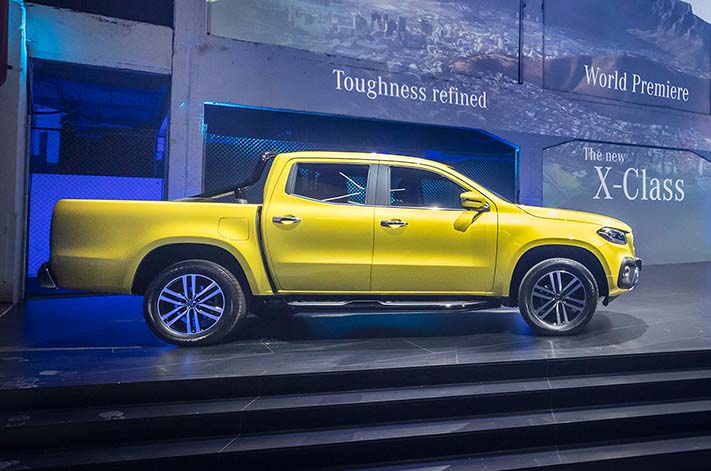
Let us break down the top three, along with the just announced Mercedes-Benz X-Class.
The current leaders in the segment are the Ford Ranger Wildtrak and Toyota Hilux SR5, which are having a gung-ho fight in the sales charts to claim the title of Australia’s best selling car this year. Meanwhile, the Volkswagen Amarok TDi550 Ultimate has the title of Australia’s most powerful and expensive dual-cab… for now at least.
Pricing for the VW is $67,990, whereas the Ranger and Hilux cost $61,790 and $56,390 respectively.
The Amarok is powered by a 3.0-litre V6 turbo diesel, making 165kW and 550Nm.
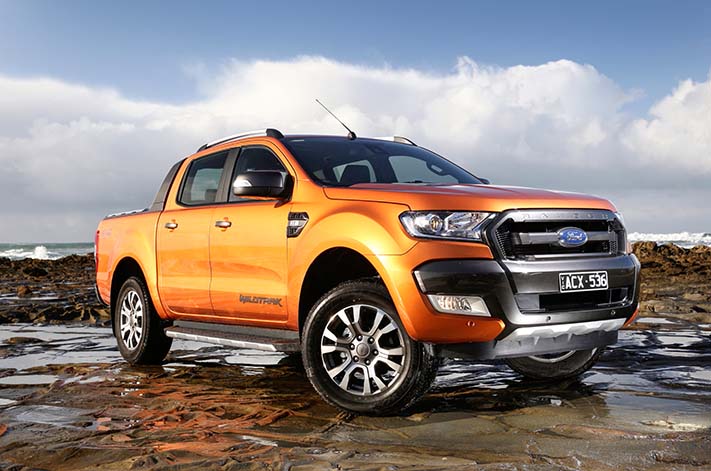
The Ranger has a 3.2-litre inline five-cylinder turbo diesel making 147kW/470Nm, while the Hilux has 130kW/450Nm from a 2.8-litre inline four-cylinder turbo diesel.
The flagship of the X-Class range will be the X350d, powered by a 3.0-litre V6 turbo diesel, making 190kW and 550Nm.
The Ranger and Hilux both have six-speed automatic gearboxes, with dual-range selectable 4WD, while the Amarok has a seven-speed auto with constant 4WD. The X-Class adds an extra ratio over the Amarok.
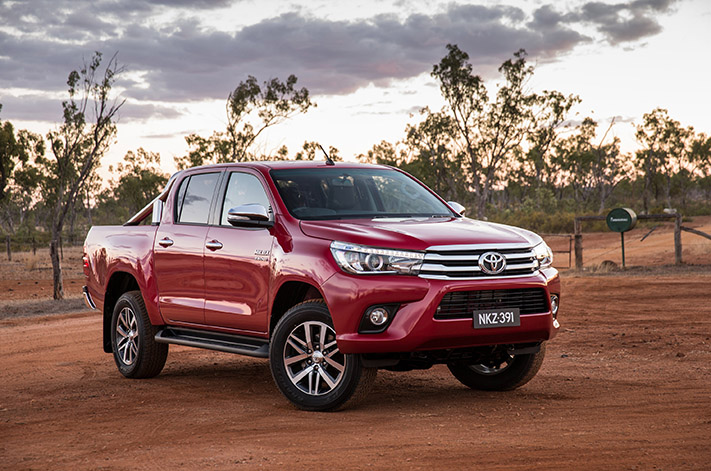
The Ranger is the longest of the bunch, at 5.4 metres, while the Hilux and X-Class both measure 5.3 metres, and the Amarok 5.2.
The VW and Mercedes are both 1.9 metres wide, while the Ranger and Hilux are 1.8 metres.
Mercedes is set to be the most capable hauler as well. Payload figures for the V6 X350d are yet to be published, but based on the entry-level X220d’s 1042kg maximum payload expect around 990kg because of the heavier V6 engine, and a 3500kg towing capacity. This compares to the Ranger (950kg/3500kg), Hilux (925kg/3200kg) and Amarok (864kg/3000kg).
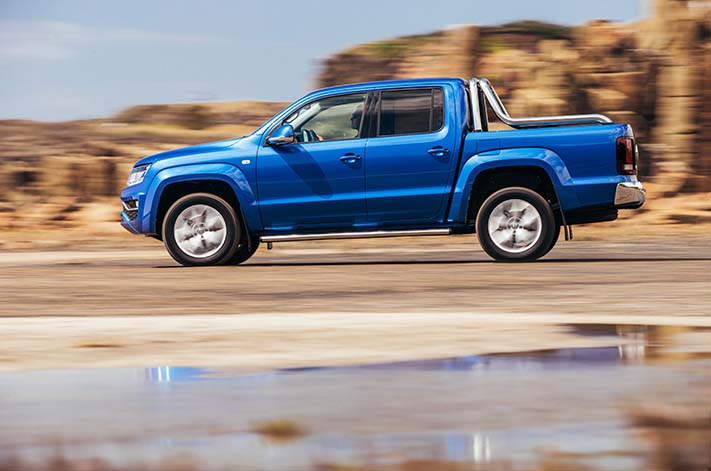
If off-roading is what gets you going, the Hilux has the greatest ground clearance at 279mm, ahead of the Hilux (237), X-Class (202mm), and relatively surface-skimming Amarok (192mm).
If you want to read more about how the cars drive on road, make sure to peruse our Range reviews for the Ranger, Hilux, and Amarok.
We’ll have a full review of the X-Class later this year when we have our first taste of the all-new vehicle.
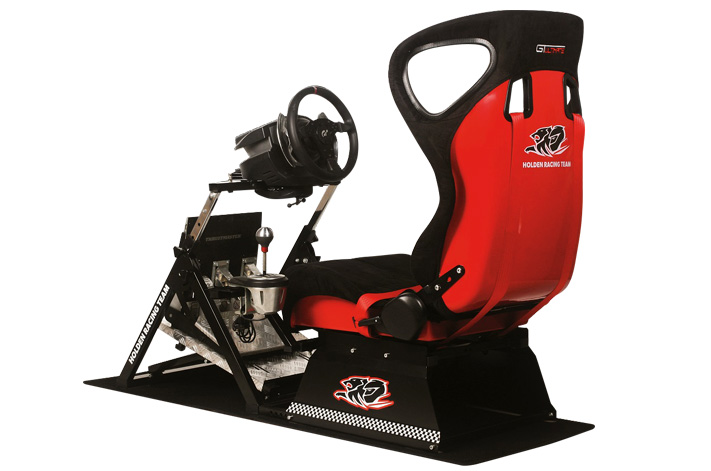
Next Level Racing Official Holden Racing Team Simulator $1099
Do you find that you are spending plenty of quality time with your partner and kids and you’re on time for work every day?
Well, you clearly don’t own one of these. Among its diverse range of driving video game prosthetics, Pagnian Advanced Simulation (read it again – not Pagani) is now offering a complete Holden Racing Team cockpit courtesy of Next Level Racing, for the ultimate in driving simulation immersion. Just add wheel, pedals and unemployment.
Carbonfibre is renowned for its high strength combined with light weight so it’s the obvious choice of material for a chess set, right?
For the Ferrari owner with every conceivable extra and lots of disposable income, this hyperbolic set includes a lockable carbon-clad wooden case, varnished wooden pieces and prancing knights.

In the market for a new pair of runners?
Mizuno’s Wave Prophecy 6 are fresh on the market for $360, bringing the latest running shoe technology and a cool hollow Wave Plate cushioned sole, but for added exclusivity you could snap up a pair of Lamborghini’s version for only $34 extra.
The Lambo sneaker is also available in a wider range of typically unapologetic colours and designs.

For about $1000 you can be the proud owner of Huawei’s latest Mate 9, an up-to-the-minute smartphone which offers a 1080p touchscreen display, Kirin 960 processor, four-level fingerprint recognition, slick brushed aluminium casing and a dual camera by lens expert Leica.
But if you feel like spending twice as much, you can opt for the Porsche Design version which has Porsche Design written on it and comes with a branded leather case. Okay, it also has a larger, higher-resolution screen and more memory.

Autodromo’s young, Brooklyn-based founder Bradley Price says he’s surprised and delighted that Australia is his third biggest market after the US and the UK.
But when his motorsport-inspired watches are this credible and affordable, it’s not that surprising that sensible buyers here prefer them to Hublots which cost as much as a house.
This limited edition celebrates Brian Redman, one of Price’s heroes from the glory days of endurance racing. The dial echoes the colours of the Porsche 908 in which Redman won the Nurburgring 1000km race in 1969, and the beautiful packaging includes a book signed by him.
Just 50 watches are available with this black case. If you’re not as quick as Brian, check out the rest of the Autodromo range.

Ferrari’s watch partner Hublot has produced a special model for its 70th anniversary this year. It was sketched by Ferrari’s Head of Design Flavio Manzoni, and engineered by Hublot near Geneva.
Inside there’s an ‘engine’ as complex and clever as a Ferrari’s: a manual-winding tourbillon movement with a five-day power reserve and a single-button chronograph. This is super high-end watchmaking, with a price to match.
It comes in three materials: titanium, ‘King Gold’, or ultra-light and strong PEEK carbonfibre. The last option perhaps feels most appropriate.
Just 70 watches are available in each material, and despite the utterly insane price they’ll sell out as fast as the 70th anniversary LaFerrari Aperta.

AS anybody who had a mullet or a perm in the 1980s will tell you, fashion has an awful lot to answer for. People make weird choices in the name of it, and even cars fall victim to it.
In the early 2000s a nostalgia craze was plundered by carmakers. Chrysler had the dreadfully underdone PT Cruiser trading on looks alone. Form overlooked function when VW resurrected the Beetle as a four-wheeled handbag around the same time, and numerous other forgettable, fashion-focused vehicles have been and gone. But not every style savvy car is mutton dressed as lamb.
Since the Mini brand’s reimagining by BMW in 2001, its playful and accessible city-slicking hatchbacks have fruitfully fused retro style with modern substance far more readily than the glut of other throwbacks.
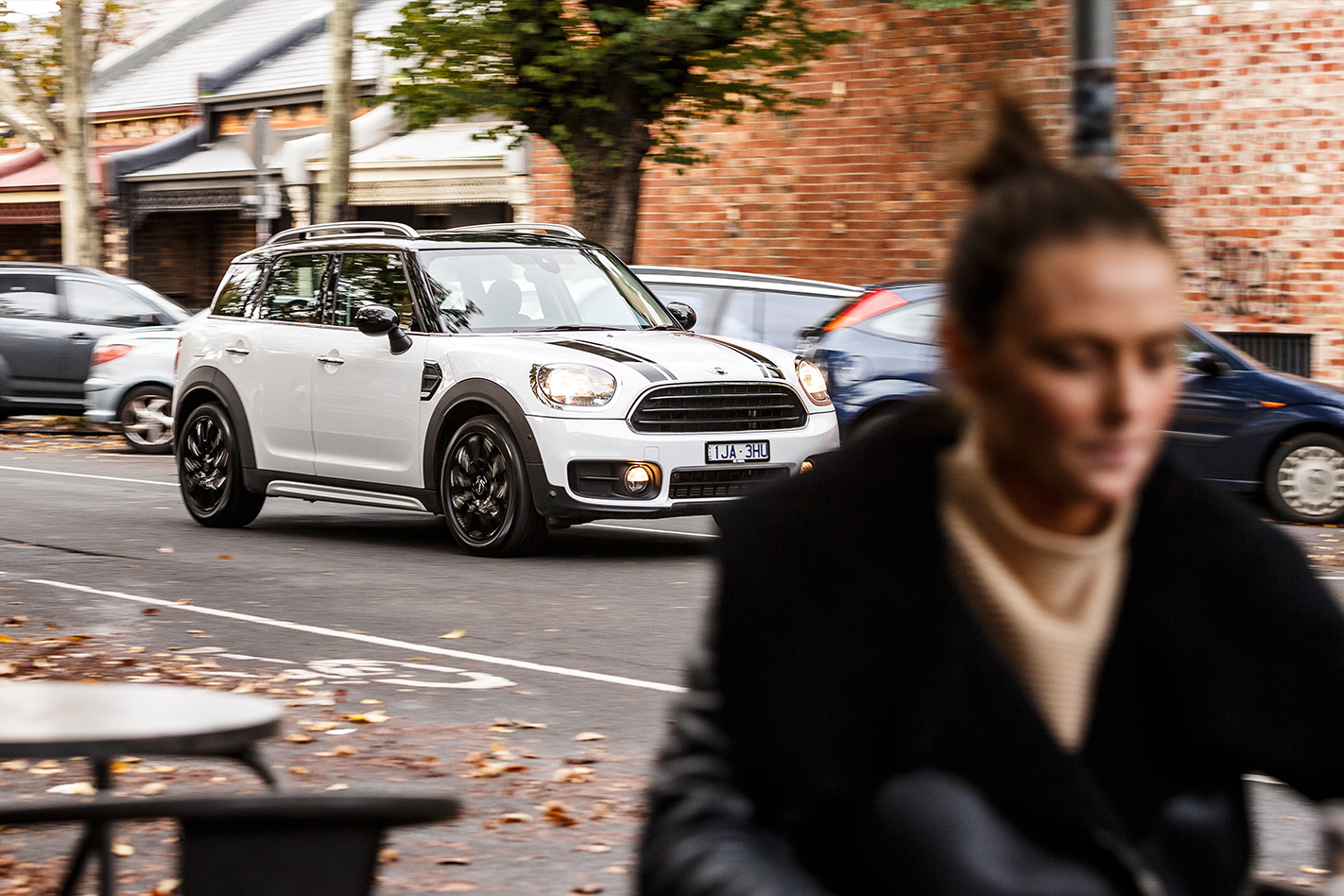
Then in 2011, model diversification sprouted a chic, premium offering for the en vogue small-SUV segment. But as little more than a jacked-up hatch, the original Mini Countryman never quite lived up to its SUV billing, and left us wondering whether it was just another fashionable failure.
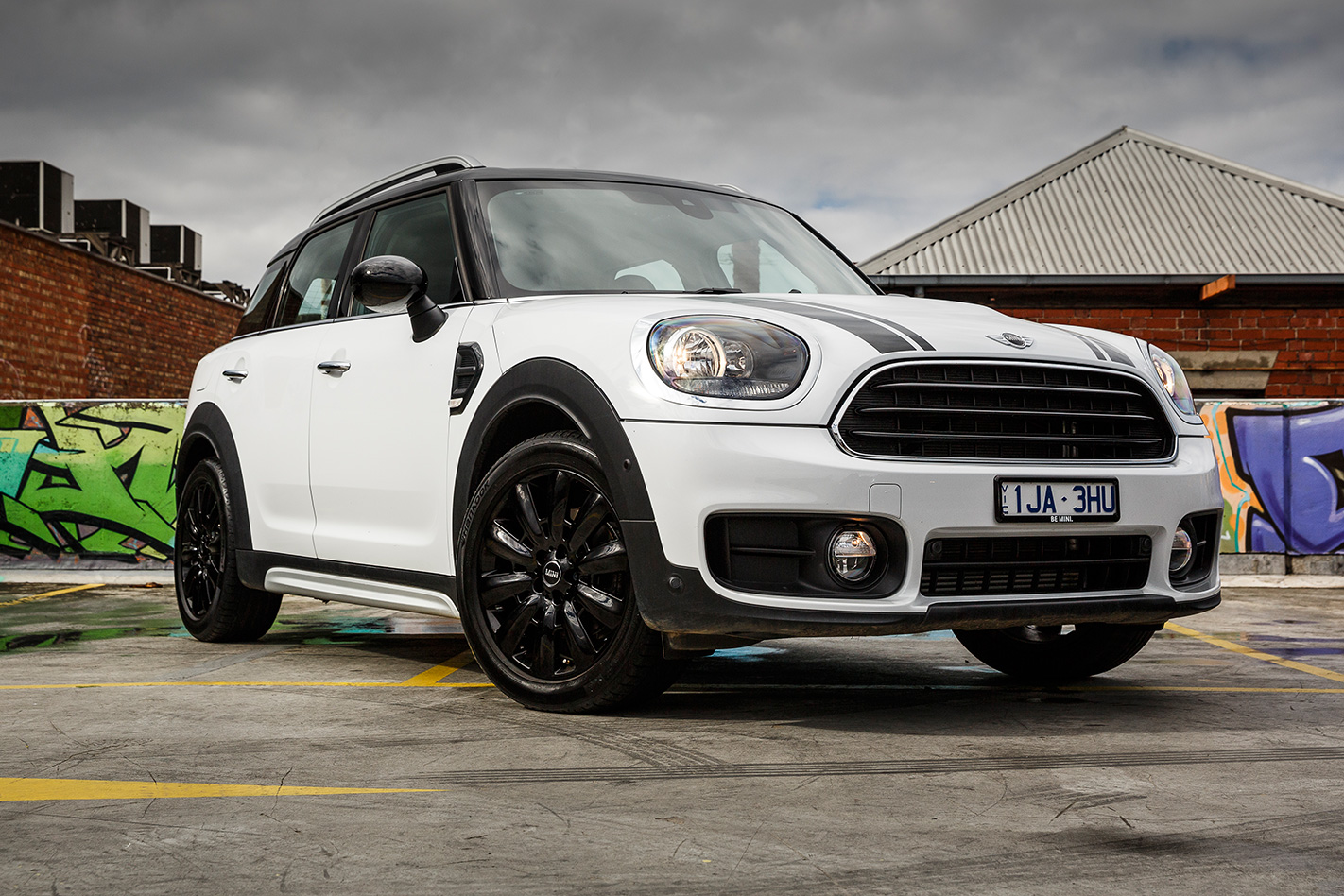
It’s immediately clear that Mini has made real inroads towards practicality for the Countryman’s second go around. It’s much more SUV-made-Mini than a Mini worked into an SUV, and brings a new functional side to the table in the nick of time, ready to defend its niche against a debutant challenger from Audi.
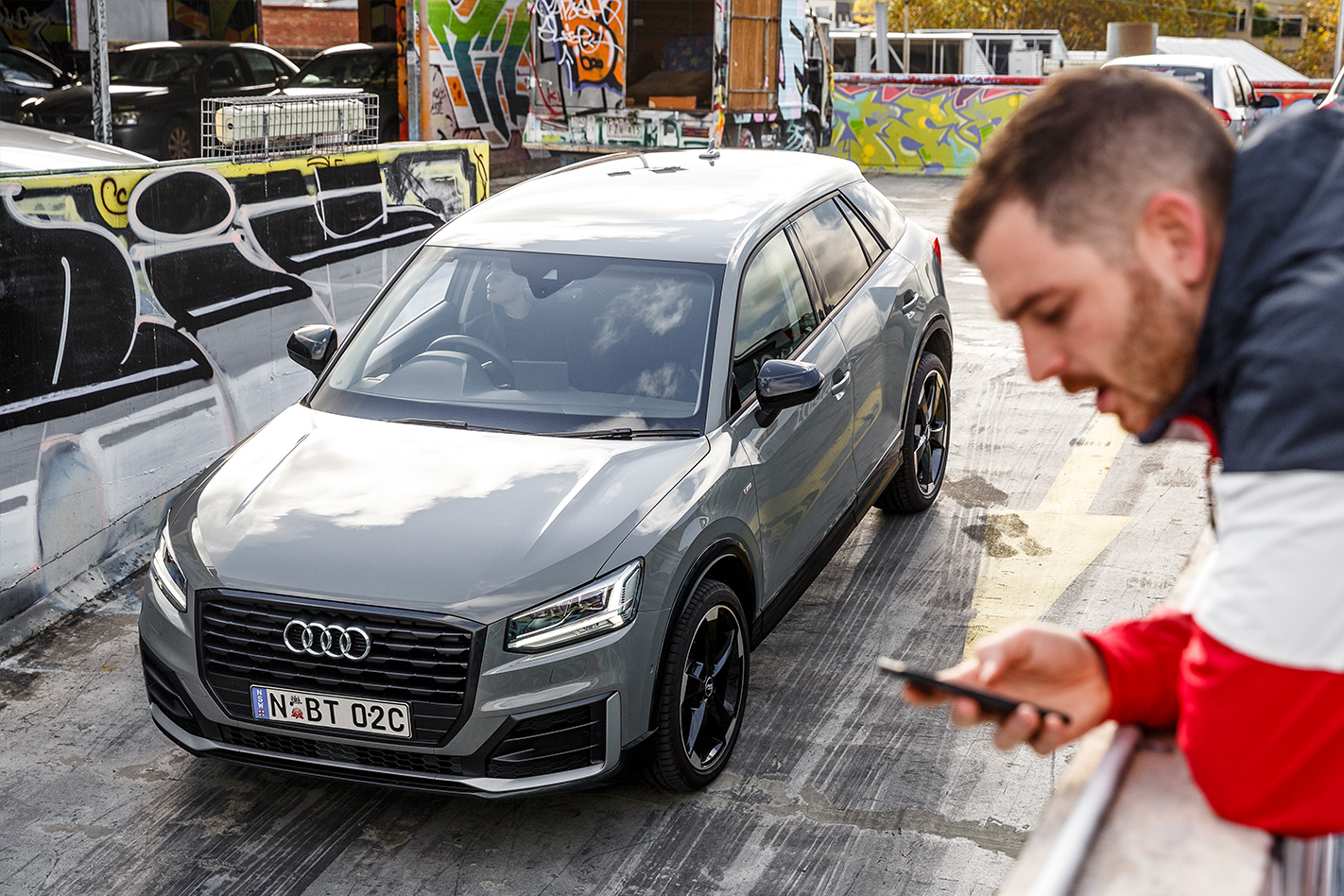
A pinch over $1000 separates the entry-level variants of the two. Additional standard kit for the Mini Countryman Cooper has seen its price rise by $3400 compared to its predecessor, but it’s still the more affordable car here at $39,900, with the Audi Q2 Design starting from $41,100. Sadly, a bare-bones Q2 was unavailable for our comparison, leaving us to evaluate the Q2’s merits in the form of the dolled-up Edition #1 version of the base car. A sizeable chunk of early Q2 adopters have sprung for the extra tinsel with a total price of $47,800.
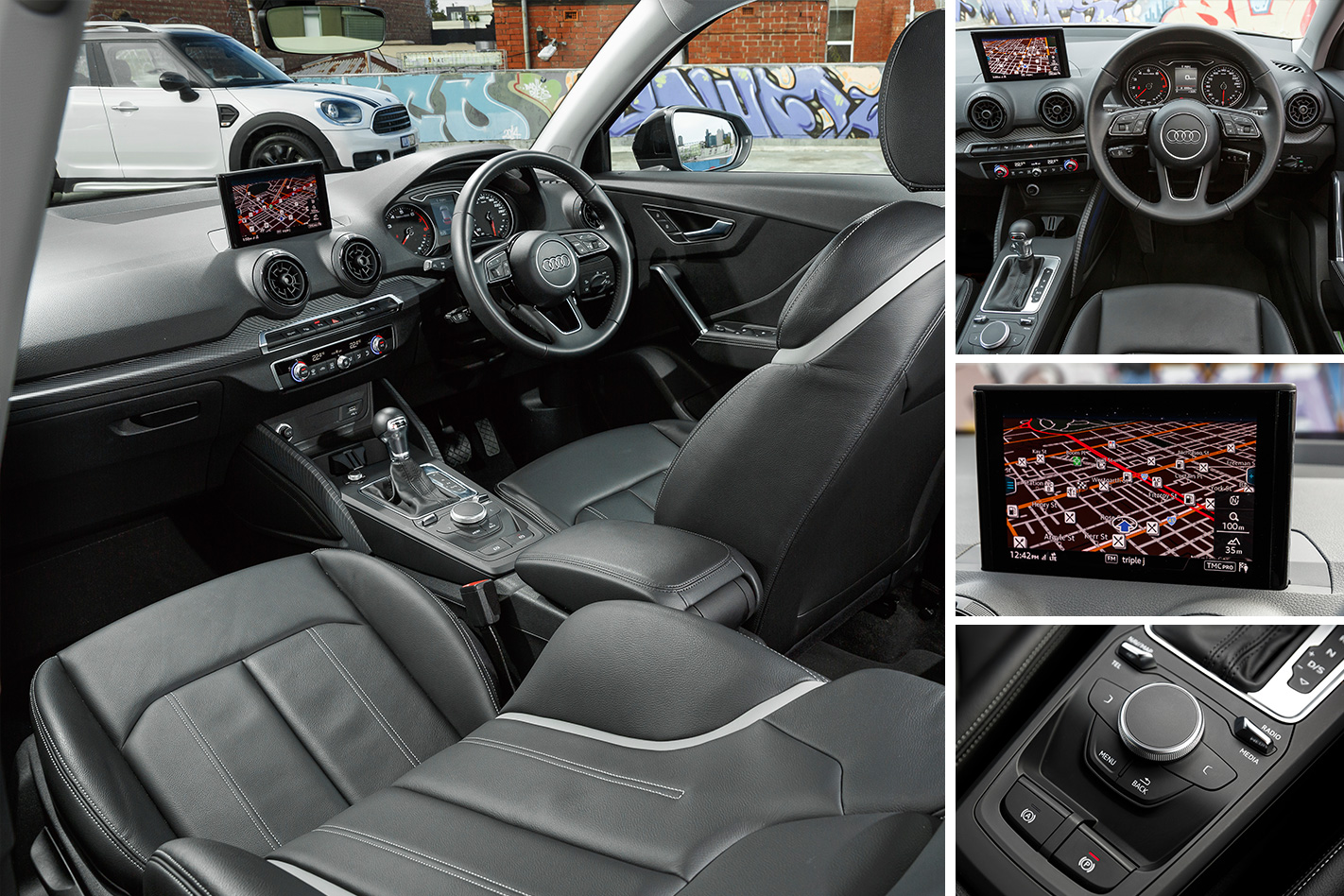
Look past the frills and these two present as a neat match; style-focused, upmarket and right-sized for Euro city life. But which of these design exercises most convincingly marries form and function for the tech-savvy, urban-dwelling singles and couples of Australia?
The Q2’s sweet 1.4-litre turbocharged four-cylinder engine makes a solid case early on, edging the Mini out both on paper and the road. Its 110kW and 250Nm outputs shade the 1.5-litre three-cylinder turbo Countryman’s 100kW and 220Nm by 10kW and 30Nm.
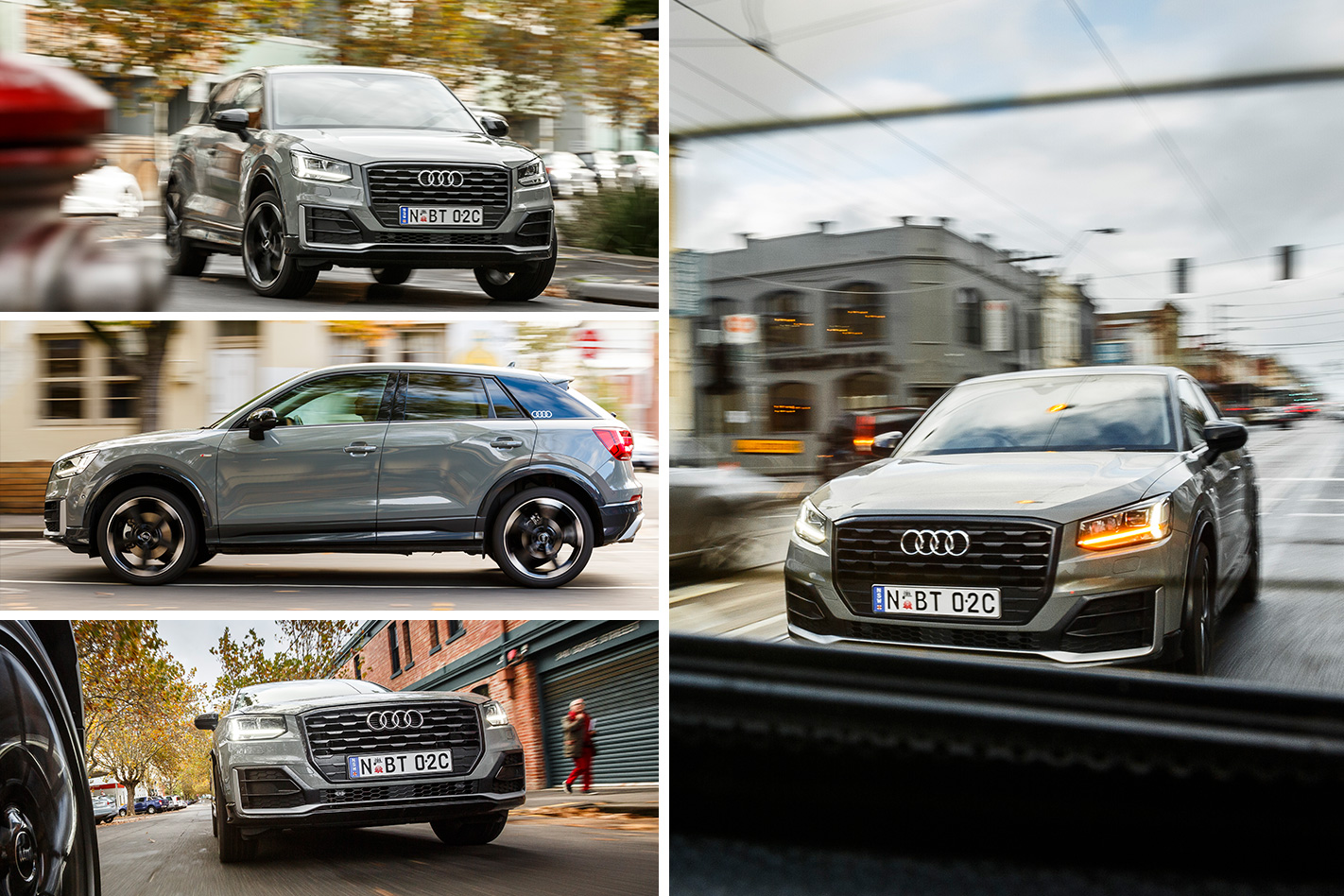
As well as its extra twist, the Q2, at 1280kg, is 110kg lighter than the Mini. It feels brawnier under hard acceleration, a sensation that’s backed up by brisker performance figures everywhere above 50km/h – particularly in the 80-120km/h zone where the Q2 bests the Mini by almost two seconds (5.6sec versus 7.4sec). The Audi’s effortlessly elastic engine is a highlight; velvety smooth, and strong enough to give the Q2 the sportier disposition its coupe styling suggests.
Not that the Mini’s lively 1.5-litre turbo is without its own charm and enthusiasm. Give it a prod and it winds up willingly with a gratifying three-pot warble. The thrum grows as the tacho needle passes through a broader band of peak torque than the Audi, from 1400 to 4300rpm, and on to a higher 6400rpm rev cut. The Cooper makes do with one less ratio than the Q2. Its conventional torque converter automatic gives it the upper-hand for initial smoothness, but it suffers from languid transitions as the Mini gathers speed, even when slipped into Sport mode. Yet around town it’s difficult to fault, and is easier to live with in traffic.
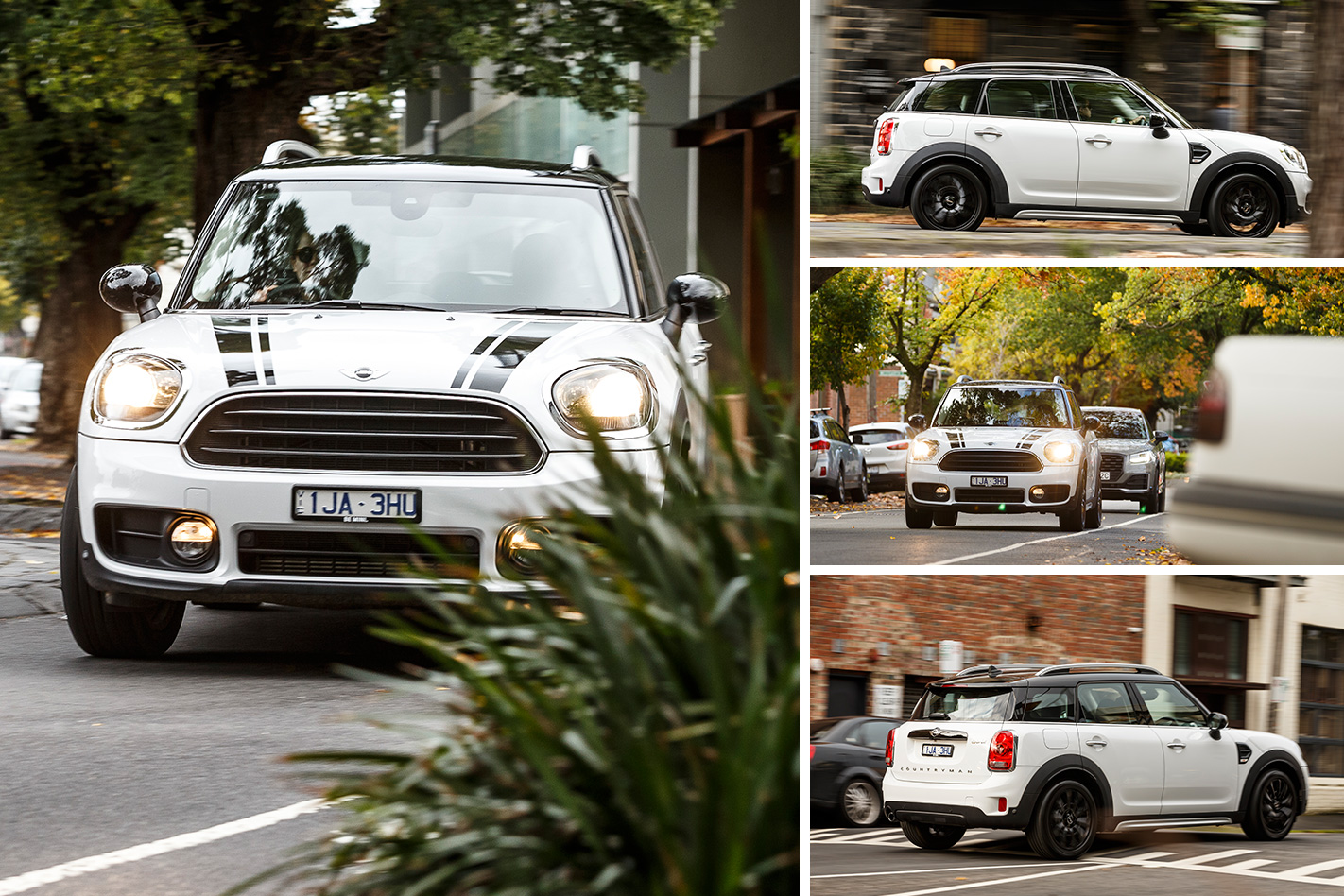
The Mini’s pragmatic quest for grown-up appeal sees it adopt a more mature ride and handling trade-off. Softer suspension results in greater body movement and a loping gait, with enough compliance to carry more speed than the Audi over poor roads. It’s not always settled or supple, and its steering lacks the responsiveness of the Audi’s. But the Mini is easily the more comfortable car, even on standard 18-inch run-flats, and especially for rear seat occupants.
Much of the Countryman’s newfound sophistication lies in the revised UKL platform on which it now rides – shared with the BMW X1, but with a more compliant tune here. The Mini pivots fluidly, the front and rear axles interacting coherently to get the car pointed with an encouraging zeal that more powerful Countryman variants should fully exploit.
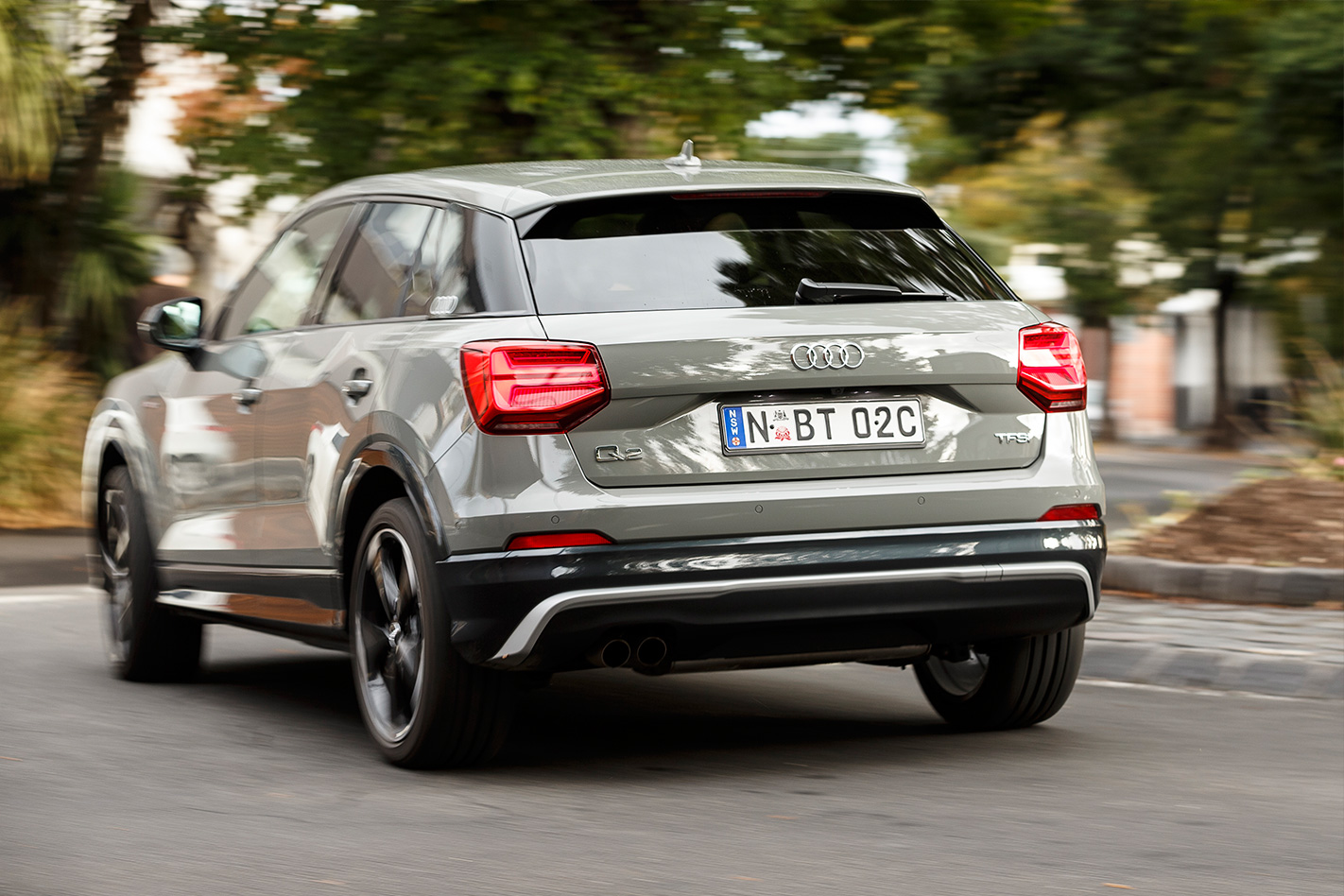
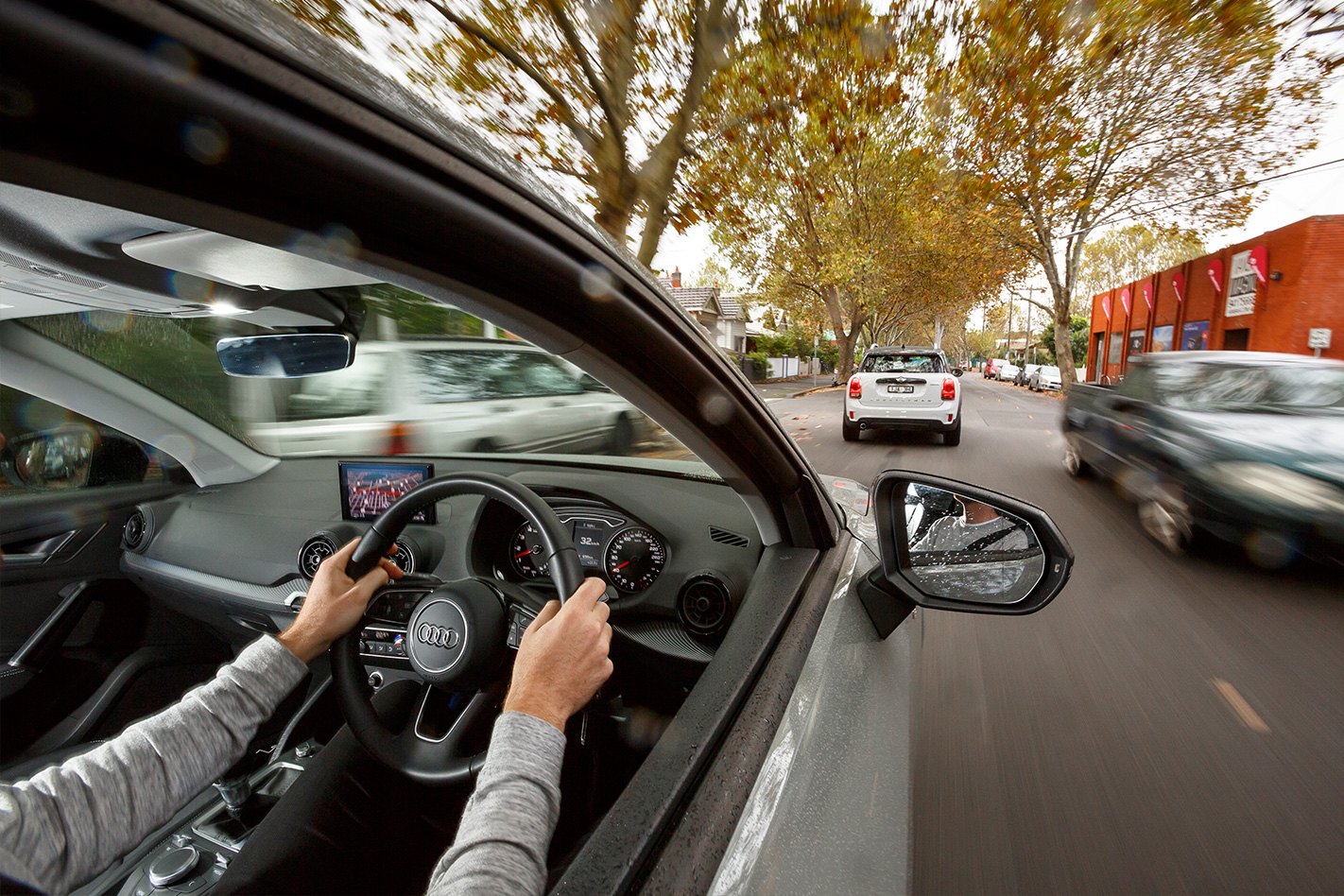
That said, the Q2 does a fine job dynamically with the set-up at its disposal. Its relatively simple rear axle seemingly contributes to reduced turn-in eagerness compared with the Cooper, but it faithfully follows the fast and accurate front end. Steering finesse isn’t a problem for the Audi. It’s not like an SUV at all, instead responsive, planted and chuckable, and closer to the fun of a warm hatch in seat-of-the-pants feel.
What did trouble the Q2’s swagger was the 19-inch wheel and tyre package, two inches bigger than standard and fitted as part of our test car’s Edition #1 option pack. Stiff, shallow sidewalls at each corner emphasised the Q2’s firm ride by telegraphing information about every rut and bump into the cabin.
Coupled with significant road noise, there’s nothing about the upgrade that appeals from a comfort point of view. In this trim the Q2 is crying out for adaptive dampers. What the sportier Bridgestone Potenza rubber does offer is composure at speed and the grip to carve through a corner without being knocked off line, despite the tetchy ride.
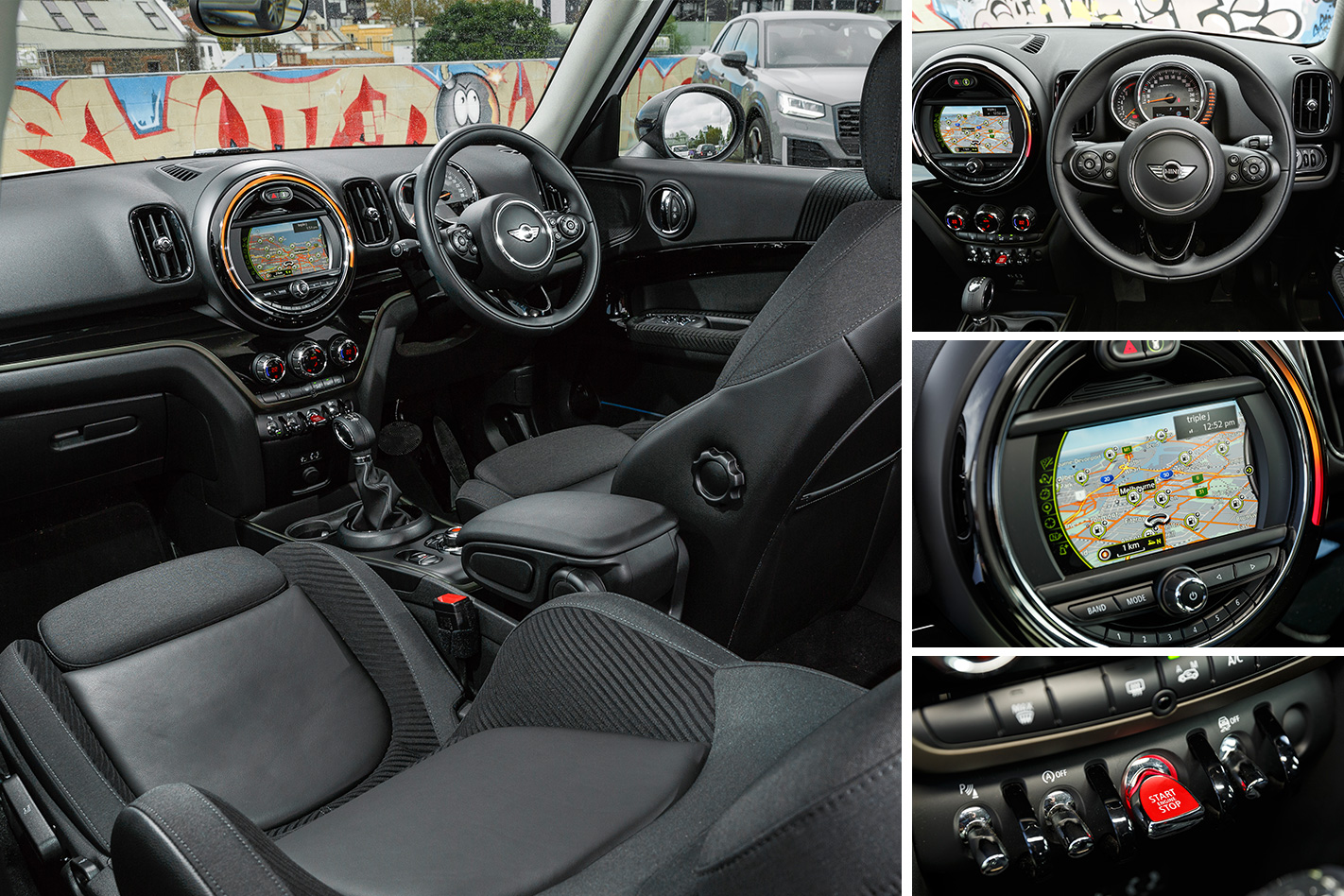
The Countryman is markedly quieter without the tyre roar of the Q2, and its cabin is brimming with equipment that the Audi simply doesn’t match. Both cars have auto emergency braking, reversing camera, sat-nav, dual-zone climate control and Apple/Android smartphone integration as standard. But even in base trim the Countryman goes much further.
Adaptive cruise control, pre-collision warning, self-parking, auto high beams, powered tailgate, keyless entry, push-button start, digital radio and front lumbar support are all there in the lesser-priced Mini but missing from the Q2. The gulf widens once you move to the back seats.
Both cars have map lights for rear occupants, but only the Mini boasts rear air vents, fabric door coverings, map pockets, grab handles and a reclinable and sliding rear bench with 40/20/40 split folding that gives it superior versatility on top of a bigger cargo bay – 450 litres versus 405 litres.
The Q2 is totally on-brand and a cut above both from a dynamic perspective and in the way it looks, but its high price even before options, relatively basic standard equipment list and iffy packaging leave it trailing the Mini’s all-round ability.
Such a value difference more than makes up for the Mini’s softer-than-expected dynamics. While there’s a whiff of disappointment that the Cooper’s sensible new approach means it doesn’t fully capitalise on the inherent positives of the platform, it is more agreeable on the types of roads these cars will spend most of their time. It’s also far better equipped to satisfy the expectations of buyers stepping up to a premium alternative out of mainstream baby SUVs such as the Mazda CX-3.
For those reasons it’s the Countryman by a nose in this hard-fought tussle.
There’s an old saying that if it’s not broken, then there’s no point fixing it.
Therefore there will no doubt be groans of dismay from many enthusiasts when they learn Toyota’s dealer-fit TRD accessories for the 86 concentrate on the chassis (the bit that arguably doesn’t need fixing) rather than the engine (the bit that does).
Specifically, the 86 TRD accessories available include a set of lowering springs ($409), stiffer front and rear anti-roll bars (a very precise $731.73) and larger wheels measuring 18 x 7.0-inch front and 18 x 7.5-inch rear ($1848 sans tyres).
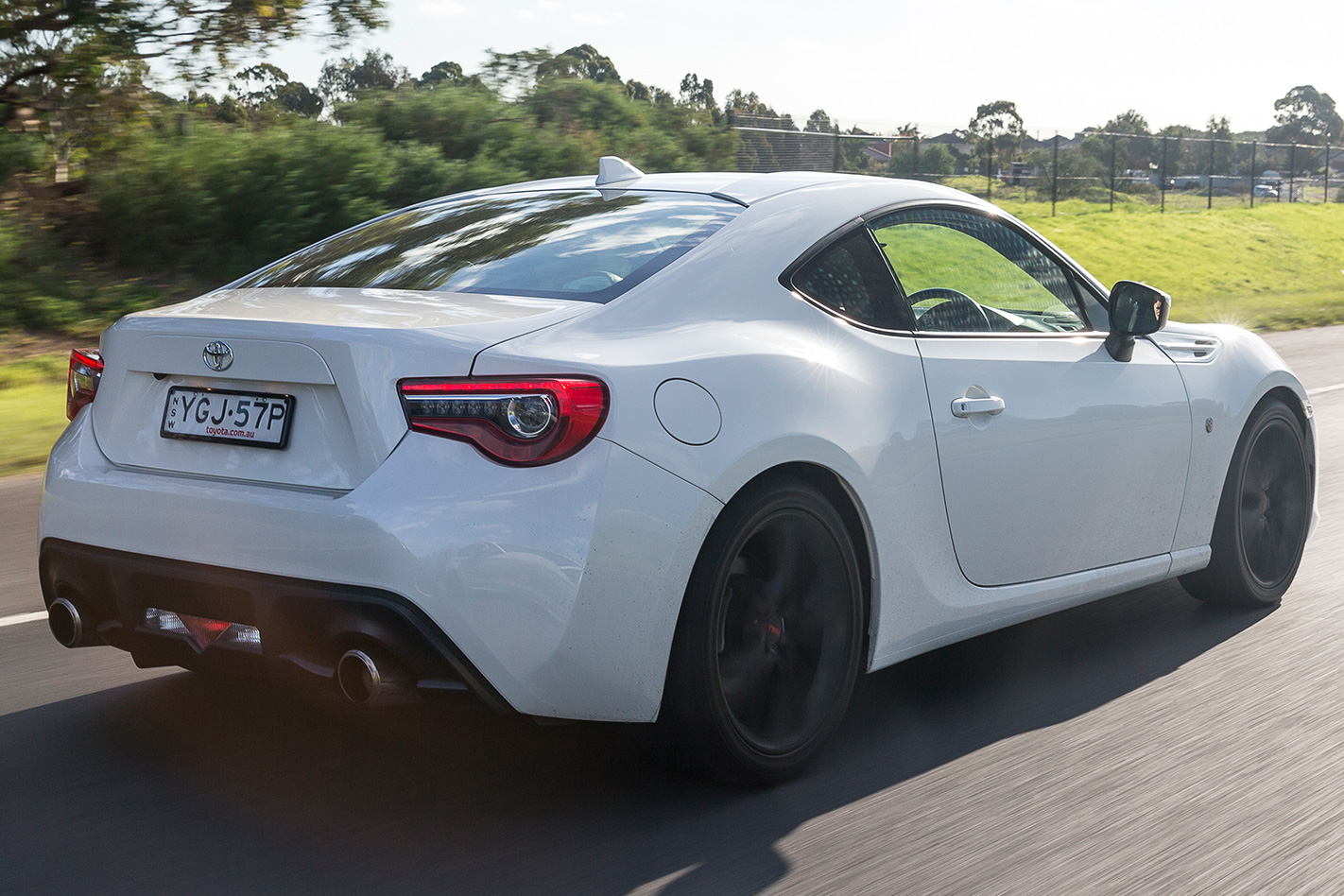
In fact, the differences are slight enough that without MOTOR’s new long-term 86 GT along to provide a back-to-back comparison they could be difficult to identify. Nonetheless, they are there.
Initial findings are that the steering is a little lighter on the move but parking manoeuvres and the like require slightly more effort (possibly due to the larger rims) and that the combination of lower-profile tyres and stiffer springs results in a firmer ride than the standard car.
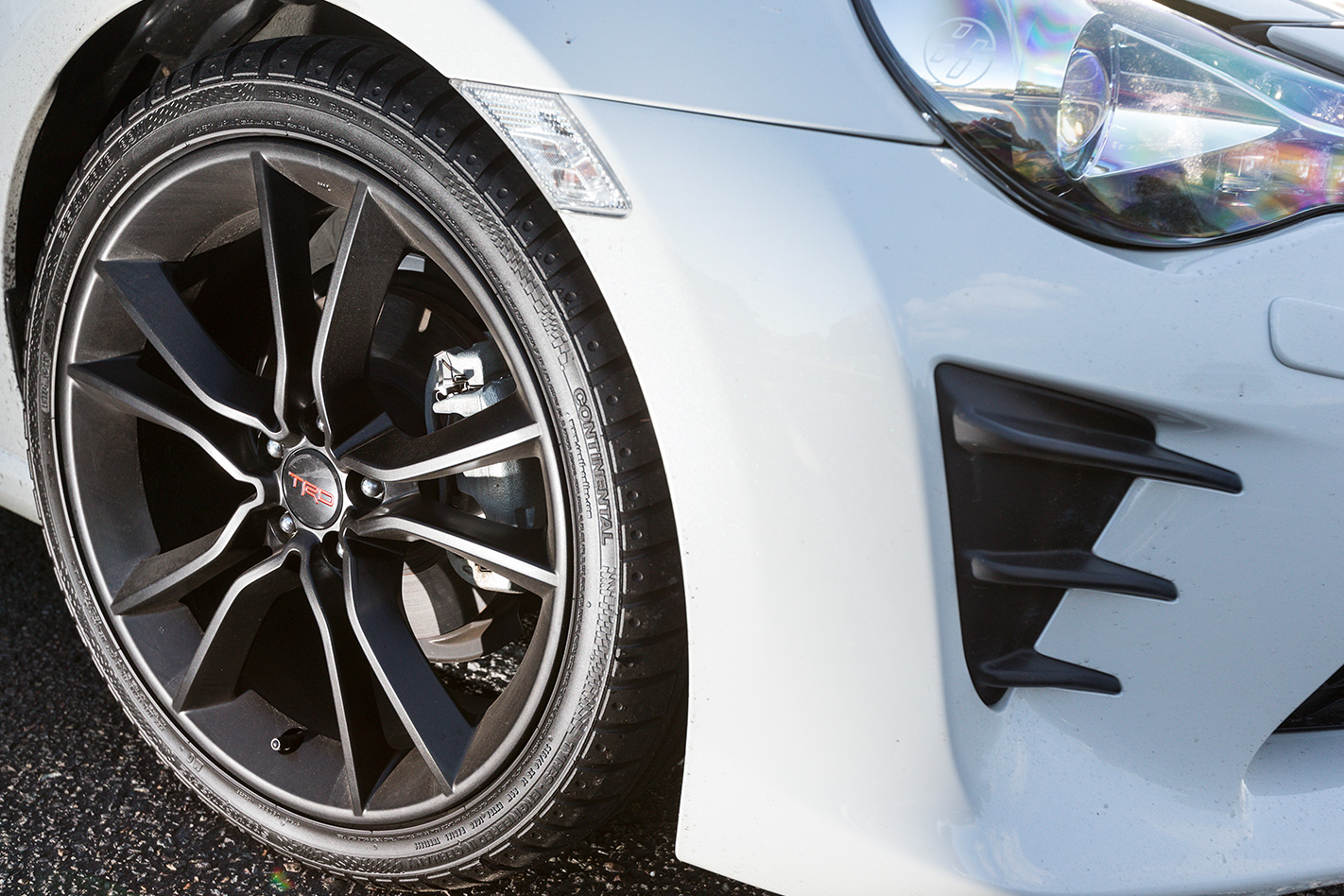
Due to the larger, staggered wheels our test car was fitted with Continental ContiSportContact2s 215/40 front and 225/40 rear; not a super-focused tyre, but still much more sporting than the Yokohama dB Decibel eco rubber fitted as standard which we’ve criticised the 86 for in the past.
Crucially, the car doesn’t feel to have an enormous amount more grip but it is more settled and predictable. The car slides less, but can be driven harder.
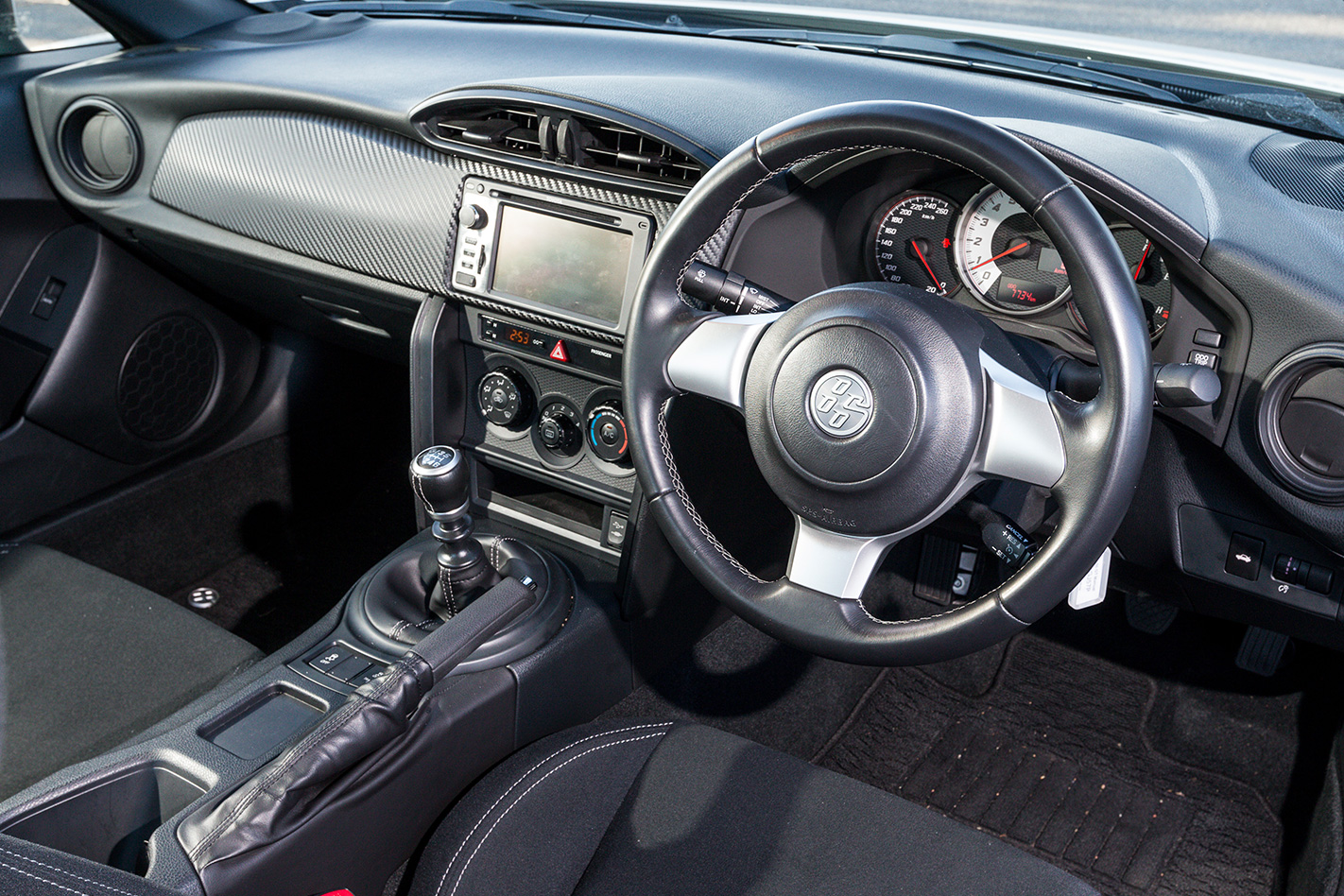
The larger wheels also shorten the gearing slightly, but the effect is only noticeable on a spreadsheet. So are the upgrades worth the extra dosh? Impossible to answer. As is usually the case with these sorts of enhancements, it’ll depend on what each individual wants from their 86 TRD.
The mods enhance the car’s looks and on-limit stability, but at the cost of some adjustability and ride comfort. We’d start with the wheels and tyres and go from there, or save our pennies and try and nab one of the 86 Limited Editions with Brembo brakes and Sachs dampers.
4 stars out of 5
Dislike: Firm ride; not as playful Like: Decent tyres; looks tougher
Specs: Engine: 1998cc flat-4cyl, DOHC, 16v Power: 152kW @ 7000rpm Torque: 212Nm @ 6400rpm Weight: 1258kg 0-100km/h: 7.4sec (claim) Price: $33,779 (excl. tyres/fitting)
A WHOLE lot of punters are wondering about the Kia Stinger GT – and eyeing it with suspicion.
It’s like we’ve all grown up eating steak or pork – that’s my analogy for the Ford Falcon and Holden Commodore – and now, with both to soon become completely unavailable, and little desire to go vegetarian, someone is advertising buffalo or antelope or some other weird meat.
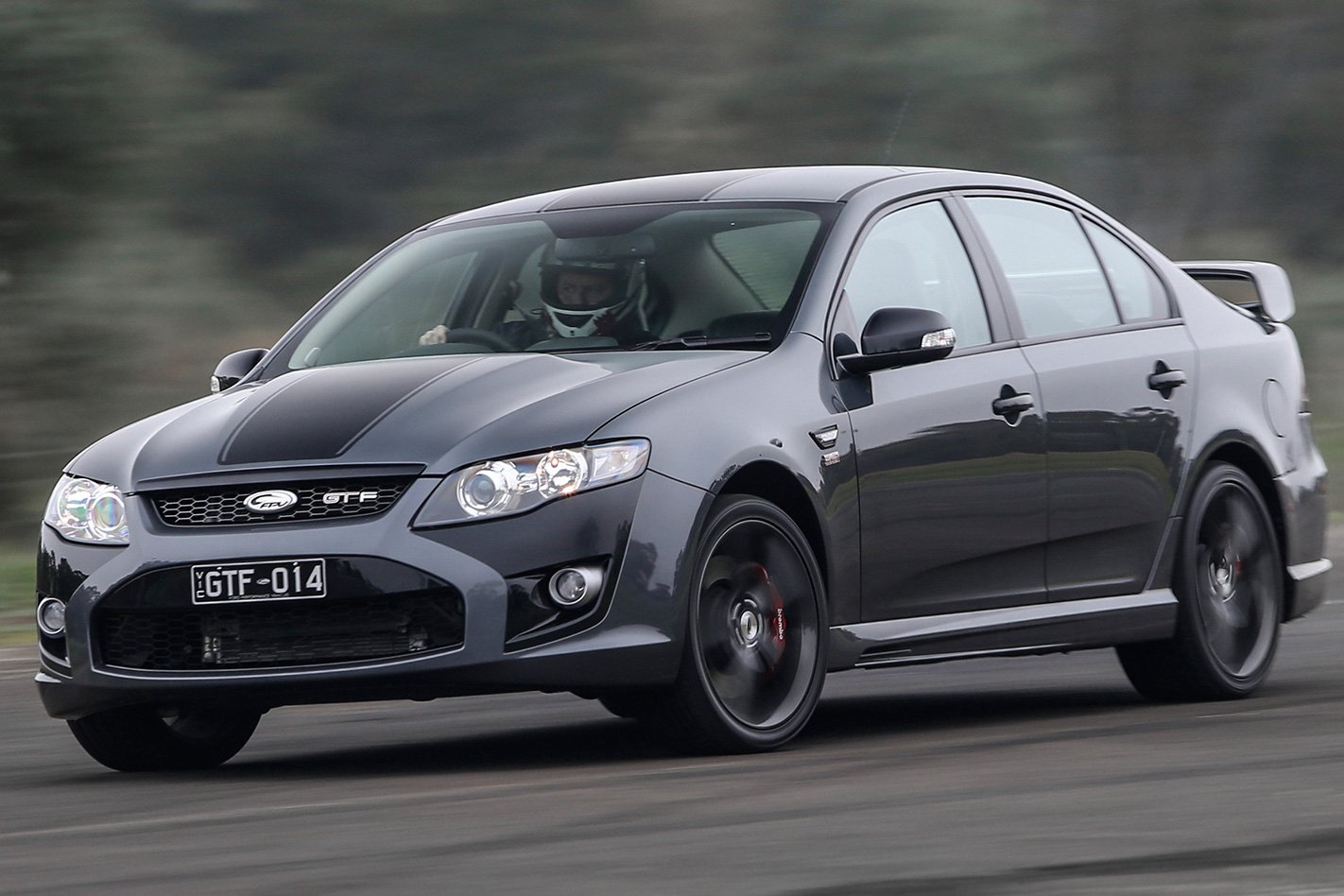
If this car hasn’t caught your attention yet, you’re an unobservant bugger – 272kW, 510Nm, a twin-turbo V6, Commodore-size and spaciousness, rear-drive and a mechanical limited-slip differential. All in a package costing around $55,000 – with big Brembos and 19-inch wheels. Zero to 100km/h?
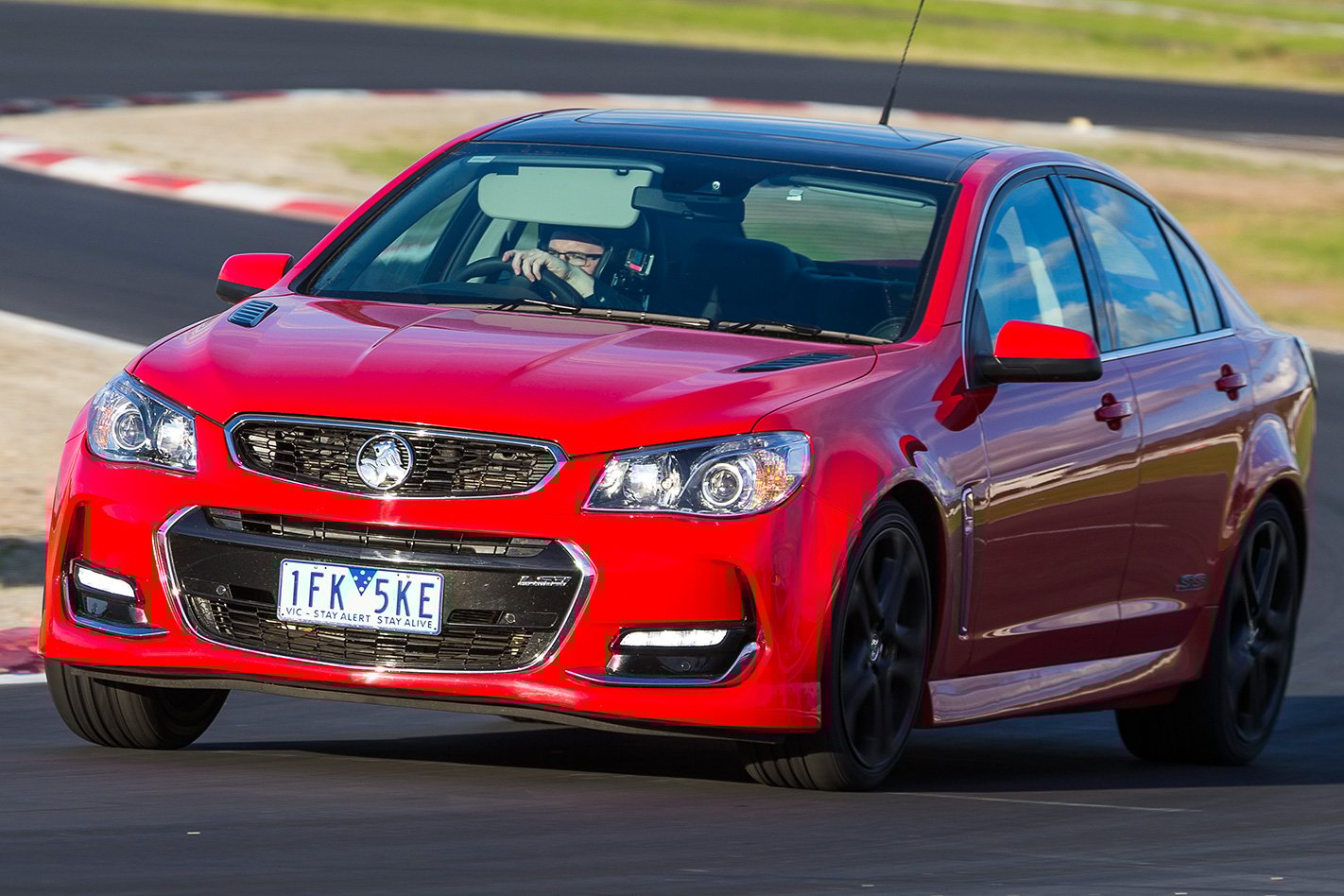
But luckily, if you’ve got one lap anywhere, it may as well be of a 20.8km long track… So, is it the real deal? You can read my review on but I’m going to take a punt and say yes. The interior is more German than Korean, there’s a certain sophistication about the handling, it’s got lots of grunt and feels like it will happily power oversteer.
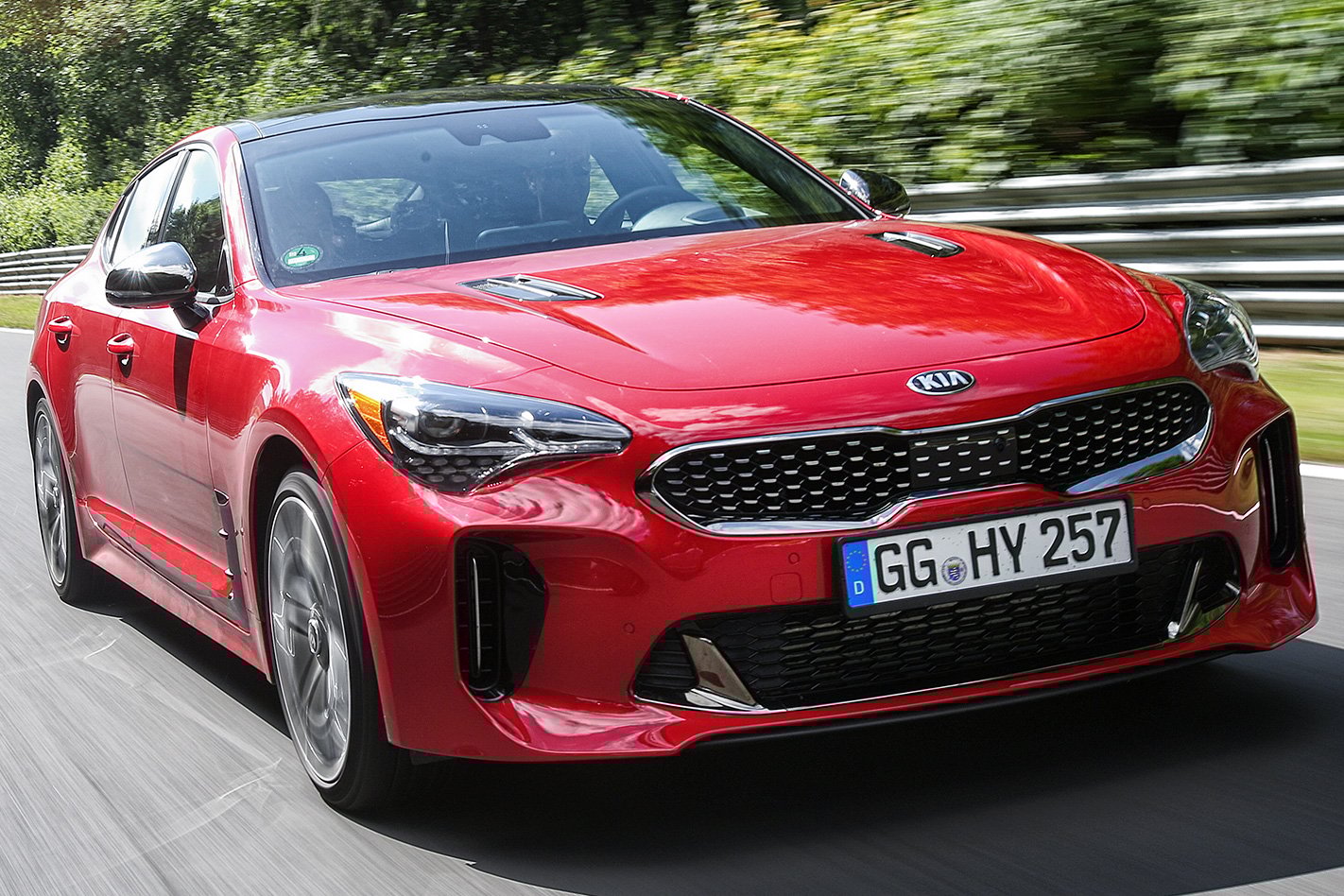
But if it doesn’t, you have permission to get excited. There is still an odd Kia ‘ickyness’ about it, but get over that, and even embrace the underdog, upstart Stinger, and you’ve opened your mind.
Buffalo can taste good – with a little kim chi.
What stands out?
The second-generation Audi Q5 is a sharp-looking luxury SUV with first-rate smartphone connectivity and a long list of safety features. The mid-sized, five-seat, Q5 rides on a brilliantly efficient all-wheel drive chassis, so that fuel bills will be modest whether you opt for petrol or diesel power. It steers beautifully, and auto braking is standard.
What might bug me?
Admitting to friends that your luxurious German SUV was built in Mexico. Audi says its factory near the town of San Jose Chiapa is the most advanced in the world, however.That your Q5 does not ride as smoothly as you had hoped on its standard suspension – especially if you have chosen one of the more expensive Q5s, which use very low-profile, 20-inch, tyres. The ride is much more cossetting on Adaptive air suspension, which is an extra-cost option.Driving at 80km/h on your space-saver spare tyre, until you can fix your full-sized flat.That owners of the previous Q5 experienced months of uncertainty after Audi owner Volkswagen Group admitted in September 2015 that diesel engines fitted to some versions could cheat in emissions tests. Audi says all current engines comply with emissions rules.
What body styles are there?
Five-door SUV-style wagon only.All Q5s drive all four wheels. Audi calls the AWD system in this new-generation Q5 “quattro ultra”. To save fuel, it drives just the front wheels most of the time – engaging the rear wheels automatically when that is helpful. You can also select a “dynamic” drive mode, which draws more on the rear wheels, and an “offroad” mode, which drives all wheels at all times.The Q5 is classed as a medium SUV, higher priced.
What features come with every Audi Q5?
A sound system with a digital radio, a CD player, Aux and USB inputs, SD card slots, Bluetooth connectivity for phone and audio streaming, and at least eight speakers, controllable from a 7.0-inch touchscreen.Support for smartphone mirroring via Apple CarPlay and Android Auto, which lets you use some iPhone and Android phone apps from the touchscreen.Satellite navigation, with voice control.A smart key, which can remain in your pocket or bag while you unlock the car and drive away. You can also unlock and open the powered tailgate with a swipe of your foot underneath.Part-leather trim in the cabin, with powered adjustment for the front seats. A leather-trimmed steering wheel, with controls for the sound system, your phone and other cabin functions.Three-zone climate control, which lets the driver, front passenger and rear passengers set their own ventilation temperatures.A reversing camera, and parking sensors front and rear.Headlights and windscreen wipers that switch themselves on when required. Cruise control.Tail-lights and daytime running lights illuminated by very long-lived LEDs.Ambient lighting, which illuminates the cabin softly at night.A space-saver spare wheel and tyre, with speed and distance restrictions, and a tyre pressure monitor (which could give you more time to get a slow puncture seen to).Auto emergency braking (which operates at up to 85km/h). Audi side-assist (a blind-spot monitor), and Cross-traffic assist rear.Eight airbags. Stability control, which helps you avoid and control skids. (For the placement of airbags, and more on Q5 safety features, please open the Safety section below.)The Audi Q5 comes with a three-year warranty, with no limit on distance.
Which engine uses least fuel, and why wouldn’t I choose it?
The 2.0-litre turbo-diesel is the more fuel-efficient of the two engines available in a Q5, consuming about 5.5 litres/100km on the official test (city and country combined).Commonly diesel-powered cars cost more to purchase than their petrol equivalents, but in the Q5 a 2.0 TDI diesel costs less.The four-cylinder diesel does a workmanlike job in the Q5, cruising comfortably at highway speeds.The main reason you wouldn’t choose it is that you want more excitement from your premium SUV – and the petrol alternative feels much more exciting.The 2.0 TFSI turbocharged petrol four-cylinder responds about as well as the diesel when you first press the accelerator. But it goes about 30 per cent harder when you hold your foot down. And it is smoother, lighter, and still commendably frugal – using 7.3 litres/100km on the official test.Both engines switch themselves off when you stop, to save fuel – starting again when you take your foot off the brake pedal to drive away.Every Q5 has a seven-speed, dual-clutch, auto gearbox that Audi calls S-tronic.Dual-clutch gearboxes are excellent once you are moving and save fuel, but they don’t quite match the fluid, elastic response in stop-start traffic (or when parking) that you get from a traditional automatic or CVT auto.
What key features do I get if I spend more?
The Audi Q5 is available at two trim levels – design, and sport – and in diesel (TDI) or petrol (TFSI) form. You can add features as extra-cost options, or in option packs.Spending as little as possible will get you a Q5 2.0 TDI design, which comes with very bright xenon headlights, 18-inch wheels, the diesel engine, and the features common to all Q5s.Paying more for a Q5 2.0 TDI sport brings you more side-bolstering on the front seats, to hold you in place better for spirited cornering. The sound system has a subwoofer for a richer tone, maps on the navigation screen are touch-sensitive, and you can play DVDs. A configurable digital instrument panel that Audi calls its virtual cockpit replaces conventional dials. Headlights use bright and very long-lived LEDs, and switch automatically between high and low beam. And you get much bigger – 20-inch – wheels, shod with wider tyres that are significantly lower in profile, a change that sharpens the steering marginally and adds grip on dry roads.Sport trim also adds several driver-assistance features. The most useful is Adaptive cruise control with Stop and Go, which will reduce your pre-set cruising speed to match vehicles in front until the way becomes clear. In traffic, it can also bring you to a complete stop – and start you off again automatically.With Adaptive cruise control comes Audi pre-sense front, which extends the collision warning and auto-braking to highway speeds. And there is Turn assist, which inhibits your turning right into the path of an oncoming car.Spending a bit more again gets you the same features with the petrol engine: a Q5 2.0 TFSI sport.Among options available at extra cost on any Q5 are a powered sunroof, and a Comfort package (which brings you a power-adjustable steering column and a memory for adjustments to the driver’s seat, among other features).Among options available only on a Q5 sport (diesel or petrol) are Adaptive damper control and Adaptive air suspension. The former adjusts automatically how the car rides, softening the suspension for sharp bumps and firming it up for smooth corners. The latter, in addition, replaces the standard steel springs with air, and can vary how far off the ground the car rides – a potentially helpful feature if you venture onto rough ground, for example.Audi also offers Q5 sport buyers a Parking assistance package, which includes a 360-degree camera and an auto-park function. And there is a Technik package, which buys you LED headlights that dip only a part of their multi-element high beams for other drivers (so that you can see better to each side), a 19-speaker sound system from specialist Bang & Olufsen, and a head-up instrument display (which puts a speedo, and navigation instructions, in your line of sight).
Does any upgrade have a down side?
The more expensive Q5 sport models ride more roughly on the standard suspension than the less costly Q5 design, because the low profile tyres on the sports’ larger diameter wheels leave less cushioning air between you and the road.Two paint colours – white and black – are standard; other exterior colours cost extra.
How comfortable is the Audi Q5?
The Audi Q5 wears its complexity lightly. It’s not intimidating, and it looks simple inside. Simple but beautifully built. Everything feels reassuringly solid, with great materials choices. When you climb into the Q5 and shut the door, you get a reassuring thunk.You also get great sightlines out of the car. The elevated driving position reduces the intimidation factor of piloting what is quite a big car around town, making it instantly more relaxing.The dash is well laid out, with about the only grumble being the reach across the centre console required for switching off the engine idle-stop system. Small beer. Otherwise there’s an easy logic to the instrumentation, from the intuitive ventilation system to how rapidly you acclimatise to all of the wheel-mounted controls.In sport trim, Q5s get sports front seats. These are more deeply bolstered than the seats on the less costly Q5 design, so that you feel more side-support in fast cornering. They also feel ever so slightly narrower across the shoulders – big drivers are advised to consider this when inspecting the car.Both the petrol and the diesel engines available in the new Q5 feel smooth and quiet, and Audi has put a lot of effort into reducing wind noise at typical highway speeds. The mirrors are particularly good in this regard. They’re big and clear but there’s not a whisper of wind rustle from them. Most SUVs with biggish mirrors sound as if somebody has detuned a radio to static band when you get a hustle on.The standard suspension feels a little unsettled on anything but the very smoothest bitumen, and this can get wearing. Audi’s optional Adaptive air suspension is a recommended fit.Ordering Adaptive suspension, with or without the air springs, also means you can tune the ride from inside the car, from favouring comfort to favouring control, using Audi drive select. This standard feature otherwise lets you choose from six driving modes that vary the sensitivity of the Q5 to your control inputs, affecting acceleration, steering, and the behaviour of electronic driver aids.The new Q5’s steering is virtually beyond reproach, being light yet accurate in Normal mode and then a bit weightier should you switch to Dynamic. Likewise the control pedals are well placed, and the brakes are punchy and responsive without ever feeling grabby or over-eager. The Q5 is an easy car to pilot smoothly, which will help those riding in the back.
What about safety in an Audi Q5?
Every Audi Q5 comes with anti-lock brakes, stability control, eight airbags, seatbelt reminders for all seats, a reversing camera with front and rear parking sensors, and a tyre pressure monitor.In addition, all Q5s have auto-braking, a driver attention monitor, a blind-spot alert, rear cross-traffic alert, and an exit-warning that helps you avoid opening a door into the path of a cyclist or other vehicle.And there is the all-weather security of all-wheel drive. It adds up to an unusually comprehensive safety package.Each front occupant of a Q5 has an airbag in front, and another alongside that protects at chest level from side crashes. Outer rear passengers have chest-level side-airbags also. And curtain airbags extend down each side of the car, protecting the heads of those in both front and rear seats.The standard autonomous emergency braking system is called Audi pre-sense city. It relies on a camera-based sensor, and can detect pedestrians. The system will warn you of a collision risk (typically with a car ahead that has slowed suddenly), and if you do not react it can automatically initiate a full emergency stop. Audi says that at speeds up to 40km/h (depending on road conditions) it can avoid a collision altogether, and at up to 85km/h it will at least slow you before impact.The driver attention monitor assesses your condition from how you control the car, and alerts you if you show signs of fatigue.Audi side-assist tells you if another vehicle is lurking near your rear corner in an adjacent lane, possibly not showing up in your mirrors. Its radar-based sensors also look further behind, for cars attempting to overtake.Cross-traffic assist rear uses the same radar sensors when you are reversing (from a supermarket car park perhaps), to check for traffic approaching your path from the side.In sport trim, the Q5 also brings you Audi pre sense front, which extends the collision warning and auto-braking range to 250km/h with the aid of a radar-type sensor. At highway speeds it can brake automatically but it won’t apply maximum pressure.Sport versions of the Q5 also have Audi turn-assist. This feature monitors traffic when you indicate to make a right-hand turn. Should you attempt distractedly to turn into the path of an oncoming vehicle, it can apply the brakes to keep you out of harm’s way.The Australasian New Car Assessment Program (ANCAP) awarded the Audi Q5 five stars for safety, its maximum, in June 2017.
I like driving – will I enjoy this car?
If there’s an easier mid-sized SUV to drive than the Audi Q5, we’d be surprised. But if you’re a driver who’s been known to look for the twistiest route home, you’re not going to feel short-changed.The 2.0 TDI diesel engine is very tractable. Couple it with the seven-speed S-tronic transmission and it’s rarely in the wrong gear. If you really want to keep it on the boil, the wheel-mounted paddle shifters allow you to take control.Keener drivers will probably choose the 2.0 TFSI petrol version instead though, as it’s a bit lighter on its feet and feels a good deal more sprightly.Part of that is down to the difference in weight of the two engines. The diesel unit is about 50kg heavier and, yes, you can feel that extra weight when you turn the car into a corner. The petrol engine doesn’t have the instant pull of the diesel when you first touch the accelerator, but if you set the Audi drive select to Dynamic or use the paddle shifters yourself, it will really sing.Both engines are turbocharged, and so petrol and diesel Q5s have genuine overtaking punch to reduce your time in the oncoming lane.The new Q5’s clever “quattro ultra” chassis software analyses your driving. If it detects that you’re driving in a spirited manner, it instantly places more emphasis on sending drive to the rear wheels. Rejoin the freeway after a quick back-road blast and it will revert to favouring front-wheel drive. You can even download an app that tells you what percentage of your drive was performed with all wheels driven.Roadholding is extremely good, and the stability control system is very well calibrated. At one point during Audi’s media launch event we entered a corner to find that, about three-quarters of the way around, a farm vehicle had pulled a thick coating of wet mud onto the road. This would have provoked quite a moment in some cars. The Q5 gave an almost imperceptible shimmy as the stability control nipped at the brake on the inside rear wheel, and then carried on. Very impressive.The Q5 is designed only for light-duty off-road driving – think gravel tracks or snow-covered roads. It does not have the underbody protection, wheel articulation or extra-low gearing of dedicated off-roaders. And its space-saver spare tyre is all but useless off-road.
How is life in the rear seats?
Rear shoulder width, headroom, and legroom are all better than in the previous Q5. The rear doors open fairly wide too, which is going to help when fixing child seats into the back. The seat cushions are fairly firm but lateral support isn’t bad.Part of the extra-cost Comfort package is a rear seat that slides fore and aft and reclines. It helps justify investing in the package if you’re frequently carrying tall teens or adults.Thankfully Audi has resisted the urge to try to cram seven seats into the Q5, which makes the rear a good deal more liveable. There’s a rear centre folding armrest, with two cupholders and a folding compartment to keep things tidy. The three-zone air-conditioning helps those in the back keep themselves comfortable.
How is it for carrying stuff?
There’s plenty of storage for oddments up front, with two front cupholders, big door bins, a moveable compartment over the transmission tunnel, and the same in the rear. The rear seat splits 40-20-40, allowing you to carry a long item while still seating four people. The optional sliding rear seat can move back and forth over a 12cm range, which allows you to prioritise either luggage or legs.The luggage bay features a super-low loading lip, and there’s 550 litres of capacity to the parcel shelf height. By way of comparison, that’s exactly the same as a BMW X3 and a Mercedes-Benz GLC. Fold the rear seats down and there’s up to 1550 litres available. Should you specify the sliding rear seats, you can get three people and 610 litres of luggage behind you.The adaptive air suspension also allows a slick little trick too. Press a button in the side of the luggage compartment and the rear of the car drops by 15mm, making it easier to lift heavy items in.The tailgate has a powered open/close function, and it’s possible to tailor how high the tailgate opens – so that it doesn’t get intimately acquainted with the ceiling in your garage.Should you wish to tow something, the Q5 is legally rated up to 2000kg. However it might well be worth talking through this with your dealer, as specification changes can alter towing capacities.
Where does Audi make the Q5?
The Audi Q5 is built at a new plant in San Jose Chiapa, Mexico. Useless fact here: the Mexican plant is Audi’s highest altitude production facility, at 2400m.More than a billion euros was spent in developing the plant, which Audi says includes the most eco-friendly paint shop on the American continents. The company also says this is the world’s most advanced vehicle manufacturing plant.
What might I miss that similar cars have?
Not much. Some alternatives ride better on their standard suspension – the Volvo XC60, Range Rover Evoque and Land Rover Discovery Sport spring to mind.If you want more pace, Audi will sell you its very powerful SQ5 sports version of the Q5.If you want more in the way of off-road ability, we’d lean towards a Discovery Sport.If you love the engineering behind the Q5 but would like something a bit different, there’s also the mechanically very similar Audi A4 allroad wagon.Among other mid-size premium SUVs worth considering are the Mercedes GLC and BMW X3.
Are there plans to update the Q5 soon?
This second-generation Audi Q5 arrived in July 2017, and so a replacement will be some time away.Looking at the development cycle for the superseded Q5, Audi left it four years before they did a mid-life facelift and that model then lasted another five years or so. In other words, this latest Q5 design’s got some legs in it.About the only change we can see on the horizon is the introduction of a diesel version of the SQ5 sports version.
I like this car, but I can’t choose which version. Can you help?
While the diesel does have its merits, and is available in a more affordable design trim level, we’d be prepared to dig a bit deeper and choose sport trim and the petrol-engined Q5. To that we’d add the adaptive air suspension. That’s all you really need. If you’re feeling a bit flush, the Technik package with the Adaptive headlights, head-up display and lovely Bang & Olufsen stereo would be a tempter. Try to avoid specifying larger alloy wheels, as this degrades the ride quality.That set up would land you a handsome, fast, safe, comfortable and well-equipped SUV with genuine all-weather security. The elusive one car that fits almost all situations? You could be looking at it here.
POLICE believe the death of a New South Wales man last week was the result of a faulty Takata airbag, following a two-vehicle collision in Sydney’s south-west.
This would be first fatality of its kind in Australia if police allegations are true. In the US, 17 people have died after being hit by shrapnel ejected by faulty Takata airbags.
The 58-year-old male was driving a Honda CRV, part of a worldwide Takata recall that in January 2017 was confirmed to affect almost two million vehicles in Australia, when it collided with a Toyota Celica.
NSW Police investigated the incident and issued an official report stating the man died at the scene after allegedly being struck in the neck by a small fragment.
The Takata airbag recall is the largest in automotive history, affecting roughly 100 million vehicles worldwide.
The driver of the Honda was accompanied by a woman who was treated for non-life threatening injuries, while the two male passengers in the Toyota were treated at the scene for minor injuries.
The death has been reported to the NSW Coroner to determine if an inquest is necessary.
Honda has issued recalls in Australia for thousands of vehicles across several different model types that could potentially be fitted with the faulty airbags. A second recall for 600 vehicles was issued when it was discovered the replacement parts allegedly suffered the same defects.
The Australian Competition and Consumer Commission issued its latest warning regarding Takata airbags in April this year.
The death follows an injury suffered by a Darwin woman who was struck in the head by a piece of debris from a faulty Takata airbag in her Toyota RAV4.
Check if your car is affected at the following link: https://www.productsafety.gov.au/news/takata-airbag-recalls-affecting-australian-consumers
